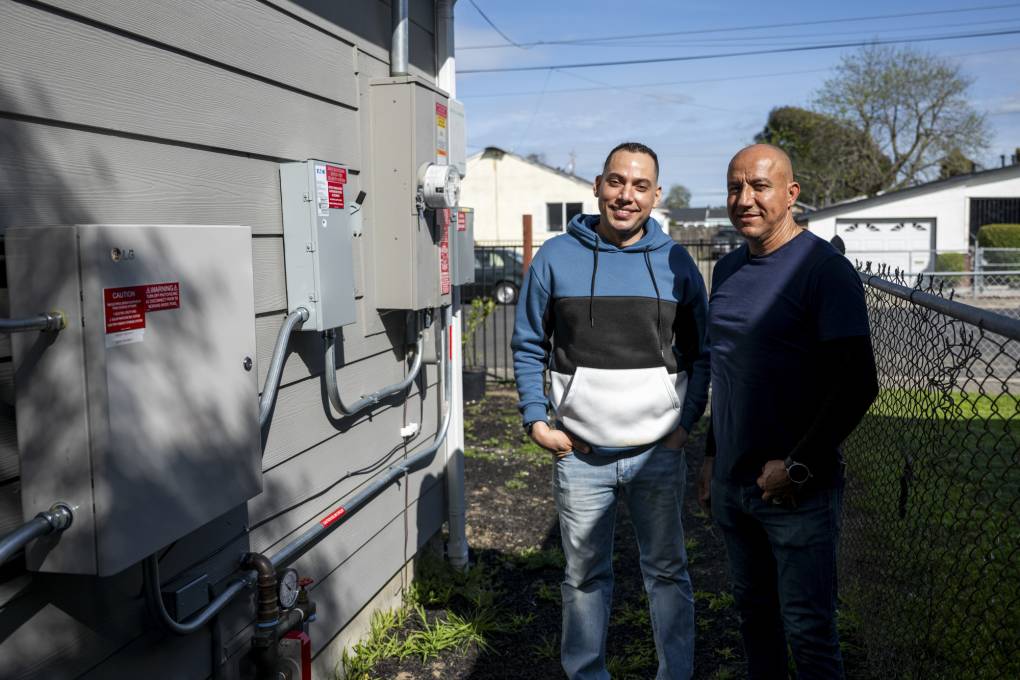
window.__IS_SSR__=true
window.__INITIAL_STATE__={
"attachmentsReducer": {
"audio_0": {
"type": "attachments",
"id": "audio_0",
"imgSizes": {
"kqedFullSize": {
"file": "https://ww2.kqed.org/news/wp-content/themes/KQED-unified/img/audio_bgs/background0.jpg"
}
}
},
"audio_1": {
"type": "attachments",
"id": "audio_1",
"imgSizes": {
"kqedFullSize": {
"file": "https://ww2.kqed.org/news/wp-content/themes/KQED-unified/img/audio_bgs/background1.jpg"
}
}
},
"audio_2": {
"type": "attachments",
"id": "audio_2",
"imgSizes": {
"kqedFullSize": {
"file": "https://ww2.kqed.org/news/wp-content/themes/KQED-unified/img/audio_bgs/background2.jpg"
}
}
},
"audio_3": {
"type": "attachments",
"id": "audio_3",
"imgSizes": {
"kqedFullSize": {
"file": "https://ww2.kqed.org/news/wp-content/themes/KQED-unified/img/audio_bgs/background3.jpg"
}
}
},
"audio_4": {
"type": "attachments",
"id": "audio_4",
"imgSizes": {
"kqedFullSize": {
"file": "https://ww2.kqed.org/news/wp-content/themes/KQED-unified/img/audio_bgs/background4.jpg"
}
}
},
"placeholder": {
"type": "attachments",
"id": "placeholder",
"imgSizes": {
"thumbnail": {
"file": "https://cdn.kqed.org/wp-content/uploads/2024/12/KQED-Default-Image-816638274-2000x1333-1-160x107.jpg",
"width": 160,
"height": 107,
"mimeType": "image/jpeg"
},
"medium": {
"file": "https://cdn.kqed.org/wp-content/uploads/2024/12/KQED-Default-Image-816638274-2000x1333-1-800x533.jpg",
"width": 800,
"height": 533,
"mimeType": "image/jpeg"
},
"medium_large": {
"file": "https://cdn.kqed.org/wp-content/uploads/2024/12/KQED-Default-Image-816638274-2000x1333-1-768x512.jpg",
"width": 768,
"height": 512,
"mimeType": "image/jpeg"
},
"large": {
"file": "https://cdn.kqed.org/wp-content/uploads/2024/12/KQED-Default-Image-816638274-2000x1333-1-1020x680.jpg",
"width": 1020,
"height": 680,
"mimeType": "image/jpeg"
},
"1536x1536": {
"file": "https://cdn.kqed.org/wp-content/uploads/2024/12/KQED-Default-Image-816638274-2000x1333-1-1536x1024.jpg",
"width": 1536,
"height": 1024,
"mimeType": "image/jpeg"
},
"fd-lrg": {
"file": "https://cdn.kqed.org/wp-content/uploads/2024/12/KQED-Default-Image-816638274-2000x1333-1-1536x1024.jpg",
"width": 1536,
"height": 1024,
"mimeType": "image/jpeg"
},
"fd-med": {
"file": "https://cdn.kqed.org/wp-content/uploads/2024/12/KQED-Default-Image-816638274-2000x1333-1-1020x680.jpg",
"width": 1020,
"height": 680,
"mimeType": "image/jpeg"
},
"fd-sm": {
"file": "https://cdn.kqed.org/wp-content/uploads/2024/12/KQED-Default-Image-816638274-2000x1333-1-800x533.jpg",
"width": 800,
"height": 533,
"mimeType": "image/jpeg"
},
"post-thumbnail": {
"file": "https://cdn.kqed.org/wp-content/uploads/2024/12/KQED-Default-Image-816638274-2000x1333-1-672x372.jpg",
"width": 672,
"height": 372,
"mimeType": "image/jpeg"
},
"twentyfourteen-full-width": {
"file": "https://cdn.kqed.org/wp-content/uploads/2024/12/KQED-Default-Image-816638274-2000x1333-1-1038x576.jpg",
"width": 1038,
"height": 576,
"mimeType": "image/jpeg"
},
"xxsmall": {
"file": "https://cdn.kqed.org/wp-content/uploads/2024/12/KQED-Default-Image-816638274-2000x1333-1-160x107.jpg",
"width": 160,
"height": 107,
"mimeType": "image/jpeg"
},
"xsmall": {
"file": "https://cdn.kqed.org/wp-content/uploads/2024/12/KQED-Default-Image-816638274-2000x1333-1-672x372.jpg",
"width": 672,
"height": 372,
"mimeType": "image/jpeg"
},
"small": {
"file": "https://cdn.kqed.org/wp-content/uploads/2024/12/KQED-Default-Image-816638274-2000x1333-1-672x372.jpg",
"width": 672,
"height": 372,
"mimeType": "image/jpeg"
},
"xlarge": {
"file": "https://cdn.kqed.org/wp-content/uploads/2024/12/KQED-Default-Image-816638274-2000x1333-1-1020x680.jpg",
"width": 1020,
"height": 680,
"mimeType": "image/jpeg"
},
"full-width": {
"file": "https://cdn.kqed.org/wp-content/uploads/2024/12/KQED-Default-Image-816638274-2000x1333-1-1920x1280.jpg",
"width": 1920,
"height": 1280,
"mimeType": "image/jpeg"
},
"guest-author-32": {
"file": "https://cdn.kqed.org/wp-content/uploads/2025/01/KQED-Default-Image-816638274-1333x1333-1-160x160.jpg",
"width": 32,
"height": 32,
"mimeType": "image/jpeg"
},
"guest-author-50": {
"file": "https://cdn.kqed.org/wp-content/uploads/2025/01/KQED-Default-Image-816638274-1333x1333-1-160x160.jpg",
"width": 50,
"height": 50,
"mimeType": "image/jpeg"
},
"guest-author-64": {
"file": "https://cdn.kqed.org/wp-content/uploads/2025/01/KQED-Default-Image-816638274-1333x1333-1-160x160.jpg",
"width": 64,
"height": 64,
"mimeType": "image/jpeg"
},
"guest-author-96": {
"file": "https://cdn.kqed.org/wp-content/uploads/2025/01/KQED-Default-Image-816638274-1333x1333-1-160x160.jpg",
"width": 96,
"height": 96,
"mimeType": "image/jpeg"
},
"guest-author-128": {
"file": "https://cdn.kqed.org/wp-content/uploads/2025/01/KQED-Default-Image-816638274-1333x1333-1-160x160.jpg",
"width": 128,
"height": 128,
"mimeType": "image/jpeg"
},
"detail": {
"file": "https://cdn.kqed.org/wp-content/uploads/2025/01/KQED-Default-Image-816638274-1333x1333-1-160x160.jpg",
"width": 160,
"height": 160,
"mimeType": "image/jpeg"
},
"kqedFullSize": {
"file": "https://cdn.kqed.org/wp-content/uploads/2024/12/KQED-Default-Image-816638274-2000x1333-1.jpg",
"width": 2000,
"height": 1333
}
}
},
"science_1981516": {
"type": "attachments",
"id": "science_1981516",
"meta": {
"index": "attachments_1716263798",
"site": "science",
"id": "1981516",
"found": true
},
"title": "Cheryl Ajirotutu points out her heat pump outside her home in Oakland.",
"publishDate": 1675812289,
"status": "inherit",
"parent": 1981511,
"modified": 1762377967,
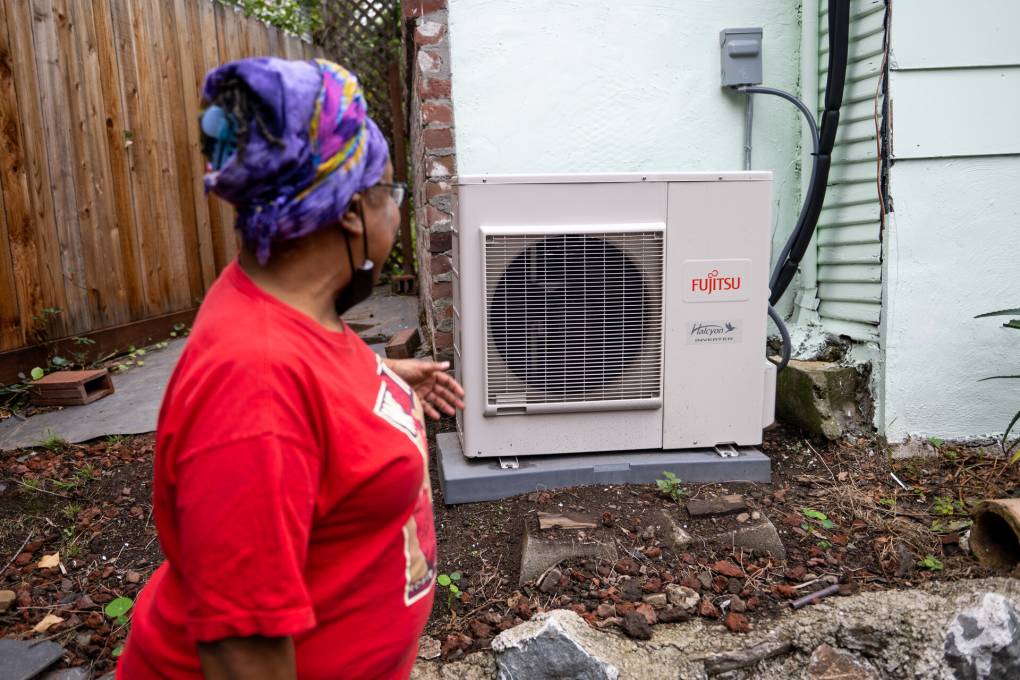
"caption": "Cheryl Ajirotutu points out her heat pump outside her home in the Sausal Creek neighborhood of Oakland. A suite of federal incentives to help pay for new electric appliances will sunset Dec. 31. Here’s how to take advantage of them while you can.",
"credit": "Beth LaBerge/KQED",
"altTag": "A woman in a red shirt points to the metal heat pump that sits along the outside of her home.",
"description": "Cheryl Ajirotutu points out her heat pump outside her home in Oakland.",
"imgSizes": {
"medium": {
"file": "https://cdn.kqed.org/wp-content/uploads/sites/35/2023/02/RS60056_023_KQED_HomeElectrificationOakland_11072022-qut-800x533.jpg",
"width": 800,
"height": 533,
"mimeType": "image/jpeg"
},
"large": {
"file": "https://cdn.kqed.org/wp-content/uploads/sites/35/2023/02/RS60056_023_KQED_HomeElectrificationOakland_11072022-qut-1020x680.jpg",
"width": 1020,
"height": 680,
"mimeType": "image/jpeg"
},
"thumbnail": {
"file": "https://cdn.kqed.org/wp-content/uploads/sites/35/2023/02/RS60056_023_KQED_HomeElectrificationOakland_11072022-qut-160x107.jpg",
"width": 160,
"height": 107,
"mimeType": "image/jpeg"
},
"medium_large": {
"file": "https://cdn.kqed.org/wp-content/uploads/sites/35/2023/02/RS60056_023_KQED_HomeElectrificationOakland_11072022-qut-768x512.jpg",
"width": 768,
"height": 512,
"mimeType": "image/jpeg"
},
"1536x1536": {
"file": "https://cdn.kqed.org/wp-content/uploads/sites/35/2023/02/RS60056_023_KQED_HomeElectrificationOakland_11072022-qut-1536x1024.jpg",
"width": 1536,
"height": 1024,
"mimeType": "image/jpeg"
},
"post-thumbnail": {
"file": "https://cdn.kqed.org/wp-content/uploads/sites/35/2023/02/RS60056_023_KQED_HomeElectrificationOakland_11072022-qut-672x372.jpg",
"width": 672,
"height": 372,
"mimeType": "image/jpeg"
},
"twentyfourteen-full-width": {
"file": "https://cdn.kqed.org/wp-content/uploads/sites/35/2023/02/RS60056_023_KQED_HomeElectrificationOakland_11072022-qut-1038x576.jpg",
"width": 1038,
"height": 576,
"mimeType": "image/jpeg"
},
"kqedFullSize": {
"file": "https://cdn.kqed.org/wp-content/uploads/sites/35/2023/02/RS60056_023_KQED_HomeElectrificationOakland_11072022-qut.jpg",
"width": 1920,
"height": 1280
}
},
"isLoading": false,
"fetchFailed": false
},
"science_1997021": {
"type": "attachments",
"id": "science_1997021",
"meta": {
"index": "attachments_1716263798",
"site": "science",
"id": "1997021",
"found": true
},
"title": "250523-SOLAR BALCONY-MD-01-KQED",
"publishDate": 1748034612,
"status": "inherit",
"parent": 0,
"modified": 1776720034,
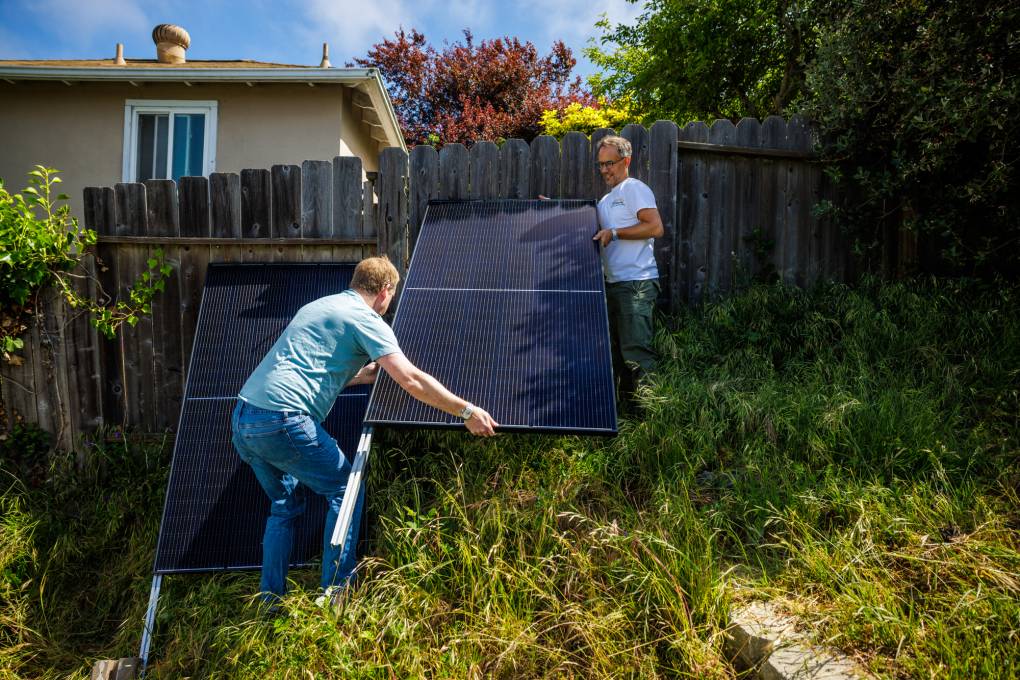
"caption": "Matthew Milner (left) and Rupert Mayer work to install solar panels in Milner's backyard in Kensington on May 23, 2025.",
"credit": "Martin do Nascimento/KQED",
"altTag": null,
"description": null,
"imgSizes": {
"medium": {
"file": "https://cdn.kqed.org/wp-content/uploads/sites/35/2025/05/250523-SOLAR-BALCONY-MD-01-KQED-800x534.jpg",
"width": 800,
"height": 534,
"mimeType": "image/jpeg"
},
"large": {
"file": "https://cdn.kqed.org/wp-content/uploads/sites/35/2025/05/250523-SOLAR-BALCONY-MD-01-KQED-1020x680.jpg",
"width": 1020,
"height": 680,
"mimeType": "image/jpeg"
},
"thumbnail": {
"file": "https://cdn.kqed.org/wp-content/uploads/sites/35/2025/05/250523-SOLAR-BALCONY-MD-01-KQED-160x107.jpg",
"width": 160,
"height": 107,
"mimeType": "image/jpeg"
},
"medium_large": {
"file": "https://cdn.kqed.org/wp-content/uploads/sites/35/2025/05/250523-SOLAR-BALCONY-MD-01-KQED-768x512.jpg",
"width": 768,
"height": 512,
"mimeType": "image/jpeg"
},
"1536x1536": {
"file": "https://cdn.kqed.org/wp-content/uploads/sites/35/2025/05/250523-SOLAR-BALCONY-MD-01-KQED-1536x1025.jpg",
"width": 1536,
"height": 1025,
"mimeType": "image/jpeg"
},
"post-thumbnail": {
"file": "https://cdn.kqed.org/wp-content/uploads/sites/35/2025/05/250523-SOLAR-BALCONY-MD-01-KQED-672x372.jpg",
"width": 672,
"height": 372,
"mimeType": "image/jpeg"
},
"twentyfourteen-full-width": {
"file": "https://cdn.kqed.org/wp-content/uploads/sites/35/2025/05/250523-SOLAR-BALCONY-MD-01-KQED-1038x576.jpg",
"width": 1038,
"height": 576,
"mimeType": "image/jpeg"
},
"full-width": {
"file": "https://cdn.kqed.org/wp-content/uploads/sites/35/2025/05/250523-SOLAR-BALCONY-MD-01-KQED-1920x1281.jpg",
"width": 1920,
"height": 1281,
"mimeType": "image/jpeg"
},
"kqedFullSize": {
"file": "https://cdn.kqed.org/wp-content/uploads/sites/35/2025/05/250523-SOLAR-BALCONY-MD-01-KQED.jpg",
"width": 2000,
"height": 1334
}
},
"isLoading": false,
"fetchFailed": false
},
"science_1995177": {
"type": "attachments",
"id": "science_1995177",
"meta": {
"index": "attachments_1716263798",
"site": "science",
"id": "1995177",
"found": true
},
"title": "241113-EcoBlockFollowup-58-BL_qed",
"publishDate": 1731627524,
"status": "inherit",
"parent": 0,
"modified": 1749590187,
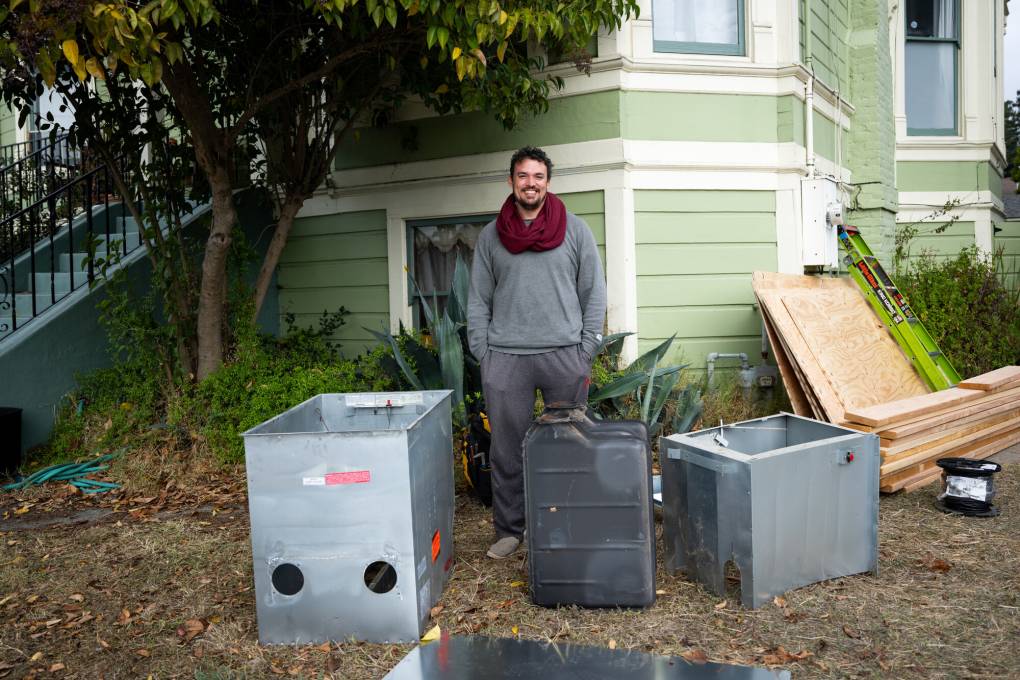
"caption": "Jesse Hassinger stands amidst construction work outside of his home in Oakland on Nov. 13, 2024, part of the EcoBlock project.",
"credit": "Beth LaBerge/KQED",
"altTag": null,
"description": null,
"imgSizes": {
"medium": {
"file": "https://cdn.kqed.org/wp-content/uploads/sites/35/2024/11/241113-EcoBlockFollowup-58-BL_qed-800x533.jpg",
"width": 800,
"height": 533,
"mimeType": "image/jpeg"
},
"large": {
"file": "https://cdn.kqed.org/wp-content/uploads/sites/35/2024/11/241113-EcoBlockFollowup-58-BL_qed-1020x680.jpg",
"width": 1020,
"height": 680,
"mimeType": "image/jpeg"
},
"thumbnail": {
"file": "https://cdn.kqed.org/wp-content/uploads/sites/35/2024/11/241113-EcoBlockFollowup-58-BL_qed-160x107.jpg",
"width": 160,
"height": 107,
"mimeType": "image/jpeg"
},
"medium_large": {
"file": "https://cdn.kqed.org/wp-content/uploads/sites/35/2024/11/241113-EcoBlockFollowup-58-BL_qed-768x512.jpg",
"width": 768,
"height": 512,
"mimeType": "image/jpeg"
},
"1536x1536": {
"file": "https://cdn.kqed.org/wp-content/uploads/sites/35/2024/11/241113-EcoBlockFollowup-58-BL_qed-1536x1024.jpg",
"width": 1536,
"height": 1024,
"mimeType": "image/jpeg"
},
"post-thumbnail": {
"file": "https://cdn.kqed.org/wp-content/uploads/sites/35/2024/11/241113-EcoBlockFollowup-58-BL_qed-672x372.jpg",
"width": 672,
"height": 372,
"mimeType": "image/jpeg"
},
"twentyfourteen-full-width": {
"file": "https://cdn.kqed.org/wp-content/uploads/sites/35/2024/11/241113-EcoBlockFollowup-58-BL_qed-1038x576.jpg",
"width": 1038,
"height": 576,
"mimeType": "image/jpeg"
},
"full-width": {
"file": "https://cdn.kqed.org/wp-content/uploads/sites/35/2024/11/241113-EcoBlockFollowup-58-BL_qed-1920x1280.jpg",
"width": 1920,
"height": 1280,
"mimeType": "image/jpeg"
},
"kqedFullSize": {
"file": "https://cdn.kqed.org/wp-content/uploads/sites/35/2024/11/241113-EcoBlockFollowup-58-BL_qed.jpg",
"width": 2000,
"height": 1333
}
},
"isLoading": false,
"fetchFailed": false
},
"science_1996817": {
"type": "attachments",
"id": "science_1996817",
"meta": {
"index": "attachments_1716263798",
"site": "science",
"id": "1996817",
"found": true
},
"title": "PG&E repair crew",
"publishDate": 1747330980,
"status": "inherit",
"parent": 1996812,
"modified": 1747331066,
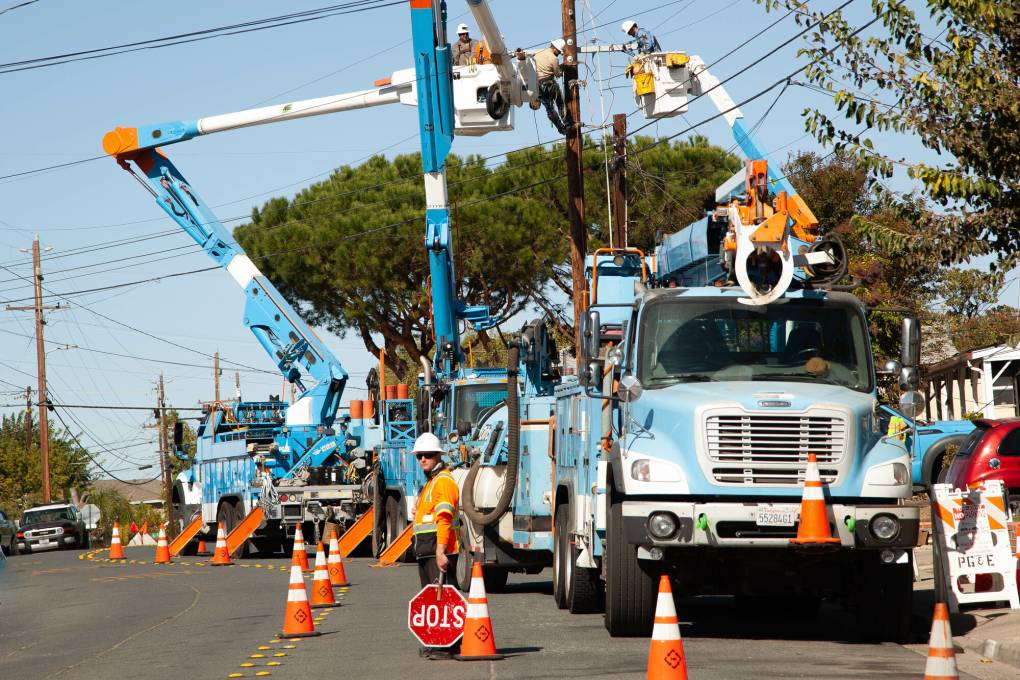
"caption": "A PG&E work crew replaces a utility pole and installs an electrical transformer in the 1300 block of Marie Avenue in Antioch, California, on Oct. 14, 2021.",
"credit": "Joyce Tsai/KQED",
"altTag": null,
"description": null,
"imgSizes": {
"medium": {
"file": "https://cdn.kqed.org/wp-content/uploads/sites/35/2025/05/PGE-trucks-5_qed-800x533.jpg",
"width": 800,
"height": 533,
"mimeType": "image/jpeg"
},
"large": {
"file": "https://cdn.kqed.org/wp-content/uploads/sites/35/2025/05/PGE-trucks-5_qed-1020x680.jpg",
"width": 1020,
"height": 680,
"mimeType": "image/jpeg"
},
"thumbnail": {
"file": "https://cdn.kqed.org/wp-content/uploads/sites/35/2025/05/PGE-trucks-5_qed-160x107.jpg",
"width": 160,
"height": 107,
"mimeType": "image/jpeg"
},
"medium_large": {
"file": "https://cdn.kqed.org/wp-content/uploads/sites/35/2025/05/PGE-trucks-5_qed-768x512.jpg",
"width": 768,
"height": 512,
"mimeType": "image/jpeg"
},
"1536x1536": {
"file": "https://cdn.kqed.org/wp-content/uploads/sites/35/2025/05/PGE-trucks-5_qed-1536x1024.jpg",
"width": 1536,
"height": 1024,
"mimeType": "image/jpeg"
},
"post-thumbnail": {
"file": "https://cdn.kqed.org/wp-content/uploads/sites/35/2025/05/PGE-trucks-5_qed-672x372.jpg",
"width": 672,
"height": 372,
"mimeType": "image/jpeg"
},
"twentyfourteen-full-width": {
"file": "https://cdn.kqed.org/wp-content/uploads/sites/35/2025/05/PGE-trucks-5_qed-1038x576.jpg",
"width": 1038,
"height": 576,
"mimeType": "image/jpeg"
},
"full-width": {
"file": "https://cdn.kqed.org/wp-content/uploads/sites/35/2025/05/PGE-trucks-5_qed-1920x1280.jpg",
"width": 1920,
"height": 1280,
"mimeType": "image/jpeg"
},
"kqedFullSize": {
"file": "https://cdn.kqed.org/wp-content/uploads/sites/35/2025/05/PGE-trucks-5_qed.jpg",
"width": 2000,
"height": 1333
}
},
"isLoading": false,
"fetchFailed": false
},
"science_1996547": {
"type": "attachments",
"id": "science_1996547",
"meta": {
"index": "attachments_1716263798",
"site": "science",
"id": "1996547",
"found": true
},
"title": "250321-VIRTUALPOWERPLANT-04-BL-KQED",
"publishDate": 1743616448,
"status": "inherit",
"parent": 0,
"modified": 1743616555,
"caption": "Ivan Israel Amezcua (left) and Ramon Heredia stand outside of their all-electric home in Richmond on March 21, 2025.",
"credit": "Beth LaBerge/KQED",
"altTag": null,
"description": null,
"imgSizes": {
"medium": {
"file": "https://cdn.kqed.org/wp-content/uploads/sites/35/2025/04/250321-VIRTUALPOWERPLANT-04-BL-KQED-800x533.jpg",
"width": 800,
"height": 533,
"mimeType": "image/jpeg"
},
"large": {
"file": "https://cdn.kqed.org/wp-content/uploads/sites/35/2025/04/250321-VIRTUALPOWERPLANT-04-BL-KQED-1020x680.jpg",
"width": 1020,
"height": 680,
"mimeType": "image/jpeg"
},
"thumbnail": {
"file": "https://cdn.kqed.org/wp-content/uploads/sites/35/2025/04/250321-VIRTUALPOWERPLANT-04-BL-KQED-160x107.jpg",
"width": 160,
"height": 107,
"mimeType": "image/jpeg"
},
"medium_large": {
"file": "https://cdn.kqed.org/wp-content/uploads/sites/35/2025/04/250321-VIRTUALPOWERPLANT-04-BL-KQED-768x512.jpg",
"width": 768,
"height": 512,
"mimeType": "image/jpeg"
},
"1536x1536": {
"file": "https://cdn.kqed.org/wp-content/uploads/sites/35/2025/04/250321-VIRTUALPOWERPLANT-04-BL-KQED-1536x1024.jpg",
"width": 1536,
"height": 1024,
"mimeType": "image/jpeg"
},
"post-thumbnail": {
"file": "https://cdn.kqed.org/wp-content/uploads/sites/35/2025/04/250321-VIRTUALPOWERPLANT-04-BL-KQED-672x372.jpg",
"width": 672,
"height": 372,
"mimeType": "image/jpeg"
},
"twentyfourteen-full-width": {
"file": "https://cdn.kqed.org/wp-content/uploads/sites/35/2025/04/250321-VIRTUALPOWERPLANT-04-BL-KQED-1038x576.jpg",
"width": 1038,
"height": 576,
"mimeType": "image/jpeg"
},
"full-width": {
"file": "https://cdn.kqed.org/wp-content/uploads/sites/35/2025/04/250321-VIRTUALPOWERPLANT-04-BL-KQED-1920x1280.jpg",
"width": 1920,
"height": 1280,
"mimeType": "image/jpeg"
},
"kqedFullSize": {
"file": "https://cdn.kqed.org/wp-content/uploads/sites/35/2025/04/250321-VIRTUALPOWERPLANT-04-BL-KQED.jpg",
"width": 2000,
"height": 1333
}
},
"isLoading": false,
"fetchFailed": false
},
"science_1985911": {
"type": "attachments",
"id": "science_1985911",
"meta": {
"index": "attachments_1716263798",
"site": "science",
"id": "1985911",
"found": true
},
"title": "A PG&E worker cuts damaged power lines on November 13, 2018.",
"publishDate": 1703007742,
"status": "inherit",
"parent": 1950931,
"modified": 1729263682,
"caption": "A PG&E worker cuts damaged power lines on Nov. 13, 2018, near Paradise, California, during the Camp Fire.",
"credit": "Anne Wernikoff/KQED",
"altTag": "A worker in a cherry picker cuts a power line, with a gray sky in the background.",
"description": null,
"imgSizes": {
"medium": {
"file": "https://cdn.kqed.org/wp-content/uploads/sites/35/2023/12/RS33945_111318_AW_CampFire_32-qut-1020x680-1-800x533.jpeg",
"width": 800,
"height": 533,
"mimeType": "image/jpeg"
},
"thumbnail": {
"file": "https://cdn.kqed.org/wp-content/uploads/sites/35/2023/12/RS33945_111318_AW_CampFire_32-qut-1020x680-1-160x107.jpeg",
"width": 160,
"height": 107,
"mimeType": "image/jpeg"
},
"medium_large": {
"file": "https://cdn.kqed.org/wp-content/uploads/sites/35/2023/12/RS33945_111318_AW_CampFire_32-qut-1020x680-1-768x512.jpeg",
"width": 768,
"height": 512,
"mimeType": "image/jpeg"
},
"post-thumbnail": {
"file": "https://cdn.kqed.org/wp-content/uploads/sites/35/2023/12/RS33945_111318_AW_CampFire_32-qut-1020x680-1-672x372.jpeg",
"width": 672,
"height": 372,
"mimeType": "image/jpeg"
},
"twentyfourteen-full-width": {
"file": "https://cdn.kqed.org/wp-content/uploads/sites/35/2023/12/RS33945_111318_AW_CampFire_32-qut-1020x680-1-1020x576.jpeg",
"width": 1020,
"height": 576,
"mimeType": "image/jpeg"
},
"kqedFullSize": {
"file": "https://cdn.kqed.org/wp-content/uploads/sites/35/2023/12/RS33945_111318_AW_CampFire_32-qut-1020x680-1.jpeg",
"width": 1020,
"height": 680
}
},
"isLoading": false,
"fetchFailed": false
},
"science_1995541": {
"type": "attachments",
"id": "science_1995541",
"meta": {
"index": "attachments_1716263798",
"site": "science",
"id": "1995541",
"found": true
},
"title": "20250127_CSUMB-Electricity_DB_00471_qed",
"publishDate": 1738363026,
"status": "inherit",
"parent": 1995529,
"modified": 1738377447,
"caption": "Electric lines run overhead of the East Campus housing development of California State University, Monterey Bay in Marina, California, Monday, Jan. 27, 2025. PG&E is withdrawing an ambitious plan to electrify the East Campus housing development at a community scale.",
"credit": "David M. Barreda/KQED",
"altTag": null,
"description": null,
"imgSizes": {
"medium": {
"file": "https://cdn.kqed.org/wp-content/uploads/sites/35/2025/02/20250127_CSUMB-Electricity_DB_00471_qed-800x533.jpg",
"width": 800,
"height": 533,
"mimeType": "image/jpeg"
},
"large": {
"file": "https://cdn.kqed.org/wp-content/uploads/sites/35/2025/02/20250127_CSUMB-Electricity_DB_00471_qed-1020x680.jpg",
"width": 1020,
"height": 680,
"mimeType": "image/jpeg"
},
"thumbnail": {
"file": "https://cdn.kqed.org/wp-content/uploads/sites/35/2025/02/20250127_CSUMB-Electricity_DB_00471_qed-160x107.jpg",
"width": 160,
"height": 107,
"mimeType": "image/jpeg"
},
"medium_large": {
"file": "https://cdn.kqed.org/wp-content/uploads/sites/35/2025/02/20250127_CSUMB-Electricity_DB_00471_qed-768x512.jpg",
"width": 768,
"height": 512,
"mimeType": "image/jpeg"
},
"1536x1536": {
"file": "https://cdn.kqed.org/wp-content/uploads/sites/35/2025/02/20250127_CSUMB-Electricity_DB_00471_qed-1536x1024.jpg",
"width": 1536,
"height": 1024,
"mimeType": "image/jpeg"
},
"post-thumbnail": {
"file": "https://cdn.kqed.org/wp-content/uploads/sites/35/2025/02/20250127_CSUMB-Electricity_DB_00471_qed-672x372.jpg",
"width": 672,
"height": 372,
"mimeType": "image/jpeg"
},
"twentyfourteen-full-width": {
"file": "https://cdn.kqed.org/wp-content/uploads/sites/35/2025/02/20250127_CSUMB-Electricity_DB_00471_qed-1038x576.jpg",
"width": 1038,
"height": 576,
"mimeType": "image/jpeg"
},
"full-width": {
"file": "https://cdn.kqed.org/wp-content/uploads/sites/35/2025/02/20250127_CSUMB-Electricity_DB_00471_qed-1920x1280.jpg",
"width": 1920,
"height": 1280,
"mimeType": "image/jpeg"
},
"kqedFullSize": {
"file": "https://cdn.kqed.org/wp-content/uploads/sites/35/2025/02/20250127_CSUMB-Electricity_DB_00471_qed.jpg",
"width": 2000,
"height": 1333
}
},
"isLoading": false,
"fetchFailed": false
},
"science_1995365": {
"type": "attachments",
"id": "science_1995365",
"meta": {
"index": "attachments_1716263798",
"site": "science",
"id": "1995365",
"found": true
},
"title": "naturalgas_002_qed",
"publishDate": 1734482205,
"status": "inherit",
"parent": 1995349,
"modified": 1734482359,
"caption": "A Kenmore natural gas stove in a San Francisco apartment on July 17, 2019.",
"credit": "Lindsey Moore/KQED",
"altTag": "Image of a gas stove against a black background.",
"description": null,
"imgSizes": {
"medium": {
"file": "https://cdn.kqed.org/wp-content/uploads/sites/35/2024/12/naturalgas_002_qed-800x579.jpg",
"width": 800,
"height": 579,
"mimeType": "image/jpeg"
},
"large": {
"file": "https://cdn.kqed.org/wp-content/uploads/sites/35/2024/12/naturalgas_002_qed-1020x739.jpg",
"width": 1020,
"height": 739,
"mimeType": "image/jpeg"
},
"thumbnail": {
"file": "https://cdn.kqed.org/wp-content/uploads/sites/35/2024/12/naturalgas_002_qed-160x116.jpg",
"width": 160,
"height": 116,
"mimeType": "image/jpeg"
},
"medium_large": {
"file": "https://cdn.kqed.org/wp-content/uploads/sites/35/2024/12/naturalgas_002_qed-768x556.jpg",
"width": 768,
"height": 556,
"mimeType": "image/jpeg"
},
"1536x1536": {
"file": "https://cdn.kqed.org/wp-content/uploads/sites/35/2024/12/naturalgas_002_qed-1536x1112.jpg",
"width": 1536,
"height": 1112,
"mimeType": "image/jpeg"
},
"post-thumbnail": {
"file": "https://cdn.kqed.org/wp-content/uploads/sites/35/2024/12/naturalgas_002_qed-672x372.jpg",
"width": 672,
"height": 372,
"mimeType": "image/jpeg"
},
"twentyfourteen-full-width": {
"file": "https://cdn.kqed.org/wp-content/uploads/sites/35/2024/12/naturalgas_002_qed-1038x576.jpg",
"width": 1038,
"height": 576,
"mimeType": "image/jpeg"
},
"kqedFullSize": {
"file": "https://cdn.kqed.org/wp-content/uploads/sites/35/2024/12/naturalgas_002_qed.jpg",
"width": 1841,
"height": 1333
}
},
"isLoading": false,
"fetchFailed": false
},
"science_1994825": {
"type": "attachments",
"id": "science_1994825",
"meta": {
"index": "attachments_1716263798",
"site": "science",
"id": "1994825",
"found": true
},
"title": "240909-BoylesFire-40-BL_qed",
"publishDate": 1729189053,
"status": "inherit",
"parent": 1994822,
"modified": 1729189093,
"caption": "PG&E crews work in Clearlake on Sept. 9, 2024, after the Boyles Fire swept through the area on Sept. 8.",
"credit": "Beth LaBerge/KQED",
"altTag": null,
"description": null,
"imgSizes": {
"medium": {
"file": "https://cdn.kqed.org/wp-content/uploads/sites/35/2024/10/240909-BoylesFire-40-BL_qed-800x533.jpg",
"width": 800,
"height": 533,
"mimeType": "image/jpeg"
},
"large": {
"file": "https://cdn.kqed.org/wp-content/uploads/sites/35/2024/10/240909-BoylesFire-40-BL_qed-1020x680.jpg",
"width": 1020,
"height": 680,
"mimeType": "image/jpeg"
},
"thumbnail": {
"file": "https://cdn.kqed.org/wp-content/uploads/sites/35/2024/10/240909-BoylesFire-40-BL_qed-160x107.jpg",
"width": 160,
"height": 107,
"mimeType": "image/jpeg"
},
"medium_large": {
"file": "https://cdn.kqed.org/wp-content/uploads/sites/35/2024/10/240909-BoylesFire-40-BL_qed-768x512.jpg",
"width": 768,
"height": 512,
"mimeType": "image/jpeg"
},
"1536x1536": {
"file": "https://cdn.kqed.org/wp-content/uploads/sites/35/2024/10/240909-BoylesFire-40-BL_qed-1536x1024.jpg",
"width": 1536,
"height": 1024,
"mimeType": "image/jpeg"
},
"post-thumbnail": {
"file": "https://cdn.kqed.org/wp-content/uploads/sites/35/2024/10/240909-BoylesFire-40-BL_qed-672x372.jpg",
"width": 672,
"height": 372,
"mimeType": "image/jpeg"
},
"twentyfourteen-full-width": {
"file": "https://cdn.kqed.org/wp-content/uploads/sites/35/2024/10/240909-BoylesFire-40-BL_qed-1038x576.jpg",
"width": 1038,
"height": 576,
"mimeType": "image/jpeg"
},
"full-width": {
"file": "https://cdn.kqed.org/wp-content/uploads/sites/35/2024/10/240909-BoylesFire-40-BL_qed-1920x1280.jpg",
"width": 1920,
"height": 1280,
"mimeType": "image/jpeg"
},
"kqedFullSize": {
"file": "https://cdn.kqed.org/wp-content/uploads/sites/35/2024/10/240909-BoylesFire-40-BL_qed.jpg",
"width": 2000,
"height": 1333
}
},
"isLoading": false,
"fetchFailed": false
},
"science_1993743": {
"type": "attachments",
"id": "science_1993743",
"meta": {
"index": "attachments_1716263798",
"site": "science",
"id": "1993743",
"found": true
},
"title": "240729-GREEN THE CHURCH-MD-01-KQED",
"publishDate": 1722290727,
"status": "inherit",
"parent": 0,
"modified": 1722291825,
"caption": "Rev. Dr. Ambrose F. Carroll Sr. in the chapel at the Allen Temple Baptist Church in Oakland on July 29, 2024.",
"credit": "Martin do Nascimento/KQED",
"altTag": null,
"description": null,
"imgSizes": {
"medium": {
"file": "https://cdn.kqed.org/wp-content/uploads/sites/35/2024/07/240729-GREEN-THE-CHURCH-MD-01-KQED-800x533.jpg",
"width": 800,
"height": 533,
"mimeType": "image/jpeg"
},
"large": {
"file": "https://cdn.kqed.org/wp-content/uploads/sites/35/2024/07/240729-GREEN-THE-CHURCH-MD-01-KQED-1020x680.jpg",
"width": 1020,
"height": 680,
"mimeType": "image/jpeg"
},
"thumbnail": {
"file": "https://cdn.kqed.org/wp-content/uploads/sites/35/2024/07/240729-GREEN-THE-CHURCH-MD-01-KQED-160x107.jpg",
"width": 160,
"height": 107,
"mimeType": "image/jpeg"
},
"medium_large": {
"file": "https://cdn.kqed.org/wp-content/uploads/sites/35/2024/07/240729-GREEN-THE-CHURCH-MD-01-KQED-768x512.jpg",
"width": 768,
"height": 512,
"mimeType": "image/jpeg"
},
"1536x1536": {
"file": "https://cdn.kqed.org/wp-content/uploads/sites/35/2024/07/240729-GREEN-THE-CHURCH-MD-01-KQED-1536x1024.jpg",
"width": 1536,
"height": 1024,
"mimeType": "image/jpeg"
},
"post-thumbnail": {
"file": "https://cdn.kqed.org/wp-content/uploads/sites/35/2024/07/240729-GREEN-THE-CHURCH-MD-01-KQED-672x372.jpg",
"width": 672,
"height": 372,
"mimeType": "image/jpeg"
},
"twentyfourteen-full-width": {
"file": "https://cdn.kqed.org/wp-content/uploads/sites/35/2024/07/240729-GREEN-THE-CHURCH-MD-01-KQED-1038x576.jpg",
"width": 1038,
"height": 576,
"mimeType": "image/jpeg"
},
"full-width": {
"file": "https://cdn.kqed.org/wp-content/uploads/sites/35/2024/07/240729-GREEN-THE-CHURCH-MD-01-KQED-1920x1280.jpg",
"width": 1920,
"height": 1280,
"mimeType": "image/jpeg"
},
"kqedFullSize": {
"file": "https://cdn.kqed.org/wp-content/uploads/sites/35/2024/07/240729-GREEN-THE-CHURCH-MD-01-KQED.jpg",
"width": 2000,
"height": 1333
}
},
"isLoading": false,
"fetchFailed": false
},
"science_1972139": {
"type": "attachments",
"id": "science_1972139",
"meta": {
"index": "attachments_1716263798",
"site": "science",
"id": "1972139",
"found": true
},
"title": "California Governor Gavin Newsom And Oakland Mayor Libby Schaaf Speak On State's Actions On Homelessness Crisis",
"publishDate": 1610154874,
"status": "inherit",
"parent": 1972138,
"modified": 1725058031,
"caption": "California Gov. Gavin Newsom speaks during a news conference about the state's efforts on the homelessness crisis on Jan. 16, 2020, in Oakland. Oakland Mayor Libby Schaaf joined Newsom to announce that Oakland will receive 15 unused FEMA trailers for the city to use as temporary housing and as mobile health and social services clinics for the homeless. Newsom signed an executive order on Jan. 8 to deploy 100 trailers and crisis response teams to areas in need across the state.",
"credit": "Justin Sullivan/Getty Images",
"altTag": null,
"description": null,
"imgSizes": {
"medium": {
"file": "https://cdn.kqed.org/wp-content/uploads/sites/35/2021/01/RS46512_GettyImages-1199995830-qut-800x533.jpg",
"width": 800,
"height": 533,
"mimeType": "image/jpeg"
},
"large": {
"file": "https://cdn.kqed.org/wp-content/uploads/sites/35/2021/01/RS46512_GettyImages-1199995830-qut-1020x680.jpg",
"width": 1020,
"height": 680,
"mimeType": "image/jpeg"
},
"thumbnail": {
"file": "https://cdn.kqed.org/wp-content/uploads/sites/35/2021/01/RS46512_GettyImages-1199995830-qut-160x107.jpg",
"width": 160,
"height": 107,
"mimeType": "image/jpeg"
},
"medium_large": {
"file": "https://cdn.kqed.org/wp-content/uploads/sites/35/2021/01/RS46512_GettyImages-1199995830-qut-768x512.jpg",
"width": 768,
"height": 512,
"mimeType": "image/jpeg"
},
"1536x1536": {
"file": "https://cdn.kqed.org/wp-content/uploads/sites/35/2021/01/RS46512_GettyImages-1199995830-qut-1536x1024.jpg",
"width": 1536,
"height": 1024,
"mimeType": "image/jpeg"
},
"post-thumbnail": {
"file": "https://cdn.kqed.org/wp-content/uploads/sites/35/2021/01/RS46512_GettyImages-1199995830-qut-672x372.jpg",
"width": 672,
"height": 372,
"mimeType": "image/jpeg"
},
"twentyfourteen-full-width": {
"file": "https://cdn.kqed.org/wp-content/uploads/sites/35/2021/01/RS46512_GettyImages-1199995830-qut-1038x576.jpg",
"width": 1038,
"height": 576,
"mimeType": "image/jpeg"
},
"kqedFullSize": {
"file": "https://cdn.kqed.org/wp-content/uploads/sites/35/2021/01/RS46512_GettyImages-1199995830-qut.jpg",
"width": 1920,
"height": 1280
}
},
"isLoading": false,
"fetchFailed": false
},
"science_1993375": {
"type": "attachments",
"id": "science_1993375",
"meta": {
"index": "attachments_1716263798",
"site": "science",
"id": "1993375",
"found": true
},
"title": "Dairy Digesters Pollution",
"publishDate": 1718474743,
"status": "inherit",
"parent": 1993372,
"modified": 1718474825,
"caption": "Cows stand in a corral at a dairy farm in Pixley, Tulare County, on May 20, 2024. In recent decades, digesters that convert cow manure and other organic waste into biogas to create electricity or to fuel vehicles have spread nationally, and the number is expected to grow. ",
"credit": "Noah Berger/AP Photo",
"altTag": null,
"description": null,
"imgSizes": {
"medium": {
"file": "https://cdn.kqed.org/wp-content/uploads/sites/35/2024/06/AP24164554349822-800x533.jpg",
"width": 800,
"height": 533,
"mimeType": "image/jpeg"
},
"large": {
"file": "https://cdn.kqed.org/wp-content/uploads/sites/35/2024/06/AP24164554349822-1020x680.jpg",
"width": 1020,
"height": 680,
"mimeType": "image/jpeg"
},
"thumbnail": {
"file": "https://cdn.kqed.org/wp-content/uploads/sites/35/2024/06/AP24164554349822-160x107.jpg",
"width": 160,
"height": 107,
"mimeType": "image/jpeg"
},
"medium_large": {
"file": "https://cdn.kqed.org/wp-content/uploads/sites/35/2024/06/AP24164554349822-768x512.jpg",
"width": 768,
"height": 512,
"mimeType": "image/jpeg"
},
"1536x1536": {
"file": "https://cdn.kqed.org/wp-content/uploads/sites/35/2024/06/AP24164554349822-1536x1023.jpg",
"width": 1536,
"height": 1023,
"mimeType": "image/jpeg"
},
"2048x2048": {
"file": "https://cdn.kqed.org/wp-content/uploads/sites/35/2024/06/AP24164554349822-2048x1365.jpg",
"width": 2048,
"height": 1365,
"mimeType": "image/jpeg"
},
"post-thumbnail": {
"file": "https://cdn.kqed.org/wp-content/uploads/sites/35/2024/06/AP24164554349822-672x372.jpg",
"width": 672,
"height": 372,
"mimeType": "image/jpeg"
},
"twentyfourteen-full-width": {
"file": "https://cdn.kqed.org/wp-content/uploads/sites/35/2024/06/AP24164554349822-1038x576.jpg",
"width": 1038,
"height": 576,
"mimeType": "image/jpeg"
},
"full-width": {
"file": "https://cdn.kqed.org/wp-content/uploads/sites/35/2024/06/AP24164554349822-1920x1279.jpg",
"width": 1920,
"height": 1279,
"mimeType": "image/jpeg"
},
"kqedFullSize": {
"file": "https://cdn.kqed.org/wp-content/uploads/sites/35/2024/06/AP24164554349822-scaled.jpg",
"width": 2560,
"height": 1706
}
},
"isLoading": false,
"fetchFailed": false
}
},
"audioPlayerReducer": {
"postId": "stream_live",
"isPaused": true,
"isPlaying": false,
"pfsActive": false,
"pledgeModalIsOpen": true,
"playerDrawerIsOpen": false,
"liveAudioPlayStartedAt": 0,
"liveAudioPlayContext": ""
},
"authorsReducer": {
"byline_science_1993372": {
"type": "authors",
"id": "byline_science_1993372",
"meta": {
"override": true
},
"slug": "byline_science_1993372",
"name": "Dorany Pineda and Terry Chea, Associated Press",
"isLoading": false
},
"matthewgreen": {
"type": "authors",
"id": "1263",
"meta": {
"index": "authors_1716337520",
"id": "1263",
"found": true
},
"name": "Matthew Green",
"firstName": "Matthew",
"lastName": "Green",
"slug": "matthewgreen",
"email": "mgreen@kqed.org",
"display_author_email": false,
"staff_mastheads": [],
"title": "KQED Editor/Reporter",
"bio": "Matthew Green is a digital media producer for KQED News. He previously produced \u003ca href=\"http://www.kqed.org/lowdown\">The Lowdown\u003c/a>, KQED’s multimedia news education blog. Matthew's written for numerous Bay Area publications, including the Oakland Tribune and San Francisco Chronicle. He also taught journalism classes at Fremont High School in East Oakland.\r\n\r\nEmail: mgreen@kqed.org; Twitter: @MGreenKQED",
"avatar": "https://secure.gravatar.com/avatar/3bf498d1267ca02c8494f33d8cfc575e?s=600&d=blank&r=g",
"twitter": "MGreenKQED",
"facebook": null,
"instagram": null,
"linkedin": null,
"sites": [
{
"site": "news",
"roles": []
},
{
"site": "lowdown",
"roles": []
},
{
"site": "science",
"roles": []
},
{
"site": "education",
"roles": []
},
{
"site": "quest",
"roles": []
},
{
"site": "liveblog",
"roles": []
}
],
"headData": {
"title": "Matthew Green | KQED",
"description": "KQED Editor/Reporter",
"ogImgSrc": "https://secure.gravatar.com/avatar/3bf498d1267ca02c8494f33d8cfc575e?s=600&d=blank&r=g",
"twImgSrc": "https://secure.gravatar.com/avatar/3bf498d1267ca02c8494f33d8cfc575e?s=600&d=blank&r=g"
},
"isLoading": false,
"link": "/author/matthewgreen"
},
"lklivans": {
"type": "authors",
"id": "8648",
"meta": {
"index": "authors_1716337520",
"id": "8648",
"found": true
},
"name": "Laura Klivans",
"firstName": "Laura",
"lastName": "Klivans",
"slug": "lklivans",
"email": "lklivans@kqed.org",
"display_author_email": true,
"staff_mastheads": [
"news",
"science"
],
"title": "Reporter",
"bio": "Laura Klivans is an award-winning science reporter for KQED News, where she covers climate change with an eye on both groundbreaking progress and gaps in action. She is the former host of KQED's blockbuster video series about tiny, amazing animals, \u003cem>Deep Look\u003c/em>. Her work reaches national audiences through NPR, \u003cem>Here & Now, \u003c/em>PRI, and other major outlets. \r\n\r\nLaura’s won five Northern California Area Emmy Awards for Deep Look and First Place in the Greater Bay Area Journalism Awards for a podcast exploring how one Oakland neighborhood teamed up to reduce planet-heating pollution.\r\n\r\nBeyond her reporting, she hosts and moderates events. In the past, she taught audio storytelling at the UC Berkeley Graduate School of Journalism, led international education programs, worked with immigrants and refugees along the Thai-Burmese border, taught high schoolers sex ed, and was an actress. \r\n\r\nShe's a former UC Berkeley Human Rights Fellow, USC Center for Health Journalism's California Fellow and Coro Fellow in Public Affairs. Laura has a master’s in journalism from UC Berkeley, a master’s in education from Harvard, and an undergraduate degree from Northwestern University.\r\n\r\nShe loves trying to riddle the meaning out of vanity license plates.",
"avatar": "https://secure.gravatar.com/avatar/2d2ecd1550a494cc10ad4a503406965585902124739e775a9b3817eebf1d88be?s=600&d=blank&r=g",
"twitter": "lauraklivans",
"bluesky": null,
"facebook": null,
"instagram": null,
"linkedin": null,
"sites": [
{
"site": "news",
"roles": [
"editor"
]
},
{
"site": "stateofhealth",
"roles": [
"contributor",
"editor"
]
},
{
"site": "science",
"roles": [
"editor"
]
},
{
"site": "forum",
"roles": [
"editor"
]
}
],
"headData": {
"title": "Laura Klivans | KQED",
"description": "Reporter",
"ogImgSrc": "https://secure.gravatar.com/avatar/2d2ecd1550a494cc10ad4a503406965585902124739e775a9b3817eebf1d88be?s=600&d=blank&r=g",
"twImgSrc": "https://secure.gravatar.com/avatar/2d2ecd1550a494cc10ad4a503406965585902124739e775a9b3817eebf1d88be?s=600&d=blank&r=g"
},
"isLoading": false,
"link": "/author/lklivans"
},
"kevinstark": {
"type": "authors",
"id": "11608",
"meta": {
"index": "authors_1716337520",
"id": "11608",
"found": true
},
"name": "Kevin Stark",
"firstName": "Kevin",
"lastName": "Stark",
"slug": "kevinstark",
"email": "kstark@kqed.org",
"display_author_email": true,
"staff_mastheads": [
"science"
],
"title": "Senior Editor",
"bio": "Kevin is a senior editor for KQED Science, managing the station's health and climate desks. His journalism career began in the Pacific Northwest, and he later became a lead reporter for the San Francisco Public Press. His work has appeared in Pacific Standard magazine, the Energy News Network, the Center for Investigative Reporting's Reveal and WBEZ in Chicago. Kevin joined KQED in 2019, and has covered issues related to energy, wildfire, climate change and the environment.",
"avatar": "https://secure.gravatar.com/avatar/365aaa4b597d3a8374f67504ff0facd323d7906e8eb4be0a7efd2427408e802c?s=600&d=blank&r=g",
"twitter": "starkkev",
"bluesky": null,
"facebook": null,
"instagram": null,
"linkedin": null,
"sites": [
{
"site": "",
"roles": [
"editor"
]
},
{
"site": "news",
"roles": [
"editor"
]
},
{
"site": "science",
"roles": [
"administrator"
]
}
],
"headData": {
"title": "Kevin Stark | KQED",
"description": "Senior Editor",
"ogImgSrc": "https://secure.gravatar.com/avatar/365aaa4b597d3a8374f67504ff0facd323d7906e8eb4be0a7efd2427408e802c?s=600&d=blank&r=g",
"twImgSrc": "https://secure.gravatar.com/avatar/365aaa4b597d3a8374f67504ff0facd323d7906e8eb4be0a7efd2427408e802c?s=600&d=blank&r=g"
},
"isLoading": false,
"link": "/author/kevinstark"
},
"eromero": {
"type": "authors",
"id": "11746",
"meta": {
"index": "authors_1716337520",
"id": "11746",
"found": true
},
"name": "Ezra David Romero",
"firstName": "Ezra David",
"lastName": "Romero",
"slug": "eromero",
"email": "eromero@kqed.org",
"display_author_email": true,
"staff_mastheads": [
"news",
"science"
],
"title": "Climate Reporter",
"bio": "Ezra David Romero is a climate reporter for KQED News. He covers the absence and excess of water in the Bay Area — think sea level rise, flooding and drought. For nearly a decade he’s covered how warming temperatures are altering the lives of Californians. He’s reported on farmers worried their pistachio trees aren’t getting enough sleep, families desperate for water, scientists studying dying giant sequoias, and alongside firefighters containing wildfires. His work has appeared on local stations across California and nationally on public radio shows like Morning Edition, Here and Now, All Things Considered and Science Friday. ",
"avatar": "https://secure.gravatar.com/avatar/c76404d287c10ed40224227551ac36e24352c7306f106632caf6fead76f8801f?s=600&d=blank&r=g",
"twitter": "ezraromero",
"bluesky": null,
"facebook": null,
"instagram": null,
"linkedin": null,
"sites": [
{
"site": "arts",
"roles": [
"editor"
]
},
{
"site": "news",
"roles": [
"editor"
]
},
{
"site": "science",
"roles": [
"editor"
]
},
{
"site": "liveblog",
"roles": [
"author"
]
}
],
"headData": {
"title": "Ezra David Romero | KQED",
"description": "Climate Reporter",
"ogImgSrc": "https://secure.gravatar.com/avatar/c76404d287c10ed40224227551ac36e24352c7306f106632caf6fead76f8801f?s=600&d=blank&r=g",
"twImgSrc": "https://secure.gravatar.com/avatar/c76404d287c10ed40224227551ac36e24352c7306f106632caf6fead76f8801f?s=600&d=blank&r=g"
},
"isLoading": false,
"link": "/author/eromero"
}
},
"pagesReducer": {
"science_category_energy": {
"type": "terms",
"id": "science_33",
"meta": {
"index": "terms_1716263798",
"site": "science",
"id": "33",
"score": 12.797518
},
"featImg": null,
"name": "Energy",
"description": null,
"taxonomy": "category",
"headData": {
"twImgId": null,
"twTitle": null,
"ogTitle": null,
"ogImgId": null,
"twDescription": null,
"description": null,
"title": "Energy Archives | KQED Science",
"ogDescription": null
},
"ttid": 35,
"slug": "energy",
"isLoading": false,
"title": "Energy",
"pageMeta": {
"site": "science",
"WpPageTemplate": "page-topic-editorial",
"currentPage": 2
},
"blocks": [
{
"blockName": "kqed/post-list",
"attrs": {
"layout": "cardArticle2",
"query": "posts/science?category=energy",
"seeMore": false,
"paginated": true,
"page": 2
}
},
{
"blockName": "kqed/ad"
}
]
}
},
"pfsSessionReducer": {},
"postsReducer": {
"stream_live": {
"type": "live",
"id": "stream_live",
"audioUrl": "https://streams.kqed.org/kqedradio",
"title": "Live Stream",
"excerpt": "Live Stream information currently unavailable.",
"link": "/radio",
"featImg": "",
"label": {
"name": "KQED Live",
"link": "/"
}
},
"stream_kqedNewscast": {
"type": "posts",
"id": "stream_kqedNewscast",
"audioUrl": "https://www.kqed.org/.stream/anon/radio/RDnews/newscast.mp3?_=1",
"title": "KQED Newscast",
"featImg": "",
"label": {
"name": "88.5 FM",
"link": "/"
}
},
"science_1999095": {
"type": "posts",
"id": "science_1999095",
"meta": {
"index": "posts_1716263798",
"site": "science",
"id": "1999095",
"score": null,
"sort": [
1762441252000
]
},
"guestAuthors": [],
"slug": "want-to-electrify-your-home-buy-a-heat-pump-its-go-time",
"title": "Want to Electrify Your Home? Buy a Heat Pump? It’s Go Time",
"publishDate": 1762441252,
"format": "audio",
"headTitle": "Want to Electrify Your Home? Buy a Heat Pump? It’s Go Time | KQED",
"labelTerm": {},
"content": "\u003cp>Federal tax credits for various home electrification upgrades will be expiring on Dec. 31. If you’re among the \u003ca href=\"https://www.kqed.org/science/1991905/dont-think-heat-pumps-are-sexy-time-to-listen-to-this-slow-jam\">heat-pump\u003c/a> or EV-car-charger curious, read on for how to take advantage of the savings that are disappearing.\u003c/p>\n\u003cp>The Biden administration put these credits in play with the 2022 Inflation Reduction Act, its signature climate policy. The goal was to encourage homeowners to replace gas appliances with electric ones, which can have higher upfront price tags.\u003c/p>\n\u003cp>When the Trump administration pushed through the expansive legislative package, H.R. 1 last summer, the “Big Beautiful Bill” moved up the expiration date of many of the credits for heat pumps, solar and batteries, electrical panel upgrades, and more from 2032 to the end of this year.\u003c/p>\n\u003cp>[ad fullwidth]\u003c/p>\n\u003cp>Using gas as a fuel, in appliances like furnaces and water heaters, leads to more planet-warming emissions than using electricity, which instead powers up on California’s greening grid. \u003ca href=\"https://www.kqed.org/science/1995336/heres-what-happened-when-scientists-tested-the-air-with-my-gas-stove-on\">Gas appliances can also pollute the air inside your home.\u003c/a>\u003c/p>\n\u003cp>California also offers state incentive programs for specific regions and households, which your contractor can usually apply for on your behalf. You can enter your location and other information into \u003ca href=\"https://www.switchison.org/ca\">the Switch Is On\u003c/a> (check out their product and vetted vendor pages) and \u003ca href=\"https://homes.rewiringamerica.org/\">Rewiring America\u003c/a> (they have a “savings calculator”) to get a sense of existing opportunities and find a contractor.\u003c/p>\n\u003cfigure id=\"attachment_1996550\" class=\"wp-caption aligncenter\" style=\"max-width: 2000px\">\u003cimg loading=\"lazy\" decoding=\"async\" class=\"wp-image-1996550 size-full\" src=\"https://cdn.kqed.org/wp-content/uploads/sites/35/2025/04/250321-VIRTUALPOWERPLANT-15-BL-KQED.jpg\" alt=\"\" width=\"2000\" height=\"1333\" srcset=\"https://cdn.kqed.org/wp-content/uploads/sites/35/2025/04/250321-VIRTUALPOWERPLANT-15-BL-KQED.jpg 2000w, https://cdn.kqed.org/wp-content/uploads/sites/35/2025/04/250321-VIRTUALPOWERPLANT-15-BL-KQED-800x533.jpg 800w, https://cdn.kqed.org/wp-content/uploads/sites/35/2025/04/250321-VIRTUALPOWERPLANT-15-BL-KQED-1020x680.jpg 1020w, https://cdn.kqed.org/wp-content/uploads/sites/35/2025/04/250321-VIRTUALPOWERPLANT-15-BL-KQED-160x107.jpg 160w, https://cdn.kqed.org/wp-content/uploads/sites/35/2025/04/250321-VIRTUALPOWERPLANT-15-BL-KQED-768x512.jpg 768w, https://cdn.kqed.org/wp-content/uploads/sites/35/2025/04/250321-VIRTUALPOWERPLANT-15-BL-KQED-1536x1024.jpg 1536w, https://cdn.kqed.org/wp-content/uploads/sites/35/2025/04/250321-VIRTUALPOWERPLANT-15-BL-KQED-1920x1280.jpg 1920w\" sizes=\"auto, (max-width: 2000px) 100vw, 2000px\">\u003cfigcaption class=\"wp-caption-text\">Ivan Israel Amezcua (left) and Ramon Heredia adjust their heat pump water heater in their all-electric home in Richmond on March 21, 2025. \u003ccite>(Beth LaBerge/KQED)\u003c/cite>\u003c/figcaption>\u003c/figure>\n\u003cp>One of the biggest is \u003ca href=\"https://techcleanca.com/\">TECH Clean California\u003c/a>, which can cut thousands of dollars off the upfront cost of installing electric heat pump water heaters or heat pump HVAC systems.\u003c/p>\n\u003cp>Funds are limited and awarded on a first-come, first-served basis, so it’s worth checking soon — reservations open periodically and often fill up within a few months.\u003c/p>\n\u003ch2>Jump to:\u003c/h2>\n\u003cp>\u003cstrong>What federal tax incentives expire on Dec. 31, 2025?\u003c/strong>\u003c/p>\n\u003cp>\u003ca href=\"#Upto2000offnewheatpumpinstallations\">Up to $2,000 off new heat pump installations\u003cbr>\n\u003c/a>\u003cbr>\n\u003ca href=\"#Upto600offelectricalpanelupgrades\">Up to $600 off electrical panel upgrades\u003cbr>\n\u003c/a>\u003cbr>\n\u003ca href=\"#Upto1200offhomeweatherization\">Up to $1,200 off home weatherization\u003cbr>\n\u003c/a>\u003cbr>\n\u003ca href=\"#Upto150onahomeenergyaudit\">Up to $150 on a ‘home energy audit’\u003cbr>\n\u003c/a>\u003cbr>\n\u003ca href=\"#30offsolarpanelsgeothermalheatpumpssolarwaterheatersandbackupbatteries\">30% off solar panels, geothermal heat pumps, solar water heaters and back-up batteries\u003c/a>\u003c/p>\n\u003cp>\u003cstrong>Which federal credits can I still get after Dec. 31, 2025?\u003c/strong>\u003c/p>\n\u003cp>\u003ca href=\"#Upto1000offEVchargerinstallation\">Up to $1,000 off EV charger installation\u003c/a>\u003c/p>\n\u003ch2>What federal tax incentives expire on Dec. 31, 2025?\u003c/h2>\n\u003cp>\u003cstrong>\u003ca id=\"Upto2000offnewheatpumpinstallations\">\u003c/a>Up to $2,000 off new heat pump installations\u003c/strong>\u003c/p>\n\u003cp>A heat pump can warm or cool a home, and a heat pump water heater warms water. The technology has been around for decades: most refrigerators are heat pumps. The appliances work by capturing heat and moving it to where it’s needed to do its job.\u003c/p>\n\u003cp>“Heat pumps provide heating and cooling in one appliance,” said Laura Wilson, director of marketing for \u003ca href=\"https://www.switchison.org/ca\">The Switch Is On\u003c/a>, a website and campaign that educates and helps homeowners transition to electric appliances.\u003c/p>\n\u003cfigure id=\"attachment_1981514\" class=\"wp-caption aligncenter\" style=\"max-width: 1920px\">\u003cimg loading=\"lazy\" decoding=\"async\" class=\"wp-image-1981514 size-full\" src=\"https://cdn.kqed.org/wp-content/uploads/sites/35/2023/02/RS60062_030_KQED_HomeElectrificationOakland_11072022-qut.jpg\" alt=\"\" width=\"1920\" height=\"1280\" srcset=\"https://cdn.kqed.org/wp-content/uploads/sites/35/2023/02/RS60062_030_KQED_HomeElectrificationOakland_11072022-qut.jpg 1920w, https://cdn.kqed.org/wp-content/uploads/sites/35/2023/02/RS60062_030_KQED_HomeElectrificationOakland_11072022-qut-800x533.jpg 800w, https://cdn.kqed.org/wp-content/uploads/sites/35/2023/02/RS60062_030_KQED_HomeElectrificationOakland_11072022-qut-1020x680.jpg 1020w, https://cdn.kqed.org/wp-content/uploads/sites/35/2023/02/RS60062_030_KQED_HomeElectrificationOakland_11072022-qut-160x107.jpg 160w, https://cdn.kqed.org/wp-content/uploads/sites/35/2023/02/RS60062_030_KQED_HomeElectrificationOakland_11072022-qut-768x512.jpg 768w, https://cdn.kqed.org/wp-content/uploads/sites/35/2023/02/RS60062_030_KQED_HomeElectrificationOakland_11072022-qut-1536x1024.jpg 1536w\" sizes=\"auto, (max-width: 1920px) 100vw, 1920px\">\u003cfigcaption class=\"wp-caption-text\">Mark Hall holds a phone with a photo of Cheryl Ajirotutu’s attic in Oakland. Her heat pump connects to ducts in her attic and then various rooms in her home. \u003ccite>(Beth LaBerge/KQED)\u003c/cite>\u003c/figcaption>\u003c/figure>\n\u003cp>Heat pumps are far more efficient than gas furnaces and can \u003ca href=\"https://www.sciencedirect.com/science/article/pii/S0301421522000386\">significantly cut\u003c/a> a home’s carbon pollution as compared to gas furnaces.\u003c/p>\n\u003cp>\u003cstrong>Details: \u003c/strong>These \u003ca href=\"https://www.irs.gov/credits-deductions/home-energy-tax-credits\">federal tax breaks\u003c/a> can get you 30% off of heat pump installation (labor and equipment) up to $2,000, and there are no income limitations.\u003c/p>\n\u003cp>\u003cstrong>\u003ca id=\"Upto600offelectricalpanelupgrades\">\u003c/a>Up to $600 off electrical panel upgrades\u003c/strong>\u003c/p>\n\u003cp>Some people may want to increase the size of their electrical panels as they electrify their homes, but this can be unnecessary, so talk to a trusted electrician.\u003c/p>\n\u003cp>\u003cstrong>Details: \u003c/strong>You can get 30% off the total cost up to $600.\u003c/p>\n\u003cp>\u003cstrong>\u003ca id=\"Upto1200offhomeweatherization\">\u003c/a>Up to $1,200 off home weatherization\u003c/strong>\u003c/p>\n\u003cp>Weatherization — insulation, sealing cracks, upgrading windows and doors — helps keep your home warm in the winter and cool in the summer, and lowers monthly electricity bills.\u003c/p>\n\u003cfigure id=\"attachment_1999143\" class=\"wp-caption aligncenter\" style=\"max-width: 1999px\">\u003cimg loading=\"lazy\" decoding=\"async\" class=\"wp-image-1999143 size-full\" src=\"https://cdn.kqed.org/wp-content/uploads/sites/35/2025/11/241113-EcoBlockFollowup-05-BL_qed.jpg\" alt=\"\" width=\"1999\" height=\"1333\" srcset=\"https://cdn.kqed.org/wp-content/uploads/sites/35/2025/11/241113-EcoBlockFollowup-05-BL_qed.jpg 1999w, https://cdn.kqed.org/wp-content/uploads/sites/35/2025/11/241113-EcoBlockFollowup-05-BL_qed-160x107.jpg 160w, https://cdn.kqed.org/wp-content/uploads/sites/35/2025/11/241113-EcoBlockFollowup-05-BL_qed-768x512.jpg 768w, https://cdn.kqed.org/wp-content/uploads/sites/35/2025/11/241113-EcoBlockFollowup-05-BL_qed-1536x1024.jpg 1536w\" sizes=\"auto, (max-width: 1999px) 100vw, 1999px\">\u003cfigcaption class=\"wp-caption-text\">Patched holes awaiting new paint cover Nick Corlett’s kitchen wall in Oakland on Nov. 13, 2024. Contractors drilled the holes to blow in insulation. \u003ccite>(Beth LaBerge/KQED)\u003c/cite>\u003c/figcaption>\u003c/figure>\n\u003cp>\u003cstrong>Details: \u003c/strong>People can get 30% off of equipment (not labor) up to:\u003c/p>\n\u003cul>\n\u003cli>$1,200 for insulation and air sealing\u003c/li>\n\u003cli>$500 for exterior doors (limit $250 per door)\u003c/li>\n\u003cli>$600 for exterior windows and skylights\u003c/li>\n\u003c/ul>\n\u003cp>If you’re both weatherizing and upgrading your panel, the total cost cap is $1,200.\u003c/p>\n\u003cp>\u003cstrong>\u003ca id=\"Upto150onahomeenergyaudit\">\u003c/a>Up to $150 on a ‘home energy audit’\u003c/strong>\u003c/p>\n\u003cp>A building energy audit is like a “physical for your home,” said Zach Pierce, head of policy at electrification nonprofit Rewiring America. Contractors take a comprehensive look at home energy use, find leaks, and recommend improvements.\u003c/p>\n\u003cp>\u003cstrong>Details: \u003c/strong>People can get up to $150 back.\u003c/p>\n\u003cp>\u003cstrong>\u003ca id=\"30offsolarpanelsgeothermalheatpumpssolarwaterheatersandbackupbatteries\">\u003c/a>30% off solar panels, geothermal heat pumps, solar water heaters and back-up batteries\u003c/strong>\u003c/p>\n\u003cp>This category includes rooftop solar panels and \u003ca href=\"https://www.kqed.org/science/1997918/forget-rooftops-bay-area-residents-are-plugging-solar-into-the-wall\">plug-in solar\u003c/a>, which allow you to generate some of your own energy.\u003c/p>\n\u003cfigure id=\"attachment_1996551\" class=\"wp-caption aligncenter\" style=\"max-width: 2000px\">\u003cimg loading=\"lazy\" decoding=\"async\" class=\"size-full wp-image-1996551\" src=\"https://cdn.kqed.org/wp-content/uploads/sites/35/2025/04/250321-VIRTUALPOWERPLANT-20-BL-KQED.jpg\" alt=\"\" width=\"2000\" height=\"1333\" srcset=\"https://cdn.kqed.org/wp-content/uploads/sites/35/2025/04/250321-VIRTUALPOWERPLANT-20-BL-KQED.jpg 2000w, https://cdn.kqed.org/wp-content/uploads/sites/35/2025/04/250321-VIRTUALPOWERPLANT-20-BL-KQED-800x533.jpg 800w, https://cdn.kqed.org/wp-content/uploads/sites/35/2025/04/250321-VIRTUALPOWERPLANT-20-BL-KQED-1020x680.jpg 1020w, https://cdn.kqed.org/wp-content/uploads/sites/35/2025/04/250321-VIRTUALPOWERPLANT-20-BL-KQED-160x107.jpg 160w, https://cdn.kqed.org/wp-content/uploads/sites/35/2025/04/250321-VIRTUALPOWERPLANT-20-BL-KQED-768x512.jpg 768w, https://cdn.kqed.org/wp-content/uploads/sites/35/2025/04/250321-VIRTUALPOWERPLANT-20-BL-KQED-1536x1024.jpg 1536w, https://cdn.kqed.org/wp-content/uploads/sites/35/2025/04/250321-VIRTUALPOWERPLANT-20-BL-KQED-1920x1280.jpg 1920w\" sizes=\"auto, (max-width: 2000px) 100vw, 2000px\">\u003cfigcaption class=\"wp-caption-text\">An aerial view of Ramon Heredia and Ivan Israel Amezcua’s home and solar panels in Richmond on March 21, 2025. \u003ccite>(Beth LaBerge/KQED)\u003c/cite>\u003c/figcaption>\u003c/figure>\n\u003cp>Back-up batteries store electricity either from the grid or solar panels. You can use that energy to power your home when the power goes out, or in the case of solar panels, at night when your solar panels are not generating electricity. Batteries must store at least three kilowatt-hours, which could power a home anywhere from 1–6 hours, to qualify.\u003c/p>\n\u003cp>Geothermal heat pumps heat and cool homes through a loop of piping buried underground or submerged in water, like a pond. Liquid circulates through the loop, absorbing heat from the ground in winter to warm your home and releasing heat back into the ground in summer to keep it cool.\u003c/p>\n\u003cp>A solar water heater uses sunlight to warm water for your home.\u003c/p>\n\u003cp>\u003cstrong>Details: \u003c/strong>These \u003ca href=\"https://www.irs.gov/credits-deductions/residential-clean-energy-credit\">federal tax breaks\u003c/a> cover 30% of total costs, without a cap.[aside postID=science_1998951 hero='https://cdn.kqed.org/wp-content/uploads/sites/35/2025/10/251008-DRONEMARSH-12-BL-KQED.jpg']\u003c/p>\n\u003ch2>Need-to-knows:\u003c/h2>\n\u003cp>These tax credits reduce the amount of federal income tax you owe; they won’t give you money back beyond that. Rebates reset each year.\u003c/p>\n\u003cp>If you used them last year, you can take advantage of them again now.\u003c/p>\n\u003cp>All the work of installation should be done by Dec. 31, 2025; a signed contract for future work won’t cut it.\u003c/p>\n\u003cp>Many solar and battery residential contractors are reporting being booked through the end of 2025, said Josh Buswell-Charkow, deputy director at the California Solar and Storage Association.\u003c/p>\n\u003ch2>Which federal credits can I still get after Dec. 31, 2025?\u003c/h2>\n\u003cp>\u003ca id=\"Upto1000offEVchargerinstallation\">\u003c/a>\u003cstrong>Up to $1,000 off EV charger installation\u003c/strong>\u003c/p>\n\u003cp>If you live in what’s considered a \u003ca href=\"https://experience.arcgis.com/experience/3f67d5e82dc64d1589714d5499196d4f/page/Page\">non-urban or low-income community by the Census Bureau\u003c/a>, you’re eligible for 30% off the total cost of installing an electric vehicle charger in your home, with a cap of $1,000.\u003c/p>\n\u003cp>You must buy and install the charger by June 30, 2026, to qualify for that \u003ca href=\"https://www.irs.gov/credits-deductions/alternative-fuel-vehicle-refueling-property-credit\">federal tax break\u003c/a>.\u003c/p>\n\u003cp>[ad floatright]\u003c/p>\n",
"blocks": [],
"excerpt": "A suite of federal incentives to help pay for new electric appliances will sunset Dec. 31. Here’s how to take advantage of them while you can.",
"status": "publish",
"parent": 0,
"modified": 1762455371,
"stats": {
"hasAudio": false,
"hasVideo": false,
"hasChartOrMap": false,
"iframeSrcs": [],
"hasGoogleForm": false,
"hasGallery": false,
"hasHearkenModule": false,
"hasPolis": false,
"paragraphCount": 41,
"wordCount": 1199
},
"headData": {
"title": "Want to Electrify Your Home? Buy a Heat Pump? It’s Go Time | KQED",
"description": "A suite of federal incentives to help pay for new electric appliances will sunset Dec. 31. Here’s how to take advantage of them while you can.",
"ogTitle": "",
"ogDescription": "",
"ogImgId": "",
"twTitle": "",
"twDescription": "",
"twImgId": "",
"schema": {
"@context": "https://schema.org",
"@type": "Article",
"headline": "Want to Electrify Your Home? Buy a Heat Pump? It’s Go Time",
"datePublished": "2025-11-06T07:00:52-08:00",
"dateModified": "2025-11-06T10:56:11-08:00",
"image": "https://cdn.kqed.org/wp-content/uploads/2020/02/KQED-OG-Image@1x.png"
}
},
"primaryCategory": {
"termId": 33,
"slug": "energy",
"name": "Energy"
},
"source": "News",
"audioUrl": "https://traffic.omny.fm/d/clips/0af137ef-751e-4b19-a055-aaef00d2d578/ffca7e9f-6831-4[…]f-aaef00f5a073/cb983453-520d-45a2-940f-b38d0110ad37/audio.mp3",
"sticky": false,
"nprStoryId": "kqed-1999095",
"templateType": "standard",
"featuredImageType": "standard",
"excludeFromSiteSearch": "Include",
"articleAge": "0",
"path": "/science/1999095/want-to-electrify-your-home-buy-a-heat-pump-its-go-time",
"audioTrackLength": null,
"parsedContent": [
{
"type": "contentString",
"content": "\u003cdiv class=\"post-body\">\u003cp>\u003cp>Federal tax credits for various home electrification upgrades will be expiring on Dec. 31. If you’re among the \u003ca href=\"https://www.kqed.org/science/1991905/dont-think-heat-pumps-are-sexy-time-to-listen-to-this-slow-jam\">heat-pump\u003c/a> or EV-car-charger curious, read on for how to take advantage of the savings that are disappearing.\u003c/p>\n\u003cp>The Biden administration put these credits in play with the 2022 Inflation Reduction Act, its signature climate policy. The goal was to encourage homeowners to replace gas appliances with electric ones, which can have higher upfront price tags.\u003c/p>\n\u003cp>When the Trump administration pushed through the expansive legislative package, H.R. 1 last summer, the “Big Beautiful Bill” moved up the expiration date of many of the credits for heat pumps, solar and batteries, electrical panel upgrades, and more from 2032 to the end of this year.\u003c/p>\n\u003cp>\u003c/p>\u003c/div>",
"attributes": {
"named": {},
"numeric": []
}
},
{
"type": "component",
"content": "",
"name": "ad",
"attributes": {
"named": {
"label": "fullwidth"
},
"numeric": [
"fullwidth"
]
}
},
{
"type": "contentString",
"content": "\u003cdiv class=\"post-body\">\u003cp>\u003c/p>\n\u003cp>Using gas as a fuel, in appliances like furnaces and water heaters, leads to more planet-warming emissions than using electricity, which instead powers up on California’s greening grid. \u003ca href=\"https://www.kqed.org/science/1995336/heres-what-happened-when-scientists-tested-the-air-with-my-gas-stove-on\">Gas appliances can also pollute the air inside your home.\u003c/a>\u003c/p>\n\u003cp>California also offers state incentive programs for specific regions and households, which your contractor can usually apply for on your behalf. You can enter your location and other information into \u003ca href=\"https://www.switchison.org/ca\">the Switch Is On\u003c/a> (check out their product and vetted vendor pages) and \u003ca href=\"https://homes.rewiringamerica.org/\">Rewiring America\u003c/a> (they have a “savings calculator”) to get a sense of existing opportunities and find a contractor.\u003c/p>\n\u003cfigure id=\"attachment_1996550\" class=\"wp-caption aligncenter\" style=\"max-width: 2000px\">\u003cimg loading=\"lazy\" decoding=\"async\" class=\"wp-image-1996550 size-full\" src=\"https://cdn.kqed.org/wp-content/uploads/sites/35/2025/04/250321-VIRTUALPOWERPLANT-15-BL-KQED.jpg\" alt=\"\" width=\"2000\" height=\"1333\" srcset=\"https://cdn.kqed.org/wp-content/uploads/sites/35/2025/04/250321-VIRTUALPOWERPLANT-15-BL-KQED.jpg 2000w, https://cdn.kqed.org/wp-content/uploads/sites/35/2025/04/250321-VIRTUALPOWERPLANT-15-BL-KQED-800x533.jpg 800w, https://cdn.kqed.org/wp-content/uploads/sites/35/2025/04/250321-VIRTUALPOWERPLANT-15-BL-KQED-1020x680.jpg 1020w, https://cdn.kqed.org/wp-content/uploads/sites/35/2025/04/250321-VIRTUALPOWERPLANT-15-BL-KQED-160x107.jpg 160w, https://cdn.kqed.org/wp-content/uploads/sites/35/2025/04/250321-VIRTUALPOWERPLANT-15-BL-KQED-768x512.jpg 768w, https://cdn.kqed.org/wp-content/uploads/sites/35/2025/04/250321-VIRTUALPOWERPLANT-15-BL-KQED-1536x1024.jpg 1536w, https://cdn.kqed.org/wp-content/uploads/sites/35/2025/04/250321-VIRTUALPOWERPLANT-15-BL-KQED-1920x1280.jpg 1920w\" sizes=\"auto, (max-width: 2000px) 100vw, 2000px\">\u003cfigcaption class=\"wp-caption-text\">Ivan Israel Amezcua (left) and Ramon Heredia adjust their heat pump water heater in their all-electric home in Richmond on March 21, 2025. \u003ccite>(Beth LaBerge/KQED)\u003c/cite>\u003c/figcaption>\u003c/figure>\n\u003cp>One of the biggest is \u003ca href=\"https://techcleanca.com/\">TECH Clean California\u003c/a>, which can cut thousands of dollars off the upfront cost of installing electric heat pump water heaters or heat pump HVAC systems.\u003c/p>\n\u003cp>Funds are limited and awarded on a first-come, first-served basis, so it’s worth checking soon — reservations open periodically and often fill up within a few months.\u003c/p>\n\u003ch2>Jump to:\u003c/h2>\n\u003cp>\u003cstrong>What federal tax incentives expire on Dec. 31, 2025?\u003c/strong>\u003c/p>\n\u003cp>\u003ca href=\"#Upto2000offnewheatpumpinstallations\">Up to $2,000 off new heat pump installations\u003cbr>\n\u003c/a>\u003cbr>\n\u003ca href=\"#Upto600offelectricalpanelupgrades\">Up to $600 off electrical panel upgrades\u003cbr>\n\u003c/a>\u003cbr>\n\u003ca href=\"#Upto1200offhomeweatherization\">Up to $1,200 off home weatherization\u003cbr>\n\u003c/a>\u003cbr>\n\u003ca href=\"#Upto150onahomeenergyaudit\">Up to $150 on a ‘home energy audit’\u003cbr>\n\u003c/a>\u003cbr>\n\u003ca href=\"#30offsolarpanelsgeothermalheatpumpssolarwaterheatersandbackupbatteries\">30% off solar panels, geothermal heat pumps, solar water heaters and back-up batteries\u003c/a>\u003c/p>\n\u003cp>\u003cstrong>Which federal credits can I still get after Dec. 31, 2025?\u003c/strong>\u003c/p>\n\u003cp>\u003ca href=\"#Upto1000offEVchargerinstallation\">Up to $1,000 off EV charger installation\u003c/a>\u003c/p>\n\u003ch2>What federal tax incentives expire on Dec. 31, 2025?\u003c/h2>\n\u003cp>\u003cstrong>\u003ca id=\"Upto2000offnewheatpumpinstallations\">\u003c/a>Up to $2,000 off new heat pump installations\u003c/strong>\u003c/p>\n\u003cp>A heat pump can warm or cool a home, and a heat pump water heater warms water. The technology has been around for decades: most refrigerators are heat pumps. The appliances work by capturing heat and moving it to where it’s needed to do its job.\u003c/p>\n\u003cp>“Heat pumps provide heating and cooling in one appliance,” said Laura Wilson, director of marketing for \u003ca href=\"https://www.switchison.org/ca\">The Switch Is On\u003c/a>, a website and campaign that educates and helps homeowners transition to electric appliances.\u003c/p>\n\u003cfigure id=\"attachment_1981514\" class=\"wp-caption aligncenter\" style=\"max-width: 1920px\">\u003cimg loading=\"lazy\" decoding=\"async\" class=\"wp-image-1981514 size-full\" src=\"https://cdn.kqed.org/wp-content/uploads/sites/35/2023/02/RS60062_030_KQED_HomeElectrificationOakland_11072022-qut.jpg\" alt=\"\" width=\"1920\" height=\"1280\" srcset=\"https://cdn.kqed.org/wp-content/uploads/sites/35/2023/02/RS60062_030_KQED_HomeElectrificationOakland_11072022-qut.jpg 1920w, https://cdn.kqed.org/wp-content/uploads/sites/35/2023/02/RS60062_030_KQED_HomeElectrificationOakland_11072022-qut-800x533.jpg 800w, https://cdn.kqed.org/wp-content/uploads/sites/35/2023/02/RS60062_030_KQED_HomeElectrificationOakland_11072022-qut-1020x680.jpg 1020w, https://cdn.kqed.org/wp-content/uploads/sites/35/2023/02/RS60062_030_KQED_HomeElectrificationOakland_11072022-qut-160x107.jpg 160w, https://cdn.kqed.org/wp-content/uploads/sites/35/2023/02/RS60062_030_KQED_HomeElectrificationOakland_11072022-qut-768x512.jpg 768w, https://cdn.kqed.org/wp-content/uploads/sites/35/2023/02/RS60062_030_KQED_HomeElectrificationOakland_11072022-qut-1536x1024.jpg 1536w\" sizes=\"auto, (max-width: 1920px) 100vw, 1920px\">\u003cfigcaption class=\"wp-caption-text\">Mark Hall holds a phone with a photo of Cheryl Ajirotutu’s attic in Oakland. Her heat pump connects to ducts in her attic and then various rooms in her home. \u003ccite>(Beth LaBerge/KQED)\u003c/cite>\u003c/figcaption>\u003c/figure>\n\u003cp>Heat pumps are far more efficient than gas furnaces and can \u003ca href=\"https://www.sciencedirect.com/science/article/pii/S0301421522000386\">significantly cut\u003c/a> a home’s carbon pollution as compared to gas furnaces.\u003c/p>\n\u003cp>\u003cstrong>Details: \u003c/strong>These \u003ca href=\"https://www.irs.gov/credits-deductions/home-energy-tax-credits\">federal tax breaks\u003c/a> can get you 30% off of heat pump installation (labor and equipment) up to $2,000, and there are no income limitations.\u003c/p>\n\u003cp>\u003cstrong>\u003ca id=\"Upto600offelectricalpanelupgrades\">\u003c/a>Up to $600 off electrical panel upgrades\u003c/strong>\u003c/p>\n\u003cp>Some people may want to increase the size of their electrical panels as they electrify their homes, but this can be unnecessary, so talk to a trusted electrician.\u003c/p>\n\u003cp>\u003cstrong>Details: \u003c/strong>You can get 30% off the total cost up to $600.\u003c/p>\n\u003cp>\u003cstrong>\u003ca id=\"Upto1200offhomeweatherization\">\u003c/a>Up to $1,200 off home weatherization\u003c/strong>\u003c/p>\n\u003cp>Weatherization — insulation, sealing cracks, upgrading windows and doors — helps keep your home warm in the winter and cool in the summer, and lowers monthly electricity bills.\u003c/p>\n\u003cfigure id=\"attachment_1999143\" class=\"wp-caption aligncenter\" style=\"max-width: 1999px\">\u003cimg loading=\"lazy\" decoding=\"async\" class=\"wp-image-1999143 size-full\" src=\"https://cdn.kqed.org/wp-content/uploads/sites/35/2025/11/241113-EcoBlockFollowup-05-BL_qed.jpg\" alt=\"\" width=\"1999\" height=\"1333\" srcset=\"https://cdn.kqed.org/wp-content/uploads/sites/35/2025/11/241113-EcoBlockFollowup-05-BL_qed.jpg 1999w, https://cdn.kqed.org/wp-content/uploads/sites/35/2025/11/241113-EcoBlockFollowup-05-BL_qed-160x107.jpg 160w, https://cdn.kqed.org/wp-content/uploads/sites/35/2025/11/241113-EcoBlockFollowup-05-BL_qed-768x512.jpg 768w, https://cdn.kqed.org/wp-content/uploads/sites/35/2025/11/241113-EcoBlockFollowup-05-BL_qed-1536x1024.jpg 1536w\" sizes=\"auto, (max-width: 1999px) 100vw, 1999px\">\u003cfigcaption class=\"wp-caption-text\">Patched holes awaiting new paint cover Nick Corlett’s kitchen wall in Oakland on Nov. 13, 2024. Contractors drilled the holes to blow in insulation. \u003ccite>(Beth LaBerge/KQED)\u003c/cite>\u003c/figcaption>\u003c/figure>\n\u003cp>\u003cstrong>Details: \u003c/strong>People can get 30% off of equipment (not labor) up to:\u003c/p>\n\u003cul>\n\u003cli>$1,200 for insulation and air sealing\u003c/li>\n\u003cli>$500 for exterior doors (limit $250 per door)\u003c/li>\n\u003cli>$600 for exterior windows and skylights\u003c/li>\n\u003c/ul>\n\u003cp>If you’re both weatherizing and upgrading your panel, the total cost cap is $1,200.\u003c/p>\n\u003cp>\u003cstrong>\u003ca id=\"Upto150onahomeenergyaudit\">\u003c/a>Up to $150 on a ‘home energy audit’\u003c/strong>\u003c/p>\n\u003cp>A building energy audit is like a “physical for your home,” said Zach Pierce, head of policy at electrification nonprofit Rewiring America. Contractors take a comprehensive look at home energy use, find leaks, and recommend improvements.\u003c/p>\n\u003cp>\u003cstrong>Details: \u003c/strong>People can get up to $150 back.\u003c/p>\n\u003cp>\u003cstrong>\u003ca id=\"30offsolarpanelsgeothermalheatpumpssolarwaterheatersandbackupbatteries\">\u003c/a>30% off solar panels, geothermal heat pumps, solar water heaters and back-up batteries\u003c/strong>\u003c/p>\n\u003cp>This category includes rooftop solar panels and \u003ca href=\"https://www.kqed.org/science/1997918/forget-rooftops-bay-area-residents-are-plugging-solar-into-the-wall\">plug-in solar\u003c/a>, which allow you to generate some of your own energy.\u003c/p>\n\u003cfigure id=\"attachment_1996551\" class=\"wp-caption aligncenter\" style=\"max-width: 2000px\">\u003cimg loading=\"lazy\" decoding=\"async\" class=\"size-full wp-image-1996551\" src=\"https://cdn.kqed.org/wp-content/uploads/sites/35/2025/04/250321-VIRTUALPOWERPLANT-20-BL-KQED.jpg\" alt=\"\" width=\"2000\" height=\"1333\" srcset=\"https://cdn.kqed.org/wp-content/uploads/sites/35/2025/04/250321-VIRTUALPOWERPLANT-20-BL-KQED.jpg 2000w, https://cdn.kqed.org/wp-content/uploads/sites/35/2025/04/250321-VIRTUALPOWERPLANT-20-BL-KQED-800x533.jpg 800w, https://cdn.kqed.org/wp-content/uploads/sites/35/2025/04/250321-VIRTUALPOWERPLANT-20-BL-KQED-1020x680.jpg 1020w, https://cdn.kqed.org/wp-content/uploads/sites/35/2025/04/250321-VIRTUALPOWERPLANT-20-BL-KQED-160x107.jpg 160w, https://cdn.kqed.org/wp-content/uploads/sites/35/2025/04/250321-VIRTUALPOWERPLANT-20-BL-KQED-768x512.jpg 768w, https://cdn.kqed.org/wp-content/uploads/sites/35/2025/04/250321-VIRTUALPOWERPLANT-20-BL-KQED-1536x1024.jpg 1536w, https://cdn.kqed.org/wp-content/uploads/sites/35/2025/04/250321-VIRTUALPOWERPLANT-20-BL-KQED-1920x1280.jpg 1920w\" sizes=\"auto, (max-width: 2000px) 100vw, 2000px\">\u003cfigcaption class=\"wp-caption-text\">An aerial view of Ramon Heredia and Ivan Israel Amezcua’s home and solar panels in Richmond on March 21, 2025. \u003ccite>(Beth LaBerge/KQED)\u003c/cite>\u003c/figcaption>\u003c/figure>\n\u003cp>Back-up batteries store electricity either from the grid or solar panels. You can use that energy to power your home when the power goes out, or in the case of solar panels, at night when your solar panels are not generating electricity. Batteries must store at least three kilowatt-hours, which could power a home anywhere from 1–6 hours, to qualify.\u003c/p>\n\u003cp>Geothermal heat pumps heat and cool homes through a loop of piping buried underground or submerged in water, like a pond. Liquid circulates through the loop, absorbing heat from the ground in winter to warm your home and releasing heat back into the ground in summer to keep it cool.\u003c/p>\n\u003cp>A solar water heater uses sunlight to warm water for your home.\u003c/p>\n\u003cp>\u003cstrong>Details: \u003c/strong>These \u003ca href=\"https://www.irs.gov/credits-deductions/residential-clean-energy-credit\">federal tax breaks\u003c/a> cover 30% of total costs, without a cap.\u003c/p>\u003c/div>",
"attributes": {
"named": {},
"numeric": []
}
},
{
"type": "component",
"content": "",
"name": "aside",
"attributes": {
"named": {
"postid": "science_1998951",
"hero": "https://cdn.kqed.org/wp-content/uploads/sites/35/2025/10/251008-DRONEMARSH-12-BL-KQED.jpg",
"label": ""
},
"numeric": []
}
},
{
"type": "contentString",
"content": "\u003cdiv class=\"post-body\">\u003cp>\u003c/p>\n\u003ch2>Need-to-knows:\u003c/h2>\n\u003cp>These tax credits reduce the amount of federal income tax you owe; they won’t give you money back beyond that. Rebates reset each year.\u003c/p>\n\u003cp>If you used them last year, you can take advantage of them again now.\u003c/p>\n\u003cp>All the work of installation should be done by Dec. 31, 2025; a signed contract for future work won’t cut it.\u003c/p>\n\u003cp>Many solar and battery residential contractors are reporting being booked through the end of 2025, said Josh Buswell-Charkow, deputy director at the California Solar and Storage Association.\u003c/p>\n\u003ch2>Which federal credits can I still get after Dec. 31, 2025?\u003c/h2>\n\u003cp>\u003ca id=\"Upto1000offEVchargerinstallation\">\u003c/a>\u003cstrong>Up to $1,000 off EV charger installation\u003c/strong>\u003c/p>\n\u003cp>If you live in what’s considered a \u003ca href=\"https://experience.arcgis.com/experience/3f67d5e82dc64d1589714d5499196d4f/page/Page\">non-urban or low-income community by the Census Bureau\u003c/a>, you’re eligible for 30% off the total cost of installing an electric vehicle charger in your home, with a cap of $1,000.\u003c/p>\n\u003cp>You must buy and install the charger by June 30, 2026, to qualify for that \u003ca href=\"https://www.irs.gov/credits-deductions/alternative-fuel-vehicle-refueling-property-credit\">federal tax break\u003c/a>.\u003c/p>\n\u003cp>\u003c/p>\u003c/div>",
"attributes": {
"named": {},
"numeric": []
}
},
{
"type": "component",
"content": "",
"name": "ad",
"attributes": {
"named": {
"label": "floatright"
},
"numeric": [
"floatright"
]
}
},
{
"type": "contentString",
"content": "\u003cdiv class=\"post-body\">\u003cp>\u003c/p>\n\u003c/div>\u003c/p>",
"attributes": {
"named": {},
"numeric": []
}
}
],
"link": "/science/1999095/want-to-electrify-your-home-buy-a-heat-pump-its-go-time",
"authors": [
"8648"
],
"categories": [
"science_33",
"science_40",
"science_4450"
],
"tags": [
"science_4992",
"science_5178",
"science_134",
"science_4414"
],
"featImg": "science_1981516",
"label": "source_science_1999095"
},
"science_1997918": {
"type": "posts",
"id": "science_1997918",
"meta": {
"index": "posts_1716263798",
"site": "science",
"id": "1997918",
"score": null,
"sort": [
1753722045000
]
},
"guestAuthors": [],
"slug": "forget-rooftops-bay-area-residents-are-plugging-solar-into-the-wall",
"title": "Forget Rooftops — Bay Area Residents Are Plugging Solar Into the Wall",
"publishDate": 1753722045,
"format": "audio",
"headTitle": "Forget Rooftops — Bay Area Residents Are Plugging Solar Into the Wall | KQED",
"labelTerm": {
"site": "science"
},
"content": "\u003cp>On a sunny, early summer morning, Matthew Milner waited in his driveway in the \u003ca href=\"https://www.kqed.org/news/tag/berkeley\">Berkeley\u003c/a> hills. It was his solar install day, and he was excited. He greeted the installers and walked them around to the back of his house. But instead of pointing to his roof, he pointed to his wooden backyard fence. That is where these solar panels would go, tilted, with their bottom edge on the ground, and top leaning against the fence’s wooden planks.\u003c/p>\n\u003cp>The installation wrapped up in two hours, demanded minimal paperwork, and damaged Milner’s wallet only marginally, as far as solar installations go. By noon, he plugged in an electrical cord that snaked from the panels into an outlet on the outside of his house. Immediately, solar power coursed toward his electrical panel and then flowed back through his home.\u003c/p>\n\u003cp>With that, he was offsetting his home’s energy use.\u003c/p>\n\u003cp>Milner is one of the solar-curious, who are testing the waters by purchasing a small, portable, plug-in display.\u003c/p>\n\u003cp>[ad fullwidth]\u003c/p>\n\u003cp>“We’d wanted to get rooftop solar, but it’s so expensive,” said Milner, a scientist. The price of rooftop solar in California ranges widely and can cost tens of thousands of dollars. “This allows us to dip our toe in a little bit without having a huge financial cost and see how it works for us.”\u003c/p>\n\u003cp>Plug-in solar, also called balcony solar, is a new take on an old technology. For years, panels that turn sunshine into electricity have been bolted onto rooftops and largely limited to people who own homes, have well-maintained roofs in prime positions, and a decent amount of cash or good credit.\u003c/p>\n\u003cfigure id=\"attachment_1997036\" class=\"wp-caption aligncenter\" style=\"max-width: 2500px\">\u003cimg loading=\"lazy\" decoding=\"async\" class=\"size-full wp-image-1997036\" src=\"https://cdn.kqed.org/wp-content/uploads/sites/35/2025/05/250523-SOLAR-BALCONY-MD-DIPTYCH-02-KQED.jpg\" alt=\"\" width=\"2500\" height=\"830\" srcset=\"https://cdn.kqed.org/wp-content/uploads/sites/35/2025/05/250523-SOLAR-BALCONY-MD-DIPTYCH-02-KQED.jpg 2500w, https://cdn.kqed.org/wp-content/uploads/sites/35/2025/05/250523-SOLAR-BALCONY-MD-DIPTYCH-02-KQED-800x266.jpg 800w, https://cdn.kqed.org/wp-content/uploads/sites/35/2025/05/250523-SOLAR-BALCONY-MD-DIPTYCH-02-KQED-1020x339.jpg 1020w, https://cdn.kqed.org/wp-content/uploads/sites/35/2025/05/250523-SOLAR-BALCONY-MD-DIPTYCH-02-KQED-160x53.jpg 160w, https://cdn.kqed.org/wp-content/uploads/sites/35/2025/05/250523-SOLAR-BALCONY-MD-DIPTYCH-02-KQED-768x255.jpg 768w, https://cdn.kqed.org/wp-content/uploads/sites/35/2025/05/250523-SOLAR-BALCONY-MD-DIPTYCH-02-KQED-1536x510.jpg 1536w, https://cdn.kqed.org/wp-content/uploads/sites/35/2025/05/250523-SOLAR-BALCONY-MD-DIPTYCH-02-KQED-2048x680.jpg 2048w, https://cdn.kqed.org/wp-content/uploads/sites/35/2025/05/250523-SOLAR-BALCONY-MD-DIPTYCH-02-KQED-1920x637.jpg 1920w\" sizes=\"auto, (max-width: 2500px) 100vw, 2500px\">\u003cfigcaption class=\"wp-caption-text\">Rupert Mayer walks Matthew Milner through using an app that monitors the power produced by the newly installed solar panels at Milner’s home in Kensington on May 23, 2025. \u003ccite>(Martin do Nascimento/KQED)\u003c/cite>\u003c/figcaption>\u003c/figure>\n\u003cp>But plug-and-play solar can hang from an apartment balcony, out a window, or be tented in the backyard — the smaller, more affordable displays offer an attractive alternative for renters and people with no roof at all. They may even appeal to Californians who would have bought rooftop solar but are hesitant after state regulators reduced how much someone can earn by selling excess power back to the grid.\u003c/p>\n\u003cp>For a long time, the economics of rooftop solar penciled out, said Bernadette del Chiaro, senior vice president for California at Environmental Working Group, who headed California’s trade association for rooftop solar for years. “I think it’s very different now for a consumer.”\u003c/p>\n\u003cp>On top of this, Congress’s recent budget bill reduced or eliminated solar tax credits.[aside postID=science_1996563 hero='https://cdn.kqed.org/wp-content/uploads/sites/35/2025/04/250321-VIRTUALPOWERPLANT-04-BL-KQED-1020x680.jpg']Now, del Chiaro said, consumers are more likely to say: “‘I’m just going to install my own system, hang it on my own balcony and PG&E never needs to know.’”\u003c/p>\n\u003cp>Californians, struggling with soaring electricity bills, are eager to adopt the technology.\u003c/p>\n\u003cp>Advocates believe the state’s market has massive potential. They’re motivated by two examples: Utah, which recently passed legislation allowing the technology to take off once additional safety measures are implemented, and Germany, where millions of solar panels dot balconies across the country.\u003c/p>\n\u003cp>But there are clear hurdles, and fuzzy ones too. State regulators and utility PG&E said its customers must register the technology before they plug it in. But small solar advocates argue the registration process should be faster for these systems than it is for rooftop solar. It’s time-consuming, costly, and exactly the type of bureaucracy they’re trying to cut out.\u003c/p>\n\u003cp>A nonprofit called \u003ca href=\"https://www.brightsaver.org/\">Bright Saver\u003c/a> installed Milner’s system — it’s one of the many start-ups championing the small arrays. The organization is hoping to create a movement and plays an umbrella role for companies, policymakers and safety certification organizations.\u003c/p>\n\u003cp>Bright Saver’s first product is two solar panels and accessories, which can power about a fifth of the average Californian’s energy needs: covering lights and small electronics, maybe even an efficient refrigerator. It can produce 800 watts and costs $2100, but the founders think the costs will drop in the coming years.\u003c/p>\n\u003cfigure id=\"attachment_1997028\" class=\"wp-caption aligncenter\" style=\"max-width: 2000px\">\u003cimg loading=\"lazy\" decoding=\"async\" class=\"size-full wp-image-1997028\" src=\"https://cdn.kqed.org/wp-content/uploads/sites/35/2025/05/250523-SOLAR-BALCONY-MD-08-KQED.jpg\" alt=\"\" width=\"2000\" height=\"1334\" srcset=\"https://cdn.kqed.org/wp-content/uploads/sites/35/2025/05/250523-SOLAR-BALCONY-MD-08-KQED.jpg 2000w, https://cdn.kqed.org/wp-content/uploads/sites/35/2025/05/250523-SOLAR-BALCONY-MD-08-KQED-800x534.jpg 800w, https://cdn.kqed.org/wp-content/uploads/sites/35/2025/05/250523-SOLAR-BALCONY-MD-08-KQED-1020x680.jpg 1020w, https://cdn.kqed.org/wp-content/uploads/sites/35/2025/05/250523-SOLAR-BALCONY-MD-08-KQED-160x107.jpg 160w, https://cdn.kqed.org/wp-content/uploads/sites/35/2025/05/250523-SOLAR-BALCONY-MD-08-KQED-768x512.jpg 768w, https://cdn.kqed.org/wp-content/uploads/sites/35/2025/05/250523-SOLAR-BALCONY-MD-08-KQED-1536x1025.jpg 1536w, https://cdn.kqed.org/wp-content/uploads/sites/35/2025/05/250523-SOLAR-BALCONY-MD-08-KQED-1920x1281.jpg 1920w\" sizes=\"auto, (max-width: 2000px) 100vw, 2000px\">\u003cfigcaption class=\"wp-caption-text\">Rupert Mayer tests the newly installed solar panels at Matthew Milner’s home in Kensington on May 23, 2025. \u003ccite>(Martin do Nascimento/KQED)\u003c/cite>\u003c/figcaption>\u003c/figure>\n\u003cp>The organization estimates it will take Milner, who purchased his system at a discounted rate of $1700, four to five years to make back the upfront investment in the panels through bill savings. That’s about \u003ca href=\"https://www.woodmac.com/press-releases/nem-3.0-pd-will-cut-california-solar-market-in-half-by-2024/\">three \u003c/a>times faster than how long it takes to recoup the investment from rooftop solar.\u003c/p>\n\u003cp>Milner was motivated to try out solar because, as a father of two young kids, he wants to take action on climate change. And like most Californians, his energy bills are high, about $75 to $80 per month.\u003c/p>\n\u003cp>“It fixes our energy cost a little bit, because rates keep rising,” Milner said.\u003c/p>\n\u003ch2>As easy as buying an IKEA-style table\u003c/h2>\n\u003cp>Pranav Myana, 21-year-old founder of \u003ca href=\"https://zoltux.com/\">Zoltux\u003c/a>, an energy company based in San Francisco, is working on his own version of this technology: a shippable set of two lightweight panels, just millimeters thick, together about the size of a medium dining room table top. Myana said you can assemble it in five minutes.\u003c/p>\n\u003cp>He calls it an “instant solar pod” and is pricing it at $1199, which he estimates will pay for itself in three to four years. The company is taking pre-orders now and plans to ship the product in early fall.\u003c/p>\n\u003cp>Myana was inspired to build Zoltux after visiting his family’s homeland in India, a town called Sircilla, where the main industry is weaving with electric looms. When power became expensive and inconsistent, mounting debts led to many suicides that, Myana said, included some of his family members.\u003c/p>\n\u003cfigure id=\"attachment_1997032\" class=\"wp-caption aligncenter\" style=\"max-width: 2500px\">\u003cimg loading=\"lazy\" decoding=\"async\" class=\"size-full wp-image-1997032\" src=\"https://cdn.kqed.org/wp-content/uploads/sites/35/2025/05/250523-SOLAR-BALCONY-MD-DIPTYCH-01-KQED.jpg\" alt=\"\" width=\"2500\" height=\"825\" srcset=\"https://cdn.kqed.org/wp-content/uploads/sites/35/2025/05/250523-SOLAR-BALCONY-MD-DIPTYCH-01-KQED.jpg 2500w, https://cdn.kqed.org/wp-content/uploads/sites/35/2025/05/250523-SOLAR-BALCONY-MD-DIPTYCH-01-KQED-800x264.jpg 800w, https://cdn.kqed.org/wp-content/uploads/sites/35/2025/05/250523-SOLAR-BALCONY-MD-DIPTYCH-01-KQED-1020x337.jpg 1020w, https://cdn.kqed.org/wp-content/uploads/sites/35/2025/05/250523-SOLAR-BALCONY-MD-DIPTYCH-01-KQED-160x53.jpg 160w, https://cdn.kqed.org/wp-content/uploads/sites/35/2025/05/250523-SOLAR-BALCONY-MD-DIPTYCH-01-KQED-768x253.jpg 768w, https://cdn.kqed.org/wp-content/uploads/sites/35/2025/05/250523-SOLAR-BALCONY-MD-DIPTYCH-01-KQED-1536x507.jpg 1536w, https://cdn.kqed.org/wp-content/uploads/sites/35/2025/05/250523-SOLAR-BALCONY-MD-DIPTYCH-01-KQED-2048x676.jpg 2048w, https://cdn.kqed.org/wp-content/uploads/sites/35/2025/05/250523-SOLAR-BALCONY-MD-DIPTYCH-01-KQED-1920x634.jpg 1920w\" sizes=\"auto, (max-width: 2500px) 100vw, 2500px\">\u003cfigcaption class=\"wp-caption-text\">Rupert Mayer installs power inverters on the solar panels at Matthew Milner’s home in Kensington on May 23, 2025. \u003ccite>(Martin do Nascimento/KQED)\u003c/cite>\u003c/figcaption>\u003c/figure>\n\u003cp>“It showed me just how fundamental energy was to everything we do,” he said.\u003c/p>\n\u003cp>Some companies like Bright Saver employ staff to install their panels, but a goal is to cut out professionals altogether. That’s because \u003ca href=\"https://www.mdpi.com/1996-1073/18/8/2132\">roughly half\u003c/a> the price of getting solar is in labor and “soft costs” like permitting.\u003c/p>\n\u003cp>The dream is for plug-in solar to be purchased off the shelf and set up by the customer, IKEA-style.\u003c/p>\n\u003cp>Already, plug-in solar companies are working to add a small battery to their setups to gather extra power, store it and deploy it when the sun goes down.\u003c/p>\n\u003cp>But plug-in solar has risks, like most appliances. Without safety measures or proper equipment, wires could overheat and ignite a fire, or the systems could send power back to the grid when there’s a power outage, endangering a line worker sent out to make repairs.\u003c/p>\n\u003cp>Start-ups address these by plugging into a dedicated circuit, using a “smart plug” that can shut the solar panels off if there’s excessive current on the system, or a sensor to shut it off when the larger grid goes down.\u003c/p>\n\u003ch2>Why isn’t plug-in solar already everywhere?\u003c/h2>\n\u003cp>For one thing, there’s no safety standard for a complete plug-in solar system. Safety standards are typically shown by a “UL” stamp, or similar marking, on the back of products, indicating they’ve met requirements set by Underwriters Laboratories, an independent testing organization.\u003c/p>\n\u003cp>These exist for individual parts of the system only, which some companies assemble and view as sufficiently safe. UL said they are working on a safety standard for a full system.\u003c/p>\n\u003cfigure id=\"attachment_1997035\" class=\"wp-caption aligncenter\" style=\"max-width: 2000px\">\u003cimg loading=\"lazy\" decoding=\"async\" class=\"size-full wp-image-1997035\" src=\"https://cdn.kqed.org/wp-content/uploads/sites/35/2025/05/250523-SOLAR-BALCONY-MD-13-KQED.jpg\" alt=\"\" width=\"2000\" height=\"1334\" srcset=\"https://cdn.kqed.org/wp-content/uploads/sites/35/2025/05/250523-SOLAR-BALCONY-MD-13-KQED.jpg 2000w, https://cdn.kqed.org/wp-content/uploads/sites/35/2025/05/250523-SOLAR-BALCONY-MD-13-KQED-800x534.jpg 800w, https://cdn.kqed.org/wp-content/uploads/sites/35/2025/05/250523-SOLAR-BALCONY-MD-13-KQED-1020x680.jpg 1020w, https://cdn.kqed.org/wp-content/uploads/sites/35/2025/05/250523-SOLAR-BALCONY-MD-13-KQED-160x107.jpg 160w, https://cdn.kqed.org/wp-content/uploads/sites/35/2025/05/250523-SOLAR-BALCONY-MD-13-KQED-768x512.jpg 768w, https://cdn.kqed.org/wp-content/uploads/sites/35/2025/05/250523-SOLAR-BALCONY-MD-13-KQED-1536x1025.jpg 1536w, https://cdn.kqed.org/wp-content/uploads/sites/35/2025/05/250523-SOLAR-BALCONY-MD-13-KQED-1920x1281.jpg 1920w\" sizes=\"auto, (max-width: 2000px) 100vw, 2000px\">\u003cfigcaption class=\"wp-caption-text\">Rupert Mayer installs power inverters on the solar panels at Matthew Milner’s home in Kensington on May 23, 2025. \u003ccite>(Martin do Nascimento/KQED)\u003c/cite>\u003c/figcaption>\u003c/figure>\n\u003cp>Plug-in solar does not fit easily into layers of national, state, and local electric code and operates in a regulatory gray area in California, where utilities want customers to register the product as they would a rooftop system.\u003c/p>\n\u003cp>“There’s these big gaps where it’s certainly not that you can’t do this, but it’s also not clear that you can absolutely do this,” without registering the system, said Kevin Chou, a co-founder of Bright Saver.\u003c/p>\n\u003cp>To stay within California\u003ca href=\"https://www.cpuc.ca.gov/Rule21/\"> rules\u003c/a> and skirt filling out an interconnection agreement with utilities, Bright Saver’s technology prevents excess power from feeding back into the grid.[aside postID=news_11957170 hero='https://ww2.kqed.org/app/uploads/sites/10/2023/08/RS681_IMG_0523-1020x765.jpg']PG&E representatives said registration costs roughly $100 to $800 and shouldn’t take much time at all: just an hour if you have all your documents ready to go, with a standard approval time of three days.\u003c/p>\n\u003cp>Spokesperson Paul Doherty said the utility “supports new technology to make interconnecting [distributed energy resources like plug-in solar] to the utility grid as easy as possible,” but added that “it is essential” for customers to \u003ca href=\"https://www.yourprojects-pge.com/login\">apply\u003c/a> for an interconnection agreement, citing safety and reliability.\u003c/p>\n\u003cp>The California Public Utility Commission also requires an interconnection agreement to connect to the state’s grid, even for systems with UL-certified components, like an inverter. “UL certification ensures the inverter meets safety standards, but it does not eliminate the need for interconnection review and approval,” the agency said in statement.\u003c/p>\n\u003cp>“They tell you you should, but they do not provide a practical means for it,” said Rupert Mayer, another Bright Saver co-founder. In Germany, customers register their name, address, system size and meter number, he added. It allows a utility to plan its electric load for a neighborhood.\u003c/p>\n\u003cp>“That is legitimate for the power company to want to know. But if you require someone who plugs in a single solar panel to go through the whole very bureaucratic interconnection process that they would need to go with rooftop solar,” Mayer said, as is the current case in California, “you basically make it prohibitive and put up an unnecessary hurdle.”\u003c/p>\n\u003cp>As his organization has grown more aware of PG&E’s interpretation of state rules, Mayer said Bright Saver has paused installations like Milner’s, at least in California, and is focused on education instead.\u003c/p>\n\u003ch2>A breakthrough in Utah, inspired by Germany\u003cstrong>\u003cbr>\n\u003c/strong>\u003c/h2>\n\u003cp>One way to cut through the gray areas surrounding rooftop solar is to allow it, very clearly, in writing.\u003c/p>\n\u003cp>That’s what Utah state Rep. \u003ca href=\"https://house.utleg.gov/rep/WARDR/\">Raymond Ward\u003c/a> did.\u003c/p>\n\u003cp>Ward wrote legislation to allow balcony solar after reading an \u003ca href=\"https://www.nytimes.com/2024/07/29/business/germany-solar-panels-climate-change.html\">article\u003c/a> about its ubiquity abroad.\u003c/p>\n\u003cp>“I’m interested in anything that helps move towards more abundant energy,” said Ward, a Republican. “Anything that moves towards more clean power, with how that relates to the climate, is important to me.”\u003c/p>\n\u003cp>He championed \u003ca href=\"https://le.utah.gov/~2025/bills/static/HB0340.html\">legislation\u003c/a> allowing people to plug in small solar arrays without a permit or utility fee, so long as they comply with the national electric code and third-party product safety standards. Products with certified components are already \u003ca href=\"https://us.ecoflow.com/products/stream-microinverter?variant=54376091975753\">on the market\u003c/a>.\u003c/p>\n\u003cfigure id=\"attachment_1997025\" class=\"wp-caption aligncenter\" style=\"max-width: 2000px\">\u003cimg loading=\"lazy\" decoding=\"async\" class=\"size-full wp-image-1997025\" src=\"https://cdn.kqed.org/wp-content/uploads/sites/35/2025/05/250523-SOLAR-BALCONY-MD-05-KQED.jpg\" alt=\"\" width=\"2000\" height=\"1334\" srcset=\"https://cdn.kqed.org/wp-content/uploads/sites/35/2025/05/250523-SOLAR-BALCONY-MD-05-KQED.jpg 2000w, https://cdn.kqed.org/wp-content/uploads/sites/35/2025/05/250523-SOLAR-BALCONY-MD-05-KQED-800x534.jpg 800w, https://cdn.kqed.org/wp-content/uploads/sites/35/2025/05/250523-SOLAR-BALCONY-MD-05-KQED-1020x680.jpg 1020w, https://cdn.kqed.org/wp-content/uploads/sites/35/2025/05/250523-SOLAR-BALCONY-MD-05-KQED-160x107.jpg 160w, https://cdn.kqed.org/wp-content/uploads/sites/35/2025/05/250523-SOLAR-BALCONY-MD-05-KQED-768x512.jpg 768w, https://cdn.kqed.org/wp-content/uploads/sites/35/2025/05/250523-SOLAR-BALCONY-MD-05-KQED-1536x1025.jpg 1536w, https://cdn.kqed.org/wp-content/uploads/sites/35/2025/05/250523-SOLAR-BALCONY-MD-05-KQED-1920x1281.jpg 1920w\" sizes=\"auto, (max-width: 2000px) 100vw, 2000px\">\u003cfigcaption class=\"wp-caption-text\">Matthew Milner in his backyard in Kensington on May 23, 2025. \u003ccite>(Martin do Nascimento/KQED)\u003c/cite>\u003c/figcaption>\u003c/figure>\n\u003cp>The bill passed Utah’s state legislature with unanimous, bipartisan support in March. It was quickly signed into law by Republican Gov. Spencer Cox.\u003c/p>\n\u003cp>“It has turned out to be pretty important, right? A lot of people were watching,” Ward said.\u003c/p>\n\u003cp>Christian Ofenheusle is one of the architects of Germany’s plug-in solar movement. When he started in 2017, he estimated there were around 40,000 plug-in solar installations. He struggled with many of the problems facing plug-in solar in the U.S. now.\u003c/p>\n\u003cp>But movement leaders have made the process of getting plug-in solar straightforward through concerted effort. The product is even \u003ca href=\"https://www.pv-magazine.com/2025/06/25/ikea-begins-offering-balcony-solar-kits/#:~:text=Swedish%20furniture%20retailer%20Ikea%20is,vary%20by%20capacity%20and%20configuration.\">on sale at IKEA\u003c/a>. Now, there are one million \u003ca href=\"https://www.deutschland.de/en/news/one-million-balcony-solar-systems-in-germany\">documented\u003c/a>, and several million more running without formally registering with the government, Ofenheusle said.\u003c/p>\n\u003cp>Collectively, those panels generate the same amount of electricity as a small power plant that did not have to be built.\u003c/p>\n\u003cp>But even if there is widespread adoption of this technology, in terms of overall power needs, “balcony solar is a small, small piece” of overall demand, cautioned Dan Kammen, an energy professor at UC Berkeley.\u003c/p>\n\u003cp>Still, Kammen said plug-in solar matters, in part because “every bit helps.” And also, because panels hanging off your balcony are a talking point.\u003c/p>\n\u003cp>“A lot of what we do is not just signaling to others, but it’s signaling to ourselves,” he said. And it’s a way to take tangible action.\u003c/p>\n\u003cp>“The more you learn about solar panels for your home purchases, the more that you can translate that into the business world. And that education is invaluable,” Kammen said.\u003c/p>\n\u003cp>[ad floatright]\u003c/p>\n",
"blocks": [],
"excerpt": "A movement is growing to bring small, portable, affordable solar to a balcony or backyard near you. But before you see them everywhere, advocates must break through significant barriers. ",
"status": "publish",
"parent": 0,
"modified": 1776723836,
"stats": {
"hasAudio": false,
"hasVideo": false,
"hasChartOrMap": false,
"iframeSrcs": [],
"hasGoogleForm": false,
"hasGallery": false,
"hasHearkenModule": false,
"hasPolis": false,
"paragraphCount": 52,
"wordCount": 2229
},
"headData": {
"title": "Forget Rooftops — Bay Area Residents Are Plugging Solar Into the Wall | KQED",
"description": "A movement is growing to bring small, portable, affordable solar to a balcony or backyard near you. But before you see them everywhere, advocates must break through significant barriers. ",
"ogTitle": "",
"ogDescription": "",
"ogImgId": "",
"twTitle": "",
"twDescription": "",
"twImgId": "",
"schema": {
"@context": "https://schema.org",
"@type": "Article",
"headline": "Forget Rooftops — Bay Area Residents Are Plugging Solar Into the Wall",
"datePublished": "2025-07-28T10:00:45-07:00",
"dateModified": "2026-04-20T15:23:56-07:00",
"image": "https://cdn.kqed.org/wp-content/uploads/2020/02/KQED-OG-Image@1x.png"
}
},
"primaryCategory": {
"termId": 40,
"slug": "news",
"name": "News"
},
"audioUrl": "https://traffic.omny.fm/d/clips/0af137ef-751e-4b19-a055-aaef00d2d578/ffca7e9f-6831-4[…]f-aaef00f5a073/33fa7f45-b95b-4a90-955a-b332010b43b0/audio.mp3",
"sticky": false,
"nprStoryId": "kqed-1997918",
"templateType": "standard",
"featuredImageType": "standard",
"excludeFromSiteSearch": "Include",
"articleAge": "0",
"path": "/science/1997918/forget-rooftops-bay-area-residents-are-plugging-solar-into-the-wall",
"audioTrackLength": null,
"parsedContent": [
{
"type": "contentString",
"content": "\u003cdiv class=\"post-body\">\u003cp>\u003cp>On a sunny, early summer morning, Matthew Milner waited in his driveway in the \u003ca href=\"https://www.kqed.org/news/tag/berkeley\">Berkeley\u003c/a> hills. It was his solar install day, and he was excited. He greeted the installers and walked them around to the back of his house. But instead of pointing to his roof, he pointed to his wooden backyard fence. That is where these solar panels would go, tilted, with their bottom edge on the ground, and top leaning against the fence’s wooden planks.\u003c/p>\n\u003cp>The installation wrapped up in two hours, demanded minimal paperwork, and damaged Milner’s wallet only marginally, as far as solar installations go. By noon, he plugged in an electrical cord that snaked from the panels into an outlet on the outside of his house. Immediately, solar power coursed toward his electrical panel and then flowed back through his home.\u003c/p>\n\u003cp>With that, he was offsetting his home’s energy use.\u003c/p>\n\u003cp>Milner is one of the solar-curious, who are testing the waters by purchasing a small, portable, plug-in display.\u003c/p>\n\u003cp>\u003c/p>\u003c/div>",
"attributes": {
"named": {},
"numeric": []
}
},
{
"type": "component",
"content": "",
"name": "ad",
"attributes": {
"named": {
"label": "fullwidth"
},
"numeric": [
"fullwidth"
]
}
},
{
"type": "contentString",
"content": "\u003cdiv class=\"post-body\">\u003cp>\u003c/p>\n\u003cp>“We’d wanted to get rooftop solar, but it’s so expensive,” said Milner, a scientist. The price of rooftop solar in California ranges widely and can cost tens of thousands of dollars. “This allows us to dip our toe in a little bit without having a huge financial cost and see how it works for us.”\u003c/p>\n\u003cp>Plug-in solar, also called balcony solar, is a new take on an old technology. For years, panels that turn sunshine into electricity have been bolted onto rooftops and largely limited to people who own homes, have well-maintained roofs in prime positions, and a decent amount of cash or good credit.\u003c/p>\n\u003cfigure id=\"attachment_1997036\" class=\"wp-caption aligncenter\" style=\"max-width: 2500px\">\u003cimg loading=\"lazy\" decoding=\"async\" class=\"size-full wp-image-1997036\" src=\"https://cdn.kqed.org/wp-content/uploads/sites/35/2025/05/250523-SOLAR-BALCONY-MD-DIPTYCH-02-KQED.jpg\" alt=\"\" width=\"2500\" height=\"830\" srcset=\"https://cdn.kqed.org/wp-content/uploads/sites/35/2025/05/250523-SOLAR-BALCONY-MD-DIPTYCH-02-KQED.jpg 2500w, https://cdn.kqed.org/wp-content/uploads/sites/35/2025/05/250523-SOLAR-BALCONY-MD-DIPTYCH-02-KQED-800x266.jpg 800w, https://cdn.kqed.org/wp-content/uploads/sites/35/2025/05/250523-SOLAR-BALCONY-MD-DIPTYCH-02-KQED-1020x339.jpg 1020w, https://cdn.kqed.org/wp-content/uploads/sites/35/2025/05/250523-SOLAR-BALCONY-MD-DIPTYCH-02-KQED-160x53.jpg 160w, https://cdn.kqed.org/wp-content/uploads/sites/35/2025/05/250523-SOLAR-BALCONY-MD-DIPTYCH-02-KQED-768x255.jpg 768w, https://cdn.kqed.org/wp-content/uploads/sites/35/2025/05/250523-SOLAR-BALCONY-MD-DIPTYCH-02-KQED-1536x510.jpg 1536w, https://cdn.kqed.org/wp-content/uploads/sites/35/2025/05/250523-SOLAR-BALCONY-MD-DIPTYCH-02-KQED-2048x680.jpg 2048w, https://cdn.kqed.org/wp-content/uploads/sites/35/2025/05/250523-SOLAR-BALCONY-MD-DIPTYCH-02-KQED-1920x637.jpg 1920w\" sizes=\"auto, (max-width: 2500px) 100vw, 2500px\">\u003cfigcaption class=\"wp-caption-text\">Rupert Mayer walks Matthew Milner through using an app that monitors the power produced by the newly installed solar panels at Milner’s home in Kensington on May 23, 2025. \u003ccite>(Martin do Nascimento/KQED)\u003c/cite>\u003c/figcaption>\u003c/figure>\n\u003cp>But plug-and-play solar can hang from an apartment balcony, out a window, or be tented in the backyard — the smaller, more affordable displays offer an attractive alternative for renters and people with no roof at all. They may even appeal to Californians who would have bought rooftop solar but are hesitant after state regulators reduced how much someone can earn by selling excess power back to the grid.\u003c/p>\n\u003cp>For a long time, the economics of rooftop solar penciled out, said Bernadette del Chiaro, senior vice president for California at Environmental Working Group, who headed California’s trade association for rooftop solar for years. “I think it’s very different now for a consumer.”\u003c/p>\n\u003cp>On top of this, Congress’s recent budget bill reduced or eliminated solar tax credits.\u003c/p>\u003c/div>",
"attributes": {
"named": {},
"numeric": []
}
},
{
"type": "component",
"content": "",
"name": "aside",
"attributes": {
"named": {
"postid": "science_1996563",
"hero": "https://cdn.kqed.org/wp-content/uploads/sites/35/2025/04/250321-VIRTUALPOWERPLANT-04-BL-KQED-1020x680.jpg",
"label": ""
},
"numeric": []
}
},
{
"type": "contentString",
"content": "\u003cdiv class=\"post-body\">\u003cp>Now, del Chiaro said, consumers are more likely to say: “‘I’m just going to install my own system, hang it on my own balcony and PG&E never needs to know.’”\u003c/p>\n\u003cp>Californians, struggling with soaring electricity bills, are eager to adopt the technology.\u003c/p>\n\u003cp>Advocates believe the state’s market has massive potential. They’re motivated by two examples: Utah, which recently passed legislation allowing the technology to take off once additional safety measures are implemented, and Germany, where millions of solar panels dot balconies across the country.\u003c/p>\n\u003cp>But there are clear hurdles, and fuzzy ones too. State regulators and utility PG&E said its customers must register the technology before they plug it in. But small solar advocates argue the registration process should be faster for these systems than it is for rooftop solar. It’s time-consuming, costly, and exactly the type of bureaucracy they’re trying to cut out.\u003c/p>\n\u003cp>A nonprofit called \u003ca href=\"https://www.brightsaver.org/\">Bright Saver\u003c/a> installed Milner’s system — it’s one of the many start-ups championing the small arrays. The organization is hoping to create a movement and plays an umbrella role for companies, policymakers and safety certification organizations.\u003c/p>\n\u003cp>Bright Saver’s first product is two solar panels and accessories, which can power about a fifth of the average Californian’s energy needs: covering lights and small electronics, maybe even an efficient refrigerator. It can produce 800 watts and costs $2100, but the founders think the costs will drop in the coming years.\u003c/p>\n\u003cfigure id=\"attachment_1997028\" class=\"wp-caption aligncenter\" style=\"max-width: 2000px\">\u003cimg loading=\"lazy\" decoding=\"async\" class=\"size-full wp-image-1997028\" src=\"https://cdn.kqed.org/wp-content/uploads/sites/35/2025/05/250523-SOLAR-BALCONY-MD-08-KQED.jpg\" alt=\"\" width=\"2000\" height=\"1334\" srcset=\"https://cdn.kqed.org/wp-content/uploads/sites/35/2025/05/250523-SOLAR-BALCONY-MD-08-KQED.jpg 2000w, https://cdn.kqed.org/wp-content/uploads/sites/35/2025/05/250523-SOLAR-BALCONY-MD-08-KQED-800x534.jpg 800w, https://cdn.kqed.org/wp-content/uploads/sites/35/2025/05/250523-SOLAR-BALCONY-MD-08-KQED-1020x680.jpg 1020w, https://cdn.kqed.org/wp-content/uploads/sites/35/2025/05/250523-SOLAR-BALCONY-MD-08-KQED-160x107.jpg 160w, https://cdn.kqed.org/wp-content/uploads/sites/35/2025/05/250523-SOLAR-BALCONY-MD-08-KQED-768x512.jpg 768w, https://cdn.kqed.org/wp-content/uploads/sites/35/2025/05/250523-SOLAR-BALCONY-MD-08-KQED-1536x1025.jpg 1536w, https://cdn.kqed.org/wp-content/uploads/sites/35/2025/05/250523-SOLAR-BALCONY-MD-08-KQED-1920x1281.jpg 1920w\" sizes=\"auto, (max-width: 2000px) 100vw, 2000px\">\u003cfigcaption class=\"wp-caption-text\">Rupert Mayer tests the newly installed solar panels at Matthew Milner’s home in Kensington on May 23, 2025. \u003ccite>(Martin do Nascimento/KQED)\u003c/cite>\u003c/figcaption>\u003c/figure>\n\u003cp>The organization estimates it will take Milner, who purchased his system at a discounted rate of $1700, four to five years to make back the upfront investment in the panels through bill savings. That’s about \u003ca href=\"https://www.woodmac.com/press-releases/nem-3.0-pd-will-cut-california-solar-market-in-half-by-2024/\">three \u003c/a>times faster than how long it takes to recoup the investment from rooftop solar.\u003c/p>\n\u003cp>Milner was motivated to try out solar because, as a father of two young kids, he wants to take action on climate change. And like most Californians, his energy bills are high, about $75 to $80 per month.\u003c/p>\n\u003cp>“It fixes our energy cost a little bit, because rates keep rising,” Milner said.\u003c/p>\n\u003ch2>As easy as buying an IKEA-style table\u003c/h2>\n\u003cp>Pranav Myana, 21-year-old founder of \u003ca href=\"https://zoltux.com/\">Zoltux\u003c/a>, an energy company based in San Francisco, is working on his own version of this technology: a shippable set of two lightweight panels, just millimeters thick, together about the size of a medium dining room table top. Myana said you can assemble it in five minutes.\u003c/p>\n\u003cp>He calls it an “instant solar pod” and is pricing it at $1199, which he estimates will pay for itself in three to four years. The company is taking pre-orders now and plans to ship the product in early fall.\u003c/p>\n\u003cp>Myana was inspired to build Zoltux after visiting his family’s homeland in India, a town called Sircilla, where the main industry is weaving with electric looms. When power became expensive and inconsistent, mounting debts led to many suicides that, Myana said, included some of his family members.\u003c/p>\n\u003cfigure id=\"attachment_1997032\" class=\"wp-caption aligncenter\" style=\"max-width: 2500px\">\u003cimg loading=\"lazy\" decoding=\"async\" class=\"size-full wp-image-1997032\" src=\"https://cdn.kqed.org/wp-content/uploads/sites/35/2025/05/250523-SOLAR-BALCONY-MD-DIPTYCH-01-KQED.jpg\" alt=\"\" width=\"2500\" height=\"825\" srcset=\"https://cdn.kqed.org/wp-content/uploads/sites/35/2025/05/250523-SOLAR-BALCONY-MD-DIPTYCH-01-KQED.jpg 2500w, https://cdn.kqed.org/wp-content/uploads/sites/35/2025/05/250523-SOLAR-BALCONY-MD-DIPTYCH-01-KQED-800x264.jpg 800w, https://cdn.kqed.org/wp-content/uploads/sites/35/2025/05/250523-SOLAR-BALCONY-MD-DIPTYCH-01-KQED-1020x337.jpg 1020w, https://cdn.kqed.org/wp-content/uploads/sites/35/2025/05/250523-SOLAR-BALCONY-MD-DIPTYCH-01-KQED-160x53.jpg 160w, https://cdn.kqed.org/wp-content/uploads/sites/35/2025/05/250523-SOLAR-BALCONY-MD-DIPTYCH-01-KQED-768x253.jpg 768w, https://cdn.kqed.org/wp-content/uploads/sites/35/2025/05/250523-SOLAR-BALCONY-MD-DIPTYCH-01-KQED-1536x507.jpg 1536w, https://cdn.kqed.org/wp-content/uploads/sites/35/2025/05/250523-SOLAR-BALCONY-MD-DIPTYCH-01-KQED-2048x676.jpg 2048w, https://cdn.kqed.org/wp-content/uploads/sites/35/2025/05/250523-SOLAR-BALCONY-MD-DIPTYCH-01-KQED-1920x634.jpg 1920w\" sizes=\"auto, (max-width: 2500px) 100vw, 2500px\">\u003cfigcaption class=\"wp-caption-text\">Rupert Mayer installs power inverters on the solar panels at Matthew Milner’s home in Kensington on May 23, 2025. \u003ccite>(Martin do Nascimento/KQED)\u003c/cite>\u003c/figcaption>\u003c/figure>\n\u003cp>“It showed me just how fundamental energy was to everything we do,” he said.\u003c/p>\n\u003cp>Some companies like Bright Saver employ staff to install their panels, but a goal is to cut out professionals altogether. That’s because \u003ca href=\"https://www.mdpi.com/1996-1073/18/8/2132\">roughly half\u003c/a> the price of getting solar is in labor and “soft costs” like permitting.\u003c/p>\n\u003cp>The dream is for plug-in solar to be purchased off the shelf and set up by the customer, IKEA-style.\u003c/p>\n\u003cp>Already, plug-in solar companies are working to add a small battery to their setups to gather extra power, store it and deploy it when the sun goes down.\u003c/p>\n\u003cp>But plug-in solar has risks, like most appliances. Without safety measures or proper equipment, wires could overheat and ignite a fire, or the systems could send power back to the grid when there’s a power outage, endangering a line worker sent out to make repairs.\u003c/p>\n\u003cp>Start-ups address these by plugging into a dedicated circuit, using a “smart plug” that can shut the solar panels off if there’s excessive current on the system, or a sensor to shut it off when the larger grid goes down.\u003c/p>\n\u003ch2>Why isn’t plug-in solar already everywhere?\u003c/h2>\n\u003cp>For one thing, there’s no safety standard for a complete plug-in solar system. Safety standards are typically shown by a “UL” stamp, or similar marking, on the back of products, indicating they’ve met requirements set by Underwriters Laboratories, an independent testing organization.\u003c/p>\n\u003cp>These exist for individual parts of the system only, which some companies assemble and view as sufficiently safe. UL said they are working on a safety standard for a full system.\u003c/p>\n\u003cfigure id=\"attachment_1997035\" class=\"wp-caption aligncenter\" style=\"max-width: 2000px\">\u003cimg loading=\"lazy\" decoding=\"async\" class=\"size-full wp-image-1997035\" src=\"https://cdn.kqed.org/wp-content/uploads/sites/35/2025/05/250523-SOLAR-BALCONY-MD-13-KQED.jpg\" alt=\"\" width=\"2000\" height=\"1334\" srcset=\"https://cdn.kqed.org/wp-content/uploads/sites/35/2025/05/250523-SOLAR-BALCONY-MD-13-KQED.jpg 2000w, https://cdn.kqed.org/wp-content/uploads/sites/35/2025/05/250523-SOLAR-BALCONY-MD-13-KQED-800x534.jpg 800w, https://cdn.kqed.org/wp-content/uploads/sites/35/2025/05/250523-SOLAR-BALCONY-MD-13-KQED-1020x680.jpg 1020w, https://cdn.kqed.org/wp-content/uploads/sites/35/2025/05/250523-SOLAR-BALCONY-MD-13-KQED-160x107.jpg 160w, https://cdn.kqed.org/wp-content/uploads/sites/35/2025/05/250523-SOLAR-BALCONY-MD-13-KQED-768x512.jpg 768w, https://cdn.kqed.org/wp-content/uploads/sites/35/2025/05/250523-SOLAR-BALCONY-MD-13-KQED-1536x1025.jpg 1536w, https://cdn.kqed.org/wp-content/uploads/sites/35/2025/05/250523-SOLAR-BALCONY-MD-13-KQED-1920x1281.jpg 1920w\" sizes=\"auto, (max-width: 2000px) 100vw, 2000px\">\u003cfigcaption class=\"wp-caption-text\">Rupert Mayer installs power inverters on the solar panels at Matthew Milner’s home in Kensington on May 23, 2025. \u003ccite>(Martin do Nascimento/KQED)\u003c/cite>\u003c/figcaption>\u003c/figure>\n\u003cp>Plug-in solar does not fit easily into layers of national, state, and local electric code and operates in a regulatory gray area in California, where utilities want customers to register the product as they would a rooftop system.\u003c/p>\n\u003cp>“There’s these big gaps where it’s certainly not that you can’t do this, but it’s also not clear that you can absolutely do this,” without registering the system, said Kevin Chou, a co-founder of Bright Saver.\u003c/p>\n\u003cp>To stay within California\u003ca href=\"https://www.cpuc.ca.gov/Rule21/\"> rules\u003c/a> and skirt filling out an interconnection agreement with utilities, Bright Saver’s technology prevents excess power from feeding back into the grid.\u003c/p>\u003c/div>",
"attributes": {
"named": {},
"numeric": []
}
},
{
"type": "component",
"content": "",
"name": "aside",
"attributes": {
"named": {
"postid": "news_11957170",
"hero": "https://ww2.kqed.org/app/uploads/sites/10/2023/08/RS681_IMG_0523-1020x765.jpg",
"label": ""
},
"numeric": []
}
},
{
"type": "contentString",
"content": "\u003cdiv class=\"post-body\">\u003cp>PG&E representatives said registration costs roughly $100 to $800 and shouldn’t take much time at all: just an hour if you have all your documents ready to go, with a standard approval time of three days.\u003c/p>\n\u003cp>Spokesperson Paul Doherty said the utility “supports new technology to make interconnecting [distributed energy resources like plug-in solar] to the utility grid as easy as possible,” but added that “it is essential” for customers to \u003ca href=\"https://www.yourprojects-pge.com/login\">apply\u003c/a> for an interconnection agreement, citing safety and reliability.\u003c/p>\n\u003cp>The California Public Utility Commission also requires an interconnection agreement to connect to the state’s grid, even for systems with UL-certified components, like an inverter. “UL certification ensures the inverter meets safety standards, but it does not eliminate the need for interconnection review and approval,” the agency said in statement.\u003c/p>\n\u003cp>“They tell you you should, but they do not provide a practical means for it,” said Rupert Mayer, another Bright Saver co-founder. In Germany, customers register their name, address, system size and meter number, he added. It allows a utility to plan its electric load for a neighborhood.\u003c/p>\n\u003cp>“That is legitimate for the power company to want to know. But if you require someone who plugs in a single solar panel to go through the whole very bureaucratic interconnection process that they would need to go with rooftop solar,” Mayer said, as is the current case in California, “you basically make it prohibitive and put up an unnecessary hurdle.”\u003c/p>\n\u003cp>As his organization has grown more aware of PG&E’s interpretation of state rules, Mayer said Bright Saver has paused installations like Milner’s, at least in California, and is focused on education instead.\u003c/p>\n\u003ch2>A breakthrough in Utah, inspired by Germany\u003cstrong>\u003cbr>\n\u003c/strong>\u003c/h2>\n\u003cp>One way to cut through the gray areas surrounding rooftop solar is to allow it, very clearly, in writing.\u003c/p>\n\u003cp>That’s what Utah state Rep. \u003ca href=\"https://house.utleg.gov/rep/WARDR/\">Raymond Ward\u003c/a> did.\u003c/p>\n\u003cp>Ward wrote legislation to allow balcony solar after reading an \u003ca href=\"https://www.nytimes.com/2024/07/29/business/germany-solar-panels-climate-change.html\">article\u003c/a> about its ubiquity abroad.\u003c/p>\n\u003cp>“I’m interested in anything that helps move towards more abundant energy,” said Ward, a Republican. “Anything that moves towards more clean power, with how that relates to the climate, is important to me.”\u003c/p>\n\u003cp>He championed \u003ca href=\"https://le.utah.gov/~2025/bills/static/HB0340.html\">legislation\u003c/a> allowing people to plug in small solar arrays without a permit or utility fee, so long as they comply with the national electric code and third-party product safety standards. Products with certified components are already \u003ca href=\"https://us.ecoflow.com/products/stream-microinverter?variant=54376091975753\">on the market\u003c/a>.\u003c/p>\n\u003cfigure id=\"attachment_1997025\" class=\"wp-caption aligncenter\" style=\"max-width: 2000px\">\u003cimg loading=\"lazy\" decoding=\"async\" class=\"size-full wp-image-1997025\" src=\"https://cdn.kqed.org/wp-content/uploads/sites/35/2025/05/250523-SOLAR-BALCONY-MD-05-KQED.jpg\" alt=\"\" width=\"2000\" height=\"1334\" srcset=\"https://cdn.kqed.org/wp-content/uploads/sites/35/2025/05/250523-SOLAR-BALCONY-MD-05-KQED.jpg 2000w, https://cdn.kqed.org/wp-content/uploads/sites/35/2025/05/250523-SOLAR-BALCONY-MD-05-KQED-800x534.jpg 800w, https://cdn.kqed.org/wp-content/uploads/sites/35/2025/05/250523-SOLAR-BALCONY-MD-05-KQED-1020x680.jpg 1020w, https://cdn.kqed.org/wp-content/uploads/sites/35/2025/05/250523-SOLAR-BALCONY-MD-05-KQED-160x107.jpg 160w, https://cdn.kqed.org/wp-content/uploads/sites/35/2025/05/250523-SOLAR-BALCONY-MD-05-KQED-768x512.jpg 768w, https://cdn.kqed.org/wp-content/uploads/sites/35/2025/05/250523-SOLAR-BALCONY-MD-05-KQED-1536x1025.jpg 1536w, https://cdn.kqed.org/wp-content/uploads/sites/35/2025/05/250523-SOLAR-BALCONY-MD-05-KQED-1920x1281.jpg 1920w\" sizes=\"auto, (max-width: 2000px) 100vw, 2000px\">\u003cfigcaption class=\"wp-caption-text\">Matthew Milner in his backyard in Kensington on May 23, 2025. \u003ccite>(Martin do Nascimento/KQED)\u003c/cite>\u003c/figcaption>\u003c/figure>\n\u003cp>The bill passed Utah’s state legislature with unanimous, bipartisan support in March. It was quickly signed into law by Republican Gov. Spencer Cox.\u003c/p>\n\u003cp>“It has turned out to be pretty important, right? A lot of people were watching,” Ward said.\u003c/p>\n\u003cp>Christian Ofenheusle is one of the architects of Germany’s plug-in solar movement. When he started in 2017, he estimated there were around 40,000 plug-in solar installations. He struggled with many of the problems facing plug-in solar in the U.S. now.\u003c/p>\n\u003cp>But movement leaders have made the process of getting plug-in solar straightforward through concerted effort. The product is even \u003ca href=\"https://www.pv-magazine.com/2025/06/25/ikea-begins-offering-balcony-solar-kits/#:~:text=Swedish%20furniture%20retailer%20Ikea%20is,vary%20by%20capacity%20and%20configuration.\">on sale at IKEA\u003c/a>. Now, there are one million \u003ca href=\"https://www.deutschland.de/en/news/one-million-balcony-solar-systems-in-germany\">documented\u003c/a>, and several million more running without formally registering with the government, Ofenheusle said.\u003c/p>\n\u003cp>Collectively, those panels generate the same amount of electricity as a small power plant that did not have to be built.\u003c/p>\n\u003cp>But even if there is widespread adoption of this technology, in terms of overall power needs, “balcony solar is a small, small piece” of overall demand, cautioned Dan Kammen, an energy professor at UC Berkeley.\u003c/p>\n\u003cp>Still, Kammen said plug-in solar matters, in part because “every bit helps.” And also, because panels hanging off your balcony are a talking point.\u003c/p>\n\u003cp>“A lot of what we do is not just signaling to others, but it’s signaling to ourselves,” he said. And it’s a way to take tangible action.\u003c/p>\n\u003cp>“The more you learn about solar panels for your home purchases, the more that you can translate that into the business world. And that education is invaluable,” Kammen said.\u003c/p>\n\u003cp>\u003c/p>\u003c/div>",
"attributes": {
"named": {},
"numeric": []
}
},
{
"type": "component",
"content": "",
"name": "ad",
"attributes": {
"named": {
"label": "floatright"
},
"numeric": [
"floatright"
]
}
},
{
"type": "contentString",
"content": "\u003cdiv class=\"post-body\">\u003cp>\u003c/p>\n\u003c/div>\u003c/p>",
"attributes": {
"named": {},
"numeric": []
}
}
],
"link": "/science/1997918/forget-rooftops-bay-area-residents-are-plugging-solar-into-the-wall",
"authors": [
"8648"
],
"categories": [
"science_31",
"science_33",
"science_4550",
"science_40",
"science_4450"
],
"tags": [
"science_5473",
"science_5178",
"science_182",
"science_5492",
"science_354",
"science_4417",
"science_4414",
"science_3779",
"science_138"
],
"featImg": "science_1997021",
"label": "science"
},
"science_1997283": {
"type": "posts",
"id": "science_1997283",
"meta": {
"index": "posts_1716263798",
"site": "science",
"id": "1997283",
"score": null,
"sort": [
1749722425000
]
},
"guestAuthors": [],
"slug": "this-oakland-block-tried-to-quit-fossil-fuels-heres-what-they-learned",
"title": "This Oakland Block Tried to Quit Fossil Fuels. Here’s What They Learned",
"publishDate": 1749722425,
"format": "standard",
"headTitle": "This Oakland Block Tried to Quit Fossil Fuels. Here’s What They Learned | KQED",
"labelTerm": {},
"content": "\u003cp>Just before the 2019 holiday season, musician Isaac Zones got an \u003ca href=\"https://citris-uc.org/oakland-ecoblock-looking-for-interested-neighborhoods/\">email\u003c/a>, forwarded from a friend. It asked, “Do you and your neighbors want to save money on your energy bills, reduce carbon emissions and survive the next power outage?”\u003c/p>\n\u003cp>His answer was, well, yeah.\u003c/p>\n\u003cp>“Basically, I read it as like free solar for everybody on my block,” Zones said. Zones lives on an East Oakland street lined with century-old single-family Victorians, mid-century, boxy apartment buildings and everything in between.\u003c/p>\n\u003cp>\u003ca href=\"https://www.kqed.org/science/1984963/electric-avenue-one-oakland-blocks-improbable-journey-to-ditch-gas\">The initiative, headed by researchers at UC Berkeley, invited entire neighborhoods to apply for major upgrades\u003c/a>: energy- and water-efficient appliances, insulation and solar panels, along with a shared back-up battery and microgrid to protect the street from power blackouts. All for free.\u003c/p>\n\u003cp>[ad fullwidth]\u003c/p>\n\u003cp>In return, the researchers would get to test out a theory: would retrofitting buildings together, all at once, save money by buying in bulk? Would it save time for a contractor to walk from one job across the street to another? Would people even want to sign up?\u003c/p>\n\u003cp>The project would tackle a significant but overlooked issue: the planet-warming pollution that comes from buildings and the energy they use. In the U.S., that’s roughly \u003ca href=\"https://www.epa.gov/ghgemissions/commercial-and-residential-sector-emissions\">one-third\u003c/a> of all emissions.\u003c/p>\n\u003cp>A way to cut that pollution is to wean buildings off fossil fuels like natural gas and swap out gas appliances for electric ones. But doing this home by home and business by business is expensive and slow.\u003c/p>\n\u003cfigure id=\"attachment_1995537\" class=\"wp-caption aligncenter\" style=\"max-width: 2000px\">\u003cimg loading=\"lazy\" decoding=\"async\" class=\"size-full wp-image-1995537\" src=\"https://cdn.kqed.org/wp-content/uploads/sites/35/2025/01/250126-EcoBlock-16-BL.jpg\" alt=\"\" width=\"2000\" height=\"1333\" srcset=\"https://cdn.kqed.org/wp-content/uploads/sites/35/2025/01/250126-EcoBlock-16-BL.jpg 2000w, https://cdn.kqed.org/wp-content/uploads/sites/35/2025/01/250126-EcoBlock-16-BL-800x533.jpg 800w, https://cdn.kqed.org/wp-content/uploads/sites/35/2025/01/250126-EcoBlock-16-BL-1020x680.jpg 1020w, https://cdn.kqed.org/wp-content/uploads/sites/35/2025/01/250126-EcoBlock-16-BL-160x107.jpg 160w, https://cdn.kqed.org/wp-content/uploads/sites/35/2025/01/250126-EcoBlock-16-BL-768x512.jpg 768w, https://cdn.kqed.org/wp-content/uploads/sites/35/2025/01/250126-EcoBlock-16-BL-1536x1024.jpg 1536w, https://cdn.kqed.org/wp-content/uploads/sites/35/2025/01/250126-EcoBlock-16-BL-1920x1280.jpg 1920w\" sizes=\"auto, (max-width: 2000px) 100vw, 2000px\">\u003cfigcaption class=\"wp-caption-text\">Therese Peffer, a researcher from UC Berkeley’s California Institute for Energy and Environment CITRIS Climate initiative, helps neighbors plant trees on a block in Oakland on Jan. 26, 2025. The block is part of EcoBlock, a collaborative project bringing together academics, professionals, government agencies, utilities, private donors and residents. The initiative aims to help an entire city block reduce emissions through insulation upgrades, electric appliances and solar panels. \u003ccite>(Beth LaBerge/KQED)\u003c/cite>\u003c/figcaption>\u003c/figure>\n\u003cp>So researchers at UC Berkeley’s California Institute for Energy and Environment set out to study if there was another way to slash pollution from buildings.\u003c/p>\n\u003cp>They felt there was already enough attention on how to construct new buildings for a warmer world. “New construction is easy, right? It’s sexy and it’s fun, but it’s not where the biggest problem is,” said Therese Peffer, who heads the project.\u003c/p>\n\u003cp>“If we’re going to try to really combat climate change, it is looking at the existing buildings in this country,” Peffer said — the millions of offices, warehouses, restaurants and homes we already have.\u003c/p>\n\u003cp>In 2019, Peffer and her colleagues at UC Berkeley got a \u003ca href=\"https://www.energy.ca.gov/sites/default/files/2021-05/CEC-500-2020-009-AP.pdf\">$5 million grant\u003c/a> from the state of California to test out a new, block-scale approach.\u003c/p>\n\u003cp>And Isaac Zones was ready to sign his block up as the guinea pig.\u003c/p>\n\u003ch2>Getting neighbors on board\u003c/h2>\n\u003cp>Isaac Zones and his wife, Vivian Santana Pacheco, had always cared about the environment, but their passion grew after they had their child, now in elementary school.\u003c/p>\n\u003cp>“We want this world to be a habitable one for him,” Santana Pacheco said. “Already, I feel like we’re behind, and that I’m not doing enough. This feels more tangible than showing up to a protest.”\u003c/p>\n\u003cfigure id=\"attachment_1983903\" class=\"wp-caption aligncenter\" style=\"max-width: 2000px\">\u003cimg loading=\"lazy\" decoding=\"async\" class=\"size-full wp-image-1983903\" src=\"https://cdn.kqed.org/wp-content/uploads/sites/35/2023/08/RS67844_20230810-BlossomStreet-13-JY-KQED.jpg\" alt=\"\" width=\"2000\" height=\"1333\" srcset=\"https://cdn.kqed.org/wp-content/uploads/sites/35/2023/08/RS67844_20230810-BlossomStreet-13-JY-KQED.jpg 2000w, https://cdn.kqed.org/wp-content/uploads/sites/35/2023/08/RS67844_20230810-BlossomStreet-13-JY-KQED-800x533.jpg 800w, https://cdn.kqed.org/wp-content/uploads/sites/35/2023/08/RS67844_20230810-BlossomStreet-13-JY-KQED-1020x680.jpg 1020w, https://cdn.kqed.org/wp-content/uploads/sites/35/2023/08/RS67844_20230810-BlossomStreet-13-JY-KQED-160x107.jpg 160w, https://cdn.kqed.org/wp-content/uploads/sites/35/2023/08/RS67844_20230810-BlossomStreet-13-JY-KQED-768x512.jpg 768w, https://cdn.kqed.org/wp-content/uploads/sites/35/2023/08/RS67844_20230810-BlossomStreet-13-JY-KQED-1536x1024.jpg 1536w, https://cdn.kqed.org/wp-content/uploads/sites/35/2023/08/RS67844_20230810-BlossomStreet-13-JY-KQED-1920x1280.jpg 1920w\" sizes=\"auto, (max-width: 2000px) 100vw, 2000px\">\u003cfigcaption class=\"wp-caption-text\">Issac Zones (left) and Vivian Santana-Pacheco (right) stand for a portrait in front of their electric vehicle in Oakland, California, on Aug. 11, 2023. The couple is a part of a group of neighbors in Oakland that are beginning to electrify their home appliances. \u003ccite>(Juliana Yamada/KQED)\u003c/cite>\u003c/figcaption>\u003c/figure>\n\u003cp>The pair went door to door, selling neighbors on the project, called “EcoBlock.” The task wasn’t unfamiliar: they’d gone door-knocking after moving to the block almost a decade ago. But that time it was to invite people out for a block party, which has since become an annual tradition.\u003c/p>\n\u003cp>Asking neighbors to come out for a beer is different than asking them to overhaul their largest asset, but Santana Pacheco and Zones had a lot of success.\u003c/p>\n\u003cp>Some residents were immediately game: they wanted air conditioning to deal with California’s increasing heat waves, and they valued how the project prioritized a low and middle-income neighborhood.\u003c/p>\n\u003cp>In the end, Santana Pacheco and Zones convinced 15 out of the 25 properties on the block to sign on.\u003c/p>\n\u003ch2>The holdouts\u003c/h2>\n\u003cp>So, who didn’t want to be part of EcoBlock?\u003c/p>\n\u003cp>Steve Johnson lives in a white Victorian that’s been in his family for almost 100 years. He’s a retired contractor and spent decades remodeling his home.\u003c/p>\n\u003cp>“I’m 70 years old. I just didn’t want to go through a lot of new construction all over again because I really don’t need it,” Johnson said.\u003c/p>\n\u003cfigure id=\"attachment_1995170\" class=\"wp-caption aligncenter\" style=\"max-width: 2000px\">\u003cimg loading=\"lazy\" decoding=\"async\" class=\"size-full wp-image-1995170\" src=\"https://cdn.kqed.org/wp-content/uploads/sites/35/2024/11/241113-ECOBLOCKFOLLOWUP-63-BL-KQED.jpg\" alt=\"\" width=\"2000\" height=\"1333\" srcset=\"https://cdn.kqed.org/wp-content/uploads/sites/35/2024/11/241113-ECOBLOCKFOLLOWUP-63-BL-KQED.jpg 2000w, https://cdn.kqed.org/wp-content/uploads/sites/35/2024/11/241113-ECOBLOCKFOLLOWUP-63-BL-KQED-800x533.jpg 800w, https://cdn.kqed.org/wp-content/uploads/sites/35/2024/11/241113-ECOBLOCKFOLLOWUP-63-BL-KQED-1020x680.jpg 1020w, https://cdn.kqed.org/wp-content/uploads/sites/35/2024/11/241113-ECOBLOCKFOLLOWUP-63-BL-KQED-160x107.jpg 160w, https://cdn.kqed.org/wp-content/uploads/sites/35/2024/11/241113-ECOBLOCKFOLLOWUP-63-BL-KQED-768x512.jpg 768w, https://cdn.kqed.org/wp-content/uploads/sites/35/2024/11/241113-ECOBLOCKFOLLOWUP-63-BL-KQED-1536x1024.jpg 1536w, https://cdn.kqed.org/wp-content/uploads/sites/35/2024/11/241113-ECOBLOCKFOLLOWUP-63-BL-KQED-1920x1280.jpg 1920w\" sizes=\"auto, (max-width: 2000px) 100vw, 2000px\">\u003cfigcaption class=\"wp-caption-text\">Steven Johnson stands in his kitchen in Oakland on Nov. 13, 2024. Johnson decided against participating in the EcoBlock project. \u003ccite>(Beth LaBerge/KQED)\u003c/cite>\u003c/figcaption>\u003c/figure>\n\u003cp>His energy bills are incredibly low already, and he thinks there are other ways to tackle planet-warming pollution; things like aviation fuel and shipping.\u003c/p>\n\u003cp>Plus, he isn’t ready to give up all fossil fuels just yet.\u003c/p>\n\u003cp>“I just can’t imagine not cooking on gas. And the whole EcoBlock wanted to take away the gas,” Johnson said.\u003c/p>\n\u003cp>That was a major goal of the project — weaning homes off natural gas, which is a \u003ca href=\"https://www.epa.gov/gmi/importance-methane#:~:text=Methane%20is%20the%20second%20most,trapping%20heat%20in%20the%20atmosphere.\">powerful climate pollutant\u003c/a>.\u003c/p>\n\u003cp>Other people who opted out of the project had done unpermitted work on their homes, and feared they’d get in trouble with the city. And some people felt distrustful of an outside institution leading the project.\u003c/p>\n\u003cp>EcoBlock faced other hurdles: a pandemic, supply chain issues and inflation.\u003c/p>\n\u003cp>As prices rose, the project shrank. Instead of an all-electric utopia, EcoBlock would mostly address the biggest sources of a home’s pollution: heating and cooling.\u003c/p>\n\u003ch2>Workers, workers everywhere\u003c/h2>\n\u003cp>Finally, in 2024, construction began.\u003c/p>\n\u003cp>Suddenly, there were workers everywhere, blowing insulation into walls, replacing HVAC systems and installing solar panels.\u003c/p>\n\u003cp>“We had this joke on the block: who’s getting the porta party in front of their house? That’s how we know who’s getting construction done,” Zones said.\u003c/p>\n\u003cfigure id=\"attachment_1995169\" class=\"wp-caption aligncenter\" style=\"max-width: 2000px\">\u003cimg loading=\"lazy\" decoding=\"async\" class=\"size-full wp-image-1995169\" src=\"https://cdn.kqed.org/wp-content/uploads/sites/35/2024/11/241113-ECOBLOCKFOLLOWUP-59-BL-KQED.jpg\" alt=\"\" width=\"2000\" height=\"1333\" srcset=\"https://cdn.kqed.org/wp-content/uploads/sites/35/2024/11/241113-ECOBLOCKFOLLOWUP-59-BL-KQED.jpg 2000w, https://cdn.kqed.org/wp-content/uploads/sites/35/2024/11/241113-ECOBLOCKFOLLOWUP-59-BL-KQED-800x533.jpg 800w, https://cdn.kqed.org/wp-content/uploads/sites/35/2024/11/241113-ECOBLOCKFOLLOWUP-59-BL-KQED-1020x680.jpg 1020w, https://cdn.kqed.org/wp-content/uploads/sites/35/2024/11/241113-ECOBLOCKFOLLOWUP-59-BL-KQED-160x107.jpg 160w, https://cdn.kqed.org/wp-content/uploads/sites/35/2024/11/241113-ECOBLOCKFOLLOWUP-59-BL-KQED-768x512.jpg 768w, https://cdn.kqed.org/wp-content/uploads/sites/35/2024/11/241113-ECOBLOCKFOLLOWUP-59-BL-KQED-1536x1024.jpg 1536w, https://cdn.kqed.org/wp-content/uploads/sites/35/2024/11/241113-ECOBLOCKFOLLOWUP-59-BL-KQED-1920x1280.jpg 1920w\" sizes=\"auto, (max-width: 2000px) 100vw, 2000px\">\u003cfigcaption class=\"wp-caption-text\">Salalai Vongsy, a contractor with Eco Performance Builders, works in Jesse Hassinger’s home in Oakland on Nov. 13, 2024, as part of the EcoBlock project. \u003ccite>(Beth LaBerge/KQED)\u003c/cite>\u003c/figcaption>\u003c/figure>\n\u003cp>Now, five-and-a-half years after the block signed on, the work is almost done.\u003c/p>\n\u003cp>Neighbors are reveling in their new comforts: new heating and cooling, insulation, bathroom fans to improve air circulation, solar panels, new roofs to support them and more. The block has also had a facelift, with chunks of sidewalk concrete ripped up and trees and native plants put in.\u003c/p>\n\u003cp>Several more ambitious aspects of the project were scrapped along the way due to funding and feasibility limitations: a shared back-up battery, a community microgrid and a shared electric vehicle and charger.\u003c/p>\n\u003cp>But residents ultimately seem grateful for their upgrades and for having an outside entity coordinate all the details for them.\u003c/p>\n\u003ch2>Did it work?\u003c/h2>\n\u003cp>Now that the first EcoBlock is near completion: Did Therese Peffer and her colleagues’ theory work? Is upgrading a whole block faster and cheaper than going house by house?\u003c/p>\n\u003cp>Peffer’s takeaway: yes.\u003c/p>\n\u003cp>Here is why, and what they’ve learned.\u003c/p>\n\u003cfigure id=\"attachment_1995320\" class=\"wp-caption aligncenter\" style=\"max-width: 2000px\">\u003cimg loading=\"lazy\" decoding=\"async\" class=\"wp-image-1995320 size-full\" src=\"https://cdn.kqed.org/wp-content/uploads/sites/35/2024/12/241113-EcoBlockFollowup-11-BL.jpg\" alt=\"\" width=\"2000\" height=\"1333\" srcset=\"https://cdn.kqed.org/wp-content/uploads/sites/35/2024/12/241113-EcoBlockFollowup-11-BL.jpg 2000w, https://cdn.kqed.org/wp-content/uploads/sites/35/2024/12/241113-EcoBlockFollowup-11-BL-800x533.jpg 800w, https://cdn.kqed.org/wp-content/uploads/sites/35/2024/12/241113-EcoBlockFollowup-11-BL-1020x680.jpg 1020w, https://cdn.kqed.org/wp-content/uploads/sites/35/2024/12/241113-EcoBlockFollowup-11-BL-160x107.jpg 160w, https://cdn.kqed.org/wp-content/uploads/sites/35/2024/12/241113-EcoBlockFollowup-11-BL-768x512.jpg 768w, https://cdn.kqed.org/wp-content/uploads/sites/35/2024/12/241113-EcoBlockFollowup-11-BL-1536x1024.jpg 1536w, https://cdn.kqed.org/wp-content/uploads/sites/35/2024/12/241113-EcoBlockFollowup-11-BL-1920x1280.jpg 1920w\" sizes=\"auto, (max-width: 2000px) 100vw, 2000px\">\u003cfigcaption class=\"wp-caption-text\">Nick Corlett stands next to a newly installed heat pump at his home in Oakland on Nov. 13, 2024, as part of the EcoBlock project. \u003ccite>(Beth LaBerge/KQED)\u003c/cite>\u003c/figcaption>\u003c/figure>\n\u003col>\n\u003cli>\u003cstrong>Costs\u003c/strong>\n\u003cul>\n\u003cli>\u003cstrong>This pilot project was far more expensive than future ones. \u003c/strong>The EcoBlock pilot cost $8 million, funded by a state grant and a private donor. But that included the cost of all kinds of experts, and parts of the project that were designed but never used.\u003c/li>\n\u003c/ul>\n\u003c/li>\n\u003c/ol>\n\u003cp style=\"padding-left: 40px\">Peffer thinks the next attempt would cost just a third of that, and go much faster. “It takes that first time of kicking the tires and trying to break things to kind of lay that pathway for the next one,” she said.\u003c/p>\n\u003cul>\n\u003cli>\u003cstrong>Buying in bulk saves money.\u003c/strong> Peffer estimates EcoBlock saved 10-20% on bulk purchases of equipment like appliances, wires and electric panels. They were also able to get more competitive bids from contractors, because multiple homes needed work.\u003c/li>\n\u003cli>\u003cstrong>Return on investment for energy efficiency for low-income residents faces an unexpected hurdle.\u003c/strong> Many low-income residents have discounted energy rates and/or relatively low energy use, which means the timeline for the return on investment for energy efficiency improvements can be prohibitively long, according to the California Energy Commission.\u003c/li>\n\u003c/ul>\n\u003col start=\"2\">\n\u003cli>\u003cstrong>Proximity of buildings helps, but being on the same street might not be so important.\u003c/strong> The project contractor, Keith O’Hara, who heads Eco Performance Builders, said his crews saved time by being able to use the last few hours of a day to cross a street and start on a new project, or simply to help another crew carry a heavy appliance. But if a full block isn’t attempting to remove all gas appliances from their homes with the goal of removing a gas main beneath their road, they don’t necessarily need to be on the same block. “I just think it’s really hard to get all those people on the block to agree,” O’Hara said.\u003c/li>\n\u003c/ol>\n\u003cp>[aside postID=science_1996563 hero='https://cdn.kqed.org/wp-content/uploads/sites/35/2025/04/250321-VIRTUALPOWERPLANT-04-BL-KQED-1020x680.jpg']\u003c/p>\n\u003cp style=\"padding-left: 40px\">Instead, O’Hara said, homes could be in the same general area as one another.\u003c/p>\n\u003col start=\"3\">\n\u003cli>\u003cstrong>You don’t need to overhaul everything. \u003c/strong>While this project had lofty goals, Peffer thinks future EcoBlocks could focus on smaller, more manageable upgrades. “Maybe it’s bulk purchasing. Like, ‘I want an induction stove, do you want an induction stove? Let’s go in together and see if we can get a 10% discount,’” she said.\u003c/li>\n\u003cli>\u003cstrong>It all hinges on the neighbors. \u003c/strong>Neighbors are crucial to the success of a project like this in several ways:\n\u003cul>\n\u003cli>\u003cstrong>The neighbors need to be committed.\u003c/strong> EcoBlock attempted to do these upgrades on a different Oakland block at first, one that did not raise its hand for the project, and that attempt ended in failure. But having a block volunteer made for much greater buy-in and patience when obstacles came up.\u003c/li>\n\u003cli>\u003cstrong>It helps to have a neighborhood where there is already some sense of camaraderie.\u003c/strong> Because Santana Pacheco and Zones had built ties through an annual block party, they’d already established a baseline of trust among neighbors, which “made it easier for folks to take a leap of faith and not get completely discouraged through all the ups and downs,” Zones reflected.\u003c/li>\n\u003c/ul>\n\u003c/li>\n\u003c/ol>\n\u003cp style=\"padding-left: 40px\">If you don’t have a sense of trust among your neighbors, the first step is to build that: share fruit from your backyard tree, host a gathering or start a group chat.\u003c/p>\n\u003cul>\n\u003cli>\u003cstrong>The best publicist for a project like this is your neighbor.\u003c/strong> Because your neighbor can better understand your specific interests, they may speak your language or have some other cultural similarity.\u003c/li>\n\u003c/ul>\n\u003cp style=\"padding-left: 40px\">“Also because we are sticking it out and probably have as much to lose as they do,” Santana Pacheco said.\u003c/p>\n\u003cfigure id=\"attachment_1995535\" class=\"wp-caption aligncenter\" style=\"max-width: 2000px\">\u003cimg loading=\"lazy\" decoding=\"async\" class=\"size-full wp-image-1995535\" src=\"https://cdn.kqed.org/wp-content/uploads/sites/35/2025/01/250126-EcoBlock-04-BL.jpg\" alt=\"\" width=\"2000\" height=\"1333\" srcset=\"https://cdn.kqed.org/wp-content/uploads/sites/35/2025/01/250126-EcoBlock-04-BL.jpg 2000w, https://cdn.kqed.org/wp-content/uploads/sites/35/2025/01/250126-EcoBlock-04-BL-800x533.jpg 800w, https://cdn.kqed.org/wp-content/uploads/sites/35/2025/01/250126-EcoBlock-04-BL-1020x680.jpg 1020w, https://cdn.kqed.org/wp-content/uploads/sites/35/2025/01/250126-EcoBlock-04-BL-160x107.jpg 160w, https://cdn.kqed.org/wp-content/uploads/sites/35/2025/01/250126-EcoBlock-04-BL-768x512.jpg 768w, https://cdn.kqed.org/wp-content/uploads/sites/35/2025/01/250126-EcoBlock-04-BL-1536x1024.jpg 1536w, https://cdn.kqed.org/wp-content/uploads/sites/35/2025/01/250126-EcoBlock-04-BL-1920x1280.jpg 1920w\" sizes=\"auto, (max-width: 2000px) 100vw, 2000px\">\u003cfigcaption class=\"wp-caption-text\">Friends and neighbors plant trees on their block in Oakland on Jan. 26, 2025. The block is part of EcoBlock, a collaborative project bringing together academics, professionals, government agencies, utilities, private donors and residents. The initiative aims to help an entire city block reduce emissions through insulation upgrades, electric appliances and solar panels. \u003ccite>(Beth LaBerge/KQED)\u003c/cite>\u003c/figcaption>\u003c/figure>\n\u003cul>\n\u003cli>\u003cstrong>Group projects help increase buy-in.\u003c/strong> One of the major project funders, the California Energy Commission, reported that aspects of the project, which brought the block together, such as planned tree plantings, increased engagement.\u003c/li>\n\u003c/ul>\n\u003cp>The final EcoBlock solar panels are slated to turn on in the fall. After gathering data about costs and electricity use for some time, Peffer and her team will have more detailed lessons to share, including guides for other blocks to use.\u003c/p>\n\u003cp>Overall, though, it is the desire people have to build community that has stuck with residents and researchers.\u003c/p>\n\u003cp>There’s “something about tapping into a community and strengthening the real relationships with good people, not the Facebook relationships or Instagram or whatever,” Peffer said. “The door to door, the face to face, the people that pass you day to day on the street.”\u003c/p>\n\u003cp>For Zones, the project has meant a lot as he considers how to tackle climate change, which often feels overwhelming.\u003c/p>\n\u003cp>“So much of it seems like a string of losses. And this felt like a victory of some kind,” Zones said.\u003c/p>\n\u003cp>[ad floatright]\u003c/p>\n",
"blocks": [],
"excerpt": "As an innovative project to cut gas out of an entire block comes to a close, residents and researchers share their lessons.",
"status": "publish",
"parent": 0,
"modified": 1749841016,
"stats": {
"hasAudio": false,
"hasVideo": false,
"hasChartOrMap": false,
"iframeSrcs": [],
"hasGoogleForm": false,
"hasGallery": false,
"hasHearkenModule": false,
"hasPolis": false,
"paragraphCount": 46,
"wordCount": 2162
},
"headData": {
"title": "This Oakland Block Tried to Quit Fossil Fuels. Here’s What They Learned | KQED",
"description": "As an innovative project to cut gas out of an entire block comes to a close, residents and researchers share their lessons.",
"ogTitle": "",
"ogDescription": "",
"ogImgId": "",
"twTitle": "",
"twDescription": "",
"twImgId": "",
"schema": {
"@context": "https://schema.org",
"@type": "Article",
"headline": "This Oakland Block Tried to Quit Fossil Fuels. Here’s What They Learned",
"datePublished": "2025-06-12T03:00:25-07:00",
"dateModified": "2025-06-13T11:56:56-07:00",
"image": "https://cdn.kqed.org/wp-content/uploads/2020/02/KQED-OG-Image@1x.png"
}
},
"source": "News",
"sticky": false,
"nprStoryId": "kqed-1997283",
"templateType": "standard",
"featuredImageType": "standard",
"excludeFromSiteSearch": "Include",
"articleAge": "0",
"path": "/science/1997283/this-oakland-block-tried-to-quit-fossil-fuels-heres-what-they-learned",
"audioTrackLength": null,
"parsedContent": [
{
"type": "contentString",
"content": "\u003cdiv class=\"post-body\">\u003cp>\u003cp>Just before the 2019 holiday season, musician Isaac Zones got an \u003ca href=\"https://citris-uc.org/oakland-ecoblock-looking-for-interested-neighborhoods/\">email\u003c/a>, forwarded from a friend. It asked, “Do you and your neighbors want to save money on your energy bills, reduce carbon emissions and survive the next power outage?”\u003c/p>\n\u003cp>His answer was, well, yeah.\u003c/p>\n\u003cp>“Basically, I read it as like free solar for everybody on my block,” Zones said. Zones lives on an East Oakland street lined with century-old single-family Victorians, mid-century, boxy apartment buildings and everything in between.\u003c/p>\n\u003cp>\u003ca href=\"https://www.kqed.org/science/1984963/electric-avenue-one-oakland-blocks-improbable-journey-to-ditch-gas\">The initiative, headed by researchers at UC Berkeley, invited entire neighborhoods to apply for major upgrades\u003c/a>: energy- and water-efficient appliances, insulation and solar panels, along with a shared back-up battery and microgrid to protect the street from power blackouts. All for free.\u003c/p>\n\u003cp>\u003c/p>\u003c/div>",
"attributes": {
"named": {},
"numeric": []
}
},
{
"type": "component",
"content": "",
"name": "ad",
"attributes": {
"named": {
"label": "fullwidth"
},
"numeric": [
"fullwidth"
]
}
},
{
"type": "contentString",
"content": "\u003cdiv class=\"post-body\">\u003cp>\u003c/p>\n\u003cp>In return, the researchers would get to test out a theory: would retrofitting buildings together, all at once, save money by buying in bulk? Would it save time for a contractor to walk from one job across the street to another? Would people even want to sign up?\u003c/p>\n\u003cp>The project would tackle a significant but overlooked issue: the planet-warming pollution that comes from buildings and the energy they use. In the U.S., that’s roughly \u003ca href=\"https://www.epa.gov/ghgemissions/commercial-and-residential-sector-emissions\">one-third\u003c/a> of all emissions.\u003c/p>\n\u003cp>A way to cut that pollution is to wean buildings off fossil fuels like natural gas and swap out gas appliances for electric ones. But doing this home by home and business by business is expensive and slow.\u003c/p>\n\u003cfigure id=\"attachment_1995537\" class=\"wp-caption aligncenter\" style=\"max-width: 2000px\">\u003cimg loading=\"lazy\" decoding=\"async\" class=\"size-full wp-image-1995537\" src=\"https://cdn.kqed.org/wp-content/uploads/sites/35/2025/01/250126-EcoBlock-16-BL.jpg\" alt=\"\" width=\"2000\" height=\"1333\" srcset=\"https://cdn.kqed.org/wp-content/uploads/sites/35/2025/01/250126-EcoBlock-16-BL.jpg 2000w, https://cdn.kqed.org/wp-content/uploads/sites/35/2025/01/250126-EcoBlock-16-BL-800x533.jpg 800w, https://cdn.kqed.org/wp-content/uploads/sites/35/2025/01/250126-EcoBlock-16-BL-1020x680.jpg 1020w, https://cdn.kqed.org/wp-content/uploads/sites/35/2025/01/250126-EcoBlock-16-BL-160x107.jpg 160w, https://cdn.kqed.org/wp-content/uploads/sites/35/2025/01/250126-EcoBlock-16-BL-768x512.jpg 768w, https://cdn.kqed.org/wp-content/uploads/sites/35/2025/01/250126-EcoBlock-16-BL-1536x1024.jpg 1536w, https://cdn.kqed.org/wp-content/uploads/sites/35/2025/01/250126-EcoBlock-16-BL-1920x1280.jpg 1920w\" sizes=\"auto, (max-width: 2000px) 100vw, 2000px\">\u003cfigcaption class=\"wp-caption-text\">Therese Peffer, a researcher from UC Berkeley’s California Institute for Energy and Environment CITRIS Climate initiative, helps neighbors plant trees on a block in Oakland on Jan. 26, 2025. The block is part of EcoBlock, a collaborative project bringing together academics, professionals, government agencies, utilities, private donors and residents. The initiative aims to help an entire city block reduce emissions through insulation upgrades, electric appliances and solar panels. \u003ccite>(Beth LaBerge/KQED)\u003c/cite>\u003c/figcaption>\u003c/figure>\n\u003cp>So researchers at UC Berkeley’s California Institute for Energy and Environment set out to study if there was another way to slash pollution from buildings.\u003c/p>\n\u003cp>They felt there was already enough attention on how to construct new buildings for a warmer world. “New construction is easy, right? It’s sexy and it’s fun, but it’s not where the biggest problem is,” said Therese Peffer, who heads the project.\u003c/p>\n\u003cp>“If we’re going to try to really combat climate change, it is looking at the existing buildings in this country,” Peffer said — the millions of offices, warehouses, restaurants and homes we already have.\u003c/p>\n\u003cp>In 2019, Peffer and her colleagues at UC Berkeley got a \u003ca href=\"https://www.energy.ca.gov/sites/default/files/2021-05/CEC-500-2020-009-AP.pdf\">$5 million grant\u003c/a> from the state of California to test out a new, block-scale approach.\u003c/p>\n\u003cp>And Isaac Zones was ready to sign his block up as the guinea pig.\u003c/p>\n\u003ch2>Getting neighbors on board\u003c/h2>\n\u003cp>Isaac Zones and his wife, Vivian Santana Pacheco, had always cared about the environment, but their passion grew after they had their child, now in elementary school.\u003c/p>\n\u003cp>“We want this world to be a habitable one for him,” Santana Pacheco said. “Already, I feel like we’re behind, and that I’m not doing enough. This feels more tangible than showing up to a protest.”\u003c/p>\n\u003cfigure id=\"attachment_1983903\" class=\"wp-caption aligncenter\" style=\"max-width: 2000px\">\u003cimg loading=\"lazy\" decoding=\"async\" class=\"size-full wp-image-1983903\" src=\"https://cdn.kqed.org/wp-content/uploads/sites/35/2023/08/RS67844_20230810-BlossomStreet-13-JY-KQED.jpg\" alt=\"\" width=\"2000\" height=\"1333\" srcset=\"https://cdn.kqed.org/wp-content/uploads/sites/35/2023/08/RS67844_20230810-BlossomStreet-13-JY-KQED.jpg 2000w, https://cdn.kqed.org/wp-content/uploads/sites/35/2023/08/RS67844_20230810-BlossomStreet-13-JY-KQED-800x533.jpg 800w, https://cdn.kqed.org/wp-content/uploads/sites/35/2023/08/RS67844_20230810-BlossomStreet-13-JY-KQED-1020x680.jpg 1020w, https://cdn.kqed.org/wp-content/uploads/sites/35/2023/08/RS67844_20230810-BlossomStreet-13-JY-KQED-160x107.jpg 160w, https://cdn.kqed.org/wp-content/uploads/sites/35/2023/08/RS67844_20230810-BlossomStreet-13-JY-KQED-768x512.jpg 768w, https://cdn.kqed.org/wp-content/uploads/sites/35/2023/08/RS67844_20230810-BlossomStreet-13-JY-KQED-1536x1024.jpg 1536w, https://cdn.kqed.org/wp-content/uploads/sites/35/2023/08/RS67844_20230810-BlossomStreet-13-JY-KQED-1920x1280.jpg 1920w\" sizes=\"auto, (max-width: 2000px) 100vw, 2000px\">\u003cfigcaption class=\"wp-caption-text\">Issac Zones (left) and Vivian Santana-Pacheco (right) stand for a portrait in front of their electric vehicle in Oakland, California, on Aug. 11, 2023. The couple is a part of a group of neighbors in Oakland that are beginning to electrify their home appliances. \u003ccite>(Juliana Yamada/KQED)\u003c/cite>\u003c/figcaption>\u003c/figure>\n\u003cp>The pair went door to door, selling neighbors on the project, called “EcoBlock.” The task wasn’t unfamiliar: they’d gone door-knocking after moving to the block almost a decade ago. But that time it was to invite people out for a block party, which has since become an annual tradition.\u003c/p>\n\u003cp>Asking neighbors to come out for a beer is different than asking them to overhaul their largest asset, but Santana Pacheco and Zones had a lot of success.\u003c/p>\n\u003cp>Some residents were immediately game: they wanted air conditioning to deal with California’s increasing heat waves, and they valued how the project prioritized a low and middle-income neighborhood.\u003c/p>\n\u003cp>In the end, Santana Pacheco and Zones convinced 15 out of the 25 properties on the block to sign on.\u003c/p>\n\u003ch2>The holdouts\u003c/h2>\n\u003cp>So, who didn’t want to be part of EcoBlock?\u003c/p>\n\u003cp>Steve Johnson lives in a white Victorian that’s been in his family for almost 100 years. He’s a retired contractor and spent decades remodeling his home.\u003c/p>\n\u003cp>“I’m 70 years old. I just didn’t want to go through a lot of new construction all over again because I really don’t need it,” Johnson said.\u003c/p>\n\u003cfigure id=\"attachment_1995170\" class=\"wp-caption aligncenter\" style=\"max-width: 2000px\">\u003cimg loading=\"lazy\" decoding=\"async\" class=\"size-full wp-image-1995170\" src=\"https://cdn.kqed.org/wp-content/uploads/sites/35/2024/11/241113-ECOBLOCKFOLLOWUP-63-BL-KQED.jpg\" alt=\"\" width=\"2000\" height=\"1333\" srcset=\"https://cdn.kqed.org/wp-content/uploads/sites/35/2024/11/241113-ECOBLOCKFOLLOWUP-63-BL-KQED.jpg 2000w, https://cdn.kqed.org/wp-content/uploads/sites/35/2024/11/241113-ECOBLOCKFOLLOWUP-63-BL-KQED-800x533.jpg 800w, https://cdn.kqed.org/wp-content/uploads/sites/35/2024/11/241113-ECOBLOCKFOLLOWUP-63-BL-KQED-1020x680.jpg 1020w, https://cdn.kqed.org/wp-content/uploads/sites/35/2024/11/241113-ECOBLOCKFOLLOWUP-63-BL-KQED-160x107.jpg 160w, https://cdn.kqed.org/wp-content/uploads/sites/35/2024/11/241113-ECOBLOCKFOLLOWUP-63-BL-KQED-768x512.jpg 768w, https://cdn.kqed.org/wp-content/uploads/sites/35/2024/11/241113-ECOBLOCKFOLLOWUP-63-BL-KQED-1536x1024.jpg 1536w, https://cdn.kqed.org/wp-content/uploads/sites/35/2024/11/241113-ECOBLOCKFOLLOWUP-63-BL-KQED-1920x1280.jpg 1920w\" sizes=\"auto, (max-width: 2000px) 100vw, 2000px\">\u003cfigcaption class=\"wp-caption-text\">Steven Johnson stands in his kitchen in Oakland on Nov. 13, 2024. Johnson decided against participating in the EcoBlock project. \u003ccite>(Beth LaBerge/KQED)\u003c/cite>\u003c/figcaption>\u003c/figure>\n\u003cp>His energy bills are incredibly low already, and he thinks there are other ways to tackle planet-warming pollution; things like aviation fuel and shipping.\u003c/p>\n\u003cp>Plus, he isn’t ready to give up all fossil fuels just yet.\u003c/p>\n\u003cp>“I just can’t imagine not cooking on gas. And the whole EcoBlock wanted to take away the gas,” Johnson said.\u003c/p>\n\u003cp>That was a major goal of the project — weaning homes off natural gas, which is a \u003ca href=\"https://www.epa.gov/gmi/importance-methane#:~:text=Methane%20is%20the%20second%20most,trapping%20heat%20in%20the%20atmosphere.\">powerful climate pollutant\u003c/a>.\u003c/p>\n\u003cp>Other people who opted out of the project had done unpermitted work on their homes, and feared they’d get in trouble with the city. And some people felt distrustful of an outside institution leading the project.\u003c/p>\n\u003cp>EcoBlock faced other hurdles: a pandemic, supply chain issues and inflation.\u003c/p>\n\u003cp>As prices rose, the project shrank. Instead of an all-electric utopia, EcoBlock would mostly address the biggest sources of a home’s pollution: heating and cooling.\u003c/p>\n\u003ch2>Workers, workers everywhere\u003c/h2>\n\u003cp>Finally, in 2024, construction began.\u003c/p>\n\u003cp>Suddenly, there were workers everywhere, blowing insulation into walls, replacing HVAC systems and installing solar panels.\u003c/p>\n\u003cp>“We had this joke on the block: who’s getting the porta party in front of their house? That’s how we know who’s getting construction done,” Zones said.\u003c/p>\n\u003cfigure id=\"attachment_1995169\" class=\"wp-caption aligncenter\" style=\"max-width: 2000px\">\u003cimg loading=\"lazy\" decoding=\"async\" class=\"size-full wp-image-1995169\" src=\"https://cdn.kqed.org/wp-content/uploads/sites/35/2024/11/241113-ECOBLOCKFOLLOWUP-59-BL-KQED.jpg\" alt=\"\" width=\"2000\" height=\"1333\" srcset=\"https://cdn.kqed.org/wp-content/uploads/sites/35/2024/11/241113-ECOBLOCKFOLLOWUP-59-BL-KQED.jpg 2000w, https://cdn.kqed.org/wp-content/uploads/sites/35/2024/11/241113-ECOBLOCKFOLLOWUP-59-BL-KQED-800x533.jpg 800w, https://cdn.kqed.org/wp-content/uploads/sites/35/2024/11/241113-ECOBLOCKFOLLOWUP-59-BL-KQED-1020x680.jpg 1020w, https://cdn.kqed.org/wp-content/uploads/sites/35/2024/11/241113-ECOBLOCKFOLLOWUP-59-BL-KQED-160x107.jpg 160w, https://cdn.kqed.org/wp-content/uploads/sites/35/2024/11/241113-ECOBLOCKFOLLOWUP-59-BL-KQED-768x512.jpg 768w, https://cdn.kqed.org/wp-content/uploads/sites/35/2024/11/241113-ECOBLOCKFOLLOWUP-59-BL-KQED-1536x1024.jpg 1536w, https://cdn.kqed.org/wp-content/uploads/sites/35/2024/11/241113-ECOBLOCKFOLLOWUP-59-BL-KQED-1920x1280.jpg 1920w\" sizes=\"auto, (max-width: 2000px) 100vw, 2000px\">\u003cfigcaption class=\"wp-caption-text\">Salalai Vongsy, a contractor with Eco Performance Builders, works in Jesse Hassinger’s home in Oakland on Nov. 13, 2024, as part of the EcoBlock project. \u003ccite>(Beth LaBerge/KQED)\u003c/cite>\u003c/figcaption>\u003c/figure>\n\u003cp>Now, five-and-a-half years after the block signed on, the work is almost done.\u003c/p>\n\u003cp>Neighbors are reveling in their new comforts: new heating and cooling, insulation, bathroom fans to improve air circulation, solar panels, new roofs to support them and more. The block has also had a facelift, with chunks of sidewalk concrete ripped up and trees and native plants put in.\u003c/p>\n\u003cp>Several more ambitious aspects of the project were scrapped along the way due to funding and feasibility limitations: a shared back-up battery, a community microgrid and a shared electric vehicle and charger.\u003c/p>\n\u003cp>But residents ultimately seem grateful for their upgrades and for having an outside entity coordinate all the details for them.\u003c/p>\n\u003ch2>Did it work?\u003c/h2>\n\u003cp>Now that the first EcoBlock is near completion: Did Therese Peffer and her colleagues’ theory work? Is upgrading a whole block faster and cheaper than going house by house?\u003c/p>\n\u003cp>Peffer’s takeaway: yes.\u003c/p>\n\u003cp>Here is why, and what they’ve learned.\u003c/p>\n\u003cfigure id=\"attachment_1995320\" class=\"wp-caption aligncenter\" style=\"max-width: 2000px\">\u003cimg loading=\"lazy\" decoding=\"async\" class=\"wp-image-1995320 size-full\" src=\"https://cdn.kqed.org/wp-content/uploads/sites/35/2024/12/241113-EcoBlockFollowup-11-BL.jpg\" alt=\"\" width=\"2000\" height=\"1333\" srcset=\"https://cdn.kqed.org/wp-content/uploads/sites/35/2024/12/241113-EcoBlockFollowup-11-BL.jpg 2000w, https://cdn.kqed.org/wp-content/uploads/sites/35/2024/12/241113-EcoBlockFollowup-11-BL-800x533.jpg 800w, https://cdn.kqed.org/wp-content/uploads/sites/35/2024/12/241113-EcoBlockFollowup-11-BL-1020x680.jpg 1020w, https://cdn.kqed.org/wp-content/uploads/sites/35/2024/12/241113-EcoBlockFollowup-11-BL-160x107.jpg 160w, https://cdn.kqed.org/wp-content/uploads/sites/35/2024/12/241113-EcoBlockFollowup-11-BL-768x512.jpg 768w, https://cdn.kqed.org/wp-content/uploads/sites/35/2024/12/241113-EcoBlockFollowup-11-BL-1536x1024.jpg 1536w, https://cdn.kqed.org/wp-content/uploads/sites/35/2024/12/241113-EcoBlockFollowup-11-BL-1920x1280.jpg 1920w\" sizes=\"auto, (max-width: 2000px) 100vw, 2000px\">\u003cfigcaption class=\"wp-caption-text\">Nick Corlett stands next to a newly installed heat pump at his home in Oakland on Nov. 13, 2024, as part of the EcoBlock project. \u003ccite>(Beth LaBerge/KQED)\u003c/cite>\u003c/figcaption>\u003c/figure>\n\u003col>\n\u003cli>\u003cstrong>Costs\u003c/strong>\n\u003cul>\n\u003cli>\u003cstrong>This pilot project was far more expensive than future ones. \u003c/strong>The EcoBlock pilot cost $8 million, funded by a state grant and a private donor. But that included the cost of all kinds of experts, and parts of the project that were designed but never used.\u003c/li>\n\u003c/ul>\n\u003c/li>\n\u003c/ol>\n\u003cp style=\"padding-left: 40px\">Peffer thinks the next attempt would cost just a third of that, and go much faster. “It takes that first time of kicking the tires and trying to break things to kind of lay that pathway for the next one,” she said.\u003c/p>\n\u003cul>\n\u003cli>\u003cstrong>Buying in bulk saves money.\u003c/strong> Peffer estimates EcoBlock saved 10-20% on bulk purchases of equipment like appliances, wires and electric panels. They were also able to get more competitive bids from contractors, because multiple homes needed work.\u003c/li>\n\u003cli>\u003cstrong>Return on investment for energy efficiency for low-income residents faces an unexpected hurdle.\u003c/strong> Many low-income residents have discounted energy rates and/or relatively low energy use, which means the timeline for the return on investment for energy efficiency improvements can be prohibitively long, according to the California Energy Commission.\u003c/li>\n\u003c/ul>\n\u003col start=\"2\">\n\u003cli>\u003cstrong>Proximity of buildings helps, but being on the same street might not be so important.\u003c/strong> The project contractor, Keith O’Hara, who heads Eco Performance Builders, said his crews saved time by being able to use the last few hours of a day to cross a street and start on a new project, or simply to help another crew carry a heavy appliance. But if a full block isn’t attempting to remove all gas appliances from their homes with the goal of removing a gas main beneath their road, they don’t necessarily need to be on the same block. “I just think it’s really hard to get all those people on the block to agree,” O’Hara said.\u003c/li>\n\u003c/ol>\n\u003cp>\u003c/p>\u003c/div>",
"attributes": {
"named": {},
"numeric": []
}
},
{
"type": "component",
"content": "",
"name": "aside",
"attributes": {
"named": {
"postid": "science_1996563",
"hero": "https://cdn.kqed.org/wp-content/uploads/sites/35/2025/04/250321-VIRTUALPOWERPLANT-04-BL-KQED-1020x680.jpg",
"label": ""
},
"numeric": []
}
},
{
"type": "contentString",
"content": "\u003cdiv class=\"post-body\">\u003cp>\u003c/p>\n\u003cp style=\"padding-left: 40px\">Instead, O’Hara said, homes could be in the same general area as one another.\u003c/p>\n\u003col start=\"3\">\n\u003cli>\u003cstrong>You don’t need to overhaul everything. \u003c/strong>While this project had lofty goals, Peffer thinks future EcoBlocks could focus on smaller, more manageable upgrades. “Maybe it’s bulk purchasing. Like, ‘I want an induction stove, do you want an induction stove? Let’s go in together and see if we can get a 10% discount,’” she said.\u003c/li>\n\u003cli>\u003cstrong>It all hinges on the neighbors. \u003c/strong>Neighbors are crucial to the success of a project like this in several ways:\n\u003cul>\n\u003cli>\u003cstrong>The neighbors need to be committed.\u003c/strong> EcoBlock attempted to do these upgrades on a different Oakland block at first, one that did not raise its hand for the project, and that attempt ended in failure. But having a block volunteer made for much greater buy-in and patience when obstacles came up.\u003c/li>\n\u003cli>\u003cstrong>It helps to have a neighborhood where there is already some sense of camaraderie.\u003c/strong> Because Santana Pacheco and Zones had built ties through an annual block party, they’d already established a baseline of trust among neighbors, which “made it easier for folks to take a leap of faith and not get completely discouraged through all the ups and downs,” Zones reflected.\u003c/li>\n\u003c/ul>\n\u003c/li>\n\u003c/ol>\n\u003cp style=\"padding-left: 40px\">If you don’t have a sense of trust among your neighbors, the first step is to build that: share fruit from your backyard tree, host a gathering or start a group chat.\u003c/p>\n\u003cul>\n\u003cli>\u003cstrong>The best publicist for a project like this is your neighbor.\u003c/strong> Because your neighbor can better understand your specific interests, they may speak your language or have some other cultural similarity.\u003c/li>\n\u003c/ul>\n\u003cp style=\"padding-left: 40px\">“Also because we are sticking it out and probably have as much to lose as they do,” Santana Pacheco said.\u003c/p>\n\u003cfigure id=\"attachment_1995535\" class=\"wp-caption aligncenter\" style=\"max-width: 2000px\">\u003cimg loading=\"lazy\" decoding=\"async\" class=\"size-full wp-image-1995535\" src=\"https://cdn.kqed.org/wp-content/uploads/sites/35/2025/01/250126-EcoBlock-04-BL.jpg\" alt=\"\" width=\"2000\" height=\"1333\" srcset=\"https://cdn.kqed.org/wp-content/uploads/sites/35/2025/01/250126-EcoBlock-04-BL.jpg 2000w, https://cdn.kqed.org/wp-content/uploads/sites/35/2025/01/250126-EcoBlock-04-BL-800x533.jpg 800w, https://cdn.kqed.org/wp-content/uploads/sites/35/2025/01/250126-EcoBlock-04-BL-1020x680.jpg 1020w, https://cdn.kqed.org/wp-content/uploads/sites/35/2025/01/250126-EcoBlock-04-BL-160x107.jpg 160w, https://cdn.kqed.org/wp-content/uploads/sites/35/2025/01/250126-EcoBlock-04-BL-768x512.jpg 768w, https://cdn.kqed.org/wp-content/uploads/sites/35/2025/01/250126-EcoBlock-04-BL-1536x1024.jpg 1536w, https://cdn.kqed.org/wp-content/uploads/sites/35/2025/01/250126-EcoBlock-04-BL-1920x1280.jpg 1920w\" sizes=\"auto, (max-width: 2000px) 100vw, 2000px\">\u003cfigcaption class=\"wp-caption-text\">Friends and neighbors plant trees on their block in Oakland on Jan. 26, 2025. The block is part of EcoBlock, a collaborative project bringing together academics, professionals, government agencies, utilities, private donors and residents. The initiative aims to help an entire city block reduce emissions through insulation upgrades, electric appliances and solar panels. \u003ccite>(Beth LaBerge/KQED)\u003c/cite>\u003c/figcaption>\u003c/figure>\n\u003cul>\n\u003cli>\u003cstrong>Group projects help increase buy-in.\u003c/strong> One of the major project funders, the California Energy Commission, reported that aspects of the project, which brought the block together, such as planned tree plantings, increased engagement.\u003c/li>\n\u003c/ul>\n\u003cp>The final EcoBlock solar panels are slated to turn on in the fall. After gathering data about costs and electricity use for some time, Peffer and her team will have more detailed lessons to share, including guides for other blocks to use.\u003c/p>\n\u003cp>Overall, though, it is the desire people have to build community that has stuck with residents and researchers.\u003c/p>\n\u003cp>There’s “something about tapping into a community and strengthening the real relationships with good people, not the Facebook relationships or Instagram or whatever,” Peffer said. “The door to door, the face to face, the people that pass you day to day on the street.”\u003c/p>\n\u003cp>For Zones, the project has meant a lot as he considers how to tackle climate change, which often feels overwhelming.\u003c/p>\n\u003cp>“So much of it seems like a string of losses. And this felt like a victory of some kind,” Zones said.\u003c/p>\n\u003cp>\u003c/p>\u003c/div>",
"attributes": {
"named": {},
"numeric": []
}
},
{
"type": "component",
"content": "",
"name": "ad",
"attributes": {
"named": {
"label": "floatright"
},
"numeric": [
"floatright"
]
}
},
{
"type": "contentString",
"content": "\u003cdiv class=\"post-body\">\u003cp>\u003c/p>\n\u003c/div>\u003c/p>",
"attributes": {
"named": {},
"numeric": []
}
}
],
"link": "/science/1997283/this-oakland-block-tried-to-quit-fossil-fuels-heres-what-they-learned",
"authors": [
"8648"
],
"categories": [
"science_31",
"science_33",
"science_39",
"science_4550",
"science_40",
"science_4450"
],
"tags": [
"science_5178",
"science_135",
"science_4417",
"science_4414",
"science_3779"
],
"featImg": "science_1995177",
"label": "source_science_1997283"
},
"science_1996812": {
"type": "posts",
"id": "science_1996812",
"meta": {
"index": "posts_1716263798",
"site": "science",
"id": "1996812",
"score": null,
"sort": [
1747345971000
]
},
"guestAuthors": [],
"slug": "pge-proposes-new-rate-increase-but-says-customer-bills-wont-rise-yet",
"title": "PG&E Proposes New Rate Increase, But Says Customer Bills Won’t Rise — Yet",
"publishDate": 1747345971,
"format": "standard",
"headTitle": "PG&E Proposes New Rate Increase, But Says Customer Bills Won’t Rise — Yet | KQED",
"labelTerm": {
"site": "science"
},
"content": "\u003cp>PG&E proposed a new rate plan for 2027–30 to state regulators Thursday, one they say would net no change to customer bills for the next two years, approximately, due to cutting out other expenses.\u003c/p>\n\u003cp>On its own, the proposal, submitted to the California Public Utilities Commission, shows an average increase of 3.5% in 2027 combined gas and electric bills, about a $9 monthly jump. But PG&E said that the cost would be offset by deducting other charges from customers’ bills.\u003c/p>\n\u003cp>The plan projects average annual increases of between 3.2% and 3.4% from 2028 to 2030 — about $9 more year-over-year than the current average utility bill. However, PG&E representatives cautioned that those figures could change.\u003c/p>\n\u003cp>[ad fullwidth]\u003c/p>\n\u003cp>The proposal, called a “general rate case,” is a requirement of major investor-owned utilities that establishes base energy rates to cover operations, maintenance and system upgrades. Utilities must submit one every four years.\u003c/p>\n\u003cp>PG&E executives said costs associated with previous general rate cases, as well as old wildfire mitigation and storm recovery costs, will be removed from customer bills, helping to offset the rate increases.\u003c/p>\n\u003cfigure id=\"attachment_1985636\" class=\"wp-caption aligncenter\" style=\"max-width: 1920px\">\u003ca href=\"https://cdn.kqed.org/wp-content/uploads/sites/35/2023/12/04262023_ksuzuki_warmweather-426-qut.jpg\">\u003cimg loading=\"lazy\" decoding=\"async\" class=\"size-full wp-image-1985636\" src=\"https://cdn.kqed.org/wp-content/uploads/sites/35/2023/12/04262023_ksuzuki_warmweather-426-qut.jpg\" alt=\"A utility meter.\" width=\"1920\" height=\"1277\" srcset=\"https://cdn.kqed.org/wp-content/uploads/sites/35/2023/12/04262023_ksuzuki_warmweather-426-qut.jpg 1920w, https://cdn.kqed.org/wp-content/uploads/sites/35/2023/12/04262023_ksuzuki_warmweather-426-qut-800x532.jpg 800w, https://cdn.kqed.org/wp-content/uploads/sites/35/2023/12/04262023_ksuzuki_warmweather-426-qut-1020x678.jpg 1020w, https://cdn.kqed.org/wp-content/uploads/sites/35/2023/12/04262023_ksuzuki_warmweather-426-qut-160x106.jpg 160w, https://cdn.kqed.org/wp-content/uploads/sites/35/2023/12/04262023_ksuzuki_warmweather-426-qut-768x511.jpg 768w, https://cdn.kqed.org/wp-content/uploads/sites/35/2023/12/04262023_ksuzuki_warmweather-426-qut-1536x1022.jpg 1536w\" sizes=\"auto, (max-width: 1920px) 100vw, 1920px\">\u003c/a>\u003cfigcaption class=\"wp-caption-text\">A PG&E electricity meter on a residential building in Berkeley, on April 26, 2023. \u003ccite>(Kori Suzuki/KQED)\u003c/cite>\u003c/figcaption>\u003c/figure>\n\u003cp>According to a \u003ca href=\"https://www.kqed.org/news/12033386/pge-electricity-rates-have-jumped-nearly-70-since-2020\">KQED analysis\u003c/a>, the average utility bill for PG&E customers increased by about 67% over the last five years. PG&E customers pay some of \u003ca href=\"https://www.lao.ca.gov/reports/2025/4950/Residential-Electricity-Rates-010725.pdf\">the highest utility rates in the country\u003c/a>.\u003c/p>\n\u003cp>“We are transforming the company, and this filing is a demonstration of that,” said Carla Peterman, PG&E’s executive vice president of corporate affairs and chief sustainability officer.\u003c/p>\n\u003cp>The company wants to use funds to modernize and wildfire-proof the grid, increase the use of clean energy, and replace gas pipelines.\u003c/p>\n\u003cp>Peterman said the utility has found ways to save money through new processes and technologies, such as using drones to inspect poles and wires faster and at a lower cost. She said their proposal represents “the new PG&E,” and a concerted effort to rebuild trust with customers.\u003c/p>\n\u003cp>Mark Toney, executive director of TURN, The Utility Reform Network, said touting just a small increase or rates that remain flat is disingenuous.\u003c/p>\n\u003cp>“The rates that are currently being paid are grossly inflated and they’re artificially high because PG&E had such atrocious overspending on wildfire mitigation in 2020 to 2022,” he said.\u003c/p>\n\u003cp>[aside postID=news_12033386 hero='https://cdn.kqed.org/wp-content/uploads/sites/10/2025/03/P1100941_qed-1020x680.jpg']\u003c/p>\n\u003cp>The company spent more than double what they were supposed to on efforts to reduce wildfire risk, Toney said, and customers are bearing the brunt of that. TURN and other consumer representatives argue investor-owned utilities are incentivized to overspend on capital projects, like hardening the grid against wildfires, because that type of investment brings in returns for shareholders. Instead of protecting power lines by insulating them, which is cheaper and faster, a utility may instead underground those wires, a more expensive and more time-consuming option.\u003c/p>\n\u003cp>“We do not believe there is any need for any rate increases at this point,” said Roger Lin, senior attorney at the Center for Biological Diversity’s Energy Justice program.\u003c/p>\n\u003cp>Toney cautioned customers that while the numbers in PG&E’s rate case may look moderate, the company has other avenues to ask for cost increases outside of its general rate case, including for wildfire liabilities, storm damage, or grid emergencies.\u003c/p>\n\u003cp>“So on one hand, they’re saying, ‘We’re being very frugal and we’re going to have a general rate case with only a small request.’ But that has not stopped PG&E from asking for multiple rate increases in all the other areas,” Toney said.\u003c/p>\n\u003cp>PG&E, however, says all of their pending increase requests are factored into their projection that bills will be flat in 2027.\u003c/p>\n\u003cp>High electricity bills are a tremendous burden for low-income earners in the state, forcing some to decide between cooling their homes during heat waves or paying for other expenses. \u003ca href=\"https://www.kqed.org/news/11970332/rising-utility-costs-compound-californias-housing-crisis\">Energy insecurity is also a contributing factor in the state’s housing and homelessness crisis\u003c/a>.\u003c/p>\n\u003cp>“The lower your income, the higher percent of your income you have to pay for an absolutely essential necessity of life,” Toney said.\u003c/p>\n\u003cp>The CPUC will analyze PG&E’s proposal alongside input from the public and consumer advocates. The regulatory agency will then decide how much of the proposal to approve, often suggesting a lower rate than what is submitted.\u003c/p>\n\u003cp>In its 2023 proposal, PG&E requested a 26% rate increase. \u003ca href=\"https://www.cpuc.ca.gov/news-and-updates/all-news/cpuc-prioritizes-safety-reliability-and-affordability-in-pge-rate-case-2023\">The CPUC approved 11%.\u003c/a>\u003c/p>\n\u003cp>\u003c/p>\n",
"blocks": [],
"excerpt": "PG&E executives on Thursday asked state regulators for what they say is the smallest rate increase in a decade, but critics say the company should not need to raise prices and is misspending customer money. ",
"status": "publish",
"parent": 0,
"modified": 1747417367,
"stats": {
"hasAudio": false,
"hasVideo": false,
"hasChartOrMap": false,
"iframeSrcs": [],
"hasGoogleForm": false,
"hasGallery": false,
"hasHearkenModule": false,
"hasPolis": false,
"paragraphCount": 23,
"wordCount": 808
},
"headData": {
"title": "PG&E Proposes New Rate Increase, But Says Customer Bills Won’t Rise — Yet | KQED",
"description": "PG&E executives on Thursday asked state regulators for what they say is the smallest rate increase in a decade, but critics say the company should not need to raise prices and is misspending customer money. ",
"ogTitle": "",
"ogDescription": "",
"ogImgId": "",
"twTitle": "",
"twDescription": "",
"twImgId": "",
"schema": {
"@context": "https://schema.org",
"@type": "Article",
"headline": "PG&E Proposes New Rate Increase, But Says Customer Bills Won’t Rise — Yet",
"datePublished": "2025-05-15T14:52:51-07:00",
"dateModified": "2025-05-16T10:42:47-07:00",
"image": "https://cdn.kqed.org/wp-content/uploads/2020/02/KQED-OG-Image@1x.png"
}
},
"sticky": false,
"nprStoryId": "kqed-1996812",
"templateType": "standard",
"featuredImageType": "standard",
"excludeFromSiteSearch": "Include",
"articleAge": "0",
"path": "/science/1996812/pge-proposes-new-rate-increase-but-says-customer-bills-wont-rise-yet",
"audioTrackLength": null,
"parsedContent": [
{
"type": "contentString",
"content": "\u003cdiv class=\"post-body\">\u003cp>\u003cp>PG&E proposed a new rate plan for 2027–30 to state regulators Thursday, one they say would net no change to customer bills for the next two years, approximately, due to cutting out other expenses.\u003c/p>\n\u003cp>On its own, the proposal, submitted to the California Public Utilities Commission, shows an average increase of 3.5% in 2027 combined gas and electric bills, about a $9 monthly jump. But PG&E said that the cost would be offset by deducting other charges from customers’ bills.\u003c/p>\n\u003cp>The plan projects average annual increases of between 3.2% and 3.4% from 2028 to 2030 — about $9 more year-over-year than the current average utility bill. However, PG&E representatives cautioned that those figures could change.\u003c/p>\n\u003cp>\u003c/p>\u003c/div>",
"attributes": {
"named": {},
"numeric": []
}
},
{
"type": "component",
"content": "",
"name": "ad",
"attributes": {
"named": {
"label": "fullwidth"
},
"numeric": [
"fullwidth"
]
}
},
{
"type": "contentString",
"content": "\u003cdiv class=\"post-body\">\u003cp>\u003c/p>\n\u003cp>The proposal, called a “general rate case,” is a requirement of major investor-owned utilities that establishes base energy rates to cover operations, maintenance and system upgrades. Utilities must submit one every four years.\u003c/p>\n\u003cp>PG&E executives said costs associated with previous general rate cases, as well as old wildfire mitigation and storm recovery costs, will be removed from customer bills, helping to offset the rate increases.\u003c/p>\n\u003cfigure id=\"attachment_1985636\" class=\"wp-caption aligncenter\" style=\"max-width: 1920px\">\u003ca href=\"https://cdn.kqed.org/wp-content/uploads/sites/35/2023/12/04262023_ksuzuki_warmweather-426-qut.jpg\">\u003cimg loading=\"lazy\" decoding=\"async\" class=\"size-full wp-image-1985636\" src=\"https://cdn.kqed.org/wp-content/uploads/sites/35/2023/12/04262023_ksuzuki_warmweather-426-qut.jpg\" alt=\"A utility meter.\" width=\"1920\" height=\"1277\" srcset=\"https://cdn.kqed.org/wp-content/uploads/sites/35/2023/12/04262023_ksuzuki_warmweather-426-qut.jpg 1920w, https://cdn.kqed.org/wp-content/uploads/sites/35/2023/12/04262023_ksuzuki_warmweather-426-qut-800x532.jpg 800w, https://cdn.kqed.org/wp-content/uploads/sites/35/2023/12/04262023_ksuzuki_warmweather-426-qut-1020x678.jpg 1020w, https://cdn.kqed.org/wp-content/uploads/sites/35/2023/12/04262023_ksuzuki_warmweather-426-qut-160x106.jpg 160w, https://cdn.kqed.org/wp-content/uploads/sites/35/2023/12/04262023_ksuzuki_warmweather-426-qut-768x511.jpg 768w, https://cdn.kqed.org/wp-content/uploads/sites/35/2023/12/04262023_ksuzuki_warmweather-426-qut-1536x1022.jpg 1536w\" sizes=\"auto, (max-width: 1920px) 100vw, 1920px\">\u003c/a>\u003cfigcaption class=\"wp-caption-text\">A PG&E electricity meter on a residential building in Berkeley, on April 26, 2023. \u003ccite>(Kori Suzuki/KQED)\u003c/cite>\u003c/figcaption>\u003c/figure>\n\u003cp>According to a \u003ca href=\"https://www.kqed.org/news/12033386/pge-electricity-rates-have-jumped-nearly-70-since-2020\">KQED analysis\u003c/a>, the average utility bill for PG&E customers increased by about 67% over the last five years. PG&E customers pay some of \u003ca href=\"https://www.lao.ca.gov/reports/2025/4950/Residential-Electricity-Rates-010725.pdf\">the highest utility rates in the country\u003c/a>.\u003c/p>\n\u003cp>“We are transforming the company, and this filing is a demonstration of that,” said Carla Peterman, PG&E’s executive vice president of corporate affairs and chief sustainability officer.\u003c/p>\n\u003cp>The company wants to use funds to modernize and wildfire-proof the grid, increase the use of clean energy, and replace gas pipelines.\u003c/p>\n\u003cp>Peterman said the utility has found ways to save money through new processes and technologies, such as using drones to inspect poles and wires faster and at a lower cost. She said their proposal represents “the new PG&E,” and a concerted effort to rebuild trust with customers.\u003c/p>\n\u003cp>Mark Toney, executive director of TURN, The Utility Reform Network, said touting just a small increase or rates that remain flat is disingenuous.\u003c/p>\n\u003cp>“The rates that are currently being paid are grossly inflated and they’re artificially high because PG&E had such atrocious overspending on wildfire mitigation in 2020 to 2022,” he said.\u003c/p>\n\u003cp>\u003c/p>\u003c/div>",
"attributes": {
"named": {},
"numeric": []
}
},
{
"type": "component",
"content": "",
"name": "aside",
"attributes": {
"named": {
"postid": "news_12033386",
"hero": "https://cdn.kqed.org/wp-content/uploads/sites/10/2025/03/P1100941_qed-1020x680.jpg",
"label": ""
},
"numeric": []
}
},
{
"type": "contentString",
"content": "\u003cdiv class=\"post-body\">\u003cp>\u003c/p>\n\u003cp>The company spent more than double what they were supposed to on efforts to reduce wildfire risk, Toney said, and customers are bearing the brunt of that. TURN and other consumer representatives argue investor-owned utilities are incentivized to overspend on capital projects, like hardening the grid against wildfires, because that type of investment brings in returns for shareholders. Instead of protecting power lines by insulating them, which is cheaper and faster, a utility may instead underground those wires, a more expensive and more time-consuming option.\u003c/p>\n\u003cp>“We do not believe there is any need for any rate increases at this point,” said Roger Lin, senior attorney at the Center for Biological Diversity’s Energy Justice program.\u003c/p>\n\u003cp>Toney cautioned customers that while the numbers in PG&E’s rate case may look moderate, the company has other avenues to ask for cost increases outside of its general rate case, including for wildfire liabilities, storm damage, or grid emergencies.\u003c/p>\n\u003cp>“So on one hand, they’re saying, ‘We’re being very frugal and we’re going to have a general rate case with only a small request.’ But that has not stopped PG&E from asking for multiple rate increases in all the other areas,” Toney said.\u003c/p>\n\u003cp>PG&E, however, says all of their pending increase requests are factored into their projection that bills will be flat in 2027.\u003c/p>\n\u003cp>High electricity bills are a tremendous burden for low-income earners in the state, forcing some to decide between cooling their homes during heat waves or paying for other expenses. \u003ca href=\"https://www.kqed.org/news/11970332/rising-utility-costs-compound-californias-housing-crisis\">Energy insecurity is also a contributing factor in the state’s housing and homelessness crisis\u003c/a>.\u003c/p>\n\u003cp>“The lower your income, the higher percent of your income you have to pay for an absolutely essential necessity of life,” Toney said.\u003c/p>\n\u003cp>The CPUC will analyze PG&E’s proposal alongside input from the public and consumer advocates. The regulatory agency will then decide how much of the proposal to approve, often suggesting a lower rate than what is submitted.\u003c/p>\n\u003cp>In its 2023 proposal, PG&E requested a 26% rate increase. \u003ca href=\"https://www.cpuc.ca.gov/news-and-updates/all-news/cpuc-prioritizes-safety-reliability-and-affordability-in-pge-rate-case-2023\">The CPUC approved 11%.\u003c/a>\u003c/p>\n\u003cp>\u003c/p>\n\u003c/div>\u003c/p>",
"attributes": {
"named": {},
"numeric": []
}
}
],
"link": "/science/1996812/pge-proposes-new-rate-increase-but-says-customer-bills-wont-rise-yet",
"authors": [
"8648"
],
"categories": [
"science_33",
"science_40"
],
"tags": [
"science_5178",
"science_5275",
"science_182",
"science_192",
"science_4417",
"science_4414",
"science_813",
"science_136"
],
"featImg": "science_1996817",
"label": "science"
},
"science_1996563": {
"type": "posts",
"id": "science_1996563",
"meta": {
"index": "posts_1716263798",
"site": "science",
"id": "1996563",
"score": null,
"sort": [
1744023644000
]
},
"guestAuthors": [],
"slug": "meet-power-plant-tucked-into-garages-basements",
"title": "Meet the Power Plant Tucked into Garages and Basements",
"publishDate": 1744023644,
"format": "audio",
"headTitle": "Meet the Power Plant Tucked into Garages and Basements | KQED",
"labelTerm": {
"site": "science"
},
"content": "\u003cp>Each morning after waking up, Ivan Israel Amezcua heads to his kitchen to prepare mate for himself and his husband. He fills a black teapot, sets it on their sleek, flat induction cooktop and presses a button. The water quickly warms, and he pours it over crushed green leaves tucked into an hourglass-shaped mate gourd on the counter.\u003c/p>\n\u003cp>Israel Amezcua does not light a flame or burn any planet-warming gases in the process. The only flames in the couple’s three-bedroom North Richmond home dance atop scented candles.\u003c/p>\n\u003cp>That’s because the home is fully electric and then some. Each appliance is connected to the couple’s phones, as well as a software that can respond to the needs of the larger electricity grid — what energy nerds call a “virtual power plant.”\u003c/p>\n\u003cp>[ad fullwidth]\u003c/p>\n\u003cp>If weather reports forecast extreme heat and people crank up their air conditioners in the afternoon, Israel Amezcua’s water heater will warm its tank in the morning. His showers will still be hot. Israel Amezcua avoids pulling power from the grid during the hours when it is expensive and in high demand. His backup battery can power his home during peak energy demand, too.\u003c/p>\n\u003cp>On a bright day, when solar power is abundant and cheap, his home appliances will turn on and the battery charges.\u003c/p>\n\u003cfigure id=\"attachment_1996551\" class=\"wp-caption aligncenter\" style=\"max-width: 2000px\">\u003cimg loading=\"lazy\" decoding=\"async\" class=\"size-full wp-image-1996551\" src=\"https://cdn.kqed.org/wp-content/uploads/sites/35/2025/04/250321-VIRTUALPOWERPLANT-20-BL-KQED.jpg\" alt=\"\" width=\"2000\" height=\"1333\" srcset=\"https://cdn.kqed.org/wp-content/uploads/sites/35/2025/04/250321-VIRTUALPOWERPLANT-20-BL-KQED.jpg 2000w, https://cdn.kqed.org/wp-content/uploads/sites/35/2025/04/250321-VIRTUALPOWERPLANT-20-BL-KQED-800x533.jpg 800w, https://cdn.kqed.org/wp-content/uploads/sites/35/2025/04/250321-VIRTUALPOWERPLANT-20-BL-KQED-1020x680.jpg 1020w, https://cdn.kqed.org/wp-content/uploads/sites/35/2025/04/250321-VIRTUALPOWERPLANT-20-BL-KQED-160x107.jpg 160w, https://cdn.kqed.org/wp-content/uploads/sites/35/2025/04/250321-VIRTUALPOWERPLANT-20-BL-KQED-768x512.jpg 768w, https://cdn.kqed.org/wp-content/uploads/sites/35/2025/04/250321-VIRTUALPOWERPLANT-20-BL-KQED-1536x1024.jpg 1536w, https://cdn.kqed.org/wp-content/uploads/sites/35/2025/04/250321-VIRTUALPOWERPLANT-20-BL-KQED-1920x1280.jpg 1920w\" sizes=\"auto, (max-width: 2000px) 100vw, 2000px\">\u003cfigcaption class=\"wp-caption-text\">An aerial view of Ramon Heredia and Ivan Israel Amezcua’s home and solar panels in Richmond on March 21, 2025. \u003ccite>(Beth LaBerge/KQED)\u003c/cite>\u003c/figcaption>\u003c/figure>\n\u003cp>Now imagine many homes, with many electric water and space heaters, induction stoves, smart thermostats, electric vehicle chargers, solar panels and backup batteries. When directed through a command center with software, the potential is enormous to cut demands on the grid or feed power back to it.\u003c/p>\n\u003cp>In some ways, it is like adding a large-scale power plant without \u003ca href=\"https://www.brattle.com/wp-content/uploads/2024/04/Californias-Virtual-Power-Potential-How-Five-Consumer-Technologies-Could-Improve-the-States-Energy-Affordability.pdf\">the time-consuming task\u003c/a> of constructing and running a polluting behemoth.\u003c/p>\n\u003cp>Advocates of virtual power plant technology argue it will grow exponentially, modernize and strengthen California’s grid and avoid burning gases that harm the planet. Skeptics see the technology as repackaging what already exists and point out that it can be expensive for customers.\u003c/p>\n\u003cp>Still, California’s lawmakers are introducing bills to build virtual power plants in hopes of lowering soaring electricity costs.[aside postID=news_12029684 hero='https://cdn.kqed.org/wp-content/uploads/sites/10/2025/02/250225-Rebuilding-Electric-MD-02-1020x680.jpg']But none of this was on the minds of Israel Amezcua, a hairstylist, and his husband, Ramon Heredia, when they toured the home they bought last summer. To Heredia, it was just “the most beautiful house in the area.”\u003c/p>\n\u003cp>“When I saw that this house had air conditioning, that was my number one,” said Heredia, who manages inventory at a manufacturing company. “I didn’t know we had solar panels, I didn’t know this was a carbon-free home, I didn’t understand any of that. All I knew was it had air conditioning, and I was going to sleep so comfortably.”\u003c/p>\n\u003cp>The couple also had no idea that dozens of scientists, housing advocates, energy professionals, and journalists — even Eduardo Martinez, Richmond’s mayor — pressed into the “home of the future” for a media event days before it went on the market.\u003c/p>\n\u003cp>A typical power plant might make you think of smoke stacks or Homer Simpson juggling a glowing tube of nuclear waste. A virtual power plant is mostly invisible, said Alexandra McGee, a vice president at MCE, a nonprofit energy provider serving Marin, Napa, Solano and Contra Costa counties.\u003c/p>\n\u003cp>“There’s these small pockets of power tucked into garages or basements or homes and businesses,” McGee said of the distributed appliances that make up the virtual power plant.\u003c/p>\n\u003cfigure id=\"attachment_1996549\" class=\"wp-caption aligncenter\" style=\"max-width: 2000px\">\u003cimg loading=\"lazy\" decoding=\"async\" class=\"size-full wp-image-1996549\" src=\"https://cdn.kqed.org/wp-content/uploads/sites/35/2025/04/250321-VIRTUALPOWERPLANT-13-BL-KQED.jpg\" alt=\"\" width=\"2000\" height=\"1333\" srcset=\"https://cdn.kqed.org/wp-content/uploads/sites/35/2025/04/250321-VIRTUALPOWERPLANT-13-BL-KQED.jpg 2000w, https://cdn.kqed.org/wp-content/uploads/sites/35/2025/04/250321-VIRTUALPOWERPLANT-13-BL-KQED-800x533.jpg 800w, https://cdn.kqed.org/wp-content/uploads/sites/35/2025/04/250321-VIRTUALPOWERPLANT-13-BL-KQED-1020x680.jpg 1020w, https://cdn.kqed.org/wp-content/uploads/sites/35/2025/04/250321-VIRTUALPOWERPLANT-13-BL-KQED-160x107.jpg 160w, https://cdn.kqed.org/wp-content/uploads/sites/35/2025/04/250321-VIRTUALPOWERPLANT-13-BL-KQED-768x512.jpg 768w, https://cdn.kqed.org/wp-content/uploads/sites/35/2025/04/250321-VIRTUALPOWERPLANT-13-BL-KQED-1536x1024.jpg 1536w, https://cdn.kqed.org/wp-content/uploads/sites/35/2025/04/250321-VIRTUALPOWERPLANT-13-BL-KQED-1920x1280.jpg 1920w\" sizes=\"auto, (max-width: 2000px) 100vw, 2000px\">\u003cfigcaption class=\"wp-caption-text\">Ramon Heredia makes mate in the kitchen of his all-electric home in Richmond on March 21, 2025. Heredia and his partner, Ivan Israel Amezcua, had to buy new cookware to use with the electric oven range. \u003ccite>(Beth LaBerge/KQED)\u003c/cite>\u003c/figcaption>\u003c/figure>\n\u003cp>California’s grid, abundant with solar power in the middle of the day, often experiences a \u003ca href=\"https://www.eia.gov/todayinenergy/detail.php?id=56880\">strain\u003c/a> between 4 p.m. and 9 p.m., as the sun sets and people return home from work and begin using their electric appliances. To compensate, energy providers can ramp up a gas-fired power plant.\u003c/p>\n\u003cp>However, a virtual power plant could relieve that evening power grid strain: backup batteries, fully charged from midday, could power not only the homes they are attached to but also others nearby.\u003c/p>\n\u003cp>While virtual power plants are still in their nascency, they could power roughly 1 million homes during times of peak energy use last year.\u003c/p>\n\u003cp>The volume could \u003ca href=\"https://www.brattle.com/wp-content/uploads/2024/04/Californias-Virtual-Power-Potential-How-Five-Consumer-Technologies-Could-Improve-the-States-Energy-Affordability.pdf\">grow fivefold\u003c/a> by 2035, saving ratepayers around $550 million each year, according to a report by research firm the Brattle Group. The extra power could prove significant, as California’s energy needs are anticipated to grow by \u003ca href=\"https://www.energy.ca.gov/sites/default/files/2024-05/2023_Integrated_Energy_Policy_Report_Highlights_ADA.pdf\">close to 30%\u003c/a> in the next decade.\u003c/p>\n\u003cp>State Assemblymembers \u003ca href=\"https://leginfo.legislature.ca.gov/faces/billTextClient.xhtml?bill_id=202520260AB740\">John Harabedian, \u003c/a>D-Pasadena, and \u003ca href=\"https://leginfo.legislature.ca.gov/faces/billTextClient.xhtml?bill_id=202520260AB44\">Nick Schultz,\u003c/a> D-Burbank, as well as state Sen. \u003ca href=\"https://leginfo.legislature.ca.gov/faces/billNavClient.xhtml?bill_id=202520260SB541\">Josh Becker, \u003c/a>D-Menlo Park, have introduced bills to help deploy virtual power plants.\u003c/p>\n\u003cp>\u003cimg loading=\"lazy\" decoding=\"async\" class=\"aligncenter wp-image-1996582 size-full\" src=\"https://cdn.kqed.org/wp-content/uploads/sites/35/2025/04/IMG_0987.jpg\" alt=\"\" width=\"2560\" height=\"1920\" srcset=\"https://cdn.kqed.org/wp-content/uploads/sites/35/2025/04/IMG_0987.jpg 2560w, https://cdn.kqed.org/wp-content/uploads/sites/35/2025/04/IMG_0987-800x600.jpg 800w, https://cdn.kqed.org/wp-content/uploads/sites/35/2025/04/IMG_0987-1020x765.jpg 1020w, https://cdn.kqed.org/wp-content/uploads/sites/35/2025/04/IMG_0987-160x120.jpg 160w, https://cdn.kqed.org/wp-content/uploads/sites/35/2025/04/IMG_0987-768x576.jpg 768w, https://cdn.kqed.org/wp-content/uploads/sites/35/2025/04/IMG_0987-1536x1152.jpg 1536w, https://cdn.kqed.org/wp-content/uploads/sites/35/2025/04/IMG_0987-2048x1536.jpg 2048w, https://cdn.kqed.org/wp-content/uploads/sites/35/2025/04/IMG_0987-1920x1440.jpg 1920w\" sizes=\"auto, (max-width: 2560px) 100vw, 2560px\">\u003c/p>\n\u003cp>MCE heads a pilot in Richmond, which includes the home of Israel Amezcua and Heredia.\u003c/p>\n\u003cp>It kicked off in 2024 and will be fully operational at the end of this year. The pilot includes roughly 100 homes with low-income residents and two businesses. For participating, residents earn up to $50 off of their monthly energy bills, and businesses can earn up to $350. In return, MCE software will communicate with and direct hundreds of appliances, including backup batteries and heat pump water heaters.\u003c/p>\n\u003cp>MCE is one of several community energy providers in California that generate or purchase power, using PG&E’s infrastructure to deliver it to customers. The virtual power plant cuts down on the costs of buying energy. MCE won state funding to build out the pilot for all the communities it serves over the next four years.\u003c/p>\n\u003cp>“It saves MCE money because we’re the ones who are procuring the energy to serve that customer load,” McGee said. “So if collectively we’re shifting everyone out of the more expensive times, then our contracts get cheaper and we can pass along those bill savings for the customers.”\u003c/p>\n\u003cp>PG&E spokesperson Paul Doherty said the utility has been using virtual power plant technology for roughly 15 years. He said the company has enough energy to power more than 500,000 homes at any given time.\u003c/p>\n\u003cfigure id=\"attachment_1996550\" class=\"wp-caption aligncenter\" style=\"max-width: 2000px\">\u003cimg loading=\"lazy\" decoding=\"async\" class=\"size-full wp-image-1996550\" src=\"https://cdn.kqed.org/wp-content/uploads/sites/35/2025/04/250321-VIRTUALPOWERPLANT-15-BL-KQED.jpg\" alt=\"\" width=\"2000\" height=\"1333\" srcset=\"https://cdn.kqed.org/wp-content/uploads/sites/35/2025/04/250321-VIRTUALPOWERPLANT-15-BL-KQED.jpg 2000w, https://cdn.kqed.org/wp-content/uploads/sites/35/2025/04/250321-VIRTUALPOWERPLANT-15-BL-KQED-800x533.jpg 800w, https://cdn.kqed.org/wp-content/uploads/sites/35/2025/04/250321-VIRTUALPOWERPLANT-15-BL-KQED-1020x680.jpg 1020w, https://cdn.kqed.org/wp-content/uploads/sites/35/2025/04/250321-VIRTUALPOWERPLANT-15-BL-KQED-160x107.jpg 160w, https://cdn.kqed.org/wp-content/uploads/sites/35/2025/04/250321-VIRTUALPOWERPLANT-15-BL-KQED-768x512.jpg 768w, https://cdn.kqed.org/wp-content/uploads/sites/35/2025/04/250321-VIRTUALPOWERPLANT-15-BL-KQED-1536x1024.jpg 1536w, https://cdn.kqed.org/wp-content/uploads/sites/35/2025/04/250321-VIRTUALPOWERPLANT-15-BL-KQED-1920x1280.jpg 1920w\" sizes=\"auto, (max-width: 2000px) 100vw, 2000px\">\u003cfigcaption class=\"wp-caption-text\">Ivan Israel Amezcua (left) and Ramon Heredia talk about their heating system in the garage of their all-electric home in Richmond on March 21, 2025. \u003ccite>(Beth LaBerge/KQED)\u003c/cite>\u003c/figcaption>\u003c/figure>\n\u003cp>This year, PG&E, Sunrun, a San Francisco-based solar company, and SPAN, a San Francisco-based electric panel company, launched a project in the South Bay and Central Valley that harnesses more than a thousand residential backup batteries and smart panels to reduce strain on the grid. Smart panels connected to the internet allow people to manage how their homes use energy, such as prioritizing when certain appliances run, turn off or charge.\u003c/p>\n\u003cp>Apart from reducing the probability of outages and saving money, virtual power plants allow PG&E to “get more out of our existing infrastructure,” Doherty said.\u003c/p>\n\u003cp>If several people adopt new electric vehicles, heat pumps or other technologies in one neighborhood rather than upgrading wires and transformers to accommodate the need for more electricity, a virtual power plant can help balance energy demand. Software can help stagger when EVs charge, for example.\u003c/p>\n\u003cp>While some utilities have struggled to interest customers in virtual power plants, representatives of Sunrun think they know how to explain the technology and enroll people. Customers pay no upfront costs to install solar and batteries on their homes. Instead, they contribute a monthly payment. Sunrun manages the software that connects equipment and the logistics of being part of the virtual power plant.\u003c/p>\n\u003cp>Sunrun’s Chris Rauscher said their biggest dispatch this year was “enough to power the city of Santa Monica during the evening peak.”\u003c/p>\n\u003cfigure id=\"attachment_1996574\" class=\"wp-caption aligncenter\" style=\"max-width: 2000px\">\u003cimg loading=\"lazy\" decoding=\"async\" class=\"size-full wp-image-1996574\" src=\"https://cdn.kqed.org/wp-content/uploads/sites/35/2025/04/250321-VirtualPowerPlant-14-BL_qed.jpg\" alt=\"\" width=\"2000\" height=\"1333\" srcset=\"https://cdn.kqed.org/wp-content/uploads/sites/35/2025/04/250321-VirtualPowerPlant-14-BL_qed.jpg 2000w, https://cdn.kqed.org/wp-content/uploads/sites/35/2025/04/250321-VirtualPowerPlant-14-BL_qed-800x533.jpg 800w, https://cdn.kqed.org/wp-content/uploads/sites/35/2025/04/250321-VirtualPowerPlant-14-BL_qed-1020x680.jpg 1020w, https://cdn.kqed.org/wp-content/uploads/sites/35/2025/04/250321-VirtualPowerPlant-14-BL_qed-160x107.jpg 160w, https://cdn.kqed.org/wp-content/uploads/sites/35/2025/04/250321-VirtualPowerPlant-14-BL_qed-768x512.jpg 768w, https://cdn.kqed.org/wp-content/uploads/sites/35/2025/04/250321-VirtualPowerPlant-14-BL_qed-1536x1024.jpg 1536w, https://cdn.kqed.org/wp-content/uploads/sites/35/2025/04/250321-VirtualPowerPlant-14-BL_qed-1920x1280.jpg 1920w\" sizes=\"auto, (max-width: 2000px) 100vw, 2000px\">\u003cfigcaption class=\"wp-caption-text\">Ivan Israel Amezcua (left) and Ramon Heredia stand inside the garage of their all-electric home in Richmond on March 21, 2025. \u003ccite>(Beth LaBerge/KQED)\u003c/cite>\u003c/figcaption>\u003c/figure>\n\u003cp>However, researchers warn that significant barriers, both technological and behavioral, stand in the way of growing virtual power plants.\u003c/p>\n\u003cp>“The scaling is really hard,” said Ram Rajagopal, professor of civil and environmental engineering at Stanford University, adding that virtual power plants are less reliable than natural gas generators.\u003c/p>\n\u003cp>While Israel Amezcua and Heredia moved into a home with gadgets ready to switch on, most people would need to upgrade their existing appliances and electric system to participate in a virtual power plant. Increasing the amount of electricity a panel can handle could cost thousands of dollars.\u003c/p>\n\u003cp>“Even if it is economically viable for you to adopt it, there’s so many barriers: financing and installation and the panel upgrades, utility approvals, going through all these hoops just demotivates people,” Rajagopal said.[aside postID=science_1995336 hero='https://cdn.kqed.org/wp-content/uploads/sites/35/2024/12/Brett-Tryon_1-1020x679.jpg']To succeed, Rajagopal said federal electric codes need updating. “If you’re clearly connecting things that are flexible to your panel, you shouldn’t be required to do panel upgrades.”\u003c/p>\n\u003cp>Duncan Callaway, professor of energy and resources at UC Berkeley, said the technology helped keep the lights on during an extreme heatwave in September 2022 when California’s grid nearly shut down and caused blackouts. Utilities controlled the energy use of appliances remotely, which some would call a virtual power plant. Callaway said utilities have done so for decades, and, before the internet, they used radio signals to turn down air conditioners en masse.\u003c/p>\n\u003cp>He is not yet “convinced that this is a new idea versus taking an old idea and just wrapping it into a cool name that you can get funding for.”\u003c/p>\n\u003cp>And the issues utilities faced decades ago remain. “Folks are very reluctant to have somebody else controlling how much electricity they consume,” Callaway said.\u003c/p>\n\u003cp>When they moved into their home, Israel Amezcua and Heredia bought new pots and pans that work with their induction stove, which requires magnetic materials like iron or steel.\u003c/p>\n\u003cp>“I never thought I was going to pay that much for my pans,” Heredia joked, adding that their food tastes better now than before. “This house opened up the opportunity to live differently and to get a better quality of life.”\u003c/p>\n\u003cp>That includes paying no gas bill and $11 monthly for electricity.\u003c/p>\n\u003cp>[ad floatright]\u003c/p>\n",
"blocks": [],
"excerpt": "In California, an army of smartphone- and internet-connected home appliances is already helping with power grid reliability. How far can it go?",
"status": "publish",
"parent": 0,
"modified": 1744134428,
"stats": {
"hasAudio": false,
"hasVideo": false,
"hasChartOrMap": false,
"iframeSrcs": [],
"hasGoogleForm": false,
"hasGallery": false,
"hasHearkenModule": false,
"hasPolis": false,
"paragraphCount": 41,
"wordCount": 1817
},
"headData": {
"title": "Meet the Power Plant Tucked into Garages and Basements | KQED",
"description": "In California, an army of smartphone- and internet-connected home appliances is already helping with power grid reliability. How far can it go?",
"ogTitle": "",
"ogDescription": "",
"ogImgId": "",
"twTitle": "",
"twDescription": "",
"twImgId": "",
"schema": {
"@context": "https://schema.org",
"@type": "Article",
"headline": "Meet the Power Plant Tucked into Garages and Basements",
"datePublished": "2025-04-07T04:00:44-07:00",
"dateModified": "2025-04-08T10:47:08-07:00",
"image": "https://cdn.kqed.org/wp-content/uploads/2020/02/KQED-OG-Image@1x.png"
}
},
"audioUrl": "https://traffic.omny.fm/d/clips/0af137ef-751e-4b19-a055-aaef00d2d578/ffca7e9f-6831-4[…]f-aaef00f5a073/6d232279-c923-4cab-b4df-b2b90111c452/audio.mp3",
"sticky": false,
"nprStoryId": "kqed-1996563",
"templateType": "standard",
"featuredImageType": "standard",
"excludeFromSiteSearch": "Include",
"articleAge": "0",
"path": "/science/1996563/meet-power-plant-tucked-into-garages-basements",
"audioTrackLength": null,
"parsedContent": [
{
"type": "contentString",
"content": "\u003cdiv class=\"post-body\">\u003cp>\u003cp>Each morning after waking up, Ivan Israel Amezcua heads to his kitchen to prepare mate for himself and his husband. He fills a black teapot, sets it on their sleek, flat induction cooktop and presses a button. The water quickly warms, and he pours it over crushed green leaves tucked into an hourglass-shaped mate gourd on the counter.\u003c/p>\n\u003cp>Israel Amezcua does not light a flame or burn any planet-warming gases in the process. The only flames in the couple’s three-bedroom North Richmond home dance atop scented candles.\u003c/p>\n\u003cp>That’s because the home is fully electric and then some. Each appliance is connected to the couple’s phones, as well as a software that can respond to the needs of the larger electricity grid — what energy nerds call a “virtual power plant.”\u003c/p>\n\u003cp>\u003c/p>\u003c/div>",
"attributes": {
"named": {},
"numeric": []
}
},
{
"type": "component",
"content": "",
"name": "ad",
"attributes": {
"named": {
"label": "fullwidth"
},
"numeric": [
"fullwidth"
]
}
},
{
"type": "contentString",
"content": "\u003cdiv class=\"post-body\">\u003cp>\u003c/p>\n\u003cp>If weather reports forecast extreme heat and people crank up their air conditioners in the afternoon, Israel Amezcua’s water heater will warm its tank in the morning. His showers will still be hot. Israel Amezcua avoids pulling power from the grid during the hours when it is expensive and in high demand. His backup battery can power his home during peak energy demand, too.\u003c/p>\n\u003cp>On a bright day, when solar power is abundant and cheap, his home appliances will turn on and the battery charges.\u003c/p>\n\u003cfigure id=\"attachment_1996551\" class=\"wp-caption aligncenter\" style=\"max-width: 2000px\">\u003cimg loading=\"lazy\" decoding=\"async\" class=\"size-full wp-image-1996551\" src=\"https://cdn.kqed.org/wp-content/uploads/sites/35/2025/04/250321-VIRTUALPOWERPLANT-20-BL-KQED.jpg\" alt=\"\" width=\"2000\" height=\"1333\" srcset=\"https://cdn.kqed.org/wp-content/uploads/sites/35/2025/04/250321-VIRTUALPOWERPLANT-20-BL-KQED.jpg 2000w, https://cdn.kqed.org/wp-content/uploads/sites/35/2025/04/250321-VIRTUALPOWERPLANT-20-BL-KQED-800x533.jpg 800w, https://cdn.kqed.org/wp-content/uploads/sites/35/2025/04/250321-VIRTUALPOWERPLANT-20-BL-KQED-1020x680.jpg 1020w, https://cdn.kqed.org/wp-content/uploads/sites/35/2025/04/250321-VIRTUALPOWERPLANT-20-BL-KQED-160x107.jpg 160w, https://cdn.kqed.org/wp-content/uploads/sites/35/2025/04/250321-VIRTUALPOWERPLANT-20-BL-KQED-768x512.jpg 768w, https://cdn.kqed.org/wp-content/uploads/sites/35/2025/04/250321-VIRTUALPOWERPLANT-20-BL-KQED-1536x1024.jpg 1536w, https://cdn.kqed.org/wp-content/uploads/sites/35/2025/04/250321-VIRTUALPOWERPLANT-20-BL-KQED-1920x1280.jpg 1920w\" sizes=\"auto, (max-width: 2000px) 100vw, 2000px\">\u003cfigcaption class=\"wp-caption-text\">An aerial view of Ramon Heredia and Ivan Israel Amezcua’s home and solar panels in Richmond on March 21, 2025. \u003ccite>(Beth LaBerge/KQED)\u003c/cite>\u003c/figcaption>\u003c/figure>\n\u003cp>Now imagine many homes, with many electric water and space heaters, induction stoves, smart thermostats, electric vehicle chargers, solar panels and backup batteries. When directed through a command center with software, the potential is enormous to cut demands on the grid or feed power back to it.\u003c/p>\n\u003cp>In some ways, it is like adding a large-scale power plant without \u003ca href=\"https://www.brattle.com/wp-content/uploads/2024/04/Californias-Virtual-Power-Potential-How-Five-Consumer-Technologies-Could-Improve-the-States-Energy-Affordability.pdf\">the time-consuming task\u003c/a> of constructing and running a polluting behemoth.\u003c/p>\n\u003cp>Advocates of virtual power plant technology argue it will grow exponentially, modernize and strengthen California’s grid and avoid burning gases that harm the planet. Skeptics see the technology as repackaging what already exists and point out that it can be expensive for customers.\u003c/p>\n\u003cp>Still, California’s lawmakers are introducing bills to build virtual power plants in hopes of lowering soaring electricity costs.\u003c/p>\u003c/div>",
"attributes": {
"named": {},
"numeric": []
}
},
{
"type": "component",
"content": "",
"name": "aside",
"attributes": {
"named": {
"postid": "news_12029684",
"hero": "https://cdn.kqed.org/wp-content/uploads/sites/10/2025/02/250225-Rebuilding-Electric-MD-02-1020x680.jpg",
"label": ""
},
"numeric": []
}
},
{
"type": "contentString",
"content": "\u003cdiv class=\"post-body\">\u003cp>But none of this was on the minds of Israel Amezcua, a hairstylist, and his husband, Ramon Heredia, when they toured the home they bought last summer. To Heredia, it was just “the most beautiful house in the area.”\u003c/p>\n\u003cp>“When I saw that this house had air conditioning, that was my number one,” said Heredia, who manages inventory at a manufacturing company. “I didn’t know we had solar panels, I didn’t know this was a carbon-free home, I didn’t understand any of that. All I knew was it had air conditioning, and I was going to sleep so comfortably.”\u003c/p>\n\u003cp>The couple also had no idea that dozens of scientists, housing advocates, energy professionals, and journalists — even Eduardo Martinez, Richmond’s mayor — pressed into the “home of the future” for a media event days before it went on the market.\u003c/p>\n\u003cp>A typical power plant might make you think of smoke stacks or Homer Simpson juggling a glowing tube of nuclear waste. A virtual power plant is mostly invisible, said Alexandra McGee, a vice president at MCE, a nonprofit energy provider serving Marin, Napa, Solano and Contra Costa counties.\u003c/p>\n\u003cp>“There’s these small pockets of power tucked into garages or basements or homes and businesses,” McGee said of the distributed appliances that make up the virtual power plant.\u003c/p>\n\u003cfigure id=\"attachment_1996549\" class=\"wp-caption aligncenter\" style=\"max-width: 2000px\">\u003cimg loading=\"lazy\" decoding=\"async\" class=\"size-full wp-image-1996549\" src=\"https://cdn.kqed.org/wp-content/uploads/sites/35/2025/04/250321-VIRTUALPOWERPLANT-13-BL-KQED.jpg\" alt=\"\" width=\"2000\" height=\"1333\" srcset=\"https://cdn.kqed.org/wp-content/uploads/sites/35/2025/04/250321-VIRTUALPOWERPLANT-13-BL-KQED.jpg 2000w, https://cdn.kqed.org/wp-content/uploads/sites/35/2025/04/250321-VIRTUALPOWERPLANT-13-BL-KQED-800x533.jpg 800w, https://cdn.kqed.org/wp-content/uploads/sites/35/2025/04/250321-VIRTUALPOWERPLANT-13-BL-KQED-1020x680.jpg 1020w, https://cdn.kqed.org/wp-content/uploads/sites/35/2025/04/250321-VIRTUALPOWERPLANT-13-BL-KQED-160x107.jpg 160w, https://cdn.kqed.org/wp-content/uploads/sites/35/2025/04/250321-VIRTUALPOWERPLANT-13-BL-KQED-768x512.jpg 768w, https://cdn.kqed.org/wp-content/uploads/sites/35/2025/04/250321-VIRTUALPOWERPLANT-13-BL-KQED-1536x1024.jpg 1536w, https://cdn.kqed.org/wp-content/uploads/sites/35/2025/04/250321-VIRTUALPOWERPLANT-13-BL-KQED-1920x1280.jpg 1920w\" sizes=\"auto, (max-width: 2000px) 100vw, 2000px\">\u003cfigcaption class=\"wp-caption-text\">Ramon Heredia makes mate in the kitchen of his all-electric home in Richmond on March 21, 2025. Heredia and his partner, Ivan Israel Amezcua, had to buy new cookware to use with the electric oven range. \u003ccite>(Beth LaBerge/KQED)\u003c/cite>\u003c/figcaption>\u003c/figure>\n\u003cp>California’s grid, abundant with solar power in the middle of the day, often experiences a \u003ca href=\"https://www.eia.gov/todayinenergy/detail.php?id=56880\">strain\u003c/a> between 4 p.m. and 9 p.m., as the sun sets and people return home from work and begin using their electric appliances. To compensate, energy providers can ramp up a gas-fired power plant.\u003c/p>\n\u003cp>However, a virtual power plant could relieve that evening power grid strain: backup batteries, fully charged from midday, could power not only the homes they are attached to but also others nearby.\u003c/p>\n\u003cp>While virtual power plants are still in their nascency, they could power roughly 1 million homes during times of peak energy use last year.\u003c/p>\n\u003cp>The volume could \u003ca href=\"https://www.brattle.com/wp-content/uploads/2024/04/Californias-Virtual-Power-Potential-How-Five-Consumer-Technologies-Could-Improve-the-States-Energy-Affordability.pdf\">grow fivefold\u003c/a> by 2035, saving ratepayers around $550 million each year, according to a report by research firm the Brattle Group. The extra power could prove significant, as California’s energy needs are anticipated to grow by \u003ca href=\"https://www.energy.ca.gov/sites/default/files/2024-05/2023_Integrated_Energy_Policy_Report_Highlights_ADA.pdf\">close to 30%\u003c/a> in the next decade.\u003c/p>\n\u003cp>State Assemblymembers \u003ca href=\"https://leginfo.legislature.ca.gov/faces/billTextClient.xhtml?bill_id=202520260AB740\">John Harabedian, \u003c/a>D-Pasadena, and \u003ca href=\"https://leginfo.legislature.ca.gov/faces/billTextClient.xhtml?bill_id=202520260AB44\">Nick Schultz,\u003c/a> D-Burbank, as well as state Sen. \u003ca href=\"https://leginfo.legislature.ca.gov/faces/billNavClient.xhtml?bill_id=202520260SB541\">Josh Becker, \u003c/a>D-Menlo Park, have introduced bills to help deploy virtual power plants.\u003c/p>\n\u003cp>\u003cimg loading=\"lazy\" decoding=\"async\" class=\"aligncenter wp-image-1996582 size-full\" src=\"https://cdn.kqed.org/wp-content/uploads/sites/35/2025/04/IMG_0987.jpg\" alt=\"\" width=\"2560\" height=\"1920\" srcset=\"https://cdn.kqed.org/wp-content/uploads/sites/35/2025/04/IMG_0987.jpg 2560w, https://cdn.kqed.org/wp-content/uploads/sites/35/2025/04/IMG_0987-800x600.jpg 800w, https://cdn.kqed.org/wp-content/uploads/sites/35/2025/04/IMG_0987-1020x765.jpg 1020w, https://cdn.kqed.org/wp-content/uploads/sites/35/2025/04/IMG_0987-160x120.jpg 160w, https://cdn.kqed.org/wp-content/uploads/sites/35/2025/04/IMG_0987-768x576.jpg 768w, https://cdn.kqed.org/wp-content/uploads/sites/35/2025/04/IMG_0987-1536x1152.jpg 1536w, https://cdn.kqed.org/wp-content/uploads/sites/35/2025/04/IMG_0987-2048x1536.jpg 2048w, https://cdn.kqed.org/wp-content/uploads/sites/35/2025/04/IMG_0987-1920x1440.jpg 1920w\" sizes=\"auto, (max-width: 2560px) 100vw, 2560px\">\u003c/p>\n\u003cp>MCE heads a pilot in Richmond, which includes the home of Israel Amezcua and Heredia.\u003c/p>\n\u003cp>It kicked off in 2024 and will be fully operational at the end of this year. The pilot includes roughly 100 homes with low-income residents and two businesses. For participating, residents earn up to $50 off of their monthly energy bills, and businesses can earn up to $350. In return, MCE software will communicate with and direct hundreds of appliances, including backup batteries and heat pump water heaters.\u003c/p>\n\u003cp>MCE is one of several community energy providers in California that generate or purchase power, using PG&E’s infrastructure to deliver it to customers. The virtual power plant cuts down on the costs of buying energy. MCE won state funding to build out the pilot for all the communities it serves over the next four years.\u003c/p>\n\u003cp>“It saves MCE money because we’re the ones who are procuring the energy to serve that customer load,” McGee said. “So if collectively we’re shifting everyone out of the more expensive times, then our contracts get cheaper and we can pass along those bill savings for the customers.”\u003c/p>\n\u003cp>PG&E spokesperson Paul Doherty said the utility has been using virtual power plant technology for roughly 15 years. He said the company has enough energy to power more than 500,000 homes at any given time.\u003c/p>\n\u003cfigure id=\"attachment_1996550\" class=\"wp-caption aligncenter\" style=\"max-width: 2000px\">\u003cimg loading=\"lazy\" decoding=\"async\" class=\"size-full wp-image-1996550\" src=\"https://cdn.kqed.org/wp-content/uploads/sites/35/2025/04/250321-VIRTUALPOWERPLANT-15-BL-KQED.jpg\" alt=\"\" width=\"2000\" height=\"1333\" srcset=\"https://cdn.kqed.org/wp-content/uploads/sites/35/2025/04/250321-VIRTUALPOWERPLANT-15-BL-KQED.jpg 2000w, https://cdn.kqed.org/wp-content/uploads/sites/35/2025/04/250321-VIRTUALPOWERPLANT-15-BL-KQED-800x533.jpg 800w, https://cdn.kqed.org/wp-content/uploads/sites/35/2025/04/250321-VIRTUALPOWERPLANT-15-BL-KQED-1020x680.jpg 1020w, https://cdn.kqed.org/wp-content/uploads/sites/35/2025/04/250321-VIRTUALPOWERPLANT-15-BL-KQED-160x107.jpg 160w, https://cdn.kqed.org/wp-content/uploads/sites/35/2025/04/250321-VIRTUALPOWERPLANT-15-BL-KQED-768x512.jpg 768w, https://cdn.kqed.org/wp-content/uploads/sites/35/2025/04/250321-VIRTUALPOWERPLANT-15-BL-KQED-1536x1024.jpg 1536w, https://cdn.kqed.org/wp-content/uploads/sites/35/2025/04/250321-VIRTUALPOWERPLANT-15-BL-KQED-1920x1280.jpg 1920w\" sizes=\"auto, (max-width: 2000px) 100vw, 2000px\">\u003cfigcaption class=\"wp-caption-text\">Ivan Israel Amezcua (left) and Ramon Heredia talk about their heating system in the garage of their all-electric home in Richmond on March 21, 2025. \u003ccite>(Beth LaBerge/KQED)\u003c/cite>\u003c/figcaption>\u003c/figure>\n\u003cp>This year, PG&E, Sunrun, a San Francisco-based solar company, and SPAN, a San Francisco-based electric panel company, launched a project in the South Bay and Central Valley that harnesses more than a thousand residential backup batteries and smart panels to reduce strain on the grid. Smart panels connected to the internet allow people to manage how their homes use energy, such as prioritizing when certain appliances run, turn off or charge.\u003c/p>\n\u003cp>Apart from reducing the probability of outages and saving money, virtual power plants allow PG&E to “get more out of our existing infrastructure,” Doherty said.\u003c/p>\n\u003cp>If several people adopt new electric vehicles, heat pumps or other technologies in one neighborhood rather than upgrading wires and transformers to accommodate the need for more electricity, a virtual power plant can help balance energy demand. Software can help stagger when EVs charge, for example.\u003c/p>\n\u003cp>While some utilities have struggled to interest customers in virtual power plants, representatives of Sunrun think they know how to explain the technology and enroll people. Customers pay no upfront costs to install solar and batteries on their homes. Instead, they contribute a monthly payment. Sunrun manages the software that connects equipment and the logistics of being part of the virtual power plant.\u003c/p>\n\u003cp>Sunrun’s Chris Rauscher said their biggest dispatch this year was “enough to power the city of Santa Monica during the evening peak.”\u003c/p>\n\u003cfigure id=\"attachment_1996574\" class=\"wp-caption aligncenter\" style=\"max-width: 2000px\">\u003cimg loading=\"lazy\" decoding=\"async\" class=\"size-full wp-image-1996574\" src=\"https://cdn.kqed.org/wp-content/uploads/sites/35/2025/04/250321-VirtualPowerPlant-14-BL_qed.jpg\" alt=\"\" width=\"2000\" height=\"1333\" srcset=\"https://cdn.kqed.org/wp-content/uploads/sites/35/2025/04/250321-VirtualPowerPlant-14-BL_qed.jpg 2000w, https://cdn.kqed.org/wp-content/uploads/sites/35/2025/04/250321-VirtualPowerPlant-14-BL_qed-800x533.jpg 800w, https://cdn.kqed.org/wp-content/uploads/sites/35/2025/04/250321-VirtualPowerPlant-14-BL_qed-1020x680.jpg 1020w, https://cdn.kqed.org/wp-content/uploads/sites/35/2025/04/250321-VirtualPowerPlant-14-BL_qed-160x107.jpg 160w, https://cdn.kqed.org/wp-content/uploads/sites/35/2025/04/250321-VirtualPowerPlant-14-BL_qed-768x512.jpg 768w, https://cdn.kqed.org/wp-content/uploads/sites/35/2025/04/250321-VirtualPowerPlant-14-BL_qed-1536x1024.jpg 1536w, https://cdn.kqed.org/wp-content/uploads/sites/35/2025/04/250321-VirtualPowerPlant-14-BL_qed-1920x1280.jpg 1920w\" sizes=\"auto, (max-width: 2000px) 100vw, 2000px\">\u003cfigcaption class=\"wp-caption-text\">Ivan Israel Amezcua (left) and Ramon Heredia stand inside the garage of their all-electric home in Richmond on March 21, 2025. \u003ccite>(Beth LaBerge/KQED)\u003c/cite>\u003c/figcaption>\u003c/figure>\n\u003cp>However, researchers warn that significant barriers, both technological and behavioral, stand in the way of growing virtual power plants.\u003c/p>\n\u003cp>“The scaling is really hard,” said Ram Rajagopal, professor of civil and environmental engineering at Stanford University, adding that virtual power plants are less reliable than natural gas generators.\u003c/p>\n\u003cp>While Israel Amezcua and Heredia moved into a home with gadgets ready to switch on, most people would need to upgrade their existing appliances and electric system to participate in a virtual power plant. Increasing the amount of electricity a panel can handle could cost thousands of dollars.\u003c/p>\n\u003cp>“Even if it is economically viable for you to adopt it, there’s so many barriers: financing and installation and the panel upgrades, utility approvals, going through all these hoops just demotivates people,” Rajagopal said.\u003c/p>\u003c/div>",
"attributes": {
"named": {},
"numeric": []
}
},
{
"type": "component",
"content": "",
"name": "aside",
"attributes": {
"named": {
"postid": "science_1995336",
"hero": "https://cdn.kqed.org/wp-content/uploads/sites/35/2024/12/Brett-Tryon_1-1020x679.jpg",
"label": ""
},
"numeric": []
}
},
{
"type": "contentString",
"content": "\u003cdiv class=\"post-body\">\u003cp>To succeed, Rajagopal said federal electric codes need updating. “If you’re clearly connecting things that are flexible to your panel, you shouldn’t be required to do panel upgrades.”\u003c/p>\n\u003cp>Duncan Callaway, professor of energy and resources at UC Berkeley, said the technology helped keep the lights on during an extreme heatwave in September 2022 when California’s grid nearly shut down and caused blackouts. Utilities controlled the energy use of appliances remotely, which some would call a virtual power plant. Callaway said utilities have done so for decades, and, before the internet, they used radio signals to turn down air conditioners en masse.\u003c/p>\n\u003cp>He is not yet “convinced that this is a new idea versus taking an old idea and just wrapping it into a cool name that you can get funding for.”\u003c/p>\n\u003cp>And the issues utilities faced decades ago remain. “Folks are very reluctant to have somebody else controlling how much electricity they consume,” Callaway said.\u003c/p>\n\u003cp>When they moved into their home, Israel Amezcua and Heredia bought new pots and pans that work with their induction stove, which requires magnetic materials like iron or steel.\u003c/p>\n\u003cp>“I never thought I was going to pay that much for my pans,” Heredia joked, adding that their food tastes better now than before. “This house opened up the opportunity to live differently and to get a better quality of life.”\u003c/p>\n\u003cp>That includes paying no gas bill and $11 monthly for electricity.\u003c/p>\n\u003cp>\u003c/p>\u003c/div>",
"attributes": {
"named": {},
"numeric": []
}
},
{
"type": "component",
"content": "",
"name": "ad",
"attributes": {
"named": {
"label": "floatright"
},
"numeric": [
"floatright"
]
}
},
{
"type": "contentString",
"content": "\u003cdiv class=\"post-body\">\u003cp>\u003c/p>\n\u003c/div>\u003c/p>",
"attributes": {
"named": {},
"numeric": []
}
}
],
"link": "/science/1996563/meet-power-plant-tucked-into-garages-basements",
"authors": [
"8648"
],
"categories": [
"science_33",
"science_40",
"science_4450"
],
"tags": [
"science_856",
"science_5178",
"science_2889",
"science_135",
"science_356",
"science_4417",
"science_4414",
"science_3779",
"science_283",
"science_1455",
"science_1066",
"science_461"
],
"featImg": "science_1996547",
"label": "science"
},
"science_1950931": {
"type": "posts",
"id": "science_1950931",
"meta": {
"index": "posts_1716263798",
"site": "science",
"id": "1950931",
"score": null,
"sort": [
1739466932000
]
},
"guestAuthors": [],
"slug": "map-pge-power-outages",
"title": "Map: Current PG&E Power Outages in Northern California",
"publishDate": 1739466932,
"format": "aside",
"headTitle": "Map: Current PG&E Power Outages in Northern California | KQED",
"labelTerm": {},
"content": "\u003cp>\u003cem>\u003ca href=\"https://www.kqed.org/news/12002735/mapa-apagones-actuales-de-pge-en-el-norte-de-california\">Leer en español\u003c/a>\u003c/em>\u003c/p>\n\u003cp>Mouse over or click points on the map below to see all of PG&E’s current power outages, planned or otherwise, along with the number of customers impacted, the cause (if listed), and estimated time of restoration. Zoom in on each location to see a rough approximation of power outage areas.\u003c/p>\n\u003cp>Click the layers button at the top left of the map to see total number of outages per county.\u003c/p>\n\u003cp>All data \u003ca href=\"https://pgealerts.alerts.pge.com/outages/map/\">comes from PG&E\u003c/a>, via the \u003ca href=\"https://gis.data.ca.gov/datasets/CalEMA::power-outage-incidents/about\">California Governor’s Office of Emergency Services (Cal OES)\u003c/a>, and is updated every 15 minutes. Any planned safety outages, known as Public Safety Power Outages (PSPS), will be specifically labeled on the map when they occur.\u003c/p>\n\u003cp>The map also includes current power outage incidents reported by the state’s other major utilities, including Southern California Edison, San Diego Gas and Electric, Sacramento Municipal Utility District (SMUD) and the Los Angeles Department of Water & Power. The map does not include smaller, \u003ca href=\"https://www.kqed.org/news/11747148/map-public-power-providers-in-california\">locally owned utilities\u003c/a> such as those in Palo Alto and Alameda.\u003c/p>\n\u003cdiv style=\"width: 100%; height: 100%;\" align=\"center\">\n\u003c!-- iframe plugin v.4.3 wordpress.org/plugins/iframe/ -->\u003cbr>\n\u003ciframe loading=\"lazy\" src=\"https://kqedsf.maps.arcgis.com/apps/instant/basic/index.html?appid=055f514ed0a5416886cc855ddae55762\" width=\"1200\" height=\"900\" frameborder=\"0\" style=\"border:0\" scrolling=\"yes\" class=\"iframe-class\">\u003c/iframe>\n\u003c/div>\n\u003cp>[ad fullwidth]\u003c/p>\n\u003cp>\u003c/p>\n",
"blocks": [],
"excerpt": "A map of the latest power outages in the Bay Area and beyond, displayed by incident and outage area, and per county.",
"status": "publish",
"parent": 0,
"modified": 1779137008,
"stats": {
"hasAudio": false,
"hasVideo": false,
"hasChartOrMap": true,
"iframeSrcs": [
"https://kqedsf.maps.arcgis.com/apps/instant/basic/index.html"
],
"hasGoogleForm": false,
"hasGallery": false,
"hasHearkenModule": false,
"hasPolis": false,
"paragraphCount": 7,
"wordCount": 183
},
"headData": {
"title": "Map: Current PG&E Power Outages in Northern California | KQED",
"description": "A map of the latest power outages in the Bay Area and beyond, displayed by incident and outage area, and per county.",
"ogTitle": "",
"ogDescription": "",
"ogImgId": "",
"twTitle": "",
"twDescription": "",
"twImgId": "",
"schema": {
"@context": "https://schema.org",
"@type": "Article",
"headline": "Map: Current PG&E Power Outages in Northern California",
"datePublished": "2025-02-13T09:15:32-08:00",
"dateModified": "2026-05-18T13:43:28-07:00",
"image": "https://cdn.kqed.org/wp-content/uploads/2020/02/KQED-OG-Image@1x.png"
}
},
"primaryCategory": {
"termId": 40,
"slug": "news",
"name": "News"
},
"source": "PG&E Power Outages",
"sticky": false,
"WpOldSlug": "map-potential-pge-power-outage-wednesday",
"templateType": "standard",
"featuredImageType": "standard",
"excludeFromSiteSearch": "Include",
"showOnAuthorArchivePages": "No",
"articleAge": "0",
"path": "/science/1950931/map-pge-power-outages",
"audioTrackLength": null,
"parsedContent": [
{
"type": "contentString",
"content": "\u003cdiv class=\"post-body\">\u003cp>\u003cp>\u003cem>\u003ca href=\"https://www.kqed.org/news/12002735/mapa-apagones-actuales-de-pge-en-el-norte-de-california\">Leer en español\u003c/a>\u003c/em>\u003c/p>\n\u003cp>Mouse over or click points on the map below to see all of PG&E’s current power outages, planned or otherwise, along with the number of customers impacted, the cause (if listed), and estimated time of restoration. Zoom in on each location to see a rough approximation of power outage areas.\u003c/p>\n\u003cp>Click the layers button at the top left of the map to see total number of outages per county.\u003c/p>\n\u003cp>All data \u003ca href=\"https://pgealerts.alerts.pge.com/outages/map/\">comes from PG&E\u003c/a>, via the \u003ca href=\"https://gis.data.ca.gov/datasets/CalEMA::power-outage-incidents/about\">California Governor’s Office of Emergency Services (Cal OES)\u003c/a>, and is updated every 15 minutes. Any planned safety outages, known as Public Safety Power Outages (PSPS), will be specifically labeled on the map when they occur.\u003c/p>\n\u003cp>The map also includes current power outage incidents reported by the state’s other major utilities, including Southern California Edison, San Diego Gas and Electric, Sacramento Municipal Utility District (SMUD) and the Los Angeles Department of Water & Power. The map does not include smaller, \u003ca href=\"https://www.kqed.org/news/11747148/map-public-power-providers-in-california\">locally owned utilities\u003c/a> such as those in Palo Alto and Alameda.\u003c/p>\n\u003cdiv style=\"width: 100%; height: 100%;\" align=\"center\">\n\u003c!-- iframe plugin v.4.3 wordpress.org/plugins/iframe/ -->\u003cbr>\n\u003ciframe loading=\"lazy\" src=\"https://kqedsf.maps.arcgis.com/apps/instant/basic/index.html?appid=055f514ed0a5416886cc855ddae55762\" width=\"1200\" height=\"900\" frameborder=\"0\" style=\"border:0\" scrolling=\"yes\" class=\"iframe-class\">\u003c/iframe>\n\u003c/div>\n\u003cp>\u003c/p>\u003c/div>",
"attributes": {
"named": {},
"numeric": []
}
},
{
"type": "component",
"content": "",
"name": "ad",
"attributes": {
"named": {
"label": "fullwidth"
},
"numeric": [
"fullwidth"
]
}
},
{
"type": "contentString",
"content": "\u003cdiv class=\"post-body\">\u003cp>\u003c/p>\n\u003cp>\u003c/p>\n\u003c/div>\u003c/p>",
"attributes": {
"named": {},
"numeric": []
}
}
],
"link": "/science/1950931/map-pge-power-outages",
"authors": [
"1263"
],
"categories": [
"science_33",
"science_40",
"science_4450",
"science_3730"
],
"tags": [
"science_192",
"science_136"
],
"featImg": "science_1985911",
"label": "source_science_1950931"
},
"science_1995529": {
"type": "posts",
"id": "science_1995529",
"meta": {
"index": "posts_1716263798",
"site": "science",
"id": "1995529",
"score": null,
"sort": [
1738591218000
]
},
"guestAuthors": [],
"slug": "this-project-is-a-win-for-the-climate-and-ratepayers-why-is-pge-pulling-the-plug",
"title": "PG&E Wants to Pull the Plug on Electrification Project at CSU Monterey Bay",
"publishDate": 1738591218,
"format": "standard",
"headTitle": "PG&E Wants to Pull the Plug on Electrification Project at CSU Monterey Bay | KQED",
"labelTerm": {
"site": "science"
},
"content": "\u003cp>The lines sprawl below ground unnoticed, starting out large, then branching like limbs of a tree, reaching nearly every home. We pay for them, and we probably never think about them.\u003c/p>\n\u003cp>For most Californians, the maze of gas pipelines beneath our feet allows us to heat our homes and water, dry our clothes and cook our food. But all these functions can be done another way, too: with electricity. And maintaining two systems — gas and electric — is costly and incompatible with California’s climate goals.\u003c/p>\n\u003cp>So what if we could consolidate these systems, particularly in a way that would save ratepayers and utilities money?\u003c/p>\n\u003cp>In 2022, PG&E proposed a project that would do just that in roughly 400 campus apartments for students and their families at Cal State Monterey Bay. The project would be the largest of its kind in California, and likely the U.S., to date, and PG&E’s first neighborhood-scale electrification initiative.\u003c/p>\n\u003cp>[ad fullwidth]\u003c/p>\n\u003cp>In their application, the utility wrote that the project “represents a unique opportunity to address customer safety needs, long-term rate affordability, customer energy preference, and alignment with California’s climate goals,” in other words, a win-win-win-win.\u003c/p>\n\u003cp>So, people involved in the project were dumbfounded when the utility abruptly scrapped the project early this year, citing time pressure, unknown costs to address toxic asbestos in some buildings, and disagreements over how it would be financed.\u003c/p>\n\u003cp>PG&E representatives wrote that it was “reluctantly terminating” the project. “There remains too great a divide in parties’ perspectives on core project details that PG&E views as essential for success.”\u003c/p>\n\u003cfigure id=\"attachment_1995544\" class=\"wp-caption aligncenter\" style=\"max-width: 2000px\">\u003cimg loading=\"lazy\" decoding=\"async\" class=\"size-full wp-image-1995544\" src=\"https://cdn.kqed.org/wp-content/uploads/sites/35/2025/02/20250127_CSUMB-Electricity_DB_00458_qed.jpg\" alt=\"\" width=\"2000\" height=\"1333\" srcset=\"https://cdn.kqed.org/wp-content/uploads/sites/35/2025/02/20250127_CSUMB-Electricity_DB_00458_qed.jpg 2000w, https://cdn.kqed.org/wp-content/uploads/sites/35/2025/02/20250127_CSUMB-Electricity_DB_00458_qed-800x533.jpg 800w, https://cdn.kqed.org/wp-content/uploads/sites/35/2025/02/20250127_CSUMB-Electricity_DB_00458_qed-1020x680.jpg 1020w, https://cdn.kqed.org/wp-content/uploads/sites/35/2025/02/20250127_CSUMB-Electricity_DB_00458_qed-160x107.jpg 160w, https://cdn.kqed.org/wp-content/uploads/sites/35/2025/02/20250127_CSUMB-Electricity_DB_00458_qed-768x512.jpg 768w, https://cdn.kqed.org/wp-content/uploads/sites/35/2025/02/20250127_CSUMB-Electricity_DB_00458_qed-1536x1024.jpg 1536w, https://cdn.kqed.org/wp-content/uploads/sites/35/2025/02/20250127_CSUMB-Electricity_DB_00458_qed-1920x1280.jpg 1920w\" sizes=\"auto, (max-width: 2000px) 100vw, 2000px\">\u003cfigcaption class=\"wp-caption-text\">A view of the East Campus housing development of California State University at Monterey Bay, with power lines in the background, in Marina, California, on Monday, Jan. 27, 2025. \u003ccite>(David M. Barreda/KQED)\u003c/cite>\u003c/figcaption>\u003c/figure>\n\u003cfigure id=\"attachment_1995545\" class=\"wp-caption aligncenter\" style=\"max-width: 2500px\">\u003cimg loading=\"lazy\" decoding=\"async\" class=\"size-full wp-image-1995545\" src=\"https://cdn.kqed.org/wp-content/uploads/sites/35/2025/02/Copy-of-KQED-side-by-side-downpage-image.jpg\" alt=\"\" width=\"2500\" height=\"833\" srcset=\"https://cdn.kqed.org/wp-content/uploads/sites/35/2025/02/Copy-of-KQED-side-by-side-downpage-image.jpg 2500w, https://cdn.kqed.org/wp-content/uploads/sites/35/2025/02/Copy-of-KQED-side-by-side-downpage-image-800x267.jpg 800w, https://cdn.kqed.org/wp-content/uploads/sites/35/2025/02/Copy-of-KQED-side-by-side-downpage-image-1020x340.jpg 1020w, https://cdn.kqed.org/wp-content/uploads/sites/35/2025/02/Copy-of-KQED-side-by-side-downpage-image-160x53.jpg 160w, https://cdn.kqed.org/wp-content/uploads/sites/35/2025/02/Copy-of-KQED-side-by-side-downpage-image-768x256.jpg 768w, https://cdn.kqed.org/wp-content/uploads/sites/35/2025/02/Copy-of-KQED-side-by-side-downpage-image-1536x512.jpg 1536w, https://cdn.kqed.org/wp-content/uploads/sites/35/2025/02/Copy-of-KQED-side-by-side-downpage-image-2048x682.jpg 2048w, https://cdn.kqed.org/wp-content/uploads/sites/35/2025/02/Copy-of-KQED-side-by-side-downpage-image-1920x640.jpg 1920w\" sizes=\"auto, (max-width: 2500px) 100vw, 2500px\">\u003cfigcaption class=\"wp-caption-text\">Left: A sign directs visitors to the East Campus housing office of California State University, Monterey Bay, in Marina. Right: A laundromat for residents of East Campus housing. \u003ccite>(David M. Barreda/KQED)\u003c/cite>\u003c/figcaption>\u003c/figure>\n\u003cp>But the turn came as a “complete surprise,” said Hayley Goodson, a managing attorney at The Utility Reform Network, one of the project stakeholders. “PG&E has been saying for years that it costs less for gas ratepayers to do the electrification project.”\u003c/p>\n\u003cp>Goodson said the reasons PG&E cited for dropping the project have all been known for months and argued it came down to financials.\u003c/p>\n\u003cp>PG&E is a heavily regulated monopoly owned by investors. One of the ways it makes a return for shareholders is on capital investments — long-lasting physical infrastructure it owns and maintains, like gas pipelines, transformers and power lines. The utility can recoup the costs of these, plus an extra percentage of that cost from their customers, which is wrapped into monthly bills.\u003c/p>\n\u003cfigure id=\"attachment_1995543\" class=\"wp-caption aligncenter\" style=\"max-width: 2000px\">\u003cimg loading=\"lazy\" decoding=\"async\" class=\"size-full wp-image-1995543\" src=\"https://cdn.kqed.org/wp-content/uploads/sites/35/2025/02/20250128_Hayley-Goodson_DB_00012_qed.jpg\" alt=\"\" width=\"2000\" height=\"1333\" srcset=\"https://cdn.kqed.org/wp-content/uploads/sites/35/2025/02/20250128_Hayley-Goodson_DB_00012_qed.jpg 2000w, https://cdn.kqed.org/wp-content/uploads/sites/35/2025/02/20250128_Hayley-Goodson_DB_00012_qed-800x533.jpg 800w, https://cdn.kqed.org/wp-content/uploads/sites/35/2025/02/20250128_Hayley-Goodson_DB_00012_qed-1020x680.jpg 1020w, https://cdn.kqed.org/wp-content/uploads/sites/35/2025/02/20250128_Hayley-Goodson_DB_00012_qed-160x107.jpg 160w, https://cdn.kqed.org/wp-content/uploads/sites/35/2025/02/20250128_Hayley-Goodson_DB_00012_qed-768x512.jpg 768w, https://cdn.kqed.org/wp-content/uploads/sites/35/2025/02/20250128_Hayley-Goodson_DB_00012_qed-1536x1024.jpg 1536w, https://cdn.kqed.org/wp-content/uploads/sites/35/2025/02/20250128_Hayley-Goodson_DB_00012_qed-1920x1280.jpg 1920w\" sizes=\"auto, (max-width: 2000px) 100vw, 2000px\">\u003cfigcaption class=\"wp-caption-text\">Hayley Goodson, a managing attorney with The Utility Reform Network (TURN), poses for a portrait in the organization’s office in Oakland on Jan. 28, 2025. \u003ccite>(David M. Barreda/KQED)\u003c/cite>\u003c/figcaption>\u003c/figure>\n\u003cp>However, the appliances at CSU Monterey Bay would not be owned or maintained by PG&E. They would be property of the university, even though the utility would initially buy and install them.\u003c/p>\n\u003cp>PG&E wanted to pay for the project through its capital budget, and while some stakeholders agreed, others pushed back, asking for the costs of electric appliances to come from the utility’s operating expense budget. This would mean they would recover the costs and break even, but there would be no additional profit for shareholders.\u003c/p>\n\u003cp>“It’s hard not to think that PG&E just doesn’t want to do the right thing for its ratepayers if they can’t earn a profit from it,” Goodson said.\u003c/p>\n\u003cp>CSU Monterey Bay spokesperson Walter Ryce said PG&E notified the university it was withdrawing the application the same week it informed the California Public Utilities Commission. The project “was set to be fully funded by PG&E, and the university does not have funding to pursue a gas replacement project on its own.”\u003c/p>\n\u003ch2>Two systems, rising costs\u003c/h2>\n\u003cp>The idea of “pruning” the gas system is not new. Since 2018, PG&E has executed more than a hundred of these projects, ripping out old pipelines while covering the costs to electrify the homes and businesses affected.\u003c/p>\n\u003cp>Picture a 2-mile gas line in need of repair, winding its way to just two homes. It’s typically cheaper for PG&E, and therefore their ratepayers, if the company pays to fully electrify customers on these lines and retire rather than replace them.\u003c/p>\n\u003cfigure id=\"attachment_1995546\" class=\"wp-caption aligncenter\" style=\"max-width: 1999px\">\u003cimg loading=\"lazy\" decoding=\"async\" class=\"size-full wp-image-1995546\" src=\"https://cdn.kqed.org/wp-content/uploads/sites/35/2025/02/20250127_CSUMB-Electricity_DB_00504_qed.jpg\" alt=\"\" width=\"1999\" height=\"1333\" srcset=\"https://cdn.kqed.org/wp-content/uploads/sites/35/2025/02/20250127_CSUMB-Electricity_DB_00504_qed.jpg 1999w, https://cdn.kqed.org/wp-content/uploads/sites/35/2025/02/20250127_CSUMB-Electricity_DB_00504_qed-800x533.jpg 800w, https://cdn.kqed.org/wp-content/uploads/sites/35/2025/02/20250127_CSUMB-Electricity_DB_00504_qed-1020x680.jpg 1020w, https://cdn.kqed.org/wp-content/uploads/sites/35/2025/02/20250127_CSUMB-Electricity_DB_00504_qed-160x107.jpg 160w, https://cdn.kqed.org/wp-content/uploads/sites/35/2025/02/20250127_CSUMB-Electricity_DB_00504_qed-768x512.jpg 768w, https://cdn.kqed.org/wp-content/uploads/sites/35/2025/02/20250127_CSUMB-Electricity_DB_00504_qed-1536x1024.jpg 1536w, https://cdn.kqed.org/wp-content/uploads/sites/35/2025/02/20250127_CSUMB-Electricity_DB_00504_qed-1920x1280.jpg 1920w\" sizes=\"auto, (max-width: 1999px) 100vw, 1999px\">\u003cfigcaption class=\"wp-caption-text\">PG&E is withdrawing an ambitious plan to electrify the East Campus Housing development of California State University, Monterey Bay, at a community scale, seen here in Marina, California, on Monday, Jan. 27, 2025. \u003ccite>(David M. Barreda/KQED)\u003c/cite>\u003c/figcaption>\u003c/figure>\n\u003cp>Shrinking California’s natural gas system is an objective of \u003ca href=\"https://docs.cpuc.ca.gov/PublishedDocs/Published/G000/M542/K040/542040675.PDF\">state regulators\u003c/a>, as well. The CPUC published a \u003ca href=\"https://www.cpuc.ca.gov/news-and-updates/all-news/cpuc-creates-new-framework-to-advance-california-transition-away-from-natural-gas\">framework\u003c/a> to transition away from natural gas to benefit the climate and avoid spending on infrastructure that will be obsolete before the end of its useful life.\u003c/p>\n\u003cp>The majority of the state’s electricity, \u003ca href=\"https://www.energy.ca.gov/news/2024-05/new-data-shows-investments-build-californias-clean-energy-grid-future-are-paying\">61%\u003c/a>, comes from sources that create no planet-warming pollution, such as renewables, hydropower, and nuclear.\u003c/p>\n\u003cp>The alternative to a managed transition away from gas would be a haphazard one, which would lead to higher bills for those who still use gas.\u003c/p>\n\u003cp>If nearly an entire street wants to go all-electric, except for just one home, \u003ca href=\"https://www.kqed.org/science/1992348/is-it-time-for-an-essential-california-energy-code-to-get-a-climate-edit\">utilities interpret California code\u003c/a> to mean they must maintain the whole pipeline serving that street.\u003c/p>\n\u003cfigure id=\"attachment_1995549\" class=\"wp-caption aligncenter\" style=\"max-width: 2500px\">\u003cimg loading=\"lazy\" decoding=\"async\" class=\"size-full wp-image-1995549\" src=\"https://cdn.kqed.org/wp-content/uploads/sites/35/2025/02/Copy-of-KQED-side-by-side-downpage-image-1.jpg\" alt=\"\" width=\"2500\" height=\"833\" srcset=\"https://cdn.kqed.org/wp-content/uploads/sites/35/2025/02/Copy-of-KQED-side-by-side-downpage-image-1.jpg 2500w, https://cdn.kqed.org/wp-content/uploads/sites/35/2025/02/Copy-of-KQED-side-by-side-downpage-image-1-800x267.jpg 800w, https://cdn.kqed.org/wp-content/uploads/sites/35/2025/02/Copy-of-KQED-side-by-side-downpage-image-1-1020x340.jpg 1020w, https://cdn.kqed.org/wp-content/uploads/sites/35/2025/02/Copy-of-KQED-side-by-side-downpage-image-1-160x53.jpg 160w, https://cdn.kqed.org/wp-content/uploads/sites/35/2025/02/Copy-of-KQED-side-by-side-downpage-image-1-768x256.jpg 768w, https://cdn.kqed.org/wp-content/uploads/sites/35/2025/02/Copy-of-KQED-side-by-side-downpage-image-1-1536x512.jpg 1536w, https://cdn.kqed.org/wp-content/uploads/sites/35/2025/02/Copy-of-KQED-side-by-side-downpage-image-1-2048x682.jpg 2048w, https://cdn.kqed.org/wp-content/uploads/sites/35/2025/02/Copy-of-KQED-side-by-side-downpage-image-1-1920x640.jpg 1920w\" sizes=\"auto, (max-width: 2500px) 100vw, 2500px\">\u003cfigcaption class=\"wp-caption-text\">Homes and businesses powered by gas are connected through a lattice of pipelines beneath the street (left). Electrifying a neighborhood means capping a gas line and replacing the gas-fueled appliances with electric ones (right). \u003ccite>(Anna Vignet/KQED)\u003c/cite>\u003c/figcaption>\u003c/figure>\n\u003cp>As more middle- and high-income people and homeowners switch to electricity, fewer people are left paying for the largely fixed costs of gas infrastructure. That leaves lower-income people and renters, who are less likely to electrify, on the hook for the cost of the gas system.\u003c/p>\n\u003cp>California took a small step toward addressing this issue with a law that will allow 30 communities to go all-electric with just two-thirds of residents’ consent. These are pilots, though, and will kick off in 2026 at the earliest.\u003c/p>\n\u003ch2>A special project\u003c/h2>\n\u003cp>The CSU Monterey Bay project would likely have saved ratepayers money.\u003c/p>\n\u003cp>Purchasing and installing electric appliances for roughly 400 homes saved about \u003ca href=\"https://docs.cpuc.ca.gov/PublishedDocs/Efile/G000/M500/K435/500435462.PDF\">$2.45\u003c/a> million over replacing about 8 miles of gas pipelines, PG&E estimated in its project application to the CPUC.\u003c/p>\n\u003cp>“It’s a unicorn,” said the Natural Resources Defense Council’s Kiki Velez, who leads initiatives transitioning away from gas for the organization. “You have a big project that could likely deliver a lot of cost savings and emissions reductions. You have one willing customer.”\u003c/p>\n\u003cp>In a 2022 article published by the university, then Sustainability Director Lacey Raak said it made sense not to invest in gas infrastructure. “It would be like buying a fax machine in 1999,” Raak said.\u003c/p>\n\u003ch2>\u003cstrong>The clock ticks\u003c/strong>\u003c/h2>\n\u003cp>Time can be a major impediment when you set out to electrify a whole neighborhood.\u003c/p>\n\u003cp>“You want to be targeting pipelines that are close to the end of their lifetime because that’s a better deal for ratepayers,” said Beckie Menten, California director at the Building Decarbonization Coalition.\u003c/p>\n\u003cp>Instead of replacing them with a pipeline that may be retired before its useful, sometimes \u003ca href=\"https://www.pge.com/en/about/pge-systems/gas-systems.html#accordion-2076aa78e1-item-4eb56cb1f4\">100-year-long\u003c/a> life, or before it’s slowly paid off, you convert the associated homes to rely on electricity instead.\u003c/p>\n\u003cp>Identifying a pipeline almost ready for replacement “sets a clock,” she said. “You have a certain number of years to not only get approval for the project, but to also implement the project before the safety concern becomes a risk.”\u003c/p>\n\u003cfigure id=\"attachment_1995551\" class=\"wp-caption aligncenter\" style=\"max-width: 2000px\">\u003cimg loading=\"lazy\" decoding=\"async\" class=\"size-full wp-image-1995551\" src=\"https://cdn.kqed.org/wp-content/uploads/sites/35/2025/02/20250127_CSUMB-Electricity_DB_00487_qed.jpg\" alt=\"\" width=\"2000\" height=\"1333\" srcset=\"https://cdn.kqed.org/wp-content/uploads/sites/35/2025/02/20250127_CSUMB-Electricity_DB_00487_qed.jpg 2000w, https://cdn.kqed.org/wp-content/uploads/sites/35/2025/02/20250127_CSUMB-Electricity_DB_00487_qed-800x533.jpg 800w, https://cdn.kqed.org/wp-content/uploads/sites/35/2025/02/20250127_CSUMB-Electricity_DB_00487_qed-1020x680.jpg 1020w, https://cdn.kqed.org/wp-content/uploads/sites/35/2025/02/20250127_CSUMB-Electricity_DB_00487_qed-160x107.jpg 160w, https://cdn.kqed.org/wp-content/uploads/sites/35/2025/02/20250127_CSUMB-Electricity_DB_00487_qed-768x512.jpg 768w, https://cdn.kqed.org/wp-content/uploads/sites/35/2025/02/20250127_CSUMB-Electricity_DB_00487_qed-1536x1024.jpg 1536w, https://cdn.kqed.org/wp-content/uploads/sites/35/2025/02/20250127_CSUMB-Electricity_DB_00487_qed-1920x1280.jpg 1920w\" sizes=\"auto, (max-width: 2000px) 100vw, 2000px\">\u003cfigcaption class=\"wp-caption-text\">An advisory sign warns of high-voltage electricity near the East Campus housing development of California State University, Monterey Bay, in Marina, California, on Monday, Jan. 27, 2025. \u003ccite>(David M. Barreda/KQED)\u003c/cite>\u003c/figcaption>\u003c/figure>\n\u003cp>PG&E’s \u003ca href=\"https://docs.cpuc.ca.gov/PublishedDocs/Efile/G000/M496/K451/496451495.PDF\">initial application (PDF)\u003c/a> asked the CPUC for approval by the summer of 2023, saying the utility would need to replace the gas lines from 2022–25 to ensure future “safe, reliable gas service.” In recent filings, PG&E wrote that it’d need the pipelines replaced by the end of 2026. The utility was still waiting for a decision in early 2025.\u003c/p>\n\u003cp>Failing to replace aging pipelines can lead to \u003ca href=\"https://news.stanford.edu/stories/2015/09/methane-pipeline-replacement-090915#:~:text=In%20contrast%2C%20Manhattan%20still%20has,Stanford%20University%20funded%20the%20research.\">gas leaks\u003c/a> and cause dangerous explosions. One of PG&E’s most notorious disasters was a blast and resulting fire in San Bruno in 2010, which killed eight people. \u003ca href=\"https://www.kqed.org/news/10667274/five-years-after-deadly-san-bruno-explosion-are-we-safer#:~:text=If%20any%20line%20in%20the,quality%20control%20failed%20to%20detect.\">The cause was a poorly welded pipeline of a very old pipe\u003c/a> and inadequate pipeline management.\u003c/p>\n\u003cp>The CSU Monterey Bay project stalled for a year after the school changed its chief financial officer. Then, campus officials found asbestos in the buildings, which could lead to health risks if disturbed during construction.\u003c/p>\n\u003cp>Meanwhile, project stakeholders argued over how PG&E should expense the new electric appliances.\u003c/p>\n\u003cp>Some stakeholders, including the Sierra Club, supported PG&E’s proposal to allow it to use capital funds and, therefore, make a profit in this case. Attorney Matt Vespa said the incentives to make climate-friendly electrification choices aren’t there yet for utilities.\u003c/p>\n\u003cp>“If a gas company just replaces a pipeline and basically locks in fossil fuel infrastructure for decades at a pretty high cost, they make money. But if they avoid that and do a climate solution that benefits public health, air quality and the climate by electrifying, they actually don’t make any money at all,” Vespa said.\u003c/p>\n\u003cfigure id=\"attachment_1995542\" class=\"wp-caption aligncenter\" style=\"max-width: 2000px\">\u003cimg loading=\"lazy\" decoding=\"async\" class=\"wp-image-1995542 size-full\" src=\"https://cdn.kqed.org/wp-content/uploads/sites/35/2025/02/250130-CSUMB-01-BL_qed.jpg\" alt=\"\" width=\"2000\" height=\"1333\" srcset=\"https://cdn.kqed.org/wp-content/uploads/sites/35/2025/02/250130-CSUMB-01-BL_qed.jpg 2000w, https://cdn.kqed.org/wp-content/uploads/sites/35/2025/02/250130-CSUMB-01-BL_qed-800x533.jpg 800w, https://cdn.kqed.org/wp-content/uploads/sites/35/2025/02/250130-CSUMB-01-BL_qed-1020x680.jpg 1020w, https://cdn.kqed.org/wp-content/uploads/sites/35/2025/02/250130-CSUMB-01-BL_qed-160x107.jpg 160w, https://cdn.kqed.org/wp-content/uploads/sites/35/2025/02/250130-CSUMB-01-BL_qed-768x512.jpg 768w, https://cdn.kqed.org/wp-content/uploads/sites/35/2025/02/250130-CSUMB-01-BL_qed-1536x1024.jpg 1536w, https://cdn.kqed.org/wp-content/uploads/sites/35/2025/02/250130-CSUMB-01-BL_qed-1920x1280.jpg 1920w\" sizes=\"auto, (max-width: 2000px) 100vw, 2000px\">\u003cfigcaption class=\"wp-caption-text\">Matt Vespa, a senior attorney with Earthjustice, sits on the counter at his home in San Francisco on Jan. 30, 2025, next to a newly installed induction stove. \u003ccite>(David M. Barreda/KQED)\u003c/cite>\u003c/figcaption>\u003c/figure>\n\u003cp>Other groups, including TURN, scoffed at PG&E’s proposed way to finance the project and said the utility would still be able to recover its costs. “What we’re talking about is whether they should earn a bonus on these activities. We don’t think that that bonus is necessary or appropriate,” Goodson said.\u003c/p>\n\u003cp>A PG&E spokesperson told KQED that the utility joins “with TURN in advocating for the safe and reliable delivery of energy for PG&E customers. This includes the replacement of pipeline for safety reasons when necessary.”\u003c/p>\n\u003cp>The debate was not atypical for a project like this, and in December, parties were coming to agreements on issues they’d argued over. How PG&E would finance the project was unresolved and would be put to the CPUC.\u003c/p>\n\u003cp>But PG&E withdrew its application before it could, and with it, hopes for the largest neighborhood electrification project in the U.S. to date.[aside label=\"Related Stories\" postID=\"news_12023805,news_11983675,news_11981173\"]“They are hoping to walk away with no consequences,” said Michael Colvin, director of regulatory and legislative affairs for the Environmental Defense Fund. “Promises were made to the university, promises were made to the residents of the university housing, promises were made to the rest of their customers to say we know how to do zonal electrification and we can be part of an example.”\u003c/p>\n\u003cp>Colvin said other utilities around the country were watching the CSU Monterey Bay project and may not attempt similar projects if this one collapses. “There is a ripple effect outside of Monterey Bay and outside of California,” he said.\u003c/p>\n\u003cp>Several stakeholders have responded to PG&E’s withdrawal, calling for the CPUC to reject it or at least hold the utility to some account.\u003c/p>\n\u003cp>Will student housing at the school’s East Campus be the vision of a campus electrified, as the school paper once touted? The question will be answered in the coming months.\u003c/p>\n\u003cp>Regardless, Menten of the Building Decarbonization Coalition said this doesn’t mean neighborhood-scale electrification won’t be in California’s future, just that this project came too early.\u003c/p>\n\u003cp>“PG&E was trying to be innovative. They were trying to push the envelope,” said Menten, “but they were a little bit ahead of where the CPUC was.”\u003c/p>\n\u003cp>[ad floatright]\u003c/p>\n",
"blocks": [],
"excerpt": "PG&E proposed a novel approach to electrify existing buildings at CSU Monterey Bay. Now the promising project is in jeopardy.",
"status": "publish",
"parent": 0,
"modified": 1738605648,
"stats": {
"hasAudio": false,
"hasVideo": false,
"hasChartOrMap": false,
"iframeSrcs": [],
"hasGoogleForm": false,
"hasGallery": false,
"hasHearkenModule": false,
"hasPolis": false,
"paragraphCount": 47,
"wordCount": 2125
},
"headData": {
"title": "PG&E Wants to Pull the Plug on Electrification Project at CSU Monterey Bay | KQED",
"description": "PG&E proposed a novel approach to electrify existing buildings at CSU Monterey Bay. Now the promising project is in jeopardy.",
"ogTitle": "",
"ogDescription": "",
"ogImgId": "",
"twTitle": "",
"twDescription": "",
"twImgId": "",
"schema": {
"@context": "https://schema.org",
"@type": "Article",
"headline": "PG&E Wants to Pull the Plug on Electrification Project at CSU Monterey Bay",
"datePublished": "2025-02-03T06:00:18-08:00",
"dateModified": "2025-02-03T10:00:48-08:00",
"image": "https://cdn.kqed.org/wp-content/uploads/2020/02/KQED-OG-Image@1x.png"
}
},
"sticky": false,
"nprStoryId": "kqed-1995529",
"excludeFromSiteSearch": "Include",
"articleAge": "0",
"path": "/science/1995529/this-project-is-a-win-for-the-climate-and-ratepayers-why-is-pge-pulling-the-plug",
"audioTrackLength": null,
"parsedContent": [
{
"type": "contentString",
"content": "\u003cdiv class=\"post-body\">\u003cp>\u003cp>The lines sprawl below ground unnoticed, starting out large, then branching like limbs of a tree, reaching nearly every home. We pay for them, and we probably never think about them.\u003c/p>\n\u003cp>For most Californians, the maze of gas pipelines beneath our feet allows us to heat our homes and water, dry our clothes and cook our food. But all these functions can be done another way, too: with electricity. And maintaining two systems — gas and electric — is costly and incompatible with California’s climate goals.\u003c/p>\n\u003cp>So what if we could consolidate these systems, particularly in a way that would save ratepayers and utilities money?\u003c/p>\n\u003cp>In 2022, PG&E proposed a project that would do just that in roughly 400 campus apartments for students and their families at Cal State Monterey Bay. The project would be the largest of its kind in California, and likely the U.S., to date, and PG&E’s first neighborhood-scale electrification initiative.\u003c/p>\n\u003cp>\u003c/p>\u003c/div>",
"attributes": {
"named": {},
"numeric": []
}
},
{
"type": "component",
"content": "",
"name": "ad",
"attributes": {
"named": {
"label": "fullwidth"
},
"numeric": [
"fullwidth"
]
}
},
{
"type": "contentString",
"content": "\u003cdiv class=\"post-body\">\u003cp>\u003c/p>\n\u003cp>In their application, the utility wrote that the project “represents a unique opportunity to address customer safety needs, long-term rate affordability, customer energy preference, and alignment with California’s climate goals,” in other words, a win-win-win-win.\u003c/p>\n\u003cp>So, people involved in the project were dumbfounded when the utility abruptly scrapped the project early this year, citing time pressure, unknown costs to address toxic asbestos in some buildings, and disagreements over how it would be financed.\u003c/p>\n\u003cp>PG&E representatives wrote that it was “reluctantly terminating” the project. “There remains too great a divide in parties’ perspectives on core project details that PG&E views as essential for success.”\u003c/p>\n\u003cfigure id=\"attachment_1995544\" class=\"wp-caption aligncenter\" style=\"max-width: 2000px\">\u003cimg loading=\"lazy\" decoding=\"async\" class=\"size-full wp-image-1995544\" src=\"https://cdn.kqed.org/wp-content/uploads/sites/35/2025/02/20250127_CSUMB-Electricity_DB_00458_qed.jpg\" alt=\"\" width=\"2000\" height=\"1333\" srcset=\"https://cdn.kqed.org/wp-content/uploads/sites/35/2025/02/20250127_CSUMB-Electricity_DB_00458_qed.jpg 2000w, https://cdn.kqed.org/wp-content/uploads/sites/35/2025/02/20250127_CSUMB-Electricity_DB_00458_qed-800x533.jpg 800w, https://cdn.kqed.org/wp-content/uploads/sites/35/2025/02/20250127_CSUMB-Electricity_DB_00458_qed-1020x680.jpg 1020w, https://cdn.kqed.org/wp-content/uploads/sites/35/2025/02/20250127_CSUMB-Electricity_DB_00458_qed-160x107.jpg 160w, https://cdn.kqed.org/wp-content/uploads/sites/35/2025/02/20250127_CSUMB-Electricity_DB_00458_qed-768x512.jpg 768w, https://cdn.kqed.org/wp-content/uploads/sites/35/2025/02/20250127_CSUMB-Electricity_DB_00458_qed-1536x1024.jpg 1536w, https://cdn.kqed.org/wp-content/uploads/sites/35/2025/02/20250127_CSUMB-Electricity_DB_00458_qed-1920x1280.jpg 1920w\" sizes=\"auto, (max-width: 2000px) 100vw, 2000px\">\u003cfigcaption class=\"wp-caption-text\">A view of the East Campus housing development of California State University at Monterey Bay, with power lines in the background, in Marina, California, on Monday, Jan. 27, 2025. \u003ccite>(David M. Barreda/KQED)\u003c/cite>\u003c/figcaption>\u003c/figure>\n\u003cfigure id=\"attachment_1995545\" class=\"wp-caption aligncenter\" style=\"max-width: 2500px\">\u003cimg loading=\"lazy\" decoding=\"async\" class=\"size-full wp-image-1995545\" src=\"https://cdn.kqed.org/wp-content/uploads/sites/35/2025/02/Copy-of-KQED-side-by-side-downpage-image.jpg\" alt=\"\" width=\"2500\" height=\"833\" srcset=\"https://cdn.kqed.org/wp-content/uploads/sites/35/2025/02/Copy-of-KQED-side-by-side-downpage-image.jpg 2500w, https://cdn.kqed.org/wp-content/uploads/sites/35/2025/02/Copy-of-KQED-side-by-side-downpage-image-800x267.jpg 800w, https://cdn.kqed.org/wp-content/uploads/sites/35/2025/02/Copy-of-KQED-side-by-side-downpage-image-1020x340.jpg 1020w, https://cdn.kqed.org/wp-content/uploads/sites/35/2025/02/Copy-of-KQED-side-by-side-downpage-image-160x53.jpg 160w, https://cdn.kqed.org/wp-content/uploads/sites/35/2025/02/Copy-of-KQED-side-by-side-downpage-image-768x256.jpg 768w, https://cdn.kqed.org/wp-content/uploads/sites/35/2025/02/Copy-of-KQED-side-by-side-downpage-image-1536x512.jpg 1536w, https://cdn.kqed.org/wp-content/uploads/sites/35/2025/02/Copy-of-KQED-side-by-side-downpage-image-2048x682.jpg 2048w, https://cdn.kqed.org/wp-content/uploads/sites/35/2025/02/Copy-of-KQED-side-by-side-downpage-image-1920x640.jpg 1920w\" sizes=\"auto, (max-width: 2500px) 100vw, 2500px\">\u003cfigcaption class=\"wp-caption-text\">Left: A sign directs visitors to the East Campus housing office of California State University, Monterey Bay, in Marina. Right: A laundromat for residents of East Campus housing. \u003ccite>(David M. Barreda/KQED)\u003c/cite>\u003c/figcaption>\u003c/figure>\n\u003cp>But the turn came as a “complete surprise,” said Hayley Goodson, a managing attorney at The Utility Reform Network, one of the project stakeholders. “PG&E has been saying for years that it costs less for gas ratepayers to do the electrification project.”\u003c/p>\n\u003cp>Goodson said the reasons PG&E cited for dropping the project have all been known for months and argued it came down to financials.\u003c/p>\n\u003cp>PG&E is a heavily regulated monopoly owned by investors. One of the ways it makes a return for shareholders is on capital investments — long-lasting physical infrastructure it owns and maintains, like gas pipelines, transformers and power lines. The utility can recoup the costs of these, plus an extra percentage of that cost from their customers, which is wrapped into monthly bills.\u003c/p>\n\u003cfigure id=\"attachment_1995543\" class=\"wp-caption aligncenter\" style=\"max-width: 2000px\">\u003cimg loading=\"lazy\" decoding=\"async\" class=\"size-full wp-image-1995543\" src=\"https://cdn.kqed.org/wp-content/uploads/sites/35/2025/02/20250128_Hayley-Goodson_DB_00012_qed.jpg\" alt=\"\" width=\"2000\" height=\"1333\" srcset=\"https://cdn.kqed.org/wp-content/uploads/sites/35/2025/02/20250128_Hayley-Goodson_DB_00012_qed.jpg 2000w, https://cdn.kqed.org/wp-content/uploads/sites/35/2025/02/20250128_Hayley-Goodson_DB_00012_qed-800x533.jpg 800w, https://cdn.kqed.org/wp-content/uploads/sites/35/2025/02/20250128_Hayley-Goodson_DB_00012_qed-1020x680.jpg 1020w, https://cdn.kqed.org/wp-content/uploads/sites/35/2025/02/20250128_Hayley-Goodson_DB_00012_qed-160x107.jpg 160w, https://cdn.kqed.org/wp-content/uploads/sites/35/2025/02/20250128_Hayley-Goodson_DB_00012_qed-768x512.jpg 768w, https://cdn.kqed.org/wp-content/uploads/sites/35/2025/02/20250128_Hayley-Goodson_DB_00012_qed-1536x1024.jpg 1536w, https://cdn.kqed.org/wp-content/uploads/sites/35/2025/02/20250128_Hayley-Goodson_DB_00012_qed-1920x1280.jpg 1920w\" sizes=\"auto, (max-width: 2000px) 100vw, 2000px\">\u003cfigcaption class=\"wp-caption-text\">Hayley Goodson, a managing attorney with The Utility Reform Network (TURN), poses for a portrait in the organization’s office in Oakland on Jan. 28, 2025. \u003ccite>(David M. Barreda/KQED)\u003c/cite>\u003c/figcaption>\u003c/figure>\n\u003cp>However, the appliances at CSU Monterey Bay would not be owned or maintained by PG&E. They would be property of the university, even though the utility would initially buy and install them.\u003c/p>\n\u003cp>PG&E wanted to pay for the project through its capital budget, and while some stakeholders agreed, others pushed back, asking for the costs of electric appliances to come from the utility’s operating expense budget. This would mean they would recover the costs and break even, but there would be no additional profit for shareholders.\u003c/p>\n\u003cp>“It’s hard not to think that PG&E just doesn’t want to do the right thing for its ratepayers if they can’t earn a profit from it,” Goodson said.\u003c/p>\n\u003cp>CSU Monterey Bay spokesperson Walter Ryce said PG&E notified the university it was withdrawing the application the same week it informed the California Public Utilities Commission. The project “was set to be fully funded by PG&E, and the university does not have funding to pursue a gas replacement project on its own.”\u003c/p>\n\u003ch2>Two systems, rising costs\u003c/h2>\n\u003cp>The idea of “pruning” the gas system is not new. Since 2018, PG&E has executed more than a hundred of these projects, ripping out old pipelines while covering the costs to electrify the homes and businesses affected.\u003c/p>\n\u003cp>Picture a 2-mile gas line in need of repair, winding its way to just two homes. It’s typically cheaper for PG&E, and therefore their ratepayers, if the company pays to fully electrify customers on these lines and retire rather than replace them.\u003c/p>\n\u003cfigure id=\"attachment_1995546\" class=\"wp-caption aligncenter\" style=\"max-width: 1999px\">\u003cimg loading=\"lazy\" decoding=\"async\" class=\"size-full wp-image-1995546\" src=\"https://cdn.kqed.org/wp-content/uploads/sites/35/2025/02/20250127_CSUMB-Electricity_DB_00504_qed.jpg\" alt=\"\" width=\"1999\" height=\"1333\" srcset=\"https://cdn.kqed.org/wp-content/uploads/sites/35/2025/02/20250127_CSUMB-Electricity_DB_00504_qed.jpg 1999w, https://cdn.kqed.org/wp-content/uploads/sites/35/2025/02/20250127_CSUMB-Electricity_DB_00504_qed-800x533.jpg 800w, https://cdn.kqed.org/wp-content/uploads/sites/35/2025/02/20250127_CSUMB-Electricity_DB_00504_qed-1020x680.jpg 1020w, https://cdn.kqed.org/wp-content/uploads/sites/35/2025/02/20250127_CSUMB-Electricity_DB_00504_qed-160x107.jpg 160w, https://cdn.kqed.org/wp-content/uploads/sites/35/2025/02/20250127_CSUMB-Electricity_DB_00504_qed-768x512.jpg 768w, https://cdn.kqed.org/wp-content/uploads/sites/35/2025/02/20250127_CSUMB-Electricity_DB_00504_qed-1536x1024.jpg 1536w, https://cdn.kqed.org/wp-content/uploads/sites/35/2025/02/20250127_CSUMB-Electricity_DB_00504_qed-1920x1280.jpg 1920w\" sizes=\"auto, (max-width: 1999px) 100vw, 1999px\">\u003cfigcaption class=\"wp-caption-text\">PG&E is withdrawing an ambitious plan to electrify the East Campus Housing development of California State University, Monterey Bay, at a community scale, seen here in Marina, California, on Monday, Jan. 27, 2025. \u003ccite>(David M. Barreda/KQED)\u003c/cite>\u003c/figcaption>\u003c/figure>\n\u003cp>Shrinking California’s natural gas system is an objective of \u003ca href=\"https://docs.cpuc.ca.gov/PublishedDocs/Published/G000/M542/K040/542040675.PDF\">state regulators\u003c/a>, as well. The CPUC published a \u003ca href=\"https://www.cpuc.ca.gov/news-and-updates/all-news/cpuc-creates-new-framework-to-advance-california-transition-away-from-natural-gas\">framework\u003c/a> to transition away from natural gas to benefit the climate and avoid spending on infrastructure that will be obsolete before the end of its useful life.\u003c/p>\n\u003cp>The majority of the state’s electricity, \u003ca href=\"https://www.energy.ca.gov/news/2024-05/new-data-shows-investments-build-californias-clean-energy-grid-future-are-paying\">61%\u003c/a>, comes from sources that create no planet-warming pollution, such as renewables, hydropower, and nuclear.\u003c/p>\n\u003cp>The alternative to a managed transition away from gas would be a haphazard one, which would lead to higher bills for those who still use gas.\u003c/p>\n\u003cp>If nearly an entire street wants to go all-electric, except for just one home, \u003ca href=\"https://www.kqed.org/science/1992348/is-it-time-for-an-essential-california-energy-code-to-get-a-climate-edit\">utilities interpret California code\u003c/a> to mean they must maintain the whole pipeline serving that street.\u003c/p>\n\u003cfigure id=\"attachment_1995549\" class=\"wp-caption aligncenter\" style=\"max-width: 2500px\">\u003cimg loading=\"lazy\" decoding=\"async\" class=\"size-full wp-image-1995549\" src=\"https://cdn.kqed.org/wp-content/uploads/sites/35/2025/02/Copy-of-KQED-side-by-side-downpage-image-1.jpg\" alt=\"\" width=\"2500\" height=\"833\" srcset=\"https://cdn.kqed.org/wp-content/uploads/sites/35/2025/02/Copy-of-KQED-side-by-side-downpage-image-1.jpg 2500w, https://cdn.kqed.org/wp-content/uploads/sites/35/2025/02/Copy-of-KQED-side-by-side-downpage-image-1-800x267.jpg 800w, https://cdn.kqed.org/wp-content/uploads/sites/35/2025/02/Copy-of-KQED-side-by-side-downpage-image-1-1020x340.jpg 1020w, https://cdn.kqed.org/wp-content/uploads/sites/35/2025/02/Copy-of-KQED-side-by-side-downpage-image-1-160x53.jpg 160w, https://cdn.kqed.org/wp-content/uploads/sites/35/2025/02/Copy-of-KQED-side-by-side-downpage-image-1-768x256.jpg 768w, https://cdn.kqed.org/wp-content/uploads/sites/35/2025/02/Copy-of-KQED-side-by-side-downpage-image-1-1536x512.jpg 1536w, https://cdn.kqed.org/wp-content/uploads/sites/35/2025/02/Copy-of-KQED-side-by-side-downpage-image-1-2048x682.jpg 2048w, https://cdn.kqed.org/wp-content/uploads/sites/35/2025/02/Copy-of-KQED-side-by-side-downpage-image-1-1920x640.jpg 1920w\" sizes=\"auto, (max-width: 2500px) 100vw, 2500px\">\u003cfigcaption class=\"wp-caption-text\">Homes and businesses powered by gas are connected through a lattice of pipelines beneath the street (left). Electrifying a neighborhood means capping a gas line and replacing the gas-fueled appliances with electric ones (right). \u003ccite>(Anna Vignet/KQED)\u003c/cite>\u003c/figcaption>\u003c/figure>\n\u003cp>As more middle- and high-income people and homeowners switch to electricity, fewer people are left paying for the largely fixed costs of gas infrastructure. That leaves lower-income people and renters, who are less likely to electrify, on the hook for the cost of the gas system.\u003c/p>\n\u003cp>California took a small step toward addressing this issue with a law that will allow 30 communities to go all-electric with just two-thirds of residents’ consent. These are pilots, though, and will kick off in 2026 at the earliest.\u003c/p>\n\u003ch2>A special project\u003c/h2>\n\u003cp>The CSU Monterey Bay project would likely have saved ratepayers money.\u003c/p>\n\u003cp>Purchasing and installing electric appliances for roughly 400 homes saved about \u003ca href=\"https://docs.cpuc.ca.gov/PublishedDocs/Efile/G000/M500/K435/500435462.PDF\">$2.45\u003c/a> million over replacing about 8 miles of gas pipelines, PG&E estimated in its project application to the CPUC.\u003c/p>\n\u003cp>“It’s a unicorn,” said the Natural Resources Defense Council’s Kiki Velez, who leads initiatives transitioning away from gas for the organization. “You have a big project that could likely deliver a lot of cost savings and emissions reductions. You have one willing customer.”\u003c/p>\n\u003cp>In a 2022 article published by the university, then Sustainability Director Lacey Raak said it made sense not to invest in gas infrastructure. “It would be like buying a fax machine in 1999,” Raak said.\u003c/p>\n\u003ch2>\u003cstrong>The clock ticks\u003c/strong>\u003c/h2>\n\u003cp>Time can be a major impediment when you set out to electrify a whole neighborhood.\u003c/p>\n\u003cp>“You want to be targeting pipelines that are close to the end of their lifetime because that’s a better deal for ratepayers,” said Beckie Menten, California director at the Building Decarbonization Coalition.\u003c/p>\n\u003cp>Instead of replacing them with a pipeline that may be retired before its useful, sometimes \u003ca href=\"https://www.pge.com/en/about/pge-systems/gas-systems.html#accordion-2076aa78e1-item-4eb56cb1f4\">100-year-long\u003c/a> life, or before it’s slowly paid off, you convert the associated homes to rely on electricity instead.\u003c/p>\n\u003cp>Identifying a pipeline almost ready for replacement “sets a clock,” she said. “You have a certain number of years to not only get approval for the project, but to also implement the project before the safety concern becomes a risk.”\u003c/p>\n\u003cfigure id=\"attachment_1995551\" class=\"wp-caption aligncenter\" style=\"max-width: 2000px\">\u003cimg loading=\"lazy\" decoding=\"async\" class=\"size-full wp-image-1995551\" src=\"https://cdn.kqed.org/wp-content/uploads/sites/35/2025/02/20250127_CSUMB-Electricity_DB_00487_qed.jpg\" alt=\"\" width=\"2000\" height=\"1333\" srcset=\"https://cdn.kqed.org/wp-content/uploads/sites/35/2025/02/20250127_CSUMB-Electricity_DB_00487_qed.jpg 2000w, https://cdn.kqed.org/wp-content/uploads/sites/35/2025/02/20250127_CSUMB-Electricity_DB_00487_qed-800x533.jpg 800w, https://cdn.kqed.org/wp-content/uploads/sites/35/2025/02/20250127_CSUMB-Electricity_DB_00487_qed-1020x680.jpg 1020w, https://cdn.kqed.org/wp-content/uploads/sites/35/2025/02/20250127_CSUMB-Electricity_DB_00487_qed-160x107.jpg 160w, https://cdn.kqed.org/wp-content/uploads/sites/35/2025/02/20250127_CSUMB-Electricity_DB_00487_qed-768x512.jpg 768w, https://cdn.kqed.org/wp-content/uploads/sites/35/2025/02/20250127_CSUMB-Electricity_DB_00487_qed-1536x1024.jpg 1536w, https://cdn.kqed.org/wp-content/uploads/sites/35/2025/02/20250127_CSUMB-Electricity_DB_00487_qed-1920x1280.jpg 1920w\" sizes=\"auto, (max-width: 2000px) 100vw, 2000px\">\u003cfigcaption class=\"wp-caption-text\">An advisory sign warns of high-voltage electricity near the East Campus housing development of California State University, Monterey Bay, in Marina, California, on Monday, Jan. 27, 2025. \u003ccite>(David M. Barreda/KQED)\u003c/cite>\u003c/figcaption>\u003c/figure>\n\u003cp>PG&E’s \u003ca href=\"https://docs.cpuc.ca.gov/PublishedDocs/Efile/G000/M496/K451/496451495.PDF\">initial application (PDF)\u003c/a> asked the CPUC for approval by the summer of 2023, saying the utility would need to replace the gas lines from 2022–25 to ensure future “safe, reliable gas service.” In recent filings, PG&E wrote that it’d need the pipelines replaced by the end of 2026. The utility was still waiting for a decision in early 2025.\u003c/p>\n\u003cp>Failing to replace aging pipelines can lead to \u003ca href=\"https://news.stanford.edu/stories/2015/09/methane-pipeline-replacement-090915#:~:text=In%20contrast%2C%20Manhattan%20still%20has,Stanford%20University%20funded%20the%20research.\">gas leaks\u003c/a> and cause dangerous explosions. One of PG&E’s most notorious disasters was a blast and resulting fire in San Bruno in 2010, which killed eight people. \u003ca href=\"https://www.kqed.org/news/10667274/five-years-after-deadly-san-bruno-explosion-are-we-safer#:~:text=If%20any%20line%20in%20the,quality%20control%20failed%20to%20detect.\">The cause was a poorly welded pipeline of a very old pipe\u003c/a> and inadequate pipeline management.\u003c/p>\n\u003cp>The CSU Monterey Bay project stalled for a year after the school changed its chief financial officer. Then, campus officials found asbestos in the buildings, which could lead to health risks if disturbed during construction.\u003c/p>\n\u003cp>Meanwhile, project stakeholders argued over how PG&E should expense the new electric appliances.\u003c/p>\n\u003cp>Some stakeholders, including the Sierra Club, supported PG&E’s proposal to allow it to use capital funds and, therefore, make a profit in this case. Attorney Matt Vespa said the incentives to make climate-friendly electrification choices aren’t there yet for utilities.\u003c/p>\n\u003cp>“If a gas company just replaces a pipeline and basically locks in fossil fuel infrastructure for decades at a pretty high cost, they make money. But if they avoid that and do a climate solution that benefits public health, air quality and the climate by electrifying, they actually don’t make any money at all,” Vespa said.\u003c/p>\n\u003cfigure id=\"attachment_1995542\" class=\"wp-caption aligncenter\" style=\"max-width: 2000px\">\u003cimg loading=\"lazy\" decoding=\"async\" class=\"wp-image-1995542 size-full\" src=\"https://cdn.kqed.org/wp-content/uploads/sites/35/2025/02/250130-CSUMB-01-BL_qed.jpg\" alt=\"\" width=\"2000\" height=\"1333\" srcset=\"https://cdn.kqed.org/wp-content/uploads/sites/35/2025/02/250130-CSUMB-01-BL_qed.jpg 2000w, https://cdn.kqed.org/wp-content/uploads/sites/35/2025/02/250130-CSUMB-01-BL_qed-800x533.jpg 800w, https://cdn.kqed.org/wp-content/uploads/sites/35/2025/02/250130-CSUMB-01-BL_qed-1020x680.jpg 1020w, https://cdn.kqed.org/wp-content/uploads/sites/35/2025/02/250130-CSUMB-01-BL_qed-160x107.jpg 160w, https://cdn.kqed.org/wp-content/uploads/sites/35/2025/02/250130-CSUMB-01-BL_qed-768x512.jpg 768w, https://cdn.kqed.org/wp-content/uploads/sites/35/2025/02/250130-CSUMB-01-BL_qed-1536x1024.jpg 1536w, https://cdn.kqed.org/wp-content/uploads/sites/35/2025/02/250130-CSUMB-01-BL_qed-1920x1280.jpg 1920w\" sizes=\"auto, (max-width: 2000px) 100vw, 2000px\">\u003cfigcaption class=\"wp-caption-text\">Matt Vespa, a senior attorney with Earthjustice, sits on the counter at his home in San Francisco on Jan. 30, 2025, next to a newly installed induction stove. \u003ccite>(David M. Barreda/KQED)\u003c/cite>\u003c/figcaption>\u003c/figure>\n\u003cp>Other groups, including TURN, scoffed at PG&E’s proposed way to finance the project and said the utility would still be able to recover its costs. “What we’re talking about is whether they should earn a bonus on these activities. We don’t think that that bonus is necessary or appropriate,” Goodson said.\u003c/p>\n\u003cp>A PG&E spokesperson told KQED that the utility joins “with TURN in advocating for the safe and reliable delivery of energy for PG&E customers. This includes the replacement of pipeline for safety reasons when necessary.”\u003c/p>\n\u003cp>The debate was not atypical for a project like this, and in December, parties were coming to agreements on issues they’d argued over. How PG&E would finance the project was unresolved and would be put to the CPUC.\u003c/p>\n\u003cp>But PG&E withdrew its application before it could, and with it, hopes for the largest neighborhood electrification project in the U.S. to date.\u003c/p>\u003c/div>",
"attributes": {
"named": {},
"numeric": []
}
},
{
"type": "component",
"content": "",
"name": "aside",
"attributes": {
"named": {
"label": "Related Stories ",
"postid": "news_12023805,news_11983675,news_11981173"
},
"numeric": []
}
},
{
"type": "contentString",
"content": "\u003cdiv class=\"post-body\">\u003cp>“They are hoping to walk away with no consequences,” said Michael Colvin, director of regulatory and legislative affairs for the Environmental Defense Fund. “Promises were made to the university, promises were made to the residents of the university housing, promises were made to the rest of their customers to say we know how to do zonal electrification and we can be part of an example.”\u003c/p>\n\u003cp>Colvin said other utilities around the country were watching the CSU Monterey Bay project and may not attempt similar projects if this one collapses. “There is a ripple effect outside of Monterey Bay and outside of California,” he said.\u003c/p>\n\u003cp>Several stakeholders have responded to PG&E’s withdrawal, calling for the CPUC to reject it or at least hold the utility to some account.\u003c/p>\n\u003cp>Will student housing at the school’s East Campus be the vision of a campus electrified, as the school paper once touted? The question will be answered in the coming months.\u003c/p>\n\u003cp>Regardless, Menten of the Building Decarbonization Coalition said this doesn’t mean neighborhood-scale electrification won’t be in California’s future, just that this project came too early.\u003c/p>\n\u003cp>“PG&E was trying to be innovative. They were trying to push the envelope,” said Menten, “but they were a little bit ahead of where the CPUC was.”\u003c/p>\n\u003cp>\u003c/p>\u003c/div>",
"attributes": {
"named": {},
"numeric": []
}
},
{
"type": "component",
"content": "",
"name": "ad",
"attributes": {
"named": {
"label": "floatright"
},
"numeric": [
"floatright"
]
}
},
{
"type": "contentString",
"content": "\u003cdiv class=\"post-body\">\u003cp>\u003c/p>\n\u003c/div>\u003c/p>",
"attributes": {
"named": {},
"numeric": []
}
}
],
"link": "/science/1995529/this-project-is-a-win-for-the-climate-and-ratepayers-why-is-pge-pulling-the-plug",
"authors": [
"8648"
],
"categories": [
"science_31",
"science_33",
"science_40",
"science_4450"
],
"tags": [
"science_182",
"science_135",
"science_4417",
"science_309"
],
"featImg": "science_1995541",
"label": "science"
},
"science_1995349": {
"type": "posts",
"id": "science_1995349",
"meta": {
"index": "posts_1716263798",
"site": "science",
"id": "1995349",
"score": null,
"sort": [
1734523255000
]
},
"guestAuthors": [],
"slug": "gas-stoves-pollute-the-air-inside-your-home-heres-how-to-keep-it-clean",
"title": "Gas Stoves Pollute the Air Inside Your Home. Here’s How to Keep It Clean",
"publishDate": 1734523255,
"format": "standard",
"headTitle": "Gas Stoves Pollute the Air Inside Your Home. Here’s How to Keep It Clean | KQED",
"labelTerm": {},
"content": "\u003cp>Perhaps you’ve heard that \u003ca href=\"https://ww2.kqed.org/science/2024/12/18/heres-what-happened-when-scientists-tested-the-air-with-my-gas-stove-on/\">pollution from gas stoves can harm your health\u003c/a>. What can you do to minimize your risk of exposure? Heaving your gas stove to the curb and going for an induction or electric one is an option, but that is available to just a limited number of people who own their home and can afford it. Luckily, there are a host of more accessible and low-cost solutions, too.\u003c/p>\n\u003ch3>The simplest and most affordable options\u003c/h3>\n\u003cp>\u003cstrong>Switch on your hood.\u003c/strong> Many hoods vent outdoors, which can help cut down on pollution. The effectiveness of hoods really varies, with some cutting pollution by less than 15% and others by more than 98%, according to a Lawrence Berkeley National Laboratory \u003ca href=\"https://ehp.niehs.nih.gov/doi/full/10.1289/ehp.122-A154\">study\u003c/a>, which found most of the hoods they tested fell on the less effective end of that spectrum. Cooking on rear burners allowed hoods to capture more pollution than on the front ones.\u003c/p>\n\u003cp>\u003cstrong>Throw open windows when cooking, and keep them that way for a while afterward.\u003c/strong> This will move the dirty indoor air out.\u003c/p>\n\u003cp>\u003cstrong>Buy or loan a portable, plug-in induction cooktop.\u003c/strong> \u003ca href=\"https://www.ikea.com/us/en/p/tillreda-portable-induction-cooktop-1-zone-white-10493520/\">Like this\u003c/a> one from IKEA, which retails for $60 at the time of publication. Keep in mind that you need to use pots and pans compatible with induction, like stainless steel or cast iron. Some \u003ca href=\"https://pge-induction.myturn.com/library/\">utilities\u003c/a> and even \u003ca href=\"https://www.cityofsanmateo.org/4625/Induction-Cooktop-Loaner-Program\">public libraries\u003c/a> have loaner programs, so you can try these cooktops out before you purchase.\u003c/p>\n\u003cp>\u003cstrong>Turn on other electric appliances to cook when possible.\u003c/strong> Slow cookers, instapots, toaster ovens and electric tea kettles can help you minimize how frequently you cook on your gas stove.\u003c/p>\n\u003ch3>The more complicated, full change out\u003c/h3>\n\u003cp>\u003cstrong>Take the plunge and purchase an induction or electric stove.\u003c/strong> The prices of induction stoves have come down in recent years, and highly rated ones now sell for under $1000.\u003c/p>\n\u003cp>[ad fullwidth]\u003c/p>\n\u003cp>The stoves are efficient, fast, and quiet. Induction groupies tout their safety around children or the elderly with memory issues – no one is accidentally turning or leaving a burner on. The surface of an induction cooktop won’t heat up unless there is a pot or pan on top.\u003c/p>\n\u003cp>Some incentives are available for induction stoves in California. See what you qualify for at the \u003ca href=\"https://incentives.switchison.org/residents/incentives?state=CA&_ga=2.243644357.1934015849.1732736439-1384157352.1732736439&_gl=1*dqc5fb*_gcl_au*NjQ5Nzk2MjQuMTczMjczNjQzOA..*_ga*MTM4NDE1NzM1Mi4xNzMyNzM2NDM5*_ga_8NM1W0PLNN*MTczMjczODkzNC4yLjAuMTczMjczODkzNC42MC4wLjA.\">Switch Is On\u003c/a>, a website that helps identify rebates and contractors for going electric.\u003c/p>\n\u003cp>Electric stoves are no longer made up of those black coils that slowly heat up, they too have come a long way. Like induction, new electric stoves are efficient and don’t create the pollution associated with gas stoves.\u003c/p>\n\u003cp>If you go for a new stove, most homes will require rewiring to accommodate the appliance, which uses more energy than a gas stove. The costs can be significant.\u003c/p>\n\u003cp>Innovators have met this challenge by building stoves that can plug into a standard outlet, eliminating the need to mess with your electrical setup. Stoves like \u003ca href=\"https://copperhome.com/products/charlie\">this one\u003c/a> from company Copper include a battery inside, which could allow you to keep using it during a power outage. They come with a hefty price tag of roughly $6,000, but that is offset by a 30% \u003ca href=\"https://www.irs.gov/pub/irs-pdf/f5695.pdf\">federal tax credit (PDF)\u003c/a>.\u003c/p>\n\u003ch3>Pollutants that come from cooking food, regardless of fuel\u003c/h3>\n\u003cp>Gas pollution aside, there’s good reason to keep your hood on or open windows when cooking, regardless of how you do it. Cooking food on both gas and electric ranges will produce tiny particles called PM2.5.\u003c/p>\n\u003cp>Exposure to this kind of pollution from wildfire smoke has adverse health effects, but there isn’t as much data on the health effects of PM2.5 from cooking, said UCSF doctor and physician scientist John Balmes of the California Air Resources Board. Balmes is part of a current study that is looking into this.\u003c/p>\n\u003ch3>Pushback from industry\u003c/h3>\n\u003cp>Lobbying groups like the American Gas Association challenge the assertion that gas stoves harm health, writing in an email to KQED that “the U.S. government and the regulatory agencies responsible for protecting residential consumer health and safety do not recognize any documented risks to respiratory health from natural gas stoves.”\u003c/p>\n\u003cp>However, \u003ca href=\"https://www.epa.gov/indoor-air-quality-iaq/nitrogen-dioxides-impact-indoor-air-quality\">this EPA page\u003c/a> does discuss harms associated with nitrogen dioxide and said a source of the gas is “unvented combustion appliances, e.g., gas stoves.”\u003c/p>\n\u003cp>Health groups like the \u003ca href=\"https://policysearch.ama-assn.org/policyfinder/detail/gas%20stove?uri=%2FAMADoc%2Fdirectives.xml-D-135.964.xml\">American Medical Association\u003c/a> and \u003ca href=\"https://apha.org/policies-and-advocacy/public-health-policy-statements/policy-database/2023/01/18/gas-stove-emissions\">American Public Health Association\u003c/a> are now warning that gas stoves increase the risk of respiratory illnesses and suggest people take steps to minimize the risks they pose.\u003c/p>\n\u003ch3>Cooking with gas warms the planet\u003c/h3>\n\u003cp>Beyond health concerns, another reason to swap your gas stove for an electric one is because natural gas contributes to global warming, and relying on California’s greening electric grid creates fewer greenhouse gases. Methane warms the climate at nearly 80 times the rate of carbon dioxide, although it stays in the atmosphere for a much shorter period of time, around a decade or two, as opposed to hundreds or thousands of years like carbon dioxide.\u003c/p>\n\u003cp>\u003ca href=\"https://pubs.acs.org/doi/full/10.1021/acs.est.1c04707\">One study\u003c/a> estimated that the amount of methane emitted from all gas stoves in U.S. homes was similar to the annual emissions of 500,000 cars. This same study found that some gas stoves leaked methane even while off.\u003c/p>\n\u003ch3>What you do depends on your risk tolerance\u003c/h3>\n\u003cp>So, you may be asking, should I get rid of my gas stove? It depends.\u003c/p>\n\u003cp>\u003c/p>\n\u003cp>In terms of health, “Whether you choose to do so or not is up to a whole lot of factors like your personal risk tolerance, whether you have an old stove or a new stove, whether you can afford to switch one out,” said Yannai Kashtan, a scientist with PSE Healthy Energy. “But we do want to be clear that it’s settled science. If you have a gas stove, you’re going to be exposed to more air pollution.”\u003c/p>\n\n",
"blocks": [],
"excerpt": "Cooking with gas? Follow these simple tips to minimize your exposure to pollutants. ",
"status": "publish",
"parent": 0,
"modified": 1734550675,
"stats": {
"hasAudio": false,
"hasVideo": false,
"hasChartOrMap": false,
"iframeSrcs": [],
"hasGoogleForm": false,
"hasGallery": false,
"hasHearkenModule": false,
"hasPolis": false,
"paragraphCount": 22,
"wordCount": 981
},
"headData": {
"title": "Gas Stoves Pollute the Air Inside Your Home. Here’s How to Keep It Clean | KQED",
"description": "Cooking with gas? Follow these simple tips to minimize your exposure to pollutants. ",
"ogTitle": "",
"ogDescription": "",
"ogImgId": "",
"twTitle": "",
"twDescription": "",
"twImgId": "",
"schema": {
"@context": "https://schema.org",
"@type": "Article",
"headline": "Gas Stoves Pollute the Air Inside Your Home. Here’s How to Keep It Clean",
"datePublished": "2024-12-18T04:00:55-08:00",
"dateModified": "2024-12-18T11:37:55-08:00",
"image": "https://cdn.kqed.org/wp-content/uploads/2020/02/KQED-OG-Image@1x.png"
}
},
"source": "Food",
"sourceUrl": "https://www.kqed.org/food",
"sticky": false,
"nprStoryId": "kqed-1995349",
"excludeFromSiteSearch": "Include",
"articleAge": "0",
"path": "/science/1995349/gas-stoves-pollute-the-air-inside-your-home-heres-how-to-keep-it-clean",
"audioTrackLength": null,
"parsedContent": [
{
"type": "contentString",
"content": "\u003cdiv class=\"post-body\">\u003cp>\u003cp>Perhaps you’ve heard that \u003ca href=\"https://ww2.kqed.org/science/2024/12/18/heres-what-happened-when-scientists-tested-the-air-with-my-gas-stove-on/\">pollution from gas stoves can harm your health\u003c/a>. What can you do to minimize your risk of exposure? Heaving your gas stove to the curb and going for an induction or electric one is an option, but that is available to just a limited number of people who own their home and can afford it. Luckily, there are a host of more accessible and low-cost solutions, too.\u003c/p>\n\u003ch3>The simplest and most affordable options\u003c/h3>\n\u003cp>\u003cstrong>Switch on your hood.\u003c/strong> Many hoods vent outdoors, which can help cut down on pollution. The effectiveness of hoods really varies, with some cutting pollution by less than 15% and others by more than 98%, according to a Lawrence Berkeley National Laboratory \u003ca href=\"https://ehp.niehs.nih.gov/doi/full/10.1289/ehp.122-A154\">study\u003c/a>, which found most of the hoods they tested fell on the less effective end of that spectrum. Cooking on rear burners allowed hoods to capture more pollution than on the front ones.\u003c/p>\n\u003cp>\u003cstrong>Throw open windows when cooking, and keep them that way for a while afterward.\u003c/strong> This will move the dirty indoor air out.\u003c/p>\n\u003cp>\u003cstrong>Buy or loan a portable, plug-in induction cooktop.\u003c/strong> \u003ca href=\"https://www.ikea.com/us/en/p/tillreda-portable-induction-cooktop-1-zone-white-10493520/\">Like this\u003c/a> one from IKEA, which retails for $60 at the time of publication. Keep in mind that you need to use pots and pans compatible with induction, like stainless steel or cast iron. Some \u003ca href=\"https://pge-induction.myturn.com/library/\">utilities\u003c/a> and even \u003ca href=\"https://www.cityofsanmateo.org/4625/Induction-Cooktop-Loaner-Program\">public libraries\u003c/a> have loaner programs, so you can try these cooktops out before you purchase.\u003c/p>\n\u003cp>\u003cstrong>Turn on other electric appliances to cook when possible.\u003c/strong> Slow cookers, instapots, toaster ovens and electric tea kettles can help you minimize how frequently you cook on your gas stove.\u003c/p>\n\u003ch3>The more complicated, full change out\u003c/h3>\n\u003cp>\u003cstrong>Take the plunge and purchase an induction or electric stove.\u003c/strong> The prices of induction stoves have come down in recent years, and highly rated ones now sell for under $1000.\u003c/p>\n\u003cp>\u003c/p>\u003c/div>",
"attributes": {
"named": {},
"numeric": []
}
},
{
"type": "component",
"content": "",
"name": "ad",
"attributes": {
"named": {
"label": "fullwidth"
},
"numeric": [
"fullwidth"
]
}
},
{
"type": "contentString",
"content": "\u003cdiv class=\"post-body\">\u003cp>\u003c/p>\n\u003cp>The stoves are efficient, fast, and quiet. Induction groupies tout their safety around children or the elderly with memory issues – no one is accidentally turning or leaving a burner on. The surface of an induction cooktop won’t heat up unless there is a pot or pan on top.\u003c/p>\n\u003cp>Some incentives are available for induction stoves in California. See what you qualify for at the \u003ca href=\"https://incentives.switchison.org/residents/incentives?state=CA&_ga=2.243644357.1934015849.1732736439-1384157352.1732736439&_gl=1*dqc5fb*_gcl_au*NjQ5Nzk2MjQuMTczMjczNjQzOA..*_ga*MTM4NDE1NzM1Mi4xNzMyNzM2NDM5*_ga_8NM1W0PLNN*MTczMjczODkzNC4yLjAuMTczMjczODkzNC42MC4wLjA.\">Switch Is On\u003c/a>, a website that helps identify rebates and contractors for going electric.\u003c/p>\n\u003cp>Electric stoves are no longer made up of those black coils that slowly heat up, they too have come a long way. Like induction, new electric stoves are efficient and don’t create the pollution associated with gas stoves.\u003c/p>\n\u003cp>If you go for a new stove, most homes will require rewiring to accommodate the appliance, which uses more energy than a gas stove. The costs can be significant.\u003c/p>\n\u003cp>Innovators have met this challenge by building stoves that can plug into a standard outlet, eliminating the need to mess with your electrical setup. Stoves like \u003ca href=\"https://copperhome.com/products/charlie\">this one\u003c/a> from company Copper include a battery inside, which could allow you to keep using it during a power outage. They come with a hefty price tag of roughly $6,000, but that is offset by a 30% \u003ca href=\"https://www.irs.gov/pub/irs-pdf/f5695.pdf\">federal tax credit (PDF)\u003c/a>.\u003c/p>\n\u003ch3>Pollutants that come from cooking food, regardless of fuel\u003c/h3>\n\u003cp>Gas pollution aside, there’s good reason to keep your hood on or open windows when cooking, regardless of how you do it. Cooking food on both gas and electric ranges will produce tiny particles called PM2.5.\u003c/p>\n\u003cp>Exposure to this kind of pollution from wildfire smoke has adverse health effects, but there isn’t as much data on the health effects of PM2.5 from cooking, said UCSF doctor and physician scientist John Balmes of the California Air Resources Board. Balmes is part of a current study that is looking into this.\u003c/p>\n\u003ch3>Pushback from industry\u003c/h3>\n\u003cp>Lobbying groups like the American Gas Association challenge the assertion that gas stoves harm health, writing in an email to KQED that “the U.S. government and the regulatory agencies responsible for protecting residential consumer health and safety do not recognize any documented risks to respiratory health from natural gas stoves.”\u003c/p>\n\u003cp>However, \u003ca href=\"https://www.epa.gov/indoor-air-quality-iaq/nitrogen-dioxides-impact-indoor-air-quality\">this EPA page\u003c/a> does discuss harms associated with nitrogen dioxide and said a source of the gas is “unvented combustion appliances, e.g., gas stoves.”\u003c/p>\n\u003cp>Health groups like the \u003ca href=\"https://policysearch.ama-assn.org/policyfinder/detail/gas%20stove?uri=%2FAMADoc%2Fdirectives.xml-D-135.964.xml\">American Medical Association\u003c/a> and \u003ca href=\"https://apha.org/policies-and-advocacy/public-health-policy-statements/policy-database/2023/01/18/gas-stove-emissions\">American Public Health Association\u003c/a> are now warning that gas stoves increase the risk of respiratory illnesses and suggest people take steps to minimize the risks they pose.\u003c/p>\n\u003ch3>Cooking with gas warms the planet\u003c/h3>\n\u003cp>Beyond health concerns, another reason to swap your gas stove for an electric one is because natural gas contributes to global warming, and relying on California’s greening electric grid creates fewer greenhouse gases. Methane warms the climate at nearly 80 times the rate of carbon dioxide, although it stays in the atmosphere for a much shorter period of time, around a decade or two, as opposed to hundreds or thousands of years like carbon dioxide.\u003c/p>\n\u003cp>\u003ca href=\"https://pubs.acs.org/doi/full/10.1021/acs.est.1c04707\">One study\u003c/a> estimated that the amount of methane emitted from all gas stoves in U.S. homes was similar to the annual emissions of 500,000 cars. This same study found that some gas stoves leaked methane even while off.\u003c/p>\n\u003ch3>What you do depends on your risk tolerance\u003c/h3>\n\u003cp>So, you may be asking, should I get rid of my gas stove? It depends.\u003c/p>\n\u003cp>\u003c/p>\n\u003cp>In terms of health, “Whether you choose to do so or not is up to a whole lot of factors like your personal risk tolerance, whether you have an old stove or a new stove, whether you can afford to switch one out,” said Yannai Kashtan, a scientist with PSE Healthy Energy. “But we do want to be clear that it’s settled science. If you have a gas stove, you’re going to be exposed to more air pollution.”\u003c/p>\n\n\u003c/div>\u003c/p>",
"attributes": {
"named": {},
"numeric": []
}
}
],
"link": "/science/1995349/gas-stoves-pollute-the-air-inside-your-home-heres-how-to-keep-it-clean",
"authors": [
"8648"
],
"categories": [
"science_33",
"science_36",
"science_4550",
"science_40",
"science_4450"
],
"tags": [
"science_505",
"science_524",
"science_953"
],
"featImg": "science_1995365",
"label": "source_science_1995349"
},
"science_1994822": {
"type": "posts",
"id": "science_1994822",
"meta": {
"index": "posts_1716263798",
"site": "science",
"id": "1994822",
"score": null,
"sort": [
1729194617000
]
},
"guestAuthors": [],
"slug": "bay-area-braces-for-wicked-winds-pge-power-cuts-heres-when-to-expect-them",
"title": "Bay Area Braces for Wicked Winds, PG&E Power Cuts. Here’s When to Expect Them",
"publishDate": 1729194617,
"format": "standard",
"headTitle": "Bay Area Braces for Wicked Winds, PG&E Power Cuts. Here’s When to Expect Them | KQED",
"labelTerm": {
"site": "science"
},
"content": "\u003cp>\u003cem>Update: \u003ca href=\"https://www.kqed.org/science/1994844/pge-cuts-power-to-15000-customers-as-dry-winds-whip-across-california\">PG&E Cuts Power to 15,000 Customers as Dry Winds Whip Across California\u003c/a>\u003c/em>\u003c/p>\n\u003cp>With Halloween just around the corner, this week won’t be a good time to decorate front yards with inflatable pumpkins or apartment stoops with giant skeletons. The entire Bay Area is in for \u003ca href=\"https://www.kqed.org/science/1994759/high-california-fire-risk-pge-power-outages-30-counties-this-week\">a few days of extreme wind\u003c/a>, forecasters warn, and \u003ca href=\"https://www.kqed.org/news/11836990/pge-shutoffs-are-here-again-what-to-know-about-power-outages-today\">PG&E has already begun to cut power\u003c/a> to customers in the region to prevent downed trees or branches from sparking a fire.\u003c/p>\n\u003cp>“People are starting to decorate for some of the different festivities and will certainly want to make sure they’ve got those items secure,” said Lamont Bain, a meteorologist with the National Weather Service’s Bay Area office.\u003c/p>\n\u003cp>Forecasters expect a significant wind event to bring strong gusts and high fire danger to most of the Bay Area, starting around 11 p.m. Thursday and ending Saturday at 5 p.m. The agency said the change in weather could bring offshore winds of 25–35 mph with gusts of up to 50 mph. At the highest peaks, gusts could reach nearly 65 mph.\u003c/p>\n\u003cp>[ad fullwidth]\u003c/p>\n\u003cp>“We’re already starting to see the sort of the first vestiges of those strong winds,” Bain said Thursday morning. “The San Francisco [International] Airport is starting to gust upwards of 25 miles an hour as we speak.”\u003c/p>\n\u003cp>The winds are caused by a storm system sliding down the Sierra Nevada with pressure that is higher than the pressure on the coastline. That pressure difference will force strong winds to flow from inland areas toward the Bay Area — offshore winds that are especially dangerous for fire because they tend to be drier, stronger and warmer than coastal breezes.\u003c/p>\n\u003cp>https://twitter.com/NWSBayArea/status/1846978883234775539\u003c/p>\n\u003cp>The conditions have led the National Weather Service to issue a red flag warning for the entire Bay Area, Central Coast and northern Central Valley. In response, PG&E is warning \u003ca href=\"https://www.pgecurrents.com/articles/4063-psps-update-week-october-14-2024\">as many as 20,000 customers across two dozen counties\u003c/a> that it may need to shut off their power this week.\u003c/p>\n\u003cp>“Windy conditions create elevated wildfire risk and the risk of debris or vegetation flying into our lines and potentially causing ignitions,” said Jake Zigelman, PG&E vice president of the Bay Area region.\u003c/p>\n\u003cp>PG&E equipment has been found responsible for starting several wildfires in recent years, including the deadliest and most destructive wildfire in California history. The Camp Fire, which was \u003ca href=\"https://www.kqed.org/news/11747485/cal-fires-official-finding-pge-equipment-touched-off-camp-fire\">sparked by a malfunctioning PG&E transmission line\u003c/a> in Butte County, killed 85 people and destroyed nearly 14,000 homes — leading to a $13.5 billion settlement with victims and liabilities that temporarily \u003ca href=\"https://www.kqed.org/news/11879943/a-year-after-pge-left-bankruptcy-spending-by-fire-victim-trust-remains-a-mystery\">pushed the utility into bankruptcy protection\u003c/a>.\u003c/p>\n\u003cp>[aside postID=news_11836990 hero='https://cdn.kqed.org/wp-content/uploads/sites/10/2020/09/RS43113_GettyImages-1188966941-qut-1020x680.jpg']\u003c/p>\n\u003cp>“Power disruptions are a challenge for our customers, but we’re squarely focused on safety and ensuring the safety of our part of the public and the communities we serve,” Zigelman said.\u003c/p>\n\u003cp>PG&E said potential shut-offs could happen at some point Thursday in these counties: Alameda, Colusa, Contra Costa, Glenn, Lake, Mendocino, Napa, Santa Clara, Shasta, Solano, Sonoma, Tehama and Yolo. On Friday, the company could also turn off power to residents in these counties: Butte, Fresno, Madera, Mariposa, Merced, Monterey, Pluma, San Benito, Santa Barbara, Santa Cruz and Stanislaus.\u003c/p>\n\u003cp>While the potential wind impacts are spread across the Bay Area, Zigelman said, “the largest chunk of potential customers” who could lose power are in Napa and Solano counties.\u003c/p>\n\u003cp>Residents are encouraged to exercise extreme caution because the wind and low relative humidity will make it easier for a fire to start and rapidly spread.\u003c/p>\n\u003cp>People should refrain from activities that could start a fire, Bain said, adding that “burning may actually be illegal” in areas under the red flag warning.\u003c/p>\n\u003cp>“Don’t throw cigarette butts out the window; secure tire chains because when they drag, they can be efficient at creating a spark,” he said.\u003c/p>\n\u003cp>\u003c/p>\n",
"blocks": [],
"excerpt": "PG&E has warned 20,000 customers of planned power outages to prevent its infrastructure from igniting wildfires as Northern California is forecast to see strong gusts.",
"status": "publish",
"parent": 0,
"modified": 1729264250,
"stats": {
"hasAudio": false,
"hasVideo": false,
"hasChartOrMap": false,
"iframeSrcs": [],
"hasGoogleForm": false,
"hasGallery": false,
"hasHearkenModule": false,
"hasPolis": false,
"paragraphCount": 18,
"wordCount": 694
},
"headData": {
"title": "Bay Area Braces for Wicked Winds, PG&E Power Cuts. Here’s When to Expect Them | KQED",
"description": "PG&E has warned 20,000 customers of planned power outages to prevent its infrastructure from igniting wildfires as Northern California is forecast to see strong gusts.",
"ogTitle": "",
"ogDescription": "",
"ogImgId": "",
"twTitle": "",
"twDescription": "",
"twImgId": "",
"schema": {
"@context": "https://schema.org",
"@type": "Article",
"headline": "Bay Area Braces for Wicked Winds, PG&E Power Cuts. Here’s When to Expect Them",
"datePublished": "2024-10-17T12:50:17-07:00",
"dateModified": "2024-10-18T08:10:50-07:00",
"image": "https://cdn.kqed.org/wp-content/uploads/2020/02/KQED-OG-Image@1x.png"
}
},
"sticky": false,
"nprStoryId": "kqed-1994822",
"excludeFromSiteSearch": "Include",
"articleAge": "0",
"path": "/science/1994822/bay-area-braces-for-wicked-winds-pge-power-cuts-heres-when-to-expect-them",
"audioTrackLength": null,
"parsedContent": [
{
"type": "contentString",
"content": "\u003cdiv class=\"post-body\">\u003cp>\u003cp>\u003cem>Update: \u003ca href=\"https://www.kqed.org/science/1994844/pge-cuts-power-to-15000-customers-as-dry-winds-whip-across-california\">PG&E Cuts Power to 15,000 Customers as Dry Winds Whip Across California\u003c/a>\u003c/em>\u003c/p>\n\u003cp>With Halloween just around the corner, this week won’t be a good time to decorate front yards with inflatable pumpkins or apartment stoops with giant skeletons. The entire Bay Area is in for \u003ca href=\"https://www.kqed.org/science/1994759/high-california-fire-risk-pge-power-outages-30-counties-this-week\">a few days of extreme wind\u003c/a>, forecasters warn, and \u003ca href=\"https://www.kqed.org/news/11836990/pge-shutoffs-are-here-again-what-to-know-about-power-outages-today\">PG&E has already begun to cut power\u003c/a> to customers in the region to prevent downed trees or branches from sparking a fire.\u003c/p>\n\u003cp>“People are starting to decorate for some of the different festivities and will certainly want to make sure they’ve got those items secure,” said Lamont Bain, a meteorologist with the National Weather Service’s Bay Area office.\u003c/p>\n\u003cp>Forecasters expect a significant wind event to bring strong gusts and high fire danger to most of the Bay Area, starting around 11 p.m. Thursday and ending Saturday at 5 p.m. The agency said the change in weather could bring offshore winds of 25–35 mph with gusts of up to 50 mph. At the highest peaks, gusts could reach nearly 65 mph.\u003c/p>\n\u003cp>\u003c/p>\u003c/div>",
"attributes": {
"named": {},
"numeric": []
}
},
{
"type": "component",
"content": "",
"name": "ad",
"attributes": {
"named": {
"label": "fullwidth"
},
"numeric": [
"fullwidth"
]
}
},
{
"type": "contentString",
"content": "\u003cdiv class=\"post-body\">\u003cp>\u003c/p>\n\u003cp>“We’re already starting to see the sort of the first vestiges of those strong winds,” Bain said Thursday morning. “The San Francisco [International] Airport is starting to gust upwards of 25 miles an hour as we speak.”\u003c/p>\n\u003cp>The winds are caused by a storm system sliding down the Sierra Nevada with pressure that is higher than the pressure on the coastline. That pressure difference will force strong winds to flow from inland areas toward the Bay Area — offshore winds that are especially dangerous for fire because they tend to be drier, stronger and warmer than coastal breezes.\u003c/p>\u003c/p>\u003c/div>",
"attributes": {
"named": {},
"numeric": []
}
},
{
"type": "component",
"content": "",
"name": "singleTwitterStatus",
"attributes": {
"named": {
"id": "1846978883234775539"
},
"numeric": []
}
},
{
"type": "contentString",
"content": "\u003cdiv class=\"post-body\">\u003cp>\n\u003cp>The conditions have led the National Weather Service to issue a red flag warning for the entire Bay Area, Central Coast and northern Central Valley. In response, PG&E is warning \u003ca href=\"https://www.pgecurrents.com/articles/4063-psps-update-week-october-14-2024\">as many as 20,000 customers across two dozen counties\u003c/a> that it may need to shut off their power this week.\u003c/p>\n\u003cp>“Windy conditions create elevated wildfire risk and the risk of debris or vegetation flying into our lines and potentially causing ignitions,” said Jake Zigelman, PG&E vice president of the Bay Area region.\u003c/p>\n\u003cp>PG&E equipment has been found responsible for starting several wildfires in recent years, including the deadliest and most destructive wildfire in California history. The Camp Fire, which was \u003ca href=\"https://www.kqed.org/news/11747485/cal-fires-official-finding-pge-equipment-touched-off-camp-fire\">sparked by a malfunctioning PG&E transmission line\u003c/a> in Butte County, killed 85 people and destroyed nearly 14,000 homes — leading to a $13.5 billion settlement with victims and liabilities that temporarily \u003ca href=\"https://www.kqed.org/news/11879943/a-year-after-pge-left-bankruptcy-spending-by-fire-victim-trust-remains-a-mystery\">pushed the utility into bankruptcy protection\u003c/a>.\u003c/p>\n\u003cp>\u003c/p>\u003c/div>",
"attributes": {
"named": {},
"numeric": []
}
},
{
"type": "component",
"content": "",
"name": "aside",
"attributes": {
"named": {
"postid": "news_11836990",
"hero": "https://cdn.kqed.org/wp-content/uploads/sites/10/2020/09/RS43113_GettyImages-1188966941-qut-1020x680.jpg",
"label": ""
},
"numeric": []
}
},
{
"type": "contentString",
"content": "\u003cdiv class=\"post-body\">\u003cp>\u003c/p>\n\u003cp>“Power disruptions are a challenge for our customers, but we’re squarely focused on safety and ensuring the safety of our part of the public and the communities we serve,” Zigelman said.\u003c/p>\n\u003cp>PG&E said potential shut-offs could happen at some point Thursday in these counties: Alameda, Colusa, Contra Costa, Glenn, Lake, Mendocino, Napa, Santa Clara, Shasta, Solano, Sonoma, Tehama and Yolo. On Friday, the company could also turn off power to residents in these counties: Butte, Fresno, Madera, Mariposa, Merced, Monterey, Pluma, San Benito, Santa Barbara, Santa Cruz and Stanislaus.\u003c/p>\n\u003cp>While the potential wind impacts are spread across the Bay Area, Zigelman said, “the largest chunk of potential customers” who could lose power are in Napa and Solano counties.\u003c/p>\n\u003cp>Residents are encouraged to exercise extreme caution because the wind and low relative humidity will make it easier for a fire to start and rapidly spread.\u003c/p>\n\u003cp>People should refrain from activities that could start a fire, Bain said, adding that “burning may actually be illegal” in areas under the red flag warning.\u003c/p>\n\u003cp>“Don’t throw cigarette butts out the window; secure tire chains because when they drag, they can be efficient at creating a spark,” he said.\u003c/p>\n\u003cp>\u003c/p>\n\u003c/div>\u003c/p>",
"attributes": {
"named": {},
"numeric": []
}
}
],
"link": "/science/1994822/bay-area-braces-for-wicked-winds-pge-power-cuts-heres-when-to-expect-them",
"authors": [
"11746"
],
"categories": [
"science_31",
"science_33",
"science_40"
],
"tags": [
"science_2924",
"science_182",
"science_194",
"science_4417",
"science_4414",
"science_112",
"science_136",
"science_5235",
"science_365",
"science_5347",
"science_187"
],
"featImg": "science_1994825",
"label": "science"
},
"science_1994550": {
"type": "posts",
"id": "science_1994550",
"meta": {
"index": "posts_1716263798",
"site": "science",
"id": "1994550",
"score": null,
"sort": [
1727607602000
]
},
"guestAuthors": [],
"slug": "east-bay-churches-are-transforming-into-climate-resilience-hubs",
"title": "How Bay Area Churches Are Seeding a Community-Driven Climate Solution",
"publishDate": 1727607602,
"format": "audio",
"headTitle": "How Bay Area Churches Are Seeding a Community-Driven Climate Solution | KQED",
"labelTerm": {
"site": "science"
},
"content": "\u003cp>Cheri Whitehead knows about environmental justice.\u003c/p>\n\u003cp>She grew up as one of the many kids in West Oakland with asthma, in a neighborhood where diesel trucks spewed pollution as they paraded down her street to access the port. “You don’t realize how much dirt and grunge from the trucks just comes in,” she said.\u003c/p>\n\u003cp>But when neighborhood adults rallied for the trucks to change their route, even slightly, she was awed by the cleaner air and how she could breathe better.\u003c/p>\n\u003cp>[ad fullwidth]\u003c/p>\n\u003cp>Now Whitehead talks about composting at the Berkeley church, where she’s a member. She helps plant the garden. Her Christian faith charges her with taking care of the natural world around her.\u003c/p>\n\u003cp>But don’t call her an environmentalist. “I consider myself a steward, and I stay in that lane,” Whitehead said.\u003c/p>\n\u003cp>Whitehead represents a growing number of congregants in Black churches who are embracing environmental justice and taking climate action. Among other things, the churchgoers are transforming their houses of worship into “resilience hubs,” which are powered by solar panels and will be able to maintain power if there are blackouts thanks to backup batteries. They are places that can shelter the larger community on a day that’s excessively hot, cold or smoky.\u003c/p>\n\u003cp>It’s the kind of solution that can be a win-win-win. It starts in the community and addresses immediate needs, builds neighborhood resilience in the face of extreme weather, and cuts down on planet-warming pollution.\u003c/p>\n\u003cfigure id=\"attachment_1993748\" class=\"wp-caption aligncenter\" style=\"max-width: 2000px\">\u003cimg loading=\"lazy\" decoding=\"async\" class=\"size-full wp-image-1993748\" src=\"https://cdn.kqed.org/wp-content/uploads/sites/35/2024/07/240729-GREEN-THE-CHURCH-MD-12-KQED.jpg\" alt=\"\" width=\"2000\" height=\"1333\" srcset=\"https://cdn.kqed.org/wp-content/uploads/sites/35/2024/07/240729-GREEN-THE-CHURCH-MD-12-KQED.jpg 2000w, https://cdn.kqed.org/wp-content/uploads/sites/35/2024/07/240729-GREEN-THE-CHURCH-MD-12-KQED-800x533.jpg 800w, https://cdn.kqed.org/wp-content/uploads/sites/35/2024/07/240729-GREEN-THE-CHURCH-MD-12-KQED-1020x680.jpg 1020w, https://cdn.kqed.org/wp-content/uploads/sites/35/2024/07/240729-GREEN-THE-CHURCH-MD-12-KQED-160x107.jpg 160w, https://cdn.kqed.org/wp-content/uploads/sites/35/2024/07/240729-GREEN-THE-CHURCH-MD-12-KQED-768x512.jpg 768w, https://cdn.kqed.org/wp-content/uploads/sites/35/2024/07/240729-GREEN-THE-CHURCH-MD-12-KQED-1536x1024.jpg 1536w, https://cdn.kqed.org/wp-content/uploads/sites/35/2024/07/240729-GREEN-THE-CHURCH-MD-12-KQED-1920x1280.jpg 1920w\" sizes=\"(max-width: 2000px) 100vw, 2000px\">\u003cfigcaption class=\"wp-caption-text\">Allen Temple Baptist Church in Oakland on July 29, 2024. \u003ccite>(Martin do Nascimento/KQED)\u003c/cite>\u003c/figcaption>\u003c/figure>\n\u003ch2>\u003cstrong>Greening the Black church\u003c/strong>\u003c/h2>\n\u003cp>Whitehead was recently drawn to an event at Beth Eden Baptist Church in West Oakland, where dozens gathered in the bright sanctuary to learn about environmental justice and faith.\u003c/p>\n\u003cp>A clean air advocate, Margaret Gordon, spoke about the importance of clergy preaching about these issues from the pulpit, telling their community that they have a right to healthy environments and diseases that unequally burden communities of color. “You have a right for your child to not have asthma. You have a right not to have lung cancer,” she said.\u003c/p>\n\u003cp>The event was convened by \u003ca href=\"https://www.greenthechurch.org/\">Green The Church\u003c/a>, an organization merging the Black faith community and environmental justice. It was founded by Rev. Ambrose Carroll 14 years ago when he saw how hard it was to get Black religious leaders into the larger conversation about faith and the environment.\u003c/p>\n\u003cp>“When people are talking about saving the polar bears, that’s good. But we want to know that you care about our Cousin Pookie, not just the polar bear,” he said. “So there’s always been that estrangement. We felt that the Black church had to have its own table with its own language to talk about these issues.”\u003c/p>\n\u003cfigure id=\"attachment_1993744\" class=\"wp-caption aligncenter\" style=\"max-width: 2000px\">\u003cimg loading=\"lazy\" decoding=\"async\" class=\"size-full wp-image-1993744\" src=\"https://cdn.kqed.org/wp-content/uploads/sites/35/2024/07/240729-GREEN-THE-CHURCH-MD-06-KQED.jpg\" alt=\"\" width=\"2000\" height=\"1333\" srcset=\"https://cdn.kqed.org/wp-content/uploads/sites/35/2024/07/240729-GREEN-THE-CHURCH-MD-06-KQED.jpg 2000w, https://cdn.kqed.org/wp-content/uploads/sites/35/2024/07/240729-GREEN-THE-CHURCH-MD-06-KQED-800x533.jpg 800w, https://cdn.kqed.org/wp-content/uploads/sites/35/2024/07/240729-GREEN-THE-CHURCH-MD-06-KQED-1020x680.jpg 1020w, https://cdn.kqed.org/wp-content/uploads/sites/35/2024/07/240729-GREEN-THE-CHURCH-MD-06-KQED-160x107.jpg 160w, https://cdn.kqed.org/wp-content/uploads/sites/35/2024/07/240729-GREEN-THE-CHURCH-MD-06-KQED-768x512.jpg 768w, https://cdn.kqed.org/wp-content/uploads/sites/35/2024/07/240729-GREEN-THE-CHURCH-MD-06-KQED-1536x1024.jpg 1536w, https://cdn.kqed.org/wp-content/uploads/sites/35/2024/07/240729-GREEN-THE-CHURCH-MD-06-KQED-1920x1280.jpg 1920w\" sizes=\"(max-width: 2000px) 100vw, 2000px\">\u003cfigcaption class=\"wp-caption-text\">Allen Temple Baptist Church in Oakland on July 29, 2024. \u003ccite>(Martin do Nascimento/KQED)\u003c/cite>\u003c/figcaption>\u003c/figure>\n\u003cp>“We don’t always consider ourselves environmentalists, but we consider ourselves revivalist. We believe anything old or decrepit can be made brand new again,” Carroll said, including neighborhoods like East and West Oakland, which have been home to polluting industries for decades.\u003c/p>\n\u003cp>Instead of talking about “environmentalism,” Carroll and colleagues use words with greater meaning in the Black community and in scripture: revival, renewal, restoration, reparations and stewardship.\u003c/p>\n\u003cp>Green The Church is active in California, Georgia, Louisiana, Florida, Pennsylvania, Maryland, Virginia and Washington, D.C. The group has worked with roughly 3000 churches in some form or other through the years, from introducing recycling or composting to environmental justice organizing.\u003c/p>\n\u003ch2>\u003cstrong>Seeding solar\u003c/strong>\u003c/h2>\n\u003cp>An impressive array of solar panels blanket Allen Temple Baptist Church’s gym roof in East Oakland. Two years ago, the board of trustees green-lit a project to cover the flat roof with 240 panels. They installed large, humming backup batteries a few yards away. The project was fully funded through a grant from Tesla.\u003c/p>\n\u003cp>On a typical day, the panels power the church’s classrooms, industrial kitchen, offices, and gym. Excess energy is stored in batteries, which kick in to power the building when the sun goes down. Church trustees estimate they save $20,000 in utility bills annually.\u003c/p>\n\u003cp>And when there is extreme weather or a power outage, Allen Temple opens their doors for anyone in the community to come in and relax, to charge their cell phones, and to plug in medical equipment.\u003c/p>\n\u003cfigure id=\"attachment_1993745\" class=\"wp-caption aligncenter\" style=\"max-width: 2000px\">\u003cimg loading=\"lazy\" decoding=\"async\" class=\"size-full wp-image-1993745\" src=\"https://cdn.kqed.org/wp-content/uploads/sites/35/2024/07/240729-GREEN-THE-CHURCH-MD-08-KQED.jpg\" alt=\"\" width=\"2000\" height=\"1333\" srcset=\"https://cdn.kqed.org/wp-content/uploads/sites/35/2024/07/240729-GREEN-THE-CHURCH-MD-08-KQED.jpg 2000w, https://cdn.kqed.org/wp-content/uploads/sites/35/2024/07/240729-GREEN-THE-CHURCH-MD-08-KQED-800x533.jpg 800w, https://cdn.kqed.org/wp-content/uploads/sites/35/2024/07/240729-GREEN-THE-CHURCH-MD-08-KQED-1020x680.jpg 1020w, https://cdn.kqed.org/wp-content/uploads/sites/35/2024/07/240729-GREEN-THE-CHURCH-MD-08-KQED-160x107.jpg 160w, https://cdn.kqed.org/wp-content/uploads/sites/35/2024/07/240729-GREEN-THE-CHURCH-MD-08-KQED-768x512.jpg 768w, https://cdn.kqed.org/wp-content/uploads/sites/35/2024/07/240729-GREEN-THE-CHURCH-MD-08-KQED-1536x1024.jpg 1536w, https://cdn.kqed.org/wp-content/uploads/sites/35/2024/07/240729-GREEN-THE-CHURCH-MD-08-KQED-1920x1280.jpg 1920w\" sizes=\"(max-width: 2000px) 100vw, 2000px\">\u003cfigcaption class=\"wp-caption-text\">The batteries at Allen Temple Baptist Church in Oakland on July 29, 2024. \u003ccite>(Martin do Nascimento/KQED)\u003c/cite>\u003c/figcaption>\u003c/figure>\n\u003cp>Allen Temple’s solar panels, while invisible from below, have had an effect beyond their building.\u003c/p>\n\u003cp>The project “made us a model for other churches who were hesitating to pull the trigger or even enter this field,” said Rev. \u003ca href=\"https://www.allen-temple.org/pastoral-team/263-rev-jacqueline-a-thompson\">Jacqueline Thompson\u003c/a>, senior pastor of Allen Temple.\u003c/p>\n\u003cp>“But when they saw us navigate into the work, we were able to partner with a lot of folks,” Thompson said. “There are a number of ministries who just needed someone to take the first step that they could trust.”\u003c/p>\n\u003cp>Solar atop prominent nonresidential buildings like churches and schools can “seed” the idea for nearby residents to follow suit, according to \u003ca href=\"https://www.frontiersin.org/journals/sustainable-energy-policy/articles/10.3389/fsuep.2023.1203517/full\">research\u003c/a> from Lawrence Berkeley National Laboratory. For every church-based solar installation, the paper found, roughly four more installations would pop up on homes each year as a result.\u003c/p>\n\u003cp>“People have this idea about solar,” said Eric O’Shaughnessy, a research affiliate at the Lawrence Berkeley National Laboratory and lead author on the paper. “It’s like one day I wake up and just realize today is the day I’m going to adopt rooftop solar.”\u003c/p>\n\u003cp>“The research suggests that it’s not. It’s primarily an external motivation that prompts people to adopt. And a point that I often make is if you don’t have that external motivation, you probably are not going to adopt solar,” he said. Enter the church.\u003c/p>\n\u003cp>Houses of worship make up \u003ca href=\"https://url.us.m.mimecastprotect.com/s/ZhPfCpYzGliOpKYWCPf7CGV7pK?domain=eia.gov\">about 3%\u003c/a> of commercial building energy use in the U.S. Beyond seeding solar, they can also demonstrate other energy upgrades like building weatherization and installing heat pumps.\u003c/p>\n\u003cfigure id=\"attachment_1993742\" class=\"wp-caption aligncenter\" style=\"max-width: 2000px\">\u003cimg loading=\"lazy\" decoding=\"async\" class=\"size-full wp-image-1993742\" src=\"https://cdn.kqed.org/wp-content/uploads/sites/35/2024/07/240729-GREEN-THE-CHURCH-1.jpg\" alt=\"\" width=\"2000\" height=\"1500\" srcset=\"https://cdn.kqed.org/wp-content/uploads/sites/35/2024/07/240729-GREEN-THE-CHURCH-1.jpg 2000w, https://cdn.kqed.org/wp-content/uploads/sites/35/2024/07/240729-GREEN-THE-CHURCH-1-800x600.jpg 800w, https://cdn.kqed.org/wp-content/uploads/sites/35/2024/07/240729-GREEN-THE-CHURCH-1-1020x765.jpg 1020w, https://cdn.kqed.org/wp-content/uploads/sites/35/2024/07/240729-GREEN-THE-CHURCH-1-160x120.jpg 160w, https://cdn.kqed.org/wp-content/uploads/sites/35/2024/07/240729-GREEN-THE-CHURCH-1-768x576.jpg 768w, https://cdn.kqed.org/wp-content/uploads/sites/35/2024/07/240729-GREEN-THE-CHURCH-1-1536x1152.jpg 1536w, https://cdn.kqed.org/wp-content/uploads/sites/35/2024/07/240729-GREEN-THE-CHURCH-1-1920x1440.jpg 1920w\" sizes=\"(max-width: 2000px) 100vw, 2000px\">\u003cfigcaption class=\"wp-caption-text\">The solar panels installed on the roof of the Allen Temple Baptist Church’s Family Life Center building in Oakland on Aug. 24, 2022. \u003ccite>(Courtesy of Allen Temple Baptist Church)\u003c/cite>\u003c/figcaption>\u003c/figure>\n\u003ch2>\u003cstrong>2000 resilience hubs\u003c/strong>\u003c/h2>\n\u003cp>The federal government earmarked billions of dollars in the Bipartisan Infrastructure Law and the Inflation Reduction Act for disadvantaged communities. Carroll said this creates an opportunity for Green The Church.\u003c/p>\n\u003cp>His goal is to transform 2000 churches into resilience hubs nationally within the next few years — with solar panels, backup batteries, and even EV charging. That’s a step beyond Allen Temple’s current setup.\u003c/p>\n\u003cp>[aside label=\"Related Stories\" postID=\"science_1993091,science_1991404,science_1985611\"]\u003c/p>\n\u003cp>His organization received money from various sources, including the \u003ca href=\"https://www.energy.gov/eere/buildings/buildings-upgrade-prize-buildings\">Department of Energy\u003c/a>, private companies and local electricity providers, to upgrade Black churches. Expanded \u003ca href=\"https://www.whitehouse.gov/cleanenergy/directpay/\">tax credits\u003c/a> through the Inflation Reduction Act, the nation’s major climate legislation passed in 2022, have also incentivized houses of worship to get solar.\u003c/p>\n\u003cp>Beyond solar panels and batteries, Carroll helped churches swap out inefficient, natural gas HVAC systems for heat pumps, which run on electricity. He facilitated projects to install electric vehicle chargers in underutilized parking spaces, both for community members and as a tool for churches to generate income.\u003c/p>\n\u003cp>“Black folk just don’t own a lot of buildings,” he said. “We don’t own the soul food restaurant or the funeral home. So when it comes to what we can actually produce and where we have our faith buildings.”\u003c/p>\n\u003cp>“When we talk about billions of dollars that have to come to East 14th [in Oakland], how are they going to spend that money in the community and with the community if it’s not in the places that the community owns?” Carroll said.\u003c/p>\n\u003cp>Carroll plans to attend a ribbon cutting for one of the first full resilience hubs in Hayward in November at the Glad Tidings International Church. He has 28 other churches he’s working with in the Bay Area alone that are hoping to follow suit.\u003c/p>\n\u003cp>That will be good for cutting emissions and utility bills. Ultimately, though, Carroll said Black churches can elevate restoring the planet as a social issue, much like they did for civil rights in the 1960s.\u003c/p>\n\u003cp>“The planet is our responsibility, and we will come out with the same vigor and vitality that we did in the ’60s on this issue.”\u003c/p>\n\u003cp>[ad floatright]\u003c/p>\n",
"blocks": [],
"excerpt": "Reverend Ambrose Carroll has a vision: to bring sustainability and environmentalism to Black churches, both to revitalize our natural world, and create economic opportunities.",
"status": "publish",
"parent": 0,
"modified": 1728668276,
"stats": {
"hasAudio": false,
"hasVideo": false,
"hasChartOrMap": false,
"iframeSrcs": [],
"hasGoogleForm": false,
"hasGallery": false,
"hasHearkenModule": false,
"hasPolis": false,
"paragraphCount": 36,
"wordCount": 1464
},
"headData": {
"title": "How Bay Area Churches Are Seeding a Community-Driven Climate Solution | KQED",
"description": "Reverend Ambrose Carroll has a vision: to bring sustainability and environmentalism to Black churches, both to revitalize our natural world, and create economic opportunities.",
"ogTitle": "",
"ogDescription": "",
"ogImgId": "",
"twTitle": "",
"twDescription": "",
"twImgId": "",
"schema": {
"@context": "https://schema.org",
"@type": "Article",
"headline": "How Bay Area Churches Are Seeding a Community-Driven Climate Solution",
"datePublished": "2024-09-29T04:00:02-07:00",
"dateModified": "2024-10-11T10:37:56-07:00",
"image": "https://cdn.kqed.org/wp-content/uploads/2020/02/KQED-OG-Image@1x.png"
}
},
"audioUrl": "https://traffic.omny.fm/d/clips/0af137ef-751e-4b19-a055-aaef00d2d578/ffca7e9f-6831-4[…]f-aaef00f5a073/afb99965-311a-47c7-b9ea-b206010c4139/audio.mp3",
"sticky": false,
"nprStoryId": "kqed-1994550",
"excludeFromSiteSearch": "Include",
"articleAge": "0",
"path": "/science/1994550/east-bay-churches-are-transforming-into-climate-resilience-hubs",
"audioTrackLength": null,
"parsedContent": [
{
"type": "contentString",
"content": "\u003cdiv class=\"post-body\">\u003cp>\u003cp>Cheri Whitehead knows about environmental justice.\u003c/p>\n\u003cp>She grew up as one of the many kids in West Oakland with asthma, in a neighborhood where diesel trucks spewed pollution as they paraded down her street to access the port. “You don’t realize how much dirt and grunge from the trucks just comes in,” she said.\u003c/p>\n\u003cp>But when neighborhood adults rallied for the trucks to change their route, even slightly, she was awed by the cleaner air and how she could breathe better.\u003c/p>\n\u003cp>\u003c/p>\u003c/div>",
"attributes": {
"named": {},
"numeric": []
}
},
{
"type": "component",
"content": "",
"name": "ad",
"attributes": {
"named": {
"label": "fullwidth"
},
"numeric": [
"fullwidth"
]
}
},
{
"type": "contentString",
"content": "\u003cdiv class=\"post-body\">\u003cp>\u003c/p>\n\u003cp>Now Whitehead talks about composting at the Berkeley church, where she’s a member. She helps plant the garden. Her Christian faith charges her with taking care of the natural world around her.\u003c/p>\n\u003cp>But don’t call her an environmentalist. “I consider myself a steward, and I stay in that lane,” Whitehead said.\u003c/p>\n\u003cp>Whitehead represents a growing number of congregants in Black churches who are embracing environmental justice and taking climate action. Among other things, the churchgoers are transforming their houses of worship into “resilience hubs,” which are powered by solar panels and will be able to maintain power if there are blackouts thanks to backup batteries. They are places that can shelter the larger community on a day that’s excessively hot, cold or smoky.\u003c/p>\n\u003cp>It’s the kind of solution that can be a win-win-win. It starts in the community and addresses immediate needs, builds neighborhood resilience in the face of extreme weather, and cuts down on planet-warming pollution.\u003c/p>\n\u003cfigure id=\"attachment_1993748\" class=\"wp-caption aligncenter\" style=\"max-width: 2000px\">\u003cimg loading=\"lazy\" decoding=\"async\" class=\"size-full wp-image-1993748\" src=\"https://cdn.kqed.org/wp-content/uploads/sites/35/2024/07/240729-GREEN-THE-CHURCH-MD-12-KQED.jpg\" alt=\"\" width=\"2000\" height=\"1333\" srcset=\"https://cdn.kqed.org/wp-content/uploads/sites/35/2024/07/240729-GREEN-THE-CHURCH-MD-12-KQED.jpg 2000w, https://cdn.kqed.org/wp-content/uploads/sites/35/2024/07/240729-GREEN-THE-CHURCH-MD-12-KQED-800x533.jpg 800w, https://cdn.kqed.org/wp-content/uploads/sites/35/2024/07/240729-GREEN-THE-CHURCH-MD-12-KQED-1020x680.jpg 1020w, https://cdn.kqed.org/wp-content/uploads/sites/35/2024/07/240729-GREEN-THE-CHURCH-MD-12-KQED-160x107.jpg 160w, https://cdn.kqed.org/wp-content/uploads/sites/35/2024/07/240729-GREEN-THE-CHURCH-MD-12-KQED-768x512.jpg 768w, https://cdn.kqed.org/wp-content/uploads/sites/35/2024/07/240729-GREEN-THE-CHURCH-MD-12-KQED-1536x1024.jpg 1536w, https://cdn.kqed.org/wp-content/uploads/sites/35/2024/07/240729-GREEN-THE-CHURCH-MD-12-KQED-1920x1280.jpg 1920w\" sizes=\"(max-width: 2000px) 100vw, 2000px\">\u003cfigcaption class=\"wp-caption-text\">Allen Temple Baptist Church in Oakland on July 29, 2024. \u003ccite>(Martin do Nascimento/KQED)\u003c/cite>\u003c/figcaption>\u003c/figure>\n\u003ch2>\u003cstrong>Greening the Black church\u003c/strong>\u003c/h2>\n\u003cp>Whitehead was recently drawn to an event at Beth Eden Baptist Church in West Oakland, where dozens gathered in the bright sanctuary to learn about environmental justice and faith.\u003c/p>\n\u003cp>A clean air advocate, Margaret Gordon, spoke about the importance of clergy preaching about these issues from the pulpit, telling their community that they have a right to healthy environments and diseases that unequally burden communities of color. “You have a right for your child to not have asthma. You have a right not to have lung cancer,” she said.\u003c/p>\n\u003cp>The event was convened by \u003ca href=\"https://www.greenthechurch.org/\">Green The Church\u003c/a>, an organization merging the Black faith community and environmental justice. It was founded by Rev. Ambrose Carroll 14 years ago when he saw how hard it was to get Black religious leaders into the larger conversation about faith and the environment.\u003c/p>\n\u003cp>“When people are talking about saving the polar bears, that’s good. But we want to know that you care about our Cousin Pookie, not just the polar bear,” he said. “So there’s always been that estrangement. We felt that the Black church had to have its own table with its own language to talk about these issues.”\u003c/p>\n\u003cfigure id=\"attachment_1993744\" class=\"wp-caption aligncenter\" style=\"max-width: 2000px\">\u003cimg loading=\"lazy\" decoding=\"async\" class=\"size-full wp-image-1993744\" src=\"https://cdn.kqed.org/wp-content/uploads/sites/35/2024/07/240729-GREEN-THE-CHURCH-MD-06-KQED.jpg\" alt=\"\" width=\"2000\" height=\"1333\" srcset=\"https://cdn.kqed.org/wp-content/uploads/sites/35/2024/07/240729-GREEN-THE-CHURCH-MD-06-KQED.jpg 2000w, https://cdn.kqed.org/wp-content/uploads/sites/35/2024/07/240729-GREEN-THE-CHURCH-MD-06-KQED-800x533.jpg 800w, https://cdn.kqed.org/wp-content/uploads/sites/35/2024/07/240729-GREEN-THE-CHURCH-MD-06-KQED-1020x680.jpg 1020w, https://cdn.kqed.org/wp-content/uploads/sites/35/2024/07/240729-GREEN-THE-CHURCH-MD-06-KQED-160x107.jpg 160w, https://cdn.kqed.org/wp-content/uploads/sites/35/2024/07/240729-GREEN-THE-CHURCH-MD-06-KQED-768x512.jpg 768w, https://cdn.kqed.org/wp-content/uploads/sites/35/2024/07/240729-GREEN-THE-CHURCH-MD-06-KQED-1536x1024.jpg 1536w, https://cdn.kqed.org/wp-content/uploads/sites/35/2024/07/240729-GREEN-THE-CHURCH-MD-06-KQED-1920x1280.jpg 1920w\" sizes=\"(max-width: 2000px) 100vw, 2000px\">\u003cfigcaption class=\"wp-caption-text\">Allen Temple Baptist Church in Oakland on July 29, 2024. \u003ccite>(Martin do Nascimento/KQED)\u003c/cite>\u003c/figcaption>\u003c/figure>\n\u003cp>“We don’t always consider ourselves environmentalists, but we consider ourselves revivalist. We believe anything old or decrepit can be made brand new again,” Carroll said, including neighborhoods like East and West Oakland, which have been home to polluting industries for decades.\u003c/p>\n\u003cp>Instead of talking about “environmentalism,” Carroll and colleagues use words with greater meaning in the Black community and in scripture: revival, renewal, restoration, reparations and stewardship.\u003c/p>\n\u003cp>Green The Church is active in California, Georgia, Louisiana, Florida, Pennsylvania, Maryland, Virginia and Washington, D.C. The group has worked with roughly 3000 churches in some form or other through the years, from introducing recycling or composting to environmental justice organizing.\u003c/p>\n\u003ch2>\u003cstrong>Seeding solar\u003c/strong>\u003c/h2>\n\u003cp>An impressive array of solar panels blanket Allen Temple Baptist Church’s gym roof in East Oakland. Two years ago, the board of trustees green-lit a project to cover the flat roof with 240 panels. They installed large, humming backup batteries a few yards away. The project was fully funded through a grant from Tesla.\u003c/p>\n\u003cp>On a typical day, the panels power the church’s classrooms, industrial kitchen, offices, and gym. Excess energy is stored in batteries, which kick in to power the building when the sun goes down. Church trustees estimate they save $20,000 in utility bills annually.\u003c/p>\n\u003cp>And when there is extreme weather or a power outage, Allen Temple opens their doors for anyone in the community to come in and relax, to charge their cell phones, and to plug in medical equipment.\u003c/p>\n\u003cfigure id=\"attachment_1993745\" class=\"wp-caption aligncenter\" style=\"max-width: 2000px\">\u003cimg loading=\"lazy\" decoding=\"async\" class=\"size-full wp-image-1993745\" src=\"https://cdn.kqed.org/wp-content/uploads/sites/35/2024/07/240729-GREEN-THE-CHURCH-MD-08-KQED.jpg\" alt=\"\" width=\"2000\" height=\"1333\" srcset=\"https://cdn.kqed.org/wp-content/uploads/sites/35/2024/07/240729-GREEN-THE-CHURCH-MD-08-KQED.jpg 2000w, https://cdn.kqed.org/wp-content/uploads/sites/35/2024/07/240729-GREEN-THE-CHURCH-MD-08-KQED-800x533.jpg 800w, https://cdn.kqed.org/wp-content/uploads/sites/35/2024/07/240729-GREEN-THE-CHURCH-MD-08-KQED-1020x680.jpg 1020w, https://cdn.kqed.org/wp-content/uploads/sites/35/2024/07/240729-GREEN-THE-CHURCH-MD-08-KQED-160x107.jpg 160w, https://cdn.kqed.org/wp-content/uploads/sites/35/2024/07/240729-GREEN-THE-CHURCH-MD-08-KQED-768x512.jpg 768w, https://cdn.kqed.org/wp-content/uploads/sites/35/2024/07/240729-GREEN-THE-CHURCH-MD-08-KQED-1536x1024.jpg 1536w, https://cdn.kqed.org/wp-content/uploads/sites/35/2024/07/240729-GREEN-THE-CHURCH-MD-08-KQED-1920x1280.jpg 1920w\" sizes=\"(max-width: 2000px) 100vw, 2000px\">\u003cfigcaption class=\"wp-caption-text\">The batteries at Allen Temple Baptist Church in Oakland on July 29, 2024. \u003ccite>(Martin do Nascimento/KQED)\u003c/cite>\u003c/figcaption>\u003c/figure>\n\u003cp>Allen Temple’s solar panels, while invisible from below, have had an effect beyond their building.\u003c/p>\n\u003cp>The project “made us a model for other churches who were hesitating to pull the trigger or even enter this field,” said Rev. \u003ca href=\"https://www.allen-temple.org/pastoral-team/263-rev-jacqueline-a-thompson\">Jacqueline Thompson\u003c/a>, senior pastor of Allen Temple.\u003c/p>\n\u003cp>“But when they saw us navigate into the work, we were able to partner with a lot of folks,” Thompson said. “There are a number of ministries who just needed someone to take the first step that they could trust.”\u003c/p>\n\u003cp>Solar atop prominent nonresidential buildings like churches and schools can “seed” the idea for nearby residents to follow suit, according to \u003ca href=\"https://www.frontiersin.org/journals/sustainable-energy-policy/articles/10.3389/fsuep.2023.1203517/full\">research\u003c/a> from Lawrence Berkeley National Laboratory. For every church-based solar installation, the paper found, roughly four more installations would pop up on homes each year as a result.\u003c/p>\n\u003cp>“People have this idea about solar,” said Eric O’Shaughnessy, a research affiliate at the Lawrence Berkeley National Laboratory and lead author on the paper. “It’s like one day I wake up and just realize today is the day I’m going to adopt rooftop solar.”\u003c/p>\n\u003cp>“The research suggests that it’s not. It’s primarily an external motivation that prompts people to adopt. And a point that I often make is if you don’t have that external motivation, you probably are not going to adopt solar,” he said. Enter the church.\u003c/p>\n\u003cp>Houses of worship make up \u003ca href=\"https://url.us.m.mimecastprotect.com/s/ZhPfCpYzGliOpKYWCPf7CGV7pK?domain=eia.gov\">about 3%\u003c/a> of commercial building energy use in the U.S. Beyond seeding solar, they can also demonstrate other energy upgrades like building weatherization and installing heat pumps.\u003c/p>\n\u003cfigure id=\"attachment_1993742\" class=\"wp-caption aligncenter\" style=\"max-width: 2000px\">\u003cimg loading=\"lazy\" decoding=\"async\" class=\"size-full wp-image-1993742\" src=\"https://cdn.kqed.org/wp-content/uploads/sites/35/2024/07/240729-GREEN-THE-CHURCH-1.jpg\" alt=\"\" width=\"2000\" height=\"1500\" srcset=\"https://cdn.kqed.org/wp-content/uploads/sites/35/2024/07/240729-GREEN-THE-CHURCH-1.jpg 2000w, https://cdn.kqed.org/wp-content/uploads/sites/35/2024/07/240729-GREEN-THE-CHURCH-1-800x600.jpg 800w, https://cdn.kqed.org/wp-content/uploads/sites/35/2024/07/240729-GREEN-THE-CHURCH-1-1020x765.jpg 1020w, https://cdn.kqed.org/wp-content/uploads/sites/35/2024/07/240729-GREEN-THE-CHURCH-1-160x120.jpg 160w, https://cdn.kqed.org/wp-content/uploads/sites/35/2024/07/240729-GREEN-THE-CHURCH-1-768x576.jpg 768w, https://cdn.kqed.org/wp-content/uploads/sites/35/2024/07/240729-GREEN-THE-CHURCH-1-1536x1152.jpg 1536w, https://cdn.kqed.org/wp-content/uploads/sites/35/2024/07/240729-GREEN-THE-CHURCH-1-1920x1440.jpg 1920w\" sizes=\"(max-width: 2000px) 100vw, 2000px\">\u003cfigcaption class=\"wp-caption-text\">The solar panels installed on the roof of the Allen Temple Baptist Church’s Family Life Center building in Oakland on Aug. 24, 2022. \u003ccite>(Courtesy of Allen Temple Baptist Church)\u003c/cite>\u003c/figcaption>\u003c/figure>\n\u003ch2>\u003cstrong>2000 resilience hubs\u003c/strong>\u003c/h2>\n\u003cp>The federal government earmarked billions of dollars in the Bipartisan Infrastructure Law and the Inflation Reduction Act for disadvantaged communities. Carroll said this creates an opportunity for Green The Church.\u003c/p>\n\u003cp>His goal is to transform 2000 churches into resilience hubs nationally within the next few years — with solar panels, backup batteries, and even EV charging. That’s a step beyond Allen Temple’s current setup.\u003c/p>\n\u003cp>\u003c/p>\u003c/div>",
"attributes": {
"named": {},
"numeric": []
}
},
{
"type": "component",
"content": "",
"name": "aside",
"attributes": {
"named": {
"label": "Related Stories ",
"postid": "science_1993091,science_1991404,science_1985611"
},
"numeric": []
}
},
{
"type": "contentString",
"content": "\u003cdiv class=\"post-body\">\u003cp>\u003c/p>\n\u003cp>His organization received money from various sources, including the \u003ca href=\"https://www.energy.gov/eere/buildings/buildings-upgrade-prize-buildings\">Department of Energy\u003c/a>, private companies and local electricity providers, to upgrade Black churches. Expanded \u003ca href=\"https://www.whitehouse.gov/cleanenergy/directpay/\">tax credits\u003c/a> through the Inflation Reduction Act, the nation’s major climate legislation passed in 2022, have also incentivized houses of worship to get solar.\u003c/p>\n\u003cp>Beyond solar panels and batteries, Carroll helped churches swap out inefficient, natural gas HVAC systems for heat pumps, which run on electricity. He facilitated projects to install electric vehicle chargers in underutilized parking spaces, both for community members and as a tool for churches to generate income.\u003c/p>\n\u003cp>“Black folk just don’t own a lot of buildings,” he said. “We don’t own the soul food restaurant or the funeral home. So when it comes to what we can actually produce and where we have our faith buildings.”\u003c/p>\n\u003cp>“When we talk about billions of dollars that have to come to East 14th [in Oakland], how are they going to spend that money in the community and with the community if it’s not in the places that the community owns?” Carroll said.\u003c/p>\n\u003cp>Carroll plans to attend a ribbon cutting for one of the first full resilience hubs in Hayward in November at the Glad Tidings International Church. He has 28 other churches he’s working with in the Bay Area alone that are hoping to follow suit.\u003c/p>\n\u003cp>That will be good for cutting emissions and utility bills. Ultimately, though, Carroll said Black churches can elevate restoring the planet as a social issue, much like they did for civil rights in the 1960s.\u003c/p>\n\u003cp>“The planet is our responsibility, and we will come out with the same vigor and vitality that we did in the ’60s on this issue.”\u003c/p>\n\u003cp>\u003c/p>\u003c/div>",
"attributes": {
"named": {},
"numeric": []
}
},
{
"type": "component",
"content": "",
"name": "ad",
"attributes": {
"named": {
"label": "floatright"
},
"numeric": [
"floatright"
]
}
},
{
"type": "contentString",
"content": "\u003cdiv class=\"post-body\">\u003cp>\u003c/p>\n\u003c/div>\u003c/p>",
"attributes": {
"named": {},
"numeric": []
}
}
],
"link": "/science/1994550/east-bay-churches-are-transforming-into-climate-resilience-hubs",
"authors": [
"8648"
],
"categories": [
"science_31",
"science_33",
"science_35",
"science_4550",
"science_40",
"science_4450"
],
"tags": [
"science_2889",
"science_4417",
"science_4414",
"science_1066",
"science_1134"
],
"featImg": "science_1993743",
"label": "science"
},
"science_1994047": {
"type": "posts",
"id": "science_1994047",
"meta": {
"index": "posts_1716263798",
"site": "science",
"id": "1994047",
"score": null,
"sort": [
1725055223000
]
},
"guestAuthors": [],
"slug": "newsom-is-in-a-standoff-with-democrats-on-energy-bills-time-is-running-out",
"title": "Newsom Is in a Standoff With Democrats on Energy Bills. Time Is Running Out",
"publishDate": 1725055223,
"format": "standard",
"headTitle": "Newsom Is in a Standoff With Democrats on Energy Bills. Time Is Running Out | KQED",
"labelTerm": {
"site": "science"
},
"content": "\u003cp>The sand is draining out in the final hours of California’s legislative session, and Gov. Gavin Newsom is locked in a stalemate with lawmakers over a series of energy bills and whether or not to call a special session on high gasoline prices.\u003c/p>\n\u003cp>Newsom wants the Legislature to pass reforms proposed by a state oil industry watchdog tapped to root out price manipulation in the oil market.\u003c/p>\n\u003cp>Also on the table are a series of other bills giving one-time credits of about $30 to most California ratepayers, streamlining renewable energy development and increasing oversight of wildfire mitigation spending.\u003c/p>\n\u003cp>The proposals were finalized just before the deadline on Wednesday, and Assembly leaders and environmentalists bristled with what they saw as ramming through a sweeping set of high-stakes policies.\u003c/p>\n\u003cp>Here’s what to know.\u003c/p>\n\u003cp>[ad fullwidth]\u003c/p>\n\u003cp>\u003cstrong>The context:\u003c/strong> Newsom tapped former antitrust prosecutor Tai Milder to lead the oil watchdog effort. When gas prices surged across California to nearly $6 a gallon last September, Milder’s team blamed the increase, in part, on refiners not maintaining supply.\u003c/p>\n\u003cp>Among the reforms proposed by Milder’s office is a requirement that refineries store a minimum amount of reserve gas. The state’s energy commission \u003ca href=\"https://www.energy.ca.gov/news/2024-06/state-officials-provide-update-gasoline-supplies-and-summer-outlook\">has warned that if refineries go offline without an adequate reserve\u003c/a>, then oil and gas inventories drop, leading to price spikes at the pump.\u003c/p>\n\u003cp>Industry groups and trade associations have said the Newsom administration’s plan could lead to higher gas prices in California. Andy Walz, Chevron’s president of American products, said in a letter to the energy commission that “this bill risks the safety of refinery operations, the orderly functioning of markets and would leave industry and labor experts without a voice in key policies.”\u003c/p>\n\u003cp>Newsom’s press team responded by saying “predictable lies” in a \u003ca href=\"https://x.com/GovPressOffice/status/1829591477695217954\">social media post\u003c/a> that included a yawning-face emoji.\u003c/p>\n\u003cp>[aside label=\"more science coverage\" tag=\"science\"]\u003c/p>\n\u003cp>\u003cstrong>What’s next:\u003c/strong> Legislators have said they’d like more time to massage out the details of complex legislation. Assembly Speaker Robert Rivas (D-Salinas) backed a special session in a statement released by his office on Friday, indicating that his chamber would not pass the bills by the end of session this weekend.\u003c/p>\n\u003cp>“If the Governor calls a special session, we’re going to do the work and deliver results,” he said. “What I’m not going to do is push through bills that haven’t been sufficiently vetted with public hearings. Doing so could lead to unintended consequences on Californians’ pocketbooks.”\u003c/p>\n\u003cp>However, Senate President Pro Tem Mike McGuire (D-Healdsburg) reportedly stated unequivocally this week that he “will not support convening a special session this fall.”\u003c/p>\n\u003cp>\u003cstrong>Warning signs: \u003c/strong>High costs of electricity to power homes and gasoline to fuel cars are on the minds of many Bay Area residents and are a perennial political issue in the Golden State.\u003c/p>\n\u003cp>At the beginning of the year, for example,\u003ca href=\"https://www.kqed.org/news/11968220/why-your-pge-bill-is-about-to-go-up\"> PG&E ratepayers saw their monthly bills increase\u003c/a> by an average of about $30 to help pay for infrastructure projects, including work on power lines that will reduce the risk of wildfires.\u003c/p>\n\u003cp>Then, in May, the California Public Utilities Commission voted in favor of a plan to lower the amount \u003ca href=\"https://www.kqed.org/science/1992639/california-regulators-approve-adding-24-fixed-fee-to-utility-bills\">Californians pay per kilowatt hour while adding a fixed charge of $24.15\u003c/a>, a move regulators argued would incentivize people to use more clean energy and help pay for modernizing the grid.\u003c/p>\n\u003cp>\u003cstrong>Zoom in:\u003c/strong> The bill to reduce the cost of electricity would see the state send $500 million back to customers via credits but also cut energy programs that advocates said are crucial.\u003c/p>\n\u003cp>The money would come from a fund that, among other things, finances HVAC upgrades in schools and solar on multifamily housing. Customers would pocket between $30 and $50.\u003c/p>\n\u003cp>“It’s a tiny drop in the bucket for most people, and we’re cutting programs that are really meaningful to the schools and the affordable housing developers,” said Merrian Borgeson, a policy director at the Natural Resources Defense Council. “It’s just not worth it.”\u003c/p>\n\u003cp>Mark Toney, executive director of The Utility Reform Network, agrees the one-time customer rebates are not a lot, but he said they are a meaningful first step. The package will “provide billions of dollars of long-term rate relief” by pressuring utilities like PG&E to make more cost-effective choices like insulating overhead wires rather than burying them to mitigate wildfire risk, he said.\u003c/p>\n\u003cp>Toney said the package will also protect low-income families who are behind on bills or have had their power shut off by offering them more time to pay back what they owe.\u003c/p>\n\u003cp>[aside label=\"more legislature coverage\" tag=\"california-legislature\"]\u003c/p>\n\u003cp>\u003cstrong>Zoom out:\u003c/strong> Environmental advocates argue that there are a range of causes for high electricity prices, including the increased costs associated with fighting wildfire and modernizing the energy grid.\u003c/p>\n\u003cp>“This policy proposal will move the needle on some of these challenges, but it also includes damaging cuts to important programs that benefit vulnerable communities,” Borgeson said. “We need comprehensive, long-term policy solutions for an affordable and equitable energy system.”\u003c/p>\n\u003cp>\u003cstrong>What’s new:\u003c/strong> California Republicans are trying to hang the high price of energy in this state around the neck of Vice President Kamala Harris in an attempt to weigh down her presidential campaign.\u003c/p>\n\u003cp>Republican Assemblymember Vince Fong of Bakersfield, in a social media post, criticized Newsom for “intentionally disrupting needed energy production and raising gasoline costs even more in California” and said that he is “following Kamalanomics in pushing terrible policies not grounded in economic reality.”\u003c/p>\n\u003cp>\u003cem>Politico\u003c/em> \u003ca href=\"https://www.politico.com/news/2024/08/29/newsom-harris-gas-price-policy-00176817\">reported\u003c/a> that Republicans in Arizona are warning of “significant adverse impacts on fuel supplies and consumer costs in Arizona” from Newsom’s price gouging proposal.\u003cbr>\n\u003cstrong>\u003cbr>\nThe bottom line: \u003c/strong>The clock is ticking on Newsom and lawmakers to come to some kind of agreement; the legislative session is scheduled to adjourn at the end of the day on Saturday.\u003c/p>\n\u003cp>If they can’t hash out some kind of deal, all eyes will be on the Newsom administration to see if it makes good on the promise to schedule a special session for later this year.\u003c/p>\n\u003cp>[ad floatright]\u003c/p>\n",
"blocks": [],
"excerpt": "Here’s what to know about the stalemate in California over energy bills and whether to call a special session on high gasoline prices.",
"status": "publish",
"parent": 0,
"modified": 1725128061,
"stats": {
"hasAudio": false,
"hasVideo": false,
"hasChartOrMap": false,
"iframeSrcs": [],
"hasGoogleForm": false,
"hasGallery": false,
"hasHearkenModule": false,
"hasPolis": false,
"paragraphCount": 30,
"wordCount": 1073
},
"headData": {
"title": "Newsom Is in a Standoff With Democrats on Energy Bills. Time Is Running Out | KQED",
"description": "Here’s what to know about the stalemate in California over energy bills and whether to call a special session on high gasoline prices.",
"ogTitle": "",
"ogDescription": "",
"ogImgId": "",
"twTitle": "",
"twDescription": "",
"twImgId": "",
"schema": {
"@context": "https://schema.org",
"@type": "Article",
"headline": "Newsom Is in a Standoff With Democrats on Energy Bills. Time Is Running Out",
"datePublished": "2024-08-30T15:00:23-07:00",
"dateModified": "2024-08-31T11:14:21-07:00",
"image": "https://cdn.kqed.org/wp-content/uploads/2020/02/KQED-OG-Image@1x.png"
}
},
"sticky": false,
"nprStoryId": "kqed-1994047",
"excludeFromSiteSearch": "Include",
"articleAge": "0",
"path": "/science/1994047/newsom-is-in-a-standoff-with-democrats-on-energy-bills-time-is-running-out",
"audioTrackLength": null,
"parsedContent": [
{
"type": "contentString",
"content": "\u003cdiv class=\"post-body\">\u003cp>\u003cp>The sand is draining out in the final hours of California’s legislative session, and Gov. Gavin Newsom is locked in a stalemate with lawmakers over a series of energy bills and whether or not to call a special session on high gasoline prices.\u003c/p>\n\u003cp>Newsom wants the Legislature to pass reforms proposed by a state oil industry watchdog tapped to root out price manipulation in the oil market.\u003c/p>\n\u003cp>Also on the table are a series of other bills giving one-time credits of about $30 to most California ratepayers, streamlining renewable energy development and increasing oversight of wildfire mitigation spending.\u003c/p>\n\u003cp>The proposals were finalized just before the deadline on Wednesday, and Assembly leaders and environmentalists bristled with what they saw as ramming through a sweeping set of high-stakes policies.\u003c/p>\n\u003cp>Here’s what to know.\u003c/p>\n\u003cp>\u003c/p>\u003c/div>",
"attributes": {
"named": {},
"numeric": []
}
},
{
"type": "component",
"content": "",
"name": "ad",
"attributes": {
"named": {
"label": "fullwidth"
},
"numeric": [
"fullwidth"
]
}
},
{
"type": "contentString",
"content": "\u003cdiv class=\"post-body\">\u003cp>\u003c/p>\n\u003cp>\u003cstrong>The context:\u003c/strong> Newsom tapped former antitrust prosecutor Tai Milder to lead the oil watchdog effort. When gas prices surged across California to nearly $6 a gallon last September, Milder’s team blamed the increase, in part, on refiners not maintaining supply.\u003c/p>\n\u003cp>Among the reforms proposed by Milder’s office is a requirement that refineries store a minimum amount of reserve gas. The state’s energy commission \u003ca href=\"https://www.energy.ca.gov/news/2024-06/state-officials-provide-update-gasoline-supplies-and-summer-outlook\">has warned that if refineries go offline without an adequate reserve\u003c/a>, then oil and gas inventories drop, leading to price spikes at the pump.\u003c/p>\n\u003cp>Industry groups and trade associations have said the Newsom administration’s plan could lead to higher gas prices in California. Andy Walz, Chevron’s president of American products, said in a letter to the energy commission that “this bill risks the safety of refinery operations, the orderly functioning of markets and would leave industry and labor experts without a voice in key policies.”\u003c/p>\n\u003cp>Newsom’s press team responded by saying “predictable lies” in a \u003ca href=\"https://x.com/GovPressOffice/status/1829591477695217954\">social media post\u003c/a> that included a yawning-face emoji.\u003c/p>\n\u003cp>\u003c/p>\u003c/div>",
"attributes": {
"named": {},
"numeric": []
}
},
{
"type": "component",
"content": "",
"name": "aside",
"attributes": {
"named": {
"label": "more science coverage ",
"tag": "science"
},
"numeric": []
}
},
{
"type": "contentString",
"content": "\u003cdiv class=\"post-body\">\u003cp>\u003c/p>\n\u003cp>\u003cstrong>What’s next:\u003c/strong> Legislators have said they’d like more time to massage out the details of complex legislation. Assembly Speaker Robert Rivas (D-Salinas) backed a special session in a statement released by his office on Friday, indicating that his chamber would not pass the bills by the end of session this weekend.\u003c/p>\n\u003cp>“If the Governor calls a special session, we’re going to do the work and deliver results,” he said. “What I’m not going to do is push through bills that haven’t been sufficiently vetted with public hearings. Doing so could lead to unintended consequences on Californians’ pocketbooks.”\u003c/p>\n\u003cp>However, Senate President Pro Tem Mike McGuire (D-Healdsburg) reportedly stated unequivocally this week that he “will not support convening a special session this fall.”\u003c/p>\n\u003cp>\u003cstrong>Warning signs: \u003c/strong>High costs of electricity to power homes and gasoline to fuel cars are on the minds of many Bay Area residents and are a perennial political issue in the Golden State.\u003c/p>\n\u003cp>At the beginning of the year, for example,\u003ca href=\"https://www.kqed.org/news/11968220/why-your-pge-bill-is-about-to-go-up\"> PG&E ratepayers saw their monthly bills increase\u003c/a> by an average of about $30 to help pay for infrastructure projects, including work on power lines that will reduce the risk of wildfires.\u003c/p>\n\u003cp>Then, in May, the California Public Utilities Commission voted in favor of a plan to lower the amount \u003ca href=\"https://www.kqed.org/science/1992639/california-regulators-approve-adding-24-fixed-fee-to-utility-bills\">Californians pay per kilowatt hour while adding a fixed charge of $24.15\u003c/a>, a move regulators argued would incentivize people to use more clean energy and help pay for modernizing the grid.\u003c/p>\n\u003cp>\u003cstrong>Zoom in:\u003c/strong> The bill to reduce the cost of electricity would see the state send $500 million back to customers via credits but also cut energy programs that advocates said are crucial.\u003c/p>\n\u003cp>The money would come from a fund that, among other things, finances HVAC upgrades in schools and solar on multifamily housing. Customers would pocket between $30 and $50.\u003c/p>\n\u003cp>“It’s a tiny drop in the bucket for most people, and we’re cutting programs that are really meaningful to the schools and the affordable housing developers,” said Merrian Borgeson, a policy director at the Natural Resources Defense Council. “It’s just not worth it.”\u003c/p>\n\u003cp>Mark Toney, executive director of The Utility Reform Network, agrees the one-time customer rebates are not a lot, but he said they are a meaningful first step. The package will “provide billions of dollars of long-term rate relief” by pressuring utilities like PG&E to make more cost-effective choices like insulating overhead wires rather than burying them to mitigate wildfire risk, he said.\u003c/p>\n\u003cp>Toney said the package will also protect low-income families who are behind on bills or have had their power shut off by offering them more time to pay back what they owe.\u003c/p>\n\u003cp>\u003c/p>\u003c/div>",
"attributes": {
"named": {},
"numeric": []
}
},
{
"type": "component",
"content": "",
"name": "aside",
"attributes": {
"named": {
"label": "more legislature coverage ",
"tag": "california-legislature"
},
"numeric": []
}
},
{
"type": "contentString",
"content": "\u003cdiv class=\"post-body\">\u003cp>\u003c/p>\n\u003cp>\u003cstrong>Zoom out:\u003c/strong> Environmental advocates argue that there are a range of causes for high electricity prices, including the increased costs associated with fighting wildfire and modernizing the energy grid.\u003c/p>\n\u003cp>“This policy proposal will move the needle on some of these challenges, but it also includes damaging cuts to important programs that benefit vulnerable communities,” Borgeson said. “We need comprehensive, long-term policy solutions for an affordable and equitable energy system.”\u003c/p>\n\u003cp>\u003cstrong>What’s new:\u003c/strong> California Republicans are trying to hang the high price of energy in this state around the neck of Vice President Kamala Harris in an attempt to weigh down her presidential campaign.\u003c/p>\n\u003cp>Republican Assemblymember Vince Fong of Bakersfield, in a social media post, criticized Newsom for “intentionally disrupting needed energy production and raising gasoline costs even more in California” and said that he is “following Kamalanomics in pushing terrible policies not grounded in economic reality.”\u003c/p>\n\u003cp>\u003cem>Politico\u003c/em> \u003ca href=\"https://www.politico.com/news/2024/08/29/newsom-harris-gas-price-policy-00176817\">reported\u003c/a> that Republicans in Arizona are warning of “significant adverse impacts on fuel supplies and consumer costs in Arizona” from Newsom’s price gouging proposal.\u003cbr>\n\u003cstrong>\u003cbr>\nThe bottom line: \u003c/strong>The clock is ticking on Newsom and lawmakers to come to some kind of agreement; the legislative session is scheduled to adjourn at the end of the day on Saturday.\u003c/p>\n\u003cp>If they can’t hash out some kind of deal, all eyes will be on the Newsom administration to see if it makes good on the promise to schedule a special session for later this year.\u003c/p>\n\u003cp>\u003c/p>\u003c/div>",
"attributes": {
"named": {},
"numeric": []
}
},
{
"type": "component",
"content": "",
"name": "ad",
"attributes": {
"named": {
"label": "floatright"
},
"numeric": [
"floatright"
]
}
},
{
"type": "contentString",
"content": "\u003cdiv class=\"post-body\">\u003cp>\u003c/p>\n\u003c/div>\u003c/p>",
"attributes": {
"named": {},
"numeric": []
}
}
],
"link": "/science/1994047/newsom-is-in-a-standoff-with-democrats-on-energy-bills-time-is-running-out",
"authors": [
"8648",
"11608"
],
"categories": [
"science_33",
"science_35",
"science_40"
],
"tags": [
"science_134",
"science_356",
"science_4414",
"science_5371",
"science_2288",
"science_1712"
],
"featImg": "science_1972139",
"label": "science"
},
"science_1993372": {
"type": "posts",
"id": "science_1993372",
"meta": {
"index": "posts_1716263798",
"site": "science",
"id": "1993372",
"score": null,
"sort": [
1718535645000
]
},
"guestAuthors": [],
"slug": "fuel-from-cow-manure-is-a-growing-climate-solution-but-critics-say-communities-put-at-risk",
"title": "Fuel From Cow Manure Is a Growing Climate Solution, but Critics Say Communities Put at Risk",
"publishDate": 1718535645,
"format": "standard",
"headTitle": "Fuel From Cow Manure Is a Growing Climate Solution, but Critics Say Communities Put at Risk | KQED",
"labelTerm": {
"site": "science"
},
"content": "\u003cp>The stench of cow feces, urine and ammonia forces residents to keep windows and doors closed in parts of California’s farming country. Some people constantly run air purifiers at home to counter the smell and, they say, fight off air-related ailments.\u003c/p>\n\u003cp>“We have a lot of health problems going around in this community and most of them are respiratory problems,” said Beverly Whitfield amid dairies in Pixley, a small town in Tulare County. She believes her allergies, her adult son’s asthma and others’ breathing issues are linked to pollution from nearby dairies.\u003c/p>\n\u003cp>Industrial-scale dairy farms already are among the biggest polluters in the San Joaquin Valley, a premier U.S. agricultural region with poor air quality. Now residents like Whitfield worry methane digesters, which can turn manure into a biofuel that is cleaner than traditional fuels like gasoline, could exacerbate health issues. Biofuel experts say digesters can reduce air pollution.\u003c/p>\n\u003cfigure id=\"attachment_1993376\" class=\"wp-caption alignnone\" style=\"max-width: 2560px\">\u003cimg loading=\"lazy\" decoding=\"async\" class=\"size-full wp-image-1993376\" src=\"https://cdn.kqed.org/wp-content/uploads/sites/35/2024/06/AP24164554454110-scaled.jpg\" alt=\"\" width=\"2560\" height=\"1703\" srcset=\"https://cdn.kqed.org/wp-content/uploads/sites/35/2024/06/AP24164554454110-scaled.jpg 2560w, https://cdn.kqed.org/wp-content/uploads/sites/35/2024/06/AP24164554454110-800x532.jpg 800w, https://cdn.kqed.org/wp-content/uploads/sites/35/2024/06/AP24164554454110-1020x679.jpg 1020w, https://cdn.kqed.org/wp-content/uploads/sites/35/2024/06/AP24164554454110-160x106.jpg 160w, https://cdn.kqed.org/wp-content/uploads/sites/35/2024/06/AP24164554454110-768x511.jpg 768w, https://cdn.kqed.org/wp-content/uploads/sites/35/2024/06/AP24164554454110-1536x1022.jpg 1536w, https://cdn.kqed.org/wp-content/uploads/sites/35/2024/06/AP24164554454110-2048x1363.jpg 2048w, https://cdn.kqed.org/wp-content/uploads/sites/35/2024/06/AP24164554454110-1920x1277.jpg 1920w\" sizes=\"(max-width: 2560px) 100vw, 2560px\">\u003cfigcaption class=\"wp-caption-text\">A worker milks cows at Wickstrom Jersey Farms on May 9, 2024, in Hilmar, Merced County. The farm uses a diary digester to capture methane from cow manure which generates energy in an effort to reduce greenhouse gas emissions. \u003ccite>(Noah Berger/AP Photo)\u003c/cite>\u003c/figcaption>\u003c/figure>\n\u003ch2>Dairy and digester capital\u003c/h2>\n\u003cp>Home to about 1.7 million cows, California is the country’s leading dairy producer and a large contributor of methane. Cow burps and manure emit the potent planet-warming gas, which over a shorter period is much more powerful than carbon dioxide.\u003c/p>\n\u003cp>In recent decades, digesters that convert manure and other organic waste into biogas to create electricity or to power vehicles have spread across the country.\u003c/p>\n\u003cp>The number’s expected to grow since \u003ca href=\"https://www.nrcs.usda.gov/sites/default/files/2023-10/NRCS-CSAF-Mitigation-Activities-List.pdf\">waste management practices\u003c/a> such as digesters became eligible for funding from the Inflation Reduction Act — President Joe Biden’s law to combat climate change.\u003c/p>\n\u003cfigure id=\"attachment_1993377\" class=\"wp-caption alignnone\" style=\"max-width: 2560px\">\u003cimg loading=\"lazy\" decoding=\"async\" class=\"size-full wp-image-1993377\" src=\"https://cdn.kqed.org/wp-content/uploads/sites/35/2024/06/AP24164554296736-scaled.jpg\" alt=\"\" width=\"2560\" height=\"1438\" srcset=\"https://cdn.kqed.org/wp-content/uploads/sites/35/2024/06/AP24164554296736-scaled.jpg 2560w, https://cdn.kqed.org/wp-content/uploads/sites/35/2024/06/AP24164554296736-800x449.jpg 800w, https://cdn.kqed.org/wp-content/uploads/sites/35/2024/06/AP24164554296736-1020x573.jpg 1020w, https://cdn.kqed.org/wp-content/uploads/sites/35/2024/06/AP24164554296736-160x90.jpg 160w, https://cdn.kqed.org/wp-content/uploads/sites/35/2024/06/AP24164554296736-768x431.jpg 768w, https://cdn.kqed.org/wp-content/uploads/sites/35/2024/06/AP24164554296736-1536x863.jpg 1536w, https://cdn.kqed.org/wp-content/uploads/sites/35/2024/06/AP24164554296736-2048x1151.jpg 2048w, https://cdn.kqed.org/wp-content/uploads/sites/35/2024/06/AP24164554296736-1920x1079.jpg 1920w\" sizes=\"(max-width: 2560px) 100vw, 2560px\">\u003cfigcaption class=\"wp-caption-text\">Robbie Macias, Aemetis vice president of biogas, gestures while demonstrating the strength of a dairy digester with Wickstrom Jersey Farms manager Brent Wickstrom on May 9, 2024, in Hilmar, Merced County. The digester captures methane from cow manure which generates energy in an effort to reduce greenhouse gas emissions. \u003ccite>(Noah Berger/AP Photo)\u003c/cite>\u003c/figcaption>\u003c/figure>\n\u003cp>Most digesters are in dairies that capture methane from lagoons of cow manure and turn it into biofuel. Liquified cow manure commonly is stored in a covered digester where microbes from the animals’ digestive systems produce gas. The gas then is cleaned and compressed into a liquid fuel that can be used as an energy source.\u003c/p>\n\u003cp>In the last decade, about 120 digesters have cropped up across California and roughly 100 more are in the pipeline. But a technology hailed as a cost-effective way to help the state reach its methane reduction goals has become controversial.\u003c/p>\n\u003cp>[ad fullwidth]\u003c/p>\n\u003cp>Environmental justice organizations say mostly lower-income, Latino communities are dealing with pollution from nearby digesters, and they want California to stop providing financial incentives for more. Critics also say state policies favor industrial dairies, entrenching unsustainable animal agriculture.\u003c/p>\n\u003cp>Rebecca Wolf with the environmental group Food and Water Watch said the state is incentivizing dairies to keep running large operations that already pollute. “You’re never going to stop polluting” with this system in place, she said.\u003c/p>\n\u003cp>Dairies argue the state’s financial \u003ca href=\"https://afdc.energy.gov/laws/6308\">program\u003c/a> plays an important role. “There’s got to be some financial incentive there to give up some portion of your land to operate these systems,” said dairyman Brent Wickstrom, whose digester recently went online.\u003c/p>\n\u003cfigure id=\"attachment_1993378\" class=\"wp-caption alignnone\" style=\"max-width: 2560px\">\u003cimg loading=\"lazy\" decoding=\"async\" class=\"size-full wp-image-1993378\" src=\"https://cdn.kqed.org/wp-content/uploads/sites/35/2024/06/AP24164554342122-scaled.jpg\" alt=\"\" width=\"2560\" height=\"1703\" srcset=\"https://cdn.kqed.org/wp-content/uploads/sites/35/2024/06/AP24164554342122-scaled.jpg 2560w, https://cdn.kqed.org/wp-content/uploads/sites/35/2024/06/AP24164554342122-800x532.jpg 800w, https://cdn.kqed.org/wp-content/uploads/sites/35/2024/06/AP24164554342122-1020x679.jpg 1020w, https://cdn.kqed.org/wp-content/uploads/sites/35/2024/06/AP24164554342122-160x106.jpg 160w, https://cdn.kqed.org/wp-content/uploads/sites/35/2024/06/AP24164554342122-768x511.jpg 768w, https://cdn.kqed.org/wp-content/uploads/sites/35/2024/06/AP24164554342122-1536x1022.jpg 1536w, https://cdn.kqed.org/wp-content/uploads/sites/35/2024/06/AP24164554342122-2048x1363.jpg 2048w, https://cdn.kqed.org/wp-content/uploads/sites/35/2024/06/AP24164554342122-1920x1277.jpg 1920w\" sizes=\"(max-width: 2560px) 100vw, 2560px\">\u003cfigcaption class=\"wp-caption-text\">A separator removes solids from cow manure as Wickstrom Jersey Farms manager Brent Wickstrom discusses his farm’s dairy digester on May 9, 2024, in Hilmar. \u003ccite>(Noah Berger/AP Photo)\u003c/cite>\u003c/figcaption>\u003c/figure>\n\u003cp>Supporters point to the technology’s effectiveness at mitigating climate change. AgSTAR, sponsored by the Environmental Protection Agency and the U.S. Department of Agriculture, estimates manure-based digesters reduced greenhouse gas emissions by more than 10 million metric tons of carbon dioxide equivalent in 2022. That’s roughly the annual \u003ca href=\"https://www.epa.gov/greenvehicles/greenhouse-gas-emissions-typical-passenger-vehicle\">greenhouse gas emissions\u003c/a> from more than 2 million passenger vehicles.\u003c/p>\n\u003cp>Supporters note that biofuel from methane reduces pollution by replacing fossil fuels like gasoline with cleaner vehicle fuel.\u003c/p>\n\u003cp>“This technology reduces odors and some local air pollutants,” said Sam Wade, director of public policy for the Coalition for Renewable Natural Gas. “At the same time, it reduces greenhouse gas emissions.”\u003c/p>\n\u003cfigure id=\"attachment_1993380\" class=\"wp-caption alignnone\" style=\"max-width: 2560px\">\u003cimg loading=\"lazy\" decoding=\"async\" class=\"size-full wp-image-1993380\" src=\"https://cdn.kqed.org/wp-content/uploads/sites/35/2024/06/AP24164554390730-scaled.jpg\" alt=\"\" width=\"2560\" height=\"1707\" srcset=\"https://cdn.kqed.org/wp-content/uploads/sites/35/2024/06/AP24164554390730-scaled.jpg 2560w, https://cdn.kqed.org/wp-content/uploads/sites/35/2024/06/AP24164554390730-800x533.jpg 800w, https://cdn.kqed.org/wp-content/uploads/sites/35/2024/06/AP24164554390730-1020x680.jpg 1020w, https://cdn.kqed.org/wp-content/uploads/sites/35/2024/06/AP24164554390730-160x107.jpg 160w, https://cdn.kqed.org/wp-content/uploads/sites/35/2024/06/AP24164554390730-768x512.jpg 768w, https://cdn.kqed.org/wp-content/uploads/sites/35/2024/06/AP24164554390730-1536x1024.jpg 1536w, https://cdn.kqed.org/wp-content/uploads/sites/35/2024/06/AP24164554390730-2048x1365.jpg 2048w, https://cdn.kqed.org/wp-content/uploads/sites/35/2024/06/AP24164554390730-1920x1280.jpg 1920w\" sizes=\"(max-width: 2560px) 100vw, 2560px\">\u003cfigcaption class=\"wp-caption-text\">A man passes a building on Main St. in Pixley on May 21, 2024. Some residents say dairies located throughout the region produce air pollution that is hurting their community. \u003ccite>(Noah Berger/AP Photo)\u003c/cite>\u003c/figcaption>\u003c/figure>\n\u003ch2>Dairies, digesters and pollution\u003c/h2>\n\u003cp>Residents near dairies complain about flies and strong odors.\u003c/p>\n\u003cp>“You don’t want the doors open because you’re afraid of all the smells,” said Whitfield, whose family left doors open when they moved to Pixley in the 1970s. “Everything’s changed now with the dairies.”\u003c/p>\n\u003cp>Some dairies say digester tarps that cover manure reduce smells. “If anything, it should be keeping some of that odor in as opposed to making more,” said Wickstrom, the Merced County dairyman.\u003c/p>\n\u003cp>Studies have found people living near large dairies can experience fatigue, respiratory problems, burning eyes and runny noses if odors are concentrated enough. A 2017 University of Wisconsin \u003ca href=\"https://www.sciencedirect.com/science/article/pii/S0167880917300701\">study\u003c/a> found digesters can increase ammonia emissions by up to 81%. Ammonia may form fine particulate matter that can enter lungs and the bloodstream. Long-term exposure to particulates has been linked to heart and respiratory issues.\u003c/p>\n\u003cfigure id=\"attachment_1993382\" class=\"wp-caption alignnone\" style=\"max-width: 2560px\">\u003cimg loading=\"lazy\" decoding=\"async\" class=\"size-full wp-image-1993382\" src=\"https://cdn.kqed.org/wp-content/uploads/sites/35/2024/06/AP24164554294688-scaled.jpg\" alt=\"\" width=\"2560\" height=\"1703\" srcset=\"https://cdn.kqed.org/wp-content/uploads/sites/35/2024/06/AP24164554294688-scaled.jpg 2560w, https://cdn.kqed.org/wp-content/uploads/sites/35/2024/06/AP24164554294688-800x532.jpg 800w, https://cdn.kqed.org/wp-content/uploads/sites/35/2024/06/AP24164554294688-1020x679.jpg 1020w, https://cdn.kqed.org/wp-content/uploads/sites/35/2024/06/AP24164554294688-160x106.jpg 160w, https://cdn.kqed.org/wp-content/uploads/sites/35/2024/06/AP24164554294688-768x511.jpg 768w, https://cdn.kqed.org/wp-content/uploads/sites/35/2024/06/AP24164554294688-1536x1022.jpg 1536w, https://cdn.kqed.org/wp-content/uploads/sites/35/2024/06/AP24164554294688-2048x1363.jpg 2048w, https://cdn.kqed.org/wp-content/uploads/sites/35/2024/06/AP24164554294688-1920x1278.jpg 1920w\" sizes=\"(max-width: 2560px) 100vw, 2560px\">\u003cfigcaption class=\"wp-caption-text\">Andrew Zipser checks operations at an Aemetis biogas facility in Ceres, Stanislaus County, on May 9, 2024. Local dairies use digesters to capture methane from cow manure which is then piped to the facility for processing. \u003ccite>(Noah Berger/AP Photo)\u003c/cite>\u003c/figcaption>\u003c/figure>\n\u003cp>“Having a reduction in greenhouse gas emissions is good, but you also want to think about the human health impact,” said lead author Michael A. Holly, an associate professor at the Green Bay campus.\u003c/p>\n\u003cp>California air regulators said the Midwest study doesn’t necessarily apply to this state’s different meteorological conditions and types of digesters. They added that studies are underway to understand effects of digesters on ammonia emissions.\u003c/p>\n\u003cp>A \u003ca href=\"https://www.sciencedirect.com/science/article/pii/S1352231024002632\">recent study\u003c/a> funded by the California Air Resources Board found San Joaquin Valley dairy waste emissions contributed little to ozone and fine particulate matter concentrations.\u003c/p>\n\u003cfigure id=\"attachment_1993384\" class=\"wp-caption alignnone\" style=\"max-width: 2560px\">\u003cimg loading=\"lazy\" decoding=\"async\" class=\"size-full wp-image-1993384\" src=\"https://cdn.kqed.org/wp-content/uploads/sites/35/2024/06/AP24164554391800-scaled.jpg\" alt=\"\" width=\"2560\" height=\"1703\" srcset=\"https://cdn.kqed.org/wp-content/uploads/sites/35/2024/06/AP24164554391800-scaled.jpg 2560w, https://cdn.kqed.org/wp-content/uploads/sites/35/2024/06/AP24164554391800-800x532.jpg 800w, https://cdn.kqed.org/wp-content/uploads/sites/35/2024/06/AP24164554391800-1020x679.jpg 1020w, https://cdn.kqed.org/wp-content/uploads/sites/35/2024/06/AP24164554391800-160x106.jpg 160w, https://cdn.kqed.org/wp-content/uploads/sites/35/2024/06/AP24164554391800-768x511.jpg 768w, https://cdn.kqed.org/wp-content/uploads/sites/35/2024/06/AP24164554391800-1536x1022.jpg 1536w, https://cdn.kqed.org/wp-content/uploads/sites/35/2024/06/AP24164554391800-2048x1363.jpg 2048w, https://cdn.kqed.org/wp-content/uploads/sites/35/2024/06/AP24164554391800-1920x1277.jpg 1920w\" sizes=\"(max-width: 2560px) 100vw, 2560px\">\u003cfigcaption class=\"wp-caption-text\">Jersey cows stand in a stall at Wickstrom Jersey Farms on May 9, 2024, in Hilmar. The farm uses a diary digester to capture methane from cow manure which generates energy in an effort to reduce greenhouse gas emissions. \u003ccite>(Noah Berger/AP Photo)\u003c/cite>\u003c/figcaption>\u003c/figure>\n\u003cp>“The air quality implications are basically zero, and really we can make a decision about whether or not digesters should be adopted based on greenhouse gas emissions,” said Michael Kleeman, lead study researcher and a University of California, Davis professor. “There’s already so much excess ammonia in the agriculture-rich regions that (digesters) are not going to significantly influence the air quality.”\u003c/p>\n\u003cp>Maria Arevalo, a 74-year-old activist and former farmworker, believes her asthma and sleep apnea are linked to pollution from dairies near her home in Pixley. She sleeps with a machine to help her breathe. So do her son, 34, and grandson, 11.\u003c/p>\n\u003cp>Her neighborhood often smells of ammonia, she said, but many families can’t afford air conditioning and open windows to let breeze in. “These dairies shouldn’t be in areas where communities are.”\u003c/p>\n\u003cfigure id=\"attachment_1993381\" class=\"wp-caption alignnone\" style=\"max-width: 2560px\">\u003cimg loading=\"lazy\" decoding=\"async\" class=\"size-full wp-image-1993381\" src=\"https://cdn.kqed.org/wp-content/uploads/sites/35/2024/06/AP24164554260407-scaled.jpg\" alt=\"\" width=\"2560\" height=\"1707\" srcset=\"https://cdn.kqed.org/wp-content/uploads/sites/35/2024/06/AP24164554260407-scaled.jpg 2560w, https://cdn.kqed.org/wp-content/uploads/sites/35/2024/06/AP24164554260407-800x533.jpg 800w, https://cdn.kqed.org/wp-content/uploads/sites/35/2024/06/AP24164554260407-1020x680.jpg 1020w, https://cdn.kqed.org/wp-content/uploads/sites/35/2024/06/AP24164554260407-160x107.jpg 160w, https://cdn.kqed.org/wp-content/uploads/sites/35/2024/06/AP24164554260407-768x512.jpg 768w, https://cdn.kqed.org/wp-content/uploads/sites/35/2024/06/AP24164554260407-1536x1024.jpg 1536w, https://cdn.kqed.org/wp-content/uploads/sites/35/2024/06/AP24164554260407-2048x1365.jpg 2048w, https://cdn.kqed.org/wp-content/uploads/sites/35/2024/06/AP24164554260407-1920x1280.jpg 1920w\" sizes=\"(max-width: 2560px) 100vw, 2560px\">\u003cfigcaption class=\"wp-caption-text\">Environmental activist Maria Arevalo, 74, demonstrates the air machine she uses to treat sleep apnea on May 20, 2024, in Pixley. Arevalo said she believes her asthma and sleep apnea are linked to pollution from numerous dairies near her home. \u003ccite>(Noah Berger/AP Photo)\u003c/cite>\u003c/figcaption>\u003c/figure>\n\u003cp>In her town of about 4,000 there are more cows than people. According to the nonprofit Leadership Counsel for Justice and Accountability, Pixley’s 26 dairies house approximately 140,000 cows. Nine have digesters operating on farms with thousands of animals, according to AgSTAR.\u003c/p>\n\u003cp>Recently, 15 members of Congress \u003ca href=\"https://www.booker.senate.gov/imo/media/doc/Letter%20to%20Vilsack%20Re%20Factory%20Farm%20Practices%20Eligibility%20for%20IRA%20Conservation%20Funding.pdf\">wrote (PDF)\u003c/a> opposing USDA’s decision to make some large-scale farming practices, such as \u003ca href=\"https://www.nrcs.usda.gov/sites/default/files/2023-10/NRCS-CSAF-Mitigation-Activities-List.pdf\">roofs and covers (PDF)\u003c/a> for waste management facilities, eligible for federal funding.\u003c/p>\n\u003cp>“The storage of hundreds of thousands of gallons of liquid manure … pollutes the air and water of surrounding communities,” they said. “This inherently unsustainable manure storage system is only further entrenched by … digesters.”\u003c/p>\n\u003cfigure id=\"attachment_1993385\" class=\"wp-caption alignnone\" style=\"max-width: 2560px\">\u003cimg loading=\"lazy\" decoding=\"async\" class=\"size-full wp-image-1993385\" src=\"https://cdn.kqed.org/wp-content/uploads/sites/35/2024/06/AP24164554298311-scaled.jpg\" alt=\"\" width=\"2560\" height=\"1438\" srcset=\"https://cdn.kqed.org/wp-content/uploads/sites/35/2024/06/AP24164554298311-scaled.jpg 2560w, https://cdn.kqed.org/wp-content/uploads/sites/35/2024/06/AP24164554298311-800x449.jpg 800w, https://cdn.kqed.org/wp-content/uploads/sites/35/2024/06/AP24164554298311-1020x573.jpg 1020w, https://cdn.kqed.org/wp-content/uploads/sites/35/2024/06/AP24164554298311-160x90.jpg 160w, https://cdn.kqed.org/wp-content/uploads/sites/35/2024/06/AP24164554298311-768x431.jpg 768w, https://cdn.kqed.org/wp-content/uploads/sites/35/2024/06/AP24164554298311-1536x863.jpg 1536w, https://cdn.kqed.org/wp-content/uploads/sites/35/2024/06/AP24164554298311-2048x1150.jpg 2048w, https://cdn.kqed.org/wp-content/uploads/sites/35/2024/06/AP24164554298311-1920x1078.jpg 1920w\" sizes=\"(max-width: 2560px) 100vw, 2560px\">\u003cfigcaption class=\"wp-caption-text\">Tanks stand at California Dairies Inc. on Monday, May 20, 2024, in Pixley. Industrial-scale dairy farms already are among the biggest polluters in the San Joaquin Valley, a premier US agricultural region with poor air quality. \u003ccite>(Noah Berger/AP Photo)\u003c/cite>\u003c/figcaption>\u003c/figure>\n\u003ch2>Tradeoffs of a climate solution\u003c/h2>\n\u003cp>Researchers have found nearly 40% of methane emissions from human activity come from livestock and agriculture. EPA estimates each cow can produce 154 to 264 pounds of methane annually.\u003c/p>\n\u003cp>[aside label=\"Related Stories\" postID=\"news_11979516,news_11989505,science_1992348\"]In California, supporters view digesters as important in helping the state meet climate goals and as a source of renewable natural gas for vehicles.\u003c/p>\n\u003cp>Biomethane improves air in cities “because trucks don’t emit very much emission at all when they run on natural gas,” said Eric McAfee, CEO of the renewable fuels and biochemicals company Aemetis.\u003c/p>\n\u003cp>Joey Airoso, who’s had a digester on his 2,900-cow farm since 2018, found that odors declined and nitrogen-rich remnants could be used as crop fertilizer. “That’s a big deal environmentally because it alleviates extra nitrogen being put on,” he said.\u003c/p>\n\u003cp>Colin Murphy, from the Policy Institute for Energy, Environment and the Economy at UC Davis, said that while digesters have benefits, they don’t solve air pollution “and don’t make it any more pleasant to live near one.”\u003c/p>\n\u003cfigure id=\"attachment_1993383\" class=\"wp-caption alignnone\" style=\"max-width: 2560px\">\u003cimg loading=\"lazy\" decoding=\"async\" class=\"size-full wp-image-1993383\" src=\"https://cdn.kqed.org/wp-content/uploads/sites/35/2024/06/AP24164554340382-scaled.jpg\" alt=\"\" width=\"2560\" height=\"1438\" srcset=\"https://cdn.kqed.org/wp-content/uploads/sites/35/2024/06/AP24164554340382-scaled.jpg 2560w, https://cdn.kqed.org/wp-content/uploads/sites/35/2024/06/AP24164554340382-800x449.jpg 800w, https://cdn.kqed.org/wp-content/uploads/sites/35/2024/06/AP24164554340382-1020x573.jpg 1020w, https://cdn.kqed.org/wp-content/uploads/sites/35/2024/06/AP24164554340382-160x90.jpg 160w, https://cdn.kqed.org/wp-content/uploads/sites/35/2024/06/AP24164554340382-768x431.jpg 768w, https://cdn.kqed.org/wp-content/uploads/sites/35/2024/06/AP24164554340382-1536x863.jpg 1536w, https://cdn.kqed.org/wp-content/uploads/sites/35/2024/06/AP24164554340382-2048x1151.jpg 2048w, https://cdn.kqed.org/wp-content/uploads/sites/35/2024/06/AP24164554340382-1920x1079.jpg 1920w\" sizes=\"(max-width: 2560px) 100vw, 2560px\">\u003cfigcaption class=\"wp-caption-text\">Cows cast shadows on the ground at a Pixley, dairy farm on May 20, 2024. Some residents blame the region’s dairy farms for creating unhealthy air quality. \u003ccite>(Noah Berger/AP Photo)\u003c/cite>\u003c/figcaption>\u003c/figure>\n\u003cp>Some valley residents who have complained about odors and respiratory issues say they have been told to move. But many have lived in small, rural towns long before dairies arrived — and relocating is not always financially feasible.\u003c/p>\n\u003cp>“Where are you going to move at? You don’t have money to move,” said Whitfield, the Pixley resident with allergies.\u003c/p>\n\u003cp>\u003cem>The Associated Press receives support from the Walton Family Foundation for coverage of water and environmental policy. The AP is solely responsible for all content. \u003c/em>\u003c/p>\n\u003cp>[ad floatright]\u003c/p>\n",
"blocks": [],
"excerpt": "California dairy farms are curbing methane emissions by converting cow manure and other organic waste into biomethane for electricity — but environmental groups say it's harming vulnerable communities and entrenching unsustainable animal agriculture.",
"status": "publish",
"parent": 0,
"modified": 1718563966,
"stats": {
"hasAudio": false,
"hasVideo": false,
"hasChartOrMap": false,
"iframeSrcs": [],
"hasGoogleForm": false,
"hasGallery": false,
"hasHearkenModule": false,
"hasPolis": false,
"paragraphCount": 37,
"wordCount": 1790
},
"headData": {
"title": "Fuel From Cow Manure Is a Growing Climate Solution, but Critics Say Communities Put at Risk | KQED",
"description": "California dairy farms are curbing methane emissions by converting cow manure and other organic waste into biomethane for electricity — but environmental groups say it's harming vulnerable communities and entrenching unsustainable animal agriculture.",
"ogTitle": "",
"ogDescription": "",
"ogImgId": "",
"twTitle": "",
"twDescription": "",
"twImgId": "",
"schema": {
"@context": "https://schema.org",
"@type": "Article",
"headline": "Fuel From Cow Manure Is a Growing Climate Solution, but Critics Say Communities Put at Risk",
"datePublished": "2024-06-16T04:00:45-07:00",
"dateModified": "2024-06-16T11:52:46-07:00",
"image": "https://cdn.kqed.org/wp-content/uploads/2020/02/KQED-OG-Image@1x.png"
}
},
"sticky": false,
"nprByline": "Dorany Pineda and Terry Chea, Associated Press",
"nprStoryId": "kqed-1993372",
"excludeFromSiteSearch": "Include",
"showOnAuthorArchivePages": "No",
"articleAge": "0",
"path": "/science/1993372/fuel-from-cow-manure-is-a-growing-climate-solution-but-critics-say-communities-put-at-risk",
"audioTrackLength": null,
"parsedContent": [
{
"type": "contentString",
"content": "\u003cdiv class=\"post-body\">\u003cp>\u003cp>The stench of cow feces, urine and ammonia forces residents to keep windows and doors closed in parts of California’s farming country. Some people constantly run air purifiers at home to counter the smell and, they say, fight off air-related ailments.\u003c/p>\n\u003cp>“We have a lot of health problems going around in this community and most of them are respiratory problems,” said Beverly Whitfield amid dairies in Pixley, a small town in Tulare County. She believes her allergies, her adult son’s asthma and others’ breathing issues are linked to pollution from nearby dairies.\u003c/p>\n\u003cp>Industrial-scale dairy farms already are among the biggest polluters in the San Joaquin Valley, a premier U.S. agricultural region with poor air quality. Now residents like Whitfield worry methane digesters, which can turn manure into a biofuel that is cleaner than traditional fuels like gasoline, could exacerbate health issues. Biofuel experts say digesters can reduce air pollution.\u003c/p>\n\u003cfigure id=\"attachment_1993376\" class=\"wp-caption alignnone\" style=\"max-width: 2560px\">\u003cimg loading=\"lazy\" decoding=\"async\" class=\"size-full wp-image-1993376\" src=\"https://cdn.kqed.org/wp-content/uploads/sites/35/2024/06/AP24164554454110-scaled.jpg\" alt=\"\" width=\"2560\" height=\"1703\" srcset=\"https://cdn.kqed.org/wp-content/uploads/sites/35/2024/06/AP24164554454110-scaled.jpg 2560w, https://cdn.kqed.org/wp-content/uploads/sites/35/2024/06/AP24164554454110-800x532.jpg 800w, https://cdn.kqed.org/wp-content/uploads/sites/35/2024/06/AP24164554454110-1020x679.jpg 1020w, https://cdn.kqed.org/wp-content/uploads/sites/35/2024/06/AP24164554454110-160x106.jpg 160w, https://cdn.kqed.org/wp-content/uploads/sites/35/2024/06/AP24164554454110-768x511.jpg 768w, https://cdn.kqed.org/wp-content/uploads/sites/35/2024/06/AP24164554454110-1536x1022.jpg 1536w, https://cdn.kqed.org/wp-content/uploads/sites/35/2024/06/AP24164554454110-2048x1363.jpg 2048w, https://cdn.kqed.org/wp-content/uploads/sites/35/2024/06/AP24164554454110-1920x1277.jpg 1920w\" sizes=\"(max-width: 2560px) 100vw, 2560px\">\u003cfigcaption class=\"wp-caption-text\">A worker milks cows at Wickstrom Jersey Farms on May 9, 2024, in Hilmar, Merced County. The farm uses a diary digester to capture methane from cow manure which generates energy in an effort to reduce greenhouse gas emissions. \u003ccite>(Noah Berger/AP Photo)\u003c/cite>\u003c/figcaption>\u003c/figure>\n\u003ch2>Dairy and digester capital\u003c/h2>\n\u003cp>Home to about 1.7 million cows, California is the country’s leading dairy producer and a large contributor of methane. Cow burps and manure emit the potent planet-warming gas, which over a shorter period is much more powerful than carbon dioxide.\u003c/p>\n\u003cp>In recent decades, digesters that convert manure and other organic waste into biogas to create electricity or to power vehicles have spread across the country.\u003c/p>\n\u003cp>The number’s expected to grow since \u003ca href=\"https://www.nrcs.usda.gov/sites/default/files/2023-10/NRCS-CSAF-Mitigation-Activities-List.pdf\">waste management practices\u003c/a> such as digesters became eligible for funding from the Inflation Reduction Act — President Joe Biden’s law to combat climate change.\u003c/p>\n\u003cfigure id=\"attachment_1993377\" class=\"wp-caption alignnone\" style=\"max-width: 2560px\">\u003cimg loading=\"lazy\" decoding=\"async\" class=\"size-full wp-image-1993377\" src=\"https://cdn.kqed.org/wp-content/uploads/sites/35/2024/06/AP24164554296736-scaled.jpg\" alt=\"\" width=\"2560\" height=\"1438\" srcset=\"https://cdn.kqed.org/wp-content/uploads/sites/35/2024/06/AP24164554296736-scaled.jpg 2560w, https://cdn.kqed.org/wp-content/uploads/sites/35/2024/06/AP24164554296736-800x449.jpg 800w, https://cdn.kqed.org/wp-content/uploads/sites/35/2024/06/AP24164554296736-1020x573.jpg 1020w, https://cdn.kqed.org/wp-content/uploads/sites/35/2024/06/AP24164554296736-160x90.jpg 160w, https://cdn.kqed.org/wp-content/uploads/sites/35/2024/06/AP24164554296736-768x431.jpg 768w, https://cdn.kqed.org/wp-content/uploads/sites/35/2024/06/AP24164554296736-1536x863.jpg 1536w, https://cdn.kqed.org/wp-content/uploads/sites/35/2024/06/AP24164554296736-2048x1151.jpg 2048w, https://cdn.kqed.org/wp-content/uploads/sites/35/2024/06/AP24164554296736-1920x1079.jpg 1920w\" sizes=\"(max-width: 2560px) 100vw, 2560px\">\u003cfigcaption class=\"wp-caption-text\">Robbie Macias, Aemetis vice president of biogas, gestures while demonstrating the strength of a dairy digester with Wickstrom Jersey Farms manager Brent Wickstrom on May 9, 2024, in Hilmar, Merced County. The digester captures methane from cow manure which generates energy in an effort to reduce greenhouse gas emissions. \u003ccite>(Noah Berger/AP Photo)\u003c/cite>\u003c/figcaption>\u003c/figure>\n\u003cp>Most digesters are in dairies that capture methane from lagoons of cow manure and turn it into biofuel. Liquified cow manure commonly is stored in a covered digester where microbes from the animals’ digestive systems produce gas. The gas then is cleaned and compressed into a liquid fuel that can be used as an energy source.\u003c/p>\n\u003cp>In the last decade, about 120 digesters have cropped up across California and roughly 100 more are in the pipeline. But a technology hailed as a cost-effective way to help the state reach its methane reduction goals has become controversial.\u003c/p>\n\u003cp>\u003c/p>\u003c/div>",
"attributes": {
"named": {},
"numeric": []
}
},
{
"type": "component",
"content": "",
"name": "ad",
"attributes": {
"named": {
"label": "fullwidth"
},
"numeric": [
"fullwidth"
]
}
},
{
"type": "contentString",
"content": "\u003cdiv class=\"post-body\">\u003cp>\u003c/p>\n\u003cp>Environmental justice organizations say mostly lower-income, Latino communities are dealing with pollution from nearby digesters, and they want California to stop providing financial incentives for more. Critics also say state policies favor industrial dairies, entrenching unsustainable animal agriculture.\u003c/p>\n\u003cp>Rebecca Wolf with the environmental group Food and Water Watch said the state is incentivizing dairies to keep running large operations that already pollute. “You’re never going to stop polluting” with this system in place, she said.\u003c/p>\n\u003cp>Dairies argue the state’s financial \u003ca href=\"https://afdc.energy.gov/laws/6308\">program\u003c/a> plays an important role. “There’s got to be some financial incentive there to give up some portion of your land to operate these systems,” said dairyman Brent Wickstrom, whose digester recently went online.\u003c/p>\n\u003cfigure id=\"attachment_1993378\" class=\"wp-caption alignnone\" style=\"max-width: 2560px\">\u003cimg loading=\"lazy\" decoding=\"async\" class=\"size-full wp-image-1993378\" src=\"https://cdn.kqed.org/wp-content/uploads/sites/35/2024/06/AP24164554342122-scaled.jpg\" alt=\"\" width=\"2560\" height=\"1703\" srcset=\"https://cdn.kqed.org/wp-content/uploads/sites/35/2024/06/AP24164554342122-scaled.jpg 2560w, https://cdn.kqed.org/wp-content/uploads/sites/35/2024/06/AP24164554342122-800x532.jpg 800w, https://cdn.kqed.org/wp-content/uploads/sites/35/2024/06/AP24164554342122-1020x679.jpg 1020w, https://cdn.kqed.org/wp-content/uploads/sites/35/2024/06/AP24164554342122-160x106.jpg 160w, https://cdn.kqed.org/wp-content/uploads/sites/35/2024/06/AP24164554342122-768x511.jpg 768w, https://cdn.kqed.org/wp-content/uploads/sites/35/2024/06/AP24164554342122-1536x1022.jpg 1536w, https://cdn.kqed.org/wp-content/uploads/sites/35/2024/06/AP24164554342122-2048x1363.jpg 2048w, https://cdn.kqed.org/wp-content/uploads/sites/35/2024/06/AP24164554342122-1920x1277.jpg 1920w\" sizes=\"(max-width: 2560px) 100vw, 2560px\">\u003cfigcaption class=\"wp-caption-text\">A separator removes solids from cow manure as Wickstrom Jersey Farms manager Brent Wickstrom discusses his farm’s dairy digester on May 9, 2024, in Hilmar. \u003ccite>(Noah Berger/AP Photo)\u003c/cite>\u003c/figcaption>\u003c/figure>\n\u003cp>Supporters point to the technology’s effectiveness at mitigating climate change. AgSTAR, sponsored by the Environmental Protection Agency and the U.S. Department of Agriculture, estimates manure-based digesters reduced greenhouse gas emissions by more than 10 million metric tons of carbon dioxide equivalent in 2022. That’s roughly the annual \u003ca href=\"https://www.epa.gov/greenvehicles/greenhouse-gas-emissions-typical-passenger-vehicle\">greenhouse gas emissions\u003c/a> from more than 2 million passenger vehicles.\u003c/p>\n\u003cp>Supporters note that biofuel from methane reduces pollution by replacing fossil fuels like gasoline with cleaner vehicle fuel.\u003c/p>\n\u003cp>“This technology reduces odors and some local air pollutants,” said Sam Wade, director of public policy for the Coalition for Renewable Natural Gas. “At the same time, it reduces greenhouse gas emissions.”\u003c/p>\n\u003cfigure id=\"attachment_1993380\" class=\"wp-caption alignnone\" style=\"max-width: 2560px\">\u003cimg loading=\"lazy\" decoding=\"async\" class=\"size-full wp-image-1993380\" src=\"https://cdn.kqed.org/wp-content/uploads/sites/35/2024/06/AP24164554390730-scaled.jpg\" alt=\"\" width=\"2560\" height=\"1707\" srcset=\"https://cdn.kqed.org/wp-content/uploads/sites/35/2024/06/AP24164554390730-scaled.jpg 2560w, https://cdn.kqed.org/wp-content/uploads/sites/35/2024/06/AP24164554390730-800x533.jpg 800w, https://cdn.kqed.org/wp-content/uploads/sites/35/2024/06/AP24164554390730-1020x680.jpg 1020w, https://cdn.kqed.org/wp-content/uploads/sites/35/2024/06/AP24164554390730-160x107.jpg 160w, https://cdn.kqed.org/wp-content/uploads/sites/35/2024/06/AP24164554390730-768x512.jpg 768w, https://cdn.kqed.org/wp-content/uploads/sites/35/2024/06/AP24164554390730-1536x1024.jpg 1536w, https://cdn.kqed.org/wp-content/uploads/sites/35/2024/06/AP24164554390730-2048x1365.jpg 2048w, https://cdn.kqed.org/wp-content/uploads/sites/35/2024/06/AP24164554390730-1920x1280.jpg 1920w\" sizes=\"(max-width: 2560px) 100vw, 2560px\">\u003cfigcaption class=\"wp-caption-text\">A man passes a building on Main St. in Pixley on May 21, 2024. Some residents say dairies located throughout the region produce air pollution that is hurting their community. \u003ccite>(Noah Berger/AP Photo)\u003c/cite>\u003c/figcaption>\u003c/figure>\n\u003ch2>Dairies, digesters and pollution\u003c/h2>\n\u003cp>Residents near dairies complain about flies and strong odors.\u003c/p>\n\u003cp>“You don’t want the doors open because you’re afraid of all the smells,” said Whitfield, whose family left doors open when they moved to Pixley in the 1970s. “Everything’s changed now with the dairies.”\u003c/p>\n\u003cp>Some dairies say digester tarps that cover manure reduce smells. “If anything, it should be keeping some of that odor in as opposed to making more,” said Wickstrom, the Merced County dairyman.\u003c/p>\n\u003cp>Studies have found people living near large dairies can experience fatigue, respiratory problems, burning eyes and runny noses if odors are concentrated enough. A 2017 University of Wisconsin \u003ca href=\"https://www.sciencedirect.com/science/article/pii/S0167880917300701\">study\u003c/a> found digesters can increase ammonia emissions by up to 81%. Ammonia may form fine particulate matter that can enter lungs and the bloodstream. Long-term exposure to particulates has been linked to heart and respiratory issues.\u003c/p>\n\u003cfigure id=\"attachment_1993382\" class=\"wp-caption alignnone\" style=\"max-width: 2560px\">\u003cimg loading=\"lazy\" decoding=\"async\" class=\"size-full wp-image-1993382\" src=\"https://cdn.kqed.org/wp-content/uploads/sites/35/2024/06/AP24164554294688-scaled.jpg\" alt=\"\" width=\"2560\" height=\"1703\" srcset=\"https://cdn.kqed.org/wp-content/uploads/sites/35/2024/06/AP24164554294688-scaled.jpg 2560w, https://cdn.kqed.org/wp-content/uploads/sites/35/2024/06/AP24164554294688-800x532.jpg 800w, https://cdn.kqed.org/wp-content/uploads/sites/35/2024/06/AP24164554294688-1020x679.jpg 1020w, https://cdn.kqed.org/wp-content/uploads/sites/35/2024/06/AP24164554294688-160x106.jpg 160w, https://cdn.kqed.org/wp-content/uploads/sites/35/2024/06/AP24164554294688-768x511.jpg 768w, https://cdn.kqed.org/wp-content/uploads/sites/35/2024/06/AP24164554294688-1536x1022.jpg 1536w, https://cdn.kqed.org/wp-content/uploads/sites/35/2024/06/AP24164554294688-2048x1363.jpg 2048w, https://cdn.kqed.org/wp-content/uploads/sites/35/2024/06/AP24164554294688-1920x1278.jpg 1920w\" sizes=\"(max-width: 2560px) 100vw, 2560px\">\u003cfigcaption class=\"wp-caption-text\">Andrew Zipser checks operations at an Aemetis biogas facility in Ceres, Stanislaus County, on May 9, 2024. Local dairies use digesters to capture methane from cow manure which is then piped to the facility for processing. \u003ccite>(Noah Berger/AP Photo)\u003c/cite>\u003c/figcaption>\u003c/figure>\n\u003cp>“Having a reduction in greenhouse gas emissions is good, but you also want to think about the human health impact,” said lead author Michael A. Holly, an associate professor at the Green Bay campus.\u003c/p>\n\u003cp>California air regulators said the Midwest study doesn’t necessarily apply to this state’s different meteorological conditions and types of digesters. They added that studies are underway to understand effects of digesters on ammonia emissions.\u003c/p>\n\u003cp>A \u003ca href=\"https://www.sciencedirect.com/science/article/pii/S1352231024002632\">recent study\u003c/a> funded by the California Air Resources Board found San Joaquin Valley dairy waste emissions contributed little to ozone and fine particulate matter concentrations.\u003c/p>\n\u003cfigure id=\"attachment_1993384\" class=\"wp-caption alignnone\" style=\"max-width: 2560px\">\u003cimg loading=\"lazy\" decoding=\"async\" class=\"size-full wp-image-1993384\" src=\"https://cdn.kqed.org/wp-content/uploads/sites/35/2024/06/AP24164554391800-scaled.jpg\" alt=\"\" width=\"2560\" height=\"1703\" srcset=\"https://cdn.kqed.org/wp-content/uploads/sites/35/2024/06/AP24164554391800-scaled.jpg 2560w, https://cdn.kqed.org/wp-content/uploads/sites/35/2024/06/AP24164554391800-800x532.jpg 800w, https://cdn.kqed.org/wp-content/uploads/sites/35/2024/06/AP24164554391800-1020x679.jpg 1020w, https://cdn.kqed.org/wp-content/uploads/sites/35/2024/06/AP24164554391800-160x106.jpg 160w, https://cdn.kqed.org/wp-content/uploads/sites/35/2024/06/AP24164554391800-768x511.jpg 768w, https://cdn.kqed.org/wp-content/uploads/sites/35/2024/06/AP24164554391800-1536x1022.jpg 1536w, https://cdn.kqed.org/wp-content/uploads/sites/35/2024/06/AP24164554391800-2048x1363.jpg 2048w, https://cdn.kqed.org/wp-content/uploads/sites/35/2024/06/AP24164554391800-1920x1277.jpg 1920w\" sizes=\"(max-width: 2560px) 100vw, 2560px\">\u003cfigcaption class=\"wp-caption-text\">Jersey cows stand in a stall at Wickstrom Jersey Farms on May 9, 2024, in Hilmar. The farm uses a diary digester to capture methane from cow manure which generates energy in an effort to reduce greenhouse gas emissions. \u003ccite>(Noah Berger/AP Photo)\u003c/cite>\u003c/figcaption>\u003c/figure>\n\u003cp>“The air quality implications are basically zero, and really we can make a decision about whether or not digesters should be adopted based on greenhouse gas emissions,” said Michael Kleeman, lead study researcher and a University of California, Davis professor. “There’s already so much excess ammonia in the agriculture-rich regions that (digesters) are not going to significantly influence the air quality.”\u003c/p>\n\u003cp>Maria Arevalo, a 74-year-old activist and former farmworker, believes her asthma and sleep apnea are linked to pollution from dairies near her home in Pixley. She sleeps with a machine to help her breathe. So do her son, 34, and grandson, 11.\u003c/p>\n\u003cp>Her neighborhood often smells of ammonia, she said, but many families can’t afford air conditioning and open windows to let breeze in. “These dairies shouldn’t be in areas where communities are.”\u003c/p>\n\u003cfigure id=\"attachment_1993381\" class=\"wp-caption alignnone\" style=\"max-width: 2560px\">\u003cimg loading=\"lazy\" decoding=\"async\" class=\"size-full wp-image-1993381\" src=\"https://cdn.kqed.org/wp-content/uploads/sites/35/2024/06/AP24164554260407-scaled.jpg\" alt=\"\" width=\"2560\" height=\"1707\" srcset=\"https://cdn.kqed.org/wp-content/uploads/sites/35/2024/06/AP24164554260407-scaled.jpg 2560w, https://cdn.kqed.org/wp-content/uploads/sites/35/2024/06/AP24164554260407-800x533.jpg 800w, https://cdn.kqed.org/wp-content/uploads/sites/35/2024/06/AP24164554260407-1020x680.jpg 1020w, https://cdn.kqed.org/wp-content/uploads/sites/35/2024/06/AP24164554260407-160x107.jpg 160w, https://cdn.kqed.org/wp-content/uploads/sites/35/2024/06/AP24164554260407-768x512.jpg 768w, https://cdn.kqed.org/wp-content/uploads/sites/35/2024/06/AP24164554260407-1536x1024.jpg 1536w, https://cdn.kqed.org/wp-content/uploads/sites/35/2024/06/AP24164554260407-2048x1365.jpg 2048w, https://cdn.kqed.org/wp-content/uploads/sites/35/2024/06/AP24164554260407-1920x1280.jpg 1920w\" sizes=\"(max-width: 2560px) 100vw, 2560px\">\u003cfigcaption class=\"wp-caption-text\">Environmental activist Maria Arevalo, 74, demonstrates the air machine she uses to treat sleep apnea on May 20, 2024, in Pixley. Arevalo said she believes her asthma and sleep apnea are linked to pollution from numerous dairies near her home. \u003ccite>(Noah Berger/AP Photo)\u003c/cite>\u003c/figcaption>\u003c/figure>\n\u003cp>In her town of about 4,000 there are more cows than people. According to the nonprofit Leadership Counsel for Justice and Accountability, Pixley’s 26 dairies house approximately 140,000 cows. Nine have digesters operating on farms with thousands of animals, according to AgSTAR.\u003c/p>\n\u003cp>Recently, 15 members of Congress \u003ca href=\"https://www.booker.senate.gov/imo/media/doc/Letter%20to%20Vilsack%20Re%20Factory%20Farm%20Practices%20Eligibility%20for%20IRA%20Conservation%20Funding.pdf\">wrote (PDF)\u003c/a> opposing USDA’s decision to make some large-scale farming practices, such as \u003ca href=\"https://www.nrcs.usda.gov/sites/default/files/2023-10/NRCS-CSAF-Mitigation-Activities-List.pdf\">roofs and covers (PDF)\u003c/a> for waste management facilities, eligible for federal funding.\u003c/p>\n\u003cp>“The storage of hundreds of thousands of gallons of liquid manure … pollutes the air and water of surrounding communities,” they said. “This inherently unsustainable manure storage system is only further entrenched by … digesters.”\u003c/p>\n\u003cfigure id=\"attachment_1993385\" class=\"wp-caption alignnone\" style=\"max-width: 2560px\">\u003cimg loading=\"lazy\" decoding=\"async\" class=\"size-full wp-image-1993385\" src=\"https://cdn.kqed.org/wp-content/uploads/sites/35/2024/06/AP24164554298311-scaled.jpg\" alt=\"\" width=\"2560\" height=\"1438\" srcset=\"https://cdn.kqed.org/wp-content/uploads/sites/35/2024/06/AP24164554298311-scaled.jpg 2560w, https://cdn.kqed.org/wp-content/uploads/sites/35/2024/06/AP24164554298311-800x449.jpg 800w, https://cdn.kqed.org/wp-content/uploads/sites/35/2024/06/AP24164554298311-1020x573.jpg 1020w, https://cdn.kqed.org/wp-content/uploads/sites/35/2024/06/AP24164554298311-160x90.jpg 160w, https://cdn.kqed.org/wp-content/uploads/sites/35/2024/06/AP24164554298311-768x431.jpg 768w, https://cdn.kqed.org/wp-content/uploads/sites/35/2024/06/AP24164554298311-1536x863.jpg 1536w, https://cdn.kqed.org/wp-content/uploads/sites/35/2024/06/AP24164554298311-2048x1150.jpg 2048w, https://cdn.kqed.org/wp-content/uploads/sites/35/2024/06/AP24164554298311-1920x1078.jpg 1920w\" sizes=\"(max-width: 2560px) 100vw, 2560px\">\u003cfigcaption class=\"wp-caption-text\">Tanks stand at California Dairies Inc. on Monday, May 20, 2024, in Pixley. Industrial-scale dairy farms already are among the biggest polluters in the San Joaquin Valley, a premier US agricultural region with poor air quality. \u003ccite>(Noah Berger/AP Photo)\u003c/cite>\u003c/figcaption>\u003c/figure>\n\u003ch2>Tradeoffs of a climate solution\u003c/h2>\n\u003cp>Researchers have found nearly 40% of methane emissions from human activity come from livestock and agriculture. EPA estimates each cow can produce 154 to 264 pounds of methane annually.\u003c/p>\n\u003cp>\u003c/p>\u003c/div>",
"attributes": {
"named": {},
"numeric": []
}
},
{
"type": "component",
"content": "",
"name": "aside",
"attributes": {
"named": {
"label": "Related Stories ",
"postid": "news_11979516,news_11989505,science_1992348"
},
"numeric": []
}
},
{
"type": "contentString",
"content": "\u003cdiv class=\"post-body\">\u003cp>In California, supporters view digesters as important in helping the state meet climate goals and as a source of renewable natural gas for vehicles.\u003c/p>\n\u003cp>Biomethane improves air in cities “because trucks don’t emit very much emission at all when they run on natural gas,” said Eric McAfee, CEO of the renewable fuels and biochemicals company Aemetis.\u003c/p>\n\u003cp>Joey Airoso, who’s had a digester on his 2,900-cow farm since 2018, found that odors declined and nitrogen-rich remnants could be used as crop fertilizer. “That’s a big deal environmentally because it alleviates extra nitrogen being put on,” he said.\u003c/p>\n\u003cp>Colin Murphy, from the Policy Institute for Energy, Environment and the Economy at UC Davis, said that while digesters have benefits, they don’t solve air pollution “and don’t make it any more pleasant to live near one.”\u003c/p>\n\u003cfigure id=\"attachment_1993383\" class=\"wp-caption alignnone\" style=\"max-width: 2560px\">\u003cimg loading=\"lazy\" decoding=\"async\" class=\"size-full wp-image-1993383\" src=\"https://cdn.kqed.org/wp-content/uploads/sites/35/2024/06/AP24164554340382-scaled.jpg\" alt=\"\" width=\"2560\" height=\"1438\" srcset=\"https://cdn.kqed.org/wp-content/uploads/sites/35/2024/06/AP24164554340382-scaled.jpg 2560w, https://cdn.kqed.org/wp-content/uploads/sites/35/2024/06/AP24164554340382-800x449.jpg 800w, https://cdn.kqed.org/wp-content/uploads/sites/35/2024/06/AP24164554340382-1020x573.jpg 1020w, https://cdn.kqed.org/wp-content/uploads/sites/35/2024/06/AP24164554340382-160x90.jpg 160w, https://cdn.kqed.org/wp-content/uploads/sites/35/2024/06/AP24164554340382-768x431.jpg 768w, https://cdn.kqed.org/wp-content/uploads/sites/35/2024/06/AP24164554340382-1536x863.jpg 1536w, https://cdn.kqed.org/wp-content/uploads/sites/35/2024/06/AP24164554340382-2048x1151.jpg 2048w, https://cdn.kqed.org/wp-content/uploads/sites/35/2024/06/AP24164554340382-1920x1079.jpg 1920w\" sizes=\"(max-width: 2560px) 100vw, 2560px\">\u003cfigcaption class=\"wp-caption-text\">Cows cast shadows on the ground at a Pixley, dairy farm on May 20, 2024. Some residents blame the region’s dairy farms for creating unhealthy air quality. \u003ccite>(Noah Berger/AP Photo)\u003c/cite>\u003c/figcaption>\u003c/figure>\n\u003cp>Some valley residents who have complained about odors and respiratory issues say they have been told to move. But many have lived in small, rural towns long before dairies arrived — and relocating is not always financially feasible.\u003c/p>\n\u003cp>“Where are you going to move at? You don’t have money to move,” said Whitfield, the Pixley resident with allergies.\u003c/p>\n\u003cp>\u003cem>The Associated Press receives support from the Walton Family Foundation for coverage of water and environmental policy. The AP is solely responsible for all content. \u003c/em>\u003c/p>\n\u003cp>\u003c/p>\u003c/div>",
"attributes": {
"named": {},
"numeric": []
}
},
{
"type": "component",
"content": "",
"name": "ad",
"attributes": {
"named": {
"label": "floatright"
},
"numeric": [
"floatright"
]
}
},
{
"type": "contentString",
"content": "\u003cdiv class=\"post-body\">\u003cp>\u003c/p>\n\u003c/div>\u003c/p>",
"attributes": {
"named": {},
"numeric": []
}
}
],
"link": "/science/1993372/fuel-from-cow-manure-is-a-growing-climate-solution-but-critics-say-communities-put-at-risk",
"authors": [
"byline_science_1993372"
],
"categories": [
"science_2874",
"science_31",
"science_33",
"science_35",
"science_40",
"science_4450"
],
"tags": [
"science_182",
"science_134",
"science_192",
"science_1452",
"science_4417",
"science_4414",
"science_3329",
"science_784",
"science_5306",
"science_813"
],
"featImg": "science_1993375",
"label": "science"
}
},
"podcastsReducer": {
"isFetching": false,
"fetchFailed": false,
"hasFetched": false,
"podcasts": {}
},
"radioProgramsReducer": {
"isFetching": false,
"fetchFailed": false,
"hasFetched": false,
"radioPrograms": {}
},
"radioSearchSegmentsReducer": {},
"programsReducer": {
"all-things-considered": {
"id": "all-things-considered",
"title": "All Things Considered",
"info": "Every weekday, \u003cem>All Things Considered\u003c/em> hosts Robert Siegel, Audie Cornish, Ari Shapiro, and Kelly McEvers present the program's trademark mix of news, interviews, commentaries, reviews, and offbeat features. Michel Martin hosts on the weekends.",
"airtime": "MON-FRI 1pm-2pm, 4:30pm-6:30pm\u003cbr />SAT-SUN 5pm-6pm",
"imageSrc": "https://cdn.kqed.org/wp-content/uploads/2024/04/All-Things-Considered-Podcast-Tile-360x360-1.jpg",
"officialWebsiteLink": "https://www.npr.org/programs/all-things-considered/",
"meta": {
"site": "news",
"source": "npr"
},
"link": "/radio/program/all-things-considered"
},
"american-suburb-podcast": {
"id": "american-suburb-podcast",
"title": "American Suburb: The Podcast",
"tagline": "The flip side of gentrification, told through one town",
"info": "Gentrification is changing cities across America, forcing people from neighborhoods they have long called home. Call them the displaced. Now those priced out of the Bay Area are looking for a better life in an unlikely place. American Suburb follows this migration to one California town along the Delta, 45 miles from San Francisco. But is this once sleepy suburb ready for them?",
"imageSrc": "https://cdn.kqed.org/wp-content/uploads/2024/04/American-Suburb-Podcast-Tile-703x703-1.jpg",
"officialWebsiteLink": "/news/series/american-suburb-podcast",
"meta": {
"site": "news",
"source": "kqed",
"order": 19
},
"link": "/news/series/american-suburb-podcast/",
"subscribe": {
"npr": "https://rpb3r.app.goo.gl/RBrW",
"apple": "https://itunes.apple.com/WebObjects/MZStore.woa/wa/viewPodcast?mt=2&id=1287748328",
"tuneIn": "https://tunein.com/radio/American-Suburb-p1086805/",
"rss": "https://ww2.kqed.org/news/series/american-suburb-podcast/feed/podcast",
"google": "https://podcasts.google.com/feed/aHR0cHM6Ly9mZWVkcy5tZWdhcGhvbmUuZm0vS1FJTkMzMDExODgxNjA5"
}
},
"baycurious": {
"id": "baycurious",
"title": "Bay Curious",
"tagline": "Exploring the Bay Area, one question at a time",
"info": "KQED’s new podcast, Bay Curious, gets to the bottom of the mysteries — both profound and peculiar — that give the Bay Area its unique identity. And we’ll do it with your help! You ask the questions. You decide what Bay Curious investigates. And you join us on the journey to find the answers.",
"imageSrc": "https://cdn.kqed.org/wp-content/uploads/2024/04/Bay-Curious-Podcast-Tile-703x703-1.jpg",
"imageAlt": "KQED Bay Curious",
"officialWebsiteLink": "/news/series/baycurious",
"meta": {
"site": "news",
"source": "kqed",
"order": 3
},
"link": "/podcasts/baycurious",
"subscribe": {
"apple": "https://podcasts.apple.com/us/podcast/bay-curious/id1172473406",
"npr": "https://www.npr.org/podcasts/500557090/bay-curious",
"rss": "https://ww2.kqed.org/news/category/bay-curious-podcast/feed/podcast",
"amazon": "https://music.amazon.com/podcasts/9a90d476-aa04-455d-9a4c-0871ed6216d4/bay-curious",
"stitcher": "https://www.stitcher.com/podcast/kqed/bay-curious",
"spotify": "https://open.spotify.com/show/6O76IdmhixfijmhTZLIJ8k"
}
},
"bbc-world-service": {
"id": "bbc-world-service",
"title": "BBC World Service",
"info": "The day's top stories from BBC News compiled twice daily in the week, once at weekends.",
"airtime": "MON-FRI 9pm-10pm, TUE-FRI 1am-2am",
"imageSrc": "https://cdn.kqed.org/wp-content/uploads/2024/04/BBC-World-Service-Podcast-Tile-360x360-1.jpg",
"officialWebsiteLink": "https://www.bbc.co.uk/sounds/play/live:bbc_world_service",
"meta": {
"site": "news",
"source": "BBC World Service"
},
"link": "/radio/program/bbc-world-service",
"subscribe": {
"apple": "https://itunes.apple.com/us/podcast/global-news-podcast/id135067274?mt=2",
"tuneIn": "https://tunein.com/radio/BBC-World-Service-p455581/",
"rss": "https://podcasts.files.bbci.co.uk/p02nq0gn.rss"
}
},
"californiareport": {
"id": "californiareport",
"title": "The California Report",
"tagline": "California, day by day",
"info": "KQED’s statewide radio news program providing daily coverage of issues, trends and public policy decisions.",
"imageSrc": "https://cdn.kqed.org/wp-content/uploads/2024/04/The-California-Report-Podcast-Tile-703x703-1.jpg",
"imageAlt": "KQED The California Report",
"officialWebsiteLink": "/californiareport",
"meta": {
"site": "news",
"source": "kqed",
"order": 8
},
"link": "/californiareport",
"subscribe": {
"apple": "https://podcasts.apple.com/us/podcast/kqeds-the-california-report/id79681292",
"amazon": "https://music.amazon.com/podcasts/26099305-72af-4542-9dde-ac1807fe36d5/kqed-s-the-california-report",
"npr": "https://www.npr.org/podcasts/432285393/the-california-report",
"stitcher": "https://www.stitcher.com/podcast/kqedfm-kqeds-the-california-report-podcast-8838",
"rss": "https://ww2.kqed.org/news/tag/tcram/feed/podcast"
}
},
"californiareportmagazine": {
"id": "californiareportmagazine",
"title": "The California Report Magazine",
"tagline": "Your state, your stories",
"info": "Every week, The California Report Magazine takes you on a road trip for the ears: to visit the places and meet the people who make California unique. The in-depth storytelling podcast from the California Report.",
"airtime": "FRI 4:30pm-5pm, 6:30pm-7pm, 11pm-11:30pm",
"imageSrc": "https://cdn.kqed.org/wp-content/uploads/2024/04/The-California-Report-Magazine-Podcast-Tile-703x703-1.jpg",
"imageAlt": "KQED The California Report Magazine",
"officialWebsiteLink": "/californiareportmagazine",
"meta": {
"site": "news",
"source": "kqed",
"order": 10
},
"link": "/californiareportmagazine",
"subscribe": {
"apple": "https://podcasts.apple.com/us/podcast/the-california-report-magazine/id1314750545",
"google": "https://podcasts.google.com/feed/aHR0cHM6Ly9mZWVkcy5tZWdhcGhvbmUuZm0vS1FJTkM3NjkwNjk1OTAz",
"npr": "https://www.npr.org/podcasts/564733126/the-california-report-magazine",
"stitcher": "https://www.stitcher.com/podcast/kqed/the-california-report-magazine",
"rss": "https://ww2.kqed.org/news/tag/tcrmag/feed/podcast"
}
},
"city-arts": {
"id": "city-arts",
"title": "City Arts & Lectures",
"info": "A one-hour radio program to hear celebrated writers, artists and thinkers address contemporary ideas and values, often discussing the creative process. Please note: tapes or transcripts are not available",
"imageSrc": "https://ww2.kqed.org/radio/wp-content/uploads/sites/50/2018/05/cityartsandlecture-300x300.jpg",
"officialWebsiteLink": "https://www.cityarts.net/",
"airtime": "SUN 1pm-2pm, TUE 10pm, WED 1am",
"meta": {
"site": "news",
"source": "City Arts & Lectures"
},
"link": "https://www.cityarts.net",
"subscribe": {
"tuneIn": "https://tunein.com/radio/City-Arts-and-Lectures-p692/",
"rss": "https://www.cityarts.net/feed/"
}
},
"closealltabs": {
"id": "closealltabs",
"title": "Close All Tabs",
"tagline": "Your irreverent guide to the trends redefining our world",
"info": "Close All Tabs breaks down how digital culture shapes our world through thoughtful insights and irreverent humor.",
"imageSrc": "https://cdn.kqed.org/wp-content/uploads/2025/02/CAT_2_Tile-scaled.jpg",
"imageAlt": "KQED Close All Tabs",
"officialWebsiteLink": "/podcasts/closealltabs",
"meta": {
"site": "news",
"source": "kqed",
"order": 1
},
"link": "/podcasts/closealltabs",
"subscribe": {
"apple": "https://podcasts.apple.com/us/podcast/close-all-tabs/id214663465",
"rss": "https://feeds.megaphone.fm/KQINC6993880386",
"amazon": "https://music.amazon.com/podcasts/92d9d4ac-67a3-4eed-b10a-fb45d45b1ef2/close-all-tabs",
"spotify": "https://open.spotify.com/show/6LAJFHnGK1pYXYzv6SIol6?si=deb0cae19813417c"
}
},
"code-switch-life-kit": {
"id": "code-switch-life-kit",
"title": "Code Switch / Life Kit",
"info": "\u003cem>Code Switch\u003c/em>, which listeners will hear in the first part of the hour, has fearless and much-needed conversations about race. Hosted by journalists of color, the show tackles the subject of race head-on, exploring how it impacts every part of society — from politics and pop culture to history, sports and more.\u003cbr />\u003cbr />\u003cem>Life Kit\u003c/em>, which will be in the second part of the hour, guides you through spaces and feelings no one prepares you for — from finances to mental health, from workplace microaggressions to imposter syndrome, from relationships to parenting. The show features experts with real world experience and shares their knowledge. Because everyone needs a little help being human.\u003cbr />\u003cbr />\u003ca href=\"https://www.npr.org/podcasts/510312/codeswitch\">\u003cem>Code Switch\u003c/em> offical site and podcast\u003c/a>\u003cbr />\u003ca href=\"https://www.npr.org/lifekit\">\u003cem>Life Kit\u003c/em> offical site and podcast\u003c/a>\u003cbr />",
"airtime": "SUN 9pm-10pm",
"imageSrc": "https://cdn.kqed.org/wp-content/uploads/2024/04/Code-Switch-Life-Kit-Podcast-Tile-360x360-1.jpg",
"meta": {
"site": "radio",
"source": "npr"
},
"link": "/radio/program/code-switch-life-kit",
"subscribe": {
"apple": "https://podcasts.apple.com/podcast/1112190608?mt=2&at=11l79Y&ct=nprdirectory",
"google": "https://podcasts.google.com/feed/aHR0cHM6Ly93d3cubnByLm9yZy9yc3MvcG9kY2FzdC5waHA_aWQ9NTEwMzEy",
"spotify": "https://open.spotify.com/show/3bExJ9JQpkwNhoHvaIIuyV",
"rss": "https://feeds.npr.org/510312/podcast.xml"
}
},
"commonwealth-club": {
"id": "commonwealth-club",
"title": "Commonwealth Club of California Podcast",
"info": "The Commonwealth Club of California is the nation's oldest and largest public affairs forum. As a non-partisan forum, The Club brings to the public airwaves diverse viewpoints on important topics. The Club's weekly radio broadcast - the oldest in the U.S., dating back to 1924 - is carried across the nation on public radio stations and is now podcasting. Our website archive features audio of our recent programs, as well as selected speeches from our long and distinguished history. This podcast feed is usually updated twice a week and is always un-edited.",
"airtime": "THU 10pm, FRI 1am",
"imageSrc": "https://cdn.kqed.org/wp-content/uploads/2024/04/Commonwealth-Club-Podcast-Tile-360x360-1.jpg",
"officialWebsiteLink": "https://www.commonwealthclub.org/podcasts",
"meta": {
"site": "news",
"source": "Commonwealth Club of California"
},
"link": "/radio/program/commonwealth-club",
"subscribe": {
"apple": "https://itunes.apple.com/us/podcast/commonwealth-club-of-california-podcast/id976334034?mt=2",
"google": "https://podcasts.google.com/feed/aHR0cDovL3d3dy5jb21tb253ZWFsdGhjbHViLm9yZy9hdWRpby9wb2RjYXN0L3dlZWtseS54bWw",
"tuneIn": "https://tunein.com/radio/Commonwealth-Club-of-California-p1060/"
}
},
"forum": {
"id": "forum",
"title": "Forum",
"tagline": "The conversation starts here",
"info": "KQED’s live call-in program discussing local, state, national and international issues, as well as in-depth interviews.",
"airtime": "MON-FRI 9am-11am, 10pm-11pm",
"imageSrc": "https://cdn.kqed.org/wp-content/uploads/2024/04/Forum-Podcast-Tile-703x703-1.jpg",
"imageAlt": "KQED Forum with Mina Kim and Alexis Madrigal",
"officialWebsiteLink": "/forum",
"meta": {
"site": "news",
"source": "kqed",
"order": 9
},
"link": "/forum",
"subscribe": {
"apple": "https://podcasts.apple.com/us/podcast/kqeds-forum/id73329719",
"google": "https://podcasts.google.com/feed/aHR0cHM6Ly9mZWVkcy5tZWdhcGhvbmUuZm0vS1FJTkM5NTU3MzgxNjMz",
"npr": "https://www.npr.org/podcasts/432307980/forum",
"stitcher": "https://www.stitcher.com/podcast/kqedfm-kqeds-forum-podcast",
"rss": "https://feeds.megaphone.fm/KQINC9557381633"
}
},
"freakonomics-radio": {
"id": "freakonomics-radio",
"title": "Freakonomics Radio",
"info": "Freakonomics Radio is a one-hour award-winning podcast and public-radio project hosted by Stephen Dubner, with co-author Steve Levitt as a regular guest. It is produced in partnership with WNYC.",
"imageSrc": "https://ww2.kqed.org/news/wp-content/uploads/sites/10/2018/05/freakonomicsRadio.png",
"officialWebsiteLink": "http://freakonomics.com/",
"airtime": "SUN 1am-2am, SAT 3pm-4pm",
"meta": {
"site": "radio",
"source": "WNYC"
},
"link": "/radio/program/freakonomics-radio",
"subscribe": {
"npr": "https://rpb3r.app.goo.gl/4s8b",
"apple": "https://itunes.apple.com/us/podcast/freakonomics-radio/id354668519",
"tuneIn": "https://tunein.com/podcasts/WNYC-Podcasts/Freakonomics-Radio-p272293/",
"rss": "https://feeds.feedburner.com/freakonomicsradio"
}
},
"fresh-air": {
"id": "fresh-air",
"title": "Fresh Air",
"info": "Hosted by Terry Gross, \u003cem>Fresh Air from WHYY\u003c/em> is the Peabody Award-winning weekday magazine of contemporary arts and issues. One of public radio's most popular programs, Fresh Air features intimate conversations with today's biggest luminaries.",
"airtime": "MON-FRI 7pm-8pm",
"imageSrc": "https://cdn.kqed.org/wp-content/uploads/2024/04/Fresh-Air-Podcast-Tile-360x360-1.jpg",
"officialWebsiteLink": "https://www.npr.org/programs/fresh-air/",
"meta": {
"site": "radio",
"source": "npr"
},
"link": "/radio/program/fresh-air",
"subscribe": {
"npr": "https://rpb3r.app.goo.gl/4s8b",
"apple": "https://itunes.apple.com/WebObjects/MZStore.woa/wa/viewPodcast?s=143441&mt=2&id=214089682&at=11l79Y&ct=nprdirectory",
"tuneIn": "https://tunein.com/radio/Fresh-Air-p17/",
"rss": "https://feeds.npr.org/381444908/podcast.xml"
}
},
"here-and-now": {
"id": "here-and-now",
"title": "Here & Now",
"info": "A live production of NPR and WBUR Boston, in collaboration with stations across the country, Here & Now reflects the fluid world of news as it's happening in the middle of the day, with timely, in-depth news, interviews and conversation. Hosted by Robin Young, Jeremy Hobson and Tonya Mosley.",
"airtime": "MON-THU 11am-12pm",
"imageSrc": "https://cdn.kqed.org/wp-content/uploads/2024/04/Here-And-Now-Podcast-Tile-360x360-1.jpg",
"officialWebsiteLink": "http://www.wbur.org/hereandnow",
"meta": {
"site": "news",
"source": "npr"
},
"link": "/radio/program/here-and-now",
"subsdcribe": {
"apple": "https://itunes.apple.com/WebObjects/MZStore.woa/wa/viewPodcast?mt=2&id=426698661",
"tuneIn": "https://tunein.com/radio/Here--Now-p211/",
"rss": "https://feeds.npr.org/510051/podcast.xml"
}
},
"hidden-brain": {
"id": "hidden-brain",
"title": "Hidden Brain",
"info": "Shankar Vedantam uses science and storytelling to reveal the unconscious patterns that drive human behavior, shape our choices and direct our relationships.",
"imageSrc": "https://ww2.kqed.org/radio/wp-content/uploads/sites/50/2018/05/hiddenbrain.jpg",
"officialWebsiteLink": "https://www.npr.org/series/423302056/hidden-brain",
"airtime": "SUN 7pm-8pm",
"meta": {
"site": "news",
"source": "NPR"
},
"link": "/radio/program/hidden-brain",
"subscribe": {
"apple": "https://itunes.apple.com/us/podcast/hidden-brain/id1028908750?mt=2",
"tuneIn": "https://tunein.com/podcasts/Science-Podcasts/Hidden-Brain-p787503/",
"rss": "https://feeds.npr.org/510308/podcast.xml"
}
},
"how-i-built-this": {
"id": "how-i-built-this",
"title": "How I Built This with Guy Raz",
"info": "Guy Raz dives into the stories behind some of the world's best known companies. How I Built This weaves a narrative journey about innovators, entrepreneurs and idealists—and the movements they built.",
"imageSrc": "https://ww2.kqed.org/news/wp-content/uploads/sites/10/2018/05/howIBuiltThis.png",
"officialWebsiteLink": "https://www.npr.org/podcasts/510313/how-i-built-this",
"airtime": "SUN 7:30pm-8pm",
"meta": {
"site": "news",
"source": "npr"
},
"link": "/radio/program/how-i-built-this",
"subscribe": {
"npr": "https://rpb3r.app.goo.gl/3zxy",
"apple": "https://itunes.apple.com/us/podcast/how-i-built-this-with-guy-raz/id1150510297?mt=2",
"tuneIn": "https://tunein.com/podcasts/Arts--Culture-Podcasts/How-I-Built-This-p910896/",
"rss": "https://feeds.npr.org/510313/podcast.xml"
}
},
"hyphenacion": {
"id": "hyphenacion",
"title": "Hyphenación",
"tagline": "Where conversation and cultura meet",
"info": "What kind of no sabo word is Hyphenación? For us, it’s about living within a hyphenation. Like being a third-gen Mexican-American from the Texas border now living that Bay Area Chicano life. Like Xorje! Each week we bring together a couple of hyphenated Latinos to talk all about personal life choices: family, careers, relationships, belonging … everything is on the table. ",
"imageSrc": "https://cdn.kqed.org/wp-content/uploads/2025/03/Hyphenacion_FinalAssets_PodcastTile.png",
"imageAlt": "KQED Hyphenación",
"officialWebsiteLink": "/podcasts/hyphenacion",
"meta": {
"site": "news",
"source": "kqed",
"order": 15
},
"link": "/podcasts/hyphenacion",
"subscribe": {
"apple": "https://podcasts.apple.com/us/podcast/hyphenaci%C3%B3n/id1191591838",
"spotify": "https://open.spotify.com/show/2p3Fifq96nw9BPcmFdIq0o?si=39209f7b25774f38",
"youtube": "https://www.youtube.com/c/kqedarts",
"amazon": "https://music.amazon.com/podcasts/6c3dd23c-93fb-4aab-97ba-1725fa6315f1/hyphenaci%C3%B3n",
"rss": "https://feeds.megaphone.fm/KQINC2275451163"
}
},
"jerrybrown": {
"id": "jerrybrown",
"title": "The Political Mind of Jerry Brown",
"tagline": "Lessons from a lifetime in politics",
"info": "The Political Mind of Jerry Brown brings listeners the wisdom of the former Governor, Mayor, and presidential candidate. Scott Shafer interviewed Brown for more than 40 hours, covering the former governor's life and half-century in the political game – and Brown has some lessons he'd like to share. ",
"imageSrc": "https://cdn.kqed.org/wp-content/uploads/2024/04/The-Political-Mind-of-Jerry-Brown-Podcast-Tile-703x703-1.jpg",
"imageAlt": "KQED The Political Mind of Jerry Brown",
"officialWebsiteLink": "/podcasts/jerrybrown",
"meta": {
"site": "news",
"source": "kqed",
"order": 18
},
"link": "/podcasts/jerrybrown",
"subscribe": {
"npr": "https://www.npr.org/podcasts/790253322/the-political-mind-of-jerry-brown",
"apple": "https://itunes.apple.com/us/podcast/id1492194549",
"rss": "https://ww2.kqed.org/news/series/jerrybrown/feed/podcast/",
"tuneIn": "http://tun.in/pjGcK",
"stitcher": "https://www.stitcher.com/podcast/kqed/the-political-mind-of-jerry-brown",
"spotify": "https://open.spotify.com/show/54C1dmuyFyKMFttY6X2j6r?si=K8SgRCoISNK6ZbjpXrX5-w",
"amazon": "https://music.amazon.com/podcasts/44420f75-3b0e-4301-ab3b-16da6b09e543/the-political-mind-of-jerry-brown"
}
},
"latino-usa": {
"id": "latino-usa",
"title": "Latino USA",
"airtime": "MON 1am-2am, SUN 6pm-7pm",
"info": "Latino USA, the radio journal of news and culture, is the only national, English-language radio program produced from a Latino perspective.",
"imageSrc": "https://ww2.kqed.org/radio/wp-content/uploads/sites/50/2018/04/latinoUsa.jpg",
"officialWebsiteLink": "http://latinousa.org/",
"meta": {
"site": "news",
"source": "npr"
},
"link": "/radio/program/latino-usa",
"subscribe": {
"npr": "https://rpb3r.app.goo.gl/xtTd",
"apple": "https://itunes.apple.com/WebObjects/MZStore.woa/wa/viewPodcast?s=143441&mt=2&id=79681317&at=11l79Y&ct=nprdirectory",
"tuneIn": "https://tunein.com/radio/Latino-USA-p621/",
"rss": "https://feeds.npr.org/510016/podcast.xml"
}
},
"marketplace": {
"id": "marketplace",
"title": "Marketplace",
"info": "Our flagship program, helmed by Kai Ryssdal, examines what the day in money delivered, through stories, conversations, newsworthy numbers and more. Updated Monday through Friday at about 3:30 p.m. PT.",
"airtime": "MON-FRI 4pm-4:30pm, MON-WED 6:30pm-7pm",
"imageSrc": "https://cdn.kqed.org/wp-content/uploads/2024/04/Marketplace-Podcast-Tile-360x360-1.jpg",
"officialWebsiteLink": "https://www.marketplace.org/",
"meta": {
"site": "news",
"source": "American Public Media"
},
"link": "/radio/program/marketplace",
"subscribe": {
"apple": "https://itunes.apple.com/WebObjects/MZStore.woa/wa/viewPodcast?s=143441&mt=2&id=201853034&at=11l79Y&ct=nprdirectory",
"tuneIn": "https://tunein.com/radio/APM-Marketplace-p88/",
"rss": "https://feeds.publicradio.org/public_feeds/marketplace-pm/rss/rss"
}
},
"masters-of-scale": {
"id": "masters-of-scale",
"title": "Masters of Scale",
"info": "Masters of Scale is an original podcast in which LinkedIn co-founder and Greylock Partner Reid Hoffman sets out to describe and prove theories that explain how great entrepreneurs take their companies from zero to a gazillion in ingenious fashion.",
"airtime": "Every other Wednesday June 12 through October 16 at 8pm (repeats Thursdays at 2am)",
"imageSrc": "https://cdn.kqed.org/wp-content/uploads/2024/04/Masters-of-Scale-Podcast-Tile-360x360-1.jpg",
"officialWebsiteLink": "https://mastersofscale.com/",
"meta": {
"site": "radio",
"source": "WaitWhat"
},
"link": "/radio/program/masters-of-scale",
"subscribe": {
"apple": "http://mastersofscale.app.link/",
"rss": "https://rss.art19.com/masters-of-scale"
}
},
"mindshift": {
"id": "mindshift",
"title": "MindShift",
"tagline": "A podcast about the future of learning and how we raise our kids",
"info": "The MindShift podcast explores the innovations in education that are shaping how kids learn. Hosts Ki Sung and Katrina Schwartz introduce listeners to educators, researchers, parents and students who are developing effective ways to improve how kids learn. We cover topics like how fed-up administrators are developing surprising tactics to deal with classroom disruptions; how listening to podcasts are helping kids develop reading skills; the consequences of overparenting; and why interdisciplinary learning can engage students on all ends of the traditional achievement spectrum. This podcast is part of the MindShift education site, a division of KQED News. KQED is an NPR/PBS member station based in San Francisco. You can also visit the MindShift website for episodes and supplemental blog posts or tweet us \u003ca href=\"https://twitter.com/MindShiftKQED\">@MindShiftKQED\u003c/a> or visit us at \u003ca href=\"/mindshift\">MindShift.KQED.org\u003c/a>",
"imageSrc": "https://cdn.kqed.org/wp-content/uploads/2024/04/Mindshift-Podcast-Tile-703x703-1.jpg",
"imageAlt": "KQED MindShift: How We Will Learn",
"officialWebsiteLink": "/mindshift/",
"meta": {
"site": "news",
"source": "kqed",
"order": 12
},
"link": "/podcasts/mindshift",
"subscribe": {
"apple": "https://podcasts.apple.com/us/podcast/mindshift-podcast/id1078765985",
"google": "https://podcasts.google.com/feed/aHR0cHM6Ly9mZWVkcy5tZWdhcGhvbmUuZm0vS1FJTkM1NzY0NjAwNDI5",
"npr": "https://www.npr.org/podcasts/464615685/mind-shift-podcast",
"stitcher": "https://www.stitcher.com/podcast/kqed/stories-teachers-share",
"spotify": "https://open.spotify.com/show/0MxSpNYZKNprFLCl7eEtyx"
}
},
"morning-edition": {
"id": "morning-edition",
"title": "Morning Edition",
"info": "\u003cem>Morning Edition\u003c/em> takes listeners around the country and the world with multi-faceted stories and commentaries every weekday. Hosts Steve Inskeep, David Greene and Rachel Martin bring you the latest breaking news and features to prepare you for the day.",
"airtime": "MON-FRI 3am-9am",
"imageSrc": "https://cdn.kqed.org/wp-content/uploads/2024/04/Morning-Edition-Podcast-Tile-360x360-1.jpg",
"officialWebsiteLink": "https://www.npr.org/programs/morning-edition/",
"meta": {
"site": "news",
"source": "npr"
},
"link": "/radio/program/morning-edition"
},
"onourwatch": {
"id": "onourwatch",
"title": "On Our Watch",
"tagline": "Deeply-reported investigative journalism",
"info": "For decades, the process for how police police themselves has been inconsistent – if not opaque. In some states, like California, these proceedings were completely hidden. After a new police transparency law unsealed scores of internal affairs files, our reporters set out to examine these cases and the shadow world of police discipline. On Our Watch brings listeners into the rooms where officers are questioned and witnesses are interrogated to find out who this system is really protecting. Is it the officers, or the public they've sworn to serve?",
"imageSrc": "https://cdn.kqed.org/wp-content/uploads/2024/04/On-Our-Watch-Podcast-Tile-703x703-1.jpg",
"imageAlt": "On Our Watch from NPR and KQED",
"officialWebsiteLink": "/podcasts/onourwatch",
"meta": {
"site": "news",
"source": "kqed",
"order": 11
},
"link": "/podcasts/onourwatch",
"subscribe": {
"apple": "https://podcasts.apple.com/podcast/id1567098962",
"google": "https://podcasts.google.com/feed/aHR0cHM6Ly9mZWVkcy5ucHIub3JnLzUxMDM2MC9wb2RjYXN0LnhtbD9zYz1nb29nbGVwb2RjYXN0cw",
"npr": "https://rpb3r.app.goo.gl/onourwatch",
"spotify": "https://open.spotify.com/show/0OLWoyizopu6tY1XiuX70x",
"tuneIn": "https://tunein.com/radio/On-Our-Watch-p1436229/",
"stitcher": "https://www.stitcher.com/show/on-our-watch",
"rss": "https://feeds.npr.org/510360/podcast.xml"
}
},
"on-the-media": {
"id": "on-the-media",
"title": "On The Media",
"info": "Our weekly podcast explores how the media 'sausage' is made, casts an incisive eye on fluctuations in the marketplace of ideas, and examines threats to the freedom of information and expression in America and abroad. For one hour a week, the show tries to lift the veil from the process of \"making media,\" especially news media, because it's through that lens that we see the world and the world sees us",
"airtime": "SUN 2pm-3pm, MON 12am-1am",
"imageSrc": "https://ww2.kqed.org/radio/wp-content/uploads/sites/50/2018/04/onTheMedia.png",
"officialWebsiteLink": "https://www.wnycstudios.org/shows/otm",
"meta": {
"site": "news",
"source": "wnyc"
},
"link": "/radio/program/on-the-media",
"subscribe": {
"apple": "https://itunes.apple.com/us/podcast/on-the-media/id73330715?mt=2",
"tuneIn": "https://tunein.com/radio/On-the-Media-p69/",
"rss": "http://feeds.wnyc.org/onthemedia"
}
},
"pbs-newshour": {
"id": "pbs-newshour",
"title": "PBS NewsHour",
"info": "Analysis, background reports and updates from the PBS NewsHour putting today's news in context.",
"airtime": "MON-FRI 3pm-4pm",
"imageSrc": "https://cdn.kqed.org/wp-content/uploads/2024/04/PBS-News-Hour-Podcast-Tile-360x360-1.jpg",
"officialWebsiteLink": "https://www.pbs.org/newshour/",
"meta": {
"site": "news",
"source": "pbs"
},
"link": "/radio/program/pbs-newshour",
"subscribe": {
"apple": "https://itunes.apple.com/us/podcast/pbs-newshour-full-show/id394432287?mt=2",
"tuneIn": "https://tunein.com/radio/PBS-NewsHour---Full-Show-p425698/",
"rss": "https://www.pbs.org/newshour/feeds/rss/podcasts/show"
}
},
"perspectives": {
"id": "perspectives",
"title": "Perspectives",
"tagline": "KQED's series of daily listener commentaries since 1991",
"info": "KQED's series of daily listener commentaries since 1991.",
"imageSrc": "https://cdn.kqed.org/wp-content/uploads/2025/01/Perspectives_Tile_Final.jpg",
"imageAlt": "KQED Perspectives",
"officialWebsiteLink": "/perspectives/",
"meta": {
"site": "radio",
"source": "kqed",
"order": 14
},
"link": "/perspectives",
"subscribe": {
"apple": "https://podcasts.apple.com/us/podcast/id73801135",
"npr": "https://www.npr.org/podcasts/432309616/perspectives",
"rss": "https://ww2.kqed.org/perspectives/category/perspectives/feed/",
"google": "https://podcasts.google.com/feed/aHR0cHM6Ly93dzIua3FlZC5vcmcvcGVyc3BlY3RpdmVzL2NhdGVnb3J5L3BlcnNwZWN0aXZlcy9mZWVkLw"
}
},
"planet-money": {
"id": "planet-money",
"title": "Planet Money",
"info": "The economy explained. Imagine you could call up a friend and say, Meet me at the bar and tell me what's going on with the economy. Now imagine that's actually a fun evening.",
"airtime": "SUN 3pm-4pm",
"imageSrc": "https://ww2.kqed.org/radio/wp-content/uploads/sites/50/2018/04/planetmoney.jpg",
"officialWebsiteLink": "https://www.npr.org/sections/money/",
"meta": {
"site": "news",
"source": "npr"
},
"link": "/radio/program/planet-money",
"subscribe": {
"npr": "https://rpb3r.app.goo.gl/M4f5",
"apple": "https://itunes.apple.com/us/podcast/planet-money/id290783428?mt=2",
"tuneIn": "https://tunein.com/podcasts/Business--Economics-Podcasts/Planet-Money-p164680/",
"rss": "https://feeds.npr.org/510289/podcast.xml"
}
},
"politicalbreakdown": {
"id": "politicalbreakdown",
"title": "Political Breakdown",
"tagline": "Politics from a personal perspective",
"info": "Political Breakdown is a new series that explores the political intersection of California and the nation. Each week hosts Scott Shafer and Marisa Lagos are joined with a new special guest to unpack politics -- with personality — and offer an insider’s glimpse at how politics happens.",
"airtime": "THU 6:30pm-7pm",
"imageSrc": "https://cdn.kqed.org/wp-content/uploads/2024/04/Political-Breakdown-2024-Podcast-Tile-703x703-1.jpg",
"imageAlt": "KQED Political Breakdown",
"officialWebsiteLink": "/podcasts/politicalbreakdown",
"meta": {
"site": "radio",
"source": "kqed",
"order": 5
},
"link": "/podcasts/politicalbreakdown",
"subscribe": {
"apple": "https://podcasts.apple.com/us/podcast/political-breakdown/id1327641087",
"amazon": "https://music.amazon.com/podcasts/e0c2d153-ad36-4c8d-901d-f1da6a724824/political-breakdown",
"npr": "https://www.npr.org/podcasts/572155894/political-breakdown",
"stitcher": "https://www.stitcher.com/podcast/kqed/political-breakdown",
"spotify": "https://open.spotify.com/show/07RVyIjIdk2WDuVehvBMoN",
"rss": "https://ww2.kqed.org/news/tag/political-breakdown/feed/podcast"
}
},
"possible": {
"id": "possible",
"title": "Possible",
"info": "Possible is hosted by entrepreneur Reid Hoffman and writer Aria Finger. Together in Possible, Hoffman and Finger lead enlightening discussions about building a brighter collective future. The show features interviews with visionary guests like Trevor Noah, Sam Altman and Janette Sadik-Khan. Possible paints an optimistic portrait of the world we can create through science, policy, business, art and our shared humanity. It asks: What if everything goes right for once? How can we get there? Each episode also includes a short fiction story generated by advanced AI GPT-4, serving as a thought-provoking springboard to speculate how humanity could leverage technology for good.",
"airtime": "SUN 2pm",
"imageSrc": "https://cdn.kqed.org/wp-content/uploads/2024/04/Possible-Podcast-Tile-360x360-1.jpg",
"officialWebsiteLink": "https://www.possible.fm/",
"meta": {
"site": "news",
"source": "Possible"
},
"link": "/radio/program/possible",
"subscribe": {
"apple": "https://podcasts.apple.com/us/podcast/possible/id1677184070",
"spotify": "https://open.spotify.com/show/730YpdUSNlMyPQwNnyjp4k"
}
},
"pri-the-world": {
"id": "pri-the-world",
"title": "PRI's The World: Latest Edition",
"info": "Each weekday, host Marco Werman and his team of producers bring you the world's most interesting stories in an hour of radio that reminds us just how small our planet really is.",
"airtime": "MON-FRI 2pm-3pm",
"imageSrc": "https://cdn.kqed.org/wp-content/uploads/2024/04/The-World-Podcast-Tile-360x360-1.jpg",
"officialWebsiteLink": "https://www.pri.org/programs/the-world",
"meta": {
"site": "news",
"source": "PRI"
},
"link": "/radio/program/pri-the-world",
"subscribe": {
"apple": "https://itunes.apple.com/us/podcast/pris-the-world-latest-edition/id278196007?mt=2",
"tuneIn": "https://tunein.com/podcasts/News--Politics-Podcasts/PRIs-The-World-p24/",
"rss": "http://feeds.feedburner.com/pri/theworld"
}
},
"radiolab": {
"id": "radiolab",
"title": "Radiolab",
"info": "A two-time Peabody Award-winner, Radiolab is an investigation told through sounds and stories, and centered around one big idea. In the Radiolab world, information sounds like music and science and culture collide. Hosted by Jad Abumrad and Robert Krulwich, the show is designed for listeners who demand skepticism, but appreciate wonder. WNYC Studios is the producer of other leading podcasts including Freakonomics Radio, Death, Sex & Money, On the Media and many more.",
"airtime": "SUN 12am-1am, SAT 2pm-3pm",
"imageSrc": "https://ww2.kqed.org/radio/wp-content/uploads/sites/50/2018/04/radiolab1400.png",
"officialWebsiteLink": "https://www.wnycstudios.org/shows/radiolab/",
"meta": {
"site": "science",
"source": "WNYC"
},
"link": "/radio/program/radiolab",
"subscribe": {
"apple": "https://itunes.apple.com/us/podcast/radiolab/id152249110?mt=2",
"tuneIn": "https://tunein.com/radio/RadioLab-p68032/",
"rss": "https://feeds.wnyc.org/radiolab"
}
},
"reveal": {
"id": "reveal",
"title": "Reveal",
"info": "Created by The Center for Investigative Reporting and PRX, Reveal is public radios first one-hour weekly radio show and podcast dedicated to investigative reporting. Credible, fact based and without a partisan agenda, Reveal combines the power and artistry of driveway moment storytelling with data-rich reporting on critically important issues. The result is stories that inform and inspire, arming our listeners with information to right injustices, hold the powerful accountable and improve lives.Reveal is hosted by Al Letson and showcases the award-winning work of CIR and newsrooms large and small across the nation. In a radio and podcast market crowded with choices, Reveal focuses on important and often surprising stories that illuminate the world for our listeners.",
"airtime": "SAT 4pm-5pm",
"imageSrc": "https://ww2.kqed.org/radio/wp-content/uploads/sites/50/2018/04/reveal300px.png",
"officialWebsiteLink": "https://www.revealnews.org/episodes/",
"meta": {
"site": "news",
"source": "npr"
},
"link": "/radio/program/reveal",
"subscribe": {
"apple": "https://itunes.apple.com/us/podcast/reveal/id886009669",
"tuneIn": "https://tunein.com/radio/Reveal-p679597/",
"rss": "http://feeds.revealradio.org/revealpodcast"
}
},
"rightnowish": {
"id": "rightnowish",
"title": "Rightnowish",
"tagline": "Art is where you find it",
"info": "Rightnowish digs into life in the Bay Area right now… ish. Journalist Pendarvis Harshaw takes us to galleries painted on the sides of liquor stores in West Oakland. We'll dance in warehouses in the Bayview, make smoothies with kids in South Berkeley, and listen to classical music in a 1984 Cutlass Supreme in Richmond. Every week, Pen talks to movers and shakers about how the Bay Area shapes what they create, and how they shape the place we call home.",
"imageSrc": "https://cdn.kqed.org/wp-content/uploads/2024/04/Rightnowish-Podcast-Tile-500x500-1.jpg",
"imageAlt": "KQED Rightnowish with Pendarvis Harshaw",
"officialWebsiteLink": "/podcasts/rightnowish",
"meta": {
"site": "arts",
"source": "kqed",
"order": 16
},
"link": "/podcasts/rightnowish",
"subscribe": {
"npr": "https://www.npr.org/podcasts/721590300/rightnowish",
"rss": "https://ww2.kqed.org/arts/programs/rightnowish/feed/podcast",
"apple": "https://podcasts.apple.com/us/podcast/rightnowish/id1482187648",
"stitcher": "https://www.stitcher.com/podcast/kqed/rightnowish",
"google": "https://podcasts.google.com/feed/aHR0cHM6Ly9mZWVkcy5tZWdhcGhvbmUuZm0vS1FJTkMxMjU5MTY3NDc4",
"spotify": "https://open.spotify.com/show/7kEJuafTzTVan7B78ttz1I"
}
},
"science-friday": {
"id": "science-friday",
"title": "Science Friday",
"info": "Science Friday is a weekly science talk show, broadcast live over public radio stations nationwide. Each week, the show focuses on science topics that are in the news and tries to bring an educated, balanced discussion to bear on the scientific issues at hand. Panels of expert guests join host Ira Flatow, a veteran science journalist, to discuss science and to take questions from listeners during the call-in portion of the program.",
"airtime": "FRI 11am-1pm",
"imageSrc": "https://cdn.kqed.org/wp-content/uploads/2024/04/Science-Friday-Podcast-Tile-360x360-1.jpg",
"officialWebsiteLink": "https://www.wnycstudios.org/shows/science-friday",
"meta": {
"site": "news",
"source": "npr"
},
"link": "/radio/program/science-friday",
"subscribe": {
"apple": "https://itunes.apple.com/WebObjects/MZStore.woa/wa/viewPodcast?s=143441&mt=2&id=73329284&at=11l79Y&ct=nprdirectory",
"tuneIn": "https://tunein.com/radio/Science-Friday-p394/",
"rss": "http://feeds.wnyc.org/science-friday"
}
},
"snap-judgment": {
"id": "snap-judgment",
"title": "Snap Judgment",
"tagline": "Real stories with killer beats",
"info": "The Snap Judgment radio show and podcast mixes real stories with killer beats to produce cinematic, dramatic radio. Snap's musical brand of storytelling dares listeners to see the world through the eyes of another. This is storytelling... with a BEAT!! Snap first aired on public radio stations nationwide in July 2010. Today, Snap Judgment airs on over 450 public radio stations and is brought to the airwaves by KQED & PRX.",
"airtime": "SAT 1pm-2pm, 9pm-10pm",
"imageSrc": "https://cdn.kqed.org/wp-content/uploads/2024/05/Snap-Judgment-Podcast-Tile-703x703-1.jpg",
"imageAlt": "KQED Snap Judgment",
"officialWebsiteLink": "https://snapjudgment.org",
"meta": {
"site": "arts",
"source": "kqed",
"order": 4
},
"link": "https://snapjudgment.org",
"subscribe": {
"apple": "https://podcasts.apple.com/us/podcast/snap-judgment/id283657561",
"npr": "https://www.npr.org/podcasts/449018144/snap-judgment",
"stitcher": "https://www.pandora.com/podcast/snap-judgment/PC:241?source=stitcher-sunset",
"spotify": "https://open.spotify.com/show/3Cct7ZWmxHNAtLgBTqjC5v",
"rss": "https://snap.feed.snapjudgment.org/"
}
},
"soldout": {
"id": "soldout",
"title": "SOLD OUT: Rethinking Housing in America",
"tagline": "A new future for housing",
"info": "Sold Out: Rethinking Housing in America",
"imageSrc": "https://cdn.kqed.org/wp-content/uploads/2024/04/Sold-Out-Podcast-Tile-703x703-1.jpg",
"imageAlt": "KQED Sold Out: Rethinking Housing in America",
"officialWebsiteLink": "/podcasts/soldout",
"meta": {
"site": "news",
"source": "kqed",
"order": 13
},
"link": "/podcasts/soldout",
"subscribe": {
"npr": "https://www.npr.org/podcasts/911586047/s-o-l-d-o-u-t-a-new-future-for-housing",
"apple": "https://podcasts.apple.com/us/podcast/introducing-sold-out-rethinking-housing-in-america/id1531354937",
"rss": "https://feeds.megaphone.fm/soldout",
"spotify": "https://open.spotify.com/show/38dTBSk2ISFoPiyYNoKn1X",
"stitcher": "https://www.stitcher.com/podcast/kqed/sold-out-rethinking-housing-in-america",
"tunein": "https://tunein.com/radio/SOLD-OUT-Rethinking-Housing-in-America-p1365871/"
}
},
"spooked": {
"id": "spooked",
"title": "Spooked",
"tagline": "True-life supernatural stories",
"info": "",
"imageSrc": "https://cdn.kqed.org/wp-content/uploads/2024/10/Spooked-Podcast-Tile-703x703-1.jpg",
"imageAlt": "KQED Spooked",
"officialWebsiteLink": "https://spookedpodcast.org/",
"meta": {
"site": "news",
"source": "kqed",
"order": 7
},
"link": "https://spookedpodcast.org/",
"subscribe": {
"apple": "https://podcasts.apple.com/us/podcast/spooked/id1279361017",
"npr": "https://www.npr.org/podcasts/549547848/snap-judgment-presents-spooked",
"spotify": "https://open.spotify.com/show/76571Rfl3m7PLJQZKQIGCT",
"rss": "https://feeds.simplecast.com/TBotaapn"
}
},
"tech-nation": {
"id": "tech-nation",
"title": "Tech Nation Radio Podcast",
"info": "Tech Nation is a weekly public radio program, hosted by Dr. Moira Gunn. Founded in 1993, it has grown from a simple interview show to a multi-faceted production, featuring conversations with noted technology and science leaders, and a weekly science and technology-related commentary.",
"airtime": "FRI 10pm",
"imageSrc": "https://cdn.kqed.org/wp-content/uploads/2024/04/Tech-Nation-Radio-Podcast-Tile-360x360-1.jpg",
"officialWebsiteLink": "http://technation.podomatic.com/",
"meta": {
"site": "science",
"source": "Tech Nation Media"
},
"link": "/radio/program/tech-nation",
"subscribe": {
"rss": "https://technation.podomatic.com/rss2.xml"
}
},
"ted-radio-hour": {
"id": "ted-radio-hour",
"title": "TED Radio Hour",
"info": "The TED Radio Hour is a journey through fascinating ideas, astonishing inventions, fresh approaches to old problems, and new ways to think and create.",
"airtime": "SUN 3pm-4pm, SAT 10pm-11pm",
"imageSrc": "https://ww2.kqed.org/radio/wp-content/uploads/sites/50/2018/04/tedRadioHour.jpg",
"officialWebsiteLink": "https://www.npr.org/programs/ted-radio-hour/?showDate=2018-06-22",
"meta": {
"site": "news",
"source": "npr"
},
"link": "/radio/program/ted-radio-hour",
"subscribe": {
"npr": "https://rpb3r.app.goo.gl/8vsS",
"apple": "https://itunes.apple.com/WebObjects/MZStore.woa/wa/viewPodcast?s=143441&mt=2&id=523121474&at=11l79Y&ct=nprdirectory",
"tuneIn": "https://tunein.com/radio/TED-Radio-Hour-p418021/",
"rss": "https://feeds.npr.org/510298/podcast.xml"
}
},
"thebay": {
"id": "thebay",
"title": "The Bay",
"tagline": "Local news to keep you rooted",
"info": "Host Devin Katayama walks you through the biggest story of the day with reporters and newsmakers.",
"imageSrc": "https://cdn.kqed.org/wp-content/uploads/2024/04/The-Bay-Podcast-Tile-703x703-1.jpg",
"imageAlt": "KQED The Bay",
"officialWebsiteLink": "/podcasts/thebay",
"meta": {
"site": "radio",
"source": "kqed",
"order": 2
},
"link": "/podcasts/thebay",
"subscribe": {
"apple": "https://podcasts.apple.com/us/podcast/the-bay/id1350043452",
"amazon": "https://music.amazon.com/podcasts/d800ea4c-7a2c-42f2-b861-edaf78a5db0b/the-bay",
"npr": "https://www.npr.org/podcasts/586725995/the-bay",
"stitcher": "https://www.stitcher.com/podcast/kqed/the-bay",
"spotify": "https://open.spotify.com/show/4BIKBKIujizLHlIlBNaAqQ",
"rss": "https://feeds.megaphone.fm/KQINC8259786327"
}
},
"thelatest": {
"id": "thelatest",
"title": "The Latest",
"tagline": "Trusted local news in real time",
"info": "",
"imageSrc": "https://cdn.kqed.org/wp-content/uploads/2025/05/The-Latest-2025-Podcast-Tile-703x703-1.jpg",
"imageAlt": "KQED The Latest",
"officialWebsiteLink": "/thelatest",
"meta": {
"site": "news",
"source": "kqed",
"order": 6
},
"link": "/thelatest",
"subscribe": {
"apple": "https://podcasts.apple.com/us/podcast/the-latest-from-kqed/id1197721799",
"npr": "https://www.npr.org/podcasts/1257949365/the-latest-from-k-q-e-d",
"spotify": "https://open.spotify.com/show/5KIIXMgM9GTi5AepwOYvIZ?si=bd3053fec7244dba",
"rss": "https://feeds.megaphone.fm/KQINC9137121918"
}
},
"theleap": {
"id": "theleap",
"title": "The Leap",
"tagline": "What if you closed your eyes, and jumped?",
"info": "Stories about people making dramatic, risky changes, told by award-winning public radio reporter Judy Campbell.",
"imageSrc": "https://cdn.kqed.org/wp-content/uploads/2024/04/The-Leap-Podcast-Tile-703x703-1.jpg",
"imageAlt": "KQED The Leap",
"officialWebsiteLink": "/podcasts/theleap",
"meta": {
"site": "news",
"source": "kqed",
"order": 17
},
"link": "/podcasts/theleap",
"subscribe": {
"apple": "https://podcasts.apple.com/us/podcast/the-leap/id1046668171",
"npr": "https://www.npr.org/podcasts/447248267/the-leap",
"stitcher": "https://www.stitcher.com/podcast/kqed/the-leap",
"spotify": "https://open.spotify.com/show/3sSlVHHzU0ytLwuGs1SD1U",
"rss": "https://ww2.kqed.org/news/programs/the-leap/feed/podcast"
}
},
"the-moth-radio-hour": {
"id": "the-moth-radio-hour",
"title": "The Moth Radio Hour",
"info": "Since its launch in 1997, The Moth has presented thousands of true stories, told live and without notes, to standing-room-only crowds worldwide. Moth storytellers stand alone, under a spotlight, with only a microphone and a roomful of strangers. The storyteller and the audience embark on a high-wire act of shared experience which is both terrifying and exhilarating. Since 2008, The Moth podcast has featured many of our favorite stories told live on Moth stages around the country. For information on all of our programs and live events, visit themoth.org.",
"airtime": "SAT 8pm-9pm and SUN 11am-12pm",
"imageSrc": "https://ww2.kqed.org/radio/wp-content/uploads/sites/50/2018/04/theMoth.jpg",
"officialWebsiteLink": "https://themoth.org/",
"meta": {
"site": "arts",
"source": "prx"
},
"link": "/radio/program/the-moth-radio-hour",
"subscribe": {
"apple": "https://itunes.apple.com/us/podcast/the-moth-podcast/id275699983?mt=2",
"tuneIn": "https://tunein.com/radio/The-Moth-p273888/",
"rss": "http://feeds.themoth.org/themothpodcast"
}
},
"the-new-yorker-radio-hour": {
"id": "the-new-yorker-radio-hour",
"title": "The New Yorker Radio Hour",
"info": "The New Yorker Radio Hour is a weekly program presented by the magazine's editor, David Remnick, and produced by WNYC Studios and The New Yorker. Each episode features a diverse mix of interviews, profiles, storytelling, and an occasional burst of humor inspired by the magazine, and shaped by its writers, artists, and editors. This isn't a radio version of a magazine, but something all its own, reflecting the rich possibilities of audio storytelling and conversation. Theme music for the show was composed and performed by Merrill Garbus of tUnE-YArDs.",
"airtime": "SAT 10am-11am",
"imageSrc": "https://cdn.kqed.org/wp-content/uploads/2024/04/The-New-Yorker-Podcast-Tile-360x360-1.jpg",
"officialWebsiteLink": "https://www.wnycstudios.org/shows/tnyradiohour",
"meta": {
"site": "arts",
"source": "WNYC"
},
"link": "/radio/program/the-new-yorker-radio-hour",
"subscribe": {
"apple": "https://itunes.apple.com/us/podcast/id1050430296",
"tuneIn": "https://tunein.com/podcasts/WNYC-Podcasts/New-Yorker-Radio-Hour-p803804/",
"rss": "https://feeds.feedburner.com/newyorkerradiohour"
}
},
"the-sam-sanders-show": {
"id": "the-sam-sanders-show",
"title": "The Sam Sanders Show",
"info": "One of public radio's most dynamic voices, Sam Sanders helped launch The NPR Politics Podcast and hosted NPR's hit show It's Been A Minute. Now, the award-winning host returns with something brand new, The Sam Sanders Show. Every week, Sam Sanders and friends dig into the culture that shapes our lives: what's driving the biggest trends, how artists really think, and even the memes you can't stop scrolling past. Sam is beloved for his way of unpacking the world and bringing you up close to fresh currents and engaging conversations. The Sam Sanders Show is smart, funny and always a good time.",
"airtime": "FRI 12-1pm AND SAT 11am-12pm",
"imageSrc": "https://cdn.kqed.org/wp-content/uploads/2025/11/The-Sam-Sanders-Show-Podcast-Tile-400x400-1.jpg",
"officialWebsiteLink": "https://www.kcrw.com/shows/the-sam-sanders-show/latest",
"meta": {
"site": "arts",
"source": "KCRW"
},
"link": "https://www.kcrw.com/shows/the-sam-sanders-show/latest",
"subscribe": {
"rss": "https://feed.cdnstream1.com/zjb/feed/download/ac/28/59/ac28594c-e1d0-4231-8728-61865cdc80e8.xml"
}
},
"the-splendid-table": {
"id": "the-splendid-table",
"title": "The Splendid Table",
"info": "\u003cem>The Splendid Table\u003c/em> hosts our nation's conversations about cooking, sustainability and food culture.",
"imageSrc": "https://cdn.kqed.org/wp-content/uploads/2024/04/The-Splendid-Table-Podcast-Tile-360x360-1.jpg",
"officialWebsiteLink": "https://www.splendidtable.org/",
"airtime": "SUN 10-11 pm",
"meta": {
"site": "radio",
"source": "npr"
},
"link": "/radio/program/the-splendid-table"
},
"this-american-life": {
"id": "this-american-life",
"title": "This American Life",
"info": "This American Life is a weekly public radio show, heard by 2.2 million people on more than 500 stations. Another 2.5 million people download the weekly podcast. It is hosted by Ira Glass, produced in collaboration with Chicago Public Media, delivered to stations by PRX The Public Radio Exchange, and has won all of the major broadcasting awards.",
"airtime": "SAT 12pm-1pm, 7pm-8pm",
"imageSrc": "https://ww2.kqed.org/radio/wp-content/uploads/sites/50/2018/04/thisAmericanLife.png",
"officialWebsiteLink": "https://www.thisamericanlife.org/",
"meta": {
"site": "news",
"source": "wbez"
},
"link": "/radio/program/this-american-life",
"subscribe": {
"apple": "https://itunes.apple.com/WebObjects/MZStore.woa/wa/viewPodcast?s=143441&mt=2&id=201671138&at=11l79Y&ct=nprdirectory",
"rss": "https://www.thisamericanlife.org/podcast/rss.xml"
}
},
"tinydeskradio": {
"id": "tinydeskradio",
"title": "Tiny Desk Radio",
"info": "We're bringing the best of Tiny Desk to the airwaves, only on public radio.",
"airtime": "SUN 8pm and SAT 9pm",
"imageSrc": "https://cdn.kqed.org/wp-content/uploads/2025/04/300x300-For-Member-Station-Logo-Tiny-Desk-Radio-@2x.png",
"officialWebsiteLink": "https://www.npr.org/series/g-s1-52030/tiny-desk-radio",
"meta": {
"site": "news",
"source": "npr"
},
"link": "/radio/program/tinydeskradio",
"subscribe": {
"rss": "https://feeds.npr.org/g-s1-52030/rss.xml"
}
},
"wait-wait-dont-tell-me": {
"id": "wait-wait-dont-tell-me",
"title": "Wait Wait... Don't Tell Me!",
"info": "Peter Sagal and Bill Kurtis host the weekly NPR News quiz show alongside some of the best and brightest news and entertainment personalities.",
"airtime": "SUN 10am-11am, SAT 11am-12pm, SAT 6pm-7pm",
"imageSrc": "https://cdn.kqed.org/wp-content/uploads/2024/04/Wait-Wait-Podcast-Tile-300x300-1.jpg",
"officialWebsiteLink": "https://www.npr.org/programs/wait-wait-dont-tell-me/",
"meta": {
"site": "news",
"source": "npr"
},
"link": "/radio/program/wait-wait-dont-tell-me",
"subscribe": {
"npr": "https://rpb3r.app.goo.gl/Xogv",
"apple": "https://itunes.apple.com/WebObjects/MZStore.woa/wa/viewPodcast?s=143441&mt=2&id=121493804&at=11l79Y&ct=nprdirectory",
"tuneIn": "https://tunein.com/radio/Wait-Wait-Dont-Tell-Me-p46/",
"rss": "https://feeds.npr.org/344098539/podcast.xml"
}
},
"weekend-edition-saturday": {
"id": "weekend-edition-saturday",
"title": "Weekend Edition Saturday",
"info": "Weekend Edition Saturday wraps up the week's news and offers a mix of analysis and features on a wide range of topics, including arts, sports, entertainment, and human interest stories. The two-hour program is hosted by NPR's Peabody Award-winning Scott Simon.",
"airtime": "SAT 5am-10am",
"imageSrc": "https://cdn.kqed.org/wp-content/uploads/2024/04/Weekend-Edition-Podcast-Tile-360x360-1.jpg",
"officialWebsiteLink": "https://www.npr.org/programs/weekend-edition-saturday/",
"meta": {
"site": "news",
"source": "npr"
},
"link": "/radio/program/weekend-edition-saturday"
},
"weekend-edition-sunday": {
"id": "weekend-edition-sunday",
"title": "Weekend Edition Sunday",
"info": "Weekend Edition Sunday features interviews with newsmakers, artists, scientists, politicians, musicians, writers, theologians and historians. The program has covered news events from Nelson Mandela's 1990 release from a South African prison to the capture of Saddam Hussein.",
"airtime": "SUN 5am-10am",
"imageSrc": "https://cdn.kqed.org/wp-content/uploads/2024/04/Weekend-Edition-Podcast-Tile-360x360-1.jpg",
"officialWebsiteLink": "https://www.npr.org/programs/weekend-edition-sunday/",
"meta": {
"site": "news",
"source": "npr"
},
"link": "/radio/program/weekend-edition-sunday"
}
},
"racesReducer": {},
"racesGenElectionReducer": {},
"racesGenElection2026Reducer": {},
"racesGenElection2026PresidentialReducer": {},
"radioSchedulesReducer": {},
"listsReducer": {
"posts/science?category=energy": {
"isFetching": false,
"latestQuery": {
"from": 12,
"size": 12
},
"vitalsOnly": false,
"totalRequested": 12,
"isLoading": false,
"isLoadingMore": true,
"total": {
"value": 409,
"relation": "eq"
},
"items": [
"science_1999095",
"science_1997918",
"science_1997283",
"science_1996812",
"science_1996563",
"science_1950931",
"science_1995529",
"science_1995349",
"science_1994822",
"science_1994550",
"science_1994047",
"science_1993372"
],
"complete": true
}
},
"recallGuideReducer": {
"intros": {},
"policy": {},
"candidates": {}
},
"savedArticleReducer": {
"articles": [],
"status": {}
},
"newslettersReducer": {
"isFetching": false,
"fetchFailed": false,
"hasFetched": false,
"newsletters": {},
"isSubscribing": false,
"isUnsubscribing": false,
"subscribedNewsletters": {}
},
"termsReducer": {
"about": {
"name": "About",
"type": "terms",
"id": "about",
"slug": "about",
"link": "/about",
"taxonomy": "site"
},
"arts": {
"name": "Arts & Culture",
"grouping": [
"arts",
"pop",
"trulyca"
],
"description": "KQED Arts provides daily in-depth coverage of the Bay Area's music, art, film, performing arts, literature and arts news, as well as cultural commentary and criticism.",
"type": "terms",
"id": "arts",
"slug": "arts",
"link": "/arts",
"taxonomy": "site"
},
"artschool": {
"name": "Art School",
"parent": "arts",
"type": "terms",
"id": "artschool",
"slug": "artschool",
"link": "/artschool",
"taxonomy": "site"
},
"bayareabites": {
"name": "KQED food",
"grouping": [
"food",
"bayareabites",
"checkplease"
],
"parent": "food",
"type": "terms",
"id": "bayareabites",
"slug": "bayareabites",
"link": "/food",
"taxonomy": "site"
},
"bayareahiphop": {
"name": "Bay Area Hiphop",
"type": "terms",
"id": "bayareahiphop",
"slug": "bayareahiphop",
"link": "/bayareahiphop",
"taxonomy": "site"
},
"campaign21": {
"name": "Campaign 21",
"type": "terms",
"id": "campaign21",
"slug": "campaign21",
"link": "/campaign21",
"taxonomy": "site"
},
"careers": {
"name": "Careers",
"type": "terms",
"id": "careers",
"slug": "careers",
"link": "/careers",
"taxonomy": "site"
},
"checkplease": {
"name": "KQED food",
"grouping": [
"food",
"bayareabites",
"checkplease"
],
"parent": "food",
"type": "terms",
"id": "checkplease",
"slug": "checkplease",
"link": "/food",
"taxonomy": "site"
},
"education": {
"name": "Education",
"grouping": [
"education"
],
"type": "terms",
"id": "education",
"slug": "education",
"link": "/education",
"taxonomy": "site"
},
"elections": {
"name": "Elections",
"type": "terms",
"id": "elections",
"slug": "elections",
"link": "/elections",
"taxonomy": "site"
},
"events": {
"name": "Events",
"type": "terms",
"id": "events",
"slug": "events",
"link": "/events",
"taxonomy": "site"
},
"event": {
"name": "Event",
"alias": "events",
"type": "terms",
"id": "event",
"slug": "event",
"link": "/event",
"taxonomy": "site"
},
"filmschoolshorts": {
"name": "Film School Shorts",
"type": "terms",
"id": "filmschoolshorts",
"slug": "filmschoolshorts",
"link": "/filmschoolshorts",
"taxonomy": "site"
},
"food": {
"name": "KQED food",
"grouping": [
"food",
"bayareabites",
"checkplease"
],
"type": "terms",
"id": "food",
"slug": "food",
"link": "/food",
"taxonomy": "site"
},
"forum": {
"name": "Forum",
"relatedContentQuery": "posts/forum?",
"parent": "news",
"type": "terms",
"id": "forum",
"slug": "forum",
"link": "/forum",
"taxonomy": "site"
},
"futureofyou": {
"name": "Future of You",
"grouping": [
"science",
"futureofyou"
],
"parent": "science",
"type": "terms",
"id": "futureofyou",
"slug": "futureofyou",
"link": "/futureofyou",
"taxonomy": "site"
},
"jpepinheart": {
"name": "KQED food",
"relatedContentQuery": "posts/food,bayareabites,checkplease",
"parent": "food",
"type": "terms",
"id": "jpepinheart",
"slug": "jpepinheart",
"link": "/food",
"taxonomy": "site"
},
"liveblog": {
"name": "Live Blog",
"type": "terms",
"id": "liveblog",
"slug": "liveblog",
"link": "/liveblog",
"taxonomy": "site"
},
"livetv": {
"name": "Live TV",
"parent": "tv",
"type": "terms",
"id": "livetv",
"slug": "livetv",
"link": "/livetv",
"taxonomy": "site"
},
"lowdown": {
"name": "The Lowdown",
"relatedContentQuery": "posts/lowdown?",
"parent": "news",
"type": "terms",
"id": "lowdown",
"slug": "lowdown",
"link": "/lowdown",
"taxonomy": "site"
},
"mindshift": {
"name": "Mindshift",
"parent": "news",
"description": "MindShift explores the future of education by highlighting the innovative – and sometimes counterintuitive – ways educators and parents are helping all children succeed.",
"type": "terms",
"id": "mindshift",
"slug": "mindshift",
"link": "/mindshift",
"taxonomy": "site"
},
"news": {
"name": "News",
"grouping": [
"news",
"forum"
],
"type": "terms",
"id": "news",
"slug": "news",
"link": "/news",
"taxonomy": "site"
},
"newsletters": {
"name": "newsletters",
"type": "terms",
"id": "newsletters",
"slug": "newsletters",
"link": "/newsletters",
"taxonomy": "site"
},
"perspectives": {
"name": "Perspectives",
"parent": "radio",
"type": "terms",
"id": "perspectives",
"slug": "perspectives",
"link": "/perspectives",
"taxonomy": "site"
},
"podcasts": {
"name": "Podcasts",
"type": "terms",
"id": "podcasts",
"slug": "podcasts",
"link": "/podcasts",
"taxonomy": "site"
},
"pop": {
"name": "Pop",
"parent": "arts",
"type": "terms",
"id": "pop",
"slug": "pop",
"link": "/pop",
"taxonomy": "site"
},
"pressroom": {
"name": "Pressroom",
"type": "terms",
"id": "pressroom",
"slug": "pressroom",
"link": "/pressroom",
"taxonomy": "site"
},
"quest": {
"name": "Quest",
"parent": "science",
"type": "terms",
"id": "quest",
"slug": "quest",
"link": "/quest",
"taxonomy": "site"
},
"radio": {
"name": "Radio",
"grouping": [
"forum",
"perspectives"
],
"description": "Listen to KQED Public Radio – home of Forum and The California Report – on 88.5 FM in San Francisco, 89.3 FM in Sacramento, 88.3 FM in Santa Rosa and 88.1 FM in Martinez.",
"type": "terms",
"id": "radio",
"slug": "radio",
"link": "/radio",
"taxonomy": "site"
},
"root": {
"name": "KQED",
"image": "https://ww2.kqed.org/app/uploads/2020/02/KQED-OG-Image@1x.png",
"imageWidth": 1200,
"imageHeight": 630,
"headData": {
"title": "KQED | News, Radio, Podcasts, TV | Public Media for Northern California",
"description": "KQED provides public radio, television, and independent reporting on issues that matter to the Bay Area. We’re the NPR and PBS member station for Northern California."
},
"type": "terms",
"id": "root",
"slug": "root",
"link": "/root",
"taxonomy": "site"
},
"science": {
"name": "Science",
"grouping": [
"science",
"futureofyou"
],
"description": "KQED Science brings you award-winning science and environment coverage from the Bay Area and beyond.",
"type": "terms",
"id": "science",
"slug": "science",
"link": "/science",
"taxonomy": "site"
},
"stateofhealth": {
"name": "State of Health",
"parent": "science",
"type": "terms",
"id": "stateofhealth",
"slug": "stateofhealth",
"link": "/stateofhealth",
"taxonomy": "site"
},
"support": {
"name": "Support",
"type": "terms",
"id": "support",
"slug": "support",
"link": "/support",
"taxonomy": "site"
},
"thedolist": {
"name": "The Do List",
"parent": "arts",
"type": "terms",
"id": "thedolist",
"slug": "thedolist",
"link": "/thedolist",
"taxonomy": "site"
},
"trulyca": {
"name": "Truly CA",
"grouping": [
"arts",
"pop",
"trulyca"
],
"parent": "arts",
"type": "terms",
"id": "trulyca",
"slug": "trulyca",
"link": "/trulyca",
"taxonomy": "site"
},
"tv": {
"name": "TV",
"type": "terms",
"id": "tv",
"slug": "tv",
"link": "/tv",
"taxonomy": "site"
},
"voterguide": {
"name": "Voter Guide",
"parent": "elections",
"alias": "elections",
"type": "terms",
"id": "voterguide",
"slug": "voterguide",
"link": "/voterguide",
"taxonomy": "site"
},
"guiaelectoral": {
"name": "Guia Electoral",
"parent": "elections",
"alias": "elections",
"type": "terms",
"id": "guiaelectoral",
"slug": "guiaelectoral",
"link": "/guiaelectoral",
"taxonomy": "site"
},
"science_category_energy": {
"isLoading": true
},
"science_33": {
"type": "terms",
"id": "science_33",
"meta": {
"index": "terms_1716263798",
"site": "science",
"id": "33",
"found": true
},
"relationships": {},
"featImg": null,
"name": "Energy",
"description": null,
"taxonomy": "category",
"headData": {
"twImgId": null,
"twTitle": null,
"ogTitle": null,
"ogImgId": null,
"twDescription": null,
"description": null,
"title": "Energy Archives | KQED Science",
"ogDescription": null
},
"ttid": 35,
"slug": "energy",
"isLoading": false,
"link": "/science/category/energy"
},
"source_science_1999095": {
"type": "terms",
"id": "source_science_1999095",
"meta": {
"override": true
},
"name": "News",
"isLoading": false
},
"source_science_1997283": {
"type": "terms",
"id": "source_science_1997283",
"meta": {
"override": true
},
"name": "News",
"isLoading": false
},
"source_science_1950931": {
"type": "terms",
"id": "source_science_1950931",
"meta": {
"override": true
},
"name": "PG&E Power Outages",
"isLoading": false
},
"source_science_1995349": {
"type": "terms",
"id": "source_science_1995349",
"meta": {
"override": true
},
"name": "Food",
"link": "https://www.kqed.org/food",
"isLoading": false
},
"science_40": {
"type": "terms",
"id": "science_40",
"meta": {
"index": "terms_1716263798",
"site": "science",
"id": "40",
"found": true
},
"relationships": {},
"featImg": null,
"name": "News",
"description": null,
"taxonomy": "category",
"headData": {
"twImgId": null,
"twTitle": null,
"ogTitle": null,
"ogImgId": null,
"twDescription": null,
"description": null,
"title": "News Archives | KQED Science",
"ogDescription": null
},
"ttid": 42,
"slug": "news",
"isLoading": false,
"link": "/science/category/news"
},
"science_4450": {
"type": "terms",
"id": "science_4450",
"meta": {
"index": "terms_1716263798",
"site": "science",
"id": "4450",
"found": true
},
"relationships": {},
"featImg": null,
"name": "Science",
"description": null,
"taxonomy": "category",
"headData": {
"twImgId": null,
"twTitle": null,
"ogTitle": null,
"ogImgId": null,
"twDescription": null,
"description": null,
"title": "Science Archives | KQED Science",
"ogDescription": null
},
"ttid": 4450,
"slug": "science",
"isLoading": false,
"link": "/science/category/science"
},
"science_4992": {
"type": "terms",
"id": "science_4992",
"meta": {
"index": "terms_1716263798",
"site": "science",
"id": "4992",
"found": true
},
"relationships": {},
"featImg": null,
"name": "audience-news",
"description": null,
"taxonomy": "tag",
"headData": {
"twImgId": null,
"twTitle": null,
"ogTitle": null,
"ogImgId": null,
"twDescription": null,
"description": null,
"title": "audience-news Archives | KQED Science",
"ogDescription": null
},
"ttid": 4992,
"slug": "audience-news",
"isLoading": false,
"link": "/science/tag/audience-news"
},
"science_5178": {
"type": "terms",
"id": "science_5178",
"meta": {
"index": "terms_1716263798",
"site": "science",
"id": "5178",
"found": true
},
"relationships": {},
"featImg": null,
"name": "California",
"description": null,
"taxonomy": "tag",
"headData": {
"twImgId": null,
"twTitle": null,
"ogTitle": null,
"ogImgId": null,
"twDescription": null,
"description": null,
"title": "California Archives | KQED Science",
"ogDescription": null
},
"ttid": 5178,
"slug": "california",
"isLoading": false,
"link": "/science/tag/california"
},
"science_134": {
"type": "terms",
"id": "science_134",
"meta": {
"index": "terms_1716263798",
"site": "science",
"id": "134",
"found": true
},
"relationships": {},
"featImg": null,
"name": "energy",
"description": null,
"taxonomy": "tag",
"headData": {
"twImgId": null,
"twTitle": null,
"ogTitle": null,
"ogImgId": null,
"twDescription": null,
"description": null,
"title": "energy Archives | KQED Science",
"ogDescription": null
},
"ttid": 138,
"slug": "energy-2",
"isLoading": false,
"link": "/science/tag/energy-2"
},
"science_4414": {
"type": "terms",
"id": "science_4414",
"meta": {
"index": "terms_1716263798",
"site": "science",
"id": "4414",
"found": true
},
"relationships": {},
"featImg": null,
"name": "featured-science",
"description": null,
"taxonomy": "tag",
"headData": {
"twImgId": null,
"twTitle": null,
"ogTitle": null,
"ogImgId": null,
"twDescription": null,
"description": null,
"title": "featured-science Archives | KQED Science",
"ogDescription": null
},
"ttid": 4414,
"slug": "featured-science",
"isLoading": false,
"link": "/science/tag/featured-science"
},
"science_5217": {
"type": "terms",
"id": "science_5217",
"meta": {
"index": "terms_1716263798",
"site": "science",
"id": "5217",
"found": true
},
"relationships": {},
"featImg": null,
"name": "California",
"description": null,
"taxonomy": "interest",
"headData": {
"twImgId": null,
"twTitle": null,
"ogTitle": null,
"ogImgId": null,
"twDescription": null,
"description": null,
"title": "California Archives | KQED Science",
"ogDescription": null
},
"ttid": 5217,
"slug": "california",
"isLoading": false,
"link": "/science/interest/california"
},
"science_5212": {
"type": "terms",
"id": "science_5212",
"meta": {
"index": "terms_1716263798",
"site": "science",
"id": "5212",
"found": true
},
"relationships": {},
"featImg": null,
"name": "News",
"description": null,
"taxonomy": "interest",
"headData": {
"twImgId": null,
"twTitle": null,
"ogTitle": null,
"ogImgId": null,
"twDescription": null,
"description": null,
"title": "News Archives | KQED Science",
"ogDescription": null
},
"ttid": 5212,
"slug": "news",
"isLoading": false,
"link": "/science/interest/news"
},
"science_5211": {
"type": "terms",
"id": "science_5211",
"meta": {
"index": "terms_1716263798",
"site": "science",
"id": "5211",
"found": true
},
"relationships": {},
"featImg": null,
"name": "Technology",
"description": null,
"taxonomy": "interest",
"headData": {
"twImgId": null,
"twTitle": null,
"ogTitle": null,
"ogImgId": null,
"twDescription": null,
"description": null,
"title": "Technology Archives | KQED Science",
"ogDescription": null
},
"ttid": 5211,
"slug": "technology",
"isLoading": false,
"link": "/science/interest/technology"
},
"science_31": {
"type": "terms",
"id": "science_31",
"meta": {
"index": "terms_1716263798",
"site": "science",
"id": "31",
"found": true
},
"relationships": {},
"featImg": null,
"name": "Climate",
"description": null,
"taxonomy": "category",
"headData": {
"twImgId": null,
"twTitle": null,
"ogTitle": null,
"ogImgId": null,
"twDescription": null,
"description": null,
"title": "Climate Archives | KQED Science",
"ogDescription": null
},
"ttid": 33,
"slug": "climate",
"isLoading": false,
"link": "/science/category/climate"
},
"science_4550": {
"type": "terms",
"id": "science_4550",
"meta": {
"index": "terms_1716263798",
"site": "science",
"id": "4550",
"found": true
},
"relationships": {},
"featImg": null,
"name": "Local",
"description": null,
"taxonomy": "category",
"headData": {
"twImgId": null,
"twTitle": null,
"ogTitle": null,
"ogImgId": null,
"twDescription": null,
"description": null,
"title": "Local Archives | KQED Science",
"ogDescription": null
},
"ttid": 4550,
"slug": "local",
"isLoading": false,
"link": "/science/category/local"
},
"science_5473": {
"type": "terms",
"id": "science_5473",
"meta": {
"index": "terms_1716263798",
"site": "science",
"id": "5473",
"found": true
},
"relationships": {},
"name": "affordability",
"slug": "affordability",
"taxonomy": "tag",
"description": null,
"featImg": null,
"headData": {
"title": "affordability | KQED Science",
"description": null,
"ogTitle": null,
"ogDescription": null,
"ogImgId": null,
"twTitle": null,
"twDescription": null,
"twImgId": null
},
"ttid": 5473,
"isLoading": false,
"link": "/science/tag/affordability"
},
"science_182": {
"type": "terms",
"id": "science_182",
"meta": {
"index": "terms_1716263798",
"site": "science",
"id": "182",
"found": true
},
"relationships": {},
"featImg": null,
"name": "climate",
"description": null,
"taxonomy": "tag",
"headData": {
"twImgId": null,
"twTitle": null,
"ogTitle": null,
"ogImgId": null,
"twDescription": null,
"description": null,
"title": "climate Archives | KQED Science",
"ogDescription": null
},
"ttid": 186,
"slug": "climate-2",
"isLoading": false,
"link": "/science/tag/climate-2"
},
"science_5492": {
"type": "terms",
"id": "science_5492",
"meta": {
"index": "terms_1716263798",
"site": "science",
"id": "5492",
"found": true
},
"relationships": {},
"name": "climate solutions",
"slug": "climate-solutions",
"taxonomy": "tag",
"description": null,
"featImg": null,
"headData": {
"title": "climate solutions | KQED Science",
"description": null,
"ogTitle": null,
"ogDescription": null,
"ogImgId": null,
"twTitle": null,
"twDescription": null,
"twImgId": null
},
"ttid": 5492,
"isLoading": false,
"link": "/science/tag/climate-solutions"
},
"science_354": {
"type": "terms",
"id": "science_354",
"meta": {
"index": "terms_1716263798",
"site": "science",
"id": "354",
"found": true
},
"relationships": {},
"featImg": null,
"name": "emissions",
"description": null,
"taxonomy": "tag",
"headData": {
"twImgId": null,
"twTitle": null,
"ogTitle": null,
"ogImgId": null,
"twDescription": null,
"description": null,
"title": "emissions Archives | KQED Science",
"ogDescription": null
},
"ttid": 360,
"slug": "emissions",
"isLoading": false,
"link": "/science/tag/emissions"
},
"science_4417": {
"type": "terms",
"id": "science_4417",
"meta": {
"index": "terms_1716263798",
"site": "science",
"id": "4417",
"found": true
},
"relationships": {},
"featImg": null,
"name": "featured-news",
"description": null,
"taxonomy": "tag",
"headData": {
"twImgId": null,
"twTitle": null,
"ogTitle": null,
"ogImgId": null,
"twDescription": null,
"description": null,
"title": "featured-news Archives | KQED Science",
"ogDescription": null
},
"ttid": 4417,
"slug": "featured-news",
"isLoading": false,
"link": "/science/tag/featured-news"
},
"science_3779": {
"type": "terms",
"id": "science_3779",
"meta": {
"index": "terms_1716263798",
"site": "science",
"id": "3779",
"found": true
},
"relationships": {},
"featImg": null,
"name": "housing",
"description": null,
"taxonomy": "tag",
"headData": {
"twImgId": null,
"twTitle": null,
"ogTitle": null,
"ogImgId": null,
"twDescription": null,
"description": null,
"title": "housing Archives | KQED Science",
"ogDescription": null
},
"ttid": 3779,
"slug": "housing",
"isLoading": false,
"link": "/science/tag/housing"
},
"science_138": {
"type": "terms",
"id": "science_138",
"meta": {
"index": "terms_1716263798",
"site": "science",
"id": "138",
"found": true
},
"relationships": {},
"featImg": null,
"name": "solar",
"description": null,
"taxonomy": "tag",
"headData": {
"twImgId": null,
"twTitle": null,
"ogTitle": null,
"ogImgId": null,
"twDescription": null,
"description": null,
"title": "solar Archives | KQED Science",
"ogDescription": null
},
"ttid": 142,
"slug": "solar",
"isLoading": false,
"link": "/science/tag/solar"
},
"science_5216": {
"type": "terms",
"id": "science_5216",
"meta": {
"index": "terms_1716263798",
"site": "science",
"id": "5216",
"found": true
},
"relationships": {},
"featImg": null,
"name": "Science",
"description": null,
"taxonomy": "interest",
"headData": {
"twImgId": null,
"twTitle": null,
"ogTitle": null,
"ogImgId": null,
"twDescription": null,
"description": null,
"title": "Science Archives | KQED Science",
"ogDescription": null
},
"ttid": 5216,
"slug": "science",
"isLoading": false,
"link": "/science/interest/science"
},
"science_39": {
"type": "terms",
"id": "science_39",
"meta": {
"index": "terms_1716263798",
"site": "science",
"id": "39",
"found": true
},
"relationships": {},
"featImg": null,
"name": "Health",
"description": null,
"taxonomy": "category",
"headData": {
"twImgId": null,
"twTitle": null,
"ogTitle": null,
"ogImgId": null,
"twDescription": null,
"description": null,
"title": "Health Archives | KQED Science",
"ogDescription": null
},
"ttid": 41,
"slug": "health",
"isLoading": false,
"link": "/science/category/health"
},
"science_135": {
"type": "terms",
"id": "science_135",
"meta": {
"index": "terms_1716263798",
"site": "science",
"id": "135",
"found": true
},
"relationships": {},
"featImg": null,
"name": "electricity",
"description": null,
"taxonomy": "tag",
"headData": {
"twImgId": null,
"twTitle": null,
"ogTitle": null,
"ogImgId": null,
"twDescription": null,
"description": null,
"title": "electricity Archives | KQED Science",
"ogDescription": null
},
"ttid": 139,
"slug": "electricity",
"isLoading": false,
"link": "/science/tag/electricity"
},
"science_5218": {
"type": "terms",
"id": "science_5218",
"meta": {
"index": "terms_1716263798",
"site": "science",
"id": "5218",
"found": true
},
"relationships": {},
"featImg": null,
"name": "Housing",
"description": null,
"taxonomy": "interest",
"headData": {
"twImgId": null,
"twTitle": null,
"ogTitle": null,
"ogImgId": null,
"twDescription": null,
"description": null,
"title": "Housing Archives | KQED Science",
"ogDescription": null
},
"ttid": 5218,
"slug": "housing",
"isLoading": false,
"link": "/science/interest/housing"
},
"science_5209": {
"type": "terms",
"id": "science_5209",
"meta": {
"index": "terms_1716263798",
"site": "science",
"id": "5209",
"found": true
},
"relationships": {},
"featImg": null,
"name": "Oakland",
"description": null,
"taxonomy": "interest",
"headData": {
"twImgId": null,
"twTitle": null,
"ogTitle": null,
"ogImgId": null,
"twDescription": null,
"description": null,
"title": "Oakland Archives | KQED Science",
"ogDescription": null
},
"ttid": 5209,
"slug": "oakland",
"isLoading": false,
"link": "/science/interest/oakland"
},
"science_5275": {
"type": "terms",
"id": "science_5275",
"meta": {
"index": "terms_1716263798",
"site": "science",
"id": "5275",
"found": true
},
"relationships": {},
"featImg": null,
"name": "California insurance",
"description": null,
"taxonomy": "tag",
"headData": {
"twImgId": null,
"twTitle": null,
"ogTitle": null,
"ogImgId": null,
"twDescription": null,
"description": null,
"title": "California insurance Archives | KQED Science",
"ogDescription": null
},
"ttid": 5275,
"slug": "california-insurance",
"isLoading": false,
"link": "/science/tag/california-insurance"
},
"science_192": {
"type": "terms",
"id": "science_192",
"meta": {
"index": "terms_1716263798",
"site": "science",
"id": "192",
"found": true
},
"relationships": {},
"featImg": null,
"name": "environment",
"description": null,
"taxonomy": "tag",
"headData": {
"twImgId": null,
"twTitle": null,
"ogTitle": null,
"ogImgId": null,
"twDescription": null,
"description": null,
"title": "environment Archives | KQED Science",
"ogDescription": null
},
"ttid": 196,
"slug": "environment-2",
"isLoading": false,
"link": "/science/tag/environment-2"
},
"science_813": {
"type": "terms",
"id": "science_813",
"meta": {
"index": "terms_1716263798",
"site": "science",
"id": "813",
"found": true
},
"relationships": {},
"featImg": null,
"name": "news",
"description": null,
"taxonomy": "tag",
"headData": {
"twImgId": null,
"twTitle": null,
"ogTitle": null,
"ogImgId": null,
"twDescription": null,
"description": null,
"title": "news Archives | KQED Science",
"ogDescription": null
},
"ttid": 820,
"slug": "news-2",
"isLoading": false,
"link": "/science/tag/news-2"
},
"science_136": {
"type": "terms",
"id": "science_136",
"meta": {
"index": "terms_1716263798",
"site": "science",
"id": "136",
"found": true
},
"relationships": {},
"featImg": null,
"name": "PG&E",
"description": null,
"taxonomy": "tag",
"headData": {
"twImgId": null,
"twTitle": null,
"ogTitle": null,
"ogImgId": null,
"twDescription": null,
"description": null,
"title": "PG&E Archives | KQED Science",
"ogDescription": null
},
"ttid": 140,
"slug": "pge",
"isLoading": false,
"link": "/science/tag/pge"
},
"science_856": {
"type": "terms",
"id": "science_856",
"meta": {
"index": "terms_1716263798",
"site": "science",
"id": "856",
"found": true
},
"relationships": {},
"featImg": null,
"name": "bay area",
"description": null,
"taxonomy": "tag",
"headData": {
"twImgId": null,
"twTitle": null,
"ogTitle": null,
"ogImgId": null,
"twDescription": null,
"description": null,
"title": "bay area Archives | KQED Science",
"ogDescription": null
},
"ttid": 862,
"slug": "bay-area",
"isLoading": false,
"link": "/science/tag/bay-area"
},
"science_2889": {
"type": "terms",
"id": "science_2889",
"meta": {
"index": "terms_1716263798",
"site": "science",
"id": "2889",
"found": true
},
"relationships": {},
"featImg": null,
"name": "clean energy",
"description": null,
"taxonomy": "tag",
"headData": {
"twImgId": null,
"twTitle": null,
"ogTitle": null,
"ogImgId": null,
"twDescription": null,
"description": null,
"title": "clean energy Archives | KQED Science",
"ogDescription": null
},
"ttid": 2889,
"slug": "clean-energy",
"isLoading": false,
"link": "/science/tag/clean-energy"
},
"science_356": {
"type": "terms",
"id": "science_356",
"meta": {
"index": "terms_1716263798",
"site": "science",
"id": "356",
"found": true
},
"relationships": {},
"featImg": null,
"name": "energy efficiency",
"description": null,
"taxonomy": "tag",
"headData": {
"twImgId": null,
"twTitle": null,
"ogTitle": null,
"ogImgId": null,
"twDescription": null,
"description": null,
"title": "energy efficiency Archives | KQED Science",
"ogDescription": null
},
"ttid": 362,
"slug": "energy-efficiency",
"isLoading": false,
"link": "/science/tag/energy-efficiency"
},
"science_283": {
"type": "terms",
"id": "science_283",
"meta": {
"index": "terms_1716263798",
"site": "science",
"id": "283",
"found": true
},
"relationships": {},
"featImg": null,
"name": "power grid",
"description": null,
"taxonomy": "tag",
"headData": {
"twImgId": null,
"twTitle": null,
"ogTitle": null,
"ogImgId": null,
"twDescription": null,
"description": null,
"title": "power grid Archives | KQED Science",
"ogDescription": null
},
"ttid": 288,
"slug": "power-grid",
"isLoading": false,
"link": "/science/tag/power-grid"
},
"science_1455": {
"type": "terms",
"id": "science_1455",
"meta": {
"index": "terms_1716263798",
"site": "science",
"id": "1455",
"found": true
},
"relationships": {},
"featImg": null,
"name": "richmond",
"description": null,
"taxonomy": "tag",
"headData": {
"twImgId": null,
"twTitle": null,
"ogTitle": null,
"ogImgId": null,
"twDescription": null,
"description": null,
"title": "richmond Archives | KQED Science",
"ogDescription": null
},
"ttid": 1464,
"slug": "richmond",
"isLoading": false,
"link": "/science/tag/richmond"
},
"science_1066": {
"type": "terms",
"id": "science_1066",
"meta": {
"index": "terms_1716263798",
"site": "science",
"id": "1066",
"found": true
},
"relationships": {},
"featImg": null,
"name": "solar energy",
"description": null,
"taxonomy": "tag",
"headData": {
"twImgId": null,
"twTitle": null,
"ogTitle": null,
"ogImgId": null,
"twDescription": null,
"description": null,
"title": "solar energy Archives | KQED Science",
"ogDescription": null
},
"ttid": 1074,
"slug": "solar-energy",
"isLoading": false,
"link": "/science/tag/solar-energy"
},
"science_461": {
"type": "terms",
"id": "science_461",
"meta": {
"index": "terms_1716263798",
"site": "science",
"id": "461",
"found": true
},
"relationships": {},
"featImg": null,
"name": "technology",
"description": null,
"taxonomy": "tag",
"headData": {
"twImgId": null,
"twTitle": null,
"ogTitle": null,
"ogImgId": null,
"twDescription": null,
"description": null,
"title": "technology Archives | KQED Science",
"ogDescription": null
},
"ttid": 467,
"slug": "technology",
"isLoading": false,
"link": "/science/tag/technology"
},
"science_3730": {
"type": "terms",
"id": "science_3730",
"meta": {
"index": "terms_1716263798",
"site": "science",
"id": "3730",
"found": true
},
"relationships": {},
"featImg": null,
"name": "Wildfires",
"description": null,
"taxonomy": "category",
"headData": {
"twImgId": null,
"twTitle": null,
"ogTitle": null,
"ogImgId": null,
"twDescription": null,
"description": null,
"title": "Wildfires Archives | KQED Science",
"ogDescription": null
},
"ttid": 3730,
"slug": "wildfires",
"isLoading": false,
"link": "/science/category/wildfires"
},
"science_5229": {
"type": "terms",
"id": "science_5229",
"meta": {
"index": "terms_1716263798",
"site": "science",
"id": "5229",
"found": true
},
"relationships": {},
"featImg": null,
"name": "Climate",
"description": null,
"taxonomy": "interest",
"headData": {
"twImgId": null,
"twTitle": null,
"ogTitle": null,
"ogImgId": null,
"twDescription": null,
"description": null,
"title": "Climate Archives | KQED Science",
"ogDescription": null
},
"ttid": 5229,
"slug": "climate",
"isLoading": false,
"link": "/science/interest/climate"
},
"science_5220": {
"type": "terms",
"id": "science_5220",
"meta": {
"index": "terms_1716263798",
"site": "science",
"id": "5220",
"found": true
},
"relationships": {},
"featImg": null,
"name": "East Bay",
"description": null,
"taxonomy": "interest",
"headData": {
"twImgId": null,
"twTitle": null,
"ogTitle": null,
"ogImgId": null,
"twDescription": null,
"description": null,
"title": "East Bay Archives | KQED Science",
"ogDescription": null
},
"ttid": 5220,
"slug": "east-bay",
"isLoading": false,
"link": "/science/interest/east-bay"
},
"science_5222": {
"type": "terms",
"id": "science_5222",
"meta": {
"index": "terms_1716263798",
"site": "science",
"id": "5222",
"found": true
},
"relationships": {},
"featImg": null,
"name": "North Bay",
"description": null,
"taxonomy": "interest",
"headData": {
"twImgId": null,
"twTitle": null,
"ogTitle": null,
"ogImgId": null,
"twDescription": null,
"description": null,
"title": "North Bay Archives | KQED Science",
"ogDescription": null
},
"ttid": 5222,
"slug": "north-bay",
"isLoading": false,
"link": "/science/interest/north-bay"
},
"science_5210": {
"type": "terms",
"id": "science_5210",
"meta": {
"index": "terms_1716263798",
"site": "science",
"id": "5210",
"found": true
},
"relationships": {},
"featImg": null,
"name": "South Bay",
"description": null,
"taxonomy": "interest",
"headData": {
"twImgId": null,
"twTitle": null,
"ogTitle": null,
"ogImgId": null,
"twDescription": null,
"description": null,
"title": "South Bay Archives | KQED Science",
"ogDescription": null
},
"ttid": 5210,
"slug": "south-bay",
"isLoading": false,
"link": "/science/interest/south-bay"
},
"science_309": {
"type": "terms",
"id": "science_309",
"meta": {
"index": "terms_1716263798",
"site": "science",
"id": "309",
"found": true
},
"relationships": {},
"featImg": null,
"name": "science",
"description": null,
"taxonomy": "tag",
"headData": {
"twImgId": null,
"twTitle": null,
"ogTitle": null,
"ogImgId": null,
"twDescription": null,
"description": null,
"title": "science Archives | KQED Science",
"ogDescription": null
},
"ttid": 314,
"slug": "science",
"isLoading": false,
"link": "/science/tag/science"
},
"science_36": {
"type": "terms",
"id": "science_36",
"meta": {
"index": "terms_1716263798",
"site": "science",
"id": "36",
"found": true
},
"relationships": {},
"featImg": null,
"name": "Food",
"description": null,
"taxonomy": "category",
"headData": {
"twImgId": null,
"twTitle": null,
"ogTitle": null,
"ogImgId": null,
"twDescription": null,
"description": null,
"title": "Food Archives | KQED Science",
"ogDescription": null
},
"ttid": 38,
"slug": "food",
"isLoading": false,
"link": "/science/category/food"
},
"science_505": {
"type": "terms",
"id": "science_505",
"meta": {
"index": "terms_1716263798",
"site": "science",
"id": "505",
"found": true
},
"relationships": {},
"featImg": null,
"name": "air pollution",
"description": null,
"taxonomy": "tag",
"headData": {
"twImgId": null,
"twTitle": null,
"ogTitle": null,
"ogImgId": null,
"twDescription": null,
"description": null,
"title": "air pollution Archives | KQED Science",
"ogDescription": null
},
"ttid": 511,
"slug": "air-pollution",
"isLoading": false,
"link": "/science/tag/air-pollution"
},
"science_524": {
"type": "terms",
"id": "science_524",
"meta": {
"index": "terms_1716263798",
"site": "science",
"id": "524",
"found": true
},
"relationships": {},
"featImg": null,
"name": "air quality",
"description": null,
"taxonomy": "tag",
"headData": {
"twImgId": null,
"twTitle": null,
"ogTitle": null,
"ogImgId": null,
"twDescription": null,
"description": null,
"title": "air quality Archives | KQED Science",
"ogDescription": null
},
"ttid": 530,
"slug": "air-quality",
"isLoading": false,
"link": "/science/tag/air-quality"
},
"science_953": {
"type": "terms",
"id": "science_953",
"meta": {
"index": "terms_1716263798",
"site": "science",
"id": "953",
"found": true
},
"relationships": {},
"featImg": null,
"name": "gas",
"description": null,
"taxonomy": "tag",
"headData": {
"twImgId": null,
"twTitle": null,
"ogTitle": null,
"ogImgId": null,
"twDescription": null,
"description": null,
"title": "gas Archives | KQED Science",
"ogDescription": null
},
"ttid": 960,
"slug": "gas",
"isLoading": false,
"link": "/science/tag/gas"
},
"science_5226": {
"type": "terms",
"id": "science_5226",
"meta": {
"index": "terms_1716263798",
"site": "science",
"id": "5226",
"found": true
},
"relationships": {},
"featImg": null,
"name": "Health",
"description": null,
"taxonomy": "interest",
"headData": {
"twImgId": null,
"twTitle": null,
"ogTitle": null,
"ogImgId": null,
"twDescription": null,
"description": null,
"title": "Health Archives | KQED Science",
"ogDescription": null
},
"ttid": 5226,
"slug": "health",
"isLoading": false,
"link": "/science/interest/health"
},
"science_2924": {
"type": "terms",
"id": "science_2924",
"meta": {
"index": "terms_1716263798",
"site": "science",
"id": "2924",
"found": true
},
"relationships": {},
"featImg": null,
"name": "Bay Area weather",
"description": null,
"taxonomy": "tag",
"headData": {
"twImgId": null,
"twTitle": null,
"ogTitle": null,
"ogImgId": null,
"twDescription": null,
"description": null,
"title": "Bay Area weather Archives | KQED Science",
"ogDescription": null
},
"ttid": 2924,
"slug": "bay-area-weather",
"isLoading": false,
"link": "/science/tag/bay-area-weather"
},
"science_194": {
"type": "terms",
"id": "science_194",
"meta": {
"index": "terms_1716263798",
"site": "science",
"id": "194",
"found": true
},
"relationships": {},
"featImg": null,
"name": "climate change",
"description": null,
"taxonomy": "tag",
"headData": {
"twImgId": null,
"twTitle": null,
"ogTitle": null,
"ogImgId": null,
"twDescription": null,
"description": null,
"title": "climate change Archives | KQED Science",
"ogDescription": null
},
"ttid": 198,
"slug": "climate-change",
"isLoading": false,
"link": "/science/tag/climate-change"
},
"science_112": {
"type": "terms",
"id": "science_112",
"meta": {
"index": "terms_1716263798",
"site": "science",
"id": "112",
"found": true
},
"relationships": {},
"featImg": null,
"name": "fire",
"description": null,
"taxonomy": "tag",
"headData": {
"twImgId": null,
"twTitle": null,
"ogTitle": null,
"ogImgId": null,
"twDescription": null,
"description": null,
"title": "fire Archives | KQED Science",
"ogDescription": null
},
"ttid": 116,
"slug": "fire",
"isLoading": false,
"link": "/science/tag/fire"
},
"science_5235": {
"type": "terms",
"id": "science_5235",
"meta": {
"index": "terms_1716263798",
"site": "science",
"id": "5235",
"found": true
},
"relationships": {},
"featImg": null,
"name": "power outage",
"description": null,
"taxonomy": "tag",
"headData": {
"twImgId": null,
"twTitle": null,
"ogTitle": null,
"ogImgId": null,
"twDescription": null,
"description": null,
"title": "power outage Archives | KQED Science",
"ogDescription": null
},
"ttid": 5235,
"slug": "power-outage",
"isLoading": false,
"link": "/science/tag/power-outage"
},
"science_365": {
"type": "terms",
"id": "science_365",
"meta": {
"index": "terms_1716263798",
"site": "science",
"id": "365",
"found": true
},
"relationships": {},
"featImg": null,
"name": "weather",
"description": null,
"taxonomy": "tag",
"headData": {
"twImgId": null,
"twTitle": null,
"ogTitle": null,
"ogImgId": null,
"twDescription": null,
"description": null,
"title": "weather Archives | KQED Science",
"ogDescription": null
},
"ttid": 371,
"slug": "weather",
"isLoading": false,
"link": "/science/tag/weather"
},
"science_5347": {
"type": "terms",
"id": "science_5347",
"meta": {
"index": "terms_1716263798",
"site": "science",
"id": "5347",
"found": true
},
"relationships": {},
"name": "wildfires",
"slug": "wildfires",
"taxonomy": "tag",
"description": null,
"featImg": null,
"headData": {
"title": "wildfires Archives | KQED Science",
"description": null,
"ogTitle": null,
"ogDescription": null,
"ogImgId": null,
"twTitle": null,
"twDescription": null,
"twImgId": null
},
"ttid": 5347,
"isLoading": false,
"link": "/science/tag/wildfires"
},
"science_187": {
"type": "terms",
"id": "science_187",
"meta": {
"index": "terms_1716263798",
"site": "science",
"id": "187",
"found": true
},
"relationships": {},
"featImg": null,
"name": "wind",
"description": null,
"taxonomy": "tag",
"headData": {
"twImgId": null,
"twTitle": null,
"ogTitle": null,
"ogImgId": null,
"twDescription": null,
"description": null,
"title": "wind Archives | KQED Science",
"ogDescription": null
},
"ttid": 191,
"slug": "wind",
"isLoading": false,
"link": "/science/tag/wind"
},
"science_35": {
"type": "terms",
"id": "science_35",
"meta": {
"index": "terms_1716263798",
"site": "science",
"id": "35",
"found": true
},
"relationships": {},
"featImg": null,
"name": "Environment",
"description": null,
"taxonomy": "category",
"headData": {
"twImgId": null,
"twTitle": null,
"ogTitle": null,
"ogImgId": null,
"twDescription": null,
"description": null,
"title": "Environment Archives | KQED Science",
"ogDescription": null
},
"ttid": 37,
"slug": "environment",
"isLoading": false,
"link": "/science/category/environment"
},
"science_1134": {
"type": "terms",
"id": "science_1134",
"meta": {
"index": "terms_1716263798",
"site": "science",
"id": "1134",
"found": true
},
"relationships": {},
"featImg": null,
"name": "solar power",
"description": null,
"taxonomy": "tag",
"headData": {
"twImgId": null,
"twTitle": null,
"ogTitle": null,
"ogImgId": null,
"twDescription": null,
"description": null,
"title": "solar power Archives | KQED Science",
"ogDescription": null
},
"ttid": 1142,
"slug": "solar-power",
"isLoading": false,
"link": "/science/tag/solar-power"
},
"science_5371": {
"type": "terms",
"id": "science_5371",
"meta": {
"index": "terms_1716263798",
"site": "science",
"id": "5371",
"found": true
},
"relationships": {},
"name": "Gavin Newsom",
"slug": "gavin-newsom",
"taxonomy": "tag",
"description": null,
"featImg": null,
"headData": {
"title": "Gavin Newsom | KQED Science",
"description": null,
"ogTitle": null,
"ogDescription": null,
"ogImgId": null,
"twTitle": null,
"twDescription": null,
"twImgId": null
},
"ttid": 5371,
"isLoading": false,
"link": "/science/tag/gavin-newsom"
},
"science_2288": {
"type": "terms",
"id": "science_2288",
"meta": {
"index": "terms_1716263798",
"site": "science",
"id": "2288",
"found": true
},
"relationships": {},
"featImg": null,
"name": "oil and gas petroleum",
"description": null,
"taxonomy": "tag",
"headData": {
"twImgId": null,
"twTitle": null,
"ogTitle": null,
"ogImgId": null,
"twDescription": null,
"description": null,
"title": "oil and gas petroleum Archives | KQED Science",
"ogDescription": null
},
"ttid": 2300,
"slug": "oil-and-gas-petroleum",
"isLoading": false,
"link": "/science/tag/oil-and-gas-petroleum"
},
"science_1712": {
"type": "terms",
"id": "science_1712",
"meta": {
"index": "terms_1716263798",
"site": "science",
"id": "1712",
"found": true
},
"relationships": {},
"featImg": null,
"name": "oil and gas production",
"description": null,
"taxonomy": "tag",
"headData": {
"twImgId": null,
"twTitle": null,
"ogTitle": null,
"ogImgId": null,
"twDescription": null,
"description": null,
"title": "oil and gas production Archives | KQED Science",
"ogDescription": null
},
"ttid": 1722,
"slug": "oil-and-gas-production",
"isLoading": false,
"link": "/science/tag/oil-and-gas-production"
},
"science_2874": {
"type": "terms",
"id": "science_2874",
"meta": {
"index": "terms_1716263798",
"site": "science",
"id": "2874",
"found": true
},
"relationships": {},
"featImg": null,
"name": "Animals",
"description": null,
"taxonomy": "category",
"headData": {
"twImgId": null,
"twTitle": null,
"ogTitle": null,
"ogImgId": null,
"twDescription": null,
"description": null,
"title": "Animals Archives | KQED Science",
"ogDescription": null
},
"ttid": 2874,
"slug": "animals",
"isLoading": false,
"link": "/science/category/animals"
},
"science_1452": {
"type": "terms",
"id": "science_1452",
"meta": {
"index": "terms_1716263798",
"site": "science",
"id": "1452",
"found": true
},
"relationships": {},
"featImg": null,
"name": "farming",
"description": null,
"taxonomy": "tag",
"headData": {
"twImgId": null,
"twTitle": null,
"ogTitle": null,
"ogImgId": null,
"twDescription": null,
"description": null,
"title": "farming Archives | KQED Science",
"ogDescription": null
},
"ttid": 1461,
"slug": "farming",
"isLoading": false,
"link": "/science/tag/farming"
},
"science_3329": {
"type": "terms",
"id": "science_3329",
"meta": {
"index": "terms_1716263798",
"site": "science",
"id": "3329",
"found": true
},
"relationships": {},
"featImg": null,
"name": "fuel efficiency",
"description": null,
"taxonomy": "tag",
"headData": {
"twImgId": null,
"twTitle": null,
"ogTitle": null,
"ogImgId": null,
"twDescription": null,
"description": null,
"title": "fuel efficiency Archives | KQED Science",
"ogDescription": null
},
"ttid": 3329,
"slug": "fuel-efficiency",
"isLoading": false,
"link": "/science/tag/fuel-efficiency"
},
"science_784": {
"type": "terms",
"id": "science_784",
"meta": {
"index": "terms_1716263798",
"site": "science",
"id": "784",
"found": true
},
"relationships": {},
"featImg": null,
"name": "methane",
"description": null,
"taxonomy": "tag",
"headData": {
"twImgId": null,
"twTitle": null,
"ogTitle": null,
"ogImgId": null,
"twDescription": null,
"description": null,
"title": "methane Archives | KQED Science",
"ogDescription": null
},
"ttid": 791,
"slug": "methane",
"isLoading": false,
"link": "/science/tag/methane"
},
"science_5306": {
"type": "terms",
"id": "science_5306",
"meta": {
"index": "terms_1716263798",
"site": "science",
"id": "5306",
"found": true
},
"relationships": {},
"featImg": null,
"name": "milk",
"description": null,
"taxonomy": "tag",
"headData": {
"twImgId": null,
"twTitle": null,
"ogTitle": null,
"ogImgId": null,
"twDescription": null,
"description": null,
"title": "milk Archives | KQED Science",
"ogDescription": null
},
"ttid": 5306,
"slug": "milk",
"isLoading": false,
"link": "/science/tag/milk"
}
},
"userPermissionsReducer": {
"wpLoggedIn": false
},
"eventsReducer": {},
"fssReducer": {},
"tvDailyScheduleReducer": {},
"tvWeeklyScheduleReducer": {},
"tvPrimetimeScheduleReducer": {},
"tvMonthlyScheduleReducer": {},
"userAccountReducer": {
"user": {
"email": null,
"emailStatus": "EMAIL_UNVALIDATED",
"loggedStatus": "LOGGED_OUT",
"loggingChecked": false,
"articles": [],
"firstName": null,
"lastName": null,
"phoneNumber": null,
"fetchingMembership": false,
"membershipError": false,
"memberships": [
{
"id": null,
"startDate": null,
"firstName": null,
"lastName": null,
"familyNumber": null,
"memberNumber": null,
"memberSince": null,
"expirationDate": null,
"pfsEligible": false,
"isSustaining": false,
"membershipLevel": "Prospect",
"membershipStatus": "Non Member",
"lastGiftDate": null,
"renewalDate": null,
"lastDonationAmount": null
}
]
},
"authModal": {
"isOpen": false,
"view": "LANDING_VIEW"
},
"error": null
},
"youthMediaReducer": {},
"checkPleaseReducer": {
"filterData": {
"region": {
"key": "Restaurant Region",
"filters": [
"Any Region"
]
},
"cuisine": {
"key": "Restaurant Cuisine",
"filters": [
"Any Cuisine"
]
}
},
"restaurantDataById": {},
"restaurantIdsSorted": [],
"error": null
},
"userAgentReducer": {
"userAgent": "Mozilla/5.0 AppleWebKit/537.36 (KHTML, like Gecko; compatible; ClaudeBot/1.0; +claudebot@anthropic.com)",
"isBot": true
},
"requestOutcomesReducer": {
"notFound": []
}
}