window.__IS_SSR__=true
window.__INITIAL_STATE__={
"attachmentsReducer": {
"audio_0": {
"type": "attachments",
"id": "audio_0",
"imgSizes": {
"kqedFullSize": {
"file": "https://ww2.kqed.org/news/wp-content/themes/KQED-unified/img/audio_bgs/background0.jpg"
}
}
},
"audio_1": {
"type": "attachments",
"id": "audio_1",
"imgSizes": {
"kqedFullSize": {
"file": "https://ww2.kqed.org/news/wp-content/themes/KQED-unified/img/audio_bgs/background1.jpg"
}
}
},
"audio_2": {
"type": "attachments",
"id": "audio_2",
"imgSizes": {
"kqedFullSize": {
"file": "https://ww2.kqed.org/news/wp-content/themes/KQED-unified/img/audio_bgs/background2.jpg"
}
}
},
"audio_3": {
"type": "attachments",
"id": "audio_3",
"imgSizes": {
"kqedFullSize": {
"file": "https://ww2.kqed.org/news/wp-content/themes/KQED-unified/img/audio_bgs/background3.jpg"
}
}
},
"audio_4": {
"type": "attachments",
"id": "audio_4",
"imgSizes": {
"kqedFullSize": {
"file": "https://ww2.kqed.org/news/wp-content/themes/KQED-unified/img/audio_bgs/background4.jpg"
}
}
},
"placeholder": {
"type": "attachments",
"id": "placeholder",
"imgSizes": {
"thumbnail": {
"file": "https://cdn.kqed.org/wp-content/uploads/2024/12/KQED-Default-Image-816638274-2000x1333-1-160x107.jpg",
"width": 160,
"height": 107,
"mimeType": "image/jpeg"
},
"medium": {
"file": "https://cdn.kqed.org/wp-content/uploads/2024/12/KQED-Default-Image-816638274-2000x1333-1-800x533.jpg",
"width": 800,
"height": 533,
"mimeType": "image/jpeg"
},
"medium_large": {
"file": "https://cdn.kqed.org/wp-content/uploads/2024/12/KQED-Default-Image-816638274-2000x1333-1-768x512.jpg",
"width": 768,
"height": 512,
"mimeType": "image/jpeg"
},
"large": {
"file": "https://cdn.kqed.org/wp-content/uploads/2024/12/KQED-Default-Image-816638274-2000x1333-1-1020x680.jpg",
"width": 1020,
"height": 680,
"mimeType": "image/jpeg"
},
"1536x1536": {
"file": "https://cdn.kqed.org/wp-content/uploads/2024/12/KQED-Default-Image-816638274-2000x1333-1-1536x1024.jpg",
"width": 1536,
"height": 1024,
"mimeType": "image/jpeg"
},
"fd-lrg": {
"file": "https://cdn.kqed.org/wp-content/uploads/2024/12/KQED-Default-Image-816638274-2000x1333-1-1536x1024.jpg",
"width": 1536,
"height": 1024,
"mimeType": "image/jpeg"
},
"fd-med": {
"file": "https://cdn.kqed.org/wp-content/uploads/2024/12/KQED-Default-Image-816638274-2000x1333-1-1020x680.jpg",
"width": 1020,
"height": 680,
"mimeType": "image/jpeg"
},
"fd-sm": {
"file": "https://cdn.kqed.org/wp-content/uploads/2024/12/KQED-Default-Image-816638274-2000x1333-1-800x533.jpg",
"width": 800,
"height": 533,
"mimeType": "image/jpeg"
},
"post-thumbnail": {
"file": "https://cdn.kqed.org/wp-content/uploads/2024/12/KQED-Default-Image-816638274-2000x1333-1-672x372.jpg",
"width": 672,
"height": 372,
"mimeType": "image/jpeg"
},
"twentyfourteen-full-width": {
"file": "https://cdn.kqed.org/wp-content/uploads/2024/12/KQED-Default-Image-816638274-2000x1333-1-1038x576.jpg",
"width": 1038,
"height": 576,
"mimeType": "image/jpeg"
},
"xxsmall": {
"file": "https://cdn.kqed.org/wp-content/uploads/2024/12/KQED-Default-Image-816638274-2000x1333-1-160x107.jpg",
"width": 160,
"height": 107,
"mimeType": "image/jpeg"
},
"xsmall": {
"file": "https://cdn.kqed.org/wp-content/uploads/2024/12/KQED-Default-Image-816638274-2000x1333-1-672x372.jpg",
"width": 672,
"height": 372,
"mimeType": "image/jpeg"
},
"small": {
"file": "https://cdn.kqed.org/wp-content/uploads/2024/12/KQED-Default-Image-816638274-2000x1333-1-672x372.jpg",
"width": 672,
"height": 372,
"mimeType": "image/jpeg"
},
"xlarge": {
"file": "https://cdn.kqed.org/wp-content/uploads/2024/12/KQED-Default-Image-816638274-2000x1333-1-1020x680.jpg",
"width": 1020,
"height": 680,
"mimeType": "image/jpeg"
},
"full-width": {
"file": "https://cdn.kqed.org/wp-content/uploads/2024/12/KQED-Default-Image-816638274-2000x1333-1-1920x1280.jpg",
"width": 1920,
"height": 1280,
"mimeType": "image/jpeg"
},
"guest-author-32": {
"file": "https://cdn.kqed.org/wp-content/uploads/2025/01/KQED-Default-Image-816638274-1333x1333-1-160x160.jpg",
"width": 32,
"height": 32,
"mimeType": "image/jpeg"
},
"guest-author-50": {
"file": "https://cdn.kqed.org/wp-content/uploads/2025/01/KQED-Default-Image-816638274-1333x1333-1-160x160.jpg",
"width": 50,
"height": 50,
"mimeType": "image/jpeg"
},
"guest-author-64": {
"file": "https://cdn.kqed.org/wp-content/uploads/2025/01/KQED-Default-Image-816638274-1333x1333-1-160x160.jpg",
"width": 64,
"height": 64,
"mimeType": "image/jpeg"
},
"guest-author-96": {
"file": "https://cdn.kqed.org/wp-content/uploads/2025/01/KQED-Default-Image-816638274-1333x1333-1-160x160.jpg",
"width": 96,
"height": 96,
"mimeType": "image/jpeg"
},
"guest-author-128": {
"file": "https://cdn.kqed.org/wp-content/uploads/2025/01/KQED-Default-Image-816638274-1333x1333-1-160x160.jpg",
"width": 128,
"height": 128,
"mimeType": "image/jpeg"
},
"detail": {
"file": "https://cdn.kqed.org/wp-content/uploads/2025/01/KQED-Default-Image-816638274-1333x1333-1-160x160.jpg",
"width": 160,
"height": 160,
"mimeType": "image/jpeg"
},
"kqedFullSize": {
"file": "https://cdn.kqed.org/wp-content/uploads/2024/12/KQED-Default-Image-816638274-2000x1333-1.jpg",
"width": 2000,
"height": 1333
}
}
},
"science_1992604": {
"type": "attachments",
"id": "science_1992604",
"meta": {
"index": "attachments_1716263798",
"site": "science",
"id": "1992604",
"found": true
},
"parent": 1992597,
"imgSizes": {
"twentyfourteen-full-width": {
"file": "https://cdn.kqed.org/wp-content/uploads/sites/35/2024/05/GETTYIMAGES-2003732412-KQED-1038x576.jpg",
"width": 1038,
"mimeType": "image/jpeg",
"height": 576
},
"thumbnail": {
"file": "https://cdn.kqed.org/wp-content/uploads/sites/35/2024/05/GETTYIMAGES-2003732412-KQED-160x107.jpg",
"width": 160,
"mimeType": "image/jpeg",
"height": 107
},
"post-thumbnail": {
"file": "https://cdn.kqed.org/wp-content/uploads/sites/35/2024/05/GETTYIMAGES-2003732412-KQED-672x372.jpg",
"width": 672,
"mimeType": "image/jpeg",
"height": 372
},
"kqedFullSize": {
"file": "https://cdn.kqed.org/wp-content/uploads/sites/35/2024/05/GETTYIMAGES-2003732412-KQED.jpg",
"width": 2000,
"height": 1341
},
"large": {
"file": "https://cdn.kqed.org/wp-content/uploads/sites/35/2024/05/GETTYIMAGES-2003732412-KQED-1020x684.jpg",
"width": 1020,
"mimeType": "image/jpeg",
"height": 684
},
"1536x1536": {
"file": "https://cdn.kqed.org/wp-content/uploads/sites/35/2024/05/GETTYIMAGES-2003732412-KQED-1536x1030.jpg",
"width": 1536,
"mimeType": "image/jpeg",
"height": 1030
},
"full-width": {
"file": "https://cdn.kqed.org/wp-content/uploads/sites/35/2024/05/GETTYIMAGES-2003732412-KQED-1920x1287.jpg",
"width": 1920,
"mimeType": "image/jpeg",
"height": 1287
},
"medium": {
"file": "https://cdn.kqed.org/wp-content/uploads/sites/35/2024/05/GETTYIMAGES-2003732412-KQED-800x536.jpg",
"width": 800,
"mimeType": "image/jpeg",
"height": 536
},
"medium_large": {
"file": "https://cdn.kqed.org/wp-content/uploads/sites/35/2024/05/GETTYIMAGES-2003732412-KQED-768x515.jpg",
"width": 768,
"mimeType": "image/jpeg",
"height": 515
}
},
"publishDate": 1715030712,
"modified": 1715031489,
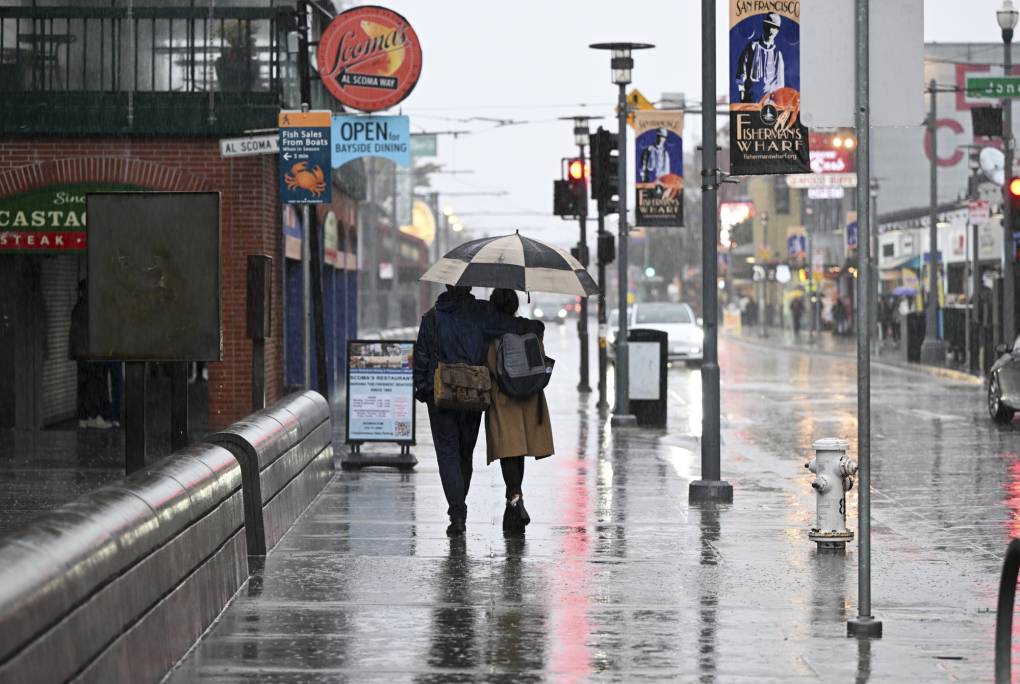
"caption": "Two people share an umbrella on a rainy day in Fisherman's Wharf, San Francisco, on Feb. 14, 2024.",
"description": null,
"title": "Rainy day in San Francisco",
"credit": "Tayfun Coskun/Anadolu via Getty Images",
"status": "inherit",
"altTag": null,
"isLoading": false,
"fetchFailed": false
},
"science_1992557": {
"type": "attachments",
"id": "science_1992557",
"meta": {
"index": "attachments_1716263798",
"site": "science",
"id": "1992557",
"found": true
},
"parent": 1992580,
"imgSizes": {
"twentyfourteen-full-width": {
"file": "https://cdn.kqed.org/wp-content/uploads/sites/35/2024/05/230814-AlvisoBay-23-BL_qut-1038x576.jpg",
"width": 1038,
"mimeType": "image/jpeg",
"height": 576
},
"thumbnail": {
"file": "https://cdn.kqed.org/wp-content/uploads/sites/35/2024/05/230814-AlvisoBay-23-BL_qut-160x107.jpg",
"width": 160,
"mimeType": "image/jpeg",
"height": 107
},
"post-thumbnail": {
"file": "https://cdn.kqed.org/wp-content/uploads/sites/35/2024/05/230814-AlvisoBay-23-BL_qut-672x372.jpg",
"width": 672,
"mimeType": "image/jpeg",
"height": 372
},
"kqedFullSize": {
"file": "https://cdn.kqed.org/wp-content/uploads/sites/35/2024/05/230814-AlvisoBay-23-BL_qut.jpg",
"width": 1920,
"height": 1280
},
"large": {
"file": "https://cdn.kqed.org/wp-content/uploads/sites/35/2024/05/230814-AlvisoBay-23-BL_qut-1020x680.jpg",
"width": 1020,
"mimeType": "image/jpeg",
"height": 680
},
"1536x1536": {
"file": "https://cdn.kqed.org/wp-content/uploads/sites/35/2024/05/230814-AlvisoBay-23-BL_qut-1536x1024.jpg",
"width": 1536,
"mimeType": "image/jpeg",
"height": 1024
},
"medium": {
"file": "https://cdn.kqed.org/wp-content/uploads/sites/35/2024/05/230814-AlvisoBay-23-BL_qut-800x533.jpg",
"width": 800,
"mimeType": "image/jpeg",
"height": 533
},
"medium_large": {
"file": "https://cdn.kqed.org/wp-content/uploads/sites/35/2024/05/230814-AlvisoBay-23-BL_qut-768x512.jpg",
"width": 768,
"mimeType": "image/jpeg",
"height": 512
}
},
"publishDate": 1714611223,
"modified": 1714829247,
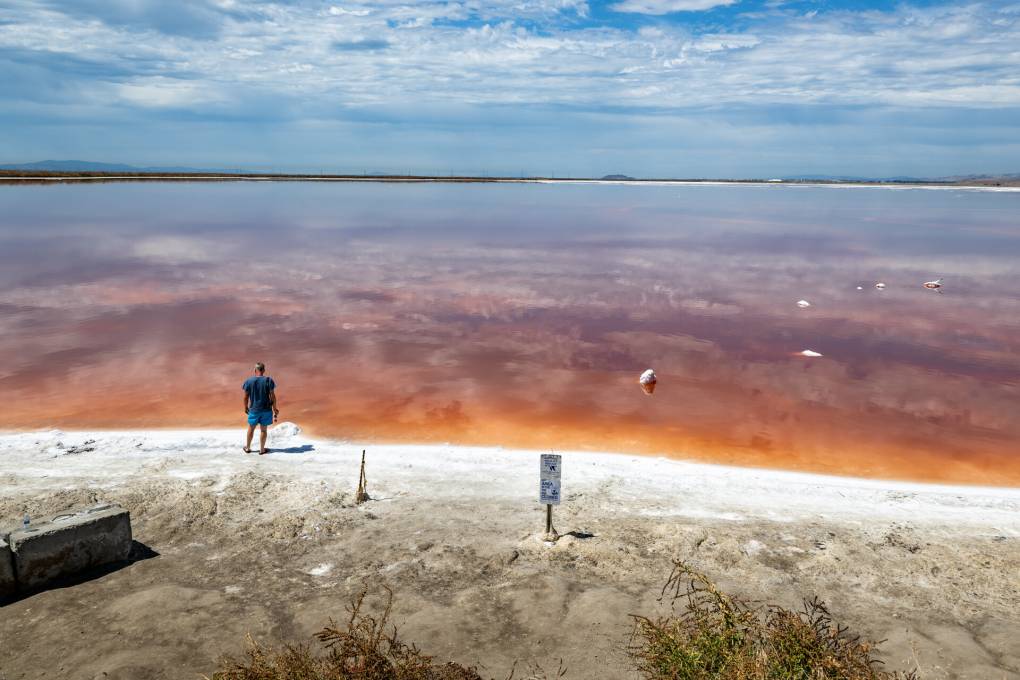
"caption": "Clumps of salt stick out of the water at a salt pond in Alviso on Aug. 15, 2023, a district of San José located on the southern shores of San Francisco Bay.",
"description": null,
"title": "230814-AlvisoBay-23-BL_qut",
"credit": "Beth LaBerge/KQED",
"status": "inherit",
"altTag": null,
"isLoading": false,
"fetchFailed": false
},
"science_1992476": {
"type": "attachments",
"id": "science_1992476",
"meta": {
"index": "attachments_1716263798",
"site": "science",
"id": "1992476",
"found": true
},
"parent": 0,
"imgSizes": {
"twentyfourteen-full-width": {
"file": "https://cdn.kqed.org/wp-content/uploads/sites/35/2024/04/20240423_RITGER_CLIMATE-WEEK-DAY-2_72212-KQED-1038x576.jpg",
"width": 1038,
"mimeType": "image/jpeg",
"height": 576
},
"thumbnail": {
"file": "https://cdn.kqed.org/wp-content/uploads/sites/35/2024/04/20240423_RITGER_CLIMATE-WEEK-DAY-2_72212-KQED-160x107.jpg",
"width": 160,
"mimeType": "image/jpeg",
"height": 107
},
"post-thumbnail": {
"file": "https://cdn.kqed.org/wp-content/uploads/sites/35/2024/04/20240423_RITGER_CLIMATE-WEEK-DAY-2_72212-KQED-672x372.jpg",
"width": 672,
"mimeType": "image/jpeg",
"height": 372
},
"kqedFullSize": {
"file": "https://cdn.kqed.org/wp-content/uploads/sites/35/2024/04/20240423_RITGER_CLIMATE-WEEK-DAY-2_72212-KQED.jpg",
"width": 2000,
"height": 1333
},
"large": {
"file": "https://cdn.kqed.org/wp-content/uploads/sites/35/2024/04/20240423_RITGER_CLIMATE-WEEK-DAY-2_72212-KQED-1020x680.jpg",
"width": 1020,
"mimeType": "image/jpeg",
"height": 680
},
"1536x1536": {
"file": "https://cdn.kqed.org/wp-content/uploads/sites/35/2024/04/20240423_RITGER_CLIMATE-WEEK-DAY-2_72212-KQED-1536x1024.jpg",
"width": 1536,
"mimeType": "image/jpeg",
"height": 1024
},
"full-width": {
"file": "https://cdn.kqed.org/wp-content/uploads/sites/35/2024/04/20240423_RITGER_CLIMATE-WEEK-DAY-2_72212-KQED-1920x1280.jpg",
"width": 1920,
"mimeType": "image/jpeg",
"height": 1280
},
"medium": {
"file": "https://cdn.kqed.org/wp-content/uploads/sites/35/2024/04/20240423_RITGER_CLIMATE-WEEK-DAY-2_72212-KQED-800x533.jpg",
"width": 800,
"mimeType": "image/jpeg",
"height": 533
},
"medium_large": {
"file": "https://cdn.kqed.org/wp-content/uploads/sites/35/2024/04/20240423_RITGER_CLIMATE-WEEK-DAY-2_72212-KQED-768x512.jpg",
"width": 768,
"mimeType": "image/jpeg",
"height": 512
}
},
"publishDate": 1714067040,
"modified": 1714077922,
"caption": "California Secretary of Natural Resources Wade Crowfoot is interviewed by KQED reporter Danielle Venton for Climate One at the Commonwealth Club in San Francisco on April 23, 2024",
"description": null,
"title": "20240423_RITGER_CLIMATE WEEK DAY 2_72212-KQED",
"credit": "Courtesy of Climate One/Commonwealth Club",
"status": "inherit",
"altTag": "A man wearing a dark business suit sits next to a woman with a dark jacket with white designs on a stage.",
"isLoading": false,
"fetchFailed": false
},
"science_1992422": {
"type": "attachments",
"id": "science_1992422",
"meta": {
"index": "attachments_1716263798",
"site": "science",
"id": "1992422",
"found": true
},
"parent": 0,
"imgSizes": {
"twentyfourteen-full-width": {
"file": "https://cdn.kqed.org/wp-content/uploads/sites/35/2024/04/AP32683046366-KQED-1038x576.jpg",
"width": 1038,
"mimeType": "image/jpeg",
"height": 576
},
"thumbnail": {
"file": "https://cdn.kqed.org/wp-content/uploads/sites/35/2024/04/AP32683046366-KQED-160x109.jpg",
"width": 160,
"mimeType": "image/jpeg",
"height": 109
},
"post-thumbnail": {
"file": "https://cdn.kqed.org/wp-content/uploads/sites/35/2024/04/AP32683046366-KQED-672x372.jpg",
"width": 672,
"mimeType": "image/jpeg",
"height": 372
},
"kqedFullSize": {
"file": "https://cdn.kqed.org/wp-content/uploads/sites/35/2024/04/AP32683046366-KQED.jpg",
"width": 2000,
"height": 1362
},
"large": {
"file": "https://cdn.kqed.org/wp-content/uploads/sites/35/2024/04/AP32683046366-KQED-1020x695.jpg",
"width": 1020,
"mimeType": "image/jpeg",
"height": 695
},
"1536x1536": {
"file": "https://cdn.kqed.org/wp-content/uploads/sites/35/2024/04/AP32683046366-KQED-1536x1046.jpg",
"width": 1536,
"mimeType": "image/jpeg",
"height": 1046
},
"full-width": {
"file": "https://cdn.kqed.org/wp-content/uploads/sites/35/2024/04/AP32683046366-KQED-1920x1308.jpg",
"width": 1920,
"mimeType": "image/jpeg",
"height": 1308
},
"medium": {
"file": "https://cdn.kqed.org/wp-content/uploads/sites/35/2024/04/AP32683046366-KQED-800x545.jpg",
"width": 800,
"mimeType": "image/jpeg",
"height": 545
},
"medium_large": {
"file": "https://cdn.kqed.org/wp-content/uploads/sites/35/2024/04/AP32683046366-KQED-768x523.jpg",
"width": 768,
"mimeType": "image/jpeg",
"height": 523
}
},
"publishDate": 1713553872,
"modified": 1713553935,
"caption": "Rainbow flags fly in front of San Francisco City Hall in San Francisco on June 26, 2013, shortly after a U.S. Supreme Court decision cleared the way for same-sex marriage in California. ",
"description": null,
"title": "Supreme Court Gay Marriage",
"credit": "Noah Berger/AP Photo",
"status": "inherit",
"altTag": null,
"isLoading": false,
"fetchFailed": false
},
"science_1992411": {
"type": "attachments",
"id": "science_1992411",
"meta": {
"index": "attachments_1716263798",
"site": "science",
"id": "1992411",
"found": true
},
"parent": 1992401,
"imgSizes": {
"twentyfourteen-full-width": {
"file": "https://cdn.kqed.org/wp-content/uploads/sites/35/2024/04/GettyImages-1247569080-1024x576.jpg",
"width": 1024,
"mimeType": "image/jpeg",
"height": 576
},
"thumbnail": {
"file": "https://cdn.kqed.org/wp-content/uploads/sites/35/2024/04/GettyImages-1247569080-160x107.jpg",
"width": 160,
"mimeType": "image/jpeg",
"height": 107
},
"post-thumbnail": {
"file": "https://cdn.kqed.org/wp-content/uploads/sites/35/2024/04/GettyImages-1247569080-672x372.jpg",
"width": 672,
"mimeType": "image/jpeg",
"height": 372
},
"kqedFullSize": {
"file": "https://cdn.kqed.org/wp-content/uploads/sites/35/2024/04/GettyImages-1247569080.jpg",
"width": 1024,
"height": 682
},
"large": {
"file": "https://cdn.kqed.org/wp-content/uploads/sites/35/2024/04/GettyImages-1247569080-1020x679.jpg",
"width": 1020,
"mimeType": "image/jpeg",
"height": 679
},
"medium": {
"file": "https://cdn.kqed.org/wp-content/uploads/sites/35/2024/04/GettyImages-1247569080-800x533.jpg",
"width": 800,
"mimeType": "image/jpeg",
"height": 533
},
"medium_large": {
"file": "https://cdn.kqed.org/wp-content/uploads/sites/35/2024/04/GettyImages-1247569080-768x512.jpg",
"width": 768,
"mimeType": "image/jpeg",
"height": 512
}
},
"publishDate": 1713486922,
"modified": 1713549968,
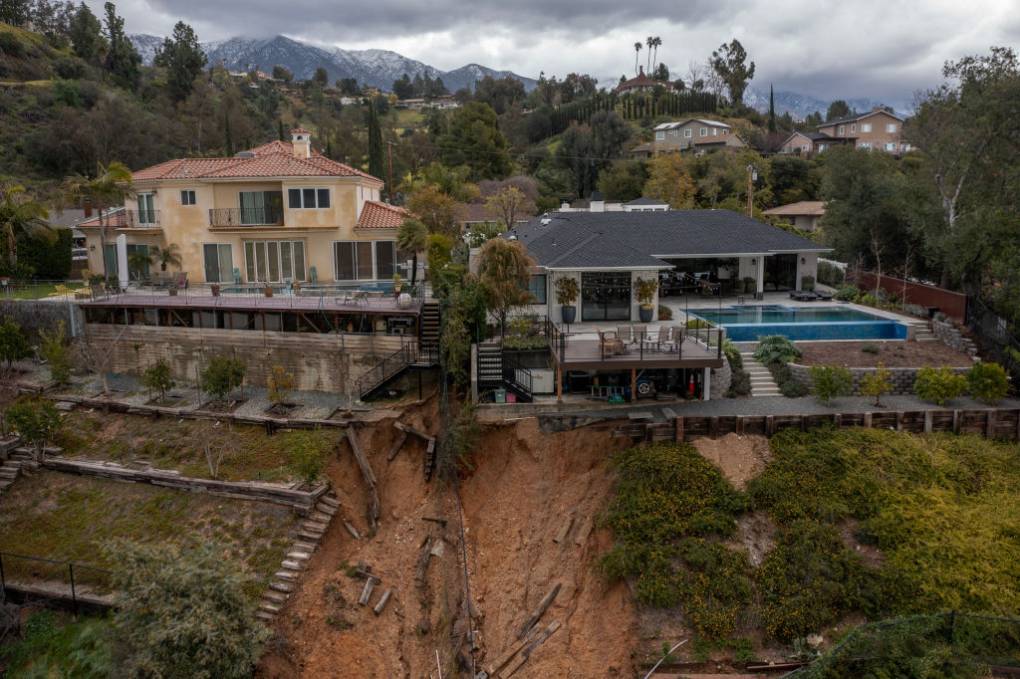
"caption": "In an aerial view, a mudslide has damaged homes after a series of storms passed through on Feb. 28, 2023, in La Cañada, Los Angeles County.",
"description": null,
"title": "Californians Across The State See Snow In Unusually Low Elevations As Massive Storm Moves East",
"credit": "David McNew/Getty Images",
"status": "inherit",
"altTag": null,
"isLoading": false,
"fetchFailed": false
},
"science_1992343": {
"type": "attachments",
"id": "science_1992343",
"meta": {
"index": "attachments_1716263798",
"site": "science",
"id": "1992343",
"found": true
},
"parent": 1992309,
"imgSizes": {
"twentyfourteen-full-width": {
"file": "https://cdn.kqed.org/wp-content/uploads/sites/35/2024/04/DSC_0117-1038x576.jpg",
"width": 1038,
"mimeType": "image/jpeg",
"height": 576
},
"thumbnail": {
"file": "https://cdn.kqed.org/wp-content/uploads/sites/35/2024/04/DSC_0117-160x107.jpg",
"width": 160,
"mimeType": "image/jpeg",
"height": 107
},
"post-thumbnail": {
"file": "https://cdn.kqed.org/wp-content/uploads/sites/35/2024/04/DSC_0117-672x372.jpg",
"width": 672,
"mimeType": "image/jpeg",
"height": 372
},
"kqedFullSize": {
"file": "https://cdn.kqed.org/wp-content/uploads/sites/35/2024/04/DSC_0117.jpg",
"width": 1620,
"height": 1080
},
"large": {
"file": "https://cdn.kqed.org/wp-content/uploads/sites/35/2024/04/DSC_0117-1020x680.jpg",
"width": 1020,
"mimeType": "image/jpeg",
"height": 680
},
"1536x1536": {
"file": "https://cdn.kqed.org/wp-content/uploads/sites/35/2024/04/DSC_0117-1536x1024.jpg",
"width": 1536,
"mimeType": "image/jpeg",
"height": 1024
},
"medium": {
"file": "https://cdn.kqed.org/wp-content/uploads/sites/35/2024/04/DSC_0117-800x533.jpg",
"width": 800,
"mimeType": "image/jpeg",
"height": 533
},
"medium_large": {
"file": "https://cdn.kqed.org/wp-content/uploads/sites/35/2024/04/DSC_0117-768x512.jpg",
"width": 768,
"mimeType": "image/jpeg",
"height": 512
}
},
"publishDate": 1712809912,
"modified": 1712810045,
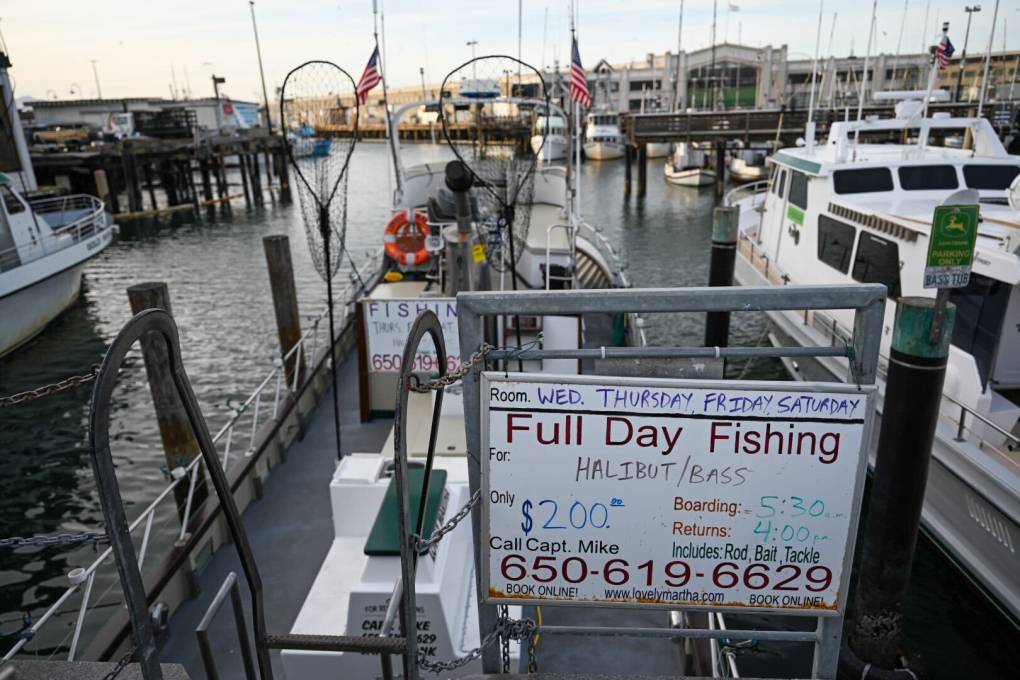
"caption": "Empty docks at Fisherman's Warf on April 10, 2024. ",
"description": null,
"title": "DSC_0117",
"credit": "Beth LaBerge/KQED",
"status": "inherit",
"altTag": "Boats and docks as the sun sets.",
"isLoading": false,
"fetchFailed": false
},
"science_1992251": {
"type": "attachments",
"id": "science_1992251",
"meta": {
"index": "attachments_1716263798",
"site": "science",
"id": "1992251",
"found": true
},
"parent": 0,
"imgSizes": {
"twentyfourteen-full-width": {
"file": "https://cdn.kqed.org/wp-content/uploads/sites/35/2024/04/GETTYIMAGES-1469613926-KQED-1038x576.jpg",
"width": 1038,
"mimeType": "image/jpeg",
"height": 576
},
"thumbnail": {
"file": "https://cdn.kqed.org/wp-content/uploads/sites/35/2024/04/GETTYIMAGES-1469613926-KQED-160x107.jpg",
"width": 160,
"mimeType": "image/jpeg",
"height": 107
},
"post-thumbnail": {
"file": "https://cdn.kqed.org/wp-content/uploads/sites/35/2024/04/GETTYIMAGES-1469613926-KQED-672x372.jpg",
"width": 672,
"mimeType": "image/jpeg",
"height": 372
},
"kqedFullSize": {
"file": "https://cdn.kqed.org/wp-content/uploads/sites/35/2024/04/GETTYIMAGES-1469613926-KQED.jpg",
"width": 2000,
"height": 1333
},
"large": {
"file": "https://cdn.kqed.org/wp-content/uploads/sites/35/2024/04/GETTYIMAGES-1469613926-KQED-1020x680.jpg",
"width": 1020,
"mimeType": "image/jpeg",
"height": 680
},
"1536x1536": {
"file": "https://cdn.kqed.org/wp-content/uploads/sites/35/2024/04/GETTYIMAGES-1469613926-KQED-1536x1024.jpg",
"width": 1536,
"mimeType": "image/jpeg",
"height": 1024
},
"full-width": {
"file": "https://cdn.kqed.org/wp-content/uploads/sites/35/2024/04/GETTYIMAGES-1469613926-KQED-1920x1280.jpg",
"width": 1920,
"mimeType": "image/jpeg",
"height": 1280
},
"medium": {
"file": "https://cdn.kqed.org/wp-content/uploads/sites/35/2024/04/GETTYIMAGES-1469613926-KQED-800x533.jpg",
"width": 800,
"mimeType": "image/jpeg",
"height": 533
},
"medium_large": {
"file": "https://cdn.kqed.org/wp-content/uploads/sites/35/2024/04/GETTYIMAGES-1469613926-KQED-768x512.jpg",
"width": 768,
"mimeType": "image/jpeg",
"height": 512
}
},
"publishDate": 1712254520,
"modified": 1712254553,
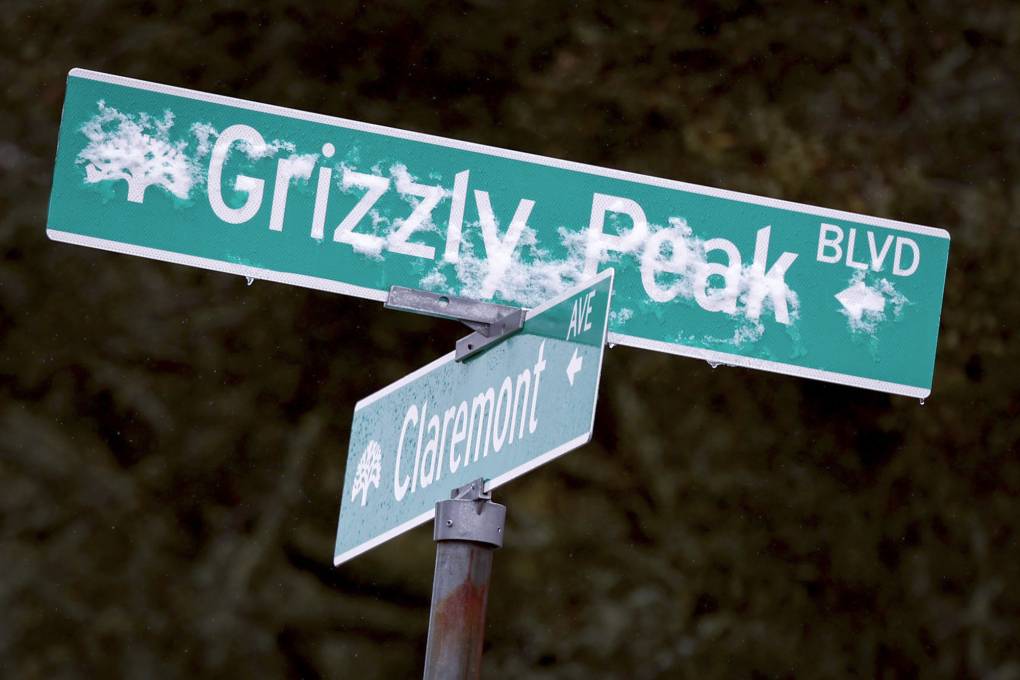
"caption": "Snow covers part of Grizzly Peak Boulevard sign in Oakland on Feb. 24, 2023.",
"description": null,
"title": "Bay Area Snow",
"credit": "Ray Chavez/MediaNews Group/The Mercury News via Getty Images",
"status": "inherit",
"altTag": null,
"isLoading": false,
"fetchFailed": false
},
"science_1992230": {
"type": "attachments",
"id": "science_1992230",
"meta": {
"index": "attachments_1716263798",
"site": "science",
"id": "1992230",
"found": true
},
"parent": 1992222,
"imgSizes": {
"twentyfourteen-full-width": {
"file": "https://cdn.kqed.org/wp-content/uploads/sites/35/2024/04/GettyImages-2092455726-1024x576.jpg",
"width": 1024,
"mimeType": "image/jpeg",
"height": 576
},
"thumbnail": {
"file": "https://cdn.kqed.org/wp-content/uploads/sites/35/2024/04/GettyImages-2092455726-160x109.jpg",
"width": 160,
"mimeType": "image/jpeg",
"height": 109
},
"post-thumbnail": {
"file": "https://cdn.kqed.org/wp-content/uploads/sites/35/2024/04/GettyImages-2092455726-672x372.jpg",
"width": 672,
"mimeType": "image/jpeg",
"height": 372
},
"kqedFullSize": {
"file": "https://cdn.kqed.org/wp-content/uploads/sites/35/2024/04/GettyImages-2092455726.jpg",
"width": 1024,
"height": 696
},
"large": {
"file": "https://cdn.kqed.org/wp-content/uploads/sites/35/2024/04/GettyImages-2092455726-1020x693.jpg",
"width": 1020,
"mimeType": "image/jpeg",
"height": 693
},
"medium": {
"file": "https://cdn.kqed.org/wp-content/uploads/sites/35/2024/04/GettyImages-2092455726-800x544.jpg",
"width": 800,
"mimeType": "image/jpeg",
"height": 544
},
"medium_large": {
"file": "https://cdn.kqed.org/wp-content/uploads/sites/35/2024/04/GettyImages-2092455726-768x522.jpg",
"width": 768,
"mimeType": "image/jpeg",
"height": 522
}
},
"publishDate": 1712187040,
"modified": 1712187144,
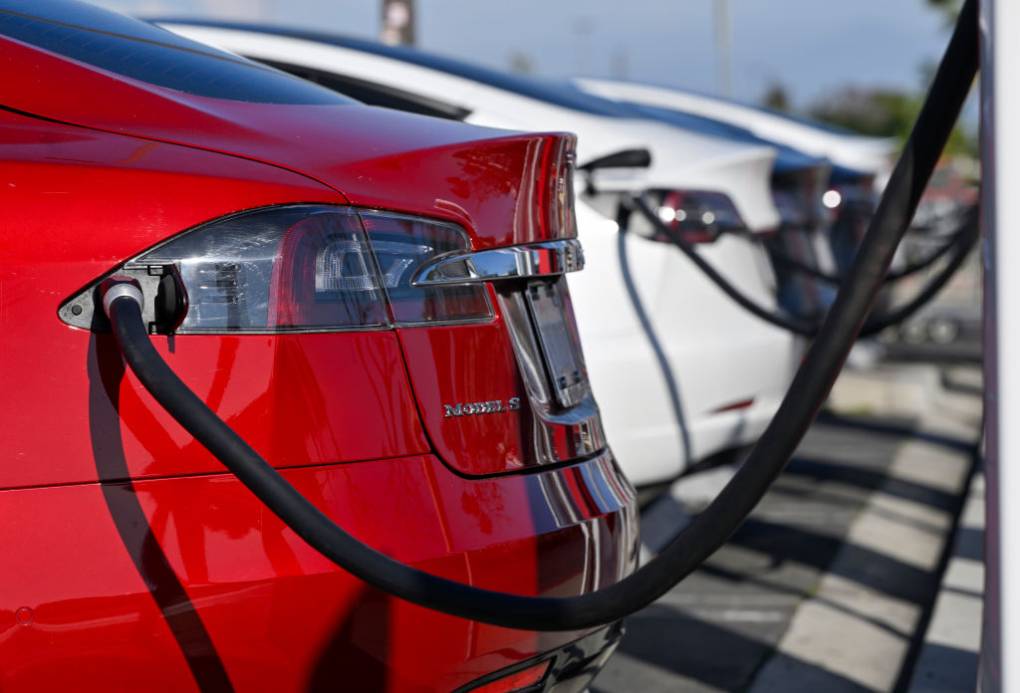
"caption": "Drivers charge their Teslas in Fountain Valley, Orange County, on March 20, 2024.",
"description": null,
"title": "Electric Vehicles",
"credit": "Jeff Gritchen/MediaNews Group/Orange County Register via Getty Images",
"status": "inherit",
"altTag": "Electric vehicles lined up while charging.",
"isLoading": false,
"fetchFailed": false
},
"science_1992206": {
"type": "attachments",
"id": "science_1992206",
"meta": {
"index": "attachments_1716263798",
"site": "science",
"id": "1992206",
"found": true
},
"parent": 1992194,
"imgSizes": {
"twentyfourteen-full-width": {
"file": "https://cdn.kqed.org/wp-content/uploads/sites/35/2024/04/AN2_8534-1038x576.jpg",
"width": 1038,
"mimeType": "image/jpeg",
"height": 576
},
"thumbnail": {
"file": "https://cdn.kqed.org/wp-content/uploads/sites/35/2024/04/AN2_8534-160x107.jpg",
"width": 160,
"mimeType": "image/jpeg",
"height": 107
},
"post-thumbnail": {
"file": "https://cdn.kqed.org/wp-content/uploads/sites/35/2024/04/AN2_8534-672x372.jpg",
"width": 672,
"mimeType": "image/jpeg",
"height": 372
},
"kqedFullSize": {
"file": "https://cdn.kqed.org/wp-content/uploads/sites/35/2024/04/AN2_8534-scaled.jpg",
"width": 2560,
"height": 1707
},
"2048x2048": {
"file": "https://cdn.kqed.org/wp-content/uploads/sites/35/2024/04/AN2_8534-2048x1365.jpg",
"width": 2048,
"mimeType": "image/jpeg",
"height": 1365
},
"large": {
"file": "https://cdn.kqed.org/wp-content/uploads/sites/35/2024/04/AN2_8534-1020x680.jpg",
"width": 1020,
"mimeType": "image/jpeg",
"height": 680
},
"1536x1536": {
"file": "https://cdn.kqed.org/wp-content/uploads/sites/35/2024/04/AN2_8534-1536x1024.jpg",
"width": 1536,
"mimeType": "image/jpeg",
"height": 1024
},
"full-width": {
"file": "https://cdn.kqed.org/wp-content/uploads/sites/35/2024/04/AN2_8534-1920x1280.jpg",
"width": 1920,
"mimeType": "image/jpeg",
"height": 1280
},
"medium": {
"file": "https://cdn.kqed.org/wp-content/uploads/sites/35/2024/04/AN2_8534-800x533.jpg",
"width": 800,
"mimeType": "image/jpeg",
"height": 533
},
"medium_large": {
"file": "https://cdn.kqed.org/wp-content/uploads/sites/35/2024/04/AN2_8534-768x512.jpg",
"width": 768,
"mimeType": "image/jpeg",
"height": 512
}
},
"publishDate": 1712085084,
"modified": 1712085181,
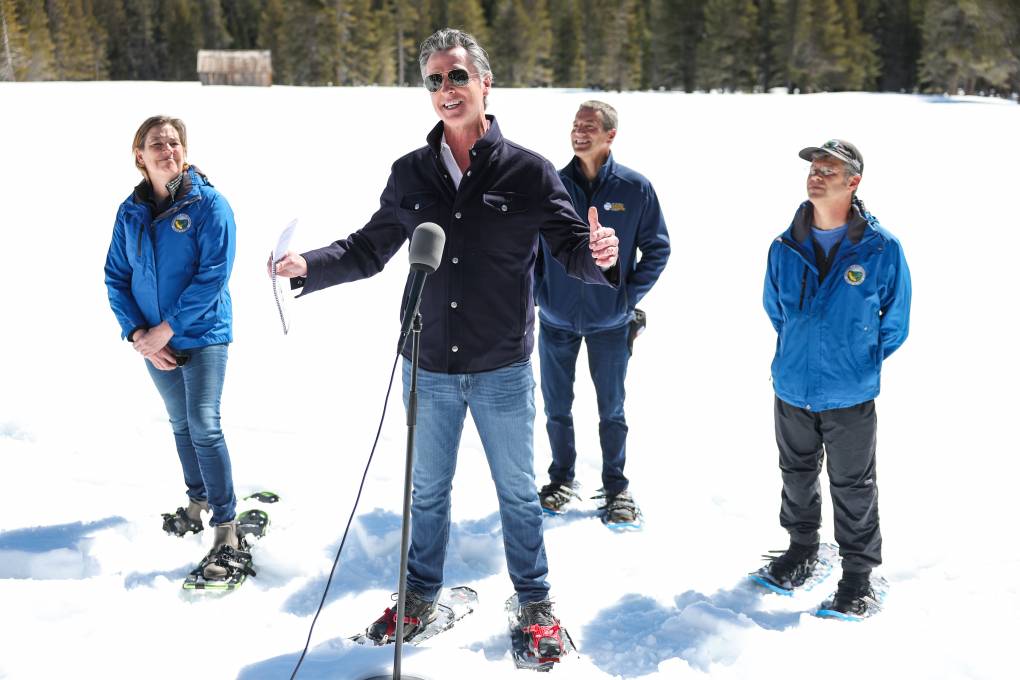
"caption": "Gov. Gavin Newsom speaks to news media on April 2, 2024, after the fourth media snow survey of the 2024 season at Phillips Station in the Sierra Nevada. The survey is held approximately 90 miles east of Sacramento off Highway 50 in El Dorado County. ",
"description": null,
"title": "AN2_8534",
"credit": "Andrew Nixon / California Department of Water Resources",
"status": "inherit",
"altTag": null,
"isLoading": false,
"fetchFailed": false
},
"science_1992176": {
"type": "attachments",
"id": "science_1992176",
"meta": {
"index": "attachments_1716263798",
"site": "science",
"id": "1992176",
"found": true
},
"parent": 1992122,
"imgSizes": {
"twentyfourteen-full-width": {
"file": "https://cdn.kqed.org/wp-content/uploads/sites/35/2024/03/240330-Salmon-JY-015_qut-1038x576.jpg",
"width": 1038,
"mimeType": "image/jpeg",
"height": 576
},
"thumbnail": {
"file": "https://cdn.kqed.org/wp-content/uploads/sites/35/2024/03/240330-Salmon-JY-015_qut-160x107.jpg",
"width": 160,
"mimeType": "image/jpeg",
"height": 107
},
"post-thumbnail": {
"file": "https://cdn.kqed.org/wp-content/uploads/sites/35/2024/03/240330-Salmon-JY-015_qut-672x372.jpg",
"width": 672,
"mimeType": "image/jpeg",
"height": 372
},
"kqedFullSize": {
"file": "https://cdn.kqed.org/wp-content/uploads/sites/35/2024/03/240330-Salmon-JY-015_qut.jpg",
"width": 1920,
"height": 1280
},
"large": {
"file": "https://cdn.kqed.org/wp-content/uploads/sites/35/2024/03/240330-Salmon-JY-015_qut-1020x680.jpg",
"width": 1020,
"mimeType": "image/jpeg",
"height": 680
},
"1536x1536": {
"file": "https://cdn.kqed.org/wp-content/uploads/sites/35/2024/03/240330-Salmon-JY-015_qut-1536x1024.jpg",
"width": 1536,
"mimeType": "image/jpeg",
"height": 1024
},
"medium": {
"file": "https://cdn.kqed.org/wp-content/uploads/sites/35/2024/03/240330-Salmon-JY-015_qut-800x533.jpg",
"width": 800,
"mimeType": "image/jpeg",
"height": 533
},
"medium_large": {
"file": "https://cdn.kqed.org/wp-content/uploads/sites/35/2024/03/240330-Salmon-JY-015_qut-768x512.jpg",
"width": 768,
"mimeType": "image/jpeg",
"height": 512
}
},
"publishDate": 1711911319,
"modified": 1711911563,
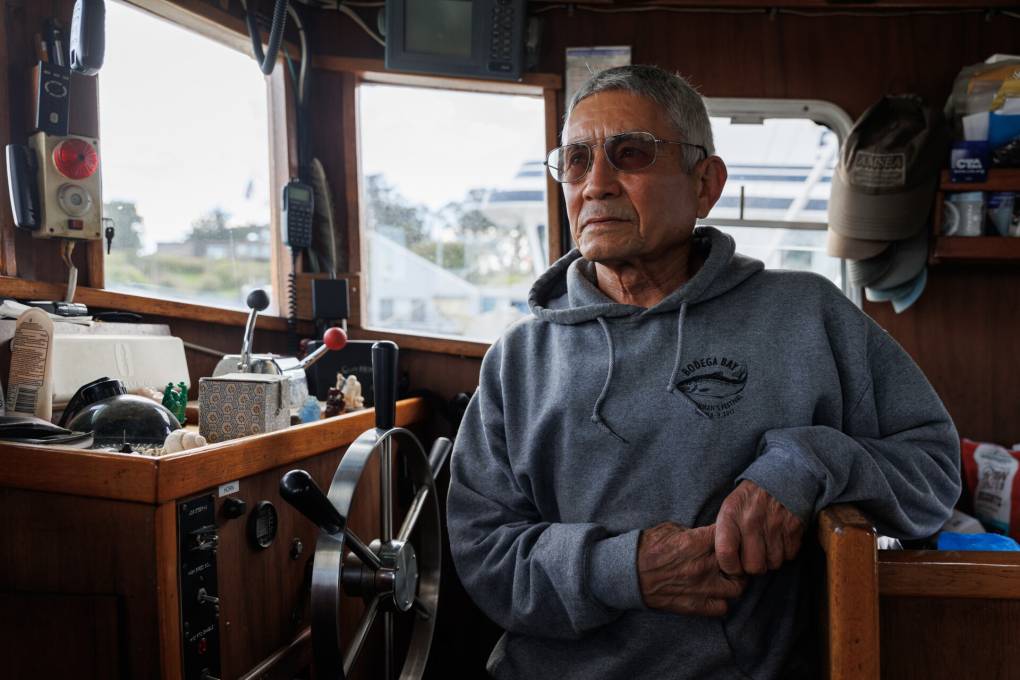
"caption": "Salmon fisherman Richard “Dick” Ogg poses for a portrait in his boat, the Karen Jeanne, at Spud Point Marina in Bodega Bay, Calif., on Saturday, March 30, 2024. If fisheries cancel California’s salmon season for the second year in a row, Ogg plans to make a trip to Oregon to catch salmon there.",
"description": null,
"title": "240330-Salmon-JY-015_qut",
"credit": "Juliana Yamada/KQED",
"status": "inherit",
"altTag": "A man wearing a grayish hoodie and sun glasses rests his arm inside a boat.",
"isLoading": false,
"fetchFailed": false
},
"science_1954913": {
"type": "attachments",
"id": "science_1954913",
"meta": {
"index": "attachments_1716263798",
"site": "science",
"id": "1954913",
"found": true
},
"parent": 1954906,
"imgSizes": {
"thumbnail": {
"file": "https://cdn.kqed.org/wp-content/uploads/sites/35/2019/07/gas-kitchen-stove-cook-with-blue-flames-burning-picture-id1070983176-800x450-160x90.jpg",
"width": 160,
"mimeType": "image/jpeg",
"height": 90
},
"post-thumbnail": {
"file": "https://cdn.kqed.org/wp-content/uploads/sites/35/2019/07/gas-kitchen-stove-cook-with-blue-flames-burning-picture-id1070983176-800x450-672x372.jpg",
"width": 672,
"mimeType": "image/jpeg",
"height": 372
},
"kqedFullSize": {
"file": "https://cdn.kqed.org/wp-content/uploads/sites/35/2019/07/gas-kitchen-stove-cook-with-blue-flames-burning-picture-id1070983176-800x450.jpg",
"width": 800,
"height": 450
},
"medium": {
"file": "https://cdn.kqed.org/wp-content/uploads/sites/35/2019/07/gas-kitchen-stove-cook-with-blue-flames-burning-picture-id1070983176-800x450-800x450.jpg",
"width": 800,
"mimeType": "image/jpeg",
"height": 450
},
"medium_large": {
"file": "https://cdn.kqed.org/wp-content/uploads/sites/35/2019/07/gas-kitchen-stove-cook-with-blue-flames-burning-picture-id1070983176-800x450-768x432.jpg",
"width": 768,
"mimeType": "image/jpeg",
"height": 432
}
},
"publishDate": 1578513503,
"modified": 1711470818,
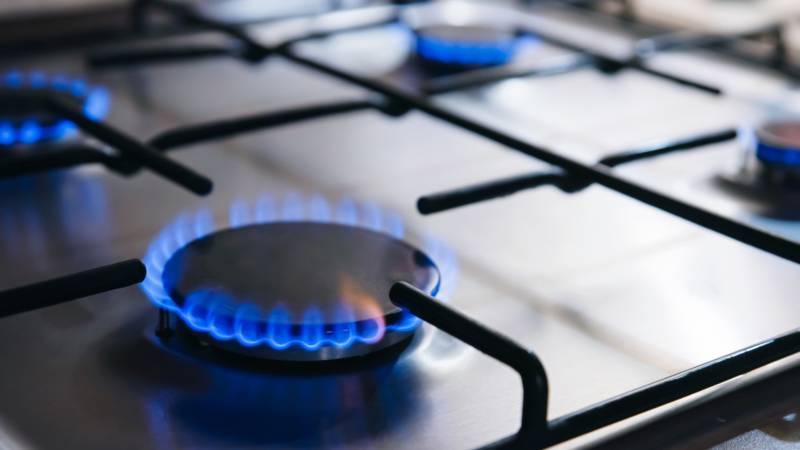
"caption": "San Francisco says it will stay the course in banning gas hookups in new construction, even as Berkeley agrees to repeal its own rules.",
"description": null,
"title": "gas-kitchen-stove-cook-with-blue-flames-burning-picture-id1070983176-800x450.jpg",
"credit": "Getty Images",
"status": "inherit",
"altTag": "A gas cooking range.",
"isLoading": false,
"fetchFailed": false
},
"science_1991941": {
"type": "attachments",
"id": "science_1991941",
"meta": {
"index": "attachments_1716263798",
"site": "science",
"id": "1991941",
"found": true
},
"parent": 1991936,
"imgSizes": {
"twentyfourteen-full-width": {
"file": "https://cdn.kqed.org/wp-content/uploads/sites/35/2024/03/MarinSeaLevelRiseEDR-1038x576.jpg",
"width": 1038,
"mimeType": "image/jpeg",
"height": 576
},
"thumbnail": {
"file": "https://cdn.kqed.org/wp-content/uploads/sites/35/2024/03/MarinSeaLevelRiseEDR-160x107.jpg",
"width": 160,
"mimeType": "image/jpeg",
"height": 107
},
"post-thumbnail": {
"file": "https://cdn.kqed.org/wp-content/uploads/sites/35/2024/03/MarinSeaLevelRiseEDR-672x372.jpg",
"width": 672,
"mimeType": "image/jpeg",
"height": 372
},
"kqedFullSize": {
"file": "https://cdn.kqed.org/wp-content/uploads/sites/35/2024/03/MarinSeaLevelRiseEDR.jpg",
"width": 1920,
"height": 1280
},
"large": {
"file": "https://cdn.kqed.org/wp-content/uploads/sites/35/2024/03/MarinSeaLevelRiseEDR-1020x680.jpg",
"width": 1020,
"mimeType": "image/jpeg",
"height": 680
},
"1536x1536": {
"file": "https://cdn.kqed.org/wp-content/uploads/sites/35/2024/03/MarinSeaLevelRiseEDR-1536x1024.jpg",
"width": 1536,
"mimeType": "image/jpeg",
"height": 1024
},
"medium": {
"file": "https://cdn.kqed.org/wp-content/uploads/sites/35/2024/03/MarinSeaLevelRiseEDR-800x533.jpg",
"width": 800,
"mimeType": "image/jpeg",
"height": 533
},
"medium_large": {
"file": "https://cdn.kqed.org/wp-content/uploads/sites/35/2024/03/MarinSeaLevelRiseEDR-768x512.jpg",
"width": 768,
"mimeType": "image/jpeg",
"height": 512
}
},
"publishDate": 1710868851,
"modified": 1710886512,
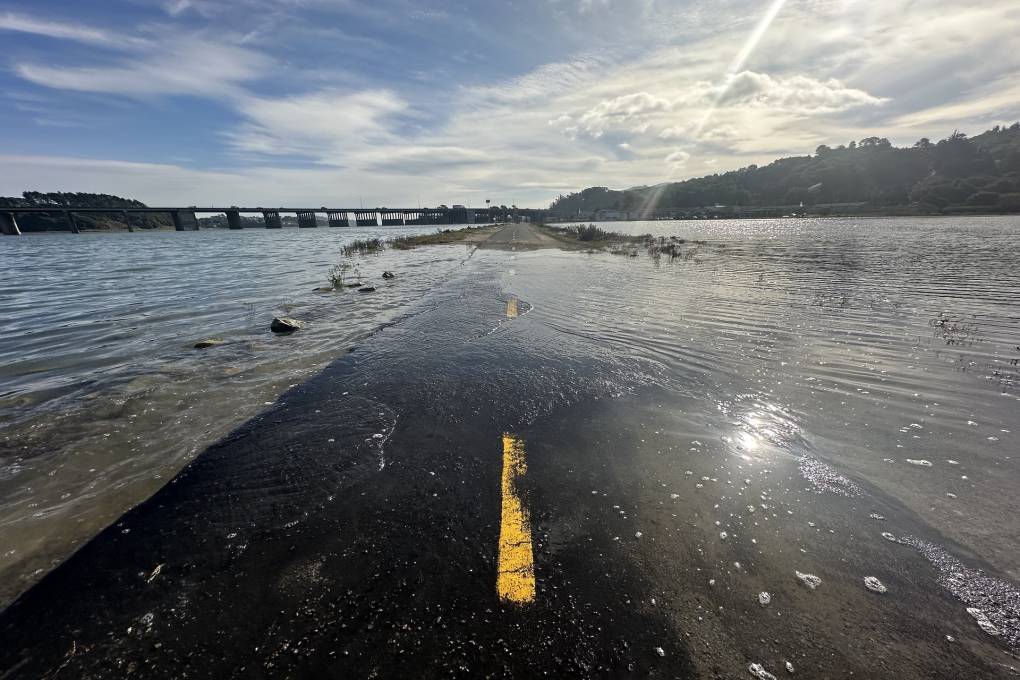
"caption": "During a King Tide on Jan. 12, 2024, part of the San Francisco Bay Trail was under water near the Bothin Marsh Preserve. This area often floods when tides are high.",
"description": null,
"title": "MarinSeaLevelRiseEDR",
"credit": "Ezra David Romero/KQED",
"status": "inherit",
"altTag": "A road is submerged by water.",
"isLoading": false,
"fetchFailed": false
}
},
"audioPlayerReducer": {
"postId": "stream_live",
"isPaused": true,
"isPlaying": false,
"pfsActive": false,
"pledgeModalIsOpen": true,
"playerDrawerIsOpen": false,
"liveAudioPlayStartedAt": 0,
"liveAudioPlayContext": ""
},
"authorsReducer": {
"byline_science_1992580": {
"type": "authors",
"id": "byline_science_1992580",
"meta": {
"override": true
},
"slug": "byline_science_1992580",
"name": "\u003ca href=\"https://www.kqed.org/author/jgeha\">Joseph Geha\u003c/a>",
"isLoading": false
},
"dventon": {
"type": "authors",
"id": "11088",
"meta": {
"index": "authors_1716337520",
"id": "11088",
"found": true
},
"name": "Danielle Venton",
"firstName": "Danielle",
"lastName": "Venton",
"slug": "dventon",
"email": "dventon@kqed.org",
"display_author_email": true,
"staff_mastheads": [
"science"
],
"title": "Science reporter",
"bio": "Danielle Venton is a reporter for KQED Science. She covers wildfires, space and oceans (though she is prone to sea sickness).\r\n\r\nBefore joining KQED in 2015, Danielle was a staff reporter at KRCB in Sonoma County and a freelancer. She studied science communication at UC Santa Cruz and formerly worked at CERN in Geneva, Switzerland where she wrote about computing. She lives in Sonoma County and enjoys backpacking.",
"avatar": "https://secure.gravatar.com/avatar/37b292b5c40c8d93959c4f48d73b5286f41b7abd8588277e941905a3ed4c801c?s=600&d=blank&r=g",
"twitter": "DanielleVenton",
"bluesky": null,
"facebook": null,
"instagram": null,
"linkedin": null,
"sites": [
{
"site": "arts",
"roles": [
"contributor"
]
},
{
"site": "news",
"roles": [
"editor"
]
},
{
"site": "futureofyou",
"roles": [
"editor"
]
},
{
"site": "science",
"roles": [
"editor"
]
},
{
"site": "liveblog",
"roles": [
"contributor"
]
}
],
"headData": {
"title": "Danielle Venton | KQED",
"description": "Science reporter",
"ogImgSrc": "https://secure.gravatar.com/avatar/37b292b5c40c8d93959c4f48d73b5286f41b7abd8588277e941905a3ed4c801c?s=600&d=blank&r=g",
"twImgSrc": "https://secure.gravatar.com/avatar/37b292b5c40c8d93959c4f48d73b5286f41b7abd8588277e941905a3ed4c801c?s=600&d=blank&r=g"
},
"isLoading": false,
"link": "/author/dventon"
},
"kevinstark": {
"type": "authors",
"id": "11608",
"meta": {
"index": "authors_1716337520",
"id": "11608",
"found": true
},
"name": "Kevin Stark",
"firstName": "Kevin",
"lastName": "Stark",
"slug": "kevinstark",
"email": "kstark@kqed.org",
"display_author_email": true,
"staff_mastheads": [
"science"
],
"title": "Senior Editor",
"bio": "Kevin is a senior editor for KQED Science, managing the station's health and climate desks. His journalism career began in the Pacific Northwest, and he later became a lead reporter for the San Francisco Public Press. His work has appeared in Pacific Standard magazine, the Energy News Network, the Center for Investigative Reporting's Reveal and WBEZ in Chicago. Kevin joined KQED in 2019, and has covered issues related to energy, wildfire, climate change and the environment.",
"avatar": "https://secure.gravatar.com/avatar/365aaa4b597d3a8374f67504ff0facd323d7906e8eb4be0a7efd2427408e802c?s=600&d=blank&r=g",
"twitter": "starkkev",
"bluesky": null,
"facebook": null,
"instagram": null,
"linkedin": null,
"sites": [
{
"site": "",
"roles": [
"editor"
]
},
{
"site": "news",
"roles": [
"editor"
]
},
{
"site": "science",
"roles": [
"administrator"
]
}
],
"headData": {
"title": "Kevin Stark | KQED",
"description": "Senior Editor",
"ogImgSrc": "https://secure.gravatar.com/avatar/365aaa4b597d3a8374f67504ff0facd323d7906e8eb4be0a7efd2427408e802c?s=600&d=blank&r=g",
"twImgSrc": "https://secure.gravatar.com/avatar/365aaa4b597d3a8374f67504ff0facd323d7906e8eb4be0a7efd2427408e802c?s=600&d=blank&r=g"
},
"isLoading": false,
"link": "/author/kevinstark"
},
"eromero": {
"type": "authors",
"id": "11746",
"meta": {
"index": "authors_1716337520",
"id": "11746",
"found": true
},
"name": "Ezra David Romero",
"firstName": "Ezra David",
"lastName": "Romero",
"slug": "eromero",
"email": "eromero@kqed.org",
"display_author_email": true,
"staff_mastheads": [
"news",
"science"
],
"title": "Climate Reporter",
"bio": "Ezra David Romero is a climate reporter for KQED News. He covers the absence and excess of water in the Bay Area — think sea level rise, flooding and drought. For nearly a decade he’s covered how warming temperatures are altering the lives of Californians. He’s reported on farmers worried their pistachio trees aren’t getting enough sleep, families desperate for water, scientists studying dying giant sequoias, and alongside firefighters containing wildfires. His work has appeared on local stations across California and nationally on public radio shows like Morning Edition, Here and Now, All Things Considered and Science Friday. ",
"avatar": "https://secure.gravatar.com/avatar/c76404d287c10ed40224227551ac36e24352c7306f106632caf6fead76f8801f?s=600&d=blank&r=g",
"twitter": "ezraromero",
"bluesky": null,
"facebook": null,
"instagram": null,
"linkedin": null,
"sites": [
{
"site": "arts",
"roles": [
"editor"
]
},
{
"site": "news",
"roles": [
"editor"
]
},
{
"site": "science",
"roles": [
"editor"
]
},
{
"site": "liveblog",
"roles": [
"author"
]
}
],
"headData": {
"title": "Ezra David Romero | KQED",
"description": "Climate Reporter",
"ogImgSrc": "https://secure.gravatar.com/avatar/c76404d287c10ed40224227551ac36e24352c7306f106632caf6fead76f8801f?s=600&d=blank&r=g",
"twImgSrc": "https://secure.gravatar.com/avatar/c76404d287c10ed40224227551ac36e24352c7306f106632caf6fead76f8801f?s=600&d=blank&r=g"
},
"isLoading": false,
"link": "/author/eromero"
}
},
"pagesReducer": {
"science_category_climate": {
"type": "terms",
"id": "science_31",
"meta": {
"index": "terms_1716263798",
"site": "science",
"id": "31",
"score": 11.06203
},
"featImg": null,
"name": "Climate",
"description": null,
"taxonomy": "category",
"headData": {
"twImgId": null,
"twTitle": null,
"ogTitle": null,
"ogImgId": null,
"twDescription": null,
"description": null,
"title": "Climate Archives | KQED Science",
"ogDescription": null
},
"ttid": 33,
"slug": "climate",
"isLoading": false,
"title": "Climate",
"pageMeta": {
"site": "science",
"WpPageTemplate": "page-topic-editorial",
"currentPage": 20
},
"blocks": [
{
"blockName": "kqed/post-list",
"attrs": {
"layout": "cardArticle2",
"query": "posts/science?category=climate",
"seeMore": false,
"paginated": true,
"page": 20
}
},
{
"blockName": "kqed/ad"
}
]
}
},
"pfsSessionReducer": {},
"postsReducer": {
"stream_live": {
"type": "live",
"id": "stream_live",
"audioUrl": "https://streams.kqed.org/kqedradio",
"title": "Live Stream",
"excerpt": "Live Stream information currently unavailable.",
"link": "/radio",
"featImg": "",
"label": {
"name": "KQED Live",
"link": "/"
}
},
"stream_kqedNewscast": {
"type": "posts",
"id": "stream_kqedNewscast",
"audioUrl": "https://www.kqed.org/.stream/anon/radio/RDnews/newscast.mp3?_=1",
"title": "KQED Newscast",
"featImg": "",
"label": {
"name": "88.5 FM",
"link": "/"
}
},
"science_1992597": {
"type": "posts",
"id": "science_1992597",
"meta": {
"index": "posts_1716263798",
"site": "science",
"id": "1992597",
"score": null,
"sort": [
1715029240000
]
},
"parent": 0,
"labelTerm": {
"site": "science"
},
"blocks": [],
"publishDate": 1715029240,
"format": "standard",
"title": "From Storms to Sunscreen: Bay Area Weather Turnaround Is Here",
"headTitle": "From Storms to Sunscreen: Bay Area Weather Turnaround Is Here | KQED",
"content": "\u003cp>After a weekend of downpours across the Bay Area and snow storms in the Sierra Nevada, forecasters expect a complete weather turnaround this week.\u003c/p>\n\u003cp>“Sunscreen is going to be important,” said Dalton Behringer, a meteorologist with the National Weather Service’s Bay Area office. “We’ve had some clear days, but this is going to be the warmest period this year.”\u003c/p>\n\u003cp>Temperatures over the next week could reach 90 degrees in some areas of the Central Valley, into the upper 80s in inland parts of the Bay Area, and the 70s in the Sierra Nevada.\u003c/p>\n\u003cp>The warm weather comes just days after storms dropped up to two feet of snow across the Sierra, blanketing the mountain range in fresh powder — and delivering the heaviest single-day snowfall of the 2023–24 season, according to the UC Berkeley Central Sierra Snow Lab.\u003cbr>\n[ad fullwidth]\u003cbr>\nAlthough such weather shifts aren’t irregular for the shoulder season transitioning into summer, this week’s turnaround may be drastic in some areas. The warming bears fingerprints of climate-change-driven swings between extreme precipitation and drying out, climate experts said, but it isn’t abnormal for May.\u003c/p>\n\u003cp>“This isn’t necessarily in the realm of extremes,” Behringer said. “Whenever we talk about weather whiplash, we usually talk about more extreme levels than this.”\u003c/p>\n\u003cp>https://twitter.com/NWSBayArea/status/1787418932087046197\u003c/p>\n\u003cp>Still, the temperatures prompted NWS advisories for people sensitive to heat and the unhoused population, especially those in the South or East Bay.\u003c/p>\n\u003cp>Scott Rowe, senior service hydrologist with NWS in Sacramento, said that because night-time temperatures will drop, forecasters don’t expect the warm-up to cause too much melting of the snowpack, which statewide is at \u003ca href=\"https://cdec.water.ca.gov/snowapp/sweq.action\">99% of the average for this time of year\u003c/a>.\u003c/p>\n\u003cp>“I wouldn’t classify this as a heat wave,” he said. “Overnight temperatures are going to stay cool, and that’s going to provide ample relief.”\u003c/p>\n\u003cp>Still, Rowe expects an increase in runoff over the next week. This is vital to water managers because the snowpack fills reservoirs as it melts in the spring and summer, providing water that millions of Californians and farms rely on. However, melting that occurs too rapidly can cause problems with flooding and an early depletion of the snowpack.\u003c/p>\n\u003cp>https://twitter.com/UCB_CSSL/status/1787160675728679277\u003c/p>\n\u003cp>The snowmelt over the next week could be kept in check by the new layer of bright white that fell on top of older, dirty snow, which can slow melting, said Andrew Schwartz, lead scientist at the UC Berkeley Central Sierra Snow Lab.\u003c/p>\n\u003cp>While this past weekend’s storm represents the single snowiest day in May in recorded history in some parts of the Sierra, it’s not enough to totally prevent melting overall as temperatures heat up. Schwartz said if the warm temperatures last for weeks, major melting could occur, threatening the life of the snowpack.\u003c/p>\n\u003cp>“That could create a lot of snowmelt … but it’s not necessarily anything that’s throwing up red flags for us right now,” he said.\u003cbr>\n[aside postID=\"science_1992513,science_1991123,science_1991417\" label=\"Related Stories\"]\u003cbr>\nThe warmer conditions are expected to last more than a week before a slight chance of wetter weather as storm season gives way to a “summertime pattern,” according to Behringer, the NWS meteorologist.\u003c/p>\n\u003cp>As the cool days turn into hot days, Schwartz noted that an abnormal snowfall followed by a drying pattern is a “signature” of a warming world marked by human-caused climate change.\u003c/p>\n\u003cp>“Increased severity of events is definitely a fingerprint of climate change, but it’s not the whole story,” he said. “In these shoulder seasons, we occasionally have large snowfall events, and that’s happened for a long time. So, it’s kind of both natural variability and the climate change component.”\u003c/p>\n\u003cp>\u003c/p>\n",
"stats": {
"hasVideo": false,
"hasChartOrMap": false,
"hasAudio": false,
"hasPolis": false,
"wordCount": 669,
"hasGoogleForm": false,
"hasGallery": false,
"hasHearkenModule": false,
"iframeSrcs": [],
"paragraphCount": 15
},
"modified": 1715031493,
"excerpt": "After a weekend of stormy weather, meteorologists forecast sunny skies and warmer temperatures for the foreseeable future.",
"headData": {
"twImgId": "",
"twTitle": "",
"ogTitle": "",
"ogImgId": "",
"twDescription": "",
"description": "After a weekend of stormy weather, meteorologists forecast sunny skies and warmer temperatures for the foreseeable future.",
"title": "From Storms to Sunscreen: Bay Area Weather Turnaround Is Here | KQED",
"ogDescription": "",
"schema": {
"@context": "https://schema.org",
"@type": "Article",
"headline": "From Storms to Sunscreen: Bay Area Weather Turnaround Is Here",
"datePublished": "2024-05-06T14:00:40-07:00",
"dateModified": "2024-05-06T14:38:13-07:00",
"image": "https://cdn.kqed.org/wp-content/uploads/2020/02/KQED-OG-Image@1x.png"
}
},
"guestAuthors": [],
"slug": "from-storms-to-sunscreen-bay-area-weather-turnaround-is-here",
"status": "publish",
"excludeFromSiteSearch": "Include",
"sticky": false,
"articleAge": "0",
"nprStoryId": "kqed-1992597",
"path": "/science/1992597/from-storms-to-sunscreen-bay-area-weather-turnaround-is-here",
"audioTrackLength": null,
"parsedContent": [
{
"type": "contentString",
"content": "\u003cdiv class=\"post-body\">\u003cp>\u003cp>After a weekend of downpours across the Bay Area and snow storms in the Sierra Nevada, forecasters expect a complete weather turnaround this week.\u003c/p>\n\u003cp>“Sunscreen is going to be important,” said Dalton Behringer, a meteorologist with the National Weather Service’s Bay Area office. “We’ve had some clear days, but this is going to be the warmest period this year.”\u003c/p>\n\u003cp>Temperatures over the next week could reach 90 degrees in some areas of the Central Valley, into the upper 80s in inland parts of the Bay Area, and the 70s in the Sierra Nevada.\u003c/p>\n\u003cp>The warm weather comes just days after storms dropped up to two feet of snow across the Sierra, blanketing the mountain range in fresh powder — and delivering the heaviest single-day snowfall of the 2023–24 season, according to the UC Berkeley Central Sierra Snow Lab.\u003cbr>\n\u003c/p>\u003c/div>",
"attributes": {
"named": {},
"numeric": []
}
},
{
"type": "component",
"content": "",
"name": "ad",
"attributes": {
"named": {
"label": "fullwidth"
},
"numeric": [
"fullwidth"
]
}
},
{
"type": "contentString",
"content": "\u003cdiv class=\"post-body\">\u003cp>\u003cbr>\nAlthough such weather shifts aren’t irregular for the shoulder season transitioning into summer, this week’s turnaround may be drastic in some areas. The warming bears fingerprints of climate-change-driven swings between extreme precipitation and drying out, climate experts said, but it isn’t abnormal for May.\u003c/p>\n\u003cp>“This isn’t necessarily in the realm of extremes,” Behringer said. “Whenever we talk about weather whiplash, we usually talk about more extreme levels than this.”\u003c/p>\u003c/p>\u003c/div>",
"attributes": {
"named": {},
"numeric": []
}
},
{
"type": "component",
"content": "",
"name": "singleTwitterStatus",
"attributes": {
"named": {
"id": "1787418932087046197"
},
"numeric": []
}
},
{
"type": "contentString",
"content": "\u003cdiv class=\"post-body\">\u003cp>\n\u003cp>Still, the temperatures prompted NWS advisories for people sensitive to heat and the unhoused population, especially those in the South or East Bay.\u003c/p>\n\u003cp>Scott Rowe, senior service hydrologist with NWS in Sacramento, said that because night-time temperatures will drop, forecasters don’t expect the warm-up to cause too much melting of the snowpack, which statewide is at \u003ca href=\"https://cdec.water.ca.gov/snowapp/sweq.action\">99% of the average for this time of year\u003c/a>.\u003c/p>\n\u003cp>“I wouldn’t classify this as a heat wave,” he said. “Overnight temperatures are going to stay cool, and that’s going to provide ample relief.”\u003c/p>\n\u003cp>Still, Rowe expects an increase in runoff over the next week. This is vital to water managers because the snowpack fills reservoirs as it melts in the spring and summer, providing water that millions of Californians and farms rely on. However, melting that occurs too rapidly can cause problems with flooding and an early depletion of the snowpack.\u003c/p>\u003c/p>\u003c/div>",
"attributes": {
"named": {},
"numeric": []
}
},
{
"type": "component",
"content": "",
"name": "singleTwitterStatus",
"attributes": {
"named": {
"id": "1787160675728679277"
},
"numeric": []
}
},
{
"type": "contentString",
"content": "\u003cdiv class=\"post-body\">\u003cp>\n\u003cp>The snowmelt over the next week could be kept in check by the new layer of bright white that fell on top of older, dirty snow, which can slow melting, said Andrew Schwartz, lead scientist at the UC Berkeley Central Sierra Snow Lab.\u003c/p>\n\u003cp>While this past weekend’s storm represents the single snowiest day in May in recorded history in some parts of the Sierra, it’s not enough to totally prevent melting overall as temperatures heat up. Schwartz said if the warm temperatures last for weeks, major melting could occur, threatening the life of the snowpack.\u003c/p>\n\u003cp>“That could create a lot of snowmelt … but it’s not necessarily anything that’s throwing up red flags for us right now,” he said.\u003cbr>\n\u003c/p>\u003c/div>",
"attributes": {
"named": {},
"numeric": []
}
},
{
"type": "component",
"content": "",
"name": "aside",
"attributes": {
"named": {
"postid": "science_1992513,science_1991123,science_1991417",
"label": "Related Stories "
},
"numeric": []
}
},
{
"type": "contentString",
"content": "\u003cdiv class=\"post-body\">\u003cp>\u003cbr>\nThe warmer conditions are expected to last more than a week before a slight chance of wetter weather as storm season gives way to a “summertime pattern,” according to Behringer, the NWS meteorologist.\u003c/p>\n\u003cp>As the cool days turn into hot days, Schwartz noted that an abnormal snowfall followed by a drying pattern is a “signature” of a warming world marked by human-caused climate change.\u003c/p>\n\u003cp>“Increased severity of events is definitely a fingerprint of climate change, but it’s not the whole story,” he said. “In these shoulder seasons, we occasionally have large snowfall events, and that’s happened for a long time. So, it’s kind of both natural variability and the climate change component.”\u003c/p>\n\u003cp>\u003c/p>\n\u003c/div>\u003c/p>",
"attributes": {
"named": {},
"numeric": []
}
}
],
"link": "/science/1992597/from-storms-to-sunscreen-bay-area-weather-turnaround-is-here",
"authors": [
"11746"
],
"categories": [
"science_31",
"science_40",
"science_4450"
],
"tags": [
"science_182",
"science_4417",
"science_309",
"science_107",
"science_2878",
"science_201",
"science_365"
],
"featImg": "science_1992604",
"label": "science"
},
"science_1992580": {
"type": "posts",
"id": "science_1992580",
"meta": {
"index": "posts_1716263798",
"site": "science",
"id": "1992580",
"score": null,
"sort": [
1714993230000
]
},
"parent": 0,
"labelTerm": {
"site": "science"
},
"blocks": [],
"publishDate": 1714993230,
"format": "standard",
"title": "From Tunnel Muck to Tidal Marsh, BART Extension Could Benefit the Bay",
"headTitle": "From Tunnel Muck to Tidal Marsh, BART Extension Could Benefit the Bay | KQED",
"content": "\u003cp>The massive infrastructure project to extend BART through Downtown San José and into Santa Clara is inching closer to getting underway.\u003c/p>\n\u003cp>Valley Transportation Authority officials expect the $76 million tunnel boring machine ordered from Germany to be ready to start digging around 2026, making way for two side-by-side tracks along with three underground stations in San José’s Little Portugal neighborhood, Downtown and at Diridon Station.\u003c/p>\n\u003cp>Between the tunneling of nearly 5 miles and other excavation work, officials said the project overall will remove roughly 3.5 million cubic yards of dirt from the ground.\u003c/p>\n\u003cp>But it’s not just potential riders, politicians and transit advocates who are anxiously waiting for the major work to begin; environmentalists working for years to restore historic marshlands in the San Francisco Bay are set to receive a major portion of that dug up earth to support their efforts.\u003c/p>\n\u003cp>The goal is to take the dirt from VTA’s BART to Silicon Valley Phase II project and dump it into the bottoms of former salt production ponds in the South Bay near North San José and Sunnyvale and not far from San José’s Alviso neighborhood.\u003c/p>\n\u003cp>Experts said the material will help accelerate the conversion of those ponds back into tidal marshes — nearly all of which were destroyed by human development in the Bay Area stretching back more than a century.\u003c/p>\n\u003cp>“It’s just a terrific benefit if we can make it work with all the parties in to help us,” said Donna Ball, a senior scientist at San Francisco Estuary Institute.\u003c/p>\n\u003cp>Ball is the lead scientist on the South Bay Salt Pond Restoration Project, a multi-decade effort run by the California Coastal Conservancy and one of several active Bay restoration projects in the region.\u003c/p>\n\u003cfigure id=\"attachment_1992549\" class=\"wp-caption alignnone\" style=\"max-width: 2000px\">\u003cimg loading=\"lazy\" decoding=\"async\" class=\"size-full wp-image-1992549\" src=\"https://cdn.kqed.org/wp-content/uploads/sites/35/2024/05/240501-BART-TUNNEL-MUCK-REUSE-MD-01-KQED.jpg\" alt=\"\" width=\"2000\" height=\"1333\" srcset=\"https://cdn.kqed.org/wp-content/uploads/sites/35/2024/05/240501-BART-TUNNEL-MUCK-REUSE-MD-01-KQED.jpg 2000w, https://cdn.kqed.org/wp-content/uploads/sites/35/2024/05/240501-BART-TUNNEL-MUCK-REUSE-MD-01-KQED-800x533.jpg 800w, https://cdn.kqed.org/wp-content/uploads/sites/35/2024/05/240501-BART-TUNNEL-MUCK-REUSE-MD-01-KQED-1020x680.jpg 1020w, https://cdn.kqed.org/wp-content/uploads/sites/35/2024/05/240501-BART-TUNNEL-MUCK-REUSE-MD-01-KQED-160x107.jpg 160w, https://cdn.kqed.org/wp-content/uploads/sites/35/2024/05/240501-BART-TUNNEL-MUCK-REUSE-MD-01-KQED-768x512.jpg 768w, https://cdn.kqed.org/wp-content/uploads/sites/35/2024/05/240501-BART-TUNNEL-MUCK-REUSE-MD-01-KQED-1536x1024.jpg 1536w, https://cdn.kqed.org/wp-content/uploads/sites/35/2024/05/240501-BART-TUNNEL-MUCK-REUSE-MD-01-KQED-1920x1280.jpg 1920w\" sizes=\"(max-width: 2000px) 100vw, 2000px\">\u003cfigcaption class=\"wp-caption-text\">A walkway leading to pond A12 at Alviso Marina County Park in Alviso on May 1, 2024. \u003ccite>(Martin do Nascimento/KQED)\u003c/cite>\u003c/figcaption>\u003c/figure>\n\u003cp>The restoration project plans to convert 15,000 acres of former Cargill salt ponds — sold to federal and state wildlife agencies in 2003 — back into marshes, which provide a slew of benefits to the region.\u003c/p>\n\u003cp>“Tidal marshes do a lot of things. They do a lot of things for nature, for wildlife, they also do a lot of things for people,” said Dave Halsing, the executive manager for the restoration project.\u003c/p>\n\u003cp>“Marshes clean the waters of the Bay. They absorb greenhouse gasses,” Halsing said. “And then from the human end, they absorb the wave energy, and the tidal flows, and high tides and storm surges, and so they, on their own, provide a certain amount of flood protection benefits to human communities.”\u003c/p>\n\u003cp>And while Bay restoration projects have often made good use of dirt from other construction and infrastructure projects previously, this is the first time the region has seen the use of what’s known as “tunnel muck” specifically to raise the bottoms of a former salt pond.\u003c/p>\n\u003cfigure id=\"attachment_1992551\" class=\"wp-caption alignnone\" style=\"max-width: 2000px\">\u003cimg loading=\"lazy\" decoding=\"async\" class=\"size-full wp-image-1992551\" src=\"https://cdn.kqed.org/wp-content/uploads/sites/35/2024/05/240501-BART-TUNNEL-MUCK-REUSE-MD-05-KQED-scaled.jpg\" alt=\"\" width=\"2000\" height=\"1333\" srcset=\"https://cdn.kqed.org/wp-content/uploads/sites/35/2024/05/240501-BART-TUNNEL-MUCK-REUSE-MD-05-KQED-scaled.jpg 2000w, https://cdn.kqed.org/wp-content/uploads/sites/35/2024/05/240501-BART-TUNNEL-MUCK-REUSE-MD-05-KQED-scaled-800x533.jpg 800w, https://cdn.kqed.org/wp-content/uploads/sites/35/2024/05/240501-BART-TUNNEL-MUCK-REUSE-MD-05-KQED-scaled-1020x680.jpg 1020w, https://cdn.kqed.org/wp-content/uploads/sites/35/2024/05/240501-BART-TUNNEL-MUCK-REUSE-MD-05-KQED-scaled-160x107.jpg 160w, https://cdn.kqed.org/wp-content/uploads/sites/35/2024/05/240501-BART-TUNNEL-MUCK-REUSE-MD-05-KQED-scaled-768x512.jpg 768w, https://cdn.kqed.org/wp-content/uploads/sites/35/2024/05/240501-BART-TUNNEL-MUCK-REUSE-MD-05-KQED-scaled-1536x1024.jpg 1536w, https://cdn.kqed.org/wp-content/uploads/sites/35/2024/05/240501-BART-TUNNEL-MUCK-REUSE-MD-05-KQED-scaled-1920x1280.jpg 1920w\" sizes=\"(max-width: 2000px) 100vw, 2000px\">\u003cfigcaption class=\"wp-caption-text\">Dave Halsing, Executive Project Manager at South Bay Salt Pond Restoration Project, beside A12 pond at Alviso Marina County Park in Alviso on May 1, 2024. \u003ccite>(Martin do Nascimento/KQED)\u003c/cite>\u003c/figcaption>\u003c/figure>\n\u003cp>To make the boring machine’s job easier and ensure all the dirt can be funneled out the back end, the soils will be injected with liquifying and softening agents just ahead of each section of the tunnel being cut.\u003c/p>\n\u003cp>“So what they’re digging through, it starts off as pure, deep bay mud, but when it comes out, it’s a little wetter and a little softer because of all these things they add to it, these conditioners,” Halsing said. That’s the muck.\u003c/p>\n\u003cp>A raft of water regulatory and oversight agencies will take part in evaluating the environmental impact of the whole project, including examining the conditioners and testing the muck to ensure it’s safe to go into the Bay.\u003c/p>\n\u003cp>With the curve of sea level rise estimates expected to get steeper, experts estimate the Bay Area will need \u003ca href=\"https://www.kqed.org/science/1974464/the-next-big-business-in-a-warming-world-mud\">548 million metric tons of sediment to keep up\u003c/a> and to complete critical restoration projects, allowing marshes to form before those areas are inundated with water.\u003c/p>\n\u003cfigure id=\"attachment_1992550\" class=\"wp-caption alignnone\" style=\"max-width: 2000px\">\u003cimg loading=\"lazy\" decoding=\"async\" class=\"size-full wp-image-1992550\" src=\"https://cdn.kqed.org/wp-content/uploads/sites/35/2024/05/240501-BART-TUNNEL-MUCK-REUSE-MD-02-KQED.jpg\" alt=\"\" width=\"2000\" height=\"1333\" srcset=\"https://cdn.kqed.org/wp-content/uploads/sites/35/2024/05/240501-BART-TUNNEL-MUCK-REUSE-MD-02-KQED.jpg 2000w, https://cdn.kqed.org/wp-content/uploads/sites/35/2024/05/240501-BART-TUNNEL-MUCK-REUSE-MD-02-KQED-800x533.jpg 800w, https://cdn.kqed.org/wp-content/uploads/sites/35/2024/05/240501-BART-TUNNEL-MUCK-REUSE-MD-02-KQED-1020x680.jpg 1020w, https://cdn.kqed.org/wp-content/uploads/sites/35/2024/05/240501-BART-TUNNEL-MUCK-REUSE-MD-02-KQED-160x107.jpg 160w, https://cdn.kqed.org/wp-content/uploads/sites/35/2024/05/240501-BART-TUNNEL-MUCK-REUSE-MD-02-KQED-768x512.jpg 768w, https://cdn.kqed.org/wp-content/uploads/sites/35/2024/05/240501-BART-TUNNEL-MUCK-REUSE-MD-02-KQED-1536x1024.jpg 1536w, https://cdn.kqed.org/wp-content/uploads/sites/35/2024/05/240501-BART-TUNNEL-MUCK-REUSE-MD-02-KQED-1920x1280.jpg 1920w\" sizes=\"(max-width: 2000px) 100vw, 2000px\">\u003cfigcaption class=\"wp-caption-text\">Pinkish water at pond A12 Alviso Marina County Park in Alviso on May 1, 2024. \u003ccite>(Martin do Nascimento/KQED)\u003c/cite>\u003c/figcaption>\u003c/figure>\n\u003cp>The naturally available supply of Bay mud and dirt is expected to fall short of what’s needed, making muck, dirt and sediment a hot commodity.\u003c/p>\n\u003cp>Once the material is removed from the tunnel, it’ll need to be brought to the ponds. That might happen by rail, truck, or a pipeline that could be built for this effort, but officials said it’s a bit too soon to say what method will be chosen.\u003c/p>\n\u003cp>However it gets there, though, Halsing is hopeful it’ll be a big boon to the Bay.\u003c/p>\n\u003cp>The restoration project team has been systematically trying to build marshes back up, in part by letting Bay water back into these ponds, like a \u003ca href=\"https://www.tiktok.com/@kqednews/video/7314099619074460970?is_from_webapp=1&sender_device=pc&web_id=7348098946251965994\">levee breaching in Menlo Park in December\u003c/a>. The aim is to bring pond bottoms up to a level where marsh plants, like prolific pickleweed, can grow and spread, creating buffers between the tides and settled areas of the region.\u003c/p>\n\u003cp>The marshes, once established, behave like a sponge, soaking up energy, absorbing water, and protecting infrastructure behind them, Halsing said.\u003c/p>\n\u003cp>But without the aid of fill soil, the process of restoring marshes depends largely on the natural high and low tides that occur twice daily, which deposit only minuscule amounts of sediment with each pass, Halsing said.\u003c/p>\n\u003cfigure id=\"attachment_1992553\" class=\"wp-caption alignnone\" style=\"max-width: 2000px\">\u003cimg loading=\"lazy\" decoding=\"async\" class=\"size-full wp-image-1992553\" src=\"https://cdn.kqed.org/wp-content/uploads/sites/35/2024/05/240501-BART-TUNNEL-MUCK-REUSE-MD-07-KQED.jpg\" alt=\"\" width=\"2000\" height=\"1333\" srcset=\"https://cdn.kqed.org/wp-content/uploads/sites/35/2024/05/240501-BART-TUNNEL-MUCK-REUSE-MD-07-KQED.jpg 2000w, https://cdn.kqed.org/wp-content/uploads/sites/35/2024/05/240501-BART-TUNNEL-MUCK-REUSE-MD-07-KQED-800x533.jpg 800w, https://cdn.kqed.org/wp-content/uploads/sites/35/2024/05/240501-BART-TUNNEL-MUCK-REUSE-MD-07-KQED-1020x680.jpg 1020w, https://cdn.kqed.org/wp-content/uploads/sites/35/2024/05/240501-BART-TUNNEL-MUCK-REUSE-MD-07-KQED-160x107.jpg 160w, https://cdn.kqed.org/wp-content/uploads/sites/35/2024/05/240501-BART-TUNNEL-MUCK-REUSE-MD-07-KQED-768x512.jpg 768w, https://cdn.kqed.org/wp-content/uploads/sites/35/2024/05/240501-BART-TUNNEL-MUCK-REUSE-MD-07-KQED-1536x1024.jpg 1536w, https://cdn.kqed.org/wp-content/uploads/sites/35/2024/05/240501-BART-TUNNEL-MUCK-REUSE-MD-07-KQED-1920x1280.jpg 1920w\" sizes=\"(max-width: 2000px) 100vw, 2000px\">\u003cfigcaption class=\"wp-caption-text\">Pinkish water at pond A12 at Alviso Marina County Park in Alviso on May 1, 2024. \u003ccite>(Martin do Nascimento/KQED)\u003c/cite>\u003c/figcaption>\u003c/figure>\n\u003cp>The millions of yards of muck from the BART extension could shave decades off restoration work.\u003c/p>\n\u003cp>One of the ponds near the Alviso neighborhood where officials are contemplating putting the material, known as pond A12, is today still a deep reddish pink color from bacteria that thrive in deeply salty water. The shores are crusted with white crystallized chunks of salt.\u003c/p>\n\u003cp>“As we move further along and sea level rise is more of a risk, this goal of raising the bottom elevation of these ponds with this imported tunnel material will be a huge kick-start, a jump-start to the natural processes that we would otherwise have to wait for,” Halsing said.\u003c/p>\n\u003cp>Ann Calnan, VTA’s lead for the soil reuse project, said while the agency hopes to bring all 3.5 million cubic yards of soil to the ponds, the final amount will likely be lower. Some of the soil, especially near the surface, might not make the cleanliness cut.\u003c/p>\n\u003cfigure id=\"attachment_1992554\" class=\"wp-caption alignnone\" style=\"max-width: 2000px\">\u003cimg loading=\"lazy\" decoding=\"async\" class=\"size-full wp-image-1992554\" src=\"https://cdn.kqed.org/wp-content/uploads/sites/35/2024/05/240501-BART-TUNNEL-MUCK-REUSE-MD-09-KQED.jpg\" alt=\"\" width=\"2000\" height=\"1333\" srcset=\"https://cdn.kqed.org/wp-content/uploads/sites/35/2024/05/240501-BART-TUNNEL-MUCK-REUSE-MD-09-KQED.jpg 2000w, https://cdn.kqed.org/wp-content/uploads/sites/35/2024/05/240501-BART-TUNNEL-MUCK-REUSE-MD-09-KQED-800x533.jpg 800w, https://cdn.kqed.org/wp-content/uploads/sites/35/2024/05/240501-BART-TUNNEL-MUCK-REUSE-MD-09-KQED-1020x680.jpg 1020w, https://cdn.kqed.org/wp-content/uploads/sites/35/2024/05/240501-BART-TUNNEL-MUCK-REUSE-MD-09-KQED-160x107.jpg 160w, https://cdn.kqed.org/wp-content/uploads/sites/35/2024/05/240501-BART-TUNNEL-MUCK-REUSE-MD-09-KQED-768x512.jpg 768w, https://cdn.kqed.org/wp-content/uploads/sites/35/2024/05/240501-BART-TUNNEL-MUCK-REUSE-MD-09-KQED-1536x1024.jpg 1536w, https://cdn.kqed.org/wp-content/uploads/sites/35/2024/05/240501-BART-TUNNEL-MUCK-REUSE-MD-09-KQED-1920x1280.jpg 1920w\" sizes=\"(max-width: 2000px) 100vw, 2000px\">\u003cfigcaption class=\"wp-caption-text\">Ann Calnan, Environmental Lead at Santa Clara Valley Transportation Authority, at Alviso Marina County Park in Alviso on May 1, 2024. \u003ccite>(Martin do Nascimento/KQED)\u003c/cite>\u003c/figcaption>\u003c/figure>\n\u003cp>Other factors, like weather conditions and breaks in the work periods for nesting seasons and duck hunting, could result in some soil being hauled off to quarries or landfills.\u003c/p>\n\u003cp>Bernice Alaniz, a spokesperson for VTA’s BART project, said while the environmental benefit of the reuse project is one of the main selling points, using the soil for a climate-friendly project could have financial benefits, too.\u003c/p>\n\u003cp>[aside label=\"Related Stories\" postID=\"science_1974464,science_1979603,quest_54442\"]Every truckload of soil taken to a landfill or quarry would cost the agency a “tipping fee” to dump the load. For every truckload, railcar, or pipeline full of soil, the agency can divert it to the ponds, and it can cut those fees, she said.\u003c/p>\n\u003cp>Alaniz said the agency couldn’t provide a total cost for the soil reuse project until further decisions are made during the environmental review and design phases.\u003c/p>\n\u003cp>The transit agency has already received a $1.5 million grant from the California State Coastal Conservancy to help cover the environmental review costs for the project, and the California Wildlife Conservation Board awarded VTA with a $2.98 million grant to help cover the cost of designing the project.\u003c/p>\n\u003cp>Alaniz said the agency plans to seek more grants to cover other costs of the project, as well.\u003c/p>\n\u003cp>[ad fullwidth]\u003c/p>\n\u003cp>[ad floatright]\u003c/p>\n",
"stats": {
"hasVideo": false,
"hasChartOrMap": false,
"hasAudio": false,
"hasPolis": false,
"wordCount": 1382,
"hasGoogleForm": false,
"hasGallery": false,
"hasHearkenModule": false,
"iframeSrcs": [],
"paragraphCount": 34
},
"modified": 1715029050,
"excerpt": "Mud from the making of a massive underground BART tunnel is being eyed to help bring marshes back to life in the South Bay.",
"headData": {
"twImgId": "",
"twTitle": "",
"ogTitle": "",
"ogImgId": "",
"twDescription": "",
"description": "Mud from the making of a massive underground BART tunnel is being eyed to help bring marshes back to life in the South Bay.",
"title": "From Tunnel Muck to Tidal Marsh, BART Extension Could Benefit the Bay | KQED",
"ogDescription": "",
"schema": {
"@context": "https://schema.org",
"@type": "Article",
"headline": "From Tunnel Muck to Tidal Marsh, BART Extension Could Benefit the Bay",
"datePublished": "2024-05-06T04:00:30-07:00",
"dateModified": "2024-05-06T13:57:30-07:00",
"image": "https://cdn.kqed.org/wp-content/uploads/2020/02/KQED-OG-Image@1x.png"
}
},
"guestAuthors": [],
"slug": "from-tunnel-muck-to-tidal-marsh-bart-extension-could-benefit-the-bay",
"status": "publish",
"nprByline": "\u003ca href=\"https://www.kqed.org/author/jgeha\">Joseph Geha\u003c/a>",
"excludeFromSiteSearch": "Include",
"sticky": false,
"showOnAuthorArchivePages": "No",
"articleAge": "0",
"nprStoryId": "kqed-1992580",
"path": "/science/1992580/from-tunnel-muck-to-tidal-marsh-bart-extension-could-benefit-the-bay",
"audioTrackLength": null,
"parsedContent": [
{
"type": "contentString",
"content": "\u003cdiv class=\"post-body\">\u003cp>\u003cp>The massive infrastructure project to extend BART through Downtown San José and into Santa Clara is inching closer to getting underway.\u003c/p>\n\u003cp>Valley Transportation Authority officials expect the $76 million tunnel boring machine ordered from Germany to be ready to start digging around 2026, making way for two side-by-side tracks along with three underground stations in San José’s Little Portugal neighborhood, Downtown and at Diridon Station.\u003c/p>\n\u003cp>Between the tunneling of nearly 5 miles and other excavation work, officials said the project overall will remove roughly 3.5 million cubic yards of dirt from the ground.\u003c/p>\n\u003cp>But it’s not just potential riders, politicians and transit advocates who are anxiously waiting for the major work to begin; environmentalists working for years to restore historic marshlands in the San Francisco Bay are set to receive a major portion of that dug up earth to support their efforts.\u003c/p>\n\u003cp>The goal is to take the dirt from VTA’s BART to Silicon Valley Phase II project and dump it into the bottoms of former salt production ponds in the South Bay near North San José and Sunnyvale and not far from San José’s Alviso neighborhood.\u003c/p>\n\u003cp>Experts said the material will help accelerate the conversion of those ponds back into tidal marshes — nearly all of which were destroyed by human development in the Bay Area stretching back more than a century.\u003c/p>\n\u003cp>“It’s just a terrific benefit if we can make it work with all the parties in to help us,” said Donna Ball, a senior scientist at San Francisco Estuary Institute.\u003c/p>\n\u003cp>Ball is the lead scientist on the South Bay Salt Pond Restoration Project, a multi-decade effort run by the California Coastal Conservancy and one of several active Bay restoration projects in the region.\u003c/p>\n\u003cfigure id=\"attachment_1992549\" class=\"wp-caption alignnone\" style=\"max-width: 2000px\">\u003cimg loading=\"lazy\" decoding=\"async\" class=\"size-full wp-image-1992549\" src=\"https://cdn.kqed.org/wp-content/uploads/sites/35/2024/05/240501-BART-TUNNEL-MUCK-REUSE-MD-01-KQED.jpg\" alt=\"\" width=\"2000\" height=\"1333\" srcset=\"https://cdn.kqed.org/wp-content/uploads/sites/35/2024/05/240501-BART-TUNNEL-MUCK-REUSE-MD-01-KQED.jpg 2000w, https://cdn.kqed.org/wp-content/uploads/sites/35/2024/05/240501-BART-TUNNEL-MUCK-REUSE-MD-01-KQED-800x533.jpg 800w, https://cdn.kqed.org/wp-content/uploads/sites/35/2024/05/240501-BART-TUNNEL-MUCK-REUSE-MD-01-KQED-1020x680.jpg 1020w, https://cdn.kqed.org/wp-content/uploads/sites/35/2024/05/240501-BART-TUNNEL-MUCK-REUSE-MD-01-KQED-160x107.jpg 160w, https://cdn.kqed.org/wp-content/uploads/sites/35/2024/05/240501-BART-TUNNEL-MUCK-REUSE-MD-01-KQED-768x512.jpg 768w, https://cdn.kqed.org/wp-content/uploads/sites/35/2024/05/240501-BART-TUNNEL-MUCK-REUSE-MD-01-KQED-1536x1024.jpg 1536w, https://cdn.kqed.org/wp-content/uploads/sites/35/2024/05/240501-BART-TUNNEL-MUCK-REUSE-MD-01-KQED-1920x1280.jpg 1920w\" sizes=\"(max-width: 2000px) 100vw, 2000px\">\u003cfigcaption class=\"wp-caption-text\">A walkway leading to pond A12 at Alviso Marina County Park in Alviso on May 1, 2024. \u003ccite>(Martin do Nascimento/KQED)\u003c/cite>\u003c/figcaption>\u003c/figure>\n\u003cp>The restoration project plans to convert 15,000 acres of former Cargill salt ponds — sold to federal and state wildlife agencies in 2003 — back into marshes, which provide a slew of benefits to the region.\u003c/p>\n\u003cp>“Tidal marshes do a lot of things. They do a lot of things for nature, for wildlife, they also do a lot of things for people,” said Dave Halsing, the executive manager for the restoration project.\u003c/p>\n\u003cp>“Marshes clean the waters of the Bay. They absorb greenhouse gasses,” Halsing said. “And then from the human end, they absorb the wave energy, and the tidal flows, and high tides and storm surges, and so they, on their own, provide a certain amount of flood protection benefits to human communities.”\u003c/p>\n\u003cp>And while Bay restoration projects have often made good use of dirt from other construction and infrastructure projects previously, this is the first time the region has seen the use of what’s known as “tunnel muck” specifically to raise the bottoms of a former salt pond.\u003c/p>\n\u003cfigure id=\"attachment_1992551\" class=\"wp-caption alignnone\" style=\"max-width: 2000px\">\u003cimg loading=\"lazy\" decoding=\"async\" class=\"size-full wp-image-1992551\" src=\"https://cdn.kqed.org/wp-content/uploads/sites/35/2024/05/240501-BART-TUNNEL-MUCK-REUSE-MD-05-KQED-scaled.jpg\" alt=\"\" width=\"2000\" height=\"1333\" srcset=\"https://cdn.kqed.org/wp-content/uploads/sites/35/2024/05/240501-BART-TUNNEL-MUCK-REUSE-MD-05-KQED-scaled.jpg 2000w, https://cdn.kqed.org/wp-content/uploads/sites/35/2024/05/240501-BART-TUNNEL-MUCK-REUSE-MD-05-KQED-scaled-800x533.jpg 800w, https://cdn.kqed.org/wp-content/uploads/sites/35/2024/05/240501-BART-TUNNEL-MUCK-REUSE-MD-05-KQED-scaled-1020x680.jpg 1020w, https://cdn.kqed.org/wp-content/uploads/sites/35/2024/05/240501-BART-TUNNEL-MUCK-REUSE-MD-05-KQED-scaled-160x107.jpg 160w, https://cdn.kqed.org/wp-content/uploads/sites/35/2024/05/240501-BART-TUNNEL-MUCK-REUSE-MD-05-KQED-scaled-768x512.jpg 768w, https://cdn.kqed.org/wp-content/uploads/sites/35/2024/05/240501-BART-TUNNEL-MUCK-REUSE-MD-05-KQED-scaled-1536x1024.jpg 1536w, https://cdn.kqed.org/wp-content/uploads/sites/35/2024/05/240501-BART-TUNNEL-MUCK-REUSE-MD-05-KQED-scaled-1920x1280.jpg 1920w\" sizes=\"(max-width: 2000px) 100vw, 2000px\">\u003cfigcaption class=\"wp-caption-text\">Dave Halsing, Executive Project Manager at South Bay Salt Pond Restoration Project, beside A12 pond at Alviso Marina County Park in Alviso on May 1, 2024. \u003ccite>(Martin do Nascimento/KQED)\u003c/cite>\u003c/figcaption>\u003c/figure>\n\u003cp>To make the boring machine’s job easier and ensure all the dirt can be funneled out the back end, the soils will be injected with liquifying and softening agents just ahead of each section of the tunnel being cut.\u003c/p>\n\u003cp>“So what they’re digging through, it starts off as pure, deep bay mud, but when it comes out, it’s a little wetter and a little softer because of all these things they add to it, these conditioners,” Halsing said. That’s the muck.\u003c/p>\n\u003cp>A raft of water regulatory and oversight agencies will take part in evaluating the environmental impact of the whole project, including examining the conditioners and testing the muck to ensure it’s safe to go into the Bay.\u003c/p>\n\u003cp>With the curve of sea level rise estimates expected to get steeper, experts estimate the Bay Area will need \u003ca href=\"https://www.kqed.org/science/1974464/the-next-big-business-in-a-warming-world-mud\">548 million metric tons of sediment to keep up\u003c/a> and to complete critical restoration projects, allowing marshes to form before those areas are inundated with water.\u003c/p>\n\u003cfigure id=\"attachment_1992550\" class=\"wp-caption alignnone\" style=\"max-width: 2000px\">\u003cimg loading=\"lazy\" decoding=\"async\" class=\"size-full wp-image-1992550\" src=\"https://cdn.kqed.org/wp-content/uploads/sites/35/2024/05/240501-BART-TUNNEL-MUCK-REUSE-MD-02-KQED.jpg\" alt=\"\" width=\"2000\" height=\"1333\" srcset=\"https://cdn.kqed.org/wp-content/uploads/sites/35/2024/05/240501-BART-TUNNEL-MUCK-REUSE-MD-02-KQED.jpg 2000w, https://cdn.kqed.org/wp-content/uploads/sites/35/2024/05/240501-BART-TUNNEL-MUCK-REUSE-MD-02-KQED-800x533.jpg 800w, https://cdn.kqed.org/wp-content/uploads/sites/35/2024/05/240501-BART-TUNNEL-MUCK-REUSE-MD-02-KQED-1020x680.jpg 1020w, https://cdn.kqed.org/wp-content/uploads/sites/35/2024/05/240501-BART-TUNNEL-MUCK-REUSE-MD-02-KQED-160x107.jpg 160w, https://cdn.kqed.org/wp-content/uploads/sites/35/2024/05/240501-BART-TUNNEL-MUCK-REUSE-MD-02-KQED-768x512.jpg 768w, https://cdn.kqed.org/wp-content/uploads/sites/35/2024/05/240501-BART-TUNNEL-MUCK-REUSE-MD-02-KQED-1536x1024.jpg 1536w, https://cdn.kqed.org/wp-content/uploads/sites/35/2024/05/240501-BART-TUNNEL-MUCK-REUSE-MD-02-KQED-1920x1280.jpg 1920w\" sizes=\"(max-width: 2000px) 100vw, 2000px\">\u003cfigcaption class=\"wp-caption-text\">Pinkish water at pond A12 Alviso Marina County Park in Alviso on May 1, 2024. \u003ccite>(Martin do Nascimento/KQED)\u003c/cite>\u003c/figcaption>\u003c/figure>\n\u003cp>The naturally available supply of Bay mud and dirt is expected to fall short of what’s needed, making muck, dirt and sediment a hot commodity.\u003c/p>\n\u003cp>Once the material is removed from the tunnel, it’ll need to be brought to the ponds. That might happen by rail, truck, or a pipeline that could be built for this effort, but officials said it’s a bit too soon to say what method will be chosen.\u003c/p>\n\u003cp>However it gets there, though, Halsing is hopeful it’ll be a big boon to the Bay.\u003c/p>\n\u003cp>The restoration project team has been systematically trying to build marshes back up, in part by letting Bay water back into these ponds, like a \u003ca href=\"https://www.tiktok.com/@kqednews/video/7314099619074460970?is_from_webapp=1&sender_device=pc&web_id=7348098946251965994\">levee breaching in Menlo Park in December\u003c/a>. The aim is to bring pond bottoms up to a level where marsh plants, like prolific pickleweed, can grow and spread, creating buffers between the tides and settled areas of the region.\u003c/p>\n\u003cp>The marshes, once established, behave like a sponge, soaking up energy, absorbing water, and protecting infrastructure behind them, Halsing said.\u003c/p>\n\u003cp>But without the aid of fill soil, the process of restoring marshes depends largely on the natural high and low tides that occur twice daily, which deposit only minuscule amounts of sediment with each pass, Halsing said.\u003c/p>\n\u003cfigure id=\"attachment_1992553\" class=\"wp-caption alignnone\" style=\"max-width: 2000px\">\u003cimg loading=\"lazy\" decoding=\"async\" class=\"size-full wp-image-1992553\" src=\"https://cdn.kqed.org/wp-content/uploads/sites/35/2024/05/240501-BART-TUNNEL-MUCK-REUSE-MD-07-KQED.jpg\" alt=\"\" width=\"2000\" height=\"1333\" srcset=\"https://cdn.kqed.org/wp-content/uploads/sites/35/2024/05/240501-BART-TUNNEL-MUCK-REUSE-MD-07-KQED.jpg 2000w, https://cdn.kqed.org/wp-content/uploads/sites/35/2024/05/240501-BART-TUNNEL-MUCK-REUSE-MD-07-KQED-800x533.jpg 800w, https://cdn.kqed.org/wp-content/uploads/sites/35/2024/05/240501-BART-TUNNEL-MUCK-REUSE-MD-07-KQED-1020x680.jpg 1020w, https://cdn.kqed.org/wp-content/uploads/sites/35/2024/05/240501-BART-TUNNEL-MUCK-REUSE-MD-07-KQED-160x107.jpg 160w, https://cdn.kqed.org/wp-content/uploads/sites/35/2024/05/240501-BART-TUNNEL-MUCK-REUSE-MD-07-KQED-768x512.jpg 768w, https://cdn.kqed.org/wp-content/uploads/sites/35/2024/05/240501-BART-TUNNEL-MUCK-REUSE-MD-07-KQED-1536x1024.jpg 1536w, https://cdn.kqed.org/wp-content/uploads/sites/35/2024/05/240501-BART-TUNNEL-MUCK-REUSE-MD-07-KQED-1920x1280.jpg 1920w\" sizes=\"(max-width: 2000px) 100vw, 2000px\">\u003cfigcaption class=\"wp-caption-text\">Pinkish water at pond A12 at Alviso Marina County Park in Alviso on May 1, 2024. \u003ccite>(Martin do Nascimento/KQED)\u003c/cite>\u003c/figcaption>\u003c/figure>\n\u003cp>The millions of yards of muck from the BART extension could shave decades off restoration work.\u003c/p>\n\u003cp>One of the ponds near the Alviso neighborhood where officials are contemplating putting the material, known as pond A12, is today still a deep reddish pink color from bacteria that thrive in deeply salty water. The shores are crusted with white crystallized chunks of salt.\u003c/p>\n\u003cp>“As we move further along and sea level rise is more of a risk, this goal of raising the bottom elevation of these ponds with this imported tunnel material will be a huge kick-start, a jump-start to the natural processes that we would otherwise have to wait for,” Halsing said.\u003c/p>\n\u003cp>Ann Calnan, VTA’s lead for the soil reuse project, said while the agency hopes to bring all 3.5 million cubic yards of soil to the ponds, the final amount will likely be lower. Some of the soil, especially near the surface, might not make the cleanliness cut.\u003c/p>\n\u003cfigure id=\"attachment_1992554\" class=\"wp-caption alignnone\" style=\"max-width: 2000px\">\u003cimg loading=\"lazy\" decoding=\"async\" class=\"size-full wp-image-1992554\" src=\"https://cdn.kqed.org/wp-content/uploads/sites/35/2024/05/240501-BART-TUNNEL-MUCK-REUSE-MD-09-KQED.jpg\" alt=\"\" width=\"2000\" height=\"1333\" srcset=\"https://cdn.kqed.org/wp-content/uploads/sites/35/2024/05/240501-BART-TUNNEL-MUCK-REUSE-MD-09-KQED.jpg 2000w, https://cdn.kqed.org/wp-content/uploads/sites/35/2024/05/240501-BART-TUNNEL-MUCK-REUSE-MD-09-KQED-800x533.jpg 800w, https://cdn.kqed.org/wp-content/uploads/sites/35/2024/05/240501-BART-TUNNEL-MUCK-REUSE-MD-09-KQED-1020x680.jpg 1020w, https://cdn.kqed.org/wp-content/uploads/sites/35/2024/05/240501-BART-TUNNEL-MUCK-REUSE-MD-09-KQED-160x107.jpg 160w, https://cdn.kqed.org/wp-content/uploads/sites/35/2024/05/240501-BART-TUNNEL-MUCK-REUSE-MD-09-KQED-768x512.jpg 768w, https://cdn.kqed.org/wp-content/uploads/sites/35/2024/05/240501-BART-TUNNEL-MUCK-REUSE-MD-09-KQED-1536x1024.jpg 1536w, https://cdn.kqed.org/wp-content/uploads/sites/35/2024/05/240501-BART-TUNNEL-MUCK-REUSE-MD-09-KQED-1920x1280.jpg 1920w\" sizes=\"(max-width: 2000px) 100vw, 2000px\">\u003cfigcaption class=\"wp-caption-text\">Ann Calnan, Environmental Lead at Santa Clara Valley Transportation Authority, at Alviso Marina County Park in Alviso on May 1, 2024. \u003ccite>(Martin do Nascimento/KQED)\u003c/cite>\u003c/figcaption>\u003c/figure>\n\u003cp>Other factors, like weather conditions and breaks in the work periods for nesting seasons and duck hunting, could result in some soil being hauled off to quarries or landfills.\u003c/p>\n\u003cp>Bernice Alaniz, a spokesperson for VTA’s BART project, said while the environmental benefit of the reuse project is one of the main selling points, using the soil for a climate-friendly project could have financial benefits, too.\u003c/p>\n\u003cp>\u003c/p>\u003c/div>",
"attributes": {
"named": {},
"numeric": []
}
},
{
"type": "component",
"content": "",
"name": "aside",
"attributes": {
"named": {
"label": "Related Stories ",
"postid": "science_1974464,science_1979603,quest_54442"
},
"numeric": []
}
},
{
"type": "contentString",
"content": "\u003cdiv class=\"post-body\">\u003cp>Every truckload of soil taken to a landfill or quarry would cost the agency a “tipping fee” to dump the load. For every truckload, railcar, or pipeline full of soil, the agency can divert it to the ponds, and it can cut those fees, she said.\u003c/p>\n\u003cp>Alaniz said the agency couldn’t provide a total cost for the soil reuse project until further decisions are made during the environmental review and design phases.\u003c/p>\n\u003cp>The transit agency has already received a $1.5 million grant from the California State Coastal Conservancy to help cover the environmental review costs for the project, and the California Wildlife Conservation Board awarded VTA with a $2.98 million grant to help cover the cost of designing the project.\u003c/p>\n\u003cp>Alaniz said the agency plans to seek more grants to cover other costs of the project, as well.\u003c/p>\n\u003cp>\u003c/p>\u003c/div>",
"attributes": {
"named": {},
"numeric": []
}
},
{
"type": "component",
"content": "",
"name": "ad",
"attributes": {
"named": {
"label": "fullwidth"
},
"numeric": [
"fullwidth"
]
}
},
{
"type": "contentString",
"content": "\u003cdiv class=\"post-body\">\u003cp>\u003c/p>\n\u003cp>\u003c/p>\u003c/div>",
"attributes": {
"named": {},
"numeric": []
}
},
{
"type": "component",
"content": "",
"name": "ad",
"attributes": {
"named": {
"label": "floatright"
},
"numeric": [
"floatright"
]
}
},
{
"type": "contentString",
"content": "\u003cdiv class=\"post-body\">\u003cp>\u003c/p>\n\u003c/div>\u003c/p>",
"attributes": {
"named": {},
"numeric": []
}
}
],
"link": "/science/1992580/from-tunnel-muck-to-tidal-marsh-bart-extension-could-benefit-the-bay",
"authors": [
"byline_science_1992580"
],
"categories": [
"science_2874",
"science_31",
"science_89",
"science_35",
"science_4550",
"science_40",
"science_4450",
"science_98"
],
"tags": [
"science_5298",
"science_4417",
"science_4414",
"science_5177",
"science_5299"
],
"featImg": "science_1992557",
"label": "science"
},
"science_1992481": {
"type": "posts",
"id": "science_1992481",
"meta": {
"index": "posts_1716263798",
"site": "science",
"id": "1992481",
"score": null,
"sort": [
1714129240000
]
},
"parent": 0,
"labelTerm": {
"site": "science"
},
"blocks": [],
"publishDate": 1714129240,
"format": "aside",
"title": "California's Plans for Slowing Climate Change Through Nature-Based Solutions",
"headTitle": "California’s Plans for Slowing Climate Change Through Nature-Based Solutions | KQED",
"content": "\u003cp>https://www.youtube.com/watch?v=DgenXr7D950\u003c/p>\n\u003cp>As part of SF Climate Week, KQED’s Danielle Venton sat down with the California Secretary of Natural Resources, Wade Crowfoot, for Climate One at the Commonwealth Club.\u003c/p>\n\u003cp>They discussed wildfires, indigenous leadership, natural land and the State’s plans for slowing climate change.\u003c/p>\n\u003cp>“If I had one point to make,” said Crowfoot, “it’s the importance of nature in our efforts to combat climate change. We talk so much about energy, transportation, buildings, transitioning to 100% clean energy and reducing pollution. And that’s all critically important. But we can’t forget the natural carbon cycle.”\u003c/p>\n\u003cp>\u003cem>The following interview has been edited for clarity and length.\u003c/em>\u003c/p>\n\u003cp>[ad fullwidth]\u003c/p>\n\u003cp>\u003cb>Venton: Wildfires have been a huge source of carbon dioxide emissions in the state. In some years the second largest source of emissions after transportation. They threaten to wipe out some of the real progress the state has made in tamping down our greenhouse gas emissions. What are we going to do about that? \u003c/b>\u003c/p>\n\u003cp>[aside postID=\"news_11979516,mindshift_63636,science_1992415\" label=\"Related Stories\"]Crowfoot: Wildfire is a natural part of our ecology in California and across the American West. The big challenge is this unnatural, catastrophic level of wildfire that we’re experiencing in California. Before California was a state, when Native American communities were stewarding our lands, they had established a lot of low-level cultural fire on the landscape to manage this. California statehood comes on, and that practice is actually prohibited. There’s a misunderstanding of a lot of our natural resource professionals over almost a century that excluded fire from our landscapes. And then, when we add on climate change, that means hotter temperatures and less healthy forests. We have this epidemic of catastrophic wildfire risk.\u003c/p>\n\u003cp>Fundamentally, it’s about restoring health to our landscapes, whether it’s forests in northern California, the shrub chaparral in Southern California. It involves a couple of things. One is our firefighting agency, CalFire, is the most sophisticated in the world. We’re doing more to respond to fires and keep them small. And we’re doing more to take action up front, proactively. That’s where wildfire resilience comes in. Our governor and legislature have given $3 billion of funding over the last three years alone toward these projects, whether they’re fuel breaks around communities that allow wildfire firefighters to take a stand or whether they’re reducing their density of vegetation or reintroducing that prescribed fire. We have a target to hit a million acres of these projects with the federal government by 2025.\u003c/p>\n\u003cp>\u003cb>I want to ask you more about that in a bit, but this idea of forests being in largely an unhealthy state, can we change forests from being a carbon source to a carbon sink? \u003c/b>\u003c/p>\n\u003cp>We need to in California, and we need to across the world. Our landscapes, our plants, our soils, our oceans are part of our carbon cycle, and we know they are a critical solution to the climate change crisis. Ultimately, we need to shift our lands from becoming the source of emissions that they are and ultimately moving towards being the sink, removing that carbon dioxide and releasing oxygen.\u003c/p>\n\u003cp>\u003cb>Do you think we can get there once we work through the debt of unburned fire that we’ve seen in this state over the past 100 years?\u003c/b>\u003c/p>\n\u003cp>We can; it’s going to take time. The science is evolving in understanding carbon stocks in different landscapes, whether it’s a forest or a desert or a wetland. The expert in our state government called the California Air Resources Board, which sort of maintains the roadmap to achieve our climate goals, identifies that right now, our lands are a major source of emissions. For the first time in 2022, our road map was updated to achieve carbon neutrality. And our landscapes are variable, in other words, our landscapes are part of the roadmap to achieve carbon neutrality. So now we have a target at our agency that we’re working to achieve, to limit the amount of further carbon losses from our lands. And ultimately our goal is to help them be a sink.\u003c/p>\n\u003cp>\u003cb>Let’s talk about some news. California has set a goal to use more than half of its lands to help sequester carbon and fight climate change by 2045. Can you tell us more about that? And how does it fit in with the 30 by 30 goal?\u003c/b>\u003c/p>\n\u003cp>If I had one point to make here in this discussion, it’s the importance of nature in our efforts to combat climate change. We talk so much about energy, transportation, buildings, transitioning to 100% clean energy and reducing pollution. And that’s all critically important. But we can’t forget the natural carbon cycle. In fact, the Intergovernmental Panel on Climate Change, which are this collection of global scientists that advise the United Nations, identified that it’s nature-based solutions that are going to help us achieve a lot of the near-term progress we need to stabilize our climate.\u003c/p>\n\u003cp>In California, we’ve been focused on how do we set numeric goals to achieve what we want to on our lands as it relates to carbon. Gov. Newsom released over 80 specific targets, landscape by landscape. Think forests and farms, deserts and wetlands, coastal savanna, cities, with specific actions and a numeric target of the amount of acreage or the scale of these actions. Everything from the forest management that we talked about to restoring wetlands, to greening our cities, to introducing regenerative agricultural practices. These are all actions that are going to improve the health and resilience of our landscapes. And for the first time, they’re going to actually enroll our lands in California in this world-leading fight against climate change.\u003c/p>\n\u003cp>\u003cb>And how is the state going to make sure that that actually happens, that there’s policy to back up that goal? \u003c/b>\u003c/p>\n\u003cp>I was with the governor this morning with a group of leaders. And one point he made is that California sets among the most ambitious climate action goals in the world. And to date, we’ve met those targets. Think back to 2007. California was one of the first places in the world to set a state law to reduce carbon pollution; that was called Assembly Bill 32 or AB 32, and it required a certain pollution reduction by 2020. Well, California got there three years early. When I worked for Gov. Jerry Brown, we set a zero-emission vehicle target of 1.5 million vehicles by 2025, and we reached it last year, three years early.\u003c/p>\n\u003cp>So, we’re focused on setting ambitious goals and then meeting them. Now, as it relates to these nature-based solutions, a lot of work is already in place. Over $1 billion has already been spent in the last few years alone conserving our lands. I think over $100 million for a healthy soils program to incentivize farmers to put organic content into their soils. Same with urban greening, tens of millions of dollars to green schoolyards and city streets and vulnerable communities to extreme heat. There’s a lot of work that’s happening. But, like a lot of our goals in California and around the world, we have to accelerate our actions.\u003c/p>\n\u003cp>\u003cb>Let’s talk about 30 by 30. That was spurred by an executive order in 2020 establishing a goal of conserving 30% of California’s land by 2030. We’re only six years away. How are we progressing? \u003c/b>\u003c/p>\n\u003cp>I want to share the origins of 30 by 30. This is actually a global movement. And the legendary conservationist E.O. Wilson wrote a book called Half Earth. His contention is we have to conserve half the world in its natural form to maintain the life on Earth that we know. California was maybe the first one to actually adopt this as a 30 by 30 target, maybe on the way to 50%. Gov. Newsom did that in late 2020, four months later President Biden adopted 30 by 30 as the federal goal. Then, in late 2022, the UN organized the negotiations on biological diversity or biodiversity. And believe it or not, virtually every country in the world signed up to protect a third of the Earth. We were at about 23% of our lands protected or conserved before announcing the target. And over the last couple of years, we’ve added well over a thousand square miles to that. We’ll be announcing our annual update this summer with more progress.\u003c/p>\n\u003cp>\u003cb>Do we have a percentage for where we’re at right now? \u003c/b>\u003c/p>\n\u003cp>We are moving in at 25%. And I don’t want to scoop our annual report this summer and tell you.\u003c/p>\n\u003cp>\u003cb>I think many people are very excited about the idea of setting aside more lands. But how do you protect livelihoods while also protecting lands? I’m thinking of the agricultural industry. \u003c/b>\u003c/p>\n\u003cp>It’s a fair question. Historically, environmental protection has been set up against economic progress or prosperity. It’s been this false choice of economy or environment. And from our perspective, protecting our ecosystems doesn’t just make sense for the fish and wildlife. When we protect the ecosystems of the Sierra Nevada mountains, that’s a green infrastructure. Those headwaters are the beginning of our water system. We need to continue to grow in California. We need to build housing. We need to build that clean energy infrastructure. We need to modernize so much. We can do that while conserving land.\u003c/p>\n\u003cp>It needs to be planned and effectively. For example, we have a lot of focus on building housing where jobs and infrastructure already exist. Reducing sprawl that threatens some of those sensitive habitats. Lastly, I’ll say that one of the powerful aspects of 30 by 30 is that it is a voluntary, collaborative approach. So, it’s not forcibly taking, for example, farmland out of production. But within our pathways to 30 by 30 are other enhanced conservation measures. Things like putting compost on your soils or planting hedgerows for biodiversity. We actually have really strong partnerships with the agricultural community, the cattlemen, for example, because we know that productive working lands can actually deliver environmental benefits. And so we’re working to incentivize practices to do just that.\u003c/p>\n\u003cp>\u003cb>What is the state doing to bring indigenous people and native people to the table and empower them? \u003c/b>\u003c/p>\n\u003cp>That is probably among the most meaningful of the work that I get to do. Having this whole journey of reconciliation with our California tribes. You know, the first governor of California, in his inaugural address, put a financial bounty on the heads of native women and children, paying Californians to kill women and children. That is state-sanctioned genocide. And Gov. Newsom acknowledged that in the first few months of his first term, inviting tribal leaders to Sacramento and issuing a formal apology.\u003c/p>\n\u003cp>That was a powerful moment, probably the most powerful day of my career. But what we all recognized and the tribal leaders told us is, if that’s all you do, ultimately, it’s counterproductive. We have to lean in and follow through. So, in our agency, it looks like ancestral land return. It looks like binding co-management agreements for our resources. It looks like actually integrating traditional ecological knowledge into our scientific climate assessment. And we’re doing it. Our governor, our legislature, two years ago, allocated $100 million for ancestral land return. Some of California’s tribes that have been dispossessed of land are actually getting land back. So, I’ll always say I’m proud of our progress with a lot more work ahead in this area.\u003c/p>\n\u003cp>\u003cb>A lot of the people who I talk to, who really care about prescribed fire, say that prescribed fires aren’t going to get us to where we need to go in terms of the number of acres that need to be treated. And that we really need to start looking at allowing fires, when it’s safe and when it’s been prepared for, allowing fires that are doing ecological benefit on the land to continue to burn. What do you think about that? How is the state thinking about that? \u003c/b>\u003c/p>\n\u003cp>Managed fire, the idea if you have a fire in a remote area, rather than focusing your energy and putting it out, letting it burn, has been controversial in rural California because if you’re a small community and you’re worried about that fire, you’re very concerned that the firefighters are more interested in letting the fire do its thing than protecting your community. But I think we’ve made a lot of progress. We know that low-level intensity fire is healthy for landscapes, and that’s why we do prescribed fire. We know that some of the wildfires that are generated in California, many naturally occurring through lightning strikes, ultimately burn themselves out. I think that there’s a role for differentiating, low-level fire, from big catastrophic wildfire. We’ve only had one metric of fire, and that’s the acres burned. And we need different metrics.\u003c/p>\n\u003cp>If you drive up Route 50 to South Lake Tahoe and you see the burn scar of the Caldor fire. In some places, the fire burned fairly low severity. And there you see a lot of the understory cleared out. But the mature trees are still green and growing. And then, in other areas, you’ll see the whole place just looks like nuclear winter. So, we think that there is a role to get a lot more sophisticated about differentiating these fires and then ultimately getting to a point where you have low-level fire, whether that’s naturally occurring or prescribed on an annual basis.\u003c/p>\n\u003cp>\u003cb>My last question is tailored to my interests, but I think a lot of people care about it. Camping. It’s a way that many Californians enjoy this beautiful state, but it is so hard to get a reservation now. How are you thinking about this? And can we have more campgrounds? \u003c/b>\u003c/p>\n\u003cp>We have a demand supply imbalance in outdoor recreation. Part of why I came to California from the state of Michigan in my early 20s, was to be outside, to explore this incredible place. We definitely understand that to get a state park reservation; I used to set my alarm at 7 a.m. six months before and try to get that reservation. So yes, we’re working to build more, more campsites. We’re also working to improve the way that you can access those campsites. So, reduce or enable some reservations to actually stay open for longer so you don’t have to be like a professional camper, getting on the web at just the right moment.\u003c/p>\n\u003cp>[ad floatright]\u003c/p>\n\u003cp>We’re also implementing some legislation that enables more reservations that get canceled to be reused. Sometimes, you can show up in a state park, and you’re looking around, and like a third of the sites are actually unused because someone made the reservation and didn’t use it. We’re also engaging in some really interesting public-private partnerships with entities like Hipcamp, sort of the Airbnb for camping. Lastly, I’ll say we’re really focused on expanding access, particularly in those communities that don’t have outdoor access. Some communities don’t have enough parks or their parks aren’t safe. Others don’t feel welcome in our state and national parks. So, we’re working to change that through this initiative called Outdoors for All. So, you’ll see more investment in new parks, open space and, yes, campgrounds.\u003c/p>\n\n",
"stats": {
"hasVideo": true,
"hasChartOrMap": false,
"hasAudio": false,
"hasPolis": false,
"wordCount": 2721,
"hasGoogleForm": false,
"hasGallery": false,
"hasHearkenModule": false,
"iframeSrcs": [],
"paragraphCount": 35
},
"modified": 1714173704,
"excerpt": "As part of SF Climate Week, KQED’s Danielle Venton sat down with the California Secretary of Natural Resources, Wade Crowfoot, for Climate One at the Commonwealth Club. ",
"headData": {
"twImgId": "",
"twTitle": "",
"ogTitle": "",
"ogImgId": "",
"twDescription": "",
"description": "As part of SF Climate Week, KQED’s Danielle Venton sat down with the California Secretary of Natural Resources, Wade Crowfoot, for Climate One at the Commonwealth Club. ",
"title": "California's Plans for Slowing Climate Change Through Nature-Based Solutions | KQED",
"ogDescription": "",
"schema": {
"@context": "https://schema.org",
"@type": "Article",
"headline": "California's Plans for Slowing Climate Change Through Nature-Based Solutions",
"datePublished": "2024-04-26T04:00:40-07:00",
"dateModified": "2024-04-26T16:21:44-07:00",
"image": "https://cdn.kqed.org/wp-content/uploads/2020/02/KQED-OG-Image@1x.png"
}
},
"guestAuthors": [],
"slug": "californias-plans-for-slowing-climate-change-through-nature-based-solutions",
"status": "publish",
"excludeFromSiteSearch": "Include",
"sticky": false,
"articleAge": "0",
"path": "/science/1992481/californias-plans-for-slowing-climate-change-through-nature-based-solutions",
"audioTrackLength": null,
"parsedContent": [
{
"type": "contentString",
"content": "\u003cdiv class=\"post-body\">\u003cp>\u003c/p>\u003cp>\u003cspan class='utils-parseShortcode-shortcodes-__youtubeShortcode__embedYoutube'>\n \u003cspan class='utils-parseShortcode-shortcodes-__youtubeShortcode__embedYoutubeInside'>\n \u003ciframe\n loading='lazy'\n class='utils-parseShortcode-shortcodes-__youtubeShortcode__youtubePlayer'\n type='text/html'\n src='//www.youtube.com/embed/DgenXr7D950'\n title='//www.youtube.com/embed/DgenXr7D950'\n allowfullscreen='true'\n style='border:0;'>\u003c/iframe>\n \u003c/span>\n \u003c/span>\u003c/p>\u003cp>\u003cp>As part of SF Climate Week, KQED’s Danielle Venton sat down with the California Secretary of Natural Resources, Wade Crowfoot, for Climate One at the Commonwealth Club.\u003c/p>\n\u003cp>They discussed wildfires, indigenous leadership, natural land and the State’s plans for slowing climate change.\u003c/p>\n\u003cp>“If I had one point to make,” said Crowfoot, “it’s the importance of nature in our efforts to combat climate change. We talk so much about energy, transportation, buildings, transitioning to 100% clean energy and reducing pollution. And that’s all critically important. But we can’t forget the natural carbon cycle.”\u003c/p>\n\u003cp>\u003cem>The following interview has been edited for clarity and length.\u003c/em>\u003c/p>\n\u003cp>\u003c/p>\u003c/div>",
"attributes": {
"named": {},
"numeric": []
}
},
{
"type": "component",
"content": "",
"name": "ad",
"attributes": {
"named": {
"label": "fullwidth"
},
"numeric": [
"fullwidth"
]
}
},
{
"type": "contentString",
"content": "\u003cdiv class=\"post-body\">\u003cp>\u003c/p>\n\u003cp>\u003cb>Venton: Wildfires have been a huge source of carbon dioxide emissions in the state. In some years the second largest source of emissions after transportation. They threaten to wipe out some of the real progress the state has made in tamping down our greenhouse gas emissions. What are we going to do about that? \u003c/b>\u003c/p>\n\u003cp>\u003c/p>\u003c/div>",
"attributes": {
"named": {},
"numeric": []
}
},
{
"type": "component",
"content": "",
"name": "aside",
"attributes": {
"named": {
"postid": "news_11979516,mindshift_63636,science_1992415",
"label": "Related Stories "
},
"numeric": []
}
},
{
"type": "contentString",
"content": "\u003cdiv class=\"post-body\">\u003cp>Crowfoot: Wildfire is a natural part of our ecology in California and across the American West. The big challenge is this unnatural, catastrophic level of wildfire that we’re experiencing in California. Before California was a state, when Native American communities were stewarding our lands, they had established a lot of low-level cultural fire on the landscape to manage this. California statehood comes on, and that practice is actually prohibited. There’s a misunderstanding of a lot of our natural resource professionals over almost a century that excluded fire from our landscapes. And then, when we add on climate change, that means hotter temperatures and less healthy forests. We have this epidemic of catastrophic wildfire risk.\u003c/p>\n\u003cp>Fundamentally, it’s about restoring health to our landscapes, whether it’s forests in northern California, the shrub chaparral in Southern California. It involves a couple of things. One is our firefighting agency, CalFire, is the most sophisticated in the world. We’re doing more to respond to fires and keep them small. And we’re doing more to take action up front, proactively. That’s where wildfire resilience comes in. Our governor and legislature have given $3 billion of funding over the last three years alone toward these projects, whether they’re fuel breaks around communities that allow wildfire firefighters to take a stand or whether they’re reducing their density of vegetation or reintroducing that prescribed fire. We have a target to hit a million acres of these projects with the federal government by 2025.\u003c/p>\n\u003cp>\u003cb>I want to ask you more about that in a bit, but this idea of forests being in largely an unhealthy state, can we change forests from being a carbon source to a carbon sink? \u003c/b>\u003c/p>\n\u003cp>We need to in California, and we need to across the world. Our landscapes, our plants, our soils, our oceans are part of our carbon cycle, and we know they are a critical solution to the climate change crisis. Ultimately, we need to shift our lands from becoming the source of emissions that they are and ultimately moving towards being the sink, removing that carbon dioxide and releasing oxygen.\u003c/p>\n\u003cp>\u003cb>Do you think we can get there once we work through the debt of unburned fire that we’ve seen in this state over the past 100 years?\u003c/b>\u003c/p>\n\u003cp>We can; it’s going to take time. The science is evolving in understanding carbon stocks in different landscapes, whether it’s a forest or a desert or a wetland. The expert in our state government called the California Air Resources Board, which sort of maintains the roadmap to achieve our climate goals, identifies that right now, our lands are a major source of emissions. For the first time in 2022, our road map was updated to achieve carbon neutrality. And our landscapes are variable, in other words, our landscapes are part of the roadmap to achieve carbon neutrality. So now we have a target at our agency that we’re working to achieve, to limit the amount of further carbon losses from our lands. And ultimately our goal is to help them be a sink.\u003c/p>\n\u003cp>\u003cb>Let’s talk about some news. California has set a goal to use more than half of its lands to help sequester carbon and fight climate change by 2045. Can you tell us more about that? And how does it fit in with the 30 by 30 goal?\u003c/b>\u003c/p>\n\u003cp>If I had one point to make here in this discussion, it’s the importance of nature in our efforts to combat climate change. We talk so much about energy, transportation, buildings, transitioning to 100% clean energy and reducing pollution. And that’s all critically important. But we can’t forget the natural carbon cycle. In fact, the Intergovernmental Panel on Climate Change, which are this collection of global scientists that advise the United Nations, identified that it’s nature-based solutions that are going to help us achieve a lot of the near-term progress we need to stabilize our climate.\u003c/p>\n\u003cp>In California, we’ve been focused on how do we set numeric goals to achieve what we want to on our lands as it relates to carbon. Gov. Newsom released over 80 specific targets, landscape by landscape. Think forests and farms, deserts and wetlands, coastal savanna, cities, with specific actions and a numeric target of the amount of acreage or the scale of these actions. Everything from the forest management that we talked about to restoring wetlands, to greening our cities, to introducing regenerative agricultural practices. These are all actions that are going to improve the health and resilience of our landscapes. And for the first time, they’re going to actually enroll our lands in California in this world-leading fight against climate change.\u003c/p>\n\u003cp>\u003cb>And how is the state going to make sure that that actually happens, that there’s policy to back up that goal? \u003c/b>\u003c/p>\n\u003cp>I was with the governor this morning with a group of leaders. And one point he made is that California sets among the most ambitious climate action goals in the world. And to date, we’ve met those targets. Think back to 2007. California was one of the first places in the world to set a state law to reduce carbon pollution; that was called Assembly Bill 32 or AB 32, and it required a certain pollution reduction by 2020. Well, California got there three years early. When I worked for Gov. Jerry Brown, we set a zero-emission vehicle target of 1.5 million vehicles by 2025, and we reached it last year, three years early.\u003c/p>\n\u003cp>So, we’re focused on setting ambitious goals and then meeting them. Now, as it relates to these nature-based solutions, a lot of work is already in place. Over $1 billion has already been spent in the last few years alone conserving our lands. I think over $100 million for a healthy soils program to incentivize farmers to put organic content into their soils. Same with urban greening, tens of millions of dollars to green schoolyards and city streets and vulnerable communities to extreme heat. There’s a lot of work that’s happening. But, like a lot of our goals in California and around the world, we have to accelerate our actions.\u003c/p>\n\u003cp>\u003cb>Let’s talk about 30 by 30. That was spurred by an executive order in 2020 establishing a goal of conserving 30% of California’s land by 2030. We’re only six years away. How are we progressing? \u003c/b>\u003c/p>\n\u003cp>I want to share the origins of 30 by 30. This is actually a global movement. And the legendary conservationist E.O. Wilson wrote a book called Half Earth. His contention is we have to conserve half the world in its natural form to maintain the life on Earth that we know. California was maybe the first one to actually adopt this as a 30 by 30 target, maybe on the way to 50%. Gov. Newsom did that in late 2020, four months later President Biden adopted 30 by 30 as the federal goal. Then, in late 2022, the UN organized the negotiations on biological diversity or biodiversity. And believe it or not, virtually every country in the world signed up to protect a third of the Earth. We were at about 23% of our lands protected or conserved before announcing the target. And over the last couple of years, we’ve added well over a thousand square miles to that. We’ll be announcing our annual update this summer with more progress.\u003c/p>\n\u003cp>\u003cb>Do we have a percentage for where we’re at right now? \u003c/b>\u003c/p>\n\u003cp>We are moving in at 25%. And I don’t want to scoop our annual report this summer and tell you.\u003c/p>\n\u003cp>\u003cb>I think many people are very excited about the idea of setting aside more lands. But how do you protect livelihoods while also protecting lands? I’m thinking of the agricultural industry. \u003c/b>\u003c/p>\n\u003cp>It’s a fair question. Historically, environmental protection has been set up against economic progress or prosperity. It’s been this false choice of economy or environment. And from our perspective, protecting our ecosystems doesn’t just make sense for the fish and wildlife. When we protect the ecosystems of the Sierra Nevada mountains, that’s a green infrastructure. Those headwaters are the beginning of our water system. We need to continue to grow in California. We need to build housing. We need to build that clean energy infrastructure. We need to modernize so much. We can do that while conserving land.\u003c/p>\n\u003cp>It needs to be planned and effectively. For example, we have a lot of focus on building housing where jobs and infrastructure already exist. Reducing sprawl that threatens some of those sensitive habitats. Lastly, I’ll say that one of the powerful aspects of 30 by 30 is that it is a voluntary, collaborative approach. So, it’s not forcibly taking, for example, farmland out of production. But within our pathways to 30 by 30 are other enhanced conservation measures. Things like putting compost on your soils or planting hedgerows for biodiversity. We actually have really strong partnerships with the agricultural community, the cattlemen, for example, because we know that productive working lands can actually deliver environmental benefits. And so we’re working to incentivize practices to do just that.\u003c/p>\n\u003cp>\u003cb>What is the state doing to bring indigenous people and native people to the table and empower them? \u003c/b>\u003c/p>\n\u003cp>That is probably among the most meaningful of the work that I get to do. Having this whole journey of reconciliation with our California tribes. You know, the first governor of California, in his inaugural address, put a financial bounty on the heads of native women and children, paying Californians to kill women and children. That is state-sanctioned genocide. And Gov. Newsom acknowledged that in the first few months of his first term, inviting tribal leaders to Sacramento and issuing a formal apology.\u003c/p>\n\u003cp>That was a powerful moment, probably the most powerful day of my career. But what we all recognized and the tribal leaders told us is, if that’s all you do, ultimately, it’s counterproductive. We have to lean in and follow through. So, in our agency, it looks like ancestral land return. It looks like binding co-management agreements for our resources. It looks like actually integrating traditional ecological knowledge into our scientific climate assessment. And we’re doing it. Our governor, our legislature, two years ago, allocated $100 million for ancestral land return. Some of California’s tribes that have been dispossessed of land are actually getting land back. So, I’ll always say I’m proud of our progress with a lot more work ahead in this area.\u003c/p>\n\u003cp>\u003cb>A lot of the people who I talk to, who really care about prescribed fire, say that prescribed fires aren’t going to get us to where we need to go in terms of the number of acres that need to be treated. And that we really need to start looking at allowing fires, when it’s safe and when it’s been prepared for, allowing fires that are doing ecological benefit on the land to continue to burn. What do you think about that? How is the state thinking about that? \u003c/b>\u003c/p>\n\u003cp>Managed fire, the idea if you have a fire in a remote area, rather than focusing your energy and putting it out, letting it burn, has been controversial in rural California because if you’re a small community and you’re worried about that fire, you’re very concerned that the firefighters are more interested in letting the fire do its thing than protecting your community. But I think we’ve made a lot of progress. We know that low-level intensity fire is healthy for landscapes, and that’s why we do prescribed fire. We know that some of the wildfires that are generated in California, many naturally occurring through lightning strikes, ultimately burn themselves out. I think that there’s a role for differentiating, low-level fire, from big catastrophic wildfire. We’ve only had one metric of fire, and that’s the acres burned. And we need different metrics.\u003c/p>\n\u003cp>If you drive up Route 50 to South Lake Tahoe and you see the burn scar of the Caldor fire. In some places, the fire burned fairly low severity. And there you see a lot of the understory cleared out. But the mature trees are still green and growing. And then, in other areas, you’ll see the whole place just looks like nuclear winter. So, we think that there is a role to get a lot more sophisticated about differentiating these fires and then ultimately getting to a point where you have low-level fire, whether that’s naturally occurring or prescribed on an annual basis.\u003c/p>\n\u003cp>\u003cb>My last question is tailored to my interests, but I think a lot of people care about it. Camping. It’s a way that many Californians enjoy this beautiful state, but it is so hard to get a reservation now. How are you thinking about this? And can we have more campgrounds? \u003c/b>\u003c/p>\n\u003cp>We have a demand supply imbalance in outdoor recreation. Part of why I came to California from the state of Michigan in my early 20s, was to be outside, to explore this incredible place. We definitely understand that to get a state park reservation; I used to set my alarm at 7 a.m. six months before and try to get that reservation. So yes, we’re working to build more, more campsites. We’re also working to improve the way that you can access those campsites. So, reduce or enable some reservations to actually stay open for longer so you don’t have to be like a professional camper, getting on the web at just the right moment.\u003c/p>\n\u003cp>\u003c/p>\u003c/div>",
"attributes": {
"named": {},
"numeric": []
}
},
{
"type": "component",
"content": "",
"name": "ad",
"attributes": {
"named": {
"label": "floatright"
},
"numeric": [
"floatright"
]
}
},
{
"type": "contentString",
"content": "\u003cdiv class=\"post-body\">\u003cp>\u003c/p>\n\u003cp>We’re also implementing some legislation that enables more reservations that get canceled to be reused. Sometimes, you can show up in a state park, and you’re looking around, and like a third of the sites are actually unused because someone made the reservation and didn’t use it. We’re also engaging in some really interesting public-private partnerships with entities like Hipcamp, sort of the Airbnb for camping. Lastly, I’ll say we’re really focused on expanding access, particularly in those communities that don’t have outdoor access. Some communities don’t have enough parks or their parks aren’t safe. Others don’t feel welcome in our state and national parks. So, we’re working to change that through this initiative called Outdoors for All. So, you’ll see more investment in new parks, open space and, yes, campgrounds.\u003c/p>\n\n\u003c/div>\u003c/p>",
"attributes": {
"named": {},
"numeric": []
}
}
],
"link": "/science/1992481/californias-plans-for-slowing-climate-change-through-nature-based-solutions",
"authors": [
"11088"
],
"categories": [
"science_31",
"science_40"
],
"tags": [
"science_194",
"science_205",
"science_4417",
"science_4414",
"science_112"
],
"featImg": "science_1992476",
"label": "science"
},
"science_1992415": {
"type": "posts",
"id": "science_1992415",
"meta": {
"index": "posts_1716263798",
"site": "science",
"id": "1992415",
"score": null,
"sort": [
1713554494000
]
},
"guestAuthors": [],
"slug": "same-sex-couples-face-higher-climate-change-risks-new-ucla-study-shows",
"title": "Same-Sex Couples Face Higher Climate Change Risks, New UCLA Study Shows",
"publishDate": 1713554494,
"format": "standard",
"headTitle": "Same-Sex Couples Face Higher Climate Change Risks, New UCLA Study Shows | KQED",
"labelTerm": {
"site": "science"
},
"content": "\u003cp>Same-sex couples have a significant risk of exposure to the adverse effects of climate change — wildfires, floods, smoke-filled skies, drought, etc. — compared to straight couples, according to\u003ca href=\"https://williamsinstitute.law.ucla.edu/publications/climate-change-risk-lgbt/?utm_source=newsletter&utm_medium=email&utm_content=Read%20the%20report&utm_campaign=Press%3A%20Climate%20Change\"> a new report by the Williams Institute at UCLA School of Law\u003c/a>.\u003c/p>\n\u003cp>“Our research cuts against the narratives that LGBT people often live in safe pockets of coastal cities where they have access to all the resources that they need,” said Ari Shaw, study co-author, senior fellow and director of International Programs at the Williams Institute.\u003c/p>\n\u003cp>LGBTQ same-sex couples who live together frequently reside in coastal areas, large cities and places with infrastructure ill-equipped for climate-related disasters. All of this makes queer couples more vulnerable to climate hazards, Shaw said.\u003c/p>\n\u003cp>The authors found that San Francisco County, behind the District of Columbia, has the second-highest proportion of same-sex couples in the country and a relatively high risk of national hazards complicating life.\u003c/p>\n\u003cp>“San Francisco ranks among the highest in terms of its risk exposure to the effects of climate change,” Shaw said. “The experience of folks living in parts of the city that are more prone to flooding and these sorts of natural disasters is borne out in the data as well.”\u003c/p>\n\u003cp>[ad fullwidth]\u003c/p>\n\u003cp>Knowing that LGBTQ people often live in concentrated urban areas like San Francisco is essential because Bay Area climate scientists recently found that human-caused climate change will cause atmospheric rivers to \u003ca href=\"https://www.sciencedirect.com/science/article/pii/S2212094722000275\">become 37% wetter by the end of the century\u003c/a>. These storms can cause significant flooding, and KQED reporting from 2023 found that \u003ca href=\"https://www.kqed.org/science/1983299/san-franciscos-aging-infrastructure-isnt-ready-for-its-wetter-future\">San Francisco’s infrastructure\u003c/a> isn’t prepared for future storms.\u003c/p>\n\u003cp>On New Year’s Eve 2002, parts of San Francisco’s Leather & LGBTQ Cultural District flooded during an atmospheric river that swamped the region. The nearest grocery store to the area, Rainbow Grocery, also flooded.\u003c/p>\n\u003ch2>‘Our findings probably understate the true impact’\u003c/h2>\n\u003cp>The researchers relied on a mix of U.S. Census data and climate risk assessment data from NASA and the Federal Emergency Management Agency.\u003c/p>\n\u003cp>Shaw said his team considered same-sex couples because the U.S. Census gathers information on cohabitating same-sex households but does not broadly collect sexual orientation or gender data.\u003c/p>\n\u003cfigure id=\"attachment_1991453\" class=\"wp-caption aligncenter\" style=\"max-width: 800px\">\u003cimg loading=\"lazy\" decoding=\"async\" class=\"size-medium wp-image-1991453\" src=\"https://cdn.kqed.org/wp-content/uploads/sites/35/2024/02/240214-COASTALCOMMISSION-22-BL-KQED-800x533.jpg\" alt=\"A view of a residential neighborhood with a sandy coastline on the other side of a road.\" width=\"800\" height=\"533\" srcset=\"https://cdn.kqed.org/wp-content/uploads/sites/35/2024/02/240214-COASTALCOMMISSION-22-BL-KQED-800x533.jpg 800w, https://cdn.kqed.org/wp-content/uploads/sites/35/2024/02/240214-COASTALCOMMISSION-22-BL-KQED-1020x680.jpg 1020w, https://cdn.kqed.org/wp-content/uploads/sites/35/2024/02/240214-COASTALCOMMISSION-22-BL-KQED-160x107.jpg 160w, https://cdn.kqed.org/wp-content/uploads/sites/35/2024/02/240214-COASTALCOMMISSION-22-BL-KQED-768x512.jpg 768w, https://cdn.kqed.org/wp-content/uploads/sites/35/2024/02/240214-COASTALCOMMISSION-22-BL-KQED-1536x1024.jpg 1536w, https://cdn.kqed.org/wp-content/uploads/sites/35/2024/02/240214-COASTALCOMMISSION-22-BL-KQED-1920x1280.jpg 1920w, https://cdn.kqed.org/wp-content/uploads/sites/35/2024/02/240214-COASTALCOMMISSION-22-BL-KQED.jpg 2000w\" sizes=\"(max-width: 800px) 100vw, 800px\">\u003cfigcaption class=\"wp-caption-text\">A sandy path leads from Ocean Beach to the Great Highway and the Sunset District in San Francisco on Feb. 14, 2024. \u003ccite>(Beth LaBerge/KQED)\u003c/cite>\u003c/figcaption>\u003c/figure>\n\u003cp>“This study helps to shine a light on what is likely a much larger and more complicated picture,” he said. “Our findings probably understate the true impact that climate change is having on LGBTQ people.”\u003c/p>\n\u003cp>The new research moves the needle in helping the nation understand who is at risk of climate disasters, UC Irvine sociology professor Michael Méndez said. He previously studied how \u003ca href=\"https://www.kqed.org/science/1978439/queer-communities-often-left-out-of-disaster-planning-research-shows\">queer communities are often left out\u003c/a> of disaster planning.\u003c/p>\n\u003cp>“The needle is moving slowly,” Méndez said. “These disasters are not happening in isolation. If an individual is feeling discrimination, or a lack of safety in their home and a disaster happens, they can feel even more vulnerable.”\u003c/p>\n\u003cp>But what Méndez said the study doesn’t reveal is who the same-sex couples are in terms of race, income and their positions in society.\u003c/p>\n\u003cp>“It could’ve gone a little further in terms of highlighting that, just because you’re LGBTQ and you’re in a geographic area that has a higher propensity for climate risks, does not necessarily make you socially vulnerable,” he said.\u003c/p>\n\u003cp>In February, Sen. Steve Padilla (D-San Diego) announced SB 990, which would establish best practices for state and local governments when addressing the needs of the LGBTQ community after a disaster.\u003c/p>\n\u003cp>“The values we have fought so hard to uphold cannot disappear at the first sight of trouble,” Padilla said in a press release.\u003c/p>\n\u003ch2>Solutions are possible\u003c/h2>\n\u003cp>The study authors recommend that policymakers, cities and providers ensure that disaster relief is accessible and given without discrimination based on sexual orientation, gender identity or gender expression.[aside postID=science_1992222 hero='https://cdn.kqed.org/wp-content/uploads/sites/35/2024/04/GettyImages-2092455726-1020x693.jpg']Solutions could include safe shelters, access to medication and financial aid for displaced LGBTQ people.\u003c/p>\n\u003cp>Because the study found that LGBTQ people often live in areas with poor infrastructure and lack resources to respond to climate change, the researchers suggest cities expand green spaces and enhance structural resilience.\u003c/p>\n\u003cp>“Policies should focus on mitigating discriminatory housing and urban development practices, making shelters safe spaces for LGBTQ people, and ensuring that relief aid reaches displaced LGBTQ individuals,” Shaw said.\u003c/p>\n\u003cp>Researchers also suggest that state and federal surveys, like the U.S. Census, need to include “measures of sexual orientation and gender identity to increase the scope and granularity of information available on LGBTQ people, including assessments of climate risk.”\u003c/p>\n\u003cp>\u003c/p>\n",
"blocks": [],
"excerpt": "LGBTQ people in same-sex couples are at greater risk of exposure to the negative effects of climate change compared to straight couples, according to a new study.",
"status": "publish",
"parent": 0,
"modified": 1725576796,
"stats": {
"hasAudio": false,
"hasVideo": false,
"hasChartOrMap": false,
"iframeSrcs": [],
"hasGoogleForm": false,
"hasGallery": false,
"hasHearkenModule": false,
"hasPolis": false,
"paragraphCount": 22,
"wordCount": 835
},
"headData": {
"title": "Same-Sex Couples Face Higher Climate Change Risks, New UCLA Study Shows | KQED",
"description": "LGBTQ people in same-sex couples are at greater risk of exposure to the negative effects of climate change compared to straight couples, according to a new study.",
"ogTitle": "",
"ogDescription": "",
"ogImgId": "",
"twTitle": "",
"twDescription": "",
"twImgId": "",
"schema": {
"@context": "https://schema.org",
"@type": "Article",
"headline": "Same-Sex Couples Face Higher Climate Change Risks, New UCLA Study Shows",
"datePublished": "2024-04-19T12:21:34-07:00",
"dateModified": "2024-09-05T15:53:16-07:00",
"image": "https://cdn.kqed.org/wp-content/uploads/2020/02/KQED-OG-Image@1x.png"
}
},
"sticky": false,
"excludeFromSiteSearch": "Include",
"articleAge": "0",
"path": "/science/1992415/same-sex-couples-face-higher-climate-change-risks-new-ucla-study-shows",
"audioTrackLength": null,
"parsedContent": [
{
"type": "contentString",
"content": "\u003cdiv class=\"post-body\">\u003cp>\u003cp>Same-sex couples have a significant risk of exposure to the adverse effects of climate change — wildfires, floods, smoke-filled skies, drought, etc. — compared to straight couples, according to\u003ca href=\"https://williamsinstitute.law.ucla.edu/publications/climate-change-risk-lgbt/?utm_source=newsletter&utm_medium=email&utm_content=Read%20the%20report&utm_campaign=Press%3A%20Climate%20Change\"> a new report by the Williams Institute at UCLA School of Law\u003c/a>.\u003c/p>\n\u003cp>“Our research cuts against the narratives that LGBT people often live in safe pockets of coastal cities where they have access to all the resources that they need,” said Ari Shaw, study co-author, senior fellow and director of International Programs at the Williams Institute.\u003c/p>\n\u003cp>LGBTQ same-sex couples who live together frequently reside in coastal areas, large cities and places with infrastructure ill-equipped for climate-related disasters. All of this makes queer couples more vulnerable to climate hazards, Shaw said.\u003c/p>\n\u003cp>The authors found that San Francisco County, behind the District of Columbia, has the second-highest proportion of same-sex couples in the country and a relatively high risk of national hazards complicating life.\u003c/p>\n\u003cp>“San Francisco ranks among the highest in terms of its risk exposure to the effects of climate change,” Shaw said. “The experience of folks living in parts of the city that are more prone to flooding and these sorts of natural disasters is borne out in the data as well.”\u003c/p>\n\u003cp>\u003c/p>\u003c/div>",
"attributes": {
"named": {},
"numeric": []
}
},
{
"type": "component",
"content": "",
"name": "ad",
"attributes": {
"named": {
"label": "fullwidth"
},
"numeric": [
"fullwidth"
]
}
},
{
"type": "contentString",
"content": "\u003cdiv class=\"post-body\">\u003cp>\u003c/p>\n\u003cp>Knowing that LGBTQ people often live in concentrated urban areas like San Francisco is essential because Bay Area climate scientists recently found that human-caused climate change will cause atmospheric rivers to \u003ca href=\"https://www.sciencedirect.com/science/article/pii/S2212094722000275\">become 37% wetter by the end of the century\u003c/a>. These storms can cause significant flooding, and KQED reporting from 2023 found that \u003ca href=\"https://www.kqed.org/science/1983299/san-franciscos-aging-infrastructure-isnt-ready-for-its-wetter-future\">San Francisco’s infrastructure\u003c/a> isn’t prepared for future storms.\u003c/p>\n\u003cp>On New Year’s Eve 2002, parts of San Francisco’s Leather & LGBTQ Cultural District flooded during an atmospheric river that swamped the region. The nearest grocery store to the area, Rainbow Grocery, also flooded.\u003c/p>\n\u003ch2>‘Our findings probably understate the true impact’\u003c/h2>\n\u003cp>The researchers relied on a mix of U.S. Census data and climate risk assessment data from NASA and the Federal Emergency Management Agency.\u003c/p>\n\u003cp>Shaw said his team considered same-sex couples because the U.S. Census gathers information on cohabitating same-sex households but does not broadly collect sexual orientation or gender data.\u003c/p>\n\u003cfigure id=\"attachment_1991453\" class=\"wp-caption aligncenter\" style=\"max-width: 800px\">\u003cimg loading=\"lazy\" decoding=\"async\" class=\"size-medium wp-image-1991453\" src=\"https://cdn.kqed.org/wp-content/uploads/sites/35/2024/02/240214-COASTALCOMMISSION-22-BL-KQED-800x533.jpg\" alt=\"A view of a residential neighborhood with a sandy coastline on the other side of a road.\" width=\"800\" height=\"533\" srcset=\"https://cdn.kqed.org/wp-content/uploads/sites/35/2024/02/240214-COASTALCOMMISSION-22-BL-KQED-800x533.jpg 800w, https://cdn.kqed.org/wp-content/uploads/sites/35/2024/02/240214-COASTALCOMMISSION-22-BL-KQED-1020x680.jpg 1020w, https://cdn.kqed.org/wp-content/uploads/sites/35/2024/02/240214-COASTALCOMMISSION-22-BL-KQED-160x107.jpg 160w, https://cdn.kqed.org/wp-content/uploads/sites/35/2024/02/240214-COASTALCOMMISSION-22-BL-KQED-768x512.jpg 768w, https://cdn.kqed.org/wp-content/uploads/sites/35/2024/02/240214-COASTALCOMMISSION-22-BL-KQED-1536x1024.jpg 1536w, https://cdn.kqed.org/wp-content/uploads/sites/35/2024/02/240214-COASTALCOMMISSION-22-BL-KQED-1920x1280.jpg 1920w, https://cdn.kqed.org/wp-content/uploads/sites/35/2024/02/240214-COASTALCOMMISSION-22-BL-KQED.jpg 2000w\" sizes=\"(max-width: 800px) 100vw, 800px\">\u003cfigcaption class=\"wp-caption-text\">A sandy path leads from Ocean Beach to the Great Highway and the Sunset District in San Francisco on Feb. 14, 2024. \u003ccite>(Beth LaBerge/KQED)\u003c/cite>\u003c/figcaption>\u003c/figure>\n\u003cp>“This study helps to shine a light on what is likely a much larger and more complicated picture,” he said. “Our findings probably understate the true impact that climate change is having on LGBTQ people.”\u003c/p>\n\u003cp>The new research moves the needle in helping the nation understand who is at risk of climate disasters, UC Irvine sociology professor Michael Méndez said. He previously studied how \u003ca href=\"https://www.kqed.org/science/1978439/queer-communities-often-left-out-of-disaster-planning-research-shows\">queer communities are often left out\u003c/a> of disaster planning.\u003c/p>\n\u003cp>“The needle is moving slowly,” Méndez said. “These disasters are not happening in isolation. If an individual is feeling discrimination, or a lack of safety in their home and a disaster happens, they can feel even more vulnerable.”\u003c/p>\n\u003cp>But what Méndez said the study doesn’t reveal is who the same-sex couples are in terms of race, income and their positions in society.\u003c/p>\n\u003cp>“It could’ve gone a little further in terms of highlighting that, just because you’re LGBTQ and you’re in a geographic area that has a higher propensity for climate risks, does not necessarily make you socially vulnerable,” he said.\u003c/p>\n\u003cp>In February, Sen. Steve Padilla (D-San Diego) announced SB 990, which would establish best practices for state and local governments when addressing the needs of the LGBTQ community after a disaster.\u003c/p>\n\u003cp>“The values we have fought so hard to uphold cannot disappear at the first sight of trouble,” Padilla said in a press release.\u003c/p>\n\u003ch2>Solutions are possible\u003c/h2>\n\u003cp>The study authors recommend that policymakers, cities and providers ensure that disaster relief is accessible and given without discrimination based on sexual orientation, gender identity or gender expression.\u003c/p>\u003c/div>",
"attributes": {
"named": {},
"numeric": []
}
},
{
"type": "component",
"content": "",
"name": "aside",
"attributes": {
"named": {
"postid": "science_1992222",
"hero": "https://cdn.kqed.org/wp-content/uploads/sites/35/2024/04/GettyImages-2092455726-1020x693.jpg",
"label": ""
},
"numeric": []
}
},
{
"type": "contentString",
"content": "\u003cdiv class=\"post-body\">\u003cp>Solutions could include safe shelters, access to medication and financial aid for displaced LGBTQ people.\u003c/p>\n\u003cp>Because the study found that LGBTQ people often live in areas with poor infrastructure and lack resources to respond to climate change, the researchers suggest cities expand green spaces and enhance structural resilience.\u003c/p>\n\u003cp>“Policies should focus on mitigating discriminatory housing and urban development practices, making shelters safe spaces for LGBTQ people, and ensuring that relief aid reaches displaced LGBTQ individuals,” Shaw said.\u003c/p>\n\u003cp>Researchers also suggest that state and federal surveys, like the U.S. Census, need to include “measures of sexual orientation and gender identity to increase the scope and granularity of information available on LGBTQ people, including assessments of climate risk.”\u003c/p>\n\u003cp>\u003c/p>\n\u003c/div>\u003c/p>",
"attributes": {
"named": {},
"numeric": []
}
}
],
"link": "/science/1992415/same-sex-couples-face-higher-climate-change-risks-new-ucla-study-shows",
"authors": [
"11746"
],
"categories": [
"science_31",
"science_40"
],
"tags": [
"science_194",
"science_603",
"science_4417",
"science_4414",
"science_5183"
],
"featImg": "science_1992422",
"label": "science"
},
"science_1992401": {
"type": "posts",
"id": "science_1992401",
"meta": {
"index": "posts_1716263798",
"site": "science",
"id": "1992401",
"score": null,
"sort": [
1713481250000
]
},
"parent": 0,
"labelTerm": {
"site": "science"
},
"blocks": [],
"publishDate": 1713481250,
"format": "standard",
"title": "Homeowners Insurance Market Stretched Even Thinner as 2 More Companies Leave California",
"headTitle": "Homeowners Insurance Market Stretched Even Thinner as 2 More Companies Leave California | KQED",
"content": "\u003cp>Two additional insurance companies are pulling out of California. Tokio Marine America Insurance Co. and Trans Pacific Insurance Co., will not renew their customers’ home insurance policies, the California Department of Insurance confirmed to KQED in an email. The companies will begin mailing customers nonrenewal notices this summer.\u003c/p>\n\u003cp>Compared with some high-profile departures, these companies are relatively small, together insuring around 12,000 homeowners. “Given the companies’ minimal market share, we do not expect this to affect the California market as consumers have other options,” Jazmín Ortega, deputy press secretary for the state’s insurance department, wrote to KQED.\u003c/p>\n\u003cp>However, their departure could worsen the insurance availability crisis at a time when more than 90% of companies within the admitted California insurance market are either not offering new property insurance or have heavy restrictions. Even among the companies listed in the California Department of Insurance’s \u003ca href=\"https://interactive.web.insurance.ca.gov/apex_extprd/f?p=400:50\">Home Insurance Finder tool\u003c/a>, the majority — about 70% — are not currently offering new plans, according to data gathered by the Susman Insurance Agency and shared with KQED.\u003c/p>\n\u003cp>[ad fullwidth]\u003c/p>\n\u003cp>The companies did not specify their reasons for withdrawal in filings made with the state’s Department of Insurance as opposed to some, like State Farm and Allstate, which have explicitly cited wildfire risk. Both are subsidiaries of Tokio Marine Holdings, Inc., a Japanese company and plan to get out of both the homeowners and personal umbrella insurance markets. The fact that they’re not renewing personal liability insurance may also indicate their interest in leaving California entirely, as opposed to rebalancing their risk exposure before wading back into the market.\u003c/p>\n\u003cp>“This is bad timing,” broker and insurance expert Karl Susman said. “Because there’s no place for [customers] to go other than the FAIR Plan that is already bloated and overexposed based on what they’re designed for and what they’re financed for.”\u003c/p>\n\u003cp>The FAIR Plan is California’s insurer of last resort, where customers can buy a policy when no other company will offer coverage. It’s expensive insurance and the policies are generally pretty lousy. Its ranks have also swelled enormously in the last few years.\u003c/p>\n\u003cp>“The FAIR Plan is getting a thousand applications per 24 hours, which is outrageous to even conceive of,” Susman said.\u003c/p>\n\u003cp>[aside label=\"Related Stories\" postID=\"news_11980757,science_1985175,news_11981609\"]The FAIR Plan has more than $300 billion of assets they’re insuring, about \u003ca href=\"https://www.cfpnet.com/key-statistics-data/\">three times more than it did four years ago\u003c/a>. It has a tiny fraction of that saved in the bank, so in the event of a large-scale disaster, it could become insolvent, which would have \u003ca href=\"https://www.kqed.org/science/1985175/insurance-in-california-is-changing-heres-how-it-may-affect-you\">catastrophic ripple effects\u003c/a>.\u003c/p>\n\u003cp>The timing of the latest insurance company departure is also bad and confusing to some observers because the state is amid a large overhaul of insurance regulations projected to ease conditions for insurance companies. The state’s insurance department is leading the effort and dubbed it the \u003ca href=\"https://www.insurance.ca.gov/01-consumers/180-climate-change/SustainableInsuranceStrategy.cfm\">Sustainable Insurance Strategy\u003c/a>. The proposed changes, many of which are desired by the insurance industry, are halfway rolled out, with more being announced soon and will go into effect at the end of the year. The \u003ca href=\"https://www.insurance.ca.gov/0250-insurers/0500-legal-info/0300-workshop-insurers/upload/Catastrophe-Modeling-and-Ratemaking-Invitation-to-Workshop.pdf\">next hearing\u003c/a>, on April 23, will consider catastrophe modeling.\u003c/p>\n\u003cp>“We literally are at the tail end of all of this [instability] before the carriers have the ability to underwrite, price, discount, and do all of those things and are able to come back and start competing again,” Susman said.\u003c/p>\n\u003cp>\u003c/p>\n",
"stats": {
"hasVideo": false,
"hasChartOrMap": false,
"hasAudio": false,
"hasPolis": false,
"wordCount": 596,
"hasGoogleForm": false,
"hasGallery": false,
"hasHearkenModule": false,
"iframeSrcs": [],
"paragraphCount": 12
},
"modified": 1713549976,
"excerpt": "Tokio Marine America Insurance Co. and Trans Pacific Insurance Co. together insure around 12,000 homeowners, worsening California's insurance availability crisis.",
"headData": {
"twImgId": "",
"twTitle": "",
"ogTitle": "",
"ogImgId": "",
"twDescription": "",
"description": "Tokio Marine America Insurance Co. and Trans Pacific Insurance Co. together insure around 12,000 homeowners, worsening California's insurance availability crisis.",
"title": "Homeowners Insurance Market Stretched Even Thinner as 2 More Companies Leave California | KQED",
"ogDescription": "",
"schema": {
"@context": "https://schema.org",
"@type": "Article",
"headline": "Homeowners Insurance Market Stretched Even Thinner as 2 More Companies Leave California",
"datePublished": "2024-04-18T16:00:50-07:00",
"dateModified": "2024-04-19T11:06:16-07:00",
"image": "https://cdn.kqed.org/wp-content/uploads/2020/02/KQED-OG-Image@1x.png"
}
},
"guestAuthors": [],
"slug": "homeowners-insurance-market-stretched-even-thinner-as-2-more-companies-leave-california",
"status": "publish",
"excludeFromSiteSearch": "Include",
"sticky": false,
"articleAge": "0",
"path": "/science/1992401/homeowners-insurance-market-stretched-even-thinner-as-2-more-companies-leave-california",
"audioTrackLength": null,
"parsedContent": [
{
"type": "contentString",
"content": "\u003cdiv class=\"post-body\">\u003cp>\u003cp>Two additional insurance companies are pulling out of California. Tokio Marine America Insurance Co. and Trans Pacific Insurance Co., will not renew their customers’ home insurance policies, the California Department of Insurance confirmed to KQED in an email. The companies will begin mailing customers nonrenewal notices this summer.\u003c/p>\n\u003cp>Compared with some high-profile departures, these companies are relatively small, together insuring around 12,000 homeowners. “Given the companies’ minimal market share, we do not expect this to affect the California market as consumers have other options,” Jazmín Ortega, deputy press secretary for the state’s insurance department, wrote to KQED.\u003c/p>\n\u003cp>However, their departure could worsen the insurance availability crisis at a time when more than 90% of companies within the admitted California insurance market are either not offering new property insurance or have heavy restrictions. Even among the companies listed in the California Department of Insurance’s \u003ca href=\"https://interactive.web.insurance.ca.gov/apex_extprd/f?p=400:50\">Home Insurance Finder tool\u003c/a>, the majority — about 70% — are not currently offering new plans, according to data gathered by the Susman Insurance Agency and shared with KQED.\u003c/p>\n\u003cp>\u003c/p>\u003c/div>",
"attributes": {
"named": {},
"numeric": []
}
},
{
"type": "component",
"content": "",
"name": "ad",
"attributes": {
"named": {
"label": "fullwidth"
},
"numeric": [
"fullwidth"
]
}
},
{
"type": "contentString",
"content": "\u003cdiv class=\"post-body\">\u003cp>\u003c/p>\n\u003cp>The companies did not specify their reasons for withdrawal in filings made with the state’s Department of Insurance as opposed to some, like State Farm and Allstate, which have explicitly cited wildfire risk. Both are subsidiaries of Tokio Marine Holdings, Inc., a Japanese company and plan to get out of both the homeowners and personal umbrella insurance markets. The fact that they’re not renewing personal liability insurance may also indicate their interest in leaving California entirely, as opposed to rebalancing their risk exposure before wading back into the market.\u003c/p>\n\u003cp>“This is bad timing,” broker and insurance expert Karl Susman said. “Because there’s no place for [customers] to go other than the FAIR Plan that is already bloated and overexposed based on what they’re designed for and what they’re financed for.”\u003c/p>\n\u003cp>The FAIR Plan is California’s insurer of last resort, where customers can buy a policy when no other company will offer coverage. It’s expensive insurance and the policies are generally pretty lousy. Its ranks have also swelled enormously in the last few years.\u003c/p>\n\u003cp>“The FAIR Plan is getting a thousand applications per 24 hours, which is outrageous to even conceive of,” Susman said.\u003c/p>\n\u003cp>\u003c/p>\u003c/div>",
"attributes": {
"named": {},
"numeric": []
}
},
{
"type": "component",
"content": "",
"name": "aside",
"attributes": {
"named": {
"label": "Related Stories ",
"postid": "news_11980757,science_1985175,news_11981609"
},
"numeric": []
}
},
{
"type": "contentString",
"content": "\u003cdiv class=\"post-body\">\u003cp>The FAIR Plan has more than $300 billion of assets they’re insuring, about \u003ca href=\"https://www.cfpnet.com/key-statistics-data/\">three times more than it did four years ago\u003c/a>. It has a tiny fraction of that saved in the bank, so in the event of a large-scale disaster, it could become insolvent, which would have \u003ca href=\"https://www.kqed.org/science/1985175/insurance-in-california-is-changing-heres-how-it-may-affect-you\">catastrophic ripple effects\u003c/a>.\u003c/p>\n\u003cp>The timing of the latest insurance company departure is also bad and confusing to some observers because the state is amid a large overhaul of insurance regulations projected to ease conditions for insurance companies. The state’s insurance department is leading the effort and dubbed it the \u003ca href=\"https://www.insurance.ca.gov/01-consumers/180-climate-change/SustainableInsuranceStrategy.cfm\">Sustainable Insurance Strategy\u003c/a>. The proposed changes, many of which are desired by the insurance industry, are halfway rolled out, with more being announced soon and will go into effect at the end of the year. The \u003ca href=\"https://www.insurance.ca.gov/0250-insurers/0500-legal-info/0300-workshop-insurers/upload/Catastrophe-Modeling-and-Ratemaking-Invitation-to-Workshop.pdf\">next hearing\u003c/a>, on April 23, will consider catastrophe modeling.\u003c/p>\n\u003cp>“We literally are at the tail end of all of this [instability] before the carriers have the ability to underwrite, price, discount, and do all of those things and are able to come back and start competing again,” Susman said.\u003c/p>\n\u003cp>\u003c/p>\n\u003c/div>\u003c/p>",
"attributes": {
"named": {},
"numeric": []
}
}
],
"link": "/science/1992401/homeowners-insurance-market-stretched-even-thinner-as-2-more-companies-leave-california",
"authors": [
"11088"
],
"categories": [
"science_31",
"science_35",
"science_40",
"science_4450",
"science_3730"
],
"tags": [
"science_5275",
"science_5274",
"science_3779"
],
"featImg": "science_1992411",
"label": "science"
},
"science_1992309": {
"type": "posts",
"id": "science_1992309",
"meta": {
"index": "posts_1716263798",
"site": "science",
"id": "1992309",
"score": null,
"sort": [
1712801467000
]
},
"parent": 0,
"labelTerm": {},
"blocks": [],
"publishDate": 1712801467,
"format": "standard",
"title": "California’s Commercial Salmon Season Is Closed Again This Year",
"headTitle": "California’s Commercial Salmon Season Is Closed Again This Year | KQED",
"content": "\u003cp>Not enough salmon will swim up the state’s rivers to spawn this year to make a commercial salmon season viable, the Pacific Fishery Management Council announced late Wednesday.\u003c/p>\n\u003cp>\u003cspan style=\"font-weight: 400\">“The number of fish that could be available for harvest was so small there was risk that we wouldn’t be able to conduct a fishery and stay within our limitations,” Robin Ehlke, a staff officer with the Salmon and Pacific Halibut Pacific Fishery Management Council, told KQED. \u003c/span>\u003c/p>\n\u003cp>[pullquote size=\"medium\" align=\"right\" citation=\"Matt Juanes, Bay Area fisher\"]‘I’d rather see the fish go back up the river.’[/pullquote]\u003c/p>\n\u003cp>This is the second year in a row that the council voted to close the season, which hundreds of commercial fishers and tribes rely on for their livelihoods and food supplies. This year’s scarcity of Chinook salmon is tied to California’s last drought. The fish have a three-year lifecycle, so the returning fish were born when there wasn’t enough water to thrive. The issues threatening the species extend well beyond the recent dry years.\u003c/p>\n\u003cp>[ad fullwidth]\u003c/p>\n\u003cp>\u003cspan style=\"font-weight: 400\">“We hope the decision gives the benefit to the fish so they can rebuild themselves and be available for fisheries in future years,” Ehlke said.\u003c/span>\u003c/p>\n\u003cp>California’s water management decisions have played a significant role in the species’ decline over the years — cutting off the fish from spawning grounds and decreasing the cold water the salmon need.\u003c/p>\n\u003cp>\u003ca href=\"https://www.kqed.org/science/1984149/as-klamath-dams-come-down-a-once-in-a-generation-river-restoration-begins\">State leaders unveiled a blueprint to boost salmon populations\u003c/a> in January, including tearing down dams that block salmon from spawning grounds and restoring some river flows. However, scientists and environmental groups argue that the pace of the work is too slow and that some salmon runs may not exist by the time the state completes the projects.\u003c/p>\n\u003ch2>‘It comes down to water’\u003c/h2>\n\u003cp>The closing of the salmon season will force Matt Juanes, who docks his green and white 36-foot-long boat, Plumeria, at San Francisco’s Fisherman’s Wharf, to diversify his income this year. Juanes said he will likely lose nearly half his income. “This year is going to be very difficult,” he said.\u003c/p>\n\u003cfigure id=\"attachment_1992315\" class=\"wp-caption aligncenter\" style=\"max-width: 1920px\">\u003ca href=\"https://ww2.kqed.org/science/2024/04/10/californias-commercial-salmon-season-is-closed-again-this-year/230607-salmon-closures-02-ks_qut-2/\" rel=\"attachment wp-att-1992315\">\u003cimg loading=\"lazy\" decoding=\"async\" class=\"wp-image-1992315 size-full\" src=\"https://cdn.kqed.org/wp-content/uploads/sites/35/2024/04/230607-salmon-closures-02-ks_qut-1.jpg\" alt=\"A man dressed in black jacket and a black beanie stands on a boat surrounded by orange and white boating supplies. The sky behind him is purple and pink\" width=\"1920\" height=\"1277\" srcset=\"https://cdn.kqed.org/wp-content/uploads/sites/35/2024/04/230607-salmon-closures-02-ks_qut-1.jpg 1920w, https://cdn.kqed.org/wp-content/uploads/sites/35/2024/04/230607-salmon-closures-02-ks_qut-1-800x532.jpg 800w, https://cdn.kqed.org/wp-content/uploads/sites/35/2024/04/230607-salmon-closures-02-ks_qut-1-1020x678.jpg 1020w, https://cdn.kqed.org/wp-content/uploads/sites/35/2024/04/230607-salmon-closures-02-ks_qut-1-160x106.jpg 160w, https://cdn.kqed.org/wp-content/uploads/sites/35/2024/04/230607-salmon-closures-02-ks_qut-1-768x511.jpg 768w, https://cdn.kqed.org/wp-content/uploads/sites/35/2024/04/230607-salmon-closures-02-ks_qut-1-1536x1022.jpg 1536w\" sizes=\"(max-width: 1920px) 100vw, 1920px\">\u003c/a>\u003cfigcaption class=\"wp-caption-text\">Commercial salmon fisher Matt Juanes prepares to set sail at Pier 47 in San Francisco on June 7, 2023. With California’s salmon season shut down this year, Juanes is pivoting to fish for crab and using his boat to charter tourists. (Kori Suzuki/KQED)\u003c/figcaption>\u003c/figure>\n\u003cp>He’s fished salmon for six years, and the numbers seem to dwindle each season, he said. The closure of the fishery was a gut punch, but he agreed that it was a necessary step for the species to rebound.\u003c/p>\n\u003cp>“I’d rather see the fish go back up the river,” he said. “It comes down to water. If it had rained, we probably wouldn’t be in this predicament.”\u003c/p>\n\u003cp>Drought isn’t the only factor contributing to the demise of California’s salmon.[pullquote size=\"medium\" align=\"right\" citation=\"Robert Lusardi, UC Davis wetlands professor\"]‘That’s a beacon of hope for the future, but it has to happen at a faster rate. We need these habitats like yesterday.’[/pullquote]Also to blame is a \u003ca href=\"https://oehha.ca.gov/climate-change/epic-2022/impacts-vegetation-and-wildlife/chinook-salmon-abundance#:~:text=California%20Chinook%20salmon%20populations%20are,dramatically%20declined%20in%20recent%20years.\">warming and acidifying ocean\u003c/a>, \u003ca href=\"https://www.kqed.org/science/1992122/toxic-dust-threatens-california-salmon-population-lawmaker-seeks-solution\">toxic dust from tires that kills the fish in hours\u003c/a>, dams blocking migration paths, managers diverting water flows for storage and climate-fueled storms complicating river systems.\u003c/p>\n\u003cp>With all these challenges, \u003ca href=\"https://caltrout.org/wp-content/uploads/2017/05/SOS-II-Fish-in-Hot-Water-Report.pdf\">the state could lose nearly half of its native salmon and trout species\u003c/a> within 50 years, according to a study co-authored by UC Davis professor Robert Lusardi.\u003c/p>\n\u003cp>Lusardi, who studies freshwater ecology and wetlands, said the closure of the salmon season is a direct result of humans’ alteration of the salmon habitat. Nearly 2 million salmon historically swam up rivers within the Central Valley. This year, Lusardi expects just over 200,000 to spawn.\u003c/p>\n\u003cp>“What we have left are small populations that I would argue are not diverse, which means they are incapable of acclimating to changing environments,” he said.\u003c/p>\n\u003ch2>‘We need these habitats like yesterday’\u003c/h2>\n\u003cp>In January, \u003ca href=\"https://www.gov.ca.gov/2024/01/30/governor-newsom-launches-californias-salmon-strategy-for-a-hotter-drier-future/\">Gov. Gavin Newsom outlined his administration’s strategy to restore salmon populations\u003c/a> “amidst hotter and drier weather exacerbated by climate change.” The sprawling plan includes improving salmon migration pathways, tearing down dams that block fish from spawning, updating hatcheries and restoring flows in some waterways.\u003c/p>\n\u003cp>California — alongside environmental groups, tribes and scientists — has started to restore floodplains where juvenile fish can grow into what conservationists call “\u003ca href=\"https://www.capradio.org/articles/2018/01/23/a-floating-fillet-rice-farmers-grow-bugs-to-help-restore-californias-salmon/\">floodplain fatties\u003c/a>\u003ca href=\"https://www.capradio.org/articles/2018/01/23/a-floating-fillet-rice-farmers-grow-bugs-to-help-restore-californias-salmon/\">,\u003c/a>” a nickname for the well-fed salmon that feed off bugs in flooded areas. The state is \u003ca href=\"https://www.kqed.org/science/1984149/as-klamath-dams-come-down-a-once-in-a-generation-river-restoration-begins\">removing four hydroelectric dams on the Klamath River partly so fish have more room to spawn\u003c/a>.\u003c/p>\n\u003cp>“That’s a beacon of hope for the future, but it has to happen at a faster rate,” Lusardi said. “We need these habitats like yesterday.”\u003c/p>\n\u003cp>State scientists, including Colin Purdy, environmental program manager for the California Department of Fish and Wildlife, are tasked with implementing the governor’s plan. They have a considerable feat ahead of them. While some of the actions outlined in the state’s new blueprint are already underway, Purdy said changing how fisheries operate “takes years of doing pilot studies to flesh out the details” before hatchery managers can reintroduce the fish into habitats.\u003c/p>\n\u003cp>“The sooner we can get started on that stuff, the better,” he said.\u003c/p>\n\u003cp>The Golden State Salmon Association and other groups critiqued the governor’s plan. They argue that while it has some suitable components, California is also pursuing projects — a new reservoir and a 45-mile water tunnel beneath the Sacramento-San Joaquin River Delta to divert more water south — that could decrease the amount of cold water in rivers where salmon need to live.\u003c/p>\n\u003cp>“We’re being distracted by this smoke and mirrors scenario,” said Scott Artis, the association’s executive director. “If we don’t address the water diversions, we’re going to continue to see salmon numbers decline, and we’re going to continue to be in a situation where there are closures.”\u003c/p>\n\u003cp>\u003c/p>\n",
"stats": {
"hasVideo": false,
"hasChartOrMap": false,
"hasAudio": false,
"hasPolis": false,
"wordCount": 1066,
"hasGoogleForm": false,
"hasGallery": false,
"hasHearkenModule": false,
"iframeSrcs": [],
"paragraphCount": 23
},
"modified": 1712857008,
"excerpt": "Fishery managers announced a closure of the state’s commercial salmon fishing season for the second year in a row due to low fish populations.",
"headData": {
"twImgId": "",
"twTitle": "",
"ogTitle": "",
"ogImgId": "",
"twDescription": "",
"description": "Fishery managers announced a closure of the state’s commercial salmon fishing season for the second year in a row due to low fish populations.",
"title": "California’s Commercial Salmon Season Is Closed Again This Year | KQED",
"ogDescription": "",
"schema": {
"@context": "https://schema.org",
"@type": "Article",
"headline": "California’s Commercial Salmon Season Is Closed Again This Year",
"datePublished": "2024-04-10T19:11:07-07:00",
"dateModified": "2024-04-11T10:36:48-07:00",
"image": "https://cdn.kqed.org/wp-content/uploads/2020/02/KQED-OG-Image@1x.png"
}
},
"guestAuthors": [],
"slug": "californias-commercial-salmon-season-is-closed-again-this-year",
"status": "publish",
"excludeFromSiteSearch": "Include",
"sticky": false,
"source": "Salmon",
"articleAge": "0",
"path": "/science/1992309/californias-commercial-salmon-season-is-closed-again-this-year",
"audioTrackLength": null,
"parsedContent": [
{
"type": "contentString",
"content": "\u003cdiv class=\"post-body\">\u003cp>\u003cp>Not enough salmon will swim up the state’s rivers to spawn this year to make a commercial salmon season viable, the Pacific Fishery Management Council announced late Wednesday.\u003c/p>\n\u003cp>\u003cspan style=\"font-weight: 400\">“The number of fish that could be available for harvest was so small there was risk that we wouldn’t be able to conduct a fishery and stay within our limitations,” Robin Ehlke, a staff officer with the Salmon and Pacific Halibut Pacific Fishery Management Council, told KQED. \u003c/span>\u003c/p>\n\u003cp>\u003c/p>\u003c/div>",
"attributes": {
"named": {},
"numeric": []
}
},
{
"type": "component",
"content": "‘I’d rather see the fish go back up the river.’",
"name": "pullquote",
"attributes": {
"named": {
"size": "medium",
"align": "right",
"citation": "Matt Juanes, Bay Area fisher",
"label": ""
},
"numeric": []
}
},
{
"type": "contentString",
"content": "\u003cdiv class=\"post-body\">\u003cp>\u003c/p>\n\u003cp>This is the second year in a row that the council voted to close the season, which hundreds of commercial fishers and tribes rely on for their livelihoods and food supplies. This year’s scarcity of Chinook salmon is tied to California’s last drought. The fish have a three-year lifecycle, so the returning fish were born when there wasn’t enough water to thrive. The issues threatening the species extend well beyond the recent dry years.\u003c/p>\n\u003cp>\u003c/p>\u003c/div>",
"attributes": {
"named": {},
"numeric": []
}
},
{
"type": "component",
"content": "",
"name": "ad",
"attributes": {
"named": {
"label": "fullwidth"
},
"numeric": [
"fullwidth"
]
}
},
{
"type": "contentString",
"content": "\u003cdiv class=\"post-body\">\u003cp>\u003c/p>\n\u003cp>\u003cspan style=\"font-weight: 400\">“We hope the decision gives the benefit to the fish so they can rebuild themselves and be available for fisheries in future years,” Ehlke said.\u003c/span>\u003c/p>\n\u003cp>California’s water management decisions have played a significant role in the species’ decline over the years — cutting off the fish from spawning grounds and decreasing the cold water the salmon need.\u003c/p>\n\u003cp>\u003ca href=\"https://www.kqed.org/science/1984149/as-klamath-dams-come-down-a-once-in-a-generation-river-restoration-begins\">State leaders unveiled a blueprint to boost salmon populations\u003c/a> in January, including tearing down dams that block salmon from spawning grounds and restoring some river flows. However, scientists and environmental groups argue that the pace of the work is too slow and that some salmon runs may not exist by the time the state completes the projects.\u003c/p>\n\u003ch2>‘It comes down to water’\u003c/h2>\n\u003cp>The closing of the salmon season will force Matt Juanes, who docks his green and white 36-foot-long boat, Plumeria, at San Francisco’s Fisherman’s Wharf, to diversify his income this year. Juanes said he will likely lose nearly half his income. “This year is going to be very difficult,” he said.\u003c/p>\n\u003cfigure id=\"attachment_1992315\" class=\"wp-caption aligncenter\" style=\"max-width: 1920px\">\u003ca href=\"https://ww2.kqed.org/science/2024/04/10/californias-commercial-salmon-season-is-closed-again-this-year/230607-salmon-closures-02-ks_qut-2/\" rel=\"attachment wp-att-1992315\">\u003cimg loading=\"lazy\" decoding=\"async\" class=\"wp-image-1992315 size-full\" src=\"https://cdn.kqed.org/wp-content/uploads/sites/35/2024/04/230607-salmon-closures-02-ks_qut-1.jpg\" alt=\"A man dressed in black jacket and a black beanie stands on a boat surrounded by orange and white boating supplies. The sky behind him is purple and pink\" width=\"1920\" height=\"1277\" srcset=\"https://cdn.kqed.org/wp-content/uploads/sites/35/2024/04/230607-salmon-closures-02-ks_qut-1.jpg 1920w, https://cdn.kqed.org/wp-content/uploads/sites/35/2024/04/230607-salmon-closures-02-ks_qut-1-800x532.jpg 800w, https://cdn.kqed.org/wp-content/uploads/sites/35/2024/04/230607-salmon-closures-02-ks_qut-1-1020x678.jpg 1020w, https://cdn.kqed.org/wp-content/uploads/sites/35/2024/04/230607-salmon-closures-02-ks_qut-1-160x106.jpg 160w, https://cdn.kqed.org/wp-content/uploads/sites/35/2024/04/230607-salmon-closures-02-ks_qut-1-768x511.jpg 768w, https://cdn.kqed.org/wp-content/uploads/sites/35/2024/04/230607-salmon-closures-02-ks_qut-1-1536x1022.jpg 1536w\" sizes=\"(max-width: 1920px) 100vw, 1920px\">\u003c/a>\u003cfigcaption class=\"wp-caption-text\">Commercial salmon fisher Matt Juanes prepares to set sail at Pier 47 in San Francisco on June 7, 2023. With California’s salmon season shut down this year, Juanes is pivoting to fish for crab and using his boat to charter tourists. (Kori Suzuki/KQED)\u003c/figcaption>\u003c/figure>\n\u003cp>He’s fished salmon for six years, and the numbers seem to dwindle each season, he said. The closure of the fishery was a gut punch, but he agreed that it was a necessary step for the species to rebound.\u003c/p>\n\u003cp>“I’d rather see the fish go back up the river,” he said. “It comes down to water. If it had rained, we probably wouldn’t be in this predicament.”\u003c/p>\n\u003cp>Drought isn’t the only factor contributing to the demise of California’s salmon.\u003c/p>\u003c/div>",
"attributes": {
"named": {},
"numeric": []
}
},
{
"type": "component",
"content": "‘That’s a beacon of hope for the future, but it has to happen at a faster rate. We need these habitats like yesterday.’",
"name": "pullquote",
"attributes": {
"named": {
"size": "medium",
"align": "right",
"citation": "Robert Lusardi, UC Davis wetlands professor",
"label": ""
},
"numeric": []
}
},
{
"type": "contentString",
"content": "\u003cdiv class=\"post-body\">\u003cp>Also to blame is a \u003ca href=\"https://oehha.ca.gov/climate-change/epic-2022/impacts-vegetation-and-wildlife/chinook-salmon-abundance#:~:text=California%20Chinook%20salmon%20populations%20are,dramatically%20declined%20in%20recent%20years.\">warming and acidifying ocean\u003c/a>, \u003ca href=\"https://www.kqed.org/science/1992122/toxic-dust-threatens-california-salmon-population-lawmaker-seeks-solution\">toxic dust from tires that kills the fish in hours\u003c/a>, dams blocking migration paths, managers diverting water flows for storage and climate-fueled storms complicating river systems.\u003c/p>\n\u003cp>With all these challenges, \u003ca href=\"https://caltrout.org/wp-content/uploads/2017/05/SOS-II-Fish-in-Hot-Water-Report.pdf\">the state could lose nearly half of its native salmon and trout species\u003c/a> within 50 years, according to a study co-authored by UC Davis professor Robert Lusardi.\u003c/p>\n\u003cp>Lusardi, who studies freshwater ecology and wetlands, said the closure of the salmon season is a direct result of humans’ alteration of the salmon habitat. Nearly 2 million salmon historically swam up rivers within the Central Valley. This year, Lusardi expects just over 200,000 to spawn.\u003c/p>\n\u003cp>“What we have left are small populations that I would argue are not diverse, which means they are incapable of acclimating to changing environments,” he said.\u003c/p>\n\u003ch2>‘We need these habitats like yesterday’\u003c/h2>\n\u003cp>In January, \u003ca href=\"https://www.gov.ca.gov/2024/01/30/governor-newsom-launches-californias-salmon-strategy-for-a-hotter-drier-future/\">Gov. Gavin Newsom outlined his administration’s strategy to restore salmon populations\u003c/a> “amidst hotter and drier weather exacerbated by climate change.” The sprawling plan includes improving salmon migration pathways, tearing down dams that block fish from spawning, updating hatcheries and restoring flows in some waterways.\u003c/p>\n\u003cp>California — alongside environmental groups, tribes and scientists — has started to restore floodplains where juvenile fish can grow into what conservationists call “\u003ca href=\"https://www.capradio.org/articles/2018/01/23/a-floating-fillet-rice-farmers-grow-bugs-to-help-restore-californias-salmon/\">floodplain fatties\u003c/a>\u003ca href=\"https://www.capradio.org/articles/2018/01/23/a-floating-fillet-rice-farmers-grow-bugs-to-help-restore-californias-salmon/\">,\u003c/a>” a nickname for the well-fed salmon that feed off bugs in flooded areas. The state is \u003ca href=\"https://www.kqed.org/science/1984149/as-klamath-dams-come-down-a-once-in-a-generation-river-restoration-begins\">removing four hydroelectric dams on the Klamath River partly so fish have more room to spawn\u003c/a>.\u003c/p>\n\u003cp>“That’s a beacon of hope for the future, but it has to happen at a faster rate,” Lusardi said. “We need these habitats like yesterday.”\u003c/p>\n\u003cp>State scientists, including Colin Purdy, environmental program manager for the California Department of Fish and Wildlife, are tasked with implementing the governor’s plan. They have a considerable feat ahead of them. While some of the actions outlined in the state’s new blueprint are already underway, Purdy said changing how fisheries operate “takes years of doing pilot studies to flesh out the details” before hatchery managers can reintroduce the fish into habitats.\u003c/p>\n\u003cp>“The sooner we can get started on that stuff, the better,” he said.\u003c/p>\n\u003cp>The Golden State Salmon Association and other groups critiqued the governor’s plan. They argue that while it has some suitable components, California is also pursuing projects — a new reservoir and a 45-mile water tunnel beneath the Sacramento-San Joaquin River Delta to divert more water south — that could decrease the amount of cold water in rivers where salmon need to live.\u003c/p>\n\u003cp>“We’re being distracted by this smoke and mirrors scenario,” said Scott Artis, the association’s executive director. “If we don’t address the water diversions, we’re going to continue to see salmon numbers decline, and we’re going to continue to be in a situation where there are closures.”\u003c/p>\n\u003cp>\u003c/p>\n\u003c/div>\u003c/p>",
"attributes": {
"named": {},
"numeric": []
}
}
],
"link": "/science/1992309/californias-commercial-salmon-season-is-closed-again-this-year",
"authors": [
"11746"
],
"categories": [
"science_2874",
"science_31",
"science_35",
"science_36",
"science_4550",
"science_40",
"science_2873",
"science_4450",
"science_98"
],
"tags": [
"science_572",
"science_4417",
"science_4414",
"science_804"
],
"featImg": "science_1992343",
"label": "source_science_1992309"
},
"science_1992243": {
"type": "posts",
"id": "science_1992243",
"meta": {
"index": "posts_1716263798",
"site": "science",
"id": "1992243",
"score": null,
"sort": [
1712257210000
]
},
"guestAuthors": [],
"slug": "bay-area-weather-cold-storm-surprises-region-with-snow-and-chill",
"title": "Snow and Chill Sweep Through the Bay Area",
"publishDate": 1712257210,
"format": "standard",
"headTitle": "Snow and Chill Sweep Through the Bay Area | KQED",
"labelTerm": {
"site": "science"
},
"content": "\u003cp>Winter is temporarily back — and fat snowflakes were already seen falling onto Mount Tamalpais, Mount Diablo and Mount Hamilton in Marin, Contra Costa and Santa Clara counties on Thursday morning.\u003c/p>\n\u003cp>Wintery conditions could last through Saturday as a cold storm moves through the region and may continue to whiten our highest peaks with a few inches of snow across the Bay Area and Central Coast. [pullquote size=\"medium\" align=\"right\" citation=\"Matt Mehle, meteorologist, National Weather Service Bay Area office\"]‘The snow will probably be most notable for people living in the East Bay, the heart of the Bay Area.’[/pullquote]“The snow will probably be most notable for people living in the East Bay, the heart of the Bay Area,” said Matt Mehle, a meteorologist with the National Weather Service’s Bay Area office.\u003c/p>\n\u003cp>As temperatures drop Thursday and Friday evenings, forecasters said rain could turn into snow, and temperatures on Thursday afternoon will struggle to warm above the mid-50s in lowlands and above 30 degrees in higher terrain. \u003ca href=\"https://www.kqed.org/news/11937103/warming-shelters-flood-bomb-cyclone-storm-bay-area\">Meteorologists warn that near-freezing temperatures could negatively impact unhoused people.\u003c/a>\u003c/p>\n\u003cp>Up in the Sierra Nevada, as much as 1 foot of snow could fall across the highest elevations, once again \u003ca href=\"https://www.kqed.org/news/11937204/lake-tahoe-weather-forecast-road-conditions-snow-chains\">complicating travel on mountain passes\u003c/a>.\u003c/p>\n\u003cp>“Getting cold systems like this down into California is not uncommon; what’s uncommon is to get it at this time of year,” Mehle said.\u003c/p>\n\u003cp>[ad fullwidth]\u003c/p>\n\u003ch2>A storm bringing more snow than rain?\u003c/h2>\n\u003cp>The late-season cold storm is traveling south from the Gulf of Alaska, and forecasters don’t expect the storm to produce gobs of rain, wind or flooding — less than an inch of rain across the region is predicted.\u003c/p>\n\u003cp>But meteorologists do expect up to a foot of snow along the Central Coast in the mountains near Big Sur.\u003c/p>\n\u003cp>“If you encounter snow, definitely drive slower,” Mehle said.\u003c/p>\n\u003cp>https://twitter.com/DrewTumaABC7/status/1775908152904659372?s=20\u003c/p>\n\u003cp>The National Weather Service has not issued a wind advisory, but Mehle warns wind gusts up to 40 mph are possible throughout the Bay Area over the next 24 hours. He said the agency is also working with government partners to ensure \u003ca href=\"https://www.kqed.org/news/11937103/warming-shelters-flood-bomb-cyclone-storm-bay-area\">warming centers are open for unhoused people \u003c/a>to escape the wintery conditions.\u003c/p>\n\u003cp>“Temperatures will remain below normal all the way into the upcoming weekend,” Mehle said.\u003c/p>\n\u003cp>Meteorologists forecast the rain and wind to taper off late Friday and Saturday, but cold temperatures will linger into the weekend.\u003c/p>\n\u003cp>https://twitter.com/CALFIRECZU/status/1775935116910735731?s=20\u003c/p>\n\u003cp>The weather pattern could also drop up to 1 foot of snow across the highest points in the Sierra Nevada, especially south of Highway 50, said Idamis Shoemaker, a National Weather Service meteorologist with the agency’s Sacramento office. [aside postID=science_1991866 hero='https://cdn.kqed.org/wp-content/uploads/sites/35/2024/03/CaliWeather318-1020x680.jpg']Shoemaker said people traveling in the Sierra this week should carry chains and be prepared for snow-covered roads and travel delays. She also warned that we “could see snow levels lowering down into the upper foothills.”\u003c/p>\n\u003cp>The cold storms also bring thunderstorm potential. Shoemaker said that could mean lightning, gusty winds, small hail and funnel clouds at lower elevations, especially in the Sacramento Valley.\u003c/p>\n\u003cp>Looking ahead, there’s a slight chance of scattered showers over the weekend before warm and dry weather returns next week.\u003c/p>\n\u003cp>“Warmer than average temps may be in the cards by mid-April,” said UCLA climate scientist Daniel Swain \u003ca href=\"https://x.com/Weather_West/status/1775567128407450068?s=20\">in a post on X\u003c/a>.\u003c/p>\n\u003cp>\u003c/p>\n",
"blocks": [],
"excerpt": "Forecasters say a late-season cold weather pattern will bring not just snow to Bay Area peaks but also near-freezing temperatures in major metropolitan areas, bringing challenges for unhoused residents.",
"status": "publish",
"parent": 0,
"modified": 1749125894,
"stats": {
"hasAudio": false,
"hasVideo": false,
"hasChartOrMap": false,
"iframeSrcs": [],
"hasGoogleForm": false,
"hasGallery": false,
"hasHearkenModule": false,
"hasPolis": false,
"paragraphCount": 17,
"wordCount": 601
},
"headData": {
"title": "Snow and Chill Surprise the Bay Area | KQED",
"description": "Rare April snow shocks the Bay Area. Find out which peaks were hit, how long the cold will last, and what it means for weekend travel.",
"ogTitle": "",
"ogDescription": "",
"ogImgId": "",
"twTitle": "",
"twDescription": "",
"twImgId": "",
"socialTitle": "Snow and Chill Surprise the Bay Area | KQED",
"socialDescription": "Rare April snow shocks the Bay Area. Find out which peaks were hit, how long the cold will last, and what it means for weekend travel.",
"schema": {
"@context": "https://schema.org",
"@type": "Article",
"headline": "Snow and Chill Sweep Through the Bay Area",
"datePublished": "2024-04-04T12:00:10-07:00",
"dateModified": "2025-06-05T05:18:14-07:00",
"image": "https://cdn.kqed.org/wp-content/uploads/2020/02/KQED-OG-Image@1x.png"
}
},
"sticky": false,
"templateType": "standard",
"featuredImageType": "standard",
"excludeFromSiteSearch": "Include",
"articleAge": "0",
"path": "/science/1992243/bay-area-weather-cold-storm-surprises-region-with-snow-and-chill",
"audioTrackLength": null,
"parsedContent": [
{
"type": "contentString",
"content": "\u003cdiv class=\"post-body\">\u003cp>\u003cp>Winter is temporarily back — and fat snowflakes were already seen falling onto Mount Tamalpais, Mount Diablo and Mount Hamilton in Marin, Contra Costa and Santa Clara counties on Thursday morning.\u003c/p>\n\u003cp>Wintery conditions could last through Saturday as a cold storm moves through the region and may continue to whiten our highest peaks with a few inches of snow across the Bay Area and Central Coast. \u003c/p>\u003c/div>",
"attributes": {
"named": {},
"numeric": []
}
},
{
"type": "component",
"content": "‘The snow will probably be most notable for people living in the East Bay, the heart of the Bay Area.’",
"name": "pullquote",
"attributes": {
"named": {
"size": "medium",
"align": "right",
"citation": "Matt Mehle, meteorologist, National Weather Service Bay Area office",
"label": ""
},
"numeric": []
}
},
{
"type": "contentString",
"content": "\u003cdiv class=\"post-body\">\u003cp>“The snow will probably be most notable for people living in the East Bay, the heart of the Bay Area,” said Matt Mehle, a meteorologist with the National Weather Service’s Bay Area office.\u003c/p>\n\u003cp>As temperatures drop Thursday and Friday evenings, forecasters said rain could turn into snow, and temperatures on Thursday afternoon will struggle to warm above the mid-50s in lowlands and above 30 degrees in higher terrain. \u003ca href=\"https://www.kqed.org/news/11937103/warming-shelters-flood-bomb-cyclone-storm-bay-area\">Meteorologists warn that near-freezing temperatures could negatively impact unhoused people.\u003c/a>\u003c/p>\n\u003cp>Up in the Sierra Nevada, as much as 1 foot of snow could fall across the highest elevations, once again \u003ca href=\"https://www.kqed.org/news/11937204/lake-tahoe-weather-forecast-road-conditions-snow-chains\">complicating travel on mountain passes\u003c/a>.\u003c/p>\n\u003cp>“Getting cold systems like this down into California is not uncommon; what’s uncommon is to get it at this time of year,” Mehle said.\u003c/p>\n\u003cp>\u003c/p>\u003c/div>",
"attributes": {
"named": {},
"numeric": []
}
},
{
"type": "component",
"content": "",
"name": "ad",
"attributes": {
"named": {
"label": "fullwidth"
},
"numeric": [
"fullwidth"
]
}
},
{
"type": "contentString",
"content": "\u003cdiv class=\"post-body\">\u003cp>\u003c/p>\n\u003ch2>A storm bringing more snow than rain?\u003c/h2>\n\u003cp>The late-season cold storm is traveling south from the Gulf of Alaska, and forecasters don’t expect the storm to produce gobs of rain, wind or flooding — less than an inch of rain across the region is predicted.\u003c/p>\n\u003cp>But meteorologists do expect up to a foot of snow along the Central Coast in the mountains near Big Sur.\u003c/p>\n\u003cp>“If you encounter snow, definitely drive slower,” Mehle said.\u003c/p>\u003c/p>\u003c/div>",
"attributes": {
"named": {},
"numeric": []
}
},
{
"type": "component",
"content": "",
"name": "singleTwitterStatus",
"attributes": {
"named": {
"id": "1775908152904659372"
},
"numeric": []
}
},
{
"type": "contentString",
"content": "\u003cdiv class=\"post-body\">\u003cp>\n\u003cp>The National Weather Service has not issued a wind advisory, but Mehle warns wind gusts up to 40 mph are possible throughout the Bay Area over the next 24 hours. He said the agency is also working with government partners to ensure \u003ca href=\"https://www.kqed.org/news/11937103/warming-shelters-flood-bomb-cyclone-storm-bay-area\">warming centers are open for unhoused people \u003c/a>to escape the wintery conditions.\u003c/p>\n\u003cp>“Temperatures will remain below normal all the way into the upcoming weekend,” Mehle said.\u003c/p>\n\u003cp>Meteorologists forecast the rain and wind to taper off late Friday and Saturday, but cold temperatures will linger into the weekend.\u003c/p>\u003c/p>\u003c/div>",
"attributes": {
"named": {},
"numeric": []
}
},
{
"type": "component",
"content": "",
"name": "singleTwitterStatus",
"attributes": {
"named": {
"id": "1775935116910735731"
},
"numeric": []
}
},
{
"type": "contentString",
"content": "\u003cdiv class=\"post-body\">\u003cp>\n\u003cp>The weather pattern could also drop up to 1 foot of snow across the highest points in the Sierra Nevada, especially south of Highway 50, said Idamis Shoemaker, a National Weather Service meteorologist with the agency’s Sacramento office. \u003c/p>\u003c/div>",
"attributes": {
"named": {},
"numeric": []
}
},
{
"type": "component",
"content": "",
"name": "aside",
"attributes": {
"named": {
"postid": "science_1991866",
"hero": "https://cdn.kqed.org/wp-content/uploads/sites/35/2024/03/CaliWeather318-1020x680.jpg",
"label": ""
},
"numeric": []
}
},
{
"type": "contentString",
"content": "\u003cdiv class=\"post-body\">\u003cp>Shoemaker said people traveling in the Sierra this week should carry chains and be prepared for snow-covered roads and travel delays. She also warned that we “could see snow levels lowering down into the upper foothills.”\u003c/p>\n\u003cp>The cold storms also bring thunderstorm potential. Shoemaker said that could mean lightning, gusty winds, small hail and funnel clouds at lower elevations, especially in the Sacramento Valley.\u003c/p>\n\u003cp>Looking ahead, there’s a slight chance of scattered showers over the weekend before warm and dry weather returns next week.\u003c/p>\n\u003cp>“Warmer than average temps may be in the cards by mid-April,” said UCLA climate scientist Daniel Swain \u003ca href=\"https://x.com/Weather_West/status/1775567128407450068?s=20\">in a post on X\u003c/a>.\u003c/p>\n\u003cp>\u003c/p>\n\u003c/div>\u003c/p>",
"attributes": {
"named": {},
"numeric": []
}
}
],
"link": "/science/1992243/bay-area-weather-cold-storm-surprises-region-with-snow-and-chill",
"authors": [
"11746"
],
"categories": [
"science_31",
"science_40",
"science_4450"
],
"tags": [
"science_4992",
"science_2924",
"science_4414",
"science_1213",
"science_109",
"science_107",
"science_365"
],
"featImg": "science_1992251",
"label": "science"
},
"science_1992222": {
"type": "posts",
"id": "science_1992222",
"meta": {
"index": "posts_1716263798",
"site": "science",
"id": "1992222",
"score": null,
"sort": [
1712232078000
]
},
"parent": 0,
"labelTerm": {
"site": "science"
},
"blocks": [],
"publishDate": 1712232078,
"format": "standard",
"title": "Bay Area Carbon Emissions Steadily Fall as Region Embraces EVs",
"headTitle": "Bay Area Carbon Emissions Steadily Fall as Region Embraces EVs | KQED",
"content": "\u003cp>The San Francisco Bay Area is leading the state and nation in a shift from gas-powered cars to electric vehicles. These EVs, as well as hybrid cars and other more fuel-efficient models, are steadily lowering the region’s carbon footprint, according to researchers at UC Berkeley.\u003c/p>\n\u003cp>The scientists found that carbon dioxide levels fell across the region at an annual rate of about 1.8% between 2018 and 2022. Vehicle emission rates saw a yearly drop of 2.6%. The scientists used data pulled from a \u003ca href=\"https://beacon.berkeley.edu/about/\">custom-designed network of sensors affixed\u003c/a> mostly to the top of schools in the East Bay to monitor carbon dioxide levels in real time, as well as state statistics and records from the DMV.\u003c/p>\n\u003cp>[pullquote align=\"right\" size=\"medium\" citation=\"Ronald Cohen, chemistry professor, UC Berkeley\"]‘We do need to accelerate. But the starting point is pretty good right now.’[/pullquote]The idea for the sensors came from Ronald Cohen, a UC Berkeley professor of chemistry, who argued it is the first real-world evidence that the region’s bellwether adoption of electric vehicles is measurably lowering the Bay Area’s carbon emissions. In an interview with KQED, he said his team has shown that it’s technically possible to measure changes in carbon dioxide over time and at a granular, city-level, which could have significant real-world applications as localities across the world pass goals for reducing planet-warming gas emissions.\u003c/p>\n\u003cp>“One of the things we set out to do is to be able to report on changes within cities in a way of providing observational feedback on the efficacy of policy,” he said. “We’re excited about that.”\u003c/p>\n\u003cp>The research results were \u003ca href=\"https://pubs.acs.org/doi/10.1021/acs.est.3c09642\">published Thursday in the American Chemical Society’s journal \u003cem>Environmental Science & Technology\u003c/em>\u003c/a>.\u003c/p>\n\u003cp>[ad fullwidth]\u003c/p>\n\u003cp>Emission reductions in California and elsewhere are often calculated using a system of accounting and estimates. Or with federal sensors that cost hundreds of thousands of dollars. Cohen said that his sensors cost less than $10,000 and offer cities a realistic window for tracking their sources of pollution. The devices also measure air pollutants, including tiny particles in wildfire smoke, carbon monoxide, nitrous oxides and ozone.\u003c/p>\n\u003cp>He said that he was “pleasantly surprised” to see the scale of the average reductions of carbon dioxide over time. California’s goal is to be carbon neutral by 2045, slashing air pollution by 71% in the process. To meet that goal, the state needs to reduce its emissions by 3.7% per year.\u003c/p>\n\u003cp>At least in the Bay Area, “we’re almost halfway there at our rate today,” Cohen said. “We do need to accelerate. But the starting point is pretty good right now.”\u003c/p>\n\u003cp>[aside label=\"Related Stories\" postID=\"news_11980088,news_11974466,science_1991185\"]That’s a glass half full interpretation. Even the Bay Area, which Cohen said has roughly double the EVs of a city like Los Angeles, would need to increase its emissions reductions each year to be on pace with the state target.\u003c/p>\n\u003cp>The study “reminds us that we are not reducing emissions faster enough,” said Jens Mühle, a researcher at Scripps Institution of Oceanography at UC San Diego. He was not involved in the research.\u003c/p>\n\u003cp>However, he agreed that the network of sensors has shown a statistically significant drop in emissions in the Bay Area, and it is important to be able to accurately measure carbon pollution at that level.\u003c/p>\n\u003cp>Cities represent approximately 70% of global carbon dioxide emissions, and “oftentimes the impact of climate change is the worst [there],” he said. “You have all this concrete and asphalt, and you have the heat waves. They also have a potentially large impact on reducing global CO2 emissions, and that’s what they’re doing.”\u003c/p>\n\u003cp>\u003c/p>\n",
"stats": {
"hasVideo": false,
"hasChartOrMap": false,
"hasAudio": false,
"hasPolis": false,
"wordCount": 653,
"hasGoogleForm": false,
"hasGallery": false,
"hasHearkenModule": false,
"iframeSrcs": [],
"paragraphCount": 14
},
"modified": 1712260566,
"excerpt": "The region still needs to accelerate its annual emissions reduction to meet the state's net zero carbon goal.",
"headData": {
"twImgId": "",
"twTitle": "",
"ogTitle": "",
"ogImgId": "",
"twDescription": "",
"description": "The region still needs to accelerate its annual emissions reduction to meet the state's net zero carbon goal.",
"title": "Bay Area Carbon Emissions Steadily Fall as Region Embraces EVs | KQED",
"ogDescription": "",
"schema": {
"@context": "https://schema.org",
"@type": "Article",
"headline": "Bay Area Carbon Emissions Steadily Fall as Region Embraces EVs",
"datePublished": "2024-04-04T05:01:18-07:00",
"dateModified": "2024-04-04T12:56:06-07:00",
"image": "https://cdn.kqed.org/wp-content/uploads/2020/02/KQED-OG-Image@1x.png"
}
},
"guestAuthors": [],
"slug": "bay-area-leads-california-and-nation-in-shift-to-evs-say-scientists-as-carbon-footprint-steadily-drops",
"status": "publish",
"excludeFromSiteSearch": "Include",
"sticky": false,
"articleAge": "0",
"path": "/science/1992222/bay-area-leads-california-and-nation-in-shift-to-evs-say-scientists-as-carbon-footprint-steadily-drops",
"audioTrackLength": null,
"parsedContent": [
{
"type": "contentString",
"content": "\u003cdiv class=\"post-body\">\u003cp>\u003cp>The San Francisco Bay Area is leading the state and nation in a shift from gas-powered cars to electric vehicles. These EVs, as well as hybrid cars and other more fuel-efficient models, are steadily lowering the region’s carbon footprint, according to researchers at UC Berkeley.\u003c/p>\n\u003cp>The scientists found that carbon dioxide levels fell across the region at an annual rate of about 1.8% between 2018 and 2022. Vehicle emission rates saw a yearly drop of 2.6%. The scientists used data pulled from a \u003ca href=\"https://beacon.berkeley.edu/about/\">custom-designed network of sensors affixed\u003c/a> mostly to the top of schools in the East Bay to monitor carbon dioxide levels in real time, as well as state statistics and records from the DMV.\u003c/p>\n\u003cp>\u003c/p>\u003c/div>",
"attributes": {
"named": {},
"numeric": []
}
},
{
"type": "component",
"content": "‘We do need to accelerate. But the starting point is pretty good right now.’",
"name": "pullquote",
"attributes": {
"named": {
"align": "right",
"size": "medium",
"citation": "Ronald Cohen, chemistry professor, UC Berkeley",
"label": ""
},
"numeric": []
}
},
{
"type": "contentString",
"content": "\u003cdiv class=\"post-body\">\u003cp>The idea for the sensors came from Ronald Cohen, a UC Berkeley professor of chemistry, who argued it is the first real-world evidence that the region’s bellwether adoption of electric vehicles is measurably lowering the Bay Area’s carbon emissions. In an interview with KQED, he said his team has shown that it’s technically possible to measure changes in carbon dioxide over time and at a granular, city-level, which could have significant real-world applications as localities across the world pass goals for reducing planet-warming gas emissions.\u003c/p>\n\u003cp>“One of the things we set out to do is to be able to report on changes within cities in a way of providing observational feedback on the efficacy of policy,” he said. “We’re excited about that.”\u003c/p>\n\u003cp>The research results were \u003ca href=\"https://pubs.acs.org/doi/10.1021/acs.est.3c09642\">published Thursday in the American Chemical Society’s journal \u003cem>Environmental Science & Technology\u003c/em>\u003c/a>.\u003c/p>\n\u003cp>\u003c/p>\u003c/div>",
"attributes": {
"named": {},
"numeric": []
}
},
{
"type": "component",
"content": "",
"name": "ad",
"attributes": {
"named": {
"label": "fullwidth"
},
"numeric": [
"fullwidth"
]
}
},
{
"type": "contentString",
"content": "\u003cdiv class=\"post-body\">\u003cp>\u003c/p>\n\u003cp>Emission reductions in California and elsewhere are often calculated using a system of accounting and estimates. Or with federal sensors that cost hundreds of thousands of dollars. Cohen said that his sensors cost less than $10,000 and offer cities a realistic window for tracking their sources of pollution. The devices also measure air pollutants, including tiny particles in wildfire smoke, carbon monoxide, nitrous oxides and ozone.\u003c/p>\n\u003cp>He said that he was “pleasantly surprised” to see the scale of the average reductions of carbon dioxide over time. California’s goal is to be carbon neutral by 2045, slashing air pollution by 71% in the process. To meet that goal, the state needs to reduce its emissions by 3.7% per year.\u003c/p>\n\u003cp>At least in the Bay Area, “we’re almost halfway there at our rate today,” Cohen said. “We do need to accelerate. But the starting point is pretty good right now.”\u003c/p>\n\u003cp>\u003c/p>\u003c/div>",
"attributes": {
"named": {},
"numeric": []
}
},
{
"type": "component",
"content": "",
"name": "aside",
"attributes": {
"named": {
"label": "Related Stories ",
"postid": "news_11980088,news_11974466,science_1991185"
},
"numeric": []
}
},
{
"type": "contentString",
"content": "\u003cdiv class=\"post-body\">\u003cp>That’s a glass half full interpretation. Even the Bay Area, which Cohen said has roughly double the EVs of a city like Los Angeles, would need to increase its emissions reductions each year to be on pace with the state target.\u003c/p>\n\u003cp>The study “reminds us that we are not reducing emissions faster enough,” said Jens Mühle, a researcher at Scripps Institution of Oceanography at UC San Diego. He was not involved in the research.\u003c/p>\n\u003cp>However, he agreed that the network of sensors has shown a statistically significant drop in emissions in the Bay Area, and it is important to be able to accurately measure carbon pollution at that level.\u003c/p>\n\u003cp>Cities represent approximately 70% of global carbon dioxide emissions, and “oftentimes the impact of climate change is the worst [there],” he said. “You have all this concrete and asphalt, and you have the heat waves. They also have a potentially large impact on reducing global CO2 emissions, and that’s what they’re doing.”\u003c/p>\n\u003cp>\u003c/p>\n\u003c/div>\u003c/p>",
"attributes": {
"named": {},
"numeric": []
}
}
],
"link": "/science/1992222/bay-area-leads-california-and-nation-in-shift-to-evs-say-scientists-as-carbon-footprint-steadily-drops",
"authors": [
"11608"
],
"categories": [
"science_31",
"science_40",
"science_4450"
],
"tags": [
"science_1627",
"science_182",
"science_194",
"science_1133",
"science_813",
"science_309",
"science_450",
"science_190"
],
"featImg": "science_1992230",
"label": "science"
},
"science_1992194": {
"type": "posts",
"id": "science_1992194",
"meta": {
"index": "posts_1716263798",
"site": "science",
"id": "1992194",
"score": null,
"sort": [
1712085349000
]
},
"parent": 0,
"labelTerm": {
"site": "science"
},
"blocks": [],
"publishDate": 1712085349,
"format": "standard",
"title": "California Snowpack: Gov. Newsom Unveils Water Plan for a Climate-Changed Future",
"headTitle": "California Snowpack: Gov. Newsom Unveils Water Plan for a Climate-Changed Future | KQED",
"content": "\u003cp>Tromping through multiple feet of snow near Lake Tahoe on Tuesday, California Gov. Gavin Newsom unveiled the state’s updated water plan for a climate-changed future as “snow droughts,” deluges and dry times intensify.\u003c/p>\n\u003cp>“You can take a deep breath this year, but don’t quadruple the amount of time in your shower; then consider that this time next year, we may be at a different place,” he said.\u003c/p>\n\u003cp>Newsom said California’s new climate reality demands a new sophisticated approach to modernize aging water infrastructure and limited water supplies.\u003c/p>\n\u003cp>The \u003ca href=\"https://water.ca.gov/Programs/California-Water-Plan/Update-2023\">California Water Plan\u003c/a> 2023 update is a strategic blueprint \u003cspan style=\"font-weight: 400;\">that guides water managers\u003c/span> to ensure that water systems — from rural communities plagued by contaminated water to metropolitan areas capturing stormwater for drier times to the state’s interconnected water system — are prepared for weather whiplash, deepened by human-caused climate change.\u003c/p>\n\u003cp>[ad fullwidth]\u003c/p>\n\u003cp>“I’ll remind all of you the water system in California was designed for a world that no longer exists,” Newsom said.\u003c/p>\n\u003cp>This year isn’t a prime example of the future — the snowpack is glistening white at \u003ca href=\"https://cdec.water.ca.gov/snowapp/sweq.action\">110% of the average for April\u003c/a>, which means the state is heading into warmer months with plentiful water supplies — but snow-packed years aren’t a guarantee. And the snowpack accounts for 30% of the state’s water needs.\u003c/p>\n\u003cp>[aside label=\"Related Stories\" postID=\"science_1991866,science_1991662,science_1991522\"]“Those are pretty healthy numbers,” UCLA climate scientist Daniel Swain said. “From a short-term water supply problem, we’re not going to have major issues in California.”\u003c/p>\n\u003cp>With climate change “an urgent threat,” the state’s sprawling plan, updated every five years, addresses three key areas: strengthening watersheds, addressing climate change and closing a gap in “long-standing inequities” in water management. Planning with equity in mind is important because the report notes that water supplies will likely decrease by 10% by 2040, “challenging many vulnerable Californians in accessing their human right to water.”\u003c/p>\n\u003cp>Newsom also lauded an endeavor to potentially build a new reservoir and a controversial plan to build a 45-mile water tunnel beneath the Sacramento-San Joaquin River Delta and said the project is “critical if we’re going to address the issue of climate change.”\u003c/p>\n\u003cp>The announcement comes after the state’s \u003ca href=\"https://www.kqed.org/science/1991979/california-eases-urban-water-use-rules-as-residents-still-urged-to-conserve\">new conservation rules received strong criticism\u003c/a>. If the regulations go into effect, they will likely ease standards, giving water managers more time to comply, and environmentalists argue that this will lead to smaller water savings statewide.\u003c/p>\n\u003cp>Advocacy groups, like the Community Water Center, applaud the state for focusing on equity and calling out a lack of inclusion in the world of water management. But Abraham Mendoza, the group’s policy manages, said the plan does “not speak to solving the problem in a timely manner.” He said funding and solutions are needed for “the infrastructure to implement community-driven solutions, programs for affordability.”\u003c/p>\n\u003ch2>\u003cstrong>‘Average is awesome’\u003c/strong>\u003c/h2>\n\u003cp>In January, the snowpack measured just 25% of the average, and scientists warned of a potential “snow drought.” Water managers worried storms wouldn’t build it up and that the long-term trend of a shrinking snowpack would hold true this winter. But California’s luck changed in February as storm after storm rolled over the state. Then another in early March added as much as 12 feet of snow to the height of the Sierra.\u003c/p>\n\u003cp>[pullquote align=\"right\" size=\"medium\" citation=\"California Gov. Gavin Newsom\"]‘I’ll remind all of you the water system in California was designed for a world that no longer exists.’[/pullquote]“The beginning of the year was more indicative of what we expect to see in the future,” said Andrew Schwartz, lead scientist at the UC Berkeley Central Sierra Snow Lab. “In terms of overall climate change this year, this is one of those years where we kind of wound up fortunate.”\u003c/p>\n\u003cp>Still, state leaders are rejoicing over this year’s snowpack.\u003c/p>\n\u003cp>“Average is awesome,” said Karla Nemeth, director of California’s Department of Water Resources. “We’ve had some pretty big swings in the last couple of years, but average may be coming less and less common feature of snowpack.”\u003c/p>\n\u003cp>There’s even more good news in the near term: the above-average snowpack could deepen this week — and potentially through the rest of April — as a cold storm could drop as much as a foot of fresh powder on the range starting Wednesday.\u003c/p>\n\u003cp>“Over the next week, another couple of storms may come through,” Schwartz said.\u003c/p>\n\u003cp>https://twitter.com/UCB_CSSL/status/1775194478288175359\u003c/p>\n\u003cp>Schwartz said the slightly above-average snowpack means a lighter flood risk as it melts, ultimately replenishing reservoirs “to help us prepare for a year when we might have a shortfall.”\u003c/p>\n\u003cp>“This is another year that’s helping us along; We’re looking like we’re in good shape this year,” he said of state reservoirs already at 116% of average levels.\u003c/p>\n\u003cp>But he said two years of above-average snow does not mean California should pause preparing for future droughts — which is why the state’s new water plan is essential. Over the past decades, California has had two multiyear droughts followed by record snowpacks and damaging floods.\u003c/p>\n\u003cp>The heightened snowpack is also good news for staving off the threat of early-season wildfires.\u003c/p>\n\u003cp>“There’s going to be an opportunity for a lot of prescribed burning,” UCLA’s Swain said.\u003c/p>\n\u003cp>While all the snow most likely means decreased wildfire risk at high elevations, Swain expects “a significant increase in fire activity” in late summer because lower elevations are now bright green with grasses, shrubs and chaparral. All the growth could mean fires in areas of the state that don’t often burn.\u003c/p>\n\u003cp>All the water will allow “invasive grasses to fill in the gaps between sagebrush and Joshua trees,” which “may increase the likelihood of fires in the deserts earlier in the season,” Swain said.\u003c/p>\n\u003cp>\u003c/p>\n",
"stats": {
"hasVideo": false,
"hasChartOrMap": false,
"hasAudio": false,
"hasPolis": false,
"wordCount": 1065,
"hasGoogleForm": false,
"hasGallery": false,
"hasHearkenModule": false,
"iframeSrcs": [],
"paragraphCount": 26
},
"modified": 1712092027,
"excerpt": "Gov. Gavin Newsom unveils new state water plan as the California snowpack peaks at more than 100% of average for April 1.",
"headData": {
"twImgId": "",
"twTitle": "",
"ogTitle": "",
"ogImgId": "",
"twDescription": "",
"description": "Gov. Gavin Newsom unveils new state water plan as the California snowpack peaks at more than 100% of average for April 1.",
"title": "California Snowpack: Gov. Newsom Unveils Water Plan for a Climate-Changed Future | KQED",
"ogDescription": "",
"schema": {
"@context": "https://schema.org",
"@type": "Article",
"headline": "California Snowpack: Gov. Newsom Unveils Water Plan for a Climate-Changed Future",
"datePublished": "2024-04-02T12:15:49-07:00",
"dateModified": "2024-04-02T14:07:07-07:00",
"image": "https://cdn.kqed.org/wp-content/uploads/2020/02/KQED-OG-Image@1x.png"
}
},
"guestAuthors": [],
"slug": "california-snowpack-gov-newsom-unveils-water-plan-for-a-climate-changed-future",
"status": "publish",
"excludeFromSiteSearch": "Include",
"sticky": false,
"articleAge": "0",
"path": "/science/1992194/california-snowpack-gov-newsom-unveils-water-plan-for-a-climate-changed-future",
"audioTrackLength": null,
"parsedContent": [
{
"type": "contentString",
"content": "\u003cdiv class=\"post-body\">\u003cp>\u003cp>Tromping through multiple feet of snow near Lake Tahoe on Tuesday, California Gov. Gavin Newsom unveiled the state’s updated water plan for a climate-changed future as “snow droughts,” deluges and dry times intensify.\u003c/p>\n\u003cp>“You can take a deep breath this year, but don’t quadruple the amount of time in your shower; then consider that this time next year, we may be at a different place,” he said.\u003c/p>\n\u003cp>Newsom said California’s new climate reality demands a new sophisticated approach to modernize aging water infrastructure and limited water supplies.\u003c/p>\n\u003cp>The \u003ca href=\"https://water.ca.gov/Programs/California-Water-Plan/Update-2023\">California Water Plan\u003c/a> 2023 update is a strategic blueprint \u003cspan style=\"font-weight: 400;\">that guides water managers\u003c/span> to ensure that water systems — from rural communities plagued by contaminated water to metropolitan areas capturing stormwater for drier times to the state’s interconnected water system — are prepared for weather whiplash, deepened by human-caused climate change.\u003c/p>\n\u003cp>\u003c/p>\u003c/div>",
"attributes": {
"named": {},
"numeric": []
}
},
{
"type": "component",
"content": "",
"name": "ad",
"attributes": {
"named": {
"label": "fullwidth"
},
"numeric": [
"fullwidth"
]
}
},
{
"type": "contentString",
"content": "\u003cdiv class=\"post-body\">\u003cp>\u003c/p>\n\u003cp>“I’ll remind all of you the water system in California was designed for a world that no longer exists,” Newsom said.\u003c/p>\n\u003cp>This year isn’t a prime example of the future — the snowpack is glistening white at \u003ca href=\"https://cdec.water.ca.gov/snowapp/sweq.action\">110% of the average for April\u003c/a>, which means the state is heading into warmer months with plentiful water supplies — but snow-packed years aren’t a guarantee. And the snowpack accounts for 30% of the state’s water needs.\u003c/p>\n\u003cp>\u003c/p>\u003c/div>",
"attributes": {
"named": {},
"numeric": []
}
},
{
"type": "component",
"content": "",
"name": "aside",
"attributes": {
"named": {
"label": "Related Stories ",
"postid": "science_1991866,science_1991662,science_1991522"
},
"numeric": []
}
},
{
"type": "contentString",
"content": "\u003cdiv class=\"post-body\">\u003cp>“Those are pretty healthy numbers,” UCLA climate scientist Daniel Swain said. “From a short-term water supply problem, we’re not going to have major issues in California.”\u003c/p>\n\u003cp>With climate change “an urgent threat,” the state’s sprawling plan, updated every five years, addresses three key areas: strengthening watersheds, addressing climate change and closing a gap in “long-standing inequities” in water management. Planning with equity in mind is important because the report notes that water supplies will likely decrease by 10% by 2040, “challenging many vulnerable Californians in accessing their human right to water.”\u003c/p>\n\u003cp>Newsom also lauded an endeavor to potentially build a new reservoir and a controversial plan to build a 45-mile water tunnel beneath the Sacramento-San Joaquin River Delta and said the project is “critical if we’re going to address the issue of climate change.”\u003c/p>\n\u003cp>The announcement comes after the state’s \u003ca href=\"https://www.kqed.org/science/1991979/california-eases-urban-water-use-rules-as-residents-still-urged-to-conserve\">new conservation rules received strong criticism\u003c/a>. If the regulations go into effect, they will likely ease standards, giving water managers more time to comply, and environmentalists argue that this will lead to smaller water savings statewide.\u003c/p>\n\u003cp>Advocacy groups, like the Community Water Center, applaud the state for focusing on equity and calling out a lack of inclusion in the world of water management. But Abraham Mendoza, the group’s policy manages, said the plan does “not speak to solving the problem in a timely manner.” He said funding and solutions are needed for “the infrastructure to implement community-driven solutions, programs for affordability.”\u003c/p>\n\u003ch2>\u003cstrong>‘Average is awesome’\u003c/strong>\u003c/h2>\n\u003cp>In January, the snowpack measured just 25% of the average, and scientists warned of a potential “snow drought.” Water managers worried storms wouldn’t build it up and that the long-term trend of a shrinking snowpack would hold true this winter. But California’s luck changed in February as storm after storm rolled over the state. Then another in early March added as much as 12 feet of snow to the height of the Sierra.\u003c/p>\n\u003cp>\u003c/p>\u003c/div>",
"attributes": {
"named": {},
"numeric": []
}
},
{
"type": "component",
"content": "‘I’ll remind all of you the water system in California was designed for a world that no longer exists.’",
"name": "pullquote",
"attributes": {
"named": {
"align": "right",
"size": "medium",
"citation": "California Gov. Gavin Newsom",
"label": ""
},
"numeric": []
}
},
{
"type": "contentString",
"content": "\u003cdiv class=\"post-body\">\u003cp>“The beginning of the year was more indicative of what we expect to see in the future,” said Andrew Schwartz, lead scientist at the UC Berkeley Central Sierra Snow Lab. “In terms of overall climate change this year, this is one of those years where we kind of wound up fortunate.”\u003c/p>\n\u003cp>Still, state leaders are rejoicing over this year’s snowpack.\u003c/p>\n\u003cp>“Average is awesome,” said Karla Nemeth, director of California’s Department of Water Resources. “We’ve had some pretty big swings in the last couple of years, but average may be coming less and less common feature of snowpack.”\u003c/p>\n\u003cp>There’s even more good news in the near term: the above-average snowpack could deepen this week — and potentially through the rest of April — as a cold storm could drop as much as a foot of fresh powder on the range starting Wednesday.\u003c/p>\n\u003cp>“Over the next week, another couple of storms may come through,” Schwartz said.\u003c/p>\u003c/p>\u003c/div>",
"attributes": {
"named": {},
"numeric": []
}
},
{
"type": "component",
"content": "",
"name": "singleTwitterStatus",
"attributes": {
"named": {
"id": "1775194478288175359"
},
"numeric": []
}
},
{
"type": "contentString",
"content": "\u003cdiv class=\"post-body\">\u003cp>\n\u003cp>Schwartz said the slightly above-average snowpack means a lighter flood risk as it melts, ultimately replenishing reservoirs “to help us prepare for a year when we might have a shortfall.”\u003c/p>\n\u003cp>“This is another year that’s helping us along; We’re looking like we’re in good shape this year,” he said of state reservoirs already at 116% of average levels.\u003c/p>\n\u003cp>But he said two years of above-average snow does not mean California should pause preparing for future droughts — which is why the state’s new water plan is essential. Over the past decades, California has had two multiyear droughts followed by record snowpacks and damaging floods.\u003c/p>\n\u003cp>The heightened snowpack is also good news for staving off the threat of early-season wildfires.\u003c/p>\n\u003cp>“There’s going to be an opportunity for a lot of prescribed burning,” UCLA’s Swain said.\u003c/p>\n\u003cp>While all the snow most likely means decreased wildfire risk at high elevations, Swain expects “a significant increase in fire activity” in late summer because lower elevations are now bright green with grasses, shrubs and chaparral. All the growth could mean fires in areas of the state that don’t often burn.\u003c/p>\n\u003cp>All the water will allow “invasive grasses to fill in the gaps between sagebrush and Joshua trees,” which “may increase the likelihood of fires in the deserts earlier in the season,” Swain said.\u003c/p>\n\u003cp>\u003c/p>\n\u003c/div>\u003c/p>",
"attributes": {
"named": {},
"numeric": []
}
}
],
"link": "/science/1992194/california-snowpack-gov-newsom-unveils-water-plan-for-a-climate-changed-future",
"authors": [
"11746"
],
"categories": [
"science_31",
"science_35",
"science_40",
"science_4450",
"science_98"
],
"tags": [
"science_2397",
"science_1622",
"science_194",
"science_4414",
"science_1127",
"science_201"
],
"featImg": "science_1992206",
"label": "science"
},
"science_1992122": {
"type": "posts",
"id": "science_1992122",
"meta": {
"index": "posts_1716263798",
"site": "science",
"id": "1992122",
"score": null,
"sort": [
1711981857000
]
},
"guestAuthors": [],
"slug": "toxic-dust-threatens-california-salmon-population-lawmaker-seeks-solution",
"title": "Toxic Dust Threatens California Salmon Population, Lawmaker Seeks Solution",
"publishDate": 1711981857,
"format": "standard",
"headTitle": "Toxic Dust Threatens California Salmon Population, Lawmaker Seeks Solution | KQED",
"labelTerm": {
"site": "science"
},
"content": "\u003cp>For the first time in more than three decades of fishing for salmon near Bodega Bay, Dick Ogg will motor his white and navy boat, Karen Jeanne, north this summer past his typical fisheries in hopes of finding the multicolored species along the Oregon coast.\u003c/p>\n\u003cp>There aren’t enough salmon left off the California coast for Ogg to sell on Bodega Bay’s historic docks.\u003c/p>\n\u003cp>“We, as fishermen, have nowhere to turn,” he said.[pullquote size=\"medium\" align=\"right\" citation=\"Dick Ogg, Bay Area fisher\"]‘We, as fishermen, have nowhere to turn.’[/pullquote]Fishery managers are signaling they may cancel California’s commercial salmon season for the second year in a row, which means the 71-year-old has two options: temporarily traveling to Oregon to catch salmon or barely making ends meet luring in rockfish and sablefish.\u003c/p>\n\u003cp>Ogg, often in a gray hoodie and wiry sunglasses, wishes there was a solution for boosting California’s salmon schools. He describes the species as “having one of the greatest spirits” an ocean-fairing creature can have.\u003c/p>\n\u003cp>“They can take a hook and bend it straight to get away,” he said, remembering countless salmon that escaped. “Maybe that’s what they were supposed to do, having the chance to go up the river to spawn.”\u003c/p>\n\u003cp>[ad fullwidth]\u003c/p>\n\u003cp>Lawmakers think they have a solution for at least one part of the salmon mortality problem: purifying highway runoff of toxic dust from tires that enters streams and rivers during storms — made worse by human-caused climate change. When the chemical enters waterways, it quickly kills some species of salmon and trout.\u003c/p>\n\u003cp>Assemblymember Diane Papan (D-San Mateo) recently introduced legislation — \u003ca href=\"https://leginfo.legislature.ca.gov/faces/billTextClient.xhtml?bill_id=202320240AB1798\">AB 1798\u003c/a> — that would mandate the state’s leading transportation agency to devise a plan for naturally removing the toxic tire particles, known as 6PPD-quinone, before they slip into waterways and kill fish. While the state has already asked the tire industry to develop alternatives for the chemicals in every tire sold in California, Papan’s plan seeks to clean up the pollution from the cars already on the road.\u003c/p>\n\u003cfigure id=\"attachment_1992175\" class=\"wp-caption aligncenter\" style=\"max-width: 1920px\">\u003ca href=\"https://cdn.kqed.org/wp-content/uploads/sites/35/2024/03/240330-Salmon-JY-003_qut.jpg\">\u003cimg loading=\"lazy\" decoding=\"async\" class=\"size-full wp-image-1992175\" src=\"https://cdn.kqed.org/wp-content/uploads/sites/35/2024/03/240330-Salmon-JY-003_qut.jpg\" alt=\"A man wearing a grayish hoodie and sun glasses stands in the doorway on a boat with bright blue overalls to the left.\" width=\"1920\" height=\"1280\" srcset=\"https://cdn.kqed.org/wp-content/uploads/sites/35/2024/03/240330-Salmon-JY-003_qut.jpg 1920w, https://cdn.kqed.org/wp-content/uploads/sites/35/2024/03/240330-Salmon-JY-003_qut-800x533.jpg 800w, https://cdn.kqed.org/wp-content/uploads/sites/35/2024/03/240330-Salmon-JY-003_qut-1020x680.jpg 1020w, https://cdn.kqed.org/wp-content/uploads/sites/35/2024/03/240330-Salmon-JY-003_qut-160x107.jpg 160w, https://cdn.kqed.org/wp-content/uploads/sites/35/2024/03/240330-Salmon-JY-003_qut-768x512.jpg 768w, https://cdn.kqed.org/wp-content/uploads/sites/35/2024/03/240330-Salmon-JY-003_qut-1536x1024.jpg 1536w\" sizes=\"(max-width: 1920px) 100vw, 1920px\">\u003c/a>\u003cfigcaption class=\"wp-caption-text\">Salmon fisherman Richard “Dick” Ogg stands for a portrait on his boat, the Karen Jeanne at Spud Point Marina in Bodega Bay, Calif., on Saturday, March 30, 2024. Ogg is planning on going to Oregon for salmon season this year, due to California’s shortage. \u003ccite>(Juliana Yamada/KQED)\u003c/cite>\u003c/figcaption>\u003c/figure>\n\u003cp>While purifying runoff from tiny, tainted rubber bits won’t entirely solve the salmon die-off, Ogg sees the effort as an “opportunity to do what we can to support the fish.”\u003c/p>\n\u003cp>The perils to California’s salmon are growing.[pullquote size=\"medium\" align=\"right\" citation=\"Sarah Bates, Bay Area fisher\"]‘… these fish are in peril because their river ecosystems are in peril. If we don’t take some steps now, then we might be looking at the final days of the species and the fishing fleet.’[/pullquote]A changing ocean, dams blocking migration paths, worsening drought conditions drastically decreasing water flows, and climate-fueled storms further complicate river systems. People are feeling the effects on land, even if they don’t realize it — fishers lose jobs, restaurants turn to farm-grown fish, and tribes who view salmon as part of their cultural identity can’t rely on salmon as a food source.\u003c/p>\n\u003cp>Sarah Bates, who captains Bounty, a commercial fishing boat docked at Fisherman’s Wharf in San Francisco, said the industry is suffering after years of diminished salmon populations.\u003c/p>\n\u003cfigure id=\"attachment_1992177\" class=\"wp-caption aligncenter\" style=\"max-width: 1920px\">\u003ca href=\"https://cdn.kqed.org/wp-content/uploads/sites/35/2024/03/240330-Salmon-JY-020_qut.jpg\">\u003cimg loading=\"lazy\" decoding=\"async\" class=\"size-full wp-image-1992177\" src=\"https://cdn.kqed.org/wp-content/uploads/sites/35/2024/03/240330-Salmon-JY-020_qut.jpg\" alt=\"A man walks by boats on a dock.\" width=\"1920\" height=\"1280\" srcset=\"https://cdn.kqed.org/wp-content/uploads/sites/35/2024/03/240330-Salmon-JY-020_qut.jpg 1920w, https://cdn.kqed.org/wp-content/uploads/sites/35/2024/03/240330-Salmon-JY-020_qut-800x533.jpg 800w, https://cdn.kqed.org/wp-content/uploads/sites/35/2024/03/240330-Salmon-JY-020_qut-1020x680.jpg 1020w, https://cdn.kqed.org/wp-content/uploads/sites/35/2024/03/240330-Salmon-JY-020_qut-160x107.jpg 160w, https://cdn.kqed.org/wp-content/uploads/sites/35/2024/03/240330-Salmon-JY-020_qut-768x512.jpg 768w, https://cdn.kqed.org/wp-content/uploads/sites/35/2024/03/240330-Salmon-JY-020_qut-1536x1024.jpg 1536w\" sizes=\"(max-width: 1920px) 100vw, 1920px\">\u003c/a>\u003cfigcaption class=\"wp-caption-text\">Salmon fisherman Richard “Dick” Ogg walks through Spud Point Marina in Bodega Bay, on Saturday, March 30, 2024. If fisheries cancel California’s salmon season for the second year in a row, Ogg plans to make a trip to Oregon to catch salmon there. \u003ccite>(Juliana Yamada/KQED)\u003c/cite>\u003c/figcaption>\u003c/figure>\n\u003cp>“A lot of people are out of work and struggling financially and emotionally,” she said. “But the fact is that these fish are in peril because their river ecosystems are in peril. If we don’t take some steps now, then we might be looking at the final days of the species and the fishing fleet.”\u003c/p>\n\u003ch2>What is 6PPD?\u003c/h2>\n\u003cp>For over half a century, manufacturers have included the chemical \u003ca href=\"https://comptox.epa.gov/dashboard/chemical/details/DTXSID9025114\">6PPD\u003c/a> in the tire-making process to help them last longer. When ozone in the air comes into contact with the chemical, it turns into 6PPD-quinone. The byproduct ends up as toxic dust on roadways. During storms, the chemical gets washed into rivers and streams, where it comes in contact with fish.\u003c/p>\n\u003cp>Recent studies have linked the death of coho salmon to the chemical. In watersheds near the busiest roadways, researchers found \u003ca href=\"https://www.science.org/doi/10.1126/science.abd6951\">up to 90% of returning salmon in the Pacific Northwest may die before spawning\u003c/a>. They also found the chemical in roadway runoff in Los Angeles and creeks in San Francisco and suggested the contaminated bits of rubber kill steelhead trout and chinook salmon.\u003c/p>\n\u003cfigure id=\"attachment_1992167\" class=\"wp-caption aligncenter\" style=\"max-width: 2560px\">\u003cimg loading=\"lazy\" decoding=\"async\" class=\"size-full wp-image-1992167\" src=\"https://cdn.kqed.org/wp-content/uploads/sites/35/2024/03/GettyImages-1233162632-scaled.jpg\" alt=\"\" width=\"2560\" height=\"1707\" srcset=\"https://cdn.kqed.org/wp-content/uploads/sites/35/2024/03/GettyImages-1233162632-scaled.jpg 2560w, https://cdn.kqed.org/wp-content/uploads/sites/35/2024/03/GettyImages-1233162632-800x533.jpg 800w, https://cdn.kqed.org/wp-content/uploads/sites/35/2024/03/GettyImages-1233162632-1020x680.jpg 1020w, https://cdn.kqed.org/wp-content/uploads/sites/35/2024/03/GettyImages-1233162632-160x107.jpg 160w, https://cdn.kqed.org/wp-content/uploads/sites/35/2024/03/GettyImages-1233162632-768x512.jpg 768w, https://cdn.kqed.org/wp-content/uploads/sites/35/2024/03/GettyImages-1233162632-1536x1024.jpg 1536w, https://cdn.kqed.org/wp-content/uploads/sites/35/2024/03/GettyImages-1233162632-2048x1365.jpg 2048w, https://cdn.kqed.org/wp-content/uploads/sites/35/2024/03/GettyImages-1233162632-1920x1280.jpg 1920w\" sizes=\"(max-width: 2560px) 100vw, 2560px\">\u003cfigcaption class=\"wp-caption-text\">Chinook salmon (pictured) as well as steelhead trout are being killed by toxic tire dust that produces the chemical byproduct called 6PPD-quinone when ozone in the air comes into contact with the chemical. Researchers found the byproduct in roadway runoff in Los Angeles and creeks in San Francisco. \u003ccite>(Patrick T. Fallon/AFL via Getty Images)\u003c/cite>\u003c/figcaption>\u003c/figure>\n\u003cp>Some species, like coho, are susceptible, and the substance diluted in water can kill them in hours. In 2022, researchers found that “\u003ca href=\"https://pubs.acs.org/doi/10.1021/acs.estlett.2c00467\">significant mortality occurred in coho even when roadway runoff was diluted by 95% in clean water\u003c/a>.”\u003c/p>\n\u003cp>The chemical’s effect on human health is still unknown, according to the U.S. Environmental Protection Agency.\u003c/p>\n\u003cp>On the Russian River in Sonoma and Mendocino counties, officials counted \u003ca href=\"https://www.sonomawater.org/chinook\">fewer than 2,000 chinook salmon in December\u003c/a>, down from nearly 7,000 in 2012 — a far cry from the more than 150,000 fish that swam the river more than a century ago, said Don McEnhill, executive director of the environmental nonprofit Russian Riverkeeper.[pullquote size=\"medium\" align=\"right\" citation=\"Joseph L. James, chairman, Yurok Tribe\"]‘We could not sit idle while 6PPD kills the fish that sustain us.’[/pullquote]“This is kind of a straw that breaks the camel’s back kind of situation,” he said. “We have created a host of impacts on aquatic ecosystems, and this new stressor, climate change, is putting a lot more pressure on them.”\u003c/p>\n\u003cp>Last November, the U.S. EPA granted \u003ca href=\"https://earthjustice.org/press/2023/epa-grants-tribal-nations-petition-to-restrict-6ppd-in-tires\">a petition by tribes\u003c/a> for the agency to consider establishing regulations prohibiting the manufacturing, processing, use and distribution of 6PPD in tires.\u003c/p>\n\u003cp>“We could not sit idle while 6PPD kills the fish that sustain us,” said Joseph L. James, chairman of the Yurok Tribe, in a statement.\u003c/p>\n\u003cp>EPA officials said last fall that addressing the contaminant in the environment “is one way we can work to reverse this trend.”\u003c/p>\n\u003cp>As a result, the state required the tire industry to give California a list of more than 40 alternatives to 6PPD by last Friday. The state’s Department of Toxic Substances Control has two months to evaluate the findings before providing feedback to the tire companies, but in a statement, it said, “the responsibility to comply falls first on manufacturers.”\u003c/p>\n\u003cp>“This marks a crucial milestone in our efforts to compel manufacturers to look for safer alternatives to this toxic chemical while ensuring tire safety on California’s roads,” said Meredith Williams, the agency’s director.\u003c/p>\n\u003ch2>‘It’s in every vehicle tire’\u003c/h2>\n\u003cp>Removing 6PPD-quinone from storm runoff is a massive undertaking, but Assemblymember Papan is spearheading the challenge. In March, she introduced legislation \u003ca href=\"https://a21.asmdc.org/press-releases/20240319-legislation-safeguard-salmon-and-steelhead-trout-lethal-storm-water#:~:text=The%20S.A.L.M.O.N%20Act%20will%20direct,salmon%20and%20steelhead%20trout%20habitats.\">mandating Caltrans develop a regional strategy to eliminate the chemicals from stormwater discharge\u003c/a> into salmon and steelhead trout habitats.\u003c/p>\n\u003cp>While tribes call for eliminating 6PPD in tires everywhere, Papan’s bill focuses on removing existing toxic dust from roadways because eliminating the chemicals from tires doesn’t address out-of-state travelers, imported tires or tires already on cars.\u003c/p>\n\u003cfigure id=\"attachment_1982500\" class=\"wp-caption aligncenter\" style=\"max-width: 1920px\">\u003ca href=\"https://cdn.kqed.org/wp-content/uploads/sites/35/2023/04/RS50202_IMG_6476-2-qut.jpg\">\u003cimg loading=\"lazy\" decoding=\"async\" class=\"size-full wp-image-1982500\" src=\"https://cdn.kqed.org/wp-content/uploads/sites/35/2023/04/RS50202_IMG_6476-2-qut.jpg\" alt=\"Cars and trucks on an interstate highway as seen from an overpass.\" width=\"1920\" height=\"1280\" srcset=\"https://cdn.kqed.org/wp-content/uploads/sites/35/2023/04/RS50202_IMG_6476-2-qut.jpg 1920w, https://cdn.kqed.org/wp-content/uploads/sites/35/2023/04/RS50202_IMG_6476-2-qut-800x533.jpg 800w, https://cdn.kqed.org/wp-content/uploads/sites/35/2023/04/RS50202_IMG_6476-2-qut-1020x680.jpg 1020w, https://cdn.kqed.org/wp-content/uploads/sites/35/2023/04/RS50202_IMG_6476-2-qut-160x107.jpg 160w, https://cdn.kqed.org/wp-content/uploads/sites/35/2023/04/RS50202_IMG_6476-2-qut-768x512.jpg 768w, https://cdn.kqed.org/wp-content/uploads/sites/35/2023/04/RS50202_IMG_6476-2-qut-1536x1024.jpg 1536w\" sizes=\"(max-width: 1920px) 100vw, 1920px\">\u003c/a>\u003cfigcaption class=\"wp-caption-text\">Traffic on Interstate 880 toward Oakland flowing with cars and diesel trucks midafternoon on Monday, June 28, 2021. \u003ccite>(Joyce Tsai/KQED)\u003c/cite>\u003c/figcaption>\u003c/figure>\n\u003cp>“It’s sort of the first step,” she said. “It’s in every vehicle tire, and we’ve got to find a replacement. In short of finding that replacement, this bill plays a key role in keeping our waterways clean.”\u003c/p>\n\u003cp>The legislation directs Caltrans to create five pilot projects in San Mateo, Contra Costa, Sonoma, Humboldt and Nevada counties where highways cross salmon and steelhead-bearing waters. The bill also advises Caltrans to create green basins near roads where plants and soil naturally remove the chemicals from runoff before entering rivers and streams.[pullquote size=\"medium\" align=\"right\" citation=\"Assemblymember Diane Papan (D-San Mateo)\"]‘It’s in every vehicle tire, and we’ve got to find a replacement. In short of finding that replacement, this bill plays a key role in keeping our waterways clean.’[/pullquote]“We won’t be able to do it everywhere, but as we expand out, we will look at where we can do it in a targeted fashion,” she said.\u003c/p>\n\u003cp>Caltrans declined to comment because the agency does not comment on pending legislation.\u003c/p>\n\u003cp>The U.S. Tire Manufacturers Association, representing a dozen companies that operate 57 tire-related facilities across the country, supports Papan’s bill. Sean Moore, who leads the group’s government relations team, said the organization is working with Papan because it could take years for the rules banning the preservative to come into effect, and “in the meantime, it’s important to look at other ways to mitigate concerns related to stormwater more broadly in the environment.”\u003c/p>\n\u003cp>Environmental groups, like the California Coastkeeper Alliance, also back Papan’s effort, though it is unclear exactly how many salmon and trout in California die daily from exposure to the chemical.\u003c/p>\n\u003cp>“We need to start taking action, or else these species might go extinct,” the group’s executive director, Sean Bothwell said.\u003c/p>\n\u003cp>He said filtering out the contaminants from stormwater using natural barriers is just the beginning; other roadway debris, like grease, oil and microplastics, could be treated using the same methods.[aside label='More on Climate Change' tag='climate-change']“It can address all that in one swoop,” he said. “We’re using 6PPD as the poster child of why we need to do this.”\u003c/p>\n\u003cp>Papan’s solution for reducing salmon and trout dieoff may also have a secondary benefit: reducing flooding during storms, which are only becoming more intense as the world warms.\u003c/p>\n\u003cp>“We can’t think about our infrastructure as one-trick ponies anymore,” said Hayley Currier, policy manager with the environmental nonprofit Save the Bay.\u003c/p>\n\u003cp>Because much of the state’s water infrastructure is not ready for future storms, Currier said she hopes the pilot projects prove that creating extra space for tainted runoff to pool into will help save fish species while also reducing flooding.\u003c/p>\n\u003cp>“Everything has to do multiple things,” she said. “When building our infrastructure, we need to think about climate resilience, and flooding needs to be right up there with fire and heat.”\u003c/p>\n\u003cp>[ad floatright]\u003c/p>\n",
"blocks": [],
"excerpt": "California salmon are in decline, but lawmakers believe they have a solution to the part of the problem: cleaning toxic tire dust from storm runoff that kills fish.",
"status": "publish",
"parent": 0,
"modified": 1725576798,
"stats": {
"hasAudio": false,
"hasVideo": false,
"hasChartOrMap": false,
"iframeSrcs": [],
"hasGoogleForm": false,
"hasGallery": false,
"hasHearkenModule": false,
"hasPolis": false,
"paragraphCount": 36,
"wordCount": 1929
},
"headData": {
"title": "Toxic Dust Threatens California Salmon Population, Lawmaker Seeks Solution | KQED",
"description": "California salmon are in decline, but lawmakers believe they have a solution to the part of the problem: cleaning toxic tire dust from storm runoff that kills fish.",
"ogTitle": "",
"ogDescription": "",
"ogImgId": "",
"twTitle": "",
"twDescription": "",
"twImgId": "",
"schema": {
"@context": "https://schema.org",
"@type": "Article",
"headline": "Toxic Dust Threatens California Salmon Population, Lawmaker Seeks Solution",
"datePublished": "2024-04-01T07:30:57-07:00",
"dateModified": "2024-09-05T15:53:18-07:00",
"image": "https://cdn.kqed.org/wp-content/uploads/2020/02/KQED-OG-Image@1x.png"
}
},
"audioUrl": "https://traffic.omny.fm/d/clips/0af137ef-751e-4b19-a055-aaef00d2d578/ffca7e9f-6831-41c5-bcaf-aaef00f5a073/5b1a77ca-1d3b-4f3b-b1f9-b14600f4458e/audio.mp3",
"sticky": false,
"excludeFromSiteSearch": "Include",
"articleAge": "0",
"path": "/science/1992122/toxic-dust-threatens-california-salmon-population-lawmaker-seeks-solution",
"audioTrackLength": null,
"parsedContent": [
{
"type": "contentString",
"content": "\u003cdiv class=\"post-body\">\u003cp>\u003cp>For the first time in more than three decades of fishing for salmon near Bodega Bay, Dick Ogg will motor his white and navy boat, Karen Jeanne, north this summer past his typical fisheries in hopes of finding the multicolored species along the Oregon coast.\u003c/p>\n\u003cp>There aren’t enough salmon left off the California coast for Ogg to sell on Bodega Bay’s historic docks.\u003c/p>\n\u003cp>“We, as fishermen, have nowhere to turn,” he said.\u003c/p>\u003c/div>",
"attributes": {
"named": {},
"numeric": []
}
},
{
"type": "component",
"content": "‘We, as fishermen, have nowhere to turn.’",
"name": "pullquote",
"attributes": {
"named": {
"size": "medium",
"align": "right",
"citation": "Dick Ogg, Bay Area fisher",
"label": ""
},
"numeric": []
}
},
{
"type": "contentString",
"content": "\u003cdiv class=\"post-body\">\u003cp>Fishery managers are signaling they may cancel California’s commercial salmon season for the second year in a row, which means the 71-year-old has two options: temporarily traveling to Oregon to catch salmon or barely making ends meet luring in rockfish and sablefish.\u003c/p>\n\u003cp>Ogg, often in a gray hoodie and wiry sunglasses, wishes there was a solution for boosting California’s salmon schools. He describes the species as “having one of the greatest spirits” an ocean-fairing creature can have.\u003c/p>\n\u003cp>“They can take a hook and bend it straight to get away,” he said, remembering countless salmon that escaped. “Maybe that’s what they were supposed to do, having the chance to go up the river to spawn.”\u003c/p>\n\u003cp>\u003c/p>\u003c/div>",
"attributes": {
"named": {},
"numeric": []
}
},
{
"type": "component",
"content": "",
"name": "ad",
"attributes": {
"named": {
"label": "fullwidth"
},
"numeric": [
"fullwidth"
]
}
},
{
"type": "contentString",
"content": "\u003cdiv class=\"post-body\">\u003cp>\u003c/p>\n\u003cp>Lawmakers think they have a solution for at least one part of the salmon mortality problem: purifying highway runoff of toxic dust from tires that enters streams and rivers during storms — made worse by human-caused climate change. When the chemical enters waterways, it quickly kills some species of salmon and trout.\u003c/p>\n\u003cp>Assemblymember Diane Papan (D-San Mateo) recently introduced legislation — \u003ca href=\"https://leginfo.legislature.ca.gov/faces/billTextClient.xhtml?bill_id=202320240AB1798\">AB 1798\u003c/a> — that would mandate the state’s leading transportation agency to devise a plan for naturally removing the toxic tire particles, known as 6PPD-quinone, before they slip into waterways and kill fish. While the state has already asked the tire industry to develop alternatives for the chemicals in every tire sold in California, Papan’s plan seeks to clean up the pollution from the cars already on the road.\u003c/p>\n\u003cfigure id=\"attachment_1992175\" class=\"wp-caption aligncenter\" style=\"max-width: 1920px\">\u003ca href=\"https://cdn.kqed.org/wp-content/uploads/sites/35/2024/03/240330-Salmon-JY-003_qut.jpg\">\u003cimg loading=\"lazy\" decoding=\"async\" class=\"size-full wp-image-1992175\" src=\"https://cdn.kqed.org/wp-content/uploads/sites/35/2024/03/240330-Salmon-JY-003_qut.jpg\" alt=\"A man wearing a grayish hoodie and sun glasses stands in the doorway on a boat with bright blue overalls to the left.\" width=\"1920\" height=\"1280\" srcset=\"https://cdn.kqed.org/wp-content/uploads/sites/35/2024/03/240330-Salmon-JY-003_qut.jpg 1920w, https://cdn.kqed.org/wp-content/uploads/sites/35/2024/03/240330-Salmon-JY-003_qut-800x533.jpg 800w, https://cdn.kqed.org/wp-content/uploads/sites/35/2024/03/240330-Salmon-JY-003_qut-1020x680.jpg 1020w, https://cdn.kqed.org/wp-content/uploads/sites/35/2024/03/240330-Salmon-JY-003_qut-160x107.jpg 160w, https://cdn.kqed.org/wp-content/uploads/sites/35/2024/03/240330-Salmon-JY-003_qut-768x512.jpg 768w, https://cdn.kqed.org/wp-content/uploads/sites/35/2024/03/240330-Salmon-JY-003_qut-1536x1024.jpg 1536w\" sizes=\"(max-width: 1920px) 100vw, 1920px\">\u003c/a>\u003cfigcaption class=\"wp-caption-text\">Salmon fisherman Richard “Dick” Ogg stands for a portrait on his boat, the Karen Jeanne at Spud Point Marina in Bodega Bay, Calif., on Saturday, March 30, 2024. Ogg is planning on going to Oregon for salmon season this year, due to California’s shortage. \u003ccite>(Juliana Yamada/KQED)\u003c/cite>\u003c/figcaption>\u003c/figure>\n\u003cp>While purifying runoff from tiny, tainted rubber bits won’t entirely solve the salmon die-off, Ogg sees the effort as an “opportunity to do what we can to support the fish.”\u003c/p>\n\u003cp>The perils to California’s salmon are growing.\u003c/p>\u003c/div>",
"attributes": {
"named": {},
"numeric": []
}
},
{
"type": "component",
"content": "‘… these fish are in peril because their river ecosystems are in peril. If we don’t take some steps now, then we might be looking at the final days of the species and the fishing fleet.’",
"name": "pullquote",
"attributes": {
"named": {
"size": "medium",
"align": "right",
"citation": "Sarah Bates, Bay Area fisher",
"label": ""
},
"numeric": []
}
},
{
"type": "contentString",
"content": "\u003cdiv class=\"post-body\">\u003cp>A changing ocean, dams blocking migration paths, worsening drought conditions drastically decreasing water flows, and climate-fueled storms further complicate river systems. People are feeling the effects on land, even if they don’t realize it — fishers lose jobs, restaurants turn to farm-grown fish, and tribes who view salmon as part of their cultural identity can’t rely on salmon as a food source.\u003c/p>\n\u003cp>Sarah Bates, who captains Bounty, a commercial fishing boat docked at Fisherman’s Wharf in San Francisco, said the industry is suffering after years of diminished salmon populations.\u003c/p>\n\u003cfigure id=\"attachment_1992177\" class=\"wp-caption aligncenter\" style=\"max-width: 1920px\">\u003ca href=\"https://cdn.kqed.org/wp-content/uploads/sites/35/2024/03/240330-Salmon-JY-020_qut.jpg\">\u003cimg loading=\"lazy\" decoding=\"async\" class=\"size-full wp-image-1992177\" src=\"https://cdn.kqed.org/wp-content/uploads/sites/35/2024/03/240330-Salmon-JY-020_qut.jpg\" alt=\"A man walks by boats on a dock.\" width=\"1920\" height=\"1280\" srcset=\"https://cdn.kqed.org/wp-content/uploads/sites/35/2024/03/240330-Salmon-JY-020_qut.jpg 1920w, https://cdn.kqed.org/wp-content/uploads/sites/35/2024/03/240330-Salmon-JY-020_qut-800x533.jpg 800w, https://cdn.kqed.org/wp-content/uploads/sites/35/2024/03/240330-Salmon-JY-020_qut-1020x680.jpg 1020w, https://cdn.kqed.org/wp-content/uploads/sites/35/2024/03/240330-Salmon-JY-020_qut-160x107.jpg 160w, https://cdn.kqed.org/wp-content/uploads/sites/35/2024/03/240330-Salmon-JY-020_qut-768x512.jpg 768w, https://cdn.kqed.org/wp-content/uploads/sites/35/2024/03/240330-Salmon-JY-020_qut-1536x1024.jpg 1536w\" sizes=\"(max-width: 1920px) 100vw, 1920px\">\u003c/a>\u003cfigcaption class=\"wp-caption-text\">Salmon fisherman Richard “Dick” Ogg walks through Spud Point Marina in Bodega Bay, on Saturday, March 30, 2024. If fisheries cancel California’s salmon season for the second year in a row, Ogg plans to make a trip to Oregon to catch salmon there. \u003ccite>(Juliana Yamada/KQED)\u003c/cite>\u003c/figcaption>\u003c/figure>\n\u003cp>“A lot of people are out of work and struggling financially and emotionally,” she said. “But the fact is that these fish are in peril because their river ecosystems are in peril. If we don’t take some steps now, then we might be looking at the final days of the species and the fishing fleet.”\u003c/p>\n\u003ch2>What is 6PPD?\u003c/h2>\n\u003cp>For over half a century, manufacturers have included the chemical \u003ca href=\"https://comptox.epa.gov/dashboard/chemical/details/DTXSID9025114\">6PPD\u003c/a> in the tire-making process to help them last longer. When ozone in the air comes into contact with the chemical, it turns into 6PPD-quinone. The byproduct ends up as toxic dust on roadways. During storms, the chemical gets washed into rivers and streams, where it comes in contact with fish.\u003c/p>\n\u003cp>Recent studies have linked the death of coho salmon to the chemical. In watersheds near the busiest roadways, researchers found \u003ca href=\"https://www.science.org/doi/10.1126/science.abd6951\">up to 90% of returning salmon in the Pacific Northwest may die before spawning\u003c/a>. They also found the chemical in roadway runoff in Los Angeles and creeks in San Francisco and suggested the contaminated bits of rubber kill steelhead trout and chinook salmon.\u003c/p>\n\u003cfigure id=\"attachment_1992167\" class=\"wp-caption aligncenter\" style=\"max-width: 2560px\">\u003cimg loading=\"lazy\" decoding=\"async\" class=\"size-full wp-image-1992167\" src=\"https://cdn.kqed.org/wp-content/uploads/sites/35/2024/03/GettyImages-1233162632-scaled.jpg\" alt=\"\" width=\"2560\" height=\"1707\" srcset=\"https://cdn.kqed.org/wp-content/uploads/sites/35/2024/03/GettyImages-1233162632-scaled.jpg 2560w, https://cdn.kqed.org/wp-content/uploads/sites/35/2024/03/GettyImages-1233162632-800x533.jpg 800w, https://cdn.kqed.org/wp-content/uploads/sites/35/2024/03/GettyImages-1233162632-1020x680.jpg 1020w, https://cdn.kqed.org/wp-content/uploads/sites/35/2024/03/GettyImages-1233162632-160x107.jpg 160w, https://cdn.kqed.org/wp-content/uploads/sites/35/2024/03/GettyImages-1233162632-768x512.jpg 768w, https://cdn.kqed.org/wp-content/uploads/sites/35/2024/03/GettyImages-1233162632-1536x1024.jpg 1536w, https://cdn.kqed.org/wp-content/uploads/sites/35/2024/03/GettyImages-1233162632-2048x1365.jpg 2048w, https://cdn.kqed.org/wp-content/uploads/sites/35/2024/03/GettyImages-1233162632-1920x1280.jpg 1920w\" sizes=\"(max-width: 2560px) 100vw, 2560px\">\u003cfigcaption class=\"wp-caption-text\">Chinook salmon (pictured) as well as steelhead trout are being killed by toxic tire dust that produces the chemical byproduct called 6PPD-quinone when ozone in the air comes into contact with the chemical. Researchers found the byproduct in roadway runoff in Los Angeles and creeks in San Francisco. \u003ccite>(Patrick T. Fallon/AFL via Getty Images)\u003c/cite>\u003c/figcaption>\u003c/figure>\n\u003cp>Some species, like coho, are susceptible, and the substance diluted in water can kill them in hours. In 2022, researchers found that “\u003ca href=\"https://pubs.acs.org/doi/10.1021/acs.estlett.2c00467\">significant mortality occurred in coho even when roadway runoff was diluted by 95% in clean water\u003c/a>.”\u003c/p>\n\u003cp>The chemical’s effect on human health is still unknown, according to the U.S. Environmental Protection Agency.\u003c/p>\n\u003cp>On the Russian River in Sonoma and Mendocino counties, officials counted \u003ca href=\"https://www.sonomawater.org/chinook\">fewer than 2,000 chinook salmon in December\u003c/a>, down from nearly 7,000 in 2012 — a far cry from the more than 150,000 fish that swam the river more than a century ago, said Don McEnhill, executive director of the environmental nonprofit Russian Riverkeeper.\u003c/p>\u003c/div>",
"attributes": {
"named": {},
"numeric": []
}
},
{
"type": "component",
"content": "‘We could not sit idle while 6PPD kills the fish that sustain us.’",
"name": "pullquote",
"attributes": {
"named": {
"size": "medium",
"align": "right",
"citation": "Joseph L. James, chairman, Yurok Tribe",
"label": ""
},
"numeric": []
}
},
{
"type": "contentString",
"content": "\u003cdiv class=\"post-body\">\u003cp>“This is kind of a straw that breaks the camel’s back kind of situation,” he said. “We have created a host of impacts on aquatic ecosystems, and this new stressor, climate change, is putting a lot more pressure on them.”\u003c/p>\n\u003cp>Last November, the U.S. EPA granted \u003ca href=\"https://earthjustice.org/press/2023/epa-grants-tribal-nations-petition-to-restrict-6ppd-in-tires\">a petition by tribes\u003c/a> for the agency to consider establishing regulations prohibiting the manufacturing, processing, use and distribution of 6PPD in tires.\u003c/p>\n\u003cp>“We could not sit idle while 6PPD kills the fish that sustain us,” said Joseph L. James, chairman of the Yurok Tribe, in a statement.\u003c/p>\n\u003cp>EPA officials said last fall that addressing the contaminant in the environment “is one way we can work to reverse this trend.”\u003c/p>\n\u003cp>As a result, the state required the tire industry to give California a list of more than 40 alternatives to 6PPD by last Friday. The state’s Department of Toxic Substances Control has two months to evaluate the findings before providing feedback to the tire companies, but in a statement, it said, “the responsibility to comply falls first on manufacturers.”\u003c/p>\n\u003cp>“This marks a crucial milestone in our efforts to compel manufacturers to look for safer alternatives to this toxic chemical while ensuring tire safety on California’s roads,” said Meredith Williams, the agency’s director.\u003c/p>\n\u003ch2>‘It’s in every vehicle tire’\u003c/h2>\n\u003cp>Removing 6PPD-quinone from storm runoff is a massive undertaking, but Assemblymember Papan is spearheading the challenge. In March, she introduced legislation \u003ca href=\"https://a21.asmdc.org/press-releases/20240319-legislation-safeguard-salmon-and-steelhead-trout-lethal-storm-water#:~:text=The%20S.A.L.M.O.N%20Act%20will%20direct,salmon%20and%20steelhead%20trout%20habitats.\">mandating Caltrans develop a regional strategy to eliminate the chemicals from stormwater discharge\u003c/a> into salmon and steelhead trout habitats.\u003c/p>\n\u003cp>While tribes call for eliminating 6PPD in tires everywhere, Papan’s bill focuses on removing existing toxic dust from roadways because eliminating the chemicals from tires doesn’t address out-of-state travelers, imported tires or tires already on cars.\u003c/p>\n\u003cfigure id=\"attachment_1982500\" class=\"wp-caption aligncenter\" style=\"max-width: 1920px\">\u003ca href=\"https://cdn.kqed.org/wp-content/uploads/sites/35/2023/04/RS50202_IMG_6476-2-qut.jpg\">\u003cimg loading=\"lazy\" decoding=\"async\" class=\"size-full wp-image-1982500\" src=\"https://cdn.kqed.org/wp-content/uploads/sites/35/2023/04/RS50202_IMG_6476-2-qut.jpg\" alt=\"Cars and trucks on an interstate highway as seen from an overpass.\" width=\"1920\" height=\"1280\" srcset=\"https://cdn.kqed.org/wp-content/uploads/sites/35/2023/04/RS50202_IMG_6476-2-qut.jpg 1920w, https://cdn.kqed.org/wp-content/uploads/sites/35/2023/04/RS50202_IMG_6476-2-qut-800x533.jpg 800w, https://cdn.kqed.org/wp-content/uploads/sites/35/2023/04/RS50202_IMG_6476-2-qut-1020x680.jpg 1020w, https://cdn.kqed.org/wp-content/uploads/sites/35/2023/04/RS50202_IMG_6476-2-qut-160x107.jpg 160w, https://cdn.kqed.org/wp-content/uploads/sites/35/2023/04/RS50202_IMG_6476-2-qut-768x512.jpg 768w, https://cdn.kqed.org/wp-content/uploads/sites/35/2023/04/RS50202_IMG_6476-2-qut-1536x1024.jpg 1536w\" sizes=\"(max-width: 1920px) 100vw, 1920px\">\u003c/a>\u003cfigcaption class=\"wp-caption-text\">Traffic on Interstate 880 toward Oakland flowing with cars and diesel trucks midafternoon on Monday, June 28, 2021. \u003ccite>(Joyce Tsai/KQED)\u003c/cite>\u003c/figcaption>\u003c/figure>\n\u003cp>“It’s sort of the first step,” she said. “It’s in every vehicle tire, and we’ve got to find a replacement. In short of finding that replacement, this bill plays a key role in keeping our waterways clean.”\u003c/p>\n\u003cp>The legislation directs Caltrans to create five pilot projects in San Mateo, Contra Costa, Sonoma, Humboldt and Nevada counties where highways cross salmon and steelhead-bearing waters. The bill also advises Caltrans to create green basins near roads where plants and soil naturally remove the chemicals from runoff before entering rivers and streams.\u003c/p>\u003c/div>",
"attributes": {
"named": {},
"numeric": []
}
},
{
"type": "component",
"content": "‘It’s in every vehicle tire, and we’ve got to find a replacement. In short of finding that replacement, this bill plays a key role in keeping our waterways clean.’",
"name": "pullquote",
"attributes": {
"named": {
"size": "medium",
"align": "right",
"citation": "Assemblymember Diane Papan (D-San Mateo)",
"label": ""
},
"numeric": []
}
},
{
"type": "contentString",
"content": "\u003cdiv class=\"post-body\">\u003cp>“We won’t be able to do it everywhere, but as we expand out, we will look at where we can do it in a targeted fashion,” she said.\u003c/p>\n\u003cp>Caltrans declined to comment because the agency does not comment on pending legislation.\u003c/p>\n\u003cp>The U.S. Tire Manufacturers Association, representing a dozen companies that operate 57 tire-related facilities across the country, supports Papan’s bill. Sean Moore, who leads the group’s government relations team, said the organization is working with Papan because it could take years for the rules banning the preservative to come into effect, and “in the meantime, it’s important to look at other ways to mitigate concerns related to stormwater more broadly in the environment.”\u003c/p>\n\u003cp>Environmental groups, like the California Coastkeeper Alliance, also back Papan’s effort, though it is unclear exactly how many salmon and trout in California die daily from exposure to the chemical.\u003c/p>\n\u003cp>“We need to start taking action, or else these species might go extinct,” the group’s executive director, Sean Bothwell said.\u003c/p>\n\u003cp>He said filtering out the contaminants from stormwater using natural barriers is just the beginning; other roadway debris, like grease, oil and microplastics, could be treated using the same methods.\u003c/p>\u003c/div>",
"attributes": {
"named": {},
"numeric": []
}
},
{
"type": "component",
"content": "",
"name": "aside",
"attributes": {
"named": {
"label": "More on Climate Change ",
"tag": "climate-change"
},
"numeric": []
}
},
{
"type": "contentString",
"content": "\u003cdiv class=\"post-body\">\u003cp>“It can address all that in one swoop,” he said. “We’re using 6PPD as the poster child of why we need to do this.”\u003c/p>\n\u003cp>Papan’s solution for reducing salmon and trout dieoff may also have a secondary benefit: reducing flooding during storms, which are only becoming more intense as the world warms.\u003c/p>\n\u003cp>“We can’t think about our infrastructure as one-trick ponies anymore,” said Hayley Currier, policy manager with the environmental nonprofit Save the Bay.\u003c/p>\n\u003cp>Because much of the state’s water infrastructure is not ready for future storms, Currier said she hopes the pilot projects prove that creating extra space for tainted runoff to pool into will help save fish species while also reducing flooding.\u003c/p>\n\u003cp>“Everything has to do multiple things,” she said. “When building our infrastructure, we need to think about climate resilience, and flooding needs to be right up there with fire and heat.”\u003c/p>\n\u003cp>\u003c/p>\u003c/div>",
"attributes": {
"named": {},
"numeric": []
}
},
{
"type": "component",
"content": "",
"name": "ad",
"attributes": {
"named": {
"label": "floatright"
},
"numeric": [
"floatright"
]
}
},
{
"type": "contentString",
"content": "\u003cdiv class=\"post-body\">\u003cp>\u003c/p>\n\u003c/div>\u003c/p>",
"attributes": {
"named": {},
"numeric": []
}
}
],
"link": "/science/1992122/toxic-dust-threatens-california-salmon-population-lawmaker-seeks-solution",
"authors": [
"11746"
],
"categories": [
"science_31",
"science_40",
"science_4450"
],
"tags": [
"science_5178",
"science_194",
"science_4417",
"science_4414",
"science_941",
"science_247"
],
"featImg": "science_1992176",
"label": "science"
},
"science_1992085": {
"type": "posts",
"id": "science_1992085",
"meta": {
"index": "posts_1716263798",
"site": "science",
"id": "1992085",
"score": null,
"sort": [
1711470746000
]
},
"guestAuthors": [],
"slug": "san-francisco-will-continue-enforcing-gas-ban-in-new-buildings-despite-berkeleys-repeal-of-similar-rules",
"title": "San Francisco Will Continue Enforcing New-Building Gas Ban Despite Berkeley's Repeal of Similar Rules",
"publishDate": 1711470746,
"format": "standard",
"headTitle": "San Francisco Will Continue Enforcing New-Building Gas Ban Despite Berkeley’s Repeal of Similar Rules | KQED",
"labelTerm": {
"site": "science"
},
"content": "\u003cp>\u003cem>Updated 4 p.m. Tuesday\u003c/em>\u003c/p>\n\u003cp>Berkeley was the first city in the nation to ban natural gas piping from being installed into new buildings, a progressive policy that quickly spread to other municipalities.\u003c/p>\n\u003cp>But as that city abandons its bellwether policy, San Francisco’s version of the all-electric building code may endure — at least for now.\u003c/p>\n\u003cp>San Francisco officials told KQED that the city would continue prohibiting gas hookups in new housing and commercial construction, even after Berkeley agreed last week to repeal its hard-fought ban as part of a \u003ca href=\"https://www.calrest.org/news/california-restaurant-association-and-berkeley-settle-gas-ban-lawsuit-berkeley-will-not-enforce\">settlement with the California Restaurant Association\u003c/a>.\u003c/p>\n\u003cp>“No one has come to us asking us to change or repeal our law,” said Supervisor Rafael Mandelman, who proposed \u003ca href=\"https://www.sf.gov/all-electric-new-construction-ordinance#:~:text=All%20new%20construction%20must%20use,systems%20must%20be%20all%2Delectric.\">San Francisco’s 2020 policy\u003c/a>. “We will continue to enforce it, continue to implement it, consistent with this court decision in the Berkeley case. We think we can do that.”\u003c/p>\n\u003cp>The powerful state restaurant group challenged the legality of Berkeley’s regulations, arguing the city overstepped its authority \u003ca href=\"https://www.kqed.org/news/11946999/court-strikes-down-berkeleys-landmark-ban-on-natural-gas-in-new-construction\">in violation of a nearly 50-year-old U.S. law\u003c/a> authorizing federal officials to set national efficiency standards. Last April, a three-judge panel of the 9th Circuit U.S. Court of Appeals agreed and struck down the law.\u003c/p>\n\u003cp>KQED \u003ca href=\"https://www.kqed.org/news/11947150/socalgas-helped-bankroll-law-firms-fight-against-berkeley-natural-gas-ban\">subsequently reported\u003c/a> that SoCalGas, the nation’s largest natural gas utility, billed a ratepayer account more than $1 million to help bankroll the law firm that successfully challenged Berkeley’s gas ban.\u003c/p>\n\u003cp>In January, the full appeals court \u003ca href=\"https://subscriber.politicopro.com/f/?id=0000018c-cb3f-db9e-abbf-ffbf166e0000\">declined Berkeley’s request\u003c/a> to reconsider the ruling, prompting the city to agree to stop enforcing the policy and begin the legal process of repealing it.\u003c/p>\n\u003cp>The court’s denial for a rehearing “left us with very few options to seek review,” Stefan Elgstrand, the mayor’s legislative aide, said in an email on Tuesday. “However, the ruling leaves open many policymaking avenues for Berkeley to address environmental and public health hazards within its borders.”\u003c/p>\n\u003cp>Despite the setback, he added, “Berkeley will continue to lead in climate action.”\u003c/p>\n\u003cp>Since the city’s legal saga began nearly five years ago, dozens of other cities in California, including San Francisco and Los Angeles, have passed similar measures to prohibit gas lines in new construction projects. And both \u003ca href=\"https://www.sfchronicle.com/climate/article/bay-area-regulators-vote-end-sales-key-gas-home-17836615.php\">Bay Area\u003c/a> and \u003ca href=\"https://www.sfchronicle.com/bayarea/article/california-will-ban-the-sale-of-natural-gas-17460877.php\">statewide\u003c/a> air regulators last year issued rules phasing out the sale of new gas-powered furnaces and water heaters.\u003c/p>\n\u003cp>When the court struck down Berkeley’s law last year, however, a number of other jurisdictions that initially followed the city’s lead in limiting natural gas in new construction have since suspended enforcement of their bans — including \u003ca href=\"https://www.kqed.org/science/1991664/san-mateo-contra-costa-pause-natural-gas-bans-for-new-buildings\">San Mateo and Contra Costa counties\u003c/a> and the cities of \u003ca href=\"https://www.sacbee.com/news/california/article287006140.html\">Sacramento\u003c/a> and \u003ca href=\"https://www.santacruzsentinel.com/2023/06/14/santa-cruz-city-council-suspends-natural-gas-ordinance/\">Santa Cruz\u003c/a>. Other cities that have recently enacted gas bans, like San José, say they are evaluating the implications of the court’s ruling.\u003c/p>\n\u003cp>Jot Condie, CEO of the restaurant association, said in a statement that his group is encouraged that Berkeley finally agreed to repeal its ordinance.\u003c/p>\n\u003cp>“Every city and county in California that has passed a similar ordinance should follow their lead,” he said.\u003c/p>\n\u003cp>But San Francisco officials believe the city may be inoculated from a lawsuit because of the policy’s focus on building safety and because it allows some restaurants and other businesses in new buildings to opt out of the regulation — even though none have yet to do so, according to the city.\u003c/p>\n\u003cp>[ad fullwidth]\u003c/p>\n\u003cp>“There were, frankly, a more robust set of off ramps [in San Francisco’s legislation] and ways for people to seek exemptions, including exemptions for restaurants,” Mandelman said.\u003c/p>\n\u003cp>Environmental groups insist that the court ruling against Berkeley’s policy won’t stop the growing electrification movement and are urging municipalities to continue transitioning away from fossil fuels in new construction in an effort to curb greenhouse gas emissions.\u003c/p>\n\u003cp>“Thankfully, since 2019, cities and local air quality agencies have developed a wide variety of policy paths to move forward, from energy codes to air quality protections, to protect their residents and help us all step into a zero-emissions future,” Matt Vespa, a senior attorney with Earthjustice, said in a statement. “The future is clean energy, and nothing can hold that back.”\u003c/p>\n\u003cp>\u003c/p>\n",
"blocks": [],
"excerpt": "San Francisco officials told KQED that the city would continue prohibiting gas hookups in new housing and commercial construction, even after Berkeley agreed last week to stop enforcing its hard-fought ban.",
"status": "publish",
"parent": 0,
"modified": 1726251987,
"stats": {
"hasAudio": false,
"hasVideo": false,
"hasChartOrMap": false,
"iframeSrcs": [],
"hasGoogleForm": false,
"hasGallery": false,
"hasHearkenModule": false,
"hasPolis": false,
"paragraphCount": 20,
"wordCount": 734
},
"headData": {
"title": "San Francisco Will Continue Enforcing New-Building Gas Ban Despite Berkeley's Repeal of Similar Rules | KQED",
"description": "San Francisco officials told KQED that the city would continue prohibiting gas hookups in new housing and commercial construction, even after Berkeley agreed last week to stop enforcing its hard-fought ban.",
"ogTitle": "",
"ogDescription": "",
"ogImgId": "",
"twTitle": "",
"twDescription": "",
"twImgId": "",
"schema": {
"@context": "https://schema.org",
"@type": "Article",
"headline": "San Francisco Will Continue Enforcing New-Building Gas Ban Despite Berkeley's Repeal of Similar Rules",
"datePublished": "2024-03-26T09:32:26-07:00",
"dateModified": "2024-09-13T11:26:27-07:00",
"image": "https://cdn.kqed.org/wp-content/uploads/2020/02/KQED-OG-Image@1x.png"
}
},
"sticky": false,
"excludeFromSiteSearch": "Include",
"articleAge": "0",
"path": "/science/1992085/san-francisco-will-continue-enforcing-gas-ban-in-new-buildings-despite-berkeleys-repeal-of-similar-rules",
"audioTrackLength": null,
"parsedContent": [
{
"type": "contentString",
"content": "\u003cdiv class=\"post-body\">\u003cp>\u003cp>\u003cem>Updated 4 p.m. Tuesday\u003c/em>\u003c/p>\n\u003cp>Berkeley was the first city in the nation to ban natural gas piping from being installed into new buildings, a progressive policy that quickly spread to other municipalities.\u003c/p>\n\u003cp>But as that city abandons its bellwether policy, San Francisco’s version of the all-electric building code may endure — at least for now.\u003c/p>\n\u003cp>San Francisco officials told KQED that the city would continue prohibiting gas hookups in new housing and commercial construction, even after Berkeley agreed last week to repeal its hard-fought ban as part of a \u003ca href=\"https://www.calrest.org/news/california-restaurant-association-and-berkeley-settle-gas-ban-lawsuit-berkeley-will-not-enforce\">settlement with the California Restaurant Association\u003c/a>.\u003c/p>\n\u003cp>“No one has come to us asking us to change or repeal our law,” said Supervisor Rafael Mandelman, who proposed \u003ca href=\"https://www.sf.gov/all-electric-new-construction-ordinance#:~:text=All%20new%20construction%20must%20use,systems%20must%20be%20all%2Delectric.\">San Francisco’s 2020 policy\u003c/a>. “We will continue to enforce it, continue to implement it, consistent with this court decision in the Berkeley case. We think we can do that.”\u003c/p>\n\u003cp>The powerful state restaurant group challenged the legality of Berkeley’s regulations, arguing the city overstepped its authority \u003ca href=\"https://www.kqed.org/news/11946999/court-strikes-down-berkeleys-landmark-ban-on-natural-gas-in-new-construction\">in violation of a nearly 50-year-old U.S. law\u003c/a> authorizing federal officials to set national efficiency standards. Last April, a three-judge panel of the 9th Circuit U.S. Court of Appeals agreed and struck down the law.\u003c/p>\n\u003cp>KQED \u003ca href=\"https://www.kqed.org/news/11947150/socalgas-helped-bankroll-law-firms-fight-against-berkeley-natural-gas-ban\">subsequently reported\u003c/a> that SoCalGas, the nation’s largest natural gas utility, billed a ratepayer account more than $1 million to help bankroll the law firm that successfully challenged Berkeley’s gas ban.\u003c/p>\n\u003cp>In January, the full appeals court \u003ca href=\"https://subscriber.politicopro.com/f/?id=0000018c-cb3f-db9e-abbf-ffbf166e0000\">declined Berkeley’s request\u003c/a> to reconsider the ruling, prompting the city to agree to stop enforcing the policy and begin the legal process of repealing it.\u003c/p>\n\u003cp>The court’s denial for a rehearing “left us with very few options to seek review,” Stefan Elgstrand, the mayor’s legislative aide, said in an email on Tuesday. “However, the ruling leaves open many policymaking avenues for Berkeley to address environmental and public health hazards within its borders.”\u003c/p>\n\u003cp>Despite the setback, he added, “Berkeley will continue to lead in climate action.”\u003c/p>\n\u003cp>Since the city’s legal saga began nearly five years ago, dozens of other cities in California, including San Francisco and Los Angeles, have passed similar measures to prohibit gas lines in new construction projects. And both \u003ca href=\"https://www.sfchronicle.com/climate/article/bay-area-regulators-vote-end-sales-key-gas-home-17836615.php\">Bay Area\u003c/a> and \u003ca href=\"https://www.sfchronicle.com/bayarea/article/california-will-ban-the-sale-of-natural-gas-17460877.php\">statewide\u003c/a> air regulators last year issued rules phasing out the sale of new gas-powered furnaces and water heaters.\u003c/p>\n\u003cp>When the court struck down Berkeley’s law last year, however, a number of other jurisdictions that initially followed the city’s lead in limiting natural gas in new construction have since suspended enforcement of their bans — including \u003ca href=\"https://www.kqed.org/science/1991664/san-mateo-contra-costa-pause-natural-gas-bans-for-new-buildings\">San Mateo and Contra Costa counties\u003c/a> and the cities of \u003ca href=\"https://www.sacbee.com/news/california/article287006140.html\">Sacramento\u003c/a> and \u003ca href=\"https://www.santacruzsentinel.com/2023/06/14/santa-cruz-city-council-suspends-natural-gas-ordinance/\">Santa Cruz\u003c/a>. Other cities that have recently enacted gas bans, like San José, say they are evaluating the implications of the court’s ruling.\u003c/p>\n\u003cp>Jot Condie, CEO of the restaurant association, said in a statement that his group is encouraged that Berkeley finally agreed to repeal its ordinance.\u003c/p>\n\u003cp>“Every city and county in California that has passed a similar ordinance should follow their lead,” he said.\u003c/p>\n\u003cp>But San Francisco officials believe the city may be inoculated from a lawsuit because of the policy’s focus on building safety and because it allows some restaurants and other businesses in new buildings to opt out of the regulation — even though none have yet to do so, according to the city.\u003c/p>\n\u003cp>\u003c/p>\u003c/div>",
"attributes": {
"named": {},
"numeric": []
}
},
{
"type": "component",
"content": "",
"name": "ad",
"attributes": {
"named": {
"label": "fullwidth"
},
"numeric": [
"fullwidth"
]
}
},
{
"type": "contentString",
"content": "\u003cdiv class=\"post-body\">\u003cp>\u003c/p>\n\u003cp>“There were, frankly, a more robust set of off ramps [in San Francisco’s legislation] and ways for people to seek exemptions, including exemptions for restaurants,” Mandelman said.\u003c/p>\n\u003cp>Environmental groups insist that the court ruling against Berkeley’s policy won’t stop the growing electrification movement and are urging municipalities to continue transitioning away from fossil fuels in new construction in an effort to curb greenhouse gas emissions.\u003c/p>\n\u003cp>“Thankfully, since 2019, cities and local air quality agencies have developed a wide variety of policy paths to move forward, from energy codes to air quality protections, to protect their residents and help us all step into a zero-emissions future,” Matt Vespa, a senior attorney with Earthjustice, said in a statement. “The future is clean energy, and nothing can hold that back.”\u003c/p>\n\u003cp>\u003c/p>\n\u003c/div>\u003c/p>",
"attributes": {
"named": {},
"numeric": []
}
}
],
"link": "/science/1992085/san-francisco-will-continue-enforcing-gas-ban-in-new-buildings-despite-berkeleys-repeal-of-similar-rules",
"authors": [
"11608"
],
"categories": [
"science_31",
"science_33",
"science_4450"
],
"tags": [
"science_1665",
"science_194",
"science_4417",
"science_4414",
"science_2164",
"science_5252",
"science_5183"
],
"featImg": "science_1954913",
"label": "science"
},
"science_1991936": {
"type": "posts",
"id": "science_1991936",
"meta": {
"index": "posts_1716263798",
"site": "science",
"id": "1991936",
"score": null,
"sort": [
1710881728000
]
},
"guestAuthors": [],
"slug": "marin-county-approves-contract-to-prepare-for-rising-seas-and-extreme-storms",
"title": "Marin County Approves Contract to Prepare for Rising Seas and Extreme Storms",
"publishDate": 1710881728,
"format": "standard",
"headTitle": "Marin County Approves Contract to Prepare for Rising Seas and Extreme Storms | KQED",
"labelTerm": {
"site": "science"
},
"content": "\u003cp>Readying Marin County for future sea-level rise — \u003ca href=\"https://www.kqed.org/science/1979603/california-overhauls-its-sea-level-rise-plan-as-climate-change-reshapes-coastal-life\">as much as 3 feet by the end of the century\u003c/a> — starts with reimagining how local governments think about the impact of climate change.\u003c/p>\n\u003cp>That’s why the Marin County Board of Supervisors approved a contract on Tuesday for a plan that could potentially restructure county government to prepare the more than 110 miles of coastal and bay shoreline for rising tides and extreme storms.[aside postID=science_1980525 hero='https://ww2.kqed.org/app/uploads/sites/35/2022/10/GettyImages-1348806842-1020x691.jpg']County officials want AECOM, the consulting firm awarded the contract, to figure out how to advance solutions for rising seas while best using existing staff and resources to prepare for climate effects. This could mean creating a new sea-level rise department. Residents and climate advocates argue whatever the firm comes up with must benefit communities of color, who face disproportionate adverse outcomes.\u003c/p>\n\u003cp>The study aims to develop “a governance structure that will unite the community,” said Ariel Espiritu Santo, an assistant county executive with Marin County, who presented on the topic.\u003c/p>\n\u003cp>The project will have two phases: recommending a sea-level rise decision-making model and determining how the county can fund and support the model. It will cost over $500,000 and has a late 2025 timeline.\u003c/p>\n\u003cp>[ad fullwidth]\u003c/p>\n\u003cp>This project is timely because it occurs in tandem with \u003ca href=\"https://www.kqed.org/science/1981687/the-bay-could-soon-have-its-first-region-wide-sea-level-rise-plan-but-no-one-to-enforce-it\">a Bay Area sea-level rise plan due at the end of the year\u003c/a> by the San Francisco Bay Conservation and Development Commission. The plan, led by Dana Brechwald, is developing standards for sub-regional strategies like the one Marin may consider.[pullquote size=\"medium\" align=\"right\" citation=\"Dana Brechwald, assistant planning director for climate adaptation, San Francisco Bay Conservation and Development Commission\"]‘Their lives are just as valuable as people who own multimillion-dollar properties on the shoreline.’[/pullquote]Communities on the edges of the county frequently flood during king tides and storms — and inundation may get much worse by the end of the century. In the county alone, rising tides and extreme storms could impact more than 120 miles of roads and 10,000 buildings.\u003c/p>\n\u003cp>Brechwald said the study could result in a new sea-level rise department \u003ca href=\"https://www.kqed.org/science/1985919/san-mateo-county-proposes-off-shore-doors-to-combat-sea-level-rise\">like San Mateo County formed in 2020\u003c/a>. For it to be successful, she said the county needs to protect the most vulnerable residents.\u003c/p>\n\u003cp>“Their lives are just as valuable as people who own multimillion-dollar properties on the shoreline,” she said.[aside label='More on Sea-Level Rise' tag='sea-level-rise']The county plans to address equity issues within its review and mandate the consultant to create a governance structure that “lifts up the voices of those that will be most directly impacted by it,” Espiritu Santo said.\u003c/p>\n\u003cp>Residents in places like Marin City, a bowl of a town sandwiched between steep mountains and Highway 101 and just 5 miles north of the Golden Gate Bridge, are no strangers to flooding issues and have advocated for solutions for decades.\u003c/p>\n\u003cp>“Marin City has flooded for over 80 years,” said Marin City resident and climate advocate Terrie Harris-Green.\u003c/p>\n\u003cp>Creating a new department to tackle sea-level rise, however, will be complex, and Gary Griggs, a distinguished professor of sciences at UC Santa Cruz, said putting the onus on one agency to prepare for sea-level rise could be shortsighted.\u003c/p>\n\u003cp>“I’m a little cautious of a whole new department,” he said, especially when staff in existing programs and departments can work together to plan for sea-level rise.\u003c/p>\n\u003cp>The real question he asked is, “How can you bring those people together?”\u003c/p>\n\u003cp>\u003c/p>\n",
"blocks": [],
"excerpt": "Marin Board of Supervisors voted on a $500,000 plan to potentially restructure county government to protect over 110 miles of shoreline from sea-level rise. The initiative seeks to address racial equity disparities in the county’s response to sea-level rise.",
"status": "publish",
"parent": 0,
"modified": 1725576803,
"stats": {
"hasAudio": false,
"hasVideo": false,
"hasChartOrMap": false,
"iframeSrcs": [],
"hasGoogleForm": false,
"hasGallery": false,
"hasHearkenModule": false,
"hasPolis": false,
"paragraphCount": 14,
"wordCount": 622
},
"headData": {
"title": "Marin County Approves Contract to Prepare for Rising Seas and Extreme Storms | KQED",
"description": "Marin Board of Supervisors voted on a $500,000 plan to potentially restructure county government to protect over 110 miles of shoreline from sea-level rise. The initiative seeks to address racial equity disparities in the county’s response to sea-level rise.",
"ogTitle": "",
"ogDescription": "",
"ogImgId": "",
"twTitle": "",
"twDescription": "",
"twImgId": "",
"schema": {
"@context": "https://schema.org",
"@type": "Article",
"headline": "Marin County Approves Contract to Prepare for Rising Seas and Extreme Storms",
"datePublished": "2024-03-19T13:55:28-07:00",
"dateModified": "2024-09-05T15:53:23-07:00",
"image": "https://cdn.kqed.org/wp-content/uploads/2020/02/KQED-OG-Image@1x.png"
}
},
"sticky": false,
"excludeFromSiteSearch": "Include",
"articleAge": "0",
"path": "/science/1991936/marin-county-approves-contract-to-prepare-for-rising-seas-and-extreme-storms",
"audioTrackLength": null,
"parsedContent": [
{
"type": "contentString",
"content": "\u003cdiv class=\"post-body\">\u003cp>\u003cp>Readying Marin County for future sea-level rise — \u003ca href=\"https://www.kqed.org/science/1979603/california-overhauls-its-sea-level-rise-plan-as-climate-change-reshapes-coastal-life\">as much as 3 feet by the end of the century\u003c/a> — starts with reimagining how local governments think about the impact of climate change.\u003c/p>\n\u003cp>That’s why the Marin County Board of Supervisors approved a contract on Tuesday for a plan that could potentially restructure county government to prepare the more than 110 miles of coastal and bay shoreline for rising tides and extreme storms.\u003c/p>\u003c/div>",
"attributes": {
"named": {},
"numeric": []
}
},
{
"type": "component",
"content": "",
"name": "aside",
"attributes": {
"named": {
"postid": "science_1980525",
"hero": "https://ww2.kqed.org/app/uploads/sites/35/2022/10/GettyImages-1348806842-1020x691.jpg",
"label": ""
},
"numeric": []
}
},
{
"type": "contentString",
"content": "\u003cdiv class=\"post-body\">\u003cp>County officials want AECOM, the consulting firm awarded the contract, to figure out how to advance solutions for rising seas while best using existing staff and resources to prepare for climate effects. This could mean creating a new sea-level rise department. Residents and climate advocates argue whatever the firm comes up with must benefit communities of color, who face disproportionate adverse outcomes.\u003c/p>\n\u003cp>The study aims to develop “a governance structure that will unite the community,” said Ariel Espiritu Santo, an assistant county executive with Marin County, who presented on the topic.\u003c/p>\n\u003cp>The project will have two phases: recommending a sea-level rise decision-making model and determining how the county can fund and support the model. It will cost over $500,000 and has a late 2025 timeline.\u003c/p>\n\u003cp>\u003c/p>\u003c/div>",
"attributes": {
"named": {},
"numeric": []
}
},
{
"type": "component",
"content": "",
"name": "ad",
"attributes": {
"named": {
"label": "fullwidth"
},
"numeric": [
"fullwidth"
]
}
},
{
"type": "contentString",
"content": "\u003cdiv class=\"post-body\">\u003cp>\u003c/p>\n\u003cp>This project is timely because it occurs in tandem with \u003ca href=\"https://www.kqed.org/science/1981687/the-bay-could-soon-have-its-first-region-wide-sea-level-rise-plan-but-no-one-to-enforce-it\">a Bay Area sea-level rise plan due at the end of the year\u003c/a> by the San Francisco Bay Conservation and Development Commission. The plan, led by Dana Brechwald, is developing standards for sub-regional strategies like the one Marin may consider.\u003c/p>\u003c/div>",
"attributes": {
"named": {},
"numeric": []
}
},
{
"type": "component",
"content": "‘Their lives are just as valuable as people who own multimillion-dollar properties on the shoreline.’",
"name": "pullquote",
"attributes": {
"named": {
"size": "medium",
"align": "right",
"citation": "Dana Brechwald, assistant planning director for climate adaptation, San Francisco Bay Conservation and Development Commission",
"label": ""
},
"numeric": []
}
},
{
"type": "contentString",
"content": "\u003cdiv class=\"post-body\">\u003cp>Communities on the edges of the county frequently flood during king tides and storms — and inundation may get much worse by the end of the century. In the county alone, rising tides and extreme storms could impact more than 120 miles of roads and 10,000 buildings.\u003c/p>\n\u003cp>Brechwald said the study could result in a new sea-level rise department \u003ca href=\"https://www.kqed.org/science/1985919/san-mateo-county-proposes-off-shore-doors-to-combat-sea-level-rise\">like San Mateo County formed in 2020\u003c/a>. For it to be successful, she said the county needs to protect the most vulnerable residents.\u003c/p>\n\u003cp>“Their lives are just as valuable as people who own multimillion-dollar properties on the shoreline,” she said.\u003c/p>\u003c/div>",
"attributes": {
"named": {},
"numeric": []
}
},
{
"type": "component",
"content": "",
"name": "aside",
"attributes": {
"named": {
"label": "More on Sea-Level Rise ",
"tag": "sea-level-rise"
},
"numeric": []
}
},
{
"type": "contentString",
"content": "\u003cdiv class=\"post-body\">\u003cp>The county plans to address equity issues within its review and mandate the consultant to create a governance structure that “lifts up the voices of those that will be most directly impacted by it,” Espiritu Santo said.\u003c/p>\n\u003cp>Residents in places like Marin City, a bowl of a town sandwiched between steep mountains and Highway 101 and just 5 miles north of the Golden Gate Bridge, are no strangers to flooding issues and have advocated for solutions for decades.\u003c/p>\n\u003cp>“Marin City has flooded for over 80 years,” said Marin City resident and climate advocate Terrie Harris-Green.\u003c/p>\n\u003cp>Creating a new department to tackle sea-level rise, however, will be complex, and Gary Griggs, a distinguished professor of sciences at UC Santa Cruz, said putting the onus on one agency to prepare for sea-level rise could be shortsighted.\u003c/p>\n\u003cp>“I’m a little cautious of a whole new department,” he said, especially when staff in existing programs and departments can work together to plan for sea-level rise.\u003c/p>\n\u003cp>The real question he asked is, “How can you bring those people together?”\u003c/p>\n\u003cp>\u003c/p>\n\u003c/div>\u003c/p>",
"attributes": {
"named": {},
"numeric": []
}
}
],
"link": "/science/1991936/marin-county-approves-contract-to-prepare-for-rising-seas-and-extreme-storms",
"authors": [
"11746"
],
"categories": [
"science_31",
"science_40",
"science_4450"
],
"tags": [
"science_856",
"science_194",
"science_4414",
"science_206"
],
"featImg": "science_1991941",
"label": "science"
}
},
"podcastsReducer": {
"isFetching": false,
"fetchFailed": false,
"hasFetched": false,
"podcasts": {}
},
"radioProgramsReducer": {
"isFetching": false,
"fetchFailed": false,
"hasFetched": false,
"radioPrograms": {}
},
"radioSearchSegmentsReducer": {},
"programsReducer": {
"all-things-considered": {
"id": "all-things-considered",
"title": "All Things Considered",
"info": "Every weekday, \u003cem>All Things Considered\u003c/em> hosts Robert Siegel, Audie Cornish, Ari Shapiro, and Kelly McEvers present the program's trademark mix of news, interviews, commentaries, reviews, and offbeat features. Michel Martin hosts on the weekends.",
"airtime": "MON-FRI 1pm-2pm, 4:30pm-6:30pm\u003cbr />SAT-SUN 5pm-6pm",
"imageSrc": "https://cdn.kqed.org/wp-content/uploads/2024/04/All-Things-Considered-Podcast-Tile-360x360-1.jpg",
"officialWebsiteLink": "https://www.npr.org/programs/all-things-considered/",
"meta": {
"site": "news",
"source": "npr"
},
"link": "/radio/program/all-things-considered"
},
"american-suburb-podcast": {
"id": "american-suburb-podcast",
"title": "American Suburb: The Podcast",
"tagline": "The flip side of gentrification, told through one town",
"info": "Gentrification is changing cities across America, forcing people from neighborhoods they have long called home. Call them the displaced. Now those priced out of the Bay Area are looking for a better life in an unlikely place. American Suburb follows this migration to one California town along the Delta, 45 miles from San Francisco. But is this once sleepy suburb ready for them?",
"imageSrc": "https://cdn.kqed.org/wp-content/uploads/2024/04/American-Suburb-Podcast-Tile-703x703-1.jpg",
"officialWebsiteLink": "/news/series/american-suburb-podcast",
"meta": {
"site": "news",
"source": "kqed",
"order": 19
},
"link": "/news/series/american-suburb-podcast/",
"subscribe": {
"npr": "https://rpb3r.app.goo.gl/RBrW",
"apple": "https://itunes.apple.com/WebObjects/MZStore.woa/wa/viewPodcast?mt=2&id=1287748328",
"tuneIn": "https://tunein.com/radio/American-Suburb-p1086805/",
"rss": "https://ww2.kqed.org/news/series/american-suburb-podcast/feed/podcast",
"google": "https://podcasts.google.com/feed/aHR0cHM6Ly9mZWVkcy5tZWdhcGhvbmUuZm0vS1FJTkMzMDExODgxNjA5"
}
},
"baycurious": {
"id": "baycurious",
"title": "Bay Curious",
"tagline": "Exploring the Bay Area, one question at a time",
"info": "KQED’s new podcast, Bay Curious, gets to the bottom of the mysteries — both profound and peculiar — that give the Bay Area its unique identity. And we’ll do it with your help! You ask the questions. You decide what Bay Curious investigates. And you join us on the journey to find the answers.",
"imageSrc": "https://cdn.kqed.org/wp-content/uploads/2024/04/Bay-Curious-Podcast-Tile-703x703-1.jpg",
"imageAlt": "KQED Bay Curious",
"officialWebsiteLink": "/news/series/baycurious",
"meta": {
"site": "news",
"source": "kqed",
"order": 3
},
"link": "/podcasts/baycurious",
"subscribe": {
"apple": "https://podcasts.apple.com/us/podcast/bay-curious/id1172473406",
"npr": "https://www.npr.org/podcasts/500557090/bay-curious",
"rss": "https://ww2.kqed.org/news/category/bay-curious-podcast/feed/podcast",
"amazon": "https://music.amazon.com/podcasts/9a90d476-aa04-455d-9a4c-0871ed6216d4/bay-curious",
"stitcher": "https://www.stitcher.com/podcast/kqed/bay-curious",
"spotify": "https://open.spotify.com/show/6O76IdmhixfijmhTZLIJ8k"
}
},
"bbc-world-service": {
"id": "bbc-world-service",
"title": "BBC World Service",
"info": "The day's top stories from BBC News compiled twice daily in the week, once at weekends.",
"airtime": "MON-FRI 9pm-10pm, TUE-FRI 1am-2am",
"imageSrc": "https://cdn.kqed.org/wp-content/uploads/2024/04/BBC-World-Service-Podcast-Tile-360x360-1.jpg",
"officialWebsiteLink": "https://www.bbc.co.uk/sounds/play/live:bbc_world_service",
"meta": {
"site": "news",
"source": "BBC World Service"
},
"link": "/radio/program/bbc-world-service",
"subscribe": {
"apple": "https://itunes.apple.com/us/podcast/global-news-podcast/id135067274?mt=2",
"tuneIn": "https://tunein.com/radio/BBC-World-Service-p455581/",
"rss": "https://podcasts.files.bbci.co.uk/p02nq0gn.rss"
}
},
"californiareport": {
"id": "californiareport",
"title": "The California Report",
"tagline": "California, day by day",
"info": "KQED’s statewide radio news program providing daily coverage of issues, trends and public policy decisions.",
"imageSrc": "https://cdn.kqed.org/wp-content/uploads/2024/04/The-California-Report-Podcast-Tile-703x703-1.jpg",
"imageAlt": "KQED The California Report",
"officialWebsiteLink": "/californiareport",
"meta": {
"site": "news",
"source": "kqed",
"order": 8
},
"link": "/californiareport",
"subscribe": {
"apple": "https://podcasts.apple.com/us/podcast/kqeds-the-california-report/id79681292",
"amazon": "https://music.amazon.com/podcasts/26099305-72af-4542-9dde-ac1807fe36d5/kqed-s-the-california-report",
"npr": "https://www.npr.org/podcasts/432285393/the-california-report",
"stitcher": "https://www.stitcher.com/podcast/kqedfm-kqeds-the-california-report-podcast-8838",
"rss": "https://ww2.kqed.org/news/tag/tcram/feed/podcast"
}
},
"californiareportmagazine": {
"id": "californiareportmagazine",
"title": "The California Report Magazine",
"tagline": "Your state, your stories",
"info": "Every week, The California Report Magazine takes you on a road trip for the ears: to visit the places and meet the people who make California unique. The in-depth storytelling podcast from the California Report.",
"airtime": "FRI 4:30pm-5pm, 6:30pm-7pm, 11pm-11:30pm",
"imageSrc": "https://cdn.kqed.org/wp-content/uploads/2024/04/The-California-Report-Magazine-Podcast-Tile-703x703-1.jpg",
"imageAlt": "KQED The California Report Magazine",
"officialWebsiteLink": "/californiareportmagazine",
"meta": {
"site": "news",
"source": "kqed",
"order": 10
},
"link": "/californiareportmagazine",
"subscribe": {
"apple": "https://podcasts.apple.com/us/podcast/the-california-report-magazine/id1314750545",
"google": "https://podcasts.google.com/feed/aHR0cHM6Ly9mZWVkcy5tZWdhcGhvbmUuZm0vS1FJTkM3NjkwNjk1OTAz",
"npr": "https://www.npr.org/podcasts/564733126/the-california-report-magazine",
"stitcher": "https://www.stitcher.com/podcast/kqed/the-california-report-magazine",
"rss": "https://ww2.kqed.org/news/tag/tcrmag/feed/podcast"
}
},
"city-arts": {
"id": "city-arts",
"title": "City Arts & Lectures",
"info": "A one-hour radio program to hear celebrated writers, artists and thinkers address contemporary ideas and values, often discussing the creative process. Please note: tapes or transcripts are not available",
"imageSrc": "https://ww2.kqed.org/radio/wp-content/uploads/sites/50/2018/05/cityartsandlecture-300x300.jpg",
"officialWebsiteLink": "https://www.cityarts.net/",
"airtime": "SUN 1pm-2pm, TUE 10pm, WED 1am",
"meta": {
"site": "news",
"source": "City Arts & Lectures"
},
"link": "https://www.cityarts.net",
"subscribe": {
"tuneIn": "https://tunein.com/radio/City-Arts-and-Lectures-p692/",
"rss": "https://www.cityarts.net/feed/"
}
},
"closealltabs": {
"id": "closealltabs",
"title": "Close All Tabs",
"tagline": "Your irreverent guide to the trends redefining our world",
"info": "Close All Tabs breaks down how digital culture shapes our world through thoughtful insights and irreverent humor.",
"imageSrc": "https://cdn.kqed.org/wp-content/uploads/2025/02/CAT_2_Tile-scaled.jpg",
"imageAlt": "KQED Close All Tabs",
"officialWebsiteLink": "/podcasts/closealltabs",
"meta": {
"site": "news",
"source": "kqed",
"order": 1
},
"link": "/podcasts/closealltabs",
"subscribe": {
"apple": "https://podcasts.apple.com/us/podcast/close-all-tabs/id214663465",
"rss": "https://feeds.megaphone.fm/KQINC6993880386",
"amazon": "https://music.amazon.com/podcasts/92d9d4ac-67a3-4eed-b10a-fb45d45b1ef2/close-all-tabs",
"spotify": "https://open.spotify.com/show/6LAJFHnGK1pYXYzv6SIol6?si=deb0cae19813417c"
}
},
"code-switch-life-kit": {
"id": "code-switch-life-kit",
"title": "Code Switch / Life Kit",
"info": "\u003cem>Code Switch\u003c/em>, which listeners will hear in the first part of the hour, has fearless and much-needed conversations about race. Hosted by journalists of color, the show tackles the subject of race head-on, exploring how it impacts every part of society — from politics and pop culture to history, sports and more.\u003cbr />\u003cbr />\u003cem>Life Kit\u003c/em>, which will be in the second part of the hour, guides you through spaces and feelings no one prepares you for — from finances to mental health, from workplace microaggressions to imposter syndrome, from relationships to parenting. The show features experts with real world experience and shares their knowledge. Because everyone needs a little help being human.\u003cbr />\u003cbr />\u003ca href=\"https://www.npr.org/podcasts/510312/codeswitch\">\u003cem>Code Switch\u003c/em> offical site and podcast\u003c/a>\u003cbr />\u003ca href=\"https://www.npr.org/lifekit\">\u003cem>Life Kit\u003c/em> offical site and podcast\u003c/a>\u003cbr />",
"airtime": "SUN 9pm-10pm",
"imageSrc": "https://cdn.kqed.org/wp-content/uploads/2024/04/Code-Switch-Life-Kit-Podcast-Tile-360x360-1.jpg",
"meta": {
"site": "radio",
"source": "npr"
},
"link": "/radio/program/code-switch-life-kit",
"subscribe": {
"apple": "https://podcasts.apple.com/podcast/1112190608?mt=2&at=11l79Y&ct=nprdirectory",
"google": "https://podcasts.google.com/feed/aHR0cHM6Ly93d3cubnByLm9yZy9yc3MvcG9kY2FzdC5waHA_aWQ9NTEwMzEy",
"spotify": "https://open.spotify.com/show/3bExJ9JQpkwNhoHvaIIuyV",
"rss": "https://feeds.npr.org/510312/podcast.xml"
}
},
"commonwealth-club": {
"id": "commonwealth-club",
"title": "Commonwealth Club of California Podcast",
"info": "The Commonwealth Club of California is the nation's oldest and largest public affairs forum. As a non-partisan forum, The Club brings to the public airwaves diverse viewpoints on important topics. The Club's weekly radio broadcast - the oldest in the U.S., dating back to 1924 - is carried across the nation on public radio stations and is now podcasting. Our website archive features audio of our recent programs, as well as selected speeches from our long and distinguished history. This podcast feed is usually updated twice a week and is always un-edited.",
"airtime": "THU 10pm, FRI 1am",
"imageSrc": "https://cdn.kqed.org/wp-content/uploads/2024/04/Commonwealth-Club-Podcast-Tile-360x360-1.jpg",
"officialWebsiteLink": "https://www.commonwealthclub.org/podcasts",
"meta": {
"site": "news",
"source": "Commonwealth Club of California"
},
"link": "/radio/program/commonwealth-club",
"subscribe": {
"apple": "https://itunes.apple.com/us/podcast/commonwealth-club-of-california-podcast/id976334034?mt=2",
"google": "https://podcasts.google.com/feed/aHR0cDovL3d3dy5jb21tb253ZWFsdGhjbHViLm9yZy9hdWRpby9wb2RjYXN0L3dlZWtseS54bWw",
"tuneIn": "https://tunein.com/radio/Commonwealth-Club-of-California-p1060/"
}
},
"forum": {
"id": "forum",
"title": "Forum",
"tagline": "The conversation starts here",
"info": "KQED’s live call-in program discussing local, state, national and international issues, as well as in-depth interviews.",
"airtime": "MON-FRI 9am-11am, 10pm-11pm",
"imageSrc": "https://cdn.kqed.org/wp-content/uploads/2024/04/Forum-Podcast-Tile-703x703-1.jpg",
"imageAlt": "KQED Forum with Mina Kim and Alexis Madrigal",
"officialWebsiteLink": "/forum",
"meta": {
"site": "news",
"source": "kqed",
"order": 9
},
"link": "/forum",
"subscribe": {
"apple": "https://podcasts.apple.com/us/podcast/kqeds-forum/id73329719",
"google": "https://podcasts.google.com/feed/aHR0cHM6Ly9mZWVkcy5tZWdhcGhvbmUuZm0vS1FJTkM5NTU3MzgxNjMz",
"npr": "https://www.npr.org/podcasts/432307980/forum",
"stitcher": "https://www.stitcher.com/podcast/kqedfm-kqeds-forum-podcast",
"rss": "https://feeds.megaphone.fm/KQINC9557381633"
}
},
"freakonomics-radio": {
"id": "freakonomics-radio",
"title": "Freakonomics Radio",
"info": "Freakonomics Radio is a one-hour award-winning podcast and public-radio project hosted by Stephen Dubner, with co-author Steve Levitt as a regular guest. It is produced in partnership with WNYC.",
"imageSrc": "https://ww2.kqed.org/news/wp-content/uploads/sites/10/2018/05/freakonomicsRadio.png",
"officialWebsiteLink": "http://freakonomics.com/",
"airtime": "SUN 1am-2am, SAT 3pm-4pm",
"meta": {
"site": "radio",
"source": "WNYC"
},
"link": "/radio/program/freakonomics-radio",
"subscribe": {
"npr": "https://rpb3r.app.goo.gl/4s8b",
"apple": "https://itunes.apple.com/us/podcast/freakonomics-radio/id354668519",
"tuneIn": "https://tunein.com/podcasts/WNYC-Podcasts/Freakonomics-Radio-p272293/",
"rss": "https://feeds.feedburner.com/freakonomicsradio"
}
},
"fresh-air": {
"id": "fresh-air",
"title": "Fresh Air",
"info": "Hosted by Terry Gross, \u003cem>Fresh Air from WHYY\u003c/em> is the Peabody Award-winning weekday magazine of contemporary arts and issues. One of public radio's most popular programs, Fresh Air features intimate conversations with today's biggest luminaries.",
"airtime": "MON-FRI 7pm-8pm",
"imageSrc": "https://cdn.kqed.org/wp-content/uploads/2024/04/Fresh-Air-Podcast-Tile-360x360-1.jpg",
"officialWebsiteLink": "https://www.npr.org/programs/fresh-air/",
"meta": {
"site": "radio",
"source": "npr"
},
"link": "/radio/program/fresh-air",
"subscribe": {
"npr": "https://rpb3r.app.goo.gl/4s8b",
"apple": "https://itunes.apple.com/WebObjects/MZStore.woa/wa/viewPodcast?s=143441&mt=2&id=214089682&at=11l79Y&ct=nprdirectory",
"tuneIn": "https://tunein.com/radio/Fresh-Air-p17/",
"rss": "https://feeds.npr.org/381444908/podcast.xml"
}
},
"here-and-now": {
"id": "here-and-now",
"title": "Here & Now",
"info": "A live production of NPR and WBUR Boston, in collaboration with stations across the country, Here & Now reflects the fluid world of news as it's happening in the middle of the day, with timely, in-depth news, interviews and conversation. Hosted by Robin Young, Jeremy Hobson and Tonya Mosley.",
"airtime": "MON-THU 11am-12pm",
"imageSrc": "https://cdn.kqed.org/wp-content/uploads/2024/04/Here-And-Now-Podcast-Tile-360x360-1.jpg",
"officialWebsiteLink": "http://www.wbur.org/hereandnow",
"meta": {
"site": "news",
"source": "npr"
},
"link": "/radio/program/here-and-now",
"subsdcribe": {
"apple": "https://itunes.apple.com/WebObjects/MZStore.woa/wa/viewPodcast?mt=2&id=426698661",
"tuneIn": "https://tunein.com/radio/Here--Now-p211/",
"rss": "https://feeds.npr.org/510051/podcast.xml"
}
},
"hidden-brain": {
"id": "hidden-brain",
"title": "Hidden Brain",
"info": "Shankar Vedantam uses science and storytelling to reveal the unconscious patterns that drive human behavior, shape our choices and direct our relationships.",
"imageSrc": "https://ww2.kqed.org/radio/wp-content/uploads/sites/50/2018/05/hiddenbrain.jpg",
"officialWebsiteLink": "https://www.npr.org/series/423302056/hidden-brain",
"airtime": "SUN 7pm-8pm",
"meta": {
"site": "news",
"source": "NPR"
},
"link": "/radio/program/hidden-brain",
"subscribe": {
"apple": "https://itunes.apple.com/us/podcast/hidden-brain/id1028908750?mt=2",
"tuneIn": "https://tunein.com/podcasts/Science-Podcasts/Hidden-Brain-p787503/",
"rss": "https://feeds.npr.org/510308/podcast.xml"
}
},
"how-i-built-this": {
"id": "how-i-built-this",
"title": "How I Built This with Guy Raz",
"info": "Guy Raz dives into the stories behind some of the world's best known companies. How I Built This weaves a narrative journey about innovators, entrepreneurs and idealists—and the movements they built.",
"imageSrc": "https://ww2.kqed.org/news/wp-content/uploads/sites/10/2018/05/howIBuiltThis.png",
"officialWebsiteLink": "https://www.npr.org/podcasts/510313/how-i-built-this",
"airtime": "SUN 7:30pm-8pm",
"meta": {
"site": "news",
"source": "npr"
},
"link": "/radio/program/how-i-built-this",
"subscribe": {
"npr": "https://rpb3r.app.goo.gl/3zxy",
"apple": "https://itunes.apple.com/us/podcast/how-i-built-this-with-guy-raz/id1150510297?mt=2",
"tuneIn": "https://tunein.com/podcasts/Arts--Culture-Podcasts/How-I-Built-This-p910896/",
"rss": "https://feeds.npr.org/510313/podcast.xml"
}
},
"hyphenacion": {
"id": "hyphenacion",
"title": "Hyphenación",
"tagline": "Where conversation and cultura meet",
"info": "What kind of no sabo word is Hyphenación? For us, it’s about living within a hyphenation. Like being a third-gen Mexican-American from the Texas border now living that Bay Area Chicano life. Like Xorje! Each week we bring together a couple of hyphenated Latinos to talk all about personal life choices: family, careers, relationships, belonging … everything is on the table. ",
"imageSrc": "https://cdn.kqed.org/wp-content/uploads/2025/03/Hyphenacion_FinalAssets_PodcastTile.png",
"imageAlt": "KQED Hyphenación",
"officialWebsiteLink": "/podcasts/hyphenacion",
"meta": {
"site": "news",
"source": "kqed",
"order": 15
},
"link": "/podcasts/hyphenacion",
"subscribe": {
"apple": "https://podcasts.apple.com/us/podcast/hyphenaci%C3%B3n/id1191591838",
"spotify": "https://open.spotify.com/show/2p3Fifq96nw9BPcmFdIq0o?si=39209f7b25774f38",
"youtube": "https://www.youtube.com/c/kqedarts",
"amazon": "https://music.amazon.com/podcasts/6c3dd23c-93fb-4aab-97ba-1725fa6315f1/hyphenaci%C3%B3n",
"rss": "https://feeds.megaphone.fm/KQINC2275451163"
}
},
"jerrybrown": {
"id": "jerrybrown",
"title": "The Political Mind of Jerry Brown",
"tagline": "Lessons from a lifetime in politics",
"info": "The Political Mind of Jerry Brown brings listeners the wisdom of the former Governor, Mayor, and presidential candidate. Scott Shafer interviewed Brown for more than 40 hours, covering the former governor's life and half-century in the political game – and Brown has some lessons he'd like to share. ",
"imageSrc": "https://cdn.kqed.org/wp-content/uploads/2024/04/The-Political-Mind-of-Jerry-Brown-Podcast-Tile-703x703-1.jpg",
"imageAlt": "KQED The Political Mind of Jerry Brown",
"officialWebsiteLink": "/podcasts/jerrybrown",
"meta": {
"site": "news",
"source": "kqed",
"order": 18
},
"link": "/podcasts/jerrybrown",
"subscribe": {
"npr": "https://www.npr.org/podcasts/790253322/the-political-mind-of-jerry-brown",
"apple": "https://itunes.apple.com/us/podcast/id1492194549",
"rss": "https://ww2.kqed.org/news/series/jerrybrown/feed/podcast/",
"tuneIn": "http://tun.in/pjGcK",
"stitcher": "https://www.stitcher.com/podcast/kqed/the-political-mind-of-jerry-brown",
"spotify": "https://open.spotify.com/show/54C1dmuyFyKMFttY6X2j6r?si=K8SgRCoISNK6ZbjpXrX5-w",
"amazon": "https://music.amazon.com/podcasts/44420f75-3b0e-4301-ab3b-16da6b09e543/the-political-mind-of-jerry-brown"
}
},
"latino-usa": {
"id": "latino-usa",
"title": "Latino USA",
"airtime": "MON 1am-2am, SUN 6pm-7pm",
"info": "Latino USA, the radio journal of news and culture, is the only national, English-language radio program produced from a Latino perspective.",
"imageSrc": "https://ww2.kqed.org/radio/wp-content/uploads/sites/50/2018/04/latinoUsa.jpg",
"officialWebsiteLink": "http://latinousa.org/",
"meta": {
"site": "news",
"source": "npr"
},
"link": "/radio/program/latino-usa",
"subscribe": {
"npr": "https://rpb3r.app.goo.gl/xtTd",
"apple": "https://itunes.apple.com/WebObjects/MZStore.woa/wa/viewPodcast?s=143441&mt=2&id=79681317&at=11l79Y&ct=nprdirectory",
"tuneIn": "https://tunein.com/radio/Latino-USA-p621/",
"rss": "https://feeds.npr.org/510016/podcast.xml"
}
},
"marketplace": {
"id": "marketplace",
"title": "Marketplace",
"info": "Our flagship program, helmed by Kai Ryssdal, examines what the day in money delivered, through stories, conversations, newsworthy numbers and more. Updated Monday through Friday at about 3:30 p.m. PT.",
"airtime": "MON-FRI 4pm-4:30pm, MON-WED 6:30pm-7pm",
"imageSrc": "https://cdn.kqed.org/wp-content/uploads/2024/04/Marketplace-Podcast-Tile-360x360-1.jpg",
"officialWebsiteLink": "https://www.marketplace.org/",
"meta": {
"site": "news",
"source": "American Public Media"
},
"link": "/radio/program/marketplace",
"subscribe": {
"apple": "https://itunes.apple.com/WebObjects/MZStore.woa/wa/viewPodcast?s=143441&mt=2&id=201853034&at=11l79Y&ct=nprdirectory",
"tuneIn": "https://tunein.com/radio/APM-Marketplace-p88/",
"rss": "https://feeds.publicradio.org/public_feeds/marketplace-pm/rss/rss"
}
},
"masters-of-scale": {
"id": "masters-of-scale",
"title": "Masters of Scale",
"info": "Masters of Scale is an original podcast in which LinkedIn co-founder and Greylock Partner Reid Hoffman sets out to describe and prove theories that explain how great entrepreneurs take their companies from zero to a gazillion in ingenious fashion.",
"airtime": "Every other Wednesday June 12 through October 16 at 8pm (repeats Thursdays at 2am)",
"imageSrc": "https://cdn.kqed.org/wp-content/uploads/2024/04/Masters-of-Scale-Podcast-Tile-360x360-1.jpg",
"officialWebsiteLink": "https://mastersofscale.com/",
"meta": {
"site": "radio",
"source": "WaitWhat"
},
"link": "/radio/program/masters-of-scale",
"subscribe": {
"apple": "http://mastersofscale.app.link/",
"rss": "https://rss.art19.com/masters-of-scale"
}
},
"mindshift": {
"id": "mindshift",
"title": "MindShift",
"tagline": "A podcast about the future of learning and how we raise our kids",
"info": "The MindShift podcast explores the innovations in education that are shaping how kids learn. Hosts Ki Sung and Katrina Schwartz introduce listeners to educators, researchers, parents and students who are developing effective ways to improve how kids learn. We cover topics like how fed-up administrators are developing surprising tactics to deal with classroom disruptions; how listening to podcasts are helping kids develop reading skills; the consequences of overparenting; and why interdisciplinary learning can engage students on all ends of the traditional achievement spectrum. This podcast is part of the MindShift education site, a division of KQED News. KQED is an NPR/PBS member station based in San Francisco. You can also visit the MindShift website for episodes and supplemental blog posts or tweet us \u003ca href=\"https://twitter.com/MindShiftKQED\">@MindShiftKQED\u003c/a> or visit us at \u003ca href=\"/mindshift\">MindShift.KQED.org\u003c/a>",
"imageSrc": "https://cdn.kqed.org/wp-content/uploads/2024/04/Mindshift-Podcast-Tile-703x703-1.jpg",
"imageAlt": "KQED MindShift: How We Will Learn",
"officialWebsiteLink": "/mindshift/",
"meta": {
"site": "news",
"source": "kqed",
"order": 12
},
"link": "/podcasts/mindshift",
"subscribe": {
"apple": "https://podcasts.apple.com/us/podcast/mindshift-podcast/id1078765985",
"google": "https://podcasts.google.com/feed/aHR0cHM6Ly9mZWVkcy5tZWdhcGhvbmUuZm0vS1FJTkM1NzY0NjAwNDI5",
"npr": "https://www.npr.org/podcasts/464615685/mind-shift-podcast",
"stitcher": "https://www.stitcher.com/podcast/kqed/stories-teachers-share",
"spotify": "https://open.spotify.com/show/0MxSpNYZKNprFLCl7eEtyx"
}
},
"morning-edition": {
"id": "morning-edition",
"title": "Morning Edition",
"info": "\u003cem>Morning Edition\u003c/em> takes listeners around the country and the world with multi-faceted stories and commentaries every weekday. Hosts Steve Inskeep, David Greene and Rachel Martin bring you the latest breaking news and features to prepare you for the day.",
"airtime": "MON-FRI 3am-9am",
"imageSrc": "https://cdn.kqed.org/wp-content/uploads/2024/04/Morning-Edition-Podcast-Tile-360x360-1.jpg",
"officialWebsiteLink": "https://www.npr.org/programs/morning-edition/",
"meta": {
"site": "news",
"source": "npr"
},
"link": "/radio/program/morning-edition"
},
"onourwatch": {
"id": "onourwatch",
"title": "On Our Watch",
"tagline": "Deeply-reported investigative journalism",
"info": "For decades, the process for how police police themselves has been inconsistent – if not opaque. In some states, like California, these proceedings were completely hidden. After a new police transparency law unsealed scores of internal affairs files, our reporters set out to examine these cases and the shadow world of police discipline. On Our Watch brings listeners into the rooms where officers are questioned and witnesses are interrogated to find out who this system is really protecting. Is it the officers, or the public they've sworn to serve?",
"imageSrc": "https://cdn.kqed.org/wp-content/uploads/2024/04/On-Our-Watch-Podcast-Tile-703x703-1.jpg",
"imageAlt": "On Our Watch from NPR and KQED",
"officialWebsiteLink": "/podcasts/onourwatch",
"meta": {
"site": "news",
"source": "kqed",
"order": 11
},
"link": "/podcasts/onourwatch",
"subscribe": {
"apple": "https://podcasts.apple.com/podcast/id1567098962",
"google": "https://podcasts.google.com/feed/aHR0cHM6Ly9mZWVkcy5ucHIub3JnLzUxMDM2MC9wb2RjYXN0LnhtbD9zYz1nb29nbGVwb2RjYXN0cw",
"npr": "https://rpb3r.app.goo.gl/onourwatch",
"spotify": "https://open.spotify.com/show/0OLWoyizopu6tY1XiuX70x",
"tuneIn": "https://tunein.com/radio/On-Our-Watch-p1436229/",
"stitcher": "https://www.stitcher.com/show/on-our-watch",
"rss": "https://feeds.npr.org/510360/podcast.xml"
}
},
"on-the-media": {
"id": "on-the-media",
"title": "On The Media",
"info": "Our weekly podcast explores how the media 'sausage' is made, casts an incisive eye on fluctuations in the marketplace of ideas, and examines threats to the freedom of information and expression in America and abroad. For one hour a week, the show tries to lift the veil from the process of \"making media,\" especially news media, because it's through that lens that we see the world and the world sees us",
"airtime": "SUN 2pm-3pm, MON 12am-1am",
"imageSrc": "https://ww2.kqed.org/radio/wp-content/uploads/sites/50/2018/04/onTheMedia.png",
"officialWebsiteLink": "https://www.wnycstudios.org/shows/otm",
"meta": {
"site": "news",
"source": "wnyc"
},
"link": "/radio/program/on-the-media",
"subscribe": {
"apple": "https://itunes.apple.com/us/podcast/on-the-media/id73330715?mt=2",
"tuneIn": "https://tunein.com/radio/On-the-Media-p69/",
"rss": "http://feeds.wnyc.org/onthemedia"
}
},
"pbs-newshour": {
"id": "pbs-newshour",
"title": "PBS NewsHour",
"info": "Analysis, background reports and updates from the PBS NewsHour putting today's news in context.",
"airtime": "MON-FRI 3pm-4pm",
"imageSrc": "https://cdn.kqed.org/wp-content/uploads/2024/04/PBS-News-Hour-Podcast-Tile-360x360-1.jpg",
"officialWebsiteLink": "https://www.pbs.org/newshour/",
"meta": {
"site": "news",
"source": "pbs"
},
"link": "/radio/program/pbs-newshour",
"subscribe": {
"apple": "https://itunes.apple.com/us/podcast/pbs-newshour-full-show/id394432287?mt=2",
"tuneIn": "https://tunein.com/radio/PBS-NewsHour---Full-Show-p425698/",
"rss": "https://www.pbs.org/newshour/feeds/rss/podcasts/show"
}
},
"perspectives": {
"id": "perspectives",
"title": "Perspectives",
"tagline": "KQED's series of daily listener commentaries since 1991",
"info": "KQED's series of daily listener commentaries since 1991.",
"imageSrc": "https://cdn.kqed.org/wp-content/uploads/2025/01/Perspectives_Tile_Final.jpg",
"imageAlt": "KQED Perspectives",
"officialWebsiteLink": "/perspectives/",
"meta": {
"site": "radio",
"source": "kqed",
"order": 14
},
"link": "/perspectives",
"subscribe": {
"apple": "https://podcasts.apple.com/us/podcast/id73801135",
"npr": "https://www.npr.org/podcasts/432309616/perspectives",
"rss": "https://ww2.kqed.org/perspectives/category/perspectives/feed/",
"google": "https://podcasts.google.com/feed/aHR0cHM6Ly93dzIua3FlZC5vcmcvcGVyc3BlY3RpdmVzL2NhdGVnb3J5L3BlcnNwZWN0aXZlcy9mZWVkLw"
}
},
"planet-money": {
"id": "planet-money",
"title": "Planet Money",
"info": "The economy explained. Imagine you could call up a friend and say, Meet me at the bar and tell me what's going on with the economy. Now imagine that's actually a fun evening.",
"airtime": "SUN 3pm-4pm",
"imageSrc": "https://ww2.kqed.org/radio/wp-content/uploads/sites/50/2018/04/planetmoney.jpg",
"officialWebsiteLink": "https://www.npr.org/sections/money/",
"meta": {
"site": "news",
"source": "npr"
},
"link": "/radio/program/planet-money",
"subscribe": {
"npr": "https://rpb3r.app.goo.gl/M4f5",
"apple": "https://itunes.apple.com/us/podcast/planet-money/id290783428?mt=2",
"tuneIn": "https://tunein.com/podcasts/Business--Economics-Podcasts/Planet-Money-p164680/",
"rss": "https://feeds.npr.org/510289/podcast.xml"
}
},
"politicalbreakdown": {
"id": "politicalbreakdown",
"title": "Political Breakdown",
"tagline": "Politics from a personal perspective",
"info": "Political Breakdown is a new series that explores the political intersection of California and the nation. Each week hosts Scott Shafer and Marisa Lagos are joined with a new special guest to unpack politics -- with personality — and offer an insider’s glimpse at how politics happens.",
"airtime": "THU 6:30pm-7pm",
"imageSrc": "https://cdn.kqed.org/wp-content/uploads/2024/04/Political-Breakdown-2024-Podcast-Tile-703x703-1.jpg",
"imageAlt": "KQED Political Breakdown",
"officialWebsiteLink": "/podcasts/politicalbreakdown",
"meta": {
"site": "radio",
"source": "kqed",
"order": 5
},
"link": "/podcasts/politicalbreakdown",
"subscribe": {
"apple": "https://podcasts.apple.com/us/podcast/political-breakdown/id1327641087",
"amazon": "https://music.amazon.com/podcasts/e0c2d153-ad36-4c8d-901d-f1da6a724824/political-breakdown",
"npr": "https://www.npr.org/podcasts/572155894/political-breakdown",
"stitcher": "https://www.stitcher.com/podcast/kqed/political-breakdown",
"spotify": "https://open.spotify.com/show/07RVyIjIdk2WDuVehvBMoN",
"rss": "https://ww2.kqed.org/news/tag/political-breakdown/feed/podcast"
}
},
"possible": {
"id": "possible",
"title": "Possible",
"info": "Possible is hosted by entrepreneur Reid Hoffman and writer Aria Finger. Together in Possible, Hoffman and Finger lead enlightening discussions about building a brighter collective future. The show features interviews with visionary guests like Trevor Noah, Sam Altman and Janette Sadik-Khan. Possible paints an optimistic portrait of the world we can create through science, policy, business, art and our shared humanity. It asks: What if everything goes right for once? How can we get there? Each episode also includes a short fiction story generated by advanced AI GPT-4, serving as a thought-provoking springboard to speculate how humanity could leverage technology for good.",
"airtime": "SUN 2pm",
"imageSrc": "https://cdn.kqed.org/wp-content/uploads/2024/04/Possible-Podcast-Tile-360x360-1.jpg",
"officialWebsiteLink": "https://www.possible.fm/",
"meta": {
"site": "news",
"source": "Possible"
},
"link": "/radio/program/possible",
"subscribe": {
"apple": "https://podcasts.apple.com/us/podcast/possible/id1677184070",
"spotify": "https://open.spotify.com/show/730YpdUSNlMyPQwNnyjp4k"
}
},
"pri-the-world": {
"id": "pri-the-world",
"title": "PRI's The World: Latest Edition",
"info": "Each weekday, host Marco Werman and his team of producers bring you the world's most interesting stories in an hour of radio that reminds us just how small our planet really is.",
"airtime": "MON-FRI 2pm-3pm",
"imageSrc": "https://cdn.kqed.org/wp-content/uploads/2024/04/The-World-Podcast-Tile-360x360-1.jpg",
"officialWebsiteLink": "https://www.pri.org/programs/the-world",
"meta": {
"site": "news",
"source": "PRI"
},
"link": "/radio/program/pri-the-world",
"subscribe": {
"apple": "https://itunes.apple.com/us/podcast/pris-the-world-latest-edition/id278196007?mt=2",
"tuneIn": "https://tunein.com/podcasts/News--Politics-Podcasts/PRIs-The-World-p24/",
"rss": "http://feeds.feedburner.com/pri/theworld"
}
},
"radiolab": {
"id": "radiolab",
"title": "Radiolab",
"info": "A two-time Peabody Award-winner, Radiolab is an investigation told through sounds and stories, and centered around one big idea. In the Radiolab world, information sounds like music and science and culture collide. Hosted by Jad Abumrad and Robert Krulwich, the show is designed for listeners who demand skepticism, but appreciate wonder. WNYC Studios is the producer of other leading podcasts including Freakonomics Radio, Death, Sex & Money, On the Media and many more.",
"airtime": "SUN 12am-1am, SAT 2pm-3pm",
"imageSrc": "https://ww2.kqed.org/radio/wp-content/uploads/sites/50/2018/04/radiolab1400.png",
"officialWebsiteLink": "https://www.wnycstudios.org/shows/radiolab/",
"meta": {
"site": "science",
"source": "WNYC"
},
"link": "/radio/program/radiolab",
"subscribe": {
"apple": "https://itunes.apple.com/us/podcast/radiolab/id152249110?mt=2",
"tuneIn": "https://tunein.com/radio/RadioLab-p68032/",
"rss": "https://feeds.wnyc.org/radiolab"
}
},
"reveal": {
"id": "reveal",
"title": "Reveal",
"info": "Created by The Center for Investigative Reporting and PRX, Reveal is public radios first one-hour weekly radio show and podcast dedicated to investigative reporting. Credible, fact based and without a partisan agenda, Reveal combines the power and artistry of driveway moment storytelling with data-rich reporting on critically important issues. The result is stories that inform and inspire, arming our listeners with information to right injustices, hold the powerful accountable and improve lives.Reveal is hosted by Al Letson and showcases the award-winning work of CIR and newsrooms large and small across the nation. In a radio and podcast market crowded with choices, Reveal focuses on important and often surprising stories that illuminate the world for our listeners.",
"airtime": "SAT 4pm-5pm",
"imageSrc": "https://ww2.kqed.org/radio/wp-content/uploads/sites/50/2018/04/reveal300px.png",
"officialWebsiteLink": "https://www.revealnews.org/episodes/",
"meta": {
"site": "news",
"source": "npr"
},
"link": "/radio/program/reveal",
"subscribe": {
"apple": "https://itunes.apple.com/us/podcast/reveal/id886009669",
"tuneIn": "https://tunein.com/radio/Reveal-p679597/",
"rss": "http://feeds.revealradio.org/revealpodcast"
}
},
"rightnowish": {
"id": "rightnowish",
"title": "Rightnowish",
"tagline": "Art is where you find it",
"info": "Rightnowish digs into life in the Bay Area right now… ish. Journalist Pendarvis Harshaw takes us to galleries painted on the sides of liquor stores in West Oakland. We'll dance in warehouses in the Bayview, make smoothies with kids in South Berkeley, and listen to classical music in a 1984 Cutlass Supreme in Richmond. Every week, Pen talks to movers and shakers about how the Bay Area shapes what they create, and how they shape the place we call home.",
"imageSrc": "https://cdn.kqed.org/wp-content/uploads/2024/04/Rightnowish-Podcast-Tile-500x500-1.jpg",
"imageAlt": "KQED Rightnowish with Pendarvis Harshaw",
"officialWebsiteLink": "/podcasts/rightnowish",
"meta": {
"site": "arts",
"source": "kqed",
"order": 16
},
"link": "/podcasts/rightnowish",
"subscribe": {
"npr": "https://www.npr.org/podcasts/721590300/rightnowish",
"rss": "https://ww2.kqed.org/arts/programs/rightnowish/feed/podcast",
"apple": "https://podcasts.apple.com/us/podcast/rightnowish/id1482187648",
"stitcher": "https://www.stitcher.com/podcast/kqed/rightnowish",
"google": "https://podcasts.google.com/feed/aHR0cHM6Ly9mZWVkcy5tZWdhcGhvbmUuZm0vS1FJTkMxMjU5MTY3NDc4",
"spotify": "https://open.spotify.com/show/7kEJuafTzTVan7B78ttz1I"
}
},
"science-friday": {
"id": "science-friday",
"title": "Science Friday",
"info": "Science Friday is a weekly science talk show, broadcast live over public radio stations nationwide. Each week, the show focuses on science topics that are in the news and tries to bring an educated, balanced discussion to bear on the scientific issues at hand. Panels of expert guests join host Ira Flatow, a veteran science journalist, to discuss science and to take questions from listeners during the call-in portion of the program.",
"airtime": "FRI 11am-1pm",
"imageSrc": "https://cdn.kqed.org/wp-content/uploads/2024/04/Science-Friday-Podcast-Tile-360x360-1.jpg",
"officialWebsiteLink": "https://www.wnycstudios.org/shows/science-friday",
"meta": {
"site": "news",
"source": "npr"
},
"link": "/radio/program/science-friday",
"subscribe": {
"apple": "https://itunes.apple.com/WebObjects/MZStore.woa/wa/viewPodcast?s=143441&mt=2&id=73329284&at=11l79Y&ct=nprdirectory",
"tuneIn": "https://tunein.com/radio/Science-Friday-p394/",
"rss": "http://feeds.wnyc.org/science-friday"
}
},
"snap-judgment": {
"id": "snap-judgment",
"title": "Snap Judgment",
"tagline": "Real stories with killer beats",
"info": "The Snap Judgment radio show and podcast mixes real stories with killer beats to produce cinematic, dramatic radio. Snap's musical brand of storytelling dares listeners to see the world through the eyes of another. This is storytelling... with a BEAT!! Snap first aired on public radio stations nationwide in July 2010. Today, Snap Judgment airs on over 450 public radio stations and is brought to the airwaves by KQED & PRX.",
"airtime": "SAT 1pm-2pm, 9pm-10pm",
"imageSrc": "https://cdn.kqed.org/wp-content/uploads/2024/05/Snap-Judgment-Podcast-Tile-703x703-1.jpg",
"imageAlt": "KQED Snap Judgment",
"officialWebsiteLink": "https://snapjudgment.org",
"meta": {
"site": "arts",
"source": "kqed",
"order": 4
},
"link": "https://snapjudgment.org",
"subscribe": {
"apple": "https://podcasts.apple.com/us/podcast/snap-judgment/id283657561",
"npr": "https://www.npr.org/podcasts/449018144/snap-judgment",
"stitcher": "https://www.pandora.com/podcast/snap-judgment/PC:241?source=stitcher-sunset",
"spotify": "https://open.spotify.com/show/3Cct7ZWmxHNAtLgBTqjC5v",
"rss": "https://snap.feed.snapjudgment.org/"
}
},
"soldout": {
"id": "soldout",
"title": "SOLD OUT: Rethinking Housing in America",
"tagline": "A new future for housing",
"info": "Sold Out: Rethinking Housing in America",
"imageSrc": "https://cdn.kqed.org/wp-content/uploads/2024/04/Sold-Out-Podcast-Tile-703x703-1.jpg",
"imageAlt": "KQED Sold Out: Rethinking Housing in America",
"officialWebsiteLink": "/podcasts/soldout",
"meta": {
"site": "news",
"source": "kqed",
"order": 13
},
"link": "/podcasts/soldout",
"subscribe": {
"npr": "https://www.npr.org/podcasts/911586047/s-o-l-d-o-u-t-a-new-future-for-housing",
"apple": "https://podcasts.apple.com/us/podcast/introducing-sold-out-rethinking-housing-in-america/id1531354937",
"rss": "https://feeds.megaphone.fm/soldout",
"spotify": "https://open.spotify.com/show/38dTBSk2ISFoPiyYNoKn1X",
"stitcher": "https://www.stitcher.com/podcast/kqed/sold-out-rethinking-housing-in-america",
"tunein": "https://tunein.com/radio/SOLD-OUT-Rethinking-Housing-in-America-p1365871/"
}
},
"spooked": {
"id": "spooked",
"title": "Spooked",
"tagline": "True-life supernatural stories",
"info": "",
"imageSrc": "https://cdn.kqed.org/wp-content/uploads/2024/10/Spooked-Podcast-Tile-703x703-1.jpg",
"imageAlt": "KQED Spooked",
"officialWebsiteLink": "https://spookedpodcast.org/",
"meta": {
"site": "news",
"source": "kqed",
"order": 7
},
"link": "https://spookedpodcast.org/",
"subscribe": {
"apple": "https://podcasts.apple.com/us/podcast/spooked/id1279361017",
"npr": "https://www.npr.org/podcasts/549547848/snap-judgment-presents-spooked",
"spotify": "https://open.spotify.com/show/76571Rfl3m7PLJQZKQIGCT",
"rss": "https://feeds.simplecast.com/TBotaapn"
}
},
"tech-nation": {
"id": "tech-nation",
"title": "Tech Nation Radio Podcast",
"info": "Tech Nation is a weekly public radio program, hosted by Dr. Moira Gunn. Founded in 1993, it has grown from a simple interview show to a multi-faceted production, featuring conversations with noted technology and science leaders, and a weekly science and technology-related commentary.",
"airtime": "FRI 10pm",
"imageSrc": "https://cdn.kqed.org/wp-content/uploads/2024/04/Tech-Nation-Radio-Podcast-Tile-360x360-1.jpg",
"officialWebsiteLink": "http://technation.podomatic.com/",
"meta": {
"site": "science",
"source": "Tech Nation Media"
},
"link": "/radio/program/tech-nation",
"subscribe": {
"rss": "https://technation.podomatic.com/rss2.xml"
}
},
"ted-radio-hour": {
"id": "ted-radio-hour",
"title": "TED Radio Hour",
"info": "The TED Radio Hour is a journey through fascinating ideas, astonishing inventions, fresh approaches to old problems, and new ways to think and create.",
"airtime": "SUN 3pm-4pm, SAT 10pm-11pm",
"imageSrc": "https://ww2.kqed.org/radio/wp-content/uploads/sites/50/2018/04/tedRadioHour.jpg",
"officialWebsiteLink": "https://www.npr.org/programs/ted-radio-hour/?showDate=2018-06-22",
"meta": {
"site": "news",
"source": "npr"
},
"link": "/radio/program/ted-radio-hour",
"subscribe": {
"npr": "https://rpb3r.app.goo.gl/8vsS",
"apple": "https://itunes.apple.com/WebObjects/MZStore.woa/wa/viewPodcast?s=143441&mt=2&id=523121474&at=11l79Y&ct=nprdirectory",
"tuneIn": "https://tunein.com/radio/TED-Radio-Hour-p418021/",
"rss": "https://feeds.npr.org/510298/podcast.xml"
}
},
"thebay": {
"id": "thebay",
"title": "The Bay",
"tagline": "Local news to keep you rooted",
"info": "Host Devin Katayama walks you through the biggest story of the day with reporters and newsmakers.",
"imageSrc": "https://cdn.kqed.org/wp-content/uploads/2024/04/The-Bay-Podcast-Tile-703x703-1.jpg",
"imageAlt": "KQED The Bay",
"officialWebsiteLink": "/podcasts/thebay",
"meta": {
"site": "radio",
"source": "kqed",
"order": 2
},
"link": "/podcasts/thebay",
"subscribe": {
"apple": "https://podcasts.apple.com/us/podcast/the-bay/id1350043452",
"amazon": "https://music.amazon.com/podcasts/d800ea4c-7a2c-42f2-b861-edaf78a5db0b/the-bay",
"npr": "https://www.npr.org/podcasts/586725995/the-bay",
"stitcher": "https://www.stitcher.com/podcast/kqed/the-bay",
"spotify": "https://open.spotify.com/show/4BIKBKIujizLHlIlBNaAqQ",
"rss": "https://feeds.megaphone.fm/KQINC8259786327"
}
},
"thelatest": {
"id": "thelatest",
"title": "The Latest",
"tagline": "Trusted local news in real time",
"info": "",
"imageSrc": "https://cdn.kqed.org/wp-content/uploads/2025/05/The-Latest-2025-Podcast-Tile-703x703-1.jpg",
"imageAlt": "KQED The Latest",
"officialWebsiteLink": "/thelatest",
"meta": {
"site": "news",
"source": "kqed",
"order": 6
},
"link": "/thelatest",
"subscribe": {
"apple": "https://podcasts.apple.com/us/podcast/the-latest-from-kqed/id1197721799",
"npr": "https://www.npr.org/podcasts/1257949365/the-latest-from-k-q-e-d",
"spotify": "https://open.spotify.com/show/5KIIXMgM9GTi5AepwOYvIZ?si=bd3053fec7244dba",
"rss": "https://feeds.megaphone.fm/KQINC9137121918"
}
},
"theleap": {
"id": "theleap",
"title": "The Leap",
"tagline": "What if you closed your eyes, and jumped?",
"info": "Stories about people making dramatic, risky changes, told by award-winning public radio reporter Judy Campbell.",
"imageSrc": "https://cdn.kqed.org/wp-content/uploads/2024/04/The-Leap-Podcast-Tile-703x703-1.jpg",
"imageAlt": "KQED The Leap",
"officialWebsiteLink": "/podcasts/theleap",
"meta": {
"site": "news",
"source": "kqed",
"order": 17
},
"link": "/podcasts/theleap",
"subscribe": {
"apple": "https://podcasts.apple.com/us/podcast/the-leap/id1046668171",
"npr": "https://www.npr.org/podcasts/447248267/the-leap",
"stitcher": "https://www.stitcher.com/podcast/kqed/the-leap",
"spotify": "https://open.spotify.com/show/3sSlVHHzU0ytLwuGs1SD1U",
"rss": "https://ww2.kqed.org/news/programs/the-leap/feed/podcast"
}
},
"the-moth-radio-hour": {
"id": "the-moth-radio-hour",
"title": "The Moth Radio Hour",
"info": "Since its launch in 1997, The Moth has presented thousands of true stories, told live and without notes, to standing-room-only crowds worldwide. Moth storytellers stand alone, under a spotlight, with only a microphone and a roomful of strangers. The storyteller and the audience embark on a high-wire act of shared experience which is both terrifying and exhilarating. Since 2008, The Moth podcast has featured many of our favorite stories told live on Moth stages around the country. For information on all of our programs and live events, visit themoth.org.",
"airtime": "SAT 8pm-9pm and SUN 11am-12pm",
"imageSrc": "https://ww2.kqed.org/radio/wp-content/uploads/sites/50/2018/04/theMoth.jpg",
"officialWebsiteLink": "https://themoth.org/",
"meta": {
"site": "arts",
"source": "prx"
},
"link": "/radio/program/the-moth-radio-hour",
"subscribe": {
"apple": "https://itunes.apple.com/us/podcast/the-moth-podcast/id275699983?mt=2",
"tuneIn": "https://tunein.com/radio/The-Moth-p273888/",
"rss": "http://feeds.themoth.org/themothpodcast"
}
},
"the-new-yorker-radio-hour": {
"id": "the-new-yorker-radio-hour",
"title": "The New Yorker Radio Hour",
"info": "The New Yorker Radio Hour is a weekly program presented by the magazine's editor, David Remnick, and produced by WNYC Studios and The New Yorker. Each episode features a diverse mix of interviews, profiles, storytelling, and an occasional burst of humor inspired by the magazine, and shaped by its writers, artists, and editors. This isn't a radio version of a magazine, but something all its own, reflecting the rich possibilities of audio storytelling and conversation. Theme music for the show was composed and performed by Merrill Garbus of tUnE-YArDs.",
"airtime": "SAT 10am-11am",
"imageSrc": "https://cdn.kqed.org/wp-content/uploads/2024/04/The-New-Yorker-Podcast-Tile-360x360-1.jpg",
"officialWebsiteLink": "https://www.wnycstudios.org/shows/tnyradiohour",
"meta": {
"site": "arts",
"source": "WNYC"
},
"link": "/radio/program/the-new-yorker-radio-hour",
"subscribe": {
"apple": "https://itunes.apple.com/us/podcast/id1050430296",
"tuneIn": "https://tunein.com/podcasts/WNYC-Podcasts/New-Yorker-Radio-Hour-p803804/",
"rss": "https://feeds.feedburner.com/newyorkerradiohour"
}
},
"the-sam-sanders-show": {
"id": "the-sam-sanders-show",
"title": "The Sam Sanders Show",
"info": "One of public radio's most dynamic voices, Sam Sanders helped launch The NPR Politics Podcast and hosted NPR's hit show It's Been A Minute. Now, the award-winning host returns with something brand new, The Sam Sanders Show. Every week, Sam Sanders and friends dig into the culture that shapes our lives: what's driving the biggest trends, how artists really think, and even the memes you can't stop scrolling past. Sam is beloved for his way of unpacking the world and bringing you up close to fresh currents and engaging conversations. The Sam Sanders Show is smart, funny and always a good time.",
"airtime": "FRI 12-1pm AND SAT 11am-12pm",
"imageSrc": "https://cdn.kqed.org/wp-content/uploads/2025/11/The-Sam-Sanders-Show-Podcast-Tile-400x400-1.jpg",
"officialWebsiteLink": "https://www.kcrw.com/shows/the-sam-sanders-show/latest",
"meta": {
"site": "arts",
"source": "KCRW"
},
"link": "https://www.kcrw.com/shows/the-sam-sanders-show/latest",
"subscribe": {
"rss": "https://feed.cdnstream1.com/zjb/feed/download/ac/28/59/ac28594c-e1d0-4231-8728-61865cdc80e8.xml"
}
},
"the-splendid-table": {
"id": "the-splendid-table",
"title": "The Splendid Table",
"info": "\u003cem>The Splendid Table\u003c/em> hosts our nation's conversations about cooking, sustainability and food culture.",
"imageSrc": "https://cdn.kqed.org/wp-content/uploads/2024/04/The-Splendid-Table-Podcast-Tile-360x360-1.jpg",
"officialWebsiteLink": "https://www.splendidtable.org/",
"airtime": "SUN 10-11 pm",
"meta": {
"site": "radio",
"source": "npr"
},
"link": "/radio/program/the-splendid-table"
},
"this-american-life": {
"id": "this-american-life",
"title": "This American Life",
"info": "This American Life is a weekly public radio show, heard by 2.2 million people on more than 500 stations. Another 2.5 million people download the weekly podcast. It is hosted by Ira Glass, produced in collaboration with Chicago Public Media, delivered to stations by PRX The Public Radio Exchange, and has won all of the major broadcasting awards.",
"airtime": "SAT 12pm-1pm, 7pm-8pm",
"imageSrc": "https://ww2.kqed.org/radio/wp-content/uploads/sites/50/2018/04/thisAmericanLife.png",
"officialWebsiteLink": "https://www.thisamericanlife.org/",
"meta": {
"site": "news",
"source": "wbez"
},
"link": "/radio/program/this-american-life",
"subscribe": {
"apple": "https://itunes.apple.com/WebObjects/MZStore.woa/wa/viewPodcast?s=143441&mt=2&id=201671138&at=11l79Y&ct=nprdirectory",
"rss": "https://www.thisamericanlife.org/podcast/rss.xml"
}
},
"tinydeskradio": {
"id": "tinydeskradio",
"title": "Tiny Desk Radio",
"info": "We're bringing the best of Tiny Desk to the airwaves, only on public radio.",
"airtime": "SUN 8pm and SAT 9pm",
"imageSrc": "https://cdn.kqed.org/wp-content/uploads/2025/04/300x300-For-Member-Station-Logo-Tiny-Desk-Radio-@2x.png",
"officialWebsiteLink": "https://www.npr.org/series/g-s1-52030/tiny-desk-radio",
"meta": {
"site": "news",
"source": "npr"
},
"link": "/radio/program/tinydeskradio",
"subscribe": {
"rss": "https://feeds.npr.org/g-s1-52030/rss.xml"
}
},
"wait-wait-dont-tell-me": {
"id": "wait-wait-dont-tell-me",
"title": "Wait Wait... Don't Tell Me!",
"info": "Peter Sagal and Bill Kurtis host the weekly NPR News quiz show alongside some of the best and brightest news and entertainment personalities.",
"airtime": "SUN 10am-11am, SAT 11am-12pm, SAT 6pm-7pm",
"imageSrc": "https://cdn.kqed.org/wp-content/uploads/2024/04/Wait-Wait-Podcast-Tile-300x300-1.jpg",
"officialWebsiteLink": "https://www.npr.org/programs/wait-wait-dont-tell-me/",
"meta": {
"site": "news",
"source": "npr"
},
"link": "/radio/program/wait-wait-dont-tell-me",
"subscribe": {
"npr": "https://rpb3r.app.goo.gl/Xogv",
"apple": "https://itunes.apple.com/WebObjects/MZStore.woa/wa/viewPodcast?s=143441&mt=2&id=121493804&at=11l79Y&ct=nprdirectory",
"tuneIn": "https://tunein.com/radio/Wait-Wait-Dont-Tell-Me-p46/",
"rss": "https://feeds.npr.org/344098539/podcast.xml"
}
},
"weekend-edition-saturday": {
"id": "weekend-edition-saturday",
"title": "Weekend Edition Saturday",
"info": "Weekend Edition Saturday wraps up the week's news and offers a mix of analysis and features on a wide range of topics, including arts, sports, entertainment, and human interest stories. The two-hour program is hosted by NPR's Peabody Award-winning Scott Simon.",
"airtime": "SAT 5am-10am",
"imageSrc": "https://cdn.kqed.org/wp-content/uploads/2024/04/Weekend-Edition-Podcast-Tile-360x360-1.jpg",
"officialWebsiteLink": "https://www.npr.org/programs/weekend-edition-saturday/",
"meta": {
"site": "news",
"source": "npr"
},
"link": "/radio/program/weekend-edition-saturday"
},
"weekend-edition-sunday": {
"id": "weekend-edition-sunday",
"title": "Weekend Edition Sunday",
"info": "Weekend Edition Sunday features interviews with newsmakers, artists, scientists, politicians, musicians, writers, theologians and historians. The program has covered news events from Nelson Mandela's 1990 release from a South African prison to the capture of Saddam Hussein.",
"airtime": "SUN 5am-10am",
"imageSrc": "https://cdn.kqed.org/wp-content/uploads/2024/04/Weekend-Edition-Podcast-Tile-360x360-1.jpg",
"officialWebsiteLink": "https://www.npr.org/programs/weekend-edition-sunday/",
"meta": {
"site": "news",
"source": "npr"
},
"link": "/radio/program/weekend-edition-sunday"
}
},
"racesReducer": {},
"racesGenElectionReducer": {},
"racesGenElection2026Reducer": {},
"radioSchedulesReducer": {},
"listsReducer": {
"posts/science?category=climate": {
"isFetching": false,
"latestQuery": {
"from": 228,
"size": 12
},
"vitalsOnly": false,
"totalRequested": 12,
"isLoading": false,
"isLoadingMore": true,
"total": {
"value": 1586,
"relation": "eq"
},
"items": [
"science_1992597",
"science_1992580",
"science_1992481",
"science_1992415",
"science_1992401",
"science_1992309",
"science_1992243",
"science_1992222",
"science_1992194",
"science_1992122",
"science_1992085",
"science_1991936"
],
"complete": true
}
},
"recallGuideReducer": {
"intros": {},
"policy": {},
"candidates": {}
},
"savedArticleReducer": {
"articles": [],
"status": {}
},
"newslettersReducer": {
"isFetching": false,
"fetchFailed": false,
"hasFetched": false,
"newsletters": {},
"isSubscribing": false,
"isUnsubscribing": false,
"subscribedNewsletters": {}
},
"termsReducer": {
"about": {
"name": "About",
"type": "terms",
"id": "about",
"slug": "about",
"link": "/about",
"taxonomy": "site"
},
"arts": {
"name": "Arts & Culture",
"grouping": [
"arts",
"pop",
"trulyca"
],
"description": "KQED Arts provides daily in-depth coverage of the Bay Area's music, art, film, performing arts, literature and arts news, as well as cultural commentary and criticism.",
"type": "terms",
"id": "arts",
"slug": "arts",
"link": "/arts",
"taxonomy": "site"
},
"artschool": {
"name": "Art School",
"parent": "arts",
"type": "terms",
"id": "artschool",
"slug": "artschool",
"link": "/artschool",
"taxonomy": "site"
},
"bayareabites": {
"name": "KQED food",
"grouping": [
"food",
"bayareabites",
"checkplease"
],
"parent": "food",
"type": "terms",
"id": "bayareabites",
"slug": "bayareabites",
"link": "/food",
"taxonomy": "site"
},
"bayareahiphop": {
"name": "Bay Area Hiphop",
"type": "terms",
"id": "bayareahiphop",
"slug": "bayareahiphop",
"link": "/bayareahiphop",
"taxonomy": "site"
},
"campaign21": {
"name": "Campaign 21",
"type": "terms",
"id": "campaign21",
"slug": "campaign21",
"link": "/campaign21",
"taxonomy": "site"
},
"careers": {
"name": "Careers",
"type": "terms",
"id": "careers",
"slug": "careers",
"link": "/careers",
"taxonomy": "site"
},
"checkplease": {
"name": "KQED food",
"grouping": [
"food",
"bayareabites",
"checkplease"
],
"parent": "food",
"type": "terms",
"id": "checkplease",
"slug": "checkplease",
"link": "/food",
"taxonomy": "site"
},
"education": {
"name": "Education",
"grouping": [
"education"
],
"type": "terms",
"id": "education",
"slug": "education",
"link": "/education",
"taxonomy": "site"
},
"elections": {
"name": "Elections",
"type": "terms",
"id": "elections",
"slug": "elections",
"link": "/elections",
"taxonomy": "site"
},
"events": {
"name": "Events",
"type": "terms",
"id": "events",
"slug": "events",
"link": "/events",
"taxonomy": "site"
},
"event": {
"name": "Event",
"alias": "events",
"type": "terms",
"id": "event",
"slug": "event",
"link": "/event",
"taxonomy": "site"
},
"filmschoolshorts": {
"name": "Film School Shorts",
"type": "terms",
"id": "filmschoolshorts",
"slug": "filmschoolshorts",
"link": "/filmschoolshorts",
"taxonomy": "site"
},
"food": {
"name": "KQED food",
"grouping": [
"food",
"bayareabites",
"checkplease"
],
"type": "terms",
"id": "food",
"slug": "food",
"link": "/food",
"taxonomy": "site"
},
"forum": {
"name": "Forum",
"relatedContentQuery": "posts/forum?",
"parent": "news",
"type": "terms",
"id": "forum",
"slug": "forum",
"link": "/forum",
"taxonomy": "site"
},
"futureofyou": {
"name": "Future of You",
"grouping": [
"science",
"futureofyou"
],
"parent": "science",
"type": "terms",
"id": "futureofyou",
"slug": "futureofyou",
"link": "/futureofyou",
"taxonomy": "site"
},
"jpepinheart": {
"name": "KQED food",
"relatedContentQuery": "posts/food,bayareabites,checkplease",
"parent": "food",
"type": "terms",
"id": "jpepinheart",
"slug": "jpepinheart",
"link": "/food",
"taxonomy": "site"
},
"liveblog": {
"name": "Live Blog",
"type": "terms",
"id": "liveblog",
"slug": "liveblog",
"link": "/liveblog",
"taxonomy": "site"
},
"livetv": {
"name": "Live TV",
"parent": "tv",
"type": "terms",
"id": "livetv",
"slug": "livetv",
"link": "/livetv",
"taxonomy": "site"
},
"lowdown": {
"name": "The Lowdown",
"relatedContentQuery": "posts/lowdown?",
"parent": "news",
"type": "terms",
"id": "lowdown",
"slug": "lowdown",
"link": "/lowdown",
"taxonomy": "site"
},
"mindshift": {
"name": "Mindshift",
"parent": "news",
"description": "MindShift explores the future of education by highlighting the innovative – and sometimes counterintuitive – ways educators and parents are helping all children succeed.",
"type": "terms",
"id": "mindshift",
"slug": "mindshift",
"link": "/mindshift",
"taxonomy": "site"
},
"news": {
"name": "News",
"grouping": [
"news",
"forum"
],
"type": "terms",
"id": "news",
"slug": "news",
"link": "/news",
"taxonomy": "site"
},
"newsletters": {
"name": "newsletters",
"type": "terms",
"id": "newsletters",
"slug": "newsletters",
"link": "/newsletters",
"taxonomy": "site"
},
"perspectives": {
"name": "Perspectives",
"parent": "radio",
"type": "terms",
"id": "perspectives",
"slug": "perspectives",
"link": "/perspectives",
"taxonomy": "site"
},
"podcasts": {
"name": "Podcasts",
"type": "terms",
"id": "podcasts",
"slug": "podcasts",
"link": "/podcasts",
"taxonomy": "site"
},
"pop": {
"name": "Pop",
"parent": "arts",
"type": "terms",
"id": "pop",
"slug": "pop",
"link": "/pop",
"taxonomy": "site"
},
"pressroom": {
"name": "Pressroom",
"type": "terms",
"id": "pressroom",
"slug": "pressroom",
"link": "/pressroom",
"taxonomy": "site"
},
"quest": {
"name": "Quest",
"parent": "science",
"type": "terms",
"id": "quest",
"slug": "quest",
"link": "/quest",
"taxonomy": "site"
},
"radio": {
"name": "Radio",
"grouping": [
"forum",
"perspectives"
],
"description": "Listen to KQED Public Radio – home of Forum and The California Report – on 88.5 FM in San Francisco, 89.3 FM in Sacramento, 88.3 FM in Santa Rosa and 88.1 FM in Martinez.",
"type": "terms",
"id": "radio",
"slug": "radio",
"link": "/radio",
"taxonomy": "site"
},
"root": {
"name": "KQED",
"image": "https://ww2.kqed.org/app/uploads/2020/02/KQED-OG-Image@1x.png",
"imageWidth": 1200,
"imageHeight": 630,
"headData": {
"title": "KQED | News, Radio, Podcasts, TV | Public Media for Northern California",
"description": "KQED provides public radio, television, and independent reporting on issues that matter to the Bay Area. We’re the NPR and PBS member station for Northern California."
},
"type": "terms",
"id": "root",
"slug": "root",
"link": "/root",
"taxonomy": "site"
},
"science": {
"name": "Science",
"grouping": [
"science",
"futureofyou"
],
"description": "KQED Science brings you award-winning science and environment coverage from the Bay Area and beyond.",
"type": "terms",
"id": "science",
"slug": "science",
"link": "/science",
"taxonomy": "site"
},
"stateofhealth": {
"name": "State of Health",
"parent": "science",
"type": "terms",
"id": "stateofhealth",
"slug": "stateofhealth",
"link": "/stateofhealth",
"taxonomy": "site"
},
"support": {
"name": "Support",
"type": "terms",
"id": "support",
"slug": "support",
"link": "/support",
"taxonomy": "site"
},
"thedolist": {
"name": "The Do List",
"parent": "arts",
"type": "terms",
"id": "thedolist",
"slug": "thedolist",
"link": "/thedolist",
"taxonomy": "site"
},
"trulyca": {
"name": "Truly CA",
"grouping": [
"arts",
"pop",
"trulyca"
],
"parent": "arts",
"type": "terms",
"id": "trulyca",
"slug": "trulyca",
"link": "/trulyca",
"taxonomy": "site"
},
"tv": {
"name": "TV",
"type": "terms",
"id": "tv",
"slug": "tv",
"link": "/tv",
"taxonomy": "site"
},
"voterguide": {
"name": "Voter Guide",
"parent": "elections",
"alias": "elections",
"type": "terms",
"id": "voterguide",
"slug": "voterguide",
"link": "/voterguide",
"taxonomy": "site"
},
"guiaelectoral": {
"name": "Guia Electoral",
"parent": "elections",
"alias": "elections",
"type": "terms",
"id": "guiaelectoral",
"slug": "guiaelectoral",
"link": "/guiaelectoral",
"taxonomy": "site"
},
"science_category_climate": {
"isLoading": true
},
"science_31": {
"type": "terms",
"id": "science_31",
"meta": {
"index": "terms_1716263798",
"site": "science",
"id": "31",
"found": true
},
"relationships": {},
"featImg": null,
"name": "Climate",
"description": null,
"taxonomy": "category",
"headData": {
"twImgId": null,
"twTitle": null,
"ogTitle": null,
"ogImgId": null,
"twDescription": null,
"description": null,
"title": "Climate Archives | KQED Science",
"ogDescription": null
},
"ttid": 33,
"slug": "climate",
"isLoading": false,
"link": "/science/category/climate"
},
"source_science_1992309": {
"type": "terms",
"id": "source_science_1992309",
"meta": {
"override": true
},
"name": "Salmon",
"isLoading": false
},
"science_40": {
"type": "terms",
"id": "science_40",
"meta": {
"index": "terms_1716263798",
"site": "science",
"id": "40",
"found": true
},
"relationships": {},
"featImg": null,
"name": "News",
"description": null,
"taxonomy": "category",
"headData": {
"twImgId": null,
"twTitle": null,
"ogTitle": null,
"ogImgId": null,
"twDescription": null,
"description": null,
"title": "News Archives | KQED Science",
"ogDescription": null
},
"ttid": 42,
"slug": "news",
"isLoading": false,
"link": "/science/category/news"
},
"science_4450": {
"type": "terms",
"id": "science_4450",
"meta": {
"index": "terms_1716263798",
"site": "science",
"id": "4450",
"found": true
},
"relationships": {},
"featImg": null,
"name": "Science",
"description": null,
"taxonomy": "category",
"headData": {
"twImgId": null,
"twTitle": null,
"ogTitle": null,
"ogImgId": null,
"twDescription": null,
"description": null,
"title": "Science Archives | KQED Science",
"ogDescription": null
},
"ttid": 4450,
"slug": "science",
"isLoading": false,
"link": "/science/category/science"
},
"science_182": {
"type": "terms",
"id": "science_182",
"meta": {
"index": "terms_1716263798",
"site": "science",
"id": "182",
"found": true
},
"relationships": {},
"featImg": null,
"name": "climate",
"description": null,
"taxonomy": "tag",
"headData": {
"twImgId": null,
"twTitle": null,
"ogTitle": null,
"ogImgId": null,
"twDescription": null,
"description": null,
"title": "climate Archives | KQED Science",
"ogDescription": null
},
"ttid": 186,
"slug": "climate-2",
"isLoading": false,
"link": "/science/tag/climate-2"
},
"science_4417": {
"type": "terms",
"id": "science_4417",
"meta": {
"index": "terms_1716263798",
"site": "science",
"id": "4417",
"found": true
},
"relationships": {},
"featImg": null,
"name": "featured-news",
"description": null,
"taxonomy": "tag",
"headData": {
"twImgId": null,
"twTitle": null,
"ogTitle": null,
"ogImgId": null,
"twDescription": null,
"description": null,
"title": "featured-news Archives | KQED Science",
"ogDescription": null
},
"ttid": 4417,
"slug": "featured-news",
"isLoading": false,
"link": "/science/tag/featured-news"
},
"science_309": {
"type": "terms",
"id": "science_309",
"meta": {
"index": "terms_1716263798",
"site": "science",
"id": "309",
"found": true
},
"relationships": {},
"featImg": null,
"name": "science",
"description": null,
"taxonomy": "tag",
"headData": {
"twImgId": null,
"twTitle": null,
"ogTitle": null,
"ogImgId": null,
"twDescription": null,
"description": null,
"title": "science Archives | KQED Science",
"ogDescription": null
},
"ttid": 314,
"slug": "science",
"isLoading": false,
"link": "/science/tag/science"
},
"science_107": {
"type": "terms",
"id": "science_107",
"meta": {
"index": "terms_1716263798",
"site": "science",
"id": "107",
"found": true
},
"relationships": {},
"featImg": null,
"name": "snow",
"description": null,
"taxonomy": "tag",
"headData": {
"twImgId": null,
"twTitle": null,
"ogTitle": null,
"ogImgId": null,
"twDescription": null,
"description": null,
"title": "snow Archives | KQED Science",
"ogDescription": null
},
"ttid": 111,
"slug": "snow",
"isLoading": false,
"link": "/science/tag/snow"
},
"science_2878": {
"type": "terms",
"id": "science_2878",
"meta": {
"index": "terms_1716263798",
"site": "science",
"id": "2878",
"found": true
},
"relationships": {},
"featImg": null,
"name": "storms",
"description": null,
"taxonomy": "tag",
"headData": {
"twImgId": null,
"twTitle": null,
"ogTitle": null,
"ogImgId": null,
"twDescription": null,
"description": null,
"title": "storms Archives | KQED Science",
"ogDescription": null
},
"ttid": 2878,
"slug": "storms",
"isLoading": false,
"link": "/science/tag/storms"
},
"science_201": {
"type": "terms",
"id": "science_201",
"meta": {
"index": "terms_1716263798",
"site": "science",
"id": "201",
"found": true
},
"relationships": {},
"featImg": null,
"name": "water",
"description": null,
"taxonomy": "tag",
"headData": {
"twImgId": null,
"twTitle": null,
"ogTitle": null,
"ogImgId": null,
"twDescription": null,
"description": null,
"title": "water Archives | KQED Science",
"ogDescription": null
},
"ttid": 205,
"slug": "water-2",
"isLoading": false,
"link": "/science/tag/water-2"
},
"science_365": {
"type": "terms",
"id": "science_365",
"meta": {
"index": "terms_1716263798",
"site": "science",
"id": "365",
"found": true
},
"relationships": {},
"featImg": null,
"name": "weather",
"description": null,
"taxonomy": "tag",
"headData": {
"twImgId": null,
"twTitle": null,
"ogTitle": null,
"ogImgId": null,
"twDescription": null,
"description": null,
"title": "weather Archives | KQED Science",
"ogDescription": null
},
"ttid": 371,
"slug": "weather",
"isLoading": false,
"link": "/science/tag/weather"
},
"science_5217": {
"type": "terms",
"id": "science_5217",
"meta": {
"index": "terms_1716263798",
"site": "science",
"id": "5217",
"found": true
},
"relationships": {},
"featImg": null,
"name": "California",
"description": null,
"taxonomy": "interest",
"headData": {
"twImgId": null,
"twTitle": null,
"ogTitle": null,
"ogImgId": null,
"twDescription": null,
"description": null,
"title": "California Archives | KQED Science",
"ogDescription": null
},
"ttid": 5217,
"slug": "california",
"isLoading": false,
"link": "/science/interest/california"
},
"science_5229": {
"type": "terms",
"id": "science_5229",
"meta": {
"index": "terms_1716263798",
"site": "science",
"id": "5229",
"found": true
},
"relationships": {},
"featImg": null,
"name": "Climate",
"description": null,
"taxonomy": "interest",
"headData": {
"twImgId": null,
"twTitle": null,
"ogTitle": null,
"ogImgId": null,
"twDescription": null,
"description": null,
"title": "Climate Archives | KQED Science",
"ogDescription": null
},
"ttid": 5229,
"slug": "climate",
"isLoading": false,
"link": "/science/interest/climate"
},
"science_5220": {
"type": "terms",
"id": "science_5220",
"meta": {
"index": "terms_1716263798",
"site": "science",
"id": "5220",
"found": true
},
"relationships": {},
"featImg": null,
"name": "East Bay",
"description": null,
"taxonomy": "interest",
"headData": {
"twImgId": null,
"twTitle": null,
"ogTitle": null,
"ogImgId": null,
"twDescription": null,
"description": null,
"title": "East Bay Archives | KQED Science",
"ogDescription": null
},
"ttid": 5220,
"slug": "east-bay",
"isLoading": false,
"link": "/science/interest/east-bay"
},
"science_5212": {
"type": "terms",
"id": "science_5212",
"meta": {
"index": "terms_1716263798",
"site": "science",
"id": "5212",
"found": true
},
"relationships": {},
"featImg": null,
"name": "News",
"description": null,
"taxonomy": "interest",
"headData": {
"twImgId": null,
"twTitle": null,
"ogTitle": null,
"ogImgId": null,
"twDescription": null,
"description": null,
"title": "News Archives | KQED Science",
"ogDescription": null
},
"ttid": 5212,
"slug": "news",
"isLoading": false,
"link": "/science/interest/news"
},
"science_5208": {
"type": "terms",
"id": "science_5208",
"meta": {
"index": "terms_1716263798",
"site": "science",
"id": "5208",
"found": true
},
"relationships": {},
"featImg": null,
"name": "San Francisco",
"description": null,
"taxonomy": "interest",
"headData": {
"twImgId": null,
"twTitle": null,
"ogTitle": null,
"ogImgId": null,
"twDescription": null,
"description": null,
"title": "San Francisco Archives | KQED Science",
"ogDescription": null
},
"ttid": 5208,
"slug": "san-francisco",
"isLoading": false,
"link": "/science/interest/san-francisco"
},
"science_5216": {
"type": "terms",
"id": "science_5216",
"meta": {
"index": "terms_1716263798",
"site": "science",
"id": "5216",
"found": true
},
"relationships": {},
"featImg": null,
"name": "Science",
"description": null,
"taxonomy": "interest",
"headData": {
"twImgId": null,
"twTitle": null,
"ogTitle": null,
"ogImgId": null,
"twDescription": null,
"description": null,
"title": "Science Archives | KQED Science",
"ogDescription": null
},
"ttid": 5216,
"slug": "science",
"isLoading": false,
"link": "/science/interest/science"
},
"science_2874": {
"type": "terms",
"id": "science_2874",
"meta": {
"index": "terms_1716263798",
"site": "science",
"id": "2874",
"found": true
},
"relationships": {},
"featImg": null,
"name": "Animals",
"description": null,
"taxonomy": "category",
"headData": {
"twImgId": null,
"twTitle": null,
"ogTitle": null,
"ogImgId": null,
"twDescription": null,
"description": null,
"title": "Animals Archives | KQED Science",
"ogDescription": null
},
"ttid": 2874,
"slug": "animals",
"isLoading": false,
"link": "/science/category/animals"
},
"science_89": {
"type": "terms",
"id": "science_89",
"meta": {
"index": "terms_1716263798",
"site": "science",
"id": "89",
"found": true
},
"relationships": {},
"featImg": null,
"name": "Engineering",
"description": null,
"taxonomy": "category",
"headData": {
"twImgId": null,
"twTitle": null,
"ogTitle": null,
"ogImgId": null,
"twDescription": null,
"description": null,
"title": "Engineering Archives | KQED Science",
"ogDescription": null
},
"ttid": 92,
"slug": "engineering",
"isLoading": false,
"link": "/science/category/engineering"
},
"science_35": {
"type": "terms",
"id": "science_35",
"meta": {
"index": "terms_1716263798",
"site": "science",
"id": "35",
"found": true
},
"relationships": {},
"featImg": null,
"name": "Environment",
"description": null,
"taxonomy": "category",
"headData": {
"twImgId": null,
"twTitle": null,
"ogTitle": null,
"ogImgId": null,
"twDescription": null,
"description": null,
"title": "Environment Archives | KQED Science",
"ogDescription": null
},
"ttid": 37,
"slug": "environment",
"isLoading": false,
"link": "/science/category/environment"
},
"science_4550": {
"type": "terms",
"id": "science_4550",
"meta": {
"index": "terms_1716263798",
"site": "science",
"id": "4550",
"found": true
},
"relationships": {},
"featImg": null,
"name": "Local",
"description": null,
"taxonomy": "category",
"headData": {
"twImgId": null,
"twTitle": null,
"ogTitle": null,
"ogImgId": null,
"twDescription": null,
"description": null,
"title": "Local Archives | KQED Science",
"ogDescription": null
},
"ttid": 4550,
"slug": "local",
"isLoading": false,
"link": "/science/category/local"
},
"science_98": {
"type": "terms",
"id": "science_98",
"meta": {
"index": "terms_1716263798",
"site": "science",
"id": "98",
"found": true
},
"relationships": {},
"featImg": null,
"name": "Water",
"description": null,
"taxonomy": "category",
"headData": {
"twImgId": null,
"twTitle": null,
"ogTitle": null,
"ogImgId": null,
"twDescription": null,
"description": null,
"title": "Water Archives | KQED Science",
"ogDescription": null
},
"ttid": 102,
"slug": "water",
"isLoading": false,
"link": "/science/category/water"
},
"science_5298": {
"type": "terms",
"id": "science_5298",
"meta": {
"index": "terms_1716263798",
"site": "science",
"id": "5298",
"found": true
},
"relationships": {},
"featImg": null,
"name": "BART",
"description": null,
"taxonomy": "tag",
"headData": {
"twImgId": null,
"twTitle": null,
"ogTitle": null,
"ogImgId": null,
"twDescription": null,
"description": null,
"title": "BART Archives | KQED Science",
"ogDescription": null
},
"ttid": 5298,
"slug": "bart",
"isLoading": false,
"link": "/science/tag/bart"
},
"science_4414": {
"type": "terms",
"id": "science_4414",
"meta": {
"index": "terms_1716263798",
"site": "science",
"id": "4414",
"found": true
},
"relationships": {},
"featImg": null,
"name": "featured-science",
"description": null,
"taxonomy": "tag",
"headData": {
"twImgId": null,
"twTitle": null,
"ogTitle": null,
"ogImgId": null,
"twDescription": null,
"description": null,
"title": "featured-science Archives | KQED Science",
"ogDescription": null
},
"ttid": 4414,
"slug": "featured-science",
"isLoading": false,
"link": "/science/tag/featured-science"
},
"science_5177": {
"type": "terms",
"id": "science_5177",
"meta": {
"index": "terms_1716263798",
"site": "science",
"id": "5177",
"found": true
},
"relationships": {},
"featImg": null,
"name": "San Jose",
"description": null,
"taxonomy": "tag",
"headData": {
"twImgId": null,
"twTitle": null,
"ogTitle": null,
"ogImgId": null,
"twDescription": null,
"description": null,
"title": "San Jose Archives | KQED Science",
"ogDescription": null
},
"ttid": 5177,
"slug": "san-jose",
"isLoading": false,
"link": "/science/tag/san-jose"
},
"science_5299": {
"type": "terms",
"id": "science_5299",
"meta": {
"index": "terms_1716263798",
"site": "science",
"id": "5299",
"found": true
},
"relationships": {},
"featImg": null,
"name": "VTA",
"description": null,
"taxonomy": "tag",
"headData": {
"twImgId": null,
"twTitle": null,
"ogTitle": null,
"ogImgId": null,
"twDescription": null,
"description": null,
"title": "VTA Archives | KQED Science",
"ogDescription": null
},
"ttid": 5299,
"slug": "vta",
"isLoading": false,
"link": "/science/tag/vta"
},
"science_5210": {
"type": "terms",
"id": "science_5210",
"meta": {
"index": "terms_1716263798",
"site": "science",
"id": "5210",
"found": true
},
"relationships": {},
"featImg": null,
"name": "South Bay",
"description": null,
"taxonomy": "interest",
"headData": {
"twImgId": null,
"twTitle": null,
"ogTitle": null,
"ogImgId": null,
"twDescription": null,
"description": null,
"title": "South Bay Archives | KQED Science",
"ogDescription": null
},
"ttid": 5210,
"slug": "south-bay",
"isLoading": false,
"link": "/science/interest/south-bay"
},
"science_194": {
"type": "terms",
"id": "science_194",
"meta": {
"index": "terms_1716263798",
"site": "science",
"id": "194",
"found": true
},
"relationships": {},
"featImg": null,
"name": "climate change",
"description": null,
"taxonomy": "tag",
"headData": {
"twImgId": null,
"twTitle": null,
"ogTitle": null,
"ogImgId": null,
"twDescription": null,
"description": null,
"title": "climate change Archives | KQED Science",
"ogDescription": null
},
"ttid": 198,
"slug": "climate-change",
"isLoading": false,
"link": "/science/tag/climate-change"
},
"science_205": {
"type": "terms",
"id": "science_205",
"meta": {
"index": "terms_1716263798",
"site": "science",
"id": "205",
"found": true
},
"relationships": {},
"featImg": null,
"name": "conservation",
"description": null,
"taxonomy": "tag",
"headData": {
"twImgId": null,
"twTitle": null,
"ogTitle": null,
"ogImgId": null,
"twDescription": null,
"description": null,
"title": "conservation Archives | KQED Science",
"ogDescription": null
},
"ttid": 209,
"slug": "conservation",
"isLoading": false,
"link": "/science/tag/conservation"
},
"science_112": {
"type": "terms",
"id": "science_112",
"meta": {
"index": "terms_1716263798",
"site": "science",
"id": "112",
"found": true
},
"relationships": {},
"featImg": null,
"name": "fire",
"description": null,
"taxonomy": "tag",
"headData": {
"twImgId": null,
"twTitle": null,
"ogTitle": null,
"ogImgId": null,
"twDescription": null,
"description": null,
"title": "fire Archives | KQED Science",
"ogDescription": null
},
"ttid": 116,
"slug": "fire",
"isLoading": false,
"link": "/science/tag/fire"
},
"science_603": {
"type": "terms",
"id": "science_603",
"meta": {
"index": "terms_1716263798",
"site": "science",
"id": "603",
"found": true
},
"relationships": {},
"featImg": null,
"name": "climate change impacts",
"description": null,
"taxonomy": "tag",
"headData": {
"twImgId": null,
"twTitle": null,
"ogTitle": null,
"ogImgId": null,
"twDescription": null,
"description": null,
"title": "climate change impacts Archives | KQED Science",
"ogDescription": null
},
"ttid": 609,
"slug": "climate-change-impacts",
"isLoading": false,
"link": "/science/tag/climate-change-impacts"
},
"science_5183": {
"type": "terms",
"id": "science_5183",
"meta": {
"index": "terms_1716263798",
"site": "science",
"id": "5183",
"found": true
},
"relationships": {},
"featImg": null,
"name": "San Francisco",
"description": null,
"taxonomy": "tag",
"headData": {
"twImgId": null,
"twTitle": null,
"ogTitle": null,
"ogImgId": null,
"twDescription": null,
"description": null,
"title": "San Francisco Archives | KQED Science",
"ogDescription": null
},
"ttid": 5183,
"slug": "san-francisco",
"isLoading": false,
"link": "/science/tag/san-francisco"
},
"science_3730": {
"type": "terms",
"id": "science_3730",
"meta": {
"index": "terms_1716263798",
"site": "science",
"id": "3730",
"found": true
},
"relationships": {},
"featImg": null,
"name": "Wildfires",
"description": null,
"taxonomy": "category",
"headData": {
"twImgId": null,
"twTitle": null,
"ogTitle": null,
"ogImgId": null,
"twDescription": null,
"description": null,
"title": "Wildfires Archives | KQED Science",
"ogDescription": null
},
"ttid": 3730,
"slug": "wildfires",
"isLoading": false,
"link": "/science/category/wildfires"
},
"science_5275": {
"type": "terms",
"id": "science_5275",
"meta": {
"index": "terms_1716263798",
"site": "science",
"id": "5275",
"found": true
},
"relationships": {},
"featImg": null,
"name": "California insurance",
"description": null,
"taxonomy": "tag",
"headData": {
"twImgId": null,
"twTitle": null,
"ogTitle": null,
"ogImgId": null,
"twDescription": null,
"description": null,
"title": "California insurance Archives | KQED Science",
"ogDescription": null
},
"ttid": 5275,
"slug": "california-insurance",
"isLoading": false,
"link": "/science/tag/california-insurance"
},
"science_5274": {
"type": "terms",
"id": "science_5274",
"meta": {
"index": "terms_1716263798",
"site": "science",
"id": "5274",
"found": true
},
"relationships": {},
"featImg": null,
"name": "fire insurance",
"description": null,
"taxonomy": "tag",
"headData": {
"twImgId": null,
"twTitle": null,
"ogTitle": null,
"ogImgId": null,
"twDescription": null,
"description": null,
"title": "fire insurance Archives | KQED Science",
"ogDescription": null
},
"ttid": 5274,
"slug": "fire-insurance",
"isLoading": false,
"link": "/science/tag/fire-insurance"
},
"science_3779": {
"type": "terms",
"id": "science_3779",
"meta": {
"index": "terms_1716263798",
"site": "science",
"id": "3779",
"found": true
},
"relationships": {},
"featImg": null,
"name": "housing",
"description": null,
"taxonomy": "tag",
"headData": {
"twImgId": null,
"twTitle": null,
"ogTitle": null,
"ogImgId": null,
"twDescription": null,
"description": null,
"title": "housing Archives | KQED Science",
"ogDescription": null
},
"ttid": 3779,
"slug": "housing",
"isLoading": false,
"link": "/science/tag/housing"
},
"science_5218": {
"type": "terms",
"id": "science_5218",
"meta": {
"index": "terms_1716263798",
"site": "science",
"id": "5218",
"found": true
},
"relationships": {},
"featImg": null,
"name": "Housing",
"description": null,
"taxonomy": "interest",
"headData": {
"twImgId": null,
"twTitle": null,
"ogTitle": null,
"ogImgId": null,
"twDescription": null,
"description": null,
"title": "Housing Archives | KQED Science",
"ogDescription": null
},
"ttid": 5218,
"slug": "housing",
"isLoading": false,
"link": "/science/interest/housing"
},
"science_36": {
"type": "terms",
"id": "science_36",
"meta": {
"index": "terms_1716263798",
"site": "science",
"id": "36",
"found": true
},
"relationships": {},
"featImg": null,
"name": "Food",
"description": null,
"taxonomy": "category",
"headData": {
"twImgId": null,
"twTitle": null,
"ogTitle": null,
"ogImgId": null,
"twDescription": null,
"description": null,
"title": "Food Archives | KQED Science",
"ogDescription": null
},
"ttid": 38,
"slug": "food",
"isLoading": false,
"link": "/science/category/food"
},
"science_2873": {
"type": "terms",
"id": "science_2873",
"meta": {
"index": "terms_1716263798",
"site": "science",
"id": "2873",
"found": true
},
"relationships": {},
"featImg": null,
"name": "Oceans",
"description": null,
"taxonomy": "category",
"headData": {
"twImgId": null,
"twTitle": null,
"ogTitle": null,
"ogImgId": null,
"twDescription": null,
"description": null,
"title": "Oceans Archives | KQED Science",
"ogDescription": null
},
"ttid": 2873,
"slug": "oceans",
"isLoading": false,
"link": "/science/category/oceans"
},
"science_572": {
"type": "terms",
"id": "science_572",
"meta": {
"index": "terms_1716263798",
"site": "science",
"id": "572",
"found": true
},
"relationships": {},
"featImg": null,
"name": "drought",
"description": null,
"taxonomy": "tag",
"headData": {
"twImgId": null,
"twTitle": null,
"ogTitle": null,
"ogImgId": null,
"twDescription": null,
"description": null,
"title": "drought Archives | KQED Science",
"ogDescription": null
},
"ttid": 578,
"slug": "drought",
"isLoading": false,
"link": "/science/tag/drought"
},
"science_804": {
"type": "terms",
"id": "science_804",
"meta": {
"index": "terms_1716263798",
"site": "science",
"id": "804",
"found": true
},
"relationships": {},
"featImg": null,
"name": "wildlife",
"description": null,
"taxonomy": "tag",
"headData": {
"twImgId": null,
"twTitle": null,
"ogTitle": null,
"ogImgId": null,
"twDescription": null,
"description": null,
"title": "wildlife Archives | KQED Science",
"ogDescription": null
},
"ttid": 811,
"slug": "wildlife",
"isLoading": false,
"link": "/science/tag/wildlife"
},
"science_4992": {
"type": "terms",
"id": "science_4992",
"meta": {
"index": "terms_1716263798",
"site": "science",
"id": "4992",
"found": true
},
"relationships": {},
"featImg": null,
"name": "audience-news",
"description": null,
"taxonomy": "tag",
"headData": {
"twImgId": null,
"twTitle": null,
"ogTitle": null,
"ogImgId": null,
"twDescription": null,
"description": null,
"title": "audience-news Archives | KQED Science",
"ogDescription": null
},
"ttid": 4992,
"slug": "audience-news",
"isLoading": false,
"link": "/science/tag/audience-news"
},
"science_2924": {
"type": "terms",
"id": "science_2924",
"meta": {
"index": "terms_1716263798",
"site": "science",
"id": "2924",
"found": true
},
"relationships": {},
"featImg": null,
"name": "Bay Area weather",
"description": null,
"taxonomy": "tag",
"headData": {
"twImgId": null,
"twTitle": null,
"ogTitle": null,
"ogImgId": null,
"twDescription": null,
"description": null,
"title": "Bay Area weather Archives | KQED Science",
"ogDescription": null
},
"ttid": 2924,
"slug": "bay-area-weather",
"isLoading": false,
"link": "/science/tag/bay-area-weather"
},
"science_1213": {
"type": "terms",
"id": "science_1213",
"meta": {
"index": "terms_1716263798",
"site": "science",
"id": "1213",
"found": true
},
"relationships": {},
"featImg": null,
"name": "rain",
"description": null,
"taxonomy": "tag",
"headData": {
"twImgId": null,
"twTitle": null,
"ogTitle": null,
"ogImgId": null,
"twDescription": null,
"description": null,
"title": "rain Archives | KQED Science",
"ogDescription": null
},
"ttid": 1222,
"slug": "rain",
"isLoading": false,
"link": "/science/tag/rain"
},
"science_109": {
"type": "terms",
"id": "science_109",
"meta": {
"index": "terms_1716263798",
"site": "science",
"id": "109",
"found": true
},
"relationships": {},
"featImg": null,
"name": "sierra nevada",
"description": null,
"taxonomy": "tag",
"headData": {
"twImgId": null,
"twTitle": null,
"ogTitle": null,
"ogImgId": null,
"twDescription": null,
"description": null,
"title": "sierra nevada Archives | KQED Science",
"ogDescription": null
},
"ttid": 113,
"slug": "sierra-nevada",
"isLoading": false,
"link": "/science/tag/sierra-nevada"
},
"science_1627": {
"type": "terms",
"id": "science_1627",
"meta": {
"index": "terms_1716263798",
"site": "science",
"id": "1627",
"found": true
},
"relationships": {},
"featImg": null,
"name": "carbon emissions",
"description": null,
"taxonomy": "tag",
"headData": {
"twImgId": null,
"twTitle": null,
"ogTitle": null,
"ogImgId": null,
"twDescription": null,
"description": null,
"title": "carbon emissions Archives | KQED Science",
"ogDescription": null
},
"ttid": 1636,
"slug": "carbon-emissions",
"isLoading": false,
"link": "/science/tag/carbon-emissions"
},
"science_1133": {
"type": "terms",
"id": "science_1133",
"meta": {
"index": "terms_1716263798",
"site": "science",
"id": "1133",
"found": true
},
"relationships": {},
"featImg": null,
"name": "electric vehicles",
"description": null,
"taxonomy": "tag",
"headData": {
"twImgId": null,
"twTitle": null,
"ogTitle": null,
"ogImgId": null,
"twDescription": null,
"description": null,
"title": "electric vehicles Archives | KQED Science",
"ogDescription": null
},
"ttid": 1141,
"slug": "electric-vehicles",
"isLoading": false,
"link": "/science/tag/electric-vehicles"
},
"science_813": {
"type": "terms",
"id": "science_813",
"meta": {
"index": "terms_1716263798",
"site": "science",
"id": "813",
"found": true
},
"relationships": {},
"featImg": null,
"name": "news",
"description": null,
"taxonomy": "tag",
"headData": {
"twImgId": null,
"twTitle": null,
"ogTitle": null,
"ogImgId": null,
"twDescription": null,
"description": null,
"title": "news Archives | KQED Science",
"ogDescription": null
},
"ttid": 820,
"slug": "news-2",
"isLoading": false,
"link": "/science/tag/news-2"
},
"science_450": {
"type": "terms",
"id": "science_450",
"meta": {
"index": "terms_1716263798",
"site": "science",
"id": "450",
"found": true
},
"relationships": {},
"featImg": null,
"name": "transportation",
"description": null,
"taxonomy": "tag",
"headData": {
"twImgId": null,
"twTitle": null,
"ogTitle": null,
"ogImgId": null,
"twDescription": null,
"description": null,
"title": "transportation Archives | KQED Science",
"ogDescription": null
},
"ttid": 456,
"slug": "transportation",
"isLoading": false,
"link": "/science/tag/transportation"
},
"science_190": {
"type": "terms",
"id": "science_190",
"meta": {
"index": "terms_1716263798",
"site": "science",
"id": "190",
"found": true
},
"relationships": {},
"featImg": null,
"name": "UC Berkeley",
"description": null,
"taxonomy": "tag",
"headData": {
"twImgId": null,
"twTitle": null,
"ogTitle": null,
"ogImgId": null,
"twDescription": null,
"description": null,
"title": "UC Berkeley Archives | KQED Science",
"ogDescription": null
},
"ttid": 194,
"slug": "uc-berkeley",
"isLoading": false,
"link": "/science/tag/uc-berkeley"
},
"science_2397": {
"type": "terms",
"id": "science_2397",
"meta": {
"index": "terms_1716263798",
"site": "science",
"id": "2397",
"found": true
},
"relationships": {},
"featImg": null,
"name": "California Department of Water Resources",
"description": null,
"taxonomy": "tag",
"headData": {
"twImgId": null,
"twTitle": null,
"ogTitle": null,
"ogImgId": null,
"twDescription": null,
"description": null,
"title": "California Department of Water Resources Archives | KQED Science",
"ogDescription": null
},
"ttid": 2409,
"slug": "california-department-of-water-resources",
"isLoading": false,
"link": "/science/tag/california-department-of-water-resources"
},
"science_1622": {
"type": "terms",
"id": "science_1622",
"meta": {
"index": "terms_1716263798",
"site": "science",
"id": "1622",
"found": true
},
"relationships": {},
"featImg": null,
"name": "California drought",
"description": null,
"taxonomy": "tag",
"headData": {
"twImgId": null,
"twTitle": null,
"ogTitle": null,
"ogImgId": null,
"twDescription": null,
"description": null,
"title": "California drought Archives | KQED Science",
"ogDescription": null
},
"ttid": 1631,
"slug": "california-drought",
"isLoading": false,
"link": "/science/tag/california-drought"
},
"science_1127": {
"type": "terms",
"id": "science_1127",
"meta": {
"index": "terms_1716263798",
"site": "science",
"id": "1127",
"found": true
},
"relationships": {},
"featImg": null,
"name": "snowpack",
"description": null,
"taxonomy": "tag",
"headData": {
"twImgId": null,
"twTitle": null,
"ogTitle": null,
"ogImgId": null,
"twDescription": null,
"description": null,
"title": "snowpack Archives | KQED Science",
"ogDescription": null
},
"ttid": 1135,
"slug": "snowpack",
"isLoading": false,
"link": "/science/tag/snowpack"
},
"science_5178": {
"type": "terms",
"id": "science_5178",
"meta": {
"index": "terms_1716263798",
"site": "science",
"id": "5178",
"found": true
},
"relationships": {},
"featImg": null,
"name": "California",
"description": null,
"taxonomy": "tag",
"headData": {
"twImgId": null,
"twTitle": null,
"ogTitle": null,
"ogImgId": null,
"twDescription": null,
"description": null,
"title": "California Archives | KQED Science",
"ogDescription": null
},
"ttid": 5178,
"slug": "california",
"isLoading": false,
"link": "/science/tag/california"
},
"science_941": {
"type": "terms",
"id": "science_941",
"meta": {
"index": "terms_1716263798",
"site": "science",
"id": "941",
"found": true
},
"relationships": {},
"featImg": null,
"name": "fisheries",
"description": null,
"taxonomy": "tag",
"headData": {
"twImgId": null,
"twTitle": null,
"ogTitle": null,
"ogImgId": null,
"twDescription": null,
"description": null,
"title": "fisheries Archives | KQED Science",
"ogDescription": null
},
"ttid": 948,
"slug": "fisheries",
"isLoading": false,
"link": "/science/tag/fisheries"
},
"science_247": {
"type": "terms",
"id": "science_247",
"meta": {
"index": "terms_1716263798",
"site": "science",
"id": "247",
"found": true
},
"relationships": {},
"featImg": null,
"name": "salmon",
"description": null,
"taxonomy": "tag",
"headData": {
"twImgId": null,
"twTitle": null,
"ogTitle": null,
"ogImgId": null,
"twDescription": null,
"description": null,
"title": "salmon Archives | KQED Science",
"ogDescription": null
},
"ttid": 251,
"slug": "salmon",
"isLoading": false,
"link": "/science/tag/salmon"
},
"science_33": {
"type": "terms",
"id": "science_33",
"meta": {
"index": "terms_1716263798",
"site": "science",
"id": "33",
"found": true
},
"relationships": {},
"featImg": null,
"name": "Energy",
"description": null,
"taxonomy": "category",
"headData": {
"twImgId": null,
"twTitle": null,
"ogTitle": null,
"ogImgId": null,
"twDescription": null,
"description": null,
"title": "Energy Archives | KQED Science",
"ogDescription": null
},
"ttid": 35,
"slug": "energy",
"isLoading": false,
"link": "/science/category/energy"
},
"science_1665": {
"type": "terms",
"id": "science_1665",
"meta": {
"index": "terms_1716263798",
"site": "science",
"id": "1665",
"found": true
},
"relationships": {},
"featImg": null,
"name": "Berkeley",
"description": null,
"taxonomy": "tag",
"headData": {
"twImgId": null,
"twTitle": null,
"ogTitle": null,
"ogImgId": null,
"twDescription": null,
"description": null,
"title": "Berkeley Archives | KQED Science",
"ogDescription": null
},
"ttid": 1674,
"slug": "berkeley",
"isLoading": false,
"link": "/science/tag/berkeley"
},
"science_2164": {
"type": "terms",
"id": "science_2164",
"meta": {
"index": "terms_1716263798",
"site": "science",
"id": "2164",
"found": true
},
"relationships": {},
"featImg": null,
"name": "greenhouse gas emissions",
"description": null,
"taxonomy": "tag",
"headData": {
"twImgId": null,
"twTitle": null,
"ogTitle": null,
"ogImgId": null,
"twDescription": null,
"description": null,
"title": "greenhouse gas emissions Archives | KQED Science",
"ogDescription": null
},
"ttid": 2175,
"slug": "greenhouse-gas-emissions",
"isLoading": false,
"link": "/science/tag/greenhouse-gas-emissions"
},
"science_5252": {
"type": "terms",
"id": "science_5252",
"meta": {
"index": "terms_1716263798",
"site": "science",
"id": "5252",
"found": true
},
"relationships": {},
"featImg": null,
"name": "natural gas bans",
"description": null,
"taxonomy": "tag",
"headData": {
"twImgId": null,
"twTitle": null,
"ogTitle": null,
"ogImgId": null,
"twDescription": null,
"description": null,
"title": "natural gas bans Archives | KQED Science",
"ogDescription": null
},
"ttid": 5252,
"slug": "natural-gas-bans",
"isLoading": false,
"link": "/science/tag/natural-gas-bans"
},
"science_856": {
"type": "terms",
"id": "science_856",
"meta": {
"index": "terms_1716263798",
"site": "science",
"id": "856",
"found": true
},
"relationships": {},
"featImg": null,
"name": "bay area",
"description": null,
"taxonomy": "tag",
"headData": {
"twImgId": null,
"twTitle": null,
"ogTitle": null,
"ogImgId": null,
"twDescription": null,
"description": null,
"title": "bay area Archives | KQED Science",
"ogDescription": null
},
"ttid": 862,
"slug": "bay-area",
"isLoading": false,
"link": "/science/tag/bay-area"
},
"science_206": {
"type": "terms",
"id": "science_206",
"meta": {
"index": "terms_1716263798",
"site": "science",
"id": "206",
"found": true
},
"relationships": {},
"featImg": null,
"name": "sea level rise",
"description": null,
"taxonomy": "tag",
"headData": {
"twImgId": null,
"twTitle": null,
"ogTitle": null,
"ogImgId": null,
"twDescription": null,
"description": null,
"title": "sea level rise Archives | KQED Science",
"ogDescription": null
},
"ttid": 210,
"slug": "sea-level-rise",
"isLoading": false,
"link": "/science/tag/sea-level-rise"
}
},
"userPermissionsReducer": {
"wpLoggedIn": false
},
"eventsReducer": {},
"fssReducer": {},
"tvDailyScheduleReducer": {},
"tvWeeklyScheduleReducer": {},
"tvPrimetimeScheduleReducer": {},
"tvMonthlyScheduleReducer": {},
"userAccountReducer": {
"user": {
"email": null,
"emailStatus": "EMAIL_UNVALIDATED",
"loggedStatus": "LOGGED_OUT",
"loggingChecked": false,
"articles": [],
"firstName": null,
"lastName": null,
"phoneNumber": null,
"fetchingMembership": false,
"membershipError": false,
"memberships": [
{
"id": null,
"startDate": null,
"firstName": null,
"lastName": null,
"familyNumber": null,
"memberNumber": null,
"memberSince": null,
"expirationDate": null,
"pfsEligible": false,
"isSustaining": false,
"membershipLevel": "Prospect",
"membershipStatus": "Non Member",
"lastGiftDate": null,
"renewalDate": null,
"lastDonationAmount": null
}
]
},
"authModal": {
"isOpen": false,
"view": "LANDING_VIEW"
},
"error": null
},
"youthMediaReducer": {},
"checkPleaseReducer": {
"filterData": {
"region": {
"key": "Restaurant Region",
"filters": [
"Any Region"
]
},
"cuisine": {
"key": "Restaurant Cuisine",
"filters": [
"Any Cuisine"
]
}
},
"restaurantDataById": {},
"restaurantIdsSorted": [],
"error": null
},
"userAgentReducer": {
"userAgent": "Mozilla/5.0 AppleWebKit/537.36 (KHTML, like Gecko; compatible; ClaudeBot/1.0; +claudebot@anthropic.com)",
"isBot": true
},
"requestOutcomesReducer": {
"notFound": []
}
}