window.__IS_SSR__=true
window.__INITIAL_STATE__={
"attachmentsReducer": {
"audio_0": {
"type": "attachments",
"id": "audio_0",
"imgSizes": {
"kqedFullSize": {
"file": "https://ww2.kqed.org/news/wp-content/themes/KQED-unified/img/audio_bgs/background0.jpg"
}
}
},
"audio_1": {
"type": "attachments",
"id": "audio_1",
"imgSizes": {
"kqedFullSize": {
"file": "https://ww2.kqed.org/news/wp-content/themes/KQED-unified/img/audio_bgs/background1.jpg"
}
}
},
"audio_2": {
"type": "attachments",
"id": "audio_2",
"imgSizes": {
"kqedFullSize": {
"file": "https://ww2.kqed.org/news/wp-content/themes/KQED-unified/img/audio_bgs/background2.jpg"
}
}
},
"audio_3": {
"type": "attachments",
"id": "audio_3",
"imgSizes": {
"kqedFullSize": {
"file": "https://ww2.kqed.org/news/wp-content/themes/KQED-unified/img/audio_bgs/background3.jpg"
}
}
},
"audio_4": {
"type": "attachments",
"id": "audio_4",
"imgSizes": {
"kqedFullSize": {
"file": "https://ww2.kqed.org/news/wp-content/themes/KQED-unified/img/audio_bgs/background4.jpg"
}
}
},
"placeholder": {
"type": "attachments",
"id": "placeholder",
"imgSizes": {
"thumbnail": {
"file": "https://cdn.kqed.org/wp-content/uploads/2024/12/KQED-Default-Image-816638274-2000x1333-1-160x107.jpg",
"width": 160,
"height": 107,
"mimeType": "image/jpeg"
},
"medium": {
"file": "https://cdn.kqed.org/wp-content/uploads/2024/12/KQED-Default-Image-816638274-2000x1333-1-800x533.jpg",
"width": 800,
"height": 533,
"mimeType": "image/jpeg"
},
"medium_large": {
"file": "https://cdn.kqed.org/wp-content/uploads/2024/12/KQED-Default-Image-816638274-2000x1333-1-768x512.jpg",
"width": 768,
"height": 512,
"mimeType": "image/jpeg"
},
"large": {
"file": "https://cdn.kqed.org/wp-content/uploads/2024/12/KQED-Default-Image-816638274-2000x1333-1-1020x680.jpg",
"width": 1020,
"height": 680,
"mimeType": "image/jpeg"
},
"1536x1536": {
"file": "https://cdn.kqed.org/wp-content/uploads/2024/12/KQED-Default-Image-816638274-2000x1333-1-1536x1024.jpg",
"width": 1536,
"height": 1024,
"mimeType": "image/jpeg"
},
"fd-lrg": {
"file": "https://cdn.kqed.org/wp-content/uploads/2024/12/KQED-Default-Image-816638274-2000x1333-1-1536x1024.jpg",
"width": 1536,
"height": 1024,
"mimeType": "image/jpeg"
},
"fd-med": {
"file": "https://cdn.kqed.org/wp-content/uploads/2024/12/KQED-Default-Image-816638274-2000x1333-1-1020x680.jpg",
"width": 1020,
"height": 680,
"mimeType": "image/jpeg"
},
"fd-sm": {
"file": "https://cdn.kqed.org/wp-content/uploads/2024/12/KQED-Default-Image-816638274-2000x1333-1-800x533.jpg",
"width": 800,
"height": 533,
"mimeType": "image/jpeg"
},
"post-thumbnail": {
"file": "https://cdn.kqed.org/wp-content/uploads/2024/12/KQED-Default-Image-816638274-2000x1333-1-672x372.jpg",
"width": 672,
"height": 372,
"mimeType": "image/jpeg"
},
"twentyfourteen-full-width": {
"file": "https://cdn.kqed.org/wp-content/uploads/2024/12/KQED-Default-Image-816638274-2000x1333-1-1038x576.jpg",
"width": 1038,
"height": 576,
"mimeType": "image/jpeg"
},
"xxsmall": {
"file": "https://cdn.kqed.org/wp-content/uploads/2024/12/KQED-Default-Image-816638274-2000x1333-1-160x107.jpg",
"width": 160,
"height": 107,
"mimeType": "image/jpeg"
},
"xsmall": {
"file": "https://cdn.kqed.org/wp-content/uploads/2024/12/KQED-Default-Image-816638274-2000x1333-1-672x372.jpg",
"width": 672,
"height": 372,
"mimeType": "image/jpeg"
},
"small": {
"file": "https://cdn.kqed.org/wp-content/uploads/2024/12/KQED-Default-Image-816638274-2000x1333-1-672x372.jpg",
"width": 672,
"height": 372,
"mimeType": "image/jpeg"
},
"xlarge": {
"file": "https://cdn.kqed.org/wp-content/uploads/2024/12/KQED-Default-Image-816638274-2000x1333-1-1020x680.jpg",
"width": 1020,
"height": 680,
"mimeType": "image/jpeg"
},
"full-width": {
"file": "https://cdn.kqed.org/wp-content/uploads/2024/12/KQED-Default-Image-816638274-2000x1333-1-1920x1280.jpg",
"width": 1920,
"height": 1280,
"mimeType": "image/jpeg"
},
"guest-author-32": {
"file": "https://cdn.kqed.org/wp-content/uploads/2025/01/KQED-Default-Image-816638274-1333x1333-1-160x160.jpg",
"width": 32,
"height": 32,
"mimeType": "image/jpeg"
},
"guest-author-50": {
"file": "https://cdn.kqed.org/wp-content/uploads/2025/01/KQED-Default-Image-816638274-1333x1333-1-160x160.jpg",
"width": 50,
"height": 50,
"mimeType": "image/jpeg"
},
"guest-author-64": {
"file": "https://cdn.kqed.org/wp-content/uploads/2025/01/KQED-Default-Image-816638274-1333x1333-1-160x160.jpg",
"width": 64,
"height": 64,
"mimeType": "image/jpeg"
},
"guest-author-96": {
"file": "https://cdn.kqed.org/wp-content/uploads/2025/01/KQED-Default-Image-816638274-1333x1333-1-160x160.jpg",
"width": 96,
"height": 96,
"mimeType": "image/jpeg"
},
"guest-author-128": {
"file": "https://cdn.kqed.org/wp-content/uploads/2025/01/KQED-Default-Image-816638274-1333x1333-1-160x160.jpg",
"width": 128,
"height": 128,
"mimeType": "image/jpeg"
},
"detail": {
"file": "https://cdn.kqed.org/wp-content/uploads/2025/01/KQED-Default-Image-816638274-1333x1333-1-160x160.jpg",
"width": 160,
"height": 160,
"mimeType": "image/jpeg"
},
"kqedFullSize": {
"file": "https://cdn.kqed.org/wp-content/uploads/2024/12/KQED-Default-Image-816638274-2000x1333-1.jpg",
"width": 2000,
"height": 1333
}
}
},
"science_1923472": {
"type": "attachments",
"id": "science_1923472",
"meta": {
"index": "attachments_1716263798",
"site": "science",
"id": "1923472",
"found": true
},
"parent": 1923458,
"imgSizes": {
"small": {
"file": "https://ww2.kqed.org/app/uploads/sites/35/2018/05/DL509-Crows-MARQUEE-520x293.jpg",
"width": 520,
"mimeType": "image/jpeg",
"height": 293
},
"twentyfourteen-full-width": {
"file": "https://ww2.kqed.org/app/uploads/sites/35/2018/05/DL509-Crows-MARQUEE-1038x576.jpg",
"width": 1038,
"mimeType": "image/jpeg",
"height": 576
},
"thumbnail": {
"file": "https://ww2.kqed.org/app/uploads/sites/35/2018/05/DL509-Crows-MARQUEE-160x90.jpg",
"width": 160,
"mimeType": "image/jpeg",
"height": 90
},
"fd-sm": {
"file": "https://ww2.kqed.org/app/uploads/sites/35/2018/05/DL509-Crows-MARQUEE-960x540.jpg",
"width": 960,
"mimeType": "image/jpeg",
"height": 540
},
"post-thumbnail": {
"file": "https://ww2.kqed.org/app/uploads/sites/35/2018/05/DL509-Crows-MARQUEE-672x372.jpg",
"width": 672,
"mimeType": "image/jpeg",
"height": 372
},
"xsmall": {
"file": "https://ww2.kqed.org/app/uploads/sites/35/2018/05/DL509-Crows-MARQUEE-375x211.jpg",
"width": 375,
"mimeType": "image/jpeg",
"height": 211
},
"kqedFullSize": {
"file": "https://ww2.kqed.org/app/uploads/sites/35/2018/05/DL509-Crows-MARQUEE.jpg",
"width": 1920,
"height": 1080
},
"large": {
"file": "https://ww2.kqed.org/app/uploads/sites/35/2018/05/DL509-Crows-MARQUEE-1020x574.jpg",
"width": 1020,
"mimeType": "image/jpeg",
"height": 574
},
"xlarge": {
"file": "https://ww2.kqed.org/app/uploads/sites/35/2018/05/DL509-Crows-MARQUEE-1180x664.jpg",
"width": 1180,
"mimeType": "image/jpeg",
"height": 664
},
"complete_open_graph": {
"file": "https://ww2.kqed.org/app/uploads/sites/35/2018/05/DL509-Crows-MARQUEE-1200x675.jpg",
"width": 1200,
"mimeType": "image/jpeg",
"height": 675
},
"guest-author-50": {
"file": "https://ww2.kqed.org/app/uploads/sites/35/2018/05/DL509-Crows-MARQUEE-50x50.jpg",
"width": 50,
"mimeType": "image/jpeg",
"height": 50
},
"guest-author-96": {
"file": "https://ww2.kqed.org/app/uploads/sites/35/2018/05/DL509-Crows-MARQUEE-96x96.jpg",
"width": 96,
"mimeType": "image/jpeg",
"height": 96
},
"medium": {
"file": "https://ww2.kqed.org/app/uploads/sites/35/2018/05/DL509-Crows-MARQUEE-800x450.jpg",
"width": 800,
"mimeType": "image/jpeg",
"height": 450
},
"guest-author-64": {
"file": "https://ww2.kqed.org/app/uploads/sites/35/2018/05/DL509-Crows-MARQUEE-64x64.jpg",
"width": 64,
"mimeType": "image/jpeg",
"height": 64
},
"guest-author-32": {
"file": "https://ww2.kqed.org/app/uploads/sites/35/2018/05/DL509-Crows-MARQUEE-32x32.jpg",
"width": 32,
"mimeType": "image/jpeg",
"height": 32
},
"fd-lrg": {
"file": "https://ww2.kqed.org/app/uploads/sites/35/2018/05/DL509-Crows-MARQUEE-1920x1080.jpg",
"width": 1920,
"mimeType": "image/jpeg",
"height": 1080
},
"fd-med": {
"file": "https://ww2.kqed.org/app/uploads/sites/35/2018/05/DL509-Crows-MARQUEE-1180x664.jpg",
"width": 1180,
"mimeType": "image/jpeg",
"height": 664
},
"full-width": {
"file": "https://ww2.kqed.org/app/uploads/sites/35/2018/05/DL509-Crows-MARQUEE-1920x1080.jpg",
"width": 1920,
"mimeType": "image/jpeg",
"height": 1080
},
"detail": {
"file": "https://ww2.kqed.org/app/uploads/sites/35/2018/05/DL509-Crows-MARQUEE-150x150.jpg",
"width": 150,
"mimeType": "image/jpeg",
"height": 150
},
"medium_large": {
"file": "https://ww2.kqed.org/app/uploads/sites/35/2018/05/DL509-Crows-MARQUEE-768x432.jpg",
"width": 768,
"mimeType": "image/jpeg",
"height": 432
},
"guest-author-128": {
"file": "https://ww2.kqed.org/app/uploads/sites/35/2018/05/DL509-Crows-MARQUEE-128x128.jpg",
"width": 128,
"mimeType": "image/jpeg",
"height": 128
},
"xxsmall": {
"file": "https://ww2.kqed.org/app/uploads/sites/35/2018/05/DL509-Crows-MARQUEE-240x135.jpg",
"width": 240,
"mimeType": "image/jpeg",
"height": 135
}
},
"publishDate": 1525387410,
"modified": 1525387448,
"caption": null,
"description": null,
"title": "DL509 Crows MARQUEE",
"credit": "Josh Cassidy/KQED",
"status": "inherit",
"isLoading": false,
"fetchFailed": false
},
"science_1922722": {
"type": "attachments",
"id": "science_1922722",
"meta": {
"index": "attachments_1716263798",
"site": "science",
"id": "1922722",
"found": true
},
"parent": 1922719,
"imgSizes": {
"small": {
"file": "https://ww2.kqed.org/app/uploads/sites/35/2018/04/iStock-871140828-1-520x347.jpg",
"width": 520,
"mimeType": "image/jpeg",
"height": 347
},
"twentyfourteen-full-width": {
"file": "https://ww2.kqed.org/app/uploads/sites/35/2018/04/iStock-871140828-1-1038x576.jpg",
"width": 1038,
"mimeType": "image/jpeg",
"height": 576
},
"thumbnail": {
"file": "https://ww2.kqed.org/app/uploads/sites/35/2018/04/iStock-871140828-1-160x107.jpg",
"width": 160,
"mimeType": "image/jpeg",
"height": 107
},
"fd-sm": {
"file": "https://ww2.kqed.org/app/uploads/sites/35/2018/04/iStock-871140828-1-960x640.jpg",
"width": 960,
"mimeType": "image/jpeg",
"height": 640
},
"post-thumbnail": {
"file": "https://ww2.kqed.org/app/uploads/sites/35/2018/04/iStock-871140828-1-672x372.jpg",
"width": 672,
"mimeType": "image/jpeg",
"height": 372
},
"xsmall": {
"file": "https://ww2.kqed.org/app/uploads/sites/35/2018/04/iStock-871140828-1-375x250.jpg",
"width": 375,
"mimeType": "image/jpeg",
"height": 250
},
"kqedFullSize": {
"file": "https://ww2.kqed.org/app/uploads/sites/35/2018/04/iStock-871140828-1.jpg",
"width": 5472,
"height": 3648
},
"large": {
"file": "https://ww2.kqed.org/app/uploads/sites/35/2018/04/iStock-871140828-1-1020x680.jpg",
"width": 1020,
"mimeType": "image/jpeg",
"height": 680
},
"xlarge": {
"file": "https://ww2.kqed.org/app/uploads/sites/35/2018/04/iStock-871140828-1-1180x787.jpg",
"width": 1180,
"mimeType": "image/jpeg",
"height": 787
},
"complete_open_graph": {
"file": "https://ww2.kqed.org/app/uploads/sites/35/2018/04/iStock-871140828-1-1200x800.jpg",
"width": 1200,
"mimeType": "image/jpeg",
"height": 800
},
"guest-author-50": {
"file": "https://ww2.kqed.org/app/uploads/sites/35/2018/04/iStock-871140828-1-50x50.jpg",
"width": 50,
"mimeType": "image/jpeg",
"height": 50
},
"guest-author-96": {
"file": "https://ww2.kqed.org/app/uploads/sites/35/2018/04/iStock-871140828-1-96x96.jpg",
"width": 96,
"mimeType": "image/jpeg",
"height": 96
},
"medium": {
"file": "https://ww2.kqed.org/app/uploads/sites/35/2018/04/iStock-871140828-1-800x533.jpg",
"width": 800,
"mimeType": "image/jpeg",
"height": 533
},
"guest-author-64": {
"file": "https://ww2.kqed.org/app/uploads/sites/35/2018/04/iStock-871140828-1-64x64.jpg",
"width": 64,
"mimeType": "image/jpeg",
"height": 64
},
"guest-author-32": {
"file": "https://ww2.kqed.org/app/uploads/sites/35/2018/04/iStock-871140828-1-32x32.jpg",
"width": 32,
"mimeType": "image/jpeg",
"height": 32
},
"fd-lrg": {
"file": "https://ww2.kqed.org/app/uploads/sites/35/2018/04/iStock-871140828-1-1920x1280.jpg",
"width": 1920,
"mimeType": "image/jpeg",
"height": 1280
},
"fd-med": {
"file": "https://ww2.kqed.org/app/uploads/sites/35/2018/04/iStock-871140828-1-1180x787.jpg",
"width": 1180,
"mimeType": "image/jpeg",
"height": 787
},
"full-width": {
"file": "https://ww2.kqed.org/app/uploads/sites/35/2018/04/iStock-871140828-1-1920x1280.jpg",
"width": 1920,
"mimeType": "image/jpeg",
"height": 1280
},
"detail": {
"file": "https://ww2.kqed.org/app/uploads/sites/35/2018/04/iStock-871140828-1-150x150.jpg",
"width": 150,
"mimeType": "image/jpeg",
"height": 150
},
"medium_large": {
"file": "https://ww2.kqed.org/app/uploads/sites/35/2018/04/iStock-871140828-1-768x512.jpg",
"width": 768,
"mimeType": "image/jpeg",
"height": 512
},
"guest-author-128": {
"file": "https://ww2.kqed.org/app/uploads/sites/35/2018/04/iStock-871140828-1-128x128.jpg",
"width": 128,
"mimeType": "image/jpeg",
"height": 128
},
"xxsmall": {
"file": "https://ww2.kqed.org/app/uploads/sites/35/2018/04/iStock-871140828-1-240x160.jpg",
"width": 240,
"mimeType": "image/jpeg",
"height": 160
}
},
"publishDate": 1523966836,
"modified": 1523967152,
"caption": "In the Netherlands, the Eurasian sparrow hawk, pictured here, has been late for dinner because its prey, the blue tit, has arrived almost six days earlier than the hawk. A new global analysis on the biological timing of 88 species shows that on average species are moving out of sync, although some pairs are actually moving closer together.",
"description": null,
"title": "Sparrow hawk, Accipiter nisus",
"credit": "iStock",
"status": "inherit",
"isLoading": false,
"fetchFailed": false
},
"science_1922041": {
"type": "attachments",
"id": "science_1922041",
"meta": {
"index": "attachments_1716263798",
"site": "science",
"id": "1922041",
"found": true
},
"parent": 1922038,
"imgSizes": {
"small": {
"file": "https://ww2.kqed.org/app/uploads/sites/35/2018/04/DL507-phead05-520x293.jpg",
"width": 520,
"mimeType": "image/jpeg",
"height": 293
},
"twentyfourteen-full-width": {
"file": "https://ww2.kqed.org/app/uploads/sites/35/2018/04/DL507-phead05-1038x576.jpg",
"width": 1038,
"mimeType": "image/jpeg",
"height": 576
},
"thumbnail": {
"file": "https://ww2.kqed.org/app/uploads/sites/35/2018/04/DL507-phead05-160x90.jpg",
"width": 160,
"mimeType": "image/jpeg",
"height": 90
},
"fd-sm": {
"file": "https://ww2.kqed.org/app/uploads/sites/35/2018/04/DL507-phead05-960x540.jpg",
"width": 960,
"mimeType": "image/jpeg",
"height": 540
},
"post-thumbnail": {
"file": "https://ww2.kqed.org/app/uploads/sites/35/2018/04/DL507-phead05-672x372.jpg",
"width": 672,
"mimeType": "image/jpeg",
"height": 372
},
"xsmall": {
"file": "https://ww2.kqed.org/app/uploads/sites/35/2018/04/DL507-phead05-375x211.jpg",
"width": 375,
"mimeType": "image/jpeg",
"height": 211
},
"kqedFullSize": {
"file": "https://ww2.kqed.org/app/uploads/sites/35/2018/04/DL507-phead05.jpg",
"width": 1920,
"height": 1080
},
"large": {
"file": "https://ww2.kqed.org/app/uploads/sites/35/2018/04/DL507-phead05-1020x574.jpg",
"width": 1020,
"mimeType": "image/jpeg",
"height": 574
},
"xlarge": {
"file": "https://ww2.kqed.org/app/uploads/sites/35/2018/04/DL507-phead05-1180x664.jpg",
"width": 1180,
"mimeType": "image/jpeg",
"height": 664
},
"guest-author-50": {
"file": "https://ww2.kqed.org/app/uploads/sites/35/2018/04/DL507-phead05-50x50.jpg",
"width": 50,
"mimeType": "image/jpeg",
"height": 50
},
"guest-author-96": {
"file": "https://ww2.kqed.org/app/uploads/sites/35/2018/04/DL507-phead05-96x96.jpg",
"width": 96,
"mimeType": "image/jpeg",
"height": 96
},
"medium": {
"file": "https://ww2.kqed.org/app/uploads/sites/35/2018/04/DL507-phead05-800x450.jpg",
"width": 800,
"mimeType": "image/jpeg",
"height": 450
},
"guest-author-64": {
"file": "https://ww2.kqed.org/app/uploads/sites/35/2018/04/DL507-phead05-64x64.jpg",
"width": 64,
"mimeType": "image/jpeg",
"height": 64
},
"guest-author-32": {
"file": "https://ww2.kqed.org/app/uploads/sites/35/2018/04/DL507-phead05-32x32.jpg",
"width": 32,
"mimeType": "image/jpeg",
"height": 32
},
"fd-lrg": {
"file": "https://ww2.kqed.org/app/uploads/sites/35/2018/04/DL507-phead05-1920x1080.jpg",
"width": 1920,
"mimeType": "image/jpeg",
"height": 1080
},
"fd-med": {
"file": "https://ww2.kqed.org/app/uploads/sites/35/2018/04/DL507-phead05-1180x664.jpg",
"width": 1180,
"mimeType": "image/jpeg",
"height": 664
},
"full-width": {
"file": "https://ww2.kqed.org/app/uploads/sites/35/2018/04/DL507-phead05-1920x1080.jpg",
"width": 1920,
"mimeType": "image/jpeg",
"height": 1080
},
"detail": {
"file": "https://ww2.kqed.org/app/uploads/sites/35/2018/04/DL507-phead05-150x150.jpg",
"width": 150,
"mimeType": "image/jpeg",
"height": 150
},
"medium_large": {
"file": "https://ww2.kqed.org/app/uploads/sites/35/2018/04/DL507-phead05-768x432.jpg",
"width": 768,
"mimeType": "image/jpeg",
"height": 432
},
"guest-author-128": {
"file": "https://ww2.kqed.org/app/uploads/sites/35/2018/04/DL507-phead05-128x128.jpg",
"width": 128,
"mimeType": "image/jpeg",
"height": 128
},
"xxsmall": {
"file": "https://ww2.kqed.org/app/uploads/sites/35/2018/04/DL507-phead05-240x135.jpg",
"width": 240,
"mimeType": "image/jpeg",
"height": 135
}
},
"publishDate": 1522876434,
"modified": 1522876434,
"caption": null,
"description": null,
"title": "DL507-phead05",
"credit": null,
"status": "inherit",
"isLoading": false,
"fetchFailed": false
},
"science_1922421": {
"type": "attachments",
"id": "science_1922421",
"meta": {
"index": "attachments_1716263798",
"site": "science",
"id": "1922421",
"found": true
},
"parent": 1922417,
"imgSizes": {
"small": {
"file": "https://ww2.kqed.org/app/uploads/sites/35/2018/04/RAM-FP-208-1-1600x900-520x293.jpg",
"width": 520,
"mimeType": "image/jpeg",
"height": 293
},
"twentyfourteen-full-width": {
"file": "https://ww2.kqed.org/app/uploads/sites/35/2018/04/RAM-FP-208-1-1600x900-1038x576.jpg",
"width": 1038,
"mimeType": "image/jpeg",
"height": 576
},
"thumbnail": {
"file": "https://ww2.kqed.org/app/uploads/sites/35/2018/04/RAM-FP-208-1-1600x900-160x90.jpg",
"width": 160,
"mimeType": "image/jpeg",
"height": 90
},
"fd-sm": {
"file": "https://ww2.kqed.org/app/uploads/sites/35/2018/04/RAM-FP-208-1-1600x900-960x540.jpg",
"width": 960,
"mimeType": "image/jpeg",
"height": 540
},
"post-thumbnail": {
"file": "https://ww2.kqed.org/app/uploads/sites/35/2018/04/RAM-FP-208-1-1600x900-672x372.jpg",
"width": 672,
"mimeType": "image/jpeg",
"height": 372
},
"xsmall": {
"file": "https://ww2.kqed.org/app/uploads/sites/35/2018/04/RAM-FP-208-1-1600x900-375x211.jpg",
"width": 375,
"mimeType": "image/jpeg",
"height": 211
},
"kqedFullSize": {
"file": "https://ww2.kqed.org/app/uploads/sites/35/2018/04/RAM-FP-208-1-1600x900.jpg",
"width": 1600,
"height": 900
},
"large": {
"file": "https://ww2.kqed.org/app/uploads/sites/35/2018/04/RAM-FP-208-1-1600x900-1020x574.jpg",
"width": 1020,
"mimeType": "image/jpeg",
"height": 574
},
"xlarge": {
"file": "https://ww2.kqed.org/app/uploads/sites/35/2018/04/RAM-FP-208-1-1600x900-1180x664.jpg",
"width": 1180,
"mimeType": "image/jpeg",
"height": 664
},
"complete_open_graph": {
"file": "https://ww2.kqed.org/app/uploads/sites/35/2018/04/RAM-FP-208-1-1600x900-1200x675.jpg",
"width": 1200,
"mimeType": "image/jpeg",
"height": 675
},
"guest-author-50": {
"file": "https://ww2.kqed.org/app/uploads/sites/35/2018/04/RAM-FP-208-1-1600x900-50x50.jpg",
"width": 50,
"mimeType": "image/jpeg",
"height": 50
},
"guest-author-96": {
"file": "https://ww2.kqed.org/app/uploads/sites/35/2018/04/RAM-FP-208-1-1600x900-96x96.jpg",
"width": 96,
"mimeType": "image/jpeg",
"height": 96
},
"medium": {
"file": "https://ww2.kqed.org/app/uploads/sites/35/2018/04/RAM-FP-208-1-1600x900-800x450.jpg",
"width": 800,
"mimeType": "image/jpeg",
"height": 450
},
"guest-author-64": {
"file": "https://ww2.kqed.org/app/uploads/sites/35/2018/04/RAM-FP-208-1-1600x900-64x64.jpg",
"width": 64,
"mimeType": "image/jpeg",
"height": 64
},
"guest-author-32": {
"file": "https://ww2.kqed.org/app/uploads/sites/35/2018/04/RAM-FP-208-1-1600x900-32x32.jpg",
"width": 32,
"mimeType": "image/jpeg",
"height": 32
},
"fd-med": {
"file": "https://ww2.kqed.org/app/uploads/sites/35/2018/04/RAM-FP-208-1-1600x900-1180x664.jpg",
"width": 1180,
"mimeType": "image/jpeg",
"height": 664
},
"detail": {
"file": "https://ww2.kqed.org/app/uploads/sites/35/2018/04/RAM-FP-208-1-1600x900-150x150.jpg",
"width": 150,
"mimeType": "image/jpeg",
"height": 150
},
"medium_large": {
"file": "https://ww2.kqed.org/app/uploads/sites/35/2018/04/RAM-FP-208-1-1600x900-768x432.jpg",
"width": 768,
"mimeType": "image/jpeg",
"height": 432
},
"guest-author-128": {
"file": "https://ww2.kqed.org/app/uploads/sites/35/2018/04/RAM-FP-208-1-1600x900-128x128.jpg",
"width": 128,
"mimeType": "image/jpeg",
"height": 128
},
"xxsmall": {
"file": "https://ww2.kqed.org/app/uploads/sites/35/2018/04/RAM-FP-208-1-1600x900-240x135.jpg",
"width": 240,
"mimeType": "image/jpeg",
"height": 135
}
},
"publishDate": 1523561838,
"modified": 1523561893,
"caption": "George the gorilla and Dwayne \"The Rock\" Johnson in \"Rampage.\"",
"description": null,
"title": "RPG202_209.tif",
"credit": "Warner Bro.s Pictures",
"status": "inherit",
"isLoading": false,
"fetchFailed": false
},
"science_1921773": {
"type": "attachments",
"id": "science_1921773",
"meta": {
"index": "attachments_1716263798",
"site": "science",
"id": "1921773",
"found": true
},
"parent": 1921659,
"imgSizes": {
"small": {
"file": "https://ww2.kqed.org/app/uploads/sites/35/2018/04/DL506-Leeches-medicinal-leech-feeding-on-Weisblat-arm-MARQUEE-520x293.jpg",
"width": 520,
"mimeType": "image/jpeg",
"height": 293
},
"twentyfourteen-full-width": {
"file": "https://ww2.kqed.org/app/uploads/sites/35/2018/04/DL506-Leeches-medicinal-leech-feeding-on-Weisblat-arm-MARQUEE-1038x576.jpg",
"width": 1038,
"mimeType": "image/jpeg",
"height": 576
},
"thumbnail": {
"file": "https://ww2.kqed.org/app/uploads/sites/35/2018/04/DL506-Leeches-medicinal-leech-feeding-on-Weisblat-arm-MARQUEE-160x90.jpg",
"width": 160,
"mimeType": "image/jpeg",
"height": 90
},
"fd-sm": {
"file": "https://ww2.kqed.org/app/uploads/sites/35/2018/04/DL506-Leeches-medicinal-leech-feeding-on-Weisblat-arm-MARQUEE-960x540.jpg",
"width": 960,
"mimeType": "image/jpeg",
"height": 540
},
"post-thumbnail": {
"file": "https://ww2.kqed.org/app/uploads/sites/35/2018/04/DL506-Leeches-medicinal-leech-feeding-on-Weisblat-arm-MARQUEE-672x372.jpg",
"width": 672,
"mimeType": "image/jpeg",
"height": 372
},
"xsmall": {
"file": "https://ww2.kqed.org/app/uploads/sites/35/2018/04/DL506-Leeches-medicinal-leech-feeding-on-Weisblat-arm-MARQUEE-375x211.jpg",
"width": 375,
"mimeType": "image/jpeg",
"height": 211
},
"kqedFullSize": {
"file": "https://ww2.kqed.org/app/uploads/sites/35/2018/04/DL506-Leeches-medicinal-leech-feeding-on-Weisblat-arm-MARQUEE.jpg",
"width": 1920,
"height": 1080
},
"large": {
"file": "https://ww2.kqed.org/app/uploads/sites/35/2018/04/DL506-Leeches-medicinal-leech-feeding-on-Weisblat-arm-MARQUEE-1020x574.jpg",
"width": 1020,
"mimeType": "image/jpeg",
"height": 574
},
"xlarge": {
"file": "https://ww2.kqed.org/app/uploads/sites/35/2018/04/DL506-Leeches-medicinal-leech-feeding-on-Weisblat-arm-MARQUEE-1180x664.jpg",
"width": 1180,
"mimeType": "image/jpeg",
"height": 664
},
"guest-author-50": {
"file": "https://ww2.kqed.org/app/uploads/sites/35/2018/04/DL506-Leeches-medicinal-leech-feeding-on-Weisblat-arm-MARQUEE-50x50.jpg",
"width": 50,
"mimeType": "image/jpeg",
"height": 50
},
"guest-author-96": {
"file": "https://ww2.kqed.org/app/uploads/sites/35/2018/04/DL506-Leeches-medicinal-leech-feeding-on-Weisblat-arm-MARQUEE-96x96.jpg",
"width": 96,
"mimeType": "image/jpeg",
"height": 96
},
"medium": {
"file": "https://ww2.kqed.org/app/uploads/sites/35/2018/04/DL506-Leeches-medicinal-leech-feeding-on-Weisblat-arm-MARQUEE-800x450.jpg",
"width": 800,
"mimeType": "image/jpeg",
"height": 450
},
"guest-author-64": {
"file": "https://ww2.kqed.org/app/uploads/sites/35/2018/04/DL506-Leeches-medicinal-leech-feeding-on-Weisblat-arm-MARQUEE-64x64.jpg",
"width": 64,
"mimeType": "image/jpeg",
"height": 64
},
"guest-author-32": {
"file": "https://ww2.kqed.org/app/uploads/sites/35/2018/04/DL506-Leeches-medicinal-leech-feeding-on-Weisblat-arm-MARQUEE-32x32.jpg",
"width": 32,
"mimeType": "image/jpeg",
"height": 32
},
"fd-lrg": {
"file": "https://ww2.kqed.org/app/uploads/sites/35/2018/04/DL506-Leeches-medicinal-leech-feeding-on-Weisblat-arm-MARQUEE-1920x1080.jpg",
"width": 1920,
"mimeType": "image/jpeg",
"height": 1080
},
"fd-med": {
"file": "https://ww2.kqed.org/app/uploads/sites/35/2018/04/DL506-Leeches-medicinal-leech-feeding-on-Weisblat-arm-MARQUEE-1180x664.jpg",
"width": 1180,
"mimeType": "image/jpeg",
"height": 664
},
"full-width": {
"file": "https://ww2.kqed.org/app/uploads/sites/35/2018/04/DL506-Leeches-medicinal-leech-feeding-on-Weisblat-arm-MARQUEE-1920x1080.jpg",
"width": 1920,
"mimeType": "image/jpeg",
"height": 1080
},
"detail": {
"file": "https://ww2.kqed.org/app/uploads/sites/35/2018/04/DL506-Leeches-medicinal-leech-feeding-on-Weisblat-arm-MARQUEE-150x150.jpg",
"width": 150,
"mimeType": "image/jpeg",
"height": 150
},
"medium_large": {
"file": "https://ww2.kqed.org/app/uploads/sites/35/2018/04/DL506-Leeches-medicinal-leech-feeding-on-Weisblat-arm-MARQUEE-768x432.jpg",
"width": 768,
"mimeType": "image/jpeg",
"height": 432
},
"guest-author-128": {
"file": "https://ww2.kqed.org/app/uploads/sites/35/2018/04/DL506-Leeches-medicinal-leech-feeding-on-Weisblat-arm-MARQUEE-128x128.jpg",
"width": 128,
"mimeType": "image/jpeg",
"height": 128
},
"xxsmall": {
"file": "https://ww2.kqed.org/app/uploads/sites/35/2018/04/DL506-Leeches-medicinal-leech-feeding-on-Weisblat-arm-MARQUEE-240x135.jpg",
"width": 240,
"mimeType": "image/jpeg",
"height": 135
}
},
"publishDate": 1522180375,
"modified": 1522333404,
"caption": "A leech sucks blood from the wrist of UC Berkeley professor David Weisblat.",
"description": null,
"title": "DL506 Leeches medicinal leech feeding on Weisblat arm MARQUEE",
"credit": "Josh Cassidy/KQED",
"status": "inherit",
"isLoading": false,
"fetchFailed": false
},
"science_1921717": {
"type": "attachments",
"id": "science_1921717",
"meta": {
"index": "attachments_1716263798",
"site": "science",
"id": "1921717",
"found": true
},
"parent": 1921713,
"imgSizes": {
"small": {
"file": "https://ww2.kqed.org/app/uploads/sites/35/2018/03/img_6258-750x562-520x390.jpg",
"width": 520,
"mimeType": "image/jpeg",
"height": 390
},
"thumbnail": {
"file": "https://ww2.kqed.org/app/uploads/sites/35/2018/03/img_6258-750x562-160x120.jpg",
"width": 160,
"mimeType": "image/jpeg",
"height": 120
},
"post-thumbnail": {
"file": "https://ww2.kqed.org/app/uploads/sites/35/2018/03/img_6258-750x562-672x372.jpg",
"width": 672,
"mimeType": "image/jpeg",
"height": 372
},
"xsmall": {
"file": "https://ww2.kqed.org/app/uploads/sites/35/2018/03/img_6258-750x562-375x281.jpg",
"width": 375,
"mimeType": "image/jpeg",
"height": 281
},
"kqedFullSize": {
"file": "https://ww2.kqed.org/app/uploads/sites/35/2018/03/img_6258-750x562.jpg",
"width": 750,
"height": 562
},
"guest-author-50": {
"file": "https://ww2.kqed.org/app/uploads/sites/35/2018/03/img_6258-750x562-50x50.jpg",
"width": 50,
"mimeType": "image/jpeg",
"height": 50
},
"guest-author-96": {
"file": "https://ww2.kqed.org/app/uploads/sites/35/2018/03/img_6258-750x562-96x96.jpg",
"width": 96,
"mimeType": "image/jpeg",
"height": 96
},
"guest-author-64": {
"file": "https://ww2.kqed.org/app/uploads/sites/35/2018/03/img_6258-750x562-64x64.jpg",
"width": 64,
"mimeType": "image/jpeg",
"height": 64
},
"detail": {
"file": "https://ww2.kqed.org/app/uploads/sites/35/2018/03/img_6258-750x562-150x150.jpg",
"width": 150,
"mimeType": "image/jpeg",
"height": 150
},
"guest-author-32": {
"file": "https://ww2.kqed.org/app/uploads/sites/35/2018/03/img_6258-750x562-32x32.jpg",
"width": 32,
"mimeType": "image/jpeg",
"height": 32
},
"guest-author-128": {
"file": "https://ww2.kqed.org/app/uploads/sites/35/2018/03/img_6258-750x562-128x128.jpg",
"width": 128,
"mimeType": "image/jpeg",
"height": 128
},
"xxsmall": {
"file": "https://ww2.kqed.org/app/uploads/sites/35/2018/03/img_6258-750x562-240x180.jpg",
"width": 240,
"mimeType": "image/jpeg",
"height": 180
}
},
"publishDate": 1522111577,
"modified": 1522111601,
"caption": "Lead author Mickey Agha holds a western pond turtle at Suisun Marsh. ",
"description": null,
"title": "img_6258-750x562",
"credit": "Mickey Agha/UC Davis",
"status": "inherit",
"isLoading": false,
"fetchFailed": false
},
"science_1921601": {
"type": "attachments",
"id": "science_1921601",
"meta": {
"index": "attachments_1716263798",
"site": "science",
"id": "1921601",
"found": true
},
"parent": 1921594,
"imgSizes": {
"small": {
"file": "https://ww2.kqed.org/app/uploads/sites/35/2018/03/whae-520x347.jpg",
"width": 520,
"mimeType": "image/jpeg",
"height": 347
},
"twentyfourteen-full-width": {
"file": "https://ww2.kqed.org/app/uploads/sites/35/2018/03/whae-1038x576.jpg",
"width": 1038,
"mimeType": "image/jpeg",
"height": 576
},
"thumbnail": {
"file": "https://ww2.kqed.org/app/uploads/sites/35/2018/03/whae-160x107.jpg",
"width": 160,
"mimeType": "image/jpeg",
"height": 107
},
"fd-sm": {
"file": "https://ww2.kqed.org/app/uploads/sites/35/2018/03/whae-960x640.jpg",
"width": 960,
"mimeType": "image/jpeg",
"height": 640
},
"post-thumbnail": {
"file": "https://ww2.kqed.org/app/uploads/sites/35/2018/03/whae-672x372.jpg",
"width": 672,
"mimeType": "image/jpeg",
"height": 372
},
"xsmall": {
"file": "https://ww2.kqed.org/app/uploads/sites/35/2018/03/whae-375x250.jpg",
"width": 375,
"mimeType": "image/jpeg",
"height": 250
},
"kqedFullSize": {
"file": "https://ww2.kqed.org/app/uploads/sites/35/2018/03/whae.jpg",
"width": 1050,
"height": 700
},
"large": {
"file": "https://ww2.kqed.org/app/uploads/sites/35/2018/03/whae-1020x680.jpg",
"width": 1020,
"mimeType": "image/jpeg",
"height": 680
},
"guest-author-50": {
"file": "https://ww2.kqed.org/app/uploads/sites/35/2018/03/whae-50x50.jpg",
"width": 50,
"mimeType": "image/jpeg",
"height": 50
},
"guest-author-96": {
"file": "https://ww2.kqed.org/app/uploads/sites/35/2018/03/whae-96x96.jpg",
"width": 96,
"mimeType": "image/jpeg",
"height": 96
},
"medium": {
"file": "https://ww2.kqed.org/app/uploads/sites/35/2018/03/whae-800x533.jpg",
"width": 800,
"mimeType": "image/jpeg",
"height": 533
},
"guest-author-64": {
"file": "https://ww2.kqed.org/app/uploads/sites/35/2018/03/whae-64x64.jpg",
"width": 64,
"mimeType": "image/jpeg",
"height": 64
},
"guest-author-32": {
"file": "https://ww2.kqed.org/app/uploads/sites/35/2018/03/whae-32x32.jpg",
"width": 32,
"mimeType": "image/jpeg",
"height": 32
},
"detail": {
"file": "https://ww2.kqed.org/app/uploads/sites/35/2018/03/whae-150x150.jpg",
"width": 150,
"mimeType": "image/jpeg",
"height": 150
},
"medium_large": {
"file": "https://ww2.kqed.org/app/uploads/sites/35/2018/03/whae-768x512.jpg",
"width": 768,
"mimeType": "image/jpeg",
"height": 512
},
"guest-author-128": {
"file": "https://ww2.kqed.org/app/uploads/sites/35/2018/03/whae-128x128.jpg",
"width": 128,
"mimeType": "image/jpeg",
"height": 128
},
"xxsmall": {
"file": "https://ww2.kqed.org/app/uploads/sites/35/2018/03/whae-240x160.jpg",
"width": 240,
"mimeType": "image/jpeg",
"height": 160
}
},
"publishDate": 1521682009,
"modified": 1521682137,
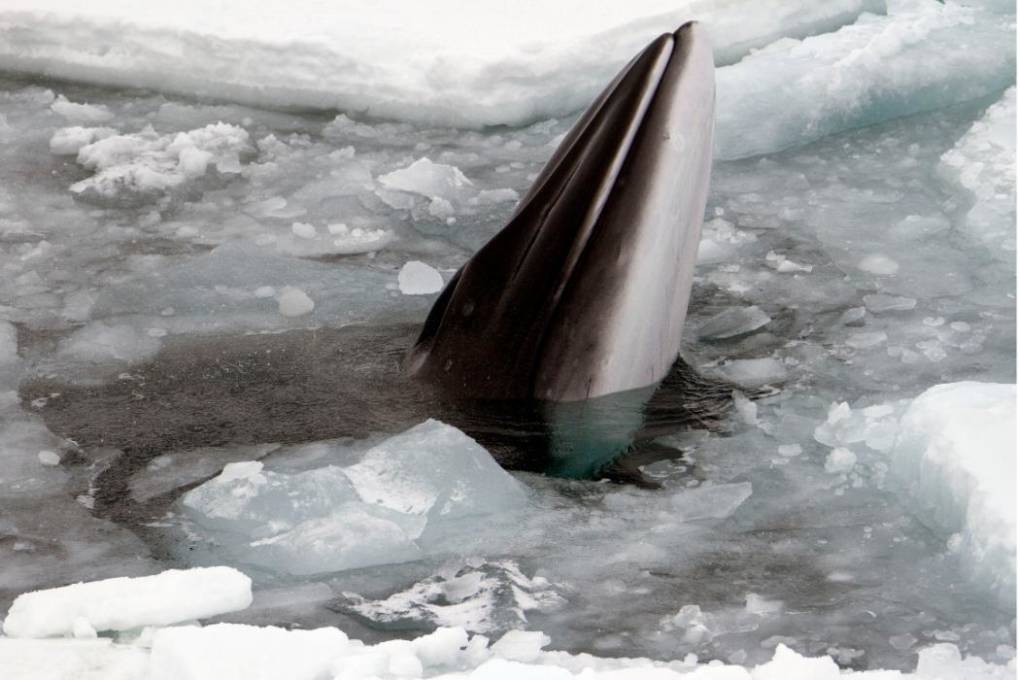
"caption": "Pictured is a minke whale in ice. This may be the first time a minke whale has been filmed underwater, and in the sea ice, in the Ross Sea. ",
"description": null,
"title": "wha;e",
"credit": "Rohan Currey/University of Canterbury",
"status": "inherit",
"isLoading": false,
"fetchFailed": false
},
"science_1921463": {
"type": "attachments",
"id": "science_1921463",
"meta": {
"index": "attachments_1716263798",
"site": "science",
"id": "1921463",
"found": true
},
"parent": 1921460,
"imgSizes": {
"small": {
"file": "https://ww2.kqed.org/app/uploads/sites/35/2018/03/GettyImages-630126234-1-520x349.jpg",
"width": 520,
"mimeType": "image/jpeg",
"height": 349
},
"twentyfourteen-full-width": {
"file": "https://ww2.kqed.org/app/uploads/sites/35/2018/03/GettyImages-630126234-1-1038x576.jpg",
"width": 1038,
"mimeType": "image/jpeg",
"height": 576
},
"thumbnail": {
"file": "https://ww2.kqed.org/app/uploads/sites/35/2018/03/GettyImages-630126234-1-160x107.jpg",
"width": 160,
"mimeType": "image/jpeg",
"height": 107
},
"fd-sm": {
"file": "https://ww2.kqed.org/app/uploads/sites/35/2018/03/GettyImages-630126234-1-960x644.jpg",
"width": 960,
"mimeType": "image/jpeg",
"height": 644
},
"post-thumbnail": {
"file": "https://ww2.kqed.org/app/uploads/sites/35/2018/03/GettyImages-630126234-1-672x372.jpg",
"width": 672,
"mimeType": "image/jpeg",
"height": 372
},
"xsmall": {
"file": "https://ww2.kqed.org/app/uploads/sites/35/2018/03/GettyImages-630126234-1-375x251.jpg",
"width": 375,
"mimeType": "image/jpeg",
"height": 251
},
"kqedFullSize": {
"file": "https://ww2.kqed.org/app/uploads/sites/35/2018/03/GettyImages-630126234-1.jpg",
"width": 6896,
"height": 4624
},
"large": {
"file": "https://ww2.kqed.org/app/uploads/sites/35/2018/03/GettyImages-630126234-1-1020x684.jpg",
"width": 1020,
"mimeType": "image/jpeg",
"height": 684
},
"xlarge": {
"file": "https://ww2.kqed.org/app/uploads/sites/35/2018/03/GettyImages-630126234-1-1180x791.jpg",
"width": 1180,
"mimeType": "image/jpeg",
"height": 791
},
"guest-author-50": {
"file": "https://ww2.kqed.org/app/uploads/sites/35/2018/03/GettyImages-630126234-1-50x50.jpg",
"width": 50,
"mimeType": "image/jpeg",
"height": 50
},
"guest-author-96": {
"file": "https://ww2.kqed.org/app/uploads/sites/35/2018/03/GettyImages-630126234-1-96x96.jpg",
"width": 96,
"mimeType": "image/jpeg",
"height": 96
},
"medium": {
"file": "https://ww2.kqed.org/app/uploads/sites/35/2018/03/GettyImages-630126234-1-800x536.jpg",
"width": 800,
"mimeType": "image/jpeg",
"height": 536
},
"guest-author-64": {
"file": "https://ww2.kqed.org/app/uploads/sites/35/2018/03/GettyImages-630126234-1-64x64.jpg",
"width": 64,
"mimeType": "image/jpeg",
"height": 64
},
"guest-author-32": {
"file": "https://ww2.kqed.org/app/uploads/sites/35/2018/03/GettyImages-630126234-1-32x32.jpg",
"width": 32,
"mimeType": "image/jpeg",
"height": 32
},
"fd-lrg": {
"file": "https://ww2.kqed.org/app/uploads/sites/35/2018/03/GettyImages-630126234-1-1920x1287.jpg",
"width": 1920,
"mimeType": "image/jpeg",
"height": 1287
},
"fd-med": {
"file": "https://ww2.kqed.org/app/uploads/sites/35/2018/03/GettyImages-630126234-1-1180x791.jpg",
"width": 1180,
"mimeType": "image/jpeg",
"height": 791
},
"full-width": {
"file": "https://ww2.kqed.org/app/uploads/sites/35/2018/03/GettyImages-630126234-1-1920x1287.jpg",
"width": 1920,
"mimeType": "image/jpeg",
"height": 1287
},
"detail": {
"file": "https://ww2.kqed.org/app/uploads/sites/35/2018/03/GettyImages-630126234-1-150x150.jpg",
"width": 150,
"mimeType": "image/jpeg",
"height": 150
},
"medium_large": {
"file": "https://ww2.kqed.org/app/uploads/sites/35/2018/03/GettyImages-630126234-1-768x515.jpg",
"width": 768,
"mimeType": "image/jpeg",
"height": 515
},
"guest-author-128": {
"file": "https://ww2.kqed.org/app/uploads/sites/35/2018/03/GettyImages-630126234-1-128x128.jpg",
"width": 128,
"mimeType": "image/jpeg",
"height": 128
},
"xxsmall": {
"file": "https://ww2.kqed.org/app/uploads/sites/35/2018/03/GettyImages-630126234-1-240x161.jpg",
"width": 240,
"mimeType": "image/jpeg",
"height": 161
}
},
"publishDate": 1521566348,
"modified": 1521566428,
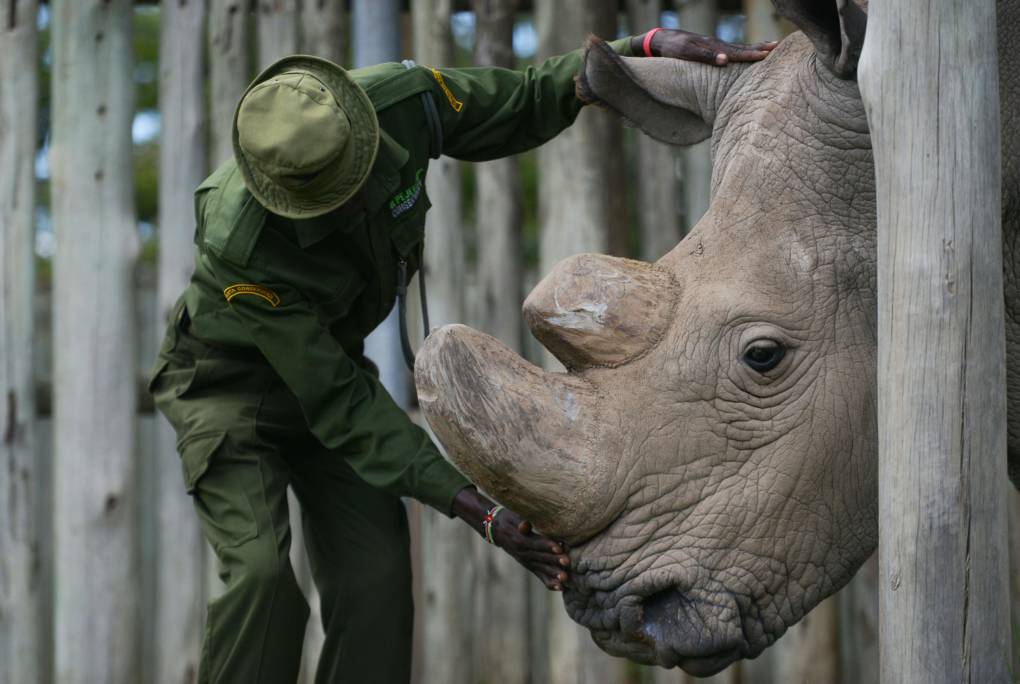
"caption": "A caregiver calms Sudan, the last known male of the northern white rhinoceros subspecies, was euthanized on Monday, March 20, 2018. ",
"description": null,
"title": "YEAR2016-KENYA-AFRICA-ANIMAL-CONSERVATION",
"credit": "Tony Karumba/AFP/Getty Images",
"status": "inherit",
"isLoading": false,
"fetchFailed": false
},
"science_1921407": {
"type": "attachments",
"id": "science_1921407",
"meta": {
"index": "attachments_1716263798",
"site": "science",
"id": "1921407",
"found": true
},
"parent": 1921406,
"imgSizes": {
"small": {
"file": "https://ww2.kqed.org/app/uploads/sites/35/2018/03/42-208707521-520x346.jpg",
"width": 520,
"mimeType": "image/jpeg",
"height": 346
},
"thumbnail": {
"file": "https://ww2.kqed.org/app/uploads/sites/35/2018/03/42-208707521-160x107.jpg",
"width": 160,
"mimeType": "image/jpeg",
"height": 107
},
"post-thumbnail": {
"file": "https://ww2.kqed.org/app/uploads/sites/35/2018/03/42-208707521-672x372.jpg",
"width": 672,
"mimeType": "image/jpeg",
"height": 372
},
"xsmall": {
"file": "https://ww2.kqed.org/app/uploads/sites/35/2018/03/42-208707521-375x250.jpg",
"width": 375,
"mimeType": "image/jpeg",
"height": 250
},
"kqedFullSize": {
"file": "https://ww2.kqed.org/app/uploads/sites/35/2018/03/42-208707521.jpg",
"width": 800,
"height": 533
},
"guest-author-50": {
"file": "https://ww2.kqed.org/app/uploads/sites/35/2018/03/42-208707521-50x50.jpg",
"width": 50,
"mimeType": "image/jpeg",
"height": 50
},
"guest-author-96": {
"file": "https://ww2.kqed.org/app/uploads/sites/35/2018/03/42-208707521-96x96.jpg",
"width": 96,
"mimeType": "image/jpeg",
"height": 96
},
"medium": {
"file": "https://ww2.kqed.org/app/uploads/sites/35/2018/03/42-208707521-800x533.jpg",
"width": 800,
"mimeType": "image/jpeg",
"height": 533
},
"guest-author-64": {
"file": "https://ww2.kqed.org/app/uploads/sites/35/2018/03/42-208707521-64x64.jpg",
"width": 64,
"mimeType": "image/jpeg",
"height": 64
},
"guest-author-32": {
"file": "https://ww2.kqed.org/app/uploads/sites/35/2018/03/42-208707521-32x32.jpg",
"width": 32,
"mimeType": "image/jpeg",
"height": 32
},
"detail": {
"file": "https://ww2.kqed.org/app/uploads/sites/35/2018/03/42-208707521-150x150.jpg",
"width": 150,
"mimeType": "image/jpeg",
"height": 150
},
"medium_large": {
"file": "https://ww2.kqed.org/app/uploads/sites/35/2018/03/42-208707521-768x512.jpg",
"width": 768,
"mimeType": "image/jpeg",
"height": 512
},
"guest-author-128": {
"file": "https://ww2.kqed.org/app/uploads/sites/35/2018/03/42-208707521-128x128.jpg",
"width": 128,
"mimeType": "image/jpeg",
"height": 128
},
"xxsmall": {
"file": "https://ww2.kqed.org/app/uploads/sites/35/2018/03/42-208707521-240x160.jpg",
"width": 240,
"mimeType": "image/jpeg",
"height": 160
}
},
"publishDate": 1521488411,
"modified": 1521488450,
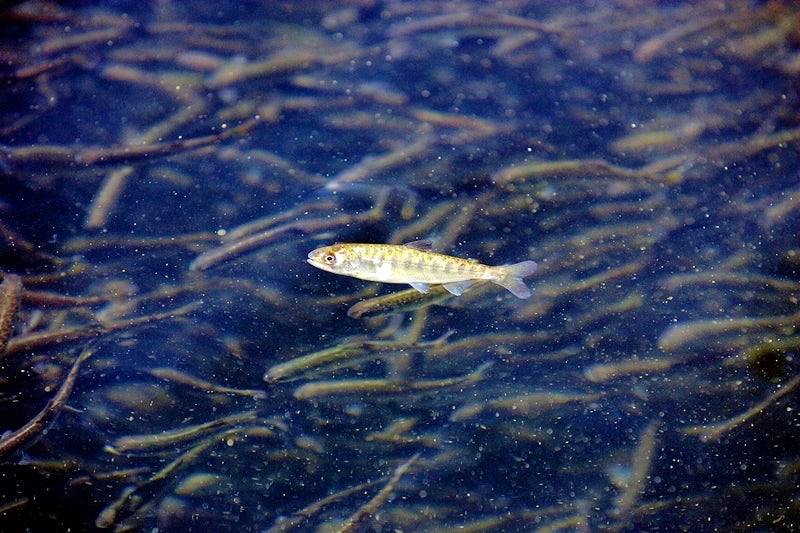
"caption": "A juvenile Chinook salmon swims away after being implanted with a tiny metal tag in its head at the Nimbus Fish Hatchery in Rancho Cordova, California.",
"description": null,
"title": "42-208707521",
"credit": "Kimberly White/Corbis via Getty Images",
"status": "inherit",
"isLoading": false,
"fetchFailed": false
},
"science_1921286": {
"type": "attachments",
"id": "science_1921286",
"meta": {
"index": "attachments_1716263798",
"site": "science",
"id": "1921286",
"found": true
},
"parent": 1919473,
"imgSizes": {
"small": {
"file": "https://ww2.kqed.org/app/uploads/sites/35/2018/03/hermitwarbler_Michael-McGrann_0105-520x357.jpeg",
"width": 520,
"mimeType": "image/jpeg",
"height": 357
},
"twentyfourteen-full-width": {
"file": "https://ww2.kqed.org/app/uploads/sites/35/2018/03/hermitwarbler_Michael-McGrann_0105-1038x576.jpeg",
"width": 1038,
"mimeType": "image/jpeg",
"height": 576
},
"thumbnail": {
"file": "https://ww2.kqed.org/app/uploads/sites/35/2018/03/hermitwarbler_Michael-McGrann_0105-160x110.jpeg",
"width": 160,
"mimeType": "image/jpeg",
"height": 110
},
"fd-sm": {
"file": "https://ww2.kqed.org/app/uploads/sites/35/2018/03/hermitwarbler_Michael-McGrann_0105-960x659.jpeg",
"width": 960,
"mimeType": "image/jpeg",
"height": 659
},
"post-thumbnail": {
"file": "https://ww2.kqed.org/app/uploads/sites/35/2018/03/hermitwarbler_Michael-McGrann_0105-672x372.jpeg",
"width": 672,
"mimeType": "image/jpeg",
"height": 372
},
"xsmall": {
"file": "https://ww2.kqed.org/app/uploads/sites/35/2018/03/hermitwarbler_Michael-McGrann_0105-375x257.jpeg",
"width": 375,
"mimeType": "image/jpeg",
"height": 257
},
"kqedFullSize": {
"file": "https://ww2.kqed.org/app/uploads/sites/35/2018/03/hermitwarbler_Michael-McGrann_0105.jpeg",
"width": 2000,
"height": 1372
},
"large": {
"file": "https://ww2.kqed.org/app/uploads/sites/35/2018/03/hermitwarbler_Michael-McGrann_0105-1020x700.jpeg",
"width": 1020,
"mimeType": "image/jpeg",
"height": 700
},
"xlarge": {
"file": "https://ww2.kqed.org/app/uploads/sites/35/2018/03/hermitwarbler_Michael-McGrann_0105-1180x809.jpeg",
"width": 1180,
"mimeType": "image/jpeg",
"height": 809
},
"guest-author-50": {
"file": "https://ww2.kqed.org/app/uploads/sites/35/2018/03/hermitwarbler_Michael-McGrann_0105-50x50.jpeg",
"width": 50,
"mimeType": "image/jpeg",
"height": 50
},
"guest-author-96": {
"file": "https://ww2.kqed.org/app/uploads/sites/35/2018/03/hermitwarbler_Michael-McGrann_0105-96x96.jpeg",
"width": 96,
"mimeType": "image/jpeg",
"height": 96
},
"medium": {
"file": "https://ww2.kqed.org/app/uploads/sites/35/2018/03/hermitwarbler_Michael-McGrann_0105-800x549.jpeg",
"width": 800,
"mimeType": "image/jpeg",
"height": 549
},
"guest-author-64": {
"file": "https://ww2.kqed.org/app/uploads/sites/35/2018/03/hermitwarbler_Michael-McGrann_0105-64x64.jpeg",
"width": 64,
"mimeType": "image/jpeg",
"height": 64
},
"guest-author-32": {
"file": "https://ww2.kqed.org/app/uploads/sites/35/2018/03/hermitwarbler_Michael-McGrann_0105-32x32.jpeg",
"width": 32,
"mimeType": "image/jpeg",
"height": 32
},
"fd-lrg": {
"file": "https://ww2.kqed.org/app/uploads/sites/35/2018/03/hermitwarbler_Michael-McGrann_0105-1920x1317.jpeg",
"width": 1920,
"mimeType": "image/jpeg",
"height": 1317
},
"fd-med": {
"file": "https://ww2.kqed.org/app/uploads/sites/35/2018/03/hermitwarbler_Michael-McGrann_0105-1180x809.jpeg",
"width": 1180,
"mimeType": "image/jpeg",
"height": 809
},
"full-width": {
"file": "https://ww2.kqed.org/app/uploads/sites/35/2018/03/hermitwarbler_Michael-McGrann_0105-1920x1317.jpeg",
"width": 1920,
"mimeType": "image/jpeg",
"height": 1317
},
"detail": {
"file": "https://ww2.kqed.org/app/uploads/sites/35/2018/03/hermitwarbler_Michael-McGrann_0105-150x150.jpeg",
"width": 150,
"mimeType": "image/jpeg",
"height": 150
},
"medium_large": {
"file": "https://ww2.kqed.org/app/uploads/sites/35/2018/03/hermitwarbler_Michael-McGrann_0105-768x527.jpeg",
"width": 768,
"mimeType": "image/jpeg",
"height": 527
},
"guest-author-128": {
"file": "https://ww2.kqed.org/app/uploads/sites/35/2018/03/hermitwarbler_Michael-McGrann_0105-128x128.jpeg",
"width": 128,
"mimeType": "image/jpeg",
"height": 128
},
"xxsmall": {
"file": "https://ww2.kqed.org/app/uploads/sites/35/2018/03/hermitwarbler_Michael-McGrann_0105-240x165.jpeg",
"width": 240,
"mimeType": "image/jpeg",
"height": 165
}
},
"publishDate": 1521225720,
"modified": 1521226569,
"caption": "A hermit warbler sings in a forest near Lake Almanor. Scientists are tracking changes in bird migration by listening to birdsong patterns.",
"description": "A hermit warbler sings in a forest near Lake Almanor. Scientists are tracking changes in bird migration by listening to birdsong patterns.",
"title": "hermitwarbler_Michael McGrann_0105",
"credit": "Michael McGrann",
"status": "inherit",
"isLoading": false,
"fetchFailed": false
},
"science_1921278": {
"type": "attachments",
"id": "science_1921278",
"meta": {
"index": "attachments_1716263798",
"site": "science",
"id": "1921278",
"found": true
},
"parent": 1921264,
"imgSizes": {
"small": {
"file": "https://ww2.kqed.org/app/uploads/sites/35/2018/03/rocks-anthropology_wide-e336f57af94d54f2e2c118de1622f98a84f00900-s1100-c15-520x292.jpg",
"width": 520,
"mimeType": "image/jpeg",
"height": 292
},
"twentyfourteen-full-width": {
"file": "https://ww2.kqed.org/app/uploads/sites/35/2018/03/rocks-anthropology_wide-e336f57af94d54f2e2c118de1622f98a84f00900-s1100-c15-1038x576.jpg",
"width": 1038,
"mimeType": "image/jpeg",
"height": 576
},
"thumbnail": {
"file": "https://ww2.kqed.org/app/uploads/sites/35/2018/03/rocks-anthropology_wide-e336f57af94d54f2e2c118de1622f98a84f00900-s1100-c15-160x90.jpg",
"width": 160,
"mimeType": "image/jpeg",
"height": 90
},
"fd-sm": {
"file": "https://ww2.kqed.org/app/uploads/sites/35/2018/03/rocks-anthropology_wide-e336f57af94d54f2e2c118de1622f98a84f00900-s1100-c15-960x539.jpg",
"width": 960,
"mimeType": "image/jpeg",
"height": 539
},
"post-thumbnail": {
"file": "https://ww2.kqed.org/app/uploads/sites/35/2018/03/rocks-anthropology_wide-e336f57af94d54f2e2c118de1622f98a84f00900-s1100-c15-672x372.jpg",
"width": 672,
"mimeType": "image/jpeg",
"height": 372
},
"xsmall": {
"file": "https://ww2.kqed.org/app/uploads/sites/35/2018/03/rocks-anthropology_wide-e336f57af94d54f2e2c118de1622f98a84f00900-s1100-c15-375x211.jpg",
"width": 375,
"mimeType": "image/jpeg",
"height": 211
},
"kqedFullSize": {
"file": "https://ww2.kqed.org/app/uploads/sites/35/2018/03/rocks-anthropology_wide-e336f57af94d54f2e2c118de1622f98a84f00900-s1100-c15.jpg",
"width": 1100,
"height": 618
},
"large": {
"file": "https://ww2.kqed.org/app/uploads/sites/35/2018/03/rocks-anthropology_wide-e336f57af94d54f2e2c118de1622f98a84f00900-s1100-c15-1020x573.jpg",
"width": 1020,
"mimeType": "image/jpeg",
"height": 573
},
"guest-author-50": {
"file": "https://ww2.kqed.org/app/uploads/sites/35/2018/03/rocks-anthropology_wide-e336f57af94d54f2e2c118de1622f98a84f00900-s1100-c15-50x50.jpg",
"width": 50,
"mimeType": "image/jpeg",
"height": 50
},
"guest-author-96": {
"file": "https://ww2.kqed.org/app/uploads/sites/35/2018/03/rocks-anthropology_wide-e336f57af94d54f2e2c118de1622f98a84f00900-s1100-c15-96x96.jpg",
"width": 96,
"mimeType": "image/jpeg",
"height": 96
},
"medium": {
"file": "https://ww2.kqed.org/app/uploads/sites/35/2018/03/rocks-anthropology_wide-e336f57af94d54f2e2c118de1622f98a84f00900-s1100-c15-800x449.jpg",
"width": 800,
"mimeType": "image/jpeg",
"height": 449
},
"guest-author-64": {
"file": "https://ww2.kqed.org/app/uploads/sites/35/2018/03/rocks-anthropology_wide-e336f57af94d54f2e2c118de1622f98a84f00900-s1100-c15-64x64.jpg",
"width": 64,
"mimeType": "image/jpeg",
"height": 64
},
"guest-author-32": {
"file": "https://ww2.kqed.org/app/uploads/sites/35/2018/03/rocks-anthropology_wide-e336f57af94d54f2e2c118de1622f98a84f00900-s1100-c15-32x32.jpg",
"width": 32,
"mimeType": "image/jpeg",
"height": 32
},
"detail": {
"file": "https://ww2.kqed.org/app/uploads/sites/35/2018/03/rocks-anthropology_wide-e336f57af94d54f2e2c118de1622f98a84f00900-s1100-c15-150x150.jpg",
"width": 150,
"mimeType": "image/jpeg",
"height": 150
},
"medium_large": {
"file": "https://ww2.kqed.org/app/uploads/sites/35/2018/03/rocks-anthropology_wide-e336f57af94d54f2e2c118de1622f98a84f00900-s1100-c15-768x431.jpg",
"width": 768,
"mimeType": "image/jpeg",
"height": 431
},
"guest-author-128": {
"file": "https://ww2.kqed.org/app/uploads/sites/35/2018/03/rocks-anthropology_wide-e336f57af94d54f2e2c118de1622f98a84f00900-s1100-c15-128x128.jpg",
"width": 128,
"mimeType": "image/jpeg",
"height": 128
},
"xxsmall": {
"file": "https://ww2.kqed.org/app/uploads/sites/35/2018/03/rocks-anthropology_wide-e336f57af94d54f2e2c118de1622f98a84f00900-s1100-c15-240x135.jpg",
"width": 240,
"mimeType": "image/jpeg",
"height": 135
}
},
"publishDate": 1521221597,
"modified": 1521221614,
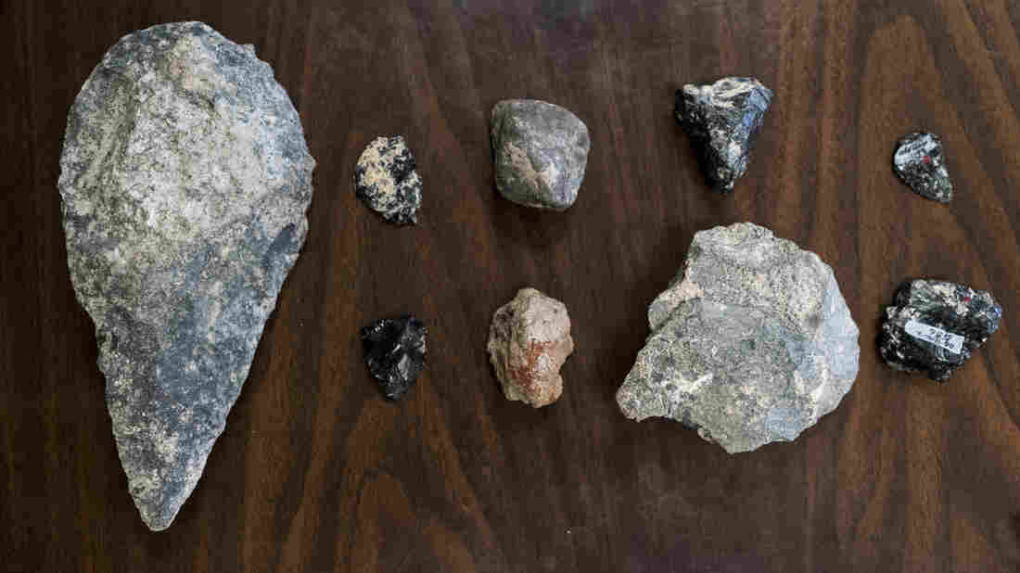
"caption": "Assortment of Early and Middle Stone Age tools found in the Olorgesailie Basin, Kenya. The tool at left is a hand axe.",
"description": null,
"title": "rocks-anthropology_wide-e336f57af94d54f2e2c118de1622f98a84f00900-s1100-c15",
"credit": "Jay Reed/NPR",
"status": "inherit",
"isLoading": false,
"fetchFailed": false
},
"science_583484": {
"type": "attachments",
"id": "science_583484",
"meta": {
"index": "attachments_1716263798",
"site": "science",
"id": "583484",
"found": true
},
"parent": 583480,
"imgSizes": {
"twentyfourteen-full-width": {
"file": "https://ww2.kqed.org/app/uploads/sites/35/2016/03/orcas-1038x576.jpg",
"width": 1038,
"mimeType": "image/jpeg",
"height": 576
},
"thumbnail": {
"file": "https://ww2.kqed.org/app/uploads/sites/35/2016/03/orcas-400x320.jpg",
"width": 400,
"mimeType": "image/jpeg",
"height": 320
},
"fd-sm": {
"file": "https://ww2.kqed.org/app/uploads/sites/35/2016/03/orcas-960x768.jpg",
"width": 960,
"mimeType": "image/jpeg",
"height": 768
},
"post-thumbnail": {
"file": "https://ww2.kqed.org/app/uploads/sites/35/2016/03/orcas-672x372.jpg",
"width": 672,
"mimeType": "image/jpeg",
"height": 372
},
"kqedFullSize": {
"file": "https://ww2.kqed.org/app/uploads/sites/35/2016/03/orcas.jpg",
"width": 1920,
"height": 1536
},
"large": {
"file": "https://ww2.kqed.org/app/uploads/sites/35/2016/03/orcas-1440x1152.jpg",
"width": 1440,
"mimeType": "image/jpeg",
"height": 1152
},
"guest-author-96": {
"file": "https://ww2.kqed.org/app/uploads/sites/35/2016/03/orcas-96x96.jpg",
"width": 96,
"mimeType": "image/jpeg",
"height": 96
},
"medium": {
"file": "https://ww2.kqed.org/app/uploads/sites/35/2016/03/orcas-800x640.jpg",
"width": 800,
"mimeType": "image/jpeg",
"height": 640
},
"guest-author-64": {
"file": "https://ww2.kqed.org/app/uploads/sites/35/2016/03/orcas-64x64.jpg",
"width": 64,
"mimeType": "image/jpeg",
"height": 64
},
"guest-author-32": {
"file": "https://ww2.kqed.org/app/uploads/sites/35/2016/03/orcas-32x32.jpg",
"width": 32,
"mimeType": "image/jpeg",
"height": 32
},
"fd-lrg": {
"file": "https://ww2.kqed.org/app/uploads/sites/35/2016/03/orcas-1920x1536.jpg",
"width": 1920,
"mimeType": "image/jpeg",
"height": 1536
},
"fd-med": {
"file": "https://ww2.kqed.org/app/uploads/sites/35/2016/03/orcas-1180x944.jpg",
"width": 1180,
"mimeType": "image/jpeg",
"height": 944
},
"detail": {
"file": "https://ww2.kqed.org/app/uploads/sites/35/2016/03/orcas-75x75.jpg",
"width": 75,
"mimeType": "image/jpeg",
"height": 75
},
"medium_large": {
"file": "https://ww2.kqed.org/app/uploads/sites/35/2016/03/orcas-768x614.jpg",
"width": 768,
"mimeType": "image/jpeg",
"height": 614
},
"guest-author-128": {
"file": "https://ww2.kqed.org/app/uploads/sites/35/2016/03/orcas-128x128.jpg",
"width": 128,
"mimeType": "image/jpeg",
"height": 128
}
},
"publishDate": 1458232503,
"modified": 1521130680,
"caption": null,
"description": null,
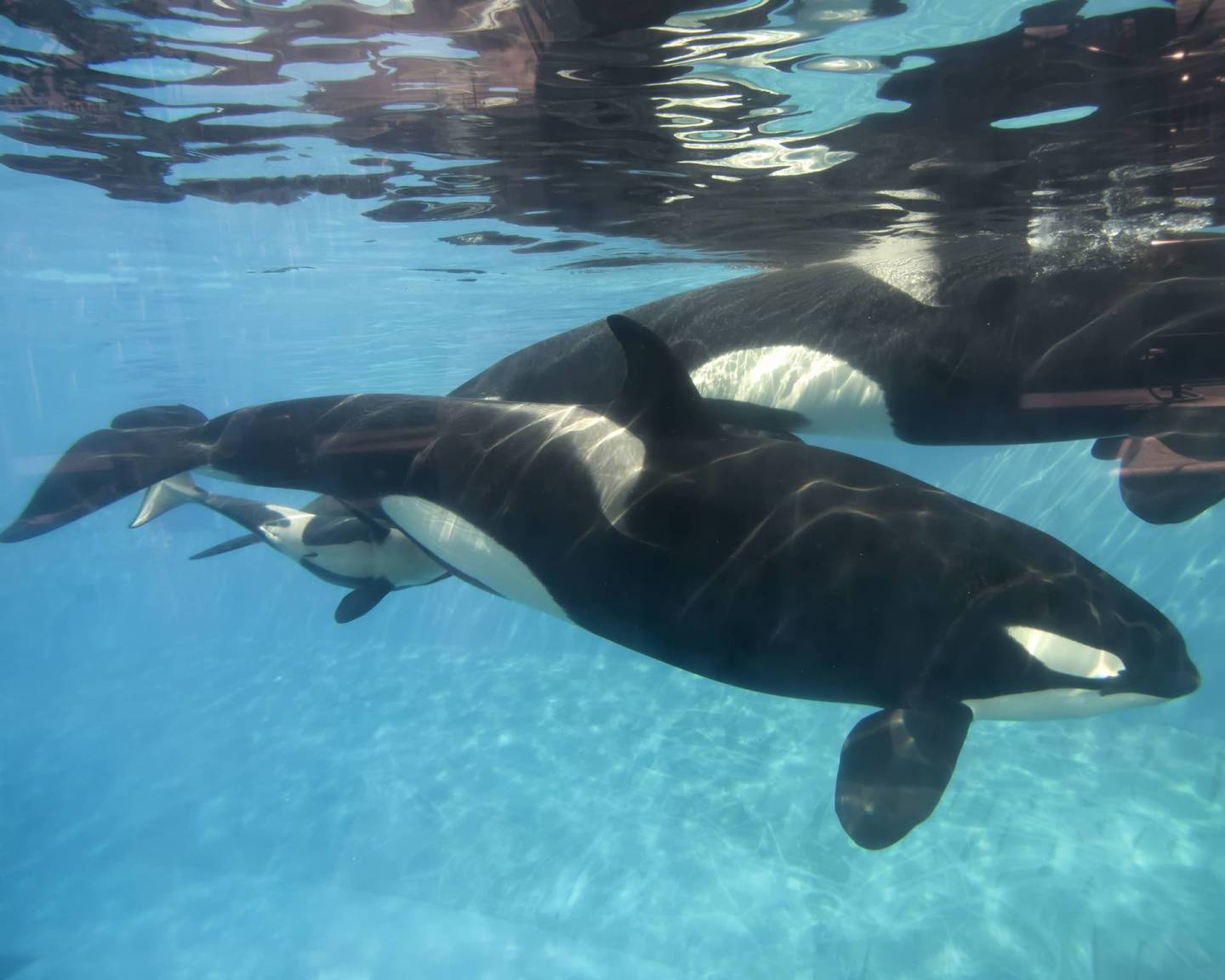
"title": "Killler Whale Calf At SeaWorld San Diego",
"credit": "Mike Aguilera/SeaWorld San Diego via Getty Images",
"status": "inherit",
"isLoading": false,
"fetchFailed": false
}
},
"audioPlayerReducer": {
"postId": "stream_live",
"isPaused": true,
"isPlaying": false,
"pfsActive": false,
"pledgeModalIsOpen": true,
"playerDrawerIsOpen": false,
"liveAudioPlayStartedAt": 0,
"liveAudioPlayContext": ""
},
"authorsReducer": {
"byline_science_1922719": {
"type": "authors",
"id": "byline_science_1922719",
"meta": {
"override": true
},
"slug": "byline_science_1922719",
"name": "Seth Borenstein\u003cbr />The Associated Press",
"isLoading": false
},
"byline_science_1922417": {
"type": "authors",
"id": "byline_science_1922417",
"meta": {
"override": true
},
"slug": "byline_science_1922417",
"name": "Megan Thielking and Andrew Joseph\u003cbr />STAT",
"isLoading": false
},
"byline_science_1921659": {
"type": "authors",
"id": "byline_science_1921659",
"meta": {
"override": true
},
"slug": "byline_science_1921659",
"name": "\u003cbr>Emma Hiolski\u003c/br>",
"isLoading": false
},
"byline_science_1921594": {
"type": "authors",
"id": "byline_science_1921594",
"meta": {
"override": true
},
"slug": "byline_science_1921594",
"name": "Nick Perry\u003cbr />The Associated Press",
"isLoading": false
},
"byline_science_1921460": {
"type": "authors",
"id": "byline_science_1921460",
"meta": {
"override": true
},
"slug": "byline_science_1921460",
"name": "Tom Odula\u003cbr />The Associated Press",
"isLoading": false
},
"byline_science_1921406": {
"type": "authors",
"id": "byline_science_1921406",
"meta": {
"override": true
},
"slug": "byline_science_1921406",
"name": "Alastair Bland\u003cbr />Water Deeply",
"isLoading": false
},
"byline_science_1921264": {
"type": "authors",
"id": "byline_science_1921264",
"meta": {
"override": true
},
"slug": "byline_science_1921264",
"name": "Malcolm Ritter\u003cbr />The Associated Press",
"isLoading": false
},
"byline_science_1921212": {
"type": "authors",
"id": "byline_science_1921212",
"meta": {
"override": true
},
"slug": "byline_science_1921212",
"name": "Phuong Le\u003cbr />The Associated Press",
"isLoading": false
},
"cmiller": {
"type": "authors",
"id": "221",
"meta": {
"index": "authors_1716337520",
"id": "221",
"found": true
},
"name": "Craig Miller",
"firstName": "Craig",
"lastName": "Miller",
"slug": "cmiller",
"email": "craig@voxterra.net",
"display_author_email": false,
"staff_mastheads": [
"science"
],
"title": "Editor Emeritus, Science",
"bio": "Craig is a former KQED Science editor, specializing in weather, climate, water & energy issues, with a little seismology thrown in just to shake things up. Prior to that, he launched and led the station's award-winning multimedia project, Climate Watch. Craig is also an accomplished writer/producer of television documentaries, with a focus on natural resource issues.",
"avatar": "https://secure.gravatar.com/avatar/b91661df645e001a9cafe0861fa685f9?s=600&d=blank&r=g",
"twitter": "voxterra",
"facebook": null,
"instagram": null,
"linkedin": null,
"sites": [
{
"site": "news",
"roles": [
"author"
]
},
{
"site": "futureofyou",
"roles": [
"editor"
]
},
{
"site": "stateofhealth",
"roles": [
"author"
]
},
{
"site": "science",
"roles": [
"editor"
]
},
{
"site": "quest",
"roles": [
"editor"
]
}
],
"headData": {
"title": "Craig Miller | KQED",
"description": "Editor Emeritus, Science",
"ogImgSrc": "https://secure.gravatar.com/avatar/b91661df645e001a9cafe0861fa685f9?s=600&d=blank&r=g",
"twImgSrc": "https://secure.gravatar.com/avatar/b91661df645e001a9cafe0861fa685f9?s=600&d=blank&r=g"
},
"isLoading": false,
"link": "/author/cmiller"
},
"joshua-cassidy": {
"type": "authors",
"id": "6219",
"meta": {
"index": "authors_1716337520",
"id": "6219",
"found": true
},
"name": "Josh Cassidy",
"firstName": "Josh",
"lastName": "Cassidy",
"slug": "joshua-cassidy",
"email": "jcassidy@kqed.org",
"display_author_email": false,
"staff_mastheads": [
"science"
],
"title": "Digital Video Producer",
"bio": "Josh is a Senior Video Producer for KQED Science, and the Lead Producer and Cinematographer for Deep Look. After receiving his BS in Wildlife Biology from Ohio University, he went on to participate in marine mammal research for NOAA, USGS and the Intersea Foundation. He also served as the president of The Pacific Cetacean Group, a nonprofit organization dedicated to teaching students K-6 about whales. Josh studied science and natural history filmmaking at San Francisco State University and Montana State University.",
"avatar": "https://secure.gravatar.com/avatar/f2582a0801a35af53b734d56bcac2bbe?s=600&d=blank&r=g",
"twitter": null,
"facebook": null,
"instagram": null,
"linkedin": null,
"sites": [
{
"site": "science",
"roles": [
"editor"
]
},
{
"site": "quest",
"roles": [
"author",
"edit_others_posts"
]
}
],
"headData": {
"title": "Josh Cassidy | KQED",
"description": "Digital Video Producer",
"ogImgSrc": "https://secure.gravatar.com/avatar/f2582a0801a35af53b734d56bcac2bbe?s=600&d=blank&r=g",
"twImgSrc": "https://secure.gravatar.com/avatar/f2582a0801a35af53b734d56bcac2bbe?s=600&d=blank&r=g"
},
"isLoading": false,
"link": "/author/joshua-cassidy"
},
"ekennerson": {
"type": "authors",
"id": "11090",
"meta": {
"index": "authors_1716337520",
"id": "11090",
"found": true
},
"name": "Elliott Kennerson",
"firstName": "Elliott",
"lastName": "Kennerson",
"slug": "ekennerson",
"email": "ekennerson@kqed.org",
"display_author_email": false,
"staff_mastheads": [],
"title": null,
"bio": "Elliott Kennerson joined KQED Science as a Digital Media Producer in 2015. Before joining KQED, he produced the Kickstarter-funded series “Animal R&R” for KPBS in San Diego. Elliott received his M.F.A. training in wildlife documentary at Montana State in Bozeman and holds a B.A. from Yale in archaeology. In his former life as an actor, he was an associate artist with LightBox Theater Company in New York. Elliott is the recipient of a 2017 Regional Emmy for his work as a producer on “Deep Look.\"",
"avatar": "https://secure.gravatar.com/avatar/90ebfa58055409e54c8f8a4c120ecf91?s=600&d=blank&r=g",
"twitter": "edorank",
"facebook": null,
"instagram": null,
"linkedin": null,
"sites": [
{
"site": "science",
"roles": [
"editor"
]
}
],
"headData": {
"title": "Elliott Kennerson | KQED",
"description": null,
"ogImgSrc": "https://secure.gravatar.com/avatar/90ebfa58055409e54c8f8a4c120ecf91?s=600&d=blank&r=g",
"twImgSrc": "https://secure.gravatar.com/avatar/90ebfa58055409e54c8f8a4c120ecf91?s=600&d=blank&r=g"
},
"isLoading": false,
"link": "/author/ekennerson"
},
"ninglis": {
"type": "authors",
"id": "11376",
"meta": {
"index": "authors_1716337520",
"id": "11376",
"found": true
},
"name": "Nikki Inglis",
"firstName": "Nikki",
"lastName": "Inglis",
"slug": "ninglis",
"email": "ninglis@kqed.org",
"display_author_email": false,
"staff_mastheads": [],
"title": "KQED Contributor",
"bio": "Nikki Inglis is a graduate student in Applied Marine and Watershed Science at California State University Monterey Bay and a summer intern at KQED Science. She grew up on an organic farm in Upstate New York and received undergraduate degrees in psychology and journalism from the University of Colorado Boulder. She has worked as a reporter and editor at the Steamboat Pilot & Today and as a deckhand on fishing boats in the Sea of Cortez. When she's not studying environmental policy, she can be found mountain biking, skiing, surfing, camping and exploring California's public lands.",
"avatar": "https://secure.gravatar.com/avatar/41b70c9c9dbc7ef2de0442dda60e5f5946e1fedc255cb12782a8ef0883f14774?s=600&d=blank&r=g",
"twitter": null,
"bluesky": null,
"facebook": null,
"instagram": null,
"linkedin": null,
"sites": [
{
"site": "science",
"roles": [
"subscriber"
]
}
],
"headData": {
"title": "Nikki Inglis | KQED",
"description": "KQED Contributor",
"ogImgSrc": "https://secure.gravatar.com/avatar/41b70c9c9dbc7ef2de0442dda60e5f5946e1fedc255cb12782a8ef0883f14774?s=600&d=blank&r=g",
"twImgSrc": "https://secure.gravatar.com/avatar/41b70c9c9dbc7ef2de0442dda60e5f5946e1fedc255cb12782a8ef0883f14774?s=600&d=blank&r=g"
},
"isLoading": false,
"link": "/author/ninglis"
},
"aahmed": {
"type": "authors",
"id": "11428",
"meta": {
"index": "authors_1716337520",
"id": "11428",
"found": true
},
"name": "Amel Ahmed",
"firstName": "Amel",
"lastName": "Ahmed",
"slug": "aahmed",
"email": "aahmed@kqed.org",
"display_author_email": false,
"staff_mastheads": [],
"title": "KQED Contributor",
"bio": "Amel Ahmed is a reporter for KQED. Prior to joining KQED, Amel worked at Al Jazeera America, Al Jazeera English, Democracy Now! and Punched Productions. She also helped produce \u003cem>Changing Face of Harlem\u003c/em>, a documentary that tracked gentrification in Harlem over a period of ten years. She is a 2013 graduate of Brooklyn Law School and is currently researching war on terror prosecutions for an upcoming book.",
"avatar": "https://secure.gravatar.com/avatar/c8b48ebc98e770640f3013c470d23f3e?s=600&d=blank&r=g",
"twitter": "amelscript",
"facebook": null,
"instagram": null,
"linkedin": null,
"sites": [
{
"site": "futureofyou",
"roles": []
},
{
"site": "science",
"roles": []
}
],
"headData": {
"title": "Amel Ahmed | KQED",
"description": "KQED Contributor",
"ogImgSrc": "https://secure.gravatar.com/avatar/c8b48ebc98e770640f3013c470d23f3e?s=600&d=blank&r=g",
"twImgSrc": "https://secure.gravatar.com/avatar/c8b48ebc98e770640f3013c470d23f3e?s=600&d=blank&r=g"
},
"isLoading": false,
"link": "/author/aahmed"
}
},
"pagesReducer": {
"science_category_animals": {
"type": "terms",
"id": "science_2874",
"meta": {
"index": "terms_1716263798",
"site": "science",
"id": "2874",
"score": 12.286945
},
"featImg": null,
"name": "Animals",
"description": null,
"taxonomy": "category",
"headData": {
"twImgId": null,
"twTitle": null,
"ogTitle": null,
"ogImgId": null,
"twDescription": null,
"description": null,
"title": "Animals Archives | KQED Science",
"ogDescription": null
},
"ttid": 2874,
"slug": "animals",
"isLoading": false,
"title": "Animals",
"pageMeta": {
"site": "science",
"WpPageTemplate": "page-topic-editorial",
"currentPage": 30
},
"blocks": [
{
"blockName": "kqed/post-list",
"attrs": {
"layout": "cardArticle2",
"query": "posts/science?category=animals",
"seeMore": false,
"paginated": true,
"page": 30
}
},
{
"blockName": "kqed/ad"
}
]
}
},
"pfsSessionReducer": {},
"postsReducer": {
"stream_live": {
"type": "live",
"id": "stream_live",
"audioUrl": "https://streams.kqed.org/kqedradio",
"title": "Live Stream",
"excerpt": "Live Stream information currently unavailable.",
"link": "/radio",
"featImg": "",
"label": {
"name": "KQED Live",
"link": "/"
}
},
"stream_kqedNewscast": {
"type": "posts",
"id": "stream_kqedNewscast",
"audioUrl": "https://www.kqed.org/.stream/anon/radio/RDnews/newscast.mp3?_=1",
"title": "KQED Newscast",
"featImg": "",
"label": {
"name": "88.5 FM",
"link": "/"
}
},
"science_1923458": {
"type": "posts",
"id": "science_1923458",
"meta": {
"index": "posts_1716263798",
"site": "science",
"id": "1923458",
"score": null,
"sort": [
1526389233000
]
},
"guestAuthors": [],
"slug": "youve-heard-of-a-murder-of-crows-how-about-a-crow-funeral",
"title": "You've Heard of a Murder of Crows. How About a Crow Funeral?",
"publishDate": 1526389233,
"format": "video",
"headTitle": "You’ve Heard of a Murder of Crows. How About a Crow Funeral? | KQED",
"labelTerm": {
"term": 1935,
"site": "science"
},
"content": "\u003caside class=\"alignright\">\u003cstrong>Most popular Deep Look stories\u003c/strong>\n\u003cul>\n\u003cli>\u003ca href=\"https://www.kqed.org/science/728086/how-mosquitoes-use-six-needles-to-suck-your-blood\" target=\"_blank\" rel=\"noopener\">How Mosquitoes Use Six Needles to Suck Your Blood\u003c/a>\u003c/li>\n\u003cli>\u003ca href=\"https://www.kqed.org/science/523936/this-mushroom-starts-killing-you-before-you-even-realize-it\">This Mushroom Starts Killing You Before You Even Realize it\u003c/a>\u003c/li>\n\u003cli>\u003ca href=\"https://www.kqed.org/science/28759/what-happens-when-you-put-a-hummingbird-in-a-wind-tunnel\">What Happens When You Put a Hummingbird in a Wind Tunnel\u003c/a>\u003c/li>\n\u003c/ul>\n\u003c/aside>\n\u003cp>[dl_subscribe]It’s a common sight in many parks and backyards: Crows squawking. But groups of the noisy black birds may not just be raising a fuss, scientists say. They might be holding a funeral.\u003c/p>\n\u003cp>\u003ca href=\"https://corvidresearch.blog/\">Kaeli Swift\u003c/a>, a Ph.D. candidate at the University of Washington’s \u003ca href=\"http://sefs.washington.edu/research.acl/\">Avian Conservation Laboratory\u003c/a> in Seattle, is studying how crows learn about danger from each other and how they respond to seeing one of their own who has died.\u003c/p>\n\u003cp>Unlike the majority of animals, crows react strongly to the death of a fellow member of their species, mobbing together and raising a ruckus.\u003c/p>\n\u003cp>Only a few animals, such as whales, elephants and some primates, have such strong reactions.\u003c/p>\n\u003cp>To study exactly what may be going on, Swift developed an experiment that involved exposing local crows in Seattle neighborhoods to a dead taxidermied crow in order to study their reaction.\u003c/p>\n\u003cfigure id=\"attachment_1923725\" class=\"wp-caption aligncenter\" style=\"max-width: 500px\">\u003ca href=\"https://ww2.kqed.org/science/wp-content/uploads/sites/35/2018/05/DL509-Crows-caws-at-mask-and-dead-crow.gif\">\u003cimg loading=\"lazy\" decoding=\"async\" class=\"size-full wp-image-1923725\" src=\"https://ww2.kqed.org/science/wp-content/uploads/sites/35/2018/05/DL509-Crows-caws-at-mask-and-dead-crow.gif\" alt=\"\" width=\"500\" height=\"280\">\u003c/a>\u003cfigcaption class=\"wp-caption-text\">A group of crows loudly protests the sight of a masked Kaeli Swift holding a taxidermied crow. \u003ccite>(Josh Cassidy/KQED)\u003c/cite>\u003c/figcaption>\u003c/figure>\n\u003cp>“It’s really incredible,” she said. “They’re all around in the trees just staring at you and screaming at you.”\u003c/p>\n\u003cp>[ad fullwidth]\u003c/p>\n\u003cp>Swift calls these events “crow funerals,” and they are the focus of her research.\u003c/p>\n\u003cp>She began by going to the same location in a local park or neighborhood for a few days, leaving piles of peanuts for the crows.\u003c/p>\n\u003cfigure id=\"attachment_1923728\" class=\"wp-caption aligncenter\" style=\"max-width: 640px\">\u003ca href=\"https://ww2.kqed.org/science/wp-content/uploads/sites/35/2018/05/DL509-Crows-KaeliSwift-at-gasworks-looks-up-wide.jpg\">\u003cimg loading=\"lazy\" decoding=\"async\" class=\"wp-image-1923728 size-large\" src=\"https://ww2.kqed.org/science/wp-content/uploads/sites/35/2018/05/DL509-Crows-KaeliSwift-at-gasworks-looks-up-wide-1020x574.jpg\" alt=\"\" width=\"640\" height=\"360\" srcset=\"https://cdn.kqed.org/wp-content/uploads/sites/35/2018/05/DL509-Crows-KaeliSwift-at-gasworks-looks-up-wide-1020x574.jpg 1020w, https://cdn.kqed.org/wp-content/uploads/sites/35/2018/05/DL509-Crows-KaeliSwift-at-gasworks-looks-up-wide-160x90.jpg 160w, https://cdn.kqed.org/wp-content/uploads/sites/35/2018/05/DL509-Crows-KaeliSwift-at-gasworks-looks-up-wide-800x450.jpg 800w, https://cdn.kqed.org/wp-content/uploads/sites/35/2018/05/DL509-Crows-KaeliSwift-at-gasworks-looks-up-wide-768x432.jpg 768w, https://cdn.kqed.org/wp-content/uploads/sites/35/2018/05/DL509-Crows-KaeliSwift-at-gasworks-looks-up-wide-1200x675.jpg 1200w, https://cdn.kqed.org/wp-content/uploads/sites/35/2018/05/DL509-Crows-KaeliSwift-at-gasworks-looks-up-wide-1920x1080.jpg 1920w, https://cdn.kqed.org/wp-content/uploads/sites/35/2018/05/DL509-Crows-KaeliSwift-at-gasworks-looks-up-wide-1180x664.jpg 1180w, https://cdn.kqed.org/wp-content/uploads/sites/35/2018/05/DL509-Crows-KaeliSwift-at-gasworks-looks-up-wide-960x540.jpg 960w, https://cdn.kqed.org/wp-content/uploads/sites/35/2018/05/DL509-Crows-KaeliSwift-at-gasworks-looks-up-wide-240x135.jpg 240w, https://cdn.kqed.org/wp-content/uploads/sites/35/2018/05/DL509-Crows-KaeliSwift-at-gasworks-looks-up-wide-375x211.jpg 375w, https://cdn.kqed.org/wp-content/uploads/sites/35/2018/05/DL509-Crows-KaeliSwift-at-gasworks-looks-up-wide-520x293.jpg 520w\" sizes=\"auto, (max-width: 640px) 100vw, 640px\">\u003c/a>\u003cfigcaption class=\"wp-caption-text\">Kaeli Swift studies how crows behave in urban settings, like here at Gas Works Park in Seattle. \u003ccite>(Josh Cassidy/KQED)\u003c/cite>\u003c/figcaption>\u003c/figure>\n\u003cp>But on the fourth day, she showed up looking very different. Wearing a mask and wig, she held a dead crow, preserved through taxidermy.\u003c/p>\n\u003cp>The first crow that spotted her let out an alarm call, a series of loud repetitive scolds.\u003c/p>\n\u003cp>Within seconds, all of the crows within earshot mobbed together to join in the alarm-calling. The cacophony of caws emanating from the surrounding trees was impossible to ignore.\u003c/p>\n\u003cp>“Anytime you have a group of over 20 birds screaming at you, it’s intimidating,” Swift said. “It doesn’t get old.”\u003c/p>\n\u003cp>And then, after a few minutes, the crows quieted down and dispersed. The results have played out over and over during different experiments in various locations. The whole chaotic reaction takes only a few minutes, but in that time the crows have learned some important information that they won’t soon forget.\u003c/p>\n\u003cp>During her experiments, on the second day Swift would return without the mask, wig or dead crow. She provided piles of peanuts again, but this time the crows were much more cautious, taking longer to approach and looking quite wary.\u003c/p>\n\u003cfigure id=\"attachment_1923730\" class=\"wp-caption aligncenter\" style=\"max-width: 500px\">\u003ca href=\"https://ww2.kqed.org/science/wp-content/uploads/sites/35/2018/05/DL509-Crows-eat-peanut.gif\">\u003cimg loading=\"lazy\" decoding=\"async\" class=\"size-full wp-image-1923730\" src=\"https://ww2.kqed.org/science/wp-content/uploads/sites/35/2018/05/DL509-Crows-eat-peanut.gif\" alt=\"\" width=\"500\" height=\"280\">\u003c/a>\u003cfigcaption class=\"wp-caption-text\">Swift found that crows were more timid after having seen the dead crow \u003ccite>(Josh Cassidy/KQED)\u003c/cite>\u003c/figcaption>\u003c/figure>\n\u003cp>Swift believes that the crows remembered the experience with the mask and dead crow and now connected the area with danger.\u003c/p>\n\u003cp>She would return again the next day with the mask, but without the dead crow or peanuts.\u003c/p>\n\u003cp>The crows reacted strongly, mobbing together and cawing at Swift even though she was no longer carrying the dead crow.\u003c/p>\n\u003cp>Even when she was empty-handed, they recognized the masked Swift as a threat. Weeks later, the crows continued to react to the mask.\u003c/p>\n\u003cp>And here’s what Swift said makes that really interesting: These new mobs contained crows that had never seen the masked Swift with the dead crow. But they still learned to avoid the masked figure.\u003c/p>\n\u003cp>Learning directly from each other, rather than through individual experience, is called social learning.\u003c/p>\n\u003cp>“By participating in these funerals, crows can get information about new dangers without taking the risk,” Swift said.\u003c/p>\n\u003cfigure id=\"attachment_1923732\" class=\"wp-caption aligncenter\" style=\"max-width: 500px\">\u003ca href=\"https://ww2.kqed.org/science/wp-content/uploads/sites/35/2018/05/DL509-Crows-two-crows-caw-in-branches.gif\">\u003cimg loading=\"lazy\" decoding=\"async\" class=\"wp-image-1923732 size-full\" src=\"https://ww2.kqed.org/science/wp-content/uploads/sites/35/2018/05/DL509-Crows-two-crows-caw-in-branches.gif\" alt=\"\" width=\"500\" height=\"280\">\u003c/a>\u003cfigcaption class=\"wp-caption-text\">Crows have complex social lives that require a high level of intelligence. \u003ccite>(Josh Cassidy/KQED)\u003c/cite>\u003c/figcaption>\u003c/figure>\n\u003cp>She published her findings in a 2015 article in the journal \u003ca href=\"https://www.sciencedirect.com/science/article/pii/S0003347215003188\">Animal Behaviour\u003c/a>. But she’s not done yet.\u003c/p>\n\u003cp>While her initial study focused on why crows are drawn to their dead compatriots, she has now switched her focus to look at how crows’ reactions to seeing dead crows change under different circumstances.\u003c/p>\n\u003cp>“For example, are they attentive to the dead crows’ age?” Swift said. “Does having an active nest or young kids affect the intensity of their response?”\u003c/p>\n\u003cp>She also wants to see if crows engage in tactile interactions with their dead — the way that some mammals, like primates and elephants, do.\u003c/p>\n\u003cfigure id=\"attachment_1923735\" class=\"wp-caption aligncenter\" style=\"max-width: 500px\">\u003ca href=\"https://ww2.kqed.org/science/wp-content/uploads/sites/35/2018/05/DL509-Crows-mask-scares-crow-on-grass.gif\">\u003cimg loading=\"lazy\" decoding=\"async\" class=\"size-full wp-image-1923735\" src=\"https://ww2.kqed.org/science/wp-content/uploads/sites/35/2018/05/DL509-Crows-mask-scares-crow-on-grass.gif\" alt=\"\" width=\"500\" height=\"280\">\u003c/a>\u003cfigcaption class=\"wp-caption-text\">Swift found that crows were able to recognize and remember specific human faces \u003ccite>(Josh Cassidy/KQED)\u003c/cite>\u003c/figcaption>\u003c/figure>\n\u003cp>Bystanders in the parks and neighborhoods she visits take notice of the creepy mask, too.\u003c/p>\n\u003cp>“People are either extremely alarmed or they know about the University of Washington experiments and are excited,” she said.\u003c/p>\n\u003cp>Few wild animals have as close a relationship with people as crows do. And in the thousands of years we’ve spent living in close proximity to one another, crows and humans have learned a few things about each other.\u003c/p>\n\u003cp>\u003c/p>\n\u003cp>“If you step back and examine how distantly related crows are from us, and our closest mammalian relatives, you start to see how striking this shared interest in our dead is,” said Swift. “It’s a chance to unlock deep mysteries about the evolution of our own funeral rites, and appreciate how much we share with our black cloaked companions, even if they look nothing like us.”\u003c/p>\n\u003caside>\n\u003ch3>Become a patron of science: support more episodes of Deep Look\u003c/h3>\n\u003cp>\u003ca href=\"https://www.patreon.com/deeplook\">\u003cimg loading=\"lazy\" decoding=\"async\" class=\"aligncenter size-medium wp-image-1923358\" src=\"https://ww2.kqed.org/science/wp-content/uploads/sites/35/2018/05/DL-patreon-make-gift-800x187.png\" alt=\"\" width=\"800\" height=\"187\" srcset=\"https://cdn.kqed.org/wp-content/uploads/sites/35/2018/05/DL-patreon-make-gift-800x187.png 800w, https://cdn.kqed.org/wp-content/uploads/sites/35/2018/05/DL-patreon-make-gift-160x37.png 160w, https://cdn.kqed.org/wp-content/uploads/sites/35/2018/05/DL-patreon-make-gift-768x179.png 768w, https://cdn.kqed.org/wp-content/uploads/sites/35/2018/05/DL-patreon-make-gift-1020x238.png 1020w, https://cdn.kqed.org/wp-content/uploads/sites/35/2018/05/DL-patreon-make-gift-1200x280.png 1200w, https://cdn.kqed.org/wp-content/uploads/sites/35/2018/05/DL-patreon-make-gift-1920x448.png 1920w, https://cdn.kqed.org/wp-content/uploads/sites/35/2018/05/DL-patreon-make-gift-1180x275.png 1180w, https://cdn.kqed.org/wp-content/uploads/sites/35/2018/05/DL-patreon-make-gift-960x224.png 960w, https://cdn.kqed.org/wp-content/uploads/sites/35/2018/05/DL-patreon-make-gift-240x56.png 240w, https://cdn.kqed.org/wp-content/uploads/sites/35/2018/05/DL-patreon-make-gift-375x88.png 375w, https://cdn.kqed.org/wp-content/uploads/sites/35/2018/05/DL-patreon-make-gift-520x121.png 520w\" sizes=\"auto, (max-width: 800px) 100vw, 800px\">\u003c/a>\u003cbr>\n\u003ca href=\"https://www.patreon.com/deeplook\">\u003cem>Deep Look\u003c/em> is now on Patreon\u003c/a>. If you love our show, you can kick in a little – or a lot – each month so we can do incredible things as a \u003cem>Deep Look\u003c/em> community. \u003ca href=\"https://www.patreon.com/deeplook\">Learn More\u003c/a>\u003c/p>\n\u003c/aside>\n\n",
"blocks": [],
"excerpt": "Crows may be dressed in black, but their funerals aren't the solemn events that we hold for our dead. These birds cause a ruckus around their fallen friend. Are they just scared, or is there something deeper going on?",
"status": "publish",
"parent": 0,
"modified": 1738969754,
"stats": {
"hasAudio": false,
"hasVideo": false,
"hasChartOrMap": false,
"iframeSrcs": [],
"hasGoogleForm": false,
"hasGallery": false,
"hasHearkenModule": false,
"hasPolis": false,
"paragraphCount": 32,
"wordCount": 990
},
"headData": {
"title": "You've Heard of a Murder of Crows. How About a Crow Funeral? | KQED",
"description": "Crows may be dressed in black, but their funerals aren't the solemn events that we hold for our dead. These birds cause a ruckus around their fallen friend. Are they just scared, or is there something deeper going on?",
"ogTitle": "",
"ogDescription": "",
"ogImgId": "",
"twTitle": "",
"twDescription": "",
"twImgId": "",
"schema": {
"@context": "https://schema.org",
"@type": "Article",
"headline": "You've Heard of a Murder of Crows. How About a Crow Funeral?",
"datePublished": "2018-05-15T06:00:33-07:00",
"dateModified": "2025-02-07T15:09:14-08:00",
"image": "https://cdn.kqed.org/wp-content/uploads/2020/02/KQED-OG-Image@1x.png"
}
},
"videoEmbed": "https://youtu.be/ixYVFZnNl6s",
"pbsMediaId": "3015706700/",
"sticky": false,
"excludeFromSiteSearch": "Include",
"articleAge": "0",
"path": "/science/1923458/youve-heard-of-a-murder-of-crows-how-about-a-crow-funeral",
"audioTrackLength": null,
"parsedContent": [
{
"type": "contentString",
"content": "\u003cdiv class=\"post-body\">\u003cp>\u003caside class=\"alignright\">\u003cstrong>Most popular Deep Look stories\u003c/strong>\n\u003cul>\n\u003cli>\u003ca href=\"https://www.kqed.org/science/728086/how-mosquitoes-use-six-needles-to-suck-your-blood\" target=\"_blank\" rel=\"noopener\">How Mosquitoes Use Six Needles to Suck Your Blood\u003c/a>\u003c/li>\n\u003cli>\u003ca href=\"https://www.kqed.org/science/523936/this-mushroom-starts-killing-you-before-you-even-realize-it\">This Mushroom Starts Killing You Before You Even Realize it\u003c/a>\u003c/li>\n\u003cli>\u003ca href=\"https://www.kqed.org/science/28759/what-happens-when-you-put-a-hummingbird-in-a-wind-tunnel\">What Happens When You Put a Hummingbird in a Wind Tunnel\u003c/a>\u003c/li>\n\u003c/ul>\n\u003c/aside>\n\u003cp>\u003c/p>\u003c/div>",
"attributes": {
"named": {},
"numeric": []
}
},
{
"type": "component",
"content": "",
"name": "dl_subscribe",
"attributes": {
"named": {
"label": ""
},
"numeric": []
}
},
{
"type": "contentString",
"content": "\u003cdiv class=\"post-body\">\u003cp>It’s a common sight in many parks and backyards: Crows squawking. But groups of the noisy black birds may not just be raising a fuss, scientists say. They might be holding a funeral.\u003c/p>\n\u003cp>\u003ca href=\"https://corvidresearch.blog/\">Kaeli Swift\u003c/a>, a Ph.D. candidate at the University of Washington’s \u003ca href=\"http://sefs.washington.edu/research.acl/\">Avian Conservation Laboratory\u003c/a> in Seattle, is studying how crows learn about danger from each other and how they respond to seeing one of their own who has died.\u003c/p>\n\u003cp>Unlike the majority of animals, crows react strongly to the death of a fellow member of their species, mobbing together and raising a ruckus.\u003c/p>\n\u003cp>Only a few animals, such as whales, elephants and some primates, have such strong reactions.\u003c/p>\n\u003cp>To study exactly what may be going on, Swift developed an experiment that involved exposing local crows in Seattle neighborhoods to a dead taxidermied crow in order to study their reaction.\u003c/p>\n\u003cfigure id=\"attachment_1923725\" class=\"wp-caption aligncenter\" style=\"max-width: 500px\">\u003ca href=\"https://ww2.kqed.org/science/wp-content/uploads/sites/35/2018/05/DL509-Crows-caws-at-mask-and-dead-crow.gif\">\u003cimg loading=\"lazy\" decoding=\"async\" class=\"size-full wp-image-1923725\" src=\"https://ww2.kqed.org/science/wp-content/uploads/sites/35/2018/05/DL509-Crows-caws-at-mask-and-dead-crow.gif\" alt=\"\" width=\"500\" height=\"280\">\u003c/a>\u003cfigcaption class=\"wp-caption-text\">A group of crows loudly protests the sight of a masked Kaeli Swift holding a taxidermied crow. \u003ccite>(Josh Cassidy/KQED)\u003c/cite>\u003c/figcaption>\u003c/figure>\n\u003cp>“It’s really incredible,” she said. “They’re all around in the trees just staring at you and screaming at you.”\u003c/p>\n\u003cp>\u003c/p>\u003c/div>",
"attributes": {
"named": {},
"numeric": []
}
},
{
"type": "component",
"content": "",
"name": "ad",
"attributes": {
"named": {
"label": "fullwidth"
},
"numeric": [
"fullwidth"
]
}
},
{
"type": "contentString",
"content": "\u003cdiv class=\"post-body\">\u003cp>\u003c/p>\n\u003cp>Swift calls these events “crow funerals,” and they are the focus of her research.\u003c/p>\n\u003cp>She began by going to the same location in a local park or neighborhood for a few days, leaving piles of peanuts for the crows.\u003c/p>\n\u003cfigure id=\"attachment_1923728\" class=\"wp-caption aligncenter\" style=\"max-width: 640px\">\u003ca href=\"https://ww2.kqed.org/science/wp-content/uploads/sites/35/2018/05/DL509-Crows-KaeliSwift-at-gasworks-looks-up-wide.jpg\">\u003cimg loading=\"lazy\" decoding=\"async\" class=\"wp-image-1923728 size-large\" src=\"https://ww2.kqed.org/science/wp-content/uploads/sites/35/2018/05/DL509-Crows-KaeliSwift-at-gasworks-looks-up-wide-1020x574.jpg\" alt=\"\" width=\"640\" height=\"360\" srcset=\"https://cdn.kqed.org/wp-content/uploads/sites/35/2018/05/DL509-Crows-KaeliSwift-at-gasworks-looks-up-wide-1020x574.jpg 1020w, https://cdn.kqed.org/wp-content/uploads/sites/35/2018/05/DL509-Crows-KaeliSwift-at-gasworks-looks-up-wide-160x90.jpg 160w, https://cdn.kqed.org/wp-content/uploads/sites/35/2018/05/DL509-Crows-KaeliSwift-at-gasworks-looks-up-wide-800x450.jpg 800w, https://cdn.kqed.org/wp-content/uploads/sites/35/2018/05/DL509-Crows-KaeliSwift-at-gasworks-looks-up-wide-768x432.jpg 768w, https://cdn.kqed.org/wp-content/uploads/sites/35/2018/05/DL509-Crows-KaeliSwift-at-gasworks-looks-up-wide-1200x675.jpg 1200w, https://cdn.kqed.org/wp-content/uploads/sites/35/2018/05/DL509-Crows-KaeliSwift-at-gasworks-looks-up-wide-1920x1080.jpg 1920w, https://cdn.kqed.org/wp-content/uploads/sites/35/2018/05/DL509-Crows-KaeliSwift-at-gasworks-looks-up-wide-1180x664.jpg 1180w, https://cdn.kqed.org/wp-content/uploads/sites/35/2018/05/DL509-Crows-KaeliSwift-at-gasworks-looks-up-wide-960x540.jpg 960w, https://cdn.kqed.org/wp-content/uploads/sites/35/2018/05/DL509-Crows-KaeliSwift-at-gasworks-looks-up-wide-240x135.jpg 240w, https://cdn.kqed.org/wp-content/uploads/sites/35/2018/05/DL509-Crows-KaeliSwift-at-gasworks-looks-up-wide-375x211.jpg 375w, https://cdn.kqed.org/wp-content/uploads/sites/35/2018/05/DL509-Crows-KaeliSwift-at-gasworks-looks-up-wide-520x293.jpg 520w\" sizes=\"auto, (max-width: 640px) 100vw, 640px\">\u003c/a>\u003cfigcaption class=\"wp-caption-text\">Kaeli Swift studies how crows behave in urban settings, like here at Gas Works Park in Seattle. \u003ccite>(Josh Cassidy/KQED)\u003c/cite>\u003c/figcaption>\u003c/figure>\n\u003cp>But on the fourth day, she showed up looking very different. Wearing a mask and wig, she held a dead crow, preserved through taxidermy.\u003c/p>\n\u003cp>The first crow that spotted her let out an alarm call, a series of loud repetitive scolds.\u003c/p>\n\u003cp>Within seconds, all of the crows within earshot mobbed together to join in the alarm-calling. The cacophony of caws emanating from the surrounding trees was impossible to ignore.\u003c/p>\n\u003cp>“Anytime you have a group of over 20 birds screaming at you, it’s intimidating,” Swift said. “It doesn’t get old.”\u003c/p>\n\u003cp>And then, after a few minutes, the crows quieted down and dispersed. The results have played out over and over during different experiments in various locations. The whole chaotic reaction takes only a few minutes, but in that time the crows have learned some important information that they won’t soon forget.\u003c/p>\n\u003cp>During her experiments, on the second day Swift would return without the mask, wig or dead crow. She provided piles of peanuts again, but this time the crows were much more cautious, taking longer to approach and looking quite wary.\u003c/p>\n\u003cfigure id=\"attachment_1923730\" class=\"wp-caption aligncenter\" style=\"max-width: 500px\">\u003ca href=\"https://ww2.kqed.org/science/wp-content/uploads/sites/35/2018/05/DL509-Crows-eat-peanut.gif\">\u003cimg loading=\"lazy\" decoding=\"async\" class=\"size-full wp-image-1923730\" src=\"https://ww2.kqed.org/science/wp-content/uploads/sites/35/2018/05/DL509-Crows-eat-peanut.gif\" alt=\"\" width=\"500\" height=\"280\">\u003c/a>\u003cfigcaption class=\"wp-caption-text\">Swift found that crows were more timid after having seen the dead crow \u003ccite>(Josh Cassidy/KQED)\u003c/cite>\u003c/figcaption>\u003c/figure>\n\u003cp>Swift believes that the crows remembered the experience with the mask and dead crow and now connected the area with danger.\u003c/p>\n\u003cp>She would return again the next day with the mask, but without the dead crow or peanuts.\u003c/p>\n\u003cp>The crows reacted strongly, mobbing together and cawing at Swift even though she was no longer carrying the dead crow.\u003c/p>\n\u003cp>Even when she was empty-handed, they recognized the masked Swift as a threat. Weeks later, the crows continued to react to the mask.\u003c/p>\n\u003cp>And here’s what Swift said makes that really interesting: These new mobs contained crows that had never seen the masked Swift with the dead crow. But they still learned to avoid the masked figure.\u003c/p>\n\u003cp>Learning directly from each other, rather than through individual experience, is called social learning.\u003c/p>\n\u003cp>“By participating in these funerals, crows can get information about new dangers without taking the risk,” Swift said.\u003c/p>\n\u003cfigure id=\"attachment_1923732\" class=\"wp-caption aligncenter\" style=\"max-width: 500px\">\u003ca href=\"https://ww2.kqed.org/science/wp-content/uploads/sites/35/2018/05/DL509-Crows-two-crows-caw-in-branches.gif\">\u003cimg loading=\"lazy\" decoding=\"async\" class=\"wp-image-1923732 size-full\" src=\"https://ww2.kqed.org/science/wp-content/uploads/sites/35/2018/05/DL509-Crows-two-crows-caw-in-branches.gif\" alt=\"\" width=\"500\" height=\"280\">\u003c/a>\u003cfigcaption class=\"wp-caption-text\">Crows have complex social lives that require a high level of intelligence. \u003ccite>(Josh Cassidy/KQED)\u003c/cite>\u003c/figcaption>\u003c/figure>\n\u003cp>She published her findings in a 2015 article in the journal \u003ca href=\"https://www.sciencedirect.com/science/article/pii/S0003347215003188\">Animal Behaviour\u003c/a>. But she’s not done yet.\u003c/p>\n\u003cp>While her initial study focused on why crows are drawn to their dead compatriots, she has now switched her focus to look at how crows’ reactions to seeing dead crows change under different circumstances.\u003c/p>\n\u003cp>“For example, are they attentive to the dead crows’ age?” Swift said. “Does having an active nest or young kids affect the intensity of their response?”\u003c/p>\n\u003cp>She also wants to see if crows engage in tactile interactions with their dead — the way that some mammals, like primates and elephants, do.\u003c/p>\n\u003cfigure id=\"attachment_1923735\" class=\"wp-caption aligncenter\" style=\"max-width: 500px\">\u003ca href=\"https://ww2.kqed.org/science/wp-content/uploads/sites/35/2018/05/DL509-Crows-mask-scares-crow-on-grass.gif\">\u003cimg loading=\"lazy\" decoding=\"async\" class=\"size-full wp-image-1923735\" src=\"https://ww2.kqed.org/science/wp-content/uploads/sites/35/2018/05/DL509-Crows-mask-scares-crow-on-grass.gif\" alt=\"\" width=\"500\" height=\"280\">\u003c/a>\u003cfigcaption class=\"wp-caption-text\">Swift found that crows were able to recognize and remember specific human faces \u003ccite>(Josh Cassidy/KQED)\u003c/cite>\u003c/figcaption>\u003c/figure>\n\u003cp>Bystanders in the parks and neighborhoods she visits take notice of the creepy mask, too.\u003c/p>\n\u003cp>“People are either extremely alarmed or they know about the University of Washington experiments and are excited,” she said.\u003c/p>\n\u003cp>Few wild animals have as close a relationship with people as crows do. And in the thousands of years we’ve spent living in close proximity to one another, crows and humans have learned a few things about each other.\u003c/p>\n\u003cp>\u003c/p>\n\u003cp>“If you step back and examine how distantly related crows are from us, and our closest mammalian relatives, you start to see how striking this shared interest in our dead is,” said Swift. “It’s a chance to unlock deep mysteries about the evolution of our own funeral rites, and appreciate how much we share with our black cloaked companions, even if they look nothing like us.”\u003c/p>\n\u003caside>\n\u003ch3>Become a patron of science: support more episodes of Deep Look\u003c/h3>\n\u003cp>\u003ca href=\"https://www.patreon.com/deeplook\">\u003cimg loading=\"lazy\" decoding=\"async\" class=\"aligncenter size-medium wp-image-1923358\" src=\"https://ww2.kqed.org/science/wp-content/uploads/sites/35/2018/05/DL-patreon-make-gift-800x187.png\" alt=\"\" width=\"800\" height=\"187\" srcset=\"https://cdn.kqed.org/wp-content/uploads/sites/35/2018/05/DL-patreon-make-gift-800x187.png 800w, https://cdn.kqed.org/wp-content/uploads/sites/35/2018/05/DL-patreon-make-gift-160x37.png 160w, https://cdn.kqed.org/wp-content/uploads/sites/35/2018/05/DL-patreon-make-gift-768x179.png 768w, https://cdn.kqed.org/wp-content/uploads/sites/35/2018/05/DL-patreon-make-gift-1020x238.png 1020w, https://cdn.kqed.org/wp-content/uploads/sites/35/2018/05/DL-patreon-make-gift-1200x280.png 1200w, https://cdn.kqed.org/wp-content/uploads/sites/35/2018/05/DL-patreon-make-gift-1920x448.png 1920w, https://cdn.kqed.org/wp-content/uploads/sites/35/2018/05/DL-patreon-make-gift-1180x275.png 1180w, https://cdn.kqed.org/wp-content/uploads/sites/35/2018/05/DL-patreon-make-gift-960x224.png 960w, https://cdn.kqed.org/wp-content/uploads/sites/35/2018/05/DL-patreon-make-gift-240x56.png 240w, https://cdn.kqed.org/wp-content/uploads/sites/35/2018/05/DL-patreon-make-gift-375x88.png 375w, https://cdn.kqed.org/wp-content/uploads/sites/35/2018/05/DL-patreon-make-gift-520x121.png 520w\" sizes=\"auto, (max-width: 800px) 100vw, 800px\">\u003c/a>\u003cbr>\n\u003ca href=\"https://www.patreon.com/deeplook\">\u003cem>Deep Look\u003c/em> is now on Patreon\u003c/a>. If you love our show, you can kick in a little – or a lot – each month so we can do incredible things as a \u003cem>Deep Look\u003c/em> community. \u003ca href=\"https://www.patreon.com/deeplook\">Learn More\u003c/a>\u003c/p>\n\u003c/aside>\n\n\u003c/div>\u003c/p>",
"attributes": {
"named": {},
"numeric": []
}
}
],
"link": "/science/1923458/youve-heard-of-a-murder-of-crows-how-about-a-crow-funeral",
"authors": [
"6219"
],
"series": [
"science_1935"
],
"categories": [
"science_2874",
"science_86"
],
"tags": [
"science_3370"
],
"featImg": "science_1923472",
"label": "science_1935"
},
"science_1922719": {
"type": "posts",
"id": "science_1922719",
"meta": {
"index": "posts_1716263798",
"site": "science",
"id": "1922719",
"score": null,
"sort": [
1523991606000
]
},
"parent": 0,
"labelTerm": {},
"blocks": [],
"publishDate": 1523991606,
"format": "standard",
"title": "Global Warming is Mixing Up Nature’s Dinner Time, Study Says",
"headTitle": "Global Warming is Mixing Up Nature’s Dinner Time, Study Says | KQED",
"content": "\u003cp>Global warming is screwing up nature’s intricately timed dinner hour, often making hungry critters and those on the menu show up at much different times, a new study shows.\u003c/p>\n\u003cp>Timing is everything in nature. Bees have to be around and flowers have to bloom at the same time for pollination to work, and hawks need to migrate at the same time as their prey. In many cases, global warming is interfering with that timing, scientists said.[contextly_sidebar id=”DW1hzBXeclQ1VU4UvjMvJqg203mcsZzZ”]\u003c/p>\n\u003cp>A first-of-its-kind global mega analysis on the biological timing of 88 species that rely on another life form shows that on average species are moving out of sync by about six days a decade, although some pairs are actually moving closer together.\u003c/p>\n\u003cp>While other studies have looked at individual pairs of species and how warming temperatures have changed their migration, breeding and other timing, the study in Monday’s \u003ca href=\"http://www.pnas.org/\" target=\"_blank\" rel=\"noopener\">Proceedings\u003c/a> of the National Academy of Sciences gives the first global look at a worsening timing problem.\u003c/p>\n\u003cp>These changes in species timing are considerably greater than they were before the 1980s, the study said.\u003c/p>\n\u003cp>[ad fullwidth]\u003c/p>\n\u003cp>“There isn’t really any clear indication that it is going to slow down or stop in the near future,” said study lead author Heather Kharouba, an ecologist at the University of Ottawa.\u003c/p>\n\u003cp>For example in the Netherlands, the Eurasian sparrow hawk has been late for dinner because its prey, the blue tit, has — over 16 years — arrived almost six days earlier than the hawk.\u003c/p>\n\u003cp>It’s most noticeable and crucial in Washington state’s Lake Washington, where over the past 25 years, plant plankton are now blooming 34 days earlier than the zooplankton that eat them. That’s crucial because that’s messing with the bottom of the food chain, Kharouba said.\u003c/p>\n\u003cp>[contextly_sidebar id=”NNrs8rOJPw3YfFBgqJPxjpMJRqAKiFjW”]In Greenland, the plants are showing up almost three days earlier than the caribou, so more of the baby caribou are dying “because there wasn’t enough food,” Kharouba said.\u003c/p>\n\u003cp>With warmer temperatures, most species moved their habits earlier, but interdependent species didn’t always move at the same rate. It’s the relative speed of changes in timing that’s key, Kharouba said.\u003c/p>\n\u003cp>Because of the small number of species involved in small areas over different studies, Kharouba’s team could not find a statistically significant link between temperature and changes in how species sync together. But what she saw, she said, “is consistent with climate change.”\u003c/p>\n\u003cp>Scientists not involved in the study praised the work.\u003c/p>\n\u003cp>\u003c/p>\n\u003cp>“It demonstrates that many species interactions from around the world are in a state of rapid flux,” Boston University biology professor Richard Primack said in an email. “Prior to this study, studies of changing species interactions focused on one place or one group of species.”\u003c/p>\n\n",
"stats": {
"hasVideo": false,
"hasChartOrMap": false,
"hasAudio": false,
"hasPolis": false,
"wordCount": 494,
"hasGoogleForm": false,
"hasGallery": false,
"hasHearkenModule": false,
"iframeSrcs": [],
"paragraphCount": 15
},
"modified": 1704927991,
"excerpt": "The first-of-its-kind global analysis sheds light on a worsening timing problem among 88 species.",
"headData": {
"twImgId": "",
"twTitle": "",
"ogTitle": "",
"ogImgId": "",
"twDescription": "",
"description": "The first-of-its-kind global analysis sheds light on a worsening timing problem among 88 species.",
"title": "Global Warming is Mixing Up Nature’s Dinner Time, Study Says | KQED",
"ogDescription": "",
"schema": {
"@context": "https://schema.org",
"@type": "Article",
"headline": "Global Warming is Mixing Up Nature’s Dinner Time, Study Says",
"datePublished": "2018-04-17T12:00:06-07:00",
"dateModified": "2024-01-10T15:06:31-08:00",
"image": "https://cdn.kqed.org/wp-content/uploads/2020/02/KQED-OG-Image@1x.png"
}
},
"guestAuthors": [],
"slug": "global-warming-is-mixing-up-natures-dinner-time-study-says",
"status": "publish",
"nprByline": "Seth Borenstein\u003cbr />The Associated Press",
"sticky": false,
"source": "Climate",
"path": "/science/1922719/global-warming-is-mixing-up-natures-dinner-time-study-says",
"audioTrackLength": null,
"parsedContent": [
{
"type": "contentString",
"content": "\u003cdiv class=\"post-body\">\u003cp>\u003cp>Global warming is screwing up nature’s intricately timed dinner hour, often making hungry critters and those on the menu show up at much different times, a new study shows.\u003c/p>\n\u003cp>Timing is everything in nature. Bees have to be around and flowers have to bloom at the same time for pollination to work, and hawks need to migrate at the same time as their prey. In many cases, global warming is interfering with that timing, scientists said.\u003c/p>\u003cp>\u003c/p>\u003cp>\u003c/p>\n\u003cp>A first-of-its-kind global mega analysis on the biological timing of 88 species that rely on another life form shows that on average species are moving out of sync by about six days a decade, although some pairs are actually moving closer together.\u003c/p>\n\u003cp>While other studies have looked at individual pairs of species and how warming temperatures have changed their migration, breeding and other timing, the study in Monday’s \u003ca href=\"http://www.pnas.org/\" target=\"_blank\" rel=\"noopener\">Proceedings\u003c/a> of the National Academy of Sciences gives the first global look at a worsening timing problem.\u003c/p>\n\u003cp>These changes in species timing are considerably greater than they were before the 1980s, the study said.\u003c/p>\n\u003cp>\u003c/p>\u003c/div>",
"attributes": {
"named": {},
"numeric": []
}
},
{
"type": "component",
"content": "",
"name": "ad",
"attributes": {
"named": {
"label": "fullwidth"
},
"numeric": [
"fullwidth"
]
}
},
{
"type": "contentString",
"content": "\u003cdiv class=\"post-body\">\u003cp>\u003c/p>\n\u003cp>“There isn’t really any clear indication that it is going to slow down or stop in the near future,” said study lead author Heather Kharouba, an ecologist at the University of Ottawa.\u003c/p>\n\u003cp>For example in the Netherlands, the Eurasian sparrow hawk has been late for dinner because its prey, the blue tit, has — over 16 years — arrived almost six days earlier than the hawk.\u003c/p>\n\u003cp>It’s most noticeable and crucial in Washington state’s Lake Washington, where over the past 25 years, plant plankton are now blooming 34 days earlier than the zooplankton that eat them. That’s crucial because that’s messing with the bottom of the food chain, Kharouba said.\u003c/p>\n\u003cp>\u003c/p>\u003cp>\u003c/p>\u003cp>In Greenland, the plants are showing up almost three days earlier than the caribou, so more of the baby caribou are dying “because there wasn’t enough food,” Kharouba said.\u003c/p>\n\u003cp>With warmer temperatures, most species moved their habits earlier, but interdependent species didn’t always move at the same rate. It’s the relative speed of changes in timing that’s key, Kharouba said.\u003c/p>\n\u003cp>Because of the small number of species involved in small areas over different studies, Kharouba’s team could not find a statistically significant link between temperature and changes in how species sync together. But what she saw, she said, “is consistent with climate change.”\u003c/p>\n\u003cp>Scientists not involved in the study praised the work.\u003c/p>\n\u003cp>\u003c/p>\n\u003cp>“It demonstrates that many species interactions from around the world are in a state of rapid flux,” Boston University biology professor Richard Primack said in an email. “Prior to this study, studies of changing species interactions focused on one place or one group of species.”\u003c/p>\n\n\u003c/div>\u003c/p>",
"attributes": {
"named": {},
"numeric": []
}
}
],
"link": "/science/1922719/global-warming-is-mixing-up-natures-dinner-time-study-says",
"authors": [
"byline_science_1922719"
],
"categories": [
"science_2874",
"science_30",
"science_31",
"science_35",
"science_40"
],
"tags": [
"science_1120",
"science_194",
"science_192",
"science_556"
],
"featImg": "science_1922722",
"label": "source_science_1922719"
},
"science_1922038": {
"type": "posts",
"id": "science_1922038",
"meta": {
"index": "posts_1716263798",
"site": "science",
"id": "1922038",
"score": null,
"sort": [
1523970008000
]
},
"guestAuthors": [],
"slug": "the-mystery-of-the-upside-down-catfish",
"title": "Upside-Down Catfish Doesn't Care What You Think",
"publishDate": 1523970008,
"format": "video",
"headTitle": "Upside-Down Catfish Doesn’t Care What You Think | KQED",
"labelTerm": {
"term": 1935,
"site": "science"
},
"content": "\u003cp>[dl_subscribe]Normally, an upside-down fish in your tank is bad news. As in, it’s time for a new goldfish.\u003c/p>\n\u003cp>That’s because most fish have an internal air sac called a swim bladder that allows them to control their buoyancy and orientation. They fill the bladder with air when they want to rise, and deflate it when they want to sink. Fish without swim bladders, like sharks, have to swim constantly to keep from dropping to the bottom.\u003c/p>\n\u003cp>If an aquarium fish is listing to one side or flops over on its back, it often means it has swim bladder disease, a potentially life-threatening condition usually brought on by parasites, overfeeding or high nitrate levels in the water.\u003c/p>\n\u003cfigure id=\"attachment_1922046\" class=\"wp-caption aligncenter\" style=\"max-width: 800px\">\u003ca href=\"https://ww2.kqed.org/science/wp-content/uploads/sites/35/2018/04/DL507_catfish_full-body-upside-down-swim_CC.jpg\">\u003cimg loading=\"lazy\" decoding=\"async\" class=\"size-medium wp-image-1922046\" src=\"https://ww2.kqed.org/science/wp-content/uploads/sites/35/2018/04/DL507_catfish_full-body-upside-down-swim_CC-800x450.jpg\" alt=\"\" width=\"800\" height=\"450\" srcset=\"https://cdn.kqed.org/wp-content/uploads/sites/35/2018/04/DL507_catfish_full-body-upside-down-swim_CC-800x450.jpg 800w, https://cdn.kqed.org/wp-content/uploads/sites/35/2018/04/DL507_catfish_full-body-upside-down-swim_CC-160x90.jpg 160w, https://cdn.kqed.org/wp-content/uploads/sites/35/2018/04/DL507_catfish_full-body-upside-down-swim_CC-768x432.jpg 768w, https://cdn.kqed.org/wp-content/uploads/sites/35/2018/04/DL507_catfish_full-body-upside-down-swim_CC-1020x574.jpg 1020w, https://cdn.kqed.org/wp-content/uploads/sites/35/2018/04/DL507_catfish_full-body-upside-down-swim_CC-1920x1080.jpg 1920w, https://cdn.kqed.org/wp-content/uploads/sites/35/2018/04/DL507_catfish_full-body-upside-down-swim_CC-1180x664.jpg 1180w, https://cdn.kqed.org/wp-content/uploads/sites/35/2018/04/DL507_catfish_full-body-upside-down-swim_CC-960x540.jpg 960w, https://cdn.kqed.org/wp-content/uploads/sites/35/2018/04/DL507_catfish_full-body-upside-down-swim_CC-240x135.jpg 240w, https://cdn.kqed.org/wp-content/uploads/sites/35/2018/04/DL507_catfish_full-body-upside-down-swim_CC-375x211.jpg 375w, https://cdn.kqed.org/wp-content/uploads/sites/35/2018/04/DL507_catfish_full-body-upside-down-swim_CC-520x293.jpg 520w\" sizes=\"auto, (max-width: 800px) 100vw, 800px\">\u003c/a>\u003cfigcaption class=\"wp-caption-text\">The blotched upside-down catfish is one of seven species that swim in an inverted position. \u003ccite>(Josh Cassidy / KQED)\u003c/cite>\u003c/figcaption>\u003c/figure>\n\u003cp>But for a few remarkable fish, being upside down means everything is great.\u003c/p>\n\u003cp>In fact, seven species of catfish native to Central Africa live most of their lives upended. These topsy-turvy swimmers are anatomically identical to their right-side-up cousins, despite having such an unusual orientation.\u003c/p>\n\u003cp>[ad fullwidth]\u003c/p>\n\u003cp>People’s fascination with the odd alignment of these fish goes back centuries.\u003c/p>\n\u003cp>“Our sense of where we are in space evolved very early in vertebrates,” said John Friel, director of the Alabama Museum of Natural History, and a catfish specialist. “When you have something that kind of bucks that trend, you have to wonder why.”\u003c/p>\n\u003cp>Upside-down catfish have been carved into Egyptian tomb walls dating back 4,000 years. Today, they’re more often found in aquariums, where they can live up to 15 years and grow to be 4 inches long.\u003c/p>\n\u003cp>Studies of these quizzical fish have found a number of reasons why swimming upside down makes a lot of sense — and there’s even a climate change angle.\u003c/p>\n\u003cfigure id=\"attachment_1922079\" class=\"wp-caption aligncenter\" style=\"max-width: 800px\">\u003ca href=\"https://ww2.kqed.org/science/wp-content/uploads/sites/35/2018/04/DL507_catfish_on-green-waterline-CC.jpg\">\u003cimg loading=\"lazy\" decoding=\"async\" class=\"size-medium wp-image-1922079\" src=\"https://ww2.kqed.org/science/wp-content/uploads/sites/35/2018/04/DL507_catfish_on-green-waterline-CC-800x450.jpg\" alt=\"\" width=\"800\" height=\"450\" srcset=\"https://cdn.kqed.org/wp-content/uploads/sites/35/2018/04/DL507_catfish_on-green-waterline-CC-800x450.jpg 800w, https://cdn.kqed.org/wp-content/uploads/sites/35/2018/04/DL507_catfish_on-green-waterline-CC-160x90.jpg 160w, https://cdn.kqed.org/wp-content/uploads/sites/35/2018/04/DL507_catfish_on-green-waterline-CC-768x432.jpg 768w, https://cdn.kqed.org/wp-content/uploads/sites/35/2018/04/DL507_catfish_on-green-waterline-CC-1020x574.jpg 1020w, https://cdn.kqed.org/wp-content/uploads/sites/35/2018/04/DL507_catfish_on-green-waterline-CC-1920x1080.jpg 1920w, https://cdn.kqed.org/wp-content/uploads/sites/35/2018/04/DL507_catfish_on-green-waterline-CC-1180x664.jpg 1180w, https://cdn.kqed.org/wp-content/uploads/sites/35/2018/04/DL507_catfish_on-green-waterline-CC-960x540.jpg 960w, https://cdn.kqed.org/wp-content/uploads/sites/35/2018/04/DL507_catfish_on-green-waterline-CC-240x135.jpg 240w, https://cdn.kqed.org/wp-content/uploads/sites/35/2018/04/DL507_catfish_on-green-waterline-CC-375x211.jpg 375w, https://cdn.kqed.org/wp-content/uploads/sites/35/2018/04/DL507_catfish_on-green-waterline-CC-520x293.jpg 520w\" sizes=\"auto, (max-width: 800px) 100vw, 800px\">\u003c/a>\u003cfigcaption class=\"wp-caption-text\">Whiskers, called barbels, help the catfish sense food near the surface. \u003ccite>(Elliott Kennerson / KQED)\u003c/cite>\u003c/figcaption>\u003c/figure>\n\u003cp>Robert Blake, a biology professor at the University of British Columbia, showed that, for fish, it’s just as efficient to swim upside down as it is to swim right side up. Blake, who died in 2016, found “no significant difference” in the two postures, as long as the fish was far enough below the waterline.\u003c/p>\n\u003cp>But the picture changes near the surface. Whether you’re a fish or an Olympic swimmer, that’s when “wave drag” comes into play. Wave drag is the turbulence produced by friction — basically, splashing — which makes it harder to swim.\u003c/p>\n\u003cp>In an upside-down position, fish produce a lot less wave drag, according to Blake’s research. That means upside-down catfish do a better job feeding on insect larvae at the waterline than their right-side-up counterparts, which have to return to deeper water to rest.\u003c/p>\n\u003cp>There’s something else at the surface that’s even more important to a fish’s survival than food: oxygen. The gas essential to life readily dissolves from the air into the water, where it becomes concentrated in a thin layer at the waterline — right where the upside-down catfish’s mouth and gills are perfectly positioned to get it.\u003c/p>\n\u003cp>That ability can be critical for survival when the water becomes depleted of oxygen, a condition called hypoxia — which occurs naturally in some river systems, especially if they are marked by low light and dense vegetation, as in swamps.\u003c/p>\n\u003cp>“The upside-down catfish seems to have a whole suite of adaptations that make life at the surface more tenable,” said Lauren Chapman, a biology professor at McGill University who has been studying for more than two decades how fish respond to hypoxia in African river systems.\u003c/p>\n\u003cfigure id=\"attachment_1922082\" class=\"wp-caption aligncenter\" style=\"max-width: 720px\">\u003ca href=\"https://ww2.kqed.org/science/wp-content/uploads/sites/35/2018/04/DL507_catfish_wide-swimming.gif\">\u003cimg loading=\"lazy\" decoding=\"async\" class=\"size-full wp-image-1922082\" src=\"https://ww2.kqed.org/science/wp-content/uploads/sites/35/2018/04/DL507_catfish_wide-swimming.gif\" alt=\"\" width=\"720\" height=\"405\">\u003c/a>\u003cfigcaption class=\"wp-caption-text\">An upside-down catfish swims near the waterline. \u003ccite>(Josh Cassidy / KQED)\u003c/cite>\u003c/figcaption>\u003c/figure>\n\u003cp>In one experiment, Chapman compared how upside-down and right-side-up catfish performed under low-oxygen conditions in a laboratory. She found that their swimming positions allowed the upside-down fish to breathe at the surface more easily, while the right-side-up ones had to work harder for the same benefit.\u003c/p>\n\u003cp>Upside-down swimming didn’t necessarily evolve in response to hypoxia, Chapman said. But for many fish in the wild, oxygen levels in the water can have a big impact, including increased gill size and smaller egg numbers, which eventually could lead to the formation of separate species.\u003c/p>\n\u003cp>When human activity, such as industrial pollution or farm runoff, causes hypoxia, the results are more catastrophic. The contamination feeds algal blooms and ultimately bacteria that consume the water’s oxygen. In places as far-flung as the Gulf of Mexico and Africa’s Lake Victoria, human-caused hypoxia has led to large-scale die-offs of marine life, called dead zones.\u003c/p>\n\u003cp>“It’s not just a little local issue,” said Chapman. “We have a very serious global issue with increasingly frequent and intense hypoxic events.”\u003c/p>\n\u003cfigure id=\"attachment_1922081\" class=\"wp-caption aligncenter\" style=\"max-width: 800px\">\u003ca href=\"https://ww2.kqed.org/science/wp-content/uploads/sites/35/2018/04/DL507_catfish-looking-golden-CC.jpg\">\u003cimg loading=\"lazy\" decoding=\"async\" class=\"size-medium wp-image-1922081\" src=\"https://ww2.kqed.org/science/wp-content/uploads/sites/35/2018/04/DL507_catfish-looking-golden-CC-800x450.jpg\" alt=\"\" width=\"800\" height=\"450\" srcset=\"https://cdn.kqed.org/wp-content/uploads/sites/35/2018/04/DL507_catfish-looking-golden-CC-800x450.jpg 800w, https://cdn.kqed.org/wp-content/uploads/sites/35/2018/04/DL507_catfish-looking-golden-CC-160x90.jpg 160w, https://cdn.kqed.org/wp-content/uploads/sites/35/2018/04/DL507_catfish-looking-golden-CC-768x432.jpg 768w, https://cdn.kqed.org/wp-content/uploads/sites/35/2018/04/DL507_catfish-looking-golden-CC-1020x574.jpg 1020w, https://cdn.kqed.org/wp-content/uploads/sites/35/2018/04/DL507_catfish-looking-golden-CC-1920x1080.jpg 1920w, https://cdn.kqed.org/wp-content/uploads/sites/35/2018/04/DL507_catfish-looking-golden-CC-1180x664.jpg 1180w, https://cdn.kqed.org/wp-content/uploads/sites/35/2018/04/DL507_catfish-looking-golden-CC-960x540.jpg 960w, https://cdn.kqed.org/wp-content/uploads/sites/35/2018/04/DL507_catfish-looking-golden-CC-240x135.jpg 240w, https://cdn.kqed.org/wp-content/uploads/sites/35/2018/04/DL507_catfish-looking-golden-CC-375x211.jpg 375w, https://cdn.kqed.org/wp-content/uploads/sites/35/2018/04/DL507_catfish-looking-golden-CC-520x293.jpg 520w\" sizes=\"auto, (max-width: 800px) 100vw, 800px\">\u003c/a>\u003cfigcaption class=\"wp-caption-text\">The upside-down catfish is marked by its dark underbelly. \u003ccite>(Josh Cassidy / KQED)\u003c/cite>\u003c/figcaption>\u003c/figure>\n\u003cp>Climate change has brought the issue of hypoxia further into focus, in part because warmer water holds less dissolved oxygen. For many fish species, it could be a case of adapt quickly or perish.\u003c/p>\n\u003cp>Scientists estimate that upside-down catfish have been working out their own survival strategy for as long at 35 million years. Besides their breathing and feeding behavior, the blotched upside-down catfish from the Congo Basin has also evolved a dark patch on its underside to make it harder to see against dark water.\u003c/p>\n\u003cp>That coloration is remarkable because it’s the opposite of most sea creatures, which tend to be darker on top and lighter on the bottom, a common adaptation called countershading that offsets the effects of sunlight.\u003c/p>\n\u003cp>The blotched upside-down catfish’s reverse countershading has earned it the scientific name \u003cem>nigriventris\u003c/em>, which means black-bellied.\u003c/p>\n\u003cp>But scientists have been unable to pinpoint much in the catfish’s anatomy to explain why it swims the way it does. Researchers at Nara Medical University School of Medicine in Japan, led by Ken Ohnishi, even looked at the fish’s inner ear, site of the bones that control orientation in vertebrates, and found nothing unusual.\u003c/p>\n\u003cfigure id=\"attachment_1922047\" class=\"wp-caption aligncenter\" style=\"max-width: 720px\">\u003ca href=\"https://ww2.kqed.org/science/wp-content/uploads/sites/35/2018/04/DL507_catfish_barrel-roll.gif\">\u003cimg loading=\"lazy\" decoding=\"async\" class=\"size-full wp-image-1922047\" src=\"https://ww2.kqed.org/science/wp-content/uploads/sites/35/2018/04/DL507_catfish_barrel-roll.gif\" alt=\"\" width=\"720\" height=\"405\">\u003c/a>\u003cfigcaption class=\"wp-caption-text\">While these unusual catfish sometimes turn right side up to feed, they soon return to their preferred position.\u003c/figcaption>\u003c/figure>\n\u003cp>[ad floatright]\u003c/p>\n\u003cp>So the mystery of the upside-down catfish persists, for now, as a puzzle for future scientists. “These catfish have always been interesting to people who are looking for things that are out of the ordinary,” said Friel.\u003c/p>\n\n",
"blocks": [],
"excerpt": "You might think this upside-down catfish is sick or confused, but swimming this way makes a lot of sense.",
"status": "publish",
"parent": 0,
"modified": 1738969924,
"stats": {
"hasAudio": false,
"hasVideo": false,
"hasChartOrMap": false,
"iframeSrcs": [],
"hasGoogleForm": false,
"hasGallery": false,
"hasHearkenModule": false,
"hasPolis": false,
"paragraphCount": 27,
"wordCount": 1127
},
"headData": {
"title": "Upside-Down Catfish Doesn't Care What You Think | KQED",
"description": "You might think this upside-down catfish is sick or confused, but swimming this way makes a lot of sense.",
"ogTitle": "",
"ogDescription": "",
"ogImgId": "",
"twTitle": "",
"twDescription": "",
"twImgId": "",
"schema": {
"@context": "https://schema.org",
"@type": "Article",
"headline": "Upside-Down Catfish Doesn't Care What You Think",
"datePublished": "2018-04-17T06:00:08-07:00",
"dateModified": "2025-02-07T15:12:04-08:00",
"image": "https://cdn.kqed.org/wp-content/uploads/2020/02/KQED-OG-Image@1x.png"
}
},
"videoEmbed": "https://youtu.be/eurCBOJMrsE",
"pbsMediaId": "3015702887",
"sticky": false,
"excludeFromSiteSearch": "Include",
"articleAge": "0",
"path": "/science/1922038/the-mystery-of-the-upside-down-catfish",
"audioTrackLength": null,
"parsedContent": [
{
"type": "contentString",
"content": "\u003cdiv class=\"post-body\">\u003cp>\u003cp>\u003c/p>\u003c/div>",
"attributes": {
"named": {},
"numeric": []
}
},
{
"type": "component",
"content": "",
"name": "dl_subscribe",
"attributes": {
"named": {
"label": ""
},
"numeric": []
}
},
{
"type": "contentString",
"content": "\u003cdiv class=\"post-body\">\u003cp>Normally, an upside-down fish in your tank is bad news. As in, it’s time for a new goldfish.\u003c/p>\n\u003cp>That’s because most fish have an internal air sac called a swim bladder that allows them to control their buoyancy and orientation. They fill the bladder with air when they want to rise, and deflate it when they want to sink. Fish without swim bladders, like sharks, have to swim constantly to keep from dropping to the bottom.\u003c/p>\n\u003cp>If an aquarium fish is listing to one side or flops over on its back, it often means it has swim bladder disease, a potentially life-threatening condition usually brought on by parasites, overfeeding or high nitrate levels in the water.\u003c/p>\n\u003cfigure id=\"attachment_1922046\" class=\"wp-caption aligncenter\" style=\"max-width: 800px\">\u003ca href=\"https://ww2.kqed.org/science/wp-content/uploads/sites/35/2018/04/DL507_catfish_full-body-upside-down-swim_CC.jpg\">\u003cimg loading=\"lazy\" decoding=\"async\" class=\"size-medium wp-image-1922046\" src=\"https://ww2.kqed.org/science/wp-content/uploads/sites/35/2018/04/DL507_catfish_full-body-upside-down-swim_CC-800x450.jpg\" alt=\"\" width=\"800\" height=\"450\" srcset=\"https://cdn.kqed.org/wp-content/uploads/sites/35/2018/04/DL507_catfish_full-body-upside-down-swim_CC-800x450.jpg 800w, https://cdn.kqed.org/wp-content/uploads/sites/35/2018/04/DL507_catfish_full-body-upside-down-swim_CC-160x90.jpg 160w, https://cdn.kqed.org/wp-content/uploads/sites/35/2018/04/DL507_catfish_full-body-upside-down-swim_CC-768x432.jpg 768w, https://cdn.kqed.org/wp-content/uploads/sites/35/2018/04/DL507_catfish_full-body-upside-down-swim_CC-1020x574.jpg 1020w, https://cdn.kqed.org/wp-content/uploads/sites/35/2018/04/DL507_catfish_full-body-upside-down-swim_CC-1920x1080.jpg 1920w, https://cdn.kqed.org/wp-content/uploads/sites/35/2018/04/DL507_catfish_full-body-upside-down-swim_CC-1180x664.jpg 1180w, https://cdn.kqed.org/wp-content/uploads/sites/35/2018/04/DL507_catfish_full-body-upside-down-swim_CC-960x540.jpg 960w, https://cdn.kqed.org/wp-content/uploads/sites/35/2018/04/DL507_catfish_full-body-upside-down-swim_CC-240x135.jpg 240w, https://cdn.kqed.org/wp-content/uploads/sites/35/2018/04/DL507_catfish_full-body-upside-down-swim_CC-375x211.jpg 375w, https://cdn.kqed.org/wp-content/uploads/sites/35/2018/04/DL507_catfish_full-body-upside-down-swim_CC-520x293.jpg 520w\" sizes=\"auto, (max-width: 800px) 100vw, 800px\">\u003c/a>\u003cfigcaption class=\"wp-caption-text\">The blotched upside-down catfish is one of seven species that swim in an inverted position. \u003ccite>(Josh Cassidy / KQED)\u003c/cite>\u003c/figcaption>\u003c/figure>\n\u003cp>But for a few remarkable fish, being upside down means everything is great.\u003c/p>\n\u003cp>In fact, seven species of catfish native to Central Africa live most of their lives upended. These topsy-turvy swimmers are anatomically identical to their right-side-up cousins, despite having such an unusual orientation.\u003c/p>\n\u003cp>\u003c/p>\u003c/div>",
"attributes": {
"named": {},
"numeric": []
}
},
{
"type": "component",
"content": "",
"name": "ad",
"attributes": {
"named": {
"label": "fullwidth"
},
"numeric": [
"fullwidth"
]
}
},
{
"type": "contentString",
"content": "\u003cdiv class=\"post-body\">\u003cp>\u003c/p>\n\u003cp>People’s fascination with the odd alignment of these fish goes back centuries.\u003c/p>\n\u003cp>“Our sense of where we are in space evolved very early in vertebrates,” said John Friel, director of the Alabama Museum of Natural History, and a catfish specialist. “When you have something that kind of bucks that trend, you have to wonder why.”\u003c/p>\n\u003cp>Upside-down catfish have been carved into Egyptian tomb walls dating back 4,000 years. Today, they’re more often found in aquariums, where they can live up to 15 years and grow to be 4 inches long.\u003c/p>\n\u003cp>Studies of these quizzical fish have found a number of reasons why swimming upside down makes a lot of sense — and there’s even a climate change angle.\u003c/p>\n\u003cfigure id=\"attachment_1922079\" class=\"wp-caption aligncenter\" style=\"max-width: 800px\">\u003ca href=\"https://ww2.kqed.org/science/wp-content/uploads/sites/35/2018/04/DL507_catfish_on-green-waterline-CC.jpg\">\u003cimg loading=\"lazy\" decoding=\"async\" class=\"size-medium wp-image-1922079\" src=\"https://ww2.kqed.org/science/wp-content/uploads/sites/35/2018/04/DL507_catfish_on-green-waterline-CC-800x450.jpg\" alt=\"\" width=\"800\" height=\"450\" srcset=\"https://cdn.kqed.org/wp-content/uploads/sites/35/2018/04/DL507_catfish_on-green-waterline-CC-800x450.jpg 800w, https://cdn.kqed.org/wp-content/uploads/sites/35/2018/04/DL507_catfish_on-green-waterline-CC-160x90.jpg 160w, https://cdn.kqed.org/wp-content/uploads/sites/35/2018/04/DL507_catfish_on-green-waterline-CC-768x432.jpg 768w, https://cdn.kqed.org/wp-content/uploads/sites/35/2018/04/DL507_catfish_on-green-waterline-CC-1020x574.jpg 1020w, https://cdn.kqed.org/wp-content/uploads/sites/35/2018/04/DL507_catfish_on-green-waterline-CC-1920x1080.jpg 1920w, https://cdn.kqed.org/wp-content/uploads/sites/35/2018/04/DL507_catfish_on-green-waterline-CC-1180x664.jpg 1180w, https://cdn.kqed.org/wp-content/uploads/sites/35/2018/04/DL507_catfish_on-green-waterline-CC-960x540.jpg 960w, https://cdn.kqed.org/wp-content/uploads/sites/35/2018/04/DL507_catfish_on-green-waterline-CC-240x135.jpg 240w, https://cdn.kqed.org/wp-content/uploads/sites/35/2018/04/DL507_catfish_on-green-waterline-CC-375x211.jpg 375w, https://cdn.kqed.org/wp-content/uploads/sites/35/2018/04/DL507_catfish_on-green-waterline-CC-520x293.jpg 520w\" sizes=\"auto, (max-width: 800px) 100vw, 800px\">\u003c/a>\u003cfigcaption class=\"wp-caption-text\">Whiskers, called barbels, help the catfish sense food near the surface. \u003ccite>(Elliott Kennerson / KQED)\u003c/cite>\u003c/figcaption>\u003c/figure>\n\u003cp>Robert Blake, a biology professor at the University of British Columbia, showed that, for fish, it’s just as efficient to swim upside down as it is to swim right side up. Blake, who died in 2016, found “no significant difference” in the two postures, as long as the fish was far enough below the waterline.\u003c/p>\n\u003cp>But the picture changes near the surface. Whether you’re a fish or an Olympic swimmer, that’s when “wave drag” comes into play. Wave drag is the turbulence produced by friction — basically, splashing — which makes it harder to swim.\u003c/p>\n\u003cp>In an upside-down position, fish produce a lot less wave drag, according to Blake’s research. That means upside-down catfish do a better job feeding on insect larvae at the waterline than their right-side-up counterparts, which have to return to deeper water to rest.\u003c/p>\n\u003cp>There’s something else at the surface that’s even more important to a fish’s survival than food: oxygen. The gas essential to life readily dissolves from the air into the water, where it becomes concentrated in a thin layer at the waterline — right where the upside-down catfish’s mouth and gills are perfectly positioned to get it.\u003c/p>\n\u003cp>That ability can be critical for survival when the water becomes depleted of oxygen, a condition called hypoxia — which occurs naturally in some river systems, especially if they are marked by low light and dense vegetation, as in swamps.\u003c/p>\n\u003cp>“The upside-down catfish seems to have a whole suite of adaptations that make life at the surface more tenable,” said Lauren Chapman, a biology professor at McGill University who has been studying for more than two decades how fish respond to hypoxia in African river systems.\u003c/p>\n\u003cfigure id=\"attachment_1922082\" class=\"wp-caption aligncenter\" style=\"max-width: 720px\">\u003ca href=\"https://ww2.kqed.org/science/wp-content/uploads/sites/35/2018/04/DL507_catfish_wide-swimming.gif\">\u003cimg loading=\"lazy\" decoding=\"async\" class=\"size-full wp-image-1922082\" src=\"https://ww2.kqed.org/science/wp-content/uploads/sites/35/2018/04/DL507_catfish_wide-swimming.gif\" alt=\"\" width=\"720\" height=\"405\">\u003c/a>\u003cfigcaption class=\"wp-caption-text\">An upside-down catfish swims near the waterline. \u003ccite>(Josh Cassidy / KQED)\u003c/cite>\u003c/figcaption>\u003c/figure>\n\u003cp>In one experiment, Chapman compared how upside-down and right-side-up catfish performed under low-oxygen conditions in a laboratory. She found that their swimming positions allowed the upside-down fish to breathe at the surface more easily, while the right-side-up ones had to work harder for the same benefit.\u003c/p>\n\u003cp>Upside-down swimming didn’t necessarily evolve in response to hypoxia, Chapman said. But for many fish in the wild, oxygen levels in the water can have a big impact, including increased gill size and smaller egg numbers, which eventually could lead to the formation of separate species.\u003c/p>\n\u003cp>When human activity, such as industrial pollution or farm runoff, causes hypoxia, the results are more catastrophic. The contamination feeds algal blooms and ultimately bacteria that consume the water’s oxygen. In places as far-flung as the Gulf of Mexico and Africa’s Lake Victoria, human-caused hypoxia has led to large-scale die-offs of marine life, called dead zones.\u003c/p>\n\u003cp>“It’s not just a little local issue,” said Chapman. “We have a very serious global issue with increasingly frequent and intense hypoxic events.”\u003c/p>\n\u003cfigure id=\"attachment_1922081\" class=\"wp-caption aligncenter\" style=\"max-width: 800px\">\u003ca href=\"https://ww2.kqed.org/science/wp-content/uploads/sites/35/2018/04/DL507_catfish-looking-golden-CC.jpg\">\u003cimg loading=\"lazy\" decoding=\"async\" class=\"size-medium wp-image-1922081\" src=\"https://ww2.kqed.org/science/wp-content/uploads/sites/35/2018/04/DL507_catfish-looking-golden-CC-800x450.jpg\" alt=\"\" width=\"800\" height=\"450\" srcset=\"https://cdn.kqed.org/wp-content/uploads/sites/35/2018/04/DL507_catfish-looking-golden-CC-800x450.jpg 800w, https://cdn.kqed.org/wp-content/uploads/sites/35/2018/04/DL507_catfish-looking-golden-CC-160x90.jpg 160w, https://cdn.kqed.org/wp-content/uploads/sites/35/2018/04/DL507_catfish-looking-golden-CC-768x432.jpg 768w, https://cdn.kqed.org/wp-content/uploads/sites/35/2018/04/DL507_catfish-looking-golden-CC-1020x574.jpg 1020w, https://cdn.kqed.org/wp-content/uploads/sites/35/2018/04/DL507_catfish-looking-golden-CC-1920x1080.jpg 1920w, https://cdn.kqed.org/wp-content/uploads/sites/35/2018/04/DL507_catfish-looking-golden-CC-1180x664.jpg 1180w, https://cdn.kqed.org/wp-content/uploads/sites/35/2018/04/DL507_catfish-looking-golden-CC-960x540.jpg 960w, https://cdn.kqed.org/wp-content/uploads/sites/35/2018/04/DL507_catfish-looking-golden-CC-240x135.jpg 240w, https://cdn.kqed.org/wp-content/uploads/sites/35/2018/04/DL507_catfish-looking-golden-CC-375x211.jpg 375w, https://cdn.kqed.org/wp-content/uploads/sites/35/2018/04/DL507_catfish-looking-golden-CC-520x293.jpg 520w\" sizes=\"auto, (max-width: 800px) 100vw, 800px\">\u003c/a>\u003cfigcaption class=\"wp-caption-text\">The upside-down catfish is marked by its dark underbelly. \u003ccite>(Josh Cassidy / KQED)\u003c/cite>\u003c/figcaption>\u003c/figure>\n\u003cp>Climate change has brought the issue of hypoxia further into focus, in part because warmer water holds less dissolved oxygen. For many fish species, it could be a case of adapt quickly or perish.\u003c/p>\n\u003cp>Scientists estimate that upside-down catfish have been working out their own survival strategy for as long at 35 million years. Besides their breathing and feeding behavior, the blotched upside-down catfish from the Congo Basin has also evolved a dark patch on its underside to make it harder to see against dark water.\u003c/p>\n\u003cp>That coloration is remarkable because it’s the opposite of most sea creatures, which tend to be darker on top and lighter on the bottom, a common adaptation called countershading that offsets the effects of sunlight.\u003c/p>\n\u003cp>The blotched upside-down catfish’s reverse countershading has earned it the scientific name \u003cem>nigriventris\u003c/em>, which means black-bellied.\u003c/p>\n\u003cp>But scientists have been unable to pinpoint much in the catfish’s anatomy to explain why it swims the way it does. Researchers at Nara Medical University School of Medicine in Japan, led by Ken Ohnishi, even looked at the fish’s inner ear, site of the bones that control orientation in vertebrates, and found nothing unusual.\u003c/p>\n\u003cfigure id=\"attachment_1922047\" class=\"wp-caption aligncenter\" style=\"max-width: 720px\">\u003ca href=\"https://ww2.kqed.org/science/wp-content/uploads/sites/35/2018/04/DL507_catfish_barrel-roll.gif\">\u003cimg loading=\"lazy\" decoding=\"async\" class=\"size-full wp-image-1922047\" src=\"https://ww2.kqed.org/science/wp-content/uploads/sites/35/2018/04/DL507_catfish_barrel-roll.gif\" alt=\"\" width=\"720\" height=\"405\">\u003c/a>\u003cfigcaption class=\"wp-caption-text\">While these unusual catfish sometimes turn right side up to feed, they soon return to their preferred position.\u003c/figcaption>\u003c/figure>\n\u003cp>\u003c/p>\u003c/div>",
"attributes": {
"named": {},
"numeric": []
}
},
{
"type": "component",
"content": "",
"name": "ad",
"attributes": {
"named": {
"label": "floatright"
},
"numeric": [
"floatright"
]
}
},
{
"type": "contentString",
"content": "\u003cdiv class=\"post-body\">\u003cp>\u003c/p>\n\u003cp>So the mystery of the upside-down catfish persists, for now, as a puzzle for future scientists. “These catfish have always been interesting to people who are looking for things that are out of the ordinary,” said Friel.\u003c/p>\n\n\u003c/div>\u003c/p>",
"attributes": {
"named": {},
"numeric": []
}
}
],
"link": "/science/1922038/the-mystery-of-the-upside-down-catfish",
"authors": [
"11090",
"11376"
],
"series": [
"science_1935"
],
"categories": [
"science_2874",
"science_30",
"science_35",
"science_86"
],
"tags": [
"science_3370",
"science_248"
],
"featImg": "science_1922041",
"label": "science_1935"
},
"science_1922417": {
"type": "posts",
"id": "science_1922417",
"meta": {
"index": "posts_1716263798",
"site": "science",
"id": "1922417",
"score": null,
"sort": [
1523638835000
]
},
"parent": 0,
"labelTerm": {},
"blocks": [],
"publishDate": 1523638835,
"format": "standard",
"title": "Monster Animals: Does ‘Rampage’ Get the Science of CRISPR Right?",
"headTitle": "Monster Animals: Does ‘Rampage’ Get the Science of CRISPR Right? | KQED",
"content": "\u003cp class=\"big-cap-wrap danger-zone\">\u003cspan class=\"big-cap\">W\u003c/span>e here at STAT cover \u003ca href=\"https://www.kqed.org/futureofyou/370/a-crispr-solution-to-bubble-boy-disease\" target=\"_blank\" rel=\"noopener\">CRISPR\u003c/a> a lot. But it’s not every day we get to cover Dwayne “The Rock” Johnson.\u003c/p>\n\u003cp class=\"danger-zone\">The Rock and the genome-editing technology meet in a new movie, “\u003ca href=\"https://www.youtube.com/watch?v=coOKvrsmQiI\" target=\"_blank\" rel=\"noopener\">Rampage\u003c/a>,” coming out Friday. Through a freak accident, a gorilla, a wolf, and a crocodile ingest some CRISPR complexes. The animals — whose genomes become edited to make them stronger, bigger, faster, and more aggressive — soon wreak havoc on the city of Chicago.\u003c/p>\n\u003cp class=\"danger-zone\">It’s packed with action, gratuitous destruction, and an anti-poaching message, along with at least a dozen references to CRISPR, some of which are even accurate, say STAT reporters (and amateur movie critics) Megan Thielking and Andrew Joseph, who saw an advanced screening this week. Here are their thoughts — both scientific and cinematic — on the film. This conversation contains spoilers.\u003c/p>\n\u003cp class=\"\">\u003cstrong>MEGAN:\u003c/strong> So that was incredible.\u003c/p>\n\u003cp class=\"\">\u003cstrong>ANDREW\u003c/strong>: This movie has everything: rich biotech baddies with clothes as fancy as their skyscraper headquarters; meditations on how mankind is just as primitive as the animal kingdom (and how we’re actually a horrible and much worse species); and a gigantic wolf with a taste for helicopters. But before we dive into the movie, let’s give a bit of background. Megan, in addition to being \u003ca href=\"https://www.statnews.com/category/boddities/\" target=\"_blank\" rel=\"noopener\">a serious science journalist\u003c/a>, you’re a big Dwayne “The Rock” Johnson fan. How did we end up at this advanced screening?\u003c/p>\n\u003cp>[ad fullwidth]\u003c/p>\n\u003cp>\u003cstrong>MEGAN\u003c/strong>: I have been working up a STAT pitch on this movie for months. This movie features both science (my beat) and The Rock looking contemplatively out over a cornfield (my aesthetic). My original idea was to review the movie with an expert in genome-editing. I actually invited four CRISPR experts, all of whom were “busy.” Dejected, I then invited Drew.\u003c/p>\n\u003cp>\u003cstrong>ANDREW\u003c/strong>: Fifth choice, I’ll take it.\u003c/p>\n\u003cp>\u003cstrong>MEGAN\u003c/strong>: So the movie opens with a title screen that reads: “In 1993, a breakthrough new technology, known as CRISPR, gave scientists a path to treat incurable diseases through genetic editing. In 2016, due to its potential for misuse, the U.S. Intelligence Community designated genetic editing a ‘Weapon of Mass Destruction and Proliferation.’”\u003c/p>\n\u003cp>It was a huge relief to see CRISPR mentioned right from the get-go, because I really sold this story to our editors. It also made me feel better about expensing Sour Patch Kids and Raisinets.\u003c/p>\n\u003cp>\u003cstrong>ANDREW\u003c/strong>: To get technical for a second, the title screen is sort of accurate. Yes, James Clapper, then the director of national intelligence, did \u003ca href=\"https://www.dni.gov/files/documents/SASC_Unclassified_2016_ATA_SFR_FINAL.pdf\" target=\"_blank\" rel=\"noopener\">list genome-editing as a threat\u003c/a> in 2016. But when I saw the 1993 line, I kind of chuckled to myself. At first, I thought, sorry, Jennifer Doudna and \u003ca href=\"https://www.statnews.com/2015/11/06/hollywood-inspired-scientist-rewrite-code-life/\" rel=\"noopener\">Feng Zhang\u003c/a>, apparently The Rock beat you by like 20 years, \u003ca href=\"https://www.statnews.com/2017/02/16/crispr-patent-decision-six-takeaways/\" rel=\"noopener\">your patent claims\u003c/a> are worthless. But then I thought more about it and realized what they were referring to. This history of modern CRISPR discovery does, \u003ca href=\"http://www.cell.com/cell/pdf/S0092-8674(15)01705-5.pdf\" target=\"_blank\" rel=\"noopener\">by some accounts\u003c/a>, date back to 1993, even though the term CRISPR wasn’t used for another decade or so. And the title page suggests that scientists were using the system to edit genomes 25 years ago, which we know was not the case — that’s a much more recent feat. Anyway, I’ll get off my soapbox now.\u003c/p>\n\u003cp>Megan, to my surprise, the movie started in space. What’s up with that?\u003c/p>\n\u003cp>\u003cstrong>MEGAN\u003c/strong>: I was not surprised whatsoever that this movie started in space. But, essentially, an evil company is testing CRISPR in space on a lab rat. Only the rat becomes a gigantic rat, the space shuttle explodes, and three CRISPR vials fall to earth. Enter Dwayne Johnson and his best friend, George, the albino gorilla he rescued from poachers and who he communicates with using sign language.\u003c/p>\n\u003cp>George and two other animals — a wolf and a crocodile — are “infected” with CRISPR. It makes them grow to gigantic proportions and become very aggressive. And in the wolf’s case, it also grew bat wings. But that’s not exactly how CRISPR works.\u003c/p>\n\u003cp>\u003ciframe loading=\"lazy\" title=\"RAMPAGE - OFFICIAL TRAILER 1 [HD]\" width=\"500\" height=\"281\" src=\"https://www.youtube.com/embed/coOKvrsmQiI?feature=oembed\" frameborder=\"0\" allow=\"accelerometer; autoplay; clipboard-write; encrypted-media; gyroscope; picture-in-picture; web-share\" allowfullscreen>\u003c/iframe>\u003c/p>\n\u003cp>\u003cstrong>ANDREW:\u003c/strong> I knew this movie was going to be good when one of the astronauts who is trying to escape the shuttle is frantically radioing back to earth. Someone over the radio chimes in that “the test subject is a rat,” and the astronaut replies, “Not anymore.”\u003c/p>\n\u003cp>And, yes, that’s not exactly how CRISPR works, but it’s not completely off base either! The idea is that the biotech company “weaponized” CRISPR research and introduced the genes of a bunch of other animals into our three monster-animals to give them traits such as those bat wings, or the spikes of some other animal, or the strength or regenerative abilities of certain kinds of bugs. This is all explained very quickly in some exposition by our disgraced yet heroic geneticist played by Naomie Harris (whom I last saw in “Moonlight,” and here’s hoping that, like that movie, “Rampage” scores a surprise best picture win at the Oscars). “I’m talking about extremely specific results,” says Naomie, who, in my mind, I am on a first-name basis with.\u003c/p>\n\u003cp>One question I have is whether these animal features are polygenic as opposed to tied to one gene. That would make it a lot harder to introduce them into another species. But scientists have CRISPR’d beagles to make them super jacked, so it’s not insane that CRISPR could be used to change the features of an animal. Whether it could be used to double the size of a gorilla overnight, well, that might be a different story. And for the beagles, the CRISPR’ing happened when the dogs were embryos, not fully grown.\u003c/p>\n\u003cp>The CRISPR’d animals of “Rampage” also become super aggressive, and behavior might be harder to change through editing. Maybe they just ramped up testosterone production somehow? I don’t know, Naomie didn’t explain that part.\u003c/p>\n\u003cp>You raised a good point as we left the movie, Megan. Where are the regulators?\u003c/p>\n\u003cp>\u003cstrong>MEGAN:\u003c/strong> All of the CRISPR work in this movie seemed to be WILDLY unregulated. There’s no FDA cameo here. There’s no Scott Gottlieb in skinny jeans. There is Jeffrey Dean Morgan, whom I will refer to as Denny Duquette, his character in “Grey’s Anatomy,” from this point forward. He plays a government agent with a faint Foghorn Leghorn accent who helps The Rock and Naomie Harris take on the CRISPR company, called Energyne.\u003c/p>\n\u003cp>\u003cstrong>ANDREW:\u003c/strong> Best line from Jeffrey Dean Morgan (said in his weird Foghorn Leghorn accent, which is not faint at all): “When science s***s the bed, I’m the guy they call to clean the sheets.”\u003c/p>\n\u003cp>MEGAN: It’s Denny Duquette, but, yes, that was amazing. In real life, there’s a whole system that keeps research in the U.S. involving CRISPR in check. The Food and Drug Administration and the National Institutes of Health regulate CRISPR as it relates to medical research, of course. But the Environmental Protection Agency and the Department of Agriculture also play a role in overseeing uses of CRISPR. And the Department of Defense — which is interested in genome-editing as a potential bioterrorism threat — has poured a lot of money into CRISPR research. So there are a lot of people overseeing this kind of work. Not just Denny.\u003c/p>\n\u003cp>\u003cstrong>ANDREW:\u003c/strong> Exactly, although the dastardly siblings running Energyne (who complain about their stock price tanking after their space shuttle explodes!) maybe found a way around all of them, you know, by like doing their work in space. Anyone home at NASA?\u003c/p>\n\u003cp>On a different note, this did make me think of a common movie plot point. As our colleague Damian Garde wrote last year, Hollywood loves a biopharma villain. There’s clearly some fear among the public about what scientists can do, particularly when it comes to rewriting the code of life. I do wonder if this movie will be people’s introduction to CRISPR. Are they going to go home and Google it and see headlines invoking “designer babies”? Is this just going to make people scared of CRISPR, even if they know that it probably won’t lead to a mutant crocodile that can King-Kong-style crawl up the Sears Tower? This is totally made up, but I imagine the marketing people at CRISPR Therapeutics are discussing this right now!\u003c/p>\n\u003cp>\u003cstrong>MEGAN:\u003c/strong> Side note, the director of this movie 100 percent took a Chicago architecture boat tour, because they hit all the major landmarks. But, yes, I do think this will be the first introduction a lot of people have to CRISPR. And as much as I absolutely loved this movie — I will be seeing it at least four more times in theaters, thanks MoviePass — I do think it played fast and loose with some of the science around CRISPR, which is a real thing that actually exists. I know it’s science fiction, but the closest thing I could find on the crew list to a science adviser was a “genetics lab tech advisor.”\u003c/p>\n\u003cp>\u003cstrong>ANDREW:\u003c/strong> I’m definitely giving this movie too much credit, and you’re absolutely right, but there were things in the movie that made me think of real CRISPR issues. Naomie Harris’ character was trying to use CRISPR to cure her brother of some unidentified disease. And her big discovery was how to ensure that CRISPR complexes could be delivered to every cell in the body, not just a few. Granted, efficient CRISPR delivery had some not-great consequences when it happened to a crocodile, but it’s a huge goal for researchers using CRISPR or other types of gene therapy for clinical purposes: ensuring that edits happen in enough cells to, for example, generate enough of a normal protein to overcome the faulty protein produced by a certain disease mutation.\u003c/p>\n\u003cp>\u003cstrong>MEGAN:\u003c/strong> At least The Rock and the rest of the “Rampage” team own up to the fact that they take “great liberties with the science” in the film’s production notes. Here’s what The Rock said: “The science is fascinating. But we had to maintain that balance between delivering on a scientific perspective that makes sense and making sure we’re right around the next corner winking at the audience and letting them know we’re all in on this: Hey, we’re making a big, fun movie about a crocodile with 1118 giant teeth, and a gorilla the size of a house, who likes to flip me off.”\u003c/p>\n\u003cp>As an audience member, I will gladly let The Rock wink at me, even if it means sparing a little scientific accuracy.\u003c/p>\n\u003cp>\u003cstrong>ANDREW:\u003c/strong> I did hear you giggling a lot whenever The Rock was on screen.\u003c/p>\n\u003cp>\u003cstrong>MEGAN:\u003c/strong> Who wasn’t?\u003c/p>\n\u003cp>Let’s talk about how they want to stop the destruction of the entire city of Chicago and potentially the world by delivering an antidote. The antidote, we’re told, will curb the unchecked aggression of the animals but not reverse the other changes, like bringing George back to his original 7-foot-tall size. But that’s more in line with Pokemon than actual CRISPR science. In theory, you could re-edit the genes of an animal again after editing them initially with CRISPR, but there’s no magic solution to immediately reverse CRISPR and bring peace to the Windy City like the movie suggests. And if there were, I’m not confident you could deliver it by putting it in the purse of a woman who then gets consumed by a CRISPR’d animal. Which happens.\u003c/p>\n\u003cp>\u003cstrong>ANDREW:\u003c/strong> The antidote at one point is described as a giant “chill pill.”\u003c/p>\n\u003cp>And here I am again making a reach, but, whatever, this movie’s got layers. When they were talking about an antidote or reversing those changes, I immediately thought about gene drive! Granted, that’s a different use of CRISPR — editing animals to force traits throughout a whole species — and reversing gene drive isn’t just re-editing the animals that have already been edited. But researchers who are working on gene drive are cognizant of the fact that playing with nature can have unintended consequences, so it’s probably a good idea to have a real-life CTRL-Z at the ready.\u003c/p>\n\u003cp>\u003cstrong>MEGAN:\u003c/strong> Agree wholeheartedly. I and the entire city of Chicago and the suburbs (Go Cats!) would like to thank science for the antidote. Final thoughts on the science, Drew?\u003c/p>\n\u003cp>\u003cstrong>ANDREW:\u003c/strong> I’m sorry I’m still harping on this, but back to the fear of genome-editing. Obviously, there are a whole lot of ethical and safety issues involved with playing with DNA, and I think most scientists take those seriously. But it’s interesting to see this movie given that we now have treatments on the market involving editing DNA. Sure, they’re not CRISPR-based therapies, but clinical trials using CRISPR are recruiting patients. And the CAR-T therapies and the gene therapy Luxturna (see this piece by our colleague Eric Boodman to get a sense of how it works) are big deals for patients, and there are a lot more coming down the pike.\u003c/p>\n\u003cp>\u003cstrong>MEGAN:\u003c/strong> That was as subtle a product placement as the Dave & Buster’s sign that gets torn off a building in “Rampage.”\u003c/p>\n\u003cp>\u003cstrong>ANDREW:\u003c/strong> I did see you scramble to write that part down in your notebook when it happened. Anyway, your final thoughts, Megan, the Statler to my Waldorf?\u003c/p>\n\u003cp>\u003cstrong>MEGAN:\u003c/strong> There was one health-related subplot here we didn’t get to, which was how The Rock was able to take on three giant animals, scale burning buildings, and save the world after being SHOT THROUGH THE ABDOMEN with roughly half an hour left in the movie. He said the bullet missed all of his vital organs, but still. Swoon. In my notes, I scribbled, “The Rock. Man of many talents. Also gorilla whisperer.”\u003c/p>\n\u003cp>One final question: If you were in a real-life “Rampage” situation, what would you do?\u003c/p>\n\u003cp>\u003cstrong>ANDREW:\u003c/strong> The first lesson is, listen to Dwayne “The Rock” Johnson. If he says don’t put George the gorilla on a plane, don’t put him on a plane! How about you?\u003c/p>\n\u003cp>\u003cstrong>MEGAN:\u003c/strong> I would hop on The Rock’s back and let him carry me while I used my inhaler.\u003c/p>\n\u003cp>\u003cstrong>ANDREW:\u003c/strong> So what do you think, can we convince our editors to send us to an advanced screening of The Rock’s next movie? See you at “Skyscraper”?\u003c/p>\n\u003cp>\u003cstrong>MEGAN:\u003c/strong> Catch me at the midnight premiere.\u003c/p>\n\u003cp>\u003cstrong>Megan’s grades\u003c/strong>:\u003c/p>\n\u003cp>\u003cem>Scientific\u003c/em>: A for effort, B- for execution\u003cbr>\n\u003cem>Cinematic\u003c/em>: Two out of two Rock biceps\u003c/p>\n\u003cp>\u003cstrong>Andrew’s grades\u003c/strong>:\u003c/p>\n\u003cp>\u003cem>Scientific\u003c/em>: B-, though honestly I haven’t stopped thinking about it\u003cbr>\n\u003cem>Cinematic\u003c/em>: Let’s just say I can’t wait for “Rampage 2: Editin’ Boogaloo”\u003c/p>\n\u003cp>[ad floatright]\u003c/p>\n\u003cp>\u003cem>Thanks to STAT’s very own CRISPR expert, Sharon Begley, for reviewing this review to make sure we didn’t screw anything up.\u003c/em>\u003c/p>\n\n",
"stats": {
"hasVideo": true,
"hasChartOrMap": false,
"hasAudio": false,
"hasPolis": false,
"wordCount": 2632,
"hasGoogleForm": false,
"hasGallery": false,
"hasHearkenModule": false,
"iframeSrcs": [],
"paragraphCount": 45
},
"modified": 1704928014,
"excerpt": "The Rock and the genome-editing technology meet in a new movie, “Rampage,” coming out Friday. ",
"headData": {
"twImgId": "",
"twTitle": "",
"ogTitle": "",
"ogImgId": "",
"twDescription": "",
"description": "The Rock and the genome-editing technology meet in a new movie, “Rampage,” coming out Friday. ",
"title": "Monster Animals: Does ‘Rampage’ Get the Science of CRISPR Right? | KQED",
"ogDescription": "",
"schema": {
"@context": "https://schema.org",
"@type": "Article",
"headline": "Monster Animals: Does ‘Rampage’ Get the Science of CRISPR Right?",
"datePublished": "2018-04-13T10:00:35-07:00",
"dateModified": "2024-01-10T15:06:54-08:00",
"image": "https://cdn.kqed.org/wp-content/uploads/2020/02/KQED-OG-Image@1x.png"
}
},
"guestAuthors": [],
"slug": "monster-animals-does-rampage-get-the-science-of-crispr-right",
"status": "publish",
"nprByline": "Megan Thielking and Andrew Joseph\u003cbr />STAT",
"sticky": false,
"source": "Animals",
"path": "/science/1922417/monster-animals-does-rampage-get-the-science-of-crispr-right",
"audioTrackLength": null,
"parsedContent": [
{
"type": "contentString",
"content": "\u003cdiv class=\"post-body\">\u003cp>\u003cp class=\"big-cap-wrap danger-zone\">\u003cspan class=\"big-cap\">W\u003c/span>e here at STAT cover \u003ca href=\"https://www.kqed.org/futureofyou/370/a-crispr-solution-to-bubble-boy-disease\" target=\"_blank\" rel=\"noopener\">CRISPR\u003c/a> a lot. But it’s not every day we get to cover Dwayne “The Rock” Johnson.\u003c/p>\n\u003cp class=\"danger-zone\">The Rock and the genome-editing technology meet in a new movie, “\u003ca href=\"https://www.youtube.com/watch?v=coOKvrsmQiI\" target=\"_blank\" rel=\"noopener\">Rampage\u003c/a>,” coming out Friday. Through a freak accident, a gorilla, a wolf, and a crocodile ingest some CRISPR complexes. The animals — whose genomes become edited to make them stronger, bigger, faster, and more aggressive — soon wreak havoc on the city of Chicago.\u003c/p>\n\u003cp class=\"danger-zone\">It’s packed with action, gratuitous destruction, and an anti-poaching message, along with at least a dozen references to CRISPR, some of which are even accurate, say STAT reporters (and amateur movie critics) Megan Thielking and Andrew Joseph, who saw an advanced screening this week. Here are their thoughts — both scientific and cinematic — on the film. This conversation contains spoilers.\u003c/p>\n\u003cp class=\"\">\u003cstrong>MEGAN:\u003c/strong> So that was incredible.\u003c/p>\n\u003cp class=\"\">\u003cstrong>ANDREW\u003c/strong>: This movie has everything: rich biotech baddies with clothes as fancy as their skyscraper headquarters; meditations on how mankind is just as primitive as the animal kingdom (and how we’re actually a horrible and much worse species); and a gigantic wolf with a taste for helicopters. But before we dive into the movie, let’s give a bit of background. Megan, in addition to being \u003ca href=\"https://www.statnews.com/category/boddities/\" target=\"_blank\" rel=\"noopener\">a serious science journalist\u003c/a>, you’re a big Dwayne “The Rock” Johnson fan. How did we end up at this advanced screening?\u003c/p>\n\u003cp>\u003c/p>\u003c/div>",
"attributes": {
"named": {},
"numeric": []
}
},
{
"type": "component",
"content": "",
"name": "ad",
"attributes": {
"named": {
"label": "fullwidth"
},
"numeric": [
"fullwidth"
]
}
},
{
"type": "contentString",
"content": "\u003cdiv class=\"post-body\">\u003cp>\u003c/p>\n\u003cp>\u003cstrong>MEGAN\u003c/strong>: I have been working up a STAT pitch on this movie for months. This movie features both science (my beat) and The Rock looking contemplatively out over a cornfield (my aesthetic). My original idea was to review the movie with an expert in genome-editing. I actually invited four CRISPR experts, all of whom were “busy.” Dejected, I then invited Drew.\u003c/p>\n\u003cp>\u003cstrong>ANDREW\u003c/strong>: Fifth choice, I’ll take it.\u003c/p>\n\u003cp>\u003cstrong>MEGAN\u003c/strong>: So the movie opens with a title screen that reads: “In 1993, a breakthrough new technology, known as CRISPR, gave scientists a path to treat incurable diseases through genetic editing. In 2016, due to its potential for misuse, the U.S. Intelligence Community designated genetic editing a ‘Weapon of Mass Destruction and Proliferation.’”\u003c/p>\n\u003cp>It was a huge relief to see CRISPR mentioned right from the get-go, because I really sold this story to our editors. It also made me feel better about expensing Sour Patch Kids and Raisinets.\u003c/p>\n\u003cp>\u003cstrong>ANDREW\u003c/strong>: To get technical for a second, the title screen is sort of accurate. Yes, James Clapper, then the director of national intelligence, did \u003ca href=\"https://www.dni.gov/files/documents/SASC_Unclassified_2016_ATA_SFR_FINAL.pdf\" target=\"_blank\" rel=\"noopener\">list genome-editing as a threat\u003c/a> in 2016. But when I saw the 1993 line, I kind of chuckled to myself. At first, I thought, sorry, Jennifer Doudna and \u003ca href=\"https://www.statnews.com/2015/11/06/hollywood-inspired-scientist-rewrite-code-life/\" rel=\"noopener\">Feng Zhang\u003c/a>, apparently The Rock beat you by like 20 years, \u003ca href=\"https://www.statnews.com/2017/02/16/crispr-patent-decision-six-takeaways/\" rel=\"noopener\">your patent claims\u003c/a> are worthless. But then I thought more about it and realized what they were referring to. This history of modern CRISPR discovery does, \u003ca href=\"http://www.cell.com/cell/pdf/S0092-8674(15)01705-5.pdf\" target=\"_blank\" rel=\"noopener\">by some accounts\u003c/a>, date back to 1993, even though the term CRISPR wasn’t used for another decade or so. And the title page suggests that scientists were using the system to edit genomes 25 years ago, which we know was not the case — that’s a much more recent feat. Anyway, I’ll get off my soapbox now.\u003c/p>\n\u003cp>Megan, to my surprise, the movie started in space. What’s up with that?\u003c/p>\n\u003cp>\u003cstrong>MEGAN\u003c/strong>: I was not surprised whatsoever that this movie started in space. But, essentially, an evil company is testing CRISPR in space on a lab rat. Only the rat becomes a gigantic rat, the space shuttle explodes, and three CRISPR vials fall to earth. Enter Dwayne Johnson and his best friend, George, the albino gorilla he rescued from poachers and who he communicates with using sign language.\u003c/p>\n\u003cp>George and two other animals — a wolf and a crocodile — are “infected” with CRISPR. It makes them grow to gigantic proportions and become very aggressive. And in the wolf’s case, it also grew bat wings. But that’s not exactly how CRISPR works.\u003c/p>\n\u003cp>\u003ciframe loading=\"lazy\" title=\"RAMPAGE - OFFICIAL TRAILER 1 [HD]\" width=\"500\" height=\"281\" src=\"https://www.youtube.com/embed/coOKvrsmQiI?feature=oembed\" frameborder=\"0\" allow=\"accelerometer; autoplay; clipboard-write; encrypted-media; gyroscope; picture-in-picture; web-share\" allowfullscreen>\u003c/iframe>\u003c/p>\n\u003cp>\u003cstrong>ANDREW:\u003c/strong> I knew this movie was going to be good when one of the astronauts who is trying to escape the shuttle is frantically radioing back to earth. Someone over the radio chimes in that “the test subject is a rat,” and the astronaut replies, “Not anymore.”\u003c/p>\n\u003cp>And, yes, that’s not exactly how CRISPR works, but it’s not completely off base either! The idea is that the biotech company “weaponized” CRISPR research and introduced the genes of a bunch of other animals into our three monster-animals to give them traits such as those bat wings, or the spikes of some other animal, or the strength or regenerative abilities of certain kinds of bugs. This is all explained very quickly in some exposition by our disgraced yet heroic geneticist played by Naomie Harris (whom I last saw in “Moonlight,” and here’s hoping that, like that movie, “Rampage” scores a surprise best picture win at the Oscars). “I’m talking about extremely specific results,” says Naomie, who, in my mind, I am on a first-name basis with.\u003c/p>\n\u003cp>One question I have is whether these animal features are polygenic as opposed to tied to one gene. That would make it a lot harder to introduce them into another species. But scientists have CRISPR’d beagles to make them super jacked, so it’s not insane that CRISPR could be used to change the features of an animal. Whether it could be used to double the size of a gorilla overnight, well, that might be a different story. And for the beagles, the CRISPR’ing happened when the dogs were embryos, not fully grown.\u003c/p>\n\u003cp>The CRISPR’d animals of “Rampage” also become super aggressive, and behavior might be harder to change through editing. Maybe they just ramped up testosterone production somehow? I don’t know, Naomie didn’t explain that part.\u003c/p>\n\u003cp>You raised a good point as we left the movie, Megan. Where are the regulators?\u003c/p>\n\u003cp>\u003cstrong>MEGAN:\u003c/strong> All of the CRISPR work in this movie seemed to be WILDLY unregulated. There’s no FDA cameo here. There’s no Scott Gottlieb in skinny jeans. There is Jeffrey Dean Morgan, whom I will refer to as Denny Duquette, his character in “Grey’s Anatomy,” from this point forward. He plays a government agent with a faint Foghorn Leghorn accent who helps The Rock and Naomie Harris take on the CRISPR company, called Energyne.\u003c/p>\n\u003cp>\u003cstrong>ANDREW:\u003c/strong> Best line from Jeffrey Dean Morgan (said in his weird Foghorn Leghorn accent, which is not faint at all): “When science s***s the bed, I’m the guy they call to clean the sheets.”\u003c/p>\n\u003cp>MEGAN: It’s Denny Duquette, but, yes, that was amazing. In real life, there’s a whole system that keeps research in the U.S. involving CRISPR in check. The Food and Drug Administration and the National Institutes of Health regulate CRISPR as it relates to medical research, of course. But the Environmental Protection Agency and the Department of Agriculture also play a role in overseeing uses of CRISPR. And the Department of Defense — which is interested in genome-editing as a potential bioterrorism threat — has poured a lot of money into CRISPR research. So there are a lot of people overseeing this kind of work. Not just Denny.\u003c/p>\n\u003cp>\u003cstrong>ANDREW:\u003c/strong> Exactly, although the dastardly siblings running Energyne (who complain about their stock price tanking after their space shuttle explodes!) maybe found a way around all of them, you know, by like doing their work in space. Anyone home at NASA?\u003c/p>\n\u003cp>On a different note, this did make me think of a common movie plot point. As our colleague Damian Garde wrote last year, Hollywood loves a biopharma villain. There’s clearly some fear among the public about what scientists can do, particularly when it comes to rewriting the code of life. I do wonder if this movie will be people’s introduction to CRISPR. Are they going to go home and Google it and see headlines invoking “designer babies”? Is this just going to make people scared of CRISPR, even if they know that it probably won’t lead to a mutant crocodile that can King-Kong-style crawl up the Sears Tower? This is totally made up, but I imagine the marketing people at CRISPR Therapeutics are discussing this right now!\u003c/p>\n\u003cp>\u003cstrong>MEGAN:\u003c/strong> Side note, the director of this movie 100 percent took a Chicago architecture boat tour, because they hit all the major landmarks. But, yes, I do think this will be the first introduction a lot of people have to CRISPR. And as much as I absolutely loved this movie — I will be seeing it at least four more times in theaters, thanks MoviePass — I do think it played fast and loose with some of the science around CRISPR, which is a real thing that actually exists. I know it’s science fiction, but the closest thing I could find on the crew list to a science adviser was a “genetics lab tech advisor.”\u003c/p>\n\u003cp>\u003cstrong>ANDREW:\u003c/strong> I’m definitely giving this movie too much credit, and you’re absolutely right, but there were things in the movie that made me think of real CRISPR issues. Naomie Harris’ character was trying to use CRISPR to cure her brother of some unidentified disease. And her big discovery was how to ensure that CRISPR complexes could be delivered to every cell in the body, not just a few. Granted, efficient CRISPR delivery had some not-great consequences when it happened to a crocodile, but it’s a huge goal for researchers using CRISPR or other types of gene therapy for clinical purposes: ensuring that edits happen in enough cells to, for example, generate enough of a normal protein to overcome the faulty protein produced by a certain disease mutation.\u003c/p>\n\u003cp>\u003cstrong>MEGAN:\u003c/strong> At least The Rock and the rest of the “Rampage” team own up to the fact that they take “great liberties with the science” in the film’s production notes. Here’s what The Rock said: “The science is fascinating. But we had to maintain that balance between delivering on a scientific perspective that makes sense and making sure we’re right around the next corner winking at the audience and letting them know we’re all in on this: Hey, we’re making a big, fun movie about a crocodile with 1118 giant teeth, and a gorilla the size of a house, who likes to flip me off.”\u003c/p>\n\u003cp>As an audience member, I will gladly let The Rock wink at me, even if it means sparing a little scientific accuracy.\u003c/p>\n\u003cp>\u003cstrong>ANDREW:\u003c/strong> I did hear you giggling a lot whenever The Rock was on screen.\u003c/p>\n\u003cp>\u003cstrong>MEGAN:\u003c/strong> Who wasn’t?\u003c/p>\n\u003cp>Let’s talk about how they want to stop the destruction of the entire city of Chicago and potentially the world by delivering an antidote. The antidote, we’re told, will curb the unchecked aggression of the animals but not reverse the other changes, like bringing George back to his original 7-foot-tall size. But that’s more in line with Pokemon than actual CRISPR science. In theory, you could re-edit the genes of an animal again after editing them initially with CRISPR, but there’s no magic solution to immediately reverse CRISPR and bring peace to the Windy City like the movie suggests. And if there were, I’m not confident you could deliver it by putting it in the purse of a woman who then gets consumed by a CRISPR’d animal. Which happens.\u003c/p>\n\u003cp>\u003cstrong>ANDREW:\u003c/strong> The antidote at one point is described as a giant “chill pill.”\u003c/p>\n\u003cp>And here I am again making a reach, but, whatever, this movie’s got layers. When they were talking about an antidote or reversing those changes, I immediately thought about gene drive! Granted, that’s a different use of CRISPR — editing animals to force traits throughout a whole species — and reversing gene drive isn’t just re-editing the animals that have already been edited. But researchers who are working on gene drive are cognizant of the fact that playing with nature can have unintended consequences, so it’s probably a good idea to have a real-life CTRL-Z at the ready.\u003c/p>\n\u003cp>\u003cstrong>MEGAN:\u003c/strong> Agree wholeheartedly. I and the entire city of Chicago and the suburbs (Go Cats!) would like to thank science for the antidote. Final thoughts on the science, Drew?\u003c/p>\n\u003cp>\u003cstrong>ANDREW:\u003c/strong> I’m sorry I’m still harping on this, but back to the fear of genome-editing. Obviously, there are a whole lot of ethical and safety issues involved with playing with DNA, and I think most scientists take those seriously. But it’s interesting to see this movie given that we now have treatments on the market involving editing DNA. Sure, they’re not CRISPR-based therapies, but clinical trials using CRISPR are recruiting patients. And the CAR-T therapies and the gene therapy Luxturna (see this piece by our colleague Eric Boodman to get a sense of how it works) are big deals for patients, and there are a lot more coming down the pike.\u003c/p>\n\u003cp>\u003cstrong>MEGAN:\u003c/strong> That was as subtle a product placement as the Dave & Buster’s sign that gets torn off a building in “Rampage.”\u003c/p>\n\u003cp>\u003cstrong>ANDREW:\u003c/strong> I did see you scramble to write that part down in your notebook when it happened. Anyway, your final thoughts, Megan, the Statler to my Waldorf?\u003c/p>\n\u003cp>\u003cstrong>MEGAN:\u003c/strong> There was one health-related subplot here we didn’t get to, which was how The Rock was able to take on three giant animals, scale burning buildings, and save the world after being SHOT THROUGH THE ABDOMEN with roughly half an hour left in the movie. He said the bullet missed all of his vital organs, but still. Swoon. In my notes, I scribbled, “The Rock. Man of many talents. Also gorilla whisperer.”\u003c/p>\n\u003cp>One final question: If you were in a real-life “Rampage” situation, what would you do?\u003c/p>\n\u003cp>\u003cstrong>ANDREW:\u003c/strong> The first lesson is, listen to Dwayne “The Rock” Johnson. If he says don’t put George the gorilla on a plane, don’t put him on a plane! How about you?\u003c/p>\n\u003cp>\u003cstrong>MEGAN:\u003c/strong> I would hop on The Rock’s back and let him carry me while I used my inhaler.\u003c/p>\n\u003cp>\u003cstrong>ANDREW:\u003c/strong> So what do you think, can we convince our editors to send us to an advanced screening of The Rock’s next movie? See you at “Skyscraper”?\u003c/p>\n\u003cp>\u003cstrong>MEGAN:\u003c/strong> Catch me at the midnight premiere.\u003c/p>\n\u003cp>\u003cstrong>Megan’s grades\u003c/strong>:\u003c/p>\n\u003cp>\u003cem>Scientific\u003c/em>: A for effort, B- for execution\u003cbr>\n\u003cem>Cinematic\u003c/em>: Two out of two Rock biceps\u003c/p>\n\u003cp>\u003cstrong>Andrew’s grades\u003c/strong>:\u003c/p>\n\u003cp>\u003cem>Scientific\u003c/em>: B-, though honestly I haven’t stopped thinking about it\u003cbr>\n\u003cem>Cinematic\u003c/em>: Let’s just say I can’t wait for “Rampage 2: Editin’ Boogaloo”\u003c/p>\n\u003cp>\u003c/p>\u003c/div>",
"attributes": {
"named": {},
"numeric": []
}
},
{
"type": "component",
"content": "",
"name": "ad",
"attributes": {
"named": {
"label": "floatright"
},
"numeric": [
"floatright"
]
}
},
{
"type": "contentString",
"content": "\u003cdiv class=\"post-body\">\u003cp>\u003c/p>\n\u003cp>\u003cem>Thanks to STAT’s very own CRISPR expert, Sharon Begley, for reviewing this review to make sure we didn’t screw anything up.\u003c/em>\u003c/p>\n\n\u003c/div>\u003c/p>",
"attributes": {
"named": {},
"numeric": []
}
}
],
"link": "/science/1922417/monster-animals-does-rampage-get-the-science-of-crispr-right",
"authors": [
"byline_science_1922417"
],
"categories": [
"science_2874",
"science_30",
"science_35",
"science_3151",
"science_40"
],
"featImg": "science_1922421",
"label": "source_science_1922417"
},
"science_1921659": {
"type": "posts",
"id": "science_1921659",
"meta": {
"index": "posts_1716263798",
"site": "science",
"id": "1921659",
"score": null,
"sort": [
1522760406000
]
},
"guestAuthors": [],
"slug": "take-two-leeches-and-call-me-in-the-morning",
"title": "Take Two Leeches And Call Me In The Morning",
"publishDate": 1522760406,
"format": "video",
"headTitle": "Take Two Leeches And Call Me In The Morning | KQED",
"labelTerm": {
"term": 1935,
"site": "science"
},
"content": "\u003cp>\u003cem>Video produced by Josh Cassidy\u003c/em>\u003c/p>\n\u003cp>[dl_subscribe]Leeches get a bad rap — but they might not deserve it. Yes, they’re creepy crawly bloodsuckers. And they can instill an almost primal sense of disgust and revulsion. Humphrey Bogart’s character in the 1951 film “The African Queen” even went so far as to call them “\u003ca href=\"http://www.imdb.com/title/tt0043265/?ref_=vi_close\">filthy little devils\u003c/a>.”\u003c/p>\n\u003cp>But the humble leech is making a comeback. Contrary to the typical derogatory definition of a human “leech,” this critter is increasingly playing a key role as a sidekick to scientists and doctors, simply by being its bloodthirsty self.\u003c/p>\n\u003cp>Distant cousins of the earthworm, most leech species are parasites that feed on the blood of animals and humans alike. They are often found in freshwater and navigate either by swimming or by inching themselves along, using two suckers — one at each end of their body — to anchor themselves.\u003c/p>\n\u003cfigure id=\"attachment_1921760\" class=\"wp-caption aligncenter\" style=\"max-width: 500px\">\u003ca href=\"https://ww2.kqed.org/science/wp-content/uploads/sites/35/2018/04/DL506-Leeches-swimming.gif\">\u003cimg loading=\"lazy\" decoding=\"async\" class=\"size-full wp-image-1921760\" src=\"https://ww2.kqed.org/science/wp-content/uploads/sites/35/2018/04/DL506-Leeches-swimming.gif\" alt=\"\" width=\"500\" height=\"280\">\u003c/a>\u003cfigcaption class=\"wp-caption-text\">Aquatic leeches flatten themselves to swim with an undulating motion. \u003ccite>(Josh Cassidy/KQED)\u003c/cite>\u003c/figcaption>\u003c/figure>\n\u003cp>Upon reaching an unsuspecting host, a leech will surreptitiously attach itself and begin to feed. It uses a triangular set of three teeth to cut in, and secretes a suite of chemicals to thin the blood and numb the skin so that its presence goes undetected.\u003c/p>\n\u003cfigure id=\"attachment_1921762\" class=\"wp-caption aligncenter\" style=\"max-width: 500px\">\u003ca href=\"https://ww2.kqed.org/science/wp-content/uploads/sites/35/2018/04/DL506-Leeches-mouth-from-below.gif\">\u003cimg loading=\"lazy\" decoding=\"async\" class=\"size-full wp-image-1921762\" src=\"https://ww2.kqed.org/science/wp-content/uploads/sites/35/2018/04/DL506-Leeches-mouth-from-below.gif\" alt=\"\" width=\"500\" height=\"280\">\u003c/a>\u003cfigcaption class=\"wp-caption-text\">Leeches clamp on to their host with their front sucker, then use three teeth to cut in and start feeding. \u003ccite>(Josh Cassidy/KQED; Quentin Gaudry, University of Maryland; Michael Baltzley, Western Oregon University; Krista Todd, Westminster College)\u003c/cite>\u003c/figcaption>\u003c/figure>\n\u003cp>Some leech species can also live on land, thriving in humid environments like the forests of southern Asia. Biologists \u003ca href=\"https://www.tandfonline.com/doi/abs/10.1080/14772000.2018.1433729?journalCode=tsab20&\">recently reported\u003c/a> that leeches in that region can provide a valuable snapshot of which animals are present in a particular area: The parasites carry their host’s blood, and DNA, within their gut after each meal.\u003c/p>\n\u003cp>[ad fullwidth]\u003c/p>\n\u003cp>“They find things you don’t find,” said \u003ca href=\"http://www.michaeltessler.net/\">Michael Tessler\u003c/a>, a postdoctoral scholar at the \u003ca href=\"https://www.amnh.org/\">American Museum of Natural History\u003c/a> in New York. As an added bonus (depending on your perspective), “leeches are very excited to find humans,” he said, which makes sample collection quick and easy.\u003c/p>\n\u003cp>Tessler and several colleagues gathered 750 small terrestrial leeches in the genus \u003cem>Haemadipsa \u003c/em>from Cambodia, Bangladesh and southern China. Then they analyzed the DNA from each leech’s bloodmeal to identify the unwilling blood donors. With this analysis, the scientists were able to identify wild and domestic animals common in those areas, including some species of concern for conservation.\u003c/p>\n\u003cp>The study also revealed a few surprises. Some leech meals had come from a few bird species, and one came from a bat. “Clearly these things get around,” Tessler said.\u003c/p>\n\u003cp>This mobility makes leeches a great complement to time-consuming traditional methods of monitoring biodiversity, like motion-sensing cameras, he added. Using a combination of the two approaches could be especially important in future work to preserve endangered species, Tessler said.\u003c/p>\n\u003cp>Beyond their utility in field biology, leeches also have an important role to play in surgeons’ medical kits.\u003c/p>\n\u003cp>The association between doctors and leeches dates back to the ancient Egyptians and ancient Greeks. According to Greek philosophers, illness was the result of an imbalance in bodily fluids, or humors. Applying leeches to patients would help restore a proper balance. Leeches were widely used as a cure-all for an array of ailments, especially in medieval Europe.\u003c/p>\n\u003cp>These practices were quickly relegated to the status of quackery by the advent of modern medicine in the 20th century. Nowadays, however, medical leeches are experiencing a renaissance, as their bloodsucking ability is tuned to a more scientific purpose.\u003c/p>\n\u003cp>Leeches come in handy during reconstructive surgeries, such as those to reattach fingers, according to Dr. Rudolf Buntic, a hand surgeon and director of microsurgery for \u003ca href=\"http://www.cpmc.org/\">California Pacific Medical Center\u003c/a> in San Francisco. During such a procedure, surgeons repair small arteries that carry blood into the severed digit. However, the tiny veins that carry blood back out may be too damaged or too small to repair, leaving blood to stagnate in the finger.\u003c/p>\n\u003cp>That’s when \u003cem>Hirudo medicinalis\u003c/em> comes in.\u003c/p>\n\u003cfigure id=\"attachment_1921670\" class=\"wp-caption aligncenter\" style=\"max-width: 640px\">\u003ca href=\"https://ww2.kqed.org/science/wp-content/uploads/sites/35/2018/04/DL506-Leeches-leech-on-reatached-finger.jpg\">\u003cimg loading=\"lazy\" decoding=\"async\" class=\"size-large wp-image-1921670\" src=\"https://ww2.kqed.org/science/wp-content/uploads/sites/35/2018/04/DL506-Leeches-leech-on-reatached-finger-1020x573.jpg\" alt=\"\" width=\"640\" height=\"360\" srcset=\"https://cdn.kqed.org/wp-content/uploads/sites/35/2018/04/DL506-Leeches-leech-on-reatached-finger-1020x573.jpg 1020w, https://cdn.kqed.org/wp-content/uploads/sites/35/2018/04/DL506-Leeches-leech-on-reatached-finger-160x90.jpg 160w, https://cdn.kqed.org/wp-content/uploads/sites/35/2018/04/DL506-Leeches-leech-on-reatached-finger-800x450.jpg 800w, https://cdn.kqed.org/wp-content/uploads/sites/35/2018/04/DL506-Leeches-leech-on-reatached-finger-768x432.jpg 768w, https://cdn.kqed.org/wp-content/uploads/sites/35/2018/04/DL506-Leeches-leech-on-reatached-finger-1920x1079.jpg 1920w, https://cdn.kqed.org/wp-content/uploads/sites/35/2018/04/DL506-Leeches-leech-on-reatached-finger-1180x663.jpg 1180w, https://cdn.kqed.org/wp-content/uploads/sites/35/2018/04/DL506-Leeches-leech-on-reatached-finger-960x539.jpg 960w, https://cdn.kqed.org/wp-content/uploads/sites/35/2018/04/DL506-Leeches-leech-on-reatached-finger-240x135.jpg 240w, https://cdn.kqed.org/wp-content/uploads/sites/35/2018/04/DL506-Leeches-leech-on-reatached-finger-375x211.jpg 375w, https://cdn.kqed.org/wp-content/uploads/sites/35/2018/04/DL506-Leeches-leech-on-reatached-finger-520x292.jpg 520w, https://cdn.kqed.org/wp-content/uploads/sites/35/2018/04/DL506-Leeches-leech-on-reatached-finger.jpg 1922w\" sizes=\"auto, (max-width: 640px) 100vw, 640px\">\u003c/a>\u003cfigcaption class=\"wp-caption-text\">Medical leeches, like this \u003cem>Hirudo medicinalis\u003c/em>, can help maintain blood circulation in reattached fingers, giving the body time to grow new veins. \u003ccite>((Walter Lin/California Pacific Medical Center))\u003c/cite>\u003c/figcaption>\u003c/figure>\n\u003cp>“The leech acts as a vein,” said Buntic.\u003c/p>\n\u003cp>It draws stale blood out of the reattached finger as it feeds, allowing fresh oxygenated blood to come in. Chemicals in the leech’s saliva also help prevent blood clots from forming in the damaged tissue. Doctors apply fresh leeches over the course of about 10 days. This provides enough time for new tiny veins to regrow and create channels for blood to leave the patient’s finger on its own, Buntic said.\u003c/p>\n\u003cp>Throughout the treatment, surgeons order leeches from the pharmacy, just as they would any other medicine.\u003c/p>\n\u003cfigure id=\"attachment_1921672\" class=\"wp-caption aligncenter\" style=\"max-width: 640px\">\u003ca href=\"https://ww2.kqed.org/science/wp-content/uploads/sites/35/2018/04/DL506-Leeches-in-bottle-wide-at-CPMC.jpg\">\u003cimg loading=\"lazy\" decoding=\"async\" class=\"wp-image-1921672 size-large\" src=\"https://ww2.kqed.org/science/wp-content/uploads/sites/35/2018/04/DL506-Leeches-in-bottle-wide-at-CPMC-1020x573.jpg\" alt=\"\" width=\"640\" height=\"360\" srcset=\"https://cdn.kqed.org/wp-content/uploads/sites/35/2018/04/DL506-Leeches-in-bottle-wide-at-CPMC-1020x573.jpg 1020w, https://cdn.kqed.org/wp-content/uploads/sites/35/2018/04/DL506-Leeches-in-bottle-wide-at-CPMC-160x90.jpg 160w, https://cdn.kqed.org/wp-content/uploads/sites/35/2018/04/DL506-Leeches-in-bottle-wide-at-CPMC-800x450.jpg 800w, https://cdn.kqed.org/wp-content/uploads/sites/35/2018/04/DL506-Leeches-in-bottle-wide-at-CPMC-768x432.jpg 768w, https://cdn.kqed.org/wp-content/uploads/sites/35/2018/04/DL506-Leeches-in-bottle-wide-at-CPMC-1920x1079.jpg 1920w, https://cdn.kqed.org/wp-content/uploads/sites/35/2018/04/DL506-Leeches-in-bottle-wide-at-CPMC-1180x663.jpg 1180w, https://cdn.kqed.org/wp-content/uploads/sites/35/2018/04/DL506-Leeches-in-bottle-wide-at-CPMC-960x539.jpg 960w, https://cdn.kqed.org/wp-content/uploads/sites/35/2018/04/DL506-Leeches-in-bottle-wide-at-CPMC-240x135.jpg 240w, https://cdn.kqed.org/wp-content/uploads/sites/35/2018/04/DL506-Leeches-in-bottle-wide-at-CPMC-375x211.jpg 375w, https://cdn.kqed.org/wp-content/uploads/sites/35/2018/04/DL506-Leeches-in-bottle-wide-at-CPMC-520x292.jpg 520w, https://cdn.kqed.org/wp-content/uploads/sites/35/2018/04/DL506-Leeches-in-bottle-wide-at-CPMC.jpg 1922w\" sizes=\"auto, (max-width: 640px) 100vw, 640px\">\u003c/a>\u003cfigcaption class=\"wp-caption-text\">When surgeons request medical leeches, pharmacists at California Pacific Medical Center answer the call, wrangling the leeches into ‘pill’ bottles. \u003ccite>(Josh Cassidy/KQED)\u003c/cite>\u003c/figcaption>\u003c/figure>\n\u003cp>If these little guys still give you the heebie-jeebies, don’t worry: They won’t be showing up at your local drugstore anytime soon.\u003c/p>\n\u003cp>You might run into them in some research labs, however. \u003ca href=\"https://mcb.berkeley.edu/faculty/CDB/weisblatd.html\">David Weisblat\u003c/a>, a biologist at the University of California, Berkeley, has been studying leech development and evolution for more than 40 years. He has recently started a project to learn more about leech behavior and neurobiology.\u003c/p>\n\u003cp>This involves placing them on a checkerboard of sorts, made of sandpaper. The squares alternate between rough and smooth grains. Many of the leeches, small snail-hunters in the genus \u003cem>Helobdella\u003c/em>, have a strong preference for the smoother squares, moving in strictly diagonal patterns.\u003c/p>\n\u003cfigure id=\"attachment_1921673\" class=\"wp-caption aligncenter\" style=\"max-width: 640px\">\u003ca href=\"https://ww2.kqed.org/science/wp-content/uploads/sites/35/2018/04/IMG_2776.jpg\">\u003cimg loading=\"lazy\" decoding=\"async\" class=\"wp-image-1921673 size-large\" src=\"https://ww2.kqed.org/science/wp-content/uploads/sites/35/2018/04/IMG_2776-1020x765.jpg\" alt=\"\" width=\"640\" height=\"480\" srcset=\"https://cdn.kqed.org/wp-content/uploads/sites/35/2018/04/IMG_2776-1020x765.jpg 1020w, https://cdn.kqed.org/wp-content/uploads/sites/35/2018/04/IMG_2776-160x120.jpg 160w, https://cdn.kqed.org/wp-content/uploads/sites/35/2018/04/IMG_2776-800x600.jpg 800w, https://cdn.kqed.org/wp-content/uploads/sites/35/2018/04/IMG_2776-768x576.jpg 768w, https://cdn.kqed.org/wp-content/uploads/sites/35/2018/04/IMG_2776-1920x1440.jpg 1920w, https://cdn.kqed.org/wp-content/uploads/sites/35/2018/04/IMG_2776-1180x885.jpg 1180w, https://cdn.kqed.org/wp-content/uploads/sites/35/2018/04/IMG_2776-960x720.jpg 960w, https://cdn.kqed.org/wp-content/uploads/sites/35/2018/04/IMG_2776-240x180.jpg 240w, https://cdn.kqed.org/wp-content/uploads/sites/35/2018/04/IMG_2776-375x281.jpg 375w, https://cdn.kqed.org/wp-content/uploads/sites/35/2018/04/IMG_2776-520x390.jpg 520w\" sizes=\"auto, (max-width: 640px) 100vw, 640px\">\u003c/a>\u003cfigcaption class=\"wp-caption-text\">David Weisblat uses this sandpaper checkerboard to study leech behavior and decisions. The leeches have a strong preference for smooth surfaces over rough. \u003ccite>(David Weisblat/UC Berkeley)\u003c/cite>\u003c/figcaption>\u003c/figure>\n\u003cp>“It’s like a little pawn on the chessboard that’s gone crazy,” Weisblat said.\u003c/p>\n\u003cp>Though leeches may have an unimpressive nervous system by vertebrate standards, they are still capable of using information from their environment to make decisions, said Weisblat. And figuring out how this process works is easier in a leech than in the nervous system of mice or rats. In understanding how leeches find their way around with so few neurons, we can begin to understand how the nervous system processes and encodes information, Weisblat said.\u003c/p>\n\u003cfigure id=\"attachment_1921674\" class=\"wp-caption aligncenter\" style=\"max-width: 640px\">\u003ca href=\"https://ww2.kqed.org/science/wp-content/uploads/sites/35/2018/04/DL506-Leeches-Medicinal-leech-showing-suckers-with-mouth-on-right-sucker.jpg\">\u003cimg loading=\"lazy\" decoding=\"async\" class=\"size-large wp-image-1921674\" src=\"https://ww2.kqed.org/science/wp-content/uploads/sites/35/2018/04/DL506-Leeches-Medicinal-leech-showing-suckers-with-mouth-on-right-sucker-1020x573.jpg\" alt=\"\" width=\"640\" height=\"360\" srcset=\"https://cdn.kqed.org/wp-content/uploads/sites/35/2018/04/DL506-Leeches-Medicinal-leech-showing-suckers-with-mouth-on-right-sucker-1020x573.jpg 1020w, https://cdn.kqed.org/wp-content/uploads/sites/35/2018/04/DL506-Leeches-Medicinal-leech-showing-suckers-with-mouth-on-right-sucker-160x90.jpg 160w, https://cdn.kqed.org/wp-content/uploads/sites/35/2018/04/DL506-Leeches-Medicinal-leech-showing-suckers-with-mouth-on-right-sucker-800x450.jpg 800w, https://cdn.kqed.org/wp-content/uploads/sites/35/2018/04/DL506-Leeches-Medicinal-leech-showing-suckers-with-mouth-on-right-sucker-768x432.jpg 768w, https://cdn.kqed.org/wp-content/uploads/sites/35/2018/04/DL506-Leeches-Medicinal-leech-showing-suckers-with-mouth-on-right-sucker-1920x1079.jpg 1920w, https://cdn.kqed.org/wp-content/uploads/sites/35/2018/04/DL506-Leeches-Medicinal-leech-showing-suckers-with-mouth-on-right-sucker-1180x663.jpg 1180w, https://cdn.kqed.org/wp-content/uploads/sites/35/2018/04/DL506-Leeches-Medicinal-leech-showing-suckers-with-mouth-on-right-sucker-960x539.jpg 960w, https://cdn.kqed.org/wp-content/uploads/sites/35/2018/04/DL506-Leeches-Medicinal-leech-showing-suckers-with-mouth-on-right-sucker-240x135.jpg 240w, https://cdn.kqed.org/wp-content/uploads/sites/35/2018/04/DL506-Leeches-Medicinal-leech-showing-suckers-with-mouth-on-right-sucker-375x211.jpg 375w, https://cdn.kqed.org/wp-content/uploads/sites/35/2018/04/DL506-Leeches-Medicinal-leech-showing-suckers-with-mouth-on-right-sucker-520x292.jpg 520w, https://cdn.kqed.org/wp-content/uploads/sites/35/2018/04/DL506-Leeches-Medicinal-leech-showing-suckers-with-mouth-on-right-sucker.jpg 1922w\" sizes=\"auto, (max-width: 640px) 100vw, 640px\">\u003c/a>\u003cfigcaption class=\"wp-caption-text\">Leeches can “inchworm” along using their suckers as anchors. \u003ccite>(Josh Cassidy/KQED)\u003c/cite>\u003c/figcaption>\u003c/figure>\n\u003cp>Capturing the way leeches sense and move through their environment could also one day translate to bioengineering applications, like designing small exploratory robotics, said Weisblat. “Leeches can go on glass surfaces, crawling with their suckers, and exploring all sorts of different ways,” he said.\u003c/p>\n\u003cp>[ad floatright]\u003c/p>\n\u003cp>“It’s pretty amazing, when you think about how simple they are.”\u003c/p>\n\n",
"blocks": [],
"excerpt": "The same blood-sucking leeches feared by hikers and swimmers are making a comeback... in hospitals. Once used for questionable treatments, leeches now help doctors complete complex surgeries to reattach severed body parts.",
"status": "publish",
"parent": 0,
"modified": 1738969996,
"stats": {
"hasAudio": false,
"hasVideo": false,
"hasChartOrMap": false,
"iframeSrcs": [],
"hasGoogleForm": false,
"hasGallery": false,
"hasHearkenModule": false,
"hasPolis": false,
"paragraphCount": 27,
"wordCount": 1160
},
"headData": {
"title": "Take Two Leeches And Call Me In The Morning | KQED",
"description": "The same blood-sucking leeches feared by hikers and swimmers are making a comeback... in hospitals. Once used for questionable treatments, leeches now help doctors complete complex surgeries to reattach severed body parts.",
"ogTitle": "",
"ogDescription": "",
"ogImgId": "",
"twTitle": "",
"twDescription": "",
"twImgId": "",
"schema": {
"@context": "https://schema.org",
"@type": "Article",
"headline": "Take Two Leeches And Call Me In The Morning",
"datePublished": "2018-04-03T06:00:06-07:00",
"dateModified": "2025-02-07T15:13:16-08:00",
"image": "https://cdn.kqed.org/wp-content/uploads/2020/02/KQED-OG-Image@1x.png"
}
},
"videoEmbed": "https://youtu.be/O-0SFWPLaII",
"pbsMediaId": "3015710359",
"sticky": false,
"nprByline": "\u003cbr>Emma Hiolski\u003c/br>",
"excludeFromSiteSearch": "Include",
"showOnAuthorArchivePages": "No",
"articleAge": "0",
"path": "/science/1921659/take-two-leeches-and-call-me-in-the-morning",
"audioTrackLength": null,
"parsedContent": [
{
"type": "contentString",
"content": "\u003cdiv class=\"post-body\">\u003cp>\u003cp>\u003cem>Video produced by Josh Cassidy\u003c/em>\u003c/p>\n\u003cp>\u003c/p>\u003c/div>",
"attributes": {
"named": {},
"numeric": []
}
},
{
"type": "component",
"content": "",
"name": "dl_subscribe",
"attributes": {
"named": {
"label": ""
},
"numeric": []
}
},
{
"type": "contentString",
"content": "\u003cdiv class=\"post-body\">\u003cp>Leeches get a bad rap — but they might not deserve it. Yes, they’re creepy crawly bloodsuckers. And they can instill an almost primal sense of disgust and revulsion. Humphrey Bogart’s character in the 1951 film “The African Queen” even went so far as to call them “\u003ca href=\"http://www.imdb.com/title/tt0043265/?ref_=vi_close\">filthy little devils\u003c/a>.”\u003c/p>\n\u003cp>But the humble leech is making a comeback. Contrary to the typical derogatory definition of a human “leech,” this critter is increasingly playing a key role as a sidekick to scientists and doctors, simply by being its bloodthirsty self.\u003c/p>\n\u003cp>Distant cousins of the earthworm, most leech species are parasites that feed on the blood of animals and humans alike. They are often found in freshwater and navigate either by swimming or by inching themselves along, using two suckers — one at each end of their body — to anchor themselves.\u003c/p>\n\u003cfigure id=\"attachment_1921760\" class=\"wp-caption aligncenter\" style=\"max-width: 500px\">\u003ca href=\"https://ww2.kqed.org/science/wp-content/uploads/sites/35/2018/04/DL506-Leeches-swimming.gif\">\u003cimg loading=\"lazy\" decoding=\"async\" class=\"size-full wp-image-1921760\" src=\"https://ww2.kqed.org/science/wp-content/uploads/sites/35/2018/04/DL506-Leeches-swimming.gif\" alt=\"\" width=\"500\" height=\"280\">\u003c/a>\u003cfigcaption class=\"wp-caption-text\">Aquatic leeches flatten themselves to swim with an undulating motion. \u003ccite>(Josh Cassidy/KQED)\u003c/cite>\u003c/figcaption>\u003c/figure>\n\u003cp>Upon reaching an unsuspecting host, a leech will surreptitiously attach itself and begin to feed. It uses a triangular set of three teeth to cut in, and secretes a suite of chemicals to thin the blood and numb the skin so that its presence goes undetected.\u003c/p>\n\u003cfigure id=\"attachment_1921762\" class=\"wp-caption aligncenter\" style=\"max-width: 500px\">\u003ca href=\"https://ww2.kqed.org/science/wp-content/uploads/sites/35/2018/04/DL506-Leeches-mouth-from-below.gif\">\u003cimg loading=\"lazy\" decoding=\"async\" class=\"size-full wp-image-1921762\" src=\"https://ww2.kqed.org/science/wp-content/uploads/sites/35/2018/04/DL506-Leeches-mouth-from-below.gif\" alt=\"\" width=\"500\" height=\"280\">\u003c/a>\u003cfigcaption class=\"wp-caption-text\">Leeches clamp on to their host with their front sucker, then use three teeth to cut in and start feeding. \u003ccite>(Josh Cassidy/KQED; Quentin Gaudry, University of Maryland; Michael Baltzley, Western Oregon University; Krista Todd, Westminster College)\u003c/cite>\u003c/figcaption>\u003c/figure>\n\u003cp>Some leech species can also live on land, thriving in humid environments like the forests of southern Asia. Biologists \u003ca href=\"https://www.tandfonline.com/doi/abs/10.1080/14772000.2018.1433729?journalCode=tsab20&\">recently reported\u003c/a> that leeches in that region can provide a valuable snapshot of which animals are present in a particular area: The parasites carry their host’s blood, and DNA, within their gut after each meal.\u003c/p>\n\u003cp>\u003c/p>\u003c/div>",
"attributes": {
"named": {},
"numeric": []
}
},
{
"type": "component",
"content": "",
"name": "ad",
"attributes": {
"named": {
"label": "fullwidth"
},
"numeric": [
"fullwidth"
]
}
},
{
"type": "contentString",
"content": "\u003cdiv class=\"post-body\">\u003cp>\u003c/p>\n\u003cp>“They find things you don’t find,” said \u003ca href=\"http://www.michaeltessler.net/\">Michael Tessler\u003c/a>, a postdoctoral scholar at the \u003ca href=\"https://www.amnh.org/\">American Museum of Natural History\u003c/a> in New York. As an added bonus (depending on your perspective), “leeches are very excited to find humans,” he said, which makes sample collection quick and easy.\u003c/p>\n\u003cp>Tessler and several colleagues gathered 750 small terrestrial leeches in the genus \u003cem>Haemadipsa \u003c/em>from Cambodia, Bangladesh and southern China. Then they analyzed the DNA from each leech’s bloodmeal to identify the unwilling blood donors. With this analysis, the scientists were able to identify wild and domestic animals common in those areas, including some species of concern for conservation.\u003c/p>\n\u003cp>The study also revealed a few surprises. Some leech meals had come from a few bird species, and one came from a bat. “Clearly these things get around,” Tessler said.\u003c/p>\n\u003cp>This mobility makes leeches a great complement to time-consuming traditional methods of monitoring biodiversity, like motion-sensing cameras, he added. Using a combination of the two approaches could be especially important in future work to preserve endangered species, Tessler said.\u003c/p>\n\u003cp>Beyond their utility in field biology, leeches also have an important role to play in surgeons’ medical kits.\u003c/p>\n\u003cp>The association between doctors and leeches dates back to the ancient Egyptians and ancient Greeks. According to Greek philosophers, illness was the result of an imbalance in bodily fluids, or humors. Applying leeches to patients would help restore a proper balance. Leeches were widely used as a cure-all for an array of ailments, especially in medieval Europe.\u003c/p>\n\u003cp>These practices were quickly relegated to the status of quackery by the advent of modern medicine in the 20th century. Nowadays, however, medical leeches are experiencing a renaissance, as their bloodsucking ability is tuned to a more scientific purpose.\u003c/p>\n\u003cp>Leeches come in handy during reconstructive surgeries, such as those to reattach fingers, according to Dr. Rudolf Buntic, a hand surgeon and director of microsurgery for \u003ca href=\"http://www.cpmc.org/\">California Pacific Medical Center\u003c/a> in San Francisco. During such a procedure, surgeons repair small arteries that carry blood into the severed digit. However, the tiny veins that carry blood back out may be too damaged or too small to repair, leaving blood to stagnate in the finger.\u003c/p>\n\u003cp>That’s when \u003cem>Hirudo medicinalis\u003c/em> comes in.\u003c/p>\n\u003cfigure id=\"attachment_1921670\" class=\"wp-caption aligncenter\" style=\"max-width: 640px\">\u003ca href=\"https://ww2.kqed.org/science/wp-content/uploads/sites/35/2018/04/DL506-Leeches-leech-on-reatached-finger.jpg\">\u003cimg loading=\"lazy\" decoding=\"async\" class=\"size-large wp-image-1921670\" src=\"https://ww2.kqed.org/science/wp-content/uploads/sites/35/2018/04/DL506-Leeches-leech-on-reatached-finger-1020x573.jpg\" alt=\"\" width=\"640\" height=\"360\" srcset=\"https://cdn.kqed.org/wp-content/uploads/sites/35/2018/04/DL506-Leeches-leech-on-reatached-finger-1020x573.jpg 1020w, https://cdn.kqed.org/wp-content/uploads/sites/35/2018/04/DL506-Leeches-leech-on-reatached-finger-160x90.jpg 160w, https://cdn.kqed.org/wp-content/uploads/sites/35/2018/04/DL506-Leeches-leech-on-reatached-finger-800x450.jpg 800w, https://cdn.kqed.org/wp-content/uploads/sites/35/2018/04/DL506-Leeches-leech-on-reatached-finger-768x432.jpg 768w, https://cdn.kqed.org/wp-content/uploads/sites/35/2018/04/DL506-Leeches-leech-on-reatached-finger-1920x1079.jpg 1920w, https://cdn.kqed.org/wp-content/uploads/sites/35/2018/04/DL506-Leeches-leech-on-reatached-finger-1180x663.jpg 1180w, https://cdn.kqed.org/wp-content/uploads/sites/35/2018/04/DL506-Leeches-leech-on-reatached-finger-960x539.jpg 960w, https://cdn.kqed.org/wp-content/uploads/sites/35/2018/04/DL506-Leeches-leech-on-reatached-finger-240x135.jpg 240w, https://cdn.kqed.org/wp-content/uploads/sites/35/2018/04/DL506-Leeches-leech-on-reatached-finger-375x211.jpg 375w, https://cdn.kqed.org/wp-content/uploads/sites/35/2018/04/DL506-Leeches-leech-on-reatached-finger-520x292.jpg 520w, https://cdn.kqed.org/wp-content/uploads/sites/35/2018/04/DL506-Leeches-leech-on-reatached-finger.jpg 1922w\" sizes=\"auto, (max-width: 640px) 100vw, 640px\">\u003c/a>\u003cfigcaption class=\"wp-caption-text\">Medical leeches, like this \u003cem>Hirudo medicinalis\u003c/em>, can help maintain blood circulation in reattached fingers, giving the body time to grow new veins. \u003ccite>((Walter Lin/California Pacific Medical Center))\u003c/cite>\u003c/figcaption>\u003c/figure>\n\u003cp>“The leech acts as a vein,” said Buntic.\u003c/p>\n\u003cp>It draws stale blood out of the reattached finger as it feeds, allowing fresh oxygenated blood to come in. Chemicals in the leech’s saliva also help prevent blood clots from forming in the damaged tissue. Doctors apply fresh leeches over the course of about 10 days. This provides enough time for new tiny veins to regrow and create channels for blood to leave the patient’s finger on its own, Buntic said.\u003c/p>\n\u003cp>Throughout the treatment, surgeons order leeches from the pharmacy, just as they would any other medicine.\u003c/p>\n\u003cfigure id=\"attachment_1921672\" class=\"wp-caption aligncenter\" style=\"max-width: 640px\">\u003ca href=\"https://ww2.kqed.org/science/wp-content/uploads/sites/35/2018/04/DL506-Leeches-in-bottle-wide-at-CPMC.jpg\">\u003cimg loading=\"lazy\" decoding=\"async\" class=\"wp-image-1921672 size-large\" src=\"https://ww2.kqed.org/science/wp-content/uploads/sites/35/2018/04/DL506-Leeches-in-bottle-wide-at-CPMC-1020x573.jpg\" alt=\"\" width=\"640\" height=\"360\" srcset=\"https://cdn.kqed.org/wp-content/uploads/sites/35/2018/04/DL506-Leeches-in-bottle-wide-at-CPMC-1020x573.jpg 1020w, https://cdn.kqed.org/wp-content/uploads/sites/35/2018/04/DL506-Leeches-in-bottle-wide-at-CPMC-160x90.jpg 160w, https://cdn.kqed.org/wp-content/uploads/sites/35/2018/04/DL506-Leeches-in-bottle-wide-at-CPMC-800x450.jpg 800w, https://cdn.kqed.org/wp-content/uploads/sites/35/2018/04/DL506-Leeches-in-bottle-wide-at-CPMC-768x432.jpg 768w, https://cdn.kqed.org/wp-content/uploads/sites/35/2018/04/DL506-Leeches-in-bottle-wide-at-CPMC-1920x1079.jpg 1920w, https://cdn.kqed.org/wp-content/uploads/sites/35/2018/04/DL506-Leeches-in-bottle-wide-at-CPMC-1180x663.jpg 1180w, https://cdn.kqed.org/wp-content/uploads/sites/35/2018/04/DL506-Leeches-in-bottle-wide-at-CPMC-960x539.jpg 960w, https://cdn.kqed.org/wp-content/uploads/sites/35/2018/04/DL506-Leeches-in-bottle-wide-at-CPMC-240x135.jpg 240w, https://cdn.kqed.org/wp-content/uploads/sites/35/2018/04/DL506-Leeches-in-bottle-wide-at-CPMC-375x211.jpg 375w, https://cdn.kqed.org/wp-content/uploads/sites/35/2018/04/DL506-Leeches-in-bottle-wide-at-CPMC-520x292.jpg 520w, https://cdn.kqed.org/wp-content/uploads/sites/35/2018/04/DL506-Leeches-in-bottle-wide-at-CPMC.jpg 1922w\" sizes=\"auto, (max-width: 640px) 100vw, 640px\">\u003c/a>\u003cfigcaption class=\"wp-caption-text\">When surgeons request medical leeches, pharmacists at California Pacific Medical Center answer the call, wrangling the leeches into ‘pill’ bottles. \u003ccite>(Josh Cassidy/KQED)\u003c/cite>\u003c/figcaption>\u003c/figure>\n\u003cp>If these little guys still give you the heebie-jeebies, don’t worry: They won’t be showing up at your local drugstore anytime soon.\u003c/p>\n\u003cp>You might run into them in some research labs, however. \u003ca href=\"https://mcb.berkeley.edu/faculty/CDB/weisblatd.html\">David Weisblat\u003c/a>, a biologist at the University of California, Berkeley, has been studying leech development and evolution for more than 40 years. He has recently started a project to learn more about leech behavior and neurobiology.\u003c/p>\n\u003cp>This involves placing them on a checkerboard of sorts, made of sandpaper. The squares alternate between rough and smooth grains. Many of the leeches, small snail-hunters in the genus \u003cem>Helobdella\u003c/em>, have a strong preference for the smoother squares, moving in strictly diagonal patterns.\u003c/p>\n\u003cfigure id=\"attachment_1921673\" class=\"wp-caption aligncenter\" style=\"max-width: 640px\">\u003ca href=\"https://ww2.kqed.org/science/wp-content/uploads/sites/35/2018/04/IMG_2776.jpg\">\u003cimg loading=\"lazy\" decoding=\"async\" class=\"wp-image-1921673 size-large\" src=\"https://ww2.kqed.org/science/wp-content/uploads/sites/35/2018/04/IMG_2776-1020x765.jpg\" alt=\"\" width=\"640\" height=\"480\" srcset=\"https://cdn.kqed.org/wp-content/uploads/sites/35/2018/04/IMG_2776-1020x765.jpg 1020w, https://cdn.kqed.org/wp-content/uploads/sites/35/2018/04/IMG_2776-160x120.jpg 160w, https://cdn.kqed.org/wp-content/uploads/sites/35/2018/04/IMG_2776-800x600.jpg 800w, https://cdn.kqed.org/wp-content/uploads/sites/35/2018/04/IMG_2776-768x576.jpg 768w, https://cdn.kqed.org/wp-content/uploads/sites/35/2018/04/IMG_2776-1920x1440.jpg 1920w, https://cdn.kqed.org/wp-content/uploads/sites/35/2018/04/IMG_2776-1180x885.jpg 1180w, https://cdn.kqed.org/wp-content/uploads/sites/35/2018/04/IMG_2776-960x720.jpg 960w, https://cdn.kqed.org/wp-content/uploads/sites/35/2018/04/IMG_2776-240x180.jpg 240w, https://cdn.kqed.org/wp-content/uploads/sites/35/2018/04/IMG_2776-375x281.jpg 375w, https://cdn.kqed.org/wp-content/uploads/sites/35/2018/04/IMG_2776-520x390.jpg 520w\" sizes=\"auto, (max-width: 640px) 100vw, 640px\">\u003c/a>\u003cfigcaption class=\"wp-caption-text\">David Weisblat uses this sandpaper checkerboard to study leech behavior and decisions. The leeches have a strong preference for smooth surfaces over rough. \u003ccite>(David Weisblat/UC Berkeley)\u003c/cite>\u003c/figcaption>\u003c/figure>\n\u003cp>“It’s like a little pawn on the chessboard that’s gone crazy,” Weisblat said.\u003c/p>\n\u003cp>Though leeches may have an unimpressive nervous system by vertebrate standards, they are still capable of using information from their environment to make decisions, said Weisblat. And figuring out how this process works is easier in a leech than in the nervous system of mice or rats. In understanding how leeches find their way around with so few neurons, we can begin to understand how the nervous system processes and encodes information, Weisblat said.\u003c/p>\n\u003cfigure id=\"attachment_1921674\" class=\"wp-caption aligncenter\" style=\"max-width: 640px\">\u003ca href=\"https://ww2.kqed.org/science/wp-content/uploads/sites/35/2018/04/DL506-Leeches-Medicinal-leech-showing-suckers-with-mouth-on-right-sucker.jpg\">\u003cimg loading=\"lazy\" decoding=\"async\" class=\"size-large wp-image-1921674\" src=\"https://ww2.kqed.org/science/wp-content/uploads/sites/35/2018/04/DL506-Leeches-Medicinal-leech-showing-suckers-with-mouth-on-right-sucker-1020x573.jpg\" alt=\"\" width=\"640\" height=\"360\" srcset=\"https://cdn.kqed.org/wp-content/uploads/sites/35/2018/04/DL506-Leeches-Medicinal-leech-showing-suckers-with-mouth-on-right-sucker-1020x573.jpg 1020w, https://cdn.kqed.org/wp-content/uploads/sites/35/2018/04/DL506-Leeches-Medicinal-leech-showing-suckers-with-mouth-on-right-sucker-160x90.jpg 160w, https://cdn.kqed.org/wp-content/uploads/sites/35/2018/04/DL506-Leeches-Medicinal-leech-showing-suckers-with-mouth-on-right-sucker-800x450.jpg 800w, https://cdn.kqed.org/wp-content/uploads/sites/35/2018/04/DL506-Leeches-Medicinal-leech-showing-suckers-with-mouth-on-right-sucker-768x432.jpg 768w, https://cdn.kqed.org/wp-content/uploads/sites/35/2018/04/DL506-Leeches-Medicinal-leech-showing-suckers-with-mouth-on-right-sucker-1920x1079.jpg 1920w, https://cdn.kqed.org/wp-content/uploads/sites/35/2018/04/DL506-Leeches-Medicinal-leech-showing-suckers-with-mouth-on-right-sucker-1180x663.jpg 1180w, https://cdn.kqed.org/wp-content/uploads/sites/35/2018/04/DL506-Leeches-Medicinal-leech-showing-suckers-with-mouth-on-right-sucker-960x539.jpg 960w, https://cdn.kqed.org/wp-content/uploads/sites/35/2018/04/DL506-Leeches-Medicinal-leech-showing-suckers-with-mouth-on-right-sucker-240x135.jpg 240w, https://cdn.kqed.org/wp-content/uploads/sites/35/2018/04/DL506-Leeches-Medicinal-leech-showing-suckers-with-mouth-on-right-sucker-375x211.jpg 375w, https://cdn.kqed.org/wp-content/uploads/sites/35/2018/04/DL506-Leeches-Medicinal-leech-showing-suckers-with-mouth-on-right-sucker-520x292.jpg 520w, https://cdn.kqed.org/wp-content/uploads/sites/35/2018/04/DL506-Leeches-Medicinal-leech-showing-suckers-with-mouth-on-right-sucker.jpg 1922w\" sizes=\"auto, (max-width: 640px) 100vw, 640px\">\u003c/a>\u003cfigcaption class=\"wp-caption-text\">Leeches can “inchworm” along using their suckers as anchors. \u003ccite>(Josh Cassidy/KQED)\u003c/cite>\u003c/figcaption>\u003c/figure>\n\u003cp>Capturing the way leeches sense and move through their environment could also one day translate to bioengineering applications, like designing small exploratory robotics, said Weisblat. “Leeches can go on glass surfaces, crawling with their suckers, and exploring all sorts of different ways,” he said.\u003c/p>\n\u003cp>\u003c/p>\u003c/div>",
"attributes": {
"named": {},
"numeric": []
}
},
{
"type": "component",
"content": "",
"name": "ad",
"attributes": {
"named": {
"label": "floatright"
},
"numeric": [
"floatright"
]
}
},
{
"type": "contentString",
"content": "\u003cdiv class=\"post-body\">\u003cp>\u003c/p>\n\u003cp>“It’s pretty amazing, when you think about how simple they are.”\u003c/p>\n\n\u003c/div>\u003c/p>",
"attributes": {
"named": {},
"numeric": []
}
}
],
"link": "/science/1921659/take-two-leeches-and-call-me-in-the-morning",
"authors": [
"byline_science_1921659"
],
"series": [
"science_1935"
],
"categories": [
"science_2874",
"science_30",
"science_39",
"science_86"
],
"featImg": "science_1921773",
"label": "science_1935"
},
"science_1921713": {
"type": "posts",
"id": "science_1921713",
"meta": {
"index": "posts_1716263798",
"site": "science",
"id": "1921713",
"score": null,
"sort": [
1522364582000
]
},
"parent": 0,
"labelTerm": {},
"blocks": [],
"publishDate": 1522364582,
"format": "standard",
"title": "Sea Level Rise Could Reduce Habitats for 90 Percent of Freshwater Turtles",
"headTitle": "Sea Level Rise Could Reduce Habitats for 90 Percent of Freshwater Turtles | KQED",
"content": "\u003cp>Projected sea level rise by the end of the century could threaten 90 percent of coastal freshwater turtles, according \u003ca href=\"https://onlinelibrary.wiley.com/doi/pdf/10.1111/brv.12410\" target=\"_blank\" rel=\"noopener\">to a study\u003c/a> published on Monday in the journal Biological Reviews.\u003c/p>\n\u003cp>The study, conducted by researchers at UC Davis, marks the first in-depth assessment of how sea level rise could affect habitats for freshwater turtle species.[contextly_sidebar id=”WoG3O1xIzxKLExmSaSYu2psBsPipwmDE”]\u003c/p>\n\u003cp>About three-quarters of the world’s freshwater turtles live near coastlines that are expected to experience a sea rise of 3 feet by 2011. Of those species, fewer than half are known to sometimes tolerate a slightly saltier environment.\u003c/p>\n\u003cp>“We don’t yet know whether these turtles can adapt or shift fast enough to move with the changing salinity,” says lead author Mickey Agha, a UC Davis graduate student.\u003c/p>\n\u003cp>Researchers have been studying western pond turtles, California’s only native freshwater turtle species. Classified as a \u003ca href=\"https://www.wildlife.ca.gov/Drought/Projects/Western-Pond-Turtle\" target=\"_blank\" rel=\"noopener\">species of “special concern”\u003c/a> by the California Department of Fish and Wildlife, their populations have significantly dwindled, due in part to habitat loss caused by development, says the report.[contextly_sidebar id=”jKDAsdP2AwfnzCZGDWhP0bnh27gyTyoT”]\u003c/p>\n\u003cp>[ad fullwidth]\u003c/p>\n\u003cp>The study found that western pond turtles face “a triple threat” of sea level rise, drought and water diversions, all of which result in saltier habitats. High levels of salty water can cause some freshwater turtles to lose body mass and die.\u003c/p>\n\u003cp>Turtles have been on Earth for tens of millions of years, and most species are freshwater turtles. Only about 20 percent of turtles live in the sea or strictly on land.\u003c/p>\n\u003cp>While more research is needed to see how freshwater turtles will adapt to their changing environment, the biologists say their findings should raise alarm bells.\u003c/p>\n\u003cp>\u003c/p>\n\u003cp>“This is a species that is slow to evolve,” says Brian Todd, senior author and associate professor at the UC Davis department. “If we rely on natural selection to sustain them, they will likely disappear.”\u003c/p>\n\n",
"stats": {
"hasVideo": false,
"hasChartOrMap": false,
"hasAudio": false,
"hasPolis": false,
"wordCount": 334,
"hasGoogleForm": false,
"hasGallery": false,
"hasHearkenModule": false,
"iframeSrcs": [],
"paragraphCount": 11
},
"modified": 1704928060,
"excerpt": "Scientists don't know whether the species will be able to move their range or adapt to saltier water quickly enough.",
"headData": {
"twImgId": "",
"twTitle": "",
"ogTitle": "",
"ogImgId": "",
"twDescription": "",
"description": "Scientists don't know whether the species will be able to move their range or adapt to saltier water quickly enough.",
"title": "Sea Level Rise Could Reduce Habitats for 90 Percent of Freshwater Turtles | KQED",
"ogDescription": "",
"schema": {
"@context": "https://schema.org",
"@type": "Article",
"headline": "Sea Level Rise Could Reduce Habitats for 90 Percent of Freshwater Turtles",
"datePublished": "2018-03-29T16:03:02-07:00",
"dateModified": "2024-01-10T15:07:40-08:00",
"image": "https://cdn.kqed.org/wp-content/uploads/2020/02/KQED-OG-Image@1x.png"
}
},
"guestAuthors": [],
"slug": "sea-level-rise-could-reduce-habitats-for-90-percent-of-freshwater-turtles",
"status": "publish",
"sticky": false,
"source": "Climate",
"path": "/science/1921713/sea-level-rise-could-reduce-habitats-for-90-percent-of-freshwater-turtles",
"audioTrackLength": null,
"parsedContent": [
{
"type": "contentString",
"content": "\u003cdiv class=\"post-body\">\u003cp>\u003cp>Projected sea level rise by the end of the century could threaten 90 percent of coastal freshwater turtles, according \u003ca href=\"https://onlinelibrary.wiley.com/doi/pdf/10.1111/brv.12410\" target=\"_blank\" rel=\"noopener\">to a study\u003c/a> published on Monday in the journal Biological Reviews.\u003c/p>\n\u003cp>The study, conducted by researchers at UC Davis, marks the first in-depth assessment of how sea level rise could affect habitats for freshwater turtle species.\u003c/p>\u003cp>\u003c/p>\u003cp>\u003c/p>\n\u003cp>About three-quarters of the world’s freshwater turtles live near coastlines that are expected to experience a sea rise of 3 feet by 2011. Of those species, fewer than half are known to sometimes tolerate a slightly saltier environment.\u003c/p>\n\u003cp>“We don’t yet know whether these turtles can adapt or shift fast enough to move with the changing salinity,” says lead author Mickey Agha, a UC Davis graduate student.\u003c/p>\n\u003cp>Researchers have been studying western pond turtles, California’s only native freshwater turtle species. Classified as a \u003ca href=\"https://www.wildlife.ca.gov/Drought/Projects/Western-Pond-Turtle\" target=\"_blank\" rel=\"noopener\">species of “special concern”\u003c/a> by the California Department of Fish and Wildlife, their populations have significantly dwindled, due in part to habitat loss caused by development, says the report.\u003c/p>\u003cp>\u003c/p>\u003cp>\u003c/p>\n\u003cp>\u003c/p>\u003c/div>",
"attributes": {
"named": {},
"numeric": []
}
},
{
"type": "component",
"content": "",
"name": "ad",
"attributes": {
"named": {
"label": "fullwidth"
},
"numeric": [
"fullwidth"
]
}
},
{
"type": "contentString",
"content": "\u003cdiv class=\"post-body\">\u003cp>\u003c/p>\n\u003cp>The study found that western pond turtles face “a triple threat” of sea level rise, drought and water diversions, all of which result in saltier habitats. High levels of salty water can cause some freshwater turtles to lose body mass and die.\u003c/p>\n\u003cp>Turtles have been on Earth for tens of millions of years, and most species are freshwater turtles. Only about 20 percent of turtles live in the sea or strictly on land.\u003c/p>\n\u003cp>While more research is needed to see how freshwater turtles will adapt to their changing environment, the biologists say their findings should raise alarm bells.\u003c/p>\n\u003cp>\u003c/p>\n\u003cp>“This is a species that is slow to evolve,” says Brian Todd, senior author and associate professor at the UC Davis department. “If we rely on natural selection to sustain them, they will likely disappear.”\u003c/p>\n\n\u003c/div>\u003c/p>",
"attributes": {
"named": {},
"numeric": []
}
}
],
"link": "/science/1921713/sea-level-rise-could-reduce-habitats-for-90-percent-of-freshwater-turtles",
"authors": [
"11428"
],
"categories": [
"science_2874",
"science_31",
"science_35",
"science_40",
"science_98"
],
"tags": [
"science_1120",
"science_194",
"science_192"
],
"featImg": "science_1921717",
"label": "source_science_1921713"
},
"science_1921594": {
"type": "posts",
"id": "science_1921594",
"meta": {
"index": "posts_1716263798",
"site": "science",
"id": "1921594",
"score": null,
"sort": [
1521682176000
]
},
"parent": 0,
"labelTerm": {
"site": "science"
},
"blocks": [],
"publishDate": 1521682176,
"format": "aside",
"title": "Striking Video of Minke Whale Captured Underwater",
"headTitle": "Striking Video of Minke Whale Captured Underwater | KQED",
"content": "\u003cp>[vimeo 259980643 w=640 h=360]\u003c/p>\n\u003cp>Marine mammal expert Dr. Regina Eisert thought minke whales were a little boring until she captured some striking footage of one swimming underwater near Antarctica. Now she thinks they’re beautiful.\u003c/p>\n\u003cp>Eisert said the whales look similar from the surface but that she gained a new appreciation for their individuality after seeing the markings on one up close. She said her team got the underwater video by luck. They’d planned to film underwater for two weeks but managed to get just 90 minutes of footage before running into technical problems.[contextly_sidebar id=”UezITzAjTJAkXrNDDFyQiilIFE1CFw4K”]\u003c/p>\n\u003cp>A researcher at the University of Canterbury, Eisert said they were in Antarctica earlier this year mainly to research orcas in the Ross Sea. But she said their observations of minke whales could shed new light on their feeding patterns.\u003c/p>\n\u003cp>“Baleen whales are an important part of the ecosystem, but they’re grossly understudied,” she said.\u003c/p>\n\u003cp>[ad fullwidth]\u003c/p>\n\u003cp>The conventional thinking has been that minke whales mainly chase krill, Eisert said. But she couldn’t see any krill where the whales were swimming, so she thinks they may have been chasing small schools of fish.\u003c/p>\n\u003cp>She hopes they will be able to find out more about what the whales eat after taking a tiny amount of skin and blubber from the minke whales using a modified tranquilizer gun.[contextly_sidebar id=”etnsD5rZH1oUOq5SZTeWhuYiRSa7UkHq”]\u003c/p>\n\u003cp>Eisert and her team got their footage after being dropped by helicopter on sea ice not far from two research stations, New Zealand’s Scott Base and the American base McMurdo Station. The U.S. Coast Guard icebreaker Polar Star had earlier cut a channel through the ice to allow the stations to be resupplied, which Eisert said also provided a kind of highway for the whales.\u003c/p>\n\u003cp>She said there had been very little study of minke whales in the Ross Sea region, despite there being over 100,000 in the area. The cost and difficulty of studying them in such a remote and inhospitable place had been a deterrent, she said.\u003c/p>\n\u003cp>\u003c/p>\n\u003cp>Eisert’s research, sponsored by The Pew Charitable Trusts, will examine the effect of a new marine protected area on the Ross Sea ecosystem.\u003c/p>\n\n",
"stats": {
"hasVideo": true,
"hasChartOrMap": false,
"hasAudio": false,
"hasPolis": false,
"wordCount": 379,
"hasGoogleForm": false,
"hasGallery": false,
"hasHearkenModule": false,
"iframeSrcs": [],
"paragraphCount": 12
},
"modified": 1704928079,
"excerpt": "The rare footage, captured in Antartica, shows minke whales with distinct individual markings.",
"headData": {
"twImgId": "",
"twTitle": "",
"ogTitle": "",
"ogImgId": "",
"twDescription": "",
"description": "The rare footage, captured in Antartica, shows minke whales with distinct individual markings.",
"title": "Striking Video of Minke Whale Captured Underwater | KQED",
"ogDescription": "",
"schema": {
"@context": "https://schema.org",
"@type": "Article",
"headline": "Striking Video of Minke Whale Captured Underwater",
"datePublished": "2018-03-21T18:29:36-07:00",
"dateModified": "2024-01-10T15:07:59-08:00",
"image": "https://cdn.kqed.org/wp-content/uploads/2020/02/KQED-OG-Image@1x.png"
}
},
"guestAuthors": [],
"slug": "striking-video-of-minke-whale-captured-underwater",
"status": "publish",
"sourceUrl": "Oceans",
"nprByline": "Nick Perry\u003cbr />The Associated Press",
"sticky": false,
"path": "/science/1921594/striking-video-of-minke-whale-captured-underwater",
"audioTrackLength": null,
"parsedContent": [
{
"type": "contentString",
"content": "\u003cdiv class=\"post-body\">\u003cp>\u003cp>\u003c/p>\u003c/div>",
"attributes": {
"named": {},
"numeric": []
}
},
{
"type": "component",
"content": "",
"name": "vimeo",
"attributes": {
"named": {
"w": "640",
"h": "360",
"label": "259980643"
},
"numeric": [
"259980643"
]
}
},
{
"type": "contentString",
"content": "\u003cdiv class=\"post-body\">\u003cp>\u003c/p>\n\u003cp>Marine mammal expert Dr. Regina Eisert thought minke whales were a little boring until she captured some striking footage of one swimming underwater near Antarctica. Now she thinks they’re beautiful.\u003c/p>\n\u003cp>Eisert said the whales look similar from the surface but that she gained a new appreciation for their individuality after seeing the markings on one up close. She said her team got the underwater video by luck. They’d planned to film underwater for two weeks but managed to get just 90 minutes of footage before running into technical problems.\u003c/p>\u003cp>\u003c/p>\u003cp>\u003c/p>\n\u003cp>A researcher at the University of Canterbury, Eisert said they were in Antarctica earlier this year mainly to research orcas in the Ross Sea. But she said their observations of minke whales could shed new light on their feeding patterns.\u003c/p>\n\u003cp>“Baleen whales are an important part of the ecosystem, but they’re grossly understudied,” she said.\u003c/p>\n\u003cp>\u003c/p>\u003c/div>",
"attributes": {
"named": {},
"numeric": []
}
},
{
"type": "component",
"content": "",
"name": "ad",
"attributes": {
"named": {
"label": "fullwidth"
},
"numeric": [
"fullwidth"
]
}
},
{
"type": "contentString",
"content": "\u003cdiv class=\"post-body\">\u003cp>\u003c/p>\n\u003cp>The conventional thinking has been that minke whales mainly chase krill, Eisert said. But she couldn’t see any krill where the whales were swimming, so she thinks they may have been chasing small schools of fish.\u003c/p>\n\u003cp>She hopes they will be able to find out more about what the whales eat after taking a tiny amount of skin and blubber from the minke whales using a modified tranquilizer gun.\u003c/p>\u003cp>\u003c/p>\u003cp>\u003c/p>\n\u003cp>Eisert and her team got their footage after being dropped by helicopter on sea ice not far from two research stations, New Zealand’s Scott Base and the American base McMurdo Station. The U.S. Coast Guard icebreaker Polar Star had earlier cut a channel through the ice to allow the stations to be resupplied, which Eisert said also provided a kind of highway for the whales.\u003c/p>\n\u003cp>She said there had been very little study of minke whales in the Ross Sea region, despite there being over 100,000 in the area. The cost and difficulty of studying them in such a remote and inhospitable place had been a deterrent, she said.\u003c/p>\n\u003cp>\u003c/p>\n\u003cp>Eisert’s research, sponsored by The Pew Charitable Trusts, will examine the effect of a new marine protected area on the Ross Sea ecosystem.\u003c/p>\n\n\u003c/div>\u003c/p>",
"attributes": {
"named": {},
"numeric": []
}
}
],
"link": "/science/1921594/striking-video-of-minke-whale-captured-underwater",
"authors": [
"byline_science_1921594"
],
"categories": [
"science_2874",
"science_35",
"science_40",
"science_2873"
],
"tags": [
"science_1120",
"science_843",
"science_3543",
"science_255"
],
"featImg": "science_1921601",
"label": "science"
},
"science_1921460": {
"type": "posts",
"id": "science_1921460",
"meta": {
"index": "posts_1716263798",
"site": "science",
"id": "1921460",
"score": null,
"sort": [
1521566440000
]
},
"parent": 0,
"labelTerm": {},
"blocks": [],
"publishDate": 1521566440,
"format": "standard",
"title": "World’s Last Male Northern White Rhino Dies",
"headTitle": "World’s Last Male Northern White Rhino Dies | KQED",
"content": "\u003cp>The death of the world’s last male northern white rhino, Sudan, doesn’t end efforts to save a subspecies of one of the world’s most recognizable animals. The focus now turns to his stored semen and that of four other dead rhinos, as well as the perfection of in vitro fertilization techniques and the critical need to keep the remaining two females alive.\u003c/p>\n\u003cp>Whatever happens, conservationists hope the lessons learned in the endeavor can be applied to other critically endangered species.[contextly_sidebar id=”hNky3rbYVSB1QrGbUUmAlji5B3QgFiHb”]\u003c/p>\n\u003cp>The 45-year-old Sudan, who won widespread affection last year with his listing as “The Most Eligible Bachelor in the World” on the Tinder dating app in a fundraising effort, was euthanized on Monday after “age-related complications,” researchers said Tuesday.\u003c/p>\n\u003cp>In his death, the world saw the shadow of extinction approach before their eyes. “Utter tragedy today,” British Foreign Secretary Boris Johnson tweeted. “We can’t just sit back and watch more species disappear.”\u003c/p>\n\u003cp>The rhino “stole the heart of many with his dignity and strength,” said the Ol Pejeta Conservancy in Kenya, where Sudan lived. It said his condition had “worsened significantly,” to the point where he was no longer able to stand. His muscles and bones had degenerated and his skin had extensive wounds, including a deep infection on his back right leg.\u003c/p>\n\u003cp>[ad fullwidth]\u003c/p>\n\u003cp>\u003cstrong>Surrogate Mothers\u003c/strong>\u003cbr>\nEuthanasia was “the best option, given the quality of his life had deteriorated to a point where it was unfair to him,” chief conservation officer Samuel Mutisya told The Associated Press.\u003c/p>\n\u003cp>Sudan had been central to the ambitious effort to save the subspecies from extinction after decades of decimation by poachers, along with the two surviving females. One is his 27-year-old offspring, Najin, and the other is her 17-year-old offspring, Fatu.\u003c/p>\n\u003cp>It is now just a matter of months before eggs are extracted from the two females, said Jan Stejskal, director of international projects at Dvur Kralove Zoo in the Czech Republic, where Sudan lived before coming to Kenya.\u003c/p>\n\u003cp>Scientists have developed a technique to extract the eggs, using females from the similar southern white rhino subspecies from European zoos, Stejskal said. The genetic material would have to be transferred to a lab in Italy that he said was the only place where embryos of northern white rhinos can be created.[contextly_sidebar id=”1cDwfJkKbeYJAqs5ELJecwQmOiNqpkBz”]\u003c/p>\n\u003cp>Creating embryos has been tried only on southern white rhinos and it isn’t guaranteed the procedure will work on northern white rhinos, Stejskal added.\u003c/p>\n\u003cp>“It would be a miracle to succeed on the first try,” he said. “Chances are we won’t succeed and will have to travel to Africa for the eggs in several months again.”\u003c/p>\n\u003cp>If the procedure is eventually successful, scientists will use southern white rhinos in Kenya and in European zoos as surrogate mothers.\u003c/p>\n\u003cp>While chances of success with in vitro fertilization are slim “we believe that giving up is not an option,” the veterinarian at the Kenya conservancy, Dr. Stephen Ngulu, told the AP.\u003c/p>\n\u003cp>Teams in Europe and the United States also have been working for years on the possibility of using stem cell technologies to create an embryo, but that route would take years longer.[contextly_sidebar id=”dQfWCO2BvLcB4tj8QijsP2eD9iL55EON”]\u003c/p>\n\u003cp>Sudan ended up being part of that work as well. “His genetic material was collected yesterday and provides a hope for future attempts at reproduction of northern white rhinos through advanced cellular technologies,” the Kenya conservancy said.\u003c/p>\n\u003cp>The ultimate goal is to create a herd of five to 15 animals that would be returned to their natural habitat in Africa. That could take decades.\u003c/p>\n\u003cp>Sudan’s death “is a cruel symbol of human disregard for nature and it saddened everyone who knew him. But we should not give up,” Stejskal said. “It may sound unbelievable, but thanks to the newly developed techniques even Sudan could still have another offspring.”\u003c/p>\n\u003cp>\u003cstrong>Poacher Threat\u003c/strong>\u003cbr>\nSudan was the last of his kind to be born in the wild, in the country that is his namesake. He was taken to the Czech zoo and then transferred to Kenya in 2009, along with the only other remaining northern white rhinos, the two females and a male who died in 2014.\u003c/p>\n\u003cp>They were placed under 24-hour armed guard and fed a special diet. “However, despite the fact that they were seen mating, there were no successful pregnancies,” the conservancy said.\u003c/p>\n\u003cp>Rangers caring for Sudan described him as gentle and, as his condition worsened in recent weeks, expressed sadness over his imminent death.\u003c/p>\n\u003cp>Some groups, including London-based Save the Rhino, have said in vitro fertilization is probably too late to save the northern white rhino, whose natural habitat in Chad, Sudan, Uganda, Congo and Central African Republic has been ravaged by conflicts in the region. They say the efforts should focus on other critically endangered species with a better chance at survival.\u003c/p>\n\u003cp>Other rhinos, the southern white rhino and another species, the black rhino, are under heavy pressure from poachers who kill them for their horns to supply illegal markets in parts of Asia.\u003c/p>\n\u003cp>\u003c/p>\n\u003cp>Roughly 20,000 southern white rhinos remain in Africa.\u003c/p>\n\n",
"stats": {
"hasVideo": false,
"hasChartOrMap": false,
"hasAudio": false,
"hasPolis": false,
"wordCount": 898,
"hasGoogleForm": false,
"hasGallery": false,
"hasHearkenModule": false,
"iframeSrcs": [],
"paragraphCount": 25
},
"modified": 1704928084,
"excerpt": "The focus now turns to his stored semen and the critical need to keep the remaining two females alive.",
"headData": {
"twImgId": "",
"twTitle": "",
"ogTitle": "",
"ogImgId": "",
"twDescription": "",
"description": "The focus now turns to his stored semen and the critical need to keep the remaining two females alive.",
"title": "World’s Last Male Northern White Rhino Dies | KQED",
"ogDescription": "",
"schema": {
"@context": "https://schema.org",
"@type": "Article",
"headline": "World’s Last Male Northern White Rhino Dies",
"datePublished": "2018-03-20T10:20:40-07:00",
"dateModified": "2024-01-10T15:08:04-08:00",
"image": "https://cdn.kqed.org/wp-content/uploads/2020/02/KQED-OG-Image@1x.png"
}
},
"guestAuthors": [],
"slug": "worlds-last-male-northern-white-rhino-dies",
"status": "publish",
"nprByline": "Tom Odula\u003cbr />The Associated Press",
"sticky": false,
"source": "Animals",
"path": "/science/1921460/worlds-last-male-northern-white-rhino-dies",
"audioTrackLength": null,
"parsedContent": [
{
"type": "contentString",
"content": "\u003cdiv class=\"post-body\">\u003cp>\u003cp>The death of the world’s last male northern white rhino, Sudan, doesn’t end efforts to save a subspecies of one of the world’s most recognizable animals. The focus now turns to his stored semen and that of four other dead rhinos, as well as the perfection of in vitro fertilization techniques and the critical need to keep the remaining two females alive.\u003c/p>\n\u003cp>Whatever happens, conservationists hope the lessons learned in the endeavor can be applied to other critically endangered species.\u003c/p>\u003cp>\u003c/p>\u003cp>\u003c/p>\n\u003cp>The 45-year-old Sudan, who won widespread affection last year with his listing as “The Most Eligible Bachelor in the World” on the Tinder dating app in a fundraising effort, was euthanized on Monday after “age-related complications,” researchers said Tuesday.\u003c/p>\n\u003cp>In his death, the world saw the shadow of extinction approach before their eyes. “Utter tragedy today,” British Foreign Secretary Boris Johnson tweeted. “We can’t just sit back and watch more species disappear.”\u003c/p>\n\u003cp>The rhino “stole the heart of many with his dignity and strength,” said the Ol Pejeta Conservancy in Kenya, where Sudan lived. It said his condition had “worsened significantly,” to the point where he was no longer able to stand. His muscles and bones had degenerated and his skin had extensive wounds, including a deep infection on his back right leg.\u003c/p>\n\u003cp>\u003c/p>\u003c/div>",
"attributes": {
"named": {},
"numeric": []
}
},
{
"type": "component",
"content": "",
"name": "ad",
"attributes": {
"named": {
"label": "fullwidth"
},
"numeric": [
"fullwidth"
]
}
},
{
"type": "contentString",
"content": "\u003cdiv class=\"post-body\">\u003cp>\u003c/p>\n\u003cp>\u003cstrong>Surrogate Mothers\u003c/strong>\u003cbr>\nEuthanasia was “the best option, given the quality of his life had deteriorated to a point where it was unfair to him,” chief conservation officer Samuel Mutisya told The Associated Press.\u003c/p>\n\u003cp>Sudan had been central to the ambitious effort to save the subspecies from extinction after decades of decimation by poachers, along with the two surviving females. One is his 27-year-old offspring, Najin, and the other is her 17-year-old offspring, Fatu.\u003c/p>\n\u003cp>It is now just a matter of months before eggs are extracted from the two females, said Jan Stejskal, director of international projects at Dvur Kralove Zoo in the Czech Republic, where Sudan lived before coming to Kenya.\u003c/p>\n\u003cp>Scientists have developed a technique to extract the eggs, using females from the similar southern white rhino subspecies from European zoos, Stejskal said. The genetic material would have to be transferred to a lab in Italy that he said was the only place where embryos of northern white rhinos can be created.\u003c/p>\u003cp>\u003c/p>\u003cp>\u003c/p>\n\u003cp>Creating embryos has been tried only on southern white rhinos and it isn’t guaranteed the procedure will work on northern white rhinos, Stejskal added.\u003c/p>\n\u003cp>“It would be a miracle to succeed on the first try,” he said. “Chances are we won’t succeed and will have to travel to Africa for the eggs in several months again.”\u003c/p>\n\u003cp>If the procedure is eventually successful, scientists will use southern white rhinos in Kenya and in European zoos as surrogate mothers.\u003c/p>\n\u003cp>While chances of success with in vitro fertilization are slim “we believe that giving up is not an option,” the veterinarian at the Kenya conservancy, Dr. Stephen Ngulu, told the AP.\u003c/p>\n\u003cp>Teams in Europe and the United States also have been working for years on the possibility of using stem cell technologies to create an embryo, but that route would take years longer.\u003c/p>\u003cp>\u003c/p>\u003cp>\u003c/p>\n\u003cp>Sudan ended up being part of that work as well. “His genetic material was collected yesterday and provides a hope for future attempts at reproduction of northern white rhinos through advanced cellular technologies,” the Kenya conservancy said.\u003c/p>\n\u003cp>The ultimate goal is to create a herd of five to 15 animals that would be returned to their natural habitat in Africa. That could take decades.\u003c/p>\n\u003cp>Sudan’s death “is a cruel symbol of human disregard for nature and it saddened everyone who knew him. But we should not give up,” Stejskal said. “It may sound unbelievable, but thanks to the newly developed techniques even Sudan could still have another offspring.”\u003c/p>\n\u003cp>\u003cstrong>Poacher Threat\u003c/strong>\u003cbr>\nSudan was the last of his kind to be born in the wild, in the country that is his namesake. He was taken to the Czech zoo and then transferred to Kenya in 2009, along with the only other remaining northern white rhinos, the two females and a male who died in 2014.\u003c/p>\n\u003cp>They were placed under 24-hour armed guard and fed a special diet. “However, despite the fact that they were seen mating, there were no successful pregnancies,” the conservancy said.\u003c/p>\n\u003cp>Rangers caring for Sudan described him as gentle and, as his condition worsened in recent weeks, expressed sadness over his imminent death.\u003c/p>\n\u003cp>Some groups, including London-based Save the Rhino, have said in vitro fertilization is probably too late to save the northern white rhino, whose natural habitat in Chad, Sudan, Uganda, Congo and Central African Republic has been ravaged by conflicts in the region. They say the efforts should focus on other critically endangered species with a better chance at survival.\u003c/p>\n\u003cp>Other rhinos, the southern white rhino and another species, the black rhino, are under heavy pressure from poachers who kill them for their horns to supply illegal markets in parts of Asia.\u003c/p>\n\u003cp>\u003c/p>\n\u003cp>Roughly 20,000 southern white rhinos remain in Africa.\u003c/p>\n\n\u003c/div>\u003c/p>",
"attributes": {
"named": {},
"numeric": []
}
}
],
"link": "/science/1921460/worlds-last-male-northern-white-rhino-dies",
"authors": [
"byline_science_1921460"
],
"categories": [
"science_2874",
"science_35",
"science_40"
],
"tags": [
"science_1120",
"science_205",
"science_260"
],
"featImg": "science_1921463",
"label": "source_science_1921460"
},
"science_1921406": {
"type": "posts",
"id": "science_1921406",
"meta": {
"index": "posts_1716263798",
"site": "science",
"id": "1921406",
"score": null,
"sort": [
1521491405000
]
},
"parent": 0,
"labelTerm": {},
"blocks": [],
"publishDate": 1521491405,
"format": "standard",
"title": "Chinook Salmon ‘Overfished’? Not So Fast, Say Fishers",
"headTitle": "Chinook Salmon ‘Overfished’? Not So Fast, Say Fishers | KQED",
"content": "\u003cp>For fishery regulators, it is official: The Sacramento River’s fall-run Chinook salmon are “overfished.”\u003c/p>\n\u003cp>This formal designation, made in a February \u003ca class=\"preview-link\" href=\"https://www.pcouncil.org/wp-content/uploads/2018/02/Review_of_2017_Ocean_Salmon_Fisheries_18Final.pdf\" target=\"_blank\" rel=\"noopener\">report\u003c/a> from the Pacific Fishery Management Council, comes after three consecutive years of critically low returns of spawning adults, which lay and fertilize their eggs in the Sacramento River and its tributaries. Now, as regulators discuss drastically shortening this year’s fishing season to reduce pressures on the population, embittered fishers are contesting the overfished status. And it’s not just a matter of semantics. There is concern that attaching the wrong word to the problem could result in the wrong management decisions to fix it. The problem, the fishers say, is not how many salmon are being caught but the number of newly born juveniles that even make it to the ocean in the first place – and at the root of that issue is upstream water conditions.[contextly_sidebar id=”bNyDDmMY9ht8n6FviA4Ne5UOjNLGL80R”]\u003c/p>\n\u003cp>“Are you kidding me? They aren’t overfished!” exclaimed Half Moon Bay commercial fisher Kirk Lombard, irate upon hearing about the designation. “Fishing isn’t the problem. They had a few terrible years with almost no water.”\u003c/p>\n\u003cp>Tens of millions of fertilized salmon eggs were killed in 2014 and 2015, when sun-heated water – warmed to lethal temperatures for the eggs – flowed for weeks out of the severely depleted Lake Shasta, just a few miles upstream of prime Chinook spawning grounds. This affected both endangered winter-run Chinook and fall-run Chinook, the latter of which is the core of the state’s salmon fishery.\u003c/p>\n\u003cp>Millions of young salmon were successfully reared by Central Valley hatcheries during those years. However, biologists say many of these fish – most of which were released from trucks directly into San Francisco Bay – starved upon reaching the open ocean. Unusually weak wind systems multiple years in a row curtailed deep-water upwelling, resulting in almost no plankton and krill for the little salmon to eat.\u003c/p>\n\u003caside class=\"pullquote alignright\">‘Are you kidding me? They aren’t overfished!’\u003ccite>Kirk Lombard, commercial fisher\u003c/cite>\u003c/aside>\n\u003cp>“The Sacramento fish have gone through a series of events that were not positive in any way, shape or form, and now we’re dealing with the results,” said Harry Morse, an information officer with the California Department of Fish and Wildlife.\u003c/p>\n\u003cp>[ad fullwidth]\u003c/p>\n\u003cp>Fishery managers consider 122,000 to be the minimum number of spawning adult fall-run Chinook necessary to sustain the Sacramento’s population. However, just 112,947 \u003ca class=\"preview-link\" href=\"https://www.pcouncil.org/wp-content/uploads/2018/02/Review_of_2017_Ocean_Salmon_Fisheries_18Final.pdf\" target=\"_blank\" rel=\"noopener\">returned\u003c/a> to the Sacramento in 2015 and just 89,674 in 2016. The following year, just 44,574 fall-run fish were counted swimming upstream, triggering the regulatory designation of “overfished.”\u003c/p>\n\u003cp>Morse acknowledged the shortcomings of the word when applied to Chinook salmon.\u003c/p>\n\u003cp>“It doesn’t convey to the public the complexity of the environment, or the series of events that have been so catastrophic for the salmon,” he said.\u003c/p>\n\u003cp>\u003cstrong>Flawed Legal Designation\u003c/strong>\u003cbr>\nThe reason the term is used, then, is because of a federal law – the \u003ca class=\"preview-link\" href=\"http://www.westcoast.fisheries.noaa.gov/whatwedo/msa/magnuson_stevens_act.html\" target=\"_blank\" rel=\"nofollow noopener\">Magnuson-Stevens Fishery Conservation and Management Act\u003c/a> of 1976. This law, which sets the framework for managing sustainable fisheries, states that a population of fish that falls below a predetermined minimum population level is “overfished.” Generally, fish species that decline below their respective threshold do so because of fishing pressure. A variety of West Coast rockfishes, for example, were fished intensively for decades, before tight fishing restrictions were imposed in the early 2000s. This has prompted a dramatic rebound.\u003c/p>\n\u003cp>“For many species and fisheries, ‘overfished’ is an appropriate term, because they are depleted because of harvest,” said Sarah Bates, a commercial salmon fisher in San Francisco. “West Coast salmon are not one of those fisheries. The reason they’re depleted is the loss of breeding habitat.”\u003c/p>\n\u003cfigure id=\"attachment_1921409\" class=\"wp-caption aligncenter\" style=\"max-width: 579px\">\u003cimg loading=\"lazy\" decoding=\"async\" class=\" wp-image-1921409\" src=\"https://ww2.kqed.org/science/wp-content/uploads/sites/35/2018/03/791675181-800x549.jpg\" alt=\"\" width=\"579\" height=\"397\" srcset=\"https://cdn.kqed.org/wp-content/uploads/sites/35/2018/03/791675181.jpg 800w, https://cdn.kqed.org/wp-content/uploads/sites/35/2018/03/791675181-160x110.jpg 160w, https://cdn.kqed.org/wp-content/uploads/sites/35/2018/03/791675181-768x527.jpg 768w, https://cdn.kqed.org/wp-content/uploads/sites/35/2018/03/791675181-240x165.jpg 240w, https://cdn.kqed.org/wp-content/uploads/sites/35/2018/03/791675181-375x257.jpg 375w, https://cdn.kqed.org/wp-content/uploads/sites/35/2018/03/791675181-520x357.jpg 520w\" sizes=\"(max-width: 579px) 100vw, 579px\">\u003cfigcaption class=\"wp-caption-text\">Members of the media watch fingerling Chinook salmon being dumped into a holding pen as they are transferred from a truck into the Sacramento River on March 25, 2014, in Rio Vista, California. \u003ccite>(Justin Sullivan/Getty Images)\u003c/cite>\u003c/figcaption>\u003c/figure>\n\u003cp>The unique life cycle of a salmon includes months or years spent in freshwater, making them particularly vulnerable to environmental impacts unrelated to fishing. Dams, riverside development, water diversions and drought have all impacted the Sacramento River’s Chinook. Prior to European-American colonization of the West, as many as 2 million Chinook may have spawned in the Central Valley’s rivers annually. Today, half a million fish may swim upriver in an exceptional year, with hatcheries producing most of each year’s offspring.\u003c/p>\n\u003cp>Marc Gorelnik, a member of the Pacific Fishery Management Council, which helps set fishing regulations, blames the drought – combined with the way in which the United States Bureau of Reclamation has managed water flows – for plunging salmon numbers.\u003c/p>\n\u003cp>“In 2014 and 2015, they were supposed to impound enough cold water behind Shasta Dam for the fish, and they didn’t,” he said.\u003c/p>\n\u003cp>Instead, the agency released so much water from Lake Shasta early in the year that, by the time the salmon had returned to the Sacramento to spawn, the lake’s cold water pool was gone – delivered largely to Sacramento Valley rice farmers. This proved lethal for the fish’s temperature-sensitive eggs.[contextly_sidebar id=”kk3qR6s4YKWLUTUj9jMnUL7R68g4cK6A”]\u003c/p>\n\u003cp>Bates suggested that depleted Chinook salmon be labeled something other than overfished.\u003c/p>\n\u003cp>“We could call them ‘environmentally devastated’ or ‘agriculturally strangled,’” she said.\u003c/p>\n\u003cp>The Magnuson-Stevens fishery law requires that regional management councils establish rebuilding plans for fish populations that have been declared overfished. The law restricts rebuilding efforts primarily to fishing.\u003c/p>\n\u003cp>“But we have to remember that for our salmon, rebuilding is not a question of limiting harvest,” Bates said. “That won’t do it. We need to protect and resurrect breeding habitat.”\u003c/p>\n\u003cp>Diminished salmon populations can rebound rapidly under favorable environmental conditions, thanks to the fish’s relatively short lifespan of just three or four years and the large number of eggs that a single female lays at spawning time – an average of about 5,000. After the \u003ca class=\"preview-link\" href=\"https://nrm.dfg.ca.gov/FileHandler.ashx?DocumentID=141570&inline=1\" target=\"_blank\" rel=\"noopener\">Central Valley’s salmon runs\u003c/a> collapsed to just 53,000 spawning adults in 2009, they bounced right back. About 163,000 adult fish swam into the Central Valley in 2010. In 2013, almost 450,000 fish came back.[contextly_sidebar id=”YyatNOm78YbRHGGwYkzzHYbP343u0zbo”]\u003c/p>\n\u003cp>The 2007–09 crash was caused by low ocean productivity “on top of a long-term, steady degradation of the freshwater and estuarine environment,” according to a \u003ca class=\"preview-link\" href=\"https://s3.amazonaws.com/newsdeeply/waterdeeply/public/NOAA+2009+Report+on+Salmon+Crash.pdf\" target=\"_blank\" rel=\"noopener\">report\u003c/a> from biologists with the \u003cspan class=\"caps\">U.S.\u003c/span> National Marine Fisheries Service.\u003c/p>\n\u003cp>“And they still called it overfished,” Gorelnik said.\u003c/p>\n\u003cp>Efforts are underway to amend the Magnuson-Stevens law. A Congressional bill, \u003ca class=\"preview-link\" href=\"https://www.congress.gov/bill/115th-congress/house-bill/200/text?q=%7B%22search%22%3A%5B%22HR+200%22%5D%7D&r=1\" target=\"_blank\" rel=\"noopener\">House Resolution 200\u003c/a>, introduced in early 2017, seeks to replace “overfished” with “depleted.” More recently, in a \u003ca class=\"preview-link\" href=\"https://www.savingseafood.org/wp-content/uploads/2018/02/NCFC-MSA-Senate-Letter.pdf\" target=\"_blank\" rel=\"noopener\">letter\u003c/a> sent by fishing groups to Alaska Republican senator Dan Sullivan, fishing interests argued that “the term ‘overfished’ is perceived negatively and can unfairly implicate the industry for stock conditions resulting from other factors.”\u003c/p>\n\u003cp>The movement has generated pushback from conservation groups, who feel such an amendment could allow harmful fishing interests to escape deserved blame for depleting stocks.\u003c/p>\n\u003cp>But Gorelnik said continuing to call depressed Chinook salmon runs “overfished” is misleading and possibly even counterproductive. He worries that the term could prompt a rebuilding plan that focuses on fishery limits but fails to look closely at inland environmental conditions.\u003c/p>\n\u003cp>“If the salmon are labeled as ‘overfished,’ then what’s the solution? Close fishing, and that doesn’t address the problem,” he said.\u003c/p>\n\u003cp>[ad floatright]\u003c/p>\n\u003cp>\u003cem>\u003ci>\u003cspan style=\"font-weight: 400\">This article originally appeared on \u003c/span>\u003c/i>\u003ca href=\"https://mail.kqed.org/owa/redir.aspx?C=9e4bb0e1a7d74f24ba4684ef2533053d&URL=https%3a%2f%2fwww.newsdeeply.com%2fwater\" target=\"_blank\" rel=\"noopener\">\u003ci>\u003cspan style=\"font-weight: 400\">Water Deeply\u003c/span>\u003c/i>\u003c/a>\u003ci>\u003cspan style=\"font-weight: 400\">, and you can find it \u003c/span>\u003c/i>\u003ca href=\"https://www.newsdeeply.com/water/articles/2018/03/19/chinook-salmon-overfished-not-so-fast-say-fishers\" target=\"_blank\" rel=\"noopener\">\u003ci>\u003cspan style=\"font-weight: 400\">here\u003c/span>\u003c/i>\u003c/a>\u003ci>\u003cspan style=\"font-weight: 400\">. For important news about the California drought, you can \u003c/span>\u003c/i>\u003ca href=\"http://waterdeeply.us5.list-manage.com/subscribe?u=8b78e9a34ff7443ec1e8c62c6&id=2947becb78\" target=\"_blank\" rel=\"noopener\">\u003ci>\u003cspan style=\"font-weight: 400\">sign up\u003c/span>\u003c/i>\u003c/a>\u003ci>\u003cspan style=\"font-weight: 400\"> to the Water Deeply email list.\u003c/span>\u003c/i>\u003c/em>\u003c/p>\n\n",
"stats": {
"hasVideo": false,
"hasChartOrMap": false,
"hasAudio": false,
"hasPolis": false,
"wordCount": 1376,
"hasGoogleForm": false,
"hasGallery": false,
"hasHearkenModule": false,
"iframeSrcs": [],
"paragraphCount": 29
},
"modified": 1704928091,
"excerpt": "Some say a legal designation meant to protect disappearing fish overlooks the role of breeding habitats.",
"headData": {
"twImgId": "",
"twTitle": "",
"ogTitle": "",
"ogImgId": "",
"twDescription": "",
"description": "Some say a legal designation meant to protect disappearing fish overlooks the role of breeding habitats.",
"title": "Chinook Salmon ‘Overfished’? Not So Fast, Say Fishers | KQED",
"ogDescription": "",
"schema": {
"@context": "https://schema.org",
"@type": "Article",
"headline": "Chinook Salmon ‘Overfished’? Not So Fast, Say Fishers",
"datePublished": "2018-03-19T13:30:05-07:00",
"dateModified": "2024-01-10T15:08:11-08:00",
"image": "https://cdn.kqed.org/wp-content/uploads/2020/02/KQED-OG-Image@1x.png"
}
},
"guestAuthors": [],
"slug": "chinook-salmon-overfished-not-so-fast-say-fishers",
"status": "publish",
"nprByline": "Alastair Bland\u003cbr />Water Deeply",
"sticky": false,
"source": "Oceans",
"path": "/science/1921406/chinook-salmon-overfished-not-so-fast-say-fishers",
"audioTrackLength": null,
"parsedContent": [
{
"type": "contentString",
"content": "\u003cdiv class=\"post-body\">\u003cp>\u003cp>For fishery regulators, it is official: The Sacramento River’s fall-run Chinook salmon are “overfished.”\u003c/p>\n\u003cp>This formal designation, made in a February \u003ca class=\"preview-link\" href=\"https://www.pcouncil.org/wp-content/uploads/2018/02/Review_of_2017_Ocean_Salmon_Fisheries_18Final.pdf\" target=\"_blank\" rel=\"noopener\">report\u003c/a> from the Pacific Fishery Management Council, comes after three consecutive years of critically low returns of spawning adults, which lay and fertilize their eggs in the Sacramento River and its tributaries. Now, as regulators discuss drastically shortening this year’s fishing season to reduce pressures on the population, embittered fishers are contesting the overfished status. And it’s not just a matter of semantics. There is concern that attaching the wrong word to the problem could result in the wrong management decisions to fix it. The problem, the fishers say, is not how many salmon are being caught but the number of newly born juveniles that even make it to the ocean in the first place – and at the root of that issue is upstream water conditions.\u003c/p>\u003cp>\u003c/p>\u003cp>\u003c/p>\n\u003cp>“Are you kidding me? They aren’t overfished!” exclaimed Half Moon Bay commercial fisher Kirk Lombard, irate upon hearing about the designation. “Fishing isn’t the problem. They had a few terrible years with almost no water.”\u003c/p>\n\u003cp>Tens of millions of fertilized salmon eggs were killed in 2014 and 2015, when sun-heated water – warmed to lethal temperatures for the eggs – flowed for weeks out of the severely depleted Lake Shasta, just a few miles upstream of prime Chinook spawning grounds. This affected both endangered winter-run Chinook and fall-run Chinook, the latter of which is the core of the state’s salmon fishery.\u003c/p>\n\u003cp>Millions of young salmon were successfully reared by Central Valley hatcheries during those years. However, biologists say many of these fish – most of which were released from trucks directly into San Francisco Bay – starved upon reaching the open ocean. Unusually weak wind systems multiple years in a row curtailed deep-water upwelling, resulting in almost no plankton and krill for the little salmon to eat.\u003c/p>\n\u003caside class=\"pullquote alignright\">‘Are you kidding me? They aren’t overfished!’\u003ccite>Kirk Lombard, commercial fisher\u003c/cite>\u003c/aside>\n\u003cp>“The Sacramento fish have gone through a series of events that were not positive in any way, shape or form, and now we’re dealing with the results,” said Harry Morse, an information officer with the California Department of Fish and Wildlife.\u003c/p>\n\u003cp>\u003c/p>\u003c/div>",
"attributes": {
"named": {},
"numeric": []
}
},
{
"type": "component",
"content": "",
"name": "ad",
"attributes": {
"named": {
"label": "fullwidth"
},
"numeric": [
"fullwidth"
]
}
},
{
"type": "contentString",
"content": "\u003cdiv class=\"post-body\">\u003cp>\u003c/p>\n\u003cp>Fishery managers consider 122,000 to be the minimum number of spawning adult fall-run Chinook necessary to sustain the Sacramento’s population. However, just 112,947 \u003ca class=\"preview-link\" href=\"https://www.pcouncil.org/wp-content/uploads/2018/02/Review_of_2017_Ocean_Salmon_Fisheries_18Final.pdf\" target=\"_blank\" rel=\"noopener\">returned\u003c/a> to the Sacramento in 2015 and just 89,674 in 2016. The following year, just 44,574 fall-run fish were counted swimming upstream, triggering the regulatory designation of “overfished.”\u003c/p>\n\u003cp>Morse acknowledged the shortcomings of the word when applied to Chinook salmon.\u003c/p>\n\u003cp>“It doesn’t convey to the public the complexity of the environment, or the series of events that have been so catastrophic for the salmon,” he said.\u003c/p>\n\u003cp>\u003cstrong>Flawed Legal Designation\u003c/strong>\u003cbr>\nThe reason the term is used, then, is because of a federal law – the \u003ca class=\"preview-link\" href=\"http://www.westcoast.fisheries.noaa.gov/whatwedo/msa/magnuson_stevens_act.html\" target=\"_blank\" rel=\"nofollow noopener\">Magnuson-Stevens Fishery Conservation and Management Act\u003c/a> of 1976. This law, which sets the framework for managing sustainable fisheries, states that a population of fish that falls below a predetermined minimum population level is “overfished.” Generally, fish species that decline below their respective threshold do so because of fishing pressure. A variety of West Coast rockfishes, for example, were fished intensively for decades, before tight fishing restrictions were imposed in the early 2000s. This has prompted a dramatic rebound.\u003c/p>\n\u003cp>“For many species and fisheries, ‘overfished’ is an appropriate term, because they are depleted because of harvest,” said Sarah Bates, a commercial salmon fisher in San Francisco. “West Coast salmon are not one of those fisheries. The reason they’re depleted is the loss of breeding habitat.”\u003c/p>\n\u003cfigure id=\"attachment_1921409\" class=\"wp-caption aligncenter\" style=\"max-width: 579px\">\u003cimg loading=\"lazy\" decoding=\"async\" class=\" wp-image-1921409\" src=\"https://ww2.kqed.org/science/wp-content/uploads/sites/35/2018/03/791675181-800x549.jpg\" alt=\"\" width=\"579\" height=\"397\" srcset=\"https://cdn.kqed.org/wp-content/uploads/sites/35/2018/03/791675181.jpg 800w, https://cdn.kqed.org/wp-content/uploads/sites/35/2018/03/791675181-160x110.jpg 160w, https://cdn.kqed.org/wp-content/uploads/sites/35/2018/03/791675181-768x527.jpg 768w, https://cdn.kqed.org/wp-content/uploads/sites/35/2018/03/791675181-240x165.jpg 240w, https://cdn.kqed.org/wp-content/uploads/sites/35/2018/03/791675181-375x257.jpg 375w, https://cdn.kqed.org/wp-content/uploads/sites/35/2018/03/791675181-520x357.jpg 520w\" sizes=\"(max-width: 579px) 100vw, 579px\">\u003cfigcaption class=\"wp-caption-text\">Members of the media watch fingerling Chinook salmon being dumped into a holding pen as they are transferred from a truck into the Sacramento River on March 25, 2014, in Rio Vista, California. \u003ccite>(Justin Sullivan/Getty Images)\u003c/cite>\u003c/figcaption>\u003c/figure>\n\u003cp>The unique life cycle of a salmon includes months or years spent in freshwater, making them particularly vulnerable to environmental impacts unrelated to fishing. Dams, riverside development, water diversions and drought have all impacted the Sacramento River’s Chinook. Prior to European-American colonization of the West, as many as 2 million Chinook may have spawned in the Central Valley’s rivers annually. Today, half a million fish may swim upriver in an exceptional year, with hatcheries producing most of each year’s offspring.\u003c/p>\n\u003cp>Marc Gorelnik, a member of the Pacific Fishery Management Council, which helps set fishing regulations, blames the drought – combined with the way in which the United States Bureau of Reclamation has managed water flows – for plunging salmon numbers.\u003c/p>\n\u003cp>“In 2014 and 2015, they were supposed to impound enough cold water behind Shasta Dam for the fish, and they didn’t,” he said.\u003c/p>\n\u003cp>Instead, the agency released so much water from Lake Shasta early in the year that, by the time the salmon had returned to the Sacramento to spawn, the lake’s cold water pool was gone – delivered largely to Sacramento Valley rice farmers. This proved lethal for the fish’s temperature-sensitive eggs.\u003c/p>\u003cp>\u003c/p>\u003cp>\u003c/p>\n\u003cp>Bates suggested that depleted Chinook salmon be labeled something other than overfished.\u003c/p>\n\u003cp>“We could call them ‘environmentally devastated’ or ‘agriculturally strangled,’” she said.\u003c/p>\n\u003cp>The Magnuson-Stevens fishery law requires that regional management councils establish rebuilding plans for fish populations that have been declared overfished. The law restricts rebuilding efforts primarily to fishing.\u003c/p>\n\u003cp>“But we have to remember that for our salmon, rebuilding is not a question of limiting harvest,” Bates said. “That won’t do it. We need to protect and resurrect breeding habitat.”\u003c/p>\n\u003cp>Diminished salmon populations can rebound rapidly under favorable environmental conditions, thanks to the fish’s relatively short lifespan of just three or four years and the large number of eggs that a single female lays at spawning time – an average of about 5,000. After the \u003ca class=\"preview-link\" href=\"https://nrm.dfg.ca.gov/FileHandler.ashx?DocumentID=141570&inline=1\" target=\"_blank\" rel=\"noopener\">Central Valley’s salmon runs\u003c/a> collapsed to just 53,000 spawning adults in 2009, they bounced right back. About 163,000 adult fish swam into the Central Valley in 2010. In 2013, almost 450,000 fish came back.\u003c/p>\u003cp>\u003c/p>\u003cp>\u003c/p>\n\u003cp>The 2007–09 crash was caused by low ocean productivity “on top of a long-term, steady degradation of the freshwater and estuarine environment,” according to a \u003ca class=\"preview-link\" href=\"https://s3.amazonaws.com/newsdeeply/waterdeeply/public/NOAA+2009+Report+on+Salmon+Crash.pdf\" target=\"_blank\" rel=\"noopener\">report\u003c/a> from biologists with the \u003cspan class=\"caps\">U.S.\u003c/span> National Marine Fisheries Service.\u003c/p>\n\u003cp>“And they still called it overfished,” Gorelnik said.\u003c/p>\n\u003cp>Efforts are underway to amend the Magnuson-Stevens law. A Congressional bill, \u003ca class=\"preview-link\" href=\"https://www.congress.gov/bill/115th-congress/house-bill/200/text?q=%7B%22search%22%3A%5B%22HR+200%22%5D%7D&r=1\" target=\"_blank\" rel=\"noopener\">House Resolution 200\u003c/a>, introduced in early 2017, seeks to replace “overfished” with “depleted.” More recently, in a \u003ca class=\"preview-link\" href=\"https://www.savingseafood.org/wp-content/uploads/2018/02/NCFC-MSA-Senate-Letter.pdf\" target=\"_blank\" rel=\"noopener\">letter\u003c/a> sent by fishing groups to Alaska Republican senator Dan Sullivan, fishing interests argued that “the term ‘overfished’ is perceived negatively and can unfairly implicate the industry for stock conditions resulting from other factors.”\u003c/p>\n\u003cp>The movement has generated pushback from conservation groups, who feel such an amendment could allow harmful fishing interests to escape deserved blame for depleting stocks.\u003c/p>\n\u003cp>But Gorelnik said continuing to call depressed Chinook salmon runs “overfished” is misleading and possibly even counterproductive. He worries that the term could prompt a rebuilding plan that focuses on fishery limits but fails to look closely at inland environmental conditions.\u003c/p>\n\u003cp>“If the salmon are labeled as ‘overfished,’ then what’s the solution? Close fishing, and that doesn’t address the problem,” he said.\u003c/p>\n\u003cp>\u003c/p>\u003c/div>",
"attributes": {
"named": {},
"numeric": []
}
},
{
"type": "component",
"content": "",
"name": "ad",
"attributes": {
"named": {
"label": "floatright"
},
"numeric": [
"floatright"
]
}
},
{
"type": "contentString",
"content": "\u003cdiv class=\"post-body\">\u003cp>\u003c/p>\n\u003cp>\u003cem>\u003ci>\u003cspan style=\"font-weight: 400\">This article originally appeared on \u003c/span>\u003c/i>\u003ca href=\"https://mail.kqed.org/owa/redir.aspx?C=9e4bb0e1a7d74f24ba4684ef2533053d&URL=https%3a%2f%2fwww.newsdeeply.com%2fwater\" target=\"_blank\" rel=\"noopener\">\u003ci>\u003cspan style=\"font-weight: 400\">Water Deeply\u003c/span>\u003c/i>\u003c/a>\u003ci>\u003cspan style=\"font-weight: 400\">, and you can find it \u003c/span>\u003c/i>\u003ca href=\"https://www.newsdeeply.com/water/articles/2018/03/19/chinook-salmon-overfished-not-so-fast-say-fishers\" target=\"_blank\" rel=\"noopener\">\u003ci>\u003cspan style=\"font-weight: 400\">here\u003c/span>\u003c/i>\u003c/a>\u003ci>\u003cspan style=\"font-weight: 400\">. For important news about the California drought, you can \u003c/span>\u003c/i>\u003ca href=\"http://waterdeeply.us5.list-manage.com/subscribe?u=8b78e9a34ff7443ec1e8c62c6&id=2947becb78\" target=\"_blank\" rel=\"noopener\">\u003ci>\u003cspan style=\"font-weight: 400\">sign up\u003c/span>\u003c/i>\u003c/a>\u003ci>\u003cspan style=\"font-weight: 400\"> to the Water Deeply email list.\u003c/span>\u003c/i>\u003c/em>\u003c/p>\n\n\u003c/div>\u003c/p>",
"attributes": {
"named": {},
"numeric": []
}
}
],
"link": "/science/1921406/chinook-salmon-overfished-not-so-fast-say-fishers",
"authors": [
"byline_science_1921406"
],
"categories": [
"science_2874",
"science_31",
"science_35",
"science_36",
"science_40",
"science_2873"
],
"tags": [
"science_261",
"science_192",
"science_1275",
"science_843",
"science_247"
],
"featImg": "science_1921407",
"label": "source_science_1921406"
},
"science_1919473": {
"type": "posts",
"id": "science_1919473",
"meta": {
"index": "posts_1716263798",
"site": "science",
"id": "1919473",
"score": null,
"sort": [
1521250291000
]
},
"guestAuthors": [],
"slug": "songbirds-have-a-story-to-tell-about-climate-change",
"title": "Songbirds Have a Story To Tell About Climate Change",
"publishDate": 1521250291,
"format": "audio",
"headTitle": "Songbirds Have a Story To Tell About Climate Change | KQED",
"labelTerm": {},
"content": "\u003cp>Birds have a story to tell about climate change and scientists are listening.\u003c/p>\n\u003cp>Researchers and bird watchers have known for years that the changing climate has been tweaking the timing of bird migrations and breeding — a study known as \u003ca href=\"https://www.usanpn.org/about/why-phenology\" target=\"_blank\" rel=\"noopener\">phenology\u003c/a>. But the field work to document changes in the schedule of arrivals and departures has been laborious — techniques like catching birds in nets and banding them one-by-one, or putting platoons of birders in the field to count them.\u003c/p>\n\u003cp>Now, some scientists are doing their birding by ear.\u003c/p>\n\u003cp>“Their song is beautiful to listen to, but they’re singing for a reason,” explains \u003ca href=\"https://www.researchgate.net/profile/Brett_Furnas\" target=\"_blank\" rel=\"noopener\">Brett Furnas\u003c/a>, a statistician-turned-ecologist with the California Dept. of Fish and Wildlife. “They’re singing to attract mates and establish territories, And this is important for them to breed and then maintain the population levels.”\u003c/p>\n\u003cfigure id=\"attachment_1921300\" class=\"wp-caption aligncenter\" style=\"max-width: 434px\">\u003ca href=\"https://ww2.kqed.org/science/wp-content/uploads/sites/35/2018/03/map_CDFW.png\">\u003cimg loading=\"lazy\" decoding=\"async\" class=\"size-full wp-image-1921300\" src=\"https://ww2.kqed.org/science/wp-content/uploads/sites/35/2018/03/map_CDFW.png\" alt=\"Map showing recording locations\" width=\"434\" height=\"586\" srcset=\"https://cdn.kqed.org/wp-content/uploads/sites/35/2018/03/map_CDFW.png 434w, https://cdn.kqed.org/wp-content/uploads/sites/35/2018/03/map_CDFW-160x216.png 160w, https://cdn.kqed.org/wp-content/uploads/sites/35/2018/03/map_CDFW-240x324.png 240w, https://cdn.kqed.org/wp-content/uploads/sites/35/2018/03/map_CDFW-375x506.png 375w\" sizes=\"(max-width: 434px) 100vw, 434px\">\u003c/a>\u003cfigcaption class=\"wp-caption-text\">Scientists have analyzed birdsong recordings from hundreds of locations around California, to detect changes in migration timing. \u003ccite>(Brett Furnas/CDFW)\u003c/cite>\u003c/figcaption>\u003c/figure>\n\u003cp>“When they’re singing the most, it’s a sign of the peak of the breeding season,” Furnas explains.\u003c/p>\n\u003cp>[ad fullwidth]\u003c/p>\n\u003cp> \u003c/p>\n\u003cp>The team, led by Furnas from the state’s \u003ca href=\"https://www.wildlife.ca.gov/Conservation/Laboratories/Wildlife-Investigations\" target=\"_blank\" rel=\"noopener\">Wildlife Investigations Laboratory\u003c/a> and Michael McGrann of \u003ca href=\"http://www.jessup.edu/\" target=\"_blank\" rel=\"noopener\">William Jessup University\u003c/a> in Rocklin have been buying off-the-shelf digital recorders and placing them in selected Northern California forests. The tiny devices are deployed for days at a time in each location, recording the intensity of birdsong to gauge peak breeding times. Their \u003ca href=\"http://www.bioone.org/doi/full/10.1650/CONDOR-17-165.1\" target=\"_blank\" rel=\"noopener\">latest findings\u003c/a> were published earlier this year in a journal of the \u003ca href=\"http://www.americanornithology.org/\" target=\"_blank\" rel=\"noopener\">American Ornithological Society\u003c/a>.\u003c/p>\n\u003cfigure id=\"attachment_1921306\" class=\"wp-caption alignright\" style=\"max-width: 1920px\">\u003ca href=\"https://ww2.kqed.org/science/wp-content/uploads/sites/35/2018/03/RS29097_BIRDSONG_012718_209-qut.jpg\">\u003cimg loading=\"lazy\" decoding=\"async\" class=\"size-full wp-image-1921306\" src=\"https://ww2.kqed.org/science/wp-content/uploads/sites/35/2018/03/RS29097_BIRDSONG_012718_209-qut.jpg\" alt=\"Brett Furnas placing a field recorder in Tilden Regional Park\" width=\"1920\" height=\"2876\" srcset=\"https://cdn.kqed.org/wp-content/uploads/sites/35/2018/03/RS29097_BIRDSONG_012718_209-qut.jpg 1920w, https://cdn.kqed.org/wp-content/uploads/sites/35/2018/03/RS29097_BIRDSONG_012718_209-qut-160x240.jpg 160w, https://cdn.kqed.org/wp-content/uploads/sites/35/2018/03/RS29097_BIRDSONG_012718_209-qut-800x1198.jpg 800w, https://cdn.kqed.org/wp-content/uploads/sites/35/2018/03/RS29097_BIRDSONG_012718_209-qut-768x1150.jpg 768w, https://cdn.kqed.org/wp-content/uploads/sites/35/2018/03/RS29097_BIRDSONG_012718_209-qut-1020x1528.jpg 1020w, https://cdn.kqed.org/wp-content/uploads/sites/35/2018/03/RS29097_BIRDSONG_012718_209-qut-1180x1768.jpg 1180w, https://cdn.kqed.org/wp-content/uploads/sites/35/2018/03/RS29097_BIRDSONG_012718_209-qut-960x1438.jpg 960w, https://cdn.kqed.org/wp-content/uploads/sites/35/2018/03/RS29097_BIRDSONG_012718_209-qut-240x360.jpg 240w, https://cdn.kqed.org/wp-content/uploads/sites/35/2018/03/RS29097_BIRDSONG_012718_209-qut-375x562.jpg 375w, https://cdn.kqed.org/wp-content/uploads/sites/35/2018/03/RS29097_BIRDSONG_012718_209-qut-520x779.jpg 520w\" sizes=\"(max-width: 1920px) 100vw, 1920px\">\u003c/a>\u003cfigcaption class=\"wp-caption-text\">Wildlife ecologist Brett Furnas demonstrates placement of one of his field recorders. A lid is snapped on with holes punched to allow the sound in. \u003ccite>(Lauren Hanussak/KQED)\u003c/cite>\u003c/figcaption>\u003c/figure>\n\u003cp>“As the climate warms, there’s gonna be pressure on the birds to advance the time of their breeding earlier in the season,” says Furnas.\u003c/p>\n\u003cp>Over several years of wilderness eavesdropping, Furnas’ team has amassed 1,500 hours of recordings. Experts go through them all, listening to identify different species by their song — but they also use their eyes, scrutinizing digital visualizations of sound called spectrograms. Sometimes it’s easier to pick out individual species visually, from the spectrograms.\u003c/p>\n\u003cp>“They’re all kind of partitioning the time, singing, not all on top of each other but in different frequency ranges at different times,” Furnas explains. “It reminds me of an orchestra, but there’s no conductor.\u003c/p>\n\u003cp>And the more birds, the fuller the orchestra, which reaches a crescendo at the peak of the mating season.\u003c/p>\n\u003cp>Over the years, Furnas’ team has made hundreds of these recordings in the forests of northern CA, including nearly 370 sites along the Pacific Crest Trail. They’ve pinpointed peak breeding dates for at least eight species of migrating birds. Furnas says they’re shifting.\u003c/p>\n\u003cp>“Indeed, other studies have shown that across the northern hemisphere, the breeding is advancing on average four days per decade, which is quite alarming.”\u003c/p>\n\u003cp>What Furnas is most concerned about is “mismatch.” To migratory birds, timing is everything.\u003c/p>\n\u003cp>Imagine you’re on a road trip, tired, and counting on a late meal at the motel diner up ahead. And when you get there, the motel is open but the diner is closed. That’s what migrating birds encounter if the timing of their arrival, feeding and breeding are out of sync with their surroundings.\u003c/p>\n\u003cp>“And over time with climate change, we expect that to advance,” adds Furnas.\u003c/p>\n\u003cp>If the timing is too far off, it could threaten the populations of some species.\u003c/p>\n\u003cp>The equipment for this audio data gathering is surprisingly simple. The team uses tiny digital recorders, about the size of a matchbox, strapped to a piece of foam, and placed inside a Ziplok plastic tub — the kind used to refrigerate leftovers.\u003c/p>\n\u003cfigure id=\"attachment_1921307\" class=\"wp-caption aligncenter\" style=\"max-width: 1920px\">\u003ca href=\"https://ww2.kqed.org/science/wp-content/uploads/sites/35/2018/03/RS29094_BIRDSONG_012718_167-qut.jpg\">\u003cimg loading=\"lazy\" decoding=\"async\" class=\"size-full wp-image-1921307\" src=\"https://ww2.kqed.org/science/wp-content/uploads/sites/35/2018/03/RS29094_BIRDSONG_012718_167-qut.jpg\" alt=\"Olympus digital audio recorder in container\" width=\"1920\" height=\"1282\" srcset=\"https://cdn.kqed.org/wp-content/uploads/sites/35/2018/03/RS29094_BIRDSONG_012718_167-qut.jpg 1920w, https://cdn.kqed.org/wp-content/uploads/sites/35/2018/03/RS29094_BIRDSONG_012718_167-qut-160x107.jpg 160w, https://cdn.kqed.org/wp-content/uploads/sites/35/2018/03/RS29094_BIRDSONG_012718_167-qut-800x534.jpg 800w, https://cdn.kqed.org/wp-content/uploads/sites/35/2018/03/RS29094_BIRDSONG_012718_167-qut-768x513.jpg 768w, https://cdn.kqed.org/wp-content/uploads/sites/35/2018/03/RS29094_BIRDSONG_012718_167-qut-1020x681.jpg 1020w, https://cdn.kqed.org/wp-content/uploads/sites/35/2018/03/RS29094_BIRDSONG_012718_167-qut-1180x788.jpg 1180w, https://cdn.kqed.org/wp-content/uploads/sites/35/2018/03/RS29094_BIRDSONG_012718_167-qut-960x641.jpg 960w, https://cdn.kqed.org/wp-content/uploads/sites/35/2018/03/RS29094_BIRDSONG_012718_167-qut-240x160.jpg 240w, https://cdn.kqed.org/wp-content/uploads/sites/35/2018/03/RS29094_BIRDSONG_012718_167-qut-375x250.jpg 375w, https://cdn.kqed.org/wp-content/uploads/sites/35/2018/03/RS29094_BIRDSONG_012718_167-qut-520x347.jpg 520w\" sizes=\"(max-width: 1920px) 100vw, 1920px\">\u003c/a>\u003cfigcaption class=\"wp-caption-text\">Furnas’ team uses inexpensive off-the-shelf recorders and plastic containers. They’re set to record for five minutes at a time, three times a day, around sunrise at each location. \u003ccite>(Lauren Hanussak/KQED)\u003c/cite>\u003c/figcaption>\u003c/figure>\n\u003cp>You might expect that they’d hang them in trees (I did), but they leave them right on the ground at the various listening sites, which Furnas admits makes them a bit vulnerable.\u003c/p>\n\u003cp>“Funny things happen to these,” he recalls. “I’ve found these, recovered them, and bears have chewed them up and spit out all the batteries a few times. So, these things take a beating.”\u003c/p>\n\u003cp>“So do the researchers at times. Furnas says he’s been chased by a wild horse, and stepped on a hornets’ nest and nearly a rattlesnake, which is why these days he leaves most of the field work to assistants.\u003c/p>\n\u003cp>Even so, Furnas says he’s always inspired by his time in the field.\u003c/p>\n\u003cp>\u003c/p>\n\u003cp>“Even if you don’t know what all the birds are, you hear them and it affects you,” Furnas reflects. “And so you don’t have to be a scientist to appreciate why nature, and the sounds of nature are really important for our quality of life.”\u003c/p>\n\n",
"blocks": [],
"excerpt": "And scientists are listening in, to track how climate change is shifting migration patterns, possibly to the birds' peril.",
"status": "publish",
"parent": 0,
"modified": 1727135733,
"stats": {
"hasAudio": false,
"hasVideo": false,
"hasChartOrMap": false,
"iframeSrcs": [],
"hasGoogleForm": false,
"hasGallery": false,
"hasHearkenModule": false,
"hasPolis": false,
"paragraphCount": 24,
"wordCount": 887
},
"headData": {
"title": "Songbirds Have a Story To Tell About Climate Change | KQED",
"description": "And scientists are listening in, to track how climate change is shifting migration patterns, possibly to the birds' peril.",
"ogTitle": "",
"ogDescription": "",
"ogImgId": "",
"twTitle": "",
"twDescription": "",
"twImgId": "",
"schema": {
"@context": "https://schema.org",
"@type": "Article",
"headline": "Songbirds Have a Story To Tell About Climate Change",
"datePublished": "2018-03-16T18:31:31-07:00",
"dateModified": "2024-09-23T16:55:33-07:00",
"image": "https://cdn.kqed.org/wp-content/uploads/2020/02/KQED-OG-Image@1x.png"
}
},
"source": "Climate",
"audioUrl": "https://www.kqed.org/.stream/anon/radio/tcrmag/2018/03/TCRMAG20180316d.mp3",
"sticky": false,
"path": "/science/1919473/songbirds-have-a-story-to-tell-about-climate-change",
"audioTrackLength": null,
"parsedContent": [
{
"type": "contentString",
"content": "\u003cdiv class=\"post-body\">\u003cp>\u003cp>Birds have a story to tell about climate change and scientists are listening.\u003c/p>\n\u003cp>Researchers and bird watchers have known for years that the changing climate has been tweaking the timing of bird migrations and breeding — a study known as \u003ca href=\"https://www.usanpn.org/about/why-phenology\" target=\"_blank\" rel=\"noopener\">phenology\u003c/a>. But the field work to document changes in the schedule of arrivals and departures has been laborious — techniques like catching birds in nets and banding them one-by-one, or putting platoons of birders in the field to count them.\u003c/p>\n\u003cp>Now, some scientists are doing their birding by ear.\u003c/p>\n\u003cp>“Their song is beautiful to listen to, but they’re singing for a reason,” explains \u003ca href=\"https://www.researchgate.net/profile/Brett_Furnas\" target=\"_blank\" rel=\"noopener\">Brett Furnas\u003c/a>, a statistician-turned-ecologist with the California Dept. of Fish and Wildlife. “They’re singing to attract mates and establish territories, And this is important for them to breed and then maintain the population levels.”\u003c/p>\n\u003cfigure id=\"attachment_1921300\" class=\"wp-caption aligncenter\" style=\"max-width: 434px\">\u003ca href=\"https://ww2.kqed.org/science/wp-content/uploads/sites/35/2018/03/map_CDFW.png\">\u003cimg loading=\"lazy\" decoding=\"async\" class=\"size-full wp-image-1921300\" src=\"https://ww2.kqed.org/science/wp-content/uploads/sites/35/2018/03/map_CDFW.png\" alt=\"Map showing recording locations\" width=\"434\" height=\"586\" srcset=\"https://cdn.kqed.org/wp-content/uploads/sites/35/2018/03/map_CDFW.png 434w, https://cdn.kqed.org/wp-content/uploads/sites/35/2018/03/map_CDFW-160x216.png 160w, https://cdn.kqed.org/wp-content/uploads/sites/35/2018/03/map_CDFW-240x324.png 240w, https://cdn.kqed.org/wp-content/uploads/sites/35/2018/03/map_CDFW-375x506.png 375w\" sizes=\"(max-width: 434px) 100vw, 434px\">\u003c/a>\u003cfigcaption class=\"wp-caption-text\">Scientists have analyzed birdsong recordings from hundreds of locations around California, to detect changes in migration timing. \u003ccite>(Brett Furnas/CDFW)\u003c/cite>\u003c/figcaption>\u003c/figure>\n\u003cp>“When they’re singing the most, it’s a sign of the peak of the breeding season,” Furnas explains.\u003c/p>\n\u003cp>\u003c/p>\u003c/div>",
"attributes": {
"named": {},
"numeric": []
}
},
{
"type": "component",
"content": "",
"name": "ad",
"attributes": {
"named": {
"label": "fullwidth"
},
"numeric": [
"fullwidth"
]
}
},
{
"type": "contentString",
"content": "\u003cdiv class=\"post-body\">\u003cp>\u003c/p>\n\u003cp> \u003c/p>\n\u003cp>The team, led by Furnas from the state’s \u003ca href=\"https://www.wildlife.ca.gov/Conservation/Laboratories/Wildlife-Investigations\" target=\"_blank\" rel=\"noopener\">Wildlife Investigations Laboratory\u003c/a> and Michael McGrann of \u003ca href=\"http://www.jessup.edu/\" target=\"_blank\" rel=\"noopener\">William Jessup University\u003c/a> in Rocklin have been buying off-the-shelf digital recorders and placing them in selected Northern California forests. The tiny devices are deployed for days at a time in each location, recording the intensity of birdsong to gauge peak breeding times. Their \u003ca href=\"http://www.bioone.org/doi/full/10.1650/CONDOR-17-165.1\" target=\"_blank\" rel=\"noopener\">latest findings\u003c/a> were published earlier this year in a journal of the \u003ca href=\"http://www.americanornithology.org/\" target=\"_blank\" rel=\"noopener\">American Ornithological Society\u003c/a>.\u003c/p>\n\u003cfigure id=\"attachment_1921306\" class=\"wp-caption alignright\" style=\"max-width: 1920px\">\u003ca href=\"https://ww2.kqed.org/science/wp-content/uploads/sites/35/2018/03/RS29097_BIRDSONG_012718_209-qut.jpg\">\u003cimg loading=\"lazy\" decoding=\"async\" class=\"size-full wp-image-1921306\" src=\"https://ww2.kqed.org/science/wp-content/uploads/sites/35/2018/03/RS29097_BIRDSONG_012718_209-qut.jpg\" alt=\"Brett Furnas placing a field recorder in Tilden Regional Park\" width=\"1920\" height=\"2876\" srcset=\"https://cdn.kqed.org/wp-content/uploads/sites/35/2018/03/RS29097_BIRDSONG_012718_209-qut.jpg 1920w, https://cdn.kqed.org/wp-content/uploads/sites/35/2018/03/RS29097_BIRDSONG_012718_209-qut-160x240.jpg 160w, https://cdn.kqed.org/wp-content/uploads/sites/35/2018/03/RS29097_BIRDSONG_012718_209-qut-800x1198.jpg 800w, https://cdn.kqed.org/wp-content/uploads/sites/35/2018/03/RS29097_BIRDSONG_012718_209-qut-768x1150.jpg 768w, https://cdn.kqed.org/wp-content/uploads/sites/35/2018/03/RS29097_BIRDSONG_012718_209-qut-1020x1528.jpg 1020w, https://cdn.kqed.org/wp-content/uploads/sites/35/2018/03/RS29097_BIRDSONG_012718_209-qut-1180x1768.jpg 1180w, https://cdn.kqed.org/wp-content/uploads/sites/35/2018/03/RS29097_BIRDSONG_012718_209-qut-960x1438.jpg 960w, https://cdn.kqed.org/wp-content/uploads/sites/35/2018/03/RS29097_BIRDSONG_012718_209-qut-240x360.jpg 240w, https://cdn.kqed.org/wp-content/uploads/sites/35/2018/03/RS29097_BIRDSONG_012718_209-qut-375x562.jpg 375w, https://cdn.kqed.org/wp-content/uploads/sites/35/2018/03/RS29097_BIRDSONG_012718_209-qut-520x779.jpg 520w\" sizes=\"(max-width: 1920px) 100vw, 1920px\">\u003c/a>\u003cfigcaption class=\"wp-caption-text\">Wildlife ecologist Brett Furnas demonstrates placement of one of his field recorders. A lid is snapped on with holes punched to allow the sound in. \u003ccite>(Lauren Hanussak/KQED)\u003c/cite>\u003c/figcaption>\u003c/figure>\n\u003cp>“As the climate warms, there’s gonna be pressure on the birds to advance the time of their breeding earlier in the season,” says Furnas.\u003c/p>\n\u003cp>Over several years of wilderness eavesdropping, Furnas’ team has amassed 1,500 hours of recordings. Experts go through them all, listening to identify different species by their song — but they also use their eyes, scrutinizing digital visualizations of sound called spectrograms. Sometimes it’s easier to pick out individual species visually, from the spectrograms.\u003c/p>\n\u003cp>“They’re all kind of partitioning the time, singing, not all on top of each other but in different frequency ranges at different times,” Furnas explains. “It reminds me of an orchestra, but there’s no conductor.\u003c/p>\n\u003cp>And the more birds, the fuller the orchestra, which reaches a crescendo at the peak of the mating season.\u003c/p>\n\u003cp>Over the years, Furnas’ team has made hundreds of these recordings in the forests of northern CA, including nearly 370 sites along the Pacific Crest Trail. They’ve pinpointed peak breeding dates for at least eight species of migrating birds. Furnas says they’re shifting.\u003c/p>\n\u003cp>“Indeed, other studies have shown that across the northern hemisphere, the breeding is advancing on average four days per decade, which is quite alarming.”\u003c/p>\n\u003cp>What Furnas is most concerned about is “mismatch.” To migratory birds, timing is everything.\u003c/p>\n\u003cp>Imagine you’re on a road trip, tired, and counting on a late meal at the motel diner up ahead. And when you get there, the motel is open but the diner is closed. That’s what migrating birds encounter if the timing of their arrival, feeding and breeding are out of sync with their surroundings.\u003c/p>\n\u003cp>“And over time with climate change, we expect that to advance,” adds Furnas.\u003c/p>\n\u003cp>If the timing is too far off, it could threaten the populations of some species.\u003c/p>\n\u003cp>The equipment for this audio data gathering is surprisingly simple. The team uses tiny digital recorders, about the size of a matchbox, strapped to a piece of foam, and placed inside a Ziplok plastic tub — the kind used to refrigerate leftovers.\u003c/p>\n\u003cfigure id=\"attachment_1921307\" class=\"wp-caption aligncenter\" style=\"max-width: 1920px\">\u003ca href=\"https://ww2.kqed.org/science/wp-content/uploads/sites/35/2018/03/RS29094_BIRDSONG_012718_167-qut.jpg\">\u003cimg loading=\"lazy\" decoding=\"async\" class=\"size-full wp-image-1921307\" src=\"https://ww2.kqed.org/science/wp-content/uploads/sites/35/2018/03/RS29094_BIRDSONG_012718_167-qut.jpg\" alt=\"Olympus digital audio recorder in container\" width=\"1920\" height=\"1282\" srcset=\"https://cdn.kqed.org/wp-content/uploads/sites/35/2018/03/RS29094_BIRDSONG_012718_167-qut.jpg 1920w, https://cdn.kqed.org/wp-content/uploads/sites/35/2018/03/RS29094_BIRDSONG_012718_167-qut-160x107.jpg 160w, https://cdn.kqed.org/wp-content/uploads/sites/35/2018/03/RS29094_BIRDSONG_012718_167-qut-800x534.jpg 800w, https://cdn.kqed.org/wp-content/uploads/sites/35/2018/03/RS29094_BIRDSONG_012718_167-qut-768x513.jpg 768w, https://cdn.kqed.org/wp-content/uploads/sites/35/2018/03/RS29094_BIRDSONG_012718_167-qut-1020x681.jpg 1020w, https://cdn.kqed.org/wp-content/uploads/sites/35/2018/03/RS29094_BIRDSONG_012718_167-qut-1180x788.jpg 1180w, https://cdn.kqed.org/wp-content/uploads/sites/35/2018/03/RS29094_BIRDSONG_012718_167-qut-960x641.jpg 960w, https://cdn.kqed.org/wp-content/uploads/sites/35/2018/03/RS29094_BIRDSONG_012718_167-qut-240x160.jpg 240w, https://cdn.kqed.org/wp-content/uploads/sites/35/2018/03/RS29094_BIRDSONG_012718_167-qut-375x250.jpg 375w, https://cdn.kqed.org/wp-content/uploads/sites/35/2018/03/RS29094_BIRDSONG_012718_167-qut-520x347.jpg 520w\" sizes=\"(max-width: 1920px) 100vw, 1920px\">\u003c/a>\u003cfigcaption class=\"wp-caption-text\">Furnas’ team uses inexpensive off-the-shelf recorders and plastic containers. They’re set to record for five minutes at a time, three times a day, around sunrise at each location. \u003ccite>(Lauren Hanussak/KQED)\u003c/cite>\u003c/figcaption>\u003c/figure>\n\u003cp>You might expect that they’d hang them in trees (I did), but they leave them right on the ground at the various listening sites, which Furnas admits makes them a bit vulnerable.\u003c/p>\n\u003cp>“Funny things happen to these,” he recalls. “I’ve found these, recovered them, and bears have chewed them up and spit out all the batteries a few times. So, these things take a beating.”\u003c/p>\n\u003cp>“So do the researchers at times. Furnas says he’s been chased by a wild horse, and stepped on a hornets’ nest and nearly a rattlesnake, which is why these days he leaves most of the field work to assistants.\u003c/p>\n\u003cp>Even so, Furnas says he’s always inspired by his time in the field.\u003c/p>\n\u003cp>\u003c/p>\n\u003cp>“Even if you don’t know what all the birds are, you hear them and it affects you,” Furnas reflects. “And so you don’t have to be a scientist to appreciate why nature, and the sounds of nature are really important for our quality of life.”\u003c/p>\n\n\u003c/div>\u003c/p>",
"attributes": {
"named": {},
"numeric": []
}
}
],
"link": "/science/1919473/songbirds-have-a-story-to-tell-about-climate-change",
"authors": [
"221"
],
"programs": [
"science_5376"
],
"categories": [
"science_2874",
"science_31",
"science_35",
"science_40",
"science_5141",
"science_3423"
],
"tags": [
"science_194",
"science_3370"
],
"featImg": "science_1921286",
"label": "source_science_1919473"
},
"science_1921264": {
"type": "posts",
"id": "science_1921264",
"meta": {
"index": "posts_1716263798",
"site": "science",
"id": "1921264",
"score": null,
"sort": [
1521221666000
]
},
"parent": 0,
"labelTerm": {},
"blocks": [],
"publishDate": 1521221666,
"format": "standard",
"title": "Stone Age Tools From Kenya Give Early Glimpse of Human Behavior",
"headTitle": "Stone Age Tools From Kenya Give Early Glimpse of Human Behavior | KQED",
"content": "\u003cp>Stone tools and other items from ancient sites in Kenya give a glimpse at the emergence of some key human behaviors, perhaps including a building of relationships with distant neighbors, new research says.\u003c/p>\n\u003cp>Scientists can’t be sure whether the objects were made by our species, Homo sapiens, or some close relative that’s now extinct. But at about 320,000 years old, they’re roughly the same age or a bit older than the earliest known H. sapiens fossils, which appeared in Morocco.[contextly_sidebar id=”uHaoXFBg4Ed1qwhlhzbu4CmCqtrDDEfA”]\u003c/p>\n\u003cp>In any case, they show “foundations of the origin of modern human behavior,” says Richard Potts of the Smithsonian Institution, one of the researchers reporting the find in three papers released Thursday by the journal Science.\u003c/p>\n\u003cp>The tools are much smaller and more sophisticated than the older, teardrop-shaped stone tools found in the same area in southern Kenya. Some were made of a volcanic rock, obsidian, that didn’t come from the area, meaning the toolmakers traveled miles to get it.\u003c/p>\n\u003cp>And those excursions must have led them to encounter groups of H. sapiens or our close evolutionary relatives. The toolmakers likely made connections with them so that they wouldn’t be threatened when they showed up on somebody else’s turf, the researchers said.[contextly_sidebar id=”9fjc8oSAXzAwDV6rgfMS8Ih7Sx2TrqAx”]\u003c/p>\n\u003cp>[ad fullwidth]\u003c/p>\n\u003cp>“I don’t think you would last very long if you went around grabbing someone else’s obsidian without their permission,” said Alison Brooks, an anthropology professor at George Washington University in Washington, D.C., and another author of the papers.\u003c/p>\n\u003cp>The newer tool style, known from other sites as Middle Stone Age technology, produced smaller stone flakes for uses like scraping and points on projectiles. It required a lot more planning to break off those chips to a desired size and shape, and so indicates a level of mental sophistication, Potts said. The findings include some small stone points that were carefully modified at the base so they could be attached to something like a spear.\u003c/p>\n\u003cp>Potts stressed that the researchers don’t claim that they’ve identified the birthplace of this tool style, but rather that the finds represent what was going on in at least one part of Africa.\u003c/p>\n\u003cp>The older stone tools are from 1.2 million to about 500,000 years ago. Then, because of the geology of the sites, nothing is preserved until 320,000 years ago, when “we have a total replacement” of the old tool style by a more advanced one, Potts said.\u003c/p>\n\u003cp>\u003cstrong>Mental Maps\u003c/strong>\u003cbr>\nAnalysis showed much of the obsidian was from places about 15 miles to 30 miles away in five different directions. So that means the toolmakers maintained mental maps of where to go find it, Potts said.\u003c/p>\n\u003cp>The volcanic rock was brought in as a raw material, and then turned into the sharp-edged chips. The rock was evidently valuable, and so it might have been traded, Potts said.\u003c/p>\n\u003cp>He also said the toolmakers may have been spurred to create a wide-ranging social network as a hedge against the unpredictability of water and food supplies, caused by shifts in the natural environment.\u003c/p>\n\u003cp>“Networks are the way that hunter-gatherers protect themselves against disaster in the future,” said Brooks.[contextly_sidebar id=”QEzmJEXkh1l8rzvl6uwKX97shyKKq1df”]\u003c/p>\n\u003cp>The researchers also reported finding evidence for use of pigments. Two rocks appeared to have been ground and chopped, evidently to produce a powder of the bright red ochre pigment they contained. Some other rocks brought in from elsewhere contained manganese, which has been used in other archaeological settings as a black pigment.\u003c/p>\n\u003cp>The researchers don’t know what the toolmakers may have colored, but in other settings the use of color is often “something that is basically advertising that you’re part of a group,” as with flags or uniforms, Potts said.\u003c/p>\n\u003cp>Experts not connected with the work called it significant.[contextly_sidebar id=”WMMcvRnUlHVbvbjwJmyMLH50jnODBqjt”]\u003c/p>\n\u003cp>The three papers “lead us towards a more nuanced understanding of our species’ origins,” said Sarah Wurz of the University of the Witwatersrand in Johannesburg. A key advance is tying the appearance of the cultural changes to evidence of environmental changes, such as rapid wet-dry cycles, she wrote in an email.\u003c/p>\n\u003cp>\u003c/p>\n\u003cp>Eric Delson of Lehman College in New York said that when the new work is combined with other findings, “it is now clear that the time period around 300,000 years ago was a watershed for modern human (H. sapiens) origins across Africa.”\u003c/p>\n\n",
"stats": {
"hasVideo": false,
"hasChartOrMap": false,
"hasAudio": false,
"hasPolis": false,
"wordCount": 777,
"hasGoogleForm": false,
"hasGallery": false,
"hasHearkenModule": false,
"iframeSrcs": [],
"paragraphCount": 20
},
"modified": 1704928100,
"excerpt": "Around 320,000 years ago, there was a total replacement of the old tool style by a more advanced one.",
"headData": {
"twImgId": "",
"twTitle": "",
"ogTitle": "",
"ogImgId": "",
"twDescription": "",
"description": "Around 320,000 years ago, there was a total replacement of the old tool style by a more advanced one.",
"title": "Stone Age Tools From Kenya Give Early Glimpse of Human Behavior | KQED",
"ogDescription": "",
"schema": {
"@context": "https://schema.org",
"@type": "Article",
"headline": "Stone Age Tools From Kenya Give Early Glimpse of Human Behavior",
"datePublished": "2018-03-16T10:34:26-07:00",
"dateModified": "2024-01-10T15:08:20-08:00",
"image": "https://cdn.kqed.org/wp-content/uploads/2020/02/KQED-OG-Image@1x.png"
}
},
"guestAuthors": [],
"slug": "stone-age-tools-from-kenya-give-early-glimpse-of-human-behavior",
"status": "publish",
"nprByline": "Malcolm Ritter\u003cbr />The Associated Press",
"sticky": false,
"source": "Environment",
"path": "/science/1921264/stone-age-tools-from-kenya-give-early-glimpse-of-human-behavior",
"audioTrackLength": null,
"parsedContent": [
{
"type": "contentString",
"content": "\u003cdiv class=\"post-body\">\u003cp>\u003cp>Stone tools and other items from ancient sites in Kenya give a glimpse at the emergence of some key human behaviors, perhaps including a building of relationships with distant neighbors, new research says.\u003c/p>\n\u003cp>Scientists can’t be sure whether the objects were made by our species, Homo sapiens, or some close relative that’s now extinct. But at about 320,000 years old, they’re roughly the same age or a bit older than the earliest known H. sapiens fossils, which appeared in Morocco.\u003c/p>\u003cp>\u003c/p>\u003cp>\u003c/p>\n\u003cp>In any case, they show “foundations of the origin of modern human behavior,” says Richard Potts of the Smithsonian Institution, one of the researchers reporting the find in three papers released Thursday by the journal Science.\u003c/p>\n\u003cp>The tools are much smaller and more sophisticated than the older, teardrop-shaped stone tools found in the same area in southern Kenya. Some were made of a volcanic rock, obsidian, that didn’t come from the area, meaning the toolmakers traveled miles to get it.\u003c/p>\n\u003cp>And those excursions must have led them to encounter groups of H. sapiens or our close evolutionary relatives. The toolmakers likely made connections with them so that they wouldn’t be threatened when they showed up on somebody else’s turf, the researchers said.\u003c/p>\u003cp>\u003c/p>\u003cp>\u003c/p>\n\u003cp>\u003c/p>\u003c/div>",
"attributes": {
"named": {},
"numeric": []
}
},
{
"type": "component",
"content": "",
"name": "ad",
"attributes": {
"named": {
"label": "fullwidth"
},
"numeric": [
"fullwidth"
]
}
},
{
"type": "contentString",
"content": "\u003cdiv class=\"post-body\">\u003cp>\u003c/p>\n\u003cp>“I don’t think you would last very long if you went around grabbing someone else’s obsidian without their permission,” said Alison Brooks, an anthropology professor at George Washington University in Washington, D.C., and another author of the papers.\u003c/p>\n\u003cp>The newer tool style, known from other sites as Middle Stone Age technology, produced smaller stone flakes for uses like scraping and points on projectiles. It required a lot more planning to break off those chips to a desired size and shape, and so indicates a level of mental sophistication, Potts said. The findings include some small stone points that were carefully modified at the base so they could be attached to something like a spear.\u003c/p>\n\u003cp>Potts stressed that the researchers don’t claim that they’ve identified the birthplace of this tool style, but rather that the finds represent what was going on in at least one part of Africa.\u003c/p>\n\u003cp>The older stone tools are from 1.2 million to about 500,000 years ago. Then, because of the geology of the sites, nothing is preserved until 320,000 years ago, when “we have a total replacement” of the old tool style by a more advanced one, Potts said.\u003c/p>\n\u003cp>\u003cstrong>Mental Maps\u003c/strong>\u003cbr>\nAnalysis showed much of the obsidian was from places about 15 miles to 30 miles away in five different directions. So that means the toolmakers maintained mental maps of where to go find it, Potts said.\u003c/p>\n\u003cp>The volcanic rock was brought in as a raw material, and then turned into the sharp-edged chips. The rock was evidently valuable, and so it might have been traded, Potts said.\u003c/p>\n\u003cp>He also said the toolmakers may have been spurred to create a wide-ranging social network as a hedge against the unpredictability of water and food supplies, caused by shifts in the natural environment.\u003c/p>\n\u003cp>“Networks are the way that hunter-gatherers protect themselves against disaster in the future,” said Brooks.\u003c/p>\u003cp>\u003c/p>\u003cp>\u003c/p>\n\u003cp>The researchers also reported finding evidence for use of pigments. Two rocks appeared to have been ground and chopped, evidently to produce a powder of the bright red ochre pigment they contained. Some other rocks brought in from elsewhere contained manganese, which has been used in other archaeological settings as a black pigment.\u003c/p>\n\u003cp>The researchers don’t know what the toolmakers may have colored, but in other settings the use of color is often “something that is basically advertising that you’re part of a group,” as with flags or uniforms, Potts said.\u003c/p>\n\u003cp>Experts not connected with the work called it significant.\u003c/p>\u003cp>\u003c/p>\u003cp>\u003c/p>\n\u003cp>The three papers “lead us towards a more nuanced understanding of our species’ origins,” said Sarah Wurz of the University of the Witwatersrand in Johannesburg. A key advance is tying the appearance of the cultural changes to evidence of environmental changes, such as rapid wet-dry cycles, she wrote in an email.\u003c/p>\n\u003cp>\u003c/p>\n\u003cp>Eric Delson of Lehman College in New York said that when the new work is combined with other findings, “it is now clear that the time period around 300,000 years ago was a watershed for modern human (H. sapiens) origins across Africa.”\u003c/p>\n\n\u003c/div>\u003c/p>",
"attributes": {
"named": {},
"numeric": []
}
}
],
"link": "/science/1921264/stone-age-tools-from-kenya-give-early-glimpse-of-human-behavior",
"authors": [
"byline_science_1921264"
],
"categories": [
"science_2874",
"science_35",
"science_40"
],
"tags": [
"science_116"
],
"featImg": "science_1921278",
"label": "source_science_1921264"
},
"science_1921212": {
"type": "posts",
"id": "science_1921212",
"meta": {
"index": "posts_1716263798",
"site": "science",
"id": "1921212",
"score": null,
"sort": [
1521131466000
]
},
"parent": 0,
"labelTerm": {},
"blocks": [],
"publishDate": 1521131466,
"format": "standard",
"title": "Washington State Moves to Protect Endangered Killer Whales",
"headTitle": "Washington State Moves to Protect Endangered Killer Whales | KQED",
"content": "\u003cp>With the number of endangered orcas that frequent the inland waters of Washington state at a 30-year low, Gov. Jay Inslee on Wednesday directed state agencies to take immediate and longer-term steps to protect the struggling killer whales.\u003c/p>\n\u003cp>The fish-eating mammals that spend time in Puget Sound have struggled for years with a lack of food, pollution, noise and disturbances from boat traffic. There are now just 76 of the orcas, down from 98 in 1995.[contextly_sidebar id=”QMOG190mPySdez4gJTT2cj3Uha5dISZ0″]\u003c/p>\n\u003cp>Inslee said the orcas are in trouble and called on everyone in the state to do their part. His executive order aims to make more salmon available to the whales, give them more space and quieter waters, ensure they have clean water to swim in and protect them from potential oil spills.\u003c/p>\n\u003cp>“The destiny of salmon and orca and we humans are intertwined,” the governor said at a news conference at the Daybreak Star Cultural Center in Seattle. “As the orca go, so go we.”\u003c/p>\n\u003cp>An orca task force forming now will meet for the first time next month and will come up with final recommendations by November.\u003c/p>\n\u003cp>[ad fullwidth]\u003c/p>\n\u003cp>“This is a wake-up call,” Suquamish Tribal Chairman Leonard Forsman said, adding, “It’s going to take some pain. We’re going to have to make some sacrifices.”\u003c/p>\n\u003cp>Many have been sounding the alarm for years about the plight of the closely tracked population of southern resident killer whales. The federal government listed the orcas as endangered in 2005, and more recently identified them as among the most at risk of extinction in the near future.\u003c/p>\n\u003cp>A baby orca has not been born in the past few years. Half of the calves born during a celebrated baby boom several years ago have died. Female orcas also are having pregnancy problems linked to nutritional stress brought on by a low supply of chinook salmon, the whales’ preferred food, a recent study said.\u003c/p>\n\u003cp>“We are not too late,” said Barry Thom, West Coast regional administrator for NOAA Fisheries. “From a biology perspective, there are still enough breeding animals, but we need to act soon.”[contextly_sidebar id=”F5Yqk7wUscpxvLQ6sFaB3ehgVWMgFxBn”]\u003c/p>\n\u003cp>Whale advocates welcomed the statewide initiative, saying it creates urgency and calls attention to the issue. But some also said it was long overdue.\u003c/p>\n\u003cp>“I think that everybody would have loved to have seen this five years ago,” said Joe Gaydos, science director for the SeaDoc Society. “It is a crisis. The fact that we’re responding is good.”\u003c/p>\n\u003cp>Under the order, state agencies will find ways to quiet state ferries around the whales, train more commercial whale-watching boats to help respond to oil spills and adjust fishing regulations to protect key areas and fish runs for orcas.\u003c/p>\n\u003cp>The whales use clicks, calls and other sounds to navigate, communicate and forage mainly for salmon, and noise from vessels can interfere.[contextly_sidebar id=”qVVUJ53fu9ETl7hm4Uj5kQWTEh2Ah5N5″]\u003c/p>\n\u003cp>Lawmakers also passed a supplemental budget last week that includes $1.5 million for efforts such as a boost in marine patrols to ensure that boats keep their distance from orcas and an increase in hatchery production of salmon by an additional 5 million.\u003c/p>\n\u003cp>Last year, the endangered orcas spent the fewest number of days in the central Salish Sea that spans Washington and Canada in four decades, mostly because there wasn’t enough salmon to eat, according to the Center for Whale Research, which keeps the whale census for the federal government.\u003c/p>\n\u003cp>“I applaud anything that helps (the orcas) through the short term, but the long term is what we really have to look at — and that’s the restoration of wild salmon stocks throughout Washington state,” Ken Balcomb, senior scientist with the center, said Tuesday.\u003c/p>\n\u003cp>Balcomb and others say aggressive measures are needed and they have called for the removal of four dams on the Lower Snake River to restore salmon runs.\u003c/p>\n\u003cp>\u003c/p>\n\u003cp>J.T. Austin, the governor’s senior policy adviser on natural resources issues, said Inslee so far does not support removing those dams.\u003c/p>\n\n",
"stats": {
"hasVideo": false,
"hasChartOrMap": false,
"hasAudio": false,
"hasPolis": false,
"wordCount": 701,
"hasGoogleForm": false,
"hasGallery": false,
"hasHearkenModule": false,
"iframeSrcs": [],
"paragraphCount": 20
},
"modified": 1704928105,
"excerpt": "There are now just 76 of the orcas, down from 98 in 1995.",
"headData": {
"twImgId": "",
"twTitle": "",
"ogTitle": "",
"ogImgId": "",
"twDescription": "",
"description": "There are now just 76 of the orcas, down from 98 in 1995.",
"title": "Washington State Moves to Protect Endangered Killer Whales | KQED",
"ogDescription": "",
"schema": {
"@context": "https://schema.org",
"@type": "Article",
"headline": "Washington State Moves to Protect Endangered Killer Whales",
"datePublished": "2018-03-15T09:31:06-07:00",
"dateModified": "2024-01-10T15:08:25-08:00",
"image": "https://cdn.kqed.org/wp-content/uploads/2020/02/KQED-OG-Image@1x.png"
}
},
"guestAuthors": [],
"slug": "washington-state-moves-to-protect-killer-whales",
"status": "publish",
"nprByline": "Phuong Le\u003cbr />The Associated Press",
"sticky": false,
"source": "Animals",
"path": "/science/1921212/washington-state-moves-to-protect-killer-whales",
"audioTrackLength": null,
"parsedContent": [
{
"type": "contentString",
"content": "\u003cdiv class=\"post-body\">\u003cp>\u003cp>With the number of endangered orcas that frequent the inland waters of Washington state at a 30-year low, Gov. Jay Inslee on Wednesday directed state agencies to take immediate and longer-term steps to protect the struggling killer whales.\u003c/p>\n\u003cp>The fish-eating mammals that spend time in Puget Sound have struggled for years with a lack of food, pollution, noise and disturbances from boat traffic. There are now just 76 of the orcas, down from 98 in 1995.\u003c/p>\u003cp>\u003c/p>\u003cp>\u003c/p>\n\u003cp>Inslee said the orcas are in trouble and called on everyone in the state to do their part. His executive order aims to make more salmon available to the whales, give them more space and quieter waters, ensure they have clean water to swim in and protect them from potential oil spills.\u003c/p>\n\u003cp>“The destiny of salmon and orca and we humans are intertwined,” the governor said at a news conference at the Daybreak Star Cultural Center in Seattle. “As the orca go, so go we.”\u003c/p>\n\u003cp>An orca task force forming now will meet for the first time next month and will come up with final recommendations by November.\u003c/p>\n\u003cp>\u003c/p>\u003c/div>",
"attributes": {
"named": {},
"numeric": []
}
},
{
"type": "component",
"content": "",
"name": "ad",
"attributes": {
"named": {
"label": "fullwidth"
},
"numeric": [
"fullwidth"
]
}
},
{
"type": "contentString",
"content": "\u003cdiv class=\"post-body\">\u003cp>\u003c/p>\n\u003cp>“This is a wake-up call,” Suquamish Tribal Chairman Leonard Forsman said, adding, “It’s going to take some pain. We’re going to have to make some sacrifices.”\u003c/p>\n\u003cp>Many have been sounding the alarm for years about the plight of the closely tracked population of southern resident killer whales. The federal government listed the orcas as endangered in 2005, and more recently identified them as among the most at risk of extinction in the near future.\u003c/p>\n\u003cp>A baby orca has not been born in the past few years. Half of the calves born during a celebrated baby boom several years ago have died. Female orcas also are having pregnancy problems linked to nutritional stress brought on by a low supply of chinook salmon, the whales’ preferred food, a recent study said.\u003c/p>\n\u003cp>“We are not too late,” said Barry Thom, West Coast regional administrator for NOAA Fisheries. “From a biology perspective, there are still enough breeding animals, but we need to act soon.”\u003c/p>\u003cp>\u003c/p>\u003cp>\u003c/p>\n\u003cp>Whale advocates welcomed the statewide initiative, saying it creates urgency and calls attention to the issue. But some also said it was long overdue.\u003c/p>\n\u003cp>“I think that everybody would have loved to have seen this five years ago,” said Joe Gaydos, science director for the SeaDoc Society. “It is a crisis. The fact that we’re responding is good.”\u003c/p>\n\u003cp>Under the order, state agencies will find ways to quiet state ferries around the whales, train more commercial whale-watching boats to help respond to oil spills and adjust fishing regulations to protect key areas and fish runs for orcas.\u003c/p>\n\u003cp>The whales use clicks, calls and other sounds to navigate, communicate and forage mainly for salmon, and noise from vessels can interfere.\u003c/p>\u003cp>\u003c/p>\u003cp>\u003c/p>\n\u003cp>Lawmakers also passed a supplemental budget last week that includes $1.5 million for efforts such as a boost in marine patrols to ensure that boats keep their distance from orcas and an increase in hatchery production of salmon by an additional 5 million.\u003c/p>\n\u003cp>Last year, the endangered orcas spent the fewest number of days in the central Salish Sea that spans Washington and Canada in four decades, mostly because there wasn’t enough salmon to eat, according to the Center for Whale Research, which keeps the whale census for the federal government.\u003c/p>\n\u003cp>“I applaud anything that helps (the orcas) through the short term, but the long term is what we really have to look at — and that’s the restoration of wild salmon stocks throughout Washington state,” Ken Balcomb, senior scientist with the center, said Tuesday.\u003c/p>\n\u003cp>Balcomb and others say aggressive measures are needed and they have called for the removal of four dams on the Lower Snake River to restore salmon runs.\u003c/p>\n\u003cp>\u003c/p>\n\u003cp>J.T. Austin, the governor’s senior policy adviser on natural resources issues, said Inslee so far does not support removing those dams.\u003c/p>\n\n\u003c/div>\u003c/p>",
"attributes": {
"named": {},
"numeric": []
}
}
],
"link": "/science/1921212/washington-state-moves-to-protect-killer-whales",
"authors": [
"byline_science_1921212"
],
"categories": [
"science_2874",
"science_35",
"science_40",
"science_2873"
],
"tags": [
"science_1120",
"science_261",
"science_324",
"science_255"
],
"featImg": "science_583484",
"label": "source_science_1921212"
}
},
"podcastsReducer": {
"isFetching": false,
"fetchFailed": false,
"hasFetched": false,
"podcasts": {}
},
"radioProgramsReducer": {
"isFetching": false,
"fetchFailed": false,
"hasFetched": false,
"radioPrograms": {}
},
"radioSearchSegmentsReducer": {},
"programsReducer": {
"all-things-considered": {
"id": "all-things-considered",
"title": "All Things Considered",
"info": "Every weekday, \u003cem>All Things Considered\u003c/em> hosts Robert Siegel, Audie Cornish, Ari Shapiro, and Kelly McEvers present the program's trademark mix of news, interviews, commentaries, reviews, and offbeat features. Michel Martin hosts on the weekends.",
"airtime": "MON-FRI 1pm-2pm, 4:30pm-6:30pm\u003cbr />SAT-SUN 5pm-6pm",
"imageSrc": "https://cdn.kqed.org/wp-content/uploads/2024/04/All-Things-Considered-Podcast-Tile-360x360-1.jpg",
"officialWebsiteLink": "https://www.npr.org/programs/all-things-considered/",
"meta": {
"site": "news",
"source": "npr"
},
"link": "/radio/program/all-things-considered"
},
"american-suburb-podcast": {
"id": "american-suburb-podcast",
"title": "American Suburb: The Podcast",
"tagline": "The flip side of gentrification, told through one town",
"info": "Gentrification is changing cities across America, forcing people from neighborhoods they have long called home. Call them the displaced. Now those priced out of the Bay Area are looking for a better life in an unlikely place. American Suburb follows this migration to one California town along the Delta, 45 miles from San Francisco. But is this once sleepy suburb ready for them?",
"imageSrc": "https://cdn.kqed.org/wp-content/uploads/2024/04/American-Suburb-Podcast-Tile-703x703-1.jpg",
"officialWebsiteLink": "/news/series/american-suburb-podcast",
"meta": {
"site": "news",
"source": "kqed",
"order": 19
},
"link": "/news/series/american-suburb-podcast/",
"subscribe": {
"npr": "https://rpb3r.app.goo.gl/RBrW",
"apple": "https://itunes.apple.com/WebObjects/MZStore.woa/wa/viewPodcast?mt=2&id=1287748328",
"tuneIn": "https://tunein.com/radio/American-Suburb-p1086805/",
"rss": "https://ww2.kqed.org/news/series/american-suburb-podcast/feed/podcast",
"google": "https://podcasts.google.com/feed/aHR0cHM6Ly9mZWVkcy5tZWdhcGhvbmUuZm0vS1FJTkMzMDExODgxNjA5"
}
},
"baycurious": {
"id": "baycurious",
"title": "Bay Curious",
"tagline": "Exploring the Bay Area, one question at a time",
"info": "KQED’s new podcast, Bay Curious, gets to the bottom of the mysteries — both profound and peculiar — that give the Bay Area its unique identity. And we’ll do it with your help! You ask the questions. You decide what Bay Curious investigates. And you join us on the journey to find the answers.",
"imageSrc": "https://cdn.kqed.org/wp-content/uploads/2024/04/Bay-Curious-Podcast-Tile-703x703-1.jpg",
"imageAlt": "KQED Bay Curious",
"officialWebsiteLink": "/news/series/baycurious",
"meta": {
"site": "news",
"source": "kqed",
"order": 3
},
"link": "/podcasts/baycurious",
"subscribe": {
"apple": "https://podcasts.apple.com/us/podcast/bay-curious/id1172473406",
"npr": "https://www.npr.org/podcasts/500557090/bay-curious",
"rss": "https://ww2.kqed.org/news/category/bay-curious-podcast/feed/podcast",
"amazon": "https://music.amazon.com/podcasts/9a90d476-aa04-455d-9a4c-0871ed6216d4/bay-curious",
"stitcher": "https://www.stitcher.com/podcast/kqed/bay-curious",
"spotify": "https://open.spotify.com/show/6O76IdmhixfijmhTZLIJ8k"
}
},
"bbc-world-service": {
"id": "bbc-world-service",
"title": "BBC World Service",
"info": "The day's top stories from BBC News compiled twice daily in the week, once at weekends.",
"airtime": "MON-FRI 9pm-10pm, TUE-FRI 1am-2am",
"imageSrc": "https://cdn.kqed.org/wp-content/uploads/2024/04/BBC-World-Service-Podcast-Tile-360x360-1.jpg",
"officialWebsiteLink": "https://www.bbc.co.uk/sounds/play/live:bbc_world_service",
"meta": {
"site": "news",
"source": "BBC World Service"
},
"link": "/radio/program/bbc-world-service",
"subscribe": {
"apple": "https://itunes.apple.com/us/podcast/global-news-podcast/id135067274?mt=2",
"tuneIn": "https://tunein.com/radio/BBC-World-Service-p455581/",
"rss": "https://podcasts.files.bbci.co.uk/p02nq0gn.rss"
}
},
"californiareport": {
"id": "californiareport",
"title": "The California Report",
"tagline": "California, day by day",
"info": "KQED’s statewide radio news program providing daily coverage of issues, trends and public policy decisions.",
"imageSrc": "https://cdn.kqed.org/wp-content/uploads/2024/04/The-California-Report-Podcast-Tile-703x703-1.jpg",
"imageAlt": "KQED The California Report",
"officialWebsiteLink": "/californiareport",
"meta": {
"site": "news",
"source": "kqed",
"order": 8
},
"link": "/californiareport",
"subscribe": {
"apple": "https://podcasts.apple.com/us/podcast/kqeds-the-california-report/id79681292",
"amazon": "https://music.amazon.com/podcasts/26099305-72af-4542-9dde-ac1807fe36d5/kqed-s-the-california-report",
"npr": "https://www.npr.org/podcasts/432285393/the-california-report",
"stitcher": "https://www.stitcher.com/podcast/kqedfm-kqeds-the-california-report-podcast-8838",
"rss": "https://ww2.kqed.org/news/tag/tcram/feed/podcast"
}
},
"californiareportmagazine": {
"id": "californiareportmagazine",
"title": "The California Report Magazine",
"tagline": "Your state, your stories",
"info": "Every week, The California Report Magazine takes you on a road trip for the ears: to visit the places and meet the people who make California unique. The in-depth storytelling podcast from the California Report.",
"airtime": "FRI 4:30pm-5pm, 6:30pm-7pm, 11pm-11:30pm",
"imageSrc": "https://cdn.kqed.org/wp-content/uploads/2024/04/The-California-Report-Magazine-Podcast-Tile-703x703-1.jpg",
"imageAlt": "KQED The California Report Magazine",
"officialWebsiteLink": "/californiareportmagazine",
"meta": {
"site": "news",
"source": "kqed",
"order": 10
},
"link": "/californiareportmagazine",
"subscribe": {
"apple": "https://podcasts.apple.com/us/podcast/the-california-report-magazine/id1314750545",
"google": "https://podcasts.google.com/feed/aHR0cHM6Ly9mZWVkcy5tZWdhcGhvbmUuZm0vS1FJTkM3NjkwNjk1OTAz",
"npr": "https://www.npr.org/podcasts/564733126/the-california-report-magazine",
"stitcher": "https://www.stitcher.com/podcast/kqed/the-california-report-magazine",
"rss": "https://ww2.kqed.org/news/tag/tcrmag/feed/podcast"
}
},
"city-arts": {
"id": "city-arts",
"title": "City Arts & Lectures",
"info": "A one-hour radio program to hear celebrated writers, artists and thinkers address contemporary ideas and values, often discussing the creative process. Please note: tapes or transcripts are not available",
"imageSrc": "https://ww2.kqed.org/radio/wp-content/uploads/sites/50/2018/05/cityartsandlecture-300x300.jpg",
"officialWebsiteLink": "https://www.cityarts.net/",
"airtime": "SUN 1pm-2pm, TUE 10pm, WED 1am",
"meta": {
"site": "news",
"source": "City Arts & Lectures"
},
"link": "https://www.cityarts.net",
"subscribe": {
"tuneIn": "https://tunein.com/radio/City-Arts-and-Lectures-p692/",
"rss": "https://www.cityarts.net/feed/"
}
},
"closealltabs": {
"id": "closealltabs",
"title": "Close All Tabs",
"tagline": "Your irreverent guide to the trends redefining our world",
"info": "Close All Tabs breaks down how digital culture shapes our world through thoughtful insights and irreverent humor.",
"imageSrc": "https://cdn.kqed.org/wp-content/uploads/2025/02/CAT_2_Tile-scaled.jpg",
"imageAlt": "KQED Close All Tabs",
"officialWebsiteLink": "/podcasts/closealltabs",
"meta": {
"site": "news",
"source": "kqed",
"order": 1
},
"link": "/podcasts/closealltabs",
"subscribe": {
"apple": "https://podcasts.apple.com/us/podcast/close-all-tabs/id214663465",
"rss": "https://feeds.megaphone.fm/KQINC6993880386",
"amazon": "https://music.amazon.com/podcasts/92d9d4ac-67a3-4eed-b10a-fb45d45b1ef2/close-all-tabs",
"spotify": "https://open.spotify.com/show/6LAJFHnGK1pYXYzv6SIol6?si=deb0cae19813417c"
}
},
"code-switch-life-kit": {
"id": "code-switch-life-kit",
"title": "Code Switch / Life Kit",
"info": "\u003cem>Code Switch\u003c/em>, which listeners will hear in the first part of the hour, has fearless and much-needed conversations about race. Hosted by journalists of color, the show tackles the subject of race head-on, exploring how it impacts every part of society — from politics and pop culture to history, sports and more.\u003cbr />\u003cbr />\u003cem>Life Kit\u003c/em>, which will be in the second part of the hour, guides you through spaces and feelings no one prepares you for — from finances to mental health, from workplace microaggressions to imposter syndrome, from relationships to parenting. The show features experts with real world experience and shares their knowledge. Because everyone needs a little help being human.\u003cbr />\u003cbr />\u003ca href=\"https://www.npr.org/podcasts/510312/codeswitch\">\u003cem>Code Switch\u003c/em> offical site and podcast\u003c/a>\u003cbr />\u003ca href=\"https://www.npr.org/lifekit\">\u003cem>Life Kit\u003c/em> offical site and podcast\u003c/a>\u003cbr />",
"airtime": "SUN 9pm-10pm",
"imageSrc": "https://cdn.kqed.org/wp-content/uploads/2024/04/Code-Switch-Life-Kit-Podcast-Tile-360x360-1.jpg",
"meta": {
"site": "radio",
"source": "npr"
},
"link": "/radio/program/code-switch-life-kit",
"subscribe": {
"apple": "https://podcasts.apple.com/podcast/1112190608?mt=2&at=11l79Y&ct=nprdirectory",
"google": "https://podcasts.google.com/feed/aHR0cHM6Ly93d3cubnByLm9yZy9yc3MvcG9kY2FzdC5waHA_aWQ9NTEwMzEy",
"spotify": "https://open.spotify.com/show/3bExJ9JQpkwNhoHvaIIuyV",
"rss": "https://feeds.npr.org/510312/podcast.xml"
}
},
"commonwealth-club": {
"id": "commonwealth-club",
"title": "Commonwealth Club of California Podcast",
"info": "The Commonwealth Club of California is the nation's oldest and largest public affairs forum. As a non-partisan forum, The Club brings to the public airwaves diverse viewpoints on important topics. The Club's weekly radio broadcast - the oldest in the U.S., dating back to 1924 - is carried across the nation on public radio stations and is now podcasting. Our website archive features audio of our recent programs, as well as selected speeches from our long and distinguished history. This podcast feed is usually updated twice a week and is always un-edited.",
"airtime": "THU 10pm, FRI 1am",
"imageSrc": "https://cdn.kqed.org/wp-content/uploads/2024/04/Commonwealth-Club-Podcast-Tile-360x360-1.jpg",
"officialWebsiteLink": "https://www.commonwealthclub.org/podcasts",
"meta": {
"site": "news",
"source": "Commonwealth Club of California"
},
"link": "/radio/program/commonwealth-club",
"subscribe": {
"apple": "https://itunes.apple.com/us/podcast/commonwealth-club-of-california-podcast/id976334034?mt=2",
"google": "https://podcasts.google.com/feed/aHR0cDovL3d3dy5jb21tb253ZWFsdGhjbHViLm9yZy9hdWRpby9wb2RjYXN0L3dlZWtseS54bWw",
"tuneIn": "https://tunein.com/radio/Commonwealth-Club-of-California-p1060/"
}
},
"forum": {
"id": "forum",
"title": "Forum",
"tagline": "The conversation starts here",
"info": "KQED’s live call-in program discussing local, state, national and international issues, as well as in-depth interviews.",
"airtime": "MON-FRI 9am-11am, 10pm-11pm",
"imageSrc": "https://cdn.kqed.org/wp-content/uploads/2024/04/Forum-Podcast-Tile-703x703-1.jpg",
"imageAlt": "KQED Forum with Mina Kim and Alexis Madrigal",
"officialWebsiteLink": "/forum",
"meta": {
"site": "news",
"source": "kqed",
"order": 9
},
"link": "/forum",
"subscribe": {
"apple": "https://podcasts.apple.com/us/podcast/kqeds-forum/id73329719",
"google": "https://podcasts.google.com/feed/aHR0cHM6Ly9mZWVkcy5tZWdhcGhvbmUuZm0vS1FJTkM5NTU3MzgxNjMz",
"npr": "https://www.npr.org/podcasts/432307980/forum",
"stitcher": "https://www.stitcher.com/podcast/kqedfm-kqeds-forum-podcast",
"rss": "https://feeds.megaphone.fm/KQINC9557381633"
}
},
"freakonomics-radio": {
"id": "freakonomics-radio",
"title": "Freakonomics Radio",
"info": "Freakonomics Radio is a one-hour award-winning podcast and public-radio project hosted by Stephen Dubner, with co-author Steve Levitt as a regular guest. It is produced in partnership with WNYC.",
"imageSrc": "https://ww2.kqed.org/news/wp-content/uploads/sites/10/2018/05/freakonomicsRadio.png",
"officialWebsiteLink": "http://freakonomics.com/",
"airtime": "SUN 1am-2am, SAT 3pm-4pm",
"meta": {
"site": "radio",
"source": "WNYC"
},
"link": "/radio/program/freakonomics-radio",
"subscribe": {
"npr": "https://rpb3r.app.goo.gl/4s8b",
"apple": "https://itunes.apple.com/us/podcast/freakonomics-radio/id354668519",
"tuneIn": "https://tunein.com/podcasts/WNYC-Podcasts/Freakonomics-Radio-p272293/",
"rss": "https://feeds.feedburner.com/freakonomicsradio"
}
},
"fresh-air": {
"id": "fresh-air",
"title": "Fresh Air",
"info": "Hosted by Terry Gross, \u003cem>Fresh Air from WHYY\u003c/em> is the Peabody Award-winning weekday magazine of contemporary arts and issues. One of public radio's most popular programs, Fresh Air features intimate conversations with today's biggest luminaries.",
"airtime": "MON-FRI 7pm-8pm",
"imageSrc": "https://cdn.kqed.org/wp-content/uploads/2024/04/Fresh-Air-Podcast-Tile-360x360-1.jpg",
"officialWebsiteLink": "https://www.npr.org/programs/fresh-air/",
"meta": {
"site": "radio",
"source": "npr"
},
"link": "/radio/program/fresh-air",
"subscribe": {
"npr": "https://rpb3r.app.goo.gl/4s8b",
"apple": "https://itunes.apple.com/WebObjects/MZStore.woa/wa/viewPodcast?s=143441&mt=2&id=214089682&at=11l79Y&ct=nprdirectory",
"tuneIn": "https://tunein.com/radio/Fresh-Air-p17/",
"rss": "https://feeds.npr.org/381444908/podcast.xml"
}
},
"here-and-now": {
"id": "here-and-now",
"title": "Here & Now",
"info": "A live production of NPR and WBUR Boston, in collaboration with stations across the country, Here & Now reflects the fluid world of news as it's happening in the middle of the day, with timely, in-depth news, interviews and conversation. Hosted by Robin Young, Jeremy Hobson and Tonya Mosley.",
"airtime": "MON-THU 11am-12pm",
"imageSrc": "https://cdn.kqed.org/wp-content/uploads/2024/04/Here-And-Now-Podcast-Tile-360x360-1.jpg",
"officialWebsiteLink": "http://www.wbur.org/hereandnow",
"meta": {
"site": "news",
"source": "npr"
},
"link": "/radio/program/here-and-now",
"subsdcribe": {
"apple": "https://itunes.apple.com/WebObjects/MZStore.woa/wa/viewPodcast?mt=2&id=426698661",
"tuneIn": "https://tunein.com/radio/Here--Now-p211/",
"rss": "https://feeds.npr.org/510051/podcast.xml"
}
},
"hidden-brain": {
"id": "hidden-brain",
"title": "Hidden Brain",
"info": "Shankar Vedantam uses science and storytelling to reveal the unconscious patterns that drive human behavior, shape our choices and direct our relationships.",
"imageSrc": "https://ww2.kqed.org/radio/wp-content/uploads/sites/50/2018/05/hiddenbrain.jpg",
"officialWebsiteLink": "https://www.npr.org/series/423302056/hidden-brain",
"airtime": "SUN 7pm-8pm",
"meta": {
"site": "news",
"source": "NPR"
},
"link": "/radio/program/hidden-brain",
"subscribe": {
"apple": "https://itunes.apple.com/us/podcast/hidden-brain/id1028908750?mt=2",
"tuneIn": "https://tunein.com/podcasts/Science-Podcasts/Hidden-Brain-p787503/",
"rss": "https://feeds.npr.org/510308/podcast.xml"
}
},
"how-i-built-this": {
"id": "how-i-built-this",
"title": "How I Built This with Guy Raz",
"info": "Guy Raz dives into the stories behind some of the world's best known companies. How I Built This weaves a narrative journey about innovators, entrepreneurs and idealists—and the movements they built.",
"imageSrc": "https://ww2.kqed.org/news/wp-content/uploads/sites/10/2018/05/howIBuiltThis.png",
"officialWebsiteLink": "https://www.npr.org/podcasts/510313/how-i-built-this",
"airtime": "SUN 7:30pm-8pm",
"meta": {
"site": "news",
"source": "npr"
},
"link": "/radio/program/how-i-built-this",
"subscribe": {
"npr": "https://rpb3r.app.goo.gl/3zxy",
"apple": "https://itunes.apple.com/us/podcast/how-i-built-this-with-guy-raz/id1150510297?mt=2",
"tuneIn": "https://tunein.com/podcasts/Arts--Culture-Podcasts/How-I-Built-This-p910896/",
"rss": "https://feeds.npr.org/510313/podcast.xml"
}
},
"hyphenacion": {
"id": "hyphenacion",
"title": "Hyphenación",
"tagline": "Where conversation and cultura meet",
"info": "What kind of no sabo word is Hyphenación? For us, it’s about living within a hyphenation. Like being a third-gen Mexican-American from the Texas border now living that Bay Area Chicano life. Like Xorje! Each week we bring together a couple of hyphenated Latinos to talk all about personal life choices: family, careers, relationships, belonging … everything is on the table. ",
"imageSrc": "https://cdn.kqed.org/wp-content/uploads/2025/03/Hyphenacion_FinalAssets_PodcastTile.png",
"imageAlt": "KQED Hyphenación",
"officialWebsiteLink": "/podcasts/hyphenacion",
"meta": {
"site": "news",
"source": "kqed",
"order": 15
},
"link": "/podcasts/hyphenacion",
"subscribe": {
"apple": "https://podcasts.apple.com/us/podcast/hyphenaci%C3%B3n/id1191591838",
"spotify": "https://open.spotify.com/show/2p3Fifq96nw9BPcmFdIq0o?si=39209f7b25774f38",
"youtube": "https://www.youtube.com/c/kqedarts",
"amazon": "https://music.amazon.com/podcasts/6c3dd23c-93fb-4aab-97ba-1725fa6315f1/hyphenaci%C3%B3n",
"rss": "https://feeds.megaphone.fm/KQINC2275451163"
}
},
"jerrybrown": {
"id": "jerrybrown",
"title": "The Political Mind of Jerry Brown",
"tagline": "Lessons from a lifetime in politics",
"info": "The Political Mind of Jerry Brown brings listeners the wisdom of the former Governor, Mayor, and presidential candidate. Scott Shafer interviewed Brown for more than 40 hours, covering the former governor's life and half-century in the political game – and Brown has some lessons he'd like to share. ",
"imageSrc": "https://cdn.kqed.org/wp-content/uploads/2024/04/The-Political-Mind-of-Jerry-Brown-Podcast-Tile-703x703-1.jpg",
"imageAlt": "KQED The Political Mind of Jerry Brown",
"officialWebsiteLink": "/podcasts/jerrybrown",
"meta": {
"site": "news",
"source": "kqed",
"order": 18
},
"link": "/podcasts/jerrybrown",
"subscribe": {
"npr": "https://www.npr.org/podcasts/790253322/the-political-mind-of-jerry-brown",
"apple": "https://itunes.apple.com/us/podcast/id1492194549",
"rss": "https://ww2.kqed.org/news/series/jerrybrown/feed/podcast/",
"tuneIn": "http://tun.in/pjGcK",
"stitcher": "https://www.stitcher.com/podcast/kqed/the-political-mind-of-jerry-brown",
"spotify": "https://open.spotify.com/show/54C1dmuyFyKMFttY6X2j6r?si=K8SgRCoISNK6ZbjpXrX5-w",
"amazon": "https://music.amazon.com/podcasts/44420f75-3b0e-4301-ab3b-16da6b09e543/the-political-mind-of-jerry-brown"
}
},
"latino-usa": {
"id": "latino-usa",
"title": "Latino USA",
"airtime": "MON 1am-2am, SUN 6pm-7pm",
"info": "Latino USA, the radio journal of news and culture, is the only national, English-language radio program produced from a Latino perspective.",
"imageSrc": "https://ww2.kqed.org/radio/wp-content/uploads/sites/50/2018/04/latinoUsa.jpg",
"officialWebsiteLink": "http://latinousa.org/",
"meta": {
"site": "news",
"source": "npr"
},
"link": "/radio/program/latino-usa",
"subscribe": {
"npr": "https://rpb3r.app.goo.gl/xtTd",
"apple": "https://itunes.apple.com/WebObjects/MZStore.woa/wa/viewPodcast?s=143441&mt=2&id=79681317&at=11l79Y&ct=nprdirectory",
"tuneIn": "https://tunein.com/radio/Latino-USA-p621/",
"rss": "https://feeds.npr.org/510016/podcast.xml"
}
},
"marketplace": {
"id": "marketplace",
"title": "Marketplace",
"info": "Our flagship program, helmed by Kai Ryssdal, examines what the day in money delivered, through stories, conversations, newsworthy numbers and more. Updated Monday through Friday at about 3:30 p.m. PT.",
"airtime": "MON-FRI 4pm-4:30pm, MON-WED 6:30pm-7pm",
"imageSrc": "https://cdn.kqed.org/wp-content/uploads/2024/04/Marketplace-Podcast-Tile-360x360-1.jpg",
"officialWebsiteLink": "https://www.marketplace.org/",
"meta": {
"site": "news",
"source": "American Public Media"
},
"link": "/radio/program/marketplace",
"subscribe": {
"apple": "https://itunes.apple.com/WebObjects/MZStore.woa/wa/viewPodcast?s=143441&mt=2&id=201853034&at=11l79Y&ct=nprdirectory",
"tuneIn": "https://tunein.com/radio/APM-Marketplace-p88/",
"rss": "https://feeds.publicradio.org/public_feeds/marketplace-pm/rss/rss"
}
},
"masters-of-scale": {
"id": "masters-of-scale",
"title": "Masters of Scale",
"info": "Masters of Scale is an original podcast in which LinkedIn co-founder and Greylock Partner Reid Hoffman sets out to describe and prove theories that explain how great entrepreneurs take their companies from zero to a gazillion in ingenious fashion.",
"airtime": "Every other Wednesday June 12 through October 16 at 8pm (repeats Thursdays at 2am)",
"imageSrc": "https://cdn.kqed.org/wp-content/uploads/2024/04/Masters-of-Scale-Podcast-Tile-360x360-1.jpg",
"officialWebsiteLink": "https://mastersofscale.com/",
"meta": {
"site": "radio",
"source": "WaitWhat"
},
"link": "/radio/program/masters-of-scale",
"subscribe": {
"apple": "http://mastersofscale.app.link/",
"rss": "https://rss.art19.com/masters-of-scale"
}
},
"mindshift": {
"id": "mindshift",
"title": "MindShift",
"tagline": "A podcast about the future of learning and how we raise our kids",
"info": "The MindShift podcast explores the innovations in education that are shaping how kids learn. Hosts Ki Sung and Katrina Schwartz introduce listeners to educators, researchers, parents and students who are developing effective ways to improve how kids learn. We cover topics like how fed-up administrators are developing surprising tactics to deal with classroom disruptions; how listening to podcasts are helping kids develop reading skills; the consequences of overparenting; and why interdisciplinary learning can engage students on all ends of the traditional achievement spectrum. This podcast is part of the MindShift education site, a division of KQED News. KQED is an NPR/PBS member station based in San Francisco. You can also visit the MindShift website for episodes and supplemental blog posts or tweet us \u003ca href=\"https://twitter.com/MindShiftKQED\">@MindShiftKQED\u003c/a> or visit us at \u003ca href=\"/mindshift\">MindShift.KQED.org\u003c/a>",
"imageSrc": "https://cdn.kqed.org/wp-content/uploads/2024/04/Mindshift-Podcast-Tile-703x703-1.jpg",
"imageAlt": "KQED MindShift: How We Will Learn",
"officialWebsiteLink": "/mindshift/",
"meta": {
"site": "news",
"source": "kqed",
"order": 12
},
"link": "/podcasts/mindshift",
"subscribe": {
"apple": "https://podcasts.apple.com/us/podcast/mindshift-podcast/id1078765985",
"google": "https://podcasts.google.com/feed/aHR0cHM6Ly9mZWVkcy5tZWdhcGhvbmUuZm0vS1FJTkM1NzY0NjAwNDI5",
"npr": "https://www.npr.org/podcasts/464615685/mind-shift-podcast",
"stitcher": "https://www.stitcher.com/podcast/kqed/stories-teachers-share",
"spotify": "https://open.spotify.com/show/0MxSpNYZKNprFLCl7eEtyx"
}
},
"morning-edition": {
"id": "morning-edition",
"title": "Morning Edition",
"info": "\u003cem>Morning Edition\u003c/em> takes listeners around the country and the world with multi-faceted stories and commentaries every weekday. Hosts Steve Inskeep, David Greene and Rachel Martin bring you the latest breaking news and features to prepare you for the day.",
"airtime": "MON-FRI 3am-9am",
"imageSrc": "https://cdn.kqed.org/wp-content/uploads/2024/04/Morning-Edition-Podcast-Tile-360x360-1.jpg",
"officialWebsiteLink": "https://www.npr.org/programs/morning-edition/",
"meta": {
"site": "news",
"source": "npr"
},
"link": "/radio/program/morning-edition"
},
"onourwatch": {
"id": "onourwatch",
"title": "On Our Watch",
"tagline": "Deeply-reported investigative journalism",
"info": "For decades, the process for how police police themselves has been inconsistent – if not opaque. In some states, like California, these proceedings were completely hidden. After a new police transparency law unsealed scores of internal affairs files, our reporters set out to examine these cases and the shadow world of police discipline. On Our Watch brings listeners into the rooms where officers are questioned and witnesses are interrogated to find out who this system is really protecting. Is it the officers, or the public they've sworn to serve?",
"imageSrc": "https://cdn.kqed.org/wp-content/uploads/2024/04/On-Our-Watch-Podcast-Tile-703x703-1.jpg",
"imageAlt": "On Our Watch from NPR and KQED",
"officialWebsiteLink": "/podcasts/onourwatch",
"meta": {
"site": "news",
"source": "kqed",
"order": 11
},
"link": "/podcasts/onourwatch",
"subscribe": {
"apple": "https://podcasts.apple.com/podcast/id1567098962",
"google": "https://podcasts.google.com/feed/aHR0cHM6Ly9mZWVkcy5ucHIub3JnLzUxMDM2MC9wb2RjYXN0LnhtbD9zYz1nb29nbGVwb2RjYXN0cw",
"npr": "https://rpb3r.app.goo.gl/onourwatch",
"spotify": "https://open.spotify.com/show/0OLWoyizopu6tY1XiuX70x",
"tuneIn": "https://tunein.com/radio/On-Our-Watch-p1436229/",
"stitcher": "https://www.stitcher.com/show/on-our-watch",
"rss": "https://feeds.npr.org/510360/podcast.xml"
}
},
"on-the-media": {
"id": "on-the-media",
"title": "On The Media",
"info": "Our weekly podcast explores how the media 'sausage' is made, casts an incisive eye on fluctuations in the marketplace of ideas, and examines threats to the freedom of information and expression in America and abroad. For one hour a week, the show tries to lift the veil from the process of \"making media,\" especially news media, because it's through that lens that we see the world and the world sees us",
"airtime": "SUN 2pm-3pm, MON 12am-1am",
"imageSrc": "https://ww2.kqed.org/radio/wp-content/uploads/sites/50/2018/04/onTheMedia.png",
"officialWebsiteLink": "https://www.wnycstudios.org/shows/otm",
"meta": {
"site": "news",
"source": "wnyc"
},
"link": "/radio/program/on-the-media",
"subscribe": {
"apple": "https://itunes.apple.com/us/podcast/on-the-media/id73330715?mt=2",
"tuneIn": "https://tunein.com/radio/On-the-Media-p69/",
"rss": "http://feeds.wnyc.org/onthemedia"
}
},
"pbs-newshour": {
"id": "pbs-newshour",
"title": "PBS NewsHour",
"info": "Analysis, background reports and updates from the PBS NewsHour putting today's news in context.",
"airtime": "MON-FRI 3pm-4pm",
"imageSrc": "https://cdn.kqed.org/wp-content/uploads/2024/04/PBS-News-Hour-Podcast-Tile-360x360-1.jpg",
"officialWebsiteLink": "https://www.pbs.org/newshour/",
"meta": {
"site": "news",
"source": "pbs"
},
"link": "/radio/program/pbs-newshour",
"subscribe": {
"apple": "https://itunes.apple.com/us/podcast/pbs-newshour-full-show/id394432287?mt=2",
"tuneIn": "https://tunein.com/radio/PBS-NewsHour---Full-Show-p425698/",
"rss": "https://www.pbs.org/newshour/feeds/rss/podcasts/show"
}
},
"perspectives": {
"id": "perspectives",
"title": "Perspectives",
"tagline": "KQED's series of daily listener commentaries since 1991",
"info": "KQED's series of daily listener commentaries since 1991.",
"imageSrc": "https://cdn.kqed.org/wp-content/uploads/2025/01/Perspectives_Tile_Final.jpg",
"imageAlt": "KQED Perspectives",
"officialWebsiteLink": "/perspectives/",
"meta": {
"site": "radio",
"source": "kqed",
"order": 14
},
"link": "/perspectives",
"subscribe": {
"apple": "https://podcasts.apple.com/us/podcast/id73801135",
"npr": "https://www.npr.org/podcasts/432309616/perspectives",
"rss": "https://ww2.kqed.org/perspectives/category/perspectives/feed/",
"google": "https://podcasts.google.com/feed/aHR0cHM6Ly93dzIua3FlZC5vcmcvcGVyc3BlY3RpdmVzL2NhdGVnb3J5L3BlcnNwZWN0aXZlcy9mZWVkLw"
}
},
"planet-money": {
"id": "planet-money",
"title": "Planet Money",
"info": "The economy explained. Imagine you could call up a friend and say, Meet me at the bar and tell me what's going on with the economy. Now imagine that's actually a fun evening.",
"airtime": "SUN 3pm-4pm",
"imageSrc": "https://ww2.kqed.org/radio/wp-content/uploads/sites/50/2018/04/planetmoney.jpg",
"officialWebsiteLink": "https://www.npr.org/sections/money/",
"meta": {
"site": "news",
"source": "npr"
},
"link": "/radio/program/planet-money",
"subscribe": {
"npr": "https://rpb3r.app.goo.gl/M4f5",
"apple": "https://itunes.apple.com/us/podcast/planet-money/id290783428?mt=2",
"tuneIn": "https://tunein.com/podcasts/Business--Economics-Podcasts/Planet-Money-p164680/",
"rss": "https://feeds.npr.org/510289/podcast.xml"
}
},
"politicalbreakdown": {
"id": "politicalbreakdown",
"title": "Political Breakdown",
"tagline": "Politics from a personal perspective",
"info": "Political Breakdown is a new series that explores the political intersection of California and the nation. Each week hosts Scott Shafer and Marisa Lagos are joined with a new special guest to unpack politics -- with personality — and offer an insider’s glimpse at how politics happens.",
"airtime": "THU 6:30pm-7pm",
"imageSrc": "https://cdn.kqed.org/wp-content/uploads/2024/04/Political-Breakdown-2024-Podcast-Tile-703x703-1.jpg",
"imageAlt": "KQED Political Breakdown",
"officialWebsiteLink": "/podcasts/politicalbreakdown",
"meta": {
"site": "radio",
"source": "kqed",
"order": 5
},
"link": "/podcasts/politicalbreakdown",
"subscribe": {
"apple": "https://podcasts.apple.com/us/podcast/political-breakdown/id1327641087",
"amazon": "https://music.amazon.com/podcasts/e0c2d153-ad36-4c8d-901d-f1da6a724824/political-breakdown",
"npr": "https://www.npr.org/podcasts/572155894/political-breakdown",
"stitcher": "https://www.stitcher.com/podcast/kqed/political-breakdown",
"spotify": "https://open.spotify.com/show/07RVyIjIdk2WDuVehvBMoN",
"rss": "https://ww2.kqed.org/news/tag/political-breakdown/feed/podcast"
}
},
"possible": {
"id": "possible",
"title": "Possible",
"info": "Possible is hosted by entrepreneur Reid Hoffman and writer Aria Finger. Together in Possible, Hoffman and Finger lead enlightening discussions about building a brighter collective future. The show features interviews with visionary guests like Trevor Noah, Sam Altman and Janette Sadik-Khan. Possible paints an optimistic portrait of the world we can create through science, policy, business, art and our shared humanity. It asks: What if everything goes right for once? How can we get there? Each episode also includes a short fiction story generated by advanced AI GPT-4, serving as a thought-provoking springboard to speculate how humanity could leverage technology for good.",
"airtime": "SUN 2pm",
"imageSrc": "https://cdn.kqed.org/wp-content/uploads/2024/04/Possible-Podcast-Tile-360x360-1.jpg",
"officialWebsiteLink": "https://www.possible.fm/",
"meta": {
"site": "news",
"source": "Possible"
},
"link": "/radio/program/possible",
"subscribe": {
"apple": "https://podcasts.apple.com/us/podcast/possible/id1677184070",
"spotify": "https://open.spotify.com/show/730YpdUSNlMyPQwNnyjp4k"
}
},
"pri-the-world": {
"id": "pri-the-world",
"title": "PRI's The World: Latest Edition",
"info": "Each weekday, host Marco Werman and his team of producers bring you the world's most interesting stories in an hour of radio that reminds us just how small our planet really is.",
"airtime": "MON-FRI 2pm-3pm",
"imageSrc": "https://cdn.kqed.org/wp-content/uploads/2024/04/The-World-Podcast-Tile-360x360-1.jpg",
"officialWebsiteLink": "https://www.pri.org/programs/the-world",
"meta": {
"site": "news",
"source": "PRI"
},
"link": "/radio/program/pri-the-world",
"subscribe": {
"apple": "https://itunes.apple.com/us/podcast/pris-the-world-latest-edition/id278196007?mt=2",
"tuneIn": "https://tunein.com/podcasts/News--Politics-Podcasts/PRIs-The-World-p24/",
"rss": "http://feeds.feedburner.com/pri/theworld"
}
},
"radiolab": {
"id": "radiolab",
"title": "Radiolab",
"info": "A two-time Peabody Award-winner, Radiolab is an investigation told through sounds and stories, and centered around one big idea. In the Radiolab world, information sounds like music and science and culture collide. Hosted by Jad Abumrad and Robert Krulwich, the show is designed for listeners who demand skepticism, but appreciate wonder. WNYC Studios is the producer of other leading podcasts including Freakonomics Radio, Death, Sex & Money, On the Media and many more.",
"airtime": "SUN 12am-1am, SAT 2pm-3pm",
"imageSrc": "https://ww2.kqed.org/radio/wp-content/uploads/sites/50/2018/04/radiolab1400.png",
"officialWebsiteLink": "https://www.wnycstudios.org/shows/radiolab/",
"meta": {
"site": "science",
"source": "WNYC"
},
"link": "/radio/program/radiolab",
"subscribe": {
"apple": "https://itunes.apple.com/us/podcast/radiolab/id152249110?mt=2",
"tuneIn": "https://tunein.com/radio/RadioLab-p68032/",
"rss": "https://feeds.wnyc.org/radiolab"
}
},
"reveal": {
"id": "reveal",
"title": "Reveal",
"info": "Created by The Center for Investigative Reporting and PRX, Reveal is public radios first one-hour weekly radio show and podcast dedicated to investigative reporting. Credible, fact based and without a partisan agenda, Reveal combines the power and artistry of driveway moment storytelling with data-rich reporting on critically important issues. The result is stories that inform and inspire, arming our listeners with information to right injustices, hold the powerful accountable and improve lives.Reveal is hosted by Al Letson and showcases the award-winning work of CIR and newsrooms large and small across the nation. In a radio and podcast market crowded with choices, Reveal focuses on important and often surprising stories that illuminate the world for our listeners.",
"airtime": "SAT 4pm-5pm",
"imageSrc": "https://ww2.kqed.org/radio/wp-content/uploads/sites/50/2018/04/reveal300px.png",
"officialWebsiteLink": "https://www.revealnews.org/episodes/",
"meta": {
"site": "news",
"source": "npr"
},
"link": "/radio/program/reveal",
"subscribe": {
"apple": "https://itunes.apple.com/us/podcast/reveal/id886009669",
"tuneIn": "https://tunein.com/radio/Reveal-p679597/",
"rss": "http://feeds.revealradio.org/revealpodcast"
}
},
"rightnowish": {
"id": "rightnowish",
"title": "Rightnowish",
"tagline": "Art is where you find it",
"info": "Rightnowish digs into life in the Bay Area right now… ish. Journalist Pendarvis Harshaw takes us to galleries painted on the sides of liquor stores in West Oakland. We'll dance in warehouses in the Bayview, make smoothies with kids in South Berkeley, and listen to classical music in a 1984 Cutlass Supreme in Richmond. Every week, Pen talks to movers and shakers about how the Bay Area shapes what they create, and how they shape the place we call home.",
"imageSrc": "https://cdn.kqed.org/wp-content/uploads/2024/04/Rightnowish-Podcast-Tile-500x500-1.jpg",
"imageAlt": "KQED Rightnowish with Pendarvis Harshaw",
"officialWebsiteLink": "/podcasts/rightnowish",
"meta": {
"site": "arts",
"source": "kqed",
"order": 16
},
"link": "/podcasts/rightnowish",
"subscribe": {
"npr": "https://www.npr.org/podcasts/721590300/rightnowish",
"rss": "https://ww2.kqed.org/arts/programs/rightnowish/feed/podcast",
"apple": "https://podcasts.apple.com/us/podcast/rightnowish/id1482187648",
"stitcher": "https://www.stitcher.com/podcast/kqed/rightnowish",
"google": "https://podcasts.google.com/feed/aHR0cHM6Ly9mZWVkcy5tZWdhcGhvbmUuZm0vS1FJTkMxMjU5MTY3NDc4",
"spotify": "https://open.spotify.com/show/7kEJuafTzTVan7B78ttz1I"
}
},
"science-friday": {
"id": "science-friday",
"title": "Science Friday",
"info": "Science Friday is a weekly science talk show, broadcast live over public radio stations nationwide. Each week, the show focuses on science topics that are in the news and tries to bring an educated, balanced discussion to bear on the scientific issues at hand. Panels of expert guests join host Ira Flatow, a veteran science journalist, to discuss science and to take questions from listeners during the call-in portion of the program.",
"airtime": "FRI 11am-1pm",
"imageSrc": "https://cdn.kqed.org/wp-content/uploads/2024/04/Science-Friday-Podcast-Tile-360x360-1.jpg",
"officialWebsiteLink": "https://www.wnycstudios.org/shows/science-friday",
"meta": {
"site": "news",
"source": "npr"
},
"link": "/radio/program/science-friday",
"subscribe": {
"apple": "https://itunes.apple.com/WebObjects/MZStore.woa/wa/viewPodcast?s=143441&mt=2&id=73329284&at=11l79Y&ct=nprdirectory",
"tuneIn": "https://tunein.com/radio/Science-Friday-p394/",
"rss": "http://feeds.wnyc.org/science-friday"
}
},
"snap-judgment": {
"id": "snap-judgment",
"title": "Snap Judgment",
"tagline": "Real stories with killer beats",
"info": "The Snap Judgment radio show and podcast mixes real stories with killer beats to produce cinematic, dramatic radio. Snap's musical brand of storytelling dares listeners to see the world through the eyes of another. This is storytelling... with a BEAT!! Snap first aired on public radio stations nationwide in July 2010. Today, Snap Judgment airs on over 450 public radio stations and is brought to the airwaves by KQED & PRX.",
"airtime": "SAT 1pm-2pm, 9pm-10pm",
"imageSrc": "https://cdn.kqed.org/wp-content/uploads/2024/05/Snap-Judgment-Podcast-Tile-703x703-1.jpg",
"imageAlt": "KQED Snap Judgment",
"officialWebsiteLink": "https://snapjudgment.org",
"meta": {
"site": "arts",
"source": "kqed",
"order": 4
},
"link": "https://snapjudgment.org",
"subscribe": {
"apple": "https://podcasts.apple.com/us/podcast/snap-judgment/id283657561",
"npr": "https://www.npr.org/podcasts/449018144/snap-judgment",
"stitcher": "https://www.pandora.com/podcast/snap-judgment/PC:241?source=stitcher-sunset",
"spotify": "https://open.spotify.com/show/3Cct7ZWmxHNAtLgBTqjC5v",
"rss": "https://snap.feed.snapjudgment.org/"
}
},
"soldout": {
"id": "soldout",
"title": "SOLD OUT: Rethinking Housing in America",
"tagline": "A new future for housing",
"info": "Sold Out: Rethinking Housing in America",
"imageSrc": "https://cdn.kqed.org/wp-content/uploads/2024/04/Sold-Out-Podcast-Tile-703x703-1.jpg",
"imageAlt": "KQED Sold Out: Rethinking Housing in America",
"officialWebsiteLink": "/podcasts/soldout",
"meta": {
"site": "news",
"source": "kqed",
"order": 13
},
"link": "/podcasts/soldout",
"subscribe": {
"npr": "https://www.npr.org/podcasts/911586047/s-o-l-d-o-u-t-a-new-future-for-housing",
"apple": "https://podcasts.apple.com/us/podcast/introducing-sold-out-rethinking-housing-in-america/id1531354937",
"rss": "https://feeds.megaphone.fm/soldout",
"spotify": "https://open.spotify.com/show/38dTBSk2ISFoPiyYNoKn1X",
"stitcher": "https://www.stitcher.com/podcast/kqed/sold-out-rethinking-housing-in-america",
"tunein": "https://tunein.com/radio/SOLD-OUT-Rethinking-Housing-in-America-p1365871/"
}
},
"spooked": {
"id": "spooked",
"title": "Spooked",
"tagline": "True-life supernatural stories",
"info": "",
"imageSrc": "https://cdn.kqed.org/wp-content/uploads/2024/10/Spooked-Podcast-Tile-703x703-1.jpg",
"imageAlt": "KQED Spooked",
"officialWebsiteLink": "https://spookedpodcast.org/",
"meta": {
"site": "news",
"source": "kqed",
"order": 7
},
"link": "https://spookedpodcast.org/",
"subscribe": {
"apple": "https://podcasts.apple.com/us/podcast/spooked/id1279361017",
"npr": "https://www.npr.org/podcasts/549547848/snap-judgment-presents-spooked",
"spotify": "https://open.spotify.com/show/76571Rfl3m7PLJQZKQIGCT",
"rss": "https://feeds.simplecast.com/TBotaapn"
}
},
"tech-nation": {
"id": "tech-nation",
"title": "Tech Nation Radio Podcast",
"info": "Tech Nation is a weekly public radio program, hosted by Dr. Moira Gunn. Founded in 1993, it has grown from a simple interview show to a multi-faceted production, featuring conversations with noted technology and science leaders, and a weekly science and technology-related commentary.",
"airtime": "FRI 10pm",
"imageSrc": "https://cdn.kqed.org/wp-content/uploads/2024/04/Tech-Nation-Radio-Podcast-Tile-360x360-1.jpg",
"officialWebsiteLink": "http://technation.podomatic.com/",
"meta": {
"site": "science",
"source": "Tech Nation Media"
},
"link": "/radio/program/tech-nation",
"subscribe": {
"rss": "https://technation.podomatic.com/rss2.xml"
}
},
"ted-radio-hour": {
"id": "ted-radio-hour",
"title": "TED Radio Hour",
"info": "The TED Radio Hour is a journey through fascinating ideas, astonishing inventions, fresh approaches to old problems, and new ways to think and create.",
"airtime": "SUN 3pm-4pm, SAT 10pm-11pm",
"imageSrc": "https://ww2.kqed.org/radio/wp-content/uploads/sites/50/2018/04/tedRadioHour.jpg",
"officialWebsiteLink": "https://www.npr.org/programs/ted-radio-hour/?showDate=2018-06-22",
"meta": {
"site": "news",
"source": "npr"
},
"link": "/radio/program/ted-radio-hour",
"subscribe": {
"npr": "https://rpb3r.app.goo.gl/8vsS",
"apple": "https://itunes.apple.com/WebObjects/MZStore.woa/wa/viewPodcast?s=143441&mt=2&id=523121474&at=11l79Y&ct=nprdirectory",
"tuneIn": "https://tunein.com/radio/TED-Radio-Hour-p418021/",
"rss": "https://feeds.npr.org/510298/podcast.xml"
}
},
"thebay": {
"id": "thebay",
"title": "The Bay",
"tagline": "Local news to keep you rooted",
"info": "Host Devin Katayama walks you through the biggest story of the day with reporters and newsmakers.",
"imageSrc": "https://cdn.kqed.org/wp-content/uploads/2024/04/The-Bay-Podcast-Tile-703x703-1.jpg",
"imageAlt": "KQED The Bay",
"officialWebsiteLink": "/podcasts/thebay",
"meta": {
"site": "radio",
"source": "kqed",
"order": 2
},
"link": "/podcasts/thebay",
"subscribe": {
"apple": "https://podcasts.apple.com/us/podcast/the-bay/id1350043452",
"amazon": "https://music.amazon.com/podcasts/d800ea4c-7a2c-42f2-b861-edaf78a5db0b/the-bay",
"npr": "https://www.npr.org/podcasts/586725995/the-bay",
"stitcher": "https://www.stitcher.com/podcast/kqed/the-bay",
"spotify": "https://open.spotify.com/show/4BIKBKIujizLHlIlBNaAqQ",
"rss": "https://feeds.megaphone.fm/KQINC8259786327"
}
},
"thelatest": {
"id": "thelatest",
"title": "The Latest",
"tagline": "Trusted local news in real time",
"info": "",
"imageSrc": "https://cdn.kqed.org/wp-content/uploads/2025/05/The-Latest-2025-Podcast-Tile-703x703-1.jpg",
"imageAlt": "KQED The Latest",
"officialWebsiteLink": "/thelatest",
"meta": {
"site": "news",
"source": "kqed",
"order": 6
},
"link": "/thelatest",
"subscribe": {
"apple": "https://podcasts.apple.com/us/podcast/the-latest-from-kqed/id1197721799",
"npr": "https://www.npr.org/podcasts/1257949365/the-latest-from-k-q-e-d",
"spotify": "https://open.spotify.com/show/5KIIXMgM9GTi5AepwOYvIZ?si=bd3053fec7244dba",
"rss": "https://feeds.megaphone.fm/KQINC9137121918"
}
},
"theleap": {
"id": "theleap",
"title": "The Leap",
"tagline": "What if you closed your eyes, and jumped?",
"info": "Stories about people making dramatic, risky changes, told by award-winning public radio reporter Judy Campbell.",
"imageSrc": "https://cdn.kqed.org/wp-content/uploads/2024/04/The-Leap-Podcast-Tile-703x703-1.jpg",
"imageAlt": "KQED The Leap",
"officialWebsiteLink": "/podcasts/theleap",
"meta": {
"site": "news",
"source": "kqed",
"order": 17
},
"link": "/podcasts/theleap",
"subscribe": {
"apple": "https://podcasts.apple.com/us/podcast/the-leap/id1046668171",
"npr": "https://www.npr.org/podcasts/447248267/the-leap",
"stitcher": "https://www.stitcher.com/podcast/kqed/the-leap",
"spotify": "https://open.spotify.com/show/3sSlVHHzU0ytLwuGs1SD1U",
"rss": "https://ww2.kqed.org/news/programs/the-leap/feed/podcast"
}
},
"the-moth-radio-hour": {
"id": "the-moth-radio-hour",
"title": "The Moth Radio Hour",
"info": "Since its launch in 1997, The Moth has presented thousands of true stories, told live and without notes, to standing-room-only crowds worldwide. Moth storytellers stand alone, under a spotlight, with only a microphone and a roomful of strangers. The storyteller and the audience embark on a high-wire act of shared experience which is both terrifying and exhilarating. Since 2008, The Moth podcast has featured many of our favorite stories told live on Moth stages around the country. For information on all of our programs and live events, visit themoth.org.",
"airtime": "SAT 8pm-9pm and SUN 11am-12pm",
"imageSrc": "https://ww2.kqed.org/radio/wp-content/uploads/sites/50/2018/04/theMoth.jpg",
"officialWebsiteLink": "https://themoth.org/",
"meta": {
"site": "arts",
"source": "prx"
},
"link": "/radio/program/the-moth-radio-hour",
"subscribe": {
"apple": "https://itunes.apple.com/us/podcast/the-moth-podcast/id275699983?mt=2",
"tuneIn": "https://tunein.com/radio/The-Moth-p273888/",
"rss": "http://feeds.themoth.org/themothpodcast"
}
},
"the-new-yorker-radio-hour": {
"id": "the-new-yorker-radio-hour",
"title": "The New Yorker Radio Hour",
"info": "The New Yorker Radio Hour is a weekly program presented by the magazine's editor, David Remnick, and produced by WNYC Studios and The New Yorker. Each episode features a diverse mix of interviews, profiles, storytelling, and an occasional burst of humor inspired by the magazine, and shaped by its writers, artists, and editors. This isn't a radio version of a magazine, but something all its own, reflecting the rich possibilities of audio storytelling and conversation. Theme music for the show was composed and performed by Merrill Garbus of tUnE-YArDs.",
"airtime": "SAT 10am-11am",
"imageSrc": "https://cdn.kqed.org/wp-content/uploads/2024/04/The-New-Yorker-Podcast-Tile-360x360-1.jpg",
"officialWebsiteLink": "https://www.wnycstudios.org/shows/tnyradiohour",
"meta": {
"site": "arts",
"source": "WNYC"
},
"link": "/radio/program/the-new-yorker-radio-hour",
"subscribe": {
"apple": "https://itunes.apple.com/us/podcast/id1050430296",
"tuneIn": "https://tunein.com/podcasts/WNYC-Podcasts/New-Yorker-Radio-Hour-p803804/",
"rss": "https://feeds.feedburner.com/newyorkerradiohour"
}
},
"the-sam-sanders-show": {
"id": "the-sam-sanders-show",
"title": "The Sam Sanders Show",
"info": "One of public radio's most dynamic voices, Sam Sanders helped launch The NPR Politics Podcast and hosted NPR's hit show It's Been A Minute. Now, the award-winning host returns with something brand new, The Sam Sanders Show. Every week, Sam Sanders and friends dig into the culture that shapes our lives: what's driving the biggest trends, how artists really think, and even the memes you can't stop scrolling past. Sam is beloved for his way of unpacking the world and bringing you up close to fresh currents and engaging conversations. The Sam Sanders Show is smart, funny and always a good time.",
"airtime": "FRI 12-1pm AND SAT 11am-12pm",
"imageSrc": "https://cdn.kqed.org/wp-content/uploads/2025/11/The-Sam-Sanders-Show-Podcast-Tile-400x400-1.jpg",
"officialWebsiteLink": "https://www.kcrw.com/shows/the-sam-sanders-show/latest",
"meta": {
"site": "arts",
"source": "KCRW"
},
"link": "https://www.kcrw.com/shows/the-sam-sanders-show/latest",
"subscribe": {
"rss": "https://feed.cdnstream1.com/zjb/feed/download/ac/28/59/ac28594c-e1d0-4231-8728-61865cdc80e8.xml"
}
},
"the-splendid-table": {
"id": "the-splendid-table",
"title": "The Splendid Table",
"info": "\u003cem>The Splendid Table\u003c/em> hosts our nation's conversations about cooking, sustainability and food culture.",
"imageSrc": "https://cdn.kqed.org/wp-content/uploads/2024/04/The-Splendid-Table-Podcast-Tile-360x360-1.jpg",
"officialWebsiteLink": "https://www.splendidtable.org/",
"airtime": "SUN 10-11 pm",
"meta": {
"site": "radio",
"source": "npr"
},
"link": "/radio/program/the-splendid-table"
},
"this-american-life": {
"id": "this-american-life",
"title": "This American Life",
"info": "This American Life is a weekly public radio show, heard by 2.2 million people on more than 500 stations. Another 2.5 million people download the weekly podcast. It is hosted by Ira Glass, produced in collaboration with Chicago Public Media, delivered to stations by PRX The Public Radio Exchange, and has won all of the major broadcasting awards.",
"airtime": "SAT 12pm-1pm, 7pm-8pm",
"imageSrc": "https://ww2.kqed.org/radio/wp-content/uploads/sites/50/2018/04/thisAmericanLife.png",
"officialWebsiteLink": "https://www.thisamericanlife.org/",
"meta": {
"site": "news",
"source": "wbez"
},
"link": "/radio/program/this-american-life",
"subscribe": {
"apple": "https://itunes.apple.com/WebObjects/MZStore.woa/wa/viewPodcast?s=143441&mt=2&id=201671138&at=11l79Y&ct=nprdirectory",
"rss": "https://www.thisamericanlife.org/podcast/rss.xml"
}
},
"tinydeskradio": {
"id": "tinydeskradio",
"title": "Tiny Desk Radio",
"info": "We're bringing the best of Tiny Desk to the airwaves, only on public radio.",
"airtime": "SUN 8pm and SAT 9pm",
"imageSrc": "https://cdn.kqed.org/wp-content/uploads/2025/04/300x300-For-Member-Station-Logo-Tiny-Desk-Radio-@2x.png",
"officialWebsiteLink": "https://www.npr.org/series/g-s1-52030/tiny-desk-radio",
"meta": {
"site": "news",
"source": "npr"
},
"link": "/radio/program/tinydeskradio",
"subscribe": {
"rss": "https://feeds.npr.org/g-s1-52030/rss.xml"
}
},
"wait-wait-dont-tell-me": {
"id": "wait-wait-dont-tell-me",
"title": "Wait Wait... Don't Tell Me!",
"info": "Peter Sagal and Bill Kurtis host the weekly NPR News quiz show alongside some of the best and brightest news and entertainment personalities.",
"airtime": "SUN 10am-11am, SAT 11am-12pm, SAT 6pm-7pm",
"imageSrc": "https://cdn.kqed.org/wp-content/uploads/2024/04/Wait-Wait-Podcast-Tile-300x300-1.jpg",
"officialWebsiteLink": "https://www.npr.org/programs/wait-wait-dont-tell-me/",
"meta": {
"site": "news",
"source": "npr"
},
"link": "/radio/program/wait-wait-dont-tell-me",
"subscribe": {
"npr": "https://rpb3r.app.goo.gl/Xogv",
"apple": "https://itunes.apple.com/WebObjects/MZStore.woa/wa/viewPodcast?s=143441&mt=2&id=121493804&at=11l79Y&ct=nprdirectory",
"tuneIn": "https://tunein.com/radio/Wait-Wait-Dont-Tell-Me-p46/",
"rss": "https://feeds.npr.org/344098539/podcast.xml"
}
},
"weekend-edition-saturday": {
"id": "weekend-edition-saturday",
"title": "Weekend Edition Saturday",
"info": "Weekend Edition Saturday wraps up the week's news and offers a mix of analysis and features on a wide range of topics, including arts, sports, entertainment, and human interest stories. The two-hour program is hosted by NPR's Peabody Award-winning Scott Simon.",
"airtime": "SAT 5am-10am",
"imageSrc": "https://cdn.kqed.org/wp-content/uploads/2024/04/Weekend-Edition-Podcast-Tile-360x360-1.jpg",
"officialWebsiteLink": "https://www.npr.org/programs/weekend-edition-saturday/",
"meta": {
"site": "news",
"source": "npr"
},
"link": "/radio/program/weekend-edition-saturday"
},
"weekend-edition-sunday": {
"id": "weekend-edition-sunday",
"title": "Weekend Edition Sunday",
"info": "Weekend Edition Sunday features interviews with newsmakers, artists, scientists, politicians, musicians, writers, theologians and historians. The program has covered news events from Nelson Mandela's 1990 release from a South African prison to the capture of Saddam Hussein.",
"airtime": "SUN 5am-10am",
"imageSrc": "https://cdn.kqed.org/wp-content/uploads/2024/04/Weekend-Edition-Podcast-Tile-360x360-1.jpg",
"officialWebsiteLink": "https://www.npr.org/programs/weekend-edition-sunday/",
"meta": {
"site": "news",
"source": "npr"
},
"link": "/radio/program/weekend-edition-sunday"
}
},
"racesReducer": {},
"racesGenElectionReducer": {},
"racesGenElection2026Reducer": {},
"racesGenElection2026PresidentialReducer": {},
"radioSchedulesReducer": {},
"listsReducer": {
"posts/science?category=animals": {
"isFetching": false,
"latestQuery": {
"from": 348,
"size": 12
},
"vitalsOnly": false,
"totalRequested": 12,
"isLoading": false,
"isLoadingMore": true,
"total": {
"value": 476,
"relation": "eq"
},
"items": [
"science_1923458",
"science_1922719",
"science_1922038",
"science_1922417",
"science_1921659",
"science_1921713",
"science_1921594",
"science_1921460",
"science_1921406",
"science_1919473",
"science_1921264",
"science_1921212"
],
"complete": true
}
},
"recallGuideReducer": {
"intros": {},
"policy": {},
"candidates": {}
},
"savedArticleReducer": {
"articles": [],
"status": {}
},
"newslettersReducer": {
"isFetching": false,
"fetchFailed": false,
"hasFetched": false,
"newsletters": {},
"isSubscribing": false,
"isUnsubscribing": false,
"subscribedNewsletters": {}
},
"termsReducer": {
"about": {
"name": "About",
"type": "terms",
"id": "about",
"slug": "about",
"link": "/about",
"taxonomy": "site"
},
"arts": {
"name": "Arts & Culture",
"grouping": [
"arts",
"pop",
"trulyca"
],
"description": "KQED Arts provides daily in-depth coverage of the Bay Area's music, art, film, performing arts, literature and arts news, as well as cultural commentary and criticism.",
"type": "terms",
"id": "arts",
"slug": "arts",
"link": "/arts",
"taxonomy": "site"
},
"artschool": {
"name": "Art School",
"parent": "arts",
"type": "terms",
"id": "artschool",
"slug": "artschool",
"link": "/artschool",
"taxonomy": "site"
},
"bayareabites": {
"name": "KQED food",
"grouping": [
"food",
"bayareabites",
"checkplease"
],
"parent": "food",
"type": "terms",
"id": "bayareabites",
"slug": "bayareabites",
"link": "/food",
"taxonomy": "site"
},
"bayareahiphop": {
"name": "Bay Area Hiphop",
"type": "terms",
"id": "bayareahiphop",
"slug": "bayareahiphop",
"link": "/bayareahiphop",
"taxonomy": "site"
},
"campaign21": {
"name": "Campaign 21",
"type": "terms",
"id": "campaign21",
"slug": "campaign21",
"link": "/campaign21",
"taxonomy": "site"
},
"careers": {
"name": "Careers",
"type": "terms",
"id": "careers",
"slug": "careers",
"link": "/careers",
"taxonomy": "site"
},
"checkplease": {
"name": "KQED food",
"grouping": [
"food",
"bayareabites",
"checkplease"
],
"parent": "food",
"type": "terms",
"id": "checkplease",
"slug": "checkplease",
"link": "/food",
"taxonomy": "site"
},
"education": {
"name": "Education",
"grouping": [
"education"
],
"type": "terms",
"id": "education",
"slug": "education",
"link": "/education",
"taxonomy": "site"
},
"elections": {
"name": "Elections",
"type": "terms",
"id": "elections",
"slug": "elections",
"link": "/elections",
"taxonomy": "site"
},
"events": {
"name": "Events",
"type": "terms",
"id": "events",
"slug": "events",
"link": "/events",
"taxonomy": "site"
},
"event": {
"name": "Event",
"alias": "events",
"type": "terms",
"id": "event",
"slug": "event",
"link": "/event",
"taxonomy": "site"
},
"filmschoolshorts": {
"name": "Film School Shorts",
"type": "terms",
"id": "filmschoolshorts",
"slug": "filmschoolshorts",
"link": "/filmschoolshorts",
"taxonomy": "site"
},
"food": {
"name": "KQED food",
"grouping": [
"food",
"bayareabites",
"checkplease"
],
"type": "terms",
"id": "food",
"slug": "food",
"link": "/food",
"taxonomy": "site"
},
"forum": {
"name": "Forum",
"relatedContentQuery": "posts/forum?",
"parent": "news",
"type": "terms",
"id": "forum",
"slug": "forum",
"link": "/forum",
"taxonomy": "site"
},
"futureofyou": {
"name": "Future of You",
"grouping": [
"science",
"futureofyou"
],
"parent": "science",
"type": "terms",
"id": "futureofyou",
"slug": "futureofyou",
"link": "/futureofyou",
"taxonomy": "site"
},
"jpepinheart": {
"name": "KQED food",
"relatedContentQuery": "posts/food,bayareabites,checkplease",
"parent": "food",
"type": "terms",
"id": "jpepinheart",
"slug": "jpepinheart",
"link": "/food",
"taxonomy": "site"
},
"liveblog": {
"name": "Live Blog",
"type": "terms",
"id": "liveblog",
"slug": "liveblog",
"link": "/liveblog",
"taxonomy": "site"
},
"livetv": {
"name": "Live TV",
"parent": "tv",
"type": "terms",
"id": "livetv",
"slug": "livetv",
"link": "/livetv",
"taxonomy": "site"
},
"lowdown": {
"name": "The Lowdown",
"relatedContentQuery": "posts/lowdown?",
"parent": "news",
"type": "terms",
"id": "lowdown",
"slug": "lowdown",
"link": "/lowdown",
"taxonomy": "site"
},
"mindshift": {
"name": "Mindshift",
"parent": "news",
"description": "MindShift explores the future of education by highlighting the innovative – and sometimes counterintuitive – ways educators and parents are helping all children succeed.",
"type": "terms",
"id": "mindshift",
"slug": "mindshift",
"link": "/mindshift",
"taxonomy": "site"
},
"news": {
"name": "News",
"grouping": [
"news",
"forum"
],
"type": "terms",
"id": "news",
"slug": "news",
"link": "/news",
"taxonomy": "site"
},
"newsletters": {
"name": "newsletters",
"type": "terms",
"id": "newsletters",
"slug": "newsletters",
"link": "/newsletters",
"taxonomy": "site"
},
"perspectives": {
"name": "Perspectives",
"parent": "radio",
"type": "terms",
"id": "perspectives",
"slug": "perspectives",
"link": "/perspectives",
"taxonomy": "site"
},
"podcasts": {
"name": "Podcasts",
"type": "terms",
"id": "podcasts",
"slug": "podcasts",
"link": "/podcasts",
"taxonomy": "site"
},
"pop": {
"name": "Pop",
"parent": "arts",
"type": "terms",
"id": "pop",
"slug": "pop",
"link": "/pop",
"taxonomy": "site"
},
"pressroom": {
"name": "Pressroom",
"type": "terms",
"id": "pressroom",
"slug": "pressroom",
"link": "/pressroom",
"taxonomy": "site"
},
"quest": {
"name": "Quest",
"parent": "science",
"type": "terms",
"id": "quest",
"slug": "quest",
"link": "/quest",
"taxonomy": "site"
},
"radio": {
"name": "Radio",
"grouping": [
"forum",
"perspectives"
],
"description": "Listen to KQED Public Radio – home of Forum and The California Report – on 88.5 FM in San Francisco, 89.3 FM in Sacramento, 88.3 FM in Santa Rosa and 88.1 FM in Martinez.",
"type": "terms",
"id": "radio",
"slug": "radio",
"link": "/radio",
"taxonomy": "site"
},
"root": {
"name": "KQED",
"image": "https://ww2.kqed.org/app/uploads/2020/02/KQED-OG-Image@1x.png",
"imageWidth": 1200,
"imageHeight": 630,
"headData": {
"title": "KQED | News, Radio, Podcasts, TV | Public Media for Northern California",
"description": "KQED provides public radio, television, and independent reporting on issues that matter to the Bay Area. We’re the NPR and PBS member station for Northern California."
},
"type": "terms",
"id": "root",
"slug": "root",
"link": "/root",
"taxonomy": "site"
},
"science": {
"name": "Science",
"grouping": [
"science",
"futureofyou"
],
"description": "KQED Science brings you award-winning science and environment coverage from the Bay Area and beyond.",
"type": "terms",
"id": "science",
"slug": "science",
"link": "/science",
"taxonomy": "site"
},
"stateofhealth": {
"name": "State of Health",
"parent": "science",
"type": "terms",
"id": "stateofhealth",
"slug": "stateofhealth",
"link": "/stateofhealth",
"taxonomy": "site"
},
"support": {
"name": "Support",
"type": "terms",
"id": "support",
"slug": "support",
"link": "/support",
"taxonomy": "site"
},
"thedolist": {
"name": "The Do List",
"parent": "arts",
"type": "terms",
"id": "thedolist",
"slug": "thedolist",
"link": "/thedolist",
"taxonomy": "site"
},
"trulyca": {
"name": "Truly CA",
"grouping": [
"arts",
"pop",
"trulyca"
],
"parent": "arts",
"type": "terms",
"id": "trulyca",
"slug": "trulyca",
"link": "/trulyca",
"taxonomy": "site"
},
"tv": {
"name": "TV",
"type": "terms",
"id": "tv",
"slug": "tv",
"link": "/tv",
"taxonomy": "site"
},
"voterguide": {
"name": "Voter Guide",
"parent": "elections",
"alias": "elections",
"type": "terms",
"id": "voterguide",
"slug": "voterguide",
"link": "/voterguide",
"taxonomy": "site"
},
"guiaelectoral": {
"name": "Guia Electoral",
"parent": "elections",
"alias": "elections",
"type": "terms",
"id": "guiaelectoral",
"slug": "guiaelectoral",
"link": "/guiaelectoral",
"taxonomy": "site"
},
"science_category_animals": {
"isLoading": true
},
"science_2874": {
"type": "terms",
"id": "science_2874",
"meta": {
"index": "terms_1716263798",
"site": "science",
"id": "2874",
"found": true
},
"relationships": {},
"featImg": null,
"name": "Animals",
"description": null,
"taxonomy": "category",
"headData": {
"twImgId": null,
"twTitle": null,
"ogTitle": null,
"ogImgId": null,
"twDescription": null,
"description": null,
"title": "Animals Archives | KQED Science",
"ogDescription": null
},
"ttid": 2874,
"slug": "animals",
"isLoading": false,
"link": "/science/category/animals"
},
"source_science_1922719": {
"type": "terms",
"id": "source_science_1922719",
"meta": {
"override": true
},
"name": "Climate",
"isLoading": false
},
"source_science_1922417": {
"type": "terms",
"id": "source_science_1922417",
"meta": {
"override": true
},
"name": "Animals",
"isLoading": false
},
"source_science_1921713": {
"type": "terms",
"id": "source_science_1921713",
"meta": {
"override": true
},
"name": "Climate",
"isLoading": false
},
"source_science_1921460": {
"type": "terms",
"id": "source_science_1921460",
"meta": {
"override": true
},
"name": "Animals",
"isLoading": false
},
"source_science_1921406": {
"type": "terms",
"id": "source_science_1921406",
"meta": {
"override": true
},
"name": "Oceans",
"isLoading": false
},
"source_science_1919473": {
"type": "terms",
"id": "source_science_1919473",
"meta": {
"override": true
},
"name": "Climate",
"isLoading": false
},
"source_science_1921264": {
"type": "terms",
"id": "source_science_1921264",
"meta": {
"override": true
},
"name": "Environment",
"isLoading": false
},
"source_science_1921212": {
"type": "terms",
"id": "source_science_1921212",
"meta": {
"override": true
},
"name": "Animals",
"isLoading": false
},
"science_1935": {
"type": "terms",
"id": "science_1935",
"meta": {
"index": "terms_1716263798",
"site": "science",
"id": "1935",
"found": true
},
"relationships": {},
"featImg": null,
"name": "Deep Look",
"description": "[youtube https://www.youtube.com/watch?v=mpAc7SyETD4?rel=0&w=640&h=360]\r\n\r\n\u003cbr/>\r\n\r\n\u003ch2>About Deep Look\u003c/h2>\r\n\r\n[dl_subscribe]\r\n\r\n\u003cp>See the unseen at the very edge of our visible world. Get a new perspective on our place in the universe and meet extraordinary new friends. Explore big scientific mysteries by going incredibly small with Deep Look, a new ultra-HD (4K) short video series created by KQED San Francisco and presented by PBS Digital Studios.\u003c/p>\r\n\r\n\u003cp>Don't miss an episode! \u003ca href=\"http://goo.gl/8NwXqt\">SUBSCRIBE to Deep Look on YouTube.\u003c/a>\u003c/p>\r\n",
"taxonomy": "series",
"headData": {
"twImgId": null,
"twTitle": null,
"ogTitle": null,
"ogImgId": null,
"twDescription": null,
"description": "[youtube https://www.youtube.com/watch?v=mpAc7SyETD4?rel=0&w=640&h=360] About Deep Look [dl_subscribe] See the unseen at the very edge of our visible world. Get a new perspective on our place in the universe and meet extraordinary new friends. Explore big scientific mysteries by going incredibly small with Deep Look, a new ultra-HD (4K) short video series created by KQED San Francisco and presented by PBS Digital Studios. Don't miss an episode! SUBSCRIBE to Deep Look on YouTube.",
"title": "Deep Look Archives | KQED Science",
"ogDescription": null
},
"ttid": 1946,
"slug": "deep-look",
"isLoading": false,
"link": "/science/series/deep-look"
},
"science_86": {
"type": "terms",
"id": "science_86",
"meta": {
"index": "terms_1716263798",
"site": "science",
"id": "86",
"found": true
},
"relationships": {},
"featImg": null,
"name": "Video",
"description": null,
"taxonomy": "category",
"headData": {
"twImgId": null,
"twTitle": null,
"ogTitle": null,
"ogImgId": null,
"twDescription": null,
"description": null,
"title": "Video Archives | KQED Science",
"ogDescription": null
},
"ttid": 89,
"slug": "video",
"isLoading": false,
"link": "/science/category/video"
},
"science_3370": {
"type": "terms",
"id": "science_3370",
"meta": {
"index": "terms_1716263798",
"site": "science",
"id": "3370",
"found": true
},
"relationships": {},
"featImg": null,
"name": "featured",
"description": null,
"taxonomy": "tag",
"headData": {
"twImgId": null,
"twTitle": null,
"ogTitle": null,
"ogImgId": null,
"twDescription": null,
"description": null,
"title": "featured Archives | KQED Science",
"ogDescription": null
},
"ttid": 3370,
"slug": "featured",
"isLoading": false,
"link": "/science/tag/featured"
},
"science_30": {
"type": "terms",
"id": "science_30",
"meta": {
"index": "terms_1716263798",
"site": "science",
"id": "30",
"found": true
},
"relationships": {},
"featImg": null,
"name": "Biology",
"description": null,
"taxonomy": "category",
"headData": {
"twImgId": null,
"twTitle": null,
"ogTitle": null,
"ogImgId": null,
"twDescription": null,
"description": null,
"title": "Biology Archives | KQED Science",
"ogDescription": null
},
"ttid": 32,
"slug": "biology",
"isLoading": false,
"link": "/science/category/biology"
},
"science_31": {
"type": "terms",
"id": "science_31",
"meta": {
"index": "terms_1716263798",
"site": "science",
"id": "31",
"found": true
},
"relationships": {},
"featImg": null,
"name": "Climate",
"description": null,
"taxonomy": "category",
"headData": {
"twImgId": null,
"twTitle": null,
"ogTitle": null,
"ogImgId": null,
"twDescription": null,
"description": null,
"title": "Climate Archives | KQED Science",
"ogDescription": null
},
"ttid": 33,
"slug": "climate",
"isLoading": false,
"link": "/science/category/climate"
},
"science_35": {
"type": "terms",
"id": "science_35",
"meta": {
"index": "terms_1716263798",
"site": "science",
"id": "35",
"found": true
},
"relationships": {},
"featImg": null,
"name": "Environment",
"description": null,
"taxonomy": "category",
"headData": {
"twImgId": null,
"twTitle": null,
"ogTitle": null,
"ogImgId": null,
"twDescription": null,
"description": null,
"title": "Environment Archives | KQED Science",
"ogDescription": null
},
"ttid": 37,
"slug": "environment",
"isLoading": false,
"link": "/science/category/environment"
},
"science_40": {
"type": "terms",
"id": "science_40",
"meta": {
"index": "terms_1716263798",
"site": "science",
"id": "40",
"found": true
},
"relationships": {},
"featImg": null,
"name": "News",
"description": null,
"taxonomy": "category",
"headData": {
"twImgId": null,
"twTitle": null,
"ogTitle": null,
"ogImgId": null,
"twDescription": null,
"description": null,
"title": "News Archives | KQED Science",
"ogDescription": null
},
"ttid": 42,
"slug": "news",
"isLoading": false,
"link": "/science/category/news"
},
"science_1120": {
"type": "terms",
"id": "science_1120",
"meta": {
"index": "terms_1716263798",
"site": "science",
"id": "1120",
"found": true
},
"relationships": {},
"featImg": null,
"name": "animals",
"description": null,
"taxonomy": "tag",
"headData": {
"twImgId": null,
"twTitle": null,
"ogTitle": null,
"ogImgId": null,
"twDescription": null,
"description": null,
"title": "animals Archives | KQED Science",
"ogDescription": null
},
"ttid": 1128,
"slug": "animals",
"isLoading": false,
"link": "/science/tag/animals"
},
"science_194": {
"type": "terms",
"id": "science_194",
"meta": {
"index": "terms_1716263798",
"site": "science",
"id": "194",
"found": true
},
"relationships": {},
"featImg": null,
"name": "climate change",
"description": null,
"taxonomy": "tag",
"headData": {
"twImgId": null,
"twTitle": null,
"ogTitle": null,
"ogImgId": null,
"twDescription": null,
"description": null,
"title": "climate change Archives | KQED Science",
"ogDescription": null
},
"ttid": 198,
"slug": "climate-change",
"isLoading": false,
"link": "/science/tag/climate-change"
},
"science_192": {
"type": "terms",
"id": "science_192",
"meta": {
"index": "terms_1716263798",
"site": "science",
"id": "192",
"found": true
},
"relationships": {},
"featImg": null,
"name": "environment",
"description": null,
"taxonomy": "tag",
"headData": {
"twImgId": null,
"twTitle": null,
"ogTitle": null,
"ogImgId": null,
"twDescription": null,
"description": null,
"title": "environment Archives | KQED Science",
"ogDescription": null
},
"ttid": 196,
"slug": "environment-2",
"isLoading": false,
"link": "/science/tag/environment-2"
},
"science_556": {
"type": "terms",
"id": "science_556",
"meta": {
"index": "terms_1716263798",
"site": "science",
"id": "556",
"found": true
},
"relationships": {},
"featImg": null,
"name": "global warming",
"description": null,
"taxonomy": "tag",
"headData": {
"twImgId": null,
"twTitle": null,
"ogTitle": null,
"ogImgId": null,
"twDescription": null,
"description": null,
"title": "global warming Archives | KQED Science",
"ogDescription": null
},
"ttid": 562,
"slug": "global-warming",
"isLoading": false,
"link": "/science/tag/global-warming"
},
"science_248": {
"type": "terms",
"id": "science_248",
"meta": {
"index": "terms_1716263798",
"site": "science",
"id": "248",
"found": true
},
"relationships": {},
"featImg": null,
"name": "fish",
"description": null,
"taxonomy": "tag",
"headData": {
"twImgId": null,
"twTitle": null,
"ogTitle": null,
"ogImgId": null,
"twDescription": null,
"description": null,
"title": "fish Archives | KQED Science",
"ogDescription": null
},
"ttid": 252,
"slug": "fish",
"isLoading": false,
"link": "/science/tag/fish"
},
"science_3151": {
"type": "terms",
"id": "science_3151",
"meta": {
"index": "terms_1716263798",
"site": "science",
"id": "3151",
"found": true
},
"relationships": {},
"featImg": null,
"name": "Future of You",
"description": null,
"taxonomy": "category",
"headData": {
"twImgId": null,
"twTitle": null,
"ogTitle": null,
"ogImgId": null,
"twDescription": null,
"description": null,
"title": "Future of You Archives | KQED Science",
"ogDescription": null
},
"ttid": 3151,
"slug": "future-of-you",
"isLoading": false,
"link": "/science/category/future-of-you"
},
"science_39": {
"type": "terms",
"id": "science_39",
"meta": {
"index": "terms_1716263798",
"site": "science",
"id": "39",
"found": true
},
"relationships": {},
"featImg": null,
"name": "Health",
"description": null,
"taxonomy": "category",
"headData": {
"twImgId": null,
"twTitle": null,
"ogTitle": null,
"ogImgId": null,
"twDescription": null,
"description": null,
"title": "Health Archives | KQED Science",
"ogDescription": null
},
"ttid": 41,
"slug": "health",
"isLoading": false,
"link": "/science/category/health"
},
"science_98": {
"type": "terms",
"id": "science_98",
"meta": {
"index": "terms_1716263798",
"site": "science",
"id": "98",
"found": true
},
"relationships": {},
"featImg": null,
"name": "Water",
"description": null,
"taxonomy": "category",
"headData": {
"twImgId": null,
"twTitle": null,
"ogTitle": null,
"ogImgId": null,
"twDescription": null,
"description": null,
"title": "Water Archives | KQED Science",
"ogDescription": null
},
"ttid": 102,
"slug": "water",
"isLoading": false,
"link": "/science/category/water"
},
"science_2873": {
"type": "terms",
"id": "science_2873",
"meta": {
"index": "terms_1716263798",
"site": "science",
"id": "2873",
"found": true
},
"relationships": {},
"featImg": null,
"name": "Oceans",
"description": null,
"taxonomy": "category",
"headData": {
"twImgId": null,
"twTitle": null,
"ogTitle": null,
"ogImgId": null,
"twDescription": null,
"description": null,
"title": "Oceans Archives | KQED Science",
"ogDescription": null
},
"ttid": 2873,
"slug": "oceans",
"isLoading": false,
"link": "/science/category/oceans"
},
"science_843": {
"type": "terms",
"id": "science_843",
"meta": {
"index": "terms_1716263798",
"site": "science",
"id": "843",
"found": true
},
"relationships": {},
"featImg": null,
"name": "ocean",
"description": null,
"taxonomy": "tag",
"headData": {
"twImgId": null,
"twTitle": null,
"ogTitle": null,
"ogImgId": null,
"twDescription": null,
"description": null,
"title": "ocean Archives | KQED Science",
"ogDescription": null
},
"ttid": 849,
"slug": "ocean",
"isLoading": false,
"link": "/science/tag/ocean"
},
"science_3543": {
"type": "terms",
"id": "science_3543",
"meta": {
"index": "terms_1716263798",
"site": "science",
"id": "3543",
"found": true
},
"relationships": {},
"featImg": null,
"name": "research",
"description": null,
"taxonomy": "tag",
"headData": {
"twImgId": null,
"twTitle": null,
"ogTitle": null,
"ogImgId": null,
"twDescription": null,
"description": null,
"title": "research Archives | KQED Science",
"ogDescription": null
},
"ttid": 3543,
"slug": "research",
"isLoading": false,
"link": "/science/tag/research"
},
"science_255": {
"type": "terms",
"id": "science_255",
"meta": {
"index": "terms_1716263798",
"site": "science",
"id": "255",
"found": true
},
"relationships": {},
"featImg": null,
"name": "whales",
"description": null,
"taxonomy": "tag",
"headData": {
"twImgId": null,
"twTitle": null,
"ogTitle": null,
"ogImgId": null,
"twDescription": null,
"description": null,
"title": "whales Archives | KQED Science",
"ogDescription": null
},
"ttid": 259,
"slug": "whales",
"isLoading": false,
"link": "/science/tag/whales"
},
"science_205": {
"type": "terms",
"id": "science_205",
"meta": {
"index": "terms_1716263798",
"site": "science",
"id": "205",
"found": true
},
"relationships": {},
"featImg": null,
"name": "conservation",
"description": null,
"taxonomy": "tag",
"headData": {
"twImgId": null,
"twTitle": null,
"ogTitle": null,
"ogImgId": null,
"twDescription": null,
"description": null,
"title": "conservation Archives | KQED Science",
"ogDescription": null
},
"ttid": 209,
"slug": "conservation",
"isLoading": false,
"link": "/science/tag/conservation"
},
"science_260": {
"type": "terms",
"id": "science_260",
"meta": {
"index": "terms_1716263798",
"site": "science",
"id": "260",
"found": true
},
"relationships": {},
"featImg": null,
"name": "extinction",
"description": null,
"taxonomy": "tag",
"headData": {
"twImgId": null,
"twTitle": null,
"ogTitle": null,
"ogImgId": null,
"twDescription": null,
"description": null,
"title": "extinction Archives | KQED Science",
"ogDescription": null
},
"ttid": 264,
"slug": "extinction",
"isLoading": false,
"link": "/science/tag/extinction"
},
"science_36": {
"type": "terms",
"id": "science_36",
"meta": {
"index": "terms_1716263798",
"site": "science",
"id": "36",
"found": true
},
"relationships": {},
"featImg": null,
"name": "Food",
"description": null,
"taxonomy": "category",
"headData": {
"twImgId": null,
"twTitle": null,
"ogTitle": null,
"ogImgId": null,
"twDescription": null,
"description": null,
"title": "Food Archives | KQED Science",
"ogDescription": null
},
"ttid": 38,
"slug": "food",
"isLoading": false,
"link": "/science/category/food"
},
"science_261": {
"type": "terms",
"id": "science_261",
"meta": {
"index": "terms_1716263798",
"site": "science",
"id": "261",
"found": true
},
"relationships": {},
"featImg": null,
"name": "endangered species",
"description": null,
"taxonomy": "tag",
"headData": {
"twImgId": null,
"twTitle": null,
"ogTitle": null,
"ogImgId": null,
"twDescription": null,
"description": null,
"title": "endangered species Archives | KQED Science",
"ogDescription": null
},
"ttid": 265,
"slug": "endangered-species",
"isLoading": false,
"link": "/science/tag/endangered-species"
},
"science_1275": {
"type": "terms",
"id": "science_1275",
"meta": {
"index": "terms_1716263798",
"site": "science",
"id": "1275",
"found": true
},
"relationships": {},
"featImg": null,
"name": "fishing",
"description": null,
"taxonomy": "tag",
"headData": {
"twImgId": null,
"twTitle": null,
"ogTitle": null,
"ogImgId": null,
"twDescription": null,
"description": null,
"title": "fishing Archives | KQED Science",
"ogDescription": null
},
"ttid": 1284,
"slug": "fishing",
"isLoading": false,
"link": "/science/tag/fishing"
},
"science_247": {
"type": "terms",
"id": "science_247",
"meta": {
"index": "terms_1716263798",
"site": "science",
"id": "247",
"found": true
},
"relationships": {},
"featImg": null,
"name": "salmon",
"description": null,
"taxonomy": "tag",
"headData": {
"twImgId": null,
"twTitle": null,
"ogTitle": null,
"ogImgId": null,
"twDescription": null,
"description": null,
"title": "salmon Archives | KQED Science",
"ogDescription": null
},
"ttid": 251,
"slug": "salmon",
"isLoading": false,
"link": "/science/tag/salmon"
},
"science_5376": {
"type": "terms",
"id": "science_5376",
"meta": {
"index": "terms_1716263798",
"site": "science",
"id": "5376",
"found": true
},
"relationships": {},
"name": "Science Podcast",
"slug": "science-podcast",
"taxonomy": "program",
"description": null,
"featImg": null,
"headData": {
"title": "Science Podcast | KQED Science",
"description": null,
"ogTitle": null,
"ogDescription": null,
"ogImgId": null,
"twTitle": null,
"twDescription": null,
"twImgId": null
},
"ttid": 5376,
"isLoading": false,
"link": "/science/program/science-podcast"
},
"science_5141": {
"type": "terms",
"id": "science_5141",
"meta": {
"index": "terms_1716263798",
"site": "science",
"id": "5141",
"found": true
},
"relationships": {},
"featImg": null,
"name": "Podcast",
"description": null,
"taxonomy": "category",
"headData": {
"twImgId": null,
"twTitle": null,
"ogTitle": null,
"ogImgId": null,
"twDescription": null,
"description": null,
"title": "Podcast Archives | KQED Science",
"ogDescription": null
},
"ttid": 5141,
"slug": "podcast",
"isLoading": false,
"link": "/science/category/podcast"
},
"science_3423": {
"type": "terms",
"id": "science_3423",
"meta": {
"index": "terms_1716263798",
"site": "science",
"id": "3423",
"found": true
},
"relationships": {},
"featImg": null,
"name": "Science Podcast",
"description": null,
"taxonomy": "category",
"headData": {
"twImgId": null,
"twTitle": null,
"socialTitle": "Bay Area Science: Stories & Insights with KQED's Science Podcasts",
"ogTitle": null,
"ogImgId": null,
"twDescription": null,
"description": "Our captivating podcasts take you on a journey through the Bay Area's vibrant scientific landscape. Discover groundbreaking research & hear expert insights.",
"title": "Bay Area Science: Stories & Insights with KQED's Science Podcasts",
"ogDescription": null
},
"ttid": 3423,
"slug": "science-podcast",
"isLoading": false,
"link": "/science/category/science-podcast"
},
"science_116": {
"type": "terms",
"id": "science_116",
"meta": {
"index": "terms_1716263798",
"site": "science",
"id": "116",
"found": true
},
"relationships": {},
"featImg": null,
"name": "evolution",
"description": null,
"taxonomy": "tag",
"headData": {
"twImgId": null,
"twTitle": null,
"ogTitle": null,
"ogImgId": null,
"twDescription": null,
"description": null,
"title": "evolution Archives | KQED Science",
"ogDescription": null
},
"ttid": 120,
"slug": "evolution",
"isLoading": false,
"link": "/science/tag/evolution"
},
"science_324": {
"type": "terms",
"id": "science_324",
"meta": {
"index": "terms_1716263798",
"site": "science",
"id": "324",
"found": true
},
"relationships": {},
"featImg": null,
"name": "oceans",
"description": null,
"taxonomy": "tag",
"headData": {
"twImgId": null,
"twTitle": null,
"ogTitle": null,
"ogImgId": null,
"twDescription": null,
"description": null,
"title": "oceans Archives | KQED Science",
"ogDescription": null
},
"ttid": 330,
"slug": "oceans",
"isLoading": false,
"link": "/science/tag/oceans"
}
},
"userPermissionsReducer": {
"wpLoggedIn": false
},
"eventsReducer": {},
"fssReducer": {},
"tvDailyScheduleReducer": {},
"tvWeeklyScheduleReducer": {},
"tvPrimetimeScheduleReducer": {},
"tvMonthlyScheduleReducer": {},
"userAccountReducer": {
"user": {
"email": null,
"emailStatus": "EMAIL_UNVALIDATED",
"loggedStatus": "LOGGED_OUT",
"loggingChecked": false,
"articles": [],
"firstName": null,
"lastName": null,
"phoneNumber": null,
"fetchingMembership": false,
"membershipError": false,
"memberships": [
{
"id": null,
"startDate": null,
"firstName": null,
"lastName": null,
"familyNumber": null,
"memberNumber": null,
"memberSince": null,
"expirationDate": null,
"pfsEligible": false,
"isSustaining": false,
"membershipLevel": "Prospect",
"membershipStatus": "Non Member",
"lastGiftDate": null,
"renewalDate": null,
"lastDonationAmount": null
}
]
},
"authModal": {
"isOpen": false,
"view": "LANDING_VIEW"
},
"error": null
},
"youthMediaReducer": {},
"checkPleaseReducer": {
"filterData": {
"region": {
"key": "Restaurant Region",
"filters": [
"Any Region"
]
},
"cuisine": {
"key": "Restaurant Cuisine",
"filters": [
"Any Cuisine"
]
}
},
"restaurantDataById": {},
"restaurantIdsSorted": [],
"error": null
},
"userAgentReducer": {
"userAgent": "Mozilla/5.0 AppleWebKit/537.36 (KHTML, like Gecko; compatible; ClaudeBot/1.0; +claudebot@anthropic.com)",
"isBot": true
},
"requestOutcomesReducer": {
"notFound": []
}
}