Could a Public Wildfire Insurance Plan Work in California?
Former San Francisco Supervisor Jane Kim’s proposal to create a public, natural disaster insurance program for all is the boldest out-of-the-box idea in the race to become California’s next insurance commissioner.
The consumer advocate and attorney proposed a “guaranteed disaster for all insurance program that is publicly run and nonprofit.”
“The state would collect some of the premiums that you’re already paying to this industry,” she said. “We would invest those dollars in the market, and then we would use excess capital to actually invest in driving down risk, meaning we would invest in fireproofing and floodproofing communities.”
Kim has pointed to New Zealand and France’s arrangements as potential models. In these countries, the government and private companies share risk in the insurance market. She said she wants to see California’s insurance dollars at work to control the state’s insurance costs.
Could a similar program work here? How would it? KQED spoke with half a dozen experts to take a look at these questions, and many met the idea with skepticism, and also some hints of curiosity.
What exactly is Jane Kim proposing?
Kim’s campaign has yet to release a detailed, fleshed-out policy proposal. She told KQED the policy would have to be studied by regulators at the Department of Insurance to “figure out how we can make this actually pencil out and work.”
She said she envisions private insurance companies paying certain risk line items, such as for wildfire, to the state.
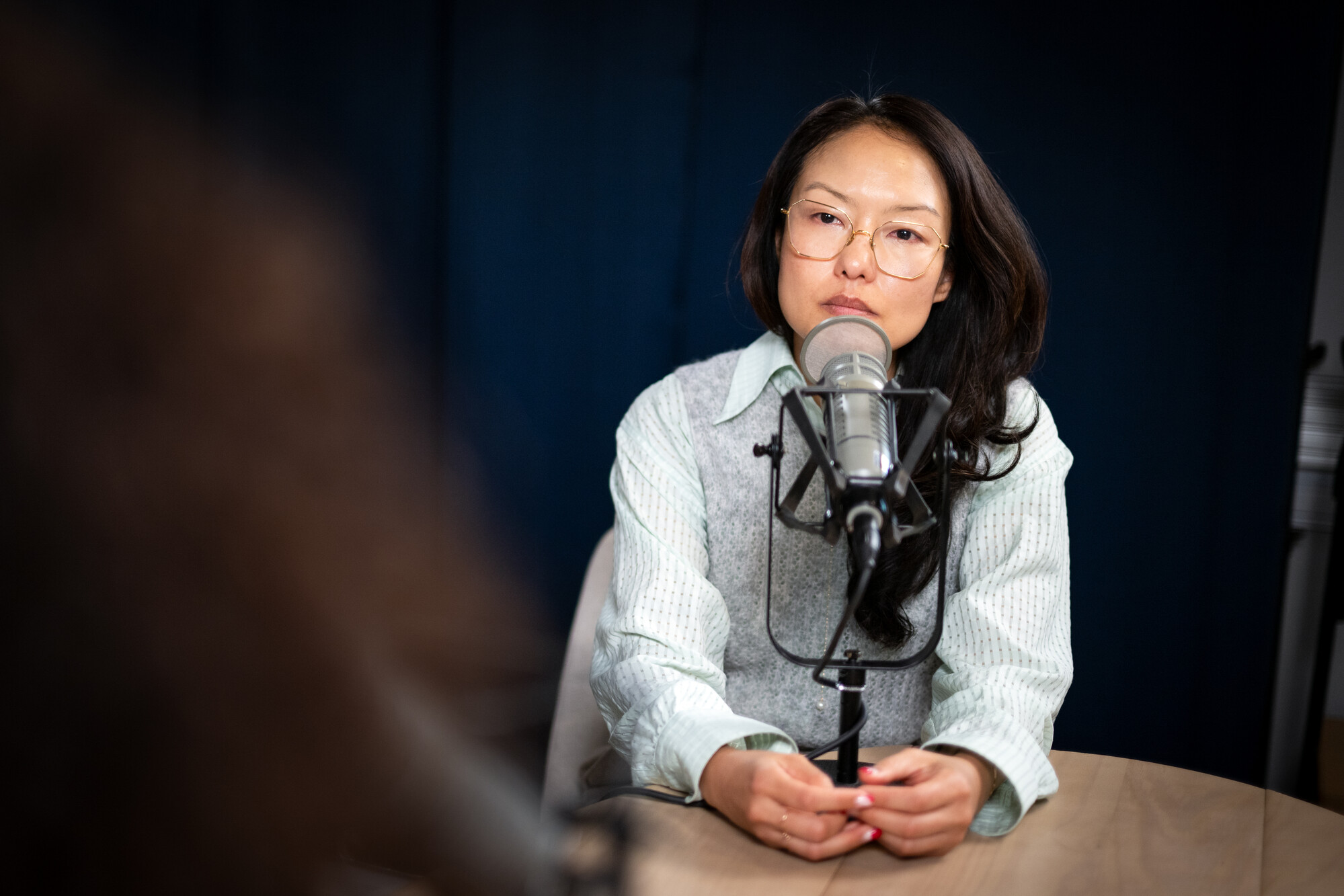
“From the consumer’s perspective, there’s no difference,” Kim said during an interview on KQED’s Political Breakdown. “And when you file a claim, you still file it with the insurance industry. But the state pays it out, and they pay it out quickly and fairly.”
To fund this, Kim said, the program would happen in stages, “and we’d have to figure out how to capitalize it in the beginning so that we could pay out claims in year one if fires happened.”
But the advantage for the state, she said, is that the profit insurance companies make on this part of policies could be invested in reducing risk.
Public-private insurance partnerships exist in some form in dozens of countries, including England for flood risk and Spain for some risk reduction and emergency response. The U.S. also has a national flood insurance program. And states like Texas and Florida have schemes to socialize some of the costs of home insurance, owing to their frequent hurricanes and flooding.
Each country or state’s arrangement is unique. In New Zealand, a set amount of a homeowner’s property insurance, about 600 New Zealand dollars ($336), goes to the government program that covers seismic risk: earthquakes, volcanic eruptions and landslides. If a policyholder suffers a loss, they can receive up to 300,000 NZ$ (roughly $170,000). All claim values above that are paid by the insurance company they have coverage with. It only covers seismic hazards.
In France, a surcharge of 20% is added to property insurance policies. Private insurance companies handle claims, but they are reinsured by a public reinsurance company backed by the French state. Spain also operates a public reinsurance and direct insurance program, also funded by mandatory surcharges.
While some California insurance experts believe bold ideas are needed to decrease wildfire risk, most are skeptical of Kim’s idea.
Caution, skepticism, some curiosity, too
Their concerns overlap: public insurance programs spread out costs but don’t necessarily reduce them; they are often overly generous and fiscally irresponsible because they are set up by politicians who want to be reelected.
Some experts argue that California’s climate-fueled disasters are so expensive and frequent that it would be foolish for the state to take on so much risk, and that California’s market is in the early phases of a recovery and that shocking it with major changes could delay or reverse the progress.
“There aren’t a huge number of what most people would consider successful examples of public insurers. They tend to be plagued by problems,” said Michael Wara, wildfire and insurance expert at Stanford. “And the biggest problem is that when you tell a government agency to set the cost of insurance, they almost always set it too low.”
And that means that taxpayers then must bail out the program.
“Ideally, place politicians far away from this process,” said Ilan Noy, an expert in the economics of disasters and climate change at Victoria University of Wellington in New Zealand.
Noy has studied the New Zealand program extensively and is largely a fan of it. However, he did not think an all-natural-hazard system would work in California, where some of the people at the highest risk are also wealthy.
When public-private programs work, it’s because the insurance is being subsidized. But would subsidizing these wealthy homeowners be fair?
If California insurance costs are going up, Noy said, “the only way to make them lower is reduce the risk through public policy. You cannot make the costs, the premiums low if the risk is high because someone ends up paying for it.”
Other experts stressed that the public-private partnerships could work but must be well-designed.
“It’s literally a design choice of, what are we solving for?” said Erwann Michel-Kerjan, former executive director of the Wharton Risk Center, now a partner at McKinsey & Company. He has studied France’s system. “Are you solving for fairness?”
Perhaps fairness is everyone paying for their own risk? But, equally, perhaps it’s unfair for people to see their insurance costs triple and to be priced out of where they grew up, when they didn’t do anything themselves to increase fire risk?
“I don’t think anyone has the answer, because there is not the perfect silver bullet,” Michel-Kerjan said. “California is unique, so it’s not like you can take the French system, the Netherlands system, and make it work in California, but you could be inspired by some of the principles behind some of these schemes.”
Time and again, California’s wildfires defy expectations. Do taxpayers want to be responsible?
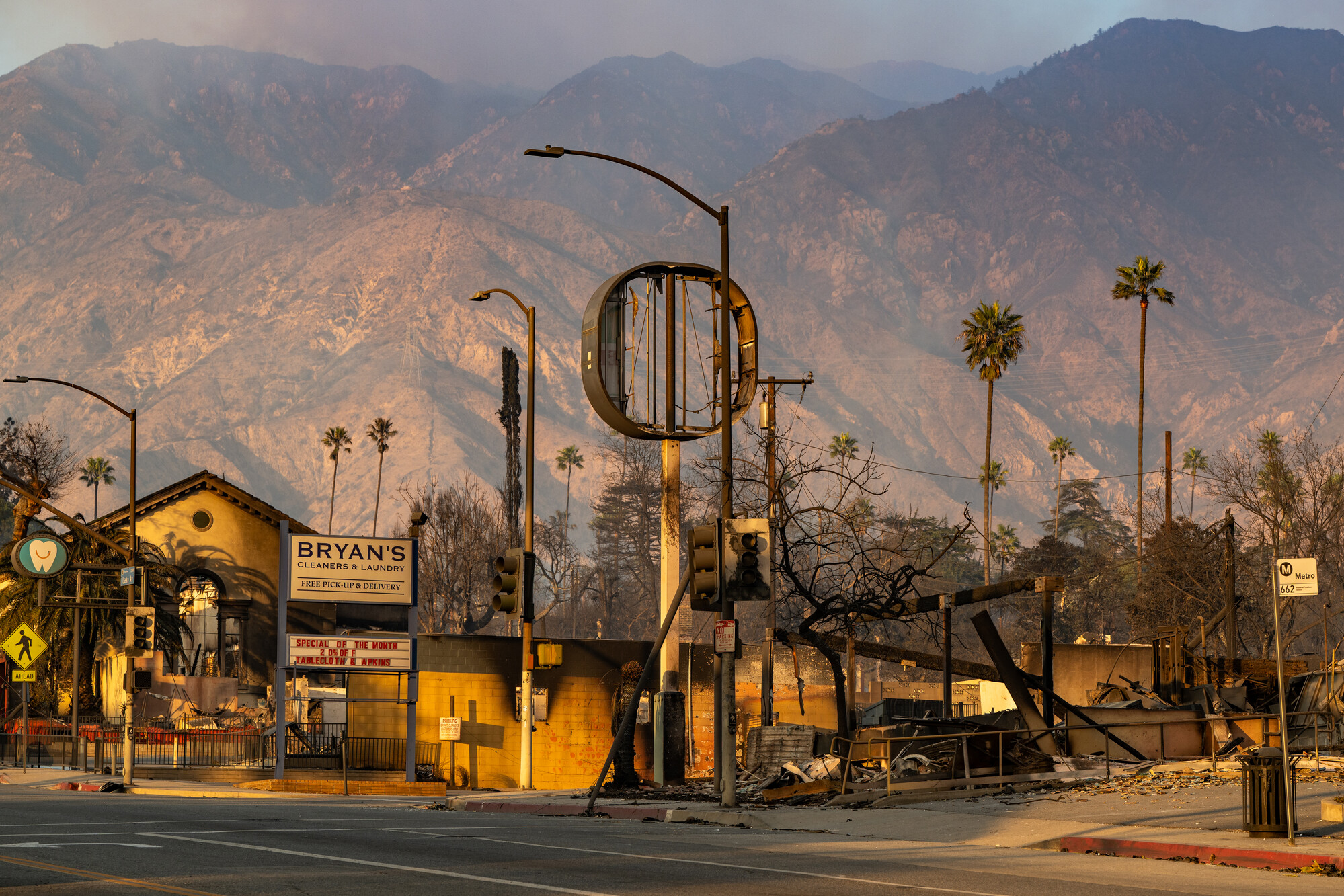
A system could be particularly hard to set up in California, right now. Wildfire damage is enormous, and costs are skyrocketing.
Experts worry that creating an all-hazard system in California would concentrate fire risk into one program, instead of allowing private insurance companies to spread the costs out across the country, among many different policies.
If a public insurance scheme relied only on money from within the state, the danger of costs exceeding incoming funds is greater than if the money going into and out of the system flows through national and global companies.
“This proposal,” said Carolyn Kousky, executive director of Insurance for Good, a nonprofit that works on insurance solutions, “would concentrate fire risk, not diversify it.”
Diversification tends to make insurance markets stronger. Currently, California’s property insurance market is diversified among dozens of private carriers who, in turn, are diversified across the country, insuring people in different states, and hold reinsurance through global markets.
“You would actually end up costing people more by concentrating fire risk in one program instead of having access to this broader diversification,” Kousky said. “And we’ve seen that global reinsurance markets tend to charge more for public programs, for them to offload directly into the reinsurance market, because they are so often politically manipulated and their business isn’t consistent.”
Reassurance through reinsurance?
If California were to, instead of insuring homes directly, follow one aspect of the French model, it could create a different problem with reinsurance. Reinsurance is most simply thought of as insurance for insurance companies. In France, this helps keep costs down, and in Florida, too; however, in California, reinsurance costs are not a great place for saving.
“Florida is the only state in the U.S. that has a public reinsurance program. And it’s actually working pretty well,” Kousky said. That’s because Florida is filled with very small insurers who tend to operate only in the state or the region, and they are poorly capitalized and heavily dependent on insurance. Those costs are high, and they impact the primary market.
“Putting in a state layer of reinsurance that’s less expensive and — important — stable in its pricing does provide these protective benefits to the homeowners market there. That’s not the case for the homeowners market in California.”
Here, she said, most carriers operate nationally, have good financial health, and are getting reinsurance fairly inexpensively. Putting out California fire reinsurance specifically won’t help residents much. Perhaps it would make policies slightly cheaper, but Kousky estimated by not much.
What these public programs mostly do is change who pays. To meaningfully lower how much everyone has to pay, we need to make everyone safer.
Could insurance fees pay for wildfire mitigation?
Kim does want to solve the persistent state problem of a lack of funds to invest in home- and community-level fire resilience.
State Sen. Ben Allen represents parts of Los Angeles County and is Kim’s opponent for the role of insurance commissioner. He wants to expand grants and financing to help home and business owners safeguard their properties from fire.
Wara, at Stanford, said he loves that both insurance commissioner candidates are thinking about how to find money to help communities reduce risk.
But Wara does not think there would be enough profit in California’s wildfire insurance premiums to siphon enough off for meaningful investment and have a fund that could continue to pay claims.
When disaster strikes, those funds need a big pile of cash to pay claims, Wara said. “If we are spending that money on trying to reduce risk, the challenge is that we might have some bad fires before we’ve actually reduced the risk and then we’re going to need to pay claims, but we won’t have the money.”
In bad years like 2017, 2018 and 2020, insurance industry insiders said decades of company profits were wiped out and, by the early 2020s, many companies felt that the California market had become so risky and unprofitable that, for a time, almost no insurance company would offer new homeowner policies.
That has since loosened up, and California’s insurance market shows some early signs of recovery: more companies entering the market and slowed growth in the FAIR Plan — California’s carrier of last resort.
Wara likened this to a sick patient who has a long way to go before they can do anything too ambitious.
“We have taken one dose of antibiotics when it comes to the insurance system in California,” he said. It’ll be a while before it’s fully healthy. When someone is in recovery, “You just say: ‘go to bed, rest, take some antibiotics. Here’s some soup.’”
New and creative ideas are needed in California to shift the state from its current untenable trajectory with climate change, wildfires and electrical utilities, Wara said. But he is skeptical of the contours of the plan currently offered by Kim.
“It’s not like the status quo is necessarily going to work,” he said, “We may have to try very different things.”
Allen characterized her plan as “taking popular support for comprehensive single-payer health care, which is a real thing that exists in a lot of countries,” he told KQED’s Political Breakdown, “and popped it over onto home disaster insurance.”
But the problem, he said, is that a comprehensive single-payer system doesn’t exist anywhere in the world.
“Even if she were able to get this through the legislature, which I don’t think she’d be able to, even if it were a good idea, it would take 10 years to implement at the earliest,” he said. “I’m trying to focus on fixing the problems right now.”
Kim, if elected, would need to advocate for the idea, have a bill proposed by a legislative partner, see it pass both houses and have it signed by the governor.
For her part, Kim said she’s optimistic about her ability to negotiate, build coalitions and get this idea across the finish line. Voters will decide if she gets the chance to try.