San Francisco’s Next District 10 Supervisor Will Inherit a Toxic Legacy
From the Hunters View housing project, San Francisco resident Joanne Abernathy can look out on two versions of the city: the radioactive, industrial legacy of the city’s past at the Hunters Point Naval Shipyard and a technology-driven future rising in downtown skyscrapers.
Abernathy grew up taking in this juxtaposition while walking up the hill from her family home in Bayview; her mom later lived in housing atop the slope.
“You can see everything from up here,” Abernathy said. “You can see the Bay Bridge, and when it’s the Fourth of July you can stand up here and see the fireworks.”
Hunters View was originally built as temporary housing for shipyard workers. Residents there have long had to advocate for themselves at City Hall, most recently as the promise of thousands of new homes in the city’s southeast corner threatens to push them out. And in the decadeslong cleanup of the contaminated shipyard.
Abernathy hopes whoever wins the District 10 supervisor race in November will be the neighborhood’s voice.
“We need to focus on a supervisor that’s going to stand up for us, because we’re almost one foot in the ground and one foot on the curb,” Abernathy said. “We need the community to have a say-so in [the cleanup]. Build around the community and stop just building around City Hall.”
The race to replace Supervisor Shamann Walton comes at a pivotal moment for District 10, a large area on the city’s southeastern edge, as the environmental cleanup of the shipyard continues alongside plans to transform the site into housing, parks and business space. Walton’s replacement will inherit the task of advocating for the neighborhoods most affected by contamination, while also shaping what may become the city’s largest redevelopment projects.
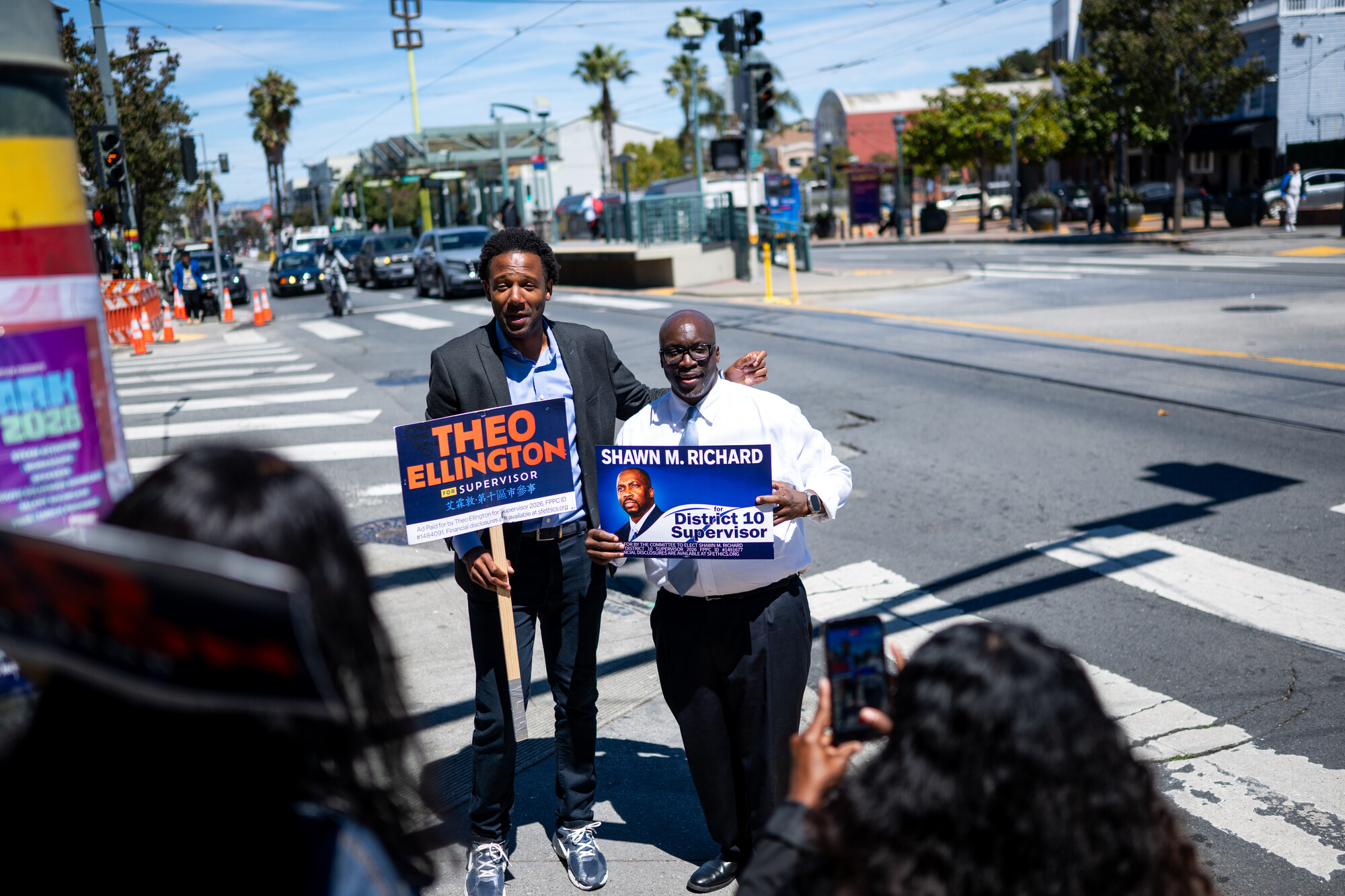
Nine candidates are vying to represent the sprawling district from Potrero Hill through Bayview to Vistacion Valley. The race has caught the attention of the city’s biggest political funders, like crypto billionaire Chris Larsen, who donated an eye-popping $500,000 to moderate Democrat Theo Ellington’s campaign.

“The next supervisor should think about our health, and think about all the people that have been lost to cancer,” Abernathy said.
During the Cold War, the 866-acre shipyard’s soil and groundwater were contaminated with radioactive chemicals, heavy metals and petroleum fuels from ships brought there after atomic bomb tests. In 1989, the base was declared one of the nation’s most contaminated sites.
After the cleanup concludes — potentially in the middle of the next decade — the city plans to allow developers to reinvent the shipyard. When finished, the 693-acre Candlestick Point-Hunters Point Shipyard project could include more than 10,000 housing units, two new waterfront neighborhoods and more than 340 acres of parks and open space.
Past city-led health surveys found that cancer “is a major cause of years of life lost in Bayview Hunters Point,” but the city did not look into whether contamination at the shipyard contributed to these health problems. Residents are documenting their health conditions, and a local doctor has tested people to catalog who has been exposed to dangerous chemicals.
Rachel Brahinsky, a University of San Francisco professor in urban studies and politics, said the next supervisor will need to actively “shine a light” on how the Superfund site is a “tremendous liability” that should be viewed as a “San Francisco problem.”
They won’t “be treated as a central protagonist in the future of the city,” Brahinsky said. “They have to insist on it and make themselves and their neighborhood be seen in that way. History shows that that person will be sidelined if they don’t step up.”
‘This is a city-wide issue’
Standing on the worn granite steps of City Hall in June, environmental advocates called on city leaders to push for a full cleanup at the Hunters Point Naval Shipyard.
The rally followed the U.S. Navy’s disclosure this spring that it found a cabinet filled with several hundred radiological items at the shipyard, the latest discovery at the Superfund site.
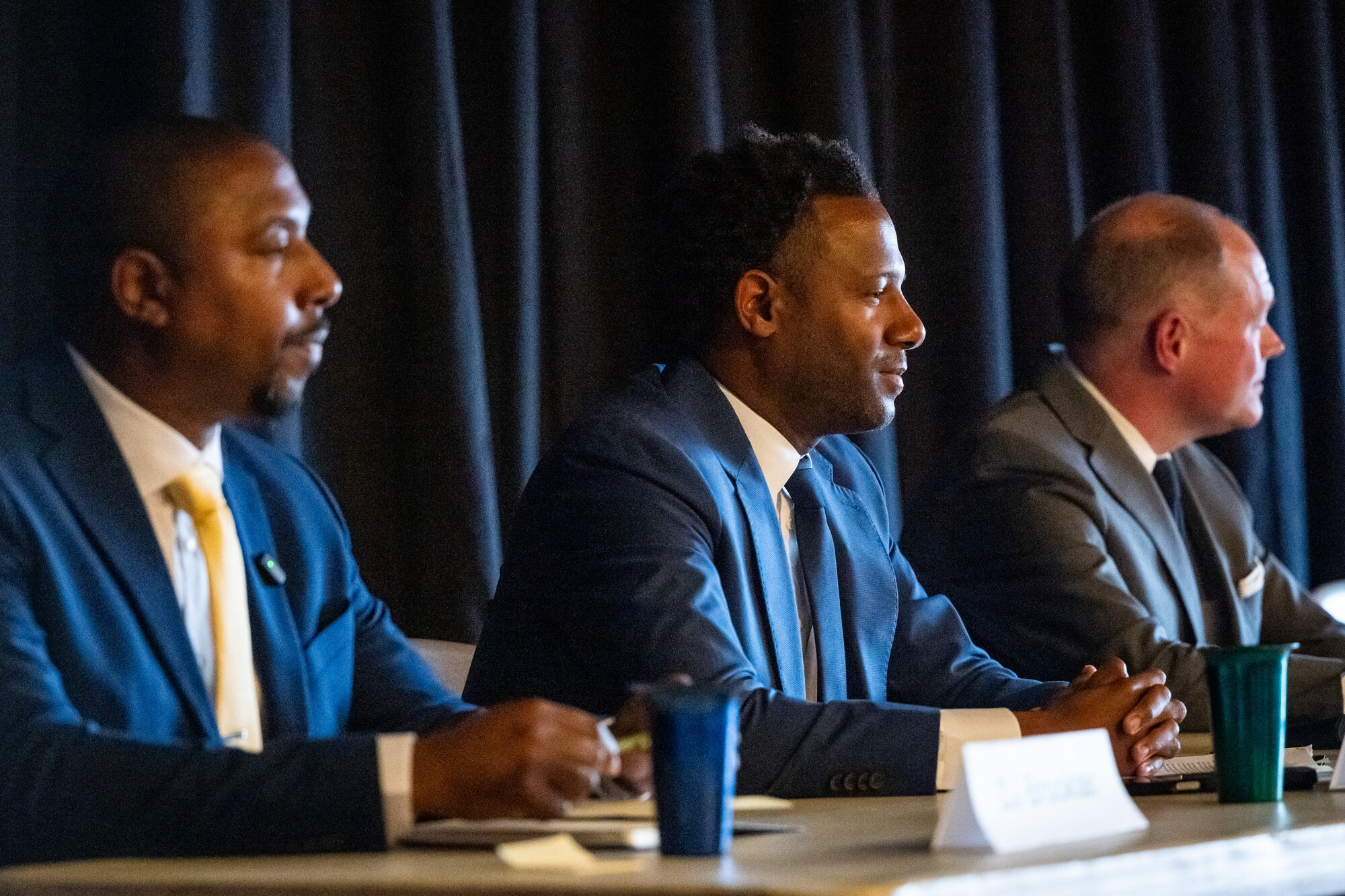
Two candidates for supervisor took to the microphone: Ellington and Dion-Jay “D.J.” Brookter.
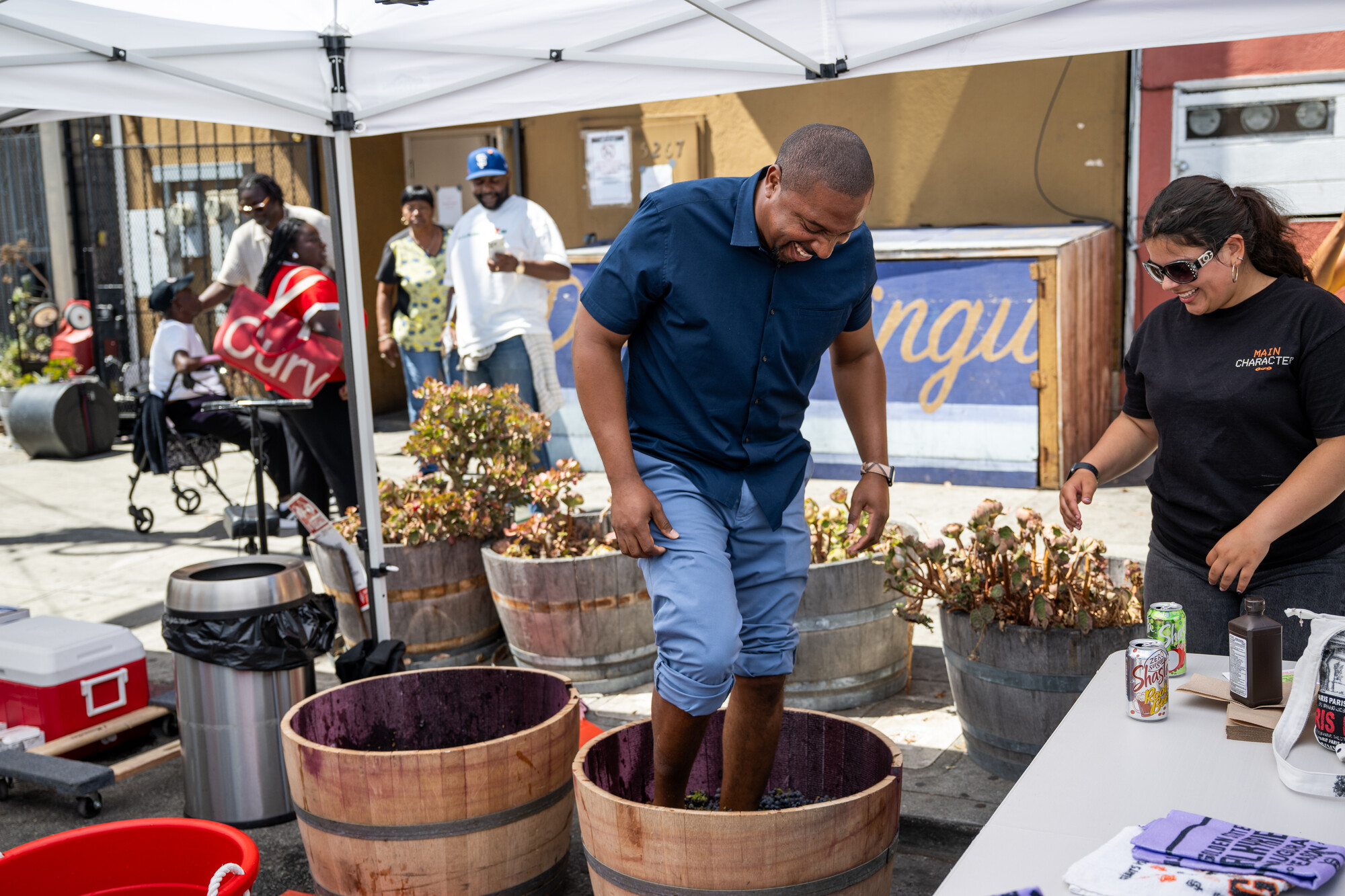
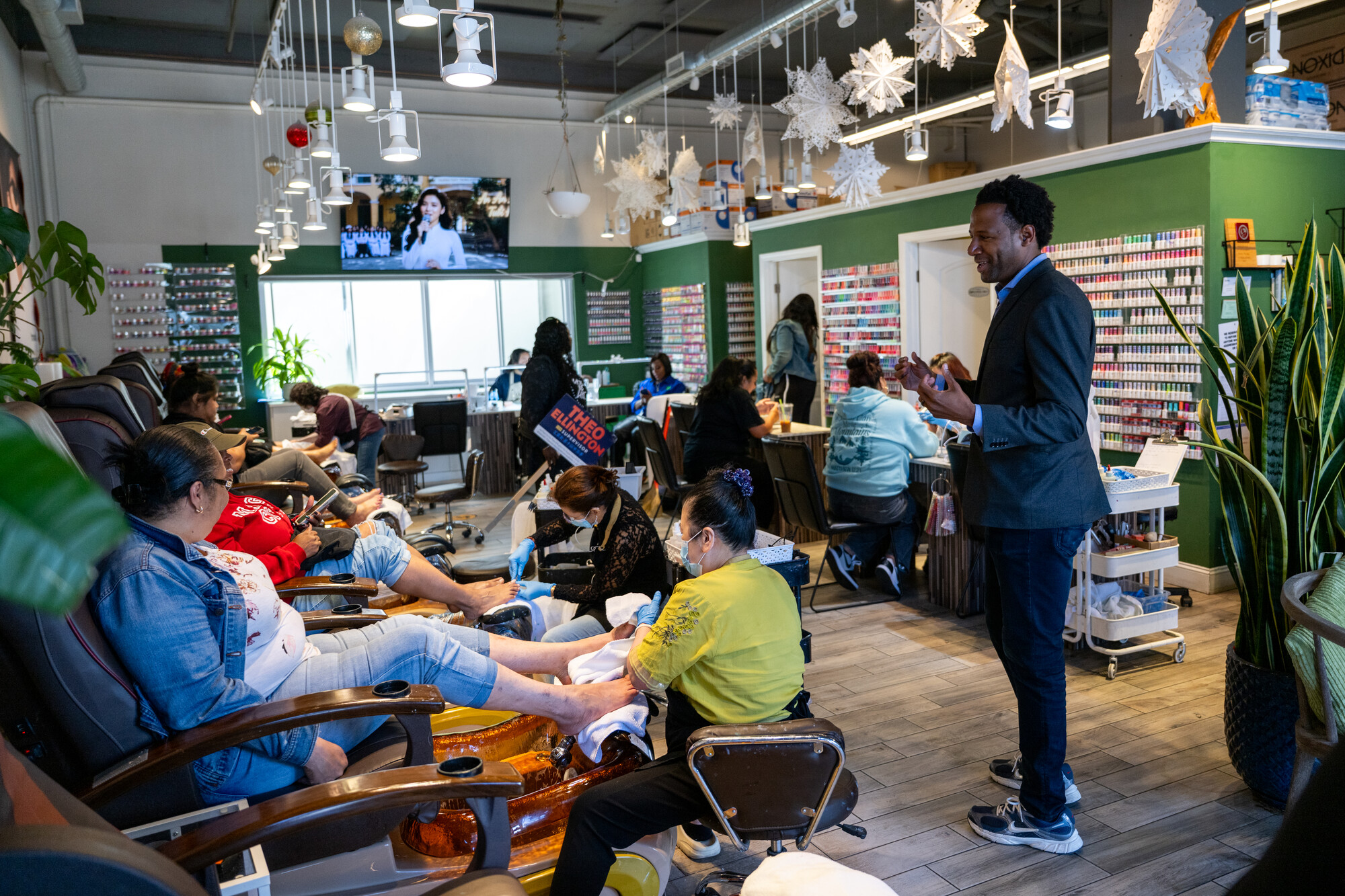
Ellington grew up in Bayview and leads the Ruth Williams Opera House, a performing arts and cultural center located there. He said the fight is personal because he lives with his family within the shipyards’ footprint.
“If you want to protect the people, then you must protect the land,” Ellington said.
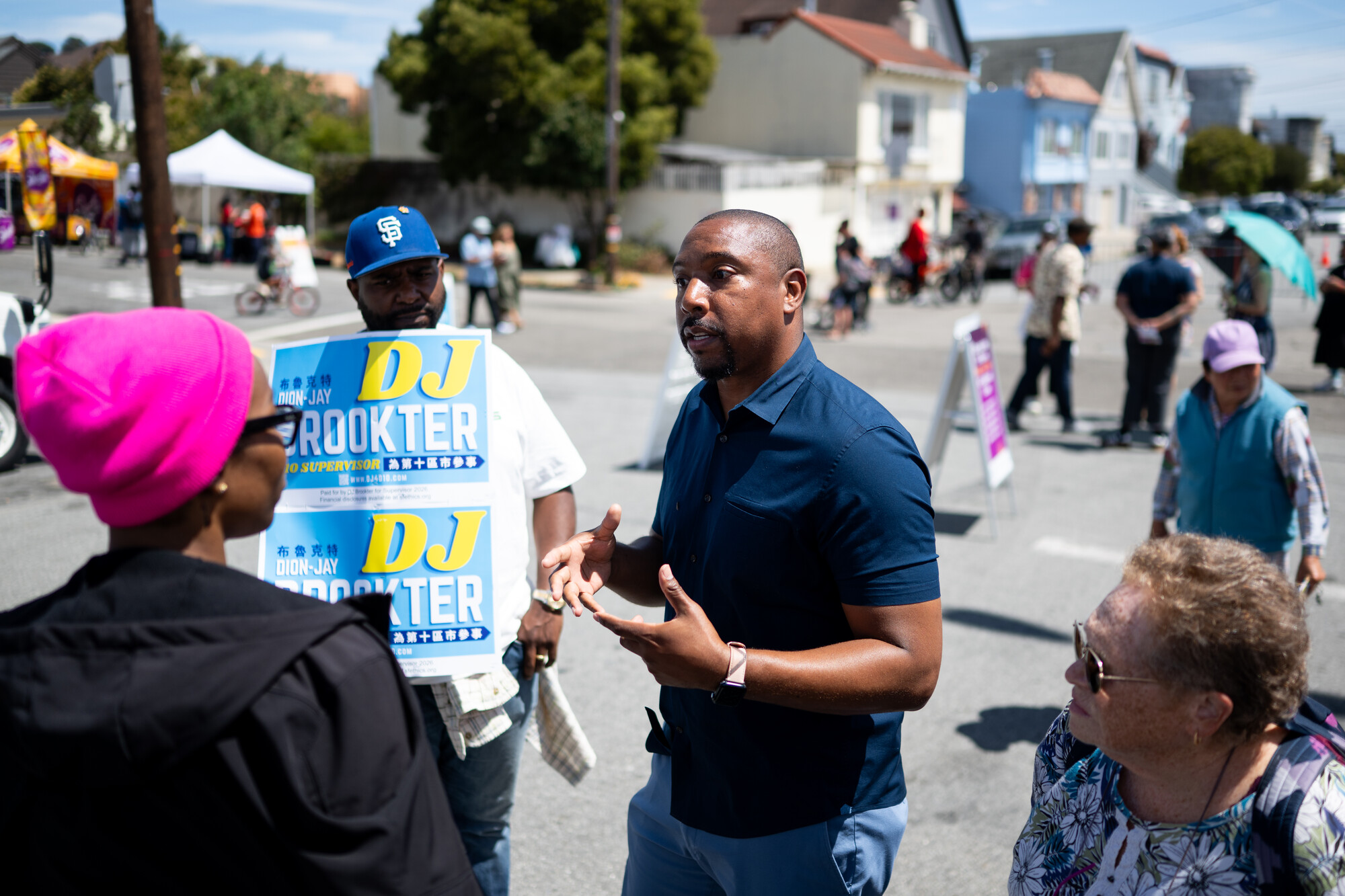
Brookter is a community advocate and former local nonprofit leader who moved to the neighborhood 16 years ago. He said the city needs to invest in the existing neighborhoods around Bayview, not just focus on building new housing.
“We are asking for what every family in San Francisco has the right to: clean land, honest science, a transparent government, and a future where our health is not sacrificed for someone else’s timeline,” Brookter said.
Three candidates have raised the most money, so far — Ellington, Brookter, and J.R. Eppler — and all told KQED the shipyard would be a main focus. However, none explicitly listed it among their top three priorities.
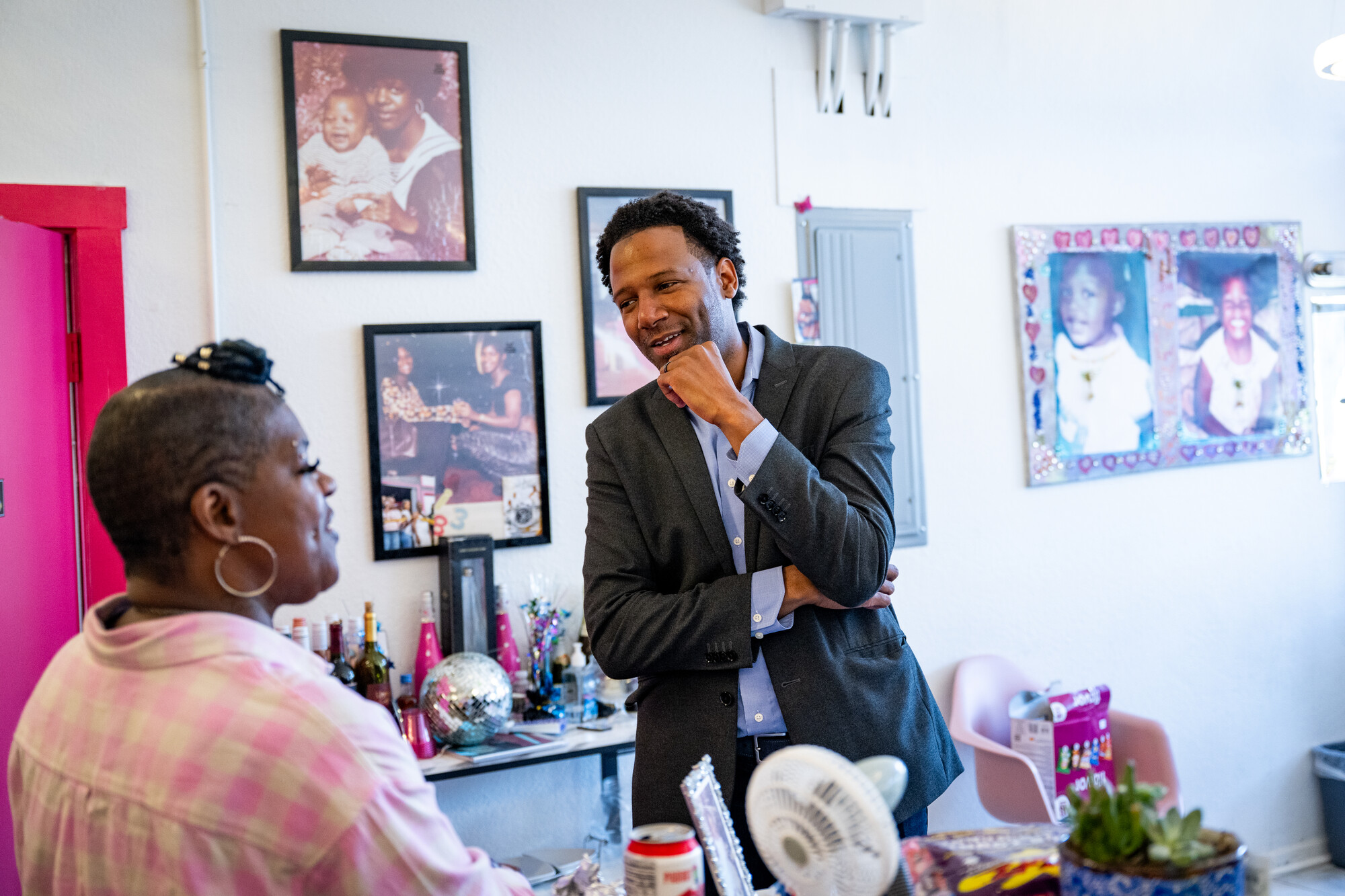
Ellington ranked housing, economic development and transportation as the most important issues. But decades of stalled and scandal-plagued cleanup efforts, he said, have taught residents that “nobody takes anyone’s word” about how the Navy cleans up the site.
As supervisor, Ellington would push for independent testing before land is transferred to developers, greater transparency and community involvement.
“We have to use every rule in the book to push the Navy to do their part, and make sure this development is safe,” Ellington said, adding that he would fight for health screenings, because “exposure records kept today are the evidence families will need tomorrow.”
Brookter’s top three priorities include: housing stability, economic opportunity and effective government. On the shipyard, he said the “burden is on the government to prove” the land is safe.

“This is a city-wide issue,” Brookter said. “I want to bring my colleagues here to say, look, this is what San Franciscans are facing.”
Brookter said he would fight for an independent review of the cleanup and ensure the community has “meaningful decision-making” in what happens next.
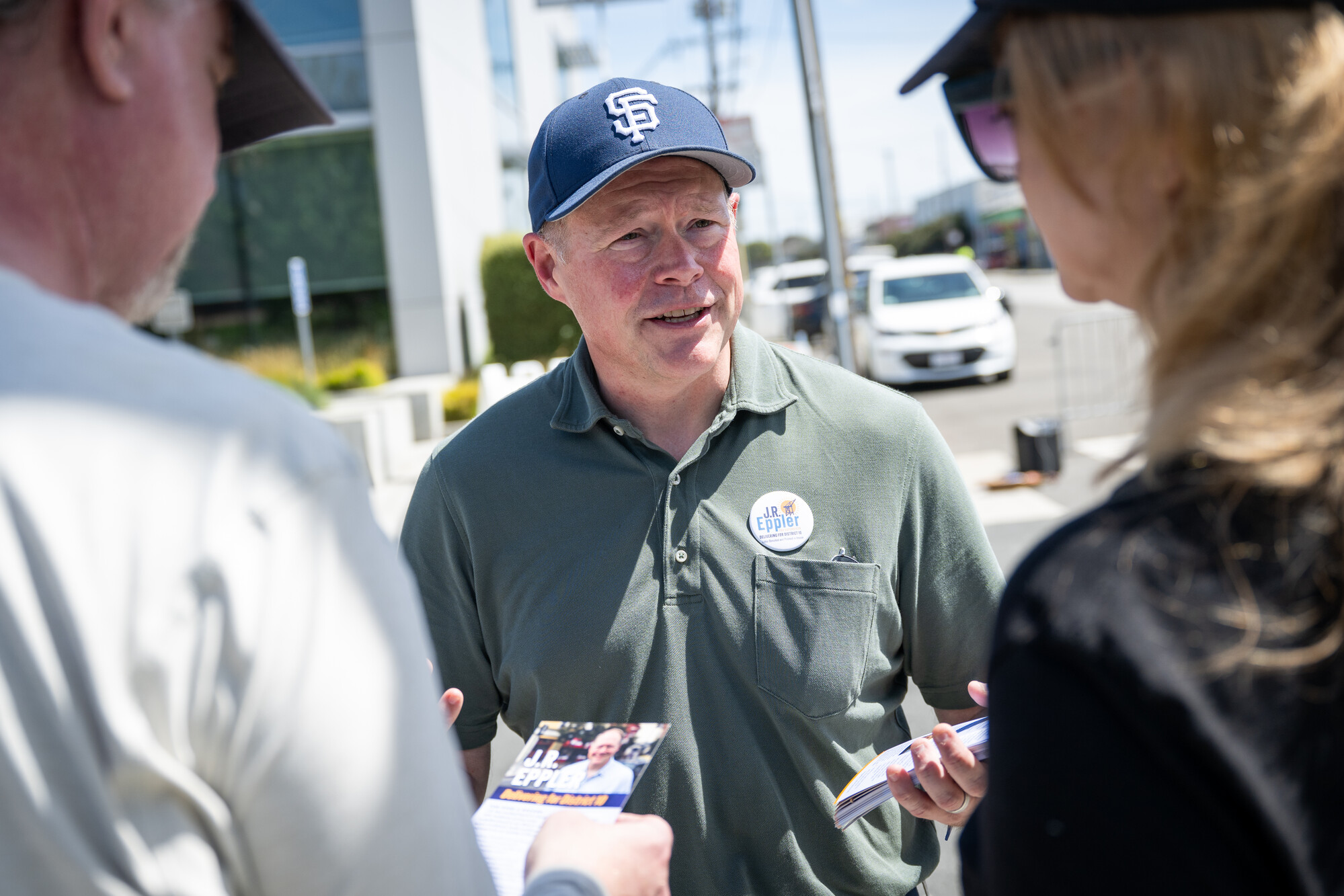
Eppler describes his top three priorities as “building complete, vibrant, and connected neighborhoods.” On the shipyard, he told KQED the community needs more transparency from the Navy and regulatory agencies overseeing the cleanup.
Navy officials have said they are dedicated to ensuring the site is safe, environmentally sound, and benefits the surrounding community as it moves toward redevelopment.
“Residents should not be expected to take the Navy, its contractors, or City Hall at their word,” Eppler said. “I would push for every parcel to be cleaned to a residential standard and independently verified before it is transferred, opened to the public, or developed.”
Eppler said the cleanup should not be rushed. Still, other areas could be redeveloped in the meantime because “District 10 should not have to choose between protecting public health and creating economic opportunity.”
“The city needs to rediscover the southeast,” Eppler said. “We’ve built the arsenal of democracy at the shipyard. It’s time for us to be on the map of San Francisco.”
The district is ‘not forgotten’
Gail Hampton lives in senior housing on the hill overlooking the shipyard. She moved to the district more than half a century ago.
“The next supervisor needs to pay more attention to the shipyard, period,” Hampton said.
Tonia Randell, a Bayview environmental advocate and resident, said the next supervisor must understand that the “environment has to be protected” if the neighborhood is going to thrive — especially as future floodwaters could expose the community to further harm from the toxic site.
“If someone who’s in that office doesn’t understand that, doesn’t attend the meetings or listen to the experts, then we’re gonna be cooked,” Randell said. “It’s a beautiful place, but it has underlying secrets that are deadly.”
Arieann Harrison, executive director of the Marie Harrison Community Foundation, said she will miss Walton’s leadership.
“He has shown the community that he’s willing to step up and be a part of the actions that we are taking,” Harrison said.
Harrison has helped spearhead a campaign for community oversight, independent testing, cleanup to the highest standards, reparations for impacted residents and long-term monitoring.
She worries development could shift demographics and reduce representation for existing residents.
“We will probably not have any representation moving forward after this election, that is, us — Black or people of color — because of the influx of money,” Harrison said.
Brahinsky, who is writing a book about Bayview environmental leaders, said: “The future is not written yet.”
“I think there is still an opportunity because people like [Harrison] are pushing on the outcomes at the shipyard,” Brahinsky said.
Brahinsky hopes the district elects someone “who will represent the underdogs” and is “willing to keep pressure on continuously.”
“Sometimes that means someone who’s not worried about what’s next for them politically,” Brahinsky said. “The district is, in some ways, the last industrial heart of San Francisco. In that sense, it’s not forgotten at all and is central to the functioning of the city.”