window.__IS_SSR__=true
window.__INITIAL_STATE__={
"attachmentsReducer": {
"audio_0": {
"type": "attachments",
"id": "audio_0",
"imgSizes": {
"kqedFullSize": {
"file": "https://ww2.kqed.org/news/wp-content/themes/KQED-unified/img/audio_bgs/background0.jpg"
}
}
},
"audio_1": {
"type": "attachments",
"id": "audio_1",
"imgSizes": {
"kqedFullSize": {
"file": "https://ww2.kqed.org/news/wp-content/themes/KQED-unified/img/audio_bgs/background1.jpg"
}
}
},
"audio_2": {
"type": "attachments",
"id": "audio_2",
"imgSizes": {
"kqedFullSize": {
"file": "https://ww2.kqed.org/news/wp-content/themes/KQED-unified/img/audio_bgs/background2.jpg"
}
}
},
"audio_3": {
"type": "attachments",
"id": "audio_3",
"imgSizes": {
"kqedFullSize": {
"file": "https://ww2.kqed.org/news/wp-content/themes/KQED-unified/img/audio_bgs/background3.jpg"
}
}
},
"audio_4": {
"type": "attachments",
"id": "audio_4",
"imgSizes": {
"kqedFullSize": {
"file": "https://ww2.kqed.org/news/wp-content/themes/KQED-unified/img/audio_bgs/background4.jpg"
}
}
},
"placeholder": {
"type": "attachments",
"id": "placeholder",
"imgSizes": {
"thumbnail": {
"file": "https://cdn.kqed.org/wp-content/uploads/2024/12/KQED-Default-Image-816638274-2000x1333-1-160x107.jpg",
"width": 160,
"height": 107,
"mimeType": "image/jpeg"
},
"medium": {
"file": "https://cdn.kqed.org/wp-content/uploads/2024/12/KQED-Default-Image-816638274-2000x1333-1-800x533.jpg",
"width": 800,
"height": 533,
"mimeType": "image/jpeg"
},
"medium_large": {
"file": "https://cdn.kqed.org/wp-content/uploads/2024/12/KQED-Default-Image-816638274-2000x1333-1-768x512.jpg",
"width": 768,
"height": 512,
"mimeType": "image/jpeg"
},
"large": {
"file": "https://cdn.kqed.org/wp-content/uploads/2024/12/KQED-Default-Image-816638274-2000x1333-1-1020x680.jpg",
"width": 1020,
"height": 680,
"mimeType": "image/jpeg"
},
"1536x1536": {
"file": "https://cdn.kqed.org/wp-content/uploads/2024/12/KQED-Default-Image-816638274-2000x1333-1-1536x1024.jpg",
"width": 1536,
"height": 1024,
"mimeType": "image/jpeg"
},
"fd-lrg": {
"file": "https://cdn.kqed.org/wp-content/uploads/2024/12/KQED-Default-Image-816638274-2000x1333-1-1536x1024.jpg",
"width": 1536,
"height": 1024,
"mimeType": "image/jpeg"
},
"fd-med": {
"file": "https://cdn.kqed.org/wp-content/uploads/2024/12/KQED-Default-Image-816638274-2000x1333-1-1020x680.jpg",
"width": 1020,
"height": 680,
"mimeType": "image/jpeg"
},
"fd-sm": {
"file": "https://cdn.kqed.org/wp-content/uploads/2024/12/KQED-Default-Image-816638274-2000x1333-1-800x533.jpg",
"width": 800,
"height": 533,
"mimeType": "image/jpeg"
},
"post-thumbnail": {
"file": "https://cdn.kqed.org/wp-content/uploads/2024/12/KQED-Default-Image-816638274-2000x1333-1-672x372.jpg",
"width": 672,
"height": 372,
"mimeType": "image/jpeg"
},
"twentyfourteen-full-width": {
"file": "https://cdn.kqed.org/wp-content/uploads/2024/12/KQED-Default-Image-816638274-2000x1333-1-1038x576.jpg",
"width": 1038,
"height": 576,
"mimeType": "image/jpeg"
},
"xxsmall": {
"file": "https://cdn.kqed.org/wp-content/uploads/2024/12/KQED-Default-Image-816638274-2000x1333-1-160x107.jpg",
"width": 160,
"height": 107,
"mimeType": "image/jpeg"
},
"xsmall": {
"file": "https://cdn.kqed.org/wp-content/uploads/2024/12/KQED-Default-Image-816638274-2000x1333-1-672x372.jpg",
"width": 672,
"height": 372,
"mimeType": "image/jpeg"
},
"small": {
"file": "https://cdn.kqed.org/wp-content/uploads/2024/12/KQED-Default-Image-816638274-2000x1333-1-672x372.jpg",
"width": 672,
"height": 372,
"mimeType": "image/jpeg"
},
"xlarge": {
"file": "https://cdn.kqed.org/wp-content/uploads/2024/12/KQED-Default-Image-816638274-2000x1333-1-1020x680.jpg",
"width": 1020,
"height": 680,
"mimeType": "image/jpeg"
},
"full-width": {
"file": "https://cdn.kqed.org/wp-content/uploads/2024/12/KQED-Default-Image-816638274-2000x1333-1-1920x1280.jpg",
"width": 1920,
"height": 1280,
"mimeType": "image/jpeg"
},
"guest-author-32": {
"file": "https://cdn.kqed.org/wp-content/uploads/2025/01/KQED-Default-Image-816638274-1333x1333-1-160x160.jpg",
"width": 32,
"height": 32,
"mimeType": "image/jpeg"
},
"guest-author-50": {
"file": "https://cdn.kqed.org/wp-content/uploads/2025/01/KQED-Default-Image-816638274-1333x1333-1-160x160.jpg",
"width": 50,
"height": 50,
"mimeType": "image/jpeg"
},
"guest-author-64": {
"file": "https://cdn.kqed.org/wp-content/uploads/2025/01/KQED-Default-Image-816638274-1333x1333-1-160x160.jpg",
"width": 64,
"height": 64,
"mimeType": "image/jpeg"
},
"guest-author-96": {
"file": "https://cdn.kqed.org/wp-content/uploads/2025/01/KQED-Default-Image-816638274-1333x1333-1-160x160.jpg",
"width": 96,
"height": 96,
"mimeType": "image/jpeg"
},
"guest-author-128": {
"file": "https://cdn.kqed.org/wp-content/uploads/2025/01/KQED-Default-Image-816638274-1333x1333-1-160x160.jpg",
"width": 128,
"height": 128,
"mimeType": "image/jpeg"
},
"detail": {
"file": "https://cdn.kqed.org/wp-content/uploads/2025/01/KQED-Default-Image-816638274-1333x1333-1-160x160.jpg",
"width": 160,
"height": 160,
"mimeType": "image/jpeg"
},
"kqedFullSize": {
"file": "https://cdn.kqed.org/wp-content/uploads/2024/12/KQED-Default-Image-816638274-2000x1333-1.jpg",
"width": 2000,
"height": 1333
}
}
},
"quest_38425": {
"type": "attachments",
"id": "quest_38425",
"meta": {
"index": "attachments_1716263798",
"site": "quest",
"id": "38425",
"found": true
},
"parent": 38415,
"imgSizes": {
"thumbnail": {
"file": "https://ww2.kqed.org/app/uploads/sites/39/2012/05/Farming-marquee-400x225.jpg",
"width": 400,
"mimeType": "image/jpeg",
"height": 225
},
"kqedFullSize": {
"file": "https://ww2.kqed.org/app/uploads/sites/39/2012/05/Farming-marquee.jpg",
"width": 640,
"height": 360
},
"guest-author-96": {
"file": "https://ww2.kqed.org/app/uploads/sites/39/2012/05/Farming-marquee-96x96.jpg",
"width": 96,
"mimeType": "image/jpeg",
"height": 96
},
"guest-author-64": {
"file": "https://ww2.kqed.org/app/uploads/sites/39/2012/05/Farming-marquee-64x64.jpg",
"width": 64,
"mimeType": "image/jpeg",
"height": 64
},
"detail": {
"file": "https://ww2.kqed.org/app/uploads/sites/39/2012/05/Farming-marquee-75x75.jpg",
"width": 75,
"mimeType": "image/jpeg",
"height": 75
},
"guest-author-32": {
"file": "https://ww2.kqed.org/app/uploads/sites/39/2012/05/Farming-marquee-32x32.jpg",
"width": 32,
"mimeType": "image/jpeg",
"height": 32
},
"guest-author-128": {
"file": "https://ww2.kqed.org/app/uploads/sites/39/2012/05/Farming-marquee-128x128.jpg",
"width": 128,
"mimeType": "image/jpeg",
"height": 128
}
},
"publishDate": 1337292671,
"modified": 1337292671,
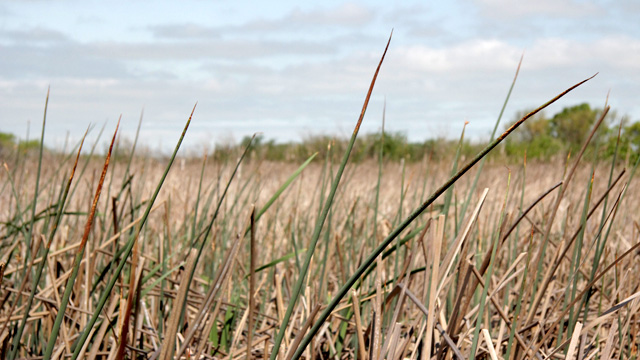
"caption": "Tules on Twitchell Island in the Delta. (Photo: Josh Cassidy)",
"description": null,
"title": "Farming-marquee",
"credit": null,
"status": "inherit",
"isLoading": false,
"fetchFailed": false
},
"quest_37673": {
"type": "attachments",
"id": "quest_37673",
"meta": {
"index": "attachments_1716263798",
"site": "quest",
"id": "37673",
"found": true
},
"parent": 37589,
"imgSizes": {
"thumbnail": {
"file": "https://ww2.kqed.org/app/uploads/sites/39/2012/05/Deltamap-400x225.jpg",
"width": 400,
"mimeType": "image/jpeg",
"height": 225
},
"kqedFullSize": {
"file": "https://ww2.kqed.org/app/uploads/sites/39/2012/05/Deltamap.jpg",
"width": 640,
"height": 360
},
"guest-author-96": {
"file": "https://ww2.kqed.org/app/uploads/sites/39/2012/05/Deltamap-96x96.jpg",
"width": 96,
"mimeType": "image/jpeg",
"height": 96
},
"guest-author-64": {
"file": "https://ww2.kqed.org/app/uploads/sites/39/2012/05/Deltamap-64x64.jpg",
"width": 64,
"mimeType": "image/jpeg",
"height": 64
},
"detail": {
"file": "https://ww2.kqed.org/app/uploads/sites/39/2012/05/Deltamap-75x75.jpg",
"width": 75,
"mimeType": "image/jpeg",
"height": 75
},
"guest-author-32": {
"file": "https://ww2.kqed.org/app/uploads/sites/39/2012/05/Deltamap-32x32.jpg",
"width": 32,
"mimeType": "image/jpeg",
"height": 32
},
"guest-author-128": {
"file": "https://ww2.kqed.org/app/uploads/sites/39/2012/05/Deltamap-128x128.jpg",
"width": 128,
"mimeType": "image/jpeg",
"height": 128
}
},
"publishDate": 1336772670,
"modified": 1336772670,
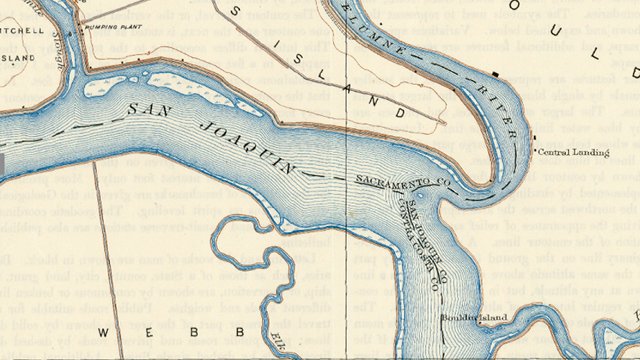
"caption": "A map of the Delta created by the US Geological Survey in the 1910s.",
"description": null,
"title": "Deltamap",
"credit": null,
"status": "inherit",
"isLoading": false,
"fetchFailed": false
},
"quest_36945": {
"type": "attachments",
"id": "quest_36945",
"meta": {
"index": "attachments_1716263798",
"site": "quest",
"id": "36945",
"found": true
},
"parent": 36944,
"imgSizes": {
"thumbnail": {
"file": "https://ww2.kqed.org/app/uploads/sites/39/2012/05/DeltaOverview-400x225.jpg",
"width": 400,
"mimeType": "image/jpeg",
"height": 225
},
"kqedFullSize": {
"file": "https://ww2.kqed.org/app/uploads/sites/39/2012/05/DeltaOverview.jpg",
"width": 640,
"height": 360
},
"guest-author-96": {
"file": "https://ww2.kqed.org/app/uploads/sites/39/2012/05/DeltaOverview-96x96.jpg",
"width": 96,
"mimeType": "image/jpeg",
"height": 96
},
"guest-author-64": {
"file": "https://ww2.kqed.org/app/uploads/sites/39/2012/05/DeltaOverview-64x64.jpg",
"width": 64,
"mimeType": "image/jpeg",
"height": 64
},
"detail": {
"file": "https://ww2.kqed.org/app/uploads/sites/39/2012/05/DeltaOverview-75x75.jpg",
"width": 75,
"mimeType": "image/jpeg",
"height": 75
},
"guest-author-32": {
"file": "https://ww2.kqed.org/app/uploads/sites/39/2012/05/DeltaOverview-32x32.jpg",
"width": 32,
"mimeType": "image/jpeg",
"height": 32
},
"guest-author-128": {
"file": "https://ww2.kqed.org/app/uploads/sites/39/2012/05/DeltaOverview-128x128.jpg",
"width": 128,
"mimeType": "image/jpeg",
"height": 128
}
},
"publishDate": 1336094572,
"modified": 1336094572,
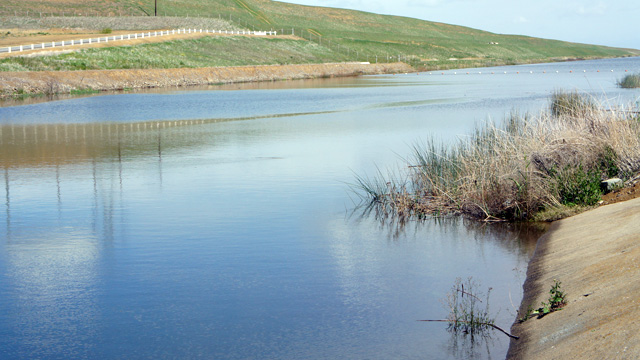
"caption": "A canal in the south Delta, sending water to the Central Valley Project.",
"description": null,
"title": "DeltaOverview",
"credit": null,
"status": "inherit",
"isLoading": false,
"fetchFailed": false
},
"quest_36108": {
"type": "attachments",
"id": "quest_36108",
"meta": {
"index": "attachments_1716263798",
"site": "quest",
"id": "36108",
"found": true
},
"parent": 36106,
"imgSizes": {
"thumbnail": {
"file": "https://ww2.kqed.org/app/uploads/sites/39/2012/04/GGB-1936-Workers-feature-image-400x225.jpg",
"width": 400,
"mimeType": "image/jpeg",
"height": 225
},
"kqedFullSize": {
"file": "https://ww2.kqed.org/app/uploads/sites/39/2012/04/GGB-1936-Workers-feature-image.jpg",
"width": 640,
"height": 360
},
"guest-author-96": {
"file": "https://ww2.kqed.org/app/uploads/sites/39/2012/04/GGB-1936-Workers-feature-image-96x96.jpg",
"width": 96,
"mimeType": "image/jpeg",
"height": 96
},
"guest-author-64": {
"file": "https://ww2.kqed.org/app/uploads/sites/39/2012/04/GGB-1936-Workers-feature-image-64x64.jpg",
"width": 64,
"mimeType": "image/jpeg",
"height": 64
},
"detail": {
"file": "https://ww2.kqed.org/app/uploads/sites/39/2012/04/GGB-1936-Workers-feature-image-75x75.jpg",
"width": 75,
"mimeType": "image/jpeg",
"height": 75
},
"guest-author-32": {
"file": "https://ww2.kqed.org/app/uploads/sites/39/2012/04/GGB-1936-Workers-feature-image-32x32.jpg",
"width": 32,
"mimeType": "image/jpeg",
"height": 32
},
"guest-author-128": {
"file": "https://ww2.kqed.org/app/uploads/sites/39/2012/04/GGB-1936-Workers-feature-image-128x128.jpg",
"width": 128,
"mimeType": "image/jpeg",
"height": 128
}
},
"publishDate": 1335469620,
"modified": 1335469620,
"caption": "Cable formers kept the 61 main cable bundles in vertical rows. From the holdings of the Golden Gate Bridge, Highway and Transportation District, Used with Permission, www.goldengate.org\t",
"description": null,
"title": "GGB 1936 Workers feature image",
"credit": null,
"status": "inherit",
"isLoading": false,
"fetchFailed": false
},
"quest_35674": {
"type": "attachments",
"id": "quest_35674",
"meta": {
"index": "attachments_1716263798",
"site": "quest",
"id": "35674",
"found": true
},
"parent": 35671,
"imgSizes": {
"thumbnail": {
"file": "https://ww2.kqed.org/app/uploads/sites/39/2012/04/Dan-and-whale-400x225.jpg",
"width": 400,
"mimeType": "image/jpeg",
"height": 225
},
"kqedFullSize": {
"file": "https://ww2.kqed.org/app/uploads/sites/39/2012/04/Dan-and-whale.jpg",
"width": 640,
"height": 360
},
"guest-author-96": {
"file": "https://ww2.kqed.org/app/uploads/sites/39/2012/04/Dan-and-whale-96x96.jpg",
"width": 96,
"mimeType": "image/jpeg",
"height": 96
},
"guest-author-64": {
"file": "https://ww2.kqed.org/app/uploads/sites/39/2012/04/Dan-and-whale-64x64.jpg",
"width": 64,
"mimeType": "image/jpeg",
"height": 64
},
"detail": {
"file": "https://ww2.kqed.org/app/uploads/sites/39/2012/04/Dan-and-whale-75x75.jpg",
"width": 75,
"mimeType": "image/jpeg",
"height": 75
},
"guest-author-32": {
"file": "https://ww2.kqed.org/app/uploads/sites/39/2012/04/Dan-and-whale-32x32.jpg",
"width": 32,
"mimeType": "image/jpeg",
"height": 32
},
"guest-author-128": {
"file": "https://ww2.kqed.org/app/uploads/sites/39/2012/04/Dan-and-whale-128x128.jpg",
"width": 128,
"mimeType": "image/jpeg",
"height": 128
}
},
"publishDate": 1334878690,
"modified": 1334878690,
"caption": "Dan Sudran explains a gray whale's baleen plates to kids at Mission Science Center in San Francisco.",
"description": "Dan Sudran explains how baleen works",
"title": "Gray whale baleen ",
"credit": null,
"status": "inherit",
"isLoading": false,
"fetchFailed": false
},
"quest_35209": {
"type": "attachments",
"id": "quest_35209",
"meta": {
"index": "attachments_1716263798",
"site": "quest",
"id": "35209",
"found": true
},
"parent": 35189,
"imgSizes": {
"thumbnail": {
"file": "https://ww2.kqed.org/app/uploads/sites/39/2012/04/KEPLER22-400x246.jpg",
"width": 400,
"mimeType": "image/jpeg",
"height": 246
},
"post-thumbnail": {
"file": "https://ww2.kqed.org/app/uploads/sites/39/2012/04/KEPLER22-640x372.jpg",
"width": 640,
"mimeType": "image/jpeg",
"height": 372
},
"kqedFullSize": {
"file": "https://ww2.kqed.org/app/uploads/sites/39/2012/04/KEPLER22.jpg",
"width": 640,
"height": 394
},
"guest-author-96": {
"file": "https://ww2.kqed.org/app/uploads/sites/39/2012/04/KEPLER22-96x96.jpg",
"width": 96,
"mimeType": "image/jpeg",
"height": 96
},
"guest-author-64": {
"file": "https://ww2.kqed.org/app/uploads/sites/39/2012/04/KEPLER22-64x64.jpg",
"width": 64,
"mimeType": "image/jpeg",
"height": 64
},
"detail": {
"file": "https://ww2.kqed.org/app/uploads/sites/39/2012/04/KEPLER22-75x75.jpg",
"width": 75,
"mimeType": "image/jpeg",
"height": 75
},
"guest-author-32": {
"file": "https://ww2.kqed.org/app/uploads/sites/39/2012/04/KEPLER22-32x32.jpg",
"width": 32,
"mimeType": "image/jpeg",
"height": 32
},
"guest-author-128": {
"file": "https://ww2.kqed.org/app/uploads/sites/39/2012/04/KEPLER22-128x128.jpg",
"width": 128,
"mimeType": "image/jpeg",
"height": 128
}
},
"publishDate": 1334181972,
"modified": 1334181972,
"caption": "Artist's concept of mini planetary system. Credit: NASA",
"description": null,
"title": "Artist's concept of mini planetary system. Credit: NASA",
"credit": null,
"status": "inherit",
"isLoading": false,
"fetchFailed": false
},
"quest_34942": {
"type": "attachments",
"id": "quest_34942",
"meta": {
"index": "attachments_1716263798",
"site": "quest",
"id": "34942",
"found": true
},
"parent": 34736,
"imgSizes": {
"thumbnail": {
"file": "https://ww2.kqed.org/app/uploads/sites/39/2012/04/sofa_scaled-400x225.jpg",
"width": 400,
"mimeType": "image/jpeg",
"height": 225
},
"kqedFullSize": {
"file": "https://ww2.kqed.org/app/uploads/sites/39/2012/04/sofa_scaled.jpg",
"width": 640,
"height": 360
},
"guest-author-96": {
"file": "https://ww2.kqed.org/app/uploads/sites/39/2012/04/sofa_scaled-96x96.jpg",
"width": 96,
"mimeType": "image/jpeg",
"height": 96
},
"guest-author-64": {
"file": "https://ww2.kqed.org/app/uploads/sites/39/2012/04/sofa_scaled-64x64.jpg",
"width": 64,
"mimeType": "image/jpeg",
"height": 64
},
"detail": {
"file": "https://ww2.kqed.org/app/uploads/sites/39/2012/04/sofa_scaled-75x75.jpg",
"width": 75,
"mimeType": "image/jpeg",
"height": 75
},
"guest-author-32": {
"file": "https://ww2.kqed.org/app/uploads/sites/39/2012/04/sofa_scaled-32x32.jpg",
"width": 32,
"mimeType": "image/jpeg",
"height": 32
},
"guest-author-128": {
"file": "https://ww2.kqed.org/app/uploads/sites/39/2012/04/sofa_scaled-128x128.jpg",
"width": 128,
"mimeType": "image/jpeg",
"height": 128
}
},
"publishDate": 1333731867,
"modified": 1333731867,
"caption": "An average-sized sofa can contain two pounds of flame-retardant chemicals. ",
"description": null,
"title": "sofa",
"credit": null,
"status": "inherit",
"isLoading": false,
"fetchFailed": false
},
"quest_33978": {
"type": "attachments",
"id": "quest_33978",
"meta": {
"index": "attachments_1716263798",
"site": "quest",
"id": "33978",
"found": true
},
"parent": 33977,
"imgSizes": {
"thumbnail": {
"file": "https://ww2.kqed.org/app/uploads/sites/39/2012/03/IMG_1003-400x225.jpg",
"width": 400,
"mimeType": "image/jpeg",
"height": 225
},
"kqedFullSize": {
"file": "https://ww2.kqed.org/app/uploads/sites/39/2012/03/IMG_1003.jpg",
"width": 640,
"height": 360
},
"guest-author-96": {
"file": "https://ww2.kqed.org/app/uploads/sites/39/2012/03/IMG_1003-96x96.jpg",
"width": 96,
"mimeType": "image/jpeg",
"height": 96
},
"guest-author-64": {
"file": "https://ww2.kqed.org/app/uploads/sites/39/2012/03/IMG_1003-64x64.jpg",
"width": 64,
"mimeType": "image/jpeg",
"height": 64
},
"detail": {
"file": "https://ww2.kqed.org/app/uploads/sites/39/2012/03/IMG_1003-75x75.jpg",
"width": 75,
"mimeType": "image/jpeg",
"height": 75
},
"guest-author-32": {
"file": "https://ww2.kqed.org/app/uploads/sites/39/2012/03/IMG_1003-32x32.jpg",
"width": 32,
"mimeType": "image/jpeg",
"height": 32
},
"guest-author-128": {
"file": "https://ww2.kqed.org/app/uploads/sites/39/2012/03/IMG_1003-128x128.jpg",
"width": 128,
"mimeType": "image/jpeg",
"height": 128
}
},
"publishDate": 1333052933,
"modified": 1333052933,
"caption": "At Point Bonita Light, in the Marin Headlands, the first fog signal was a cannon, fired every 15-to-30 minutes. It didn’t last long, followed by attempts to use bells, sirens, and finally horns.",
"description": null,
"title": "Point Bonita Light",
"credit": null,
"status": "inherit",
"isLoading": false,
"fetchFailed": false
},
"quest_33824": {
"type": "attachments",
"id": "quest_33824",
"meta": {
"index": "attachments_1716263798",
"site": "quest",
"id": "33824",
"found": true
},
"parent": 33802,
"imgSizes": {
"thumbnail": {
"file": "https://ww2.kqed.org/app/uploads/sites/39/2012/03/Salmon_FandW_scaled-400x225.jpg",
"width": 400,
"mimeType": "image/jpeg",
"height": 225
},
"kqedFullSize": {
"file": "https://ww2.kqed.org/app/uploads/sites/39/2012/03/Salmon_FandW_scaled.jpg",
"width": 640,
"height": 360
},
"guest-author-96": {
"file": "https://ww2.kqed.org/app/uploads/sites/39/2012/03/Salmon_FandW_scaled-96x96.jpg",
"width": 96,
"mimeType": "image/jpeg",
"height": 96
},
"guest-author-64": {
"file": "https://ww2.kqed.org/app/uploads/sites/39/2012/03/Salmon_FandW_scaled-64x64.jpg",
"width": 64,
"mimeType": "image/jpeg",
"height": 64
},
"detail": {
"file": "https://ww2.kqed.org/app/uploads/sites/39/2012/03/Salmon_FandW_scaled-75x75.jpg",
"width": 75,
"mimeType": "image/jpeg",
"height": 75
},
"guest-author-32": {
"file": "https://ww2.kqed.org/app/uploads/sites/39/2012/03/Salmon_FandW_scaled-32x32.jpg",
"width": 32,
"mimeType": "image/jpeg",
"height": 32
},
"guest-author-128": {
"file": "https://ww2.kqed.org/app/uploads/sites/39/2012/03/Salmon_FandW_scaled-128x128.jpg",
"width": 128,
"mimeType": "image/jpeg",
"height": 128
}
},
"publishDate": 1332544568,
"modified": 1332544568,
"caption": "Chinook salmon on the Lower Tuolumne River in California's Central Valley. Photo courtesy of the US Fish and Wildlife Service",
"description": "Chinook salmon on the Lower Tuolumne River in California's Central Valley.",
"title": "Salmon_FandW_scaled",
"credit": null,
"status": "inherit",
"isLoading": false,
"fetchFailed": false
},
"quest_33253": {
"type": "attachments",
"id": "quest_33253",
"meta": {
"index": "attachments_1716263798",
"site": "quest",
"id": "33253",
"found": true
},
"parent": 33245,
"imgSizes": {
"thumbnail": {
"file": "https://ww2.kqed.org/app/uploads/sites/39/2012/03/316A_Algae-OriginOil_GQ_2-28-09-Still-Image-Originals-11-400x231.jpg",
"width": 400,
"mimeType": "image/jpeg",
"height": 231
},
"kqedFullSize": {
"file": "https://ww2.kqed.org/app/uploads/sites/39/2012/03/316A_Algae-OriginOil_GQ_2-28-09-Still-Image-Originals-11.jpg",
"width": 640,
"height": 369
},
"guest-author-96": {
"file": "https://ww2.kqed.org/app/uploads/sites/39/2012/03/316A_Algae-OriginOil_GQ_2-28-09-Still-Image-Originals-11-96x96.jpg",
"width": 96,
"mimeType": "image/jpeg",
"height": 96
},
"guest-author-64": {
"file": "https://ww2.kqed.org/app/uploads/sites/39/2012/03/316A_Algae-OriginOil_GQ_2-28-09-Still-Image-Originals-11-64x64.jpg",
"width": 64,
"mimeType": "image/jpeg",
"height": 64
},
"detail": {
"file": "https://ww2.kqed.org/app/uploads/sites/39/2012/03/316A_Algae-OriginOil_GQ_2-28-09-Still-Image-Originals-11-75x75.jpg",
"width": 75,
"mimeType": "image/jpeg",
"height": 75
},
"guest-author-32": {
"file": "https://ww2.kqed.org/app/uploads/sites/39/2012/03/316A_Algae-OriginOil_GQ_2-28-09-Still-Image-Originals-11-32x32.jpg",
"width": 32,
"mimeType": "image/jpeg",
"height": 32
},
"guest-author-128": {
"file": "https://ww2.kqed.org/app/uploads/sites/39/2012/03/316A_Algae-OriginOil_GQ_2-28-09-Still-Image-Originals-11-128x128.jpg",
"width": 128,
"mimeType": "image/jpeg",
"height": 128
}
},
"publishDate": 1331838929,
"modified": 1331838929,
"caption": null,
"description": null,
"title": "316A_Algae OriginOil_GQ_2-28-09 Still Image Originals (1)",
"credit": null,
"status": "inherit",
"isLoading": false,
"fetchFailed": false
},
"quest_32589": {
"type": "attachments",
"id": "quest_32589",
"meta": {
"index": "attachments_1716263798",
"site": "quest",
"id": "32589",
"found": true
},
"parent": 32581,
"imgSizes": {
"thumbnail": {
"file": "https://ww2.kqed.org/app/uploads/sites/39/2012/03/warning_sign-400x225.jpg",
"width": 400,
"mimeType": "image/jpeg",
"height": 225
},
"kqedFullSize": {
"file": "https://ww2.kqed.org/app/uploads/sites/39/2012/03/warning_sign.jpg",
"width": 640,
"height": 360
},
"guest-author-96": {
"file": "https://ww2.kqed.org/app/uploads/sites/39/2012/03/warning_sign-96x96.jpg",
"width": 96,
"mimeType": "image/jpeg",
"height": 96
},
"guest-author-64": {
"file": "https://ww2.kqed.org/app/uploads/sites/39/2012/03/warning_sign-64x64.jpg",
"width": 64,
"mimeType": "image/jpeg",
"height": 64
},
"detail": {
"file": "https://ww2.kqed.org/app/uploads/sites/39/2012/03/warning_sign-75x75.jpg",
"width": 75,
"mimeType": "image/jpeg",
"height": 75
},
"guest-author-32": {
"file": "https://ww2.kqed.org/app/uploads/sites/39/2012/03/warning_sign-32x32.jpg",
"width": 32,
"mimeType": "image/jpeg",
"height": 32
},
"guest-author-128": {
"file": "https://ww2.kqed.org/app/uploads/sites/39/2012/03/warning_sign-128x128.jpg",
"width": 128,
"mimeType": "image/jpeg",
"height": 128
}
},
"publishDate": 1331245655,
"modified": 1331245655,
"caption": "Tsunami warning sign near Santa Cruz, CA. ",
"description": "photo by Amy Standen",
"title": "warning_sign",
"credit": null,
"status": "inherit",
"isLoading": false,
"fetchFailed": false
},
"quest_31938": {
"type": "attachments",
"id": "quest_31938",
"meta": {
"index": "attachments_1716263798",
"site": "quest",
"id": "31938",
"found": true
},
"parent": 31936,
"imgSizes": {
"thumbnail": {
"file": "https://ww2.kqed.org/app/uploads/sites/39/2012/03/WolfOFG-400x225.jpg",
"width": 400,
"mimeType": "image/jpeg",
"height": 225
},
"kqedFullSize": {
"file": "https://ww2.kqed.org/app/uploads/sites/39/2012/03/WolfOFG.jpg",
"width": 640,
"height": 360
},
"guest-author-96": {
"file": "https://ww2.kqed.org/app/uploads/sites/39/2012/03/WolfOFG-96x96.jpg",
"width": 96,
"mimeType": "image/jpeg",
"height": 96
},
"guest-author-64": {
"file": "https://ww2.kqed.org/app/uploads/sites/39/2012/03/WolfOFG-64x64.jpg",
"width": 64,
"mimeType": "image/jpeg",
"height": 64
},
"detail": {
"file": "https://ww2.kqed.org/app/uploads/sites/39/2012/03/WolfOFG-75x75.jpg",
"width": 75,
"mimeType": "image/jpeg",
"height": 75
},
"guest-author-32": {
"file": "https://ww2.kqed.org/app/uploads/sites/39/2012/03/WolfOFG-32x32.jpg",
"width": 32,
"mimeType": "image/jpeg",
"height": 32
},
"guest-author-128": {
"file": "https://ww2.kqed.org/app/uploads/sites/39/2012/03/WolfOFG-128x128.jpg",
"width": 128,
"mimeType": "image/jpeg",
"height": 128
}
},
"publishDate": 1330723929,
"modified": 1330723929,
"caption": "A wolf from OR7's pack in Oregon. (Image: Oregon Department of Fish and Game)",
"description": null,
"title": "WolfOFG",
"credit": null,
"status": "inherit",
"isLoading": false,
"fetchFailed": false
}
},
"audioPlayerReducer": {
"postId": "stream_live",
"isPaused": true,
"isPlaying": false,
"pfsActive": false,
"pledgeModalIsOpen": true,
"playerDrawerIsOpen": false,
"liveAudioPlayStartedAt": 0,
"liveAudioPlayContext": ""
},
"authorsReducer": {
"amystanden": {
"type": "authors",
"id": "210",
"meta": {
"index": "authors_1716337520",
"id": "210",
"found": true
},
"name": "Amy Standen",
"firstName": "Amy",
"lastName": "Standen",
"slug": "amystanden",
"email": "astanden@kqed.org",
"display_author_email": false,
"staff_mastheads": [],
"title": "KQED Contributor",
"bio": "Amy Standen (@amystanden) is co-host of #\u003ca href=\"https://ww2.kqed.org/news/programs/the-leap\">TheLeapPodcast\u003c/a> (subscribe on iTunes or Stitcher!) and host of KQED and PBSDigital Studios' science video series, \u003ca href=\"https://www.youtube.com/user/KQEDDeepLook\">Deep Look\u003c/a>. Her science radio stories appear on KQED and NPR.\r\n\r\nEmail her at astanden@kqed.org",
"avatar": "https://secure.gravatar.com/avatar/3d021b72de685a788b0487b059d0a6a1?s=600&d=blank&r=g",
"twitter": null,
"facebook": null,
"instagram": null,
"linkedin": null,
"sites": [
{
"site": "news",
"roles": [
"subscriber"
]
},
{
"site": "futureofyou",
"roles": [
"subscriber"
]
},
{
"site": "stateofhealth",
"roles": [
"subscriber"
]
},
{
"site": "science",
"roles": []
},
{
"site": "quest",
"roles": [
"subscriber"
]
}
],
"headData": {
"title": "Amy Standen | KQED",
"description": "KQED Contributor",
"ogImgSrc": "https://secure.gravatar.com/avatar/3d021b72de685a788b0487b059d0a6a1?s=600&d=blank&r=g",
"twImgSrc": "https://secure.gravatar.com/avatar/3d021b72de685a788b0487b059d0a6a1?s=600&d=blank&r=g"
},
"isLoading": false,
"link": "/author/amystanden"
},
"andrea-kissack": {
"type": "authors",
"id": "212",
"meta": {
"index": "authors_1716337520",
"id": "212",
"found": true
},
"name": "Andrea Kissack",
"firstName": "Andrea",
"lastName": "Kissack",
"slug": "andrea-kissack",
"email": "akissack@kqed.org",
"display_author_email": false,
"staff_mastheads": [],
"title": "KQED Contributor",
"bio": "Andrea has nearly three decades of experience working as a reporter, anchor, producer and editor for public radio, large market television news and CBS radio. In her current role as KQED’s Sr. Science Editor, Andrea helps lead a talented team covering science, technology, health and the environment for broadcast and digital platforms. Most recently she helped KQED launch a new, multimedia initiative covering the intersection of technology, health and medical science. She has earned a number of accolades for her work including awards from the Radio and Television News Directors Association, the National Academy of Television Arts and Sciences and the Associated Press. Her work can be seen, and heard, on a number of networks, Including NPR, PBS, CBS and the BBC.",
"avatar": "https://secure.gravatar.com/avatar/3eae7a251f0aee43b3c0137a636cb386?s=600&d=blank&r=g",
"twitter": "andreakissack",
"facebook": null,
"instagram": null,
"linkedin": null,
"sites": [
{
"site": "news",
"roles": [
"subscriber"
]
},
{
"site": "stateofhealth",
"roles": [
"subscriber"
]
},
{
"site": "science",
"roles": []
},
{
"site": "quest",
"roles": [
"add_users",
"create_users",
"edit_files",
"edit_users",
"level_10",
"level_8",
"level_9",
"promote_users",
"view_cimy_extra_fields",
"subscriber"
]
}
],
"headData": {
"title": "Andrea Kissack | KQED",
"description": "KQED Contributor",
"ogImgSrc": "https://secure.gravatar.com/avatar/3eae7a251f0aee43b3c0137a636cb386?s=600&d=blank&r=g",
"twImgSrc": "https://secure.gravatar.com/avatar/3eae7a251f0aee43b3c0137a636cb386?s=600&d=blank&r=g"
},
"isLoading": false,
"link": "/author/andrea-kissack"
},
"cmiller": {
"type": "authors",
"id": "221",
"meta": {
"index": "authors_1716337520",
"id": "221",
"found": true
},
"name": "Craig Miller",
"firstName": "Craig",
"lastName": "Miller",
"slug": "cmiller",
"email": "craig@voxterra.net",
"display_author_email": false,
"staff_mastheads": [
"science"
],
"title": "Editor Emeritus, Science",
"bio": "Craig is a former KQED Science editor, specializing in weather, climate, water & energy issues, with a little seismology thrown in just to shake things up. Prior to that, he launched and led the station's award-winning multimedia project, Climate Watch. Craig is also an accomplished writer/producer of television documentaries, with a focus on natural resource issues.",
"avatar": "https://secure.gravatar.com/avatar/b91661df645e001a9cafe0861fa685f9?s=600&d=blank&r=g",
"twitter": "voxterra",
"facebook": null,
"instagram": null,
"linkedin": null,
"sites": [
{
"site": "news",
"roles": [
"author"
]
},
{
"site": "futureofyou",
"roles": [
"editor"
]
},
{
"site": "stateofhealth",
"roles": [
"author"
]
},
{
"site": "science",
"roles": [
"editor"
]
},
{
"site": "quest",
"roles": [
"editor"
]
}
],
"headData": {
"title": "Craig Miller | KQED",
"description": "Editor Emeritus, Science",
"ogImgSrc": "https://secure.gravatar.com/avatar/b91661df645e001a9cafe0861fa685f9?s=600&d=blank&r=g",
"twImgSrc": "https://secure.gravatar.com/avatar/b91661df645e001a9cafe0861fa685f9?s=600&d=blank&r=g"
},
"isLoading": false,
"link": "/author/cmiller"
},
"laurensommer": {
"type": "authors",
"id": "239",
"meta": {
"index": "authors_1716337520",
"id": "239",
"found": true
},
"name": "Lauren Sommer",
"firstName": "Lauren",
"lastName": "Sommer",
"slug": "laurensommer",
"email": "lsommer@kqed.org",
"display_author_email": false,
"staff_mastheads": [],
"title": "KQED Contributor",
"bio": "Lauren is a radio reporter formerly covering environment, water, and energy for KQED Science. As part of her day job, she has scaled Sierra Nevada peaks, run from charging elephant seals, and desperately tried to get her sea legs - all in pursuit of good radio. Her work has appeared on Marketplace, Living on Earth, Science Friday and NPR's Morning Edition and All Things Considered. You can find her on Twitter at \u003ca href=\"https://twitter.com/lesommer\">@lesommer\u003c/a>.",
"avatar": "https://secure.gravatar.com/avatar/33aa3772bb86c6ad45b8aca6a238bbdf?s=600&d=blank&r=g",
"twitter": null,
"facebook": null,
"instagram": null,
"linkedin": null,
"sites": [
{
"site": "news",
"roles": [
"author"
]
},
{
"site": "science",
"roles": [
"editor",
"manage_content_types",
"manage_taxonomies"
]
},
{
"site": "quest",
"roles": [
"editor"
]
}
],
"headData": {
"title": "Lauren Sommer | KQED",
"description": "KQED Contributor",
"ogImgSrc": "https://secure.gravatar.com/avatar/33aa3772bb86c6ad45b8aca6a238bbdf?s=600&d=blank&r=g",
"twImgSrc": "https://secure.gravatar.com/avatar/33aa3772bb86c6ad45b8aca6a238bbdf?s=600&d=blank&r=g"
},
"isLoading": false,
"link": "/author/laurensommer"
}
},
"pagesReducer": {
"quest_tag_audio": {
"type": "terms",
"id": "quest_252",
"meta": {
"index": "terms_1716263798",
"site": "quest",
"id": "252",
"score": 8.7980585
},
"featImg": null,
"name": "audio",
"description": null,
"taxonomy": "tag",
"headData": {
"twImgId": null,
"twTitle": null,
"ogTitle": null,
"ogImgId": null,
"twDescription": null,
"description": null,
"title": "audio Archives | KQED Arts",
"ogDescription": null
},
"ttid": 254,
"slug": "audio",
"isLoading": false,
"title": "audio",
"pageMeta": {
"site": "quest",
"WpPageTemplate": "page-topic-editorial",
"currentPage": 8
},
"blocks": [
{
"blockName": "kqed/post-list",
"attrs": {
"layout": "cardArticle2",
"query": "posts/quest?tag=audio",
"seeMore": false,
"paginated": true,
"page": 8
}
},
{
"blockName": "kqed/ad"
}
]
}
},
"pfsSessionReducer": {},
"postsReducer": {
"stream_live": {
"type": "live",
"id": "stream_live",
"audioUrl": "https://hls.kqed.org/hls/kqed_app/playlist.m3u8",
"title": "Live Stream",
"excerpt": "Live Stream information currently unavailable.",
"link": "/radio",
"featImg": "",
"label": {
"name": "KQED Live",
"link": "/"
}
},
"stream_kqedNewscast": {
"type": "posts",
"id": "stream_kqedNewscast",
"audioUrl": "https://www.kqed.org/.stream/anon/radio/RDnews/newscast.mp3?_=1",
"title": "KQED Newscast",
"featImg": "",
"label": {
"name": "88.5 FM",
"link": "/"
}
},
"quest_38415": {
"type": "posts",
"id": "quest_38415",
"meta": {
"index": "posts_1716263798",
"site": "quest",
"id": "38415",
"score": null,
"sort": [
1337382014000
]
},
"parent": 0,
"labelTerm": {
"site": "quest",
"term": 11058
},
"blocks": [],
"publishDate": 1337382014,
"format": "audio",
"disqusTitle": "California's Deadlocked Delta: Is Carbon Farming the Future?",
"title": "California's Deadlocked Delta: Is Carbon Farming the Future?",
"headTitle": "California’s Deadlocked Delta | QUEST | KQED Science",
"content": "\u003cp>http://www.kqed.org/.stream/anon/radio/quest/2012/05/2012-05-21-quest.mp3\u003c/p>\n\u003cp>\u003cem>This is the third story in our three-part \u003ca href=\"http://ww2.kqed.org/quest/series/californias-deadlocked-delta/\">series on California's Delta\u003c/a>.\u003c/em>\u003c/p>\n\u003cfigure id=\"attachment_38425\" class=\"wp-caption alignleft\" style=\"max-width: 300px\">\u003ca href=\"http://ww2.kqed.org/quest/wp-content/uploads/sites/39/2012/05/Farming-marquee.jpg\">\u003cimg src=\"http://ww2.kqed.org/quest/wp-content/uploads/sites/39/2012/05/Farming-marquee-300x169.jpg\" alt=\"\" title=\"Farming-marquee\" width=\"300\" height=\"169\" class=\"size-thumbnail wp-image-38425\">\u003c/a>\u003cfigcaption class=\"wp-caption-text\">Tules on Twitchell Island in the Delta. (Photo: Josh Cassidy/KQED)\u003c/figcaption>\u003c/figure>\n\u003cp>With thousands of acres of rich farmland, the Delta has a long agricultural legacy. But farming there can be a risky business. Dozens of farms have been flooded over the past half century as aging levees have collapsed.\u003c/p>\n\u003cp>That became a reality for farmer Rudy Mussi on the morning of June 3, 2004. It was clear, sunny day. \"You never expect a flood in the summer months,\" says Mussi.\u003c/p>\n\u003cp>Mussi was growing corn and asparagus on lower Jones Tract, an island in the Delta, 10 miles west of Stockton. That morning, he got a phone call. \u003ca href=\"http://www.sfgate.com/cgi-bin/article.cgi?f=/c/a/2004/06/04/MNG1G70S3A1.DTL&ao=all\">Water was flooding\u003c/a> onto his farmland.\u003c/p>\n\u003cp>[ad fullwidth]\u003c/p>\n\u003cp>\"Your heart stops for a second or two and then realism sets in. And you just start moving your equipment and get it to high ground,\" says Mussi.\u003c/p>\n\u003cp>How did a flood happen a on a sunny day? It's because of a basic rule of physics. Mussi farmed on an island below sea level, like a lot of the islands in the Delta. The Delta used to be a huge swath of wetlands, where two major rivers met San Francisco Bay. Today, earthen levees hold that water back – most of the time.\u003c/p>\n\u003cp>\"Once a break occurs, you know, there's no way you're gonna stop that, not with 10 feet of water on the other side,\" Mussi says. Draining the island and repairing the levees around Jones Tract cost about $90 million. \u003c/p>\n\u003cfigure id=\"attachment_38449\" class=\"wp-caption alignright\" style=\"max-width: 232px\">\u003ca href=\"http://ww2.kqed.org/quest/wp-content/uploads/sites/39/2012/05/DeltaFarmingLevee.jpg\">\u003cimg src=\"http://ww2.kqed.org/quest/wp-content/uploads/sites/39/2012/05/DeltaFarmingLevee-232x169.jpg\" alt=\"\" title=\"DeltaFarmingLevee\" width=\"232\" height=\"169\" class=\"size-thumbnail wp-image-38449\">\u003c/a>\u003cfigcaption class=\"wp-caption-text\">The levee break on Jones Tract in 2004. (Photo: CA Department of Water Resources)\u003c/figcaption>\u003c/figure>\n\u003cp>It wasn't an isolated incident. Over the last century, more than 150 levees have failed in the Delta.\u003c/p>\n\u003cp>\u003cstrong>Delta Infrastructure at Risk\u003c/strong>\u003c/p>\n\u003cp>\"This is how we get ourselves in kind of an arms race between the water and the land,\" says Jeff Mount, professor with the Center for Watershed Sciences at the University of California-Davis. \u003c/p>\n\u003cp>Levee-building began in the 1850s, when settlers came to the Delta for the rich soil. More than a thousand miles of levees were built. \"This network of levees through time had to get bigger and bigger for a very basic reason: the land has been steadily lowering,\" says Mount.\u003c/p>\n\u003cp>As farmers exposed the rich peat soil, it started decomposing. The land level dropped; \"In some places they talked about four inches per year,\" says Mount. Today, it's less than an inch per year thanks to better farming practices. \u003c/p>\n\u003cp>Add up all those inches over the past century and some islands are now 30 feet below sea level. That puts a lot of stress on the levees. There are also other concerns: rising sea levels and extreme floods. \"And then the big 800-pound gorilla in the room – we're due for a very large earthquake on the San Andreas system.\"\u003c/p>\n\u003cp>Add up all these risks and Mount says there's a two-thirds \u003ca href=\"http://californiawaterblog.com/2011/03/09/sea-level-rise-and-delta-subsidence%E2%80%94the-demise-of-subsided-delta-islands/\">chance of a catastrophic levee failure\u003c/a> in the next 50 years. That, of course, affects farmers and communities in the Delta, but it could also impact California's water supply.\u003c/p>\n\u003cp>\"The raindrops that fall in Mount Shasta are consumed by people in San Diego. Water moves a great distance and this is one of the critical hubs in that system,\" says Mount.\u003c/p>\n\u003cp>Fixing the Delta's levees is estimated to cost billions. But on some islands, scientists are experimenting with a new fix.\u003c/p>\n\u003cp>\u003cstrong>Farming Carbon\u003c/strong>\u003c/p>\n\u003cfigure id=\"attachment_38450\" class=\"wp-caption alignright\" style=\"max-width: 219px\">\u003ca href=\"http://ww2.kqed.org/quest/wp-content/uploads/sites/39/2012/05/DeltaFarmingsoil.jpg\">\u003cimg src=\"http://ww2.kqed.org/quest/wp-content/uploads/sites/39/2012/05/DeltaFarmingsoil-219x169.jpg\" alt=\"\" title=\"DeltaFarmingsoil\" width=\"219\" height=\"169\" class=\"size-thumbnail wp-image-38450\">\u003c/a>\u003cfigcaption class=\"wp-caption-text\">Peat soil samples on Twitchell Island. (Photo: Josh Cassidy/KQED)\u003c/figcaption>\u003c/figure>\n\u003cp>On a windy day on Twitchell Island in the Delta, ecologist Lisa Windham-Myers of the US Geological Survey pushes her way through a wetland filled with a tall, reed-like plant known as \u003ca href=\"http://en.wikipedia.org/wiki/Schoenoplectus_acutus\">tule\u003c/a>.\u003c/p>\n\u003cp>\"The plant grows... some of these are 16 feet tall. They're just huge,\" she says. That growth is changing the ground we're standing on. Windham-Myers pulls out a sample of the dark peat soil.\u003c/p>\n\u003cp>The wetland \u003ca href=\"http://ca.water.usgs.gov/Carbon_Farm/RandD.html\">produces soil at a rapid rate\u003c/a> – four inches a year on average. That's huge, says USGS scientist Brian Bergamaschi, in a place where the land is sinking. \"These islands are like bowls and the way we see projects like this is you want to fill up the middle of that bowl and help level out the whole island.\"\u003c/p>\n\u003cp>Planting wetlands like this one could raise the land level and water table on the inside of levees, relieving some of the pressure. But why would farmers want to replace cash crops with tule? Windham-Myers points to the soil.\u003c/p>\n\u003cp>\"This is basically almost 100 percent carbon. These take up far more than a typical forest environment,\" she says. California is setting up a market for carbon, as part of the state's effort to cut global warming emissions. Early next year, companies that need to reduce their emissions could pay farmers to store carbon in wetlands like this.\u003c/p>\n\u003cfigure id=\"attachment_38451\" class=\"wp-caption alignleft\" style=\"max-width: 320px\">\u003ca href=\"http://ww2.kqed.org/quest/wp-content/uploads/sites/39/2012/05/DeltaFarming2.jpg\">\u003cimg src=\"http://ww2.kqed.org/quest/wp-content/uploads/sites/39/2012/05/DeltaFarming2.jpg\" alt=\"\" title=\"DeltaFarming2\" width=\"320\" height=\"199\" class=\"size-full wp-image-38451\">\u003c/a>\u003cfigcaption class=\"wp-caption-text\">USGS scientist Brian Bergamaschi talks with Delta farmer Al Medvitch. (Photo: Josh Cassidy/KQED)\u003c/figcaption>\u003c/figure>\n\u003cp>Today, two farmers are here checking out the project: Steve Mello, a Delta farmer on Tyler Island and Al Medvitch, a farmer in the Montezuma Hills. \u003c/p>\n\u003cp>\"The potential has been demonstrated well. You guys are standing in the middle of it. But in order to move from here to market, we need to develop a lot more techniques so people can come and verify that the carbon is stored,\" says Brian Bergamaschi, describing how wetland farming might work.\u003c/p>\n\u003cp>Both farmers seem open to the idea. But Mello says ultimately, it depends on the bottom line. \"It would absolutely need to cash flow. While it could dovetail with levee stability, it would still need to generate enough to amortize your property value.\"\u003c/p>\n\u003cp>\u003c/p>\n\u003cp>Still, Mello says assuming carbon prices are high enough, growing patches of wetlands could be a feasible way to improve the levees and to stay farming.\u003c/p>\n\n",
"disqusIdentifier": "38415 http://science.kqed.org/quest/audio/californias-deadlocked-delta-is-carbon-farming-the-future/",
"disqusUrl": "https://ww2.kqed.org/quest/2012/05/18/californias-deadlocked-delta-is-carbon-farming-the-future/",
"stats": {
"hasVideo": false,
"hasChartOrMap": false,
"hasAudio": true,
"hasPolis": false,
"wordCount": 1005,
"hasGoogleForm": false,
"hasGallery": false,
"hasHearkenModule": false,
"iframeSrcs": [],
"paragraphCount": 28
},
"modified": 1340306800,
"excerpt": "California’s Delta has a rich agricultural legacy, but farming there can be a risky business. Dozens of farms have been flooded over the past half century as aging levees have collapsed. Now, scientists are encouraging farmers to switch to a new crop. Instead of growing vegetables, they’d grow something that has all but disappeared in the Delta: wetlands. ",
"headData": {
"twImgId": "",
"twTitle": "",
"ogTitle": "",
"ogImgId": "",
"twDescription": "",
"description": "California’s Delta has a rich agricultural legacy, but farming there can be a risky business. Dozens of farms have been flooded over the past half century as aging levees have collapsed. Now, scientists are encouraging farmers to switch to a new crop. Instead of growing vegetables, they’d grow something that has all but disappeared in the Delta: wetlands. ",
"title": "California's Deadlocked Delta: Is Carbon Farming the Future? | KQED",
"ogDescription": "",
"schema": {
"@context": "https://schema.org",
"@type": "Article",
"headline": "California's Deadlocked Delta: Is Carbon Farming the Future?",
"datePublished": "2012-05-18T16:00:14-07:00",
"dateModified": "2012-06-21T12:26:40-07:00",
"image": "https://cdn.kqed.org/wp-content/uploads/2020/02/KQED-OG-Image@1x.png"
}
},
"guestAuthors": [],
"slug": "californias-deadlocked-delta-is-carbon-farming-the-future",
"status": "publish",
"path": "/quest/38415/californias-deadlocked-delta-is-carbon-farming-the-future",
"audioUrl": "http://www.kqed.org/.stream/anon/radio/quest/2012/05/2012-05-21-quest.mp3",
"audioDuration": null,
"audioTrackLength": null,
"parsedContent": [
{
"type": "contentString",
"content": "\u003cdiv class=\"post-body\">\u003cp>\u003cp>http://www.kqed.org/.stream/anon/radio/quest/2012/05/2012-05-21-quest.mp3\u003c/p>\n\u003cp>\u003cem>This is the third story in our three-part \u003ca href=\"http://ww2.kqed.org/quest/series/californias-deadlocked-delta/\">series on California's Delta\u003c/a>.\u003c/em>\u003c/p>\n\u003cfigure id=\"attachment_38425\" class=\"wp-caption alignleft\" style=\"max-width: 300px\">\u003ca href=\"http://ww2.kqed.org/quest/wp-content/uploads/sites/39/2012/05/Farming-marquee.jpg\">\u003cimg src=\"http://ww2.kqed.org/quest/wp-content/uploads/sites/39/2012/05/Farming-marquee-300x169.jpg\" alt=\"\" title=\"Farming-marquee\" width=\"300\" height=\"169\" class=\"size-thumbnail wp-image-38425\">\u003c/a>\u003cfigcaption class=\"wp-caption-text\">Tules on Twitchell Island in the Delta. (Photo: Josh Cassidy/KQED)\u003c/figcaption>\u003c/figure>\n\u003cp>With thousands of acres of rich farmland, the Delta has a long agricultural legacy. But farming there can be a risky business. Dozens of farms have been flooded over the past half century as aging levees have collapsed.\u003c/p>\n\u003cp>That became a reality for farmer Rudy Mussi on the morning of June 3, 2004. It was clear, sunny day. \"You never expect a flood in the summer months,\" says Mussi.\u003c/p>\n\u003cp>Mussi was growing corn and asparagus on lower Jones Tract, an island in the Delta, 10 miles west of Stockton. That morning, he got a phone call. \u003ca href=\"http://www.sfgate.com/cgi-bin/article.cgi?f=/c/a/2004/06/04/MNG1G70S3A1.DTL&ao=all\">Water was flooding\u003c/a> onto his farmland.\u003c/p>\n\u003cp>\u003c/p>\u003c/div>",
"attributes": {
"named": {},
"numeric": []
}
},
{
"type": "component",
"content": "",
"name": "ad",
"attributes": {
"named": {
"label": "fullwidth"
},
"numeric": [
"fullwidth"
]
}
},
{
"type": "contentString",
"content": "\u003cdiv class=\"post-body\">\u003cp>\u003c/p>\n\u003cp>\"Your heart stops for a second or two and then realism sets in. And you just start moving your equipment and get it to high ground,\" says Mussi.\u003c/p>\n\u003cp>How did a flood happen a on a sunny day? It's because of a basic rule of physics. Mussi farmed on an island below sea level, like a lot of the islands in the Delta. The Delta used to be a huge swath of wetlands, where two major rivers met San Francisco Bay. Today, earthen levees hold that water back – most of the time.\u003c/p>\n\u003cp>\"Once a break occurs, you know, there's no way you're gonna stop that, not with 10 feet of water on the other side,\" Mussi says. Draining the island and repairing the levees around Jones Tract cost about $90 million. \u003c/p>\n\u003cfigure id=\"attachment_38449\" class=\"wp-caption alignright\" style=\"max-width: 232px\">\u003ca href=\"http://ww2.kqed.org/quest/wp-content/uploads/sites/39/2012/05/DeltaFarmingLevee.jpg\">\u003cimg src=\"http://ww2.kqed.org/quest/wp-content/uploads/sites/39/2012/05/DeltaFarmingLevee-232x169.jpg\" alt=\"\" title=\"DeltaFarmingLevee\" width=\"232\" height=\"169\" class=\"size-thumbnail wp-image-38449\">\u003c/a>\u003cfigcaption class=\"wp-caption-text\">The levee break on Jones Tract in 2004. (Photo: CA Department of Water Resources)\u003c/figcaption>\u003c/figure>\n\u003cp>It wasn't an isolated incident. Over the last century, more than 150 levees have failed in the Delta.\u003c/p>\n\u003cp>\u003cstrong>Delta Infrastructure at Risk\u003c/strong>\u003c/p>\n\u003cp>\"This is how we get ourselves in kind of an arms race between the water and the land,\" says Jeff Mount, professor with the Center for Watershed Sciences at the University of California-Davis. \u003c/p>\n\u003cp>Levee-building began in the 1850s, when settlers came to the Delta for the rich soil. More than a thousand miles of levees were built. \"This network of levees through time had to get bigger and bigger for a very basic reason: the land has been steadily lowering,\" says Mount.\u003c/p>\n\u003cp>As farmers exposed the rich peat soil, it started decomposing. The land level dropped; \"In some places they talked about four inches per year,\" says Mount. Today, it's less than an inch per year thanks to better farming practices. \u003c/p>\n\u003cp>Add up all those inches over the past century and some islands are now 30 feet below sea level. That puts a lot of stress on the levees. There are also other concerns: rising sea levels and extreme floods. \"And then the big 800-pound gorilla in the room – we're due for a very large earthquake on the San Andreas system.\"\u003c/p>\n\u003cp>Add up all these risks and Mount says there's a two-thirds \u003ca href=\"http://californiawaterblog.com/2011/03/09/sea-level-rise-and-delta-subsidence%E2%80%94the-demise-of-subsided-delta-islands/\">chance of a catastrophic levee failure\u003c/a> in the next 50 years. That, of course, affects farmers and communities in the Delta, but it could also impact California's water supply.\u003c/p>\n\u003cp>\"The raindrops that fall in Mount Shasta are consumed by people in San Diego. Water moves a great distance and this is one of the critical hubs in that system,\" says Mount.\u003c/p>\n\u003cp>Fixing the Delta's levees is estimated to cost billions. But on some islands, scientists are experimenting with a new fix.\u003c/p>\n\u003cp>\u003cstrong>Farming Carbon\u003c/strong>\u003c/p>\n\u003cfigure id=\"attachment_38450\" class=\"wp-caption alignright\" style=\"max-width: 219px\">\u003ca href=\"http://ww2.kqed.org/quest/wp-content/uploads/sites/39/2012/05/DeltaFarmingsoil.jpg\">\u003cimg src=\"http://ww2.kqed.org/quest/wp-content/uploads/sites/39/2012/05/DeltaFarmingsoil-219x169.jpg\" alt=\"\" title=\"DeltaFarmingsoil\" width=\"219\" height=\"169\" class=\"size-thumbnail wp-image-38450\">\u003c/a>\u003cfigcaption class=\"wp-caption-text\">Peat soil samples on Twitchell Island. (Photo: Josh Cassidy/KQED)\u003c/figcaption>\u003c/figure>\n\u003cp>On a windy day on Twitchell Island in the Delta, ecologist Lisa Windham-Myers of the US Geological Survey pushes her way through a wetland filled with a tall, reed-like plant known as \u003ca href=\"http://en.wikipedia.org/wiki/Schoenoplectus_acutus\">tule\u003c/a>.\u003c/p>\n\u003cp>\"The plant grows... some of these are 16 feet tall. They're just huge,\" she says. That growth is changing the ground we're standing on. Windham-Myers pulls out a sample of the dark peat soil.\u003c/p>\n\u003cp>The wetland \u003ca href=\"http://ca.water.usgs.gov/Carbon_Farm/RandD.html\">produces soil at a rapid rate\u003c/a> – four inches a year on average. That's huge, says USGS scientist Brian Bergamaschi, in a place where the land is sinking. \"These islands are like bowls and the way we see projects like this is you want to fill up the middle of that bowl and help level out the whole island.\"\u003c/p>\n\u003cp>Planting wetlands like this one could raise the land level and water table on the inside of levees, relieving some of the pressure. But why would farmers want to replace cash crops with tule? Windham-Myers points to the soil.\u003c/p>\n\u003cp>\"This is basically almost 100 percent carbon. These take up far more than a typical forest environment,\" she says. California is setting up a market for carbon, as part of the state's effort to cut global warming emissions. Early next year, companies that need to reduce their emissions could pay farmers to store carbon in wetlands like this.\u003c/p>\n\u003cfigure id=\"attachment_38451\" class=\"wp-caption alignleft\" style=\"max-width: 320px\">\u003ca href=\"http://ww2.kqed.org/quest/wp-content/uploads/sites/39/2012/05/DeltaFarming2.jpg\">\u003cimg src=\"http://ww2.kqed.org/quest/wp-content/uploads/sites/39/2012/05/DeltaFarming2.jpg\" alt=\"\" title=\"DeltaFarming2\" width=\"320\" height=\"199\" class=\"size-full wp-image-38451\">\u003c/a>\u003cfigcaption class=\"wp-caption-text\">USGS scientist Brian Bergamaschi talks with Delta farmer Al Medvitch. (Photo: Josh Cassidy/KQED)\u003c/figcaption>\u003c/figure>\n\u003cp>Today, two farmers are here checking out the project: Steve Mello, a Delta farmer on Tyler Island and Al Medvitch, a farmer in the Montezuma Hills. \u003c/p>\n\u003cp>\"The potential has been demonstrated well. You guys are standing in the middle of it. But in order to move from here to market, we need to develop a lot more techniques so people can come and verify that the carbon is stored,\" says Brian Bergamaschi, describing how wetland farming might work.\u003c/p>\n\u003cp>Both farmers seem open to the idea. But Mello says ultimately, it depends on the bottom line. \"It would absolutely need to cash flow. While it could dovetail with levee stability, it would still need to generate enough to amortize your property value.\"\u003c/p>\n\u003cp>\u003c/p>\n\u003cp>Still, Mello says assuming carbon prices are high enough, growing patches of wetlands could be a feasible way to improve the levees and to stay farming.\u003c/p>\n\n\u003c/div>\u003c/p>",
"attributes": {
"named": {},
"numeric": []
}
}
],
"link": "/quest/38415/californias-deadlocked-delta-is-carbon-farming-the-future",
"authors": [
"239"
],
"series": [
"quest_11058"
],
"categories": [
"quest_4",
"quest_8",
"quest_9"
],
"tags": [
"quest_85",
"quest_252",
"quest_621",
"quest_684",
"quest_797",
"quest_799",
"quest_1073",
"quest_11119",
"quest_11118",
"quest_13203",
"quest_13202",
"quest_2472",
"quest_2559",
"quest_3108",
"quest_3340"
],
"featImg": "quest_38425",
"label": "quest_11058"
},
"quest_37589": {
"type": "posts",
"id": "quest_37589",
"meta": {
"index": "posts_1716263798",
"site": "quest",
"id": "37589",
"score": null,
"sort": [
1336770050000
]
},
"parent": 0,
"labelTerm": {
"site": "quest",
"term": 11058
},
"blocks": [],
"publishDate": 1336770050,
"format": "standard",
"disqusTitle": "California's Deadlocked Delta: Can We Bring Back What We've Lost?",
"title": "California's Deadlocked Delta: Can We Bring Back What We've Lost?",
"headTitle": "California’s Deadlocked Delta | QUEST | KQED Science",
"content": "\u003cp>http://www.kqed.org/.stream/anon/radio/quest/2012/05/2012-05-14-quest.mp3\u003c/p>\n\u003cp>\u003cem>This is the second story in our three-part \u003ca href=\"http://ww2.kqed.org/quest/series/californias-deadlocked-delta/\">series on California's Delta\u003c/a>.\u003c/em>\u003c/p>\n\u003cfigure id=\"attachment_37673\" class=\"wp-caption alignleft\" style=\"max-width: 300px\">\u003ca href=\"http://ww2.kqed.org/quest/wp-content/uploads/sites/39/2012/05/Deltamap.jpg\">\u003cimg class=\"size-thumbnail wp-image-37673\" title=\"Deltamap\" src=\"http://ww2.kqed.org/quest/wp-content/uploads/sites/39/2012/05/Deltamap-300x169.jpg\" alt=\"\" width=\"300\" height=\"169\">\u003c/a>\u003cfigcaption class=\"wp-caption-text\">A map of the Delta created by the US Geological Survey in the 1910s.\u003c/figcaption>\u003c/figure>\n\u003cp>As detective stories go, this sunny, spring day in the Delta isn't a typical backdrop. In the distance, tractors move slowly through dry fields of row crops.\u003c/p>\n\u003cp>\"Once he got lost, they were wandering all over,\" says Alison Whipple of the \u003ca href=\"http://www.sfei.org/he\">San Francisco Estuary Institute\u003c/a>, a non-profit research group based in Richmond. Her colleague, Robin Grossinger, agrees. \"They were all over this place.\" The two are trying to piece together the path of William Wright, a man who got hopelessly lost somewhere nearby.\u003c/p>\n\u003cp>I should probably mention: it happened 160 years ago. Whipple and Grossinger are historical ecologists. They use sources like old photos, hand-drawn maps and early land surveys to sleuth out what this landscape looked like before it was dramatically remade by Californians.\u003c/p>\n\u003cp>[ad fullwidth]\u003c/p>\n\u003cp>The Delta's landscape has been dramatically remade over the last 200 years. Today, it's a crucial part of the state's water system, supplying 25 million people and irrigating millions of acres of farm land. But with this re-engineering, the Delta's ecosystem has collapsed, harming the fishing industry and putting water supplies at risk. Little is known about what it once looked like.\u003c/p>\n\u003cp>[box size=small align=right color=white]\u003cstrong>Map of Historical Delta\u003c/strong>\u003c/p>\n\u003cp>\u003ca href=\"http://ww2.kqed.org/quest/delta-map/\">\u003cimg class=\"size-full wp-image-37955\" title=\"DeltaThumbnail6\" src=\"http://ww2.kqed.org/quest/wp-content/uploads/sites/39/2012/05/DeltaThumbnail6.jpg\" alt=\"\" width=\"203\" height=\"110\">\u003c/a>\u003ca href=\"http://ww2.kqed.org/quest/delta-map/\">See an interactive map\u003c/a> of the Delta, past and present, and the historical photos and maps used to create it.\u003cbr>\n[/box]\u003c/p>\n\u003cp>\u003cstrong>Lost in a Delta Marsh\u003c/strong>\u003c/p>\n\u003cp>Standing on a levee about 20 miles south of Sacramento, Whipple and Grossinger are discussing what they found a tattered, yellowing notebook uncovered in a state archive. It contains stories from William Wright, a duck hunter who spent a long, cold night lost in the Delta in 1850.\u003c/p>\n\u003cp style=\"padding-left: 20pt;padding-right: 20pt;line-height: 110%\">\u003cem>\"On all sides stretched a vast wilderness of tules from ten to fifteen feet in height. The driving storm of sleet was bad, but the pitchy darkness was infinitely worse... Our situation was so miserable that no words can do justice to it.\"\u003c/em>\u003c/p>\n\u003cp>It's not just the dramatic story they're interested in. It's passages this like one:\u003c/p>\n\u003cp style=\"padding-left: 20pt;padding-right: 20pt;line-height: 110%\">\u003cem>\"The lakes proved to be from one hundred to three hundred yards in width, as near as we could judge. The water was very cold and often waist‐deep.\" \u003c/em>\u003c/p>\n\u003cp>When Whipple and Grossinger read his account, they knew they’d found a Holy Grail source document. Its detail reveal a landscape that doesn't exist here today and hasn’t existed for some time.\u003c/p>\n\u003cp>\"The Delta is probably one of the most intensively transformed parts of California and it was also changed really early on because of such fertile land,\" says Grossinger.\u003c/p>\n\u003cp>As California's Gold Rush boomed, farmers came to the Delta for its rich soil. Land went for a dollar an acre and settlers turned the wetlands into dry, agricultural land. 97% of the historic marshes were lost.\u003c/p>\n\u003cp>“We have here maybe one of the most important parts of the state's ecosystem and we don’t actually know how it used to work,\" Says Grossinger.\u003c/p>\n\u003cfigure id=\"attachment_37590\" class=\"wp-caption alignleft\" style=\"max-width: 320px\">\u003cimg class=\"size-full wp-image-37590\" title=\"SFEI\" src=\"http://ww2.kqed.org/quest/wp-content/uploads/sites/39/2012/05/SFEI.jpg\" alt=\"\" width=\"320\" height=\"228\">\u003cfigcaption class=\"wp-caption-text\">Alison Whipple and Robin Grossinger examine historic maps in the Delta.\u003c/figcaption>\u003c/figure>\n\u003cp>He and Whipple have layered together thousands of historical sources that reveal an ecosystem of incredible complexity. “We would be in trees right here with a couple winding channels that were dry in the summer but had flowing water in the wintertime,\" explains Whipple.\u003c/p>\n\u003cp>Yearly floods from the Sacramento River inundated Delta marshes creating habitat for birds and young salmon. Closer to San Francisco Bay, hundreds of miles of small tidal channels branched out like capillaries in the wetlands. Today, most of those channels have been filled in.\u003c/p>\n\u003cp>Returning the Delta to this pristine state just isn’t possible, says Whipple, and that’s not the goal of the project. But knowing how the ecosystem once worked could improve the habitat restoration efforts that are happening.\u003c/p>\n\u003cp>\u003cstrong>Restoring Habitat\u003c/strong>\u003c/p>\n\u003cp>Liberty Island is one place in the Delta that looks as it might have 200 years ago. Not long ago, it was a low-lying expanse of farmland, protected by tall levees.\u003c/p>\n\u003cp>“The levees broke and it wasn’t financially worth reclaiming,” Says Carl Wilcox of with \u003ca href=\"http://www.dfg.ca.gov/\">California’s Department of Fish and Game\u003c/a>. The landowners gave up when the island flooded 15 years ago. After that, nature took over. Tules and cattails started sprouting and wildlife followed.\u003c/p>\n\u003cfigure id=\"attachment_37591\" class=\"wp-caption alignright\" style=\"max-width: 320px\">\u003ca href=\"http://ww2.kqed.org/quest/audio/californias-deadlocked-delta-can-we-bring-back-what-weve-lost/libertyisland/\" rel=\"attachment wp-att-37591\">\u003cimg class=\"size-full wp-image-37591\" title=\"LibertyIsland\" src=\"http://ww2.kqed.org/quest/wp-content/uploads/sites/39/2012/05/LibertyIsland.jpg\" alt=\"\" width=\"320\" height=\"217\">\u003c/a>\u003cfigcaption class=\"wp-caption-text\">Returning vegetation at Liberty Island in the Delta.\u003c/figcaption>\u003c/figure>\n\u003cp>Now, “some of the endangered native fishes, Delta smelt, longfin smelt are using this area,” says Wilcox. They're finding endangered Chinook salmon as well. \"These are more productive areas for them, they’re more protected, they’re less prone to predators.\"\u003c/p>\n\u003cp>\u003cstrong>California Considers Ambitious Restoration Plans\u003c/strong>\u003c/p>\n\u003cp>California is using the Liberty Island project as a model for a proposal to restore 65,000 acres of Delta habitat. It's part of the Bay Delta Conservation Plan - a major overhaul of the Delta’s water infrastructure.\u003c/p>\n\u003cp>Leo Winternitz of the \u003ca href=\"http://www.nature.org/\">Nature Conservancy\u003c/a> says bringing back habitat for declining wildlife could make the state’s water supply more reliable. Restrictions under the Endangered Species Act have limited how much water can be pumped from the Delta in recent years.\u003c/p>\n\u003cp>There is one big problem with restoration: most of the islands in the Delta are below sea level.\u003c/p>\n\u003cp>\"Just south of here, some of the islands, they're in the 17 to 25 below sea level range. So if their levees broke, what you’d have is a large open body of water. You can’t create tidal marshes in those areas,\" says Winternitz.\u003c/p>\n\u003cp>That leaves only a few places where restoration is feasible. Winternitz says in those areas it’s crucial the state look to the past to create the same interconnected habitat that once was.\u003c/p>\n\u003cp>\u003c/p>\n\u003cp>Governor Jerry Brown's administration is set to unveil the sweeping plan to restore the Delta later this year.\u003c/p>\n\n",
"disqusIdentifier": "37589 http://science.kqed.org/quest/audio/californias-deadlocked-delta-can-we-bring-back-what-weve-lost/",
"disqusUrl": "https://ww2.kqed.org/quest/2012/05/11/californias-deadlocked-delta-can-we-bring-back-what-weve-lost/",
"stats": {
"hasVideo": false,
"hasChartOrMap": false,
"hasAudio": true,
"hasPolis": false,
"wordCount": 1033,
"hasGoogleForm": false,
"hasGallery": false,
"hasHearkenModule": false,
"iframeSrcs": [],
"paragraphCount": 30
},
"modified": 1443825289,
"excerpt": "California's Delta is a far cry from what it once was. About 97% of its historic marshes have been lost and scientists aren’t quite sure what the Delta once looked like. Now, a Bay Area group is working to reconstruct it through ecological detective work.",
"headData": {
"twImgId": "",
"twTitle": "",
"ogTitle": "",
"ogImgId": "",
"twDescription": "",
"description": "California's Delta is a far cry from what it once was. About 97% of its historic marshes have been lost and scientists aren’t quite sure what the Delta once looked like. Now, a Bay Area group is working to reconstruct it through ecological detective work.",
"title": "California's Deadlocked Delta: Can We Bring Back What We've Lost? | KQED",
"ogDescription": "",
"schema": {
"@context": "https://schema.org",
"@type": "Article",
"headline": "California's Deadlocked Delta: Can We Bring Back What We've Lost?",
"datePublished": "2012-05-11T14:00:50-07:00",
"dateModified": "2015-10-02T15:34:49-07:00",
"image": "https://cdn.kqed.org/wp-content/uploads/2020/02/KQED-OG-Image@1x.png"
}
},
"guestAuthors": [],
"slug": "californias-deadlocked-delta-can-we-bring-back-what-weve-lost",
"status": "publish",
"path": "/quest/37589/californias-deadlocked-delta-can-we-bring-back-what-weve-lost",
"audioUrl": "http://www.kqed.org/.stream/anon/radio/quest/2012/05/2012-05-14-quest.mp3",
"audioDuration": null,
"audioTrackLength": null,
"parsedContent": [
{
"type": "contentString",
"content": "\u003cdiv class=\"post-body\">\u003cp>\u003cp>http://www.kqed.org/.stream/anon/radio/quest/2012/05/2012-05-14-quest.mp3\u003c/p>\n\u003cp>\u003cem>This is the second story in our three-part \u003ca href=\"http://ww2.kqed.org/quest/series/californias-deadlocked-delta/\">series on California's Delta\u003c/a>.\u003c/em>\u003c/p>\n\u003cfigure id=\"attachment_37673\" class=\"wp-caption alignleft\" style=\"max-width: 300px\">\u003ca href=\"http://ww2.kqed.org/quest/wp-content/uploads/sites/39/2012/05/Deltamap.jpg\">\u003cimg class=\"size-thumbnail wp-image-37673\" title=\"Deltamap\" src=\"http://ww2.kqed.org/quest/wp-content/uploads/sites/39/2012/05/Deltamap-300x169.jpg\" alt=\"\" width=\"300\" height=\"169\">\u003c/a>\u003cfigcaption class=\"wp-caption-text\">A map of the Delta created by the US Geological Survey in the 1910s.\u003c/figcaption>\u003c/figure>\n\u003cp>As detective stories go, this sunny, spring day in the Delta isn't a typical backdrop. In the distance, tractors move slowly through dry fields of row crops.\u003c/p>\n\u003cp>\"Once he got lost, they were wandering all over,\" says Alison Whipple of the \u003ca href=\"http://www.sfei.org/he\">San Francisco Estuary Institute\u003c/a>, a non-profit research group based in Richmond. Her colleague, Robin Grossinger, agrees. \"They were all over this place.\" The two are trying to piece together the path of William Wright, a man who got hopelessly lost somewhere nearby.\u003c/p>\n\u003cp>I should probably mention: it happened 160 years ago. Whipple and Grossinger are historical ecologists. They use sources like old photos, hand-drawn maps and early land surveys to sleuth out what this landscape looked like before it was dramatically remade by Californians.\u003c/p>\n\u003cp>\u003c/p>\u003c/div>",
"attributes": {
"named": {},
"numeric": []
}
},
{
"type": "component",
"content": "",
"name": "ad",
"attributes": {
"named": {
"label": "fullwidth"
},
"numeric": [
"fullwidth"
]
}
},
{
"type": "contentString",
"content": "\u003cdiv class=\"post-body\">\u003cp>\u003c/p>\n\u003cp>The Delta's landscape has been dramatically remade over the last 200 years. Today, it's a crucial part of the state's water system, supplying 25 million people and irrigating millions of acres of farm land. But with this re-engineering, the Delta's ecosystem has collapsed, harming the fishing industry and putting water supplies at risk. Little is known about what it once looked like.\u003c/p>\n\u003cp>[box size=small align=right color=white]\u003cstrong>Map of Historical Delta\u003c/strong>\u003c/p>\n\u003cp>\u003ca href=\"http://ww2.kqed.org/quest/delta-map/\">\u003cimg class=\"size-full wp-image-37955\" title=\"DeltaThumbnail6\" src=\"http://ww2.kqed.org/quest/wp-content/uploads/sites/39/2012/05/DeltaThumbnail6.jpg\" alt=\"\" width=\"203\" height=\"110\">\u003c/a>\u003ca href=\"http://ww2.kqed.org/quest/delta-map/\">See an interactive map\u003c/a> of the Delta, past and present, and the historical photos and maps used to create it.\u003cbr>\n[/box]\u003c/p>\n\u003cp>\u003cstrong>Lost in a Delta Marsh\u003c/strong>\u003c/p>\n\u003cp>Standing on a levee about 20 miles south of Sacramento, Whipple and Grossinger are discussing what they found a tattered, yellowing notebook uncovered in a state archive. It contains stories from William Wright, a duck hunter who spent a long, cold night lost in the Delta in 1850.\u003c/p>\n\u003cp style=\"padding-left: 20pt;padding-right: 20pt;line-height: 110%\">\u003cem>\"On all sides stretched a vast wilderness of tules from ten to fifteen feet in height. The driving storm of sleet was bad, but the pitchy darkness was infinitely worse... Our situation was so miserable that no words can do justice to it.\"\u003c/em>\u003c/p>\n\u003cp>It's not just the dramatic story they're interested in. It's passages this like one:\u003c/p>\n\u003cp style=\"padding-left: 20pt;padding-right: 20pt;line-height: 110%\">\u003cem>\"The lakes proved to be from one hundred to three hundred yards in width, as near as we could judge. The water was very cold and often waist‐deep.\" \u003c/em>\u003c/p>\n\u003cp>When Whipple and Grossinger read his account, they knew they’d found a Holy Grail source document. Its detail reveal a landscape that doesn't exist here today and hasn’t existed for some time.\u003c/p>\n\u003cp>\"The Delta is probably one of the most intensively transformed parts of California and it was also changed really early on because of such fertile land,\" says Grossinger.\u003c/p>\n\u003cp>As California's Gold Rush boomed, farmers came to the Delta for its rich soil. Land went for a dollar an acre and settlers turned the wetlands into dry, agricultural land. 97% of the historic marshes were lost.\u003c/p>\n\u003cp>“We have here maybe one of the most important parts of the state's ecosystem and we don’t actually know how it used to work,\" Says Grossinger.\u003c/p>\n\u003cfigure id=\"attachment_37590\" class=\"wp-caption alignleft\" style=\"max-width: 320px\">\u003cimg class=\"size-full wp-image-37590\" title=\"SFEI\" src=\"http://ww2.kqed.org/quest/wp-content/uploads/sites/39/2012/05/SFEI.jpg\" alt=\"\" width=\"320\" height=\"228\">\u003cfigcaption class=\"wp-caption-text\">Alison Whipple and Robin Grossinger examine historic maps in the Delta.\u003c/figcaption>\u003c/figure>\n\u003cp>He and Whipple have layered together thousands of historical sources that reveal an ecosystem of incredible complexity. “We would be in trees right here with a couple winding channels that were dry in the summer but had flowing water in the wintertime,\" explains Whipple.\u003c/p>\n\u003cp>Yearly floods from the Sacramento River inundated Delta marshes creating habitat for birds and young salmon. Closer to San Francisco Bay, hundreds of miles of small tidal channels branched out like capillaries in the wetlands. Today, most of those channels have been filled in.\u003c/p>\n\u003cp>Returning the Delta to this pristine state just isn’t possible, says Whipple, and that’s not the goal of the project. But knowing how the ecosystem once worked could improve the habitat restoration efforts that are happening.\u003c/p>\n\u003cp>\u003cstrong>Restoring Habitat\u003c/strong>\u003c/p>\n\u003cp>Liberty Island is one place in the Delta that looks as it might have 200 years ago. Not long ago, it was a low-lying expanse of farmland, protected by tall levees.\u003c/p>\n\u003cp>“The levees broke and it wasn’t financially worth reclaiming,” Says Carl Wilcox of with \u003ca href=\"http://www.dfg.ca.gov/\">California’s Department of Fish and Game\u003c/a>. The landowners gave up when the island flooded 15 years ago. After that, nature took over. Tules and cattails started sprouting and wildlife followed.\u003c/p>\n\u003cfigure id=\"attachment_37591\" class=\"wp-caption alignright\" style=\"max-width: 320px\">\u003ca href=\"http://ww2.kqed.org/quest/audio/californias-deadlocked-delta-can-we-bring-back-what-weve-lost/libertyisland/\" rel=\"attachment wp-att-37591\">\u003cimg class=\"size-full wp-image-37591\" title=\"LibertyIsland\" src=\"http://ww2.kqed.org/quest/wp-content/uploads/sites/39/2012/05/LibertyIsland.jpg\" alt=\"\" width=\"320\" height=\"217\">\u003c/a>\u003cfigcaption class=\"wp-caption-text\">Returning vegetation at Liberty Island in the Delta.\u003c/figcaption>\u003c/figure>\n\u003cp>Now, “some of the endangered native fishes, Delta smelt, longfin smelt are using this area,” says Wilcox. They're finding endangered Chinook salmon as well. \"These are more productive areas for them, they’re more protected, they’re less prone to predators.\"\u003c/p>\n\u003cp>\u003cstrong>California Considers Ambitious Restoration Plans\u003c/strong>\u003c/p>\n\u003cp>California is using the Liberty Island project as a model for a proposal to restore 65,000 acres of Delta habitat. It's part of the Bay Delta Conservation Plan - a major overhaul of the Delta’s water infrastructure.\u003c/p>\n\u003cp>Leo Winternitz of the \u003ca href=\"http://www.nature.org/\">Nature Conservancy\u003c/a> says bringing back habitat for declining wildlife could make the state’s water supply more reliable. Restrictions under the Endangered Species Act have limited how much water can be pumped from the Delta in recent years.\u003c/p>\n\u003cp>There is one big problem with restoration: most of the islands in the Delta are below sea level.\u003c/p>\n\u003cp>\"Just south of here, some of the islands, they're in the 17 to 25 below sea level range. So if their levees broke, what you’d have is a large open body of water. You can’t create tidal marshes in those areas,\" says Winternitz.\u003c/p>\n\u003cp>That leaves only a few places where restoration is feasible. Winternitz says in those areas it’s crucial the state look to the past to create the same interconnected habitat that once was.\u003c/p>\n\u003cp>\u003c/p>\n\u003cp>Governor Jerry Brown's administration is set to unveil the sweeping plan to restore the Delta later this year.\u003c/p>\n\n\u003c/div>\u003c/p>",
"attributes": {
"named": {},
"numeric": []
}
}
],
"link": "/quest/37589/californias-deadlocked-delta-can-we-bring-back-what-weve-lost",
"authors": [
"239"
],
"series": [
"quest_11058"
],
"categories": [
"quest_4",
"quest_9",
"quest_3229",
"quest_11766"
],
"tags": [
"quest_85",
"quest_252",
"quest_326",
"quest_20",
"quest_621",
"quest_684",
"quest_797",
"quest_799",
"quest_1073",
"quest_13203",
"quest_13",
"quest_2472",
"quest_13364",
"quest_3108",
"quest_3340"
],
"featImg": "quest_37673",
"label": "quest_11058"
},
"quest_36944": {
"type": "posts",
"id": "quest_36944",
"meta": {
"index": "posts_1716263798",
"site": "quest",
"id": "36944",
"score": null,
"sort": [
1336176145000
]
},
"parent": 0,
"labelTerm": {
"site": "quest",
"term": 11058
},
"blocks": [],
"publishDate": 1336176145,
"format": "audio",
"disqusTitle": "California's Deadlocked Delta: Can it Be Fixed?",
"title": "California's Deadlocked Delta: Can it Be Fixed?",
"headTitle": "California’s Deadlocked Delta | QUEST | KQED Science",
"content": "\u003cp>http://www.kqed.org/.stream/anon/radio/quest/2012/05/2012-05-07-quest.mp3\u003c/p>\n\u003cp>\u003cem>This is the first story in our three-part \u003ca href=\"http://ww2.kqed.org/quest/series/californias-deadlocked-delta/\">series on California's Delta\u003c/a>.\u003c/em>\u003c/p>\n\u003cfigure id=\"attachment_36945\" class=\"wp-caption alignleft\" style=\"max-width: 300px\">\u003ca href=\"http://ww2.kqed.org/quest/wp-content/uploads/sites/39/2012/05/DeltaOverview.jpg\">\u003cimg class=\"size-thumbnail wp-image-36945\" title=\"DeltaOverview\" src=\"http://ww2.kqed.org/quest/wp-content/uploads/sites/39/2012/05/DeltaOverview-300x169.jpg\" alt=\"\" width=\"300\" height=\"169\">\u003c/a>\u003cfigcaption class=\"wp-caption-text\">A canal in the Delta, heading to the Central Valley Project.\u003c/figcaption>\u003c/figure>\n\u003cp>If you're not familiar with where the Sacramento-San Joaquin Delta is or why it's so important to the state, you're not alone. Polls show most Californians have never heard of it.\u003c/p>\n\u003cp>This relatively small part of California plays a crucial role in the state's water supply. And, as might be expected, it's become ground zero for a decades-long water war involving cities, farmers and fish. This year, the state is taking on an ambitious planning effort to break that deadlock.\u003c/p>\n\u003cp>\u003cstrong>Re-plumbing California\u003c/strong>\u003c/p>\n\u003cp>[ad fullwidth]\u003c/p>\n\u003cp>The reason the Delta has this starring role is thanks to a basic geography problem. Almost all of the state's water is found in the top third of the state. Most of the population lives in the bottom two-thirds of the state.\u003c/p>\n\u003cp>This issue was painfully obvious to state planners a century ago. The Central Valley promised rich soil for farmers, but had little rainfall. They knew for California to grow, they had to move water to drier parts of the state.\u003c/p>\n\u003cp>The Delta is where California's two largest rivers come together, carrying runoff from the Sierra Nevada Mountains. To water planners, it looked like the perfect place to tap into. California began building water infrastructure at a massive scale.\u003c/p>\n\u003cp>Water is exported out of the Delta primarily through two large pumping plants near Tracy, about 60 miles east of San Francisco. Each moves millions of gallons of water a minute. From there, the water rushes into concrete canals that reach Los Angeles, Silicon Valley and millions of acres of farmland.\u003c/p>\n\u003cp>This 700-mile system has made California the state it is today. But it's come with a cost…\u003c/p>\n\u003cdiv>[youtube=http://accounts.icharts.net/icharts/embed/M3vTyChC]\n\u003cdiv id=\"chartdetails111327\" class=\"chartdetails\">\u003cspan>Chart: How We Use Delta Water\u003c/span>\u003cspan>Description: Water that flows through Delta is pumped hundreds of miles across California. The Central Valley Project sends water to farms, while the State Water Project reaches Los Angeles and Silicon Valley, as well as Central Valley farmland. The Bay Area also receives water from the North Bay Aqueduct and the Contra Costa Canal. In some years, as much as 50 percent of the water that flows through the Delta is exported.\u003c/span>\u003cspan>Tags: water, delta, diversions, san francisco bay delta, fishing, salmon, smelt, exports, CCWD, kqed, quest, Delta-Mendota Canal. BDCP, farming\u003c/span>\u003cspan>Author: \u003c/span>\u003cspan>\u003ca href=\"http://www.icharts.net\">charts powered by iCharts\u003c/a>\u003c/span>\u003c/div>\n\u003c/div>\n\u003cp>\u003cbr clear=\"all\">\u003cbr>\n\u003cstrong>An Ecosystem in Decline\u003c/strong>\u003c/p>\n\u003cp>On a boat in the western Delta, environmental scientist Julio Adib-Samii and team from California's Department of Fish and Game pull in a long fishing net.\u003c/p>\n\u003cfigure id=\"attachment_36947\" class=\"wp-caption alignright\" style=\"max-width: 234px\">\u003ca href=\"http://ww2.kqed.org/quest/wp-content/uploads/sites/39/2012/05/Deltasmelt.jpg\">\u003cimg class=\"size-thumbnail wp-image-36947\" title=\"Deltasmelt\" src=\"http://ww2.kqed.org/quest/wp-content/uploads/sites/39/2012/05/Deltasmelt-234x169.jpg\" alt=\"\" width=\"234\" height=\"169\">\u003c/a>\u003cfigcaption class=\"wp-caption-text\">A Delta smelt.\u003c/figcaption>\u003c/figure>\n\u003cp>\"Well, we have an adult Delta smelt,\" he says, holding a small, silver endangered fish that smells distinctly like a cucumber.\u003c/p>\n\u003cp>Fish and Game scientists have done these \u003ca href=\"http://www.dfg.ca.gov/delta/data/\">monthly fish surveys\u003c/a> for decades. But starting in 2002, they noticed something strange. Where they once caught a lot of Delta smelt, now, they weren't catching any. The population had crashed, as well as populations of striped bass, threadfin shad, longfin smelt and Chinook salmon. In 2008, the commercial salmon fishery shut down completely for two years.\u003c/p>\n\u003cp>\"Their decline is an indication of a changing environment and place they didn't evolve to be in,\" says Adib-Samii.\u003c/p>\n\u003cp>The Delta was once a massive tidal marsh, full of winding channels that spread out like capillaries. After the Gold Rush, settlers put up levees to create low-lying islands for farming. Ninety-seven percent of the historic wetlands were lost.\u003c/p>\n\u003cp>\u003cstrong>Multiple Stressors, One Big Question\u003c/strong>\u003c/p>\n\u003cp>\"We've converted almost every scrap of habitat in the Delta to farmland and we need to return some of that to habitat,\" says \u003ca href=\"http://switchboard.nrdc.org/blogs/bnelson/\">Barry Nelson\u003c/a>, senior policy analyst with the Natural Resources Defense Council. The ecosystem has also been hit by pollution, invasive species – and by the pumping plants.\u003c/p>\n\u003cp>[box size=small align=right color=white]\u003cstrong>More in our Series\u003c/strong>\u003c/p>\n\u003cul>\n\u003cli>Timeline of \u003ca href=\"http://ww2.kqed.org/quest/slideshow/whiskey%E2%80%99s-for-drinking-water%E2%80%99s-for-fighting-about/\">Delta history\u003c/a>\u003c/li>\n\u003cli>Q&A's with \u003ca href=\"http://ww2.kqed.org/quest/2012/05/04/q-a-with-barry-nelson-nrdc/\">Barry Nelson\u003c/a> and \u003ca href=\"http://ww2.kqed.org/quest/2012/05/04/q-a-with-jason-peltier-of-wwd/\">Jason Peltier\u003c/a>\u003c/li>\n\u003cli>\u003ca href=\"http://ww2.kqed.org/quest/video/what-is-california%E2%80%99s-delta/\">Video explainer\u003c/a> on \"What is the Delta?\"\u003c/li>\n\u003c/ul>\n\u003cp>[/box]\u003c/p>\n\u003cp>\"The pumps in the south Delta are so powerful that they literally reverse the direction of flow. It's very easy for those fish to follow that water and get sucked right into the pumps,\" says Nelson. A few years ago, federal wildlife agencies issued decisions requiring the pumping to slow down during certain times of year to protect fish.\u003c/p>\n\u003cp>This brings us to the central debate in the Delta: how much water should be pumped out and how much should be left for fish?\u003c/p>\n\u003cp>\"There's a limit to the amount of water you can pump from the Delta ecosystem and in the last decade it's become incredibly clear that we've exceeded that, and we've exceeded it by a lot,\" says Nelson.\u003c/p>\n\u003cp>Not everyone agrees. \"There is, you know, always going to be shortages. But there's also a lot of years when we have absolutely plenty of water in the system to meet the reasonable needs that are out there,\" says Jason Peltier with \u003ca href=\"http://www.westlandswater.org\">Westlands Water District\u003c/a>, an agricultural area in the San Joaquin Valley that depends on Delta water. He says limits on pumping have hurt the district's farmers.\u003c/p>\n\u003cp>\"You can't get a loan to farm unless you can show the banker what water you have. And they don't have a lot of confidence in going to their bankers,\" says Peltier.\u003c/p>\n\u003cp>The battle over the environmental rules went to the courts. \"There was lawsuit after lawsuit,\" says John Laird, California's Secretary for Natural Resources. \"It got to the point that it made much more sense to look at the entire Delta as a whole.\"\u003c/p>\n\u003cp>\u003cstrong>A New Attempt at Progress\u003c/strong>\u003c/p>\n\u003cp>Laird's agency is trying to reach a compromise with the \u003ca href=\"http://baydeltaconservationplan.com/Home.aspx\">Bay Delta Conservation Plan\u003c/a>. The 10,000-page plan calls for a new way to pump water out of the Delta, through what's commonly known as the peripheral canal. Huge tunnels would take water from further upstream, bypassing the Delta, which supporters say would make the water supply more reliable.\u003c/p>\n\u003cp>This isn't a new idea. In 1982, California voters defeated a similar plan. \"The real debate is not the tunnel itself. It's how much water and when can it flow through the tunnel,\" says Laird.\u003c/p>\n\u003cp>The massive project could harm the Delta's endangered species, but Laird says they'll restore thousands of acres of wetlands to compensate. California voters would be on the hook for that cost, while the $12 billion tunnel would be paid for by water users.\u003c/p>\n\u003cp>[ad floatright]\u003c/p>\n\u003cp>It's a tough sell but, according to Laird, a necessary one since climate change will make the state's water supply more unpredictable. The agency will release a full draft of the plan in July.\u003c/p>\n\n",
"disqusIdentifier": "36944 http://science.kqed.org/quest/audio/californias-deadlocked-delta-can-it-be-fixed/",
"disqusUrl": "https://ww2.kqed.org/quest/2012/05/04/californias-deadlocked-delta-can-it-be-fixed/",
"stats": {
"hasVideo": true,
"hasChartOrMap": false,
"hasAudio": true,
"hasPolis": false,
"wordCount": 1168,
"hasGoogleForm": false,
"hasGallery": false,
"hasHearkenModule": false,
"iframeSrcs": [],
"paragraphCount": 32
},
"modified": 1366749735,
"excerpt": "The Sacramento-San Joaquin Delta has been the subject of a decades-long water war, but most Californians have never heard of it. Why is it so important? And can the state ever break the water deadlock? ",
"headData": {
"twImgId": "",
"twTitle": "",
"ogTitle": "",
"ogImgId": "",
"twDescription": "",
"description": "The Sacramento-San Joaquin Delta has been the subject of a decades-long water war, but most Californians have never heard of it. Why is it so important? And can the state ever break the water deadlock? ",
"title": "California's Deadlocked Delta: Can it Be Fixed? | KQED",
"ogDescription": "",
"schema": {
"@context": "https://schema.org",
"@type": "Article",
"headline": "California's Deadlocked Delta: Can it Be Fixed?",
"datePublished": "2012-05-04T17:02:25-07:00",
"dateModified": "2013-04-23T13:42:15-07:00",
"image": "https://cdn.kqed.org/wp-content/uploads/2020/02/KQED-OG-Image@1x.png"
}
},
"guestAuthors": [],
"slug": "californias-deadlocked-delta-can-it-be-fixed",
"status": "publish",
"path": "/quest/36944/californias-deadlocked-delta-can-it-be-fixed",
"audioUrl": "http://www.kqed.org/.stream/anon/radio/quest/2012/05/2012-05-07-quest.mp3",
"audioDuration": null,
"audioTrackLength": null,
"parsedContent": [
{
"type": "contentString",
"content": "\u003cdiv class=\"post-body\">\u003cp>\u003cp>http://www.kqed.org/.stream/anon/radio/quest/2012/05/2012-05-07-quest.mp3\u003c/p>\n\u003cp>\u003cem>This is the first story in our three-part \u003ca href=\"http://ww2.kqed.org/quest/series/californias-deadlocked-delta/\">series on California's Delta\u003c/a>.\u003c/em>\u003c/p>\n\u003cfigure id=\"attachment_36945\" class=\"wp-caption alignleft\" style=\"max-width: 300px\">\u003ca href=\"http://ww2.kqed.org/quest/wp-content/uploads/sites/39/2012/05/DeltaOverview.jpg\">\u003cimg class=\"size-thumbnail wp-image-36945\" title=\"DeltaOverview\" src=\"http://ww2.kqed.org/quest/wp-content/uploads/sites/39/2012/05/DeltaOverview-300x169.jpg\" alt=\"\" width=\"300\" height=\"169\">\u003c/a>\u003cfigcaption class=\"wp-caption-text\">A canal in the Delta, heading to the Central Valley Project.\u003c/figcaption>\u003c/figure>\n\u003cp>If you're not familiar with where the Sacramento-San Joaquin Delta is or why it's so important to the state, you're not alone. Polls show most Californians have never heard of it.\u003c/p>\n\u003cp>This relatively small part of California plays a crucial role in the state's water supply. And, as might be expected, it's become ground zero for a decades-long water war involving cities, farmers and fish. This year, the state is taking on an ambitious planning effort to break that deadlock.\u003c/p>\n\u003cp>\u003cstrong>Re-plumbing California\u003c/strong>\u003c/p>\n\u003cp>\u003c/p>\u003c/div>",
"attributes": {
"named": {},
"numeric": []
}
},
{
"type": "component",
"content": "",
"name": "ad",
"attributes": {
"named": {
"label": "fullwidth"
},
"numeric": [
"fullwidth"
]
}
},
{
"type": "contentString",
"content": "\u003cdiv class=\"post-body\">\u003cp>\u003c/p>\n\u003cp>The reason the Delta has this starring role is thanks to a basic geography problem. Almost all of the state's water is found in the top third of the state. Most of the population lives in the bottom two-thirds of the state.\u003c/p>\n\u003cp>This issue was painfully obvious to state planners a century ago. The Central Valley promised rich soil for farmers, but had little rainfall. They knew for California to grow, they had to move water to drier parts of the state.\u003c/p>\n\u003cp>The Delta is where California's two largest rivers come together, carrying runoff from the Sierra Nevada Mountains. To water planners, it looked like the perfect place to tap into. California began building water infrastructure at a massive scale.\u003c/p>\n\u003cp>Water is exported out of the Delta primarily through two large pumping plants near Tracy, about 60 miles east of San Francisco. Each moves millions of gallons of water a minute. From there, the water rushes into concrete canals that reach Los Angeles, Silicon Valley and millions of acres of farmland.\u003c/p>\n\u003cp>This 700-mile system has made California the state it is today. But it's come with a cost…\u003c/p>\n\u003cdiv>\u003c/p>\u003cp>null\u003c/p>\u003cp>\n\u003cdiv id=\"chartdetails111327\" class=\"chartdetails\">\u003cspan>Chart: How We Use Delta Water\u003c/span>\u003cspan>Description: Water that flows through Delta is pumped hundreds of miles across California. The Central Valley Project sends water to farms, while the State Water Project reaches Los Angeles and Silicon Valley, as well as Central Valley farmland. The Bay Area also receives water from the North Bay Aqueduct and the Contra Costa Canal. In some years, as much as 50 percent of the water that flows through the Delta is exported.\u003c/span>\u003cspan>Tags: water, delta, diversions, san francisco bay delta, fishing, salmon, smelt, exports, CCWD, kqed, quest, Delta-Mendota Canal. BDCP, farming\u003c/span>\u003cspan>Author: \u003c/span>\u003cspan>\u003ca href=\"http://www.icharts.net\">charts powered by iCharts\u003c/a>\u003c/span>\u003c/div>\n\u003c/div>\n\u003cp>\u003cbr clear=\"all\">\u003cbr>\n\u003cstrong>An Ecosystem in Decline\u003c/strong>\u003c/p>\n\u003cp>On a boat in the western Delta, environmental scientist Julio Adib-Samii and team from California's Department of Fish and Game pull in a long fishing net.\u003c/p>\n\u003cfigure id=\"attachment_36947\" class=\"wp-caption alignright\" style=\"max-width: 234px\">\u003ca href=\"http://ww2.kqed.org/quest/wp-content/uploads/sites/39/2012/05/Deltasmelt.jpg\">\u003cimg class=\"size-thumbnail wp-image-36947\" title=\"Deltasmelt\" src=\"http://ww2.kqed.org/quest/wp-content/uploads/sites/39/2012/05/Deltasmelt-234x169.jpg\" alt=\"\" width=\"234\" height=\"169\">\u003c/a>\u003cfigcaption class=\"wp-caption-text\">A Delta smelt.\u003c/figcaption>\u003c/figure>\n\u003cp>\"Well, we have an adult Delta smelt,\" he says, holding a small, silver endangered fish that smells distinctly like a cucumber.\u003c/p>\n\u003cp>Fish and Game scientists have done these \u003ca href=\"http://www.dfg.ca.gov/delta/data/\">monthly fish surveys\u003c/a> for decades. But starting in 2002, they noticed something strange. Where they once caught a lot of Delta smelt, now, they weren't catching any. The population had crashed, as well as populations of striped bass, threadfin shad, longfin smelt and Chinook salmon. In 2008, the commercial salmon fishery shut down completely for two years.\u003c/p>\n\u003cp>\"Their decline is an indication of a changing environment and place they didn't evolve to be in,\" says Adib-Samii.\u003c/p>\n\u003cp>The Delta was once a massive tidal marsh, full of winding channels that spread out like capillaries. After the Gold Rush, settlers put up levees to create low-lying islands for farming. Ninety-seven percent of the historic wetlands were lost.\u003c/p>\n\u003cp>\u003cstrong>Multiple Stressors, One Big Question\u003c/strong>\u003c/p>\n\u003cp>\"We've converted almost every scrap of habitat in the Delta to farmland and we need to return some of that to habitat,\" says \u003ca href=\"http://switchboard.nrdc.org/blogs/bnelson/\">Barry Nelson\u003c/a>, senior policy analyst with the Natural Resources Defense Council. The ecosystem has also been hit by pollution, invasive species – and by the pumping plants.\u003c/p>\n\u003cp>[box size=small align=right color=white]\u003cstrong>More in our Series\u003c/strong>\u003c/p>\n\u003cul>\n\u003cli>Timeline of \u003ca href=\"http://ww2.kqed.org/quest/slideshow/whiskey%E2%80%99s-for-drinking-water%E2%80%99s-for-fighting-about/\">Delta history\u003c/a>\u003c/li>\n\u003cli>Q&A's with \u003ca href=\"http://ww2.kqed.org/quest/2012/05/04/q-a-with-barry-nelson-nrdc/\">Barry Nelson\u003c/a> and \u003ca href=\"http://ww2.kqed.org/quest/2012/05/04/q-a-with-jason-peltier-of-wwd/\">Jason Peltier\u003c/a>\u003c/li>\n\u003cli>\u003ca href=\"http://ww2.kqed.org/quest/video/what-is-california%E2%80%99s-delta/\">Video explainer\u003c/a> on \"What is the Delta?\"\u003c/li>\n\u003c/ul>\n\u003cp>[/box]\u003c/p>\n\u003cp>\"The pumps in the south Delta are so powerful that they literally reverse the direction of flow. It's very easy for those fish to follow that water and get sucked right into the pumps,\" says Nelson. A few years ago, federal wildlife agencies issued decisions requiring the pumping to slow down during certain times of year to protect fish.\u003c/p>\n\u003cp>This brings us to the central debate in the Delta: how much water should be pumped out and how much should be left for fish?\u003c/p>\n\u003cp>\"There's a limit to the amount of water you can pump from the Delta ecosystem and in the last decade it's become incredibly clear that we've exceeded that, and we've exceeded it by a lot,\" says Nelson.\u003c/p>\n\u003cp>Not everyone agrees. \"There is, you know, always going to be shortages. But there's also a lot of years when we have absolutely plenty of water in the system to meet the reasonable needs that are out there,\" says Jason Peltier with \u003ca href=\"http://www.westlandswater.org\">Westlands Water District\u003c/a>, an agricultural area in the San Joaquin Valley that depends on Delta water. He says limits on pumping have hurt the district's farmers.\u003c/p>\n\u003cp>\"You can't get a loan to farm unless you can show the banker what water you have. And they don't have a lot of confidence in going to their bankers,\" says Peltier.\u003c/p>\n\u003cp>The battle over the environmental rules went to the courts. \"There was lawsuit after lawsuit,\" says John Laird, California's Secretary for Natural Resources. \"It got to the point that it made much more sense to look at the entire Delta as a whole.\"\u003c/p>\n\u003cp>\u003cstrong>A New Attempt at Progress\u003c/strong>\u003c/p>\n\u003cp>Laird's agency is trying to reach a compromise with the \u003ca href=\"http://baydeltaconservationplan.com/Home.aspx\">Bay Delta Conservation Plan\u003c/a>. The 10,000-page plan calls for a new way to pump water out of the Delta, through what's commonly known as the peripheral canal. Huge tunnels would take water from further upstream, bypassing the Delta, which supporters say would make the water supply more reliable.\u003c/p>\n\u003cp>This isn't a new idea. In 1982, California voters defeated a similar plan. \"The real debate is not the tunnel itself. It's how much water and when can it flow through the tunnel,\" says Laird.\u003c/p>\n\u003cp>The massive project could harm the Delta's endangered species, but Laird says they'll restore thousands of acres of wetlands to compensate. California voters would be on the hook for that cost, while the $12 billion tunnel would be paid for by water users.\u003c/p>\n\u003cp>\u003c/p>\u003c/div>",
"attributes": {
"named": {},
"numeric": []
}
},
{
"type": "component",
"content": "",
"name": "ad",
"attributes": {
"named": {
"label": "floatright"
},
"numeric": [
"floatright"
]
}
},
{
"type": "contentString",
"content": "\u003cdiv class=\"post-body\">\u003cp>\u003c/p>\n\u003cp>It's a tough sell but, according to Laird, a necessary one since climate change will make the state's water supply more unpredictable. The agency will release a full draft of the plan in July.\u003c/p>\n\n\u003c/div>\u003c/p>",
"attributes": {
"named": {},
"numeric": []
}
}
],
"link": "/quest/36944/californias-deadlocked-delta-can-it-be-fixed",
"authors": [
"239"
],
"series": [
"quest_11058"
],
"categories": [
"quest_4",
"quest_9",
"quest_11766"
],
"tags": [
"quest_85",
"quest_252",
"quest_20",
"quest_621",
"quest_684",
"quest_797",
"quest_799",
"quest_1073",
"quest_13203",
"quest_13202",
"quest_2472",
"quest_3108",
"quest_3340"
],
"featImg": "quest_36945",
"label": "quest_11058"
},
"quest_36106": {
"type": "posts",
"id": "quest_36106",
"meta": {
"index": "posts_1716263798",
"site": "quest",
"id": "36106",
"score": null,
"sort": [
1335553234000
]
},
"parent": 0,
"labelTerm": {
"site": "quest"
},
"blocks": [],
"publishDate": 1335553234,
"format": "audio",
"disqusTitle": "Life on The Gate: Working on the Golden Gate Bridge 1933-37",
"title": "Life on The Gate: Working on the Golden Gate Bridge 1933-37",
"headTitle": "QUEST | KQED Science",
"content": "\u003cp>http://www.kqed.org/.stream/anon/radio/quest/2012/04/2012-04-30-quest.mp3\u003c/p>\n\u003cfigure id=\"attachment_36181\" class=\"wp-caption aligncenter\" style=\"max-width: 640px\">\u003cimg class=\"size-full wp-image-36181\" title=\"GGB 1937 sailboat roadway hanging best\" src=\"http://ww2.kqed.org/quest/wp-content/uploads/sites/39/2012/04/GGB-1937-sailboat-roadway-hanging-best.jpg\" alt=\"\" width=\"640\" height=\"511\" srcset=\"https://ww2.kqed.org/app/uploads/sites/39/2012/04/GGB-1937-sailboat-roadway-hanging-best.jpg 640w, https://ww2.kqed.org/app/uploads/sites/39/2012/04/GGB-1937-sailboat-roadway-hanging-best-400x319.jpg 400w\" sizes=\"(max-width: 640px) 100vw, 640px\">\u003cfigcaption class=\"wp-caption-text\">It was on November 18, 1936, that the two sections of the main span were joined in the middle. From the holdings of the Golden Gate Bridge, Highway and Transportation District, Used with Permission, www.goldengate.org\u003c/figcaption>\u003c/figure>\n\u003cfigure id=\"attachment_36186\" class=\"wp-caption alignleft\" style=\"max-width: 173px\">\u003cimg class=\"size-medium wp-image-36186\" title=\"LARC ggb Fred Brusati\" src=\"http://ww2.kqed.org/quest/wp-content/uploads/sites/39/2012/04/LARC-ggb-Fred-Brusati-173x253.jpg\" alt=\"\" width=\"173\" height=\"253\">\u003cfigcaption class=\"wp-caption-text\">Fred Brusati. Photograph courtesy of Labor Archives and Research Center, SFSU.\u003c/figcaption>\u003c/figure>\n\u003cp>When it opened in 1937, the Golden Gate Bridge was the longest suspension bridge ever built, constructed in one of the world’s most challenging settings. For the men who poured the concrete, and drove in each steel rivet, it was a life changing experience.\u003c/p>\n\u003cp>In many ways, Fred Brusati was typical of the kinds of men who worked building the Bridge. His parents had emigrated from Milano, Italy to Montana, where Fred’s father worked as a copper miner. After Fred was born in 1911, his parents moved to San Rafael.\u003c/p>\n\u003cp>Fred spent a year in high school, then went looking for work.\u003c/p>\n\u003cp>“One day I heard they were going to start the Golden Gate Bridge,” he told interviewer Harvey Schwartz in 1987, as part of an oral history project conducted by Labor Archives and Research Center at San Francisco State University.\u003c/p>\n\u003cp>[ad fullwidth]\u003c/p>\n\u003cp>“And I says well, I’ll try it. I never been up 746 feet but I’ll try it anyhow.”\u003c/p>\n\u003cp>\u003cstrong>Tough work, in tough times\u003c/strong>\u003c/p>\n\u003cfigure id=\"attachment_36187\" class=\"wp-caption alignright\" style=\"max-width: 345px\">\u003cimg class=\"size-medium wp-image-36187\" title=\"LARC golden gate II\" src=\"http://ww2.kqed.org/quest/wp-content/uploads/sites/39/2012/04/LARC-golden-gate-II-345x253.jpg\" alt=\"\" width=\"345\" height=\"253\">\u003cfigcaption class=\"wp-caption-text\">Photograph courtesy of Labor Archives and Research Center, SFSU.\u003c/figcaption>\u003c/figure>\n\u003cp>It was the middle of the Clutch Plague. Mary Currie, a spokeswoman for the Golden Gate Bridge District, says getting a job on the Golden Gate Bridge was like winning the lottery.\u003c/p>\n\u003cp>“The men would line up and wait for a chance to get a job, literally hoping someone would hurt themselves so they’d be the one to get the job.”\u003c/p>\n\u003cp>Slim Lambert, a cowboy from Washington state, was hired as a roustabout. He helped build a temporary railway to carry equipment across the bridge span, making about 10 dollars a day.\u003c/p>\n\u003cp>“Things were a lot different in those days,” he told Schwartz.\u003c/p>\n\u003cp>“You hardly ever slowed down to a trot. If you went to the restroom and stayed more than 30 seconds, the boss would come see what was wrong with you. Lots of men were fired right on the spot, if the boss thought they were malingering a little bit. There was men waiting right there for a job.”\u003c/p>\n\u003cp>\u003cstrong>Construction challenges\u003c/strong>\u003c/p>\n\u003cfigure id=\"attachment_36179\" class=\"wp-caption alignleft\" style=\"max-width: 339px\">\u003cimg class=\"size-medium wp-image-36179\" title=\"Dec 21 1933 Marin Tower\" src=\"http://ww2.kqed.org/quest/wp-content/uploads/sites/39/2012/04/Dec-21-1933-Marin-Tower-339x253.jpg\" alt=\"\" width=\"339\" height=\"253\">\u003cfigcaption class=\"wp-caption-text\">The Marin tower of the Golden Gate Bridge under construction in 1933. From the holdings of the Golden Gate Bridge, Highway and Transportation District, Used with Permission, www.goldengate.org\u003c/figcaption>\u003c/figure>\n\u003cp>Construction of the Golden Gate Bridge marked the first time anyone had built a suspension bridge support with a tower in the open ocean. The conditions, above and below the water, were harsh.\u003c/p>\n\u003cp>Divers faced powerful currents as they helped anchor the massive concrete bridge support onto the ocean floor.\u003c/p>\n\u003cp>And up on the towers, workers stuffed newspapers in their jackets to keep warm.\u003c/p>\n\u003cp>Martin Adams, born in Arkansas in 1912, called the bridge “the coldest place I’ve ever worked.”\u003c/p>\n\u003cp>“You put all the clothes on you had and worked, worked hard, or you’d freeze.”\u003c/p>\n\u003cp>Cold was the least of their concerns. Bridge spokeswoman Mary Currie says workers on the bridge didn’t just fear death. They expected it.\u003c/p>\n\u003cfigure id=\"attachment_36183\" class=\"wp-caption alignright\" style=\"max-width: 277px\">\u003cimg class=\"size-large wp-image-36183\" title=\"ggb workers cable\" src=\"http://ww2.kqed.org/quest/wp-content/uploads/sites/39/2012/04/ggb-workers-cable-277x360.jpg\" alt=\"\" width=\"277\" height=\"360\">\u003cfigcaption class=\"wp-caption-text\">Workers on the main cable of the Golden Gate Bridge. From the holdings of the Golden Gate Bridge, Highway and Transportation District, Used with Permission, www.goldengate.org\u003c/figcaption>\u003c/figure>\n\u003cp>“At the time, the industry standard was that for every million dollars spent, there would be a loss of life,” says Currie.\u003c/p>\n\u003cp>The bridge was estimated to cost $35 million. But structural engineer Joseph Strauss, who headed the project, was determined to keep workers safe. Hard hats were required. And Strauss insisted on one feature that Mary Currie says was at the time completely novel: A safety net.\u003c/p>\n\u003cp>“It was a $130,000 expense at the time, which was considered an exorbitant expense. But he really fought for it and was able to get the board of directors to permit it.”\u003c/p>\n\u003cp>Over four years of construction, the safety net saved the lives of 19 men. They called themselves the “Halfway to Hell Club.”\u003c/p>\n\u003cp>For nearly four years, the Golden Gate Bridge project seemed charmed with an almost perfect safety record. And then, one day, everything changed.\u003c/p>\n\u003cfigure id=\"attachment_36180\" class=\"wp-caption aligncenter\" style=\"max-width: 640px\">\u003cimg class=\"size-full wp-image-36180\" title=\"GGB 1936 safety nets\" src=\"http://ww2.kqed.org/quest/wp-content/uploads/sites/39/2012/04/GGB-1936-safety-nets.jpg\" alt=\"\" width=\"640\" height=\"422\" srcset=\"https://ww2.kqed.org/app/uploads/sites/39/2012/04/GGB-1936-safety-nets.jpg 640w, https://ww2.kqed.org/app/uploads/sites/39/2012/04/GGB-1936-safety-nets-400x264.jpg 400w\" sizes=\"(max-width: 640px) 100vw, 640px\">\u003cfigcaption class=\"wp-caption-text\">For the roadway construction, Strauss insisted on the addition of the $130,000 safety net. From the holdings of the Golden Gate Bridge, Highway and Transportation District, Used with Permission, www.goldengate.org\u003c/figcaption>\u003c/figure>\n\u003cp>\u003cstrong>The collapse\u003c/strong>\u003c/p>\n\u003cp>The task that day, on February 17th, 1937 was to remove a wooden scaffold that had been built underneath the bridge platform. To reach it, workers had hung a temporary catwalk. Each time they stripped off a section of wood, workers would move the catwalk another few feet.\u003c/p>\n\u003cp>“And as they started to move it,” recalled Martin Adams, who was standing nearby, “that’s when it went down. 9:20 in the morning, it went down.”\u003c/p>\n\u003cp>The catwalk hadn’t been attached properly. It broke off and plunged into the ocean, dragging the safety net with it.\u003c/p>\n\u003cfigure id=\"attachment_36184\" class=\"wp-caption alignright\" style=\"max-width: 380px\">\u003cimg class=\"size-medium wp-image-36184\" title=\"LARC dummatzen family accident\" src=\"http://ww2.kqed.org/quest/wp-content/uploads/sites/39/2012/04/LARC-dummatzen-family-accident-380x253.jpg\" alt=\"\" width=\"380\" height=\"253\">\u003cfigcaption class=\"wp-caption-text\">Dummatzen's family after their son's death. Photograph courtesy of Labor Archives and Research Center, SFSU\u003c/figcaption>\u003c/figure>\n\u003cp>Fred Brusati was working nearby when he heard someone shout that the catwalk had fallen. He rushed over to the side and saw a man clinging to a piece of steel. Brusati and a few others threw the man a rope, and hauled him up to safety.\u003c/p>\n\u003cp>“The man had a pipe in his mouth,” recalled Brusati. “He didn’t drop the pipe or nothing. He just started to walk toward San Francisco and I never did see him back there again.”\u003c/p>\n\u003cp>The real tragedy was below. Twelve men had fallen 220 feet into the water. One of them was Slim Lambert.\u003c/p>\n\u003cp>“People ask me what went through your mind? The only thing that went through my mind was survival. I knew that to have a prayer, I had to hit the water feet first.”\u003c/p>\n\u003cp>But when Lambert hit the water, his legs tangled in the safety net.\u003c/p>\n\u003cp>“That’s the only time I panicked during that whole thing,” said Lambert. “I was caught in the net and the net was headed for the bottom.”\u003c/p>\n\u003cfigure id=\"attachment_36185\" class=\"wp-caption alignleft\" style=\"max-width: 251px\">\u003cimg class=\"size-large wp-image-36185\" title=\"LARC Dummatzen sitting on bridge\" src=\"http://ww2.kqed.org/quest/wp-content/uploads/sites/39/2012/04/LARC-Dummatzen-sitting-on-bridge-251x360.jpg\" alt=\"\" width=\"251\" height=\"360\">\u003cfigcaption class=\"wp-caption-text\">Fred Dummatzen. Photograph courtesy of Labor Archives and Research Center, SFSU.\u003c/figcaption>\u003c/figure>\n\u003cp>Lambert plunged so deep that when he surfaced he was bleeding from his ears. Bridge debris was everywhere.\u003c/p>\n\u003cp>“I got a couple of planks together for my self first, and then I saw Fred thrashing about. So I got him.”\u003c/p>\n\u003cp>Fred Dummatzen was 24 years old. Lambert pulled him up onto the planks and waited.\u003c/p>\n\u003cp>“I heard this power boat coming in. Put put put.”\u003c/p>\n\u003cp>It was a crab fisherman, coming in from sea. Lambert says there was so much junk in the water, he worried the driver would pass right by.\u003c/p>\n\u003cp>“He took another look around and his eye hit me. What I relief. I figured, by gosh, we’re gonna make it.”\u003c/p>\n\u003cp>Dummatzen died on the crab boat. But Lambert and another man, 51-year old carpenter named Oscar Osberg, survived the fall. Today, there’s a plaque on the south western side of the bridge at the entrance to the west sidewalk dedicated to the ten men who died that day.\u003c/p>\n\u003cp>Mary Currie says the workers she’s talked to don’t really remember the cold, or the danger. They felt lucky to be there.\u003c/p>\n\u003cp>At a time when the rest of the country was struggling to get by, six Bay Area counties agreed to spend what seemed like a fortune on a suspension bridge longer than any the world had ever seen.\u003c/p>\n\u003cp>“It was the people who had to rise up and see this as a symbol of hope, imagination, stick-to-itiveness,” says Currie. “They saw this bridge as something that would change their lives.”\u003c/p>\n\u003cp>And that, she says, was a pretty gutsy thing to have done.\u003c/p>\n\u003cp>\u003ca href=\"http://goldengatebridge.org/\">The Golden Gate Bridge turns 80 on May 27th. \u003c/a>\u003c/p>\n\u003cp>[ad floatright]\u003c/p>\n\u003cp>http://www.youtube.com/watch?v=4PldV0CXdBE\u003c/p>\n\n",
"disqusIdentifier": "36106 http://science.kqed.org/quest/?post_type=audio_reports&p=36106",
"disqusUrl": "https://ww2.kqed.org/quest/2012/04/27/life-on-the-gate-working-on-the-golden-gate-bridge-1933-37/",
"stats": {
"hasVideo": false,
"hasChartOrMap": false,
"hasAudio": true,
"hasPolis": false,
"wordCount": 1416,
"hasGoogleForm": false,
"hasGallery": false,
"hasHearkenModule": false,
"iframeSrcs": [],
"paragraphCount": 47
},
"modified": 1495819905,
"excerpt": "This year marks the 80th anniversary of an icon. When it opened in 1937, the Golden Gate Bridge was the longest suspension bridge ever built, constructed in one of the world’s most challenging settings. For the men who poured the concrete, and drove in each iron rivet, it was a life-changing experience. ",
"headData": {
"twImgId": "",
"twTitle": "",
"ogTitle": "",
"ogImgId": "",
"twDescription": "",
"description": "This year marks the 80th anniversary of an icon. When it opened in 1937, the Golden Gate Bridge was the longest suspension bridge ever built, constructed in one of the world’s most challenging settings. For the men who poured the concrete, and drove in each iron rivet, it was a life-changing experience. ",
"title": "Life on The Gate: Working on the Golden Gate Bridge 1933-37 | KQED",
"ogDescription": "",
"schema": {
"@context": "https://schema.org",
"@type": "Article",
"headline": "Life on The Gate: Working on the Golden Gate Bridge 1933-37",
"datePublished": "2012-04-27T12:00:34-07:00",
"dateModified": "2017-05-26T10:31:45-07:00",
"image": "https://cdn.kqed.org/wp-content/uploads/2020/02/KQED-OG-Image@1x.png"
}
},
"guestAuthors": [],
"slug": "life-on-the-gate-working-on-the-golden-gate-bridge-1933-37",
"status": "publish",
"path": "/quest/36106/life-on-the-gate-working-on-the-golden-gate-bridge-1933-37",
"audioUrl": "http://www.kqed.org/.stream/anon/radio/quest/2012/04/2012-04-30-quest.mp3",
"audioDuration": null,
"audioTrackLength": null,
"parsedContent": [
{
"type": "contentString",
"content": "\u003cdiv class=\"post-body\">\u003cp>\u003cp>http://www.kqed.org/.stream/anon/radio/quest/2012/04/2012-04-30-quest.mp3\u003c/p>\n\u003cfigure id=\"attachment_36181\" class=\"wp-caption aligncenter\" style=\"max-width: 640px\">\u003cimg class=\"size-full wp-image-36181\" title=\"GGB 1937 sailboat roadway hanging best\" src=\"http://ww2.kqed.org/quest/wp-content/uploads/sites/39/2012/04/GGB-1937-sailboat-roadway-hanging-best.jpg\" alt=\"\" width=\"640\" height=\"511\" srcset=\"https://ww2.kqed.org/app/uploads/sites/39/2012/04/GGB-1937-sailboat-roadway-hanging-best.jpg 640w, https://ww2.kqed.org/app/uploads/sites/39/2012/04/GGB-1937-sailboat-roadway-hanging-best-400x319.jpg 400w\" sizes=\"(max-width: 640px) 100vw, 640px\">\u003cfigcaption class=\"wp-caption-text\">It was on November 18, 1936, that the two sections of the main span were joined in the middle. From the holdings of the Golden Gate Bridge, Highway and Transportation District, Used with Permission, www.goldengate.org\u003c/figcaption>\u003c/figure>\n\u003cfigure id=\"attachment_36186\" class=\"wp-caption alignleft\" style=\"max-width: 173px\">\u003cimg class=\"size-medium wp-image-36186\" title=\"LARC ggb Fred Brusati\" src=\"http://ww2.kqed.org/quest/wp-content/uploads/sites/39/2012/04/LARC-ggb-Fred-Brusati-173x253.jpg\" alt=\"\" width=\"173\" height=\"253\">\u003cfigcaption class=\"wp-caption-text\">Fred Brusati. Photograph courtesy of Labor Archives and Research Center, SFSU.\u003c/figcaption>\u003c/figure>\n\u003cp>When it opened in 1937, the Golden Gate Bridge was the longest suspension bridge ever built, constructed in one of the world’s most challenging settings. For the men who poured the concrete, and drove in each steel rivet, it was a life changing experience.\u003c/p>\n\u003cp>In many ways, Fred Brusati was typical of the kinds of men who worked building the Bridge. His parents had emigrated from Milano, Italy to Montana, where Fred’s father worked as a copper miner. After Fred was born in 1911, his parents moved to San Rafael.\u003c/p>\n\u003cp>Fred spent a year in high school, then went looking for work.\u003c/p>\n\u003cp>“One day I heard they were going to start the Golden Gate Bridge,” he told interviewer Harvey Schwartz in 1987, as part of an oral history project conducted by Labor Archives and Research Center at San Francisco State University.\u003c/p>\n\u003cp>\u003c/p>\u003c/div>",
"attributes": {
"named": {},
"numeric": []
}
},
{
"type": "component",
"content": "",
"name": "ad",
"attributes": {
"named": {
"label": "fullwidth"
},
"numeric": [
"fullwidth"
]
}
},
{
"type": "contentString",
"content": "\u003cdiv class=\"post-body\">\u003cp>\u003c/p>\n\u003cp>“And I says well, I’ll try it. I never been up 746 feet but I’ll try it anyhow.”\u003c/p>\n\u003cp>\u003cstrong>Tough work, in tough times\u003c/strong>\u003c/p>\n\u003cfigure id=\"attachment_36187\" class=\"wp-caption alignright\" style=\"max-width: 345px\">\u003cimg class=\"size-medium wp-image-36187\" title=\"LARC golden gate II\" src=\"http://ww2.kqed.org/quest/wp-content/uploads/sites/39/2012/04/LARC-golden-gate-II-345x253.jpg\" alt=\"\" width=\"345\" height=\"253\">\u003cfigcaption class=\"wp-caption-text\">Photograph courtesy of Labor Archives and Research Center, SFSU.\u003c/figcaption>\u003c/figure>\n\u003cp>It was the middle of the Clutch Plague. Mary Currie, a spokeswoman for the Golden Gate Bridge District, says getting a job on the Golden Gate Bridge was like winning the lottery.\u003c/p>\n\u003cp>“The men would line up and wait for a chance to get a job, literally hoping someone would hurt themselves so they’d be the one to get the job.”\u003c/p>\n\u003cp>Slim Lambert, a cowboy from Washington state, was hired as a roustabout. He helped build a temporary railway to carry equipment across the bridge span, making about 10 dollars a day.\u003c/p>\n\u003cp>“Things were a lot different in those days,” he told Schwartz.\u003c/p>\n\u003cp>“You hardly ever slowed down to a trot. If you went to the restroom and stayed more than 30 seconds, the boss would come see what was wrong with you. Lots of men were fired right on the spot, if the boss thought they were malingering a little bit. There was men waiting right there for a job.”\u003c/p>\n\u003cp>\u003cstrong>Construction challenges\u003c/strong>\u003c/p>\n\u003cfigure id=\"attachment_36179\" class=\"wp-caption alignleft\" style=\"max-width: 339px\">\u003cimg class=\"size-medium wp-image-36179\" title=\"Dec 21 1933 Marin Tower\" src=\"http://ww2.kqed.org/quest/wp-content/uploads/sites/39/2012/04/Dec-21-1933-Marin-Tower-339x253.jpg\" alt=\"\" width=\"339\" height=\"253\">\u003cfigcaption class=\"wp-caption-text\">The Marin tower of the Golden Gate Bridge under construction in 1933. From the holdings of the Golden Gate Bridge, Highway and Transportation District, Used with Permission, www.goldengate.org\u003c/figcaption>\u003c/figure>\n\u003cp>Construction of the Golden Gate Bridge marked the first time anyone had built a suspension bridge support with a tower in the open ocean. The conditions, above and below the water, were harsh.\u003c/p>\n\u003cp>Divers faced powerful currents as they helped anchor the massive concrete bridge support onto the ocean floor.\u003c/p>\n\u003cp>And up on the towers, workers stuffed newspapers in their jackets to keep warm.\u003c/p>\n\u003cp>Martin Adams, born in Arkansas in 1912, called the bridge “the coldest place I’ve ever worked.”\u003c/p>\n\u003cp>“You put all the clothes on you had and worked, worked hard, or you’d freeze.”\u003c/p>\n\u003cp>Cold was the least of their concerns. Bridge spokeswoman Mary Currie says workers on the bridge didn’t just fear death. They expected it.\u003c/p>\n\u003cfigure id=\"attachment_36183\" class=\"wp-caption alignright\" style=\"max-width: 277px\">\u003cimg class=\"size-large wp-image-36183\" title=\"ggb workers cable\" src=\"http://ww2.kqed.org/quest/wp-content/uploads/sites/39/2012/04/ggb-workers-cable-277x360.jpg\" alt=\"\" width=\"277\" height=\"360\">\u003cfigcaption class=\"wp-caption-text\">Workers on the main cable of the Golden Gate Bridge. From the holdings of the Golden Gate Bridge, Highway and Transportation District, Used with Permission, www.goldengate.org\u003c/figcaption>\u003c/figure>\n\u003cp>“At the time, the industry standard was that for every million dollars spent, there would be a loss of life,” says Currie.\u003c/p>\n\u003cp>The bridge was estimated to cost $35 million. But structural engineer Joseph Strauss, who headed the project, was determined to keep workers safe. Hard hats were required. And Strauss insisted on one feature that Mary Currie says was at the time completely novel: A safety net.\u003c/p>\n\u003cp>“It was a $130,000 expense at the time, which was considered an exorbitant expense. But he really fought for it and was able to get the board of directors to permit it.”\u003c/p>\n\u003cp>Over four years of construction, the safety net saved the lives of 19 men. They called themselves the “Halfway to Hell Club.”\u003c/p>\n\u003cp>For nearly four years, the Golden Gate Bridge project seemed charmed with an almost perfect safety record. And then, one day, everything changed.\u003c/p>\n\u003cfigure id=\"attachment_36180\" class=\"wp-caption aligncenter\" style=\"max-width: 640px\">\u003cimg class=\"size-full wp-image-36180\" title=\"GGB 1936 safety nets\" src=\"http://ww2.kqed.org/quest/wp-content/uploads/sites/39/2012/04/GGB-1936-safety-nets.jpg\" alt=\"\" width=\"640\" height=\"422\" srcset=\"https://ww2.kqed.org/app/uploads/sites/39/2012/04/GGB-1936-safety-nets.jpg 640w, https://ww2.kqed.org/app/uploads/sites/39/2012/04/GGB-1936-safety-nets-400x264.jpg 400w\" sizes=\"(max-width: 640px) 100vw, 640px\">\u003cfigcaption class=\"wp-caption-text\">For the roadway construction, Strauss insisted on the addition of the $130,000 safety net. From the holdings of the Golden Gate Bridge, Highway and Transportation District, Used with Permission, www.goldengate.org\u003c/figcaption>\u003c/figure>\n\u003cp>\u003cstrong>The collapse\u003c/strong>\u003c/p>\n\u003cp>The task that day, on February 17th, 1937 was to remove a wooden scaffold that had been built underneath the bridge platform. To reach it, workers had hung a temporary catwalk. Each time they stripped off a section of wood, workers would move the catwalk another few feet.\u003c/p>\n\u003cp>“And as they started to move it,” recalled Martin Adams, who was standing nearby, “that’s when it went down. 9:20 in the morning, it went down.”\u003c/p>\n\u003cp>The catwalk hadn’t been attached properly. It broke off and plunged into the ocean, dragging the safety net with it.\u003c/p>\n\u003cfigure id=\"attachment_36184\" class=\"wp-caption alignright\" style=\"max-width: 380px\">\u003cimg class=\"size-medium wp-image-36184\" title=\"LARC dummatzen family accident\" src=\"http://ww2.kqed.org/quest/wp-content/uploads/sites/39/2012/04/LARC-dummatzen-family-accident-380x253.jpg\" alt=\"\" width=\"380\" height=\"253\">\u003cfigcaption class=\"wp-caption-text\">Dummatzen's family after their son's death. Photograph courtesy of Labor Archives and Research Center, SFSU\u003c/figcaption>\u003c/figure>\n\u003cp>Fred Brusati was working nearby when he heard someone shout that the catwalk had fallen. He rushed over to the side and saw a man clinging to a piece of steel. Brusati and a few others threw the man a rope, and hauled him up to safety.\u003c/p>\n\u003cp>“The man had a pipe in his mouth,” recalled Brusati. “He didn’t drop the pipe or nothing. He just started to walk toward San Francisco and I never did see him back there again.”\u003c/p>\n\u003cp>The real tragedy was below. Twelve men had fallen 220 feet into the water. One of them was Slim Lambert.\u003c/p>\n\u003cp>“People ask me what went through your mind? The only thing that went through my mind was survival. I knew that to have a prayer, I had to hit the water feet first.”\u003c/p>\n\u003cp>But when Lambert hit the water, his legs tangled in the safety net.\u003c/p>\n\u003cp>“That’s the only time I panicked during that whole thing,” said Lambert. “I was caught in the net and the net was headed for the bottom.”\u003c/p>\n\u003cfigure id=\"attachment_36185\" class=\"wp-caption alignleft\" style=\"max-width: 251px\">\u003cimg class=\"size-large wp-image-36185\" title=\"LARC Dummatzen sitting on bridge\" src=\"http://ww2.kqed.org/quest/wp-content/uploads/sites/39/2012/04/LARC-Dummatzen-sitting-on-bridge-251x360.jpg\" alt=\"\" width=\"251\" height=\"360\">\u003cfigcaption class=\"wp-caption-text\">Fred Dummatzen. Photograph courtesy of Labor Archives and Research Center, SFSU.\u003c/figcaption>\u003c/figure>\n\u003cp>Lambert plunged so deep that when he surfaced he was bleeding from his ears. Bridge debris was everywhere.\u003c/p>\n\u003cp>“I got a couple of planks together for my self first, and then I saw Fred thrashing about. So I got him.”\u003c/p>\n\u003cp>Fred Dummatzen was 24 years old. Lambert pulled him up onto the planks and waited.\u003c/p>\n\u003cp>“I heard this power boat coming in. Put put put.”\u003c/p>\n\u003cp>It was a crab fisherman, coming in from sea. Lambert says there was so much junk in the water, he worried the driver would pass right by.\u003c/p>\n\u003cp>“He took another look around and his eye hit me. What I relief. I figured, by gosh, we’re gonna make it.”\u003c/p>\n\u003cp>Dummatzen died on the crab boat. But Lambert and another man, 51-year old carpenter named Oscar Osberg, survived the fall. Today, there’s a plaque on the south western side of the bridge at the entrance to the west sidewalk dedicated to the ten men who died that day.\u003c/p>\n\u003cp>Mary Currie says the workers she’s talked to don’t really remember the cold, or the danger. They felt lucky to be there.\u003c/p>\n\u003cp>At a time when the rest of the country was struggling to get by, six Bay Area counties agreed to spend what seemed like a fortune on a suspension bridge longer than any the world had ever seen.\u003c/p>\n\u003cp>“It was the people who had to rise up and see this as a symbol of hope, imagination, stick-to-itiveness,” says Currie. “They saw this bridge as something that would change their lives.”\u003c/p>\n\u003cp>And that, she says, was a pretty gutsy thing to have done.\u003c/p>\n\u003cp>\u003ca href=\"http://goldengatebridge.org/\">The Golden Gate Bridge turns 80 on May 27th. \u003c/a>\u003c/p>\n\u003cp>\u003c/p>\u003c/div>",
"attributes": {
"named": {},
"numeric": []
}
},
{
"type": "component",
"content": "",
"name": "ad",
"attributes": {
"named": {
"label": "floatright"
},
"numeric": [
"floatright"
]
}
},
{
"type": "contentString",
"content": "\u003cdiv class=\"post-body\">\u003cp>\u003c/p>\u003c/p>\u003cp>\u003cspan class='utils-parseShortcode-shortcodes-__youtubeShortcode__embedYoutube'>\n \u003cspan class='utils-parseShortcode-shortcodes-__youtubeShortcode__embedYoutubeInside'>\n \u003ciframe\n loading='lazy'\n class='utils-parseShortcode-shortcodes-__youtubeShortcode__youtubePlayer'\n type='text/html'\n src='//www.youtube.com/embed/4PldV0CXdBE'\n title='//www.youtube.com/embed/4PldV0CXdBE'\n allowfullscreen='true'\n style='border:0;'>\u003c/iframe>\n \u003c/span>\n \u003c/span>\u003c/p>\u003cp>\n\u003c/div>\u003c/p>",
"attributes": {
"named": {},
"numeric": []
}
}
],
"link": "/quest/36106/life-on-the-gate-working-on-the-golden-gate-bridge-1933-37",
"authors": [
"210"
],
"categories": [
"quest_8"
],
"tags": [
"quest_13485",
"quest_252",
"quest_11024",
"quest_10155",
"quest_3313",
"quest_3351",
"quest_13203",
"quest_11025",
"quest_2141",
"quest_2349",
"quest_13"
],
"featImg": "quest_36108",
"label": "quest"
},
"quest_35671": {
"type": "posts",
"id": "quest_35671",
"meta": {
"index": "posts_1716263798",
"site": "quest",
"id": "35671",
"score": null,
"sort": [
1334952030000
]
},
"parent": 0,
"labelTerm": {
"site": "quest"
},
"blocks": [],
"publishDate": 1334952030,
"format": "audio",
"disqusTitle": "A Happy, Noisy Mess: Community Science Workshops Take Root in California",
"title": "A Happy, Noisy Mess: Community Science Workshops Take Root in California",
"headTitle": "QUEST | KQED Science",
"content": "\u003cp>http://www.kqed.org/.stream/anon/radio/quest/2012/04/2012-04-23-quest.mp3\u003c/p>\n\u003cp>Kids growing up in the Bay Area have access to more than a dozen science museums and zoos but in much of the state, those opportunities don’t exist. With science programs getting trimmed in schools, that leaves many kids with little access to hands-on science. One Bay Area man wants to change that.\u003c/p>\n\u003cfigure id=\"attachment_35674\" class=\"wp-caption alignleft\" style=\"max-width: 300px\">\u003ca href=\"http://ww2.kqed.org/quest/wp-content/uploads/sites/39/2012/04/Dan-and-whale.jpg\">\u003cimg src=\"http://ww2.kqed.org/quest/wp-content/uploads/sites/39/2012/04/Dan-and-whale-300x169.jpg\" alt=\"\" title=\"Gray whale baleen \" width=\"300\" height=\"169\" class=\"size-thumbnail wp-image-35674\">\u003c/a>\u003cfigcaption class=\"wp-caption-text\">Dan Sudran explains a gray whale's baleen plates to kids at Mission Science Center in San Francisco.\u003c/figcaption>\u003c/figure>\n\u003cp>Dan Sudran grew up a good Jewish kid in Kansas City, Missouri. He went to college then law school. But he says there was always a sinking feeling that he wasn’t really cut out for the world he’d been born into. “I couldn’t really figure out what I was or what I wanted to be. I didn’t go to college because I wanted to. I went because that’s what you were supposed to do,” says Sudran.\u003c/p>\n\u003cp>\u003cstrong>Discovering Science\u003c/strong>\u003c/p>\n\u003cp>It wasn’t until his late 30s that Sudran finally had his revelation. It happened in a garage. He had started taking apart electronics, collecting bones from the beach. In school, science had held no interest for him. But in the real, hands-on world he says, it turned out to be the thing he’d been missing all along, “My life is immeasurably better since I got into science.” \u003c/p>\n\u003cfigure id=\"attachment_35676\" class=\"wp-caption alignright\" style=\"max-width: 300px\">\u003ca href=\"http://ww2.kqed.org/quest/wp-content/uploads/sites/39/2012/04/Tarantulas.jpg\">\u003cimg src=\"http://ww2.kqed.org/quest/wp-content/uploads/sites/39/2012/04/Tarantulas-300x169.jpg\" alt=\"\" title=\"Tarantulas\" width=\"300\" height=\"169\" class=\"size-thumbnail wp-image-35676\">\u003c/a>\u003cfigcaption class=\"wp-caption-text\">There are few rules at the science centers, but one is that kids must sit down while handling animals. \u003c/figcaption>\u003c/figure>\n\u003cp>And this gave Sudran an idea. What if he could give kids the same experience he’d waited 30 years to discover? A local college donated some space and soon a small, non-profit organization called \u003ca href=\"http://cswnetwork.org/\">Community Science Workshop Network\u003c/a> was born. Sudran says the idea was to be the opposite of a big science museum, \"It's your own dream garage, in a sense, just a bunch of stuff you can play around with without being nervous that the curator's gonna have a nervous breakdown. There are no curators.”\u003c/p>\n\u003cp>[ad fullwidth]\u003c/p>\n\u003cp>\u003cstrong>Community Science Workshops Take Off\u003c/strong>\u003c/p>\n\u003cp>Today, there are five community science workshops around the state, funded by private grants. One is in Greenfield, about 30 miles south of Salinas. It’s a farm town - lettuce, broccoli, apricots - mostly Spanish speaking. It’s one room, in the back of the former Greenfield City Hall. Every inch is crammed with stuff: Bones, microscopes, power tools, a turtle, a snake. And above all, there’s noise. A lot of noise. As kid’s bang away, Jose, a middle schooler, builds a submersible robot. “It’s the submarine type of thing. It runs on little engine things that would spin,” says Jose. \u003c/p>\n\u003cp>As someone strums a guitar, an 11-year old named Eduardo scoops tadpoles out of a bucket of pond water to look at them under a microscope. “We have to take it out of the water, he explains.” Meanwhile, spread out on the floor, some older kids trim the outlines of a future hot air balloon and another kid plays the ever appealing, though not terribly scientific, Casio keyboard.\u003c/p>\n\u003cfigure id=\"attachment_35673\" class=\"wp-caption alignleft\" style=\"max-width: 300px\">\u003ca href=\"http://ww2.kqed.org/quest/wp-content/uploads/sites/39/2012/04/Greenfield.jpg\">\u003cimg src=\"http://ww2.kqed.org/quest/wp-content/uploads/sites/39/2012/04/Greenfield-300x169.jpg\" alt=\"\" title=\"Greenfield\" width=\"300\" height=\"169\" class=\"size-thumbnail wp-image-35673\">\u003c/a>\u003cfigcaption class=\"wp-caption-text\">The Greenfield Community Science Workshop, near Salinas, runs on a budget of $50,000 a year, with one full-time employee. \u003c/figcaption>\u003c/figure>\n\u003cp>Running this place costs about $50,000, paid for by a grant from Bechtel and the Packard Foundation. But Sudran says grants can be sort of a mixed blessing. For instance, not long ago he came across a stranded gray whale on a beach near his house in Pescadero. “It was lifted up by the tide high on the beach. And it was completely recoverable. And there was no loss. I couldn't believe it, says Sudran.\u003c/p>\n\u003cp>Sudran has a permit from the \u003ca href=\"http://www.nmfs.noaa.gov/\">National Marine Fisheries Service\u003c/a> to collect specimens and he thought the skeleton would make a good teaching tool. Although it would have been nice to get some funding, Sudran says there was no time for something like that. “You say these bones are gonna be lost. I can't let that happen. I'm not gonna waste time writing a grant. That takes months.”\u003c/p>\n\u003cfigure id=\"attachment_35677\" class=\"wp-caption alignright\" style=\"max-width: 300px\">\u003ca href=\"http://ww2.kqed.org/quest/wp-content/uploads/sites/39/2012/04/IMG_1856.jpg\">\u003cimg src=\"http://ww2.kqed.org/quest/wp-content/uploads/sites/39/2012/04/IMG_1856-300x169.jpg\" alt=\"\" title=\"Whale Bones\" width=\"300\" height=\"169\" class=\"size-thumbnail wp-image-35677\">\u003c/a>\u003cfigcaption class=\"wp-caption-text\">Bones from a gray whale that beached in Pescadero, Ca.\u003c/figcaption>\u003c/figure>\n\u003cp>Sudran got some volunteers to pull up the bones, then brought them to his backyard and spent months cleaning them off. Now he brings the entire skeleton to schools where kids can put it together. \"There ain’t no budget. No time for a budget, we just gotta go do it.”\u003c/p>\n\u003cp>\u003c/p>\n\u003cp>The dream, Sudran says, is to take this model all over the state, “So many places, I could reel them off. Oxnard, Bakersfield, el Central. We don’t want to make our place any bigger. We want more of them.” The small southern California desert town of Coachella is in the works, so is Vallejo, and Sudran hopes soon to open a center in Daly City.\u003c/p>\n\n",
"disqusIdentifier": "35671 http://science.kqed.org/quest/?post_type=audio_reports&p=35671",
"disqusUrl": "https://ww2.kqed.org/quest/2012/04/20/a-happy-noisy-mess-community-science-centers-take-root-in-california/",
"stats": {
"hasVideo": false,
"hasChartOrMap": false,
"hasAudio": true,
"hasPolis": false,
"wordCount": 856,
"hasGoogleForm": false,
"hasGallery": false,
"hasHearkenModule": false,
"iframeSrcs": [],
"paragraphCount": 14
},
"modified": 1370996571,
"excerpt": "One Bay Area man brings \"hands-on\" science to low-income neighborhoods.",
"headData": {
"twImgId": "",
"twTitle": "",
"ogTitle": "",
"ogImgId": "",
"twDescription": "",
"description": "One Bay Area man brings "hands-on" science to low-income neighborhoods.",
"title": "A Happy, Noisy Mess: Community Science Workshops Take Root in California | KQED",
"ogDescription": "",
"schema": {
"@context": "https://schema.org",
"@type": "Article",
"headline": "A Happy, Noisy Mess: Community Science Workshops Take Root in California",
"datePublished": "2012-04-20T13:00:30-07:00",
"dateModified": "2013-06-11T17:22:51-07:00",
"image": "https://cdn.kqed.org/wp-content/uploads/2020/02/KQED-OG-Image@1x.png"
}
},
"guestAuthors": [],
"slug": "a-happy-noisy-mess-community-science-centers-take-root-in-california",
"status": "publish",
"path": "/quest/35671/a-happy-noisy-mess-community-science-centers-take-root-in-california",
"audioUrl": "http://www.kqed.org/.stream/anon/radio/quest/2012/04/2012-04-23-quest.mp3",
"audioDuration": null,
"audioTrackLength": null,
"parsedContent": [
{
"type": "contentString",
"content": "\u003cdiv class=\"post-body\">\u003cp>\u003cp>http://www.kqed.org/.stream/anon/radio/quest/2012/04/2012-04-23-quest.mp3\u003c/p>\n\u003cp>Kids growing up in the Bay Area have access to more than a dozen science museums and zoos but in much of the state, those opportunities don’t exist. With science programs getting trimmed in schools, that leaves many kids with little access to hands-on science. One Bay Area man wants to change that.\u003c/p>\n\u003cfigure id=\"attachment_35674\" class=\"wp-caption alignleft\" style=\"max-width: 300px\">\u003ca href=\"http://ww2.kqed.org/quest/wp-content/uploads/sites/39/2012/04/Dan-and-whale.jpg\">\u003cimg src=\"http://ww2.kqed.org/quest/wp-content/uploads/sites/39/2012/04/Dan-and-whale-300x169.jpg\" alt=\"\" title=\"Gray whale baleen \" width=\"300\" height=\"169\" class=\"size-thumbnail wp-image-35674\">\u003c/a>\u003cfigcaption class=\"wp-caption-text\">Dan Sudran explains a gray whale's baleen plates to kids at Mission Science Center in San Francisco.\u003c/figcaption>\u003c/figure>\n\u003cp>Dan Sudran grew up a good Jewish kid in Kansas City, Missouri. He went to college then law school. But he says there was always a sinking feeling that he wasn’t really cut out for the world he’d been born into. “I couldn’t really figure out what I was or what I wanted to be. I didn’t go to college because I wanted to. I went because that’s what you were supposed to do,” says Sudran.\u003c/p>\n\u003cp>\u003cstrong>Discovering Science\u003c/strong>\u003c/p>\n\u003cp>It wasn’t until his late 30s that Sudran finally had his revelation. It happened in a garage. He had started taking apart electronics, collecting bones from the beach. In school, science had held no interest for him. But in the real, hands-on world he says, it turned out to be the thing he’d been missing all along, “My life is immeasurably better since I got into science.” \u003c/p>\n\u003cfigure id=\"attachment_35676\" class=\"wp-caption alignright\" style=\"max-width: 300px\">\u003ca href=\"http://ww2.kqed.org/quest/wp-content/uploads/sites/39/2012/04/Tarantulas.jpg\">\u003cimg src=\"http://ww2.kqed.org/quest/wp-content/uploads/sites/39/2012/04/Tarantulas-300x169.jpg\" alt=\"\" title=\"Tarantulas\" width=\"300\" height=\"169\" class=\"size-thumbnail wp-image-35676\">\u003c/a>\u003cfigcaption class=\"wp-caption-text\">There are few rules at the science centers, but one is that kids must sit down while handling animals. \u003c/figcaption>\u003c/figure>\n\u003cp>And this gave Sudran an idea. What if he could give kids the same experience he’d waited 30 years to discover? A local college donated some space and soon a small, non-profit organization called \u003ca href=\"http://cswnetwork.org/\">Community Science Workshop Network\u003c/a> was born. Sudran says the idea was to be the opposite of a big science museum, \"It's your own dream garage, in a sense, just a bunch of stuff you can play around with without being nervous that the curator's gonna have a nervous breakdown. There are no curators.”\u003c/p>\n\u003cp>\u003c/p>\u003c/div>",
"attributes": {
"named": {},
"numeric": []
}
},
{
"type": "component",
"content": "",
"name": "ad",
"attributes": {
"named": {
"label": "fullwidth"
},
"numeric": [
"fullwidth"
]
}
},
{
"type": "contentString",
"content": "\u003cdiv class=\"post-body\">\u003cp>\u003c/p>\n\u003cp>\u003cstrong>Community Science Workshops Take Off\u003c/strong>\u003c/p>\n\u003cp>Today, there are five community science workshops around the state, funded by private grants. One is in Greenfield, about 30 miles south of Salinas. It’s a farm town - lettuce, broccoli, apricots - mostly Spanish speaking. It’s one room, in the back of the former Greenfield City Hall. Every inch is crammed with stuff: Bones, microscopes, power tools, a turtle, a snake. And above all, there’s noise. A lot of noise. As kid’s bang away, Jose, a middle schooler, builds a submersible robot. “It’s the submarine type of thing. It runs on little engine things that would spin,” says Jose. \u003c/p>\n\u003cp>As someone strums a guitar, an 11-year old named Eduardo scoops tadpoles out of a bucket of pond water to look at them under a microscope. “We have to take it out of the water, he explains.” Meanwhile, spread out on the floor, some older kids trim the outlines of a future hot air balloon and another kid plays the ever appealing, though not terribly scientific, Casio keyboard.\u003c/p>\n\u003cfigure id=\"attachment_35673\" class=\"wp-caption alignleft\" style=\"max-width: 300px\">\u003ca href=\"http://ww2.kqed.org/quest/wp-content/uploads/sites/39/2012/04/Greenfield.jpg\">\u003cimg src=\"http://ww2.kqed.org/quest/wp-content/uploads/sites/39/2012/04/Greenfield-300x169.jpg\" alt=\"\" title=\"Greenfield\" width=\"300\" height=\"169\" class=\"size-thumbnail wp-image-35673\">\u003c/a>\u003cfigcaption class=\"wp-caption-text\">The Greenfield Community Science Workshop, near Salinas, runs on a budget of $50,000 a year, with one full-time employee. \u003c/figcaption>\u003c/figure>\n\u003cp>Running this place costs about $50,000, paid for by a grant from Bechtel and the Packard Foundation. But Sudran says grants can be sort of a mixed blessing. For instance, not long ago he came across a stranded gray whale on a beach near his house in Pescadero. “It was lifted up by the tide high on the beach. And it was completely recoverable. And there was no loss. I couldn't believe it, says Sudran.\u003c/p>\n\u003cp>Sudran has a permit from the \u003ca href=\"http://www.nmfs.noaa.gov/\">National Marine Fisheries Service\u003c/a> to collect specimens and he thought the skeleton would make a good teaching tool. Although it would have been nice to get some funding, Sudran says there was no time for something like that. “You say these bones are gonna be lost. I can't let that happen. I'm not gonna waste time writing a grant. That takes months.”\u003c/p>\n\u003cfigure id=\"attachment_35677\" class=\"wp-caption alignright\" style=\"max-width: 300px\">\u003ca href=\"http://ww2.kqed.org/quest/wp-content/uploads/sites/39/2012/04/IMG_1856.jpg\">\u003cimg src=\"http://ww2.kqed.org/quest/wp-content/uploads/sites/39/2012/04/IMG_1856-300x169.jpg\" alt=\"\" title=\"Whale Bones\" width=\"300\" height=\"169\" class=\"size-thumbnail wp-image-35677\">\u003c/a>\u003cfigcaption class=\"wp-caption-text\">Bones from a gray whale that beached in Pescadero, Ca.\u003c/figcaption>\u003c/figure>\n\u003cp>Sudran got some volunteers to pull up the bones, then brought them to his backyard and spent months cleaning them off. Now he brings the entire skeleton to schools where kids can put it together. \"There ain’t no budget. No time for a budget, we just gotta go do it.”\u003c/p>\n\u003cp>\u003c/p>\n\u003cp>The dream, Sudran says, is to take this model all over the state, “So many places, I could reel them off. Oxnard, Bakersfield, el Central. We don’t want to make our place any bigger. We want more of them.” The small southern California desert town of Coachella is in the works, so is Vallejo, and Sudran hopes soon to open a center in Daly City.\u003c/p>\n\n\u003c/div>\u003c/p>",
"attributes": {
"named": {},
"numeric": []
}
}
],
"link": "/quest/35671/a-happy-noisy-mess-community-science-centers-take-root-in-california",
"authors": [
"210"
],
"tags": [
"quest_252",
"quest_11004",
"quest_11005",
"quest_11007",
"quest_11006",
"quest_13203",
"quest_13202",
"quest_11008"
],
"featImg": "quest_35674",
"label": "quest"
},
"quest_35189": {
"type": "posts",
"id": "quest_35189",
"meta": {
"index": "posts_1716263798",
"site": "quest",
"id": "35189",
"score": null,
"sort": [
1334343634000
]
},
"parent": 0,
"labelTerm": {
"site": "quest"
},
"blocks": [],
"publishDate": 1334343634,
"format": "audio",
"title": "Is Anyone Out There?",
"headTitle": "Is Anyone Out There? | KQED",
"content": "\u003cp>http://www.kqed.org/.stream/anon/radio/quest/2012/04/2012-04-16-quest.mp3\u003c/p>\n\u003cfigure id=\"attachment_35209\" class=\"wp-caption alignnone\" style=\"max-width: 640px\">\u003cimg decoding=\"async\" loading=\"lazy\" src=\"http://ww2.kqed.org/quest/wp-content/uploads/sites/39/2012/04/KEPLER22.jpg\" alt=\"Artist's concept of mini planetary system found by Kepler. Credit: NASA\" title=\"Artist's concept of mini planetary system. Credit: NASA\" width=\"640\" height=\"394\" class=\"size-full wp-image-35209\" srcset=\"https://ww2.kqed.org/app/uploads/sites/39/2012/04/KEPLER22.jpg 640w, https://ww2.kqed.org/app/uploads/sites/39/2012/04/KEPLER22-400x246.jpg 400w\" sizes=\"(max-width: 640px) 100vw, 640px\">\u003cfigcaption class=\"wp-caption-text\">Artist's concept of mini planetary system. Credit: NASA\u003c/figcaption>\u003c/figure>\n\u003cp>\u003ca href=\"http://kepler.nasa.gov/\">NASA’s planet-hunting Kepler space telescope \u003c/a>has been given more time to look for life-supporting planets outside our own solar system. The project, which has found more than 2,000 planets since it was launched in 2009, recently edged out several popular space programs to secure an extension in funding. Geoff Marcy is one of the world’s most prolific planet hunters. He’s an astronomer at UC Berkeley and works on the Kepler project. KQED’s Andrea Kissack asked him for an update and his thoughts on the odds that the project may help find life somewhere else in the universe.\u003c/p>\n\u003cp>I met with Marcy in his office in the astronomy building on the south side of UC Berkeley. If anyone is going to find alien life, it will be Marcy. He has spotted more extra solar planets than most astronomers and he now has taken on yet another project as the new chair of \u003ca href=\"http://seti.berkeley.edu/\">the SETI program at UC Berkeley\u003c/a>. Marcy sees his work with Kepler, and the ground based radio receivers of SETI, dovetailing nicely. As the Kepler project continues to find earth like planets, the next step, he says, will be to see if there are intelligent civilizations out there. The way to do that, Marcy says, is to use Kepler to narrow down the choices and then use SETI to point radio receivers at those specific planets, rather than just listening to broad swaths of the sky. \u003c/p>\n\u003cp>[ad fullwidth]\u003c/p>\u003cp>\u003c/p>\n",
"stats": {
"hasVideo": false,
"hasChartOrMap": false,
"hasAudio": true,
"hasPolis": false,
"wordCount": 274,
"hasGoogleForm": false,
"hasGallery": false,
"hasHearkenModule": false,
"iframeSrcs": [],
"paragraphCount": 4
},
"modified": 1684973824,
"excerpt": "Planet hunters enter a new phase in their search for extra solar planets and alien life.",
"headData": {
"twImgId": "",
"twTitle": "",
"ogTitle": "",
"ogImgId": "",
"twDescription": "",
"description": "Planet hunters enter a new phase in their search for extra solar planets and alien life.",
"title": "Is Anyone Out There? | KQED",
"ogDescription": "",
"schema": {
"@context": "https://schema.org",
"@type": "Article",
"headline": "Is Anyone Out There?",
"datePublished": "2012-04-13T12:00:34-07:00",
"dateModified": "2023-05-24T17:17:04-07:00",
"image": "https://cdn.kqed.org/wp-content/uploads/2020/02/KQED-OG-Image@1x.png"
}
},
"guestAuthors": [],
"slug": "is-anyone-out-there",
"status": "publish",
"templateType": "standard",
"excludeFromSiteSearch": "Include",
"featuredImageType": "standard",
"articleAge": "0",
"path": "/quest/35189/is-anyone-out-there",
"audioUrl": "http://www.kqed.org/.stream/anon/radio/quest/2012/04/2012-04-16-quest.mp3",
"audioDuration": null,
"audioTrackLength": null,
"parsedContent": [
{
"type": "contentString",
"content": "\u003cdiv class=\"post-body\">\u003cp>\u003cp>http://www.kqed.org/.stream/anon/radio/quest/2012/04/2012-04-16-quest.mp3\u003c/p>\n\u003cfigure id=\"attachment_35209\" class=\"wp-caption alignnone\" style=\"max-width: 640px\">\u003cimg decoding=\"async\" loading=\"lazy\" src=\"http://ww2.kqed.org/quest/wp-content/uploads/sites/39/2012/04/KEPLER22.jpg\" alt=\"Artist's concept of mini planetary system found by Kepler. Credit: NASA\" title=\"Artist's concept of mini planetary system. Credit: NASA\" width=\"640\" height=\"394\" class=\"size-full wp-image-35209\" srcset=\"https://ww2.kqed.org/app/uploads/sites/39/2012/04/KEPLER22.jpg 640w, https://ww2.kqed.org/app/uploads/sites/39/2012/04/KEPLER22-400x246.jpg 400w\" sizes=\"(max-width: 640px) 100vw, 640px\">\u003cfigcaption class=\"wp-caption-text\">Artist's concept of mini planetary system. Credit: NASA\u003c/figcaption>\u003c/figure>\n\u003cp>\u003ca href=\"http://kepler.nasa.gov/\">NASA’s planet-hunting Kepler space telescope \u003c/a>has been given more time to look for life-supporting planets outside our own solar system. The project, which has found more than 2,000 planets since it was launched in 2009, recently edged out several popular space programs to secure an extension in funding. Geoff Marcy is one of the world’s most prolific planet hunters. He’s an astronomer at UC Berkeley and works on the Kepler project. KQED’s Andrea Kissack asked him for an update and his thoughts on the odds that the project may help find life somewhere else in the universe.\u003c/p>\n\u003cp>I met with Marcy in his office in the astronomy building on the south side of UC Berkeley. If anyone is going to find alien life, it will be Marcy. He has spotted more extra solar planets than most astronomers and he now has taken on yet another project as the new chair of \u003ca href=\"http://seti.berkeley.edu/\">the SETI program at UC Berkeley\u003c/a>. Marcy sees his work with Kepler, and the ground based radio receivers of SETI, dovetailing nicely. As the Kepler project continues to find earth like planets, the next step, he says, will be to see if there are intelligent civilizations out there. The way to do that, Marcy says, is to use Kepler to narrow down the choices and then use SETI to point radio receivers at those specific planets, rather than just listening to broad swaths of the sky. \u003c/p>\n\u003cp>\u003c/p>\u003c/div>",
"attributes": {
"named": {},
"numeric": []
}
},
{
"type": "component",
"content": "",
"name": "ad",
"attributes": {
"named": {
"label": "fullwidth"
},
"numeric": [
"fullwidth"
]
}
},
{
"type": "contentString",
"content": "\u003cdiv class=\"post-body\">\u003cp>\u003c/p>\u003cp>\u003c/p>\n\u003c/div>\u003c/p>",
"attributes": {
"named": {},
"numeric": []
}
}
],
"link": "/quest/35189/is-anyone-out-there",
"authors": [
"212"
],
"categories": [
"quest_3"
],
"tags": [
"quest_10974",
"quest_252",
"quest_10973",
"quest_10972",
"quest_1564",
"quest_1918",
"quest_13203",
"quest_13",
"quest_10971"
],
"featImg": "quest_35209",
"label": "quest"
},
"quest_34736": {
"type": "posts",
"id": "quest_34736",
"meta": {
"index": "posts_1716263798",
"site": "quest",
"id": "34736",
"score": null,
"sort": [
1333742409000
]
},
"parent": 0,
"labelTerm": {
"site": "quest"
},
"blocks": [],
"publishDate": 1333742409,
"format": "audio",
"disqusTitle": "The Political Firestorm Inside Your Sofa ",
"title": "The Political Firestorm Inside Your Sofa ",
"headTitle": "QUEST | KQED Science",
"content": "\u003cp>http://www.kqed.org/.stream/anon/radio/quest/2012/04/2012-04-09-quest.mp3\u003c/p>\n\u003cp>When it comes to environmental policy, no state has paved the way more often than California. \u003c/p>\n\u003cp>Californians didn't just invent iPads and commercial microprocessors; they brought to life laws promoting clean water, clean air, laws that eventually went on to become national policy, credited with cleaning up vast swaths of the country. \u003c/p>\n\u003cfigure id=\"attachment_34942\" class=\"wp-caption alignleft\" style=\"max-width: 300px\">\u003ca href=\"http://ww2.kqed.org/quest/wp-content/uploads/sites/39/2012/04/sofa_scaled.jpg\">\u003cimg src=\"http://ww2.kqed.org/quest/wp-content/uploads/sites/39/2012/04/sofa_scaled-300x169.jpg\" alt=\"\" title=\"sofa\" width=\"300\" height=\"169\" class=\"size-thumbnail wp-image-34942\">\u003c/a>\u003cfigcaption class=\"wp-caption-text\">An average-sized sofa can contain two pounds of flame-retardant chemicals. \u003c/figcaption>\u003c/figure>\n\u003cp>But sometimes, the picture is less clear. That’s the case with TB 117, a pioneering California law that many scientists now say was a big mistake. \u003c/p>\n\u003cp>One of those scientists is chemist Arlene Blum, a visiting scholar at the University of California, Berkeley and founder of the Green Science Policy Institute, a non-profit group in Berkeley. \u003c/p>\n\u003cp>[ad fullwidth]\u003c/p>\n\u003cp>I met Blum at a furniture store in Berkeley. Standing in front of a three-seated sofa, she lifted a cushion and read aloud from the small white tag sewn into the fabric. \u003c/p>\n\u003cp>“This article meets the flammability requirements of the California Bureau of Home Furnishings \u003ca href=\"http://www.bhfti.ca.gov/industry/bulletin.shtml\">Technical Bulletin 117\u003c/a>.\"\u003c/p>\n\u003cp>\u003cstrong>A California law's mixed legacy\u003c/strong>\u003c/p>\n\u003cp>TB 117, as it’s called, is a state law passed in 1975. It says that the foam inside upholstered furniture must be able to resist a flame, for example, from a cigarette lighter, for 12 seconds without catching fire. \u003c/p>\n\u003cp>Manufacturers meet this law by treating the foam with several different kinds of chemicals, up to two pounds of flame retardant chemicals in an average-size sofa, according to Don Lucas, a flammability expert at Lawrence Berkeley National Laboratory. \u003c/p>\n\u003cp>Even though the law is specific to California, it affects furniture sold across the country. Major furniture dealers sell California-compliant products in all 50 states, and Canada. \u003c/p>\n\u003cp>The problem, say Blum and others, is that the chemicals don’t just stay inside the sofas. They turn up in \u003ca href=\"http://www.ncbi.nlm.nih.gov/pubmed/21239062\">household dust\u003c/a> and can be detected in human blood and \u003ca href=\"http://www.ncbi.nlm.nih.gov/pubmed/20079522\">breast milk\u003c/a>. \u003ca href=\"http://www.ewg.org/reports/pbdesintoddlers\">Toddlers\u003c/a> often have \u003ca href=\"http://www.ncbi.nlm.nih.gov/pubmed/17035146\">higher levels\u003c/a> of the chemicals in their bodies than adults do. \u003c/p>\n\u003cp>\"One study found that the levels of PBDEs found in bodies of toddlers are similar to what you'd find in people who work in a recycling foam factory. That's two to ten times what you'd find in adults,\" says Ami Zota, a researcher with UCSF's Program on reproductive Health and the Environment. \u003c/p>\n\u003cp>\"There's a growing body of evidence demonstrating effects in animals, and not just lab animals, but birds and marine mammals,\" says Linda Birnbaum, who directs the National Institute of Environmental Health Sciences of the National Institutes of Health.\u003c/p>\n\u003cp>Birnbaum says while effects in humans are less certain, there is good evidence to suggest that some flame retardants, particularly a class called PBDEs, which have been largely phased out sine 2004, can affect the reproductive system, nervous system, as well as learning, memory, and behavior in children.\u003c/p>\n\u003cp>Some flame retardant chemicals cause cancer in lab animals. Observational studies of humans suggest connections between the chemicals and \u003ca href=\"http://www.ncbi.nlm.nih.gov/pubmed/20103495\">infertility\u003c/a>, \u003ca href=\"http://www.ncbi.nlm.nih.gov/pubmed/21878423\">low-birth weight\u003c/a> and abnormal brain development in kids. \u003c/p>\n\u003cp>One chemical, known as tris, was used widely in children's pajamas until the 1970s, when scientists, including Arlene Blum, campaigned successfully for a phase out. Tris is considered carcinogenic under California's Proposition 65 but is still used widely in furniture and also \u003ca href=\"http://www.nytimes.com/2011/05/18/business/18chemical.html?pagewanted=all\">turns up\u003c/a> in baby products, such as nursing pillows and changing pads. \u003c/p>\n\u003cp>\u003cstrong>Industry fights change\u003c/strong> \u003c/p>\n\u003cp>State lawmakers have tried -- and failed -- five times to change California's law in ways that would reduce or eliminate the use of flame retardant chemicals in furniture. \u003c/p>\n\u003cp>Four of those attempts came from one lawmaker, State Senator Mark Leno, who represents Marin and San Francisco. \u003c/p>\n\u003cp>Leno’s last bill, \u003ca href=\"http://www.leginfo.ca.gov/pub/11-12/bill/sen/sb_0101-0150/sb_147_cfa_20110428_150643_sen_comm.html\">SB 147\u003c/a> had the support of furniture makers, firefighter groups, and doctors. All of them wanted the chemicals out of furniture. But the bill was killed in committee by a vote of seven to one. \u003c/p>\n\u003cp>Each of the lawmakers who voted on the bill had received campaign contributions from the chemical industry. \u003c/p>\n\u003cp>Leno says it's not hard to see those lobbying dollars in action.\u003c/p>\n\u003cp>Whenever one of his flame retardants bills would come up for a vote, he says, he’d pay a visit to each of the committee members, just before the vote, to make his case. But the lobbyists outnumbered him.\u003c/p>\n\u003cp>“Repeatedly, as I would leave a colleague’s office, an hour or two before the committee hearing racing to get to another office, in the waiting room of the office I’m leaving is a lobbyist for the chemical industry. So they’d have the last word,” says Leno.\u003c/p>\n\u003cp>\u003cem>\u003cbr>\n(Update: Read about how a Seattle burn doctor misled California lawmakers with the fictional story of an infant burn victim in the Chicago Tribune's four-part series, \"\u003ca href=\"http://media.apps.chicagotribune.com/flames/index.html\">Playing with Fire\u003c/a>.\")\u003c/em>\u003c/p>\n\u003cp>In February, a state lawmaker, Assemblywoman Holly Mitchell, from Los Angeles, introduced -- and then quickly withdrew -- \u003ca href=\"http://www.leginfo.ca.gov/pub/11-12/bill/asm/ab_2151-2200/ab_2197_bill_20120223_introduced.html\">her own bill\u003c/a> on the topic. A spokesperson said Mitchell decided she was too busy, but would pick it up next year. Since 2011, Mitchell has taken $3,500 from the chemical industry.\u003cbr>\n\u003cem>\u003cbr>\n(For more on how campaign dollars from the chemical industry have helped keep flame retardants in furniture, see \u003ca href=\"http://ww2.kqed.org/quest/author/lizagross/\">Liza Gross\u003c/a>' 2011 special report in Environmental Health News, \"\u003ca href=\"http://www.environmentalhealthnews.org/ehs/news/2011/money-to-burn\">Money to Burn\u003c/a>.\")\u003c/em>\u003c/p>\n\u003cp>It’s hard to find supporters of TB 117 who aren’t in some way connected to the same companies that produce flame retardant chemicals. \u003c/p>\n\u003cp>Joe Lang is a former tobacco lobbyist with the firm Lang, Hansen, O'Malley & Miller, in Sacramento, whose clients include the American Chemistry Council, a chemical industry group.\u003c/p>\n\u003cp>At a hearing last April, Lang argued that changes to the California law are unnecessary because many of the most harmful flame retardants, a group called PBDEs, have already been banned. Newer alternatives, he said, are safer than the old ones. He said that over-regulating this industry would squelch innovation.\u003c/p>\n\u003cp>“If we continue to ban chemicals that are developed before they're used, we won't have any chemicals to be used. We won't be able to create the jobs we want to create in California.”\u003c/p>\n\u003cp>\u003cstrong>\u003cbr>\nDo flame retardants in furniture prevent fires?\u003c/strong>\u003c/p>\n\u003cp>Lang and others in the industry say that flame retardant chemicals, and the law that requires them, TB 117, serve a critical purpose: They prevent fires. \u003c/p>\n\u003cp>Donald Lucas, the Lawrence Berkeley National Lab scientist, and his colleague Vyto Babrauskas researched exactly \u003ca href=\"http://abstracts.acs.org/chem/243nm/program/view.php\">this question\u003c/a>: Do flame retardant chemicals prevent fires? \u003c/p>\n\u003cp>“Our conclusions were that we really don’t need the flame retardants in the foam in home furnishing,\" said Lucas. We don’t think the TB 117 standard is very good.”\u003c/p>\n\u003cp>The chemicals don’t work, he says, because fires don’t start inside sofas. They start on the surface of the sofa, on the fabric. California's flammability law, TB 117 law says nothing about the fabric, just the foam. \u003c/p>\n\u003cp>“Once the fabric catches on fire, the flame that the foam is exposed to is much larger than the flame in the test,” says Lucas.\u003c/p>\n\u003cp>At that point, there’s nothing chemicals can do. It’s too late. \u003c/p>\n\u003cp>“The foam is going to burn anyway.” \u003c/p>\n\u003cp>In fact, there are far fewer fires today than there were in the 1970s, when TB 117 was written. Fewer smokers, as well as laws requiring smoke detectors and sprinklers have made homes safer. These days, most fires start in the kitchen, not on a sofa. \u003c/p>\n\u003cp>That’s one reason even fire fighters have had a change of heart on the subject of flame retardants. \u003c/p>\n\u003cp>Tom O’Connor, a fire fighter in San Francisco, says fires these days are a toxic soup of chemicals, thanks, in part, to chemically-treated furniture. \u003c/p>\n\u003cp>O'Connor, and others, believe they're seeing an epidemic of cancers among firefighters. San Francisco's Fire Department is one of several around the country participating in a \u003ca href=\"http://www.usfa.fema.gov/fireservice/research/safety/niosh_cancer_study.shtm\">study\u003c/a> of firefighters and cancer run by the National Institute for Occupational Safety and Health.\u003c/p>\n\u003cp>If flame-retardant chemicals in furniture are part of the problem, says O'Connor, \"then obviously we want them out of the products of combustion, once we go into a burning building.\" \u003c/p>\n\u003cp>Given recent events in Sacramento, that change is unlikely to start happening, at least this year.\u003c/p>\n\u003cp>[ad floatright]\u003c/p>\n\u003cp>One California official could sidestep the legislature and change the law: Tonya Blood. She was appointed just last week as the new chief of the California Bureau of Home Furnishings. It’s the same agency that established TB 117 back in 1975. Blood’s office didn’t answer requests for an interview. \u003c/p>\n\n",
"disqusIdentifier": "34736 http://science.kqed.org/quest/?post_type=audio_reports&p=34736",
"disqusUrl": "https://ww2.kqed.org/quest/2012/04/06/the-political-firestorm-inside-your-sofa/",
"stats": {
"hasVideo": false,
"hasChartOrMap": false,
"hasAudio": true,
"hasPolis": false,
"wordCount": 1476,
"hasGoogleForm": false,
"hasGallery": false,
"hasHearkenModule": false,
"iframeSrcs": [],
"paragraphCount": 47
},
"modified": 1370996599,
"excerpt": "To comply with California law, furniture makers treat the foam in cushions with flame-retardant chemicals, up to two pounds of chemicals in an average-sized sofa. Those chemicals can turn up in household dust, blood, and breast milk. But efforts to remove them have been blocked by the chemical industry.",
"headData": {
"twImgId": "",
"twTitle": "",
"ogTitle": "",
"ogImgId": "",
"twDescription": "",
"description": "To comply with California law, furniture makers treat the foam in cushions with flame-retardant chemicals, up to two pounds of chemicals in an average-sized sofa. Those chemicals can turn up in household dust, blood, and breast milk. But efforts to remove them have been blocked by the chemical industry.",
"title": "The Political Firestorm Inside Your Sofa | KQED",
"ogDescription": "",
"schema": {
"@context": "https://schema.org",
"@type": "Article",
"headline": "The Political Firestorm Inside Your Sofa ",
"datePublished": "2012-04-06T13:00:09-07:00",
"dateModified": "2013-06-11T17:23:19-07:00",
"image": "https://cdn.kqed.org/wp-content/uploads/2020/02/KQED-OG-Image@1x.png"
}
},
"guestAuthors": [],
"slug": "the-political-firestorm-inside-your-sofa",
"status": "publish",
"path": "/quest/34736/the-political-firestorm-inside-your-sofa",
"audioUrl": "http://www.kqed.org/.stream/anon/radio/quest/2012/04/2012-04-09-quest.mp3",
"audioDuration": null,
"audioTrackLength": null,
"parsedContent": [
{
"type": "contentString",
"content": "\u003cdiv class=\"post-body\">\u003cp>\u003cp>http://www.kqed.org/.stream/anon/radio/quest/2012/04/2012-04-09-quest.mp3\u003c/p>\n\u003cp>When it comes to environmental policy, no state has paved the way more often than California. \u003c/p>\n\u003cp>Californians didn't just invent iPads and commercial microprocessors; they brought to life laws promoting clean water, clean air, laws that eventually went on to become national policy, credited with cleaning up vast swaths of the country. \u003c/p>\n\u003cfigure id=\"attachment_34942\" class=\"wp-caption alignleft\" style=\"max-width: 300px\">\u003ca href=\"http://ww2.kqed.org/quest/wp-content/uploads/sites/39/2012/04/sofa_scaled.jpg\">\u003cimg src=\"http://ww2.kqed.org/quest/wp-content/uploads/sites/39/2012/04/sofa_scaled-300x169.jpg\" alt=\"\" title=\"sofa\" width=\"300\" height=\"169\" class=\"size-thumbnail wp-image-34942\">\u003c/a>\u003cfigcaption class=\"wp-caption-text\">An average-sized sofa can contain two pounds of flame-retardant chemicals. \u003c/figcaption>\u003c/figure>\n\u003cp>But sometimes, the picture is less clear. That’s the case with TB 117, a pioneering California law that many scientists now say was a big mistake. \u003c/p>\n\u003cp>One of those scientists is chemist Arlene Blum, a visiting scholar at the University of California, Berkeley and founder of the Green Science Policy Institute, a non-profit group in Berkeley. \u003c/p>\n\u003cp>\u003c/p>\u003c/div>",
"attributes": {
"named": {},
"numeric": []
}
},
{
"type": "component",
"content": "",
"name": "ad",
"attributes": {
"named": {
"label": "fullwidth"
},
"numeric": [
"fullwidth"
]
}
},
{
"type": "contentString",
"content": "\u003cdiv class=\"post-body\">\u003cp>\u003c/p>\n\u003cp>I met Blum at a furniture store in Berkeley. Standing in front of a three-seated sofa, she lifted a cushion and read aloud from the small white tag sewn into the fabric. \u003c/p>\n\u003cp>“This article meets the flammability requirements of the California Bureau of Home Furnishings \u003ca href=\"http://www.bhfti.ca.gov/industry/bulletin.shtml\">Technical Bulletin 117\u003c/a>.\"\u003c/p>\n\u003cp>\u003cstrong>A California law's mixed legacy\u003c/strong>\u003c/p>\n\u003cp>TB 117, as it’s called, is a state law passed in 1975. It says that the foam inside upholstered furniture must be able to resist a flame, for example, from a cigarette lighter, for 12 seconds without catching fire. \u003c/p>\n\u003cp>Manufacturers meet this law by treating the foam with several different kinds of chemicals, up to two pounds of flame retardant chemicals in an average-size sofa, according to Don Lucas, a flammability expert at Lawrence Berkeley National Laboratory. \u003c/p>\n\u003cp>Even though the law is specific to California, it affects furniture sold across the country. Major furniture dealers sell California-compliant products in all 50 states, and Canada. \u003c/p>\n\u003cp>The problem, say Blum and others, is that the chemicals don’t just stay inside the sofas. They turn up in \u003ca href=\"http://www.ncbi.nlm.nih.gov/pubmed/21239062\">household dust\u003c/a> and can be detected in human blood and \u003ca href=\"http://www.ncbi.nlm.nih.gov/pubmed/20079522\">breast milk\u003c/a>. \u003ca href=\"http://www.ewg.org/reports/pbdesintoddlers\">Toddlers\u003c/a> often have \u003ca href=\"http://www.ncbi.nlm.nih.gov/pubmed/17035146\">higher levels\u003c/a> of the chemicals in their bodies than adults do. \u003c/p>\n\u003cp>\"One study found that the levels of PBDEs found in bodies of toddlers are similar to what you'd find in people who work in a recycling foam factory. That's two to ten times what you'd find in adults,\" says Ami Zota, a researcher with UCSF's Program on reproductive Health and the Environment. \u003c/p>\n\u003cp>\"There's a growing body of evidence demonstrating effects in animals, and not just lab animals, but birds and marine mammals,\" says Linda Birnbaum, who directs the National Institute of Environmental Health Sciences of the National Institutes of Health.\u003c/p>\n\u003cp>Birnbaum says while effects in humans are less certain, there is good evidence to suggest that some flame retardants, particularly a class called PBDEs, which have been largely phased out sine 2004, can affect the reproductive system, nervous system, as well as learning, memory, and behavior in children.\u003c/p>\n\u003cp>Some flame retardant chemicals cause cancer in lab animals. Observational studies of humans suggest connections between the chemicals and \u003ca href=\"http://www.ncbi.nlm.nih.gov/pubmed/20103495\">infertility\u003c/a>, \u003ca href=\"http://www.ncbi.nlm.nih.gov/pubmed/21878423\">low-birth weight\u003c/a> and abnormal brain development in kids. \u003c/p>\n\u003cp>One chemical, known as tris, was used widely in children's pajamas until the 1970s, when scientists, including Arlene Blum, campaigned successfully for a phase out. Tris is considered carcinogenic under California's Proposition 65 but is still used widely in furniture and also \u003ca href=\"http://www.nytimes.com/2011/05/18/business/18chemical.html?pagewanted=all\">turns up\u003c/a> in baby products, such as nursing pillows and changing pads. \u003c/p>\n\u003cp>\u003cstrong>Industry fights change\u003c/strong> \u003c/p>\n\u003cp>State lawmakers have tried -- and failed -- five times to change California's law in ways that would reduce or eliminate the use of flame retardant chemicals in furniture. \u003c/p>\n\u003cp>Four of those attempts came from one lawmaker, State Senator Mark Leno, who represents Marin and San Francisco. \u003c/p>\n\u003cp>Leno’s last bill, \u003ca href=\"http://www.leginfo.ca.gov/pub/11-12/bill/sen/sb_0101-0150/sb_147_cfa_20110428_150643_sen_comm.html\">SB 147\u003c/a> had the support of furniture makers, firefighter groups, and doctors. All of them wanted the chemicals out of furniture. But the bill was killed in committee by a vote of seven to one. \u003c/p>\n\u003cp>Each of the lawmakers who voted on the bill had received campaign contributions from the chemical industry. \u003c/p>\n\u003cp>Leno says it's not hard to see those lobbying dollars in action.\u003c/p>\n\u003cp>Whenever one of his flame retardants bills would come up for a vote, he says, he’d pay a visit to each of the committee members, just before the vote, to make his case. But the lobbyists outnumbered him.\u003c/p>\n\u003cp>“Repeatedly, as I would leave a colleague’s office, an hour or two before the committee hearing racing to get to another office, in the waiting room of the office I’m leaving is a lobbyist for the chemical industry. So they’d have the last word,” says Leno.\u003c/p>\n\u003cp>\u003cem>\u003cbr>\n(Update: Read about how a Seattle burn doctor misled California lawmakers with the fictional story of an infant burn victim in the Chicago Tribune's four-part series, \"\u003ca href=\"http://media.apps.chicagotribune.com/flames/index.html\">Playing with Fire\u003c/a>.\")\u003c/em>\u003c/p>\n\u003cp>In February, a state lawmaker, Assemblywoman Holly Mitchell, from Los Angeles, introduced -- and then quickly withdrew -- \u003ca href=\"http://www.leginfo.ca.gov/pub/11-12/bill/asm/ab_2151-2200/ab_2197_bill_20120223_introduced.html\">her own bill\u003c/a> on the topic. A spokesperson said Mitchell decided she was too busy, but would pick it up next year. Since 2011, Mitchell has taken $3,500 from the chemical industry.\u003cbr>\n\u003cem>\u003cbr>\n(For more on how campaign dollars from the chemical industry have helped keep flame retardants in furniture, see \u003ca href=\"http://ww2.kqed.org/quest/author/lizagross/\">Liza Gross\u003c/a>' 2011 special report in Environmental Health News, \"\u003ca href=\"http://www.environmentalhealthnews.org/ehs/news/2011/money-to-burn\">Money to Burn\u003c/a>.\")\u003c/em>\u003c/p>\n\u003cp>It’s hard to find supporters of TB 117 who aren’t in some way connected to the same companies that produce flame retardant chemicals. \u003c/p>\n\u003cp>Joe Lang is a former tobacco lobbyist with the firm Lang, Hansen, O'Malley & Miller, in Sacramento, whose clients include the American Chemistry Council, a chemical industry group.\u003c/p>\n\u003cp>At a hearing last April, Lang argued that changes to the California law are unnecessary because many of the most harmful flame retardants, a group called PBDEs, have already been banned. Newer alternatives, he said, are safer than the old ones. He said that over-regulating this industry would squelch innovation.\u003c/p>\n\u003cp>“If we continue to ban chemicals that are developed before they're used, we won't have any chemicals to be used. We won't be able to create the jobs we want to create in California.”\u003c/p>\n\u003cp>\u003cstrong>\u003cbr>\nDo flame retardants in furniture prevent fires?\u003c/strong>\u003c/p>\n\u003cp>Lang and others in the industry say that flame retardant chemicals, and the law that requires them, TB 117, serve a critical purpose: They prevent fires. \u003c/p>\n\u003cp>Donald Lucas, the Lawrence Berkeley National Lab scientist, and his colleague Vyto Babrauskas researched exactly \u003ca href=\"http://abstracts.acs.org/chem/243nm/program/view.php\">this question\u003c/a>: Do flame retardant chemicals prevent fires? \u003c/p>\n\u003cp>“Our conclusions were that we really don’t need the flame retardants in the foam in home furnishing,\" said Lucas. We don’t think the TB 117 standard is very good.”\u003c/p>\n\u003cp>The chemicals don’t work, he says, because fires don’t start inside sofas. They start on the surface of the sofa, on the fabric. California's flammability law, TB 117 law says nothing about the fabric, just the foam. \u003c/p>\n\u003cp>“Once the fabric catches on fire, the flame that the foam is exposed to is much larger than the flame in the test,” says Lucas.\u003c/p>\n\u003cp>At that point, there’s nothing chemicals can do. It’s too late. \u003c/p>\n\u003cp>“The foam is going to burn anyway.” \u003c/p>\n\u003cp>In fact, there are far fewer fires today than there were in the 1970s, when TB 117 was written. Fewer smokers, as well as laws requiring smoke detectors and sprinklers have made homes safer. These days, most fires start in the kitchen, not on a sofa. \u003c/p>\n\u003cp>That’s one reason even fire fighters have had a change of heart on the subject of flame retardants. \u003c/p>\n\u003cp>Tom O’Connor, a fire fighter in San Francisco, says fires these days are a toxic soup of chemicals, thanks, in part, to chemically-treated furniture. \u003c/p>\n\u003cp>O'Connor, and others, believe they're seeing an epidemic of cancers among firefighters. San Francisco's Fire Department is one of several around the country participating in a \u003ca href=\"http://www.usfa.fema.gov/fireservice/research/safety/niosh_cancer_study.shtm\">study\u003c/a> of firefighters and cancer run by the National Institute for Occupational Safety and Health.\u003c/p>\n\u003cp>If flame-retardant chemicals in furniture are part of the problem, says O'Connor, \"then obviously we want them out of the products of combustion, once we go into a burning building.\" \u003c/p>\n\u003cp>Given recent events in Sacramento, that change is unlikely to start happening, at least this year.\u003c/p>\n\u003cp>\u003c/p>\u003c/div>",
"attributes": {
"named": {},
"numeric": []
}
},
{
"type": "component",
"content": "",
"name": "ad",
"attributes": {
"named": {
"label": "floatright"
},
"numeric": [
"floatright"
]
}
},
{
"type": "contentString",
"content": "\u003cdiv class=\"post-body\">\u003cp>\u003c/p>\n\u003cp>One California official could sidestep the legislature and change the law: Tonya Blood. She was appointed just last week as the new chief of the California Bureau of Home Furnishings. It’s the same agency that established TB 117 back in 1975. Blood’s office didn’t answer requests for an interview. \u003c/p>\n\n\u003c/div>\u003c/p>",
"attributes": {
"named": {},
"numeric": []
}
}
],
"link": "/quest/34736/the-political-firestorm-inside-your-sofa",
"authors": [
"210"
],
"categories": [
"quest_5",
"quest_9"
],
"tags": [
"quest_10955",
"quest_252",
"quest_10957",
"quest_10954",
"quest_10956",
"quest_10959",
"quest_13203",
"quest_10964",
"quest_13202",
"quest_10953",
"quest_10958",
"quest_10960"
],
"featImg": "quest_34942",
"label": "quest"
},
"quest_33977": {
"type": "posts",
"id": "quest_33977",
"meta": {
"index": "posts_1716263798",
"site": "quest",
"id": "33977",
"score": null,
"sort": [
1333117235000
]
},
"parent": 0,
"labelTerm": {},
"blocks": [],
"publishDate": 1333117235,
"format": "audio",
"disqusTitle": "Changing Foghorns",
"title": "Changing Foghorns",
"headTitle": "QUEST | KQED Science",
"content": "\u003cp>For commuters who whisk past it aboard the high-speed ferry from Vallejo to San Francisco, East Brother Island is a quaint dollop of history, plunked near the Richmond shoreline. The 1873 lighthouse is a popular subject for snapshots on the fly. \u003c/p>\n\u003cp>But my destination on a clear day in March was the smaller structure that few people notice. That’s where lightkeeper Peter Berkhout is taking me to see a genuine rarity: one of perhaps two or three remaining vintage foghorns anywhere in the U.S. that’s still in working order.\u003c/p>\n\u003cp>“Normally for the first blast I advise our guests to cover their ears,” Berkhout tells me, as he pull-starts a small gasoline engine in the signal house. The pony engine in turn, starts up a diesel-powered air compressor that fills enormous cylindrical tanks against the wall. That’s where the air starts its journey up to the roof-mounted horns. “It is startlingly loud,” he warns, “and it's loud enough that you can actually feel the sound wave going through your torso.”\u003c/p>\n\u003cp>Technically this is a “diaphone,” so-named because it generates two separate tones that constitute the iconic “BEEE-ohhh” that most Americans still connect with foghorns. When the air pressure comes up and the sound is released, you jump out of your skin no matter how prepared you think you are, even though the second note presents as more of a grunt. The sound wave bounces off the Richmond bluffs and lingers. “I guess you can learn to sleep through anything but I'm glad I haven't had to learn to sleep through this,” Berkhout tells me.\u003c/p>\n\u003cp>http://www.youtube.com/watch?v=1oIYoXutf_w?hl=en&fs=1\u003c/p>\n\u003cp>[ad fullwidth]\u003c/p>\n\u003cp>And they don’t. He and his wife, Dina are the caretakers of the Victorian bed & breakfast on East Brother Island, so they live there full-time. But Berkhout only fires up the 1920s-vintage monster for occasional demonstrations. East Brother still has a foghorn that operates from October to April, but it’s three-second “booop” every 30 seconds is almost soothing by comparison.\u003c/p>\n\u003cp>For decades, though, virtually all major fog signals were diaphones. When the Bay was ringed with diaphones like East Brother’s, they had to be loud.\u003c/p>\n\u003cp>“Navigating the fog is like driving your car down the highway with your hood up,” says Greg Waugh. And he would know. A fourth-generation San Franciscan, he spent more than 50 years on the Bay, aboard tugs and then piloting merchant ships through the Golden Gate, which he and his fellow pilots calculated gets 1,500 hours of fog in a year’s time. That could help explain why the Golden Gate Bridge has three foghorns. Waugh got to know all of them like family. “Center span of the Golden Gate Bridge is two blasts every 40 seconds,” he recounts, though he’s been retired since 2007. “South tower is one blast every 20 seconds. Lime Pt. on the north tower is one blast every 30 seconds.”\u003c/p>\n\u003cfigure id=\"attachment_33981\" class=\"wp-caption alignright\" style=\"max-width: 300px\">\u003ca href=\"http://ww2.kqed.org/quest/wp-content/uploads/sites/39/2012/03/IMG_0479.jpg\">\u003cimg src=\"http://ww2.kqed.org/quest/wp-content/uploads/sites/39/2012/03/IMG_0479-300x169.jpg\" alt=\"\" title=\"Peter Berkhout\" width=\"300\" height=\"169\" class=\"size-thumbnail wp-image-33981\">\u003c/a>\u003cfigcaption class=\"wp-caption-text\">Peter Berkhout prepares to start up the air compressor that powers the diaphone.\u003c/figcaption>\u003c/figure>\n\u003cp>Waugh's not quite old enough to remember the first fog signals, like the method used at the original Point Bonita light, in the Marin Headlands.\u003c/p>\n\u003cp>“When it started gettin' foggy this guy'd get up there and he'd load up a cannon and fire the cannon--boom... and that was the fog signal.”\u003c/p>\n\u003cp>Present day foghorns are electronic and apart from being less jarring, are considerably low-maintenance. The “new” horn at East Brother is about the size of a fire hydrant, powered by a small solar panel and 12-volt battery. Members of the Coast Guard’s Aids to Navigation Team tell me the biggest maintenance headache with the new horns is people stealing the batteries, thinking they can use them in their boats (they can’t).\u003c/p>\n\u003cp>Waugh says the present-day foghorn at Point Bonita was dialed back to be audible for only one mile. Otherwise, he says, residents across the Bay in San Francisco would complain.\u003c/p>\n\u003cfigure id=\"attachment_33979\" class=\"wp-caption alignleft\" style=\"max-width: 300px\">\u003ca href=\"http://ww2.kqed.org/quest/wp-content/uploads/sites/39/2012/03/IMG_0458.jpg\">\u003cimg src=\"http://ww2.kqed.org/quest/wp-content/uploads/sites/39/2012/03/IMG_0458-300x169.jpg\" alt=\"\" title=\"East Brother Island\" width=\"300\" height=\"169\" class=\"size-thumbnail wp-image-33979\">\u003c/a>\u003cfigcaption class=\"wp-caption-text\">East Brother Island boasts a treasure missed by most boaters passing by: its 1920’s-vintage foghorn.\u003c/figcaption>\u003c/figure>\n\u003cp>Tim Lynch chuckles at this. “I think the iconic sound that we associate with foghorns, while it might be nostalgic, was upsetting to a lot of residents.” Lynch is a historian at the Cal Maritime Academy in Vallejo. “There are newer and some might say better ways to skin the cat,” he tells me. “The amount of technology that mariners have available to them -- the global positioning satellites, and all sorts of aids to navigation have largely rendered foghorns obsolete.”\u003c/p>\n\u003cp>But try telling that to Duncan MacLean, who skippers a commercial salmon boat out of Pillar Point Harbor in Half Moon Bay. “A lot of those old navigational things, when all else fails, are still there,” he tells me, while tinkering with some fishing tackle aboard his boat, the Barbara Faye. “And that can be critical.”\u003c/p>\n\u003cp>Like most modern fishermen, MacLean’s wheelhouse is crammed with a laptop computer and all kinds of electronic navigation aids. But not everybody has those, explains MacLean, who says he still uses his eyes and ears. For one thing, urban development near the harbor has created a kaleidoscope of lights competing with the visual aids that mariners use. Traffic lights onshore can mimic the critical red and green buoys that mark safe channels.\u003c/p>\n\u003cfigure id=\"attachment_33980\" class=\"wp-caption alignright\" style=\"max-width: 300px\">\u003ca href=\"http://ww2.kqed.org/quest/wp-content/uploads/sites/39/2012/03/IMG_0467.jpg\">\u003cimg src=\"http://ww2.kqed.org/quest/wp-content/uploads/sites/39/2012/03/IMG_0467-300x169.jpg\" alt=\"\" title=\"Modern East Brother foghorn\" width=\"300\" height=\"169\" class=\"size-thumbnail wp-image-33980\">\u003c/a>\u003cfigcaption class=\"wp-caption-text\">The present-day solar-powered East Brother foghorn is less impressive in both sight and sound than its compressed-air predecessor…but also less jolting.\u003c/figcaption>\u003c/figure>\n\u003cp>“You've got all of these lights going off everywhere and sometimes it can be a little bit tricky.” He argues that it's made the audible signals even more important. “They're critical pieces of information,” he says. “There will never not be a need.”\u003c/p>\n\u003cp>Today, young mariners don't have to risk lives and property to learn their way around. At Cal Maritime, a computer-driven walk-in simulator puts students in the virtual wheelhouse of “vessels” ranging from a 60-foot jet boat to a supertanker.\u003c/p>\n\u003cp>And yet, with all this technology Academy instructors still train students to use a sextant, a centuries-old instrument for navigation, because you never know when modern technology will fail you.\u003c/p>\n\u003cfigure id=\"attachment_33982\" class=\"wp-caption alignleft\" style=\"max-width: 300px\">\u003ca href=\"http://ww2.kqed.org/quest/wp-content/uploads/sites/39/2012/03/IMG_0495.jpg\">\u003cimg src=\"http://ww2.kqed.org/quest/wp-content/uploads/sites/39/2012/03/IMG_0495-300x169.jpg\" alt=\"\" title=\"The Walter Fanning fog signal\" width=\"300\" height=\"169\" class=\"size-thumbnail wp-image-33982\">\u003c/a>\u003cfigcaption class=\"wp-caption-text\">The Walter Fanning fog signal on East Brother Island. Its roomful of apparatus dates back to the 1920s.\u003c/figcaption>\u003c/figure>\n\u003cp>And speaking of that, remember that cannon that served as the first Pt. Bonita fog signal? Somebody had to fire it, of course--every 30 minutes, 24-7, as long as the fog was in. They hired a certain \"Sergeant Mahoney\" for the job.\u003c/p>\n\u003cp>“Well the fog was always in, says Drew Van Winkle, a volunteer at the Point Bonita light (remember those 1,500 hours). “And poor old Sergeant Mahoney couldn’t get a rest. Mahoney put in a request for relief but there was no budget for that. Request denied. Van Winkle says, “The day must've been relatively nice and they gave him a little leave.”\u003c/p>\n\u003cp>And leave he did. “They never saw Sergeant Mahoney again,” says Van Winkle. “That was the end of that.”\u003c/p>\n\u003cp>But it was just the beginning of a whole new soundscape for the Bay. One that’s still changing.\u003c/p>\n\u003cp>[ad floatright]\u003c/p>\n\u003cp>\u003cem>The estimated annual hours of fog in the Golden Gate has been corrected from an earlier post.\u003c/em>\u003c/p>\n\n",
"disqusIdentifier": "33977 http://science.kqed.org/quest/?post_type=audio_reports&p=33977",
"disqusUrl": "https://ww2.kqed.org/quest/2012/03/30/changing-foghorns/",
"stats": {
"hasVideo": false,
"hasChartOrMap": false,
"hasAudio": false,
"hasPolis": false,
"wordCount": 1304,
"hasGoogleForm": false,
"hasGallery": false,
"hasHearkenModule": false,
"iframeSrcs": [],
"paragraphCount": 24
},
"modified": 1450493249,
"excerpt": "Lightkeeper Peter Berkhout takes QUEST radio reporter Craig Miller to see a genuine rarity: one of perhaps two or three remaining vintage foghorns anywhere in the U.S. that’s still in working order.",
"headData": {
"twImgId": "",
"twTitle": "",
"ogTitle": "",
"ogImgId": "",
"twDescription": "",
"description": "Lightkeeper Peter Berkhout takes QUEST radio reporter Craig Miller to see a genuine rarity: one of perhaps two or three remaining vintage foghorns anywhere in the U.S. that’s still in working order.",
"title": "Changing Foghorns | KQED",
"ogDescription": "",
"schema": {
"@context": "https://schema.org",
"@type": "Article",
"headline": "Changing Foghorns",
"datePublished": "2012-03-30T07:20:35-07:00",
"dateModified": "2015-12-18T18:47:29-08:00",
"image": "https://cdn.kqed.org/wp-content/uploads/2020/02/KQED-OG-Image@1x.png"
}
},
"guestAuthors": [],
"slug": "changing-foghorns",
"status": "publish",
"sourceUrl": "https://ww2.kqed.org/quest/category/engineering/",
"audioUrl": "http://www.kqed.org/.stream/anon/radio/quest/2012/04/2012-04-02-quest.mp3",
"source": "Engineering",
"path": "/quest/33977/changing-foghorns",
"audioDuration": null,
"audioTrackLength": null,
"parsedContent": [
{
"type": "contentString",
"content": "\u003cdiv class=\"post-body\">\u003cp>\u003cp>For commuters who whisk past it aboard the high-speed ferry from Vallejo to San Francisco, East Brother Island is a quaint dollop of history, plunked near the Richmond shoreline. The 1873 lighthouse is a popular subject for snapshots on the fly. \u003c/p>\n\u003cp>But my destination on a clear day in March was the smaller structure that few people notice. That’s where lightkeeper Peter Berkhout is taking me to see a genuine rarity: one of perhaps two or three remaining vintage foghorns anywhere in the U.S. that’s still in working order.\u003c/p>\n\u003cp>“Normally for the first blast I advise our guests to cover their ears,” Berkhout tells me, as he pull-starts a small gasoline engine in the signal house. The pony engine in turn, starts up a diesel-powered air compressor that fills enormous cylindrical tanks against the wall. That’s where the air starts its journey up to the roof-mounted horns. “It is startlingly loud,” he warns, “and it's loud enough that you can actually feel the sound wave going through your torso.”\u003c/p>\n\u003cp>Technically this is a “diaphone,” so-named because it generates two separate tones that constitute the iconic “BEEE-ohhh” that most Americans still connect with foghorns. When the air pressure comes up and the sound is released, you jump out of your skin no matter how prepared you think you are, even though the second note presents as more of a grunt. The sound wave bounces off the Richmond bluffs and lingers. “I guess you can learn to sleep through anything but I'm glad I haven't had to learn to sleep through this,” Berkhout tells me.\u003c/p>\n\u003cp>http://www.youtube.com/watch?v=1oIYoXutf_w?hl=en&fs=1\u003c/p>\n\u003cp>\u003c/p>\u003c/div>",
"attributes": {
"named": {},
"numeric": []
}
},
{
"type": "component",
"content": "",
"name": "ad",
"attributes": {
"named": {
"label": "fullwidth"
},
"numeric": [
"fullwidth"
]
}
},
{
"type": "contentString",
"content": "\u003cdiv class=\"post-body\">\u003cp>\u003c/p>\n\u003cp>And they don’t. He and his wife, Dina are the caretakers of the Victorian bed & breakfast on East Brother Island, so they live there full-time. But Berkhout only fires up the 1920s-vintage monster for occasional demonstrations. East Brother still has a foghorn that operates from October to April, but it’s three-second “booop” every 30 seconds is almost soothing by comparison.\u003c/p>\n\u003cp>For decades, though, virtually all major fog signals were diaphones. When the Bay was ringed with diaphones like East Brother’s, they had to be loud.\u003c/p>\n\u003cp>“Navigating the fog is like driving your car down the highway with your hood up,” says Greg Waugh. And he would know. A fourth-generation San Franciscan, he spent more than 50 years on the Bay, aboard tugs and then piloting merchant ships through the Golden Gate, which he and his fellow pilots calculated gets 1,500 hours of fog in a year’s time. That could help explain why the Golden Gate Bridge has three foghorns. Waugh got to know all of them like family. “Center span of the Golden Gate Bridge is two blasts every 40 seconds,” he recounts, though he’s been retired since 2007. “South tower is one blast every 20 seconds. Lime Pt. on the north tower is one blast every 30 seconds.”\u003c/p>\n\u003cfigure id=\"attachment_33981\" class=\"wp-caption alignright\" style=\"max-width: 300px\">\u003ca href=\"http://ww2.kqed.org/quest/wp-content/uploads/sites/39/2012/03/IMG_0479.jpg\">\u003cimg src=\"http://ww2.kqed.org/quest/wp-content/uploads/sites/39/2012/03/IMG_0479-300x169.jpg\" alt=\"\" title=\"Peter Berkhout\" width=\"300\" height=\"169\" class=\"size-thumbnail wp-image-33981\">\u003c/a>\u003cfigcaption class=\"wp-caption-text\">Peter Berkhout prepares to start up the air compressor that powers the diaphone.\u003c/figcaption>\u003c/figure>\n\u003cp>Waugh's not quite old enough to remember the first fog signals, like the method used at the original Point Bonita light, in the Marin Headlands.\u003c/p>\n\u003cp>“When it started gettin' foggy this guy'd get up there and he'd load up a cannon and fire the cannon--boom... and that was the fog signal.”\u003c/p>\n\u003cp>Present day foghorns are electronic and apart from being less jarring, are considerably low-maintenance. The “new” horn at East Brother is about the size of a fire hydrant, powered by a small solar panel and 12-volt battery. Members of the Coast Guard’s Aids to Navigation Team tell me the biggest maintenance headache with the new horns is people stealing the batteries, thinking they can use them in their boats (they can’t).\u003c/p>\n\u003cp>Waugh says the present-day foghorn at Point Bonita was dialed back to be audible for only one mile. Otherwise, he says, residents across the Bay in San Francisco would complain.\u003c/p>\n\u003cfigure id=\"attachment_33979\" class=\"wp-caption alignleft\" style=\"max-width: 300px\">\u003ca href=\"http://ww2.kqed.org/quest/wp-content/uploads/sites/39/2012/03/IMG_0458.jpg\">\u003cimg src=\"http://ww2.kqed.org/quest/wp-content/uploads/sites/39/2012/03/IMG_0458-300x169.jpg\" alt=\"\" title=\"East Brother Island\" width=\"300\" height=\"169\" class=\"size-thumbnail wp-image-33979\">\u003c/a>\u003cfigcaption class=\"wp-caption-text\">East Brother Island boasts a treasure missed by most boaters passing by: its 1920’s-vintage foghorn.\u003c/figcaption>\u003c/figure>\n\u003cp>Tim Lynch chuckles at this. “I think the iconic sound that we associate with foghorns, while it might be nostalgic, was upsetting to a lot of residents.” Lynch is a historian at the Cal Maritime Academy in Vallejo. “There are newer and some might say better ways to skin the cat,” he tells me. “The amount of technology that mariners have available to them -- the global positioning satellites, and all sorts of aids to navigation have largely rendered foghorns obsolete.”\u003c/p>\n\u003cp>But try telling that to Duncan MacLean, who skippers a commercial salmon boat out of Pillar Point Harbor in Half Moon Bay. “A lot of those old navigational things, when all else fails, are still there,” he tells me, while tinkering with some fishing tackle aboard his boat, the Barbara Faye. “And that can be critical.”\u003c/p>\n\u003cp>Like most modern fishermen, MacLean’s wheelhouse is crammed with a laptop computer and all kinds of electronic navigation aids. But not everybody has those, explains MacLean, who says he still uses his eyes and ears. For one thing, urban development near the harbor has created a kaleidoscope of lights competing with the visual aids that mariners use. Traffic lights onshore can mimic the critical red and green buoys that mark safe channels.\u003c/p>\n\u003cfigure id=\"attachment_33980\" class=\"wp-caption alignright\" style=\"max-width: 300px\">\u003ca href=\"http://ww2.kqed.org/quest/wp-content/uploads/sites/39/2012/03/IMG_0467.jpg\">\u003cimg src=\"http://ww2.kqed.org/quest/wp-content/uploads/sites/39/2012/03/IMG_0467-300x169.jpg\" alt=\"\" title=\"Modern East Brother foghorn\" width=\"300\" height=\"169\" class=\"size-thumbnail wp-image-33980\">\u003c/a>\u003cfigcaption class=\"wp-caption-text\">The present-day solar-powered East Brother foghorn is less impressive in both sight and sound than its compressed-air predecessor…but also less jolting.\u003c/figcaption>\u003c/figure>\n\u003cp>“You've got all of these lights going off everywhere and sometimes it can be a little bit tricky.” He argues that it's made the audible signals even more important. “They're critical pieces of information,” he says. “There will never not be a need.”\u003c/p>\n\u003cp>Today, young mariners don't have to risk lives and property to learn their way around. At Cal Maritime, a computer-driven walk-in simulator puts students in the virtual wheelhouse of “vessels” ranging from a 60-foot jet boat to a supertanker.\u003c/p>\n\u003cp>And yet, with all this technology Academy instructors still train students to use a sextant, a centuries-old instrument for navigation, because you never know when modern technology will fail you.\u003c/p>\n\u003cfigure id=\"attachment_33982\" class=\"wp-caption alignleft\" style=\"max-width: 300px\">\u003ca href=\"http://ww2.kqed.org/quest/wp-content/uploads/sites/39/2012/03/IMG_0495.jpg\">\u003cimg src=\"http://ww2.kqed.org/quest/wp-content/uploads/sites/39/2012/03/IMG_0495-300x169.jpg\" alt=\"\" title=\"The Walter Fanning fog signal\" width=\"300\" height=\"169\" class=\"size-thumbnail wp-image-33982\">\u003c/a>\u003cfigcaption class=\"wp-caption-text\">The Walter Fanning fog signal on East Brother Island. Its roomful of apparatus dates back to the 1920s.\u003c/figcaption>\u003c/figure>\n\u003cp>And speaking of that, remember that cannon that served as the first Pt. Bonita fog signal? Somebody had to fire it, of course--every 30 minutes, 24-7, as long as the fog was in. They hired a certain \"Sergeant Mahoney\" for the job.\u003c/p>\n\u003cp>“Well the fog was always in, says Drew Van Winkle, a volunteer at the Point Bonita light (remember those 1,500 hours). “And poor old Sergeant Mahoney couldn’t get a rest. Mahoney put in a request for relief but there was no budget for that. Request denied. Van Winkle says, “The day must've been relatively nice and they gave him a little leave.”\u003c/p>\n\u003cp>And leave he did. “They never saw Sergeant Mahoney again,” says Van Winkle. “That was the end of that.”\u003c/p>\n\u003cp>But it was just the beginning of a whole new soundscape for the Bay. One that’s still changing.\u003c/p>\n\u003cp>\u003c/p>\u003c/div>",
"attributes": {
"named": {},
"numeric": []
}
},
{
"type": "component",
"content": "",
"name": "ad",
"attributes": {
"named": {
"label": "floatright"
},
"numeric": [
"floatright"
]
}
},
{
"type": "contentString",
"content": "\u003cdiv class=\"post-body\">\u003cp>\u003c/p>\n\u003cp>\u003cem>The estimated annual hours of fog in the Golden Gate has been corrected from an earlier post.\u003c/em>\u003c/p>\n\n\u003c/div>\u003c/p>",
"attributes": {
"named": {},
"numeric": []
}
}
],
"link": "/quest/33977/changing-foghorns",
"authors": [
"221"
],
"categories": [
"quest_8",
"quest_9",
"quest_17"
],
"tags": [
"quest_252",
"quest_10915",
"quest_10912",
"quest_10911",
"quest_10913",
"quest_13203",
"quest_10916",
"quest_13",
"quest_10914"
],
"featImg": "quest_33978",
"label": "source_quest_33977"
},
"quest_33802": {
"type": "posts",
"id": "quest_33802",
"meta": {
"index": "posts_1716263798",
"site": "quest",
"id": "33802",
"score": null,
"sort": [
1332536452000
]
},
"parent": 0,
"labelTerm": {
"site": "quest",
"term": 3358
},
"blocks": [],
"publishDate": 1332536452,
"format": "standard",
"disqusTitle": "The Salmon are Back! (But Why?) ",
"title": "The Salmon are Back! (But Why?) ",
"headTitle": "QUEST | KQED Science",
"content": "\u003cp>http://www.kqed.org/.stream/anon/radio/quest/2012/03/2012-03-26-quest.mp3\u003c/p>\n\u003cfigure id=\"attachment_33824\" class=\"wp-caption alignleft\" style=\"max-width: 300px\">\u003ca href=\"http://ww2.kqed.org/quest/wp-content/uploads/sites/39/2012/03/Salmon_FandW_scaled.jpg\">\u003cimg class=\"size-thumbnail wp-image-33824\" title=\"Salmon_FandW_scaled\" src=\"http://ww2.kqed.org/quest/wp-content/uploads/sites/39/2012/03/Salmon_FandW_scaled-300x169.jpg\" alt=\"\" width=\"300\" height=\"169\">\u003c/a>\u003cfigcaption class=\"wp-caption-text\">Chinook salmon on the Lower Tuolumne River in California's Central Valley. Photo courtesy of the US Fish and Wildlife Service\u003c/figcaption>\u003c/figure>\n\u003cp>At Fisherman's Wharf, in San Francisco, what brings in the crowds are crabs. There's the Crab House. Crab Station. Crab Shack.\u003c/p>\n\u003cp>Larry \"Duck\" Collins is president of the San Francisco Crab Boat Owners Association, based at the wharf. But even though he makes his living, or part of it, fishing crab, that's not because he likes doing it.\u003c/p>\n\u003cp>\"Salmon fishing’s fun,\" says Collins. \"Crabbing’s not.\"\u003c/p>\n\u003cp>Crabbing, he says, is like factory work. Pull up the traps, empty them out, drop them back down. Salmon? Now that's real fishing.\u003c/p>\n\u003cp>[ad fullwidth]\u003c/p>\n\u003cp>\"We use single, barbless hooks, catch them one at a time,\" he says. \"It’s pretty exciting when you get a 40-pound salmon on the end of a piece of 90-pound mono and you haul it in, gaff off the head. It’s a lot of fun.\"\u003c/p>\n\u003cp>This year, Collins is poised to do more salmon fishing than he’s done in years.\u003c/p>\n\u003cp>Biologists say more than 800,000 Sacramento chinook are off the coast right now. It’s the biggest number they've seen since 2005.\u003c/p>\n\u003cp>As a result, the Pacific Fishery Management Council, which \u003ca href=\"http://www.pcouncil.org/salmon/background/\">sets guidelines\u003c/a> for commercial and sport fisheries, announced earlier this month that it’s considering \u003ca href=\"http://www.pcouncil.org/salmon/current-season-management/#adopted\">three options\u003c/a> for a 2012 salmon season, all of which would give anglers a chance to catch more fish than they have in years. The final decision will be announced in early April.\u003c/p>\n\u003cp>\u003cstrong>A much-needed reprieve \u003c/strong>\u003c/p>\n\u003cp>The last few years have been brutal for commercial fishermen. Salmon is a $1.2 billion business in California, but habitat loss, water diversions, and pollution have taken their toll. Salmon populations dropped so low that no fishing was allowed in 2008 and 2009. For the last couple of years, salmon fishermen were allowed back onto the ocean for limited seasons.\u003c/p>\n\u003cp>Salmon, says Collins, are why people get into this business in the first place. When the industry collapsed, his friends started leaving, taking what he refers to as “land jobs.”\u003c/p>\n\u003cp>\"When I started fishing there were 5,000 salmon boats” he says. \"Last year, I'd say, 400 or 500 boats fished. So we're at ten percent of where we used to be as an industry here.\"\u003c/p>\n\u003cp>\u003cstrong>Great news, but will it last?\u003c/strong>\u003c/p>\n\u003cp>Given the big 2012 projections, it would seem that nature is on the mend, right? Well, not if you ask Jacob Katz, who studies salmon biology at UC Davis.\u003c/p>\n\u003cp>\"Sometimes if you put all your fish in one basket,\" he says, \"they all hatch.\"\u003c/p>\n\u003cp>Katz means this almost literally. He says one big reason there are so many returning salmon is that we humans have been producing tens of millions of the baby fish in breeding facilities called hatcheries. These aren’t GMO fish or farmed fish. They swim out to sea, grow in the ocean, return to spawn and are sold as wild salmon.\u003c/p>\n\u003cp>California's salmon hatcheries date back more than a hundred years and actually began as an attempt to transplant chinook to East Coast streams to save declining fisheries there (it didn't work). Later, dams on rivers up and down the Central Valley made it impossible for chinook to get to their spawning grounds, and the hatcheries were put to work maintaining native salmon runs. Adult salmon were artificially spawned, then young salmon were raised in tanks and released into rivers below the dams so they could migrate safely to the ocean.\u003c/p>\n\u003cp>\"It was improving on the inefficiencies of nature,\" says Katz. \"Look, we can do this in a bucket!\"\u003c/p>\n\u003cp>But over time, researchers started noticing something else: In some parts of the state, hatchery fish had nearly replaced the native fish. A \u003ca href=\"http://news.ucsc.edu/2012/02/hatchery-salmon.html\">study\u003c/a> released earlier this year found that only ten percent of the fall-run chinook salmon spawning in California's Mokelumne River had spawned naturally.\u003c/p>\n\u003cp>\"The native salmon problem hasn’t been solved,\" says Katz. \"It’s just been papered over.\"\u003c/p>\n\u003cp>\"The fact that you can sometimes make a lot of fish in a bucket has masked the fact that we've almost completely driven our wild fish to extinction,\" he says.\u003c/p>\n\u003cp>\u003cstrong>Why the Boom and Bust?\u003c/strong>\u003c/p>\n\u003cp>The question you should be asking now is this: If hatcheries have been around for a century, why are we seeing this sudden influx of fish?\u003c/p>\n\u003cp>The short answer is: No one knows. It could have to do with good ocean conditions, or the fact that there was more rain in 2011, and a decrease in water diversions.\u003c/p>\n\u003cp>But some biologists, including Katz, say the influx has everything to do with the hatchery system. Because they're produced from a smaller stock, hatchery fish lack genetic diversity. They can’t adapt quickly.\u003c/p>\n\u003cp>So, when ocean conditions are good – with cooler temperatures and good upwelling, like last year -- the fish thrive. But the pendulum can easily swing the other way.\u003c/p>\n\u003cp>Which brings us back to Larry Collins.\u003c/p>\n\u003cp>I ask Collins whether, if the salmon disappear again, he too could be forced to take a land job. He looks at me like I've just sprouted fins. He's been fishing for 29 years. There’s no going back.\u003c/p>\n\u003cp>“When we leave the dock and go out there it’s a straight deal,” he says. “You fill your boat up, you get paid. There’s no boss. It’s a freedom thing that you get used to pretty quick when you start doing it.”\u003c/p>\n\u003cp>\u003c/p>\n\u003cp>Salmon season is expected to start in April and wrap up around October or November.\u003c/p>\n\n",
"disqusIdentifier": "33802 http://science.kqed.org/quest/?post_type=audio_reports&p=33802",
"disqusUrl": "https://ww2.kqed.org/quest/2012/03/23/the-salmon-are-back-but-why/",
"stats": {
"hasVideo": false,
"hasChartOrMap": false,
"hasAudio": true,
"hasPolis": false,
"wordCount": 982,
"hasGoogleForm": false,
"hasGallery": false,
"hasHearkenModule": false,
"iframeSrcs": [],
"paragraphCount": 32
},
"modified": 1370996631,
"excerpt": "Biologists say more than 800,000 Sacramento Chinook are off the coast right now. It’s the biggest number they've seen since 2005. ",
"headData": {
"twImgId": "",
"twTitle": "",
"ogTitle": "",
"ogImgId": "",
"twDescription": "",
"description": "Biologists say more than 800,000 Sacramento Chinook are off the coast right now. It’s the biggest number they've seen since 2005. ",
"title": "The Salmon are Back! (But Why?) | KQED",
"ogDescription": "",
"schema": {
"@context": "https://schema.org",
"@type": "Article",
"headline": "The Salmon are Back! (But Why?) ",
"datePublished": "2012-03-23T14:00:52-07:00",
"dateModified": "2013-06-11T17:23:51-07:00",
"image": "https://cdn.kqed.org/wp-content/uploads/2020/02/KQED-OG-Image@1x.png"
}
},
"guestAuthors": [],
"slug": "the-salmon-are-back-but-why",
"status": "publish",
"path": "/quest/33802/the-salmon-are-back-but-why",
"audioUrl": "http://www.kqed.org/.stream/anon/radio/quest/2012/03/2012-03-26-quest.mp3",
"audioDuration": null,
"audioTrackLength": null,
"parsedContent": [
{
"type": "contentString",
"content": "\u003cdiv class=\"post-body\">\u003cp>\u003cp>http://www.kqed.org/.stream/anon/radio/quest/2012/03/2012-03-26-quest.mp3\u003c/p>\n\u003cfigure id=\"attachment_33824\" class=\"wp-caption alignleft\" style=\"max-width: 300px\">\u003ca href=\"http://ww2.kqed.org/quest/wp-content/uploads/sites/39/2012/03/Salmon_FandW_scaled.jpg\">\u003cimg class=\"size-thumbnail wp-image-33824\" title=\"Salmon_FandW_scaled\" src=\"http://ww2.kqed.org/quest/wp-content/uploads/sites/39/2012/03/Salmon_FandW_scaled-300x169.jpg\" alt=\"\" width=\"300\" height=\"169\">\u003c/a>\u003cfigcaption class=\"wp-caption-text\">Chinook salmon on the Lower Tuolumne River in California's Central Valley. Photo courtesy of the US Fish and Wildlife Service\u003c/figcaption>\u003c/figure>\n\u003cp>At Fisherman's Wharf, in San Francisco, what brings in the crowds are crabs. There's the Crab House. Crab Station. Crab Shack.\u003c/p>\n\u003cp>Larry \"Duck\" Collins is president of the San Francisco Crab Boat Owners Association, based at the wharf. But even though he makes his living, or part of it, fishing crab, that's not because he likes doing it.\u003c/p>\n\u003cp>\"Salmon fishing’s fun,\" says Collins. \"Crabbing’s not.\"\u003c/p>\n\u003cp>Crabbing, he says, is like factory work. Pull up the traps, empty them out, drop them back down. Salmon? Now that's real fishing.\u003c/p>\n\u003cp>\u003c/p>\u003c/div>",
"attributes": {
"named": {},
"numeric": []
}
},
{
"type": "component",
"content": "",
"name": "ad",
"attributes": {
"named": {
"label": "fullwidth"
},
"numeric": [
"fullwidth"
]
}
},
{
"type": "contentString",
"content": "\u003cdiv class=\"post-body\">\u003cp>\u003c/p>\n\u003cp>\"We use single, barbless hooks, catch them one at a time,\" he says. \"It’s pretty exciting when you get a 40-pound salmon on the end of a piece of 90-pound mono and you haul it in, gaff off the head. It’s a lot of fun.\"\u003c/p>\n\u003cp>This year, Collins is poised to do more salmon fishing than he’s done in years.\u003c/p>\n\u003cp>Biologists say more than 800,000 Sacramento chinook are off the coast right now. It’s the biggest number they've seen since 2005.\u003c/p>\n\u003cp>As a result, the Pacific Fishery Management Council, which \u003ca href=\"http://www.pcouncil.org/salmon/background/\">sets guidelines\u003c/a> for commercial and sport fisheries, announced earlier this month that it’s considering \u003ca href=\"http://www.pcouncil.org/salmon/current-season-management/#adopted\">three options\u003c/a> for a 2012 salmon season, all of which would give anglers a chance to catch more fish than they have in years. The final decision will be announced in early April.\u003c/p>\n\u003cp>\u003cstrong>A much-needed reprieve \u003c/strong>\u003c/p>\n\u003cp>The last few years have been brutal for commercial fishermen. Salmon is a $1.2 billion business in California, but habitat loss, water diversions, and pollution have taken their toll. Salmon populations dropped so low that no fishing was allowed in 2008 and 2009. For the last couple of years, salmon fishermen were allowed back onto the ocean for limited seasons.\u003c/p>\n\u003cp>Salmon, says Collins, are why people get into this business in the first place. When the industry collapsed, his friends started leaving, taking what he refers to as “land jobs.”\u003c/p>\n\u003cp>\"When I started fishing there were 5,000 salmon boats” he says. \"Last year, I'd say, 400 or 500 boats fished. So we're at ten percent of where we used to be as an industry here.\"\u003c/p>\n\u003cp>\u003cstrong>Great news, but will it last?\u003c/strong>\u003c/p>\n\u003cp>Given the big 2012 projections, it would seem that nature is on the mend, right? Well, not if you ask Jacob Katz, who studies salmon biology at UC Davis.\u003c/p>\n\u003cp>\"Sometimes if you put all your fish in one basket,\" he says, \"they all hatch.\"\u003c/p>\n\u003cp>Katz means this almost literally. He says one big reason there are so many returning salmon is that we humans have been producing tens of millions of the baby fish in breeding facilities called hatcheries. These aren’t GMO fish or farmed fish. They swim out to sea, grow in the ocean, return to spawn and are sold as wild salmon.\u003c/p>\n\u003cp>California's salmon hatcheries date back more than a hundred years and actually began as an attempt to transplant chinook to East Coast streams to save declining fisheries there (it didn't work). Later, dams on rivers up and down the Central Valley made it impossible for chinook to get to their spawning grounds, and the hatcheries were put to work maintaining native salmon runs. Adult salmon were artificially spawned, then young salmon were raised in tanks and released into rivers below the dams so they could migrate safely to the ocean.\u003c/p>\n\u003cp>\"It was improving on the inefficiencies of nature,\" says Katz. \"Look, we can do this in a bucket!\"\u003c/p>\n\u003cp>But over time, researchers started noticing something else: In some parts of the state, hatchery fish had nearly replaced the native fish. A \u003ca href=\"http://news.ucsc.edu/2012/02/hatchery-salmon.html\">study\u003c/a> released earlier this year found that only ten percent of the fall-run chinook salmon spawning in California's Mokelumne River had spawned naturally.\u003c/p>\n\u003cp>\"The native salmon problem hasn’t been solved,\" says Katz. \"It’s just been papered over.\"\u003c/p>\n\u003cp>\"The fact that you can sometimes make a lot of fish in a bucket has masked the fact that we've almost completely driven our wild fish to extinction,\" he says.\u003c/p>\n\u003cp>\u003cstrong>Why the Boom and Bust?\u003c/strong>\u003c/p>\n\u003cp>The question you should be asking now is this: If hatcheries have been around for a century, why are we seeing this sudden influx of fish?\u003c/p>\n\u003cp>The short answer is: No one knows. It could have to do with good ocean conditions, or the fact that there was more rain in 2011, and a decrease in water diversions.\u003c/p>\n\u003cp>But some biologists, including Katz, say the influx has everything to do with the hatchery system. Because they're produced from a smaller stock, hatchery fish lack genetic diversity. They can’t adapt quickly.\u003c/p>\n\u003cp>So, when ocean conditions are good – with cooler temperatures and good upwelling, like last year -- the fish thrive. But the pendulum can easily swing the other way.\u003c/p>\n\u003cp>Which brings us back to Larry Collins.\u003c/p>\n\u003cp>I ask Collins whether, if the salmon disappear again, he too could be forced to take a land job. He looks at me like I've just sprouted fins. He's been fishing for 29 years. There’s no going back.\u003c/p>\n\u003cp>“When we leave the dock and go out there it’s a straight deal,” he says. “You fill your boat up, you get paid. There’s no boss. It’s a freedom thing that you get used to pretty quick when you start doing it.”\u003c/p>\n\u003cp>\u003c/p>\n\u003cp>Salmon season is expected to start in April and wrap up around October or November.\u003c/p>\n\n\u003c/div>\u003c/p>",
"attributes": {
"named": {},
"numeric": []
}
}
],
"link": "/quest/33802/the-salmon-are-back-but-why",
"authors": [
"210"
],
"categories": [
"quest_4",
"quest_9",
"quest_3229"
],
"tags": [
"quest_252",
"quest_326",
"quest_9757",
"quest_10900",
"quest_10899",
"quest_10898",
"quest_13203",
"quest_13202",
"quest_2477",
"quest_13364"
],
"collections": [
"quest_3358"
],
"featImg": "quest_33824",
"label": "quest_3358"
},
"quest_33245": {
"type": "posts",
"id": "quest_33245",
"meta": {
"index": "posts_1716263798",
"site": "quest",
"id": "33245",
"score": null,
"sort": [
1332000008000
]
},
"parent": 0,
"labelTerm": {
"site": "quest",
"term": 3357
},
"blocks": [],
"publishDate": 1332000008,
"format": "audio",
"disqusTitle": "Feds Pay For Out-of-the-Box Energy Ideas",
"title": "Feds Pay For Out-of-the-Box Energy Ideas",
"headTitle": "QUEST | KQED Science",
"content": "\u003cp>http://www.kqed.org/.stream/anon/radio/quest/2012/03/2012-03-19-quest.mp3\u003c/p>\n\u003cfigure id=\"attachment_33252\" class=\"wp-caption alignleft\" style=\"max-width: 293px\">\u003ca href=\"http://ww2.kqed.org/quest/wp-content/uploads/sites/39/2012/03/316A_Algae-OriginOil_GQ_2-28-09-Still-Image-Originals-1.jpg\">\u003cimg class=\"size-thumbnail wp-image-33252\" title=\"Renewable Oil From Algae\" src=\"http://ww2.kqed.org/quest/wp-content/uploads/sites/39/2012/03/316A_Algae-OriginOil_GQ_2-28-09-Still-Image-Originals-1-293x169.jpg\" alt=\"Renewable Oil From Algae\" width=\"293\" height=\"169\">\u003c/a>\u003cfigcaption class=\"wp-caption-text\">Renewable Oil From Algae\u003c/figcaption>\u003c/figure>\n\u003cp>As gas prices continue to rise, alternative fuels are getting renewed attention. And that’s where the government’s biggest incubator in clean energy comes in. Like \u003ca href=\"http://www.darpa.mil/\">DARPA\u003c/a> does for military technology, \"\u003ca href=\"http://arpa-e.energy.gov/\">ARPA-E\u003c/a>\" funds early stage, high-risk research. It has a more cumbersome name, \"Advanced Research Projects Agency-Energy.\"\u003c/p>\n\u003cp>The program is looking for the next Google in clean technology and it may come from innovations such as \u003ca href=\"http://arpa-e.energy.gov/ProgramsProjects/IMPACCT/CryogenicCarbonCapture.aspx\">cryogenic carbon capture for coal plants\u003c/a> or transportation fuels from algae. QUEST’s Andrea Kissack talks with Arun Majumdar, former deputy director of the Lawrence Berkeley National Laboratory who now heads up ARPA-E, about the long path toward a clean energy future.\u003c/p>\n\u003cp>Majumdar says ARPA-E is pre-venture, early research and describes some projects the agency is funding that show great promise, including advances in electric car battery research at two Bay Area start ups and promising biofuels research in Colorado. Majumdar is also the second man at the Department of Energy and credits the \u003ca href=\"http://www.recovery.gov/About/Pages/The_Act.aspx\">Recovery Act\u003c/a> for adding new jobs and helping jump start already existing technologies. The \u003ca href=\"http://energy.gov/\">DOE\u003c/a>, however, has been under attack since solar manufacturer Solyndra filed for bankrupcy. Majumdar talks about the federal loan guarantee program and also responds to possible trade sanctions on solar panels coming from China. Finally, he discusses the big breakthroughs needed to make cleaner energy viable.\u003c/p>\n\u003cp>[ad fullwidth]\u003c/p>\u003cp>\u003c/p>\n",
"disqusIdentifier": "33245 http://science.kqed.org/quest/?post_type=audio_reports&p=33245",
"disqusUrl": "https://ww2.kqed.org/quest/2012/03/17/feds-pay-for-out-of-the-box-energy-ideas/",
"stats": {
"hasVideo": false,
"hasChartOrMap": false,
"hasAudio": true,
"hasPolis": false,
"wordCount": 251,
"hasGoogleForm": false,
"hasGallery": false,
"hasHearkenModule": false,
"iframeSrcs": [],
"paragraphCount": 5
},
"modified": 1367348496,
"excerpt": "Did you know the federal government has a clean tech venture fund? QUEST talks with the head of the program, ARPA- E, about some potentially transformational energy ideas. ",
"headData": {
"twImgId": "",
"twTitle": "",
"ogTitle": "",
"ogImgId": "",
"twDescription": "",
"description": "Did you know the federal government has a clean tech venture fund? QUEST talks with the head of the program, ARPA- E, about some potentially transformational energy ideas. ",
"title": "Feds Pay For Out-of-the-Box Energy Ideas | KQED",
"ogDescription": "",
"schema": {
"@context": "https://schema.org",
"@type": "Article",
"headline": "Feds Pay For Out-of-the-Box Energy Ideas",
"datePublished": "2012-03-17T09:00:08-07:00",
"dateModified": "2013-04-30T12:01:36-07:00",
"image": "https://cdn.kqed.org/wp-content/uploads/2020/02/KQED-OG-Image@1x.png"
}
},
"guestAuthors": [],
"slug": "feds-pay-for-out-of-the-box-energy-ideas",
"status": "publish",
"path": "/quest/33245/feds-pay-for-out-of-the-box-energy-ideas",
"audioUrl": "http://www.kqed.org/.stream/anon/radio/quest/2012/03/2012-03-19-quest.mp3",
"audioDuration": null,
"audioTrackLength": null,
"parsedContent": [
{
"type": "contentString",
"content": "\u003cdiv class=\"post-body\">\u003cp>\u003cp>http://www.kqed.org/.stream/anon/radio/quest/2012/03/2012-03-19-quest.mp3\u003c/p>\n\u003cfigure id=\"attachment_33252\" class=\"wp-caption alignleft\" style=\"max-width: 293px\">\u003ca href=\"http://ww2.kqed.org/quest/wp-content/uploads/sites/39/2012/03/316A_Algae-OriginOil_GQ_2-28-09-Still-Image-Originals-1.jpg\">\u003cimg class=\"size-thumbnail wp-image-33252\" title=\"Renewable Oil From Algae\" src=\"http://ww2.kqed.org/quest/wp-content/uploads/sites/39/2012/03/316A_Algae-OriginOil_GQ_2-28-09-Still-Image-Originals-1-293x169.jpg\" alt=\"Renewable Oil From Algae\" width=\"293\" height=\"169\">\u003c/a>\u003cfigcaption class=\"wp-caption-text\">Renewable Oil From Algae\u003c/figcaption>\u003c/figure>\n\u003cp>As gas prices continue to rise, alternative fuels are getting renewed attention. And that’s where the government’s biggest incubator in clean energy comes in. Like \u003ca href=\"http://www.darpa.mil/\">DARPA\u003c/a> does for military technology, \"\u003ca href=\"http://arpa-e.energy.gov/\">ARPA-E\u003c/a>\" funds early stage, high-risk research. It has a more cumbersome name, \"Advanced Research Projects Agency-Energy.\"\u003c/p>\n\u003cp>The program is looking for the next Google in clean technology and it may come from innovations such as \u003ca href=\"http://arpa-e.energy.gov/ProgramsProjects/IMPACCT/CryogenicCarbonCapture.aspx\">cryogenic carbon capture for coal plants\u003c/a> or transportation fuels from algae. QUEST’s Andrea Kissack talks with Arun Majumdar, former deputy director of the Lawrence Berkeley National Laboratory who now heads up ARPA-E, about the long path toward a clean energy future.\u003c/p>\n\u003cp>Majumdar says ARPA-E is pre-venture, early research and describes some projects the agency is funding that show great promise, including advances in electric car battery research at two Bay Area start ups and promising biofuels research in Colorado. Majumdar is also the second man at the Department of Energy and credits the \u003ca href=\"http://www.recovery.gov/About/Pages/The_Act.aspx\">Recovery Act\u003c/a> for adding new jobs and helping jump start already existing technologies. The \u003ca href=\"http://energy.gov/\">DOE\u003c/a>, however, has been under attack since solar manufacturer Solyndra filed for bankrupcy. Majumdar talks about the federal loan guarantee program and also responds to possible trade sanctions on solar panels coming from China. Finally, he discusses the big breakthroughs needed to make cleaner energy viable.\u003c/p>\n\u003cp>\u003c/p>\u003c/div>",
"attributes": {
"named": {},
"numeric": []
}
},
{
"type": "component",
"content": "",
"name": "ad",
"attributes": {
"named": {
"label": "fullwidth"
},
"numeric": [
"fullwidth"
]
}
},
{
"type": "contentString",
"content": "\u003cdiv class=\"post-body\">\u003cp>\u003c/p>\u003cp>\u003c/p>\n\u003c/div>\u003c/p>",
"attributes": {
"named": {},
"numeric": []
}
}
],
"link": "/quest/33245/feds-pay-for-out-of-the-box-energy-ideas",
"authors": [
"212"
],
"categories": [
"quest_4",
"quest_11765",
"quest_8",
"quest_9"
],
"tags": [
"quest_10848",
"quest_10849",
"quest_252",
"quest_10247",
"quest_853",
"quest_13203",
"quest_13202"
],
"collections": [
"quest_3357"
],
"featImg": "quest_33253",
"label": "quest_3357"
},
"quest_32581": {
"type": "posts",
"id": "quest_32581",
"meta": {
"index": "posts_1716263798",
"site": "quest",
"id": "32581",
"score": null,
"sort": [
1331323250000
]
},
"parent": 0,
"labelTerm": {
"site": "quest"
},
"blocks": [],
"publishDate": 1331323250,
"format": "audio",
"disqusTitle": "Tsunami Program Faces Cuts One Year After Disaster",
"title": "Tsunami Program Faces Cuts One Year After Disaster",
"headTitle": "QUEST | KQED Science",
"content": "\u003cp>http://www.kqed.org/.stream/anon/radio/quest/2012/03/2012-03-12-quest.mp3\u003c/p>\n\u003cp>\u003cimg src=\"http://ww2.kqed.org/quest/wp-content/uploads/sites/39/2012/03/warning_sign-450x253.jpg\" alt=\"Tsunami warning sign\" title=\"warning_sign\" width=\"450\" height=\"253\" class=\"alignright size-medium wp-image-32589\"> One year ago today, communities on the coast of Japan were reeling from a devastating earthquake and a tsunami that killed almost twenty thousand people. \u003c/p>\n\u003cp>It could have been much worse, had Japan’s elaborate tsunami warning system not kicked in. \u003c/p>\n\u003cp>Here in the US, we have a similar system. It helped warn residents along the West Coast that waves from the Japanese tsunami were heading our way. But the program is facing steep budget cuts. \u003c/p>\n\u003cp>\u003cstrong>When the Waves Hit Santa Cruz\u003c/strong>\u003c/p>\n\u003cp>[ad fullwidth]\u003c/p>\n\u003cp>Rusty Kingon works down at the docks in Santa Cruz. He's the supervisor for the UC Santa Cruz Boating Program. When the smaller tsunami from the Japanese earthquake hit the coast of California, Kingon was there. He caught the whole thing on video. \u003c/p>\n\u003cp>[youtube=http://www.youtube.com/watch?v=i54hwitqTHU]\u003c/p>\n\u003cp>The surging current ripped docks right off their moorings. Twenty-five foot fishing boats flipped on their sides, like bath toys and smashed together. \u003c/p>\n\u003cp>\u003cstrong>Losing Everything\u003c/strong>\u003c/p>\n\u003cp>One of the lost boats belonged to Jody Connolly. He had been living on his boat, Trident, for two years. When the boat sank, Connolly lost all his possessions. \u003c/p>\n\u003cfigure id=\"attachment_32614\" class=\"wp-caption alignleft\" style=\"max-width: 337px\">\u003cimg src=\"http://ww2.kqed.org/quest/wp-content/uploads/sites/39/2012/03/jody_connolly-337x253.jpg\" alt=\"\" title=\"jody_connolly\" width=\"337\" height=\"253\" class=\"size-medium wp-image-32614\">\u003cfigcaption class=\"wp-caption-text\">Jody Connolly lost his boat in Santa Cruz tsunami\u003c/figcaption>\u003c/figure>\n\u003cp>He says he knows what happened in Santa Cruz doesn’t hold a candle to the damage in Japan. But it turned his life upside down. \u003c/p>\n\u003cp>\"There's life before the tsunami and life after the tsunami,\" says Connolly. \"When you lose everything, especially that quick and that fast, it changes the course of your life.\"\u003c/p>\n\u003cp>It was the biggest tsunami to hit California since 1964. Damage amounted to about 50 million dollars. One man drowned in Crescent City, and the harbor there was destroyed. \u003c/p>\n\u003cp>\u003cstrong>How Tsunami Warnings Work\u003c/strong>\u003c/p>\n\u003cp>It could have been worse here in Santa Cruz, too, if not for a warning system that prompted people to vacate their boats and head inland. \u003c/p>\n\u003cp>David Oppenheimer, of the United States Geological Survey, says alarms around the world started ringing within 15 minutes after the fault ruptured off the coast of Japan. \u003c/p>\n\u003cp>Based on the shaking, computer models can predict how big a tsunami the quake might produce, and where it might hit. But those are just predictions. \u003c/p>\n\u003cp>\"You don’t know how high the wave is.\" says Oppenheimer.\u003c/p>\n\u003cp>\u003cstrong>DART buoys\u003c/strong>\u003c/p>\n\u003cfigure id=\"attachment_32646\" class=\"wp-caption alignright\" style=\"max-width: 284px\">\u003cimg src=\"http://ww2.kqed.org/quest/wp-content/uploads/sites/39/2012/03/ETD-Deployed-DSC_5995_284.jpg\" alt=\"\" title=\"ETD Deployed DSC_5995_284\" width=\"284\" height=\"189\" class=\"size-full wp-image-32646\">\u003cfigcaption class=\"wp-caption-text\">Deployed DART buoy. Photo courtesy of NOAA \u003c/figcaption>\u003c/figure>\n\u003cp>For that, there’s another system in place: 39 buoys - they’re called DART buoys, Deep Ocean Assessment and Reporting of Tsunamis -- each the size of a small car, \u003ca href=\"http://nctr.pmel.noaa.gov/Dart/\">positioned in a ring\u003c/a> around the Pacific Ocean. \u003c/p>\n\u003cp>At the base of each buoy is a pressure recorder, a device that can measure how much water sits above it. When the tsunami wave rolls by, the difference in pressure is translated into a signal, which is transmitted via satellite from the buoy to government monitoring centers in Alaska and Hawaii.\u003c/p>\n\u003cp>Oppenheimer says that while computer modeling and predictions are important, the DART buoys provide \"ground truth\" of whether or not a tsunami is taking place, and how big it is. \u003c/p>\n\u003cp>But, he adds, \"it's just as important to know when there \u003cem>isn't\u003c/em> a tsunami.\"\u003c/p>\n\u003cp>Unnecessary evacuations based on false alarms of impending tsunamis can shut down an entire city and cause mass chaos, he says. The costs can run into the tens of millions of dollars.\u003c/p>\n\u003cp>\u003cstrong>Proposed cuts\u003c/strong>\u003c/p>\n\u003cp>Now, the Obama administration \u003ca href=\"http://www.mercurynews.com/top-stories/ci_20057646\">wants\u003c/a> to weaken this system. \u003c/p>\n\u003cp>Under the \u003ca href=\"http://www.noaanews.noaa.gov/stories2012/20120213_budget_statement.html\">2013 budget\u003c/a> proposed by the the National Oceanic and Atmospheric Administration, or NOAA, the agency wants to trim $1 million off the DART program's $11 million annual budget. NOAA will essentially stop fixing the buoys as quickly when they break. \u003c/p>\n\u003cp>Lawmakers at a recent hearing in Washington DC told NOAA administrators that they're concerned. \u003c/p>\n\u003cp>\"If we’re not able to repair these buoys,\" said Congresswoman Zoe Lofgren (D-CA) \"that could have a public safety impact.\"\u003c/p>\n\u003cp>NOAA head Jane Lubchenco responded that until now, funding for the program came from a law, passed in 2005, But the law is sunsetting at the end of this year. \u003c/p>\n\u003cp>\"I agree it would be nice to have all those buoys up and running,\" said Lubchenko. \"We just don’t have the money.\" \u003c/p>\n\u003cfigure id=\"attachment_32655\" class=\"wp-caption alignleft\" style=\"max-width: 380px\">\u003cimg src=\"http://ww2.kqed.org/quest/wp-content/uploads/sites/39/2012/03/dart-buoy-ndbc-03-30-2006-380x253.jpg\" alt=\"\" title=\"dart-buoy-ndbc-03-30-2006\" width=\"380\" height=\"253\" class=\"size-medium wp-image-32655\">\u003cfigcaption class=\"wp-caption-text\">DART buoy. Photo courtesy of NOAA \u003c/figcaption>\u003c/figure>\n\u003cp>\u003cstrong>Preparing for the Big One\u003c/strong>\u003c/p>\n\u003cp>What Lofgren, and other lawmakers didn't press Lubchenco on is a bigger, and arguably more important cut that NOAA is proposing: Three and a half million dollars that pay for tsunami education and outreach efforts along US coasts.\u003c/p>\n\u003cp>Rick Wilson, a geologist for the state of California, says that DART buoys are great for tsunamis that start far away, for example in Japan. \u003c/p>\n\u003cp>But if an earthquake is close -- say, along the \u003ca href=\"http://earthquake.usgs.gov/research/structure/crust/cascadia.php\">Cascadia subduction zone\u003c/a> off the coast of Oregon and Washington -- by the time the buoys send out alerts, it’s too late. \u003c/p>\n\u003cp>\"We’d have about 15 minutes to react to such an event,\" says Wilson.\u003c/p>\n\u003cp>Fifteen minutes before a major tsunami hits the shore, you do not want people checking their emails for the latest update, Wilson says. They should feel the quake, see the water receding, and know exactly what to do. \u003c/p>\n\u003cp>Says Wilson, \"the ability of one person who does know what to do on a very crowded beach is priceless. \"\u003c/p>\n\u003cp>And it was priceless in Japan, says David Oppenheimer, of the USGS.\u003c/p>\n\u003cp>\"There were 200 thousand people living in the area. Ten percent of the people died. [It was a] terrible tragedy. But ninety percent survived. They knew what to do. It wasn't because of DART buoys. It was because Japanese people know about tsunamis.\"\u003c/p>\n\u003cp>But that level of awareness depends on education, drills, signs. And NOAA is making deep cuts to that program. \u003c/p>\n\u003cp>Susan Buchanan, a spokeswoman for NOAA, said safety won’t be compromised by the cuts, that NOAA has other programs in place to cover some of this work. She says there’s room in the budget to do some trimming. \u003c/p>\n\u003cp>\"You don’t always have to continue putting signs up. Once they’re there, they’re there.\"\u003c/p>\n\u003cp>But signs, says David Oppenheimer, eventually get torn down. Memories fade. \u003c/p>\n\u003cp>\"I don’t think that just because we’ve done our first round that we can sit back and think, OK, we don’t have to worry about this anymore,\" he says. \"People forget.\" \u003c/p>\n\u003cp>[ad floatright]\u003c/p>\n\u003cp>Meanwhile, several members of Congress are looking for ways to restore the funding.\u003c/p>\n\n",
"disqusIdentifier": "32581 http://science.kqed.org/quest/?post_type=audio_reports&p=32581",
"disqusUrl": "https://ww2.kqed.org/quest/2012/03/09/tsunami-program-faces-cuts-one-year-after-disaster/",
"stats": {
"hasVideo": true,
"hasChartOrMap": false,
"hasAudio": true,
"hasPolis": false,
"wordCount": 1101,
"hasGoogleForm": false,
"hasGallery": false,
"hasHearkenModule": false,
"iframeSrcs": [],
"paragraphCount": 47
},
"modified": 1370996656,
"excerpt": "Just one year after the disaster in Japan, proposed budget cuts could impact the US tsunami warning program.",
"headData": {
"twImgId": "",
"twTitle": "",
"ogTitle": "",
"ogImgId": "",
"twDescription": "",
"description": "Just one year after the disaster in Japan, proposed budget cuts could impact the US tsunami warning program.",
"title": "Tsunami Program Faces Cuts One Year After Disaster | KQED",
"ogDescription": "",
"schema": {
"@context": "https://schema.org",
"@type": "Article",
"headline": "Tsunami Program Faces Cuts One Year After Disaster",
"datePublished": "2012-03-09T12:00:50-08:00",
"dateModified": "2013-06-11T17:24:16-07:00",
"image": "https://cdn.kqed.org/wp-content/uploads/2020/02/KQED-OG-Image@1x.png"
}
},
"guestAuthors": [],
"slug": "tsunami-program-faces-cuts-one-year-after-disaster",
"status": "publish",
"path": "/quest/32581/tsunami-program-faces-cuts-one-year-after-disaster",
"audioUrl": "http://www.kqed.org/.stream/anon/radio/quest/2012/03/2012-03-12-quest.mp3",
"audioDuration": null,
"audioTrackLength": null,
"parsedContent": [
{
"type": "contentString",
"content": "\u003cdiv class=\"post-body\">\u003cp>\u003cp>http://www.kqed.org/.stream/anon/radio/quest/2012/03/2012-03-12-quest.mp3\u003c/p>\n\u003cp>\u003cimg src=\"http://ww2.kqed.org/quest/wp-content/uploads/sites/39/2012/03/warning_sign-450x253.jpg\" alt=\"Tsunami warning sign\" title=\"warning_sign\" width=\"450\" height=\"253\" class=\"alignright size-medium wp-image-32589\"> One year ago today, communities on the coast of Japan were reeling from a devastating earthquake and a tsunami that killed almost twenty thousand people. \u003c/p>\n\u003cp>It could have been much worse, had Japan’s elaborate tsunami warning system not kicked in. \u003c/p>\n\u003cp>Here in the US, we have a similar system. It helped warn residents along the West Coast that waves from the Japanese tsunami were heading our way. But the program is facing steep budget cuts. \u003c/p>\n\u003cp>\u003cstrong>When the Waves Hit Santa Cruz\u003c/strong>\u003c/p>\n\u003cp>\u003c/p>\u003c/div>",
"attributes": {
"named": {},
"numeric": []
}
},
{
"type": "component",
"content": "",
"name": "ad",
"attributes": {
"named": {
"label": "fullwidth"
},
"numeric": [
"fullwidth"
]
}
},
{
"type": "contentString",
"content": "\u003cdiv class=\"post-body\">\u003cp>\u003c/p>\n\u003cp>Rusty Kingon works down at the docks in Santa Cruz. He's the supervisor for the UC Santa Cruz Boating Program. When the smaller tsunami from the Japanese earthquake hit the coast of California, Kingon was there. He caught the whole thing on video. \u003c/p>\n\u003cp>\u003c/p>\u003cp>\u003cspan class='utils-parseShortcode-shortcodes-__youtubeShortcode__embedYoutube'>\n \u003cspan class='utils-parseShortcode-shortcodes-__youtubeShortcode__embedYoutubeInside'>\n \u003ciframe\n loading='lazy'\n class='utils-parseShortcode-shortcodes-__youtubeShortcode__youtubePlayer'\n type='text/html'\n src='//www.youtube.com/embed/i54hwitqTHU'\n title='//www.youtube.com/embed/i54hwitqTHU'\n allowfullscreen='true'\n style='border:0;'>\u003c/iframe>\n \u003c/span>\n \u003c/span>\u003c/p>\u003cp>\u003c/p>\n\u003cp>The surging current ripped docks right off their moorings. Twenty-five foot fishing boats flipped on their sides, like bath toys and smashed together. \u003c/p>\n\u003cp>\u003cstrong>Losing Everything\u003c/strong>\u003c/p>\n\u003cp>One of the lost boats belonged to Jody Connolly. He had been living on his boat, Trident, for two years. When the boat sank, Connolly lost all his possessions. \u003c/p>\n\u003cfigure id=\"attachment_32614\" class=\"wp-caption alignleft\" style=\"max-width: 337px\">\u003cimg src=\"http://ww2.kqed.org/quest/wp-content/uploads/sites/39/2012/03/jody_connolly-337x253.jpg\" alt=\"\" title=\"jody_connolly\" width=\"337\" height=\"253\" class=\"size-medium wp-image-32614\">\u003cfigcaption class=\"wp-caption-text\">Jody Connolly lost his boat in Santa Cruz tsunami\u003c/figcaption>\u003c/figure>\n\u003cp>He says he knows what happened in Santa Cruz doesn’t hold a candle to the damage in Japan. But it turned his life upside down. \u003c/p>\n\u003cp>\"There's life before the tsunami and life after the tsunami,\" says Connolly. \"When you lose everything, especially that quick and that fast, it changes the course of your life.\"\u003c/p>\n\u003cp>It was the biggest tsunami to hit California since 1964. Damage amounted to about 50 million dollars. One man drowned in Crescent City, and the harbor there was destroyed. \u003c/p>\n\u003cp>\u003cstrong>How Tsunami Warnings Work\u003c/strong>\u003c/p>\n\u003cp>It could have been worse here in Santa Cruz, too, if not for a warning system that prompted people to vacate their boats and head inland. \u003c/p>\n\u003cp>David Oppenheimer, of the United States Geological Survey, says alarms around the world started ringing within 15 minutes after the fault ruptured off the coast of Japan. \u003c/p>\n\u003cp>Based on the shaking, computer models can predict how big a tsunami the quake might produce, and where it might hit. But those are just predictions. \u003c/p>\n\u003cp>\"You don’t know how high the wave is.\" says Oppenheimer.\u003c/p>\n\u003cp>\u003cstrong>DART buoys\u003c/strong>\u003c/p>\n\u003cfigure id=\"attachment_32646\" class=\"wp-caption alignright\" style=\"max-width: 284px\">\u003cimg src=\"http://ww2.kqed.org/quest/wp-content/uploads/sites/39/2012/03/ETD-Deployed-DSC_5995_284.jpg\" alt=\"\" title=\"ETD Deployed DSC_5995_284\" width=\"284\" height=\"189\" class=\"size-full wp-image-32646\">\u003cfigcaption class=\"wp-caption-text\">Deployed DART buoy. Photo courtesy of NOAA \u003c/figcaption>\u003c/figure>\n\u003cp>For that, there’s another system in place: 39 buoys - they’re called DART buoys, Deep Ocean Assessment and Reporting of Tsunamis -- each the size of a small car, \u003ca href=\"http://nctr.pmel.noaa.gov/Dart/\">positioned in a ring\u003c/a> around the Pacific Ocean. \u003c/p>\n\u003cp>At the base of each buoy is a pressure recorder, a device that can measure how much water sits above it. When the tsunami wave rolls by, the difference in pressure is translated into a signal, which is transmitted via satellite from the buoy to government monitoring centers in Alaska and Hawaii.\u003c/p>\n\u003cp>Oppenheimer says that while computer modeling and predictions are important, the DART buoys provide \"ground truth\" of whether or not a tsunami is taking place, and how big it is. \u003c/p>\n\u003cp>But, he adds, \"it's just as important to know when there \u003cem>isn't\u003c/em> a tsunami.\"\u003c/p>\n\u003cp>Unnecessary evacuations based on false alarms of impending tsunamis can shut down an entire city and cause mass chaos, he says. The costs can run into the tens of millions of dollars.\u003c/p>\n\u003cp>\u003cstrong>Proposed cuts\u003c/strong>\u003c/p>\n\u003cp>Now, the Obama administration \u003ca href=\"http://www.mercurynews.com/top-stories/ci_20057646\">wants\u003c/a> to weaken this system. \u003c/p>\n\u003cp>Under the \u003ca href=\"http://www.noaanews.noaa.gov/stories2012/20120213_budget_statement.html\">2013 budget\u003c/a> proposed by the the National Oceanic and Atmospheric Administration, or NOAA, the agency wants to trim $1 million off the DART program's $11 million annual budget. NOAA will essentially stop fixing the buoys as quickly when they break. \u003c/p>\n\u003cp>Lawmakers at a recent hearing in Washington DC told NOAA administrators that they're concerned. \u003c/p>\n\u003cp>\"If we’re not able to repair these buoys,\" said Congresswoman Zoe Lofgren (D-CA) \"that could have a public safety impact.\"\u003c/p>\n\u003cp>NOAA head Jane Lubchenco responded that until now, funding for the program came from a law, passed in 2005, But the law is sunsetting at the end of this year. \u003c/p>\n\u003cp>\"I agree it would be nice to have all those buoys up and running,\" said Lubchenko. \"We just don’t have the money.\" \u003c/p>\n\u003cfigure id=\"attachment_32655\" class=\"wp-caption alignleft\" style=\"max-width: 380px\">\u003cimg src=\"http://ww2.kqed.org/quest/wp-content/uploads/sites/39/2012/03/dart-buoy-ndbc-03-30-2006-380x253.jpg\" alt=\"\" title=\"dart-buoy-ndbc-03-30-2006\" width=\"380\" height=\"253\" class=\"size-medium wp-image-32655\">\u003cfigcaption class=\"wp-caption-text\">DART buoy. Photo courtesy of NOAA \u003c/figcaption>\u003c/figure>\n\u003cp>\u003cstrong>Preparing for the Big One\u003c/strong>\u003c/p>\n\u003cp>What Lofgren, and other lawmakers didn't press Lubchenco on is a bigger, and arguably more important cut that NOAA is proposing: Three and a half million dollars that pay for tsunami education and outreach efforts along US coasts.\u003c/p>\n\u003cp>Rick Wilson, a geologist for the state of California, says that DART buoys are great for tsunamis that start far away, for example in Japan. \u003c/p>\n\u003cp>But if an earthquake is close -- say, along the \u003ca href=\"http://earthquake.usgs.gov/research/structure/crust/cascadia.php\">Cascadia subduction zone\u003c/a> off the coast of Oregon and Washington -- by the time the buoys send out alerts, it’s too late. \u003c/p>\n\u003cp>\"We’d have about 15 minutes to react to such an event,\" says Wilson.\u003c/p>\n\u003cp>Fifteen minutes before a major tsunami hits the shore, you do not want people checking their emails for the latest update, Wilson says. They should feel the quake, see the water receding, and know exactly what to do. \u003c/p>\n\u003cp>Says Wilson, \"the ability of one person who does know what to do on a very crowded beach is priceless. \"\u003c/p>\n\u003cp>And it was priceless in Japan, says David Oppenheimer, of the USGS.\u003c/p>\n\u003cp>\"There were 200 thousand people living in the area. Ten percent of the people died. [It was a] terrible tragedy. But ninety percent survived. They knew what to do. It wasn't because of DART buoys. It was because Japanese people know about tsunamis.\"\u003c/p>\n\u003cp>But that level of awareness depends on education, drills, signs. And NOAA is making deep cuts to that program. \u003c/p>\n\u003cp>Susan Buchanan, a spokeswoman for NOAA, said safety won’t be compromised by the cuts, that NOAA has other programs in place to cover some of this work. She says there’s room in the budget to do some trimming. \u003c/p>\n\u003cp>\"You don’t always have to continue putting signs up. Once they’re there, they’re there.\"\u003c/p>\n\u003cp>But signs, says David Oppenheimer, eventually get torn down. Memories fade. \u003c/p>\n\u003cp>\"I don’t think that just because we’ve done our first round that we can sit back and think, OK, we don’t have to worry about this anymore,\" he says. \"People forget.\" \u003c/p>\n\u003cp>\u003c/p>\u003c/div>",
"attributes": {
"named": {},
"numeric": []
}
},
{
"type": "component",
"content": "",
"name": "ad",
"attributes": {
"named": {
"label": "floatright"
},
"numeric": [
"floatright"
]
}
},
{
"type": "contentString",
"content": "\u003cdiv class=\"post-body\">\u003cp>\u003c/p>\n\u003cp>Meanwhile, several members of Congress are looking for ways to restore the funding.\u003c/p>\n\n\u003c/div>\u003c/p>",
"attributes": {
"named": {},
"numeric": []
}
}
],
"link": "/quest/32581/tsunami-program-faces-cuts-one-year-after-disaster",
"authors": [
"210"
],
"categories": [
"quest_8",
"quest_9"
],
"tags": [
"quest_252",
"quest_10781",
"quest_3351",
"quest_13203",
"quest_2001",
"quest_2141",
"quest_2349",
"quest_13202",
"quest_10780",
"quest_10779",
"quest_3048"
],
"featImg": "quest_32589",
"label": "quest"
},
"quest_31936": {
"type": "posts",
"id": "quest_31936",
"meta": {
"index": "posts_1716263798",
"site": "quest",
"id": "31936",
"score": null,
"sort": [
1330723098000
]
},
"parent": 0,
"labelTerm": {
"site": "quest"
},
"blocks": [],
"publishDate": 1330723098,
"format": "audio",
"disqusTitle": "Lone Wolf’s Historic Trek Provokes Questions and Concerns ",
"title": "Lone Wolf’s Historic Trek Provokes Questions and Concerns ",
"headTitle": "QUEST | KQED Science",
"content": "\u003cp>http://www.kqed.org/.stream/anon/radio/quest/2012/03/2012-03-05-quest.mp3\u003c/p>\n\u003cfigure id=\"attachment_31938\" class=\"wp-caption alignleft\" style=\"max-width: 300px\">\u003ca href=\"http://ww2.kqed.org/quest/wp-content/uploads/sites/39/2012/03/WolfOFG.jpg\">\u003cimg class=\"size-thumbnail wp-image-31938\" title=\"WolfOFG\" src=\"http://ww2.kqed.org/quest/wp-content/uploads/sites/39/2012/03/WolfOFG-300x169.jpg\" alt=\"\" width=\"300\" height=\"169\">\u003c/a>\u003cfigcaption class=\"wp-caption-text\">A wolf from OR7's pack in Oregon. (Image: Oregon Department of Fish and Game)\u003c/figcaption>\u003c/figure>\n\u003cp>OR7, the lone gray wolf from a pack in Oregon, crossed back into his home state yesterday after two months of wandering in Northern California. OR7’s trek made him the first wolf in California in almost 90 years. Officials say it’s possible the wolf will continue to use both states.\u003c/p>\n\u003cp>With OR7’s arrival, California has been thrown into a national debate about how to manage wolves. Environmentalists want to see a wolf population restored in the state. For others, OR7 is not a welcome visitor. In Lassen County, where OR7 has spent the bulk of his time, wolf opposition is heating up.\u003c/p>\n\u003cp>\u003cstrong>\"If it's killing my cattle, I'm gonna kill it.\"\u003c/strong>\u003c/p>\n\u003cp>At a recent county board of supervisors meeting in Susanville, a town in the state’s rural northeast corner, Fish and Game biologist Karen Kovacs takes the podium. “What we’re here today to do is just to share what we know about wolves in California,” she says to the crowd.\u003c/p>\n\u003cp>[ad fullwidth]\u003c/p>\n\u003cp>Kovacs’ agency gets daily downloads about the two-year-old male wolf’s \u003ca href=\"http://www.dfg.ca.gov/wildlife/nongame/wolf/\">location \u003c/a>through its radio collar. “Are there other wolves in California? That’s a $64 million dollar question,” she says.\u003c/p>\n\u003cp>If there's one thing Kovacs has learned since OR7 arrived, it’s that wolves make people emotional. For several weeks, Kovacs and other wildlife officials have attended a number of public meetings about California’s wolf. In the state’s northern counties, the reaction has been vocal.\u003c/p>\n\u003cp>“The protection afforded something that doesn’t belong here in the first place doesn’t make any sense,” says Susanville resident Len Grizwold. “Be cautious, folks. They’re here to tell you there’s nothing to worry about,” says another resident. The reception from county supervisor and rancher Bob Pyle isn’t any warmer.\u003c/p>\n\u003cp>“I really don’t care what it is. If it’s killing my cattle, I’m gonna kill it,\" he says.\u003c/p>\n\u003cp>“Any wolf in California is considered endangered,” responds Susan Moore of the US Fish and Wildlife Service. “And if you should take it, kill it, it is a $100,000 fine or a year in jail, or both.”\u003c/p>\n\u003cp>That sentiment has followed wolves from the moment they were reintroduced in the West almost 20 years ago. In states like Idaho and Montana, where wolf populations have rebounded, there’s been an all-out war. Ranchers and hunters say wolves kill too many livestock and elk. Environmentalists see the wolf as a key part of a healthy ecosystem.\u003c/p>\n\u003cp>With OR7’s arrival, that debate has come to California.\u003c/p>\n\u003cp>\u003cstrong>On the Wolf’s Trail\u003c/strong>\u003c/p>\n\u003cp>In a quiet pine forest outside of Susanville, Kovacs and Fish and Game biologist Richard Callas walk through a light layer of snow. OR7 crossed a major highway nearby a few weeks ago, not far from where California’s last wolf was trapped and killed in 1924.\u003c/p>\n\u003cfigure id=\"attachment_31958\" class=\"wp-caption alignleft\" style=\"max-width: 300px\">\u003ca href=\"http://nrm.dfg.ca.gov/FileHandler.ashx?DocumentID=42104&inline=true\">\u003cimg class=\"size-full wp-image-31958\" title=\"Map\" src=\"http://ww2.kqed.org/quest/wp-content/uploads/sites/39/2012/03/Map.jpg\" alt=\"\" width=\"300\" height=\"226\">\u003c/a>\u003cfigcaption class=\"wp-caption-text\">Click to see a larger map of where OR7 has traveled.\u003c/figcaption>\u003c/figure>\n\u003cp>“The way we find his tracks is because they’re pretty darn big,” says Kovacs.\u003c/p>\n\u003cp>OR7’s exact location is secret to protect the wolf, but once he leaves an area, Kovacs and Callas go in to see what he’s been eating. “We know that OR7 has fed on two deer. We don’t know if he killed them or scavenged them,” Callas says.\u003c/p>\n\u003cp>Life isn’t easy for a wolf on his own. But there’s a reason OR7 has traveled 2,000 miles since he left his pack in Oregon last September. “His love life hasn’t been much to brag about lately,” Callas says. “But he’s certainly looking for a mate.”\u003c/p>\n\u003cp>In other states, it’s taken about 10 years for a pack to be established after the first wolf showed up. But biologists aren’t sure how successful wolves will be here. “Our elk population is smaller than some state like Montana, Colorado and Wyoming. Our deer numbers were lower than they were,” he says.\u003c/p>\n\u003cp>Since Oregon’s wolf packs live hundreds of miles from the border, it could be some time before another wolf wanders this way. But for the Department of Fish and Game, that may not matter. Groups on both sides are calling for some kind of plan to manage wolves.\u003c/p>\n\u003cp>“There are entities out there who are ready to litigate at the drop of a hat,” says Kovacs. “Can we get those stakeholders here in California to the table to collectively meet to move forward?”\u003c/p>\n\u003cp>\u003cstrong>Local Ranchers Concerned\u003c/strong>\u003c/p>\n\u003cfigure id=\"attachment_31954\" class=\"wp-caption alignright\" style=\"max-width: 320px\">\u003ca href=\"http://ww2.kqed.org/quest/wp-content/uploads/sites/39/2012/03/DSC00093.jpg\">\u003cimg class=\"size-full wp-image-31954\" title=\"Ranch\" src=\"http://ww2.kqed.org/quest/wp-content/uploads/sites/39/2012/03/DSC00093.jpg\" alt=\"\" width=\"320\" height=\"210\">\u003c/a>\u003cfigcaption class=\"wp-caption-text\">OR7 wandered close to Willow Creek Ranch outside of Susanville.\u003c/figcaption>\u003c/figure>\n\u003cp>On a cold morning at Willow Creek Ranch outside of Susanville, Jack Hanson is getting ready to feed 300 hungry cattle. A few weeks ago, OR7 wasn’t far from here. “About 17 or 18 miles as the crow flies,” says Hanson.\u003c/p>\n\u003cp>Hanson says it’s not OR7 that’s he’s worried about. It’s that wolf populations could grow. In other states, some ranchers are trying out tools to deter wolves, like special fencing and loud noises. Some even get text messages when wolves are close.\u003c/p>\n\u003cp>Most ranchers see wolves as one more thing to deal with in an already tough industry, says Hanson. Still, he wants to be part of the discussion. “We’ll be able to have a dialogue with agencies. I don’t think it will ever come to exactly where we want it, which is not to have them back in the first place.”\u003c/p>\n\u003cp>\u003cstrong>State and Federal Protections\u003c/strong>\u003c/p>\n\u003cp>Wolves are currently protected in California under the federal Endangered Species Act, but several environmental groups \u003ca href=\"http://www.biologicaldiversity.org/news/press_releases/2012/wolves-02-27-2012.html\">are petitioning\u003c/a> the state to protect them under California law as well. That would require the Department of Fish and Game to figure out how many wolves belong in California and how they’ll recover.\u003c/p>\n\u003cp>The federal government is also considering whether to specially protect California wolves. Populations in Idaho, Montana and parts of Oregon and Washington have already been taken off the endangered species list but this week, the \u003ca href=\"http://www.biologicaldiversity.org/news/press_releases/2012/wolves-03-01-2012.html\">agency recommended\u003c/a> removing protection for wolves in some of the remaining parts of the lower 48 states.\u003c/p>\n\u003cp>California wolves may still be protected, however. Fish and Wildlife is considering whether to \u003ca href=\"http://www.conservationnw.org/wildlife-habitat/pacific-northwest-gray-wolf-protection-status-review\">specially protect wolves\u003c/a> in parts of Oregon, Washington and California. If so, the agency would consider writing a recovery plan for what would be known as the Pacific Northwest population. That decision is due by September 30th.\u003c/p>\n\u003cp>“We don’t see California as being essential to the recovery of wolves. It’s not prime wolf habitat,” says Dan Ashe, director of the US Fish and Wildlife Service. “But certainly, wolves will move hopefully in the future and will find some hospitable territory in California. Some may establish themselves there, but hopefully they’ll be well-managed under state law.”\u003c/p>\n\u003cp>\u003cstrong>Weathering the Debate\u003c/strong>\u003c/p>\n\u003cp>The question is: can California avoid the battles that other states have seen?\u003c/p>\n\u003cp>“No, I don’t think so,” says Ed Bangs, the recently retired Wolf Recovery Coordinator at the U.S. Fish and Wildlife Service. He’s been in the middle of the Western wolf debate for two decades.\u003c/p>\n\u003cp>“You have to remember wolves and wolf management has nothing to do with reality. I mean we can give you facts, you know all this biology stuff. That isn’t what people talk about. They’re talking about what wolves mean to them symbolically.”\u003c/p>\n\u003cp>But he thinks that debate isn’t necessarily a bad thing. “Imagine if it was the way it was before when no one cared at all about natural resources or wildlife. Apathy is a lot worse.”\u003c/p>\n\u003cp>[ad floatright]\u003c/p>\n\u003cp>Just 30 years ago, there were only a handful of gray wolves in the West. Today, there are more than 1,600.\u003c/p>\n\n",
"disqusIdentifier": "31936 http://science.kqed.org/quest/audio/lone-wolf%e2%80%99s-historic-trek-provokes-questions-and-concerns/",
"disqusUrl": "https://ww2.kqed.org/quest/2012/03/02/lone-wolf%e2%80%99s-historic-trek-provokes-questions-and-concerns/",
"stats": {
"hasVideo": false,
"hasChartOrMap": false,
"hasAudio": true,
"hasPolis": false,
"wordCount": 1411,
"hasGoogleForm": false,
"hasGallery": false,
"hasHearkenModule": false,
"iframeSrcs": [],
"paragraphCount": 36
},
"modified": 1366753701,
"excerpt": "OR7, the lone gray wolf from a pack in Oregon, crossed back into his home state yesterday after two months of wandering in Northern California. With OR7’s arrival, California has been thrown into a national debate about how to manage wolves. ",
"headData": {
"twImgId": "",
"twTitle": "",
"ogTitle": "",
"ogImgId": "",
"twDescription": "",
"description": "OR7, the lone gray wolf from a pack in Oregon, crossed back into his home state yesterday after two months of wandering in Northern California. With OR7’s arrival, California has been thrown into a national debate about how to manage wolves. ",
"title": "Lone Wolf’s Historic Trek Provokes Questions and Concerns | KQED",
"ogDescription": "",
"schema": {
"@context": "https://schema.org",
"@type": "Article",
"headline": "Lone Wolf’s Historic Trek Provokes Questions and Concerns ",
"datePublished": "2012-03-02T13:18:18-08:00",
"dateModified": "2013-04-23T14:48:21-07:00",
"image": "https://cdn.kqed.org/wp-content/uploads/2020/02/KQED-OG-Image@1x.png"
}
},
"guestAuthors": [],
"slug": "lone-wolf%e2%80%99s-historic-trek-provokes-questions-and-concerns",
"status": "publish",
"path": "/quest/31936/lone-wolf%e2%80%99s-historic-trek-provokes-questions-and-concerns",
"audioUrl": "http://www.kqed.org/.stream/anon/radio/quest/2012/03/2012-03-05-quest.mp3",
"audioDuration": null,
"audioTrackLength": null,
"parsedContent": [
{
"type": "contentString",
"content": "\u003cdiv class=\"post-body\">\u003cp>\u003cp>http://www.kqed.org/.stream/anon/radio/quest/2012/03/2012-03-05-quest.mp3\u003c/p>\n\u003cfigure id=\"attachment_31938\" class=\"wp-caption alignleft\" style=\"max-width: 300px\">\u003ca href=\"http://ww2.kqed.org/quest/wp-content/uploads/sites/39/2012/03/WolfOFG.jpg\">\u003cimg class=\"size-thumbnail wp-image-31938\" title=\"WolfOFG\" src=\"http://ww2.kqed.org/quest/wp-content/uploads/sites/39/2012/03/WolfOFG-300x169.jpg\" alt=\"\" width=\"300\" height=\"169\">\u003c/a>\u003cfigcaption class=\"wp-caption-text\">A wolf from OR7's pack in Oregon. (Image: Oregon Department of Fish and Game)\u003c/figcaption>\u003c/figure>\n\u003cp>OR7, the lone gray wolf from a pack in Oregon, crossed back into his home state yesterday after two months of wandering in Northern California. OR7’s trek made him the first wolf in California in almost 90 years. Officials say it’s possible the wolf will continue to use both states.\u003c/p>\n\u003cp>With OR7’s arrival, California has been thrown into a national debate about how to manage wolves. Environmentalists want to see a wolf population restored in the state. For others, OR7 is not a welcome visitor. In Lassen County, where OR7 has spent the bulk of his time, wolf opposition is heating up.\u003c/p>\n\u003cp>\u003cstrong>\"If it's killing my cattle, I'm gonna kill it.\"\u003c/strong>\u003c/p>\n\u003cp>At a recent county board of supervisors meeting in Susanville, a town in the state’s rural northeast corner, Fish and Game biologist Karen Kovacs takes the podium. “What we’re here today to do is just to share what we know about wolves in California,” she says to the crowd.\u003c/p>\n\u003cp>\u003c/p>\u003c/div>",
"attributes": {
"named": {},
"numeric": []
}
},
{
"type": "component",
"content": "",
"name": "ad",
"attributes": {
"named": {
"label": "fullwidth"
},
"numeric": [
"fullwidth"
]
}
},
{
"type": "contentString",
"content": "\u003cdiv class=\"post-body\">\u003cp>\u003c/p>\n\u003cp>Kovacs’ agency gets daily downloads about the two-year-old male wolf’s \u003ca href=\"http://www.dfg.ca.gov/wildlife/nongame/wolf/\">location \u003c/a>through its radio collar. “Are there other wolves in California? That’s a $64 million dollar question,” she says.\u003c/p>\n\u003cp>If there's one thing Kovacs has learned since OR7 arrived, it’s that wolves make people emotional. For several weeks, Kovacs and other wildlife officials have attended a number of public meetings about California’s wolf. In the state’s northern counties, the reaction has been vocal.\u003c/p>\n\u003cp>“The protection afforded something that doesn’t belong here in the first place doesn’t make any sense,” says Susanville resident Len Grizwold. “Be cautious, folks. They’re here to tell you there’s nothing to worry about,” says another resident. The reception from county supervisor and rancher Bob Pyle isn’t any warmer.\u003c/p>\n\u003cp>“I really don’t care what it is. If it’s killing my cattle, I’m gonna kill it,\" he says.\u003c/p>\n\u003cp>“Any wolf in California is considered endangered,” responds Susan Moore of the US Fish and Wildlife Service. “And if you should take it, kill it, it is a $100,000 fine or a year in jail, or both.”\u003c/p>\n\u003cp>That sentiment has followed wolves from the moment they were reintroduced in the West almost 20 years ago. In states like Idaho and Montana, where wolf populations have rebounded, there’s been an all-out war. Ranchers and hunters say wolves kill too many livestock and elk. Environmentalists see the wolf as a key part of a healthy ecosystem.\u003c/p>\n\u003cp>With OR7’s arrival, that debate has come to California.\u003c/p>\n\u003cp>\u003cstrong>On the Wolf’s Trail\u003c/strong>\u003c/p>\n\u003cp>In a quiet pine forest outside of Susanville, Kovacs and Fish and Game biologist Richard Callas walk through a light layer of snow. OR7 crossed a major highway nearby a few weeks ago, not far from where California’s last wolf was trapped and killed in 1924.\u003c/p>\n\u003cfigure id=\"attachment_31958\" class=\"wp-caption alignleft\" style=\"max-width: 300px\">\u003ca href=\"http://nrm.dfg.ca.gov/FileHandler.ashx?DocumentID=42104&inline=true\">\u003cimg class=\"size-full wp-image-31958\" title=\"Map\" src=\"http://ww2.kqed.org/quest/wp-content/uploads/sites/39/2012/03/Map.jpg\" alt=\"\" width=\"300\" height=\"226\">\u003c/a>\u003cfigcaption class=\"wp-caption-text\">Click to see a larger map of where OR7 has traveled.\u003c/figcaption>\u003c/figure>\n\u003cp>“The way we find his tracks is because they’re pretty darn big,” says Kovacs.\u003c/p>\n\u003cp>OR7’s exact location is secret to protect the wolf, but once he leaves an area, Kovacs and Callas go in to see what he’s been eating. “We know that OR7 has fed on two deer. We don’t know if he killed them or scavenged them,” Callas says.\u003c/p>\n\u003cp>Life isn’t easy for a wolf on his own. But there’s a reason OR7 has traveled 2,000 miles since he left his pack in Oregon last September. “His love life hasn’t been much to brag about lately,” Callas says. “But he’s certainly looking for a mate.”\u003c/p>\n\u003cp>In other states, it’s taken about 10 years for a pack to be established after the first wolf showed up. But biologists aren’t sure how successful wolves will be here. “Our elk population is smaller than some state like Montana, Colorado and Wyoming. Our deer numbers were lower than they were,” he says.\u003c/p>\n\u003cp>Since Oregon’s wolf packs live hundreds of miles from the border, it could be some time before another wolf wanders this way. But for the Department of Fish and Game, that may not matter. Groups on both sides are calling for some kind of plan to manage wolves.\u003c/p>\n\u003cp>“There are entities out there who are ready to litigate at the drop of a hat,” says Kovacs. “Can we get those stakeholders here in California to the table to collectively meet to move forward?”\u003c/p>\n\u003cp>\u003cstrong>Local Ranchers Concerned\u003c/strong>\u003c/p>\n\u003cfigure id=\"attachment_31954\" class=\"wp-caption alignright\" style=\"max-width: 320px\">\u003ca href=\"http://ww2.kqed.org/quest/wp-content/uploads/sites/39/2012/03/DSC00093.jpg\">\u003cimg class=\"size-full wp-image-31954\" title=\"Ranch\" src=\"http://ww2.kqed.org/quest/wp-content/uploads/sites/39/2012/03/DSC00093.jpg\" alt=\"\" width=\"320\" height=\"210\">\u003c/a>\u003cfigcaption class=\"wp-caption-text\">OR7 wandered close to Willow Creek Ranch outside of Susanville.\u003c/figcaption>\u003c/figure>\n\u003cp>On a cold morning at Willow Creek Ranch outside of Susanville, Jack Hanson is getting ready to feed 300 hungry cattle. A few weeks ago, OR7 wasn’t far from here. “About 17 or 18 miles as the crow flies,” says Hanson.\u003c/p>\n\u003cp>Hanson says it’s not OR7 that’s he’s worried about. It’s that wolf populations could grow. In other states, some ranchers are trying out tools to deter wolves, like special fencing and loud noises. Some even get text messages when wolves are close.\u003c/p>\n\u003cp>Most ranchers see wolves as one more thing to deal with in an already tough industry, says Hanson. Still, he wants to be part of the discussion. “We’ll be able to have a dialogue with agencies. I don’t think it will ever come to exactly where we want it, which is not to have them back in the first place.”\u003c/p>\n\u003cp>\u003cstrong>State and Federal Protections\u003c/strong>\u003c/p>\n\u003cp>Wolves are currently protected in California under the federal Endangered Species Act, but several environmental groups \u003ca href=\"http://www.biologicaldiversity.org/news/press_releases/2012/wolves-02-27-2012.html\">are petitioning\u003c/a> the state to protect them under California law as well. That would require the Department of Fish and Game to figure out how many wolves belong in California and how they’ll recover.\u003c/p>\n\u003cp>The federal government is also considering whether to specially protect California wolves. Populations in Idaho, Montana and parts of Oregon and Washington have already been taken off the endangered species list but this week, the \u003ca href=\"http://www.biologicaldiversity.org/news/press_releases/2012/wolves-03-01-2012.html\">agency recommended\u003c/a> removing protection for wolves in some of the remaining parts of the lower 48 states.\u003c/p>\n\u003cp>California wolves may still be protected, however. Fish and Wildlife is considering whether to \u003ca href=\"http://www.conservationnw.org/wildlife-habitat/pacific-northwest-gray-wolf-protection-status-review\">specially protect wolves\u003c/a> in parts of Oregon, Washington and California. If so, the agency would consider writing a recovery plan for what would be known as the Pacific Northwest population. That decision is due by September 30th.\u003c/p>\n\u003cp>“We don’t see California as being essential to the recovery of wolves. It’s not prime wolf habitat,” says Dan Ashe, director of the US Fish and Wildlife Service. “But certainly, wolves will move hopefully in the future and will find some hospitable territory in California. Some may establish themselves there, but hopefully they’ll be well-managed under state law.”\u003c/p>\n\u003cp>\u003cstrong>Weathering the Debate\u003c/strong>\u003c/p>\n\u003cp>The question is: can California avoid the battles that other states have seen?\u003c/p>\n\u003cp>“No, I don’t think so,” says Ed Bangs, the recently retired Wolf Recovery Coordinator at the U.S. Fish and Wildlife Service. He’s been in the middle of the Western wolf debate for two decades.\u003c/p>\n\u003cp>“You have to remember wolves and wolf management has nothing to do with reality. I mean we can give you facts, you know all this biology stuff. That isn’t what people talk about. They’re talking about what wolves mean to them symbolically.”\u003c/p>\n\u003cp>But he thinks that debate isn’t necessarily a bad thing. “Imagine if it was the way it was before when no one cared at all about natural resources or wildlife. Apathy is a lot worse.”\u003c/p>\n\u003cp>\u003c/p>\u003c/div>",
"attributes": {
"named": {},
"numeric": []
}
},
{
"type": "component",
"content": "",
"name": "ad",
"attributes": {
"named": {
"label": "floatright"
},
"numeric": [
"floatright"
]
}
},
{
"type": "contentString",
"content": "\u003cdiv class=\"post-body\">\u003cp>\u003c/p>\n\u003cp>Just 30 years ago, there were only a handful of gray wolves in the West. Today, there are more than 1,600.\u003c/p>\n\n\u003c/div>\u003c/p>",
"attributes": {
"named": {},
"numeric": []
}
}
],
"link": "/quest/31936/lone-wolf%e2%80%99s-historic-trek-provokes-questions-and-concerns",
"authors": [
"239"
],
"categories": [
"quest_4",
"quest_9"
],
"tags": [
"quest_252",
"quest_326",
"quest_684",
"quest_10749",
"quest_10120",
"quest_980",
"quest_13198",
"quest_1419",
"quest_13203",
"quest_13202",
"quest_10611",
"quest_3728",
"quest_3155",
"quest_3177",
"quest_3178"
],
"featImg": "quest_31938",
"label": "quest"
}
},
"podcastsReducer": {
"isFetching": false,
"fetchFailed": false,
"hasFetched": false,
"podcasts": {}
},
"radioProgramsReducer": {
"isFetching": false,
"fetchFailed": false,
"hasFetched": false,
"radioPrograms": {}
},
"radioSearchSegmentsReducer": {},
"programsReducer": {
"all-things-considered": {
"id": "all-things-considered",
"title": "All Things Considered",
"info": "Every weekday, \u003cem>All Things Considered\u003c/em> hosts Robert Siegel, Audie Cornish, Ari Shapiro, and Kelly McEvers present the program's trademark mix of news, interviews, commentaries, reviews, and offbeat features. Michel Martin hosts on the weekends.",
"airtime": "MON-FRI 1pm-2pm, 4:30pm-6:30pm\u003cbr />SAT-SUN 5pm-6pm",
"imageSrc": "https://cdn.kqed.org/wp-content/uploads/2024/04/All-Things-Considered-Podcast-Tile-360x360-1.jpg",
"officialWebsiteLink": "https://www.npr.org/programs/all-things-considered/",
"meta": {
"site": "news",
"source": "npr"
},
"link": "/radio/program/all-things-considered"
},
"american-suburb-podcast": {
"id": "american-suburb-podcast",
"title": "American Suburb: The Podcast",
"tagline": "The flip side of gentrification, told through one town",
"info": "Gentrification is changing cities across America, forcing people from neighborhoods they have long called home. Call them the displaced. Now those priced out of the Bay Area are looking for a better life in an unlikely place. American Suburb follows this migration to one California town along the Delta, 45 miles from San Francisco. But is this once sleepy suburb ready for them?",
"imageSrc": "https://cdn.kqed.org/wp-content/uploads/2024/04/American-Suburb-Podcast-Tile-703x703-1.jpg",
"officialWebsiteLink": "/news/series/american-suburb-podcast",
"meta": {
"site": "news",
"source": "kqed",
"order": 19
},
"link": "/news/series/american-suburb-podcast/",
"subscribe": {
"npr": "https://rpb3r.app.goo.gl/RBrW",
"apple": "https://itunes.apple.com/WebObjects/MZStore.woa/wa/viewPodcast?mt=2&id=1287748328",
"tuneIn": "https://tunein.com/radio/American-Suburb-p1086805/",
"rss": "https://ww2.kqed.org/news/series/american-suburb-podcast/feed/podcast",
"google": "https://podcasts.google.com/feed/aHR0cHM6Ly9mZWVkcy5tZWdhcGhvbmUuZm0vS1FJTkMzMDExODgxNjA5"
}
},
"baycurious": {
"id": "baycurious",
"title": "Bay Curious",
"tagline": "Exploring the Bay Area, one question at a time",
"info": "KQED’s new podcast, Bay Curious, gets to the bottom of the mysteries — both profound and peculiar — that give the Bay Area its unique identity. And we’ll do it with your help! You ask the questions. You decide what Bay Curious investigates. And you join us on the journey to find the answers.",
"imageSrc": "https://cdn.kqed.org/wp-content/uploads/2024/04/Bay-Curious-Podcast-Tile-703x703-1.jpg",
"imageAlt": "KQED Bay Curious",
"officialWebsiteLink": "/news/series/baycurious",
"meta": {
"site": "news",
"source": "kqed",
"order": 3
},
"link": "/podcasts/baycurious",
"subscribe": {
"apple": "https://podcasts.apple.com/us/podcast/bay-curious/id1172473406",
"npr": "https://www.npr.org/podcasts/500557090/bay-curious",
"rss": "https://ww2.kqed.org/news/category/bay-curious-podcast/feed/podcast",
"amazon": "https://music.amazon.com/podcasts/9a90d476-aa04-455d-9a4c-0871ed6216d4/bay-curious",
"stitcher": "https://www.stitcher.com/podcast/kqed/bay-curious",
"spotify": "https://open.spotify.com/show/6O76IdmhixfijmhTZLIJ8k"
}
},
"bbc-world-service": {
"id": "bbc-world-service",
"title": "BBC World Service",
"info": "The day's top stories from BBC News compiled twice daily in the week, once at weekends.",
"airtime": "MON-FRI 9pm-10pm, TUE-FRI 1am-2am",
"imageSrc": "https://cdn.kqed.org/wp-content/uploads/2024/04/BBC-World-Service-Podcast-Tile-360x360-1.jpg",
"officialWebsiteLink": "https://www.bbc.co.uk/sounds/play/live:bbc_world_service",
"meta": {
"site": "news",
"source": "BBC World Service"
},
"link": "/radio/program/bbc-world-service",
"subscribe": {
"apple": "https://itunes.apple.com/us/podcast/global-news-podcast/id135067274?mt=2",
"tuneIn": "https://tunein.com/radio/BBC-World-Service-p455581/",
"rss": "https://podcasts.files.bbci.co.uk/p02nq0gn.rss"
}
},
"californiareport": {
"id": "californiareport",
"title": "The California Report",
"tagline": "California, day by day",
"info": "KQED’s statewide radio news program providing daily coverage of issues, trends and public policy decisions.",
"imageSrc": "https://cdn.kqed.org/wp-content/uploads/2024/04/The-California-Report-Podcast-Tile-703x703-1.jpg",
"imageAlt": "KQED The California Report",
"officialWebsiteLink": "/californiareport",
"meta": {
"site": "news",
"source": "kqed",
"order": 8
},
"link": "/californiareport",
"subscribe": {
"apple": "https://podcasts.apple.com/us/podcast/kqeds-the-california-report/id79681292",
"amazon": "https://music.amazon.com/podcasts/26099305-72af-4542-9dde-ac1807fe36d5/kqed-s-the-california-report",
"npr": "https://www.npr.org/podcasts/432285393/the-california-report",
"stitcher": "https://www.stitcher.com/podcast/kqedfm-kqeds-the-california-report-podcast-8838",
"rss": "https://ww2.kqed.org/news/tag/tcram/feed/podcast"
}
},
"californiareportmagazine": {
"id": "californiareportmagazine",
"title": "The California Report Magazine",
"tagline": "Your state, your stories",
"info": "Every week, The California Report Magazine takes you on a road trip for the ears: to visit the places and meet the people who make California unique. The in-depth storytelling podcast from the California Report.",
"airtime": "FRI 4:30pm-5pm, 6:30pm-7pm, 11pm-11:30pm",
"imageSrc": "https://cdn.kqed.org/wp-content/uploads/2024/04/The-California-Report-Magazine-Podcast-Tile-703x703-1.jpg",
"imageAlt": "KQED The California Report Magazine",
"officialWebsiteLink": "/californiareportmagazine",
"meta": {
"site": "news",
"source": "kqed",
"order": 10
},
"link": "/californiareportmagazine",
"subscribe": {
"apple": "https://podcasts.apple.com/us/podcast/the-california-report-magazine/id1314750545",
"google": "https://podcasts.google.com/feed/aHR0cHM6Ly9mZWVkcy5tZWdhcGhvbmUuZm0vS1FJTkM3NjkwNjk1OTAz",
"npr": "https://www.npr.org/podcasts/564733126/the-california-report-magazine",
"stitcher": "https://www.stitcher.com/podcast/kqed/the-california-report-magazine",
"rss": "https://ww2.kqed.org/news/tag/tcrmag/feed/podcast"
}
},
"city-arts": {
"id": "city-arts",
"title": "City Arts & Lectures",
"info": "A one-hour radio program to hear celebrated writers, artists and thinkers address contemporary ideas and values, often discussing the creative process. Please note: tapes or transcripts are not available",
"imageSrc": "https://ww2.kqed.org/radio/wp-content/uploads/sites/50/2018/05/cityartsandlecture-300x300.jpg",
"officialWebsiteLink": "https://www.cityarts.net/",
"airtime": "SUN 1pm-2pm, TUE 10pm, WED 1am",
"meta": {
"site": "news",
"source": "City Arts & Lectures"
},
"link": "https://www.cityarts.net",
"subscribe": {
"tuneIn": "https://tunein.com/radio/City-Arts-and-Lectures-p692/",
"rss": "https://www.cityarts.net/feed/"
}
},
"closealltabs": {
"id": "closealltabs",
"title": "Close All Tabs",
"tagline": "Your irreverent guide to the trends redefining our world",
"info": "Close All Tabs breaks down how digital culture shapes our world through thoughtful insights and irreverent humor.",
"imageSrc": "https://cdn.kqed.org/wp-content/uploads/2025/02/CAT_2_Tile-scaled.jpg",
"imageAlt": "KQED Close All Tabs",
"officialWebsiteLink": "/podcasts/closealltabs",
"meta": {
"site": "news",
"source": "kqed",
"order": 1
},
"link": "/podcasts/closealltabs",
"subscribe": {
"apple": "https://podcasts.apple.com/us/podcast/close-all-tabs/id214663465",
"rss": "https://feeds.megaphone.fm/KQINC6993880386",
"amazon": "https://music.amazon.com/podcasts/92d9d4ac-67a3-4eed-b10a-fb45d45b1ef2/close-all-tabs",
"spotify": "https://open.spotify.com/show/6LAJFHnGK1pYXYzv6SIol6?si=deb0cae19813417c"
}
},
"code-switch-life-kit": {
"id": "code-switch-life-kit",
"title": "Code Switch / Life Kit",
"info": "\u003cem>Code Switch\u003c/em>, which listeners will hear in the first part of the hour, has fearless and much-needed conversations about race. Hosted by journalists of color, the show tackles the subject of race head-on, exploring how it impacts every part of society — from politics and pop culture to history, sports and more.\u003cbr />\u003cbr />\u003cem>Life Kit\u003c/em>, which will be in the second part of the hour, guides you through spaces and feelings no one prepares you for — from finances to mental health, from workplace microaggressions to imposter syndrome, from relationships to parenting. The show features experts with real world experience and shares their knowledge. Because everyone needs a little help being human.\u003cbr />\u003cbr />\u003ca href=\"https://www.npr.org/podcasts/510312/codeswitch\">\u003cem>Code Switch\u003c/em> offical site and podcast\u003c/a>\u003cbr />\u003ca href=\"https://www.npr.org/lifekit\">\u003cem>Life Kit\u003c/em> offical site and podcast\u003c/a>\u003cbr />",
"airtime": "SUN 9pm-10pm",
"imageSrc": "https://cdn.kqed.org/wp-content/uploads/2024/04/Code-Switch-Life-Kit-Podcast-Tile-360x360-1.jpg",
"meta": {
"site": "radio",
"source": "npr"
},
"link": "/radio/program/code-switch-life-kit",
"subscribe": {
"apple": "https://podcasts.apple.com/podcast/1112190608?mt=2&at=11l79Y&ct=nprdirectory",
"google": "https://podcasts.google.com/feed/aHR0cHM6Ly93d3cubnByLm9yZy9yc3MvcG9kY2FzdC5waHA_aWQ9NTEwMzEy",
"spotify": "https://open.spotify.com/show/3bExJ9JQpkwNhoHvaIIuyV",
"rss": "https://feeds.npr.org/510312/podcast.xml"
}
},
"commonwealth-club": {
"id": "commonwealth-club",
"title": "Commonwealth Club of California Podcast",
"info": "The Commonwealth Club of California is the nation's oldest and largest public affairs forum. As a non-partisan forum, The Club brings to the public airwaves diverse viewpoints on important topics. The Club's weekly radio broadcast - the oldest in the U.S., dating back to 1924 - is carried across the nation on public radio stations and is now podcasting. Our website archive features audio of our recent programs, as well as selected speeches from our long and distinguished history. This podcast feed is usually updated twice a week and is always un-edited.",
"airtime": "THU 10pm, FRI 1am",
"imageSrc": "https://cdn.kqed.org/wp-content/uploads/2024/04/Commonwealth-Club-Podcast-Tile-360x360-1.jpg",
"officialWebsiteLink": "https://www.commonwealthclub.org/podcasts",
"meta": {
"site": "news",
"source": "Commonwealth Club of California"
},
"link": "/radio/program/commonwealth-club",
"subscribe": {
"apple": "https://itunes.apple.com/us/podcast/commonwealth-club-of-california-podcast/id976334034?mt=2",
"google": "https://podcasts.google.com/feed/aHR0cDovL3d3dy5jb21tb253ZWFsdGhjbHViLm9yZy9hdWRpby9wb2RjYXN0L3dlZWtseS54bWw",
"tuneIn": "https://tunein.com/radio/Commonwealth-Club-of-California-p1060/"
}
},
"forum": {
"id": "forum",
"title": "Forum",
"tagline": "The conversation starts here",
"info": "KQED’s live call-in program discussing local, state, national and international issues, as well as in-depth interviews.",
"airtime": "MON-FRI 9am-11am, 10pm-11pm",
"imageSrc": "https://cdn.kqed.org/wp-content/uploads/2024/04/Forum-Podcast-Tile-703x703-1.jpg",
"imageAlt": "KQED Forum with Mina Kim and Alexis Madrigal",
"officialWebsiteLink": "/forum",
"meta": {
"site": "news",
"source": "kqed",
"order": 9
},
"link": "/forum",
"subscribe": {
"apple": "https://podcasts.apple.com/us/podcast/kqeds-forum/id73329719",
"google": "https://podcasts.google.com/feed/aHR0cHM6Ly9mZWVkcy5tZWdhcGhvbmUuZm0vS1FJTkM5NTU3MzgxNjMz",
"npr": "https://www.npr.org/podcasts/432307980/forum",
"stitcher": "https://www.stitcher.com/podcast/kqedfm-kqeds-forum-podcast",
"rss": "https://feeds.megaphone.fm/KQINC9557381633"
}
},
"freakonomics-radio": {
"id": "freakonomics-radio",
"title": "Freakonomics Radio",
"info": "Freakonomics Radio is a one-hour award-winning podcast and public-radio project hosted by Stephen Dubner, with co-author Steve Levitt as a regular guest. It is produced in partnership with WNYC.",
"imageSrc": "https://ww2.kqed.org/news/wp-content/uploads/sites/10/2018/05/freakonomicsRadio.png",
"officialWebsiteLink": "http://freakonomics.com/",
"airtime": "SUN 1am-2am, SAT 3pm-4pm",
"meta": {
"site": "radio",
"source": "WNYC"
},
"link": "/radio/program/freakonomics-radio",
"subscribe": {
"npr": "https://rpb3r.app.goo.gl/4s8b",
"apple": "https://itunes.apple.com/us/podcast/freakonomics-radio/id354668519",
"tuneIn": "https://tunein.com/podcasts/WNYC-Podcasts/Freakonomics-Radio-p272293/",
"rss": "https://feeds.feedburner.com/freakonomicsradio"
}
},
"fresh-air": {
"id": "fresh-air",
"title": "Fresh Air",
"info": "Hosted by Terry Gross, \u003cem>Fresh Air from WHYY\u003c/em> is the Peabody Award-winning weekday magazine of contemporary arts and issues. One of public radio's most popular programs, Fresh Air features intimate conversations with today's biggest luminaries.",
"airtime": "MON-FRI 7pm-8pm",
"imageSrc": "https://cdn.kqed.org/wp-content/uploads/2024/04/Fresh-Air-Podcast-Tile-360x360-1.jpg",
"officialWebsiteLink": "https://www.npr.org/programs/fresh-air/",
"meta": {
"site": "radio",
"source": "npr"
},
"link": "/radio/program/fresh-air",
"subscribe": {
"npr": "https://rpb3r.app.goo.gl/4s8b",
"apple": "https://itunes.apple.com/WebObjects/MZStore.woa/wa/viewPodcast?s=143441&mt=2&id=214089682&at=11l79Y&ct=nprdirectory",
"tuneIn": "https://tunein.com/radio/Fresh-Air-p17/",
"rss": "https://feeds.npr.org/381444908/podcast.xml"
}
},
"here-and-now": {
"id": "here-and-now",
"title": "Here & Now",
"info": "A live production of NPR and WBUR Boston, in collaboration with stations across the country, Here & Now reflects the fluid world of news as it's happening in the middle of the day, with timely, in-depth news, interviews and conversation. Hosted by Robin Young, Jeremy Hobson and Tonya Mosley.",
"airtime": "MON-THU 11am-12pm",
"imageSrc": "https://cdn.kqed.org/wp-content/uploads/2024/04/Here-And-Now-Podcast-Tile-360x360-1.jpg",
"officialWebsiteLink": "http://www.wbur.org/hereandnow",
"meta": {
"site": "news",
"source": "npr"
},
"link": "/radio/program/here-and-now",
"subsdcribe": {
"apple": "https://itunes.apple.com/WebObjects/MZStore.woa/wa/viewPodcast?mt=2&id=426698661",
"tuneIn": "https://tunein.com/radio/Here--Now-p211/",
"rss": "https://feeds.npr.org/510051/podcast.xml"
}
},
"hidden-brain": {
"id": "hidden-brain",
"title": "Hidden Brain",
"info": "Shankar Vedantam uses science and storytelling to reveal the unconscious patterns that drive human behavior, shape our choices and direct our relationships.",
"imageSrc": "https://ww2.kqed.org/radio/wp-content/uploads/sites/50/2018/05/hiddenbrain.jpg",
"officialWebsiteLink": "https://www.npr.org/series/423302056/hidden-brain",
"airtime": "SUN 7pm-8pm",
"meta": {
"site": "news",
"source": "NPR"
},
"link": "/radio/program/hidden-brain",
"subscribe": {
"apple": "https://itunes.apple.com/us/podcast/hidden-brain/id1028908750?mt=2",
"tuneIn": "https://tunein.com/podcasts/Science-Podcasts/Hidden-Brain-p787503/",
"rss": "https://feeds.npr.org/510308/podcast.xml"
}
},
"how-i-built-this": {
"id": "how-i-built-this",
"title": "How I Built This with Guy Raz",
"info": "Guy Raz dives into the stories behind some of the world's best known companies. How I Built This weaves a narrative journey about innovators, entrepreneurs and idealists—and the movements they built.",
"imageSrc": "https://ww2.kqed.org/news/wp-content/uploads/sites/10/2018/05/howIBuiltThis.png",
"officialWebsiteLink": "https://www.npr.org/podcasts/510313/how-i-built-this",
"airtime": "SUN 7:30pm-8pm",
"meta": {
"site": "news",
"source": "npr"
},
"link": "/radio/program/how-i-built-this",
"subscribe": {
"npr": "https://rpb3r.app.goo.gl/3zxy",
"apple": "https://itunes.apple.com/us/podcast/how-i-built-this-with-guy-raz/id1150510297?mt=2",
"tuneIn": "https://tunein.com/podcasts/Arts--Culture-Podcasts/How-I-Built-This-p910896/",
"rss": "https://feeds.npr.org/510313/podcast.xml"
}
},
"hyphenacion": {
"id": "hyphenacion",
"title": "Hyphenación",
"tagline": "Where conversation and cultura meet",
"info": "What kind of no sabo word is Hyphenación? For us, it’s about living within a hyphenation. Like being a third-gen Mexican-American from the Texas border now living that Bay Area Chicano life. Like Xorje! Each week we bring together a couple of hyphenated Latinos to talk all about personal life choices: family, careers, relationships, belonging … everything is on the table. ",
"imageSrc": "https://cdn.kqed.org/wp-content/uploads/2025/03/Hyphenacion_FinalAssets_PodcastTile.png",
"imageAlt": "KQED Hyphenación",
"officialWebsiteLink": "/podcasts/hyphenacion",
"meta": {
"site": "news",
"source": "kqed",
"order": 15
},
"link": "/podcasts/hyphenacion",
"subscribe": {
"apple": "https://podcasts.apple.com/us/podcast/hyphenaci%C3%B3n/id1191591838",
"spotify": "https://open.spotify.com/show/2p3Fifq96nw9BPcmFdIq0o?si=39209f7b25774f38",
"youtube": "https://www.youtube.com/c/kqedarts",
"amazon": "https://music.amazon.com/podcasts/6c3dd23c-93fb-4aab-97ba-1725fa6315f1/hyphenaci%C3%B3n",
"rss": "https://feeds.megaphone.fm/KQINC2275451163"
}
},
"jerrybrown": {
"id": "jerrybrown",
"title": "The Political Mind of Jerry Brown",
"tagline": "Lessons from a lifetime in politics",
"info": "The Political Mind of Jerry Brown brings listeners the wisdom of the former Governor, Mayor, and presidential candidate. Scott Shafer interviewed Brown for more than 40 hours, covering the former governor's life and half-century in the political game – and Brown has some lessons he'd like to share. ",
"imageSrc": "https://cdn.kqed.org/wp-content/uploads/2024/04/The-Political-Mind-of-Jerry-Brown-Podcast-Tile-703x703-1.jpg",
"imageAlt": "KQED The Political Mind of Jerry Brown",
"officialWebsiteLink": "/podcasts/jerrybrown",
"meta": {
"site": "news",
"source": "kqed",
"order": 18
},
"link": "/podcasts/jerrybrown",
"subscribe": {
"npr": "https://www.npr.org/podcasts/790253322/the-political-mind-of-jerry-brown",
"apple": "https://itunes.apple.com/us/podcast/id1492194549",
"rss": "https://ww2.kqed.org/news/series/jerrybrown/feed/podcast/",
"tuneIn": "http://tun.in/pjGcK",
"stitcher": "https://www.stitcher.com/podcast/kqed/the-political-mind-of-jerry-brown",
"spotify": "https://open.spotify.com/show/54C1dmuyFyKMFttY6X2j6r?si=K8SgRCoISNK6ZbjpXrX5-w",
"amazon": "https://music.amazon.com/podcasts/44420f75-3b0e-4301-ab3b-16da6b09e543/the-political-mind-of-jerry-brown"
}
},
"latino-usa": {
"id": "latino-usa",
"title": "Latino USA",
"airtime": "MON 1am-2am, SUN 6pm-7pm",
"info": "Latino USA, the radio journal of news and culture, is the only national, English-language radio program produced from a Latino perspective.",
"imageSrc": "https://ww2.kqed.org/radio/wp-content/uploads/sites/50/2018/04/latinoUsa.jpg",
"officialWebsiteLink": "http://latinousa.org/",
"meta": {
"site": "news",
"source": "npr"
},
"link": "/radio/program/latino-usa",
"subscribe": {
"npr": "https://rpb3r.app.goo.gl/xtTd",
"apple": "https://itunes.apple.com/WebObjects/MZStore.woa/wa/viewPodcast?s=143441&mt=2&id=79681317&at=11l79Y&ct=nprdirectory",
"tuneIn": "https://tunein.com/radio/Latino-USA-p621/",
"rss": "https://feeds.npr.org/510016/podcast.xml"
}
},
"marketplace": {
"id": "marketplace",
"title": "Marketplace",
"info": "Our flagship program, helmed by Kai Ryssdal, examines what the day in money delivered, through stories, conversations, newsworthy numbers and more. Updated Monday through Friday at about 3:30 p.m. PT.",
"airtime": "MON-FRI 4pm-4:30pm, MON-WED 6:30pm-7pm",
"imageSrc": "https://cdn.kqed.org/wp-content/uploads/2024/04/Marketplace-Podcast-Tile-360x360-1.jpg",
"officialWebsiteLink": "https://www.marketplace.org/",
"meta": {
"site": "news",
"source": "American Public Media"
},
"link": "/radio/program/marketplace",
"subscribe": {
"apple": "https://itunes.apple.com/WebObjects/MZStore.woa/wa/viewPodcast?s=143441&mt=2&id=201853034&at=11l79Y&ct=nprdirectory",
"tuneIn": "https://tunein.com/radio/APM-Marketplace-p88/",
"rss": "https://feeds.publicradio.org/public_feeds/marketplace-pm/rss/rss"
}
},
"masters-of-scale": {
"id": "masters-of-scale",
"title": "Masters of Scale",
"info": "Masters of Scale is an original podcast in which LinkedIn co-founder and Greylock Partner Reid Hoffman sets out to describe and prove theories that explain how great entrepreneurs take their companies from zero to a gazillion in ingenious fashion.",
"airtime": "Every other Wednesday June 12 through October 16 at 8pm (repeats Thursdays at 2am)",
"imageSrc": "https://cdn.kqed.org/wp-content/uploads/2024/04/Masters-of-Scale-Podcast-Tile-360x360-1.jpg",
"officialWebsiteLink": "https://mastersofscale.com/",
"meta": {
"site": "radio",
"source": "WaitWhat"
},
"link": "/radio/program/masters-of-scale",
"subscribe": {
"apple": "http://mastersofscale.app.link/",
"rss": "https://rss.art19.com/masters-of-scale"
}
},
"mindshift": {
"id": "mindshift",
"title": "MindShift",
"tagline": "A podcast about the future of learning and how we raise our kids",
"info": "The MindShift podcast explores the innovations in education that are shaping how kids learn. Hosts Ki Sung and Katrina Schwartz introduce listeners to educators, researchers, parents and students who are developing effective ways to improve how kids learn. We cover topics like how fed-up administrators are developing surprising tactics to deal with classroom disruptions; how listening to podcasts are helping kids develop reading skills; the consequences of overparenting; and why interdisciplinary learning can engage students on all ends of the traditional achievement spectrum. This podcast is part of the MindShift education site, a division of KQED News. KQED is an NPR/PBS member station based in San Francisco. You can also visit the MindShift website for episodes and supplemental blog posts or tweet us \u003ca href=\"https://twitter.com/MindShiftKQED\">@MindShiftKQED\u003c/a> or visit us at \u003ca href=\"/mindshift\">MindShift.KQED.org\u003c/a>",
"imageSrc": "https://cdn.kqed.org/wp-content/uploads/2024/04/Mindshift-Podcast-Tile-703x703-1.jpg",
"imageAlt": "KQED MindShift: How We Will Learn",
"officialWebsiteLink": "/mindshift/",
"meta": {
"site": "news",
"source": "kqed",
"order": 12
},
"link": "/podcasts/mindshift",
"subscribe": {
"apple": "https://podcasts.apple.com/us/podcast/mindshift-podcast/id1078765985",
"google": "https://podcasts.google.com/feed/aHR0cHM6Ly9mZWVkcy5tZWdhcGhvbmUuZm0vS1FJTkM1NzY0NjAwNDI5",
"npr": "https://www.npr.org/podcasts/464615685/mind-shift-podcast",
"stitcher": "https://www.stitcher.com/podcast/kqed/stories-teachers-share",
"spotify": "https://open.spotify.com/show/0MxSpNYZKNprFLCl7eEtyx"
}
},
"morning-edition": {
"id": "morning-edition",
"title": "Morning Edition",
"info": "\u003cem>Morning Edition\u003c/em> takes listeners around the country and the world with multi-faceted stories and commentaries every weekday. Hosts Steve Inskeep, David Greene and Rachel Martin bring you the latest breaking news and features to prepare you for the day.",
"airtime": "MON-FRI 3am-9am",
"imageSrc": "https://cdn.kqed.org/wp-content/uploads/2024/04/Morning-Edition-Podcast-Tile-360x360-1.jpg",
"officialWebsiteLink": "https://www.npr.org/programs/morning-edition/",
"meta": {
"site": "news",
"source": "npr"
},
"link": "/radio/program/morning-edition"
},
"onourwatch": {
"id": "onourwatch",
"title": "On Our Watch",
"tagline": "Deeply-reported investigative journalism",
"info": "For decades, the process for how police police themselves has been inconsistent – if not opaque. In some states, like California, these proceedings were completely hidden. After a new police transparency law unsealed scores of internal affairs files, our reporters set out to examine these cases and the shadow world of police discipline. On Our Watch brings listeners into the rooms where officers are questioned and witnesses are interrogated to find out who this system is really protecting. Is it the officers, or the public they've sworn to serve?",
"imageSrc": "https://cdn.kqed.org/wp-content/uploads/2024/04/On-Our-Watch-Podcast-Tile-703x703-1.jpg",
"imageAlt": "On Our Watch from NPR and KQED",
"officialWebsiteLink": "/podcasts/onourwatch",
"meta": {
"site": "news",
"source": "kqed",
"order": 11
},
"link": "/podcasts/onourwatch",
"subscribe": {
"apple": "https://podcasts.apple.com/podcast/id1567098962",
"google": "https://podcasts.google.com/feed/aHR0cHM6Ly9mZWVkcy5ucHIub3JnLzUxMDM2MC9wb2RjYXN0LnhtbD9zYz1nb29nbGVwb2RjYXN0cw",
"npr": "https://rpb3r.app.goo.gl/onourwatch",
"spotify": "https://open.spotify.com/show/0OLWoyizopu6tY1XiuX70x",
"tuneIn": "https://tunein.com/radio/On-Our-Watch-p1436229/",
"stitcher": "https://www.stitcher.com/show/on-our-watch",
"rss": "https://feeds.npr.org/510360/podcast.xml"
}
},
"on-the-media": {
"id": "on-the-media",
"title": "On The Media",
"info": "Our weekly podcast explores how the media 'sausage' is made, casts an incisive eye on fluctuations in the marketplace of ideas, and examines threats to the freedom of information and expression in America and abroad. For one hour a week, the show tries to lift the veil from the process of \"making media,\" especially news media, because it's through that lens that we see the world and the world sees us",
"airtime": "SUN 2pm-3pm, MON 12am-1am",
"imageSrc": "https://ww2.kqed.org/radio/wp-content/uploads/sites/50/2018/04/onTheMedia.png",
"officialWebsiteLink": "https://www.wnycstudios.org/shows/otm",
"meta": {
"site": "news",
"source": "wnyc"
},
"link": "/radio/program/on-the-media",
"subscribe": {
"apple": "https://itunes.apple.com/us/podcast/on-the-media/id73330715?mt=2",
"tuneIn": "https://tunein.com/radio/On-the-Media-p69/",
"rss": "http://feeds.wnyc.org/onthemedia"
}
},
"pbs-newshour": {
"id": "pbs-newshour",
"title": "PBS NewsHour",
"info": "Analysis, background reports and updates from the PBS NewsHour putting today's news in context.",
"airtime": "MON-FRI 3pm-4pm",
"imageSrc": "https://cdn.kqed.org/wp-content/uploads/2024/04/PBS-News-Hour-Podcast-Tile-360x360-1.jpg",
"officialWebsiteLink": "https://www.pbs.org/newshour/",
"meta": {
"site": "news",
"source": "pbs"
},
"link": "/radio/program/pbs-newshour",
"subscribe": {
"apple": "https://itunes.apple.com/us/podcast/pbs-newshour-full-show/id394432287?mt=2",
"tuneIn": "https://tunein.com/radio/PBS-NewsHour---Full-Show-p425698/",
"rss": "https://www.pbs.org/newshour/feeds/rss/podcasts/show"
}
},
"perspectives": {
"id": "perspectives",
"title": "Perspectives",
"tagline": "KQED's series of daily listener commentaries since 1991",
"info": "KQED's series of daily listener commentaries since 1991.",
"imageSrc": "https://cdn.kqed.org/wp-content/uploads/2025/01/Perspectives_Tile_Final.jpg",
"imageAlt": "KQED Perspectives",
"officialWebsiteLink": "/perspectives/",
"meta": {
"site": "radio",
"source": "kqed",
"order": 14
},
"link": "/perspectives",
"subscribe": {
"apple": "https://podcasts.apple.com/us/podcast/id73801135",
"npr": "https://www.npr.org/podcasts/432309616/perspectives",
"rss": "https://ww2.kqed.org/perspectives/category/perspectives/feed/",
"google": "https://podcasts.google.com/feed/aHR0cHM6Ly93dzIua3FlZC5vcmcvcGVyc3BlY3RpdmVzL2NhdGVnb3J5L3BlcnNwZWN0aXZlcy9mZWVkLw"
}
},
"planet-money": {
"id": "planet-money",
"title": "Planet Money",
"info": "The economy explained. Imagine you could call up a friend and say, Meet me at the bar and tell me what's going on with the economy. Now imagine that's actually a fun evening.",
"airtime": "SUN 3pm-4pm",
"imageSrc": "https://ww2.kqed.org/radio/wp-content/uploads/sites/50/2018/04/planetmoney.jpg",
"officialWebsiteLink": "https://www.npr.org/sections/money/",
"meta": {
"site": "news",
"source": "npr"
},
"link": "/radio/program/planet-money",
"subscribe": {
"npr": "https://rpb3r.app.goo.gl/M4f5",
"apple": "https://itunes.apple.com/us/podcast/planet-money/id290783428?mt=2",
"tuneIn": "https://tunein.com/podcasts/Business--Economics-Podcasts/Planet-Money-p164680/",
"rss": "https://feeds.npr.org/510289/podcast.xml"
}
},
"politicalbreakdown": {
"id": "politicalbreakdown",
"title": "Political Breakdown",
"tagline": "Politics from a personal perspective",
"info": "Political Breakdown is a new series that explores the political intersection of California and the nation. Each week hosts Scott Shafer and Marisa Lagos are joined with a new special guest to unpack politics -- with personality — and offer an insider’s glimpse at how politics happens.",
"airtime": "THU 6:30pm-7pm",
"imageSrc": "https://cdn.kqed.org/wp-content/uploads/2024/04/Political-Breakdown-2024-Podcast-Tile-703x703-1.jpg",
"imageAlt": "KQED Political Breakdown",
"officialWebsiteLink": "/podcasts/politicalbreakdown",
"meta": {
"site": "radio",
"source": "kqed",
"order": 5
},
"link": "/podcasts/politicalbreakdown",
"subscribe": {
"apple": "https://podcasts.apple.com/us/podcast/political-breakdown/id1327641087",
"amazon": "https://music.amazon.com/podcasts/e0c2d153-ad36-4c8d-901d-f1da6a724824/political-breakdown",
"npr": "https://www.npr.org/podcasts/572155894/political-breakdown",
"stitcher": "https://www.stitcher.com/podcast/kqed/political-breakdown",
"spotify": "https://open.spotify.com/show/07RVyIjIdk2WDuVehvBMoN",
"rss": "https://ww2.kqed.org/news/tag/political-breakdown/feed/podcast"
}
},
"possible": {
"id": "possible",
"title": "Possible",
"info": "Possible is hosted by entrepreneur Reid Hoffman and writer Aria Finger. Together in Possible, Hoffman and Finger lead enlightening discussions about building a brighter collective future. The show features interviews with visionary guests like Trevor Noah, Sam Altman and Janette Sadik-Khan. Possible paints an optimistic portrait of the world we can create through science, policy, business, art and our shared humanity. It asks: What if everything goes right for once? How can we get there? Each episode also includes a short fiction story generated by advanced AI GPT-4, serving as a thought-provoking springboard to speculate how humanity could leverage technology for good.",
"airtime": "SUN 2pm",
"imageSrc": "https://cdn.kqed.org/wp-content/uploads/2024/04/Possible-Podcast-Tile-360x360-1.jpg",
"officialWebsiteLink": "https://www.possible.fm/",
"meta": {
"site": "news",
"source": "Possible"
},
"link": "/radio/program/possible",
"subscribe": {
"apple": "https://podcasts.apple.com/us/podcast/possible/id1677184070",
"spotify": "https://open.spotify.com/show/730YpdUSNlMyPQwNnyjp4k"
}
},
"pri-the-world": {
"id": "pri-the-world",
"title": "PRI's The World: Latest Edition",
"info": "Each weekday, host Marco Werman and his team of producers bring you the world's most interesting stories in an hour of radio that reminds us just how small our planet really is.",
"airtime": "MON-FRI 2pm-3pm",
"imageSrc": "https://cdn.kqed.org/wp-content/uploads/2024/04/The-World-Podcast-Tile-360x360-1.jpg",
"officialWebsiteLink": "https://www.pri.org/programs/the-world",
"meta": {
"site": "news",
"source": "PRI"
},
"link": "/radio/program/pri-the-world",
"subscribe": {
"apple": "https://itunes.apple.com/us/podcast/pris-the-world-latest-edition/id278196007?mt=2",
"tuneIn": "https://tunein.com/podcasts/News--Politics-Podcasts/PRIs-The-World-p24/",
"rss": "http://feeds.feedburner.com/pri/theworld"
}
},
"radiolab": {
"id": "radiolab",
"title": "Radiolab",
"info": "A two-time Peabody Award-winner, Radiolab is an investigation told through sounds and stories, and centered around one big idea. In the Radiolab world, information sounds like music and science and culture collide. Hosted by Jad Abumrad and Robert Krulwich, the show is designed for listeners who demand skepticism, but appreciate wonder. WNYC Studios is the producer of other leading podcasts including Freakonomics Radio, Death, Sex & Money, On the Media and many more.",
"airtime": "SUN 12am-1am, SAT 2pm-3pm",
"imageSrc": "https://ww2.kqed.org/radio/wp-content/uploads/sites/50/2018/04/radiolab1400.png",
"officialWebsiteLink": "https://www.wnycstudios.org/shows/radiolab/",
"meta": {
"site": "science",
"source": "WNYC"
},
"link": "/radio/program/radiolab",
"subscribe": {
"apple": "https://itunes.apple.com/us/podcast/radiolab/id152249110?mt=2",
"tuneIn": "https://tunein.com/radio/RadioLab-p68032/",
"rss": "https://feeds.wnyc.org/radiolab"
}
},
"reveal": {
"id": "reveal",
"title": "Reveal",
"info": "Created by The Center for Investigative Reporting and PRX, Reveal is public radios first one-hour weekly radio show and podcast dedicated to investigative reporting. Credible, fact based and without a partisan agenda, Reveal combines the power and artistry of driveway moment storytelling with data-rich reporting on critically important issues. The result is stories that inform and inspire, arming our listeners with information to right injustices, hold the powerful accountable and improve lives.Reveal is hosted by Al Letson and showcases the award-winning work of CIR and newsrooms large and small across the nation. In a radio and podcast market crowded with choices, Reveal focuses on important and often surprising stories that illuminate the world for our listeners.",
"airtime": "SAT 4pm-5pm",
"imageSrc": "https://ww2.kqed.org/radio/wp-content/uploads/sites/50/2018/04/reveal300px.png",
"officialWebsiteLink": "https://www.revealnews.org/episodes/",
"meta": {
"site": "news",
"source": "npr"
},
"link": "/radio/program/reveal",
"subscribe": {
"apple": "https://itunes.apple.com/us/podcast/reveal/id886009669",
"tuneIn": "https://tunein.com/radio/Reveal-p679597/",
"rss": "http://feeds.revealradio.org/revealpodcast"
}
},
"rightnowish": {
"id": "rightnowish",
"title": "Rightnowish",
"tagline": "Art is where you find it",
"info": "Rightnowish digs into life in the Bay Area right now… ish. Journalist Pendarvis Harshaw takes us to galleries painted on the sides of liquor stores in West Oakland. We'll dance in warehouses in the Bayview, make smoothies with kids in South Berkeley, and listen to classical music in a 1984 Cutlass Supreme in Richmond. Every week, Pen talks to movers and shakers about how the Bay Area shapes what they create, and how they shape the place we call home.",
"imageSrc": "https://cdn.kqed.org/wp-content/uploads/2024/04/Rightnowish-Podcast-Tile-500x500-1.jpg",
"imageAlt": "KQED Rightnowish with Pendarvis Harshaw",
"officialWebsiteLink": "/podcasts/rightnowish",
"meta": {
"site": "arts",
"source": "kqed",
"order": 16
},
"link": "/podcasts/rightnowish",
"subscribe": {
"npr": "https://www.npr.org/podcasts/721590300/rightnowish",
"rss": "https://ww2.kqed.org/arts/programs/rightnowish/feed/podcast",
"apple": "https://podcasts.apple.com/us/podcast/rightnowish/id1482187648",
"stitcher": "https://www.stitcher.com/podcast/kqed/rightnowish",
"google": "https://podcasts.google.com/feed/aHR0cHM6Ly9mZWVkcy5tZWdhcGhvbmUuZm0vS1FJTkMxMjU5MTY3NDc4",
"spotify": "https://open.spotify.com/show/7kEJuafTzTVan7B78ttz1I"
}
},
"science-friday": {
"id": "science-friday",
"title": "Science Friday",
"info": "Science Friday is a weekly science talk show, broadcast live over public radio stations nationwide. Each week, the show focuses on science topics that are in the news and tries to bring an educated, balanced discussion to bear on the scientific issues at hand. Panels of expert guests join host Ira Flatow, a veteran science journalist, to discuss science and to take questions from listeners during the call-in portion of the program.",
"airtime": "FRI 11am-1pm",
"imageSrc": "https://cdn.kqed.org/wp-content/uploads/2024/04/Science-Friday-Podcast-Tile-360x360-1.jpg",
"officialWebsiteLink": "https://www.wnycstudios.org/shows/science-friday",
"meta": {
"site": "news",
"source": "npr"
},
"link": "/radio/program/science-friday",
"subscribe": {
"apple": "https://itunes.apple.com/WebObjects/MZStore.woa/wa/viewPodcast?s=143441&mt=2&id=73329284&at=11l79Y&ct=nprdirectory",
"tuneIn": "https://tunein.com/radio/Science-Friday-p394/",
"rss": "http://feeds.wnyc.org/science-friday"
}
},
"snap-judgment": {
"id": "snap-judgment",
"title": "Snap Judgment",
"tagline": "Real stories with killer beats",
"info": "The Snap Judgment radio show and podcast mixes real stories with killer beats to produce cinematic, dramatic radio. Snap's musical brand of storytelling dares listeners to see the world through the eyes of another. This is storytelling... with a BEAT!! Snap first aired on public radio stations nationwide in July 2010. Today, Snap Judgment airs on over 450 public radio stations and is brought to the airwaves by KQED & PRX.",
"airtime": "SAT 1pm-2pm, 9pm-10pm",
"imageSrc": "https://cdn.kqed.org/wp-content/uploads/2024/05/Snap-Judgment-Podcast-Tile-703x703-1.jpg",
"imageAlt": "KQED Snap Judgment",
"officialWebsiteLink": "https://snapjudgment.org",
"meta": {
"site": "arts",
"source": "kqed",
"order": 4
},
"link": "https://snapjudgment.org",
"subscribe": {
"apple": "https://podcasts.apple.com/us/podcast/snap-judgment/id283657561",
"npr": "https://www.npr.org/podcasts/449018144/snap-judgment",
"stitcher": "https://www.pandora.com/podcast/snap-judgment/PC:241?source=stitcher-sunset",
"spotify": "https://open.spotify.com/show/3Cct7ZWmxHNAtLgBTqjC5v",
"rss": "https://snap.feed.snapjudgment.org/"
}
},
"soldout": {
"id": "soldout",
"title": "SOLD OUT: Rethinking Housing in America",
"tagline": "A new future for housing",
"info": "Sold Out: Rethinking Housing in America",
"imageSrc": "https://cdn.kqed.org/wp-content/uploads/2024/04/Sold-Out-Podcast-Tile-703x703-1.jpg",
"imageAlt": "KQED Sold Out: Rethinking Housing in America",
"officialWebsiteLink": "/podcasts/soldout",
"meta": {
"site": "news",
"source": "kqed",
"order": 13
},
"link": "/podcasts/soldout",
"subscribe": {
"npr": "https://www.npr.org/podcasts/911586047/s-o-l-d-o-u-t-a-new-future-for-housing",
"apple": "https://podcasts.apple.com/us/podcast/introducing-sold-out-rethinking-housing-in-america/id1531354937",
"rss": "https://feeds.megaphone.fm/soldout",
"spotify": "https://open.spotify.com/show/38dTBSk2ISFoPiyYNoKn1X",
"stitcher": "https://www.stitcher.com/podcast/kqed/sold-out-rethinking-housing-in-america",
"tunein": "https://tunein.com/radio/SOLD-OUT-Rethinking-Housing-in-America-p1365871/"
}
},
"spooked": {
"id": "spooked",
"title": "Spooked",
"tagline": "True-life supernatural stories",
"info": "",
"imageSrc": "https://cdn.kqed.org/wp-content/uploads/2024/10/Spooked-Podcast-Tile-703x703-1.jpg",
"imageAlt": "KQED Spooked",
"officialWebsiteLink": "https://spookedpodcast.org/",
"meta": {
"site": "news",
"source": "kqed",
"order": 7
},
"link": "https://spookedpodcast.org/",
"subscribe": {
"apple": "https://podcasts.apple.com/us/podcast/spooked/id1279361017",
"npr": "https://www.npr.org/podcasts/549547848/snap-judgment-presents-spooked",
"spotify": "https://open.spotify.com/show/76571Rfl3m7PLJQZKQIGCT",
"rss": "https://feeds.simplecast.com/TBotaapn"
}
},
"tech-nation": {
"id": "tech-nation",
"title": "Tech Nation Radio Podcast",
"info": "Tech Nation is a weekly public radio program, hosted by Dr. Moira Gunn. Founded in 1993, it has grown from a simple interview show to a multi-faceted production, featuring conversations with noted technology and science leaders, and a weekly science and technology-related commentary.",
"airtime": "FRI 10pm",
"imageSrc": "https://cdn.kqed.org/wp-content/uploads/2024/04/Tech-Nation-Radio-Podcast-Tile-360x360-1.jpg",
"officialWebsiteLink": "http://technation.podomatic.com/",
"meta": {
"site": "science",
"source": "Tech Nation Media"
},
"link": "/radio/program/tech-nation",
"subscribe": {
"rss": "https://technation.podomatic.com/rss2.xml"
}
},
"ted-radio-hour": {
"id": "ted-radio-hour",
"title": "TED Radio Hour",
"info": "The TED Radio Hour is a journey through fascinating ideas, astonishing inventions, fresh approaches to old problems, and new ways to think and create.",
"airtime": "SUN 3pm-4pm, SAT 10pm-11pm",
"imageSrc": "https://ww2.kqed.org/radio/wp-content/uploads/sites/50/2018/04/tedRadioHour.jpg",
"officialWebsiteLink": "https://www.npr.org/programs/ted-radio-hour/?showDate=2018-06-22",
"meta": {
"site": "news",
"source": "npr"
},
"link": "/radio/program/ted-radio-hour",
"subscribe": {
"npr": "https://rpb3r.app.goo.gl/8vsS",
"apple": "https://itunes.apple.com/WebObjects/MZStore.woa/wa/viewPodcast?s=143441&mt=2&id=523121474&at=11l79Y&ct=nprdirectory",
"tuneIn": "https://tunein.com/radio/TED-Radio-Hour-p418021/",
"rss": "https://feeds.npr.org/510298/podcast.xml"
}
},
"thebay": {
"id": "thebay",
"title": "The Bay",
"tagline": "Local news to keep you rooted",
"info": "Host Devin Katayama walks you through the biggest story of the day with reporters and newsmakers.",
"imageSrc": "https://cdn.kqed.org/wp-content/uploads/2024/04/The-Bay-Podcast-Tile-703x703-1.jpg",
"imageAlt": "KQED The Bay",
"officialWebsiteLink": "/podcasts/thebay",
"meta": {
"site": "radio",
"source": "kqed",
"order": 2
},
"link": "/podcasts/thebay",
"subscribe": {
"apple": "https://podcasts.apple.com/us/podcast/the-bay/id1350043452",
"amazon": "https://music.amazon.com/podcasts/d800ea4c-7a2c-42f2-b861-edaf78a5db0b/the-bay",
"npr": "https://www.npr.org/podcasts/586725995/the-bay",
"stitcher": "https://www.stitcher.com/podcast/kqed/the-bay",
"spotify": "https://open.spotify.com/show/4BIKBKIujizLHlIlBNaAqQ",
"rss": "https://feeds.megaphone.fm/KQINC8259786327"
}
},
"thelatest": {
"id": "thelatest",
"title": "The Latest",
"tagline": "Trusted local news in real time",
"info": "",
"imageSrc": "https://cdn.kqed.org/wp-content/uploads/2025/05/The-Latest-2025-Podcast-Tile-703x703-1.jpg",
"imageAlt": "KQED The Latest",
"officialWebsiteLink": "/thelatest",
"meta": {
"site": "news",
"source": "kqed",
"order": 6
},
"link": "/thelatest",
"subscribe": {
"apple": "https://podcasts.apple.com/us/podcast/the-latest-from-kqed/id1197721799",
"npr": "https://www.npr.org/podcasts/1257949365/the-latest-from-k-q-e-d",
"spotify": "https://open.spotify.com/show/5KIIXMgM9GTi5AepwOYvIZ?si=bd3053fec7244dba",
"rss": "https://feeds.megaphone.fm/KQINC9137121918"
}
},
"theleap": {
"id": "theleap",
"title": "The Leap",
"tagline": "What if you closed your eyes, and jumped?",
"info": "Stories about people making dramatic, risky changes, told by award-winning public radio reporter Judy Campbell.",
"imageSrc": "https://cdn.kqed.org/wp-content/uploads/2024/04/The-Leap-Podcast-Tile-703x703-1.jpg",
"imageAlt": "KQED The Leap",
"officialWebsiteLink": "/podcasts/theleap",
"meta": {
"site": "news",
"source": "kqed",
"order": 17
},
"link": "/podcasts/theleap",
"subscribe": {
"apple": "https://podcasts.apple.com/us/podcast/the-leap/id1046668171",
"npr": "https://www.npr.org/podcasts/447248267/the-leap",
"stitcher": "https://www.stitcher.com/podcast/kqed/the-leap",
"spotify": "https://open.spotify.com/show/3sSlVHHzU0ytLwuGs1SD1U",
"rss": "https://ww2.kqed.org/news/programs/the-leap/feed/podcast"
}
},
"the-moth-radio-hour": {
"id": "the-moth-radio-hour",
"title": "The Moth Radio Hour",
"info": "Since its launch in 1997, The Moth has presented thousands of true stories, told live and without notes, to standing-room-only crowds worldwide. Moth storytellers stand alone, under a spotlight, with only a microphone and a roomful of strangers. The storyteller and the audience embark on a high-wire act of shared experience which is both terrifying and exhilarating. Since 2008, The Moth podcast has featured many of our favorite stories told live on Moth stages around the country. For information on all of our programs and live events, visit themoth.org.",
"airtime": "SAT 8pm-9pm and SUN 11am-12pm",
"imageSrc": "https://ww2.kqed.org/radio/wp-content/uploads/sites/50/2018/04/theMoth.jpg",
"officialWebsiteLink": "https://themoth.org/",
"meta": {
"site": "arts",
"source": "prx"
},
"link": "/radio/program/the-moth-radio-hour",
"subscribe": {
"apple": "https://itunes.apple.com/us/podcast/the-moth-podcast/id275699983?mt=2",
"tuneIn": "https://tunein.com/radio/The-Moth-p273888/",
"rss": "http://feeds.themoth.org/themothpodcast"
}
},
"the-new-yorker-radio-hour": {
"id": "the-new-yorker-radio-hour",
"title": "The New Yorker Radio Hour",
"info": "The New Yorker Radio Hour is a weekly program presented by the magazine's editor, David Remnick, and produced by WNYC Studios and The New Yorker. Each episode features a diverse mix of interviews, profiles, storytelling, and an occasional burst of humor inspired by the magazine, and shaped by its writers, artists, and editors. This isn't a radio version of a magazine, but something all its own, reflecting the rich possibilities of audio storytelling and conversation. Theme music for the show was composed and performed by Merrill Garbus of tUnE-YArDs.",
"airtime": "SAT 10am-11am",
"imageSrc": "https://cdn.kqed.org/wp-content/uploads/2024/04/The-New-Yorker-Podcast-Tile-360x360-1.jpg",
"officialWebsiteLink": "https://www.wnycstudios.org/shows/tnyradiohour",
"meta": {
"site": "arts",
"source": "WNYC"
},
"link": "/radio/program/the-new-yorker-radio-hour",
"subscribe": {
"apple": "https://itunes.apple.com/us/podcast/id1050430296",
"tuneIn": "https://tunein.com/podcasts/WNYC-Podcasts/New-Yorker-Radio-Hour-p803804/",
"rss": "https://feeds.feedburner.com/newyorkerradiohour"
}
},
"the-sam-sanders-show": {
"id": "the-sam-sanders-show",
"title": "The Sam Sanders Show",
"info": "One of public radio's most dynamic voices, Sam Sanders helped launch The NPR Politics Podcast and hosted NPR's hit show It's Been A Minute. Now, the award-winning host returns with something brand new, The Sam Sanders Show. Every week, Sam Sanders and friends dig into the culture that shapes our lives: what's driving the biggest trends, how artists really think, and even the memes you can't stop scrolling past. Sam is beloved for his way of unpacking the world and bringing you up close to fresh currents and engaging conversations. The Sam Sanders Show is smart, funny and always a good time.",
"airtime": "FRI 12-1pm AND SAT 11am-12pm",
"imageSrc": "https://cdn.kqed.org/wp-content/uploads/2025/11/The-Sam-Sanders-Show-Podcast-Tile-400x400-1.jpg",
"officialWebsiteLink": "https://www.kcrw.com/shows/the-sam-sanders-show/latest",
"meta": {
"site": "arts",
"source": "KCRW"
},
"link": "https://www.kcrw.com/shows/the-sam-sanders-show/latest",
"subscribe": {
"rss": "https://feed.cdnstream1.com/zjb/feed/download/ac/28/59/ac28594c-e1d0-4231-8728-61865cdc80e8.xml"
}
},
"the-splendid-table": {
"id": "the-splendid-table",
"title": "The Splendid Table",
"info": "\u003cem>The Splendid Table\u003c/em> hosts our nation's conversations about cooking, sustainability and food culture.",
"imageSrc": "https://cdn.kqed.org/wp-content/uploads/2024/04/The-Splendid-Table-Podcast-Tile-360x360-1.jpg",
"officialWebsiteLink": "https://www.splendidtable.org/",
"airtime": "SUN 10-11 pm",
"meta": {
"site": "radio",
"source": "npr"
},
"link": "/radio/program/the-splendid-table"
},
"this-american-life": {
"id": "this-american-life",
"title": "This American Life",
"info": "This American Life is a weekly public radio show, heard by 2.2 million people on more than 500 stations. Another 2.5 million people download the weekly podcast. It is hosted by Ira Glass, produced in collaboration with Chicago Public Media, delivered to stations by PRX The Public Radio Exchange, and has won all of the major broadcasting awards.",
"airtime": "SAT 12pm-1pm, 7pm-8pm",
"imageSrc": "https://ww2.kqed.org/radio/wp-content/uploads/sites/50/2018/04/thisAmericanLife.png",
"officialWebsiteLink": "https://www.thisamericanlife.org/",
"meta": {
"site": "news",
"source": "wbez"
},
"link": "/radio/program/this-american-life",
"subscribe": {
"apple": "https://itunes.apple.com/WebObjects/MZStore.woa/wa/viewPodcast?s=143441&mt=2&id=201671138&at=11l79Y&ct=nprdirectory",
"rss": "https://www.thisamericanlife.org/podcast/rss.xml"
}
},
"tinydeskradio": {
"id": "tinydeskradio",
"title": "Tiny Desk Radio",
"info": "We're bringing the best of Tiny Desk to the airwaves, only on public radio.",
"airtime": "SUN 8pm and SAT 9pm",
"imageSrc": "https://cdn.kqed.org/wp-content/uploads/2025/04/300x300-For-Member-Station-Logo-Tiny-Desk-Radio-@2x.png",
"officialWebsiteLink": "https://www.npr.org/series/g-s1-52030/tiny-desk-radio",
"meta": {
"site": "news",
"source": "npr"
},
"link": "/radio/program/tinydeskradio",
"subscribe": {
"rss": "https://feeds.npr.org/g-s1-52030/rss.xml"
}
},
"wait-wait-dont-tell-me": {
"id": "wait-wait-dont-tell-me",
"title": "Wait Wait... Don't Tell Me!",
"info": "Peter Sagal and Bill Kurtis host the weekly NPR News quiz show alongside some of the best and brightest news and entertainment personalities.",
"airtime": "SUN 10am-11am, SAT 11am-12pm, SAT 6pm-7pm",
"imageSrc": "https://cdn.kqed.org/wp-content/uploads/2024/04/Wait-Wait-Podcast-Tile-300x300-1.jpg",
"officialWebsiteLink": "https://www.npr.org/programs/wait-wait-dont-tell-me/",
"meta": {
"site": "news",
"source": "npr"
},
"link": "/radio/program/wait-wait-dont-tell-me",
"subscribe": {
"npr": "https://rpb3r.app.goo.gl/Xogv",
"apple": "https://itunes.apple.com/WebObjects/MZStore.woa/wa/viewPodcast?s=143441&mt=2&id=121493804&at=11l79Y&ct=nprdirectory",
"tuneIn": "https://tunein.com/radio/Wait-Wait-Dont-Tell-Me-p46/",
"rss": "https://feeds.npr.org/344098539/podcast.xml"
}
},
"weekend-edition-saturday": {
"id": "weekend-edition-saturday",
"title": "Weekend Edition Saturday",
"info": "Weekend Edition Saturday wraps up the week's news and offers a mix of analysis and features on a wide range of topics, including arts, sports, entertainment, and human interest stories. The two-hour program is hosted by NPR's Peabody Award-winning Scott Simon.",
"airtime": "SAT 5am-10am",
"imageSrc": "https://cdn.kqed.org/wp-content/uploads/2024/04/Weekend-Edition-Podcast-Tile-360x360-1.jpg",
"officialWebsiteLink": "https://www.npr.org/programs/weekend-edition-saturday/",
"meta": {
"site": "news",
"source": "npr"
},
"link": "/radio/program/weekend-edition-saturday"
},
"weekend-edition-sunday": {
"id": "weekend-edition-sunday",
"title": "Weekend Edition Sunday",
"info": "Weekend Edition Sunday features interviews with newsmakers, artists, scientists, politicians, musicians, writers, theologians and historians. The program has covered news events from Nelson Mandela's 1990 release from a South African prison to the capture of Saddam Hussein.",
"airtime": "SUN 5am-10am",
"imageSrc": "https://cdn.kqed.org/wp-content/uploads/2024/04/Weekend-Edition-Podcast-Tile-360x360-1.jpg",
"officialWebsiteLink": "https://www.npr.org/programs/weekend-edition-sunday/",
"meta": {
"site": "news",
"source": "npr"
},
"link": "/radio/program/weekend-edition-sunday"
}
},
"racesReducer": {},
"racesGenElectionReducer": {},
"racesGenElection2026Reducer": {},
"racesGeneralEl2026Reducer": {},
"radioSchedulesReducer": {},
"listsReducer": {
"posts/quest?tag=audio": {
"isFetching": false,
"latestQuery": {
"from": 84,
"size": 12
},
"vitalsOnly": false,
"totalRequested": 12,
"isLoading": false,
"isLoadingMore": true,
"total": {
"value": 549,
"relation": "eq"
},
"items": [
"quest_38415",
"quest_37589",
"quest_36944",
"quest_36106",
"quest_35671",
"quest_35189",
"quest_34736",
"quest_33977",
"quest_33802",
"quest_33245",
"quest_32581",
"quest_31936"
],
"complete": true
}
},
"recallGuideReducer": {
"intros": {},
"policy": {},
"candidates": {}
},
"savedArticleReducer": {
"articles": [],
"status": {}
},
"newslettersReducer": {
"isFetching": false,
"fetchFailed": false,
"hasFetched": false,
"newsletters": {},
"isSubscribing": false,
"isUnsubscribing": false,
"subscribedNewsletters": {}
},
"termsReducer": {
"about": {
"name": "About",
"type": "terms",
"id": "about",
"slug": "about",
"link": "/about",
"taxonomy": "site"
},
"arts": {
"name": "Arts & Culture",
"grouping": [
"arts",
"pop",
"trulyca"
],
"description": "KQED Arts provides daily in-depth coverage of the Bay Area's music, art, film, performing arts, literature and arts news, as well as cultural commentary and criticism.",
"type": "terms",
"id": "arts",
"slug": "arts",
"link": "/arts",
"taxonomy": "site"
},
"artschool": {
"name": "Art School",
"parent": "arts",
"type": "terms",
"id": "artschool",
"slug": "artschool",
"link": "/artschool",
"taxonomy": "site"
},
"bayareabites": {
"name": "KQED food",
"grouping": [
"food",
"bayareabites",
"checkplease"
],
"parent": "food",
"type": "terms",
"id": "bayareabites",
"slug": "bayareabites",
"link": "/food",
"taxonomy": "site"
},
"bayareahiphop": {
"name": "Bay Area Hiphop",
"type": "terms",
"id": "bayareahiphop",
"slug": "bayareahiphop",
"link": "/bayareahiphop",
"taxonomy": "site"
},
"campaign21": {
"name": "Campaign 21",
"type": "terms",
"id": "campaign21",
"slug": "campaign21",
"link": "/campaign21",
"taxonomy": "site"
},
"careers": {
"name": "Careers",
"type": "terms",
"id": "careers",
"slug": "careers",
"link": "/careers",
"taxonomy": "site"
},
"checkplease": {
"name": "KQED food",
"grouping": [
"food",
"bayareabites",
"checkplease"
],
"parent": "food",
"type": "terms",
"id": "checkplease",
"slug": "checkplease",
"link": "/food",
"taxonomy": "site"
},
"education": {
"name": "Education",
"grouping": [
"education"
],
"type": "terms",
"id": "education",
"slug": "education",
"link": "/education",
"taxonomy": "site"
},
"elections": {
"name": "Elections",
"type": "terms",
"id": "elections",
"slug": "elections",
"link": "/elections",
"taxonomy": "site"
},
"events": {
"name": "Events",
"type": "terms",
"id": "events",
"slug": "events",
"link": "/events",
"taxonomy": "site"
},
"event": {
"name": "Event",
"alias": "events",
"type": "terms",
"id": "event",
"slug": "event",
"link": "/event",
"taxonomy": "site"
},
"filmschoolshorts": {
"name": "Film School Shorts",
"type": "terms",
"id": "filmschoolshorts",
"slug": "filmschoolshorts",
"link": "/filmschoolshorts",
"taxonomy": "site"
},
"food": {
"name": "KQED food",
"grouping": [
"food",
"bayareabites",
"checkplease"
],
"type": "terms",
"id": "food",
"slug": "food",
"link": "/food",
"taxonomy": "site"
},
"forum": {
"name": "Forum",
"relatedContentQuery": "posts/forum?",
"parent": "news",
"type": "terms",
"id": "forum",
"slug": "forum",
"link": "/forum",
"taxonomy": "site"
},
"futureofyou": {
"name": "Future of You",
"grouping": [
"science",
"futureofyou"
],
"parent": "science",
"type": "terms",
"id": "futureofyou",
"slug": "futureofyou",
"link": "/futureofyou",
"taxonomy": "site"
},
"jpepinheart": {
"name": "KQED food",
"relatedContentQuery": "posts/food,bayareabites,checkplease",
"parent": "food",
"type": "terms",
"id": "jpepinheart",
"slug": "jpepinheart",
"link": "/food",
"taxonomy": "site"
},
"liveblog": {
"name": "Live Blog",
"type": "terms",
"id": "liveblog",
"slug": "liveblog",
"link": "/liveblog",
"taxonomy": "site"
},
"livetv": {
"name": "Live TV",
"parent": "tv",
"type": "terms",
"id": "livetv",
"slug": "livetv",
"link": "/livetv",
"taxonomy": "site"
},
"lowdown": {
"name": "The Lowdown",
"relatedContentQuery": "posts/lowdown?",
"parent": "news",
"type": "terms",
"id": "lowdown",
"slug": "lowdown",
"link": "/lowdown",
"taxonomy": "site"
},
"mindshift": {
"name": "Mindshift",
"parent": "news",
"description": "MindShift explores the future of education by highlighting the innovative – and sometimes counterintuitive – ways educators and parents are helping all children succeed.",
"type": "terms",
"id": "mindshift",
"slug": "mindshift",
"link": "/mindshift",
"taxonomy": "site"
},
"news": {
"name": "News",
"grouping": [
"news",
"forum"
],
"type": "terms",
"id": "news",
"slug": "news",
"link": "/news",
"taxonomy": "site"
},
"newsletters": {
"name": "newsletters",
"type": "terms",
"id": "newsletters",
"slug": "newsletters",
"link": "/newsletters",
"taxonomy": "site"
},
"perspectives": {
"name": "Perspectives",
"parent": "radio",
"type": "terms",
"id": "perspectives",
"slug": "perspectives",
"link": "/perspectives",
"taxonomy": "site"
},
"podcasts": {
"name": "Podcasts",
"type": "terms",
"id": "podcasts",
"slug": "podcasts",
"link": "/podcasts",
"taxonomy": "site"
},
"pop": {
"name": "Pop",
"parent": "arts",
"type": "terms",
"id": "pop",
"slug": "pop",
"link": "/pop",
"taxonomy": "site"
},
"pressroom": {
"name": "Pressroom",
"type": "terms",
"id": "pressroom",
"slug": "pressroom",
"link": "/pressroom",
"taxonomy": "site"
},
"quest": {
"name": "Quest",
"parent": "science",
"type": "terms",
"id": "quest",
"slug": "quest",
"link": "/quest",
"taxonomy": "site"
},
"radio": {
"name": "Radio",
"grouping": [
"forum",
"perspectives"
],
"description": "Listen to KQED Public Radio – home of Forum and The California Report – on 88.5 FM in San Francisco, 89.3 FM in Sacramento, 88.3 FM in Santa Rosa and 88.1 FM in Martinez.",
"type": "terms",
"id": "radio",
"slug": "radio",
"link": "/radio",
"taxonomy": "site"
},
"root": {
"name": "KQED",
"image": "https://ww2.kqed.org/app/uploads/2020/02/KQED-OG-Image@1x.png",
"imageWidth": 1200,
"imageHeight": 630,
"headData": {
"title": "KQED | News, Radio, Podcasts, TV | Public Media for Northern California",
"description": "KQED provides public radio, television, and independent reporting on issues that matter to the Bay Area. We’re the NPR and PBS member station for Northern California."
},
"type": "terms",
"id": "root",
"slug": "root",
"link": "/root",
"taxonomy": "site"
},
"science": {
"name": "Science",
"grouping": [
"science",
"futureofyou"
],
"description": "KQED Science brings you award-winning science and environment coverage from the Bay Area and beyond.",
"type": "terms",
"id": "science",
"slug": "science",
"link": "/science",
"taxonomy": "site"
},
"stateofhealth": {
"name": "State of Health",
"parent": "science",
"type": "terms",
"id": "stateofhealth",
"slug": "stateofhealth",
"link": "/stateofhealth",
"taxonomy": "site"
},
"support": {
"name": "Support",
"type": "terms",
"id": "support",
"slug": "support",
"link": "/support",
"taxonomy": "site"
},
"thedolist": {
"name": "The Do List",
"parent": "arts",
"type": "terms",
"id": "thedolist",
"slug": "thedolist",
"link": "/thedolist",
"taxonomy": "site"
},
"trulyca": {
"name": "Truly CA",
"grouping": [
"arts",
"pop",
"trulyca"
],
"parent": "arts",
"type": "terms",
"id": "trulyca",
"slug": "trulyca",
"link": "/trulyca",
"taxonomy": "site"
},
"tv": {
"name": "TV",
"type": "terms",
"id": "tv",
"slug": "tv",
"link": "/tv",
"taxonomy": "site"
},
"voterguide": {
"name": "Voter Guide",
"parent": "elections",
"alias": "elections",
"type": "terms",
"id": "voterguide",
"slug": "voterguide",
"link": "/voterguide",
"taxonomy": "site"
},
"guiaelectoral": {
"name": "Guia Electoral",
"parent": "elections",
"alias": "elections",
"type": "terms",
"id": "guiaelectoral",
"slug": "guiaelectoral",
"link": "/guiaelectoral",
"taxonomy": "site"
},
"quest_tag_audio": {
"isLoading": true
},
"quest_252": {
"type": "terms",
"id": "quest_252",
"meta": {
"index": "terms_1716263798",
"site": "quest",
"id": "252",
"found": true
},
"relationships": {},
"featImg": null,
"name": "audio",
"description": null,
"taxonomy": "tag",
"headData": {
"twImgId": null,
"twTitle": null,
"ogTitle": null,
"ogImgId": null,
"twDescription": null,
"description": null,
"title": "audio Archives | KQED Arts",
"ogDescription": null
},
"ttid": 254,
"slug": "audio",
"isLoading": false,
"link": "/quest/tag/audio"
},
"source_quest_33977": {
"type": "terms",
"id": "source_quest_33977",
"meta": {
"override": true
},
"name": "Engineering",
"link": "https://ww2.kqed.org/quest/category/engineering/",
"isLoading": false
},
"quest_11058": {
"type": "terms",
"id": "quest_11058",
"meta": {
"index": "terms_1716263798",
"site": "quest",
"id": "11058",
"found": true
},
"relationships": {},
"featImg": null,
"name": "California's Deadlocked Delta",
"description": "The Sacramento-San Joaquin Delta provides water for two-thirds of California’s residents, millions of acres of farmland and cities that power the state’s economy. It has also been ground zero for the state’s most contentious water battles for more than half a century. Now, as the state takes on an ambitious multi-billion dollar planning process to fix the Delta, KQED looks at the obstacles ahead and the innovative ideas that could break the water deadlock. \r\n",
"taxonomy": "series",
"headData": {
"twImgId": null,
"twTitle": null,
"ogTitle": null,
"ogImgId": null,
"twDescription": null,
"description": "The Sacramento-San Joaquin Delta provides water for two-thirds of California’s residents, millions of acres of farmland and cities that power the state’s economy. It has also been ground zero for the state’s most contentious water battles for more than half a century. Now, as the state takes on an ambitious multi-billion dollar planning process to fix the Delta, KQED looks at the obstacles ahead and the innovative ideas that could break the water deadlock.",
"title": "California's Deadlocked Delta Archives | KQED Arts",
"ogDescription": null
},
"ttid": 11091,
"slug": "californias-deadlocked-delta",
"isLoading": false,
"link": "/quest/series/californias-deadlocked-delta"
},
"quest_4": {
"type": "terms",
"id": "quest_4",
"meta": {
"index": "terms_1716263798",
"site": "quest",
"id": "4",
"found": true
},
"relationships": {},
"featImg": null,
"name": "Biology",
"description": null,
"taxonomy": "category",
"headData": {
"twImgId": null,
"twTitle": null,
"ogTitle": null,
"ogImgId": null,
"twDescription": null,
"description": null,
"title": "Biology Archives | KQED Arts",
"ogDescription": null
},
"ttid": 4,
"slug": "biology",
"isLoading": false,
"link": "/quest/category/biology"
},
"quest_8": {
"type": "terms",
"id": "quest_8",
"meta": {
"index": "terms_1716263798",
"site": "quest",
"id": "8",
"found": true
},
"relationships": {},
"featImg": null,
"name": "Engineering",
"description": null,
"taxonomy": "category",
"headData": {
"twImgId": null,
"twTitle": null,
"ogTitle": null,
"ogImgId": null,
"twDescription": null,
"description": null,
"title": "Engineering Archives | KQED Arts",
"ogDescription": null
},
"ttid": 9,
"slug": "engineering",
"isLoading": false,
"link": "/quest/category/engineering"
},
"quest_9": {
"type": "terms",
"id": "quest_9",
"meta": {
"index": "terms_1716263798",
"site": "quest",
"id": "9",
"found": true
},
"relationships": {},
"featImg": null,
"name": "Environment",
"description": null,
"taxonomy": "category",
"headData": {
"twImgId": null,
"twTitle": null,
"ogTitle": null,
"ogImgId": null,
"twDescription": null,
"description": null,
"title": "Environment Archives | KQED Arts",
"ogDescription": null
},
"ttid": 10,
"slug": "environment",
"isLoading": false,
"link": "/quest/category/environment"
},
"quest_85": {
"type": "terms",
"id": "quest_85",
"meta": {
"index": "terms_1716263798",
"site": "quest",
"id": "85",
"found": true
},
"relationships": {},
"featImg": null,
"name": "agriculture",
"description": null,
"taxonomy": "tag",
"headData": {
"twImgId": null,
"twTitle": null,
"ogTitle": null,
"ogImgId": null,
"twDescription": null,
"description": null,
"title": "agriculture Archives | KQED Arts",
"ogDescription": null
},
"ttid": 86,
"slug": "agriculture",
"isLoading": false,
"link": "/quest/tag/agriculture"
},
"quest_621": {
"type": "terms",
"id": "quest_621",
"meta": {
"index": "terms_1716263798",
"site": "quest",
"id": "621",
"found": true
},
"relationships": {},
"featImg": null,
"name": "climate change",
"description": null,
"taxonomy": "tag",
"headData": {
"twImgId": null,
"twTitle": null,
"ogTitle": null,
"ogImgId": null,
"twDescription": null,
"description": null,
"title": "climate change Archives | KQED Arts",
"ogDescription": null
},
"ttid": 626,
"slug": "climate-change",
"isLoading": false,
"link": "/quest/tag/climate-change"
},
"quest_684": {
"type": "terms",
"id": "quest_684",
"meta": {
"index": "terms_1716263798",
"site": "quest",
"id": "684",
"found": true
},
"relationships": {},
"featImg": null,
"name": "conservation",
"description": null,
"taxonomy": "tag",
"headData": {
"twImgId": null,
"twTitle": null,
"ogTitle": null,
"ogImgId": null,
"twDescription": null,
"description": null,
"title": "conservation Archives | KQED Arts",
"ogDescription": null
},
"ttid": 689,
"slug": "conservation",
"isLoading": false,
"link": "/quest/tag/conservation"
},
"quest_797": {
"type": "terms",
"id": "quest_797",
"meta": {
"index": "terms_1716263798",
"site": "quest",
"id": "797",
"found": true
},
"relationships": {},
"featImg": null,
"name": "delta",
"description": null,
"taxonomy": "tag",
"headData": {
"twImgId": null,
"twTitle": null,
"ogTitle": null,
"ogImgId": null,
"twDescription": null,
"description": null,
"title": "delta Archives | KQED Arts",
"ogDescription": null
},
"ttid": 802,
"slug": "delta",
"isLoading": false,
"link": "/quest/tag/delta"
},
"quest_799": {
"type": "terms",
"id": "quest_799",
"meta": {
"index": "terms_1716263798",
"site": "quest",
"id": "799",
"found": true
},
"relationships": {},
"featImg": null,
"name": "delta smelt",
"description": null,
"taxonomy": "tag",
"headData": {
"twImgId": null,
"twTitle": null,
"ogTitle": null,
"ogImgId": null,
"twDescription": null,
"description": null,
"title": "delta smelt Archives | KQED Arts",
"ogDescription": null
},
"ttid": 804,
"slug": "delta-smelt",
"isLoading": false,
"link": "/quest/tag/delta-smelt"
},
"quest_1073": {
"type": "terms",
"id": "quest_1073",
"meta": {
"index": "terms_1716263798",
"site": "quest",
"id": "1073",
"found": true
},
"relationships": {},
"featImg": null,
"name": "farming",
"description": null,
"taxonomy": "tag",
"headData": {
"twImgId": null,
"twTitle": null,
"ogTitle": null,
"ogImgId": null,
"twDescription": null,
"description": null,
"title": "farming Archives | KQED Arts",
"ogDescription": null
},
"ttid": 1082,
"slug": "farming",
"isLoading": false,
"link": "/quest/tag/farming"
},
"quest_11119": {
"type": "terms",
"id": "quest_11119",
"meta": {
"index": "terms_1716263798",
"site": "quest",
"id": "11119",
"found": true
},
"relationships": {},
"featImg": null,
"name": "floods",
"description": null,
"taxonomy": "tag",
"headData": {
"twImgId": null,
"twTitle": null,
"ogTitle": null,
"ogImgId": null,
"twDescription": null,
"description": null,
"title": "floods Archives | KQED Arts",
"ogDescription": null
},
"ttid": 11152,
"slug": "floods",
"isLoading": false,
"link": "/quest/tag/floods"
},
"quest_11118": {
"type": "terms",
"id": "quest_11118",
"meta": {
"index": "terms_1716263798",
"site": "quest",
"id": "11118",
"found": true
},
"relationships": {},
"featImg": null,
"name": "levees",
"description": null,
"taxonomy": "tag",
"headData": {
"twImgId": null,
"twTitle": null,
"ogTitle": null,
"ogImgId": null,
"twDescription": null,
"description": null,
"title": "levees Archives | KQED Arts",
"ogDescription": null
},
"ttid": 11151,
"slug": "levees",
"isLoading": false,
"link": "/quest/tag/levees"
},
"quest_13203": {
"type": "terms",
"id": "quest_13203",
"meta": {
"index": "terms_1716263798",
"site": "quest",
"id": "13203",
"found": true
},
"relationships": {},
"featImg": null,
"name": "News",
"description": null,
"taxonomy": "tag",
"headData": {
"twImgId": null,
"twTitle": null,
"ogTitle": null,
"ogImgId": null,
"twDescription": null,
"description": null,
"title": "News Archives | KQED Arts",
"ogDescription": null
},
"ttid": 2001,
"slug": "news",
"isLoading": false,
"link": "/quest/tag/news"
},
"quest_13202": {
"type": "terms",
"id": "quest_13202",
"meta": {
"index": "terms_1716263798",
"site": "quest",
"id": "13202",
"found": true
},
"relationships": {},
"featImg": null,
"name": "QUEST Northern California",
"description": "KQED serves the people of Northern California with a public-supported alternative to commercial media. Home to the most listened-to public radio station in the nation, one of the highest-rated public television services and an award-winning education program, and as a leader and innovator in interactive technology, KQED takes people of all ages on journeys of exploration — exposing them to new people, places and ideas.",
"taxonomy": "tag",
"headData": {
"twImgId": null,
"twTitle": null,
"ogTitle": null,
"ogImgId": null,
"twDescription": null,
"description": "KQED serves the people of Northern California with a public-supported alternative to commercial media. Home to the most listened-to public radio station in the nation, one of the highest-rated public television services and an award-winning education program, and as a leader and innovator in interactive technology, KQED takes people of all ages on journeys of exploration — exposing them to new people, places and ideas.",
"title": "QUEST Northern California Archives | KQED Arts",
"ogDescription": null
},
"ttid": 3254,
"slug": "northern-california",
"isLoading": false,
"link": "/quest/tag/northern-california"
},
"quest_2472": {
"type": "terms",
"id": "quest_2472",
"meta": {
"index": "terms_1716263798",
"site": "quest",
"id": "2472",
"found": true
},
"relationships": {},
"featImg": null,
"name": "sacramento delta",
"description": null,
"taxonomy": "tag",
"headData": {
"twImgId": null,
"twTitle": null,
"ogTitle": null,
"ogImgId": null,
"twDescription": null,
"description": null,
"title": "sacramento delta Archives | KQED Arts",
"ogDescription": null
},
"ttid": 2488,
"slug": "sacramento-delta",
"isLoading": false,
"link": "/quest/tag/sacramento-delta"
},
"quest_2559": {
"type": "terms",
"id": "quest_2559",
"meta": {
"index": "terms_1716263798",
"site": "quest",
"id": "2559",
"found": true
},
"relationships": {},
"featImg": null,
"name": "sea level rise",
"description": null,
"taxonomy": "tag",
"headData": {
"twImgId": null,
"twTitle": null,
"ogTitle": null,
"ogImgId": null,
"twDescription": null,
"description": null,
"title": "sea level rise Archives | KQED Arts",
"ogDescription": null
},
"ttid": 2575,
"slug": "sea-level-rise",
"isLoading": false,
"link": "/quest/tag/sea-level-rise"
},
"quest_3108": {
"type": "terms",
"id": "quest_3108",
"meta": {
"index": "terms_1716263798",
"site": "quest",
"id": "3108",
"found": true
},
"relationships": {},
"featImg": null,
"name": "water",
"description": null,
"taxonomy": "tag",
"headData": {
"twImgId": null,
"twTitle": null,
"ogTitle": null,
"ogImgId": null,
"twDescription": null,
"description": null,
"title": "water Archives | KQED Arts",
"ogDescription": null
},
"ttid": 3125,
"slug": "tag-water",
"isLoading": false,
"link": "/quest/tag/tag-water"
},
"quest_3340": {
"type": "terms",
"id": "quest_3340",
"meta": {
"index": "terms_1716263798",
"site": "quest",
"id": "3340",
"found": true
},
"relationships": {},
"featImg": null,
"name": "water supply",
"description": null,
"taxonomy": "tag",
"headData": {
"twImgId": null,
"twTitle": null,
"ogTitle": null,
"ogImgId": null,
"twDescription": null,
"description": null,
"title": "water supply Archives | KQED Arts",
"ogDescription": null
},
"ttid": 3365,
"slug": "water-supply",
"isLoading": false,
"link": "/quest/tag/water-supply"
},
"quest_3229": {
"type": "terms",
"id": "quest_3229",
"meta": {
"index": "terms_1716263798",
"site": "quest",
"id": "3229",
"found": true
},
"relationships": {},
"featImg": null,
"name": "Food",
"description": null,
"taxonomy": "category",
"headData": {
"twImgId": null,
"twTitle": null,
"ogTitle": null,
"ogImgId": null,
"twDescription": null,
"description": null,
"title": "Food Archives | KQED Arts",
"ogDescription": null
},
"ttid": 3248,
"slug": "food",
"isLoading": false,
"link": "/quest/category/food"
},
"quest_11766": {
"type": "terms",
"id": "quest_11766",
"meta": {
"index": "terms_1716263798",
"site": "quest",
"id": "11766",
"found": true
},
"relationships": {},
"featImg": null,
"name": "Water",
"description": null,
"taxonomy": "category",
"headData": {
"twImgId": null,
"twTitle": null,
"ogTitle": null,
"ogImgId": null,
"twDescription": null,
"description": null,
"title": "Water Archives | KQED Arts",
"ogDescription": null
},
"ttid": 11800,
"slug": "water",
"isLoading": false,
"link": "/quest/category/water"
},
"quest_326": {
"type": "terms",
"id": "quest_326",
"meta": {
"index": "terms_1716263798",
"site": "quest",
"id": "326",
"found": true
},
"relationships": {},
"featImg": null,
"name": "biodiversity",
"description": null,
"taxonomy": "tag",
"headData": {
"twImgId": null,
"twTitle": null,
"ogTitle": null,
"ogImgId": null,
"twDescription": null,
"description": null,
"title": "biodiversity Archives | KQED Arts",
"ogDescription": null
},
"ttid": 328,
"slug": "tag-biodiversity",
"isLoading": false,
"link": "/quest/tag/tag-biodiversity"
},
"quest_20": {
"type": "terms",
"id": "quest_20",
"meta": {
"index": "terms_1716263798",
"site": "quest",
"id": "20",
"found": true
},
"relationships": {},
"featImg": null,
"name": "chinook salmon",
"description": null,
"taxonomy": "tag",
"headData": {
"twImgId": null,
"twTitle": null,
"ogTitle": null,
"ogImgId": null,
"twDescription": null,
"description": null,
"title": "chinook salmon Archives | KQED Arts",
"ogDescription": null
},
"ttid": 21,
"slug": "chinook-salmon",
"isLoading": false,
"link": "/quest/tag/chinook-salmon"
},
"quest_13": {
"type": "terms",
"id": "quest_13",
"meta": {
"index": "terms_1716263798",
"site": "quest",
"id": "13",
"found": true
},
"relationships": {},
"featImg": null,
"name": "QUEST Northern California",
"description": null,
"taxonomy": "tag",
"headData": {
"twImgId": null,
"twTitle": null,
"ogTitle": null,
"ogImgId": null,
"twDescription": null,
"description": null,
"title": "QUEST Northern California Archives | KQED Arts",
"ogDescription": null
},
"ttid": 1594,
"slug": "northern-california",
"isLoading": false,
"link": "/quest/tag/northern-california"
},
"quest_13364": {
"type": "terms",
"id": "quest_13364",
"meta": {
"index": "terms_1716263798",
"site": "quest",
"id": "13364",
"found": true
},
"relationships": {},
"featImg": null,
"name": "sustainable food",
"description": null,
"taxonomy": "tag",
"headData": {
"twImgId": null,
"twTitle": null,
"ogTitle": null,
"ogImgId": null,
"twDescription": null,
"description": null,
"title": "sustainable food Archives | KQED Arts",
"ogDescription": null
},
"ttid": 13372,
"slug": "sustainable-food",
"isLoading": false,
"link": "/quest/tag/sustainable-food"
},
"quest_13485": {
"type": "terms",
"id": "quest_13485",
"meta": {
"index": "terms_1716263798",
"site": "quest",
"id": "13485",
"found": true
},
"relationships": {},
"featImg": null,
"name": "80th anniversary",
"description": null,
"taxonomy": "tag",
"headData": {
"twImgId": null,
"twTitle": null,
"ogTitle": null,
"ogImgId": null,
"twDescription": null,
"description": null,
"title": "80th anniversary Archives | KQED Arts",
"ogDescription": null
},
"ttid": 13493,
"slug": "80th-anniversary",
"isLoading": false,
"link": "/quest/tag/80th-anniversary"
},
"quest_11024": {
"type": "terms",
"id": "quest_11024",
"meta": {
"index": "terms_1716263798",
"site": "quest",
"id": "11024",
"found": true
},
"relationships": {},
"featImg": null,
"name": "bridge workers",
"description": null,
"taxonomy": "tag",
"headData": {
"twImgId": null,
"twTitle": null,
"ogTitle": null,
"ogImgId": null,
"twDescription": null,
"description": null,
"title": "bridge workers Archives | KQED Arts",
"ogDescription": null
},
"ttid": 11057,
"slug": "bridge-workers",
"isLoading": false,
"link": "/quest/tag/bridge-workers"
},
"quest_10155": {
"type": "terms",
"id": "quest_10155",
"meta": {
"index": "terms_1716263798",
"site": "quest",
"id": "10155",
"found": true
},
"relationships": {},
"featImg": null,
"name": "Golden Gate Bridge",
"description": null,
"taxonomy": "tag",
"headData": {
"twImgId": null,
"twTitle": null,
"ogTitle": null,
"ogImgId": null,
"twDescription": null,
"description": null,
"title": "Golden Gate Bridge Archives | KQED Arts",
"ogDescription": null
},
"ttid": 10188,
"slug": "golden-gate-bridge",
"isLoading": false,
"link": "/quest/tag/golden-gate-bridge"
},
"quest_3313": {
"type": "terms",
"id": "quest_3313",
"meta": {
"index": "terms_1716263798",
"site": "quest",
"id": "3313",
"found": true
},
"relationships": {},
"featImg": null,
"name": "Golden Gate National Parks Conservancy",
"description": "http://www.parksconservancy.org/",
"taxonomy": "tag",
"headData": {
"twImgId": null,
"twTitle": null,
"ogTitle": null,
"ogImgId": null,
"twDescription": null,
"description": "http://www.parksconservancy.org/",
"title": "Golden Gate National Parks Conservancy Archives | KQED Arts",
"ogDescription": null
},
"ttid": 3336,
"slug": "golden-gate-national-parks-conservancy",
"isLoading": false,
"link": "/quest/tag/golden-gate-national-parks-conservancy"
},
"quest_3351": {
"type": "terms",
"id": "quest_3351",
"meta": {
"index": "terms_1716263798",
"site": "quest",
"id": "3351",
"found": true
},
"relationships": {},
"featImg": null,
"name": "kqed",
"description": null,
"taxonomy": "tag",
"headData": {
"twImgId": null,
"twTitle": null,
"ogTitle": null,
"ogImgId": null,
"twDescription": null,
"description": null,
"title": "kqed Archives | KQED Arts",
"ogDescription": null
},
"ttid": 3376,
"slug": "kqed",
"isLoading": false,
"link": "/quest/tag/kqed"
},
"quest_11025": {
"type": "terms",
"id": "quest_11025",
"meta": {
"index": "terms_1716263798",
"site": "quest",
"id": "11025",
"found": true
},
"relationships": {},
"featImg": null,
"name": "oral histories",
"description": null,
"taxonomy": "tag",
"headData": {
"twImgId": null,
"twTitle": null,
"ogTitle": null,
"ogImgId": null,
"twDescription": null,
"description": null,
"title": "oral histories Archives | KQED Arts",
"ogDescription": null
},
"ttid": 11058,
"slug": "oral-histories",
"isLoading": false,
"link": "/quest/tag/oral-histories"
},
"quest_2141": {
"type": "terms",
"id": "quest_2141",
"meta": {
"index": "terms_1716263798",
"site": "quest",
"id": "2141",
"found": true
},
"relationships": {},
"featImg": null,
"name": "pbs",
"description": null,
"taxonomy": "tag",
"headData": {
"twImgId": null,
"twTitle": null,
"ogTitle": null,
"ogImgId": null,
"twDescription": null,
"description": null,
"title": "pbs Archives | KQED Arts",
"ogDescription": null
},
"ttid": 2155,
"slug": "pbs",
"isLoading": false,
"link": "/quest/tag/pbs"
},
"quest_2349": {
"type": "terms",
"id": "quest_2349",
"meta": {
"index": "terms_1716263798",
"site": "quest",
"id": "2349",
"found": true
},
"relationships": {},
"featImg": null,
"name": "QUEST",
"description": null,
"taxonomy": "tag",
"headData": {
"twImgId": null,
"twTitle": null,
"ogTitle": null,
"ogImgId": null,
"twDescription": null,
"description": null,
"title": "QUEST Archives | KQED Arts",
"ogDescription": null
},
"ttid": 2364,
"slug": "quest",
"isLoading": false,
"link": "/quest/tag/quest"
},
"quest_11004": {
"type": "terms",
"id": "quest_11004",
"meta": {
"index": "terms_1716263798",
"site": "quest",
"id": "11004",
"found": true
},
"relationships": {},
"featImg": null,
"name": "community science centers",
"description": null,
"taxonomy": "tag",
"headData": {
"twImgId": null,
"twTitle": null,
"ogTitle": null,
"ogImgId": null,
"twDescription": null,
"description": null,
"title": "community science centers Archives | KQED Arts",
"ogDescription": null
},
"ttid": 11037,
"slug": "community-science-centers",
"isLoading": false,
"link": "/quest/tag/community-science-centers"
},
"quest_11005": {
"type": "terms",
"id": "quest_11005",
"meta": {
"index": "terms_1716263798",
"site": "quest",
"id": "11005",
"found": true
},
"relationships": {},
"featImg": null,
"name": "dan sudran",
"description": null,
"taxonomy": "tag",
"headData": {
"twImgId": null,
"twTitle": null,
"ogTitle": null,
"ogImgId": null,
"twDescription": null,
"description": null,
"title": "dan sudran Archives | KQED Arts",
"ogDescription": null
},
"ttid": 11038,
"slug": "dan-sudran",
"isLoading": false,
"link": "/quest/tag/dan-sudran"
},
"quest_11007": {
"type": "terms",
"id": "quest_11007",
"meta": {
"index": "terms_1716263798",
"site": "quest",
"id": "11007",
"found": true
},
"relationships": {},
"featImg": null,
"name": "greenfield",
"description": null,
"taxonomy": "tag",
"headData": {
"twImgId": null,
"twTitle": null,
"ogTitle": null,
"ogImgId": null,
"twDescription": null,
"description": null,
"title": "greenfield Archives | KQED Arts",
"ogDescription": null
},
"ttid": 11040,
"slug": "greenfield",
"isLoading": false,
"link": "/quest/tag/greenfield"
},
"quest_11006": {
"type": "terms",
"id": "quest_11006",
"meta": {
"index": "terms_1716263798",
"site": "quest",
"id": "11006",
"found": true
},
"relationships": {},
"featImg": null,
"name": "mission science center",
"description": null,
"taxonomy": "tag",
"headData": {
"twImgId": null,
"twTitle": null,
"ogTitle": null,
"ogImgId": null,
"twDescription": null,
"description": null,
"title": "mission science center Archives | KQED Arts",
"ogDescription": null
},
"ttid": 11039,
"slug": "mission-science-center",
"isLoading": false,
"link": "/quest/tag/mission-science-center"
},
"quest_11008": {
"type": "terms",
"id": "quest_11008",
"meta": {
"index": "terms_1716263798",
"site": "quest",
"id": "11008",
"found": true
},
"relationships": {},
"featImg": null,
"name": "salinas",
"description": null,
"taxonomy": "tag",
"headData": {
"twImgId": null,
"twTitle": null,
"ogTitle": null,
"ogImgId": null,
"twDescription": null,
"description": null,
"title": "salinas Archives | KQED Arts",
"ogDescription": null
},
"ttid": 11041,
"slug": "salinas",
"isLoading": false,
"link": "/quest/tag/salinas"
},
"quest_3": {
"type": "terms",
"id": "quest_3",
"meta": {
"index": "terms_1716263798",
"site": "quest",
"id": "3",
"found": true
},
"relationships": {},
"featImg": null,
"name": "Astronomy",
"description": null,
"taxonomy": "category",
"headData": {
"twImgId": null,
"twTitle": null,
"ogTitle": null,
"ogImgId": null,
"twDescription": null,
"description": null,
"title": "Astronomy Archives | KQED Arts",
"ogDescription": null
},
"ttid": 3,
"slug": "astronomy",
"isLoading": false,
"link": "/quest/category/astronomy"
},
"quest_10974": {
"type": "terms",
"id": "quest_10974",
"meta": {
"index": "terms_1716263798",
"site": "quest",
"id": "10974",
"found": true
},
"relationships": {},
"featImg": null,
"name": "alien life",
"description": null,
"taxonomy": "tag",
"headData": {
"twImgId": null,
"twTitle": null,
"ogTitle": null,
"ogImgId": null,
"twDescription": null,
"description": null,
"title": "alien life Archives | KQED Arts",
"ogDescription": null
},
"ttid": 11007,
"slug": "alien-life",
"isLoading": false,
"link": "/quest/tag/alien-life"
},
"quest_10973": {
"type": "terms",
"id": "quest_10973",
"meta": {
"index": "terms_1716263798",
"site": "quest",
"id": "10973",
"found": true
},
"relationships": {},
"featImg": null,
"name": "Extra solar planets",
"description": null,
"taxonomy": "tag",
"headData": {
"twImgId": null,
"twTitle": null,
"ogTitle": null,
"ogImgId": null,
"twDescription": null,
"description": null,
"title": "Extra solar planets Archives | KQED Arts",
"ogDescription": null
},
"ttid": 11006,
"slug": "extra-solar-planets",
"isLoading": false,
"link": "/quest/tag/extra-solar-planets"
},
"quest_10972": {
"type": "terms",
"id": "quest_10972",
"meta": {
"index": "terms_1716263798",
"site": "quest",
"id": "10972",
"found": true
},
"relationships": {},
"featImg": null,
"name": "Geoff Marcy",
"description": null,
"taxonomy": "tag",
"headData": {
"twImgId": null,
"twTitle": null,
"ogTitle": null,
"ogImgId": null,
"twDescription": null,
"description": null,
"title": "Geoff Marcy Archives | KQED Arts",
"ogDescription": null
},
"ttid": 11005,
"slug": "geoff-marcy",
"isLoading": false,
"link": "/quest/tag/geoff-marcy"
},
"quest_1564": {
"type": "terms",
"id": "quest_1564",
"meta": {
"index": "terms_1716263798",
"site": "quest",
"id": "1564",
"found": true
},
"relationships": {},
"featImg": null,
"name": "kepler",
"description": null,
"taxonomy": "tag",
"headData": {
"twImgId": null,
"twTitle": null,
"ogTitle": null,
"ogImgId": null,
"twDescription": null,
"description": null,
"title": "kepler Archives | KQED Arts",
"ogDescription": null
},
"ttid": 1575,
"slug": "kepler",
"isLoading": false,
"link": "/quest/tag/kepler"
},
"quest_1918": {
"type": "terms",
"id": "quest_1918",
"meta": {
"index": "terms_1716263798",
"site": "quest",
"id": "1918",
"found": true
},
"relationships": {},
"featImg": null,
"name": "nasa",
"description": null,
"taxonomy": "tag",
"headData": {
"twImgId": null,
"twTitle": null,
"ogTitle": null,
"ogImgId": null,
"twDescription": null,
"description": null,
"title": "nasa Archives | KQED Arts",
"ogDescription": null
},
"ttid": 1930,
"slug": "nasa",
"isLoading": false,
"link": "/quest/tag/nasa"
},
"quest_10971": {
"type": "terms",
"id": "quest_10971",
"meta": {
"index": "terms_1716263798",
"site": "quest",
"id": "10971",
"found": true
},
"relationships": {},
"featImg": null,
"name": "SETI Institute",
"description": null,
"taxonomy": "tag",
"headData": {
"twImgId": null,
"twTitle": null,
"ogTitle": null,
"ogImgId": null,
"twDescription": null,
"description": null,
"title": "SETI Institute Archives | KQED Arts",
"ogDescription": null
},
"ttid": 11004,
"slug": "seti-institute",
"isLoading": false,
"link": "/quest/tag/seti-institute"
},
"quest_5": {
"type": "terms",
"id": "quest_5",
"meta": {
"index": "terms_1716263798",
"site": "quest",
"id": "5",
"found": true
},
"relationships": {},
"featImg": null,
"name": "Chemistry",
"description": null,
"taxonomy": "category",
"headData": {
"twImgId": null,
"twTitle": null,
"ogTitle": null,
"ogImgId": null,
"twDescription": null,
"description": null,
"title": "Chemistry Archives | KQED Arts",
"ogDescription": null
},
"ttid": 6,
"slug": "chemistry",
"isLoading": false,
"link": "/quest/category/chemistry"
},
"quest_10955": {
"type": "terms",
"id": "quest_10955",
"meta": {
"index": "terms_1716263798",
"site": "quest",
"id": "10955",
"found": true
},
"relationships": {},
"featImg": null,
"name": "arlene blum",
"description": null,
"taxonomy": "tag",
"headData": {
"twImgId": null,
"twTitle": null,
"ogTitle": null,
"ogImgId": null,
"twDescription": null,
"description": null,
"title": "arlene blum Archives | KQED Arts",
"ogDescription": null
},
"ttid": 10988,
"slug": "arlene-blum",
"isLoading": false,
"link": "/quest/tag/arlene-blum"
},
"quest_10957": {
"type": "terms",
"id": "quest_10957",
"meta": {
"index": "terms_1716263798",
"site": "quest",
"id": "10957",
"found": true
},
"relationships": {},
"featImg": null,
"name": "Don Lucas",
"description": null,
"taxonomy": "tag",
"headData": {
"twImgId": null,
"twTitle": null,
"ogTitle": null,
"ogImgId": null,
"twDescription": null,
"description": null,
"title": "Don Lucas Archives | KQED Arts",
"ogDescription": null
},
"ttid": 10990,
"slug": "don-lucas",
"isLoading": false,
"link": "/quest/tag/don-lucas"
},
"quest_10954": {
"type": "terms",
"id": "quest_10954",
"meta": {
"index": "terms_1716263798",
"site": "quest",
"id": "10954",
"found": true
},
"relationships": {},
"featImg": null,
"name": "flame retardants",
"description": null,
"taxonomy": "tag",
"headData": {
"twImgId": null,
"twTitle": null,
"ogTitle": null,
"ogImgId": null,
"twDescription": null,
"description": null,
"title": "flame retardants Archives | KQED Arts",
"ogDescription": null
},
"ttid": 10987,
"slug": "flame-retardants",
"isLoading": false,
"link": "/quest/tag/flame-retardants"
},
"quest_10956": {
"type": "terms",
"id": "quest_10956",
"meta": {
"index": "terms_1716263798",
"site": "quest",
"id": "10956",
"found": true
},
"relationships": {},
"featImg": null,
"name": "joe lang",
"description": null,
"taxonomy": "tag",
"headData": {
"twImgId": null,
"twTitle": null,
"ogTitle": null,
"ogImgId": null,
"twDescription": null,
"description": null,
"title": "joe lang Archives | KQED Arts",
"ogDescription": null
},
"ttid": 10989,
"slug": "joe-lang",
"isLoading": false,
"link": "/quest/tag/joe-lang"
},
"quest_10959": {
"type": "terms",
"id": "quest_10959",
"meta": {
"index": "terms_1716263798",
"site": "quest",
"id": "10959",
"found": true
},
"relationships": {},
"featImg": null,
"name": "linda birnbaum",
"description": null,
"taxonomy": "tag",
"headData": {
"twImgId": null,
"twTitle": null,
"ogTitle": null,
"ogImgId": null,
"twDescription": null,
"description": null,
"title": "linda birnbaum Archives | KQED Arts",
"ogDescription": null
},
"ttid": 10992,
"slug": "linda-birnbaum",
"isLoading": false,
"link": "/quest/tag/linda-birnbaum"
},
"quest_10964": {
"type": "terms",
"id": "quest_10964",
"meta": {
"index": "terms_1716263798",
"site": "quest",
"id": "10964",
"found": true
},
"relationships": {},
"featImg": null,
"name": "PBDE",
"description": null,
"taxonomy": "tag",
"headData": {
"twImgId": null,
"twTitle": null,
"ogTitle": null,
"ogImgId": null,
"twDescription": null,
"description": null,
"title": "PBDE Archives | KQED Arts",
"ogDescription": null
},
"ttid": 10997,
"slug": "pbde",
"isLoading": false,
"link": "/quest/tag/pbde"
},
"quest_10953": {
"type": "terms",
"id": "quest_10953",
"meta": {
"index": "terms_1716263798",
"site": "quest",
"id": "10953",
"found": true
},
"relationships": {},
"featImg": null,
"name": "TB 117",
"description": null,
"taxonomy": "tag",
"headData": {
"twImgId": null,
"twTitle": null,
"ogTitle": null,
"ogImgId": null,
"twDescription": null,
"description": null,
"title": "TB 117 Archives | KQED Arts",
"ogDescription": null
},
"ttid": 10986,
"slug": "tb-117",
"isLoading": false,
"link": "/quest/tag/tb-117"
},
"quest_10958": {
"type": "terms",
"id": "quest_10958",
"meta": {
"index": "terms_1716263798",
"site": "quest",
"id": "10958",
"found": true
},
"relationships": {},
"featImg": null,
"name": "Tom O’Connor",
"description": null,
"taxonomy": "tag",
"headData": {
"twImgId": null,
"twTitle": null,
"ogTitle": null,
"ogImgId": null,
"twDescription": null,
"description": null,
"title": "Tom O’Connor Archives | KQED Arts",
"ogDescription": null
},
"ttid": 10991,
"slug": "tom-o%e2%80%99connor",
"isLoading": false,
"link": "/quest/tag/tom-o%e2%80%99connor"
},
"quest_10960": {
"type": "terms",
"id": "quest_10960",
"meta": {
"index": "terms_1716263798",
"site": "quest",
"id": "10960",
"found": true
},
"relationships": {},
"featImg": null,
"name": "tris",
"description": null,
"taxonomy": "tag",
"headData": {
"twImgId": null,
"twTitle": null,
"ogTitle": null,
"ogImgId": null,
"twDescription": null,
"description": null,
"title": "tris Archives | KQED Arts",
"ogDescription": null
},
"ttid": 10993,
"slug": "tris",
"isLoading": false,
"link": "/quest/tag/tris"
},
"quest_17": {
"type": "terms",
"id": "quest_17",
"meta": {
"index": "terms_1716263798",
"site": "quest",
"id": "17",
"found": true
},
"relationships": {},
"featImg": null,
"name": "Radio",
"description": null,
"taxonomy": "category",
"headData": {
"twImgId": null,
"twTitle": null,
"ogTitle": null,
"ogImgId": null,
"twDescription": null,
"description": null,
"title": "Radio Archives | KQED Arts",
"ogDescription": null
},
"ttid": 18,
"slug": "radio",
"isLoading": false,
"link": "/quest/category/radio"
},
"quest_10915": {
"type": "terms",
"id": "quest_10915",
"meta": {
"index": "terms_1716263798",
"site": "quest",
"id": "10915",
"found": true
},
"relationships": {},
"featImg": null,
"name": "Cal Maritime Academy",
"description": null,
"taxonomy": "tag",
"headData": {
"twImgId": null,
"twTitle": null,
"ogTitle": null,
"ogImgId": null,
"twDescription": null,
"description": null,
"title": "Cal Maritime Academy Archives | KQED Arts",
"ogDescription": null
},
"ttid": 10948,
"slug": "cal-maritime-academy",
"isLoading": false,
"link": "/quest/tag/cal-maritime-academy"
},
"quest_10912": {
"type": "terms",
"id": "quest_10912",
"meta": {
"index": "terms_1716263798",
"site": "quest",
"id": "10912",
"found": true
},
"relationships": {},
"featImg": null,
"name": "East Brother Island",
"description": null,
"taxonomy": "tag",
"headData": {
"twImgId": null,
"twTitle": null,
"ogTitle": null,
"ogImgId": null,
"twDescription": null,
"description": null,
"title": "East Brother Island Archives | KQED Arts",
"ogDescription": null
},
"ttid": 10945,
"slug": "east-brother-island",
"isLoading": false,
"link": "/quest/tag/east-brother-island"
},
"quest_10911": {
"type": "terms",
"id": "quest_10911",
"meta": {
"index": "terms_1716263798",
"site": "quest",
"id": "10911",
"found": true
},
"relationships": {},
"featImg": null,
"name": "foghorns",
"description": null,
"taxonomy": "tag",
"headData": {
"twImgId": null,
"twTitle": null,
"ogTitle": null,
"ogImgId": null,
"twDescription": null,
"description": null,
"title": "foghorns Archives | KQED Arts",
"ogDescription": null
},
"ttid": 10944,
"slug": "foghorns",
"isLoading": false,
"link": "/quest/tag/foghorns"
},
"quest_10913": {
"type": "terms",
"id": "quest_10913",
"meta": {
"index": "terms_1716263798",
"site": "quest",
"id": "10913",
"found": true
},
"relationships": {},
"featImg": null,
"name": "Greg Waugh",
"description": null,
"taxonomy": "tag",
"headData": {
"twImgId": null,
"twTitle": null,
"ogTitle": null,
"ogImgId": null,
"twDescription": null,
"description": null,
"title": "Greg Waugh Archives | KQED Arts",
"ogDescription": null
},
"ttid": 10946,
"slug": "greg-waugh",
"isLoading": false,
"link": "/quest/tag/greg-waugh"
},
"quest_10916": {
"type": "terms",
"id": "quest_10916",
"meta": {
"index": "terms_1716263798",
"site": "quest",
"id": "10916",
"found": true
},
"relationships": {},
"featImg": null,
"name": "Pillar Point Harbor",
"description": null,
"taxonomy": "tag",
"headData": {
"twImgId": null,
"twTitle": null,
"ogTitle": null,
"ogImgId": null,
"twDescription": null,
"description": null,
"title": "Pillar Point Harbor Archives | KQED Arts",
"ogDescription": null
},
"ttid": 10949,
"slug": "pillar-point-harbor",
"isLoading": false,
"link": "/quest/tag/pillar-point-harbor"
},
"quest_10914": {
"type": "terms",
"id": "quest_10914",
"meta": {
"index": "terms_1716263798",
"site": "quest",
"id": "10914",
"found": true
},
"relationships": {},
"featImg": null,
"name": "Tim Lynch",
"description": null,
"taxonomy": "tag",
"headData": {
"twImgId": null,
"twTitle": null,
"ogTitle": null,
"ogImgId": null,
"twDescription": null,
"description": null,
"title": "Tim Lynch Archives | KQED Arts",
"ogDescription": null
},
"ttid": 10947,
"slug": "tim-lynch",
"isLoading": false,
"link": "/quest/tag/tim-lynch"
},
"quest_9757": {
"type": "terms",
"id": "quest_9757",
"meta": {
"index": "terms_1716263798",
"site": "quest",
"id": "9757",
"found": true
},
"relationships": {},
"featImg": null,
"name": "chinook",
"description": null,
"taxonomy": "tag",
"headData": {
"twImgId": null,
"twTitle": null,
"ogTitle": null,
"ogImgId": null,
"twDescription": null,
"description": null,
"title": "chinook Archives | KQED Arts",
"ogDescription": null
},
"ttid": 9787,
"slug": "chinook",
"isLoading": false,
"link": "/quest/tag/chinook"
},
"quest_10900": {
"type": "terms",
"id": "quest_10900",
"meta": {
"index": "terms_1716263798",
"site": "quest",
"id": "10900",
"found": true
},
"relationships": {},
"featImg": null,
"name": "hatcheries",
"description": null,
"taxonomy": "tag",
"headData": {
"twImgId": null,
"twTitle": null,
"ogTitle": null,
"ogImgId": null,
"twDescription": null,
"description": null,
"title": "hatcheries Archives | KQED Arts",
"ogDescription": null
},
"ttid": 10933,
"slug": "hatcheries",
"isLoading": false,
"link": "/quest/tag/hatcheries"
},
"quest_10899": {
"type": "terms",
"id": "quest_10899",
"meta": {
"index": "terms_1716263798",
"site": "quest",
"id": "10899",
"found": true
},
"relationships": {},
"featImg": null,
"name": "Jacob Katz",
"description": null,
"taxonomy": "tag",
"headData": {
"twImgId": null,
"twTitle": null,
"ogTitle": null,
"ogImgId": null,
"twDescription": null,
"description": null,
"title": "Jacob Katz Archives | KQED Arts",
"ogDescription": null
},
"ttid": 10932,
"slug": "jacob-katz",
"isLoading": false,
"link": "/quest/tag/jacob-katz"
},
"quest_10898": {
"type": "terms",
"id": "quest_10898",
"meta": {
"index": "terms_1716263798",
"site": "quest",
"id": "10898",
"found": true
},
"relationships": {},
"featImg": null,
"name": "Larry Collins",
"description": null,
"taxonomy": "tag",
"headData": {
"twImgId": null,
"twTitle": null,
"ogTitle": null,
"ogImgId": null,
"twDescription": null,
"description": null,
"title": "Larry Collins Archives | KQED Arts",
"ogDescription": null
},
"ttid": 10931,
"slug": "larry-collins",
"isLoading": false,
"link": "/quest/tag/larry-collins"
},
"quest_2477": {
"type": "terms",
"id": "quest_2477",
"meta": {
"index": "terms_1716263798",
"site": "quest",
"id": "2477",
"found": true
},
"relationships": {},
"featImg": null,
"name": "salmon",
"description": null,
"taxonomy": "tag",
"headData": {
"twImgId": null,
"twTitle": null,
"ogTitle": null,
"ogImgId": null,
"twDescription": null,
"description": null,
"title": "salmon Archives | KQED Arts",
"ogDescription": null
},
"ttid": 2493,
"slug": "tag-salmon",
"isLoading": false,
"link": "/quest/tag/tag-salmon"
},
"quest_3358": {
"type": "terms",
"id": "quest_3358",
"meta": {
"index": "terms_1716263798",
"site": "quest",
"id": "3358",
"found": true
},
"relationships": {},
"featImg": null,
"name": "Salmon",
"description": "\u003cstrong>Fishing for the ongoing coverage about salmon? Take a look at our extensive collection of stories on this native species.\u003c/strong>",
"taxonomy": "collection",
"headData": {
"twImgId": null,
"twTitle": null,
"ogTitle": null,
"ogImgId": null,
"twDescription": null,
"description": "Fishing for the ongoing coverage about salmon? Take a look at our extensive collection of stories on this native species.",
"title": "Salmon Archives | KQED Arts",
"ogDescription": null
},
"ttid": 3383,
"slug": "salmon",
"isLoading": false,
"link": "/quest/collection/salmon"
},
"quest_11765": {
"type": "terms",
"id": "quest_11765",
"meta": {
"index": "terms_1716263798",
"site": "quest",
"id": "11765",
"found": true
},
"relationships": {},
"featImg": null,
"name": "Energy",
"description": null,
"taxonomy": "category",
"headData": {
"twImgId": null,
"twTitle": null,
"ogTitle": null,
"ogImgId": null,
"twDescription": null,
"description": null,
"title": "Energy Archives | KQED Arts",
"ogDescription": null
},
"ttid": 11799,
"slug": "energy",
"isLoading": false,
"link": "/quest/category/energy"
},
"quest_10848": {
"type": "terms",
"id": "quest_10848",
"meta": {
"index": "terms_1716263798",
"site": "quest",
"id": "10848",
"found": true
},
"relationships": {},
"featImg": null,
"name": "ARPA-E",
"description": null,
"taxonomy": "tag",
"headData": {
"twImgId": null,
"twTitle": null,
"ogTitle": null,
"ogImgId": null,
"twDescription": null,
"description": null,
"title": "ARPA-E Archives | KQED Arts",
"ogDescription": null
},
"ttid": 10881,
"slug": "arpa-e",
"isLoading": false,
"link": "/quest/tag/arpa-e"
},
"quest_10849": {
"type": "terms",
"id": "quest_10849",
"meta": {
"index": "terms_1716263798",
"site": "quest",
"id": "10849",
"found": true
},
"relationships": {},
"featImg": null,
"name": "Arun Majumdar",
"description": null,
"taxonomy": "tag",
"headData": {
"twImgId": null,
"twTitle": null,
"ogTitle": null,
"ogImgId": null,
"twDescription": null,
"description": null,
"title": "Arun Majumdar Archives | KQED Arts",
"ogDescription": null
},
"ttid": 10882,
"slug": "arun-majumdar",
"isLoading": false,
"link": "/quest/tag/arun-majumdar"
},
"quest_10247": {
"type": "terms",
"id": "quest_10247",
"meta": {
"index": "terms_1716263798",
"site": "quest",
"id": "10247",
"found": true
},
"relationships": {},
"featImg": null,
"name": "clean technology",
"description": null,
"taxonomy": "tag",
"headData": {
"twImgId": null,
"twTitle": null,
"ogTitle": null,
"ogImgId": null,
"twDescription": null,
"description": null,
"title": "clean technology Archives | KQED Arts",
"ogDescription": null
},
"ttid": 10280,
"slug": "clean-technology",
"isLoading": false,
"link": "/quest/tag/clean-technology"
},
"quest_853": {
"type": "terms",
"id": "quest_853",
"meta": {
"index": "terms_1716263798",
"site": "quest",
"id": "853",
"found": true
},
"relationships": {},
"featImg": null,
"name": "doe",
"description": null,
"taxonomy": "tag",
"headData": {
"twImgId": null,
"twTitle": null,
"ogTitle": null,
"ogImgId": null,
"twDescription": null,
"description": null,
"title": "doe Archives | KQED Arts",
"ogDescription": null
},
"ttid": 858,
"slug": "doe",
"isLoading": false,
"link": "/quest/tag/doe"
},
"quest_3357": {
"type": "terms",
"id": "quest_3357",
"meta": {
"index": "terms_1716263798",
"site": "quest",
"id": "3357",
"found": true
},
"relationships": {},
"featImg": null,
"name": "Clean Energy",
"description": "\u003cstrong>A special collection of our in-depth clean energy coverage.\u003c/strong>",
"taxonomy": "collection",
"headData": {
"twImgId": null,
"twTitle": null,
"ogTitle": null,
"ogImgId": null,
"twDescription": null,
"description": "A special collection of our in-depth clean energy coverage.",
"title": "Clean Energy Archives | KQED Arts",
"ogDescription": null
},
"ttid": 3382,
"slug": "clean-energy",
"isLoading": false,
"link": "/quest/collection/clean-energy"
},
"quest_10781": {
"type": "terms",
"id": "quest_10781",
"meta": {
"index": "terms_1716263798",
"site": "quest",
"id": "10781",
"found": true
},
"relationships": {},
"featImg": null,
"name": "DART buoys",
"description": null,
"taxonomy": "tag",
"headData": {
"twImgId": null,
"twTitle": null,
"ogTitle": null,
"ogImgId": null,
"twDescription": null,
"description": null,
"title": "DART buoys Archives | KQED Arts",
"ogDescription": null
},
"ttid": 10814,
"slug": "dart-buoys",
"isLoading": false,
"link": "/quest/tag/dart-buoys"
},
"quest_2001": {
"type": "terms",
"id": "quest_2001",
"meta": {
"index": "terms_1716263798",
"site": "quest",
"id": "2001",
"found": true
},
"relationships": {},
"featImg": null,
"name": "NOAA",
"description": null,
"taxonomy": "tag",
"headData": {
"twImgId": null,
"twTitle": null,
"ogTitle": null,
"ogImgId": null,
"twDescription": null,
"description": null,
"title": "NOAA Archives | KQED Arts",
"ogDescription": null
},
"ttid": 2014,
"slug": "noaa",
"isLoading": false,
"link": "/quest/tag/noaa"
},
"quest_10780": {
"type": "terms",
"id": "quest_10780",
"meta": {
"index": "terms_1716263798",
"site": "quest",
"id": "10780",
"found": true
},
"relationships": {},
"featImg": null,
"name": "tsunami warning system",
"description": null,
"taxonomy": "tag",
"headData": {
"twImgId": null,
"twTitle": null,
"ogTitle": null,
"ogImgId": null,
"twDescription": null,
"description": null,
"title": "tsunami warning system Archives | KQED Arts",
"ogDescription": null
},
"ttid": 10813,
"slug": "tsunami-warning-system",
"isLoading": false,
"link": "/quest/tag/tsunami-warning-system"
},
"quest_10779": {
"type": "terms",
"id": "quest_10779",
"meta": {
"index": "terms_1716263798",
"site": "quest",
"id": "10779",
"found": true
},
"relationships": {},
"featImg": null,
"name": "tsunamis",
"description": null,
"taxonomy": "tag",
"headData": {
"twImgId": null,
"twTitle": null,
"ogTitle": null,
"ogImgId": null,
"twDescription": null,
"description": null,
"title": "tsunamis Archives | KQED Arts",
"ogDescription": null
},
"ttid": 10812,
"slug": "tsunamis",
"isLoading": false,
"link": "/quest/tag/tsunamis"
},
"quest_3048": {
"type": "terms",
"id": "quest_3048",
"meta": {
"index": "terms_1716263798",
"site": "quest",
"id": "3048",
"found": true
},
"relationships": {},
"featImg": null,
"name": "usgs",
"description": null,
"taxonomy": "tag",
"headData": {
"twImgId": null,
"twTitle": null,
"ogTitle": null,
"ogImgId": null,
"twDescription": null,
"description": null,
"title": "usgs Archives | KQED Arts",
"ogDescription": null
},
"ttid": 3065,
"slug": "usgs",
"isLoading": false,
"link": "/quest/tag/usgs"
},
"quest_10749": {
"type": "terms",
"id": "quest_10749",
"meta": {
"index": "terms_1716263798",
"site": "quest",
"id": "10749",
"found": true
},
"relationships": {},
"featImg": null,
"name": "deer",
"description": null,
"taxonomy": "tag",
"headData": {
"twImgId": null,
"twTitle": null,
"ogTitle": null,
"ogImgId": null,
"twDescription": null,
"description": null,
"title": "deer Archives | KQED Arts",
"ogDescription": null
},
"ttid": 10782,
"slug": "deer",
"isLoading": false,
"link": "/quest/tag/deer"
},
"quest_10120": {
"type": "terms",
"id": "quest_10120",
"meta": {
"index": "terms_1716263798",
"site": "quest",
"id": "10120",
"found": true
},
"relationships": {},
"featImg": null,
"name": "elk",
"description": null,
"taxonomy": "tag",
"headData": {
"twImgId": null,
"twTitle": null,
"ogTitle": null,
"ogImgId": null,
"twDescription": null,
"description": null,
"title": "elk Archives | KQED Arts",
"ogDescription": null
},
"ttid": 10152,
"slug": "elk",
"isLoading": false,
"link": "/quest/tag/elk"
},
"quest_980": {
"type": "terms",
"id": "quest_980",
"meta": {
"index": "terms_1716263798",
"site": "quest",
"id": "980",
"found": true
},
"relationships": {},
"featImg": null,
"name": "endangered species",
"description": null,
"taxonomy": "tag",
"headData": {
"twImgId": null,
"twTitle": null,
"ogTitle": null,
"ogImgId": null,
"twDescription": null,
"description": null,
"title": "endangered species Archives | KQED Arts",
"ogDescription": null
},
"ttid": 986,
"slug": "endangered-species",
"isLoading": false,
"link": "/quest/tag/endangered-species"
},
"quest_13198": {
"type": "terms",
"id": "quest_13198",
"meta": {
"index": "terms_1716263798",
"site": "quest",
"id": "13198",
"found": true
},
"relationships": {},
"featImg": null,
"name": "Environment",
"description": null,
"taxonomy": "tag",
"headData": {
"twImgId": null,
"twTitle": null,
"ogTitle": null,
"ogImgId": null,
"twDescription": null,
"description": null,
"title": "Environment Archives | KQED Arts",
"ogDescription": null
},
"ttid": 1014,
"slug": "environment",
"isLoading": false,
"link": "/quest/tag/environment"
},
"quest_1419": {
"type": "terms",
"id": "quest_1419",
"meta": {
"index": "terms_1716263798",
"site": "quest",
"id": "1419",
"found": true
},
"relationships": {},
"featImg": null,
"name": "hunting",
"description": null,
"taxonomy": "tag",
"headData": {
"twImgId": null,
"twTitle": null,
"ogTitle": null,
"ogImgId": null,
"twDescription": null,
"description": null,
"title": "hunting Archives | KQED Arts",
"ogDescription": null
},
"ttid": 1430,
"slug": "hunting",
"isLoading": false,
"link": "/quest/tag/hunting"
},
"quest_10611": {
"type": "terms",
"id": "quest_10611",
"meta": {
"index": "terms_1716263798",
"site": "quest",
"id": "10611",
"found": true
},
"relationships": {},
"featImg": null,
"name": "Radioactive Wolves",
"description": null,
"taxonomy": "tag",
"headData": {
"twImgId": null,
"twTitle": null,
"ogTitle": null,
"ogImgId": null,
"twDescription": null,
"description": null,
"title": "Radioactive Wolves Archives | KQED Arts",
"ogDescription": null
},
"ttid": 10644,
"slug": "radioactive-wolves",
"isLoading": false,
"link": "/quest/tag/radioactive-wolves"
},
"quest_3728": {
"type": "terms",
"id": "quest_3728",
"meta": {
"index": "terms_1716263798",
"site": "quest",
"id": "3728",
"found": true
},
"relationships": {},
"featImg": null,
"name": "ranching",
"description": null,
"taxonomy": "tag",
"headData": {
"twImgId": null,
"twTitle": null,
"ogTitle": null,
"ogImgId": null,
"twDescription": null,
"description": null,
"title": "ranching Archives | KQED Arts",
"ogDescription": null
},
"ttid": 3756,
"slug": "ranching",
"isLoading": false,
"link": "/quest/tag/ranching"
},
"quest_3155": {
"type": "terms",
"id": "quest_3155",
"meta": {
"index": "terms_1716263798",
"site": "quest",
"id": "3155",
"found": true
},
"relationships": {},
"featImg": null,
"name": "wildlife",
"description": null,
"taxonomy": "tag",
"headData": {
"twImgId": null,
"twTitle": null,
"ogTitle": null,
"ogImgId": null,
"twDescription": null,
"description": null,
"title": "wildlife Archives | KQED Arts",
"ogDescription": null
},
"ttid": 3173,
"slug": "wildlife",
"isLoading": false,
"link": "/quest/tag/wildlife"
},
"quest_3177": {
"type": "terms",
"id": "quest_3177",
"meta": {
"index": "terms_1716263798",
"site": "quest",
"id": "3177",
"found": true
},
"relationships": {},
"featImg": null,
"name": "wolf",
"description": null,
"taxonomy": "tag",
"headData": {
"twImgId": null,
"twTitle": null,
"ogTitle": null,
"ogImgId": null,
"twDescription": null,
"description": null,
"title": "wolf Archives | KQED Arts",
"ogDescription": null
},
"ttid": 3195,
"slug": "wolf",
"isLoading": false,
"link": "/quest/tag/wolf"
},
"quest_3178": {
"type": "terms",
"id": "quest_3178",
"meta": {
"index": "terms_1716263798",
"site": "quest",
"id": "3178",
"found": true
},
"relationships": {},
"featImg": null,
"name": "wolves",
"description": null,
"taxonomy": "tag",
"headData": {
"twImgId": null,
"twTitle": null,
"ogTitle": null,
"ogImgId": null,
"twDescription": null,
"description": null,
"title": "wolves Archives | KQED Arts",
"ogDescription": null
},
"ttid": 3196,
"slug": "wolves",
"isLoading": false,
"link": "/quest/tag/wolves"
}
},
"userPermissionsReducer": {
"wpLoggedIn": false
},
"eventsReducer": {},
"fssReducer": {},
"tvDailyScheduleReducer": {},
"tvWeeklyScheduleReducer": {},
"tvPrimetimeScheduleReducer": {},
"tvMonthlyScheduleReducer": {},
"userAccountReducer": {
"user": {
"email": null,
"emailStatus": "EMAIL_UNVALIDATED",
"loggedStatus": "LOGGED_OUT",
"loggingChecked": false,
"articles": [],
"firstName": null,
"lastName": null,
"phoneNumber": null,
"fetchingMembership": false,
"membershipError": false,
"memberships": [
{
"id": null,
"startDate": null,
"firstName": null,
"lastName": null,
"familyNumber": null,
"memberNumber": null,
"memberSince": null,
"expirationDate": null,
"pfsEligible": false,
"isSustaining": false,
"membershipLevel": "Prospect",
"membershipStatus": "Non Member",
"lastGiftDate": null,
"renewalDate": null,
"lastDonationAmount": null
}
]
},
"authModal": {
"isOpen": false,
"view": "LANDING_VIEW"
},
"error": null
},
"youthMediaReducer": {},
"checkPleaseReducer": {
"filterData": {
"region": {
"key": "Restaurant Region",
"filters": [
"Any Region"
]
},
"cuisine": {
"key": "Restaurant Cuisine",
"filters": [
"Any Cuisine"
]
}
},
"restaurantDataById": {},
"restaurantIdsSorted": [],
"error": null
},
"userAgentReducer": {
"userAgent": "Mozilla/5.0 AppleWebKit/537.36 (KHTML, like Gecko; compatible; ClaudeBot/1.0; +claudebot@anthropic.com)",
"isBot": true
},
"requestOutcomesReducer": {
"notFound": []
},
"navPromosReducer": {
"isFetching": false,
"fetchFailed": false,
"hasFetched": true,
"promos": {
"news": {
"name": "2026 Voter Guide",
"link": "/voterguide",
"imageURL": "https://cdn.kqed.org/wp-content/uploads/2026/10/Nav-News-Nov2026ElectionCoverage@2x-7bd4aad4.png",
"description": "Get informed in minutes with our Voter Guide for California’s November 3 election."
},
"podcasts-radio": {},
"video-tv": {},
"events": {},
"support": {}
}
}
}