window.__IS_SSR__=true
window.__INITIAL_STATE__={
"attachmentsReducer": {
"audio_0": {
"type": "attachments",
"id": "audio_0",
"imgSizes": {
"kqedFullSize": {
"file": "https://ww2.kqed.org/news/wp-content/themes/KQED-unified/img/audio_bgs/background0.jpg"
}
}
},
"audio_1": {
"type": "attachments",
"id": "audio_1",
"imgSizes": {
"kqedFullSize": {
"file": "https://ww2.kqed.org/news/wp-content/themes/KQED-unified/img/audio_bgs/background1.jpg"
}
}
},
"audio_2": {
"type": "attachments",
"id": "audio_2",
"imgSizes": {
"kqedFullSize": {
"file": "https://ww2.kqed.org/news/wp-content/themes/KQED-unified/img/audio_bgs/background2.jpg"
}
}
},
"audio_3": {
"type": "attachments",
"id": "audio_3",
"imgSizes": {
"kqedFullSize": {
"file": "https://ww2.kqed.org/news/wp-content/themes/KQED-unified/img/audio_bgs/background3.jpg"
}
}
},
"audio_4": {
"type": "attachments",
"id": "audio_4",
"imgSizes": {
"kqedFullSize": {
"file": "https://ww2.kqed.org/news/wp-content/themes/KQED-unified/img/audio_bgs/background4.jpg"
}
}
},
"placeholder": {
"type": "attachments",
"id": "placeholder",
"imgSizes": {
"thumbnail": {
"file": "https://cdn.kqed.org/wp-content/uploads/2024/12/KQED-Default-Image-816638274-2000x1333-1-160x107.jpg",
"width": 160,
"height": 107,
"mimeType": "image/jpeg"
},
"medium": {
"file": "https://cdn.kqed.org/wp-content/uploads/2024/12/KQED-Default-Image-816638274-2000x1333-1-800x533.jpg",
"width": 800,
"height": 533,
"mimeType": "image/jpeg"
},
"medium_large": {
"file": "https://cdn.kqed.org/wp-content/uploads/2024/12/KQED-Default-Image-816638274-2000x1333-1-768x512.jpg",
"width": 768,
"height": 512,
"mimeType": "image/jpeg"
},
"large": {
"file": "https://cdn.kqed.org/wp-content/uploads/2024/12/KQED-Default-Image-816638274-2000x1333-1-1020x680.jpg",
"width": 1020,
"height": 680,
"mimeType": "image/jpeg"
},
"1536x1536": {
"file": "https://cdn.kqed.org/wp-content/uploads/2024/12/KQED-Default-Image-816638274-2000x1333-1-1536x1024.jpg",
"width": 1536,
"height": 1024,
"mimeType": "image/jpeg"
},
"fd-lrg": {
"file": "https://cdn.kqed.org/wp-content/uploads/2024/12/KQED-Default-Image-816638274-2000x1333-1-1536x1024.jpg",
"width": 1536,
"height": 1024,
"mimeType": "image/jpeg"
},
"fd-med": {
"file": "https://cdn.kqed.org/wp-content/uploads/2024/12/KQED-Default-Image-816638274-2000x1333-1-1020x680.jpg",
"width": 1020,
"height": 680,
"mimeType": "image/jpeg"
},
"fd-sm": {
"file": "https://cdn.kqed.org/wp-content/uploads/2024/12/KQED-Default-Image-816638274-2000x1333-1-800x533.jpg",
"width": 800,
"height": 533,
"mimeType": "image/jpeg"
},
"post-thumbnail": {
"file": "https://cdn.kqed.org/wp-content/uploads/2024/12/KQED-Default-Image-816638274-2000x1333-1-672x372.jpg",
"width": 672,
"height": 372,
"mimeType": "image/jpeg"
},
"twentyfourteen-full-width": {
"file": "https://cdn.kqed.org/wp-content/uploads/2024/12/KQED-Default-Image-816638274-2000x1333-1-1038x576.jpg",
"width": 1038,
"height": 576,
"mimeType": "image/jpeg"
},
"xxsmall": {
"file": "https://cdn.kqed.org/wp-content/uploads/2024/12/KQED-Default-Image-816638274-2000x1333-1-160x107.jpg",
"width": 160,
"height": 107,
"mimeType": "image/jpeg"
},
"xsmall": {
"file": "https://cdn.kqed.org/wp-content/uploads/2024/12/KQED-Default-Image-816638274-2000x1333-1-672x372.jpg",
"width": 672,
"height": 372,
"mimeType": "image/jpeg"
},
"small": {
"file": "https://cdn.kqed.org/wp-content/uploads/2024/12/KQED-Default-Image-816638274-2000x1333-1-672x372.jpg",
"width": 672,
"height": 372,
"mimeType": "image/jpeg"
},
"xlarge": {
"file": "https://cdn.kqed.org/wp-content/uploads/2024/12/KQED-Default-Image-816638274-2000x1333-1-1020x680.jpg",
"width": 1020,
"height": 680,
"mimeType": "image/jpeg"
},
"full-width": {
"file": "https://cdn.kqed.org/wp-content/uploads/2024/12/KQED-Default-Image-816638274-2000x1333-1-1920x1280.jpg",
"width": 1920,
"height": 1280,
"mimeType": "image/jpeg"
},
"guest-author-32": {
"file": "https://cdn.kqed.org/wp-content/uploads/2025/01/KQED-Default-Image-816638274-1333x1333-1-160x160.jpg",
"width": 32,
"height": 32,
"mimeType": "image/jpeg"
},
"guest-author-50": {
"file": "https://cdn.kqed.org/wp-content/uploads/2025/01/KQED-Default-Image-816638274-1333x1333-1-160x160.jpg",
"width": 50,
"height": 50,
"mimeType": "image/jpeg"
},
"guest-author-64": {
"file": "https://cdn.kqed.org/wp-content/uploads/2025/01/KQED-Default-Image-816638274-1333x1333-1-160x160.jpg",
"width": 64,
"height": 64,
"mimeType": "image/jpeg"
},
"guest-author-96": {
"file": "https://cdn.kqed.org/wp-content/uploads/2025/01/KQED-Default-Image-816638274-1333x1333-1-160x160.jpg",
"width": 96,
"height": 96,
"mimeType": "image/jpeg"
},
"guest-author-128": {
"file": "https://cdn.kqed.org/wp-content/uploads/2025/01/KQED-Default-Image-816638274-1333x1333-1-160x160.jpg",
"width": 128,
"height": 128,
"mimeType": "image/jpeg"
},
"detail": {
"file": "https://cdn.kqed.org/wp-content/uploads/2025/01/KQED-Default-Image-816638274-1333x1333-1-160x160.jpg",
"width": 160,
"height": 160,
"mimeType": "image/jpeg"
},
"kqedFullSize": {
"file": "https://cdn.kqed.org/wp-content/uploads/2024/12/KQED-Default-Image-816638274-2000x1333-1.jpg",
"width": 2000,
"height": 1333
}
}
},
"quest_68020": {
"type": "attachments",
"id": "quest_68020",
"meta": {
"index": "attachments_1716263798",
"site": "quest",
"id": "68020",
"found": true
},
"parent": 65956,
"imgSizes": {
"thumbnail": {
"file": "https://ww2.kqed.org/app/uploads/sites/39/2014/01/snowcoursemarker-e1393864713483-400x225.jpg",
"width": 400,
"mimeType": "image/jpeg",
"height": 225
},
"kqedFullSize": {
"file": "https://ww2.kqed.org/app/uploads/sites/39/2014/01/snowcoursemarker-e1393864713483.jpg",
"width": 640,
"height": 360
},
"guest-author-96": {
"file": "https://ww2.kqed.org/app/uploads/sites/39/2014/01/snowcoursemarker-e1393864713483-96x96.jpg",
"width": 96,
"mimeType": "image/jpeg",
"height": 96
},
"guest-author-64": {
"file": "https://ww2.kqed.org/app/uploads/sites/39/2014/01/snowcoursemarker-e1393864713483-64x64.jpg",
"width": 64,
"mimeType": "image/jpeg",
"height": 64
},
"detail": {
"file": "https://ww2.kqed.org/app/uploads/sites/39/2014/01/snowcoursemarker-e1393864713483-75x75.jpg",
"width": 75,
"mimeType": "image/jpeg",
"height": 75
},
"guest-author-32": {
"file": "https://ww2.kqed.org/app/uploads/sites/39/2014/01/snowcoursemarker-e1393864713483-32x32.jpg",
"width": 32,
"mimeType": "image/jpeg",
"height": 32
},
"guest-author-128": {
"file": "https://ww2.kqed.org/app/uploads/sites/39/2014/01/snowcoursemarker-e1393864713483-128x128.jpg",
"width": 128,
"mimeType": "image/jpeg",
"height": 128
}
},
"publishDate": 1393864594,
"modified": 1393864594,
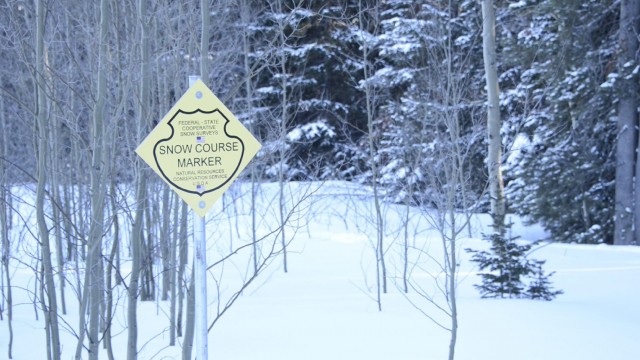
"caption": "One of hundreds of manual snow course sites across the West. (Photo by Peter Stegen, Platte Basin Timelapse)",
"description": null,
"title": "snowcoursemarker",
"credit": null,
"status": "inherit",
"isLoading": false,
"fetchFailed": false
},
"quest_67676": {
"type": "attachments",
"id": "quest_67676",
"meta": {
"index": "attachments_1716263798",
"site": "quest",
"id": "67676",
"found": true
},
"parent": 64700,
"imgSizes": {
"thumbnail": {
"file": "https://ww2.kqed.org/app/uploads/sites/39/2014/01/Hemp-0571-e1392843106265-400x225.jpg",
"width": 400,
"mimeType": "image/jpeg",
"height": 225
},
"kqedFullSize": {
"file": "https://ww2.kqed.org/app/uploads/sites/39/2014/01/Hemp-0571-e1392843106265.jpg",
"width": 640,
"height": 360
},
"guest-author-96": {
"file": "https://ww2.kqed.org/app/uploads/sites/39/2014/01/Hemp-0571-e1392843106265-96x96.jpg",
"width": 96,
"mimeType": "image/jpeg",
"height": 96
},
"guest-author-64": {
"file": "https://ww2.kqed.org/app/uploads/sites/39/2014/01/Hemp-0571-e1392843106265-64x64.jpg",
"width": 64,
"mimeType": "image/jpeg",
"height": 64
},
"detail": {
"file": "https://ww2.kqed.org/app/uploads/sites/39/2014/01/Hemp-0571-e1392843106265-75x75.jpg",
"width": 75,
"mimeType": "image/jpeg",
"height": 75
},
"guest-author-32": {
"file": "https://ww2.kqed.org/app/uploads/sites/39/2014/01/Hemp-0571-e1392843106265-32x32.jpg",
"width": 32,
"mimeType": "image/jpeg",
"height": 32
},
"guest-author-128": {
"file": "https://ww2.kqed.org/app/uploads/sites/39/2014/01/Hemp-0571-e1392843106265-128x128.jpg",
"width": 128,
"mimeType": "image/jpeg",
"height": 128
}
},
"publishDate": 1392842982,
"modified": 1392842982,
"caption": null,
"description": null,
"title": "hemp feature",
"credit": null,
"status": "inherit",
"isLoading": false,
"fetchFailed": false
},
"quest_66367": {
"type": "attachments",
"id": "quest_66367",
"meta": {
"index": "attachments_1716263798",
"site": "quest",
"id": "66367",
"found": true
},
"parent": 64598,
"imgSizes": {
"thumbnail": {
"file": "https://ww2.kqed.org/app/uploads/sites/39/2013/12/Cosumnes2-400x225.jpg",
"width": 400,
"mimeType": "image/jpeg",
"height": 225
},
"kqedFullSize": {
"file": "https://ww2.kqed.org/app/uploads/sites/39/2013/12/Cosumnes2.jpg",
"width": 640,
"height": 360
},
"guest-author-96": {
"file": "https://ww2.kqed.org/app/uploads/sites/39/2013/12/Cosumnes2-96x96.jpg",
"width": 96,
"mimeType": "image/jpeg",
"height": 96
},
"guest-author-64": {
"file": "https://ww2.kqed.org/app/uploads/sites/39/2013/12/Cosumnes2-64x64.jpg",
"width": 64,
"mimeType": "image/jpeg",
"height": 64
},
"detail": {
"file": "https://ww2.kqed.org/app/uploads/sites/39/2013/12/Cosumnes2-75x75.jpg",
"width": 75,
"mimeType": "image/jpeg",
"height": 75
},
"guest-author-32": {
"file": "https://ww2.kqed.org/app/uploads/sites/39/2013/12/Cosumnes2-32x32.jpg",
"width": 32,
"mimeType": "image/jpeg",
"height": 32
},
"guest-author-128": {
"file": "https://ww2.kqed.org/app/uploads/sites/39/2013/12/Cosumnes2-128x128.jpg",
"width": 128,
"mimeType": "image/jpeg",
"height": 128
}
},
"publishDate": 1390604151,
"modified": 1390604151,
"caption": "Migratory birds stop at flooded rice fields at the Cosumnes River Preserve. (Photo: Nancy Crowley/The Nature Conservancy) ",
"description": null,
"title": "Cosumnes2",
"credit": null,
"status": "inherit",
"isLoading": false,
"fetchFailed": false
},
"quest_65559": {
"type": "attachments",
"id": "quest_65559",
"meta": {
"index": "attachments_1716263798",
"site": "quest",
"id": "65559",
"found": true
},
"parent": 64428,
"imgSizes": {
"thumbnail": {
"file": "https://ww2.kqed.org/app/uploads/sites/39/2013/12/Cloudseeding-400x225.jpg",
"width": 400,
"mimeType": "image/jpeg",
"height": 225
},
"kqedFullSize": {
"file": "https://ww2.kqed.org/app/uploads/sites/39/2013/12/Cloudseeding.jpg",
"width": 640,
"height": 360
},
"guest-author-96": {
"file": "https://ww2.kqed.org/app/uploads/sites/39/2013/12/Cloudseeding-96x96.jpg",
"width": 96,
"mimeType": "image/jpeg",
"height": 96
},
"guest-author-64": {
"file": "https://ww2.kqed.org/app/uploads/sites/39/2013/12/Cloudseeding-64x64.jpg",
"width": 64,
"mimeType": "image/jpeg",
"height": 64
},
"detail": {
"file": "https://ww2.kqed.org/app/uploads/sites/39/2013/12/Cloudseeding-75x75.jpg",
"width": 75,
"mimeType": "image/jpeg",
"height": 75
},
"guest-author-32": {
"file": "https://ww2.kqed.org/app/uploads/sites/39/2013/12/Cloudseeding-32x32.jpg",
"width": 32,
"mimeType": "image/jpeg",
"height": 32
},
"guest-author-128": {
"file": "https://ww2.kqed.org/app/uploads/sites/39/2013/12/Cloudseeding-128x128.jpg",
"width": 128,
"mimeType": "image/jpeg",
"height": 128
}
},
"publishDate": 1388785016,
"modified": 1388785016,
"caption": "Cloud seeding tower at the summit of Alpine Meadows ski area near Lake Tahoe, California. (Lauren Sommer/KQED)",
"description": null,
"title": "Cloudseeding",
"credit": null,
"status": "inherit",
"isLoading": false,
"fetchFailed": false
},
"quest_65229": {
"type": "attachments",
"id": "quest_65229",
"meta": {
"index": "attachments_1716263798",
"site": "quest",
"id": "65229",
"found": true
},
"parent": 58653,
"imgSizes": {
"thumbnail": {
"file": "https://ww2.kqed.org/app/uploads/sites/39/2013/08/USA-400x225.jpg",
"width": 400,
"mimeType": "image/jpeg",
"height": 225
},
"kqedFullSize": {
"file": "https://ww2.kqed.org/app/uploads/sites/39/2013/08/USA.jpg",
"width": 640,
"height": 360
},
"guest-author-96": {
"file": "https://ww2.kqed.org/app/uploads/sites/39/2013/08/USA-96x96.jpg",
"width": 96,
"mimeType": "image/jpeg",
"height": 96
},
"guest-author-64": {
"file": "https://ww2.kqed.org/app/uploads/sites/39/2013/08/USA-64x64.jpg",
"width": 64,
"mimeType": "image/jpeg",
"height": 64
},
"detail": {
"file": "https://ww2.kqed.org/app/uploads/sites/39/2013/08/USA-75x75.jpg",
"width": 75,
"mimeType": "image/jpeg",
"height": 75
},
"guest-author-32": {
"file": "https://ww2.kqed.org/app/uploads/sites/39/2013/08/USA-32x32.jpg",
"width": 32,
"mimeType": "image/jpeg",
"height": 32
},
"guest-author-128": {
"file": "https://ww2.kqed.org/app/uploads/sites/39/2013/08/USA-128x128.jpg",
"width": 128,
"mimeType": "image/jpeg",
"height": 128
}
},
"publishDate": 1387468163,
"modified": 1387468163,
"caption": "Night lights create a dazzling aerial view, but 24/7 lighting harms ecosystems and human health.",
"description": null,
"title": "USA",
"credit": null,
"status": "inherit",
"isLoading": false,
"fetchFailed": false
},
"quest_64824": {
"type": "attachments",
"id": "quest_64824",
"meta": {
"index": "attachments_1716263798",
"site": "quest",
"id": "64824",
"found": true
},
"parent": 62510,
"imgSizes": {
"thumbnail": {
"file": "https://ww2.kqed.org/app/uploads/sites/39/2013/10/DSC_0990-e1386782972926-400x225.jpg",
"width": 400,
"mimeType": "image/jpeg",
"height": 225
},
"kqedFullSize": {
"file": "https://ww2.kqed.org/app/uploads/sites/39/2013/10/DSC_0990-e1386782972926.jpg",
"width": 640,
"height": 360
},
"guest-author-96": {
"file": "https://ww2.kqed.org/app/uploads/sites/39/2013/10/DSC_0990-e1386782972926-96x96.jpg",
"width": 96,
"mimeType": "image/jpeg",
"height": 96
},
"guest-author-64": {
"file": "https://ww2.kqed.org/app/uploads/sites/39/2013/10/DSC_0990-e1386782972926-64x64.jpg",
"width": 64,
"mimeType": "image/jpeg",
"height": 64
},
"detail": {
"file": "https://ww2.kqed.org/app/uploads/sites/39/2013/10/DSC_0990-e1386782972926-75x75.jpg",
"width": 75,
"mimeType": "image/jpeg",
"height": 75
},
"guest-author-32": {
"file": "https://ww2.kqed.org/app/uploads/sites/39/2013/10/DSC_0990-e1386782972926-32x32.jpg",
"width": 32,
"mimeType": "image/jpeg",
"height": 32
},
"guest-author-128": {
"file": "https://ww2.kqed.org/app/uploads/sites/39/2013/10/DSC_0990-e1386782972926-128x128.jpg",
"width": 128,
"mimeType": "image/jpeg",
"height": 128
}
},
"publishDate": 1386777543,
"modified": 1386777543,
"caption": "Looking down the central part of the Platte River. (Photo by Ariana Brocious, NET News)",
"description": null,
"title": "PlatteRiver",
"credit": null,
"status": "inherit",
"isLoading": false,
"fetchFailed": false
},
"quest_65030": {
"type": "attachments",
"id": "quest_65030",
"meta": {
"index": "attachments_1716263798",
"site": "quest",
"id": "65030",
"found": true
},
"parent": 58807,
"imgSizes": {
"thumbnail": {
"file": "https://ww2.kqed.org/app/uploads/sites/39/2013/08/IMG_8867-e1387293472571-400x244.jpg",
"width": 400,
"mimeType": "image/jpeg",
"height": 244
},
"post-thumbnail": {
"file": "https://ww2.kqed.org/app/uploads/sites/39/2013/08/IMG_8867-e1387293472571-640x372.jpg",
"width": 640,
"mimeType": "image/jpeg",
"height": 372
},
"kqedFullSize": {
"file": "https://ww2.kqed.org/app/uploads/sites/39/2013/08/IMG_8867-e1387293472571.jpg",
"width": 640,
"height": 390
},
"guest-author-96": {
"file": "https://ww2.kqed.org/app/uploads/sites/39/2013/08/IMG_8867-e1387293472571-96x96.jpg",
"width": 96,
"mimeType": "image/jpeg",
"height": 96
},
"guest-author-64": {
"file": "https://ww2.kqed.org/app/uploads/sites/39/2013/08/IMG_8867-e1387293472571-64x64.jpg",
"width": 64,
"mimeType": "image/jpeg",
"height": 64
},
"detail": {
"file": "https://ww2.kqed.org/app/uploads/sites/39/2013/08/IMG_8867-e1387293472571-75x75.jpg",
"width": 75,
"mimeType": "image/jpeg",
"height": 75
},
"guest-author-32": {
"file": "https://ww2.kqed.org/app/uploads/sites/39/2013/08/IMG_8867-e1387293472571-32x32.jpg",
"width": 32,
"mimeType": "image/jpeg",
"height": 32
},
"guest-author-128": {
"file": "https://ww2.kqed.org/app/uploads/sites/39/2013/08/IMG_8867-e1387293472571-128x128.jpg",
"width": 128,
"mimeType": "image/jpeg",
"height": 128
}
},
"publishDate": 1387293136,
"modified": 1387293136,
"caption": "One of the landfills at Rocky Mountain Arsenal National Wildlife Refuge. The layers of soil and vegetation on top act as a pump to keep water from infiltrating into the contaminated materials deep below. (Photo by Ariana Brocious, NET News)",
"description": null,
"title": "IMG_8867",
"credit": null,
"status": "inherit",
"isLoading": false,
"fetchFailed": false
},
"quest_64191": {
"type": "attachments",
"id": "quest_64191",
"meta": {
"index": "attachments_1716263798",
"site": "quest",
"id": "64191",
"found": true
},
"parent": 62860,
"imgSizes": {
"thumbnail": {
"file": "https://ww2.kqed.org/app/uploads/sites/39/2013/11/cranberries-400x225.jpg",
"width": 400,
"mimeType": "image/jpeg",
"height": 225
},
"kqedFullSize": {
"file": "https://ww2.kqed.org/app/uploads/sites/39/2013/11/cranberries.jpg",
"width": 640,
"height": 360
},
"guest-author-96": {
"file": "https://ww2.kqed.org/app/uploads/sites/39/2013/11/cranberries-96x96.jpg",
"width": 96,
"mimeType": "image/jpeg",
"height": 96
},
"guest-author-64": {
"file": "https://ww2.kqed.org/app/uploads/sites/39/2013/11/cranberries-64x64.jpg",
"width": 64,
"mimeType": "image/jpeg",
"height": 64
},
"detail": {
"file": "https://ww2.kqed.org/app/uploads/sites/39/2013/11/cranberries-75x75.jpg",
"width": 75,
"mimeType": "image/jpeg",
"height": 75
},
"guest-author-32": {
"file": "https://ww2.kqed.org/app/uploads/sites/39/2013/11/cranberries-32x32.jpg",
"width": 32,
"mimeType": "image/jpeg",
"height": 32
},
"guest-author-128": {
"file": "https://ww2.kqed.org/app/uploads/sites/39/2013/11/cranberries-128x128.jpg",
"width": 128,
"mimeType": "image/jpeg",
"height": 128
}
},
"publishDate": 1385413528,
"modified": 1385413528,
"caption": null,
"description": null,
"title": "cranberries",
"credit": null,
"status": "inherit",
"isLoading": false,
"fetchFailed": false
},
"quest_64123": {
"type": "attachments",
"id": "quest_64123",
"meta": {
"index": "attachments_1716263798",
"site": "quest",
"id": "64123",
"found": true
},
"parent": 62837,
"imgSizes": {
"thumbnail": {
"file": "https://ww2.kqed.org/app/uploads/sites/39/2013/10/GMbrewMarquee-400x225.jpg",
"width": 400,
"mimeType": "image/jpeg",
"height": 225
},
"kqedFullSize": {
"file": "https://ww2.kqed.org/app/uploads/sites/39/2013/10/GMbrewMarquee.jpg",
"width": 640,
"height": 360
},
"guest-author-96": {
"file": "https://ww2.kqed.org/app/uploads/sites/39/2013/10/GMbrewMarquee-96x96.jpg",
"width": 96,
"mimeType": "image/jpeg",
"height": 96
},
"guest-author-64": {
"file": "https://ww2.kqed.org/app/uploads/sites/39/2013/10/GMbrewMarquee-64x64.jpg",
"width": 64,
"mimeType": "image/jpeg",
"height": 64
},
"detail": {
"file": "https://ww2.kqed.org/app/uploads/sites/39/2013/10/GMbrewMarquee-75x75.jpg",
"width": 75,
"mimeType": "image/jpeg",
"height": 75
},
"guest-author-32": {
"file": "https://ww2.kqed.org/app/uploads/sites/39/2013/10/GMbrewMarquee-32x32.jpg",
"width": 32,
"mimeType": "image/jpeg",
"height": 32
},
"guest-author-128": {
"file": "https://ww2.kqed.org/app/uploads/sites/39/2013/10/GMbrewMarquee-128x128.jpg",
"width": 128,
"mimeType": "image/jpeg",
"height": 128
}
},
"publishDate": 1385146848,
"modified": 1385146848,
"caption": null,
"description": null,
"title": "GMbrewMarquee",
"credit": null,
"status": "inherit",
"isLoading": false,
"fetchFailed": false
},
"quest_64121": {
"type": "attachments",
"id": "quest_64121",
"meta": {
"index": "attachments_1716263798",
"site": "quest",
"id": "64121",
"found": true
},
"parent": 62837,
"imgSizes": {
"thumbnail": {
"file": "https://ww2.kqed.org/app/uploads/sites/39/2013/10/CheeseMarquee-400x225.jpg",
"width": 400,
"mimeType": "image/jpeg",
"height": 225
},
"kqedFullSize": {
"file": "https://ww2.kqed.org/app/uploads/sites/39/2013/10/CheeseMarquee.jpg",
"width": 640,
"height": 360
},
"guest-author-96": {
"file": "https://ww2.kqed.org/app/uploads/sites/39/2013/10/CheeseMarquee-96x96.jpg",
"width": 96,
"mimeType": "image/jpeg",
"height": 96
},
"guest-author-64": {
"file": "https://ww2.kqed.org/app/uploads/sites/39/2013/10/CheeseMarquee-64x64.jpg",
"width": 64,
"mimeType": "image/jpeg",
"height": 64
},
"detail": {
"file": "https://ww2.kqed.org/app/uploads/sites/39/2013/10/CheeseMarquee-75x75.jpg",
"width": 75,
"mimeType": "image/jpeg",
"height": 75
},
"guest-author-32": {
"file": "https://ww2.kqed.org/app/uploads/sites/39/2013/10/CheeseMarquee-32x32.jpg",
"width": 32,
"mimeType": "image/jpeg",
"height": 32
},
"guest-author-128": {
"file": "https://ww2.kqed.org/app/uploads/sites/39/2013/10/CheeseMarquee-128x128.jpg",
"width": 128,
"mimeType": "image/jpeg",
"height": 128
}
},
"publishDate": 1385146826,
"modified": 1385146826,
"caption": null,
"description": null,
"title": "CheeseMarquee",
"credit": null,
"status": "inherit",
"isLoading": false,
"fetchFailed": false
},
"quest_63788": {
"type": "attachments",
"id": "quest_63788",
"meta": {
"index": "attachments_1716263798",
"site": "quest",
"id": "63788",
"found": true
},
"parent": 58900,
"imgSizes": {
"thumbnail": {
"file": "https://ww2.kqed.org/app/uploads/sites/39/2013/08/Bat-400x225.jpg",
"width": 400,
"mimeType": "image/jpeg",
"height": 225
},
"kqedFullSize": {
"file": "https://ww2.kqed.org/app/uploads/sites/39/2013/08/Bat.jpg",
"width": 640,
"height": 360
},
"guest-author-96": {
"file": "https://ww2.kqed.org/app/uploads/sites/39/2013/08/Bat-96x96.jpg",
"width": 96,
"mimeType": "image/jpeg",
"height": 96
},
"guest-author-64": {
"file": "https://ww2.kqed.org/app/uploads/sites/39/2013/08/Bat-64x64.jpg",
"width": 64,
"mimeType": "image/jpeg",
"height": 64
},
"detail": {
"file": "https://ww2.kqed.org/app/uploads/sites/39/2013/08/Bat-75x75.jpg",
"width": 75,
"mimeType": "image/jpeg",
"height": 75
},
"guest-author-32": {
"file": "https://ww2.kqed.org/app/uploads/sites/39/2013/08/Bat-32x32.jpg",
"width": 32,
"mimeType": "image/jpeg",
"height": 32
},
"guest-author-128": {
"file": "https://ww2.kqed.org/app/uploads/sites/39/2013/08/Bat-128x128.jpg",
"width": 128,
"mimeType": "image/jpeg",
"height": 128
}
},
"publishDate": 1384813177,
"modified": 1384813177,
"caption": "The foot of an endangered Indiana bat. Credit: Adam Mann, Environmental Solutions and Innova",
"description": null,
"title": "Bat",
"credit": null,
"status": "inherit",
"isLoading": false,
"fetchFailed": false
},
"quest_63492": {
"type": "attachments",
"id": "quest_63492",
"meta": {
"index": "attachments_1716263798",
"site": "quest",
"id": "63492",
"found": true
},
"parent": 63084,
"imgSizes": {
"thumbnail": {
"file": "https://ww2.kqed.org/app/uploads/sites/39/2013/10/Fox_FeaturedImage-e1383781351671-400x225.jpg",
"width": 400,
"mimeType": "image/jpeg",
"height": 225
},
"kqedFullSize": {
"file": "https://ww2.kqed.org/app/uploads/sites/39/2013/10/Fox_FeaturedImage-e1383781351671.jpg",
"width": 640,
"height": 360
},
"guest-author-96": {
"file": "https://ww2.kqed.org/app/uploads/sites/39/2013/10/Fox_FeaturedImage-e1383781351671-96x96.jpg",
"width": 96,
"mimeType": "image/jpeg",
"height": 96
},
"guest-author-64": {
"file": "https://ww2.kqed.org/app/uploads/sites/39/2013/10/Fox_FeaturedImage-e1383781351671-64x64.jpg",
"width": 64,
"mimeType": "image/jpeg",
"height": 64
},
"detail": {
"file": "https://ww2.kqed.org/app/uploads/sites/39/2013/10/Fox_FeaturedImage-e1383781351671-75x75.jpg",
"width": 75,
"mimeType": "image/jpeg",
"height": 75
},
"guest-author-32": {
"file": "https://ww2.kqed.org/app/uploads/sites/39/2013/10/Fox_FeaturedImage-e1383781351671-32x32.jpg",
"width": 32,
"mimeType": "image/jpeg",
"height": 32
},
"guest-author-128": {
"file": "https://ww2.kqed.org/app/uploads/sites/39/2013/10/Fox_FeaturedImage-e1383781351671-128x128.jpg",
"width": 128,
"mimeType": "image/jpeg",
"height": 128
}
},
"publishDate": 1383773042,
"modified": 1383773042,
"caption": null,
"description": null,
"title": "Fox_FeaturedImage",
"credit": null,
"status": "inherit",
"isLoading": false,
"fetchFailed": false
}
},
"audioPlayerReducer": {
"postId": "stream_live",
"isPaused": true,
"isPlaying": false,
"pfsActive": false,
"pledgeModalIsOpen": true,
"playerDrawerIsOpen": false,
"liveAudioPlayStartedAt": 0,
"liveAudioPlayContext": ""
},
"authorsReducer": {
"laurensommer": {
"type": "authors",
"id": "239",
"meta": {
"index": "authors_1716337520",
"id": "239",
"found": true
},
"name": "Lauren Sommer",
"firstName": "Lauren",
"lastName": "Sommer",
"slug": "laurensommer",
"email": "lsommer@kqed.org",
"display_author_email": false,
"staff_mastheads": [],
"title": "KQED Contributor",
"bio": "Lauren is a radio reporter formerly covering environment, water, and energy for KQED Science. As part of her day job, she has scaled Sierra Nevada peaks, run from charging elephant seals, and desperately tried to get her sea legs - all in pursuit of good radio. Her work has appeared on Marketplace, Living on Earth, Science Friday and NPR's Morning Edition and All Things Considered. You can find her on Twitter at \u003ca href=\"https://twitter.com/lesommer\">@lesommer\u003c/a>.",
"avatar": "https://secure.gravatar.com/avatar/33aa3772bb86c6ad45b8aca6a238bbdf?s=600&d=blank&r=g",
"twitter": null,
"facebook": null,
"instagram": null,
"linkedin": null,
"sites": [
{
"site": "news",
"roles": [
"author"
]
},
{
"site": "science",
"roles": [
"editor",
"manage_content_types",
"manage_taxonomies"
]
},
{
"site": "quest",
"roles": [
"editor"
]
}
],
"headData": {
"title": "Lauren Sommer | KQED",
"description": "KQED Contributor",
"ogImgSrc": "https://secure.gravatar.com/avatar/33aa3772bb86c6ad45b8aca6a238bbdf?s=600&d=blank&r=g",
"twImgSrc": "https://secure.gravatar.com/avatar/33aa3772bb86c6ad45b8aca6a238bbdf?s=600&d=blank&r=g"
},
"isLoading": false,
"link": "/author/laurensommer"
},
"anneglausser": {
"type": "authors",
"id": "10270",
"meta": {
"index": "authors_1716337520",
"id": "10270",
"found": true
},
"name": "Anne Glausser",
"firstName": "Anne",
"lastName": "Glausser",
"slug": "anneglausser",
"email": "anne.glausser@ideastream.org",
"display_author_email": false,
"staff_mastheads": [],
"title": null,
"bio": "Anne Glausser is the Coordinating Producer for QUEST Ohio. Before taking on this role, she was WCPN 90.3 FM & WVIZ/PBS ideastream’s health reporter and produced award-winning radio pieces. She’s spent time on both coasts (her college mascot was the banana slug!), but grew up in the Midwest and is happy to be back home. She got started in radio at PRI’s Living on Earth, and has also spent time as a researcher at the Harvard School of Public Health. Anne got her SM from MIT’s Graduate Program in Science Writing.",
"avatar": "https://secure.gravatar.com/avatar/cb2272efe9d1c6b409249b4273bcef1b?s=600&d=blank&r=g",
"twitter": null,
"facebook": null,
"instagram": null,
"linkedin": null,
"sites": [
{
"site": "quest",
"roles": [
"leadcoordinator",
"subscriber"
]
}
],
"headData": {
"title": "Anne Glausser | KQED",
"description": null,
"ogImgSrc": "https://secure.gravatar.com/avatar/cb2272efe9d1c6b409249b4273bcef1b?s=600&d=blank&r=g",
"twImgSrc": "https://secure.gravatar.com/avatar/cb2272efe9d1c6b409249b4273bcef1b?s=600&d=blank&r=g"
},
"isLoading": false,
"link": "/author/anneglausser"
},
"abrocious": {
"type": "authors",
"id": "10465",
"meta": {
"index": "authors_1716337520",
"id": "10465",
"found": true
},
"name": "Ariana Brocious",
"firstName": "Ariana",
"lastName": "Brocious",
"slug": "abrocious",
"email": "abrocious@netnebraska.org",
"display_author_email": false,
"staff_mastheads": [],
"title": "KQED Contributor",
"bio": "Ariana Brocious is the Reporter/Morning Host at NET Radio in Nebraska, where she covers energy, water, culture and Latino issues. A native of the Southwest and graduate of the University of Arizona, she traces her interest in the environment—and how humans interact with it—to her time living in Western Colorado, where she worked as News Director for KVNF Radio, and at High Country News magazine. In her non-working hours she enjoys getting outside, coaxing her vegetable garden along, and experimenting in the kitchen.",
"avatar": "https://secure.gravatar.com/avatar/f9ff308f4dcc2ef1df5848ee85f8295a?s=600&d=blank&r=g",
"twitter": null,
"bluesky": null,
"facebook": null,
"instagram": null,
"linkedin": null,
"sites": [
{
"site": "quest",
"roles": [
"coordinator",
"subscriber"
]
}
],
"headData": {
"title": "Ariana Brocious | KQED",
"description": "KQED Contributor",
"ogImgSrc": "https://secure.gravatar.com/avatar/f9ff308f4dcc2ef1df5848ee85f8295a?s=600&d=blank&r=g",
"twImgSrc": "https://secure.gravatar.com/avatar/f9ff308f4dcc2ef1df5848ee85f8295a?s=600&d=blank&r=g"
},
"isLoading": false,
"link": "/author/abrocious"
},
"rrobertson": {
"type": "authors",
"id": "10508",
"meta": {
"index": "authors_1716337520",
"id": "10508",
"found": true
},
"name": "Ryan Robertson",
"firstName": "Robertson",
"lastName": "Ryan",
"slug": "rrobertson",
"email": "rrobertson@netad.unl.edu",
"display_author_email": false,
"staff_mastheads": [],
"title": null,
"bio": "Ryan Robertson is a multimedia reporter and producer with NET News in Nebraska, where he covers farming, educational, environmental, science, and other issues. He was born in Texas, raised in Colorado, and educated at the University of Nebraska-Lincoln. Ryan is an avid outdoor enthusiast and can trace his love for them back to family camping trips in the Colorado Rocky Mountains. When not working, Ryan teaches his son and daughter the proper way to throw a spiral, as well as the perfect grilling temperature for steak.",
"avatar": "https://secure.gravatar.com/avatar/7e725f6db1566cf4c46d2bda33901b82?s=600&d=blank&r=g",
"twitter": null,
"facebook": null,
"instagram": null,
"linkedin": null,
"sites": [
{
"site": "quest",
"roles": [
"subscriber"
]
}
],
"headData": {
"title": "Ryan Robertson | KQED",
"description": null,
"ogImgSrc": "https://secure.gravatar.com/avatar/7e725f6db1566cf4c46d2bda33901b82?s=600&d=blank&r=g",
"twImgSrc": "https://secure.gravatar.com/avatar/7e725f6db1566cf4c46d2bda33901b82?s=600&d=blank&r=g"
},
"isLoading": false,
"link": "/author/rrobertson"
},
"rkremer": {
"type": "authors",
"id": "10509",
"meta": {
"index": "authors_1716337520",
"id": "10509",
"found": true
},
"name": "Rich Kremer",
"firstName": "Rich",
"lastName": "Kremer",
"slug": "rkremer",
"email": "richard.kremer@wpr.org",
"display_author_email": false,
"staff_mastheads": [],
"title": null,
"bio": "Rich Kremer came to Wisconsin Public Radio from WTCH in Shawano where he worked as news director. Before that, he was a host for Midwest Communications in Duluth and also worked as an intern at WPR's Northern Regional Bureau in Superior. \r\n\r\nRich has won state, regional, and national awards for news writing, spot news, and best use of audio. Rich has a degree in journalism from the University of Wisconsin-Superior.",
"avatar": "https://secure.gravatar.com/avatar/68ca91a32ea02ae08c0f858b2d317b42?s=600&d=blank&r=g",
"twitter": null,
"facebook": null,
"instagram": null,
"linkedin": null,
"sites": [
{
"site": "quest",
"roles": [
"subscriber"
]
}
],
"headData": {
"title": "Rich Kremer | KQED",
"description": null,
"ogImgSrc": "https://secure.gravatar.com/avatar/68ca91a32ea02ae08c0f858b2d317b42?s=600&d=blank&r=g",
"twImgSrc": "https://secure.gravatar.com/avatar/68ca91a32ea02ae08c0f858b2d317b42?s=600&d=blank&r=g"
},
"isLoading": false,
"link": "/author/rkremer"
},
"mmccollum": {
"type": "authors",
"id": "10510",
"meta": {
"index": "authors_1716337520",
"id": "10510",
"found": true
},
"name": "Maureen McCollum",
"firstName": "Maureen",
"lastName": "McCollum",
"slug": "mmccollum",
"email": "maureen.mccollum@wpr.org",
"display_author_email": false,
"staff_mastheads": [],
"title": null,
"bio": "Maureen McCollum is a Wisconsin Public Radio reporter based in La Crosse covering a variety of topics in the southwest region of the state. She also hosts and helps produce a weekly regional WPR program, \"Newsmakers.\" Her stories have been featured on \"Marketplace\" and NPR.\r\n\r\nMcCollum got her start in public radio working as a student at WPR in La Crosse while attending the University of Wisconsin-La Crosse. Post-graduation, McCollum worked at KBIA as a reporter, anchor, producer, and mentor to University of Missouri journalism students.",
"avatar": "https://secure.gravatar.com/avatar/a4508b712cb038c2b63c576a2ab80818?s=600&d=blank&r=g",
"twitter": null,
"facebook": null,
"instagram": null,
"linkedin": null,
"sites": [
{
"site": "quest",
"roles": [
"subscriber"
]
}
],
"headData": {
"title": "Maureen McCollum | KQED",
"description": null,
"ogImgSrc": "https://secure.gravatar.com/avatar/a4508b712cb038c2b63c576a2ab80818?s=600&d=blank&r=g",
"twImgSrc": "https://secure.gravatar.com/avatar/a4508b712cb038c2b63c576a2ab80818?s=600&d=blank&r=g"
},
"isLoading": false,
"link": "/author/mmccollum"
},
"gmoberg": {
"type": "authors",
"id": "10511",
"meta": {
"index": "authors_1716337520",
"id": "10511",
"found": true
},
"name": "Glen Moberg",
"firstName": "Glen",
"lastName": "Moberg",
"slug": "gmoberg",
"email": "glen.moberg@uwc.edu",
"display_author_email": false,
"staff_mastheads": [],
"title": null,
"bio": "Glen Moberg is a 42 year veteran of broadcast journalism, who serves as a reporter, talk show host, and news bureau chief for Wisconsin Public Radio in Wausau. He has also produced and moderated numerous debates and forums during his career.\r\n\r\nMoberg started his career as a rock disc jockey in the Chicago area where he also worked at several TV stations in various roles. He also worked at WAOW ABC-TV in Wausau as assignment manager and speical events coordinator, and was news director and anchor at WSAW CBS-TV, also in Wausau.\r\n\r\nDuring his time at WPR, Moberg has won various awards including best spot news reporting from the Wisconsin Broadcasters Association in 2011. In 2010 he won nine awards, including including three regional Edward R. Murrow awards from the Radio and Television News Directors Association for best writing, best audio feature reporting and best use of sound.\r\n\r\nMoberg has been a member of Rotary International since 1982, and has served on the Board of Directors of the Community Foundation of North Central Wisconsin, the Center for Visual Arts in Wausau, and the Marathon County Literacy Council. He lives in Wausau with his wife and two children.",
"avatar": "https://secure.gravatar.com/avatar/5aeccfc0cda92f3ed99f70c439176161?s=600&d=blank&r=g",
"twitter": null,
"facebook": null,
"instagram": null,
"linkedin": null,
"sites": [
{
"site": "quest",
"roles": [
"subscriber"
]
}
],
"headData": {
"title": "Glen Moberg | KQED",
"description": null,
"ogImgSrc": "https://secure.gravatar.com/avatar/5aeccfc0cda92f3ed99f70c439176161?s=600&d=blank&r=g",
"twImgSrc": "https://secure.gravatar.com/avatar/5aeccfc0cda92f3ed99f70c439176161?s=600&d=blank&r=g"
},
"isLoading": false,
"link": "/author/gmoberg"
}
},
"pagesReducer": {
"quest_tag_audio": {
"type": "terms",
"id": "quest_252",
"meta": {
"index": "terms_1716263798",
"site": "quest",
"id": "252",
"score": 8.7980585
},
"featImg": null,
"name": "audio",
"description": null,
"taxonomy": "tag",
"headData": {
"twImgId": null,
"twTitle": null,
"ogTitle": null,
"ogImgId": null,
"twDescription": null,
"description": null,
"title": "audio Archives | KQED Arts",
"ogDescription": null
},
"ttid": 254,
"slug": "audio",
"isLoading": false,
"title": "audio",
"pageMeta": {
"site": "quest",
"WpPageTemplate": "page-topic-editorial",
"currentPage": 2
},
"blocks": [
{
"blockName": "kqed/post-list",
"attrs": {
"layout": "cardArticle2",
"query": "posts/quest?tag=audio",
"seeMore": false,
"paginated": true,
"page": 2
}
},
{
"blockName": "kqed/ad"
}
]
}
},
"pfsSessionReducer": {},
"postsReducer": {
"stream_live": {
"type": "live",
"id": "stream_live",
"audioUrl": "https://hls.kqed.org/hls/kqed_app/playlist.m3u8",
"title": "Live Stream",
"excerpt": "Live Stream information currently unavailable.",
"link": "/radio",
"featImg": "",
"label": {
"name": "KQED Live",
"link": "/"
}
},
"stream_kqedNewscast": {
"type": "posts",
"id": "stream_kqedNewscast",
"audioUrl": "https://www.kqed.org/.stream/anon/radio/RDnews/newscast.mp3?_=1",
"title": "KQED Newscast",
"featImg": "",
"label": {
"name": "88.5 FM",
"link": "/"
}
},
"quest_65956": {
"type": "posts",
"id": "quest_65956",
"meta": {
"index": "posts_1716263798",
"site": "quest",
"id": "65956",
"score": null,
"sort": [
1394719211000
]
},
"parent": 0,
"labelTerm": {},
"blocks": [],
"publishDate": 1394719211,
"format": "audio",
"disqusTitle": "The Science of Measuring Snow",
"title": "The Science of Measuring Snow",
"headTitle": "QUEST | KQED Science",
"content": "\u003cp>https://s3-us-west-2.amazonaws.com/qbl-int-usw2/QUEST+Nebraska/Radio/Stream/ScienceofSnowpack_031314.mp3\u003c/p>\n\u003cp>Much of the water that flows through the West originates high up in the mountains. Each winter, as snow accumulates there, hydrologists calculate how much of the water that melts from it will end up downstream. That information is critical to towns, power plants, and irrigators who depend on the water.\u003c/p>\n\u003cp>Near the summit of Interstate 80 in southeastern Wyoming, Matt Hoobler trudges through a scrubby open field on snowshoes, carrying a long hollow metal pipe. Reaching a marked spot near the trees, he carefully holds the metal tube perpendicular to the ground, then lets it drop through the snow, twists it, and pulls it out.\u003c/p>\n\u003cfigure id=\"attachment_68013\" class=\"wp-caption alignleft\" style=\"max-width: 405px\">\u003cimg class=\" wp-image-68013 \" src=\"http://ww2.kqed.org/quest/wp-content/uploads/sites/39/2014/01/mattwalk-450x253.jpg\" alt=\"Matt Hoobler snowshoes to the manual snow survey course in Wyoming. (Photo by Peter Stegen, Platte Basin Timelapse)\" width=\"405\" height=\"228\">\u003cfigcaption class=\"wp-caption-text\">Matt Hoobler snowshoes to the manual snow survey course in Wyoming. (Photo by Peter Stegen, Platte Basin Timelapse)\u003c/figcaption>\u003c/figure>\n\u003cp>Hoobler, a snow surveyor with the Wyoming State Engineer’s Office, is taking a core sample of the snowpack. The specially calibrated cylinder measures snow depth, weight, and density.\u003c/p>\n\u003cp>“Water content at this site is 5.5 inches. That means if this snow was to melt instantaneously, there’d be 5.5 inches of water sitting in this meadow,” Hoobler said.\u003c/p>\n\u003cp>[ad fullwidth]\u003c/p>\n\u003cp>Hoobler collects snowpack information at sites throughout Wyoming, like his colleagues in 12 other Western states, including California, Washington and Alaska. Because these sites are often remote, they can travel up to 70 miles a day by snowshoe, skis, and snowmobiles on surveys, carrying survival equipment to protect them in the event of severe weather.\u003c/p>\n\u003cp>“The main reason we’re up here for snow survey is for river forecasting. In other words, once it all turns to water, how much water is going to exist in our rivers and our reservoirs,” Hoobler said.\u003c/p>\n\u003cfigure id=\"attachment_68014\" class=\"wp-caption alignright\" style=\"max-width: 405px\">\u003cimg class=\" wp-image-68014 \" src=\"http://ww2.kqed.org/quest/wp-content/uploads/sites/39/2014/01/pole-450x253.jpg\" alt=\"This specially-calibrated tube measures snow depth, weight and density. (Photo by Peter Stegen, Platte Basin Timelapse)\" width=\"405\" height=\"228\">\u003cfigcaption class=\"wp-caption-text\">This specially-calibrated tube measures snow depth, weight and density. (Photo by Peter Stegen, Platte Basin Timelapse)\u003c/figcaption>\u003c/figure>\n\u003cp>The snow survey program started in the 1930s. Each year surveyors add new data to the collection, validating the record and improving accuracy. Hoobler said understanding the relationship between snowpack and water supply is critical.\u003c/p>\n\u003cp>“Society depends on water -- whether it’s growing the crops we’re going to eat or producing hydroelectric power. Fifty to eighty percent of flows of North Platte River depend on this white stuff -- snow,” Hoobler said.\u003c/p>\n\u003cp>One hundred miles southwest, in the South Platte River basin, Mage Hultstrand skis through deep snow just off the highway to get to the Joe Wright SNOTEL site on the top of Cameron Pass in Colorado.\u003c/p>\n\u003cfigure id=\"attachment_68015\" class=\"wp-caption alignleft\" style=\"max-width: 405px\">\u003cimg class=\" wp-image-68015 \" src=\"http://ww2.kqed.org/quest/wp-content/uploads/sites/39/2014/01/agnes-bit_10_11-450x253.jpg\" alt=\"Joe Wright SNOTEL site on Cameron Pass, in Colorado. These sites collect and transmit snowpack and climate data from all over the western U.S. (Photo by Peter Stegen, Platte Basin Timelapse)\" width=\"405\" height=\"228\">\u003cfigcaption class=\"wp-caption-text\">Joe Wright SNOTEL site on Cameron Pass, in Colorado. (Photo by Peter Stegen, Platte Basin Timelapse)\u003c/figcaption>\u003c/figure>\n\u003cp>SNOTEL stands for “snowpack telemetry,” or remote data transmission. Hultstrand is a hydrologist with the Natural Resources Conservation Service’s snow survey program in Denver. Every year more than 700 remote stations like this one track snowpack and climate data, including snow depth and temperature, across the West.\u003c/p>\n\u003cp>“We measure the water content of the snow here,” Hultstrand said, pointing out markers that border the snow pillow, an envelope filled with antifreeze that acts like a scale, weighing the snow and converting it to a measurement of total water content. SNOTEL data are combined with manual snow survey data, collected by people like Hoobler, and compiled into water supply forecasts. Hultstrand said those projections help water providers prepare for the season ahead, determining if they’ll have to apply restrictions in dry years.\u003c/p>\n\u003cp>“Water providers and agricultural users start paying attention early in the season to what’s going on. This is the headwater state, so this is where all of your water is coming from, with the exception of whatever precipitation is received in spring and summer,” Hultstrand said.\u003c/p>\n\u003cfigure id=\"attachment_68016\" class=\"wp-caption alignright\" style=\"max-width: 405px\">\u003cimg class=\" wp-image-68016 \" src=\"http://ww2.kqed.org/quest/wp-content/uploads/sites/39/2014/01/maggie-450x253.jpg\" alt=\"Mage Hultstrand skis to the Joe Wright SNOTEL site near Cameron Pass, in Colorado. \" width=\"405\" height=\"228\">\u003cfigcaption class=\"wp-caption-text\">Mage Hultstrand skis to the Joe Wright SNOTEL site near Cameron Pass, in Colorado. (Photo by Peter Stegen, Platte Basin Timelapse)\u003c/figcaption>\u003c/figure>\n\u003cp>Downstream, Nebraska irrigators also rely on groundwater, which is affected by snowfall. But it takes time for that melted snow to travel through the underground aquifer and back to streams and reservoirs, which impacts central Nebraska irrigators. Tom Schwarz farms about 750 certified organic acres near Bertrand, Nebraska. In addition to row crops, he grows vegetables to supply supermarkets in Lincoln and Omaha.\u003c/p>\n\u003cp>Schwarz uses groundwater on most of his fields, but also depends on Platte River water stored in Lake McConaughy. Schwarz said he keeps an eye on snowpack but knows there’s a delay in what he and other central Nebraska irrigators will actually receive from the mountains.\u003c/p>\n\u003cp>“When the snow falls this year, it fills up the reservoirs in the mountains. Irrigators in the Panhandle use that water and, in turn, that water goes down into the aquifer and, hopefully, into the river and down to Lake McConaughy for use the following year,” Schwarz said.\u003c/p>\n\u003cp>That water is controlled by the Central Nebraska Public Power and Irrigation District. Spokesman Jeff Buettner said they take that delay into account and watch snowpack and river forecasts and levels at Wyoming reservoirs when planning their water supply. But inflows to Lake McConaughy have been declining for the last decade, partly due to groundwater development and conservation measures upstream. Buettner said 2014 will be the seventh time in the last 10 years that Central Irrigation’s customers will receive less than a full supply of water. This year’s allocation will only be half of what they could expect historically.\u003c/p>\n\u003cp>Still, Buettner said water conservation and efficiency is key. Some big snowpack years would help, too.\u003c/p>\n\u003cp>Back in Wyoming, Matt Hoobler reads the results of his snow survey report.\u003c/p>\n\u003cfigure id=\"attachment_68017\" class=\"wp-caption alignleft\" style=\"max-width: 337px\">\u003ca href=\"https://maps.google.com/maps?f=q&source=s_q&hl=en&geocode=&q=http://www.wcc.nrcs.usda.gov/ftpref/data/water/wcs/earth/snotelwithlabels.kmz&sll=45.467836,-108.446045&sspn=5.369953,8.712158&ie=UTF8&t=h&z=4\">\u003cimg class=\"size-medium wp-image-68017 \" src=\"http://ww2.kqed.org/quest/wp-content/uploads/sites/39/2014/01/SnotelMAP-337x253.jpg\" alt=\"Snowpack in the Platte Basin is above average in several locations. The full interactive map is produced by the Natural Resources Conservation Service.\" width=\"337\" height=\"253\">\u003c/a>\u003cfigcaption class=\"wp-caption-text\">Snowpack in the Platte Basin is above average in several locations. Click on the image to see the full interactive map produced by the Natural Resources Conservation Service.\u003c/figcaption>\u003c/figure>\n\u003cp>“Last year at this time, we had 17 inches of snow; we have 31 this year. Last year we had 2.7 water content inches; we have 5.5 this year. And our 30-year average is 5.4, so we’re just a hair above average. Any time you can have average, that’s a great day,” Hoobler said.\u003c/p>\n\u003cp>[ad floatright]\u003c/p>\n\u003cp>So far, most of the Platte River Basin snowpack reports are above average. But since it’s still midwinter, most water providers will wait to see what the April report brings before getting too excited.\u003c/p>\n\n",
"disqusIdentifier": "65956 http://science.kqed.org/quest/?p=65956",
"disqusUrl": "https://ww2.kqed.org/quest/2014/03/13/the-science-of-measuring-snow/",
"stats": {
"hasVideo": false,
"hasChartOrMap": false,
"hasAudio": false,
"hasPolis": false,
"wordCount": 1082,
"hasGoogleForm": false,
"hasGallery": false,
"hasHearkenModule": false,
"iframeSrcs": [],
"paragraphCount": 22
},
"modified": 1443823017,
"excerpt": "Much of the water flowing through the West starts as snowpack high up in the mountains. A complex system of remote and manual data collection helps water managers calculate how much water they'll have for the season ahead. ",
"headData": {
"twImgId": "",
"twTitle": "",
"ogTitle": "",
"ogImgId": "",
"twDescription": "",
"description": "Much of the water flowing through the West starts as snowpack high up in the mountains. A complex system of remote and manual data collection helps water managers calculate how much water they'll have for the season ahead. ",
"title": "The Science of Measuring Snow | KQED",
"ogDescription": "",
"schema": {
"@context": "https://schema.org",
"@type": "Article",
"headline": "The Science of Measuring Snow",
"datePublished": "2014-03-13T07:00:11-07:00",
"dateModified": "2015-10-02T14:56:57-07:00",
"image": "https://cdn.kqed.org/wp-content/uploads/2020/02/KQED-OG-Image@1x.png"
}
},
"guestAuthors": [],
"slug": "the-science-of-measuring-snow",
"status": "publish",
"sourceUrl": "http://ww2.kqed.org/quest/category/environment/",
"source": "Environment",
"path": "/quest/65956/the-science-of-measuring-snow",
"audioUrl": "https://s3-us-west-2.amazonaws.com/qbl-int-usw2/QUEST+Nebraska/Radio/Stream/ScienceofSnowpack_031314.mp3",
"audioDuration": null,
"audioTrackLength": null,
"parsedContent": [
{
"type": "contentString",
"content": "\u003cdiv class=\"post-body\">\u003cp>\u003cp>https://s3-us-west-2.amazonaws.com/qbl-int-usw2/QUEST+Nebraska/Radio/Stream/ScienceofSnowpack_031314.mp3\u003c/p>\n\u003cp>Much of the water that flows through the West originates high up in the mountains. Each winter, as snow accumulates there, hydrologists calculate how much of the water that melts from it will end up downstream. That information is critical to towns, power plants, and irrigators who depend on the water.\u003c/p>\n\u003cp>Near the summit of Interstate 80 in southeastern Wyoming, Matt Hoobler trudges through a scrubby open field on snowshoes, carrying a long hollow metal pipe. Reaching a marked spot near the trees, he carefully holds the metal tube perpendicular to the ground, then lets it drop through the snow, twists it, and pulls it out.\u003c/p>\n\u003cfigure id=\"attachment_68013\" class=\"wp-caption alignleft\" style=\"max-width: 405px\">\u003cimg class=\" wp-image-68013 \" src=\"http://ww2.kqed.org/quest/wp-content/uploads/sites/39/2014/01/mattwalk-450x253.jpg\" alt=\"Matt Hoobler snowshoes to the manual snow survey course in Wyoming. (Photo by Peter Stegen, Platte Basin Timelapse)\" width=\"405\" height=\"228\">\u003cfigcaption class=\"wp-caption-text\">Matt Hoobler snowshoes to the manual snow survey course in Wyoming. (Photo by Peter Stegen, Platte Basin Timelapse)\u003c/figcaption>\u003c/figure>\n\u003cp>Hoobler, a snow surveyor with the Wyoming State Engineer’s Office, is taking a core sample of the snowpack. The specially calibrated cylinder measures snow depth, weight, and density.\u003c/p>\n\u003cp>“Water content at this site is 5.5 inches. That means if this snow was to melt instantaneously, there’d be 5.5 inches of water sitting in this meadow,” Hoobler said.\u003c/p>\n\u003cp>\u003c/p>\u003c/div>",
"attributes": {
"named": {},
"numeric": []
}
},
{
"type": "component",
"content": "",
"name": "ad",
"attributes": {
"named": {
"label": "fullwidth"
},
"numeric": [
"fullwidth"
]
}
},
{
"type": "contentString",
"content": "\u003cdiv class=\"post-body\">\u003cp>\u003c/p>\n\u003cp>Hoobler collects snowpack information at sites throughout Wyoming, like his colleagues in 12 other Western states, including California, Washington and Alaska. Because these sites are often remote, they can travel up to 70 miles a day by snowshoe, skis, and snowmobiles on surveys, carrying survival equipment to protect them in the event of severe weather.\u003c/p>\n\u003cp>“The main reason we’re up here for snow survey is for river forecasting. In other words, once it all turns to water, how much water is going to exist in our rivers and our reservoirs,” Hoobler said.\u003c/p>\n\u003cfigure id=\"attachment_68014\" class=\"wp-caption alignright\" style=\"max-width: 405px\">\u003cimg class=\" wp-image-68014 \" src=\"http://ww2.kqed.org/quest/wp-content/uploads/sites/39/2014/01/pole-450x253.jpg\" alt=\"This specially-calibrated tube measures snow depth, weight and density. (Photo by Peter Stegen, Platte Basin Timelapse)\" width=\"405\" height=\"228\">\u003cfigcaption class=\"wp-caption-text\">This specially-calibrated tube measures snow depth, weight and density. (Photo by Peter Stegen, Platte Basin Timelapse)\u003c/figcaption>\u003c/figure>\n\u003cp>The snow survey program started in the 1930s. Each year surveyors add new data to the collection, validating the record and improving accuracy. Hoobler said understanding the relationship between snowpack and water supply is critical.\u003c/p>\n\u003cp>“Society depends on water -- whether it’s growing the crops we’re going to eat or producing hydroelectric power. Fifty to eighty percent of flows of North Platte River depend on this white stuff -- snow,” Hoobler said.\u003c/p>\n\u003cp>One hundred miles southwest, in the South Platte River basin, Mage Hultstrand skis through deep snow just off the highway to get to the Joe Wright SNOTEL site on the top of Cameron Pass in Colorado.\u003c/p>\n\u003cfigure id=\"attachment_68015\" class=\"wp-caption alignleft\" style=\"max-width: 405px\">\u003cimg class=\" wp-image-68015 \" src=\"http://ww2.kqed.org/quest/wp-content/uploads/sites/39/2014/01/agnes-bit_10_11-450x253.jpg\" alt=\"Joe Wright SNOTEL site on Cameron Pass, in Colorado. These sites collect and transmit snowpack and climate data from all over the western U.S. (Photo by Peter Stegen, Platte Basin Timelapse)\" width=\"405\" height=\"228\">\u003cfigcaption class=\"wp-caption-text\">Joe Wright SNOTEL site on Cameron Pass, in Colorado. (Photo by Peter Stegen, Platte Basin Timelapse)\u003c/figcaption>\u003c/figure>\n\u003cp>SNOTEL stands for “snowpack telemetry,” or remote data transmission. Hultstrand is a hydrologist with the Natural Resources Conservation Service’s snow survey program in Denver. Every year more than 700 remote stations like this one track snowpack and climate data, including snow depth and temperature, across the West.\u003c/p>\n\u003cp>“We measure the water content of the snow here,” Hultstrand said, pointing out markers that border the snow pillow, an envelope filled with antifreeze that acts like a scale, weighing the snow and converting it to a measurement of total water content. SNOTEL data are combined with manual snow survey data, collected by people like Hoobler, and compiled into water supply forecasts. Hultstrand said those projections help water providers prepare for the season ahead, determining if they’ll have to apply restrictions in dry years.\u003c/p>\n\u003cp>“Water providers and agricultural users start paying attention early in the season to what’s going on. This is the headwater state, so this is where all of your water is coming from, with the exception of whatever precipitation is received in spring and summer,” Hultstrand said.\u003c/p>\n\u003cfigure id=\"attachment_68016\" class=\"wp-caption alignright\" style=\"max-width: 405px\">\u003cimg class=\" wp-image-68016 \" src=\"http://ww2.kqed.org/quest/wp-content/uploads/sites/39/2014/01/maggie-450x253.jpg\" alt=\"Mage Hultstrand skis to the Joe Wright SNOTEL site near Cameron Pass, in Colorado. \" width=\"405\" height=\"228\">\u003cfigcaption class=\"wp-caption-text\">Mage Hultstrand skis to the Joe Wright SNOTEL site near Cameron Pass, in Colorado. (Photo by Peter Stegen, Platte Basin Timelapse)\u003c/figcaption>\u003c/figure>\n\u003cp>Downstream, Nebraska irrigators also rely on groundwater, which is affected by snowfall. But it takes time for that melted snow to travel through the underground aquifer and back to streams and reservoirs, which impacts central Nebraska irrigators. Tom Schwarz farms about 750 certified organic acres near Bertrand, Nebraska. In addition to row crops, he grows vegetables to supply supermarkets in Lincoln and Omaha.\u003c/p>\n\u003cp>Schwarz uses groundwater on most of his fields, but also depends on Platte River water stored in Lake McConaughy. Schwarz said he keeps an eye on snowpack but knows there’s a delay in what he and other central Nebraska irrigators will actually receive from the mountains.\u003c/p>\n\u003cp>“When the snow falls this year, it fills up the reservoirs in the mountains. Irrigators in the Panhandle use that water and, in turn, that water goes down into the aquifer and, hopefully, into the river and down to Lake McConaughy for use the following year,” Schwarz said.\u003c/p>\n\u003cp>That water is controlled by the Central Nebraska Public Power and Irrigation District. Spokesman Jeff Buettner said they take that delay into account and watch snowpack and river forecasts and levels at Wyoming reservoirs when planning their water supply. But inflows to Lake McConaughy have been declining for the last decade, partly due to groundwater development and conservation measures upstream. Buettner said 2014 will be the seventh time in the last 10 years that Central Irrigation’s customers will receive less than a full supply of water. This year’s allocation will only be half of what they could expect historically.\u003c/p>\n\u003cp>Still, Buettner said water conservation and efficiency is key. Some big snowpack years would help, too.\u003c/p>\n\u003cp>Back in Wyoming, Matt Hoobler reads the results of his snow survey report.\u003c/p>\n\u003cfigure id=\"attachment_68017\" class=\"wp-caption alignleft\" style=\"max-width: 337px\">\u003ca href=\"https://maps.google.com/maps?f=q&source=s_q&hl=en&geocode=&q=http://www.wcc.nrcs.usda.gov/ftpref/data/water/wcs/earth/snotelwithlabels.kmz&sll=45.467836,-108.446045&sspn=5.369953,8.712158&ie=UTF8&t=h&z=4\">\u003cimg class=\"size-medium wp-image-68017 \" src=\"http://ww2.kqed.org/quest/wp-content/uploads/sites/39/2014/01/SnotelMAP-337x253.jpg\" alt=\"Snowpack in the Platte Basin is above average in several locations. The full interactive map is produced by the Natural Resources Conservation Service.\" width=\"337\" height=\"253\">\u003c/a>\u003cfigcaption class=\"wp-caption-text\">Snowpack in the Platte Basin is above average in several locations. Click on the image to see the full interactive map produced by the Natural Resources Conservation Service.\u003c/figcaption>\u003c/figure>\n\u003cp>“Last year at this time, we had 17 inches of snow; we have 31 this year. Last year we had 2.7 water content inches; we have 5.5 this year. And our 30-year average is 5.4, so we’re just a hair above average. Any time you can have average, that’s a great day,” Hoobler said.\u003c/p>\n\u003cp>\u003c/p>\u003c/div>",
"attributes": {
"named": {},
"numeric": []
}
},
{
"type": "component",
"content": "",
"name": "ad",
"attributes": {
"named": {
"label": "floatright"
},
"numeric": [
"floatright"
]
}
},
{
"type": "contentString",
"content": "\u003cdiv class=\"post-body\">\u003cp>\u003c/p>\n\u003cp>So far, most of the Platte River Basin snowpack reports are above average. But since it’s still midwinter, most water providers will wait to see what the April report brings before getting too excited.\u003c/p>\n\n\u003c/div>\u003c/p>",
"attributes": {
"named": {},
"numeric": []
}
}
],
"link": "/quest/65956/the-science-of-measuring-snow",
"authors": [
"10465"
],
"categories": [
"quest_6",
"quest_9",
"quest_11766"
],
"tags": [
"quest_252",
"quest_12669",
"quest_12269",
"quest_1503",
"quest_12520",
"quest_12673",
"quest_12671",
"quest_12354",
"quest_11128",
"quest_12668",
"quest_12672",
"quest_2682",
"quest_12674",
"quest_12667",
"quest_3108",
"quest_12670"
],
"featImg": "quest_68020",
"label": "source_quest_65956"
},
"quest_64700": {
"type": "posts",
"id": "quest_64700",
"meta": {
"index": "posts_1716263798",
"site": "quest",
"id": "64700",
"score": null,
"sort": [
1393513231000
]
},
"parent": 0,
"labelTerm": {},
"blocks": [],
"publishDate": 1393513231,
"format": "audio",
"disqusTitle": "Getting the Munchies for Hemp",
"title": "Getting the Munchies for Hemp",
"headTitle": "QUEST | KQED Science",
"content": "\u003cp>Cannabis has been in the news recently, with states like Colorado and Washington \u003ca href=\"http://www.governing.com/gov-data/state-marijuana-laws-map-medical-recreational.html\">legalizing\u003c/a> the recreational use of marijuana. But the cannabis plant is surprisingly versatile, and drugs aren’t the only thing produced from it. Paper, fabric, rope, animal bedding, and even building materials can all be made from cannabis that’s bred to have no drug value. This form of cannabis is called hemp, and one industry where it’s gaining a loyal following is food.\u003c/p>\n\u003cp>Young entrepreneur Jeremy Koosed has built a business around hemp seeds.\u003c/p>\n\u003cp>Tucked into a strip mall in Lyndhurst, Ohio, \u003ca href=\"https://www.plantkingdombakery.com/cleves-snaction-heroes-plant-kingdom-outpost-w-no-whey-vegan-chocolates\">Plant Kingdom Bakery and Snackery\u003c/a> doesn’t sell your typical snacks. Instead, the shelves are lined with items like Coconut Currant Hemp Bar, Lemon-Salted Hemp Seeds, and the popular Goo Ball.\u003c/p>\n\u003cfigure id=\"attachment_67660\" class=\"wp-caption alignright\" style=\"max-width: 338px\">\u003ca href=\"http://ww2.kqed.org/quest/wp-content/uploads/sites/39/2014/01/Hemp-065.jpg\">\u003cimg class=\" wp-image-67660 \" src=\"http://ww2.kqed.org/quest/wp-content/uploads/sites/39/2014/01/Hemp-065-e1392841584864-422x360.jpg\" alt=\"Plant Kingdom owner Jeremy Koosed and employee Laura B mix ingredients for hemp-based baked goods. Credit: Anne Glausser, ideastream\" width=\"338\" height=\"288\">\u003c/a>\u003cfigcaption class=\"wp-caption-text\">Plant Kingdom owner Jeremy Koosed and employee \u003cspan class=\"irc_su\" dir=\"ltr\" style=\"text-align: left\">Lauren Berlekamp mix ingredients for hemp-based baked goods. \u003cbr>\u003c/span>\u003c/figcaption>\u003c/figure>\n\u003cp>Hemp is at the heart of the operation here, and owner Koosed serves it up in baked goods as well as on its own. “We sell hemp seeds and toasted seeds and crunchy seeds, the seed oil and shelled hemp seeds and hemp protein,” said Koosed, who could go on at length about the \u003ca href=\"http://www.pinterest.com/hippiebutter/hemp-seed-recipes/\">various ways\u003c/a> to make use of hemp, such as on salads or in granola, pudding, dips, and smoothies. Once shelled, he says the seeds are really soft and pleasantly nutty. “It can really fit into any kind of dish -- salads or raw food preparations, or you can…mildly pan toast them with some potato salad, for instance. That’s really good.”\u003c/p>\n\u003cp>Another topic close to Koosed’s heart is the health \u003ca href=\"http://www.ncbi.nlm.nih.gov/pmc/articles/PMC2868018/\">benefits\u003c/a> of hemp. He calls them a protein powerhouse. “When the shell's taken off the seeds, it's 33% protein by volume and a source for those good omegas,” he said, referring to the \u003ca href=\"http://www.hsph.harvard.edu/nutritionsource/omega-3/\">omega-3 fatty acids\u003c/a> present in hemp seeds.\u003c/p>\n\u003cp>[ad fullwidth]\u003c/p>\n\u003cp>Cleveland Clinic dietician \u003ca href=\"http://my.clevelandclinic.org/digestive_diseases/departments-centers/center-human-nutrition/nutrition-therapy.aspx\">Laura Jeffers\u003c/a> agrees. She sees patients with food intolerances like \u003ca href=\"http://celiac.org/\">celiac disease\u003c/a>. With their high protein content, healthy fats, fiber, and anti-inflammatory properties, she says hemp seeds are a good bang for your buck. “They’re a great way to get all that in easily, and there’s not a whole lot of calories or extra things that you have to worry about,” said Jeffers, who now recommends them to her patients with food sensitivities.\u003c/p>\n\u003cp>The appetite for hemp products is on the rise, and for now foreign countries are filling the demand. The U.S. \u003ca href=\"http://www.votehemp.com/PDF/RL32725-20130724.pdf\">imported\u003c/a> more than $11 million worth of raw hemp materials -- mostly food -- in 2011, compared to just $2 million in 2000.\u003c/p>\n\u003cfigure id=\"attachment_67659\" class=\"wp-caption alignleft\" style=\"max-width: 398px\">\u003ca href=\"http://ww2.kqed.org/quest/wp-content/uploads/sites/39/2014/01/Hemp-074.jpg\">\u003cimg class=\" wp-image-67659 \" src=\"http://ww2.kqed.org/quest/wp-content/uploads/sites/39/2014/01/Hemp-074-e1392841796689-552x360.jpg\" alt=\"An assortment of Plant Kingdom snacks. Credit: Anne Glausser, ideastream.\" width=\"398\" height=\"259\">\u003c/a>\u003cfigcaption class=\"wp-caption-text\">An assortment of Plant Kingdom snacks.\u003c/figcaption>\u003c/figure>\n\u003cp>\u003ca href=\"http://www.examiner.com/article/dr-oz-explains-how-hemp-seed-boosts-memory-with-omegas-vegan-granola-recipe\">Dr. Oz\u003c/a> turned his followers on to the power of the hemp seed, and \u003ca href=\"http://www.costcoconnection.com/connection/201301?pg=42#pg42\">Costco\u003c/a> now sells them in bulk.\u003c/p>\n\u003cp>But many contend that in addition to their health appeal, there are significant environmental benefits to hemp.\u003c/p>\n\u003cp>“It’s a very robust crop,” said Jonathan Page, an adjunct professor at the \u003ca href=\"http://www.ubc.ca/\">University of British Columbia\u003c/a> who \u003ca href=\"http://genomebiology.com/2011/12/10/R102\">studies\u003c/a> the cannabis plant. “It has a vitality that allows it to survive in difficult conditions with insects and fungi and other pests,” he said, adding that it’s such a fast-growing crop it can outcompete many weeds.\u003c/p>\n\u003cp>Hemp dominates an area, said Page, and requires little herbicide or pesticide. It can grow in a\u003ca href=\"http://www.theecologist.org/blogs_and_comments/commentators/2221530/hemp_the_energy_and_industrial_crop_of_the_future.html\"> broad range of climates\u003c/a>.\u003c/p>\n\u003cp>As to how it differs from its drug cousin, Page said they’re the same species -- \u003cstrong>Cannabis sativa\u003c/strong>. “The difference is purely chemical,” he said. Hemp has been bred to have very low levels of \u003ca href=\"http://adai.uw.edu/marijuana/factsheets/potency.htm\">THC\u003c/a>, which is the psychoactive ingredient in marijuana. So it’s impossible \u003ca href=\"http://www.drweil.com/drw/u/id/QAA345325\">to get high\u003c/a> from eating hemp seeds.\u003c/p>\n\u003cp>More people stateside are curious to tap into hemp’s potential, though efforts have been stymied by federal laws that prohibit hemp farming. Things are changing, however. The recently passed \u003ca href=\"http://www.washingtonpost.com/blogs/the-fix/wp/2014/01/27/hemp-farm-raised-fish-food-labels-and-food-stamps-whats-in-the-farm-bill/\">farm bill\u003c/a> gives farmers the green light to grow hemp on pilot sites in \u003ca href=\"http://www.ncsl.org/research/agriculture-and-rural-development/state-industrial-hemp-statutes.aspx\">states\u003c/a> that already have pro-hemp laws on the books. “Hemp is in a real resurgence, and it’s primarily on the food side,” said Page.\u003c/p>\n\u003cfigure id=\"attachment_67661\" class=\"wp-caption alignright\" style=\"max-width: 389px\">\u003ca href=\"http://ww2.kqed.org/quest/wp-content/uploads/sites/39/2014/01/Cannabis_sativa_plant_10.jpg\">\u003cimg class=\" wp-image-67661 \" src=\"http://ww2.kqed.org/quest/wp-content/uploads/sites/39/2014/01/Cannabis_sativa_plant_10-540x360.jpg\" alt=\"http://commons.wikimedia.org/wiki/File:Cannabis_sativa_plant_%2810%29.JPG , http://commons.wikimedia.org/wiki/User:Chmee2\" width=\"389\" height=\"259\">\u003c/a>\u003cfigcaption class=\"wp-caption-text\">A close look at the cannabis plant. Credit: Petr Brož\u003c/figcaption>\u003c/figure>\n\u003cp>Many national farm groups support hemp legislation, including a recent endorsement from the \u003ca href=\"http://www.kentucky.com/2014/01/22/3046585/american-farm-bureau-calls-for.html\">American Farm Bureau\u003c/a>. Here in Ohio supporters are hoping to bring the issue to voters as a ballot amendment.\u003c/p>\n\u003cp>Back at Plant Kingdom, owner Jeremy Koosed would like to source his product locally. He hopes the laws around American hemp production change because he thinks the plant could be useful to so many industries, not just food but textiles, body care, and biofuel. “We want this resource to be the subject of innovation,” said Koosed.\u003c/p>\n\u003cp>\u003c/p>\n\u003cp>But for now his customers are happy to crunch on Canadian seeds in their newfound favorite snacks.\u003c/p>\n\n",
"disqusIdentifier": "64700 http://science.kqed.org/quest/?p=64700",
"disqusUrl": "https://ww2.kqed.org/quest/2014/02/27/getting-the-munchies-for-hemp/",
"stats": {
"hasVideo": false,
"hasChartOrMap": false,
"hasAudio": false,
"hasPolis": false,
"wordCount": 832,
"hasGoogleForm": false,
"hasGallery": false,
"hasHearkenModule": false,
"iframeSrcs": [],
"paragraphCount": 18
},
"modified": 1450497859,
"excerpt": "More people are turning to hemp seeds as a source of healthy fats and protein, and as a sustainable crop.",
"headData": {
"twImgId": "",
"twTitle": "",
"ogTitle": "",
"ogImgId": "",
"twDescription": "",
"description": "More people are turning to hemp seeds as a source of healthy fats and protein, and as a sustainable crop.",
"title": "Getting the Munchies for Hemp | KQED",
"ogDescription": "",
"schema": {
"@context": "https://schema.org",
"@type": "Article",
"headline": "Getting the Munchies for Hemp",
"datePublished": "2014-02-27T07:00:31-08:00",
"dateModified": "2015-12-18T20:04:19-08:00",
"image": "https://cdn.kqed.org/wp-content/uploads/2020/02/KQED-OG-Image@1x.png"
}
},
"guestAuthors": [],
"slug": "getting-the-munchies-for-hemp",
"status": "publish",
"sourceUrl": "https://ww2.kqed.org/quest/category/health/",
"audioUrl": "https://s3-us-west-2.amazonaws.com/qbl-int-usw2/QUEST+Ohio/Radio/Content/Hemp/Stream/hempwithfundertag.mp3",
"source": "Health",
"path": "/quest/64700/getting-the-munchies-for-hemp",
"audioDuration": null,
"audioTrackLength": null,
"parsedContent": [
{
"type": "contentString",
"content": "\u003cdiv class=\"post-body\">\u003cp>\u003cp>Cannabis has been in the news recently, with states like Colorado and Washington \u003ca href=\"http://www.governing.com/gov-data/state-marijuana-laws-map-medical-recreational.html\">legalizing\u003c/a> the recreational use of marijuana. But the cannabis plant is surprisingly versatile, and drugs aren’t the only thing produced from it. Paper, fabric, rope, animal bedding, and even building materials can all be made from cannabis that’s bred to have no drug value. This form of cannabis is called hemp, and one industry where it’s gaining a loyal following is food.\u003c/p>\n\u003cp>Young entrepreneur Jeremy Koosed has built a business around hemp seeds.\u003c/p>\n\u003cp>Tucked into a strip mall in Lyndhurst, Ohio, \u003ca href=\"https://www.plantkingdombakery.com/cleves-snaction-heroes-plant-kingdom-outpost-w-no-whey-vegan-chocolates\">Plant Kingdom Bakery and Snackery\u003c/a> doesn’t sell your typical snacks. Instead, the shelves are lined with items like Coconut Currant Hemp Bar, Lemon-Salted Hemp Seeds, and the popular Goo Ball.\u003c/p>\n\u003cfigure id=\"attachment_67660\" class=\"wp-caption alignright\" style=\"max-width: 338px\">\u003ca href=\"http://ww2.kqed.org/quest/wp-content/uploads/sites/39/2014/01/Hemp-065.jpg\">\u003cimg class=\" wp-image-67660 \" src=\"http://ww2.kqed.org/quest/wp-content/uploads/sites/39/2014/01/Hemp-065-e1392841584864-422x360.jpg\" alt=\"Plant Kingdom owner Jeremy Koosed and employee Laura B mix ingredients for hemp-based baked goods. Credit: Anne Glausser, ideastream\" width=\"338\" height=\"288\">\u003c/a>\u003cfigcaption class=\"wp-caption-text\">Plant Kingdom owner Jeremy Koosed and employee \u003cspan class=\"irc_su\" dir=\"ltr\" style=\"text-align: left\">Lauren Berlekamp mix ingredients for hemp-based baked goods. \u003cbr>\u003c/span>\u003c/figcaption>\u003c/figure>\n\u003cp>Hemp is at the heart of the operation here, and owner Koosed serves it up in baked goods as well as on its own. “We sell hemp seeds and toasted seeds and crunchy seeds, the seed oil and shelled hemp seeds and hemp protein,” said Koosed, who could go on at length about the \u003ca href=\"http://www.pinterest.com/hippiebutter/hemp-seed-recipes/\">various ways\u003c/a> to make use of hemp, such as on salads or in granola, pudding, dips, and smoothies. Once shelled, he says the seeds are really soft and pleasantly nutty. “It can really fit into any kind of dish -- salads or raw food preparations, or you can…mildly pan toast them with some potato salad, for instance. That’s really good.”\u003c/p>\n\u003cp>Another topic close to Koosed’s heart is the health \u003ca href=\"http://www.ncbi.nlm.nih.gov/pmc/articles/PMC2868018/\">benefits\u003c/a> of hemp. He calls them a protein powerhouse. “When the shell's taken off the seeds, it's 33% protein by volume and a source for those good omegas,” he said, referring to the \u003ca href=\"http://www.hsph.harvard.edu/nutritionsource/omega-3/\">omega-3 fatty acids\u003c/a> present in hemp seeds.\u003c/p>\n\u003cp>\u003c/p>\u003c/div>",
"attributes": {
"named": {},
"numeric": []
}
},
{
"type": "component",
"content": "",
"name": "ad",
"attributes": {
"named": {
"label": "fullwidth"
},
"numeric": [
"fullwidth"
]
}
},
{
"type": "contentString",
"content": "\u003cdiv class=\"post-body\">\u003cp>\u003c/p>\n\u003cp>Cleveland Clinic dietician \u003ca href=\"http://my.clevelandclinic.org/digestive_diseases/departments-centers/center-human-nutrition/nutrition-therapy.aspx\">Laura Jeffers\u003c/a> agrees. She sees patients with food intolerances like \u003ca href=\"http://celiac.org/\">celiac disease\u003c/a>. With their high protein content, healthy fats, fiber, and anti-inflammatory properties, she says hemp seeds are a good bang for your buck. “They’re a great way to get all that in easily, and there’s not a whole lot of calories or extra things that you have to worry about,” said Jeffers, who now recommends them to her patients with food sensitivities.\u003c/p>\n\u003cp>The appetite for hemp products is on the rise, and for now foreign countries are filling the demand. The U.S. \u003ca href=\"http://www.votehemp.com/PDF/RL32725-20130724.pdf\">imported\u003c/a> more than $11 million worth of raw hemp materials -- mostly food -- in 2011, compared to just $2 million in 2000.\u003c/p>\n\u003cfigure id=\"attachment_67659\" class=\"wp-caption alignleft\" style=\"max-width: 398px\">\u003ca href=\"http://ww2.kqed.org/quest/wp-content/uploads/sites/39/2014/01/Hemp-074.jpg\">\u003cimg class=\" wp-image-67659 \" src=\"http://ww2.kqed.org/quest/wp-content/uploads/sites/39/2014/01/Hemp-074-e1392841796689-552x360.jpg\" alt=\"An assortment of Plant Kingdom snacks. Credit: Anne Glausser, ideastream.\" width=\"398\" height=\"259\">\u003c/a>\u003cfigcaption class=\"wp-caption-text\">An assortment of Plant Kingdom snacks.\u003c/figcaption>\u003c/figure>\n\u003cp>\u003ca href=\"http://www.examiner.com/article/dr-oz-explains-how-hemp-seed-boosts-memory-with-omegas-vegan-granola-recipe\">Dr. Oz\u003c/a> turned his followers on to the power of the hemp seed, and \u003ca href=\"http://www.costcoconnection.com/connection/201301?pg=42#pg42\">Costco\u003c/a> now sells them in bulk.\u003c/p>\n\u003cp>But many contend that in addition to their health appeal, there are significant environmental benefits to hemp.\u003c/p>\n\u003cp>“It’s a very robust crop,” said Jonathan Page, an adjunct professor at the \u003ca href=\"http://www.ubc.ca/\">University of British Columbia\u003c/a> who \u003ca href=\"http://genomebiology.com/2011/12/10/R102\">studies\u003c/a> the cannabis plant. “It has a vitality that allows it to survive in difficult conditions with insects and fungi and other pests,” he said, adding that it’s such a fast-growing crop it can outcompete many weeds.\u003c/p>\n\u003cp>Hemp dominates an area, said Page, and requires little herbicide or pesticide. It can grow in a\u003ca href=\"http://www.theecologist.org/blogs_and_comments/commentators/2221530/hemp_the_energy_and_industrial_crop_of_the_future.html\"> broad range of climates\u003c/a>.\u003c/p>\n\u003cp>As to how it differs from its drug cousin, Page said they’re the same species -- \u003cstrong>Cannabis sativa\u003c/strong>. “The difference is purely chemical,” he said. Hemp has been bred to have very low levels of \u003ca href=\"http://adai.uw.edu/marijuana/factsheets/potency.htm\">THC\u003c/a>, which is the psychoactive ingredient in marijuana. So it’s impossible \u003ca href=\"http://www.drweil.com/drw/u/id/QAA345325\">to get high\u003c/a> from eating hemp seeds.\u003c/p>\n\u003cp>More people stateside are curious to tap into hemp’s potential, though efforts have been stymied by federal laws that prohibit hemp farming. Things are changing, however. The recently passed \u003ca href=\"http://www.washingtonpost.com/blogs/the-fix/wp/2014/01/27/hemp-farm-raised-fish-food-labels-and-food-stamps-whats-in-the-farm-bill/\">farm bill\u003c/a> gives farmers the green light to grow hemp on pilot sites in \u003ca href=\"http://www.ncsl.org/research/agriculture-and-rural-development/state-industrial-hemp-statutes.aspx\">states\u003c/a> that already have pro-hemp laws on the books. “Hemp is in a real resurgence, and it’s primarily on the food side,” said Page.\u003c/p>\n\u003cfigure id=\"attachment_67661\" class=\"wp-caption alignright\" style=\"max-width: 389px\">\u003ca href=\"http://ww2.kqed.org/quest/wp-content/uploads/sites/39/2014/01/Cannabis_sativa_plant_10.jpg\">\u003cimg class=\" wp-image-67661 \" src=\"http://ww2.kqed.org/quest/wp-content/uploads/sites/39/2014/01/Cannabis_sativa_plant_10-540x360.jpg\" alt=\"http://commons.wikimedia.org/wiki/File:Cannabis_sativa_plant_%2810%29.JPG , http://commons.wikimedia.org/wiki/User:Chmee2\" width=\"389\" height=\"259\">\u003c/a>\u003cfigcaption class=\"wp-caption-text\">A close look at the cannabis plant. Credit: Petr Brož\u003c/figcaption>\u003c/figure>\n\u003cp>Many national farm groups support hemp legislation, including a recent endorsement from the \u003ca href=\"http://www.kentucky.com/2014/01/22/3046585/american-farm-bureau-calls-for.html\">American Farm Bureau\u003c/a>. Here in Ohio supporters are hoping to bring the issue to voters as a ballot amendment.\u003c/p>\n\u003cp>Back at Plant Kingdom, owner Jeremy Koosed would like to source his product locally. He hopes the laws around American hemp production change because he thinks the plant could be useful to so many industries, not just food but textiles, body care, and biofuel. “We want this resource to be the subject of innovation,” said Koosed.\u003c/p>\n\u003cp>\u003c/p>\n\u003cp>But for now his customers are happy to crunch on Canadian seeds in their newfound favorite snacks.\u003c/p>\n\n\u003c/div>\u003c/p>",
"attributes": {
"named": {},
"numeric": []
}
}
],
"link": "/quest/64700/getting-the-munchies-for-hemp",
"authors": [
"10270"
],
"categories": [
"quest_9",
"quest_3229",
"quest_12",
"quest_17"
],
"tags": [
"quest_252",
"quest_12629",
"quest_830",
"quest_12630",
"quest_12269",
"quest_13201",
"quest_12627",
"quest_10327",
"quest_12626",
"quest_12631",
"quest_1733",
"quest_2065",
"quest_12625",
"quest_10429",
"quest_12450",
"quest_9913",
"quest_13364",
"quest_13365",
"quest_12644"
],
"featImg": "quest_67676",
"label": "source_quest_64700"
},
"quest_64598": {
"type": "posts",
"id": "quest_64598",
"meta": {
"index": "posts_1716263798",
"site": "quest",
"id": "64598",
"score": null,
"sort": [
1390831232000
]
},
"parent": 0,
"labelTerm": {
"site": "quest"
},
"blocks": [],
"publishDate": 1390831232,
"format": "audio",
"disqusTitle": "During Drought, Pop-Up Wetlands Give Birds a Break",
"title": "During Drought, Pop-Up Wetlands Give Birds a Break",
"headTitle": "QUEST | KQED Science",
"content": "\u003cp>https://s3-us-west-2.amazonaws.com/qbl-int-usw2/QUEST+Northern+California/Radio/Stream/Pop_up_wetlands_Jan_27_2014.mp3\u003c/p>\n\u003cp>California’s \u003ca href=\"http://blogs.kqed.org/science/series/california-drought-watch/\">severe drought\u003c/a> is taking a toll on wildlife around the state. Millions of birds migrate through this time of year, but the waterways and wetlands they rely on are largely dry.\u003c/p>\n\u003cp>In the Sacramento Valley, one environmental group is working with farmers and citizen scientists to provide some help by creating temporary “pop-up” wetlands.\u003c/p>\n\u003cp>Winter is always a busy bird season at Douglas Thomas’s rice farm in Olivehurst, California, about 40 miles north of Sacramento.\u003c/p>\n\u003cp>“Those fields behind there will fill with geese,” he says. “It’s just so loud. You can’t sleep at night. The first couple nights are pretty rough and I’m actually cussing them even though I love them.”\u003c/p>\n\u003cp>[ad fullwidth]\u003c/p>\n\u003cp>On a recent winter morning, Thomas watches as a young bald eagle dives at some 3,000 snow geese floating in the rice fields.\u003c/p>\n\u003cp>“As soon as they start getting here, this is what I sit and do,” he says “I keep my binoculars in my truck.”\u003c/p>\n\u003cfigure id=\"attachment_66369\" class=\"wp-caption alignright\" style=\"max-width: 314px\">\u003ca href=\"http://ww2.kqed.org/quest/wp-content/uploads/sites/39/2013/12/TNC-map.jpg\">\u003cimg class=\"size-full wp-image-66369\" src=\"http://ww2.kqed.org/quest/wp-content/uploads/sites/39/2013/12/TNC-map.jpg\" alt=\"The orange areas show where migratory birds are likely to be on March 17 in the Central Valley, based on citizen science observations from eBird. The blue shows available waterways and wetlands. Scientists used a series of these maps to look for areas where wetlands are lacking. (Source: Cornell eBird, Point Blue Conservation Science, The Nature Conservancy)\" width=\"314\" height=\"465\">\u003c/a>\u003cfigcaption class=\"wp-caption-text\">The \u003cstrong>orange areas\u003c/strong> show where migratory birds are likely to be on March 17 in the Central Valley, based on citizen science data from eBird. The \u003cstrong>blue\u003c/strong> shows available water. Scientists used a series of these maps to look for areas where wetlands are lacking. (Source: Cornell eBird, Point Blue Conservation Science, The Nature Conservancy)\u003c/figcaption>\u003c/figure>\n\u003cp>The birds come here because Thomas keeps his rice fields flooded in December and January. The water decomposes the rice straw leftover from last year’s harvest.\u003c/p>\n\u003cp>Normally, at the end of January, “we would let our water go and start trying to dry our fields out because the lake that’s in front of us has to be dry enough to drive a tractor in it and then we’ve got to seed it,” he says\u003c/p>\n\u003cp>But not this year. Thomas is leaving water on his fields a little longer as part of an experimental project with \u003ca href=\"http://www.conserveca.org/blog_multimedia/precision-conservation.xml\">The Nature Conservancy\u003c/a>, designed to provide extra habitat for the birds when they need it most.\u003c/p>\n\u003cp>Thomas’s farm is in the middle of the \u003ca href=\"http://ww2.kqed.org/quest/video/the-great-migration/\">Pacific Flyway\u003c/a>, a vast migration route that stretches from the Arctic to South America. The Central Valley is a key pit stop for millions of birds along the way.\u003c/p>\n\u003cp>“California is really the linchpin of the Pacific Flyway,” says Nature Conservancy scientist Mark Reynolds.\u003c/p>\n\u003cp>“Many of these species breed in the high Arctic and are coming down to spend the wintertime in southern latitudes.”\u003c/p>\n\u003cp>Some birds, like snow geese, spend the winter in California. Others only stop briefly before continuing hundreds of miles south.\u003c/p>\n\u003cp>“It’s like stopping on a road trip so anywhere that they can find habitat and find things to eat to put on fat for their journey, they’ll stop,” he says.\u003c/p>\n\u003cp>But wetlands aren’t as abundant as they once were. Ninety percent of the \u003ca href=\"http://ww2.kqed.org/quest/delta-map/\">Central Valley’s historic wetlands\u003c/a> have been filled in and dry years like this one make it even tougher.\u003c/p>\n\u003caside class=\"pullquote alignleft\">\"California is really the linchpin of the Pacific Flyway\"\u003c/aside>\n\u003cp>“Many of these water bird species on the flyway have had long-term declining population trends,” Reynolds says.\u003c/p>\n\u003cp>Reynolds wanted to know where and when the birds need wetlands, so he turned to an \u003ca href=\"http://ebird.org/content/ebird/\">app called e-Bird\u003c/a>. Birders have used it to report tens of thousands of bird sightings, creating a detailed data set.\u003c/p>\n\u003cp>“What it gives us that we’ve not really had before is for many, many species, \u003ca href=\"http://www.conserveca.org/blog_multimedia/precision-conservation.xml\">we now can look week-by-week\u003c/a> at arrival patterns in California,” Reynolds says.\u003c/p>\n\u003cp>In places that lack wetlands, the Nature Conservancy asked rice farmers to put up bids, pricing out how much it would cost to keep their fields flooded.\u003c/p>\n\u003cp>The group is paying farmers \u003ca href=\"http://www.conserveca.org/blog_multimedia/precision-conservation.xml\">to create about 10,000 acres\u003c/a> of these temporary wetlands in February and March. The bidding process is secret, but bids came in both above and below $45 per acre, the payments some farmers get from federal conservation programs.\u003c/p>\n\u003cfigure id=\"attachment_66368\" class=\"wp-caption alignleft\" style=\"max-width: 309px\">\u003ca href=\"http://ww2.kqed.org/quest/wp-content/uploads/sites/39/2013/12/Thomas1.jpg\">\u003cimg class=\"size-full wp-image-66368\" src=\"http://ww2.kqed.org/quest/wp-content/uploads/sites/39/2013/12/Thomas1.jpg\" alt=\"Rice farmer Douglas Thomas watches thousands of snow geese take flight. (Lauren Sommer/KQED)\" width=\"309\" height=\"283\" srcset=\"https://ww2.kqed.org/app/uploads/sites/39/2013/12/Thomas1.jpg 640w, https://ww2.kqed.org/app/uploads/sites/39/2013/12/Thomas1-400x368.jpg 400w\" sizes=\"(max-width: 309px) 100vw, 309px\">\u003c/a>\u003cfigcaption class=\"wp-caption-text\">Rice farmer Douglas Thomas watches thousands of snow geese take flight. (Lauren Sommer/KQED)\u003c/figcaption>\u003c/figure>\n\u003cp>Thomas says his cost is largely labor. “It’ll push back our planting cycle,” he says. “We can’t get into our fields earlier. So we’re putting harder, longer hours on our tractor and our crew. We’re taking a greater risk doing this.”\u003c/p>\n\u003cp>Thomas will keep two-to-four inches of water on his fields for four weeks. The water level is tailored for shorebirds, like long-billed dowitchers, sandpipers, and godwits.\u003c/p>\n\u003cp>Nature Conservancy economist Eric Hallstein says the payments help offset the farmers’ risks and are a cost-effective way to create habitat.\u003c/p>\n\u003cp>“The traditional model in conservation – it’s actually to permanently buy a piece of property or an easement,” Hallstein says. “It’s very expensive, prohibitively expensive. And also, we don’t want to displace farmers from that property.”\u003c/p>\n\u003cp>Douglas Thomas sees a more personal upside. “Northern pintail is my favorite bird,” he says. “It’s such a graceful, amazing creature. And that we’re part of that annual cycle, that’s a neat, special thing.”\u003c/p>\n\u003cp>\u003c/p>\n\u003cp>By April, his fields will be dry and the birds will be on their way back north.\u003c/p>\n\n",
"disqusIdentifier": "64598 http://science.kqed.org/quest/?p=64598",
"disqusUrl": "https://ww2.kqed.org/quest/2014/01/27/during-drought-pop-up-wetlands-give-birds-a-break/",
"stats": {
"hasVideo": false,
"hasChartOrMap": false,
"hasAudio": false,
"hasPolis": false,
"wordCount": 938,
"hasGoogleForm": false,
"hasGallery": false,
"hasHearkenModule": false,
"iframeSrcs": [],
"paragraphCount": 28
},
"modified": 1442607140,
"excerpt": "As California's drought gets worse, farmers and conservationists are teaming up to create temporary wetlands for birds migrating on the Pacific Flyway.",
"headData": {
"twImgId": "",
"twTitle": "",
"ogTitle": "",
"ogImgId": "",
"twDescription": "",
"description": "As California's drought gets worse, farmers and conservationists are teaming up to create temporary wetlands for birds migrating on the Pacific Flyway.",
"title": "During Drought, Pop-Up Wetlands Give Birds a Break | KQED",
"ogDescription": "",
"schema": {
"@context": "https://schema.org",
"@type": "Article",
"headline": "During Drought, Pop-Up Wetlands Give Birds a Break",
"datePublished": "2014-01-27T06:00:32-08:00",
"dateModified": "2015-09-18T13:12:20-07:00",
"image": "https://cdn.kqed.org/wp-content/uploads/2020/02/KQED-OG-Image@1x.png"
}
},
"guestAuthors": [],
"slug": "during-drought-pop-up-wetlands-give-birds-a-break",
"status": "publish",
"path": "/quest/64598/during-drought-pop-up-wetlands-give-birds-a-break",
"audioUrl": "https://s3-us-west-2.amazonaws.com/qbl-int-usw2/QUEST+Northern+California/Radio/Stream/Pop_up_wetlands_Jan_27_2014.mp3",
"audioDuration": null,
"audioTrackLength": null,
"parsedContent": [
{
"type": "contentString",
"content": "\u003cdiv class=\"post-body\">\u003cp>\u003cp>https://s3-us-west-2.amazonaws.com/qbl-int-usw2/QUEST+Northern+California/Radio/Stream/Pop_up_wetlands_Jan_27_2014.mp3\u003c/p>\n\u003cp>California’s \u003ca href=\"http://blogs.kqed.org/science/series/california-drought-watch/\">severe drought\u003c/a> is taking a toll on wildlife around the state. Millions of birds migrate through this time of year, but the waterways and wetlands they rely on are largely dry.\u003c/p>\n\u003cp>In the Sacramento Valley, one environmental group is working with farmers and citizen scientists to provide some help by creating temporary “pop-up” wetlands.\u003c/p>\n\u003cp>Winter is always a busy bird season at Douglas Thomas’s rice farm in Olivehurst, California, about 40 miles north of Sacramento.\u003c/p>\n\u003cp>“Those fields behind there will fill with geese,” he says. “It’s just so loud. You can’t sleep at night. The first couple nights are pretty rough and I’m actually cussing them even though I love them.”\u003c/p>\n\u003cp>\u003c/p>\u003c/div>",
"attributes": {
"named": {},
"numeric": []
}
},
{
"type": "component",
"content": "",
"name": "ad",
"attributes": {
"named": {
"label": "fullwidth"
},
"numeric": [
"fullwidth"
]
}
},
{
"type": "contentString",
"content": "\u003cdiv class=\"post-body\">\u003cp>\u003c/p>\n\u003cp>On a recent winter morning, Thomas watches as a young bald eagle dives at some 3,000 snow geese floating in the rice fields.\u003c/p>\n\u003cp>“As soon as they start getting here, this is what I sit and do,” he says “I keep my binoculars in my truck.”\u003c/p>\n\u003cfigure id=\"attachment_66369\" class=\"wp-caption alignright\" style=\"max-width: 314px\">\u003ca href=\"http://ww2.kqed.org/quest/wp-content/uploads/sites/39/2013/12/TNC-map.jpg\">\u003cimg class=\"size-full wp-image-66369\" src=\"http://ww2.kqed.org/quest/wp-content/uploads/sites/39/2013/12/TNC-map.jpg\" alt=\"The orange areas show where migratory birds are likely to be on March 17 in the Central Valley, based on citizen science observations from eBird. The blue shows available waterways and wetlands. Scientists used a series of these maps to look for areas where wetlands are lacking. (Source: Cornell eBird, Point Blue Conservation Science, The Nature Conservancy)\" width=\"314\" height=\"465\">\u003c/a>\u003cfigcaption class=\"wp-caption-text\">The \u003cstrong>orange areas\u003c/strong> show where migratory birds are likely to be on March 17 in the Central Valley, based on citizen science data from eBird. The \u003cstrong>blue\u003c/strong> shows available water. Scientists used a series of these maps to look for areas where wetlands are lacking. (Source: Cornell eBird, Point Blue Conservation Science, The Nature Conservancy)\u003c/figcaption>\u003c/figure>\n\u003cp>The birds come here because Thomas keeps his rice fields flooded in December and January. The water decomposes the rice straw leftover from last year’s harvest.\u003c/p>\n\u003cp>Normally, at the end of January, “we would let our water go and start trying to dry our fields out because the lake that’s in front of us has to be dry enough to drive a tractor in it and then we’ve got to seed it,” he says\u003c/p>\n\u003cp>But not this year. Thomas is leaving water on his fields a little longer as part of an experimental project with \u003ca href=\"http://www.conserveca.org/blog_multimedia/precision-conservation.xml\">The Nature Conservancy\u003c/a>, designed to provide extra habitat for the birds when they need it most.\u003c/p>\n\u003cp>Thomas’s farm is in the middle of the \u003ca href=\"http://ww2.kqed.org/quest/video/the-great-migration/\">Pacific Flyway\u003c/a>, a vast migration route that stretches from the Arctic to South America. The Central Valley is a key pit stop for millions of birds along the way.\u003c/p>\n\u003cp>“California is really the linchpin of the Pacific Flyway,” says Nature Conservancy scientist Mark Reynolds.\u003c/p>\n\u003cp>“Many of these species breed in the high Arctic and are coming down to spend the wintertime in southern latitudes.”\u003c/p>\n\u003cp>Some birds, like snow geese, spend the winter in California. Others only stop briefly before continuing hundreds of miles south.\u003c/p>\n\u003cp>“It’s like stopping on a road trip so anywhere that they can find habitat and find things to eat to put on fat for their journey, they’ll stop,” he says.\u003c/p>\n\u003cp>But wetlands aren’t as abundant as they once were. Ninety percent of the \u003ca href=\"http://ww2.kqed.org/quest/delta-map/\">Central Valley’s historic wetlands\u003c/a> have been filled in and dry years like this one make it even tougher.\u003c/p>\n\u003caside class=\"pullquote alignleft\">\"California is really the linchpin of the Pacific Flyway\"\u003c/aside>\n\u003cp>“Many of these water bird species on the flyway have had long-term declining population trends,” Reynolds says.\u003c/p>\n\u003cp>Reynolds wanted to know where and when the birds need wetlands, so he turned to an \u003ca href=\"http://ebird.org/content/ebird/\">app called e-Bird\u003c/a>. Birders have used it to report tens of thousands of bird sightings, creating a detailed data set.\u003c/p>\n\u003cp>“What it gives us that we’ve not really had before is for many, many species, \u003ca href=\"http://www.conserveca.org/blog_multimedia/precision-conservation.xml\">we now can look week-by-week\u003c/a> at arrival patterns in California,” Reynolds says.\u003c/p>\n\u003cp>In places that lack wetlands, the Nature Conservancy asked rice farmers to put up bids, pricing out how much it would cost to keep their fields flooded.\u003c/p>\n\u003cp>The group is paying farmers \u003ca href=\"http://www.conserveca.org/blog_multimedia/precision-conservation.xml\">to create about 10,000 acres\u003c/a> of these temporary wetlands in February and March. The bidding process is secret, but bids came in both above and below $45 per acre, the payments some farmers get from federal conservation programs.\u003c/p>\n\u003cfigure id=\"attachment_66368\" class=\"wp-caption alignleft\" style=\"max-width: 309px\">\u003ca href=\"http://ww2.kqed.org/quest/wp-content/uploads/sites/39/2013/12/Thomas1.jpg\">\u003cimg class=\"size-full wp-image-66368\" src=\"http://ww2.kqed.org/quest/wp-content/uploads/sites/39/2013/12/Thomas1.jpg\" alt=\"Rice farmer Douglas Thomas watches thousands of snow geese take flight. (Lauren Sommer/KQED)\" width=\"309\" height=\"283\" srcset=\"https://ww2.kqed.org/app/uploads/sites/39/2013/12/Thomas1.jpg 640w, https://ww2.kqed.org/app/uploads/sites/39/2013/12/Thomas1-400x368.jpg 400w\" sizes=\"(max-width: 309px) 100vw, 309px\">\u003c/a>\u003cfigcaption class=\"wp-caption-text\">Rice farmer Douglas Thomas watches thousands of snow geese take flight. (Lauren Sommer/KQED)\u003c/figcaption>\u003c/figure>\n\u003cp>Thomas says his cost is largely labor. “It’ll push back our planting cycle,” he says. “We can’t get into our fields earlier. So we’re putting harder, longer hours on our tractor and our crew. We’re taking a greater risk doing this.”\u003c/p>\n\u003cp>Thomas will keep two-to-four inches of water on his fields for four weeks. The water level is tailored for shorebirds, like long-billed dowitchers, sandpipers, and godwits.\u003c/p>\n\u003cp>Nature Conservancy economist Eric Hallstein says the payments help offset the farmers’ risks and are a cost-effective way to create habitat.\u003c/p>\n\u003cp>“The traditional model in conservation – it’s actually to permanently buy a piece of property or an easement,” Hallstein says. “It’s very expensive, prohibitively expensive. And also, we don’t want to displace farmers from that property.”\u003c/p>\n\u003cp>Douglas Thomas sees a more personal upside. “Northern pintail is my favorite bird,” he says. “It’s such a graceful, amazing creature. And that we’re part of that annual cycle, that’s a neat, special thing.”\u003c/p>\n\u003cp>\u003c/p>\n\u003cp>By April, his fields will be dry and the birds will be on their way back north.\u003c/p>\n\n\u003c/div>\u003c/p>",
"attributes": {
"named": {},
"numeric": []
}
}
],
"link": "/quest/64598/during-drought-pop-up-wetlands-give-birds-a-break",
"authors": [
"239"
],
"categories": [
"quest_4",
"quest_6",
"quest_9"
],
"tags": [
"quest_85",
"quest_252",
"quest_326",
"quest_340",
"quest_438",
"quest_533",
"quest_684",
"quest_1073",
"quest_12269",
"quest_1819",
"quest_2102",
"quest_13",
"quest_3108",
"quest_3155"
],
"featImg": "quest_66367",
"label": "quest"
},
"quest_64428": {
"type": "posts",
"id": "quest_64428",
"meta": {
"index": "posts_1716263798",
"site": "quest",
"id": "64428",
"score": null,
"sort": [
1389016826000
]
},
"parent": 0,
"labelTerm": {},
"blocks": [],
"publishDate": 1389016826,
"format": "audio",
"disqusTitle": "In Dry Year, California Looks to Cloud Seeding",
"title": "In Dry Year, California Looks to Cloud Seeding",
"headTitle": "QUEST | KQED Science",
"content": "\u003cp>https://s3-us-west-2.amazonaws.com/qbl-int-usw2/QUEST+Northern+California/Radio/Cloud+Seeding/Cloud_seeding_Jan_6_2014.mp3\u003c/p>\n\u003cp>California’s snowpack is just \u003ca href=\"http://www.water.ca.gov/news/newsreleases/2014/010314.pdf\">20 percent of normal\u003c/a> for this time of year, according to snow survey results released on Friday. That’s not surprising after 2013 ended as the driest year ever recorded in many parts of the state, but it’s fueling concerns about California’s water supply.\u003c/p>\n\u003cp>With rationing looking likely, water managers are hoping to squeeze every last drop out of Mother Nature with cloud seeding. The decades-old technology is designed to wring extra moisture out of storm systems, though the storms have to appear in the first place.\u003c/p>\n\u003cp>“There’s only so much we can do,” says Jeff Tilley, who runs the cloud seeding program at the \u003ca href=\"http://www.dri.edu/\">Desert Research Institute\u003c/a> in Reno, Nevada. “If we could make the clouds appear out of the thin air, we would, but we can’t do that yet.”\u003c/p>\n\u003cp>This time of year, Tilley and his team are scouring weather imagery, waiting for the right conditions to turn on five ground-based cloud seeding towers. One sits at the summit of the Alpine Meadows Ski Resort, north of Lake Tahoe, right where the chairlift drops off.\u003c/p>\n\u003cp>[ad fullwidth]\u003c/p>\n\u003cp>The large metal bunker with a chimney on top goes mostly unnoticed by skiers zipping by. It’s not a snow-making machine, like those the ski areas are relying on this winter. The chimney releases tiny particles of silver iodide – the seeds that rise thousands of feet into the clouds.\u003c/p>\n\u003cp>“Water needs some sort of substance to condense upon,” says Tilley. Clouds are made of millions of tiny water droplets, but the droplets don’t automatically fall as rain or snow. They stick to tiny particles like dust.\u003c/p>\n\u003caside class=\"pullquote alignleft\">I think for the entire Intermountain West, it’s becoming more important\u003c/aside>\n\u003cp>If a cloud doesn’t have enough dust, “you have these very static, dead clouds that don’t precipitate, don’t produce any water and just keep moving right through,” he says.\u003c/p>\n\u003cp>That’s where the silver iodide comes in. Tilley says it’s the right size and shape to help snowflakes form. Cloud seeding only works in certain conditions: cold temperatures with the right wind direction and cloud types. But over a season, Tilley says it can make a difference.\u003c/p>\n\u003cp>“What we find is a range of anywhere between eight and 15 percent increase in water,” he says.\u003c/p>\n\u003cp>The silver iodide eventually ends up in the local environment, where some worry it’s a contaminant, though Tilley says tests show it’s only a trace amount.\u003c/p>\n\u003cp>Cloud seeding has been used for six decades in California. In the early days, it was closer to “magical thinking,” an idea Tilley says has stuck around. “We get voodoo,” he says. “We get Dr. Frankenstein. We get all sorts of things. But we’ve been able to refine the technology.”\u003c/p>\n\u003cp>\u003cstrong>No Silver Bullet\u003c/strong>\u003c/p>\n\u003cp>“For a long time there’s been hope that we could somehow figure out of a way to squeeze more water out of nature,” says Peter Gleick, president of \u003ca href=\"http://www.pacinst.org/\">The Pacific Institute\u003c/a>, a water policy think tank.\u003c/p>\n\u003cp>Gleick says the problem with cloud seeding is that it’s tough to measure or verify how much water it produces and if it’s worth the investment. \u003ca href=\"http://www8.nationalacademies.org/onpinews/newsitem.aspx?RecordID=10829\">A review\u003c/a> by the National Academy of Sciences in 2003 found that more research needs to be done to prove its effectiveness.\u003c/p>\n\u003cfigure id=\"attachment_65564\" class=\"wp-caption alignright\" style=\"max-width: 360px\">\u003ca href=\"http://ww2.kqed.org/quest/wp-content/uploads/sites/39/2013/12/DWR-map.jpg\">\u003cimg class=\"size-full wp-image-65564\" src=\"http://ww2.kqed.org/quest/wp-content/uploads/sites/39/2013/12/DWR-map.jpg\" alt=\"Click to enlarge - cloud seeding areas in California. (Source: California Department of Water Resources)\" width=\"360\" height=\"535\">\u003c/a>\u003cfigcaption class=\"wp-caption-text\">Click to enlarge - cloud seeding areas in California. (Source: California Department of Water Resources)\u003c/figcaption>\u003c/figure>\n\u003cp>“But even more importantly, it’s limited no matter what,” says Gleick. “We get a certain number of clouds with moisture in them. If we can wring a little more out of those clouds, that’s sort of the idea behind cloud seeding. But we’re not going to wring a lot more out of those clouds.\u003c/p>\n\u003cp>\"So it’s not a silver bullet,\" he says. \"There is no silver bullet for California’s water problems.”\u003c/p>\n\u003cp>Nine other western states also use cloud seeding, where it’s commonly done with airplanes. The Desert Research Institute is also looking into using drones, potentially cutting the cost of flights.\u003c/p>\n\u003cp>Across California, water agencies and utilities spend $3-to-5 million a year on seeding, which is estimated to boost runoff by around four percent. That might not sound like much, but these days when every drop counts, Jeff Tilley says cloud seeding getting a second wind.\u003c/p>\n\u003cp>“I think for the entire Intermountain West, it’s becoming more important,” he says. “It’s not going to be the whole answer but it can be one tool in the toolkit and it’s a cost-effective one.”\u003c/p>\n\u003cp>\u003cstrong>Snowstorms from Dust Storms\u003c/strong>\u003c/p>\n\u003cp>\u003cstrong>\u003c/strong>Improving cloud seeding may depend on scientists unraveling something that’s still mysterious: what exactly makes it rain?\u003c/p>\n\u003cp>“It’s incredibly complicated,” says Kim Prather, who studies atmospheric chemistry at the University of California-San Diego.\u003c/p>\n\u003cp>Prather wanted to know why some clouds produce snow in the Sierra Nevada and others don’t. So, she and her team flew an airplane through the clouds, testing them to see what kinds of tiny particles were forming snowflakes.\u003c/p>\n\u003cp>What she found was a big surprise. On snowy days, the clouds contained dust from a faraway source.\u003c/p>\n\u003cp>“Dust had made its way across the Pacific, clear from Asia and even Africa, the Middle East where there are these big dust storms,” she says. “Takes about 7-to-10 days to get here, but it makes it. It’s not a lot of dust. It’s just the right amount of dust that seeds the very top of the clouds.”\u003c/p>\n\u003cp>Prather says that type of dust can boost snowfall, but other kinds of particles seem to have the opposite effect. Air pollution, from California sources and all the way from Asia, could be adding too many tiny cloud seeds.\u003c/p>\n\u003cp>“There’s only so much water available and in order to get rain, you have to have big enough droplets for them to fall. The more seeds you have, you have many more tiny droplets. If you have too many seeds, you’re not going to get precipitation out of that cloud.”\u003c/p>\n\u003cp>“Potentially it’s us affecting our own water supply,” she says. “Potentially it’s stuff coming from much farther away and to be able to sort that out, we’re just at the tip of the iceberg.”\u003c/p>\n\u003cp>[ad floatright]\u003c/p>\n\u003cp>Prather says understanding that process could improve cloud-seeding techniques or show when it may not be effective, something that could be key as California relies more than ever on every last raindrop.\u003c/p>\n\n",
"disqusIdentifier": "64428 http://science.kqed.org/quest/?p=64428",
"disqusUrl": "https://ww2.kqed.org/quest/2014/01/06/in-dry-year-california-looks-to-cloud-seeding/",
"stats": {
"hasVideo": false,
"hasChartOrMap": false,
"hasAudio": false,
"hasPolis": false,
"wordCount": 1185,
"hasGoogleForm": false,
"hasGallery": false,
"hasHearkenModule": false,
"iframeSrcs": [],
"paragraphCount": 31
},
"modified": 1442706879,
"excerpt": "There’s no doubt about it – it’s dry out there. 2013 ended as the driest year ever recorded in many parts of California. So water managers are trying to squeeze out every last drop with an old technology: cloud seeding.",
"headData": {
"twImgId": "",
"twTitle": "",
"ogTitle": "",
"ogImgId": "",
"twDescription": "",
"description": "There’s no doubt about it – it’s dry out there. 2013 ended as the driest year ever recorded in many parts of California. So water managers are trying to squeeze out every last drop with an old technology: cloud seeding.",
"title": "In Dry Year, California Looks to Cloud Seeding | KQED",
"ogDescription": "",
"schema": {
"@context": "https://schema.org",
"@type": "Article",
"headline": "In Dry Year, California Looks to Cloud Seeding",
"datePublished": "2014-01-06T06:00:26-08:00",
"dateModified": "2015-09-19T16:54:39-07:00",
"image": "https://cdn.kqed.org/wp-content/uploads/2020/02/KQED-OG-Image@1x.png"
}
},
"guestAuthors": [],
"slug": "in-dry-year-california-looks-to-cloud-seeding",
"status": "publish",
"sourceUrl": "https://ww2.kqed.org/quest/category/environment/",
"source": "Environment",
"path": "/quest/64428/in-dry-year-california-looks-to-cloud-seeding",
"audioUrl": "https://s3-us-west-2.amazonaws.com/qbl-int-usw2/QUEST+Northern+California/Radio/Cloud+Seeding/Cloud_seeding_Jan_6_2014.mp3",
"audioDuration": null,
"audioTrackLength": null,
"parsedContent": [
{
"type": "contentString",
"content": "\u003cdiv class=\"post-body\">\u003cp>\u003cp>https://s3-us-west-2.amazonaws.com/qbl-int-usw2/QUEST+Northern+California/Radio/Cloud+Seeding/Cloud_seeding_Jan_6_2014.mp3\u003c/p>\n\u003cp>California’s snowpack is just \u003ca href=\"http://www.water.ca.gov/news/newsreleases/2014/010314.pdf\">20 percent of normal\u003c/a> for this time of year, according to snow survey results released on Friday. That’s not surprising after 2013 ended as the driest year ever recorded in many parts of the state, but it’s fueling concerns about California’s water supply.\u003c/p>\n\u003cp>With rationing looking likely, water managers are hoping to squeeze every last drop out of Mother Nature with cloud seeding. The decades-old technology is designed to wring extra moisture out of storm systems, though the storms have to appear in the first place.\u003c/p>\n\u003cp>“There’s only so much we can do,” says Jeff Tilley, who runs the cloud seeding program at the \u003ca href=\"http://www.dri.edu/\">Desert Research Institute\u003c/a> in Reno, Nevada. “If we could make the clouds appear out of the thin air, we would, but we can’t do that yet.”\u003c/p>\n\u003cp>This time of year, Tilley and his team are scouring weather imagery, waiting for the right conditions to turn on five ground-based cloud seeding towers. One sits at the summit of the Alpine Meadows Ski Resort, north of Lake Tahoe, right where the chairlift drops off.\u003c/p>\n\u003cp>\u003c/p>\u003c/div>",
"attributes": {
"named": {},
"numeric": []
}
},
{
"type": "component",
"content": "",
"name": "ad",
"attributes": {
"named": {
"label": "fullwidth"
},
"numeric": [
"fullwidth"
]
}
},
{
"type": "contentString",
"content": "\u003cdiv class=\"post-body\">\u003cp>\u003c/p>\n\u003cp>The large metal bunker with a chimney on top goes mostly unnoticed by skiers zipping by. It’s not a snow-making machine, like those the ski areas are relying on this winter. The chimney releases tiny particles of silver iodide – the seeds that rise thousands of feet into the clouds.\u003c/p>\n\u003cp>“Water needs some sort of substance to condense upon,” says Tilley. Clouds are made of millions of tiny water droplets, but the droplets don’t automatically fall as rain or snow. They stick to tiny particles like dust.\u003c/p>\n\u003caside class=\"pullquote alignleft\">I think for the entire Intermountain West, it’s becoming more important\u003c/aside>\n\u003cp>If a cloud doesn’t have enough dust, “you have these very static, dead clouds that don’t precipitate, don’t produce any water and just keep moving right through,” he says.\u003c/p>\n\u003cp>That’s where the silver iodide comes in. Tilley says it’s the right size and shape to help snowflakes form. Cloud seeding only works in certain conditions: cold temperatures with the right wind direction and cloud types. But over a season, Tilley says it can make a difference.\u003c/p>\n\u003cp>“What we find is a range of anywhere between eight and 15 percent increase in water,” he says.\u003c/p>\n\u003cp>The silver iodide eventually ends up in the local environment, where some worry it’s a contaminant, though Tilley says tests show it’s only a trace amount.\u003c/p>\n\u003cp>Cloud seeding has been used for six decades in California. In the early days, it was closer to “magical thinking,” an idea Tilley says has stuck around. “We get voodoo,” he says. “We get Dr. Frankenstein. We get all sorts of things. But we’ve been able to refine the technology.”\u003c/p>\n\u003cp>\u003cstrong>No Silver Bullet\u003c/strong>\u003c/p>\n\u003cp>“For a long time there’s been hope that we could somehow figure out of a way to squeeze more water out of nature,” says Peter Gleick, president of \u003ca href=\"http://www.pacinst.org/\">The Pacific Institute\u003c/a>, a water policy think tank.\u003c/p>\n\u003cp>Gleick says the problem with cloud seeding is that it’s tough to measure or verify how much water it produces and if it’s worth the investment. \u003ca href=\"http://www8.nationalacademies.org/onpinews/newsitem.aspx?RecordID=10829\">A review\u003c/a> by the National Academy of Sciences in 2003 found that more research needs to be done to prove its effectiveness.\u003c/p>\n\u003cfigure id=\"attachment_65564\" class=\"wp-caption alignright\" style=\"max-width: 360px\">\u003ca href=\"http://ww2.kqed.org/quest/wp-content/uploads/sites/39/2013/12/DWR-map.jpg\">\u003cimg class=\"size-full wp-image-65564\" src=\"http://ww2.kqed.org/quest/wp-content/uploads/sites/39/2013/12/DWR-map.jpg\" alt=\"Click to enlarge - cloud seeding areas in California. (Source: California Department of Water Resources)\" width=\"360\" height=\"535\">\u003c/a>\u003cfigcaption class=\"wp-caption-text\">Click to enlarge - cloud seeding areas in California. (Source: California Department of Water Resources)\u003c/figcaption>\u003c/figure>\n\u003cp>“But even more importantly, it’s limited no matter what,” says Gleick. “We get a certain number of clouds with moisture in them. If we can wring a little more out of those clouds, that’s sort of the idea behind cloud seeding. But we’re not going to wring a lot more out of those clouds.\u003c/p>\n\u003cp>\"So it’s not a silver bullet,\" he says. \"There is no silver bullet for California’s water problems.”\u003c/p>\n\u003cp>Nine other western states also use cloud seeding, where it’s commonly done with airplanes. The Desert Research Institute is also looking into using drones, potentially cutting the cost of flights.\u003c/p>\n\u003cp>Across California, water agencies and utilities spend $3-to-5 million a year on seeding, which is estimated to boost runoff by around four percent. That might not sound like much, but these days when every drop counts, Jeff Tilley says cloud seeding getting a second wind.\u003c/p>\n\u003cp>“I think for the entire Intermountain West, it’s becoming more important,” he says. “It’s not going to be the whole answer but it can be one tool in the toolkit and it’s a cost-effective one.”\u003c/p>\n\u003cp>\u003cstrong>Snowstorms from Dust Storms\u003c/strong>\u003c/p>\n\u003cp>\u003cstrong>\u003c/strong>Improving cloud seeding may depend on scientists unraveling something that’s still mysterious: what exactly makes it rain?\u003c/p>\n\u003cp>“It’s incredibly complicated,” says Kim Prather, who studies atmospheric chemistry at the University of California-San Diego.\u003c/p>\n\u003cp>Prather wanted to know why some clouds produce snow in the Sierra Nevada and others don’t. So, she and her team flew an airplane through the clouds, testing them to see what kinds of tiny particles were forming snowflakes.\u003c/p>\n\u003cp>What she found was a big surprise. On snowy days, the clouds contained dust from a faraway source.\u003c/p>\n\u003cp>“Dust had made its way across the Pacific, clear from Asia and even Africa, the Middle East where there are these big dust storms,” she says. “Takes about 7-to-10 days to get here, but it makes it. It’s not a lot of dust. It’s just the right amount of dust that seeds the very top of the clouds.”\u003c/p>\n\u003cp>Prather says that type of dust can boost snowfall, but other kinds of particles seem to have the opposite effect. Air pollution, from California sources and all the way from Asia, could be adding too many tiny cloud seeds.\u003c/p>\n\u003cp>“There’s only so much water available and in order to get rain, you have to have big enough droplets for them to fall. The more seeds you have, you have many more tiny droplets. If you have too many seeds, you’re not going to get precipitation out of that cloud.”\u003c/p>\n\u003cp>“Potentially it’s us affecting our own water supply,” she says. “Potentially it’s stuff coming from much farther away and to be able to sort that out, we’re just at the tip of the iceberg.”\u003c/p>\n\u003cp>\u003c/p>\u003c/div>",
"attributes": {
"named": {},
"numeric": []
}
},
{
"type": "component",
"content": "",
"name": "ad",
"attributes": {
"named": {
"label": "floatright"
},
"numeric": [
"floatright"
]
}
},
{
"type": "contentString",
"content": "\u003cdiv class=\"post-body\">\u003cp>\u003c/p>\n\u003cp>Prather says understanding that process could improve cloud-seeding techniques or show when it may not be effective, something that could be key as California relies more than ever on every last raindrop.\u003c/p>\n\n\u003c/div>\u003c/p>",
"attributes": {
"named": {},
"numeric": []
}
}
],
"link": "/quest/64428/in-dry-year-california-looks-to-cloud-seeding",
"authors": [
"239"
],
"categories": [
"quest_6",
"quest_8",
"quest_9",
"quest_11766"
],
"tags": [
"quest_12536",
"quest_252",
"quest_621",
"quest_12540",
"quest_12538",
"quest_12537",
"quest_886",
"quest_13198",
"quest_12269",
"quest_10174",
"quest_13",
"quest_12535",
"quest_2682",
"quest_3108",
"quest_19",
"quest_12539"
],
"featImg": "quest_65559",
"label": "source_quest_64428"
},
"quest_58653": {
"type": "posts",
"id": "quest_58653",
"meta": {
"index": "posts_1716263798",
"site": "quest",
"id": "58653",
"score": null,
"sort": [
1388070018000
]
},
"parent": 0,
"labelTerm": {
"site": "quest"
},
"blocks": [],
"publishDate": 1388070018,
"format": "audio",
"disqusTitle": "Why a Dark Sky Matters",
"title": "Why a Dark Sky Matters",
"headTitle": "QUEST | KQED Science",
"content": "\u003cp>https://s3-us-west-2.amazonaws.com/qbl-int-usw2/QUEST+Ohio/Radio/Content/Dark+Sky/Stream/darksky12_13_2013withfundersmp3.mp3\u003c/p>\n\u003cfigure id=\"attachment_65229\" class=\"wp-caption alignleft\" style=\"max-width: 640px\">\u003ca href=\"http://ww2.kqed.org/quest/wp-content/uploads/sites/39/2013/08/USA.jpg\">\u003cimg class=\"size-full wp-image-65229\" src=\"http://ww2.kqed.org/quest/wp-content/uploads/sites/39/2013/08/USA.jpg\" alt=\"Night lights create a dazzling aerial view, but 24/7 lighting harms ecosystems and human health.\" width=\"640\" height=\"360\" srcset=\"https://ww2.kqed.org/app/uploads/sites/39/2013/08/USA.jpg 640w, https://ww2.kqed.org/app/uploads/sites/39/2013/08/USA-400x225.jpg 400w\" sizes=\"(max-width: 640px) 100vw, 640px\">\u003c/a>\u003cfigcaption class=\"wp-caption-text\">Night lights create a dazzling aerial view, but 24/7 lighting harms ecosystems and human health.\u003c/figcaption>\u003c/figure>\n\u003cp>For those living in remote areas, seeing the stars is no big deal. But for the many people who live in cities, spotting the Big Dipper can be tough. City lights are to blame — everything from streetlights to stadium lights to garage lights. And it turns out these lights mess up a whole lot more than just our view of the galaxy.\u003c/p>\n\u003cp>“I remember growing up seeing stars all the time, and now I don't see 'em. There's so much light pollution from houses,” said Beth Bedford, a nature enthusiast from Willoughby, Ohio. “Auto dealers are the worst. When you just wanna go out in the summer and enjoy the summer nights and you've got all this light and there's no way to see the stars or anything and to enjoy it.”\u003c/p>\n\u003cp>Bedford isn’t alone in lamenting the loss of the night sky. I met her at a recently opened “dark sky park” in Geauga County, Ohio. It’s one of 12 parks certified by the \u003ca href=\"http://www.darksky.org/\" target=\"_blank\">International Dark Sky Association\u003c/a>. Park naturalist Chris Mentrek said all of them create an oasis of dark.\u003c/p>\n\u003cp>“We're 32 miles from the Public Square hotdog cart, but it's already a whole different world when we look over the sky because it's just intensely dark out here,” said Mentrek.\u003c/p>\n\u003cfigure id=\"attachment_65143\" class=\"wp-caption alignright\" style=\"max-width: 337px\">\u003ca href=\"http://ww2.kqed.org/quest/wp-content/uploads/sites/39/2013/08/Dark-Sky-Park-021edit.jpg\">\u003cimg class=\"size-medium wp-image-65143\" src=\"http://ww2.kqed.org/quest/wp-content/uploads/sites/39/2013/08/Dark-Sky-Park-021edit-337x253.jpg\" alt=\"Dark sky parks, with their star-filled nights and open fields, make great locations for observatories.\" width=\"337\" height=\"253\">\u003c/a>\u003cfigcaption class=\"wp-caption-text\">This monitor sits atop a green roof at Ohio's Observatory Park and tracks how dark the sky is. It's part of a worldwide science project that monitors light pollution.\u003c/figcaption>\u003c/figure>\n\u003cp>This allows for prime stargazing. But Mentrek said that’s not the only benefit of having the lights switched off.\u003c/p>\n\u003cp>[ad fullwidth]\u003c/p>\n\u003cp>“So it's not just that it, you know, wrecks our view of the cool stuff that we astronomers wanna study, like stars and faraway galaxies, but it can also start to kind of mess with these rhythms that nature's adapted itself to,” he said.\u003c/p>\n\u003cp>Mentrek explained that light pollution affects the health of the ecosystem and the animals living in it, including people. By turning on artificial lights 24 hours a day, people start to disrupt natural circadian rhythms of lightness and darkness that human bodies expect, he said.\u003c/p>\n\u003cp>“And so, then hormone levels in your brain can slowly come a bit out of the balance that they were adapted to. And you can start to see human health effects,” he said. “And then, of course, there's all the other animals who are accustomed to a nice, dark night and then all of a sudden we've brought in these strange artificial lighting sources. So it can be a little bit disorienting.”\u003c/p>\n\u003cp>Many animals depend upon clear, starry nights for navigation. Light pollution draws birds and fish off course; \u003ca href=\"http://ww2.kqed.org/quest/audio/protecting-summer-hang-outs-for-bats/\" target=\"_blank\">bats get confused\u003c/a>; sea turtles looking for the light of the moon end up following rays from street lamps onto highways; even the South African dung beetle, which rolls its dung ball back home with help from the Milky Way, runs askew without stars.\u003c/p>\n\u003cp>“So if there's all these artificial lights, the poor little guys can't find their way, and they're just kind of wandering around aimlessly,” Mentrek said.\u003c/p>\n\u003cfigure id=\"attachment_65144\" class=\"wp-caption alignleft\" style=\"max-width: 358px\">\u003ca href=\"http://ww2.kqed.org/quest/wp-content/uploads/sites/39/2013/08/Scarabaeus_laticollis_2.jpg\">\u003cimg class=\"size-medium wp-image-65144\" src=\"http://ww2.kqed.org/quest/wp-content/uploads/sites/39/2013/08/Scarabaeus_laticollis_2-358x253.jpg\" alt=\"Dung beetles need the stars to navigate as they roll their smelly treasures homeward. \" width=\"358\" height=\"253\">\u003c/a>\u003cfigcaption class=\"wp-caption-text\">Dung beetles need the stars to navigate as they roll their smelly treasures homeward.\u003c/figcaption>\u003c/figure>\n\u003cp>On top of that, light pollution disrupts the ability of nocturnal creatures to mate, migrate, feed, and pollinate. Species that rely on the safety of darkness to forage, for instance, will delay doing so in the glare of streetlights for fear of getting eaten themselves. Scientists are still learning how and why light pollution disrupts so many species, but there seems to be no question that behavior is being altered.\u003c/p>\n\u003cp>In humans, too much bright light creates hormonal havoc. It messes with the body’s production of melatonin. The World Health Organization calls shift work a \u003ca href=\"http://www.breastcancerfund.org/clear-science/radiation-chemicals-and-breast-cancer/light-at-night-and-melatonin.html\" target=\"_blank\">probable carcinogen\u003c/a>, and researchers are finding more and more \u003ca href=\"http://www.ncbi.nlm.nih.gov/pmc/articles/PMC2627884/\" target=\"_blank\">evidence \u003c/a>linking light to everything from obesity to mood disorders to heart disease.\u003c/p>\n\u003cp>That’s why many environmental and public health advocates are making a concerted effort to change the way we light our world. \u003ca href=\"http://dornsife.usc.edu/cf/faculty-and-staff/faculty.cfm?pid=1008246\" target=\"_blank\">Travis Longcore\u003c/a>, a professor at the University of Southern California who studies the effects of light pollution on the natural world, said there are five main things people can do to limit light pollution without compromising safety or other concerns.\u003c/p>\n\u003cp>First off, said Longcore, determine if a light is truly needed for the area. If a light is necessary, consider whether the area could be lit with a lower-intensity bulb.\u003c/p>\n\u003cp>Another thing to consider is direction. Shield the light so it illuminates just what you need, like a sidewalk, and avoid what Longcore calls the “quintessential barn light.” “It's just a big glare bomb,” he said.\u003c/p>\n\u003cp>Next on his checklist is duration. Don’t keep a light on 24/7 if it doesn’t need to be. \u003ca href=\"http://e360.yale.edu/feature/bringing_back_the_night__a_fight_against_light_pollution/2681/\" target=\"_blank\">France\u003c/a> recently mandated shops turn off their lights after 1 a.m., and the country expects to save two million euros in energy costs and cut over 200,000 tons of CO2 emissions per year.\u003c/p>\n\u003cfigure id=\"attachment_65121\" class=\"wp-caption alignright\" style=\"max-width: 427px\">\u003ca href=\"http://ww2.kqed.org/quest/wp-content/uploads/sites/39/2013/08/Visible_Light_Spectrum-USE-from-wikimedia.jpg\">\u003cimg class=\" wp-image-65121 \" src=\"http://ww2.kqed.org/quest/wp-content/uploads/sites/39/2013/08/Visible_Light_Spectrum-USE-from-wikimedia-585x360.jpg\" alt=\"The colors we see are functions of wavelengths of light. \" width=\"427\" height=\"263\">\u003c/a>\u003cfigcaption class=\"wp-caption-text\">The colors we see are functions of wavelengths of light.\u003c/figcaption>\u003c/figure>\n\u003cp>His last tip is color: avoid bright white. It contains a \u003ca href=\"http://www.physicsclassroom.com/class/light/u12l2a.cfm\" target=\"_blank\">mixture \u003c/a>of all the colors on the visible spectrum. Dim red light is best for nighttime because it has longer wavelengths with the least power to mess with circadian rhythms and affect melatonin. He said many stores sell yellow “\u003ca href=\"http://www.bulbs.com/learning/buglight.aspx\" target=\"_blank\">bug lights\u003c/a>” that would be good night lighting for humans and the environment.\u003c/p>\n\u003cp>At Ohio’s Observatory Park, for instance, the pathways are lit up by miniature street lamps that face down and glow red. Longcore said parks like this can drive change.\u003c/p>\n\u003cp>[ad floatright]\u003c/p>\n\u003cp>“What you love to see around a dark sky park is that people recognize the benefits this brings to the community,” he said. “As long as people are aware that there are many reasons that people are concerned about and want to see smart night lighting — that range from health to wildlife to stars — it can set up a local culture of respect for those issues and sets of behaviors that go along with it.”\u003c/p>\n\n",
"disqusIdentifier": "58653 http://science.kqed.org/quest/?p=58653",
"disqusUrl": "https://ww2.kqed.org/quest/2013/12/26/why-a-dark-sky-matters/",
"stats": {
"hasVideo": false,
"hasChartOrMap": false,
"hasAudio": false,
"hasPolis": false,
"wordCount": 1101,
"hasGoogleForm": false,
"hasGallery": false,
"hasHearkenModule": false,
"iframeSrcs": [],
"paragraphCount": 21
},
"modified": 1443831043,
"excerpt": "Big city lights may put some dazzle in the night sky, but they also cause problems for people and other creatures attuned to darkness. ",
"headData": {
"twImgId": "",
"twTitle": "",
"ogTitle": "",
"ogImgId": "",
"twDescription": "",
"description": "Big city lights may put some dazzle in the night sky, but they also cause problems for people and other creatures attuned to darkness. ",
"title": "Why a Dark Sky Matters | KQED",
"ogDescription": "",
"schema": {
"@context": "https://schema.org",
"@type": "Article",
"headline": "Why a Dark Sky Matters",
"datePublished": "2013-12-26T07:00:18-08:00",
"dateModified": "2015-10-02T17:10:43-07:00",
"image": "https://cdn.kqed.org/wp-content/uploads/2020/02/KQED-OG-Image@1x.png"
}
},
"guestAuthors": [],
"slug": "why-a-dark-sky-matters",
"status": "publish",
"path": "/quest/58653/why-a-dark-sky-matters",
"audioUrl": "https://s3-us-west-2.amazonaws.com/qbl-int-usw2/QUEST+Ohio/Radio/Content/Dark+Sky/Stream/darksky12_13_2013withfundersmp3.mp3",
"audioDuration": null,
"audioTrackLength": null,
"parsedContent": [
{
"type": "contentString",
"content": "\u003cdiv class=\"post-body\">\u003cp>\u003cp>https://s3-us-west-2.amazonaws.com/qbl-int-usw2/QUEST+Ohio/Radio/Content/Dark+Sky/Stream/darksky12_13_2013withfundersmp3.mp3\u003c/p>\n\u003cfigure id=\"attachment_65229\" class=\"wp-caption alignleft\" style=\"max-width: 640px\">\u003ca href=\"http://ww2.kqed.org/quest/wp-content/uploads/sites/39/2013/08/USA.jpg\">\u003cimg class=\"size-full wp-image-65229\" src=\"http://ww2.kqed.org/quest/wp-content/uploads/sites/39/2013/08/USA.jpg\" alt=\"Night lights create a dazzling aerial view, but 24/7 lighting harms ecosystems and human health.\" width=\"640\" height=\"360\" srcset=\"https://ww2.kqed.org/app/uploads/sites/39/2013/08/USA.jpg 640w, https://ww2.kqed.org/app/uploads/sites/39/2013/08/USA-400x225.jpg 400w\" sizes=\"(max-width: 640px) 100vw, 640px\">\u003c/a>\u003cfigcaption class=\"wp-caption-text\">Night lights create a dazzling aerial view, but 24/7 lighting harms ecosystems and human health.\u003c/figcaption>\u003c/figure>\n\u003cp>For those living in remote areas, seeing the stars is no big deal. But for the many people who live in cities, spotting the Big Dipper can be tough. City lights are to blame — everything from streetlights to stadium lights to garage lights. And it turns out these lights mess up a whole lot more than just our view of the galaxy.\u003c/p>\n\u003cp>“I remember growing up seeing stars all the time, and now I don't see 'em. There's so much light pollution from houses,” said Beth Bedford, a nature enthusiast from Willoughby, Ohio. “Auto dealers are the worst. When you just wanna go out in the summer and enjoy the summer nights and you've got all this light and there's no way to see the stars or anything and to enjoy it.”\u003c/p>\n\u003cp>Bedford isn’t alone in lamenting the loss of the night sky. I met her at a recently opened “dark sky park” in Geauga County, Ohio. It’s one of 12 parks certified by the \u003ca href=\"http://www.darksky.org/\" target=\"_blank\">International Dark Sky Association\u003c/a>. Park naturalist Chris Mentrek said all of them create an oasis of dark.\u003c/p>\n\u003cp>“We're 32 miles from the Public Square hotdog cart, but it's already a whole different world when we look over the sky because it's just intensely dark out here,” said Mentrek.\u003c/p>\n\u003cfigure id=\"attachment_65143\" class=\"wp-caption alignright\" style=\"max-width: 337px\">\u003ca href=\"http://ww2.kqed.org/quest/wp-content/uploads/sites/39/2013/08/Dark-Sky-Park-021edit.jpg\">\u003cimg class=\"size-medium wp-image-65143\" src=\"http://ww2.kqed.org/quest/wp-content/uploads/sites/39/2013/08/Dark-Sky-Park-021edit-337x253.jpg\" alt=\"Dark sky parks, with their star-filled nights and open fields, make great locations for observatories.\" width=\"337\" height=\"253\">\u003c/a>\u003cfigcaption class=\"wp-caption-text\">This monitor sits atop a green roof at Ohio's Observatory Park and tracks how dark the sky is. It's part of a worldwide science project that monitors light pollution.\u003c/figcaption>\u003c/figure>\n\u003cp>This allows for prime stargazing. But Mentrek said that’s not the only benefit of having the lights switched off.\u003c/p>\n\u003cp>\u003c/p>\u003c/div>",
"attributes": {
"named": {},
"numeric": []
}
},
{
"type": "component",
"content": "",
"name": "ad",
"attributes": {
"named": {
"label": "fullwidth"
},
"numeric": [
"fullwidth"
]
}
},
{
"type": "contentString",
"content": "\u003cdiv class=\"post-body\">\u003cp>\u003c/p>\n\u003cp>“So it's not just that it, you know, wrecks our view of the cool stuff that we astronomers wanna study, like stars and faraway galaxies, but it can also start to kind of mess with these rhythms that nature's adapted itself to,” he said.\u003c/p>\n\u003cp>Mentrek explained that light pollution affects the health of the ecosystem and the animals living in it, including people. By turning on artificial lights 24 hours a day, people start to disrupt natural circadian rhythms of lightness and darkness that human bodies expect, he said.\u003c/p>\n\u003cp>“And so, then hormone levels in your brain can slowly come a bit out of the balance that they were adapted to. And you can start to see human health effects,” he said. “And then, of course, there's all the other animals who are accustomed to a nice, dark night and then all of a sudden we've brought in these strange artificial lighting sources. So it can be a little bit disorienting.”\u003c/p>\n\u003cp>Many animals depend upon clear, starry nights for navigation. Light pollution draws birds and fish off course; \u003ca href=\"http://ww2.kqed.org/quest/audio/protecting-summer-hang-outs-for-bats/\" target=\"_blank\">bats get confused\u003c/a>; sea turtles looking for the light of the moon end up following rays from street lamps onto highways; even the South African dung beetle, which rolls its dung ball back home with help from the Milky Way, runs askew without stars.\u003c/p>\n\u003cp>“So if there's all these artificial lights, the poor little guys can't find their way, and they're just kind of wandering around aimlessly,” Mentrek said.\u003c/p>\n\u003cfigure id=\"attachment_65144\" class=\"wp-caption alignleft\" style=\"max-width: 358px\">\u003ca href=\"http://ww2.kqed.org/quest/wp-content/uploads/sites/39/2013/08/Scarabaeus_laticollis_2.jpg\">\u003cimg class=\"size-medium wp-image-65144\" src=\"http://ww2.kqed.org/quest/wp-content/uploads/sites/39/2013/08/Scarabaeus_laticollis_2-358x253.jpg\" alt=\"Dung beetles need the stars to navigate as they roll their smelly treasures homeward. \" width=\"358\" height=\"253\">\u003c/a>\u003cfigcaption class=\"wp-caption-text\">Dung beetles need the stars to navigate as they roll their smelly treasures homeward.\u003c/figcaption>\u003c/figure>\n\u003cp>On top of that, light pollution disrupts the ability of nocturnal creatures to mate, migrate, feed, and pollinate. Species that rely on the safety of darkness to forage, for instance, will delay doing so in the glare of streetlights for fear of getting eaten themselves. Scientists are still learning how and why light pollution disrupts so many species, but there seems to be no question that behavior is being altered.\u003c/p>\n\u003cp>In humans, too much bright light creates hormonal havoc. It messes with the body’s production of melatonin. The World Health Organization calls shift work a \u003ca href=\"http://www.breastcancerfund.org/clear-science/radiation-chemicals-and-breast-cancer/light-at-night-and-melatonin.html\" target=\"_blank\">probable carcinogen\u003c/a>, and researchers are finding more and more \u003ca href=\"http://www.ncbi.nlm.nih.gov/pmc/articles/PMC2627884/\" target=\"_blank\">evidence \u003c/a>linking light to everything from obesity to mood disorders to heart disease.\u003c/p>\n\u003cp>That’s why many environmental and public health advocates are making a concerted effort to change the way we light our world. \u003ca href=\"http://dornsife.usc.edu/cf/faculty-and-staff/faculty.cfm?pid=1008246\" target=\"_blank\">Travis Longcore\u003c/a>, a professor at the University of Southern California who studies the effects of light pollution on the natural world, said there are five main things people can do to limit light pollution without compromising safety or other concerns.\u003c/p>\n\u003cp>First off, said Longcore, determine if a light is truly needed for the area. If a light is necessary, consider whether the area could be lit with a lower-intensity bulb.\u003c/p>\n\u003cp>Another thing to consider is direction. Shield the light so it illuminates just what you need, like a sidewalk, and avoid what Longcore calls the “quintessential barn light.” “It's just a big glare bomb,” he said.\u003c/p>\n\u003cp>Next on his checklist is duration. Don’t keep a light on 24/7 if it doesn’t need to be. \u003ca href=\"http://e360.yale.edu/feature/bringing_back_the_night__a_fight_against_light_pollution/2681/\" target=\"_blank\">France\u003c/a> recently mandated shops turn off their lights after 1 a.m., and the country expects to save two million euros in energy costs and cut over 200,000 tons of CO2 emissions per year.\u003c/p>\n\u003cfigure id=\"attachment_65121\" class=\"wp-caption alignright\" style=\"max-width: 427px\">\u003ca href=\"http://ww2.kqed.org/quest/wp-content/uploads/sites/39/2013/08/Visible_Light_Spectrum-USE-from-wikimedia.jpg\">\u003cimg class=\" wp-image-65121 \" src=\"http://ww2.kqed.org/quest/wp-content/uploads/sites/39/2013/08/Visible_Light_Spectrum-USE-from-wikimedia-585x360.jpg\" alt=\"The colors we see are functions of wavelengths of light. \" width=\"427\" height=\"263\">\u003c/a>\u003cfigcaption class=\"wp-caption-text\">The colors we see are functions of wavelengths of light.\u003c/figcaption>\u003c/figure>\n\u003cp>His last tip is color: avoid bright white. It contains a \u003ca href=\"http://www.physicsclassroom.com/class/light/u12l2a.cfm\" target=\"_blank\">mixture \u003c/a>of all the colors on the visible spectrum. Dim red light is best for nighttime because it has longer wavelengths with the least power to mess with circadian rhythms and affect melatonin. He said many stores sell yellow “\u003ca href=\"http://www.bulbs.com/learning/buglight.aspx\" target=\"_blank\">bug lights\u003c/a>” that would be good night lighting for humans and the environment.\u003c/p>\n\u003cp>At Ohio’s Observatory Park, for instance, the pathways are lit up by miniature street lamps that face down and glow red. Longcore said parks like this can drive change.\u003c/p>\n\u003cp>\u003c/p>\u003c/div>",
"attributes": {
"named": {},
"numeric": []
}
},
{
"type": "component",
"content": "",
"name": "ad",
"attributes": {
"named": {
"label": "floatright"
},
"numeric": [
"floatright"
]
}
},
{
"type": "contentString",
"content": "\u003cdiv class=\"post-body\">\u003cp>\u003c/p>\n\u003cp>“What you love to see around a dark sky park is that people recognize the benefits this brings to the community,” he said. “As long as people are aware that there are many reasons that people are concerned about and want to see smart night lighting — that range from health to wildlife to stars — it can set up a local culture of respect for those issues and sets of behaviors that go along with it.”\u003c/p>\n\n\u003c/div>\u003c/p>",
"attributes": {
"named": {},
"numeric": []
}
}
],
"link": "/quest/58653/why-a-dark-sky-matters",
"authors": [
"10270"
],
"categories": [
"quest_3",
"quest_11765",
"quest_9",
"quest_16"
],
"tags": [
"quest_252",
"quest_12525",
"quest_12269",
"quest_12526",
"quest_1661",
"quest_10429",
"quest_12524"
],
"featImg": "quest_65229",
"label": "quest"
},
"quest_62510": {
"type": "posts",
"id": "quest_62510",
"meta": {
"index": "posts_1716263798",
"site": "quest",
"id": "62510",
"score": null,
"sort": [
1387810842000
]
},
"parent": 0,
"labelTerm": {
"site": "quest"
},
"blocks": [],
"publishDate": 1387810842,
"format": "audio",
"disqusTitle": "Reconstructing a River for Wildlife\t",
"title": "Reconstructing a River for Wildlife\t",
"headTitle": "QUEST | KQED Science",
"content": "\u003cp>https://s3-us-west-2.amazonaws.com/qbl-int-usw2/QUEST+Nebraska/Radio/Stream/PlatteRestoration2013Quest.mp3\u003c/p>\n\u003cp>Every spring, millions of birds migrate through the Platte River in central Nebraska on their way north. They’ve been doing it for thousands of years. But as manmade demands on the river increase, year-round work is required to maintain the quality of the habitat, which is especially vital to endangered species.\u003c/p>\n\u003cp>Getting down to the edge of the central Platte River can be hard work. Brice Krohn, habitat manager for the Crane Trust, leads the way through a dense thicket until we arrive at a huge mechanized hoe. The disks’ massive, rotating metal blades have ground to a halt. And no wonder. It’s uprooting thick stands of invasive weeds, shrubs and young trees on the river’s edge. Krohn said the plants’ deep roots cause problems because they block the natural ebb and flow of water and sand that keep this river wide and shallow. Those plants also suck a lot of water out of the river.\u003c/p>\n\u003cfigure id=\"attachment_64825\" class=\"wp-caption alignleft\" style=\"max-width: 381px\">\u003ca href=\"http://ww2.kqed.org/quest/wp-content/uploads/sites/39/2013/10/DSC_0986.jpg\">\u003cimg class=\"size-medium wp-image-64825\" src=\"http://ww2.kqed.org/quest/wp-content/uploads/sites/39/2013/10/DSC_0986-381x253.jpg\" alt=\"One of the agricultural disks the Crane Trust uses to remove invasive weeds, shrubs and young trees from the river channel and banks. (Photo by Ariana Brocious, NET News)\" width=\"381\" height=\"253\">\u003c/a>\u003cfigcaption class=\"wp-caption-text\">One of the agricultural disks the Crane Trust uses to remove invasive weeds, shrubs and young trees from the river channel and banks. (Photo by Ariana Brocious, NET News)\u003c/figcaption>\u003c/figure>\n\u003cp>“We’re going to help Mother Nature by going in and disking, tearing up the roots on some of these plant species, which will let the vegetation to die and sand will be more able to move around. If they stay there and grow, it would channelize the river,” Krohn said.\u003c/p>\n\u003cp>Deep channels aren’t good for birds, Krohn said. They prefer a shallow, braided river with bare sandbars. That matters because we’re in prime crane territory. Millions of birds spend a few weeks here every spring, resting and fattening up on the surrounding grasslands and fields before continuing their migration north.\u003c/p>\n\u003cp>[ad fullwidth]\u003c/p>\n\u003cp>“Cranes like a wide river, wide field of view, unobstructed view. They feel safe from predators when they’re roosting overnight in wide, shallow channels,” Krohn said.\u003c/p>\n\u003cp>They’ve been migrating through the central Platte for thousands of years. But more recent demands from irrigators and cities have substantially changed the river. Krohn said today’s flows are only about a quarter of what they were historically.\u003c/p>\n\u003cp>“The old premise was a mile wide and a foot deep. So if we look now we’re sitting at, in some spots, 100 yards wide and three and four foot deep,” Krohn said.\u003c/p>\n\u003cfigure id=\"attachment_64826\" class=\"wp-caption alignright\" style=\"max-width: 381px\">\u003ca href=\"http://ww2.kqed.org/quest/wp-content/uploads/sites/39/2013/10/DSC_0968.jpg\">\u003cimg class=\"size-medium wp-image-64826\" src=\"http://ww2.kqed.org/quest/wp-content/uploads/sites/39/2013/10/DSC_0968-381x253.jpg\" alt=\"Crane Trust Habitat Manager Brice Krohn. (Photo by Ariana Brocious, NET News)\" width=\"381\" height=\"253\">\u003c/a>\u003cfigcaption class=\"wp-caption-text\">Crane Trust Habitat Manager Brice Krohn. (Photo by Ariana Brocious, NET News)\u003c/figcaption>\u003c/figure>\n\u003cp>That powerful, much bigger river used to scour vegetation from the banks and channel—even more than it did during the recent flood that swept down from Colorado. Other factors played a role, too. “Historically, we know fires came through the area, we know the river was a broader scheme, bison used to graze through here,” Krohn said.\u003c/p>\n\u003cp>The Crane Trust is hoping to mimic those natural forces on about 10,000 acres of river habitat on the big bend of the Platte. They’re tearing out trees and weeds, setting controlled burns and applying pesticides to rid the area of dense foliage. In addition, nearby landowners are grazing cattle on the banks and the Trust is reintroducing its own small herd of bison to help thin the vegetation. Krohn said without these efforts, we’d be losing more habitat every day.\u003c/p>\n\u003cp>“If we don’t do anything today for it, the way the river is today will not be here for future generations,” Krohn said.\u003c/p>\n\u003cp>But the Trust isn’t the only group working on the river. A little further downstream, Jerry Kenny watches two huge disks churn through a dry channel of the Platte.\u003c/p>\n\u003cfigure id=\"attachment_64827\" class=\"wp-caption aligncenter\" style=\"max-width: 542px\">\u003ca href=\"http://ww2.kqed.org/quest/wp-content/uploads/sites/39/2013/10/DSC_1036.jpg\">\u003cimg class=\"size-large wp-image-64827\" src=\"http://ww2.kqed.org/quest/wp-content/uploads/sites/39/2013/10/DSC_1036-542x360.jpg\" alt=\"Two larger disks in the dry river channel. They tear out vegetation to create open, wide channels that migrating birds prefer. (Photo by Ariana Brocious, NET News)\" width=\"542\" height=\"360\">\u003c/a>\u003cfigcaption class=\"wp-caption-text\">Two larger disks in the dry river channel. They tear out vegetation to create open, wide channels that migrating birds prefer. (Photo by Ariana Brocious, NET News)\u003c/figcaption>\u003c/figure>\n\u003cp>“The more water there is in the river the more challenging it is to operate the equipment,” Kenny said. Kenny is the executive director of the Platte River Recovery Implementation Program, which formed as a way to avoid lengthy court battles between Colorado, Wyoming and Nebraska over water rights and endangered species. The program is a collaborative effort between those states, the federal government, water users and conservation groups. It works to protect land and water for the threatened and endangered species in the Platte Basin: the whooping crane, interior least tern, pallid sturgeon and piping plover.\u003c/p>\n\u003cp>“The river wasn’t able to take care of itself under the constraints that we imposed upon it. At least to create the habitat that we think the species need—we need to step in and help restore that,” Kenny said.\u003c/p>\n\u003cp>The six year-old program manages about 10,000 acres of habitat along the central Platte. And they’re working with Nebraska, Colorado and Wyoming on getting more water back in the river. One tactic is using federal funds to lease Platte river water from willing irrigators. Then, the Program can divert that water into reservoirs and release it back to the river at critical times when certain species need it—like during whooping crane migration—through what Kenny calls retiming: “You store water in a surface water reservoir when it’s a time of excess, you release it when it’s a time of shortage,” he explained.\u003c/p>\n\u003cfigure id=\"attachment_64828\" class=\"wp-caption alignleft\" style=\"max-width: 346px\">\u003ca href=\"http://ww2.kqed.org/quest/wp-content/uploads/sites/39/2013/10/jerrykenny.jpg\">\u003cimg class=\"size-medium wp-image-64828\" src=\"http://ww2.kqed.org/quest/wp-content/uploads/sites/39/2013/10/jerrykenny-346x253.jpg\" alt=\"Jerry Kenny, executive director of the Platte River Recovery Implementation Program. (Photo by Ariana Brocious, NET News)\" width=\"346\" height=\"253\">\u003c/a>\u003cfigcaption class=\"wp-caption-text\">Jerry Kenny, executive director of the Platte River Recovery Implementation Program. (Photo by Ariana Brocious, NET News)\u003c/figcaption>\u003c/figure>\n\u003cp>They’re developing a new reservoir to store water, but another way to get more water is by paying people to use less of it. Kenny said that’s harder to quantify, and admits the program has been criticized by the community for spending a lot of money “on just a few birds.” He disagreed, “It’s not just for benefit of species, benefit of people who live in basin as well.”\u003c/p>\n\u003cp>Kenny said by managing the river for the endangered species, they’re helping the states and water users avoid legal conflicts and further regulation over water rights in the future. The Program is continuing to study studying the most effective ways to manage land and water for species. Kenny said their research helps them understand the natural and man-made forces that shape the Platte and the species that depend on it.\u003c/p>\n\u003cp>[ad floatright]\u003c/p>\n\u003cp> \u003c/p>\n\n",
"disqusIdentifier": "62510 http://science.kqed.org/quest/?p=62510",
"disqusUrl": "https://ww2.kqed.org/quest/2013/12/23/reconstructing-a-river-for-wildlife/",
"stats": {
"hasVideo": false,
"hasChartOrMap": false,
"hasAudio": false,
"hasPolis": false,
"wordCount": 1104,
"hasGoogleForm": false,
"hasGallery": false,
"hasHearkenModule": false,
"iframeSrcs": [],
"paragraphCount": 18
},
"modified": 1387314752,
"excerpt": "Pulling up vegetation, starting fires, and letting animals graze on riverbanks are just some of the steps being taken to improve habitat for migrating birds, including endangered species. ",
"headData": {
"twImgId": "",
"twTitle": "",
"ogTitle": "",
"ogImgId": "",
"twDescription": "",
"description": "Pulling up vegetation, starting fires, and letting animals graze on riverbanks are just some of the steps being taken to improve habitat for migrating birds, including endangered species. ",
"title": "Reconstructing a River for Wildlife | KQED",
"ogDescription": "",
"schema": {
"@context": "https://schema.org",
"@type": "Article",
"headline": "Reconstructing a River for Wildlife\t",
"datePublished": "2013-12-23T07:00:42-08:00",
"dateModified": "2013-12-17T13:12:32-08:00",
"image": "https://cdn.kqed.org/wp-content/uploads/2020/02/KQED-OG-Image@1x.png"
}
},
"guestAuthors": [],
"slug": "reconstructing-a-river-for-wildlife",
"status": "publish",
"path": "/quest/62510/reconstructing-a-river-for-wildlife",
"audioUrl": "https://s3-us-west-2.amazonaws.com/qbl-int-usw2/QUEST+Nebraska/Radio/Stream/PlatteRestoration2013Quest.mp3",
"audioDuration": null,
"audioTrackLength": null,
"parsedContent": [
{
"type": "contentString",
"content": "\u003cdiv class=\"post-body\">\u003cp>\u003cp>https://s3-us-west-2.amazonaws.com/qbl-int-usw2/QUEST+Nebraska/Radio/Stream/PlatteRestoration2013Quest.mp3\u003c/p>\n\u003cp>Every spring, millions of birds migrate through the Platte River in central Nebraska on their way north. They’ve been doing it for thousands of years. But as manmade demands on the river increase, year-round work is required to maintain the quality of the habitat, which is especially vital to endangered species.\u003c/p>\n\u003cp>Getting down to the edge of the central Platte River can be hard work. Brice Krohn, habitat manager for the Crane Trust, leads the way through a dense thicket until we arrive at a huge mechanized hoe. The disks’ massive, rotating metal blades have ground to a halt. And no wonder. It’s uprooting thick stands of invasive weeds, shrubs and young trees on the river’s edge. Krohn said the plants’ deep roots cause problems because they block the natural ebb and flow of water and sand that keep this river wide and shallow. Those plants also suck a lot of water out of the river.\u003c/p>\n\u003cfigure id=\"attachment_64825\" class=\"wp-caption alignleft\" style=\"max-width: 381px\">\u003ca href=\"http://ww2.kqed.org/quest/wp-content/uploads/sites/39/2013/10/DSC_0986.jpg\">\u003cimg class=\"size-medium wp-image-64825\" src=\"http://ww2.kqed.org/quest/wp-content/uploads/sites/39/2013/10/DSC_0986-381x253.jpg\" alt=\"One of the agricultural disks the Crane Trust uses to remove invasive weeds, shrubs and young trees from the river channel and banks. (Photo by Ariana Brocious, NET News)\" width=\"381\" height=\"253\">\u003c/a>\u003cfigcaption class=\"wp-caption-text\">One of the agricultural disks the Crane Trust uses to remove invasive weeds, shrubs and young trees from the river channel and banks. (Photo by Ariana Brocious, NET News)\u003c/figcaption>\u003c/figure>\n\u003cp>“We’re going to help Mother Nature by going in and disking, tearing up the roots on some of these plant species, which will let the vegetation to die and sand will be more able to move around. If they stay there and grow, it would channelize the river,” Krohn said.\u003c/p>\n\u003cp>Deep channels aren’t good for birds, Krohn said. They prefer a shallow, braided river with bare sandbars. That matters because we’re in prime crane territory. Millions of birds spend a few weeks here every spring, resting and fattening up on the surrounding grasslands and fields before continuing their migration north.\u003c/p>\n\u003cp>\u003c/p>\u003c/div>",
"attributes": {
"named": {},
"numeric": []
}
},
{
"type": "component",
"content": "",
"name": "ad",
"attributes": {
"named": {
"label": "fullwidth"
},
"numeric": [
"fullwidth"
]
}
},
{
"type": "contentString",
"content": "\u003cdiv class=\"post-body\">\u003cp>\u003c/p>\n\u003cp>“Cranes like a wide river, wide field of view, unobstructed view. They feel safe from predators when they’re roosting overnight in wide, shallow channels,” Krohn said.\u003c/p>\n\u003cp>They’ve been migrating through the central Platte for thousands of years. But more recent demands from irrigators and cities have substantially changed the river. Krohn said today’s flows are only about a quarter of what they were historically.\u003c/p>\n\u003cp>“The old premise was a mile wide and a foot deep. So if we look now we’re sitting at, in some spots, 100 yards wide and three and four foot deep,” Krohn said.\u003c/p>\n\u003cfigure id=\"attachment_64826\" class=\"wp-caption alignright\" style=\"max-width: 381px\">\u003ca href=\"http://ww2.kqed.org/quest/wp-content/uploads/sites/39/2013/10/DSC_0968.jpg\">\u003cimg class=\"size-medium wp-image-64826\" src=\"http://ww2.kqed.org/quest/wp-content/uploads/sites/39/2013/10/DSC_0968-381x253.jpg\" alt=\"Crane Trust Habitat Manager Brice Krohn. (Photo by Ariana Brocious, NET News)\" width=\"381\" height=\"253\">\u003c/a>\u003cfigcaption class=\"wp-caption-text\">Crane Trust Habitat Manager Brice Krohn. (Photo by Ariana Brocious, NET News)\u003c/figcaption>\u003c/figure>\n\u003cp>That powerful, much bigger river used to scour vegetation from the banks and channel—even more than it did during the recent flood that swept down from Colorado. Other factors played a role, too. “Historically, we know fires came through the area, we know the river was a broader scheme, bison used to graze through here,” Krohn said.\u003c/p>\n\u003cp>The Crane Trust is hoping to mimic those natural forces on about 10,000 acres of river habitat on the big bend of the Platte. They’re tearing out trees and weeds, setting controlled burns and applying pesticides to rid the area of dense foliage. In addition, nearby landowners are grazing cattle on the banks and the Trust is reintroducing its own small herd of bison to help thin the vegetation. Krohn said without these efforts, we’d be losing more habitat every day.\u003c/p>\n\u003cp>“If we don’t do anything today for it, the way the river is today will not be here for future generations,” Krohn said.\u003c/p>\n\u003cp>But the Trust isn’t the only group working on the river. A little further downstream, Jerry Kenny watches two huge disks churn through a dry channel of the Platte.\u003c/p>\n\u003cfigure id=\"attachment_64827\" class=\"wp-caption aligncenter\" style=\"max-width: 542px\">\u003ca href=\"http://ww2.kqed.org/quest/wp-content/uploads/sites/39/2013/10/DSC_1036.jpg\">\u003cimg class=\"size-large wp-image-64827\" src=\"http://ww2.kqed.org/quest/wp-content/uploads/sites/39/2013/10/DSC_1036-542x360.jpg\" alt=\"Two larger disks in the dry river channel. They tear out vegetation to create open, wide channels that migrating birds prefer. (Photo by Ariana Brocious, NET News)\" width=\"542\" height=\"360\">\u003c/a>\u003cfigcaption class=\"wp-caption-text\">Two larger disks in the dry river channel. They tear out vegetation to create open, wide channels that migrating birds prefer. (Photo by Ariana Brocious, NET News)\u003c/figcaption>\u003c/figure>\n\u003cp>“The more water there is in the river the more challenging it is to operate the equipment,” Kenny said. Kenny is the executive director of the Platte River Recovery Implementation Program, which formed as a way to avoid lengthy court battles between Colorado, Wyoming and Nebraska over water rights and endangered species. The program is a collaborative effort between those states, the federal government, water users and conservation groups. It works to protect land and water for the threatened and endangered species in the Platte Basin: the whooping crane, interior least tern, pallid sturgeon and piping plover.\u003c/p>\n\u003cp>“The river wasn’t able to take care of itself under the constraints that we imposed upon it. At least to create the habitat that we think the species need—we need to step in and help restore that,” Kenny said.\u003c/p>\n\u003cp>The six year-old program manages about 10,000 acres of habitat along the central Platte. And they’re working with Nebraska, Colorado and Wyoming on getting more water back in the river. One tactic is using federal funds to lease Platte river water from willing irrigators. Then, the Program can divert that water into reservoirs and release it back to the river at critical times when certain species need it—like during whooping crane migration—through what Kenny calls retiming: “You store water in a surface water reservoir when it’s a time of excess, you release it when it’s a time of shortage,” he explained.\u003c/p>\n\u003cfigure id=\"attachment_64828\" class=\"wp-caption alignleft\" style=\"max-width: 346px\">\u003ca href=\"http://ww2.kqed.org/quest/wp-content/uploads/sites/39/2013/10/jerrykenny.jpg\">\u003cimg class=\"size-medium wp-image-64828\" src=\"http://ww2.kqed.org/quest/wp-content/uploads/sites/39/2013/10/jerrykenny-346x253.jpg\" alt=\"Jerry Kenny, executive director of the Platte River Recovery Implementation Program. (Photo by Ariana Brocious, NET News)\" width=\"346\" height=\"253\">\u003c/a>\u003cfigcaption class=\"wp-caption-text\">Jerry Kenny, executive director of the Platte River Recovery Implementation Program. (Photo by Ariana Brocious, NET News)\u003c/figcaption>\u003c/figure>\n\u003cp>They’re developing a new reservoir to store water, but another way to get more water is by paying people to use less of it. Kenny said that’s harder to quantify, and admits the program has been criticized by the community for spending a lot of money “on just a few birds.” He disagreed, “It’s not just for benefit of species, benefit of people who live in basin as well.”\u003c/p>\n\u003cp>Kenny said by managing the river for the endangered species, they’re helping the states and water users avoid legal conflicts and further regulation over water rights in the future. The Program is continuing to study studying the most effective ways to manage land and water for species. Kenny said their research helps them understand the natural and man-made forces that shape the Platte and the species that depend on it.\u003c/p>\n\u003cp>\u003c/p>\u003c/div>",
"attributes": {
"named": {},
"numeric": []
}
},
{
"type": "component",
"content": "",
"name": "ad",
"attributes": {
"named": {
"label": "floatright"
},
"numeric": [
"floatright"
]
}
},
{
"type": "contentString",
"content": "\u003cdiv class=\"post-body\">\u003cp>\u003c/p>\n\u003cp> \u003c/p>\n\n\u003c/div>\u003c/p>",
"attributes": {
"named": {},
"numeric": []
}
}
],
"link": "/quest/62510/reconstructing-a-river-for-wildlife",
"authors": [
"10465"
],
"categories": [
"quest_9",
"quest_11766"
],
"tags": [
"quest_252",
"quest_684",
"quest_12492",
"quest_980",
"quest_12269",
"quest_1291",
"quest_3930",
"quest_12490",
"quest_12491",
"quest_2349",
"quest_3289",
"quest_3108"
],
"featImg": "quest_64824",
"label": "quest"
},
"quest_58807": {
"type": "posts",
"id": "quest_58807",
"meta": {
"index": "posts_1716263798",
"site": "quest",
"id": "58807",
"score": null,
"sort": [
1387465206000
]
},
"parent": 0,
"labelTerm": {
"site": "quest"
},
"blocks": [],
"publishDate": 1387465206,
"format": "audio",
"disqusTitle": "Turning Contaminated Sites Into Wildlife Refuges",
"title": "Turning Contaminated Sites Into Wildlife Refuges",
"headTitle": "QUEST | KQED Science",
"content": "\u003cp>https://s3-us-west-2.amazonaws.com/qbl-int-usw2/QUEST+Nebraska/Radio/Stream/ColoradoSuperfund121813Quest.mp3\u003c/p>\n\u003cp>The United States has a long history of making and storing military weapons around the country. Some of those sites became contaminated, requiring lengthy and expensive environmental cleanups. In recent years a few have been converted into wildlife refuges, becoming a kind of oasis for animals -- and people.\u003c/p>\n\u003cp class=\"size-medium wp-image-65033\">David Lucas pointed out a bald eagle nest -- about the size of a Volkswagen Bug -- tucked into a tree within a sprawling swath of prairie and wetlands. He manages the 15,000-acre Rocky Mountain Arsenal National Wildlife Refuge, just a few miles northeast of downtown Denver. It’s one of the largest in the country.\u003c/p>\n\u003cp>“Seeing 80 bald eagles here in the winter is a pretty exciting sight,” Lucas said.\u003c/p>\n\u003cfigure id=\"attachment_65033\" class=\"wp-caption alignright\" style=\"max-width: 337px\">\u003ca href=\"http://ww2.kqed.org/quest/wp-content/uploads/sites/39/2013/08/IMG_8859.jpg\">\u003cimg class=\"size-medium wp-image-65033\" src=\"http://ww2.kqed.org/quest/wp-content/uploads/sites/39/2013/08/IMG_8859-337x253.jpg\" alt=\"David Lucas manages the Rocky Mountain Arsenal National Wildlife Refuge. (Photo by Ariana Brocious, NET News)\" width=\"337\" height=\"253\">\u003c/a>\u003cfigcaption class=\"wp-caption-text\">David Lucas manages the Rocky Mountain Arsenal National Wildlife Refuge. (Photo by Ariana Brocious, NET News)\u003c/figcaption>\u003c/figure>\n\u003cp>It’s unusual to find such a large tract of open land in the urban sprawl of Colorado’s Front Range. And it’s not by chance. Since World War II and through the Cold War, the U.S. Army used the expansive site to make bombs and chemical weapons, like mustard gas. Shell Chemical Company used the site to make agricultural pesticides until the early 1980s.\u003c/p>\n\u003cp>[ad fullwidth]\u003c/p>\n\u003cp>“More than 600 chemicals were used or manufactured at the Arsenal, and they included all sorts of things, such as volatile organic compounds, pesticides, heavy metals, as well as some byproducts that are unique to manufacturing chemical weapons. They’re nasty chemicals,” said Warren Smith, spokesman for the Colorado Department of Public Health and Environment.\u003c/p>\n\u003cp>Those chemicals -- some toxic -- contaminated the land and groundwater. Charlie Scharmann, the Army’s program manager at the Arsenal, said they became aware of some contamination issues back in the 1970s, and started working with the state health department to monitor groundwater and soil contamination. In 1987, the site was put on a national list of hazardous waste sites -- more commonly called Superfund sites -- that require serious cleanup.\u003c/p>\n\u003cp>“The main strategy with our cleanup was to contain the contamination on site, largely. We did do some limited treatment of soil, but by and large we wanted to contain it and intercept the pathways where people and animals could no longer be exposed to contamination,” Scharmann said.\u003c/p>\n\u003cfigure id=\"attachment_65036\" class=\"wp-caption alignleft\" style=\"max-width: 332px\">\u003ca href=\"http://ww2.kqed.org/quest/wp-content/uploads/sites/39/2013/08/Scharmann.jpg\">\u003cimg class=\"size-medium wp-image-65036\" src=\"http://ww2.kqed.org/quest/wp-content/uploads/sites/39/2013/08/Scharmann-332x253.jpg\" alt=\"Charlie Scharmann is the U.S. Army's program manager at the Arsenal. He's been with the project for more than thirty years. (Photo by Ariana Brocious, NET News)\" width=\"332\" height=\"253\">\u003c/a>\u003cfigcaption class=\"wp-caption-text\">Charlie Scharmann is the U.S. Army's program manager at the Arsenal. He's been with the project for more than thirty years. (Photo by Ariana Brocious, NET News)\u003c/figcaption>\u003c/figure>\n\u003cp>The cleanup project cost $2.2 billion. The contaminated soil, buildings, and other debris were isolated into two huge on-site landfills, with two or three layers of leak-proof clay and plastic liners underneath. Scharmann said that was actually safer than moving all the materials somewhere else. These landfills have specially designed caps on top—layers of several feet of clean soil, crushed concrete, and gravel, planted with vegetation. Now, they look almost like small hills among the prairie. Scharmann said the vegetation helps prevent rain or snow from infiltrating and spreading more contamination.\u003c/p>\n\u003cp>“The soil acts as a sponge and the vegetation acts as a pump to move the water out,” Scharmann said.\u003c/p>\n\u003cp>The layers also keep burrowing animals, like prairie dogs, from digging into the contaminated materials below. Discovery of then-endangered bald eagles helped spur Congress to designate the site as a national wildlife refuge in 1992. Scharmann said that’s not as counterintuitive as it may sound.\u003c/p>\n\u003cp>“The interesting thing about this site is that most of the contamination occurred in the center of the site. But much of the site was a buffer zone from operations in the center. Much of property on the perimeter of the site was not used for active military use or used by Shell Oil Company,” Scharmann said.\u003c/p>\n\u003cfigure id=\"attachment_65035\" class=\"wp-caption alignright\" style=\"max-width: 337px\">\u003ca href=\"http://ww2.kqed.org/quest/wp-content/uploads/sites/39/2013/08/IMG_8858.jpg\">\u003cimg class=\"size-medium wp-image-65035\" src=\"http://ww2.kqed.org/quest/wp-content/uploads/sites/39/2013/08/IMG_8858-337x253.jpg\" alt=\"Basin F, one of the most contaminated sites, now looks just like another spot on the prairie. (Photo by Ariana Brocious, NET News)\" width=\"337\" height=\"253\">\u003c/a>\u003cfigcaption class=\"wp-caption-text\">Basin F, one of the most contaminated sites, now looks just like another spot on the prairie. (Photo by Ariana Brocious, NET News)\u003c/figcaption>\u003c/figure>\n\u003cp>Wildlife occupied the perimeter of the site even when it was being used by the military. Although closed to the public, that open space provided birds and other animals an oasis from encroaching development.\u003c/p>\n\u003cp>Once the Environmental Protection Agency determined they were sufficiently clean, Refuge Manager David Lucas took over managing the Arsenal lands for the U.S. Fish and Wildlife Service.\u003cdel datetime=\"2013-12-16T10:35\"> \u003c/del>\u003cdel datetime=\"2013-12-16T10:36\">\u003c/del>\u003c/p>\n\u003cp>On our tour, Lucas pointed out one of the formerly most contaminated spots. Native grasses now cover the landscape. Aside from the fence and sign, it looks just like any other spot on the prairie. Lucas said that’s exactly the point. “That’s the goal. The goal is that this mixes in, and wildlife uses this exactly the same as all the other lands out here.”\u003c/p>\n\u003cp>Lucas said Fish and Wildlife employees monitor various animal species to see if they’re picking up any of the chemicals. So far, they haven’t found any significant contamination among wildlife.\u003c/p>\n\u003cp>U.S. Fish and Wildlife has restored almost 10,000 acres of land into native short and mixed-grass prairie, said Lucas. “We have 86 bison currently grazing on about 2,500 acres, but they will be grazing 12,000 acres of grasslands eventually.”\u003c/p>\n\u003cp>Five groundwater treatment plants were also built as part of the cleanup, walling off underground water supplies to make sure no contaminated groundwater leaves the site. Water is pumped up, cleaned, and sent back down to the aquifer. The Army has paid to provide uncontaminated drinking water to nearby residents. The expansive views of restored wetlands, including lakes from the Homesteading era, woodlands, and grassland, can quickly make you forget how close you are to Denver.\u003c/p>\n\u003cfigure id=\"attachment_65038\" class=\"wp-caption aligncenter\" style=\"max-width: 480px\">\u003ca href=\"http://ww2.kqed.org/quest/wp-content/uploads/sites/39/2013/08/IMG_8855.jpg\">\u003cimg class=\"size-large wp-image-65038\" src=\"http://ww2.kqed.org/quest/wp-content/uploads/sites/39/2013/08/IMG_8855-480x360.jpg\" alt=\"Bison have been reintroduced back onto the Refuge. (Photo by Ariana Brocious, NET News)\" width=\"480\" height=\"360\">\u003c/a>\u003cfigcaption class=\"wp-caption-text\">Bison have been reintroduced back onto the Refuge. (Photo by Ariana Brocious, NET News)\u003c/figcaption>\u003c/figure>\n\u003cp>“As a national wildlife refuge, we have a purpose to manage for wildlife, that’s our main goal. But here in Denver our other primary purpose -- what we can do a lot of in an urban location -- is educating millions of people on conservation,” Lucas said.\u003c/p>\n\u003cp>Lucas said those two purposes guide the refuge, which sees more than 300,000 visitors a year.\u003c/p>\n\u003cp>The total cleanup took a couple decades and was mostly finished in 2011. But there will always be a portion of the site, like the landfills, closed to the public. The Army, state health department, and EPA continue to test and review their cleanup effort to make sure it’s working.\u003c/p>\n\u003cp>“We feel really good about what we’ve accomplished out there, turning property into something that will be an asset for the community to use long term,” Scharmann said.\u003c/p>\n\u003cfigure id=\"attachment_65039\" class=\"wp-caption alignright\" style=\"max-width: 337px\">\u003ca href=\"http://ww2.kqed.org/quest/wp-content/uploads/sites/39/2013/08/IMG_8879.jpg\">\u003cimg class=\"size-medium wp-image-65039\" src=\"http://ww2.kqed.org/quest/wp-content/uploads/sites/39/2013/08/IMG_8879-337x253.jpg\" alt=\"One of the restored lakes, originally from the Homesteading Era. (Photo by Ariana Brocious, NET News)\" width=\"337\" height=\"253\">\u003c/a>\u003cfigcaption class=\"wp-caption-text\">One of the restored lakes, originally from the Homesteading Era. (Photo by Ariana Brocious, NET News)\u003c/figcaption>\u003c/figure>\n\u003cp>Rocky Mountain Arsenal isn’t the only Superfund site that’s been cleaned up and reused. Just 20 miles away, near Boulder, sits the Rocky Flats National Wildlife Refuge, home to a nuclear weapons plant for decades. While the radioactive material made the cleanup there more controversial, the EPA declared it finished in 2005. Plant and wildlife diversity abound on Rocky Flats dry tallgrass prairie, but the Fish and Wildlife Service still needs funding before the area can be opened to the public.\u003c/p>\n\u003cp>[ad floatright]\u003c/p>\n\u003cp> \u003c/p>\n\n",
"disqusIdentifier": "58807 http://science.kqed.org/quest/?p=58807",
"disqusUrl": "https://ww2.kqed.org/quest/2013/12/19/turning-contaminated-sites-into-wildlife-refuges/",
"stats": {
"hasVideo": false,
"hasChartOrMap": false,
"hasAudio": false,
"hasPolis": false,
"wordCount": 1238,
"hasGoogleForm": false,
"hasGallery": false,
"hasHearkenModule": false,
"iframeSrcs": [],
"paragraphCount": 23
},
"modified": 1387312378,
"excerpt": "One of the nation’s biggest wildlife refuges used to be a hotbed of military weapons production, and resulting contamination. It’s now been cleaned up and restored as an urban habitat refuge. ",
"headData": {
"twImgId": "",
"twTitle": "",
"ogTitle": "",
"ogImgId": "",
"twDescription": "",
"description": "One of the nation’s biggest wildlife refuges used to be a hotbed of military weapons production, and resulting contamination. It’s now been cleaned up and restored as an urban habitat refuge. ",
"title": "Turning Contaminated Sites Into Wildlife Refuges | KQED",
"ogDescription": "",
"schema": {
"@context": "https://schema.org",
"@type": "Article",
"headline": "Turning Contaminated Sites Into Wildlife Refuges",
"datePublished": "2013-12-19T07:00:06-08:00",
"dateModified": "2013-12-17T12:32:58-08:00",
"image": "https://cdn.kqed.org/wp-content/uploads/2020/02/KQED-OG-Image@1x.png"
}
},
"guestAuthors": [],
"slug": "turning-contaminated-sites-into-wildlife-refuges",
"status": "publish",
"path": "/quest/58807/turning-contaminated-sites-into-wildlife-refuges",
"audioUrl": "https://s3-us-west-2.amazonaws.com/qbl-int-usw2/QUEST+Nebraska/Radio/Stream/ColoradoSuperfund121813Quest.mp3",
"audioDuration": null,
"audioTrackLength": null,
"parsedContent": [
{
"type": "contentString",
"content": "\u003cdiv class=\"post-body\">\u003cp>\u003cp>https://s3-us-west-2.amazonaws.com/qbl-int-usw2/QUEST+Nebraska/Radio/Stream/ColoradoSuperfund121813Quest.mp3\u003c/p>\n\u003cp>The United States has a long history of making and storing military weapons around the country. Some of those sites became contaminated, requiring lengthy and expensive environmental cleanups. In recent years a few have been converted into wildlife refuges, becoming a kind of oasis for animals -- and people.\u003c/p>\n\u003cp class=\"size-medium wp-image-65033\">David Lucas pointed out a bald eagle nest -- about the size of a Volkswagen Bug -- tucked into a tree within a sprawling swath of prairie and wetlands. He manages the 15,000-acre Rocky Mountain Arsenal National Wildlife Refuge, just a few miles northeast of downtown Denver. It’s one of the largest in the country.\u003c/p>\n\u003cp>“Seeing 80 bald eagles here in the winter is a pretty exciting sight,” Lucas said.\u003c/p>\n\u003cfigure id=\"attachment_65033\" class=\"wp-caption alignright\" style=\"max-width: 337px\">\u003ca href=\"http://ww2.kqed.org/quest/wp-content/uploads/sites/39/2013/08/IMG_8859.jpg\">\u003cimg class=\"size-medium wp-image-65033\" src=\"http://ww2.kqed.org/quest/wp-content/uploads/sites/39/2013/08/IMG_8859-337x253.jpg\" alt=\"David Lucas manages the Rocky Mountain Arsenal National Wildlife Refuge. (Photo by Ariana Brocious, NET News)\" width=\"337\" height=\"253\">\u003c/a>\u003cfigcaption class=\"wp-caption-text\">David Lucas manages the Rocky Mountain Arsenal National Wildlife Refuge. (Photo by Ariana Brocious, NET News)\u003c/figcaption>\u003c/figure>\n\u003cp>It’s unusual to find such a large tract of open land in the urban sprawl of Colorado’s Front Range. And it’s not by chance. Since World War II and through the Cold War, the U.S. Army used the expansive site to make bombs and chemical weapons, like mustard gas. Shell Chemical Company used the site to make agricultural pesticides until the early 1980s.\u003c/p>\n\u003cp>\u003c/p>\u003c/div>",
"attributes": {
"named": {},
"numeric": []
}
},
{
"type": "component",
"content": "",
"name": "ad",
"attributes": {
"named": {
"label": "fullwidth"
},
"numeric": [
"fullwidth"
]
}
},
{
"type": "contentString",
"content": "\u003cdiv class=\"post-body\">\u003cp>\u003c/p>\n\u003cp>“More than 600 chemicals were used or manufactured at the Arsenal, and they included all sorts of things, such as volatile organic compounds, pesticides, heavy metals, as well as some byproducts that are unique to manufacturing chemical weapons. They’re nasty chemicals,” said Warren Smith, spokesman for the Colorado Department of Public Health and Environment.\u003c/p>\n\u003cp>Those chemicals -- some toxic -- contaminated the land and groundwater. Charlie Scharmann, the Army’s program manager at the Arsenal, said they became aware of some contamination issues back in the 1970s, and started working with the state health department to monitor groundwater and soil contamination. In 1987, the site was put on a national list of hazardous waste sites -- more commonly called Superfund sites -- that require serious cleanup.\u003c/p>\n\u003cp>“The main strategy with our cleanup was to contain the contamination on site, largely. We did do some limited treatment of soil, but by and large we wanted to contain it and intercept the pathways where people and animals could no longer be exposed to contamination,” Scharmann said.\u003c/p>\n\u003cfigure id=\"attachment_65036\" class=\"wp-caption alignleft\" style=\"max-width: 332px\">\u003ca href=\"http://ww2.kqed.org/quest/wp-content/uploads/sites/39/2013/08/Scharmann.jpg\">\u003cimg class=\"size-medium wp-image-65036\" src=\"http://ww2.kqed.org/quest/wp-content/uploads/sites/39/2013/08/Scharmann-332x253.jpg\" alt=\"Charlie Scharmann is the U.S. Army's program manager at the Arsenal. He's been with the project for more than thirty years. (Photo by Ariana Brocious, NET News)\" width=\"332\" height=\"253\">\u003c/a>\u003cfigcaption class=\"wp-caption-text\">Charlie Scharmann is the U.S. Army's program manager at the Arsenal. He's been with the project for more than thirty years. (Photo by Ariana Brocious, NET News)\u003c/figcaption>\u003c/figure>\n\u003cp>The cleanup project cost $2.2 billion. The contaminated soil, buildings, and other debris were isolated into two huge on-site landfills, with two or three layers of leak-proof clay and plastic liners underneath. Scharmann said that was actually safer than moving all the materials somewhere else. These landfills have specially designed caps on top—layers of several feet of clean soil, crushed concrete, and gravel, planted with vegetation. Now, they look almost like small hills among the prairie. Scharmann said the vegetation helps prevent rain or snow from infiltrating and spreading more contamination.\u003c/p>\n\u003cp>“The soil acts as a sponge and the vegetation acts as a pump to move the water out,” Scharmann said.\u003c/p>\n\u003cp>The layers also keep burrowing animals, like prairie dogs, from digging into the contaminated materials below. Discovery of then-endangered bald eagles helped spur Congress to designate the site as a national wildlife refuge in 1992. Scharmann said that’s not as counterintuitive as it may sound.\u003c/p>\n\u003cp>“The interesting thing about this site is that most of the contamination occurred in the center of the site. But much of the site was a buffer zone from operations in the center. Much of property on the perimeter of the site was not used for active military use or used by Shell Oil Company,” Scharmann said.\u003c/p>\n\u003cfigure id=\"attachment_65035\" class=\"wp-caption alignright\" style=\"max-width: 337px\">\u003ca href=\"http://ww2.kqed.org/quest/wp-content/uploads/sites/39/2013/08/IMG_8858.jpg\">\u003cimg class=\"size-medium wp-image-65035\" src=\"http://ww2.kqed.org/quest/wp-content/uploads/sites/39/2013/08/IMG_8858-337x253.jpg\" alt=\"Basin F, one of the most contaminated sites, now looks just like another spot on the prairie. (Photo by Ariana Brocious, NET News)\" width=\"337\" height=\"253\">\u003c/a>\u003cfigcaption class=\"wp-caption-text\">Basin F, one of the most contaminated sites, now looks just like another spot on the prairie. (Photo by Ariana Brocious, NET News)\u003c/figcaption>\u003c/figure>\n\u003cp>Wildlife occupied the perimeter of the site even when it was being used by the military. Although closed to the public, that open space provided birds and other animals an oasis from encroaching development.\u003c/p>\n\u003cp>Once the Environmental Protection Agency determined they were sufficiently clean, Refuge Manager David Lucas took over managing the Arsenal lands for the U.S. Fish and Wildlife Service.\u003cdel datetime=\"2013-12-16T10:35\"> \u003c/del>\u003cdel datetime=\"2013-12-16T10:36\">\u003c/del>\u003c/p>\n\u003cp>On our tour, Lucas pointed out one of the formerly most contaminated spots. Native grasses now cover the landscape. Aside from the fence and sign, it looks just like any other spot on the prairie. Lucas said that’s exactly the point. “That’s the goal. The goal is that this mixes in, and wildlife uses this exactly the same as all the other lands out here.”\u003c/p>\n\u003cp>Lucas said Fish and Wildlife employees monitor various animal species to see if they’re picking up any of the chemicals. So far, they haven’t found any significant contamination among wildlife.\u003c/p>\n\u003cp>U.S. Fish and Wildlife has restored almost 10,000 acres of land into native short and mixed-grass prairie, said Lucas. “We have 86 bison currently grazing on about 2,500 acres, but they will be grazing 12,000 acres of grasslands eventually.”\u003c/p>\n\u003cp>Five groundwater treatment plants were also built as part of the cleanup, walling off underground water supplies to make sure no contaminated groundwater leaves the site. Water is pumped up, cleaned, and sent back down to the aquifer. The Army has paid to provide uncontaminated drinking water to nearby residents. The expansive views of restored wetlands, including lakes from the Homesteading era, woodlands, and grassland, can quickly make you forget how close you are to Denver.\u003c/p>\n\u003cfigure id=\"attachment_65038\" class=\"wp-caption aligncenter\" style=\"max-width: 480px\">\u003ca href=\"http://ww2.kqed.org/quest/wp-content/uploads/sites/39/2013/08/IMG_8855.jpg\">\u003cimg class=\"size-large wp-image-65038\" src=\"http://ww2.kqed.org/quest/wp-content/uploads/sites/39/2013/08/IMG_8855-480x360.jpg\" alt=\"Bison have been reintroduced back onto the Refuge. (Photo by Ariana Brocious, NET News)\" width=\"480\" height=\"360\">\u003c/a>\u003cfigcaption class=\"wp-caption-text\">Bison have been reintroduced back onto the Refuge. (Photo by Ariana Brocious, NET News)\u003c/figcaption>\u003c/figure>\n\u003cp>“As a national wildlife refuge, we have a purpose to manage for wildlife, that’s our main goal. But here in Denver our other primary purpose -- what we can do a lot of in an urban location -- is educating millions of people on conservation,” Lucas said.\u003c/p>\n\u003cp>Lucas said those two purposes guide the refuge, which sees more than 300,000 visitors a year.\u003c/p>\n\u003cp>The total cleanup took a couple decades and was mostly finished in 2011. But there will always be a portion of the site, like the landfills, closed to the public. The Army, state health department, and EPA continue to test and review their cleanup effort to make sure it’s working.\u003c/p>\n\u003cp>“We feel really good about what we’ve accomplished out there, turning property into something that will be an asset for the community to use long term,” Scharmann said.\u003c/p>\n\u003cfigure id=\"attachment_65039\" class=\"wp-caption alignright\" style=\"max-width: 337px\">\u003ca href=\"http://ww2.kqed.org/quest/wp-content/uploads/sites/39/2013/08/IMG_8879.jpg\">\u003cimg class=\"size-medium wp-image-65039\" src=\"http://ww2.kqed.org/quest/wp-content/uploads/sites/39/2013/08/IMG_8879-337x253.jpg\" alt=\"One of the restored lakes, originally from the Homesteading Era. (Photo by Ariana Brocious, NET News)\" width=\"337\" height=\"253\">\u003c/a>\u003cfigcaption class=\"wp-caption-text\">One of the restored lakes, originally from the Homesteading Era. (Photo by Ariana Brocious, NET News)\u003c/figcaption>\u003c/figure>\n\u003cp>Rocky Mountain Arsenal isn’t the only Superfund site that’s been cleaned up and reused. Just 20 miles away, near Boulder, sits the Rocky Flats National Wildlife Refuge, home to a nuclear weapons plant for decades. While the radioactive material made the cleanup there more controversial, the EPA declared it finished in 2005. Plant and wildlife diversity abound on Rocky Flats dry tallgrass prairie, but the Fish and Wildlife Service still needs funding before the area can be opened to the public.\u003c/p>\n\u003cp>\u003c/p>\u003c/div>",
"attributes": {
"named": {},
"numeric": []
}
},
{
"type": "component",
"content": "",
"name": "ad",
"attributes": {
"named": {
"label": "floatright"
},
"numeric": [
"floatright"
]
}
},
{
"type": "contentString",
"content": "\u003cdiv class=\"post-body\">\u003cp>\u003c/p>\n\u003cp> \u003c/p>\n\n\u003c/div>\u003c/p>",
"attributes": {
"named": {},
"numeric": []
}
}
],
"link": "/quest/58807/turning-contaminated-sites-into-wildlife-refuges",
"authors": [
"10465"
],
"categories": [
"quest_4",
"quest_9"
],
"tags": [
"quest_252",
"quest_326",
"quest_12519",
"quest_1009",
"quest_10395",
"quest_12269",
"quest_12198",
"quest_1824",
"quest_1936",
"quest_12521",
"quest_12520",
"quest_2349",
"quest_3289",
"quest_12522",
"quest_12197"
],
"featImg": "quest_65030",
"label": "quest"
},
"quest_62860": {
"type": "posts",
"id": "quest_62860",
"meta": {
"index": "posts_1716263798",
"site": "quest",
"id": "62860",
"score": null,
"sort": [
1385564434000
]
},
"parent": 0,
"labelTerm": {},
"blocks": [],
"publishDate": 1385564434,
"format": "audio",
"disqusTitle": "Cranberry Producers Strive to Save Water",
"title": "Cranberry Producers Strive to Save Water",
"headTitle": "QUEST | KQED Science",
"content": "\u003cp>Wisconsin produces the largest amount of cranberries in the U.S. In fact, half of the world's supply of the fruit comes from the state. It takes a lot of water to grow the tart red fruit, so in order to ensure the survival of their industry, cranberry producers have undergone technological upgrades to help conserve water.\u003c/p>\n\u003cp>Water is vital to every aspect of cranberry production. Most of it is used to irrigate the crop in the large, rectangular beds, called “bogs” or “marshes,” in which the fruit grows. When it's time for harvest, farmers flood the beds to float the bright red cranberries, making them easier to pick.\u003c/p>\n\u003cp>Cranberry producers flood the beds again in winter to encase the vines in ice for protection, and again in the spring to kill off any pests. Water is constantly cycling from the beds to the farm's retention ponds to natural rivers.\u003ca href=\"http://ww2.kqed.org/quest/wp-content/uploads/sites/39/2013/11/cranbogs.jpg\">\u003cimg class=\"alignleft size-medium wp-image-64192\" src=\"http://ww2.kqed.org/quest/wp-content/uploads/sites/39/2013/11/cranbogs-450x253.jpg\" alt=\"B\" width=\"450\" height=\"253\">\u003c/a>\u003c/p>\n\u003cp>At \u003ca title=\"Prehn Cranberry Farm\" href=\"http://www.Prehncranberry.com\" target=\"_blank\">Fred Prehn's farm\u003c/a> outside of \u003ca title=\"Tomah, Wisconsin\" href=\"https://maps.google.com/maps?f=q&source=s_q&hl=en&geocode=&q=11400+County+Hwy+N,+Tomah,+WI+54660&sll=44.003403,-90.448553&sspn=0.174348,0.307961&ie=UTF8&hq=11400+County+Hwy&hnear=North+Tomah,+WI&ll=44.017509,-90.402718&spn=0.174306,0.307961&z=12\" target=\"_blank\">Tomah \u003c/a>in southwest Wisconsin, harvest season is wrapping up. Water is draining from the beds back into the public waters. “Basically, this goes down to the Lemonweir River,\" Prehn explained. “It's our main water source.”\u003c/p>\n\u003cp>Prehn is like many producers in Wisconsin who are switching over to a more efficient farming operation. He says installing technology that monitors the temperature and moisture in the soil has made the biggest difference.\u003c/p>\n\u003cp>[ad fullwidth]\u003c/p>\n\u003cp>Prehn is also a dentist, but when he's not on his farm he can check on his cranberries from his office by a computer or smart phone app. “I sit between my patients in Wausau, when I'm not down here, and I can watch the soil monitor. I can see it go down and I make a phone call. Of course, my staff all has iPads and they're basically watching it, too.”\u003c/p>\n\u003cp>Prehn says the technology has drastically cut back on the amount of watering, since they know exactly how much moisture is in the soil. That also saves on fuel and energy used to pump water into the beds.\u003c/p>\n\u003cp>In fact, a University of Wisconsin study found that 57 percent of producers are now using soil-monitoring programs. That's up more than 20 percent from four years ago.\u003c/p>\n\u003cp>Prehn says his farm had its best cranberry yield ever this year. Perfect weather and good workers are a big part of that, “but I really think it's because we're putting on the right amount of water.”\u003c/p>\n\u003cfigure id=\"attachment_64028\" class=\"wp-caption aligncenter\" style=\"max-width: 640px\">\u003cimg src=\"http://ww2.kqed.org/quest/wp-content/uploads/sites/39/2013/10/MMprehm-2-1440x1080.jpg\" alt=\"Dentist and cranberry farmer Fred Prehn stands along the Lemonweir River, the main water source for his cranberry operation. Prehn and his staff use what they need and return the water to the river when they're finished. Photo Credit: Maureen McCollum/WPR\" width=\"640\" height=\"480\" class=\"size-large wp-image-64028\" srcset=\"https://ww2.kqed.org/app/uploads/sites/39/2013/10/MMprehm-2-1440x1080.jpg 1440w, https://ww2.kqed.org/app/uploads/sites/39/2013/10/MMprehm-2-400x300.jpg 400w, https://ww2.kqed.org/app/uploads/sites/39/2013/10/MMprehm-2-800x600.jpg 800w, https://ww2.kqed.org/app/uploads/sites/39/2013/10/MMprehm-2-1180x885.jpg 1180w, https://ww2.kqed.org/app/uploads/sites/39/2013/10/MMprehm-2-960x720.jpg 960w, https://ww2.kqed.org/app/uploads/sites/39/2013/10/MMprehm-2.jpg 1448w\" sizes=\"(max-width: 640px) 100vw, 640px\">\u003cfigcaption class=\"wp-caption-text\">Dentist and cranberry farmer Fred Prehn stands along the Lemonweir River, the main water source for his cranberry operation. Prehn and his staff use what they need and return the water to the river when they're finished. Photo Credit: Maureen McCollum/WPR\u003c/figcaption>\u003c/figure>\n\u003cp>Just a few miles away, third-generation cranberry grower Ed Grygleski drives his pickup truck around his cranberry beds.\u003c/p>\n\u003cp>He's also taken steps to reduce the amount of water used on his family's farm, but it's hard to tell how much water they've saved. That's because cranberry growers are regularly reusing water from nearby streams and retention ponds.\u003c/p>\n\u003cp>“We use a lot of water, but we are on watersheds and the water is there regardless if we're there or not and it flows through our marsh,” Grygleski said. \"We use it to irrigate and flood, and return it back to the same water source.”\u003c/p>\n\u003cp>Grygleski says if nutrients are applied to the beds, producers hold the treated water in a reservoir until it's safe to return to the rivers.\u003c/p>\n\u003cp>Cranberry farmers have a pretty good deal with Wisconsin. A 140-year-old state law allows cranberry producers to use and dam the water for free on their property. Most growers say they don't want to abuse that, so they do their best to conserve their water sources.\u003c/p>\n\u003cp>They're also paying attention to how water supplies are running low in some parts of the country. Although dwindling water supplies are not a problem in most of Wisconsin, producers are doing what they can to make sure they always have water.\u003c/p>\n\u003cfigure id=\"attachment_64029\" class=\"wp-caption alignleft\" style=\"max-width: 337px\">\u003cimg class=\"size-medium wp-image-64029\" src=\"http://ww2.kqed.org/quest/wp-content/uploads/sites/39/2013/10/MMnicoleandbill-2-337x253.jpg\" alt=\"Cranberry Creek Cranberries' plant health manager Nicole Hanson and owner Bill Hatch stand between a water reservoir and a freshly harvest cranberry bed near Necedah. Photo Credit: Maureen McCollum/WPR\" width=\"337\" height=\"253\">\u003cfigcaption class=\"wp-caption-text\">Cranberry Creek Cranberries' plant health manager Nicole Hanson and owner Bill Hatch stand between a water reservoir and a freshly harvest cranberry bed near Necedah. Photo Credit: Maureen McCollum/WPR\u003c/figcaption>\u003c/figure>\n\u003cp>Nicole Hanson serves on a number of agriculture and sustainability boards and is the plant health manager at Cranberry Creek Cranberries, one of the largest producers in the state. “Because the nation is very concerned about water, as an industry, absolutely we want to be proactive,\" Hanson said. “One of the amazing things about the cranberry industry is the fact that the industry is very progressive, very involved in trying to stay ahead.”\u003c/p>\n\u003cp>\u003c/p>\n\u003cp>And there’s one more way they’re looking ahead. Like many other producers, Hanson wants to make sure there's enough water so her children can work on the same cranberry farm.\u003c/p>\n\n",
"disqusIdentifier": "62860 http://science.kqed.org/quest/?p=62860",
"disqusUrl": "https://ww2.kqed.org/quest/2013/11/27/saving-water-for-cranberry-production/",
"stats": {
"hasVideo": false,
"hasChartOrMap": false,
"hasAudio": false,
"hasPolis": false,
"wordCount": 841,
"hasGoogleForm": false,
"hasGallery": false,
"hasHearkenModule": false,
"iframeSrcs": [],
"paragraphCount": 19
},
"modified": 1450496481,
"excerpt": "Water is used in every aspect of cranberry production. Wisconsin cranberry producers are using soil temperature monitoring technology to help conserve water. ",
"headData": {
"twImgId": "",
"twTitle": "",
"ogTitle": "",
"ogImgId": "",
"twDescription": "",
"description": "Water is used in every aspect of cranberry production. Wisconsin cranberry producers are using soil temperature monitoring technology to help conserve water. ",
"title": "Cranberry Producers Strive to Save Water | KQED",
"ogDescription": "",
"schema": {
"@context": "https://schema.org",
"@type": "Article",
"headline": "Cranberry Producers Strive to Save Water",
"datePublished": "2013-11-27T07:00:34-08:00",
"dateModified": "2015-12-18T19:41:21-08:00",
"image": "https://cdn.kqed.org/wp-content/uploads/2020/02/KQED-OG-Image@1x.png"
}
},
"guestAuthors": [],
"slug": "saving-water-for-cranberry-production",
"status": "publish",
"sourceUrl": "https://ww2.kqed.org/quest/category/water/",
"audioUrl": "https://s3-us-west-2.amazonaws.com/qbl-int-usw2/QUEST+Wisconsin/Radio/Stream/CRANBERRIESQUEST.mp3",
"source": "Water",
"path": "/quest/62860/saving-water-for-cranberry-production",
"audioDuration": null,
"audioTrackLength": null,
"parsedContent": [
{
"type": "contentString",
"content": "\u003cdiv class=\"post-body\">\u003cp>\u003cp>Wisconsin produces the largest amount of cranberries in the U.S. In fact, half of the world's supply of the fruit comes from the state. It takes a lot of water to grow the tart red fruit, so in order to ensure the survival of their industry, cranberry producers have undergone technological upgrades to help conserve water.\u003c/p>\n\u003cp>Water is vital to every aspect of cranberry production. Most of it is used to irrigate the crop in the large, rectangular beds, called “bogs” or “marshes,” in which the fruit grows. When it's time for harvest, farmers flood the beds to float the bright red cranberries, making them easier to pick.\u003c/p>\n\u003cp>Cranberry producers flood the beds again in winter to encase the vines in ice for protection, and again in the spring to kill off any pests. Water is constantly cycling from the beds to the farm's retention ponds to natural rivers.\u003ca href=\"http://ww2.kqed.org/quest/wp-content/uploads/sites/39/2013/11/cranbogs.jpg\">\u003cimg class=\"alignleft size-medium wp-image-64192\" src=\"http://ww2.kqed.org/quest/wp-content/uploads/sites/39/2013/11/cranbogs-450x253.jpg\" alt=\"B\" width=\"450\" height=\"253\">\u003c/a>\u003c/p>\n\u003cp>At \u003ca title=\"Prehn Cranberry Farm\" href=\"http://www.Prehncranberry.com\" target=\"_blank\">Fred Prehn's farm\u003c/a> outside of \u003ca title=\"Tomah, Wisconsin\" href=\"https://maps.google.com/maps?f=q&source=s_q&hl=en&geocode=&q=11400+County+Hwy+N,+Tomah,+WI+54660&sll=44.003403,-90.448553&sspn=0.174348,0.307961&ie=UTF8&hq=11400+County+Hwy&hnear=North+Tomah,+WI&ll=44.017509,-90.402718&spn=0.174306,0.307961&z=12\" target=\"_blank\">Tomah \u003c/a>in southwest Wisconsin, harvest season is wrapping up. Water is draining from the beds back into the public waters. “Basically, this goes down to the Lemonweir River,\" Prehn explained. “It's our main water source.”\u003c/p>\n\u003cp>Prehn is like many producers in Wisconsin who are switching over to a more efficient farming operation. He says installing technology that monitors the temperature and moisture in the soil has made the biggest difference.\u003c/p>\n\u003cp>\u003c/p>\u003c/div>",
"attributes": {
"named": {},
"numeric": []
}
},
{
"type": "component",
"content": "",
"name": "ad",
"attributes": {
"named": {
"label": "fullwidth"
},
"numeric": [
"fullwidth"
]
}
},
{
"type": "contentString",
"content": "\u003cdiv class=\"post-body\">\u003cp>\u003c/p>\n\u003cp>Prehn is also a dentist, but when he's not on his farm he can check on his cranberries from his office by a computer or smart phone app. “I sit between my patients in Wausau, when I'm not down here, and I can watch the soil monitor. I can see it go down and I make a phone call. Of course, my staff all has iPads and they're basically watching it, too.”\u003c/p>\n\u003cp>Prehn says the technology has drastically cut back on the amount of watering, since they know exactly how much moisture is in the soil. That also saves on fuel and energy used to pump water into the beds.\u003c/p>\n\u003cp>In fact, a University of Wisconsin study found that 57 percent of producers are now using soil-monitoring programs. That's up more than 20 percent from four years ago.\u003c/p>\n\u003cp>Prehn says his farm had its best cranberry yield ever this year. Perfect weather and good workers are a big part of that, “but I really think it's because we're putting on the right amount of water.”\u003c/p>\n\u003cfigure id=\"attachment_64028\" class=\"wp-caption aligncenter\" style=\"max-width: 640px\">\u003cimg src=\"http://ww2.kqed.org/quest/wp-content/uploads/sites/39/2013/10/MMprehm-2-1440x1080.jpg\" alt=\"Dentist and cranberry farmer Fred Prehn stands along the Lemonweir River, the main water source for his cranberry operation. Prehn and his staff use what they need and return the water to the river when they're finished. Photo Credit: Maureen McCollum/WPR\" width=\"640\" height=\"480\" class=\"size-large wp-image-64028\" srcset=\"https://ww2.kqed.org/app/uploads/sites/39/2013/10/MMprehm-2-1440x1080.jpg 1440w, https://ww2.kqed.org/app/uploads/sites/39/2013/10/MMprehm-2-400x300.jpg 400w, https://ww2.kqed.org/app/uploads/sites/39/2013/10/MMprehm-2-800x600.jpg 800w, https://ww2.kqed.org/app/uploads/sites/39/2013/10/MMprehm-2-1180x885.jpg 1180w, https://ww2.kqed.org/app/uploads/sites/39/2013/10/MMprehm-2-960x720.jpg 960w, https://ww2.kqed.org/app/uploads/sites/39/2013/10/MMprehm-2.jpg 1448w\" sizes=\"(max-width: 640px) 100vw, 640px\">\u003cfigcaption class=\"wp-caption-text\">Dentist and cranberry farmer Fred Prehn stands along the Lemonweir River, the main water source for his cranberry operation. Prehn and his staff use what they need and return the water to the river when they're finished. Photo Credit: Maureen McCollum/WPR\u003c/figcaption>\u003c/figure>\n\u003cp>Just a few miles away, third-generation cranberry grower Ed Grygleski drives his pickup truck around his cranberry beds.\u003c/p>\n\u003cp>He's also taken steps to reduce the amount of water used on his family's farm, but it's hard to tell how much water they've saved. That's because cranberry growers are regularly reusing water from nearby streams and retention ponds.\u003c/p>\n\u003cp>“We use a lot of water, but we are on watersheds and the water is there regardless if we're there or not and it flows through our marsh,” Grygleski said. \"We use it to irrigate and flood, and return it back to the same water source.”\u003c/p>\n\u003cp>Grygleski says if nutrients are applied to the beds, producers hold the treated water in a reservoir until it's safe to return to the rivers.\u003c/p>\n\u003cp>Cranberry farmers have a pretty good deal with Wisconsin. A 140-year-old state law allows cranberry producers to use and dam the water for free on their property. Most growers say they don't want to abuse that, so they do their best to conserve their water sources.\u003c/p>\n\u003cp>They're also paying attention to how water supplies are running low in some parts of the country. Although dwindling water supplies are not a problem in most of Wisconsin, producers are doing what they can to make sure they always have water.\u003c/p>\n\u003cfigure id=\"attachment_64029\" class=\"wp-caption alignleft\" style=\"max-width: 337px\">\u003cimg class=\"size-medium wp-image-64029\" src=\"http://ww2.kqed.org/quest/wp-content/uploads/sites/39/2013/10/MMnicoleandbill-2-337x253.jpg\" alt=\"Cranberry Creek Cranberries' plant health manager Nicole Hanson and owner Bill Hatch stand between a water reservoir and a freshly harvest cranberry bed near Necedah. Photo Credit: Maureen McCollum/WPR\" width=\"337\" height=\"253\">\u003cfigcaption class=\"wp-caption-text\">Cranberry Creek Cranberries' plant health manager Nicole Hanson and owner Bill Hatch stand between a water reservoir and a freshly harvest cranberry bed near Necedah. Photo Credit: Maureen McCollum/WPR\u003c/figcaption>\u003c/figure>\n\u003cp>Nicole Hanson serves on a number of agriculture and sustainability boards and is the plant health manager at Cranberry Creek Cranberries, one of the largest producers in the state. “Because the nation is very concerned about water, as an industry, absolutely we want to be proactive,\" Hanson said. “One of the amazing things about the cranberry industry is the fact that the industry is very progressive, very involved in trying to stay ahead.”\u003c/p>\n\u003cp>\u003c/p>\n\u003cp>And there’s one more way they’re looking ahead. Like many other producers, Hanson wants to make sure there's enough water so her children can work on the same cranberry farm.\u003c/p>\n\n\u003c/div>\u003c/p>",
"attributes": {
"named": {},
"numeric": []
}
}
],
"link": "/quest/62860/saving-water-for-cranberry-production",
"authors": [
"10510"
],
"categories": [
"quest_9",
"quest_3229",
"quest_17",
"quest_11766"
],
"tags": [
"quest_252",
"quest_720",
"quest_12269",
"quest_12451",
"quest_12355",
"quest_2692",
"quest_12450",
"quest_13364",
"quest_2884",
"quest_10559"
],
"featImg": "quest_64191",
"label": "source_quest_62860"
},
"quest_62837": {
"type": "posts",
"id": "quest_62837",
"meta": {
"index": "posts_1716263798",
"site": "quest",
"id": "62837",
"score": null,
"sort": [
1385478036000
]
},
"parent": 0,
"labelTerm": {
"site": "quest"
},
"blocks": [],
"publishDate": 1385478036,
"format": "aside",
"disqusTitle": "Green Energy, Sustainable Agriculture Vital to Brewery Business Plan",
"title": "Green Energy, Sustainable Agriculture Vital to Brewery Business Plan",
"headTitle": "QUEST | KQED Science",
"content": "\u003cp>https://s3-us-west-2.amazonaws.com/qbl-int-usw2/QUEST+Wisconsin/Radio/Stream/CENTWATERSBREWERYQUESTMP3.mp3\u003c/p>\n\u003cp> \u003c/p>\n\u003cfigure id=\"attachment_64070\" class=\"wp-caption aligncenter\" style=\"max-width: 480px\">\u003cimg class=\"size-large wp-image-64070\" src=\"http://ww2.kqed.org/quest/wp-content/uploads/sites/39/2013/10/GMbrew-480x360.jpg\" alt=\"Paul Graham and Anello Mollica of Central Waters Brewery in Amherst, Wisconsin. Photo credit: Glen Moberg, Wisconsin Public Radio\" width=\"480\" height=\"360\">\u003cfigcaption class=\"wp-caption-text\">Paul Graham and Anello Mollica of Central Waters Brewery in Amherst, Wisconsin. Photo credit: Glen Moberg, Wisconsin Public Radio\u003c/figcaption>\u003c/figure>\n\u003cp>A central Wisconsin brewery is getting attention for its commitment to the environment. It's not just idealism, though; the brewers say their reliance on green energy and sustainable agriculture is helping them make money.\u003c/p>\n\u003cp>Paul Graham and Anello Mollica, president and vice president of\u003ca title=\"Central Waters Brewery\" href=\"http://centralwaters.com/\" target=\"_blank\"> Central Waters Brewery\u003c/a>, walk the floor of their big building in the small village of \u003ca title=\"Amherst, Wisconsin\" href=\"https://maps.google.com/maps?ie=UTF8&q=central+waters+brewery&fb=1&gl=us&hq=central+waters+brewery&cid=0,0,15616833871390232406&t=m&ll=44.44501,-89.278572&spn=0.006511,0.00912&z=16&iwloc=A&source=embed\" target=\"_blank\">Amherst, Wisconsin\u003c/a>. Graham is dwarfed by stainless steel holding tanks, “This is where basically the magic begins to happen... temperature controls for different vessels, on and off switches, and variable frequency drives.”\u003c/p>\n\u003cp>Mollica says it's not magic-but science that is producing the bubbles of carbon dioxide in the buckets under the tanks. “You are listening to bourbon barrel stout in its primary fermentation stage.”\u003c/p>\n\u003cp>[ad fullwidth]\u003c/p>\n\u003cp>That award-winning bourbon barrel stout is one of the reasons the company is growing. Central Waters is now selling in “the whole state of Wisconsin, parts of Minnesota, and we just opened up the entire state of Illinois.”\u003c/p>\n\u003cp>It's a big turnaround for Central Waters, which started 15 years ago on a shoestring budget in a dilapidated building, by hobby brewers with a few homemade recipes. Graham remembers those days. “Those were hard times. We not only brewed the beer, but we bottled the beer, and then we put it in the beds of our pickups and drove it around the state to sell it as well.”\u003c/p>\n\u003cp>Now the company's production line can fill 96 bottles a minute, turning out 10,000 barrels of craft beer a year. But here’s what surprises some people: Graham and Mollica say their financial success is due to their commitment to green energy and sustainable agriculture.\u003c/p>\n\u003cp>“As stewards of the environment, it's a brewer’s duty, it's our responsibility to minimize the impact as much as possible,” said Mollica, “because the whole idea here is this business outlives Paul and I.”\u003c/p>\n\u003cp>Graham agrees. “It's a long term vision. For us, it's not tomorrow, it's not next year, it's not 20 years. It's my children's lifetime.”\u003c/p>\n\u003cp>Central Waters is the first and only brewery to earn Wisconsin's “\u003ca title=\"Green Masters\" href=\"http://www.wisconsinsustainability.com/green-masters/\" target=\"_blank\">Green Master\u003c/a>” designation. Solar thermal panels warm the building and help heat the water for brewing and cleaning. Graham says he's doing it to save money, \"We can basically heat a 20,000-square-foot building for zero cost now.”\u003c/p>\n\u003cp>They're replacing caustic cleaning chemicals with water-based ozone to save money and the environment. “The standard is some pretty nasty chemicals to send down your drains and into the sewer treatment facility.”\u003c/p>\n\u003cp>The brewery is also committed to sustainable agriculture because it's good for business. In 2008, a fire in the Yakima Valley and bad weather in Poland and Germany devastated the international hops market. So Graham and Mollica convinced four other Wisconsin brewers and seven farms to form the Midwest Hops and Barley Cooperative. “We actually funded some of these farms to get them going on their hops production,” Graham recalled.\u003c/p>\n\u003cp>Mollica agreed, “Without farmers growing hops and farmers growing barley, we're all out of business.”\u003c/p>\n\u003cp>Then the brewery had to find reliable local sources of barley because farmers in the Dakotas stopped growing it, replacing it in their fields with new, hardy, genetically modified strains of corn and soybeans.\u003c/p>\n\u003cp>“You look into what used to be the bread belt of North and South Dakota, Idaho, Montana- these once arid regions that once grew nothing but barley,” Graham said. “Now they're growing corn and soy and they're getting ridiculously high prices for it.”\u003c/p>\n\u003cp>One of Graham's sources for barley is as local as you can get. “[Within a] two-mile radius,” Graham said with a chuckle. “We work with a local farmer. He tills about 300 organic acres just down the road from us. He's my neighbor.”\u003c/p>\n\u003cp>Two miles down the road, that neighbor of Paul Graham's, Bob Stuczynski, climbs out of his tractor, and points to his acres of organic barley.\u003c/p>\n\u003cp> \u003c/p>\n\u003cfigure id=\"attachment_64069\" class=\"wp-caption alignleft\" style=\"max-width: 337px\">\u003cimg class=\"size-medium wp-image-64069\" src=\"http://ww2.kqed.org/quest/wp-content/uploads/sites/39/2013/10/GMfarm-337x253.jpg\" alt=\"Bob Stuczynski on his organic farm in Amherst, Wisconsin. Photo credit: Glen Moberg, Wisconsin Public Radio\" width=\"337\" height=\"253\">\u003cfigcaption class=\"wp-caption-text\">Bob Stuczynski on his organic farm in Amherst, Wisconsin. Photo credit: Glen Moberg, Wisconsin Public Radio\u003c/figcaption>\u003c/figure>\n\u003cp>Bob Stuczynski on his organic farm in Amherst, Wisconsin. Photo credit: Glen Moberg, Wisconsin Public Radio\u003c/p>\n\u003cp>“To actually take your product from planting the seed to growing it to harvesting it, through the whole process and then to enjoy the final product at the end, drinking the beer,” said Stuczynski, “that's pretty hard to beat.”\u003c/p>\n\u003cp>Central Waters provides a stable source of income for Stucynski. His barley protects the brewery from the ups and downs of the international grain market. “It's taken the highs and lows off for both of us,” Stuczynski said. “We're local. We're not organic from Canada. We're two miles down the road.”\u003c/p>\n\u003cp>Bob Stuczynski gets a good price. Anello Mollica says it's worth it. “We pay more for that barley than we do for the other barley that we buy, but the money is staying in the community. He, his friends, his family, his family's friends... they're going to buy my beer. You know, back to the way it used to be before Prohibition, before industrialization of brewing.\"\u003c/p>\n\u003cp>And the way it's done now, for a profit, in Amherst, Wisconsin.\u003c/p>\n\u003cp>\u003c/p>\n\u003cp> \u003c/p>\n\n",
"disqusIdentifier": "62837 http://science.kqed.org/quest/?p=62837",
"disqusUrl": "https://ww2.kqed.org/quest/2013/11/26/green-energy-sustainable-agriculture-vital-to-brewery-business-plan/",
"stats": {
"hasVideo": false,
"hasChartOrMap": false,
"hasAudio": false,
"hasPolis": false,
"wordCount": 965,
"hasGoogleForm": false,
"hasGallery": false,
"hasHearkenModule": false,
"iframeSrcs": [],
"paragraphCount": 23
},
"modified": 1385147876,
"excerpt": "Central Waters Brewery in Amherst, Wisconsin is committed to using green technology in their manufacturing process and local sources for their ingredients. And, it benefits the bottom line. ",
"headData": {
"twImgId": "",
"twTitle": "",
"ogTitle": "",
"ogImgId": "",
"twDescription": "",
"description": "Central Waters Brewery in Amherst, Wisconsin is committed to using green technology in their manufacturing process and local sources for their ingredients. And, it benefits the bottom line. ",
"title": "Green Energy, Sustainable Agriculture Vital to Brewery Business Plan | KQED",
"ogDescription": "",
"schema": {
"@context": "https://schema.org",
"@type": "Article",
"headline": "Green Energy, Sustainable Agriculture Vital to Brewery Business Plan",
"datePublished": "2013-11-26T07:00:36-08:00",
"dateModified": "2013-11-22T11:17:56-08:00",
"image": "https://cdn.kqed.org/wp-content/uploads/2020/02/KQED-OG-Image@1x.png"
}
},
"guestAuthors": [],
"slug": "green-energy-sustainable-agriculture-vital-to-brewery-business-plan",
"status": "publish",
"path": "/quest/62837/green-energy-sustainable-agriculture-vital-to-brewery-business-plan",
"audioUrl": "https://s3-us-west-2.amazonaws.com/qbl-int-usw2/QUEST+Wisconsin/Radio/Stream/CENTWATERSBREWERYQUESTMP3.mp3",
"audioDuration": null,
"audioTrackLength": null,
"parsedContent": [
{
"type": "contentString",
"content": "\u003cdiv class=\"post-body\">\u003cp>\u003cp>https://s3-us-west-2.amazonaws.com/qbl-int-usw2/QUEST+Wisconsin/Radio/Stream/CENTWATERSBREWERYQUESTMP3.mp3\u003c/p>\n\u003cp> \u003c/p>\n\u003cfigure id=\"attachment_64070\" class=\"wp-caption aligncenter\" style=\"max-width: 480px\">\u003cimg class=\"size-large wp-image-64070\" src=\"http://ww2.kqed.org/quest/wp-content/uploads/sites/39/2013/10/GMbrew-480x360.jpg\" alt=\"Paul Graham and Anello Mollica of Central Waters Brewery in Amherst, Wisconsin. Photo credit: Glen Moberg, Wisconsin Public Radio\" width=\"480\" height=\"360\">\u003cfigcaption class=\"wp-caption-text\">Paul Graham and Anello Mollica of Central Waters Brewery in Amherst, Wisconsin. Photo credit: Glen Moberg, Wisconsin Public Radio\u003c/figcaption>\u003c/figure>\n\u003cp>A central Wisconsin brewery is getting attention for its commitment to the environment. It's not just idealism, though; the brewers say their reliance on green energy and sustainable agriculture is helping them make money.\u003c/p>\n\u003cp>Paul Graham and Anello Mollica, president and vice president of\u003ca title=\"Central Waters Brewery\" href=\"http://centralwaters.com/\" target=\"_blank\"> Central Waters Brewery\u003c/a>, walk the floor of their big building in the small village of \u003ca title=\"Amherst, Wisconsin\" href=\"https://maps.google.com/maps?ie=UTF8&q=central+waters+brewery&fb=1&gl=us&hq=central+waters+brewery&cid=0,0,15616833871390232406&t=m&ll=44.44501,-89.278572&spn=0.006511,0.00912&z=16&iwloc=A&source=embed\" target=\"_blank\">Amherst, Wisconsin\u003c/a>. Graham is dwarfed by stainless steel holding tanks, “This is where basically the magic begins to happen... temperature controls for different vessels, on and off switches, and variable frequency drives.”\u003c/p>\n\u003cp>Mollica says it's not magic-but science that is producing the bubbles of carbon dioxide in the buckets under the tanks. “You are listening to bourbon barrel stout in its primary fermentation stage.”\u003c/p>\n\u003cp>\u003c/p>\u003c/div>",
"attributes": {
"named": {},
"numeric": []
}
},
{
"type": "component",
"content": "",
"name": "ad",
"attributes": {
"named": {
"label": "fullwidth"
},
"numeric": [
"fullwidth"
]
}
},
{
"type": "contentString",
"content": "\u003cdiv class=\"post-body\">\u003cp>\u003c/p>\n\u003cp>That award-winning bourbon barrel stout is one of the reasons the company is growing. Central Waters is now selling in “the whole state of Wisconsin, parts of Minnesota, and we just opened up the entire state of Illinois.”\u003c/p>\n\u003cp>It's a big turnaround for Central Waters, which started 15 years ago on a shoestring budget in a dilapidated building, by hobby brewers with a few homemade recipes. Graham remembers those days. “Those were hard times. We not only brewed the beer, but we bottled the beer, and then we put it in the beds of our pickups and drove it around the state to sell it as well.”\u003c/p>\n\u003cp>Now the company's production line can fill 96 bottles a minute, turning out 10,000 barrels of craft beer a year. But here’s what surprises some people: Graham and Mollica say their financial success is due to their commitment to green energy and sustainable agriculture.\u003c/p>\n\u003cp>“As stewards of the environment, it's a brewer’s duty, it's our responsibility to minimize the impact as much as possible,” said Mollica, “because the whole idea here is this business outlives Paul and I.”\u003c/p>\n\u003cp>Graham agrees. “It's a long term vision. For us, it's not tomorrow, it's not next year, it's not 20 years. It's my children's lifetime.”\u003c/p>\n\u003cp>Central Waters is the first and only brewery to earn Wisconsin's “\u003ca title=\"Green Masters\" href=\"http://www.wisconsinsustainability.com/green-masters/\" target=\"_blank\">Green Master\u003c/a>” designation. Solar thermal panels warm the building and help heat the water for brewing and cleaning. Graham says he's doing it to save money, \"We can basically heat a 20,000-square-foot building for zero cost now.”\u003c/p>\n\u003cp>They're replacing caustic cleaning chemicals with water-based ozone to save money and the environment. “The standard is some pretty nasty chemicals to send down your drains and into the sewer treatment facility.”\u003c/p>\n\u003cp>The brewery is also committed to sustainable agriculture because it's good for business. In 2008, a fire in the Yakima Valley and bad weather in Poland and Germany devastated the international hops market. So Graham and Mollica convinced four other Wisconsin brewers and seven farms to form the Midwest Hops and Barley Cooperative. “We actually funded some of these farms to get them going on their hops production,” Graham recalled.\u003c/p>\n\u003cp>Mollica agreed, “Without farmers growing hops and farmers growing barley, we're all out of business.”\u003c/p>\n\u003cp>Then the brewery had to find reliable local sources of barley because farmers in the Dakotas stopped growing it, replacing it in their fields with new, hardy, genetically modified strains of corn and soybeans.\u003c/p>\n\u003cp>“You look into what used to be the bread belt of North and South Dakota, Idaho, Montana- these once arid regions that once grew nothing but barley,” Graham said. “Now they're growing corn and soy and they're getting ridiculously high prices for it.”\u003c/p>\n\u003cp>One of Graham's sources for barley is as local as you can get. “[Within a] two-mile radius,” Graham said with a chuckle. “We work with a local farmer. He tills about 300 organic acres just down the road from us. He's my neighbor.”\u003c/p>\n\u003cp>Two miles down the road, that neighbor of Paul Graham's, Bob Stuczynski, climbs out of his tractor, and points to his acres of organic barley.\u003c/p>\n\u003cp> \u003c/p>\n\u003cfigure id=\"attachment_64069\" class=\"wp-caption alignleft\" style=\"max-width: 337px\">\u003cimg class=\"size-medium wp-image-64069\" src=\"http://ww2.kqed.org/quest/wp-content/uploads/sites/39/2013/10/GMfarm-337x253.jpg\" alt=\"Bob Stuczynski on his organic farm in Amherst, Wisconsin. Photo credit: Glen Moberg, Wisconsin Public Radio\" width=\"337\" height=\"253\">\u003cfigcaption class=\"wp-caption-text\">Bob Stuczynski on his organic farm in Amherst, Wisconsin. Photo credit: Glen Moberg, Wisconsin Public Radio\u003c/figcaption>\u003c/figure>\n\u003cp>Bob Stuczynski on his organic farm in Amherst, Wisconsin. Photo credit: Glen Moberg, Wisconsin Public Radio\u003c/p>\n\u003cp>“To actually take your product from planting the seed to growing it to harvesting it, through the whole process and then to enjoy the final product at the end, drinking the beer,” said Stuczynski, “that's pretty hard to beat.”\u003c/p>\n\u003cp>Central Waters provides a stable source of income for Stucynski. His barley protects the brewery from the ups and downs of the international grain market. “It's taken the highs and lows off for both of us,” Stuczynski said. “We're local. We're not organic from Canada. We're two miles down the road.”\u003c/p>\n\u003cp>Bob Stuczynski gets a good price. Anello Mollica says it's worth it. “We pay more for that barley than we do for the other barley that we buy, but the money is staying in the community. He, his friends, his family, his family's friends... they're going to buy my beer. You know, back to the way it used to be before Prohibition, before industrialization of brewing.\"\u003c/p>\n\u003cp>And the way it's done now, for a profit, in Amherst, Wisconsin.\u003c/p>\n\u003cp>\u003c/p>\n\u003cp> \u003c/p>\n\n\u003c/div>\u003c/p>",
"attributes": {
"named": {},
"numeric": []
}
}
],
"link": "/quest/62837/green-energy-sustainable-agriculture-vital-to-brewery-business-plan",
"authors": [
"10511"
],
"categories": [
"quest_11765",
"quest_3229"
],
"tags": [
"quest_252",
"quest_12448",
"quest_12447",
"quest_12269",
"quest_1266",
"quest_12449",
"quest_3292",
"quest_12355",
"quest_13206",
"quest_9913",
"quest_13364",
"quest_3327"
],
"featImg": "quest_64123",
"label": "quest"
},
"quest_63215": {
"type": "posts",
"id": "quest_63215",
"meta": {
"index": "posts_1716263798",
"site": "quest",
"id": "63215",
"score": null,
"sort": [
1385391649000
]
},
"parent": 0,
"labelTerm": {},
"blocks": [],
"publishDate": 1385391649,
"format": "audio",
"disqusTitle": "From Cheese to Energy",
"title": "From Cheese to Energy",
"headTitle": "QUEST | KQED Science",
"content": "\u003cp>Wisconsin dominates when it comes to cheese production. In 2012, the state produced nearly three billion pounds, a quarter of all the cheese made in the U.S. With that cheese comes a lot of waste in the form of nutrient rich, milky water which is spread over farmland.\u003c/p>\n\u003cp>Only about 10 percent of the milk used by cheese makers turns into actual cheese. That leaves a lot of milky wastewater – something like the milky water you're left with when you rinse out an empty glass but on a much bigger scale.\u003c/p>\n\u003cp>If done incorrectly, the wastewater can pollute rivers and lakes. But a startup company in the small village of Turtle Lake Wisconsin is now turning that waste into energy.\u003c/p>\n\u003cp>\u003ca title=\"Comstock Creamery\" href=\"http://media.eatwisconsincheese.com/resources/wi_cheese_company_search/companydetail.aspx?companyid=11&companyinfoid=21\" target=\"_blank\">Comstock Creamery\u003c/a> is a small cheese producer in western Wisconsin. Assistant Executive Manager Tom Messicci said they produce about 50,000 gallons of wastewater per day that needs to be either treated or spread over farm fields as a low grade fertilizer. Since they can’t afford a treatment plant, he said, they’ve been sending their waste to the farm.\u003c/p>\n\u003cfigure id=\"attachment_64001\" class=\"wp-caption alignleft\" style=\"max-width: 379px\">\u003cimg class=\"size-medium wp-image-64001\" src=\"http://ww2.kqed.org/quest/wp-content/uploads/sites/39/2013/11/RKtrucks-379x253.jpg\" alt=\"Two 5,000 gallon tanker trucks deliver cheese plant wastewater to GreenWhey Energy. \" width=\"379\" height=\"253\">\u003cfigcaption class=\"wp-caption-text\">Two 5,000 gallon tanker trucks deliver cheese plant wastewater to GreenWhey Energy. Photo credit: Rich Kremer, Wisconsin Public Radio\u003c/figcaption>\u003c/figure>\n\u003cp>“We did land spreading and we used Northern Liquid Waste Management to do that for us, but that became problematic with regulations,” said Messicci.\u003c/p>\n\u003cp>[ad fullwidth]\u003c/p>\n\u003cp>Land spreading is tightly regulated by the Wisconsin Department of Natural Resources. The wastewater has high levels of phosphorus and nitrogen that could run off into nearby lakes and streams, causing oxygen depletion and blooms of noxious algae.\u003c/p>\n\u003cp>In the community of \u003ca title=\"Turtle Lake, Wisconsin\" href=\"http://www.mapquest.com/maps?city=Turtle%20Lake&state=WI\" target=\"_blank\">Turtle Lake\u003c/a>, a startup company called \u003ca title=\"Greenwhey Energy\" href=\"http://greenwheyenergy.com/\" target=\"_blank\">GreenWhey Energy \u003c/a>is using wastewater from Comstock Creamery and other cheese plants to make natural gas, and produce electricity for the local grid, as well as heat. The $30 million construction project, which included green-energy tax credits and loans, wrapped up this spring.\u003c/p>\n\u003cp>The centerpiece is what’s called an “upflow anearobic digester.” Eric Ludy, a lab technician and son of one of the company’s founders, pointed to a huge concrete wall laced with dozens of large pipes. “The whole plant is built around two two-million gallon reactors,” he said. “So, behind this wall … there’s four million gallons of water.”\u003c/p>\n\u003cp>That water is filled with anaerobic bacteria that eat the dairy wastewater and produce methane gas. Ludy said the gas is treated and eventually powers two 20-cylinder generators.\u003c/p>\n\u003cp>“They look like massive locomotive engines and that’s basically what they are,” said Ludy. “They’re powered entirely on biogas, which is a mix of methane and carbon dioxide, trace amounts of other materials like hydrogen sulfide, and they pump out about 3.2 megawatts of electricity.”\u003c/p>\n\u003cp>Some dairy plants, meat processors, and even breweries have their own biodigesters. In Milwaukee, the Forest County Potawatomi tribe has just started operating a biodigester that's similar to GreenWhey's but smaller. But co-founder Tom Ludy said his is the first privately owned company to contract for multiple sources of food wastes.\u003c/p>\n\u003cp>“We also do soy waste from soy protein,” said Ludy. “We do mustards and dressings and horseradish waste food products here –-several different ones besides dairy. But dairy is the main one.”\u003c/p>\n\u003cp>Before Ludy could start GreenWhey, he had to buy his bacteria –- which he calls “bugs” –- in the form of feed sludge from a brewery in La Crosse and a meatpacking plant in Green Bay.\u003c/p>\n\u003cp>“The secret is, the more you put in to start with, the less time it takes to start,” said Ludy. “So, we hauled in here as much as we could afford and now we are going through our startup process.”\u003c/p>\n\u003cp>GreenWhey is running at about 50 percent capacity as they wait for their bacteria to reproduce. But they’re already having a big impact on the area. Ludy said they’re keeping hundreds of thousands of gallons of wastewater off the ground every day. He also said testing shows that they’re keeping about 1,000 pounds of phosphorus from getting into rivers and lakes each day.\u003c/p>\n\u003cp>Looking to the future, Ludy hopes to make and sell excess natural gas, sell heat to nearby cheese plants, and process their leftover sludge to make fertilizer.\u003c/p>\n\u003cp>As America’s obsession with cheese continues to grow, so do the possibilities of turning leftover waste, once considered a liability, into a valuable commodity.\u003c/p>\n\u003cp>\u003c/p>\n\u003cp> \u003c/p>\n\n",
"disqusIdentifier": "63215 http://science.kqed.org/quest/?p=63215",
"disqusUrl": "https://ww2.kqed.org/quest/2013/11/25/from-cheese-to-energy/",
"stats": {
"hasVideo": false,
"hasChartOrMap": false,
"hasAudio": false,
"hasPolis": false,
"wordCount": 779,
"hasGoogleForm": false,
"hasGallery": false,
"hasHearkenModule": false,
"iframeSrcs": [],
"paragraphCount": 19
},
"modified": 1450497669,
"excerpt": "Wisconsin produces a quarter of all the cheese made in the United States. Since only about ten percent of the milk becomes cheese, there is an abundance of milky-water waste. Comstock Creamery and GreenWhey Energy have teamed up to turn this wastewater into natural gas and electricity.",
"headData": {
"twImgId": "",
"twTitle": "",
"ogTitle": "",
"ogImgId": "",
"twDescription": "",
"description": "Wisconsin produces a quarter of all the cheese made in the United States. Since only about ten percent of the milk becomes cheese, there is an abundance of milky-water waste. Comstock Creamery and GreenWhey Energy have teamed up to turn this wastewater into natural gas and electricity.",
"title": "From Cheese to Energy | KQED",
"ogDescription": "",
"schema": {
"@context": "https://schema.org",
"@type": "Article",
"headline": "From Cheese to Energy",
"datePublished": "2013-11-25T07:00:49-08:00",
"dateModified": "2015-12-18T20:01:09-08:00",
"image": "https://cdn.kqed.org/wp-content/uploads/2020/02/KQED-OG-Image@1x.png"
}
},
"guestAuthors": [],
"slug": "from-cheese-to-energy",
"status": "publish",
"sourceUrl": "https://ww2.kqed.org/quest/category/food/",
"audioUrl": "https://s3-us-west-2.amazonaws.com/qbl-int-usw2/QUEST+Wisconsin/Radio/Stream/GREENWHEYQUEST.mp3",
"source": "Food",
"path": "/quest/63215/from-cheese-to-energy",
"audioDuration": null,
"audioTrackLength": null,
"parsedContent": [
{
"type": "contentString",
"content": "\u003cdiv class=\"post-body\">\u003cp>\u003cp>Wisconsin dominates when it comes to cheese production. In 2012, the state produced nearly three billion pounds, a quarter of all the cheese made in the U.S. With that cheese comes a lot of waste in the form of nutrient rich, milky water which is spread over farmland.\u003c/p>\n\u003cp>Only about 10 percent of the milk used by cheese makers turns into actual cheese. That leaves a lot of milky wastewater – something like the milky water you're left with when you rinse out an empty glass but on a much bigger scale.\u003c/p>\n\u003cp>If done incorrectly, the wastewater can pollute rivers and lakes. But a startup company in the small village of Turtle Lake Wisconsin is now turning that waste into energy.\u003c/p>\n\u003cp>\u003ca title=\"Comstock Creamery\" href=\"http://media.eatwisconsincheese.com/resources/wi_cheese_company_search/companydetail.aspx?companyid=11&companyinfoid=21\" target=\"_blank\">Comstock Creamery\u003c/a> is a small cheese producer in western Wisconsin. Assistant Executive Manager Tom Messicci said they produce about 50,000 gallons of wastewater per day that needs to be either treated or spread over farm fields as a low grade fertilizer. Since they can’t afford a treatment plant, he said, they’ve been sending their waste to the farm.\u003c/p>\n\u003cfigure id=\"attachment_64001\" class=\"wp-caption alignleft\" style=\"max-width: 379px\">\u003cimg class=\"size-medium wp-image-64001\" src=\"http://ww2.kqed.org/quest/wp-content/uploads/sites/39/2013/11/RKtrucks-379x253.jpg\" alt=\"Two 5,000 gallon tanker trucks deliver cheese plant wastewater to GreenWhey Energy. \" width=\"379\" height=\"253\">\u003cfigcaption class=\"wp-caption-text\">Two 5,000 gallon tanker trucks deliver cheese plant wastewater to GreenWhey Energy. Photo credit: Rich Kremer, Wisconsin Public Radio\u003c/figcaption>\u003c/figure>\n\u003cp>“We did land spreading and we used Northern Liquid Waste Management to do that for us, but that became problematic with regulations,” said Messicci.\u003c/p>\n\u003cp>\u003c/p>\u003c/div>",
"attributes": {
"named": {},
"numeric": []
}
},
{
"type": "component",
"content": "",
"name": "ad",
"attributes": {
"named": {
"label": "fullwidth"
},
"numeric": [
"fullwidth"
]
}
},
{
"type": "contentString",
"content": "\u003cdiv class=\"post-body\">\u003cp>\u003c/p>\n\u003cp>Land spreading is tightly regulated by the Wisconsin Department of Natural Resources. The wastewater has high levels of phosphorus and nitrogen that could run off into nearby lakes and streams, causing oxygen depletion and blooms of noxious algae.\u003c/p>\n\u003cp>In the community of \u003ca title=\"Turtle Lake, Wisconsin\" href=\"http://www.mapquest.com/maps?city=Turtle%20Lake&state=WI\" target=\"_blank\">Turtle Lake\u003c/a>, a startup company called \u003ca title=\"Greenwhey Energy\" href=\"http://greenwheyenergy.com/\" target=\"_blank\">GreenWhey Energy \u003c/a>is using wastewater from Comstock Creamery and other cheese plants to make natural gas, and produce electricity for the local grid, as well as heat. The $30 million construction project, which included green-energy tax credits and loans, wrapped up this spring.\u003c/p>\n\u003cp>The centerpiece is what’s called an “upflow anearobic digester.” Eric Ludy, a lab technician and son of one of the company’s founders, pointed to a huge concrete wall laced with dozens of large pipes. “The whole plant is built around two two-million gallon reactors,” he said. “So, behind this wall … there’s four million gallons of water.”\u003c/p>\n\u003cp>That water is filled with anaerobic bacteria that eat the dairy wastewater and produce methane gas. Ludy said the gas is treated and eventually powers two 20-cylinder generators.\u003c/p>\n\u003cp>“They look like massive locomotive engines and that’s basically what they are,” said Ludy. “They’re powered entirely on biogas, which is a mix of methane and carbon dioxide, trace amounts of other materials like hydrogen sulfide, and they pump out about 3.2 megawatts of electricity.”\u003c/p>\n\u003cp>Some dairy plants, meat processors, and even breweries have their own biodigesters. In Milwaukee, the Forest County Potawatomi tribe has just started operating a biodigester that's similar to GreenWhey's but smaller. But co-founder Tom Ludy said his is the first privately owned company to contract for multiple sources of food wastes.\u003c/p>\n\u003cp>“We also do soy waste from soy protein,” said Ludy. “We do mustards and dressings and horseradish waste food products here –-several different ones besides dairy. But dairy is the main one.”\u003c/p>\n\u003cp>Before Ludy could start GreenWhey, he had to buy his bacteria –- which he calls “bugs” –- in the form of feed sludge from a brewery in La Crosse and a meatpacking plant in Green Bay.\u003c/p>\n\u003cp>“The secret is, the more you put in to start with, the less time it takes to start,” said Ludy. “So, we hauled in here as much as we could afford and now we are going through our startup process.”\u003c/p>\n\u003cp>GreenWhey is running at about 50 percent capacity as they wait for their bacteria to reproduce. But they’re already having a big impact on the area. Ludy said they’re keeping hundreds of thousands of gallons of wastewater off the ground every day. He also said testing shows that they’re keeping about 1,000 pounds of phosphorus from getting into rivers and lakes each day.\u003c/p>\n\u003cp>Looking to the future, Ludy hopes to make and sell excess natural gas, sell heat to nearby cheese plants, and process their leftover sludge to make fertilizer.\u003c/p>\n\u003cp>As America’s obsession with cheese continues to grow, so do the possibilities of turning leftover waste, once considered a liability, into a valuable commodity.\u003c/p>\n\u003cp>\u003c/p>\n\u003cp> \u003c/p>\n\n\u003c/div>\u003c/p>",
"attributes": {
"named": {},
"numeric": []
}
}
],
"link": "/quest/63215/from-cheese-to-energy",
"authors": [
"10509"
],
"categories": [
"quest_11765",
"quest_3229",
"quest_17"
],
"tags": [
"quest_12452",
"quest_252",
"quest_3505",
"quest_12453",
"quest_755",
"quest_984",
"quest_12269",
"quest_12454",
"quest_12392",
"quest_12355",
"quest_13364",
"quest_3106"
],
"featImg": "quest_64121",
"label": "source_quest_63215"
},
"quest_58900": {
"type": "posts",
"id": "quest_58900",
"meta": {
"index": "posts_1716263798",
"site": "quest",
"id": "58900",
"score": null,
"sort": [
1385046021000
]
},
"parent": 0,
"labelTerm": {},
"blocks": [],
"publishDate": 1385046021,
"format": "audio",
"disqusTitle": "Protecting Summer Hang-Outs For Bats",
"title": "Protecting Summer Hang-Outs For Bats",
"headTitle": "QUEST | KQED Science",
"content": "\u003cp>Most people think of bats only as cave-dwelling night creatures that sometimes mistake your attic for a hideout. But bats don’t spend all their time in winter hibernation or asleep in dark, dusty corners. In fact, where they spend their waking hours matters a great deal.\u003c/p>\n\u003cp>Researchers from \u003ca href=\"http://www.nature.org/\">The Nature Conservancy\u003c/a> are trying to help protect the bat’s vital role in the ecosystem by answering the question: where do bats like to spend the summer?\u003c/p>\n\u003cp>In August I joined lead researcher and \u003ca href=\"http://education.nationalgeographic.com/education/encyclopedia/geographic-information-system-gis/?ar_a=1\">GIS \u003c/a>expert August Froehlich at dusk near a soybean field in Norwalk, Ohio. We were there to check out some bats in their summer digs.\u003c/p>\n\u003cfigure id=\"attachment_63584\" class=\"wp-caption alignright\" style=\"max-width: 337px\">\u003ca href=\"http://ww2.kqed.org/quest/wp-content/uploads/sites/39/2013/08/FWS-roost-tree.jpg\">\u003cimg class=\"size-medium wp-image-63584\" src=\"http://ww2.kqed.org/quest/wp-content/uploads/sites/39/2013/08/FWS-roost-tree-337x253.jpg\" alt=\"Shagbark hickory used as a roost by an Indiana bat maternity colony in Indiana. Credit: Joey Weber, Indiana State University.\" width=\"337\" height=\"253\">\u003c/a>\u003cfigcaption class=\"wp-caption-text\">This shagbark hickory is the roost site for a colony of Indiana bats. Credit: Joey Weber, Indiana State University\u003c/figcaption>\u003c/figure>\n\u003cp>Since bat calls aren’t audible to the human ear, Froehlich’s team uses a \u003ca href=\"http://teachertech.rice.edu/Participants/cllamas/lessons/science/bats/batsounds.htm\">bat detector\u003c/a> that translates the calls into audible chirps. He was looking for the bat “hotspots.” Where were the bats hanging out? This is important to know because bat mothers raise their pups during the summer, and protecting these spots is crucial to the survival of the species. And bats aren’t doing so well. Hit hard by \u003ca href=\"http://www.clevelandmetroparks.com/Main/Notes-From-The-Field-Blog/45.aspx#.UnJ2IBD3PKd\">white-nose syndrome\u003c/a>, bat populations are in decline in Ohio and across the country.\u003c/p>\n\u003cp>Froehlich’s team has created a \u003ca href=\"http://www.dot.state.oh.us/Divisions/Planning/SPR/Research/RFP/Documents/Clarifications2014-04/04_IndianaBat_TNC_WhitePaper.pdf\">bat map\u003c/a> to predict summer habitat, especially that of the \u003ca href=\"http://www.fws.gov/midwest/Endangered/mammals/inba/pdf/inbafctsht.pdf\">endangered Indiana bat. \u003c/a> “All large development projects, road projects, anything that requires a permit, basically, has to check to make sure if they’re going to impact Indiana bat habitat,” said Froehlich. Thus, developers end up spending inordinate amounts of time and money trying to make sure that they’re not hurting the Indiana bat. “This project is an attempt to try to get ahead of that,” he said, so that they can better understand the habitat needs of the endangered bat.\u003c/p>\n\u003cp>[ad fullwidth]\u003c/p>\n\u003cp>To test the map’s accuracy, Froehlich spent his summer on late-night car trips, like the one he invited me to join. Hazards on and driving slowly, we waited to hear the chirps. As we drove back and forth along the Huron River, it took some time for the bat detector to light up. When we approached a bridge over a forested river crossing, Froehlich stopped and put a finger to his lips.\u003c/p>\n\u003cp>As we paused on the bridge, the hiss of the wind against the detector’s microphone slowly gave way to a chorus of faint chirps. Bats were out and breakfasting. Back in the lab, Froehlich will be able to analyze the digital sound recordings to discern the species of bats we heard.\u003c/p>\n\u003cp>The goal of the bat map is to identify areas like this. It factors in proximity to agricultural land, woods, development, and more. This information can then be used as a guide for prioritizing which spots to protect.\u003c/p>\n\u003cfigure id=\"attachment_63580\" class=\"wp-caption alignleft\" style=\"max-width: 189px\">\u003ca href=\"http://ww2.kqed.org/quest/wp-content/uploads/sites/39/2013/08/Bats-019.jpg\">\u003cimg class=\"size-medium wp-image-63580\" src=\"http://ww2.kqed.org/quest/wp-content/uploads/sites/39/2013/08/Bats-019-189x253.jpg\" alt=\"Tim Krynak, a naturalist at the Cleveland Metroparks, holds Baby, a rescued brown bat.\" width=\"189\" height=\"253\">\u003c/a>\u003cfigcaption class=\"wp-caption-text\">Tim Krynak, a naturalist at the Cleveland Metroparks, holds Baby, a rescued brown bat.\u003c/figcaption>\u003c/figure>\n\u003cp>After hearing bats from a distance I wanted to see some up close, so I met with naturalist Tim Krynak and Baby, his rescue bat who now educates visitors to the \u003ca href=\"http://www.clevelandmetroparks.com/Main/Home.aspx\">Cleveland Metroparks. \u003c/a>\u003c/p>\n\u003cp>To me, Baby looked like a flying mouse with really distinct feet, but Krynak hates to hear him (or any other bat, for that matter) described like that. Kryank has a real soft spot for his favorite creature, and it saddens him to see the widespread decline of their populations, especially since bats provide a lot of \u003ca href=\"http://www.caves.org/WNS/WNS%20Kunz%20April%205%20%202011.pdf\">ecosystem services \u003c/a>that benefit humans.\u003c/p>\n\u003cp>Bats are the prime controller of night-flying insects, he said, eating nearly their whole body weight in bugs every night. “A lot of those night-flying insects humans consider ‘pests,’ so by helping the bat population, we're helping control these night-flying insects, which then relates to our plants at home as well as our agricultural community,” said Krynak. He cited a recent study from Texas-based Bat Conservation International that found a colony of big brown bats controlled pests on a 100-acre farm as effectively as pesticides. “It's better for the environment, cheaper for the farmers just by encouraging bats in their area,” said Krynak.\u003c/p>\n\u003cp>Bats also help regenerate forests, disperse seeds, pollinate flowers, and keep the entire ecosystem in good health. Their guano makes good fertilizer, and they have even been a help to medicine.\u003c/p>\n\u003cfigure id=\"attachment_63795\" class=\"wp-caption alignright\" style=\"max-width: 337px\">\u003ca href=\"http://ww2.kqed.org/quest/wp-content/uploads/sites/39/2013/08/Bats-028.jpg\">\u003cimg class=\"size-medium wp-image-63795\" src=\"http://ww2.kqed.org/quest/wp-content/uploads/sites/39/2013/08/Bats-028-337x253.jpg\" alt=\"A bat skeleton is on display at the Cleveland Metroparks.\" width=\"337\" height=\"253\">\u003c/a>\u003cfigcaption class=\"wp-caption-text\">A bat skeleton is on display at the Cleveland Metroparks.\u003c/figcaption>\u003c/figure>\n\u003cp>Karen Hallberg is a wildlife biologist with the U.S. Fish and Wildlife Service in Columbus, Ohio. The Nature Conservancy’s bat map research lands on her desk. It’s her job to work with developers to minimize impacts to the endangered Indiana bat. They’ll take this research into consideration when making land-use decisions. “It’s going to be one of the many tools we use to evaluate these project impacts,” she said.\u003c/p>\n\u003cp>It could also work like a swing vote. “We will look at this model in a special situation where it’s difficult to make a decision whether impacts are likely or not,” said Hallberg.\u003c/p>\n\u003cp>She added that protecting bat habitat has a ripple effect. It doesn’t just benefit the bats but also improves stream quality, nutrient cycling, and other important natural functions.\u003c/p>\n\u003cp>Environmental science disputes the bats’ bad public wrap: far from being creepy “flying mice,” they are in fact a vital part of a healthy ecosystem.\u003c/p>\n\u003cp>\u003c/p>\n\u003cp>\u003cem>Want to relocate a colony from your attic, or encourage bats in your neighborhood? Learn how to build your own \u003ca href=\"http://www.fws.gov/midwest/Endangered/mammals/inba/pdf/BatBoxPlanForIN.pdf\">backyard bat box.\u003c/a>\u003c/em>\u003c/p>\n\n",
"disqusIdentifier": "58900 http://science.kqed.org/quest/?p=58900",
"disqusUrl": "https://ww2.kqed.org/quest/2013/11/21/protecting-summer-hang-outs-for-bats/",
"stats": {
"hasVideo": false,
"hasChartOrMap": false,
"hasAudio": false,
"hasPolis": false,
"wordCount": 964,
"hasGoogleForm": false,
"hasGallery": false,
"hasHearkenModule": false,
"iframeSrcs": [],
"paragraphCount": 19
},
"modified": 1450494560,
"excerpt": "Bats help humans in a variety of ways, but their populations are declining across the country. Now researchers have created a “bat map” to help save them. ",
"headData": {
"twImgId": "",
"twTitle": "",
"ogTitle": "",
"ogImgId": "",
"twDescription": "",
"description": "Bats help humans in a variety of ways, but their populations are declining across the country. Now researchers have created a “bat map” to help save them. ",
"title": "Protecting Summer Hang-Outs For Bats | KQED",
"ogDescription": "",
"schema": {
"@context": "https://schema.org",
"@type": "Article",
"headline": "Protecting Summer Hang-Outs For Bats",
"datePublished": "2013-11-21T07:00:21-08:00",
"dateModified": "2015-12-18T19:09:20-08:00",
"image": "https://cdn.kqed.org/wp-content/uploads/2020/02/KQED-OG-Image@1x.png"
}
},
"guestAuthors": [],
"slug": "protecting-summer-hang-outs-for-bats",
"status": "publish",
"sourceUrl": "https://ww2.kqed.org/quest/category/biology/",
"audioUrl": "https://s3-us-west-2.amazonaws.com/qbl-int-usw2/QUEST+Ohio/Radio/Content/Bat+Map/Stream/bat+map+stream+mp3+with+funders.mp3",
"source": "Biology",
"path": "/quest/58900/protecting-summer-hang-outs-for-bats",
"audioDuration": null,
"audioTrackLength": null,
"parsedContent": [
{
"type": "contentString",
"content": "\u003cdiv class=\"post-body\">\u003cp>\u003cp>Most people think of bats only as cave-dwelling night creatures that sometimes mistake your attic for a hideout. But bats don’t spend all their time in winter hibernation or asleep in dark, dusty corners. In fact, where they spend their waking hours matters a great deal.\u003c/p>\n\u003cp>Researchers from \u003ca href=\"http://www.nature.org/\">The Nature Conservancy\u003c/a> are trying to help protect the bat’s vital role in the ecosystem by answering the question: where do bats like to spend the summer?\u003c/p>\n\u003cp>In August I joined lead researcher and \u003ca href=\"http://education.nationalgeographic.com/education/encyclopedia/geographic-information-system-gis/?ar_a=1\">GIS \u003c/a>expert August Froehlich at dusk near a soybean field in Norwalk, Ohio. We were there to check out some bats in their summer digs.\u003c/p>\n\u003cfigure id=\"attachment_63584\" class=\"wp-caption alignright\" style=\"max-width: 337px\">\u003ca href=\"http://ww2.kqed.org/quest/wp-content/uploads/sites/39/2013/08/FWS-roost-tree.jpg\">\u003cimg class=\"size-medium wp-image-63584\" src=\"http://ww2.kqed.org/quest/wp-content/uploads/sites/39/2013/08/FWS-roost-tree-337x253.jpg\" alt=\"Shagbark hickory used as a roost by an Indiana bat maternity colony in Indiana. Credit: Joey Weber, Indiana State University.\" width=\"337\" height=\"253\">\u003c/a>\u003cfigcaption class=\"wp-caption-text\">This shagbark hickory is the roost site for a colony of Indiana bats. Credit: Joey Weber, Indiana State University\u003c/figcaption>\u003c/figure>\n\u003cp>Since bat calls aren’t audible to the human ear, Froehlich’s team uses a \u003ca href=\"http://teachertech.rice.edu/Participants/cllamas/lessons/science/bats/batsounds.htm\">bat detector\u003c/a> that translates the calls into audible chirps. He was looking for the bat “hotspots.” Where were the bats hanging out? This is important to know because bat mothers raise their pups during the summer, and protecting these spots is crucial to the survival of the species. And bats aren’t doing so well. Hit hard by \u003ca href=\"http://www.clevelandmetroparks.com/Main/Notes-From-The-Field-Blog/45.aspx#.UnJ2IBD3PKd\">white-nose syndrome\u003c/a>, bat populations are in decline in Ohio and across the country.\u003c/p>\n\u003cp>Froehlich’s team has created a \u003ca href=\"http://www.dot.state.oh.us/Divisions/Planning/SPR/Research/RFP/Documents/Clarifications2014-04/04_IndianaBat_TNC_WhitePaper.pdf\">bat map\u003c/a> to predict summer habitat, especially that of the \u003ca href=\"http://www.fws.gov/midwest/Endangered/mammals/inba/pdf/inbafctsht.pdf\">endangered Indiana bat. \u003c/a> “All large development projects, road projects, anything that requires a permit, basically, has to check to make sure if they’re going to impact Indiana bat habitat,” said Froehlich. Thus, developers end up spending inordinate amounts of time and money trying to make sure that they’re not hurting the Indiana bat. “This project is an attempt to try to get ahead of that,” he said, so that they can better understand the habitat needs of the endangered bat.\u003c/p>\n\u003cp>\u003c/p>\u003c/div>",
"attributes": {
"named": {},
"numeric": []
}
},
{
"type": "component",
"content": "",
"name": "ad",
"attributes": {
"named": {
"label": "fullwidth"
},
"numeric": [
"fullwidth"
]
}
},
{
"type": "contentString",
"content": "\u003cdiv class=\"post-body\">\u003cp>\u003c/p>\n\u003cp>To test the map’s accuracy, Froehlich spent his summer on late-night car trips, like the one he invited me to join. Hazards on and driving slowly, we waited to hear the chirps. As we drove back and forth along the Huron River, it took some time for the bat detector to light up. When we approached a bridge over a forested river crossing, Froehlich stopped and put a finger to his lips.\u003c/p>\n\u003cp>As we paused on the bridge, the hiss of the wind against the detector’s microphone slowly gave way to a chorus of faint chirps. Bats were out and breakfasting. Back in the lab, Froehlich will be able to analyze the digital sound recordings to discern the species of bats we heard.\u003c/p>\n\u003cp>The goal of the bat map is to identify areas like this. It factors in proximity to agricultural land, woods, development, and more. This information can then be used as a guide for prioritizing which spots to protect.\u003c/p>\n\u003cfigure id=\"attachment_63580\" class=\"wp-caption alignleft\" style=\"max-width: 189px\">\u003ca href=\"http://ww2.kqed.org/quest/wp-content/uploads/sites/39/2013/08/Bats-019.jpg\">\u003cimg class=\"size-medium wp-image-63580\" src=\"http://ww2.kqed.org/quest/wp-content/uploads/sites/39/2013/08/Bats-019-189x253.jpg\" alt=\"Tim Krynak, a naturalist at the Cleveland Metroparks, holds Baby, a rescued brown bat.\" width=\"189\" height=\"253\">\u003c/a>\u003cfigcaption class=\"wp-caption-text\">Tim Krynak, a naturalist at the Cleveland Metroparks, holds Baby, a rescued brown bat.\u003c/figcaption>\u003c/figure>\n\u003cp>After hearing bats from a distance I wanted to see some up close, so I met with naturalist Tim Krynak and Baby, his rescue bat who now educates visitors to the \u003ca href=\"http://www.clevelandmetroparks.com/Main/Home.aspx\">Cleveland Metroparks. \u003c/a>\u003c/p>\n\u003cp>To me, Baby looked like a flying mouse with really distinct feet, but Krynak hates to hear him (or any other bat, for that matter) described like that. Kryank has a real soft spot for his favorite creature, and it saddens him to see the widespread decline of their populations, especially since bats provide a lot of \u003ca href=\"http://www.caves.org/WNS/WNS%20Kunz%20April%205%20%202011.pdf\">ecosystem services \u003c/a>that benefit humans.\u003c/p>\n\u003cp>Bats are the prime controller of night-flying insects, he said, eating nearly their whole body weight in bugs every night. “A lot of those night-flying insects humans consider ‘pests,’ so by helping the bat population, we're helping control these night-flying insects, which then relates to our plants at home as well as our agricultural community,” said Krynak. He cited a recent study from Texas-based Bat Conservation International that found a colony of big brown bats controlled pests on a 100-acre farm as effectively as pesticides. “It's better for the environment, cheaper for the farmers just by encouraging bats in their area,” said Krynak.\u003c/p>\n\u003cp>Bats also help regenerate forests, disperse seeds, pollinate flowers, and keep the entire ecosystem in good health. Their guano makes good fertilizer, and they have even been a help to medicine.\u003c/p>\n\u003cfigure id=\"attachment_63795\" class=\"wp-caption alignright\" style=\"max-width: 337px\">\u003ca href=\"http://ww2.kqed.org/quest/wp-content/uploads/sites/39/2013/08/Bats-028.jpg\">\u003cimg class=\"size-medium wp-image-63795\" src=\"http://ww2.kqed.org/quest/wp-content/uploads/sites/39/2013/08/Bats-028-337x253.jpg\" alt=\"A bat skeleton is on display at the Cleveland Metroparks.\" width=\"337\" height=\"253\">\u003c/a>\u003cfigcaption class=\"wp-caption-text\">A bat skeleton is on display at the Cleveland Metroparks.\u003c/figcaption>\u003c/figure>\n\u003cp>Karen Hallberg is a wildlife biologist with the U.S. Fish and Wildlife Service in Columbus, Ohio. The Nature Conservancy’s bat map research lands on her desk. It’s her job to work with developers to minimize impacts to the endangered Indiana bat. They’ll take this research into consideration when making land-use decisions. “It’s going to be one of the many tools we use to evaluate these project impacts,” she said.\u003c/p>\n\u003cp>It could also work like a swing vote. “We will look at this model in a special situation where it’s difficult to make a decision whether impacts are likely or not,” said Hallberg.\u003c/p>\n\u003cp>She added that protecting bat habitat has a ripple effect. It doesn’t just benefit the bats but also improves stream quality, nutrient cycling, and other important natural functions.\u003c/p>\n\u003cp>Environmental science disputes the bats’ bad public wrap: far from being creepy “flying mice,” they are in fact a vital part of a healthy ecosystem.\u003c/p>\n\u003cp>\u003c/p>\n\u003cp>\u003cem>Want to relocate a colony from your attic, or encourage bats in your neighborhood? Learn how to build your own \u003ca href=\"http://www.fws.gov/midwest/Endangered/mammals/inba/pdf/BatBoxPlanForIN.pdf\">backyard bat box.\u003c/a>\u003c/em>\u003c/p>\n\n\u003c/div>\u003c/p>",
"attributes": {
"named": {},
"numeric": []
}
}
],
"link": "/quest/58900/protecting-summer-hang-outs-for-bats",
"authors": [
"10270"
],
"categories": [
"quest_4",
"quest_9",
"quest_17"
],
"tags": [
"quest_252",
"quest_280",
"quest_326",
"quest_12269",
"quest_10327",
"quest_12426",
"quest_2141",
"quest_2349",
"quest_10429",
"quest_12425",
"quest_12212"
],
"featImg": "quest_63788",
"label": "source_quest_58900"
},
"quest_63084": {
"type": "posts",
"id": "quest_63084",
"meta": {
"index": "posts_1716263798",
"site": "quest",
"id": "63084",
"score": null,
"sort": [
1383832859000
]
},
"parent": 0,
"labelTerm": {},
"blocks": [],
"publishDate": 1383832859,
"format": "audio",
"disqusTitle": "Saving the Swift Fox with Snapshots, Students and Science",
"title": "Saving the Swift Fox with Snapshots, Students and Science",
"headTitle": "QUEST | KQED Science",
"content": "\u003cp>In the wind-swept plains of western Nebraska, grass-covered hills roll across the landscape as far as the eye can see. It’s in this vast openness, that scientists say an endangered fox species could be in a battle for its very existence.\u003c/p>\n\u003cp>Lucia Corral is a grad student in wildlife ecology at the University of Nebraska-Lincoln. On a cold fall afternoon, she crouched down to attach a small plastic box to a pole in the middle of a field.\u003c/p>\n\u003cp>“We like to look for a generally flat location with short grass,” Corral said.\u003c/p>\n\u003cp>The box is a thermal trail camera, the type big game hunters use when trying to find where their prey lives. But Corral wasn’t on a hunt. She had set her sights on finding and protecting swift foxes.\u003c/p>\n\u003cfigure class=\"wp-caption alignleft\" style=\"max-width: 325px\">\u003ca href=\"http://ww2.kqed.org/quest/wp-content/uploads/sites/39/2013/07/DSC_0458.jpg\">\u003cimg src=\"http://ww2.kqed.org/quest/wp-content/uploads/sites/39/2013/07/DSC_0458-542x360.jpg\" alt=\"Lucia Corral sets up a thermal trail camera at one of her swift fox observation sites in western Nebraska. (Photo by Ryan Robertson, NET Nebraska)\" width=\"325\" height=\"216\">\u003c/a>\u003cfigcaption class=\"wp-caption-text\">Lucia Corral sets up a thermal trail camera at one of her swift fox observation sites in western Nebraska. (Photo by Ryan Robertson, NET Nebraska)\u003c/figcaption>\u003c/figure>\n\u003cp>“Right now, we don’t really know how swift fox populations in Nebraska really are [doing]...We don’t know in terms of distribution and health of the populations,” Corral said.\u003c/p>\n\u003cp>[ad fullwidth]\u003c/p>\n\u003cp>The swift fox is smaller than most foxes. Standing just 12 inches tall, they’re about the size of a house cat.\u003c/p>\n\u003cp>They make their dens in the sandy soils of open grassland prairies or deserts.\u003c/p>\n\u003cp>“Swift foxes actually prefer open areas, grasslands. They will avoid trees. They need areas where they can have good visibility and escape from predators, which is probably the main cause of mortality with swift foxes,” Corral said.\u003c/p>\n\u003cp>Their predators, coyotes, are much larger and have adapted to man-made changes in the environment, stalking swift foxes from tree lines on farms and ranches.\u003c/p>\n\u003cp>The swift fox’s territory stretches from southern Canada all the way to Texas, but plans to develop their habitat in western Nebraska could threaten their survival.\u003c/p>\n\u003cp>Biologist Joseph Fontaine works for the Nebraska Cooperative Fish and Wildlife research unit at UNL. He said a new four lane highway called \u003ca href=\"http://www.heartlandexpressway.com/home\">the Heartland Expressway\u003c/a> is currently under construction. The next proposed section cuts through the heart of the region and threatens to fragment the swift fox’s open territory.\u003c/p>\n\u003cp>Also, energy companies are planning to develop wind farms in the area, further dividing the landscape with service roads.\u003c/p>\n\u003cp>Fontaine said that since the swift fox is considered endangered in Nebraska, those projects could be delayed.\u003c/p>\n\u003cp>“Things like putting in roads, developing gas lines, wind energy, pipelines all these sorts of things have the potential to effect a species like swift fox, but not if they’re not there,” Fontaine said. “So by knowing where they are, we can better understand where best to place these things.”\u003c/p>\n\u003cp>Sighting a swift fox is rare in Nebraska. The need to find where swift foxes live prompted Lucia Corral to set up her cameras in the first place.\u003c/p>\n\u003cp>Much of what is known about swift foxes in Nebraska is anecdotal. There hasn’t been a scientific study of swift foxes in Nebraska since the 1980’s.\u003c/p>\n\u003cp>One of Corral’s greatest challenges is figuring how to survey the entire \u003ca href=\"https://maps.google.com/maps?q=nebraska+panhandle&oe=utf-8&client=firefox-a&ie=UTF-8&ei=SdV6UrqAMomBqAHykYH4AQ&ved=0CAoQ_AUoAg\">Nebraska panhandle\u003c/a>, an enormous area spanning 14,000 square miles. That’s the size of Massachusetts and Connecticut combined.\u003c/p>\n\u003cp>To cover that ground, Corral enlisted the help of 50 students from Chadron State College.\u003c/p>\n\u003cfigure id=\"attachment_63490\" class=\"wp-caption alignright\" style=\"max-width: 325px\">\u003ca href=\"http://ww2.kqed.org/quest/wp-content/uploads/sites/39/2013/07/DSC_0487.jpg\">\u003cimg class=\" wp-image-63490 \" src=\"http://ww2.kqed.org/quest/wp-content/uploads/sites/39/2013/07/DSC_0487-542x360.jpg\" alt=\"Students at Chadron State College familiarize themselves with the cameras, GPS unit, and other equipment they’ll need to set up swift fox observation sites. (Photo by Ryan Robertson, NET Nebraska)\" width=\"325\" height=\"216\">\u003c/a>\u003cfigcaption class=\"wp-caption-text\">Students at Chadron State College familiarize themselves with the cameras, GPS unit, and other equipment they’ll need to set up swift fox observation sites.\u003cbr>(Photo by Ryan Robertson, NET Nebraska)\u003c/figcaption>\u003c/figure>\n\u003cp>Each student will be responsible for setting up 10 cameras, preferably a mile apart, for a total of 500 cameras. Each will have its exact location recorded by GPS.\u003c/p>\n\u003cp>The camera’s thermal sensors measure body heat and movement, and will take three photos when either is detected. Setting up cameras in a field, however, isn’t enough to ensure the desired results.\u003c/p>\n\u003cp>Placed in front of each camera, will be a lure, consisting of petroleum jelly and skunk scent, a preferred prey of swift fox. When a swift fox is drawn to the scent of the lure; its photo will be taken by one of the cameras.\u003c/p>\n\u003cp>Lucia Corral’s strategy is based on her colleague’s research, biologist Teresa Frink at Chadron State.\u003c/p>\n\u003cp>“It’s not often as a student that you have an opportunity to work with an endangered species, and when you’re actually being asked to assist with this project, I think it’s very meaningful to them,” Frink said, describing her students’ eagerness to participate.\u003c/p>\n\u003cp>Ashlee Wright is one of those student volunteers. She said she plans to set her cameras up on a friend’s ranch in the central panhandle near Scottsbluff.\u003c/p>\n\u003cp>“It’s exactly what my major is. It’s a good foot in the door for me,” Wright said.\u003c/p>\n\u003cfigure id=\"attachment_63509\" class=\"wp-caption alignright\" style=\"max-width: 325px\">\u003ca href=\"http://ww2.kqed.org/quest/wp-content/uploads/sites/39/2013/10/foxPICT003.jpg\">\u003cimg class=\" wp-image-63509 \" src=\"http://ww2.kqed.org/quest/wp-content/uploads/sites/39/2013/10/foxPICT003-481x360.jpg\" alt=\"Thermal Fox\" width=\"325\" height=\"243\">\u003c/a>\u003cfigcaption class=\"wp-caption-text\">This fox was captured with thermal imaging technology in the western panhandle of Nebraska. (Photo courtesy of Lucia Corral)\u003c/figcaption>\u003c/figure>\n\u003cp>Student participation in scientific studies isn’t a new happening; however they usually aren’t the ones conducting the research.\u003c/p>\n\u003cdl id=\"attachment_63490\" class=\"wp-caption alignright\" style=\"width: 335px\">\n\u003cdt class=\"wp-caption-dt\">\u003c/dt>\n\u003c/dl>\n\u003cp>“It’s definitely not common. This is the first time I’ve ever heard of anything like this,” Wright said.\u003c/p>\n\u003cp>To insure accurate results, Corral and Frink instructed the students on the importance of maintaining the proper procedure each time they set up a camera.\u003c/p>\n\u003cp>Once trained on how to uphold strict scientific standards, Teresa Frink said this study on swift foxes can be used as a blueprint in other areas to study endangered species; animals like the \u003ca href=\"http://en.wikipedia.org/wiki/Mohave_ground_squirrel\">Mohave ground squirrel\u003c/a> in California or the \u003ca href=\"http://en.wikipedia.org/wiki/Wood_Stork\">wood stork of North Carolina\u003c/a>.\u003c/p>\n\u003cp>According to Frink, just as animals must adapt to survive, so must science.\u003c/p>\n\u003cp>“Especially as resources become limited in the field of natural resources, we really need to put our heads together and utilize the funding, the minimal funding that we do receive,” Frink said.\u003c/p>\n\u003cp>Besides helping to cover an immense survey area, Joseph Fontaine said he also hopes these “citizen scientists” can act as ambassadors in their communities.\u003c/p>\n\u003cp>“They’re going back to their communities, and you know their dad and their grandfather are going to ask, ‘What are you doing?’ That little bit of information those kids are able to translate back to the folks on the ground has some very important implications for conservation,” Fontaine said.\u003c/p>\n\u003cp>It will most likely take a couple of years to determine where exactly swift fox live in western Nebraska and how they’re interacting with their environment.\u003c/p>\n\u003cp>Once their locations are confirmed, the next step in Lucia Corral’s five-year-study will be to trap swift foxes and attach radio collars to the animals. This will give Corral more data about where swift foxes travel and live. That information can then be used to make better decisions about where to build roads, wind farms, or any other projects in the vast panhandle of western Nebraska.\u003c/p>\n\u003cfigure id=\"attachment_63508\" class=\"wp-caption aligncenter\" style=\"max-width: 553px\">\u003ca href=\"http://ww2.kqed.org/quest/wp-content/uploads/sites/39/2013/10/FOXZ04-BG0003-14.jpg\">\u003cimg class=\"size-large wp-image-63508 \" src=\"http://ww2.kqed.org/quest/wp-content/uploads/sites/39/2013/10/FOXZ04-BG0003-14-553x360.jpg\" alt=\"Swift Fox Family\" width=\"553\" height=\"360\">\u003c/a>\u003cfigcaption class=\"wp-caption-text\">(Photo courtesy of NEBRASKAland Magazine/Nebraska Game and Parks Commission)\u003c/figcaption>\u003c/figure>\n\u003cp>[ad floatright]\u003c/p>\n\u003cp> \u003c/p>\n\n",
"disqusIdentifier": "63084 http://science.kqed.org/quest/?p=63084",
"disqusUrl": "https://ww2.kqed.org/quest/2013/11/07/saving-the-swift-fox-with-snapshots-students-and-science/",
"stats": {
"hasVideo": false,
"hasChartOrMap": false,
"hasAudio": false,
"hasPolis": false,
"wordCount": 1227,
"hasGoogleForm": false,
"hasGallery": false,
"hasHearkenModule": false,
"iframeSrcs": [],
"paragraphCount": 37
},
"modified": 1450495736,
"excerpt": "An endangered fox species is fighting for its existence in western Nebraska, but it’s not alone. Students from across the state are helping conduct a new study to aid in the animal's recovery.",
"headData": {
"twImgId": "",
"twTitle": "",
"ogTitle": "",
"ogImgId": "",
"twDescription": "",
"description": "An endangered fox species is fighting for its existence in western Nebraska, but it’s not alone. Students from across the state are helping conduct a new study to aid in the animal's recovery.",
"title": "Saving the Swift Fox with Snapshots, Students and Science | KQED",
"ogDescription": "",
"schema": {
"@context": "https://schema.org",
"@type": "Article",
"headline": "Saving the Swift Fox with Snapshots, Students and Science",
"datePublished": "2013-11-07T06:00:59-08:00",
"dateModified": "2015-12-18T19:28:56-08:00",
"image": "https://cdn.kqed.org/wp-content/uploads/2020/02/KQED-OG-Image@1x.png"
}
},
"guestAuthors": [],
"slug": "saving-the-swift-fox-with-snapshots-students-and-science",
"status": "publish",
"sourceUrl": "http://ww2.kqed.org/quest/category/biology/",
"audioUrl": "https://s3-us-west-2.amazonaws.com/qbl-int-usw2/QUEST+Nebraska/Radio/Stream/131107_SwiftFox_revised.mp3",
"source": "Biology",
"path": "/quest/63084/saving-the-swift-fox-with-snapshots-students-and-science",
"audioDuration": null,
"audioTrackLength": null,
"parsedContent": [
{
"type": "contentString",
"content": "\u003cdiv class=\"post-body\">\u003cp>\u003cp>In the wind-swept plains of western Nebraska, grass-covered hills roll across the landscape as far as the eye can see. It’s in this vast openness, that scientists say an endangered fox species could be in a battle for its very existence.\u003c/p>\n\u003cp>Lucia Corral is a grad student in wildlife ecology at the University of Nebraska-Lincoln. On a cold fall afternoon, she crouched down to attach a small plastic box to a pole in the middle of a field.\u003c/p>\n\u003cp>“We like to look for a generally flat location with short grass,” Corral said.\u003c/p>\n\u003cp>The box is a thermal trail camera, the type big game hunters use when trying to find where their prey lives. But Corral wasn’t on a hunt. She had set her sights on finding and protecting swift foxes.\u003c/p>\n\u003cfigure class=\"wp-caption alignleft\" style=\"max-width: 325px\">\u003ca href=\"http://ww2.kqed.org/quest/wp-content/uploads/sites/39/2013/07/DSC_0458.jpg\">\u003cimg src=\"http://ww2.kqed.org/quest/wp-content/uploads/sites/39/2013/07/DSC_0458-542x360.jpg\" alt=\"Lucia Corral sets up a thermal trail camera at one of her swift fox observation sites in western Nebraska. (Photo by Ryan Robertson, NET Nebraska)\" width=\"325\" height=\"216\">\u003c/a>\u003cfigcaption class=\"wp-caption-text\">Lucia Corral sets up a thermal trail camera at one of her swift fox observation sites in western Nebraska. (Photo by Ryan Robertson, NET Nebraska)\u003c/figcaption>\u003c/figure>\n\u003cp>“Right now, we don’t really know how swift fox populations in Nebraska really are [doing]...We don’t know in terms of distribution and health of the populations,” Corral said.\u003c/p>\n\u003cp>\u003c/p>\u003c/div>",
"attributes": {
"named": {},
"numeric": []
}
},
{
"type": "component",
"content": "",
"name": "ad",
"attributes": {
"named": {
"label": "fullwidth"
},
"numeric": [
"fullwidth"
]
}
},
{
"type": "contentString",
"content": "\u003cdiv class=\"post-body\">\u003cp>\u003c/p>\n\u003cp>The swift fox is smaller than most foxes. Standing just 12 inches tall, they’re about the size of a house cat.\u003c/p>\n\u003cp>They make their dens in the sandy soils of open grassland prairies or deserts.\u003c/p>\n\u003cp>“Swift foxes actually prefer open areas, grasslands. They will avoid trees. They need areas where they can have good visibility and escape from predators, which is probably the main cause of mortality with swift foxes,” Corral said.\u003c/p>\n\u003cp>Their predators, coyotes, are much larger and have adapted to man-made changes in the environment, stalking swift foxes from tree lines on farms and ranches.\u003c/p>\n\u003cp>The swift fox’s territory stretches from southern Canada all the way to Texas, but plans to develop their habitat in western Nebraska could threaten their survival.\u003c/p>\n\u003cp>Biologist Joseph Fontaine works for the Nebraska Cooperative Fish and Wildlife research unit at UNL. He said a new four lane highway called \u003ca href=\"http://www.heartlandexpressway.com/home\">the Heartland Expressway\u003c/a> is currently under construction. The next proposed section cuts through the heart of the region and threatens to fragment the swift fox’s open territory.\u003c/p>\n\u003cp>Also, energy companies are planning to develop wind farms in the area, further dividing the landscape with service roads.\u003c/p>\n\u003cp>Fontaine said that since the swift fox is considered endangered in Nebraska, those projects could be delayed.\u003c/p>\n\u003cp>“Things like putting in roads, developing gas lines, wind energy, pipelines all these sorts of things have the potential to effect a species like swift fox, but not if they’re not there,” Fontaine said. “So by knowing where they are, we can better understand where best to place these things.”\u003c/p>\n\u003cp>Sighting a swift fox is rare in Nebraska. The need to find where swift foxes live prompted Lucia Corral to set up her cameras in the first place.\u003c/p>\n\u003cp>Much of what is known about swift foxes in Nebraska is anecdotal. There hasn’t been a scientific study of swift foxes in Nebraska since the 1980’s.\u003c/p>\n\u003cp>One of Corral’s greatest challenges is figuring how to survey the entire \u003ca href=\"https://maps.google.com/maps?q=nebraska+panhandle&oe=utf-8&client=firefox-a&ie=UTF-8&ei=SdV6UrqAMomBqAHykYH4AQ&ved=0CAoQ_AUoAg\">Nebraska panhandle\u003c/a>, an enormous area spanning 14,000 square miles. That’s the size of Massachusetts and Connecticut combined.\u003c/p>\n\u003cp>To cover that ground, Corral enlisted the help of 50 students from Chadron State College.\u003c/p>\n\u003cfigure id=\"attachment_63490\" class=\"wp-caption alignright\" style=\"max-width: 325px\">\u003ca href=\"http://ww2.kqed.org/quest/wp-content/uploads/sites/39/2013/07/DSC_0487.jpg\">\u003cimg class=\" wp-image-63490 \" src=\"http://ww2.kqed.org/quest/wp-content/uploads/sites/39/2013/07/DSC_0487-542x360.jpg\" alt=\"Students at Chadron State College familiarize themselves with the cameras, GPS unit, and other equipment they’ll need to set up swift fox observation sites. (Photo by Ryan Robertson, NET Nebraska)\" width=\"325\" height=\"216\">\u003c/a>\u003cfigcaption class=\"wp-caption-text\">Students at Chadron State College familiarize themselves with the cameras, GPS unit, and other equipment they’ll need to set up swift fox observation sites.\u003cbr>(Photo by Ryan Robertson, NET Nebraska)\u003c/figcaption>\u003c/figure>\n\u003cp>Each student will be responsible for setting up 10 cameras, preferably a mile apart, for a total of 500 cameras. Each will have its exact location recorded by GPS.\u003c/p>\n\u003cp>The camera’s thermal sensors measure body heat and movement, and will take three photos when either is detected. Setting up cameras in a field, however, isn’t enough to ensure the desired results.\u003c/p>\n\u003cp>Placed in front of each camera, will be a lure, consisting of petroleum jelly and skunk scent, a preferred prey of swift fox. When a swift fox is drawn to the scent of the lure; its photo will be taken by one of the cameras.\u003c/p>\n\u003cp>Lucia Corral’s strategy is based on her colleague’s research, biologist Teresa Frink at Chadron State.\u003c/p>\n\u003cp>“It’s not often as a student that you have an opportunity to work with an endangered species, and when you’re actually being asked to assist with this project, I think it’s very meaningful to them,” Frink said, describing her students’ eagerness to participate.\u003c/p>\n\u003cp>Ashlee Wright is one of those student volunteers. She said she plans to set her cameras up on a friend’s ranch in the central panhandle near Scottsbluff.\u003c/p>\n\u003cp>“It’s exactly what my major is. It’s a good foot in the door for me,” Wright said.\u003c/p>\n\u003cfigure id=\"attachment_63509\" class=\"wp-caption alignright\" style=\"max-width: 325px\">\u003ca href=\"http://ww2.kqed.org/quest/wp-content/uploads/sites/39/2013/10/foxPICT003.jpg\">\u003cimg class=\" wp-image-63509 \" src=\"http://ww2.kqed.org/quest/wp-content/uploads/sites/39/2013/10/foxPICT003-481x360.jpg\" alt=\"Thermal Fox\" width=\"325\" height=\"243\">\u003c/a>\u003cfigcaption class=\"wp-caption-text\">This fox was captured with thermal imaging technology in the western panhandle of Nebraska. (Photo courtesy of Lucia Corral)\u003c/figcaption>\u003c/figure>\n\u003cp>Student participation in scientific studies isn’t a new happening; however they usually aren’t the ones conducting the research.\u003c/p>\n\u003cdl id=\"attachment_63490\" class=\"wp-caption alignright\" style=\"width: 335px\">\n\u003cdt class=\"wp-caption-dt\">\u003c/dt>\n\u003c/dl>\n\u003cp>“It’s definitely not common. This is the first time I’ve ever heard of anything like this,” Wright said.\u003c/p>\n\u003cp>To insure accurate results, Corral and Frink instructed the students on the importance of maintaining the proper procedure each time they set up a camera.\u003c/p>\n\u003cp>Once trained on how to uphold strict scientific standards, Teresa Frink said this study on swift foxes can be used as a blueprint in other areas to study endangered species; animals like the \u003ca href=\"http://en.wikipedia.org/wiki/Mohave_ground_squirrel\">Mohave ground squirrel\u003c/a> in California or the \u003ca href=\"http://en.wikipedia.org/wiki/Wood_Stork\">wood stork of North Carolina\u003c/a>.\u003c/p>\n\u003cp>According to Frink, just as animals must adapt to survive, so must science.\u003c/p>\n\u003cp>“Especially as resources become limited in the field of natural resources, we really need to put our heads together and utilize the funding, the minimal funding that we do receive,” Frink said.\u003c/p>\n\u003cp>Besides helping to cover an immense survey area, Joseph Fontaine said he also hopes these “citizen scientists” can act as ambassadors in their communities.\u003c/p>\n\u003cp>“They’re going back to their communities, and you know their dad and their grandfather are going to ask, ‘What are you doing?’ That little bit of information those kids are able to translate back to the folks on the ground has some very important implications for conservation,” Fontaine said.\u003c/p>\n\u003cp>It will most likely take a couple of years to determine where exactly swift fox live in western Nebraska and how they’re interacting with their environment.\u003c/p>\n\u003cp>Once their locations are confirmed, the next step in Lucia Corral’s five-year-study will be to trap swift foxes and attach radio collars to the animals. This will give Corral more data about where swift foxes travel and live. That information can then be used to make better decisions about where to build roads, wind farms, or any other projects in the vast panhandle of western Nebraska.\u003c/p>\n\u003cfigure id=\"attachment_63508\" class=\"wp-caption aligncenter\" style=\"max-width: 553px\">\u003ca href=\"http://ww2.kqed.org/quest/wp-content/uploads/sites/39/2013/10/FOXZ04-BG0003-14.jpg\">\u003cimg class=\"size-large wp-image-63508 \" src=\"http://ww2.kqed.org/quest/wp-content/uploads/sites/39/2013/10/FOXZ04-BG0003-14-553x360.jpg\" alt=\"Swift Fox Family\" width=\"553\" height=\"360\">\u003c/a>\u003cfigcaption class=\"wp-caption-text\">(Photo courtesy of NEBRASKAland Magazine/Nebraska Game and Parks Commission)\u003c/figcaption>\u003c/figure>\n\u003cp>\u003c/p>\u003c/div>",
"attributes": {
"named": {},
"numeric": []
}
},
{
"type": "component",
"content": "",
"name": "ad",
"attributes": {
"named": {
"label": "floatright"
},
"numeric": [
"floatright"
]
}
},
{
"type": "contentString",
"content": "\u003cdiv class=\"post-body\">\u003cp>\u003c/p>\n\u003cp> \u003c/p>\n\n\u003c/div>\u003c/p>",
"attributes": {
"named": {},
"numeric": []
}
}
],
"link": "/quest/63084/saving-the-swift-fox-with-snapshots-students-and-science",
"authors": [
"10508"
],
"categories": [
"quest_4",
"quest_9",
"quest_17"
],
"tags": [
"quest_252",
"quest_326",
"quest_12411",
"quest_684",
"quest_12269",
"quest_12412",
"quest_12414",
"quest_2187",
"quest_3289",
"quest_12354",
"quest_12408",
"quest_12413",
"quest_12410",
"quest_12409"
],
"featImg": "quest_63492",
"label": "source_quest_63084"
}
},
"podcastsReducer": {
"isFetching": false,
"fetchFailed": false,
"hasFetched": false,
"podcasts": {}
},
"radioProgramsReducer": {
"isFetching": false,
"fetchFailed": false,
"hasFetched": false,
"radioPrograms": {}
},
"radioSearchSegmentsReducer": {},
"programsReducer": {
"all-things-considered": {
"id": "all-things-considered",
"title": "All Things Considered",
"info": "Every weekday, \u003cem>All Things Considered\u003c/em> hosts Robert Siegel, Audie Cornish, Ari Shapiro, and Kelly McEvers present the program's trademark mix of news, interviews, commentaries, reviews, and offbeat features. Michel Martin hosts on the weekends.",
"airtime": "MON-FRI 1pm-2pm, 4:30pm-6:30pm\u003cbr />SAT-SUN 5pm-6pm",
"imageSrc": "https://cdn.kqed.org/wp-content/uploads/2024/04/All-Things-Considered-Podcast-Tile-360x360-1.jpg",
"officialWebsiteLink": "https://www.npr.org/programs/all-things-considered/",
"meta": {
"site": "news",
"source": "npr"
},
"link": "/radio/program/all-things-considered"
},
"american-suburb-podcast": {
"id": "american-suburb-podcast",
"title": "American Suburb: The Podcast",
"tagline": "The flip side of gentrification, told through one town",
"info": "Gentrification is changing cities across America, forcing people from neighborhoods they have long called home. Call them the displaced. Now those priced out of the Bay Area are looking for a better life in an unlikely place. American Suburb follows this migration to one California town along the Delta, 45 miles from San Francisco. But is this once sleepy suburb ready for them?",
"imageSrc": "https://cdn.kqed.org/wp-content/uploads/2024/04/American-Suburb-Podcast-Tile-703x703-1.jpg",
"officialWebsiteLink": "/news/series/american-suburb-podcast",
"meta": {
"site": "news",
"source": "kqed",
"order": 19
},
"link": "/news/series/american-suburb-podcast/",
"subscribe": {
"npr": "https://rpb3r.app.goo.gl/RBrW",
"apple": "https://itunes.apple.com/WebObjects/MZStore.woa/wa/viewPodcast?mt=2&id=1287748328",
"tuneIn": "https://tunein.com/radio/American-Suburb-p1086805/",
"rss": "https://ww2.kqed.org/news/series/american-suburb-podcast/feed/podcast",
"google": "https://podcasts.google.com/feed/aHR0cHM6Ly9mZWVkcy5tZWdhcGhvbmUuZm0vS1FJTkMzMDExODgxNjA5"
}
},
"baycurious": {
"id": "baycurious",
"title": "Bay Curious",
"tagline": "Exploring the Bay Area, one question at a time",
"info": "KQED’s new podcast, Bay Curious, gets to the bottom of the mysteries — both profound and peculiar — that give the Bay Area its unique identity. And we’ll do it with your help! You ask the questions. You decide what Bay Curious investigates. And you join us on the journey to find the answers.",
"imageSrc": "https://cdn.kqed.org/wp-content/uploads/2024/04/Bay-Curious-Podcast-Tile-703x703-1.jpg",
"imageAlt": "KQED Bay Curious",
"officialWebsiteLink": "/news/series/baycurious",
"meta": {
"site": "news",
"source": "kqed",
"order": 3
},
"link": "/podcasts/baycurious",
"subscribe": {
"apple": "https://podcasts.apple.com/us/podcast/bay-curious/id1172473406",
"npr": "https://www.npr.org/podcasts/500557090/bay-curious",
"rss": "https://ww2.kqed.org/news/category/bay-curious-podcast/feed/podcast",
"amazon": "https://music.amazon.com/podcasts/9a90d476-aa04-455d-9a4c-0871ed6216d4/bay-curious",
"stitcher": "https://www.stitcher.com/podcast/kqed/bay-curious",
"spotify": "https://open.spotify.com/show/6O76IdmhixfijmhTZLIJ8k"
}
},
"bbc-world-service": {
"id": "bbc-world-service",
"title": "BBC World Service",
"info": "The day's top stories from BBC News compiled twice daily in the week, once at weekends.",
"airtime": "MON-FRI 9pm-10pm, TUE-FRI 1am-2am",
"imageSrc": "https://cdn.kqed.org/wp-content/uploads/2024/04/BBC-World-Service-Podcast-Tile-360x360-1.jpg",
"officialWebsiteLink": "https://www.bbc.co.uk/sounds/play/live:bbc_world_service",
"meta": {
"site": "news",
"source": "BBC World Service"
},
"link": "/radio/program/bbc-world-service",
"subscribe": {
"apple": "https://itunes.apple.com/us/podcast/global-news-podcast/id135067274?mt=2",
"tuneIn": "https://tunein.com/radio/BBC-World-Service-p455581/",
"rss": "https://podcasts.files.bbci.co.uk/p02nq0gn.rss"
}
},
"californiareport": {
"id": "californiareport",
"title": "The California Report",
"tagline": "California, day by day",
"info": "KQED’s statewide radio news program providing daily coverage of issues, trends and public policy decisions.",
"imageSrc": "https://cdn.kqed.org/wp-content/uploads/2024/04/The-California-Report-Podcast-Tile-703x703-1.jpg",
"imageAlt": "KQED The California Report",
"officialWebsiteLink": "/californiareport",
"meta": {
"site": "news",
"source": "kqed",
"order": 8
},
"link": "/californiareport",
"subscribe": {
"apple": "https://podcasts.apple.com/us/podcast/kqeds-the-california-report/id79681292",
"amazon": "https://music.amazon.com/podcasts/26099305-72af-4542-9dde-ac1807fe36d5/kqed-s-the-california-report",
"npr": "https://www.npr.org/podcasts/432285393/the-california-report",
"stitcher": "https://www.stitcher.com/podcast/kqedfm-kqeds-the-california-report-podcast-8838",
"rss": "https://ww2.kqed.org/news/tag/tcram/feed/podcast"
}
},
"californiareportmagazine": {
"id": "californiareportmagazine",
"title": "The California Report Magazine",
"tagline": "Your state, your stories",
"info": "Every week, The California Report Magazine takes you on a road trip for the ears: to visit the places and meet the people who make California unique. The in-depth storytelling podcast from the California Report.",
"airtime": "FRI 4:30pm-5pm, 6:30pm-7pm, 11pm-11:30pm",
"imageSrc": "https://cdn.kqed.org/wp-content/uploads/2024/04/The-California-Report-Magazine-Podcast-Tile-703x703-1.jpg",
"imageAlt": "KQED The California Report Magazine",
"officialWebsiteLink": "/californiareportmagazine",
"meta": {
"site": "news",
"source": "kqed",
"order": 10
},
"link": "/californiareportmagazine",
"subscribe": {
"apple": "https://podcasts.apple.com/us/podcast/the-california-report-magazine/id1314750545",
"google": "https://podcasts.google.com/feed/aHR0cHM6Ly9mZWVkcy5tZWdhcGhvbmUuZm0vS1FJTkM3NjkwNjk1OTAz",
"npr": "https://www.npr.org/podcasts/564733126/the-california-report-magazine",
"stitcher": "https://www.stitcher.com/podcast/kqed/the-california-report-magazine",
"rss": "https://ww2.kqed.org/news/tag/tcrmag/feed/podcast"
}
},
"city-arts": {
"id": "city-arts",
"title": "City Arts & Lectures",
"info": "A one-hour radio program to hear celebrated writers, artists and thinkers address contemporary ideas and values, often discussing the creative process. Please note: tapes or transcripts are not available",
"imageSrc": "https://ww2.kqed.org/radio/wp-content/uploads/sites/50/2018/05/cityartsandlecture-300x300.jpg",
"officialWebsiteLink": "https://www.cityarts.net/",
"airtime": "SUN 1pm-2pm, TUE 10pm, WED 1am",
"meta": {
"site": "news",
"source": "City Arts & Lectures"
},
"link": "https://www.cityarts.net",
"subscribe": {
"tuneIn": "https://tunein.com/radio/City-Arts-and-Lectures-p692/",
"rss": "https://www.cityarts.net/feed/"
}
},
"closealltabs": {
"id": "closealltabs",
"title": "Close All Tabs",
"tagline": "Your irreverent guide to the trends redefining our world",
"info": "Close All Tabs breaks down how digital culture shapes our world through thoughtful insights and irreverent humor.",
"imageSrc": "https://cdn.kqed.org/wp-content/uploads/2025/02/CAT_2_Tile-scaled.jpg",
"imageAlt": "KQED Close All Tabs",
"officialWebsiteLink": "/podcasts/closealltabs",
"meta": {
"site": "news",
"source": "kqed",
"order": 1
},
"link": "/podcasts/closealltabs",
"subscribe": {
"apple": "https://podcasts.apple.com/us/podcast/close-all-tabs/id214663465",
"rss": "https://feeds.megaphone.fm/KQINC6993880386",
"amazon": "https://music.amazon.com/podcasts/92d9d4ac-67a3-4eed-b10a-fb45d45b1ef2/close-all-tabs",
"spotify": "https://open.spotify.com/show/6LAJFHnGK1pYXYzv6SIol6?si=deb0cae19813417c"
}
},
"code-switch-life-kit": {
"id": "code-switch-life-kit",
"title": "Code Switch / Life Kit",
"info": "\u003cem>Code Switch\u003c/em>, which listeners will hear in the first part of the hour, has fearless and much-needed conversations about race. Hosted by journalists of color, the show tackles the subject of race head-on, exploring how it impacts every part of society — from politics and pop culture to history, sports and more.\u003cbr />\u003cbr />\u003cem>Life Kit\u003c/em>, which will be in the second part of the hour, guides you through spaces and feelings no one prepares you for — from finances to mental health, from workplace microaggressions to imposter syndrome, from relationships to parenting. The show features experts with real world experience and shares their knowledge. Because everyone needs a little help being human.\u003cbr />\u003cbr />\u003ca href=\"https://www.npr.org/podcasts/510312/codeswitch\">\u003cem>Code Switch\u003c/em> offical site and podcast\u003c/a>\u003cbr />\u003ca href=\"https://www.npr.org/lifekit\">\u003cem>Life Kit\u003c/em> offical site and podcast\u003c/a>\u003cbr />",
"airtime": "SUN 9pm-10pm",
"imageSrc": "https://cdn.kqed.org/wp-content/uploads/2024/04/Code-Switch-Life-Kit-Podcast-Tile-360x360-1.jpg",
"meta": {
"site": "radio",
"source": "npr"
},
"link": "/radio/program/code-switch-life-kit",
"subscribe": {
"apple": "https://podcasts.apple.com/podcast/1112190608?mt=2&at=11l79Y&ct=nprdirectory",
"google": "https://podcasts.google.com/feed/aHR0cHM6Ly93d3cubnByLm9yZy9yc3MvcG9kY2FzdC5waHA_aWQ9NTEwMzEy",
"spotify": "https://open.spotify.com/show/3bExJ9JQpkwNhoHvaIIuyV",
"rss": "https://feeds.npr.org/510312/podcast.xml"
}
},
"commonwealth-club": {
"id": "commonwealth-club",
"title": "Commonwealth Club of California Podcast",
"info": "The Commonwealth Club of California is the nation's oldest and largest public affairs forum. As a non-partisan forum, The Club brings to the public airwaves diverse viewpoints on important topics. The Club's weekly radio broadcast - the oldest in the U.S., dating back to 1924 - is carried across the nation on public radio stations and is now podcasting. Our website archive features audio of our recent programs, as well as selected speeches from our long and distinguished history. This podcast feed is usually updated twice a week and is always un-edited.",
"airtime": "THU 10pm, FRI 1am",
"imageSrc": "https://cdn.kqed.org/wp-content/uploads/2024/04/Commonwealth-Club-Podcast-Tile-360x360-1.jpg",
"officialWebsiteLink": "https://www.commonwealthclub.org/podcasts",
"meta": {
"site": "news",
"source": "Commonwealth Club of California"
},
"link": "/radio/program/commonwealth-club",
"subscribe": {
"apple": "https://itunes.apple.com/us/podcast/commonwealth-club-of-california-podcast/id976334034?mt=2",
"google": "https://podcasts.google.com/feed/aHR0cDovL3d3dy5jb21tb253ZWFsdGhjbHViLm9yZy9hdWRpby9wb2RjYXN0L3dlZWtseS54bWw",
"tuneIn": "https://tunein.com/radio/Commonwealth-Club-of-California-p1060/"
}
},
"forum": {
"id": "forum",
"title": "Forum",
"tagline": "The conversation starts here",
"info": "KQED’s live call-in program discussing local, state, national and international issues, as well as in-depth interviews.",
"airtime": "MON-FRI 9am-11am, 10pm-11pm",
"imageSrc": "https://cdn.kqed.org/wp-content/uploads/2024/04/Forum-Podcast-Tile-703x703-1.jpg",
"imageAlt": "KQED Forum with Mina Kim and Alexis Madrigal",
"officialWebsiteLink": "/forum",
"meta": {
"site": "news",
"source": "kqed",
"order": 9
},
"link": "/forum",
"subscribe": {
"apple": "https://podcasts.apple.com/us/podcast/kqeds-forum/id73329719",
"google": "https://podcasts.google.com/feed/aHR0cHM6Ly9mZWVkcy5tZWdhcGhvbmUuZm0vS1FJTkM5NTU3MzgxNjMz",
"npr": "https://www.npr.org/podcasts/432307980/forum",
"stitcher": "https://www.stitcher.com/podcast/kqedfm-kqeds-forum-podcast",
"rss": "https://feeds.megaphone.fm/KQINC9557381633"
}
},
"freakonomics-radio": {
"id": "freakonomics-radio",
"title": "Freakonomics Radio",
"info": "Freakonomics Radio is a one-hour award-winning podcast and public-radio project hosted by Stephen Dubner, with co-author Steve Levitt as a regular guest. It is produced in partnership with WNYC.",
"imageSrc": "https://ww2.kqed.org/news/wp-content/uploads/sites/10/2018/05/freakonomicsRadio.png",
"officialWebsiteLink": "http://freakonomics.com/",
"airtime": "SUN 1am-2am, SAT 3pm-4pm",
"meta": {
"site": "radio",
"source": "WNYC"
},
"link": "/radio/program/freakonomics-radio",
"subscribe": {
"npr": "https://rpb3r.app.goo.gl/4s8b",
"apple": "https://itunes.apple.com/us/podcast/freakonomics-radio/id354668519",
"tuneIn": "https://tunein.com/podcasts/WNYC-Podcasts/Freakonomics-Radio-p272293/",
"rss": "https://feeds.feedburner.com/freakonomicsradio"
}
},
"fresh-air": {
"id": "fresh-air",
"title": "Fresh Air",
"info": "Hosted by Terry Gross, \u003cem>Fresh Air from WHYY\u003c/em> is the Peabody Award-winning weekday magazine of contemporary arts and issues. One of public radio's most popular programs, Fresh Air features intimate conversations with today's biggest luminaries.",
"airtime": "MON-FRI 7pm-8pm",
"imageSrc": "https://cdn.kqed.org/wp-content/uploads/2024/04/Fresh-Air-Podcast-Tile-360x360-1.jpg",
"officialWebsiteLink": "https://www.npr.org/programs/fresh-air/",
"meta": {
"site": "radio",
"source": "npr"
},
"link": "/radio/program/fresh-air",
"subscribe": {
"npr": "https://rpb3r.app.goo.gl/4s8b",
"apple": "https://itunes.apple.com/WebObjects/MZStore.woa/wa/viewPodcast?s=143441&mt=2&id=214089682&at=11l79Y&ct=nprdirectory",
"tuneIn": "https://tunein.com/radio/Fresh-Air-p17/",
"rss": "https://feeds.npr.org/381444908/podcast.xml"
}
},
"here-and-now": {
"id": "here-and-now",
"title": "Here & Now",
"info": "A live production of NPR and WBUR Boston, in collaboration with stations across the country, Here & Now reflects the fluid world of news as it's happening in the middle of the day, with timely, in-depth news, interviews and conversation. Hosted by Robin Young, Jeremy Hobson and Tonya Mosley.",
"airtime": "MON-THU 11am-12pm",
"imageSrc": "https://cdn.kqed.org/wp-content/uploads/2024/04/Here-And-Now-Podcast-Tile-360x360-1.jpg",
"officialWebsiteLink": "http://www.wbur.org/hereandnow",
"meta": {
"site": "news",
"source": "npr"
},
"link": "/radio/program/here-and-now",
"subsdcribe": {
"apple": "https://itunes.apple.com/WebObjects/MZStore.woa/wa/viewPodcast?mt=2&id=426698661",
"tuneIn": "https://tunein.com/radio/Here--Now-p211/",
"rss": "https://feeds.npr.org/510051/podcast.xml"
}
},
"hidden-brain": {
"id": "hidden-brain",
"title": "Hidden Brain",
"info": "Shankar Vedantam uses science and storytelling to reveal the unconscious patterns that drive human behavior, shape our choices and direct our relationships.",
"imageSrc": "https://ww2.kqed.org/radio/wp-content/uploads/sites/50/2018/05/hiddenbrain.jpg",
"officialWebsiteLink": "https://www.npr.org/series/423302056/hidden-brain",
"airtime": "SUN 7pm-8pm",
"meta": {
"site": "news",
"source": "NPR"
},
"link": "/radio/program/hidden-brain",
"subscribe": {
"apple": "https://itunes.apple.com/us/podcast/hidden-brain/id1028908750?mt=2",
"tuneIn": "https://tunein.com/podcasts/Science-Podcasts/Hidden-Brain-p787503/",
"rss": "https://feeds.npr.org/510308/podcast.xml"
}
},
"how-i-built-this": {
"id": "how-i-built-this",
"title": "How I Built This with Guy Raz",
"info": "Guy Raz dives into the stories behind some of the world's best known companies. How I Built This weaves a narrative journey about innovators, entrepreneurs and idealists—and the movements they built.",
"imageSrc": "https://ww2.kqed.org/news/wp-content/uploads/sites/10/2018/05/howIBuiltThis.png",
"officialWebsiteLink": "https://www.npr.org/podcasts/510313/how-i-built-this",
"airtime": "SUN 7:30pm-8pm",
"meta": {
"site": "news",
"source": "npr"
},
"link": "/radio/program/how-i-built-this",
"subscribe": {
"npr": "https://rpb3r.app.goo.gl/3zxy",
"apple": "https://itunes.apple.com/us/podcast/how-i-built-this-with-guy-raz/id1150510297?mt=2",
"tuneIn": "https://tunein.com/podcasts/Arts--Culture-Podcasts/How-I-Built-This-p910896/",
"rss": "https://feeds.npr.org/510313/podcast.xml"
}
},
"hyphenacion": {
"id": "hyphenacion",
"title": "Hyphenación",
"tagline": "Where conversation and cultura meet",
"info": "What kind of no sabo word is Hyphenación? For us, it’s about living within a hyphenation. Like being a third-gen Mexican-American from the Texas border now living that Bay Area Chicano life. Like Xorje! Each week we bring together a couple of hyphenated Latinos to talk all about personal life choices: family, careers, relationships, belonging … everything is on the table. ",
"imageSrc": "https://cdn.kqed.org/wp-content/uploads/2025/03/Hyphenacion_FinalAssets_PodcastTile.png",
"imageAlt": "KQED Hyphenación",
"officialWebsiteLink": "/podcasts/hyphenacion",
"meta": {
"site": "news",
"source": "kqed",
"order": 15
},
"link": "/podcasts/hyphenacion",
"subscribe": {
"apple": "https://podcasts.apple.com/us/podcast/hyphenaci%C3%B3n/id1191591838",
"spotify": "https://open.spotify.com/show/2p3Fifq96nw9BPcmFdIq0o?si=39209f7b25774f38",
"youtube": "https://www.youtube.com/c/kqedarts",
"amazon": "https://music.amazon.com/podcasts/6c3dd23c-93fb-4aab-97ba-1725fa6315f1/hyphenaci%C3%B3n",
"rss": "https://feeds.megaphone.fm/KQINC2275451163"
}
},
"jerrybrown": {
"id": "jerrybrown",
"title": "The Political Mind of Jerry Brown",
"tagline": "Lessons from a lifetime in politics",
"info": "The Political Mind of Jerry Brown brings listeners the wisdom of the former Governor, Mayor, and presidential candidate. Scott Shafer interviewed Brown for more than 40 hours, covering the former governor's life and half-century in the political game – and Brown has some lessons he'd like to share. ",
"imageSrc": "https://cdn.kqed.org/wp-content/uploads/2024/04/The-Political-Mind-of-Jerry-Brown-Podcast-Tile-703x703-1.jpg",
"imageAlt": "KQED The Political Mind of Jerry Brown",
"officialWebsiteLink": "/podcasts/jerrybrown",
"meta": {
"site": "news",
"source": "kqed",
"order": 18
},
"link": "/podcasts/jerrybrown",
"subscribe": {
"npr": "https://www.npr.org/podcasts/790253322/the-political-mind-of-jerry-brown",
"apple": "https://itunes.apple.com/us/podcast/id1492194549",
"rss": "https://ww2.kqed.org/news/series/jerrybrown/feed/podcast/",
"tuneIn": "http://tun.in/pjGcK",
"stitcher": "https://www.stitcher.com/podcast/kqed/the-political-mind-of-jerry-brown",
"spotify": "https://open.spotify.com/show/54C1dmuyFyKMFttY6X2j6r?si=K8SgRCoISNK6ZbjpXrX5-w",
"amazon": "https://music.amazon.com/podcasts/44420f75-3b0e-4301-ab3b-16da6b09e543/the-political-mind-of-jerry-brown"
}
},
"latino-usa": {
"id": "latino-usa",
"title": "Latino USA",
"airtime": "MON 1am-2am, SUN 6pm-7pm",
"info": "Latino USA, the radio journal of news and culture, is the only national, English-language radio program produced from a Latino perspective.",
"imageSrc": "https://ww2.kqed.org/radio/wp-content/uploads/sites/50/2018/04/latinoUsa.jpg",
"officialWebsiteLink": "http://latinousa.org/",
"meta": {
"site": "news",
"source": "npr"
},
"link": "/radio/program/latino-usa",
"subscribe": {
"npr": "https://rpb3r.app.goo.gl/xtTd",
"apple": "https://itunes.apple.com/WebObjects/MZStore.woa/wa/viewPodcast?s=143441&mt=2&id=79681317&at=11l79Y&ct=nprdirectory",
"tuneIn": "https://tunein.com/radio/Latino-USA-p621/",
"rss": "https://feeds.npr.org/510016/podcast.xml"
}
},
"marketplace": {
"id": "marketplace",
"title": "Marketplace",
"info": "Our flagship program, helmed by Kai Ryssdal, examines what the day in money delivered, through stories, conversations, newsworthy numbers and more. Updated Monday through Friday at about 3:30 p.m. PT.",
"airtime": "MON-FRI 4pm-4:30pm, MON-WED 6:30pm-7pm",
"imageSrc": "https://cdn.kqed.org/wp-content/uploads/2024/04/Marketplace-Podcast-Tile-360x360-1.jpg",
"officialWebsiteLink": "https://www.marketplace.org/",
"meta": {
"site": "news",
"source": "American Public Media"
},
"link": "/radio/program/marketplace",
"subscribe": {
"apple": "https://itunes.apple.com/WebObjects/MZStore.woa/wa/viewPodcast?s=143441&mt=2&id=201853034&at=11l79Y&ct=nprdirectory",
"tuneIn": "https://tunein.com/radio/APM-Marketplace-p88/",
"rss": "https://feeds.publicradio.org/public_feeds/marketplace-pm/rss/rss"
}
},
"masters-of-scale": {
"id": "masters-of-scale",
"title": "Masters of Scale",
"info": "Masters of Scale is an original podcast in which LinkedIn co-founder and Greylock Partner Reid Hoffman sets out to describe and prove theories that explain how great entrepreneurs take their companies from zero to a gazillion in ingenious fashion.",
"airtime": "Every other Wednesday June 12 through October 16 at 8pm (repeats Thursdays at 2am)",
"imageSrc": "https://cdn.kqed.org/wp-content/uploads/2024/04/Masters-of-Scale-Podcast-Tile-360x360-1.jpg",
"officialWebsiteLink": "https://mastersofscale.com/",
"meta": {
"site": "radio",
"source": "WaitWhat"
},
"link": "/radio/program/masters-of-scale",
"subscribe": {
"apple": "http://mastersofscale.app.link/",
"rss": "https://rss.art19.com/masters-of-scale"
}
},
"mindshift": {
"id": "mindshift",
"title": "MindShift",
"tagline": "A podcast about the future of learning and how we raise our kids",
"info": "The MindShift podcast explores the innovations in education that are shaping how kids learn. Hosts Ki Sung and Katrina Schwartz introduce listeners to educators, researchers, parents and students who are developing effective ways to improve how kids learn. We cover topics like how fed-up administrators are developing surprising tactics to deal with classroom disruptions; how listening to podcasts are helping kids develop reading skills; the consequences of overparenting; and why interdisciplinary learning can engage students on all ends of the traditional achievement spectrum. This podcast is part of the MindShift education site, a division of KQED News. KQED is an NPR/PBS member station based in San Francisco. You can also visit the MindShift website for episodes and supplemental blog posts or tweet us \u003ca href=\"https://twitter.com/MindShiftKQED\">@MindShiftKQED\u003c/a> or visit us at \u003ca href=\"/mindshift\">MindShift.KQED.org\u003c/a>",
"imageSrc": "https://cdn.kqed.org/wp-content/uploads/2024/04/Mindshift-Podcast-Tile-703x703-1.jpg",
"imageAlt": "KQED MindShift: How We Will Learn",
"officialWebsiteLink": "/mindshift/",
"meta": {
"site": "news",
"source": "kqed",
"order": 12
},
"link": "/podcasts/mindshift",
"subscribe": {
"apple": "https://podcasts.apple.com/us/podcast/mindshift-podcast/id1078765985",
"google": "https://podcasts.google.com/feed/aHR0cHM6Ly9mZWVkcy5tZWdhcGhvbmUuZm0vS1FJTkM1NzY0NjAwNDI5",
"npr": "https://www.npr.org/podcasts/464615685/mind-shift-podcast",
"stitcher": "https://www.stitcher.com/podcast/kqed/stories-teachers-share",
"spotify": "https://open.spotify.com/show/0MxSpNYZKNprFLCl7eEtyx"
}
},
"morning-edition": {
"id": "morning-edition",
"title": "Morning Edition",
"info": "\u003cem>Morning Edition\u003c/em> takes listeners around the country and the world with multi-faceted stories and commentaries every weekday. Hosts Steve Inskeep, David Greene and Rachel Martin bring you the latest breaking news and features to prepare you for the day.",
"airtime": "MON-FRI 3am-9am",
"imageSrc": "https://cdn.kqed.org/wp-content/uploads/2024/04/Morning-Edition-Podcast-Tile-360x360-1.jpg",
"officialWebsiteLink": "https://www.npr.org/programs/morning-edition/",
"meta": {
"site": "news",
"source": "npr"
},
"link": "/radio/program/morning-edition"
},
"onourwatch": {
"id": "onourwatch",
"title": "On Our Watch",
"tagline": "Deeply-reported investigative journalism",
"info": "For decades, the process for how police police themselves has been inconsistent – if not opaque. In some states, like California, these proceedings were completely hidden. After a new police transparency law unsealed scores of internal affairs files, our reporters set out to examine these cases and the shadow world of police discipline. On Our Watch brings listeners into the rooms where officers are questioned and witnesses are interrogated to find out who this system is really protecting. Is it the officers, or the public they've sworn to serve?",
"imageSrc": "https://cdn.kqed.org/wp-content/uploads/2024/04/On-Our-Watch-Podcast-Tile-703x703-1.jpg",
"imageAlt": "On Our Watch from NPR and KQED",
"officialWebsiteLink": "/podcasts/onourwatch",
"meta": {
"site": "news",
"source": "kqed",
"order": 11
},
"link": "/podcasts/onourwatch",
"subscribe": {
"apple": "https://podcasts.apple.com/podcast/id1567098962",
"google": "https://podcasts.google.com/feed/aHR0cHM6Ly9mZWVkcy5ucHIub3JnLzUxMDM2MC9wb2RjYXN0LnhtbD9zYz1nb29nbGVwb2RjYXN0cw",
"npr": "https://rpb3r.app.goo.gl/onourwatch",
"spotify": "https://open.spotify.com/show/0OLWoyizopu6tY1XiuX70x",
"tuneIn": "https://tunein.com/radio/On-Our-Watch-p1436229/",
"stitcher": "https://www.stitcher.com/show/on-our-watch",
"rss": "https://feeds.npr.org/510360/podcast.xml"
}
},
"on-the-media": {
"id": "on-the-media",
"title": "On The Media",
"info": "Our weekly podcast explores how the media 'sausage' is made, casts an incisive eye on fluctuations in the marketplace of ideas, and examines threats to the freedom of information and expression in America and abroad. For one hour a week, the show tries to lift the veil from the process of \"making media,\" especially news media, because it's through that lens that we see the world and the world sees us",
"airtime": "SUN 2pm-3pm, MON 12am-1am",
"imageSrc": "https://ww2.kqed.org/radio/wp-content/uploads/sites/50/2018/04/onTheMedia.png",
"officialWebsiteLink": "https://www.wnycstudios.org/shows/otm",
"meta": {
"site": "news",
"source": "wnyc"
},
"link": "/radio/program/on-the-media",
"subscribe": {
"apple": "https://itunes.apple.com/us/podcast/on-the-media/id73330715?mt=2",
"tuneIn": "https://tunein.com/radio/On-the-Media-p69/",
"rss": "http://feeds.wnyc.org/onthemedia"
}
},
"pbs-newshour": {
"id": "pbs-newshour",
"title": "PBS NewsHour",
"info": "Analysis, background reports and updates from the PBS NewsHour putting today's news in context.",
"airtime": "MON-FRI 3pm-4pm",
"imageSrc": "https://cdn.kqed.org/wp-content/uploads/2024/04/PBS-News-Hour-Podcast-Tile-360x360-1.jpg",
"officialWebsiteLink": "https://www.pbs.org/newshour/",
"meta": {
"site": "news",
"source": "pbs"
},
"link": "/radio/program/pbs-newshour",
"subscribe": {
"apple": "https://itunes.apple.com/us/podcast/pbs-newshour-full-show/id394432287?mt=2",
"tuneIn": "https://tunein.com/radio/PBS-NewsHour---Full-Show-p425698/",
"rss": "https://www.pbs.org/newshour/feeds/rss/podcasts/show"
}
},
"perspectives": {
"id": "perspectives",
"title": "Perspectives",
"tagline": "KQED's series of daily listener commentaries since 1991",
"info": "KQED's series of daily listener commentaries since 1991.",
"imageSrc": "https://cdn.kqed.org/wp-content/uploads/2025/01/Perspectives_Tile_Final.jpg",
"imageAlt": "KQED Perspectives",
"officialWebsiteLink": "/perspectives/",
"meta": {
"site": "radio",
"source": "kqed",
"order": 14
},
"link": "/perspectives",
"subscribe": {
"apple": "https://podcasts.apple.com/us/podcast/id73801135",
"npr": "https://www.npr.org/podcasts/432309616/perspectives",
"rss": "https://ww2.kqed.org/perspectives/category/perspectives/feed/",
"google": "https://podcasts.google.com/feed/aHR0cHM6Ly93dzIua3FlZC5vcmcvcGVyc3BlY3RpdmVzL2NhdGVnb3J5L3BlcnNwZWN0aXZlcy9mZWVkLw"
}
},
"planet-money": {
"id": "planet-money",
"title": "Planet Money",
"info": "The economy explained. Imagine you could call up a friend and say, Meet me at the bar and tell me what's going on with the economy. Now imagine that's actually a fun evening.",
"airtime": "SUN 3pm-4pm",
"imageSrc": "https://ww2.kqed.org/radio/wp-content/uploads/sites/50/2018/04/planetmoney.jpg",
"officialWebsiteLink": "https://www.npr.org/sections/money/",
"meta": {
"site": "news",
"source": "npr"
},
"link": "/radio/program/planet-money",
"subscribe": {
"npr": "https://rpb3r.app.goo.gl/M4f5",
"apple": "https://itunes.apple.com/us/podcast/planet-money/id290783428?mt=2",
"tuneIn": "https://tunein.com/podcasts/Business--Economics-Podcasts/Planet-Money-p164680/",
"rss": "https://feeds.npr.org/510289/podcast.xml"
}
},
"politicalbreakdown": {
"id": "politicalbreakdown",
"title": "Political Breakdown",
"tagline": "Politics from a personal perspective",
"info": "Political Breakdown is a new series that explores the political intersection of California and the nation. Each week hosts Scott Shafer and Marisa Lagos are joined with a new special guest to unpack politics -- with personality — and offer an insider’s glimpse at how politics happens.",
"airtime": "THU 6:30pm-7pm",
"imageSrc": "https://cdn.kqed.org/wp-content/uploads/2024/04/Political-Breakdown-2024-Podcast-Tile-703x703-1.jpg",
"imageAlt": "KQED Political Breakdown",
"officialWebsiteLink": "/podcasts/politicalbreakdown",
"meta": {
"site": "radio",
"source": "kqed",
"order": 5
},
"link": "/podcasts/politicalbreakdown",
"subscribe": {
"apple": "https://podcasts.apple.com/us/podcast/political-breakdown/id1327641087",
"amazon": "https://music.amazon.com/podcasts/e0c2d153-ad36-4c8d-901d-f1da6a724824/political-breakdown",
"npr": "https://www.npr.org/podcasts/572155894/political-breakdown",
"stitcher": "https://www.stitcher.com/podcast/kqed/political-breakdown",
"spotify": "https://open.spotify.com/show/07RVyIjIdk2WDuVehvBMoN",
"rss": "https://ww2.kqed.org/news/tag/political-breakdown/feed/podcast"
}
},
"possible": {
"id": "possible",
"title": "Possible",
"info": "Possible is hosted by entrepreneur Reid Hoffman and writer Aria Finger. Together in Possible, Hoffman and Finger lead enlightening discussions about building a brighter collective future. The show features interviews with visionary guests like Trevor Noah, Sam Altman and Janette Sadik-Khan. Possible paints an optimistic portrait of the world we can create through science, policy, business, art and our shared humanity. It asks: What if everything goes right for once? How can we get there? Each episode also includes a short fiction story generated by advanced AI GPT-4, serving as a thought-provoking springboard to speculate how humanity could leverage technology for good.",
"airtime": "SUN 2pm",
"imageSrc": "https://cdn.kqed.org/wp-content/uploads/2024/04/Possible-Podcast-Tile-360x360-1.jpg",
"officialWebsiteLink": "https://www.possible.fm/",
"meta": {
"site": "news",
"source": "Possible"
},
"link": "/radio/program/possible",
"subscribe": {
"apple": "https://podcasts.apple.com/us/podcast/possible/id1677184070",
"spotify": "https://open.spotify.com/show/730YpdUSNlMyPQwNnyjp4k"
}
},
"pri-the-world": {
"id": "pri-the-world",
"title": "PRI's The World: Latest Edition",
"info": "Each weekday, host Marco Werman and his team of producers bring you the world's most interesting stories in an hour of radio that reminds us just how small our planet really is.",
"airtime": "MON-FRI 2pm-3pm",
"imageSrc": "https://cdn.kqed.org/wp-content/uploads/2024/04/The-World-Podcast-Tile-360x360-1.jpg",
"officialWebsiteLink": "https://www.pri.org/programs/the-world",
"meta": {
"site": "news",
"source": "PRI"
},
"link": "/radio/program/pri-the-world",
"subscribe": {
"apple": "https://itunes.apple.com/us/podcast/pris-the-world-latest-edition/id278196007?mt=2",
"tuneIn": "https://tunein.com/podcasts/News--Politics-Podcasts/PRIs-The-World-p24/",
"rss": "http://feeds.feedburner.com/pri/theworld"
}
},
"radiolab": {
"id": "radiolab",
"title": "Radiolab",
"info": "A two-time Peabody Award-winner, Radiolab is an investigation told through sounds and stories, and centered around one big idea. In the Radiolab world, information sounds like music and science and culture collide. Hosted by Jad Abumrad and Robert Krulwich, the show is designed for listeners who demand skepticism, but appreciate wonder. WNYC Studios is the producer of other leading podcasts including Freakonomics Radio, Death, Sex & Money, On the Media and many more.",
"airtime": "SUN 12am-1am, SAT 2pm-3pm",
"imageSrc": "https://ww2.kqed.org/radio/wp-content/uploads/sites/50/2018/04/radiolab1400.png",
"officialWebsiteLink": "https://www.wnycstudios.org/shows/radiolab/",
"meta": {
"site": "science",
"source": "WNYC"
},
"link": "/radio/program/radiolab",
"subscribe": {
"apple": "https://itunes.apple.com/us/podcast/radiolab/id152249110?mt=2",
"tuneIn": "https://tunein.com/radio/RadioLab-p68032/",
"rss": "https://feeds.wnyc.org/radiolab"
}
},
"reveal": {
"id": "reveal",
"title": "Reveal",
"info": "Created by The Center for Investigative Reporting and PRX, Reveal is public radios first one-hour weekly radio show and podcast dedicated to investigative reporting. Credible, fact based and without a partisan agenda, Reveal combines the power and artistry of driveway moment storytelling with data-rich reporting on critically important issues. The result is stories that inform and inspire, arming our listeners with information to right injustices, hold the powerful accountable and improve lives.Reveal is hosted by Al Letson and showcases the award-winning work of CIR and newsrooms large and small across the nation. In a radio and podcast market crowded with choices, Reveal focuses on important and often surprising stories that illuminate the world for our listeners.",
"airtime": "SAT 4pm-5pm",
"imageSrc": "https://ww2.kqed.org/radio/wp-content/uploads/sites/50/2018/04/reveal300px.png",
"officialWebsiteLink": "https://www.revealnews.org/episodes/",
"meta": {
"site": "news",
"source": "npr"
},
"link": "/radio/program/reveal",
"subscribe": {
"apple": "https://itunes.apple.com/us/podcast/reveal/id886009669",
"tuneIn": "https://tunein.com/radio/Reveal-p679597/",
"rss": "http://feeds.revealradio.org/revealpodcast"
}
},
"rightnowish": {
"id": "rightnowish",
"title": "Rightnowish",
"tagline": "Art is where you find it",
"info": "Rightnowish digs into life in the Bay Area right now… ish. Journalist Pendarvis Harshaw takes us to galleries painted on the sides of liquor stores in West Oakland. We'll dance in warehouses in the Bayview, make smoothies with kids in South Berkeley, and listen to classical music in a 1984 Cutlass Supreme in Richmond. Every week, Pen talks to movers and shakers about how the Bay Area shapes what they create, and how they shape the place we call home.",
"imageSrc": "https://cdn.kqed.org/wp-content/uploads/2024/04/Rightnowish-Podcast-Tile-500x500-1.jpg",
"imageAlt": "KQED Rightnowish with Pendarvis Harshaw",
"officialWebsiteLink": "/podcasts/rightnowish",
"meta": {
"site": "arts",
"source": "kqed",
"order": 16
},
"link": "/podcasts/rightnowish",
"subscribe": {
"npr": "https://www.npr.org/podcasts/721590300/rightnowish",
"rss": "https://ww2.kqed.org/arts/programs/rightnowish/feed/podcast",
"apple": "https://podcasts.apple.com/us/podcast/rightnowish/id1482187648",
"stitcher": "https://www.stitcher.com/podcast/kqed/rightnowish",
"google": "https://podcasts.google.com/feed/aHR0cHM6Ly9mZWVkcy5tZWdhcGhvbmUuZm0vS1FJTkMxMjU5MTY3NDc4",
"spotify": "https://open.spotify.com/show/7kEJuafTzTVan7B78ttz1I"
}
},
"science-friday": {
"id": "science-friday",
"title": "Science Friday",
"info": "Science Friday is a weekly science talk show, broadcast live over public radio stations nationwide. Each week, the show focuses on science topics that are in the news and tries to bring an educated, balanced discussion to bear on the scientific issues at hand. Panels of expert guests join host Ira Flatow, a veteran science journalist, to discuss science and to take questions from listeners during the call-in portion of the program.",
"airtime": "FRI 11am-1pm",
"imageSrc": "https://cdn.kqed.org/wp-content/uploads/2024/04/Science-Friday-Podcast-Tile-360x360-1.jpg",
"officialWebsiteLink": "https://www.wnycstudios.org/shows/science-friday",
"meta": {
"site": "news",
"source": "npr"
},
"link": "/radio/program/science-friday",
"subscribe": {
"apple": "https://itunes.apple.com/WebObjects/MZStore.woa/wa/viewPodcast?s=143441&mt=2&id=73329284&at=11l79Y&ct=nprdirectory",
"tuneIn": "https://tunein.com/radio/Science-Friday-p394/",
"rss": "http://feeds.wnyc.org/science-friday"
}
},
"snap-judgment": {
"id": "snap-judgment",
"title": "Snap Judgment",
"tagline": "Real stories with killer beats",
"info": "The Snap Judgment radio show and podcast mixes real stories with killer beats to produce cinematic, dramatic radio. Snap's musical brand of storytelling dares listeners to see the world through the eyes of another. This is storytelling... with a BEAT!! Snap first aired on public radio stations nationwide in July 2010. Today, Snap Judgment airs on over 450 public radio stations and is brought to the airwaves by KQED & PRX.",
"airtime": "SAT 1pm-2pm, 9pm-10pm",
"imageSrc": "https://cdn.kqed.org/wp-content/uploads/2024/05/Snap-Judgment-Podcast-Tile-703x703-1.jpg",
"imageAlt": "KQED Snap Judgment",
"officialWebsiteLink": "https://snapjudgment.org",
"meta": {
"site": "arts",
"source": "kqed",
"order": 4
},
"link": "https://snapjudgment.org",
"subscribe": {
"apple": "https://podcasts.apple.com/us/podcast/snap-judgment/id283657561",
"npr": "https://www.npr.org/podcasts/449018144/snap-judgment",
"stitcher": "https://www.pandora.com/podcast/snap-judgment/PC:241?source=stitcher-sunset",
"spotify": "https://open.spotify.com/show/3Cct7ZWmxHNAtLgBTqjC5v",
"rss": "https://snap.feed.snapjudgment.org/"
}
},
"soldout": {
"id": "soldout",
"title": "SOLD OUT: Rethinking Housing in America",
"tagline": "A new future for housing",
"info": "Sold Out: Rethinking Housing in America",
"imageSrc": "https://cdn.kqed.org/wp-content/uploads/2024/04/Sold-Out-Podcast-Tile-703x703-1.jpg",
"imageAlt": "KQED Sold Out: Rethinking Housing in America",
"officialWebsiteLink": "/podcasts/soldout",
"meta": {
"site": "news",
"source": "kqed",
"order": 13
},
"link": "/podcasts/soldout",
"subscribe": {
"npr": "https://www.npr.org/podcasts/911586047/s-o-l-d-o-u-t-a-new-future-for-housing",
"apple": "https://podcasts.apple.com/us/podcast/introducing-sold-out-rethinking-housing-in-america/id1531354937",
"rss": "https://feeds.megaphone.fm/soldout",
"spotify": "https://open.spotify.com/show/38dTBSk2ISFoPiyYNoKn1X",
"stitcher": "https://www.stitcher.com/podcast/kqed/sold-out-rethinking-housing-in-america",
"tunein": "https://tunein.com/radio/SOLD-OUT-Rethinking-Housing-in-America-p1365871/"
}
},
"spooked": {
"id": "spooked",
"title": "Spooked",
"tagline": "True-life supernatural stories",
"info": "",
"imageSrc": "https://cdn.kqed.org/wp-content/uploads/2024/10/Spooked-Podcast-Tile-703x703-1.jpg",
"imageAlt": "KQED Spooked",
"officialWebsiteLink": "https://spookedpodcast.org/",
"meta": {
"site": "news",
"source": "kqed",
"order": 7
},
"link": "https://spookedpodcast.org/",
"subscribe": {
"apple": "https://podcasts.apple.com/us/podcast/spooked/id1279361017",
"npr": "https://www.npr.org/podcasts/549547848/snap-judgment-presents-spooked",
"spotify": "https://open.spotify.com/show/76571Rfl3m7PLJQZKQIGCT",
"rss": "https://feeds.simplecast.com/TBotaapn"
}
},
"tech-nation": {
"id": "tech-nation",
"title": "Tech Nation Radio Podcast",
"info": "Tech Nation is a weekly public radio program, hosted by Dr. Moira Gunn. Founded in 1993, it has grown from a simple interview show to a multi-faceted production, featuring conversations with noted technology and science leaders, and a weekly science and technology-related commentary.",
"airtime": "FRI 10pm",
"imageSrc": "https://cdn.kqed.org/wp-content/uploads/2024/04/Tech-Nation-Radio-Podcast-Tile-360x360-1.jpg",
"officialWebsiteLink": "http://technation.podomatic.com/",
"meta": {
"site": "science",
"source": "Tech Nation Media"
},
"link": "/radio/program/tech-nation",
"subscribe": {
"rss": "https://technation.podomatic.com/rss2.xml"
}
},
"ted-radio-hour": {
"id": "ted-radio-hour",
"title": "TED Radio Hour",
"info": "The TED Radio Hour is a journey through fascinating ideas, astonishing inventions, fresh approaches to old problems, and new ways to think and create.",
"airtime": "SUN 3pm-4pm, SAT 10pm-11pm",
"imageSrc": "https://ww2.kqed.org/radio/wp-content/uploads/sites/50/2018/04/tedRadioHour.jpg",
"officialWebsiteLink": "https://www.npr.org/programs/ted-radio-hour/?showDate=2018-06-22",
"meta": {
"site": "news",
"source": "npr"
},
"link": "/radio/program/ted-radio-hour",
"subscribe": {
"npr": "https://rpb3r.app.goo.gl/8vsS",
"apple": "https://itunes.apple.com/WebObjects/MZStore.woa/wa/viewPodcast?s=143441&mt=2&id=523121474&at=11l79Y&ct=nprdirectory",
"tuneIn": "https://tunein.com/radio/TED-Radio-Hour-p418021/",
"rss": "https://feeds.npr.org/510298/podcast.xml"
}
},
"thebay": {
"id": "thebay",
"title": "The Bay",
"tagline": "Local news to keep you rooted",
"info": "Host Devin Katayama walks you through the biggest story of the day with reporters and newsmakers.",
"imageSrc": "https://cdn.kqed.org/wp-content/uploads/2024/04/The-Bay-Podcast-Tile-703x703-1.jpg",
"imageAlt": "KQED The Bay",
"officialWebsiteLink": "/podcasts/thebay",
"meta": {
"site": "radio",
"source": "kqed",
"order": 2
},
"link": "/podcasts/thebay",
"subscribe": {
"apple": "https://podcasts.apple.com/us/podcast/the-bay/id1350043452",
"amazon": "https://music.amazon.com/podcasts/d800ea4c-7a2c-42f2-b861-edaf78a5db0b/the-bay",
"npr": "https://www.npr.org/podcasts/586725995/the-bay",
"stitcher": "https://www.stitcher.com/podcast/kqed/the-bay",
"spotify": "https://open.spotify.com/show/4BIKBKIujizLHlIlBNaAqQ",
"rss": "https://feeds.megaphone.fm/KQINC8259786327"
}
},
"thelatest": {
"id": "thelatest",
"title": "The Latest",
"tagline": "Trusted local news in real time",
"info": "",
"imageSrc": "https://cdn.kqed.org/wp-content/uploads/2025/05/The-Latest-2025-Podcast-Tile-703x703-1.jpg",
"imageAlt": "KQED The Latest",
"officialWebsiteLink": "/thelatest",
"meta": {
"site": "news",
"source": "kqed",
"order": 6
},
"link": "/thelatest",
"subscribe": {
"apple": "https://podcasts.apple.com/us/podcast/the-latest-from-kqed/id1197721799",
"npr": "https://www.npr.org/podcasts/1257949365/the-latest-from-k-q-e-d",
"spotify": "https://open.spotify.com/show/5KIIXMgM9GTi5AepwOYvIZ?si=bd3053fec7244dba",
"rss": "https://feeds.megaphone.fm/KQINC9137121918"
}
},
"theleap": {
"id": "theleap",
"title": "The Leap",
"tagline": "What if you closed your eyes, and jumped?",
"info": "Stories about people making dramatic, risky changes, told by award-winning public radio reporter Judy Campbell.",
"imageSrc": "https://cdn.kqed.org/wp-content/uploads/2024/04/The-Leap-Podcast-Tile-703x703-1.jpg",
"imageAlt": "KQED The Leap",
"officialWebsiteLink": "/podcasts/theleap",
"meta": {
"site": "news",
"source": "kqed",
"order": 17
},
"link": "/podcasts/theleap",
"subscribe": {
"apple": "https://podcasts.apple.com/us/podcast/the-leap/id1046668171",
"npr": "https://www.npr.org/podcasts/447248267/the-leap",
"stitcher": "https://www.stitcher.com/podcast/kqed/the-leap",
"spotify": "https://open.spotify.com/show/3sSlVHHzU0ytLwuGs1SD1U",
"rss": "https://ww2.kqed.org/news/programs/the-leap/feed/podcast"
}
},
"the-moth-radio-hour": {
"id": "the-moth-radio-hour",
"title": "The Moth Radio Hour",
"info": "Since its launch in 1997, The Moth has presented thousands of true stories, told live and without notes, to standing-room-only crowds worldwide. Moth storytellers stand alone, under a spotlight, with only a microphone and a roomful of strangers. The storyteller and the audience embark on a high-wire act of shared experience which is both terrifying and exhilarating. Since 2008, The Moth podcast has featured many of our favorite stories told live on Moth stages around the country. For information on all of our programs and live events, visit themoth.org.",
"airtime": "SAT 8pm-9pm and SUN 11am-12pm",
"imageSrc": "https://ww2.kqed.org/radio/wp-content/uploads/sites/50/2018/04/theMoth.jpg",
"officialWebsiteLink": "https://themoth.org/",
"meta": {
"site": "arts",
"source": "prx"
},
"link": "/radio/program/the-moth-radio-hour",
"subscribe": {
"apple": "https://itunes.apple.com/us/podcast/the-moth-podcast/id275699983?mt=2",
"tuneIn": "https://tunein.com/radio/The-Moth-p273888/",
"rss": "http://feeds.themoth.org/themothpodcast"
}
},
"the-new-yorker-radio-hour": {
"id": "the-new-yorker-radio-hour",
"title": "The New Yorker Radio Hour",
"info": "The New Yorker Radio Hour is a weekly program presented by the magazine's editor, David Remnick, and produced by WNYC Studios and The New Yorker. Each episode features a diverse mix of interviews, profiles, storytelling, and an occasional burst of humor inspired by the magazine, and shaped by its writers, artists, and editors. This isn't a radio version of a magazine, but something all its own, reflecting the rich possibilities of audio storytelling and conversation. Theme music for the show was composed and performed by Merrill Garbus of tUnE-YArDs.",
"airtime": "SAT 10am-11am",
"imageSrc": "https://cdn.kqed.org/wp-content/uploads/2024/04/The-New-Yorker-Podcast-Tile-360x360-1.jpg",
"officialWebsiteLink": "https://www.wnycstudios.org/shows/tnyradiohour",
"meta": {
"site": "arts",
"source": "WNYC"
},
"link": "/radio/program/the-new-yorker-radio-hour",
"subscribe": {
"apple": "https://itunes.apple.com/us/podcast/id1050430296",
"tuneIn": "https://tunein.com/podcasts/WNYC-Podcasts/New-Yorker-Radio-Hour-p803804/",
"rss": "https://feeds.feedburner.com/newyorkerradiohour"
}
},
"the-sam-sanders-show": {
"id": "the-sam-sanders-show",
"title": "The Sam Sanders Show",
"info": "One of public radio's most dynamic voices, Sam Sanders helped launch The NPR Politics Podcast and hosted NPR's hit show It's Been A Minute. Now, the award-winning host returns with something brand new, The Sam Sanders Show. Every week, Sam Sanders and friends dig into the culture that shapes our lives: what's driving the biggest trends, how artists really think, and even the memes you can't stop scrolling past. Sam is beloved for his way of unpacking the world and bringing you up close to fresh currents and engaging conversations. The Sam Sanders Show is smart, funny and always a good time.",
"airtime": "FRI 12-1pm AND SAT 11am-12pm",
"imageSrc": "https://cdn.kqed.org/wp-content/uploads/2025/11/The-Sam-Sanders-Show-Podcast-Tile-400x400-1.jpg",
"officialWebsiteLink": "https://www.kcrw.com/shows/the-sam-sanders-show/latest",
"meta": {
"site": "arts",
"source": "KCRW"
},
"link": "https://www.kcrw.com/shows/the-sam-sanders-show/latest",
"subscribe": {
"rss": "https://feed.cdnstream1.com/zjb/feed/download/ac/28/59/ac28594c-e1d0-4231-8728-61865cdc80e8.xml"
}
},
"the-splendid-table": {
"id": "the-splendid-table",
"title": "The Splendid Table",
"info": "\u003cem>The Splendid Table\u003c/em> hosts our nation's conversations about cooking, sustainability and food culture.",
"imageSrc": "https://cdn.kqed.org/wp-content/uploads/2024/04/The-Splendid-Table-Podcast-Tile-360x360-1.jpg",
"officialWebsiteLink": "https://www.splendidtable.org/",
"airtime": "SUN 10-11 pm",
"meta": {
"site": "radio",
"source": "npr"
},
"link": "/radio/program/the-splendid-table"
},
"this-american-life": {
"id": "this-american-life",
"title": "This American Life",
"info": "This American Life is a weekly public radio show, heard by 2.2 million people on more than 500 stations. Another 2.5 million people download the weekly podcast. It is hosted by Ira Glass, produced in collaboration with Chicago Public Media, delivered to stations by PRX The Public Radio Exchange, and has won all of the major broadcasting awards.",
"airtime": "SAT 12pm-1pm, 7pm-8pm",
"imageSrc": "https://ww2.kqed.org/radio/wp-content/uploads/sites/50/2018/04/thisAmericanLife.png",
"officialWebsiteLink": "https://www.thisamericanlife.org/",
"meta": {
"site": "news",
"source": "wbez"
},
"link": "/radio/program/this-american-life",
"subscribe": {
"apple": "https://itunes.apple.com/WebObjects/MZStore.woa/wa/viewPodcast?s=143441&mt=2&id=201671138&at=11l79Y&ct=nprdirectory",
"rss": "https://www.thisamericanlife.org/podcast/rss.xml"
}
},
"tinydeskradio": {
"id": "tinydeskradio",
"title": "Tiny Desk Radio",
"info": "We're bringing the best of Tiny Desk to the airwaves, only on public radio.",
"airtime": "SUN 8pm and SAT 9pm",
"imageSrc": "https://cdn.kqed.org/wp-content/uploads/2025/04/300x300-For-Member-Station-Logo-Tiny-Desk-Radio-@2x.png",
"officialWebsiteLink": "https://www.npr.org/series/g-s1-52030/tiny-desk-radio",
"meta": {
"site": "news",
"source": "npr"
},
"link": "/radio/program/tinydeskradio",
"subscribe": {
"rss": "https://feeds.npr.org/g-s1-52030/rss.xml"
}
},
"wait-wait-dont-tell-me": {
"id": "wait-wait-dont-tell-me",
"title": "Wait Wait... Don't Tell Me!",
"info": "Peter Sagal and Bill Kurtis host the weekly NPR News quiz show alongside some of the best and brightest news and entertainment personalities.",
"airtime": "SUN 10am-11am, SAT 11am-12pm, SAT 6pm-7pm",
"imageSrc": "https://cdn.kqed.org/wp-content/uploads/2024/04/Wait-Wait-Podcast-Tile-300x300-1.jpg",
"officialWebsiteLink": "https://www.npr.org/programs/wait-wait-dont-tell-me/",
"meta": {
"site": "news",
"source": "npr"
},
"link": "/radio/program/wait-wait-dont-tell-me",
"subscribe": {
"npr": "https://rpb3r.app.goo.gl/Xogv",
"apple": "https://itunes.apple.com/WebObjects/MZStore.woa/wa/viewPodcast?s=143441&mt=2&id=121493804&at=11l79Y&ct=nprdirectory",
"tuneIn": "https://tunein.com/radio/Wait-Wait-Dont-Tell-Me-p46/",
"rss": "https://feeds.npr.org/344098539/podcast.xml"
}
},
"weekend-edition-saturday": {
"id": "weekend-edition-saturday",
"title": "Weekend Edition Saturday",
"info": "Weekend Edition Saturday wraps up the week's news and offers a mix of analysis and features on a wide range of topics, including arts, sports, entertainment, and human interest stories. The two-hour program is hosted by NPR's Peabody Award-winning Scott Simon.",
"airtime": "SAT 5am-10am",
"imageSrc": "https://cdn.kqed.org/wp-content/uploads/2024/04/Weekend-Edition-Podcast-Tile-360x360-1.jpg",
"officialWebsiteLink": "https://www.npr.org/programs/weekend-edition-saturday/",
"meta": {
"site": "news",
"source": "npr"
},
"link": "/radio/program/weekend-edition-saturday"
},
"weekend-edition-sunday": {
"id": "weekend-edition-sunday",
"title": "Weekend Edition Sunday",
"info": "Weekend Edition Sunday features interviews with newsmakers, artists, scientists, politicians, musicians, writers, theologians and historians. The program has covered news events from Nelson Mandela's 1990 release from a South African prison to the capture of Saddam Hussein.",
"airtime": "SUN 5am-10am",
"imageSrc": "https://cdn.kqed.org/wp-content/uploads/2024/04/Weekend-Edition-Podcast-Tile-360x360-1.jpg",
"officialWebsiteLink": "https://www.npr.org/programs/weekend-edition-sunday/",
"meta": {
"site": "news",
"source": "npr"
},
"link": "/radio/program/weekend-edition-sunday"
}
},
"racesReducer": {},
"racesGenElectionReducer": {},
"racesGenElection2026Reducer": {},
"racesGeneralEl2026Reducer": {},
"radioSchedulesReducer": {},
"listsReducer": {
"posts/quest?tag=audio": {
"isFetching": false,
"latestQuery": {
"from": 12,
"size": 12
},
"vitalsOnly": false,
"totalRequested": 12,
"isLoading": false,
"isLoadingMore": true,
"total": {
"value": 549,
"relation": "eq"
},
"items": [
"quest_65956",
"quest_64700",
"quest_64598",
"quest_64428",
"quest_58653",
"quest_62510",
"quest_58807",
"quest_62860",
"quest_62837",
"quest_63215",
"quest_58900",
"quest_63084"
],
"complete": true
}
},
"recallGuideReducer": {
"intros": {},
"policy": {},
"candidates": {}
},
"savedArticleReducer": {
"articles": [],
"status": {}
},
"newslettersReducer": {
"isFetching": false,
"fetchFailed": false,
"hasFetched": false,
"newsletters": {},
"isSubscribing": false,
"isUnsubscribing": false,
"subscribedNewsletters": {}
},
"termsReducer": {
"about": {
"name": "About",
"type": "terms",
"id": "about",
"slug": "about",
"link": "/about",
"taxonomy": "site"
},
"arts": {
"name": "Arts & Culture",
"grouping": [
"arts",
"pop",
"trulyca"
],
"description": "KQED Arts provides daily in-depth coverage of the Bay Area's music, art, film, performing arts, literature and arts news, as well as cultural commentary and criticism.",
"type": "terms",
"id": "arts",
"slug": "arts",
"link": "/arts",
"taxonomy": "site"
},
"artschool": {
"name": "Art School",
"parent": "arts",
"type": "terms",
"id": "artschool",
"slug": "artschool",
"link": "/artschool",
"taxonomy": "site"
},
"bayareabites": {
"name": "KQED food",
"grouping": [
"food",
"bayareabites",
"checkplease"
],
"parent": "food",
"type": "terms",
"id": "bayareabites",
"slug": "bayareabites",
"link": "/food",
"taxonomy": "site"
},
"bayareahiphop": {
"name": "Bay Area Hiphop",
"type": "terms",
"id": "bayareahiphop",
"slug": "bayareahiphop",
"link": "/bayareahiphop",
"taxonomy": "site"
},
"campaign21": {
"name": "Campaign 21",
"type": "terms",
"id": "campaign21",
"slug": "campaign21",
"link": "/campaign21",
"taxonomy": "site"
},
"careers": {
"name": "Careers",
"type": "terms",
"id": "careers",
"slug": "careers",
"link": "/careers",
"taxonomy": "site"
},
"checkplease": {
"name": "KQED food",
"grouping": [
"food",
"bayareabites",
"checkplease"
],
"parent": "food",
"type": "terms",
"id": "checkplease",
"slug": "checkplease",
"link": "/food",
"taxonomy": "site"
},
"education": {
"name": "Education",
"grouping": [
"education"
],
"type": "terms",
"id": "education",
"slug": "education",
"link": "/education",
"taxonomy": "site"
},
"elections": {
"name": "Elections",
"type": "terms",
"id": "elections",
"slug": "elections",
"link": "/elections",
"taxonomy": "site"
},
"events": {
"name": "Events",
"type": "terms",
"id": "events",
"slug": "events",
"link": "/events",
"taxonomy": "site"
},
"event": {
"name": "Event",
"alias": "events",
"type": "terms",
"id": "event",
"slug": "event",
"link": "/event",
"taxonomy": "site"
},
"filmschoolshorts": {
"name": "Film School Shorts",
"type": "terms",
"id": "filmschoolshorts",
"slug": "filmschoolshorts",
"link": "/filmschoolshorts",
"taxonomy": "site"
},
"food": {
"name": "KQED food",
"grouping": [
"food",
"bayareabites",
"checkplease"
],
"type": "terms",
"id": "food",
"slug": "food",
"link": "/food",
"taxonomy": "site"
},
"forum": {
"name": "Forum",
"relatedContentQuery": "posts/forum?",
"parent": "news",
"type": "terms",
"id": "forum",
"slug": "forum",
"link": "/forum",
"taxonomy": "site"
},
"futureofyou": {
"name": "Future of You",
"grouping": [
"science",
"futureofyou"
],
"parent": "science",
"type": "terms",
"id": "futureofyou",
"slug": "futureofyou",
"link": "/futureofyou",
"taxonomy": "site"
},
"jpepinheart": {
"name": "KQED food",
"relatedContentQuery": "posts/food,bayareabites,checkplease",
"parent": "food",
"type": "terms",
"id": "jpepinheart",
"slug": "jpepinheart",
"link": "/food",
"taxonomy": "site"
},
"liveblog": {
"name": "Live Blog",
"type": "terms",
"id": "liveblog",
"slug": "liveblog",
"link": "/liveblog",
"taxonomy": "site"
},
"livetv": {
"name": "Live TV",
"parent": "tv",
"type": "terms",
"id": "livetv",
"slug": "livetv",
"link": "/livetv",
"taxonomy": "site"
},
"lowdown": {
"name": "The Lowdown",
"relatedContentQuery": "posts/lowdown?",
"parent": "news",
"type": "terms",
"id": "lowdown",
"slug": "lowdown",
"link": "/lowdown",
"taxonomy": "site"
},
"mindshift": {
"name": "Mindshift",
"parent": "news",
"description": "MindShift explores the future of education by highlighting the innovative – and sometimes counterintuitive – ways educators and parents are helping all children succeed.",
"type": "terms",
"id": "mindshift",
"slug": "mindshift",
"link": "/mindshift",
"taxonomy": "site"
},
"news": {
"name": "News",
"grouping": [
"news",
"forum"
],
"type": "terms",
"id": "news",
"slug": "news",
"link": "/news",
"taxonomy": "site"
},
"newsletters": {
"name": "newsletters",
"type": "terms",
"id": "newsletters",
"slug": "newsletters",
"link": "/newsletters",
"taxonomy": "site"
},
"perspectives": {
"name": "Perspectives",
"parent": "radio",
"type": "terms",
"id": "perspectives",
"slug": "perspectives",
"link": "/perspectives",
"taxonomy": "site"
},
"podcasts": {
"name": "Podcasts",
"type": "terms",
"id": "podcasts",
"slug": "podcasts",
"link": "/podcasts",
"taxonomy": "site"
},
"pop": {
"name": "Pop",
"parent": "arts",
"type": "terms",
"id": "pop",
"slug": "pop",
"link": "/pop",
"taxonomy": "site"
},
"pressroom": {
"name": "Pressroom",
"type": "terms",
"id": "pressroom",
"slug": "pressroom",
"link": "/pressroom",
"taxonomy": "site"
},
"quest": {
"name": "Quest",
"parent": "science",
"type": "terms",
"id": "quest",
"slug": "quest",
"link": "/quest",
"taxonomy": "site"
},
"radio": {
"name": "Radio",
"grouping": [
"forum",
"perspectives"
],
"description": "Listen to KQED Public Radio – home of Forum and The California Report – on 88.5 FM in San Francisco, 89.3 FM in Sacramento, 88.3 FM in Santa Rosa and 88.1 FM in Martinez.",
"type": "terms",
"id": "radio",
"slug": "radio",
"link": "/radio",
"taxonomy": "site"
},
"root": {
"name": "KQED",
"image": "https://ww2.kqed.org/app/uploads/2020/02/KQED-OG-Image@1x.png",
"imageWidth": 1200,
"imageHeight": 630,
"headData": {
"title": "KQED | News, Radio, Podcasts, TV | Public Media for Northern California",
"description": "KQED provides public radio, television, and independent reporting on issues that matter to the Bay Area. We’re the NPR and PBS member station for Northern California."
},
"type": "terms",
"id": "root",
"slug": "root",
"link": "/root",
"taxonomy": "site"
},
"science": {
"name": "Science",
"grouping": [
"science",
"futureofyou"
],
"description": "KQED Science brings you award-winning science and environment coverage from the Bay Area and beyond.",
"type": "terms",
"id": "science",
"slug": "science",
"link": "/science",
"taxonomy": "site"
},
"stateofhealth": {
"name": "State of Health",
"parent": "science",
"type": "terms",
"id": "stateofhealth",
"slug": "stateofhealth",
"link": "/stateofhealth",
"taxonomy": "site"
},
"support": {
"name": "Support",
"type": "terms",
"id": "support",
"slug": "support",
"link": "/support",
"taxonomy": "site"
},
"thedolist": {
"name": "The Do List",
"parent": "arts",
"type": "terms",
"id": "thedolist",
"slug": "thedolist",
"link": "/thedolist",
"taxonomy": "site"
},
"trulyca": {
"name": "Truly CA",
"grouping": [
"arts",
"pop",
"trulyca"
],
"parent": "arts",
"type": "terms",
"id": "trulyca",
"slug": "trulyca",
"link": "/trulyca",
"taxonomy": "site"
},
"tv": {
"name": "TV",
"type": "terms",
"id": "tv",
"slug": "tv",
"link": "/tv",
"taxonomy": "site"
},
"voterguide": {
"name": "Voter Guide",
"parent": "elections",
"alias": "elections",
"type": "terms",
"id": "voterguide",
"slug": "voterguide",
"link": "/voterguide",
"taxonomy": "site"
},
"guiaelectoral": {
"name": "Guia Electoral",
"parent": "elections",
"alias": "elections",
"type": "terms",
"id": "guiaelectoral",
"slug": "guiaelectoral",
"link": "/guiaelectoral",
"taxonomy": "site"
},
"quest_tag_audio": {
"isLoading": true
},
"quest_252": {
"type": "terms",
"id": "quest_252",
"meta": {
"index": "terms_1716263798",
"site": "quest",
"id": "252",
"found": true
},
"relationships": {},
"featImg": null,
"name": "audio",
"description": null,
"taxonomy": "tag",
"headData": {
"twImgId": null,
"twTitle": null,
"ogTitle": null,
"ogImgId": null,
"twDescription": null,
"description": null,
"title": "audio Archives | KQED Arts",
"ogDescription": null
},
"ttid": 254,
"slug": "audio",
"isLoading": false,
"link": "/quest/tag/audio"
},
"source_quest_65956": {
"type": "terms",
"id": "source_quest_65956",
"meta": {
"override": true
},
"name": "Environment",
"link": "http://ww2.kqed.org/quest/category/environment/",
"isLoading": false
},
"source_quest_64700": {
"type": "terms",
"id": "source_quest_64700",
"meta": {
"override": true
},
"name": "Health",
"link": "https://ww2.kqed.org/quest/category/health/",
"isLoading": false
},
"source_quest_64428": {
"type": "terms",
"id": "source_quest_64428",
"meta": {
"override": true
},
"name": "Environment",
"link": "https://ww2.kqed.org/quest/category/environment/",
"isLoading": false
},
"source_quest_62860": {
"type": "terms",
"id": "source_quest_62860",
"meta": {
"override": true
},
"name": "Water",
"link": "https://ww2.kqed.org/quest/category/water/",
"isLoading": false
},
"source_quest_63215": {
"type": "terms",
"id": "source_quest_63215",
"meta": {
"override": true
},
"name": "Food",
"link": "https://ww2.kqed.org/quest/category/food/",
"isLoading": false
},
"source_quest_58900": {
"type": "terms",
"id": "source_quest_58900",
"meta": {
"override": true
},
"name": "Biology",
"link": "https://ww2.kqed.org/quest/category/biology/",
"isLoading": false
},
"source_quest_63084": {
"type": "terms",
"id": "source_quest_63084",
"meta": {
"override": true
},
"name": "Biology",
"link": "http://ww2.kqed.org/quest/category/biology/",
"isLoading": false
},
"quest_6": {
"type": "terms",
"id": "quest_6",
"meta": {
"index": "terms_1716263798",
"site": "quest",
"id": "6",
"found": true
},
"relationships": {},
"featImg": null,
"name": "Climate",
"description": null,
"taxonomy": "category",
"headData": {
"twImgId": null,
"twTitle": null,
"ogTitle": null,
"ogImgId": null,
"twDescription": null,
"description": null,
"title": "Climate Archives | KQED Arts",
"ogDescription": null
},
"ttid": 7,
"slug": "climate",
"isLoading": false,
"link": "/quest/category/climate"
},
"quest_9": {
"type": "terms",
"id": "quest_9",
"meta": {
"index": "terms_1716263798",
"site": "quest",
"id": "9",
"found": true
},
"relationships": {},
"featImg": null,
"name": "Environment",
"description": null,
"taxonomy": "category",
"headData": {
"twImgId": null,
"twTitle": null,
"ogTitle": null,
"ogImgId": null,
"twDescription": null,
"description": null,
"title": "Environment Archives | KQED Arts",
"ogDescription": null
},
"ttid": 10,
"slug": "environment",
"isLoading": false,
"link": "/quest/category/environment"
},
"quest_11766": {
"type": "terms",
"id": "quest_11766",
"meta": {
"index": "terms_1716263798",
"site": "quest",
"id": "11766",
"found": true
},
"relationships": {},
"featImg": null,
"name": "Water",
"description": null,
"taxonomy": "category",
"headData": {
"twImgId": null,
"twTitle": null,
"ogTitle": null,
"ogImgId": null,
"twDescription": null,
"description": null,
"title": "Water Archives | KQED Arts",
"ogDescription": null
},
"ttid": 11800,
"slug": "water",
"isLoading": false,
"link": "/quest/category/water"
},
"quest_12669": {
"type": "terms",
"id": "quest_12669",
"meta": {
"index": "terms_1716263798",
"site": "quest",
"id": "12669",
"found": true
},
"relationships": {},
"featImg": null,
"name": "Colorado",
"description": null,
"taxonomy": "tag",
"headData": {
"twImgId": null,
"twTitle": null,
"ogTitle": null,
"ogImgId": null,
"twDescription": null,
"description": null,
"title": "Colorado Archives | KQED Arts",
"ogDescription": null
},
"ttid": 12830,
"slug": "colorado",
"isLoading": false,
"link": "/quest/tag/colorado"
},
"quest_12269": {
"type": "terms",
"id": "quest_12269",
"meta": {
"index": "terms_1716263798",
"site": "quest",
"id": "12269",
"found": true
},
"relationships": {},
"featImg": null,
"name": "full-image",
"description": null,
"taxonomy": "tag",
"headData": {
"twImgId": null,
"twTitle": null,
"ogTitle": null,
"ogImgId": null,
"twDescription": null,
"description": null,
"title": "full-image Archives | KQED Arts",
"ogDescription": null
},
"ttid": 12407,
"slug": "full-image",
"isLoading": false,
"link": "/quest/tag/full-image"
},
"quest_1503": {
"type": "terms",
"id": "quest_1503",
"meta": {
"index": "terms_1716263798",
"site": "quest",
"id": "1503",
"found": true
},
"relationships": {},
"featImg": null,
"name": "irrigation",
"description": null,
"taxonomy": "tag",
"headData": {
"twImgId": null,
"twTitle": null,
"ogTitle": null,
"ogImgId": null,
"twDescription": null,
"description": null,
"title": "irrigation Archives | KQED Arts",
"ogDescription": null
},
"ttid": 1514,
"slug": "irrigation",
"isLoading": false,
"link": "/quest/tag/irrigation"
},
"quest_12520": {
"type": "terms",
"id": "quest_12520",
"meta": {
"index": "terms_1716263798",
"site": "quest",
"id": "12520",
"found": true
},
"relationships": {},
"featImg": null,
"name": "NET News",
"description": null,
"taxonomy": "tag",
"headData": {
"twImgId": null,
"twTitle": null,
"ogTitle": null,
"ogImgId": null,
"twDescription": null,
"description": null,
"title": "NET News Archives | KQED Arts",
"ogDescription": null
},
"ttid": 12674,
"slug": "net-news",
"isLoading": false,
"link": "/quest/tag/net-news"
},
"quest_12673": {
"type": "terms",
"id": "quest_12673",
"meta": {
"index": "terms_1716263798",
"site": "quest",
"id": "12673",
"found": true
},
"relationships": {},
"featImg": null,
"name": "NRCS",
"description": null,
"taxonomy": "tag",
"headData": {
"twImgId": null,
"twTitle": null,
"ogTitle": null,
"ogImgId": null,
"twDescription": null,
"description": null,
"title": "NRCS Archives | KQED Arts",
"ogDescription": null
},
"ttid": 12834,
"slug": "nrcs",
"isLoading": false,
"link": "/quest/tag/nrcs"
},
"quest_12671": {
"type": "terms",
"id": "quest_12671",
"meta": {
"index": "terms_1716263798",
"site": "quest",
"id": "12671",
"found": true
},
"relationships": {},
"featImg": null,
"name": "Platte River Basin",
"description": null,
"taxonomy": "tag",
"headData": {
"twImgId": null,
"twTitle": null,
"ogTitle": null,
"ogImgId": null,
"twDescription": null,
"description": null,
"title": "Platte River Basin Archives | KQED Arts",
"ogDescription": null
},
"ttid": 12832,
"slug": "platte-river-basin",
"isLoading": false,
"link": "/quest/tag/platte-river-basin"
},
"quest_12354": {
"type": "terms",
"id": "quest_12354",
"meta": {
"index": "terms_1716263798",
"site": "quest",
"id": "12354",
"found": true
},
"relationships": {},
"featImg": null,
"name": "QUEST Nebraska",
"description": null,
"taxonomy": "tag",
"headData": {
"twImgId": null,
"twTitle": null,
"ogTitle": null,
"ogImgId": null,
"twDescription": null,
"description": null,
"title": "QUEST Nebraska Archives | KQED Arts",
"ogDescription": null
},
"ttid": 12499,
"slug": "quest-nebraska",
"isLoading": false,
"link": "/quest/tag/quest-nebraska"
},
"quest_11128": {
"type": "terms",
"id": "quest_11128",
"meta": {
"index": "terms_1716263798",
"site": "quest",
"id": "11128",
"found": true
},
"relationships": {},
"featImg": null,
"name": "rivers",
"description": null,
"taxonomy": "tag",
"headData": {
"twImgId": null,
"twTitle": null,
"ogTitle": null,
"ogImgId": null,
"twDescription": null,
"description": null,
"title": "rivers Archives | KQED Arts",
"ogDescription": null
},
"ttid": 11161,
"slug": "rivers",
"isLoading": false,
"link": "/quest/tag/rivers"
},
"quest_12668": {
"type": "terms",
"id": "quest_12668",
"meta": {
"index": "terms_1716263798",
"site": "quest",
"id": "12668",
"found": true
},
"relationships": {},
"featImg": null,
"name": "Rocky Mountains",
"description": null,
"taxonomy": "tag",
"headData": {
"twImgId": null,
"twTitle": null,
"ogTitle": null,
"ogImgId": null,
"twDescription": null,
"description": null,
"title": "Rocky Mountains Archives | KQED Arts",
"ogDescription": null
},
"ttid": 12829,
"slug": "rocky-mountains",
"isLoading": false,
"link": "/quest/tag/rocky-mountains"
},
"quest_12672": {
"type": "terms",
"id": "quest_12672",
"meta": {
"index": "terms_1716263798",
"site": "quest",
"id": "12672",
"found": true
},
"relationships": {},
"featImg": null,
"name": "SNOTEL",
"description": null,
"taxonomy": "tag",
"headData": {
"twImgId": null,
"twTitle": null,
"ogTitle": null,
"ogImgId": null,
"twDescription": null,
"description": null,
"title": "SNOTEL Archives | KQED Arts",
"ogDescription": null
},
"ttid": 12833,
"slug": "snotel",
"isLoading": false,
"link": "/quest/tag/snotel"
},
"quest_2682": {
"type": "terms",
"id": "quest_2682",
"meta": {
"index": "terms_1716263798",
"site": "quest",
"id": "2682",
"found": true
},
"relationships": {},
"featImg": null,
"name": "snow",
"description": null,
"taxonomy": "tag",
"headData": {
"twImgId": null,
"twTitle": null,
"ogTitle": null,
"ogImgId": null,
"twDescription": null,
"description": null,
"title": "snow Archives | KQED Arts",
"ogDescription": null
},
"ttid": 2698,
"slug": "snow",
"isLoading": false,
"link": "/quest/tag/snow"
},
"quest_12674": {
"type": "terms",
"id": "quest_12674",
"meta": {
"index": "terms_1716263798",
"site": "quest",
"id": "12674",
"found": true
},
"relationships": {},
"featImg": null,
"name": "snow survey",
"description": null,
"taxonomy": "tag",
"headData": {
"twImgId": null,
"twTitle": null,
"ogTitle": null,
"ogImgId": null,
"twDescription": null,
"description": null,
"title": "snow survey Archives | KQED Arts",
"ogDescription": null
},
"ttid": 12835,
"slug": "snow-survey",
"isLoading": false,
"link": "/quest/tag/snow-survey"
},
"quest_12667": {
"type": "terms",
"id": "quest_12667",
"meta": {
"index": "terms_1716263798",
"site": "quest",
"id": "12667",
"found": true
},
"relationships": {},
"featImg": null,
"name": "Snowpack",
"description": null,
"taxonomy": "tag",
"headData": {
"twImgId": null,
"twTitle": null,
"ogTitle": null,
"ogImgId": null,
"twDescription": null,
"description": null,
"title": "Snowpack Archives | KQED Arts",
"ogDescription": null
},
"ttid": 12828,
"slug": "snowpack",
"isLoading": false,
"link": "/quest/tag/snowpack"
},
"quest_3108": {
"type": "terms",
"id": "quest_3108",
"meta": {
"index": "terms_1716263798",
"site": "quest",
"id": "3108",
"found": true
},
"relationships": {},
"featImg": null,
"name": "water",
"description": null,
"taxonomy": "tag",
"headData": {
"twImgId": null,
"twTitle": null,
"ogTitle": null,
"ogImgId": null,
"twDescription": null,
"description": null,
"title": "water Archives | KQED Arts",
"ogDescription": null
},
"ttid": 3125,
"slug": "tag-water",
"isLoading": false,
"link": "/quest/tag/tag-water"
},
"quest_12670": {
"type": "terms",
"id": "quest_12670",
"meta": {
"index": "terms_1716263798",
"site": "quest",
"id": "12670",
"found": true
},
"relationships": {},
"featImg": null,
"name": "Wyoming",
"description": null,
"taxonomy": "tag",
"headData": {
"twImgId": null,
"twTitle": null,
"ogTitle": null,
"ogImgId": null,
"twDescription": null,
"description": null,
"title": "Wyoming Archives | KQED Arts",
"ogDescription": null
},
"ttid": 12831,
"slug": "wyoming",
"isLoading": false,
"link": "/quest/tag/wyoming"
},
"quest_3229": {
"type": "terms",
"id": "quest_3229",
"meta": {
"index": "terms_1716263798",
"site": "quest",
"id": "3229",
"found": true
},
"relationships": {},
"featImg": null,
"name": "Food",
"description": null,
"taxonomy": "category",
"headData": {
"twImgId": null,
"twTitle": null,
"ogTitle": null,
"ogImgId": null,
"twDescription": null,
"description": null,
"title": "Food Archives | KQED Arts",
"ogDescription": null
},
"ttid": 3248,
"slug": "food",
"isLoading": false,
"link": "/quest/category/food"
},
"quest_12": {
"type": "terms",
"id": "quest_12",
"meta": {
"index": "terms_1716263798",
"site": "quest",
"id": "12",
"found": true
},
"relationships": {},
"featImg": null,
"name": "Health",
"description": null,
"taxonomy": "category",
"headData": {
"twImgId": null,
"twTitle": null,
"ogTitle": null,
"ogImgId": null,
"twDescription": null,
"description": null,
"title": "Health Archives | KQED Arts",
"ogDescription": null
},
"ttid": 13,
"slug": "health",
"isLoading": false,
"link": "/quest/category/health"
},
"quest_17": {
"type": "terms",
"id": "quest_17",
"meta": {
"index": "terms_1716263798",
"site": "quest",
"id": "17",
"found": true
},
"relationships": {},
"featImg": null,
"name": "Radio",
"description": null,
"taxonomy": "category",
"headData": {
"twImgId": null,
"twTitle": null,
"ogTitle": null,
"ogImgId": null,
"twDescription": null,
"description": null,
"title": "Radio Archives | KQED Arts",
"ogDescription": null
},
"ttid": 18,
"slug": "radio",
"isLoading": false,
"link": "/quest/category/radio"
},
"quest_12629": {
"type": "terms",
"id": "quest_12629",
"meta": {
"index": "terms_1716263798",
"site": "quest",
"id": "12629",
"found": true
},
"relationships": {},
"featImg": null,
"name": "cannabis",
"description": null,
"taxonomy": "tag",
"headData": {
"twImgId": null,
"twTitle": null,
"ogTitle": null,
"ogImgId": null,
"twDescription": null,
"description": null,
"title": "cannabis Archives | KQED Arts",
"ogDescription": null
},
"ttid": 12790,
"slug": "cannabis",
"isLoading": false,
"link": "/quest/tag/cannabis"
},
"quest_830": {
"type": "terms",
"id": "quest_830",
"meta": {
"index": "terms_1716263798",
"site": "quest",
"id": "830",
"found": true
},
"relationships": {},
"featImg": null,
"name": "diet",
"description": null,
"taxonomy": "tag",
"headData": {
"twImgId": null,
"twTitle": null,
"ogTitle": null,
"ogImgId": null,
"twDescription": null,
"description": null,
"title": "diet Archives | KQED Arts",
"ogDescription": null
},
"ttid": 835,
"slug": "diet",
"isLoading": false,
"link": "/quest/tag/diet"
},
"quest_12630": {
"type": "terms",
"id": "quest_12630",
"meta": {
"index": "terms_1716263798",
"site": "quest",
"id": "12630",
"found": true
},
"relationships": {},
"featImg": null,
"name": "Dr. Oz",
"description": null,
"taxonomy": "tag",
"headData": {
"twImgId": null,
"twTitle": null,
"ogTitle": null,
"ogImgId": null,
"twDescription": null,
"description": null,
"title": "Dr. Oz Archives | KQED Arts",
"ogDescription": null
},
"ttid": 12791,
"slug": "dr-oz",
"isLoading": false,
"link": "/quest/tag/dr-oz"
},
"quest_13201": {
"type": "terms",
"id": "quest_13201",
"meta": {
"index": "terms_1716263798",
"site": "quest",
"id": "13201",
"found": true
},
"relationships": {},
"featImg": null,
"name": "Health",
"description": null,
"taxonomy": "tag",
"headData": {
"twImgId": null,
"twTitle": null,
"ogTitle": null,
"ogImgId": null,
"twDescription": null,
"description": null,
"title": "Health Archives | KQED Arts",
"ogDescription": null
},
"ttid": 1338,
"slug": "health",
"isLoading": false,
"link": "/quest/tag/health"
},
"quest_12627": {
"type": "terms",
"id": "quest_12627",
"meta": {
"index": "terms_1716263798",
"site": "quest",
"id": "12627",
"found": true
},
"relationships": {},
"featImg": null,
"name": "hemp",
"description": null,
"taxonomy": "tag",
"headData": {
"twImgId": null,
"twTitle": null,
"ogTitle": null,
"ogImgId": null,
"twDescription": null,
"description": null,
"title": "hemp Archives | KQED Arts",
"ogDescription": null
},
"ttid": 12788,
"slug": "hemp",
"isLoading": false,
"link": "/quest/tag/hemp"
},
"quest_10327": {
"type": "terms",
"id": "quest_10327",
"meta": {
"index": "terms_1716263798",
"site": "quest",
"id": "10327",
"found": true
},
"relationships": {},
"featImg": null,
"name": "ideastream",
"description": null,
"taxonomy": "tag",
"headData": {
"twImgId": null,
"twTitle": null,
"ogTitle": null,
"ogImgId": null,
"twDescription": null,
"description": null,
"title": "ideastream Archives | KQED Arts",
"ogDescription": null
},
"ttid": 10360,
"slug": "ideastream",
"isLoading": false,
"link": "/quest/tag/ideastream"
},
"quest_12626": {
"type": "terms",
"id": "quest_12626",
"meta": {
"index": "terms_1716263798",
"site": "quest",
"id": "12626",
"found": true
},
"relationships": {},
"featImg": null,
"name": "Jeremy Koosed",
"description": null,
"taxonomy": "tag",
"headData": {
"twImgId": null,
"twTitle": null,
"ogTitle": null,
"ogImgId": null,
"twDescription": null,
"description": null,
"title": "Jeremy Koosed Archives | KQED Arts",
"ogDescription": null
},
"ttid": 12787,
"slug": "jeremy-koosed",
"isLoading": false,
"link": "/quest/tag/jeremy-koosed"
},
"quest_12631": {
"type": "terms",
"id": "quest_12631",
"meta": {
"index": "terms_1716263798",
"site": "quest",
"id": "12631",
"found": true
},
"relationships": {},
"featImg": null,
"name": "Lyndhurst",
"description": null,
"taxonomy": "tag",
"headData": {
"twImgId": null,
"twTitle": null,
"ogTitle": null,
"ogImgId": null,
"twDescription": null,
"description": null,
"title": "Lyndhurst Archives | KQED Arts",
"ogDescription": null
},
"ttid": 12792,
"slug": "lyndhurst",
"isLoading": false,
"link": "/quest/tag/lyndhurst"
},
"quest_1733": {
"type": "terms",
"id": "quest_1733",
"meta": {
"index": "terms_1716263798",
"site": "quest",
"id": "1733",
"found": true
},
"relationships": {},
"featImg": null,
"name": "marijuana",
"description": null,
"taxonomy": "tag",
"headData": {
"twImgId": null,
"twTitle": null,
"ogTitle": null,
"ogImgId": null,
"twDescription": null,
"description": null,
"title": "marijuana Archives | KQED Arts",
"ogDescription": null
},
"ttid": 1745,
"slug": "marijuana",
"isLoading": false,
"link": "/quest/tag/marijuana"
},
"quest_2065": {
"type": "terms",
"id": "quest_2065",
"meta": {
"index": "terms_1716263798",
"site": "quest",
"id": "2065",
"found": true
},
"relationships": {},
"featImg": null,
"name": "Omega-3",
"description": null,
"taxonomy": "tag",
"headData": {
"twImgId": null,
"twTitle": null,
"ogTitle": null,
"ogImgId": null,
"twDescription": null,
"description": null,
"title": "Omega-3 Archives | KQED Arts",
"ogDescription": null
},
"ttid": 2078,
"slug": "omega-3",
"isLoading": false,
"link": "/quest/tag/omega-3"
},
"quest_12625": {
"type": "terms",
"id": "quest_12625",
"meta": {
"index": "terms_1716263798",
"site": "quest",
"id": "12625",
"found": true
},
"relationships": {},
"featImg": null,
"name": "Plant Kingdom",
"description": null,
"taxonomy": "tag",
"headData": {
"twImgId": null,
"twTitle": null,
"ogTitle": null,
"ogImgId": null,
"twDescription": null,
"description": null,
"title": "Plant Kingdom Archives | KQED Arts",
"ogDescription": null
},
"ttid": 12786,
"slug": "plant-kingdom",
"isLoading": false,
"link": "/quest/tag/plant-kingdom"
},
"quest_10429": {
"type": "terms",
"id": "quest_10429",
"meta": {
"index": "terms_1716263798",
"site": "quest",
"id": "10429",
"found": true
},
"relationships": {},
"featImg": null,
"name": "quest ohio",
"description": null,
"taxonomy": "tag",
"headData": {
"twImgId": null,
"twTitle": null,
"ogTitle": null,
"ogImgId": null,
"twDescription": null,
"description": null,
"title": "quest ohio Archives | KQED Arts",
"ogDescription": null
},
"ttid": 10462,
"slug": "quest-ohio",
"isLoading": false,
"link": "/quest/tag/quest-ohio"
},
"quest_12450": {
"type": "terms",
"id": "quest_12450",
"meta": {
"index": "terms_1716263798",
"site": "quest",
"id": "12450",
"found": true
},
"relationships": {},
"featImg": null,
"name": "sustainable agriculture",
"description": null,
"taxonomy": "tag",
"headData": {
"twImgId": null,
"twTitle": null,
"ogTitle": null,
"ogImgId": null,
"twDescription": null,
"description": null,
"title": "sustainable agriculture Archives | KQED Arts",
"ogDescription": null
},
"ttid": 12603,
"slug": "sustainable-agriculture",
"isLoading": false,
"link": "/quest/tag/sustainable-agriculture"
},
"quest_9913": {
"type": "terms",
"id": "quest_9913",
"meta": {
"index": "terms_1716263798",
"site": "quest",
"id": "9913",
"found": true
},
"relationships": {},
"featImg": null,
"name": "sustainable farming",
"description": null,
"taxonomy": "tag",
"headData": {
"twImgId": null,
"twTitle": null,
"ogTitle": null,
"ogImgId": null,
"twDescription": null,
"description": null,
"title": "sustainable farming Archives | KQED Arts",
"ogDescription": null
},
"ttid": 9943,
"slug": "sustainable-farming",
"isLoading": false,
"link": "/quest/tag/sustainable-farming"
},
"quest_13364": {
"type": "terms",
"id": "quest_13364",
"meta": {
"index": "terms_1716263798",
"site": "quest",
"id": "13364",
"found": true
},
"relationships": {},
"featImg": null,
"name": "sustainable food",
"description": null,
"taxonomy": "tag",
"headData": {
"twImgId": null,
"twTitle": null,
"ogTitle": null,
"ogImgId": null,
"twDescription": null,
"description": null,
"title": "sustainable food Archives | KQED Arts",
"ogDescription": null
},
"ttid": 13372,
"slug": "sustainable-food",
"isLoading": false,
"link": "/quest/tag/sustainable-food"
},
"quest_13365": {
"type": "terms",
"id": "quest_13365",
"meta": {
"index": "terms_1716263798",
"site": "quest",
"id": "13365",
"found": true
},
"relationships": {},
"featImg": null,
"name": "sustainable health",
"description": null,
"taxonomy": "tag",
"headData": {
"twImgId": null,
"twTitle": null,
"ogTitle": null,
"ogImgId": null,
"twDescription": null,
"description": null,
"title": "sustainable health Archives | KQED Arts",
"ogDescription": null
},
"ttid": 13373,
"slug": "sustainable-health",
"isLoading": false,
"link": "/quest/tag/sustainable-health"
},
"quest_12644": {
"type": "terms",
"id": "quest_12644",
"meta": {
"index": "terms_1716263798",
"site": "quest",
"id": "12644",
"found": true
},
"relationships": {},
"featImg": null,
"name": "sustainable protein",
"description": null,
"taxonomy": "tag",
"headData": {
"twImgId": null,
"twTitle": null,
"ogTitle": null,
"ogImgId": null,
"twDescription": null,
"description": null,
"title": "sustainable protein Archives | KQED Arts",
"ogDescription": null
},
"ttid": 12805,
"slug": "sustainable-protein",
"isLoading": false,
"link": "/quest/tag/sustainable-protein"
},
"quest_4": {
"type": "terms",
"id": "quest_4",
"meta": {
"index": "terms_1716263798",
"site": "quest",
"id": "4",
"found": true
},
"relationships": {},
"featImg": null,
"name": "Biology",
"description": null,
"taxonomy": "category",
"headData": {
"twImgId": null,
"twTitle": null,
"ogTitle": null,
"ogImgId": null,
"twDescription": null,
"description": null,
"title": "Biology Archives | KQED Arts",
"ogDescription": null
},
"ttid": 4,
"slug": "biology",
"isLoading": false,
"link": "/quest/category/biology"
},
"quest_85": {
"type": "terms",
"id": "quest_85",
"meta": {
"index": "terms_1716263798",
"site": "quest",
"id": "85",
"found": true
},
"relationships": {},
"featImg": null,
"name": "agriculture",
"description": null,
"taxonomy": "tag",
"headData": {
"twImgId": null,
"twTitle": null,
"ogTitle": null,
"ogImgId": null,
"twDescription": null,
"description": null,
"title": "agriculture Archives | KQED Arts",
"ogDescription": null
},
"ttid": 86,
"slug": "agriculture",
"isLoading": false,
"link": "/quest/tag/agriculture"
},
"quest_326": {
"type": "terms",
"id": "quest_326",
"meta": {
"index": "terms_1716263798",
"site": "quest",
"id": "326",
"found": true
},
"relationships": {},
"featImg": null,
"name": "biodiversity",
"description": null,
"taxonomy": "tag",
"headData": {
"twImgId": null,
"twTitle": null,
"ogTitle": null,
"ogImgId": null,
"twDescription": null,
"description": null,
"title": "biodiversity Archives | KQED Arts",
"ogDescription": null
},
"ttid": 328,
"slug": "tag-biodiversity",
"isLoading": false,
"link": "/quest/tag/tag-biodiversity"
},
"quest_340": {
"type": "terms",
"id": "quest_340",
"meta": {
"index": "terms_1716263798",
"site": "quest",
"id": "340",
"found": true
},
"relationships": {},
"featImg": null,
"name": "birds",
"description": null,
"taxonomy": "tag",
"headData": {
"twImgId": null,
"twTitle": null,
"ogTitle": null,
"ogImgId": null,
"twDescription": null,
"description": null,
"title": "birds Archives | KQED Arts",
"ogDescription": null
},
"ttid": 343,
"slug": "birds",
"isLoading": false,
"link": "/quest/tag/birds"
},
"quest_438": {
"type": "terms",
"id": "quest_438",
"meta": {
"index": "terms_1716263798",
"site": "quest",
"id": "438",
"found": true
},
"relationships": {},
"featImg": null,
"name": "california",
"description": null,
"taxonomy": "tag",
"headData": {
"twImgId": null,
"twTitle": null,
"ogTitle": null,
"ogImgId": null,
"twDescription": null,
"description": null,
"title": "california Archives | KQED Arts",
"ogDescription": null
},
"ttid": 441,
"slug": "california",
"isLoading": false,
"link": "/quest/tag/california"
},
"quest_533": {
"type": "terms",
"id": "quest_533",
"meta": {
"index": "terms_1716263798",
"site": "quest",
"id": "533",
"found": true
},
"relationships": {},
"featImg": null,
"name": "Central Valley",
"description": null,
"taxonomy": "tag",
"headData": {
"twImgId": null,
"twTitle": null,
"ogTitle": null,
"ogImgId": null,
"twDescription": null,
"description": null,
"title": "Central Valley Archives | KQED Arts",
"ogDescription": null
},
"ttid": 536,
"slug": "central-valley",
"isLoading": false,
"link": "/quest/tag/central-valley"
},
"quest_684": {
"type": "terms",
"id": "quest_684",
"meta": {
"index": "terms_1716263798",
"site": "quest",
"id": "684",
"found": true
},
"relationships": {},
"featImg": null,
"name": "conservation",
"description": null,
"taxonomy": "tag",
"headData": {
"twImgId": null,
"twTitle": null,
"ogTitle": null,
"ogImgId": null,
"twDescription": null,
"description": null,
"title": "conservation Archives | KQED Arts",
"ogDescription": null
},
"ttid": 689,
"slug": "conservation",
"isLoading": false,
"link": "/quest/tag/conservation"
},
"quest_1073": {
"type": "terms",
"id": "quest_1073",
"meta": {
"index": "terms_1716263798",
"site": "quest",
"id": "1073",
"found": true
},
"relationships": {},
"featImg": null,
"name": "farming",
"description": null,
"taxonomy": "tag",
"headData": {
"twImgId": null,
"twTitle": null,
"ogTitle": null,
"ogImgId": null,
"twDescription": null,
"description": null,
"title": "farming Archives | KQED Arts",
"ogDescription": null
},
"ttid": 1082,
"slug": "farming",
"isLoading": false,
"link": "/quest/tag/farming"
},
"quest_1819": {
"type": "terms",
"id": "quest_1819",
"meta": {
"index": "terms_1716263798",
"site": "quest",
"id": "1819",
"found": true
},
"relationships": {},
"featImg": null,
"name": "migration",
"description": null,
"taxonomy": "tag",
"headData": {
"twImgId": null,
"twTitle": null,
"ogTitle": null,
"ogImgId": null,
"twDescription": null,
"description": null,
"title": "migration Archives | KQED Arts",
"ogDescription": null
},
"ttid": 1831,
"slug": "migration",
"isLoading": false,
"link": "/quest/tag/migration"
},
"quest_2102": {
"type": "terms",
"id": "quest_2102",
"meta": {
"index": "terms_1716263798",
"site": "quest",
"id": "2102",
"found": true
},
"relationships": {},
"featImg": null,
"name": "pacific flyway",
"description": null,
"taxonomy": "tag",
"headData": {
"twImgId": null,
"twTitle": null,
"ogTitle": null,
"ogImgId": null,
"twDescription": null,
"description": null,
"title": "pacific flyway Archives | KQED Arts",
"ogDescription": null
},
"ttid": 2115,
"slug": "pacific-flyway",
"isLoading": false,
"link": "/quest/tag/pacific-flyway"
},
"quest_13": {
"type": "terms",
"id": "quest_13",
"meta": {
"index": "terms_1716263798",
"site": "quest",
"id": "13",
"found": true
},
"relationships": {},
"featImg": null,
"name": "QUEST Northern California",
"description": null,
"taxonomy": "tag",
"headData": {
"twImgId": null,
"twTitle": null,
"ogTitle": null,
"ogImgId": null,
"twDescription": null,
"description": null,
"title": "QUEST Northern California Archives | KQED Arts",
"ogDescription": null
},
"ttid": 1594,
"slug": "northern-california",
"isLoading": false,
"link": "/quest/tag/northern-california"
},
"quest_3155": {
"type": "terms",
"id": "quest_3155",
"meta": {
"index": "terms_1716263798",
"site": "quest",
"id": "3155",
"found": true
},
"relationships": {},
"featImg": null,
"name": "wildlife",
"description": null,
"taxonomy": "tag",
"headData": {
"twImgId": null,
"twTitle": null,
"ogTitle": null,
"ogImgId": null,
"twDescription": null,
"description": null,
"title": "wildlife Archives | KQED Arts",
"ogDescription": null
},
"ttid": 3173,
"slug": "wildlife",
"isLoading": false,
"link": "/quest/tag/wildlife"
},
"quest_8": {
"type": "terms",
"id": "quest_8",
"meta": {
"index": "terms_1716263798",
"site": "quest",
"id": "8",
"found": true
},
"relationships": {},
"featImg": null,
"name": "Engineering",
"description": null,
"taxonomy": "category",
"headData": {
"twImgId": null,
"twTitle": null,
"ogTitle": null,
"ogImgId": null,
"twDescription": null,
"description": null,
"title": "Engineering Archives | KQED Arts",
"ogDescription": null
},
"ttid": 9,
"slug": "engineering",
"isLoading": false,
"link": "/quest/category/engineering"
},
"quest_12536": {
"type": "terms",
"id": "quest_12536",
"meta": {
"index": "terms_1716263798",
"site": "quest",
"id": "12536",
"found": true
},
"relationships": {},
"featImg": null,
"name": "Alpine Meadows Ski Resort",
"description": null,
"taxonomy": "tag",
"headData": {
"twImgId": null,
"twTitle": null,
"ogTitle": null,
"ogImgId": null,
"twDescription": null,
"description": null,
"title": "Alpine Meadows Ski Resort Archives | KQED Arts",
"ogDescription": null
},
"ttid": 12693,
"slug": "alpine-meadows-ski-resort",
"isLoading": false,
"link": "/quest/tag/alpine-meadows-ski-resort"
},
"quest_621": {
"type": "terms",
"id": "quest_621",
"meta": {
"index": "terms_1716263798",
"site": "quest",
"id": "621",
"found": true
},
"relationships": {},
"featImg": null,
"name": "climate change",
"description": null,
"taxonomy": "tag",
"headData": {
"twImgId": null,
"twTitle": null,
"ogTitle": null,
"ogImgId": null,
"twDescription": null,
"description": null,
"title": "climate change Archives | KQED Arts",
"ogDescription": null
},
"ttid": 626,
"slug": "climate-change",
"isLoading": false,
"link": "/quest/tag/climate-change"
},
"quest_12540": {
"type": "terms",
"id": "quest_12540",
"meta": {
"index": "terms_1716263798",
"site": "quest",
"id": "12540",
"found": true
},
"relationships": {},
"featImg": null,
"name": "climate engineering",
"description": null,
"taxonomy": "tag",
"headData": {
"twImgId": null,
"twTitle": null,
"ogTitle": null,
"ogImgId": null,
"twDescription": null,
"description": null,
"title": "climate engineering Archives | KQED Arts",
"ogDescription": null
},
"ttid": 12697,
"slug": "climate-engineering",
"isLoading": false,
"link": "/quest/tag/climate-engineering"
},
"quest_12538": {
"type": "terms",
"id": "quest_12538",
"meta": {
"index": "terms_1716263798",
"site": "quest",
"id": "12538",
"found": true
},
"relationships": {},
"featImg": null,
"name": "cloud seeding",
"description": null,
"taxonomy": "tag",
"headData": {
"twImgId": null,
"twTitle": null,
"ogTitle": null,
"ogImgId": null,
"twDescription": null,
"description": null,
"title": "cloud seeding Archives | KQED Arts",
"ogDescription": null
},
"ttid": 12695,
"slug": "cloud-seeding",
"isLoading": false,
"link": "/quest/tag/cloud-seeding"
},
"quest_12537": {
"type": "terms",
"id": "quest_12537",
"meta": {
"index": "terms_1716263798",
"site": "quest",
"id": "12537",
"found": true
},
"relationships": {},
"featImg": null,
"name": "Desert Research Institute",
"description": null,
"taxonomy": "tag",
"headData": {
"twImgId": null,
"twTitle": null,
"ogTitle": null,
"ogImgId": null,
"twDescription": null,
"description": null,
"title": "Desert Research Institute Archives | KQED Arts",
"ogDescription": null
},
"ttid": 12694,
"slug": "desert-research-institute",
"isLoading": false,
"link": "/quest/tag/desert-research-institute"
},
"quest_886": {
"type": "terms",
"id": "quest_886",
"meta": {
"index": "terms_1716263798",
"site": "quest",
"id": "886",
"found": true
},
"relationships": {},
"featImg": null,
"name": "drought",
"description": null,
"taxonomy": "tag",
"headData": {
"twImgId": null,
"twTitle": null,
"ogTitle": null,
"ogImgId": null,
"twDescription": null,
"description": null,
"title": "drought Archives | KQED Arts",
"ogDescription": null
},
"ttid": 891,
"slug": "drought",
"isLoading": false,
"link": "/quest/tag/drought"
},
"quest_13198": {
"type": "terms",
"id": "quest_13198",
"meta": {
"index": "terms_1716263798",
"site": "quest",
"id": "13198",
"found": true
},
"relationships": {},
"featImg": null,
"name": "Environment",
"description": null,
"taxonomy": "tag",
"headData": {
"twImgId": null,
"twTitle": null,
"ogTitle": null,
"ogImgId": null,
"twDescription": null,
"description": null,
"title": "Environment Archives | KQED Arts",
"ogDescription": null
},
"ttid": 1014,
"slug": "environment",
"isLoading": false,
"link": "/quest/tag/environment"
},
"quest_10174": {
"type": "terms",
"id": "quest_10174",
"meta": {
"index": "terms_1716263798",
"site": "quest",
"id": "10174",
"found": true
},
"relationships": {},
"featImg": null,
"name": "Lake Tahoe",
"description": null,
"taxonomy": "tag",
"headData": {
"twImgId": null,
"twTitle": null,
"ogTitle": null,
"ogImgId": null,
"twDescription": null,
"description": null,
"title": "Lake Tahoe Archives | KQED Arts",
"ogDescription": null
},
"ttid": 10207,
"slug": "lake-tahoe",
"isLoading": false,
"link": "/quest/tag/lake-tahoe"
},
"quest_12535": {
"type": "terms",
"id": "quest_12535",
"meta": {
"index": "terms_1716263798",
"site": "quest",
"id": "12535",
"found": true
},
"relationships": {},
"featImg": null,
"name": "Sierra Nevada Mountains",
"description": null,
"taxonomy": "tag",
"headData": {
"twImgId": null,
"twTitle": null,
"ogTitle": null,
"ogImgId": null,
"twDescription": null,
"description": null,
"title": "Sierra Nevada Mountains Archives | KQED Arts",
"ogDescription": null
},
"ttid": 12692,
"slug": "sierra-nevada-mountains",
"isLoading": false,
"link": "/quest/tag/sierra-nevada-mountains"
},
"quest_19": {
"type": "terms",
"id": "quest_19",
"meta": {
"index": "terms_1716263798",
"site": "quest",
"id": "19",
"found": true
},
"relationships": {},
"featImg": null,
"name": "Weather",
"description": null,
"taxonomy": "tag",
"headData": {
"twImgId": null,
"twTitle": null,
"ogTitle": null,
"ogImgId": null,
"twDescription": null,
"description": null,
"title": "Weather Archives | KQED Arts",
"ogDescription": null
},
"ttid": 3143,
"slug": "weather",
"isLoading": false,
"link": "/quest/tag/weather"
},
"quest_12539": {
"type": "terms",
"id": "quest_12539",
"meta": {
"index": "terms_1716263798",
"site": "quest",
"id": "12539",
"found": true
},
"relationships": {},
"featImg": null,
"name": "weather modification",
"description": null,
"taxonomy": "tag",
"headData": {
"twImgId": null,
"twTitle": null,
"ogTitle": null,
"ogImgId": null,
"twDescription": null,
"description": null,
"title": "weather modification Archives | KQED Arts",
"ogDescription": null
},
"ttid": 12696,
"slug": "weather-modification",
"isLoading": false,
"link": "/quest/tag/weather-modification"
},
"quest_3": {
"type": "terms",
"id": "quest_3",
"meta": {
"index": "terms_1716263798",
"site": "quest",
"id": "3",
"found": true
},
"relationships": {},
"featImg": null,
"name": "Astronomy",
"description": null,
"taxonomy": "category",
"headData": {
"twImgId": null,
"twTitle": null,
"ogTitle": null,
"ogImgId": null,
"twDescription": null,
"description": null,
"title": "Astronomy Archives | KQED Arts",
"ogDescription": null
},
"ttid": 3,
"slug": "astronomy",
"isLoading": false,
"link": "/quest/category/astronomy"
},
"quest_11765": {
"type": "terms",
"id": "quest_11765",
"meta": {
"index": "terms_1716263798",
"site": "quest",
"id": "11765",
"found": true
},
"relationships": {},
"featImg": null,
"name": "Energy",
"description": null,
"taxonomy": "category",
"headData": {
"twImgId": null,
"twTitle": null,
"ogTitle": null,
"ogImgId": null,
"twDescription": null,
"description": null,
"title": "Energy Archives | KQED Arts",
"ogDescription": null
},
"ttid": 11799,
"slug": "energy",
"isLoading": false,
"link": "/quest/category/energy"
},
"quest_16": {
"type": "terms",
"id": "quest_16",
"meta": {
"index": "terms_1716263798",
"site": "quest",
"id": "16",
"found": true
},
"relationships": {},
"featImg": null,
"name": "Physics",
"description": null,
"taxonomy": "category",
"headData": {
"twImgId": null,
"twTitle": null,
"ogTitle": null,
"ogImgId": null,
"twDescription": null,
"description": null,
"title": "Physics Archives | KQED Arts",
"ogDescription": null
},
"ttid": 17,
"slug": "physics",
"isLoading": false,
"link": "/quest/category/physics"
},
"quest_12525": {
"type": "terms",
"id": "quest_12525",
"meta": {
"index": "terms_1716263798",
"site": "quest",
"id": "12525",
"found": true
},
"relationships": {},
"featImg": null,
"name": "dark sky park",
"description": null,
"taxonomy": "tag",
"headData": {
"twImgId": null,
"twTitle": null,
"ogTitle": null,
"ogImgId": null,
"twDescription": null,
"description": null,
"title": "dark sky park Archives | KQED Arts",
"ogDescription": null
},
"ttid": 12680,
"slug": "dark-sky-park",
"isLoading": false,
"link": "/quest/tag/dark-sky-park"
},
"quest_12526": {
"type": "terms",
"id": "quest_12526",
"meta": {
"index": "terms_1716263798",
"site": "quest",
"id": "12526",
"found": true
},
"relationships": {},
"featImg": null,
"name": "International Dark Skies Association",
"description": null,
"taxonomy": "tag",
"headData": {
"twImgId": null,
"twTitle": null,
"ogTitle": null,
"ogImgId": null,
"twDescription": null,
"description": null,
"title": "International Dark Skies Association Archives | KQED Arts",
"ogDescription": null
},
"ttid": 12681,
"slug": "international-dark-skies-association",
"isLoading": false,
"link": "/quest/tag/international-dark-skies-association"
},
"quest_1661": {
"type": "terms",
"id": "quest_1661",
"meta": {
"index": "terms_1716263798",
"site": "quest",
"id": "1661",
"found": true
},
"relationships": {},
"featImg": null,
"name": "light pollution",
"description": null,
"taxonomy": "tag",
"headData": {
"twImgId": null,
"twTitle": null,
"ogTitle": null,
"ogImgId": null,
"twDescription": null,
"description": null,
"title": "light pollution Archives | KQED Arts",
"ogDescription": null
},
"ttid": 1673,
"slug": "light-pollution",
"isLoading": false,
"link": "/quest/tag/light-pollution"
},
"quest_12524": {
"type": "terms",
"id": "quest_12524",
"meta": {
"index": "terms_1716263798",
"site": "quest",
"id": "12524",
"found": true
},
"relationships": {},
"featImg": null,
"name": "wavelength",
"description": null,
"taxonomy": "tag",
"headData": {
"twImgId": null,
"twTitle": null,
"ogTitle": null,
"ogImgId": null,
"twDescription": null,
"description": null,
"title": "wavelength Archives | KQED Arts",
"ogDescription": null
},
"ttid": 12679,
"slug": "wavelength",
"isLoading": false,
"link": "/quest/tag/wavelength"
},
"quest_12492": {
"type": "terms",
"id": "quest_12492",
"meta": {
"index": "terms_1716263798",
"site": "quest",
"id": "12492",
"found": true
},
"relationships": {},
"featImg": null,
"name": "Cranes",
"description": null,
"taxonomy": "tag",
"headData": {
"twImgId": null,
"twTitle": null,
"ogTitle": null,
"ogImgId": null,
"twDescription": null,
"description": null,
"title": "Cranes Archives | KQED Arts",
"ogDescription": null
},
"ttid": 12646,
"slug": "cranes",
"isLoading": false,
"link": "/quest/tag/cranes"
},
"quest_980": {
"type": "terms",
"id": "quest_980",
"meta": {
"index": "terms_1716263798",
"site": "quest",
"id": "980",
"found": true
},
"relationships": {},
"featImg": null,
"name": "endangered species",
"description": null,
"taxonomy": "tag",
"headData": {
"twImgId": null,
"twTitle": null,
"ogTitle": null,
"ogImgId": null,
"twDescription": null,
"description": null,
"title": "endangered species Archives | KQED Arts",
"ogDescription": null
},
"ttid": 986,
"slug": "endangered-species",
"isLoading": false,
"link": "/quest/tag/endangered-species"
},
"quest_1291": {
"type": "terms",
"id": "quest_1291",
"meta": {
"index": "terms_1716263798",
"site": "quest",
"id": "1291",
"found": true
},
"relationships": {},
"featImg": null,
"name": "habitat",
"description": null,
"taxonomy": "tag",
"headData": {
"twImgId": null,
"twTitle": null,
"ogTitle": null,
"ogImgId": null,
"twDescription": null,
"description": null,
"title": "habitat Archives | KQED Arts",
"ogDescription": null
},
"ttid": 1301,
"slug": "habitat",
"isLoading": false,
"link": "/quest/tag/habitat"
},
"quest_3930": {
"type": "terms",
"id": "quest_3930",
"meta": {
"index": "terms_1716263798",
"site": "quest",
"id": "3930",
"found": true
},
"relationships": {},
"featImg": null,
"name": "Nebraska",
"description": null,
"taxonomy": "tag",
"headData": {
"twImgId": null,
"twTitle": null,
"ogTitle": null,
"ogImgId": null,
"twDescription": null,
"description": null,
"title": "Nebraska Archives | KQED Arts",
"ogDescription": null
},
"ttid": 3958,
"slug": "nebraska-2",
"isLoading": false,
"link": "/quest/tag/nebraska-2"
},
"quest_12490": {
"type": "terms",
"id": "quest_12490",
"meta": {
"index": "terms_1716263798",
"site": "quest",
"id": "12490",
"found": true
},
"relationships": {},
"featImg": null,
"name": "NET Radio",
"description": null,
"taxonomy": "tag",
"headData": {
"twImgId": null,
"twTitle": null,
"ogTitle": null,
"ogImgId": null,
"twDescription": null,
"description": null,
"title": "NET Radio Archives | KQED Arts",
"ogDescription": null
},
"ttid": 12644,
"slug": "net-radio",
"isLoading": false,
"link": "/quest/tag/net-radio"
},
"quest_12491": {
"type": "terms",
"id": "quest_12491",
"meta": {
"index": "terms_1716263798",
"site": "quest",
"id": "12491",
"found": true
},
"relationships": {},
"featImg": null,
"name": "Platte River",
"description": null,
"taxonomy": "tag",
"headData": {
"twImgId": null,
"twTitle": null,
"ogTitle": null,
"ogImgId": null,
"twDescription": null,
"description": null,
"title": "Platte River Archives | KQED Arts",
"ogDescription": null
},
"ttid": 12645,
"slug": "platte-river",
"isLoading": false,
"link": "/quest/tag/platte-river"
},
"quest_2349": {
"type": "terms",
"id": "quest_2349",
"meta": {
"index": "terms_1716263798",
"site": "quest",
"id": "2349",
"found": true
},
"relationships": {},
"featImg": null,
"name": "QUEST",
"description": null,
"taxonomy": "tag",
"headData": {
"twImgId": null,
"twTitle": null,
"ogTitle": null,
"ogImgId": null,
"twDescription": null,
"description": null,
"title": "QUEST Archives | KQED Arts",
"ogDescription": null
},
"ttid": 2364,
"slug": "quest",
"isLoading": false,
"link": "/quest/tag/quest"
},
"quest_3289": {
"type": "terms",
"id": "quest_3289",
"meta": {
"index": "terms_1716263798",
"site": "quest",
"id": "3289",
"found": true
},
"relationships": {},
"featImg": null,
"name": "QUEST Nebraska",
"description": "\r\n\u003ca href=\"http://www.netnebraska.org\">Nebraska Educational Telecommunications – NET\u003c/a> – operates Nebraska's state-wide public radio and television networks from its headquarters in Lincoln. On a weekly basis, 100 thousand Nebraskans listen to NET Radio, and 1 million tune in to NET Television.\r\n\r\nNET is respected throughout the public broadcasting system for its creative capacity to produce major media initiatives. One of the top-tier public media organizations, NET regularly creates high quality documentaries for PBS, including \u003cem>its\u003c/em> recent two-part documentary special \u003cem>Great Plains – America’s Lingering Wild \u003c/em>which will be carried on PBS stations in the fall of 2013. NET embraces the role of public media to inform, enlighten, and enrich its communities. Its science focus is vital to Nebraska’s local and regional economies, its civic discourse, and future educational achievements. This approach, which is meant to reach multiple audiences, speaks to NET’s belief in the power of public media to inspire and educate. Tying together all of NET’s science productions, services and affiliations is the NET Science site: \u003ca href=\"http://www.netNebraska.org/science\">www.netNebraska.org/science\u003c/a>\r\n\r\nNET is a member of the Nebraska Virtual Partnership, formed to serve learners from preschool through high school, and to emphasize science, technology, engineering and math. The Nebraska Virtual Library will include digital learning objects produced by QUEST: \u003ca href=\"http://www.net.pbslearningmedia.org\">www.net.pbslearningmedia.org\u003c/a>",
"taxonomy": "tag",
"headData": {
"twImgId": null,
"twTitle": null,
"ogTitle": null,
"ogImgId": null,
"twDescription": null,
"description": "Nebraska Educational Telecommunications – NET – operates Nebraska's state-wide public radio and television networks from its headquarters in Lincoln. On a weekly basis, 100 thousand Nebraskans listen to NET Radio, and 1 million tune in to NET Television. NET is respected throughout the public broadcasting system for its creative capacity to produce major media initiatives. One of the top-tier public media organizations, NET regularly creates high quality documentaries for PBS, including its recent two-part documentary special Great Plains – America’s Lingering Wild which will be carried on PBS stations in the fall of 2013. NET embraces the role of public media to inform, enlighten, and enrich its communities. Its science focus is vital to Nebraska’s local and regional economies, its civic discourse, and future educational achievements. This approach, which is meant to reach multiple audiences, speaks to NET’s belief in the power of public media to inspire and educate. Tying together all of NET’s science productions, services and affiliations is the NET Science site: www.netNebraska.org/science NET is a member of the Nebraska Virtual Partnership, formed to serve learners from preschool through high school, and to emphasize science, technology, engineering and math. The Nebraska Virtual Library will include digital learning objects produced by QUEST: www.net.pbslearningmedia.org",
"title": "QUEST Nebraska Archives | KQED Arts",
"ogDescription": null
},
"ttid": 3310,
"slug": "nebraska",
"isLoading": false,
"link": "/quest/tag/nebraska"
},
"quest_12519": {
"type": "terms",
"id": "quest_12519",
"meta": {
"index": "terms_1716263798",
"site": "quest",
"id": "12519",
"found": true
},
"relationships": {},
"featImg": null,
"name": "chemical weapons",
"description": null,
"taxonomy": "tag",
"headData": {
"twImgId": null,
"twTitle": null,
"ogTitle": null,
"ogImgId": null,
"twDescription": null,
"description": null,
"title": "chemical weapons Archives | KQED Arts",
"ogDescription": null
},
"ttid": 12673,
"slug": "chemical-weapons",
"isLoading": false,
"link": "/quest/tag/chemical-weapons"
},
"quest_1009": {
"type": "terms",
"id": "quest_1009",
"meta": {
"index": "terms_1716263798",
"site": "quest",
"id": "1009",
"found": true
},
"relationships": {},
"featImg": null,
"name": "epa",
"description": null,
"taxonomy": "tag",
"headData": {
"twImgId": null,
"twTitle": null,
"ogTitle": null,
"ogImgId": null,
"twDescription": null,
"description": null,
"title": "epa Archives | KQED Arts",
"ogDescription": null
},
"ttid": 1017,
"slug": "epa",
"isLoading": false,
"link": "/quest/tag/epa"
},
"quest_10395": {
"type": "terms",
"id": "quest_10395",
"meta": {
"index": "terms_1716263798",
"site": "quest",
"id": "10395",
"found": true
},
"relationships": {},
"featImg": null,
"name": "fish and wildlife service",
"description": null,
"taxonomy": "tag",
"headData": {
"twImgId": null,
"twTitle": null,
"ogTitle": null,
"ogImgId": null,
"twDescription": null,
"description": null,
"title": "fish and wildlife service Archives | KQED Arts",
"ogDescription": null
},
"ttid": 10428,
"slug": "fish-and-wildlife-service",
"isLoading": false,
"link": "/quest/tag/fish-and-wildlife-service"
},
"quest_12198": {
"type": "terms",
"id": "quest_12198",
"meta": {
"index": "terms_1716263798",
"site": "quest",
"id": "12198",
"found": true
},
"relationships": {},
"featImg": null,
"name": "hazardous waste",
"description": null,
"taxonomy": "tag",
"headData": {
"twImgId": null,
"twTitle": null,
"ogTitle": null,
"ogImgId": null,
"twDescription": null,
"description": null,
"title": "hazardous waste Archives | KQED Arts",
"ogDescription": null
},
"ttid": 12334,
"slug": "hazardous-waste",
"isLoading": false,
"link": "/quest/tag/hazardous-waste"
},
"quest_1824": {
"type": "terms",
"id": "quest_1824",
"meta": {
"index": "terms_1716263798",
"site": "quest",
"id": "1824",
"found": true
},
"relationships": {},
"featImg": null,
"name": "military",
"description": null,
"taxonomy": "tag",
"headData": {
"twImgId": null,
"twTitle": null,
"ogTitle": null,
"ogImgId": null,
"twDescription": null,
"description": null,
"title": "military Archives | KQED Arts",
"ogDescription": null
},
"ttid": 1836,
"slug": "military",
"isLoading": false,
"link": "/quest/tag/military"
},
"quest_1936": {
"type": "terms",
"id": "quest_1936",
"meta": {
"index": "terms_1716263798",
"site": "quest",
"id": "1936",
"found": true
},
"relationships": {},
"featImg": null,
"name": "National Wildlife Refuge",
"description": null,
"taxonomy": "tag",
"headData": {
"twImgId": null,
"twTitle": null,
"ogTitle": null,
"ogImgId": null,
"twDescription": null,
"description": null,
"title": "National Wildlife Refuge Archives | KQED Arts",
"ogDescription": null
},
"ttid": 1948,
"slug": "national-wildlife-refuge",
"isLoading": false,
"link": "/quest/tag/national-wildlife-refuge"
},
"quest_12521": {
"type": "terms",
"id": "quest_12521",
"meta": {
"index": "terms_1716263798",
"site": "quest",
"id": "12521",
"found": true
},
"relationships": {},
"featImg": null,
"name": "Nebrasks",
"description": null,
"taxonomy": "tag",
"headData": {
"twImgId": null,
"twTitle": null,
"ogTitle": null,
"ogImgId": null,
"twDescription": null,
"description": null,
"title": "Nebrasks Archives | KQED Arts",
"ogDescription": null
},
"ttid": 12675,
"slug": "nebrasks",
"isLoading": false,
"link": "/quest/tag/nebrasks"
},
"quest_12522": {
"type": "terms",
"id": "quest_12522",
"meta": {
"index": "terms_1716263798",
"site": "quest",
"id": "12522",
"found": true
},
"relationships": {},
"featImg": null,
"name": "Rocky Mountain Arsenal",
"description": null,
"taxonomy": "tag",
"headData": {
"twImgId": null,
"twTitle": null,
"ogTitle": null,
"ogImgId": null,
"twDescription": null,
"description": null,
"title": "Rocky Mountain Arsenal Archives | KQED Arts",
"ogDescription": null
},
"ttid": 12676,
"slug": "rocky-mountain-arsenal",
"isLoading": false,
"link": "/quest/tag/rocky-mountain-arsenal"
},
"quest_12197": {
"type": "terms",
"id": "quest_12197",
"meta": {
"index": "terms_1716263798",
"site": "quest",
"id": "12197",
"found": true
},
"relationships": {},
"featImg": null,
"name": "superfund",
"description": null,
"taxonomy": "tag",
"headData": {
"twImgId": null,
"twTitle": null,
"ogTitle": null,
"ogImgId": null,
"twDescription": null,
"description": null,
"title": "superfund Archives | KQED Arts",
"ogDescription": null
},
"ttid": 12333,
"slug": "superfund",
"isLoading": false,
"link": "/quest/tag/superfund"
},
"quest_720": {
"type": "terms",
"id": "quest_720",
"meta": {
"index": "terms_1716263798",
"site": "quest",
"id": "720",
"found": true
},
"relationships": {},
"featImg": null,
"name": "cranberries",
"description": null,
"taxonomy": "tag",
"headData": {
"twImgId": null,
"twTitle": null,
"ogTitle": null,
"ogImgId": null,
"twDescription": null,
"description": null,
"title": "cranberries Archives | KQED Arts",
"ogDescription": null
},
"ttid": 725,
"slug": "cranberries",
"isLoading": false,
"link": "/quest/tag/cranberries"
},
"quest_12451": {
"type": "terms",
"id": "quest_12451",
"meta": {
"index": "terms_1716263798",
"site": "quest",
"id": "12451",
"found": true
},
"relationships": {},
"featImg": null,
"name": "Prehn Farm",
"description": null,
"taxonomy": "tag",
"headData": {
"twImgId": null,
"twTitle": null,
"ogTitle": null,
"ogImgId": null,
"twDescription": null,
"description": null,
"title": "Prehn Farm Archives | KQED Arts",
"ogDescription": null
},
"ttid": 12604,
"slug": "prehn-farm",
"isLoading": false,
"link": "/quest/tag/prehn-farm"
},
"quest_12355": {
"type": "terms",
"id": "quest_12355",
"meta": {
"index": "terms_1716263798",
"site": "quest",
"id": "12355",
"found": true
},
"relationships": {},
"featImg": null,
"name": "QUEST Wisconsin",
"description": null,
"taxonomy": "tag",
"headData": {
"twImgId": null,
"twTitle": null,
"ogTitle": null,
"ogImgId": null,
"twDescription": null,
"description": null,
"title": "QUEST Wisconsin Archives | KQED Arts",
"ogDescription": null
},
"ttid": 12500,
"slug": "quest-wisconsin",
"isLoading": false,
"link": "/quest/tag/quest-wisconsin"
},
"quest_2692": {
"type": "terms",
"id": "quest_2692",
"meta": {
"index": "terms_1716263798",
"site": "quest",
"id": "2692",
"found": true
},
"relationships": {},
"featImg": null,
"name": "soil",
"description": null,
"taxonomy": "tag",
"headData": {
"twImgId": null,
"twTitle": null,
"ogTitle": null,
"ogImgId": null,
"twDescription": null,
"description": null,
"title": "soil Archives | KQED Arts",
"ogDescription": null
},
"ttid": 2708,
"slug": "soil",
"isLoading": false,
"link": "/quest/tag/soil"
},
"quest_2884": {
"type": "terms",
"id": "quest_2884",
"meta": {
"index": "terms_1716263798",
"site": "quest",
"id": "2884",
"found": true
},
"relationships": {},
"featImg": null,
"name": "technology",
"description": null,
"taxonomy": "tag",
"headData": {
"twImgId": null,
"twTitle": null,
"ogTitle": null,
"ogImgId": null,
"twDescription": null,
"description": null,
"title": "technology Archives | KQED Arts",
"ogDescription": null
},
"ttid": 2900,
"slug": "technology",
"isLoading": false,
"link": "/quest/tag/technology"
},
"quest_10559": {
"type": "terms",
"id": "quest_10559",
"meta": {
"index": "terms_1716263798",
"site": "quest",
"id": "10559",
"found": true
},
"relationships": {},
"featImg": null,
"name": "water conservation",
"description": null,
"taxonomy": "tag",
"headData": {
"twImgId": null,
"twTitle": null,
"ogTitle": null,
"ogImgId": null,
"twDescription": null,
"description": null,
"title": "water conservation Archives | KQED Arts",
"ogDescription": null
},
"ttid": 10592,
"slug": "water-conservation",
"isLoading": false,
"link": "/quest/tag/water-conservation"
},
"quest_12448": {
"type": "terms",
"id": "quest_12448",
"meta": {
"index": "terms_1716263798",
"site": "quest",
"id": "12448",
"found": true
},
"relationships": {},
"featImg": null,
"name": "beer",
"description": null,
"taxonomy": "tag",
"headData": {
"twImgId": null,
"twTitle": null,
"ogTitle": null,
"ogImgId": null,
"twDescription": null,
"description": null,
"title": "beer Archives | KQED Arts",
"ogDescription": null
},
"ttid": 12601,
"slug": "beer",
"isLoading": false,
"link": "/quest/tag/beer"
},
"quest_12447": {
"type": "terms",
"id": "quest_12447",
"meta": {
"index": "terms_1716263798",
"site": "quest",
"id": "12447",
"found": true
},
"relationships": {},
"featImg": null,
"name": "Central Waters Brewery",
"description": null,
"taxonomy": "tag",
"headData": {
"twImgId": null,
"twTitle": null,
"ogTitle": null,
"ogImgId": null,
"twDescription": null,
"description": null,
"title": "Central Waters Brewery Archives | KQED Arts",
"ogDescription": null
},
"ttid": 12600,
"slug": "central-waters-brewery",
"isLoading": false,
"link": "/quest/tag/central-waters-brewery"
},
"quest_1266": {
"type": "terms",
"id": "quest_1266",
"meta": {
"index": "terms_1716263798",
"site": "quest",
"id": "1266",
"found": true
},
"relationships": {},
"featImg": null,
"name": "green energy",
"description": null,
"taxonomy": "tag",
"headData": {
"twImgId": null,
"twTitle": null,
"ogTitle": null,
"ogImgId": null,
"twDescription": null,
"description": null,
"title": "green energy Archives | KQED Arts",
"ogDescription": null
},
"ttid": 1276,
"slug": "green-energy",
"isLoading": false,
"link": "/quest/tag/green-energy"
},
"quest_12449": {
"type": "terms",
"id": "quest_12449",
"meta": {
"index": "terms_1716263798",
"site": "quest",
"id": "12449",
"found": true
},
"relationships": {},
"featImg": null,
"name": "Green master designation",
"description": null,
"taxonomy": "tag",
"headData": {
"twImgId": null,
"twTitle": null,
"ogTitle": null,
"ogImgId": null,
"twDescription": null,
"description": null,
"title": "Green master designation Archives | KQED Arts",
"ogDescription": null
},
"ttid": 12602,
"slug": "green-master-designation",
"isLoading": false,
"link": "/quest/tag/green-master-designation"
},
"quest_3292": {
"type": "terms",
"id": "quest_3292",
"meta": {
"index": "terms_1716263798",
"site": "quest",
"id": "3292",
"found": true
},
"relationships": {},
"featImg": null,
"name": "QUEST Wisconsin",
"description": "QUEST Wisconsin is a partnership of the \u003ca href=\"http://WIMediaLab.org/\">Wisconsin Media Lab\u003c/a>, Instructional Communications Systems (\u003ca href=\"http://www.uwex.edu/ics/\">ICS\u003c/a>), Wisconsin Public Radio (\u003ca href=\"http://wpt.org/\">WPR\u003c/a>) and Wisconsin Public Television (\u003ca href=\"http://wpt.org/\">WPT\u003c/a>).\r\n\r\nThe Educational Communications Board is a state agency that distributes K-12 educational media, public safety and public broadcasting services to Wisconsin’s citizens through Wisconsin Media Lab, Wisconsin Public Radio (\u003ca href=\"http://wpt.org/\">WPR\u003c/a>) and Wisconsin Public Television (\u003ca href=\"http://www.wpt5.org/\">WPT\u003c/a>) .\r\n\r\nWisconsin Media Lab curates cost-free K-12 multimedia educational content that aligns to academic standards and spans all curricular areas.\r\n\r\n\r\nICS specializes in innovative distance learning, bringing services such as audioconferencing, webconferencing and videoconferencing to Wisconsin government, education and nonprofit organizations.\r\n\r\nWPR offers innovative radio content – including in-depth news, engaging talk and classical music – on 32 stations throughout Wisconsin and online.\r\n\r\nWPT is a statewide public television service dedicated to providing high quality educational, informational and entertaining programming, community engagement and other communication services to diverse audiences throughout Wisconsin.",
"taxonomy": "tag",
"headData": {
"twImgId": null,
"twTitle": null,
"ogTitle": null,
"ogImgId": null,
"twDescription": null,
"description": "QUEST Wisconsin is a partnership of the Wisconsin Media Lab, Instructional Communications Systems (ICS), Wisconsin Public Radio (WPR) and Wisconsin Public Television (WPT). The Educational Communications Board is a state agency that distributes K-12 educational media, public safety and public broadcasting services to Wisconsin’s citizens through Wisconsin Media Lab, Wisconsin Public Radio (WPR) and Wisconsin Public Television (WPT) . Wisconsin Media Lab curates cost-free K-12 multimedia educational content that aligns to academic standards and spans all curricular areas. ICS specializes in innovative distance learning, bringing services such as audioconferencing, webconferencing and videoconferencing to Wisconsin government, education and nonprofit organizations. WPR offers innovative radio content – including in-depth news, engaging talk and classical music – on 32 stations throughout Wisconsin and online. WPT is a statewide public television service dedicated to providing high quality educational, informational and entertaining programming, community engagement and other communication services to diverse audiences throughout Wisconsin.",
"title": "QUEST Wisconsin Archives | KQED Arts",
"ogDescription": null
},
"ttid": 3313,
"slug": "wisconsin",
"isLoading": false,
"link": "/quest/tag/wisconsin"
},
"quest_13206": {
"type": "terms",
"id": "quest_13206",
"meta": {
"index": "terms_1716263798",
"site": "quest",
"id": "13206",
"found": true
},
"relationships": {},
"featImg": null,
"name": "Radio",
"description": null,
"taxonomy": "tag",
"headData": {
"twImgId": null,
"twTitle": null,
"ogTitle": null,
"ogImgId": null,
"twDescription": null,
"description": null,
"title": "Radio Archives | KQED Arts",
"ogDescription": null
},
"ttid": 2378,
"slug": "radio",
"isLoading": false,
"link": "/quest/tag/radio"
},
"quest_3327": {
"type": "terms",
"id": "quest_3327",
"meta": {
"index": "terms_1716263798",
"site": "quest",
"id": "3327",
"found": true
},
"relationships": {},
"featImg": null,
"name": "Wisconsin",
"description": null,
"taxonomy": "tag",
"headData": {
"twImgId": null,
"twTitle": null,
"ogTitle": null,
"ogImgId": null,
"twDescription": null,
"description": null,
"title": "Wisconsin Archives | KQED Arts",
"ogDescription": null
},
"ttid": 3352,
"slug": "wisconsin-local",
"isLoading": false,
"link": "/quest/tag/wisconsin-local"
},
"quest_12452": {
"type": "terms",
"id": "quest_12452",
"meta": {
"index": "terms_1716263798",
"site": "quest",
"id": "12452",
"found": true
},
"relationships": {},
"featImg": null,
"name": "anearobic digester",
"description": null,
"taxonomy": "tag",
"headData": {
"twImgId": null,
"twTitle": null,
"ogTitle": null,
"ogImgId": null,
"twDescription": null,
"description": null,
"title": "anearobic digester Archives | KQED Arts",
"ogDescription": null
},
"ttid": 12605,
"slug": "anearobic-digester",
"isLoading": false,
"link": "/quest/tag/anearobic-digester"
},
"quest_3505": {
"type": "terms",
"id": "quest_3505",
"meta": {
"index": "terms_1716263798",
"site": "quest",
"id": "3505",
"found": true
},
"relationships": {},
"featImg": null,
"name": "cheese",
"description": null,
"taxonomy": "tag",
"headData": {
"twImgId": null,
"twTitle": null,
"ogTitle": null,
"ogImgId": null,
"twDescription": null,
"description": null,
"title": "cheese Archives | KQED Arts",
"ogDescription": null
},
"ttid": 3532,
"slug": "cheese",
"isLoading": false,
"link": "/quest/tag/cheese"
},
"quest_12453": {
"type": "terms",
"id": "quest_12453",
"meta": {
"index": "terms_1716263798",
"site": "quest",
"id": "12453",
"found": true
},
"relationships": {},
"featImg": null,
"name": "Comstock Creamery",
"description": null,
"taxonomy": "tag",
"headData": {
"twImgId": null,
"twTitle": null,
"ogTitle": null,
"ogImgId": null,
"twDescription": null,
"description": null,
"title": "Comstock Creamery Archives | KQED Arts",
"ogDescription": null
},
"ttid": 12606,
"slug": "comstock-creamery",
"isLoading": false,
"link": "/quest/tag/comstock-creamery"
},
"quest_755": {
"type": "terms",
"id": "quest_755",
"meta": {
"index": "terms_1716263798",
"site": "quest",
"id": "755",
"found": true
},
"relationships": {},
"featImg": null,
"name": "dairy",
"description": null,
"taxonomy": "tag",
"headData": {
"twImgId": null,
"twTitle": null,
"ogTitle": null,
"ogImgId": null,
"twDescription": null,
"description": null,
"title": "dairy Archives | KQED Arts",
"ogDescription": null
},
"ttid": 760,
"slug": "dairy",
"isLoading": false,
"link": "/quest/tag/dairy"
},
"quest_984": {
"type": "terms",
"id": "quest_984",
"meta": {
"index": "terms_1716263798",
"site": "quest",
"id": "984",
"found": true
},
"relationships": {},
"featImg": null,
"name": "energy",
"description": null,
"taxonomy": "tag",
"headData": {
"twImgId": null,
"twTitle": null,
"ogTitle": null,
"ogImgId": null,
"twDescription": null,
"description": null,
"title": "energy Archives | KQED Arts",
"ogDescription": null
},
"ttid": 990,
"slug": "tag-energy",
"isLoading": false,
"link": "/quest/tag/tag-energy"
},
"quest_12454": {
"type": "terms",
"id": "quest_12454",
"meta": {
"index": "terms_1716263798",
"site": "quest",
"id": "12454",
"found": true
},
"relationships": {},
"featImg": null,
"name": "GreenWhey Energy",
"description": null,
"taxonomy": "tag",
"headData": {
"twImgId": null,
"twTitle": null,
"ogTitle": null,
"ogImgId": null,
"twDescription": null,
"description": null,
"title": "GreenWhey Energy Archives | KQED Arts",
"ogDescription": null
},
"ttid": 12607,
"slug": "greenwhey-energy",
"isLoading": false,
"link": "/quest/tag/greenwhey-energy"
},
"quest_12392": {
"type": "terms",
"id": "quest_12392",
"meta": {
"index": "terms_1716263798",
"site": "quest",
"id": "12392",
"found": true
},
"relationships": {},
"featImg": null,
"name": "phosphorus",
"description": null,
"taxonomy": "tag",
"headData": {
"twImgId": null,
"twTitle": null,
"ogTitle": null,
"ogImgId": null,
"twDescription": null,
"description": null,
"title": "phosphorus Archives | KQED Arts",
"ogDescription": null
},
"ttid": 12540,
"slug": "phosphorus",
"isLoading": false,
"link": "/quest/tag/phosphorus"
},
"quest_3106": {
"type": "terms",
"id": "quest_3106",
"meta": {
"index": "terms_1716263798",
"site": "quest",
"id": "3106",
"found": true
},
"relationships": {},
"featImg": null,
"name": "wastewater",
"description": null,
"taxonomy": "tag",
"headData": {
"twImgId": null,
"twTitle": null,
"ogTitle": null,
"ogImgId": null,
"twDescription": null,
"description": null,
"title": "wastewater Archives | KQED Arts",
"ogDescription": null
},
"ttid": 3123,
"slug": "wastewater",
"isLoading": false,
"link": "/quest/tag/wastewater"
},
"quest_280": {
"type": "terms",
"id": "quest_280",
"meta": {
"index": "terms_1716263798",
"site": "quest",
"id": "280",
"found": true
},
"relationships": {},
"featImg": null,
"name": "bats",
"description": null,
"taxonomy": "tag",
"headData": {
"twImgId": null,
"twTitle": null,
"ogTitle": null,
"ogImgId": null,
"twDescription": null,
"description": null,
"title": "bats Archives | KQED Arts",
"ogDescription": null
},
"ttid": 282,
"slug": "bats",
"isLoading": false,
"link": "/quest/tag/bats"
},
"quest_12426": {
"type": "terms",
"id": "quest_12426",
"meta": {
"index": "terms_1716263798",
"site": "quest",
"id": "12426",
"found": true
},
"relationships": {},
"featImg": null,
"name": "Norwalk",
"description": null,
"taxonomy": "tag",
"headData": {
"twImgId": null,
"twTitle": null,
"ogTitle": null,
"ogImgId": null,
"twDescription": null,
"description": null,
"title": "Norwalk Archives | KQED Arts",
"ogDescription": null
},
"ttid": 12576,
"slug": "norwalk",
"isLoading": false,
"link": "/quest/tag/norwalk"
},
"quest_2141": {
"type": "terms",
"id": "quest_2141",
"meta": {
"index": "terms_1716263798",
"site": "quest",
"id": "2141",
"found": true
},
"relationships": {},
"featImg": null,
"name": "pbs",
"description": null,
"taxonomy": "tag",
"headData": {
"twImgId": null,
"twTitle": null,
"ogTitle": null,
"ogImgId": null,
"twDescription": null,
"description": null,
"title": "pbs Archives | KQED Arts",
"ogDescription": null
},
"ttid": 2155,
"slug": "pbs",
"isLoading": false,
"link": "/quest/tag/pbs"
},
"quest_12425": {
"type": "terms",
"id": "quest_12425",
"meta": {
"index": "terms_1716263798",
"site": "quest",
"id": "12425",
"found": true
},
"relationships": {},
"featImg": null,
"name": "The Nature Conservancy",
"description": null,
"taxonomy": "tag",
"headData": {
"twImgId": null,
"twTitle": null,
"ogTitle": null,
"ogImgId": null,
"twDescription": null,
"description": null,
"title": "The Nature Conservancy Archives | KQED Arts",
"ogDescription": null
},
"ttid": 12575,
"slug": "the-nature-conservancy",
"isLoading": false,
"link": "/quest/tag/the-nature-conservancy"
},
"quest_12212": {
"type": "terms",
"id": "quest_12212",
"meta": {
"index": "terms_1716263798",
"site": "quest",
"id": "12212",
"found": true
},
"relationships": {},
"featImg": null,
"name": "WCPN",
"description": null,
"taxonomy": "tag",
"headData": {
"twImgId": null,
"twTitle": null,
"ogTitle": null,
"ogImgId": null,
"twDescription": null,
"description": null,
"title": "WCPN Archives | KQED Arts",
"ogDescription": null
},
"ttid": 12349,
"slug": "wcpn",
"isLoading": false,
"link": "/quest/tag/wcpn"
},
"quest_12411": {
"type": "terms",
"id": "quest_12411",
"meta": {
"index": "terms_1716263798",
"site": "quest",
"id": "12411",
"found": true
},
"relationships": {},
"featImg": null,
"name": "Chadron State College",
"description": null,
"taxonomy": "tag",
"headData": {
"twImgId": null,
"twTitle": null,
"ogTitle": null,
"ogImgId": null,
"twDescription": null,
"description": null,
"title": "Chadron State College Archives | KQED Arts",
"ogDescription": null
},
"ttid": 12561,
"slug": "chadron-state-college",
"isLoading": false,
"link": "/quest/tag/chadron-state-college"
},
"quest_12412": {
"type": "terms",
"id": "quest_12412",
"meta": {
"index": "terms_1716263798",
"site": "quest",
"id": "12412",
"found": true
},
"relationships": {},
"featImg": null,
"name": "Heartland Expressway",
"description": null,
"taxonomy": "tag",
"headData": {
"twImgId": null,
"twTitle": null,
"ogTitle": null,
"ogImgId": null,
"twDescription": null,
"description": null,
"title": "Heartland Expressway Archives | KQED Arts",
"ogDescription": null
},
"ttid": 12562,
"slug": "heartland-expressway",
"isLoading": false,
"link": "/quest/tag/heartland-expressway"
},
"quest_12414": {
"type": "terms",
"id": "quest_12414",
"meta": {
"index": "terms_1716263798",
"site": "quest",
"id": "12414",
"found": true
},
"relationships": {},
"featImg": null,
"name": "Nebraska Game and Parks",
"description": null,
"taxonomy": "tag",
"headData": {
"twImgId": null,
"twTitle": null,
"ogTitle": null,
"ogImgId": null,
"twDescription": null,
"description": null,
"title": "Nebraska Game and Parks Archives | KQED Arts",
"ogDescription": null
},
"ttid": 12564,
"slug": "nebraska-game-and-parks",
"isLoading": false,
"link": "/quest/tag/nebraska-game-and-parks"
},
"quest_2187": {
"type": "terms",
"id": "quest_2187",
"meta": {
"index": "terms_1716263798",
"site": "quest",
"id": "2187",
"found": true
},
"relationships": {},
"featImg": null,
"name": "photography",
"description": null,
"taxonomy": "tag",
"headData": {
"twImgId": null,
"twTitle": null,
"ogTitle": null,
"ogImgId": null,
"twDescription": null,
"description": null,
"title": "photography Archives | KQED Arts",
"ogDescription": null
},
"ttid": 2201,
"slug": "photography",
"isLoading": false,
"link": "/quest/tag/photography"
},
"quest_12408": {
"type": "terms",
"id": "quest_12408",
"meta": {
"index": "terms_1716263798",
"site": "quest",
"id": "12408",
"found": true
},
"relationships": {},
"featImg": null,
"name": "Swift fox",
"description": null,
"taxonomy": "tag",
"headData": {
"twImgId": null,
"twTitle": null,
"ogTitle": null,
"ogImgId": null,
"twDescription": null,
"description": null,
"title": "Swift fox Archives | KQED Arts",
"ogDescription": null
},
"ttid": 12558,
"slug": "swift-fox",
"isLoading": false,
"link": "/quest/tag/swift-fox"
},
"quest_12413": {
"type": "terms",
"id": "quest_12413",
"meta": {
"index": "terms_1716263798",
"site": "quest",
"id": "12413",
"found": true
},
"relationships": {},
"featImg": null,
"name": "Thermal Imaging",
"description": null,
"taxonomy": "tag",
"headData": {
"twImgId": null,
"twTitle": null,
"ogTitle": null,
"ogImgId": null,
"twDescription": null,
"description": null,
"title": "Thermal Imaging Archives | KQED Arts",
"ogDescription": null
},
"ttid": 12563,
"slug": "thermal-imaging",
"isLoading": false,
"link": "/quest/tag/thermal-imaging"
},
"quest_12410": {
"type": "terms",
"id": "quest_12410",
"meta": {
"index": "terms_1716263798",
"site": "quest",
"id": "12410",
"found": true
},
"relationships": {},
"featImg": null,
"name": "University of Nebraska",
"description": null,
"taxonomy": "tag",
"headData": {
"twImgId": null,
"twTitle": null,
"ogTitle": null,
"ogImgId": null,
"twDescription": null,
"description": null,
"title": "University of Nebraska Archives | KQED Arts",
"ogDescription": null
},
"ttid": 12560,
"slug": "university-of-nebraska",
"isLoading": false,
"link": "/quest/tag/university-of-nebraska"
},
"quest_12409": {
"type": "terms",
"id": "quest_12409",
"meta": {
"index": "terms_1716263798",
"site": "quest",
"id": "12409",
"found": true
},
"relationships": {},
"featImg": null,
"name": "wildlife corridor",
"description": null,
"taxonomy": "tag",
"headData": {
"twImgId": null,
"twTitle": null,
"ogTitle": null,
"ogImgId": null,
"twDescription": null,
"description": null,
"title": "wildlife corridor Archives | KQED Arts",
"ogDescription": null
},
"ttid": 12559,
"slug": "wildlife-corridor",
"isLoading": false,
"link": "/quest/tag/wildlife-corridor"
}
},
"userPermissionsReducer": {
"wpLoggedIn": false
},
"eventsReducer": {},
"fssReducer": {},
"tvDailyScheduleReducer": {},
"tvWeeklyScheduleReducer": {},
"tvPrimetimeScheduleReducer": {},
"tvMonthlyScheduleReducer": {},
"userAccountReducer": {
"user": {
"email": null,
"emailStatus": "EMAIL_UNVALIDATED",
"loggedStatus": "LOGGED_OUT",
"loggingChecked": false,
"articles": [],
"firstName": null,
"lastName": null,
"phoneNumber": null,
"fetchingMembership": false,
"membershipError": false,
"memberships": [
{
"id": null,
"startDate": null,
"firstName": null,
"lastName": null,
"familyNumber": null,
"memberNumber": null,
"memberSince": null,
"expirationDate": null,
"pfsEligible": false,
"isSustaining": false,
"membershipLevel": "Prospect",
"membershipStatus": "Non Member",
"lastGiftDate": null,
"renewalDate": null,
"lastDonationAmount": null
}
]
},
"authModal": {
"isOpen": false,
"view": "LANDING_VIEW"
},
"error": null
},
"youthMediaReducer": {},
"checkPleaseReducer": {
"filterData": {
"region": {
"key": "Restaurant Region",
"filters": [
"Any Region"
]
},
"cuisine": {
"key": "Restaurant Cuisine",
"filters": [
"Any Cuisine"
]
}
},
"restaurantDataById": {},
"restaurantIdsSorted": [],
"error": null
},
"userAgentReducer": {
"userAgent": "Mozilla/5.0 AppleWebKit/537.36 (KHTML, like Gecko; compatible; ClaudeBot/1.0; +claudebot@anthropic.com)",
"isBot": true
},
"requestOutcomesReducer": {
"notFound": []
},
"navPromosReducer": {
"isFetching": false,
"fetchFailed": false,
"hasFetched": true,
"promos": {
"news": {
"name": "2026 Voter Guide",
"link": "/voterguide",
"imageURL": "https://cdn.kqed.org/wp-content/uploads/2026/10/Nav-News-Nov2026ElectionCoverage@2x-7bd4aad4.png",
"description": "Get informed in minutes with our Voter Guide for California’s November 3 election."
},
"podcasts-radio": {},
"video-tv": {},
"events": {},
"support": {}
}
}
}