window.__IS_SSR__=true
window.__INITIAL_STATE__={
"attachmentsReducer": {
"audio_0": {
"type": "attachments",
"id": "audio_0",
"imgSizes": {
"kqedFullSize": {
"file": "https://ww2.kqed.org/news/wp-content/themes/KQED-unified/img/audio_bgs/background0.jpg"
}
}
},
"audio_1": {
"type": "attachments",
"id": "audio_1",
"imgSizes": {
"kqedFullSize": {
"file": "https://ww2.kqed.org/news/wp-content/themes/KQED-unified/img/audio_bgs/background1.jpg"
}
}
},
"audio_2": {
"type": "attachments",
"id": "audio_2",
"imgSizes": {
"kqedFullSize": {
"file": "https://ww2.kqed.org/news/wp-content/themes/KQED-unified/img/audio_bgs/background2.jpg"
}
}
},
"audio_3": {
"type": "attachments",
"id": "audio_3",
"imgSizes": {
"kqedFullSize": {
"file": "https://ww2.kqed.org/news/wp-content/themes/KQED-unified/img/audio_bgs/background3.jpg"
}
}
},
"audio_4": {
"type": "attachments",
"id": "audio_4",
"imgSizes": {
"kqedFullSize": {
"file": "https://ww2.kqed.org/news/wp-content/themes/KQED-unified/img/audio_bgs/background4.jpg"
}
}
},
"placeholder": {
"type": "attachments",
"id": "placeholder",
"imgSizes": {
"thumbnail": {
"file": "https://cdn.kqed.org/wp-content/uploads/2024/12/KQED-Default-Image-816638274-2000x1333-1-160x107.jpg",
"width": 160,
"height": 107,
"mimeType": "image/jpeg"
},
"medium": {
"file": "https://cdn.kqed.org/wp-content/uploads/2024/12/KQED-Default-Image-816638274-2000x1333-1-800x533.jpg",
"width": 800,
"height": 533,
"mimeType": "image/jpeg"
},
"medium_large": {
"file": "https://cdn.kqed.org/wp-content/uploads/2024/12/KQED-Default-Image-816638274-2000x1333-1-768x512.jpg",
"width": 768,
"height": 512,
"mimeType": "image/jpeg"
},
"large": {
"file": "https://cdn.kqed.org/wp-content/uploads/2024/12/KQED-Default-Image-816638274-2000x1333-1-1020x680.jpg",
"width": 1020,
"height": 680,
"mimeType": "image/jpeg"
},
"1536x1536": {
"file": "https://cdn.kqed.org/wp-content/uploads/2024/12/KQED-Default-Image-816638274-2000x1333-1-1536x1024.jpg",
"width": 1536,
"height": 1024,
"mimeType": "image/jpeg"
},
"fd-lrg": {
"file": "https://cdn.kqed.org/wp-content/uploads/2024/12/KQED-Default-Image-816638274-2000x1333-1-1536x1024.jpg",
"width": 1536,
"height": 1024,
"mimeType": "image/jpeg"
},
"fd-med": {
"file": "https://cdn.kqed.org/wp-content/uploads/2024/12/KQED-Default-Image-816638274-2000x1333-1-1020x680.jpg",
"width": 1020,
"height": 680,
"mimeType": "image/jpeg"
},
"fd-sm": {
"file": "https://cdn.kqed.org/wp-content/uploads/2024/12/KQED-Default-Image-816638274-2000x1333-1-800x533.jpg",
"width": 800,
"height": 533,
"mimeType": "image/jpeg"
},
"post-thumbnail": {
"file": "https://cdn.kqed.org/wp-content/uploads/2024/12/KQED-Default-Image-816638274-2000x1333-1-672x372.jpg",
"width": 672,
"height": 372,
"mimeType": "image/jpeg"
},
"twentyfourteen-full-width": {
"file": "https://cdn.kqed.org/wp-content/uploads/2024/12/KQED-Default-Image-816638274-2000x1333-1-1038x576.jpg",
"width": 1038,
"height": 576,
"mimeType": "image/jpeg"
},
"xxsmall": {
"file": "https://cdn.kqed.org/wp-content/uploads/2024/12/KQED-Default-Image-816638274-2000x1333-1-160x107.jpg",
"width": 160,
"height": 107,
"mimeType": "image/jpeg"
},
"xsmall": {
"file": "https://cdn.kqed.org/wp-content/uploads/2024/12/KQED-Default-Image-816638274-2000x1333-1-672x372.jpg",
"width": 672,
"height": 372,
"mimeType": "image/jpeg"
},
"small": {
"file": "https://cdn.kqed.org/wp-content/uploads/2024/12/KQED-Default-Image-816638274-2000x1333-1-672x372.jpg",
"width": 672,
"height": 372,
"mimeType": "image/jpeg"
},
"xlarge": {
"file": "https://cdn.kqed.org/wp-content/uploads/2024/12/KQED-Default-Image-816638274-2000x1333-1-1020x680.jpg",
"width": 1020,
"height": 680,
"mimeType": "image/jpeg"
},
"full-width": {
"file": "https://cdn.kqed.org/wp-content/uploads/2024/12/KQED-Default-Image-816638274-2000x1333-1-1920x1280.jpg",
"width": 1920,
"height": 1280,
"mimeType": "image/jpeg"
},
"guest-author-32": {
"file": "https://cdn.kqed.org/wp-content/uploads/2025/01/KQED-Default-Image-816638274-1333x1333-1-160x160.jpg",
"width": 32,
"height": 32,
"mimeType": "image/jpeg"
},
"guest-author-50": {
"file": "https://cdn.kqed.org/wp-content/uploads/2025/01/KQED-Default-Image-816638274-1333x1333-1-160x160.jpg",
"width": 50,
"height": 50,
"mimeType": "image/jpeg"
},
"guest-author-64": {
"file": "https://cdn.kqed.org/wp-content/uploads/2025/01/KQED-Default-Image-816638274-1333x1333-1-160x160.jpg",
"width": 64,
"height": 64,
"mimeType": "image/jpeg"
},
"guest-author-96": {
"file": "https://cdn.kqed.org/wp-content/uploads/2025/01/KQED-Default-Image-816638274-1333x1333-1-160x160.jpg",
"width": 96,
"height": 96,
"mimeType": "image/jpeg"
},
"guest-author-128": {
"file": "https://cdn.kqed.org/wp-content/uploads/2025/01/KQED-Default-Image-816638274-1333x1333-1-160x160.jpg",
"width": 128,
"height": 128,
"mimeType": "image/jpeg"
},
"detail": {
"file": "https://cdn.kqed.org/wp-content/uploads/2025/01/KQED-Default-Image-816638274-1333x1333-1-160x160.jpg",
"width": 160,
"height": 160,
"mimeType": "image/jpeg"
},
"kqedFullSize": {
"file": "https://cdn.kqed.org/wp-content/uploads/2024/12/KQED-Default-Image-816638274-2000x1333-1.jpg",
"width": 2000,
"height": 1333
}
}
},
"quest_25737": {
"type": "attachments",
"id": "quest_25737",
"meta": {
"index": "attachments_1716263798",
"site": "quest",
"id": "25737",
"found": true
},
"parent": 25736,
"imgSizes": {
"thumbnail": {
"file": "https://ww2.kqed.org/app/uploads/sites/39/2011/10/galecrater7a-400x225.jpg",
"width": 400,
"mimeType": "image/jpeg",
"height": 225
},
"kqedFullSize": {
"file": "https://ww2.kqed.org/app/uploads/sites/39/2011/10/galecrater7a.jpg",
"width": 640,
"height": 360
},
"guest-author-96": {
"file": "https://ww2.kqed.org/app/uploads/sites/39/2011/10/galecrater7a-96x96.jpg",
"width": 96,
"mimeType": "image/jpeg",
"height": 96
},
"guest-author-64": {
"file": "https://ww2.kqed.org/app/uploads/sites/39/2011/10/galecrater7a-64x64.jpg",
"width": 64,
"mimeType": "image/jpeg",
"height": 64
},
"detail": {
"file": "https://ww2.kqed.org/app/uploads/sites/39/2011/10/galecrater7a-75x75.jpg",
"width": 75,
"mimeType": "image/jpeg",
"height": 75
},
"guest-author-32": {
"file": "https://ww2.kqed.org/app/uploads/sites/39/2011/10/galecrater7a-32x32.jpg",
"width": 32,
"mimeType": "image/jpeg",
"height": 32
},
"guest-author-128": {
"file": "https://ww2.kqed.org/app/uploads/sites/39/2011/10/galecrater7a-128x128.jpg",
"width": 128,
"mimeType": "image/jpeg",
"height": 128
}
},
"publishDate": 1317830721,
"modified": 1317830721,
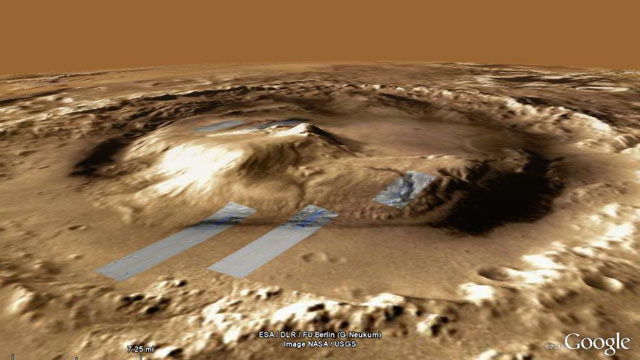
"caption": "Gale Crater, the destination for NASA's new rover Curiosity. Credit: NASA, Google Earth",
"description": "Gale Crater, the destination for NASA's new rover Curiosity. Credit: NASA, Google Earth",
"title": "Gale Crater on Mars",
"credit": null,
"status": "inherit",
"isLoading": false,
"fetchFailed": false
},
"quest_24874": {
"type": "attachments",
"id": "quest_24874",
"meta": {
"index": "attachments_1716263798",
"site": "quest",
"id": "24874",
"found": true
},
"parent": 24873,
"imgSizes": {
"thumbnail": {
"file": "https://ww2.kqed.org/app/uploads/sites/39/2011/09/endeavour-crater-400x231.jpg",
"width": 400,
"mimeType": "image/jpeg",
"height": 231
},
"kqedFullSize": {
"file": "https://ww2.kqed.org/app/uploads/sites/39/2011/09/endeavour-crater.jpg",
"width": 623,
"height": 360
},
"guest-author-96": {
"file": "https://ww2.kqed.org/app/uploads/sites/39/2011/09/endeavour-crater-96x96.jpg",
"width": 96,
"mimeType": "image/jpeg",
"height": 96
},
"guest-author-64": {
"file": "https://ww2.kqed.org/app/uploads/sites/39/2011/09/endeavour-crater-64x64.jpg",
"width": 64,
"mimeType": "image/jpeg",
"height": 64
},
"detail": {
"file": "https://ww2.kqed.org/app/uploads/sites/39/2011/09/endeavour-crater-75x75.jpg",
"width": 75,
"mimeType": "image/jpeg",
"height": 75
},
"guest-author-32": {
"file": "https://ww2.kqed.org/app/uploads/sites/39/2011/09/endeavour-crater-32x32.jpg",
"width": 32,
"mimeType": "image/jpeg",
"height": 32
},
"guest-author-128": {
"file": "https://ww2.kqed.org/app/uploads/sites/39/2011/09/endeavour-crater-128x128.jpg",
"width": 128,
"mimeType": "image/jpeg",
"height": 128
}
},
"publishDate": 1316633454,
"modified": 1316633454,
"caption": "Opportunity's Three Year Trek-Victoria to Endeavour Crater",
"description": "Opportunity's Three Year Trek-Victoria to Endeavour Crater",
"title": "Opportunity's Three Year Trek-Victoria to Endeavour Crater",
"credit": null,
"status": "inherit",
"isLoading": false,
"fetchFailed": false
},
"quest_24727": {
"type": "attachments",
"id": "quest_24727",
"meta": {
"index": "attachments_1716263798",
"site": "quest",
"id": "24727",
"found": true
},
"parent": 24725,
"imgSizes": {
"thumbnail": {
"file": "https://ww2.kqed.org/app/uploads/sites/39/2011/09/aurora.jpeg-400x225.jpg",
"width": 400,
"mimeType": "image/jpeg",
"height": 225
},
"kqedFullSize": {
"file": "https://ww2.kqed.org/app/uploads/sites/39/2011/09/aurora.jpeg.jpg",
"width": 640,
"height": 360
},
"guest-author-96": {
"file": "https://ww2.kqed.org/app/uploads/sites/39/2011/09/aurora.jpeg-96x96.jpg",
"width": 96,
"mimeType": "image/jpeg",
"height": 96
},
"guest-author-64": {
"file": "https://ww2.kqed.org/app/uploads/sites/39/2011/09/aurora.jpeg-64x64.jpg",
"width": 64,
"mimeType": "image/jpeg",
"height": 64
},
"detail": {
"file": "https://ww2.kqed.org/app/uploads/sites/39/2011/09/aurora.jpeg-75x75.jpg",
"width": 75,
"mimeType": "image/jpeg",
"height": 75
},
"guest-author-32": {
"file": "https://ww2.kqed.org/app/uploads/sites/39/2011/09/aurora.jpeg-32x32.jpg",
"width": 32,
"mimeType": "image/jpeg",
"height": 32
},
"guest-author-128": {
"file": "https://ww2.kqed.org/app/uploads/sites/39/2011/09/aurora.jpeg-128x128.jpg",
"width": 128,
"mimeType": "image/jpeg",
"height": 128
}
},
"publishDate": 1316488671,
"modified": 1316488671,
"caption": null,
"description": null,
"title": "aurora.jpeg",
"credit": null,
"status": "inherit",
"isLoading": false,
"fetchFailed": false
},
"quest_23911": {
"type": "attachments",
"id": "quest_23911",
"meta": {
"index": "attachments_1716263798",
"site": "quest",
"id": "23911",
"found": true
},
"parent": 23908,
"imgSizes": {
"thumbnail": {
"file": "https://ww2.kqed.org/app/uploads/sites/39/2011/09/m101-sn2011fe-400x225.jpg",
"width": 400,
"mimeType": "image/jpeg",
"height": 225
},
"kqedFullSize": {
"file": "https://ww2.kqed.org/app/uploads/sites/39/2011/09/m101-sn2011fe.jpg",
"width": 640,
"height": 360
},
"guest-author-96": {
"file": "https://ww2.kqed.org/app/uploads/sites/39/2011/09/m101-sn2011fe-96x96.jpg",
"width": 96,
"mimeType": "image/jpeg",
"height": 96
},
"guest-author-64": {
"file": "https://ww2.kqed.org/app/uploads/sites/39/2011/09/m101-sn2011fe-64x64.jpg",
"width": 64,
"mimeType": "image/jpeg",
"height": 64
},
"detail": {
"file": "https://ww2.kqed.org/app/uploads/sites/39/2011/09/m101-sn2011fe-75x75.jpg",
"width": 75,
"mimeType": "image/jpeg",
"height": 75
},
"guest-author-32": {
"file": "https://ww2.kqed.org/app/uploads/sites/39/2011/09/m101-sn2011fe-32x32.jpg",
"width": 32,
"mimeType": "image/jpeg",
"height": 32
},
"guest-author-128": {
"file": "https://ww2.kqed.org/app/uploads/sites/39/2011/09/m101-sn2011fe-128x128.jpg",
"width": 128,
"mimeType": "image/jpeg",
"height": 128
}
},
"publishDate": 1315506747,
"modified": 1315506747,
"caption": "Supernova 2011fe in M-101",
"description": "Supernova 2011fe in M-101",
"title": "Supernova 2011fe in M-101",
"credit": null,
"status": "inherit",
"isLoading": false,
"fetchFailed": false
},
"quest_21996": {
"type": "attachments",
"id": "quest_21996",
"meta": {
"index": "attachments_1716263798",
"site": "quest",
"id": "21996",
"found": true
},
"parent": 21993,
"imgSizes": {
"thumbnail": {
"file": "https://ww2.kqed.org/app/uploads/sites/39/2011/08/vesta-from-dawn1-400x225.jpg",
"width": 400,
"mimeType": "image/jpeg",
"height": 225
},
"kqedFullSize": {
"file": "https://ww2.kqed.org/app/uploads/sites/39/2011/08/vesta-from-dawn1.jpg",
"width": 640,
"height": 360
},
"guest-author-96": {
"file": "https://ww2.kqed.org/app/uploads/sites/39/2011/08/vesta-from-dawn1-96x96.jpg",
"width": 96,
"mimeType": "image/jpeg",
"height": 96
},
"guest-author-64": {
"file": "https://ww2.kqed.org/app/uploads/sites/39/2011/08/vesta-from-dawn1-64x64.jpg",
"width": 64,
"mimeType": "image/jpeg",
"height": 64
},
"detail": {
"file": "https://ww2.kqed.org/app/uploads/sites/39/2011/08/vesta-from-dawn1-75x75.jpg",
"width": 75,
"mimeType": "image/jpeg",
"height": 75
},
"guest-author-32": {
"file": "https://ww2.kqed.org/app/uploads/sites/39/2011/08/vesta-from-dawn1-32x32.jpg",
"width": 32,
"mimeType": "image/jpeg",
"height": 32
},
"guest-author-128": {
"file": "https://ww2.kqed.org/app/uploads/sites/39/2011/08/vesta-from-dawn1-128x128.jpg",
"width": 128,
"mimeType": "image/jpeg",
"height": 128
}
},
"publishDate": 1312324684,
"modified": 1312324684,
"caption": "Vesta, image from NASA's Dawn spacecraft",
"description": "Vesta, image from NASA's Dawn spacecraft",
"title": "Vesta, image from NASA's Dawn spacecraft",
"credit": null,
"status": "inherit",
"isLoading": false,
"fetchFailed": false
},
"quest_21485": {
"type": "attachments",
"id": "quest_21485",
"meta": {
"index": "attachments_1716263798",
"site": "quest",
"id": "21485",
"found": true
},
"parent": 21481,
"imgSizes": {
"thumbnail": {
"file": "https://ww2.kqed.org/app/uploads/sites/39/2011/07/apm08279_xray-400x225.jpg",
"width": 400,
"mimeType": "image/jpeg",
"height": 225
},
"kqedFullSize": {
"file": "https://ww2.kqed.org/app/uploads/sites/39/2011/07/apm08279_xray.jpg",
"width": 640,
"height": 360
},
"guest-author-96": {
"file": "https://ww2.kqed.org/app/uploads/sites/39/2011/07/apm08279_xray-96x96.jpg",
"width": 96,
"mimeType": "image/jpeg",
"height": 96
},
"guest-author-64": {
"file": "https://ww2.kqed.org/app/uploads/sites/39/2011/07/apm08279_xray-64x64.jpg",
"width": 64,
"mimeType": "image/jpeg",
"height": 64
},
"detail": {
"file": "https://ww2.kqed.org/app/uploads/sites/39/2011/07/apm08279_xray-75x75.jpg",
"width": 75,
"mimeType": "image/jpeg",
"height": 75
},
"guest-author-32": {
"file": "https://ww2.kqed.org/app/uploads/sites/39/2011/07/apm08279_xray-32x32.jpg",
"width": 32,
"mimeType": "image/jpeg",
"height": 32
},
"guest-author-128": {
"file": "https://ww2.kqed.org/app/uploads/sites/39/2011/07/apm08279_xray-128x128.jpg",
"width": 128,
"mimeType": "image/jpeg",
"height": 128
}
},
"publishDate": 1311867546,
"modified": 1311867546,
"caption": "Chandra X-ray image of quasar APM8+5255",
"description": "Chandra X-ray image of quasar APM8+5255",
"title": "Chandra X-ray image of quasar APM8+5255",
"credit": null,
"status": "inherit",
"isLoading": false,
"fetchFailed": false
},
"quest_20202": {
"type": "attachments",
"id": "quest_20202",
"meta": {
"index": "attachments_1716263798",
"site": "quest",
"id": "20202",
"found": true
},
"parent": 0,
"imgSizes": {
"thumbnail": {
"file": "https://ww2.kqed.org/app/uploads/sites/39/2011/07/neptune-400x225.jpg",
"width": 400,
"mimeType": "image/jpeg",
"height": 225
},
"kqedFullSize": {
"file": "https://ww2.kqed.org/app/uploads/sites/39/2011/07/neptune.jpg",
"width": 640,
"height": 360
},
"guest-author-96": {
"file": "https://ww2.kqed.org/app/uploads/sites/39/2011/07/neptune-96x96.jpg",
"width": 96,
"mimeType": "image/jpeg",
"height": 96
},
"guest-author-64": {
"file": "https://ww2.kqed.org/app/uploads/sites/39/2011/07/neptune-64x64.jpg",
"width": 64,
"mimeType": "image/jpeg",
"height": 64
},
"detail": {
"file": "https://ww2.kqed.org/app/uploads/sites/39/2011/07/neptune-75x75.jpg",
"width": 75,
"mimeType": "image/jpeg",
"height": 75
},
"guest-author-32": {
"file": "https://ww2.kqed.org/app/uploads/sites/39/2011/07/neptune-32x32.jpg",
"width": 32,
"mimeType": "image/jpeg",
"height": 32
},
"guest-author-128": {
"file": "https://ww2.kqed.org/app/uploads/sites/39/2011/07/neptune-128x128.jpg",
"width": 128,
"mimeType": "image/jpeg",
"height": 128
}
},
"publishDate": 1310680582,
"modified": 1310680582,
"caption": "Neptune - Voyager 2",
"description": "Neptune - Voyager 2",
"title": "Neptune - Voyager 2",
"credit": null,
"status": "inherit",
"isLoading": false,
"fetchFailed": false
},
"quest_15669": {
"type": "attachments",
"id": "quest_15669",
"meta": {
"index": "attachments_1716263798",
"site": "quest",
"id": "15669",
"found": true
},
"parent": 15668,
"imgSizes": {
"twentyfourteen-full-width": {
"file": "https://ww2.kqed.org/app/uploads/sites/39/2011/07/3121064673_7457e5e1a7_b-1024x576.jpeg",
"width": 1024,
"mimeType": "image/jpeg",
"height": 576
},
"thumbnail": {
"file": "https://ww2.kqed.org/app/uploads/sites/39/2011/07/3121064673_7457e5e1a7_b-400x269.jpeg",
"width": 400,
"mimeType": "image/jpeg",
"height": 269
},
"fd-sm": {
"file": "https://ww2.kqed.org/app/uploads/sites/39/2011/07/3121064673_7457e5e1a7_b-960x646.jpeg",
"width": 960,
"mimeType": "image/jpeg",
"height": 646
},
"post-thumbnail": {
"file": "https://ww2.kqed.org/app/uploads/sites/39/2011/07/3121064673_7457e5e1a7_b-672x372.jpeg",
"width": 672,
"mimeType": "image/jpeg",
"height": 372
},
"kqedFullSize": {
"file": "https://ww2.kqed.org/app/uploads/sites/39/2011/07/3121064673_7457e5e1a7_b.jpeg",
"width": 1024,
"height": 689
},
"guest-author-96": {
"file": "https://ww2.kqed.org/app/uploads/sites/39/2011/07/3121064673_7457e5e1a7_b-96x96.jpeg",
"width": 96,
"mimeType": "image/jpeg",
"height": 96
},
"medium": {
"file": "https://ww2.kqed.org/app/uploads/sites/39/2011/07/3121064673_7457e5e1a7_b-800x538.jpeg",
"width": 800,
"mimeType": "image/jpeg",
"height": 538
},
"guest-author-64": {
"file": "https://ww2.kqed.org/app/uploads/sites/39/2011/07/3121064673_7457e5e1a7_b-64x64.jpeg",
"width": 64,
"mimeType": "image/jpeg",
"height": 64
},
"detail": {
"file": "https://ww2.kqed.org/app/uploads/sites/39/2011/07/3121064673_7457e5e1a7_b-75x75.jpeg",
"width": 75,
"mimeType": "image/jpeg",
"height": 75
},
"guest-author-32": {
"file": "https://ww2.kqed.org/app/uploads/sites/39/2011/07/3121064673_7457e5e1a7_b-32x32.jpeg",
"width": 32,
"mimeType": "image/jpeg",
"height": 32
},
"guest-author-128": {
"file": "https://ww2.kqed.org/app/uploads/sites/39/2011/07/3121064673_7457e5e1a7_b-128x128.jpeg",
"width": 128,
"mimeType": "image/jpeg",
"height": 128
}
},
"publishDate": 1310459897,
"modified": 1310459897,
"caption": null,
"description": "\u003cp class=\"attachment\">\u003ca href='http://ww2.kqed.org/quest/wp-content/uploads/sites/39/2011/07/3121064673_7457e5e1a7_b.jpeg' title='alien'>\u003cimg width=\"300\" height=\"201\" src=\"http://ww2.kqed.org/quest/wp-content/uploads/sites/39/2011/07/3121064673_7457e5e1a7_b.jpeg\" class=\"attachment-medium\" alt=\"alien\" title=\"alien\" />\u003c/a>\u003c/p>",
"title": "alien",
"credit": null,
"status": "inherit",
"isLoading": false,
"fetchFailed": false
},
"quest_15541": {
"type": "attachments",
"id": "quest_15541",
"meta": {
"index": "attachments_1716263798",
"site": "quest",
"id": "15541",
"found": true
},
"parent": 0,
"imgSizes": {
"kqedFullSize": {
"file": "https://ww2.kqed.org/app/uploads/sites/39/2011/06/The-Little-Prince.jpg",
"width": 300,
"height": 200
},
"guest-author-96": {
"file": "https://ww2.kqed.org/app/uploads/sites/39/2011/06/The-Little-Prince-96x96.jpg",
"width": 96,
"mimeType": "image/jpeg",
"height": 96
},
"guest-author-64": {
"file": "https://ww2.kqed.org/app/uploads/sites/39/2011/06/The-Little-Prince-64x64.jpg",
"width": 64,
"mimeType": "image/jpeg",
"height": 64
},
"detail": {
"file": "https://ww2.kqed.org/app/uploads/sites/39/2011/06/The-Little-Prince-75x75.jpg",
"width": 75,
"mimeType": "image/jpeg",
"height": 75
},
"guest-author-32": {
"file": "https://ww2.kqed.org/app/uploads/sites/39/2011/06/The-Little-Prince-32x32.jpg",
"width": 32,
"mimeType": "image/jpeg",
"height": 32
},
"guest-author-128": {
"file": "https://ww2.kqed.org/app/uploads/sites/39/2011/06/The-Little-Prince-128x128.jpg",
"width": 128,
"mimeType": "image/jpeg",
"height": 128
}
},
"publishDate": 1309457597,
"modified": 1309457597,
"caption": "The Little Prince",
"description": "\u003cp class=\"attachment\">\u003ca href='http://ww2.kqed.org/quest/wp-content/uploads/sites/39/2011/06/The-Little-Prince.jpg' title='The Little Prince'>\u003cimg width=\"300\" height=\"200\" src=\"http://ww2.kqed.org/quest/wp-content/uploads/sites/39/2011/06/The-Little-Prince.jpg\" class=\"attachment-medium\" alt=\"The Little Prince\" title=\"The Little Prince\" />\u003c/a>\u003c/p>\n\u003cp>The Little Prince\u003c/p>",
"title": "The Little Prince",
"credit": null,
"status": "inherit",
"isLoading": false,
"fetchFailed": false
},
"quest_20755": {
"type": "attachments",
"id": "quest_20755",
"meta": {
"index": "attachments_1716263798",
"site": "quest",
"id": "20755",
"found": true
},
"parent": 20634,
"imgSizes": [],
"publishDate": 1311038982,
"modified": 1311038982,
"caption": null,
"description": null,
"title": "sdo-cme-060711-2",
"credit": null,
"status": "inherit",
"isLoading": false,
"fetchFailed": true
}
},
"audioPlayerReducer": {
"postId": "stream_live",
"isPaused": true,
"isPlaying": false,
"pfsActive": false,
"pledgeModalIsOpen": true,
"playerDrawerIsOpen": false,
"liveAudioPlayStartedAt": 0,
"liveAudioPlayContext": ""
},
"authorsReducer": {
"ben-burress": {
"type": "authors",
"id": "6180",
"meta": {
"index": "authors_1716337520",
"id": "6180",
"found": true
},
"name": "Ben Burress",
"firstName": "Ben",
"lastName": "Burress",
"slug": "ben-burress",
"email": "bburress@chabotspace.org",
"display_author_email": false,
"staff_mastheads": [],
"title": null,
"bio": "\u003cstrong>Benjamin Burress\u003c/strong> has been a staff astronomer at Chabot Space & Science Center since July 1999. He graduated from Sonoma State University in 1985 with a bachelor’s degree in physics (and minor in astronomy), after which he signed on for a two-year stint in the Peace Corps, where he taught physics and mathematics in the African nation of Cameroon. From 1989-96 he served on the crew of NASA’s Kuiper Airborne Observatory at Ames Research Center in Mountain View, CA. From 1996-99, he was Head Observer at the Naval Prototype Optical Interferometer program at Lowell Observatory in Flagstaff, AZ.\r\n\r\nRead his \u003ca href=\"http://science.kqed.org/quest/author/ben-burress/\">previous contributions\u003c/a> to \u003ca href=\"http://science.kqed.org/quest/\">QUEST\u003c/a>, a project dedicated to exploring the Science of Sustainability.",
"avatar": "https://secure.gravatar.com/avatar/8263bffa345b7e4923a0b8b9f0f6a161?s=600&d=blank&r=g",
"twitter": null,
"facebook": null,
"instagram": null,
"linkedin": null,
"sites": [
{
"site": "science",
"roles": [
"editor"
]
},
{
"site": "quest",
"roles": [
"subscriber"
]
}
],
"headData": {
"title": "Ben Burress | KQED",
"description": null,
"ogImgSrc": "https://secure.gravatar.com/avatar/8263bffa345b7e4923a0b8b9f0f6a161?s=600&d=blank&r=g",
"twImgSrc": "https://secure.gravatar.com/avatar/8263bffa345b7e4923a0b8b9f0f6a161?s=600&d=blank&r=g"
},
"isLoading": false,
"link": "/author/ben-burress"
},
"laura-khalil": {
"type": "authors",
"id": "10174",
"meta": {
"index": "authors_1716337520",
"id": "10174",
"found": true
},
"name": "Laura Khalil",
"firstName": "Laura",
"lastName": "Khalil",
"slug": "laura-khalil",
"email": "zazenergy@gmail.com",
"display_author_email": false,
"staff_mastheads": [],
"title": null,
"bio": "Laura is a marketer by day and nerd by night. She's the Chief Nerd Herder for \u003ca href=\"http://dorkbyte.com\">Dorkbyte\u003c/a>, a blog devoted to art, technology and science. She's been named one of the most engaging women to speak about technology and has been featured on \u003ca href=\"http://laura.khalil.usesthis.com/\">The Setup\u003c/a>. A member of \u003ca href=\"https://www.noisebridge.net/wiki/Noisebridge\">Noisebridge\u003c/a>, she is working on two robotics challenges, leading a puzzle team that competes in a variety of puzzle challenges throughout the US and monkeys around on ham amateur radio. She loves astronomy, Making and hardware hacking. She was most recently involved in teaching hardware circuitry at Maker Faire.Laura has executed marketing strategies and campaigns for tech startups in the Bay Area. Her work with social media has been inducted into the Viral Marketing Hall of Fame.",
"avatar": "https://secure.gravatar.com/avatar/903af34f5bba8fceeaf20b97ac72f2a1?s=600&d=blank&r=g",
"twitter": null,
"facebook": null,
"instagram": null,
"linkedin": null,
"sites": [
{
"site": "quest",
"roles": [
"subscriber"
]
}
],
"headData": {
"title": "Laura Khalil | KQED",
"description": null,
"ogImgSrc": "https://secure.gravatar.com/avatar/903af34f5bba8fceeaf20b97ac72f2a1?s=600&d=blank&r=g",
"twImgSrc": "https://secure.gravatar.com/avatar/903af34f5bba8fceeaf20b97ac72f2a1?s=600&d=blank&r=g"
},
"isLoading": false,
"link": "/author/laura-khalil"
}
},
"pagesReducer": {
"quest_category_astronomy": {
"type": "terms",
"id": "quest_3",
"meta": {
"index": "terms_1716263798",
"site": "quest",
"id": "3",
"score": 12.939345
},
"featImg": null,
"name": "Astronomy",
"description": null,
"taxonomy": "category",
"headData": {
"twImgId": null,
"twTitle": null,
"ogTitle": null,
"ogImgId": null,
"twDescription": null,
"description": null,
"title": "Astronomy Archives | KQED Arts",
"ogDescription": null
},
"ttid": 3,
"slug": "astronomy",
"isLoading": false,
"title": "Astronomy",
"pageMeta": {
"site": "quest",
"WpPageTemplate": "page-topic-editorial",
"currentPage": 8
},
"blocks": [
{
"blockName": "kqed/post-list",
"attrs": {
"layout": "cardArticle2",
"query": "posts/quest?category=astronomy",
"seeMore": false,
"paginated": true,
"page": 8
}
},
{
"blockName": "kqed/ad"
}
]
}
},
"pfsSessionReducer": {},
"postsReducer": {
"stream_live": {
"type": "live",
"id": "stream_live",
"audioUrl": "https://hls.kqed.org/hls/kqed_app/playlist.m3u8",
"title": "Live Stream",
"excerpt": "Live Stream information currently unavailable.",
"link": "/radio",
"featImg": "",
"label": {
"name": "KQED Live",
"link": "/"
}
},
"stream_kqedNewscast": {
"type": "posts",
"id": "stream_kqedNewscast",
"audioUrl": "https://www.kqed.org/.stream/anon/radio/RDnews/newscast.mp3?_=1",
"title": "KQED Newscast",
"featImg": "",
"label": {
"name": "88.5 FM",
"link": "/"
}
},
"quest_25736": {
"type": "posts",
"id": "quest_25736",
"meta": {
"index": "posts_1716263798",
"site": "quest",
"id": "25736",
"score": null,
"sort": [
1318002877000
]
},
"parent": 0,
"labelTerm": {
"site": "quest"
},
"blocks": [],
"publishDate": 1318002877,
"format": "standard",
"disqusTitle": "Dumpster Diving on Mars",
"title": "Dumpster Diving on Mars",
"headTitle": "QUEST | KQED Science",
"content": "\u003cfigure id=\"attachment_25737\" class=\"wp-caption alignnone\" style=\"max-width: 640px\">\u003ca href=\"http://ww2.kqed.org/quest/2011/10/07/dumpster-diving-on-mars/galecrater7a/\" rel=\"attachment wp-att-25737\">\u003cimg src=\"http://ww2.kqed.org/quest/wp-content/uploads/sites/39/2011/10/galecrater7a.jpg\" alt=\"Gale Crater on Mars\" title=\"Gale Crater on Mars\" width=\"640\" height=\"360\" class=\"size-full wp-image-25737\" srcset=\"https://ww2.kqed.org/app/uploads/sites/39/2011/10/galecrater7a.jpg 640w, https://ww2.kqed.org/app/uploads/sites/39/2011/10/galecrater7a-400x225.jpg 400w\" sizes=\"(max-width: 640px) 100vw, 640px\">\u003c/a>\u003cfigcaption class=\"wp-caption-text\">Gale Crater, the destination for NASA's new rover Curiosity. Credit: NASA, Google Earth\u003c/figcaption>\u003c/figure>\n\u003cp>Ready for yet another great Martian adventure? Another prestigious interplanetary mission to that fabled world? The next technological ambassadorship of space-age robots and exotic landscapes? Or, how about an inglorious romp to go dumpster diving to sift through a pile of geological garbage…?\u003c/p>\n\u003cp>In any case, get set; on \u003ca href=\"http://www.nasa.gov/mission_pages/msl/news/msl20110928.html\">November 25th the launch window opens\u003c/a> for NASA’s next Mars rover, “Curiosity,” which will arrive over yonder next August. \u003c/p>\n\u003cp>Inglorious dumpster diving? What’s NASA got planned this time, anyway?\u003c/p>\n\u003cp>Answer: Gale Crater, a large impact blast about 1400 miles to the west of Gusev Crater, where the rover Spirit now sits motionless—and incommunicado—in its last rusting place. \u003c/p>\n\u003cp>When I heard that Curiosity was bound for Gale Crater, my first impulse was to start up Google Earth, switch to Mars mode, and zoom in on Gale Crater for a landing to see, at least superficially, what might be of interest there to an explorer. (You can do this too; download Google Earth at \u003ca href=\"http://www.google.com/earth\">www.google.com/earth\u003c/a>, select Mars, and search for Gale Crater.) \u003c/p>\n\u003cp>[ad fullwidth]\u003c/p>\n\u003cp>My first Google-vista of Gale, which included several overlaid strips of high-resolution imagery from the \u003ca href=\"http://mars.jpl.nasa.gov/mro/news/index.cfm?FuseAction=ShowNews&NewsID=968\">Mars Reconnaissance Orbiter\u003c/a> (MRO), hinted that there may be a LOT of interest here.\u003c/p>\n\u003cp>Gale Crater, about 90 miles across, sports a really large mountain right in the middle—mostly filling the bowl, in fact. The mountain, whose peak rises around 2700 feet above average Martian surface level (can’t say sea level there…not in the present day, at least), towers 3 miles above the deepest part of the crater surrounding it. \u003c/p>\n\u003cp>I zoomed in on an MRO overlay of a canyon high on the mountain, finding what looks like layered deposits exposed by whatever cutting action had carved the canyon in the past. The landscape I find there is stunning, the details rich. I almost feel as though I’ve stood where Curiosity is soon to tread. \u003c/p>\n\u003cp>The rover will be set down by a sort of rocket-propelled winch, lowered gently to the base of the mountain where an alluvial fan promises potential riches. Not wind-worn pebbles of solid gold, not fist-sized chunks of diamond—well, probably not—but rather the riches of dirt that may have been deposited there by the action of water. A dumpster of chemical, geological, and potentially biological history. \u003c/p>\n\u003cp>One of the reasons Gale Crater was chosen as Curiosity’s destination is that it is a deep, low-altitude impact crater, situated at a “downhill” destination where water, if indeed it did flow on Mars long ago, is very likely to have converged, dumping all sorts of soil, rock, and whatever else might have come along for the ride. \u003c/p>\n\u003cp>\u003c/p>\n\u003cp>Curiosity carries ten instruments designed to conduct a range of measurements, including chemical analysis of soil and rock samples in search of organic compounds that may have been preserved. Where Curiosity’s predecessors, Spirit and Opportunity, have looked for the chemical signs of past water to help tell us whether Mars was ever hospital to life, Curiosity will look for the leftovers of life itself. And in the bottom-lands of Gale Crater, at the foot of a huge mountain from which the rubble of layer upon layer of history has been scoured, it will be in a really good place to do it.\u003c/p>\n\n",
"disqusIdentifier": "25736 http://science.kqed.org/quest/?p=25736",
"disqusUrl": "https://ww2.kqed.org/quest/2011/10/07/dumpster-diving-on-mars/",
"stats": {
"hasVideo": false,
"hasChartOrMap": false,
"hasAudio": false,
"hasPolis": false,
"wordCount": 590,
"hasGoogleForm": false,
"hasGallery": false,
"hasHearkenModule": false,
"iframeSrcs": [],
"paragraphCount": 13
},
"modified": 1371060113,
"excerpt": "Ready for another great adventure to that fabled world, Mars? How about an interplanetary dumpster dive? Curious? Come with us to Gale Crater.",
"headData": {
"twImgId": "",
"twTitle": "",
"ogTitle": "",
"ogImgId": "",
"twDescription": "",
"description": "Ready for another great adventure to that fabled world, Mars? How about an interplanetary dumpster dive? Curious? Come with us to Gale Crater.",
"title": "Dumpster Diving on Mars | KQED",
"ogDescription": "",
"schema": {
"@context": "https://schema.org",
"@type": "Article",
"headline": "Dumpster Diving on Mars",
"datePublished": "2011-10-07T08:54:37-07:00",
"dateModified": "2013-06-12T11:01:53-07:00",
"image": "https://cdn.kqed.org/wp-content/uploads/2020/02/KQED-OG-Image@1x.png"
}
},
"guestAuthors": [],
"slug": "dumpster-diving-on-mars",
"status": "publish",
"path": "/quest/25736/dumpster-diving-on-mars",
"audioTrackLength": null,
"parsedContent": [
{
"type": "contentString",
"content": "\u003cdiv class=\"post-body\">\u003cp>\u003cfigure id=\"attachment_25737\" class=\"wp-caption alignnone\" style=\"max-width: 640px\">\u003ca href=\"http://ww2.kqed.org/quest/2011/10/07/dumpster-diving-on-mars/galecrater7a/\" rel=\"attachment wp-att-25737\">\u003cimg src=\"http://ww2.kqed.org/quest/wp-content/uploads/sites/39/2011/10/galecrater7a.jpg\" alt=\"Gale Crater on Mars\" title=\"Gale Crater on Mars\" width=\"640\" height=\"360\" class=\"size-full wp-image-25737\" srcset=\"https://ww2.kqed.org/app/uploads/sites/39/2011/10/galecrater7a.jpg 640w, https://ww2.kqed.org/app/uploads/sites/39/2011/10/galecrater7a-400x225.jpg 400w\" sizes=\"(max-width: 640px) 100vw, 640px\">\u003c/a>\u003cfigcaption class=\"wp-caption-text\">Gale Crater, the destination for NASA's new rover Curiosity. Credit: NASA, Google Earth\u003c/figcaption>\u003c/figure>\n\u003cp>Ready for yet another great Martian adventure? Another prestigious interplanetary mission to that fabled world? The next technological ambassadorship of space-age robots and exotic landscapes? Or, how about an inglorious romp to go dumpster diving to sift through a pile of geological garbage…?\u003c/p>\n\u003cp>In any case, get set; on \u003ca href=\"http://www.nasa.gov/mission_pages/msl/news/msl20110928.html\">November 25th the launch window opens\u003c/a> for NASA’s next Mars rover, “Curiosity,” which will arrive over yonder next August. \u003c/p>\n\u003cp>Inglorious dumpster diving? What’s NASA got planned this time, anyway?\u003c/p>\n\u003cp>Answer: Gale Crater, a large impact blast about 1400 miles to the west of Gusev Crater, where the rover Spirit now sits motionless—and incommunicado—in its last rusting place. \u003c/p>\n\u003cp>When I heard that Curiosity was bound for Gale Crater, my first impulse was to start up Google Earth, switch to Mars mode, and zoom in on Gale Crater for a landing to see, at least superficially, what might be of interest there to an explorer. (You can do this too; download Google Earth at \u003ca href=\"http://www.google.com/earth\">www.google.com/earth\u003c/a>, select Mars, and search for Gale Crater.) \u003c/p>\n\u003cp>\u003c/p>\u003c/div>",
"attributes": {
"named": {},
"numeric": []
}
},
{
"type": "component",
"content": "",
"name": "ad",
"attributes": {
"named": {
"label": "fullwidth"
},
"numeric": [
"fullwidth"
]
}
},
{
"type": "contentString",
"content": "\u003cdiv class=\"post-body\">\u003cp>\u003c/p>\n\u003cp>My first Google-vista of Gale, which included several overlaid strips of high-resolution imagery from the \u003ca href=\"http://mars.jpl.nasa.gov/mro/news/index.cfm?FuseAction=ShowNews&NewsID=968\">Mars Reconnaissance Orbiter\u003c/a> (MRO), hinted that there may be a LOT of interest here.\u003c/p>\n\u003cp>Gale Crater, about 90 miles across, sports a really large mountain right in the middle—mostly filling the bowl, in fact. The mountain, whose peak rises around 2700 feet above average Martian surface level (can’t say sea level there…not in the present day, at least), towers 3 miles above the deepest part of the crater surrounding it. \u003c/p>\n\u003cp>I zoomed in on an MRO overlay of a canyon high on the mountain, finding what looks like layered deposits exposed by whatever cutting action had carved the canyon in the past. The landscape I find there is stunning, the details rich. I almost feel as though I’ve stood where Curiosity is soon to tread. \u003c/p>\n\u003cp>The rover will be set down by a sort of rocket-propelled winch, lowered gently to the base of the mountain where an alluvial fan promises potential riches. Not wind-worn pebbles of solid gold, not fist-sized chunks of diamond—well, probably not—but rather the riches of dirt that may have been deposited there by the action of water. A dumpster of chemical, geological, and potentially biological history. \u003c/p>\n\u003cp>One of the reasons Gale Crater was chosen as Curiosity’s destination is that it is a deep, low-altitude impact crater, situated at a “downhill” destination where water, if indeed it did flow on Mars long ago, is very likely to have converged, dumping all sorts of soil, rock, and whatever else might have come along for the ride. \u003c/p>\n\u003cp>\u003c/p>\n\u003cp>Curiosity carries ten instruments designed to conduct a range of measurements, including chemical analysis of soil and rock samples in search of organic compounds that may have been preserved. Where Curiosity’s predecessors, Spirit and Opportunity, have looked for the chemical signs of past water to help tell us whether Mars was ever hospital to life, Curiosity will look for the leftovers of life itself. And in the bottom-lands of Gale Crater, at the foot of a huge mountain from which the rubble of layer upon layer of history has been scoured, it will be in a really good place to do it.\u003c/p>\n\n\u003c/div>\u003c/p>",
"attributes": {
"named": {},
"numeric": []
}
}
],
"link": "/quest/25736/dumpster-diving-on-mars",
"authors": [
"6180"
],
"categories": [
"quest_3"
],
"tags": [
"quest_544",
"quest_742",
"quest_10259",
"quest_1751",
"quest_3647",
"quest_1918",
"quest_2079",
"quest_13202",
"quest_2457",
"quest_2760"
],
"featImg": "quest_25737",
"label": "quest"
},
"quest_24873": {
"type": "posts",
"id": "quest_24873",
"meta": {
"index": "posts_1716263798",
"site": "quest",
"id": "24873",
"score": null,
"sort": [
1316792400000
]
},
"parent": 0,
"labelTerm": {
"site": "quest"
},
"blocks": [],
"publishDate": 1316792400,
"format": "standard",
"disqusTitle": "Opportunity's Endeavour",
"title": "Opportunity's Endeavour",
"headTitle": "QUEST | KQED Science",
"content": "\u003cfigure id=\"attachment_24874\" class=\"wp-caption alignleft\" style=\"max-width: 623px\">\u003ca href=\"http://ww2.kqed.org/quest/2011/09/23/opportunitys-endeavour/endeavour-crater/\" rel=\"attachment wp-att-24874\">\u003cimg src=\"http://ww2.kqed.org/quest/wp-content/uploads/sites/39/2011/09/endeavour-crater.jpg\" alt=\"Opportunity's Three Year Trek-Victoria to Endeavour Crater\" title=\"Opportunity's Three Year Trek-Victoria to Endeavour Crater\" width=\"623\" height=\"360\" class=\"size-full wp-image-24874\" srcset=\"https://ww2.kqed.org/app/uploads/sites/39/2011/09/endeavour-crater.jpg 623w, https://ww2.kqed.org/app/uploads/sites/39/2011/09/endeavour-crater-400x231.jpg 400w\" sizes=\"(max-width: 623px) 100vw, 623px\">\u003c/a>\u003cfigcaption class=\"wp-caption-text\">Endeavour Crater; Credit: NASA, Google Earth\u003c/figcaption>\u003c/figure>\n\u003cp>Who’d’ve thought back in 2004, when NASA’s twin Mars rovers Spirit and Opportunity set wheels on Martia-firma, that one would still be roving nearly eight years later? \u003c/p>\n\u003cp>Who would have imagined three years ago, when the already veteran Opportunity set forth from its two-year prospecting site at Victoria Crater on a long march to the much larger Endeavour Crater, that the Fates would actually NOT stop this Energizer-Bunny dead in its tracks?\u003c/p>\n\u003cp>Okay, enough jaw-dropping incredulity. Some things CAN be built to last….\u003c/p>\n\u003cp>About three weeks ago,\u003ca href=\"http://marsrover.nasa.gov/newsroom/pressreleases/20110901a.html\"> Opportunity reached the rim \u003c/a>of the 14-mile wide Endeavour Crater, after clocking nearly 21 miles since its landing seven and a half years ago. By Earth-rover standards, that’s about one round trip to work and home again for me, and about 25 minutes of my time—but Opportunity’s commute is a far greater feat, alone on another world, long minutes away even by radio waves, no service garages for maintenance, no fuel stations other than the daily dose of energy doled out by the Sun. \u003c/p>\n\u003cp>One of the first things Opportunity did upon reaching the rim of the giant crater, after taking some pictures to give us the lay of the land, was to examine some rocks. After all, more than anything else, the Mars Exploration Rovers are geologists, or rock hounds, sent to tell us about the Martian environment, today and in the past, through the chemical makeup and stratigraphy of the rocks and soil.\u003c/p>\n\u003cp>[ad fullwidth]\u003c/p>\n\u003cp>Data from orbital spacecraft have shown that the materials at the rim of Endeavour may date back to early in Martian history, making for fertile ground in Opportunity’s quest to uncover clues to the planet’s past. Evidence for the presence of clay minerals, possibly formed under wet conditions favorable to life, has been brought to light—which really adds some excitement to the rover’s rock hounding exploits to come.\u003c/p>\n\u003cp>On Opportunity’s approach to the crater rim, it spotted in the distance unusual outcroppings, and a “shelf” of what looks like sedimentary rock with inclusions of material that may have been deposited by water action. \u003c/p>\n\u003cp>Water water water, the watch-words of Martian exploration for many years. Where there is, or was, water, perhaps there is, or was, some form of life. And while the Mars Exploration Rovers weren’t designed to look for signs of life directly, their larger, better equipped descendant, \u003ca href=\"http://www.nasa.gov/mission_pages/msl/index.html\">Curiosity\u003c/a>, to be launched in November, is. Curiosity, do tell…. \u003c/p>\n\u003cp>As a child I liked to imagine what it would be like to land on and walk about the surface of Mars. Mind you, back then we had no images from Mars’ surface—not until 1976 when Viking landed. We had low-res images taken from space, and plenty of science fiction sound stage backdrops and sets from various TV shows and films (and a Mars stand-in, Death Valley, in Robinson Crusoe on Mars). \u003c/p>\n\u003cp>\u003c/p>\n\u003cp>Opportunity still appears to be in good shape, so the odyssey of its exploration seems to have a good chance of delivering yet another episode of the \u003cem>Life (?) and Times of Mars\u003c/em>….\u003c/p>\n\n",
"disqusIdentifier": "24873 http://science.kqed.org/quest/?p=24873",
"disqusUrl": "https://ww2.kqed.org/quest/2011/09/23/opportunitys-endeavour/",
"stats": {
"hasVideo": false,
"hasChartOrMap": false,
"hasAudio": false,
"hasPolis": false,
"wordCount": 554,
"hasGoogleForm": false,
"hasGallery": false,
"hasHearkenModule": false,
"iframeSrcs": [],
"paragraphCount": 12
},
"modified": 1371060164,
"excerpt": "NASA's Opportunity rover has reached the goal of its three-year slog across the landscape of Mars!",
"headData": {
"twImgId": "",
"twTitle": "",
"ogTitle": "",
"ogImgId": "",
"twDescription": "",
"description": "NASA's Opportunity rover has reached the goal of its three-year slog across the landscape of Mars!",
"title": "Opportunity's Endeavour | KQED",
"ogDescription": "",
"schema": {
"@context": "https://schema.org",
"@type": "Article",
"headline": "Opportunity's Endeavour",
"datePublished": "2011-09-23T08:40:00-07:00",
"dateModified": "2013-06-12T11:02:44-07:00",
"image": "https://cdn.kqed.org/wp-content/uploads/2020/02/KQED-OG-Image@1x.png"
}
},
"guestAuthors": [],
"slug": "opportunitys-endeavour",
"status": "publish",
"path": "/quest/24873/opportunitys-endeavour",
"audioTrackLength": null,
"parsedContent": [
{
"type": "contentString",
"content": "\u003cdiv class=\"post-body\">\u003cp>\u003cfigure id=\"attachment_24874\" class=\"wp-caption alignleft\" style=\"max-width: 623px\">\u003ca href=\"http://ww2.kqed.org/quest/2011/09/23/opportunitys-endeavour/endeavour-crater/\" rel=\"attachment wp-att-24874\">\u003cimg src=\"http://ww2.kqed.org/quest/wp-content/uploads/sites/39/2011/09/endeavour-crater.jpg\" alt=\"Opportunity's Three Year Trek-Victoria to Endeavour Crater\" title=\"Opportunity's Three Year Trek-Victoria to Endeavour Crater\" width=\"623\" height=\"360\" class=\"size-full wp-image-24874\" srcset=\"https://ww2.kqed.org/app/uploads/sites/39/2011/09/endeavour-crater.jpg 623w, https://ww2.kqed.org/app/uploads/sites/39/2011/09/endeavour-crater-400x231.jpg 400w\" sizes=\"(max-width: 623px) 100vw, 623px\">\u003c/a>\u003cfigcaption class=\"wp-caption-text\">Endeavour Crater; Credit: NASA, Google Earth\u003c/figcaption>\u003c/figure>\n\u003cp>Who’d’ve thought back in 2004, when NASA’s twin Mars rovers Spirit and Opportunity set wheels on Martia-firma, that one would still be roving nearly eight years later? \u003c/p>\n\u003cp>Who would have imagined three years ago, when the already veteran Opportunity set forth from its two-year prospecting site at Victoria Crater on a long march to the much larger Endeavour Crater, that the Fates would actually NOT stop this Energizer-Bunny dead in its tracks?\u003c/p>\n\u003cp>Okay, enough jaw-dropping incredulity. Some things CAN be built to last….\u003c/p>\n\u003cp>About three weeks ago,\u003ca href=\"http://marsrover.nasa.gov/newsroom/pressreleases/20110901a.html\"> Opportunity reached the rim \u003c/a>of the 14-mile wide Endeavour Crater, after clocking nearly 21 miles since its landing seven and a half years ago. By Earth-rover standards, that’s about one round trip to work and home again for me, and about 25 minutes of my time—but Opportunity’s commute is a far greater feat, alone on another world, long minutes away even by radio waves, no service garages for maintenance, no fuel stations other than the daily dose of energy doled out by the Sun. \u003c/p>\n\u003cp>One of the first things Opportunity did upon reaching the rim of the giant crater, after taking some pictures to give us the lay of the land, was to examine some rocks. After all, more than anything else, the Mars Exploration Rovers are geologists, or rock hounds, sent to tell us about the Martian environment, today and in the past, through the chemical makeup and stratigraphy of the rocks and soil.\u003c/p>\n\u003cp>\u003c/p>\u003c/div>",
"attributes": {
"named": {},
"numeric": []
}
},
{
"type": "component",
"content": "",
"name": "ad",
"attributes": {
"named": {
"label": "fullwidth"
},
"numeric": [
"fullwidth"
]
}
},
{
"type": "contentString",
"content": "\u003cdiv class=\"post-body\">\u003cp>\u003c/p>\n\u003cp>Data from orbital spacecraft have shown that the materials at the rim of Endeavour may date back to early in Martian history, making for fertile ground in Opportunity’s quest to uncover clues to the planet’s past. Evidence for the presence of clay minerals, possibly formed under wet conditions favorable to life, has been brought to light—which really adds some excitement to the rover’s rock hounding exploits to come.\u003c/p>\n\u003cp>On Opportunity’s approach to the crater rim, it spotted in the distance unusual outcroppings, and a “shelf” of what looks like sedimentary rock with inclusions of material that may have been deposited by water action. \u003c/p>\n\u003cp>Water water water, the watch-words of Martian exploration for many years. Where there is, or was, water, perhaps there is, or was, some form of life. And while the Mars Exploration Rovers weren’t designed to look for signs of life directly, their larger, better equipped descendant, \u003ca href=\"http://www.nasa.gov/mission_pages/msl/index.html\">Curiosity\u003c/a>, to be launched in November, is. Curiosity, do tell…. \u003c/p>\n\u003cp>As a child I liked to imagine what it would be like to land on and walk about the surface of Mars. Mind you, back then we had no images from Mars’ surface—not until 1976 when Viking landed. We had low-res images taken from space, and plenty of science fiction sound stage backdrops and sets from various TV shows and films (and a Mars stand-in, Death Valley, in Robinson Crusoe on Mars). \u003c/p>\n\u003cp>\u003c/p>\n\u003cp>Opportunity still appears to be in good shape, so the odyssey of its exploration seems to have a good chance of delivering yet another episode of the \u003cem>Life (?) and Times of Mars\u003c/em>….\u003c/p>\n\n\u003c/div>\u003c/p>",
"attributes": {
"named": {},
"numeric": []
}
}
],
"link": "/quest/24873/opportunitys-endeavour",
"authors": [
"6180"
],
"categories": [
"quest_3"
],
"tags": [
"quest_544",
"quest_722",
"quest_742",
"quest_3561",
"quest_1751",
"quest_10192",
"quest_1918",
"quest_2079",
"quest_13202",
"quest_2457"
],
"featImg": "quest_24874",
"label": "quest"
},
"quest_24725": {
"type": "posts",
"id": "quest_24725",
"meta": {
"index": "posts_1716263798",
"site": "quest",
"id": "24725",
"score": null,
"sort": [
1316536468000
]
},
"parent": 0,
"labelTerm": {
"site": "quest"
},
"blocks": [],
"publishDate": 1316536468,
"format": "standard",
"disqusTitle": "Armchair Astronomy Takes Off On The Web",
"title": "Armchair Astronomy Takes Off On The Web",
"headTitle": "QUEST | KQED Science",
"content": "\u003cp>\u003ca href=\"http://ww2.kqed.org/quest/2011/09/20/armchair-astronomy-takes-off-on-the-web/aurora-jpeg/\" rel=\"attachment wp-att-24727\">\u003cimg src=\"http://ww2.kqed.org/quest/wp-content/uploads/sites/39/2011/09/aurora.jpeg.jpg\" alt=\"\" title=\"aurora.jpeg\" width=\"640\" height=\"360\" class=\"alignleft size-full wp-image-24727\" srcset=\"https://ww2.kqed.org/app/uploads/sites/39/2011/09/aurora.jpeg.jpg 640w, https://ww2.kqed.org/app/uploads/sites/39/2011/09/aurora.jpeg-400x225.jpg 400w\" sizes=\"(max-width: 640px) 100vw, 640px\">\u003c/a>This photo was taken by Astronaut Ron Garan aboard the ISS and shows the Southern Lights. Garan takes photos in space and shares them over Google+.\u003c/p>\n\u003cp>From hosting \u003ca href=\"https://twitter.com/#!/NASATweetup\">tweetups with space enthusiasts\u003c/a>, to sharing space amazing videos on YouTube, \u003ca href=\"http://www.nasa.gov/\">NASA\u003c/a> has embraced social media as a way to spread its message and further popularize astronomy.\u003c/p>\n\u003cp>\u003ciframe width=\"420\" height=\"315\" src=\"http://www.youtube.com/embed/74mhQyuyELQ\" frameborder=\"0\">\u003c/iframe>\u003c/p>\n\u003cp>Social media has broadened our access to astronomy and life off Earth. If you've dreamed of owning your own telescope and seeing distant lands, there are more resources than ever to help make your dreams a reality. Here are just a few options for budding armchair astronomers:\u003c/p>\n\u003cp>\u003ca href=\"http://astrometry.net/\">Astronomy.net\u003c/a>\u003c/p>\n\u003cp>[ad fullwidth]\u003c/p>\n\u003cp>Photography enthusiasts can share their Flickr photos with Astronomy.net, contributing to astronomers' knowledge base. Using photos from telescopes, cameras and even camera phones, astronomers can build a map of the sky to search for new discoveries, such as the birth or death of a star.\u003c/p>\n\u003cp>\u003ca href=\"http://planetquest.jpl.nasa.gov/index.cfm\">Planet Quest\u003c/a>\u003c/p>\n\u003cp>Part of the Kepler Mission and NASA's Jet Propulsion Laboratory, Planet Quest gives visitors a detailed look at our galaxy. Beautiful videos and interactive games detail the process of searching for habitable exoplanets.\u003c/p>\n\u003cp>\u003ca href=\"http://www.lightbuckets.com/\">LightBuckets\u003c/a>\u003c/p>\n\u003cp>Rent time on telescopes around the world and collect images of your favorite astronomical sights from the comfort of your home computer. If you're looking to majorly up your nerd cred, this is an excellent option.\u003c/p>\n\u003cp>\u003ca href=\"http://www.slooh.com/slooh-home.php\">Slooh\u003c/a>\u003c/p>\n\u003cp>If space had a cable channel, Slooh might be it. The site broadcasts major astronomical events over the Web. If you can't make it to that eclipse all the way around the world, Slooh is probably broadcasting it.\u003c/p>\n\u003cp>\u003c/p>\n\u003cp>What other astronomy resources do you like? Share them with us in the comments.\u003c/p>\n\n",
"disqusIdentifier": "24725 http://science.kqed.org/quest/?p=24725",
"disqusUrl": "https://ww2.kqed.org/quest/2011/09/20/armchair-astronomy-takes-off-on-the-web/",
"stats": {
"hasVideo": true,
"hasChartOrMap": true,
"hasAudio": false,
"hasPolis": false,
"wordCount": 281,
"hasGoogleForm": false,
"hasGallery": false,
"hasHearkenModule": false,
"iframeSrcs": [
"http://www.youtube.com/embed/74mhQyuyELQ"
],
"paragraphCount": 15
},
"modified": 1317340134,
"excerpt": "Take a look at some of the best resources on the Web for armchair astronomers.",
"headData": {
"twImgId": "",
"twTitle": "",
"ogTitle": "",
"ogImgId": "",
"twDescription": "",
"description": "Take a look at some of the best resources on the Web for armchair astronomers.",
"title": "Armchair Astronomy Takes Off On The Web | KQED",
"ogDescription": "",
"schema": {
"@context": "https://schema.org",
"@type": "Article",
"headline": "Armchair Astronomy Takes Off On The Web",
"datePublished": "2011-09-20T09:34:28-07:00",
"dateModified": "2011-09-29T16:48:54-07:00",
"image": "https://cdn.kqed.org/wp-content/uploads/2020/02/KQED-OG-Image@1x.png"
}
},
"guestAuthors": [],
"slug": "armchair-astronomy-takes-off-on-the-web",
"status": "publish",
"path": "/quest/24725/armchair-astronomy-takes-off-on-the-web",
"audioTrackLength": null,
"parsedContent": [
{
"type": "contentString",
"content": "\u003cdiv class=\"post-body\">\u003cp>\u003cp>\u003ca href=\"http://ww2.kqed.org/quest/2011/09/20/armchair-astronomy-takes-off-on-the-web/aurora-jpeg/\" rel=\"attachment wp-att-24727\">\u003cimg src=\"http://ww2.kqed.org/quest/wp-content/uploads/sites/39/2011/09/aurora.jpeg.jpg\" alt=\"\" title=\"aurora.jpeg\" width=\"640\" height=\"360\" class=\"alignleft size-full wp-image-24727\" srcset=\"https://ww2.kqed.org/app/uploads/sites/39/2011/09/aurora.jpeg.jpg 640w, https://ww2.kqed.org/app/uploads/sites/39/2011/09/aurora.jpeg-400x225.jpg 400w\" sizes=\"(max-width: 640px) 100vw, 640px\">\u003c/a>This photo was taken by Astronaut Ron Garan aboard the ISS and shows the Southern Lights. Garan takes photos in space and shares them over Google+.\u003c/p>\n\u003cp>From hosting \u003ca href=\"https://twitter.com/#!/NASATweetup\">tweetups with space enthusiasts\u003c/a>, to sharing space amazing videos on YouTube, \u003ca href=\"http://www.nasa.gov/\">NASA\u003c/a> has embraced social media as a way to spread its message and further popularize astronomy.\u003c/p>\n\u003cp>\u003ciframe width=\"420\" height=\"315\" src=\"http://www.youtube.com/embed/74mhQyuyELQ\" frameborder=\"0\">\u003c/iframe>\u003c/p>\n\u003cp>Social media has broadened our access to astronomy and life off Earth. If you've dreamed of owning your own telescope and seeing distant lands, there are more resources than ever to help make your dreams a reality. Here are just a few options for budding armchair astronomers:\u003c/p>\n\u003cp>\u003ca href=\"http://astrometry.net/\">Astronomy.net\u003c/a>\u003c/p>\n\u003cp>\u003c/p>\u003c/div>",
"attributes": {
"named": {},
"numeric": []
}
},
{
"type": "component",
"content": "",
"name": "ad",
"attributes": {
"named": {
"label": "fullwidth"
},
"numeric": [
"fullwidth"
]
}
},
{
"type": "contentString",
"content": "\u003cdiv class=\"post-body\">\u003cp>\u003c/p>\n\u003cp>Photography enthusiasts can share their Flickr photos with Astronomy.net, contributing to astronomers' knowledge base. Using photos from telescopes, cameras and even camera phones, astronomers can build a map of the sky to search for new discoveries, such as the birth or death of a star.\u003c/p>\n\u003cp>\u003ca href=\"http://planetquest.jpl.nasa.gov/index.cfm\">Planet Quest\u003c/a>\u003c/p>\n\u003cp>Part of the Kepler Mission and NASA's Jet Propulsion Laboratory, Planet Quest gives visitors a detailed look at our galaxy. Beautiful videos and interactive games detail the process of searching for habitable exoplanets.\u003c/p>\n\u003cp>\u003ca href=\"http://www.lightbuckets.com/\">LightBuckets\u003c/a>\u003c/p>\n\u003cp>Rent time on telescopes around the world and collect images of your favorite astronomical sights from the comfort of your home computer. If you're looking to majorly up your nerd cred, this is an excellent option.\u003c/p>\n\u003cp>\u003ca href=\"http://www.slooh.com/slooh-home.php\">Slooh\u003c/a>\u003c/p>\n\u003cp>If space had a cable channel, Slooh might be it. The site broadcasts major astronomical events over the Web. If you can't make it to that eclipse all the way around the world, Slooh is probably broadcasting it.\u003c/p>\n\u003cp>\u003c/p>\n\u003cp>What other astronomy resources do you like? Share them with us in the comments.\u003c/p>\n\n\u003c/div>\u003c/p>",
"attributes": {
"named": {},
"numeric": []
}
}
],
"link": "/quest/24725/armchair-astronomy-takes-off-on-the-web",
"authors": [
"10174"
],
"categories": [
"quest_3"
],
"tags": [
"quest_13192",
"quest_1918",
"quest_13202",
"quest_10183"
],
"featImg": "quest_24727",
"label": "quest"
},
"quest_23908": {
"type": "posts",
"id": "quest_23908",
"meta": {
"index": "posts_1716263798",
"site": "quest",
"id": "23908",
"score": null,
"sort": [
1315585837000
]
},
"parent": 0,
"labelTerm": {
"site": "quest"
},
"blocks": [],
"publishDate": 1315585837,
"format": "standard",
"disqusTitle": "Supernova Super Hero",
"title": "Supernova Super Hero",
"headTitle": "QUEST | KQED Science",
"content": "\u003cfigure id=\"attachment_23911\" class=\"wp-caption alignnon\" style=\"max-width: 640px\">\u003ca href=\"http://ww2.kqed.org/quest/2011/09/09/supernova-super-hero/m101-sn2011fe/\" rel=\"attachment wp-att-23911\">\u003cimg src=\"http://ww2.kqed.org/quest/wp-content/uploads/sites/39/2011/09/m101-sn2011fe.jpg\" alt=\"Supernova 2011fe in M-101\" title=\"Supernova 2011fe in M-101\" width=\"640\" height=\"360\" class=\"size-full wp-image-23911\" srcset=\"https://ww2.kqed.org/app/uploads/sites/39/2011/09/m101-sn2011fe.jpg 640w, https://ww2.kqed.org/app/uploads/sites/39/2011/09/m101-sn2011fe-400x225.jpg 400w\" sizes=\"(max-width: 640px) 100vw, 640px\">\u003c/a>\u003cfigcaption class=\"wp-caption-text\">Supernova 2011fe in M-101. Credit: Conrad Jung, Chabot Space and Science Center\u003c/figcaption>\u003c/figure>\n\u003cp>As you read these words, a former star is blasting its remains into space, spreading the chemical elements forged during its life into the interstellar brew of atoms….\u003c/p>\n\u003cp>…well, not exactly as you’re reading these words. In fact, the stellar death in question took place 21 million years ago, but so far away that its light is only now reaching Earth. \u003c/p>\n\u003cp>You can see it yourself. The supernova is located in the galaxy M-101 in Ursa Major, the Big Bear--which most of us identify as the Big Dipper. It can be found above the Dipper, forming a squat triangle with the two end stars of the handle. You might be able to spot the supernova with a good pair of binoculars, or a small telescope. \u003c/p>\n\u003cp>Better still, you can come to \u003ca href=\"http://www.chabotspace.org\">Chabot Space & Science Center\u003c/a> and, weather permitting, gaze at it through one of our large telescopes with the assistance of one of our staff astronomers or astro-savvy volunteers. Our observatory deck is normally open every fair-weather Friday and Saturday night from 7:30 to 10:30. \u003c/p>\n\u003cp>The supernova, named SN2011fe, was first sighted on August 24th in one of M-101’s spiral arms by a team from Oxford University and the Palomar Transient Factory (PFT). And while it's the 136th supernova spotted this year, SN2011fe is relatively close to us: 21 million light years, as compared to most supernovae, which are much farther away. In addition to being nearby, what is exciting astronomers is that this is a “Type 1A” supernova. \u003c/p>\n\u003cp>[ad fullwidth]\u003c/p>\n\u003cp>That statement begs the question, are there different kinds of supernovae, and if so, what makes a Type 1A special? \u003c/p>\n\u003cp>Yes, there are different kinds, and I’d say that they’re all special. But 1As have one quality that makes them useful for things other than spectating a celestial fireworks show. A typical “core collapse” type supernova, of which Type 1A is not, occurs when a really massive star (significantly more massive than our Sun) burns through all of its nuclear fuel and collapses. The sudden collapse produces incredible pressure and temperature at the star’s core, enabling it to fuse the heavier atoms it produced from lighter ones over its lifetime. It goes off like a star-sized nuclear bomb, its outer layers blown away into space and its compressed core collapsing even further into a neutron star or a black hole, depending on its mass.\u003c/p>\n\u003cp>The amount of light released by this star death scenario depends on the mass of the original star and can vary widely, like a set of light bulbs with a range of wattages. \u003c/p>\n\u003cp>But a Type 1A supernova is produced by a different star death scenario. Picture a less massive star than one of those incredible hulk supernova producers, a star with about the mass of our own Sun, in fact, give or take. When this star runs out of nuclear fuel, it also collapses, but not violently. The star’s core collapses into an object called a White Dwarf, a compact and hot “cinder” roughly the size of the Earth. At the same time, the star’s outer shell sloughs off into space, expanding gracefully as a planetary nebula.\u003c/p>\n\u003cp>But there is a limit to the size that a White Dwarf can be. Below 1.38 times the mass of our Sun, a White Dwarf will remain a hot, though gradually cooling ball of material. If the situation arises where a White Dwarf below 1.38 solar masses acquires more mass—say, by pulling in material from a neighboring star, a stellar companion—and exceeds the magic limit, the White Dwarf suddenly collapses and, much as in the case of a “typical” supernova, becomes a stellar fusion bomb. \u003c/p>\n\u003cp>The trick is that this stellar fusion bomb is powered by the very precise physics of 1.38 solar masses suddenly collapsing from a White Dwarf, the result of which is that all Type 1A supernovae are equivalent in power and brightness. You’ve seen one 1A, you’ve seen them all…. \u003c/p>\n\u003cp>Since all 1As have the same brightness, like a bunch of light bulbs of the same wattage, they’re excellent for \u003ca href=\"http://darkmatterdarkenergy.wordpress.com/2011/08/31/m101-supernova-and-the-cosmic-distance-ladder/\">measuring distances in the Universe\u003c/a>. If we know the actual brightness of a Type 1A supernova, we can compare that to how bright a particular one appears to us, do a little math, and calculate with good precision how far away it, and by extension its home galaxy, is.\u003c/p>\n\u003cp>Type 1A supernovae are what made possible the recent, and unexpected, discovery that not only is the Universe expanding (as we knew), the rate of expansion is actually accelerating (something scientists did NOT expect). \u003c/p>\n\u003cp>And with SN 2011fe going off relatively close to us, in M-101, scientists have a chance to refine their understanding of the nature of the Type 1A supernova, increasing the power of the measuring stick….\u003c/p>\n\u003cp>\u003c/p>\n\u003cp>That’s an eyeful. Come to Chabot and grab a peek this weekend (Sept 9 and 10), before it fades away….\u003c/p>\n\n",
"disqusIdentifier": "23908 http://science.kqed.org/quest/?p=23908",
"disqusUrl": "https://ww2.kqed.org/quest/2011/09/09/supernova-super-hero/",
"stats": {
"hasVideo": false,
"hasChartOrMap": false,
"hasAudio": false,
"hasPolis": false,
"wordCount": 881,
"hasGoogleForm": false,
"hasGallery": false,
"hasHearkenModule": false,
"iframeSrcs": [],
"paragraphCount": 17
},
"modified": 1371060299,
"excerpt": "Supernova SN2011fe, nearby in the galaxy M-101, is the first stellar explosion of its type to be observed in decades, and offers astronomers a valuable opportunity to refine our understanding of the size and expansion of the Universe.",
"headData": {
"twImgId": "",
"twTitle": "",
"ogTitle": "",
"ogImgId": "",
"twDescription": "",
"description": "Supernova SN2011fe, nearby in the galaxy M-101, is the first stellar explosion of its type to be observed in decades, and offers astronomers a valuable opportunity to refine our understanding of the size and expansion of the Universe.",
"title": "Supernova Super Hero | KQED",
"ogDescription": "",
"schema": {
"@context": "https://schema.org",
"@type": "Article",
"headline": "Supernova Super Hero",
"datePublished": "2011-09-09T09:30:37-07:00",
"dateModified": "2013-06-12T11:04:59-07:00",
"image": "https://cdn.kqed.org/wp-content/uploads/2020/02/KQED-OG-Image@1x.png"
}
},
"guestAuthors": [],
"slug": "supernova-super-hero",
"status": "publish",
"path": "/quest/23908/supernova-super-hero",
"audioTrackLength": null,
"parsedContent": [
{
"type": "contentString",
"content": "\u003cdiv class=\"post-body\">\u003cp>\u003cfigure id=\"attachment_23911\" class=\"wp-caption alignnon\" style=\"max-width: 640px\">\u003ca href=\"http://ww2.kqed.org/quest/2011/09/09/supernova-super-hero/m101-sn2011fe/\" rel=\"attachment wp-att-23911\">\u003cimg src=\"http://ww2.kqed.org/quest/wp-content/uploads/sites/39/2011/09/m101-sn2011fe.jpg\" alt=\"Supernova 2011fe in M-101\" title=\"Supernova 2011fe in M-101\" width=\"640\" height=\"360\" class=\"size-full wp-image-23911\" srcset=\"https://ww2.kqed.org/app/uploads/sites/39/2011/09/m101-sn2011fe.jpg 640w, https://ww2.kqed.org/app/uploads/sites/39/2011/09/m101-sn2011fe-400x225.jpg 400w\" sizes=\"(max-width: 640px) 100vw, 640px\">\u003c/a>\u003cfigcaption class=\"wp-caption-text\">Supernova 2011fe in M-101. Credit: Conrad Jung, Chabot Space and Science Center\u003c/figcaption>\u003c/figure>\n\u003cp>As you read these words, a former star is blasting its remains into space, spreading the chemical elements forged during its life into the interstellar brew of atoms….\u003c/p>\n\u003cp>…well, not exactly as you’re reading these words. In fact, the stellar death in question took place 21 million years ago, but so far away that its light is only now reaching Earth. \u003c/p>\n\u003cp>You can see it yourself. The supernova is located in the galaxy M-101 in Ursa Major, the Big Bear--which most of us identify as the Big Dipper. It can be found above the Dipper, forming a squat triangle with the two end stars of the handle. You might be able to spot the supernova with a good pair of binoculars, or a small telescope. \u003c/p>\n\u003cp>Better still, you can come to \u003ca href=\"http://www.chabotspace.org\">Chabot Space & Science Center\u003c/a> and, weather permitting, gaze at it through one of our large telescopes with the assistance of one of our staff astronomers or astro-savvy volunteers. Our observatory deck is normally open every fair-weather Friday and Saturday night from 7:30 to 10:30. \u003c/p>\n\u003cp>The supernova, named SN2011fe, was first sighted on August 24th in one of M-101’s spiral arms by a team from Oxford University and the Palomar Transient Factory (PFT). And while it's the 136th supernova spotted this year, SN2011fe is relatively close to us: 21 million light years, as compared to most supernovae, which are much farther away. In addition to being nearby, what is exciting astronomers is that this is a “Type 1A” supernova. \u003c/p>\n\u003cp>\u003c/p>\u003c/div>",
"attributes": {
"named": {},
"numeric": []
}
},
{
"type": "component",
"content": "",
"name": "ad",
"attributes": {
"named": {
"label": "fullwidth"
},
"numeric": [
"fullwidth"
]
}
},
{
"type": "contentString",
"content": "\u003cdiv class=\"post-body\">\u003cp>\u003c/p>\n\u003cp>That statement begs the question, are there different kinds of supernovae, and if so, what makes a Type 1A special? \u003c/p>\n\u003cp>Yes, there are different kinds, and I’d say that they’re all special. But 1As have one quality that makes them useful for things other than spectating a celestial fireworks show. A typical “core collapse” type supernova, of which Type 1A is not, occurs when a really massive star (significantly more massive than our Sun) burns through all of its nuclear fuel and collapses. The sudden collapse produces incredible pressure and temperature at the star’s core, enabling it to fuse the heavier atoms it produced from lighter ones over its lifetime. It goes off like a star-sized nuclear bomb, its outer layers blown away into space and its compressed core collapsing even further into a neutron star or a black hole, depending on its mass.\u003c/p>\n\u003cp>The amount of light released by this star death scenario depends on the mass of the original star and can vary widely, like a set of light bulbs with a range of wattages. \u003c/p>\n\u003cp>But a Type 1A supernova is produced by a different star death scenario. Picture a less massive star than one of those incredible hulk supernova producers, a star with about the mass of our own Sun, in fact, give or take. When this star runs out of nuclear fuel, it also collapses, but not violently. The star’s core collapses into an object called a White Dwarf, a compact and hot “cinder” roughly the size of the Earth. At the same time, the star’s outer shell sloughs off into space, expanding gracefully as a planetary nebula.\u003c/p>\n\u003cp>But there is a limit to the size that a White Dwarf can be. Below 1.38 times the mass of our Sun, a White Dwarf will remain a hot, though gradually cooling ball of material. If the situation arises where a White Dwarf below 1.38 solar masses acquires more mass—say, by pulling in material from a neighboring star, a stellar companion—and exceeds the magic limit, the White Dwarf suddenly collapses and, much as in the case of a “typical” supernova, becomes a stellar fusion bomb. \u003c/p>\n\u003cp>The trick is that this stellar fusion bomb is powered by the very precise physics of 1.38 solar masses suddenly collapsing from a White Dwarf, the result of which is that all Type 1A supernovae are equivalent in power and brightness. You’ve seen one 1A, you’ve seen them all…. \u003c/p>\n\u003cp>Since all 1As have the same brightness, like a bunch of light bulbs of the same wattage, they’re excellent for \u003ca href=\"http://darkmatterdarkenergy.wordpress.com/2011/08/31/m101-supernova-and-the-cosmic-distance-ladder/\">measuring distances in the Universe\u003c/a>. If we know the actual brightness of a Type 1A supernova, we can compare that to how bright a particular one appears to us, do a little math, and calculate with good precision how far away it, and by extension its home galaxy, is.\u003c/p>\n\u003cp>Type 1A supernovae are what made possible the recent, and unexpected, discovery that not only is the Universe expanding (as we knew), the rate of expansion is actually accelerating (something scientists did NOT expect). \u003c/p>\n\u003cp>And with SN 2011fe going off relatively close to us, in M-101, scientists have a chance to refine their understanding of the nature of the Type 1A supernova, increasing the power of the measuring stick….\u003c/p>\n\u003cp>\u003c/p>\n\u003cp>That’s an eyeful. Come to Chabot and grab a peek this weekend (Sept 9 and 10), before it fades away….\u003c/p>\n\n\u003c/div>\u003c/p>",
"attributes": {
"named": {},
"numeric": []
}
}
],
"link": "/quest/23908/supernova-super-hero",
"authors": [
"6180"
],
"categories": [
"quest_3"
],
"tags": [
"quest_13192",
"quest_544",
"quest_10077",
"quest_13202",
"quest_10076",
"quest_2837",
"quest_10075"
],
"featImg": "quest_23911",
"label": "quest"
},
"quest_23189": {
"type": "posts",
"id": "quest_23189",
"meta": {
"index": "posts_1716263798",
"site": "quest",
"id": "23189",
"score": null,
"sort": [
1314378919000
]
},
"parent": 0,
"labelTerm": {
"site": "quest"
},
"blocks": [],
"publishDate": 1314378919,
"format": "standard",
"disqusTitle": "NASA’s WISE Spots Ys",
"title": "NASA’s WISE Spots Ys",
"headTitle": "QUEST | KQED Science",
"content": "\u003cfigure id=\"attachment_23191\" class=\"wp-caption alignleft\" style=\"max-width: 640px\">\u003ca href=\"http://ww2.kqed.org/quest/2011/08/26/nasa%e2%80%99s-wise-spots-ys/ydwarf-artistconcept/\" rel=\"attachment wp-att-23191\">\u003cimg src=\"http://ww2.kqed.org/quest/wp-content/uploads/sites/39/2011/08/Ydwarf-artistconcept.jpg\" alt=\"Artist concept of a Y Dwarf star\" title=\"Artist concept of a Y Dwarf star\" width=\"640\" height=\"360\" class=\"size-full wp-image-23191\" srcset=\"https://ww2.kqed.org/app/uploads/sites/39/2011/08/Ydwarf-artistconcept.jpg 640w, https://ww2.kqed.org/app/uploads/sites/39/2011/08/Ydwarf-artistconcept-400x225.jpg 400w\" sizes=\"(max-width: 640px) 100vw, 640px\">\u003c/a>\u003cfigcaption class=\"wp-caption-text\">Artist concept of a Y Dwarf star\u003c/figcaption>\u003c/figure>\n\u003cp>In the ongoing hunt for things in space that are more and more difficult to find (because scientists love a good challenge), NASA’s WISE spacecraft has revealed something new lurking in the dark: Y Dwarfs.\u003c/p>\n\u003cp>The newly discovered, though long anticipated, “Y Dwarf” is an even smaller, cooler version of the sub-stellar object called a \u003ca href=\"http://coolcosmos.ipac.caltech.edu/cosmic_classroom/cosmic_reference/brown_dwarfs.html\">brown dwarf\u003c/a>, with surface temperatures hovering around that of a human body, or even “room temperature.” \u003c/p>\n\u003cp>Y Dwarf stars are so cool that even the infrared radiation they emit is faint, and it took the new, state of the art instruments on \u003ca href=\"http://science.nasa.gov/science-news/science-at-nasa/2011/23aug_coldeststars/\">NASA’s WISE \u003c/a>(Wide-field Infrared Survey Explorer) spacecraft to detect them. With its highly sensitive IR cameras, WISE has discovered about 100 new brown dwarf stars, with six among them being Y Dwarfs ranging in distance from 9 to 40 light years away. \u003c/p>\n\u003cp>The imaginative side of me likes the idea: a cool, dark, quiescent “star,” like a large, lone Jupiter, floating in the dark interstices between the showier “\u003ca href=\"http://outreach.atnf.csiro.au/education/senior/astrophysics/stellarevolution_mainsequence.html\">main sequence\u003c/a>” stars, warmly casting its low-energy heat rays into the stellar community. And perhaps it has planets, too, this dark star; worlds of icy darkness, day and night. By night, the clearest, darkest, starriest skies you can see anywhere; by day, the same, except with a softly glowing magenta “sun” embedded in the glittering blackness….\u003cbr>\n…but this is not what comes to mind when I think of a star! Stars are supposed to be blindingly bright, incredibly hot, and violently eruptive! Right?\u003c/p>\n\u003cp>Stars, like planets, belong to a wide, continuous spectrum of physical stature, from the giant “O” class stars with 60 solar masses, 50,000 degree C surface temperatures, and 800,000 times the brightness of our Sun down the scale though the B, A, F, G (our Sun), and K classes, to the small M class stars. M stars possess less than a tenth the mass of our Sun and as little as a thousandth the brightness, being only two to three thousand degrees at the surface. \u003c/p>\n\u003cp>[ad fullwidth]\u003c/p>\n\u003cp>But below the classical “Oh Be A Fine (Girl or Guy—pick one!), Kiss Me” scale, astronomers have added letters to the scale as they theorized, and eventually observed, even lesser balls of gas that were still too massive to be classified as big planets: L, T, and sometimes Y. Well, not sometimes—not now that WISE has seen six of them, pulling them out of theory into scientific fact. \u003c/p>\n\u003cp>Beside temperature and mass, one of the attributes astronomers use to help classify these objects is by the abundances, or lack, of certain chemical compounds, like titanium oxide, methane, water vapor—which got me to thinking. It is too hot on our Sun for chemical compounds (molecules) to exist; they would quickly be broken into simple chemical elements (atoms) if they ever appeared there. But Y Dwarfs have surface temperatures not unlike that of the air surrounding you right now, and so more complex molecules can dwell there. \u003c/p>\n\u003cp>It occurs to me (following a short string of ifs) that, if Y Dwarfs have these Earth-like surface temperatures, and if the heat energy from inside the star is sufficient, and if sufficiently complex molecules could develop, over time, under those conditions—if, if, if—then might it be possible for life to exist on such an object? \u003c/p>\n\u003cp>\u003c/p>\n\u003cp>Life, on a star? That’s my own musing, nothing more, but how cool would that be?\u003c/p>\n\n",
"disqusIdentifier": "23189 http://science.kqed.org/quest/?p=23189",
"disqusUrl": "https://ww2.kqed.org/quest/2011/08/26/nasa%e2%80%99s-wise-spots-ys/",
"stats": {
"hasVideo": false,
"hasChartOrMap": false,
"hasAudio": false,
"hasPolis": false,
"wordCount": 607,
"hasGoogleForm": false,
"hasGallery": false,
"hasHearkenModule": false,
"iframeSrcs": [],
"paragraphCount": 11
},
"modified": 1371060400,
"excerpt": "NASA’s WISE spacecraft has revealed something new lurking in the dark: Y Dwarfs.",
"headData": {
"twImgId": "",
"twTitle": "",
"ogTitle": "",
"ogImgId": "",
"twDescription": "",
"description": "NASA’s WISE spacecraft has revealed something new lurking in the dark: Y Dwarfs.",
"title": "NASA’s WISE Spots Ys | KQED",
"ogDescription": "",
"schema": {
"@context": "https://schema.org",
"@type": "Article",
"headline": "NASA’s WISE Spots Ys",
"datePublished": "2011-08-26T10:15:19-07:00",
"dateModified": "2013-06-12T11:06:40-07:00",
"image": "https://cdn.kqed.org/wp-content/uploads/2020/02/KQED-OG-Image@1x.png"
}
},
"guestAuthors": [],
"slug": "nasa%e2%80%99s-wise-spots-ys",
"status": "publish",
"path": "/quest/23189/nasa%e2%80%99s-wise-spots-ys",
"audioTrackLength": null,
"parsedContent": [
{
"type": "contentString",
"content": "\u003cdiv class=\"post-body\">\u003cp>\u003cfigure id=\"attachment_23191\" class=\"wp-caption alignleft\" style=\"max-width: 640px\">\u003ca href=\"http://ww2.kqed.org/quest/2011/08/26/nasa%e2%80%99s-wise-spots-ys/ydwarf-artistconcept/\" rel=\"attachment wp-att-23191\">\u003cimg src=\"http://ww2.kqed.org/quest/wp-content/uploads/sites/39/2011/08/Ydwarf-artistconcept.jpg\" alt=\"Artist concept of a Y Dwarf star\" title=\"Artist concept of a Y Dwarf star\" width=\"640\" height=\"360\" class=\"size-full wp-image-23191\" srcset=\"https://ww2.kqed.org/app/uploads/sites/39/2011/08/Ydwarf-artistconcept.jpg 640w, https://ww2.kqed.org/app/uploads/sites/39/2011/08/Ydwarf-artistconcept-400x225.jpg 400w\" sizes=\"(max-width: 640px) 100vw, 640px\">\u003c/a>\u003cfigcaption class=\"wp-caption-text\">Artist concept of a Y Dwarf star\u003c/figcaption>\u003c/figure>\n\u003cp>In the ongoing hunt for things in space that are more and more difficult to find (because scientists love a good challenge), NASA’s WISE spacecraft has revealed something new lurking in the dark: Y Dwarfs.\u003c/p>\n\u003cp>The newly discovered, though long anticipated, “Y Dwarf” is an even smaller, cooler version of the sub-stellar object called a \u003ca href=\"http://coolcosmos.ipac.caltech.edu/cosmic_classroom/cosmic_reference/brown_dwarfs.html\">brown dwarf\u003c/a>, with surface temperatures hovering around that of a human body, or even “room temperature.” \u003c/p>\n\u003cp>Y Dwarf stars are so cool that even the infrared radiation they emit is faint, and it took the new, state of the art instruments on \u003ca href=\"http://science.nasa.gov/science-news/science-at-nasa/2011/23aug_coldeststars/\">NASA’s WISE \u003c/a>(Wide-field Infrared Survey Explorer) spacecraft to detect them. With its highly sensitive IR cameras, WISE has discovered about 100 new brown dwarf stars, with six among them being Y Dwarfs ranging in distance from 9 to 40 light years away. \u003c/p>\n\u003cp>The imaginative side of me likes the idea: a cool, dark, quiescent “star,” like a large, lone Jupiter, floating in the dark interstices between the showier “\u003ca href=\"http://outreach.atnf.csiro.au/education/senior/astrophysics/stellarevolution_mainsequence.html\">main sequence\u003c/a>” stars, warmly casting its low-energy heat rays into the stellar community. And perhaps it has planets, too, this dark star; worlds of icy darkness, day and night. By night, the clearest, darkest, starriest skies you can see anywhere; by day, the same, except with a softly glowing magenta “sun” embedded in the glittering blackness….\u003cbr>\n…but this is not what comes to mind when I think of a star! Stars are supposed to be blindingly bright, incredibly hot, and violently eruptive! Right?\u003c/p>\n\u003cp>Stars, like planets, belong to a wide, continuous spectrum of physical stature, from the giant “O” class stars with 60 solar masses, 50,000 degree C surface temperatures, and 800,000 times the brightness of our Sun down the scale though the B, A, F, G (our Sun), and K classes, to the small M class stars. M stars possess less than a tenth the mass of our Sun and as little as a thousandth the brightness, being only two to three thousand degrees at the surface. \u003c/p>\n\u003cp>\u003c/p>\u003c/div>",
"attributes": {
"named": {},
"numeric": []
}
},
{
"type": "component",
"content": "",
"name": "ad",
"attributes": {
"named": {
"label": "fullwidth"
},
"numeric": [
"fullwidth"
]
}
},
{
"type": "contentString",
"content": "\u003cdiv class=\"post-body\">\u003cp>\u003c/p>\n\u003cp>But below the classical “Oh Be A Fine (Girl or Guy—pick one!), Kiss Me” scale, astronomers have added letters to the scale as they theorized, and eventually observed, even lesser balls of gas that were still too massive to be classified as big planets: L, T, and sometimes Y. Well, not sometimes—not now that WISE has seen six of them, pulling them out of theory into scientific fact. \u003c/p>\n\u003cp>Beside temperature and mass, one of the attributes astronomers use to help classify these objects is by the abundances, or lack, of certain chemical compounds, like titanium oxide, methane, water vapor—which got me to thinking. It is too hot on our Sun for chemical compounds (molecules) to exist; they would quickly be broken into simple chemical elements (atoms) if they ever appeared there. But Y Dwarfs have surface temperatures not unlike that of the air surrounding you right now, and so more complex molecules can dwell there. \u003c/p>\n\u003cp>It occurs to me (following a short string of ifs) that, if Y Dwarfs have these Earth-like surface temperatures, and if the heat energy from inside the star is sufficient, and if sufficiently complex molecules could develop, over time, under those conditions—if, if, if—then might it be possible for life to exist on such an object? \u003c/p>\n\u003cp>\u003c/p>\n\u003cp>Life, on a star? That’s my own musing, nothing more, but how cool would that be?\u003c/p>\n\n\u003c/div>\u003c/p>",
"attributes": {
"named": {},
"numeric": []
}
}
],
"link": "/quest/23189/nasa%e2%80%99s-wise-spots-ys",
"authors": [
"6180"
],
"categories": [
"quest_3"
],
"tags": [
"quest_13192",
"quest_10021",
"quest_544",
"quest_10023",
"quest_10022",
"quest_1918",
"quest_13202",
"quest_2775",
"quest_10019",
"quest_10020"
],
"label": "quest"
},
"quest_21993": {
"type": "posts",
"id": "quest_21993",
"meta": {
"index": "posts_1716263798",
"site": "quest",
"id": "21993",
"score": null,
"sort": [
1313168422000
]
},
"parent": 0,
"labelTerm": {
"site": "quest"
},
"blocks": [],
"publishDate": 1313168422,
"format": "standard",
"disqusTitle": "Dawn of A New Era ",
"title": "Dawn of A New Era ",
"headTitle": "QUEST | KQED Science",
"content": "\u003cfigure id=\"attachment_21996\" class=\"wp-caption alignleft\" style=\"max-width: 640px\">\u003ca href=\"http://ww2.kqed.org/quest/2011/08/12/dawn-of-vesta/vesta-from-dawn-2/\" rel=\"attachment wp-att-21996\">\u003cimg src=\"http://ww2.kqed.org/quest/wp-content/uploads/sites/39/2011/08/vesta-from-dawn1.jpg\" alt=\"Vesta, image from NASA's Dawn spacecraft\" title=\"Vesta, image from NASA's Dawn spacecraft\" width=\"640\" height=\"360\" class=\"size-full wp-image-21996\" srcset=\"https://ww2.kqed.org/app/uploads/sites/39/2011/08/vesta-from-dawn1.jpg 640w, https://ww2.kqed.org/app/uploads/sites/39/2011/08/vesta-from-dawn1-400x225.jpg 400w\" sizes=\"(max-width: 640px) 100vw, 640px\">\u003c/a>\u003cfigcaption class=\"wp-caption-text\">Vesta, image from NASA's Dawn spacecraft\u003c/figcaption>\u003c/figure>\n\u003cp>Ion thrusters full! Set us into a standard orbit, Mr. Sulu….\u003c/p>\n\u003cp>Well, I don't know if any of the helms-persons at NASA are named Sulu, but we have indeed achieved orbit—that is, \u003ca href=\"http://dawn.jpl.nasa.gov/\">NASA's Dawn spacecraft\u003c/a> around the large asteroid Vesta. \u003c/p>\n\u003cp>I wrote about \u003ca href=\"http://ww2.kqed.org/quest/2011/06/30/dawn-mission-to-explore-strange-new-worlds/\">Dawn and Vesta \u003c/a>not long ago, before the spunky little ion-driven robot arrived there. Since then, Dawn has reached its first destination, 117 million miles from Earth, entering a 9,900 mile orbit around Vesta on July 15th. Science observations are expected to begin in early August, but already Dawn has sent back wonderful preliminary images showing details never before seen.\u003c/p>\n\u003cp>Vesta's surface may bear features and materials among the oldest in the Solar System. Already we can see that Vesta is pock-marked and scared by impacts incurred over the eons. Similar to how a forensic scientist may determine the sequence of events that occurred at a crime scene by studying the physical evidence left behind, the scars and residues on Vesta will help paint a picture of conditions throughout the Solar System's history. \u003c/p>\n\u003cp>\u003cem>Almost \u003c/em>as cool as its science mission is \u003ca href=\"http://dawn.jpl.nasa.gov/mission/ion_prop.asp\">Dawn's propulsion system\u003c/a>. To use a term from a certain Smith and Jones movie, it's \"the New Hotness.\" Technology first demonstrated on NASA's Deep Space 1 spacecraft, Dawn's engine is the first solar electric ion propulsion system used on a purely scientific spacecraft. Using electrical power generated by solar panels, Dawn's engine ionizes xenon atoms and accelerates them with an electric field, squirting them out the back of the engine to produce thrust--similar to a balloon-powered car or rocket toy propelled by spurting air. And though a conventional chemical rocket can produce much stronger thrust, Dawn's ion drive, operating with high efficiency and over longer periods of time, achieves up to 10 times the velocity change for an equivalent amount of propellant. \u003c/p>\n\u003cp>[ad fullwidth]\u003c/p>\n\u003cp>(As a sign of the technological times, in \u003ca href=\"http://www.imdb.com/title/tt0708449/\">one episode of the original Star Trek series\u003c/a>, Scotty was awe-stricken by an advanced alien spacecraft that used ion propulsion. Ironic; what today's space explorers wouldn't give for warp drive….)\u003c/p>\n\u003cp>Dawn will spend a year orbiting and studying Vesta before it moves onto its second target, Ceres, to harvest its secrets. \u003c/p>\n\u003cp>Vesta is now the largest known asteroid in our Solar System. It was second fiddle to Ceres for a long time, but back in 2006 when Pluto got \"demoted\" to dwarf planet status, Ceres' status also changed—promoted or demoted, take your pick. Sure, Ceres is now in the more exclusive club of the dwarf planets, but it's the smallest of that group, whereas when it was an asteroid, it was the largest, going from big fish in big pond to junior member of the upstairs office team….\u003c/p>\n\u003cp>So what's Vesta like—what we know about it at the moment, anyway? Vesta is a mega-mountain of rock and dust, somewhat lumpy and potato-shaped, but approximating a spherical object with a mean diameter of about 330 miles--roughly the distance from Oakland to Los Angeles as the ion-driven robot flies. In terms of surface area, Vesta has about twice the real estate as the entire state of California! \u003c/p>\n\u003cp>Sounds pretty big—and it is—but you'd still need over 20,000 Vestas to make one planet with the mass of the Earth. And if you stood on the surface of Vesta, you'd weigh little more than 2% what you weigh on Earth. Myself, I'd weigh in at a tad under 5 pounds. Presumably that means I could jump a hundred feet into the sky and land again safely. \u003c/p>\n\u003cp>\u003c/p>\n\u003cp>I don't know about the science, but Vesta sounds like a fun place to me! \u003c/p>\n\n",
"disqusIdentifier": "21993 http://science.kqed.org/quest/?p=21993",
"disqusUrl": "https://ww2.kqed.org/quest/2011/08/12/dawn-of-vesta/",
"stats": {
"hasVideo": false,
"hasChartOrMap": false,
"hasAudio": false,
"hasPolis": false,
"wordCount": 653,
"hasGoogleForm": false,
"hasGallery": false,
"hasHearkenModule": false,
"iframeSrcs": [],
"paragraphCount": 13
},
"modified": 1371060386,
"excerpt": "We have achieved orbit - that is, NASA's Dawn spacecraft is now orbiting and studying the large asteroid Vesta. ",
"headData": {
"twImgId": "",
"twTitle": "",
"ogTitle": "",
"ogImgId": "",
"twDescription": "",
"description": "We have achieved orbit - that is, NASA's Dawn spacecraft is now orbiting and studying the large asteroid Vesta. ",
"title": "Dawn of A New Era | KQED",
"ogDescription": "",
"schema": {
"@context": "https://schema.org",
"@type": "Article",
"headline": "Dawn of A New Era ",
"datePublished": "2011-08-12T10:00:22-07:00",
"dateModified": "2013-06-12T11:06:26-07:00",
"image": "https://cdn.kqed.org/wp-content/uploads/2020/02/KQED-OG-Image@1x.png"
}
},
"guestAuthors": [],
"slug": "dawn-of-vesta",
"status": "publish",
"path": "/quest/21993/dawn-of-vesta",
"audioTrackLength": null,
"parsedContent": [
{
"type": "contentString",
"content": "\u003cdiv class=\"post-body\">\u003cp>\u003cfigure id=\"attachment_21996\" class=\"wp-caption alignleft\" style=\"max-width: 640px\">\u003ca href=\"http://ww2.kqed.org/quest/2011/08/12/dawn-of-vesta/vesta-from-dawn-2/\" rel=\"attachment wp-att-21996\">\u003cimg src=\"http://ww2.kqed.org/quest/wp-content/uploads/sites/39/2011/08/vesta-from-dawn1.jpg\" alt=\"Vesta, image from NASA's Dawn spacecraft\" title=\"Vesta, image from NASA's Dawn spacecraft\" width=\"640\" height=\"360\" class=\"size-full wp-image-21996\" srcset=\"https://ww2.kqed.org/app/uploads/sites/39/2011/08/vesta-from-dawn1.jpg 640w, https://ww2.kqed.org/app/uploads/sites/39/2011/08/vesta-from-dawn1-400x225.jpg 400w\" sizes=\"(max-width: 640px) 100vw, 640px\">\u003c/a>\u003cfigcaption class=\"wp-caption-text\">Vesta, image from NASA's Dawn spacecraft\u003c/figcaption>\u003c/figure>\n\u003cp>Ion thrusters full! Set us into a standard orbit, Mr. Sulu….\u003c/p>\n\u003cp>Well, I don't know if any of the helms-persons at NASA are named Sulu, but we have indeed achieved orbit—that is, \u003ca href=\"http://dawn.jpl.nasa.gov/\">NASA's Dawn spacecraft\u003c/a> around the large asteroid Vesta. \u003c/p>\n\u003cp>I wrote about \u003ca href=\"http://ww2.kqed.org/quest/2011/06/30/dawn-mission-to-explore-strange-new-worlds/\">Dawn and Vesta \u003c/a>not long ago, before the spunky little ion-driven robot arrived there. Since then, Dawn has reached its first destination, 117 million miles from Earth, entering a 9,900 mile orbit around Vesta on July 15th. Science observations are expected to begin in early August, but already Dawn has sent back wonderful preliminary images showing details never before seen.\u003c/p>\n\u003cp>Vesta's surface may bear features and materials among the oldest in the Solar System. Already we can see that Vesta is pock-marked and scared by impacts incurred over the eons. Similar to how a forensic scientist may determine the sequence of events that occurred at a crime scene by studying the physical evidence left behind, the scars and residues on Vesta will help paint a picture of conditions throughout the Solar System's history. \u003c/p>\n\u003cp>\u003cem>Almost \u003c/em>as cool as its science mission is \u003ca href=\"http://dawn.jpl.nasa.gov/mission/ion_prop.asp\">Dawn's propulsion system\u003c/a>. To use a term from a certain Smith and Jones movie, it's \"the New Hotness.\" Technology first demonstrated on NASA's Deep Space 1 spacecraft, Dawn's engine is the first solar electric ion propulsion system used on a purely scientific spacecraft. Using electrical power generated by solar panels, Dawn's engine ionizes xenon atoms and accelerates them with an electric field, squirting them out the back of the engine to produce thrust--similar to a balloon-powered car or rocket toy propelled by spurting air. And though a conventional chemical rocket can produce much stronger thrust, Dawn's ion drive, operating with high efficiency and over longer periods of time, achieves up to 10 times the velocity change for an equivalent amount of propellant. \u003c/p>\n\u003cp>\u003c/p>\u003c/div>",
"attributes": {
"named": {},
"numeric": []
}
},
{
"type": "component",
"content": "",
"name": "ad",
"attributes": {
"named": {
"label": "fullwidth"
},
"numeric": [
"fullwidth"
]
}
},
{
"type": "contentString",
"content": "\u003cdiv class=\"post-body\">\u003cp>\u003c/p>\n\u003cp>(As a sign of the technological times, in \u003ca href=\"http://www.imdb.com/title/tt0708449/\">one episode of the original Star Trek series\u003c/a>, Scotty was awe-stricken by an advanced alien spacecraft that used ion propulsion. Ironic; what today's space explorers wouldn't give for warp drive….)\u003c/p>\n\u003cp>Dawn will spend a year orbiting and studying Vesta before it moves onto its second target, Ceres, to harvest its secrets. \u003c/p>\n\u003cp>Vesta is now the largest known asteroid in our Solar System. It was second fiddle to Ceres for a long time, but back in 2006 when Pluto got \"demoted\" to dwarf planet status, Ceres' status also changed—promoted or demoted, take your pick. Sure, Ceres is now in the more exclusive club of the dwarf planets, but it's the smallest of that group, whereas when it was an asteroid, it was the largest, going from big fish in big pond to junior member of the upstairs office team….\u003c/p>\n\u003cp>So what's Vesta like—what we know about it at the moment, anyway? Vesta is a mega-mountain of rock and dust, somewhat lumpy and potato-shaped, but approximating a spherical object with a mean diameter of about 330 miles--roughly the distance from Oakland to Los Angeles as the ion-driven robot flies. In terms of surface area, Vesta has about twice the real estate as the entire state of California! \u003c/p>\n\u003cp>Sounds pretty big—and it is—but you'd still need over 20,000 Vestas to make one planet with the mass of the Earth. And if you stood on the surface of Vesta, you'd weigh little more than 2% what you weigh on Earth. Myself, I'd weigh in at a tad under 5 pounds. Presumably that means I could jump a hundred feet into the sky and land again safely. \u003c/p>\n\u003cp>\u003c/p>\n\u003cp>I don't know about the science, but Vesta sounds like a fun place to me! \u003c/p>\n\n\u003c/div>\u003c/p>",
"attributes": {
"named": {},
"numeric": []
}
}
],
"link": "/quest/21993/dawn-of-vesta",
"authors": [
"6180"
],
"categories": [
"quest_3"
],
"tags": [
"quest_233",
"quest_3957",
"quest_544",
"quest_3959",
"quest_897",
"quest_9939",
"quest_1918",
"quest_3983"
],
"featImg": "quest_21996",
"label": "quest"
},
"quest_21481": {
"type": "posts",
"id": "quest_21481",
"meta": {
"index": "posts_1716263798",
"site": "quest",
"id": "21481",
"score": null,
"sort": [
1311958845000
]
},
"parent": 0,
"labelTerm": {
"site": "quest"
},
"blocks": [],
"publishDate": 1311958845,
"format": "standard",
"disqusTitle": "Quasar APM 08279+5255: Really Big Bathtub Drain?",
"title": "Quasar APM 08279+5255: Really Big Bathtub Drain?",
"headTitle": "QUEST | KQED Science",
"content": "\u003cfigure id=\"attachment_21485\" class=\"wp-caption alignleft\" style=\"max-width: 640px\">\u003cimg src=\"http://ww2.kqed.org/quest/wp-content/uploads/sites/39/2011/07/apm08279_xray-300x169.jpg\" alt=\"Chandra X-ray image of quasar APM8+5255\" title=\"Chandra X-ray image of quasar APM8+5255\" width=\"640\" height=\"360\" class=\"size-thumbnail wp-image-21485\">\u003cfigcaption class=\"wp-caption-text\">Chandra X-ray image of quasar APM8+5255\u003c/figcaption>\u003c/figure>\n\u003cp>Somewhere out there, at the most distant reaches of space and time, a vast space-ocean with 140 trillion times more water than the drop that fills Earth's ocean basins is pouring down the drain of a super black hole, guzzled up and gone forever, forever, forever…. And I worry about wasting water every time I flush the toilet…. \u003c/p>\n\u003cp>The whirlpool Jacuzzi in question is at the heart of a young galaxy 12 billion light years away. We know we're looking at a young galaxy because at that distance we are seeing the light that left it 12 billion years ago…and since the Universe itself is only 13.7 billion years old, you get the idea…. \u003c/p>\n\u003cp>At this galaxy's core is quasar \u003ca href=\"http://chandra.harvard.edu/photo/2003/apm08279/\">APM 08279+5255\u003c/a>, an unimaginably powerful object whose engine of potential energy is a supermassive black hole containing some 20 billion solar masses, and whose radiant power—equivalent to about a quadrillion Suns (that's a thousand trillion smiley Sun faces)—is fueled by goo-gobs of gases falling into the young galaxy's core (1 goo-gob is equivalent to…well, a lot). \u003c/p>\n\u003cp>And what gases do we find swirling around this quasar? Well, mingled with the ubiquitous hydrogen and helium that you'd expect to find, astronomers have detected water, 140 trillion times the amount of water in Earth oceans—enough to supply an Earth-style ocean to all of the planets thought to exist in the Milky Way galaxy, 3000 times over! \u003c/p>\n\u003cp>Dizzy. Head spinning. Numbers too big. What are we talking about anyway, the National Debt?\u003c/p>\n\u003cp>[ad fullwidth]\u003c/p>\n\u003cp>You might be imagining actual oceans of liquid water flying about out there…but you'll have to dash that notion on the rocks, since the water (vapor) in question is spread out across a hundred or more light years of space surrounding the black hole, making the actual density of the gas some 300 trillion times thinner even than Earth's atmosphere….\u003c/p>\n\u003cp>Still, it's a lot of water. Water certainly exists in \"normal\" galaxies, like the Milky Way—this we know from daily experience--but most of it is frozen as ice. A galaxy containing a quasar like APM 08279+5255, however, has a central heating element that puts out plenty of energy to keep the water flying around as a gas. \u003c/p>\n\u003cp>When a \u003ca href=\"http://hubblesite.org/explore_astronomy/black_holes/\">black hole\u003c/a> pulls matter from the space around it into its dark depths, that falling matter, accelerated by the black hole's powerful gravity, heats up and emits intense radiation—electromagnetic waves across the spectrum, from radio waves to X-rays. We detect ordinary black holes within our own galaxy through these emissions. \u003c/p>\n\u003cp>But when the gases in a young galaxy's matter-packed core is pulled into its resident super-massive black hole, you get an even brighter beacon—in the case of APM 08279+5255, a \u003ca href=\"http://imagine.gsfc.nasa.gov/docs/science/know_l1/active_galaxies.html\">quasar\u003c/a>, the most luminous type of object in the known universe. \u003c/p>\n\u003cp>Quasars are quite distant, typically found no closer to us than about 3 billion light years. Taking the light-travel-time into account, what this means is that quasars existed in the earlier ages of the Universe, when galaxies were younger and had a lot more loose material falling into their central black holes. The Milky Way's own central black hole, with a mass of 4 million Suns, sits relatively quiet today, the space surrounding it clean and not supplying it with the food it would need to shine like a quasar. Maybe it did when it was younger, but no longer (thankfully). \u003c/p>\n\u003cp>Quasar means \"quasi-stellar (star like) radio source,\" so-named because these ultra-distant powerhouses were first detected by radio telescopes, and the distant sources of the radio emissions appeared to be coming from compact, point-like spots in space, the same as the light from a star. Today we know of over 200,000 quasars. \u003c/p>\n\u003cp>When first discovered a few decades ago, astronomers didn't know what quasars were. They knew that they were very far away due to \u003ca href=\"http://science.howstuffworks.com/radar1.htm\">Doppler shift \u003c/a>measurements, but for all their great distance they were very bright as well, so they had to be extremely luminous objects. \u003c/p>\n\u003cp>In sixth grade I went to a summer camp, and one of my councilors ran an astronomy workshop. Quasars, he said, reading from a book, are mysterious, and might be hot, dense fragments of the \"shell\" of whatever egg-like thing the Universe was born from in the Big Bang. \u003c/p>\n\u003cp>\u003c/p>\n\u003cp>Shell fragments from the Universe's cosmic egg? Well, we've come a long way in our understanding of quasars since my childhood….\u003c/p>\n\n",
"disqusIdentifier": "21481 http://science.kqed.org/quest/?p=21481",
"disqusUrl": "https://ww2.kqed.org/quest/2011/07/29/quasar-apm-082795255-really-big-bathtub-drain/",
"stats": {
"hasVideo": false,
"hasChartOrMap": false,
"hasAudio": false,
"hasPolis": false,
"wordCount": 795,
"hasGoogleForm": false,
"hasGallery": false,
"hasHearkenModule": false,
"iframeSrcs": [],
"paragraphCount": 16
},
"modified": 1371060553,
"excerpt": "Somewhere out there, at the most distant reaches of space and time, a vast space-ocean with 140 trillion times more water than the drop that fills Earth's ocean basins is pouring down the drain of a super black hole.",
"headData": {
"twImgId": "",
"twTitle": "",
"ogTitle": "",
"ogImgId": "",
"twDescription": "",
"description": "Somewhere out there, at the most distant reaches of space and time, a vast space-ocean with 140 trillion times more water than the drop that fills Earth's ocean basins is pouring down the drain of a super black hole.",
"title": "Quasar APM 08279+5255: Really Big Bathtub Drain? | KQED",
"ogDescription": "",
"schema": {
"@context": "https://schema.org",
"@type": "Article",
"headline": "Quasar APM 08279+5255: Really Big Bathtub Drain?",
"datePublished": "2011-07-29T10:00:45-07:00",
"dateModified": "2013-06-12T11:09:13-07:00",
"image": "https://cdn.kqed.org/wp-content/uploads/2020/02/KQED-OG-Image@1x.png"
}
},
"guestAuthors": [],
"slug": "quasar-apm-082795255-really-big-bathtub-drain",
"status": "publish",
"path": "/quest/21481/quasar-apm-082795255-really-big-bathtub-drain",
"audioTrackLength": null,
"parsedContent": [
{
"type": "contentString",
"content": "\u003cdiv class=\"post-body\">\u003cp>\u003cfigure id=\"attachment_21485\" class=\"wp-caption alignleft\" style=\"max-width: 640px\">\u003cimg src=\"http://ww2.kqed.org/quest/wp-content/uploads/sites/39/2011/07/apm08279_xray-300x169.jpg\" alt=\"Chandra X-ray image of quasar APM8+5255\" title=\"Chandra X-ray image of quasar APM8+5255\" width=\"640\" height=\"360\" class=\"size-thumbnail wp-image-21485\">\u003cfigcaption class=\"wp-caption-text\">Chandra X-ray image of quasar APM8+5255\u003c/figcaption>\u003c/figure>\n\u003cp>Somewhere out there, at the most distant reaches of space and time, a vast space-ocean with 140 trillion times more water than the drop that fills Earth's ocean basins is pouring down the drain of a super black hole, guzzled up and gone forever, forever, forever…. And I worry about wasting water every time I flush the toilet…. \u003c/p>\n\u003cp>The whirlpool Jacuzzi in question is at the heart of a young galaxy 12 billion light years away. We know we're looking at a young galaxy because at that distance we are seeing the light that left it 12 billion years ago…and since the Universe itself is only 13.7 billion years old, you get the idea…. \u003c/p>\n\u003cp>At this galaxy's core is quasar \u003ca href=\"http://chandra.harvard.edu/photo/2003/apm08279/\">APM 08279+5255\u003c/a>, an unimaginably powerful object whose engine of potential energy is a supermassive black hole containing some 20 billion solar masses, and whose radiant power—equivalent to about a quadrillion Suns (that's a thousand trillion smiley Sun faces)—is fueled by goo-gobs of gases falling into the young galaxy's core (1 goo-gob is equivalent to…well, a lot). \u003c/p>\n\u003cp>And what gases do we find swirling around this quasar? Well, mingled with the ubiquitous hydrogen and helium that you'd expect to find, astronomers have detected water, 140 trillion times the amount of water in Earth oceans—enough to supply an Earth-style ocean to all of the planets thought to exist in the Milky Way galaxy, 3000 times over! \u003c/p>\n\u003cp>Dizzy. Head spinning. Numbers too big. What are we talking about anyway, the National Debt?\u003c/p>\n\u003cp>\u003c/p>\u003c/div>",
"attributes": {
"named": {},
"numeric": []
}
},
{
"type": "component",
"content": "",
"name": "ad",
"attributes": {
"named": {
"label": "fullwidth"
},
"numeric": [
"fullwidth"
]
}
},
{
"type": "contentString",
"content": "\u003cdiv class=\"post-body\">\u003cp>\u003c/p>\n\u003cp>You might be imagining actual oceans of liquid water flying about out there…but you'll have to dash that notion on the rocks, since the water (vapor) in question is spread out across a hundred or more light years of space surrounding the black hole, making the actual density of the gas some 300 trillion times thinner even than Earth's atmosphere….\u003c/p>\n\u003cp>Still, it's a lot of water. Water certainly exists in \"normal\" galaxies, like the Milky Way—this we know from daily experience--but most of it is frozen as ice. A galaxy containing a quasar like APM 08279+5255, however, has a central heating element that puts out plenty of energy to keep the water flying around as a gas. \u003c/p>\n\u003cp>When a \u003ca href=\"http://hubblesite.org/explore_astronomy/black_holes/\">black hole\u003c/a> pulls matter from the space around it into its dark depths, that falling matter, accelerated by the black hole's powerful gravity, heats up and emits intense radiation—electromagnetic waves across the spectrum, from radio waves to X-rays. We detect ordinary black holes within our own galaxy through these emissions. \u003c/p>\n\u003cp>But when the gases in a young galaxy's matter-packed core is pulled into its resident super-massive black hole, you get an even brighter beacon—in the case of APM 08279+5255, a \u003ca href=\"http://imagine.gsfc.nasa.gov/docs/science/know_l1/active_galaxies.html\">quasar\u003c/a>, the most luminous type of object in the known universe. \u003c/p>\n\u003cp>Quasars are quite distant, typically found no closer to us than about 3 billion light years. Taking the light-travel-time into account, what this means is that quasars existed in the earlier ages of the Universe, when galaxies were younger and had a lot more loose material falling into their central black holes. The Milky Way's own central black hole, with a mass of 4 million Suns, sits relatively quiet today, the space surrounding it clean and not supplying it with the food it would need to shine like a quasar. Maybe it did when it was younger, but no longer (thankfully). \u003c/p>\n\u003cp>Quasar means \"quasi-stellar (star like) radio source,\" so-named because these ultra-distant powerhouses were first detected by radio telescopes, and the distant sources of the radio emissions appeared to be coming from compact, point-like spots in space, the same as the light from a star. Today we know of over 200,000 quasars. \u003c/p>\n\u003cp>When first discovered a few decades ago, astronomers didn't know what quasars were. They knew that they were very far away due to \u003ca href=\"http://science.howstuffworks.com/radar1.htm\">Doppler shift \u003c/a>measurements, but for all their great distance they were very bright as well, so they had to be extremely luminous objects. \u003c/p>\n\u003cp>In sixth grade I went to a summer camp, and one of my councilors ran an astronomy workshop. Quasars, he said, reading from a book, are mysterious, and might be hot, dense fragments of the \"shell\" of whatever egg-like thing the Universe was born from in the Big Bang. \u003c/p>\n\u003cp>\u003c/p>\n\u003cp>Shell fragments from the Universe's cosmic egg? Well, we've come a long way in our understanding of quasars since my childhood….\u003c/p>\n\n\u003c/div>\u003c/p>",
"attributes": {
"named": {},
"numeric": []
}
}
],
"link": "/quest/21481/quasar-apm-082795255-really-big-bathtub-drain",
"authors": [
"6180"
],
"categories": [
"quest_3"
],
"tags": [
"quest_9920",
"quest_13192",
"quest_544",
"quest_9918",
"quest_13202"
],
"featImg": "quest_21485",
"label": "quest"
},
"quest_20186": {
"type": "posts",
"id": "quest_20186",
"meta": {
"index": "posts_1716263798",
"site": "quest",
"id": "20186",
"score": null,
"sort": [
1310745642000
]
},
"parent": 0,
"labelTerm": {
"site": "quest"
},
"blocks": [],
"publishDate": 1310745642,
"format": "standard",
"disqusTitle": "A Year in the Life of an Ice Giant",
"title": "A Year in the Life of an Ice Giant",
"headTitle": "QUEST | KQED Science",
"content": "\u003cp>\u003cspan class=\"left\">\u003cimg src=\"http://ww2.kqed.org/quest/wp-content/uploads/sites/39/2011/07/neptune.jpg\">\u003cem>The \"Ice Giant\" Neptune. Credit: NASA/Voyager 2\u003c/em>\u003c/span>\u003c/p>\n\u003cp>Would you believe we discovered the planet Neptune only one year ago? Weird; I seem to have heard about this planet all my life—it was even my favorite planet at one point, back in childhood. What's this paradox?\u003c/p>\n\u003cp>Well, not a paradox—just semantics. It has been one year since Neptune's discovery. One Neptunian year. It takes Neptune, the most distant known (official) planet, about 165 years to orbit the Sun one time. \u003c/p>\n\u003cp>Doing the math backward, 2011 – 165 = 1846. \u003ca href=\"http://www.nasa.gov/mission_pages/hubble/science/neptune-circuit.html\">Neptune \u003c/a>was officially discovered on September 23rd of that year in a sort of virtual team effort-slash-international-rivalry extravaganza by at least three people. (To be nit-picky, it was actually July 12th when Neptune completed one Neptunian year since its discovery, since the Neptunian year is a couple of months short of exactly 165 Earth years....)\u003c/p>\n\u003cp>Usually, the discovery of a celestial object is credited to one individual: the first to spot it through a telescope. Sometimes there is battle over the credit because two people may have spotted the object around the same time, and documented proof of who found it first is needed to settle the debate, or lack thereof to let the controversy go on. \u003c/p>\n\u003cp>[ad fullwidth]\u003c/p>\n\u003cp>But Neptune was the first planet to be discovered mathematically, based on observed perturbations in the motion of Uranus (Uranus, incidentally, was the first planet to actually be discovered; it's difficult to say that any of the other planets were \"discovered\" in the conventional sense, as all of them—Mercury, Venus, Mars, Jupiter, and Saturn—are naked-eye objects, and so have been available to human eyesight since human eyesight was invented). \u003c/p>\n\u003cp>In Neptune's case, in France and in England, Alexis Bouvard and John Couch Adams, respectively, each deduced that Uranus' orbital perturbation was caused by the influence of another as yet undiscovered planet. Another Frenchman, Urbain Le Verrier, mathematically predicted the position of this unseen lurker, and German astronomer Johann Galle turned a telescope to the predicted position, finding Neptune less than a degree away. Eventually, credit for Neptune's discovery—or at least the process of discovery--was divvied up among the group. \u003c/p>\n\u003cp>Why was Neptune once my favorite planet in childhood? Well…because it's blue, of course! Just as good a reason as any, and blue was my favorite color. Like its slightly larger near-twin, Uranus, Neptune's upper atmosphere is made mostly of hydrogen and helium gas, but the presence of methane tints it blue. The thick atmospheric shell is believed to extend downward 10 to 20 percent the distance to the planet's center. \u003c/p>\n\u003cp>Deeper down is thought to exist a mantle containing significant amounts of volatile materials, like methane, ammonia, and water. This hot, dense, high-pressure fluid shell might be thought of as an \"ocean\" more than an atmosphere—although the distinction between gas and liquid is blurred by the extraordinary temperature and pressure of the material (taking an extreme example of what I mean, even the Sun's core, with a density a hundred times greater than liquid water on Earth, is considered a gas--or plasma--by virtue of its great temperature). \u003c/p>\n\u003cp>Nevertheless, sometimes Neptune, and Uranus, are referred to as \"liquid giants\"—or even \"ice giants\", though it's difficult for me to reconcile the term \"ice\" with the multi-thousand degree temperatures deep down inside these worlds….\u003c/p>\n\u003cp>Under all that stuff, Neptune's solid core, made of rock and nickel iron primarily, has a mass not much greater than planet Earth—as if, at the center of this giant piece of liquid confection, there exists a crunchy center, a shrouded planet Earth. What a gem! And maybe literally, as it is speculated that deep inside the planet's mantle, carbon atoms coming from methane may be squeezed by the pressure into diamond crystals, which \"rain\" down upon the rocky core. Neptune, planet of riches…if only….\u003c/p>\n\u003cp>\u003c/p>\n\u003cp>At Chabot, we'll be having a Neptune's First Anniversary since Discovery celebration on that date, September 23rd. Hope you can join us!\u003c/p>\n\n",
"disqusIdentifier": "20186 http://science.kqed.org/quest/?p=20186",
"disqusUrl": "https://ww2.kqed.org/quest/2011/07/15/a-year-in-the-life-of-an-ice-giant/",
"stats": {
"hasVideo": false,
"hasChartOrMap": false,
"hasAudio": false,
"hasPolis": false,
"wordCount": 702,
"hasGoogleForm": false,
"hasGallery": false,
"hasHearkenModule": false,
"iframeSrcs": [],
"paragraphCount": 14
},
"modified": 1371060570,
"excerpt": "Would you believe we discovered the planet Neptune only one year ago? ",
"headData": {
"twImgId": "",
"twTitle": "",
"ogTitle": "",
"ogImgId": "",
"twDescription": "",
"description": "Neptune: A Year in the Life of an Ice Giant",
"title": "Neptune: A Year in the Life of an Ice Giant",
"ogDescription": "",
"schema": {
"@context": "https://schema.org",
"@type": "Article",
"headline": "A Year in the Life of an Ice Giant",
"datePublished": "2011-07-15T09:00:42-07:00",
"dateModified": "2013-06-12T11:09:30-07:00",
"image": "https://cdn.kqed.org/wp-content/uploads/2020/02/KQED-OG-Image@1x.png"
}
},
"guestAuthors": [],
"slug": "a-year-in-the-life-of-an-ice-giant",
"status": "publish",
"path": "/quest/20186/a-year-in-the-life-of-an-ice-giant",
"audioTrackLength": null,
"parsedContent": [
{
"type": "contentString",
"content": "\u003cdiv class=\"post-body\">\u003cp>\u003cp>\u003cspan class=\"left\">\u003cimg src=\"http://ww2.kqed.org/quest/wp-content/uploads/sites/39/2011/07/neptune.jpg\">\u003cem>The \"Ice Giant\" Neptune. Credit: NASA/Voyager 2\u003c/em>\u003c/span>\u003c/p>\n\u003cp>Would you believe we discovered the planet Neptune only one year ago? Weird; I seem to have heard about this planet all my life—it was even my favorite planet at one point, back in childhood. What's this paradox?\u003c/p>\n\u003cp>Well, not a paradox—just semantics. It has been one year since Neptune's discovery. One Neptunian year. It takes Neptune, the most distant known (official) planet, about 165 years to orbit the Sun one time. \u003c/p>\n\u003cp>Doing the math backward, 2011 – 165 = 1846. \u003ca href=\"http://www.nasa.gov/mission_pages/hubble/science/neptune-circuit.html\">Neptune \u003c/a>was officially discovered on September 23rd of that year in a sort of virtual team effort-slash-international-rivalry extravaganza by at least three people. (To be nit-picky, it was actually July 12th when Neptune completed one Neptunian year since its discovery, since the Neptunian year is a couple of months short of exactly 165 Earth years....)\u003c/p>\n\u003cp>Usually, the discovery of a celestial object is credited to one individual: the first to spot it through a telescope. Sometimes there is battle over the credit because two people may have spotted the object around the same time, and documented proof of who found it first is needed to settle the debate, or lack thereof to let the controversy go on. \u003c/p>\n\u003cp>\u003c/p>\u003c/div>",
"attributes": {
"named": {},
"numeric": []
}
},
{
"type": "component",
"content": "",
"name": "ad",
"attributes": {
"named": {
"label": "fullwidth"
},
"numeric": [
"fullwidth"
]
}
},
{
"type": "contentString",
"content": "\u003cdiv class=\"post-body\">\u003cp>\u003c/p>\n\u003cp>But Neptune was the first planet to be discovered mathematically, based on observed perturbations in the motion of Uranus (Uranus, incidentally, was the first planet to actually be discovered; it's difficult to say that any of the other planets were \"discovered\" in the conventional sense, as all of them—Mercury, Venus, Mars, Jupiter, and Saturn—are naked-eye objects, and so have been available to human eyesight since human eyesight was invented). \u003c/p>\n\u003cp>In Neptune's case, in France and in England, Alexis Bouvard and John Couch Adams, respectively, each deduced that Uranus' orbital perturbation was caused by the influence of another as yet undiscovered planet. Another Frenchman, Urbain Le Verrier, mathematically predicted the position of this unseen lurker, and German astronomer Johann Galle turned a telescope to the predicted position, finding Neptune less than a degree away. Eventually, credit for Neptune's discovery—or at least the process of discovery--was divvied up among the group. \u003c/p>\n\u003cp>Why was Neptune once my favorite planet in childhood? Well…because it's blue, of course! Just as good a reason as any, and blue was my favorite color. Like its slightly larger near-twin, Uranus, Neptune's upper atmosphere is made mostly of hydrogen and helium gas, but the presence of methane tints it blue. The thick atmospheric shell is believed to extend downward 10 to 20 percent the distance to the planet's center. \u003c/p>\n\u003cp>Deeper down is thought to exist a mantle containing significant amounts of volatile materials, like methane, ammonia, and water. This hot, dense, high-pressure fluid shell might be thought of as an \"ocean\" more than an atmosphere—although the distinction between gas and liquid is blurred by the extraordinary temperature and pressure of the material (taking an extreme example of what I mean, even the Sun's core, with a density a hundred times greater than liquid water on Earth, is considered a gas--or plasma--by virtue of its great temperature). \u003c/p>\n\u003cp>Nevertheless, sometimes Neptune, and Uranus, are referred to as \"liquid giants\"—or even \"ice giants\", though it's difficult for me to reconcile the term \"ice\" with the multi-thousand degree temperatures deep down inside these worlds….\u003c/p>\n\u003cp>Under all that stuff, Neptune's solid core, made of rock and nickel iron primarily, has a mass not much greater than planet Earth—as if, at the center of this giant piece of liquid confection, there exists a crunchy center, a shrouded planet Earth. What a gem! And maybe literally, as it is speculated that deep inside the planet's mantle, carbon atoms coming from methane may be squeezed by the pressure into diamond crystals, which \"rain\" down upon the rocky core. Neptune, planet of riches…if only….\u003c/p>\n\u003cp>\u003c/p>\n\u003cp>At Chabot, we'll be having a Neptune's First Anniversary since Discovery celebration on that date, September 23rd. Hope you can join us!\u003c/p>\n\n\u003c/div>\u003c/p>",
"attributes": {
"named": {},
"numeric": []
}
}
],
"link": "/quest/20186/a-year-in-the-life-of-an-ice-giant",
"authors": [
"6180"
],
"categories": [
"quest_3"
],
"tags": [
"quest_9807",
"quest_544",
"quest_1405",
"quest_1918",
"quest_9806",
"quest_2216",
"quest_13202"
],
"featImg": "quest_20202",
"label": "quest"
},
"quest_15668": {
"type": "posts",
"id": "quest_15668",
"meta": {
"index": "posts_1716263798",
"site": "quest",
"id": "15668",
"score": null,
"sort": [
1310488134000
]
},
"parent": 0,
"labelTerm": {
"site": "quest"
},
"blocks": [],
"publishDate": 1310488134,
"format": "standard",
"title": "Celebrate Science with SETI this Summer",
"headTitle": "Celebrate Science with SETI this Summer | KQED",
"content": "\u003cp>\u003cspan class=\"left\">\u003cimg decoding=\"async\" loading=\"lazy\" src=\"http://ww2.kqed.org/quest/wp-content/uploads/sites/39/2011/07/3121064673_7457e5e1a7_b.jpeg\" alt=\"\" title=\"alien\" width=\"300\" height=\"200\" class=\"alignleft size-full wp-image-15669\">\u003cem>Photo by Tama Leaver via Flickr\u003c/em>\u003c/span>I had the pleasure of attending \u003ca href=\"http://www.seti.org/seticon2010\">SETIcon\u003c/a> last year, a weekend in mid-August focused both on the search for extraterrestrial intelligence, astronomy and modern day science fiction. While there’s no indication that SETIcon will be happening this year, SETI is organizing “Celebrate Science”, an interactive family science fair on July 23rd at their Mountain View campus.\u003c/p>\n\u003cp>\u003c!--more-->\u003c/p>\n\u003cp>If, like me, you have traditionally though of SETI as an organization that searches for little green men, you’ll be pleasantly surprised to learn that SETI’s goals, projects and objectives have a significant impact on modern day science. “Celebrate Science” sounds like a great opportunities for families to learn more about SETI and what lies ahead.\u003c/p>\n\u003cp>“Celebrate Science” is a family event focused on activities for kids from 8 to 15. There will be a variety of hands on activities, such as learning more about the Institute’s involvement with the Kepler mission, its ongoing search for life in space and even a solar telescope to take a close up look at what’s happening on the sun!\u003c/p>\n\u003cp>The father of SETI and author of the Drake Equation, Dr. Frank Drake will be in attendance and Seth Shostak will be speaking about SETI and his book, “Confessions of an Alien Hunter”. Moreover, this event is free to attend. More information can be learned on \u003ca href=\"http://www.seti.org/celebratingscience2011\">SETI’s website\u003c/a>.\u003c/p>\n\u003cp>[ad fullwidth]\u003c/p>\n\u003cp>Recently, SETI has fallen on hard times, with the Allen Telescope Array (ATA) being forced into hibernation due to lack of funds. The ATA comprises 42 telescopes in Northern California that scan for radio signals from outer space, searching for intelligent life elsewhere in the universe. In response to this funding deficit, SETI recently launched SETIstars, a kickstarter to raise $200,000 to bring the ATA back online. With 17 days left, its reached nearly half its goal but could still use help. If you’d like to donate or learn more, visit\u003ca href=\"https://setistars.org/donations/new\"> SETIstars\u003c/a>, and help SETI bring back the ATA.\u003c/p>\n\u003cp>\u003c/p>\n\u003cp> 37.7667851 -122.4125425\u003c/p>\n\n",
"stats": {
"hasVideo": false,
"hasChartOrMap": false,
"hasAudio": false,
"hasPolis": false,
"wordCount": 354,
"hasGoogleForm": false,
"hasGallery": false,
"hasHearkenModule": false,
"iframeSrcs": [],
"paragraphCount": 9
},
"modified": 1684974103,
"excerpt": "Learn more about SETI's mission and goals at this family friendly event on July 23rd.",
"headData": {
"twImgId": "",
"twTitle": "",
"ogTitle": "",
"ogImgId": "",
"twDescription": "",
"description": "Learn more about SETI's mission and goals at this family friendly event on July 23rd.",
"title": "Celebrate Science with SETI this Summer | KQED",
"ogDescription": "",
"schema": {
"@context": "https://schema.org",
"@type": "Article",
"headline": "Celebrate Science with SETI this Summer",
"datePublished": "2011-07-12T09:28:54-07:00",
"dateModified": "2023-05-24T17:21:43-07:00",
"image": "https://cdn.kqed.org/wp-content/uploads/2020/02/KQED-OG-Image@1x.png"
}
},
"guestAuthors": [],
"slug": "celebrate-science-with-seti-this-summer",
"status": "publish",
"templateType": "standard",
"excludeFromSiteSearch": "Include",
"featuredImageType": "standard",
"articleAge": "0",
"path": "/quest/15668/celebrate-science-with-seti-this-summer",
"audioTrackLength": null,
"parsedContent": [
{
"type": "contentString",
"content": "\u003cdiv class=\"post-body\">\u003cp>\u003cp>\u003cspan class=\"left\">\u003cimg decoding=\"async\" loading=\"lazy\" src=\"http://ww2.kqed.org/quest/wp-content/uploads/sites/39/2011/07/3121064673_7457e5e1a7_b.jpeg\" alt=\"\" title=\"alien\" width=\"300\" height=\"200\" class=\"alignleft size-full wp-image-15669\">\u003cem>Photo by Tama Leaver via Flickr\u003c/em>\u003c/span>I had the pleasure of attending \u003ca href=\"http://www.seti.org/seticon2010\">SETIcon\u003c/a> last year, a weekend in mid-August focused both on the search for extraterrestrial intelligence, astronomy and modern day science fiction. While there’s no indication that SETIcon will be happening this year, SETI is organizing “Celebrate Science”, an interactive family science fair on July 23rd at their Mountain View campus.\u003c/p>\n\u003cp>\u003c!--more-->\u003c/p>\n\u003cp>If, like me, you have traditionally though of SETI as an organization that searches for little green men, you’ll be pleasantly surprised to learn that SETI’s goals, projects and objectives have a significant impact on modern day science. “Celebrate Science” sounds like a great opportunities for families to learn more about SETI and what lies ahead.\u003c/p>\n\u003cp>“Celebrate Science” is a family event focused on activities for kids from 8 to 15. There will be a variety of hands on activities, such as learning more about the Institute’s involvement with the Kepler mission, its ongoing search for life in space and even a solar telescope to take a close up look at what’s happening on the sun!\u003c/p>\n\u003cp>The father of SETI and author of the Drake Equation, Dr. Frank Drake will be in attendance and Seth Shostak will be speaking about SETI and his book, “Confessions of an Alien Hunter”. Moreover, this event is free to attend. More information can be learned on \u003ca href=\"http://www.seti.org/celebratingscience2011\">SETI’s website\u003c/a>.\u003c/p>\n\u003cp>\u003c/p>\u003c/div>",
"attributes": {
"named": {},
"numeric": []
}
},
{
"type": "component",
"content": "",
"name": "ad",
"attributes": {
"named": {
"label": "fullwidth"
},
"numeric": [
"fullwidth"
]
}
},
{
"type": "contentString",
"content": "\u003cdiv class=\"post-body\">\u003cp>\u003c/p>\n\u003cp>Recently, SETI has fallen on hard times, with the Allen Telescope Array (ATA) being forced into hibernation due to lack of funds. The ATA comprises 42 telescopes in Northern California that scan for radio signals from outer space, searching for intelligent life elsewhere in the universe. In response to this funding deficit, SETI recently launched SETIstars, a kickstarter to raise $200,000 to bring the ATA back online. With 17 days left, its reached nearly half its goal but could still use help. If you’d like to donate or learn more, visit\u003ca href=\"https://setistars.org/donations/new\"> SETIstars\u003c/a>, and help SETI bring back the ATA.\u003c/p>\n\u003cp>\u003c/p>\n\u003cp> 37.7667851 -122.4125425\u003c/p>\n\n\u003c/div>\u003c/p>",
"attributes": {
"named": {},
"numeric": []
}
}
],
"link": "/quest/15668/celebrate-science-with-seti-this-summer",
"authors": [
"10174"
],
"categories": [
"quest_3"
],
"tags": [
"quest_13192",
"quest_13199",
"quest_2594",
"quest_2739",
"quest_2891"
],
"featImg": "quest_15669",
"label": "quest"
},
"quest_15537": {
"type": "posts",
"id": "quest_15537",
"meta": {
"index": "posts_1716263798",
"site": "quest",
"id": "15537",
"score": null,
"sort": [
1309458213000
]
},
"parent": 0,
"labelTerm": {
"site": "quest"
},
"blocks": [],
"publishDate": 1309458213,
"format": "standard",
"disqusTitle": "Dawn: Mission to Explore Strange New Worlds",
"title": "Dawn: Mission to Explore Strange New Worlds",
"headTitle": "QUEST | KQED Science",
"content": "\u003cp>\u003cspan class=\"left\">\u003cimg src=\"http://ww2.kqed.org/quest/wp-content/uploads/sites/39/2011/06/The-Little-Prince.jpg\">\u003cem>Illustration from The Little Prince\u003c/em>\u003c/span>\u003c/p>\n\u003cp>We are soon to explore a new world, one that we haven't seen up close before: the asteroid Vesta. \u003ca href=\"http://www.nasa.gov/mission_pages/dawn/main/index.html\">NASA's Dawn\u003c/a> spacecraft, which has been conducting maneuvers for the past four years to get into position to orbit Vesta, will arrive at the asteroid in early August—a la Star Wars, \"Almost there….\" What will we find, and why are we even interested in what amounts to a mega-mountain of rock hurtling through space?\u003c/p>\n\u003cp>I've been intrigued by asteroids since I read The Little Prince in childhood. I loved the whole idea of the Solar System filled with uncounted miniature \"personal planets,\" each with one occupant and all the solitude and spare time one might wish. Never mind that the asteroids in that story (not much bigger than houses, if even that) are too small for hydrodynamic equilibrium to shape them into spheres or to hold onto any sort of atmosphere….\u003c/p>\n\u003cp>\u003c!--more-->\u003c/p>\n\u003cp>Much attention has been given to the planets as good places to explore, but the smaller bodies orbiting the Sun have a lot to tell us. They are composed of materials that may have been altered very little, if at all, since the earliest times in the formation of the Solar System. They also bear the marks—features of the processes of their formation, scars of collisions—of the eons of their existence. \u003c/p>\n\u003cp>[ad fullwidth]\u003c/p>\n\u003cp>Dawn's \u003ca href=\"http://www.universetoday.com/86474/dawn-closing-in-on-asteroid-vesta-as-views-exceed-hubble/\">mission to Vesta\u003c/a>--and ultimately on to the larger Ceres—might be characterized as a Solar-System-scale geological expedition. Much as geologists may probe a deep layer of rock on Earth to learn about our planet's geological past and evolution, Dawn will be probing Vesta and Ceres to \u003ca href=\"http://www.newscientist.com/article/dn20621-asteroid-protoplanet-may-hold-clues-to-earth-formation.html\">learn about the Solar System's formation and development\u003c/a>. \u003c/p>\n\u003cp>Vesta and Ceres—classified as asteroid and dwarf planet, respectively—are the two largest protoplanets, each quite different from the other in potentially informative ways. Vesta is a dry airless body, while Ceres may contain water (ice) and maybe even a thin atmosphere. Being protoplanets, both objects went through a process of differentiation early in their history, forming a core and a crust not unlike planets do. \u003c/p>\n\u003cp>As we understand the formation of the Solar System today, both from exploration of our own and observation of other planetary and pre-planetary systems at different stages of development, it all started with the Protosolar Nebula: the cloud of gas and dust that began the long gravitational collapse that ultimately gave birth to the Sun, planets, asteroids, and comets. Little by little, dust particles in the nebula stuck together, forming larger and larger clumps. Eventually, gravity began to play a stronger role in the clumping process, with the larger clumps pulling in more and more dust and neighboring clumps, snowballing ever larger.\u003c/p>\n\u003cp>Clumps that reached sizes of a mile or so across earned the title \"planetesimal,\" and when planetesimals grew into objects hundreds of miles across, they graduated to the rank of protoplanet. This career ladder climbing went on until most of the raw material had been swept up. At this point, if the snowballing process had produced a Sun-orbiting object that was large enough to pull itself into a spherical shape and also \"dominate\" the region of space it was in (according to International Astronomical Union requirements), then it could be called a planet. If not, other classifications, like dwarf planet or small Solar System body, might apply…if you have a complaint, register it with the IAU….\u003c/p>\n\u003cp>In the case of Vesta and Ceres, which are on the order of 300 and 600 miles across, roughly and respectively, their career aspirations in planetary stature building are thought to have been crushed by the formation of Jupiter—perhaps as how a type-A personality with powerful career ambitions might derail a coworker by grabbing all the promotions….\u003c/p>\n\u003cp>What world might have been if Vesta and Ceres had finished their work and not ended up in the Mail Room of the Solar System? Well, if you took all of the material present in the Main Asteroid Belt today and brought it together into one object, orbiting the Sun between Mars and Jupiter, you would have a sphere probably no bigger than 900 miles across—less than half the diameter of Earth's Moon—so at best it might rate as a dwarf planet. \u003c/p>\n\u003cp>However, it is believed that most of the original mass of the Main Belt has been lost, scattered to other places in the Solar System by that ambitious Jupiter…so who knows what this world that never was might have been if circumstances had been different?\u003c/p>\n\u003cp>\u003c/p>\n\u003cp> 37.8148 -122.178\u003c/p>\n\n",
"disqusIdentifier": "15537 http://www.kqed.org/quest/blog/?p=15537",
"disqusUrl": "https://ww2.kqed.org/quest/2011/06/30/dawn-mission-to-explore-strange-new-worlds/",
"stats": {
"hasVideo": false,
"hasChartOrMap": false,
"hasAudio": false,
"hasPolis": false,
"wordCount": 793,
"hasGoogleForm": false,
"hasGallery": false,
"hasHearkenModule": false,
"iframeSrcs": [],
"paragraphCount": 15
},
"modified": 1443830582,
"excerpt": "We are soon to explore a new world, one that we haven't seen up close before: the asteroid Vesta. What will we find, and why are we even interested in what amounts to a mega-mountain of rock hurtling through space?",
"headData": {
"twImgId": "",
"twTitle": "",
"ogTitle": "",
"ogImgId": "",
"twDescription": "",
"description": "We are soon to explore a new world, one that we haven't seen up close before: the asteroid Vesta. What will we find, and why are we even interested in what amounts to a mega-mountain of rock hurtling through space?",
"title": "Dawn: Mission to Explore Strange New Worlds | KQED",
"ogDescription": "",
"schema": {
"@context": "https://schema.org",
"@type": "Article",
"headline": "Dawn: Mission to Explore Strange New Worlds",
"datePublished": "2011-06-30T11:23:33-07:00",
"dateModified": "2015-10-02T17:03:02-07:00",
"image": "https://cdn.kqed.org/wp-content/uploads/2020/02/KQED-OG-Image@1x.png"
}
},
"guestAuthors": [],
"slug": "dawn-mission-to-explore-strange-new-worlds",
"status": "publish",
"path": "/quest/15537/dawn-mission-to-explore-strange-new-worlds",
"audioTrackLength": null,
"parsedContent": [
{
"type": "contentString",
"content": "\u003cdiv class=\"post-body\">\u003cp>\u003cp>\u003cspan class=\"left\">\u003cimg src=\"http://ww2.kqed.org/quest/wp-content/uploads/sites/39/2011/06/The-Little-Prince.jpg\">\u003cem>Illustration from The Little Prince\u003c/em>\u003c/span>\u003c/p>\n\u003cp>We are soon to explore a new world, one that we haven't seen up close before: the asteroid Vesta. \u003ca href=\"http://www.nasa.gov/mission_pages/dawn/main/index.html\">NASA's Dawn\u003c/a> spacecraft, which has been conducting maneuvers for the past four years to get into position to orbit Vesta, will arrive at the asteroid in early August—a la Star Wars, \"Almost there….\" What will we find, and why are we even interested in what amounts to a mega-mountain of rock hurtling through space?\u003c/p>\n\u003cp>I've been intrigued by asteroids since I read The Little Prince in childhood. I loved the whole idea of the Solar System filled with uncounted miniature \"personal planets,\" each with one occupant and all the solitude and spare time one might wish. Never mind that the asteroids in that story (not much bigger than houses, if even that) are too small for hydrodynamic equilibrium to shape them into spheres or to hold onto any sort of atmosphere….\u003c/p>\n\u003cp>\u003c!--more-->\u003c/p>\n\u003cp>Much attention has been given to the planets as good places to explore, but the smaller bodies orbiting the Sun have a lot to tell us. They are composed of materials that may have been altered very little, if at all, since the earliest times in the formation of the Solar System. They also bear the marks—features of the processes of their formation, scars of collisions—of the eons of their existence. \u003c/p>\n\u003cp>\u003c/p>\u003c/div>",
"attributes": {
"named": {},
"numeric": []
}
},
{
"type": "component",
"content": "",
"name": "ad",
"attributes": {
"named": {
"label": "fullwidth"
},
"numeric": [
"fullwidth"
]
}
},
{
"type": "contentString",
"content": "\u003cdiv class=\"post-body\">\u003cp>\u003c/p>\n\u003cp>Dawn's \u003ca href=\"http://www.universetoday.com/86474/dawn-closing-in-on-asteroid-vesta-as-views-exceed-hubble/\">mission to Vesta\u003c/a>--and ultimately on to the larger Ceres—might be characterized as a Solar-System-scale geological expedition. Much as geologists may probe a deep layer of rock on Earth to learn about our planet's geological past and evolution, Dawn will be probing Vesta and Ceres to \u003ca href=\"http://www.newscientist.com/article/dn20621-asteroid-protoplanet-may-hold-clues-to-earth-formation.html\">learn about the Solar System's formation and development\u003c/a>. \u003c/p>\n\u003cp>Vesta and Ceres—classified as asteroid and dwarf planet, respectively—are the two largest protoplanets, each quite different from the other in potentially informative ways. Vesta is a dry airless body, while Ceres may contain water (ice) and maybe even a thin atmosphere. Being protoplanets, both objects went through a process of differentiation early in their history, forming a core and a crust not unlike planets do. \u003c/p>\n\u003cp>As we understand the formation of the Solar System today, both from exploration of our own and observation of other planetary and pre-planetary systems at different stages of development, it all started with the Protosolar Nebula: the cloud of gas and dust that began the long gravitational collapse that ultimately gave birth to the Sun, planets, asteroids, and comets. Little by little, dust particles in the nebula stuck together, forming larger and larger clumps. Eventually, gravity began to play a stronger role in the clumping process, with the larger clumps pulling in more and more dust and neighboring clumps, snowballing ever larger.\u003c/p>\n\u003cp>Clumps that reached sizes of a mile or so across earned the title \"planetesimal,\" and when planetesimals grew into objects hundreds of miles across, they graduated to the rank of protoplanet. This career ladder climbing went on until most of the raw material had been swept up. At this point, if the snowballing process had produced a Sun-orbiting object that was large enough to pull itself into a spherical shape and also \"dominate\" the region of space it was in (according to International Astronomical Union requirements), then it could be called a planet. If not, other classifications, like dwarf planet or small Solar System body, might apply…if you have a complaint, register it with the IAU….\u003c/p>\n\u003cp>In the case of Vesta and Ceres, which are on the order of 300 and 600 miles across, roughly and respectively, their career aspirations in planetary stature building are thought to have been crushed by the formation of Jupiter—perhaps as how a type-A personality with powerful career ambitions might derail a coworker by grabbing all the promotions….\u003c/p>\n\u003cp>What world might have been if Vesta and Ceres had finished their work and not ended up in the Mail Room of the Solar System? Well, if you took all of the material present in the Main Asteroid Belt today and brought it together into one object, orbiting the Sun between Mars and Jupiter, you would have a sphere probably no bigger than 900 miles across—less than half the diameter of Earth's Moon—so at best it might rate as a dwarf planet. \u003c/p>\n\u003cp>However, it is believed that most of the original mass of the Main Belt has been lost, scattered to other places in the Solar System by that ambitious Jupiter…so who knows what this world that never was might have been if circumstances had been different?\u003c/p>\n\u003cp>\u003c/p>\n\u003cp> 37.8148 -122.178\u003c/p>\n\n\u003c/div>\u003c/p>",
"attributes": {
"named": {},
"numeric": []
}
}
],
"link": "/quest/15537/dawn-mission-to-explore-strange-new-worlds",
"authors": [
"6180"
],
"categories": [
"quest_3"
],
"tags": [
"quest_233",
"quest_3955",
"quest_3957",
"quest_3959",
"quest_897",
"quest_3351",
"quest_1918",
"quest_2141",
"quest_3975",
"quest_3976",
"quest_3983"
],
"featImg": "quest_15541",
"label": "quest"
},
"quest_20634": {
"type": "posts",
"id": "quest_20634",
"meta": {
"index": "posts_1716263798",
"site": "quest",
"id": "20634",
"score": null,
"sort": [
1308326400000
]
},
"parent": 0,
"labelTerm": {
"site": "quest"
},
"blocks": [],
"publishDate": 1308326400,
"format": "standard",
"disqusTitle": "The Sun is Having A Blast!",
"title": "The Sun is Having A Blast!",
"headTitle": "QUEST | KQED Science",
"content": "\u003cp>\u003cspan class=\"left\">\u003cimg src=\"http://ww2.kqed.org/quest/wp-content/uploads/sites/39/2011/06/sdo-cme-060711-21.gif\">\u003cem>SDO image of June 7 CME. Credit: NASA/SDO\u003c/em>\u003c/span>\u003c/p>\n\u003cp>If you're still uncertain whether the Sun's most recent, and unusually long and quiet, solar minimum is over yet, just \u003ca href=\"http://www.youtube.com/watch?v=jVLKuAyjm5c&feature=player_embedded\">check out this movie \u003c/a>from NASA's \u003ca href=\"http://sdo.gsfc.nasa.gov/data/\">Solar Dynamics Observatory\u003c/a>. Enough said.\u003c/p>\n\u003cp>\"Wow!\" was what everyone who watched this solar flare event and enormous Coronal Mass Ejection (CME) were saying--pretty much all they could say with their jaws dropping the way they were. The view was awesome when seen through the new \u003ca href=\"http://www.kqed.org/quest/2011/04/22/serving-up-delicious-scoops-of-sun-daily/\">SDO movie viewer in Chabot's observatory\u003c/a>, which lets visitors see the eruption in multiple combinations of ultraviolet channels and color pallets. \"Looks like half the Sun was blown away!\" one person managed to say after catching her breath. \u003c/p>\n\u003cp>\u003c!--more-->\u003c/p>\n\u003cp>The extra-long solar minimum does indeed seem to be over, and the Sun is breaking out again in magnetic acne. Over the past few years of solar min the Sun has been exceedingly quiet, with few or no sunspots (heat-choked regions on its visible surface caused by magnetic activity) and an associated dearth of eruptive events like solar flares and CMEs. \u003c/p>\n\u003cp>[ad fullwidth]\u003c/p>\n\u003cp>Over the past few months, however, we've been able to show our visitors the captivating signs of increasing solar magnetic activity, in the form of complex clusters of sunspots approaching the size of planet Jupiter, stunning luminous prominences of magnetically sculpted gases in the Sun's atmosphere, and, most spectacular of all, solar flare and CME events, of increasing magnitude and multiplicity. \u003c/p>\n\u003cp>The eruption shown in the video happened on June 7th. It starts with a medium strength flare. A flare occurs when a large amount of energy stored up in intensely twisted magnetic fields reaches a breaking point, the magnetic fields able to twist no further--not unlike how a rubber band can be twisted and wound tighter and tighter, but only to a point (often a sharply painful point, if you're the one doing the winding). The magnetic fields \"break down\" and reconnect in a more relaxed configuration, imparting their energy to the surrounding gases of the Sun's atmosphere, which heat up to as much as 20 million degrees (Kelvin or Celsius, take your pick; at these temperatures the difference is negligible). The result is an explosion with far greater punch than a hydrogen bomb. \u003c/p>\n\u003cp>As sunspots are located at places where strong magnetic fields emerge from the Sun, they mark regions of strong activity--\"active regions\"--and are generally the places to look to in anticipation of solar flares. Those same magnetic fields that form the sunspots are the ones that will break out as a flare if they become too intensely twisted. \u003c/p>\n\u003cp>Following the modest sized flare of June 7th, a somewhat more-than-modest-sized CME took place. CME's are often triggered by flares--another reason that active regions on the Sun are the places to keep your eyes on! A CME can be thought of as a popping water balloon. In a water balloon, a mass of water is contained within the tense membrane of the balloon rubber. The tension of the rubber contains and shapes the water--until the balloon pops. You know what happens then.\u003c/p>\n\u003cp>On the Sun, magnetic fields that emerge from one magnetic region, arcing around to a neighboring region of opposite polarity to form a closed loop, act upon the hot, electrically charged gases (plasma) of the Sun's atmosphere much as the balloon membrane acts upon the water inside: the gases are \"bottled up\" and confined. And on the Sun, we're not talking about an ounce or two of water inside that balloon; we're looking at billions of tons of hydrogen and helium plasma!\u003c/p>\n\u003cp>So when that balloon pops, we get quite a show: all those billions of tons of plasma bursting away from the Sun at up to a million miles per hour. Why does the balloon pop? \"Simple.\" When the magnetic field loops that contain the plasma break down and reconfigure to a more relaxed state--which is the solar flare part of the equation--those loops and arcs of confining force break down and all that plasma is released. \u003c/p>\n\u003cp>\u003c/p>\n\u003cp>The June 7 CME was among the largest I recall seeing, but with the Sun's activity heating up, I expect we may see more of this--certainly we're in for a lot of \"normal\" flare and CME activity as we approach the next solar maximum, expected to peak sometime in 2012 or 2013. Come up to Chabot and we'll give you a look.\u003c/p>\n\n",
"disqusIdentifier": "20634 http://science.kqed.org/quest/2011/06/17/the-sun-is-having-a-blast/",
"disqusUrl": "https://ww2.kqed.org/quest/2011/06/17/the-sun-is-having-a-blast/",
"stats": {
"hasVideo": false,
"hasChartOrMap": false,
"hasAudio": false,
"hasPolis": false,
"wordCount": 764,
"hasGoogleForm": false,
"hasGallery": false,
"hasHearkenModule": false,
"iframeSrcs": [],
"paragraphCount": 14
},
"modified": 1371060655,
"excerpt": "\"Wow!\" was what everyone who watched this solar flare event and enormous Coronal Mass Ejection were saying--pretty much all they could say with their jaws dropping the way they were.",
"headData": {
"twImgId": "",
"twTitle": "",
"ogTitle": "",
"ogImgId": "",
"twDescription": "",
"description": "",
"title": "The Sun is Having A Blast! | KQED",
"ogDescription": "",
"schema": {
"@context": "https://schema.org",
"@type": "Article",
"headline": "The Sun is Having A Blast!",
"datePublished": "2011-06-17T09:00:00-07:00",
"dateModified": "2013-06-12T11:10:55-07:00",
"image": "https://cdn.kqed.org/wp-content/uploads/2020/02/KQED-OG-Image@1x.png"
}
},
"guestAuthors": [],
"slug": "the-sun-is-having-a-blast",
"status": "publish",
"path": "/quest/20634/the-sun-is-having-a-blast",
"audioTrackLength": null,
"parsedContent": [
{
"type": "contentString",
"content": "\u003cdiv class=\"post-body\">\u003cp>\u003cp>\u003cspan class=\"left\">\u003cimg src=\"http://ww2.kqed.org/quest/wp-content/uploads/sites/39/2011/06/sdo-cme-060711-21.gif\">\u003cem>SDO image of June 7 CME. Credit: NASA/SDO\u003c/em>\u003c/span>\u003c/p>\n\u003cp>If you're still uncertain whether the Sun's most recent, and unusually long and quiet, solar minimum is over yet, just \u003ca href=\"http://www.youtube.com/watch?v=jVLKuAyjm5c&feature=player_embedded\">check out this movie \u003c/a>from NASA's \u003ca href=\"http://sdo.gsfc.nasa.gov/data/\">Solar Dynamics Observatory\u003c/a>. Enough said.\u003c/p>\n\u003cp>\"Wow!\" was what everyone who watched this solar flare event and enormous Coronal Mass Ejection (CME) were saying--pretty much all they could say with their jaws dropping the way they were. The view was awesome when seen through the new \u003ca href=\"http://www.kqed.org/quest/2011/04/22/serving-up-delicious-scoops-of-sun-daily/\">SDO movie viewer in Chabot's observatory\u003c/a>, which lets visitors see the eruption in multiple combinations of ultraviolet channels and color pallets. \"Looks like half the Sun was blown away!\" one person managed to say after catching her breath. \u003c/p>\n\u003cp>\u003c!--more-->\u003c/p>\n\u003cp>The extra-long solar minimum does indeed seem to be over, and the Sun is breaking out again in magnetic acne. Over the past few years of solar min the Sun has been exceedingly quiet, with few or no sunspots (heat-choked regions on its visible surface caused by magnetic activity) and an associated dearth of eruptive events like solar flares and CMEs. \u003c/p>\n\u003cp>\u003c/p>\u003c/div>",
"attributes": {
"named": {},
"numeric": []
}
},
{
"type": "component",
"content": "",
"name": "ad",
"attributes": {
"named": {
"label": "fullwidth"
},
"numeric": [
"fullwidth"
]
}
},
{
"type": "contentString",
"content": "\u003cdiv class=\"post-body\">\u003cp>\u003c/p>\n\u003cp>Over the past few months, however, we've been able to show our visitors the captivating signs of increasing solar magnetic activity, in the form of complex clusters of sunspots approaching the size of planet Jupiter, stunning luminous prominences of magnetically sculpted gases in the Sun's atmosphere, and, most spectacular of all, solar flare and CME events, of increasing magnitude and multiplicity. \u003c/p>\n\u003cp>The eruption shown in the video happened on June 7th. It starts with a medium strength flare. A flare occurs when a large amount of energy stored up in intensely twisted magnetic fields reaches a breaking point, the magnetic fields able to twist no further--not unlike how a rubber band can be twisted and wound tighter and tighter, but only to a point (often a sharply painful point, if you're the one doing the winding). The magnetic fields \"break down\" and reconnect in a more relaxed configuration, imparting their energy to the surrounding gases of the Sun's atmosphere, which heat up to as much as 20 million degrees (Kelvin or Celsius, take your pick; at these temperatures the difference is negligible). The result is an explosion with far greater punch than a hydrogen bomb. \u003c/p>\n\u003cp>As sunspots are located at places where strong magnetic fields emerge from the Sun, they mark regions of strong activity--\"active regions\"--and are generally the places to look to in anticipation of solar flares. Those same magnetic fields that form the sunspots are the ones that will break out as a flare if they become too intensely twisted. \u003c/p>\n\u003cp>Following the modest sized flare of June 7th, a somewhat more-than-modest-sized CME took place. CME's are often triggered by flares--another reason that active regions on the Sun are the places to keep your eyes on! A CME can be thought of as a popping water balloon. In a water balloon, a mass of water is contained within the tense membrane of the balloon rubber. The tension of the rubber contains and shapes the water--until the balloon pops. You know what happens then.\u003c/p>\n\u003cp>On the Sun, magnetic fields that emerge from one magnetic region, arcing around to a neighboring region of opposite polarity to form a closed loop, act upon the hot, electrically charged gases (plasma) of the Sun's atmosphere much as the balloon membrane acts upon the water inside: the gases are \"bottled up\" and confined. And on the Sun, we're not talking about an ounce or two of water inside that balloon; we're looking at billions of tons of hydrogen and helium plasma!\u003c/p>\n\u003cp>So when that balloon pops, we get quite a show: all those billions of tons of plasma bursting away from the Sun at up to a million miles per hour. Why does the balloon pop? \"Simple.\" When the magnetic field loops that contain the plasma break down and reconfigure to a more relaxed state--which is the solar flare part of the equation--those loops and arcs of confining force break down and all that plasma is released. \u003c/p>\n\u003cp>\u003c/p>\n\u003cp>The June 7 CME was among the largest I recall seeing, but with the Sun's activity heating up, I expect we may see more of this--certainly we're in for a lot of \"normal\" flare and CME activity as we approach the next solar maximum, expected to peak sometime in 2012 or 2013. Come up to Chabot and we'll give you a look.\u003c/p>\n\n\u003c/div>\u003c/p>",
"attributes": {
"named": {},
"numeric": []
}
}
],
"link": "/quest/20634/the-sun-is-having-a-blast",
"authors": [
"6180"
],
"categories": [
"quest_3"
],
"tags": [
"quest_13202"
],
"featImg": "quest_20755",
"label": "quest"
},
"quest_19235": {
"type": "posts",
"id": "quest_19235",
"meta": {
"index": "posts_1716263798",
"site": "quest",
"id": "19235",
"score": null,
"sort": [
1307120411000
]
},
"parent": 0,
"labelTerm": {
"site": "quest"
},
"blocks": [],
"publishDate": 1307120411,
"format": "standard",
"disqusTitle": "Milky Way 2.0?",
"title": "Milky Way 2.0?",
"headTitle": "QUEST | KQED Science",
"content": "\u003cp>\u003cspan class=\"left\">\u003cimg src=\"http://ww2.kqed.org/quest/wp-content/uploads/sites/39/2011/06/ngc6744-eso.jpg\">\u003cem>ESO image of galaxy NGC 6744. Credit: ESO\u003c/em>\u003c/span>\u003cbr>\nOf all the galaxies in the Universe that we have pictures of, from early photos taken through big ground-based telescopes to the stunningly detailed and far-reaching eye of the \u003ca href=\"http://hubblesite.org/gallery/album/galaxy/\">Hubble Space Telescope\u003c/a>, the one we actually need an \u003ca href=\"http://www.universetoday.com/23137/triple-whammy-milky-way-more-massive-spinning-faster-and-more-likely-to-collide/mwparallaxes/\">artist to paint\u003c/a> us a picture of is the one closest to home: our own Milky Way. We're simply too close to it, and can't see the forest for the trees….\u003c/p>\n\u003cp>\u003c!--more-->\u003c/p>\n\u003cp>So what does it actually look like? Good question. It's the closest galaxy to us—meaning, we're inside it—but we have better pictures of galaxies billions of light years away than we do of our own home. \u003c/p>\n\u003cp>The \u003ca href=\"http://casswww.ucsd.edu/archive/public/tutorial/MW.html\">Milky Way \u003c/a>is known to be a \"barred spiral\" galaxy, with a dense, elongated central core with an uncertain number of spiral arms pinned to it. It is thought to be about 100,000 light years across, and contain between 100 and 400 billion stars. This fuzzy picture of the Milky Way is put together from observations of the stars we see around us, near and far, and lanes of dust and gas that cloud our view along the galactic plane. We're not sure how the spiral arms of stars, dust, and gas are laid out, or exactly what the overall central core looks like, because most of it is beyond our direct view—much like trying to draw a map of a city by viewing it from inside a single neighborhood. \u003c/p>\n\u003cp>But, an image of the galaxy NGC 6744, recently \u003ca href=\"http://www.eso.org/public/news/eso1118/\">released by the European Southern Observatory\u003c/a>, may supply us with a photographic example of what the good ol' Milky Way looks like from the outside, for it possesses many of the same characteristics—other than being twice the diameter. \u003c/p>\n\u003cp>[ad fullwidth]\u003c/p>\n\u003cp>NGC 6744, about 30 million light years away in the constellation Pavo, has spiral arms surrounding an elongated and dense core set inside a dusty disk. It even has a small companion galaxy similar to the irregular \"satellite\" galaxies that accompany the Milky Way: the Magellanic Clouds. Peer into this looking glass, or this twin's face, and you may be looking at the best picture of our home galaxy we'll ever see…. \u003c/p>\n\u003cp>Where did the Milky Way get its name, anyway? It's certainly more poetic than \"NGC 6744\" (which means the 6744th entry in the New General Catalog). If you've ever seen the ghostly, cloud-like smear arcing across a dark night sky—the combined light from stars in our galaxy too distant to see as individuals—you can probably guess the answer. It looks \"milky.\" In Greek mythology, the whitish band was the spilt mother's milk of the goddess Hera. In fact, the word \"galaxy\" itself comes from the Greek name for the Milky Way: \"galaxias,\" meaning \"milky circle.\"\u003c/p>\n\u003cp>Recent discoveries make what we see in the image of NGC 6744, or what we see of the Milky Way in the night sky, only a phantom of what's really there. Not only are galaxies believed to consist of 90% \"\u003ca href=\"http://imagine.gsfc.nasa.gov/docs/science/know_l1/dark_matter.html\">dark matter\u003c/a>\"—matter that we cannot detect by observing light—we now estimate there to be at least 50 billion planets in the Milky Way, 500 million of them located within the \"habitable zone\": the right distance from their star for liquid water to exist. And now there is even evidence for up to twice as many \"\u003ca href=\"http://www.jpl.nasa.gov/news/news.cfm?release=2011-147\">free floating\" planets \u003c/a>(planets not orbiting stars) as star-bound ones! \u003c/p>\n\u003cp>Just makes me hungry for the next amazing discovery….\u003c/p>\n\u003cp>\u003c/p>\n\u003cp> 37.8148 -122.178\u003c/p>\n\n",
"disqusIdentifier": "19235 http://www.kqed.org/quest/blog/?p=14956",
"disqusUrl": "https://ww2.kqed.org/quest/2011/06/03/milky-way-2-0/",
"stats": {
"hasVideo": false,
"hasChartOrMap": false,
"hasAudio": false,
"hasPolis": false,
"wordCount": 613,
"hasGoogleForm": false,
"hasGallery": false,
"hasHearkenModule": false,
"iframeSrcs": [],
"paragraphCount": 12
},
"modified": 1371060733,
"excerpt": "A recent image of a \"twin-like\" galaxy to the Milky Way may offer us the best glimpse of our home that we'll ever see.",
"headData": {
"twImgId": "",
"twTitle": "",
"ogTitle": "",
"ogImgId": "",
"twDescription": "",
"description": "A recent image of a "twin-like" galaxy to the Milky Way may offer us the best glimpse of our home that we'll ever see.",
"title": "Milky Way 2.0? | KQED",
"ogDescription": "",
"schema": {
"@context": "https://schema.org",
"@type": "Article",
"headline": "Milky Way 2.0?",
"datePublished": "2011-06-03T10:00:11-07:00",
"dateModified": "2013-06-12T11:12:13-07:00",
"image": "https://cdn.kqed.org/wp-content/uploads/2020/02/KQED-OG-Image@1x.png"
}
},
"guestAuthors": [],
"slug": "milky-way-2-0",
"status": "publish",
"path": "/quest/19235/milky-way-2-0",
"audioTrackLength": null,
"parsedContent": [
{
"type": "contentString",
"content": "\u003cdiv class=\"post-body\">\u003cp>\u003cp>\u003cspan class=\"left\">\u003cimg src=\"http://ww2.kqed.org/quest/wp-content/uploads/sites/39/2011/06/ngc6744-eso.jpg\">\u003cem>ESO image of galaxy NGC 6744. Credit: ESO\u003c/em>\u003c/span>\u003cbr>\nOf all the galaxies in the Universe that we have pictures of, from early photos taken through big ground-based telescopes to the stunningly detailed and far-reaching eye of the \u003ca href=\"http://hubblesite.org/gallery/album/galaxy/\">Hubble Space Telescope\u003c/a>, the one we actually need an \u003ca href=\"http://www.universetoday.com/23137/triple-whammy-milky-way-more-massive-spinning-faster-and-more-likely-to-collide/mwparallaxes/\">artist to paint\u003c/a> us a picture of is the one closest to home: our own Milky Way. We're simply too close to it, and can't see the forest for the trees….\u003c/p>\n\u003cp>\u003c!--more-->\u003c/p>\n\u003cp>So what does it actually look like? Good question. It's the closest galaxy to us—meaning, we're inside it—but we have better pictures of galaxies billions of light years away than we do of our own home. \u003c/p>\n\u003cp>The \u003ca href=\"http://casswww.ucsd.edu/archive/public/tutorial/MW.html\">Milky Way \u003c/a>is known to be a \"barred spiral\" galaxy, with a dense, elongated central core with an uncertain number of spiral arms pinned to it. It is thought to be about 100,000 light years across, and contain between 100 and 400 billion stars. This fuzzy picture of the Milky Way is put together from observations of the stars we see around us, near and far, and lanes of dust and gas that cloud our view along the galactic plane. We're not sure how the spiral arms of stars, dust, and gas are laid out, or exactly what the overall central core looks like, because most of it is beyond our direct view—much like trying to draw a map of a city by viewing it from inside a single neighborhood. \u003c/p>\n\u003cp>But, an image of the galaxy NGC 6744, recently \u003ca href=\"http://www.eso.org/public/news/eso1118/\">released by the European Southern Observatory\u003c/a>, may supply us with a photographic example of what the good ol' Milky Way looks like from the outside, for it possesses many of the same characteristics—other than being twice the diameter. \u003c/p>\n\u003cp>\u003c/p>\u003c/div>",
"attributes": {
"named": {},
"numeric": []
}
},
{
"type": "component",
"content": "",
"name": "ad",
"attributes": {
"named": {
"label": "fullwidth"
},
"numeric": [
"fullwidth"
]
}
},
{
"type": "contentString",
"content": "\u003cdiv class=\"post-body\">\u003cp>\u003c/p>\n\u003cp>NGC 6744, about 30 million light years away in the constellation Pavo, has spiral arms surrounding an elongated and dense core set inside a dusty disk. It even has a small companion galaxy similar to the irregular \"satellite\" galaxies that accompany the Milky Way: the Magellanic Clouds. Peer into this looking glass, or this twin's face, and you may be looking at the best picture of our home galaxy we'll ever see…. \u003c/p>\n\u003cp>Where did the Milky Way get its name, anyway? It's certainly more poetic than \"NGC 6744\" (which means the 6744th entry in the New General Catalog). If you've ever seen the ghostly, cloud-like smear arcing across a dark night sky—the combined light from stars in our galaxy too distant to see as individuals—you can probably guess the answer. It looks \"milky.\" In Greek mythology, the whitish band was the spilt mother's milk of the goddess Hera. In fact, the word \"galaxy\" itself comes from the Greek name for the Milky Way: \"galaxias,\" meaning \"milky circle.\"\u003c/p>\n\u003cp>Recent discoveries make what we see in the image of NGC 6744, or what we see of the Milky Way in the night sky, only a phantom of what's really there. Not only are galaxies believed to consist of 90% \"\u003ca href=\"http://imagine.gsfc.nasa.gov/docs/science/know_l1/dark_matter.html\">dark matter\u003c/a>\"—matter that we cannot detect by observing light—we now estimate there to be at least 50 billion planets in the Milky Way, 500 million of them located within the \"habitable zone\": the right distance from their star for liquid water to exist. And now there is even evidence for up to twice as many \"\u003ca href=\"http://www.jpl.nasa.gov/news/news.cfm?release=2011-147\">free floating\" planets \u003c/a>(planets not orbiting stars) as star-bound ones! \u003c/p>\n\u003cp>Just makes me hungry for the next amazing discovery….\u003c/p>\n\u003cp>\u003c/p>\n\u003cp> 37.8148 -122.178\u003c/p>\n\n\u003c/div>\u003c/p>",
"attributes": {
"named": {},
"numeric": []
}
}
],
"link": "/quest/19235/milky-way-2-0",
"authors": [
"6180"
],
"categories": [
"quest_3"
],
"tags": [
"quest_13192",
"quest_3477",
"quest_3566",
"quest_1163",
"quest_3660",
"quest_3683",
"quest_3776"
],
"featImg": "quest_14971",
"label": "quest"
}
},
"podcastsReducer": {
"isFetching": false,
"fetchFailed": false,
"hasFetched": false,
"podcasts": {}
},
"radioProgramsReducer": {
"isFetching": false,
"fetchFailed": false,
"hasFetched": false,
"radioPrograms": {}
},
"radioSearchSegmentsReducer": {},
"programsReducer": {
"all-things-considered": {
"id": "all-things-considered",
"title": "All Things Considered",
"info": "Every weekday, \u003cem>All Things Considered\u003c/em> hosts Robert Siegel, Audie Cornish, Ari Shapiro, and Kelly McEvers present the program's trademark mix of news, interviews, commentaries, reviews, and offbeat features. Michel Martin hosts on the weekends.",
"airtime": "MON-FRI 1pm-2pm, 4:30pm-6:30pm\u003cbr />SAT-SUN 5pm-6pm",
"imageSrc": "https://cdn.kqed.org/wp-content/uploads/2024/04/All-Things-Considered-Podcast-Tile-360x360-1.jpg",
"officialWebsiteLink": "https://www.npr.org/programs/all-things-considered/",
"meta": {
"site": "news",
"source": "npr"
},
"link": "/radio/program/all-things-considered"
},
"american-suburb-podcast": {
"id": "american-suburb-podcast",
"title": "American Suburb: The Podcast",
"tagline": "The flip side of gentrification, told through one town",
"info": "Gentrification is changing cities across America, forcing people from neighborhoods they have long called home. Call them the displaced. Now those priced out of the Bay Area are looking for a better life in an unlikely place. American Suburb follows this migration to one California town along the Delta, 45 miles from San Francisco. But is this once sleepy suburb ready for them?",
"imageSrc": "https://cdn.kqed.org/wp-content/uploads/2024/04/American-Suburb-Podcast-Tile-703x703-1.jpg",
"officialWebsiteLink": "/news/series/american-suburb-podcast",
"meta": {
"site": "news",
"source": "kqed",
"order": 19
},
"link": "/news/series/american-suburb-podcast/",
"subscribe": {
"npr": "https://rpb3r.app.goo.gl/RBrW",
"apple": "https://itunes.apple.com/WebObjects/MZStore.woa/wa/viewPodcast?mt=2&id=1287748328",
"tuneIn": "https://tunein.com/radio/American-Suburb-p1086805/",
"rss": "https://ww2.kqed.org/news/series/american-suburb-podcast/feed/podcast",
"google": "https://podcasts.google.com/feed/aHR0cHM6Ly9mZWVkcy5tZWdhcGhvbmUuZm0vS1FJTkMzMDExODgxNjA5"
}
},
"baycurious": {
"id": "baycurious",
"title": "Bay Curious",
"tagline": "Exploring the Bay Area, one question at a time",
"info": "KQED’s new podcast, Bay Curious, gets to the bottom of the mysteries — both profound and peculiar — that give the Bay Area its unique identity. And we’ll do it with your help! You ask the questions. You decide what Bay Curious investigates. And you join us on the journey to find the answers.",
"imageSrc": "https://cdn.kqed.org/wp-content/uploads/2024/04/Bay-Curious-Podcast-Tile-703x703-1.jpg",
"imageAlt": "KQED Bay Curious",
"officialWebsiteLink": "/news/series/baycurious",
"meta": {
"site": "news",
"source": "kqed",
"order": 3
},
"link": "/podcasts/baycurious",
"subscribe": {
"apple": "https://podcasts.apple.com/us/podcast/bay-curious/id1172473406",
"npr": "https://www.npr.org/podcasts/500557090/bay-curious",
"rss": "https://ww2.kqed.org/news/category/bay-curious-podcast/feed/podcast",
"amazon": "https://music.amazon.com/podcasts/9a90d476-aa04-455d-9a4c-0871ed6216d4/bay-curious",
"stitcher": "https://www.stitcher.com/podcast/kqed/bay-curious",
"spotify": "https://open.spotify.com/show/6O76IdmhixfijmhTZLIJ8k"
}
},
"bbc-world-service": {
"id": "bbc-world-service",
"title": "BBC World Service",
"info": "The day's top stories from BBC News compiled twice daily in the week, once at weekends.",
"airtime": "MON-FRI 9pm-10pm, TUE-FRI 1am-2am",
"imageSrc": "https://cdn.kqed.org/wp-content/uploads/2024/04/BBC-World-Service-Podcast-Tile-360x360-1.jpg",
"officialWebsiteLink": "https://www.bbc.co.uk/sounds/play/live:bbc_world_service",
"meta": {
"site": "news",
"source": "BBC World Service"
},
"link": "/radio/program/bbc-world-service",
"subscribe": {
"apple": "https://itunes.apple.com/us/podcast/global-news-podcast/id135067274?mt=2",
"tuneIn": "https://tunein.com/radio/BBC-World-Service-p455581/",
"rss": "https://podcasts.files.bbci.co.uk/p02nq0gn.rss"
}
},
"californiareport": {
"id": "californiareport",
"title": "The California Report",
"tagline": "California, day by day",
"info": "KQED’s statewide radio news program providing daily coverage of issues, trends and public policy decisions.",
"imageSrc": "https://cdn.kqed.org/wp-content/uploads/2024/04/The-California-Report-Podcast-Tile-703x703-1.jpg",
"imageAlt": "KQED The California Report",
"officialWebsiteLink": "/californiareport",
"meta": {
"site": "news",
"source": "kqed",
"order": 8
},
"link": "/californiareport",
"subscribe": {
"apple": "https://podcasts.apple.com/us/podcast/kqeds-the-california-report/id79681292",
"amazon": "https://music.amazon.com/podcasts/26099305-72af-4542-9dde-ac1807fe36d5/kqed-s-the-california-report",
"npr": "https://www.npr.org/podcasts/432285393/the-california-report",
"stitcher": "https://www.stitcher.com/podcast/kqedfm-kqeds-the-california-report-podcast-8838",
"rss": "https://ww2.kqed.org/news/tag/tcram/feed/podcast"
}
},
"californiareportmagazine": {
"id": "californiareportmagazine",
"title": "The California Report Magazine",
"tagline": "Your state, your stories",
"info": "Every week, The California Report Magazine takes you on a road trip for the ears: to visit the places and meet the people who make California unique. The in-depth storytelling podcast from the California Report.",
"airtime": "FRI 4:30pm-5pm, 6:30pm-7pm, 11pm-11:30pm",
"imageSrc": "https://cdn.kqed.org/wp-content/uploads/2024/04/The-California-Report-Magazine-Podcast-Tile-703x703-1.jpg",
"imageAlt": "KQED The California Report Magazine",
"officialWebsiteLink": "/californiareportmagazine",
"meta": {
"site": "news",
"source": "kqed",
"order": 10
},
"link": "/californiareportmagazine",
"subscribe": {
"apple": "https://podcasts.apple.com/us/podcast/the-california-report-magazine/id1314750545",
"google": "https://podcasts.google.com/feed/aHR0cHM6Ly9mZWVkcy5tZWdhcGhvbmUuZm0vS1FJTkM3NjkwNjk1OTAz",
"npr": "https://www.npr.org/podcasts/564733126/the-california-report-magazine",
"stitcher": "https://www.stitcher.com/podcast/kqed/the-california-report-magazine",
"rss": "https://ww2.kqed.org/news/tag/tcrmag/feed/podcast"
}
},
"city-arts": {
"id": "city-arts",
"title": "City Arts & Lectures",
"info": "A one-hour radio program to hear celebrated writers, artists and thinkers address contemporary ideas and values, often discussing the creative process. Please note: tapes or transcripts are not available",
"imageSrc": "https://ww2.kqed.org/radio/wp-content/uploads/sites/50/2018/05/cityartsandlecture-300x300.jpg",
"officialWebsiteLink": "https://www.cityarts.net/",
"airtime": "SUN 1pm-2pm, TUE 10pm, WED 1am",
"meta": {
"site": "news",
"source": "City Arts & Lectures"
},
"link": "https://www.cityarts.net",
"subscribe": {
"tuneIn": "https://tunein.com/radio/City-Arts-and-Lectures-p692/",
"rss": "https://www.cityarts.net/feed/"
}
},
"closealltabs": {
"id": "closealltabs",
"title": "Close All Tabs",
"tagline": "Your irreverent guide to the trends redefining our world",
"info": "Close All Tabs breaks down how digital culture shapes our world through thoughtful insights and irreverent humor.",
"imageSrc": "https://cdn.kqed.org/wp-content/uploads/2025/02/CAT_2_Tile-scaled.jpg",
"imageAlt": "KQED Close All Tabs",
"officialWebsiteLink": "/podcasts/closealltabs",
"meta": {
"site": "news",
"source": "kqed",
"order": 1
},
"link": "/podcasts/closealltabs",
"subscribe": {
"apple": "https://podcasts.apple.com/us/podcast/close-all-tabs/id214663465",
"rss": "https://feeds.megaphone.fm/KQINC6993880386",
"amazon": "https://music.amazon.com/podcasts/92d9d4ac-67a3-4eed-b10a-fb45d45b1ef2/close-all-tabs",
"spotify": "https://open.spotify.com/show/6LAJFHnGK1pYXYzv6SIol6?si=deb0cae19813417c"
}
},
"code-switch-life-kit": {
"id": "code-switch-life-kit",
"title": "Code Switch / Life Kit",
"info": "\u003cem>Code Switch\u003c/em>, which listeners will hear in the first part of the hour, has fearless and much-needed conversations about race. Hosted by journalists of color, the show tackles the subject of race head-on, exploring how it impacts every part of society — from politics and pop culture to history, sports and more.\u003cbr />\u003cbr />\u003cem>Life Kit\u003c/em>, which will be in the second part of the hour, guides you through spaces and feelings no one prepares you for — from finances to mental health, from workplace microaggressions to imposter syndrome, from relationships to parenting. The show features experts with real world experience and shares their knowledge. Because everyone needs a little help being human.\u003cbr />\u003cbr />\u003ca href=\"https://www.npr.org/podcasts/510312/codeswitch\">\u003cem>Code Switch\u003c/em> offical site and podcast\u003c/a>\u003cbr />\u003ca href=\"https://www.npr.org/lifekit\">\u003cem>Life Kit\u003c/em> offical site and podcast\u003c/a>\u003cbr />",
"airtime": "SUN 9pm-10pm",
"imageSrc": "https://cdn.kqed.org/wp-content/uploads/2024/04/Code-Switch-Life-Kit-Podcast-Tile-360x360-1.jpg",
"meta": {
"site": "radio",
"source": "npr"
},
"link": "/radio/program/code-switch-life-kit",
"subscribe": {
"apple": "https://podcasts.apple.com/podcast/1112190608?mt=2&at=11l79Y&ct=nprdirectory",
"google": "https://podcasts.google.com/feed/aHR0cHM6Ly93d3cubnByLm9yZy9yc3MvcG9kY2FzdC5waHA_aWQ9NTEwMzEy",
"spotify": "https://open.spotify.com/show/3bExJ9JQpkwNhoHvaIIuyV",
"rss": "https://feeds.npr.org/510312/podcast.xml"
}
},
"commonwealth-club": {
"id": "commonwealth-club",
"title": "Commonwealth Club of California Podcast",
"info": "The Commonwealth Club of California is the nation's oldest and largest public affairs forum. As a non-partisan forum, The Club brings to the public airwaves diverse viewpoints on important topics. The Club's weekly radio broadcast - the oldest in the U.S., dating back to 1924 - is carried across the nation on public radio stations and is now podcasting. Our website archive features audio of our recent programs, as well as selected speeches from our long and distinguished history. This podcast feed is usually updated twice a week and is always un-edited.",
"airtime": "THU 10pm, FRI 1am",
"imageSrc": "https://cdn.kqed.org/wp-content/uploads/2024/04/Commonwealth-Club-Podcast-Tile-360x360-1.jpg",
"officialWebsiteLink": "https://www.commonwealthclub.org/podcasts",
"meta": {
"site": "news",
"source": "Commonwealth Club of California"
},
"link": "/radio/program/commonwealth-club",
"subscribe": {
"apple": "https://itunes.apple.com/us/podcast/commonwealth-club-of-california-podcast/id976334034?mt=2",
"google": "https://podcasts.google.com/feed/aHR0cDovL3d3dy5jb21tb253ZWFsdGhjbHViLm9yZy9hdWRpby9wb2RjYXN0L3dlZWtseS54bWw",
"tuneIn": "https://tunein.com/radio/Commonwealth-Club-of-California-p1060/"
}
},
"forum": {
"id": "forum",
"title": "Forum",
"tagline": "The conversation starts here",
"info": "KQED’s live call-in program discussing local, state, national and international issues, as well as in-depth interviews.",
"airtime": "MON-FRI 9am-11am, 10pm-11pm",
"imageSrc": "https://cdn.kqed.org/wp-content/uploads/2024/04/Forum-Podcast-Tile-703x703-1.jpg",
"imageAlt": "KQED Forum with Mina Kim and Alexis Madrigal",
"officialWebsiteLink": "/forum",
"meta": {
"site": "news",
"source": "kqed",
"order": 9
},
"link": "/forum",
"subscribe": {
"apple": "https://podcasts.apple.com/us/podcast/kqeds-forum/id73329719",
"google": "https://podcasts.google.com/feed/aHR0cHM6Ly9mZWVkcy5tZWdhcGhvbmUuZm0vS1FJTkM5NTU3MzgxNjMz",
"npr": "https://www.npr.org/podcasts/432307980/forum",
"stitcher": "https://www.stitcher.com/podcast/kqedfm-kqeds-forum-podcast",
"rss": "https://feeds.megaphone.fm/KQINC9557381633"
}
},
"freakonomics-radio": {
"id": "freakonomics-radio",
"title": "Freakonomics Radio",
"info": "Freakonomics Radio is a one-hour award-winning podcast and public-radio project hosted by Stephen Dubner, with co-author Steve Levitt as a regular guest. It is produced in partnership with WNYC.",
"imageSrc": "https://ww2.kqed.org/news/wp-content/uploads/sites/10/2018/05/freakonomicsRadio.png",
"officialWebsiteLink": "http://freakonomics.com/",
"airtime": "SUN 1am-2am, SAT 3pm-4pm",
"meta": {
"site": "radio",
"source": "WNYC"
},
"link": "/radio/program/freakonomics-radio",
"subscribe": {
"npr": "https://rpb3r.app.goo.gl/4s8b",
"apple": "https://itunes.apple.com/us/podcast/freakonomics-radio/id354668519",
"tuneIn": "https://tunein.com/podcasts/WNYC-Podcasts/Freakonomics-Radio-p272293/",
"rss": "https://feeds.feedburner.com/freakonomicsradio"
}
},
"fresh-air": {
"id": "fresh-air",
"title": "Fresh Air",
"info": "Hosted by Terry Gross, \u003cem>Fresh Air from WHYY\u003c/em> is the Peabody Award-winning weekday magazine of contemporary arts and issues. One of public radio's most popular programs, Fresh Air features intimate conversations with today's biggest luminaries.",
"airtime": "MON-FRI 7pm-8pm",
"imageSrc": "https://cdn.kqed.org/wp-content/uploads/2024/04/Fresh-Air-Podcast-Tile-360x360-1.jpg",
"officialWebsiteLink": "https://www.npr.org/programs/fresh-air/",
"meta": {
"site": "radio",
"source": "npr"
},
"link": "/radio/program/fresh-air",
"subscribe": {
"npr": "https://rpb3r.app.goo.gl/4s8b",
"apple": "https://itunes.apple.com/WebObjects/MZStore.woa/wa/viewPodcast?s=143441&mt=2&id=214089682&at=11l79Y&ct=nprdirectory",
"tuneIn": "https://tunein.com/radio/Fresh-Air-p17/",
"rss": "https://feeds.npr.org/381444908/podcast.xml"
}
},
"here-and-now": {
"id": "here-and-now",
"title": "Here & Now",
"info": "A live production of NPR and WBUR Boston, in collaboration with stations across the country, Here & Now reflects the fluid world of news as it's happening in the middle of the day, with timely, in-depth news, interviews and conversation. Hosted by Robin Young, Jeremy Hobson and Tonya Mosley.",
"airtime": "MON-THU 11am-12pm",
"imageSrc": "https://cdn.kqed.org/wp-content/uploads/2024/04/Here-And-Now-Podcast-Tile-360x360-1.jpg",
"officialWebsiteLink": "http://www.wbur.org/hereandnow",
"meta": {
"site": "news",
"source": "npr"
},
"link": "/radio/program/here-and-now",
"subsdcribe": {
"apple": "https://itunes.apple.com/WebObjects/MZStore.woa/wa/viewPodcast?mt=2&id=426698661",
"tuneIn": "https://tunein.com/radio/Here--Now-p211/",
"rss": "https://feeds.npr.org/510051/podcast.xml"
}
},
"hidden-brain": {
"id": "hidden-brain",
"title": "Hidden Brain",
"info": "Shankar Vedantam uses science and storytelling to reveal the unconscious patterns that drive human behavior, shape our choices and direct our relationships.",
"imageSrc": "https://ww2.kqed.org/radio/wp-content/uploads/sites/50/2018/05/hiddenbrain.jpg",
"officialWebsiteLink": "https://www.npr.org/series/423302056/hidden-brain",
"airtime": "SUN 7pm-8pm",
"meta": {
"site": "news",
"source": "NPR"
},
"link": "/radio/program/hidden-brain",
"subscribe": {
"apple": "https://itunes.apple.com/us/podcast/hidden-brain/id1028908750?mt=2",
"tuneIn": "https://tunein.com/podcasts/Science-Podcasts/Hidden-Brain-p787503/",
"rss": "https://feeds.npr.org/510308/podcast.xml"
}
},
"how-i-built-this": {
"id": "how-i-built-this",
"title": "How I Built This with Guy Raz",
"info": "Guy Raz dives into the stories behind some of the world's best known companies. How I Built This weaves a narrative journey about innovators, entrepreneurs and idealists—and the movements they built.",
"imageSrc": "https://ww2.kqed.org/news/wp-content/uploads/sites/10/2018/05/howIBuiltThis.png",
"officialWebsiteLink": "https://www.npr.org/podcasts/510313/how-i-built-this",
"airtime": "SUN 7:30pm-8pm",
"meta": {
"site": "news",
"source": "npr"
},
"link": "/radio/program/how-i-built-this",
"subscribe": {
"npr": "https://rpb3r.app.goo.gl/3zxy",
"apple": "https://itunes.apple.com/us/podcast/how-i-built-this-with-guy-raz/id1150510297?mt=2",
"tuneIn": "https://tunein.com/podcasts/Arts--Culture-Podcasts/How-I-Built-This-p910896/",
"rss": "https://feeds.npr.org/510313/podcast.xml"
}
},
"hyphenacion": {
"id": "hyphenacion",
"title": "Hyphenación",
"tagline": "Where conversation and cultura meet",
"info": "What kind of no sabo word is Hyphenación? For us, it’s about living within a hyphenation. Like being a third-gen Mexican-American from the Texas border now living that Bay Area Chicano life. Like Xorje! Each week we bring together a couple of hyphenated Latinos to talk all about personal life choices: family, careers, relationships, belonging … everything is on the table. ",
"imageSrc": "https://cdn.kqed.org/wp-content/uploads/2025/03/Hyphenacion_FinalAssets_PodcastTile.png",
"imageAlt": "KQED Hyphenación",
"officialWebsiteLink": "/podcasts/hyphenacion",
"meta": {
"site": "news",
"source": "kqed",
"order": 15
},
"link": "/podcasts/hyphenacion",
"subscribe": {
"apple": "https://podcasts.apple.com/us/podcast/hyphenaci%C3%B3n/id1191591838",
"spotify": "https://open.spotify.com/show/2p3Fifq96nw9BPcmFdIq0o?si=39209f7b25774f38",
"youtube": "https://www.youtube.com/c/kqedarts",
"amazon": "https://music.amazon.com/podcasts/6c3dd23c-93fb-4aab-97ba-1725fa6315f1/hyphenaci%C3%B3n",
"rss": "https://feeds.megaphone.fm/KQINC2275451163"
}
},
"jerrybrown": {
"id": "jerrybrown",
"title": "The Political Mind of Jerry Brown",
"tagline": "Lessons from a lifetime in politics",
"info": "The Political Mind of Jerry Brown brings listeners the wisdom of the former Governor, Mayor, and presidential candidate. Scott Shafer interviewed Brown for more than 40 hours, covering the former governor's life and half-century in the political game – and Brown has some lessons he'd like to share. ",
"imageSrc": "https://cdn.kqed.org/wp-content/uploads/2024/04/The-Political-Mind-of-Jerry-Brown-Podcast-Tile-703x703-1.jpg",
"imageAlt": "KQED The Political Mind of Jerry Brown",
"officialWebsiteLink": "/podcasts/jerrybrown",
"meta": {
"site": "news",
"source": "kqed",
"order": 18
},
"link": "/podcasts/jerrybrown",
"subscribe": {
"npr": "https://www.npr.org/podcasts/790253322/the-political-mind-of-jerry-brown",
"apple": "https://itunes.apple.com/us/podcast/id1492194549",
"rss": "https://ww2.kqed.org/news/series/jerrybrown/feed/podcast/",
"tuneIn": "http://tun.in/pjGcK",
"stitcher": "https://www.stitcher.com/podcast/kqed/the-political-mind-of-jerry-brown",
"spotify": "https://open.spotify.com/show/54C1dmuyFyKMFttY6X2j6r?si=K8SgRCoISNK6ZbjpXrX5-w",
"amazon": "https://music.amazon.com/podcasts/44420f75-3b0e-4301-ab3b-16da6b09e543/the-political-mind-of-jerry-brown"
}
},
"latino-usa": {
"id": "latino-usa",
"title": "Latino USA",
"airtime": "MON 1am-2am, SUN 6pm-7pm",
"info": "Latino USA, the radio journal of news and culture, is the only national, English-language radio program produced from a Latino perspective.",
"imageSrc": "https://ww2.kqed.org/radio/wp-content/uploads/sites/50/2018/04/latinoUsa.jpg",
"officialWebsiteLink": "http://latinousa.org/",
"meta": {
"site": "news",
"source": "npr"
},
"link": "/radio/program/latino-usa",
"subscribe": {
"npr": "https://rpb3r.app.goo.gl/xtTd",
"apple": "https://itunes.apple.com/WebObjects/MZStore.woa/wa/viewPodcast?s=143441&mt=2&id=79681317&at=11l79Y&ct=nprdirectory",
"tuneIn": "https://tunein.com/radio/Latino-USA-p621/",
"rss": "https://feeds.npr.org/510016/podcast.xml"
}
},
"marketplace": {
"id": "marketplace",
"title": "Marketplace",
"info": "Our flagship program, helmed by Kai Ryssdal, examines what the day in money delivered, through stories, conversations, newsworthy numbers and more. Updated Monday through Friday at about 3:30 p.m. PT.",
"airtime": "MON-FRI 4pm-4:30pm, MON-WED 6:30pm-7pm",
"imageSrc": "https://cdn.kqed.org/wp-content/uploads/2024/04/Marketplace-Podcast-Tile-360x360-1.jpg",
"officialWebsiteLink": "https://www.marketplace.org/",
"meta": {
"site": "news",
"source": "American Public Media"
},
"link": "/radio/program/marketplace",
"subscribe": {
"apple": "https://itunes.apple.com/WebObjects/MZStore.woa/wa/viewPodcast?s=143441&mt=2&id=201853034&at=11l79Y&ct=nprdirectory",
"tuneIn": "https://tunein.com/radio/APM-Marketplace-p88/",
"rss": "https://feeds.publicradio.org/public_feeds/marketplace-pm/rss/rss"
}
},
"masters-of-scale": {
"id": "masters-of-scale",
"title": "Masters of Scale",
"info": "Masters of Scale is an original podcast in which LinkedIn co-founder and Greylock Partner Reid Hoffman sets out to describe and prove theories that explain how great entrepreneurs take their companies from zero to a gazillion in ingenious fashion.",
"airtime": "Every other Wednesday June 12 through October 16 at 8pm (repeats Thursdays at 2am)",
"imageSrc": "https://cdn.kqed.org/wp-content/uploads/2024/04/Masters-of-Scale-Podcast-Tile-360x360-1.jpg",
"officialWebsiteLink": "https://mastersofscale.com/",
"meta": {
"site": "radio",
"source": "WaitWhat"
},
"link": "/radio/program/masters-of-scale",
"subscribe": {
"apple": "http://mastersofscale.app.link/",
"rss": "https://rss.art19.com/masters-of-scale"
}
},
"mindshift": {
"id": "mindshift",
"title": "MindShift",
"tagline": "A podcast about the future of learning and how we raise our kids",
"info": "The MindShift podcast explores the innovations in education that are shaping how kids learn. Hosts Ki Sung and Katrina Schwartz introduce listeners to educators, researchers, parents and students who are developing effective ways to improve how kids learn. We cover topics like how fed-up administrators are developing surprising tactics to deal with classroom disruptions; how listening to podcasts are helping kids develop reading skills; the consequences of overparenting; and why interdisciplinary learning can engage students on all ends of the traditional achievement spectrum. This podcast is part of the MindShift education site, a division of KQED News. KQED is an NPR/PBS member station based in San Francisco. You can also visit the MindShift website for episodes and supplemental blog posts or tweet us \u003ca href=\"https://twitter.com/MindShiftKQED\">@MindShiftKQED\u003c/a> or visit us at \u003ca href=\"/mindshift\">MindShift.KQED.org\u003c/a>",
"imageSrc": "https://cdn.kqed.org/wp-content/uploads/2024/04/Mindshift-Podcast-Tile-703x703-1.jpg",
"imageAlt": "KQED MindShift: How We Will Learn",
"officialWebsiteLink": "/mindshift/",
"meta": {
"site": "news",
"source": "kqed",
"order": 12
},
"link": "/podcasts/mindshift",
"subscribe": {
"apple": "https://podcasts.apple.com/us/podcast/mindshift-podcast/id1078765985",
"google": "https://podcasts.google.com/feed/aHR0cHM6Ly9mZWVkcy5tZWdhcGhvbmUuZm0vS1FJTkM1NzY0NjAwNDI5",
"npr": "https://www.npr.org/podcasts/464615685/mind-shift-podcast",
"stitcher": "https://www.stitcher.com/podcast/kqed/stories-teachers-share",
"spotify": "https://open.spotify.com/show/0MxSpNYZKNprFLCl7eEtyx"
}
},
"morning-edition": {
"id": "morning-edition",
"title": "Morning Edition",
"info": "\u003cem>Morning Edition\u003c/em> takes listeners around the country and the world with multi-faceted stories and commentaries every weekday. Hosts Steve Inskeep, David Greene and Rachel Martin bring you the latest breaking news and features to prepare you for the day.",
"airtime": "MON-FRI 3am-9am",
"imageSrc": "https://cdn.kqed.org/wp-content/uploads/2024/04/Morning-Edition-Podcast-Tile-360x360-1.jpg",
"officialWebsiteLink": "https://www.npr.org/programs/morning-edition/",
"meta": {
"site": "news",
"source": "npr"
},
"link": "/radio/program/morning-edition"
},
"onourwatch": {
"id": "onourwatch",
"title": "On Our Watch",
"tagline": "Deeply-reported investigative journalism",
"info": "For decades, the process for how police police themselves has been inconsistent – if not opaque. In some states, like California, these proceedings were completely hidden. After a new police transparency law unsealed scores of internal affairs files, our reporters set out to examine these cases and the shadow world of police discipline. On Our Watch brings listeners into the rooms where officers are questioned and witnesses are interrogated to find out who this system is really protecting. Is it the officers, or the public they've sworn to serve?",
"imageSrc": "https://cdn.kqed.org/wp-content/uploads/2024/04/On-Our-Watch-Podcast-Tile-703x703-1.jpg",
"imageAlt": "On Our Watch from NPR and KQED",
"officialWebsiteLink": "/podcasts/onourwatch",
"meta": {
"site": "news",
"source": "kqed",
"order": 11
},
"link": "/podcasts/onourwatch",
"subscribe": {
"apple": "https://podcasts.apple.com/podcast/id1567098962",
"google": "https://podcasts.google.com/feed/aHR0cHM6Ly9mZWVkcy5ucHIub3JnLzUxMDM2MC9wb2RjYXN0LnhtbD9zYz1nb29nbGVwb2RjYXN0cw",
"npr": "https://rpb3r.app.goo.gl/onourwatch",
"spotify": "https://open.spotify.com/show/0OLWoyizopu6tY1XiuX70x",
"tuneIn": "https://tunein.com/radio/On-Our-Watch-p1436229/",
"stitcher": "https://www.stitcher.com/show/on-our-watch",
"rss": "https://feeds.npr.org/510360/podcast.xml"
}
},
"on-the-media": {
"id": "on-the-media",
"title": "On The Media",
"info": "Our weekly podcast explores how the media 'sausage' is made, casts an incisive eye on fluctuations in the marketplace of ideas, and examines threats to the freedom of information and expression in America and abroad. For one hour a week, the show tries to lift the veil from the process of \"making media,\" especially news media, because it's through that lens that we see the world and the world sees us",
"airtime": "SUN 2pm-3pm, MON 12am-1am",
"imageSrc": "https://ww2.kqed.org/radio/wp-content/uploads/sites/50/2018/04/onTheMedia.png",
"officialWebsiteLink": "https://www.wnycstudios.org/shows/otm",
"meta": {
"site": "news",
"source": "wnyc"
},
"link": "/radio/program/on-the-media",
"subscribe": {
"apple": "https://itunes.apple.com/us/podcast/on-the-media/id73330715?mt=2",
"tuneIn": "https://tunein.com/radio/On-the-Media-p69/",
"rss": "http://feeds.wnyc.org/onthemedia"
}
},
"pbs-newshour": {
"id": "pbs-newshour",
"title": "PBS NewsHour",
"info": "Analysis, background reports and updates from the PBS NewsHour putting today's news in context.",
"airtime": "MON-FRI 3pm-4pm",
"imageSrc": "https://cdn.kqed.org/wp-content/uploads/2024/04/PBS-News-Hour-Podcast-Tile-360x360-1.jpg",
"officialWebsiteLink": "https://www.pbs.org/newshour/",
"meta": {
"site": "news",
"source": "pbs"
},
"link": "/radio/program/pbs-newshour",
"subscribe": {
"apple": "https://itunes.apple.com/us/podcast/pbs-newshour-full-show/id394432287?mt=2",
"tuneIn": "https://tunein.com/radio/PBS-NewsHour---Full-Show-p425698/",
"rss": "https://www.pbs.org/newshour/feeds/rss/podcasts/show"
}
},
"perspectives": {
"id": "perspectives",
"title": "Perspectives",
"tagline": "KQED's series of daily listener commentaries since 1991",
"info": "KQED's series of daily listener commentaries since 1991.",
"imageSrc": "https://cdn.kqed.org/wp-content/uploads/2025/01/Perspectives_Tile_Final.jpg",
"imageAlt": "KQED Perspectives",
"officialWebsiteLink": "/perspectives/",
"meta": {
"site": "radio",
"source": "kqed",
"order": 14
},
"link": "/perspectives",
"subscribe": {
"apple": "https://podcasts.apple.com/us/podcast/id73801135",
"npr": "https://www.npr.org/podcasts/432309616/perspectives",
"rss": "https://ww2.kqed.org/perspectives/category/perspectives/feed/",
"google": "https://podcasts.google.com/feed/aHR0cHM6Ly93dzIua3FlZC5vcmcvcGVyc3BlY3RpdmVzL2NhdGVnb3J5L3BlcnNwZWN0aXZlcy9mZWVkLw"
}
},
"planet-money": {
"id": "planet-money",
"title": "Planet Money",
"info": "The economy explained. Imagine you could call up a friend and say, Meet me at the bar and tell me what's going on with the economy. Now imagine that's actually a fun evening.",
"airtime": "SUN 3pm-4pm",
"imageSrc": "https://ww2.kqed.org/radio/wp-content/uploads/sites/50/2018/04/planetmoney.jpg",
"officialWebsiteLink": "https://www.npr.org/sections/money/",
"meta": {
"site": "news",
"source": "npr"
},
"link": "/radio/program/planet-money",
"subscribe": {
"npr": "https://rpb3r.app.goo.gl/M4f5",
"apple": "https://itunes.apple.com/us/podcast/planet-money/id290783428?mt=2",
"tuneIn": "https://tunein.com/podcasts/Business--Economics-Podcasts/Planet-Money-p164680/",
"rss": "https://feeds.npr.org/510289/podcast.xml"
}
},
"politicalbreakdown": {
"id": "politicalbreakdown",
"title": "Political Breakdown",
"tagline": "Politics from a personal perspective",
"info": "Political Breakdown is a new series that explores the political intersection of California and the nation. Each week hosts Scott Shafer and Marisa Lagos are joined with a new special guest to unpack politics -- with personality — and offer an insider’s glimpse at how politics happens.",
"airtime": "THU 6:30pm-7pm",
"imageSrc": "https://cdn.kqed.org/wp-content/uploads/2024/04/Political-Breakdown-2024-Podcast-Tile-703x703-1.jpg",
"imageAlt": "KQED Political Breakdown",
"officialWebsiteLink": "/podcasts/politicalbreakdown",
"meta": {
"site": "radio",
"source": "kqed",
"order": 5
},
"link": "/podcasts/politicalbreakdown",
"subscribe": {
"apple": "https://podcasts.apple.com/us/podcast/political-breakdown/id1327641087",
"amazon": "https://music.amazon.com/podcasts/e0c2d153-ad36-4c8d-901d-f1da6a724824/political-breakdown",
"npr": "https://www.npr.org/podcasts/572155894/political-breakdown",
"stitcher": "https://www.stitcher.com/podcast/kqed/political-breakdown",
"spotify": "https://open.spotify.com/show/07RVyIjIdk2WDuVehvBMoN",
"rss": "https://ww2.kqed.org/news/tag/political-breakdown/feed/podcast"
}
},
"possible": {
"id": "possible",
"title": "Possible",
"info": "Possible is hosted by entrepreneur Reid Hoffman and writer Aria Finger. Together in Possible, Hoffman and Finger lead enlightening discussions about building a brighter collective future. The show features interviews with visionary guests like Trevor Noah, Sam Altman and Janette Sadik-Khan. Possible paints an optimistic portrait of the world we can create through science, policy, business, art and our shared humanity. It asks: What if everything goes right for once? How can we get there? Each episode also includes a short fiction story generated by advanced AI GPT-4, serving as a thought-provoking springboard to speculate how humanity could leverage technology for good.",
"airtime": "SUN 2pm",
"imageSrc": "https://cdn.kqed.org/wp-content/uploads/2024/04/Possible-Podcast-Tile-360x360-1.jpg",
"officialWebsiteLink": "https://www.possible.fm/",
"meta": {
"site": "news",
"source": "Possible"
},
"link": "/radio/program/possible",
"subscribe": {
"apple": "https://podcasts.apple.com/us/podcast/possible/id1677184070",
"spotify": "https://open.spotify.com/show/730YpdUSNlMyPQwNnyjp4k"
}
},
"pri-the-world": {
"id": "pri-the-world",
"title": "PRI's The World: Latest Edition",
"info": "Each weekday, host Marco Werman and his team of producers bring you the world's most interesting stories in an hour of radio that reminds us just how small our planet really is.",
"airtime": "MON-FRI 2pm-3pm",
"imageSrc": "https://cdn.kqed.org/wp-content/uploads/2024/04/The-World-Podcast-Tile-360x360-1.jpg",
"officialWebsiteLink": "https://www.pri.org/programs/the-world",
"meta": {
"site": "news",
"source": "PRI"
},
"link": "/radio/program/pri-the-world",
"subscribe": {
"apple": "https://itunes.apple.com/us/podcast/pris-the-world-latest-edition/id278196007?mt=2",
"tuneIn": "https://tunein.com/podcasts/News--Politics-Podcasts/PRIs-The-World-p24/",
"rss": "http://feeds.feedburner.com/pri/theworld"
}
},
"radiolab": {
"id": "radiolab",
"title": "Radiolab",
"info": "A two-time Peabody Award-winner, Radiolab is an investigation told through sounds and stories, and centered around one big idea. In the Radiolab world, information sounds like music and science and culture collide. Hosted by Jad Abumrad and Robert Krulwich, the show is designed for listeners who demand skepticism, but appreciate wonder. WNYC Studios is the producer of other leading podcasts including Freakonomics Radio, Death, Sex & Money, On the Media and many more.",
"airtime": "SUN 12am-1am, SAT 2pm-3pm",
"imageSrc": "https://ww2.kqed.org/radio/wp-content/uploads/sites/50/2018/04/radiolab1400.png",
"officialWebsiteLink": "https://www.wnycstudios.org/shows/radiolab/",
"meta": {
"site": "science",
"source": "WNYC"
},
"link": "/radio/program/radiolab",
"subscribe": {
"apple": "https://itunes.apple.com/us/podcast/radiolab/id152249110?mt=2",
"tuneIn": "https://tunein.com/radio/RadioLab-p68032/",
"rss": "https://feeds.wnyc.org/radiolab"
}
},
"reveal": {
"id": "reveal",
"title": "Reveal",
"info": "Created by The Center for Investigative Reporting and PRX, Reveal is public radios first one-hour weekly radio show and podcast dedicated to investigative reporting. Credible, fact based and without a partisan agenda, Reveal combines the power and artistry of driveway moment storytelling with data-rich reporting on critically important issues. The result is stories that inform and inspire, arming our listeners with information to right injustices, hold the powerful accountable and improve lives.Reveal is hosted by Al Letson and showcases the award-winning work of CIR and newsrooms large and small across the nation. In a radio and podcast market crowded with choices, Reveal focuses on important and often surprising stories that illuminate the world for our listeners.",
"airtime": "SAT 4pm-5pm",
"imageSrc": "https://ww2.kqed.org/radio/wp-content/uploads/sites/50/2018/04/reveal300px.png",
"officialWebsiteLink": "https://www.revealnews.org/episodes/",
"meta": {
"site": "news",
"source": "npr"
},
"link": "/radio/program/reveal",
"subscribe": {
"apple": "https://itunes.apple.com/us/podcast/reveal/id886009669",
"tuneIn": "https://tunein.com/radio/Reveal-p679597/",
"rss": "http://feeds.revealradio.org/revealpodcast"
}
},
"rightnowish": {
"id": "rightnowish",
"title": "Rightnowish",
"tagline": "Art is where you find it",
"info": "Rightnowish digs into life in the Bay Area right now… ish. Journalist Pendarvis Harshaw takes us to galleries painted on the sides of liquor stores in West Oakland. We'll dance in warehouses in the Bayview, make smoothies with kids in South Berkeley, and listen to classical music in a 1984 Cutlass Supreme in Richmond. Every week, Pen talks to movers and shakers about how the Bay Area shapes what they create, and how they shape the place we call home.",
"imageSrc": "https://cdn.kqed.org/wp-content/uploads/2024/04/Rightnowish-Podcast-Tile-500x500-1.jpg",
"imageAlt": "KQED Rightnowish with Pendarvis Harshaw",
"officialWebsiteLink": "/podcasts/rightnowish",
"meta": {
"site": "arts",
"source": "kqed",
"order": 16
},
"link": "/podcasts/rightnowish",
"subscribe": {
"npr": "https://www.npr.org/podcasts/721590300/rightnowish",
"rss": "https://ww2.kqed.org/arts/programs/rightnowish/feed/podcast",
"apple": "https://podcasts.apple.com/us/podcast/rightnowish/id1482187648",
"stitcher": "https://www.stitcher.com/podcast/kqed/rightnowish",
"google": "https://podcasts.google.com/feed/aHR0cHM6Ly9mZWVkcy5tZWdhcGhvbmUuZm0vS1FJTkMxMjU5MTY3NDc4",
"spotify": "https://open.spotify.com/show/7kEJuafTzTVan7B78ttz1I"
}
},
"science-friday": {
"id": "science-friday",
"title": "Science Friday",
"info": "Science Friday is a weekly science talk show, broadcast live over public radio stations nationwide. Each week, the show focuses on science topics that are in the news and tries to bring an educated, balanced discussion to bear on the scientific issues at hand. Panels of expert guests join host Ira Flatow, a veteran science journalist, to discuss science and to take questions from listeners during the call-in portion of the program.",
"airtime": "FRI 11am-1pm",
"imageSrc": "https://cdn.kqed.org/wp-content/uploads/2024/04/Science-Friday-Podcast-Tile-360x360-1.jpg",
"officialWebsiteLink": "https://www.wnycstudios.org/shows/science-friday",
"meta": {
"site": "news",
"source": "npr"
},
"link": "/radio/program/science-friday",
"subscribe": {
"apple": "https://itunes.apple.com/WebObjects/MZStore.woa/wa/viewPodcast?s=143441&mt=2&id=73329284&at=11l79Y&ct=nprdirectory",
"tuneIn": "https://tunein.com/radio/Science-Friday-p394/",
"rss": "http://feeds.wnyc.org/science-friday"
}
},
"snap-judgment": {
"id": "snap-judgment",
"title": "Snap Judgment",
"tagline": "Real stories with killer beats",
"info": "The Snap Judgment radio show and podcast mixes real stories with killer beats to produce cinematic, dramatic radio. Snap's musical brand of storytelling dares listeners to see the world through the eyes of another. This is storytelling... with a BEAT!! Snap first aired on public radio stations nationwide in July 2010. Today, Snap Judgment airs on over 450 public radio stations and is brought to the airwaves by KQED & PRX.",
"airtime": "SAT 1pm-2pm, 9pm-10pm",
"imageSrc": "https://cdn.kqed.org/wp-content/uploads/2024/05/Snap-Judgment-Podcast-Tile-703x703-1.jpg",
"imageAlt": "KQED Snap Judgment",
"officialWebsiteLink": "https://snapjudgment.org",
"meta": {
"site": "arts",
"source": "kqed",
"order": 4
},
"link": "https://snapjudgment.org",
"subscribe": {
"apple": "https://podcasts.apple.com/us/podcast/snap-judgment/id283657561",
"npr": "https://www.npr.org/podcasts/449018144/snap-judgment",
"stitcher": "https://www.pandora.com/podcast/snap-judgment/PC:241?source=stitcher-sunset",
"spotify": "https://open.spotify.com/show/3Cct7ZWmxHNAtLgBTqjC5v",
"rss": "https://snap.feed.snapjudgment.org/"
}
},
"soldout": {
"id": "soldout",
"title": "SOLD OUT: Rethinking Housing in America",
"tagline": "A new future for housing",
"info": "Sold Out: Rethinking Housing in America",
"imageSrc": "https://cdn.kqed.org/wp-content/uploads/2024/04/Sold-Out-Podcast-Tile-703x703-1.jpg",
"imageAlt": "KQED Sold Out: Rethinking Housing in America",
"officialWebsiteLink": "/podcasts/soldout",
"meta": {
"site": "news",
"source": "kqed",
"order": 13
},
"link": "/podcasts/soldout",
"subscribe": {
"npr": "https://www.npr.org/podcasts/911586047/s-o-l-d-o-u-t-a-new-future-for-housing",
"apple": "https://podcasts.apple.com/us/podcast/introducing-sold-out-rethinking-housing-in-america/id1531354937",
"rss": "https://feeds.megaphone.fm/soldout",
"spotify": "https://open.spotify.com/show/38dTBSk2ISFoPiyYNoKn1X",
"stitcher": "https://www.stitcher.com/podcast/kqed/sold-out-rethinking-housing-in-america",
"tunein": "https://tunein.com/radio/SOLD-OUT-Rethinking-Housing-in-America-p1365871/"
}
},
"spooked": {
"id": "spooked",
"title": "Spooked",
"tagline": "True-life supernatural stories",
"info": "",
"imageSrc": "https://cdn.kqed.org/wp-content/uploads/2024/10/Spooked-Podcast-Tile-703x703-1.jpg",
"imageAlt": "KQED Spooked",
"officialWebsiteLink": "https://spookedpodcast.org/",
"meta": {
"site": "news",
"source": "kqed",
"order": 7
},
"link": "https://spookedpodcast.org/",
"subscribe": {
"apple": "https://podcasts.apple.com/us/podcast/spooked/id1279361017",
"npr": "https://www.npr.org/podcasts/549547848/snap-judgment-presents-spooked",
"spotify": "https://open.spotify.com/show/76571Rfl3m7PLJQZKQIGCT",
"rss": "https://feeds.simplecast.com/TBotaapn"
}
},
"tech-nation": {
"id": "tech-nation",
"title": "Tech Nation Radio Podcast",
"info": "Tech Nation is a weekly public radio program, hosted by Dr. Moira Gunn. Founded in 1993, it has grown from a simple interview show to a multi-faceted production, featuring conversations with noted technology and science leaders, and a weekly science and technology-related commentary.",
"airtime": "FRI 10pm",
"imageSrc": "https://cdn.kqed.org/wp-content/uploads/2024/04/Tech-Nation-Radio-Podcast-Tile-360x360-1.jpg",
"officialWebsiteLink": "http://technation.podomatic.com/",
"meta": {
"site": "science",
"source": "Tech Nation Media"
},
"link": "/radio/program/tech-nation",
"subscribe": {
"rss": "https://technation.podomatic.com/rss2.xml"
}
},
"ted-radio-hour": {
"id": "ted-radio-hour",
"title": "TED Radio Hour",
"info": "The TED Radio Hour is a journey through fascinating ideas, astonishing inventions, fresh approaches to old problems, and new ways to think and create.",
"airtime": "SUN 3pm-4pm, SAT 10pm-11pm",
"imageSrc": "https://ww2.kqed.org/radio/wp-content/uploads/sites/50/2018/04/tedRadioHour.jpg",
"officialWebsiteLink": "https://www.npr.org/programs/ted-radio-hour/?showDate=2018-06-22",
"meta": {
"site": "news",
"source": "npr"
},
"link": "/radio/program/ted-radio-hour",
"subscribe": {
"npr": "https://rpb3r.app.goo.gl/8vsS",
"apple": "https://itunes.apple.com/WebObjects/MZStore.woa/wa/viewPodcast?s=143441&mt=2&id=523121474&at=11l79Y&ct=nprdirectory",
"tuneIn": "https://tunein.com/radio/TED-Radio-Hour-p418021/",
"rss": "https://feeds.npr.org/510298/podcast.xml"
}
},
"thebay": {
"id": "thebay",
"title": "The Bay",
"tagline": "Local news to keep you rooted",
"info": "Host Devin Katayama walks you through the biggest story of the day with reporters and newsmakers.",
"imageSrc": "https://cdn.kqed.org/wp-content/uploads/2024/04/The-Bay-Podcast-Tile-703x703-1.jpg",
"imageAlt": "KQED The Bay",
"officialWebsiteLink": "/podcasts/thebay",
"meta": {
"site": "radio",
"source": "kqed",
"order": 2
},
"link": "/podcasts/thebay",
"subscribe": {
"apple": "https://podcasts.apple.com/us/podcast/the-bay/id1350043452",
"amazon": "https://music.amazon.com/podcasts/d800ea4c-7a2c-42f2-b861-edaf78a5db0b/the-bay",
"npr": "https://www.npr.org/podcasts/586725995/the-bay",
"stitcher": "https://www.stitcher.com/podcast/kqed/the-bay",
"spotify": "https://open.spotify.com/show/4BIKBKIujizLHlIlBNaAqQ",
"rss": "https://feeds.megaphone.fm/KQINC8259786327"
}
},
"thelatest": {
"id": "thelatest",
"title": "The Latest",
"tagline": "Trusted local news in real time",
"info": "",
"imageSrc": "https://cdn.kqed.org/wp-content/uploads/2025/05/The-Latest-2025-Podcast-Tile-703x703-1.jpg",
"imageAlt": "KQED The Latest",
"officialWebsiteLink": "/thelatest",
"meta": {
"site": "news",
"source": "kqed",
"order": 6
},
"link": "/thelatest",
"subscribe": {
"apple": "https://podcasts.apple.com/us/podcast/the-latest-from-kqed/id1197721799",
"npr": "https://www.npr.org/podcasts/1257949365/the-latest-from-k-q-e-d",
"spotify": "https://open.spotify.com/show/5KIIXMgM9GTi5AepwOYvIZ?si=bd3053fec7244dba",
"rss": "https://feeds.megaphone.fm/KQINC9137121918"
}
},
"theleap": {
"id": "theleap",
"title": "The Leap",
"tagline": "What if you closed your eyes, and jumped?",
"info": "Stories about people making dramatic, risky changes, told by award-winning public radio reporter Judy Campbell.",
"imageSrc": "https://cdn.kqed.org/wp-content/uploads/2024/04/The-Leap-Podcast-Tile-703x703-1.jpg",
"imageAlt": "KQED The Leap",
"officialWebsiteLink": "/podcasts/theleap",
"meta": {
"site": "news",
"source": "kqed",
"order": 17
},
"link": "/podcasts/theleap",
"subscribe": {
"apple": "https://podcasts.apple.com/us/podcast/the-leap/id1046668171",
"npr": "https://www.npr.org/podcasts/447248267/the-leap",
"stitcher": "https://www.stitcher.com/podcast/kqed/the-leap",
"spotify": "https://open.spotify.com/show/3sSlVHHzU0ytLwuGs1SD1U",
"rss": "https://ww2.kqed.org/news/programs/the-leap/feed/podcast"
}
},
"the-moth-radio-hour": {
"id": "the-moth-radio-hour",
"title": "The Moth Radio Hour",
"info": "Since its launch in 1997, The Moth has presented thousands of true stories, told live and without notes, to standing-room-only crowds worldwide. Moth storytellers stand alone, under a spotlight, with only a microphone and a roomful of strangers. The storyteller and the audience embark on a high-wire act of shared experience which is both terrifying and exhilarating. Since 2008, The Moth podcast has featured many of our favorite stories told live on Moth stages around the country. For information on all of our programs and live events, visit themoth.org.",
"airtime": "SAT 8pm-9pm and SUN 11am-12pm",
"imageSrc": "https://ww2.kqed.org/radio/wp-content/uploads/sites/50/2018/04/theMoth.jpg",
"officialWebsiteLink": "https://themoth.org/",
"meta": {
"site": "arts",
"source": "prx"
},
"link": "/radio/program/the-moth-radio-hour",
"subscribe": {
"apple": "https://itunes.apple.com/us/podcast/the-moth-podcast/id275699983?mt=2",
"tuneIn": "https://tunein.com/radio/The-Moth-p273888/",
"rss": "http://feeds.themoth.org/themothpodcast"
}
},
"the-new-yorker-radio-hour": {
"id": "the-new-yorker-radio-hour",
"title": "The New Yorker Radio Hour",
"info": "The New Yorker Radio Hour is a weekly program presented by the magazine's editor, David Remnick, and produced by WNYC Studios and The New Yorker. Each episode features a diverse mix of interviews, profiles, storytelling, and an occasional burst of humor inspired by the magazine, and shaped by its writers, artists, and editors. This isn't a radio version of a magazine, but something all its own, reflecting the rich possibilities of audio storytelling and conversation. Theme music for the show was composed and performed by Merrill Garbus of tUnE-YArDs.",
"airtime": "SAT 10am-11am",
"imageSrc": "https://cdn.kqed.org/wp-content/uploads/2024/04/The-New-Yorker-Podcast-Tile-360x360-1.jpg",
"officialWebsiteLink": "https://www.wnycstudios.org/shows/tnyradiohour",
"meta": {
"site": "arts",
"source": "WNYC"
},
"link": "/radio/program/the-new-yorker-radio-hour",
"subscribe": {
"apple": "https://itunes.apple.com/us/podcast/id1050430296",
"tuneIn": "https://tunein.com/podcasts/WNYC-Podcasts/New-Yorker-Radio-Hour-p803804/",
"rss": "https://feeds.feedburner.com/newyorkerradiohour"
}
},
"the-sam-sanders-show": {
"id": "the-sam-sanders-show",
"title": "The Sam Sanders Show",
"info": "One of public radio's most dynamic voices, Sam Sanders helped launch The NPR Politics Podcast and hosted NPR's hit show It's Been A Minute. Now, the award-winning host returns with something brand new, The Sam Sanders Show. Every week, Sam Sanders and friends dig into the culture that shapes our lives: what's driving the biggest trends, how artists really think, and even the memes you can't stop scrolling past. Sam is beloved for his way of unpacking the world and bringing you up close to fresh currents and engaging conversations. The Sam Sanders Show is smart, funny and always a good time.",
"airtime": "FRI 12-1pm AND SAT 11am-12pm",
"imageSrc": "https://cdn.kqed.org/wp-content/uploads/2025/11/The-Sam-Sanders-Show-Podcast-Tile-400x400-1.jpg",
"officialWebsiteLink": "https://www.kcrw.com/shows/the-sam-sanders-show/latest",
"meta": {
"site": "arts",
"source": "KCRW"
},
"link": "https://www.kcrw.com/shows/the-sam-sanders-show/latest",
"subscribe": {
"rss": "https://feed.cdnstream1.com/zjb/feed/download/ac/28/59/ac28594c-e1d0-4231-8728-61865cdc80e8.xml"
}
},
"the-splendid-table": {
"id": "the-splendid-table",
"title": "The Splendid Table",
"info": "\u003cem>The Splendid Table\u003c/em> hosts our nation's conversations about cooking, sustainability and food culture.",
"imageSrc": "https://cdn.kqed.org/wp-content/uploads/2024/04/The-Splendid-Table-Podcast-Tile-360x360-1.jpg",
"officialWebsiteLink": "https://www.splendidtable.org/",
"airtime": "SUN 10-11 pm",
"meta": {
"site": "radio",
"source": "npr"
},
"link": "/radio/program/the-splendid-table"
},
"this-american-life": {
"id": "this-american-life",
"title": "This American Life",
"info": "This American Life is a weekly public radio show, heard by 2.2 million people on more than 500 stations. Another 2.5 million people download the weekly podcast. It is hosted by Ira Glass, produced in collaboration with Chicago Public Media, delivered to stations by PRX The Public Radio Exchange, and has won all of the major broadcasting awards.",
"airtime": "SAT 12pm-1pm, 7pm-8pm",
"imageSrc": "https://ww2.kqed.org/radio/wp-content/uploads/sites/50/2018/04/thisAmericanLife.png",
"officialWebsiteLink": "https://www.thisamericanlife.org/",
"meta": {
"site": "news",
"source": "wbez"
},
"link": "/radio/program/this-american-life",
"subscribe": {
"apple": "https://itunes.apple.com/WebObjects/MZStore.woa/wa/viewPodcast?s=143441&mt=2&id=201671138&at=11l79Y&ct=nprdirectory",
"rss": "https://www.thisamericanlife.org/podcast/rss.xml"
}
},
"tinydeskradio": {
"id": "tinydeskradio",
"title": "Tiny Desk Radio",
"info": "We're bringing the best of Tiny Desk to the airwaves, only on public radio.",
"airtime": "SUN 8pm and SAT 9pm",
"imageSrc": "https://cdn.kqed.org/wp-content/uploads/2025/04/300x300-For-Member-Station-Logo-Tiny-Desk-Radio-@2x.png",
"officialWebsiteLink": "https://www.npr.org/series/g-s1-52030/tiny-desk-radio",
"meta": {
"site": "news",
"source": "npr"
},
"link": "/radio/program/tinydeskradio",
"subscribe": {
"rss": "https://feeds.npr.org/g-s1-52030/rss.xml"
}
},
"wait-wait-dont-tell-me": {
"id": "wait-wait-dont-tell-me",
"title": "Wait Wait... Don't Tell Me!",
"info": "Peter Sagal and Bill Kurtis host the weekly NPR News quiz show alongside some of the best and brightest news and entertainment personalities.",
"airtime": "SUN 10am-11am, SAT 11am-12pm, SAT 6pm-7pm",
"imageSrc": "https://cdn.kqed.org/wp-content/uploads/2024/04/Wait-Wait-Podcast-Tile-300x300-1.jpg",
"officialWebsiteLink": "https://www.npr.org/programs/wait-wait-dont-tell-me/",
"meta": {
"site": "news",
"source": "npr"
},
"link": "/radio/program/wait-wait-dont-tell-me",
"subscribe": {
"npr": "https://rpb3r.app.goo.gl/Xogv",
"apple": "https://itunes.apple.com/WebObjects/MZStore.woa/wa/viewPodcast?s=143441&mt=2&id=121493804&at=11l79Y&ct=nprdirectory",
"tuneIn": "https://tunein.com/radio/Wait-Wait-Dont-Tell-Me-p46/",
"rss": "https://feeds.npr.org/344098539/podcast.xml"
}
},
"weekend-edition-saturday": {
"id": "weekend-edition-saturday",
"title": "Weekend Edition Saturday",
"info": "Weekend Edition Saturday wraps up the week's news and offers a mix of analysis and features on a wide range of topics, including arts, sports, entertainment, and human interest stories. The two-hour program is hosted by NPR's Peabody Award-winning Scott Simon.",
"airtime": "SAT 5am-10am",
"imageSrc": "https://cdn.kqed.org/wp-content/uploads/2024/04/Weekend-Edition-Podcast-Tile-360x360-1.jpg",
"officialWebsiteLink": "https://www.npr.org/programs/weekend-edition-saturday/",
"meta": {
"site": "news",
"source": "npr"
},
"link": "/radio/program/weekend-edition-saturday"
},
"weekend-edition-sunday": {
"id": "weekend-edition-sunday",
"title": "Weekend Edition Sunday",
"info": "Weekend Edition Sunday features interviews with newsmakers, artists, scientists, politicians, musicians, writers, theologians and historians. The program has covered news events from Nelson Mandela's 1990 release from a South African prison to the capture of Saddam Hussein.",
"airtime": "SUN 5am-10am",
"imageSrc": "https://cdn.kqed.org/wp-content/uploads/2024/04/Weekend-Edition-Podcast-Tile-360x360-1.jpg",
"officialWebsiteLink": "https://www.npr.org/programs/weekend-edition-sunday/",
"meta": {
"site": "news",
"source": "npr"
},
"link": "/radio/program/weekend-edition-sunday"
}
},
"racesReducer": {},
"racesGenElectionReducer": {},
"racesGenElection2026Reducer": {},
"racesGeneralEl2026Reducer": {},
"radioSchedulesReducer": {},
"listsReducer": {
"posts/quest?category=astronomy": {
"isFetching": false,
"latestQuery": {
"from": 84,
"size": 12
},
"vitalsOnly": false,
"totalRequested": 12,
"isLoading": false,
"isLoadingMore": true,
"total": {
"value": 319,
"relation": "eq"
},
"items": [
"quest_25736",
"quest_24873",
"quest_24725",
"quest_23908",
"quest_23189",
"quest_21993",
"quest_21481",
"quest_20186",
"quest_15668",
"quest_15537",
"quest_20634",
"quest_19235"
],
"complete": true
}
},
"recallGuideReducer": {
"intros": {},
"policy": {},
"candidates": {}
},
"savedArticleReducer": {
"articles": [],
"status": {}
},
"newslettersReducer": {
"isFetching": false,
"fetchFailed": false,
"hasFetched": false,
"newsletters": {},
"isSubscribing": false,
"isUnsubscribing": false,
"subscribedNewsletters": {}
},
"termsReducer": {
"about": {
"name": "About",
"type": "terms",
"id": "about",
"slug": "about",
"link": "/about",
"taxonomy": "site"
},
"arts": {
"name": "Arts & Culture",
"grouping": [
"arts",
"pop",
"trulyca"
],
"description": "KQED Arts provides daily in-depth coverage of the Bay Area's music, art, film, performing arts, literature and arts news, as well as cultural commentary and criticism.",
"type": "terms",
"id": "arts",
"slug": "arts",
"link": "/arts",
"taxonomy": "site"
},
"artschool": {
"name": "Art School",
"parent": "arts",
"type": "terms",
"id": "artschool",
"slug": "artschool",
"link": "/artschool",
"taxonomy": "site"
},
"bayareabites": {
"name": "KQED food",
"grouping": [
"food",
"bayareabites",
"checkplease"
],
"parent": "food",
"type": "terms",
"id": "bayareabites",
"slug": "bayareabites",
"link": "/food",
"taxonomy": "site"
},
"bayareahiphop": {
"name": "Bay Area Hiphop",
"type": "terms",
"id": "bayareahiphop",
"slug": "bayareahiphop",
"link": "/bayareahiphop",
"taxonomy": "site"
},
"campaign21": {
"name": "Campaign 21",
"type": "terms",
"id": "campaign21",
"slug": "campaign21",
"link": "/campaign21",
"taxonomy": "site"
},
"careers": {
"name": "Careers",
"type": "terms",
"id": "careers",
"slug": "careers",
"link": "/careers",
"taxonomy": "site"
},
"checkplease": {
"name": "KQED food",
"grouping": [
"food",
"bayareabites",
"checkplease"
],
"parent": "food",
"type": "terms",
"id": "checkplease",
"slug": "checkplease",
"link": "/food",
"taxonomy": "site"
},
"education": {
"name": "Education",
"grouping": [
"education"
],
"type": "terms",
"id": "education",
"slug": "education",
"link": "/education",
"taxonomy": "site"
},
"elections": {
"name": "Elections",
"type": "terms",
"id": "elections",
"slug": "elections",
"link": "/elections",
"taxonomy": "site"
},
"events": {
"name": "Events",
"type": "terms",
"id": "events",
"slug": "events",
"link": "/events",
"taxonomy": "site"
},
"event": {
"name": "Event",
"alias": "events",
"type": "terms",
"id": "event",
"slug": "event",
"link": "/event",
"taxonomy": "site"
},
"filmschoolshorts": {
"name": "Film School Shorts",
"type": "terms",
"id": "filmschoolshorts",
"slug": "filmschoolshorts",
"link": "/filmschoolshorts",
"taxonomy": "site"
},
"food": {
"name": "KQED food",
"grouping": [
"food",
"bayareabites",
"checkplease"
],
"type": "terms",
"id": "food",
"slug": "food",
"link": "/food",
"taxonomy": "site"
},
"forum": {
"name": "Forum",
"relatedContentQuery": "posts/forum?",
"parent": "news",
"type": "terms",
"id": "forum",
"slug": "forum",
"link": "/forum",
"taxonomy": "site"
},
"futureofyou": {
"name": "Future of You",
"grouping": [
"science",
"futureofyou"
],
"parent": "science",
"type": "terms",
"id": "futureofyou",
"slug": "futureofyou",
"link": "/futureofyou",
"taxonomy": "site"
},
"jpepinheart": {
"name": "KQED food",
"relatedContentQuery": "posts/food,bayareabites,checkplease",
"parent": "food",
"type": "terms",
"id": "jpepinheart",
"slug": "jpepinheart",
"link": "/food",
"taxonomy": "site"
},
"liveblog": {
"name": "Live Blog",
"type": "terms",
"id": "liveblog",
"slug": "liveblog",
"link": "/liveblog",
"taxonomy": "site"
},
"livetv": {
"name": "Live TV",
"parent": "tv",
"type": "terms",
"id": "livetv",
"slug": "livetv",
"link": "/livetv",
"taxonomy": "site"
},
"lowdown": {
"name": "The Lowdown",
"relatedContentQuery": "posts/lowdown?",
"parent": "news",
"type": "terms",
"id": "lowdown",
"slug": "lowdown",
"link": "/lowdown",
"taxonomy": "site"
},
"mindshift": {
"name": "Mindshift",
"parent": "news",
"description": "MindShift explores the future of education by highlighting the innovative – and sometimes counterintuitive – ways educators and parents are helping all children succeed.",
"type": "terms",
"id": "mindshift",
"slug": "mindshift",
"link": "/mindshift",
"taxonomy": "site"
},
"news": {
"name": "News",
"grouping": [
"news",
"forum"
],
"type": "terms",
"id": "news",
"slug": "news",
"link": "/news",
"taxonomy": "site"
},
"newsletters": {
"name": "newsletters",
"type": "terms",
"id": "newsletters",
"slug": "newsletters",
"link": "/newsletters",
"taxonomy": "site"
},
"perspectives": {
"name": "Perspectives",
"parent": "radio",
"type": "terms",
"id": "perspectives",
"slug": "perspectives",
"link": "/perspectives",
"taxonomy": "site"
},
"podcasts": {
"name": "Podcasts",
"type": "terms",
"id": "podcasts",
"slug": "podcasts",
"link": "/podcasts",
"taxonomy": "site"
},
"pop": {
"name": "Pop",
"parent": "arts",
"type": "terms",
"id": "pop",
"slug": "pop",
"link": "/pop",
"taxonomy": "site"
},
"pressroom": {
"name": "Pressroom",
"type": "terms",
"id": "pressroom",
"slug": "pressroom",
"link": "/pressroom",
"taxonomy": "site"
},
"quest": {
"name": "Quest",
"parent": "science",
"type": "terms",
"id": "quest",
"slug": "quest",
"link": "/quest",
"taxonomy": "site"
},
"radio": {
"name": "Radio",
"grouping": [
"forum",
"perspectives"
],
"description": "Listen to KQED Public Radio – home of Forum and The California Report – on 88.5 FM in San Francisco, 89.3 FM in Sacramento, 88.3 FM in Santa Rosa and 88.1 FM in Martinez.",
"type": "terms",
"id": "radio",
"slug": "radio",
"link": "/radio",
"taxonomy": "site"
},
"root": {
"name": "KQED",
"image": "https://ww2.kqed.org/app/uploads/2020/02/KQED-OG-Image@1x.png",
"imageWidth": 1200,
"imageHeight": 630,
"headData": {
"title": "KQED | News, Radio, Podcasts, TV | Public Media for Northern California",
"description": "KQED provides public radio, television, and independent reporting on issues that matter to the Bay Area. We’re the NPR and PBS member station for Northern California."
},
"type": "terms",
"id": "root",
"slug": "root",
"link": "/root",
"taxonomy": "site"
},
"science": {
"name": "Science",
"grouping": [
"science",
"futureofyou"
],
"description": "KQED Science brings you award-winning science and environment coverage from the Bay Area and beyond.",
"type": "terms",
"id": "science",
"slug": "science",
"link": "/science",
"taxonomy": "site"
},
"stateofhealth": {
"name": "State of Health",
"parent": "science",
"type": "terms",
"id": "stateofhealth",
"slug": "stateofhealth",
"link": "/stateofhealth",
"taxonomy": "site"
},
"support": {
"name": "Support",
"type": "terms",
"id": "support",
"slug": "support",
"link": "/support",
"taxonomy": "site"
},
"thedolist": {
"name": "The Do List",
"parent": "arts",
"type": "terms",
"id": "thedolist",
"slug": "thedolist",
"link": "/thedolist",
"taxonomy": "site"
},
"trulyca": {
"name": "Truly CA",
"grouping": [
"arts",
"pop",
"trulyca"
],
"parent": "arts",
"type": "terms",
"id": "trulyca",
"slug": "trulyca",
"link": "/trulyca",
"taxonomy": "site"
},
"tv": {
"name": "TV",
"type": "terms",
"id": "tv",
"slug": "tv",
"link": "/tv",
"taxonomy": "site"
},
"voterguide": {
"name": "Voter Guide",
"parent": "elections",
"alias": "elections",
"type": "terms",
"id": "voterguide",
"slug": "voterguide",
"link": "/voterguide",
"taxonomy": "site"
},
"guiaelectoral": {
"name": "Guia Electoral",
"parent": "elections",
"alias": "elections",
"type": "terms",
"id": "guiaelectoral",
"slug": "guiaelectoral",
"link": "/guiaelectoral",
"taxonomy": "site"
},
"quest_category_astronomy": {
"isLoading": true
},
"quest_3": {
"type": "terms",
"id": "quest_3",
"meta": {
"index": "terms_1716263798",
"site": "quest",
"id": "3",
"found": true
},
"relationships": {},
"featImg": null,
"name": "Astronomy",
"description": null,
"taxonomy": "category",
"headData": {
"twImgId": null,
"twTitle": null,
"ogTitle": null,
"ogImgId": null,
"twDescription": null,
"description": null,
"title": "Astronomy Archives | KQED Arts",
"ogDescription": null
},
"ttid": 3,
"slug": "astronomy",
"isLoading": false,
"link": "/quest/category/astronomy"
},
"quest_544": {
"type": "terms",
"id": "quest_544",
"meta": {
"index": "terms_1716263798",
"site": "quest",
"id": "544",
"found": true
},
"relationships": {},
"featImg": null,
"name": "Chabot Space & Science Center",
"description": "http://www.chabotspace.org/",
"taxonomy": "tag",
"headData": {
"twImgId": null,
"twTitle": null,
"ogTitle": null,
"ogImgId": null,
"twDescription": null,
"description": "http://www.chabotspace.org/",
"title": "Chabot Space & Science Center Archives | KQED Arts",
"ogDescription": null
},
"ttid": 3332,
"slug": "chabot-space-science-center",
"isLoading": false,
"link": "/quest/tag/chabot-space-science-center"
},
"quest_742": {
"type": "terms",
"id": "quest_742",
"meta": {
"index": "terms_1716263798",
"site": "quest",
"id": "742",
"found": true
},
"relationships": {},
"featImg": null,
"name": "curiosity",
"description": null,
"taxonomy": "tag",
"headData": {
"twImgId": null,
"twTitle": null,
"ogTitle": null,
"ogImgId": null,
"twDescription": null,
"description": null,
"title": "curiosity Archives | KQED Arts",
"ogDescription": null
},
"ttid": 747,
"slug": "curiosity",
"isLoading": false,
"link": "/quest/tag/curiosity"
},
"quest_10259": {
"type": "terms",
"id": "quest_10259",
"meta": {
"index": "terms_1716263798",
"site": "quest",
"id": "10259",
"found": true
},
"relationships": {},
"featImg": null,
"name": "gale crater",
"description": null,
"taxonomy": "tag",
"headData": {
"twImgId": null,
"twTitle": null,
"ogTitle": null,
"ogImgId": null,
"twDescription": null,
"description": null,
"title": "gale crater Archives | KQED Arts",
"ogDescription": null
},
"ttid": 10292,
"slug": "gale-crater",
"isLoading": false,
"link": "/quest/tag/gale-crater"
},
"quest_1751": {
"type": "terms",
"id": "quest_1751",
"meta": {
"index": "terms_1716263798",
"site": "quest",
"id": "1751",
"found": true
},
"relationships": {},
"featImg": null,
"name": "mars",
"description": null,
"taxonomy": "tag",
"headData": {
"twImgId": null,
"twTitle": null,
"ogTitle": null,
"ogImgId": null,
"twDescription": null,
"description": null,
"title": "mars Archives | KQED Arts",
"ogDescription": null
},
"ttid": 1763,
"slug": "mars",
"isLoading": false,
"link": "/quest/tag/mars"
},
"quest_3647": {
"type": "terms",
"id": "quest_3647",
"meta": {
"index": "terms_1716263798",
"site": "quest",
"id": "3647",
"found": true
},
"relationships": {},
"featImg": null,
"name": "Mars Science Laboratory",
"description": null,
"taxonomy": "tag",
"headData": {
"twImgId": null,
"twTitle": null,
"ogTitle": null,
"ogImgId": null,
"twDescription": null,
"description": null,
"title": "Mars Science Laboratory Archives | KQED Arts",
"ogDescription": null
},
"ttid": 3675,
"slug": "mars-science-laboratory",
"isLoading": false,
"link": "/quest/tag/mars-science-laboratory"
},
"quest_1918": {
"type": "terms",
"id": "quest_1918",
"meta": {
"index": "terms_1716263798",
"site": "quest",
"id": "1918",
"found": true
},
"relationships": {},
"featImg": null,
"name": "nasa",
"description": null,
"taxonomy": "tag",
"headData": {
"twImgId": null,
"twTitle": null,
"ogTitle": null,
"ogImgId": null,
"twDescription": null,
"description": null,
"title": "nasa Archives | KQED Arts",
"ogDescription": null
},
"ttid": 1930,
"slug": "nasa",
"isLoading": false,
"link": "/quest/tag/nasa"
},
"quest_2079": {
"type": "terms",
"id": "quest_2079",
"meta": {
"index": "terms_1716263798",
"site": "quest",
"id": "2079",
"found": true
},
"relationships": {},
"featImg": null,
"name": "opportunity",
"description": null,
"taxonomy": "tag",
"headData": {
"twImgId": null,
"twTitle": null,
"ogTitle": null,
"ogImgId": null,
"twDescription": null,
"description": null,
"title": "opportunity Archives | KQED Arts",
"ogDescription": null
},
"ttid": 2092,
"slug": "opportunity",
"isLoading": false,
"link": "/quest/tag/opportunity"
},
"quest_13202": {
"type": "terms",
"id": "quest_13202",
"meta": {
"index": "terms_1716263798",
"site": "quest",
"id": "13202",
"found": true
},
"relationships": {},
"featImg": null,
"name": "QUEST Northern California",
"description": "KQED serves the people of Northern California with a public-supported alternative to commercial media. Home to the most listened-to public radio station in the nation, one of the highest-rated public television services and an award-winning education program, and as a leader and innovator in interactive technology, KQED takes people of all ages on journeys of exploration — exposing them to new people, places and ideas.",
"taxonomy": "tag",
"headData": {
"twImgId": null,
"twTitle": null,
"ogTitle": null,
"ogImgId": null,
"twDescription": null,
"description": "KQED serves the people of Northern California with a public-supported alternative to commercial media. Home to the most listened-to public radio station in the nation, one of the highest-rated public television services and an award-winning education program, and as a leader and innovator in interactive technology, KQED takes people of all ages on journeys of exploration — exposing them to new people, places and ideas.",
"title": "QUEST Northern California Archives | KQED Arts",
"ogDescription": null
},
"ttid": 3254,
"slug": "northern-california",
"isLoading": false,
"link": "/quest/tag/northern-california"
},
"quest_2457": {
"type": "terms",
"id": "quest_2457",
"meta": {
"index": "terms_1716263798",
"site": "quest",
"id": "2457",
"found": true
},
"relationships": {},
"featImg": null,
"name": "rover",
"description": null,
"taxonomy": "tag",
"headData": {
"twImgId": null,
"twTitle": null,
"ogTitle": null,
"ogImgId": null,
"twDescription": null,
"description": null,
"title": "rover Archives | KQED Arts",
"ogDescription": null
},
"ttid": 2473,
"slug": "rover",
"isLoading": false,
"link": "/quest/tag/rover"
},
"quest_2760": {
"type": "terms",
"id": "quest_2760",
"meta": {
"index": "terms_1716263798",
"site": "quest",
"id": "2760",
"found": true
},
"relationships": {},
"featImg": null,
"name": "spirit",
"description": null,
"taxonomy": "tag",
"headData": {
"twImgId": null,
"twTitle": null,
"ogTitle": null,
"ogImgId": null,
"twDescription": null,
"description": null,
"title": "spirit Archives | KQED Arts",
"ogDescription": null
},
"ttid": 2776,
"slug": "spirit",
"isLoading": false,
"link": "/quest/tag/spirit"
},
"quest_722": {
"type": "terms",
"id": "quest_722",
"meta": {
"index": "terms_1716263798",
"site": "quest",
"id": "722",
"found": true
},
"relationships": {},
"featImg": null,
"name": "crater",
"description": null,
"taxonomy": "tag",
"headData": {
"twImgId": null,
"twTitle": null,
"ogTitle": null,
"ogImgId": null,
"twDescription": null,
"description": null,
"title": "crater Archives | KQED Arts",
"ogDescription": null
},
"ttid": 727,
"slug": "crater",
"isLoading": false,
"link": "/quest/tag/crater"
},
"quest_3561": {
"type": "terms",
"id": "quest_3561",
"meta": {
"index": "terms_1716263798",
"site": "quest",
"id": "3561",
"found": true
},
"relationships": {},
"featImg": null,
"name": "endeavour",
"description": null,
"taxonomy": "tag",
"headData": {
"twImgId": null,
"twTitle": null,
"ogTitle": null,
"ogImgId": null,
"twDescription": null,
"description": null,
"title": "endeavour Archives | KQED Arts",
"ogDescription": null
},
"ttid": 3588,
"slug": "endeavour",
"isLoading": false,
"link": "/quest/tag/endeavour"
},
"quest_10192": {
"type": "terms",
"id": "quest_10192",
"meta": {
"index": "terms_1716263798",
"site": "quest",
"id": "10192",
"found": true
},
"relationships": {},
"featImg": null,
"name": "mer",
"description": null,
"taxonomy": "tag",
"headData": {
"twImgId": null,
"twTitle": null,
"ogTitle": null,
"ogImgId": null,
"twDescription": null,
"description": null,
"title": "mer Archives | KQED Arts",
"ogDescription": null
},
"ttid": 10225,
"slug": "mer",
"isLoading": false,
"link": "/quest/tag/mer"
},
"quest_13192": {
"type": "terms",
"id": "quest_13192",
"meta": {
"index": "terms_1716263798",
"site": "quest",
"id": "13192",
"found": true
},
"relationships": {},
"featImg": null,
"name": "Astronomy",
"description": null,
"taxonomy": "tag",
"headData": {
"twImgId": null,
"twTitle": null,
"ogTitle": null,
"ogImgId": null,
"twDescription": null,
"description": null,
"title": "Astronomy Archives | KQED Arts",
"ogDescription": null
},
"ttid": 245,
"slug": "astronomy",
"isLoading": false,
"link": "/quest/tag/astronomy"
},
"quest_10183": {
"type": "terms",
"id": "quest_10183",
"meta": {
"index": "terms_1716263798",
"site": "quest",
"id": "10183",
"found": true
},
"relationships": {},
"featImg": null,
"name": "social media",
"description": null,
"taxonomy": "tag",
"headData": {
"twImgId": null,
"twTitle": null,
"ogTitle": null,
"ogImgId": null,
"twDescription": null,
"description": null,
"title": "social media Archives | KQED Arts",
"ogDescription": null
},
"ttid": 10216,
"slug": "social-media",
"isLoading": false,
"link": "/quest/tag/social-media"
},
"quest_10077": {
"type": "terms",
"id": "quest_10077",
"meta": {
"index": "terms_1716263798",
"site": "quest",
"id": "10077",
"found": true
},
"relationships": {},
"featImg": null,
"name": "m101",
"description": null,
"taxonomy": "tag",
"headData": {
"twImgId": null,
"twTitle": null,
"ogTitle": null,
"ogImgId": null,
"twDescription": null,
"description": null,
"title": "m101 Archives | KQED Arts",
"ogDescription": null
},
"ttid": 10109,
"slug": "m101",
"isLoading": false,
"link": "/quest/tag/m101"
},
"quest_10076": {
"type": "terms",
"id": "quest_10076",
"meta": {
"index": "terms_1716263798",
"site": "quest",
"id": "10076",
"found": true
},
"relationships": {},
"featImg": null,
"name": "sn2011fe",
"description": null,
"taxonomy": "tag",
"headData": {
"twImgId": null,
"twTitle": null,
"ogTitle": null,
"ogImgId": null,
"twDescription": null,
"description": null,
"title": "sn2011fe Archives | KQED Arts",
"ogDescription": null
},
"ttid": 10108,
"slug": "sn2011fe",
"isLoading": false,
"link": "/quest/tag/sn2011fe"
},
"quest_2837": {
"type": "terms",
"id": "quest_2837",
"meta": {
"index": "terms_1716263798",
"site": "quest",
"id": "2837",
"found": true
},
"relationships": {},
"featImg": null,
"name": "supernova",
"description": null,
"taxonomy": "tag",
"headData": {
"twImgId": null,
"twTitle": null,
"ogTitle": null,
"ogImgId": null,
"twDescription": null,
"description": null,
"title": "supernova Archives | KQED Arts",
"ogDescription": null
},
"ttid": 2853,
"slug": "supernova",
"isLoading": false,
"link": "/quest/tag/supernova"
},
"quest_10075": {
"type": "terms",
"id": "quest_10075",
"meta": {
"index": "terms_1716263798",
"site": "quest",
"id": "10075",
"found": true
},
"relationships": {},
"featImg": null,
"name": "type 1a",
"description": null,
"taxonomy": "tag",
"headData": {
"twImgId": null,
"twTitle": null,
"ogTitle": null,
"ogImgId": null,
"twDescription": null,
"description": null,
"title": "type 1a Archives | KQED Arts",
"ogDescription": null
},
"ttid": 10107,
"slug": "type-1a",
"isLoading": false,
"link": "/quest/tag/type-1a"
},
"quest_10021": {
"type": "terms",
"id": "quest_10021",
"meta": {
"index": "terms_1716263798",
"site": "quest",
"id": "10021",
"found": true
},
"relationships": {},
"featImg": null,
"name": "brown dwarf",
"description": null,
"taxonomy": "tag",
"headData": {
"twImgId": null,
"twTitle": null,
"ogTitle": null,
"ogImgId": null,
"twDescription": null,
"description": null,
"title": "brown dwarf Archives | KQED Arts",
"ogDescription": null
},
"ttid": 10051,
"slug": "brown-dwarf",
"isLoading": false,
"link": "/quest/tag/brown-dwarf"
},
"quest_10023": {
"type": "terms",
"id": "quest_10023",
"meta": {
"index": "terms_1716263798",
"site": "quest",
"id": "10023",
"found": true
},
"relationships": {},
"featImg": null,
"name": "low mass",
"description": null,
"taxonomy": "tag",
"headData": {
"twImgId": null,
"twTitle": null,
"ogTitle": null,
"ogImgId": null,
"twDescription": null,
"description": null,
"title": "low mass Archives | KQED Arts",
"ogDescription": null
},
"ttid": 10053,
"slug": "low-mass",
"isLoading": false,
"link": "/quest/tag/low-mass"
},
"quest_10022": {
"type": "terms",
"id": "quest_10022",
"meta": {
"index": "terms_1716263798",
"site": "quest",
"id": "10022",
"found": true
},
"relationships": {},
"featImg": null,
"name": "main sequence",
"description": null,
"taxonomy": "tag",
"headData": {
"twImgId": null,
"twTitle": null,
"ogTitle": null,
"ogImgId": null,
"twDescription": null,
"description": null,
"title": "main sequence Archives | KQED Arts",
"ogDescription": null
},
"ttid": 10052,
"slug": "main-sequence",
"isLoading": false,
"link": "/quest/tag/main-sequence"
},
"quest_2775": {
"type": "terms",
"id": "quest_2775",
"meta": {
"index": "terms_1716263798",
"site": "quest",
"id": "2775",
"found": true
},
"relationships": {},
"featImg": null,
"name": "star",
"description": null,
"taxonomy": "tag",
"headData": {
"twImgId": null,
"twTitle": null,
"ogTitle": null,
"ogImgId": null,
"twDescription": null,
"description": null,
"title": "star Archives | KQED Arts",
"ogDescription": null
},
"ttid": 2791,
"slug": "star",
"isLoading": false,
"link": "/quest/tag/star"
},
"quest_10019": {
"type": "terms",
"id": "quest_10019",
"meta": {
"index": "terms_1716263798",
"site": "quest",
"id": "10019",
"found": true
},
"relationships": {},
"featImg": null,
"name": "wise",
"description": null,
"taxonomy": "tag",
"headData": {
"twImgId": null,
"twTitle": null,
"ogTitle": null,
"ogImgId": null,
"twDescription": null,
"description": null,
"title": "wise Archives | KQED Arts",
"ogDescription": null
},
"ttid": 10049,
"slug": "wise",
"isLoading": false,
"link": "/quest/tag/wise"
},
"quest_10020": {
"type": "terms",
"id": "quest_10020",
"meta": {
"index": "terms_1716263798",
"site": "quest",
"id": "10020",
"found": true
},
"relationships": {},
"featImg": null,
"name": "y dwarf",
"description": null,
"taxonomy": "tag",
"headData": {
"twImgId": null,
"twTitle": null,
"ogTitle": null,
"ogImgId": null,
"twDescription": null,
"description": null,
"title": "y dwarf Archives | KQED Arts",
"ogDescription": null
},
"ttid": 10050,
"slug": "y-dwarf",
"isLoading": false,
"link": "/quest/tag/y-dwarf"
},
"quest_233": {
"type": "terms",
"id": "quest_233",
"meta": {
"index": "terms_1716263798",
"site": "quest",
"id": "233",
"found": true
},
"relationships": {},
"featImg": null,
"name": "asteroid",
"description": null,
"taxonomy": "tag",
"headData": {
"twImgId": null,
"twTitle": null,
"ogTitle": null,
"ogImgId": null,
"twDescription": null,
"description": null,
"title": "asteroid Archives | KQED Arts",
"ogDescription": null
},
"ttid": 234,
"slug": "asteroid",
"isLoading": false,
"link": "/quest/tag/asteroid"
},
"quest_3957": {
"type": "terms",
"id": "quest_3957",
"meta": {
"index": "terms_1716263798",
"site": "quest",
"id": "3957",
"found": true
},
"relationships": {},
"featImg": null,
"name": "ceres",
"description": null,
"taxonomy": "tag",
"headData": {
"twImgId": null,
"twTitle": null,
"ogTitle": null,
"ogImgId": null,
"twDescription": null,
"description": null,
"title": "ceres Archives | KQED Arts",
"ogDescription": null
},
"ttid": 3985,
"slug": "ceres",
"isLoading": false,
"link": "/quest/tag/ceres"
},
"quest_3959": {
"type": "terms",
"id": "quest_3959",
"meta": {
"index": "terms_1716263798",
"site": "quest",
"id": "3959",
"found": true
},
"relationships": {},
"featImg": null,
"name": "dawn",
"description": null,
"taxonomy": "tag",
"headData": {
"twImgId": null,
"twTitle": null,
"ogTitle": null,
"ogImgId": null,
"twDescription": null,
"description": null,
"title": "dawn Archives | KQED Arts",
"ogDescription": null
},
"ttid": 3987,
"slug": "dawn",
"isLoading": false,
"link": "/quest/tag/dawn"
},
"quest_897": {
"type": "terms",
"id": "quest_897",
"meta": {
"index": "terms_1716263798",
"site": "quest",
"id": "897",
"found": true
},
"relationships": {},
"featImg": null,
"name": "dwarf planet",
"description": null,
"taxonomy": "tag",
"headData": {
"twImgId": null,
"twTitle": null,
"ogTitle": null,
"ogImgId": null,
"twDescription": null,
"description": null,
"title": "dwarf planet Archives | KQED Arts",
"ogDescription": null
},
"ttid": 902,
"slug": "dwarf-planet",
"isLoading": false,
"link": "/quest/tag/dwarf-planet"
},
"quest_9939": {
"type": "terms",
"id": "quest_9939",
"meta": {
"index": "terms_1716263798",
"site": "quest",
"id": "9939",
"found": true
},
"relationships": {},
"featImg": null,
"name": "ion propulsion",
"description": null,
"taxonomy": "tag",
"headData": {
"twImgId": null,
"twTitle": null,
"ogTitle": null,
"ogImgId": null,
"twDescription": null,
"description": null,
"title": "ion propulsion Archives | KQED Arts",
"ogDescription": null
},
"ttid": 9969,
"slug": "ion-propulsion",
"isLoading": false,
"link": "/quest/tag/ion-propulsion"
},
"quest_3983": {
"type": "terms",
"id": "quest_3983",
"meta": {
"index": "terms_1716263798",
"site": "quest",
"id": "3983",
"found": true
},
"relationships": {},
"featImg": null,
"name": "vesta",
"description": null,
"taxonomy": "tag",
"headData": {
"twImgId": null,
"twTitle": null,
"ogTitle": null,
"ogImgId": null,
"twDescription": null,
"description": null,
"title": "vesta Archives | KQED Arts",
"ogDescription": null
},
"ttid": 4011,
"slug": "vesta",
"isLoading": false,
"link": "/quest/tag/vesta"
},
"quest_9920": {
"type": "terms",
"id": "quest_9920",
"meta": {
"index": "terms_1716263798",
"site": "quest",
"id": "9920",
"found": true
},
"relationships": {},
"featImg": null,
"name": "apm 08279+5255",
"description": null,
"taxonomy": "tag",
"headData": {
"twImgId": null,
"twTitle": null,
"ogTitle": null,
"ogImgId": null,
"twDescription": null,
"description": null,
"title": "apm 08279+5255 Archives | KQED Arts",
"ogDescription": null
},
"ttid": 9950,
"slug": "apm-082795255",
"isLoading": false,
"link": "/quest/tag/apm-082795255"
},
"quest_9918": {
"type": "terms",
"id": "quest_9918",
"meta": {
"index": "terms_1716263798",
"site": "quest",
"id": "9918",
"found": true
},
"relationships": {},
"featImg": null,
"name": "quasar",
"description": null,
"taxonomy": "tag",
"headData": {
"twImgId": null,
"twTitle": null,
"ogTitle": null,
"ogImgId": null,
"twDescription": null,
"description": null,
"title": "quasar Archives | KQED Arts",
"ogDescription": null
},
"ttid": 9948,
"slug": "quasar",
"isLoading": false,
"link": "/quest/tag/quasar"
},
"quest_9807": {
"type": "terms",
"id": "quest_9807",
"meta": {
"index": "terms_1716263798",
"site": "quest",
"id": "9807",
"found": true
},
"relationships": {},
"featImg": null,
"name": "anniversary",
"description": null,
"taxonomy": "tag",
"headData": {
"twImgId": null,
"twTitle": null,
"ogTitle": null,
"ogImgId": null,
"twDescription": null,
"description": null,
"title": "anniversary Archives | KQED Arts",
"ogDescription": null
},
"ttid": 9837,
"slug": "anniversary",
"isLoading": false,
"link": "/quest/tag/anniversary"
},
"quest_1405": {
"type": "terms",
"id": "quest_1405",
"meta": {
"index": "terms_1716263798",
"site": "quest",
"id": "1405",
"found": true
},
"relationships": {},
"featImg": null,
"name": "hubble",
"description": null,
"taxonomy": "tag",
"headData": {
"twImgId": null,
"twTitle": null,
"ogTitle": null,
"ogImgId": null,
"twDescription": null,
"description": null,
"title": "hubble Archives | KQED Arts",
"ogDescription": null
},
"ttid": 1416,
"slug": "hubble",
"isLoading": false,
"link": "/quest/tag/hubble"
},
"quest_9806": {
"type": "terms",
"id": "quest_9806",
"meta": {
"index": "terms_1716263798",
"site": "quest",
"id": "9806",
"found": true
},
"relationships": {},
"featImg": null,
"name": "neptune",
"description": null,
"taxonomy": "tag",
"headData": {
"twImgId": null,
"twTitle": null,
"ogTitle": null,
"ogImgId": null,
"twDescription": null,
"description": null,
"title": "neptune Archives | KQED Arts",
"ogDescription": null
},
"ttid": 9836,
"slug": "neptune",
"isLoading": false,
"link": "/quest/tag/neptune"
},
"quest_2216": {
"type": "terms",
"id": "quest_2216",
"meta": {
"index": "terms_1716263798",
"site": "quest",
"id": "2216",
"found": true
},
"relationships": {},
"featImg": null,
"name": "planet",
"description": null,
"taxonomy": "tag",
"headData": {
"twImgId": null,
"twTitle": null,
"ogTitle": null,
"ogImgId": null,
"twDescription": null,
"description": null,
"title": "planet Archives | KQED Arts",
"ogDescription": null
},
"ttid": 2231,
"slug": "planet",
"isLoading": false,
"link": "/quest/tag/planet"
},
"quest_13199": {
"type": "terms",
"id": "quest_13199",
"meta": {
"index": "terms_1716263798",
"site": "quest",
"id": "13199",
"found": true
},
"relationships": {},
"featImg": null,
"name": "Events",
"description": null,
"taxonomy": "tag",
"headData": {
"twImgId": null,
"twTitle": null,
"ogTitle": null,
"ogImgId": null,
"twDescription": null,
"description": null,
"title": "Events Archives | KQED Arts",
"ogDescription": null
},
"ttid": 1038,
"slug": "events",
"isLoading": false,
"link": "/quest/tag/events"
},
"quest_2594": {
"type": "terms",
"id": "quest_2594",
"meta": {
"index": "terms_1716263798",
"site": "quest",
"id": "2594",
"found": true
},
"relationships": {},
"featImg": null,
"name": "SETI",
"description": null,
"taxonomy": "tag",
"headData": {
"twImgId": null,
"twTitle": null,
"ogTitle": null,
"ogImgId": null,
"twDescription": null,
"description": null,
"title": "SETI Archives | KQED Arts",
"ogDescription": null
},
"ttid": 2610,
"slug": "seti",
"isLoading": false,
"link": "/quest/tag/seti"
},
"quest_2739": {
"type": "terms",
"id": "quest_2739",
"meta": {
"index": "terms_1716263798",
"site": "quest",
"id": "2739",
"found": true
},
"relationships": {},
"featImg": null,
"name": "space",
"description": null,
"taxonomy": "tag",
"headData": {
"twImgId": null,
"twTitle": null,
"ogTitle": null,
"ogImgId": null,
"twDescription": null,
"description": null,
"title": "space Archives | KQED Arts",
"ogDescription": null
},
"ttid": 2755,
"slug": "space",
"isLoading": false,
"link": "/quest/tag/space"
},
"quest_2891": {
"type": "terms",
"id": "quest_2891",
"meta": {
"index": "terms_1716263798",
"site": "quest",
"id": "2891",
"found": true
},
"relationships": {},
"featImg": null,
"name": "telescope",
"description": null,
"taxonomy": "tag",
"headData": {
"twImgId": null,
"twTitle": null,
"ogTitle": null,
"ogImgId": null,
"twDescription": null,
"description": null,
"title": "telescope Archives | KQED Arts",
"ogDescription": null
},
"ttid": 2907,
"slug": "telescope",
"isLoading": false,
"link": "/quest/tag/telescope"
},
"quest_3955": {
"type": "terms",
"id": "quest_3955",
"meta": {
"index": "terms_1716263798",
"site": "quest",
"id": "3955",
"found": true
},
"relationships": {},
"featImg": null,
"name": "asteroid belt",
"description": null,
"taxonomy": "tag",
"headData": {
"twImgId": null,
"twTitle": null,
"ogTitle": null,
"ogImgId": null,
"twDescription": null,
"description": null,
"title": "asteroid belt Archives | KQED Arts",
"ogDescription": null
},
"ttid": 3983,
"slug": "asteroid-belt",
"isLoading": false,
"link": "/quest/tag/asteroid-belt"
},
"quest_3351": {
"type": "terms",
"id": "quest_3351",
"meta": {
"index": "terms_1716263798",
"site": "quest",
"id": "3351",
"found": true
},
"relationships": {},
"featImg": null,
"name": "kqed",
"description": null,
"taxonomy": "tag",
"headData": {
"twImgId": null,
"twTitle": null,
"ogTitle": null,
"ogImgId": null,
"twDescription": null,
"description": null,
"title": "kqed Archives | KQED Arts",
"ogDescription": null
},
"ttid": 3376,
"slug": "kqed",
"isLoading": false,
"link": "/quest/tag/kqed"
},
"quest_2141": {
"type": "terms",
"id": "quest_2141",
"meta": {
"index": "terms_1716263798",
"site": "quest",
"id": "2141",
"found": true
},
"relationships": {},
"featImg": null,
"name": "pbs",
"description": null,
"taxonomy": "tag",
"headData": {
"twImgId": null,
"twTitle": null,
"ogTitle": null,
"ogImgId": null,
"twDescription": null,
"description": null,
"title": "pbs Archives | KQED Arts",
"ogDescription": null
},
"ttid": 2155,
"slug": "pbs",
"isLoading": false,
"link": "/quest/tag/pbs"
},
"quest_3975": {
"type": "terms",
"id": "quest_3975",
"meta": {
"index": "terms_1716263798",
"site": "quest",
"id": "3975",
"found": true
},
"relationships": {},
"featImg": null,
"name": "planetesimal",
"description": null,
"taxonomy": "tag",
"headData": {
"twImgId": null,
"twTitle": null,
"ogTitle": null,
"ogImgId": null,
"twDescription": null,
"description": null,
"title": "planetesimal Archives | KQED Arts",
"ogDescription": null
},
"ttid": 4003,
"slug": "planetesimal",
"isLoading": false,
"link": "/quest/tag/planetesimal"
},
"quest_3976": {
"type": "terms",
"id": "quest_3976",
"meta": {
"index": "terms_1716263798",
"site": "quest",
"id": "3976",
"found": true
},
"relationships": {},
"featImg": null,
"name": "protoplanet",
"description": null,
"taxonomy": "tag",
"headData": {
"twImgId": null,
"twTitle": null,
"ogTitle": null,
"ogImgId": null,
"twDescription": null,
"description": null,
"title": "protoplanet Archives | KQED Arts",
"ogDescription": null
},
"ttid": 4004,
"slug": "protoplanet",
"isLoading": false,
"link": "/quest/tag/protoplanet"
},
"quest_3477": {
"type": "terms",
"id": "quest_3477",
"meta": {
"index": "terms_1716263798",
"site": "quest",
"id": "3477",
"found": true
},
"relationships": {},
"featImg": null,
"name": "barred",
"description": null,
"taxonomy": "tag",
"headData": {
"twImgId": null,
"twTitle": null,
"ogTitle": null,
"ogImgId": null,
"twDescription": null,
"description": null,
"title": "barred Archives | KQED Arts",
"ogDescription": null
},
"ttid": 3504,
"slug": "barred",
"isLoading": false,
"link": "/quest/tag/barred"
},
"quest_3566": {
"type": "terms",
"id": "quest_3566",
"meta": {
"index": "terms_1716263798",
"site": "quest",
"id": "3566",
"found": true
},
"relationships": {},
"featImg": null,
"name": "eso",
"description": null,
"taxonomy": "tag",
"headData": {
"twImgId": null,
"twTitle": null,
"ogTitle": null,
"ogImgId": null,
"twDescription": null,
"description": null,
"title": "eso Archives | KQED Arts",
"ogDescription": null
},
"ttid": 3593,
"slug": "eso",
"isLoading": false,
"link": "/quest/tag/eso"
},
"quest_1163": {
"type": "terms",
"id": "quest_1163",
"meta": {
"index": "terms_1716263798",
"site": "quest",
"id": "1163",
"found": true
},
"relationships": {},
"featImg": null,
"name": "galaxy",
"description": null,
"taxonomy": "tag",
"headData": {
"twImgId": null,
"twTitle": null,
"ogTitle": null,
"ogImgId": null,
"twDescription": null,
"description": null,
"title": "galaxy Archives | KQED Arts",
"ogDescription": null
},
"ttid": 1172,
"slug": "galaxy",
"isLoading": false,
"link": "/quest/tag/galaxy"
},
"quest_3660": {
"type": "terms",
"id": "quest_3660",
"meta": {
"index": "terms_1716263798",
"site": "quest",
"id": "3660",
"found": true
},
"relationships": {},
"featImg": null,
"name": "milky way",
"description": null,
"taxonomy": "tag",
"headData": {
"twImgId": null,
"twTitle": null,
"ogTitle": null,
"ogImgId": null,
"twDescription": null,
"description": null,
"title": "milky way Archives | KQED Arts",
"ogDescription": null
},
"ttid": 3688,
"slug": "milky-way",
"isLoading": false,
"link": "/quest/tag/milky-way"
},
"quest_3683": {
"type": "terms",
"id": "quest_3683",
"meta": {
"index": "terms_1716263798",
"site": "quest",
"id": "3683",
"found": true
},
"relationships": {},
"featImg": null,
"name": "ngc 6744",
"description": null,
"taxonomy": "tag",
"headData": {
"twImgId": null,
"twTitle": null,
"ogTitle": null,
"ogImgId": null,
"twDescription": null,
"description": null,
"title": "ngc 6744 Archives | KQED Arts",
"ogDescription": null
},
"ttid": 3711,
"slug": "ngc-6744",
"isLoading": false,
"link": "/quest/tag/ngc-6744"
},
"quest_3776": {
"type": "terms",
"id": "quest_3776",
"meta": {
"index": "terms_1716263798",
"site": "quest",
"id": "3776",
"found": true
},
"relationships": {},
"featImg": null,
"name": "spiral",
"description": null,
"taxonomy": "tag",
"headData": {
"twImgId": null,
"twTitle": null,
"ogTitle": null,
"ogImgId": null,
"twDescription": null,
"description": null,
"title": "spiral Archives | KQED Arts",
"ogDescription": null
},
"ttid": 3804,
"slug": "spiral",
"isLoading": false,
"link": "/quest/tag/spiral"
}
},
"userPermissionsReducer": {
"wpLoggedIn": false
},
"eventsReducer": {},
"fssReducer": {},
"tvDailyScheduleReducer": {},
"tvWeeklyScheduleReducer": {},
"tvPrimetimeScheduleReducer": {},
"tvMonthlyScheduleReducer": {},
"userAccountReducer": {
"user": {
"email": null,
"emailStatus": "EMAIL_UNVALIDATED",
"loggedStatus": "LOGGED_OUT",
"loggingChecked": false,
"articles": [],
"firstName": null,
"lastName": null,
"phoneNumber": null,
"fetchingMembership": false,
"membershipError": false,
"memberships": [
{
"id": null,
"startDate": null,
"firstName": null,
"lastName": null,
"familyNumber": null,
"memberNumber": null,
"memberSince": null,
"expirationDate": null,
"pfsEligible": false,
"isSustaining": false,
"membershipLevel": "Prospect",
"membershipStatus": "Non Member",
"lastGiftDate": null,
"renewalDate": null,
"lastDonationAmount": null
}
]
},
"authModal": {
"isOpen": false,
"view": "LANDING_VIEW"
},
"error": null
},
"youthMediaReducer": {},
"checkPleaseReducer": {
"filterData": {
"region": {
"key": "Restaurant Region",
"filters": [
"Any Region"
]
},
"cuisine": {
"key": "Restaurant Cuisine",
"filters": [
"Any Cuisine"
]
}
},
"restaurantDataById": {},
"restaurantIdsSorted": [],
"error": null
},
"userAgentReducer": {
"userAgent": "Mozilla/5.0 AppleWebKit/537.36 (KHTML, like Gecko; compatible; ClaudeBot/1.0; +claudebot@anthropic.com)",
"isBot": true
},
"requestOutcomesReducer": {
"notFound": []
},
"navPromosReducer": {
"isFetching": false,
"fetchFailed": false,
"hasFetched": true,
"promos": {
"news": {
"name": "2026 Voter Guide",
"link": "/voterguide",
"imageURL": "https://cdn.kqed.org/wp-content/uploads/2026/10/Nav-News-Nov2026ElectionCoverage@2x-7bd4aad4.png",
"description": "Get informed in minutes with our Voter Guide for California’s November 3 election."
},
"podcasts-radio": {},
"video-tv": {},
"events": {},
"support": {}
}
}
}