window.__IS_SSR__=true
window.__INITIAL_STATE__={
"attachmentsReducer": {
"audio_0": {
"type": "attachments",
"id": "audio_0",
"imgSizes": {
"kqedFullSize": {
"file": "https://ww2.kqed.org/news/wp-content/themes/KQED-unified/img/audio_bgs/background0.jpg"
}
}
},
"audio_1": {
"type": "attachments",
"id": "audio_1",
"imgSizes": {
"kqedFullSize": {
"file": "https://ww2.kqed.org/news/wp-content/themes/KQED-unified/img/audio_bgs/background1.jpg"
}
}
},
"audio_2": {
"type": "attachments",
"id": "audio_2",
"imgSizes": {
"kqedFullSize": {
"file": "https://ww2.kqed.org/news/wp-content/themes/KQED-unified/img/audio_bgs/background2.jpg"
}
}
},
"audio_3": {
"type": "attachments",
"id": "audio_3",
"imgSizes": {
"kqedFullSize": {
"file": "https://ww2.kqed.org/news/wp-content/themes/KQED-unified/img/audio_bgs/background3.jpg"
}
}
},
"audio_4": {
"type": "attachments",
"id": "audio_4",
"imgSizes": {
"kqedFullSize": {
"file": "https://ww2.kqed.org/news/wp-content/themes/KQED-unified/img/audio_bgs/background4.jpg"
}
}
},
"placeholder": {
"type": "attachments",
"id": "placeholder",
"imgSizes": {
"thumbnail": {
"file": "https://cdn.kqed.org/wp-content/uploads/2024/12/KQED-Default-Image-816638274-2000x1333-1-160x107.jpg",
"width": 160,
"height": 107,
"mimeType": "image/jpeg"
},
"medium": {
"file": "https://cdn.kqed.org/wp-content/uploads/2024/12/KQED-Default-Image-816638274-2000x1333-1-800x533.jpg",
"width": 800,
"height": 533,
"mimeType": "image/jpeg"
},
"medium_large": {
"file": "https://cdn.kqed.org/wp-content/uploads/2024/12/KQED-Default-Image-816638274-2000x1333-1-768x512.jpg",
"width": 768,
"height": 512,
"mimeType": "image/jpeg"
},
"large": {
"file": "https://cdn.kqed.org/wp-content/uploads/2024/12/KQED-Default-Image-816638274-2000x1333-1-1020x680.jpg",
"width": 1020,
"height": 680,
"mimeType": "image/jpeg"
},
"1536x1536": {
"file": "https://cdn.kqed.org/wp-content/uploads/2024/12/KQED-Default-Image-816638274-2000x1333-1-1536x1024.jpg",
"width": 1536,
"height": 1024,
"mimeType": "image/jpeg"
},
"fd-lrg": {
"file": "https://cdn.kqed.org/wp-content/uploads/2024/12/KQED-Default-Image-816638274-2000x1333-1-1536x1024.jpg",
"width": 1536,
"height": 1024,
"mimeType": "image/jpeg"
},
"fd-med": {
"file": "https://cdn.kqed.org/wp-content/uploads/2024/12/KQED-Default-Image-816638274-2000x1333-1-1020x680.jpg",
"width": 1020,
"height": 680,
"mimeType": "image/jpeg"
},
"fd-sm": {
"file": "https://cdn.kqed.org/wp-content/uploads/2024/12/KQED-Default-Image-816638274-2000x1333-1-800x533.jpg",
"width": 800,
"height": 533,
"mimeType": "image/jpeg"
},
"post-thumbnail": {
"file": "https://cdn.kqed.org/wp-content/uploads/2024/12/KQED-Default-Image-816638274-2000x1333-1-672x372.jpg",
"width": 672,
"height": 372,
"mimeType": "image/jpeg"
},
"twentyfourteen-full-width": {
"file": "https://cdn.kqed.org/wp-content/uploads/2024/12/KQED-Default-Image-816638274-2000x1333-1-1038x576.jpg",
"width": 1038,
"height": 576,
"mimeType": "image/jpeg"
},
"xxsmall": {
"file": "https://cdn.kqed.org/wp-content/uploads/2024/12/KQED-Default-Image-816638274-2000x1333-1-160x107.jpg",
"width": 160,
"height": 107,
"mimeType": "image/jpeg"
},
"xsmall": {
"file": "https://cdn.kqed.org/wp-content/uploads/2024/12/KQED-Default-Image-816638274-2000x1333-1-672x372.jpg",
"width": 672,
"height": 372,
"mimeType": "image/jpeg"
},
"small": {
"file": "https://cdn.kqed.org/wp-content/uploads/2024/12/KQED-Default-Image-816638274-2000x1333-1-672x372.jpg",
"width": 672,
"height": 372,
"mimeType": "image/jpeg"
},
"xlarge": {
"file": "https://cdn.kqed.org/wp-content/uploads/2024/12/KQED-Default-Image-816638274-2000x1333-1-1020x680.jpg",
"width": 1020,
"height": 680,
"mimeType": "image/jpeg"
},
"full-width": {
"file": "https://cdn.kqed.org/wp-content/uploads/2024/12/KQED-Default-Image-816638274-2000x1333-1-1920x1280.jpg",
"width": 1920,
"height": 1280,
"mimeType": "image/jpeg"
},
"guest-author-32": {
"file": "https://cdn.kqed.org/wp-content/uploads/2025/01/KQED-Default-Image-816638274-1333x1333-1-160x160.jpg",
"width": 32,
"height": 32,
"mimeType": "image/jpeg"
},
"guest-author-50": {
"file": "https://cdn.kqed.org/wp-content/uploads/2025/01/KQED-Default-Image-816638274-1333x1333-1-160x160.jpg",
"width": 50,
"height": 50,
"mimeType": "image/jpeg"
},
"guest-author-64": {
"file": "https://cdn.kqed.org/wp-content/uploads/2025/01/KQED-Default-Image-816638274-1333x1333-1-160x160.jpg",
"width": 64,
"height": 64,
"mimeType": "image/jpeg"
},
"guest-author-96": {
"file": "https://cdn.kqed.org/wp-content/uploads/2025/01/KQED-Default-Image-816638274-1333x1333-1-160x160.jpg",
"width": 96,
"height": 96,
"mimeType": "image/jpeg"
},
"guest-author-128": {
"file": "https://cdn.kqed.org/wp-content/uploads/2025/01/KQED-Default-Image-816638274-1333x1333-1-160x160.jpg",
"width": 128,
"height": 128,
"mimeType": "image/jpeg"
},
"detail": {
"file": "https://cdn.kqed.org/wp-content/uploads/2025/01/KQED-Default-Image-816638274-1333x1333-1-160x160.jpg",
"width": 160,
"height": 160,
"mimeType": "image/jpeg"
},
"kqedFullSize": {
"file": "https://cdn.kqed.org/wp-content/uploads/2024/12/KQED-Default-Image-816638274-2000x1333-1.jpg",
"width": 2000,
"height": 1333
}
}
},
"pop_113165": {
"type": "attachments",
"id": "pop_113165",
"meta": {
"index": "attachments_1716263798",
"site": "pop",
"id": "113165",
"found": true
},
"parent": 103422,
"imgSizes": {
"twentyfourteen-full-width": {
"file": "https://ww2.kqed.org/app/uploads/sites/12/2018/06/Ruth-Brinker-1038x576.jpg",
"width": 1038,
"mimeType": "image/jpeg",
"height": 576
},
"thumbnail": {
"file": "https://ww2.kqed.org/app/uploads/sites/12/2018/06/Ruth-Brinker-160x90.jpg",
"width": 160,
"mimeType": "image/jpeg",
"height": 90
},
"post-thumbnail": {
"file": "https://ww2.kqed.org/app/uploads/sites/12/2018/06/Ruth-Brinker-672x372.jpg",
"width": 672,
"mimeType": "image/jpeg",
"height": 372
},
"kqedFullSize": {
"file": "https://ww2.kqed.org/app/uploads/sites/12/2018/06/Ruth-Brinker.jpg",
"width": 1920,
"height": 1080
},
"large": {
"file": "https://ww2.kqed.org/app/uploads/sites/12/2018/06/Ruth-Brinker-1020x574.jpg",
"width": 1020,
"mimeType": "image/jpeg",
"height": 574
},
"complete_open_graph": {
"file": "https://ww2.kqed.org/app/uploads/sites/12/2018/06/Ruth-Brinker-1200x675.jpg",
"width": 1200,
"mimeType": "image/jpeg",
"height": 675
},
"full-width": {
"file": "https://ww2.kqed.org/app/uploads/sites/12/2018/06/Ruth-Brinker-1920x1080.jpg",
"width": 1920,
"mimeType": "image/jpeg",
"height": 1080
},
"medium": {
"file": "https://ww2.kqed.org/app/uploads/sites/12/2018/06/Ruth-Brinker-800x450.jpg",
"width": 800,
"mimeType": "image/jpeg",
"height": 450
},
"medium_large": {
"file": "https://ww2.kqed.org/app/uploads/sites/12/2018/06/Ruth-Brinker-768x432.jpg",
"width": 768,
"mimeType": "image/jpeg",
"height": 432
}
},
"publishDate": 1571704327,
"modified": 1636506636,
"caption": null,
"description": null,
"title": "Ruth Brinker",
"credit": null,
"status": "inherit",
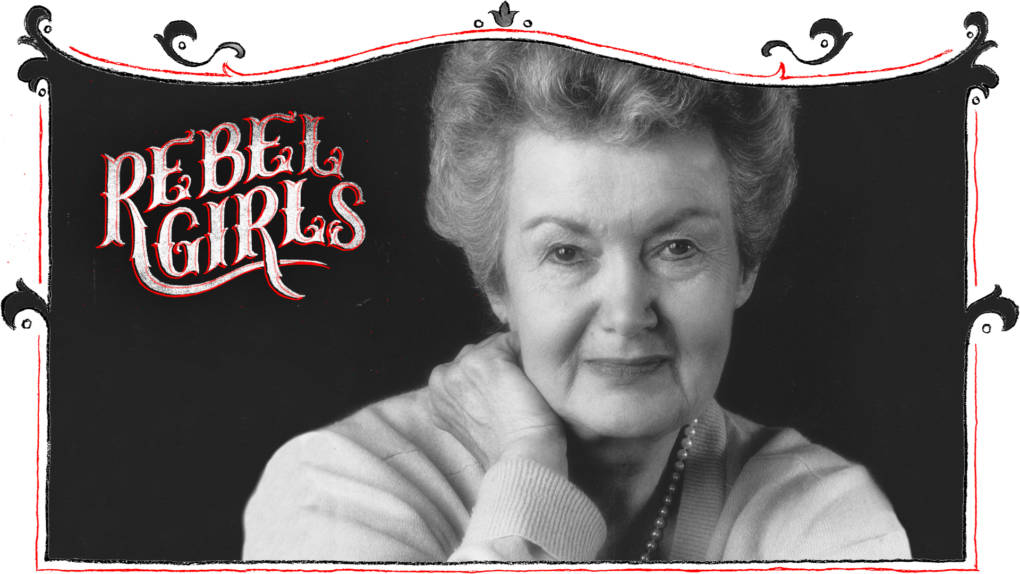
"altTag": "A senior woman with styled, short grey hair half-smiles, chin resting on right hand. She is wearing pearls and a sweater.",
"isLoading": false,
"fetchFailed": false
},
"pop_113168": {
"type": "attachments",
"id": "pop_113168",
"meta": {
"index": "attachments_1716263798",
"site": "pop",
"id": "113168",
"found": true
},
"parent": 102855,
"imgSizes": {
"twentyfourteen-full-width": {
"file": "https://ww2.kqed.org/app/uploads/sites/12/2018/04/Pat-Parker-1038x576.jpg",
"width": 1038,
"mimeType": "image/jpeg",
"height": 576
},
"thumbnail": {
"file": "https://ww2.kqed.org/app/uploads/sites/12/2018/04/Pat-Parker-160x90.jpg",
"width": 160,
"mimeType": "image/jpeg",
"height": 90
},
"post-thumbnail": {
"file": "https://ww2.kqed.org/app/uploads/sites/12/2018/04/Pat-Parker-672x372.jpg",
"width": 672,
"mimeType": "image/jpeg",
"height": 372
},
"kqedFullSize": {
"file": "https://ww2.kqed.org/app/uploads/sites/12/2018/04/Pat-Parker.jpg",
"width": 1920,
"height": 1080
},
"large": {
"file": "https://ww2.kqed.org/app/uploads/sites/12/2018/04/Pat-Parker-1020x574.jpg",
"width": 1020,
"mimeType": "image/jpeg",
"height": 574
},
"complete_open_graph": {
"file": "https://ww2.kqed.org/app/uploads/sites/12/2018/04/Pat-Parker-1200x675.jpg",
"width": 1200,
"mimeType": "image/jpeg",
"height": 675
},
"full-width": {
"file": "https://ww2.kqed.org/app/uploads/sites/12/2018/04/Pat-Parker-1920x1080.jpg",
"width": 1920,
"mimeType": "image/jpeg",
"height": 1080
},
"medium": {
"file": "https://ww2.kqed.org/app/uploads/sites/12/2018/04/Pat-Parker-800x450.jpg",
"width": 800,
"mimeType": "image/jpeg",
"height": 450
},
"medium_large": {
"file": "https://ww2.kqed.org/app/uploads/sites/12/2018/04/Pat-Parker-768x432.jpg",
"width": 768,
"mimeType": "image/jpeg",
"height": 432
}
},
"publishDate": 1571704488,
"modified": 1636506747,
"caption": null,
"description": null,
"title": "Pat Parker",
"credit": null,
"status": "inherit",
"altTag": "A Black woman, hair cropped into a short afro, speaks into a microphone on a stand. She wears a black shirt and vest, with white neck tie underneath.",
"isLoading": false,
"fetchFailed": false
},
"pop_103045": {
"type": "attachments",
"id": "pop_103045",
"meta": {
"index": "attachments_1716263798",
"site": "pop",
"id": "103045",
"found": true
},
"parent": 103040,
"imgSizes": {
"small": {
"file": "https://ww2.kqed.org/app/uploads/sites/12/2018/04/CIFII_Scan728-520x338.jpg",
"width": 520,
"mimeType": "image/jpeg",
"height": 338
},
"twentyfourteen-full-width": {
"file": "https://ww2.kqed.org/app/uploads/sites/12/2018/04/CIFII_Scan728-1038x576.jpg",
"width": 1038,
"mimeType": "image/jpeg",
"height": 576
},
"thumbnail": {
"file": "https://ww2.kqed.org/app/uploads/sites/12/2018/04/CIFII_Scan728-160x104.jpg",
"width": 160,
"mimeType": "image/jpeg",
"height": 104
},
"fd-sm": {
"file": "https://ww2.kqed.org/app/uploads/sites/12/2018/04/CIFII_Scan728-960x624.jpg",
"width": 960,
"mimeType": "image/jpeg",
"height": 624
},
"post-thumbnail": {
"file": "https://ww2.kqed.org/app/uploads/sites/12/2018/04/CIFII_Scan728-672x372.jpg",
"width": 672,
"mimeType": "image/jpeg",
"height": 372
},
"xsmall": {
"file": "https://ww2.kqed.org/app/uploads/sites/12/2018/04/CIFII_Scan728-375x244.jpg",
"width": 375,
"mimeType": "image/jpeg",
"height": 244
},
"kqedFullSize": {
"file": "https://ww2.kqed.org/app/uploads/sites/12/2018/04/CIFII_Scan728.jpg",
"width": 3180,
"height": 2068
},
"large": {
"file": "https://ww2.kqed.org/app/uploads/sites/12/2018/04/CIFII_Scan728-1020x663.jpg",
"width": 1020,
"mimeType": "image/jpeg",
"height": 663
},
"xlarge": {
"file": "https://ww2.kqed.org/app/uploads/sites/12/2018/04/CIFII_Scan728-1180x767.jpg",
"width": 1180,
"mimeType": "image/jpeg",
"height": 767
},
"complete_open_graph": {
"file": "https://ww2.kqed.org/app/uploads/sites/12/2018/04/CIFII_Scan728-1200x780.jpg",
"width": 1200,
"mimeType": "image/jpeg",
"height": 780
},
"guest-author-50": {
"file": "https://ww2.kqed.org/app/uploads/sites/12/2018/04/CIFII_Scan728-50x50.jpg",
"width": 50,
"mimeType": "image/jpeg",
"height": 50
},
"guest-author-96": {
"file": "https://ww2.kqed.org/app/uploads/sites/12/2018/04/CIFII_Scan728-96x96.jpg",
"width": 96,
"mimeType": "image/jpeg",
"height": 96
},
"medium": {
"file": "https://ww2.kqed.org/app/uploads/sites/12/2018/04/CIFII_Scan728-800x520.jpg",
"width": 800,
"mimeType": "image/jpeg",
"height": 520
},
"guest-author-64": {
"file": "https://ww2.kqed.org/app/uploads/sites/12/2018/04/CIFII_Scan728-64x64.jpg",
"width": 64,
"mimeType": "image/jpeg",
"height": 64
},
"guest-author-32": {
"file": "https://ww2.kqed.org/app/uploads/sites/12/2018/04/CIFII_Scan728-32x32.jpg",
"width": 32,
"mimeType": "image/jpeg",
"height": 32
},
"fd-lrg": {
"file": "https://ww2.kqed.org/app/uploads/sites/12/2018/04/CIFII_Scan728-1920x1249.jpg",
"width": 1920,
"mimeType": "image/jpeg",
"height": 1249
},
"fd-med": {
"file": "https://ww2.kqed.org/app/uploads/sites/12/2018/04/CIFII_Scan728-1180x767.jpg",
"width": 1180,
"mimeType": "image/jpeg",
"height": 767
},
"full-width": {
"file": "https://ww2.kqed.org/app/uploads/sites/12/2018/04/CIFII_Scan728-1920x1249.jpg",
"width": 1920,
"mimeType": "image/jpeg",
"height": 1249
},
"detail": {
"file": "https://ww2.kqed.org/app/uploads/sites/12/2018/04/CIFII_Scan728-150x150.jpg",
"width": 150,
"mimeType": "image/jpeg",
"height": 150
},
"medium_large": {
"file": "https://ww2.kqed.org/app/uploads/sites/12/2018/04/CIFII_Scan728-768x499.jpg",
"width": 768,
"mimeType": "image/jpeg",
"height": 499
},
"guest-author-128": {
"file": "https://ww2.kqed.org/app/uploads/sites/12/2018/04/CIFII_Scan728-128x128.jpg",
"width": 128,
"mimeType": "image/jpeg",
"height": 128
},
"xxsmall": {
"file": "https://ww2.kqed.org/app/uploads/sites/12/2018/04/CIFII_Scan728-240x156.jpg",
"width": 240,
"mimeType": "image/jpeg",
"height": 156
}
},
"publishDate": 1523496522,
"modified": 1523496522,
"caption": null,
"description": null,
"title": "CIFII_Scan728",
"credit": null,
"status": "inherit",
"isLoading": false,
"fetchFailed": false
},
"pop_113169": {
"type": "attachments",
"id": "pop_113169",
"meta": {
"index": "attachments_1716263798",
"site": "pop",
"id": "113169",
"found": true
},
"parent": 102774,
"imgSizes": {
"twentyfourteen-full-width": {
"file": "https://ww2.kqed.org/app/uploads/sites/12/2018/03/Alma-de-Bretteville-Spreckels-1038x576.jpg",
"width": 1038,
"mimeType": "image/jpeg",
"height": 576
},
"thumbnail": {
"file": "https://ww2.kqed.org/app/uploads/sites/12/2018/03/Alma-de-Bretteville-Spreckels-160x90.jpg",
"width": 160,
"mimeType": "image/jpeg",
"height": 90
},
"post-thumbnail": {
"file": "https://ww2.kqed.org/app/uploads/sites/12/2018/03/Alma-de-Bretteville-Spreckels-672x372.jpg",
"width": 672,
"mimeType": "image/jpeg",
"height": 372
},
"kqedFullSize": {
"file": "https://ww2.kqed.org/app/uploads/sites/12/2018/03/Alma-de-Bretteville-Spreckels.jpg",
"width": 1920,
"height": 1080
},
"large": {
"file": "https://ww2.kqed.org/app/uploads/sites/12/2018/03/Alma-de-Bretteville-Spreckels-1020x574.jpg",
"width": 1020,
"mimeType": "image/jpeg",
"height": 574
},
"complete_open_graph": {
"file": "https://ww2.kqed.org/app/uploads/sites/12/2018/03/Alma-de-Bretteville-Spreckels-1200x675.jpg",
"width": 1200,
"mimeType": "image/jpeg",
"height": 675
},
"full-width": {
"file": "https://ww2.kqed.org/app/uploads/sites/12/2018/03/Alma-de-Bretteville-Spreckels-1920x1080.jpg",
"width": 1920,
"mimeType": "image/jpeg",
"height": 1080
},
"medium": {
"file": "https://ww2.kqed.org/app/uploads/sites/12/2018/03/Alma-de-Bretteville-Spreckels-800x450.jpg",
"width": 800,
"mimeType": "image/jpeg",
"height": 450
},
"medium_large": {
"file": "https://ww2.kqed.org/app/uploads/sites/12/2018/03/Alma-de-Bretteville-Spreckels-768x432.jpg",
"width": 768,
"mimeType": "image/jpeg",
"height": 432
}
},
"publishDate": 1571704603,
"modified": 1636506855,
"caption": null,
"description": null,
"title": "Alma de Bretteville Spreckels",
"credit": null,
"status": "inherit",
"altTag": "A statuesque white woman with long, tousled hair, leans forward clutching a bouquet of flowers.",
"isLoading": false,
"fetchFailed": false
},
"pop_113203": {
"type": "attachments",
"id": "pop_113203",
"meta": {
"index": "attachments_1716263798",
"site": "pop",
"id": "113203",
"found": true
},
"parent": 102695,
"imgSizes": {
"twentyfourteen-full-width": {
"file": "https://ww2.kqed.org/app/uploads/sites/12/2018/03/download-1038x576.jpg",
"width": 1038,
"mimeType": "image/jpeg",
"height": 576
},
"thumbnail": {
"file": "https://ww2.kqed.org/app/uploads/sites/12/2018/03/download-160x90.jpg",
"width": 160,
"mimeType": "image/jpeg",
"height": 90
},
"post-thumbnail": {
"file": "https://ww2.kqed.org/app/uploads/sites/12/2018/03/download-672x372.jpg",
"width": 672,
"mimeType": "image/jpeg",
"height": 372
},
"kqedFullSize": {
"file": "https://ww2.kqed.org/app/uploads/sites/12/2018/03/download.jpg",
"width": 1920,
"height": 1080
},
"large": {
"file": "https://ww2.kqed.org/app/uploads/sites/12/2018/03/download-1020x574.jpg",
"width": 1020,
"mimeType": "image/jpeg",
"height": 574
},
"complete_open_graph": {
"file": "https://ww2.kqed.org/app/uploads/sites/12/2018/03/download-1200x675.jpg",
"width": 1200,
"mimeType": "image/jpeg",
"height": 675
},
"full-width": {
"file": "https://ww2.kqed.org/app/uploads/sites/12/2018/03/download-1920x1080.jpg",
"width": 1920,
"mimeType": "image/jpeg",
"height": 1080
},
"medium": {
"file": "https://ww2.kqed.org/app/uploads/sites/12/2018/03/download-800x450.jpg",
"width": 800,
"mimeType": "image/jpeg",
"height": 450
},
"medium_large": {
"file": "https://ww2.kqed.org/app/uploads/sites/12/2018/03/download-768x432.jpg",
"width": 768,
"mimeType": "image/jpeg",
"height": 432
}
},
"publishDate": 1571860583,
"modified": 1636506979,
"caption": null,
"description": null,
"title": "download",
"credit": null,
"status": "inherit",
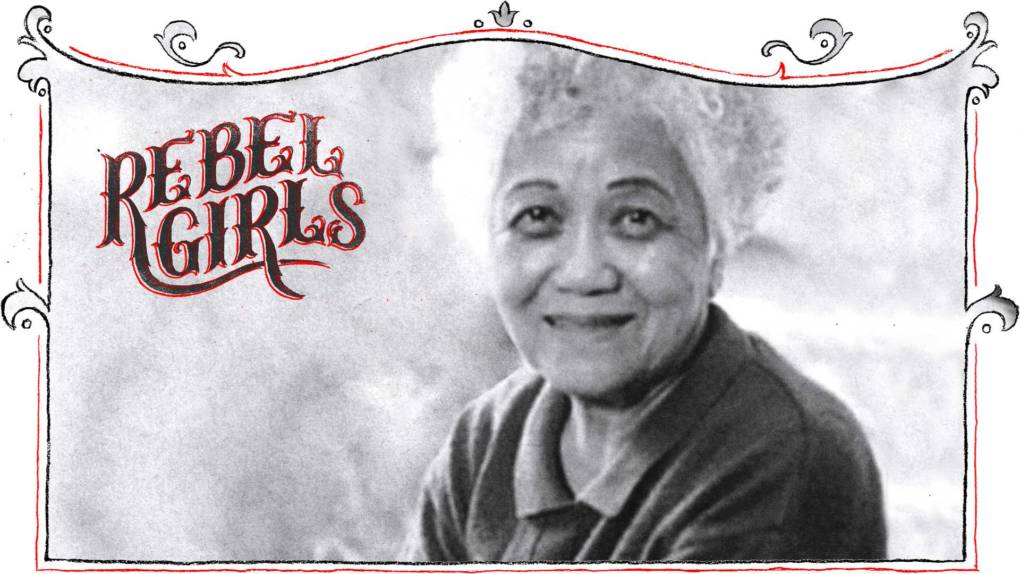
"altTag": "A senior woman of Japanese descent with cropped white curly hair smiles at the camera.",
"isLoading": false,
"fetchFailed": false
},
"pop_113154": {
"type": "attachments",
"id": "pop_113154",
"meta": {
"index": "attachments_1716263798",
"site": "pop",
"id": "113154",
"found": true
},
"parent": 102633,
"imgSizes": {
"twentyfourteen-full-width": {
"file": "https://ww2.kqed.org/app/uploads/sites/12/2018/03/Sofía-Mendoza-1038x576.jpg",
"width": 1038,
"mimeType": "image/jpeg",
"height": 576
},
"thumbnail": {
"file": "https://ww2.kqed.org/app/uploads/sites/12/2018/03/Sofía-Mendoza-160x90.jpg",
"width": 160,
"mimeType": "image/jpeg",
"height": 90
},
"post-thumbnail": {
"file": "https://ww2.kqed.org/app/uploads/sites/12/2018/03/Sofía-Mendoza-672x372.jpg",
"width": 672,
"mimeType": "image/jpeg",
"height": 372
},
"kqedFullSize": {
"file": "https://ww2.kqed.org/app/uploads/sites/12/2018/03/Sofía-Mendoza.jpg",
"width": 1920,
"height": 1080
},
"large": {
"file": "https://ww2.kqed.org/app/uploads/sites/12/2018/03/Sofía-Mendoza-1020x574.jpg",
"width": 1020,
"mimeType": "image/jpeg",
"height": 574
},
"complete_open_graph": {
"file": "https://ww2.kqed.org/app/uploads/sites/12/2018/03/Sofía-Mendoza-1200x675.jpg",
"width": 1200,
"mimeType": "image/jpeg",
"height": 675
},
"full-width": {
"file": "https://ww2.kqed.org/app/uploads/sites/12/2018/03/Sofía-Mendoza-1920x1080.jpg",
"width": 1920,
"mimeType": "image/jpeg",
"height": 1080
},
"medium": {
"file": "https://ww2.kqed.org/app/uploads/sites/12/2018/03/Sofía-Mendoza-800x450.jpg",
"width": 800,
"mimeType": "image/jpeg",
"height": 450
},
"medium_large": {
"file": "https://ww2.kqed.org/app/uploads/sites/12/2018/03/Sofía-Mendoza-768x432.jpg",
"width": 768,
"mimeType": "image/jpeg",
"height": 432
}
},
"publishDate": 1571179773,
"modified": 1636507111,
"caption": null,
"description": null,
"title": "Sofía Mendoza",
"credit": null,
"status": "inherit",
"altTag": "A plump Latina in her fifties with a stylish black updo and leopard print coat smiles warmly for the camera.",
"isLoading": false,
"fetchFailed": false
},
"pop_113155": {
"type": "attachments",
"id": "pop_113155",
"meta": {
"index": "attachments_1716263798",
"site": "pop",
"id": "113155",
"found": true
},
"parent": 102326,
"imgSizes": {
"twentyfourteen-full-width": {
"file": "https://ww2.kqed.org/app/uploads/sites/12/2018/03/Delilah-L.-Beasley-1038x576.jpg",
"width": 1038,
"mimeType": "image/jpeg",
"height": 576
},
"thumbnail": {
"file": "https://ww2.kqed.org/app/uploads/sites/12/2018/03/Delilah-L.-Beasley-160x90.jpg",
"width": 160,
"mimeType": "image/jpeg",
"height": 90
},
"post-thumbnail": {
"file": "https://ww2.kqed.org/app/uploads/sites/12/2018/03/Delilah-L.-Beasley-672x372.jpg",
"width": 672,
"mimeType": "image/jpeg",
"height": 372
},
"kqedFullSize": {
"file": "https://ww2.kqed.org/app/uploads/sites/12/2018/03/Delilah-L.-Beasley.jpg",
"width": 1920,
"height": 1080
},
"large": {
"file": "https://ww2.kqed.org/app/uploads/sites/12/2018/03/Delilah-L.-Beasley-1020x574.jpg",
"width": 1020,
"mimeType": "image/jpeg",
"height": 574
},
"complete_open_graph": {
"file": "https://ww2.kqed.org/app/uploads/sites/12/2018/03/Delilah-L.-Beasley-1200x675.jpg",
"width": 1200,
"mimeType": "image/jpeg",
"height": 675
},
"full-width": {
"file": "https://ww2.kqed.org/app/uploads/sites/12/2018/03/Delilah-L.-Beasley-1920x1080.jpg",
"width": 1920,
"mimeType": "image/jpeg",
"height": 1080
},
"medium": {
"file": "https://ww2.kqed.org/app/uploads/sites/12/2018/03/Delilah-L.-Beasley-800x450.jpg",
"width": 800,
"mimeType": "image/jpeg",
"height": 450
},
"medium_large": {
"file": "https://ww2.kqed.org/app/uploads/sites/12/2018/03/Delilah-L.-Beasley-768x432.jpg",
"width": 768,
"mimeType": "image/jpeg",
"height": 432
}
},
"publishDate": 1571179922,
"modified": 1636507306,
"caption": null,
"description": null,
"title": "Delilah L. Beasley",
"credit": null,
"status": "inherit",
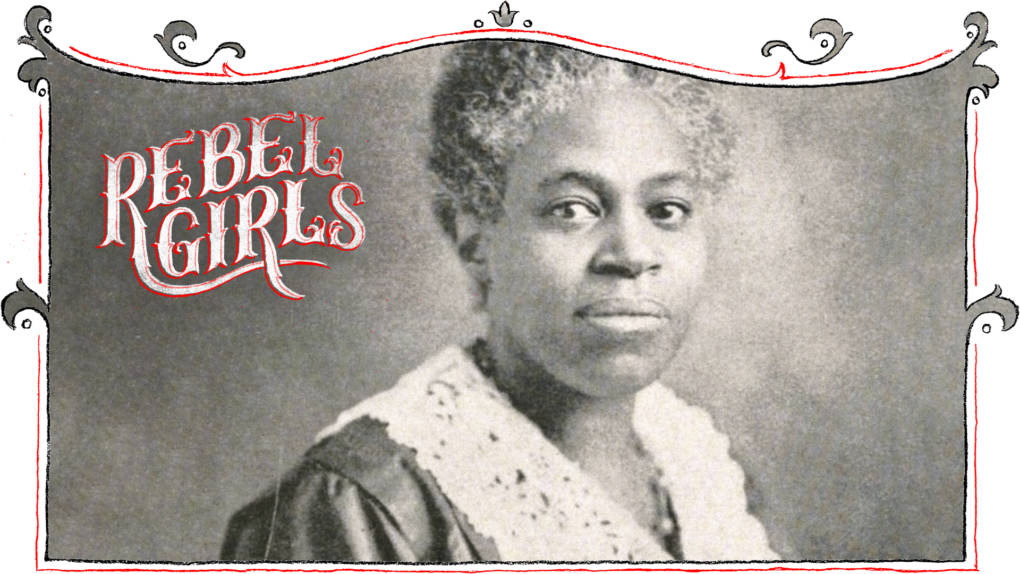
"altTag": "A bright-eyed Black woman in her fifties half-smiles, wearing her greying, curly hair cropped short.",
"isLoading": false,
"fetchFailed": false
},
"pop_113152": {
"type": "attachments",
"id": "pop_113152",
"meta": {
"index": "attachments_1716263798",
"site": "pop",
"id": "113152",
"found": true
},
"parent": 102094,
"imgSizes": {
"twentyfourteen-full-width": {
"file": "https://ww2.kqed.org/app/uploads/sites/12/2018/03/Louise-Arner-Boyd-1038x576.jpg",
"width": 1038,
"mimeType": "image/jpeg",
"height": 576
},
"thumbnail": {
"file": "https://ww2.kqed.org/app/uploads/sites/12/2018/03/Louise-Arner-Boyd-160x90.jpg",
"width": 160,
"mimeType": "image/jpeg",
"height": 90
},
"post-thumbnail": {
"file": "https://ww2.kqed.org/app/uploads/sites/12/2018/03/Louise-Arner-Boyd-672x372.jpg",
"width": 672,
"mimeType": "image/jpeg",
"height": 372
},
"kqedFullSize": {
"file": "https://ww2.kqed.org/app/uploads/sites/12/2018/03/Louise-Arner-Boyd.jpg",
"width": 1920,
"height": 1080
},
"large": {
"file": "https://ww2.kqed.org/app/uploads/sites/12/2018/03/Louise-Arner-Boyd-1020x574.jpg",
"width": 1020,
"mimeType": "image/jpeg",
"height": 574
},
"complete_open_graph": {
"file": "https://ww2.kqed.org/app/uploads/sites/12/2018/03/Louise-Arner-Boyd-1200x675.jpg",
"width": 1200,
"mimeType": "image/jpeg",
"height": 675
},
"full-width": {
"file": "https://ww2.kqed.org/app/uploads/sites/12/2018/03/Louise-Arner-Boyd-1920x1080.jpg",
"width": 1920,
"mimeType": "image/jpeg",
"height": 1080
},
"medium": {
"file": "https://ww2.kqed.org/app/uploads/sites/12/2018/03/Louise-Arner-Boyd-800x450.jpg",
"width": 800,
"mimeType": "image/jpeg",
"height": 450
},
"medium_large": {
"file": "https://ww2.kqed.org/app/uploads/sites/12/2018/03/Louise-Arner-Boyd-768x432.jpg",
"width": 768,
"mimeType": "image/jpeg",
"height": 432
}
},
"publishDate": 1571177274,
"modified": 1636507654,
"caption": null,
"description": null,
"title": "Louise Arner Boyd",
"credit": null,
"status": "inherit",
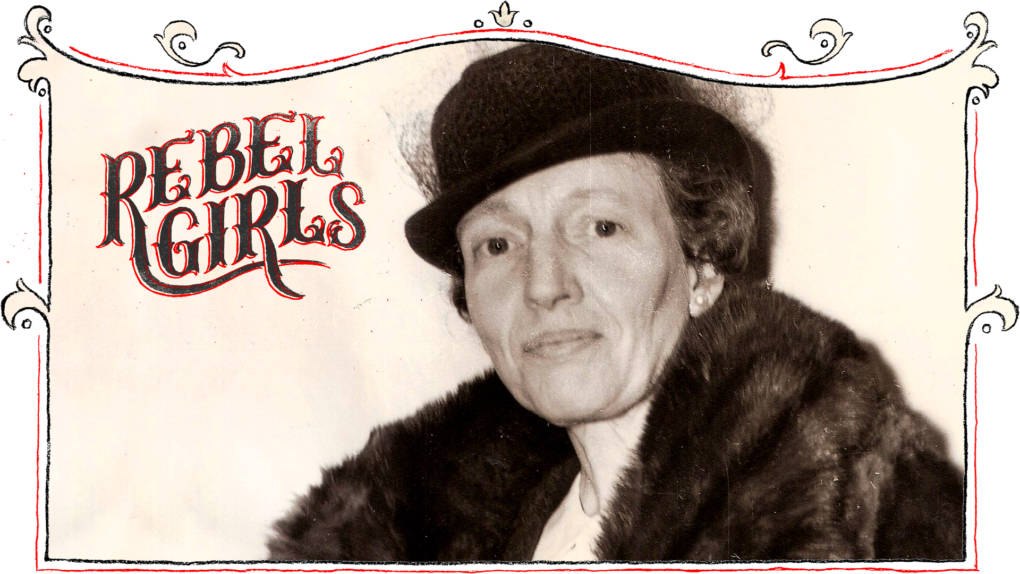
"altTag": "A white middle-aged woman with pronounced cheekbones poses, wearing a mink coat and bowler hat with netting.",
"isLoading": false,
"fetchFailed": false
},
"pop_102263": {
"type": "attachments",
"id": "pop_102263",
"meta": {
"index": "attachments_1716263798",
"site": "pop",
"id": "102263",
"found": true
},
"parent": 102255,
"imgSizes": {
"small": {
"file": "https://ww2.kqed.org/app/uploads/sites/12/2018/02/mp-color-520x293.jpg",
"width": 520,
"mimeType": "image/jpeg",
"height": 293
},
"twentyfourteen-full-width": {
"file": "https://ww2.kqed.org/app/uploads/sites/12/2018/02/mp-color-1038x576.jpg",
"width": 1038,
"mimeType": "image/jpeg",
"height": 576
},
"thumbnail": {
"file": "https://ww2.kqed.org/app/uploads/sites/12/2018/02/mp-color-160x90.jpg",
"width": 160,
"mimeType": "image/jpeg",
"height": 90
},
"fd-sm": {
"file": "https://ww2.kqed.org/app/uploads/sites/12/2018/02/mp-color-960x540.jpg",
"width": 960,
"mimeType": "image/jpeg",
"height": 540
},
"post-thumbnail": {
"file": "https://ww2.kqed.org/app/uploads/sites/12/2018/02/mp-color-672x372.jpg",
"width": 672,
"mimeType": "image/jpeg",
"height": 372
},
"xsmall": {
"file": "https://ww2.kqed.org/app/uploads/sites/12/2018/02/mp-color-375x211.jpg",
"width": 375,
"mimeType": "image/jpeg",
"height": 211
},
"kqedFullSize": {
"file": "https://ww2.kqed.org/app/uploads/sites/12/2018/02/mp-color.jpg",
"width": 1920,
"height": 1080
},
"large": {
"file": "https://ww2.kqed.org/app/uploads/sites/12/2018/02/mp-color-1020x574.jpg",
"width": 1020,
"mimeType": "image/jpeg",
"height": 574
},
"xlarge": {
"file": "https://ww2.kqed.org/app/uploads/sites/12/2018/02/mp-color-1180x664.jpg",
"width": 1180,
"mimeType": "image/jpeg",
"height": 664
},
"complete_open_graph": {
"file": "https://ww2.kqed.org/app/uploads/sites/12/2018/02/mp-color-1200x675.jpg",
"width": 1200,
"mimeType": "image/jpeg",
"height": 675
},
"guest-author-50": {
"file": "https://ww2.kqed.org/app/uploads/sites/12/2018/02/mp-color-50x50.jpg",
"width": 50,
"mimeType": "image/jpeg",
"height": 50
},
"guest-author-96": {
"file": "https://ww2.kqed.org/app/uploads/sites/12/2018/02/mp-color-96x96.jpg",
"width": 96,
"mimeType": "image/jpeg",
"height": 96
},
"medium": {
"file": "https://ww2.kqed.org/app/uploads/sites/12/2018/02/mp-color-800x450.jpg",
"width": 800,
"mimeType": "image/jpeg",
"height": 450
},
"guest-author-64": {
"file": "https://ww2.kqed.org/app/uploads/sites/12/2018/02/mp-color-64x64.jpg",
"width": 64,
"mimeType": "image/jpeg",
"height": 64
},
"guest-author-32": {
"file": "https://ww2.kqed.org/app/uploads/sites/12/2018/02/mp-color-32x32.jpg",
"width": 32,
"mimeType": "image/jpeg",
"height": 32
},
"fd-lrg": {
"file": "https://ww2.kqed.org/app/uploads/sites/12/2018/02/mp-color-1920x1080.jpg",
"width": 1920,
"mimeType": "image/jpeg",
"height": 1080
},
"fd-med": {
"file": "https://ww2.kqed.org/app/uploads/sites/12/2018/02/mp-color-1180x664.jpg",
"width": 1180,
"mimeType": "image/jpeg",
"height": 664
},
"full-width": {
"file": "https://ww2.kqed.org/app/uploads/sites/12/2018/02/mp-color-1920x1080.jpg",
"width": 1920,
"mimeType": "image/jpeg",
"height": 1080
},
"detail": {
"file": "https://ww2.kqed.org/app/uploads/sites/12/2018/02/mp-color-150x150.jpg",
"width": 150,
"mimeType": "image/jpeg",
"height": 150
},
"medium_large": {
"file": "https://ww2.kqed.org/app/uploads/sites/12/2018/02/mp-color-768x432.jpg",
"width": 768,
"mimeType": "image/jpeg",
"height": 432
},
"guest-author-128": {
"file": "https://ww2.kqed.org/app/uploads/sites/12/2018/02/mp-color-128x128.jpg",
"width": 128,
"mimeType": "image/jpeg",
"height": 128
},
"xxsmall": {
"file": "https://ww2.kqed.org/app/uploads/sites/12/2018/02/mp-color-240x135.jpg",
"width": 240,
"mimeType": "image/jpeg",
"height": 135
}
},
"publishDate": 1519774888,
"modified": 1519776291,
"caption": "Mary Pickford and actor Buddy Rogers pose in a photograph dated 1936 in an unknown location. (Photo: AFP/Getty Images)\n(Background Hollywood Hills Photo: Jacob Repko on Unsplash)",
"description": null,
"title": "mp color",
"credit": null,
"status": "inherit",
"isLoading": false,
"fetchFailed": false
},
"pop_102046": {
"type": "attachments",
"id": "pop_102046",
"meta": {
"index": "attachments_1716263798",
"site": "pop",
"id": "102046",
"found": true
},
"parent": 102027,
"imgSizes": {
"small": {
"file": "https://ww2.kqed.org/app/uploads/sites/12/2018/02/babymail-520x321.jpg",
"width": 520,
"mimeType": "image/jpeg",
"height": 321
},
"twentyfourteen-full-width": {
"file": "https://ww2.kqed.org/app/uploads/sites/12/2018/02/babymail-1038x576.jpg",
"width": 1038,
"mimeType": "image/jpeg",
"height": 576
},
"thumbnail": {
"file": "https://ww2.kqed.org/app/uploads/sites/12/2018/02/babymail-160x99.jpg",
"width": 160,
"mimeType": "image/jpeg",
"height": 99
},
"fd-sm": {
"file": "https://ww2.kqed.org/app/uploads/sites/12/2018/02/babymail-960x593.jpg",
"width": 960,
"mimeType": "image/jpeg",
"height": 593
},
"post-thumbnail": {
"file": "https://ww2.kqed.org/app/uploads/sites/12/2018/02/babymail-672x372.jpg",
"width": 672,
"mimeType": "image/jpeg",
"height": 372
},
"xsmall": {
"file": "https://ww2.kqed.org/app/uploads/sites/12/2018/02/babymail-375x232.jpg",
"width": 375,
"mimeType": "image/jpeg",
"height": 232
},
"kqedFullSize": {
"file": "https://ww2.kqed.org/app/uploads/sites/12/2018/02/babymail.jpg",
"width": 3992,
"height": 2467
},
"large": {
"file": "https://ww2.kqed.org/app/uploads/sites/12/2018/02/babymail-1020x630.jpg",
"width": 1020,
"mimeType": "image/jpeg",
"height": 630
},
"xlarge": {
"file": "https://ww2.kqed.org/app/uploads/sites/12/2018/02/babymail-1180x729.jpg",
"width": 1180,
"mimeType": "image/jpeg",
"height": 729
},
"complete_open_graph": {
"file": "https://ww2.kqed.org/app/uploads/sites/12/2018/02/babymail-1200x742.jpg",
"width": 1200,
"mimeType": "image/jpeg",
"height": 742
},
"guest-author-50": {
"file": "https://ww2.kqed.org/app/uploads/sites/12/2018/02/babymail-50x50.jpg",
"width": 50,
"mimeType": "image/jpeg",
"height": 50
},
"guest-author-96": {
"file": "https://ww2.kqed.org/app/uploads/sites/12/2018/02/babymail-96x96.jpg",
"width": 96,
"mimeType": "image/jpeg",
"height": 96
},
"medium": {
"file": "https://ww2.kqed.org/app/uploads/sites/12/2018/02/babymail-800x494.jpg",
"width": 800,
"mimeType": "image/jpeg",
"height": 494
},
"guest-author-64": {
"file": "https://ww2.kqed.org/app/uploads/sites/12/2018/02/babymail-64x64.jpg",
"width": 64,
"mimeType": "image/jpeg",
"height": 64
},
"guest-author-32": {
"file": "https://ww2.kqed.org/app/uploads/sites/12/2018/02/babymail-32x32.jpg",
"width": 32,
"mimeType": "image/jpeg",
"height": 32
},
"fd-lrg": {
"file": "https://ww2.kqed.org/app/uploads/sites/12/2018/02/babymail-1920x1187.jpg",
"width": 1920,
"mimeType": "image/jpeg",
"height": 1187
},
"fd-med": {
"file": "https://ww2.kqed.org/app/uploads/sites/12/2018/02/babymail-1180x729.jpg",
"width": 1180,
"mimeType": "image/jpeg",
"height": 729
},
"full-width": {
"file": "https://ww2.kqed.org/app/uploads/sites/12/2018/02/babymail-1920x1187.jpg",
"width": 1920,
"mimeType": "image/jpeg",
"height": 1187
},
"detail": {
"file": "https://ww2.kqed.org/app/uploads/sites/12/2018/02/babymail-150x150.jpg",
"width": 150,
"mimeType": "image/jpeg",
"height": 150
},
"medium_large": {
"file": "https://ww2.kqed.org/app/uploads/sites/12/2018/02/babymail-768x475.jpg",
"width": 768,
"mimeType": "image/jpeg",
"height": 475
},
"guest-author-128": {
"file": "https://ww2.kqed.org/app/uploads/sites/12/2018/02/babymail-128x128.jpg",
"width": 128,
"mimeType": "image/jpeg",
"height": 128
},
"xxsmall": {
"file": "https://ww2.kqed.org/app/uploads/sites/12/2018/02/babymail-240x148.jpg",
"width": 240,
"mimeType": "image/jpeg",
"height": 148
}
},
"publishDate": 1519170097,
"modified": 1519170097,
"caption": null,
"description": null,
"title": "babymail",
"credit": null,
"status": "inherit",
"isLoading": false,
"fetchFailed": false
},
"pop_102026": {
"type": "attachments",
"id": "pop_102026",
"meta": {
"index": "attachments_1716263798",
"site": "pop",
"id": "102026",
"found": true
},
"parent": 101956,
"imgSizes": {
"small": {
"file": "https://ww2.kqed.org/app/uploads/sites/12/2018/02/hearst-Collage-520x321.jpg",
"width": 520,
"mimeType": "image/jpeg",
"height": 321
},
"twentyfourteen-full-width": {
"file": "https://ww2.kqed.org/app/uploads/sites/12/2018/02/hearst-Collage-1038x576.jpg",
"width": 1038,
"mimeType": "image/jpeg",
"height": 576
},
"thumbnail": {
"file": "https://ww2.kqed.org/app/uploads/sites/12/2018/02/hearst-Collage-160x99.jpg",
"width": 160,
"mimeType": "image/jpeg",
"height": 99
},
"fd-sm": {
"file": "https://ww2.kqed.org/app/uploads/sites/12/2018/02/hearst-Collage-960x593.jpg",
"width": 960,
"mimeType": "image/jpeg",
"height": 593
},
"post-thumbnail": {
"file": "https://ww2.kqed.org/app/uploads/sites/12/2018/02/hearst-Collage-672x372.jpg",
"width": 672,
"mimeType": "image/jpeg",
"height": 372
},
"xsmall": {
"file": "https://ww2.kqed.org/app/uploads/sites/12/2018/02/hearst-Collage-375x232.jpg",
"width": 375,
"mimeType": "image/jpeg",
"height": 232
},
"kqedFullSize": {
"file": "https://ww2.kqed.org/app/uploads/sites/12/2018/02/hearst-Collage.jpg",
"width": 3992,
"height": 2467
},
"large": {
"file": "https://ww2.kqed.org/app/uploads/sites/12/2018/02/hearst-Collage-1020x630.jpg",
"width": 1020,
"mimeType": "image/jpeg",
"height": 630
},
"xlarge": {
"file": "https://ww2.kqed.org/app/uploads/sites/12/2018/02/hearst-Collage-1180x729.jpg",
"width": 1180,
"mimeType": "image/jpeg",
"height": 729
},
"complete_open_graph": {
"file": "https://ww2.kqed.org/app/uploads/sites/12/2018/02/hearst-Collage-1200x742.jpg",
"width": 1200,
"mimeType": "image/jpeg",
"height": 742
},
"guest-author-50": {
"file": "https://ww2.kqed.org/app/uploads/sites/12/2018/02/hearst-Collage-50x50.jpg",
"width": 50,
"mimeType": "image/jpeg",
"height": 50
},
"guest-author-96": {
"file": "https://ww2.kqed.org/app/uploads/sites/12/2018/02/hearst-Collage-96x96.jpg",
"width": 96,
"mimeType": "image/jpeg",
"height": 96
},
"medium": {
"file": "https://ww2.kqed.org/app/uploads/sites/12/2018/02/hearst-Collage-800x494.jpg",
"width": 800,
"mimeType": "image/jpeg",
"height": 494
},
"guest-author-64": {
"file": "https://ww2.kqed.org/app/uploads/sites/12/2018/02/hearst-Collage-64x64.jpg",
"width": 64,
"mimeType": "image/jpeg",
"height": 64
},
"guest-author-32": {
"file": "https://ww2.kqed.org/app/uploads/sites/12/2018/02/hearst-Collage-32x32.jpg",
"width": 32,
"mimeType": "image/jpeg",
"height": 32
},
"fd-lrg": {
"file": "https://ww2.kqed.org/app/uploads/sites/12/2018/02/hearst-Collage-1920x1187.jpg",
"width": 1920,
"mimeType": "image/jpeg",
"height": 1187
},
"fd-med": {
"file": "https://ww2.kqed.org/app/uploads/sites/12/2018/02/hearst-Collage-1180x729.jpg",
"width": 1180,
"mimeType": "image/jpeg",
"height": 729
},
"full-width": {
"file": "https://ww2.kqed.org/app/uploads/sites/12/2018/02/hearst-Collage-1920x1187.jpg",
"width": 1920,
"mimeType": "image/jpeg",
"height": 1187
},
"detail": {
"file": "https://ww2.kqed.org/app/uploads/sites/12/2018/02/hearst-Collage-150x150.jpg",
"width": 150,
"mimeType": "image/jpeg",
"height": 150
},
"medium_large": {
"file": "https://ww2.kqed.org/app/uploads/sites/12/2018/02/hearst-Collage-768x475.jpg",
"width": 768,
"mimeType": "image/jpeg",
"height": 475
},
"guest-author-128": {
"file": "https://ww2.kqed.org/app/uploads/sites/12/2018/02/hearst-Collage-128x128.jpg",
"width": 128,
"mimeType": "image/jpeg",
"height": 128
},
"xxsmall": {
"file": "https://ww2.kqed.org/app/uploads/sites/12/2018/02/hearst-Collage-240x148.jpg",
"width": 240,
"mimeType": "image/jpeg",
"height": 148
}
},
"publishDate": 1519160107,
"modified": 1519160168,
"caption": "Patricia Hearst in 'Serial Mom', Center: Hearst's 1975 mugshot, Right: Hearst and one of her prize-winning dogs.",
"description": null,
"title": "hearst Collage",
"credit": null,
"status": "inherit",
"isLoading": false,
"fetchFailed": false
},
"pop_101702": {
"type": "attachments",
"id": "pop_101702",
"meta": {
"index": "attachments_1716263798",
"site": "pop",
"id": "101702",
"found": true
},
"parent": 101669,
"imgSizes": {
"small": {
"file": "https://ww2.kqed.org/app/uploads/sites/12/2018/02/laundry-520x289.jpg",
"width": 520,
"mimeType": "image/jpeg",
"height": 289
},
"twentyfourteen-full-width": {
"file": "https://ww2.kqed.org/app/uploads/sites/12/2018/02/laundry-1038x576.jpg",
"width": 1038,
"mimeType": "image/jpeg",
"height": 576
},
"thumbnail": {
"file": "https://ww2.kqed.org/app/uploads/sites/12/2018/02/laundry-160x89.jpg",
"width": 160,
"mimeType": "image/jpeg",
"height": 89
},
"fd-sm": {
"file": "https://ww2.kqed.org/app/uploads/sites/12/2018/02/laundry-960x533.jpg",
"width": 960,
"mimeType": "image/jpeg",
"height": 533
},
"post-thumbnail": {
"file": "https://ww2.kqed.org/app/uploads/sites/12/2018/02/laundry-672x372.jpg",
"width": 672,
"mimeType": "image/jpeg",
"height": 372
},
"xsmall": {
"file": "https://ww2.kqed.org/app/uploads/sites/12/2018/02/laundry-375x208.jpg",
"width": 375,
"mimeType": "image/jpeg",
"height": 208
},
"kqedFullSize": {
"file": "https://ww2.kqed.org/app/uploads/sites/12/2018/02/laundry.jpg",
"width": 3994,
"height": 2216
},
"large": {
"file": "https://ww2.kqed.org/app/uploads/sites/12/2018/02/laundry-1020x566.jpg",
"width": 1020,
"mimeType": "image/jpeg",
"height": 566
},
"xlarge": {
"file": "https://ww2.kqed.org/app/uploads/sites/12/2018/02/laundry-1180x655.jpg",
"width": 1180,
"mimeType": "image/jpeg",
"height": 655
},
"complete_open_graph": {
"file": "https://ww2.kqed.org/app/uploads/sites/12/2018/02/laundry-1200x666.jpg",
"width": 1200,
"mimeType": "image/jpeg",
"height": 666
},
"guest-author-50": {
"file": "https://ww2.kqed.org/app/uploads/sites/12/2018/02/laundry-50x50.jpg",
"width": 50,
"mimeType": "image/jpeg",
"height": 50
},
"guest-author-96": {
"file": "https://ww2.kqed.org/app/uploads/sites/12/2018/02/laundry-96x96.jpg",
"width": 96,
"mimeType": "image/jpeg",
"height": 96
},
"medium": {
"file": "https://ww2.kqed.org/app/uploads/sites/12/2018/02/laundry-800x444.jpg",
"width": 800,
"mimeType": "image/jpeg",
"height": 444
},
"guest-author-64": {
"file": "https://ww2.kqed.org/app/uploads/sites/12/2018/02/laundry-64x64.jpg",
"width": 64,
"mimeType": "image/jpeg",
"height": 64
},
"guest-author-32": {
"file": "https://ww2.kqed.org/app/uploads/sites/12/2018/02/laundry-32x32.jpg",
"width": 32,
"mimeType": "image/jpeg",
"height": 32
},
"fd-lrg": {
"file": "https://ww2.kqed.org/app/uploads/sites/12/2018/02/laundry-1920x1065.jpg",
"width": 1920,
"mimeType": "image/jpeg",
"height": 1065
},
"fd-med": {
"file": "https://ww2.kqed.org/app/uploads/sites/12/2018/02/laundry-1180x655.jpg",
"width": 1180,
"mimeType": "image/jpeg",
"height": 655
},
"full-width": {
"file": "https://ww2.kqed.org/app/uploads/sites/12/2018/02/laundry-1920x1065.jpg",
"width": 1920,
"mimeType": "image/jpeg",
"height": 1065
},
"detail": {
"file": "https://ww2.kqed.org/app/uploads/sites/12/2018/02/laundry-150x150.jpg",
"width": 150,
"mimeType": "image/jpeg",
"height": 150
},
"medium_large": {
"file": "https://ww2.kqed.org/app/uploads/sites/12/2018/02/laundry-768x426.jpg",
"width": 768,
"mimeType": "image/jpeg",
"height": 426
},
"guest-author-128": {
"file": "https://ww2.kqed.org/app/uploads/sites/12/2018/02/laundry-128x128.jpg",
"width": 128,
"mimeType": "image/jpeg",
"height": 128
},
"xxsmall": {
"file": "https://ww2.kqed.org/app/uploads/sites/12/2018/02/laundry-240x133.jpg",
"width": 240,
"mimeType": "image/jpeg",
"height": 133
}
},
"publishDate": 1517950446,
"modified": 1517950446,
"caption": null,
"description": null,
"title": "laundry",
"credit": null,
"status": "inherit",
"isLoading": false,
"fetchFailed": false
}
},
"audioPlayerReducer": {
"postId": "stream_live",
"isPaused": true,
"isPlaying": false,
"pfsActive": false,
"pledgeModalIsOpen": true,
"playerDrawerIsOpen": false,
"liveAudioPlayStartedAt": 0,
"liveAudioPlayContext": ""
},
"authorsReducer": {
"byline_pop_102255": {
"type": "authors",
"id": "byline_pop_102255",
"meta": {
"override": true
},
"slug": "byline_pop_102255",
"name": "Susan Stamberg",
"isLoading": false
},
"ralexandra": {
"type": "authors",
"id": "11242",
"meta": {
"index": "authors_1716337520",
"id": "11242",
"found": true
},
"name": "Rae Alexandra",
"firstName": "Rae",
"lastName": "Alexandra",
"slug": "ralexandra",
"email": "ralexandra@kqed.org",
"display_author_email": true,
"staff_mastheads": [],
"title": "Reporter/Producer",
"bio": "Rae Alexandra is a Reporter/Producer for KQED Arts & Culture, and the creator/author of the \u003ca href=\"https://www.kqed.org/arts/program/rebel-girls-from-bay-area-history\">Rebel Girls From Bay Area History\u003c/a> and \u003ca href=\"https://www.kqed.org/bizarrebayarea\">Bizarre Bay Area\u003c/a> series. Her debut book, \u003ca href=\"https://citylights.com/politics-current-events-history/unsung-heroines35-women-who-changed/\">Unsung Heroines: 35 Women Who Changed the Bay Area\u003c/a> was published by City Lights in March 2026. In 2023, Rae was awarded an SPJ Excellence in Journalism Award for Arts & Culture. Rae was born and raised in Wales and subsequently — even after two decades in Northern California — still uses phrases that regularly baffle her coworkers.",
"avatar": "https://secure.gravatar.com/avatar/edfee8176c80cc0a382b051190f5341997df378a934a5774dcb0977732dfd401?s=600&d=blank&r=g",
"twitter": null,
"bluesky": null,
"facebook": null,
"instagram": null,
"linkedin": null,
"sites": [
{
"site": "arts",
"roles": [
"subscriber"
]
},
{
"site": "news",
"roles": [
"subscriber"
]
},
{
"site": "pop",
"roles": [
"subscriber"
]
},
{
"site": "bayareabites",
"roles": [
"subscriber"
]
},
{
"site": "science",
"roles": [
"subscriber"
]
}
],
"headData": {
"title": "Rae Alexandra | KQED",
"description": "Reporter/Producer",
"ogImgSrc": "https://secure.gravatar.com/avatar/edfee8176c80cc0a382b051190f5341997df378a934a5774dcb0977732dfd401?s=600&d=blank&r=g",
"twImgSrc": "https://secure.gravatar.com/avatar/edfee8176c80cc0a382b051190f5341997df378a934a5774dcb0977732dfd401?s=600&d=blank&r=g"
},
"isLoading": false,
"link": "/author/ralexandra"
}
},
"pagesReducer": {
"pop_category_history": {
"type": "terms",
"id": "pop_2937",
"meta": {
"index": "terms_1716263798",
"site": "pop",
"id": "2937",
"score": 12.209984
},
"featImg": null,
"name": "History",
"description": null,
"taxonomy": "category",
"headData": {
"twImgId": null,
"twTitle": null,
"ogTitle": null,
"ogImgId": null,
"twDescription": null,
"description": null,
"title": "History Archives | KQED Arts",
"ogDescription": null
},
"ttid": 2937,
"slug": "history",
"isLoading": false,
"title": "History",
"pageMeta": {
"site": "pop",
"WpPageTemplate": "page-topic-editorial",
"currentPage": 3
},
"blocks": [
{
"blockName": "kqed/post-list",
"attrs": {
"layout": "cardArticle2",
"query": "posts/pop?category=history",
"seeMore": false,
"paginated": true,
"page": 3
}
},
{
"blockName": "kqed/ad"
}
]
}
},
"pfsSessionReducer": {},
"postsReducer": {
"stream_live": {
"type": "live",
"id": "stream_live",
"audioUrl": "https://streams.kqed.org/kqedradio",
"title": "Live Stream",
"excerpt": "Live Stream information currently unavailable.",
"link": "/radio",
"featImg": "",
"label": {
"name": "KQED Live",
"link": "/"
}
},
"stream_kqedNewscast": {
"type": "posts",
"id": "stream_kqedNewscast",
"audioUrl": "https://www.kqed.org/.stream/anon/radio/RDnews/newscast.mp3?_=1",
"title": "KQED Newscast",
"featImg": "",
"label": {
"name": "88.5 FM",
"link": "/"
}
},
"pop_103422": {
"type": "posts",
"id": "pop_103422",
"meta": {
"index": "posts_1716263798",
"site": "pop",
"id": "103422",
"score": null,
"sort": [
1528200383000
]
},
"guestAuthors": [],
"slug": "rebel-girls-from-bay-area-history-ruth-brinker-aids-activist",
"title": "The Retired Grandma Who Transformed HIV Care in Her Community",
"publishDate": 1528200383,
"format": "standard",
"headTitle": "The Retired Grandma Who Transformed HIV Care in Her Community | KQED",
"labelTerm": {},
"content": "\u003cp>In 1985, America was in the midst of scrambling to figure out how to tackle \u003ca href=\"https://www.kqed.org/arts/tag/aids\">AIDS\u003c/a>. It was the year that Ronald Reagan was finally forced to publicly acknowledge the disease; the year of the very first International AIDS Conference; the year Rock Hudson died, leaving $250,000 behind to set up the American Foundation for AIDS Research; and the year a soft-spoken grandma named Ruth Brinker decided something must be done to assist people with HIV in the community.\u003c/p>\n\u003cp>At the time, fear around AIDS was at an all-time high. \u003cem>Time\u003c/em> magazine published an article in August 1985, documenting the confusion and panic that was gripping communities nationwide. Subjects in the piece included a funeral home that refused to dress a three-year-old who had died from AIDS, firemen suddenly wary of performing mouth-to-mouth resuscitation, and a 13-year-old hemophiliac named Ryan White who was excluded from his Indiana middle school after contracting the virus from a blood transfusion.\u003c/p>\n\u003cp>[aside postid=’arts_13955066′]\u003cem>Time\u003c/em> reported: “The issue of whether or not AIDS can be transmitted through saliva remains medically unresolved and a focus of fear.”\u003c/p>\n\u003cp>Ruth, a San Francisco resident, was acutely aware of these issues. After finding out that a friend of hers who was living with AIDs was also suffering from malnutrition, she took it upon herself to make sure he had regular meals to eat. At first, Ruth was a one-woman operation, making food in her home kitchen for seven neighbors in need, and delivering it in an old VW van.\u003c/p>\n\u003cp>“It was my very first experience with AIDS,” Ruth explained in short documentary, \u003cem>The Ruth Brinker Story\u003c/em>. “I was absolutely shattered to see how quickly [my friend] became unable to take care of himself. And I began worrying about all the other people in the city who I knew had AIDS and wondering how they were fending. And I just felt compelled to start a meal service for them.”\u003c/p>\n\u003cp>[ad fullwidth]\u003c/p>\n\u003cp>Ruth’s response made sense. She had long been a volunteer with Meals on Wheels and, in the mid-1980s was managing a chapter of the charity. But because recipients of Meals on Wheels were required to be over the age of 60, she knew it could not help the vast majority of AIDS patients in San Francisco. A dedicated new meal service was badly needed. \u003ca href=\"https://www.openhand.org/\">Project Open Hand\u003c/a> (POH) was born.\u003c/p>\n\u003cp>As word spread about Ruth’s good deeds, it became apparent that demand for the new service was too great for her to handle at home. After receiving a $2,000 donation from the Zen Center, Ruth found seven volunteers to assist her. A few months later, Ruth received another, much-needed, $2,000 from the Golden Gate Business Association.\u003c/p>\n\u003cp>[aside postid=’arts_13959726′]”I did the cooking and preparing with one hand, while doing Meals on Wheels with the other,” she told the \u003cem>San Francisco Examiner\u003c/em> in 1987. “All this takes determination and I get an enormous amount of pleasure out of it. When someone gets out of a hospital skeletal and in a few months has put his weight back on and tells you, ‘You’ve saved my life,’ it’s a good feeling.”\u003c/p>\n\u003cp>Ruth continued, “We use all fresh vegetables, no processed foods. I think I’m serving some of the best food in town. It’s how we show the guys we care.”\u003c/p>\n\u003cp>In addition to Ruth’s organizational abilities and overriding sense of determination, one of the keys to the organization’s early survival was the support of LGBTQ venues and groups (including the San Francisco Gay Men’s Chorus) that pitched in with regular fundraisers. Often the approach to raising money was exceedingly scrappy.\u003c/p>\n\u003cp>Tom Nolan, POH’s executive director once told \u003cem>SF Gate\u003c/em>: “The epidemic was just raging out of control. She’d have people literally go to the bars at night and pass a hat around and then go buy potatoes.”\u003c/p>\n\u003cp>Between 1986 and 1988, the nonprofit’s budget swelled from $70,000 to $1 million. Ruth once told \u003cem>Time\u003c/em> magazine simply, “You have to go out and beg.” In much the same way that Ruth had never envisaged having to so regularly persuade people to give her money, she also knew that the majority of the patients POH was serving never dreamed they would need charity to survive.\u003c/p>\n\u003cp>“They were executives, architects, computer programmers; they have lived a nice lifestyle,” she once recalled. “Then they run out of money and wind up in a ten-dollar a night motel. It’s very hard for them to ask for help — sometimes they wait until they’re nearly starving.”\u003c/p>\n\u003cp>By 1987, POH was operating out of the kitchen at Trinity Episcopal Church, aided by five chefs, several paid kitchen assistants, a sandwich maker, one driver, two vans and scores of volunteers including Ruth’s daughter, Sara. In 1987, Ruth also received an award from the National AIDS Network in acknowledgment of her efforts. The honor was effective at raising the profile of Project Open Hand. This led to assistance by philanthropist James Hormel, a $125,000 donation from Chevron, a $50,000 grant from the city for new kitchen equipment and a move to larger headquarters with a 4,000-square foot kitchen. By then, the extra space was desperately needed.\u003c/p>\n\u003cp>A year after the move, Ruth confessed that towards the end of POH’s time operating out of Trinity, “people were peeling potatoes and carrots in the halls, and making sandwiches in the vestry and the choir’s robing room was our computer department.”\u003c/p>\n\u003cp>Once in their upgraded headquarters in the Mission District, with the help of 100 volunteers’ eager helping hands, POH was able to make and distribute over 2,000 meals a day, still propelled by Ruth’s simple idea that food is love.\u003c/p>\n\u003cp>POH’s speedy growth was evidence of how great the need for the service was. By 1989, POH was serving patients across the Bay in Alameda County. That same year, after the Loma Prieta earthquake, the project provided food to tens of thousands of residents whose houses had been destroyed. Meals were delivered to the East Bay via BART and sheer force of will.\u003c/p>\n\u003cp>[aside postid=’arts_13889944′]By 1998, POH was also serving seniors all over San Francisco. Two years after that, its service expanded to people living with a variety of debilitating diseases, cancer, diabetes and heart disease included. Ruth oversaw the expansions at every stage — a monumental task after a life already lived to the full.\u003c/p>\n\u003cp>Ruth first moved to San Francisco in 1955, having been born in South Dakota in 1922. Two years after arriving in the Bay, Ruth married her husband Jack and went on to raise two daughters. After her 1965 divorce, Ruth owned and ran an antiques store near Ghirardelli Square, and always encouraged her children to be openminded.\u003c/p>\n\u003cp>“She took my sister, me and a friend to the Avalon and the Fillmore, just to see the lights and stuff,” Lisa told \u003cem>Medium\u003c/em> in 2021. “I got to see Janis Joplin when I was ten years old.\u003c/p>\n\u003cp>“I guess that was kind of her role, to be like a mom figure and a helper,” Lisa continued. “And so with young people getting AIDS, or even pre-AIDS, a lot of them had been rejected by their families and even disowned. She was a good listener, and good person to talk to.”\u003c/p>\n\u003cp>https://www.youtube.com/watch?v=I2Ft1LnME0c\u003c/p>\n\u003cp>Today, POH is still thriving, providing an astonishing 2,500 meals and 200 bags of groceries per day, day-after-day, thanks to the tireless efforts of both dedicated staff members and the 125 volunteers that continue to share their time and love. Today, the organization relies on federal funding, a variety of grants and, yes, public donations to survive. Its continued success has inspired the founding of similar organizations around the world.\u003c/p>\n\u003cp>Ruth Marie Brinker died in 2011 at the age of 89, after enduring a series of strokes. Most of her \u003ca href=\"https://www.instagram.com/reel/C8H_e9mvR3-/\">ashes were scattered at Golden Gate Park’s AIDS Memorial Grove\u003c/a>. The outpouring after her death was enormous.\u003c/p>\n\u003cp>[aside postid=’arts_13879147′]“I have walked in the Pride Parade with many, many contingents,” attorney Bill Ambrunn said, “including with popular elected officials and celebrities. But it was never like the experience walking with Ruth as part of the POH contingent. All along the parade route, you could hear people crying out, ‘We love you, Ruth. Thank you, Ruth.’ People clapped and cheered enthusiastically for the tiny little lady waving from the car. They knew her and knew her story and loved her. Even if they didn’t actually know her, many of them knew people she helped care for.”\u003c/p>\n\u003cp>Ruth remained modest throughout her life, regardless of the appreciation she received from others.\u003c/p>\n\u003cp>“I always try to do things that need to be done,” she told \u003cem>The Noe Valley Voice\u003c/em> in 2006. “It seemed to me that this needed to be done, and I did it.”\u003c/p>\n\u003cp>\u003cimg loading=\"lazy\" decoding=\"async\" class=\"aligncenter size-medium wp-image-12127869\" src=\"https://ww2.kqed.org/arts/wp-content/uploads/sites/2/2016/09/Q.Logo_.Break_-800x78.jpg\" alt=\"\" width=\"800\" height=\"78\">\u003c/p>\n\u003cp>\u003cem>For stories on other Rebel Girls from Bay Area History, click \u003ca href=\"https://www.kqed.org/arts/program/rebel-girls-from-bay-area-history\" target=\"_blank\" rel=\"noopener noreferrer\">here\u003c/a>. \u003c/em>\u003c/p>\n\u003cp>[ad floatright]\u003c/p>\n\u003cp>\u003cem>A book celebrating women from the Rebel Girls series, \u003ca href=\"https://citylights.com/politics-current-events-history/unsung-heroines35-women-who-changed/\">‘Unsung Heroines: 35 Women Who Changed the Bay Area,’\u003c/a> is available now from City Lights.\u003c/em>\u003c/p>\n\n",
"blocks": [],
"excerpt": "\"People clapped and cheered enthusiastically for the tiny little lady waving from the car. They knew her and loved her.\"",
"status": "publish",
"parent": 0,
"modified": 1769721097,
"stats": {
"hasAudio": false,
"hasVideo": true,
"hasChartOrMap": false,
"iframeSrcs": [],
"hasGoogleForm": false,
"hasGallery": false,
"hasHearkenModule": false,
"hasPolis": false,
"paragraphCount": 31,
"wordCount": 1624
},
"headData": {
"title": "The Life of Ruth Brinker, Founder of Project Open Hand - KQED Pop",
"description": ""People clapped and cheered enthusiastically for the tiny little lady waving from the car. They knew her and loved her."",
"ogTitle": "The Retired Grandma Who Transformed HIV Care in Her Community",
"ogDescription": "",
"ogImgId": "",
"twTitle": "The Retired Grandma Who Transformed HIV Care in Her Community",
"twDescription": "",
"twImgId": "",
"socialTitle": "The Life of Ruth Brinker, Founder of Project Open Hand %%page%% %%sep%% %%sitename%%",
"schema": {
"@context": "https://schema.org",
"@type": "Article",
"headline": "The Retired Grandma Who Transformed HIV Care in Her Community",
"datePublished": "2018-06-05T05:06:23-07:00",
"dateModified": "2026-01-29T13:11:37-08:00",
"image": "https://cdn.kqed.org/wp-content/uploads/2020/02/KQED-OG-Image@1x.png"
}
},
"primaryCategory": {
"termId": 131,
"slug": "bay-area",
"name": "Bay Area"
},
"source": "Rebel Girls",
"sourceUrl": "https://www.kqed.org/rebelgirls",
"sticky": false,
"templateType": "standard",
"featuredImageType": "standard",
"excludeFromSiteSearch": "Include",
"articleAge": "0",
"path": "/pop/103422/rebel-girls-from-bay-area-history-ruth-brinker-aids-activist",
"audioTrackLength": null,
"parsedContent": [
{
"type": "contentString",
"content": "\u003cdiv class=\"post-body\">\u003cp>\u003cp>In 1985, America was in the midst of scrambling to figure out how to tackle \u003ca href=\"https://www.kqed.org/arts/tag/aids\">AIDS\u003c/a>. It was the year that Ronald Reagan was finally forced to publicly acknowledge the disease; the year of the very first International AIDS Conference; the year Rock Hudson died, leaving $250,000 behind to set up the American Foundation for AIDS Research; and the year a soft-spoken grandma named Ruth Brinker decided something must be done to assist people with HIV in the community.\u003c/p>\n\u003cp>At the time, fear around AIDS was at an all-time high. \u003cem>Time\u003c/em> magazine published an article in August 1985, documenting the confusion and panic that was gripping communities nationwide. Subjects in the piece included a funeral home that refused to dress a three-year-old who had died from AIDS, firemen suddenly wary of performing mouth-to-mouth resuscitation, and a 13-year-old hemophiliac named Ryan White who was excluded from his Indiana middle school after contracting the virus from a blood transfusion.\u003c/p>\n\u003cp>\u003c/p>\u003c/div>",
"attributes": {
"named": {},
"numeric": []
}
},
{
"type": "component",
"content": "",
"name": "aside",
"attributes": {
"named": {
"postid": "’arts_13955066′",
"label": ""
},
"numeric": []
}
},
{
"type": "contentString",
"content": "\u003cdiv class=\"post-body\">\u003cp>\u003cem>Time\u003c/em> reported: “The issue of whether or not AIDS can be transmitted through saliva remains medically unresolved and a focus of fear.”\u003c/p>\n\u003cp>Ruth, a San Francisco resident, was acutely aware of these issues. After finding out that a friend of hers who was living with AIDs was also suffering from malnutrition, she took it upon herself to make sure he had regular meals to eat. At first, Ruth was a one-woman operation, making food in her home kitchen for seven neighbors in need, and delivering it in an old VW van.\u003c/p>\n\u003cp>“It was my very first experience with AIDS,” Ruth explained in short documentary, \u003cem>The Ruth Brinker Story\u003c/em>. “I was absolutely shattered to see how quickly [my friend] became unable to take care of himself. And I began worrying about all the other people in the city who I knew had AIDS and wondering how they were fending. And I just felt compelled to start a meal service for them.”\u003c/p>\n\u003cp>\u003c/p>\u003c/div>",
"attributes": {
"named": {},
"numeric": []
}
},
{
"type": "component",
"content": "",
"name": "ad",
"attributes": {
"named": {
"label": "fullwidth"
},
"numeric": [
"fullwidth"
]
}
},
{
"type": "contentString",
"content": "\u003cdiv class=\"post-body\">\u003cp>\u003c/p>\n\u003cp>Ruth’s response made sense. She had long been a volunteer with Meals on Wheels and, in the mid-1980s was managing a chapter of the charity. But because recipients of Meals on Wheels were required to be over the age of 60, she knew it could not help the vast majority of AIDS patients in San Francisco. A dedicated new meal service was badly needed. \u003ca href=\"https://www.openhand.org/\">Project Open Hand\u003c/a> (POH) was born.\u003c/p>\n\u003cp>As word spread about Ruth’s good deeds, it became apparent that demand for the new service was too great for her to handle at home. After receiving a $2,000 donation from the Zen Center, Ruth found seven volunteers to assist her. A few months later, Ruth received another, much-needed, $2,000 from the Golden Gate Business Association.\u003c/p>\n\u003cp>\u003c/p>\u003c/div>",
"attributes": {
"named": {},
"numeric": []
}
},
{
"type": "component",
"content": "",
"name": "aside",
"attributes": {
"named": {
"postid": "’arts_13959726′",
"label": ""
},
"numeric": []
}
},
{
"type": "contentString",
"content": "\u003cdiv class=\"post-body\">\u003cp>”I did the cooking and preparing with one hand, while doing Meals on Wheels with the other,” she told the \u003cem>San Francisco Examiner\u003c/em> in 1987. “All this takes determination and I get an enormous amount of pleasure out of it. When someone gets out of a hospital skeletal and in a few months has put his weight back on and tells you, ‘You’ve saved my life,’ it’s a good feeling.”\u003c/p>\n\u003cp>Ruth continued, “We use all fresh vegetables, no processed foods. I think I’m serving some of the best food in town. It’s how we show the guys we care.”\u003c/p>\n\u003cp>In addition to Ruth’s organizational abilities and overriding sense of determination, one of the keys to the organization’s early survival was the support of LGBTQ venues and groups (including the San Francisco Gay Men’s Chorus) that pitched in with regular fundraisers. Often the approach to raising money was exceedingly scrappy.\u003c/p>\n\u003cp>Tom Nolan, POH’s executive director once told \u003cem>SF Gate\u003c/em>: “The epidemic was just raging out of control. She’d have people literally go to the bars at night and pass a hat around and then go buy potatoes.”\u003c/p>\n\u003cp>Between 1986 and 1988, the nonprofit’s budget swelled from $70,000 to $1 million. Ruth once told \u003cem>Time\u003c/em> magazine simply, “You have to go out and beg.” In much the same way that Ruth had never envisaged having to so regularly persuade people to give her money, she also knew that the majority of the patients POH was serving never dreamed they would need charity to survive.\u003c/p>\n\u003cp>“They were executives, architects, computer programmers; they have lived a nice lifestyle,” she once recalled. “Then they run out of money and wind up in a ten-dollar a night motel. It’s very hard for them to ask for help — sometimes they wait until they’re nearly starving.”\u003c/p>\n\u003cp>By 1987, POH was operating out of the kitchen at Trinity Episcopal Church, aided by five chefs, several paid kitchen assistants, a sandwich maker, one driver, two vans and scores of volunteers including Ruth’s daughter, Sara. In 1987, Ruth also received an award from the National AIDS Network in acknowledgment of her efforts. The honor was effective at raising the profile of Project Open Hand. This led to assistance by philanthropist James Hormel, a $125,000 donation from Chevron, a $50,000 grant from the city for new kitchen equipment and a move to larger headquarters with a 4,000-square foot kitchen. By then, the extra space was desperately needed.\u003c/p>\n\u003cp>A year after the move, Ruth confessed that towards the end of POH’s time operating out of Trinity, “people were peeling potatoes and carrots in the halls, and making sandwiches in the vestry and the choir’s robing room was our computer department.”\u003c/p>\n\u003cp>Once in their upgraded headquarters in the Mission District, with the help of 100 volunteers’ eager helping hands, POH was able to make and distribute over 2,000 meals a day, still propelled by Ruth’s simple idea that food is love.\u003c/p>\n\u003cp>POH’s speedy growth was evidence of how great the need for the service was. By 1989, POH was serving patients across the Bay in Alameda County. That same year, after the Loma Prieta earthquake, the project provided food to tens of thousands of residents whose houses had been destroyed. Meals were delivered to the East Bay via BART and sheer force of will.\u003c/p>\n\u003cp>\u003c/p>\u003c/div>",
"attributes": {
"named": {},
"numeric": []
}
},
{
"type": "component",
"content": "",
"name": "aside",
"attributes": {
"named": {
"postid": "’arts_13889944′",
"label": ""
},
"numeric": []
}
},
{
"type": "contentString",
"content": "\u003cdiv class=\"post-body\">\u003cp>By 1998, POH was also serving seniors all over San Francisco. Two years after that, its service expanded to people living with a variety of debilitating diseases, cancer, diabetes and heart disease included. Ruth oversaw the expansions at every stage — a monumental task after a life already lived to the full.\u003c/p>\n\u003cp>Ruth first moved to San Francisco in 1955, having been born in South Dakota in 1922. Two years after arriving in the Bay, Ruth married her husband Jack and went on to raise two daughters. After her 1965 divorce, Ruth owned and ran an antiques store near Ghirardelli Square, and always encouraged her children to be openminded.\u003c/p>\n\u003cp>“She took my sister, me and a friend to the Avalon and the Fillmore, just to see the lights and stuff,” Lisa told \u003cem>Medium\u003c/em> in 2021. “I got to see Janis Joplin when I was ten years old.\u003c/p>\n\u003cp>“I guess that was kind of her role, to be like a mom figure and a helper,” Lisa continued. “And so with young people getting AIDS, or even pre-AIDS, a lot of them had been rejected by their families and even disowned. She was a good listener, and good person to talk to.”\u003c/p>\u003c/p>\u003cp>\u003cspan class='utils-parseShortcode-shortcodes-__youtubeShortcode__embedYoutube'>\n \u003cspan class='utils-parseShortcode-shortcodes-__youtubeShortcode__embedYoutubeInside'>\n \u003ciframe\n loading='lazy'\n class='utils-parseShortcode-shortcodes-__youtubeShortcode__youtubePlayer'\n type='text/html'\n src='//www.youtube.com/embed/I2Ft1LnME0c'\n title='//www.youtube.com/embed/I2Ft1LnME0c'\n allowfullscreen='true'\n style='border:0;'>\u003c/iframe>\n \u003c/span>\n \u003c/span>\u003c/p>\u003cp>\u003cp>Today, POH is still thriving, providing an astonishing 2,500 meals and 200 bags of groceries per day, day-after-day, thanks to the tireless efforts of both dedicated staff members and the 125 volunteers that continue to share their time and love. Today, the organization relies on federal funding, a variety of grants and, yes, public donations to survive. Its continued success has inspired the founding of similar organizations around the world.\u003c/p>\n\u003cp>Ruth Marie Brinker died in 2011 at the age of 89, after enduring a series of strokes. Most of her \u003ca href=\"https://www.instagram.com/reel/C8H_e9mvR3-/\">ashes were scattered at Golden Gate Park’s AIDS Memorial Grove\u003c/a>. The outpouring after her death was enormous.\u003c/p>\n\u003cp>\u003c/p>\u003c/div>",
"attributes": {
"named": {},
"numeric": []
}
},
{
"type": "component",
"content": "",
"name": "aside",
"attributes": {
"named": {
"postid": "’arts_13879147′",
"label": ""
},
"numeric": []
}
},
{
"type": "contentString",
"content": "\u003cdiv class=\"post-body\">\u003cp>“I have walked in the Pride Parade with many, many contingents,” attorney Bill Ambrunn said, “including with popular elected officials and celebrities. But it was never like the experience walking with Ruth as part of the POH contingent. All along the parade route, you could hear people crying out, ‘We love you, Ruth. Thank you, Ruth.’ People clapped and cheered enthusiastically for the tiny little lady waving from the car. They knew her and knew her story and loved her. Even if they didn’t actually know her, many of them knew people she helped care for.”\u003c/p>\n\u003cp>Ruth remained modest throughout her life, regardless of the appreciation she received from others.\u003c/p>\n\u003cp>“I always try to do things that need to be done,” she told \u003cem>The Noe Valley Voice\u003c/em> in 2006. “It seemed to me that this needed to be done, and I did it.”\u003c/p>\n\u003cp>\u003cimg loading=\"lazy\" decoding=\"async\" class=\"aligncenter size-medium wp-image-12127869\" src=\"https://ww2.kqed.org/arts/wp-content/uploads/sites/2/2016/09/Q.Logo_.Break_-800x78.jpg\" alt=\"\" width=\"800\" height=\"78\">\u003c/p>\n\u003cp>\u003cem>For stories on other Rebel Girls from Bay Area History, click \u003ca href=\"https://www.kqed.org/arts/program/rebel-girls-from-bay-area-history\" target=\"_blank\" rel=\"noopener noreferrer\">here\u003c/a>. \u003c/em>\u003c/p>\n\u003cp>\u003c/p>\u003c/div>",
"attributes": {
"named": {},
"numeric": []
}
},
{
"type": "component",
"content": "",
"name": "ad",
"attributes": {
"named": {
"label": "floatright"
},
"numeric": [
"floatright"
]
}
},
{
"type": "contentString",
"content": "\u003cdiv class=\"post-body\">\u003cp>\u003c/p>\n\u003cp>\u003cem>A book celebrating women from the Rebel Girls series, \u003ca href=\"https://citylights.com/politics-current-events-history/unsung-heroines35-women-who-changed/\">‘Unsung Heroines: 35 Women Who Changed the Bay Area,’\u003c/a> is available now from City Lights.\u003c/em>\u003c/p>\n\n\u003c/div>\u003c/p>",
"attributes": {
"named": {},
"numeric": []
}
}
],
"link": "/pop/103422/rebel-girls-from-bay-area-history-ruth-brinker-aids-activist",
"authors": [
"11242"
],
"programs": [
"pop_3828"
],
"series": [
"pop_3874"
],
"categories": [
"pop_131",
"pop_2937"
],
"tags": [
"pop_681",
"pop_3721",
"pop_1100",
"pop_3174",
"pop_3493",
"pop_3822"
],
"featImg": "pop_113165",
"label": "source_pop_103422"
},
"pop_102855": {
"type": "posts",
"id": "pop_102855",
"meta": {
"index": "posts_1716263798",
"site": "pop",
"id": "102855",
"score": null,
"sort": [
1525093561000
]
},
"guestAuthors": [],
"slug": "rebel-girls-from-bay-area-history-pat-parker-lesbian-feminist-poet-and-activist",
"title": "The Oakland Poet Who Brought Lesbian Feminism to the Fore",
"publishDate": 1525093561,
"format": "standard",
"headTitle": "The Oakland Poet Who Brought Lesbian Feminism to the Fore | KQED",
"labelTerm": {},
"content": "\u003cp>The first time you read or hear, Pat Parker’s 1978 poem “For Willyce,” the first thing that strikes you is the sheer, visceral intimacy being laid out before you. It’s an astonishing and beautiful ode to the art of lesbian love-making. That is, until you get to the last lines and it’s impossible not to let out a laugh:\u003c/p>\n\u003cblockquote>\u003cp>When i make love to you\u003cbr>\ni try\u003cbr>\nwith each stroke of my tongue\u003cbr>\nto say i love you\u003cbr>\nto tease i love you\u003cbr>\nto hammer i love you\u003cbr>\nto melt i love you\u003cbr>\n& your sounds drift down\u003cbr>\noh god!\u003cbr>\noh jesus!\u003cbr>\nand i think—\u003cbr>\nhere it is, some dude’s\u003cbr>\ngetting credit for what\u003cbr>\na woman\u003cbr>\nhas done,\u003cbr>\nagain.\u003c/p>\u003c/blockquote>\n\u003cp>By the time “For Willyce” came out, it had been 15 years since Patricia Parker first took a stage in Oakland, armed with a handful of poems and a lot more life experience than many people three times older than her 19 years. In between, she had written and released four groundbreaking poetry collections—1978’s \u003ca href=\"https://www.amazon.com/Movement-Black-Pat-Parker/dp/1563411083\" target=\"_blank\" rel=\"noopener noreferrer\">\u003cem>Movement in Black\u003c/em>\u003c/a> and \u003ca href=\"https://www.amazon.com/Woman-Slaughter-Pat-Parker/dp/0884470164/ref=sr_1_1?s=books&ie=UTF8&qid=1522223909&sr=1-1&keywords=woman+slaughter+pat+parker\" target=\"_blank\" rel=\"noopener noreferrer\">\u003cem>Woman Slaughter\u003c/em>\u003c/a>, 1975’s \u003ca href=\"https://www.amazon.com/Pit-stop-Pat-Parker/dp/B0006EY8PI/ref=sr_1_1?s=books&ie=UTF8&qid=1522223933&sr=1-1&keywords=Pit+Stop+pat+parker\" target=\"_blank\" rel=\"noopener noreferrer\">\u003cem>Pit Stop, \u003c/em>\u003c/a>and 1972’s \u003cem>\u003ca href=\"https://www.amazon.com/Child-myself-Pat-Parker/dp/B0006W6G3W/ref=sr_1_1?s=books&ie=UTF8&qid=1522223963&sr=1-1&keywords=Child+of+Myself+pat+parker\" target=\"_blank\" rel=\"noopener noreferrer\">Child of Myself\u003c/a>. \u003c/em>She would go on to release one more, \u003cem>\u003ca href=\"https://www.amazon.com/Jonestown-Other-Madness-Pat-Parker/dp/0932379001/ref=sr_1_1?ie=UTF8&qid=1522224766&sr=8-1&keywords=Jonestown+and+Other+Madness\" target=\"_blank\" rel=\"noopener noreferrer\">Jonestown and Other Madness\u003c/a>, \u003c/em>in 1985.\u003c/p>\n\u003cp>Parker was born in Houston, Texas on January 20, 1944, and her life was hard from the get-go. In “Womanslaughter,” Parker describes her family as “Texas-Hell, survivors / of soul-searing poverty, / survivors of small-town / mentality.”\u003c/p>\n\u003cp>[aside postid=’pop_108474′]\u003c/p>\n\u003cp>The \u003cem>Woman Slaughter\u003c/em> collection was written in part about the murder of one of Parker’s three sisters, the “quiet” Shirley Jones, by her husband. At the age of 18, Parker also found herself in an abusive relationship with playwright and Black Panther Ed Bullins. During their marriage, she lost a pregnancy after he pushed her down a flight of stairs. Prior to that, while still a child, she had experienced sexual assault at the hands of a stranger.\u003c/p>\n\u003cp>[ad fullwidth]\u003c/p>\n\u003cp>Somehow, Parker not only successfully survived all the trauma and hardship of her earlier life, she was also able to channel the pain and weight of those experiences into words that were as unflinching as they were vulnerable.\u003c/p>\n\u003cp>Parker came out as a lesbian in the late 1960s, having divorced her second husband, fellow writer Robert F. Parker. The liberation she felt finally embracing her sexuality is palpable in her poetry. Pat Parker knew no limits when it came to expressing the innermost parts of herself. The boldness of \u003ca href=\"https://www.poets.org/poetsorg/poem/my-lover-woman\" target=\"_blank\" rel=\"noopener noreferrer\">“My Lover is a Woman”\u003c/a>—which uses an interracial lesbian relationship as a jumping-off point to talk about racism, poverty, and the prejudice faced by the LGBT community—is still astonishing in 2018. In 1968, hearing it for the first time must have felt like an earthquake.\u003c/p>\n\u003cp>https://www.youtube.com/watch?v=LFFTb6Jh5cI\u003c/p>\n\u003cp>Parker was outspoken by nature, but found herself even more emboldened by her community. Alongside fellow lesbian feminist poets including \u003ca href=\"https://en.wikipedia.org/wiki/Judy_Grahn\" target=\"_blank\" rel=\"noopener noreferrer\">Judy Grahn\u003c/a>, she helped organize regular group poetry readings up and down the West Coast. \u003ca href=\"https://www.poets.org/poetsorg/poet/pat-parker\" target=\"_blank\" rel=\"noopener noreferrer\">Parker once said\u003c/a> of this crew of innovators: “It was like, pioneering. We were talking to women about women, and, at the same time, letting women know that the experiences they were having were shared by other people.”\u003c/p>\n\u003cp>Parker’s activism was at the center of almost everything she did. In addition to her work with lesbian and feminist groups, as well as her early involvement with the \u003ca href=\"https://en.wikipedia.org/wiki/Black_Panther_Party\" target=\"_blank\" rel=\"noopener noreferrer\">Black Panther Party,\u003c/a> she formed the Black Women’s Revolutionary Council in 1980, and assisted in the founding of the Women’s Press Collective. In 1985, she worked with the United Nations, traveling with delegations to both Kenya and Ghana, before testifying before the U.N. about the status of women in the world.\u003c/p>\n\u003cp>https://www.youtube.com/watch?v=7QDGssMWpoU\u003c/p>\n\u003cp>It should come as no surprise that Parker’s day job was as the director of \u003ca href=\"https://www.indybay.org/newsitems/2009/04/07/18586732.php\" target=\"_blank\" rel=\"noopener noreferrer\">Oakland Feminist Women’s Health Center.\u003c/a> She worked there for a decade, resigning only when terminal illness forced her to in 1988. Parker died in Oakland after a battle with breast cancer, on June 19, 1989 at the age of 45. She was survived by her partner of nine years, Martha “Marty” Dunham, and her daughters Cassidy Brown and Anastasia Jean Dunham-Parker-Brady. It was her children that inspired Parker’s poem, “Legacy (for Anastasia Jean)”—a powerful critique of homophobic ideals around parenting.\u003c/p>\n\u003cblockquote>\u003cp>There are those who think\u003cbr>\nor perhaps don’t think\u003cbr>\nthat children and lesbians\u003cbr>\ntogether can’t make a family\u003cbr>\nthat we create an extension\u003cbr>\nof perversion.\u003c/p>\n\u003cp>They think\u003cbr>\nor perhaps don’t think\u003cbr>\nthat we have different relationships\u003cbr>\nwith our children\u003cbr>\nthat instead of getting up\u003cbr>\nin the middle of night\u003cbr>\nfor a 2AM and 6AM feeding\u003cbr>\nwe rise up and chant\u003cbr>\n“you’re gonna be a dyke\u003cbr>\nYou’re gonna be a dyke.”\u003c/p>\n\u003cp>That we feed our children\u003cbr>\nLavender Similac\u003cbr>\nand by breathing our air\u003cbr>\nthe children’s genitals distort\u003cbr>\nand they become hermaphrodites.\u003c/p>\n\u003cp>They ask\u003cbr>\n“What will you say to them\u003cbr>\nWhat will you teach them?”\u003c/p>\n\u003cp>Child\u003cbr>\nThat would be mine\u003cbr>\nI bring you my world\u003cbr>\nand bid it be yours.\u003c/p>\u003c/blockquote>\n\u003cp>Outside of her writing, Parker’s legacy lives on in \u003ca href=\"https://gaycenter.org/community/library\" target=\"_blank\" rel=\"noopener noreferrer\">The Pat Parker/Vito Russo Center Library\u003c/a> in New York City, as well as the \u003ca href=\"https://www.scholarships4school.com/scholarships/pat-parker-poetry-award.html\" target=\"_blank\" rel=\"noopener noreferrer\">Pat Parker Poetry Award\u003c/a> for black, lesbian, feminist poets. More than that though, her outspoken activism lives on in those that have followed in her footsteps and in the forward strides made in civil and gay rights since her life ended.\u003c/p>\n\u003cp>After Pat Parker’s devastatingly premature death, her lifelong friend Judy Grahn described the way Parker lived life and overcame challenges, as “go[ing] to the front of the line with a big bad sword in hand and lead[ing] a revolution.” That, she most certainly did.\u003c/p>\n\u003cp>\u003cimg loading=\"lazy\" decoding=\"async\" class=\"aligncenter size-medium wp-image-12127869\" src=\"https://ww2.kqed.org/arts/wp-content/uploads/sites/2/2016/09/Q.Logo_.Break_-800x78.jpg\" alt=\"\" width=\"800\" height=\"78\">\u003c/p>\n\u003cp>\u003cem>For stories on other Rebel Girls from Bay Area History, click \u003ca href=\"https://www.kqed.org/arts/program/rebel-girls-from-bay-area-history\" target=\"_blank\" rel=\"noopener noreferrer\">here\u003c/a>. \u003c/em>\u003c/p>\n\u003cp>\u003c/p>\n\u003cp>\u003cem>A book celebrating women from the Rebel Girls series, \u003ca href=\"https://citylights.com/politics-current-events-history/unsung-heroines35-women-who-changed/\">‘Unsung Heroines: 35 Women Who Changed the Bay Area,’\u003c/a> is available now from City Lights.\u003c/em>\u003c/p>\n\n",
"blocks": [],
"excerpt": "A friend described the way Parker lived her life as \"going to the front of the line with a big bad sword in hand and leading a revolution.\"",
"status": "publish",
"parent": 0,
"modified": 1769721122,
"stats": {
"hasAudio": false,
"hasVideo": true,
"hasChartOrMap": false,
"iframeSrcs": [],
"hasGoogleForm": false,
"hasGallery": false,
"hasHearkenModule": false,
"hasPolis": false,
"paragraphCount": 23,
"wordCount": 1080
},
"headData": {
"title": "The Oakland Poet Who Brought Lesbian Feminism to the Fore | KQED",
"description": "A friend described the way Parker lived her life as "going to the front of the line with a big bad sword in hand and leading a revolution."",
"ogTitle": "",
"ogDescription": "",
"ogImgId": "",
"twTitle": "",
"twDescription": "",
"twImgId": "",
"schema": {
"@context": "https://schema.org",
"@type": "Article",
"headline": "The Oakland Poet Who Brought Lesbian Feminism to the Fore",
"datePublished": "2018-04-30T06:06:01-07:00",
"dateModified": "2026-01-29T13:12:02-08:00",
"image": "https://cdn.kqed.org/wp-content/uploads/2020/02/KQED-OG-Image@1x.png"
}
},
"primaryCategory": {
"termId": 131,
"slug": "bay-area",
"name": "Bay Area"
},
"source": "Rebel Girls",
"sourceUrl": "https://www.kqed.org/rebelgirls",
"audioUrl": "https://traffic.omny.fm/d/clips/0af137ef-751e-4b19-a055-aaef00d2d578/ffca7e9f-6831-4[…]f-aaef00f5a073/0993505d-d967-4f9e-b2b9-adc501091f34/audio.mp3",
"sticky": false,
"templateType": "standard",
"featuredImageType": "standard",
"excludeFromSiteSearch": "Include",
"articleAge": "0",
"path": "/pop/102855/rebel-girls-from-bay-area-history-pat-parker-lesbian-feminist-poet-and-activist",
"audioTrackLength": null,
"parsedContent": [
{
"type": "contentString",
"content": "\u003cdiv class=\"post-body\">\u003cp>\u003cp>The first time you read or hear, Pat Parker’s 1978 poem “For Willyce,” the first thing that strikes you is the sheer, visceral intimacy being laid out before you. It’s an astonishing and beautiful ode to the art of lesbian love-making. That is, until you get to the last lines and it’s impossible not to let out a laugh:\u003c/p>\n\u003cblockquote>\u003cp>When i make love to you\u003cbr>\ni try\u003cbr>\nwith each stroke of my tongue\u003cbr>\nto say i love you\u003cbr>\nto tease i love you\u003cbr>\nto hammer i love you\u003cbr>\nto melt i love you\u003cbr>\n& your sounds drift down\u003cbr>\noh god!\u003cbr>\noh jesus!\u003cbr>\nand i think—\u003cbr>\nhere it is, some dude’s\u003cbr>\ngetting credit for what\u003cbr>\na woman\u003cbr>\nhas done,\u003cbr>\nagain.\u003c/p>\u003c/blockquote>\n\u003cp>By the time “For Willyce” came out, it had been 15 years since Patricia Parker first took a stage in Oakland, armed with a handful of poems and a lot more life experience than many people three times older than her 19 years. In between, she had written and released four groundbreaking poetry collections—1978’s \u003ca href=\"https://www.amazon.com/Movement-Black-Pat-Parker/dp/1563411083\" target=\"_blank\" rel=\"noopener noreferrer\">\u003cem>Movement in Black\u003c/em>\u003c/a> and \u003ca href=\"https://www.amazon.com/Woman-Slaughter-Pat-Parker/dp/0884470164/ref=sr_1_1?s=books&ie=UTF8&qid=1522223909&sr=1-1&keywords=woman+slaughter+pat+parker\" target=\"_blank\" rel=\"noopener noreferrer\">\u003cem>Woman Slaughter\u003c/em>\u003c/a>, 1975’s \u003ca href=\"https://www.amazon.com/Pit-stop-Pat-Parker/dp/B0006EY8PI/ref=sr_1_1?s=books&ie=UTF8&qid=1522223933&sr=1-1&keywords=Pit+Stop+pat+parker\" target=\"_blank\" rel=\"noopener noreferrer\">\u003cem>Pit Stop, \u003c/em>\u003c/a>and 1972’s \u003cem>\u003ca href=\"https://www.amazon.com/Child-myself-Pat-Parker/dp/B0006W6G3W/ref=sr_1_1?s=books&ie=UTF8&qid=1522223963&sr=1-1&keywords=Child+of+Myself+pat+parker\" target=\"_blank\" rel=\"noopener noreferrer\">Child of Myself\u003c/a>. \u003c/em>She would go on to release one more, \u003cem>\u003ca href=\"https://www.amazon.com/Jonestown-Other-Madness-Pat-Parker/dp/0932379001/ref=sr_1_1?ie=UTF8&qid=1522224766&sr=8-1&keywords=Jonestown+and+Other+Madness\" target=\"_blank\" rel=\"noopener noreferrer\">Jonestown and Other Madness\u003c/a>, \u003c/em>in 1985.\u003c/p>\n\u003cp>Parker was born in Houston, Texas on January 20, 1944, and her life was hard from the get-go. In “Womanslaughter,” Parker describes her family as “Texas-Hell, survivors / of soul-searing poverty, / survivors of small-town / mentality.”\u003c/p>\n\u003cp>\u003c/p>\u003c/div>",
"attributes": {
"named": {},
"numeric": []
}
},
{
"type": "component",
"content": "",
"name": "aside",
"attributes": {
"named": {
"postid": "’pop_108474′",
"label": ""
},
"numeric": []
}
},
{
"type": "contentString",
"content": "\u003cdiv class=\"post-body\">\u003cp>\u003c/p>\n\u003cp>The \u003cem>Woman Slaughter\u003c/em> collection was written in part about the murder of one of Parker’s three sisters, the “quiet” Shirley Jones, by her husband. At the age of 18, Parker also found herself in an abusive relationship with playwright and Black Panther Ed Bullins. During their marriage, she lost a pregnancy after he pushed her down a flight of stairs. Prior to that, while still a child, she had experienced sexual assault at the hands of a stranger.\u003c/p>\n\u003cp>\u003c/p>\u003c/div>",
"attributes": {
"named": {},
"numeric": []
}
},
{
"type": "component",
"content": "",
"name": "ad",
"attributes": {
"named": {
"label": "fullwidth"
},
"numeric": [
"fullwidth"
]
}
},
{
"type": "contentString",
"content": "\u003cdiv class=\"post-body\">\u003cp>\u003c/p>\n\u003cp>Somehow, Parker not only successfully survived all the trauma and hardship of her earlier life, she was also able to channel the pain and weight of those experiences into words that were as unflinching as they were vulnerable.\u003c/p>\n\u003cp>Parker came out as a lesbian in the late 1960s, having divorced her second husband, fellow writer Robert F. Parker. The liberation she felt finally embracing her sexuality is palpable in her poetry. Pat Parker knew no limits when it came to expressing the innermost parts of herself. The boldness of \u003ca href=\"https://www.poets.org/poetsorg/poem/my-lover-woman\" target=\"_blank\" rel=\"noopener noreferrer\">“My Lover is a Woman”\u003c/a>—which uses an interracial lesbian relationship as a jumping-off point to talk about racism, poverty, and the prejudice faced by the LGBT community—is still astonishing in 2018. In 1968, hearing it for the first time must have felt like an earthquake.\u003c/p>\u003c/p>\u003cp>\u003cspan class='utils-parseShortcode-shortcodes-__youtubeShortcode__embedYoutube'>\n \u003cspan class='utils-parseShortcode-shortcodes-__youtubeShortcode__embedYoutubeInside'>\n \u003ciframe\n loading='lazy'\n class='utils-parseShortcode-shortcodes-__youtubeShortcode__youtubePlayer'\n type='text/html'\n src='//www.youtube.com/embed/LFFTb6Jh5cI'\n title='//www.youtube.com/embed/LFFTb6Jh5cI'\n allowfullscreen='true'\n style='border:0;'>\u003c/iframe>\n \u003c/span>\n \u003c/span>\u003c/p>\u003cp>\u003cp>Parker was outspoken by nature, but found herself even more emboldened by her community. Alongside fellow lesbian feminist poets including \u003ca href=\"https://en.wikipedia.org/wiki/Judy_Grahn\" target=\"_blank\" rel=\"noopener noreferrer\">Judy Grahn\u003c/a>, she helped organize regular group poetry readings up and down the West Coast. \u003ca href=\"https://www.poets.org/poetsorg/poet/pat-parker\" target=\"_blank\" rel=\"noopener noreferrer\">Parker once said\u003c/a> of this crew of innovators: “It was like, pioneering. We were talking to women about women, and, at the same time, letting women know that the experiences they were having were shared by other people.”\u003c/p>\n\u003cp>Parker’s activism was at the center of almost everything she did. In addition to her work with lesbian and feminist groups, as well as her early involvement with the \u003ca href=\"https://en.wikipedia.org/wiki/Black_Panther_Party\" target=\"_blank\" rel=\"noopener noreferrer\">Black Panther Party,\u003c/a> she formed the Black Women’s Revolutionary Council in 1980, and assisted in the founding of the Women’s Press Collective. In 1985, she worked with the United Nations, traveling with delegations to both Kenya and Ghana, before testifying before the U.N. about the status of women in the world.\u003c/p>\u003c/p>\u003cp>\u003cspan class='utils-parseShortcode-shortcodes-__youtubeShortcode__embedYoutube'>\n \u003cspan class='utils-parseShortcode-shortcodes-__youtubeShortcode__embedYoutubeInside'>\n \u003ciframe\n loading='lazy'\n class='utils-parseShortcode-shortcodes-__youtubeShortcode__youtubePlayer'\n type='text/html'\n src='//www.youtube.com/embed/7QDGssMWpoU'\n title='//www.youtube.com/embed/7QDGssMWpoU'\n allowfullscreen='true'\n style='border:0;'>\u003c/iframe>\n \u003c/span>\n \u003c/span>\u003c/p>\u003cp>\u003cp>It should come as no surprise that Parker’s day job was as the director of \u003ca href=\"https://www.indybay.org/newsitems/2009/04/07/18586732.php\" target=\"_blank\" rel=\"noopener noreferrer\">Oakland Feminist Women’s Health Center.\u003c/a> She worked there for a decade, resigning only when terminal illness forced her to in 1988. Parker died in Oakland after a battle with breast cancer, on June 19, 1989 at the age of 45. She was survived by her partner of nine years, Martha “Marty” Dunham, and her daughters Cassidy Brown and Anastasia Jean Dunham-Parker-Brady. It was her children that inspired Parker’s poem, “Legacy (for Anastasia Jean)”—a powerful critique of homophobic ideals around parenting.\u003c/p>\n\u003cblockquote>\u003cp>There are those who think\u003cbr>\nor perhaps don’t think\u003cbr>\nthat children and lesbians\u003cbr>\ntogether can’t make a family\u003cbr>\nthat we create an extension\u003cbr>\nof perversion.\u003c/p>\n\u003cp>They think\u003cbr>\nor perhaps don’t think\u003cbr>\nthat we have different relationships\u003cbr>\nwith our children\u003cbr>\nthat instead of getting up\u003cbr>\nin the middle of night\u003cbr>\nfor a 2AM and 6AM feeding\u003cbr>\nwe rise up and chant\u003cbr>\n“you’re gonna be a dyke\u003cbr>\nYou’re gonna be a dyke.”\u003c/p>\n\u003cp>That we feed our children\u003cbr>\nLavender Similac\u003cbr>\nand by breathing our air\u003cbr>\nthe children’s genitals distort\u003cbr>\nand they become hermaphrodites.\u003c/p>\n\u003cp>They ask\u003cbr>\n“What will you say to them\u003cbr>\nWhat will you teach them?”\u003c/p>\n\u003cp>Child\u003cbr>\nThat would be mine\u003cbr>\nI bring you my world\u003cbr>\nand bid it be yours.\u003c/p>\u003c/blockquote>\n\u003cp>Outside of her writing, Parker’s legacy lives on in \u003ca href=\"https://gaycenter.org/community/library\" target=\"_blank\" rel=\"noopener noreferrer\">The Pat Parker/Vito Russo Center Library\u003c/a> in New York City, as well as the \u003ca href=\"https://www.scholarships4school.com/scholarships/pat-parker-poetry-award.html\" target=\"_blank\" rel=\"noopener noreferrer\">Pat Parker Poetry Award\u003c/a> for black, lesbian, feminist poets. More than that though, her outspoken activism lives on in those that have followed in her footsteps and in the forward strides made in civil and gay rights since her life ended.\u003c/p>\n\u003cp>After Pat Parker’s devastatingly premature death, her lifelong friend Judy Grahn described the way Parker lived life and overcame challenges, as “go[ing] to the front of the line with a big bad sword in hand and lead[ing] a revolution.” That, she most certainly did.\u003c/p>\n\u003cp>\u003cimg loading=\"lazy\" decoding=\"async\" class=\"aligncenter size-medium wp-image-12127869\" src=\"https://ww2.kqed.org/arts/wp-content/uploads/sites/2/2016/09/Q.Logo_.Break_-800x78.jpg\" alt=\"\" width=\"800\" height=\"78\">\u003c/p>\n\u003cp>\u003cem>For stories on other Rebel Girls from Bay Area History, click \u003ca href=\"https://www.kqed.org/arts/program/rebel-girls-from-bay-area-history\" target=\"_blank\" rel=\"noopener noreferrer\">here\u003c/a>. \u003c/em>\u003c/p>\n\u003cp>\u003c/p>\n\u003cp>\u003cem>A book celebrating women from the Rebel Girls series, \u003ca href=\"https://citylights.com/politics-current-events-history/unsung-heroines35-women-who-changed/\">‘Unsung Heroines: 35 Women Who Changed the Bay Area,’\u003c/a> is available now from City Lights.\u003c/em>\u003c/p>\n\n\u003c/div>\u003c/p>",
"attributes": {
"named": {},
"numeric": []
}
}
],
"link": "/pop/102855/rebel-girls-from-bay-area-history-pat-parker-lesbian-feminist-poet-and-activist",
"authors": [
"11242"
],
"programs": [
"pop_3828"
],
"series": [
"pop_3874"
],
"categories": [
"pop_131",
"pop_2937"
],
"tags": [
"pop_197",
"pop_3174",
"pop_176",
"pop_3493",
"pop_3822"
],
"featImg": "pop_113168",
"label": "source_pop_102855"
},
"pop_103040": {
"type": "posts",
"id": "pop_103040",
"meta": {
"index": "posts_1716263798",
"site": "pop",
"id": "103040",
"score": null,
"sort": [
1523970700000
]
},
"parent": 0,
"labelTerm": {
"site": "pop"
},
"blocks": [],
"publishDate": 1523970700,
"format": "standard",
"disqusTitle": "Are the Cliff House and the Sutro Baths Cursed?",
"title": "Are the Cliff House and the Sutro Baths Cursed?",
"headTitle": "KQED Pop | KQED Arts",
"content": "\u003cp>If a horror movie tried to capture all of the wild occurrences at, and around, San Francisco's Cliff House and Sutro Baths over the years, the end result would be utterly preposterous. Not even the over-killers of \u003ca href=\"http://www.imdb.com/title/tt1844624/?ref_=fn_al_tt_1\" target=\"_blank\" rel=\"noopener noreferrer\">\u003cem>American Horror Story\u003c/em>\u003c/a> would try to squeeze apparitions, satanists, explosions, dead children, secret cemeteries, disastrous fires, mummies (yes, actual mummies), \u003cem>and\u003c/em> shipwrecks into a single season. Yet this one tiny corner of San Francisco has seen it all.\u003c/p>\n\u003cp>A good place to start is the abundance of ghost-sightings reported there—the most famous of which is the forlorn woman who wanders the rocks below the Cliff House. Legend has it, the restless spirit is that of \u003ca href=\"http://paranormalghostsociety.org/SutroBaths.htm\" target=\"_blank\" rel=\"noopener noreferrer\">Natalie Salina Harrison\u003c/a>, who, in life, reportedly waited on the shore in vain for her fiancé to return from World War I. She died broken-hearted, and people have been seeing her ghostly form since 1917. When \u003ca href=\"http://paranormalghostsociety.org/SutroBaths.htm\" target=\"_blank\" rel=\"noopener noreferrer\">the Paranormal Ghost Society investigated the area\u003c/a>, they claimed to pick up the sound of weeping on their instruments.\u003c/p>\n\u003cfigure id=\"attachment_103049\" class=\"wp-caption aligncenter\" style=\"max-width: 800px\">\u003cimg class=\"size-medium wp-image-103049\" src=\"https://ww2.kqed.org/pop/wp-content/uploads/sites/12/2018/04/adam-morse-95997-unsplash-800x533.jpg\" alt=\"\" width=\"800\" height=\"533\" srcset=\"https://ww2.kqed.org/app/uploads/sites/12/2018/04/adam-morse-95997-unsplash-800x533.jpg 800w, https://ww2.kqed.org/app/uploads/sites/12/2018/04/adam-morse-95997-unsplash-160x107.jpg 160w, https://ww2.kqed.org/app/uploads/sites/12/2018/04/adam-morse-95997-unsplash-768x512.jpg 768w, https://ww2.kqed.org/app/uploads/sites/12/2018/04/adam-morse-95997-unsplash-1020x680.jpg 1020w, https://ww2.kqed.org/app/uploads/sites/12/2018/04/adam-morse-95997-unsplash-1200x800.jpg 1200w, https://ww2.kqed.org/app/uploads/sites/12/2018/04/adam-morse-95997-unsplash-1920x1280.jpg 1920w, https://ww2.kqed.org/app/uploads/sites/12/2018/04/adam-morse-95997-unsplash-1180x787.jpg 1180w, https://ww2.kqed.org/app/uploads/sites/12/2018/04/adam-morse-95997-unsplash-960x640.jpg 960w, https://ww2.kqed.org/app/uploads/sites/12/2018/04/adam-morse-95997-unsplash-240x160.jpg 240w, https://ww2.kqed.org/app/uploads/sites/12/2018/04/adam-morse-95997-unsplash-375x250.jpg 375w, https://ww2.kqed.org/app/uploads/sites/12/2018/04/adam-morse-95997-unsplash-520x347.jpg 520w\" sizes=\"(max-width: 800px) 100vw, 800px\">\u003cfigcaption class=\"wp-caption-text\">An eerie air falls over the Sutro Bath ruins at dusk (Photo: Adam Morse on Unsplash)\u003c/figcaption>\u003c/figure>\n\u003cp>Across the way, what remains of the Sutro Baths has also had its fair share of ghostly goings-on. The host of \u003ca href=\"http://amyscrypt.com/san-francisco-sutro-baths/\" target=\"_blank\" rel=\"noopener noreferrer\">Amy's Crypt\u003c/a>, an online paranormal show, picked up a voice recording of someone telling her to “move it” when she searched the area one night. Most investigators are fixated on the tunnel at the Baths, once used to pump sea water into the indoor pools. Not only have inverted pentagrams been found painted in there—suggesting Satanic activity (there have even been \u003ca href=\"https://backpackerverse.com/sutro-baths-ruins/\" target=\"_blank\" rel=\"noopener noreferrer\">rumors about human sacrifice\u003c/a>)—legend has it that the spirits of a drowned woman and an older man frequent the spot. Stories say that if you leave a lit candle in the tunnel, the spirit of the woman is summoned, and she throws the candle into the ocean.\u003c/p>\n\u003cp>It's not just the tunnel that's spooky either. The Baths themselves have been a place of interest for decades. Multiple people have reported seeing Victorian ladies strolling along the beach with parasols, as well as turn-of-the-century bathers hanging around where the seven impressive pools used to be. One of the spirits is rumored to be \u003ca href=\"https://cdnc.ucr.edu/cgi-bin/cdnc?a=d&d=SFC18960709.2.108\" target=\"_blank\" rel=\"noopener noreferrer\">Frank Denvin, who died in 1896, at the age of 16,\u003c/a> having fallen head-first from the ladder of a water slide into an empty, cement tank.\u003c/p>\n\u003cfigure id=\"attachment_103052\" class=\"wp-caption aligncenter\" style=\"max-width: 530px\">\u003cimg class=\"size-full wp-image-103052\" src=\"https://ww2.kqed.org/pop/wp-content/uploads/sites/12/2018/04/f793eec73650344205b08ae4812d886d.jpg\" alt=\"\" width=\"530\" height=\"335\" srcset=\"https://ww2.kqed.org/app/uploads/sites/12/2018/04/f793eec73650344205b08ae4812d886d.jpg 530w, https://ww2.kqed.org/app/uploads/sites/12/2018/04/f793eec73650344205b08ae4812d886d-160x101.jpg 160w, https://ww2.kqed.org/app/uploads/sites/12/2018/04/f793eec73650344205b08ae4812d886d-240x152.jpg 240w, https://ww2.kqed.org/app/uploads/sites/12/2018/04/f793eec73650344205b08ae4812d886d-375x237.jpg 375w, https://ww2.kqed.org/app/uploads/sites/12/2018/04/f793eec73650344205b08ae4812d886d-520x329.jpg 520w\" sizes=\"(max-width: 530px) 100vw, 530px\">\u003cfigcaption class=\"wp-caption-text\">The Sutro Baths in their heyday.\u003c/figcaption>\u003c/figure>\n\u003cp>Mediums have claimed that the area has always been overwhelmed by a strange energy, though none of them can say why. It was six years after he'd purchased the Cliff House, that mining engineer, philanthropist, and Sutro Baths owner Adolph Sutro first got a taste of it. It was then that his ongoing battle to keep his grand property from burning to the ground commenced.\u003c/p>\n\u003cp>[ad fullwidth]\u003c/p>\n\u003cp>On January 13, 1887, a ship named \u003ca href=\"http://www.cliffhouseproject.com/history/parallel/parallel.htm\" target=\"_blank\" rel=\"noopener noreferrer\">Parallel ran aground directly beneath the Cliff House.\u003c/a> It wasn't the first shipwreck to land in the region (see also: the \u003ca href=\"https://en.wikipedia.org/wiki/King_Philip_(clipper)\" target=\"_blank\" rel=\"noopener noreferrer\">King Philip\u003c/a>, the \u003ca href=\"https://en.wikipedia.org/wiki/SS_Ohioan_(1914)\" target=\"_blank\" rel=\"noopener noreferrer\">SS Ohioan,\u003c/a> and the \u003ca href=\"https://en.wikipedia.org/wiki/SS_City_of_Rio_de_Janeiro\" target=\"_blank\" rel=\"noopener noreferrer\">SS City of Rio De Janeiro, which killed 135 people\u003c/a>), but Parallel distinguished itself by promptly exploding so violently, parts of the schooner were found over a mile away. The blast happened due to the ship's cargo—40 tons of black powder and dynamite—and it took out the Cliff House's north wing entirely.\u003c/p>\n\u003cp>\u003cimg class=\"size-medium wp-image-103050 aligncenter\" src=\"https://ww2.kqed.org/pop/wp-content/uploads/sites/12/2018/04/c4dd8e5eadccec0713044c6ccd4e0d8b-800x497.jpg\" alt=\"\" width=\"800\" height=\"497\" srcset=\"https://ww2.kqed.org/app/uploads/sites/12/2018/04/c4dd8e5eadccec0713044c6ccd4e0d8b-800x497.jpg 800w, https://ww2.kqed.org/app/uploads/sites/12/2018/04/c4dd8e5eadccec0713044c6ccd4e0d8b-160x99.jpg 160w, https://ww2.kqed.org/app/uploads/sites/12/2018/04/c4dd8e5eadccec0713044c6ccd4e0d8b-768x477.jpg 768w, https://ww2.kqed.org/app/uploads/sites/12/2018/04/c4dd8e5eadccec0713044c6ccd4e0d8b-1020x634.jpg 1020w, https://ww2.kqed.org/app/uploads/sites/12/2018/04/c4dd8e5eadccec0713044c6ccd4e0d8b-1200x746.jpg 1200w, https://ww2.kqed.org/app/uploads/sites/12/2018/04/c4dd8e5eadccec0713044c6ccd4e0d8b-1920x1193.jpg 1920w, https://ww2.kqed.org/app/uploads/sites/12/2018/04/c4dd8e5eadccec0713044c6ccd4e0d8b-1180x733.jpg 1180w, https://ww2.kqed.org/app/uploads/sites/12/2018/04/c4dd8e5eadccec0713044c6ccd4e0d8b-960x597.jpg 960w, https://ww2.kqed.org/app/uploads/sites/12/2018/04/c4dd8e5eadccec0713044c6ccd4e0d8b-240x149.jpg 240w, https://ww2.kqed.org/app/uploads/sites/12/2018/04/c4dd8e5eadccec0713044c6ccd4e0d8b-375x233.jpg 375w, https://ww2.kqed.org/app/uploads/sites/12/2018/04/c4dd8e5eadccec0713044c6ccd4e0d8b-520x323.jpg 520w\" sizes=\"(max-width: 800px) 100vw, 800px\">\u003c/p>\n\u003cp>Seven years later, on Christmas Day, the Cliff House, which had originally been built by Samuel Brannan in 1858 (using materials salvaged from a shipwreck!) burned down in just 30 minutes, thanks to a chimney fire. \u003ca href=\"https://www.nps.gov/goga/learn/historyculture/cliff-house.htm\" target=\"_blank\" rel=\"noopener noreferrer\">Adolph Sutro subsequently spent $75,000 and two years rebuilding it in epic, Victorian style.\u003c/a> Locals nicknamed the elaborate eight-story structure towering over Ocean Beach, the \"Gingerbread House.\" Then, after all that work, time, and money, it burned down again just 10 years later. It was fire too that ultimately took down the Sutro Baths building in 1966, while the structure was in the midst of being converted into apartments.\u003c/p>\n\u003cp>Those who believe in curses might wonder whether Adolph Sutro's persistent fire problem was a result of his penchant for collecting Egyptian artifacts. The Sutro Bath house wasn't simply the greatest indoor swimming facility in the country, it also contained Sutro's extensive taxidermy collection, as well as a museum containing three 3,500-year-old mummified heads, two full-body mummies, a mummified hand, and hundreds of other Egyptian artifacts.\u003c/p>\n\u003cp>All of the weird energy in the area has undoubtedly not been eased by the fact that most of the land around the Cliff House and Sutro Baths used to be Golden Gate cemetery. In the 1930s, when the Board of Supervisors voted to exhume and move 18,000 dead bodies to Colma, the grisly job was not thoroughly completed. In 1993, hundreds of bodies were discovered in unmarked graves, after the Legion of Honor began a renovation. The assumption now is that beneath \u003ca href=\"http://www.lincolnparkgolfcourse.com/\" target=\"_blank\" rel=\"noopener noreferrer\">Lincoln Park Golf Course\u003c/a> and beyond, a great many anonymous dead people lie.\u003c/p>\n\u003cp>\u003c/p>\n\u003cp>The most pressing concern for most people visiting the Cliff House and Sutro Baths these days is the potential danger of getting swept out to sea by an errant wave. But all the creepy stories in the world won't halt the area's ongoing popularity with both tourists and locals, thanks to its dramatic scenery and fascinating history. Maybe that's why all those ghosts have stuck around too.\u003c/p>\n\n",
"disqusIdentifier": "103040 https://ww2.kqed.org/pop/?p=103040",
"disqusUrl": "https://ww2.kqed.org/pop/2018/04/17/are-the-cliff-house-and-the-sutro-baths-cursed/",
"stats": {
"hasVideo": false,
"hasChartOrMap": false,
"hasAudio": false,
"hasPolis": false,
"wordCount": 933,
"hasGoogleForm": false,
"hasGallery": false,
"hasHearkenModule": false,
"iframeSrcs": [],
"paragraphCount": 13
},
"modified": 1620764110,
"excerpt": "Ghosts, explosions, secret cemeteries, mummies and more! Here's all the creepy stuff that's happened at the Cliff House and the Sutro Baths.",
"headData": {
"twImgId": "",
"twTitle": "",
"ogTitle": "",
"ogImgId": "",
"twDescription": "",
"description": "Ghosts, explosions, secret cemeteries, mummies and more! Here's all the creepy stuff that's happened at the Cliff House and the Sutro Baths.",
"title": "Are the Cliff House and the Sutro Baths Cursed? - KQED Pop",
"ogDescription": "",
"schema": {
"@context": "https://schema.org",
"@type": "Article",
"headline": "Are the Cliff House and the Sutro Baths Cursed?",
"datePublished": "2018-04-17T06:11:40-07:00",
"dateModified": "2021-05-11T13:15:10-07:00",
"image": "https://cdn.kqed.org/wp-content/uploads/2020/02/KQED-OG-Image@1x.png"
}
},
"guestAuthors": [],
"slug": "are-the-cliff-house-and-the-sutro-baths-cursed",
"status": "publish",
"templateType": "standard",
"featuredImageType": "standard",
"path": "/pop/103040/are-the-cliff-house-and-the-sutro-baths-cursed",
"audioTrackLength": null,
"parsedContent": [
{
"type": "contentString",
"content": "\u003cdiv class=\"post-body\">\u003cp>\u003cp>If a horror movie tried to capture all of the wild occurrences at, and around, San Francisco's Cliff House and Sutro Baths over the years, the end result would be utterly preposterous. Not even the over-killers of \u003ca href=\"http://www.imdb.com/title/tt1844624/?ref_=fn_al_tt_1\" target=\"_blank\" rel=\"noopener noreferrer\">\u003cem>American Horror Story\u003c/em>\u003c/a> would try to squeeze apparitions, satanists, explosions, dead children, secret cemeteries, disastrous fires, mummies (yes, actual mummies), \u003cem>and\u003c/em> shipwrecks into a single season. Yet this one tiny corner of San Francisco has seen it all.\u003c/p>\n\u003cp>A good place to start is the abundance of ghost-sightings reported there—the most famous of which is the forlorn woman who wanders the rocks below the Cliff House. Legend has it, the restless spirit is that of \u003ca href=\"http://paranormalghostsociety.org/SutroBaths.htm\" target=\"_blank\" rel=\"noopener noreferrer\">Natalie Salina Harrison\u003c/a>, who, in life, reportedly waited on the shore in vain for her fiancé to return from World War I. She died broken-hearted, and people have been seeing her ghostly form since 1917. When \u003ca href=\"http://paranormalghostsociety.org/SutroBaths.htm\" target=\"_blank\" rel=\"noopener noreferrer\">the Paranormal Ghost Society investigated the area\u003c/a>, they claimed to pick up the sound of weeping on their instruments.\u003c/p>\n\u003cfigure id=\"attachment_103049\" class=\"wp-caption aligncenter\" style=\"max-width: 800px\">\u003cimg class=\"size-medium wp-image-103049\" src=\"https://ww2.kqed.org/pop/wp-content/uploads/sites/12/2018/04/adam-morse-95997-unsplash-800x533.jpg\" alt=\"\" width=\"800\" height=\"533\" srcset=\"https://ww2.kqed.org/app/uploads/sites/12/2018/04/adam-morse-95997-unsplash-800x533.jpg 800w, https://ww2.kqed.org/app/uploads/sites/12/2018/04/adam-morse-95997-unsplash-160x107.jpg 160w, https://ww2.kqed.org/app/uploads/sites/12/2018/04/adam-morse-95997-unsplash-768x512.jpg 768w, https://ww2.kqed.org/app/uploads/sites/12/2018/04/adam-morse-95997-unsplash-1020x680.jpg 1020w, https://ww2.kqed.org/app/uploads/sites/12/2018/04/adam-morse-95997-unsplash-1200x800.jpg 1200w, https://ww2.kqed.org/app/uploads/sites/12/2018/04/adam-morse-95997-unsplash-1920x1280.jpg 1920w, https://ww2.kqed.org/app/uploads/sites/12/2018/04/adam-morse-95997-unsplash-1180x787.jpg 1180w, https://ww2.kqed.org/app/uploads/sites/12/2018/04/adam-morse-95997-unsplash-960x640.jpg 960w, https://ww2.kqed.org/app/uploads/sites/12/2018/04/adam-morse-95997-unsplash-240x160.jpg 240w, https://ww2.kqed.org/app/uploads/sites/12/2018/04/adam-morse-95997-unsplash-375x250.jpg 375w, https://ww2.kqed.org/app/uploads/sites/12/2018/04/adam-morse-95997-unsplash-520x347.jpg 520w\" sizes=\"(max-width: 800px) 100vw, 800px\">\u003cfigcaption class=\"wp-caption-text\">An eerie air falls over the Sutro Bath ruins at dusk (Photo: Adam Morse on Unsplash)\u003c/figcaption>\u003c/figure>\n\u003cp>Across the way, what remains of the Sutro Baths has also had its fair share of ghostly goings-on. The host of \u003ca href=\"http://amyscrypt.com/san-francisco-sutro-baths/\" target=\"_blank\" rel=\"noopener noreferrer\">Amy's Crypt\u003c/a>, an online paranormal show, picked up a voice recording of someone telling her to “move it” when she searched the area one night. Most investigators are fixated on the tunnel at the Baths, once used to pump sea water into the indoor pools. Not only have inverted pentagrams been found painted in there—suggesting Satanic activity (there have even been \u003ca href=\"https://backpackerverse.com/sutro-baths-ruins/\" target=\"_blank\" rel=\"noopener noreferrer\">rumors about human sacrifice\u003c/a>)—legend has it that the spirits of a drowned woman and an older man frequent the spot. Stories say that if you leave a lit candle in the tunnel, the spirit of the woman is summoned, and she throws the candle into the ocean.\u003c/p>\n\u003cp>It's not just the tunnel that's spooky either. The Baths themselves have been a place of interest for decades. Multiple people have reported seeing Victorian ladies strolling along the beach with parasols, as well as turn-of-the-century bathers hanging around where the seven impressive pools used to be. One of the spirits is rumored to be \u003ca href=\"https://cdnc.ucr.edu/cgi-bin/cdnc?a=d&d=SFC18960709.2.108\" target=\"_blank\" rel=\"noopener noreferrer\">Frank Denvin, who died in 1896, at the age of 16,\u003c/a> having fallen head-first from the ladder of a water slide into an empty, cement tank.\u003c/p>\n\u003cfigure id=\"attachment_103052\" class=\"wp-caption aligncenter\" style=\"max-width: 530px\">\u003cimg class=\"size-full wp-image-103052\" src=\"https://ww2.kqed.org/pop/wp-content/uploads/sites/12/2018/04/f793eec73650344205b08ae4812d886d.jpg\" alt=\"\" width=\"530\" height=\"335\" srcset=\"https://ww2.kqed.org/app/uploads/sites/12/2018/04/f793eec73650344205b08ae4812d886d.jpg 530w, https://ww2.kqed.org/app/uploads/sites/12/2018/04/f793eec73650344205b08ae4812d886d-160x101.jpg 160w, https://ww2.kqed.org/app/uploads/sites/12/2018/04/f793eec73650344205b08ae4812d886d-240x152.jpg 240w, https://ww2.kqed.org/app/uploads/sites/12/2018/04/f793eec73650344205b08ae4812d886d-375x237.jpg 375w, https://ww2.kqed.org/app/uploads/sites/12/2018/04/f793eec73650344205b08ae4812d886d-520x329.jpg 520w\" sizes=\"(max-width: 530px) 100vw, 530px\">\u003cfigcaption class=\"wp-caption-text\">The Sutro Baths in their heyday.\u003c/figcaption>\u003c/figure>\n\u003cp>Mediums have claimed that the area has always been overwhelmed by a strange energy, though none of them can say why. It was six years after he'd purchased the Cliff House, that mining engineer, philanthropist, and Sutro Baths owner Adolph Sutro first got a taste of it. It was then that his ongoing battle to keep his grand property from burning to the ground commenced.\u003c/p>\n\u003cp>\u003c/p>\u003c/div>",
"attributes": {
"named": {},
"numeric": []
}
},
{
"type": "component",
"content": "",
"name": "ad",
"attributes": {
"named": {
"label": "fullwidth"
},
"numeric": [
"fullwidth"
]
}
},
{
"type": "contentString",
"content": "\u003cdiv class=\"post-body\">\u003cp>\u003c/p>\n\u003cp>On January 13, 1887, a ship named \u003ca href=\"http://www.cliffhouseproject.com/history/parallel/parallel.htm\" target=\"_blank\" rel=\"noopener noreferrer\">Parallel ran aground directly beneath the Cliff House.\u003c/a> It wasn't the first shipwreck to land in the region (see also: the \u003ca href=\"https://en.wikipedia.org/wiki/King_Philip_(clipper)\" target=\"_blank\" rel=\"noopener noreferrer\">King Philip\u003c/a>, the \u003ca href=\"https://en.wikipedia.org/wiki/SS_Ohioan_(1914)\" target=\"_blank\" rel=\"noopener noreferrer\">SS Ohioan,\u003c/a> and the \u003ca href=\"https://en.wikipedia.org/wiki/SS_City_of_Rio_de_Janeiro\" target=\"_blank\" rel=\"noopener noreferrer\">SS City of Rio De Janeiro, which killed 135 people\u003c/a>), but Parallel distinguished itself by promptly exploding so violently, parts of the schooner were found over a mile away. The blast happened due to the ship's cargo—40 tons of black powder and dynamite—and it took out the Cliff House's north wing entirely.\u003c/p>\n\u003cp>\u003cimg class=\"size-medium wp-image-103050 aligncenter\" src=\"https://ww2.kqed.org/pop/wp-content/uploads/sites/12/2018/04/c4dd8e5eadccec0713044c6ccd4e0d8b-800x497.jpg\" alt=\"\" width=\"800\" height=\"497\" srcset=\"https://ww2.kqed.org/app/uploads/sites/12/2018/04/c4dd8e5eadccec0713044c6ccd4e0d8b-800x497.jpg 800w, https://ww2.kqed.org/app/uploads/sites/12/2018/04/c4dd8e5eadccec0713044c6ccd4e0d8b-160x99.jpg 160w, https://ww2.kqed.org/app/uploads/sites/12/2018/04/c4dd8e5eadccec0713044c6ccd4e0d8b-768x477.jpg 768w, https://ww2.kqed.org/app/uploads/sites/12/2018/04/c4dd8e5eadccec0713044c6ccd4e0d8b-1020x634.jpg 1020w, https://ww2.kqed.org/app/uploads/sites/12/2018/04/c4dd8e5eadccec0713044c6ccd4e0d8b-1200x746.jpg 1200w, https://ww2.kqed.org/app/uploads/sites/12/2018/04/c4dd8e5eadccec0713044c6ccd4e0d8b-1920x1193.jpg 1920w, https://ww2.kqed.org/app/uploads/sites/12/2018/04/c4dd8e5eadccec0713044c6ccd4e0d8b-1180x733.jpg 1180w, https://ww2.kqed.org/app/uploads/sites/12/2018/04/c4dd8e5eadccec0713044c6ccd4e0d8b-960x597.jpg 960w, https://ww2.kqed.org/app/uploads/sites/12/2018/04/c4dd8e5eadccec0713044c6ccd4e0d8b-240x149.jpg 240w, https://ww2.kqed.org/app/uploads/sites/12/2018/04/c4dd8e5eadccec0713044c6ccd4e0d8b-375x233.jpg 375w, https://ww2.kqed.org/app/uploads/sites/12/2018/04/c4dd8e5eadccec0713044c6ccd4e0d8b-520x323.jpg 520w\" sizes=\"(max-width: 800px) 100vw, 800px\">\u003c/p>\n\u003cp>Seven years later, on Christmas Day, the Cliff House, which had originally been built by Samuel Brannan in 1858 (using materials salvaged from a shipwreck!) burned down in just 30 minutes, thanks to a chimney fire. \u003ca href=\"https://www.nps.gov/goga/learn/historyculture/cliff-house.htm\" target=\"_blank\" rel=\"noopener noreferrer\">Adolph Sutro subsequently spent $75,000 and two years rebuilding it in epic, Victorian style.\u003c/a> Locals nicknamed the elaborate eight-story structure towering over Ocean Beach, the \"Gingerbread House.\" Then, after all that work, time, and money, it burned down again just 10 years later. It was fire too that ultimately took down the Sutro Baths building in 1966, while the structure was in the midst of being converted into apartments.\u003c/p>\n\u003cp>Those who believe in curses might wonder whether Adolph Sutro's persistent fire problem was a result of his penchant for collecting Egyptian artifacts. The Sutro Bath house wasn't simply the greatest indoor swimming facility in the country, it also contained Sutro's extensive taxidermy collection, as well as a museum containing three 3,500-year-old mummified heads, two full-body mummies, a mummified hand, and hundreds of other Egyptian artifacts.\u003c/p>\n\u003cp>All of the weird energy in the area has undoubtedly not been eased by the fact that most of the land around the Cliff House and Sutro Baths used to be Golden Gate cemetery. In the 1930s, when the Board of Supervisors voted to exhume and move 18,000 dead bodies to Colma, the grisly job was not thoroughly completed. In 1993, hundreds of bodies were discovered in unmarked graves, after the Legion of Honor began a renovation. The assumption now is that beneath \u003ca href=\"http://www.lincolnparkgolfcourse.com/\" target=\"_blank\" rel=\"noopener noreferrer\">Lincoln Park Golf Course\u003c/a> and beyond, a great many anonymous dead people lie.\u003c/p>\n\u003cp>\u003c/p>\n\u003cp>The most pressing concern for most people visiting the Cliff House and Sutro Baths these days is the potential danger of getting swept out to sea by an errant wave. But all the creepy stories in the world won't halt the area's ongoing popularity with both tourists and locals, thanks to its dramatic scenery and fascinating history. Maybe that's why all those ghosts have stuck around too.\u003c/p>\n\n\u003c/div>\u003c/p>",
"attributes": {
"named": {},
"numeric": []
}
}
],
"link": "/pop/103040/are-the-cliff-house-and-the-sutro-baths-cursed",
"authors": [
"11242"
],
"categories": [
"pop_131",
"pop_2937"
],
"tags": [
"pop_3838",
"pop_3200",
"pop_3201"
],
"featImg": "pop_103045",
"label": "pop"
},
"pop_102774": {
"type": "posts",
"id": "pop_102774",
"meta": {
"index": "posts_1716263798",
"site": "pop",
"id": "102774",
"score": null,
"sort": [
1522417349000
]
},
"guestAuthors": [],
"slug": "rebel-girls-from-bay-area-history-alma-de-bretteville-spreckels-philanthropist-firecracker",
"title": "‘Big Alma’: The Philanthropist Firecracker Who Gave Us the Legion of Honor",
"publishDate": 1522417349,
"format": "standard",
"headTitle": "‘Big Alma’: The Philanthropist Firecracker Who Gave Us the Legion of Honor | KQED",
"labelTerm": {},
"content": "\u003cp>She was a Danish immigrant who grew up on the rough side of town. She was a scandalous nude model with a reputation. She enjoyed skinny dipping well into old age. And if it wasn’t for this controversial livewire, \u003ca href=\"https://www.kqed.org/pop/category/san-francisco\">San Francisco\u003c/a> would have neither the \u003ca href=\"https://www.kqed.org/arts/tag/legion-of-honor\">Legion of Honor\u003c/a> nor the Maritime Museum.\u003c/p>\n\u003cp>Her name was Alma de Bretteville Spreckels but her more fitting nickname was “Big Alma” — a moniker that captured not only her 6-foot-tall stature, but her outgoing, devil-may-care personality too.\u003c/p>\n\u003cp>Alma’s greatest gifts to the city all happened after her 1908 marriage to Adolph Bernard Spreckels, wealthy and successful son of sugar refinery entrepreneur, Claus Spreckels. But Alma was already a local celebrity in her own right by the time she met him in 1902. In no small part because of a gossip-fueled court case earlier that year in which Alma sued a love interest for “breach of promise” — or, as she later put it herself, “personal defloweration” — and won $1,250 in the process.\u003c/p>\n\u003cp>Shortly after the court case, Alma was hired by sculptor Robert Ingersoll Aitken to pose as the Goddess of Victory. Robert’s resulting bronze in Alma’s likeness was chosen to sit atop the Dewey Monument in San Francisco’s Union Square. It just so happened that the chairman of the citizens’ committee responsible for picking the winning piece of art for the new landmark was smitten with Alma the moment he laid eyes on her. This fortuitous course of events is how Alma and Adolph first fell in love.\u003c/p>\n\u003cfigure id=\"attachment_102799\" class=\"wp-caption alignright\" style=\"max-width: 800px\">\u003cimg loading=\"lazy\" decoding=\"async\" class=\"size-medium wp-image-102799\" src=\"https://ww2.kqed.org/pop/wp-content/uploads/sites/12/2018/03/GettyImages-508641746-800x1142.jpg\" alt=\"\" width=\"800\" height=\"1142\" srcset=\"https://cdn.kqed.org/wp-content/uploads/sites/12/2018/03/GettyImages-508641746-800x1142.jpg 800w, https://cdn.kqed.org/wp-content/uploads/sites/12/2018/03/GettyImages-508641746-160x228.jpg 160w, https://cdn.kqed.org/wp-content/uploads/sites/12/2018/03/GettyImages-508641746-768x1097.jpg 768w, https://cdn.kqed.org/wp-content/uploads/sites/12/2018/03/GettyImages-508641746-1020x1456.jpg 1020w, https://cdn.kqed.org/wp-content/uploads/sites/12/2018/03/GettyImages-508641746-840x1200.jpg 840w, https://cdn.kqed.org/wp-content/uploads/sites/12/2018/03/GettyImages-508641746-1920x2741.jpg 1920w, https://cdn.kqed.org/wp-content/uploads/sites/12/2018/03/GettyImages-508641746-1180x1685.jpg 1180w, https://cdn.kqed.org/wp-content/uploads/sites/12/2018/03/GettyImages-508641746-960x1371.jpg 960w, https://cdn.kqed.org/wp-content/uploads/sites/12/2018/03/GettyImages-508641746-240x343.jpg 240w, https://cdn.kqed.org/wp-content/uploads/sites/12/2018/03/GettyImages-508641746-375x535.jpg 375w, https://cdn.kqed.org/wp-content/uploads/sites/12/2018/03/GettyImages-508641746-520x742.jpg 520w\" sizes=\"auto, (max-width: 800px) 100vw, 800px\">\u003cfigcaption class=\"wp-caption-text\">Alma’s likeness sits atop the Dewey Monument as the “Goddess of Victory” in the heart of Union Square. (Photo by Jason Kempin/ Getty Images for Bud Light)\u003c/figcaption>\u003c/figure>\n\u003cp>Despite his being 24 years her senior, Adolph and Alma were a good match. Adolph was in possession of the same anarchic impulses that also drove Alma. He famously shot \u003cem>San Francisco Chronicle\u003c/em> editor Michael de Young in 1884, after the paper printed a series of unflattering articles about his father. (Adolph was acquitted after he pleaded insanity and self-defense.) Even more significantly, Adolph shared Alma’s generous spirit. He was a man who had persuaded his father to contribute to the construction of \u003ca href=\"https://www.kqed.org/news/tag/golden-gate-park\">Golden Gate Park\u003c/a>’s band shell, as well the building of the Dewey Monument. She was a woman who responded to the 1906 earthquake by organizing community kitchens and directing aid trucks to them.\u003c/p>\n\u003cp>[ad fullwidth]\u003c/p>\n\u003cp>After they finally tied the knot, Alma and Adolph’s honeymoon involved a trip around the world. Still, Alma took nothing for granted. Legend has it, she coined the term “sugar daddy” to affectionately describe her husband’s generosity, completely unaware that the phrase would live on forever. The phrase’s longevity is fitting. There was nothing temporary about Adolph’s desire to give Alma whatever she wanted. Because of him, Alma finally had access to the wealth, comfort and ability to affect change that she had been striving for her whole life.\u003c/p>\n\u003cp>[aside postid=’arts_13894842′]Born in 1881, Alma was raised with four brothers and one sister in San Francisco’s Sunset District, back when it was still known as the “Outside Lands” — a name born from its rugged, sand dune-dominated landscape and sparse population. To make ends meet, Alma’s mom Mathilde transformed the front room of their home into a Danish bakery. Alma’s brothers’ bedroom was sometimes used as a massage studio. Mathilde even laundered other people’s clothes in a Cow Hollow lagoon to make extra money on the side.\u003c/p>\n\u003cp>Alma was forced out of school and into work in her early teens, but naturally followed her mother’s industrious example. Alma delivered laundry to the mansions in town. She worked as a stenographer. Her nude modeling later came about because it was the quickest way for her to make good money.\u003c/p>\n\u003cp>After marriage to Adolph, Alma had three children in four years — though she made for a reluctant mother. To accommodate their growing family, in 1913 Adolph finished building Alma her dream mansion at 2080 Washington Street, opposite Lafayette Park. Lavish parties became regular occurrences, though San Francisco’s social elites shunned Alma relentlessly. Instead, she happily hosted fascinating guests including author Jack London, Folies Bergère dancer Loie Fuller, and even the Prince and Princess of Siam.\u003c/p>\n\u003cfigure id=\"attachment_102797\" class=\"wp-caption alignnone\" style=\"max-width: 800px\">\u003cimg loading=\"lazy\" decoding=\"async\" class=\"size-medium wp-image-102797\" src=\"https://ww2.kqed.org/pop/wp-content/uploads/sites/12/2018/03/DS-Hedge.jpg-800x266.png\" alt=\"\" width=\"800\" height=\"266\" srcset=\"https://cdn.kqed.org/wp-content/uploads/sites/12/2018/03/DS-Hedge.jpg-800x266.png 800w, https://cdn.kqed.org/wp-content/uploads/sites/12/2018/03/DS-Hedge.jpg-160x53.png 160w, https://cdn.kqed.org/wp-content/uploads/sites/12/2018/03/DS-Hedge.jpg-768x255.png 768w, https://cdn.kqed.org/wp-content/uploads/sites/12/2018/03/DS-Hedge.jpg-1020x339.png 1020w, https://cdn.kqed.org/wp-content/uploads/sites/12/2018/03/DS-Hedge.jpg-960x319.png 960w, https://cdn.kqed.org/wp-content/uploads/sites/12/2018/03/DS-Hedge.jpg-240x80.png 240w, https://cdn.kqed.org/wp-content/uploads/sites/12/2018/03/DS-Hedge.jpg-375x125.png 375w, https://cdn.kqed.org/wp-content/uploads/sites/12/2018/03/DS-Hedge.jpg-520x173.png 520w, https://cdn.kqed.org/wp-content/uploads/sites/12/2018/03/DS-Hedge.jpg.png 1158w\" sizes=\"auto, (max-width: 800px) 100vw, 800px\">\u003cfigcaption class=\"wp-caption-text\">LEFT: the Spreckels mansion under the care of Alma; RIGHT: Danielle Steel’s massive hedge\u003c/figcaption>\u003c/figure>\n\u003cp>Some guests enjoyed Alma more than others. Actress Ina Claire once said: “I liked [Alma]. She was a great old sport. But she was a character. She talked dirty. I’ve seen people get up and walk away from her at dinner tables because she was talking dirty.”\u003c/p>\n\u003cp>Alma was much more than a mere party girl though. She was consistently focused on using her home for more selfless purposes too. During both world wars, when Alma wasn’t holding high profile charity auctions, fairs and raffles at venues like San Francisco’s Palace Hotel, she did so out of her own home. Alma tirelessly raised money for causes close to her heart — aid for Romania, post-war house-building in France, a milk fund for Belgian orphans. She sent medical supplies and musical instruments to troops overseas.\u003c/p>\n\u003cp>[aside postid=’pop_110017′]During the Second World War, she sent a washing machine to a Navy station when she found out cooks were having to handwash their clothes. Her wartime charitable organization, the League for Servicemen, opened a recreation center for troops. Alma also saw to it that thousands of radios, toiletries, typewriters and athletic supplies were sent to those serving overseas. One Navy commander credited Alma with saving the lives of at least 250 men via her generosity with — and swift delivery of — much-needed medical equipment.\u003c/p>\n\u003cp>Alma’s greatest legacy lies at San Francisco’s Legion of Honor, however. Inspired by the Palais de la Légion d’Honneur in Alma’s beloved Paris, the museum was designed by architect George Applegarth and cost Adolph over a million dollars to build. After much campaigning and socializing, Alma managed to acquire donations of art from Belgium, Romania, Serbia, Poland and France.\u003c/p>\n\u003cp>Those weren’t the only ways the museum had ties to France though. Alma conceptualized and designed The Book of Gold: a record on parchment, written by a calligrapher, of the roughly 3,600 Californian men who died in France during World War I. The book was dedicated to the soldiers’ mothers and put on display at the Legion until 1941, alongside 700 other pieces of art — including Alma’s own precious collection of 31 Auguste Rodin works.\u003c/p>\n\u003cfigure id=\"attachment_102796\" class=\"wp-caption alignnone\" style=\"max-width: 800px\">\u003cimg loading=\"lazy\" decoding=\"async\" class=\"wp-image-102796 size-medium\" src=\"https://ww2.kqed.org/pop/wp-content/uploads/sites/12/2018/03/GettyImages-72896021-800x491.jpg\" alt=\"\" width=\"800\" height=\"491\" srcset=\"https://cdn.kqed.org/wp-content/uploads/sites/12/2018/03/GettyImages-72896021-800x491.jpg 800w, https://cdn.kqed.org/wp-content/uploads/sites/12/2018/03/GettyImages-72896021-160x98.jpg 160w, https://cdn.kqed.org/wp-content/uploads/sites/12/2018/03/GettyImages-72896021-768x471.jpg 768w, https://cdn.kqed.org/wp-content/uploads/sites/12/2018/03/GettyImages-72896021-1020x626.jpg 1020w, https://cdn.kqed.org/wp-content/uploads/sites/12/2018/03/GettyImages-72896021-1200x737.jpg 1200w, https://cdn.kqed.org/wp-content/uploads/sites/12/2018/03/GettyImages-72896021-1920x1179.jpg 1920w, https://cdn.kqed.org/wp-content/uploads/sites/12/2018/03/GettyImages-72896021-1180x724.jpg 1180w, https://cdn.kqed.org/wp-content/uploads/sites/12/2018/03/GettyImages-72896021-960x589.jpg 960w, https://cdn.kqed.org/wp-content/uploads/sites/12/2018/03/GettyImages-72896021-240x147.jpg 240w, https://cdn.kqed.org/wp-content/uploads/sites/12/2018/03/GettyImages-72896021-375x230.jpg 375w, https://cdn.kqed.org/wp-content/uploads/sites/12/2018/03/GettyImages-72896021-520x319.jpg 520w\" sizes=\"auto, (max-width: 800px) 100vw, 800px\">\u003cfigcaption class=\"wp-caption-text\">“The Thinker” by Auguste Rodin at the Legion of Honor, San Francisco. The museum also contains work by Picasso, Rembrandt, Degas, Renoir, Monet, Cezanne and more. (Photo by: GABRIEL BOUYS/AFP/Getty Images)\u003c/figcaption>\u003c/figure>\n\u003cp>Sadly, by the time the museum opened, Alma was mourning just like the mothers she honored. Adolph had died mere months before the Legion’s doors opened.\u003c/p>\n\u003cp>The loss of Adolph hit Alma hard, but it never stopped her from forging ahead with big ideas. In the late-1930s, Alma became obsessed with the idea of creating a maritime museum for San Francisco. It was a thought that had been brewing in her mind for some time. Speaking to the San Francisco Beautiful Committee in 1937, Alma expressed her desire to see more “centers to house not only maritime collections, but mining, industrial exhibits and other typically California displays in which visitors to the city would be interested.” Alma became a trustee for the new maritime museum, was instrumental in raising money for its founding, and donated important collections to fill its walls.\u003c/p>\n\u003cp>[aside postid=’arts_13877186′]The end of Alma’s life was significantly quieter than the beginning. After her son died during a bar altercation in 1961, she stopped socializing and retreated to the comforts of her mansion. Not even receiving a Phoebe Hearst Medal from the \u003cem>San Francisco Examiner\u003c/em> in 1963 brought the former attention-seeker back out of her shell. Alma died in 1968 at the age of 87, of the very same thing that had prompted Adolph’s death 44 years earlier: pneumonia. Her funeral, described by the \u003cem>Examiner\u003c/em> as “perhaps the most opulent in the city’s history,” was held at her beloved Legion of Honor.\u003c/p>\n\u003cp>After her death, paying tribute to Big Alma, one Honolulu newspaper called her, “The grandest of grande dames — a lady who not only gave generously, but lived in high old style, paddling around in her Roman pool daily, nipping appreciatively at her pitcher of martinis, and always talking straight and dry.”\u003c/p>\n\u003cp>She was, the obituary noted, “A San Franciscan, true and through.”\u003c/p>\n\u003cp>\u003cimg loading=\"lazy\" decoding=\"async\" class=\"aligncenter size-medium wp-image-12127869\" src=\"https://ww2.kqed.org/arts/wp-content/uploads/sites/2/2016/09/Q.Logo_.Break_-800x78.jpg\" alt=\"\" width=\"800\" height=\"78\">\u003c/p>\n\u003cp>\u003cem>For stories on other Rebel Girls from Bay Area History, click \u003ca href=\"https://www.kqed.org/arts/program/rebel-girls-from-bay-area-history\" target=\"_blank\" rel=\"noopener noreferrer\">here\u003c/a>. \u003c/em>\u003c/p>\n\u003cp>[ad floatright]\u003c/p>\n\u003cp>\u003cem>A book celebrating women from the Rebel Girls series, \u003ca href=\"https://citylights.com/politics-current-events-history/unsung-heroines35-women-who-changed/\">‘Unsung Heroines: 35 Women Who Changed the Bay Area,’\u003c/a> is available now from City Lights.\u003c/em>\u003c/p>\n\n",
"blocks": [],
"excerpt": "Spreckels was a nude model, generous philanthropist and art lover, who gave SF the Legion of Honor.",
"status": "publish",
"parent": 0,
"modified": 1769721145,
"stats": {
"hasAudio": false,
"hasVideo": false,
"hasChartOrMap": false,
"iframeSrcs": [],
"hasGoogleForm": false,
"hasGallery": false,
"hasHearkenModule": false,
"hasPolis": false,
"paragraphCount": 24,
"wordCount": 1576
},
"headData": {
"title": "The Life of ‘Big Alma’ de Bretteville Spreckels, SF Philanthropist - KQED Pop",
"description": "Spreckels was a nude model, generous philanthropist and art lover, who gave SF the Legion of Honor.",
"ogTitle": "‘Big Alma’: The Philanthropist Firecracker Who Gave Us the Legion of Honor",
"ogDescription": "",
"ogImgId": "",
"twTitle": "‘Big Alma’: The Philanthropist Firecracker Who Gave Us the Legion of Honor",
"twDescription": "",
"twImgId": "",
"socialTitle": "The Life of ‘Big Alma’ de Bretteville Spreckels, SF Philanthropist %%page%% %%sep%% %%sitename%%",
"schema": {
"@context": "https://schema.org",
"@type": "Article",
"headline": "‘Big Alma’: The Philanthropist Firecracker Who Gave Us the Legion of Honor",
"datePublished": "2018-03-30T06:42:29-07:00",
"dateModified": "2026-01-29T13:12:25-08:00",
"image": "https://cdn.kqed.org/wp-content/uploads/2020/02/KQED-OG-Image@1x.png"
}
},
"primaryCategory": {
"termId": 131,
"slug": "bay-area",
"name": "Bay Area"
},
"source": "Rebel Girls",
"sourceUrl": "https://www.kqed.org/rebelgirls",
"audioUrl": "https://traffic.omny.fm/d/clips/0af137ef-751e-4b19-a055-aaef00d2d578/ffca7e9f-6831-41c5-bcaf-aaef00f5a073/2d4f3282-d7a2-4273-816c-ac25014a0e9c/audio.mp3",
"sticky": false,
"templateType": "standard",
"featuredImageType": "standard",
"excludeFromSiteSearch": "Include",
"articleAge": "0",
"path": "/pop/102774/rebel-girls-from-bay-area-history-alma-de-bretteville-spreckels-philanthropist-firecracker",
"audioTrackLength": null,
"parsedContent": [
{
"type": "contentString",
"content": "\u003cdiv class=\"post-body\">\u003cp>\u003cp>She was a Danish immigrant who grew up on the rough side of town. She was a scandalous nude model with a reputation. She enjoyed skinny dipping well into old age. And if it wasn’t for this controversial livewire, \u003ca href=\"https://www.kqed.org/pop/category/san-francisco\">San Francisco\u003c/a> would have neither the \u003ca href=\"https://www.kqed.org/arts/tag/legion-of-honor\">Legion of Honor\u003c/a> nor the Maritime Museum.\u003c/p>\n\u003cp>Her name was Alma de Bretteville Spreckels but her more fitting nickname was “Big Alma” — a moniker that captured not only her 6-foot-tall stature, but her outgoing, devil-may-care personality too.\u003c/p>\n\u003cp>Alma’s greatest gifts to the city all happened after her 1908 marriage to Adolph Bernard Spreckels, wealthy and successful son of sugar refinery entrepreneur, Claus Spreckels. But Alma was already a local celebrity in her own right by the time she met him in 1902. In no small part because of a gossip-fueled court case earlier that year in which Alma sued a love interest for “breach of promise” — or, as she later put it herself, “personal defloweration” — and won $1,250 in the process.\u003c/p>\n\u003cp>Shortly after the court case, Alma was hired by sculptor Robert Ingersoll Aitken to pose as the Goddess of Victory. Robert’s resulting bronze in Alma’s likeness was chosen to sit atop the Dewey Monument in San Francisco’s Union Square. It just so happened that the chairman of the citizens’ committee responsible for picking the winning piece of art for the new landmark was smitten with Alma the moment he laid eyes on her. This fortuitous course of events is how Alma and Adolph first fell in love.\u003c/p>\n\u003cfigure id=\"attachment_102799\" class=\"wp-caption alignright\" style=\"max-width: 800px\">\u003cimg loading=\"lazy\" decoding=\"async\" class=\"size-medium wp-image-102799\" src=\"https://ww2.kqed.org/pop/wp-content/uploads/sites/12/2018/03/GettyImages-508641746-800x1142.jpg\" alt=\"\" width=\"800\" height=\"1142\" srcset=\"https://cdn.kqed.org/wp-content/uploads/sites/12/2018/03/GettyImages-508641746-800x1142.jpg 800w, https://cdn.kqed.org/wp-content/uploads/sites/12/2018/03/GettyImages-508641746-160x228.jpg 160w, https://cdn.kqed.org/wp-content/uploads/sites/12/2018/03/GettyImages-508641746-768x1097.jpg 768w, https://cdn.kqed.org/wp-content/uploads/sites/12/2018/03/GettyImages-508641746-1020x1456.jpg 1020w, https://cdn.kqed.org/wp-content/uploads/sites/12/2018/03/GettyImages-508641746-840x1200.jpg 840w, https://cdn.kqed.org/wp-content/uploads/sites/12/2018/03/GettyImages-508641746-1920x2741.jpg 1920w, https://cdn.kqed.org/wp-content/uploads/sites/12/2018/03/GettyImages-508641746-1180x1685.jpg 1180w, https://cdn.kqed.org/wp-content/uploads/sites/12/2018/03/GettyImages-508641746-960x1371.jpg 960w, https://cdn.kqed.org/wp-content/uploads/sites/12/2018/03/GettyImages-508641746-240x343.jpg 240w, https://cdn.kqed.org/wp-content/uploads/sites/12/2018/03/GettyImages-508641746-375x535.jpg 375w, https://cdn.kqed.org/wp-content/uploads/sites/12/2018/03/GettyImages-508641746-520x742.jpg 520w\" sizes=\"auto, (max-width: 800px) 100vw, 800px\">\u003cfigcaption class=\"wp-caption-text\">Alma’s likeness sits atop the Dewey Monument as the “Goddess of Victory” in the heart of Union Square. (Photo by Jason Kempin/ Getty Images for Bud Light)\u003c/figcaption>\u003c/figure>\n\u003cp>Despite his being 24 years her senior, Adolph and Alma were a good match. Adolph was in possession of the same anarchic impulses that also drove Alma. He famously shot \u003cem>San Francisco Chronicle\u003c/em> editor Michael de Young in 1884, after the paper printed a series of unflattering articles about his father. (Adolph was acquitted after he pleaded insanity and self-defense.) Even more significantly, Adolph shared Alma’s generous spirit. He was a man who had persuaded his father to contribute to the construction of \u003ca href=\"https://www.kqed.org/news/tag/golden-gate-park\">Golden Gate Park\u003c/a>’s band shell, as well the building of the Dewey Monument. She was a woman who responded to the 1906 earthquake by organizing community kitchens and directing aid trucks to them.\u003c/p>\n\u003cp>\u003c/p>\u003c/div>",
"attributes": {
"named": {},
"numeric": []
}
},
{
"type": "component",
"content": "",
"name": "ad",
"attributes": {
"named": {
"label": "fullwidth"
},
"numeric": [
"fullwidth"
]
}
},
{
"type": "contentString",
"content": "\u003cdiv class=\"post-body\">\u003cp>\u003c/p>\n\u003cp>After they finally tied the knot, Alma and Adolph’s honeymoon involved a trip around the world. Still, Alma took nothing for granted. Legend has it, she coined the term “sugar daddy” to affectionately describe her husband’s generosity, completely unaware that the phrase would live on forever. The phrase’s longevity is fitting. There was nothing temporary about Adolph’s desire to give Alma whatever she wanted. Because of him, Alma finally had access to the wealth, comfort and ability to affect change that she had been striving for her whole life.\u003c/p>\n\u003cp>\u003c/p>\u003c/div>",
"attributes": {
"named": {},
"numeric": []
}
},
{
"type": "component",
"content": "",
"name": "aside",
"attributes": {
"named": {
"postid": "’arts_13894842′",
"label": ""
},
"numeric": []
}
},
{
"type": "contentString",
"content": "\u003cdiv class=\"post-body\">\u003cp>Born in 1881, Alma was raised with four brothers and one sister in San Francisco’s Sunset District, back when it was still known as the “Outside Lands” — a name born from its rugged, sand dune-dominated landscape and sparse population. To make ends meet, Alma’s mom Mathilde transformed the front room of their home into a Danish bakery. Alma’s brothers’ bedroom was sometimes used as a massage studio. Mathilde even laundered other people’s clothes in a Cow Hollow lagoon to make extra money on the side.\u003c/p>\n\u003cp>Alma was forced out of school and into work in her early teens, but naturally followed her mother’s industrious example. Alma delivered laundry to the mansions in town. She worked as a stenographer. Her nude modeling later came about because it was the quickest way for her to make good money.\u003c/p>\n\u003cp>After marriage to Adolph, Alma had three children in four years — though she made for a reluctant mother. To accommodate their growing family, in 1913 Adolph finished building Alma her dream mansion at 2080 Washington Street, opposite Lafayette Park. Lavish parties became regular occurrences, though San Francisco’s social elites shunned Alma relentlessly. Instead, she happily hosted fascinating guests including author Jack London, Folies Bergère dancer Loie Fuller, and even the Prince and Princess of Siam.\u003c/p>\n\u003cfigure id=\"attachment_102797\" class=\"wp-caption alignnone\" style=\"max-width: 800px\">\u003cimg loading=\"lazy\" decoding=\"async\" class=\"size-medium wp-image-102797\" src=\"https://ww2.kqed.org/pop/wp-content/uploads/sites/12/2018/03/DS-Hedge.jpg-800x266.png\" alt=\"\" width=\"800\" height=\"266\" srcset=\"https://cdn.kqed.org/wp-content/uploads/sites/12/2018/03/DS-Hedge.jpg-800x266.png 800w, https://cdn.kqed.org/wp-content/uploads/sites/12/2018/03/DS-Hedge.jpg-160x53.png 160w, https://cdn.kqed.org/wp-content/uploads/sites/12/2018/03/DS-Hedge.jpg-768x255.png 768w, https://cdn.kqed.org/wp-content/uploads/sites/12/2018/03/DS-Hedge.jpg-1020x339.png 1020w, https://cdn.kqed.org/wp-content/uploads/sites/12/2018/03/DS-Hedge.jpg-960x319.png 960w, https://cdn.kqed.org/wp-content/uploads/sites/12/2018/03/DS-Hedge.jpg-240x80.png 240w, https://cdn.kqed.org/wp-content/uploads/sites/12/2018/03/DS-Hedge.jpg-375x125.png 375w, https://cdn.kqed.org/wp-content/uploads/sites/12/2018/03/DS-Hedge.jpg-520x173.png 520w, https://cdn.kqed.org/wp-content/uploads/sites/12/2018/03/DS-Hedge.jpg.png 1158w\" sizes=\"auto, (max-width: 800px) 100vw, 800px\">\u003cfigcaption class=\"wp-caption-text\">LEFT: the Spreckels mansion under the care of Alma; RIGHT: Danielle Steel’s massive hedge\u003c/figcaption>\u003c/figure>\n\u003cp>Some guests enjoyed Alma more than others. Actress Ina Claire once said: “I liked [Alma]. She was a great old sport. But she was a character. She talked dirty. I’ve seen people get up and walk away from her at dinner tables because she was talking dirty.”\u003c/p>\n\u003cp>Alma was much more than a mere party girl though. She was consistently focused on using her home for more selfless purposes too. During both world wars, when Alma wasn’t holding high profile charity auctions, fairs and raffles at venues like San Francisco’s Palace Hotel, she did so out of her own home. Alma tirelessly raised money for causes close to her heart — aid for Romania, post-war house-building in France, a milk fund for Belgian orphans. She sent medical supplies and musical instruments to troops overseas.\u003c/p>\n\u003cp>\u003c/p>\u003c/div>",
"attributes": {
"named": {},
"numeric": []
}
},
{
"type": "component",
"content": "",
"name": "aside",
"attributes": {
"named": {
"postid": "’pop_110017′",
"label": ""
},
"numeric": []
}
},
{
"type": "contentString",
"content": "\u003cdiv class=\"post-body\">\u003cp>During the Second World War, she sent a washing machine to a Navy station when she found out cooks were having to handwash their clothes. Her wartime charitable organization, the League for Servicemen, opened a recreation center for troops. Alma also saw to it that thousands of radios, toiletries, typewriters and athletic supplies were sent to those serving overseas. One Navy commander credited Alma with saving the lives of at least 250 men via her generosity with — and swift delivery of — much-needed medical equipment.\u003c/p>\n\u003cp>Alma’s greatest legacy lies at San Francisco’s Legion of Honor, however. Inspired by the Palais de la Légion d’Honneur in Alma’s beloved Paris, the museum was designed by architect George Applegarth and cost Adolph over a million dollars to build. After much campaigning and socializing, Alma managed to acquire donations of art from Belgium, Romania, Serbia, Poland and France.\u003c/p>\n\u003cp>Those weren’t the only ways the museum had ties to France though. Alma conceptualized and designed The Book of Gold: a record on parchment, written by a calligrapher, of the roughly 3,600 Californian men who died in France during World War I. The book was dedicated to the soldiers’ mothers and put on display at the Legion until 1941, alongside 700 other pieces of art — including Alma’s own precious collection of 31 Auguste Rodin works.\u003c/p>\n\u003cfigure id=\"attachment_102796\" class=\"wp-caption alignnone\" style=\"max-width: 800px\">\u003cimg loading=\"lazy\" decoding=\"async\" class=\"wp-image-102796 size-medium\" src=\"https://ww2.kqed.org/pop/wp-content/uploads/sites/12/2018/03/GettyImages-72896021-800x491.jpg\" alt=\"\" width=\"800\" height=\"491\" srcset=\"https://cdn.kqed.org/wp-content/uploads/sites/12/2018/03/GettyImages-72896021-800x491.jpg 800w, https://cdn.kqed.org/wp-content/uploads/sites/12/2018/03/GettyImages-72896021-160x98.jpg 160w, https://cdn.kqed.org/wp-content/uploads/sites/12/2018/03/GettyImages-72896021-768x471.jpg 768w, https://cdn.kqed.org/wp-content/uploads/sites/12/2018/03/GettyImages-72896021-1020x626.jpg 1020w, https://cdn.kqed.org/wp-content/uploads/sites/12/2018/03/GettyImages-72896021-1200x737.jpg 1200w, https://cdn.kqed.org/wp-content/uploads/sites/12/2018/03/GettyImages-72896021-1920x1179.jpg 1920w, https://cdn.kqed.org/wp-content/uploads/sites/12/2018/03/GettyImages-72896021-1180x724.jpg 1180w, https://cdn.kqed.org/wp-content/uploads/sites/12/2018/03/GettyImages-72896021-960x589.jpg 960w, https://cdn.kqed.org/wp-content/uploads/sites/12/2018/03/GettyImages-72896021-240x147.jpg 240w, https://cdn.kqed.org/wp-content/uploads/sites/12/2018/03/GettyImages-72896021-375x230.jpg 375w, https://cdn.kqed.org/wp-content/uploads/sites/12/2018/03/GettyImages-72896021-520x319.jpg 520w\" sizes=\"auto, (max-width: 800px) 100vw, 800px\">\u003cfigcaption class=\"wp-caption-text\">“The Thinker” by Auguste Rodin at the Legion of Honor, San Francisco. The museum also contains work by Picasso, Rembrandt, Degas, Renoir, Monet, Cezanne and more. (Photo by: GABRIEL BOUYS/AFP/Getty Images)\u003c/figcaption>\u003c/figure>\n\u003cp>Sadly, by the time the museum opened, Alma was mourning just like the mothers she honored. Adolph had died mere months before the Legion’s doors opened.\u003c/p>\n\u003cp>The loss of Adolph hit Alma hard, but it never stopped her from forging ahead with big ideas. In the late-1930s, Alma became obsessed with the idea of creating a maritime museum for San Francisco. It was a thought that had been brewing in her mind for some time. Speaking to the San Francisco Beautiful Committee in 1937, Alma expressed her desire to see more “centers to house not only maritime collections, but mining, industrial exhibits and other typically California displays in which visitors to the city would be interested.” Alma became a trustee for the new maritime museum, was instrumental in raising money for its founding, and donated important collections to fill its walls.\u003c/p>\n\u003cp>\u003c/p>\u003c/div>",
"attributes": {
"named": {},
"numeric": []
}
},
{
"type": "component",
"content": "",
"name": "aside",
"attributes": {
"named": {
"postid": "’arts_13877186′",
"label": ""
},
"numeric": []
}
},
{
"type": "contentString",
"content": "\u003cdiv class=\"post-body\">\u003cp>The end of Alma’s life was significantly quieter than the beginning. After her son died during a bar altercation in 1961, she stopped socializing and retreated to the comforts of her mansion. Not even receiving a Phoebe Hearst Medal from the \u003cem>San Francisco Examiner\u003c/em> in 1963 brought the former attention-seeker back out of her shell. Alma died in 1968 at the age of 87, of the very same thing that had prompted Adolph’s death 44 years earlier: pneumonia. Her funeral, described by the \u003cem>Examiner\u003c/em> as “perhaps the most opulent in the city’s history,” was held at her beloved Legion of Honor.\u003c/p>\n\u003cp>After her death, paying tribute to Big Alma, one Honolulu newspaper called her, “The grandest of grande dames — a lady who not only gave generously, but lived in high old style, paddling around in her Roman pool daily, nipping appreciatively at her pitcher of martinis, and always talking straight and dry.”\u003c/p>\n\u003cp>She was, the obituary noted, “A San Franciscan, true and through.”\u003c/p>\n\u003cp>\u003cimg loading=\"lazy\" decoding=\"async\" class=\"aligncenter size-medium wp-image-12127869\" src=\"https://ww2.kqed.org/arts/wp-content/uploads/sites/2/2016/09/Q.Logo_.Break_-800x78.jpg\" alt=\"\" width=\"800\" height=\"78\">\u003c/p>\n\u003cp>\u003cem>For stories on other Rebel Girls from Bay Area History, click \u003ca href=\"https://www.kqed.org/arts/program/rebel-girls-from-bay-area-history\" target=\"_blank\" rel=\"noopener noreferrer\">here\u003c/a>. \u003c/em>\u003c/p>\n\u003cp>\u003c/p>\u003c/div>",
"attributes": {
"named": {},
"numeric": []
}
},
{
"type": "component",
"content": "",
"name": "ad",
"attributes": {
"named": {
"label": "floatright"
},
"numeric": [
"floatright"
]
}
},
{
"type": "contentString",
"content": "\u003cdiv class=\"post-body\">\u003cp>\u003c/p>\n\u003cp>\u003cem>A book celebrating women from the Rebel Girls series, \u003ca href=\"https://citylights.com/politics-current-events-history/unsung-heroines35-women-who-changed/\">‘Unsung Heroines: 35 Women Who Changed the Bay Area,’\u003c/a> is available now from City Lights.\u003c/em>\u003c/p>\n\n\u003c/div>\u003c/p>",
"attributes": {
"named": {},
"numeric": []
}
}
],
"link": "/pop/102774/rebel-girls-from-bay-area-history-alma-de-bretteville-spreckels-philanthropist-firecracker",
"authors": [
"11242"
],
"programs": [
"pop_3828"
],
"series": [
"pop_3874"
],
"categories": [
"pop_131",
"pop_2937"
],
"tags": [
"pop_3819",
"pop_3817",
"pop_3818",
"pop_3820",
"pop_3493",
"pop_3822",
"pop_2788",
"pop_3821"
],
"featImg": "pop_113169",
"label": "source_pop_102774"
},
"pop_102695": {
"type": "posts",
"id": "pop_102695",
"meta": {
"index": "posts_1716263798",
"site": "pop",
"id": "102695",
"score": null,
"sort": [
1521833624000
]
},
"guestAuthors": [],
"slug": "rebel-girls-from-bay-area-history-tsuyako-sox-kitashima-reparations-champion",
"title": "The Reparations Champion Who Became “Godmother of Japantown”",
"publishDate": 1521833624,
"format": "standard",
"headTitle": "The Reparations Champion Who Became “Godmother of Japantown” | KQED",
"labelTerm": {},
"content": "\u003cp>The Kataoka family managed to hang on until May of 1942. It was then—three months after Franklin D. Roosevelt had signed \u003ca href=\"http://historymatters.gmu.edu/d/5154#:~:text=Authorizes%20Japanese%20Relocation-,Executive%20Order%209066%3A%20The%20President%20Authorizes%20Japanese%20Relocation,and%20resident%20aliens%20from%20Japan.\" target=\"_blank\" rel=\"noopener noreferrer\">Executive Order 9066\u003c/a>—that they were forcibly removed from their home in Alameda County and thrown into a prison camp. Across the United States, 120,000 innocent Japanese Americans were suffering the same fate; more than 8,000 of them from the Bay Area.\u003c/p>\n\u003cp>The Kataokas were strawberry farmers from Centerville—a region that, today, is part of Fremont. Mom Yumi and her six children—three girls, three boys—had grown even closer since the death of her husband, Masajiro, just two years earlier. But their indefinite incarceration would test the family like never before.\u003c/p>\n\u003cfigure id=\"attachment_102699\" class=\"wp-caption alignright\" style=\"max-width: 800px\">\u003cimg loading=\"lazy\" decoding=\"async\" class=\"wp-image-102699 size-medium\" src=\"https://ww2.kqed.org/pop/wp-content/uploads/sites/12/2018/03/DWcPLjAWsAA2o_e-800x976.jpg\" alt=\"\" width=\"800\" height=\"976\" srcset=\"https://cdn.kqed.org/wp-content/uploads/sites/12/2018/03/DWcPLjAWsAA2o_e-800x976.jpg 800w, https://cdn.kqed.org/wp-content/uploads/sites/12/2018/03/DWcPLjAWsAA2o_e-160x195.jpg 160w, https://cdn.kqed.org/wp-content/uploads/sites/12/2018/03/DWcPLjAWsAA2o_e-768x937.jpg 768w, https://cdn.kqed.org/wp-content/uploads/sites/12/2018/03/DWcPLjAWsAA2o_e.jpg 984w, https://cdn.kqed.org/wp-content/uploads/sites/12/2018/03/DWcPLjAWsAA2o_e-960x1171.jpg 960w, https://cdn.kqed.org/wp-content/uploads/sites/12/2018/03/DWcPLjAWsAA2o_e-240x293.jpg 240w, https://cdn.kqed.org/wp-content/uploads/sites/12/2018/03/DWcPLjAWsAA2o_e-375x457.jpg 375w, https://cdn.kqed.org/wp-content/uploads/sites/12/2018/03/DWcPLjAWsAA2o_e-520x634.jpg 520w\" sizes=\"auto, (max-width: 800px) 100vw, 800px\">\u003cfigcaption class=\"wp-caption-text\">120,000 Japanese-Americans were forced to live in internment camps for three and a half years, during World War II.\u003c/figcaption>\u003c/figure>\n\u003cp>Yumi’s fifth child, Tsuyako, was 23 at the time of their imprisonment and already a hard worker—she worked on the family farm, a local apricot farm, and in a doctor’s office. Tsuyako had earned the nickname “Sox” as a child—the result of her peers pronouncing her name incorrectly. For her, the family’s arrival at the Tanforan racetrack in San Bruno, where they would be forced to sleep in filthy horse stables, was the most humiliating moment of her life. Sox shared one stable with her mother and brothers; while her sisters and their families moved into a neighboring one. Before their imprisonment had even begun, the family had been forced to euthanize their dog and sell off their most prized possessions—including Sox’s beloved piano.\u003c/p>\n\u003cp>After four months in Tanforan, the Kataokas were moved to Block 16 of a “relocation center” in Topaz, Utah. Conditions were dire in Topaz too, but it was there that Sox found her feet and first became a real force to be reckoned with. She became an assistant block manager and acted as a messenger between residents and the camp’s government officials. And, for the three years she spent there, she fought for better conditions for her community.\u003c/p>\n\u003cp>Within the first year, however, her entire family—except for one sister—was transferred to a different camp at Tule Lake in Oregon. But the separation served to strengthen the relationship between Sox and her boyfriend, Tom Kitashima, who was also imprisoned in Topaz. On August, 11, 1945, the couple married in the camp. And just over a month later, they were finally released.\u003c/p>\n\u003cp>[ad fullwidth]\u003c/p>\n\u003cp>[aside postid=’arts_13884082′]With little to return to in Centerville, the newlyweds moved to an apartment on Bush Street in San Francisco. Sox’s new lines of work reflected her continuing desire to be of service. She worked at both the War Relocation Authority and the San Francisco Veteran’s Administration, stopping only to raise her son during the 1950s.\u003c/p>\n\u003cp>But it was after her 1981 retirement, having lost her husband six years prior, that Sox threw herself even further into public service. She began volunteering with local organizations that were dear to her heart. One of her favorites was Japantown’s \u003ca href=\"https://www.kimochi-inc.org/\" target=\"_blank\" rel=\"noopener noreferrer\">Kimochi Inc,\u003c/a> which, to this day, dedicates itself to assisting thousands of seniors, both in its facility and in their own homes. Later, Sox also served on the city’s \u003ca href=\"http://sfbos.org/commission-aging-advisory-council\" target=\"_blank\" rel=\"noopener noreferrer\">Commission on Aging Advisory Council\u003c/a>.\u003c/p>\n\u003cp>It was when she became the spokesperson for the \u003ca href=\"http://encyclopedia.densho.org/National_Coalition_for_Redress/Reparations/\" target=\"_blank\" rel=\"noopener noreferrer\">National Coalition for Redress and Reparations\u003c/a> that Sox’s dedication to good causes began to have a national impact. She made lobbying trips to Washington D.C., made public speaking appearances to talk about life in the camps, and she spearheaded letter writing campaigns. During one, she personally mailed over 8,000 letters to both President Ronald Reagan and Congress. “It has been very exciting for me,” she said in \u003ca href=\"https://www.youtube.com/watch?v=fHchGFn81Os\" target=\"_blank\" rel=\"noopener noreferrer\">an interview at the time\u003c/a>. “I treasure every letter that I fold and put in the mail box.”\u003c/p>\n\u003cp>It took years of non-stop pressure, but President Reagan finally signed the \u003ca href=\"https://en.wikipedia.org/wiki/Civil_Liberties_Act_of_1988\" target=\"_blank\" rel=\"noopener noreferrer\">Civil Liberties Act\u003c/a> into law in 1988. Two years later, the first financial compensation was received by Japanese-American families. Checks for around $20,000 arrived, along with a letter of apology from President George Bush.\u003c/p>\n\u003cp>“A monetary sum and words alone cannot restore lost years or erase painful memories,” Bush wrote. “We can never fully right the wrongs of the past. But we can take a clear stand for justice and recognize that serious injustices were done to Japanese Americans during World War II.”\u003c/p>\n\u003cp>[aside postid=’arts_13893514′]In 1998, Sox’s lifelong commitment to her community earned her a Free Spirit Award from \u003ca href=\"http://www.newseuminstitute.org/freedom-forum/\" target=\"_blank\" rel=\"noopener noreferrer\">The Freedom Forum\u003c/a> (“dedicated to free press, free speech, and free spirit”), as well as a respect and admiration that stretched far beyond the Japanese-American Bay Area community.\u003c/p>\n\u003cp>“I have often called Sox the godmother of San Francisco Japantown because she took care of so many people in the Japanese American community and the Asian American community,” said \u003ca href=\"https://www.jcch.com/node/67\" target=\"_blank\" rel=\"noopener noreferrer\">Carole Hayashino\u003c/a>, President & Executive Director of the Japanese Cultural Center of Hawaii. “She was also an educator for our children. She spent a lot of time talking to students, sharing her experiences and the lessons of the Japanese American internment experience.”\u003c/p>\n\u003cp>After her death in 2006 at the age of 87, Tsuyako “Sox” Kitashima’s memorial was held at the \u003ca href=\"http://www.jcccnc.org/\" target=\"_blank\" rel=\"noopener noreferrer\">Japanese Cultural and Community Center of Northern California\u003c/a>. The \u003ca href=\"http://www.legacy.com/obituaries/name/tsuyako-kitashima-obituary?pid=16155709&view=guestbook\" target=\"_blank\" rel=\"noopener noreferrer\">online guestbook\u003c/a> speaks volumes about the number of lives she touched during hers.\u003c/p>\n\u003cp>“I had the good fortune to meet Sox through an oral history program we developed at the school where I taught. Sox was a phenomenal resource,” wrote Larry Boston.\u003c/p>\n\u003cp>Regan Young of Alameda said: “Mrs. K … will always be my Pack 58 cub scout den mother, and the person who made sure the Jigoku’s/Wong’s Bait Shop/Angel’s softball teams never went hungry!”\u003c/p>\n\u003cp>Joane Chiedi sent best wishes from Washington DC: “Her energy and dedication to public service is an example for all to follow. She will truly be missed.”\u003c/p>\n\u003cp>\u003cimg loading=\"lazy\" decoding=\"async\" class=\"aligncenter size-medium wp-image-12127869\" src=\"https://ww2.kqed.org/arts/wp-content/uploads/sites/2/2016/09/Q.Logo_.Break_-800x78.jpg\" alt=\"\" width=\"800\" height=\"78\">\u003c/p>\n\u003cp>\u003cem>For stories on other Rebel Girls from Bay Area History, click \u003ca href=\"https://www.kqed.org/arts/program/rebel-girls-from-bay-area-history\" target=\"_blank\" rel=\"noopener noreferrer\">here\u003c/a>. \u003c/em>\u003c/p>\n\u003cp>[ad floatright]\u003c/p>\n\u003cp>\u003cem>A book celebrating women from the Rebel Girls series, \u003ca href=\"https://citylights.com/politics-current-events-history/unsung-heroines35-women-who-changed/\">‘Unsung Heroines: 35 Women Who Changed the Bay Area,’\u003c/a> is available now from City Lights.\u003c/em>\u003c/p>\n\n",
"blocks": [],
"excerpt": "After being forced into a Japanese internment camp during World War II, Tsuyako \"Sox\" Kitashima fought tirelessly for her community.",
"status": "publish",
"parent": 0,
"modified": 1769721168,
"stats": {
"hasAudio": false,
"hasVideo": false,
"hasChartOrMap": false,
"iframeSrcs": [],
"hasGoogleForm": false,
"hasGallery": false,
"hasHearkenModule": false,
"hasPolis": false,
"paragraphCount": 21,
"wordCount": 1099
},
"headData": {
"title": "The Reparations Champion Who Became “Godmother of Japantown” | KQED",
"description": "After being forced into a Japanese internment camp during World War II, Tsuyako "Sox" Kitashima fought tirelessly for her community.",
"ogTitle": "",
"ogDescription": "",
"ogImgId": "",
"twTitle": "",
"twDescription": "",
"twImgId": "",
"schema": {
"@context": "https://schema.org",
"@type": "Article",
"headline": "The Reparations Champion Who Became “Godmother of Japantown”",
"datePublished": "2018-03-23T12:33:44-07:00",
"dateModified": "2026-01-29T13:12:48-08:00",
"image": "https://cdn.kqed.org/wp-content/uploads/2020/02/KQED-OG-Image@1x.png"
}
},
"primaryCategory": {
"termId": 131,
"slug": "bay-area",
"name": "Bay Area"
},
"source": "Rebel Girls",
"sourceUrl": "https://www.kqed.org/rebelgirls",
"audioUrl": "https://traffic.omny.fm/d/clips/0af137ef-751e-4b19-a055-aaef00d2d578/ffca7e9f-6831-41c5-bcaf-aaef00f5a073/6e255ca1-7133-4bcc-a6bd-ad28013472b9/audio.mp3",
"sticky": false,
"templateType": "standard",
"featuredImageType": "standard",
"excludeFromSiteSearch": "Include",
"articleAge": "0",
"path": "/pop/102695/rebel-girls-from-bay-area-history-tsuyako-sox-kitashima-reparations-champion",
"audioTrackLength": null,
"parsedContent": [
{
"type": "contentString",
"content": "\u003cdiv class=\"post-body\">\u003cp>\u003cp>The Kataoka family managed to hang on until May of 1942. It was then—three months after Franklin D. Roosevelt had signed \u003ca href=\"http://historymatters.gmu.edu/d/5154#:~:text=Authorizes%20Japanese%20Relocation-,Executive%20Order%209066%3A%20The%20President%20Authorizes%20Japanese%20Relocation,and%20resident%20aliens%20from%20Japan.\" target=\"_blank\" rel=\"noopener noreferrer\">Executive Order 9066\u003c/a>—that they were forcibly removed from their home in Alameda County and thrown into a prison camp. Across the United States, 120,000 innocent Japanese Americans were suffering the same fate; more than 8,000 of them from the Bay Area.\u003c/p>\n\u003cp>The Kataokas were strawberry farmers from Centerville—a region that, today, is part of Fremont. Mom Yumi and her six children—three girls, three boys—had grown even closer since the death of her husband, Masajiro, just two years earlier. But their indefinite incarceration would test the family like never before.\u003c/p>\n\u003cfigure id=\"attachment_102699\" class=\"wp-caption alignright\" style=\"max-width: 800px\">\u003cimg loading=\"lazy\" decoding=\"async\" class=\"wp-image-102699 size-medium\" src=\"https://ww2.kqed.org/pop/wp-content/uploads/sites/12/2018/03/DWcPLjAWsAA2o_e-800x976.jpg\" alt=\"\" width=\"800\" height=\"976\" srcset=\"https://cdn.kqed.org/wp-content/uploads/sites/12/2018/03/DWcPLjAWsAA2o_e-800x976.jpg 800w, https://cdn.kqed.org/wp-content/uploads/sites/12/2018/03/DWcPLjAWsAA2o_e-160x195.jpg 160w, https://cdn.kqed.org/wp-content/uploads/sites/12/2018/03/DWcPLjAWsAA2o_e-768x937.jpg 768w, https://cdn.kqed.org/wp-content/uploads/sites/12/2018/03/DWcPLjAWsAA2o_e.jpg 984w, https://cdn.kqed.org/wp-content/uploads/sites/12/2018/03/DWcPLjAWsAA2o_e-960x1171.jpg 960w, https://cdn.kqed.org/wp-content/uploads/sites/12/2018/03/DWcPLjAWsAA2o_e-240x293.jpg 240w, https://cdn.kqed.org/wp-content/uploads/sites/12/2018/03/DWcPLjAWsAA2o_e-375x457.jpg 375w, https://cdn.kqed.org/wp-content/uploads/sites/12/2018/03/DWcPLjAWsAA2o_e-520x634.jpg 520w\" sizes=\"auto, (max-width: 800px) 100vw, 800px\">\u003cfigcaption class=\"wp-caption-text\">120,000 Japanese-Americans were forced to live in internment camps for three and a half years, during World War II.\u003c/figcaption>\u003c/figure>\n\u003cp>Yumi’s fifth child, Tsuyako, was 23 at the time of their imprisonment and already a hard worker—she worked on the family farm, a local apricot farm, and in a doctor’s office. Tsuyako had earned the nickname “Sox” as a child—the result of her peers pronouncing her name incorrectly. For her, the family’s arrival at the Tanforan racetrack in San Bruno, where they would be forced to sleep in filthy horse stables, was the most humiliating moment of her life. Sox shared one stable with her mother and brothers; while her sisters and their families moved into a neighboring one. Before their imprisonment had even begun, the family had been forced to euthanize their dog and sell off their most prized possessions—including Sox’s beloved piano.\u003c/p>\n\u003cp>After four months in Tanforan, the Kataokas were moved to Block 16 of a “relocation center” in Topaz, Utah. Conditions were dire in Topaz too, but it was there that Sox found her feet and first became a real force to be reckoned with. She became an assistant block manager and acted as a messenger between residents and the camp’s government officials. And, for the three years she spent there, she fought for better conditions for her community.\u003c/p>\n\u003cp>Within the first year, however, her entire family—except for one sister—was transferred to a different camp at Tule Lake in Oregon. But the separation served to strengthen the relationship between Sox and her boyfriend, Tom Kitashima, who was also imprisoned in Topaz. On August, 11, 1945, the couple married in the camp. And just over a month later, they were finally released.\u003c/p>\n\u003cp>\u003c/p>\u003c/div>",
"attributes": {
"named": {},
"numeric": []
}
},
{
"type": "component",
"content": "",
"name": "ad",
"attributes": {
"named": {
"label": "fullwidth"
},
"numeric": [
"fullwidth"
]
}
},
{
"type": "contentString",
"content": "\u003cdiv class=\"post-body\">\u003cp>\u003c/p>\n\u003cp>\u003c/p>\u003c/div>",
"attributes": {
"named": {},
"numeric": []
}
},
{
"type": "component",
"content": "",
"name": "aside",
"attributes": {
"named": {
"postid": "’arts_13884082′",
"label": ""
},
"numeric": []
}
},
{
"type": "contentString",
"content": "\u003cdiv class=\"post-body\">\u003cp>With little to return to in Centerville, the newlyweds moved to an apartment on Bush Street in San Francisco. Sox’s new lines of work reflected her continuing desire to be of service. She worked at both the War Relocation Authority and the San Francisco Veteran’s Administration, stopping only to raise her son during the 1950s.\u003c/p>\n\u003cp>But it was after her 1981 retirement, having lost her husband six years prior, that Sox threw herself even further into public service. She began volunteering with local organizations that were dear to her heart. One of her favorites was Japantown’s \u003ca href=\"https://www.kimochi-inc.org/\" target=\"_blank\" rel=\"noopener noreferrer\">Kimochi Inc,\u003c/a> which, to this day, dedicates itself to assisting thousands of seniors, both in its facility and in their own homes. Later, Sox also served on the city’s \u003ca href=\"http://sfbos.org/commission-aging-advisory-council\" target=\"_blank\" rel=\"noopener noreferrer\">Commission on Aging Advisory Council\u003c/a>.\u003c/p>\n\u003cp>It was when she became the spokesperson for the \u003ca href=\"http://encyclopedia.densho.org/National_Coalition_for_Redress/Reparations/\" target=\"_blank\" rel=\"noopener noreferrer\">National Coalition for Redress and Reparations\u003c/a> that Sox’s dedication to good causes began to have a national impact. She made lobbying trips to Washington D.C., made public speaking appearances to talk about life in the camps, and she spearheaded letter writing campaigns. During one, she personally mailed over 8,000 letters to both President Ronald Reagan and Congress. “It has been very exciting for me,” she said in \u003ca href=\"https://www.youtube.com/watch?v=fHchGFn81Os\" target=\"_blank\" rel=\"noopener noreferrer\">an interview at the time\u003c/a>. “I treasure every letter that I fold and put in the mail box.”\u003c/p>\n\u003cp>It took years of non-stop pressure, but President Reagan finally signed the \u003ca href=\"https://en.wikipedia.org/wiki/Civil_Liberties_Act_of_1988\" target=\"_blank\" rel=\"noopener noreferrer\">Civil Liberties Act\u003c/a> into law in 1988. Two years later, the first financial compensation was received by Japanese-American families. Checks for around $20,000 arrived, along with a letter of apology from President George Bush.\u003c/p>\n\u003cp>“A monetary sum and words alone cannot restore lost years or erase painful memories,” Bush wrote. “We can never fully right the wrongs of the past. But we can take a clear stand for justice and recognize that serious injustices were done to Japanese Americans during World War II.”\u003c/p>\n\u003cp>\u003c/p>\u003c/div>",
"attributes": {
"named": {},
"numeric": []
}
},
{
"type": "component",
"content": "",
"name": "aside",
"attributes": {
"named": {
"postid": "’arts_13893514′",
"label": ""
},
"numeric": []
}
},
{
"type": "contentString",
"content": "\u003cdiv class=\"post-body\">\u003cp>In 1998, Sox’s lifelong commitment to her community earned her a Free Spirit Award from \u003ca href=\"http://www.newseuminstitute.org/freedom-forum/\" target=\"_blank\" rel=\"noopener noreferrer\">The Freedom Forum\u003c/a> (“dedicated to free press, free speech, and free spirit”), as well as a respect and admiration that stretched far beyond the Japanese-American Bay Area community.\u003c/p>\n\u003cp>“I have often called Sox the godmother of San Francisco Japantown because she took care of so many people in the Japanese American community and the Asian American community,” said \u003ca href=\"https://www.jcch.com/node/67\" target=\"_blank\" rel=\"noopener noreferrer\">Carole Hayashino\u003c/a>, President & Executive Director of the Japanese Cultural Center of Hawaii. “She was also an educator for our children. She spent a lot of time talking to students, sharing her experiences and the lessons of the Japanese American internment experience.”\u003c/p>\n\u003cp>After her death in 2006 at the age of 87, Tsuyako “Sox” Kitashima’s memorial was held at the \u003ca href=\"http://www.jcccnc.org/\" target=\"_blank\" rel=\"noopener noreferrer\">Japanese Cultural and Community Center of Northern California\u003c/a>. The \u003ca href=\"http://www.legacy.com/obituaries/name/tsuyako-kitashima-obituary?pid=16155709&view=guestbook\" target=\"_blank\" rel=\"noopener noreferrer\">online guestbook\u003c/a> speaks volumes about the number of lives she touched during hers.\u003c/p>\n\u003cp>“I had the good fortune to meet Sox through an oral history program we developed at the school where I taught. Sox was a phenomenal resource,” wrote Larry Boston.\u003c/p>\n\u003cp>Regan Young of Alameda said: “Mrs. K … will always be my Pack 58 cub scout den mother, and the person who made sure the Jigoku’s/Wong’s Bait Shop/Angel’s softball teams never went hungry!”\u003c/p>\n\u003cp>Joane Chiedi sent best wishes from Washington DC: “Her energy and dedication to public service is an example for all to follow. She will truly be missed.”\u003c/p>\n\u003cp>\u003cimg loading=\"lazy\" decoding=\"async\" class=\"aligncenter size-medium wp-image-12127869\" src=\"https://ww2.kqed.org/arts/wp-content/uploads/sites/2/2016/09/Q.Logo_.Break_-800x78.jpg\" alt=\"\" width=\"800\" height=\"78\">\u003c/p>\n\u003cp>\u003cem>For stories on other Rebel Girls from Bay Area History, click \u003ca href=\"https://www.kqed.org/arts/program/rebel-girls-from-bay-area-history\" target=\"_blank\" rel=\"noopener noreferrer\">here\u003c/a>. \u003c/em>\u003c/p>\n\u003cp>\u003c/p>\u003c/div>",
"attributes": {
"named": {},
"numeric": []
}
},
{
"type": "component",
"content": "",
"name": "ad",
"attributes": {
"named": {
"label": "floatright"
},
"numeric": [
"floatright"
]
}
},
{
"type": "contentString",
"content": "\u003cdiv class=\"post-body\">\u003cp>\u003c/p>\n\u003cp>\u003cem>A book celebrating women from the Rebel Girls series, \u003ca href=\"https://citylights.com/politics-current-events-history/unsung-heroines35-women-who-changed/\">‘Unsung Heroines: 35 Women Who Changed the Bay Area,’\u003c/a> is available now from City Lights.\u003c/em>\u003c/p>\n\n\u003c/div>\u003c/p>",
"attributes": {
"named": {},
"numeric": []
}
}
],
"link": "/pop/102695/rebel-girls-from-bay-area-history-tsuyako-sox-kitashima-reparations-champion",
"authors": [
"11242"
],
"programs": [
"pop_3828"
],
"series": [
"pop_3874"
],
"categories": [
"pop_131",
"pop_2937"
],
"tags": [
"pop_122",
"pop_3493",
"pop_3822",
"pop_3823"
],
"featImg": "pop_113203",
"label": "source_pop_102695"
},
"pop_102633": {
"type": "posts",
"id": "pop_102633",
"meta": {
"index": "posts_1716263798",
"site": "pop",
"id": "102633",
"score": null,
"sort": [
1521240527000
]
},
"guestAuthors": [],
"slug": "rebel-girls-from-bay-area-history-sofia-mendoza-civil-rights-activist",
"title": "The Chicana Civil Rights Activist Who Helped Transform San Jose Housing",
"publishDate": 1521240527,
"format": "standard",
"headTitle": "The Chicana Civil Rights Activist Who Helped Transform San Jose Housing | KQED",
"labelTerm": {},
"content": "\u003cp>It was the first time anything like it had happened in the history of California.\u003c/p>\n\u003cp>When the clock struck 10 a.m. on April 26, 1968, 150 of Theodore Roosevelt Junior High’s Mexican American students promptly stood up and walked out. They were protesting the racist treatment they had been subjected to by numerous teachers and, as they picketed loudly at the school gates, change began to feel possible.\u003c/p>\n\u003cp>[aside postid=’arts_13893514′]One of the boys taking part in the protest that day was the son of Sofía Mendoza, a mom who had grown increasingly frustrated with the ways Chicano teens were being marginalized at the place that was supposed to be nurturing them. Sofía had heard first-hand the racial epithets some of the school’s teachers used. She had been told by students that corporal punishment was being doled out with prejudice. She also knew that, in some classes, Mexican American children were given worksheets instead of the textbooks routinely provided to their white classmates.\u003c/p>\n\u003cp>First, Sofía documented the infractions as she heard about them. She then rallied other Latino parents to raise awareness about what was happening behind the school gates. Together, after their complaints prompted little change, the parents encouraged their kids to take action.\u003c/p>\n\u003cp>Fred Hirsch, a labor rights leader and friend to Sofía, recalled in 2015 that, “Discrimination was the big issue. The tracking system that was enforced [at Roosevelt] put Latino kids at a disadvantage, especially immigrants and children whose first language was Spanish. Sofía contacted some parents, we brought in a few teachers, we had some small meetings, and through the meetings, the students learned that school funding was based on their attendance. They quickly understood they had economic power in just showing up — or not showing up.”\u003c/p>\n\u003cp>[ad fullwidth]\u003c/p>\n\u003cp>Three days after the walkout, 500 students held a rally in the school’s auditorium to discuss the racist practices of the school’s administration. Both actions prompted an outpouring of support around East San Jose and the school board was finally forced to take action. In quick succession, 36 teachers plus the junior high’s principal and vice principal were fired.\u003c/p>\n\u003cp>Sofía saw this collective victory as valuable for the teenage protesters in more ways than one.\u003c/p>\n\u003cp>“The students learned so much from their organizing,” she said. “They learned that they have every right to make changes without winding up in juvenile hall for being labeled as troublemakers.”\u003c/p>\n\u003cp>[aside postid=’arts_13904183′]Sofía’s instinct for organizing was a product of her upbringing. Her father was a labor organizer in Arizona and Southern California, starting in the 1930s. “I was born into a lot of activity,” she recalled in 2010. As a freshman, she objected to the fact that there was no Spanish Club at her Campbell high school and won the right to start one by organizing her fellow students. Her desire to make things better for Mexican Americans in East San Jose began after she moved there with her husband and the couple had their son, Willie, and two daughters, Linda and Saundra.\u003c/p>\n\u003cp>”Before I moved to East San Jose,” Sofía once explained, “I heard that everybody that was bad lived in East San Jose. Everybody that was poor lived in East San Jose. The schools in East San Jose were no good. I never heard anything good about it. Never. When you drove around, without knowing it, just by appearance, what they were saying was true.”\u003c/p>\n\u003cp>After the sweeping changes at Roosevelt, Sofía gained a greater sense of her own power and began to think about other ways that East San Jose could be improved. Law enforcement had been of great concern to her from the moment she moved there from Campbell.\u003c/p>\n\u003cp>“I had never seen so many cops driving by,” she said in one 2010 speech. “In a matter of five years, cops had killed 16 people. Of course, most of them were Latino. We had no representation.” In a later interview with Santa Clara University, she recalled: “I saw cops kicking down doors in the Eastside. I saw policemen stopping people for traffic infractions at gunpoint. I saw this with my own eyes, and nobody can say I didn’t see it.”\u003c/p>\n\u003cp>\u003cimg loading=\"lazy\" decoding=\"async\" class=\"size-full wp-image-102648 aligncenter\" src=\"https://ww2.kqed.org/pop/wp-content/uploads/sites/12/2018/03/Screen-Shot-2018-03-13-at-2.07.30-PM.png\" alt=\"\" width=\"605\" height=\"412\" srcset=\"https://cdn.kqed.org/wp-content/uploads/sites/12/2018/03/Screen-Shot-2018-03-13-at-2.07.30-PM.png 605w, https://cdn.kqed.org/wp-content/uploads/sites/12/2018/03/Screen-Shot-2018-03-13-at-2.07.30-PM-160x109.png 160w, https://cdn.kqed.org/wp-content/uploads/sites/12/2018/03/Screen-Shot-2018-03-13-at-2.07.30-PM-240x163.png 240w, https://cdn.kqed.org/wp-content/uploads/sites/12/2018/03/Screen-Shot-2018-03-13-at-2.07.30-PM-375x255.png 375w, https://cdn.kqed.org/wp-content/uploads/sites/12/2018/03/Screen-Shot-2018-03-13-at-2.07.30-PM-520x354.png 520w\" sizes=\"auto, (max-width: 605px) 100vw, 605px\">\u003c/p>\n\u003cp>Sofía channeled her concerns into organizing a march to City Hall that attracted 2,000 protesters, each objecting to what they saw as excessive use of force by San Jose’s Police Department. In 1968, she was key in organizing a Community Alert Patrol (CAP) with a diverse group of other concerned citizens, including members of the Our Lady of Guadalupe Church clergy and Tom Ferrito, who went on to become Mayor of Los Gatos in 1980. It was essentially a sort of Neighborhood Watch — only, instead of keeping an eye out for the activities of criminals, volunteers kept watch over the police instead.\u003c/p>\n\u003cp>[aside postid=’arts_13974578′]”We monitored all the police patrols,” Sofía later explained. “We would send our cars that were equipped with two-way radios, cameras and tape recorders. Not to interfere, but only to document, so we could [use] the information [in] court. We had to go that far. We did get rid of the chief of police. That’s when … there were a lot of good changes in the police department.”\u003c/p>\n\u003cp>In 2015, CAP participant Fred Hirsch explained: “We put out three or four cars each weekend night and holiday occasions. We’d have three people in the car … We also monitored community events, and we were not at all immune to the actions of the police department.”\u003c/p>\n\u003cp>The work of CAP ultimately led to the creation of the city’s Office of the Independent Police Auditor and Sofía acted as a member of the Independent Police Auditor Advisory Committee.\u003c/p>\n\u003cp>By the 1970s, Sofía was a well-established and much-beloved force in her community. She battled San Jose’s Redevelopment Agency when her neighbors were suffering mass evictions. She was active in assisting Chilean refugees settle in the city, as they escaped the military coup of Augusto Pinochet. She was active in getting East San Jose its first health clinic. Like her father before her, she became involved in farmworker unionization. Sofía also led the Mexican American community in fighting for voting rights. Her campaigning even led to the reform of San Jose elections for city council members and introduced district representation, leading to a more diverse leadership.\u003c/p>\n\u003cp>[aside postid=’arts_13950520′]Above all else, Sofía’s entire life was spent in service to the community. She co-founded United People Arriba, an organization that helped unify and galvanize activists in their own communities. Later in her life, she served as a social worker, a member of the board of directors at the Community Child Care Council, and a community organizer for the Family Service Association of Santa Clara County.\u003c/p>\n\u003cp>Throughout it all, Sofía retained an impressive sense of humility.\u003c/p>\n\u003cp>After her death in 2015 at the age of 80, Nannette Regua, a history teacher she had mentored, said of Sofía: “She never said, ‘I did this.’ She never said, ‘I led these community organizers.’ It was always, ‘We.’”\u003c/p>\n\u003cp>\u003cimg loading=\"lazy\" decoding=\"async\" class=\"aligncenter size-medium wp-image-12127869\" src=\"https://ww2.kqed.org/arts/wp-content/uploads/sites/2/2016/09/Q.Logo_.Break_-800x78.jpg\" alt=\"\" width=\"800\" height=\"78\">\u003c/p>\n\u003cp>\u003cem>For stories on other Rebel Girls from Bay Area History, click \u003ca href=\"https://www.kqed.org/arts/program/rebel-girls-from-bay-area-history\" target=\"_blank\" rel=\"noopener noreferrer\">here\u003c/a>. \u003c/em>\u003c/p>\n\u003cp>[ad floatright]\u003c/p>\n\u003cp>\u003cem>A book celebrating women from the Rebel Girls series, \u003ca href=\"https://citylights.com/politics-current-events-history/unsung-heroines35-women-who-changed/\">‘Unsung Heroines: 35 Women Who Changed the Bay Area,’\u003c/a> is available now from City Lights.\u003c/em>\u003c/p>\n\n",
"blocks": [],
"excerpt": "The beloved community organizer battled for better schools, a fairer police force, and Hispanic rights.",
"status": "publish",
"parent": 0,
"modified": 1769721190,
"stats": {
"hasAudio": false,
"hasVideo": false,
"hasChartOrMap": false,
"iframeSrcs": [],
"hasGoogleForm": false,
"hasGallery": false,
"hasHearkenModule": false,
"hasPolis": false,
"paragraphCount": 26,
"wordCount": 1323
},
"headData": {
"title": "The Life of Sofía Mendoza, Chicana Civil Rights Activist - KQED Pop",
"description": "The beloved community organizer battled for better schools, a fairer police force, and Hispanic rights.",
"ogTitle": "The Chicana Civil Rights Activist Who Helped Transform San Jose Housing",
"ogDescription": "",
"ogImgId": "",
"twTitle": "The Chicana Civil Rights Activist Who Helped Transform San Jose Housing",
"twDescription": "",
"twImgId": "",
"socialTitle": "The Life of Sofía Mendoza, Chicana Civil Rights Activist %%page%% %%sep%% %%sitename%%",
"schema": {
"@context": "https://schema.org",
"@type": "Article",
"headline": "The Chicana Civil Rights Activist Who Helped Transform San Jose Housing",
"datePublished": "2018-03-16T15:48:47-07:00",
"dateModified": "2026-01-29T13:13:10-08:00",
"image": "https://cdn.kqed.org/wp-content/uploads/2020/02/KQED-OG-Image@1x.png"
}
},
"primaryCategory": {
"termId": 131,
"slug": "bay-area",
"name": "Bay Area"
},
"source": "Rebel Girls",
"sourceUrl": "https://www.kqed.org/rebelgirls",
"audioUrl": "https://traffic.omny.fm/d/clips/0af137ef-751e-4b19-a055-aaef00d2d578/ffca7e9f-6831-4[…]f-aaef00f5a073/6e6b09bc-9eac-4541-b5aa-adc5013b2508/audio.mp3",
"sticky": false,
"templateType": "standard",
"featuredImageType": "standard",
"excludeFromSiteSearch": "Include",
"articleAge": "0",
"path": "/pop/102633/rebel-girls-from-bay-area-history-sofia-mendoza-civil-rights-activist",
"audioTrackLength": null,
"parsedContent": [
{
"type": "contentString",
"content": "\u003cdiv class=\"post-body\">\u003cp>\u003cp>It was the first time anything like it had happened in the history of California.\u003c/p>\n\u003cp>When the clock struck 10 a.m. on April 26, 1968, 150 of Theodore Roosevelt Junior High’s Mexican American students promptly stood up and walked out. They were protesting the racist treatment they had been subjected to by numerous teachers and, as they picketed loudly at the school gates, change began to feel possible.\u003c/p>\n\u003cp>\u003c/p>\u003c/div>",
"attributes": {
"named": {},
"numeric": []
}
},
{
"type": "component",
"content": "",
"name": "aside",
"attributes": {
"named": {
"postid": "’arts_13893514′",
"label": ""
},
"numeric": []
}
},
{
"type": "contentString",
"content": "\u003cdiv class=\"post-body\">\u003cp>One of the boys taking part in the protest that day was the son of Sofía Mendoza, a mom who had grown increasingly frustrated with the ways Chicano teens were being marginalized at the place that was supposed to be nurturing them. Sofía had heard first-hand the racial epithets some of the school’s teachers used. She had been told by students that corporal punishment was being doled out with prejudice. She also knew that, in some classes, Mexican American children were given worksheets instead of the textbooks routinely provided to their white classmates.\u003c/p>\n\u003cp>First, Sofía documented the infractions as she heard about them. She then rallied other Latino parents to raise awareness about what was happening behind the school gates. Together, after their complaints prompted little change, the parents encouraged their kids to take action.\u003c/p>\n\u003cp>Fred Hirsch, a labor rights leader and friend to Sofía, recalled in 2015 that, “Discrimination was the big issue. The tracking system that was enforced [at Roosevelt] put Latino kids at a disadvantage, especially immigrants and children whose first language was Spanish. Sofía contacted some parents, we brought in a few teachers, we had some small meetings, and through the meetings, the students learned that school funding was based on their attendance. They quickly understood they had economic power in just showing up — or not showing up.”\u003c/p>\n\u003cp>\u003c/p>\u003c/div>",
"attributes": {
"named": {},
"numeric": []
}
},
{
"type": "component",
"content": "",
"name": "ad",
"attributes": {
"named": {
"label": "fullwidth"
},
"numeric": [
"fullwidth"
]
}
},
{
"type": "contentString",
"content": "\u003cdiv class=\"post-body\">\u003cp>\u003c/p>\n\u003cp>Three days after the walkout, 500 students held a rally in the school’s auditorium to discuss the racist practices of the school’s administration. Both actions prompted an outpouring of support around East San Jose and the school board was finally forced to take action. In quick succession, 36 teachers plus the junior high’s principal and vice principal were fired.\u003c/p>\n\u003cp>Sofía saw this collective victory as valuable for the teenage protesters in more ways than one.\u003c/p>\n\u003cp>“The students learned so much from their organizing,” she said. “They learned that they have every right to make changes without winding up in juvenile hall for being labeled as troublemakers.”\u003c/p>\n\u003cp>\u003c/p>\u003c/div>",
"attributes": {
"named": {},
"numeric": []
}
},
{
"type": "component",
"content": "",
"name": "aside",
"attributes": {
"named": {
"postid": "’arts_13904183′",
"label": ""
},
"numeric": []
}
},
{
"type": "contentString",
"content": "\u003cdiv class=\"post-body\">\u003cp>Sofía’s instinct for organizing was a product of her upbringing. Her father was a labor organizer in Arizona and Southern California, starting in the 1930s. “I was born into a lot of activity,” she recalled in 2010. As a freshman, she objected to the fact that there was no Spanish Club at her Campbell high school and won the right to start one by organizing her fellow students. Her desire to make things better for Mexican Americans in East San Jose began after she moved there with her husband and the couple had their son, Willie, and two daughters, Linda and Saundra.\u003c/p>\n\u003cp>”Before I moved to East San Jose,” Sofía once explained, “I heard that everybody that was bad lived in East San Jose. Everybody that was poor lived in East San Jose. The schools in East San Jose were no good. I never heard anything good about it. Never. When you drove around, without knowing it, just by appearance, what they were saying was true.”\u003c/p>\n\u003cp>After the sweeping changes at Roosevelt, Sofía gained a greater sense of her own power and began to think about other ways that East San Jose could be improved. Law enforcement had been of great concern to her from the moment she moved there from Campbell.\u003c/p>\n\u003cp>“I had never seen so many cops driving by,” she said in one 2010 speech. “In a matter of five years, cops had killed 16 people. Of course, most of them were Latino. We had no representation.” In a later interview with Santa Clara University, she recalled: “I saw cops kicking down doors in the Eastside. I saw policemen stopping people for traffic infractions at gunpoint. I saw this with my own eyes, and nobody can say I didn’t see it.”\u003c/p>\n\u003cp>\u003cimg loading=\"lazy\" decoding=\"async\" class=\"size-full wp-image-102648 aligncenter\" src=\"https://ww2.kqed.org/pop/wp-content/uploads/sites/12/2018/03/Screen-Shot-2018-03-13-at-2.07.30-PM.png\" alt=\"\" width=\"605\" height=\"412\" srcset=\"https://cdn.kqed.org/wp-content/uploads/sites/12/2018/03/Screen-Shot-2018-03-13-at-2.07.30-PM.png 605w, https://cdn.kqed.org/wp-content/uploads/sites/12/2018/03/Screen-Shot-2018-03-13-at-2.07.30-PM-160x109.png 160w, https://cdn.kqed.org/wp-content/uploads/sites/12/2018/03/Screen-Shot-2018-03-13-at-2.07.30-PM-240x163.png 240w, https://cdn.kqed.org/wp-content/uploads/sites/12/2018/03/Screen-Shot-2018-03-13-at-2.07.30-PM-375x255.png 375w, https://cdn.kqed.org/wp-content/uploads/sites/12/2018/03/Screen-Shot-2018-03-13-at-2.07.30-PM-520x354.png 520w\" sizes=\"auto, (max-width: 605px) 100vw, 605px\">\u003c/p>\n\u003cp>Sofía channeled her concerns into organizing a march to City Hall that attracted 2,000 protesters, each objecting to what they saw as excessive use of force by San Jose’s Police Department. In 1968, she was key in organizing a Community Alert Patrol (CAP) with a diverse group of other concerned citizens, including members of the Our Lady of Guadalupe Church clergy and Tom Ferrito, who went on to become Mayor of Los Gatos in 1980. It was essentially a sort of Neighborhood Watch — only, instead of keeping an eye out for the activities of criminals, volunteers kept watch over the police instead.\u003c/p>\n\u003cp>\u003c/p>\u003c/div>",
"attributes": {
"named": {},
"numeric": []
}
},
{
"type": "component",
"content": "",
"name": "aside",
"attributes": {
"named": {
"postid": "’arts_13974578′",
"label": ""
},
"numeric": []
}
},
{
"type": "contentString",
"content": "\u003cdiv class=\"post-body\">\u003cp>”We monitored all the police patrols,” Sofía later explained. “We would send our cars that were equipped with two-way radios, cameras and tape recorders. Not to interfere, but only to document, so we could [use] the information [in] court. We had to go that far. We did get rid of the chief of police. That’s when … there were a lot of good changes in the police department.”\u003c/p>\n\u003cp>In 2015, CAP participant Fred Hirsch explained: “We put out three or four cars each weekend night and holiday occasions. We’d have three people in the car … We also monitored community events, and we were not at all immune to the actions of the police department.”\u003c/p>\n\u003cp>The work of CAP ultimately led to the creation of the city’s Office of the Independent Police Auditor and Sofía acted as a member of the Independent Police Auditor Advisory Committee.\u003c/p>\n\u003cp>By the 1970s, Sofía was a well-established and much-beloved force in her community. She battled San Jose’s Redevelopment Agency when her neighbors were suffering mass evictions. She was active in assisting Chilean refugees settle in the city, as they escaped the military coup of Augusto Pinochet. She was active in getting East San Jose its first health clinic. Like her father before her, she became involved in farmworker unionization. Sofía also led the Mexican American community in fighting for voting rights. Her campaigning even led to the reform of San Jose elections for city council members and introduced district representation, leading to a more diverse leadership.\u003c/p>\n\u003cp>\u003c/p>\u003c/div>",
"attributes": {
"named": {},
"numeric": []
}
},
{
"type": "component",
"content": "",
"name": "aside",
"attributes": {
"named": {
"postid": "’arts_13950520′",
"label": ""
},
"numeric": []
}
},
{
"type": "contentString",
"content": "\u003cdiv class=\"post-body\">\u003cp>Above all else, Sofía’s entire life was spent in service to the community. She co-founded United People Arriba, an organization that helped unify and galvanize activists in their own communities. Later in her life, she served as a social worker, a member of the board of directors at the Community Child Care Council, and a community organizer for the Family Service Association of Santa Clara County.\u003c/p>\n\u003cp>Throughout it all, Sofía retained an impressive sense of humility.\u003c/p>\n\u003cp>After her death in 2015 at the age of 80, Nannette Regua, a history teacher she had mentored, said of Sofía: “She never said, ‘I did this.’ She never said, ‘I led these community organizers.’ It was always, ‘We.’”\u003c/p>\n\u003cp>\u003cimg loading=\"lazy\" decoding=\"async\" class=\"aligncenter size-medium wp-image-12127869\" src=\"https://ww2.kqed.org/arts/wp-content/uploads/sites/2/2016/09/Q.Logo_.Break_-800x78.jpg\" alt=\"\" width=\"800\" height=\"78\">\u003c/p>\n\u003cp>\u003cem>For stories on other Rebel Girls from Bay Area History, click \u003ca href=\"https://www.kqed.org/arts/program/rebel-girls-from-bay-area-history\" target=\"_blank\" rel=\"noopener noreferrer\">here\u003c/a>. \u003c/em>\u003c/p>\n\u003cp>\u003c/p>\u003c/div>",
"attributes": {
"named": {},
"numeric": []
}
},
{
"type": "component",
"content": "",
"name": "ad",
"attributes": {
"named": {
"label": "floatright"
},
"numeric": [
"floatright"
]
}
},
{
"type": "contentString",
"content": "\u003cdiv class=\"post-body\">\u003cp>\u003c/p>\n\u003cp>\u003cem>A book celebrating women from the Rebel Girls series, \u003ca href=\"https://citylights.com/politics-current-events-history/unsung-heroines35-women-who-changed/\">‘Unsung Heroines: 35 Women Who Changed the Bay Area,’\u003c/a> is available now from City Lights.\u003c/em>\u003c/p>\n\n\u003c/div>\u003c/p>",
"attributes": {
"named": {},
"numeric": []
}
}
],
"link": "/pop/102633/rebel-girls-from-bay-area-history-sofia-mendoza-civil-rights-activist",
"authors": [
"11242"
],
"programs": [
"pop_3828"
],
"series": [
"pop_3874"
],
"categories": [
"pop_131",
"pop_2937"
],
"tags": [
"pop_3493",
"pop_3822",
"pop_3613"
],
"featImg": "pop_113154",
"label": "source_pop_102633"
},
"pop_102326": {
"type": "posts",
"id": "pop_102326",
"meta": {
"index": "posts_1716263798",
"site": "pop",
"id": "102326",
"score": null,
"sort": [
1520629971000
]
},
"guestAuthors": [],
"slug": "rebel-girls-from-bay-area-history-delilah-l-beasley-pioneering-journalist",
"title": "‘The Oakland Tribune’ Journalist Who Highlighted Black Excellence",
"publishDate": 1520629971,
"format": "standard",
"headTitle": "‘The Oakland Tribune’ Journalist Who Highlighted Black Excellence | KQED",
"labelTerm": {},
"content": "\u003cp>In 1923, \u003cem>The Oakland Tribune\u003c/em> started a groundbreaking new weekly column. “Activities Among Negroes” was authored by Delilah L. Beasley, a writer unwilling to waste even an inch of her column space. In her writing, Delilah not only bucked racist stereotypes by putting an emphasis on achievements in the Black community, but also managed to shine a light on the barriers that people of color, and women, faced in their everyday lives.\u003c/p>\n\u003cp>Even when she was writing about local issues, Delilah’s vision was big picture. She had an instinct and understanding that her column had the potential to act as a direct line to both the white establishment, which could affect legal change, and the average white household, which might encourage a social one. Beasley’s journalistic ambitions started when she was still in her teens and, from the beginning, crossed racial lines. Her earliest work was printed by African American newspaper \u003cem>The Cleveland Gazette\u003c/em> and mainstream white publication, \u003cem>The Cincinnati Enquirer\u003c/em>.\u003c/p>\n\u003cfigure id=\"attachment_102504\" class=\"wp-caption alignright\" style=\"max-width: 284px\">\u003cimg loading=\"lazy\" decoding=\"async\" class=\"size-full wp-image-102504\" src=\"https://ww2.kqed.org/pop/wp-content/uploads/sites/12/2018/03/5e323df987965e2fef6a36fb20f86ac5.jpg\" alt=\"\" width=\"284\" height=\"379\" srcset=\"https://cdn.kqed.org/wp-content/uploads/sites/12/2018/03/5e323df987965e2fef6a36fb20f86ac5.jpg 284w, https://cdn.kqed.org/wp-content/uploads/sites/12/2018/03/5e323df987965e2fef6a36fb20f86ac5-160x214.jpg 160w, https://cdn.kqed.org/wp-content/uploads/sites/12/2018/03/5e323df987965e2fef6a36fb20f86ac5-240x320.jpg 240w\" sizes=\"auto, (max-width: 284px) 100vw, 284px\">\u003cfigcaption class=\"wp-caption-text\">An ‘Activities Among Negroes’ column from 1933, written by Delilah L. Beasley.\u003c/figcaption>\u003c/figure>\n\u003cp>Born on September 9 in either 1867 or 1871, Delilah’s writing ambitions were temporarily halted in her teens after both of her parents died. After she and her four siblings were separated, Delilah was forced to drop out of school and become a maid for a judge in Cincinnati.\u003c/p>\n\u003cp>Determined to improve her position in life, Delilah studied hydrotherapy, medical gymnastics and other elements of anatomy until she was able to become a massage therapist. Over the years, Delilah worked in sanitariums and resorts in Illinois, New York and Michigan. For a time, Delilah was known for easing the physical woes of pregnant women via the medium of head massage. She eventually found herself in Northern California in 1910 after becoming a full-time nurse for one of her clients who had moved to Berkeley.\u003c/p>\n\u003cp>Once in California, Delilah began writing once more, delicately straddling racial divisions in the press. After writing about pro-KKK film Birth of a Nation for \u003cem>The Oakland Tribune\u003c/em> in 1915, Delilah was forced to follow it up with a piece in the \u003cem>Oakland Sunshine\u003c/em> defending her decision to do so. “News of special interest to us as a people ought to be discussed in our own papers among ourselves,” she wrote. “But, if a bit of news would have a tendency to better our position in the community, then it should not only be published in our own race papers, but in the papers of the other race as well.”\u003c/p>\n\u003cp>[ad fullwidth]\u003c/p>\n\u003cp>In 1919, Delilah self-published her book \u003cem>The Negro Trail-Blazers of California\u003c/em>, which she had painstakingly researched over the course of eight years, inspired by history classes she took at U.C. Berkeley. Publishing the book herself was a risk that put her in debt for several years, but one that paid off in a larger sense, giving a voice to the Black pioneers who had largely been written out of history. In the foreword to the book, the managing editor of the \u003cem>California Eagle\u003c/em> wrote of Delilah:\u003c/p>\n\u003cblockquote>\u003cp>In gathering the data for this most unique volume, she has sacrificed money, and health. She, however, shall feel well repaid for her labor if, through the perusal of these pages, there shall be an incentive to even greater efforts by the Negro Race in this State in the future.\u003c/p>\u003c/blockquote>\n\u003cp>This wasn’t the only time Delilah made financial sacrifices to follow her calling — she earned far less writing for \u003cem>The Oakland Tribune\u003c/em> than she would have made working full-time as a massage therapist.\u003c/p>\n\u003cp>[aside postid=’arts_13892514′]After her profile was raised across the Bay Area, thanks in large part to her \u003cem>Tribune\u003c/em> column, Delilah began to travel around the country in the hopes of persuading the editors of major newspapers everywhere to stop using racist language in print. She also regularly spoke at rallies and protests. So determined was Delilah to advance the rights of African Americans and women, she joined just about every civic club she could find. These included the NAACP, the National Association of Colored Women, the Linden Center Young Women’s Christian Association, the Alameda County League of Colored Women Voters and the Oakland Council of Church Women.\u003c/p>\n\u003cp>A group of young Black women in the East Bay were so inspired by Delilah’s commitment to these groups, they formed one of their own, named after her. Rodger Streitmatter’s 1994 book Raising Her Voice: African-American Women Journalists Who Changed History notes that: “Members defined their purpose by choosing a word to correspond to each letter in the name D-E-L-I-L-A-H L. B-E-A-S-L-E-Y: Deeds Ever Lasting In Lending A Hand. Let’s Be Ever Alert Serving Lovingly Every Year.”\u003c/p>\n\u003cp>Beasley’s activism and simultaneous work as a reporter sometimes meant that she found herself having to report on her own achievements. On such occasions, her humility shone through her text. “There was introduced Friday January 27 in the California Legislature an Anti-Lunching Bill at the request of this writer,” she wrote in 1933. “This writer knowing that the editors of \u003cem>The Oakland Tribune\u003c/em> have for 20 years fought lynching through some editorials, decided to ask Assemblyman Wm. Knewland, assistant publisher of The Tribune to jointly introduce the bill with Assemblyman Frederick Madison Roberts of Los Angeles … Many women’s organizations endorsed the intentions of this writer to have this bill introduced.”\u003c/p>\n\u003cp>[aside postid=’arts_13883630′]Delilah continued writing her column for the \u003cem>Tribune\u003c/em> until her death in 1934. Buried in the Y section of St. Mary’s Cemetery in Oakland, her tombstone offers simply her name and dates. Delilah’s own words might have proved a more fitting tribute to her tenacity.\u003c/p>\n\u003cp>“Ever life casts its shadow,” she once wrote, “my life plus others make a peer to move the world. I, therefore, pledge my life to the living world of brotherhood and mutual understanding between the races.”\u003c/p>\n\u003cfigure id=\"attachment_113331\" class=\"wp-caption aligncenter\" style=\"max-width: 559px\">\u003cimg loading=\"lazy\" decoding=\"async\" class=\"size-full wp-image-113331\" src=\"https://ww2.kqed.org/app/uploads/sites/12/2018/03/Screen-Shot-2020-08-22-at-6.57.24-PM.png\" alt=\"Delilah Leontium Beasley's simple headstone at St. Mary's Cemetery, Oakland. (Section Y, Plot 15, 52.)\" width=\"559\" height=\"465\" srcset=\"https://cdn.kqed.org/wp-content/uploads/sites/12/2018/03/Screen-Shot-2020-08-22-at-6.57.24-PM.png 559w, https://cdn.kqed.org/wp-content/uploads/sites/12/2018/03/Screen-Shot-2020-08-22-at-6.57.24-PM-160x133.png 160w\" sizes=\"auto, (max-width: 559px) 100vw, 559px\">\u003cfigcaption class=\"wp-caption-text\">Delilah Leontium Beasley’s simple headstone at St. Mary’s Cemetery, Oakland. (Section Y, Plot 15, 56.) \u003ccite>(Rae Alexandra)\u003c/cite>\u003c/figcaption>\u003c/figure>\n\u003cp>\u003cimg loading=\"lazy\" decoding=\"async\" class=\"aligncenter size-medium wp-image-12127869\" src=\"https://ww2.kqed.org/arts/wp-content/uploads/sites/2/2016/09/Q.Logo_.Break_-800x78.jpg\" alt=\"\" width=\"800\" height=\"78\">\u003c/p>\n\u003cp>\u003cem>For stories on other Rebel Girls from Bay Area History, click \u003ca href=\"https://www.kqed.org/arts/program/rebel-girls-from-bay-area-history\" target=\"_blank\" rel=\"noopener noreferrer\">here\u003c/a>. \u003c/em>\u003c/p>\n\u003cp>[ad floatright]\u003c/p>\n\u003cp>\u003cem>A book celebrating women from the Rebel Girls series, \u003ca href=\"https://citylights.com/politics-current-events-history/unsung-heroines35-women-who-changed/\">‘Unsung Heroines: 35 Women Who Changed the Bay Area,’\u003c/a> is available now from City Lights.\u003c/em>\u003c/p>\n\n",
"blocks": [],
"excerpt": "Beasley used her pen as a weapon in the fight for equality.",
"status": "publish",
"parent": 0,
"modified": 1769721215,
"stats": {
"hasAudio": false,
"hasVideo": false,
"hasChartOrMap": false,
"iframeSrcs": [],
"hasGoogleForm": false,
"hasGallery": false,
"hasHearkenModule": false,
"hasPolis": false,
"paragraphCount": 18,
"wordCount": 1098
},
"headData": {
"title": "The Life of Delilah L. Beasley, Groundbreaking Journalist - KQED Pop",
"description": "Beasley used her pen as a weapon in the fight for equality.",
"ogTitle": "‘The Oakland Tribune’ Journalist Who Highlighted Black Excellence",
"ogDescription": "",
"ogImgId": "",
"twTitle": "‘The Oakland Tribune’ Journalist Who Highlighted Black Excellence",
"twDescription": "",
"twImgId": "",
"socialTitle": "The Life of Delilah L. Beasley, Groundbreaking Journalist %%page%% %%sep%% %%sitename%%",
"schema": {
"@context": "https://schema.org",
"@type": "Article",
"headline": "‘The Oakland Tribune’ Journalist Who Highlighted Black Excellence",
"datePublished": "2018-03-09T13:12:51-08:00",
"dateModified": "2026-01-29T13:13:35-08:00",
"image": "https://cdn.kqed.org/wp-content/uploads/2020/02/KQED-OG-Image@1x.png"
}
},
"primaryCategory": {
"termId": 131,
"slug": "bay-area",
"name": "Bay Area"
},
"source": "Rebel Girls",
"sourceUrl": "https://www.kqed.org/rebelgirls",
"audioUrl": "https://traffic.omny.fm/d/clips/0af137ef-751e-4b19-a055-aaef00d2d578/ffca7e9f-6831-41c5-bcaf-aaef00f5a073/55a70a5b-e9da-44b0-b99a-abe9012432ce/audio.mp3",
"sticky": false,
"templateType": "standard",
"featuredImageType": "standard",
"excludeFromSiteSearch": "Include",
"articleAge": "0",
"path": "/pop/102326/rebel-girls-from-bay-area-history-delilah-l-beasley-pioneering-journalist",
"audioTrackLength": null,
"parsedContent": [
{
"type": "contentString",
"content": "\u003cdiv class=\"post-body\">\u003cp>\u003cp>In 1923, \u003cem>The Oakland Tribune\u003c/em> started a groundbreaking new weekly column. “Activities Among Negroes” was authored by Delilah L. Beasley, a writer unwilling to waste even an inch of her column space. In her writing, Delilah not only bucked racist stereotypes by putting an emphasis on achievements in the Black community, but also managed to shine a light on the barriers that people of color, and women, faced in their everyday lives.\u003c/p>\n\u003cp>Even when she was writing about local issues, Delilah’s vision was big picture. She had an instinct and understanding that her column had the potential to act as a direct line to both the white establishment, which could affect legal change, and the average white household, which might encourage a social one. Beasley’s journalistic ambitions started when she was still in her teens and, from the beginning, crossed racial lines. Her earliest work was printed by African American newspaper \u003cem>The Cleveland Gazette\u003c/em> and mainstream white publication, \u003cem>The Cincinnati Enquirer\u003c/em>.\u003c/p>\n\u003cfigure id=\"attachment_102504\" class=\"wp-caption alignright\" style=\"max-width: 284px\">\u003cimg loading=\"lazy\" decoding=\"async\" class=\"size-full wp-image-102504\" src=\"https://ww2.kqed.org/pop/wp-content/uploads/sites/12/2018/03/5e323df987965e2fef6a36fb20f86ac5.jpg\" alt=\"\" width=\"284\" height=\"379\" srcset=\"https://cdn.kqed.org/wp-content/uploads/sites/12/2018/03/5e323df987965e2fef6a36fb20f86ac5.jpg 284w, https://cdn.kqed.org/wp-content/uploads/sites/12/2018/03/5e323df987965e2fef6a36fb20f86ac5-160x214.jpg 160w, https://cdn.kqed.org/wp-content/uploads/sites/12/2018/03/5e323df987965e2fef6a36fb20f86ac5-240x320.jpg 240w\" sizes=\"auto, (max-width: 284px) 100vw, 284px\">\u003cfigcaption class=\"wp-caption-text\">An ‘Activities Among Negroes’ column from 1933, written by Delilah L. Beasley.\u003c/figcaption>\u003c/figure>\n\u003cp>Born on September 9 in either 1867 or 1871, Delilah’s writing ambitions were temporarily halted in her teens after both of her parents died. After she and her four siblings were separated, Delilah was forced to drop out of school and become a maid for a judge in Cincinnati.\u003c/p>\n\u003cp>Determined to improve her position in life, Delilah studied hydrotherapy, medical gymnastics and other elements of anatomy until she was able to become a massage therapist. Over the years, Delilah worked in sanitariums and resorts in Illinois, New York and Michigan. For a time, Delilah was known for easing the physical woes of pregnant women via the medium of head massage. She eventually found herself in Northern California in 1910 after becoming a full-time nurse for one of her clients who had moved to Berkeley.\u003c/p>\n\u003cp>Once in California, Delilah began writing once more, delicately straddling racial divisions in the press. After writing about pro-KKK film Birth of a Nation for \u003cem>The Oakland Tribune\u003c/em> in 1915, Delilah was forced to follow it up with a piece in the \u003cem>Oakland Sunshine\u003c/em> defending her decision to do so. “News of special interest to us as a people ought to be discussed in our own papers among ourselves,” she wrote. “But, if a bit of news would have a tendency to better our position in the community, then it should not only be published in our own race papers, but in the papers of the other race as well.”\u003c/p>\n\u003cp>\u003c/p>\u003c/div>",
"attributes": {
"named": {},
"numeric": []
}
},
{
"type": "component",
"content": "",
"name": "ad",
"attributes": {
"named": {
"label": "fullwidth"
},
"numeric": [
"fullwidth"
]
}
},
{
"type": "contentString",
"content": "\u003cdiv class=\"post-body\">\u003cp>\u003c/p>\n\u003cp>In 1919, Delilah self-published her book \u003cem>The Negro Trail-Blazers of California\u003c/em>, which she had painstakingly researched over the course of eight years, inspired by history classes she took at U.C. Berkeley. Publishing the book herself was a risk that put her in debt for several years, but one that paid off in a larger sense, giving a voice to the Black pioneers who had largely been written out of history. In the foreword to the book, the managing editor of the \u003cem>California Eagle\u003c/em> wrote of Delilah:\u003c/p>\n\u003cblockquote>\u003cp>In gathering the data for this most unique volume, she has sacrificed money, and health. She, however, shall feel well repaid for her labor if, through the perusal of these pages, there shall be an incentive to even greater efforts by the Negro Race in this State in the future.\u003c/p>\u003c/blockquote>\n\u003cp>This wasn’t the only time Delilah made financial sacrifices to follow her calling — she earned far less writing for \u003cem>The Oakland Tribune\u003c/em> than she would have made working full-time as a massage therapist.\u003c/p>\n\u003cp>\u003c/p>\u003c/div>",
"attributes": {
"named": {},
"numeric": []
}
},
{
"type": "component",
"content": "",
"name": "aside",
"attributes": {
"named": {
"postid": "’arts_13892514′",
"label": ""
},
"numeric": []
}
},
{
"type": "contentString",
"content": "\u003cdiv class=\"post-body\">\u003cp>After her profile was raised across the Bay Area, thanks in large part to her \u003cem>Tribune\u003c/em> column, Delilah began to travel around the country in the hopes of persuading the editors of major newspapers everywhere to stop using racist language in print. She also regularly spoke at rallies and protests. So determined was Delilah to advance the rights of African Americans and women, she joined just about every civic club she could find. These included the NAACP, the National Association of Colored Women, the Linden Center Young Women’s Christian Association, the Alameda County League of Colored Women Voters and the Oakland Council of Church Women.\u003c/p>\n\u003cp>A group of young Black women in the East Bay were so inspired by Delilah’s commitment to these groups, they formed one of their own, named after her. Rodger Streitmatter’s 1994 book Raising Her Voice: African-American Women Journalists Who Changed History notes that: “Members defined their purpose by choosing a word to correspond to each letter in the name D-E-L-I-L-A-H L. B-E-A-S-L-E-Y: Deeds Ever Lasting In Lending A Hand. Let’s Be Ever Alert Serving Lovingly Every Year.”\u003c/p>\n\u003cp>Beasley’s activism and simultaneous work as a reporter sometimes meant that she found herself having to report on her own achievements. On such occasions, her humility shone through her text. “There was introduced Friday January 27 in the California Legislature an Anti-Lunching Bill at the request of this writer,” she wrote in 1933. “This writer knowing that the editors of \u003cem>The Oakland Tribune\u003c/em> have for 20 years fought lynching through some editorials, decided to ask Assemblyman Wm. Knewland, assistant publisher of The Tribune to jointly introduce the bill with Assemblyman Frederick Madison Roberts of Los Angeles … Many women’s organizations endorsed the intentions of this writer to have this bill introduced.”\u003c/p>\n\u003cp>\u003c/p>\u003c/div>",
"attributes": {
"named": {},
"numeric": []
}
},
{
"type": "component",
"content": "",
"name": "aside",
"attributes": {
"named": {
"postid": "’arts_13883630′",
"label": ""
},
"numeric": []
}
},
{
"type": "contentString",
"content": "\u003cdiv class=\"post-body\">\u003cp>Delilah continued writing her column for the \u003cem>Tribune\u003c/em> until her death in 1934. Buried in the Y section of St. Mary’s Cemetery in Oakland, her tombstone offers simply her name and dates. Delilah’s own words might have proved a more fitting tribute to her tenacity.\u003c/p>\n\u003cp>“Ever life casts its shadow,” she once wrote, “my life plus others make a peer to move the world. I, therefore, pledge my life to the living world of brotherhood and mutual understanding between the races.”\u003c/p>\n\u003cfigure id=\"attachment_113331\" class=\"wp-caption aligncenter\" style=\"max-width: 559px\">\u003cimg loading=\"lazy\" decoding=\"async\" class=\"size-full wp-image-113331\" src=\"https://ww2.kqed.org/app/uploads/sites/12/2018/03/Screen-Shot-2020-08-22-at-6.57.24-PM.png\" alt=\"Delilah Leontium Beasley's simple headstone at St. Mary's Cemetery, Oakland. (Section Y, Plot 15, 52.)\" width=\"559\" height=\"465\" srcset=\"https://cdn.kqed.org/wp-content/uploads/sites/12/2018/03/Screen-Shot-2020-08-22-at-6.57.24-PM.png 559w, https://cdn.kqed.org/wp-content/uploads/sites/12/2018/03/Screen-Shot-2020-08-22-at-6.57.24-PM-160x133.png 160w\" sizes=\"auto, (max-width: 559px) 100vw, 559px\">\u003cfigcaption class=\"wp-caption-text\">Delilah Leontium Beasley’s simple headstone at St. Mary’s Cemetery, Oakland. (Section Y, Plot 15, 56.) \u003ccite>(Rae Alexandra)\u003c/cite>\u003c/figcaption>\u003c/figure>\n\u003cp>\u003cimg loading=\"lazy\" decoding=\"async\" class=\"aligncenter size-medium wp-image-12127869\" src=\"https://ww2.kqed.org/arts/wp-content/uploads/sites/2/2016/09/Q.Logo_.Break_-800x78.jpg\" alt=\"\" width=\"800\" height=\"78\">\u003c/p>\n\u003cp>\u003cem>For stories on other Rebel Girls from Bay Area History, click \u003ca href=\"https://www.kqed.org/arts/program/rebel-girls-from-bay-area-history\" target=\"_blank\" rel=\"noopener noreferrer\">here\u003c/a>. \u003c/em>\u003c/p>\n\u003cp>\u003c/p>\u003c/div>",
"attributes": {
"named": {},
"numeric": []
}
},
{
"type": "component",
"content": "",
"name": "ad",
"attributes": {
"named": {
"label": "floatright"
},
"numeric": [
"floatright"
]
}
},
{
"type": "contentString",
"content": "\u003cdiv class=\"post-body\">\u003cp>\u003c/p>\n\u003cp>\u003cem>A book celebrating women from the Rebel Girls series, \u003ca href=\"https://citylights.com/politics-current-events-history/unsung-heroines35-women-who-changed/\">‘Unsung Heroines: 35 Women Who Changed the Bay Area,’\u003c/a> is available now from City Lights.\u003c/em>\u003c/p>\n\n\u003c/div>\u003c/p>",
"attributes": {
"named": {},
"numeric": []
}
}
],
"link": "/pop/102326/rebel-girls-from-bay-area-history-delilah-l-beasley-pioneering-journalist",
"authors": [
"11242"
],
"programs": [
"pop_3828"
],
"series": [
"pop_3874"
],
"categories": [
"pop_131",
"pop_2937"
],
"tags": [
"pop_3837",
"pop_761",
"pop_3824",
"pop_3493",
"pop_3822"
],
"featImg": "pop_113155",
"label": "source_pop_102326"
},
"pop_102094": {
"type": "posts",
"id": "pop_102094",
"meta": {
"index": "posts_1716263798",
"site": "pop",
"id": "102094",
"score": null,
"sort": [
1520002817000
]
},
"guestAuthors": [],
"slug": "rebel-girls-from-bay-area-history-louise-arner-boyd-arctic-explorer",
"title": "The Ice Queen Whose 1930s Arctic Expeditions Helped Climate Research",
"publishDate": 1520002817,
"format": "standard",
"headTitle": "The Ice Queen Whose 1930s Arctic Expeditions Helped Climate Research | KQED",
"labelTerm": {},
"content": "\u003cp>Louise Arner Boyd’s life stands as incontrovertible proof that being born into privilege doesn’t always guarantee a life of ease and comfort. Born in San Rafael in 1887, Louise enjoyed an idyllic childhood bouncing between San Rafael and a lavish family farm in Danville with her two brothers and well-to-do parents. That was until the age of 13 when her big brother Seth suddenly died. Just eight months later, her other brother Jack followed, both victims of heart conditions.\u003c/p>\n\u003cp>While Louise’s mother, Louise Cook Arner, held herself together with a stiff upper lip, Louise’s father, John Franklin Boyd, collapsed into grief at losing his heirs. Then in 1919, tragedy struck again. John died after a fall down the stairs just six months after Louise Sr. had died of an illness.\u003c/p>\n\u003cp>[aside postid=’arts_13892514′]Louise, at the age of 32, was left entirely alone, an heiress to a fortune that she had no idea what to do with. It would take five years, a couple of cross-country outings, and two long trips to Europe for Louise to figure that out.\u003c/p>\n\u003cp>By 1924, Louise realized she was in possession of an unquenchable thirst for adventure that could only be satiated by the most inhospitable places on Earth. After two years of subsequent planning, she embarked on an expedition from Norway to Franz Josef Land, an archipelago in the Arctic Ocean that Russia had recently seized. The islands were notoriously treacherous to reach but reach them Louise must — the adventure was the first of its kind ever planned, financed and attended by a woman.\u003c/p>\n\u003cp>The journey would take six weeks, with an onboard meteorologist collecting data while Louise acted as a photographer. By the end, she had captured 700 images and shot 25,000 feet of film, most of which she later donated to the American Geographical Society. It wasn’t all science, however. The outing was also unabashedly a hunting trip. A couple of unfortunate polar bears did not survive Louise’s exploration.\u003c/p>\n\u003cp>[ad fullwidth]\u003c/p>\n\u003cp>\u003cimg loading=\"lazy\" decoding=\"async\" class=\"size-full wp-image-102213 alignright\" src=\"https://ww2.kqed.org/pop/wp-content/uploads/sites/12/2018/02/Screen-Shot-2018-02-26-at-1.56.12-PM.png\" alt=\"\" width=\"241\" height=\"350\" srcset=\"https://cdn.kqed.org/wp-content/uploads/sites/12/2018/02/Screen-Shot-2018-02-26-at-1.56.12-PM.png 241w, https://cdn.kqed.org/wp-content/uploads/sites/12/2018/02/Screen-Shot-2018-02-26-at-1.56.12-PM-160x232.png 160w, https://cdn.kqed.org/wp-content/uploads/sites/12/2018/02/Screen-Shot-2018-02-26-at-1.56.12-PM-240x349.png 240w\" sizes=\"auto, (max-width: 241px) 100vw, 241px\">Her epic six weeks in the Arctic didn’t quell Louise’s love for adventure, even when other missions made it abundantly clear that these kinds of outings were extraordinarily risky. In 1928, an Italian aeronautical engineer by the name of Umberto Nobile went missing on his way back from the North Pole.\u003c/p>\n\u003cp>In response, a Norwegian explorer named Roald Amundsen went in search of Nobile — and also promptly went missing. Louise responded to this by running in the direction of the danger and searching 10,000 miles of Arctic Ocean for the men. Nobile eventually emerged of his own accord, while Amundsen perished. Regardless, Louise was awarded the prestigious Norwegian Chevalier Cross of the Order of Saint Olav for her fearless efforts. One rescue coordinator told Louise in writing that: “You volunteered for the hardest and most dangerous cruises, showing devotion and courage.”\u003c/p>\n\u003cp>Unperturbed by the loss of Amundsen’s entire crew, Louise continued to make regular expeditions to the most inhospitable places on Earth. In 1931, she went to Greenland and discovered a glacier and previously unknown land mass. She returned in ’33 with a geologist, botanist, surveyor and physiographer. She embarked on further explorations in 1937 and 1938.\u003c/p>\n\u003cp>Louise photographed his frigid environs thoroughly, documenting her work in several books including 1935’s \u003cem>The Fiord Region of East Greenland\u003c/em> and 1937’s \u003cem>Polish Countrysides\u003c/em>. One review of the latter stated: “Miss Boyd is not only to be congratulated on the work of her camera, but must be warmly thanked for compiling a permanent record of so many of the distinctive features of a country where changes are taking place rapidly from day to day.”\u003c/p>\n\u003cp>[aside postid=’arts_13897608′]Louise’s work remains vitally important for this very reason. Her photos and records continue to provide a baseline for climate change investigations today.\u003c/p>\n\u003cp>In 1941, Louise faced one of her biggest challenges yet, studying the effects of polar magnetism on radio communications in Greenland, in association with the National Bureau of Standards (today’s National Institute of Standards and Technology). Her work there was so impressive, she was transferred to the War Department as an expert consultant. She worked for military intelligence between 1942 and 1944.\u003c/p>\n\u003cp>\u003cimg loading=\"lazy\" decoding=\"async\" class=\"size-medium wp-image-102096 aligncenter\" src=\"https://ww2.kqed.org/pop/wp-content/uploads/sites/12/2018/02/boyd_NP_flight-800x600.jpg\" alt=\"\" width=\"800\" height=\"600\" srcset=\"https://cdn.kqed.org/wp-content/uploads/sites/12/2018/02/boyd_NP_flight-800x600.jpg 800w, https://cdn.kqed.org/wp-content/uploads/sites/12/2018/02/boyd_NP_flight-160x120.jpg 160w, https://cdn.kqed.org/wp-content/uploads/sites/12/2018/02/boyd_NP_flight-768x576.jpg 768w, https://cdn.kqed.org/wp-content/uploads/sites/12/2018/02/boyd_NP_flight-1020x765.jpg 1020w, https://cdn.kqed.org/wp-content/uploads/sites/12/2018/02/boyd_NP_flight-960x720.jpg 960w, https://cdn.kqed.org/wp-content/uploads/sites/12/2018/02/boyd_NP_flight-240x180.jpg 240w, https://cdn.kqed.org/wp-content/uploads/sites/12/2018/02/boyd_NP_flight-375x281.jpg 375w, https://cdn.kqed.org/wp-content/uploads/sites/12/2018/02/boyd_NP_flight-520x390.jpg 520w, https://cdn.kqed.org/wp-content/uploads/sites/12/2018/02/boyd_NP_flight.jpg 1024w\" sizes=\"auto, (max-width: 800px) 100vw, 800px\">\u003c/p>\n\u003cp>Louise still wasn’t done. A decade after the end of World War II, just when it seemed like she was settling into a more comfortable role as The Most Interesting Dinner Guest In San Francisco, Louise very casually decided to become the first woman to ever fly over the North Pole — at the age of 67, no less. She completed the 16-hour non-stop flight with aplomb. She later reminisced about her moment of glory:\u003c/p>\n\u003cp>“Directly below us, 9,000 feet down, lay the North Pole! No cloud in the brilliant blue sky hid our view of this glorious field of shining ice … In a moment of reverent awe the crew and I gave thanks for this priceless sight. We crossed the Pole, then circled it, flying ‘around the world’ in a matter of minutes. Then we departed. My Arctic dream had come true.”\u003c/p>\n\u003cp>[aside postid=’arts_13914487′]All told, “the Ice Queen,” as she was dubbed, was so globally respected for her exploratory work, data gathering and analysis that Louise received a variety of honors and awards from Denmark, Sweden, France and Italy. She also had part of Greenland named after her. “Louise Boyd Land” sits at an elevation of 6,535 feet. In 1960, she was given the honor of becoming the first female councilor of the American Geographic Society.\u003c/p>\n\u003cp>Louise died in San Francisco two days before her 85th birthday. Rather than be buried with the rest of her family in their crypt at Mount Tamalpais Cemetery, she opted to have her ashes scattered into her beloved Arctic Ocean. Throughout her life, she was a special combination of smart, fearless and hardy, but no matter how long she spent out in freezing waters, she never lost her sense of self.\u003c/p>\n\u003cp>“I like the pleasant things most women enjoy,” she once noted, “even if I do wear breeches and boots on an expedition — even sleep in them at times. But I powder my nose before going on deck, no matter how rough the sea is.”\u003c/p>\n\u003cp>\u003cimg loading=\"lazy\" decoding=\"async\" class=\"aligncenter size-medium wp-image-12127869\" src=\"https://ww2.kqed.org/arts/wp-content/uploads/sites/2/2016/09/Q.Logo_.Break_-800x78.jpg\" alt=\"\" width=\"800\" height=\"78\">\u003c/p>\n\u003cp>\u003cem>For stories on other Rebel Girls from Bay Area History, click \u003ca href=\"https://www.kqed.org/arts/program/rebel-girls-from-bay-area-history\" target=\"_blank\" rel=\"noopener noreferrer\">here\u003c/a>. \u003c/em>\u003c/p>\n\u003cp>[ad floatright]\u003c/p>\n\u003cp>\u003cem>A book celebrating women from the Rebel Girls series, \u003ca href=\"https://citylights.com/politics-current-events-history/unsung-heroines35-women-who-changed/\">‘Unsung Heroines: 35 Women Who Changed the Bay Area,’\u003c/a> is available now from City Lights.\u003c/em>\u003c/p>\n\n",
"blocks": [],
"excerpt": "\"I powder my nose before going on deck, no matter how rough the sea is.\"",
"status": "publish",
"parent": 0,
"modified": 1769721240,
"stats": {
"hasAudio": false,
"hasVideo": false,
"hasChartOrMap": false,
"iframeSrcs": [],
"hasGoogleForm": false,
"hasGallery": false,
"hasHearkenModule": false,
"hasPolis": false,
"paragraphCount": 22,
"wordCount": 1129
},
"headData": {
"title": "The Life of Louise Arner Boyd, Arctic Explorer - KQED Pop",
"description": ""I powder my nose before going on deck, no matter how rough the sea is."",
"ogTitle": "The Ice Queen Whose 1930s Arctic Expeditions Helped Climate Research",
"ogDescription": "",
"ogImgId": "",
"twTitle": "The Ice Queen Whose 1930s Arctic Expeditions Helped Climate Research",
"twDescription": "",
"twImgId": "",
"socialTitle": "The Life of Louise Arner Boyd, Arctic Explorer %%page%% %%sep%% %%sitename%%",
"schema": {
"@context": "https://schema.org",
"@type": "Article",
"headline": "The Ice Queen Whose 1930s Arctic Expeditions Helped Climate Research",
"datePublished": "2018-03-02T07:00:17-08:00",
"dateModified": "2026-01-29T13:14:00-08:00",
"image": "https://cdn.kqed.org/wp-content/uploads/2020/02/KQED-OG-Image@1x.png"
}
},
"primaryCategory": {
"termId": 131,
"slug": "bay-area",
"name": "Bay Area"
},
"source": "Rebel Girls",
"sourceUrl": "https://www.kqed.org/rebelgirls",
"audioUrl": "https://traffic.omny.fm/d/clips/0af137ef-751e-4b19-a055-aaef00d2d578/ffca7e9f-6831-41c5-bcaf-aaef00f5a073/003c8ec5-c35e-47ca-98ab-abd7015a5e6e/audio.mp3",
"sticky": false,
"templateType": "standard",
"featuredImageType": "standard",
"excludeFromSiteSearch": "Include",
"articleAge": "0",
"path": "/pop/102094/rebel-girls-from-bay-area-history-louise-arner-boyd-arctic-explorer",
"audioTrackLength": null,
"parsedContent": [
{
"type": "contentString",
"content": "\u003cdiv class=\"post-body\">\u003cp>\u003cp>Louise Arner Boyd’s life stands as incontrovertible proof that being born into privilege doesn’t always guarantee a life of ease and comfort. Born in San Rafael in 1887, Louise enjoyed an idyllic childhood bouncing between San Rafael and a lavish family farm in Danville with her two brothers and well-to-do parents. That was until the age of 13 when her big brother Seth suddenly died. Just eight months later, her other brother Jack followed, both victims of heart conditions.\u003c/p>\n\u003cp>While Louise’s mother, Louise Cook Arner, held herself together with a stiff upper lip, Louise’s father, John Franklin Boyd, collapsed into grief at losing his heirs. Then in 1919, tragedy struck again. John died after a fall down the stairs just six months after Louise Sr. had died of an illness.\u003c/p>\n\u003cp>\u003c/p>\u003c/div>",
"attributes": {
"named": {},
"numeric": []
}
},
{
"type": "component",
"content": "",
"name": "aside",
"attributes": {
"named": {
"postid": "’arts_13892514′",
"label": ""
},
"numeric": []
}
},
{
"type": "contentString",
"content": "\u003cdiv class=\"post-body\">\u003cp>Louise, at the age of 32, was left entirely alone, an heiress to a fortune that she had no idea what to do with. It would take five years, a couple of cross-country outings, and two long trips to Europe for Louise to figure that out.\u003c/p>\n\u003cp>By 1924, Louise realized she was in possession of an unquenchable thirst for adventure that could only be satiated by the most inhospitable places on Earth. After two years of subsequent planning, she embarked on an expedition from Norway to Franz Josef Land, an archipelago in the Arctic Ocean that Russia had recently seized. The islands were notoriously treacherous to reach but reach them Louise must — the adventure was the first of its kind ever planned, financed and attended by a woman.\u003c/p>\n\u003cp>The journey would take six weeks, with an onboard meteorologist collecting data while Louise acted as a photographer. By the end, she had captured 700 images and shot 25,000 feet of film, most of which she later donated to the American Geographical Society. It wasn’t all science, however. The outing was also unabashedly a hunting trip. A couple of unfortunate polar bears did not survive Louise’s exploration.\u003c/p>\n\u003cp>\u003c/p>\u003c/div>",
"attributes": {
"named": {},
"numeric": []
}
},
{
"type": "component",
"content": "",
"name": "ad",
"attributes": {
"named": {
"label": "fullwidth"
},
"numeric": [
"fullwidth"
]
}
},
{
"type": "contentString",
"content": "\u003cdiv class=\"post-body\">\u003cp>\u003c/p>\n\u003cp>\u003cimg loading=\"lazy\" decoding=\"async\" class=\"size-full wp-image-102213 alignright\" src=\"https://ww2.kqed.org/pop/wp-content/uploads/sites/12/2018/02/Screen-Shot-2018-02-26-at-1.56.12-PM.png\" alt=\"\" width=\"241\" height=\"350\" srcset=\"https://cdn.kqed.org/wp-content/uploads/sites/12/2018/02/Screen-Shot-2018-02-26-at-1.56.12-PM.png 241w, https://cdn.kqed.org/wp-content/uploads/sites/12/2018/02/Screen-Shot-2018-02-26-at-1.56.12-PM-160x232.png 160w, https://cdn.kqed.org/wp-content/uploads/sites/12/2018/02/Screen-Shot-2018-02-26-at-1.56.12-PM-240x349.png 240w\" sizes=\"auto, (max-width: 241px) 100vw, 241px\">Her epic six weeks in the Arctic didn’t quell Louise’s love for adventure, even when other missions made it abundantly clear that these kinds of outings were extraordinarily risky. In 1928, an Italian aeronautical engineer by the name of Umberto Nobile went missing on his way back from the North Pole.\u003c/p>\n\u003cp>In response, a Norwegian explorer named Roald Amundsen went in search of Nobile — and also promptly went missing. Louise responded to this by running in the direction of the danger and searching 10,000 miles of Arctic Ocean for the men. Nobile eventually emerged of his own accord, while Amundsen perished. Regardless, Louise was awarded the prestigious Norwegian Chevalier Cross of the Order of Saint Olav for her fearless efforts. One rescue coordinator told Louise in writing that: “You volunteered for the hardest and most dangerous cruises, showing devotion and courage.”\u003c/p>\n\u003cp>Unperturbed by the loss of Amundsen’s entire crew, Louise continued to make regular expeditions to the most inhospitable places on Earth. In 1931, she went to Greenland and discovered a glacier and previously unknown land mass. She returned in ’33 with a geologist, botanist, surveyor and physiographer. She embarked on further explorations in 1937 and 1938.\u003c/p>\n\u003cp>Louise photographed his frigid environs thoroughly, documenting her work in several books including 1935’s \u003cem>The Fiord Region of East Greenland\u003c/em> and 1937’s \u003cem>Polish Countrysides\u003c/em>. One review of the latter stated: “Miss Boyd is not only to be congratulated on the work of her camera, but must be warmly thanked for compiling a permanent record of so many of the distinctive features of a country where changes are taking place rapidly from day to day.”\u003c/p>\n\u003cp>\u003c/p>\u003c/div>",
"attributes": {
"named": {},
"numeric": []
}
},
{
"type": "component",
"content": "",
"name": "aside",
"attributes": {
"named": {
"postid": "’arts_13897608′",
"label": ""
},
"numeric": []
}
},
{
"type": "contentString",
"content": "\u003cdiv class=\"post-body\">\u003cp>Louise’s work remains vitally important for this very reason. Her photos and records continue to provide a baseline for climate change investigations today.\u003c/p>\n\u003cp>In 1941, Louise faced one of her biggest challenges yet, studying the effects of polar magnetism on radio communications in Greenland, in association with the National Bureau of Standards (today’s National Institute of Standards and Technology). Her work there was so impressive, she was transferred to the War Department as an expert consultant. She worked for military intelligence between 1942 and 1944.\u003c/p>\n\u003cp>\u003cimg loading=\"lazy\" decoding=\"async\" class=\"size-medium wp-image-102096 aligncenter\" src=\"https://ww2.kqed.org/pop/wp-content/uploads/sites/12/2018/02/boyd_NP_flight-800x600.jpg\" alt=\"\" width=\"800\" height=\"600\" srcset=\"https://cdn.kqed.org/wp-content/uploads/sites/12/2018/02/boyd_NP_flight-800x600.jpg 800w, https://cdn.kqed.org/wp-content/uploads/sites/12/2018/02/boyd_NP_flight-160x120.jpg 160w, https://cdn.kqed.org/wp-content/uploads/sites/12/2018/02/boyd_NP_flight-768x576.jpg 768w, https://cdn.kqed.org/wp-content/uploads/sites/12/2018/02/boyd_NP_flight-1020x765.jpg 1020w, https://cdn.kqed.org/wp-content/uploads/sites/12/2018/02/boyd_NP_flight-960x720.jpg 960w, https://cdn.kqed.org/wp-content/uploads/sites/12/2018/02/boyd_NP_flight-240x180.jpg 240w, https://cdn.kqed.org/wp-content/uploads/sites/12/2018/02/boyd_NP_flight-375x281.jpg 375w, https://cdn.kqed.org/wp-content/uploads/sites/12/2018/02/boyd_NP_flight-520x390.jpg 520w, https://cdn.kqed.org/wp-content/uploads/sites/12/2018/02/boyd_NP_flight.jpg 1024w\" sizes=\"auto, (max-width: 800px) 100vw, 800px\">\u003c/p>\n\u003cp>Louise still wasn’t done. A decade after the end of World War II, just when it seemed like she was settling into a more comfortable role as The Most Interesting Dinner Guest In San Francisco, Louise very casually decided to become the first woman to ever fly over the North Pole — at the age of 67, no less. She completed the 16-hour non-stop flight with aplomb. She later reminisced about her moment of glory:\u003c/p>\n\u003cp>“Directly below us, 9,000 feet down, lay the North Pole! No cloud in the brilliant blue sky hid our view of this glorious field of shining ice … In a moment of reverent awe the crew and I gave thanks for this priceless sight. We crossed the Pole, then circled it, flying ‘around the world’ in a matter of minutes. Then we departed. My Arctic dream had come true.”\u003c/p>\n\u003cp>\u003c/p>\u003c/div>",
"attributes": {
"named": {},
"numeric": []
}
},
{
"type": "component",
"content": "",
"name": "aside",
"attributes": {
"named": {
"postid": "’arts_13914487′",
"label": ""
},
"numeric": []
}
},
{
"type": "contentString",
"content": "\u003cdiv class=\"post-body\">\u003cp>All told, “the Ice Queen,” as she was dubbed, was so globally respected for her exploratory work, data gathering and analysis that Louise received a variety of honors and awards from Denmark, Sweden, France and Italy. She also had part of Greenland named after her. “Louise Boyd Land” sits at an elevation of 6,535 feet. In 1960, she was given the honor of becoming the first female councilor of the American Geographic Society.\u003c/p>\n\u003cp>Louise died in San Francisco two days before her 85th birthday. Rather than be buried with the rest of her family in their crypt at Mount Tamalpais Cemetery, she opted to have her ashes scattered into her beloved Arctic Ocean. Throughout her life, she was a special combination of smart, fearless and hardy, but no matter how long she spent out in freezing waters, she never lost her sense of self.\u003c/p>\n\u003cp>“I like the pleasant things most women enjoy,” she once noted, “even if I do wear breeches and boots on an expedition — even sleep in them at times. But I powder my nose before going on deck, no matter how rough the sea is.”\u003c/p>\n\u003cp>\u003cimg loading=\"lazy\" decoding=\"async\" class=\"aligncenter size-medium wp-image-12127869\" src=\"https://ww2.kqed.org/arts/wp-content/uploads/sites/2/2016/09/Q.Logo_.Break_-800x78.jpg\" alt=\"\" width=\"800\" height=\"78\">\u003c/p>\n\u003cp>\u003cem>For stories on other Rebel Girls from Bay Area History, click \u003ca href=\"https://www.kqed.org/arts/program/rebel-girls-from-bay-area-history\" target=\"_blank\" rel=\"noopener noreferrer\">here\u003c/a>. \u003c/em>\u003c/p>\n\u003cp>\u003c/p>\u003c/div>",
"attributes": {
"named": {},
"numeric": []
}
},
{
"type": "component",
"content": "",
"name": "ad",
"attributes": {
"named": {
"label": "floatright"
},
"numeric": [
"floatright"
]
}
},
{
"type": "contentString",
"content": "\u003cdiv class=\"post-body\">\u003cp>\u003c/p>\n\u003cp>\u003cem>A book celebrating women from the Rebel Girls series, \u003ca href=\"https://citylights.com/politics-current-events-history/unsung-heroines35-women-who-changed/\">‘Unsung Heroines: 35 Women Who Changed the Bay Area,’\u003c/a> is available now from City Lights.\u003c/em>\u003c/p>\n\n\u003c/div>\u003c/p>",
"attributes": {
"named": {},
"numeric": []
}
}
],
"link": "/pop/102094/rebel-girls-from-bay-area-history-louise-arner-boyd-arctic-explorer",
"authors": [
"11242"
],
"programs": [
"pop_3828"
],
"series": [
"pop_3874"
],
"categories": [
"pop_131",
"pop_2937"
],
"tags": [
"pop_3826",
"pop_3825",
"pop_3827",
"pop_761",
"pop_3493",
"pop_3822"
],
"featImg": "pop_113152",
"label": "source_pop_102094"
},
"pop_102255": {
"type": "posts",
"id": "pop_102255",
"meta": {
"index": "posts_1716263798",
"site": "pop",
"id": "102255",
"score": null,
"sort": [
1519848690000
]
},
"parent": 0,
"labelTerm": {
"site": "pop"
},
"blocks": [],
"publishDate": 1519848690,
"format": "standard",
"disqusTitle": "How a Starlet Named \"Blondielocks\" Became a Hollywood Power Player",
"title": "How a Starlet Named \"Blondielocks\" Became a Hollywood Power Player",
"headTitle": "KQED Pop | KQED Arts",
"content": "\u003cp>One hundred years ago, the most powerful woman in Hollywood was a producer, a studio head \u003cem>and\u003c/em> a major force onscreen.\u003c/p>\n\u003cp>\u003ca href=\"http://www.imdb.com/name/nm0681933/?ref_=nv_sr_1\">Mary Pickford\u003c/a> was a founder of the Motion Picture Academy and much admired for her philanthropy. But before all that, she was a darling of the silent screen. In her 20s, Pickford became famous playing 14-year-olds. Her characters were always sweet, virginal, waifish girls. Scott Eyman, author of \u003ca href=\"https://www.goodreads.com/book/show/607767.Mary_Pickford\">\u003cem>Mary Pickford: From Here to Hollywood\u003c/em>\u003c/a>, describes the actress's typical character as \"eternally feminine, but wouldn't allow herself to be pushed around by \u003cem>anybody\u003c/em>.\"\u003c/p>\n\u003cp>Cari Beauchamp, resident scholar at the \u003ca href=\"https://marypickford.org/\">Mary Pickford Foundation\u003c/a>, says Pickford played \"a girl with spunk, a girl with backbone. ... She can be poorer than dirt and literally be covered in dirt, and yet she stands up for what is right, she stands up for her community and she has a sense of self that is universal and timeless.\"\u003c/p>\n\u003cp>In her heyday (1912 to 1925), they called her America's sweetheart and \"Blondielocks,\" for her golden, sausage-like curls that went down to her shoulders. According to Doe Mayer, the Mary Pickford professor at USC's School of Cinematic Arts, a lot of those curls weren't real. \"They bought hair from, ostensibly, prostitutes and built hair pieces for her ringlets,\" she says. Still, when Pickford auctioned one of her curls off for the World War I effort, it went for $15,000.\u003c/p>\n\u003cp>Eventually, the actress tired of playing little girls and cut the curls off. \"You would have thought she'd murdered the American eagle,\" Eyman says. That's how much fans all over the world adored her sweet, innocent little girl image. At just 5 feet tall, Pickford portrayed it so convincingly — all without speaking a single word that audiences could hear.\u003c/p>\n\u003cp>[ad fullwidth]\u003c/p>\n\u003cp>In fact, when movies began to talk, Pickford disapproved. According to Mayer, \"She thought that sound was a terrible idea, that movies were an art in the silent form. And she said it was like putting lipstick on the \u003cem>Venus de Milo\u003c/em>.\" She tried it anyway — her first talkie was \u003cem>Coquette\u003c/em> (1929), about a Southern belle, her unsuitable sweetie and a murder. Pickford won an Oscar for her performance, and four years later she gave up acting. Still, she continued to be a major force in the industry.\u003c/p>\n\u003cp>https://www.youtube.com/watch?v=0kQXd1HQA4k\u003c/p>\n\u003cp>In 1919, she co-founded United Artists with movie pioneers Charlie Chaplin, D.W. Griffith and Douglas Fairbanks (whom she married the next year). The goal was to make and distribute their own films, and then rake in the profits. They built a big office building in Los Angeles (today it's an Ace Hotel), and the adjacent theater — ornate, Spanish Gothic, with murals, sculptures and lobby fountains — was for showing their films.\u003c/p>\n\u003cp>Pickford supervised every inch — even the toilets in the ladies' room are pink! It was a movie palace. \"They called the actors the kings and queens of the industry,\" Mayer says.\u003c/p>\n\u003cp>Before United Artists, Pickford had launched her own royal playground — the Pickford-Fairbanks Studio, where she OK'd scripts and hired directors, writers, cast and crew. She would have been the envy of today's industry women.\u003c/p>\n\u003cp>How did she get that power, a century ago? It started with her popularity as a star. Biographer Eyman says: \"She leveraged her box office in a way that most actors didn't. She saw herself as a franchise and she demanded more and more and more.\"\u003c/p>\n\u003cp>According to scholar Beauchamp, in 1909 Pickford was making $10 a day. By 1919 she was making $250,000 a film. \"Ten years, poof!\" Beauchamp says. \"But she didn't just accept being a star; she took that power and became a producer, became a company owner and became an owner of the theaters themselves and of a studio lot.\"\u003c/p>\n\u003cp>No casting couch for Pickford — she \u003cem>owned\u003c/em> the couch. \"You didn't mess with Mary,\" Beauchamp says.\u003c/p>\n\u003cp>By many accounts, she used her power with savvy grace. If she clashed with her director, she would never criticize him on the set. \"You can imagine, 1924, the man taking direction from his star,\" Beauchamp says, \"but she was very cognizant of this and that's why whenever she criticized someone, it was in private.\"\u003c/p>\n\u003cfigure id=\"attachment_102257\" class=\"wp-caption alignnone\" style=\"max-width: 800px\">\u003cimg class=\"size-medium wp-image-102257\" src=\"https://ww2.kqed.org/pop/wp-content/uploads/sites/12/2018/02/gettyimages-2641525_slide-fa98576fbf3dfc28ec07b66d8a39a1b939230928-800x533.jpg\" alt=\"\" width=\"800\" height=\"533\" srcset=\"https://ww2.kqed.org/app/uploads/sites/12/2018/02/gettyimages-2641525_slide-fa98576fbf3dfc28ec07b66d8a39a1b939230928-800x533.jpg 800w, https://ww2.kqed.org/app/uploads/sites/12/2018/02/gettyimages-2641525_slide-fa98576fbf3dfc28ec07b66d8a39a1b939230928-160x107.jpg 160w, https://ww2.kqed.org/app/uploads/sites/12/2018/02/gettyimages-2641525_slide-fa98576fbf3dfc28ec07b66d8a39a1b939230928-768x512.jpg 768w, https://ww2.kqed.org/app/uploads/sites/12/2018/02/gettyimages-2641525_slide-fa98576fbf3dfc28ec07b66d8a39a1b939230928-1020x680.jpg 1020w, https://ww2.kqed.org/app/uploads/sites/12/2018/02/gettyimages-2641525_slide-fa98576fbf3dfc28ec07b66d8a39a1b939230928-1200x800.jpg 1200w, https://ww2.kqed.org/app/uploads/sites/12/2018/02/gettyimages-2641525_slide-fa98576fbf3dfc28ec07b66d8a39a1b939230928-1920x1280.jpg 1920w, https://ww2.kqed.org/app/uploads/sites/12/2018/02/gettyimages-2641525_slide-fa98576fbf3dfc28ec07b66d8a39a1b939230928-1180x787.jpg 1180w, https://ww2.kqed.org/app/uploads/sites/12/2018/02/gettyimages-2641525_slide-fa98576fbf3dfc28ec07b66d8a39a1b939230928-960x640.jpg 960w, https://ww2.kqed.org/app/uploads/sites/12/2018/02/gettyimages-2641525_slide-fa98576fbf3dfc28ec07b66d8a39a1b939230928-240x160.jpg 240w, https://ww2.kqed.org/app/uploads/sites/12/2018/02/gettyimages-2641525_slide-fa98576fbf3dfc28ec07b66d8a39a1b939230928-375x250.jpg 375w, https://ww2.kqed.org/app/uploads/sites/12/2018/02/gettyimages-2641525_slide-fa98576fbf3dfc28ec07b66d8a39a1b939230928-520x347.jpg 520w\" sizes=\"(max-width: 800px) 100vw, 800px\">\u003cfigcaption class=\"wp-caption-text\">Pickford (center) created United Artists with Douglas Fairbanks (left), Charlie Chaplin (right) and D.W. Griffith (not pictured).\u003c/figcaption>\u003c/figure>\n\u003cp>She was a woman of compassion and generosity. On every set, Pickford hung a bucket and asked everyone working to put some money in for industry people who had no work. She organized the \u003ca href=\"https://en.wikipedia.org/wiki/Motion_Picture_%26_Television_Fund\">Motion Picture Relief Fund\u003c/a>, and her foundation supports film preservation and many charities.\u003c/p>\n\u003cp>Her philanthropic work is amazing given her background. Mary Pickford was born Gladys Louise Smith in Toronto. There was no money and her absentee father was an alcoholic, so she had to start working in theater when she was 6. \"She was just very attuned to human misery,\" Eyman says. \"And I suspect [that's] because she'd grown up in human misery and she didn't forget it.\"\u003c/p>\n\u003cp>What would she make of the issues being raised today by women in Hollywood? \"I suspect she'd think they were silly,\" Eyman says. \"I suspect she'd ask them, 'Why do you need each other? Why can't you stand on your own two feet? I didn't need anybody else when I founded United Artists... because it would give me more control over my life and my career and, incidentally, make more money. Why do you need the protective umbrella of each other?' \"\u003c/p>\n\u003cp>Beauchamp disagrees. \"I think Mary would be thrilled,\" she says. \"In the early days of Hollywood, women were a critical mass. Remember, up until 1929, half of all films were written by women. There was a very lively, committed group of women who took care of each other professionally, but also personally. And that in so many ways is what's happening today. Women have stood up and talked and found life-changing strength in that community, and there's nothing like that.\"\u003c/p>\n\u003cp>[ad floatright]\u003c/p>\n\u003cp>Mary Pickford put her success to work for her own benefit and the benefit of others. So much has changed, but today's stars — and other women in the film industry — might use Pickford as a playbook.\u003c/p>\n\u003cdiv class=\"fullattribution\">\u003cem>Copyright 2018 NPR. To see more, visit http://www.npr.org/.\u003cimg src=\"https://www.google-analytics.com/__utm.gif?utmac=UA-5828686-4&utmdt=How+Movie+Darling+Mary+Pickford+Became+The+Most+Powerful+Woman+In+Hollywood&utme=8(APIKey)9(MDAxOTAwOTE4MDEyMTkxMDAzNjczZDljZA004)\">\u003c/em>\u003c/div>\n\n",
"disqusIdentifier": "102255 https://ww2.kqed.org/pop/?p=102255",
"disqusUrl": "https://ww2.kqed.org/pop/2018/02/28/how-a-starlet-named-blondielocks-became-a-hollywood-power-player/",
"stats": {
"hasVideo": true,
"hasChartOrMap": false,
"hasAudio": false,
"hasPolis": false,
"wordCount": 1080,
"hasGoogleForm": false,
"hasGallery": false,
"hasHearkenModule": false,
"iframeSrcs": [],
"paragraphCount": 20
},
"modified": 1519776902,
"excerpt": "Screen legend, Mary Pickford, was an Oscar-winning actress, producer, studio head and philanthropist.",
"headData": {
"twImgId": "",
"twTitle": "",
"ogTitle": "",
"ogImgId": "",
"twDescription": "",
"description": "Screen legend, Mary Pickford, was an Oscar-winning actress, producer, studio head and philanthropist.",
"title": "How a Starlet Named \"Blondielocks\" Became a Hollywood Power Player | KQED",
"ogDescription": "",
"schema": {
"@context": "https://schema.org",
"@type": "Article",
"headline": "How a Starlet Named \"Blondielocks\" Became a Hollywood Power Player",
"datePublished": "2018-02-28T12:11:30-08:00",
"dateModified": "2018-02-27T16:15:02-08:00",
"image": "https://cdn.kqed.org/wp-content/uploads/2020/02/KQED-OG-Image@1x.png"
}
},
"guestAuthors": [],
"slug": "how-a-starlet-named-blondielocks-became-a-hollywood-power-player",
"status": "publish",
"nprApiLink": "http://api.npr.org/query?id=589061990&apiKey=MDAxOTAwOTE4MDEyMTkxMDAzNjczZDljZA004",
"nprByline": "Susan Stamberg",
"nprStoryDate": "Tue, 27 Feb 2018 05:02:00 -0500",
"nprLastModifiedDate": "Tue, 27 Feb 2018 17:30:34 -0500",
"nprHtmlLink": "https://www.npr.org/2018/02/27/589061990/mary-pickford-darling-of-the-silver-screen-to-major-hollywood-force?ft=nprml&f=589061990",
"nprAudio": "https://ondemand.npr.org/anon.npr-mp3/npr/me/2018/02/20180227_me_mary_pickford_darling_of_the_silver_screen_to_major_hollywood_force.mp3?orgId=1&topicId=1045&d=439&p=3&story=589061990&ft=nprml&f=589061990",
"nprImageAgency": "Getty Images",
"nprImageCredit": "General Photographic Agency",
"nprAudioM3u": "http://api.npr.org/m3u/1589061991-a241b4.m3u?orgId=1&topicId=1045&d=439&p=3&story=589061990&ft=nprml&f=589061990",
"nprStoryId": "589061990",
"nprRetrievedStory": "1",
"nprPubDate": "Tue, 27 Feb 2018 17:30:00 -0500",
"path": "/pop/102255/how-a-starlet-named-blondielocks-became-a-hollywood-power-player",
"audioUrl": "https://ondemand.npr.org/anon.npr-mp3/npr/me/2018/02/20180227_me_mary_pickford_darling_of_the_silver_screen_to_major_hollywood_force.mp3?orgId=1&topicId=1045&d=439&p=3&story=589061990&ft=nprml&f=589061990",
"audioTrackLength": null,
"parsedContent": [
{
"type": "contentString",
"content": "\u003cdiv class=\"post-body\">\u003cp>\u003cp>One hundred years ago, the most powerful woman in Hollywood was a producer, a studio head \u003cem>and\u003c/em> a major force onscreen.\u003c/p>\n\u003cp>\u003ca href=\"http://www.imdb.com/name/nm0681933/?ref_=nv_sr_1\">Mary Pickford\u003c/a> was a founder of the Motion Picture Academy and much admired for her philanthropy. But before all that, she was a darling of the silent screen. In her 20s, Pickford became famous playing 14-year-olds. Her characters were always sweet, virginal, waifish girls. Scott Eyman, author of \u003ca href=\"https://www.goodreads.com/book/show/607767.Mary_Pickford\">\u003cem>Mary Pickford: From Here to Hollywood\u003c/em>\u003c/a>, describes the actress's typical character as \"eternally feminine, but wouldn't allow herself to be pushed around by \u003cem>anybody\u003c/em>.\"\u003c/p>\n\u003cp>Cari Beauchamp, resident scholar at the \u003ca href=\"https://marypickford.org/\">Mary Pickford Foundation\u003c/a>, says Pickford played \"a girl with spunk, a girl with backbone. ... She can be poorer than dirt and literally be covered in dirt, and yet she stands up for what is right, she stands up for her community and she has a sense of self that is universal and timeless.\"\u003c/p>\n\u003cp>In her heyday (1912 to 1925), they called her America's sweetheart and \"Blondielocks,\" for her golden, sausage-like curls that went down to her shoulders. According to Doe Mayer, the Mary Pickford professor at USC's School of Cinematic Arts, a lot of those curls weren't real. \"They bought hair from, ostensibly, prostitutes and built hair pieces for her ringlets,\" she says. Still, when Pickford auctioned one of her curls off for the World War I effort, it went for $15,000.\u003c/p>\n\u003cp>Eventually, the actress tired of playing little girls and cut the curls off. \"You would have thought she'd murdered the American eagle,\" Eyman says. That's how much fans all over the world adored her sweet, innocent little girl image. At just 5 feet tall, Pickford portrayed it so convincingly — all without speaking a single word that audiences could hear.\u003c/p>\n\u003cp>\u003c/p>\u003c/div>",
"attributes": {
"named": {},
"numeric": []
}
},
{
"type": "component",
"content": "",
"name": "ad",
"attributes": {
"named": {
"label": "fullwidth"
},
"numeric": [
"fullwidth"
]
}
},
{
"type": "contentString",
"content": "\u003cdiv class=\"post-body\">\u003cp>\u003c/p>\n\u003cp>In fact, when movies began to talk, Pickford disapproved. According to Mayer, \"She thought that sound was a terrible idea, that movies were an art in the silent form. And she said it was like putting lipstick on the \u003cem>Venus de Milo\u003c/em>.\" She tried it anyway — her first talkie was \u003cem>Coquette\u003c/em> (1929), about a Southern belle, her unsuitable sweetie and a murder. Pickford won an Oscar for her performance, and four years later she gave up acting. Still, she continued to be a major force in the industry.\u003c/p>\u003c/p>\u003cp>\u003cspan class='utils-parseShortcode-shortcodes-__youtubeShortcode__embedYoutube'>\n \u003cspan class='utils-parseShortcode-shortcodes-__youtubeShortcode__embedYoutubeInside'>\n \u003ciframe\n loading='lazy'\n class='utils-parseShortcode-shortcodes-__youtubeShortcode__youtubePlayer'\n type='text/html'\n src='//www.youtube.com/embed/0kQXd1HQA4k'\n title='//www.youtube.com/embed/0kQXd1HQA4k'\n allowfullscreen='true'\n style='border:0;'>\u003c/iframe>\n \u003c/span>\n \u003c/span>\u003c/p>\u003cp>\u003cp>In 1919, she co-founded United Artists with movie pioneers Charlie Chaplin, D.W. Griffith and Douglas Fairbanks (whom she married the next year). The goal was to make and distribute their own films, and then rake in the profits. They built a big office building in Los Angeles (today it's an Ace Hotel), and the adjacent theater — ornate, Spanish Gothic, with murals, sculptures and lobby fountains — was for showing their films.\u003c/p>\n\u003cp>Pickford supervised every inch — even the toilets in the ladies' room are pink! It was a movie palace. \"They called the actors the kings and queens of the industry,\" Mayer says.\u003c/p>\n\u003cp>Before United Artists, Pickford had launched her own royal playground — the Pickford-Fairbanks Studio, where she OK'd scripts and hired directors, writers, cast and crew. She would have been the envy of today's industry women.\u003c/p>\n\u003cp>How did she get that power, a century ago? It started with her popularity as a star. Biographer Eyman says: \"She leveraged her box office in a way that most actors didn't. She saw herself as a franchise and she demanded more and more and more.\"\u003c/p>\n\u003cp>According to scholar Beauchamp, in 1909 Pickford was making $10 a day. By 1919 she was making $250,000 a film. \"Ten years, poof!\" Beauchamp says. \"But she didn't just accept being a star; she took that power and became a producer, became a company owner and became an owner of the theaters themselves and of a studio lot.\"\u003c/p>\n\u003cp>No casting couch for Pickford — she \u003cem>owned\u003c/em> the couch. \"You didn't mess with Mary,\" Beauchamp says.\u003c/p>\n\u003cp>By many accounts, she used her power with savvy grace. If she clashed with her director, she would never criticize him on the set. \"You can imagine, 1924, the man taking direction from his star,\" Beauchamp says, \"but she was very cognizant of this and that's why whenever she criticized someone, it was in private.\"\u003c/p>\n\u003cfigure id=\"attachment_102257\" class=\"wp-caption alignnone\" style=\"max-width: 800px\">\u003cimg class=\"size-medium wp-image-102257\" src=\"https://ww2.kqed.org/pop/wp-content/uploads/sites/12/2018/02/gettyimages-2641525_slide-fa98576fbf3dfc28ec07b66d8a39a1b939230928-800x533.jpg\" alt=\"\" width=\"800\" height=\"533\" srcset=\"https://ww2.kqed.org/app/uploads/sites/12/2018/02/gettyimages-2641525_slide-fa98576fbf3dfc28ec07b66d8a39a1b939230928-800x533.jpg 800w, https://ww2.kqed.org/app/uploads/sites/12/2018/02/gettyimages-2641525_slide-fa98576fbf3dfc28ec07b66d8a39a1b939230928-160x107.jpg 160w, https://ww2.kqed.org/app/uploads/sites/12/2018/02/gettyimages-2641525_slide-fa98576fbf3dfc28ec07b66d8a39a1b939230928-768x512.jpg 768w, https://ww2.kqed.org/app/uploads/sites/12/2018/02/gettyimages-2641525_slide-fa98576fbf3dfc28ec07b66d8a39a1b939230928-1020x680.jpg 1020w, https://ww2.kqed.org/app/uploads/sites/12/2018/02/gettyimages-2641525_slide-fa98576fbf3dfc28ec07b66d8a39a1b939230928-1200x800.jpg 1200w, https://ww2.kqed.org/app/uploads/sites/12/2018/02/gettyimages-2641525_slide-fa98576fbf3dfc28ec07b66d8a39a1b939230928-1920x1280.jpg 1920w, https://ww2.kqed.org/app/uploads/sites/12/2018/02/gettyimages-2641525_slide-fa98576fbf3dfc28ec07b66d8a39a1b939230928-1180x787.jpg 1180w, https://ww2.kqed.org/app/uploads/sites/12/2018/02/gettyimages-2641525_slide-fa98576fbf3dfc28ec07b66d8a39a1b939230928-960x640.jpg 960w, https://ww2.kqed.org/app/uploads/sites/12/2018/02/gettyimages-2641525_slide-fa98576fbf3dfc28ec07b66d8a39a1b939230928-240x160.jpg 240w, https://ww2.kqed.org/app/uploads/sites/12/2018/02/gettyimages-2641525_slide-fa98576fbf3dfc28ec07b66d8a39a1b939230928-375x250.jpg 375w, https://ww2.kqed.org/app/uploads/sites/12/2018/02/gettyimages-2641525_slide-fa98576fbf3dfc28ec07b66d8a39a1b939230928-520x347.jpg 520w\" sizes=\"(max-width: 800px) 100vw, 800px\">\u003cfigcaption class=\"wp-caption-text\">Pickford (center) created United Artists with Douglas Fairbanks (left), Charlie Chaplin (right) and D.W. Griffith (not pictured).\u003c/figcaption>\u003c/figure>\n\u003cp>She was a woman of compassion and generosity. On every set, Pickford hung a bucket and asked everyone working to put some money in for industry people who had no work. She organized the \u003ca href=\"https://en.wikipedia.org/wiki/Motion_Picture_%26_Television_Fund\">Motion Picture Relief Fund\u003c/a>, and her foundation supports film preservation and many charities.\u003c/p>\n\u003cp>Her philanthropic work is amazing given her background. Mary Pickford was born Gladys Louise Smith in Toronto. There was no money and her absentee father was an alcoholic, so she had to start working in theater when she was 6. \"She was just very attuned to human misery,\" Eyman says. \"And I suspect [that's] because she'd grown up in human misery and she didn't forget it.\"\u003c/p>\n\u003cp>What would she make of the issues being raised today by women in Hollywood? \"I suspect she'd think they were silly,\" Eyman says. \"I suspect she'd ask them, 'Why do you need each other? Why can't you stand on your own two feet? I didn't need anybody else when I founded United Artists... because it would give me more control over my life and my career and, incidentally, make more money. Why do you need the protective umbrella of each other?' \"\u003c/p>\n\u003cp>Beauchamp disagrees. \"I think Mary would be thrilled,\" she says. \"In the early days of Hollywood, women were a critical mass. Remember, up until 1929, half of all films were written by women. There was a very lively, committed group of women who took care of each other professionally, but also personally. And that in so many ways is what's happening today. Women have stood up and talked and found life-changing strength in that community, and there's nothing like that.\"\u003c/p>\n\u003cp>\u003c/p>\u003c/div>",
"attributes": {
"named": {},
"numeric": []
}
},
{
"type": "component",
"content": "",
"name": "ad",
"attributes": {
"named": {
"label": "floatright"
},
"numeric": [
"floatright"
]
}
},
{
"type": "contentString",
"content": "\u003cdiv class=\"post-body\">\u003cp>\u003c/p>\n\u003cp>Mary Pickford put her success to work for her own benefit and the benefit of others. So much has changed, but today's stars — and other women in the film industry — might use Pickford as a playbook.\u003c/p>\n\u003cdiv class=\"fullattribution\">\u003cem>Copyright 2018 NPR. To see more, visit http://www.npr.org/.\u003cimg src=\"https://www.google-analytics.com/__utm.gif?utmac=UA-5828686-4&utmdt=How+Movie+Darling+Mary+Pickford+Became+The+Most+Powerful+Woman+In+Hollywood&utme=8(APIKey)9(MDAxOTAwOTE4MDEyMTkxMDAzNjczZDljZA004)\">\u003c/em>\u003c/div>\n\n\u003c/div>\u003c/p>",
"attributes": {
"named": {},
"numeric": []
}
}
],
"link": "/pop/102255/how-a-starlet-named-blondielocks-became-a-hollywood-power-player",
"authors": [
"byline_pop_102255"
],
"categories": [
"pop_2937",
"pop_51"
],
"tags": [
"pop_3161"
],
"featImg": "pop_102263",
"label": "pop"
},
"pop_102027": {
"type": "posts",
"id": "pop_102027",
"meta": {
"index": "posts_1716263798",
"site": "pop",
"id": "102027",
"score": null,
"sort": [
1519394525000
]
},
"parent": 0,
"labelTerm": {
"site": "pop"
},
"blocks": [],
"publishDate": 1519394525,
"format": "standard",
"disqusTitle": "We Used to be Able to Send Children in the Mail",
"title": "We Used to be Able to Send Children in the Mail",
"headTitle": "KQED Pop | KQED Arts",
"content": "\u003cp>\u003cstrong>Location:\u003c/strong> 1913, rural Ohio.\u003cbr>\n\u003cstrong>Him:\u003c/strong> A humble mail carrier by the name of Vernon O. Lytle, age 43.\u003cbr>\n\u003cstrong>Them:\u003c/strong> Some totally unreasonable new parents by the name of Jesse and Mathilda Beagle.\u003c/p>\n\u003cp>\u003cstrong>Scene:\u003c/strong>\u003c/p>\n\u003cp>\u003cem>Lytle:\u003c/em> Well, good morning, perfectly normal-seeming couple. Here! Have some mail I am delivering to you because the Parcel Post service has literally just been invented, and I am a postal pioneer.\u003c/p>\n\u003cp>\u003cem>Beagles:\u003c/em> Why thank you very much, kind postman. While you're here, would you mind taking a parcel for us?\u003c/p>\n\u003cp>\u003cem>Lytle:\u003c/em> Why, of course! For that is my job!\u003c/p>\n\u003cp>[ad fullwidth]\u003c/p>\n\u003cp>\u003cem>Beagles:\u003c/em> Here is the parcel we just told you about.\u003c/p>\n\u003cp>\u003cem>Lytle:\u003c/em> This is a baby.\u003c/p>\n\u003cp>\u003cem>Beagles:\u003c/em> Yes, his name is James, and we have wrapped him up appropriately and put the required 15 cent postage on him.\u003c/p>\n\u003cp>\u003cem>Lytle:\u003c/em> But this is a baby.\u003c/p>\n\u003cp>\u003cem>Beagles:\u003c/em> Yes, but he is 10 and three-quarter pounds, which is within the current 11 pound weight limit.\u003c/p>\n\u003cp>\u003cem>Lytle:\u003c/em> Aren't you worried about leaving an 8-month-old child with a complete stranger?\u003c/p>\n\u003cp>\u003cem>Beagles:\u003c/em> Yes, but we've insured him for $50, which totally seems like enough. Byeeeeee![aside postid='arts_13884403']\u003c/p>\n\u003cp>Mr. Lytle, being the dedicated postal carrier that he was, and probably seeing no other option, took the Beagles' infant, plopped him into a mail bag (probably), and delivered him safely to the boy's grandmother, Lois, about a mile away. (One has to assume that the Beagles were either monumentally lazy, or just really, really hated hanging out with Lois.)\u003c/p>\n\u003cp>According to \u003ca href=\"https://www.snopes.com/photos/people/mailingchildren.asp\">a news report from the time\u003c/a>, Lytle was \"the first man to accept and deliver under parcel post conditions a live baby\"—but, remarkably, he wasn't the last.\u003c/p>\n\u003cfigure id=\"attachment_102032\" class=\"wp-caption alignright\" style=\"max-width: 379px\">\u003cimg class=\"size-full wp-image-102032\" src=\"https://ww2.kqed.org/pop/wp-content/uploads/sites/12/2018/02/2b2f_6_may2.jpg\" alt=\"\" width=\"379\" height=\"600\" srcset=\"https://ww2.kqed.org/app/uploads/sites/12/2018/02/2b2f_6_may2.jpg 379w, https://ww2.kqed.org/app/uploads/sites/12/2018/02/2b2f_6_may2-160x253.jpg 160w, https://ww2.kqed.org/app/uploads/sites/12/2018/02/2b2f_6_may2-240x380.jpg 240w, https://ww2.kqed.org/app/uploads/sites/12/2018/02/2b2f_6_may2-375x594.jpg 375w\" sizes=\"(max-width: 379px) 100vw, 379px\">\u003cfigcaption class=\"wp-caption-text\">Charlotte May Pierstorff\u003c/figcaption>\u003c/figure>\n\u003cp>The most famous case of a child getting posted (thanks to a 1997 children's book named \u003cem>\u003ca href=\"https://www.amazon.com/Mailing-May-Michael-Tunnell/dp/0064437248?ie=UTF8&*Version*=1&*entries*=0\">Mailing May\u003c/a>)\u003c/em> was when 4-year-old Charlotte May Pierstorff was sent to her grandmother in Lewiston, Idaho, 73 miles away from her cheap-ass parents in Grangeville, who didn't want to fork out for an actual train ticket. Charlotte cost 53 cents to post, and traveled the entire journey in a train's mail compartment, which doesn't sound at all traumatizing!\u003c/p>\n\u003cp>Think that's bad? In 1914, a two-year-old boy (TWO!) was mailed over 200 miles by his grandmother in Stratford, Oklahoma, to his aunt in Wellington, Kansas. (Where, oh where, were this kid's parents?) He wore the 18 cent postage around his neck and was transported by a number of insanely patient mail carriers.\u003c/p>\n\u003cp>By 1915, postal service workers had very wisely started refusing to carry kids, though one—an absolute trooper by the name of J. T. Sebastian—found himself with no other choice. Sebastian reported to the postmaster of Jackson, Kentucky, that he had been forced to deliver a 30 pound three-year-old named Maude Smith for 30 miles, from Caney. “I doubt the legality of the sending,” Sebastian wrote, “but it was put on train and I must deliver and report.”\u003c/p>\n\u003cp>\u003ca href=\"https://www.smithsonianmag.com/smart-news/brief-history-children-sent-through-mail-180959372/\">One newspaper reported\u003c/a> that: “The child was seated on a pack of mail sacks between the mail carriers’s knees and was busily eating away at some candy it carried in a bag. In the other hand it carried a big red apple… The child wore a pink dress to which was sewed a shipping tag.\" Despite Sebastian's reluctance to carry the person-parcel, neither the sender, R. K. Madden, nor receiver, Celina Smith, got in any trouble.[aside postid='pop_27643']\u003c/p>\n\u003cp>Official restrictions on \"baby mail\" were announced in 1914, and enforced in 1915, but apparently enough people continued to try and post their offspring that, in June 1920, First Assistant Postmaster General Koons felt the need to announce that \u003ca href=\"https://www.smithsonianmag.com/smart-news/brief-history-children-sent-through-mail-180959372/\">“children clearly did not come within the classification of harmless live animals which do not require food or water while in transit.”\u003c/a>\u003c/p>\n\u003cp>\u003c/p>\n\u003cp>All's well that ends well.\u003c/p>\n\n",
"disqusIdentifier": "102027 https://ww2.kqed.org/pop/?p=102027",
"disqusUrl": "https://ww2.kqed.org/pop/2018/02/23/we-used-to-be-able-to-send-children-in-the-mail/",
"stats": {
"hasVideo": false,
"hasChartOrMap": false,
"hasAudio": false,
"hasPolis": false,
"wordCount": 672,
"hasGoogleForm": false,
"hasGallery": false,
"hasHearkenModule": false,
"iframeSrcs": [],
"paragraphCount": 22
},
"modified": 1597275900,
"excerpt": "Didn't want to fork out for a train ticket? Slap some stamps on that baby and hand him to the postman!",
"headData": {
"twImgId": "",
"twTitle": "",
"ogTitle": "",
"ogImgId": "",
"twDescription": "",
"description": "Didn't want to fork out for a train ticket? Slap some stamps on that baby and hand him to the postman!",
"title": "We Used to be Able to Send Children in the Mail - KQED Pop",
"ogDescription": "",
"schema": {
"@context": "https://schema.org",
"@type": "Article",
"headline": "We Used to be Able to Send Children in the Mail",
"datePublished": "2018-02-23T06:02:05-08:00",
"dateModified": "2020-08-12T16:45:00-07:00",
"image": "https://cdn.kqed.org/wp-content/uploads/2020/02/KQED-OG-Image@1x.png"
}
},
"guestAuthors": [],
"slug": "we-used-to-be-able-to-send-children-in-the-mail",
"status": "publish",
"templateType": "standard",
"featuredImageType": "standard",
"path": "/pop/102027/we-used-to-be-able-to-send-children-in-the-mail",
"audioTrackLength": null,
"parsedContent": [
{
"type": "contentString",
"content": "\u003cdiv class=\"post-body\">\u003cp>\u003cp>\u003cstrong>Location:\u003c/strong> 1913, rural Ohio.\u003cbr>\n\u003cstrong>Him:\u003c/strong> A humble mail carrier by the name of Vernon O. Lytle, age 43.\u003cbr>\n\u003cstrong>Them:\u003c/strong> Some totally unreasonable new parents by the name of Jesse and Mathilda Beagle.\u003c/p>\n\u003cp>\u003cstrong>Scene:\u003c/strong>\u003c/p>\n\u003cp>\u003cem>Lytle:\u003c/em> Well, good morning, perfectly normal-seeming couple. Here! Have some mail I am delivering to you because the Parcel Post service has literally just been invented, and I am a postal pioneer.\u003c/p>\n\u003cp>\u003cem>Beagles:\u003c/em> Why thank you very much, kind postman. While you're here, would you mind taking a parcel for us?\u003c/p>\n\u003cp>\u003cem>Lytle:\u003c/em> Why, of course! For that is my job!\u003c/p>\n\u003cp>\u003c/p>\u003c/div>",
"attributes": {
"named": {},
"numeric": []
}
},
{
"type": "component",
"content": "",
"name": "ad",
"attributes": {
"named": {
"label": "fullwidth"
},
"numeric": [
"fullwidth"
]
}
},
{
"type": "contentString",
"content": "\u003cdiv class=\"post-body\">\u003cp>\u003c/p>\n\u003cp>\u003cem>Beagles:\u003c/em> Here is the parcel we just told you about.\u003c/p>\n\u003cp>\u003cem>Lytle:\u003c/em> This is a baby.\u003c/p>\n\u003cp>\u003cem>Beagles:\u003c/em> Yes, his name is James, and we have wrapped him up appropriately and put the required 15 cent postage on him.\u003c/p>\n\u003cp>\u003cem>Lytle:\u003c/em> But this is a baby.\u003c/p>\n\u003cp>\u003cem>Beagles:\u003c/em> Yes, but he is 10 and three-quarter pounds, which is within the current 11 pound weight limit.\u003c/p>\n\u003cp>\u003cem>Lytle:\u003c/em> Aren't you worried about leaving an 8-month-old child with a complete stranger?\u003c/p>\n\u003cp>\u003cem>Beagles:\u003c/em> Yes, but we've insured him for $50, which totally seems like enough. Byeeeeee!\u003c/p>\u003c/div>",
"attributes": {
"named": {},
"numeric": []
}
},
{
"type": "component",
"content": "",
"name": "aside",
"attributes": {
"named": {
"postid": "arts_13884403",
"label": ""
},
"numeric": []
}
},
{
"type": "contentString",
"content": "\u003cdiv class=\"post-body\">\u003cp>\u003c/p>\n\u003cp>Mr. Lytle, being the dedicated postal carrier that he was, and probably seeing no other option, took the Beagles' infant, plopped him into a mail bag (probably), and delivered him safely to the boy's grandmother, Lois, about a mile away. (One has to assume that the Beagles were either monumentally lazy, or just really, really hated hanging out with Lois.)\u003c/p>\n\u003cp>According to \u003ca href=\"https://www.snopes.com/photos/people/mailingchildren.asp\">a news report from the time\u003c/a>, Lytle was \"the first man to accept and deliver under parcel post conditions a live baby\"—but, remarkably, he wasn't the last.\u003c/p>\n\u003cfigure id=\"attachment_102032\" class=\"wp-caption alignright\" style=\"max-width: 379px\">\u003cimg class=\"size-full wp-image-102032\" src=\"https://ww2.kqed.org/pop/wp-content/uploads/sites/12/2018/02/2b2f_6_may2.jpg\" alt=\"\" width=\"379\" height=\"600\" srcset=\"https://ww2.kqed.org/app/uploads/sites/12/2018/02/2b2f_6_may2.jpg 379w, https://ww2.kqed.org/app/uploads/sites/12/2018/02/2b2f_6_may2-160x253.jpg 160w, https://ww2.kqed.org/app/uploads/sites/12/2018/02/2b2f_6_may2-240x380.jpg 240w, https://ww2.kqed.org/app/uploads/sites/12/2018/02/2b2f_6_may2-375x594.jpg 375w\" sizes=\"(max-width: 379px) 100vw, 379px\">\u003cfigcaption class=\"wp-caption-text\">Charlotte May Pierstorff\u003c/figcaption>\u003c/figure>\n\u003cp>The most famous case of a child getting posted (thanks to a 1997 children's book named \u003cem>\u003ca href=\"https://www.amazon.com/Mailing-May-Michael-Tunnell/dp/0064437248?ie=UTF8&*Version*=1&*entries*=0\">Mailing May\u003c/a>)\u003c/em> was when 4-year-old Charlotte May Pierstorff was sent to her grandmother in Lewiston, Idaho, 73 miles away from her cheap-ass parents in Grangeville, who didn't want to fork out for an actual train ticket. Charlotte cost 53 cents to post, and traveled the entire journey in a train's mail compartment, which doesn't sound at all traumatizing!\u003c/p>\n\u003cp>Think that's bad? In 1914, a two-year-old boy (TWO!) was mailed over 200 miles by his grandmother in Stratford, Oklahoma, to his aunt in Wellington, Kansas. (Where, oh where, were this kid's parents?) He wore the 18 cent postage around his neck and was transported by a number of insanely patient mail carriers.\u003c/p>\n\u003cp>By 1915, postal service workers had very wisely started refusing to carry kids, though one—an absolute trooper by the name of J. T. Sebastian—found himself with no other choice. Sebastian reported to the postmaster of Jackson, Kentucky, that he had been forced to deliver a 30 pound three-year-old named Maude Smith for 30 miles, from Caney. “I doubt the legality of the sending,” Sebastian wrote, “but it was put on train and I must deliver and report.”\u003c/p>\n\u003cp>\u003ca href=\"https://www.smithsonianmag.com/smart-news/brief-history-children-sent-through-mail-180959372/\">One newspaper reported\u003c/a> that: “The child was seated on a pack of mail sacks between the mail carriers’s knees and was busily eating away at some candy it carried in a bag. In the other hand it carried a big red apple… The child wore a pink dress to which was sewed a shipping tag.\" Despite Sebastian's reluctance to carry the person-parcel, neither the sender, R. K. Madden, nor receiver, Celina Smith, got in any trouble.\u003c/p>\u003c/div>",
"attributes": {
"named": {},
"numeric": []
}
},
{
"type": "component",
"content": "",
"name": "aside",
"attributes": {
"named": {
"postid": "pop_27643",
"label": ""
},
"numeric": []
}
},
{
"type": "contentString",
"content": "\u003cdiv class=\"post-body\">\u003cp>\u003c/p>\n\u003cp>Official restrictions on \"baby mail\" were announced in 1914, and enforced in 1915, but apparently enough people continued to try and post their offspring that, in June 1920, First Assistant Postmaster General Koons felt the need to announce that \u003ca href=\"https://www.smithsonianmag.com/smart-news/brief-history-children-sent-through-mail-180959372/\">“children clearly did not come within the classification of harmless live animals which do not require food or water while in transit.”\u003c/a>\u003c/p>\n\u003cp>\u003c/p>\n\u003cp>All's well that ends well.\u003c/p>\n\n\u003c/div>\u003c/p>",
"attributes": {
"named": {},
"numeric": []
}
}
],
"link": "/pop/102027/we-used-to-be-able-to-send-children-in-the-mail",
"authors": [
"11242"
],
"categories": [
"pop_2937"
],
"tags": [
"pop_3197",
"pop_3831",
"pop_3830",
"pop_3832",
"pop_3198"
],
"featImg": "pop_102046",
"label": "pop"
},
"pop_101956": {
"type": "posts",
"id": "pop_101956",
"meta": {
"index": "posts_1716263798",
"site": "pop",
"id": "101956",
"score": null,
"sort": [
1519162396000
]
},
"parent": 0,
"labelTerm": {
"site": "pop"
},
"blocks": [],
"publishDate": 1519162396,
"format": "standard",
"disqusTitle": "Patty Hearst: How the Outlaw Heiress Became a Chameleon",
"title": "Patty Hearst: How the Outlaw Heiress Became a Chameleon",
"headTitle": "KQED Pop | KQED Arts",
"content": "\u003cp>Almost 40 years after her release from prison, Patty Hearst finds herself -- and her confusing and compelling story -- under public scrutiny again, thanks to a CNN documentary series, \u003ca href=\"https://www.cnn.com/shows/radical-story-patty-hearst\">\u003cem>The Radical Story of Patty Hearst\u003c/em>\u003c/a>, based on Jeffrey Toobin's 2016 book, \u003cem>\u003ca href=\"https://www.amazon.com/American-Heiress-Kidnapping-Crimes-Hearst/dp/0345803159/ref=sr_1_1?ie=UTF8&qid=1519106241&sr=8-1&keywords=american+heiress\">American Heiress: The Wild Saga of the Kidnapping, Crimes and Trial of Patty Hearst\u003c/a>. \u003c/em>Both capture the political chaos, social unrest, and taut social hierarchy that the Hearst heiress unwittingly found herself caught up in, when she was kidnapped from her Berkeley home in 1974.\u003c/p>\n\u003cp>Her reasons for joining her captors, the Symbionese Liberation Army, and carrying out a series of shocking crimes while on the run with them remain muddy, but in a 2016 \u003cem>Conan\u003c/em> appearance, Toobin compared Hearst's year and a half-long rampage to an ISIS recruitment.\u003c/p>\n\u003cp>https://www.youtube.com/watch?v=IpDcW1GlbNM\u003c/p>\n\u003cp>Toobin argues in his work that Hearst wasn't brainwashed, but that a solid period of isolation and indoctrination at the hands of her captors made her believe that changing the world by any means necessary was the right thing to do.\u003c/p>\n\u003cp>This is not an unreasonable assertion. During her 1975 arrest, after participating in two bank robberies (the second of which resulted in the \u003ca href=\"http://www.nytimes.com/2003/02/15/us/4-in-radical-group-of-70-s-are-sentenced-in-murder.html\">death of Myrna Opsahl\u003c/a>), a shoot-out (that she started while trying to rescue one of her captor-comrades), and a number of car thefts, Hearst told the arresting officer that her profession was \"urban guerrilla.\" This was after she gave a clenched-fist salute to awaiting photographers from the back of a police car. Six out of eight of Hearst's kidnappers died in a fiery gun battle with the LAPD, but she remained on the run for a full 16 months after that, until her capture.\u003c/p>\n\u003cp>[ad fullwidth]\u003c/p>\n\u003cp>Hearst made for a convincing and passionate revolutionary, but quickly became a sympathetic kidnap victim too. She and her family managed to convince President Carter to commute her 7-year sentence and allow her to go free after just 22 months. Utterly convinced that Hearst was \u003ca href=\"https://www.theguardian.com/world/1999/oct/07/duncancampbell1\">\"a model citizen in every way,\"\u003c/a> Carter also managed to convince President Clinton to give her a full pardon in 2001.\u003c/p>\n\u003cp>After being pardoned, Patricia appeared on \u003ca href=\"https://www.youtube.com/watch?v=p05xGAvTjIg\">\u003cem>Larry King Live\u003c/em>\u003c/a>, and passionately spoke out against the SLA. Shortly after that interview, Hearst was granted immunity for testifying against four members of the SLA over the murder of Myrna Opsahl.\u003c/p>\n\u003cp>Hearst, at her core, is a script-flipper. She was able to convince a band of revolutionaries that she was one of them. Then she was able to convince the people in charge of the most respected institutions in the United States that she was one of \u003cem>them\u003c/em>. All this time -- and this might be the most remarkable part -- she has somehow been able to simultaneously play both sides effectively.\u003c/p>\n\u003cp>Throughout the 1990s and early 2000s, while arguing that her recruitment into the SLA was merely a survival tactic brought about by horrendous physical and mental abuse, she also publicly reveled in her ultimate-rebel status by making a series of tongue-in-cheek appearances in John Waters movies.\u003c/p>\n\u003cp>Waters put Hearst in \u003ca href=\"https://www.youtube.com/watch?v=TLSZ_9LCnss\">1990's \u003cem>Cry Baby\u003c/em>\u003c/a>, then 1994's \u003cem>\u003ca href=\"https://www.youtube.com/watch?v=lnGHB-kI2ZM\">Serial Mom\u003c/a>, \u003c/em>1998's\u003cem>\u003ca href=\"https://www.youtube.com/watch?v=0HUeQfAd1e8\"> Pecker,\u003c/a> \u003c/em>and 2004's \u003ca href=\"https://www.youtube.com/watch?v=ZAIR3f6k6ro\">\u003cem>A Dirty Shame.\u003c/em>\u003c/a> Hearst shrugged off her work with the \"King of Trash\" as simply a case of talent and chemistry. \u003ca href=\"http://www.tvguide.com/news/brings-patricia-hearst-39864/\">\"Well, he likes me and my work,\"\u003c/a> she once said, \"and I like working with him.\"\u003c/p>\n\u003cp>\u003ca href=\"http://www.imdb.com/title/tt0173716/?ref_=nv_sr_2\">\u003cem>Cecil B. DeMented \u003c/em>\u003c/a>though, proved it wasn't that simple. Waters' 2000 movie was transparently inspired by Hearst's years on the run, featuring, as it did, the kidnapping of a rich, beautiful actress at the hands of movie-making guerrillas. The gang unleashes her inner rebel, and she grows to enjoy the anarchy of her new life. In the end (spoiler alert!), most of Honey Whitlock's kidnapper-comrades die in a battle with police -- one of them literally setting himself on fire to save her -- and she is arrested. The parallels aren't just unmistakable, they are blatant.\u003c/p>\n\u003cp>https://www.youtube.com/watch?v=LMmKfKCZoTk\u003c/p>\n\u003cp>It's hard to figure out how and why the angry and traumatized woman from that \u003cem>Larry King\u003c/em> interview would be involved in the making of a film that trivialized the experience. Though it's worth noting that John Waters has asserted repeatedly that Hearst \u003ca href=\"https://www.salon.com/2010/06/06/john_waters_role_models/\">\"was brainwashed,\"\u003c/a> and \u003ca href=\"http://the-talks.com/interview/john-waters/\">\"whatever she did, she did to stay alive.\"\u003c/a> Waters is also such an admirer of Hearst's that he has the glasses she was wearing at the time of her arrest \u003ca href=\"http://nymag.com/news/features/45305/index3.html\">framed in his downstairs bathroom\u003c/a>.\u003c/p>\n\u003cp>It's a testament to Hearst's ability to play both sides that a woman who used her wealth and connections to get out of a prison sentence remains a potent symbol for a multitude of activists and rebels. In far-left corners, Hearst is still held up as a symbol of hope; an example that demonstrates that, with the right dissemination of information, you can turn even the wealthiest of debutantes into a fighter for the most vulnerable corners of society. Hearst returning to a life of opulence the second she got out of prison barely even registers. Neither does her current status as a \u003ca href=\"https://www.sfgate.com/sports/article/Patty-Hearst-a-double-winner-at-the-Westminster-10931892.php\">Westminster Dog Show champion. \u003c/a>\u003c/p>\n\u003cfigure id=\"attachment_101712\" class=\"wp-caption alignnone\" style=\"max-width: 800px\">\u003cimg class=\"size-medium wp-image-101712\" src=\"https://ww2.kqed.org/pop/wp-content/uploads/sites/12/2018/02/Screen-Shot-2018-02-06-at-2.29.49-PM-800x515.png\" alt=\"\" width=\"800\" height=\"515\">\u003cfigcaption class=\"wp-caption-text\">Images of Patricia Hearst from the counterculture:\u003cbr>Left: A 1996 print by director/ designer Mike Mills.\u003cbr>Right: A 2004 image by America's most famous graffiti artist, Shepard Fairey.\u003c/figcaption>\u003c/figure>\n\u003cp>Even her son-in-law, \u003cem>Talking Dead\u003c/em> and \u003cem>@midnight\u003c/em> presenter Chris Hardwick (he married Patricia's \u003ca href=\"https://www.instagram.com/lydiahearst/?hl=en\">lookalike daughter, Lydia\u003c/a>, in 2016), has found it difficult to know where the lines are for Hearst. \u003ca href=\"https://www.youtube.com/watch?v=eJzKbqVJuVw\">In an interview with Larry King\u003c/a>, Hardwick said that his mom-in-law was \"super fun, really funny... I [told Lydia] 'I don’t know if I want your mom to see me do stand-up. I have a filthy sense of humor.' And she goes 'John Waters is one of her best friends! You’re not going to offend her.' And I didn’t -- she’s great.”\u003c/p>\n\u003cp>In the end, Patricia Hearst is a chameleon. She is a good girl, and a rebel, and a victim, and the ultimate survivor. She is down-to-earth, and a socialite. Her life is in kitsch counterculture, and it is in suburbia, as a mom of two. And, somehow, she makes all of it look perfectly natural. Somehow, she seems to have an uncanny knack of reflecting back whatever, and whomever, is in front of her -- and charming all of them.\u003c/p>\n\u003cp>[ad floatright]\u003c/p>\n\u003cp>\"I think if you spend too much time worrying about how everybody else is perceiving this, then you kind of miss your own life,\" she once told \u003ca href=\"http://www.tvguide.com/news/brings-patricia-hearst-39864/\">\u003cem>TV Guide\u003c/em>\u003c/a>. \"I just don't like dwelling on myself as much as other people do.\"\u003c/p>\n\n",
"disqusIdentifier": "101956 https://ww2.kqed.org/pop/?p=101956",
"disqusUrl": "https://ww2.kqed.org/pop/2018/02/20/patty-hearst-how-the-outlaw-heiress-became-a-chameleon/",
"stats": {
"hasVideo": true,
"hasChartOrMap": false,
"hasAudio": false,
"hasPolis": false,
"wordCount": 1147,
"hasGoogleForm": false,
"hasGallery": false,
"hasHearkenModule": false,
"iframeSrcs": [],
"paragraphCount": 17
},
"modified": 1519162396,
"excerpt": "Patty Hearst is a good girl, and a rebel, and a victim, and a counterculture icon, and a suburban mom.",
"headData": {
"twImgId": "",
"twTitle": "",
"ogTitle": "",
"ogImgId": "",
"twDescription": "",
"description": "Patty Hearst is a good girl, and a rebel, and a victim, and a counterculture icon, and a suburban mom.",
"title": "Patty Hearst: How the Outlaw Heiress Became a Chameleon | KQED",
"ogDescription": "",
"schema": {
"@context": "https://schema.org",
"@type": "Article",
"headline": "Patty Hearst: How the Outlaw Heiress Became a Chameleon",
"datePublished": "2018-02-20T13:33:16-08:00",
"dateModified": "2018-02-20T13:33:16-08:00",
"image": "https://cdn.kqed.org/wp-content/uploads/2020/02/KQED-OG-Image@1x.png"
}
},
"guestAuthors": [],
"slug": "patty-hearst-how-the-outlaw-heiress-became-a-chameleon",
"status": "publish",
"path": "/pop/101956/patty-hearst-how-the-outlaw-heiress-became-a-chameleon",
"audioTrackLength": null,
"parsedContent": [
{
"type": "contentString",
"content": "\u003cdiv class=\"post-body\">\u003cp>\u003cp>Almost 40 years after her release from prison, Patty Hearst finds herself -- and her confusing and compelling story -- under public scrutiny again, thanks to a CNN documentary series, \u003ca href=\"https://www.cnn.com/shows/radical-story-patty-hearst\">\u003cem>The Radical Story of Patty Hearst\u003c/em>\u003c/a>, based on Jeffrey Toobin's 2016 book, \u003cem>\u003ca href=\"https://www.amazon.com/American-Heiress-Kidnapping-Crimes-Hearst/dp/0345803159/ref=sr_1_1?ie=UTF8&qid=1519106241&sr=8-1&keywords=american+heiress\">American Heiress: The Wild Saga of the Kidnapping, Crimes and Trial of Patty Hearst\u003c/a>. \u003c/em>Both capture the political chaos, social unrest, and taut social hierarchy that the Hearst heiress unwittingly found herself caught up in, when she was kidnapped from her Berkeley home in 1974.\u003c/p>\n\u003cp>Her reasons for joining her captors, the Symbionese Liberation Army, and carrying out a series of shocking crimes while on the run with them remain muddy, but in a 2016 \u003cem>Conan\u003c/em> appearance, Toobin compared Hearst's year and a half-long rampage to an ISIS recruitment.\u003c/p>\u003c/p>\u003cp>\u003cspan class='utils-parseShortcode-shortcodes-__youtubeShortcode__embedYoutube'>\n \u003cspan class='utils-parseShortcode-shortcodes-__youtubeShortcode__embedYoutubeInside'>\n \u003ciframe\n loading='lazy'\n class='utils-parseShortcode-shortcodes-__youtubeShortcode__youtubePlayer'\n type='text/html'\n src='//www.youtube.com/embed/IpDcW1GlbNM'\n title='//www.youtube.com/embed/IpDcW1GlbNM'\n allowfullscreen='true'\n style='border:0;'>\u003c/iframe>\n \u003c/span>\n \u003c/span>\u003c/p>\u003cp>\u003cp>Toobin argues in his work that Hearst wasn't brainwashed, but that a solid period of isolation and indoctrination at the hands of her captors made her believe that changing the world by any means necessary was the right thing to do.\u003c/p>\n\u003cp>This is not an unreasonable assertion. During her 1975 arrest, after participating in two bank robberies (the second of which resulted in the \u003ca href=\"http://www.nytimes.com/2003/02/15/us/4-in-radical-group-of-70-s-are-sentenced-in-murder.html\">death of Myrna Opsahl\u003c/a>), a shoot-out (that she started while trying to rescue one of her captor-comrades), and a number of car thefts, Hearst told the arresting officer that her profession was \"urban guerrilla.\" This was after she gave a clenched-fist salute to awaiting photographers from the back of a police car. Six out of eight of Hearst's kidnappers died in a fiery gun battle with the LAPD, but she remained on the run for a full 16 months after that, until her capture.\u003c/p>\n\u003cp>\u003c/p>\u003c/div>",
"attributes": {
"named": {},
"numeric": []
}
},
{
"type": "component",
"content": "",
"name": "ad",
"attributes": {
"named": {
"label": "fullwidth"
},
"numeric": [
"fullwidth"
]
}
},
{
"type": "contentString",
"content": "\u003cdiv class=\"post-body\">\u003cp>\u003c/p>\n\u003cp>Hearst made for a convincing and passionate revolutionary, but quickly became a sympathetic kidnap victim too. She and her family managed to convince President Carter to commute her 7-year sentence and allow her to go free after just 22 months. Utterly convinced that Hearst was \u003ca href=\"https://www.theguardian.com/world/1999/oct/07/duncancampbell1\">\"a model citizen in every way,\"\u003c/a> Carter also managed to convince President Clinton to give her a full pardon in 2001.\u003c/p>\n\u003cp>After being pardoned, Patricia appeared on \u003ca href=\"https://www.youtube.com/watch?v=p05xGAvTjIg\">\u003cem>Larry King Live\u003c/em>\u003c/a>, and passionately spoke out against the SLA. Shortly after that interview, Hearst was granted immunity for testifying against four members of the SLA over the murder of Myrna Opsahl.\u003c/p>\n\u003cp>Hearst, at her core, is a script-flipper. She was able to convince a band of revolutionaries that she was one of them. Then she was able to convince the people in charge of the most respected institutions in the United States that she was one of \u003cem>them\u003c/em>. All this time -- and this might be the most remarkable part -- she has somehow been able to simultaneously play both sides effectively.\u003c/p>\n\u003cp>Throughout the 1990s and early 2000s, while arguing that her recruitment into the SLA was merely a survival tactic brought about by horrendous physical and mental abuse, she also publicly reveled in her ultimate-rebel status by making a series of tongue-in-cheek appearances in John Waters movies.\u003c/p>\n\u003cp>Waters put Hearst in \u003ca href=\"https://www.youtube.com/watch?v=TLSZ_9LCnss\">1990's \u003cem>Cry Baby\u003c/em>\u003c/a>, then 1994's \u003cem>\u003ca href=\"https://www.youtube.com/watch?v=lnGHB-kI2ZM\">Serial Mom\u003c/a>, \u003c/em>1998's\u003cem>\u003ca href=\"https://www.youtube.com/watch?v=0HUeQfAd1e8\"> Pecker,\u003c/a> \u003c/em>and 2004's \u003ca href=\"https://www.youtube.com/watch?v=ZAIR3f6k6ro\">\u003cem>A Dirty Shame.\u003c/em>\u003c/a> Hearst shrugged off her work with the \"King of Trash\" as simply a case of talent and chemistry. \u003ca href=\"http://www.tvguide.com/news/brings-patricia-hearst-39864/\">\"Well, he likes me and my work,\"\u003c/a> she once said, \"and I like working with him.\"\u003c/p>\n\u003cp>\u003ca href=\"http://www.imdb.com/title/tt0173716/?ref_=nv_sr_2\">\u003cem>Cecil B. DeMented \u003c/em>\u003c/a>though, proved it wasn't that simple. Waters' 2000 movie was transparently inspired by Hearst's years on the run, featuring, as it did, the kidnapping of a rich, beautiful actress at the hands of movie-making guerrillas. The gang unleashes her inner rebel, and she grows to enjoy the anarchy of her new life. In the end (spoiler alert!), most of Honey Whitlock's kidnapper-comrades die in a battle with police -- one of them literally setting himself on fire to save her -- and she is arrested. The parallels aren't just unmistakable, they are blatant.\u003c/p>\u003c/p>\u003cp>\u003cspan class='utils-parseShortcode-shortcodes-__youtubeShortcode__embedYoutube'>\n \u003cspan class='utils-parseShortcode-shortcodes-__youtubeShortcode__embedYoutubeInside'>\n \u003ciframe\n loading='lazy'\n class='utils-parseShortcode-shortcodes-__youtubeShortcode__youtubePlayer'\n type='text/html'\n src='//www.youtube.com/embed/LMmKfKCZoTk'\n title='//www.youtube.com/embed/LMmKfKCZoTk'\n allowfullscreen='true'\n style='border:0;'>\u003c/iframe>\n \u003c/span>\n \u003c/span>\u003c/p>\u003cp>\u003cp>It's hard to figure out how and why the angry and traumatized woman from that \u003cem>Larry King\u003c/em> interview would be involved in the making of a film that trivialized the experience. Though it's worth noting that John Waters has asserted repeatedly that Hearst \u003ca href=\"https://www.salon.com/2010/06/06/john_waters_role_models/\">\"was brainwashed,\"\u003c/a> and \u003ca href=\"http://the-talks.com/interview/john-waters/\">\"whatever she did, she did to stay alive.\"\u003c/a> Waters is also such an admirer of Hearst's that he has the glasses she was wearing at the time of her arrest \u003ca href=\"http://nymag.com/news/features/45305/index3.html\">framed in his downstairs bathroom\u003c/a>.\u003c/p>\n\u003cp>It's a testament to Hearst's ability to play both sides that a woman who used her wealth and connections to get out of a prison sentence remains a potent symbol for a multitude of activists and rebels. In far-left corners, Hearst is still held up as a symbol of hope; an example that demonstrates that, with the right dissemination of information, you can turn even the wealthiest of debutantes into a fighter for the most vulnerable corners of society. Hearst returning to a life of opulence the second she got out of prison barely even registers. Neither does her current status as a \u003ca href=\"https://www.sfgate.com/sports/article/Patty-Hearst-a-double-winner-at-the-Westminster-10931892.php\">Westminster Dog Show champion. \u003c/a>\u003c/p>\n\u003cfigure id=\"attachment_101712\" class=\"wp-caption alignnone\" style=\"max-width: 800px\">\u003cimg class=\"size-medium wp-image-101712\" src=\"https://ww2.kqed.org/pop/wp-content/uploads/sites/12/2018/02/Screen-Shot-2018-02-06-at-2.29.49-PM-800x515.png\" alt=\"\" width=\"800\" height=\"515\">\u003cfigcaption class=\"wp-caption-text\">Images of Patricia Hearst from the counterculture:\u003cbr>Left: A 1996 print by director/ designer Mike Mills.\u003cbr>Right: A 2004 image by America's most famous graffiti artist, Shepard Fairey.\u003c/figcaption>\u003c/figure>\n\u003cp>Even her son-in-law, \u003cem>Talking Dead\u003c/em> and \u003cem>@midnight\u003c/em> presenter Chris Hardwick (he married Patricia's \u003ca href=\"https://www.instagram.com/lydiahearst/?hl=en\">lookalike daughter, Lydia\u003c/a>, in 2016), has found it difficult to know where the lines are for Hearst. \u003ca href=\"https://www.youtube.com/watch?v=eJzKbqVJuVw\">In an interview with Larry King\u003c/a>, Hardwick said that his mom-in-law was \"super fun, really funny... I [told Lydia] 'I don’t know if I want your mom to see me do stand-up. I have a filthy sense of humor.' And she goes 'John Waters is one of her best friends! You’re not going to offend her.' And I didn’t -- she’s great.”\u003c/p>\n\u003cp>In the end, Patricia Hearst is a chameleon. She is a good girl, and a rebel, and a victim, and the ultimate survivor. She is down-to-earth, and a socialite. Her life is in kitsch counterculture, and it is in suburbia, as a mom of two. And, somehow, she makes all of it look perfectly natural. Somehow, she seems to have an uncanny knack of reflecting back whatever, and whomever, is in front of her -- and charming all of them.\u003c/p>\n\u003cp>\u003c/p>\u003c/div>",
"attributes": {
"named": {},
"numeric": []
}
},
{
"type": "component",
"content": "",
"name": "ad",
"attributes": {
"named": {
"label": "floatright"
},
"numeric": [
"floatright"
]
}
},
{
"type": "contentString",
"content": "\u003cdiv class=\"post-body\">\u003cp>\u003c/p>\n\u003cp>\"I think if you spend too much time worrying about how everybody else is perceiving this, then you kind of miss your own life,\" she once told \u003ca href=\"http://www.tvguide.com/news/brings-patricia-hearst-39864/\">\u003cem>TV Guide\u003c/em>\u003c/a>. \"I just don't like dwelling on myself as much as other people do.\"\u003c/p>\n\n\u003c/div>\u003c/p>",
"attributes": {
"named": {},
"numeric": []
}
}
],
"link": "/pop/101956/patty-hearst-how-the-outlaw-heiress-became-a-chameleon",
"authors": [
"11242"
],
"categories": [
"pop_131",
"pop_2937"
],
"tags": [
"pop_3146"
],
"featImg": "pop_102026",
"label": "pop"
},
"pop_101669": {
"type": "posts",
"id": "pop_101669",
"meta": {
"index": "posts_1716263798",
"site": "pop",
"id": "101669",
"score": null,
"sort": [
1517950484000
]
},
"parent": 0,
"labelTerm": {
"site": "pop"
},
"blocks": [],
"publishDate": 1517950484,
"format": "standard",
"disqusTitle": "The Extraordinarily Sexist History of Laundry Detergent Commercials",
"title": "The Extraordinarily Sexist History of Laundry Detergent Commercials",
"headTitle": "KQED Pop | KQED Arts",
"content": "\u003cp>Over the weekend, Tide launched a new, attention-grabbing ad campaign that centered simply around linking the detergent brand to clean clothes. The twist was that it put a rugged man front and center, actively taking the audience's understanding of advertising semiotics and gleefully flipping it on its head.\u003c/p>\n\u003cp>https://www.youtube.com/watch?v=6gGXnE1Dbh0\u003c/p>\n\u003cp>The \u003ca href=\"https://www.washingtonpost.com/news/arts-and-entertainment/wp/2018/02/04/the-five-best-super-bowl-commercials-from-tide-to-tide/?utm_term=.d346f237a9b4\">nationwide joy\u003c/a> that greeted the Tide ads was an indication of just how much America is ready to leave the tired, lady-at-the-washing-machine trope in the past. The \u003ca href=\"http://www.imdb.com/name/nm1092086/?ref_=tt_cl_t2\">David Harbour\u003c/a>-starring spots weren't just refreshing, they were incredibly overdue.\u003c/p>\n\u003cp>Detergent advertising has been stuck in one of the longest ruts in TV history. It all started after women spent World War II actively engaged in manufacturing and industrial work. When the male workforce came home, America suddenly had to figure out how to get a nation of Rosie the Riveters back off the payroll and into the kitchen.\u003c/p>\n\u003cp>The twin forces of capitalism and advertising were immediately employed to convince women that household chores were just as appealing as saving America had been. The messaging seeped into commercials, both on television and in print, and applied to anything and everything home-related.\u003c/p>\n\u003cp>[ad fullwidth]\u003c/p>\n\u003cp>In the 1950s, one angle employed to encourage housewifery was to convince women that there was glamor to be found in drudgery. In this Ivory Snow commercial from the period, the home was a \"castle,\" the housewife was a \"storybook princess,\" and the laundry was \"her trousseau\" (which, according to dictionary.com, means \"the clothes, household linen, and other belongings collected by a bride for her marriage\").\u003c/p>\n\u003cp>https://www.youtube.com/watch?v=ChaRHzB2EpQ\u003c/p>\n\u003cp>Back then, for the women who weren't buying the princess angle, laundry was presented as a complex and scientific task, well-suited to glasses-wearing, pointer-wielding smartypants who knew all about \"cycletron programming\" and \"complete agitation.\" These Tide and Westinghouse commercials were transparently geared towards women who had ambitions beyond staying at home, to try and make it seem like doing so was actually a challenging, interesting, and science-y endeavor.\u003c/p>\n\u003cp>https://www.youtube.com/watch?v=tMICBp4k-Z0\u003c/p>\n\u003cp>https://www.youtube.com/watch?v=8u2BTjLte0k\u003c/p>\n\u003cp>By the 1960s, detergent commercials somehow got even worse, proudly and loudly plunging headfirst into the realms of mansplaining. Watch in horror as omnipotent man voices tell these grown women what to do with their skivvies.\u003c/p>\n\u003cp>https://www.youtube.com/watch?v=AGZMvm6_gHo\u003c/p>\n\u003cp>https://www.youtube.com/watch?v=wPrSpihatgM\u003c/p>\n\u003cp>At some point in the middle of the '60s, some genius at Bold figured out that talking about laundry was as interminably boring as doing it, and figured some music might liven things up. It absolutely did not, thanks to the fact that no one could be bothered to make up a song with a perceivable hook. Just check out Mrs. Smith and Mrs. Jones sing-speaking at each other like two malfunctioning \u003ca href=\"http://www.imdb.com/title/tt0073747/?ref_=nv_sr_2\">Stepford Wives.\u003c/a>\u003c/p>\n\u003cp>https://www.youtube.com/watch?v=hD72ovIah1o\u003c/p>\n\u003cp>Fab managed to come up with a catchier jingle to accompany the 1968 ad below, while making it abundantly clear that fun in fields was the realm of boys, men, and \"Jenny,\" who was \"just as bad as the boys,\" and inside not-fun was for responsible ladies in clean dresses. The marked line between this sensible housewife and the rest of her fun family ends up being rather depressing. A matter made worse by the fact that, in 2010, the borax they're all so gleefully singing about was listed as a \u003ca href=\"https://en.wikipedia.org/wiki/Borax\">Substance of Very High Concern\u003c/a> in Europe, due to the fact that it can cause infertility. Fun!\u003c/p>\n\u003cp>https://www.youtube.com/watch?v=RdxO7HbY0cU\u003c/p>\n\u003cp>In the 1970s, in the midst of the second-wave feminism boom, Salvo had a panic attack about how to market itself. They put out one commercial that started with the line \"Bet you miss your mommy now that she's working,\" and ends with the tagline \"For women with lots to do!\" The message is that women are allowed to have jobs now, but the laundry is definitely still one of them.\u003c/p>\n\u003cp>https://www.youtube.com/watch?v=VLOKdDbULwM\u003c/p>\n\u003cp>At least Salvo attempted to acknowledge the changing social status of women. Tide went into a deep denial and hammered home the message that things were just the same as they'd always been.\u003c/p>\n\u003cp>https://www.youtube.com/watch?v=cm7AWmp60vc\u003c/p>\n\u003cp>Most other companies, including Bonus, continued to present itself as a source of happiness for generations of women who were most fulfilled by staying at home.\u003c/p>\n\u003cp>https://www.youtube.com/watch?v=cVo-xsjkSrI\u003c/p>\n\u003cp>That very specific idea of women passing down laundry to the next generation of girls continued well into the '80s (and beyond). This Bold ad featured three generations of women. Not a man in sight!\u003c/p>\n\u003cp>https://www.youtube.com/watch?v=M1fqdsWSZaM\u003c/p>\n\u003cp>To give you some idea of how little sexist messaging changed in detergent commercials over the decades, here's one from the '80s, that is almost identical -- down to the borax jingle -- to the Fab commercial from 1968.\u003c/p>\n\u003cp>https://www.youtube.com/watch?v=VqVzxhHo3Yw\u003c/p>\n\u003cp>By the '90s, the idea that laundry was the exclusive domain of women was so ingrained in our culture -- as well as ad agencies' ideas of what would sell products -- that laundry commercials simply continued to run with the idea that professional work was for men and housework was for women. To put it in some context, this Gain commercial came out the same year that Netscape Navigator went on the market. So, at the same time the internet was becoming a viable at-home option, women in chore-related commercials were still eternally trapped there.\u003c/p>\n\u003cp>https://www.youtube.com/watch?v=fR4m2R7zo5A\u003c/p>\n\u003cp>In the land of detergent, the most women could ask for was a \u003ca href=\"http://www.bbc.com/news/magazine-25943326\">New Man\u003c/a> who appreciated their efforts, as seen in this Dash commercial from 1990.\u003c/p>\n\u003cp>https://www.youtube.com/watch?v=alJYFcHk8SI\u003c/p>\n\u003cp>As recently as 2007, Clorox told us in no uncertain terms that laundry was, and always has been a woman's job, adding that \"maybe even a man or two\" had done it at some point. Even if Clorox wished to cling to the idea that where there is a woman, there is a laundry-do-er, who did Clorox think had been washing the clothes of millions of single men, gay men, and male college students all that time?\u003c/p>\n\u003cp>https://www.youtube.com/watch?v=TZeQUxSjHwU\u003c/p>\n\u003cp>In 2011, Clorox attempted to make up for that last one with a commercial featuring dads chatting on a playground and taking care of babies. Tellingly, we never actually see them interact with a washing machine though.\u003c/p>\n\u003cp>https://www.youtube.com/watch?v=TCuyMbyFE_U\u003c/p>\n\u003cp>In 2013 -- 2013! -- Tide was still telling us that women were the ones to quit work \"to be with the kids,\" and also that caring about laundry was something inherently passed down to women from their grandmothers. The messaging was 40-years old, and absurdly out of touch, yet apparently \u003cem>still\u003c/em> no one could think of a better way to sell detergent.\u003c/p>\n\u003cp>https://www.youtube.com/watch?v=l0cAK9ouRXU\u003c/p>\n\u003cp>Even just last year, Tide's Super Bowl ad \"twist\" consisted of NFL player Rob Gronkowski wearing pigtails and smelling bad -- but it was still a mom washing everyone's clothes.\u003c/p>\n\u003cp>https://www.youtube.com/watch?v=oRnI7pX-2vY\u003c/p>\n\u003cp>[ad floatright]\u003c/p>\n\u003cp>Detergent isn't the only product whose advertising is woefully sexist, but it is a product that has historically ignored the fact that every gender and sexuality needs, buys, and uses it. Based on these ads, one would think that the only people using laundry detergent are heterosexual white women -- and from a selling point, that's just counter-productive. Here's hoping the Tide just turned.\u003c/p>\n\n",
"disqusIdentifier": "101669 https://ww2.kqed.org/pop/?p=101669",
"disqusUrl": "https://ww2.kqed.org/pop/2018/02/06/the-extraordinarily-sexist-history-of-laundry-detergent-commercials/",
"stats": {
"hasVideo": true,
"hasChartOrMap": false,
"hasAudio": false,
"hasPolis": false,
"wordCount": 1305,
"hasGoogleForm": false,
"hasGallery": false,
"hasHearkenModule": false,
"iframeSrcs": [],
"paragraphCount": 23
},
"modified": 1517950484,
"excerpt": "A look back at problematic detergent commercials of yore, and why the tide (pun intended) might be turning.",
"headData": {
"twImgId": "",
"twTitle": "",
"ogTitle": "",
"ogImgId": "",
"twDescription": "",
"description": "A look back at problematic detergent commercials of yore, and why the tide (pun intended) might be turning.",
"title": "The Extraordinarily Sexist History of Laundry Detergent Commercials | KQED",
"ogDescription": "",
"schema": {
"@context": "https://schema.org",
"@type": "Article",
"headline": "The Extraordinarily Sexist History of Laundry Detergent Commercials",
"datePublished": "2018-02-06T12:54:44-08:00",
"dateModified": "2018-02-06T12:54:44-08:00",
"image": "https://cdn.kqed.org/wp-content/uploads/2020/02/KQED-OG-Image@1x.png"
}
},
"guestAuthors": [],
"slug": "the-extraordinarily-sexist-history-of-laundry-detergent-commercials",
"status": "publish",
"path": "/pop/101669/the-extraordinarily-sexist-history-of-laundry-detergent-commercials",
"audioTrackLength": null,
"parsedContent": [
{
"type": "contentString",
"content": "\u003cdiv class=\"post-body\">\u003cp>\u003cp>Over the weekend, Tide launched a new, attention-grabbing ad campaign that centered simply around linking the detergent brand to clean clothes. The twist was that it put a rugged man front and center, actively taking the audience's understanding of advertising semiotics and gleefully flipping it on its head.\u003c/p>\u003c/p>\u003cp>\u003cspan class='utils-parseShortcode-shortcodes-__youtubeShortcode__embedYoutube'>\n \u003cspan class='utils-parseShortcode-shortcodes-__youtubeShortcode__embedYoutubeInside'>\n \u003ciframe\n loading='lazy'\n class='utils-parseShortcode-shortcodes-__youtubeShortcode__youtubePlayer'\n type='text/html'\n src='//www.youtube.com/embed/6gGXnE1Dbh0'\n title='//www.youtube.com/embed/6gGXnE1Dbh0'\n allowfullscreen='true'\n style='border:0;'>\u003c/iframe>\n \u003c/span>\n \u003c/span>\u003c/p>\u003cp>\u003cp>The \u003ca href=\"https://www.washingtonpost.com/news/arts-and-entertainment/wp/2018/02/04/the-five-best-super-bowl-commercials-from-tide-to-tide/?utm_term=.d346f237a9b4\">nationwide joy\u003c/a> that greeted the Tide ads was an indication of just how much America is ready to leave the tired, lady-at-the-washing-machine trope in the past. The \u003ca href=\"http://www.imdb.com/name/nm1092086/?ref_=tt_cl_t2\">David Harbour\u003c/a>-starring spots weren't just refreshing, they were incredibly overdue.\u003c/p>\n\u003cp>Detergent advertising has been stuck in one of the longest ruts in TV history. It all started after women spent World War II actively engaged in manufacturing and industrial work. When the male workforce came home, America suddenly had to figure out how to get a nation of Rosie the Riveters back off the payroll and into the kitchen.\u003c/p>\n\u003cp>The twin forces of capitalism and advertising were immediately employed to convince women that household chores were just as appealing as saving America had been. The messaging seeped into commercials, both on television and in print, and applied to anything and everything home-related.\u003c/p>\n\u003cp>\u003c/p>\u003c/div>",
"attributes": {
"named": {},
"numeric": []
}
},
{
"type": "component",
"content": "",
"name": "ad",
"attributes": {
"named": {
"label": "fullwidth"
},
"numeric": [
"fullwidth"
]
}
},
{
"type": "contentString",
"content": "\u003cdiv class=\"post-body\">\u003cp>\u003c/p>\n\u003cp>In the 1950s, one angle employed to encourage housewifery was to convince women that there was glamor to be found in drudgery. In this Ivory Snow commercial from the period, the home was a \"castle,\" the housewife was a \"storybook princess,\" and the laundry was \"her trousseau\" (which, according to dictionary.com, means \"the clothes, household linen, and other belongings collected by a bride for her marriage\").\u003c/p>\u003c/p>\u003cp>\u003cspan class='utils-parseShortcode-shortcodes-__youtubeShortcode__embedYoutube'>\n \u003cspan class='utils-parseShortcode-shortcodes-__youtubeShortcode__embedYoutubeInside'>\n \u003ciframe\n loading='lazy'\n class='utils-parseShortcode-shortcodes-__youtubeShortcode__youtubePlayer'\n type='text/html'\n src='//www.youtube.com/embed/ChaRHzB2EpQ'\n title='//www.youtube.com/embed/ChaRHzB2EpQ'\n allowfullscreen='true'\n style='border:0;'>\u003c/iframe>\n \u003c/span>\n \u003c/span>\u003c/p>\u003cp>\u003cp>Back then, for the women who weren't buying the princess angle, laundry was presented as a complex and scientific task, well-suited to glasses-wearing, pointer-wielding smartypants who knew all about \"cycletron programming\" and \"complete agitation.\" These Tide and Westinghouse commercials were transparently geared towards women who had ambitions beyond staying at home, to try and make it seem like doing so was actually a challenging, interesting, and science-y endeavor.\u003c/p>\u003c/p>\u003cp>\u003cspan class='utils-parseShortcode-shortcodes-__youtubeShortcode__embedYoutube'>\n \u003cspan class='utils-parseShortcode-shortcodes-__youtubeShortcode__embedYoutubeInside'>\n \u003ciframe\n loading='lazy'\n class='utils-parseShortcode-shortcodes-__youtubeShortcode__youtubePlayer'\n type='text/html'\n src='//www.youtube.com/embed/tMICBp4k-Z0'\n title='//www.youtube.com/embed/tMICBp4k-Z0'\n allowfullscreen='true'\n style='border:0;'>\u003c/iframe>\n \u003c/span>\n \u003c/span>\u003c/p>\u003cp>\u003cp>https://www.youtube.com/watch?v=8u2BTjLte0k\u003c/p>\n\u003cp>By the 1960s, detergent commercials somehow got even worse, proudly and loudly plunging headfirst into the realms of mansplaining. Watch in horror as omnipotent man voices tell these grown women what to do with their skivvies.\u003c/p>\u003c/p>\u003cp>\u003cspan class='utils-parseShortcode-shortcodes-__youtubeShortcode__embedYoutube'>\n \u003cspan class='utils-parseShortcode-shortcodes-__youtubeShortcode__embedYoutubeInside'>\n \u003ciframe\n loading='lazy'\n class='utils-parseShortcode-shortcodes-__youtubeShortcode__youtubePlayer'\n type='text/html'\n src='//www.youtube.com/embed/AGZMvm6_gHo'\n title='//www.youtube.com/embed/AGZMvm6_gHo'\n allowfullscreen='true'\n style='border:0;'>\u003c/iframe>\n \u003c/span>\n \u003c/span>\u003c/p>\u003cp>\u003cp>https://www.youtube.com/watch?v=wPrSpihatgM\u003c/p>\n\u003cp>At some point in the middle of the '60s, some genius at Bold figured out that talking about laundry was as interminably boring as doing it, and figured some music might liven things up. It absolutely did not, thanks to the fact that no one could be bothered to make up a song with a perceivable hook. Just check out Mrs. Smith and Mrs. Jones sing-speaking at each other like two malfunctioning \u003ca href=\"http://www.imdb.com/title/tt0073747/?ref_=nv_sr_2\">Stepford Wives.\u003c/a>\u003c/p>\u003c/p>\u003cp>\u003cspan class='utils-parseShortcode-shortcodes-__youtubeShortcode__embedYoutube'>\n \u003cspan class='utils-parseShortcode-shortcodes-__youtubeShortcode__embedYoutubeInside'>\n \u003ciframe\n loading='lazy'\n class='utils-parseShortcode-shortcodes-__youtubeShortcode__youtubePlayer'\n type='text/html'\n src='//www.youtube.com/embed/hD72ovIah1o'\n title='//www.youtube.com/embed/hD72ovIah1o'\n allowfullscreen='true'\n style='border:0;'>\u003c/iframe>\n \u003c/span>\n \u003c/span>\u003c/p>\u003cp>\u003cp>Fab managed to come up with a catchier jingle to accompany the 1968 ad below, while making it abundantly clear that fun in fields was the realm of boys, men, and \"Jenny,\" who was \"just as bad as the boys,\" and inside not-fun was for responsible ladies in clean dresses. The marked line between this sensible housewife and the rest of her fun family ends up being rather depressing. A matter made worse by the fact that, in 2010, the borax they're all so gleefully singing about was listed as a \u003ca href=\"https://en.wikipedia.org/wiki/Borax\">Substance of Very High Concern\u003c/a> in Europe, due to the fact that it can cause infertility. Fun!\u003c/p>\u003c/p>\u003cp>\u003cspan class='utils-parseShortcode-shortcodes-__youtubeShortcode__embedYoutube'>\n \u003cspan class='utils-parseShortcode-shortcodes-__youtubeShortcode__embedYoutubeInside'>\n \u003ciframe\n loading='lazy'\n class='utils-parseShortcode-shortcodes-__youtubeShortcode__youtubePlayer'\n type='text/html'\n src='//www.youtube.com/embed/RdxO7HbY0cU'\n title='//www.youtube.com/embed/RdxO7HbY0cU'\n allowfullscreen='true'\n style='border:0;'>\u003c/iframe>\n \u003c/span>\n \u003c/span>\u003c/p>\u003cp>\u003cp>In the 1970s, in the midst of the second-wave feminism boom, Salvo had a panic attack about how to market itself. They put out one commercial that started with the line \"Bet you miss your mommy now that she's working,\" and ends with the tagline \"For women with lots to do!\" The message is that women are allowed to have jobs now, but the laundry is definitely still one of them.\u003c/p>\u003c/p>\u003cp>\u003cspan class='utils-parseShortcode-shortcodes-__youtubeShortcode__embedYoutube'>\n \u003cspan class='utils-parseShortcode-shortcodes-__youtubeShortcode__embedYoutubeInside'>\n \u003ciframe\n loading='lazy'\n class='utils-parseShortcode-shortcodes-__youtubeShortcode__youtubePlayer'\n type='text/html'\n src='//www.youtube.com/embed/VLOKdDbULwM'\n title='//www.youtube.com/embed/VLOKdDbULwM'\n allowfullscreen='true'\n style='border:0;'>\u003c/iframe>\n \u003c/span>\n \u003c/span>\u003c/p>\u003cp>\u003cp>At least Salvo attempted to acknowledge the changing social status of women. Tide went into a deep denial and hammered home the message that things were just the same as they'd always been.\u003c/p>\u003c/p>\u003cp>\u003cspan class='utils-parseShortcode-shortcodes-__youtubeShortcode__embedYoutube'>\n \u003cspan class='utils-parseShortcode-shortcodes-__youtubeShortcode__embedYoutubeInside'>\n \u003ciframe\n loading='lazy'\n class='utils-parseShortcode-shortcodes-__youtubeShortcode__youtubePlayer'\n type='text/html'\n src='//www.youtube.com/embed/cm7AWmp60vc'\n title='//www.youtube.com/embed/cm7AWmp60vc'\n allowfullscreen='true'\n style='border:0;'>\u003c/iframe>\n \u003c/span>\n \u003c/span>\u003c/p>\u003cp>\u003cp>Most other companies, including Bonus, continued to present itself as a source of happiness for generations of women who were most fulfilled by staying at home.\u003c/p>\u003c/p>\u003cp>\u003cspan class='utils-parseShortcode-shortcodes-__youtubeShortcode__embedYoutube'>\n \u003cspan class='utils-parseShortcode-shortcodes-__youtubeShortcode__embedYoutubeInside'>\n \u003ciframe\n loading='lazy'\n class='utils-parseShortcode-shortcodes-__youtubeShortcode__youtubePlayer'\n type='text/html'\n src='//www.youtube.com/embed/cVo-xsjkSrI'\n title='//www.youtube.com/embed/cVo-xsjkSrI'\n allowfullscreen='true'\n style='border:0;'>\u003c/iframe>\n \u003c/span>\n \u003c/span>\u003c/p>\u003cp>\u003cp>That very specific idea of women passing down laundry to the next generation of girls continued well into the '80s (and beyond). This Bold ad featured three generations of women. Not a man in sight!\u003c/p>\u003c/p>\u003cp>\u003cspan class='utils-parseShortcode-shortcodes-__youtubeShortcode__embedYoutube'>\n \u003cspan class='utils-parseShortcode-shortcodes-__youtubeShortcode__embedYoutubeInside'>\n \u003ciframe\n loading='lazy'\n class='utils-parseShortcode-shortcodes-__youtubeShortcode__youtubePlayer'\n type='text/html'\n src='//www.youtube.com/embed/M1fqdsWSZaM'\n title='//www.youtube.com/embed/M1fqdsWSZaM'\n allowfullscreen='true'\n style='border:0;'>\u003c/iframe>\n \u003c/span>\n \u003c/span>\u003c/p>\u003cp>\u003cp>To give you some idea of how little sexist messaging changed in detergent commercials over the decades, here's one from the '80s, that is almost identical -- down to the borax jingle -- to the Fab commercial from 1968.\u003c/p>\u003c/p>\u003cp>\u003cspan class='utils-parseShortcode-shortcodes-__youtubeShortcode__embedYoutube'>\n \u003cspan class='utils-parseShortcode-shortcodes-__youtubeShortcode__embedYoutubeInside'>\n \u003ciframe\n loading='lazy'\n class='utils-parseShortcode-shortcodes-__youtubeShortcode__youtubePlayer'\n type='text/html'\n src='//www.youtube.com/embed/VqVzxhHo3Yw'\n title='//www.youtube.com/embed/VqVzxhHo3Yw'\n allowfullscreen='true'\n style='border:0;'>\u003c/iframe>\n \u003c/span>\n \u003c/span>\u003c/p>\u003cp>\u003cp>By the '90s, the idea that laundry was the exclusive domain of women was so ingrained in our culture -- as well as ad agencies' ideas of what would sell products -- that laundry commercials simply continued to run with the idea that professional work was for men and housework was for women. To put it in some context, this Gain commercial came out the same year that Netscape Navigator went on the market. So, at the same time the internet was becoming a viable at-home option, women in chore-related commercials were still eternally trapped there.\u003c/p>\u003c/p>\u003cp>\u003cspan class='utils-parseShortcode-shortcodes-__youtubeShortcode__embedYoutube'>\n \u003cspan class='utils-parseShortcode-shortcodes-__youtubeShortcode__embedYoutubeInside'>\n \u003ciframe\n loading='lazy'\n class='utils-parseShortcode-shortcodes-__youtubeShortcode__youtubePlayer'\n type='text/html'\n src='//www.youtube.com/embed/fR4m2R7zo5A'\n title='//www.youtube.com/embed/fR4m2R7zo5A'\n allowfullscreen='true'\n style='border:0;'>\u003c/iframe>\n \u003c/span>\n \u003c/span>\u003c/p>\u003cp>\u003cp>In the land of detergent, the most women could ask for was a \u003ca href=\"http://www.bbc.com/news/magazine-25943326\">New Man\u003c/a> who appreciated their efforts, as seen in this Dash commercial from 1990.\u003c/p>\u003c/p>\u003cp>\u003cspan class='utils-parseShortcode-shortcodes-__youtubeShortcode__embedYoutube'>\n \u003cspan class='utils-parseShortcode-shortcodes-__youtubeShortcode__embedYoutubeInside'>\n \u003ciframe\n loading='lazy'\n class='utils-parseShortcode-shortcodes-__youtubeShortcode__youtubePlayer'\n type='text/html'\n src='//www.youtube.com/embed/alJYFcHk8SI'\n title='//www.youtube.com/embed/alJYFcHk8SI'\n allowfullscreen='true'\n style='border:0;'>\u003c/iframe>\n \u003c/span>\n \u003c/span>\u003c/p>\u003cp>\u003cp>As recently as 2007, Clorox told us in no uncertain terms that laundry was, and always has been a woman's job, adding that \"maybe even a man or two\" had done it at some point. Even if Clorox wished to cling to the idea that where there is a woman, there is a laundry-do-er, who did Clorox think had been washing the clothes of millions of single men, gay men, and male college students all that time?\u003c/p>\u003c/p>\u003cp>\u003cspan class='utils-parseShortcode-shortcodes-__youtubeShortcode__embedYoutube'>\n \u003cspan class='utils-parseShortcode-shortcodes-__youtubeShortcode__embedYoutubeInside'>\n \u003ciframe\n loading='lazy'\n class='utils-parseShortcode-shortcodes-__youtubeShortcode__youtubePlayer'\n type='text/html'\n src='//www.youtube.com/embed/TZeQUxSjHwU'\n title='//www.youtube.com/embed/TZeQUxSjHwU'\n allowfullscreen='true'\n style='border:0;'>\u003c/iframe>\n \u003c/span>\n \u003c/span>\u003c/p>\u003cp>\u003cp>In 2011, Clorox attempted to make up for that last one with a commercial featuring dads chatting on a playground and taking care of babies. Tellingly, we never actually see them interact with a washing machine though.\u003c/p>\u003c/p>\u003cp>\u003cspan class='utils-parseShortcode-shortcodes-__youtubeShortcode__embedYoutube'>\n \u003cspan class='utils-parseShortcode-shortcodes-__youtubeShortcode__embedYoutubeInside'>\n \u003ciframe\n loading='lazy'\n class='utils-parseShortcode-shortcodes-__youtubeShortcode__youtubePlayer'\n type='text/html'\n src='//www.youtube.com/embed/TCuyMbyFE_U'\n title='//www.youtube.com/embed/TCuyMbyFE_U'\n allowfullscreen='true'\n style='border:0;'>\u003c/iframe>\n \u003c/span>\n \u003c/span>\u003c/p>\u003cp>\u003cp>In 2013 -- 2013! -- Tide was still telling us that women were the ones to quit work \"to be with the kids,\" and also that caring about laundry was something inherently passed down to women from their grandmothers. The messaging was 40-years old, and absurdly out of touch, yet apparently \u003cem>still\u003c/em> no one could think of a better way to sell detergent.\u003c/p>\u003c/p>\u003cp>\u003cspan class='utils-parseShortcode-shortcodes-__youtubeShortcode__embedYoutube'>\n \u003cspan class='utils-parseShortcode-shortcodes-__youtubeShortcode__embedYoutubeInside'>\n \u003ciframe\n loading='lazy'\n class='utils-parseShortcode-shortcodes-__youtubeShortcode__youtubePlayer'\n type='text/html'\n src='//www.youtube.com/embed/l0cAK9ouRXU'\n title='//www.youtube.com/embed/l0cAK9ouRXU'\n allowfullscreen='true'\n style='border:0;'>\u003c/iframe>\n \u003c/span>\n \u003c/span>\u003c/p>\u003cp>\u003cp>Even just last year, Tide's Super Bowl ad \"twist\" consisted of NFL player Rob Gronkowski wearing pigtails and smelling bad -- but it was still a mom washing everyone's clothes.\u003c/p>\u003c/p>\u003cp>\u003cspan class='utils-parseShortcode-shortcodes-__youtubeShortcode__embedYoutube'>\n \u003cspan class='utils-parseShortcode-shortcodes-__youtubeShortcode__embedYoutubeInside'>\n \u003ciframe\n loading='lazy'\n class='utils-parseShortcode-shortcodes-__youtubeShortcode__youtubePlayer'\n type='text/html'\n src='//www.youtube.com/embed/oRnI7pX-2vY'\n title='//www.youtube.com/embed/oRnI7pX-2vY'\n allowfullscreen='true'\n style='border:0;'>\u003c/iframe>\n \u003c/span>\n \u003c/span>\u003c/p>\u003cp>\u003cp>\u003c/p>\u003c/div>",
"attributes": {
"named": {},
"numeric": []
}
},
{
"type": "component",
"content": "",
"name": "ad",
"attributes": {
"named": {
"label": "floatright"
},
"numeric": [
"floatright"
]
}
},
{
"type": "contentString",
"content": "\u003cdiv class=\"post-body\">\u003cp>\u003c/p>\n\u003cp>Detergent isn't the only product whose advertising is woefully sexist, but it is a product that has historically ignored the fact that every gender and sexuality needs, buys, and uses it. Based on these ads, one would think that the only people using laundry detergent are heterosexual white women -- and from a selling point, that's just counter-productive. Here's hoping the Tide just turned.\u003c/p>\n\n\u003c/div>\u003c/p>",
"attributes": {
"named": {},
"numeric": []
}
}
],
"link": "/pop/101669/the-extraordinarily-sexist-history-of-laundry-detergent-commercials",
"authors": [
"11242"
],
"categories": [
"pop_2937",
"pop_3"
],
"tags": [
"pop_100",
"pop_197",
"pop_1119"
],
"featImg": "pop_101702",
"label": "pop"
}
},
"podcastsReducer": {
"isFetching": false,
"fetchFailed": false,
"hasFetched": false,
"podcasts": {}
},
"radioProgramsReducer": {
"isFetching": false,
"fetchFailed": false,
"hasFetched": false,
"radioPrograms": {}
},
"radioSearchSegmentsReducer": {},
"programsReducer": {
"all-things-considered": {
"id": "all-things-considered",
"title": "All Things Considered",
"info": "Every weekday, \u003cem>All Things Considered\u003c/em> hosts Robert Siegel, Audie Cornish, Ari Shapiro, and Kelly McEvers present the program's trademark mix of news, interviews, commentaries, reviews, and offbeat features. Michel Martin hosts on the weekends.",
"airtime": "MON-FRI 1pm-2pm, 4:30pm-6:30pm\u003cbr />SAT-SUN 5pm-6pm",
"imageSrc": "https://cdn.kqed.org/wp-content/uploads/2024/04/All-Things-Considered-Podcast-Tile-360x360-1.jpg",
"officialWebsiteLink": "https://www.npr.org/programs/all-things-considered/",
"meta": {
"site": "news",
"source": "npr"
},
"link": "/radio/program/all-things-considered"
},
"american-suburb-podcast": {
"id": "american-suburb-podcast",
"title": "American Suburb: The Podcast",
"tagline": "The flip side of gentrification, told through one town",
"info": "Gentrification is changing cities across America, forcing people from neighborhoods they have long called home. Call them the displaced. Now those priced out of the Bay Area are looking for a better life in an unlikely place. American Suburb follows this migration to one California town along the Delta, 45 miles from San Francisco. But is this once sleepy suburb ready for them?",
"imageSrc": "https://cdn.kqed.org/wp-content/uploads/2024/04/American-Suburb-Podcast-Tile-703x703-1.jpg",
"officialWebsiteLink": "/news/series/american-suburb-podcast",
"meta": {
"site": "news",
"source": "kqed",
"order": 19
},
"link": "/news/series/american-suburb-podcast/",
"subscribe": {
"npr": "https://rpb3r.app.goo.gl/RBrW",
"apple": "https://itunes.apple.com/WebObjects/MZStore.woa/wa/viewPodcast?mt=2&id=1287748328",
"tuneIn": "https://tunein.com/radio/American-Suburb-p1086805/",
"rss": "https://ww2.kqed.org/news/series/american-suburb-podcast/feed/podcast",
"google": "https://podcasts.google.com/feed/aHR0cHM6Ly9mZWVkcy5tZWdhcGhvbmUuZm0vS1FJTkMzMDExODgxNjA5"
}
},
"baycurious": {
"id": "baycurious",
"title": "Bay Curious",
"tagline": "Exploring the Bay Area, one question at a time",
"info": "KQED’s new podcast, Bay Curious, gets to the bottom of the mysteries — both profound and peculiar — that give the Bay Area its unique identity. And we’ll do it with your help! You ask the questions. You decide what Bay Curious investigates. And you join us on the journey to find the answers.",
"imageSrc": "https://cdn.kqed.org/wp-content/uploads/2024/04/Bay-Curious-Podcast-Tile-703x703-1.jpg",
"imageAlt": "KQED Bay Curious",
"officialWebsiteLink": "/news/series/baycurious",
"meta": {
"site": "news",
"source": "kqed",
"order": 3
},
"link": "/podcasts/baycurious",
"subscribe": {
"apple": "https://podcasts.apple.com/us/podcast/bay-curious/id1172473406",
"npr": "https://www.npr.org/podcasts/500557090/bay-curious",
"rss": "https://ww2.kqed.org/news/category/bay-curious-podcast/feed/podcast",
"amazon": "https://music.amazon.com/podcasts/9a90d476-aa04-455d-9a4c-0871ed6216d4/bay-curious",
"stitcher": "https://www.stitcher.com/podcast/kqed/bay-curious",
"spotify": "https://open.spotify.com/show/6O76IdmhixfijmhTZLIJ8k"
}
},
"bbc-world-service": {
"id": "bbc-world-service",
"title": "BBC World Service",
"info": "The day's top stories from BBC News compiled twice daily in the week, once at weekends.",
"airtime": "MON-FRI 9pm-10pm, TUE-FRI 1am-2am",
"imageSrc": "https://cdn.kqed.org/wp-content/uploads/2024/04/BBC-World-Service-Podcast-Tile-360x360-1.jpg",
"officialWebsiteLink": "https://www.bbc.co.uk/sounds/play/live:bbc_world_service",
"meta": {
"site": "news",
"source": "BBC World Service"
},
"link": "/radio/program/bbc-world-service",
"subscribe": {
"apple": "https://itunes.apple.com/us/podcast/global-news-podcast/id135067274?mt=2",
"tuneIn": "https://tunein.com/radio/BBC-World-Service-p455581/",
"rss": "https://podcasts.files.bbci.co.uk/p02nq0gn.rss"
}
},
"californiareport": {
"id": "californiareport",
"title": "The California Report",
"tagline": "California, day by day",
"info": "KQED’s statewide radio news program providing daily coverage of issues, trends and public policy decisions.",
"imageSrc": "https://cdn.kqed.org/wp-content/uploads/2024/04/The-California-Report-Podcast-Tile-703x703-1.jpg",
"imageAlt": "KQED The California Report",
"officialWebsiteLink": "/californiareport",
"meta": {
"site": "news",
"source": "kqed",
"order": 8
},
"link": "/californiareport",
"subscribe": {
"apple": "https://podcasts.apple.com/us/podcast/kqeds-the-california-report/id79681292",
"amazon": "https://music.amazon.com/podcasts/26099305-72af-4542-9dde-ac1807fe36d5/kqed-s-the-california-report",
"npr": "https://www.npr.org/podcasts/432285393/the-california-report",
"stitcher": "https://www.stitcher.com/podcast/kqedfm-kqeds-the-california-report-podcast-8838",
"rss": "https://ww2.kqed.org/news/tag/tcram/feed/podcast"
}
},
"californiareportmagazine": {
"id": "californiareportmagazine",
"title": "The California Report Magazine",
"tagline": "Your state, your stories",
"info": "Every week, The California Report Magazine takes you on a road trip for the ears: to visit the places and meet the people who make California unique. The in-depth storytelling podcast from the California Report.",
"airtime": "FRI 4:30pm-5pm, 6:30pm-7pm, 11pm-11:30pm",
"imageSrc": "https://cdn.kqed.org/wp-content/uploads/2024/04/The-California-Report-Magazine-Podcast-Tile-703x703-1.jpg",
"imageAlt": "KQED The California Report Magazine",
"officialWebsiteLink": "/californiareportmagazine",
"meta": {
"site": "news",
"source": "kqed",
"order": 10
},
"link": "/californiareportmagazine",
"subscribe": {
"apple": "https://podcasts.apple.com/us/podcast/the-california-report-magazine/id1314750545",
"google": "https://podcasts.google.com/feed/aHR0cHM6Ly9mZWVkcy5tZWdhcGhvbmUuZm0vS1FJTkM3NjkwNjk1OTAz",
"npr": "https://www.npr.org/podcasts/564733126/the-california-report-magazine",
"stitcher": "https://www.stitcher.com/podcast/kqed/the-california-report-magazine",
"rss": "https://ww2.kqed.org/news/tag/tcrmag/feed/podcast"
}
},
"city-arts": {
"id": "city-arts",
"title": "City Arts & Lectures",
"info": "A one-hour radio program to hear celebrated writers, artists and thinkers address contemporary ideas and values, often discussing the creative process. Please note: tapes or transcripts are not available",
"imageSrc": "https://ww2.kqed.org/radio/wp-content/uploads/sites/50/2018/05/cityartsandlecture-300x300.jpg",
"officialWebsiteLink": "https://www.cityarts.net/",
"airtime": "SUN 1pm-2pm, TUE 10pm, WED 1am",
"meta": {
"site": "news",
"source": "City Arts & Lectures"
},
"link": "https://www.cityarts.net",
"subscribe": {
"tuneIn": "https://tunein.com/radio/City-Arts-and-Lectures-p692/",
"rss": "https://www.cityarts.net/feed/"
}
},
"closealltabs": {
"id": "closealltabs",
"title": "Close All Tabs",
"tagline": "Your irreverent guide to the trends redefining our world",
"info": "Close All Tabs breaks down how digital culture shapes our world through thoughtful insights and irreverent humor.",
"imageSrc": "https://cdn.kqed.org/wp-content/uploads/2025/02/CAT_2_Tile-scaled.jpg",
"imageAlt": "KQED Close All Tabs",
"officialWebsiteLink": "/podcasts/closealltabs",
"meta": {
"site": "news",
"source": "kqed",
"order": 1
},
"link": "/podcasts/closealltabs",
"subscribe": {
"apple": "https://podcasts.apple.com/us/podcast/close-all-tabs/id214663465",
"rss": "https://feeds.megaphone.fm/KQINC6993880386",
"amazon": "https://music.amazon.com/podcasts/92d9d4ac-67a3-4eed-b10a-fb45d45b1ef2/close-all-tabs",
"spotify": "https://open.spotify.com/show/6LAJFHnGK1pYXYzv6SIol6?si=deb0cae19813417c"
}
},
"code-switch-life-kit": {
"id": "code-switch-life-kit",
"title": "Code Switch / Life Kit",
"info": "\u003cem>Code Switch\u003c/em>, which listeners will hear in the first part of the hour, has fearless and much-needed conversations about race. Hosted by journalists of color, the show tackles the subject of race head-on, exploring how it impacts every part of society — from politics and pop culture to history, sports and more.\u003cbr />\u003cbr />\u003cem>Life Kit\u003c/em>, which will be in the second part of the hour, guides you through spaces and feelings no one prepares you for — from finances to mental health, from workplace microaggressions to imposter syndrome, from relationships to parenting. The show features experts with real world experience and shares their knowledge. Because everyone needs a little help being human.\u003cbr />\u003cbr />\u003ca href=\"https://www.npr.org/podcasts/510312/codeswitch\">\u003cem>Code Switch\u003c/em> offical site and podcast\u003c/a>\u003cbr />\u003ca href=\"https://www.npr.org/lifekit\">\u003cem>Life Kit\u003c/em> offical site and podcast\u003c/a>\u003cbr />",
"airtime": "SUN 9pm-10pm",
"imageSrc": "https://cdn.kqed.org/wp-content/uploads/2024/04/Code-Switch-Life-Kit-Podcast-Tile-360x360-1.jpg",
"meta": {
"site": "radio",
"source": "npr"
},
"link": "/radio/program/code-switch-life-kit",
"subscribe": {
"apple": "https://podcasts.apple.com/podcast/1112190608?mt=2&at=11l79Y&ct=nprdirectory",
"google": "https://podcasts.google.com/feed/aHR0cHM6Ly93d3cubnByLm9yZy9yc3MvcG9kY2FzdC5waHA_aWQ9NTEwMzEy",
"spotify": "https://open.spotify.com/show/3bExJ9JQpkwNhoHvaIIuyV",
"rss": "https://feeds.npr.org/510312/podcast.xml"
}
},
"commonwealth-club": {
"id": "commonwealth-club",
"title": "Commonwealth Club of California Podcast",
"info": "The Commonwealth Club of California is the nation's oldest and largest public affairs forum. As a non-partisan forum, The Club brings to the public airwaves diverse viewpoints on important topics. The Club's weekly radio broadcast - the oldest in the U.S., dating back to 1924 - is carried across the nation on public radio stations and is now podcasting. Our website archive features audio of our recent programs, as well as selected speeches from our long and distinguished history. This podcast feed is usually updated twice a week and is always un-edited.",
"airtime": "THU 10pm, FRI 1am",
"imageSrc": "https://cdn.kqed.org/wp-content/uploads/2024/04/Commonwealth-Club-Podcast-Tile-360x360-1.jpg",
"officialWebsiteLink": "https://www.commonwealthclub.org/podcasts",
"meta": {
"site": "news",
"source": "Commonwealth Club of California"
},
"link": "/radio/program/commonwealth-club",
"subscribe": {
"apple": "https://itunes.apple.com/us/podcast/commonwealth-club-of-california-podcast/id976334034?mt=2",
"google": "https://podcasts.google.com/feed/aHR0cDovL3d3dy5jb21tb253ZWFsdGhjbHViLm9yZy9hdWRpby9wb2RjYXN0L3dlZWtseS54bWw",
"tuneIn": "https://tunein.com/radio/Commonwealth-Club-of-California-p1060/"
}
},
"forum": {
"id": "forum",
"title": "Forum",
"tagline": "The conversation starts here",
"info": "KQED’s live call-in program discussing local, state, national and international issues, as well as in-depth interviews.",
"airtime": "MON-FRI 9am-11am, 10pm-11pm",
"imageSrc": "https://cdn.kqed.org/wp-content/uploads/2024/04/Forum-Podcast-Tile-703x703-1.jpg",
"imageAlt": "KQED Forum with Mina Kim and Alexis Madrigal",
"officialWebsiteLink": "/forum",
"meta": {
"site": "news",
"source": "kqed",
"order": 9
},
"link": "/forum",
"subscribe": {
"apple": "https://podcasts.apple.com/us/podcast/kqeds-forum/id73329719",
"google": "https://podcasts.google.com/feed/aHR0cHM6Ly9mZWVkcy5tZWdhcGhvbmUuZm0vS1FJTkM5NTU3MzgxNjMz",
"npr": "https://www.npr.org/podcasts/432307980/forum",
"stitcher": "https://www.stitcher.com/podcast/kqedfm-kqeds-forum-podcast",
"rss": "https://feeds.megaphone.fm/KQINC9557381633"
}
},
"freakonomics-radio": {
"id": "freakonomics-radio",
"title": "Freakonomics Radio",
"info": "Freakonomics Radio is a one-hour award-winning podcast and public-radio project hosted by Stephen Dubner, with co-author Steve Levitt as a regular guest. It is produced in partnership with WNYC.",
"imageSrc": "https://ww2.kqed.org/news/wp-content/uploads/sites/10/2018/05/freakonomicsRadio.png",
"officialWebsiteLink": "http://freakonomics.com/",
"airtime": "SUN 1am-2am, SAT 3pm-4pm",
"meta": {
"site": "radio",
"source": "WNYC"
},
"link": "/radio/program/freakonomics-radio",
"subscribe": {
"npr": "https://rpb3r.app.goo.gl/4s8b",
"apple": "https://itunes.apple.com/us/podcast/freakonomics-radio/id354668519",
"tuneIn": "https://tunein.com/podcasts/WNYC-Podcasts/Freakonomics-Radio-p272293/",
"rss": "https://feeds.feedburner.com/freakonomicsradio"
}
},
"fresh-air": {
"id": "fresh-air",
"title": "Fresh Air",
"info": "Hosted by Terry Gross, \u003cem>Fresh Air from WHYY\u003c/em> is the Peabody Award-winning weekday magazine of contemporary arts and issues. One of public radio's most popular programs, Fresh Air features intimate conversations with today's biggest luminaries.",
"airtime": "MON-FRI 7pm-8pm",
"imageSrc": "https://cdn.kqed.org/wp-content/uploads/2024/04/Fresh-Air-Podcast-Tile-360x360-1.jpg",
"officialWebsiteLink": "https://www.npr.org/programs/fresh-air/",
"meta": {
"site": "radio",
"source": "npr"
},
"link": "/radio/program/fresh-air",
"subscribe": {
"npr": "https://rpb3r.app.goo.gl/4s8b",
"apple": "https://itunes.apple.com/WebObjects/MZStore.woa/wa/viewPodcast?s=143441&mt=2&id=214089682&at=11l79Y&ct=nprdirectory",
"tuneIn": "https://tunein.com/radio/Fresh-Air-p17/",
"rss": "https://feeds.npr.org/381444908/podcast.xml"
}
},
"here-and-now": {
"id": "here-and-now",
"title": "Here & Now",
"info": "A live production of NPR and WBUR Boston, in collaboration with stations across the country, Here & Now reflects the fluid world of news as it's happening in the middle of the day, with timely, in-depth news, interviews and conversation. Hosted by Robin Young, Jeremy Hobson and Tonya Mosley.",
"airtime": "MON-THU 11am-12pm",
"imageSrc": "https://cdn.kqed.org/wp-content/uploads/2024/04/Here-And-Now-Podcast-Tile-360x360-1.jpg",
"officialWebsiteLink": "http://www.wbur.org/hereandnow",
"meta": {
"site": "news",
"source": "npr"
},
"link": "/radio/program/here-and-now",
"subsdcribe": {
"apple": "https://itunes.apple.com/WebObjects/MZStore.woa/wa/viewPodcast?mt=2&id=426698661",
"tuneIn": "https://tunein.com/radio/Here--Now-p211/",
"rss": "https://feeds.npr.org/510051/podcast.xml"
}
},
"hidden-brain": {
"id": "hidden-brain",
"title": "Hidden Brain",
"info": "Shankar Vedantam uses science and storytelling to reveal the unconscious patterns that drive human behavior, shape our choices and direct our relationships.",
"imageSrc": "https://ww2.kqed.org/radio/wp-content/uploads/sites/50/2018/05/hiddenbrain.jpg",
"officialWebsiteLink": "https://www.npr.org/series/423302056/hidden-brain",
"airtime": "SUN 7pm-8pm",
"meta": {
"site": "news",
"source": "NPR"
},
"link": "/radio/program/hidden-brain",
"subscribe": {
"apple": "https://itunes.apple.com/us/podcast/hidden-brain/id1028908750?mt=2",
"tuneIn": "https://tunein.com/podcasts/Science-Podcasts/Hidden-Brain-p787503/",
"rss": "https://feeds.npr.org/510308/podcast.xml"
}
},
"how-i-built-this": {
"id": "how-i-built-this",
"title": "How I Built This with Guy Raz",
"info": "Guy Raz dives into the stories behind some of the world's best known companies. How I Built This weaves a narrative journey about innovators, entrepreneurs and idealists—and the movements they built.",
"imageSrc": "https://ww2.kqed.org/news/wp-content/uploads/sites/10/2018/05/howIBuiltThis.png",
"officialWebsiteLink": "https://www.npr.org/podcasts/510313/how-i-built-this",
"airtime": "SUN 7:30pm-8pm",
"meta": {
"site": "news",
"source": "npr"
},
"link": "/radio/program/how-i-built-this",
"subscribe": {
"npr": "https://rpb3r.app.goo.gl/3zxy",
"apple": "https://itunes.apple.com/us/podcast/how-i-built-this-with-guy-raz/id1150510297?mt=2",
"tuneIn": "https://tunein.com/podcasts/Arts--Culture-Podcasts/How-I-Built-This-p910896/",
"rss": "https://feeds.npr.org/510313/podcast.xml"
}
},
"hyphenacion": {
"id": "hyphenacion",
"title": "Hyphenación",
"tagline": "Where conversation and cultura meet",
"info": "What kind of no sabo word is Hyphenación? For us, it’s about living within a hyphenation. Like being a third-gen Mexican-American from the Texas border now living that Bay Area Chicano life. Like Xorje! Each week we bring together a couple of hyphenated Latinos to talk all about personal life choices: family, careers, relationships, belonging … everything is on the table. ",
"imageSrc": "https://cdn.kqed.org/wp-content/uploads/2025/03/Hyphenacion_FinalAssets_PodcastTile.png",
"imageAlt": "KQED Hyphenación",
"officialWebsiteLink": "/podcasts/hyphenacion",
"meta": {
"site": "news",
"source": "kqed",
"order": 15
},
"link": "/podcasts/hyphenacion",
"subscribe": {
"apple": "https://podcasts.apple.com/us/podcast/hyphenaci%C3%B3n/id1191591838",
"spotify": "https://open.spotify.com/show/2p3Fifq96nw9BPcmFdIq0o?si=39209f7b25774f38",
"youtube": "https://www.youtube.com/c/kqedarts",
"amazon": "https://music.amazon.com/podcasts/6c3dd23c-93fb-4aab-97ba-1725fa6315f1/hyphenaci%C3%B3n",
"rss": "https://feeds.megaphone.fm/KQINC2275451163"
}
},
"jerrybrown": {
"id": "jerrybrown",
"title": "The Political Mind of Jerry Brown",
"tagline": "Lessons from a lifetime in politics",
"info": "The Political Mind of Jerry Brown brings listeners the wisdom of the former Governor, Mayor, and presidential candidate. Scott Shafer interviewed Brown for more than 40 hours, covering the former governor's life and half-century in the political game – and Brown has some lessons he'd like to share. ",
"imageSrc": "https://cdn.kqed.org/wp-content/uploads/2024/04/The-Political-Mind-of-Jerry-Brown-Podcast-Tile-703x703-1.jpg",
"imageAlt": "KQED The Political Mind of Jerry Brown",
"officialWebsiteLink": "/podcasts/jerrybrown",
"meta": {
"site": "news",
"source": "kqed",
"order": 18
},
"link": "/podcasts/jerrybrown",
"subscribe": {
"npr": "https://www.npr.org/podcasts/790253322/the-political-mind-of-jerry-brown",
"apple": "https://itunes.apple.com/us/podcast/id1492194549",
"rss": "https://ww2.kqed.org/news/series/jerrybrown/feed/podcast/",
"tuneIn": "http://tun.in/pjGcK",
"stitcher": "https://www.stitcher.com/podcast/kqed/the-political-mind-of-jerry-brown",
"spotify": "https://open.spotify.com/show/54C1dmuyFyKMFttY6X2j6r?si=K8SgRCoISNK6ZbjpXrX5-w",
"amazon": "https://music.amazon.com/podcasts/44420f75-3b0e-4301-ab3b-16da6b09e543/the-political-mind-of-jerry-brown"
}
},
"latino-usa": {
"id": "latino-usa",
"title": "Latino USA",
"airtime": "MON 1am-2am, SUN 6pm-7pm",
"info": "Latino USA, the radio journal of news and culture, is the only national, English-language radio program produced from a Latino perspective.",
"imageSrc": "https://ww2.kqed.org/radio/wp-content/uploads/sites/50/2018/04/latinoUsa.jpg",
"officialWebsiteLink": "http://latinousa.org/",
"meta": {
"site": "news",
"source": "npr"
},
"link": "/radio/program/latino-usa",
"subscribe": {
"npr": "https://rpb3r.app.goo.gl/xtTd",
"apple": "https://itunes.apple.com/WebObjects/MZStore.woa/wa/viewPodcast?s=143441&mt=2&id=79681317&at=11l79Y&ct=nprdirectory",
"tuneIn": "https://tunein.com/radio/Latino-USA-p621/",
"rss": "https://feeds.npr.org/510016/podcast.xml"
}
},
"marketplace": {
"id": "marketplace",
"title": "Marketplace",
"info": "Our flagship program, helmed by Kai Ryssdal, examines what the day in money delivered, through stories, conversations, newsworthy numbers and more. Updated Monday through Friday at about 3:30 p.m. PT.",
"airtime": "MON-FRI 4pm-4:30pm, MON-WED 6:30pm-7pm",
"imageSrc": "https://cdn.kqed.org/wp-content/uploads/2024/04/Marketplace-Podcast-Tile-360x360-1.jpg",
"officialWebsiteLink": "https://www.marketplace.org/",
"meta": {
"site": "news",
"source": "American Public Media"
},
"link": "/radio/program/marketplace",
"subscribe": {
"apple": "https://itunes.apple.com/WebObjects/MZStore.woa/wa/viewPodcast?s=143441&mt=2&id=201853034&at=11l79Y&ct=nprdirectory",
"tuneIn": "https://tunein.com/radio/APM-Marketplace-p88/",
"rss": "https://feeds.publicradio.org/public_feeds/marketplace-pm/rss/rss"
}
},
"masters-of-scale": {
"id": "masters-of-scale",
"title": "Masters of Scale",
"info": "Masters of Scale is an original podcast in which LinkedIn co-founder and Greylock Partner Reid Hoffman sets out to describe and prove theories that explain how great entrepreneurs take their companies from zero to a gazillion in ingenious fashion.",
"airtime": "Every other Wednesday June 12 through October 16 at 8pm (repeats Thursdays at 2am)",
"imageSrc": "https://cdn.kqed.org/wp-content/uploads/2024/04/Masters-of-Scale-Podcast-Tile-360x360-1.jpg",
"officialWebsiteLink": "https://mastersofscale.com/",
"meta": {
"site": "radio",
"source": "WaitWhat"
},
"link": "/radio/program/masters-of-scale",
"subscribe": {
"apple": "http://mastersofscale.app.link/",
"rss": "https://rss.art19.com/masters-of-scale"
}
},
"mindshift": {
"id": "mindshift",
"title": "MindShift",
"tagline": "A podcast about the future of learning and how we raise our kids",
"info": "The MindShift podcast explores the innovations in education that are shaping how kids learn. Hosts Ki Sung and Katrina Schwartz introduce listeners to educators, researchers, parents and students who are developing effective ways to improve how kids learn. We cover topics like how fed-up administrators are developing surprising tactics to deal with classroom disruptions; how listening to podcasts are helping kids develop reading skills; the consequences of overparenting; and why interdisciplinary learning can engage students on all ends of the traditional achievement spectrum. This podcast is part of the MindShift education site, a division of KQED News. KQED is an NPR/PBS member station based in San Francisco. You can also visit the MindShift website for episodes and supplemental blog posts or tweet us \u003ca href=\"https://twitter.com/MindShiftKQED\">@MindShiftKQED\u003c/a> or visit us at \u003ca href=\"/mindshift\">MindShift.KQED.org\u003c/a>",
"imageSrc": "https://cdn.kqed.org/wp-content/uploads/2024/04/Mindshift-Podcast-Tile-703x703-1.jpg",
"imageAlt": "KQED MindShift: How We Will Learn",
"officialWebsiteLink": "/mindshift/",
"meta": {
"site": "news",
"source": "kqed",
"order": 12
},
"link": "/podcasts/mindshift",
"subscribe": {
"apple": "https://podcasts.apple.com/us/podcast/mindshift-podcast/id1078765985",
"google": "https://podcasts.google.com/feed/aHR0cHM6Ly9mZWVkcy5tZWdhcGhvbmUuZm0vS1FJTkM1NzY0NjAwNDI5",
"npr": "https://www.npr.org/podcasts/464615685/mind-shift-podcast",
"stitcher": "https://www.stitcher.com/podcast/kqed/stories-teachers-share",
"spotify": "https://open.spotify.com/show/0MxSpNYZKNprFLCl7eEtyx"
}
},
"morning-edition": {
"id": "morning-edition",
"title": "Morning Edition",
"info": "\u003cem>Morning Edition\u003c/em> takes listeners around the country and the world with multi-faceted stories and commentaries every weekday. Hosts Steve Inskeep, David Greene and Rachel Martin bring you the latest breaking news and features to prepare you for the day.",
"airtime": "MON-FRI 3am-9am",
"imageSrc": "https://cdn.kqed.org/wp-content/uploads/2024/04/Morning-Edition-Podcast-Tile-360x360-1.jpg",
"officialWebsiteLink": "https://www.npr.org/programs/morning-edition/",
"meta": {
"site": "news",
"source": "npr"
},
"link": "/radio/program/morning-edition"
},
"onourwatch": {
"id": "onourwatch",
"title": "On Our Watch",
"tagline": "Deeply-reported investigative journalism",
"info": "For decades, the process for how police police themselves has been inconsistent – if not opaque. In some states, like California, these proceedings were completely hidden. After a new police transparency law unsealed scores of internal affairs files, our reporters set out to examine these cases and the shadow world of police discipline. On Our Watch brings listeners into the rooms where officers are questioned and witnesses are interrogated to find out who this system is really protecting. Is it the officers, or the public they've sworn to serve?",
"imageSrc": "https://cdn.kqed.org/wp-content/uploads/2024/04/On-Our-Watch-Podcast-Tile-703x703-1.jpg",
"imageAlt": "On Our Watch from NPR and KQED",
"officialWebsiteLink": "/podcasts/onourwatch",
"meta": {
"site": "news",
"source": "kqed",
"order": 11
},
"link": "/podcasts/onourwatch",
"subscribe": {
"apple": "https://podcasts.apple.com/podcast/id1567098962",
"google": "https://podcasts.google.com/feed/aHR0cHM6Ly9mZWVkcy5ucHIub3JnLzUxMDM2MC9wb2RjYXN0LnhtbD9zYz1nb29nbGVwb2RjYXN0cw",
"npr": "https://rpb3r.app.goo.gl/onourwatch",
"spotify": "https://open.spotify.com/show/0OLWoyizopu6tY1XiuX70x",
"tuneIn": "https://tunein.com/radio/On-Our-Watch-p1436229/",
"stitcher": "https://www.stitcher.com/show/on-our-watch",
"rss": "https://feeds.npr.org/510360/podcast.xml"
}
},
"on-the-media": {
"id": "on-the-media",
"title": "On The Media",
"info": "Our weekly podcast explores how the media 'sausage' is made, casts an incisive eye on fluctuations in the marketplace of ideas, and examines threats to the freedom of information and expression in America and abroad. For one hour a week, the show tries to lift the veil from the process of \"making media,\" especially news media, because it's through that lens that we see the world and the world sees us",
"airtime": "SUN 2pm-3pm, MON 12am-1am",
"imageSrc": "https://ww2.kqed.org/radio/wp-content/uploads/sites/50/2018/04/onTheMedia.png",
"officialWebsiteLink": "https://www.wnycstudios.org/shows/otm",
"meta": {
"site": "news",
"source": "wnyc"
},
"link": "/radio/program/on-the-media",
"subscribe": {
"apple": "https://itunes.apple.com/us/podcast/on-the-media/id73330715?mt=2",
"tuneIn": "https://tunein.com/radio/On-the-Media-p69/",
"rss": "http://feeds.wnyc.org/onthemedia"
}
},
"pbs-newshour": {
"id": "pbs-newshour",
"title": "PBS NewsHour",
"info": "Analysis, background reports and updates from the PBS NewsHour putting today's news in context.",
"airtime": "MON-FRI 3pm-4pm",
"imageSrc": "https://cdn.kqed.org/wp-content/uploads/2024/04/PBS-News-Hour-Podcast-Tile-360x360-1.jpg",
"officialWebsiteLink": "https://www.pbs.org/newshour/",
"meta": {
"site": "news",
"source": "pbs"
},
"link": "/radio/program/pbs-newshour",
"subscribe": {
"apple": "https://itunes.apple.com/us/podcast/pbs-newshour-full-show/id394432287?mt=2",
"tuneIn": "https://tunein.com/radio/PBS-NewsHour---Full-Show-p425698/",
"rss": "https://www.pbs.org/newshour/feeds/rss/podcasts/show"
}
},
"perspectives": {
"id": "perspectives",
"title": "Perspectives",
"tagline": "KQED's series of daily listener commentaries since 1991",
"info": "KQED's series of daily listener commentaries since 1991.",
"imageSrc": "https://cdn.kqed.org/wp-content/uploads/2025/01/Perspectives_Tile_Final.jpg",
"imageAlt": "KQED Perspectives",
"officialWebsiteLink": "/perspectives/",
"meta": {
"site": "radio",
"source": "kqed",
"order": 14
},
"link": "/perspectives",
"subscribe": {
"apple": "https://podcasts.apple.com/us/podcast/id73801135",
"npr": "https://www.npr.org/podcasts/432309616/perspectives",
"rss": "https://ww2.kqed.org/perspectives/category/perspectives/feed/",
"google": "https://podcasts.google.com/feed/aHR0cHM6Ly93dzIua3FlZC5vcmcvcGVyc3BlY3RpdmVzL2NhdGVnb3J5L3BlcnNwZWN0aXZlcy9mZWVkLw"
}
},
"planet-money": {
"id": "planet-money",
"title": "Planet Money",
"info": "The economy explained. Imagine you could call up a friend and say, Meet me at the bar and tell me what's going on with the economy. Now imagine that's actually a fun evening.",
"airtime": "SUN 3pm-4pm",
"imageSrc": "https://ww2.kqed.org/radio/wp-content/uploads/sites/50/2018/04/planetmoney.jpg",
"officialWebsiteLink": "https://www.npr.org/sections/money/",
"meta": {
"site": "news",
"source": "npr"
},
"link": "/radio/program/planet-money",
"subscribe": {
"npr": "https://rpb3r.app.goo.gl/M4f5",
"apple": "https://itunes.apple.com/us/podcast/planet-money/id290783428?mt=2",
"tuneIn": "https://tunein.com/podcasts/Business--Economics-Podcasts/Planet-Money-p164680/",
"rss": "https://feeds.npr.org/510289/podcast.xml"
}
},
"politicalbreakdown": {
"id": "politicalbreakdown",
"title": "Political Breakdown",
"tagline": "Politics from a personal perspective",
"info": "Political Breakdown is a new series that explores the political intersection of California and the nation. Each week hosts Scott Shafer and Marisa Lagos are joined with a new special guest to unpack politics -- with personality — and offer an insider’s glimpse at how politics happens.",
"airtime": "THU 6:30pm-7pm",
"imageSrc": "https://cdn.kqed.org/wp-content/uploads/2024/04/Political-Breakdown-2024-Podcast-Tile-703x703-1.jpg",
"imageAlt": "KQED Political Breakdown",
"officialWebsiteLink": "/podcasts/politicalbreakdown",
"meta": {
"site": "radio",
"source": "kqed",
"order": 5
},
"link": "/podcasts/politicalbreakdown",
"subscribe": {
"apple": "https://podcasts.apple.com/us/podcast/political-breakdown/id1327641087",
"amazon": "https://music.amazon.com/podcasts/e0c2d153-ad36-4c8d-901d-f1da6a724824/political-breakdown",
"npr": "https://www.npr.org/podcasts/572155894/political-breakdown",
"stitcher": "https://www.stitcher.com/podcast/kqed/political-breakdown",
"spotify": "https://open.spotify.com/show/07RVyIjIdk2WDuVehvBMoN",
"rss": "https://ww2.kqed.org/news/tag/political-breakdown/feed/podcast"
}
},
"possible": {
"id": "possible",
"title": "Possible",
"info": "Possible is hosted by entrepreneur Reid Hoffman and writer Aria Finger. Together in Possible, Hoffman and Finger lead enlightening discussions about building a brighter collective future. The show features interviews with visionary guests like Trevor Noah, Sam Altman and Janette Sadik-Khan. Possible paints an optimistic portrait of the world we can create through science, policy, business, art and our shared humanity. It asks: What if everything goes right for once? How can we get there? Each episode also includes a short fiction story generated by advanced AI GPT-4, serving as a thought-provoking springboard to speculate how humanity could leverage technology for good.",
"airtime": "SUN 2pm",
"imageSrc": "https://cdn.kqed.org/wp-content/uploads/2024/04/Possible-Podcast-Tile-360x360-1.jpg",
"officialWebsiteLink": "https://www.possible.fm/",
"meta": {
"site": "news",
"source": "Possible"
},
"link": "/radio/program/possible",
"subscribe": {
"apple": "https://podcasts.apple.com/us/podcast/possible/id1677184070",
"spotify": "https://open.spotify.com/show/730YpdUSNlMyPQwNnyjp4k"
}
},
"pri-the-world": {
"id": "pri-the-world",
"title": "PRI's The World: Latest Edition",
"info": "Each weekday, host Marco Werman and his team of producers bring you the world's most interesting stories in an hour of radio that reminds us just how small our planet really is.",
"airtime": "MON-FRI 2pm-3pm",
"imageSrc": "https://cdn.kqed.org/wp-content/uploads/2024/04/The-World-Podcast-Tile-360x360-1.jpg",
"officialWebsiteLink": "https://www.pri.org/programs/the-world",
"meta": {
"site": "news",
"source": "PRI"
},
"link": "/radio/program/pri-the-world",
"subscribe": {
"apple": "https://itunes.apple.com/us/podcast/pris-the-world-latest-edition/id278196007?mt=2",
"tuneIn": "https://tunein.com/podcasts/News--Politics-Podcasts/PRIs-The-World-p24/",
"rss": "http://feeds.feedburner.com/pri/theworld"
}
},
"radiolab": {
"id": "radiolab",
"title": "Radiolab",
"info": "A two-time Peabody Award-winner, Radiolab is an investigation told through sounds and stories, and centered around one big idea. In the Radiolab world, information sounds like music and science and culture collide. Hosted by Jad Abumrad and Robert Krulwich, the show is designed for listeners who demand skepticism, but appreciate wonder. WNYC Studios is the producer of other leading podcasts including Freakonomics Radio, Death, Sex & Money, On the Media and many more.",
"airtime": "SUN 12am-1am, SAT 2pm-3pm",
"imageSrc": "https://ww2.kqed.org/radio/wp-content/uploads/sites/50/2018/04/radiolab1400.png",
"officialWebsiteLink": "https://www.wnycstudios.org/shows/radiolab/",
"meta": {
"site": "science",
"source": "WNYC"
},
"link": "/radio/program/radiolab",
"subscribe": {
"apple": "https://itunes.apple.com/us/podcast/radiolab/id152249110?mt=2",
"tuneIn": "https://tunein.com/radio/RadioLab-p68032/",
"rss": "https://feeds.wnyc.org/radiolab"
}
},
"reveal": {
"id": "reveal",
"title": "Reveal",
"info": "Created by The Center for Investigative Reporting and PRX, Reveal is public radios first one-hour weekly radio show and podcast dedicated to investigative reporting. Credible, fact based and without a partisan agenda, Reveal combines the power and artistry of driveway moment storytelling with data-rich reporting on critically important issues. The result is stories that inform and inspire, arming our listeners with information to right injustices, hold the powerful accountable and improve lives.Reveal is hosted by Al Letson and showcases the award-winning work of CIR and newsrooms large and small across the nation. In a radio and podcast market crowded with choices, Reveal focuses on important and often surprising stories that illuminate the world for our listeners.",
"airtime": "SAT 4pm-5pm",
"imageSrc": "https://ww2.kqed.org/radio/wp-content/uploads/sites/50/2018/04/reveal300px.png",
"officialWebsiteLink": "https://www.revealnews.org/episodes/",
"meta": {
"site": "news",
"source": "npr"
},
"link": "/radio/program/reveal",
"subscribe": {
"apple": "https://itunes.apple.com/us/podcast/reveal/id886009669",
"tuneIn": "https://tunein.com/radio/Reveal-p679597/",
"rss": "http://feeds.revealradio.org/revealpodcast"
}
},
"rightnowish": {
"id": "rightnowish",
"title": "Rightnowish",
"tagline": "Art is where you find it",
"info": "Rightnowish digs into life in the Bay Area right now… ish. Journalist Pendarvis Harshaw takes us to galleries painted on the sides of liquor stores in West Oakland. We'll dance in warehouses in the Bayview, make smoothies with kids in South Berkeley, and listen to classical music in a 1984 Cutlass Supreme in Richmond. Every week, Pen talks to movers and shakers about how the Bay Area shapes what they create, and how they shape the place we call home.",
"imageSrc": "https://cdn.kqed.org/wp-content/uploads/2024/04/Rightnowish-Podcast-Tile-500x500-1.jpg",
"imageAlt": "KQED Rightnowish with Pendarvis Harshaw",
"officialWebsiteLink": "/podcasts/rightnowish",
"meta": {
"site": "arts",
"source": "kqed",
"order": 16
},
"link": "/podcasts/rightnowish",
"subscribe": {
"npr": "https://www.npr.org/podcasts/721590300/rightnowish",
"rss": "https://ww2.kqed.org/arts/programs/rightnowish/feed/podcast",
"apple": "https://podcasts.apple.com/us/podcast/rightnowish/id1482187648",
"stitcher": "https://www.stitcher.com/podcast/kqed/rightnowish",
"google": "https://podcasts.google.com/feed/aHR0cHM6Ly9mZWVkcy5tZWdhcGhvbmUuZm0vS1FJTkMxMjU5MTY3NDc4",
"spotify": "https://open.spotify.com/show/7kEJuafTzTVan7B78ttz1I"
}
},
"science-friday": {
"id": "science-friday",
"title": "Science Friday",
"info": "Science Friday is a weekly science talk show, broadcast live over public radio stations nationwide. Each week, the show focuses on science topics that are in the news and tries to bring an educated, balanced discussion to bear on the scientific issues at hand. Panels of expert guests join host Ira Flatow, a veteran science journalist, to discuss science and to take questions from listeners during the call-in portion of the program.",
"airtime": "FRI 11am-1pm",
"imageSrc": "https://cdn.kqed.org/wp-content/uploads/2024/04/Science-Friday-Podcast-Tile-360x360-1.jpg",
"officialWebsiteLink": "https://www.wnycstudios.org/shows/science-friday",
"meta": {
"site": "news",
"source": "npr"
},
"link": "/radio/program/science-friday",
"subscribe": {
"apple": "https://itunes.apple.com/WebObjects/MZStore.woa/wa/viewPodcast?s=143441&mt=2&id=73329284&at=11l79Y&ct=nprdirectory",
"tuneIn": "https://tunein.com/radio/Science-Friday-p394/",
"rss": "http://feeds.wnyc.org/science-friday"
}
},
"snap-judgment": {
"id": "snap-judgment",
"title": "Snap Judgment",
"tagline": "Real stories with killer beats",
"info": "The Snap Judgment radio show and podcast mixes real stories with killer beats to produce cinematic, dramatic radio. Snap's musical brand of storytelling dares listeners to see the world through the eyes of another. This is storytelling... with a BEAT!! Snap first aired on public radio stations nationwide in July 2010. Today, Snap Judgment airs on over 450 public radio stations and is brought to the airwaves by KQED & PRX.",
"airtime": "SAT 1pm-2pm, 9pm-10pm",
"imageSrc": "https://cdn.kqed.org/wp-content/uploads/2024/05/Snap-Judgment-Podcast-Tile-703x703-1.jpg",
"imageAlt": "KQED Snap Judgment",
"officialWebsiteLink": "https://snapjudgment.org",
"meta": {
"site": "arts",
"source": "kqed",
"order": 4
},
"link": "https://snapjudgment.org",
"subscribe": {
"apple": "https://podcasts.apple.com/us/podcast/snap-judgment/id283657561",
"npr": "https://www.npr.org/podcasts/449018144/snap-judgment",
"stitcher": "https://www.pandora.com/podcast/snap-judgment/PC:241?source=stitcher-sunset",
"spotify": "https://open.spotify.com/show/3Cct7ZWmxHNAtLgBTqjC5v",
"rss": "https://snap.feed.snapjudgment.org/"
}
},
"soldout": {
"id": "soldout",
"title": "SOLD OUT: Rethinking Housing in America",
"tagline": "A new future for housing",
"info": "Sold Out: Rethinking Housing in America",
"imageSrc": "https://cdn.kqed.org/wp-content/uploads/2024/04/Sold-Out-Podcast-Tile-703x703-1.jpg",
"imageAlt": "KQED Sold Out: Rethinking Housing in America",
"officialWebsiteLink": "/podcasts/soldout",
"meta": {
"site": "news",
"source": "kqed",
"order": 13
},
"link": "/podcasts/soldout",
"subscribe": {
"npr": "https://www.npr.org/podcasts/911586047/s-o-l-d-o-u-t-a-new-future-for-housing",
"apple": "https://podcasts.apple.com/us/podcast/introducing-sold-out-rethinking-housing-in-america/id1531354937",
"rss": "https://feeds.megaphone.fm/soldout",
"spotify": "https://open.spotify.com/show/38dTBSk2ISFoPiyYNoKn1X",
"stitcher": "https://www.stitcher.com/podcast/kqed/sold-out-rethinking-housing-in-america",
"tunein": "https://tunein.com/radio/SOLD-OUT-Rethinking-Housing-in-America-p1365871/"
}
},
"spooked": {
"id": "spooked",
"title": "Spooked",
"tagline": "True-life supernatural stories",
"info": "",
"imageSrc": "https://cdn.kqed.org/wp-content/uploads/2024/10/Spooked-Podcast-Tile-703x703-1.jpg",
"imageAlt": "KQED Spooked",
"officialWebsiteLink": "https://spookedpodcast.org/",
"meta": {
"site": "news",
"source": "kqed",
"order": 7
},
"link": "https://spookedpodcast.org/",
"subscribe": {
"apple": "https://podcasts.apple.com/us/podcast/spooked/id1279361017",
"npr": "https://www.npr.org/podcasts/549547848/snap-judgment-presents-spooked",
"spotify": "https://open.spotify.com/show/76571Rfl3m7PLJQZKQIGCT",
"rss": "https://feeds.simplecast.com/TBotaapn"
}
},
"tech-nation": {
"id": "tech-nation",
"title": "Tech Nation Radio Podcast",
"info": "Tech Nation is a weekly public radio program, hosted by Dr. Moira Gunn. Founded in 1993, it has grown from a simple interview show to a multi-faceted production, featuring conversations with noted technology and science leaders, and a weekly science and technology-related commentary.",
"airtime": "FRI 10pm",
"imageSrc": "https://cdn.kqed.org/wp-content/uploads/2024/04/Tech-Nation-Radio-Podcast-Tile-360x360-1.jpg",
"officialWebsiteLink": "http://technation.podomatic.com/",
"meta": {
"site": "science",
"source": "Tech Nation Media"
},
"link": "/radio/program/tech-nation",
"subscribe": {
"rss": "https://technation.podomatic.com/rss2.xml"
}
},
"ted-radio-hour": {
"id": "ted-radio-hour",
"title": "TED Radio Hour",
"info": "The TED Radio Hour is a journey through fascinating ideas, astonishing inventions, fresh approaches to old problems, and new ways to think and create.",
"airtime": "SUN 3pm-4pm, SAT 10pm-11pm",
"imageSrc": "https://ww2.kqed.org/radio/wp-content/uploads/sites/50/2018/04/tedRadioHour.jpg",
"officialWebsiteLink": "https://www.npr.org/programs/ted-radio-hour/?showDate=2018-06-22",
"meta": {
"site": "news",
"source": "npr"
},
"link": "/radio/program/ted-radio-hour",
"subscribe": {
"npr": "https://rpb3r.app.goo.gl/8vsS",
"apple": "https://itunes.apple.com/WebObjects/MZStore.woa/wa/viewPodcast?s=143441&mt=2&id=523121474&at=11l79Y&ct=nprdirectory",
"tuneIn": "https://tunein.com/radio/TED-Radio-Hour-p418021/",
"rss": "https://feeds.npr.org/510298/podcast.xml"
}
},
"thebay": {
"id": "thebay",
"title": "The Bay",
"tagline": "Local news to keep you rooted",
"info": "Host Devin Katayama walks you through the biggest story of the day with reporters and newsmakers.",
"imageSrc": "https://cdn.kqed.org/wp-content/uploads/2024/04/The-Bay-Podcast-Tile-703x703-1.jpg",
"imageAlt": "KQED The Bay",
"officialWebsiteLink": "/podcasts/thebay",
"meta": {
"site": "radio",
"source": "kqed",
"order": 2
},
"link": "/podcasts/thebay",
"subscribe": {
"apple": "https://podcasts.apple.com/us/podcast/the-bay/id1350043452",
"amazon": "https://music.amazon.com/podcasts/d800ea4c-7a2c-42f2-b861-edaf78a5db0b/the-bay",
"npr": "https://www.npr.org/podcasts/586725995/the-bay",
"stitcher": "https://www.stitcher.com/podcast/kqed/the-bay",
"spotify": "https://open.spotify.com/show/4BIKBKIujizLHlIlBNaAqQ",
"rss": "https://feeds.megaphone.fm/KQINC8259786327"
}
},
"thelatest": {
"id": "thelatest",
"title": "The Latest",
"tagline": "Trusted local news in real time",
"info": "",
"imageSrc": "https://cdn.kqed.org/wp-content/uploads/2025/05/The-Latest-2025-Podcast-Tile-703x703-1.jpg",
"imageAlt": "KQED The Latest",
"officialWebsiteLink": "/thelatest",
"meta": {
"site": "news",
"source": "kqed",
"order": 6
},
"link": "/thelatest",
"subscribe": {
"apple": "https://podcasts.apple.com/us/podcast/the-latest-from-kqed/id1197721799",
"npr": "https://www.npr.org/podcasts/1257949365/the-latest-from-k-q-e-d",
"spotify": "https://open.spotify.com/show/5KIIXMgM9GTi5AepwOYvIZ?si=bd3053fec7244dba",
"rss": "https://feeds.megaphone.fm/KQINC9137121918"
}
},
"theleap": {
"id": "theleap",
"title": "The Leap",
"tagline": "What if you closed your eyes, and jumped?",
"info": "Stories about people making dramatic, risky changes, told by award-winning public radio reporter Judy Campbell.",
"imageSrc": "https://cdn.kqed.org/wp-content/uploads/2024/04/The-Leap-Podcast-Tile-703x703-1.jpg",
"imageAlt": "KQED The Leap",
"officialWebsiteLink": "/podcasts/theleap",
"meta": {
"site": "news",
"source": "kqed",
"order": 17
},
"link": "/podcasts/theleap",
"subscribe": {
"apple": "https://podcasts.apple.com/us/podcast/the-leap/id1046668171",
"npr": "https://www.npr.org/podcasts/447248267/the-leap",
"stitcher": "https://www.stitcher.com/podcast/kqed/the-leap",
"spotify": "https://open.spotify.com/show/3sSlVHHzU0ytLwuGs1SD1U",
"rss": "https://ww2.kqed.org/news/programs/the-leap/feed/podcast"
}
},
"the-moth-radio-hour": {
"id": "the-moth-radio-hour",
"title": "The Moth Radio Hour",
"info": "Since its launch in 1997, The Moth has presented thousands of true stories, told live and without notes, to standing-room-only crowds worldwide. Moth storytellers stand alone, under a spotlight, with only a microphone and a roomful of strangers. The storyteller and the audience embark on a high-wire act of shared experience which is both terrifying and exhilarating. Since 2008, The Moth podcast has featured many of our favorite stories told live on Moth stages around the country. For information on all of our programs and live events, visit themoth.org.",
"airtime": "SAT 8pm-9pm and SUN 11am-12pm",
"imageSrc": "https://ww2.kqed.org/radio/wp-content/uploads/sites/50/2018/04/theMoth.jpg",
"officialWebsiteLink": "https://themoth.org/",
"meta": {
"site": "arts",
"source": "prx"
},
"link": "/radio/program/the-moth-radio-hour",
"subscribe": {
"apple": "https://itunes.apple.com/us/podcast/the-moth-podcast/id275699983?mt=2",
"tuneIn": "https://tunein.com/radio/The-Moth-p273888/",
"rss": "http://feeds.themoth.org/themothpodcast"
}
},
"the-new-yorker-radio-hour": {
"id": "the-new-yorker-radio-hour",
"title": "The New Yorker Radio Hour",
"info": "The New Yorker Radio Hour is a weekly program presented by the magazine's editor, David Remnick, and produced by WNYC Studios and The New Yorker. Each episode features a diverse mix of interviews, profiles, storytelling, and an occasional burst of humor inspired by the magazine, and shaped by its writers, artists, and editors. This isn't a radio version of a magazine, but something all its own, reflecting the rich possibilities of audio storytelling and conversation. Theme music for the show was composed and performed by Merrill Garbus of tUnE-YArDs.",
"airtime": "SAT 10am-11am",
"imageSrc": "https://cdn.kqed.org/wp-content/uploads/2024/04/The-New-Yorker-Podcast-Tile-360x360-1.jpg",
"officialWebsiteLink": "https://www.wnycstudios.org/shows/tnyradiohour",
"meta": {
"site": "arts",
"source": "WNYC"
},
"link": "/radio/program/the-new-yorker-radio-hour",
"subscribe": {
"apple": "https://itunes.apple.com/us/podcast/id1050430296",
"tuneIn": "https://tunein.com/podcasts/WNYC-Podcasts/New-Yorker-Radio-Hour-p803804/",
"rss": "https://feeds.feedburner.com/newyorkerradiohour"
}
},
"the-sam-sanders-show": {
"id": "the-sam-sanders-show",
"title": "The Sam Sanders Show",
"info": "One of public radio's most dynamic voices, Sam Sanders helped launch The NPR Politics Podcast and hosted NPR's hit show It's Been A Minute. Now, the award-winning host returns with something brand new, The Sam Sanders Show. Every week, Sam Sanders and friends dig into the culture that shapes our lives: what's driving the biggest trends, how artists really think, and even the memes you can't stop scrolling past. Sam is beloved for his way of unpacking the world and bringing you up close to fresh currents and engaging conversations. The Sam Sanders Show is smart, funny and always a good time.",
"airtime": "FRI 12-1pm AND SAT 11am-12pm",
"imageSrc": "https://cdn.kqed.org/wp-content/uploads/2025/11/The-Sam-Sanders-Show-Podcast-Tile-400x400-1.jpg",
"officialWebsiteLink": "https://www.kcrw.com/shows/the-sam-sanders-show/latest",
"meta": {
"site": "arts",
"source": "KCRW"
},
"link": "https://www.kcrw.com/shows/the-sam-sanders-show/latest",
"subscribe": {
"rss": "https://feed.cdnstream1.com/zjb/feed/download/ac/28/59/ac28594c-e1d0-4231-8728-61865cdc80e8.xml"
}
},
"the-splendid-table": {
"id": "the-splendid-table",
"title": "The Splendid Table",
"info": "\u003cem>The Splendid Table\u003c/em> hosts our nation's conversations about cooking, sustainability and food culture.",
"imageSrc": "https://cdn.kqed.org/wp-content/uploads/2024/04/The-Splendid-Table-Podcast-Tile-360x360-1.jpg",
"officialWebsiteLink": "https://www.splendidtable.org/",
"airtime": "SUN 10-11 pm",
"meta": {
"site": "radio",
"source": "npr"
},
"link": "/radio/program/the-splendid-table"
},
"this-american-life": {
"id": "this-american-life",
"title": "This American Life",
"info": "This American Life is a weekly public radio show, heard by 2.2 million people on more than 500 stations. Another 2.5 million people download the weekly podcast. It is hosted by Ira Glass, produced in collaboration with Chicago Public Media, delivered to stations by PRX The Public Radio Exchange, and has won all of the major broadcasting awards.",
"airtime": "SAT 12pm-1pm, 7pm-8pm",
"imageSrc": "https://ww2.kqed.org/radio/wp-content/uploads/sites/50/2018/04/thisAmericanLife.png",
"officialWebsiteLink": "https://www.thisamericanlife.org/",
"meta": {
"site": "news",
"source": "wbez"
},
"link": "/radio/program/this-american-life",
"subscribe": {
"apple": "https://itunes.apple.com/WebObjects/MZStore.woa/wa/viewPodcast?s=143441&mt=2&id=201671138&at=11l79Y&ct=nprdirectory",
"rss": "https://www.thisamericanlife.org/podcast/rss.xml"
}
},
"tinydeskradio": {
"id": "tinydeskradio",
"title": "Tiny Desk Radio",
"info": "We're bringing the best of Tiny Desk to the airwaves, only on public radio.",
"airtime": "SUN 8pm and SAT 9pm",
"imageSrc": "https://cdn.kqed.org/wp-content/uploads/2025/04/300x300-For-Member-Station-Logo-Tiny-Desk-Radio-@2x.png",
"officialWebsiteLink": "https://www.npr.org/series/g-s1-52030/tiny-desk-radio",
"meta": {
"site": "news",
"source": "npr"
},
"link": "/radio/program/tinydeskradio",
"subscribe": {
"rss": "https://feeds.npr.org/g-s1-52030/rss.xml"
}
},
"wait-wait-dont-tell-me": {
"id": "wait-wait-dont-tell-me",
"title": "Wait Wait... Don't Tell Me!",
"info": "Peter Sagal and Bill Kurtis host the weekly NPR News quiz show alongside some of the best and brightest news and entertainment personalities.",
"airtime": "SUN 10am-11am, SAT 11am-12pm, SAT 6pm-7pm",
"imageSrc": "https://cdn.kqed.org/wp-content/uploads/2024/04/Wait-Wait-Podcast-Tile-300x300-1.jpg",
"officialWebsiteLink": "https://www.npr.org/programs/wait-wait-dont-tell-me/",
"meta": {
"site": "news",
"source": "npr"
},
"link": "/radio/program/wait-wait-dont-tell-me",
"subscribe": {
"npr": "https://rpb3r.app.goo.gl/Xogv",
"apple": "https://itunes.apple.com/WebObjects/MZStore.woa/wa/viewPodcast?s=143441&mt=2&id=121493804&at=11l79Y&ct=nprdirectory",
"tuneIn": "https://tunein.com/radio/Wait-Wait-Dont-Tell-Me-p46/",
"rss": "https://feeds.npr.org/344098539/podcast.xml"
}
},
"weekend-edition-saturday": {
"id": "weekend-edition-saturday",
"title": "Weekend Edition Saturday",
"info": "Weekend Edition Saturday wraps up the week's news and offers a mix of analysis and features on a wide range of topics, including arts, sports, entertainment, and human interest stories. The two-hour program is hosted by NPR's Peabody Award-winning Scott Simon.",
"airtime": "SAT 5am-10am",
"imageSrc": "https://cdn.kqed.org/wp-content/uploads/2024/04/Weekend-Edition-Podcast-Tile-360x360-1.jpg",
"officialWebsiteLink": "https://www.npr.org/programs/weekend-edition-saturday/",
"meta": {
"site": "news",
"source": "npr"
},
"link": "/radio/program/weekend-edition-saturday"
},
"weekend-edition-sunday": {
"id": "weekend-edition-sunday",
"title": "Weekend Edition Sunday",
"info": "Weekend Edition Sunday features interviews with newsmakers, artists, scientists, politicians, musicians, writers, theologians and historians. The program has covered news events from Nelson Mandela's 1990 release from a South African prison to the capture of Saddam Hussein.",
"airtime": "SUN 5am-10am",
"imageSrc": "https://cdn.kqed.org/wp-content/uploads/2024/04/Weekend-Edition-Podcast-Tile-360x360-1.jpg",
"officialWebsiteLink": "https://www.npr.org/programs/weekend-edition-sunday/",
"meta": {
"site": "news",
"source": "npr"
},
"link": "/radio/program/weekend-edition-sunday"
}
},
"racesReducer": {},
"racesGenElectionReducer": {},
"racesGenElection2026Reducer": {},
"racesGenElection2026PresidentialReducer": {},
"radioSchedulesReducer": {},
"listsReducer": {
"posts/pop?category=history": {
"isFetching": false,
"latestQuery": {
"from": 24,
"size": 12
},
"vitalsOnly": false,
"totalRequested": 12,
"isLoading": false,
"isLoadingMore": true,
"total": {
"value": 37,
"relation": "eq"
},
"items": [
"pop_103422",
"pop_102855",
"pop_103040",
"pop_102774",
"pop_102695",
"pop_102633",
"pop_102326",
"pop_102094",
"pop_102255",
"pop_102027",
"pop_101956",
"pop_101669"
],
"complete": true
}
},
"recallGuideReducer": {
"intros": {},
"policy": {},
"candidates": {}
},
"savedArticleReducer": {
"articles": [],
"status": {}
},
"newslettersReducer": {
"isFetching": false,
"fetchFailed": false,
"hasFetched": false,
"newsletters": {},
"isSubscribing": false,
"isUnsubscribing": false,
"subscribedNewsletters": {}
},
"termsReducer": {
"about": {
"name": "About",
"type": "terms",
"id": "about",
"slug": "about",
"link": "/about",
"taxonomy": "site"
},
"arts": {
"name": "Arts & Culture",
"grouping": [
"arts",
"pop",
"trulyca"
],
"description": "KQED Arts provides daily in-depth coverage of the Bay Area's music, art, film, performing arts, literature and arts news, as well as cultural commentary and criticism.",
"type": "terms",
"id": "arts",
"slug": "arts",
"link": "/arts",
"taxonomy": "site"
},
"artschool": {
"name": "Art School",
"parent": "arts",
"type": "terms",
"id": "artschool",
"slug": "artschool",
"link": "/artschool",
"taxonomy": "site"
},
"bayareabites": {
"name": "KQED food",
"grouping": [
"food",
"bayareabites",
"checkplease"
],
"parent": "food",
"type": "terms",
"id": "bayareabites",
"slug": "bayareabites",
"link": "/food",
"taxonomy": "site"
},
"bayareahiphop": {
"name": "Bay Area Hiphop",
"type": "terms",
"id": "bayareahiphop",
"slug": "bayareahiphop",
"link": "/bayareahiphop",
"taxonomy": "site"
},
"campaign21": {
"name": "Campaign 21",
"type": "terms",
"id": "campaign21",
"slug": "campaign21",
"link": "/campaign21",
"taxonomy": "site"
},
"careers": {
"name": "Careers",
"type": "terms",
"id": "careers",
"slug": "careers",
"link": "/careers",
"taxonomy": "site"
},
"checkplease": {
"name": "KQED food",
"grouping": [
"food",
"bayareabites",
"checkplease"
],
"parent": "food",
"type": "terms",
"id": "checkplease",
"slug": "checkplease",
"link": "/food",
"taxonomy": "site"
},
"education": {
"name": "Education",
"grouping": [
"education"
],
"type": "terms",
"id": "education",
"slug": "education",
"link": "/education",
"taxonomy": "site"
},
"elections": {
"name": "Elections",
"type": "terms",
"id": "elections",
"slug": "elections",
"link": "/elections",
"taxonomy": "site"
},
"events": {
"name": "Events",
"type": "terms",
"id": "events",
"slug": "events",
"link": "/events",
"taxonomy": "site"
},
"event": {
"name": "Event",
"alias": "events",
"type": "terms",
"id": "event",
"slug": "event",
"link": "/event",
"taxonomy": "site"
},
"filmschoolshorts": {
"name": "Film School Shorts",
"type": "terms",
"id": "filmschoolshorts",
"slug": "filmschoolshorts",
"link": "/filmschoolshorts",
"taxonomy": "site"
},
"food": {
"name": "KQED food",
"grouping": [
"food",
"bayareabites",
"checkplease"
],
"type": "terms",
"id": "food",
"slug": "food",
"link": "/food",
"taxonomy": "site"
},
"forum": {
"name": "Forum",
"relatedContentQuery": "posts/forum?",
"parent": "news",
"type": "terms",
"id": "forum",
"slug": "forum",
"link": "/forum",
"taxonomy": "site"
},
"futureofyou": {
"name": "Future of You",
"grouping": [
"science",
"futureofyou"
],
"parent": "science",
"type": "terms",
"id": "futureofyou",
"slug": "futureofyou",
"link": "/futureofyou",
"taxonomy": "site"
},
"jpepinheart": {
"name": "KQED food",
"relatedContentQuery": "posts/food,bayareabites,checkplease",
"parent": "food",
"type": "terms",
"id": "jpepinheart",
"slug": "jpepinheart",
"link": "/food",
"taxonomy": "site"
},
"liveblog": {
"name": "Live Blog",
"type": "terms",
"id": "liveblog",
"slug": "liveblog",
"link": "/liveblog",
"taxonomy": "site"
},
"livetv": {
"name": "Live TV",
"parent": "tv",
"type": "terms",
"id": "livetv",
"slug": "livetv",
"link": "/livetv",
"taxonomy": "site"
},
"lowdown": {
"name": "The Lowdown",
"relatedContentQuery": "posts/lowdown?",
"parent": "news",
"type": "terms",
"id": "lowdown",
"slug": "lowdown",
"link": "/lowdown",
"taxonomy": "site"
},
"mindshift": {
"name": "Mindshift",
"parent": "news",
"description": "MindShift explores the future of education by highlighting the innovative – and sometimes counterintuitive – ways educators and parents are helping all children succeed.",
"type": "terms",
"id": "mindshift",
"slug": "mindshift",
"link": "/mindshift",
"taxonomy": "site"
},
"news": {
"name": "News",
"grouping": [
"news",
"forum"
],
"type": "terms",
"id": "news",
"slug": "news",
"link": "/news",
"taxonomy": "site"
},
"newsletters": {
"name": "newsletters",
"type": "terms",
"id": "newsletters",
"slug": "newsletters",
"link": "/newsletters",
"taxonomy": "site"
},
"perspectives": {
"name": "Perspectives",
"parent": "radio",
"type": "terms",
"id": "perspectives",
"slug": "perspectives",
"link": "/perspectives",
"taxonomy": "site"
},
"podcasts": {
"name": "Podcasts",
"type": "terms",
"id": "podcasts",
"slug": "podcasts",
"link": "/podcasts",
"taxonomy": "site"
},
"pop": {
"name": "Pop",
"parent": "arts",
"type": "terms",
"id": "pop",
"slug": "pop",
"link": "/pop",
"taxonomy": "site"
},
"pressroom": {
"name": "Pressroom",
"type": "terms",
"id": "pressroom",
"slug": "pressroom",
"link": "/pressroom",
"taxonomy": "site"
},
"quest": {
"name": "Quest",
"parent": "science",
"type": "terms",
"id": "quest",
"slug": "quest",
"link": "/quest",
"taxonomy": "site"
},
"radio": {
"name": "Radio",
"grouping": [
"forum",
"perspectives"
],
"description": "Listen to KQED Public Radio – home of Forum and The California Report – on 88.5 FM in San Francisco, 89.3 FM in Sacramento, 88.3 FM in Santa Rosa and 88.1 FM in Martinez.",
"type": "terms",
"id": "radio",
"slug": "radio",
"link": "/radio",
"taxonomy": "site"
},
"root": {
"name": "KQED",
"image": "https://ww2.kqed.org/app/uploads/2020/02/KQED-OG-Image@1x.png",
"imageWidth": 1200,
"imageHeight": 630,
"headData": {
"title": "KQED | News, Radio, Podcasts, TV | Public Media for Northern California",
"description": "KQED provides public radio, television, and independent reporting on issues that matter to the Bay Area. We’re the NPR and PBS member station for Northern California."
},
"type": "terms",
"id": "root",
"slug": "root",
"link": "/root",
"taxonomy": "site"
},
"science": {
"name": "Science",
"grouping": [
"science",
"futureofyou"
],
"description": "KQED Science brings you award-winning science and environment coverage from the Bay Area and beyond.",
"type": "terms",
"id": "science",
"slug": "science",
"link": "/science",
"taxonomy": "site"
},
"stateofhealth": {
"name": "State of Health",
"parent": "science",
"type": "terms",
"id": "stateofhealth",
"slug": "stateofhealth",
"link": "/stateofhealth",
"taxonomy": "site"
},
"support": {
"name": "Support",
"type": "terms",
"id": "support",
"slug": "support",
"link": "/support",
"taxonomy": "site"
},
"thedolist": {
"name": "The Do List",
"parent": "arts",
"type": "terms",
"id": "thedolist",
"slug": "thedolist",
"link": "/thedolist",
"taxonomy": "site"
},
"trulyca": {
"name": "Truly CA",
"grouping": [
"arts",
"pop",
"trulyca"
],
"parent": "arts",
"type": "terms",
"id": "trulyca",
"slug": "trulyca",
"link": "/trulyca",
"taxonomy": "site"
},
"tv": {
"name": "TV",
"type": "terms",
"id": "tv",
"slug": "tv",
"link": "/tv",
"taxonomy": "site"
},
"voterguide": {
"name": "Voter Guide",
"parent": "elections",
"alias": "elections",
"type": "terms",
"id": "voterguide",
"slug": "voterguide",
"link": "/voterguide",
"taxonomy": "site"
},
"guiaelectoral": {
"name": "Guia Electoral",
"parent": "elections",
"alias": "elections",
"type": "terms",
"id": "guiaelectoral",
"slug": "guiaelectoral",
"link": "/guiaelectoral",
"taxonomy": "site"
},
"pop_category_history": {
"isLoading": true
},
"pop_2937": {
"type": "terms",
"id": "pop_2937",
"meta": {
"index": "terms_1716263798",
"site": "pop",
"id": "2937",
"found": true
},
"relationships": {},
"featImg": null,
"name": "History",
"description": null,
"taxonomy": "category",
"headData": {
"twImgId": null,
"twTitle": null,
"ogTitle": null,
"ogImgId": null,
"twDescription": null,
"description": null,
"title": "History Archives | KQED Arts",
"ogDescription": null
},
"ttid": 2937,
"slug": "history",
"isLoading": false,
"link": "/pop/category/history"
},
"source_pop_103422": {
"type": "terms",
"id": "source_pop_103422",
"meta": {
"override": true
},
"name": "Rebel Girls",
"link": "https://www.kqed.org/rebelgirls",
"isLoading": false
},
"source_pop_102855": {
"type": "terms",
"id": "source_pop_102855",
"meta": {
"override": true
},
"name": "Rebel Girls",
"link": "https://www.kqed.org/rebelgirls",
"isLoading": false
},
"source_pop_102774": {
"type": "terms",
"id": "source_pop_102774",
"meta": {
"override": true
},
"name": "Rebel Girls",
"link": "https://www.kqed.org/rebelgirls",
"isLoading": false
},
"source_pop_102695": {
"type": "terms",
"id": "source_pop_102695",
"meta": {
"override": true
},
"name": "Rebel Girls",
"link": "https://www.kqed.org/rebelgirls",
"isLoading": false
},
"source_pop_102633": {
"type": "terms",
"id": "source_pop_102633",
"meta": {
"override": true
},
"name": "Rebel Girls",
"link": "https://www.kqed.org/rebelgirls",
"isLoading": false
},
"source_pop_102326": {
"type": "terms",
"id": "source_pop_102326",
"meta": {
"override": true
},
"name": "Rebel Girls",
"link": "https://www.kqed.org/rebelgirls",
"isLoading": false
},
"source_pop_102094": {
"type": "terms",
"id": "source_pop_102094",
"meta": {
"override": true
},
"name": "Rebel Girls",
"link": "https://www.kqed.org/rebelgirls",
"isLoading": false
},
"pop_3828": {
"type": "terms",
"id": "pop_3828",
"meta": {
"index": "terms_1716263798",
"site": "pop",
"id": "3828",
"found": true
},
"relationships": {},
"featImg": null,
"name": "Rebel Girls from Bay Area History",
"description": null,
"taxonomy": "program",
"headData": {
"twImgId": null,
"twTitle": null,
"ogTitle": null,
"ogImgId": null,
"twDescription": null,
"description": null,
"title": "Rebel Girls from Bay Area History Archives | KQED Arts",
"ogDescription": null
},
"ttid": 3828,
"slug": "rebel-girls-from-bay-area-history",
"isLoading": false,
"link": "/pop/program/rebel-girls-from-bay-area-history"
},
"pop_3874": {
"type": "terms",
"id": "pop_3874",
"meta": {
"index": "terms_1716263798",
"site": "pop",
"id": "3874",
"found": true
},
"relationships": {},
"name": "Rebel Girls From Bay Area History",
"slug": "rebelgirls",
"taxonomy": "series",
"description": null,
"featImg": null,
"headData": {
"title": "Rebel Girls From Bay Area History - KQED Pop",
"description": null,
"ogTitle": null,
"ogDescription": null,
"ogImgId": null,
"twTitle": null,
"twDescription": null,
"twImgId": null
},
"ttid": 3874,
"isLoading": false,
"link": "/pop/series/rebelgirls"
},
"pop_131": {
"type": "terms",
"id": "pop_131",
"meta": {
"index": "terms_1716263798",
"site": "pop",
"id": "131",
"found": true
},
"relationships": {},
"featImg": null,
"name": "Bay Area",
"description": null,
"taxonomy": "category",
"headData": {
"twImgId": null,
"twTitle": null,
"ogTitle": null,
"ogImgId": null,
"twDescription": null,
"description": null,
"title": "Bay Area Archives | KQED Arts",
"ogDescription": null
},
"ttid": 2698,
"slug": "bay-area",
"isLoading": false,
"link": "/pop/category/bay-area"
},
"pop_681": {
"type": "terms",
"id": "pop_681",
"meta": {
"index": "terms_1716263798",
"site": "pop",
"id": "681",
"found": true
},
"relationships": {},
"featImg": null,
"name": "activism",
"description": null,
"taxonomy": "tag",
"headData": {
"twImgId": null,
"twTitle": null,
"ogTitle": null,
"ogImgId": null,
"twDescription": null,
"description": null,
"title": "activism Archives | KQED Arts",
"ogDescription": null
},
"ttid": 682,
"slug": "activism",
"isLoading": false,
"link": "/pop/tag/activism"
},
"pop_3721": {
"type": "terms",
"id": "pop_3721",
"meta": {
"index": "terms_1716263798",
"site": "pop",
"id": "3721",
"found": true
},
"relationships": {},
"featImg": null,
"name": "AIDs",
"description": null,
"taxonomy": "tag",
"headData": {
"twImgId": null,
"twTitle": null,
"ogTitle": null,
"ogImgId": null,
"twDescription": null,
"description": null,
"title": "AIDs Archives | KQED Arts",
"ogDescription": null
},
"ttid": 3721,
"slug": "aids",
"isLoading": false,
"link": "/pop/tag/aids"
},
"pop_1100": {
"type": "terms",
"id": "pop_1100",
"meta": {
"index": "terms_1716263798",
"site": "pop",
"id": "1100",
"found": true
},
"relationships": {},
"featImg": null,
"name": "history",
"description": null,
"taxonomy": "tag",
"headData": {
"twImgId": null,
"twTitle": null,
"ogTitle": null,
"ogImgId": null,
"twDescription": null,
"description": null,
"title": "history Archives | KQED Arts",
"ogDescription": null
},
"ttid": 1101,
"slug": "history",
"isLoading": false,
"link": "/pop/tag/history"
},
"pop_3174": {
"type": "terms",
"id": "pop_3174",
"meta": {
"index": "terms_1716263798",
"site": "pop",
"id": "3174",
"found": true
},
"relationships": {},
"featImg": null,
"name": "LGBTQ",
"description": null,
"taxonomy": "tag",
"headData": {
"twImgId": null,
"twTitle": null,
"ogTitle": null,
"ogImgId": null,
"twDescription": null,
"description": null,
"title": "LGBTQ Archives | KQED Arts",
"ogDescription": null
},
"ttid": 3174,
"slug": "lgbtq",
"isLoading": false,
"link": "/pop/tag/lgbtq"
},
"pop_3493": {
"type": "terms",
"id": "pop_3493",
"meta": {
"index": "terms_1716263798",
"site": "pop",
"id": "3493",
"found": true
},
"relationships": {},
"featImg": null,
"name": "rebel girls",
"description": null,
"taxonomy": "tag",
"headData": {
"twImgId": null,
"twTitle": null,
"ogTitle": null,
"ogImgId": null,
"twDescription": null,
"description": null,
"title": "rebel girls Archives | KQED Arts",
"ogDescription": null
},
"ttid": 3493,
"slug": "rebel-girls",
"isLoading": false,
"link": "/pop/tag/rebel-girls"
},
"pop_3822": {
"type": "terms",
"id": "pop_3822",
"meta": {
"index": "terms_1716263798",
"site": "pop",
"id": "3822",
"found": true
},
"relationships": {},
"featImg": null,
"name": "rebelgirls",
"description": null,
"taxonomy": "tag",
"headData": {
"twImgId": null,
"twTitle": null,
"ogTitle": null,
"ogImgId": null,
"twDescription": null,
"description": null,
"title": "rebelgirls Archives | KQED Arts",
"ogDescription": null
},
"ttid": 3822,
"slug": "rebelgirls",
"isLoading": false,
"link": "/pop/tag/rebelgirls"
},
"pop_3859": {
"type": "terms",
"id": "pop_3859",
"meta": {
"index": "terms_1716263798",
"site": "pop",
"id": "3859",
"found": true
},
"relationships": {},
"featImg": null,
"name": "Arts and Culture",
"description": null,
"taxonomy": "interest",
"headData": {
"twImgId": null,
"twTitle": null,
"ogTitle": null,
"ogImgId": null,
"twDescription": null,
"description": null,
"title": "Arts and Culture Archives - KQED Pop",
"ogDescription": null
},
"ttid": 3859,
"slug": "arts-and-culture",
"isLoading": false,
"link": "/pop/interest/arts-and-culture"
},
"pop_3852": {
"type": "terms",
"id": "pop_3852",
"meta": {
"index": "terms_1716263798",
"site": "pop",
"id": "3852",
"found": true
},
"relationships": {},
"featImg": null,
"name": "San Francisco",
"description": null,
"taxonomy": "interest",
"headData": {
"twImgId": null,
"twTitle": null,
"ogTitle": null,
"ogImgId": null,
"twDescription": null,
"description": null,
"title": "San Francisco Archives - KQED Pop",
"ogDescription": null
},
"ttid": 3852,
"slug": "san-francisco",
"isLoading": false,
"link": "/pop/interest/san-francisco"
},
"pop_197": {
"type": "terms",
"id": "pop_197",
"meta": {
"index": "terms_1716263798",
"site": "pop",
"id": "197",
"found": true
},
"relationships": {},
"featImg": null,
"name": "feminism",
"description": null,
"taxonomy": "tag",
"headData": {
"twImgId": null,
"twTitle": null,
"ogTitle": null,
"ogImgId": null,
"twDescription": null,
"description": null,
"title": "feminism Archives | KQED Arts",
"ogDescription": null
},
"ttid": 197,
"slug": "feminism",
"isLoading": false,
"link": "/pop/tag/feminism"
},
"pop_176": {
"type": "terms",
"id": "pop_176",
"meta": {
"index": "terms_1716263798",
"site": "pop",
"id": "176",
"found": true
},
"relationships": {},
"featImg": null,
"name": "poetry",
"description": null,
"taxonomy": "tag",
"headData": {
"twImgId": null,
"twTitle": null,
"ogTitle": null,
"ogImgId": null,
"twDescription": null,
"description": null,
"title": "poetry Archives | KQED Arts",
"ogDescription": null
},
"ttid": 176,
"slug": "poetry",
"isLoading": false,
"link": "/pop/tag/poetry"
},
"pop_3838": {
"type": "terms",
"id": "pop_3838",
"meta": {
"index": "terms_1716263798",
"site": "pop",
"id": "3838",
"found": true
},
"relationships": {},
"featImg": null,
"name": "bizarrebayarea",
"description": null,
"taxonomy": "tag",
"headData": {
"twImgId": null,
"twTitle": null,
"ogTitle": null,
"ogImgId": null,
"twDescription": null,
"description": null,
"title": "bizarrebayarea Archives | KQED Arts",
"ogDescription": null
},
"ttid": 3838,
"slug": "bizarrebayarea",
"isLoading": false,
"link": "/pop/tag/bizarrebayarea"
},
"pop_3200": {
"type": "terms",
"id": "pop_3200",
"meta": {
"index": "terms_1716263798",
"site": "pop",
"id": "3200",
"found": true
},
"relationships": {},
"featImg": null,
"name": "Cliff House",
"description": null,
"taxonomy": "tag",
"headData": {
"twImgId": null,
"twTitle": null,
"ogTitle": null,
"ogImgId": null,
"twDescription": null,
"description": null,
"title": "Cliff House Archives | KQED Arts",
"ogDescription": null
},
"ttid": 3200,
"slug": "cliff-house",
"isLoading": false,
"link": "/pop/tag/cliff-house"
},
"pop_3201": {
"type": "terms",
"id": "pop_3201",
"meta": {
"index": "terms_1716263798",
"site": "pop",
"id": "3201",
"found": true
},
"relationships": {},
"featImg": null,
"name": "Sutro Baths",
"description": null,
"taxonomy": "tag",
"headData": {
"twImgId": null,
"twTitle": null,
"ogTitle": null,
"ogImgId": null,
"twDescription": null,
"description": null,
"title": "Sutro Baths Archives | KQED Arts",
"ogDescription": null
},
"ttid": 3201,
"slug": "sutro-baths",
"isLoading": false,
"link": "/pop/tag/sutro-baths"
},
"pop_3819": {
"type": "terms",
"id": "pop_3819",
"meta": {
"index": "terms_1716263798",
"site": "pop",
"id": "3819",
"found": true
},
"relationships": {},
"featImg": null,
"name": "Big Alma",
"description": null,
"taxonomy": "tag",
"headData": {
"twImgId": null,
"twTitle": null,
"ogTitle": null,
"ogImgId": null,
"twDescription": null,
"description": null,
"title": "Big Alma Archives | KQED Arts",
"ogDescription": null
},
"ttid": 3819,
"slug": "big-alma",
"isLoading": false,
"link": "/pop/tag/big-alma"
},
"pop_3817": {
"type": "terms",
"id": "pop_3817",
"meta": {
"index": "terms_1716263798",
"site": "pop",
"id": "3817",
"found": true
},
"relationships": {},
"featImg": null,
"name": "Dewey Monument",
"description": null,
"taxonomy": "tag",
"headData": {
"twImgId": null,
"twTitle": null,
"ogTitle": null,
"ogImgId": null,
"twDescription": null,
"description": null,
"title": "Dewey Monument Archives | KQED Arts",
"ogDescription": null
},
"ttid": 3817,
"slug": "dewey-monument",
"isLoading": false,
"link": "/pop/tag/dewey-monument"
},
"pop_3818": {
"type": "terms",
"id": "pop_3818",
"meta": {
"index": "terms_1716263798",
"site": "pop",
"id": "3818",
"found": true
},
"relationships": {},
"featImg": null,
"name": "Legion of Honor",
"description": null,
"taxonomy": "tag",
"headData": {
"twImgId": null,
"twTitle": null,
"ogTitle": null,
"ogImgId": null,
"twDescription": null,
"description": null,
"title": "Legion of Honor Archives | KQED Arts",
"ogDescription": null
},
"ttid": 3818,
"slug": "legion-of-honor",
"isLoading": false,
"link": "/pop/tag/legion-of-honor"
},
"pop_3820": {
"type": "terms",
"id": "pop_3820",
"meta": {
"index": "terms_1716263798",
"site": "pop",
"id": "3820",
"found": true
},
"relationships": {},
"featImg": null,
"name": "Maritime Museum",
"description": null,
"taxonomy": "tag",
"headData": {
"twImgId": null,
"twTitle": null,
"ogTitle": null,
"ogImgId": null,
"twDescription": null,
"description": null,
"title": "Maritime Museum Archives | KQED Arts",
"ogDescription": null
},
"ttid": 3820,
"slug": "maritime-museum",
"isLoading": false,
"link": "/pop/tag/maritime-museum"
},
"pop_2788": {
"type": "terms",
"id": "pop_2788",
"meta": {
"index": "terms_1716263798",
"site": "pop",
"id": "2788",
"found": true
},
"relationships": {},
"featImg": null,
"name": "San Francisco",
"description": null,
"taxonomy": "tag",
"headData": {
"twImgId": null,
"twTitle": null,
"ogTitle": null,
"ogImgId": null,
"twDescription": null,
"description": null,
"title": "San Francisco Archives | KQED Arts",
"ogDescription": null
},
"ttid": 46,
"slug": "san-francisco",
"isLoading": false,
"link": "/pop/tag/san-francisco"
},
"pop_3821": {
"type": "terms",
"id": "pop_3821",
"meta": {
"index": "terms_1716263798",
"site": "pop",
"id": "3821",
"found": true
},
"relationships": {},
"featImg": null,
"name": "sugar daddy",
"description": null,
"taxonomy": "tag",
"headData": {
"twImgId": null,
"twTitle": null,
"ogTitle": null,
"ogImgId": null,
"twDescription": null,
"description": null,
"title": "sugar daddy Archives | KQED Arts",
"ogDescription": null
},
"ttid": 3821,
"slug": "sugar-daddy",
"isLoading": false,
"link": "/pop/tag/sugar-daddy"
},
"pop_122": {
"type": "terms",
"id": "pop_122",
"meta": {
"index": "terms_1716263798",
"site": "pop",
"id": "122",
"found": true
},
"relationships": {},
"featImg": null,
"name": "Japan",
"description": null,
"taxonomy": "tag",
"headData": {
"twImgId": null,
"twTitle": null,
"ogTitle": null,
"ogImgId": null,
"twDescription": null,
"description": null,
"title": "Japan Archives | KQED Arts",
"ogDescription": null
},
"ttid": 122,
"slug": "japan",
"isLoading": false,
"link": "/pop/tag/japan"
},
"pop_3823": {
"type": "terms",
"id": "pop_3823",
"meta": {
"index": "terms_1716263798",
"site": "pop",
"id": "3823",
"found": true
},
"relationships": {},
"featImg": null,
"name": "World War II",
"description": null,
"taxonomy": "tag",
"headData": {
"twImgId": null,
"twTitle": null,
"ogTitle": null,
"ogImgId": null,
"twDescription": null,
"description": null,
"title": "World War II Archives | KQED Arts",
"ogDescription": null
},
"ttid": 3823,
"slug": "world-war-ii",
"isLoading": false,
"link": "/pop/tag/world-war-ii"
},
"pop_3613": {
"type": "terms",
"id": "pop_3613",
"meta": {
"index": "terms_1716263798",
"site": "pop",
"id": "3613",
"found": true
},
"relationships": {},
"featImg": null,
"name": "San Jose",
"description": null,
"taxonomy": "tag",
"headData": {
"twImgId": null,
"twTitle": null,
"ogTitle": null,
"ogImgId": null,
"twDescription": null,
"description": null,
"title": "San Jose Archives | KQED Arts",
"ogDescription": null
},
"ttid": 3613,
"slug": "san-jose",
"isLoading": false,
"link": "/pop/tag/san-jose"
},
"pop_3854": {
"type": "terms",
"id": "pop_3854",
"meta": {
"index": "terms_1716263798",
"site": "pop",
"id": "3854",
"found": true
},
"relationships": {},
"featImg": null,
"name": "South Bay",
"description": null,
"taxonomy": "interest",
"headData": {
"twImgId": null,
"twTitle": null,
"ogTitle": null,
"ogImgId": null,
"twDescription": null,
"description": null,
"title": "South Bay Archives - KQED Pop",
"ogDescription": null
},
"ttid": 3854,
"slug": "south-bay",
"isLoading": false,
"link": "/pop/interest/south-bay"
},
"pop_3837": {
"type": "terms",
"id": "pop_3837",
"meta": {
"index": "terms_1716263798",
"site": "pop",
"id": "3837",
"found": true
},
"relationships": {},
"featImg": null,
"name": " Amber Galloway Gallego",
"description": null,
"taxonomy": "tag",
"headData": {
"twImgId": null,
"twTitle": null,
"ogTitle": null,
"ogImgId": null,
"twDescription": null,
"description": null,
"title": " Amber Galloway Gallego Archives | KQED Arts",
"ogDescription": null
},
"ttid": 3837,
"slug": "amber-galloway-gallego",
"isLoading": false,
"link": "/pop/tag/amber-galloway-gallego"
},
"pop_761": {
"type": "terms",
"id": "pop_761",
"meta": {
"index": "terms_1716263798",
"site": "pop",
"id": "761",
"found": true
},
"relationships": {},
"featImg": null,
"name": "oakland",
"description": null,
"taxonomy": "tag",
"headData": {
"twImgId": null,
"twTitle": null,
"ogTitle": null,
"ogImgId": null,
"twDescription": null,
"description": null,
"title": "oakland Archives | KQED Arts",
"ogDescription": null
},
"ttid": 762,
"slug": "oakland",
"isLoading": false,
"link": "/pop/tag/oakland"
},
"pop_3824": {
"type": "terms",
"id": "pop_3824",
"meta": {
"index": "terms_1716263798",
"site": "pop",
"id": "3824",
"found": true
},
"relationships": {},
"featImg": null,
"name": "Oakland Tribune",
"description": null,
"taxonomy": "tag",
"headData": {
"twImgId": null,
"twTitle": null,
"ogTitle": null,
"ogImgId": null,
"twDescription": null,
"description": null,
"title": "Oakland Tribune Archives | KQED Arts",
"ogDescription": null
},
"ttid": 3824,
"slug": "oakland-tribune",
"isLoading": false,
"link": "/pop/tag/oakland-tribune"
},
"pop_3826": {
"type": "terms",
"id": "pop_3826",
"meta": {
"index": "terms_1716263798",
"site": "pop",
"id": "3826",
"found": true
},
"relationships": {},
"featImg": null,
"name": "Arctic",
"description": null,
"taxonomy": "tag",
"headData": {
"twImgId": null,
"twTitle": null,
"ogTitle": null,
"ogImgId": null,
"twDescription": null,
"description": null,
"title": "Arctic Archives | KQED Arts",
"ogDescription": null
},
"ttid": 3826,
"slug": "arctic",
"isLoading": false,
"link": "/pop/tag/arctic"
},
"pop_3825": {
"type": "terms",
"id": "pop_3825",
"meta": {
"index": "terms_1716263798",
"site": "pop",
"id": "3825",
"found": true
},
"relationships": {},
"featImg": null,
"name": "explorers",
"description": null,
"taxonomy": "tag",
"headData": {
"twImgId": null,
"twTitle": null,
"ogTitle": null,
"ogImgId": null,
"twDescription": null,
"description": null,
"title": "explorers Archives | KQED Arts",
"ogDescription": null
},
"ttid": 3825,
"slug": "explorers",
"isLoading": false,
"link": "/pop/tag/explorers"
},
"pop_3827": {
"type": "terms",
"id": "pop_3827",
"meta": {
"index": "terms_1716263798",
"site": "pop",
"id": "3827",
"found": true
},
"relationships": {},
"featImg": null,
"name": "Marin",
"description": null,
"taxonomy": "tag",
"headData": {
"twImgId": null,
"twTitle": null,
"ogTitle": null,
"ogImgId": null,
"twDescription": null,
"description": null,
"title": "Marin Archives | KQED Arts",
"ogDescription": null
},
"ttid": 3827,
"slug": "marin",
"isLoading": false,
"link": "/pop/tag/marin"
},
"pop_3866": {
"type": "terms",
"id": "pop_3866",
"meta": {
"index": "terms_1716263798",
"site": "pop",
"id": "3866",
"found": true
},
"relationships": {},
"featImg": null,
"name": "North Bay",
"description": null,
"taxonomy": "interest",
"headData": {
"twImgId": null,
"twTitle": null,
"ogTitle": null,
"ogImgId": null,
"twDescription": null,
"description": null,
"title": "North Bay Archives - KQED Pop",
"ogDescription": null
},
"ttid": 3866,
"slug": "north-bay",
"isLoading": false,
"link": "/pop/interest/north-bay"
},
"pop_51": {
"type": "terms",
"id": "pop_51",
"meta": {
"index": "terms_1716263798",
"site": "pop",
"id": "51",
"found": true
},
"relationships": {},
"featImg": null,
"name": "Movies",
"description": null,
"taxonomy": "category",
"headData": {
"twImgId": null,
"twTitle": null,
"ogTitle": null,
"ogImgId": null,
"twDescription": null,
"description": null,
"title": "Movies Archives | KQED Arts",
"ogDescription": null
},
"ttid": 51,
"slug": "movies",
"isLoading": false,
"link": "/pop/category/movies"
},
"pop_3161": {
"type": "terms",
"id": "pop_3161",
"meta": {
"index": "terms_1716263798",
"site": "pop",
"id": "3161",
"found": true
},
"relationships": {},
"featImg": null,
"name": "Mary Pickford",
"description": null,
"taxonomy": "tag",
"headData": {
"twImgId": null,
"twTitle": null,
"ogTitle": null,
"ogImgId": null,
"twDescription": null,
"description": null,
"title": "Mary Pickford Archives | KQED Arts",
"ogDescription": null
},
"ttid": 3161,
"slug": "mary-pickford",
"isLoading": false,
"link": "/pop/tag/mary-pickford"
},
"pop_3197": {
"type": "terms",
"id": "pop_3197",
"meta": {
"index": "terms_1716263798",
"site": "pop",
"id": "3197",
"found": true
},
"relationships": {},
"featImg": null,
"name": "children",
"description": null,
"taxonomy": "tag",
"headData": {
"twImgId": null,
"twTitle": null,
"ogTitle": null,
"ogImgId": null,
"twDescription": null,
"description": null,
"title": "children Archives | KQED Arts",
"ogDescription": null
},
"ttid": 3197,
"slug": "children",
"isLoading": false,
"link": "/pop/tag/children"
},
"pop_3831": {
"type": "terms",
"id": "pop_3831",
"meta": {
"index": "terms_1716263798",
"site": "pop",
"id": "3831",
"found": true
},
"relationships": {},
"featImg": null,
"name": "Postal carrier",
"description": null,
"taxonomy": "tag",
"headData": {
"twImgId": null,
"twTitle": null,
"ogTitle": null,
"ogImgId": null,
"twDescription": null,
"description": null,
"title": "Postal carrier Archives | KQED Arts",
"ogDescription": null
},
"ttid": 3831,
"slug": "postal-carrier",
"isLoading": false,
"link": "/pop/tag/postal-carrier"
},
"pop_3830": {
"type": "terms",
"id": "pop_3830",
"meta": {
"index": "terms_1716263798",
"site": "pop",
"id": "3830",
"found": true
},
"relationships": {},
"featImg": null,
"name": "Postal Service",
"description": null,
"taxonomy": "tag",
"headData": {
"twImgId": null,
"twTitle": null,
"ogTitle": null,
"ogImgId": null,
"twDescription": null,
"description": null,
"title": "Postal Service Archives | KQED Arts",
"ogDescription": null
},
"ttid": 3830,
"slug": "postal-service",
"isLoading": false,
"link": "/pop/tag/postal-service"
},
"pop_3832": {
"type": "terms",
"id": "pop_3832",
"meta": {
"index": "terms_1716263798",
"site": "pop",
"id": "3832",
"found": true
},
"relationships": {},
"featImg": null,
"name": "US Postal Service",
"description": null,
"taxonomy": "tag",
"headData": {
"twImgId": null,
"twTitle": null,
"ogTitle": null,
"ogImgId": null,
"twDescription": null,
"description": null,
"title": "US Postal Service Archives | KQED Arts",
"ogDescription": null
},
"ttid": 3832,
"slug": "us-postal-service",
"isLoading": false,
"link": "/pop/tag/us-postal-service"
},
"pop_3198": {
"type": "terms",
"id": "pop_3198",
"meta": {
"index": "terms_1716263798",
"site": "pop",
"id": "3198",
"found": true
},
"relationships": {},
"featImg": null,
"name": "USPS",
"description": null,
"taxonomy": "tag",
"headData": {
"twImgId": null,
"twTitle": null,
"ogTitle": null,
"ogImgId": null,
"twDescription": null,
"description": null,
"title": "USPS Archives | KQED Arts",
"ogDescription": null
},
"ttid": 3198,
"slug": "usps",
"isLoading": false,
"link": "/pop/tag/usps"
},
"pop_3146": {
"type": "terms",
"id": "pop_3146",
"meta": {
"index": "terms_1716263798",
"site": "pop",
"id": "3146",
"found": true
},
"relationships": {},
"featImg": null,
"name": "Patricia Hearst",
"description": null,
"taxonomy": "tag",
"headData": {
"twImgId": null,
"twTitle": null,
"ogTitle": null,
"ogImgId": null,
"twDescription": null,
"description": null,
"title": "Patricia Hearst Archives | KQED Arts",
"ogDescription": null
},
"ttid": 3146,
"slug": "patricia-hearst",
"isLoading": false,
"link": "/pop/tag/patricia-hearst"
},
"pop_3": {
"type": "terms",
"id": "pop_3",
"meta": {
"index": "terms_1716263798",
"site": "pop",
"id": "3",
"found": true
},
"relationships": {},
"featImg": null,
"name": "TV",
"description": null,
"taxonomy": "category",
"headData": {
"twImgId": null,
"twTitle": null,
"ogTitle": null,
"ogImgId": null,
"twDescription": null,
"description": null,
"title": "TV Archives | KQED Arts",
"ogDescription": null
},
"ttid": 3,
"slug": "tv",
"isLoading": false,
"link": "/pop/category/tv"
},
"pop_100": {
"type": "terms",
"id": "pop_100",
"meta": {
"index": "terms_1716263798",
"site": "pop",
"id": "100",
"found": true
},
"relationships": {},
"featImg": null,
"name": "Commercials",
"description": null,
"taxonomy": "tag",
"headData": {
"twImgId": null,
"twTitle": null,
"ogTitle": null,
"ogImgId": null,
"twDescription": null,
"description": null,
"title": "Commercials Archives | KQED Arts",
"ogDescription": null
},
"ttid": 100,
"slug": "commercials",
"isLoading": false,
"link": "/pop/tag/commercials"
},
"pop_1119": {
"type": "terms",
"id": "pop_1119",
"meta": {
"index": "terms_1716263798",
"site": "pop",
"id": "1119",
"found": true
},
"relationships": {},
"featImg": null,
"name": "sexism",
"description": null,
"taxonomy": "tag",
"headData": {
"twImgId": null,
"twTitle": null,
"ogTitle": null,
"ogImgId": null,
"twDescription": null,
"description": null,
"title": "sexism Archives | KQED Arts",
"ogDescription": null
},
"ttid": 1120,
"slug": "sexism",
"isLoading": false,
"link": "/pop/tag/sexism"
}
},
"userPermissionsReducer": {
"wpLoggedIn": false
},
"eventsReducer": {},
"fssReducer": {},
"tvDailyScheduleReducer": {},
"tvWeeklyScheduleReducer": {},
"tvPrimetimeScheduleReducer": {},
"tvMonthlyScheduleReducer": {},
"userAccountReducer": {
"user": {
"email": null,
"emailStatus": "EMAIL_UNVALIDATED",
"loggedStatus": "LOGGED_OUT",
"loggingChecked": false,
"articles": [],
"firstName": null,
"lastName": null,
"phoneNumber": null,
"fetchingMembership": false,
"membershipError": false,
"memberships": [
{
"id": null,
"startDate": null,
"firstName": null,
"lastName": null,
"familyNumber": null,
"memberNumber": null,
"memberSince": null,
"expirationDate": null,
"pfsEligible": false,
"isSustaining": false,
"membershipLevel": "Prospect",
"membershipStatus": "Non Member",
"lastGiftDate": null,
"renewalDate": null,
"lastDonationAmount": null
}
]
},
"authModal": {
"isOpen": false,
"view": "LANDING_VIEW"
},
"error": null
},
"youthMediaReducer": {},
"checkPleaseReducer": {
"filterData": {
"region": {
"key": "Restaurant Region",
"filters": [
"Any Region"
]
},
"cuisine": {
"key": "Restaurant Cuisine",
"filters": [
"Any Cuisine"
]
}
},
"restaurantDataById": {},
"restaurantIdsSorted": [],
"error": null
},
"userAgentReducer": {
"userAgent": "Mozilla/5.0 AppleWebKit/537.36 (KHTML, like Gecko; compatible; ClaudeBot/1.0; +claudebot@anthropic.com)",
"isBot": true
},
"requestOutcomesReducer": {
"notFound": []
}
}