window.__IS_SSR__=true
window.__INITIAL_STATE__={
"attachmentsReducer": {
"audio_0": {
"type": "attachments",
"id": "audio_0",
"imgSizes": {
"kqedFullSize": {
"file": "https://ww2.kqed.org/news/wp-content/themes/KQED-unified/img/audio_bgs/background0.jpg"
}
}
},
"audio_1": {
"type": "attachments",
"id": "audio_1",
"imgSizes": {
"kqedFullSize": {
"file": "https://ww2.kqed.org/news/wp-content/themes/KQED-unified/img/audio_bgs/background1.jpg"
}
}
},
"audio_2": {
"type": "attachments",
"id": "audio_2",
"imgSizes": {
"kqedFullSize": {
"file": "https://ww2.kqed.org/news/wp-content/themes/KQED-unified/img/audio_bgs/background2.jpg"
}
}
},
"audio_3": {
"type": "attachments",
"id": "audio_3",
"imgSizes": {
"kqedFullSize": {
"file": "https://ww2.kqed.org/news/wp-content/themes/KQED-unified/img/audio_bgs/background3.jpg"
}
}
},
"audio_4": {
"type": "attachments",
"id": "audio_4",
"imgSizes": {
"kqedFullSize": {
"file": "https://ww2.kqed.org/news/wp-content/themes/KQED-unified/img/audio_bgs/background4.jpg"
}
}
},
"placeholder": {
"type": "attachments",
"id": "placeholder",
"imgSizes": {
"thumbnail": {
"file": "https://cdn.kqed.org/wp-content/uploads/2024/12/KQED-Default-Image-816638274-2000x1333-1-160x107.jpg",
"width": 160,
"height": 107,
"mimeType": "image/jpeg"
},
"medium": {
"file": "https://cdn.kqed.org/wp-content/uploads/2024/12/KQED-Default-Image-816638274-2000x1333-1-800x533.jpg",
"width": 800,
"height": 533,
"mimeType": "image/jpeg"
},
"medium_large": {
"file": "https://cdn.kqed.org/wp-content/uploads/2024/12/KQED-Default-Image-816638274-2000x1333-1-768x512.jpg",
"width": 768,
"height": 512,
"mimeType": "image/jpeg"
},
"large": {
"file": "https://cdn.kqed.org/wp-content/uploads/2024/12/KQED-Default-Image-816638274-2000x1333-1-1020x680.jpg",
"width": 1020,
"height": 680,
"mimeType": "image/jpeg"
},
"1536x1536": {
"file": "https://cdn.kqed.org/wp-content/uploads/2024/12/KQED-Default-Image-816638274-2000x1333-1-1536x1024.jpg",
"width": 1536,
"height": 1024,
"mimeType": "image/jpeg"
},
"fd-lrg": {
"file": "https://cdn.kqed.org/wp-content/uploads/2024/12/KQED-Default-Image-816638274-2000x1333-1-1536x1024.jpg",
"width": 1536,
"height": 1024,
"mimeType": "image/jpeg"
},
"fd-med": {
"file": "https://cdn.kqed.org/wp-content/uploads/2024/12/KQED-Default-Image-816638274-2000x1333-1-1020x680.jpg",
"width": 1020,
"height": 680,
"mimeType": "image/jpeg"
},
"fd-sm": {
"file": "https://cdn.kqed.org/wp-content/uploads/2024/12/KQED-Default-Image-816638274-2000x1333-1-800x533.jpg",
"width": 800,
"height": 533,
"mimeType": "image/jpeg"
},
"post-thumbnail": {
"file": "https://cdn.kqed.org/wp-content/uploads/2024/12/KQED-Default-Image-816638274-2000x1333-1-672x372.jpg",
"width": 672,
"height": 372,
"mimeType": "image/jpeg"
},
"twentyfourteen-full-width": {
"file": "https://cdn.kqed.org/wp-content/uploads/2024/12/KQED-Default-Image-816638274-2000x1333-1-1038x576.jpg",
"width": 1038,
"height": 576,
"mimeType": "image/jpeg"
},
"xxsmall": {
"file": "https://cdn.kqed.org/wp-content/uploads/2024/12/KQED-Default-Image-816638274-2000x1333-1-160x107.jpg",
"width": 160,
"height": 107,
"mimeType": "image/jpeg"
},
"xsmall": {
"file": "https://cdn.kqed.org/wp-content/uploads/2024/12/KQED-Default-Image-816638274-2000x1333-1-672x372.jpg",
"width": 672,
"height": 372,
"mimeType": "image/jpeg"
},
"small": {
"file": "https://cdn.kqed.org/wp-content/uploads/2024/12/KQED-Default-Image-816638274-2000x1333-1-672x372.jpg",
"width": 672,
"height": 372,
"mimeType": "image/jpeg"
},
"xlarge": {
"file": "https://cdn.kqed.org/wp-content/uploads/2024/12/KQED-Default-Image-816638274-2000x1333-1-1020x680.jpg",
"width": 1020,
"height": 680,
"mimeType": "image/jpeg"
},
"full-width": {
"file": "https://cdn.kqed.org/wp-content/uploads/2024/12/KQED-Default-Image-816638274-2000x1333-1-1920x1280.jpg",
"width": 1920,
"height": 1280,
"mimeType": "image/jpeg"
},
"guest-author-32": {
"file": "https://cdn.kqed.org/wp-content/uploads/2025/01/KQED-Default-Image-816638274-1333x1333-1-160x160.jpg",
"width": 32,
"height": 32,
"mimeType": "image/jpeg"
},
"guest-author-50": {
"file": "https://cdn.kqed.org/wp-content/uploads/2025/01/KQED-Default-Image-816638274-1333x1333-1-160x160.jpg",
"width": 50,
"height": 50,
"mimeType": "image/jpeg"
},
"guest-author-64": {
"file": "https://cdn.kqed.org/wp-content/uploads/2025/01/KQED-Default-Image-816638274-1333x1333-1-160x160.jpg",
"width": 64,
"height": 64,
"mimeType": "image/jpeg"
},
"guest-author-96": {
"file": "https://cdn.kqed.org/wp-content/uploads/2025/01/KQED-Default-Image-816638274-1333x1333-1-160x160.jpg",
"width": 96,
"height": 96,
"mimeType": "image/jpeg"
},
"guest-author-128": {
"file": "https://cdn.kqed.org/wp-content/uploads/2025/01/KQED-Default-Image-816638274-1333x1333-1-160x160.jpg",
"width": 128,
"height": 128,
"mimeType": "image/jpeg"
},
"detail": {
"file": "https://cdn.kqed.org/wp-content/uploads/2025/01/KQED-Default-Image-816638274-1333x1333-1-160x160.jpg",
"width": 160,
"height": 160,
"mimeType": "image/jpeg"
},
"kqedFullSize": {
"file": "https://cdn.kqed.org/wp-content/uploads/2024/12/KQED-Default-Image-816638274-2000x1333-1.jpg",
"width": 2000,
"height": 1333
}
}
},
"news_11688339": {
"type": "attachments",
"id": "news_11688339",
"meta": {
"index": "attachments_1716263798",
"site": "news",
"id": "11688339",
"found": true
},
"parent": 11688338,
"imgSizes": {
"small": {
"file": "https://ww2.kqed.org/app/uploads/sites/10/2018/08/ap_17061033813699_custom-bf78ec7071d05a84883e6a9b31e71c66a3f40498-1-520x333.jpg",
"width": 520,
"mimeType": "image/jpeg",
"height": 333
},
"twentyfourteen-full-width": {
"file": "https://ww2.kqed.org/app/uploads/sites/10/2018/08/ap_17061033813699_custom-bf78ec7071d05a84883e6a9b31e71c66a3f40498-1-1038x576.jpg",
"width": 1038,
"mimeType": "image/jpeg",
"height": 576
},
"thumbnail": {
"file": "https://ww2.kqed.org/app/uploads/sites/10/2018/08/ap_17061033813699_custom-bf78ec7071d05a84883e6a9b31e71c66a3f40498-1-160x102.jpg",
"width": 160,
"mimeType": "image/jpeg",
"height": 102
},
"fd-sm": {
"file": "https://ww2.kqed.org/app/uploads/sites/10/2018/08/ap_17061033813699_custom-bf78ec7071d05a84883e6a9b31e71c66a3f40498-1-960x614.jpg",
"width": 960,
"mimeType": "image/jpeg",
"height": 614
},
"post-thumbnail": {
"file": "https://ww2.kqed.org/app/uploads/sites/10/2018/08/ap_17061033813699_custom-bf78ec7071d05a84883e6a9b31e71c66a3f40498-1-672x372.jpg",
"width": 672,
"mimeType": "image/jpeg",
"height": 372
},
"xsmall": {
"file": "https://ww2.kqed.org/app/uploads/sites/10/2018/08/ap_17061033813699_custom-bf78ec7071d05a84883e6a9b31e71c66a3f40498-1-375x240.jpg",
"width": 375,
"mimeType": "image/jpeg",
"height": 240
},
"kqedFullSize": {
"file": "https://ww2.kqed.org/app/uploads/sites/10/2018/08/ap_17061033813699_custom-bf78ec7071d05a84883e6a9b31e71c66a3f40498-1-e1534980480815.jpg",
"width": 1920,
"height": 1228
},
"large": {
"file": "https://ww2.kqed.org/app/uploads/sites/10/2018/08/ap_17061033813699_custom-bf78ec7071d05a84883e6a9b31e71c66a3f40498-1-1020x652.jpg",
"width": 1020,
"mimeType": "image/jpeg",
"height": 652
},
"xlarge": {
"file": "https://ww2.kqed.org/app/uploads/sites/10/2018/08/ap_17061033813699_custom-bf78ec7071d05a84883e6a9b31e71c66a3f40498-1-1180x755.jpg",
"width": 1180,
"mimeType": "image/jpeg",
"height": 755
},
"complete_open_graph": {
"file": "https://ww2.kqed.org/app/uploads/sites/10/2018/08/ap_17061033813699_custom-bf78ec7071d05a84883e6a9b31e71c66a3f40498-1-1200x768.jpg",
"width": 1200,
"mimeType": "image/jpeg",
"height": 768
},
"guest-author-50": {
"file": "https://ww2.kqed.org/app/uploads/sites/10/2018/08/ap_17061033813699_custom-bf78ec7071d05a84883e6a9b31e71c66a3f40498-1-50x50.jpg",
"width": 50,
"mimeType": "image/jpeg",
"height": 50
},
"guest-author-96": {
"file": "https://ww2.kqed.org/app/uploads/sites/10/2018/08/ap_17061033813699_custom-bf78ec7071d05a84883e6a9b31e71c66a3f40498-1-96x96.jpg",
"width": 96,
"mimeType": "image/jpeg",
"height": 96
},
"medium": {
"file": "https://ww2.kqed.org/app/uploads/sites/10/2018/08/ap_17061033813699_custom-bf78ec7071d05a84883e6a9b31e71c66a3f40498-1-800x512.jpg",
"width": 800,
"mimeType": "image/jpeg",
"height": 512
},
"guest-author-64": {
"file": "https://ww2.kqed.org/app/uploads/sites/10/2018/08/ap_17061033813699_custom-bf78ec7071d05a84883e6a9b31e71c66a3f40498-1-64x64.jpg",
"width": 64,
"mimeType": "image/jpeg",
"height": 64
},
"guest-author-32": {
"file": "https://ww2.kqed.org/app/uploads/sites/10/2018/08/ap_17061033813699_custom-bf78ec7071d05a84883e6a9b31e71c66a3f40498-1-32x32.jpg",
"width": 32,
"mimeType": "image/jpeg",
"height": 32
},
"fd-lrg": {
"file": "https://ww2.kqed.org/app/uploads/sites/10/2018/08/ap_17061033813699_custom-bf78ec7071d05a84883e6a9b31e71c66a3f40498-1-1920x1228.jpg",
"width": 1920,
"mimeType": "image/jpeg",
"height": 1228
},
"fd-med": {
"file": "https://ww2.kqed.org/app/uploads/sites/10/2018/08/ap_17061033813699_custom-bf78ec7071d05a84883e6a9b31e71c66a3f40498-1-1180x755.jpg",
"width": 1180,
"mimeType": "image/jpeg",
"height": 755
},
"full-width": {
"file": "https://ww2.kqed.org/app/uploads/sites/10/2018/08/ap_17061033813699_custom-bf78ec7071d05a84883e6a9b31e71c66a3f40498-1-1920x1228.jpg",
"width": 1920,
"mimeType": "image/jpeg",
"height": 1228
},
"detail": {
"file": "https://ww2.kqed.org/app/uploads/sites/10/2018/08/ap_17061033813699_custom-bf78ec7071d05a84883e6a9b31e71c66a3f40498-1-150x150.jpg",
"width": 150,
"mimeType": "image/jpeg",
"height": 150
},
"guest-author-128": {
"file": "https://ww2.kqed.org/app/uploads/sites/10/2018/08/ap_17061033813699_custom-bf78ec7071d05a84883e6a9b31e71c66a3f40498-1-128x128.jpg",
"width": 128,
"mimeType": "image/jpeg",
"height": 128
},
"xxsmall": {
"file": "https://ww2.kqed.org/app/uploads/sites/10/2018/08/ap_17061033813699_custom-bf78ec7071d05a84883e6a9b31e71c66a3f40498-1-240x154.jpg",
"width": 240,
"mimeType": "image/jpeg",
"height": 154
}
},
"publishDate": 1534980243,
"modified": 1534980502,
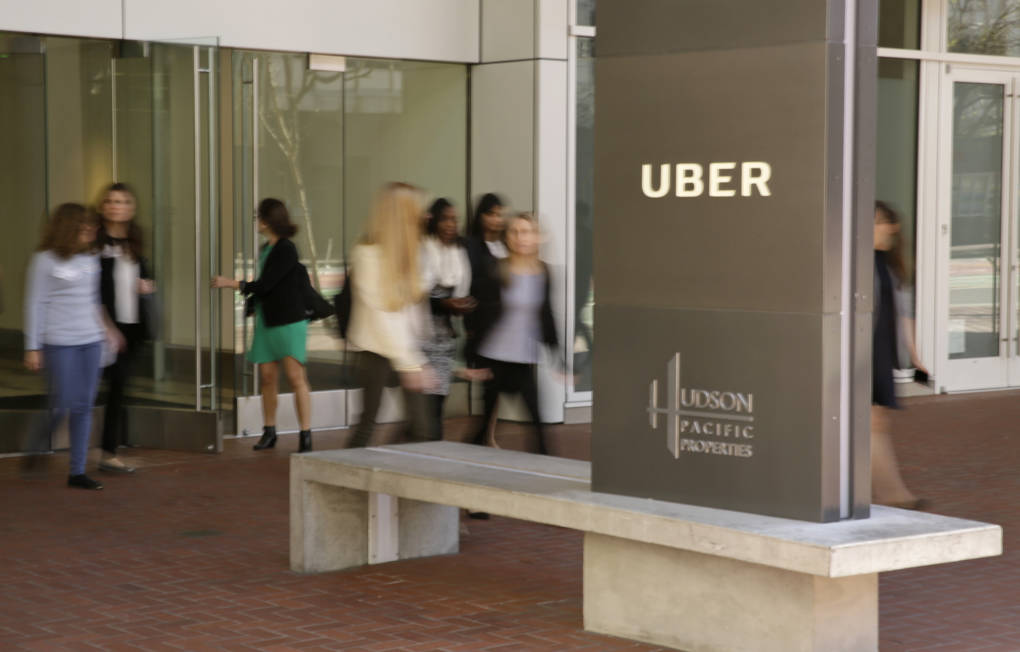
"caption": "Uber has come under fire for its workplace culture in the past several years.",
"description": "Uber has come under fire for its workplace culture in the past several years.",
"title": "Uber has come under fire for its workplace culture in the past several years.",
"credit": "Eric Risberg/AP",
"status": "inherit",
"isLoading": false,
"fetchFailed": false
},
"news_11670358": {
"type": "attachments",
"id": "news_11670358",
"meta": {
"index": "attachments_1716263798",
"site": "news",
"id": "11670358",
"found": true
},
"parent": 11669961,
"imgSizes": {
"small": {
"file": "https://ww2.kqed.org/app/uploads/sites/10/2018/05/ntsb-ubercrash-520x322.png",
"width": 520,
"mimeType": "image/png",
"height": 322
},
"twentyfourteen-full-width": {
"file": "https://ww2.kqed.org/app/uploads/sites/10/2018/05/ntsb-ubercrash-1038x576.png",
"width": 1038,
"mimeType": "image/png",
"height": 576
},
"thumbnail": {
"file": "https://ww2.kqed.org/app/uploads/sites/10/2018/05/ntsb-ubercrash-160x99.png",
"width": 160,
"mimeType": "image/png",
"height": 99
},
"fd-sm": {
"file": "https://ww2.kqed.org/app/uploads/sites/10/2018/05/ntsb-ubercrash-960x595.png",
"width": 960,
"mimeType": "image/png",
"height": 595
},
"post-thumbnail": {
"file": "https://ww2.kqed.org/app/uploads/sites/10/2018/05/ntsb-ubercrash-672x372.png",
"width": 672,
"mimeType": "image/png",
"height": 372
},
"xsmall": {
"file": "https://ww2.kqed.org/app/uploads/sites/10/2018/05/ntsb-ubercrash-375x233.png",
"width": 375,
"mimeType": "image/png",
"height": 233
},
"kqedFullSize": {
"file": "https://ww2.kqed.org/app/uploads/sites/10/2018/05/ntsb-ubercrash.png",
"width": 1740,
"height": 1079
},
"large": {
"file": "https://ww2.kqed.org/app/uploads/sites/10/2018/05/ntsb-ubercrash-1020x633.png",
"width": 1020,
"mimeType": "image/png",
"height": 633
},
"xlarge": {
"file": "https://ww2.kqed.org/app/uploads/sites/10/2018/05/ntsb-ubercrash-1180x732.png",
"width": 1180,
"mimeType": "image/png",
"height": 732
},
"complete_open_graph": {
"file": "https://ww2.kqed.org/app/uploads/sites/10/2018/05/ntsb-ubercrash-1200x744.png",
"width": 1200,
"mimeType": "image/png",
"height": 744
},
"guest-author-50": {
"file": "https://ww2.kqed.org/app/uploads/sites/10/2018/05/ntsb-ubercrash-50x50.png",
"width": 50,
"mimeType": "image/png",
"height": 50
},
"guest-author-96": {
"file": "https://ww2.kqed.org/app/uploads/sites/10/2018/05/ntsb-ubercrash-96x96.png",
"width": 96,
"mimeType": "image/png",
"height": 96
},
"medium": {
"file": "https://ww2.kqed.org/app/uploads/sites/10/2018/05/ntsb-ubercrash-800x496.png",
"width": 800,
"mimeType": "image/png",
"height": 496
},
"guest-author-64": {
"file": "https://ww2.kqed.org/app/uploads/sites/10/2018/05/ntsb-ubercrash-64x64.png",
"width": 64,
"mimeType": "image/png",
"height": 64
},
"guest-author-32": {
"file": "https://ww2.kqed.org/app/uploads/sites/10/2018/05/ntsb-ubercrash-32x32.png",
"width": 32,
"mimeType": "image/png",
"height": 32
},
"fd-med": {
"file": "https://ww2.kqed.org/app/uploads/sites/10/2018/05/ntsb-ubercrash-1180x732.png",
"width": 1180,
"mimeType": "image/png",
"height": 732
},
"detail": {
"file": "https://ww2.kqed.org/app/uploads/sites/10/2018/05/ntsb-ubercrash-150x150.png",
"width": 150,
"mimeType": "image/png",
"height": 150
},
"guest-author-128": {
"file": "https://ww2.kqed.org/app/uploads/sites/10/2018/05/ntsb-ubercrash-128x128.png",
"width": 128,
"mimeType": "image/png",
"height": 128
},
"xxsmall": {
"file": "https://ww2.kqed.org/app/uploads/sites/10/2018/05/ntsb-ubercrash-240x149.png",
"width": 240,
"mimeType": "image/png",
"height": 149
}
},
"publishDate": 1527171775,
"modified": 1527172506,
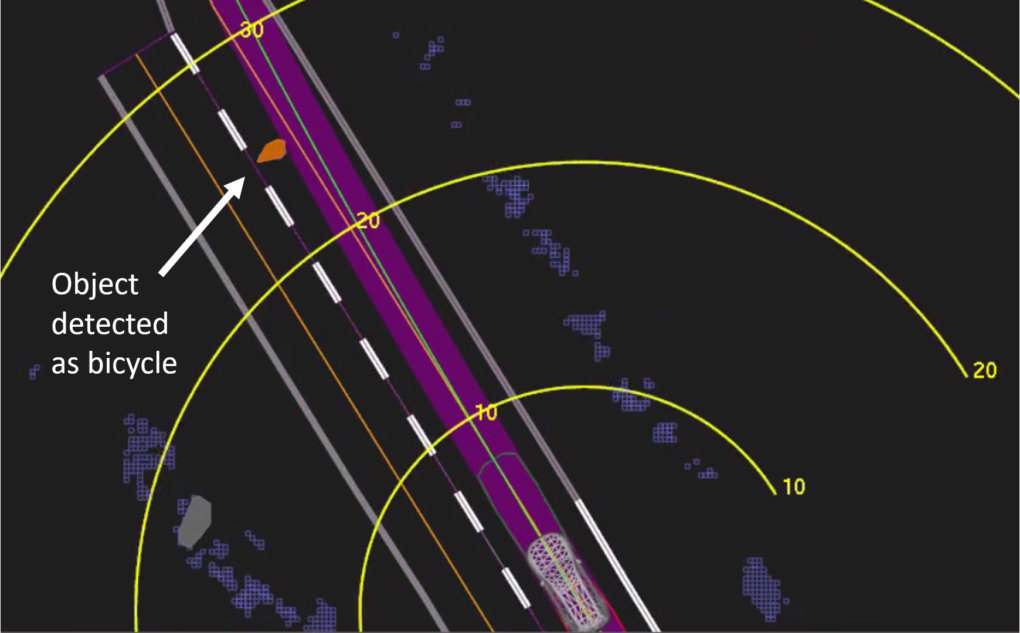
"caption": "View of Uber self-driving system data playback at about 1.3 seconds before one of the company's Volvo SUVs struck a woman crossing a road in Tempe, Arizona. At this point, the vehicle's self-driving system had determined an emergency braking maneuver would be needed to mitigate a collision. Yellow\nbands are shown in meters ahead. Orange lines show the center of mapped travel lanes. The purple\nshaded area shows the path the vehicle traveled, with the green line showing the center of that path. ",
"description": null,
"title": "NTSB-Uber Crash",
"credit": "National Transportation Safety Board",
"status": "inherit",
"isLoading": false,
"fetchFailed": false
},
"news_11669223": {
"type": "attachments",
"id": "news_11669223",
"meta": {
"index": "attachments_1716263798",
"site": "news",
"id": "11669223",
"found": true
},
"parent": 11669075,
"imgSizes": {
"small": {
"file": "https://ww2.kqed.org/app/uploads/sites/10/2018/05/Capture-wells-fargo-520x196.jpg",
"width": 520,
"mimeType": "image/jpeg",
"height": 196
},
"twentyfourteen-full-width": {
"file": "https://ww2.kqed.org/app/uploads/sites/10/2018/05/Capture-wells-fargo-1038x576.jpg",
"width": 1038,
"mimeType": "image/jpeg",
"height": 576
},
"thumbnail": {
"file": "https://ww2.kqed.org/app/uploads/sites/10/2018/05/Capture-wells-fargo-160x60.jpg",
"width": 160,
"mimeType": "image/jpeg",
"height": 60
},
"fd-sm": {
"file": "https://ww2.kqed.org/app/uploads/sites/10/2018/05/Capture-wells-fargo-960x362.jpg",
"width": 960,
"mimeType": "image/jpeg",
"height": 362
},
"post-thumbnail": {
"file": "https://ww2.kqed.org/app/uploads/sites/10/2018/05/Capture-wells-fargo-672x372.jpg",
"width": 672,
"mimeType": "image/jpeg",
"height": 372
},
"xsmall": {
"file": "https://ww2.kqed.org/app/uploads/sites/10/2018/05/Capture-wells-fargo-375x141.jpg",
"width": 375,
"mimeType": "image/jpeg",
"height": 141
},
"kqedFullSize": {
"file": "https://ww2.kqed.org/app/uploads/sites/10/2018/05/Capture-wells-fargo.jpg",
"width": 1906,
"height": 718
},
"large": {
"file": "https://ww2.kqed.org/app/uploads/sites/10/2018/05/Capture-wells-fargo-1020x384.jpg",
"width": 1020,
"mimeType": "image/jpeg",
"height": 384
},
"xlarge": {
"file": "https://ww2.kqed.org/app/uploads/sites/10/2018/05/Capture-wells-fargo-1180x445.jpg",
"width": 1180,
"mimeType": "image/jpeg",
"height": 445
},
"complete_open_graph": {
"file": "https://ww2.kqed.org/app/uploads/sites/10/2018/05/Capture-wells-fargo-1200x452.jpg",
"width": 1200,
"mimeType": "image/jpeg",
"height": 452
},
"guest-author-50": {
"file": "https://ww2.kqed.org/app/uploads/sites/10/2018/05/Capture-wells-fargo-50x50.jpg",
"width": 50,
"mimeType": "image/jpeg",
"height": 50
},
"guest-author-96": {
"file": "https://ww2.kqed.org/app/uploads/sites/10/2018/05/Capture-wells-fargo-96x96.jpg",
"width": 96,
"mimeType": "image/jpeg",
"height": 96
},
"medium": {
"file": "https://ww2.kqed.org/app/uploads/sites/10/2018/05/Capture-wells-fargo-800x301.jpg",
"width": 800,
"mimeType": "image/jpeg",
"height": 301
},
"guest-author-64": {
"file": "https://ww2.kqed.org/app/uploads/sites/10/2018/05/Capture-wells-fargo-64x64.jpg",
"width": 64,
"mimeType": "image/jpeg",
"height": 64
},
"guest-author-32": {
"file": "https://ww2.kqed.org/app/uploads/sites/10/2018/05/Capture-wells-fargo-32x32.jpg",
"width": 32,
"mimeType": "image/jpeg",
"height": 32
},
"fd-med": {
"file": "https://ww2.kqed.org/app/uploads/sites/10/2018/05/Capture-wells-fargo-1180x445.jpg",
"width": 1180,
"mimeType": "image/jpeg",
"height": 445
},
"detail": {
"file": "https://ww2.kqed.org/app/uploads/sites/10/2018/05/Capture-wells-fargo-150x150.jpg",
"width": 150,
"mimeType": "image/jpeg",
"height": 150
},
"guest-author-128": {
"file": "https://ww2.kqed.org/app/uploads/sites/10/2018/05/Capture-wells-fargo-128x128.jpg",
"width": 128,
"mimeType": "image/jpeg",
"height": 128
},
"xxsmall": {
"file": "https://ww2.kqed.org/app/uploads/sites/10/2018/05/Capture-wells-fargo-240x90.jpg",
"width": 240,
"mimeType": "image/jpeg",
"height": 90
}
},
"publishDate": 1526678882,
"modified": 1526678966,
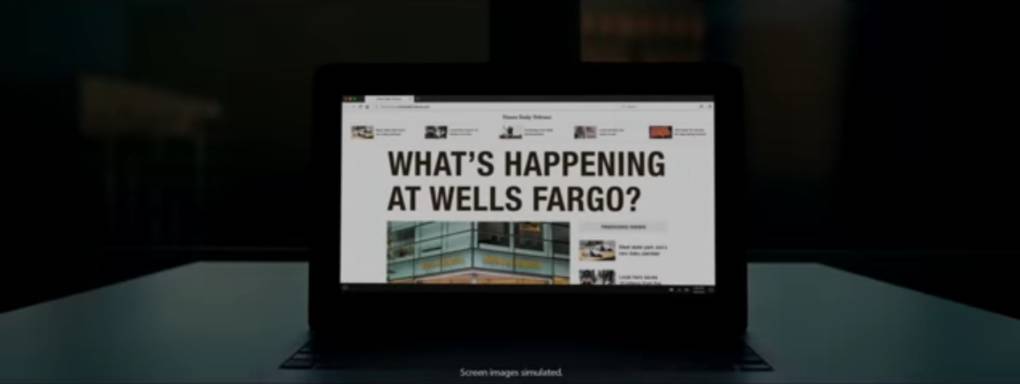
"caption": "Wells Fargo commercial screenshot.",
"description": null,
"title": "Capture-wells-fargo",
"credit": "YouTube",
"status": "inherit",
"isLoading": false,
"fetchFailed": false
},
"news_11668473": {
"type": "attachments",
"id": "news_11668473",
"meta": {
"index": "attachments_1716263798",
"site": "news",
"id": "11668473",
"found": true
},
"parent": 11668472,
"imgSizes": {
"small": {
"file": "https://ww2.kqed.org/app/uploads/sites/10/2018/05/gettyimages-696041472-66aec6c87ac299bb8ff5cb5f4f432c768109d868-520x390.jpg",
"width": 520,
"mimeType": "image/jpeg",
"height": 390
},
"twentyfourteen-full-width": {
"file": "https://ww2.kqed.org/app/uploads/sites/10/2018/05/gettyimages-696041472-66aec6c87ac299bb8ff5cb5f4f432c768109d868-1038x576.jpg",
"width": 1038,
"mimeType": "image/jpeg",
"height": 576
},
"thumbnail": {
"file": "https://ww2.kqed.org/app/uploads/sites/10/2018/05/gettyimages-696041472-66aec6c87ac299bb8ff5cb5f4f432c768109d868-160x120.jpg",
"width": 160,
"mimeType": "image/jpeg",
"height": 120
},
"fd-sm": {
"file": "https://ww2.kqed.org/app/uploads/sites/10/2018/05/gettyimages-696041472-66aec6c87ac299bb8ff5cb5f4f432c768109d868-960x720.jpg",
"width": 960,
"mimeType": "image/jpeg",
"height": 720
},
"post-thumbnail": {
"file": "https://ww2.kqed.org/app/uploads/sites/10/2018/05/gettyimages-696041472-66aec6c87ac299bb8ff5cb5f4f432c768109d868-672x372.jpg",
"width": 672,
"mimeType": "image/jpeg",
"height": 372
},
"xsmall": {
"file": "https://ww2.kqed.org/app/uploads/sites/10/2018/05/gettyimages-696041472-66aec6c87ac299bb8ff5cb5f4f432c768109d868-375x281.jpg",
"width": 375,
"mimeType": "image/jpeg",
"height": 281
},
"kqedFullSize": {
"file": "https://ww2.kqed.org/app/uploads/sites/10/2018/05/gettyimages-696041472-66aec6c87ac299bb8ff5cb5f4f432c768109d868-e1526421693925.jpg",
"width": 1920,
"height": 1439
},
"large": {
"file": "https://ww2.kqed.org/app/uploads/sites/10/2018/05/gettyimages-696041472-66aec6c87ac299bb8ff5cb5f4f432c768109d868-1020x765.jpg",
"width": 1020,
"mimeType": "image/jpeg",
"height": 765
},
"xlarge": {
"file": "https://ww2.kqed.org/app/uploads/sites/10/2018/05/gettyimages-696041472-66aec6c87ac299bb8ff5cb5f4f432c768109d868-1180x885.jpg",
"width": 1180,
"mimeType": "image/jpeg",
"height": 885
},
"complete_open_graph": {
"file": "https://ww2.kqed.org/app/uploads/sites/10/2018/05/gettyimages-696041472-66aec6c87ac299bb8ff5cb5f4f432c768109d868-1200x900.jpg",
"width": 1200,
"mimeType": "image/jpeg",
"height": 900
},
"guest-author-50": {
"file": "https://ww2.kqed.org/app/uploads/sites/10/2018/05/gettyimages-696041472-66aec6c87ac299bb8ff5cb5f4f432c768109d868-50x50.jpg",
"width": 50,
"mimeType": "image/jpeg",
"height": 50
},
"guest-author-96": {
"file": "https://ww2.kqed.org/app/uploads/sites/10/2018/05/gettyimages-696041472-66aec6c87ac299bb8ff5cb5f4f432c768109d868-96x96.jpg",
"width": 96,
"mimeType": "image/jpeg",
"height": 96
},
"medium": {
"file": "https://ww2.kqed.org/app/uploads/sites/10/2018/05/gettyimages-696041472-66aec6c87ac299bb8ff5cb5f4f432c768109d868-800x600.jpg",
"width": 800,
"mimeType": "image/jpeg",
"height": 600
},
"guest-author-64": {
"file": "https://ww2.kqed.org/app/uploads/sites/10/2018/05/gettyimages-696041472-66aec6c87ac299bb8ff5cb5f4f432c768109d868-64x64.jpg",
"width": 64,
"mimeType": "image/jpeg",
"height": 64
},
"guest-author-32": {
"file": "https://ww2.kqed.org/app/uploads/sites/10/2018/05/gettyimages-696041472-66aec6c87ac299bb8ff5cb5f4f432c768109d868-32x32.jpg",
"width": 32,
"mimeType": "image/jpeg",
"height": 32
},
"fd-lrg": {
"file": "https://ww2.kqed.org/app/uploads/sites/10/2018/05/gettyimages-696041472-66aec6c87ac299bb8ff5cb5f4f432c768109d868-1920x1439.jpg",
"width": 1920,
"mimeType": "image/jpeg",
"height": 1439
},
"fd-med": {
"file": "https://ww2.kqed.org/app/uploads/sites/10/2018/05/gettyimages-696041472-66aec6c87ac299bb8ff5cb5f4f432c768109d868-1180x885.jpg",
"width": 1180,
"mimeType": "image/jpeg",
"height": 885
},
"full-width": {
"file": "https://ww2.kqed.org/app/uploads/sites/10/2018/05/gettyimages-696041472-66aec6c87ac299bb8ff5cb5f4f432c768109d868-1920x1439.jpg",
"width": 1920,
"mimeType": "image/jpeg",
"height": 1439
},
"detail": {
"file": "https://ww2.kqed.org/app/uploads/sites/10/2018/05/gettyimages-696041472-66aec6c87ac299bb8ff5cb5f4f432c768109d868-150x150.jpg",
"width": 150,
"mimeType": "image/jpeg",
"height": 150
},
"guest-author-128": {
"file": "https://ww2.kqed.org/app/uploads/sites/10/2018/05/gettyimages-696041472-66aec6c87ac299bb8ff5cb5f4f432c768109d868-128x128.jpg",
"width": 128,
"mimeType": "image/jpeg",
"height": 128
},
"xxsmall": {
"file": "https://ww2.kqed.org/app/uploads/sites/10/2018/05/gettyimages-696041472-66aec6c87ac299bb8ff5cb5f4f432c768109d868-240x180.jpg",
"width": 240,
"mimeType": "image/jpeg",
"height": 180
}
},
"publishDate": 1526421608,
"modified": 1526421713,
"caption": "An Uber car waits for a client in Manhattan last June. Uber says customers, drivers and employees who are sexually harassed or assaulted won't have to go to arbitration, which required them to keep their stories private.",
"description": "An Uber car waits for a client in Manhattan last June. Uber says customers, drivers and employees who are sexually harassed or assaulted won't have to go to arbitration, which required them to keep their stories private.",
"title": "An Uber car waits for a client in Manhattan last June. Uber says customers, drivers and employees who are sexually harassed or assaulted won't have to go to arbitration, which required them to keep their stories private.",
"credit": "Spencer Platt/Getty Images",
"status": "inherit",
"isLoading": false,
"fetchFailed": false
},
"news_11668145": {
"type": "attachments",
"id": "news_11668145",
"meta": {
"index": "attachments_1716263798",
"site": "news",
"id": "11668145",
"found": true
},
"parent": 11668070,
"imgSizes": {
"small": {
"file": "https://ww2.kqed.org/app/uploads/sites/10/2018/05/GettyImages-956064802-520x346.jpg",
"width": 520,
"mimeType": "image/jpeg",
"height": 346
},
"twentyfourteen-full-width": {
"file": "https://ww2.kqed.org/app/uploads/sites/10/2018/05/GettyImages-956064802-1038x576.jpg",
"width": 1038,
"mimeType": "image/jpeg",
"height": 576
},
"thumbnail": {
"file": "https://ww2.kqed.org/app/uploads/sites/10/2018/05/GettyImages-956064802-160x106.jpg",
"width": 160,
"mimeType": "image/jpeg",
"height": 106
},
"fd-sm": {
"file": "https://ww2.kqed.org/app/uploads/sites/10/2018/05/GettyImages-956064802-960x639.jpg",
"width": 960,
"mimeType": "image/jpeg",
"height": 639
},
"post-thumbnail": {
"file": "https://ww2.kqed.org/app/uploads/sites/10/2018/05/GettyImages-956064802-672x372.jpg",
"width": 672,
"mimeType": "image/jpeg",
"height": 372
},
"xsmall": {
"file": "https://ww2.kqed.org/app/uploads/sites/10/2018/05/GettyImages-956064802-375x250.jpg",
"width": 375,
"mimeType": "image/jpeg",
"height": 250
},
"kqedFullSize": {
"file": "https://ww2.kqed.org/app/uploads/sites/10/2018/05/GettyImages-956064802.jpg",
"width": 4000,
"height": 2662
},
"large": {
"file": "https://ww2.kqed.org/app/uploads/sites/10/2018/05/GettyImages-956064802-1020x679.jpg",
"width": 1020,
"mimeType": "image/jpeg",
"height": 679
},
"xlarge": {
"file": "https://ww2.kqed.org/app/uploads/sites/10/2018/05/GettyImages-956064802-1180x785.jpg",
"width": 1180,
"mimeType": "image/jpeg",
"height": 785
},
"complete_open_graph": {
"file": "https://ww2.kqed.org/app/uploads/sites/10/2018/05/GettyImages-956064802-1200x799.jpg",
"width": 1200,
"mimeType": "image/jpeg",
"height": 799
},
"guest-author-50": {
"file": "https://ww2.kqed.org/app/uploads/sites/10/2018/05/GettyImages-956064802-50x50.jpg",
"width": 50,
"mimeType": "image/jpeg",
"height": 50
},
"guest-author-96": {
"file": "https://ww2.kqed.org/app/uploads/sites/10/2018/05/GettyImages-956064802-96x96.jpg",
"width": 96,
"mimeType": "image/jpeg",
"height": 96
},
"medium": {
"file": "https://ww2.kqed.org/app/uploads/sites/10/2018/05/GettyImages-956064802-800x532.jpg",
"width": 800,
"mimeType": "image/jpeg",
"height": 532
},
"guest-author-64": {
"file": "https://ww2.kqed.org/app/uploads/sites/10/2018/05/GettyImages-956064802-64x64.jpg",
"width": 64,
"mimeType": "image/jpeg",
"height": 64
},
"guest-author-32": {
"file": "https://ww2.kqed.org/app/uploads/sites/10/2018/05/GettyImages-956064802-32x32.jpg",
"width": 32,
"mimeType": "image/jpeg",
"height": 32
},
"fd-lrg": {
"file": "https://ww2.kqed.org/app/uploads/sites/10/2018/05/GettyImages-956064802-1920x1278.jpg",
"width": 1920,
"mimeType": "image/jpeg",
"height": 1278
},
"fd-med": {
"file": "https://ww2.kqed.org/app/uploads/sites/10/2018/05/GettyImages-956064802-1180x785.jpg",
"width": 1180,
"mimeType": "image/jpeg",
"height": 785
},
"full-width": {
"file": "https://ww2.kqed.org/app/uploads/sites/10/2018/05/GettyImages-956064802-1920x1278.jpg",
"width": 1920,
"mimeType": "image/jpeg",
"height": 1278
},
"detail": {
"file": "https://ww2.kqed.org/app/uploads/sites/10/2018/05/GettyImages-956064802-150x150.jpg",
"width": 150,
"mimeType": "image/jpeg",
"height": 150
},
"guest-author-128": {
"file": "https://ww2.kqed.org/app/uploads/sites/10/2018/05/GettyImages-956064802-128x128.jpg",
"width": 128,
"mimeType": "image/jpeg",
"height": 128
},
"xxsmall": {
"file": "https://ww2.kqed.org/app/uploads/sites/10/2018/05/GettyImages-956064802-240x160.jpg",
"width": 240,
"mimeType": "image/jpeg",
"height": 160
}
},
"publishDate": 1526258691,
"modified": 1526258894,
"caption": "Jeff Holden, Uber chief product officer, speaks at the second annual Uber Elevate Summit on May 8, 2018 in Los Angeles, California. Uber introduced its electric-powered \"flying taxi\" vertical take-off and landing concept aircraft at the event, which showcases prototypes for uberAir's fleet of airborne taxis. ",
"description": null,
"title": "US-AVIATION-SCIENCE-TRANSPORTATION",
"credit": "Robyn Beck/AFP/Getty Images",
"status": "inherit",
"isLoading": false,
"fetchFailed": false
},
"news_11666621": {
"type": "attachments",
"id": "news_11666621",
"meta": {
"index": "attachments_1716263798",
"site": "news",
"id": "11666621",
"found": true
},
"parent": 11666619,
"imgSizes": {
"small": {
"file": "https://ww2.kqed.org/app/uploads/sites/10/2018/05/NR527_MARQUEE-520x293.jpg",
"width": 520,
"mimeType": "image/jpeg",
"height": 293
},
"twentyfourteen-full-width": {
"file": "https://ww2.kqed.org/app/uploads/sites/10/2018/05/NR527_MARQUEE-1038x576.jpg",
"width": 1038,
"mimeType": "image/jpeg",
"height": 576
},
"thumbnail": {
"file": "https://ww2.kqed.org/app/uploads/sites/10/2018/05/NR527_MARQUEE-160x90.jpg",
"width": 160,
"mimeType": "image/jpeg",
"height": 90
},
"fd-sm": {
"file": "https://ww2.kqed.org/app/uploads/sites/10/2018/05/NR527_MARQUEE-960x540.jpg",
"width": 960,
"mimeType": "image/jpeg",
"height": 540
},
"post-thumbnail": {
"file": "https://ww2.kqed.org/app/uploads/sites/10/2018/05/NR527_MARQUEE-672x372.jpg",
"width": 672,
"mimeType": "image/jpeg",
"height": 372
},
"xsmall": {
"file": "https://ww2.kqed.org/app/uploads/sites/10/2018/05/NR527_MARQUEE-375x211.jpg",
"width": 375,
"mimeType": "image/jpeg",
"height": 211
},
"kqedFullSize": {
"file": "https://ww2.kqed.org/app/uploads/sites/10/2018/05/NR527_MARQUEE.jpg",
"width": 1280,
"height": 720
},
"large": {
"file": "https://ww2.kqed.org/app/uploads/sites/10/2018/05/NR527_MARQUEE-1020x574.jpg",
"width": 1020,
"mimeType": "image/jpeg",
"height": 574
},
"xlarge": {
"file": "https://ww2.kqed.org/app/uploads/sites/10/2018/05/NR527_MARQUEE-1180x664.jpg",
"width": 1180,
"mimeType": "image/jpeg",
"height": 664
},
"complete_open_graph": {
"file": "https://ww2.kqed.org/app/uploads/sites/10/2018/05/NR527_MARQUEE-1200x675.jpg",
"width": 1200,
"mimeType": "image/jpeg",
"height": 675
},
"guest-author-50": {
"file": "https://ww2.kqed.org/app/uploads/sites/10/2018/05/NR527_MARQUEE-50x50.jpg",
"width": 50,
"mimeType": "image/jpeg",
"height": 50
},
"guest-author-96": {
"file": "https://ww2.kqed.org/app/uploads/sites/10/2018/05/NR527_MARQUEE-96x96.jpg",
"width": 96,
"mimeType": "image/jpeg",
"height": 96
},
"medium": {
"file": "https://ww2.kqed.org/app/uploads/sites/10/2018/05/NR527_MARQUEE-800x450.jpg",
"width": 800,
"mimeType": "image/jpeg",
"height": 450
},
"guest-author-64": {
"file": "https://ww2.kqed.org/app/uploads/sites/10/2018/05/NR527_MARQUEE-64x64.jpg",
"width": 64,
"mimeType": "image/jpeg",
"height": 64
},
"guest-author-32": {
"file": "https://ww2.kqed.org/app/uploads/sites/10/2018/05/NR527_MARQUEE-32x32.jpg",
"width": 32,
"mimeType": "image/jpeg",
"height": 32
},
"fd-med": {
"file": "https://ww2.kqed.org/app/uploads/sites/10/2018/05/NR527_MARQUEE-1180x664.jpg",
"width": 1180,
"mimeType": "image/jpeg",
"height": 664
},
"detail": {
"file": "https://ww2.kqed.org/app/uploads/sites/10/2018/05/NR527_MARQUEE-150x150.jpg",
"width": 150,
"mimeType": "image/jpeg",
"height": 150
},
"guest-author-128": {
"file": "https://ww2.kqed.org/app/uploads/sites/10/2018/05/NR527_MARQUEE-128x128.jpg",
"width": 128,
"mimeType": "image/jpeg",
"height": 128
},
"xxsmall": {
"file": "https://ww2.kqed.org/app/uploads/sites/10/2018/05/NR527_MARQUEE-240x135.jpg",
"width": 240,
"mimeType": "image/jpeg",
"height": 135
}
},
"publishDate": 1525480873,
"modified": 1525480873,
"caption": null,
"description": null,
"title": "NR527_MARQUEE",
"credit": null,
"status": "inherit",
"isLoading": false,
"fetchFailed": false
},
"news_11667106": {
"type": "attachments",
"id": "news_11667106",
"meta": {
"index": "attachments_1716263798",
"site": "news",
"id": "11667106",
"found": true
},
"parent": 11667104,
"imgSizes": {
"small": {
"file": "https://ww2.kqed.org/app/uploads/sites/10/2018/05/gigeconomy-520x291.jpg",
"width": 520,
"mimeType": "image/jpeg",
"height": 291
},
"twentyfourteen-full-width": {
"file": "https://ww2.kqed.org/app/uploads/sites/10/2018/05/gigeconomy-1038x576.jpg",
"width": 1038,
"mimeType": "image/jpeg",
"height": 576
},
"thumbnail": {
"file": "https://ww2.kqed.org/app/uploads/sites/10/2018/05/gigeconomy-160x90.jpg",
"width": 160,
"mimeType": "image/jpeg",
"height": 90
},
"fd-sm": {
"file": "https://ww2.kqed.org/app/uploads/sites/10/2018/05/gigeconomy-960x538.jpg",
"width": 960,
"mimeType": "image/jpeg",
"height": 538
},
"post-thumbnail": {
"file": "https://ww2.kqed.org/app/uploads/sites/10/2018/05/gigeconomy-672x372.jpg",
"width": 672,
"mimeType": "image/jpeg",
"height": 372
},
"xsmall": {
"file": "https://ww2.kqed.org/app/uploads/sites/10/2018/05/gigeconomy-375x210.jpg",
"width": 375,
"mimeType": "image/jpeg",
"height": 210
},
"kqedFullSize": {
"file": "https://ww2.kqed.org/app/uploads/sites/10/2018/05/gigeconomy.jpg",
"width": 1670,
"height": 936
},
"large": {
"file": "https://ww2.kqed.org/app/uploads/sites/10/2018/05/gigeconomy-1020x572.jpg",
"width": 1020,
"mimeType": "image/jpeg",
"height": 572
},
"xlarge": {
"file": "https://ww2.kqed.org/app/uploads/sites/10/2018/05/gigeconomy-1180x661.jpg",
"width": 1180,
"mimeType": "image/jpeg",
"height": 661
},
"complete_open_graph": {
"file": "https://ww2.kqed.org/app/uploads/sites/10/2018/05/gigeconomy-1200x673.jpg",
"width": 1200,
"mimeType": "image/jpeg",
"height": 673
},
"guest-author-50": {
"file": "https://ww2.kqed.org/app/uploads/sites/10/2018/05/gigeconomy-50x50.jpg",
"width": 50,
"mimeType": "image/jpeg",
"height": 50
},
"guest-author-96": {
"file": "https://ww2.kqed.org/app/uploads/sites/10/2018/05/gigeconomy-96x96.jpg",
"width": 96,
"mimeType": "image/jpeg",
"height": 96
},
"medium": {
"file": "https://ww2.kqed.org/app/uploads/sites/10/2018/05/gigeconomy-800x448.jpg",
"width": 800,
"mimeType": "image/jpeg",
"height": 448
},
"guest-author-64": {
"file": "https://ww2.kqed.org/app/uploads/sites/10/2018/05/gigeconomy-64x64.jpg",
"width": 64,
"mimeType": "image/jpeg",
"height": 64
},
"guest-author-32": {
"file": "https://ww2.kqed.org/app/uploads/sites/10/2018/05/gigeconomy-32x32.jpg",
"width": 32,
"mimeType": "image/jpeg",
"height": 32
},
"fd-med": {
"file": "https://ww2.kqed.org/app/uploads/sites/10/2018/05/gigeconomy-1180x661.jpg",
"width": 1180,
"mimeType": "image/jpeg",
"height": 661
},
"detail": {
"file": "https://ww2.kqed.org/app/uploads/sites/10/2018/05/gigeconomy-150x150.jpg",
"width": 150,
"mimeType": "image/jpeg",
"height": 150
},
"guest-author-128": {
"file": "https://ww2.kqed.org/app/uploads/sites/10/2018/05/gigeconomy-128x128.jpg",
"width": 128,
"mimeType": "image/jpeg",
"height": 128
},
"xxsmall": {
"file": "https://ww2.kqed.org/app/uploads/sites/10/2018/05/gigeconomy-240x135.jpg",
"width": 240,
"mimeType": "image/jpeg",
"height": 135
}
},
"publishDate": 1525809967,
"modified": 1525809967,
"caption": null,
"description": null,
"title": "gigeconomy",
"credit": null,
"status": "inherit",
"isLoading": false,
"fetchFailed": false
},
"news_11665721": {
"type": "attachments",
"id": "news_11665721",
"meta": {
"index": "attachments_1716263798",
"site": "news",
"id": "11665721",
"found": true
},
"parent": 11665688,
"imgSizes": {
"small": {
"file": "https://ww2.kqed.org/app/uploads/sites/10/2018/05/GettyImages-914627168-520x340.jpg",
"width": 520,
"mimeType": "image/jpeg",
"height": 340
},
"twentyfourteen-full-width": {
"file": "https://ww2.kqed.org/app/uploads/sites/10/2018/05/GettyImages-914627168-1038x576.jpg",
"width": 1038,
"mimeType": "image/jpeg",
"height": 576
},
"thumbnail": {
"file": "https://ww2.kqed.org/app/uploads/sites/10/2018/05/GettyImages-914627168-160x105.jpg",
"width": 160,
"mimeType": "image/jpeg",
"height": 105
},
"fd-sm": {
"file": "https://ww2.kqed.org/app/uploads/sites/10/2018/05/GettyImages-914627168-960x628.jpg",
"width": 960,
"mimeType": "image/jpeg",
"height": 628
},
"post-thumbnail": {
"file": "https://ww2.kqed.org/app/uploads/sites/10/2018/05/GettyImages-914627168-672x372.jpg",
"width": 672,
"mimeType": "image/jpeg",
"height": 372
},
"xsmall": {
"file": "https://ww2.kqed.org/app/uploads/sites/10/2018/05/GettyImages-914627168-375x245.jpg",
"width": 375,
"mimeType": "image/jpeg",
"height": 245
},
"kqedFullSize": {
"file": "https://ww2.kqed.org/app/uploads/sites/10/2018/05/GettyImages-914627168.jpg",
"width": 4329,
"height": 2834
},
"large": {
"file": "https://ww2.kqed.org/app/uploads/sites/10/2018/05/GettyImages-914627168-1020x668.jpg",
"width": 1020,
"mimeType": "image/jpeg",
"height": 668
},
"xlarge": {
"file": "https://ww2.kqed.org/app/uploads/sites/10/2018/05/GettyImages-914627168-1180x772.jpg",
"width": 1180,
"mimeType": "image/jpeg",
"height": 772
},
"complete_open_graph": {
"file": "https://ww2.kqed.org/app/uploads/sites/10/2018/05/GettyImages-914627168-1200x786.jpg",
"width": 1200,
"mimeType": "image/jpeg",
"height": 786
},
"guest-author-50": {
"file": "https://ww2.kqed.org/app/uploads/sites/10/2018/05/GettyImages-914627168-50x50.jpg",
"width": 50,
"mimeType": "image/jpeg",
"height": 50
},
"guest-author-96": {
"file": "https://ww2.kqed.org/app/uploads/sites/10/2018/05/GettyImages-914627168-96x96.jpg",
"width": 96,
"mimeType": "image/jpeg",
"height": 96
},
"medium": {
"file": "https://ww2.kqed.org/app/uploads/sites/10/2018/05/GettyImages-914627168-800x524.jpg",
"width": 800,
"mimeType": "image/jpeg",
"height": 524
},
"guest-author-64": {
"file": "https://ww2.kqed.org/app/uploads/sites/10/2018/05/GettyImages-914627168-64x64.jpg",
"width": 64,
"mimeType": "image/jpeg",
"height": 64
},
"guest-author-32": {
"file": "https://ww2.kqed.org/app/uploads/sites/10/2018/05/GettyImages-914627168-32x32.jpg",
"width": 32,
"mimeType": "image/jpeg",
"height": 32
},
"fd-lrg": {
"file": "https://ww2.kqed.org/app/uploads/sites/10/2018/05/GettyImages-914627168-1920x1257.jpg",
"width": 1920,
"mimeType": "image/jpeg",
"height": 1257
},
"fd-med": {
"file": "https://ww2.kqed.org/app/uploads/sites/10/2018/05/GettyImages-914627168-1180x772.jpg",
"width": 1180,
"mimeType": "image/jpeg",
"height": 772
},
"full-width": {
"file": "https://ww2.kqed.org/app/uploads/sites/10/2018/05/GettyImages-914627168-1920x1257.jpg",
"width": 1920,
"mimeType": "image/jpeg",
"height": 1257
},
"detail": {
"file": "https://ww2.kqed.org/app/uploads/sites/10/2018/05/GettyImages-914627168-150x150.jpg",
"width": 150,
"mimeType": "image/jpeg",
"height": 150
},
"guest-author-128": {
"file": "https://ww2.kqed.org/app/uploads/sites/10/2018/05/GettyImages-914627168-128x128.jpg",
"width": 128,
"mimeType": "image/jpeg",
"height": 128
},
"xxsmall": {
"file": "https://ww2.kqed.org/app/uploads/sites/10/2018/05/GettyImages-914627168-240x157.jpg",
"width": 240,
"mimeType": "image/jpeg",
"height": 157
}
},
"publishDate": 1525199570,
"modified": 1525199617,
"caption": "The Uber logo is seen outside the Uber corporate headquarters building in San Francisco.",
"description": null,
"title": "Uber",
"credit": "Josh Edelson/AFP-Getty Images",
"status": "inherit",
"isLoading": false,
"fetchFailed": false
},
"news_11660891": {
"type": "attachments",
"id": "news_11660891",
"meta": {
"index": "attachments_1716263798",
"site": "news",
"id": "11660891",
"found": true
},
"parent": 11660885,
"imgSizes": {
"small": {
"file": "https://ww2.kqed.org/app/uploads/sites/10/2018/04/ChadMain-520x379.jpg",
"width": 520,
"mimeType": "image/jpeg",
"height": 379
},
"twentyfourteen-full-width": {
"file": "https://ww2.kqed.org/app/uploads/sites/10/2018/04/ChadMain-1038x576.jpg",
"width": 1038,
"mimeType": "image/jpeg",
"height": 576
},
"thumbnail": {
"file": "https://ww2.kqed.org/app/uploads/sites/10/2018/04/ChadMain-160x117.jpg",
"width": 160,
"mimeType": "image/jpeg",
"height": 117
},
"fd-sm": {
"file": "https://ww2.kqed.org/app/uploads/sites/10/2018/04/ChadMain-960x700.jpg",
"width": 960,
"mimeType": "image/jpeg",
"height": 700
},
"post-thumbnail": {
"file": "https://ww2.kqed.org/app/uploads/sites/10/2018/04/ChadMain-672x372.jpg",
"width": 672,
"mimeType": "image/jpeg",
"height": 372
},
"xsmall": {
"file": "https://ww2.kqed.org/app/uploads/sites/10/2018/04/ChadMain-375x273.jpg",
"width": 375,
"mimeType": "image/jpeg",
"height": 273
},
"kqedFullSize": {
"file": "https://ww2.kqed.org/app/uploads/sites/10/2018/04/ChadMain.jpg",
"width": 1920,
"height": 1400
},
"large": {
"file": "https://ww2.kqed.org/app/uploads/sites/10/2018/04/ChadMain-1020x744.jpg",
"width": 1020,
"mimeType": "image/jpeg",
"height": 744
},
"xlarge": {
"file": "https://ww2.kqed.org/app/uploads/sites/10/2018/04/ChadMain-1180x860.jpg",
"width": 1180,
"mimeType": "image/jpeg",
"height": 860
},
"guest-author-50": {
"file": "https://ww2.kqed.org/app/uploads/sites/10/2018/04/ChadMain-50x50.jpg",
"width": 50,
"mimeType": "image/jpeg",
"height": 50
},
"guest-author-96": {
"file": "https://ww2.kqed.org/app/uploads/sites/10/2018/04/ChadMain-96x96.jpg",
"width": 96,
"mimeType": "image/jpeg",
"height": 96
},
"medium": {
"file": "https://ww2.kqed.org/app/uploads/sites/10/2018/04/ChadMain-800x583.jpg",
"width": 800,
"mimeType": "image/jpeg",
"height": 583
},
"guest-author-64": {
"file": "https://ww2.kqed.org/app/uploads/sites/10/2018/04/ChadMain-64x64.jpg",
"width": 64,
"mimeType": "image/jpeg",
"height": 64
},
"guest-author-32": {
"file": "https://ww2.kqed.org/app/uploads/sites/10/2018/04/ChadMain-32x32.jpg",
"width": 32,
"mimeType": "image/jpeg",
"height": 32
},
"fd-lrg": {
"file": "https://ww2.kqed.org/app/uploads/sites/10/2018/04/ChadMain-1920x1400.jpg",
"width": 1920,
"mimeType": "image/jpeg",
"height": 1400
},
"fd-med": {
"file": "https://ww2.kqed.org/app/uploads/sites/10/2018/04/ChadMain-1180x860.jpg",
"width": 1180,
"mimeType": "image/jpeg",
"height": 860
},
"full-width": {
"file": "https://ww2.kqed.org/app/uploads/sites/10/2018/04/ChadMain-1920x1400.jpg",
"width": 1920,
"mimeType": "image/jpeg",
"height": 1400
},
"detail": {
"file": "https://ww2.kqed.org/app/uploads/sites/10/2018/04/ChadMain-150x150.jpg",
"width": 150,
"mimeType": "image/jpeg",
"height": 150
},
"guest-author-128": {
"file": "https://ww2.kqed.org/app/uploads/sites/10/2018/04/ChadMain-128x128.jpg",
"width": 128,
"mimeType": "image/jpeg",
"height": 128
},
"xxsmall": {
"file": "https://ww2.kqed.org/app/uploads/sites/10/2018/04/ChadMain-240x175.jpg",
"width": 240,
"mimeType": "image/jpeg",
"height": 175
}
},
"publishDate": 1523310105,
"modified": 1523310164,
"caption": "After finishing his first Uber/Lyft driving shift, Chad Bordes heads to the gym to shower and change before starting his next job selling cars online.",
"description": "After finishing his first Uber/Lyft driving shift, Chad Bordes heads to the gym to shower and change before starting his next job selling cars online.",
"title": "ChadMain",
"credit": "Amita Sharma/KPBS",
"status": "inherit",
"isLoading": false,
"fetchFailed": false
},
"news_11638009": {
"type": "attachments",
"id": "news_11638009",
"meta": {
"index": "attachments_1716263798",
"site": "news",
"id": "11638009",
"found": true
},
"parent": 11638008,
"imgSizes": {
"small": {
"file": "https://ww2.kqed.org/app/uploads/sites/10/2017/12/gettyimages-450502218-3111238618411efc4398e372d941339b9e7a9407-520x390.jpg",
"width": 520,
"mimeType": "image/jpeg",
"height": 390
},
"twentyfourteen-full-width": {
"file": "https://ww2.kqed.org/app/uploads/sites/10/2017/12/gettyimages-450502218-3111238618411efc4398e372d941339b9e7a9407-1038x576.jpg",
"width": 1038,
"mimeType": "image/jpeg",
"height": 576
},
"thumbnail": {
"file": "https://ww2.kqed.org/app/uploads/sites/10/2017/12/gettyimages-450502218-3111238618411efc4398e372d941339b9e7a9407-160x120.jpg",
"width": 160,
"mimeType": "image/jpeg",
"height": 120
},
"fd-sm": {
"file": "https://ww2.kqed.org/app/uploads/sites/10/2017/12/gettyimages-450502218-3111238618411efc4398e372d941339b9e7a9407-960x720.jpg",
"width": 960,
"mimeType": "image/jpeg",
"height": 720
},
"post-thumbnail": {
"file": "https://ww2.kqed.org/app/uploads/sites/10/2017/12/gettyimages-450502218-3111238618411efc4398e372d941339b9e7a9407-672x372.jpg",
"width": 672,
"mimeType": "image/jpeg",
"height": 372
},
"xsmall": {
"file": "https://ww2.kqed.org/app/uploads/sites/10/2017/12/gettyimages-450502218-3111238618411efc4398e372d941339b9e7a9407-375x281.jpg",
"width": 375,
"mimeType": "image/jpeg",
"height": 281
},
"kqedFullSize": {
"file": "https://ww2.kqed.org/app/uploads/sites/10/2017/12/gettyimages-450502218-3111238618411efc4398e372d941339b9e7a9407-e1513639606381.jpg",
"width": 1920,
"height": 1440
},
"large": {
"file": "https://ww2.kqed.org/app/uploads/sites/10/2017/12/gettyimages-450502218-3111238618411efc4398e372d941339b9e7a9407-1020x765.jpg",
"width": 1020,
"mimeType": "image/jpeg",
"height": 765
},
"xlarge": {
"file": "https://ww2.kqed.org/app/uploads/sites/10/2017/12/gettyimages-450502218-3111238618411efc4398e372d941339b9e7a9407-1180x885.jpg",
"width": 1180,
"mimeType": "image/jpeg",
"height": 885
},
"guest-author-50": {
"file": "https://ww2.kqed.org/app/uploads/sites/10/2017/12/gettyimages-450502218-3111238618411efc4398e372d941339b9e7a9407-50x50.jpg",
"width": 50,
"mimeType": "image/jpeg",
"height": 50
},
"guest-author-96": {
"file": "https://ww2.kqed.org/app/uploads/sites/10/2017/12/gettyimages-450502218-3111238618411efc4398e372d941339b9e7a9407-96x96.jpg",
"width": 96,
"mimeType": "image/jpeg",
"height": 96
},
"medium": {
"file": "https://ww2.kqed.org/app/uploads/sites/10/2017/12/gettyimages-450502218-3111238618411efc4398e372d941339b9e7a9407-800x600.jpg",
"width": 800,
"mimeType": "image/jpeg",
"height": 600
},
"guest-author-64": {
"file": "https://ww2.kqed.org/app/uploads/sites/10/2017/12/gettyimages-450502218-3111238618411efc4398e372d941339b9e7a9407-64x64.jpg",
"width": 64,
"mimeType": "image/jpeg",
"height": 64
},
"guest-author-32": {
"file": "https://ww2.kqed.org/app/uploads/sites/10/2017/12/gettyimages-450502218-3111238618411efc4398e372d941339b9e7a9407-32x32.jpg",
"width": 32,
"mimeType": "image/jpeg",
"height": 32
},
"fd-lrg": {
"file": "https://ww2.kqed.org/app/uploads/sites/10/2017/12/gettyimages-450502218-3111238618411efc4398e372d941339b9e7a9407-1920x1440.jpg",
"width": 1920,
"mimeType": "image/jpeg",
"height": 1440
},
"fd-med": {
"file": "https://ww2.kqed.org/app/uploads/sites/10/2017/12/gettyimages-450502218-3111238618411efc4398e372d941339b9e7a9407-1180x885.jpg",
"width": 1180,
"mimeType": "image/jpeg",
"height": 885
},
"full-width": {
"file": "https://ww2.kqed.org/app/uploads/sites/10/2017/12/gettyimages-450502218-3111238618411efc4398e372d941339b9e7a9407-1920x1440.jpg",
"width": 1920,
"mimeType": "image/jpeg",
"height": 1440
},
"detail": {
"file": "https://ww2.kqed.org/app/uploads/sites/10/2017/12/gettyimages-450502218-3111238618411efc4398e372d941339b9e7a9407-150x150.jpg",
"width": 150,
"mimeType": "image/jpeg",
"height": 150
},
"guest-author-128": {
"file": "https://ww2.kqed.org/app/uploads/sites/10/2017/12/gettyimages-450502218-3111238618411efc4398e372d941339b9e7a9407-128x128.jpg",
"width": 128,
"mimeType": "image/jpeg",
"height": 128
},
"xxsmall": {
"file": "https://ww2.kqed.org/app/uploads/sites/10/2017/12/gettyimages-450502218-3111238618411efc4398e372d941339b9e7a9407-240x180.jpg",
"width": 240,
"mimeType": "image/jpeg",
"height": 180
}
},
"publishDate": 1513639434,
"modified": 1523559291,
"caption": "Uber will start running annual background checks in a few weeks, the company announced Thursday.",
"description": null,
"title": null,
"credit": "Justin Sullivan/Getty Images",
"status": "inherit",
"isLoading": false,
"fetchFailed": false
},
"news_11658021": {
"type": "attachments",
"id": "news_11658021",
"meta": {
"index": "attachments_1716263798",
"site": "news",
"id": "11658021",
"found": true
},
"parent": 11657999,
"imgSizes": {
"small": {
"file": "https://ww2.kqed.org/app/uploads/sites/10/2018/03/GettyImages-464248985-520x338.jpg",
"width": 520,
"mimeType": "image/jpeg",
"height": 338
},
"twentyfourteen-full-width": {
"file": "https://ww2.kqed.org/app/uploads/sites/10/2018/03/GettyImages-464248985-1038x576.jpg",
"width": 1038,
"mimeType": "image/jpeg",
"height": 576
},
"thumbnail": {
"file": "https://ww2.kqed.org/app/uploads/sites/10/2018/03/GettyImages-464248985-160x104.jpg",
"width": 160,
"mimeType": "image/jpeg",
"height": 104
},
"fd-sm": {
"file": "https://ww2.kqed.org/app/uploads/sites/10/2018/03/GettyImages-464248985-960x624.jpg",
"width": 960,
"mimeType": "image/jpeg",
"height": 624
},
"post-thumbnail": {
"file": "https://ww2.kqed.org/app/uploads/sites/10/2018/03/GettyImages-464248985-672x372.jpg",
"width": 672,
"mimeType": "image/jpeg",
"height": 372
},
"xsmall": {
"file": "https://ww2.kqed.org/app/uploads/sites/10/2018/03/GettyImages-464248985-375x244.jpg",
"width": 375,
"mimeType": "image/jpeg",
"height": 244
},
"kqedFullSize": {
"file": "https://ww2.kqed.org/app/uploads/sites/10/2018/03/GettyImages-464248985-e1522092456110.jpg",
"width": 1920,
"height": 1249
},
"large": {
"file": "https://ww2.kqed.org/app/uploads/sites/10/2018/03/GettyImages-464248985-1020x663.jpg",
"width": 1020,
"mimeType": "image/jpeg",
"height": 663
},
"xlarge": {
"file": "https://ww2.kqed.org/app/uploads/sites/10/2018/03/GettyImages-464248985-1180x767.jpg",
"width": 1180,
"mimeType": "image/jpeg",
"height": 767
},
"guest-author-50": {
"file": "https://ww2.kqed.org/app/uploads/sites/10/2018/03/GettyImages-464248985-50x50.jpg",
"width": 50,
"mimeType": "image/jpeg",
"height": 50
},
"guest-author-96": {
"file": "https://ww2.kqed.org/app/uploads/sites/10/2018/03/GettyImages-464248985-96x96.jpg",
"width": 96,
"mimeType": "image/jpeg",
"height": 96
},
"medium": {
"file": "https://ww2.kqed.org/app/uploads/sites/10/2018/03/GettyImages-464248985-800x520.jpg",
"width": 800,
"mimeType": "image/jpeg",
"height": 520
},
"guest-author-64": {
"file": "https://ww2.kqed.org/app/uploads/sites/10/2018/03/GettyImages-464248985-64x64.jpg",
"width": 64,
"mimeType": "image/jpeg",
"height": 64
},
"guest-author-32": {
"file": "https://ww2.kqed.org/app/uploads/sites/10/2018/03/GettyImages-464248985-32x32.jpg",
"width": 32,
"mimeType": "image/jpeg",
"height": 32
},
"fd-lrg": {
"file": "https://ww2.kqed.org/app/uploads/sites/10/2018/03/GettyImages-464248985-1920x1249.jpg",
"width": 1920,
"mimeType": "image/jpeg",
"height": 1249
},
"fd-med": {
"file": "https://ww2.kqed.org/app/uploads/sites/10/2018/03/GettyImages-464248985-1180x767.jpg",
"width": 1180,
"mimeType": "image/jpeg",
"height": 767
},
"full-width": {
"file": "https://ww2.kqed.org/app/uploads/sites/10/2018/03/GettyImages-464248985-1920x1249.jpg",
"width": 1920,
"mimeType": "image/jpeg",
"height": 1249
},
"detail": {
"file": "https://ww2.kqed.org/app/uploads/sites/10/2018/03/GettyImages-464248985-150x150.jpg",
"width": 150,
"mimeType": "image/jpeg",
"height": 150
},
"guest-author-128": {
"file": "https://ww2.kqed.org/app/uploads/sites/10/2018/03/GettyImages-464248985-128x128.jpg",
"width": 128,
"mimeType": "image/jpeg",
"height": 128
},
"xxsmall": {
"file": "https://ww2.kqed.org/app/uploads/sites/10/2018/03/GettyImages-464248985-240x156.jpg",
"width": 240,
"mimeType": "image/jpeg",
"height": 156
}
},
"publishDate": 1522092356,
"modified": 1522092484,
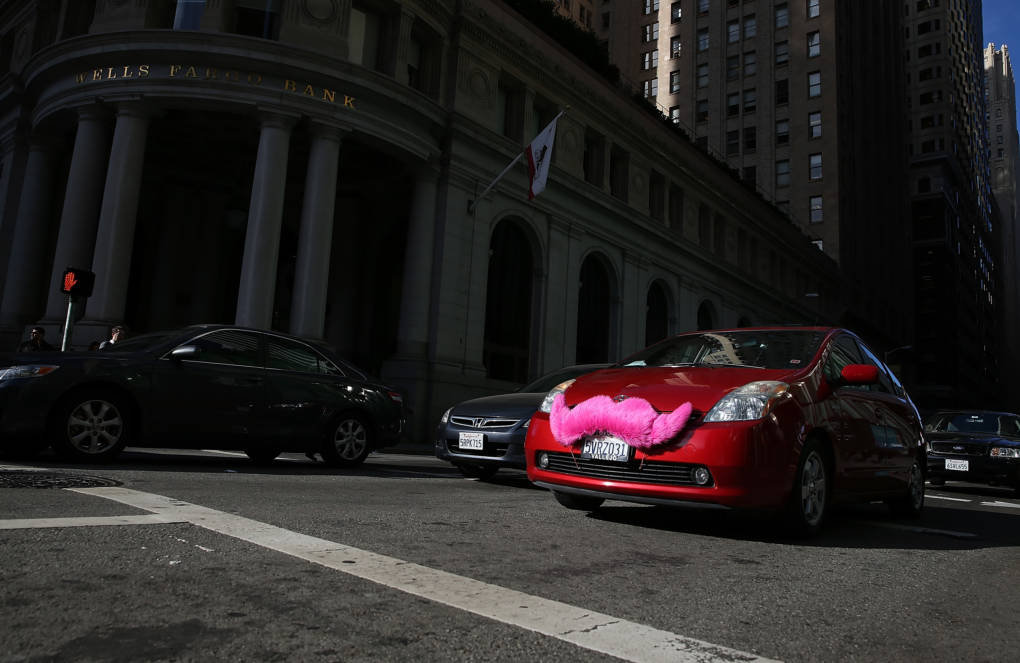
"caption": "A Lyft car drives along Montgomery Street in San Francisco, California. ",
"description": " A Lyft car drives along Montgomery Street in San Francisco, California. ",
"title": "A Lyft car drives along Montgomery Street in San Francisco, California.",
"credit": "Justin Sullivan/Getty Images",
"status": "inherit",
"isLoading": false,
"fetchFailed": false
},
"news_11659423": {
"type": "attachments",
"id": "news_11659423",
"meta": {
"index": "attachments_1716263798",
"site": "news",
"id": "11659423",
"found": true
},
"parent": 11659420,
"imgSizes": {
"small": {
"file": "https://ww2.kqed.org/app/uploads/sites/10/2018/04/Taxi-Cab-520x347.jpg",
"width": 520,
"mimeType": "image/jpeg",
"height": 347
},
"twentyfourteen-full-width": {
"file": "https://ww2.kqed.org/app/uploads/sites/10/2018/04/Taxi-Cab-1038x576.jpg",
"width": 1038,
"mimeType": "image/jpeg",
"height": 576
},
"thumbnail": {
"file": "https://ww2.kqed.org/app/uploads/sites/10/2018/04/Taxi-Cab-160x107.jpg",
"width": 160,
"mimeType": "image/jpeg",
"height": 107
},
"fd-sm": {
"file": "https://ww2.kqed.org/app/uploads/sites/10/2018/04/Taxi-Cab-960x640.jpg",
"width": 960,
"mimeType": "image/jpeg",
"height": 640
},
"post-thumbnail": {
"file": "https://ww2.kqed.org/app/uploads/sites/10/2018/04/Taxi-Cab-672x372.jpg",
"width": 672,
"mimeType": "image/jpeg",
"height": 372
},
"xsmall": {
"file": "https://ww2.kqed.org/app/uploads/sites/10/2018/04/Taxi-Cab-375x250.jpg",
"width": 375,
"mimeType": "image/jpeg",
"height": 250
},
"kqedFullSize": {
"file": "https://ww2.kqed.org/app/uploads/sites/10/2018/04/Taxi-Cab-e1522708494523.jpg",
"width": 1920,
"height": 1280
},
"large": {
"file": "https://ww2.kqed.org/app/uploads/sites/10/2018/04/Taxi-Cab-1020x680.jpg",
"width": 1020,
"mimeType": "image/jpeg",
"height": 680
},
"xlarge": {
"file": "https://ww2.kqed.org/app/uploads/sites/10/2018/04/Taxi-Cab-1180x786.jpg",
"width": 1180,
"mimeType": "image/jpeg",
"height": 786
},
"guest-author-50": {
"file": "https://ww2.kqed.org/app/uploads/sites/10/2018/04/Taxi-Cab-50x50.jpg",
"width": 50,
"mimeType": "image/jpeg",
"height": 50
},
"guest-author-96": {
"file": "https://ww2.kqed.org/app/uploads/sites/10/2018/04/Taxi-Cab-96x96.jpg",
"width": 96,
"mimeType": "image/jpeg",
"height": 96
},
"medium": {
"file": "https://ww2.kqed.org/app/uploads/sites/10/2018/04/Taxi-Cab-800x533.jpg",
"width": 800,
"mimeType": "image/jpeg",
"height": 533
},
"guest-author-64": {
"file": "https://ww2.kqed.org/app/uploads/sites/10/2018/04/Taxi-Cab-64x64.jpg",
"width": 64,
"mimeType": "image/jpeg",
"height": 64
},
"guest-author-32": {
"file": "https://ww2.kqed.org/app/uploads/sites/10/2018/04/Taxi-Cab-32x32.jpg",
"width": 32,
"mimeType": "image/jpeg",
"height": 32
},
"fd-lrg": {
"file": "https://ww2.kqed.org/app/uploads/sites/10/2018/04/Taxi-Cab-1920x1280.jpg",
"width": 1920,
"mimeType": "image/jpeg",
"height": 1280
},
"fd-med": {
"file": "https://ww2.kqed.org/app/uploads/sites/10/2018/04/Taxi-Cab-1180x786.jpg",
"width": 1180,
"mimeType": "image/jpeg",
"height": 786
},
"full-width": {
"file": "https://ww2.kqed.org/app/uploads/sites/10/2018/04/Taxi-Cab-1920x1280.jpg",
"width": 1920,
"mimeType": "image/jpeg",
"height": 1280
},
"detail": {
"file": "https://ww2.kqed.org/app/uploads/sites/10/2018/04/Taxi-Cab-150x150.jpg",
"width": 150,
"mimeType": "image/jpeg",
"height": 150
},
"guest-author-128": {
"file": "https://ww2.kqed.org/app/uploads/sites/10/2018/04/Taxi-Cab-128x128.jpg",
"width": 128,
"mimeType": "image/jpeg",
"height": 128
},
"xxsmall": {
"file": "https://ww2.kqed.org/app/uploads/sites/10/2018/04/Taxi-Cab-240x160.jpg",
"width": 240,
"mimeType": "image/jpeg",
"height": 160
}
},
"publishDate": 1522701924,
"modified": 1522708485,
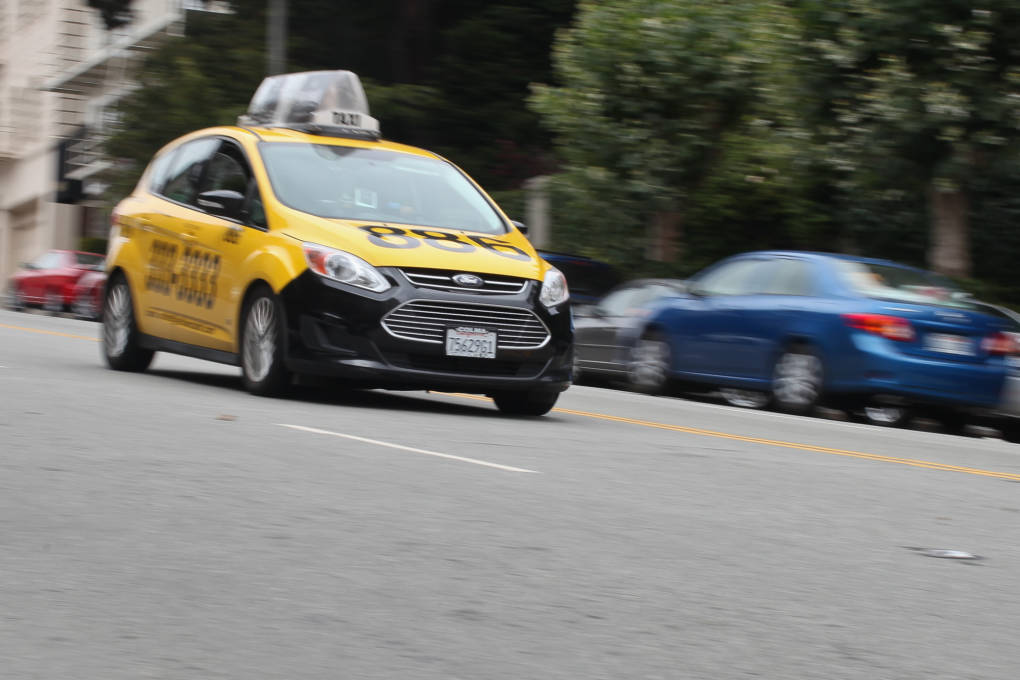
"caption": "Taxi drivers paid $250,000 in San Francisco for permits to operate their cabs.",
"description": null,
"title": "Taxi Cab",
"credit": "Deborah Svoboda/KQED",
"status": "inherit",
"isLoading": false,
"fetchFailed": false
}
},
"audioPlayerReducer": {
"postId": "stream_live",
"isPaused": true,
"isPlaying": false,
"pfsActive": false,
"pledgeModalIsOpen": true,
"playerDrawerIsOpen": false,
"liveAudioPlayStartedAt": 0,
"liveAudioPlayContext": ""
},
"authorsReducer": {
"byline_news_11688338": {
"type": "authors",
"id": "byline_news_11688338",
"meta": {
"override": true
},
"slug": "byline_news_11688338",
"name": "Merrit Kennedy",
"isLoading": false
},
"byline_news_11670355": {
"type": "authors",
"id": "byline_news_11670355",
"meta": {
"override": true
},
"slug": "byline_news_11670355",
"name": "Tom Krisher\u003cbr />Associated Press",
"isLoading": false
},
"byline_news_11668472": {
"type": "authors",
"id": "byline_news_11668472",
"meta": {
"override": true
},
"slug": "byline_news_11668472",
"name": "Yuki Noguchi",
"isLoading": false
},
"byline_news_11660885": {
"type": "authors",
"id": "byline_news_11660885",
"meta": {
"override": true
},
"slug": "byline_news_11660885",
"name": "\u003cstrong>\u003ca href=\"http://www.kpbs.org/staff/amita-sharma/\">Amita Sharma\u003c/a>\u003c/strong>",
"isLoading": false
},
"byline_news_11661678": {
"type": "authors",
"id": "byline_news_11661678",
"meta": {
"override": true
},
"slug": "byline_news_11661678",
"name": "Tom Krisher \u003cbr>Associated Press",
"isLoading": false
},
"ohubertallen": {
"type": "authors",
"id": "102",
"meta": {
"index": "authors_1716337520",
"id": "102",
"found": true
},
"name": "Olivia Allen-Price",
"firstName": "Olivia",
"lastName": "Allen-Price",
"slug": "ohubertallen",
"email": "oallenprice@kqed.org",
"display_author_email": false,
"staff_mastheads": [
"news"
],
"title": "Senior Editor",
"bio": "Olivia Allen-Price is senior editor and host of the award-winning Bay Curious podcast. Prior to joining KQED in 2013, Olivia worked at The Baltimore Sun and The Virginian-Pilot in Norfolk, Va. She holds degrees in journalism and political science from Elon University. Her work has earned awards from the Society of Professional Journalists, the Hearst Foundation and Hearken. She loves to talk about running and curly hair.\r\n\r\nFollow: \u003ca href=\"https://twitter.com/oallenprice\">@oallenprice\u003c/a>\r\nEmail: \u003ca href=\"mailto:oallenprice@kqed.org\">oallenprice@kqed.org\u003c/a>",
"avatar": "https://secure.gravatar.com/avatar/07f7803c1f6be56f3be58ef276dfa64dce898502e0554408ef4858451a8294f7?s=600&d=blank&r=g",
"twitter": "oallenprice",
"bluesky": null,
"facebook": null,
"instagram": null,
"linkedin": null,
"sites": [
{
"site": "",
"roles": [
"editor"
]
},
{
"site": "arts",
"roles": [
"subscriber"
]
},
{
"site": "news",
"roles": [
"administrator"
]
},
{
"site": "pop",
"roles": [
"administrator"
]
},
{
"site": "bayareabites",
"roles": [
"contributor"
]
},
{
"site": "stateofhealth",
"roles": [
"administrator"
]
},
{
"site": "science",
"roles": [
"editor"
]
}
],
"headData": {
"title": "Olivia Allen-Price | KQED",
"description": "Senior Editor",
"ogImgSrc": "https://secure.gravatar.com/avatar/07f7803c1f6be56f3be58ef276dfa64dce898502e0554408ef4858451a8294f7?s=600&d=blank&r=g",
"twImgSrc": "https://secure.gravatar.com/avatar/07f7803c1f6be56f3be58ef276dfa64dce898502e0554408ef4858451a8294f7?s=600&d=blank&r=g"
},
"isLoading": false,
"link": "/author/ohubertallen"
},
"danbrekke": {
"type": "authors",
"id": "222",
"meta": {
"index": "authors_1716337520",
"id": "222",
"found": true
},
"name": "Dan Brekke",
"firstName": "Dan",
"lastName": "Brekke",
"slug": "danbrekke",
"email": "dbrekke@kqed.org",
"display_author_email": true,
"staff_mastheads": [
"news",
"science"
],
"title": "KQED Editor and Reporter",
"bio": "Dan Brekke is a reporter and editor for KQED News, responsible for coverage of topics ranging from California water issues to the Bay Area's transportation challenges. In a newsroom career that began in Chicago in 1972, Dan has worked for \u003cem>The San Francisco Examiner,\u003c/em> Wired and TechTV and has been published in The New York Times, The New York Times Magazine, Business 2.0, Salon and elsewhere.\r\n\r\nSince joining KQED in 2007, Dan has reported, edited and produced both radio and online features and breaking news pieces. He has shared as both editor and reporter in four Society of Professional Journalists Norcal Excellence in Journalism awards and one Edward R. Murrow regional award. He was chosen for a spring 2017 residency at the Mesa Refuge to advance his research on California salmon.\r\n\r\nEmail Dan at: \u003ca href=\"mailto:dbrekke@kqed.org\">dbrekke@kqed.org\u003c/a>\r\n\r\n\u003cstrong>Twitter:\u003c/strong> \u003ca href=\"https://twitter.com/danbrekke\" rel=\"noopener noreferrer\">twitter.com/danbrekke\u003c/a>\r\n\u003cstrong>Facebook:\u003c/strong> \u003ca href=\"https://www.facebook.com/danbrekke\" rel=\"noopener noreferrer\">www.facebook.com/danbrekke\u003c/a>\r\n\u003cstrong>LinkedIn:\u003c/strong> \u003ca href=\"https://www.linkedin.com/in/danbrekke\" rel=\"noopener noreferrer\">www.linkedin.com/in/danbrekke\u003c/a>",
"avatar": "https://secure.gravatar.com/avatar/c8126230345efca3f7aa89b1a402be45?s=600&d=mm&r=g",
"twitter": "danbrekke",
"facebook": null,
"instagram": "https://www.instagram.com/dan.brekke/",
"linkedin": "https://www.linkedin.com/in/danbrekke/",
"sites": [
{
"site": "news",
"roles": [
"administrator",
"create_posts"
]
},
{
"site": "stateofhealth",
"roles": [
"editor"
]
},
{
"site": "science",
"roles": [
"editor"
]
},
{
"site": "quest",
"roles": [
"contributor"
]
},
{
"site": "food",
"roles": [
"contributor"
]
},
{
"site": "forum",
"roles": [
"contributor"
]
},
{
"site": "liveblog",
"roles": [
"editor"
]
}
],
"headData": {
"title": "Dan Brekke | KQED",
"description": "KQED Editor and Reporter",
"ogImgSrc": "https://secure.gravatar.com/avatar/c8126230345efca3f7aa89b1a402be45?s=600&d=mm&r=g",
"twImgSrc": "https://secure.gravatar.com/avatar/c8126230345efca3f7aa89b1a402be45?s=600&d=mm&r=g"
},
"isLoading": false,
"link": "/author/danbrekke"
},
"kqed": {
"type": "authors",
"id": "236",
"meta": {
"index": "authors_1716337520",
"id": "236",
"found": true
},
"name": "KQED News Staff",
"firstName": "KQED News Staff",
"lastName": null,
"slug": "kqed",
"email": "faq@kqed.org",
"display_author_email": false,
"staff_mastheads": [],
"title": null,
"bio": null,
"avatar": "https://secure.gravatar.com/avatar/ef0e801a68c4c54afa9180db14084167?s=600&d=blank&r=g",
"twitter": null,
"facebook": null,
"instagram": null,
"linkedin": null,
"sites": [
{
"site": "arts",
"roles": [
"contributor"
]
},
{
"site": "news",
"roles": [
"editor"
]
},
{
"site": "futureofyou",
"roles": [
"author"
]
}
],
"headData": {
"title": "KQED News Staff | KQED",
"description": null,
"ogImgSrc": "https://secure.gravatar.com/avatar/ef0e801a68c4c54afa9180db14084167?s=600&d=blank&r=g",
"twImgSrc": "https://secure.gravatar.com/avatar/ef0e801a68c4c54afa9180db14084167?s=600&d=blank&r=g"
},
"isLoading": false,
"link": "/author/kqed"
},
"samharnett": {
"type": "authors",
"id": "253",
"meta": {
"index": "authors_1716337520",
"id": "253",
"found": true
},
"name": "Sam Harnett",
"firstName": "Sam",
"lastName": "Harnett",
"slug": "samharnett",
"email": "samharnett@gmail.com",
"display_author_email": false,
"staff_mastheads": [],
"title": "KQED Contributor",
"bio": "Sam Harnett covered tech and work at KQED. He is the co-creator of \u003cem>\u003ca href=\"http://www.theworldaccordingtosound.org\">The World According to Sound\u003c/a>,\u003c/em> a 90-second podcast that features different sounds and the stories behind them.\r\n\r\nBefore coming to KQED, Sam worked as an independent reporter who contributed regularly to \u003cem>The California Report, Marketplace,\u003c/em> \u003cem>The World \u003c/em>and NPR.",
"avatar": "https://secure.gravatar.com/avatar/2538b972ac02f2b9546c7a6c59a0f3d0?s=600&d=blank&r=g",
"twitter": "Samwharnett",
"facebook": null,
"instagram": null,
"linkedin": null,
"sites": [
{
"site": "news",
"roles": [
"edit_others_posts",
"subscriber"
]
},
{
"site": "stateofhealth",
"roles": [
"author"
]
},
{
"site": "science",
"roles": [
"editor"
]
},
{
"site": "quest",
"roles": [
"subscriber"
]
}
],
"headData": {
"title": "Sam Harnett | KQED",
"description": "KQED Contributor",
"ogImgSrc": "https://secure.gravatar.com/avatar/2538b972ac02f2b9546c7a6c59a0f3d0?s=600&d=blank&r=g",
"twImgSrc": "https://secure.gravatar.com/avatar/2538b972ac02f2b9546c7a6c59a0f3d0?s=600&d=blank&r=g"
},
"isLoading": false,
"link": "/author/samharnett"
},
"tcamhi": {
"type": "authors",
"id": "3251",
"meta": {
"index": "authors_1716337520",
"id": "3251",
"found": true
},
"name": "Tiffany Camhi",
"firstName": "Tiffany",
"lastName": "Camhi",
"slug": "tcamhi",
"email": "tiffanycamhi@gmail.com",
"display_author_email": false,
"staff_mastheads": [],
"title": "KQED Contributor",
"bio": null,
"avatar": "https://secure.gravatar.com/avatar/f8204ce351139205d3b3dc1581016a5e30d7d8b38cb2c139348c151ec14b792e?s=600&d=blank&r=g",
"twitter": null,
"bluesky": null,
"facebook": null,
"instagram": null,
"linkedin": null,
"sites": [
{
"site": "arts",
"roles": [
"subscriber"
]
},
{
"site": "news",
"roles": [
"subscriber"
]
}
],
"headData": {
"title": "Tiffany Camhi | KQED",
"description": "KQED Contributor",
"ogImgSrc": "https://secure.gravatar.com/avatar/f8204ce351139205d3b3dc1581016a5e30d7d8b38cb2c139348c151ec14b792e?s=600&d=blank&r=g",
"twImgSrc": "https://secure.gravatar.com/avatar/f8204ce351139205d3b3dc1581016a5e30d7d8b38cb2c139348c151ec14b792e?s=600&d=blank&r=g"
},
"isLoading": false,
"link": "/author/tcamhi"
},
"bhernandez": {
"type": "authors",
"id": "11359",
"meta": {
"index": "authors_1716337520",
"id": "11359",
"found": true
},
"name": "Bianca Hernandez",
"firstName": "Bianca",
"lastName": "Hernandez",
"slug": "bhernandez",
"email": "bhernandez@kqed.org",
"display_author_email": false,
"staff_mastheads": [],
"title": "KQED Contributor",
"bio": "Bianca Hernandez is a former Interactive Producer for KQED. She has produced at KGPE, KSEE24 and Sierra Magazine. In 2011 she received an undergraduate degree in Journalism and Anthropology from CSU, Chico . She earned a Master's from the University of Southern California in 2013, where she completed a documentary on teenage farmworkers. She is an avid Jane Austen fan and takes lightsaber combat class for fun.",
"avatar": "https://secure.gravatar.com/avatar/75b3424851e2f9fa131f2cb6a051aeac?s=600&d=blank&r=g",
"twitter": "bookhoarding",
"facebook": null,
"instagram": null,
"linkedin": null,
"sites": [
{
"site": "arts",
"roles": []
},
{
"site": "news",
"roles": []
},
{
"site": "science",
"roles": []
},
{
"site": "forum",
"roles": []
}
],
"headData": {
"title": "Bianca Hernandez | KQED",
"description": "KQED Contributor",
"ogImgSrc": "https://secure.gravatar.com/avatar/75b3424851e2f9fa131f2cb6a051aeac?s=600&d=blank&r=g",
"twImgSrc": "https://secure.gravatar.com/avatar/75b3424851e2f9fa131f2cb6a051aeac?s=600&d=blank&r=g"
},
"isLoading": false,
"link": "/author/bhernandez"
}
},
"pagesReducer": {
"news_tag_uber": {
"type": "terms",
"id": "news_4523",
"meta": {
"index": "terms_1716263798",
"site": "news",
"id": "4523",
"score": 9.305225
},
"featImg": null,
"name": "Uber",
"description": null,
"taxonomy": "tag",
"headData": {
"twImgId": null,
"twTitle": null,
"ogTitle": null,
"ogImgId": null,
"twDescription": null,
"description": null,
"title": "Uber Archives | KQED News",
"ogDescription": null
},
"ttid": 4542,
"slug": "uber",
"isLoading": false,
"title": "Uber",
"pageMeta": {
"site": "news",
"WpPageTemplate": "page-topic-editorial",
"currentPage": 10
},
"blocks": [
{
"blockName": "kqed/post-list",
"attrs": {
"layout": "cardArticle2",
"query": "posts/news?tag=uber",
"seeMore": false,
"paginated": true,
"page": 10
}
},
{
"blockName": "kqed/ad"
}
]
}
},
"pfsSessionReducer": {},
"postsReducer": {
"stream_live": {
"type": "live",
"id": "stream_live",
"audioUrl": "https://streams.kqed.org/kqedradio",
"title": "Live Stream",
"excerpt": "Live Stream information currently unavailable.",
"link": "/radio",
"featImg": "",
"label": {
"name": "KQED Live",
"link": "/"
}
},
"stream_kqedNewscast": {
"type": "posts",
"id": "stream_kqedNewscast",
"audioUrl": "https://www.kqed.org/.stream/anon/radio/RDnews/newscast.mp3?_=1",
"title": "KQED Newscast",
"featImg": "",
"label": {
"name": "88.5 FM",
"link": "/"
}
},
"news_11688338": {
"type": "posts",
"id": "news_11688338",
"meta": {
"index": "posts_1716263798",
"site": "news",
"id": "11688338",
"score": null,
"sort": [
1534981342000
]
},
"guestAuthors": [],
"slug": "details-of-uber-harassment-settlement-released",
"title": "Details of Uber Harassment Settlement Released",
"publishDate": 1534981342,
"format": "standard",
"headTitle": "Details of Uber Harassment Settlement Released | KQED",
"labelTerm": {},
"content": "\u003cp>Five months after Uber reached a settlement agreement in a class-action lawsuit filed by women and people of color who worked there as engineers, new details are emerging about the terms of the deal. The plaintiffs, both current and former employees, say they were subjected to harassment and discrimination at Uber.\u003c/p>\n\u003cp>It’s the latest development for a company that has come under fire for its workplace culture in recent years. Uber has seen \u003ca href=\"https://www.npr.org/sections/thetwo-way/2017/06/06/531806891/uber-fires-20-employees-after-sexual-harassment-claim-investigation\">the firing of at least 20 employees\u003c/a> over sexual harassment allegations and the \u003ca href=\"https://www.npr.org/sections/thetwo-way/2017/06/21/533754816/uber-founder-resigns-under-pressure-as-ceo-published-report-says\">departure of its CEO\u003c/a>.\u003c/p>\n\u003cp>The details of the $10 million settlement have not yet received final approval from a federal judge — a session scheduled for Nov. 6. The deal was announced in March and granted preliminary approval by a judge in April, according to a court filing from the settlement administrator.\u003c/p>\n\u003cp>Fifty-six people are set to receive an average payout of nearly $34,000 because they filed specific claims of “incidents of discrimination, harassment, and/or hostile work environment and connecting their experiences to their race, national origin or gender,” court documents state.\u003c/p>\n\u003cp>The amount will be determined using a scoring process, which takes into account the nature of the reported harassment, whom the offender is, whether there was a witness or other documentation and the impact of the harassment on the victim.\u003c/p>\n\u003cp>[ad fullwidth]\u003c/p>\n\u003cp>A larger group of 483 people will be paid an average of nearly $11,000 because of other discrimination claims, according to the documents. The original lawsuit was filed by two Latina engineers, Roxana del Toro Lopez and Ana Medina, who say they were systematically discriminated against because of their gender and ethnic background.\u003c/p>\n\u003cp>Court filings say 487 class members were contacted about participating in the case. Nobody objected, and two opted out. The terms of the deal were reported Tuesday \u003ca href=\"https://www.bloomberg.com/news/articles/2018-08-21/uber-harassment-settlement-56-workers-to-split-1-9-million\">by Bloomberg\u003c/a>.\u003c/p>\n\u003cp>“We agree with the plaintiff’s motion which states that ‘the class has responded extremely favorably to the settlement’ with amounts that are ‘fair, reasonable, and adequate,’ ” Uber said in a statement to NPR.\u003c/p>\n\u003cp>Uber has stressed that it is working to change. The company says it is taking actions on the issues highlighted by this lawsuit, including putting in place a new salary and equity structure and changing the performance review process.\u003c/p>\n\u003cp>“Moving forward, it’s time to move in a new direction,” CEO Dara Khosrowshahi said in a recent \u003ca href=\"https://www.youtube.com/watch?v=WMZyw5lPKgE\">TV commercial\u003c/a>. “This begins with new leadership and a new culture. … One of our core values as a company is to always to the right thing. And if there are times when we fall short, we commit to being open, taking responsibility for the problem and fixing it.”\u003c/p>\n\u003cp>Last year, the company conducted an investigation into more than 200 complaints of sexual harassment and workplace misconduct, as \u003ca href=\"https://www.npr.org/sections/thetwo-way/2017/06/06/531806891/uber-fires-20-employees-after-sexual-harassment-claim-investigation\">NPR’s Yuki Noguchi reported\u003c/a>. The 20 employees it fired included senior executives.\u003c/p>\n\u003cp>That investigation received attention, Noguchi said, “in part because Silicon Valley already has a reputation for attracting and catering to male tech talent, but not to women. So, in a way, Uber is a test case for how serious the tech industry is about fixing its gender-diversity problems.”\u003c/p>\n\u003cp>\u003c/p>\n\u003cp>Months before the investigation concluded, a former Uber engineer named Susan Fowler \u003ca href=\"https://www.susanjfowler.com/blog/2017/2/19/reflecting-on-one-very-strange-year-at-uber\">published a blog post\u003c/a> saying her new manager had propositioned her for sex the day she joined his team. When she went to report the situation to human resources, she says she was told that “they wouldn’t feel comfortable giving him anything other than a warning and a stern talking-to.” \u003c/p>\n\u003cdiv class=\"fullattribution\">Copyright 2018 NPR. To see more, visit http://www.npr.org/.\u003cimg decoding=\"async\" src=\"https://www.google-analytics.com/__utm.gif?utmac=UA-5828686-4&utmdt=Details+Of+Uber+Harassment+Settlement+Released&utme=8(APIKey)9(MDAxOTAwOTE4MDEyMTkxMDAzNjczZDljZA004)\">\u003c/div>\n\n",
"blocks": [],
"excerpt": "Dozens of women and minorities who said they were harassed while working as engineers at Uber filed a class-action lawsuit. Hundreds of people also sued for discrimination claims.",
"status": "publish",
"parent": 0,
"modified": 1721109791,
"stats": {
"hasAudio": false,
"hasVideo": false,
"hasChartOrMap": false,
"iframeSrcs": [],
"hasGoogleForm": false,
"hasGallery": false,
"hasHearkenModule": false,
"hasPolis": false,
"paragraphCount": 15,
"wordCount": 625
},
"headData": {
"title": "Details of Uber Harassment Settlement Released | KQED",
"description": "Dozens of women and minorities who said they were harassed while working as engineers at Uber filed a class-action lawsuit. Hundreds of people also sued for discrimination claims.",
"ogTitle": "",
"ogDescription": "",
"ogImgId": "",
"twTitle": "",
"twDescription": "",
"twImgId": "",
"schema": {
"@context": "https://schema.org",
"@type": "NewsArticle",
"headline": "Details of Uber Harassment Settlement Released",
"datePublished": "2018-08-22T16:42:22-07:00",
"dateModified": "2024-07-15T23:03:11-07:00",
"image": "https://cdn.kqed.org/wp-content/uploads/2020/02/KQED-OG-Image@1x.png",
"isAccessibleForFree": "True",
"publisher": {
"@type": "NewsMediaOrganization",
"@id": "https://www.kqed.org/#organization",
"name": "KQED",
"logo": "https://cdn.kqed.org/wp-content/uploads/2020/02/KQED-OG-Image@1x.png",
"url": "https://www.kqed.org",
"sameAs": [
"https://www.facebook.com/KQED",
"https://twitter.com/KQED",
"https://www.instagram.com/kqed/",
"https://www.tiktok.com/@kqedofficial",
"https://www.linkedin.com/company/kqed",
"https://www.youtube.com/channel/UCeC0IOo7i1P_61zVUWbJ4nw"
]
}
}
},
"source": "NPR",
"sourceUrl": "https://www.npr.org/",
"sticky": false,
"nprImageCredit": "Eric Risberg",
"nprByline": "Merrit Kennedy",
"nprImageAgency": "AP",
"nprStoryId": "640900988",
"nprApiLink": "http://api.npr.org/query?id=640900988&apiKey=MDAxOTAwOTE4MDEyMTkxMDAzNjczZDljZA004",
"nprHtmlLink": "https://www.npr.org/2018/08/22/640900988/dozens-sued-uber-for-harassment-heres-what-they-re-set-to-receive?ft=nprml&f=640900988",
"nprRetrievedStory": "1",
"nprPubDate": "Wed, 22 Aug 2018 15:34:00 -0400",
"nprStoryDate": "Wed, 22 Aug 2018 14:52:00 -0400",
"nprLastModifiedDate": "Wed, 22 Aug 2018 15:34:48 -0400",
"path": "/news/11688338/details-of-uber-harassment-settlement-released",
"audioTrackLength": null,
"parsedContent": [
{
"type": "contentString",
"content": "\u003cdiv class=\"post-body\">\u003cp>\u003cp>Five months after Uber reached a settlement agreement in a class-action lawsuit filed by women and people of color who worked there as engineers, new details are emerging about the terms of the deal. The plaintiffs, both current and former employees, say they were subjected to harassment and discrimination at Uber.\u003c/p>\n\u003cp>It’s the latest development for a company that has come under fire for its workplace culture in recent years. Uber has seen \u003ca href=\"https://www.npr.org/sections/thetwo-way/2017/06/06/531806891/uber-fires-20-employees-after-sexual-harassment-claim-investigation\">the firing of at least 20 employees\u003c/a> over sexual harassment allegations and the \u003ca href=\"https://www.npr.org/sections/thetwo-way/2017/06/21/533754816/uber-founder-resigns-under-pressure-as-ceo-published-report-says\">departure of its CEO\u003c/a>.\u003c/p>\n\u003cp>The details of the $10 million settlement have not yet received final approval from a federal judge — a session scheduled for Nov. 6. The deal was announced in March and granted preliminary approval by a judge in April, according to a court filing from the settlement administrator.\u003c/p>\n\u003cp>Fifty-six people are set to receive an average payout of nearly $34,000 because they filed specific claims of “incidents of discrimination, harassment, and/or hostile work environment and connecting their experiences to their race, national origin or gender,” court documents state.\u003c/p>\n\u003cp>The amount will be determined using a scoring process, which takes into account the nature of the reported harassment, whom the offender is, whether there was a witness or other documentation and the impact of the harassment on the victim.\u003c/p>\n\u003cp>\u003c/p>\u003c/div>",
"attributes": {
"named": {},
"numeric": []
}
},
{
"type": "component",
"content": "",
"name": "ad",
"attributes": {
"named": {
"label": "fullwidth"
},
"numeric": [
"fullwidth"
]
}
},
{
"type": "contentString",
"content": "\u003cdiv class=\"post-body\">\u003cp>\u003c/p>\n\u003cp>A larger group of 483 people will be paid an average of nearly $11,000 because of other discrimination claims, according to the documents. The original lawsuit was filed by two Latina engineers, Roxana del Toro Lopez and Ana Medina, who say they were systematically discriminated against because of their gender and ethnic background.\u003c/p>\n\u003cp>Court filings say 487 class members were contacted about participating in the case. Nobody objected, and two opted out. The terms of the deal were reported Tuesday \u003ca href=\"https://www.bloomberg.com/news/articles/2018-08-21/uber-harassment-settlement-56-workers-to-split-1-9-million\">by Bloomberg\u003c/a>.\u003c/p>\n\u003cp>“We agree with the plaintiff’s motion which states that ‘the class has responded extremely favorably to the settlement’ with amounts that are ‘fair, reasonable, and adequate,’ ” Uber said in a statement to NPR.\u003c/p>\n\u003cp>Uber has stressed that it is working to change. The company says it is taking actions on the issues highlighted by this lawsuit, including putting in place a new salary and equity structure and changing the performance review process.\u003c/p>\n\u003cp>“Moving forward, it’s time to move in a new direction,” CEO Dara Khosrowshahi said in a recent \u003ca href=\"https://www.youtube.com/watch?v=WMZyw5lPKgE\">TV commercial\u003c/a>. “This begins with new leadership and a new culture. … One of our core values as a company is to always to the right thing. And if there are times when we fall short, we commit to being open, taking responsibility for the problem and fixing it.”\u003c/p>\n\u003cp>Last year, the company conducted an investigation into more than 200 complaints of sexual harassment and workplace misconduct, as \u003ca href=\"https://www.npr.org/sections/thetwo-way/2017/06/06/531806891/uber-fires-20-employees-after-sexual-harassment-claim-investigation\">NPR’s Yuki Noguchi reported\u003c/a>. The 20 employees it fired included senior executives.\u003c/p>\n\u003cp>That investigation received attention, Noguchi said, “in part because Silicon Valley already has a reputation for attracting and catering to male tech talent, but not to women. So, in a way, Uber is a test case for how serious the tech industry is about fixing its gender-diversity problems.”\u003c/p>\n\u003cp>\u003c/p>\n\u003cp>Months before the investigation concluded, a former Uber engineer named Susan Fowler \u003ca href=\"https://www.susanjfowler.com/blog/2017/2/19/reflecting-on-one-very-strange-year-at-uber\">published a blog post\u003c/a> saying her new manager had propositioned her for sex the day she joined his team. When she went to report the situation to human resources, she says she was told that “they wouldn’t feel comfortable giving him anything other than a warning and a stern talking-to.” \u003c/p>\n\u003cdiv class=\"fullattribution\">Copyright 2018 NPR. To see more, visit http://www.npr.org/.\u003cimg decoding=\"async\" src=\"https://www.google-analytics.com/__utm.gif?utmac=UA-5828686-4&utmdt=Details+Of+Uber+Harassment+Settlement+Released&utme=8(APIKey)9(MDAxOTAwOTE4MDEyMTkxMDAzNjczZDljZA004)\">\u003c/div>\n\n\u003c/div>\u003c/p>",
"attributes": {
"named": {},
"numeric": []
}
}
],
"link": "/news/11688338/details-of-uber-harassment-settlement-released",
"authors": [
"byline_news_11688338"
],
"programs": [
"news_72"
],
"categories": [
"news_1758",
"news_6188",
"news_8",
"news_1397"
],
"tags": [
"news_20228",
"news_21892",
"news_19904",
"news_20602",
"news_4523"
],
"affiliates": [
"news_253"
],
"featImg": "news_11688339",
"label": "source_news_11688338"
},
"news_11670355": {
"type": "posts",
"id": "news_11670355",
"meta": {
"index": "posts_1716263798",
"site": "news",
"id": "11670355",
"score": null,
"sort": [
1527173993000
]
},
"parent": 0,
"labelTerm": {
"site": "news",
"term": 72
},
"blocks": [],
"publishDate": 1527173993,
"format": "standard",
"disqusTitle": "Safety Agency: Uber SUV Detected Pedestrian But Didn't Slow Before Fatal Crash",
"title": "Safety Agency: Uber SUV Detected Pedestrian But Didn't Slow Before Fatal Crash",
"headTitle": "The California Report | KQED News",
"content": "\u003cp>Federal safety investigators say the autonomous Uber SUV that struck and killed an Arizona pedestrian in March spotted the woman about six seconds before hitting her, but didn't slow down because the vehicle's built-in emergency braking feature was disabled.\u003c/p>\n\u003cp>In \u003ca href=\"https://www.ntsb.gov/investigations/AccidentReports/Reports/HWY18MH010-prelim.pdf\" target=\"_blank\" rel=\"noopener\">a preliminary report\u003c/a> on the crash, the National Transportation Safety Board said Thursday that emergency braking maneuvers are not enabled while Uber's cars are under computer control. That's a measure designed \"to reduce the potential for erratic vehicle behavior,\" the NTSB said.\u003c/p>\n\u003cp>Instead, Uber's autonomous driving system \"relies on an attentive operator to intervene if the system fails to perform appropriately during testing.\" The system is not designed to alert the driver.\u003c/p>\n\u003cp>In the crash, the driver of the Volvo XC-90 SUV began steering less than a second before impact but didn't brake until less than a second after impact, according to the preliminary report, which does not determine fault.\u003c/p>\n\u003cp>A video of the crash showed the driver looking down just before the vehicle struck and killed 49-year-old Elaine Herzberg in Tempe, Arizona.\u003c/p>\n\u003cp>[ad fullwidth]\u003c/p>\n\u003cp>San Francisco-based Uber said in a statement it has worked closely with the NTSB and is doing an internal review of its self-driving vehicle program. The company also has brought in former NTSB Chairman Christopher Hart \"to advise us on our overall safety culture, and we look forward to sharing more on the changes we'll make in the coming weeks.\"\u003c/p>\n\u003cp>The NTSB report comes a day after Uber pulled its self-driving cars out of Arizona, eliminating the jobs of about 300 people who served as backup drivers and performed other jobs connected to the vehicles. Uber had suspended testing of its self-driving vehicles in Arizona, Pittsburgh, San Francisco and Toronto while regulators investigated the cause of the March 18 crash.\u003c/p>\n\u003cp>Sensors on the fully autonomous Volvo spotted Herzberg while the car was traveling 43 mph and determined that braking was needed 1.3 seconds before impact, according to the report.\u003c/p>\n\u003cp>Herzberg was pushing a bicycle across a boulevard in the darkness when the crash occurred on a part of the road that had no crosswalk and was not lighted, the report said. The speed limit at the crash site was 45 mph.\u003c/p>\n\u003cp>She was wearing dark clothing and did not look in the direction of the vehicle until just before impact. A toxicology report showed that she tested positive for methamphetamine and marijuana, according to the NTSB.\u003c/p>\n\u003cp>Also, the bicycle had no side reflectors and the front and back reflectors were perpendicular to the Uber SUV.\u003c/p>\n\u003cp>In an interview with the NTSB, Uber's backup driver said she had been monitoring the \"self-driving interface.\" While her personal and business telephones were in the vehicle, she said neither was in use at the time of the crash. The agency said that although the driver was not tested for alcohol or drug use immediately after the incident, police reported she showed no signs of impairment.\u003c/p>\n\u003cp>The agency, which can make safety recommendations to other federal agencies, said information in the preliminary report can change as the investigation progresses and that no conclusions should be drawn from the report.\u003c/p>\n\u003cp>\u003c/p>\n\u003cp>The NTSB preliminary report doesn't provide \"any decisive findings or conclusions,\" said Daniel Scarpinato, spokesman for Arizona Gov. Doug Ducey. \"We await the more thorough and final investigative report. Uber's self-driving vehicle suspension remains in place.\"\u003c/p>\n\n",
"disqusIdentifier": "11670355 https://ww2.kqed.org/news/?p=11670355",
"disqusUrl": "https://ww2.kqed.org/news/2018/05/24/safety-agency-uber-suv-detected-pedestrian-but-didnt-slow-before-fatal-crash/",
"stats": {
"hasVideo": false,
"hasChartOrMap": false,
"hasAudio": false,
"hasPolis": false,
"wordCount": 576,
"hasGoogleForm": false,
"hasGallery": false,
"hasHearkenModule": false,
"iframeSrcs": [],
"paragraphCount": 16
},
"modified": 1527209907,
"excerpt": "Safety board discloses that Uber's self-driving system disables vehicles' built-in collision-avoidance and emergency braking features.",
"headData": {
"twImgId": "",
"twTitle": "",
"ogTitle": "",
"ogImgId": "",
"twDescription": "",
"description": "Safety board discloses that Uber's self-driving system disables vehicles' built-in collision-avoidance and emergency braking features.",
"title": "Safety Agency: Uber SUV Detected Pedestrian But Didn't Slow Before Fatal Crash | KQED",
"ogDescription": "",
"schema": {
"@context": "https://schema.org",
"@type": "NewsArticle",
"headline": "Safety Agency: Uber SUV Detected Pedestrian But Didn't Slow Before Fatal Crash",
"datePublished": "2018-05-24T07:59:53-07:00",
"dateModified": "2018-05-24T17:58:27-07:00",
"image": "https://cdn.kqed.org/wp-content/uploads/2020/02/KQED-OG-Image@1x.png",
"isAccessibleForFree": "True",
"publisher": {
"@type": "NewsMediaOrganization",
"@id": "https://www.kqed.org/#organization",
"name": "KQED",
"logo": "https://cdn.kqed.org/wp-content/uploads/2020/02/KQED-OG-Image@1x.png",
"url": "https://www.kqed.org",
"sameAs": [
"https://www.facebook.com/KQED",
"https://twitter.com/KQED",
"https://www.instagram.com/kqed/",
"https://www.tiktok.com/@kqedofficial",
"https://www.linkedin.com/company/kqed",
"https://www.youtube.com/channel/UCeC0IOo7i1P_61zVUWbJ4nw"
]
}
}
},
"guestAuthors": [],
"slug": "safety-agency-uber-suv-detected-pedestrian-but-didnt-slow-before-fatal-crash",
"status": "publish",
"nprByline": "Tom Krisher\u003cbr />Associated Press",
"path": "/news/11670355/safety-agency-uber-suv-detected-pedestrian-but-didnt-slow-before-fatal-crash",
"audioTrackLength": null,
"parsedContent": [
{
"type": "contentString",
"content": "\u003cdiv class=\"post-body\">\u003cp>\u003cp>Federal safety investigators say the autonomous Uber SUV that struck and killed an Arizona pedestrian in March spotted the woman about six seconds before hitting her, but didn't slow down because the vehicle's built-in emergency braking feature was disabled.\u003c/p>\n\u003cp>In \u003ca href=\"https://www.ntsb.gov/investigations/AccidentReports/Reports/HWY18MH010-prelim.pdf\" target=\"_blank\" rel=\"noopener\">a preliminary report\u003c/a> on the crash, the National Transportation Safety Board said Thursday that emergency braking maneuvers are not enabled while Uber's cars are under computer control. That's a measure designed \"to reduce the potential for erratic vehicle behavior,\" the NTSB said.\u003c/p>\n\u003cp>Instead, Uber's autonomous driving system \"relies on an attentive operator to intervene if the system fails to perform appropriately during testing.\" The system is not designed to alert the driver.\u003c/p>\n\u003cp>In the crash, the driver of the Volvo XC-90 SUV began steering less than a second before impact but didn't brake until less than a second after impact, according to the preliminary report, which does not determine fault.\u003c/p>\n\u003cp>A video of the crash showed the driver looking down just before the vehicle struck and killed 49-year-old Elaine Herzberg in Tempe, Arizona.\u003c/p>\n\u003cp>\u003c/p>\u003c/div>",
"attributes": {
"named": {},
"numeric": []
}
},
{
"type": "component",
"content": "",
"name": "ad",
"attributes": {
"named": {
"label": "fullwidth"
},
"numeric": [
"fullwidth"
]
}
},
{
"type": "contentString",
"content": "\u003cdiv class=\"post-body\">\u003cp>\u003c/p>\n\u003cp>San Francisco-based Uber said in a statement it has worked closely with the NTSB and is doing an internal review of its self-driving vehicle program. The company also has brought in former NTSB Chairman Christopher Hart \"to advise us on our overall safety culture, and we look forward to sharing more on the changes we'll make in the coming weeks.\"\u003c/p>\n\u003cp>The NTSB report comes a day after Uber pulled its self-driving cars out of Arizona, eliminating the jobs of about 300 people who served as backup drivers and performed other jobs connected to the vehicles. Uber had suspended testing of its self-driving vehicles in Arizona, Pittsburgh, San Francisco and Toronto while regulators investigated the cause of the March 18 crash.\u003c/p>\n\u003cp>Sensors on the fully autonomous Volvo spotted Herzberg while the car was traveling 43 mph and determined that braking was needed 1.3 seconds before impact, according to the report.\u003c/p>\n\u003cp>Herzberg was pushing a bicycle across a boulevard in the darkness when the crash occurred on a part of the road that had no crosswalk and was not lighted, the report said. The speed limit at the crash site was 45 mph.\u003c/p>\n\u003cp>She was wearing dark clothing and did not look in the direction of the vehicle until just before impact. A toxicology report showed that she tested positive for methamphetamine and marijuana, according to the NTSB.\u003c/p>\n\u003cp>Also, the bicycle had no side reflectors and the front and back reflectors were perpendicular to the Uber SUV.\u003c/p>\n\u003cp>In an interview with the NTSB, Uber's backup driver said she had been monitoring the \"self-driving interface.\" While her personal and business telephones were in the vehicle, she said neither was in use at the time of the crash. The agency said that although the driver was not tested for alcohol or drug use immediately after the incident, police reported she showed no signs of impairment.\u003c/p>\n\u003cp>The agency, which can make safety recommendations to other federal agencies, said information in the preliminary report can change as the investigation progresses and that no conclusions should be drawn from the report.\u003c/p>\n\u003cp>\u003c/p>\n\u003cp>The NTSB preliminary report doesn't provide \"any decisive findings or conclusions,\" said Daniel Scarpinato, spokesman for Arizona Gov. Doug Ducey. \"We await the more thorough and final investigative report. Uber's self-driving vehicle suspension remains in place.\"\u003c/p>\n\n\u003c/div>\u003c/p>",
"attributes": {
"named": {},
"numeric": []
}
}
],
"link": "/news/11670355/safety-agency-uber-suv-detected-pedestrian-but-didnt-slow-before-fatal-crash",
"authors": [
"byline_news_11670355"
],
"programs": [
"news_72"
],
"categories": [
"news_8",
"news_356",
"news_248",
"news_1397"
],
"tags": [
"news_20291",
"news_949",
"news_4523"
],
"featImg": "news_11670358",
"label": "news_72"
},
"news_11669075": {
"type": "posts",
"id": "news_11669075",
"meta": {
"index": "posts_1716263798",
"site": "news",
"id": "11669075",
"score": null,
"sort": [
1526681144000
]
},
"guestAuthors": [],
"slug": "facebook-uber-and-wells-fargo-are-all-apologizing-in-nationally-televised-ads",
"title": "Facebook, Uber and Wells Fargo Are All Apologizing in Nationally Televised Ads",
"publishDate": 1526681144,
"format": "audio",
"headTitle": "Facebook, Uber and Wells Fargo Are All Apologizing in Nationally Televised Ads | KQED",
"labelTerm": {
"term": 72,
"site": "news"
},
"content": "\u003cp>Uber is the latest corporation to join the national-TV-corporate-apology bandwagon. It is now riding along with Facebook and Wells Fargo. If you watched any of the Warriors-Rockets playoff series, you’ve probably seen all three ads.\u003c/p>\n\u003cp>The message: Please trust us again.\u003c/p>\n\u003cp>It’s no surprise these three companies are buying prime-time air space. They’ve all majorly screwed up in very public ways.\u003c/p>\n\u003cp>The Wells Fargo scandal has been going on the longest. Several years ago news broke that bankers at the company were \u003ca href=\"https://www.kqed.org/news/11127101\" target=\"_blank\" rel=\"noopener\">opening fake accounts in order to hit sales goals\u003c/a>. That practice brought a number of lawsuits and eventually fines from the Securities and Exchange Commission.\u003c/p>\n\u003cp>All of last year was a public image disaster for Uber. First, users faulted Uber for appearing unsympathetic to anti-Trump protesters. Then, a former employee wrote about a culture of misogyny. News also came out about how little drivers earned. Many of the corporate culture issues were tied to the former CEO, Travis Kalanick, who has since been replaced. (Note: This is probably why the new CEO is front and center narrating the apology ad). Since all these scandals, \u003ca href=\"https://www.kqed.org/news/11643681/lyft-gains-on-uber-by-appealing-to-progressive-political-ideals\" target=\"_blank\" rel=\"noopener\">Uber has lost significant market share to Lyft\u003c/a>, which has stayed out of the headlines while branding itself as the more socially conscious alternative-ride service.\u003c/p>\n\u003cp>[ad fullwidth]\u003c/p>\n\u003cp>https://www.youtube.com/watch?v=WMZyw5lPKgE\u003c/p>\n\u003cp>People have been increasingly \u003ca href=\"https://www.kqed.org/news/11657315\" target=\"_blank\" rel=\"noopener\">criticizing Facebook ever since the 2016 election\u003c/a>, but the criticism peaked over news that data from as many as 87 million user profiles ended up in the hands of an advertising company working for the Trump campaign. The news got so bad that CEO Mark Zuckerberg testified in front of Congress. Even though there has been a bunch of backlash, Facebook hasn’t appeared to take a hit. Its quarterly earnings were \u003ca href=\"https://www.cnbc.com/2018/04/25/facebook-earnings-q1-2018.html\" target=\"_blank\" rel=\"noopener\">well above the projected amount.\u003c/a>\u003c/p>\n\u003cp>As you might expect, each of these apology ads is filled with platitudes and sloganlike rhetoric. They also all follow a similar pattern. First we hear about the company’s successes and accomplishments. Then there is the mistake and mishaps. And finally, promises of redemption.\u003c/p>\n\u003cp>https://youtu.be/1rrivHxCeeY\u003c/p>\n\u003cp>The Wells Fargo ad trumpets its history, showing us the trusty stagecoach that is the bank’s emblem. The Uber ad talks up how it has helped people get places and has provided opportunities. Facebook filled its ad with lots of cute pictures of babies, friends and birthday parties. It accompanied the feel-good imagery with a narrator who talks about how the service makes us feel just a little bit less alone.\u003c/p>\n\u003cp>Then comes the moment of the mistake. And the ads all handle this a little bit differently.\u003c/p>\n\u003cp>Wells Fargo talks about how the company “lost its way,” but it doesn’t bring up the specifics of how it went astray. Uber is even less direct. It doesn’t talk about a past problem, but the new CEO says if “there are times when we fall short, we commit to being open, taking responsibility for the problem, and fixing it.” Facebook has a particularly clever way of bringing up its problems without admitting guilt. And it has to do with how the video is narrated.\u003c/p>\n\u003cp>The narrator is a Facebook user, not someone from the company or the company itself. This user point of view helps Facebook frame its problems as something that just occurred rather than something caused directly by its policies. This is literally what the narrator says: “Then something happened. We had to deal with spam, clickbait, fake news and data misuse.” There’s no indication of how or why Facebook allowed all of this to occur.\u003c/p>\n\u003cp>https://youtu.be/Q4zd7X98eOs\u003c/p>\n\u003cp>Finally, we get to the promises. Uber says it will usher in new leadership and a new culture. Facebook says it will do more to keep you safe and protect your privacy. Neither offer any concrete examples of how they will do this. Wells Fargo is the most explicit. It says it will end product sales goals for branch bankers. These are the incentives that led to bankers opening up unauthorized accounts for people.\u003c/p>\n\u003cp>Now, apologizing is nothing new for a big corporation. We’ve seen plenty of mea culpas from companies like BP and Johnson & Johnson. But this is relatively new territory for tech companies. They’ve traditionally been very well liked by their consumers.\u003c/p>\n\u003cp>\u003c/p>\n\u003cp>But that’s beginning to change, which means we may be seeing a lot more apology ads in the future.\u003c/p>\n\n",
"blocks": [],
"excerpt": "Each company handles its major scandal, admission of its guilt and nuance of its promises in a different way.",
"status": "publish",
"parent": 0,
"modified": 1729029224,
"stats": {
"hasAudio": false,
"hasVideo": true,
"hasChartOrMap": false,
"iframeSrcs": [],
"hasGoogleForm": false,
"hasGallery": false,
"hasHearkenModule": false,
"hasPolis": false,
"paragraphCount": 16,
"wordCount": 772
},
"headData": {
"title": "Facebook, Uber and Wells Fargo Are All Apologizing in Nationally Televised Ads | KQED",
"description": "Each company handles its major scandal, admission of its guilt and nuance of its promises in a different way.",
"ogTitle": "",
"ogDescription": "",
"ogImgId": "",
"twTitle": "",
"twDescription": "",
"twImgId": "",
"schema": {
"@context": "https://schema.org",
"@type": "NewsArticle",
"headline": "Facebook, Uber and Wells Fargo Are All Apologizing in Nationally Televised Ads",
"datePublished": "2018-05-18T15:05:44-07:00",
"dateModified": "2024-10-15T14:53:44-07:00",
"image": "https://cdn.kqed.org/wp-content/uploads/2020/02/KQED-OG-Image@1x.png",
"isAccessibleForFree": "True",
"publisher": {
"@type": "NewsMediaOrganization",
"@id": "https://www.kqed.org/#organization",
"name": "KQED",
"logo": "https://cdn.kqed.org/wp-content/uploads/2020/02/KQED-OG-Image@1x.png",
"url": "https://www.kqed.org",
"sameAs": [
"https://www.facebook.com/KQED",
"https://twitter.com/KQED",
"https://www.instagram.com/kqed/",
"https://www.tiktok.com/@kqedofficial",
"https://www.linkedin.com/company/kqed",
"https://www.youtube.com/channel/UCeC0IOo7i1P_61zVUWbJ4nw"
]
}
}
},
"audioUrl": "https://www.kqed.org/.stream/anon/radio/RDnews/2018/05/HarnettApologyAds.mp3",
"sticky": false,
"path": "/news/11669075/facebook-uber-and-wells-fargo-are-all-apologizing-in-nationally-televised-ads",
"audioTrackLength": null,
"parsedContent": [
{
"type": "contentString",
"content": "\u003cdiv class=\"post-body\">\u003cp>\u003cp>Uber is the latest corporation to join the national-TV-corporate-apology bandwagon. It is now riding along with Facebook and Wells Fargo. If you watched any of the Warriors-Rockets playoff series, you’ve probably seen all three ads.\u003c/p>\n\u003cp>The message: Please trust us again.\u003c/p>\n\u003cp>It’s no surprise these three companies are buying prime-time air space. They’ve all majorly screwed up in very public ways.\u003c/p>\n\u003cp>The Wells Fargo scandal has been going on the longest. Several years ago news broke that bankers at the company were \u003ca href=\"https://www.kqed.org/news/11127101\" target=\"_blank\" rel=\"noopener\">opening fake accounts in order to hit sales goals\u003c/a>. That practice brought a number of lawsuits and eventually fines from the Securities and Exchange Commission.\u003c/p>\n\u003cp>All of last year was a public image disaster for Uber. First, users faulted Uber for appearing unsympathetic to anti-Trump protesters. Then, a former employee wrote about a culture of misogyny. News also came out about how little drivers earned. Many of the corporate culture issues were tied to the former CEO, Travis Kalanick, who has since been replaced. (Note: This is probably why the new CEO is front and center narrating the apology ad). Since all these scandals, \u003ca href=\"https://www.kqed.org/news/11643681/lyft-gains-on-uber-by-appealing-to-progressive-political-ideals\" target=\"_blank\" rel=\"noopener\">Uber has lost significant market share to Lyft\u003c/a>, which has stayed out of the headlines while branding itself as the more socially conscious alternative-ride service.\u003c/p>\n\u003cp>\u003c/p>\u003c/div>",
"attributes": {
"named": {},
"numeric": []
}
},
{
"type": "component",
"content": "",
"name": "ad",
"attributes": {
"named": {
"label": "fullwidth"
},
"numeric": [
"fullwidth"
]
}
},
{
"type": "contentString",
"content": "\u003cdiv class=\"post-body\">\u003cp>\u003c/p>\u003c/p>\u003cp>\u003cspan class='utils-parseShortcode-shortcodes-__youtubeShortcode__embedYoutube'>\n \u003cspan class='utils-parseShortcode-shortcodes-__youtubeShortcode__embedYoutubeInside'>\n \u003ciframe\n loading='lazy'\n class='utils-parseShortcode-shortcodes-__youtubeShortcode__youtubePlayer'\n type='text/html'\n src='//www.youtube.com/embed/WMZyw5lPKgE'\n title='//www.youtube.com/embed/WMZyw5lPKgE'\n allowfullscreen='true'\n style='border:0;'>\u003c/iframe>\n \u003c/span>\n \u003c/span>\u003c/p>\u003cp>\u003cp>People have been increasingly \u003ca href=\"https://www.kqed.org/news/11657315\" target=\"_blank\" rel=\"noopener\">criticizing Facebook ever since the 2016 election\u003c/a>, but the criticism peaked over news that data from as many as 87 million user profiles ended up in the hands of an advertising company working for the Trump campaign. The news got so bad that CEO Mark Zuckerberg testified in front of Congress. Even though there has been a bunch of backlash, Facebook hasn’t appeared to take a hit. Its quarterly earnings were \u003ca href=\"https://www.cnbc.com/2018/04/25/facebook-earnings-q1-2018.html\" target=\"_blank\" rel=\"noopener\">well above the projected amount.\u003c/a>\u003c/p>\n\u003cp>As you might expect, each of these apology ads is filled with platitudes and sloganlike rhetoric. They also all follow a similar pattern. First we hear about the company’s successes and accomplishments. Then there is the mistake and mishaps. And finally, promises of redemption.\u003c/p>\u003c/p>\u003cp>\u003cspan class='utils-parseShortcode-shortcodes-__youtubeShortcode__embedYoutube'>\n \u003cspan class='utils-parseShortcode-shortcodes-__youtubeShortcode__embedYoutubeInside'>\n \u003ciframe\n loading='lazy'\n class='utils-parseShortcode-shortcodes-__youtubeShortcode__youtubePlayer'\n type='text/html'\n src='//www.youtube.com/embed/1rrivHxCeeY'\n title='//www.youtube.com/embed/1rrivHxCeeY'\n allowfullscreen='true'\n style='border:0;'>\u003c/iframe>\n \u003c/span>\n \u003c/span>\u003c/p>\u003cp>\u003cp>The Wells Fargo ad trumpets its history, showing us the trusty stagecoach that is the bank’s emblem. The Uber ad talks up how it has helped people get places and has provided opportunities. Facebook filled its ad with lots of cute pictures of babies, friends and birthday parties. It accompanied the feel-good imagery with a narrator who talks about how the service makes us feel just a little bit less alone.\u003c/p>\n\u003cp>Then comes the moment of the mistake. And the ads all handle this a little bit differently.\u003c/p>\n\u003cp>Wells Fargo talks about how the company “lost its way,” but it doesn’t bring up the specifics of how it went astray. Uber is even less direct. It doesn’t talk about a past problem, but the new CEO says if “there are times when we fall short, we commit to being open, taking responsibility for the problem, and fixing it.” Facebook has a particularly clever way of bringing up its problems without admitting guilt. And it has to do with how the video is narrated.\u003c/p>\n\u003cp>The narrator is a Facebook user, not someone from the company or the company itself. This user point of view helps Facebook frame its problems as something that just occurred rather than something caused directly by its policies. This is literally what the narrator says: “Then something happened. We had to deal with spam, clickbait, fake news and data misuse.” There’s no indication of how or why Facebook allowed all of this to occur.\u003c/p>\u003c/p>\u003cp>\u003cspan class='utils-parseShortcode-shortcodes-__youtubeShortcode__embedYoutube'>\n \u003cspan class='utils-parseShortcode-shortcodes-__youtubeShortcode__embedYoutubeInside'>\n \u003ciframe\n loading='lazy'\n class='utils-parseShortcode-shortcodes-__youtubeShortcode__youtubePlayer'\n type='text/html'\n src='//www.youtube.com/embed/Q4zd7X98eOs'\n title='//www.youtube.com/embed/Q4zd7X98eOs'\n allowfullscreen='true'\n style='border:0;'>\u003c/iframe>\n \u003c/span>\n \u003c/span>\u003c/p>\u003cp>\u003cp>Finally, we get to the promises. Uber says it will usher in new leadership and a new culture. Facebook says it will do more to keep you safe and protect your privacy. Neither offer any concrete examples of how they will do this. Wells Fargo is the most explicit. It says it will end product sales goals for branch bankers. These are the incentives that led to bankers opening up unauthorized accounts for people.\u003c/p>\n\u003cp>Now, apologizing is nothing new for a big corporation. We’ve seen plenty of mea culpas from companies like BP and Johnson & Johnson. But this is relatively new territory for tech companies. They’ve traditionally been very well liked by their consumers.\u003c/p>\n\u003cp>\u003c/p>\n\u003cp>But that’s beginning to change, which means we may be seeing a lot more apology ads in the future.\u003c/p>\n\n\u003c/div>\u003c/p>",
"attributes": {
"named": {},
"numeric": []
}
}
],
"link": "/news/11669075/facebook-uber-and-wells-fargo-are-all-apologizing-in-nationally-televised-ads",
"authors": [
"253"
],
"programs": [
"news_72"
],
"categories": [
"news_6188",
"news_8",
"news_33520",
"news_248"
],
"tags": [
"news_249",
"news_23370",
"news_1631",
"news_4523",
"news_2424"
],
"featImg": "news_11669223",
"label": "news_72"
},
"news_11668472": {
"type": "posts",
"id": "news_11668472",
"meta": {
"index": "posts_1716263798",
"site": "news",
"id": "11668472",
"score": null,
"sort": [
1526421876000
]
},
"parent": 0,
"labelTerm": {},
"blocks": [],
"publishDate": 1526421876,
"format": "standard",
"disqusTitle": "Under Pressure, Uber Drops Arbitration Requirement for Sexual Assault Victims",
"title": "Under Pressure, Uber Drops Arbitration Requirement for Sexual Assault Victims",
"headTitle": "The California Report | KQED News",
"content": "\u003cp>A woman named Katherine said she was raped by an Uber driver in 2016. Another, named Lauren, said a driver entered her apartment, then raped her last year.\u003c/p>\n\u003cp>Until now, their claims — and many more like them — could not be made public or filed in court. Uber previously required that such complaints be resolved in mandatory arbitration — out of court and behind closed doors.\u003c/p>\n\u003cp>On Tuesday, the ride-hailing company \u003ca href=\"https://www.uber.com/newsroom/turning-the-lights-on/\">announced \u003c/a>that it's changing its policies to allow customers, employees and drivers who are sexually harassed or assaulted to take their complaints to court and to speak publicly about their experiences.\u003c/p>\n\u003cp>Last month, Katherine and Lauren were among 14 female victims who sent an \u003ca href=\"http://www.wigdorlaw.com/wp-content/uploads/2018/04/Uber-Sexual-Assault-Victims-Open-Letter-to-Uber-s-Board-of-Directors.pdf\">open letter\u003c/a> to Uber's board, pointing to the company's own sexual harassment problems and the #MeToo movement.\u003c/p>\n\u003cp>\"Silencing our stories deprives customers and potential investors from the knowledge that our horrific experiences are part of a widespread problem at Uber,\" they wrote.\u003c/p>\n\u003cp>[ad fullwidth]\u003c/p>\n\u003cp>The women's demand — and Uber's response — highlight the significance of mandatory arbitration agreements, which are increasingly common. The provisions are usually in the fine print — and most people who sign the agreements don't know they have signed away their right to sue.\u003c/p>\n\u003cp>Tony West, Uber's chief legal officer, says the change came after months of introspection at the company, which is trying to reform its culture.\u003c/p>\n\u003cp>\"We're focused on transparency, integrity and accountability at the center and core of everything we do,\" and this policy change was part of that, he says.\u003c/p>\n\u003cp>Jeanne Christensen, the attorney representing the women who wrote the letter, says the change caught her by surprise. She says Uber had fought hard, until very recently, to keep the women's claims under wraps.\u003c/p>\n\u003cp>\"We wrote the open letter since we were getting, by all indications, that Uber was going to do more of the same and try to get this into arbitration,\" she says.\u003c/p>\n\u003cp>\u003c!-- iframe plugin v.4.3 wordpress.org/plugins/iframe/ -->\u003cbr>\n\u003ciframe src=\"https://www.npr.org/player/embed/611230115/611389779\" width=\"100%\" height=\"290\" frameborder=\"0\" scrolling=\"no\" title=\"NPR embedded audio player\" class=\"iframe-class\">\u003c/iframe>\u003c/p>\n\u003cp>Christensen had already filed a \u003ca href=\"http://www.wigdorlaw.com/wp-content/uploads/2018/03/Uber-Amended-Complaint-Filed.pdf\">lawsuit on behalf of nine female passengers\u003c/a> seeking to remove the arbitration requirement and compel Uber to adopt safety measures, including fingerprinting all its drivers.\u003c/p>\n\u003cp>\"What's happening is more and more riders are becoming aware of the dangers that are associated with this — and it's really just because of our litigation. It's not because Uber has proactively messaged to women that this is a safety concern,\" Christensen says.\u003c/p>\n\u003cp>It's worth noting the limits of Uber's policy reversal. For one thing, it is \u003cem>not \u003c/em>allowing victims to bring cases jointly as a class, but only individually. Worker and victim advocates say that limits claims because many victims don't have the resources to pursue cases alone.\u003c/p>\n\u003cp>And the change applies only to sexual harassment and assault. Uber still requires mandatory arbitration in other disputes, such as those involving payment or discrimination.\u003c/p>\n\u003cp>\"Anything else that is not sexual assault or sexual harassment, those will be typically subject to arbitration and ... Uber is like most other companies in that regard,\" West says.\u003c/p>\n\u003cp>But just how far companies can go in enforcing mandatory arbitration agreements is playing out in courts.\u003c/p>\n\u003cp>\u003c/p>\n\u003cp>In a separate case, thousands of Uber drivers claim they should receive the legal rights and benefits as employees, instead of being classified as independent contractors. That case awaits a key ruling from the Supreme Court.\u003c/p>\n\u003cdiv class=\"fullattribution\">Copyright 2018 NPR. To see more, visit http://www.npr.org/.\u003cimg src=\"https://www.google-analytics.com/__utm.gif?utmac=UA-5828686-4&utmdt=Under+Pressure%2C+Uber+Drops+Arbitration+Requirement+for+Sexual+Assault+Victims&utme=8(APIKey)9(MDAxOTAwOTE4MDEyMTkxMDAzNjczZDljZA004)\">\u003c/div>\n\n",
"disqusIdentifier": "11668472 https://ww2.kqed.org/news/?p=11668472",
"disqusUrl": "https://ww2.kqed.org/news/2018/05/15/under-pressure-uber-drops-arbitration-requirement-for-sexual-assault-victims/",
"stats": {
"hasVideo": false,
"hasChartOrMap": false,
"hasAudio": false,
"hasPolis": false,
"wordCount": 574,
"hasGoogleForm": false,
"hasGallery": false,
"hasHearkenModule": false,
"iframeSrcs": [],
"paragraphCount": 20
},
"modified": 1526425501,
"excerpt": "Uber says customers, drivers and employees who are sexually harassed or assaulted will no longer have to go to arbitration, which had required them to keep their stories private.",
"headData": {
"twImgId": "",
"twTitle": "",
"ogTitle": "",
"ogImgId": "",
"twDescription": "",
"description": "Uber says customers, drivers and employees who are sexually harassed or assaulted will no longer have to go to arbitration, which had required them to keep their stories private.",
"title": "Under Pressure, Uber Drops Arbitration Requirement for Sexual Assault Victims | KQED",
"ogDescription": "",
"schema": {
"@context": "https://schema.org",
"@type": "NewsArticle",
"headline": "Under Pressure, Uber Drops Arbitration Requirement for Sexual Assault Victims",
"datePublished": "2018-05-15T15:04:36-07:00",
"dateModified": "2018-05-15T16:05:01-07:00",
"image": "https://cdn.kqed.org/wp-content/uploads/2020/02/KQED-OG-Image@1x.png",
"isAccessibleForFree": "True",
"publisher": {
"@type": "NewsMediaOrganization",
"@id": "https://www.kqed.org/#organization",
"name": "KQED",
"logo": "https://cdn.kqed.org/wp-content/uploads/2020/02/KQED-OG-Image@1x.png",
"url": "https://www.kqed.org",
"sameAs": [
"https://www.facebook.com/KQED",
"https://twitter.com/KQED",
"https://www.instagram.com/kqed/",
"https://www.tiktok.com/@kqedofficial",
"https://www.linkedin.com/company/kqed",
"https://www.youtube.com/channel/UCeC0IOo7i1P_61zVUWbJ4nw"
]
}
}
},
"guestAuthors": [],
"slug": "under-pressure-uber-drops-arbitration-requirement-for-sexual-assault-victims",
"status": "publish",
"nprApiLink": "http://api.npr.org/query?id=611230115&apiKey=MDAxOTAwOTE4MDEyMTkxMDAzNjczZDljZA004",
"nprStoryDate": "Tue, 15 May 2018 16:14:00 -0400",
"nprLastModifiedDate": "Tue, 15 May 2018 16:49:25 -0400",
"nprHtmlLink": "https://www.npr.org/2018/05/15/611230115/under-pressure-uber-drops-arbitration-requirement-for-sexual-assault-victims?ft=nprml&f=611230115",
"nprAudio": "https://ondemand.npr.org/anon.npr-mp3/npr/atc/2018/05/20180515_atc_under_pressure_uber_drops_arbitration_requirement_for_sexual_assault_victims.mp3?orgId=1&topicId=1006&d=234&p=2&story=611230115&ft=nprml&f=611230115",
"nprImageAgency": "Getty Images",
"source": "NPR",
"nprAudioM3u": "http://api.npr.org/m3u/1611389779-de995b.m3u?orgId=1&topicId=1006&d=234&p=2&story=611230115&ft=nprml&f=611230115",
"nprStoryId": "611230115",
"sourceUrl": "https://www.npr.org/",
"nprByline": "Yuki Noguchi",
"nprImageCredit": "Spencer Platt",
"nprRetrievedStory": "1",
"nprPubDate": "Tue, 15 May 2018 17:32:00 -0400",
"path": "/news/11668472/under-pressure-uber-drops-arbitration-requirement-for-sexual-assault-victims",
"audioUrl": "https://ondemand.npr.org/anon.npr-mp3/npr/atc/2018/05/20180515_atc_under_pressure_uber_drops_arbitration_requirement_for_sexual_assault_victims.mp3?orgId=1&topicId=1006&d=234&p=2&story=611230115&ft=nprml&f=611230115",
"audioTrackLength": null,
"parsedContent": [
{
"type": "contentString",
"content": "\u003cdiv class=\"post-body\">\u003cp>\u003cp>A woman named Katherine said she was raped by an Uber driver in 2016. Another, named Lauren, said a driver entered her apartment, then raped her last year.\u003c/p>\n\u003cp>Until now, their claims — and many more like them — could not be made public or filed in court. Uber previously required that such complaints be resolved in mandatory arbitration — out of court and behind closed doors.\u003c/p>\n\u003cp>On Tuesday, the ride-hailing company \u003ca href=\"https://www.uber.com/newsroom/turning-the-lights-on/\">announced \u003c/a>that it's changing its policies to allow customers, employees and drivers who are sexually harassed or assaulted to take their complaints to court and to speak publicly about their experiences.\u003c/p>\n\u003cp>Last month, Katherine and Lauren were among 14 female victims who sent an \u003ca href=\"http://www.wigdorlaw.com/wp-content/uploads/2018/04/Uber-Sexual-Assault-Victims-Open-Letter-to-Uber-s-Board-of-Directors.pdf\">open letter\u003c/a> to Uber's board, pointing to the company's own sexual harassment problems and the #MeToo movement.\u003c/p>\n\u003cp>\"Silencing our stories deprives customers and potential investors from the knowledge that our horrific experiences are part of a widespread problem at Uber,\" they wrote.\u003c/p>\n\u003cp>\u003c/p>\u003c/div>",
"attributes": {
"named": {},
"numeric": []
}
},
{
"type": "component",
"content": "",
"name": "ad",
"attributes": {
"named": {
"label": "fullwidth"
},
"numeric": [
"fullwidth"
]
}
},
{
"type": "contentString",
"content": "\u003cdiv class=\"post-body\">\u003cp>\u003c/p>\n\u003cp>The women's demand — and Uber's response — highlight the significance of mandatory arbitration agreements, which are increasingly common. The provisions are usually in the fine print — and most people who sign the agreements don't know they have signed away their right to sue.\u003c/p>\n\u003cp>Tony West, Uber's chief legal officer, says the change came after months of introspection at the company, which is trying to reform its culture.\u003c/p>\n\u003cp>\"We're focused on transparency, integrity and accountability at the center and core of everything we do,\" and this policy change was part of that, he says.\u003c/p>\n\u003cp>Jeanne Christensen, the attorney representing the women who wrote the letter, says the change caught her by surprise. She says Uber had fought hard, until very recently, to keep the women's claims under wraps.\u003c/p>\n\u003cp>\"We wrote the open letter since we were getting, by all indications, that Uber was going to do more of the same and try to get this into arbitration,\" she says.\u003c/p>\n\u003cp>\u003c!-- iframe plugin v.4.3 wordpress.org/plugins/iframe/ -->\u003cbr>\n\u003ciframe src=\"https://www.npr.org/player/embed/611230115/611389779\" width=\"100%\" height=\"290\" frameborder=\"0\" scrolling=\"no\" title=\"NPR embedded audio player\" class=\"iframe-class\">\u003c/iframe>\u003c/p>\n\u003cp>Christensen had already filed a \u003ca href=\"http://www.wigdorlaw.com/wp-content/uploads/2018/03/Uber-Amended-Complaint-Filed.pdf\">lawsuit on behalf of nine female passengers\u003c/a> seeking to remove the arbitration requirement and compel Uber to adopt safety measures, including fingerprinting all its drivers.\u003c/p>\n\u003cp>\"What's happening is more and more riders are becoming aware of the dangers that are associated with this — and it's really just because of our litigation. It's not because Uber has proactively messaged to women that this is a safety concern,\" Christensen says.\u003c/p>\n\u003cp>It's worth noting the limits of Uber's policy reversal. For one thing, it is \u003cem>not \u003c/em>allowing victims to bring cases jointly as a class, but only individually. Worker and victim advocates say that limits claims because many victims don't have the resources to pursue cases alone.\u003c/p>\n\u003cp>And the change applies only to sexual harassment and assault. Uber still requires mandatory arbitration in other disputes, such as those involving payment or discrimination.\u003c/p>\n\u003cp>\"Anything else that is not sexual assault or sexual harassment, those will be typically subject to arbitration and ... Uber is like most other companies in that regard,\" West says.\u003c/p>\n\u003cp>But just how far companies can go in enforcing mandatory arbitration agreements is playing out in courts.\u003c/p>\n\u003cp>\u003c/p>\n\u003cp>In a separate case, thousands of Uber drivers claim they should receive the legal rights and benefits as employees, instead of being classified as independent contractors. That case awaits a key ruling from the Supreme Court.\u003c/p>\n\u003cdiv class=\"fullattribution\">Copyright 2018 NPR. To see more, visit http://www.npr.org/.\u003cimg src=\"https://www.google-analytics.com/__utm.gif?utmac=UA-5828686-4&utmdt=Under+Pressure%2C+Uber+Drops+Arbitration+Requirement+for+Sexual+Assault+Victims&utme=8(APIKey)9(MDAxOTAwOTE4MDEyMTkxMDAzNjczZDljZA004)\">\u003c/div>\n\n\u003c/div>\u003c/p>",
"attributes": {
"named": {},
"numeric": []
}
}
],
"link": "/news/11668472/under-pressure-uber-drops-arbitration-requirement-for-sexual-assault-victims",
"authors": [
"byline_news_11668472"
],
"programs": [
"news_72"
],
"categories": [
"news_457",
"news_6188",
"news_8",
"news_248",
"news_1397"
],
"tags": [
"news_21804",
"news_1527",
"news_2838",
"news_4523"
],
"affiliates": [
"news_253"
],
"featImg": "news_11668473",
"label": "source_news_11668472"
},
"news_11668070": {
"type": "posts",
"id": "news_11668070",
"meta": {
"index": "posts_1716263798",
"site": "news",
"id": "11668070",
"score": null,
"sort": [
1526248852000
]
},
"parent": 0,
"labelTerm": {},
"blocks": [],
"publishDate": 1526248852,
"format": "audio",
"disqusTitle": "Move Over UberX, UberAir and Flying Cars On the Way",
"title": "Move Over UberX, UberAir and Flying Cars On the Way",
"headTitle": "The California Report | KQED News",
"content": "\u003cp>\u003cem>Stay caught up with the best of KQED's reporting each week by subscribing to the \u003ca href=\"https://itunes.apple.com/us/podcast/qed-up/id1197721799?mt=2\" target=\"_blank\" rel=\"noopener\">Q'ed Up podcast\u003c/a>.\u003c/em>\u003c/p>\n\u003cp>The newest concept for commuting could have us taking to the skies.\u003c/p>\n\u003ch2>1. It's a bird, it's a plane, it's Uber.\u003c/h2>\n\u003cp>In 1985, the science-fiction film \"Back to the Future\" we were first introduced to the time-travelling, high-flying DeLorean. Back then, the idea of a flying car seemed pretty far-fetched. Even now, more than 30 years later, it doesn’t seem very plausible. But, buckle your seatbelts, flying cars could ... maybe ... someday ... become a reality.\u003c/p>\n\u003cp>And the company who wants to take us to this above-the-road, seemingly traffic-free world is none other than San Francisco-based ride-sharing giant Uber.\u003c/p>\n\u003cp>This week, the company revealed a concept design for a flying taxi at its Elevate Summit in Los Angeles. If this wasn't enough, the company announced it plans to launch a pilot flying taxi program, hello UberAir, in L.A. and Dallas in 2020, with a more widespread commercial service to take flight in 2023.\u003c/p>\n\u003cp>[ad fullwidth]\u003c/p>\n\u003cp>So how do you feel about hitching a ride on UberAir?\u003c/p>\n\u003ch2>2. \u003ca href=\"https://www.kqed.org/news/11667830/san-franciscos-grisly-mobility-reality-1906-style\" target=\"_blank\" rel=\"noopener\">Were the streets of San Francisco safer in 1906?\u003c/a>\u003c/h2>\n\u003cfigure id=\"attachment_11668079\" class=\"wp-caption aligncenter\" style=\"max-width: 800px\">\u003cimg class=\"size-medium wp-image-11668079\" src=\"https://ww2.kqed.org/news/wp-content/uploads/sites/10/2018/05/Screen-Shot-2018-05-11-at-1.03.00-PM-1180x760-1-800x515.png\" alt='A frame from the 1906 film \"A Trip Down Market Street Before the Fire.\" The movie was shot shortly before the April 18 earthquake and fire devastated much of the city. ' width=\"800\" height=\"515\" srcset=\"https://ww2.kqed.org/app/uploads/sites/10/2018/05/Screen-Shot-2018-05-11-at-1.03.00-PM-1180x760-1-800x515.png 800w, https://ww2.kqed.org/app/uploads/sites/10/2018/05/Screen-Shot-2018-05-11-at-1.03.00-PM-1180x760-1-160x103.png 160w, https://ww2.kqed.org/app/uploads/sites/10/2018/05/Screen-Shot-2018-05-11-at-1.03.00-PM-1180x760-1-1020x657.png 1020w, https://ww2.kqed.org/app/uploads/sites/10/2018/05/Screen-Shot-2018-05-11-at-1.03.00-PM-1180x760-1.png 1180w, https://ww2.kqed.org/app/uploads/sites/10/2018/05/Screen-Shot-2018-05-11-at-1.03.00-PM-1180x760-1-960x618.png 960w, https://ww2.kqed.org/app/uploads/sites/10/2018/05/Screen-Shot-2018-05-11-at-1.03.00-PM-1180x760-1-240x155.png 240w, https://ww2.kqed.org/app/uploads/sites/10/2018/05/Screen-Shot-2018-05-11-at-1.03.00-PM-1180x760-1-375x242.png 375w, https://ww2.kqed.org/app/uploads/sites/10/2018/05/Screen-Shot-2018-05-11-at-1.03.00-PM-1180x760-1-520x335.png 520w\" sizes=\"(max-width: 800px) 100vw, 800px\">\u003cfigcaption class=\"wp-caption-text\">A frame from the 1906 film \"A Trip Down Market Street Before the Fire.\" The movie was shot shortly before the April 18 earthquake and fire devastated much of the city. \u003ccite>(Library of Congress via YouTube)\u003c/cite>\u003c/figcaption>\u003c/figure>\n\u003cp>This week Dan Brekke goes down the rabbit hole of 1906 traffic-related fatalities after an article waxes poetic about a San Francisco before automobiles clogged the streets.\u003c/p>\n\u003cp>One key data point: San Francisco recorded 95 vehicle-related death the year of the Great Earthquake -- an incidence of fatality about six times higher than that seen in the city today. The most surprising finding: Streetcars accounted for 60 deaths and was by far the deadliest means of transportation in the years just after the turn of the 20th century.\u003c/p>\n\u003cp>One other discovery about traffic mayhem, 1906-style: The local papers seemed to relish publishing the most gruesome details of street deaths, with extended discussions of victims dismembered or crushed beyond recognition.\u003c/p>\n\u003ch2>3. \u003ca href=\"https://www.kqed.org/arts/13830918/lending-a-hand-to-oakland-middle-school-music-education\" target=\"_blank\" rel=\"noopener\">Keeping the arts alive during a budget crisis\u003c/a>\u003c/h2>\n\u003cfigure id=\"attachment_11668078\" class=\"wp-caption aligncenter\" style=\"max-width: 800px\">\u003cimg class=\"size-medium wp-image-11668078\" src=\"https://ww2.kqed.org/news/wp-content/uploads/sites/10/2018/05/sfjazz2-800x535-800x535.jpg\" alt=\"Beginning band class at Westlake Middle School. \" width=\"800\" height=\"535\" srcset=\"https://ww2.kqed.org/app/uploads/sites/10/2018/05/sfjazz2-800x535.jpg 800w, https://ww2.kqed.org/app/uploads/sites/10/2018/05/sfjazz2-800x535-160x107.jpg 160w, https://ww2.kqed.org/app/uploads/sites/10/2018/05/sfjazz2-800x535-240x161.jpg 240w, https://ww2.kqed.org/app/uploads/sites/10/2018/05/sfjazz2-800x535-375x251.jpg 375w, https://ww2.kqed.org/app/uploads/sites/10/2018/05/sfjazz2-800x535-520x348.jpg 520w\" sizes=\"(max-width: 800px) 100vw, 800px\">\u003cfigcaption class=\"wp-caption-text\">Beginning band class at Westlake Middle School. \u003ccite>(Nastia Voynovskaya)\u003c/cite>\u003c/figcaption>\u003c/figure>\n\u003cp>In December we reported that Oakland Unified School District had to \u003ca href=\"https://www.kqed.org/news/11636944/oakland-unified-to-cut-9-million-despite-protests-from-students\" target=\"_blank\" rel=\"noopener\">cut $9 million from its budget\u003c/a>. While any budget cut to educational programs is a unfortunate, the district already had less allocated to its programs than other Bay Area schools.\u003c/p>\n\u003cblockquote>\u003cp>According to the latest available data from the Rand Corporation, Oakland Unified School District (OUSD) spent $13,813 per student during the 2016-17 school year. (In comparison, across the Bay in affluent Palo Alto, the school district spent $17,941 — over $4,000 more — per student.) Moreover, in December 2017, OUSD approved $9 million in mid-year budget cuts, nixing dozens of non-teaching staff positions and reducing budgets for supplies, teacher benefits and other areas.\u003c/p>\u003c/blockquote>\n\u003cp>The budget cuts were predicted to hit harder mid-year, but local music nonprofits are stepping in to support the underfunded music programs. SFJAZZ, Women's Audio Mission, Oaktown Jazz and Oakland Public Conservatory are expanding music education programs in Oakland classrooms, making sure students get consistent exposure to the arts during \u003ca href=\"https://www.kqed.org/news/11636944/oakland-unified-to-cut-9-million-despite-protests-from-students\" target=\"_blank\" rel=\"noopener\">the budget crisis\u003c/a>.\u003c/p>\n\u003ch2>4. \u003ca href=\"https://www.kqed.org/news/11667662/capitol-staffers-urged-to-fill-out-sexual-harassment-survey\" target=\"_blank\" rel=\"noopener\">Sexual harassment survey comes on heels of scandals\u003c/a>\u003c/h2>\n\u003cfigure id=\"attachment_11668077\" class=\"wp-caption aligncenter\" style=\"max-width: 800px\">\u003cimg class=\"size-medium wp-image-11668077\" src=\"https://ww2.kqed.org/news/wp-content/uploads/sites/10/2018/05/RS9671_2631101-1180x1107-800x751.jpg\" alt=\"A view of the top of the California Capitol building in Sacramento.\" width=\"800\" height=\"751\" srcset=\"https://ww2.kqed.org/app/uploads/sites/10/2018/05/RS9671_2631101-1180x1107-800x751.jpg 800w, https://ww2.kqed.org/app/uploads/sites/10/2018/05/RS9671_2631101-1180x1107-160x150.jpg 160w, https://ww2.kqed.org/app/uploads/sites/10/2018/05/RS9671_2631101-1180x1107-1020x957.jpg 1020w, https://ww2.kqed.org/app/uploads/sites/10/2018/05/RS9671_2631101-1180x1107.jpg 1180w, https://ww2.kqed.org/app/uploads/sites/10/2018/05/RS9671_2631101-1180x1107-960x901.jpg 960w, https://ww2.kqed.org/app/uploads/sites/10/2018/05/RS9671_2631101-1180x1107-240x225.jpg 240w, https://ww2.kqed.org/app/uploads/sites/10/2018/05/RS9671_2631101-1180x1107-375x352.jpg 375w, https://ww2.kqed.org/app/uploads/sites/10/2018/05/RS9671_2631101-1180x1107-520x488.jpg 520w\" sizes=\"(max-width: 800px) 100vw, 800px\">\u003cfigcaption class=\"wp-caption-text\">A view of the top of the California Capitol building in Sacramento. \u003ccite>(Robyn Beck/AFP/Getty Images)\u003c/cite>\u003c/figcaption>\u003c/figure>\n\u003cp>Could a survey be the new tool to help combat sexual harassment in the state Legislature? Leaders in the California Assembly and Senate hope so.\u003c/p>\n\u003cp>\u003c/p>\n\u003cp>In the \u003ca href=\"https://www.kqed.org/news/11651298\" target=\"_blank\" rel=\"noopener\">wake\u003c/a> \u003ca href=\"https://www.kqed.org/news/11635972/assemblyman-matt-dababneh-resigns-following-sexual-assault-allegations\" target=\"_blank\" rel=\"noopener\">of\u003c/a> \u003ca href=\"https://www.kqed.org/news/11633301\" target=\"_blank\" rel=\"noopener\">multiple\u003c/a> \u003ca href=\"https://www.kqed.org/news/11658070/assemblywoman-cristina-garcia-denies-groping-and-harassment-but-not-sending-flirty-texts\" target=\"_blank\" rel=\"noopener\">scandals\u003c/a>, resulting in resignations and investigations, staffers were encouraged to take part in the survey gauging workplace culture in the Capitol. Along with the survey, the Joint Subcommittee on Sexual Harassment Prevention and Response has been formed, two first steps in a long process to fix a broken system.\u003c/p>\n\n",
"disqusIdentifier": "11668070 https://ww2.kqed.org/news/?p=11668070",
"disqusUrl": "https://ww2.kqed.org/news/2018/05/13/move-over-uberx-uberair-and-flying-cars-on-the-way/",
"stats": {
"hasVideo": false,
"hasChartOrMap": false,
"hasAudio": false,
"hasPolis": false,
"wordCount": 665,
"hasGoogleForm": false,
"hasGallery": false,
"hasHearkenModule": false,
"iframeSrcs": [],
"paragraphCount": 16
},
"modified": 1526258900,
"excerpt": "It's a bird, it's a plane, it's Uber and their latest concept design for a flying taxi.",
"headData": {
"twImgId": "",
"twTitle": "",
"ogTitle": "",
"ogImgId": "",
"twDescription": "",
"description": "It's a bird, it's a plane, it's Uber and their latest concept design for a flying taxi.",
"title": "Move Over UberX, UberAir and Flying Cars On the Way | KQED",
"ogDescription": "",
"schema": {
"@context": "https://schema.org",
"@type": "NewsArticle",
"headline": "Move Over UberX, UberAir and Flying Cars On the Way",
"datePublished": "2018-05-13T15:00:52-07:00",
"dateModified": "2018-05-13T17:48:20-07:00",
"image": "https://cdn.kqed.org/wp-content/uploads/2020/02/KQED-OG-Image@1x.png",
"isAccessibleForFree": "True",
"publisher": {
"@type": "NewsMediaOrganization",
"@id": "https://www.kqed.org/#organization",
"name": "KQED",
"logo": "https://cdn.kqed.org/wp-content/uploads/2020/02/KQED-OG-Image@1x.png",
"url": "https://www.kqed.org",
"sameAs": [
"https://www.facebook.com/KQED",
"https://twitter.com/KQED",
"https://www.instagram.com/kqed/",
"https://www.tiktok.com/@kqedofficial",
"https://www.linkedin.com/company/kqed",
"https://www.youtube.com/channel/UCeC0IOo7i1P_61zVUWbJ4nw"
]
}
}
},
"guestAuthors": [],
"slug": "move-over-uberx-uberair-and-flying-cars-on-the-way",
"status": "publish",
"sourceUrl": "https://www.kqed.org/news/program/qedup/",
"audioUrl": "https://www.kqed.org/.stream/anon/radio/RDnews/2018/05/QEDUp180512FINALMIX.mp3",
"source": "Q'ed Up",
"path": "/news/11668070/move-over-uberx-uberair-and-flying-cars-on-the-way",
"audioDuration": 363000,
"audioTrackLength": null,
"parsedContent": [
{
"type": "contentString",
"content": "\u003cdiv class=\"post-body\">\u003cp>\u003cp>\u003cem>Stay caught up with the best of KQED's reporting each week by subscribing to the \u003ca href=\"https://itunes.apple.com/us/podcast/qed-up/id1197721799?mt=2\" target=\"_blank\" rel=\"noopener\">Q'ed Up podcast\u003c/a>.\u003c/em>\u003c/p>\n\u003cp>The newest concept for commuting could have us taking to the skies.\u003c/p>\n\u003ch2>1. It's a bird, it's a plane, it's Uber.\u003c/h2>\n\u003cp>In 1985, the science-fiction film \"Back to the Future\" we were first introduced to the time-travelling, high-flying DeLorean. Back then, the idea of a flying car seemed pretty far-fetched. Even now, more than 30 years later, it doesn’t seem very plausible. But, buckle your seatbelts, flying cars could ... maybe ... someday ... become a reality.\u003c/p>\n\u003cp>And the company who wants to take us to this above-the-road, seemingly traffic-free world is none other than San Francisco-based ride-sharing giant Uber.\u003c/p>\n\u003cp>This week, the company revealed a concept design for a flying taxi at its Elevate Summit in Los Angeles. If this wasn't enough, the company announced it plans to launch a pilot flying taxi program, hello UberAir, in L.A. and Dallas in 2020, with a more widespread commercial service to take flight in 2023.\u003c/p>\n\u003cp>\u003c/p>\u003c/div>",
"attributes": {
"named": {},
"numeric": []
}
},
{
"type": "component",
"content": "",
"name": "ad",
"attributes": {
"named": {
"label": "fullwidth"
},
"numeric": [
"fullwidth"
]
}
},
{
"type": "contentString",
"content": "\u003cdiv class=\"post-body\">\u003cp>\u003c/p>\n\u003cp>So how do you feel about hitching a ride on UberAir?\u003c/p>\n\u003ch2>2. \u003ca href=\"https://www.kqed.org/news/11667830/san-franciscos-grisly-mobility-reality-1906-style\" target=\"_blank\" rel=\"noopener\">Were the streets of San Francisco safer in 1906?\u003c/a>\u003c/h2>\n\u003cfigure id=\"attachment_11668079\" class=\"wp-caption aligncenter\" style=\"max-width: 800px\">\u003cimg class=\"size-medium wp-image-11668079\" src=\"https://ww2.kqed.org/news/wp-content/uploads/sites/10/2018/05/Screen-Shot-2018-05-11-at-1.03.00-PM-1180x760-1-800x515.png\" alt='A frame from the 1906 film \"A Trip Down Market Street Before the Fire.\" The movie was shot shortly before the April 18 earthquake and fire devastated much of the city. ' width=\"800\" height=\"515\" srcset=\"https://ww2.kqed.org/app/uploads/sites/10/2018/05/Screen-Shot-2018-05-11-at-1.03.00-PM-1180x760-1-800x515.png 800w, https://ww2.kqed.org/app/uploads/sites/10/2018/05/Screen-Shot-2018-05-11-at-1.03.00-PM-1180x760-1-160x103.png 160w, https://ww2.kqed.org/app/uploads/sites/10/2018/05/Screen-Shot-2018-05-11-at-1.03.00-PM-1180x760-1-1020x657.png 1020w, https://ww2.kqed.org/app/uploads/sites/10/2018/05/Screen-Shot-2018-05-11-at-1.03.00-PM-1180x760-1.png 1180w, https://ww2.kqed.org/app/uploads/sites/10/2018/05/Screen-Shot-2018-05-11-at-1.03.00-PM-1180x760-1-960x618.png 960w, https://ww2.kqed.org/app/uploads/sites/10/2018/05/Screen-Shot-2018-05-11-at-1.03.00-PM-1180x760-1-240x155.png 240w, https://ww2.kqed.org/app/uploads/sites/10/2018/05/Screen-Shot-2018-05-11-at-1.03.00-PM-1180x760-1-375x242.png 375w, https://ww2.kqed.org/app/uploads/sites/10/2018/05/Screen-Shot-2018-05-11-at-1.03.00-PM-1180x760-1-520x335.png 520w\" sizes=\"(max-width: 800px) 100vw, 800px\">\u003cfigcaption class=\"wp-caption-text\">A frame from the 1906 film \"A Trip Down Market Street Before the Fire.\" The movie was shot shortly before the April 18 earthquake and fire devastated much of the city. \u003ccite>(Library of Congress via YouTube)\u003c/cite>\u003c/figcaption>\u003c/figure>\n\u003cp>This week Dan Brekke goes down the rabbit hole of 1906 traffic-related fatalities after an article waxes poetic about a San Francisco before automobiles clogged the streets.\u003c/p>\n\u003cp>One key data point: San Francisco recorded 95 vehicle-related death the year of the Great Earthquake -- an incidence of fatality about six times higher than that seen in the city today. The most surprising finding: Streetcars accounted for 60 deaths and was by far the deadliest means of transportation in the years just after the turn of the 20th century.\u003c/p>\n\u003cp>One other discovery about traffic mayhem, 1906-style: The local papers seemed to relish publishing the most gruesome details of street deaths, with extended discussions of victims dismembered or crushed beyond recognition.\u003c/p>\n\u003ch2>3. \u003ca href=\"https://www.kqed.org/arts/13830918/lending-a-hand-to-oakland-middle-school-music-education\" target=\"_blank\" rel=\"noopener\">Keeping the arts alive during a budget crisis\u003c/a>\u003c/h2>\n\u003cfigure id=\"attachment_11668078\" class=\"wp-caption aligncenter\" style=\"max-width: 800px\">\u003cimg class=\"size-medium wp-image-11668078\" src=\"https://ww2.kqed.org/news/wp-content/uploads/sites/10/2018/05/sfjazz2-800x535-800x535.jpg\" alt=\"Beginning band class at Westlake Middle School. \" width=\"800\" height=\"535\" srcset=\"https://ww2.kqed.org/app/uploads/sites/10/2018/05/sfjazz2-800x535.jpg 800w, https://ww2.kqed.org/app/uploads/sites/10/2018/05/sfjazz2-800x535-160x107.jpg 160w, https://ww2.kqed.org/app/uploads/sites/10/2018/05/sfjazz2-800x535-240x161.jpg 240w, https://ww2.kqed.org/app/uploads/sites/10/2018/05/sfjazz2-800x535-375x251.jpg 375w, https://ww2.kqed.org/app/uploads/sites/10/2018/05/sfjazz2-800x535-520x348.jpg 520w\" sizes=\"(max-width: 800px) 100vw, 800px\">\u003cfigcaption class=\"wp-caption-text\">Beginning band class at Westlake Middle School. \u003ccite>(Nastia Voynovskaya)\u003c/cite>\u003c/figcaption>\u003c/figure>\n\u003cp>In December we reported that Oakland Unified School District had to \u003ca href=\"https://www.kqed.org/news/11636944/oakland-unified-to-cut-9-million-despite-protests-from-students\" target=\"_blank\" rel=\"noopener\">cut $9 million from its budget\u003c/a>. While any budget cut to educational programs is a unfortunate, the district already had less allocated to its programs than other Bay Area schools.\u003c/p>\n\u003cblockquote>\u003cp>According to the latest available data from the Rand Corporation, Oakland Unified School District (OUSD) spent $13,813 per student during the 2016-17 school year. (In comparison, across the Bay in affluent Palo Alto, the school district spent $17,941 — over $4,000 more — per student.) Moreover, in December 2017, OUSD approved $9 million in mid-year budget cuts, nixing dozens of non-teaching staff positions and reducing budgets for supplies, teacher benefits and other areas.\u003c/p>\u003c/blockquote>\n\u003cp>The budget cuts were predicted to hit harder mid-year, but local music nonprofits are stepping in to support the underfunded music programs. SFJAZZ, Women's Audio Mission, Oaktown Jazz and Oakland Public Conservatory are expanding music education programs in Oakland classrooms, making sure students get consistent exposure to the arts during \u003ca href=\"https://www.kqed.org/news/11636944/oakland-unified-to-cut-9-million-despite-protests-from-students\" target=\"_blank\" rel=\"noopener\">the budget crisis\u003c/a>.\u003c/p>\n\u003ch2>4. \u003ca href=\"https://www.kqed.org/news/11667662/capitol-staffers-urged-to-fill-out-sexual-harassment-survey\" target=\"_blank\" rel=\"noopener\">Sexual harassment survey comes on heels of scandals\u003c/a>\u003c/h2>\n\u003cfigure id=\"attachment_11668077\" class=\"wp-caption aligncenter\" style=\"max-width: 800px\">\u003cimg class=\"size-medium wp-image-11668077\" src=\"https://ww2.kqed.org/news/wp-content/uploads/sites/10/2018/05/RS9671_2631101-1180x1107-800x751.jpg\" alt=\"A view of the top of the California Capitol building in Sacramento.\" width=\"800\" height=\"751\" srcset=\"https://ww2.kqed.org/app/uploads/sites/10/2018/05/RS9671_2631101-1180x1107-800x751.jpg 800w, https://ww2.kqed.org/app/uploads/sites/10/2018/05/RS9671_2631101-1180x1107-160x150.jpg 160w, https://ww2.kqed.org/app/uploads/sites/10/2018/05/RS9671_2631101-1180x1107-1020x957.jpg 1020w, https://ww2.kqed.org/app/uploads/sites/10/2018/05/RS9671_2631101-1180x1107.jpg 1180w, https://ww2.kqed.org/app/uploads/sites/10/2018/05/RS9671_2631101-1180x1107-960x901.jpg 960w, https://ww2.kqed.org/app/uploads/sites/10/2018/05/RS9671_2631101-1180x1107-240x225.jpg 240w, https://ww2.kqed.org/app/uploads/sites/10/2018/05/RS9671_2631101-1180x1107-375x352.jpg 375w, https://ww2.kqed.org/app/uploads/sites/10/2018/05/RS9671_2631101-1180x1107-520x488.jpg 520w\" sizes=\"(max-width: 800px) 100vw, 800px\">\u003cfigcaption class=\"wp-caption-text\">A view of the top of the California Capitol building in Sacramento. \u003ccite>(Robyn Beck/AFP/Getty Images)\u003c/cite>\u003c/figcaption>\u003c/figure>\n\u003cp>Could a survey be the new tool to help combat sexual harassment in the state Legislature? Leaders in the California Assembly and Senate hope so.\u003c/p>\n\u003cp>\u003c/p>\n\u003cp>In the \u003ca href=\"https://www.kqed.org/news/11651298\" target=\"_blank\" rel=\"noopener\">wake\u003c/a> \u003ca href=\"https://www.kqed.org/news/11635972/assemblyman-matt-dababneh-resigns-following-sexual-assault-allegations\" target=\"_blank\" rel=\"noopener\">of\u003c/a> \u003ca href=\"https://www.kqed.org/news/11633301\" target=\"_blank\" rel=\"noopener\">multiple\u003c/a> \u003ca href=\"https://www.kqed.org/news/11658070/assemblywoman-cristina-garcia-denies-groping-and-harassment-but-not-sending-flirty-texts\" target=\"_blank\" rel=\"noopener\">scandals\u003c/a>, resulting in resignations and investigations, staffers were encouraged to take part in the survey gauging workplace culture in the Capitol. Along with the survey, the Joint Subcommittee on Sexual Harassment Prevention and Response has been formed, two first steps in a long process to fix a broken system.\u003c/p>\n\n\u003c/div>\u003c/p>",
"attributes": {
"named": {},
"numeric": []
}
}
],
"link": "/news/11668070/move-over-uberx-uberair-and-flying-cars-on-the-way",
"authors": [
"3251",
"11359"
],
"programs": [
"news_20407",
"news_72"
],
"categories": [
"news_8",
"news_248",
"news_1397"
],
"tags": [
"news_20564",
"news_38",
"news_2684",
"news_4523"
],
"featImg": "news_11668145",
"label": "source_news_11668070"
},
"news_11666619": {
"type": "posts",
"id": "news_11666619",
"meta": {
"index": "posts_1716263798",
"site": "news",
"id": "11666619",
"score": null,
"sort": [
1525482459000
]
},
"guestAuthors": [],
"slug": "rep-adam-schiff-gig-economy-rules-ca-gop-convention",
"title": "Rep. Adam Schiff, Gig Economy Ruling, CA GOP Convention",
"publishDate": 1525482459,
"format": "video",
"headTitle": "Rep. Adam Schiff, Gig Economy Ruling, CA GOP Convention | KQED",
"labelTerm": {
"term": 7052,
"site": "news"
},
"content": "\u003cp>\u003cb>Congressman Adam Schiff\u003cbr>\n\u003c/b>\u003cspan style=\"font-weight: 400\">This week, new questions were raised about whether President Trump knew about hush money paid to porn actress Stephanie Clifford, also known as Stormy Daniels. In an interview on Fox News, Trump’s newly appointed attorney Rudy Giuliani gave details of an apparent reimbursement made by the president during his campaign. Also on the national agenda are signs of progress in talks with North Korea. We discuss these stories and California politics with U.S. Rep. Adam Schiff (D-Burbank).\u003c/span>\u003c/p>\n\u003cp>\u003cb>California Supreme Court Rules on Gig Workers\u003cbr>\n\u003c/b>\u003cspan style=\"font-weight: 400\">The Supreme Court of California issued a big victory this week for those who work in the so-called gig economy, where people take jobs at varying times and places — like those who drive for Uber and Lyft. The lawsuit originated with courier and delivery workers at a company called Dynamex Operations West who said they should be considered employees, not contractors. In its ruling, the court said companies must prove that workers operate their own business in order to classify them as independent contractors.\u003c/span>\u003c/p>\n\u003cp>\u003cspan style=\"font-weight: 400\">Guests:\u003c/span>\u003c/p>\n\u003cul>\n\u003cli style=\"font-weight: 400\">\u003cspan style=\"font-weight: 400\">Sam Harnett, KQED Silicon Valley reporter\u003c/span>\u003c/li>\n\u003cli style=\"font-weight: 400\">\u003cspan style=\"font-weight: 400\">Veena Dubal, UC Hastings College of the Law professor\u003c/span>\u003c/li>\n\u003cli style=\"font-weight: 400\">\u003cspan style=\"font-weight: 400\">Edward Escobar, Uber driver and advocate\u003c/span>\u003c/li>\n\u003c/ul>\n\u003cp>\u003cb>California GOP Convention\u003cbr>\n\u003c/b>\u003cspan style=\"font-weight: 400\">This weekend, at the California Republican Party’s annual spring convention, delegates will decide which GOP candidate will get the party’s endorsement in the race for governor — California State Assemblyman Travis Allen of Huntington Beach or venture capitalist John Cox. Both candidates have spoken out against the state’s sanctuary policies, which limit cooperation between local law enforcement and immigration agents. They also both support a ballot initiative that would repeal a recent hike on gas taxes and vehicle registration fees. KQED politics reporter Marisa Lagos gives us an update from the convention in San Diego.\u003c/span>\u003c/p>\n\u003cp>[ad fullwidth]\u003c/p>\u003cp>\u003c/p>\n",
"blocks": [],
"excerpt": "The California State Supreme court issued a big victory this week for those who work in the so-called gig economy, where people take jobs at varying times and places, like those who drive for Uber and Lyft.",
"status": "publish",
"parent": 0,
"modified": 1727476125,
"stats": {
"hasAudio": false,
"hasVideo": false,
"hasChartOrMap": false,
"iframeSrcs": [],
"hasGoogleForm": false,
"hasGallery": false,
"hasHearkenModule": false,
"hasPolis": false,
"paragraphCount": 6,
"wordCount": 305
},
"headData": {
"title": "Rep. Adam Schiff, Gig Economy Ruling, CA GOP Convention | KQED",
"description": "The California State Supreme court issued a big victory this week for those who work in the so-called gig economy, where people take jobs at varying times and places, like those who drive for Uber and Lyft.",
"ogTitle": "",
"ogDescription": "",
"ogImgId": "",
"twTitle": "",
"twDescription": "",
"twImgId": "",
"schema": {
"@context": "https://schema.org",
"@type": "NewsArticle",
"headline": "Rep. Adam Schiff, Gig Economy Ruling, CA GOP Convention",
"datePublished": "2018-05-04T18:07:39-07:00",
"dateModified": "2024-09-27T15:28:45-07:00",
"image": "https://cdn.kqed.org/wp-content/uploads/2020/02/KQED-OG-Image@1x.png",
"isAccessibleForFree": "True",
"publisher": {
"@type": "NewsMediaOrganization",
"@id": "https://www.kqed.org/#organization",
"name": "KQED",
"logo": "https://cdn.kqed.org/wp-content/uploads/2020/02/KQED-OG-Image@1x.png",
"url": "https://www.kqed.org",
"sameAs": [
"https://www.facebook.com/KQED",
"https://twitter.com/KQED",
"https://www.instagram.com/kqed/",
"https://www.tiktok.com/@kqedofficial",
"https://www.linkedin.com/company/kqed",
"https://www.youtube.com/channel/UCeC0IOo7i1P_61zVUWbJ4nw"
]
}
}
},
"videoEmbed": "https://youtu.be/axur0sHZyf4",
"sticky": false,
"path": "/news/11666619/rep-adam-schiff-gig-economy-rules-ca-gop-convention",
"audioTrackLength": null,
"parsedContent": [
{
"type": "contentString",
"content": "\u003cdiv class=\"post-body\">\u003cp>\u003cp>\u003cb>Congressman Adam Schiff\u003cbr>\n\u003c/b>\u003cspan style=\"font-weight: 400\">This week, new questions were raised about whether President Trump knew about hush money paid to porn actress Stephanie Clifford, also known as Stormy Daniels. In an interview on Fox News, Trump’s newly appointed attorney Rudy Giuliani gave details of an apparent reimbursement made by the president during his campaign. Also on the national agenda are signs of progress in talks with North Korea. We discuss these stories and California politics with U.S. Rep. Adam Schiff (D-Burbank).\u003c/span>\u003c/p>\n\u003cp>\u003cb>California Supreme Court Rules on Gig Workers\u003cbr>\n\u003c/b>\u003cspan style=\"font-weight: 400\">The Supreme Court of California issued a big victory this week for those who work in the so-called gig economy, where people take jobs at varying times and places — like those who drive for Uber and Lyft. The lawsuit originated with courier and delivery workers at a company called Dynamex Operations West who said they should be considered employees, not contractors. In its ruling, the court said companies must prove that workers operate their own business in order to classify them as independent contractors.\u003c/span>\u003c/p>\n\u003cp>\u003cspan style=\"font-weight: 400\">Guests:\u003c/span>\u003c/p>\n\u003cul>\n\u003cli style=\"font-weight: 400\">\u003cspan style=\"font-weight: 400\">Sam Harnett, KQED Silicon Valley reporter\u003c/span>\u003c/li>\n\u003cli style=\"font-weight: 400\">\u003cspan style=\"font-weight: 400\">Veena Dubal, UC Hastings College of the Law professor\u003c/span>\u003c/li>\n\u003cli style=\"font-weight: 400\">\u003cspan style=\"font-weight: 400\">Edward Escobar, Uber driver and advocate\u003c/span>\u003c/li>\n\u003c/ul>\n\u003cp>\u003cb>California GOP Convention\u003cbr>\n\u003c/b>\u003cspan style=\"font-weight: 400\">This weekend, at the California Republican Party’s annual spring convention, delegates will decide which GOP candidate will get the party’s endorsement in the race for governor — California State Assemblyman Travis Allen of Huntington Beach or venture capitalist John Cox. Both candidates have spoken out against the state’s sanctuary policies, which limit cooperation between local law enforcement and immigration agents. They also both support a ballot initiative that would repeal a recent hike on gas taxes and vehicle registration fees. KQED politics reporter Marisa Lagos gives us an update from the convention in San Diego.\u003c/span>\u003c/p>\n\u003cp>\u003c/p>\u003c/div>",
"attributes": {
"named": {},
"numeric": []
}
},
{
"type": "component",
"content": "",
"name": "ad",
"attributes": {
"named": {
"label": "fullwidth"
},
"numeric": [
"fullwidth"
]
}
},
{
"type": "contentString",
"content": "\u003cdiv class=\"post-body\">\u003cp>\u003c/p>\u003cp>\u003c/p>\n\u003c/div>\u003c/p>",
"attributes": {
"named": {},
"numeric": []
}
}
],
"link": "/news/11666619/rep-adam-schiff-gig-economy-rules-ca-gop-convention",
"authors": [
"236"
],
"programs": [
"news_7052"
],
"categories": [
"news_1758",
"news_8",
"news_13",
"news_248"
],
"tags": [
"news_20716",
"news_18538",
"news_548",
"news_1323",
"news_17994",
"news_20737",
"news_20297",
"news_19177",
"news_4524",
"news_20562",
"news_17968",
"news_22800",
"news_22379",
"news_4523",
"news_4569"
],
"featImg": "news_11666621",
"label": "news_7052"
},
"news_11667104": {
"type": "posts",
"id": "news_11667104",
"meta": {
"index": "posts_1716263798",
"site": "news",
"id": "11667104",
"score": null,
"sort": [
1525464161000
]
},
"guestAuthors": [],
"slug": "california-supreme-court-rules-on-gig-workers",
"title": "California Supreme Court Rules on Gig Workers",
"publishDate": 1525464161,
"format": "video",
"headTitle": "California Supreme Court Rules on Gig Workers | KQED",
"labelTerm": {
"term": 7052,
"site": "news"
},
"content": "\u003cp>The Supreme Court of California issued a big victory this week for those who work in the so-called gig economy, where people take jobs at varying times and places — like those who drive for Uber and Lyft. The lawsuit originated with courier and delivery workers at a company called Dynamex Operations West who said they should be considered employees, not contractors. In its ruling, the court said companies must prove that workers operate their own business in order to classify them as independent contractors.\u003c/p>\n\u003cp>Guests:\u003c/p>\n\u003cul>\n\u003cli>Sam Harnett, KQED Silicon Valley reporter\u003c/li>\n\u003cli>Veena Dubal, UC Hastings College of the Law professor\u003c/li>\n\u003cli>Edward Escobar, Uber driver and advocate\u003c/li>\n\u003c/ul>\n\u003cp>[ad fullwidth]\u003c/p>\u003cp>\u003c/p>\n",
"blocks": [],
"excerpt": "The Supreme Court of California issued a big victory this week for those who work in the so-called gig economy,",
"status": "publish",
"parent": 0,
"modified": 1721116143,
"stats": {
"hasAudio": false,
"hasVideo": false,
"hasChartOrMap": false,
"iframeSrcs": [],
"hasGoogleForm": false,
"hasGallery": false,
"hasHearkenModule": false,
"hasPolis": false,
"paragraphCount": 4,
"wordCount": 110
},
"headData": {
"title": "California Supreme Court Rules on Gig Workers | KQED",
"description": "The Supreme Court of California issued a big victory this week for those who work in the so-called gig economy,",
"ogTitle": "",
"ogDescription": "",
"ogImgId": "",
"twTitle": "",
"twDescription": "",
"twImgId": "",
"schema": {
"@context": "https://schema.org",
"@type": "NewsArticle",
"headline": "California Supreme Court Rules on Gig Workers",
"datePublished": "2018-05-04T13:02:41-07:00",
"dateModified": "2024-07-16T00:49:03-07:00",
"image": "https://cdn.kqed.org/wp-content/uploads/2020/02/KQED-OG-Image@1x.png",
"isAccessibleForFree": "True",
"publisher": {
"@type": "NewsMediaOrganization",
"@id": "https://www.kqed.org/#organization",
"name": "KQED",
"logo": "https://cdn.kqed.org/wp-content/uploads/2020/02/KQED-OG-Image@1x.png",
"url": "https://www.kqed.org",
"sameAs": [
"https://www.facebook.com/KQED",
"https://twitter.com/KQED",
"https://www.instagram.com/kqed/",
"https://www.tiktok.com/@kqedofficial",
"https://www.linkedin.com/company/kqed",
"https://www.youtube.com/channel/UCeC0IOo7i1P_61zVUWbJ4nw"
]
}
}
},
"videoEmbed": "https://youtu.be/tzByeVa-ajY",
"sticky": false,
"path": "/news/11667104/california-supreme-court-rules-on-gig-workers",
"audioTrackLength": null,
"parsedContent": [
{
"type": "contentString",
"content": "\u003cdiv class=\"post-body\">\u003cp>\u003cp>The Supreme Court of California issued a big victory this week for those who work in the so-called gig economy, where people take jobs at varying times and places — like those who drive for Uber and Lyft. The lawsuit originated with courier and delivery workers at a company called Dynamex Operations West who said they should be considered employees, not contractors. In its ruling, the court said companies must prove that workers operate their own business in order to classify them as independent contractors.\u003c/p>\n\u003cp>Guests:\u003c/p>\n\u003cul>\n\u003cli>Sam Harnett, KQED Silicon Valley reporter\u003c/li>\n\u003cli>Veena Dubal, UC Hastings College of the Law professor\u003c/li>\n\u003cli>Edward Escobar, Uber driver and advocate\u003c/li>\n\u003c/ul>\n\u003cp>\u003c/p>\u003c/div>",
"attributes": {
"named": {},
"numeric": []
}
},
{
"type": "component",
"content": "",
"name": "ad",
"attributes": {
"named": {
"label": "fullwidth"
},
"numeric": [
"fullwidth"
]
}
},
{
"type": "contentString",
"content": "\u003cdiv class=\"post-body\">\u003cp>\u003c/p>\u003cp>\u003c/p>\n\u003c/div>\u003c/p>",
"attributes": {
"named": {},
"numeric": []
}
}
],
"link": "/news/11667104/california-supreme-court-rules-on-gig-workers",
"authors": [
"236"
],
"programs": [
"news_7052"
],
"categories": [
"news_1758",
"news_248"
],
"tags": [
"news_548",
"news_17994",
"news_20052",
"news_4524",
"news_22800",
"news_4523",
"news_6387",
"news_4569"
],
"featImg": "news_11667106",
"label": "news_7052"
},
"news_11665688": {
"type": "posts",
"id": "news_11665688",
"meta": {
"index": "posts_1716263798",
"site": "news",
"id": "11665688",
"score": null,
"sort": [
1525199861000
]
},
"parent": 0,
"labelTerm": {
"site": "news",
"term": 72
},
"blocks": [],
"publishDate": 1525199861,
"format": "audio",
"disqusTitle": "State High Court Ruling Could Have Big Impact on 'Gig' Firms",
"title": "State High Court Ruling Could Have Big Impact on 'Gig' Firms",
"headTitle": "The California Report | KQED News",
"content": "\u003cp>In a ruling that could bring major changes to the way Uber, Lyft and other major \"gig\" employers do business, the California Supreme Court has imposed new limits on how firms classify workers as independent contractors. \u003c/p>\n\u003cp>In \u003ca href=\"http://www.courts.ca.gov/opinions/documents/S222732.PDF\" rel=\"noopener\" target=\"_blank\">a unanimous decision\u003c/a> delivered Monday, the state high court prescribed a simplified test for determining whether someone conducting work for a company should be treated as a contractor or as an employee eligible for minimum wages, work breaks and other benefits. \u003c/p>\n\u003cp>\"What this means for the gig economy is that companies are going to have to look long and hard at whether they're misclassifying their workers for purposes of wages and minimal working conditions under California law,\" Veena Dubal, an associate professor who specializes in workplace legal issues at UC Hastings College of the Law, told KQED. \u003c/p>\n\u003cp>The ruling came in a 2005 lawsuit brought by drivers for a nationwide package delivery company, Dynamex Operations West. Until 2004, the firm had treated the drivers as employees. But in a move to cut costs, the company converted them to independent contractors -- responsible for all of their own expenses though required to wear a Dynamex shirts and badges.\u003c/p>\n\u003cp>The \"ABC standard\" the court adopted -- already in force in Massachusetts and New Jersey -- presumes that a worker is an employee unless three conditions are met:\u003c/p>\n\u003cul>\n\u003cli>That the worker is free from the control and direction of the hirer in connection with the performance of their, both under the contract for the performance of the work and in fact.\u003c/li>\n\u003cli>That the worker performs work that is outside the usual course of the hiring entity’s business.\u003c/li>\n\u003cli>That the worker is customarily engaged in an independently established trade, occupation, or\u003cbr>\nbusiness of the same nature as that involved in the work performed.\u003c/li>\n\u003c/ul>\n\u003cp>The Monday ruling applies only to the Dynamex delivery drivers. But experts in employment law said the decision's effects could ripple throughout the gig economy -- including firms like Uber and Lyft that so far have been largely successful in fending off legal efforts challenging their classification of drivers as independent contractors. \u003c/p>\n\u003cp>[ad fullwidth]\u003c/p>\n\u003cp>Some expert opinions voiced in other outlets:\u003c/p>\n\u003cblockquote>\u003cp>From \u003ca href=\"https://www.nytimes.com/2018/04/30/business/economy/gig-economy-ruling.html\" rel=\"noopener\" target=\"_blank\">The New York Times\u003c/a>:\u003c/p>\n\u003cp>“It’s a massive thing — definitely a game-changer that will force everyone to take a fresh look at the whole issue,” said Richard Meneghello, a co-chairman of the gig-economy practice group at the management-side law firm Fisher Phillips. ... \u003c/p>\n\u003cp>... In a recent case involving the restaurant ordering and delivery service GrubHub, for example, a California judge found that food delivery was a regular part of the company’s business in Los Angeles, where the plaintiff worked, potentially satisfying the ABC test. But she ruled in favor of the company, concluding that it did not exert sufficient control over the worker to be considered an employer.\u003c/p>\n\u003cp>Shannon Liss-Riordan, the attorney for the plaintiff in that case, said she would seek reconsideration in light of the new ruling.\u003c/p>\n\u003cp>GrubHub said in a statement that it was aware of Monday’s ruling but could not comment because of the appeals process in the case, other than to say it “will continue to ensure delivery partners can take advantage of the flexibility they value from working with our company.”\u003c/p>\u003c/blockquote>\n\u003cp>\u003c/p>\n\u003cp>And from \u003ca href=\"https://www.sfchronicle.com/business/article/Gig-workers-could-gain-employee-status-with-12875715.php\" rel=\"noopener\" target=\"_blank\">the San Francisco Chronicle\u003c/a>:\u003c/p>\n\u003cblockquote>\u003cp>Andrew Livingston, a lawyer for employer organizations in California that filed arguments in support of Dynamex, said the ruling abandoned a standard that California courts had used for 30 years to determine employment status, based largely on how much control a business exercised over wages, hours and working conditions.\u003c/p>\n\u003cp>“This will create challenges for employers,” Livingston said. “At least for wage and hour purposes, this will increase the number of individuals who are considered employees in California.”\u003c/p>\u003c/blockquote>\n\n",
"disqusIdentifier": "11665688 https://ww2.kqed.org/news/?p=11665688",
"disqusUrl": "https://ww2.kqed.org/news/2018/05/01/state-high-court-ruling-could-have-big-impact-on-gig-firms/",
"stats": {
"hasVideo": false,
"hasChartOrMap": false,
"hasAudio": false,
"hasPolis": false,
"wordCount": 636,
"hasGoogleForm": false,
"hasGallery": false,
"hasHearkenModule": false,
"iframeSrcs": [],
"paragraphCount": 17
},
"modified": 1525200676,
"excerpt": "A unanimous California Supreme Court adopts a simplified test for classifying independent contractors in decision that could have major impact on many gig firms. ",
"headData": {
"twImgId": "",
"twTitle": "",
"ogTitle": "",
"ogImgId": "",
"twDescription": "",
"description": "A unanimous California Supreme Court adopts a simplified test for classifying independent contractors in decision that could have major impact on many gig firms. ",
"title": "State High Court Ruling Could Have Big Impact on 'Gig' Firms | KQED",
"ogDescription": "",
"schema": {
"@context": "https://schema.org",
"@type": "NewsArticle",
"headline": "State High Court Ruling Could Have Big Impact on 'Gig' Firms",
"datePublished": "2018-05-01T11:37:41-07:00",
"dateModified": "2018-05-01T11:51:16-07:00",
"image": "https://cdn.kqed.org/wp-content/uploads/2020/02/KQED-OG-Image@1x.png",
"isAccessibleForFree": "True",
"publisher": {
"@type": "NewsMediaOrganization",
"@id": "https://www.kqed.org/#organization",
"name": "KQED",
"logo": "https://cdn.kqed.org/wp-content/uploads/2020/02/KQED-OG-Image@1x.png",
"url": "https://www.kqed.org",
"sameAs": [
"https://www.facebook.com/KQED",
"https://twitter.com/KQED",
"https://www.instagram.com/kqed/",
"https://www.tiktok.com/@kqedofficial",
"https://www.linkedin.com/company/kqed",
"https://www.youtube.com/channel/UCeC0IOo7i1P_61zVUWbJ4nw"
]
}
}
},
"guestAuthors": [],
"slug": "state-high-court-ruling-could-have-big-impact-on-gig-firms",
"status": "publish",
"audioUrl": "https://www.kqed.org/.stream/anon/radio/tcr/2018/05/ShulerStateSupremeCourtContractors.mp3",
"path": "/news/11665688/state-high-court-ruling-could-have-big-impact-on-gig-firms",
"audioDuration": 71000,
"audioTrackLength": null,
"parsedContent": [
{
"type": "contentString",
"content": "\u003cdiv class=\"post-body\">\u003cp>\u003cp>In a ruling that could bring major changes to the way Uber, Lyft and other major \"gig\" employers do business, the California Supreme Court has imposed new limits on how firms classify workers as independent contractors. \u003c/p>\n\u003cp>In \u003ca href=\"http://www.courts.ca.gov/opinions/documents/S222732.PDF\" rel=\"noopener\" target=\"_blank\">a unanimous decision\u003c/a> delivered Monday, the state high court prescribed a simplified test for determining whether someone conducting work for a company should be treated as a contractor or as an employee eligible for minimum wages, work breaks and other benefits. \u003c/p>\n\u003cp>\"What this means for the gig economy is that companies are going to have to look long and hard at whether they're misclassifying their workers for purposes of wages and minimal working conditions under California law,\" Veena Dubal, an associate professor who specializes in workplace legal issues at UC Hastings College of the Law, told KQED. \u003c/p>\n\u003cp>The ruling came in a 2005 lawsuit brought by drivers for a nationwide package delivery company, Dynamex Operations West. Until 2004, the firm had treated the drivers as employees. But in a move to cut costs, the company converted them to independent contractors -- responsible for all of their own expenses though required to wear a Dynamex shirts and badges.\u003c/p>\n\u003cp>The \"ABC standard\" the court adopted -- already in force in Massachusetts and New Jersey -- presumes that a worker is an employee unless three conditions are met:\u003c/p>\n\u003cul>\n\u003cli>That the worker is free from the control and direction of the hirer in connection with the performance of their, both under the contract for the performance of the work and in fact.\u003c/li>\n\u003cli>That the worker performs work that is outside the usual course of the hiring entity’s business.\u003c/li>\n\u003cli>That the worker is customarily engaged in an independently established trade, occupation, or\u003cbr>\nbusiness of the same nature as that involved in the work performed.\u003c/li>\n\u003c/ul>\n\u003cp>The Monday ruling applies only to the Dynamex delivery drivers. But experts in employment law said the decision's effects could ripple throughout the gig economy -- including firms like Uber and Lyft that so far have been largely successful in fending off legal efforts challenging their classification of drivers as independent contractors. \u003c/p>\n\u003cp>\u003c/p>\u003c/div>",
"attributes": {
"named": {},
"numeric": []
}
},
{
"type": "component",
"content": "",
"name": "ad",
"attributes": {
"named": {
"label": "fullwidth"
},
"numeric": [
"fullwidth"
]
}
},
{
"type": "contentString",
"content": "\u003cdiv class=\"post-body\">\u003cp>\u003c/p>\n\u003cp>Some expert opinions voiced in other outlets:\u003c/p>\n\u003cblockquote>\u003cp>From \u003ca href=\"https://www.nytimes.com/2018/04/30/business/economy/gig-economy-ruling.html\" rel=\"noopener\" target=\"_blank\">The New York Times\u003c/a>:\u003c/p>\n\u003cp>“It’s a massive thing — definitely a game-changer that will force everyone to take a fresh look at the whole issue,” said Richard Meneghello, a co-chairman of the gig-economy practice group at the management-side law firm Fisher Phillips. ... \u003c/p>\n\u003cp>... In a recent case involving the restaurant ordering and delivery service GrubHub, for example, a California judge found that food delivery was a regular part of the company’s business in Los Angeles, where the plaintiff worked, potentially satisfying the ABC test. But she ruled in favor of the company, concluding that it did not exert sufficient control over the worker to be considered an employer.\u003c/p>\n\u003cp>Shannon Liss-Riordan, the attorney for the plaintiff in that case, said she would seek reconsideration in light of the new ruling.\u003c/p>\n\u003cp>GrubHub said in a statement that it was aware of Monday’s ruling but could not comment because of the appeals process in the case, other than to say it “will continue to ensure delivery partners can take advantage of the flexibility they value from working with our company.”\u003c/p>\u003c/blockquote>\n\u003cp>\u003c/p>\n\u003cp>And from \u003ca href=\"https://www.sfchronicle.com/business/article/Gig-workers-could-gain-employee-status-with-12875715.php\" rel=\"noopener\" target=\"_blank\">the San Francisco Chronicle\u003c/a>:\u003c/p>\n\u003cblockquote>\u003cp>Andrew Livingston, a lawyer for employer organizations in California that filed arguments in support of Dynamex, said the ruling abandoned a standard that California courts had used for 30 years to determine employment status, based largely on how much control a business exercised over wages, hours and working conditions.\u003c/p>\n\u003cp>“This will create challenges for employers,” Livingston said. “At least for wage and hour purposes, this will increase the number of individuals who are considered employees in California.”\u003c/p>\u003c/blockquote>\n\n\u003c/div>\u003c/p>",
"attributes": {
"named": {},
"numeric": []
}
}
],
"link": "/news/11665688/state-high-court-ruling-could-have-big-impact-on-gig-firms",
"authors": [
"222"
],
"programs": [
"news_72"
],
"categories": [
"news_8",
"news_248",
"news_1397"
],
"tags": [
"news_17994",
"news_4524",
"news_17286",
"news_4523"
],
"featImg": "news_11665721",
"label": "news_72"
},
"news_11660885": {
"type": "posts",
"id": "news_11660885",
"meta": {
"index": "posts_1716263798",
"site": "news",
"id": "11660885",
"score": null,
"sort": [
1524585036000
]
},
"parent": 0,
"labelTerm": {},
"blocks": [],
"publishDate": 1524585036,
"format": "audio",
"disqusTitle": "Having a Job (or Two, or Three) Doesn't Mean You Can Afford a Place to Live in California",
"title": "Having a Job (or Two, or Three) Doesn't Mean You Can Afford a Place to Live in California",
"headTitle": "The California Dream | The California Report | KQED News",
"content": "\u003cp>Sandwiched between California’s iconic Highway 101 and the Pacific Ocean is a parking lot in Encinitas, where Chad Bordes’ car doubled as his home.\u003c/p>\n\u003cp>The rain pounded and the wind blew; it was 3:30 a.m. in mid-March and still dark outside. Bordes emerged from the front seat of his gray Nissan Altima, wearing a T-shirt, jeans and flip-flops. He walked over to his trunk that also served as his closet. The newness of the day had him bleary eyed.\u003c/p>\n\u003cp>“You wake up and you’re like, 'Oh, I’m in my car,'” Bordes said. “It’s like a bad episode of ‘Groundhog Day,’ every day.”\u003c/p>\n\u003cp>Bordes lived out of his car for the month of March. It was light years from what he imagined for himself. Bordes is 46 years old. He has an MBA from the University of Phoenix. He drives Uber and Lyft and has a part-time job with an online car auction company.\u003c/p>\n\u003cp>Still, it’s not enough to pay the bills.\u003c/p>\n\u003cp>[ad fullwidth]\u003c/p>\n\u003cp>For a time, Bordes was among the estimated 134,000 Californians who are homeless, according to the California Department of Housing and Community Development. The state doesn’t keep track of how many of those people have jobs. But, \u003ca href=\"https://calmatters.org/articles/digging-data-attainable-california-dream-today/\">as the cost of living in California continues to rise\u003c/a>, some residents find themselves with jobs that don’t pay enough to afford a stable place to live.\u003c/p>\n\u003cp>Until the end of February, Bordes rented a room in a home in Encinitas for $750 a month. But the owner decided to sell, and Bordes’s take-home pay of between $2,000 and $2,400 a month wasn’t enough to get a one-bedroom apartment in San Diego, where the average rent for a one-bedroom runs about $1,700 a month, according to MarketPointe Realty Advisors in San Diego.\u003c/p>\n\u003cp>So, he lived in his car for a month.\u003c/p>\n\u003cp>In April, he found a room in a home in Vista for $450 on Craigslist.\u003c/p>\n\u003cp>“It’s pretty small,\" Bordes said. “It’s an 8-by-8. It’s actually a laundry room. It’s got a closet. It’s got windows. It’s a place to rest my head.\"\u003c/p>\n\u003cp>He said he’s grateful for the room but “this situation is month-to-month. I don’t know how long the person I am living there with will stay there. I mean, it’s a likely possibility that I might end up in my car again.”\u003c/p>\n\u003caside class=\"alignright\">\n\u003ch3>\u003ca href=\"https://www.kqed.org/news/11657217/thousands-of-college-hopefuls-could-leave-california-and-never-come-back\">Thousands of College Hopefuls Could Leave California, and Never Come Back\u003c/a>\u003c/h3>\n\u003cfigure>\u003ca href=\"https://www.kqed.org/news/11657217/thousands-of-college-hopefuls-could-leave-california-and-never-come-back\">\u003cimg src=\"https://ww2.kqed.org/news/wp-content/uploads/sites/10/2018/03/RS30018_CADCOLLEGEACCESSPHOTO-qut-1180x767.jpg\" alt=\"\">\u003c/a>\u003c/figure>\n\u003c/aside>\n\u003cp>Bordes owes nearly $100,000 in student loan debt on his MBA. His monthly payments to pay that down amount to $1,300.\u003c/p>\n\u003cp>He has had financial problems in the past. Bordes filed for bankruptcy in 2003 after a divorce. But he said he has worked hard to rebuild his credit.\u003c/p>\n\u003cp>At 3:45 a.m., Bordes' workday began. “All right, another day in paradise,” he said as he drove out to the gas station.\u003c/p>\n\u003cp>A full tank cost him $55. Then he checked Uber and Lyft ride requests.\u003c/p>\n\u003cp>\"I’m looking for the longer rides, 45 minutes plus,” Bordes said. “I like to do two of those in the morning because it starts me off with $70 or $80 in the morning right off the bat.”\u003c/p>\n\u003cp>At 4:30 a.m., his smartphone pinged. He picked up a couple in the northern tip of San Diego County to take them to the airport. He made $40.\u003c/p>\n\u003cp>At 7 a.m., Bordes went to a gym to shower and change into a fresh set of clothes. By 7:30 a.m., he was out the door to start his next job. Already, he was tired.\u003c/p>\n\u003cp>His shift selling cars online ended at 3 p.m., and he went back to driving.\u003c/p>\n\u003cp>“It’s very, very exhausting,” Bordes said. “There are times during the day when I’ll just turn the apps off, if I am not working at my other job, and just try to catch a 15-minute nap because I’m exhausted.”\u003c/p>\n\u003cp>https://www.youtube.com/watch?v=p-GW21x96VA\u003c/p>\n\u003cp>When Bordes was living in his car, he made sure to leave room in his trunk for his passenger’s luggage. He hid his own belongings -- clothes, laptop, pillow and blanket -- tucked underneath a black towel. He didn’t often talk about his living circumstances but said the typical reaction when he did was one of disbelief.\u003c/p>\n\u003cp>“It’s shock,” Bordes said. “It’s like, ’Whoa, why are you living in your car?’”\u003c/p>\n\u003cp>Bordes asked himself that same question. He thought his MBA would have enabled him to get a job that paid at least between $75,000 and $100,000 a year.\u003c/p>\n\u003cp>“I thought the degree would make me more marketable,” he said.\u003c/p>\n\u003cp>But it hasn’t paid off.\u003c/p>\n\u003cp>Bordes said he sneaks in time during the day to search for sales and marketing jobs.\u003c/p>\n\u003cp>So far, he has received only rejections. Bordes said he hasn’t even gotten a call back for entry-level jobs that start at $36,000.\u003c/p>\n\u003caside class=\"alignright\">\n\u003ch3>\u003ca href=\"https://www.kqed.org/news/11654616/for-the-middle-class-the-california-dream-has-become-a-california-joke\">For the Middle Class, the California Dream Has Become a California Joke\u003cbr>\n\u003c/a>\u003c/h3>\n\u003cfigure>\u003ca href=\"https://www.kqed.org/news/11654616/for-the-middle-class-the-california-dream-has-become-a-california-joke\">\u003cimg src=\"https://ww2.kqed.org/news/wp-content/uploads/sites/10/2018/03/MiddleClassDream-1020x747.jpg\" alt=\"\">\u003c/a>\u003c/figure>\n\u003c/aside>\n\u003cp>He doesn’t know why exactly. He guesses that’s because he’s not using keywords in his resume that would prompt a company to respond, \u003ca href=\"http://www.kpbs.org/news/2018/mar/15/californias-middle-class-decline-despite-states-im/\">or maybe there just aren’t enough middle-income jobs\u003c/a>, or perhaps his MBA makes him overqualified.\u003c/p>\n\u003cp>“I wake up in the morning and I’m just sad and I think, God, I wish things were different,\" he said. \"I wish I would have gone down a different track or gotten a different degree.”\u003c/p>\n\u003cp>The wondering. The work. The living situation. It has drained him.\u003c/p>\n\u003cp>“There are times I just get really emotional,” Bordes said. “I just start crying. I get really sad. One of the things I think about is, 'Oh, yeah my parents would be real proud of me, 46, living in my car.' My parents had bigger dreams. My dad never went to college. My mom didn’t go to college either. They held bigger dreams for me.”\u003c/p>\n\u003cp>But there was fire in his eyes when asked what he would like to know from California’s politicians.\u003c/p>\n\u003cp>“How did we get here?” Bordes wanted to know. “How did we get to a point where we devalue human life to where it’s OK if we step over homeless people? Why isn’t there more housing being built for lower-income families? What are we doing to bring more jobs in?”\u003c/p>\n\u003cp>After another two-hour Uber/Lyft shift, at 8:30 p.m., Bordes finished his day. His fatigue left him cynical about how the state’s politicians might answer him.\u003c/p>\n\u003cp>“They don’t care,” Bordes said. “Honestly, they don’t care.”\u003c/p>\n\u003cp>\u003cem>\u003ca href=\"https://www.kqed.org/news/series/californiadream/\" target=\"_blank\" rel=\"noopener\">The California Dream series\u003c/a> is a statewide media collaboration of CALmatters, KPBS, KPCC, KQED and Capital Public Radio with support from the Corporation for Public Broadcasting, the James Irvine Foundation and the College Futures Foundation.\u003c/em>\u003c/p>\n\u003cp>[ad floatright]\u003c/p>\n\u003cp>\u003cimg class=\"aligncenter size-medium wp-image-11660142\" src=\"https://ww2.kqed.org/news/wp-content/uploads/sites/10/2018/04/CADreamBanner-800x219.jpg\" alt=\"\" width=\"800\" height=\"219\" srcset=\"https://ww2.kqed.org/app/uploads/sites/10/2018/04/CADreamBanner-800x219.jpg 800w, https://ww2.kqed.org/app/uploads/sites/10/2018/04/CADreamBanner-160x44.jpg 160w, https://ww2.kqed.org/app/uploads/sites/10/2018/04/CADreamBanner-1020x280.jpg 1020w, https://ww2.kqed.org/app/uploads/sites/10/2018/04/CADreamBanner-1180x324.jpg 1180w, https://ww2.kqed.org/app/uploads/sites/10/2018/04/CADreamBanner-960x263.jpg 960w, https://ww2.kqed.org/app/uploads/sites/10/2018/04/CADreamBanner-240x66.jpg 240w, https://ww2.kqed.org/app/uploads/sites/10/2018/04/CADreamBanner-375x103.jpg 375w, https://ww2.kqed.org/app/uploads/sites/10/2018/04/CADreamBanner-520x143.jpg 520w, https://ww2.kqed.org/app/uploads/sites/10/2018/04/CADreamBanner.jpg 1867w\" sizes=\"(max-width: 800px) 100vw, 800px\">\u003c/p>\n\n",
"disqusIdentifier": "11660885 https://ww2.kqed.org/news/?p=11660885",
"disqusUrl": "https://ww2.kqed.org/news/2018/04/24/having-a-job-or-two-or-three-doesnt-mean-you-can-afford-a-place-to-live-in-california/",
"stats": {
"hasVideo": true,
"hasChartOrMap": false,
"hasAudio": false,
"hasPolis": false,
"wordCount": 1259,
"hasGoogleForm": false,
"hasGallery": false,
"hasHearkenModule": false,
"iframeSrcs": [],
"paragraphCount": 39
},
"modified": 1524613848,
"excerpt": "Chad Bordes is 46 and has an MBA. But between high rents and student loan debt, he's struggling.",
"headData": {
"twImgId": "",
"twTitle": "",
"ogTitle": "",
"ogImgId": "",
"twDescription": "",
"description": "Chad Bordes is 46 and has an MBA. But between high rents and student loan debt, he's struggling.",
"title": "Having a Job (or Two, or Three) Doesn't Mean You Can Afford a Place to Live in California | KQED",
"ogDescription": "",
"schema": {
"@context": "https://schema.org",
"@type": "NewsArticle",
"headline": "Having a Job (or Two, or Three) Doesn't Mean You Can Afford a Place to Live in California",
"datePublished": "2018-04-24T08:50:36-07:00",
"dateModified": "2018-04-24T16:50:48-07:00",
"image": "https://cdn.kqed.org/wp-content/uploads/2020/02/KQED-OG-Image@1x.png",
"isAccessibleForFree": "True",
"publisher": {
"@type": "NewsMediaOrganization",
"@id": "https://www.kqed.org/#organization",
"name": "KQED",
"logo": "https://cdn.kqed.org/wp-content/uploads/2020/02/KQED-OG-Image@1x.png",
"url": "https://www.kqed.org",
"sameAs": [
"https://www.facebook.com/KQED",
"https://twitter.com/KQED",
"https://www.instagram.com/kqed/",
"https://www.tiktok.com/@kqedofficial",
"https://www.linkedin.com/company/kqed",
"https://www.youtube.com/channel/UCeC0IOo7i1P_61zVUWbJ4nw"
]
}
}
},
"guestAuthors": [],
"slug": "having-a-job-or-two-or-three-doesnt-mean-you-can-afford-a-place-to-live-in-california",
"status": "publish",
"sourceUrl": "http://www.kpbs.org/",
"audioUrl": "https://www.kqed.org/.stream/anon/radio/tcr/2018/04/CADWorkingHomelessSharma.mp3",
"nprByline": "\u003cstrong>\u003ca href=\"http://www.kpbs.org/staff/amita-sharma/\">Amita Sharma\u003c/a>\u003c/strong>",
"source": "KPBS",
"path": "/news/11660885/having-a-job-or-two-or-three-doesnt-mean-you-can-afford-a-place-to-live-in-california",
"audioDuration": 231000,
"audioTrackLength": null,
"parsedContent": [
{
"type": "contentString",
"content": "\u003cdiv class=\"post-body\">\u003cp>\u003cp>Sandwiched between California’s iconic Highway 101 and the Pacific Ocean is a parking lot in Encinitas, where Chad Bordes’ car doubled as his home.\u003c/p>\n\u003cp>The rain pounded and the wind blew; it was 3:30 a.m. in mid-March and still dark outside. Bordes emerged from the front seat of his gray Nissan Altima, wearing a T-shirt, jeans and flip-flops. He walked over to his trunk that also served as his closet. The newness of the day had him bleary eyed.\u003c/p>\n\u003cp>“You wake up and you’re like, 'Oh, I’m in my car,'” Bordes said. “It’s like a bad episode of ‘Groundhog Day,’ every day.”\u003c/p>\n\u003cp>Bordes lived out of his car for the month of March. It was light years from what he imagined for himself. Bordes is 46 years old. He has an MBA from the University of Phoenix. He drives Uber and Lyft and has a part-time job with an online car auction company.\u003c/p>\n\u003cp>Still, it’s not enough to pay the bills.\u003c/p>\n\u003cp>\u003c/p>\u003c/div>",
"attributes": {
"named": {},
"numeric": []
}
},
{
"type": "component",
"content": "",
"name": "ad",
"attributes": {
"named": {
"label": "fullwidth"
},
"numeric": [
"fullwidth"
]
}
},
{
"type": "contentString",
"content": "\u003cdiv class=\"post-body\">\u003cp>\u003c/p>\n\u003cp>For a time, Bordes was among the estimated 134,000 Californians who are homeless, according to the California Department of Housing and Community Development. The state doesn’t keep track of how many of those people have jobs. But, \u003ca href=\"https://calmatters.org/articles/digging-data-attainable-california-dream-today/\">as the cost of living in California continues to rise\u003c/a>, some residents find themselves with jobs that don’t pay enough to afford a stable place to live.\u003c/p>\n\u003cp>Until the end of February, Bordes rented a room in a home in Encinitas for $750 a month. But the owner decided to sell, and Bordes’s take-home pay of between $2,000 and $2,400 a month wasn’t enough to get a one-bedroom apartment in San Diego, where the average rent for a one-bedroom runs about $1,700 a month, according to MarketPointe Realty Advisors in San Diego.\u003c/p>\n\u003cp>So, he lived in his car for a month.\u003c/p>\n\u003cp>In April, he found a room in a home in Vista for $450 on Craigslist.\u003c/p>\n\u003cp>“It’s pretty small,\" Bordes said. “It’s an 8-by-8. It’s actually a laundry room. It’s got a closet. It’s got windows. It’s a place to rest my head.\"\u003c/p>\n\u003cp>He said he’s grateful for the room but “this situation is month-to-month. I don’t know how long the person I am living there with will stay there. I mean, it’s a likely possibility that I might end up in my car again.”\u003c/p>\n\u003caside class=\"alignright\">\n\u003ch3>\u003ca href=\"https://www.kqed.org/news/11657217/thousands-of-college-hopefuls-could-leave-california-and-never-come-back\">Thousands of College Hopefuls Could Leave California, and Never Come Back\u003c/a>\u003c/h3>\n\u003cfigure>\u003ca href=\"https://www.kqed.org/news/11657217/thousands-of-college-hopefuls-could-leave-california-and-never-come-back\">\u003cimg src=\"https://ww2.kqed.org/news/wp-content/uploads/sites/10/2018/03/RS30018_CADCOLLEGEACCESSPHOTO-qut-1180x767.jpg\" alt=\"\">\u003c/a>\u003c/figure>\n\u003c/aside>\n\u003cp>Bordes owes nearly $100,000 in student loan debt on his MBA. His monthly payments to pay that down amount to $1,300.\u003c/p>\n\u003cp>He has had financial problems in the past. Bordes filed for bankruptcy in 2003 after a divorce. But he said he has worked hard to rebuild his credit.\u003c/p>\n\u003cp>At 3:45 a.m., Bordes' workday began. “All right, another day in paradise,” he said as he drove out to the gas station.\u003c/p>\n\u003cp>A full tank cost him $55. Then he checked Uber and Lyft ride requests.\u003c/p>\n\u003cp>\"I’m looking for the longer rides, 45 minutes plus,” Bordes said. “I like to do two of those in the morning because it starts me off with $70 or $80 in the morning right off the bat.”\u003c/p>\n\u003cp>At 4:30 a.m., his smartphone pinged. He picked up a couple in the northern tip of San Diego County to take them to the airport. He made $40.\u003c/p>\n\u003cp>At 7 a.m., Bordes went to a gym to shower and change into a fresh set of clothes. By 7:30 a.m., he was out the door to start his next job. Already, he was tired.\u003c/p>\n\u003cp>His shift selling cars online ended at 3 p.m., and he went back to driving.\u003c/p>\n\u003cp>“It’s very, very exhausting,” Bordes said. “There are times during the day when I’ll just turn the apps off, if I am not working at my other job, and just try to catch a 15-minute nap because I’m exhausted.”\u003c/p>\u003c/p>\u003cp>\u003cspan class='utils-parseShortcode-shortcodes-__youtubeShortcode__embedYoutube'>\n \u003cspan class='utils-parseShortcode-shortcodes-__youtubeShortcode__embedYoutubeInside'>\n \u003ciframe\n loading='lazy'\n class='utils-parseShortcode-shortcodes-__youtubeShortcode__youtubePlayer'\n type='text/html'\n src='//www.youtube.com/embed/p-GW21x96VA'\n title='//www.youtube.com/embed/p-GW21x96VA'\n allowfullscreen='true'\n style='border:0;'>\u003c/iframe>\n \u003c/span>\n \u003c/span>\u003c/p>\u003cp>\u003cp>When Bordes was living in his car, he made sure to leave room in his trunk for his passenger’s luggage. He hid his own belongings -- clothes, laptop, pillow and blanket -- tucked underneath a black towel. He didn’t often talk about his living circumstances but said the typical reaction when he did was one of disbelief.\u003c/p>\n\u003cp>“It’s shock,” Bordes said. “It’s like, ’Whoa, why are you living in your car?’”\u003c/p>\n\u003cp>Bordes asked himself that same question. He thought his MBA would have enabled him to get a job that paid at least between $75,000 and $100,000 a year.\u003c/p>\n\u003cp>“I thought the degree would make me more marketable,” he said.\u003c/p>\n\u003cp>But it hasn’t paid off.\u003c/p>\n\u003cp>Bordes said he sneaks in time during the day to search for sales and marketing jobs.\u003c/p>\n\u003cp>So far, he has received only rejections. Bordes said he hasn’t even gotten a call back for entry-level jobs that start at $36,000.\u003c/p>\n\u003caside class=\"alignright\">\n\u003ch3>\u003ca href=\"https://www.kqed.org/news/11654616/for-the-middle-class-the-california-dream-has-become-a-california-joke\">For the Middle Class, the California Dream Has Become a California Joke\u003cbr>\n\u003c/a>\u003c/h3>\n\u003cfigure>\u003ca href=\"https://www.kqed.org/news/11654616/for-the-middle-class-the-california-dream-has-become-a-california-joke\">\u003cimg src=\"https://ww2.kqed.org/news/wp-content/uploads/sites/10/2018/03/MiddleClassDream-1020x747.jpg\" alt=\"\">\u003c/a>\u003c/figure>\n\u003c/aside>\n\u003cp>He doesn’t know why exactly. He guesses that’s because he’s not using keywords in his resume that would prompt a company to respond, \u003ca href=\"http://www.kpbs.org/news/2018/mar/15/californias-middle-class-decline-despite-states-im/\">or maybe there just aren’t enough middle-income jobs\u003c/a>, or perhaps his MBA makes him overqualified.\u003c/p>\n\u003cp>“I wake up in the morning and I’m just sad and I think, God, I wish things were different,\" he said. \"I wish I would have gone down a different track or gotten a different degree.”\u003c/p>\n\u003cp>The wondering. The work. The living situation. It has drained him.\u003c/p>\n\u003cp>“There are times I just get really emotional,” Bordes said. “I just start crying. I get really sad. One of the things I think about is, 'Oh, yeah my parents would be real proud of me, 46, living in my car.' My parents had bigger dreams. My dad never went to college. My mom didn’t go to college either. They held bigger dreams for me.”\u003c/p>\n\u003cp>But there was fire in his eyes when asked what he would like to know from California’s politicians.\u003c/p>\n\u003cp>“How did we get here?” Bordes wanted to know. “How did we get to a point where we devalue human life to where it’s OK if we step over homeless people? Why isn’t there more housing being built for lower-income families? What are we doing to bring more jobs in?”\u003c/p>\n\u003cp>After another two-hour Uber/Lyft shift, at 8:30 p.m., Bordes finished his day. His fatigue left him cynical about how the state’s politicians might answer him.\u003c/p>\n\u003cp>“They don’t care,” Bordes said. “Honestly, they don’t care.”\u003c/p>\n\u003cp>\u003cem>\u003ca href=\"https://www.kqed.org/news/series/californiadream/\" target=\"_blank\" rel=\"noopener\">The California Dream series\u003c/a> is a statewide media collaboration of CALmatters, KPBS, KPCC, KQED and Capital Public Radio with support from the Corporation for Public Broadcasting, the James Irvine Foundation and the College Futures Foundation.\u003c/em>\u003c/p>\n\u003cp>\u003c/p>\u003c/div>",
"attributes": {
"named": {},
"numeric": []
}
},
{
"type": "component",
"content": "",
"name": "ad",
"attributes": {
"named": {
"label": "floatright"
},
"numeric": [
"floatright"
]
}
},
{
"type": "contentString",
"content": "\u003cdiv class=\"post-body\">\u003cp>\u003c/p>\n\u003cp>\u003cimg class=\"aligncenter size-medium wp-image-11660142\" src=\"https://ww2.kqed.org/news/wp-content/uploads/sites/10/2018/04/CADreamBanner-800x219.jpg\" alt=\"\" width=\"800\" height=\"219\" srcset=\"https://ww2.kqed.org/app/uploads/sites/10/2018/04/CADreamBanner-800x219.jpg 800w, https://ww2.kqed.org/app/uploads/sites/10/2018/04/CADreamBanner-160x44.jpg 160w, https://ww2.kqed.org/app/uploads/sites/10/2018/04/CADreamBanner-1020x280.jpg 1020w, https://ww2.kqed.org/app/uploads/sites/10/2018/04/CADreamBanner-1180x324.jpg 1180w, https://ww2.kqed.org/app/uploads/sites/10/2018/04/CADreamBanner-960x263.jpg 960w, https://ww2.kqed.org/app/uploads/sites/10/2018/04/CADreamBanner-240x66.jpg 240w, https://ww2.kqed.org/app/uploads/sites/10/2018/04/CADreamBanner-375x103.jpg 375w, https://ww2.kqed.org/app/uploads/sites/10/2018/04/CADreamBanner-520x143.jpg 520w, https://ww2.kqed.org/app/uploads/sites/10/2018/04/CADreamBanner.jpg 1867w\" sizes=\"(max-width: 800px) 100vw, 800px\">\u003c/p>\n\n\u003c/div>\u003c/p>",
"attributes": {
"named": {},
"numeric": []
}
}
],
"link": "/news/11660885/having-a-job-or-two-or-three-doesnt-mean-you-can-afford-a-place-to-live-in-california",
"authors": [
"byline_news_11660885"
],
"programs": [
"news_72"
],
"series": [
"news_21879"
],
"categories": [
"news_1758",
"news_457",
"news_6266",
"news_8",
"news_13"
],
"tags": [
"news_19542",
"news_4020",
"news_19904",
"news_4524",
"news_17041",
"news_4523"
],
"affiliates": [
"news_7054"
],
"featImg": "news_11660891",
"label": "source_news_11660885"
},
"news_11661678": {
"type": "posts",
"id": "news_11661678",
"meta": {
"index": "posts_1716263798",
"site": "news",
"id": "11661678",
"score": null,
"sort": [
1523559484000
]
},
"guestAuthors": [],
"slug": "uber-to-up-its-background-checks-for-drivers",
"title": "Uber to Up Its Background Checks for Drivers",
"publishDate": 1523559484,
"format": "standard",
"headTitle": "Uber to Up Its Background Checks for Drivers | KQED",
"labelTerm": {},
"content": "\u003cp>Uber will start doing annual criminal background checks on U.S. drivers and hire a company that continually monitors criminal arrests as it tries to do a better job of keeping riders safe.\u003c/p>\n\u003cp>The move announced Thursday is one of several actions taken by the ride-hailing company under new CEO Dara Khosrowshahi, who said that the changes aren’t just being done to polish the company’s image, which has been tarnished by driver misbehavior and a long string of other embarrassing failings.\u003c/p>\n\u003cp>“The first thing that we want to do is really change Uber’s substance, and the image may follow,” he said in an interview with The Associated Press. “The announcements that we’re making are just a step along the way of making Uber fundamentally safer for drivers and riders.”\u003c/p>\n\u003cp>Other safety features include buttons in the Uber app that allow riders to call 911 in an emergency, as well as app refinements that make it easier for riders to share their whereabouts with friends or loved ones.\u003c/p>\n\u003cp>Since it began operating in 2009, Uber has been dogged by reports of drivers accosting passengers, including lawsuits alleging sexual assaults. Last year, the company was fined $8.9 million by Colorado for allowing people with serious criminal or motor vehicle offenses to work as drivers. The state’s Public Utilities Commission said it found nearly 60 people were allowed to drive in the state despite having previous felony convictions or major traffic violations, including drunken driving.\u003c/p>\n\u003cp>[ad fullwidth]\u003c/p>\n\u003cp>Khosrowshahi, formerly CEO of the Expedia travel booking site, replaced hard-charging co-founder Travis Kalanick in August and faced problems almost from the start. Most recently, he has had to grapple with his company’s autonomous vehicle program after one of its SUVs struck and killed a pedestrian last month in Tempe, Arizona.\u003c/p>\n\u003caside class=\"alignright\">\n\u003ch3>\u003ca href=\"https://www.kqed.org/news/11651103\">The Human Cost of Uber and Lyft: Life in the Dying Taxi Industry\u003c/a>\u003c/h3>\n\u003cfigure>\u003ca href=\"https://www.kqed.org/news/11651103\">\u003cimg decoding=\"async\" src=\"https://ww2.kqed.org/wp-content/uploads/sites/10/2018/02/Mark-1-e1519088151805-1180x885.jpg\" alt=\"\">\u003c/a>\u003c/figure>\n\u003c/aside>\n\u003cp>Khosrowshahi said the company’s exponentially fast growth prevented steps like the annual background checks from being done sooner. “I can’t change the past, but I can change the things that we do going forward,” he said.\u003c/p>\n\u003cp>Uber does 15 million trips per day worldwide, and its drivers “reflect the good and the bad and the random events of the world,” Khosrowshahi said.\u003c/p>\n\u003cp>It was bad policy for Uber to do just one background check for drivers and never follow up, said Thomas Mauriello, a senior lecturer of forensic science at the University of Maryland and former Defense Department agent who was involved in background checks. But he sees the changes as positive, potentially catching bad behavior after a driver is hired on.\u003c/p>\n\u003cp>“Any check is better than no check,” he said. “Nobody should think that any check they do is going to be 100 percent foolproof and get all information.”\u003c/p>\n\u003cp>Some governments now require background checks after drivers are hired, but the company’s policy makes it uniform nationwide, Uber said.\u003c/p>\n\u003cp>Uber will conduct its annual background checks through a company called Checkr starting in the next few weeks. It still does not intend to do FBI fingerprint background checks, saying its check of court records and other databases is robust, fair and “stacks up well against the alternatives.”\u003c/p>\n\u003cp>A company, which Uber would not identify, has been hired to continually check arrest data, and that also will begin in a few weeks, Uber said.\u003c/p>\n\u003cp>Most governments do not require annual background checks on taxi drivers, but they continually monitor arrest records and check them against drivers’ names, said John Boit, spokesman for the Taxicab, Limousine and Paratransit Association.\u003c/p>\n\u003cp>Mauriello says that may be true because the FBI database includes only felonies. Many sex crimes and traffic violations that could disqualify driver candidates are misdemeanors and not in the database, he said.\u003c/p>\n\u003cp>The app changes, which will take several weeks to become active, will roll out first in the U.S. and then move to other countries. Riders will see a shield that they can touch, sending the app to another screen with safety tips, instructions on how to easily share ride information with others, and a button to call 911. When the 911 button is pressed, riders will immediately get their location to relay to dispatchers, helping riders traveling in unfamiliar areas.\u003c/p>\n\u003cp>Uber has been testing its new features with Denver’s 911 system, which automatically sends the rider’s location, as well as driver and car information, to the dispatch center. Uber says location information from smartphones is better than what’s used by 911 centers, which rely on triangulation off multiple cellular telephone towers.\u003c/p>\n\u003cp>Evelyn Bailey, executive director of the National Association of State 911 Administrators, said there’s no proof yet that smartphones provide closer location information than wireless carriers, but it’s under study by the Federal Communications Commission. She said Uber’s two-step calling through the app may not be intuitive for people, and she would prefer they call 911 with the keypad.\u003c/p>\n\u003cp>She also said Uber’s system has great potential, although she would like to see test results before passing judgment. “If in fact it does deliver what it promises, then that could be very beneficial to the calling public,” she said. “But if it doesn’t, then I think that’s a problem.”\u003c/p>\n\u003cp>\u003c/p>\n\u003cp>Uber says people can always call 911 from the keypad.\u003c/p>\n\n",
"blocks": [],
"excerpt": "In addition to annual background checks for U.S. drivers, Uber said it will also include new safety features in its app.",
"status": "publish",
"parent": 0,
"modified": 1721115554,
"stats": {
"hasAudio": false,
"hasVideo": false,
"hasChartOrMap": false,
"iframeSrcs": [],
"hasGoogleForm": false,
"hasGallery": false,
"hasHearkenModule": false,
"hasPolis": false,
"paragraphCount": 22,
"wordCount": 930
},
"headData": {
"title": "Uber to Up Its Background Checks for Drivers | KQED",
"description": "In addition to annual background checks for U.S. drivers, Uber said it will also include new safety features in its app.",
"ogTitle": "",
"ogDescription": "",
"ogImgId": "",
"twTitle": "",
"twDescription": "",
"twImgId": "",
"schema": {
"@context": "https://schema.org",
"@type": "NewsArticle",
"headline": "Uber to Up Its Background Checks for Drivers",
"datePublished": "2018-04-12T11:58:04-07:00",
"dateModified": "2024-07-16T00:39:14-07:00",
"image": "https://cdn.kqed.org/wp-content/uploads/2020/02/KQED-OG-Image@1x.png",
"isAccessibleForFree": "True",
"publisher": {
"@type": "NewsMediaOrganization",
"@id": "https://www.kqed.org/#organization",
"name": "KQED",
"logo": "https://cdn.kqed.org/wp-content/uploads/2020/02/KQED-OG-Image@1x.png",
"url": "https://www.kqed.org",
"sameAs": [
"https://www.facebook.com/KQED",
"https://twitter.com/KQED",
"https://www.instagram.com/kqed/",
"https://www.tiktok.com/@kqedofficial",
"https://www.linkedin.com/company/kqed",
"https://www.youtube.com/channel/UCeC0IOo7i1P_61zVUWbJ4nw"
]
}
}
},
"source": "Associated Press",
"sticky": false,
"nprByline": "Tom Krisher \u003cbr>Associated Press",
"path": "/news/11661678/uber-to-up-its-background-checks-for-drivers",
"audioTrackLength": null,
"parsedContent": [
{
"type": "contentString",
"content": "\u003cdiv class=\"post-body\">\u003cp>\u003cp>Uber will start doing annual criminal background checks on U.S. drivers and hire a company that continually monitors criminal arrests as it tries to do a better job of keeping riders safe.\u003c/p>\n\u003cp>The move announced Thursday is one of several actions taken by the ride-hailing company under new CEO Dara Khosrowshahi, who said that the changes aren’t just being done to polish the company’s image, which has been tarnished by driver misbehavior and a long string of other embarrassing failings.\u003c/p>\n\u003cp>“The first thing that we want to do is really change Uber’s substance, and the image may follow,” he said in an interview with The Associated Press. “The announcements that we’re making are just a step along the way of making Uber fundamentally safer for drivers and riders.”\u003c/p>\n\u003cp>Other safety features include buttons in the Uber app that allow riders to call 911 in an emergency, as well as app refinements that make it easier for riders to share their whereabouts with friends or loved ones.\u003c/p>\n\u003cp>Since it began operating in 2009, Uber has been dogged by reports of drivers accosting passengers, including lawsuits alleging sexual assaults. Last year, the company was fined $8.9 million by Colorado for allowing people with serious criminal or motor vehicle offenses to work as drivers. The state’s Public Utilities Commission said it found nearly 60 people were allowed to drive in the state despite having previous felony convictions or major traffic violations, including drunken driving.\u003c/p>\n\u003cp>\u003c/p>\u003c/div>",
"attributes": {
"named": {},
"numeric": []
}
},
{
"type": "component",
"content": "",
"name": "ad",
"attributes": {
"named": {
"label": "fullwidth"
},
"numeric": [
"fullwidth"
]
}
},
{
"type": "contentString",
"content": "\u003cdiv class=\"post-body\">\u003cp>\u003c/p>\n\u003cp>Khosrowshahi, formerly CEO of the Expedia travel booking site, replaced hard-charging co-founder Travis Kalanick in August and faced problems almost from the start. Most recently, he has had to grapple with his company’s autonomous vehicle program after one of its SUVs struck and killed a pedestrian last month in Tempe, Arizona.\u003c/p>\n\u003caside class=\"alignright\">\n\u003ch3>\u003ca href=\"https://www.kqed.org/news/11651103\">The Human Cost of Uber and Lyft: Life in the Dying Taxi Industry\u003c/a>\u003c/h3>\n\u003cfigure>\u003ca href=\"https://www.kqed.org/news/11651103\">\u003cimg decoding=\"async\" src=\"https://ww2.kqed.org/wp-content/uploads/sites/10/2018/02/Mark-1-e1519088151805-1180x885.jpg\" alt=\"\">\u003c/a>\u003c/figure>\n\u003c/aside>\n\u003cp>Khosrowshahi said the company’s exponentially fast growth prevented steps like the annual background checks from being done sooner. “I can’t change the past, but I can change the things that we do going forward,” he said.\u003c/p>\n\u003cp>Uber does 15 million trips per day worldwide, and its drivers “reflect the good and the bad and the random events of the world,” Khosrowshahi said.\u003c/p>\n\u003cp>It was bad policy for Uber to do just one background check for drivers and never follow up, said Thomas Mauriello, a senior lecturer of forensic science at the University of Maryland and former Defense Department agent who was involved in background checks. But he sees the changes as positive, potentially catching bad behavior after a driver is hired on.\u003c/p>\n\u003cp>“Any check is better than no check,” he said. “Nobody should think that any check they do is going to be 100 percent foolproof and get all information.”\u003c/p>\n\u003cp>Some governments now require background checks after drivers are hired, but the company’s policy makes it uniform nationwide, Uber said.\u003c/p>\n\u003cp>Uber will conduct its annual background checks through a company called Checkr starting in the next few weeks. It still does not intend to do FBI fingerprint background checks, saying its check of court records and other databases is robust, fair and “stacks up well against the alternatives.”\u003c/p>\n\u003cp>A company, which Uber would not identify, has been hired to continually check arrest data, and that also will begin in a few weeks, Uber said.\u003c/p>\n\u003cp>Most governments do not require annual background checks on taxi drivers, but they continually monitor arrest records and check them against drivers’ names, said John Boit, spokesman for the Taxicab, Limousine and Paratransit Association.\u003c/p>\n\u003cp>Mauriello says that may be true because the FBI database includes only felonies. Many sex crimes and traffic violations that could disqualify driver candidates are misdemeanors and not in the database, he said.\u003c/p>\n\u003cp>The app changes, which will take several weeks to become active, will roll out first in the U.S. and then move to other countries. Riders will see a shield that they can touch, sending the app to another screen with safety tips, instructions on how to easily share ride information with others, and a button to call 911. When the 911 button is pressed, riders will immediately get their location to relay to dispatchers, helping riders traveling in unfamiliar areas.\u003c/p>\n\u003cp>Uber has been testing its new features with Denver’s 911 system, which automatically sends the rider’s location, as well as driver and car information, to the dispatch center. Uber says location information from smartphones is better than what’s used by 911 centers, which rely on triangulation off multiple cellular telephone towers.\u003c/p>\n\u003cp>Evelyn Bailey, executive director of the National Association of State 911 Administrators, said there’s no proof yet that smartphones provide closer location information than wireless carriers, but it’s under study by the Federal Communications Commission. She said Uber’s two-step calling through the app may not be intuitive for people, and she would prefer they call 911 with the keypad.\u003c/p>\n\u003cp>She also said Uber’s system has great potential, although she would like to see test results before passing judgment. “If in fact it does deliver what it promises, then that could be very beneficial to the calling public,” she said. “But if it doesn’t, then I think that’s a problem.”\u003c/p>\n\u003cp>\u003c/p>\n\u003cp>Uber says people can always call 911 from the keypad.\u003c/p>\n\n\u003c/div>\u003c/p>",
"attributes": {
"named": {},
"numeric": []
}
}
],
"link": "/news/11661678/uber-to-up-its-background-checks-for-drivers",
"authors": [
"byline_news_11661678"
],
"programs": [
"news_72"
],
"categories": [
"news_8",
"news_248",
"news_1397"
],
"tags": [
"news_28094",
"news_20517",
"news_4523"
],
"featImg": "news_11638009",
"label": "source_news_11661678"
},
"news_11657999": {
"type": "posts",
"id": "news_11657999",
"meta": {
"index": "posts_1716263798",
"site": "news",
"id": "11657999",
"score": null,
"sort": [
1523527206000
]
},
"parent": 0,
"labelTerm": {},
"blocks": [],
"publishDate": 1523527206,
"format": "audio",
"title": "Have Ride-Hailing Apps Made Traffic Worse?",
"headTitle": "Have Ride-Hailing Apps Made Traffic Worse? | KQED",
"content": "\u003cp>\u003cem>Bay Curious Host Olivia Allen-Price sat down with KALW transportation reporter Eli Wirtschafter to see if our Bay Area traffic woes can be blamed on ride-hailing apps. The following is a lightly edited transcript.\u003c/em>\u003c/p>\n\u003cp>\u003cstrong>OAP: Is traffic actually getting worse and could Lyft and Uber be to blame?\u003c/strong>\u003c/p>\n\u003cp>[baycuriousbug]\u003c/p>\n\u003cp>EW: Big question. First of all, we know for sure that traffic has gotten worse in the Bay Area. We live it, and we see it every day. But there’s a lot of other reasons why traffic has increased. The Bay Area is becoming a lot more dense. In the last couple years the economy has been doing really well so people are going to jobs, people are going out at night, a lot of people are moving around. Gas is cheaper than it used to be. So there’s various things that we would expect to increase traffic. But at the same time these two services that started in San Francisco, Uber and Lyft, have become really popular. And there’s a lot of reasons to think that they could be increasing traffic as well.\u003c/p>\n\u003cp>\u003cstrong>OAP: So how might Uber and Lyft be creating more traffic?\u003c/strong>\u003c/p>\n\u003cp>[ad fullwidth]\u003c/p>\n\u003cp>EW: Well, the first thing is the amount of time those cars are traveling without a passenger. So, when you drive your own car from one place to another, that’s just Point A to Point B. Lyft is going to take you from Point A to Point B and then is going to drive around waiting for someone else to join. So that looks like something that could add to miles traveled on the road.\u003c/p>\n\u003cp>\u003cstrong>OAP: Are there more cars on the road because of services like Uber and Lyft?\u003c/strong>\u003c/p>\n\u003cp>EW: Well, San Francisco was never a major taxi town. Even in 2012, before these services got big, taxis made up only around 1 percent of rides within San Francisco. Now a study by the county of San Francisco estimates 15 percent of trips inside the city are made through Uber and Lyft. That’s huge. That’s much bigger than taxis used to be.\u003c/p>\n\u003cfigure id=\"attachment_11658016\" class=\"wp-caption alignright\" style=\"max-width: 640px\">\u003cimg decoding=\"async\" loading=\"lazy\" class=\"size-large wp-image-11658016\" src=\"https://ww2.kqed.org/news/wp-content/uploads/sites/10/2018/03/GettyImages-696041472-1020x704.jpg\" alt=\"Is Uber making traffic worse?\" width=\"640\" height=\"442\">\u003cfigcaption class=\"wp-caption-text\">Is Uber making traffic worse? \u003ccite>(Spencer Platt/Getty Images)\u003c/cite>\u003c/figcaption>\u003c/figure>\n\u003cp>\u003cstrong>OAP: How many Uber and Lyft cars are actually on our streets?\u003c/strong>\u003c/p>\n\u003cp>EW: According to data gathered by the county of San Francisco, on an average weekday there are more than 5,700 Uber or Lyft vehicles in San Francisco during peak hours. On Friday, that goes up to 6,500.\u003c/p>\n\u003cp>\u003cstrong>OAP: What kind of rides are Lyft and Uber replacing? Are people using public transit or their personal cars less?\u003c/strong>\u003c/p>\n\u003cp>EW: The impact on transit is pretty complicated. It seems from a couple of studies, if you’re talking about a shorter trip, people are now more likely to choose not to take the bus and choose to take an Uber or Lyft instead. For a longer trip, it may be that some people are choosing to take public transit more and take Uber and Lyft towards the end of the trip.\u003c/p>\n\u003cp>BART actually did a study of their own riders who use Uber and Lyft, and about the same number said it made them more likely to ride BART as the number who said it made them less likely to ride BART. But I think a more key thing to look at is whether Uber and Lyft are creating rides where before someone wouldn’t have done a ride at all. And we don’t have data on that for San Francisco. But a study based out of UC Davis found that 49 to 61 percent of ride-hailing trips would not have been made by a car at all.\u003c/p>\n\u003cp>\u003cstrong>OAP: Wow. So that would be a lot more cars on the road.\u003c/strong>\u003c/p>\n\u003cp>EW: That would be a lot more cars.\u003c/p>\n\u003cp>\u003cstrong>OAP: And is there a scenario in which Uber and Lyft actually help reduce traffic? Because I imagine you could get to a point where so many people are relying on these services that they wouldn’t have cars of their own, and that could be a good thing.\u003c/strong>\u003c/p>\n\u003cp>EW: Yes, it’s possible. You can imagine ways that they would reduce traffic. If people are circling for parking less and taking those services more, and they’re so efficient that they’re always picking somebody up, that could reduce traffic. If people are taking public transit more and using Uber and Lyft for just the last bit of the journey, that could reduce traffic. The biggest way they could potentially reduce traffic is if people start to use it more as a carpooling service. So both Uber and Lyft have a carpool version of the service. For now they’re not as popular, but both Uber and Lyft are saying they want to increase the number of rides that happen through carpooling. … But you still have to remember, if you take three people out of a bus and put them into an Uber, that’s still increasing the number of vehicles on the road.\u003c/p>\n\u003cfigure id=\"attachment_11658006\" class=\"wp-caption alignright\" style=\"max-width: 640px\">\u003cimg decoding=\"async\" loading=\"lazy\" class=\"size-large wp-image-11658006\" src=\"https://ww2.kqed.org/news/wp-content/uploads/sites/10/2018/03/GettyImages-71345268-1020x680.jpg\" alt=\"Traffic in the Bay Area\" width=\"640\" height=\"427\">\u003cfigcaption class=\"wp-caption-text\">Traffic in the Bay Area \u003ccite>(David Paul Morris/Getty Images)\u003c/cite>\u003c/figcaption>\u003c/figure>\n\u003cp>\u003cstrong>OAP: And what can governments do? Can our cities actually help with this problem?\u003c/strong>\u003c/p>\n\u003cp>EW: A lot of transportation planners say if you really want to decrease traffic, the way to do that is to charge people for driving. So right now there’s some talk in San Francisco of imposing some sort of charge for cars entering the city. Another way to do that could be to charge for every mile that people drive and you could put that kind of tax specifically on Uber or Lyft. Right now individual cities don’t have the authority to do that. In California, authority to regulate these companies is held by the state, and they’re not making moves like that. They’re not under the same kind of pressure of traffic as San Francisco.\u003c/p>\n\u003cp>\u003cstrong>OAP: So is there any hope for our listeners who just want some traffic relief? Is there anything that they can look forward to?\u003c/strong>\u003c/p>\n\u003cp>Well, I hope they have lots of things they can look forward to, but for traffic relief they’re going to have to hold out for a world where people are carpooling more. There is a hopeful case for when driverless cars come along, our whole network is going to be so smart that people are going to be carpooling all the time and there aren’t going to be more cars on the road than there have to be. I’m worried that the reality is going to be the opposite. As driverless cars come in, it costs even less to have a car out on the road than it does now. I wish I had good news for listeners, but I don’t feel like I do.\u003c/p>\n\u003cp>[ad floatright]\u003c/p>\n\u003cp>[baycuriousquestion]\u003c/p>\n\n",
"stats": {
"hasVideo": false,
"hasChartOrMap": false,
"hasAudio": false,
"hasPolis": false,
"wordCount": 1169,
"hasGoogleForm": false,
"hasGallery": false,
"hasHearkenModule": true,
"iframeSrcs": [],
"paragraphCount": 24
},
"modified": 1700596899,
"excerpt": "Traffic is worse in the Bay Area. Are Lyft and Uber making it worse? Or could they be our salvation?",
"headData": {
"twImgId": "",
"twTitle": "",
"ogTitle": "",
"ogImgId": "",
"twDescription": "",
"description": "Traffic is worse in the Bay Area. Are Lyft and Uber making it worse? Or could they be our salvation?",
"title": "Have Ride-Hailing Apps Made Traffic Worse? | KQED",
"ogDescription": "",
"schema": {
"@context": "https://schema.org",
"@type": "NewsArticle",
"headline": "Have Ride-Hailing Apps Made Traffic Worse?",
"datePublished": "2018-04-12T03:00:06-07:00",
"dateModified": "2023-11-21T12:01:39-08:00",
"image": "https://cdn.kqed.org/wp-content/uploads/2020/02/KQED-OG-Image@1x.png",
"isAccessibleForFree": "True",
"publisher": {
"@type": "NewsMediaOrganization",
"@id": "https://www.kqed.org/#organization",
"name": "KQED",
"logo": "https://cdn.kqed.org/wp-content/uploads/2020/02/KQED-OG-Image@1x.png",
"url": "https://www.kqed.org",
"sameAs": [
"https://www.facebook.com/KQED",
"https://twitter.com/KQED",
"https://www.instagram.com/kqed/",
"https://www.tiktok.com/@kqedofficial",
"https://www.linkedin.com/company/kqed",
"https://www.youtube.com/channel/UCeC0IOo7i1P_61zVUWbJ4nw"
]
}
}
},
"guestAuthors": [],
"slug": "have-ride-hailing-apps-made-traffic-worse",
"status": "publish",
"sourceUrl": "https://www.kqed.org/news/series/baycurious",
"audioUrl": "https://www.kqed.org/.stream/anon/radio/bay-curious/2018/04/bc_lyftuber.mp3",
"source": "Bay Curious",
"path": "/news/11657999/have-ride-hailing-apps-made-traffic-worse",
"audioDuration": 391000,
"audioTrackLength": null,
"parsedContent": [
{
"type": "contentString",
"content": "\u003cdiv class=\"post-body\">\u003cp>\u003cp>\u003cem>Bay Curious Host Olivia Allen-Price sat down with KALW transportation reporter Eli Wirtschafter to see if our Bay Area traffic woes can be blamed on ride-hailing apps. The following is a lightly edited transcript.\u003c/em>\u003c/p>\n\u003cp>\u003cstrong>OAP: Is traffic actually getting worse and could Lyft and Uber be to blame?\u003c/strong>\u003c/p>\n\u003cp>\u003c/p>\u003cp>\u003caside class=\"alignleft utils-parseShortcode-shortcodes-__bayCuriousPodcastShortcode__bayCurious\">\u003cimg src=https://cdn.kqed.org/wp-content/uploads/2023/02/bayCuriousLogo.png alt=\"Bay Curious Podcast\" loading=\"lazy\" />\n What do you wonder about the Bay Area, its culture or people that you want KQED to investigate?\n \u003ca href=\"/news/series/baycurious\">Ask Bay Curious.\u003c/a>\u003c/aside>\u003c/p>\u003cp>\u003c/p>\n\u003cp>EW: Big question. First of all, we know for sure that traffic has gotten worse in the Bay Area. We live it, and we see it every day. But there’s a lot of other reasons why traffic has increased. The Bay Area is becoming a lot more dense. In the last couple years the economy has been doing really well so people are going to jobs, people are going out at night, a lot of people are moving around. Gas is cheaper than it used to be. So there’s various things that we would expect to increase traffic. But at the same time these two services that started in San Francisco, Uber and Lyft, have become really popular. And there’s a lot of reasons to think that they could be increasing traffic as well.\u003c/p>\n\u003cp>\u003cstrong>OAP: So how might Uber and Lyft be creating more traffic?\u003c/strong>\u003c/p>\n\u003cp>\u003c/p>\u003c/div>",
"attributes": {
"named": {},
"numeric": []
}
},
{
"type": "component",
"content": "",
"name": "ad",
"attributes": {
"named": {
"label": "fullwidth"
},
"numeric": [
"fullwidth"
]
}
},
{
"type": "contentString",
"content": "\u003cdiv class=\"post-body\">\u003cp>\u003c/p>\n\u003cp>EW: Well, the first thing is the amount of time those cars are traveling without a passenger. So, when you drive your own car from one place to another, that’s just Point A to Point B. Lyft is going to take you from Point A to Point B and then is going to drive around waiting for someone else to join. So that looks like something that could add to miles traveled on the road.\u003c/p>\n\u003cp>\u003cstrong>OAP: Are there more cars on the road because of services like Uber and Lyft?\u003c/strong>\u003c/p>\n\u003cp>EW: Well, San Francisco was never a major taxi town. Even in 2012, before these services got big, taxis made up only around 1 percent of rides within San Francisco. Now a study by the county of San Francisco estimates 15 percent of trips inside the city are made through Uber and Lyft. That’s huge. That’s much bigger than taxis used to be.\u003c/p>\n\u003cfigure id=\"attachment_11658016\" class=\"wp-caption alignright\" style=\"max-width: 640px\">\u003cimg decoding=\"async\" loading=\"lazy\" class=\"size-large wp-image-11658016\" src=\"https://ww2.kqed.org/news/wp-content/uploads/sites/10/2018/03/GettyImages-696041472-1020x704.jpg\" alt=\"Is Uber making traffic worse?\" width=\"640\" height=\"442\">\u003cfigcaption class=\"wp-caption-text\">Is Uber making traffic worse? \u003ccite>(Spencer Platt/Getty Images)\u003c/cite>\u003c/figcaption>\u003c/figure>\n\u003cp>\u003cstrong>OAP: How many Uber and Lyft cars are actually on our streets?\u003c/strong>\u003c/p>\n\u003cp>EW: According to data gathered by the county of San Francisco, on an average weekday there are more than 5,700 Uber or Lyft vehicles in San Francisco during peak hours. On Friday, that goes up to 6,500.\u003c/p>\n\u003cp>\u003cstrong>OAP: What kind of rides are Lyft and Uber replacing? Are people using public transit or their personal cars less?\u003c/strong>\u003c/p>\n\u003cp>EW: The impact on transit is pretty complicated. It seems from a couple of studies, if you’re talking about a shorter trip, people are now more likely to choose not to take the bus and choose to take an Uber or Lyft instead. For a longer trip, it may be that some people are choosing to take public transit more and take Uber and Lyft towards the end of the trip.\u003c/p>\n\u003cp>BART actually did a study of their own riders who use Uber and Lyft, and about the same number said it made them more likely to ride BART as the number who said it made them less likely to ride BART. But I think a more key thing to look at is whether Uber and Lyft are creating rides where before someone wouldn’t have done a ride at all. And we don’t have data on that for San Francisco. But a study based out of UC Davis found that 49 to 61 percent of ride-hailing trips would not have been made by a car at all.\u003c/p>\n\u003cp>\u003cstrong>OAP: Wow. So that would be a lot more cars on the road.\u003c/strong>\u003c/p>\n\u003cp>EW: That would be a lot more cars.\u003c/p>\n\u003cp>\u003cstrong>OAP: And is there a scenario in which Uber and Lyft actually help reduce traffic? Because I imagine you could get to a point where so many people are relying on these services that they wouldn’t have cars of their own, and that could be a good thing.\u003c/strong>\u003c/p>\n\u003cp>EW: Yes, it’s possible. You can imagine ways that they would reduce traffic. If people are circling for parking less and taking those services more, and they’re so efficient that they’re always picking somebody up, that could reduce traffic. If people are taking public transit more and using Uber and Lyft for just the last bit of the journey, that could reduce traffic. The biggest way they could potentially reduce traffic is if people start to use it more as a carpooling service. So both Uber and Lyft have a carpool version of the service. For now they’re not as popular, but both Uber and Lyft are saying they want to increase the number of rides that happen through carpooling. … But you still have to remember, if you take three people out of a bus and put them into an Uber, that’s still increasing the number of vehicles on the road.\u003c/p>\n\u003cfigure id=\"attachment_11658006\" class=\"wp-caption alignright\" style=\"max-width: 640px\">\u003cimg decoding=\"async\" loading=\"lazy\" class=\"size-large wp-image-11658006\" src=\"https://ww2.kqed.org/news/wp-content/uploads/sites/10/2018/03/GettyImages-71345268-1020x680.jpg\" alt=\"Traffic in the Bay Area\" width=\"640\" height=\"427\">\u003cfigcaption class=\"wp-caption-text\">Traffic in the Bay Area \u003ccite>(David Paul Morris/Getty Images)\u003c/cite>\u003c/figcaption>\u003c/figure>\n\u003cp>\u003cstrong>OAP: And what can governments do? Can our cities actually help with this problem?\u003c/strong>\u003c/p>\n\u003cp>EW: A lot of transportation planners say if you really want to decrease traffic, the way to do that is to charge people for driving. So right now there’s some talk in San Francisco of imposing some sort of charge for cars entering the city. Another way to do that could be to charge for every mile that people drive and you could put that kind of tax specifically on Uber or Lyft. Right now individual cities don’t have the authority to do that. In California, authority to regulate these companies is held by the state, and they’re not making moves like that. They’re not under the same kind of pressure of traffic as San Francisco.\u003c/p>\n\u003cp>\u003cstrong>OAP: So is there any hope for our listeners who just want some traffic relief? Is there anything that they can look forward to?\u003c/strong>\u003c/p>\n\u003cp>Well, I hope they have lots of things they can look forward to, but for traffic relief they’re going to have to hold out for a world where people are carpooling more. There is a hopeful case for when driverless cars come along, our whole network is going to be so smart that people are going to be carpooling all the time and there aren’t going to be more cars on the road than there have to be. I’m worried that the reality is going to be the opposite. As driverless cars come in, it costs even less to have a car out on the road than it does now. I wish I had good news for listeners, but I don’t feel like I do.\u003c/p>\n\u003cp>\u003c/p>\u003c/div>",
"attributes": {
"named": {},
"numeric": []
}
},
{
"type": "component",
"content": "",
"name": "ad",
"attributes": {
"named": {
"label": "floatright"
},
"numeric": [
"floatright"
]
}
},
{
"type": "contentString",
"content": "\u003cdiv class=\"post-body\">\u003cp>\u003c/p>\n\u003cp>\u003c/p>\u003c/div>",
"attributes": {
"named": {},
"numeric": []
}
},
{
"type": "component",
"content": "",
"name": "baycuriousquestion",
"attributes": {
"named": {
"label": ""
},
"numeric": []
}
},
{
"type": "contentString",
"content": "\u003cdiv class=\"post-body\">\u003cp>\u003c/p>\n\n\u003c/div>\u003c/p>",
"attributes": {
"named": {},
"numeric": []
}
}
],
"link": "/news/11657999/have-ride-hailing-apps-made-traffic-worse",
"authors": [
"102"
],
"programs": [
"news_6944",
"news_33523"
],
"series": [
"news_17986"
],
"categories": [
"news_8",
"news_33520",
"news_1397"
],
"tags": [
"news_4090",
"news_18426",
"news_4524",
"news_4523"
],
"featImg": "news_11658021",
"label": "source_news_11657999"
},
"news_11659420": {
"type": "posts",
"id": "news_11659420",
"meta": {
"index": "posts_1716263798",
"site": "news",
"id": "11659420",
"score": null,
"sort": [
1522714051000
]
},
"guestAuthors": [],
"slug": "credit-union-is-suing-san-francisco-over-taxi-medallion-meltdown",
"title": "Credit Union Is Suing San Francisco Over Taxi Medallion Meltdown",
"publishDate": 1522714051,
"format": "audio",
"headTitle": "Credit Union Is Suing San Francisco Over Taxi Medallion Meltdown | KQED",
"labelTerm": {
"term": 72,
"site": "news"
},
"content": "\u003cp>In 2010, San Francisco started selling taxi medallions to cab drivers. The city made millions of dollars. Today, the market for these taxi permits is in a shambles — the drivers who bought them are stuck with toxic assets, and the credit union that the city asked to finance loans for the medallions is suing for its losses.\u003c/p>\n\u003cp>A medallion is a permit to operate a taxi, and for years it was a surefire investment. Medallions were free and were awarded to taxi drivers based on seniority. Drivers would often wait over a decade to get one. And once they had a medallion, they could rent it out to make passive income when they weren’t driving. This was the de facto retirement plan for a cab driver, but it all started to change eight years ago.\u003c/p>\n\u003cp>In 2010, San Francisco was struggling to balance its budget. To make extra revenue, then-Mayor Gavin Newsom took a page from New York City’s playbook. \u003ca href=\"http://sanfrancisco.cbslocal.com/2017/12/18/san-francisco-taxi-medallions-center-financial-meltdown/\">He “monetized” the city’s medallions\u003c/a>. Newsom had the city start selling them for a fixed price of $250,000 apiece. \u003ca href=\"http://sfbgarchive.48hills.org/sfbgarchive/2009/01/16/newsoms-flip-flop-taxis/\">All this went back on a promise Newsom had made to keep the existing taxi medallion system in place.\u003c/a>\u003c/p>\n\u003cp>And $250,000 is a steep price for a cab driver. The city needed a lender to offer loans to drivers who wanted to purchase a medallion. But drivers are often immigrants with no credit history. Major banks weren’t interested in such high-risk lending. So, the city turned to its credit unions.\u003c/p>\n\u003cp>Jonathan Oliver is CEO of the San Francisco Federal Credit Union, one of three credit unions in the city. These credit unions fill a vital niche for the area.\u003c/p>\n\u003cp>[ad fullwidth]\u003c/p>\n\u003cp>“A lot of the programs we do in the city are things traditional banks won’t do,” Oliver said.\u003c/p>\n\u003cp>The San Francisco Federal Credit Union does things like finance small businesses and affordable housing projects. It also provides banking for minors. The credit union partnered with the city to offer medallion loans to drivers at a much-reduced interest rate: just 5 percent.\u003c/p>\n\u003cp>Oliver said the credit union should have been charging somewhere around 18 percent for these loans. But this was a program sanctioned by the city and intended to help local drivers. Oliver said city officials committed to San Francisco doing anything it could to ensure the medallion market, and by extension the taxi industry, remained viable. Oliver said that is the reason the credit union issued such low-rate loans.\u003c/p>\n\u003cp>At first the medallion market hummed along. The city sold approximately 700, and it made millions. But then San Francisco allowed Lyft and Uber to come operate in the city without medallions.\u003c/p>\n\u003cp>Medallions limit how many cabs can be on the road at one time. Because they weren’t made to abide by the permitting regulations, Lyft and Uber were able to flood the city’s streets with cars. They used their venture capital money to undercut taxi rates and \u003ca href=\"https://www.kqed.org/news/11651798\" target=\"_blank\" rel=\"noopener noreferrer\">eviscerate the industry\u003c/a>.\u003c/p>\n\u003cp>Taxi earnings plunged. Drivers started struggling just to make their loan payments. Around 100 taxi drivers have now defaulted, and the medallion market is totally frozen. Not a single one has sold in almost two years.\u003c/p>\n\u003cp>Oliver said the city has done virtually nothing to keep its promise.\u003c/p>\n\u003cp>“They’ve kinda put their head in the sand and said, ‘OK, well this situation is maybe going to fix itself or is just going to disappear,’ ” Oliver said.\u003c/p>\n\u003cp>So, the credit union is suing.\u003c/p>\n\u003cp>Oliver estimates the credit union’s losses from medallion loan defaults to be $28 million. City officials have told KQED that state law constrained how it could regulate Lyft and Uber. Both the credit union and drivers said the city could have done much more to prevent the taxi industry from being unfairly undercut, and the medallion market from being rapidly destroyed.\u003c/p>\n\u003cp>The drivers who bought medallions are now shackled with these toxic assets — worthless pieces of tin, as many drivers now refer to them. No one is buying the medallions. Even after all the changes in the industry, they are still fixed at $250,000, and drivers are on the hook for the loans.\u003c/p>\n\u003cp>Many of the drivers were counting on these medallions for their retirement. Now they’re driving to make the minimum payments on the loans. Some have taken on additional jobs just to keep from defaulting.\u003c/p>\n\u003cp>It is unclear what will happen for the drivers and their debt as this lawsuit unfolds. Oliver said he hopes that taking legal action will spur a conversation with the city on how to untangle this mess.\u003c/p>\n\u003cp>\u003c/p>\n\u003cp>The San Francisco City Attorney’s Office won’t comment directly on the details of the lawsuit, but says it’s currently reviewing it.\u003c/p>\n\n",
"blocks": [],
"excerpt": "The city sold taxi permits to drivers for $250,000 each, and then it let Lyft and Uber come in and operate without them. ",
"status": "publish",
"parent": 0,
"modified": 1729029283,
"stats": {
"hasAudio": false,
"hasVideo": false,
"hasChartOrMap": false,
"iframeSrcs": [],
"hasGoogleForm": false,
"hasGallery": false,
"hasHearkenModule": false,
"hasPolis": false,
"paragraphCount": 21,
"wordCount": 821
},
"headData": {
"title": "Credit Union Is Suing San Francisco Over Taxi Medallion Meltdown | KQED",
"description": "The city sold taxi permits to drivers for $250,000 each, and then it let Lyft and Uber come in and operate without them. ",
"ogTitle": "",
"ogDescription": "",
"ogImgId": "",
"twTitle": "",
"twDescription": "",
"twImgId": "",
"schema": {
"@context": "https://schema.org",
"@type": "NewsArticle",
"headline": "Credit Union Is Suing San Francisco Over Taxi Medallion Meltdown",
"datePublished": "2018-04-02T17:07:31-07:00",
"dateModified": "2024-10-15T14:54:43-07:00",
"image": "https://cdn.kqed.org/wp-content/uploads/2020/02/KQED-OG-Image@1x.png",
"isAccessibleForFree": "True",
"publisher": {
"@type": "NewsMediaOrganization",
"@id": "https://www.kqed.org/#organization",
"name": "KQED",
"logo": "https://cdn.kqed.org/wp-content/uploads/2020/02/KQED-OG-Image@1x.png",
"url": "https://www.kqed.org",
"sameAs": [
"https://www.facebook.com/KQED",
"https://twitter.com/KQED",
"https://www.instagram.com/kqed/",
"https://www.tiktok.com/@kqedofficial",
"https://www.linkedin.com/company/kqed",
"https://www.youtube.com/channel/UCeC0IOo7i1P_61zVUWbJ4nw"
]
}
}
},
"audioUrl": "https://www.kqed.org/.stream/anon/radio/RDnews/2018/04/HarnettTaxiLawsuit.mp3",
"sticky": false,
"audioTrackLength": 145,
"path": "/news/11659420/credit-union-is-suing-san-francisco-over-taxi-medallion-meltdown",
"parsedContent": [
{
"type": "contentString",
"content": "\u003cdiv class=\"post-body\">\u003cp>\u003cp>In 2010, San Francisco started selling taxi medallions to cab drivers. The city made millions of dollars. Today, the market for these taxi permits is in a shambles — the drivers who bought them are stuck with toxic assets, and the credit union that the city asked to finance loans for the medallions is suing for its losses.\u003c/p>\n\u003cp>A medallion is a permit to operate a taxi, and for years it was a surefire investment. Medallions were free and were awarded to taxi drivers based on seniority. Drivers would often wait over a decade to get one. And once they had a medallion, they could rent it out to make passive income when they weren’t driving. This was the de facto retirement plan for a cab driver, but it all started to change eight years ago.\u003c/p>\n\u003cp>In 2010, San Francisco was struggling to balance its budget. To make extra revenue, then-Mayor Gavin Newsom took a page from New York City’s playbook. \u003ca href=\"http://sanfrancisco.cbslocal.com/2017/12/18/san-francisco-taxi-medallions-center-financial-meltdown/\">He “monetized” the city’s medallions\u003c/a>. Newsom had the city start selling them for a fixed price of $250,000 apiece. \u003ca href=\"http://sfbgarchive.48hills.org/sfbgarchive/2009/01/16/newsoms-flip-flop-taxis/\">All this went back on a promise Newsom had made to keep the existing taxi medallion system in place.\u003c/a>\u003c/p>\n\u003cp>And $250,000 is a steep price for a cab driver. The city needed a lender to offer loans to drivers who wanted to purchase a medallion. But drivers are often immigrants with no credit history. Major banks weren’t interested in such high-risk lending. So, the city turned to its credit unions.\u003c/p>\n\u003cp>Jonathan Oliver is CEO of the San Francisco Federal Credit Union, one of three credit unions in the city. These credit unions fill a vital niche for the area.\u003c/p>\n\u003cp>\u003c/p>\u003c/div>",
"attributes": {
"named": {},
"numeric": []
}
},
{
"type": "component",
"content": "",
"name": "ad",
"attributes": {
"named": {
"label": "fullwidth"
},
"numeric": [
"fullwidth"
]
}
},
{
"type": "contentString",
"content": "\u003cdiv class=\"post-body\">\u003cp>\u003c/p>\n\u003cp>“A lot of the programs we do in the city are things traditional banks won’t do,” Oliver said.\u003c/p>\n\u003cp>The San Francisco Federal Credit Union does things like finance small businesses and affordable housing projects. It also provides banking for minors. The credit union partnered with the city to offer medallion loans to drivers at a much-reduced interest rate: just 5 percent.\u003c/p>\n\u003cp>Oliver said the credit union should have been charging somewhere around 18 percent for these loans. But this was a program sanctioned by the city and intended to help local drivers. Oliver said city officials committed to San Francisco doing anything it could to ensure the medallion market, and by extension the taxi industry, remained viable. Oliver said that is the reason the credit union issued such low-rate loans.\u003c/p>\n\u003cp>At first the medallion market hummed along. The city sold approximately 700, and it made millions. But then San Francisco allowed Lyft and Uber to come operate in the city without medallions.\u003c/p>\n\u003cp>Medallions limit how many cabs can be on the road at one time. Because they weren’t made to abide by the permitting regulations, Lyft and Uber were able to flood the city’s streets with cars. They used their venture capital money to undercut taxi rates and \u003ca href=\"https://www.kqed.org/news/11651798\" target=\"_blank\" rel=\"noopener noreferrer\">eviscerate the industry\u003c/a>.\u003c/p>\n\u003cp>Taxi earnings plunged. Drivers started struggling just to make their loan payments. Around 100 taxi drivers have now defaulted, and the medallion market is totally frozen. Not a single one has sold in almost two years.\u003c/p>\n\u003cp>Oliver said the city has done virtually nothing to keep its promise.\u003c/p>\n\u003cp>“They’ve kinda put their head in the sand and said, ‘OK, well this situation is maybe going to fix itself or is just going to disappear,’ ” Oliver said.\u003c/p>\n\u003cp>So, the credit union is suing.\u003c/p>\n\u003cp>Oliver estimates the credit union’s losses from medallion loan defaults to be $28 million. City officials have told KQED that state law constrained how it could regulate Lyft and Uber. Both the credit union and drivers said the city could have done much more to prevent the taxi industry from being unfairly undercut, and the medallion market from being rapidly destroyed.\u003c/p>\n\u003cp>The drivers who bought medallions are now shackled with these toxic assets — worthless pieces of tin, as many drivers now refer to them. No one is buying the medallions. Even after all the changes in the industry, they are still fixed at $250,000, and drivers are on the hook for the loans.\u003c/p>\n\u003cp>Many of the drivers were counting on these medallions for their retirement. Now they’re driving to make the minimum payments on the loans. Some have taken on additional jobs just to keep from defaulting.\u003c/p>\n\u003cp>It is unclear what will happen for the drivers and their debt as this lawsuit unfolds. Oliver said he hopes that taking legal action will spur a conversation with the city on how to untangle this mess.\u003c/p>\n\u003cp>\u003c/p>\n\u003cp>The San Francisco City Attorney’s Office won’t comment directly on the details of the lawsuit, but says it’s currently reviewing it.\u003c/p>\n\n\u003c/div>\u003c/p>",
"attributes": {
"named": {},
"numeric": []
}
}
],
"link": "/news/11659420/credit-union-is-suing-san-francisco-over-taxi-medallion-meltdown",
"authors": [
"253"
],
"programs": [
"news_72"
],
"categories": [
"news_8",
"news_33520",
"news_248",
"news_1397"
],
"tags": [
"news_4524",
"news_22800",
"news_22620",
"news_2024",
"news_1631",
"news_20517",
"news_4523"
],
"featImg": "news_11659423",
"label": "news_72"
}
},
"podcastsReducer": {
"isFetching": false,
"fetchFailed": false,
"hasFetched": false,
"podcasts": {}
},
"radioProgramsReducer": {
"isFetching": false,
"fetchFailed": false,
"hasFetched": false,
"radioPrograms": {}
},
"radioSearchSegmentsReducer": {},
"programsReducer": {
"all-things-considered": {
"id": "all-things-considered",
"title": "All Things Considered",
"info": "Every weekday, \u003cem>All Things Considered\u003c/em> hosts Robert Siegel, Audie Cornish, Ari Shapiro, and Kelly McEvers present the program's trademark mix of news, interviews, commentaries, reviews, and offbeat features. Michel Martin hosts on the weekends.",
"airtime": "MON-FRI 1pm-2pm, 4:30pm-6:30pm\u003cbr />SAT-SUN 5pm-6pm",
"imageSrc": "https://cdn.kqed.org/wp-content/uploads/2024/04/All-Things-Considered-Podcast-Tile-360x360-1.jpg",
"officialWebsiteLink": "https://www.npr.org/programs/all-things-considered/",
"meta": {
"site": "news",
"source": "npr"
},
"link": "/radio/program/all-things-considered"
},
"american-suburb-podcast": {
"id": "american-suburb-podcast",
"title": "American Suburb: The Podcast",
"tagline": "The flip side of gentrification, told through one town",
"info": "Gentrification is changing cities across America, forcing people from neighborhoods they have long called home. Call them the displaced. Now those priced out of the Bay Area are looking for a better life in an unlikely place. American Suburb follows this migration to one California town along the Delta, 45 miles from San Francisco. But is this once sleepy suburb ready for them?",
"imageSrc": "https://cdn.kqed.org/wp-content/uploads/2024/04/American-Suburb-Podcast-Tile-703x703-1.jpg",
"officialWebsiteLink": "/news/series/american-suburb-podcast",
"meta": {
"site": "news",
"source": "kqed",
"order": 19
},
"link": "/news/series/american-suburb-podcast/",
"subscribe": {
"npr": "https://rpb3r.app.goo.gl/RBrW",
"apple": "https://itunes.apple.com/WebObjects/MZStore.woa/wa/viewPodcast?mt=2&id=1287748328",
"tuneIn": "https://tunein.com/radio/American-Suburb-p1086805/",
"rss": "https://ww2.kqed.org/news/series/american-suburb-podcast/feed/podcast",
"google": "https://podcasts.google.com/feed/aHR0cHM6Ly9mZWVkcy5tZWdhcGhvbmUuZm0vS1FJTkMzMDExODgxNjA5"
}
},
"baycurious": {
"id": "baycurious",
"title": "Bay Curious",
"tagline": "Exploring the Bay Area, one question at a time",
"info": "KQED’s new podcast, Bay Curious, gets to the bottom of the mysteries — both profound and peculiar — that give the Bay Area its unique identity. And we’ll do it with your help! You ask the questions. You decide what Bay Curious investigates. And you join us on the journey to find the answers.",
"imageSrc": "https://cdn.kqed.org/wp-content/uploads/2024/04/Bay-Curious-Podcast-Tile-703x703-1.jpg",
"imageAlt": "KQED Bay Curious",
"officialWebsiteLink": "/news/series/baycurious",
"meta": {
"site": "news",
"source": "kqed",
"order": 3
},
"link": "/podcasts/baycurious",
"subscribe": {
"apple": "https://podcasts.apple.com/us/podcast/bay-curious/id1172473406",
"npr": "https://www.npr.org/podcasts/500557090/bay-curious",
"rss": "https://ww2.kqed.org/news/category/bay-curious-podcast/feed/podcast",
"amazon": "https://music.amazon.com/podcasts/9a90d476-aa04-455d-9a4c-0871ed6216d4/bay-curious",
"stitcher": "https://www.stitcher.com/podcast/kqed/bay-curious",
"spotify": "https://open.spotify.com/show/6O76IdmhixfijmhTZLIJ8k"
}
},
"bbc-world-service": {
"id": "bbc-world-service",
"title": "BBC World Service",
"info": "The day's top stories from BBC News compiled twice daily in the week, once at weekends.",
"airtime": "MON-FRI 9pm-10pm, TUE-FRI 1am-2am",
"imageSrc": "https://cdn.kqed.org/wp-content/uploads/2024/04/BBC-World-Service-Podcast-Tile-360x360-1.jpg",
"officialWebsiteLink": "https://www.bbc.co.uk/sounds/play/live:bbc_world_service",
"meta": {
"site": "news",
"source": "BBC World Service"
},
"link": "/radio/program/bbc-world-service",
"subscribe": {
"apple": "https://itunes.apple.com/us/podcast/global-news-podcast/id135067274?mt=2",
"tuneIn": "https://tunein.com/radio/BBC-World-Service-p455581/",
"rss": "https://podcasts.files.bbci.co.uk/p02nq0gn.rss"
}
},
"californiareport": {
"id": "californiareport",
"title": "The California Report",
"tagline": "California, day by day",
"info": "KQED’s statewide radio news program providing daily coverage of issues, trends and public policy decisions.",
"imageSrc": "https://cdn.kqed.org/wp-content/uploads/2024/04/The-California-Report-Podcast-Tile-703x703-1.jpg",
"imageAlt": "KQED The California Report",
"officialWebsiteLink": "/californiareport",
"meta": {
"site": "news",
"source": "kqed",
"order": 8
},
"link": "/californiareport",
"subscribe": {
"apple": "https://podcasts.apple.com/us/podcast/kqeds-the-california-report/id79681292",
"amazon": "https://music.amazon.com/podcasts/26099305-72af-4542-9dde-ac1807fe36d5/kqed-s-the-california-report",
"npr": "https://www.npr.org/podcasts/432285393/the-california-report",
"stitcher": "https://www.stitcher.com/podcast/kqedfm-kqeds-the-california-report-podcast-8838",
"rss": "https://ww2.kqed.org/news/tag/tcram/feed/podcast"
}
},
"californiareportmagazine": {
"id": "californiareportmagazine",
"title": "The California Report Magazine",
"tagline": "Your state, your stories",
"info": "Every week, The California Report Magazine takes you on a road trip for the ears: to visit the places and meet the people who make California unique. The in-depth storytelling podcast from the California Report.",
"airtime": "FRI 4:30pm-5pm, 6:30pm-7pm, 11pm-11:30pm",
"imageSrc": "https://cdn.kqed.org/wp-content/uploads/2024/04/The-California-Report-Magazine-Podcast-Tile-703x703-1.jpg",
"imageAlt": "KQED The California Report Magazine",
"officialWebsiteLink": "/californiareportmagazine",
"meta": {
"site": "news",
"source": "kqed",
"order": 10
},
"link": "/californiareportmagazine",
"subscribe": {
"apple": "https://podcasts.apple.com/us/podcast/the-california-report-magazine/id1314750545",
"google": "https://podcasts.google.com/feed/aHR0cHM6Ly9mZWVkcy5tZWdhcGhvbmUuZm0vS1FJTkM3NjkwNjk1OTAz",
"npr": "https://www.npr.org/podcasts/564733126/the-california-report-magazine",
"stitcher": "https://www.stitcher.com/podcast/kqed/the-california-report-magazine",
"rss": "https://ww2.kqed.org/news/tag/tcrmag/feed/podcast"
}
},
"city-arts": {
"id": "city-arts",
"title": "City Arts & Lectures",
"info": "A one-hour radio program to hear celebrated writers, artists and thinkers address contemporary ideas and values, often discussing the creative process. Please note: tapes or transcripts are not available",
"imageSrc": "https://ww2.kqed.org/radio/wp-content/uploads/sites/50/2018/05/cityartsandlecture-300x300.jpg",
"officialWebsiteLink": "https://www.cityarts.net/",
"airtime": "SUN 1pm-2pm, TUE 10pm, WED 1am",
"meta": {
"site": "news",
"source": "City Arts & Lectures"
},
"link": "https://www.cityarts.net",
"subscribe": {
"tuneIn": "https://tunein.com/radio/City-Arts-and-Lectures-p692/",
"rss": "https://www.cityarts.net/feed/"
}
},
"closealltabs": {
"id": "closealltabs",
"title": "Close All Tabs",
"tagline": "Your irreverent guide to the trends redefining our world",
"info": "Close All Tabs breaks down how digital culture shapes our world through thoughtful insights and irreverent humor.",
"imageSrc": "https://cdn.kqed.org/wp-content/uploads/2025/02/CAT_2_Tile-scaled.jpg",
"imageAlt": "KQED Close All Tabs",
"officialWebsiteLink": "/podcasts/closealltabs",
"meta": {
"site": "news",
"source": "kqed",
"order": 1
},
"link": "/podcasts/closealltabs",
"subscribe": {
"apple": "https://podcasts.apple.com/us/podcast/close-all-tabs/id214663465",
"rss": "https://feeds.megaphone.fm/KQINC6993880386",
"amazon": "https://music.amazon.com/podcasts/92d9d4ac-67a3-4eed-b10a-fb45d45b1ef2/close-all-tabs",
"spotify": "https://open.spotify.com/show/6LAJFHnGK1pYXYzv6SIol6?si=deb0cae19813417c"
}
},
"code-switch-life-kit": {
"id": "code-switch-life-kit",
"title": "Code Switch / Life Kit",
"info": "\u003cem>Code Switch\u003c/em>, which listeners will hear in the first part of the hour, has fearless and much-needed conversations about race. Hosted by journalists of color, the show tackles the subject of race head-on, exploring how it impacts every part of society — from politics and pop culture to history, sports and more.\u003cbr />\u003cbr />\u003cem>Life Kit\u003c/em>, which will be in the second part of the hour, guides you through spaces and feelings no one prepares you for — from finances to mental health, from workplace microaggressions to imposter syndrome, from relationships to parenting. The show features experts with real world experience and shares their knowledge. Because everyone needs a little help being human.\u003cbr />\u003cbr />\u003ca href=\"https://www.npr.org/podcasts/510312/codeswitch\">\u003cem>Code Switch\u003c/em> offical site and podcast\u003c/a>\u003cbr />\u003ca href=\"https://www.npr.org/lifekit\">\u003cem>Life Kit\u003c/em> offical site and podcast\u003c/a>\u003cbr />",
"airtime": "SUN 9pm-10pm",
"imageSrc": "https://cdn.kqed.org/wp-content/uploads/2024/04/Code-Switch-Life-Kit-Podcast-Tile-360x360-1.jpg",
"meta": {
"site": "radio",
"source": "npr"
},
"link": "/radio/program/code-switch-life-kit",
"subscribe": {
"apple": "https://podcasts.apple.com/podcast/1112190608?mt=2&at=11l79Y&ct=nprdirectory",
"google": "https://podcasts.google.com/feed/aHR0cHM6Ly93d3cubnByLm9yZy9yc3MvcG9kY2FzdC5waHA_aWQ9NTEwMzEy",
"spotify": "https://open.spotify.com/show/3bExJ9JQpkwNhoHvaIIuyV",
"rss": "https://feeds.npr.org/510312/podcast.xml"
}
},
"commonwealth-club": {
"id": "commonwealth-club",
"title": "Commonwealth Club of California Podcast",
"info": "The Commonwealth Club of California is the nation's oldest and largest public affairs forum. As a non-partisan forum, The Club brings to the public airwaves diverse viewpoints on important topics. The Club's weekly radio broadcast - the oldest in the U.S., dating back to 1924 - is carried across the nation on public radio stations and is now podcasting. Our website archive features audio of our recent programs, as well as selected speeches from our long and distinguished history. This podcast feed is usually updated twice a week and is always un-edited.",
"airtime": "THU 10pm, FRI 1am",
"imageSrc": "https://cdn.kqed.org/wp-content/uploads/2024/04/Commonwealth-Club-Podcast-Tile-360x360-1.jpg",
"officialWebsiteLink": "https://www.commonwealthclub.org/podcasts",
"meta": {
"site": "news",
"source": "Commonwealth Club of California"
},
"link": "/radio/program/commonwealth-club",
"subscribe": {
"apple": "https://itunes.apple.com/us/podcast/commonwealth-club-of-california-podcast/id976334034?mt=2",
"google": "https://podcasts.google.com/feed/aHR0cDovL3d3dy5jb21tb253ZWFsdGhjbHViLm9yZy9hdWRpby9wb2RjYXN0L3dlZWtseS54bWw",
"tuneIn": "https://tunein.com/radio/Commonwealth-Club-of-California-p1060/"
}
},
"forum": {
"id": "forum",
"title": "Forum",
"tagline": "The conversation starts here",
"info": "KQED’s live call-in program discussing local, state, national and international issues, as well as in-depth interviews.",
"airtime": "MON-FRI 9am-11am, 10pm-11pm",
"imageSrc": "https://cdn.kqed.org/wp-content/uploads/2024/04/Forum-Podcast-Tile-703x703-1.jpg",
"imageAlt": "KQED Forum with Mina Kim and Alexis Madrigal",
"officialWebsiteLink": "/forum",
"meta": {
"site": "news",
"source": "kqed",
"order": 9
},
"link": "/forum",
"subscribe": {
"apple": "https://podcasts.apple.com/us/podcast/kqeds-forum/id73329719",
"google": "https://podcasts.google.com/feed/aHR0cHM6Ly9mZWVkcy5tZWdhcGhvbmUuZm0vS1FJTkM5NTU3MzgxNjMz",
"npr": "https://www.npr.org/podcasts/432307980/forum",
"stitcher": "https://www.stitcher.com/podcast/kqedfm-kqeds-forum-podcast",
"rss": "https://feeds.megaphone.fm/KQINC9557381633"
}
},
"freakonomics-radio": {
"id": "freakonomics-radio",
"title": "Freakonomics Radio",
"info": "Freakonomics Radio is a one-hour award-winning podcast and public-radio project hosted by Stephen Dubner, with co-author Steve Levitt as a regular guest. It is produced in partnership with WNYC.",
"imageSrc": "https://ww2.kqed.org/news/wp-content/uploads/sites/10/2018/05/freakonomicsRadio.png",
"officialWebsiteLink": "http://freakonomics.com/",
"airtime": "SUN 1am-2am, SAT 3pm-4pm",
"meta": {
"site": "radio",
"source": "WNYC"
},
"link": "/radio/program/freakonomics-radio",
"subscribe": {
"npr": "https://rpb3r.app.goo.gl/4s8b",
"apple": "https://itunes.apple.com/us/podcast/freakonomics-radio/id354668519",
"tuneIn": "https://tunein.com/podcasts/WNYC-Podcasts/Freakonomics-Radio-p272293/",
"rss": "https://feeds.feedburner.com/freakonomicsradio"
}
},
"fresh-air": {
"id": "fresh-air",
"title": "Fresh Air",
"info": "Hosted by Terry Gross, \u003cem>Fresh Air from WHYY\u003c/em> is the Peabody Award-winning weekday magazine of contemporary arts and issues. One of public radio's most popular programs, Fresh Air features intimate conversations with today's biggest luminaries.",
"airtime": "MON-FRI 7pm-8pm",
"imageSrc": "https://cdn.kqed.org/wp-content/uploads/2024/04/Fresh-Air-Podcast-Tile-360x360-1.jpg",
"officialWebsiteLink": "https://www.npr.org/programs/fresh-air/",
"meta": {
"site": "radio",
"source": "npr"
},
"link": "/radio/program/fresh-air",
"subscribe": {
"npr": "https://rpb3r.app.goo.gl/4s8b",
"apple": "https://itunes.apple.com/WebObjects/MZStore.woa/wa/viewPodcast?s=143441&mt=2&id=214089682&at=11l79Y&ct=nprdirectory",
"tuneIn": "https://tunein.com/radio/Fresh-Air-p17/",
"rss": "https://feeds.npr.org/381444908/podcast.xml"
}
},
"here-and-now": {
"id": "here-and-now",
"title": "Here & Now",
"info": "A live production of NPR and WBUR Boston, in collaboration with stations across the country, Here & Now reflects the fluid world of news as it's happening in the middle of the day, with timely, in-depth news, interviews and conversation. Hosted by Robin Young, Jeremy Hobson and Tonya Mosley.",
"airtime": "MON-THU 11am-12pm",
"imageSrc": "https://cdn.kqed.org/wp-content/uploads/2024/04/Here-And-Now-Podcast-Tile-360x360-1.jpg",
"officialWebsiteLink": "http://www.wbur.org/hereandnow",
"meta": {
"site": "news",
"source": "npr"
},
"link": "/radio/program/here-and-now",
"subsdcribe": {
"apple": "https://itunes.apple.com/WebObjects/MZStore.woa/wa/viewPodcast?mt=2&id=426698661",
"tuneIn": "https://tunein.com/radio/Here--Now-p211/",
"rss": "https://feeds.npr.org/510051/podcast.xml"
}
},
"hidden-brain": {
"id": "hidden-brain",
"title": "Hidden Brain",
"info": "Shankar Vedantam uses science and storytelling to reveal the unconscious patterns that drive human behavior, shape our choices and direct our relationships.",
"imageSrc": "https://ww2.kqed.org/radio/wp-content/uploads/sites/50/2018/05/hiddenbrain.jpg",
"officialWebsiteLink": "https://www.npr.org/series/423302056/hidden-brain",
"airtime": "SUN 7pm-8pm",
"meta": {
"site": "news",
"source": "NPR"
},
"link": "/radio/program/hidden-brain",
"subscribe": {
"apple": "https://itunes.apple.com/us/podcast/hidden-brain/id1028908750?mt=2",
"tuneIn": "https://tunein.com/podcasts/Science-Podcasts/Hidden-Brain-p787503/",
"rss": "https://feeds.npr.org/510308/podcast.xml"
}
},
"how-i-built-this": {
"id": "how-i-built-this",
"title": "How I Built This with Guy Raz",
"info": "Guy Raz dives into the stories behind some of the world's best known companies. How I Built This weaves a narrative journey about innovators, entrepreneurs and idealists—and the movements they built.",
"imageSrc": "https://ww2.kqed.org/news/wp-content/uploads/sites/10/2018/05/howIBuiltThis.png",
"officialWebsiteLink": "https://www.npr.org/podcasts/510313/how-i-built-this",
"airtime": "SUN 7:30pm-8pm",
"meta": {
"site": "news",
"source": "npr"
},
"link": "/radio/program/how-i-built-this",
"subscribe": {
"npr": "https://rpb3r.app.goo.gl/3zxy",
"apple": "https://itunes.apple.com/us/podcast/how-i-built-this-with-guy-raz/id1150510297?mt=2",
"tuneIn": "https://tunein.com/podcasts/Arts--Culture-Podcasts/How-I-Built-This-p910896/",
"rss": "https://feeds.npr.org/510313/podcast.xml"
}
},
"hyphenacion": {
"id": "hyphenacion",
"title": "Hyphenación",
"tagline": "Where conversation and cultura meet",
"info": "What kind of no sabo word is Hyphenación? For us, it’s about living within a hyphenation. Like being a third-gen Mexican-American from the Texas border now living that Bay Area Chicano life. Like Xorje! Each week we bring together a couple of hyphenated Latinos to talk all about personal life choices: family, careers, relationships, belonging … everything is on the table. ",
"imageSrc": "https://cdn.kqed.org/wp-content/uploads/2025/03/Hyphenacion_FinalAssets_PodcastTile.png",
"imageAlt": "KQED Hyphenación",
"officialWebsiteLink": "/podcasts/hyphenacion",
"meta": {
"site": "news",
"source": "kqed",
"order": 15
},
"link": "/podcasts/hyphenacion",
"subscribe": {
"apple": "https://podcasts.apple.com/us/podcast/hyphenaci%C3%B3n/id1191591838",
"spotify": "https://open.spotify.com/show/2p3Fifq96nw9BPcmFdIq0o?si=39209f7b25774f38",
"youtube": "https://www.youtube.com/c/kqedarts",
"amazon": "https://music.amazon.com/podcasts/6c3dd23c-93fb-4aab-97ba-1725fa6315f1/hyphenaci%C3%B3n",
"rss": "https://feeds.megaphone.fm/KQINC2275451163"
}
},
"jerrybrown": {
"id": "jerrybrown",
"title": "The Political Mind of Jerry Brown",
"tagline": "Lessons from a lifetime in politics",
"info": "The Political Mind of Jerry Brown brings listeners the wisdom of the former Governor, Mayor, and presidential candidate. Scott Shafer interviewed Brown for more than 40 hours, covering the former governor's life and half-century in the political game – and Brown has some lessons he'd like to share. ",
"imageSrc": "https://cdn.kqed.org/wp-content/uploads/2024/04/The-Political-Mind-of-Jerry-Brown-Podcast-Tile-703x703-1.jpg",
"imageAlt": "KQED The Political Mind of Jerry Brown",
"officialWebsiteLink": "/podcasts/jerrybrown",
"meta": {
"site": "news",
"source": "kqed",
"order": 18
},
"link": "/podcasts/jerrybrown",
"subscribe": {
"npr": "https://www.npr.org/podcasts/790253322/the-political-mind-of-jerry-brown",
"apple": "https://itunes.apple.com/us/podcast/id1492194549",
"rss": "https://ww2.kqed.org/news/series/jerrybrown/feed/podcast/",
"tuneIn": "http://tun.in/pjGcK",
"stitcher": "https://www.stitcher.com/podcast/kqed/the-political-mind-of-jerry-brown",
"spotify": "https://open.spotify.com/show/54C1dmuyFyKMFttY6X2j6r?si=K8SgRCoISNK6ZbjpXrX5-w",
"amazon": "https://music.amazon.com/podcasts/44420f75-3b0e-4301-ab3b-16da6b09e543/the-political-mind-of-jerry-brown"
}
},
"latino-usa": {
"id": "latino-usa",
"title": "Latino USA",
"airtime": "MON 1am-2am, SUN 6pm-7pm",
"info": "Latino USA, the radio journal of news and culture, is the only national, English-language radio program produced from a Latino perspective.",
"imageSrc": "https://ww2.kqed.org/radio/wp-content/uploads/sites/50/2018/04/latinoUsa.jpg",
"officialWebsiteLink": "http://latinousa.org/",
"meta": {
"site": "news",
"source": "npr"
},
"link": "/radio/program/latino-usa",
"subscribe": {
"npr": "https://rpb3r.app.goo.gl/xtTd",
"apple": "https://itunes.apple.com/WebObjects/MZStore.woa/wa/viewPodcast?s=143441&mt=2&id=79681317&at=11l79Y&ct=nprdirectory",
"tuneIn": "https://tunein.com/radio/Latino-USA-p621/",
"rss": "https://feeds.npr.org/510016/podcast.xml"
}
},
"marketplace": {
"id": "marketplace",
"title": "Marketplace",
"info": "Our flagship program, helmed by Kai Ryssdal, examines what the day in money delivered, through stories, conversations, newsworthy numbers and more. Updated Monday through Friday at about 3:30 p.m. PT.",
"airtime": "MON-FRI 4pm-4:30pm, MON-WED 6:30pm-7pm",
"imageSrc": "https://cdn.kqed.org/wp-content/uploads/2024/04/Marketplace-Podcast-Tile-360x360-1.jpg",
"officialWebsiteLink": "https://www.marketplace.org/",
"meta": {
"site": "news",
"source": "American Public Media"
},
"link": "/radio/program/marketplace",
"subscribe": {
"apple": "https://itunes.apple.com/WebObjects/MZStore.woa/wa/viewPodcast?s=143441&mt=2&id=201853034&at=11l79Y&ct=nprdirectory",
"tuneIn": "https://tunein.com/radio/APM-Marketplace-p88/",
"rss": "https://feeds.publicradio.org/public_feeds/marketplace-pm/rss/rss"
}
},
"masters-of-scale": {
"id": "masters-of-scale",
"title": "Masters of Scale",
"info": "Masters of Scale is an original podcast in which LinkedIn co-founder and Greylock Partner Reid Hoffman sets out to describe and prove theories that explain how great entrepreneurs take their companies from zero to a gazillion in ingenious fashion.",
"airtime": "Every other Wednesday June 12 through October 16 at 8pm (repeats Thursdays at 2am)",
"imageSrc": "https://cdn.kqed.org/wp-content/uploads/2024/04/Masters-of-Scale-Podcast-Tile-360x360-1.jpg",
"officialWebsiteLink": "https://mastersofscale.com/",
"meta": {
"site": "radio",
"source": "WaitWhat"
},
"link": "/radio/program/masters-of-scale",
"subscribe": {
"apple": "http://mastersofscale.app.link/",
"rss": "https://rss.art19.com/masters-of-scale"
}
},
"mindshift": {
"id": "mindshift",
"title": "MindShift",
"tagline": "A podcast about the future of learning and how we raise our kids",
"info": "The MindShift podcast explores the innovations in education that are shaping how kids learn. Hosts Ki Sung and Katrina Schwartz introduce listeners to educators, researchers, parents and students who are developing effective ways to improve how kids learn. We cover topics like how fed-up administrators are developing surprising tactics to deal with classroom disruptions; how listening to podcasts are helping kids develop reading skills; the consequences of overparenting; and why interdisciplinary learning can engage students on all ends of the traditional achievement spectrum. This podcast is part of the MindShift education site, a division of KQED News. KQED is an NPR/PBS member station based in San Francisco. You can also visit the MindShift website for episodes and supplemental blog posts or tweet us \u003ca href=\"https://twitter.com/MindShiftKQED\">@MindShiftKQED\u003c/a> or visit us at \u003ca href=\"/mindshift\">MindShift.KQED.org\u003c/a>",
"imageSrc": "https://cdn.kqed.org/wp-content/uploads/2024/04/Mindshift-Podcast-Tile-703x703-1.jpg",
"imageAlt": "KQED MindShift: How We Will Learn",
"officialWebsiteLink": "/mindshift/",
"meta": {
"site": "news",
"source": "kqed",
"order": 12
},
"link": "/podcasts/mindshift",
"subscribe": {
"apple": "https://podcasts.apple.com/us/podcast/mindshift-podcast/id1078765985",
"google": "https://podcasts.google.com/feed/aHR0cHM6Ly9mZWVkcy5tZWdhcGhvbmUuZm0vS1FJTkM1NzY0NjAwNDI5",
"npr": "https://www.npr.org/podcasts/464615685/mind-shift-podcast",
"stitcher": "https://www.stitcher.com/podcast/kqed/stories-teachers-share",
"spotify": "https://open.spotify.com/show/0MxSpNYZKNprFLCl7eEtyx"
}
},
"morning-edition": {
"id": "morning-edition",
"title": "Morning Edition",
"info": "\u003cem>Morning Edition\u003c/em> takes listeners around the country and the world with multi-faceted stories and commentaries every weekday. Hosts Steve Inskeep, David Greene and Rachel Martin bring you the latest breaking news and features to prepare you for the day.",
"airtime": "MON-FRI 3am-9am",
"imageSrc": "https://cdn.kqed.org/wp-content/uploads/2024/04/Morning-Edition-Podcast-Tile-360x360-1.jpg",
"officialWebsiteLink": "https://www.npr.org/programs/morning-edition/",
"meta": {
"site": "news",
"source": "npr"
},
"link": "/radio/program/morning-edition"
},
"onourwatch": {
"id": "onourwatch",
"title": "On Our Watch",
"tagline": "Deeply-reported investigative journalism",
"info": "For decades, the process for how police police themselves has been inconsistent – if not opaque. In some states, like California, these proceedings were completely hidden. After a new police transparency law unsealed scores of internal affairs files, our reporters set out to examine these cases and the shadow world of police discipline. On Our Watch brings listeners into the rooms where officers are questioned and witnesses are interrogated to find out who this system is really protecting. Is it the officers, or the public they've sworn to serve?",
"imageSrc": "https://cdn.kqed.org/wp-content/uploads/2024/04/On-Our-Watch-Podcast-Tile-703x703-1.jpg",
"imageAlt": "On Our Watch from NPR and KQED",
"officialWebsiteLink": "/podcasts/onourwatch",
"meta": {
"site": "news",
"source": "kqed",
"order": 11
},
"link": "/podcasts/onourwatch",
"subscribe": {
"apple": "https://podcasts.apple.com/podcast/id1567098962",
"google": "https://podcasts.google.com/feed/aHR0cHM6Ly9mZWVkcy5ucHIub3JnLzUxMDM2MC9wb2RjYXN0LnhtbD9zYz1nb29nbGVwb2RjYXN0cw",
"npr": "https://rpb3r.app.goo.gl/onourwatch",
"spotify": "https://open.spotify.com/show/0OLWoyizopu6tY1XiuX70x",
"tuneIn": "https://tunein.com/radio/On-Our-Watch-p1436229/",
"stitcher": "https://www.stitcher.com/show/on-our-watch",
"rss": "https://feeds.npr.org/510360/podcast.xml"
}
},
"on-the-media": {
"id": "on-the-media",
"title": "On The Media",
"info": "Our weekly podcast explores how the media 'sausage' is made, casts an incisive eye on fluctuations in the marketplace of ideas, and examines threats to the freedom of information and expression in America and abroad. For one hour a week, the show tries to lift the veil from the process of \"making media,\" especially news media, because it's through that lens that we see the world and the world sees us",
"airtime": "SUN 2pm-3pm, MON 12am-1am",
"imageSrc": "https://ww2.kqed.org/radio/wp-content/uploads/sites/50/2018/04/onTheMedia.png",
"officialWebsiteLink": "https://www.wnycstudios.org/shows/otm",
"meta": {
"site": "news",
"source": "wnyc"
},
"link": "/radio/program/on-the-media",
"subscribe": {
"apple": "https://itunes.apple.com/us/podcast/on-the-media/id73330715?mt=2",
"tuneIn": "https://tunein.com/radio/On-the-Media-p69/",
"rss": "http://feeds.wnyc.org/onthemedia"
}
},
"pbs-newshour": {
"id": "pbs-newshour",
"title": "PBS NewsHour",
"info": "Analysis, background reports and updates from the PBS NewsHour putting today's news in context.",
"airtime": "MON-FRI 3pm-4pm",
"imageSrc": "https://cdn.kqed.org/wp-content/uploads/2024/04/PBS-News-Hour-Podcast-Tile-360x360-1.jpg",
"officialWebsiteLink": "https://www.pbs.org/newshour/",
"meta": {
"site": "news",
"source": "pbs"
},
"link": "/radio/program/pbs-newshour",
"subscribe": {
"apple": "https://itunes.apple.com/us/podcast/pbs-newshour-full-show/id394432287?mt=2",
"tuneIn": "https://tunein.com/radio/PBS-NewsHour---Full-Show-p425698/",
"rss": "https://www.pbs.org/newshour/feeds/rss/podcasts/show"
}
},
"perspectives": {
"id": "perspectives",
"title": "Perspectives",
"tagline": "KQED's series of daily listener commentaries since 1991",
"info": "KQED's series of daily listener commentaries since 1991.",
"imageSrc": "https://cdn.kqed.org/wp-content/uploads/2025/01/Perspectives_Tile_Final.jpg",
"imageAlt": "KQED Perspectives",
"officialWebsiteLink": "/perspectives/",
"meta": {
"site": "radio",
"source": "kqed",
"order": 14
},
"link": "/perspectives",
"subscribe": {
"apple": "https://podcasts.apple.com/us/podcast/id73801135",
"npr": "https://www.npr.org/podcasts/432309616/perspectives",
"rss": "https://ww2.kqed.org/perspectives/category/perspectives/feed/",
"google": "https://podcasts.google.com/feed/aHR0cHM6Ly93dzIua3FlZC5vcmcvcGVyc3BlY3RpdmVzL2NhdGVnb3J5L3BlcnNwZWN0aXZlcy9mZWVkLw"
}
},
"planet-money": {
"id": "planet-money",
"title": "Planet Money",
"info": "The economy explained. Imagine you could call up a friend and say, Meet me at the bar and tell me what's going on with the economy. Now imagine that's actually a fun evening.",
"airtime": "SUN 3pm-4pm",
"imageSrc": "https://ww2.kqed.org/radio/wp-content/uploads/sites/50/2018/04/planetmoney.jpg",
"officialWebsiteLink": "https://www.npr.org/sections/money/",
"meta": {
"site": "news",
"source": "npr"
},
"link": "/radio/program/planet-money",
"subscribe": {
"npr": "https://rpb3r.app.goo.gl/M4f5",
"apple": "https://itunes.apple.com/us/podcast/planet-money/id290783428?mt=2",
"tuneIn": "https://tunein.com/podcasts/Business--Economics-Podcasts/Planet-Money-p164680/",
"rss": "https://feeds.npr.org/510289/podcast.xml"
}
},
"politicalbreakdown": {
"id": "politicalbreakdown",
"title": "Political Breakdown",
"tagline": "Politics from a personal perspective",
"info": "Political Breakdown is a new series that explores the political intersection of California and the nation. Each week hosts Scott Shafer and Marisa Lagos are joined with a new special guest to unpack politics -- with personality — and offer an insider’s glimpse at how politics happens.",
"airtime": "THU 6:30pm-7pm",
"imageSrc": "https://cdn.kqed.org/wp-content/uploads/2024/04/Political-Breakdown-2024-Podcast-Tile-703x703-1.jpg",
"imageAlt": "KQED Political Breakdown",
"officialWebsiteLink": "/podcasts/politicalbreakdown",
"meta": {
"site": "radio",
"source": "kqed",
"order": 5
},
"link": "/podcasts/politicalbreakdown",
"subscribe": {
"apple": "https://podcasts.apple.com/us/podcast/political-breakdown/id1327641087",
"amazon": "https://music.amazon.com/podcasts/e0c2d153-ad36-4c8d-901d-f1da6a724824/political-breakdown",
"npr": "https://www.npr.org/podcasts/572155894/political-breakdown",
"stitcher": "https://www.stitcher.com/podcast/kqed/political-breakdown",
"spotify": "https://open.spotify.com/show/07RVyIjIdk2WDuVehvBMoN",
"rss": "https://ww2.kqed.org/news/tag/political-breakdown/feed/podcast"
}
},
"possible": {
"id": "possible",
"title": "Possible",
"info": "Possible is hosted by entrepreneur Reid Hoffman and writer Aria Finger. Together in Possible, Hoffman and Finger lead enlightening discussions about building a brighter collective future. The show features interviews with visionary guests like Trevor Noah, Sam Altman and Janette Sadik-Khan. Possible paints an optimistic portrait of the world we can create through science, policy, business, art and our shared humanity. It asks: What if everything goes right for once? How can we get there? Each episode also includes a short fiction story generated by advanced AI GPT-4, serving as a thought-provoking springboard to speculate how humanity could leverage technology for good.",
"airtime": "SUN 2pm",
"imageSrc": "https://cdn.kqed.org/wp-content/uploads/2024/04/Possible-Podcast-Tile-360x360-1.jpg",
"officialWebsiteLink": "https://www.possible.fm/",
"meta": {
"site": "news",
"source": "Possible"
},
"link": "/radio/program/possible",
"subscribe": {
"apple": "https://podcasts.apple.com/us/podcast/possible/id1677184070",
"spotify": "https://open.spotify.com/show/730YpdUSNlMyPQwNnyjp4k"
}
},
"pri-the-world": {
"id": "pri-the-world",
"title": "PRI's The World: Latest Edition",
"info": "Each weekday, host Marco Werman and his team of producers bring you the world's most interesting stories in an hour of radio that reminds us just how small our planet really is.",
"airtime": "MON-FRI 2pm-3pm",
"imageSrc": "https://cdn.kqed.org/wp-content/uploads/2024/04/The-World-Podcast-Tile-360x360-1.jpg",
"officialWebsiteLink": "https://www.pri.org/programs/the-world",
"meta": {
"site": "news",
"source": "PRI"
},
"link": "/radio/program/pri-the-world",
"subscribe": {
"apple": "https://itunes.apple.com/us/podcast/pris-the-world-latest-edition/id278196007?mt=2",
"tuneIn": "https://tunein.com/podcasts/News--Politics-Podcasts/PRIs-The-World-p24/",
"rss": "http://feeds.feedburner.com/pri/theworld"
}
},
"radiolab": {
"id": "radiolab",
"title": "Radiolab",
"info": "A two-time Peabody Award-winner, Radiolab is an investigation told through sounds and stories, and centered around one big idea. In the Radiolab world, information sounds like music and science and culture collide. Hosted by Jad Abumrad and Robert Krulwich, the show is designed for listeners who demand skepticism, but appreciate wonder. WNYC Studios is the producer of other leading podcasts including Freakonomics Radio, Death, Sex & Money, On the Media and many more.",
"airtime": "SUN 12am-1am, SAT 2pm-3pm",
"imageSrc": "https://ww2.kqed.org/radio/wp-content/uploads/sites/50/2018/04/radiolab1400.png",
"officialWebsiteLink": "https://www.wnycstudios.org/shows/radiolab/",
"meta": {
"site": "science",
"source": "WNYC"
},
"link": "/radio/program/radiolab",
"subscribe": {
"apple": "https://itunes.apple.com/us/podcast/radiolab/id152249110?mt=2",
"tuneIn": "https://tunein.com/radio/RadioLab-p68032/",
"rss": "https://feeds.wnyc.org/radiolab"
}
},
"reveal": {
"id": "reveal",
"title": "Reveal",
"info": "Created by The Center for Investigative Reporting and PRX, Reveal is public radios first one-hour weekly radio show and podcast dedicated to investigative reporting. Credible, fact based and without a partisan agenda, Reveal combines the power and artistry of driveway moment storytelling with data-rich reporting on critically important issues. The result is stories that inform and inspire, arming our listeners with information to right injustices, hold the powerful accountable and improve lives.Reveal is hosted by Al Letson and showcases the award-winning work of CIR and newsrooms large and small across the nation. In a radio and podcast market crowded with choices, Reveal focuses on important and often surprising stories that illuminate the world for our listeners.",
"airtime": "SAT 4pm-5pm",
"imageSrc": "https://ww2.kqed.org/radio/wp-content/uploads/sites/50/2018/04/reveal300px.png",
"officialWebsiteLink": "https://www.revealnews.org/episodes/",
"meta": {
"site": "news",
"source": "npr"
},
"link": "/radio/program/reveal",
"subscribe": {
"apple": "https://itunes.apple.com/us/podcast/reveal/id886009669",
"tuneIn": "https://tunein.com/radio/Reveal-p679597/",
"rss": "http://feeds.revealradio.org/revealpodcast"
}
},
"rightnowish": {
"id": "rightnowish",
"title": "Rightnowish",
"tagline": "Art is where you find it",
"info": "Rightnowish digs into life in the Bay Area right now… ish. Journalist Pendarvis Harshaw takes us to galleries painted on the sides of liquor stores in West Oakland. We'll dance in warehouses in the Bayview, make smoothies with kids in South Berkeley, and listen to classical music in a 1984 Cutlass Supreme in Richmond. Every week, Pen talks to movers and shakers about how the Bay Area shapes what they create, and how they shape the place we call home.",
"imageSrc": "https://cdn.kqed.org/wp-content/uploads/2024/04/Rightnowish-Podcast-Tile-500x500-1.jpg",
"imageAlt": "KQED Rightnowish with Pendarvis Harshaw",
"officialWebsiteLink": "/podcasts/rightnowish",
"meta": {
"site": "arts",
"source": "kqed",
"order": 16
},
"link": "/podcasts/rightnowish",
"subscribe": {
"npr": "https://www.npr.org/podcasts/721590300/rightnowish",
"rss": "https://ww2.kqed.org/arts/programs/rightnowish/feed/podcast",
"apple": "https://podcasts.apple.com/us/podcast/rightnowish/id1482187648",
"stitcher": "https://www.stitcher.com/podcast/kqed/rightnowish",
"google": "https://podcasts.google.com/feed/aHR0cHM6Ly9mZWVkcy5tZWdhcGhvbmUuZm0vS1FJTkMxMjU5MTY3NDc4",
"spotify": "https://open.spotify.com/show/7kEJuafTzTVan7B78ttz1I"
}
},
"science-friday": {
"id": "science-friday",
"title": "Science Friday",
"info": "Science Friday is a weekly science talk show, broadcast live over public radio stations nationwide. Each week, the show focuses on science topics that are in the news and tries to bring an educated, balanced discussion to bear on the scientific issues at hand. Panels of expert guests join host Ira Flatow, a veteran science journalist, to discuss science and to take questions from listeners during the call-in portion of the program.",
"airtime": "FRI 11am-1pm",
"imageSrc": "https://cdn.kqed.org/wp-content/uploads/2024/04/Science-Friday-Podcast-Tile-360x360-1.jpg",
"officialWebsiteLink": "https://www.wnycstudios.org/shows/science-friday",
"meta": {
"site": "news",
"source": "npr"
},
"link": "/radio/program/science-friday",
"subscribe": {
"apple": "https://itunes.apple.com/WebObjects/MZStore.woa/wa/viewPodcast?s=143441&mt=2&id=73329284&at=11l79Y&ct=nprdirectory",
"tuneIn": "https://tunein.com/radio/Science-Friday-p394/",
"rss": "http://feeds.wnyc.org/science-friday"
}
},
"snap-judgment": {
"id": "snap-judgment",
"title": "Snap Judgment",
"tagline": "Real stories with killer beats",
"info": "The Snap Judgment radio show and podcast mixes real stories with killer beats to produce cinematic, dramatic radio. Snap's musical brand of storytelling dares listeners to see the world through the eyes of another. This is storytelling... with a BEAT!! Snap first aired on public radio stations nationwide in July 2010. Today, Snap Judgment airs on over 450 public radio stations and is brought to the airwaves by KQED & PRX.",
"airtime": "SAT 1pm-2pm, 9pm-10pm",
"imageSrc": "https://cdn.kqed.org/wp-content/uploads/2024/05/Snap-Judgment-Podcast-Tile-703x703-1.jpg",
"imageAlt": "KQED Snap Judgment",
"officialWebsiteLink": "https://snapjudgment.org",
"meta": {
"site": "arts",
"source": "kqed",
"order": 4
},
"link": "https://snapjudgment.org",
"subscribe": {
"apple": "https://podcasts.apple.com/us/podcast/snap-judgment/id283657561",
"npr": "https://www.npr.org/podcasts/449018144/snap-judgment",
"stitcher": "https://www.pandora.com/podcast/snap-judgment/PC:241?source=stitcher-sunset",
"spotify": "https://open.spotify.com/show/3Cct7ZWmxHNAtLgBTqjC5v",
"rss": "https://snap.feed.snapjudgment.org/"
}
},
"soldout": {
"id": "soldout",
"title": "SOLD OUT: Rethinking Housing in America",
"tagline": "A new future for housing",
"info": "Sold Out: Rethinking Housing in America",
"imageSrc": "https://cdn.kqed.org/wp-content/uploads/2024/04/Sold-Out-Podcast-Tile-703x703-1.jpg",
"imageAlt": "KQED Sold Out: Rethinking Housing in America",
"officialWebsiteLink": "/podcasts/soldout",
"meta": {
"site": "news",
"source": "kqed",
"order": 13
},
"link": "/podcasts/soldout",
"subscribe": {
"npr": "https://www.npr.org/podcasts/911586047/s-o-l-d-o-u-t-a-new-future-for-housing",
"apple": "https://podcasts.apple.com/us/podcast/introducing-sold-out-rethinking-housing-in-america/id1531354937",
"rss": "https://feeds.megaphone.fm/soldout",
"spotify": "https://open.spotify.com/show/38dTBSk2ISFoPiyYNoKn1X",
"stitcher": "https://www.stitcher.com/podcast/kqed/sold-out-rethinking-housing-in-america",
"tunein": "https://tunein.com/radio/SOLD-OUT-Rethinking-Housing-in-America-p1365871/"
}
},
"spooked": {
"id": "spooked",
"title": "Spooked",
"tagline": "True-life supernatural stories",
"info": "",
"imageSrc": "https://cdn.kqed.org/wp-content/uploads/2024/10/Spooked-Podcast-Tile-703x703-1.jpg",
"imageAlt": "KQED Spooked",
"officialWebsiteLink": "https://spookedpodcast.org/",
"meta": {
"site": "news",
"source": "kqed",
"order": 7
},
"link": "https://spookedpodcast.org/",
"subscribe": {
"apple": "https://podcasts.apple.com/us/podcast/spooked/id1279361017",
"npr": "https://www.npr.org/podcasts/549547848/snap-judgment-presents-spooked",
"spotify": "https://open.spotify.com/show/76571Rfl3m7PLJQZKQIGCT",
"rss": "https://feeds.simplecast.com/TBotaapn"
}
},
"tech-nation": {
"id": "tech-nation",
"title": "Tech Nation Radio Podcast",
"info": "Tech Nation is a weekly public radio program, hosted by Dr. Moira Gunn. Founded in 1993, it has grown from a simple interview show to a multi-faceted production, featuring conversations with noted technology and science leaders, and a weekly science and technology-related commentary.",
"airtime": "FRI 10pm",
"imageSrc": "https://cdn.kqed.org/wp-content/uploads/2024/04/Tech-Nation-Radio-Podcast-Tile-360x360-1.jpg",
"officialWebsiteLink": "http://technation.podomatic.com/",
"meta": {
"site": "science",
"source": "Tech Nation Media"
},
"link": "/radio/program/tech-nation",
"subscribe": {
"rss": "https://technation.podomatic.com/rss2.xml"
}
},
"ted-radio-hour": {
"id": "ted-radio-hour",
"title": "TED Radio Hour",
"info": "The TED Radio Hour is a journey through fascinating ideas, astonishing inventions, fresh approaches to old problems, and new ways to think and create.",
"airtime": "SUN 3pm-4pm, SAT 10pm-11pm",
"imageSrc": "https://ww2.kqed.org/radio/wp-content/uploads/sites/50/2018/04/tedRadioHour.jpg",
"officialWebsiteLink": "https://www.npr.org/programs/ted-radio-hour/?showDate=2018-06-22",
"meta": {
"site": "news",
"source": "npr"
},
"link": "/radio/program/ted-radio-hour",
"subscribe": {
"npr": "https://rpb3r.app.goo.gl/8vsS",
"apple": "https://itunes.apple.com/WebObjects/MZStore.woa/wa/viewPodcast?s=143441&mt=2&id=523121474&at=11l79Y&ct=nprdirectory",
"tuneIn": "https://tunein.com/radio/TED-Radio-Hour-p418021/",
"rss": "https://feeds.npr.org/510298/podcast.xml"
}
},
"thebay": {
"id": "thebay",
"title": "The Bay",
"tagline": "Local news to keep you rooted",
"info": "Host Devin Katayama walks you through the biggest story of the day with reporters and newsmakers.",
"imageSrc": "https://cdn.kqed.org/wp-content/uploads/2024/04/The-Bay-Podcast-Tile-703x703-1.jpg",
"imageAlt": "KQED The Bay",
"officialWebsiteLink": "/podcasts/thebay",
"meta": {
"site": "radio",
"source": "kqed",
"order": 2
},
"link": "/podcasts/thebay",
"subscribe": {
"apple": "https://podcasts.apple.com/us/podcast/the-bay/id1350043452",
"amazon": "https://music.amazon.com/podcasts/d800ea4c-7a2c-42f2-b861-edaf78a5db0b/the-bay",
"npr": "https://www.npr.org/podcasts/586725995/the-bay",
"stitcher": "https://www.stitcher.com/podcast/kqed/the-bay",
"spotify": "https://open.spotify.com/show/4BIKBKIujizLHlIlBNaAqQ",
"rss": "https://feeds.megaphone.fm/KQINC8259786327"
}
},
"thelatest": {
"id": "thelatest",
"title": "The Latest",
"tagline": "Trusted local news in real time",
"info": "",
"imageSrc": "https://cdn.kqed.org/wp-content/uploads/2025/05/The-Latest-2025-Podcast-Tile-703x703-1.jpg",
"imageAlt": "KQED The Latest",
"officialWebsiteLink": "/thelatest",
"meta": {
"site": "news",
"source": "kqed",
"order": 6
},
"link": "/thelatest",
"subscribe": {
"apple": "https://podcasts.apple.com/us/podcast/the-latest-from-kqed/id1197721799",
"npr": "https://www.npr.org/podcasts/1257949365/the-latest-from-k-q-e-d",
"spotify": "https://open.spotify.com/show/5KIIXMgM9GTi5AepwOYvIZ?si=bd3053fec7244dba",
"rss": "https://feeds.megaphone.fm/KQINC9137121918"
}
},
"theleap": {
"id": "theleap",
"title": "The Leap",
"tagline": "What if you closed your eyes, and jumped?",
"info": "Stories about people making dramatic, risky changes, told by award-winning public radio reporter Judy Campbell.",
"imageSrc": "https://cdn.kqed.org/wp-content/uploads/2024/04/The-Leap-Podcast-Tile-703x703-1.jpg",
"imageAlt": "KQED The Leap",
"officialWebsiteLink": "/podcasts/theleap",
"meta": {
"site": "news",
"source": "kqed",
"order": 17
},
"link": "/podcasts/theleap",
"subscribe": {
"apple": "https://podcasts.apple.com/us/podcast/the-leap/id1046668171",
"npr": "https://www.npr.org/podcasts/447248267/the-leap",
"stitcher": "https://www.stitcher.com/podcast/kqed/the-leap",
"spotify": "https://open.spotify.com/show/3sSlVHHzU0ytLwuGs1SD1U",
"rss": "https://ww2.kqed.org/news/programs/the-leap/feed/podcast"
}
},
"the-moth-radio-hour": {
"id": "the-moth-radio-hour",
"title": "The Moth Radio Hour",
"info": "Since its launch in 1997, The Moth has presented thousands of true stories, told live and without notes, to standing-room-only crowds worldwide. Moth storytellers stand alone, under a spotlight, with only a microphone and a roomful of strangers. The storyteller and the audience embark on a high-wire act of shared experience which is both terrifying and exhilarating. Since 2008, The Moth podcast has featured many of our favorite stories told live on Moth stages around the country. For information on all of our programs and live events, visit themoth.org.",
"airtime": "SAT 8pm-9pm and SUN 11am-12pm",
"imageSrc": "https://ww2.kqed.org/radio/wp-content/uploads/sites/50/2018/04/theMoth.jpg",
"officialWebsiteLink": "https://themoth.org/",
"meta": {
"site": "arts",
"source": "prx"
},
"link": "/radio/program/the-moth-radio-hour",
"subscribe": {
"apple": "https://itunes.apple.com/us/podcast/the-moth-podcast/id275699983?mt=2",
"tuneIn": "https://tunein.com/radio/The-Moth-p273888/",
"rss": "http://feeds.themoth.org/themothpodcast"
}
},
"the-new-yorker-radio-hour": {
"id": "the-new-yorker-radio-hour",
"title": "The New Yorker Radio Hour",
"info": "The New Yorker Radio Hour is a weekly program presented by the magazine's editor, David Remnick, and produced by WNYC Studios and The New Yorker. Each episode features a diverse mix of interviews, profiles, storytelling, and an occasional burst of humor inspired by the magazine, and shaped by its writers, artists, and editors. This isn't a radio version of a magazine, but something all its own, reflecting the rich possibilities of audio storytelling and conversation. Theme music for the show was composed and performed by Merrill Garbus of tUnE-YArDs.",
"airtime": "SAT 10am-11am",
"imageSrc": "https://cdn.kqed.org/wp-content/uploads/2024/04/The-New-Yorker-Podcast-Tile-360x360-1.jpg",
"officialWebsiteLink": "https://www.wnycstudios.org/shows/tnyradiohour",
"meta": {
"site": "arts",
"source": "WNYC"
},
"link": "/radio/program/the-new-yorker-radio-hour",
"subscribe": {
"apple": "https://itunes.apple.com/us/podcast/id1050430296",
"tuneIn": "https://tunein.com/podcasts/WNYC-Podcasts/New-Yorker-Radio-Hour-p803804/",
"rss": "https://feeds.feedburner.com/newyorkerradiohour"
}
},
"the-sam-sanders-show": {
"id": "the-sam-sanders-show",
"title": "The Sam Sanders Show",
"info": "One of public radio's most dynamic voices, Sam Sanders helped launch The NPR Politics Podcast and hosted NPR's hit show It's Been A Minute. Now, the award-winning host returns with something brand new, The Sam Sanders Show. Every week, Sam Sanders and friends dig into the culture that shapes our lives: what's driving the biggest trends, how artists really think, and even the memes you can't stop scrolling past. Sam is beloved for his way of unpacking the world and bringing you up close to fresh currents and engaging conversations. The Sam Sanders Show is smart, funny and always a good time.",
"airtime": "FRI 12-1pm AND SAT 11am-12pm",
"imageSrc": "https://cdn.kqed.org/wp-content/uploads/2025/11/The-Sam-Sanders-Show-Podcast-Tile-400x400-1.jpg",
"officialWebsiteLink": "https://www.kcrw.com/shows/the-sam-sanders-show/latest",
"meta": {
"site": "arts",
"source": "KCRW"
},
"link": "https://www.kcrw.com/shows/the-sam-sanders-show/latest",
"subscribe": {
"rss": "https://feed.cdnstream1.com/zjb/feed/download/ac/28/59/ac28594c-e1d0-4231-8728-61865cdc80e8.xml"
}
},
"the-splendid-table": {
"id": "the-splendid-table",
"title": "The Splendid Table",
"info": "\u003cem>The Splendid Table\u003c/em> hosts our nation's conversations about cooking, sustainability and food culture.",
"imageSrc": "https://cdn.kqed.org/wp-content/uploads/2024/04/The-Splendid-Table-Podcast-Tile-360x360-1.jpg",
"officialWebsiteLink": "https://www.splendidtable.org/",
"airtime": "SUN 10-11 pm",
"meta": {
"site": "radio",
"source": "npr"
},
"link": "/radio/program/the-splendid-table"
},
"this-american-life": {
"id": "this-american-life",
"title": "This American Life",
"info": "This American Life is a weekly public radio show, heard by 2.2 million people on more than 500 stations. Another 2.5 million people download the weekly podcast. It is hosted by Ira Glass, produced in collaboration with Chicago Public Media, delivered to stations by PRX The Public Radio Exchange, and has won all of the major broadcasting awards.",
"airtime": "SAT 12pm-1pm, 7pm-8pm",
"imageSrc": "https://ww2.kqed.org/radio/wp-content/uploads/sites/50/2018/04/thisAmericanLife.png",
"officialWebsiteLink": "https://www.thisamericanlife.org/",
"meta": {
"site": "news",
"source": "wbez"
},
"link": "/radio/program/this-american-life",
"subscribe": {
"apple": "https://itunes.apple.com/WebObjects/MZStore.woa/wa/viewPodcast?s=143441&mt=2&id=201671138&at=11l79Y&ct=nprdirectory",
"rss": "https://www.thisamericanlife.org/podcast/rss.xml"
}
},
"tinydeskradio": {
"id": "tinydeskradio",
"title": "Tiny Desk Radio",
"info": "We're bringing the best of Tiny Desk to the airwaves, only on public radio.",
"airtime": "SUN 8pm and SAT 9pm",
"imageSrc": "https://cdn.kqed.org/wp-content/uploads/2025/04/300x300-For-Member-Station-Logo-Tiny-Desk-Radio-@2x.png",
"officialWebsiteLink": "https://www.npr.org/series/g-s1-52030/tiny-desk-radio",
"meta": {
"site": "news",
"source": "npr"
},
"link": "/radio/program/tinydeskradio",
"subscribe": {
"rss": "https://feeds.npr.org/g-s1-52030/rss.xml"
}
},
"wait-wait-dont-tell-me": {
"id": "wait-wait-dont-tell-me",
"title": "Wait Wait... Don't Tell Me!",
"info": "Peter Sagal and Bill Kurtis host the weekly NPR News quiz show alongside some of the best and brightest news and entertainment personalities.",
"airtime": "SUN 10am-11am, SAT 11am-12pm, SAT 6pm-7pm",
"imageSrc": "https://cdn.kqed.org/wp-content/uploads/2024/04/Wait-Wait-Podcast-Tile-300x300-1.jpg",
"officialWebsiteLink": "https://www.npr.org/programs/wait-wait-dont-tell-me/",
"meta": {
"site": "news",
"source": "npr"
},
"link": "/radio/program/wait-wait-dont-tell-me",
"subscribe": {
"npr": "https://rpb3r.app.goo.gl/Xogv",
"apple": "https://itunes.apple.com/WebObjects/MZStore.woa/wa/viewPodcast?s=143441&mt=2&id=121493804&at=11l79Y&ct=nprdirectory",
"tuneIn": "https://tunein.com/radio/Wait-Wait-Dont-Tell-Me-p46/",
"rss": "https://feeds.npr.org/344098539/podcast.xml"
}
},
"weekend-edition-saturday": {
"id": "weekend-edition-saturday",
"title": "Weekend Edition Saturday",
"info": "Weekend Edition Saturday wraps up the week's news and offers a mix of analysis and features on a wide range of topics, including arts, sports, entertainment, and human interest stories. The two-hour program is hosted by NPR's Peabody Award-winning Scott Simon.",
"airtime": "SAT 5am-10am",
"imageSrc": "https://cdn.kqed.org/wp-content/uploads/2024/04/Weekend-Edition-Podcast-Tile-360x360-1.jpg",
"officialWebsiteLink": "https://www.npr.org/programs/weekend-edition-saturday/",
"meta": {
"site": "news",
"source": "npr"
},
"link": "/radio/program/weekend-edition-saturday"
},
"weekend-edition-sunday": {
"id": "weekend-edition-sunday",
"title": "Weekend Edition Sunday",
"info": "Weekend Edition Sunday features interviews with newsmakers, artists, scientists, politicians, musicians, writers, theologians and historians. The program has covered news events from Nelson Mandela's 1990 release from a South African prison to the capture of Saddam Hussein.",
"airtime": "SUN 5am-10am",
"imageSrc": "https://cdn.kqed.org/wp-content/uploads/2024/04/Weekend-Edition-Podcast-Tile-360x360-1.jpg",
"officialWebsiteLink": "https://www.npr.org/programs/weekend-edition-sunday/",
"meta": {
"site": "news",
"source": "npr"
},
"link": "/radio/program/weekend-edition-sunday"
}
},
"racesReducer": {},
"racesGenElectionReducer": {},
"racesGenElection2026Reducer": {},
"radioSchedulesReducer": {},
"listsReducer": {
"posts/news?tag=uber": {
"isFetching": false,
"latestQuery": {
"from": 108,
"size": 12
},
"vitalsOnly": false,
"totalRequested": 12,
"isLoading": false,
"isLoadingMore": true,
"total": {
"value": 261,
"relation": "eq"
},
"items": [
"news_11688338",
"news_11670355",
"news_11669075",
"news_11668472",
"news_11668070",
"news_11666619",
"news_11667104",
"news_11665688",
"news_11660885",
"news_11661678",
"news_11657999",
"news_11659420"
],
"complete": true
}
},
"recallGuideReducer": {
"intros": {},
"policy": {},
"candidates": {}
},
"savedArticleReducer": {
"articles": [],
"status": {}
},
"newslettersReducer": {
"isFetching": false,
"fetchFailed": false,
"hasFetched": false,
"newsletters": {},
"isSubscribing": false,
"isUnsubscribing": false,
"subscribedNewsletters": {}
},
"termsReducer": {
"about": {
"name": "About",
"type": "terms",
"id": "about",
"slug": "about",
"link": "/about",
"taxonomy": "site"
},
"arts": {
"name": "Arts & Culture",
"grouping": [
"arts",
"pop",
"trulyca"
],
"description": "KQED Arts provides daily in-depth coverage of the Bay Area's music, art, film, performing arts, literature and arts news, as well as cultural commentary and criticism.",
"type": "terms",
"id": "arts",
"slug": "arts",
"link": "/arts",
"taxonomy": "site"
},
"artschool": {
"name": "Art School",
"parent": "arts",
"type": "terms",
"id": "artschool",
"slug": "artschool",
"link": "/artschool",
"taxonomy": "site"
},
"bayareabites": {
"name": "KQED food",
"grouping": [
"food",
"bayareabites",
"checkplease"
],
"parent": "food",
"type": "terms",
"id": "bayareabites",
"slug": "bayareabites",
"link": "/food",
"taxonomy": "site"
},
"bayareahiphop": {
"name": "Bay Area Hiphop",
"type": "terms",
"id": "bayareahiphop",
"slug": "bayareahiphop",
"link": "/bayareahiphop",
"taxonomy": "site"
},
"campaign21": {
"name": "Campaign 21",
"type": "terms",
"id": "campaign21",
"slug": "campaign21",
"link": "/campaign21",
"taxonomy": "site"
},
"careers": {
"name": "Careers",
"type": "terms",
"id": "careers",
"slug": "careers",
"link": "/careers",
"taxonomy": "site"
},
"checkplease": {
"name": "KQED food",
"grouping": [
"food",
"bayareabites",
"checkplease"
],
"parent": "food",
"type": "terms",
"id": "checkplease",
"slug": "checkplease",
"link": "/food",
"taxonomy": "site"
},
"education": {
"name": "Education",
"grouping": [
"education"
],
"type": "terms",
"id": "education",
"slug": "education",
"link": "/education",
"taxonomy": "site"
},
"elections": {
"name": "Elections",
"type": "terms",
"id": "elections",
"slug": "elections",
"link": "/elections",
"taxonomy": "site"
},
"events": {
"name": "Events",
"type": "terms",
"id": "events",
"slug": "events",
"link": "/events",
"taxonomy": "site"
},
"event": {
"name": "Event",
"alias": "events",
"type": "terms",
"id": "event",
"slug": "event",
"link": "/event",
"taxonomy": "site"
},
"filmschoolshorts": {
"name": "Film School Shorts",
"type": "terms",
"id": "filmschoolshorts",
"slug": "filmschoolshorts",
"link": "/filmschoolshorts",
"taxonomy": "site"
},
"food": {
"name": "KQED food",
"grouping": [
"food",
"bayareabites",
"checkplease"
],
"type": "terms",
"id": "food",
"slug": "food",
"link": "/food",
"taxonomy": "site"
},
"forum": {
"name": "Forum",
"relatedContentQuery": "posts/forum?",
"parent": "news",
"type": "terms",
"id": "forum",
"slug": "forum",
"link": "/forum",
"taxonomy": "site"
},
"futureofyou": {
"name": "Future of You",
"grouping": [
"science",
"futureofyou"
],
"parent": "science",
"type": "terms",
"id": "futureofyou",
"slug": "futureofyou",
"link": "/futureofyou",
"taxonomy": "site"
},
"jpepinheart": {
"name": "KQED food",
"relatedContentQuery": "posts/food,bayareabites,checkplease",
"parent": "food",
"type": "terms",
"id": "jpepinheart",
"slug": "jpepinheart",
"link": "/food",
"taxonomy": "site"
},
"liveblog": {
"name": "Live Blog",
"type": "terms",
"id": "liveblog",
"slug": "liveblog",
"link": "/liveblog",
"taxonomy": "site"
},
"livetv": {
"name": "Live TV",
"parent": "tv",
"type": "terms",
"id": "livetv",
"slug": "livetv",
"link": "/livetv",
"taxonomy": "site"
},
"lowdown": {
"name": "The Lowdown",
"relatedContentQuery": "posts/lowdown?",
"parent": "news",
"type": "terms",
"id": "lowdown",
"slug": "lowdown",
"link": "/lowdown",
"taxonomy": "site"
},
"mindshift": {
"name": "Mindshift",
"parent": "news",
"description": "MindShift explores the future of education by highlighting the innovative – and sometimes counterintuitive – ways educators and parents are helping all children succeed.",
"type": "terms",
"id": "mindshift",
"slug": "mindshift",
"link": "/mindshift",
"taxonomy": "site"
},
"news": {
"name": "News",
"grouping": [
"news",
"forum"
],
"type": "terms",
"id": "news",
"slug": "news",
"link": "/news",
"taxonomy": "site"
},
"newsletters": {
"name": "newsletters",
"type": "terms",
"id": "newsletters",
"slug": "newsletters",
"link": "/newsletters",
"taxonomy": "site"
},
"perspectives": {
"name": "Perspectives",
"parent": "radio",
"type": "terms",
"id": "perspectives",
"slug": "perspectives",
"link": "/perspectives",
"taxonomy": "site"
},
"podcasts": {
"name": "Podcasts",
"type": "terms",
"id": "podcasts",
"slug": "podcasts",
"link": "/podcasts",
"taxonomy": "site"
},
"pop": {
"name": "Pop",
"parent": "arts",
"type": "terms",
"id": "pop",
"slug": "pop",
"link": "/pop",
"taxonomy": "site"
},
"pressroom": {
"name": "Pressroom",
"type": "terms",
"id": "pressroom",
"slug": "pressroom",
"link": "/pressroom",
"taxonomy": "site"
},
"quest": {
"name": "Quest",
"parent": "science",
"type": "terms",
"id": "quest",
"slug": "quest",
"link": "/quest",
"taxonomy": "site"
},
"radio": {
"name": "Radio",
"grouping": [
"forum",
"perspectives"
],
"description": "Listen to KQED Public Radio – home of Forum and The California Report – on 88.5 FM in San Francisco, 89.3 FM in Sacramento, 88.3 FM in Santa Rosa and 88.1 FM in Martinez.",
"type": "terms",
"id": "radio",
"slug": "radio",
"link": "/radio",
"taxonomy": "site"
},
"root": {
"name": "KQED",
"image": "https://ww2.kqed.org/app/uploads/2020/02/KQED-OG-Image@1x.png",
"imageWidth": 1200,
"imageHeight": 630,
"headData": {
"title": "KQED | News, Radio, Podcasts, TV | Public Media for Northern California",
"description": "KQED provides public radio, television, and independent reporting on issues that matter to the Bay Area. We’re the NPR and PBS member station for Northern California."
},
"type": "terms",
"id": "root",
"slug": "root",
"link": "/root",
"taxonomy": "site"
},
"science": {
"name": "Science",
"grouping": [
"science",
"futureofyou"
],
"description": "KQED Science brings you award-winning science and environment coverage from the Bay Area and beyond.",
"type": "terms",
"id": "science",
"slug": "science",
"link": "/science",
"taxonomy": "site"
},
"stateofhealth": {
"name": "State of Health",
"parent": "science",
"type": "terms",
"id": "stateofhealth",
"slug": "stateofhealth",
"link": "/stateofhealth",
"taxonomy": "site"
},
"support": {
"name": "Support",
"type": "terms",
"id": "support",
"slug": "support",
"link": "/support",
"taxonomy": "site"
},
"thedolist": {
"name": "The Do List",
"parent": "arts",
"type": "terms",
"id": "thedolist",
"slug": "thedolist",
"link": "/thedolist",
"taxonomy": "site"
},
"trulyca": {
"name": "Truly CA",
"grouping": [
"arts",
"pop",
"trulyca"
],
"parent": "arts",
"type": "terms",
"id": "trulyca",
"slug": "trulyca",
"link": "/trulyca",
"taxonomy": "site"
},
"tv": {
"name": "TV",
"type": "terms",
"id": "tv",
"slug": "tv",
"link": "/tv",
"taxonomy": "site"
},
"voterguide": {
"name": "Voter Guide",
"parent": "elections",
"alias": "elections",
"type": "terms",
"id": "voterguide",
"slug": "voterguide",
"link": "/voterguide",
"taxonomy": "site"
},
"guiaelectoral": {
"name": "Guia Electoral",
"parent": "elections",
"alias": "elections",
"type": "terms",
"id": "guiaelectoral",
"slug": "guiaelectoral",
"link": "/guiaelectoral",
"taxonomy": "site"
},
"news_tag_uber": {
"isLoading": true
},
"news_4523": {
"type": "terms",
"id": "news_4523",
"meta": {
"index": "terms_1716263798",
"site": "news",
"id": "4523",
"found": true
},
"relationships": {},
"featImg": null,
"name": "Uber",
"description": null,
"taxonomy": "tag",
"headData": {
"twImgId": null,
"twTitle": null,
"ogTitle": null,
"ogImgId": null,
"twDescription": null,
"description": null,
"title": "Uber Archives | KQED News",
"ogDescription": null
},
"ttid": 4542,
"slug": "uber",
"isLoading": false,
"link": "/news/tag/uber"
},
"source_news_11688338": {
"type": "terms",
"id": "source_news_11688338",
"meta": {
"override": true
},
"name": "NPR",
"link": "https://www.npr.org/",
"isLoading": false
},
"source_news_11668472": {
"type": "terms",
"id": "source_news_11668472",
"meta": {
"override": true
},
"name": "NPR",
"link": "https://www.npr.org/",
"isLoading": false
},
"source_news_11668070": {
"type": "terms",
"id": "source_news_11668070",
"meta": {
"override": true
},
"name": "Q'ed Up",
"link": "https://www.kqed.org/news/program/qedup/",
"isLoading": false
},
"source_news_11660885": {
"type": "terms",
"id": "source_news_11660885",
"meta": {
"override": true
},
"name": "KPBS",
"link": "http://www.kpbs.org/",
"isLoading": false
},
"source_news_11661678": {
"type": "terms",
"id": "source_news_11661678",
"meta": {
"override": true
},
"name": "Associated Press",
"isLoading": false
},
"source_news_11657999": {
"type": "terms",
"id": "source_news_11657999",
"meta": {
"override": true
},
"name": "Bay Curious",
"link": "https://www.kqed.org/news/series/baycurious",
"isLoading": false
},
"news_72": {
"type": "terms",
"id": "news_72",
"meta": {
"index": "terms_1716263798",
"site": "news",
"id": "72",
"found": true
},
"relationships": {},
"featImg": "https://ww2.kqed.org/app/uploads/sites/10/2014/10/TCR-2-Logo-Web-Banners-03.png",
"name": "The California Report",
"description": null,
"taxonomy": "program",
"headData": {
"twImgId": null,
"twTitle": null,
"ogTitle": null,
"ogImgId": null,
"twDescription": null,
"description": null,
"title": "The California Report Archives | KQED News",
"ogDescription": null
},
"ttid": 6969,
"slug": "the-california-report",
"isLoading": false,
"link": "/news/program/the-california-report"
},
"news_1758": {
"type": "terms",
"id": "news_1758",
"meta": {
"index": "terms_1716263798",
"site": "news",
"id": "1758",
"found": true
},
"relationships": {},
"featImg": null,
"name": "Economy",
"description": null,
"taxonomy": "category",
"headData": {
"twImgId": null,
"twTitle": null,
"ogTitle": null,
"ogImgId": null,
"twDescription": null,
"description": "Full coverage of the economy",
"title": "Economy Archives | KQED News",
"ogDescription": null
},
"ttid": 2648,
"slug": "economy",
"isLoading": false,
"link": "/news/category/economy"
},
"news_6188": {
"type": "terms",
"id": "news_6188",
"meta": {
"index": "terms_1716263798",
"site": "news",
"id": "6188",
"found": true
},
"relationships": {},
"featImg": null,
"name": "Law and Justice",
"description": null,
"taxonomy": "category",
"headData": {
"twImgId": null,
"twTitle": null,
"ogTitle": null,
"ogImgId": null,
"twDescription": null,
"description": null,
"title": "Law and Justice Archives | KQED News",
"ogDescription": null
},
"ttid": 6212,
"slug": "law-and-justice",
"isLoading": false,
"link": "/news/category/law-and-justice"
},
"news_8": {
"type": "terms",
"id": "news_8",
"meta": {
"index": "terms_1716263798",
"site": "news",
"id": "8",
"found": true
},
"relationships": {},
"featImg": null,
"name": "News",
"description": null,
"taxonomy": "category",
"headData": {
"twImgId": null,
"twTitle": null,
"ogTitle": null,
"ogImgId": null,
"twDescription": null,
"description": null,
"title": "News Archives | KQED News",
"ogDescription": null
},
"ttid": 8,
"slug": "news",
"isLoading": false,
"link": "/news/category/news"
},
"news_1397": {
"type": "terms",
"id": "news_1397",
"meta": {
"index": "terms_1716263798",
"site": "news",
"id": "1397",
"found": true
},
"relationships": {},
"featImg": null,
"name": "Transportation",
"description": null,
"taxonomy": "category",
"headData": {
"twImgId": null,
"twTitle": null,
"ogTitle": null,
"ogImgId": null,
"twDescription": null,
"description": null,
"title": "Transportation Archives | KQED News",
"ogDescription": null
},
"ttid": 1409,
"slug": "transportation",
"isLoading": false,
"link": "/news/category/transportation"
},
"news_20228": {
"type": "terms",
"id": "news_20228",
"meta": {
"index": "terms_1716263798",
"site": "news",
"id": "20228",
"found": true
},
"relationships": {},
"featImg": null,
"name": "discrimination",
"description": null,
"taxonomy": "tag",
"headData": {
"twImgId": null,
"twTitle": null,
"ogTitle": null,
"ogImgId": null,
"twDescription": null,
"description": null,
"title": "discrimination Archives | KQED News",
"ogDescription": null
},
"ttid": 20245,
"slug": "discrimination",
"isLoading": false,
"link": "/news/tag/discrimination"
},
"news_21892": {
"type": "terms",
"id": "news_21892",
"meta": {
"index": "terms_1716263798",
"site": "news",
"id": "21892",
"found": true
},
"relationships": {},
"featImg": null,
"name": "Harassment",
"description": null,
"taxonomy": "tag",
"headData": {
"twImgId": null,
"twTitle": null,
"ogTitle": null,
"ogImgId": null,
"twDescription": null,
"description": null,
"title": "Harassment Archives | KQED News",
"ogDescription": null
},
"ttid": 21909,
"slug": "harassment",
"isLoading": false,
"link": "/news/tag/harassment"
},
"news_19904": {
"type": "terms",
"id": "news_19904",
"meta": {
"index": "terms_1716263798",
"site": "news",
"id": "19904",
"found": true
},
"relationships": {},
"name": "Labor",
"slug": "labor",
"taxonomy": "tag",
"description": null,
"featImg": null,
"headData": {
"title": "Labor | KQED News",
"description": null,
"ogTitle": null,
"ogDescription": null,
"ogImgId": null,
"twTitle": null,
"twDescription": null,
"twImgId": null
},
"ttid": 19921,
"isLoading": false,
"link": "/news/tag/labor"
},
"news_20602": {
"type": "terms",
"id": "news_20602",
"meta": {
"index": "terms_1716263798",
"site": "news",
"id": "20602",
"found": true
},
"relationships": {},
"featImg": null,
"name": "Travis Kalanick",
"description": null,
"taxonomy": "tag",
"headData": {
"twImgId": null,
"twTitle": null,
"ogTitle": null,
"ogImgId": null,
"twDescription": null,
"description": null,
"title": "Travis Kalanick Archives | KQED News",
"ogDescription": null
},
"ttid": 20619,
"slug": "travis-kalanick",
"isLoading": false,
"link": "/news/tag/travis-kalanick"
},
"news_253": {
"type": "terms",
"id": "news_253",
"meta": {
"index": "terms_1716263798",
"site": "news",
"id": "253",
"found": true
},
"relationships": {},
"featImg": null,
"name": "NPR",
"description": null,
"taxonomy": "affiliate",
"headData": {
"twImgId": null,
"twTitle": null,
"ogTitle": null,
"ogImgId": null,
"twDescription": null,
"description": "KQED is the NPR station for the Bay Area, providing award-winning news, programming, and community engagement.",
"title": "NPR Archives - Get the Latest News and Reports from California | KQED",
"ogDescription": null
},
"ttid": 7083,
"slug": "npr",
"isLoading": false,
"link": "/news/affiliate/npr"
},
"news_356": {
"type": "terms",
"id": "news_356",
"meta": {
"index": "terms_1716263798",
"site": "news",
"id": "356",
"found": true
},
"relationships": {},
"featImg": null,
"name": "Science",
"description": null,
"taxonomy": "category",
"headData": {
"twImgId": null,
"twTitle": null,
"ogTitle": null,
"ogImgId": null,
"twDescription": null,
"description": null,
"title": "Science Archives | KQED News",
"ogDescription": null
},
"ttid": 364,
"slug": "science",
"isLoading": false,
"link": "/news/category/science"
},
"news_248": {
"type": "terms",
"id": "news_248",
"meta": {
"index": "terms_1716263798",
"site": "news",
"id": "248",
"found": true
},
"relationships": {},
"featImg": null,
"name": "Technology",
"description": null,
"taxonomy": "category",
"headData": {
"twImgId": null,
"twTitle": null,
"ogTitle": null,
"ogImgId": null,
"twDescription": null,
"description": null,
"title": "Technology Archives | KQED News",
"ogDescription": null
},
"ttid": 256,
"slug": "technology",
"isLoading": false,
"link": "/news/category/technology"
},
"news_949": {
"type": "terms",
"id": "news_949",
"meta": {
"index": "terms_1716263798",
"site": "news",
"id": "949",
"found": true
},
"relationships": {},
"featImg": null,
"name": "National Transportation Safety Board",
"description": null,
"taxonomy": "tag",
"headData": {
"twImgId": null,
"twTitle": null,
"ogTitle": null,
"ogImgId": null,
"twDescription": null,
"description": null,
"title": "National Transportation Safety Board Archives | KQED News",
"ogDescription": null
},
"ttid": 959,
"slug": "national-transportation-safety-board",
"isLoading": false,
"link": "/news/tag/national-transportation-safety-board"
},
"news_33520": {
"type": "terms",
"id": "news_33520",
"meta": {
"index": "terms_1716263798",
"site": "news",
"id": "33520",
"found": true
},
"relationships": {},
"featImg": null,
"name": "Podcast",
"description": null,
"taxonomy": "category",
"headData": {
"twImgId": null,
"twTitle": null,
"ogTitle": null,
"ogImgId": null,
"twDescription": null,
"description": null,
"title": "Podcast Archives | KQED News",
"ogDescription": null
},
"ttid": 33537,
"slug": "podcast",
"isLoading": false,
"link": "/news/category/podcast"
},
"news_249": {
"type": "terms",
"id": "news_249",
"meta": {
"index": "terms_1716263798",
"site": "news",
"id": "249",
"found": true
},
"relationships": {},
"featImg": null,
"name": "Facebook",
"description": null,
"taxonomy": "tag",
"headData": {
"twImgId": null,
"twTitle": null,
"ogTitle": null,
"ogImgId": null,
"twDescription": null,
"description": null,
"title": "Facebook Archives | KQED News",
"ogDescription": null
},
"ttid": 257,
"slug": "facebook",
"isLoading": false,
"link": "/news/tag/facebook"
},
"news_23370": {
"type": "terms",
"id": "news_23370",
"meta": {
"index": "terms_1716263798",
"site": "news",
"id": "23370",
"found": true
},
"relationships": {},
"featImg": null,
"name": "SVidentity",
"description": null,
"taxonomy": "tag",
"headData": {
"twImgId": null,
"twTitle": null,
"ogTitle": null,
"ogImgId": null,
"twDescription": null,
"description": null,
"title": "SVidentity Archives | KQED News",
"ogDescription": null
},
"ttid": 23387,
"slug": "svidentity",
"isLoading": false,
"link": "/news/tag/svidentity"
},
"news_1631": {
"type": "terms",
"id": "news_1631",
"meta": {
"index": "terms_1716263798",
"site": "news",
"id": "1631",
"found": true
},
"relationships": {},
"name": "Technology",
"slug": "technology",
"taxonomy": "tag",
"description": null,
"featImg": null,
"headData": {
"title": "Technology | KQED News",
"description": null,
"ogTitle": null,
"ogDescription": null,
"ogImgId": null,
"twTitle": null,
"twDescription": null,
"twImgId": null
},
"ttid": 1643,
"isLoading": false,
"link": "/news/tag/technology"
},
"news_2424": {
"type": "terms",
"id": "news_2424",
"meta": {
"index": "terms_1716263798",
"site": "news",
"id": "2424",
"found": true
},
"relationships": {},
"featImg": null,
"name": "Wells Fargo",
"description": null,
"taxonomy": "tag",
"headData": {
"twImgId": null,
"twTitle": null,
"ogTitle": null,
"ogImgId": null,
"twDescription": null,
"description": null,
"title": "Wells Fargo Archives | KQED News",
"ogDescription": null
},
"ttid": 2439,
"slug": "wells-fargo",
"isLoading": false,
"link": "/news/tag/wells-fargo"
},
"news_457": {
"type": "terms",
"id": "news_457",
"meta": {
"index": "terms_1716263798",
"site": "news",
"id": "457",
"found": true
},
"relationships": {},
"featImg": null,
"name": "Health",
"description": null,
"taxonomy": "category",
"headData": {
"twImgId": null,
"twTitle": null,
"ogTitle": null,
"ogImgId": null,
"twDescription": null,
"description": null,
"title": "Health Archives | KQED News",
"ogDescription": null
},
"ttid": 16998,
"slug": "health",
"isLoading": false,
"link": "/news/category/health"
},
"news_21804": {
"type": "terms",
"id": "news_21804",
"meta": {
"index": "terms_1716263798",
"site": "news",
"id": "21804",
"found": true
},
"relationships": {},
"featImg": null,
"name": "MeToo",
"description": null,
"taxonomy": "tag",
"headData": {
"twImgId": null,
"twTitle": null,
"ogTitle": null,
"ogImgId": null,
"twDescription": null,
"description": null,
"title": "MeToo Archives | KQED News",
"ogDescription": null
},
"ttid": 21821,
"slug": "metoo",
"isLoading": false,
"link": "/news/tag/metoo"
},
"news_1527": {
"type": "terms",
"id": "news_1527",
"meta": {
"index": "terms_1716263798",
"site": "news",
"id": "1527",
"found": true
},
"relationships": {},
"featImg": null,
"name": "sexual assault",
"description": null,
"taxonomy": "tag",
"headData": {
"twImgId": null,
"twTitle": null,
"ogTitle": null,
"ogImgId": null,
"twDescription": null,
"description": null,
"title": "sexual assault Archives | KQED News",
"ogDescription": null
},
"ttid": 1539,
"slug": "sexual-assault",
"isLoading": false,
"link": "/news/tag/sexual-assault"
},
"news_2838": {
"type": "terms",
"id": "news_2838",
"meta": {
"index": "terms_1716263798",
"site": "news",
"id": "2838",
"found": true
},
"relationships": {},
"featImg": null,
"name": "sexual harassment",
"description": null,
"taxonomy": "tag",
"headData": {
"twImgId": null,
"twTitle": null,
"ogTitle": null,
"ogImgId": null,
"twDescription": null,
"description": null,
"title": "sexual harassment Archives | KQED News",
"ogDescription": null
},
"ttid": 2856,
"slug": "sexual-harassment",
"isLoading": false,
"link": "/news/tag/sexual-harassment"
},
"news_20407": {
"type": "terms",
"id": "news_20407",
"meta": {
"index": "terms_1716263798",
"site": "news",
"id": "20407",
"found": true
},
"relationships": {},
"featImg": "https://ww2.kqed.org/app/uploads/sites/10/2017/01/QedUp_HorizontalEdit_014.png",
"name": "Q'ed Up",
"description": "\u003caside>\r\n\u003cdiv style=\"width: 100%;padding-right: 20px\">\r\n\r\nQ’ed Up is a weekly podcast that delivers the best local news stories from KQED News directly to your ears. There’s a lot of news happening, and it can be easy to tune out or miss what’s going on outside of Washington D.C. Make sure you don’t miss the voices and stories that are important to your community by listening to Q’ed Up every week.\r\n\r\n\u003cspan class=\"alignleft\">\u003ca href=\"https://itunes.apple.com/us/podcast/id1197721799\">\u003cimg src=\"https://ww2.kqed.org/news/wp-content/uploads/sites/10/2016/11/DownloadOniTunes_100x100.png\" width=\"75px\" />\u003c/a> \u003ca href=\"https://play.google.com/music/m/Izrkn6uu75zcpstnzechu2pnqzu?t=Qed_Up\">\u003cimg src=\"https://ww2.kqed.org/news/wp-content/uploads/sites/10/2016/11/Google_Play_100x100.png\" width=\"75px\" />\u003c/a>\u003c/span>\r\n\r\n\u003c/div>\r\n\u003c/aside>",
"taxonomy": "program",
"headData": {
"twImgId": null,
"twTitle": null,
"ogTitle": null,
"ogImgId": null,
"twDescription": null,
"description": "Q'ed Up is a weekly podcast that delivers a comprehensive look at the week's local news and provides insights to break down what's happening in your community.",
"title": "Q'ed Up - Bay Area's Most Important Issues | KQED",
"ogDescription": null
},
"ttid": 20424,
"slug": "qedup",
"isLoading": false,
"link": "/news/program/qedup"
},
"news_20564": {
"type": "terms",
"id": "news_20564",
"meta": {
"index": "terms_1716263798",
"site": "news",
"id": "20564",
"found": true
},
"relationships": {},
"featImg": null,
"name": "Q'ed Up",
"description": null,
"taxonomy": "tag",
"headData": {
"twImgId": null,
"twTitle": null,
"ogTitle": null,
"ogImgId": null,
"twDescription": null,
"description": null,
"title": "Q'ed Up Archives | KQED News",
"ogDescription": null
},
"ttid": 20581,
"slug": "qed-up",
"isLoading": false,
"link": "/news/tag/qed-up"
},
"news_38": {
"type": "terms",
"id": "news_38",
"meta": {
"index": "terms_1716263798",
"site": "news",
"id": "38",
"found": true
},
"relationships": {},
"featImg": null,
"name": "San Francisco",
"description": null,
"taxonomy": "tag",
"headData": {
"twImgId": null,
"twTitle": null,
"ogTitle": null,
"ogImgId": null,
"twDescription": null,
"description": null,
"title": "San Francisco Archives | KQED News",
"ogDescription": null
},
"ttid": 58,
"slug": "san-francisco",
"isLoading": false,
"link": "/news/tag/san-francisco"
},
"news_2684": {
"type": "terms",
"id": "news_2684",
"meta": {
"index": "terms_1716263798",
"site": "news",
"id": "2684",
"found": true
},
"relationships": {},
"featImg": null,
"name": "transit",
"description": null,
"taxonomy": "tag",
"headData": {
"twImgId": null,
"twTitle": null,
"ogTitle": null,
"ogImgId": null,
"twDescription": null,
"description": null,
"title": "transit Archives | KQED News",
"ogDescription": null
},
"ttid": 2701,
"slug": "transit",
"isLoading": false,
"link": "/news/tag/transit"
},
"news_7052": {
"type": "terms",
"id": "news_7052",
"meta": {
"index": "terms_1716263798",
"site": "news",
"id": "7052",
"found": true
},
"relationships": {
"ogImgId": {
"data": {
"type": "attachments",
"id": "news_117396"
}
}
},
"featImg": "https://ww2.kqed.org/app/uploads/sites/10/2014/10/KQED-Newsroom-Logo-Web-Banners-051.png",
"name": "KQED Newsroom",
"description": null,
"taxonomy": "program",
"headData": {
"twImgId": null,
"twTitle": null,
"ogTitle": "KQED Newsroom",
"ogImgId": "news_117396",
"twDescription": null,
"description": "KQED Newsroom airs every Friday on KQED-9",
"title": "KQED Newsroom | KQED Arts",
"ogDescription": "KQED Newsroom is our weekly show highlighting the issues that matter most to the people of Northern California."
},
"ttid": 7078,
"slug": "kqed-newsroom",
"isLoading": false,
"link": "/news/program/kqed-newsroom"
},
"news_13": {
"type": "terms",
"id": "news_13",
"meta": {
"index": "terms_1716263798",
"site": "news",
"id": "13",
"found": true
},
"relationships": {},
"name": "Politics",
"slug": "politics",
"taxonomy": "category",
"description": null,
"featImg": null,
"headData": {
"title": "Politics | KQED News",
"description": null,
"ogTitle": null,
"ogDescription": null,
"ogImgId": null,
"twTitle": null,
"twDescription": null,
"twImgId": null
},
"ttid": 13,
"isLoading": false,
"link": "/news/category/politics"
},
"news_20716": {
"type": "terms",
"id": "news_20716",
"meta": {
"index": "terms_1716263798",
"site": "news",
"id": "20716",
"found": true
},
"relationships": {},
"featImg": null,
"name": "Adam Schiff",
"description": null,
"taxonomy": "tag",
"headData": {
"twImgId": null,
"twTitle": null,
"ogTitle": null,
"ogImgId": null,
"twDescription": null,
"description": null,
"title": "Adam Schiff Archives | KQED News",
"ogDescription": null
},
"ttid": 20733,
"slug": "adam-schiff",
"isLoading": false,
"link": "/news/tag/adam-schiff"
},
"news_18538": {
"type": "terms",
"id": "news_18538",
"meta": {
"index": "terms_1716263798",
"site": "news",
"id": "18538",
"found": true
},
"relationships": {},
"featImg": null,
"name": "California",
"description": null,
"taxonomy": "tag",
"headData": {
"twImgId": null,
"twTitle": null,
"ogTitle": null,
"ogImgId": null,
"twDescription": null,
"description": null,
"title": "California Archives | KQED News",
"ogDescription": null
},
"ttid": 31,
"slug": "california",
"isLoading": false,
"link": "/news/tag/california"
},
"news_548": {
"type": "terms",
"id": "news_548",
"meta": {
"index": "terms_1716263798",
"site": "news",
"id": "548",
"found": true
},
"relationships": {},
"featImg": null,
"name": "California Supreme Court",
"description": null,
"taxonomy": "tag",
"headData": {
"twImgId": null,
"twTitle": null,
"ogTitle": null,
"ogImgId": null,
"twDescription": null,
"description": null,
"title": "California Supreme Court Archives | KQED News",
"ogDescription": null
},
"ttid": 557,
"slug": "california-supreme-court",
"isLoading": false,
"link": "/news/tag/california-supreme-court"
},
"news_1323": {
"type": "terms",
"id": "news_1323",
"meta": {
"index": "terms_1716263798",
"site": "news",
"id": "1323",
"found": true
},
"relationships": {},
"featImg": null,
"name": "Donald Trump",
"description": null,
"taxonomy": "tag",
"headData": {
"twImgId": null,
"twTitle": null,
"ogTitle": null,
"ogImgId": null,
"twDescription": null,
"description": null,
"title": "Donald Trump Archives | KQED News",
"ogDescription": null
},
"ttid": 1335,
"slug": "donald-trump",
"isLoading": false,
"link": "/news/tag/donald-trump"
},
"news_17994": {
"type": "terms",
"id": "news_17994",
"meta": {
"index": "terms_1716263798",
"site": "news",
"id": "17994",
"found": true
},
"relationships": {},
"featImg": null,
"name": "gig economy",
"description": null,
"taxonomy": "tag",
"headData": {
"twImgId": null,
"twTitle": null,
"ogTitle": null,
"ogImgId": null,
"twDescription": null,
"description": null,
"title": "gig economy Archives | KQED News",
"ogDescription": null
},
"ttid": 18028,
"slug": "gig-economy",
"isLoading": false,
"link": "/news/tag/gig-economy"
},
"news_20737": {
"type": "terms",
"id": "news_20737",
"meta": {
"index": "terms_1716263798",
"site": "news",
"id": "20737",
"found": true
},
"relationships": {},
"featImg": null,
"name": "john cox",
"description": null,
"taxonomy": "tag",
"headData": {
"twImgId": null,
"twTitle": null,
"ogTitle": null,
"ogImgId": null,
"twDescription": null,
"description": null,
"title": "john cox Archives | KQED News",
"ogDescription": null
},
"ttid": 20754,
"slug": "john-cox",
"isLoading": false,
"link": "/news/tag/john-cox"
},
"news_20297": {
"type": "terms",
"id": "news_20297",
"meta": {
"index": "terms_1716263798",
"site": "news",
"id": "20297",
"found": true
},
"relationships": {},
"featImg": "https://ww2.kqed.org/app/uploads/sites/10/2014/10/KQED-Newsroom-Logo-Web-Banners-051.png",
"name": "KQED Newsroom Full Episodes",
"description": null,
"taxonomy": "tag",
"headData": {
"twImgId": null,
"twTitle": null,
"ogTitle": null,
"ogImgId": null,
"twDescription": null,
"description": null,
"title": "KQED Newsroom Full Episodes Archives | KQED News",
"ogDescription": null
},
"ttid": 20314,
"slug": "kqed-newsroom-episode",
"isLoading": false,
"link": "/news/tag/kqed-newsroom-episode"
},
"news_19177": {
"type": "terms",
"id": "news_19177",
"meta": {
"index": "terms_1716263798",
"site": "news",
"id": "19177",
"found": true
},
"relationships": {},
"featImg": null,
"name": "kqed-newsroom-featured",
"description": null,
"taxonomy": "tag",
"headData": {
"twImgId": null,
"twTitle": null,
"ogTitle": null,
"ogImgId": null,
"twDescription": null,
"description": null,
"title": "kqed-newsroom-featured Archives | KQED News",
"ogDescription": null
},
"ttid": 19194,
"slug": "kqed-newsroom-featured",
"isLoading": false,
"link": "/news/tag/kqed-newsroom-featured"
},
"news_4524": {
"type": "terms",
"id": "news_4524",
"meta": {
"index": "terms_1716263798",
"site": "news",
"id": "4524",
"found": true
},
"relationships": {},
"featImg": null,
"name": "Lyft",
"description": null,
"taxonomy": "tag",
"headData": {
"twImgId": null,
"twTitle": null,
"ogTitle": null,
"ogImgId": null,
"twDescription": null,
"description": null,
"title": "Lyft Archives | KQED News",
"ogDescription": null
},
"ttid": 4543,
"slug": "lyft",
"isLoading": false,
"link": "/news/tag/lyft"
},
"news_20562": {
"type": "terms",
"id": "news_20562",
"meta": {
"index": "terms_1716263798",
"site": "news",
"id": "20562",
"found": true
},
"relationships": {},
"featImg": null,
"name": "Marisa Lagos",
"description": null,
"taxonomy": "tag",
"headData": {
"twImgId": null,
"twTitle": null,
"ogTitle": null,
"ogImgId": null,
"twDescription": null,
"description": null,
"title": "Marisa Lagos Archives | KQED News",
"ogDescription": null
},
"ttid": 20579,
"slug": "marisa-lagos",
"isLoading": false,
"link": "/news/tag/marisa-lagos"
},
"news_17968": {
"type": "terms",
"id": "news_17968",
"meta": {
"index": "terms_1716263798",
"site": "news",
"id": "17968",
"found": true
},
"relationships": {},
"name": "Politics",
"slug": "politics",
"taxonomy": "tag",
"description": null,
"featImg": null,
"headData": {
"title": "Politics | KQED News",
"description": null,
"ogTitle": null,
"ogDescription": null,
"ogImgId": null,
"twTitle": null,
"twDescription": null,
"twImgId": null
},
"ttid": 18002,
"isLoading": false,
"link": "/news/tag/politics"
},
"news_22800": {
"type": "terms",
"id": "news_22800",
"meta": {
"index": "terms_1716263798",
"site": "news",
"id": "22800",
"found": true
},
"relationships": {},
"featImg": null,
"name": "Sam Harnett",
"description": null,
"taxonomy": "tag",
"headData": {
"twImgId": null,
"twTitle": null,
"ogTitle": null,
"ogImgId": null,
"twDescription": null,
"description": null,
"title": "Sam Harnett Archives | KQED News",
"ogDescription": null
},
"ttid": 22817,
"slug": "sam-harnett",
"isLoading": false,
"link": "/news/tag/sam-harnett"
},
"news_22379": {
"type": "terms",
"id": "news_22379",
"meta": {
"index": "terms_1716263798",
"site": "news",
"id": "22379",
"found": true
},
"relationships": {},
"featImg": null,
"name": "travis allen",
"description": null,
"taxonomy": "tag",
"headData": {
"twImgId": null,
"twTitle": null,
"ogTitle": null,
"ogImgId": null,
"twDescription": null,
"description": null,
"title": "travis allen Archives | KQED News",
"ogDescription": null
},
"ttid": 22396,
"slug": "travis-allen",
"isLoading": false,
"link": "/news/tag/travis-allen"
},
"news_4569": {
"type": "terms",
"id": "news_4569",
"meta": {
"index": "terms_1716263798",
"site": "news",
"id": "4569",
"found": true
},
"relationships": {},
"featImg": null,
"name": "Workers",
"description": null,
"taxonomy": "tag",
"headData": {
"twImgId": null,
"twTitle": null,
"ogTitle": null,
"ogImgId": null,
"twDescription": null,
"description": null,
"title": "Workers Archives | KQED News",
"ogDescription": null
},
"ttid": 4588,
"slug": "workers",
"isLoading": false,
"link": "/news/tag/workers"
},
"news_20052": {
"type": "terms",
"id": "news_20052",
"meta": {
"index": "terms_1716263798",
"site": "news",
"id": "20052",
"found": true
},
"relationships": {},
"featImg": null,
"name": "KQED Newsroom Segments",
"description": null,
"taxonomy": "tag",
"headData": {
"twImgId": null,
"twTitle": null,
"ogTitle": null,
"ogImgId": null,
"twDescription": null,
"description": null,
"title": "KQED Newsroom Segments Archives | KQED News",
"ogDescription": null
},
"ttid": 20069,
"slug": "kqed-newsroom-video",
"isLoading": false,
"link": "/news/tag/kqed-newsroom-video"
},
"news_6387": {
"type": "terms",
"id": "news_6387",
"meta": {
"index": "terms_1716263798",
"site": "news",
"id": "6387",
"found": true
},
"relationships": {},
"featImg": null,
"name": "work",
"description": null,
"taxonomy": "tag",
"headData": {
"twImgId": null,
"twTitle": null,
"ogTitle": null,
"ogImgId": null,
"twDescription": null,
"description": null,
"title": "work Archives | KQED News",
"ogDescription": null
},
"ttid": 6411,
"slug": "work",
"isLoading": false,
"link": "/news/tag/work"
},
"news_17286": {
"type": "terms",
"id": "news_17286",
"meta": {
"index": "terms_1716263798",
"site": "news",
"id": "17286",
"found": true
},
"relationships": {},
"featImg": null,
"name": "tcr",
"description": null,
"taxonomy": "tag",
"headData": {
"twImgId": null,
"twTitle": null,
"ogTitle": null,
"ogImgId": null,
"twDescription": null,
"description": null,
"title": "tcr Archives | KQED News",
"ogDescription": null
},
"ttid": 17318,
"slug": "tcr",
"isLoading": false,
"link": "/news/tag/tcr"
},
"news_21879": {
"type": "terms",
"id": "news_21879",
"meta": {
"index": "terms_1716263798",
"site": "news",
"id": "21879",
"found": true
},
"relationships": {},
"featImg": "https://ww2.kqed.org/app/uploads/sites/10/2017/10/interstate-1920x1080-tight-crop.jpg",
"name": "The California Dream",
"description": "\u003ch1>The California Dream\u003c/h1>\r\nYou became a Californian because someone in your family believed in a dream. A strong public education. The promise of a job. The weather. (Ahhh, the weather.) In its long history, the California Dream has meant different things to different people. Today, the state’s identity is in marked contrast to the rest of the country. The dream may still be alive, but it’s challenged at every corner.\r\n\r\nWhat does it mean today?\r\n\r\nKQED and mission-driven media organizations around the state will explore the California Dream starting this year. Reporters and producers will tell the personal stories and discuss the ideas that make up the history, future and current state of the California Dream.\r\n\r\nIs the dream still attainable for most people who live here? \u003ca href=\"https://www.kqed.org/news/11671006/what-was-your-familys-california-dream\">\u003cstrong>Tell us your California Dream story\u003c/strong>\u003c/a>.\r\n\r\n\u003ca href=\"https://www.kqed.org/news/11671006/what-was-your-familys-california-dream\">\u003cimg class=\"aligncenter size-medium wp-image-11660152\" src=\"https://ww2.kqed.org/news/wp-content/uploads/sites/10/2018/04/CADreamBanner-1-800x219.jpg\" alt=\"\" width=\"800\" height=\"219\" />\u003c/a>",
"taxonomy": "series",
"headData": {
"twImgId": null,
"twTitle": null,
"ogTitle": null,
"ogImgId": null,
"twDescription": null,
"description": "The California Dream You became a Californian because someone in your family believed in a dream. A strong public education. The promise of a job. The weather. (Ahhh, the weather.) In its long history, the California Dream has meant different things to different people. Today, the state’s identity is in marked contrast to the rest of the country. The dream may still be alive, but it’s challenged at every corner. What does it mean today? KQED and mission-driven media organizations around the state will explore the California Dream starting this year. Reporters and producers will tell the personal stories and discuss the ideas that make up the history, future and current state of the California Dream. Is the dream still attainable for most people who live here? Tell us your California Dream story.",
"title": "The California Dream Archives | KQED News",
"ogDescription": null
},
"ttid": 21896,
"slug": "californiadream",
"isLoading": false,
"link": "/news/series/californiadream"
},
"news_6266": {
"type": "terms",
"id": "news_6266",
"meta": {
"index": "terms_1716263798",
"site": "news",
"id": "6266",
"found": true
},
"relationships": {},
"featImg": null,
"name": "Housing",
"description": null,
"taxonomy": "category",
"headData": {
"twImgId": null,
"twTitle": null,
"ogTitle": null,
"ogImgId": null,
"twDescription": null,
"description": null,
"title": "Housing Archives | KQED News",
"ogDescription": null
},
"ttid": 6290,
"slug": "housing",
"isLoading": false,
"link": "/news/category/housing"
},
"news_19542": {
"type": "terms",
"id": "news_19542",
"meta": {
"index": "terms_1716263798",
"site": "news",
"id": "19542",
"found": true
},
"relationships": {},
"featImg": null,
"name": "featured",
"description": null,
"taxonomy": "tag",
"headData": {
"twImgId": null,
"twTitle": null,
"ogTitle": null,
"ogImgId": null,
"twDescription": null,
"description": null,
"title": "featured Archives | KQED News",
"ogDescription": null
},
"ttid": 19559,
"slug": "featured",
"isLoading": false,
"link": "/news/tag/featured"
},
"news_4020": {
"type": "terms",
"id": "news_4020",
"meta": {
"index": "terms_1716263798",
"site": "news",
"id": "4020",
"found": true
},
"relationships": {},
"name": "Homelessness",
"slug": "homelessness",
"taxonomy": "tag",
"description": null,
"featImg": null,
"headData": {
"title": "Homelessness | KQED News",
"description": null,
"ogTitle": null,
"ogDescription": null,
"ogImgId": null,
"twTitle": null,
"twDescription": null,
"twImgId": null,
"metaRobotsNoIndex": "index"
},
"ttid": 4039,
"isLoading": false,
"link": "/news/tag/homelessness"
},
"news_17041": {
"type": "terms",
"id": "news_17041",
"meta": {
"index": "terms_1716263798",
"site": "news",
"id": "17041",
"found": true
},
"relationships": {},
"featImg": null,
"name": "the-california-report-featured",
"description": null,
"taxonomy": "tag",
"headData": {
"twImgId": null,
"twTitle": null,
"ogTitle": null,
"ogImgId": null,
"twDescription": null,
"description": null,
"title": "the-california-report-featured Archives | KQED News",
"ogDescription": null
},
"ttid": 17067,
"slug": "the-california-report-featured",
"isLoading": false,
"link": "/news/tag/the-california-report-featured"
},
"news_7054": {
"type": "terms",
"id": "news_7054",
"meta": {
"index": "terms_1716263798",
"site": "news",
"id": "7054",
"found": true
},
"relationships": {},
"featImg": null,
"name": "KPBS",
"description": null,
"taxonomy": "affiliate",
"headData": {
"twImgId": null,
"twTitle": null,
"ogTitle": null,
"ogImgId": null,
"twDescription": null,
"description": null,
"title": "KPBS Archives | KQED Arts",
"ogDescription": null
},
"ttid": 7081,
"slug": "kpbs",
"isLoading": false,
"link": "/news/affiliate/kpbs"
},
"news_28094": {
"type": "terms",
"id": "news_28094",
"meta": {
"index": "terms_1716263798",
"site": "news",
"id": "28094",
"found": true
},
"relationships": {},
"featImg": null,
"name": "identity",
"description": null,
"taxonomy": "tag",
"headData": {
"twImgId": null,
"twTitle": null,
"ogTitle": null,
"ogImgId": null,
"twDescription": null,
"description": null,
"title": "identity Archives | KQED News",
"ogDescription": null
},
"ttid": 28111,
"slug": "identity",
"isLoading": false,
"link": "/news/tag/identity"
},
"news_20517": {
"type": "terms",
"id": "news_20517",
"meta": {
"index": "terms_1716263798",
"site": "news",
"id": "20517",
"found": true
},
"relationships": {},
"featImg": null,
"name": "transportation",
"description": null,
"taxonomy": "tag",
"headData": {
"twImgId": null,
"twTitle": null,
"ogTitle": null,
"ogImgId": null,
"twDescription": null,
"description": null,
"title": "transportation Archives | KQED News",
"ogDescription": null
},
"ttid": 20534,
"slug": "transportation",
"isLoading": false,
"link": "/news/tag/transportation"
},
"news_6944": {
"type": "terms",
"id": "news_6944",
"meta": {
"index": "terms_1716263798",
"site": "news",
"id": "6944",
"found": true
},
"relationships": {},
"featImg": "https://ww2.kqed.org/app/uploads/sites/10/2014/10/News-Fix-Logo-Web-Banners-04.png",
"name": "News Fix",
"description": null,
"taxonomy": "program",
"headData": {
"twImgId": null,
"twTitle": null,
"ogTitle": null,
"ogImgId": null,
"twDescription": null,
"description": "The News Fix is a daily news podcast from KQED that breaks down the latest headlines and provides in-depth analysis of the stories that matter to the Bay Area.",
"title": "News Fix - Daily Dose of Bay Area News | KQED",
"ogDescription": null
},
"ttid": 6968,
"slug": "news-fix",
"isLoading": false,
"link": "/news/program/news-fix"
},
"news_33523": {
"type": "terms",
"id": "news_33523",
"meta": {
"index": "terms_1716263798",
"site": "news",
"id": "33523",
"found": true
},
"relationships": {},
"featImg": null,
"name": "Bay Curious",
"description": null,
"taxonomy": "program",
"headData": {
"twImgId": null,
"twTitle": null,
"ogTitle": null,
"ogImgId": null,
"twDescription": null,
"description": null,
"title": "Bay Curious Archives | KQED News",
"ogDescription": null
},
"ttid": 33540,
"slug": "bay-curious",
"isLoading": false,
"link": "/news/program/bay-curious"
},
"news_17986": {
"type": "terms",
"id": "news_17986",
"meta": {
"index": "terms_1716263798",
"site": "news",
"id": "17986",
"found": true
},
"relationships": {},
"featImg": "https://ww2.kqed.org/app/uploads/sites/10/2016/11/BayCuriousLogoFinal01-e1493662037229.png",
"name": "Bay Curious",
"description": "\u003ch2>A podcast exploring the Bay Area one question at a time\u003c/h2>\r\n\r\n\u003caside>\r\n\u003cdiv style=\"width: 100%; padding-right: 20px;\">\r\n\r\nKQED’s \u003cstrong>Bay Curious\u003c/strong> gets to the bottom of the mysteries — both profound and peculiar — that give the Bay Area its unique identity. And we’ll do it with your help! You ask the questions. You decide what Bay Curious investigates. And you join us on the journey to find the answers.\r\n\u003cbr />\r\n\u003cspan class=\"alignleft\">\u003ca href=\"https://itunes.apple.com/us/podcast/id1172473406\">\u003cimg width=\"75px\" src=\"https://ww2.kqed.org/news/wp-content/uploads/sites/10/2016/11/DownloadOniTunes_100x100.png\">\u003c/a> \u003ca href=\"https://goo.gl/app/playmusic?ibi=com.google.PlayMusic&isi=691797987&ius=googleplaymusic&link=https://play.google.com/music/m/Ipi2mc5aqfen4nr2daayiziiyuy?t%3DBay_Curious\">\u003cimg width=\"75px\" src=\"https://ww2.kqed.org/news/wp-content/uploads/sites/10/2016/11/Google_Play_100x100.png\">\u003c/a>\u003c/span>\u003c/div>\r\n\u003c/aside> \r\n\u003ch2>What's your question?\u003c/h2>\r\n\u003cdiv id=\"huxq6\" class=\"curiosity-module\" data-pym-src=\"//modules.wearehearken.com/kqed/curiosity_modules/133\">\u003c/div>\r\n\u003cscript src=\"//assets.wearehearken.com/production/thirdparty/p.m.js\">\u003c/script>\r\n\u003ch2>Bay Curious monthly newsletter\u003c/h2>\r\nWe're launching it soon! \u003ca href=\"https://docs.google.com/forms/d/e/1FAIpQLSdEtzbyNbSQkRHCCAkKhoGiAl3Bd0zWxhk0ZseJ1KH_o_ZDjQ/viewform\" target=\"_blank\">Sign up\u003c/a> so you don't miss it when it drops.\r\n",
"taxonomy": "series",
"headData": {
"twImgId": null,
"twTitle": null,
"ogTitle": null,
"ogImgId": null,
"twDescription": null,
"description": "A podcast exploring the Bay Area one question at a time KQED’s Bay Curious gets to the bottom of the mysteries — both profound and peculiar — that give the Bay Area its unique identity. And we’ll do it with your help! You ask the questions. You decide what Bay Curious investigates. And you join us on the journey to find the answers. What's your question? Bay Curious monthly newsletter We're launching it soon! Sign up so you don't miss it when it drops.",
"title": "Bay Curious Archives | KQED News",
"ogDescription": null
},
"ttid": 18020,
"slug": "baycurious",
"isLoading": false,
"link": "/news/series/baycurious"
},
"news_4090": {
"type": "terms",
"id": "news_4090",
"meta": {
"index": "terms_1716263798",
"site": "news",
"id": "4090",
"found": true
},
"relationships": {},
"featImg": null,
"name": "Bay Area Traffic",
"description": null,
"taxonomy": "tag",
"headData": {
"twImgId": null,
"twTitle": null,
"ogTitle": null,
"ogImgId": null,
"twDescription": null,
"description": "KQED's Bay Area Traffic is your go-to source for the latest updates on traffic conditions. We share real-time traffic reports to help commuters stay informed.",
"title": "Bay Area Traffic Archives | KQED News",
"ogDescription": null
},
"ttid": 4109,
"slug": "bay-area-traffic",
"isLoading": false,
"link": "/news/tag/bay-area-traffic"
},
"news_18426": {
"type": "terms",
"id": "news_18426",
"meta": {
"index": "terms_1716263798",
"site": "news",
"id": "18426",
"found": true
},
"relationships": {},
"featImg": null,
"name": "Bay Curious",
"description": null,
"taxonomy": "tag",
"headData": {
"twImgId": null,
"twTitle": null,
"ogTitle": null,
"ogImgId": null,
"twDescription": null,
"description": null,
"title": "Bay Curious Archives | KQED News",
"ogDescription": null
},
"ttid": 18460,
"slug": "bay-curious",
"isLoading": false,
"link": "/news/tag/bay-curious"
},
"news_22620": {
"type": "terms",
"id": "news_22620",
"meta": {
"index": "terms_1716263798",
"site": "news",
"id": "22620",
"found": true
},
"relationships": {},
"featImg": null,
"name": "Taxi",
"description": null,
"taxonomy": "tag",
"headData": {
"twImgId": null,
"twTitle": null,
"ogTitle": null,
"ogImgId": null,
"twDescription": null,
"description": null,
"title": "Taxi Archives | KQED News",
"ogDescription": null
},
"ttid": 22637,
"slug": "taxi",
"isLoading": false,
"link": "/news/tag/taxi"
},
"news_2024": {
"type": "terms",
"id": "news_2024",
"meta": {
"index": "terms_1716263798",
"site": "news",
"id": "2024",
"found": true
},
"relationships": {},
"featImg": null,
"name": "taxis",
"description": null,
"taxonomy": "tag",
"headData": {
"twImgId": null,
"twTitle": null,
"ogTitle": null,
"ogImgId": null,
"twDescription": null,
"description": null,
"title": "taxis Archives | KQED News",
"ogDescription": null
},
"ttid": 2039,
"slug": "taxis",
"isLoading": false,
"link": "/news/tag/taxis"
}
},
"userPermissionsReducer": {
"wpLoggedIn": false
},
"eventsReducer": {},
"fssReducer": {},
"tvDailyScheduleReducer": {},
"tvWeeklyScheduleReducer": {},
"tvPrimetimeScheduleReducer": {},
"tvMonthlyScheduleReducer": {},
"userAccountReducer": {
"user": {
"email": null,
"emailStatus": "EMAIL_UNVALIDATED",
"loggedStatus": "LOGGED_OUT",
"loggingChecked": false,
"articles": [],
"firstName": null,
"lastName": null,
"phoneNumber": null,
"fetchingMembership": false,
"membershipError": false,
"memberships": [
{
"id": null,
"startDate": null,
"firstName": null,
"lastName": null,
"familyNumber": null,
"memberNumber": null,
"memberSince": null,
"expirationDate": null,
"pfsEligible": false,
"isSustaining": false,
"membershipLevel": "Prospect",
"membershipStatus": "Non Member",
"lastGiftDate": null,
"renewalDate": null,
"lastDonationAmount": null
}
]
},
"authModal": {
"isOpen": false,
"view": "LANDING_VIEW"
},
"error": null
},
"youthMediaReducer": {},
"checkPleaseReducer": {
"filterData": {
"region": {
"key": "Restaurant Region",
"filters": [
"Any Region"
]
},
"cuisine": {
"key": "Restaurant Cuisine",
"filters": [
"Any Cuisine"
]
}
},
"restaurantDataById": {},
"restaurantIdsSorted": [],
"error": null
},
"userAgentReducer": {
"userAgent": "Mozilla/5.0 AppleWebKit/537.36 (KHTML, like Gecko; compatible; ClaudeBot/1.0; +claudebot@anthropic.com)",
"isBot": true
},
"requestOutcomesReducer": {
"notFound": []
}
}