window.__IS_SSR__=true
window.__INITIAL_STATE__={
"attachmentsReducer": {
"audio_0": {
"type": "attachments",
"id": "audio_0",
"imgSizes": {
"kqedFullSize": {
"file": "https://ww2.kqed.org/news/wp-content/themes/KQED-unified/img/audio_bgs/background0.jpg"
}
}
},
"audio_1": {
"type": "attachments",
"id": "audio_1",
"imgSizes": {
"kqedFullSize": {
"file": "https://ww2.kqed.org/news/wp-content/themes/KQED-unified/img/audio_bgs/background1.jpg"
}
}
},
"audio_2": {
"type": "attachments",
"id": "audio_2",
"imgSizes": {
"kqedFullSize": {
"file": "https://ww2.kqed.org/news/wp-content/themes/KQED-unified/img/audio_bgs/background2.jpg"
}
}
},
"audio_3": {
"type": "attachments",
"id": "audio_3",
"imgSizes": {
"kqedFullSize": {
"file": "https://ww2.kqed.org/news/wp-content/themes/KQED-unified/img/audio_bgs/background3.jpg"
}
}
},
"audio_4": {
"type": "attachments",
"id": "audio_4",
"imgSizes": {
"kqedFullSize": {
"file": "https://ww2.kqed.org/news/wp-content/themes/KQED-unified/img/audio_bgs/background4.jpg"
}
}
},
"placeholder": {
"type": "attachments",
"id": "placeholder",
"imgSizes": {
"thumbnail": {
"file": "https://cdn.kqed.org/wp-content/uploads/2024/12/KQED-Default-Image-816638274-2000x1333-1-160x107.jpg",
"width": 160,
"height": 107,
"mimeType": "image/jpeg"
},
"medium": {
"file": "https://cdn.kqed.org/wp-content/uploads/2024/12/KQED-Default-Image-816638274-2000x1333-1-800x533.jpg",
"width": 800,
"height": 533,
"mimeType": "image/jpeg"
},
"medium_large": {
"file": "https://cdn.kqed.org/wp-content/uploads/2024/12/KQED-Default-Image-816638274-2000x1333-1-768x512.jpg",
"width": 768,
"height": 512,
"mimeType": "image/jpeg"
},
"large": {
"file": "https://cdn.kqed.org/wp-content/uploads/2024/12/KQED-Default-Image-816638274-2000x1333-1-1020x680.jpg",
"width": 1020,
"height": 680,
"mimeType": "image/jpeg"
},
"1536x1536": {
"file": "https://cdn.kqed.org/wp-content/uploads/2024/12/KQED-Default-Image-816638274-2000x1333-1-1536x1024.jpg",
"width": 1536,
"height": 1024,
"mimeType": "image/jpeg"
},
"fd-lrg": {
"file": "https://cdn.kqed.org/wp-content/uploads/2024/12/KQED-Default-Image-816638274-2000x1333-1-1536x1024.jpg",
"width": 1536,
"height": 1024,
"mimeType": "image/jpeg"
},
"fd-med": {
"file": "https://cdn.kqed.org/wp-content/uploads/2024/12/KQED-Default-Image-816638274-2000x1333-1-1020x680.jpg",
"width": 1020,
"height": 680,
"mimeType": "image/jpeg"
},
"fd-sm": {
"file": "https://cdn.kqed.org/wp-content/uploads/2024/12/KQED-Default-Image-816638274-2000x1333-1-800x533.jpg",
"width": 800,
"height": 533,
"mimeType": "image/jpeg"
},
"post-thumbnail": {
"file": "https://cdn.kqed.org/wp-content/uploads/2024/12/KQED-Default-Image-816638274-2000x1333-1-672x372.jpg",
"width": 672,
"height": 372,
"mimeType": "image/jpeg"
},
"twentyfourteen-full-width": {
"file": "https://cdn.kqed.org/wp-content/uploads/2024/12/KQED-Default-Image-816638274-2000x1333-1-1038x576.jpg",
"width": 1038,
"height": 576,
"mimeType": "image/jpeg"
},
"xxsmall": {
"file": "https://cdn.kqed.org/wp-content/uploads/2024/12/KQED-Default-Image-816638274-2000x1333-1-160x107.jpg",
"width": 160,
"height": 107,
"mimeType": "image/jpeg"
},
"xsmall": {
"file": "https://cdn.kqed.org/wp-content/uploads/2024/12/KQED-Default-Image-816638274-2000x1333-1-672x372.jpg",
"width": 672,
"height": 372,
"mimeType": "image/jpeg"
},
"small": {
"file": "https://cdn.kqed.org/wp-content/uploads/2024/12/KQED-Default-Image-816638274-2000x1333-1-672x372.jpg",
"width": 672,
"height": 372,
"mimeType": "image/jpeg"
},
"xlarge": {
"file": "https://cdn.kqed.org/wp-content/uploads/2024/12/KQED-Default-Image-816638274-2000x1333-1-1020x680.jpg",
"width": 1020,
"height": 680,
"mimeType": "image/jpeg"
},
"full-width": {
"file": "https://cdn.kqed.org/wp-content/uploads/2024/12/KQED-Default-Image-816638274-2000x1333-1-1920x1280.jpg",
"width": 1920,
"height": 1280,
"mimeType": "image/jpeg"
},
"guest-author-32": {
"file": "https://cdn.kqed.org/wp-content/uploads/2025/01/KQED-Default-Image-816638274-1333x1333-1-160x160.jpg",
"width": 32,
"height": 32,
"mimeType": "image/jpeg"
},
"guest-author-50": {
"file": "https://cdn.kqed.org/wp-content/uploads/2025/01/KQED-Default-Image-816638274-1333x1333-1-160x160.jpg",
"width": 50,
"height": 50,
"mimeType": "image/jpeg"
},
"guest-author-64": {
"file": "https://cdn.kqed.org/wp-content/uploads/2025/01/KQED-Default-Image-816638274-1333x1333-1-160x160.jpg",
"width": 64,
"height": 64,
"mimeType": "image/jpeg"
},
"guest-author-96": {
"file": "https://cdn.kqed.org/wp-content/uploads/2025/01/KQED-Default-Image-816638274-1333x1333-1-160x160.jpg",
"width": 96,
"height": 96,
"mimeType": "image/jpeg"
},
"guest-author-128": {
"file": "https://cdn.kqed.org/wp-content/uploads/2025/01/KQED-Default-Image-816638274-1333x1333-1-160x160.jpg",
"width": 128,
"height": 128,
"mimeType": "image/jpeg"
},
"detail": {
"file": "https://cdn.kqed.org/wp-content/uploads/2025/01/KQED-Default-Image-816638274-1333x1333-1-160x160.jpg",
"width": 160,
"height": 160,
"mimeType": "image/jpeg"
},
"kqedFullSize": {
"file": "https://cdn.kqed.org/wp-content/uploads/2024/12/KQED-Default-Image-816638274-2000x1333-1.jpg",
"width": 2000,
"height": 1333
}
}
},
"news_11454851": {
"type": "attachments",
"id": "news_11454851",
"meta": {
"index": "attachments_1716263798",
"site": "news",
"id": "11454851",
"found": true
},
"parent": 11454621,
"imgSizes": {
"small": {
"file": "https://ww2.kqed.org/app/uploads/sites/10/2017/05/ice-520x280.png",
"width": 520,
"mimeType": "image/png",
"height": 280
},
"twentyfourteen-full-width": {
"file": "https://ww2.kqed.org/app/uploads/sites/10/2017/05/ice-1038x576.png",
"width": 1038,
"mimeType": "image/png",
"height": 576
},
"thumbnail": {
"file": "https://ww2.kqed.org/app/uploads/sites/10/2017/05/ice-160x86.png",
"width": 160,
"mimeType": "image/png",
"height": 86
},
"fd-sm": {
"file": "https://ww2.kqed.org/app/uploads/sites/10/2017/05/ice-960x518.png",
"width": 960,
"mimeType": "image/png",
"height": 518
},
"post-thumbnail": {
"file": "https://ww2.kqed.org/app/uploads/sites/10/2017/05/ice-672x372.png",
"width": 672,
"mimeType": "image/png",
"height": 372
},
"xsmall": {
"file": "https://ww2.kqed.org/app/uploads/sites/10/2017/05/ice-375x202.png",
"width": 375,
"mimeType": "image/png",
"height": 202
},
"kqedFullSize": {
"file": "https://ww2.kqed.org/app/uploads/sites/10/2017/05/ice.png",
"width": 1278,
"height": 689
},
"large": {
"file": "https://ww2.kqed.org/app/uploads/sites/10/2017/05/ice-1020x550.png",
"width": 1020,
"mimeType": "image/png",
"height": 550
},
"xlarge": {
"file": "https://ww2.kqed.org/app/uploads/sites/10/2017/05/ice-1180x636.png",
"width": 1180,
"mimeType": "image/png",
"height": 636
},
"guest-author-50": {
"file": "https://ww2.kqed.org/app/uploads/sites/10/2017/05/ice-50x50.png",
"width": 50,
"mimeType": "image/png",
"height": 50
},
"guest-author-96": {
"file": "https://ww2.kqed.org/app/uploads/sites/10/2017/05/ice-96x96.png",
"width": 96,
"mimeType": "image/png",
"height": 96
},
"medium": {
"file": "https://ww2.kqed.org/app/uploads/sites/10/2017/05/ice-800x431.png",
"width": 800,
"mimeType": "image/png",
"height": 431
},
"guest-author-64": {
"file": "https://ww2.kqed.org/app/uploads/sites/10/2017/05/ice-64x64.png",
"width": 64,
"mimeType": "image/png",
"height": 64
},
"guest-author-32": {
"file": "https://ww2.kqed.org/app/uploads/sites/10/2017/05/ice-32x32.png",
"width": 32,
"mimeType": "image/png",
"height": 32
},
"fd-med": {
"file": "https://ww2.kqed.org/app/uploads/sites/10/2017/05/ice-1180x636.png",
"width": 1180,
"mimeType": "image/png",
"height": 636
},
"detail": {
"file": "https://ww2.kqed.org/app/uploads/sites/10/2017/05/ice-150x150.png",
"width": 150,
"mimeType": "image/png",
"height": 150
},
"guest-author-128": {
"file": "https://ww2.kqed.org/app/uploads/sites/10/2017/05/ice-128x128.png",
"width": 128,
"mimeType": "image/png",
"height": 128
},
"xxsmall": {
"file": "https://ww2.kqed.org/app/uploads/sites/10/2017/05/ice-240x129.png",
"width": 240,
"mimeType": "image/png",
"height": 129
}
},
"publishDate": 1494641276,
"modified": 1494641276,
"caption": null,
"description": null,
"title": "ice",
"credit": null,
"status": "inherit",
"isLoading": false,
"fetchFailed": false
},
"news_11436499": {
"type": "attachments",
"id": "news_11436499",
"meta": {
"index": "attachments_1716263798",
"site": "news",
"id": "11436499",
"found": true
},
"parent": 11435606,
"imgSizes": {
"small": {
"file": "https://ww2.kqed.org/app/uploads/sites/10/2017/05/20170501_MayDayfeat_credit_BertJohnson-1-520x347.jpg",
"width": 520,
"mimeType": "image/jpeg",
"height": 347
},
"twentyfourteen-full-width": {
"file": "https://ww2.kqed.org/app/uploads/sites/10/2017/05/20170501_MayDayfeat_credit_BertJohnson-1-1038x576.jpg",
"width": 1038,
"mimeType": "image/jpeg",
"height": 576
},
"thumbnail": {
"file": "https://ww2.kqed.org/app/uploads/sites/10/2017/05/20170501_MayDayfeat_credit_BertJohnson-1-160x107.jpg",
"width": 160,
"mimeType": "image/jpeg",
"height": 107
},
"fd-sm": {
"file": "https://ww2.kqed.org/app/uploads/sites/10/2017/05/20170501_MayDayfeat_credit_BertJohnson-1-960x640.jpg",
"width": 960,
"mimeType": "image/jpeg",
"height": 640
},
"post-thumbnail": {
"file": "https://ww2.kqed.org/app/uploads/sites/10/2017/05/20170501_MayDayfeat_credit_BertJohnson-1-672x372.jpg",
"width": 672,
"mimeType": "image/jpeg",
"height": 372
},
"xsmall": {
"file": "https://ww2.kqed.org/app/uploads/sites/10/2017/05/20170501_MayDayfeat_credit_BertJohnson-1-375x250.jpg",
"width": 375,
"mimeType": "image/jpeg",
"height": 250
},
"kqedFullSize": {
"file": "https://ww2.kqed.org/app/uploads/sites/10/2017/05/20170501_MayDayfeat_credit_BertJohnson-1.jpg",
"width": 1920,
"height": 1280
},
"large": {
"file": "https://ww2.kqed.org/app/uploads/sites/10/2017/05/20170501_MayDayfeat_credit_BertJohnson-1-1020x680.jpg",
"width": 1020,
"mimeType": "image/jpeg",
"height": 680
},
"xlarge": {
"file": "https://ww2.kqed.org/app/uploads/sites/10/2017/05/20170501_MayDayfeat_credit_BertJohnson-1-1180x787.jpg",
"width": 1180,
"mimeType": "image/jpeg",
"height": 787
},
"guest-author-50": {
"file": "https://ww2.kqed.org/app/uploads/sites/10/2017/05/20170501_MayDayfeat_credit_BertJohnson-1-50x50.jpg",
"width": 50,
"mimeType": "image/jpeg",
"height": 50
},
"guest-author-96": {
"file": "https://ww2.kqed.org/app/uploads/sites/10/2017/05/20170501_MayDayfeat_credit_BertJohnson-1-96x96.jpg",
"width": 96,
"mimeType": "image/jpeg",
"height": 96
},
"medium": {
"file": "https://ww2.kqed.org/app/uploads/sites/10/2017/05/20170501_MayDayfeat_credit_BertJohnson-1-800x533.jpg",
"width": 800,
"mimeType": "image/jpeg",
"height": 533
},
"guest-author-64": {
"file": "https://ww2.kqed.org/app/uploads/sites/10/2017/05/20170501_MayDayfeat_credit_BertJohnson-1-64x64.jpg",
"width": 64,
"mimeType": "image/jpeg",
"height": 64
},
"guest-author-32": {
"file": "https://ww2.kqed.org/app/uploads/sites/10/2017/05/20170501_MayDayfeat_credit_BertJohnson-1-32x32.jpg",
"width": 32,
"mimeType": "image/jpeg",
"height": 32
},
"fd-lrg": {
"file": "https://ww2.kqed.org/app/uploads/sites/10/2017/05/20170501_MayDayfeat_credit_BertJohnson-1-1920x1280.jpg",
"width": 1920,
"mimeType": "image/jpeg",
"height": 1280
},
"fd-med": {
"file": "https://ww2.kqed.org/app/uploads/sites/10/2017/05/20170501_MayDayfeat_credit_BertJohnson-1-1180x787.jpg",
"width": 1180,
"mimeType": "image/jpeg",
"height": 787
},
"full-width": {
"file": "https://ww2.kqed.org/app/uploads/sites/10/2017/05/20170501_MayDayfeat_credit_BertJohnson-1-1920x1280.jpg",
"width": 1920,
"mimeType": "image/jpeg",
"height": 1280
},
"detail": {
"file": "https://ww2.kqed.org/app/uploads/sites/10/2017/05/20170501_MayDayfeat_credit_BertJohnson-1-150x150.jpg",
"width": 150,
"mimeType": "image/jpeg",
"height": 150
},
"guest-author-128": {
"file": "https://ww2.kqed.org/app/uploads/sites/10/2017/05/20170501_MayDayfeat_credit_BertJohnson-1-128x128.jpg",
"width": 128,
"mimeType": "image/jpeg",
"height": 128
},
"xxsmall": {
"file": "https://ww2.kqed.org/app/uploads/sites/10/2017/05/20170501_MayDayfeat_credit_BertJohnson-1-240x160.jpg",
"width": 240,
"mimeType": "image/jpeg",
"height": 160
}
},
"publishDate": 1493703417,
"modified": 1493703442,
"caption": "Thousands of people marched through downtown San Francisco for May Day on May 1, 2017. The holiday is also known as International Workers' Day and Bay Area protests focused on the concerns of immigrant workers, including undocumented laborers.",
"description": null,
"title": "20170501_MayDayfeat_credit_BertJohnson-1",
"credit": "Bert Johnson/KQED",
"status": "inherit",
"isLoading": false,
"fetchFailed": false
},
"news_11436014": {
"type": "attachments",
"id": "news_11436014",
"meta": {
"index": "attachments_1716263798",
"site": "news",
"id": "11436014",
"found": true
},
"parent": 11435473,
"imgSizes": {
"small": {
"file": "https://ww2.kqed.org/app/uploads/sites/10/2017/05/GettyImages-675552308-520x354.jpg",
"width": 520,
"mimeType": "image/jpeg",
"height": 354
},
"twentyfourteen-full-width": {
"file": "https://ww2.kqed.org/app/uploads/sites/10/2017/05/GettyImages-675552308-1038x576.jpg",
"width": 1038,
"mimeType": "image/jpeg",
"height": 576
},
"thumbnail": {
"file": "https://ww2.kqed.org/app/uploads/sites/10/2017/05/GettyImages-675552308-160x109.jpg",
"width": 160,
"mimeType": "image/jpeg",
"height": 109
},
"fd-sm": {
"file": "https://ww2.kqed.org/app/uploads/sites/10/2017/05/GettyImages-675552308-960x654.jpg",
"width": 960,
"mimeType": "image/jpeg",
"height": 654
},
"post-thumbnail": {
"file": "https://ww2.kqed.org/app/uploads/sites/10/2017/05/GettyImages-675552308-672x372.jpg",
"width": 672,
"mimeType": "image/jpeg",
"height": 372
},
"xsmall": {
"file": "https://ww2.kqed.org/app/uploads/sites/10/2017/05/GettyImages-675552308-375x256.jpg",
"width": 375,
"mimeType": "image/jpeg",
"height": 256
},
"kqedFullSize": {
"file": "https://ww2.kqed.org/app/uploads/sites/10/2017/05/GettyImages-675552308-e1493676060209.jpg",
"width": 1920,
"height": 1309
},
"large": {
"file": "https://ww2.kqed.org/app/uploads/sites/10/2017/05/GettyImages-675552308-1020x695.jpg",
"width": 1020,
"mimeType": "image/jpeg",
"height": 695
},
"xlarge": {
"file": "https://ww2.kqed.org/app/uploads/sites/10/2017/05/GettyImages-675552308-1180x804.jpg",
"width": 1180,
"mimeType": "image/jpeg",
"height": 804
},
"guest-author-50": {
"file": "https://ww2.kqed.org/app/uploads/sites/10/2017/05/GettyImages-675552308-50x50.jpg",
"width": 50,
"mimeType": "image/jpeg",
"height": 50
},
"guest-author-96": {
"file": "https://ww2.kqed.org/app/uploads/sites/10/2017/05/GettyImages-675552308-96x96.jpg",
"width": 96,
"mimeType": "image/jpeg",
"height": 96
},
"medium": {
"file": "https://ww2.kqed.org/app/uploads/sites/10/2017/05/GettyImages-675552308-800x545.jpg",
"width": 800,
"mimeType": "image/jpeg",
"height": 545
},
"guest-author-64": {
"file": "https://ww2.kqed.org/app/uploads/sites/10/2017/05/GettyImages-675552308-64x64.jpg",
"width": 64,
"mimeType": "image/jpeg",
"height": 64
},
"guest-author-32": {
"file": "https://ww2.kqed.org/app/uploads/sites/10/2017/05/GettyImages-675552308-32x32.jpg",
"width": 32,
"mimeType": "image/jpeg",
"height": 32
},
"fd-lrg": {
"file": "https://ww2.kqed.org/app/uploads/sites/10/2017/05/GettyImages-675552308-1920x1309.jpg",
"width": 1920,
"mimeType": "image/jpeg",
"height": 1309
},
"fd-med": {
"file": "https://ww2.kqed.org/app/uploads/sites/10/2017/05/GettyImages-675552308-1180x804.jpg",
"width": 1180,
"mimeType": "image/jpeg",
"height": 804
},
"full-width": {
"file": "https://ww2.kqed.org/app/uploads/sites/10/2017/05/GettyImages-675552308-1920x1309.jpg",
"width": 1920,
"mimeType": "image/jpeg",
"height": 1309
},
"detail": {
"file": "https://ww2.kqed.org/app/uploads/sites/10/2017/05/GettyImages-675552308-150x150.jpg",
"width": 150,
"mimeType": "image/jpeg",
"height": 150
},
"guest-author-128": {
"file": "https://ww2.kqed.org/app/uploads/sites/10/2017/05/GettyImages-675552308-128x128.jpg",
"width": 128,
"mimeType": "image/jpeg",
"height": 128
},
"xxsmall": {
"file": "https://ww2.kqed.org/app/uploads/sites/10/2017/05/GettyImages-675552308-240x164.jpg",
"width": 240,
"mimeType": "image/jpeg",
"height": 164
}
},
"publishDate": 1493676013,
"modified": 1493676053,
"caption": "Protesters carry signs as they march during a May Day demonstration in San Francisco.",
"description": null,
"title": "Thousands Attend May Day Protests Across The U.S.",
"credit": "Justin Sullivan/Getty Images",
"status": "inherit",
"isLoading": false,
"fetchFailed": false
},
"news_11429831": {
"type": "attachments",
"id": "news_11429831",
"meta": {
"index": "attachments_1716263798",
"site": "news",
"id": "11429831",
"found": true
},
"parent": 11429742,
"imgSizes": {
"small": {
"file": "https://ww2.kqed.org/app/uploads/sites/10/2017/04/TESS-AND-MARCO-WALKING-520x390.jpg",
"width": 520,
"mimeType": "image/jpeg",
"height": 390
},
"twentyfourteen-full-width": {
"file": "https://ww2.kqed.org/app/uploads/sites/10/2017/04/TESS-AND-MARCO-WALKING-1038x576.jpg",
"width": 1038,
"mimeType": "image/jpeg",
"height": 576
},
"thumbnail": {
"file": "https://ww2.kqed.org/app/uploads/sites/10/2017/04/TESS-AND-MARCO-WALKING-160x120.jpg",
"width": 160,
"mimeType": "image/jpeg",
"height": 120
},
"fd-sm": {
"file": "https://ww2.kqed.org/app/uploads/sites/10/2017/04/TESS-AND-MARCO-WALKING-960x720.jpg",
"width": 960,
"mimeType": "image/jpeg",
"height": 720
},
"post-thumbnail": {
"file": "https://ww2.kqed.org/app/uploads/sites/10/2017/04/TESS-AND-MARCO-WALKING-672x372.jpg",
"width": 672,
"mimeType": "image/jpeg",
"height": 372
},
"xsmall": {
"file": "https://ww2.kqed.org/app/uploads/sites/10/2017/04/TESS-AND-MARCO-WALKING-375x281.jpg",
"width": 375,
"mimeType": "image/jpeg",
"height": 281
},
"kqedFullSize": {
"file": "https://ww2.kqed.org/app/uploads/sites/10/2017/04/TESS-AND-MARCO-WALKING.jpg",
"width": 4032,
"height": 3024
},
"large": {
"file": "https://ww2.kqed.org/app/uploads/sites/10/2017/04/TESS-AND-MARCO-WALKING-1020x765.jpg",
"width": 1020,
"mimeType": "image/jpeg",
"height": 765
},
"xlarge": {
"file": "https://ww2.kqed.org/app/uploads/sites/10/2017/04/TESS-AND-MARCO-WALKING-1180x885.jpg",
"width": 1180,
"mimeType": "image/jpeg",
"height": 885
},
"guest-author-50": {
"file": "https://ww2.kqed.org/app/uploads/sites/10/2017/04/TESS-AND-MARCO-WALKING-50x50.jpg",
"width": 50,
"mimeType": "image/jpeg",
"height": 50
},
"guest-author-96": {
"file": "https://ww2.kqed.org/app/uploads/sites/10/2017/04/TESS-AND-MARCO-WALKING-96x96.jpg",
"width": 96,
"mimeType": "image/jpeg",
"height": 96
},
"medium": {
"file": "https://ww2.kqed.org/app/uploads/sites/10/2017/04/TESS-AND-MARCO-WALKING-800x600.jpg",
"width": 800,
"mimeType": "image/jpeg",
"height": 600
},
"guest-author-64": {
"file": "https://ww2.kqed.org/app/uploads/sites/10/2017/04/TESS-AND-MARCO-WALKING-64x64.jpg",
"width": 64,
"mimeType": "image/jpeg",
"height": 64
},
"guest-author-32": {
"file": "https://ww2.kqed.org/app/uploads/sites/10/2017/04/TESS-AND-MARCO-WALKING-32x32.jpg",
"width": 32,
"mimeType": "image/jpeg",
"height": 32
},
"fd-lrg": {
"file": "https://ww2.kqed.org/app/uploads/sites/10/2017/04/TESS-AND-MARCO-WALKING-1920x1440.jpg",
"width": 1920,
"mimeType": "image/jpeg",
"height": 1440
},
"fd-med": {
"file": "https://ww2.kqed.org/app/uploads/sites/10/2017/04/TESS-AND-MARCO-WALKING-1180x885.jpg",
"width": 1180,
"mimeType": "image/jpeg",
"height": 885
},
"full-width": {
"file": "https://ww2.kqed.org/app/uploads/sites/10/2017/04/TESS-AND-MARCO-WALKING-1920x1440.jpg",
"width": 1920,
"mimeType": "image/jpeg",
"height": 1440
},
"detail": {
"file": "https://ww2.kqed.org/app/uploads/sites/10/2017/04/TESS-AND-MARCO-WALKING-150x150.jpg",
"width": 150,
"mimeType": "image/jpeg",
"height": 150
},
"guest-author-128": {
"file": "https://ww2.kqed.org/app/uploads/sites/10/2017/04/TESS-AND-MARCO-WALKING-128x128.jpg",
"width": 128,
"mimeType": "image/jpeg",
"height": 128
},
"xxsmall": {
"file": "https://ww2.kqed.org/app/uploads/sites/10/2017/04/TESS-AND-MARCO-WALKING-240x180.jpg",
"width": 240,
"mimeType": "image/jpeg",
"height": 180
}
},
"publishDate": 1493319578,
"modified": 1493401592,
"caption": "Tess and Marco are navigating life together as undocumented Filipino immigrants in Los Angeles. ",
"description": null,
"title": "TESS AND MARCO WALKING",
"credit": "Paola Mardo",
"status": "inherit",
"isLoading": false,
"fetchFailed": false
},
"news_11429746": {
"type": "attachments",
"id": "news_11429746",
"meta": {
"index": "attachments_1716263798",
"site": "news",
"id": "11429746",
"found": true
},
"parent": 11429745,
"imgSizes": {
"small": {
"file": "https://ww2.kqed.org/app/uploads/sites/10/2017/04/gettyimages-633227514_custom-f3d33891d31460d514708007592db70a299968fb-520x337.jpg",
"width": 520,
"mimeType": "image/jpeg",
"height": 337
},
"twentyfourteen-full-width": {
"file": "https://ww2.kqed.org/app/uploads/sites/10/2017/04/gettyimages-633227514_custom-f3d33891d31460d514708007592db70a299968fb-1038x576.jpg",
"width": 1038,
"mimeType": "image/jpeg",
"height": 576
},
"thumbnail": {
"file": "https://ww2.kqed.org/app/uploads/sites/10/2017/04/gettyimages-633227514_custom-f3d33891d31460d514708007592db70a299968fb-160x104.jpg",
"width": 160,
"mimeType": "image/jpeg",
"height": 104
},
"fd-sm": {
"file": "https://ww2.kqed.org/app/uploads/sites/10/2017/04/gettyimages-633227514_custom-f3d33891d31460d514708007592db70a299968fb-960x623.jpg",
"width": 960,
"mimeType": "image/jpeg",
"height": 623
},
"post-thumbnail": {
"file": "https://ww2.kqed.org/app/uploads/sites/10/2017/04/gettyimages-633227514_custom-f3d33891d31460d514708007592db70a299968fb-672x372.jpg",
"width": 672,
"mimeType": "image/jpeg",
"height": 372
},
"xsmall": {
"file": "https://ww2.kqed.org/app/uploads/sites/10/2017/04/gettyimages-633227514_custom-f3d33891d31460d514708007592db70a299968fb-375x243.jpg",
"width": 375,
"mimeType": "image/jpeg",
"height": 243
},
"kqedFullSize": {
"file": "https://ww2.kqed.org/app/uploads/sites/10/2017/04/gettyimages-633227514_custom-f3d33891d31460d514708007592db70a299968fb-e1493317857959.jpg",
"width": 1920,
"height": 1245
},
"large": {
"file": "https://ww2.kqed.org/app/uploads/sites/10/2017/04/gettyimages-633227514_custom-f3d33891d31460d514708007592db70a299968fb-1020x661.jpg",
"width": 1020,
"mimeType": "image/jpeg",
"height": 661
},
"xlarge": {
"file": "https://ww2.kqed.org/app/uploads/sites/10/2017/04/gettyimages-633227514_custom-f3d33891d31460d514708007592db70a299968fb-1180x765.jpg",
"width": 1180,
"mimeType": "image/jpeg",
"height": 765
},
"guest-author-50": {
"file": "https://ww2.kqed.org/app/uploads/sites/10/2017/04/gettyimages-633227514_custom-f3d33891d31460d514708007592db70a299968fb-50x50.jpg",
"width": 50,
"mimeType": "image/jpeg",
"height": 50
},
"guest-author-96": {
"file": "https://ww2.kqed.org/app/uploads/sites/10/2017/04/gettyimages-633227514_custom-f3d33891d31460d514708007592db70a299968fb-96x96.jpg",
"width": 96,
"mimeType": "image/jpeg",
"height": 96
},
"medium": {
"file": "https://ww2.kqed.org/app/uploads/sites/10/2017/04/gettyimages-633227514_custom-f3d33891d31460d514708007592db70a299968fb-800x519.jpg",
"width": 800,
"mimeType": "image/jpeg",
"height": 519
},
"guest-author-64": {
"file": "https://ww2.kqed.org/app/uploads/sites/10/2017/04/gettyimages-633227514_custom-f3d33891d31460d514708007592db70a299968fb-64x64.jpg",
"width": 64,
"mimeType": "image/jpeg",
"height": 64
},
"guest-author-32": {
"file": "https://ww2.kqed.org/app/uploads/sites/10/2017/04/gettyimages-633227514_custom-f3d33891d31460d514708007592db70a299968fb-32x32.jpg",
"width": 32,
"mimeType": "image/jpeg",
"height": 32
},
"fd-lrg": {
"file": "https://ww2.kqed.org/app/uploads/sites/10/2017/04/gettyimages-633227514_custom-f3d33891d31460d514708007592db70a299968fb-1920x1245.jpg",
"width": 1920,
"mimeType": "image/jpeg",
"height": 1245
},
"fd-med": {
"file": "https://ww2.kqed.org/app/uploads/sites/10/2017/04/gettyimages-633227514_custom-f3d33891d31460d514708007592db70a299968fb-1180x765.jpg",
"width": 1180,
"mimeType": "image/jpeg",
"height": 765
},
"full-width": {
"file": "https://ww2.kqed.org/app/uploads/sites/10/2017/04/gettyimages-633227514_custom-f3d33891d31460d514708007592db70a299968fb-1920x1245.jpg",
"width": 1920,
"mimeType": "image/jpeg",
"height": 1245
},
"detail": {
"file": "https://ww2.kqed.org/app/uploads/sites/10/2017/04/gettyimages-633227514_custom-f3d33891d31460d514708007592db70a299968fb-150x150.jpg",
"width": 150,
"mimeType": "image/jpeg",
"height": 150
},
"guest-author-128": {
"file": "https://ww2.kqed.org/app/uploads/sites/10/2017/04/gettyimages-633227514_custom-f3d33891d31460d514708007592db70a299968fb-128x128.jpg",
"width": 128,
"mimeType": "image/jpeg",
"height": 128
},
"xxsmall": {
"file": "https://ww2.kqed.org/app/uploads/sites/10/2017/04/gettyimages-633227514_custom-f3d33891d31460d514708007592db70a299968fb-240x156.jpg",
"width": 240,
"mimeType": "image/jpeg",
"height": 156
}
},
"publishDate": 1493317721,
"modified": 1493317899,
"caption": "A Border Patrol agent looks over the U.S.-Mexico border wall in Calexico on Jan. 31. Apprehensions at the southern border fell dramatically: from more than 40,000 per month late last year to 18,754 in February, and just 12,193 in March.",
"description": "A Border Patrol agent looks over the U.S.-Mexico border wall in Calexico on Jan. 31. Apprehensions at the southern border fell dramatically: from more than 40,000 per month late last year to 18,754 in February, and just 12,193 in March.",
"title": "A Border Patrol agent looks over the U.S.-Mexico border wall in Calexico, Calif., on Jan. 31. Apprehensions at the southern border fell dramatically: from more than 40,000 per month late last year to 18,754 in February, and just 12,193 in March.",
"credit": "Sandy Huffaker/AFP/Getty Images",
"status": "inherit",
"isLoading": false,
"fetchFailed": false
},
"news_11379345": {
"type": "attachments",
"id": "news_11379345",
"meta": {
"index": "attachments_1716263798",
"site": "news",
"id": "11379345",
"found": true
},
"parent": 11295516,
"imgSizes": {
"small": {
"file": "https://ww2.kqed.org/app/uploads/sites/10/2017/03/ImmigrantStories_banner_new-3-520x293.jpg",
"width": 520,
"mimeType": "image/jpeg",
"height": 293
},
"twentyfourteen-full-width": {
"file": "https://ww2.kqed.org/app/uploads/sites/10/2017/03/ImmigrantStories_banner_new-3-1038x576.jpg",
"width": 1038,
"mimeType": "image/jpeg",
"height": 576
},
"thumbnail": {
"file": "https://ww2.kqed.org/app/uploads/sites/10/2017/03/ImmigrantStories_banner_new-3-160x90.jpg",
"width": 160,
"mimeType": "image/jpeg",
"height": 90
},
"fd-sm": {
"file": "https://ww2.kqed.org/app/uploads/sites/10/2017/03/ImmigrantStories_banner_new-3-960x540.jpg",
"width": 960,
"mimeType": "image/jpeg",
"height": 540
},
"post-thumbnail": {
"file": "https://ww2.kqed.org/app/uploads/sites/10/2017/03/ImmigrantStories_banner_new-3-672x372.jpg",
"width": 672,
"mimeType": "image/jpeg",
"height": 372
},
"xsmall": {
"file": "https://ww2.kqed.org/app/uploads/sites/10/2017/03/ImmigrantStories_banner_new-3-375x211.jpg",
"width": 375,
"mimeType": "image/jpeg",
"height": 211
},
"kqedFullSize": {
"file": "https://ww2.kqed.org/app/uploads/sites/10/2017/03/ImmigrantStories_banner_new-3.jpg",
"width": 1920,
"height": 1080
},
"large": {
"file": "https://ww2.kqed.org/app/uploads/sites/10/2017/03/ImmigrantStories_banner_new-3-1020x574.jpg",
"width": 1020,
"mimeType": "image/jpeg",
"height": 574
},
"xlarge": {
"file": "https://ww2.kqed.org/app/uploads/sites/10/2017/03/ImmigrantStories_banner_new-3-1180x664.jpg",
"width": 1180,
"mimeType": "image/jpeg",
"height": 664
},
"guest-author-50": {
"file": "https://ww2.kqed.org/app/uploads/sites/10/2017/03/ImmigrantStories_banner_new-3-50x50.jpg",
"width": 50,
"mimeType": "image/jpeg",
"height": 50
},
"guest-author-96": {
"file": "https://ww2.kqed.org/app/uploads/sites/10/2017/03/ImmigrantStories_banner_new-3-96x96.jpg",
"width": 96,
"mimeType": "image/jpeg",
"height": 96
},
"medium": {
"file": "https://ww2.kqed.org/app/uploads/sites/10/2017/03/ImmigrantStories_banner_new-3-800x450.jpg",
"width": 800,
"mimeType": "image/jpeg",
"height": 450
},
"guest-author-64": {
"file": "https://ww2.kqed.org/app/uploads/sites/10/2017/03/ImmigrantStories_banner_new-3-64x64.jpg",
"width": 64,
"mimeType": "image/jpeg",
"height": 64
},
"guest-author-32": {
"file": "https://ww2.kqed.org/app/uploads/sites/10/2017/03/ImmigrantStories_banner_new-3-32x32.jpg",
"width": 32,
"mimeType": "image/jpeg",
"height": 32
},
"fd-lrg": {
"file": "https://ww2.kqed.org/app/uploads/sites/10/2017/03/ImmigrantStories_banner_new-3-1920x1080.jpg",
"width": 1920,
"mimeType": "image/jpeg",
"height": 1080
},
"fd-med": {
"file": "https://ww2.kqed.org/app/uploads/sites/10/2017/03/ImmigrantStories_banner_new-3-1180x664.jpg",
"width": 1180,
"mimeType": "image/jpeg",
"height": 664
},
"full-width": {
"file": "https://ww2.kqed.org/app/uploads/sites/10/2017/03/ImmigrantStories_banner_new-3-1920x1080.jpg",
"width": 1920,
"mimeType": "image/jpeg",
"height": 1080
},
"detail": {
"file": "https://ww2.kqed.org/app/uploads/sites/10/2017/03/ImmigrantStories_banner_new-3-150x150.jpg",
"width": 150,
"mimeType": "image/jpeg",
"height": 150
},
"guest-author-128": {
"file": "https://ww2.kqed.org/app/uploads/sites/10/2017/03/ImmigrantStories_banner_new-3-128x128.jpg",
"width": 128,
"mimeType": "image/jpeg",
"height": 128
},
"xxsmall": {
"file": "https://ww2.kqed.org/app/uploads/sites/10/2017/03/ImmigrantStories_banner_new-3-240x135.jpg",
"width": 240,
"mimeType": "image/jpeg",
"height": 135
}
},
"publishDate": 1490674622,
"modified": 1492809045,
"caption": "We asked for your immigration stories — and you shared them.",
"description": null,
"title": "ImmigrantStories_banner_new (3)",
"credit": "Bert Johnson/KQED",
"status": "inherit",
"isLoading": false,
"fetchFailed": false
},
"news_11420121": {
"type": "attachments",
"id": "news_11420121",
"meta": {
"index": "attachments_1716263798",
"site": "news",
"id": "11420121",
"found": true
},
"parent": 11420036,
"imgSizes": {
"small": {
"file": "https://ww2.kqed.org/app/uploads/sites/10/2017/04/RS24861_GettyImages-658393874-qut-520x347.jpg",
"width": 520,
"mimeType": "image/jpeg",
"height": 347
},
"twentyfourteen-full-width": {
"file": "https://ww2.kqed.org/app/uploads/sites/10/2017/04/RS24861_GettyImages-658393874-qut-1038x576.jpg",
"width": 1038,
"mimeType": "image/jpeg",
"height": 576
},
"thumbnail": {
"file": "https://ww2.kqed.org/app/uploads/sites/10/2017/04/RS24861_GettyImages-658393874-qut-160x107.jpg",
"width": 160,
"mimeType": "image/jpeg",
"height": 107
},
"fd-sm": {
"file": "https://ww2.kqed.org/app/uploads/sites/10/2017/04/RS24861_GettyImages-658393874-qut-960x640.jpg",
"width": 960,
"mimeType": "image/jpeg",
"height": 640
},
"post-thumbnail": {
"file": "https://ww2.kqed.org/app/uploads/sites/10/2017/04/RS24861_GettyImages-658393874-qut-672x372.jpg",
"width": 672,
"mimeType": "image/jpeg",
"height": 372
},
"xsmall": {
"file": "https://ww2.kqed.org/app/uploads/sites/10/2017/04/RS24861_GettyImages-658393874-qut-375x250.jpg",
"width": 375,
"mimeType": "image/jpeg",
"height": 250
},
"kqedFullSize": {
"file": "https://ww2.kqed.org/app/uploads/sites/10/2017/04/RS24861_GettyImages-658393874-qut.jpg",
"width": 1920,
"height": 1280
},
"large": {
"file": "https://ww2.kqed.org/app/uploads/sites/10/2017/04/RS24861_GettyImages-658393874-qut-1020x680.jpg",
"width": 1020,
"mimeType": "image/jpeg",
"height": 680
},
"xlarge": {
"file": "https://ww2.kqed.org/app/uploads/sites/10/2017/04/RS24861_GettyImages-658393874-qut-1180x787.jpg",
"width": 1180,
"mimeType": "image/jpeg",
"height": 787
},
"guest-author-50": {
"file": "https://ww2.kqed.org/app/uploads/sites/10/2017/04/RS24861_GettyImages-658393874-qut-50x50.jpg",
"width": 50,
"mimeType": "image/jpeg",
"height": 50
},
"guest-author-96": {
"file": "https://ww2.kqed.org/app/uploads/sites/10/2017/04/RS24861_GettyImages-658393874-qut-96x96.jpg",
"width": 96,
"mimeType": "image/jpeg",
"height": 96
},
"medium": {
"file": "https://ww2.kqed.org/app/uploads/sites/10/2017/04/RS24861_GettyImages-658393874-qut-800x533.jpg",
"width": 800,
"mimeType": "image/jpeg",
"height": 533
},
"guest-author-64": {
"file": "https://ww2.kqed.org/app/uploads/sites/10/2017/04/RS24861_GettyImages-658393874-qut-64x64.jpg",
"width": 64,
"mimeType": "image/jpeg",
"height": 64
},
"guest-author-32": {
"file": "https://ww2.kqed.org/app/uploads/sites/10/2017/04/RS24861_GettyImages-658393874-qut-32x32.jpg",
"width": 32,
"mimeType": "image/jpeg",
"height": 32
},
"fd-lrg": {
"file": "https://ww2.kqed.org/app/uploads/sites/10/2017/04/RS24861_GettyImages-658393874-qut-1920x1280.jpg",
"width": 1920,
"mimeType": "image/jpeg",
"height": 1280
},
"fd-med": {
"file": "https://ww2.kqed.org/app/uploads/sites/10/2017/04/RS24861_GettyImages-658393874-qut-1180x787.jpg",
"width": 1180,
"mimeType": "image/jpeg",
"height": 787
},
"full-width": {
"file": "https://ww2.kqed.org/app/uploads/sites/10/2017/04/RS24861_GettyImages-658393874-qut-1920x1280.jpg",
"width": 1920,
"mimeType": "image/jpeg",
"height": 1280
},
"detail": {
"file": "https://ww2.kqed.org/app/uploads/sites/10/2017/04/RS24861_GettyImages-658393874-qut-150x150.jpg",
"width": 150,
"mimeType": "image/jpeg",
"height": 150
},
"guest-author-128": {
"file": "https://ww2.kqed.org/app/uploads/sites/10/2017/04/RS24861_GettyImages-658393874-qut-128x128.jpg",
"width": 128,
"mimeType": "image/jpeg",
"height": 128
},
"xxsmall": {
"file": "https://ww2.kqed.org/app/uploads/sites/10/2017/04/RS24861_GettyImages-658393874-qut-240x160.jpg",
"width": 240,
"mimeType": "image/jpeg",
"height": 160
}
},
"publishDate": 1492798698,
"modified": 1492813215,
"caption": "U.S. Attorney General Jeff Sessions is making good on his promise to crack down on so-called sanctuary cities.",
"description": null,
"title": "RS24861_GettyImages-658393874-qut",
"credit": "JIM WATSON/AFP/Getty Images",
"status": "inherit",
"isLoading": false,
"fetchFailed": false
},
"news_11408830": {
"type": "attachments",
"id": "news_11408830",
"meta": {
"index": "attachments_1716263798",
"site": "news",
"id": "11408830",
"found": true
},
"parent": 11408633,
"imgSizes": {
"small": {
"file": "https://ww2.kqed.org/app/uploads/sites/10/2017/04/SfCityAttorneys-520x352.jpg",
"width": 520,
"mimeType": "image/jpeg",
"height": 352
},
"twentyfourteen-full-width": {
"file": "https://ww2.kqed.org/app/uploads/sites/10/2017/04/SfCityAttorneys-1038x576.jpg",
"width": 1038,
"mimeType": "image/jpeg",
"height": 576
},
"thumbnail": {
"file": "https://ww2.kqed.org/app/uploads/sites/10/2017/04/SfCityAttorneys-160x108.jpg",
"width": 160,
"mimeType": "image/jpeg",
"height": 108
},
"fd-sm": {
"file": "https://ww2.kqed.org/app/uploads/sites/10/2017/04/SfCityAttorneys-960x650.jpg",
"width": 960,
"mimeType": "image/jpeg",
"height": 650
},
"post-thumbnail": {
"file": "https://ww2.kqed.org/app/uploads/sites/10/2017/04/SfCityAttorneys-672x372.jpg",
"width": 672,
"mimeType": "image/jpeg",
"height": 372
},
"xsmall": {
"file": "https://ww2.kqed.org/app/uploads/sites/10/2017/04/SfCityAttorneys-375x254.jpg",
"width": 375,
"mimeType": "image/jpeg",
"height": 254
},
"kqedFullSize": {
"file": "https://ww2.kqed.org/app/uploads/sites/10/2017/04/SfCityAttorneys.jpg",
"width": 1920,
"height": 1300
},
"large": {
"file": "https://ww2.kqed.org/app/uploads/sites/10/2017/04/SfCityAttorneys-1020x691.jpg",
"width": 1020,
"mimeType": "image/jpeg",
"height": 691
},
"xlarge": {
"file": "https://ww2.kqed.org/app/uploads/sites/10/2017/04/SfCityAttorneys-1180x799.jpg",
"width": 1180,
"mimeType": "image/jpeg",
"height": 799
},
"guest-author-50": {
"file": "https://ww2.kqed.org/app/uploads/sites/10/2017/04/SfCityAttorneys-50x50.jpg",
"width": 50,
"mimeType": "image/jpeg",
"height": 50
},
"guest-author-96": {
"file": "https://ww2.kqed.org/app/uploads/sites/10/2017/04/SfCityAttorneys-96x96.jpg",
"width": 96,
"mimeType": "image/jpeg",
"height": 96
},
"medium": {
"file": "https://ww2.kqed.org/app/uploads/sites/10/2017/04/SfCityAttorneys-800x542.jpg",
"width": 800,
"mimeType": "image/jpeg",
"height": 542
},
"guest-author-64": {
"file": "https://ww2.kqed.org/app/uploads/sites/10/2017/04/SfCityAttorneys-64x64.jpg",
"width": 64,
"mimeType": "image/jpeg",
"height": 64
},
"guest-author-32": {
"file": "https://ww2.kqed.org/app/uploads/sites/10/2017/04/SfCityAttorneys-32x32.jpg",
"width": 32,
"mimeType": "image/jpeg",
"height": 32
},
"fd-lrg": {
"file": "https://ww2.kqed.org/app/uploads/sites/10/2017/04/SfCityAttorneys-1920x1300.jpg",
"width": 1920,
"mimeType": "image/jpeg",
"height": 1300
},
"fd-med": {
"file": "https://ww2.kqed.org/app/uploads/sites/10/2017/04/SfCityAttorneys-1180x799.jpg",
"width": 1180,
"mimeType": "image/jpeg",
"height": 799
},
"full-width": {
"file": "https://ww2.kqed.org/app/uploads/sites/10/2017/04/SfCityAttorneys-1920x1300.jpg",
"width": 1920,
"mimeType": "image/jpeg",
"height": 1300
},
"detail": {
"file": "https://ww2.kqed.org/app/uploads/sites/10/2017/04/SfCityAttorneys-150x150.jpg",
"width": 150,
"mimeType": "image/jpeg",
"height": 150
},
"guest-author-128": {
"file": "https://ww2.kqed.org/app/uploads/sites/10/2017/04/SfCityAttorneys-128x128.jpg",
"width": 128,
"mimeType": "image/jpeg",
"height": 128
},
"xxsmall": {
"file": "https://ww2.kqed.org/app/uploads/sites/10/2017/04/SfCityAttorneys-240x163.jpg",
"width": 240,
"mimeType": "image/jpeg",
"height": 163
}
},
"publishDate": 1492210278,
"modified": 1492213932,
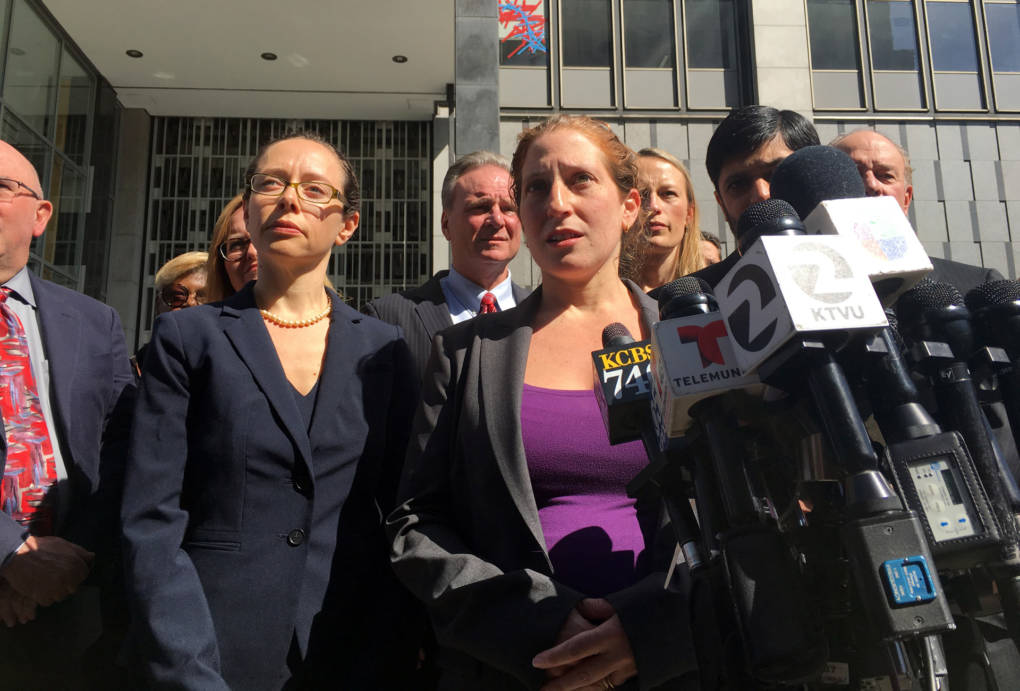
"caption": "San Francisco deputy city attorneys Mollie Lee and Sara Eisenberg seek to block President Trump's plan to defund sanctuary cities.",
"description": "San Francisco city attorneys Mollie Lee and Sara Eisenberg seek to block President Trump's plan to defund sanctuary cities.",
"title": "SfCityAttorneys",
"credit": "Julie Small/KQED",
"status": "inherit",
"isLoading": false,
"fetchFailed": false
},
"news_11407001": {
"type": "attachments",
"id": "news_11407001",
"meta": {
"index": "attachments_1716263798",
"site": "news",
"id": "11407001",
"found": true
},
"parent": 11406744,
"imgSizes": {
"small": {
"file": "https://ww2.kqed.org/app/uploads/sites/10/2017/04/RS24934_GettyImages-481485054-qut-520x371.jpg",
"width": 520,
"mimeType": "image/jpeg",
"height": 371
},
"twentyfourteen-full-width": {
"file": "https://ww2.kqed.org/app/uploads/sites/10/2017/04/RS24934_GettyImages-481485054-qut-1038x576.jpg",
"width": 1038,
"mimeType": "image/jpeg",
"height": 576
},
"thumbnail": {
"file": "https://ww2.kqed.org/app/uploads/sites/10/2017/04/RS24934_GettyImages-481485054-qut-160x114.jpg",
"width": 160,
"mimeType": "image/jpeg",
"height": 114
},
"fd-sm": {
"file": "https://ww2.kqed.org/app/uploads/sites/10/2017/04/RS24934_GettyImages-481485054-qut-960x685.jpg",
"width": 960,
"mimeType": "image/jpeg",
"height": 685
},
"post-thumbnail": {
"file": "https://ww2.kqed.org/app/uploads/sites/10/2017/04/RS24934_GettyImages-481485054-qut-672x372.jpg",
"width": 672,
"mimeType": "image/jpeg",
"height": 372
},
"xsmall": {
"file": "https://ww2.kqed.org/app/uploads/sites/10/2017/04/RS24934_GettyImages-481485054-qut-375x268.jpg",
"width": 375,
"mimeType": "image/jpeg",
"height": 268
},
"kqedFullSize": {
"file": "https://ww2.kqed.org/app/uploads/sites/10/2017/04/RS24934_GettyImages-481485054-qut.jpg",
"width": 1920,
"height": 1370
},
"large": {
"file": "https://ww2.kqed.org/app/uploads/sites/10/2017/04/RS24934_GettyImages-481485054-qut-1020x728.jpg",
"width": 1020,
"mimeType": "image/jpeg",
"height": 728
},
"xlarge": {
"file": "https://ww2.kqed.org/app/uploads/sites/10/2017/04/RS24934_GettyImages-481485054-qut-1180x842.jpg",
"width": 1180,
"mimeType": "image/jpeg",
"height": 842
},
"guest-author-50": {
"file": "https://ww2.kqed.org/app/uploads/sites/10/2017/04/RS24934_GettyImages-481485054-qut-50x50.jpg",
"width": 50,
"mimeType": "image/jpeg",
"height": 50
},
"guest-author-96": {
"file": "https://ww2.kqed.org/app/uploads/sites/10/2017/04/RS24934_GettyImages-481485054-qut-96x96.jpg",
"width": 96,
"mimeType": "image/jpeg",
"height": 96
},
"medium": {
"file": "https://ww2.kqed.org/app/uploads/sites/10/2017/04/RS24934_GettyImages-481485054-qut-800x571.jpg",
"width": 800,
"mimeType": "image/jpeg",
"height": 571
},
"guest-author-64": {
"file": "https://ww2.kqed.org/app/uploads/sites/10/2017/04/RS24934_GettyImages-481485054-qut-64x64.jpg",
"width": 64,
"mimeType": "image/jpeg",
"height": 64
},
"guest-author-32": {
"file": "https://ww2.kqed.org/app/uploads/sites/10/2017/04/RS24934_GettyImages-481485054-qut-32x32.jpg",
"width": 32,
"mimeType": "image/jpeg",
"height": 32
},
"fd-lrg": {
"file": "https://ww2.kqed.org/app/uploads/sites/10/2017/04/RS24934_GettyImages-481485054-qut-1920x1370.jpg",
"width": 1920,
"mimeType": "image/jpeg",
"height": 1370
},
"fd-med": {
"file": "https://ww2.kqed.org/app/uploads/sites/10/2017/04/RS24934_GettyImages-481485054-qut-1180x842.jpg",
"width": 1180,
"mimeType": "image/jpeg",
"height": 842
},
"full-width": {
"file": "https://ww2.kqed.org/app/uploads/sites/10/2017/04/RS24934_GettyImages-481485054-qut-1920x1370.jpg",
"width": 1920,
"mimeType": "image/jpeg",
"height": 1370
},
"detail": {
"file": "https://ww2.kqed.org/app/uploads/sites/10/2017/04/RS24934_GettyImages-481485054-qut-150x150.jpg",
"width": 150,
"mimeType": "image/jpeg",
"height": 150
},
"guest-author-128": {
"file": "https://ww2.kqed.org/app/uploads/sites/10/2017/04/RS24934_GettyImages-481485054-qut-128x128.jpg",
"width": 128,
"mimeType": "image/jpeg",
"height": 128
},
"xxsmall": {
"file": "https://ww2.kqed.org/app/uploads/sites/10/2017/04/RS24934_GettyImages-481485054-qut-240x171.jpg",
"width": 240,
"mimeType": "image/jpeg",
"height": 171
}
},
"publishDate": 1492119012,
"modified": 1492126334,
"caption": "Kate Steinle's mother, Liz Sullivan, is comforted during a Senate Judiciary Committee hearing on Capitol Hill on July 21, 2015, in Washington, D.C.",
"description": "Kate Steinle's mother, Liz Sullivan, is comforted during a Senate Judiciary Committee hearing on Capitol Hill on July 21, 2015, in Washington, D.C.",
"title": "Senate Holds Hearing On Immigration Enforcement Policies And Public Safety",
"credit": "Mark Wilson/Getty Images",
"status": "inherit",
"isLoading": false,
"fetchFailed": false
},
"news_11403895": {
"type": "attachments",
"id": "news_11403895",
"meta": {
"index": "attachments_1716263798",
"site": "news",
"id": "11403895",
"found": true
},
"parent": 11403828,
"imgSizes": {
"small": {
"file": "https://ww2.kqed.org/app/uploads/sites/10/2017/04/AdelantoDetention-520x347.jpg",
"width": 520,
"mimeType": "image/jpeg",
"height": 347
},
"twentyfourteen-full-width": {
"file": "https://ww2.kqed.org/app/uploads/sites/10/2017/04/AdelantoDetention-1038x576.jpg",
"width": 1038,
"mimeType": "image/jpeg",
"height": 576
},
"thumbnail": {
"file": "https://ww2.kqed.org/app/uploads/sites/10/2017/04/AdelantoDetention-160x107.jpg",
"width": 160,
"mimeType": "image/jpeg",
"height": 107
},
"fd-sm": {
"file": "https://ww2.kqed.org/app/uploads/sites/10/2017/04/AdelantoDetention-960x640.jpg",
"width": 960,
"mimeType": "image/jpeg",
"height": 640
},
"post-thumbnail": {
"file": "https://ww2.kqed.org/app/uploads/sites/10/2017/04/AdelantoDetention-672x372.jpg",
"width": 672,
"mimeType": "image/jpeg",
"height": 372
},
"xsmall": {
"file": "https://ww2.kqed.org/app/uploads/sites/10/2017/04/AdelantoDetention-375x250.jpg",
"width": 375,
"mimeType": "image/jpeg",
"height": 250
},
"kqedFullSize": {
"file": "https://ww2.kqed.org/app/uploads/sites/10/2017/04/AdelantoDetention.jpg",
"width": 1920,
"height": 1280
},
"large": {
"file": "https://ww2.kqed.org/app/uploads/sites/10/2017/04/AdelantoDetention-1020x680.jpg",
"width": 1020,
"mimeType": "image/jpeg",
"height": 680
},
"xlarge": {
"file": "https://ww2.kqed.org/app/uploads/sites/10/2017/04/AdelantoDetention-1180x787.jpg",
"width": 1180,
"mimeType": "image/jpeg",
"height": 787
},
"guest-author-50": {
"file": "https://ww2.kqed.org/app/uploads/sites/10/2017/04/AdelantoDetention-50x50.jpg",
"width": 50,
"mimeType": "image/jpeg",
"height": 50
},
"guest-author-96": {
"file": "https://ww2.kqed.org/app/uploads/sites/10/2017/04/AdelantoDetention-96x96.jpg",
"width": 96,
"mimeType": "image/jpeg",
"height": 96
},
"medium": {
"file": "https://ww2.kqed.org/app/uploads/sites/10/2017/04/AdelantoDetention-800x533.jpg",
"width": 800,
"mimeType": "image/jpeg",
"height": 533
},
"guest-author-64": {
"file": "https://ww2.kqed.org/app/uploads/sites/10/2017/04/AdelantoDetention-64x64.jpg",
"width": 64,
"mimeType": "image/jpeg",
"height": 64
},
"guest-author-32": {
"file": "https://ww2.kqed.org/app/uploads/sites/10/2017/04/AdelantoDetention-32x32.jpg",
"width": 32,
"mimeType": "image/jpeg",
"height": 32
},
"fd-lrg": {
"file": "https://ww2.kqed.org/app/uploads/sites/10/2017/04/AdelantoDetention-1920x1280.jpg",
"width": 1920,
"mimeType": "image/jpeg",
"height": 1280
},
"fd-med": {
"file": "https://ww2.kqed.org/app/uploads/sites/10/2017/04/AdelantoDetention-1180x787.jpg",
"width": 1180,
"mimeType": "image/jpeg",
"height": 787
},
"full-width": {
"file": "https://ww2.kqed.org/app/uploads/sites/10/2017/04/AdelantoDetention-1920x1280.jpg",
"width": 1920,
"mimeType": "image/jpeg",
"height": 1280
},
"detail": {
"file": "https://ww2.kqed.org/app/uploads/sites/10/2017/04/AdelantoDetention-150x150.jpg",
"width": 150,
"mimeType": "image/jpeg",
"height": 150
},
"guest-author-128": {
"file": "https://ww2.kqed.org/app/uploads/sites/10/2017/04/AdelantoDetention-128x128.jpg",
"width": 128,
"mimeType": "image/jpeg",
"height": 128
},
"xxsmall": {
"file": "https://ww2.kqed.org/app/uploads/sites/10/2017/04/AdelantoDetention-240x160.jpg",
"width": 240,
"mimeType": "image/jpeg",
"height": 160
}
},
"publishDate": 1491951479,
"modified": 1513383351,
"caption": "Immigrants stand in shackles at California's Adelanto Detention Facility. Adelanto was not one of the five detention facilities inspected by the Inspector General's Office of the Department of Homeland Security.",
"description": "Immigrants stand in shackles at California's Adelanto Detention Facility. Adelanto was not one of the five detention facilities inspected by the Inspector General's Office of the Department of Homeland Security.",
"title": "AdelantoDetention",
"credit": "John Moore/Getty Images",
"status": "inherit",
"isLoading": false,
"fetchFailed": false
},
"news_11397370": {
"type": "attachments",
"id": "news_11397370",
"meta": {
"index": "attachments_1716263798",
"site": "news",
"id": "11397370",
"found": true
},
"parent": 11397366,
"imgSizes": {
"small": {
"file": "https://ww2.kqed.org/app/uploads/sites/10/2017/04/Brenda-520x386.jpg",
"width": 520,
"mimeType": "image/jpeg",
"height": 386
},
"twentyfourteen-full-width": {
"file": "https://ww2.kqed.org/app/uploads/sites/10/2017/04/Brenda-1038x576.jpg",
"width": 1038,
"mimeType": "image/jpeg",
"height": 576
},
"thumbnail": {
"file": "https://ww2.kqed.org/app/uploads/sites/10/2017/04/Brenda-160x119.jpg",
"width": 160,
"mimeType": "image/jpeg",
"height": 119
},
"fd-sm": {
"file": "https://ww2.kqed.org/app/uploads/sites/10/2017/04/Brenda-960x713.jpg",
"width": 960,
"mimeType": "image/jpeg",
"height": 713
},
"post-thumbnail": {
"file": "https://ww2.kqed.org/app/uploads/sites/10/2017/04/Brenda-672x372.jpg",
"width": 672,
"mimeType": "image/jpeg",
"height": 372
},
"xsmall": {
"file": "https://ww2.kqed.org/app/uploads/sites/10/2017/04/Brenda-375x278.jpg",
"width": 375,
"mimeType": "image/jpeg",
"height": 278
},
"kqedFullSize": {
"file": "https://ww2.kqed.org/app/uploads/sites/10/2017/04/Brenda.jpg",
"width": 1920,
"height": 1425
},
"large": {
"file": "https://ww2.kqed.org/app/uploads/sites/10/2017/04/Brenda-1020x757.jpg",
"width": 1020,
"mimeType": "image/jpeg",
"height": 757
},
"xlarge": {
"file": "https://ww2.kqed.org/app/uploads/sites/10/2017/04/Brenda-1180x876.jpg",
"width": 1180,
"mimeType": "image/jpeg",
"height": 876
},
"guest-author-50": {
"file": "https://ww2.kqed.org/app/uploads/sites/10/2017/04/Brenda-50x50.jpg",
"width": 50,
"mimeType": "image/jpeg",
"height": 50
},
"guest-author-96": {
"file": "https://ww2.kqed.org/app/uploads/sites/10/2017/04/Brenda-96x96.jpg",
"width": 96,
"mimeType": "image/jpeg",
"height": 96
},
"medium": {
"file": "https://ww2.kqed.org/app/uploads/sites/10/2017/04/Brenda-800x594.jpg",
"width": 800,
"mimeType": "image/jpeg",
"height": 594
},
"guest-author-64": {
"file": "https://ww2.kqed.org/app/uploads/sites/10/2017/04/Brenda-64x64.jpg",
"width": 64,
"mimeType": "image/jpeg",
"height": 64
},
"guest-author-32": {
"file": "https://ww2.kqed.org/app/uploads/sites/10/2017/04/Brenda-32x32.jpg",
"width": 32,
"mimeType": "image/jpeg",
"height": 32
},
"fd-lrg": {
"file": "https://ww2.kqed.org/app/uploads/sites/10/2017/04/Brenda-1920x1425.jpg",
"width": 1920,
"mimeType": "image/jpeg",
"height": 1425
},
"fd-med": {
"file": "https://ww2.kqed.org/app/uploads/sites/10/2017/04/Brenda-1180x876.jpg",
"width": 1180,
"mimeType": "image/jpeg",
"height": 876
},
"full-width": {
"file": "https://ww2.kqed.org/app/uploads/sites/10/2017/04/Brenda-1920x1425.jpg",
"width": 1920,
"mimeType": "image/jpeg",
"height": 1425
},
"detail": {
"file": "https://ww2.kqed.org/app/uploads/sites/10/2017/04/Brenda-150x150.jpg",
"width": 150,
"mimeType": "image/jpeg",
"height": 150
},
"guest-author-128": {
"file": "https://ww2.kqed.org/app/uploads/sites/10/2017/04/Brenda-128x128.jpg",
"width": 128,
"mimeType": "image/jpeg",
"height": 128
},
"xxsmall": {
"file": "https://ww2.kqed.org/app/uploads/sites/10/2017/04/Brenda-240x178.jpg",
"width": 240,
"mimeType": "image/jpeg",
"height": 178
}
},
"publishDate": 1491604080,
"modified": 1491604269,
"caption": "Brenda Avelica's father, who was living in the U.S. illegally, was stopped by immigration officials and arrested in Highland Park in February. The case has received national attention. She said immigration agents also visited the family's home looking for her father in 2015.",
"description": "Brenda Avelica's father, who was living in the U.S. illegally, was stopped by immigration officials and arrested in Highland Park in February. The case has received national attention. She said immigration agents also visited the family's home looking for her father in 2015.",
"title": "Brenda",
"credit": "Leslie Berestein Rojas/KPCC",
"status": "inherit",
"isLoading": false,
"fetchFailed": false
},
"news_11385339": {
"type": "attachments",
"id": "news_11385339",
"meta": {
"index": "attachments_1716263798",
"site": "news",
"id": "11385339",
"found": true
},
"parent": 11385254,
"imgSizes": {
"small": {
"file": "https://ww2.kqed.org/app/uploads/sites/10/2017/03/Safe-Haven-7-520x389.jpg",
"width": 520,
"mimeType": "image/jpeg",
"height": 389
},
"twentyfourteen-full-width": {
"file": "https://ww2.kqed.org/app/uploads/sites/10/2017/03/Safe-Haven-7-1038x576.jpg",
"width": 1038,
"mimeType": "image/jpeg",
"height": 576
},
"thumbnail": {
"file": "https://ww2.kqed.org/app/uploads/sites/10/2017/03/Safe-Haven-7-160x120.jpg",
"width": 160,
"mimeType": "image/jpeg",
"height": 120
},
"fd-sm": {
"file": "https://ww2.kqed.org/app/uploads/sites/10/2017/03/Safe-Haven-7-960x718.jpg",
"width": 960,
"mimeType": "image/jpeg",
"height": 718
},
"post-thumbnail": {
"file": "https://ww2.kqed.org/app/uploads/sites/10/2017/03/Safe-Haven-7-672x372.jpg",
"width": 672,
"mimeType": "image/jpeg",
"height": 372
},
"xsmall": {
"file": "https://ww2.kqed.org/app/uploads/sites/10/2017/03/Safe-Haven-7-375x280.jpg",
"width": 375,
"mimeType": "image/jpeg",
"height": 280
},
"kqedFullSize": {
"file": "https://ww2.kqed.org/app/uploads/sites/10/2017/03/Safe-Haven-7.jpg",
"width": 3081,
"height": 2303
},
"large": {
"file": "https://ww2.kqed.org/app/uploads/sites/10/2017/03/Safe-Haven-7-1020x762.jpg",
"width": 1020,
"mimeType": "image/jpeg",
"height": 762
},
"xlarge": {
"file": "https://ww2.kqed.org/app/uploads/sites/10/2017/03/Safe-Haven-7-1180x882.jpg",
"width": 1180,
"mimeType": "image/jpeg",
"height": 882
},
"guest-author-50": {
"file": "https://ww2.kqed.org/app/uploads/sites/10/2017/03/Safe-Haven-7-50x50.jpg",
"width": 50,
"mimeType": "image/jpeg",
"height": 50
},
"guest-author-96": {
"file": "https://ww2.kqed.org/app/uploads/sites/10/2017/03/Safe-Haven-7-96x96.jpg",
"width": 96,
"mimeType": "image/jpeg",
"height": 96
},
"medium": {
"file": "https://ww2.kqed.org/app/uploads/sites/10/2017/03/Safe-Haven-7-800x598.jpg",
"width": 800,
"mimeType": "image/jpeg",
"height": 598
},
"guest-author-64": {
"file": "https://ww2.kqed.org/app/uploads/sites/10/2017/03/Safe-Haven-7-64x64.jpg",
"width": 64,
"mimeType": "image/jpeg",
"height": 64
},
"guest-author-32": {
"file": "https://ww2.kqed.org/app/uploads/sites/10/2017/03/Safe-Haven-7-32x32.jpg",
"width": 32,
"mimeType": "image/jpeg",
"height": 32
},
"fd-lrg": {
"file": "https://ww2.kqed.org/app/uploads/sites/10/2017/03/Safe-Haven-7-1920x1435.jpg",
"width": 1920,
"mimeType": "image/jpeg",
"height": 1435
},
"fd-med": {
"file": "https://ww2.kqed.org/app/uploads/sites/10/2017/03/Safe-Haven-7-1180x882.jpg",
"width": 1180,
"mimeType": "image/jpeg",
"height": 882
},
"full-width": {
"file": "https://ww2.kqed.org/app/uploads/sites/10/2017/03/Safe-Haven-7-1920x1435.jpg",
"width": 1920,
"mimeType": "image/jpeg",
"height": 1435
},
"detail": {
"file": "https://ww2.kqed.org/app/uploads/sites/10/2017/03/Safe-Haven-7-150x150.jpg",
"width": 150,
"mimeType": "image/jpeg",
"height": 150
},
"guest-author-128": {
"file": "https://ww2.kqed.org/app/uploads/sites/10/2017/03/Safe-Haven-7-128x128.jpg",
"width": 128,
"mimeType": "image/jpeg",
"height": 128
},
"xxsmall": {
"file": "https://ww2.kqed.org/app/uploads/sites/10/2017/03/Safe-Haven-7-240x179.jpg",
"width": 240,
"mimeType": "image/jpeg",
"height": 179
}
},
"publishDate": 1490992660,
"modified": 1491003970,
"caption": "Spanish teacher Elizabeth Villanueva helps connect immigrant families at Luther Burbank High School in Sacramento to resources and immigration attorneys should they face legal action.",
"description": null,
"title": "Safe Haven 7",
"credit": "Ana Tintocalis/KQED News",
"status": "inherit",
"isLoading": false,
"fetchFailed": false
}
},
"audioPlayerReducer": {
"postId": "stream_live",
"isPaused": true,
"isPlaying": false,
"pfsActive": false,
"pledgeModalIsOpen": true,
"playerDrawerIsOpen": false,
"liveAudioPlayStartedAt": 0,
"liveAudioPlayContext": ""
},
"authorsReducer": {
"byline_news_11429742": {
"type": "authors",
"id": "byline_news_11429742",
"meta": {
"override": true
},
"slug": "byline_news_11429742",
"name": "Paola Mardo",
"isLoading": false
},
"byline_news_11429745": {
"type": "authors",
"id": "byline_news_11429745",
"meta": {
"override": true
},
"slug": "byline_news_11429745",
"name": "Joel Rose",
"isLoading": false
},
"byline_news_11403828": {
"type": "authors",
"id": "byline_news_11403828",
"meta": {
"override": true
},
"slug": "byline_news_11403828",
"name": "Elliot Spagat \u003cbr> Associated Press ",
"isLoading": false
},
"byline_news_11397366": {
"type": "authors",
"id": "byline_news_11397366",
"meta": {
"override": true
},
"slug": "byline_news_11397366",
"name": "\u003cstrong>\u003ca href=\"http://www.scpr.org/about/people/staff/leslie-berestein-rojas\">Leslie Berestein Rojas\u003c/a>\u003cbr>\u003ca href=\"http://www.scpr.org/\">KPCC\u003c/a>\u003c/strong>",
"isLoading": false
},
"anatintocalis": {
"type": "authors",
"id": "211",
"meta": {
"index": "authors_1716337520",
"id": "211",
"found": true
},
"name": "Ana Tintocalis",
"firstName": "Ana",
"lastName": "Tintocalis",
"slug": "anatintocalis",
"email": "atintocalis@kqed.org",
"display_author_email": false,
"staff_mastheads": [],
"title": null,
"bio": null,
"avatar": "https://secure.gravatar.com/avatar/722c50f51f04eff38fa0e5a3f1d29450?s=600&d=blank&r=g",
"twitter": null,
"facebook": null,
"instagram": null,
"linkedin": null,
"sites": [
{
"site": "news",
"roles": [
"subscriber"
]
},
{
"site": "stateofhealth",
"roles": [
"subscriber"
]
}
],
"headData": {
"title": "Ana Tintocalis | KQED",
"description": null,
"ogImgSrc": "https://secure.gravatar.com/avatar/722c50f51f04eff38fa0e5a3f1d29450?s=600&d=blank&r=g",
"twImgSrc": "https://secure.gravatar.com/avatar/722c50f51f04eff38fa0e5a3f1d29450?s=600&d=blank&r=g"
},
"isLoading": false,
"link": "/author/anatintocalis"
},
"kqed": {
"type": "authors",
"id": "236",
"meta": {
"index": "authors_1716337520",
"id": "236",
"found": true
},
"name": "KQED News Staff",
"firstName": "KQED News Staff",
"lastName": null,
"slug": "kqed",
"email": "faq@kqed.org",
"display_author_email": false,
"staff_mastheads": [],
"title": null,
"bio": null,
"avatar": "https://secure.gravatar.com/avatar/ef0e801a68c4c54afa9180db14084167?s=600&d=blank&r=g",
"twitter": null,
"facebook": null,
"instagram": null,
"linkedin": null,
"sites": [
{
"site": "arts",
"roles": [
"contributor"
]
},
{
"site": "news",
"roles": [
"editor"
]
},
{
"site": "futureofyou",
"roles": [
"author"
]
}
],
"headData": {
"title": "KQED News Staff | KQED",
"description": null,
"ogImgSrc": "https://secure.gravatar.com/avatar/ef0e801a68c4c54afa9180db14084167?s=600&d=blank&r=g",
"twImgSrc": "https://secure.gravatar.com/avatar/ef0e801a68c4c54afa9180db14084167?s=600&d=blank&r=g"
},
"isLoading": false,
"link": "/author/kqed"
},
"mlagos": {
"type": "authors",
"id": "3239",
"meta": {
"index": "authors_1716337520",
"id": "3239",
"found": true
},
"name": "Marisa Lagos",
"firstName": "Marisa",
"lastName": "Lagos",
"slug": "mlagos",
"email": "mlagos@kqed.org",
"display_author_email": false,
"staff_mastheads": [
"news"
],
"title": "KQED Contributor",
"bio": "Marisa Lagos is a correspondent for KQED’s California Politics and Government Desk and co-hosts the award-winning show and podcast, Political Breakdown. At KQED, Lagos also conducts reporting, analysis and investigations into state, local and national politics for radio, TV, online and onstage. In 2022, she and co-host, Scott Shafer, moderated the only gubernatorial debate in California. In 2020, the \u003ci>Washington Post\u003c/i> named her one of the top political journalists in California; she was nominated for a Peabody and won several other awards for her work investigating the 2017 California wildfires. She has worked at the \u003ci>San Francisco Chronicle\u003c/i>, \u003ci>San Francisco Examiner\u003c/i> and \u003ci>Los Angeles Times\u003c/i>. A UC Santa Barbara graduate, she lives in San Francisco with her two sons and husband.",
"avatar": "https://secure.gravatar.com/avatar/a261a0d3696fc066871ef96b85b5e7d2?s=600&d=blank&r=g",
"twitter": "@mlagos",
"facebook": null,
"instagram": null,
"linkedin": null,
"sites": [
{
"site": "arts",
"roles": [
"author"
]
},
{
"site": "news",
"roles": [
"editor"
]
},
{
"site": "science",
"roles": [
"editor"
]
},
{
"site": "forum",
"roles": [
"author"
]
},
{
"site": "liveblog",
"roles": [
"author"
]
}
],
"headData": {
"title": "Marisa Lagos | KQED",
"description": "KQED Contributor",
"ogImgSrc": "https://secure.gravatar.com/avatar/a261a0d3696fc066871ef96b85b5e7d2?s=600&d=blank&r=g",
"twImgSrc": "https://secure.gravatar.com/avatar/a261a0d3696fc066871ef96b85b5e7d2?s=600&d=blank&r=g"
},
"isLoading": false,
"link": "/author/mlagos"
},
"jsmall": {
"type": "authors",
"id": "6625",
"meta": {
"index": "authors_1716337520",
"id": "6625",
"found": true
},
"name": "Julie Small",
"firstName": "Julie",
"lastName": "Small",
"slug": "jsmall",
"email": "jsmall@kqed.org",
"display_author_email": true,
"staff_mastheads": [
"news"
],
"title": "KQED Contributor",
"bio": "Julie Small reports on criminal justice and immigration.\r\n\r\nShe was part of a team at KQED awarded a regional 2019 Edward R. Murrow award for continuing coverage of the Trump Administration's family separation policy.\r\n\r\nThe Society for Professional Journalists recognized Julie's 2018 \u003ca href=\"https://www.kqed.org/news/11636262/the-officer-tased-him-31-times-the-sheriff-called-his-death-an-accident\">reporting\u003c/a> on the San Joaquin County Sheriff's \u003ca href=\"https://www.kqed.org/news/11634689/autopsy-doctors-sheriff-overrode-death-findings-to-protect-law-enforcement\">interference\u003c/a> in death investigations with an Excellence in Journalism Award for Ongoing Coverage.\r\n\r\nJulie's\u003ca href=\"https://www.kqed.org/news/11039666/two-mentally-ill-inmates-died-one-month-in-santa-clara\"> reporting\u003c/a> with Lisa Pickoff-White on the treatment of mentally ill offenders in California jails earned a 2017 regional Edward R. Murrow Award for news reporting and an investigative reporting award from the SPJ of Northern California.\r\n\r\nBefore joining KQED, Julie covered government and politics in Sacramento for Southern California Public Radio (SCPR). Her 2010 \u003ca href=\"https://www.scpr.org/specials/prisonmedical/\">series\u003c/a> on lapses in California’s prison medical care also won a regional Edward R. Murrow Award for investigative reporting and a Golden Mic Award from the RTNDA of Southern California.\r\n\r\nJulie began her career in journalism in 2000 as the deputy foreign editor for public radio's \u003cem>Marketplace, \u003c/em>while earning her master's degree in journalism from USC’s Annenberg School of Communication.",
"avatar": "https://secure.gravatar.com/avatar/4baedf201468df97be97c2a9dd7585d0?s=600&d=blank&r=g",
"twitter": "@SmallRadio2",
"facebook": null,
"instagram": null,
"linkedin": null,
"sites": [
{
"site": "news",
"roles": [
"editor"
]
},
{
"site": "stateofhealth",
"roles": [
"author"
]
},
{
"site": "science",
"roles": [
"author"
]
}
],
"headData": {
"title": "Julie Small | KQED",
"description": "KQED Contributor",
"ogImgSrc": "https://secure.gravatar.com/avatar/4baedf201468df97be97c2a9dd7585d0?s=600&d=blank&r=g",
"twImgSrc": "https://secure.gravatar.com/avatar/4baedf201468df97be97c2a9dd7585d0?s=600&d=blank&r=g"
},
"isLoading": false,
"link": "/author/jsmall"
},
"mleitsinger": {
"type": "authors",
"id": "11310",
"meta": {
"index": "authors_1716337520",
"id": "11310",
"found": true
},
"name": "Miranda Leitsinger",
"firstName": "Miranda",
"lastName": "Leitsinger",
"slug": "mleitsinger",
"email": "mleitsinger@KQED.org",
"display_author_email": false,
"staff_mastheads": [
"news"
],
"title": "KQED Contributor",
"bio": "Miranda Leitsinger has worked in journalism as a reporter and editor since 2000, including seven years at The Associated Press in locales such as Cambodia and Puerto Rico, four years at NBC News Digital in New York and 2.5 years at CNN.com International in Hong Kong. Major stories she has covered included sexual abuse in the yoga community, the rise of women in local politics post-2016 election, the struggle over LGBTQ inclusion in the Boy Scouts, aftermath of the 2004 and 2011 tsunamis, the Aurora movie theater attack, the Newtown school shooting, Superstorm Sandy and the Boston Marathon bombing.",
"avatar": "https://secure.gravatar.com/avatar/cdd00de7be92aab3b7fd3d915e02033d?s=600&d=blank&r=g",
"twitter": "mimileitsinger",
"facebook": null,
"instagram": null,
"linkedin": null,
"sites": [
{
"site": "arts",
"roles": [
"author"
]
},
{
"site": "news",
"roles": [
"subscriber"
]
},
{
"site": "futureofyou",
"roles": [
"editor"
]
},
{
"site": "stateofhealth",
"roles": [
"editor"
]
}
],
"headData": {
"title": "Miranda Leitsinger | KQED",
"description": "KQED Contributor",
"ogImgSrc": "https://secure.gravatar.com/avatar/cdd00de7be92aab3b7fd3d915e02033d?s=600&d=blank&r=g",
"twImgSrc": "https://secure.gravatar.com/avatar/cdd00de7be92aab3b7fd3d915e02033d?s=600&d=blank&r=g"
},
"isLoading": false,
"link": "/author/mleitsinger"
},
"bjohnson": {
"type": "authors",
"id": "11328",
"meta": {
"index": "authors_1716337520",
"id": "11328",
"found": true
},
"name": "Bert Johnson",
"firstName": "Bert",
"lastName": "Johnson",
"slug": "bjohnson",
"email": "bjohnson@KQED.org",
"display_author_email": false,
"staff_mastheads": [],
"title": "KQED Contributor",
"bio": "Bert Johnson is a multimedia journalist and KQED contributor. His work has also been published in the \u003cem>Sacramento News & Review\u003c/em> and he was previously the Multimedia Editor at the \u003cem>East Bay Express. \u003c/em>He covers social movements, the justice system and extremism. Email: bjohnson@kqed.org Twitter: @bertjohnsonfoto Instagram: @bertjohnsonfoto",
"avatar": "https://secure.gravatar.com/avatar/68b1d4bfae2eff83ac1d5c2ca0d0a936?s=600&d=blank&r=g",
"twitter": null,
"facebook": null,
"instagram": null,
"linkedin": null,
"sites": [
{
"site": "news",
"roles": [
"edit_others_posts",
"subscriber"
]
}
],
"headData": {
"title": "Bert Johnson | KQED",
"description": "KQED Contributor",
"ogImgSrc": "https://secure.gravatar.com/avatar/68b1d4bfae2eff83ac1d5c2ca0d0a936?s=600&d=blank&r=g",
"twImgSrc": "https://secure.gravatar.com/avatar/68b1d4bfae2eff83ac1d5c2ca0d0a936?s=600&d=blank&r=g"
},
"isLoading": false,
"link": "/author/bjohnson"
}
},
"pagesReducer": {
"news_tag_u-s-immigration-and-customs-enforcement": {
"type": "terms",
"id": "news_20529",
"meta": {
"index": "terms_1716263798",
"site": "news",
"id": "20529",
"score": 10.404627
},
"featImg": null,
"name": "U.S. Immigration and Customs Enforcement",
"description": null,
"taxonomy": "tag",
"headData": {
"twImgId": null,
"twTitle": null,
"ogTitle": null,
"ogImgId": null,
"twDescription": null,
"description": null,
"title": "U.S. Immigration and Customs Enforcement Archives | KQED News",
"ogDescription": null
},
"ttid": 20546,
"slug": "u-s-immigration-and-customs-enforcement",
"isLoading": false,
"title": "U.S. Immigration and Customs Enforcement",
"pageMeta": {
"site": "news",
"WpPageTemplate": "page-topic-editorial",
"currentPage": 28
},
"blocks": [
{
"blockName": "kqed/post-list",
"attrs": {
"layout": "cardArticle2",
"query": "posts/news?tag=u-s-immigration-and-customs-enforcement",
"seeMore": false,
"paginated": true,
"page": 28
}
},
{
"blockName": "kqed/ad"
}
]
}
},
"pfsSessionReducer": {},
"postsReducer": {
"stream_live": {
"type": "live",
"id": "stream_live",
"audioUrl": "https://streams.kqed.org/kqedradio",
"title": "Live Stream",
"excerpt": "Live Stream information currently unavailable.",
"link": "/radio",
"featImg": "",
"label": {
"name": "KQED Live",
"link": "/"
}
},
"stream_kqedNewscast": {
"type": "posts",
"id": "stream_kqedNewscast",
"audioUrl": "https://www.kqed.org/.stream/anon/radio/RDnews/newscast.mp3?_=1",
"title": "KQED Newscast",
"featImg": "",
"label": {
"name": "88.5 FM",
"link": "/"
}
},
"news_11454621": {
"type": "posts",
"id": "news_11454621",
"meta": {
"index": "posts_1716263798",
"site": "news",
"id": "11454621",
"score": null,
"sort": [
1494641446000
]
},
"guestAuthors": [],
"slug": "rep-eric-swalwell-sheriff-david-livingston-maz-jobrani-golden-state-warriors",
"title": "Rep. Eric Swalwell, Sheriff David Livingston, Maz Jobrani, Golden State Warriors",
"publishDate": 1494641446,
"format": "video",
"headTitle": "Rep. Eric Swalwell, Sheriff David Livingston, Maz Jobrani, Golden State Warriors | KQED",
"labelTerm": {
"term": 7052,
"site": "news"
},
"content": "\u003cp>\u003cstrong>Congressman Eric Swalwell\u003c/strong>\u003c/p>\n\u003cp>California Congressman Eric Swalwell condemned President Trump’s decision to fire FBI director James Comey\u003cstrong>. \u003c/strong>Swalwell is also calling for an independent, bipartisan committee to investigate potential interference by Russian officials in the 2016 presidential elections.\u003c/p>\n\u003cp>\u003cstrong>Contra Costa Sheriff David Livingston\u003c/strong>\u003c/p>\n\u003cp>Contra Costa County Sheriff David Livingston discusses his opposition to a proposed state bill to make California a sanctuary state and why the county jail leases beds to Immigration and Customs Enforcement for use in detaining undocumented immigrants.\u003c/p>\n\u003cp>\u003cstrong>Maz Jobrani\u003c/strong>\u003c/p>\n\u003cp>[ad fullwidth]\u003c/p>\n\u003cp>Iranian-American Maz Jobrani studied political science at UC Berkeley but ended up pursuing a career in comedy, where he tackles politics, race, and stereotypes about the Middle East. Jobrani stopped by KQED on his way to speaking at commencement at his alma mater, UC Berkeley.\u003c/p>\n\u003cp>\u003cstrong>Golden State Warriors\u003c/strong>\u003c/p>\n\u003cp>\u003c/p>\n\u003cp>This weekend the Golden State Warriors resume their run for a second NBA title in three years. They’ll take on the San Antonio Spurs Sunday at home for the first game of their best of seven series for the Western Conference.\u003c/p>\n\u003cul>\n\u003cli>Guest: Bay Area News Group columnist Marcus Thompson\u003c/li>\n\u003c/ul>\n\n",
"blocks": [],
"excerpt": "Congressman Eric Swalwell, Sheriff David Livingston, Maz Jobrani and Golden State Warriors playoff run.",
"status": "publish",
"parent": 0,
"modified": 1738109502,
"stats": {
"hasAudio": false,
"hasVideo": false,
"hasChartOrMap": false,
"iframeSrcs": [],
"hasGoogleForm": false,
"hasGallery": false,
"hasHearkenModule": false,
"hasPolis": false,
"paragraphCount": 10,
"wordCount": 187
},
"headData": {
"title": "Rep. Eric Swalwell, Sheriff David Livingston, Maz Jobrani, Golden State Warriors | KQED",
"description": "Congressman Eric Swalwell, Sheriff David Livingston, Maz Jobrani and Golden State Warriors playoff run.",
"ogTitle": "",
"ogDescription": "",
"ogImgId": "",
"twTitle": "",
"twDescription": "",
"twImgId": "",
"schema": {
"@context": "https://schema.org",
"@type": "NewsArticle",
"headline": "Rep. Eric Swalwell, Sheriff David Livingston, Maz Jobrani, Golden State Warriors",
"datePublished": "2017-05-12T19:10:46-07:00",
"dateModified": "2025-01-28T16:11:42-08:00",
"image": "https://cdn.kqed.org/wp-content/uploads/2020/02/KQED-OG-Image@1x.png",
"isAccessibleForFree": "True",
"publisher": {
"@type": "NewsMediaOrganization",
"@id": "https://www.kqed.org/#organization",
"name": "KQED",
"logo": "https://cdn.kqed.org/wp-content/uploads/2020/02/KQED-OG-Image@1x.png",
"url": "https://www.kqed.org",
"sameAs": [
"https://www.facebook.com/KQED",
"https://twitter.com/KQED",
"https://www.instagram.com/kqed/",
"https://www.tiktok.com/@kqedofficial",
"https://www.linkedin.com/company/kqed",
"https://www.youtube.com/channel/UCeC0IOo7i1P_61zVUWbJ4nw"
]
}
}
},
"videoEmbed": "https://youtu.be/AD1-J9hlqMU",
"sticky": false,
"path": "/news/11454621/rep-eric-swalwell-sheriff-david-livingston-maz-jobrani-golden-state-warriors",
"audioTrackLength": null,
"parsedContent": [
{
"type": "contentString",
"content": "\u003cdiv class=\"post-body\">\u003cp>\u003cp>\u003cstrong>Congressman Eric Swalwell\u003c/strong>\u003c/p>\n\u003cp>California Congressman Eric Swalwell condemned President Trump’s decision to fire FBI director James Comey\u003cstrong>. \u003c/strong>Swalwell is also calling for an independent, bipartisan committee to investigate potential interference by Russian officials in the 2016 presidential elections.\u003c/p>\n\u003cp>\u003cstrong>Contra Costa Sheriff David Livingston\u003c/strong>\u003c/p>\n\u003cp>Contra Costa County Sheriff David Livingston discusses his opposition to a proposed state bill to make California a sanctuary state and why the county jail leases beds to Immigration and Customs Enforcement for use in detaining undocumented immigrants.\u003c/p>\n\u003cp>\u003cstrong>Maz Jobrani\u003c/strong>\u003c/p>\n\u003cp>\u003c/p>\u003c/div>",
"attributes": {
"named": {},
"numeric": []
}
},
{
"type": "component",
"content": "",
"name": "ad",
"attributes": {
"named": {
"label": "fullwidth"
},
"numeric": [
"fullwidth"
]
}
},
{
"type": "contentString",
"content": "\u003cdiv class=\"post-body\">\u003cp>\u003c/p>\n\u003cp>Iranian-American Maz Jobrani studied political science at UC Berkeley but ended up pursuing a career in comedy, where he tackles politics, race, and stereotypes about the Middle East. Jobrani stopped by KQED on his way to speaking at commencement at his alma mater, UC Berkeley.\u003c/p>\n\u003cp>\u003cstrong>Golden State Warriors\u003c/strong>\u003c/p>\n\u003cp>\u003c/p>\n\u003cp>This weekend the Golden State Warriors resume their run for a second NBA title in three years. They’ll take on the San Antonio Spurs Sunday at home for the first game of their best of seven series for the Western Conference.\u003c/p>\n\u003cul>\n\u003cli>Guest: Bay Area News Group columnist Marcus Thompson\u003c/li>\n\u003c/ul>\n\n\u003c/div>\u003c/p>",
"attributes": {
"named": {},
"numeric": []
}
}
],
"link": "/news/11454621/rep-eric-swalwell-sheriff-david-livingston-maz-jobrani-golden-state-warriors",
"authors": [
"236"
],
"programs": [
"news_7052"
],
"categories": [
"news_1169",
"news_8",
"news_13",
"news_10"
],
"tags": [
"news_1467",
"news_1323",
"news_20910",
"news_425",
"news_935",
"news_20383",
"news_4593",
"news_20297",
"news_19177",
"news_20445",
"news_20951",
"news_18016",
"news_20529",
"news_17597"
],
"featImg": "news_11454851",
"label": "news_7052"
},
"news_11435606": {
"type": "posts",
"id": "news_11435606",
"meta": {
"index": "posts_1716263798",
"site": "news",
"id": "11435606",
"score": null,
"sort": [
1493661909000
]
},
"guestAuthors": [],
"slug": "photos-may-day-rallies-across-the-bay-area-l-a",
"title": "PHOTOS: May Day Rallies Across the Bay Area, L.A.",
"publishDate": 1493661909,
"format": "image",
"headTitle": "PHOTOS: May Day Rallies Across the Bay Area, L.A. | KQED",
"labelTerm": {
"term": 72,
"site": "news"
},
"content": "\u003cp>Since 2006, Latinos have turned out on May Day to protest U.S. immigration policies. But this year, International Workers’ Day marches are expected to draw a larger coalition of those immigrants rights groups, women’s groups and LGBTQ advocates.\u003c/p>\n\u003cp>Labor and immigrant advocates are planning walkouts and protests, gearing up this time for big crowds in light of President Trump’s proposed immigration policies.\u003c/p>\n\u003cp>Here are photos from today’s rallies taking place in Los Angeles and across the Bay Area.\u003c/p>\n\u003cfigure id=\"attachment_11436501\" class=\"wp-caption aligncenter\" style=\"max-width: 640px\">\u003cimg loading=\"lazy\" decoding=\"async\" class=\"wp-image-11436501 size-large\" src=\"https://ww2.kqed.org/news/wp-content/uploads/sites/10/2017/05/RS25113_20170501_MayDay_credit_BertJohnson-2-qut-1020x680.jpg\" alt=\"\" width=\"640\" height=\"427\" srcset=\"https://cdn.kqed.org/wp-content/uploads/sites/10/2017/05/RS25113_20170501_MayDay_credit_BertJohnson-2-qut-1020x680.jpg 1020w, https://cdn.kqed.org/wp-content/uploads/sites/10/2017/05/RS25113_20170501_MayDay_credit_BertJohnson-2-qut-160x107.jpg 160w, https://cdn.kqed.org/wp-content/uploads/sites/10/2017/05/RS25113_20170501_MayDay_credit_BertJohnson-2-qut-800x533.jpg 800w, https://cdn.kqed.org/wp-content/uploads/sites/10/2017/05/RS25113_20170501_MayDay_credit_BertJohnson-2-qut.jpg 1920w, https://cdn.kqed.org/wp-content/uploads/sites/10/2017/05/RS25113_20170501_MayDay_credit_BertJohnson-2-qut-1180x787.jpg 1180w, https://cdn.kqed.org/wp-content/uploads/sites/10/2017/05/RS25113_20170501_MayDay_credit_BertJohnson-2-qut-960x640.jpg 960w, https://cdn.kqed.org/wp-content/uploads/sites/10/2017/05/RS25113_20170501_MayDay_credit_BertJohnson-2-qut-240x160.jpg 240w, https://cdn.kqed.org/wp-content/uploads/sites/10/2017/05/RS25113_20170501_MayDay_credit_BertJohnson-2-qut-375x250.jpg 375w, https://cdn.kqed.org/wp-content/uploads/sites/10/2017/05/RS25113_20170501_MayDay_credit_BertJohnson-2-qut-520x347.jpg 520w\" sizes=\"auto, (max-width: 640px) 100vw, 640px\">\u003cfigcaption class=\"wp-caption-text\">Activists with the Bay Resistance coalition blocked the entrance to a parking lot behind the San Francisco ICE building during May Day protests on May 1, 2017. The day’s events were called “A Day Without Immigrants” to highlight the pressures immigrant workers say they face under a Trump administration. \u003ccite>(Bert Johnson/KQED)\u003c/cite>\u003c/figcaption>\u003c/figure>\n\u003cfigure id=\"attachment_11436500\" class=\"wp-caption aligncenter\" style=\"max-width: 600px\">\u003cimg loading=\"lazy\" decoding=\"async\" class=\"wp-image-11436500\" src=\"https://ww2.kqed.org/news/wp-content/uploads/sites/10/2017/05/20170501_MayDay_credit_BertJohnson-1-800x1200.jpg\" alt=\"\" width=\"600\" height=\"900\" srcset=\"https://cdn.kqed.org/wp-content/uploads/sites/10/2017/05/20170501_MayDay_credit_BertJohnson-1-800x1200.jpg 800w, https://cdn.kqed.org/wp-content/uploads/sites/10/2017/05/20170501_MayDay_credit_BertJohnson-1-160x240.jpg 160w, https://cdn.kqed.org/wp-content/uploads/sites/10/2017/05/20170501_MayDay_credit_BertJohnson-1-1020x1530.jpg 1020w, https://cdn.kqed.org/wp-content/uploads/sites/10/2017/05/20170501_MayDay_credit_BertJohnson-1-1920x2880.jpg 1920w, https://cdn.kqed.org/wp-content/uploads/sites/10/2017/05/20170501_MayDay_credit_BertJohnson-1-1180x1770.jpg 1180w, https://cdn.kqed.org/wp-content/uploads/sites/10/2017/05/20170501_MayDay_credit_BertJohnson-1-960x1440.jpg 960w, https://cdn.kqed.org/wp-content/uploads/sites/10/2017/05/20170501_MayDay_credit_BertJohnson-1-240x360.jpg 240w, https://cdn.kqed.org/wp-content/uploads/sites/10/2017/05/20170501_MayDay_credit_BertJohnson-1-375x563.jpg 375w, https://cdn.kqed.org/wp-content/uploads/sites/10/2017/05/20170501_MayDay_credit_BertJohnson-1-520x780.jpg 520w, https://cdn.kqed.org/wp-content/uploads/sites/10/2017/05/20170501_MayDay_credit_BertJohnson-1.jpg 1365w\" sizes=\"auto, (max-width: 600px) 100vw, 600px\">\u003cfigcaption class=\"wp-caption-text\">Members of Danza Xitlalli, an indigenous Mexican dance troupe, performed during May Day protests in San Francisco on May 1, 2017. \u003ccite>(Bert Johnson/KQED)\u003c/cite>\u003c/figcaption>\u003c/figure>\n\u003cfigure id=\"attachment_11435695\" class=\"wp-caption aligncenter\" style=\"max-width: 640px\">\u003cimg loading=\"lazy\" decoding=\"async\" class=\"wp-image-11435695 size-large\" src=\"https://ww2.kqed.org/news/wp-content/uploads/sites/10/2017/05/U.S.-1020x713.jpg\" alt=\"\" width=\"640\" height=\"447\" srcset=\"https://cdn.kqed.org/wp-content/uploads/sites/10/2017/05/U.S.-1020x713.jpg 1020w, https://cdn.kqed.org/wp-content/uploads/sites/10/2017/05/U.S.-160x112.jpg 160w, https://cdn.kqed.org/wp-content/uploads/sites/10/2017/05/U.S.-800x559.jpg 800w, https://cdn.kqed.org/wp-content/uploads/sites/10/2017/05/U.S.-1920x1341.jpg 1920w, https://cdn.kqed.org/wp-content/uploads/sites/10/2017/05/U.S.-1180x824.jpg 1180w, https://cdn.kqed.org/wp-content/uploads/sites/10/2017/05/U.S.-960x671.jpg 960w, https://cdn.kqed.org/wp-content/uploads/sites/10/2017/05/U.S.-240x168.jpg 240w, https://cdn.kqed.org/wp-content/uploads/sites/10/2017/05/U.S.-375x262.jpg 375w, https://cdn.kqed.org/wp-content/uploads/sites/10/2017/05/U.S.-520x363.jpg 520w\" sizes=\"auto, (max-width: 640px) 100vw, 640px\">\u003cfigcaption class=\"wp-caption-text\">Protesters chant during a May Day demonstration outside a U.S. Immigration and Customs Enforcement (ICE) office in San Francisco. \u003ccite>(Justin Sullivan/Getty Images)\u003c/cite>\u003c/figcaption>\u003c/figure>\n\u003cfigure id=\"attachment_11436502\" class=\"wp-caption aligncenter\" style=\"max-width: 640px\">\u003cimg loading=\"lazy\" decoding=\"async\" class=\"wp-image-11436502 size-large\" src=\"https://ww2.kqed.org/news/wp-content/uploads/sites/10/2017/05/RS25115_20170501_MayDay_credit_BertJohnson-4-qut-1020x680.jpg\" alt=\"\" width=\"640\" height=\"427\" srcset=\"https://cdn.kqed.org/wp-content/uploads/sites/10/2017/05/RS25115_20170501_MayDay_credit_BertJohnson-4-qut-1020x680.jpg 1020w, https://cdn.kqed.org/wp-content/uploads/sites/10/2017/05/RS25115_20170501_MayDay_credit_BertJohnson-4-qut-160x107.jpg 160w, https://cdn.kqed.org/wp-content/uploads/sites/10/2017/05/RS25115_20170501_MayDay_credit_BertJohnson-4-qut-800x533.jpg 800w, https://cdn.kqed.org/wp-content/uploads/sites/10/2017/05/RS25115_20170501_MayDay_credit_BertJohnson-4-qut.jpg 1920w, https://cdn.kqed.org/wp-content/uploads/sites/10/2017/05/RS25115_20170501_MayDay_credit_BertJohnson-4-qut-1180x787.jpg 1180w, https://cdn.kqed.org/wp-content/uploads/sites/10/2017/05/RS25115_20170501_MayDay_credit_BertJohnson-4-qut-960x640.jpg 960w, https://cdn.kqed.org/wp-content/uploads/sites/10/2017/05/RS25115_20170501_MayDay_credit_BertJohnson-4-qut-240x160.jpg 240w, https://cdn.kqed.org/wp-content/uploads/sites/10/2017/05/RS25115_20170501_MayDay_credit_BertJohnson-4-qut-375x250.jpg 375w, https://cdn.kqed.org/wp-content/uploads/sites/10/2017/05/RS25115_20170501_MayDay_credit_BertJohnson-4-qut-520x347.jpg 520w\" sizes=\"auto, (max-width: 640px) 100vw, 640px\">\u003cfigcaption class=\"wp-caption-text\">Thousands of people marched through downtown San Francisco for May Day on May 1, 2017. The holiday is also known as International Workers’ Day and Bay Area protests focused on the concerns of immigrant workers, including undocumented laborers. \u003ccite>(Bert Johnson/KQED)\u003c/cite>\u003c/figcaption>\u003c/figure>\n\u003cfigure id=\"attachment_11435611\" class=\"wp-caption aligncenter\" style=\"max-width: 640px\">\u003cimg loading=\"lazy\" decoding=\"async\" class=\"size-large wp-image-11435611\" src=\"https://ww2.kqed.org/news/wp-content/uploads/sites/10/2017/05/C-wYmqkWsAEhVbl-1020x765.jpg\" alt=\"\" width=\"640\" height=\"480\" srcset=\"https://cdn.kqed.org/wp-content/uploads/sites/10/2017/05/C-wYmqkWsAEhVbl-1020x765.jpg 1020w, https://cdn.kqed.org/wp-content/uploads/sites/10/2017/05/C-wYmqkWsAEhVbl-160x120.jpg 160w, https://cdn.kqed.org/wp-content/uploads/sites/10/2017/05/C-wYmqkWsAEhVbl-800x600.jpg 800w, https://cdn.kqed.org/wp-content/uploads/sites/10/2017/05/C-wYmqkWsAEhVbl-1180x885.jpg 1180w, https://cdn.kqed.org/wp-content/uploads/sites/10/2017/05/C-wYmqkWsAEhVbl-960x720.jpg 960w, https://cdn.kqed.org/wp-content/uploads/sites/10/2017/05/C-wYmqkWsAEhVbl-240x180.jpg 240w, https://cdn.kqed.org/wp-content/uploads/sites/10/2017/05/C-wYmqkWsAEhVbl-375x281.jpg 375w, https://cdn.kqed.org/wp-content/uploads/sites/10/2017/05/C-wYmqkWsAEhVbl-520x390.jpg 520w, https://cdn.kqed.org/wp-content/uploads/sites/10/2017/05/C-wYmqkWsAEhVbl.jpg 1200w\" sizes=\"auto, (max-width: 640px) 100vw, 640px\">\u003cfigcaption class=\"wp-caption-text\">Marchers hold space around the ICE building on Sansome Street. They will join other marches at Justin Herman Plaza. \u003ccite>(Bert Johnson/KQED)\u003c/cite>\u003c/figcaption>\u003c/figure>\n\u003cfigure id=\"attachment_11436503\" class=\"wp-caption aligncenter\" style=\"max-width: 640px\">\u003cimg loading=\"lazy\" decoding=\"async\" class=\"wp-image-11436503 size-large\" src=\"https://ww2.kqed.org/news/wp-content/uploads/sites/10/2017/05/RS25120_20170501_MayDay_credit_BertJohnson-10-qut-1020x680.jpg\" alt=\"\" width=\"640\" height=\"427\" srcset=\"https://cdn.kqed.org/wp-content/uploads/sites/10/2017/05/RS25120_20170501_MayDay_credit_BertJohnson-10-qut-1020x680.jpg 1020w, https://cdn.kqed.org/wp-content/uploads/sites/10/2017/05/RS25120_20170501_MayDay_credit_BertJohnson-10-qut-160x107.jpg 160w, https://cdn.kqed.org/wp-content/uploads/sites/10/2017/05/RS25120_20170501_MayDay_credit_BertJohnson-10-qut-800x533.jpg 800w, https://cdn.kqed.org/wp-content/uploads/sites/10/2017/05/RS25120_20170501_MayDay_credit_BertJohnson-10-qut.jpg 1920w, https://cdn.kqed.org/wp-content/uploads/sites/10/2017/05/RS25120_20170501_MayDay_credit_BertJohnson-10-qut-1180x787.jpg 1180w, https://cdn.kqed.org/wp-content/uploads/sites/10/2017/05/RS25120_20170501_MayDay_credit_BertJohnson-10-qut-960x640.jpg 960w, https://cdn.kqed.org/wp-content/uploads/sites/10/2017/05/RS25120_20170501_MayDay_credit_BertJohnson-10-qut-240x160.jpg 240w, https://cdn.kqed.org/wp-content/uploads/sites/10/2017/05/RS25120_20170501_MayDay_credit_BertJohnson-10-qut-375x250.jpg 375w, https://cdn.kqed.org/wp-content/uploads/sites/10/2017/05/RS25120_20170501_MayDay_credit_BertJohnson-10-qut-520x347.jpg 520w\" sizes=\"auto, (max-width: 640px) 100vw, 640px\">\u003cfigcaption class=\"wp-caption-text\">A May Day march through Oakland’s Fruitvale district drew hundreds on May 1, 2017. Unlike the sister event in San Francisco, Oakland’s protest passed through a largely residential area and drew curious neighbors out of their homes. \u003ccite>(Bert Johnson/KQED)\u003c/cite>\u003c/figcaption>\u003c/figure>\n\u003cfigure id=\"attachment_11435922\" class=\"wp-caption aligncenter\" style=\"max-width: 640px\">\u003cimg loading=\"lazy\" decoding=\"async\" class=\"size-large wp-image-11435922\" src=\"https://ww2.kqed.org/news/wp-content/uploads/sites/10/2017/05/IMG_6433-1020x765.jpg\" alt=\"\" width=\"640\" height=\"480\" srcset=\"https://cdn.kqed.org/wp-content/uploads/sites/10/2017/05/IMG_6433-1020x765.jpg 1020w, https://cdn.kqed.org/wp-content/uploads/sites/10/2017/05/IMG_6433-160x120.jpg 160w, https://cdn.kqed.org/wp-content/uploads/sites/10/2017/05/IMG_6433-800x600.jpg 800w, https://cdn.kqed.org/wp-content/uploads/sites/10/2017/05/IMG_6433-1920x1440.jpg 1920w, https://cdn.kqed.org/wp-content/uploads/sites/10/2017/05/IMG_6433-1180x885.jpg 1180w, https://cdn.kqed.org/wp-content/uploads/sites/10/2017/05/IMG_6433-960x720.jpg 960w, https://cdn.kqed.org/wp-content/uploads/sites/10/2017/05/IMG_6433-240x180.jpg 240w, https://cdn.kqed.org/wp-content/uploads/sites/10/2017/05/IMG_6433-375x281.jpg 375w, https://cdn.kqed.org/wp-content/uploads/sites/10/2017/05/IMG_6433-520x390.jpg 520w, https://cdn.kqed.org/wp-content/uploads/sites/10/2017/05/IMG_6433.jpg 2048w\" sizes=\"auto, (max-width: 640px) 100vw, 640px\">\u003cfigcaption class=\"wp-caption-text\">The Filipino Workers Center represents at the May Day march in L.A., where Executive Director Aquilina Versoza says she wants to “uplift” the visibility of Filipino immigrants. \u003ccite>(Deepa Fernandes/KQED)\u003c/cite>\u003c/figcaption>\u003c/figure>\n\u003cfigure id=\"attachment_11435620\" class=\"wp-caption aligncenter\" style=\"max-width: 480px\">\u003cimg loading=\"lazy\" decoding=\"async\" class=\"wp-image-11435620\" src=\"https://ww2.kqed.org/news/wp-content/uploads/sites/10/2017/05/C-wk5WVXcAEKZdP-800x1067.jpg\" alt=\"\" width=\"480\" height=\"640\" srcset=\"https://cdn.kqed.org/wp-content/uploads/sites/10/2017/05/C-wk5WVXcAEKZdP-800x1067.jpg 800w, https://cdn.kqed.org/wp-content/uploads/sites/10/2017/05/C-wk5WVXcAEKZdP-160x213.jpg 160w, https://cdn.kqed.org/wp-content/uploads/sites/10/2017/05/C-wk5WVXcAEKZdP-240x320.jpg 240w, https://cdn.kqed.org/wp-content/uploads/sites/10/2017/05/C-wk5WVXcAEKZdP-375x500.jpg 375w, https://cdn.kqed.org/wp-content/uploads/sites/10/2017/05/C-wk5WVXcAEKZdP-520x693.jpg 520w, https://cdn.kqed.org/wp-content/uploads/sites/10/2017/05/C-wk5WVXcAEKZdP.jpg 900w\" sizes=\"auto, (max-width: 480px) 100vw, 480px\">\u003cfigcaption class=\"wp-caption-text\">Berta Ramírez is here for her family and to protect those without papers. Don’t be afraid, come out and March, she says. \u003ccite>(Deepa Fernandes/KQED)\u003c/cite>\u003c/figcaption>\u003c/figure>\n\u003cfigure id=\"attachment_11435614\" class=\"wp-caption aligncenter\" style=\"max-width: 640px\">\u003cimg loading=\"lazy\" decoding=\"async\" class=\"size-large wp-image-11435614\" src=\"https://ww2.kqed.org/news/wp-content/uploads/sites/10/2017/05/C-wYlHEV0AAYNgo-1020x765.jpg\" alt=\"\" width=\"640\" height=\"480\" srcset=\"https://cdn.kqed.org/wp-content/uploads/sites/10/2017/05/C-wYlHEV0AAYNgo-1020x765.jpg 1020w, https://cdn.kqed.org/wp-content/uploads/sites/10/2017/05/C-wYlHEV0AAYNgo-160x120.jpg 160w, https://cdn.kqed.org/wp-content/uploads/sites/10/2017/05/C-wYlHEV0AAYNgo-800x600.jpg 800w, https://cdn.kqed.org/wp-content/uploads/sites/10/2017/05/C-wYlHEV0AAYNgo-960x720.jpg 960w, https://cdn.kqed.org/wp-content/uploads/sites/10/2017/05/C-wYlHEV0AAYNgo-240x180.jpg 240w, https://cdn.kqed.org/wp-content/uploads/sites/10/2017/05/C-wYlHEV0AAYNgo-375x281.jpg 375w, https://cdn.kqed.org/wp-content/uploads/sites/10/2017/05/C-wYlHEV0AAYNgo-520x390.jpg 520w, https://cdn.kqed.org/wp-content/uploads/sites/10/2017/05/C-wYlHEV0AAYNgo.jpg 1024w\" sizes=\"auto, (max-width: 640px) 100vw, 640px\">\u003cfigcaption class=\"wp-caption-text\">Peaceful protest of local police’s collaboration with ICE at the County of Alameda Administration Building in Oakland. \u003ccite>(Sam Harnett/KQED)\u003c/cite>\u003c/figcaption>\u003c/figure>\n\u003cfigure id=\"attachment_11435707\" class=\"wp-caption aligncenter\" style=\"max-width: 640px\">\u003cimg loading=\"lazy\" decoding=\"async\" class=\"wp-image-11435707 size-large\" src=\"https://ww2.kqed.org/news/wp-content/uploads/sites/10/2017/05/C-wrRlJWsAAMK5d-1020x765.jpg\" alt=\"\" width=\"640\" height=\"480\" srcset=\"https://cdn.kqed.org/wp-content/uploads/sites/10/2017/05/C-wrRlJWsAAMK5d-1020x765.jpg 1020w, https://cdn.kqed.org/wp-content/uploads/sites/10/2017/05/C-wrRlJWsAAMK5d-160x120.jpg 160w, https://cdn.kqed.org/wp-content/uploads/sites/10/2017/05/C-wrRlJWsAAMK5d-800x600.jpg 800w, https://cdn.kqed.org/wp-content/uploads/sites/10/2017/05/C-wrRlJWsAAMK5d-1180x885.jpg 1180w, https://cdn.kqed.org/wp-content/uploads/sites/10/2017/05/C-wrRlJWsAAMK5d-960x720.jpg 960w, https://cdn.kqed.org/wp-content/uploads/sites/10/2017/05/C-wrRlJWsAAMK5d-240x180.jpg 240w, https://cdn.kqed.org/wp-content/uploads/sites/10/2017/05/C-wrRlJWsAAMK5d-375x281.jpg 375w, https://cdn.kqed.org/wp-content/uploads/sites/10/2017/05/C-wrRlJWsAAMK5d-520x390.jpg 520w, https://cdn.kqed.org/wp-content/uploads/sites/10/2017/05/C-wrRlJWsAAMK5d.jpg 1200w\" sizes=\"auto, (max-width: 640px) 100vw, 640px\">\u003cfigcaption class=\"wp-caption-text\">Unions out at the May Day rally in Los Angeles, including SEIU Local 99, United Here and Roofers Local 36. \u003ccite>(Deepa Fernandes/KQED)\u003c/cite>\u003c/figcaption>\u003c/figure>\n\u003cfigure id=\"attachment_11435616\" class=\"wp-caption aligncenter\" style=\"max-width: 640px\">\u003cimg loading=\"lazy\" decoding=\"async\" class=\"size-large wp-image-11435616\" src=\"https://ww2.kqed.org/news/wp-content/uploads/sites/10/2017/05/C-wKw5_W0AAwrqY-1020x765.jpg\" alt=\"\" width=\"640\" height=\"480\" srcset=\"https://cdn.kqed.org/wp-content/uploads/sites/10/2017/05/C-wKw5_W0AAwrqY-1020x765.jpg 1020w, https://cdn.kqed.org/wp-content/uploads/sites/10/2017/05/C-wKw5_W0AAwrqY-160x120.jpg 160w, https://cdn.kqed.org/wp-content/uploads/sites/10/2017/05/C-wKw5_W0AAwrqY-800x600.jpg 800w, https://cdn.kqed.org/wp-content/uploads/sites/10/2017/05/C-wKw5_W0AAwrqY-1180x885.jpg 1180w, https://cdn.kqed.org/wp-content/uploads/sites/10/2017/05/C-wKw5_W0AAwrqY-960x720.jpg 960w, https://cdn.kqed.org/wp-content/uploads/sites/10/2017/05/C-wKw5_W0AAwrqY-240x180.jpg 240w, https://cdn.kqed.org/wp-content/uploads/sites/10/2017/05/C-wKw5_W0AAwrqY-375x281.jpg 375w, https://cdn.kqed.org/wp-content/uploads/sites/10/2017/05/C-wKw5_W0AAwrqY-520x390.jpg 520w, https://cdn.kqed.org/wp-content/uploads/sites/10/2017/05/C-wKw5_W0AAwrqY.jpg 1200w\" sizes=\"auto, (max-width: 640px) 100vw, 640px\">\u003cfigcaption class=\"wp-caption-text\">Raquel Ortega of San Francisco is at May Day rally to “fight for prosperity and Justice for all people.” \u003ccite>(Bert Johnson/KQED)\u003c/cite>\u003c/figcaption>\u003c/figure>\n\u003cfigure id=\"attachment_11436191\" class=\"wp-caption aligncenter\" style=\"max-width: 640px\">\u003cimg loading=\"lazy\" decoding=\"async\" class=\"wp-image-11436191 size-large\" src=\"https://ww2.kqed.org/news/wp-content/uploads/sites/10/2017/05/sf-butterfly-1920-1020x680.jpg\" alt=\"\" width=\"640\" height=\"427\" srcset=\"https://cdn.kqed.org/wp-content/uploads/sites/10/2017/05/sf-butterfly-1920-1020x680.jpg 1020w, https://cdn.kqed.org/wp-content/uploads/sites/10/2017/05/sf-butterfly-1920-160x107.jpg 160w, https://cdn.kqed.org/wp-content/uploads/sites/10/2017/05/sf-butterfly-1920-800x533.jpg 800w, https://cdn.kqed.org/wp-content/uploads/sites/10/2017/05/sf-butterfly-1920.jpg 1920w, https://cdn.kqed.org/wp-content/uploads/sites/10/2017/05/sf-butterfly-1920-1180x787.jpg 1180w, https://cdn.kqed.org/wp-content/uploads/sites/10/2017/05/sf-butterfly-1920-960x640.jpg 960w, https://cdn.kqed.org/wp-content/uploads/sites/10/2017/05/sf-butterfly-1920-240x160.jpg 240w, https://cdn.kqed.org/wp-content/uploads/sites/10/2017/05/sf-butterfly-1920-375x250.jpg 375w, https://cdn.kqed.org/wp-content/uploads/sites/10/2017/05/sf-butterfly-1920-520x347.jpg 520w\" sizes=\"auto, (max-width: 640px) 100vw, 640px\">\u003cfigcaption class=\"wp-caption-text\">Velinda Wallace is a student at San Francisco State University double majoring in Latino studies and biology. “It’s truly an honor to be here because, with papers or without papers you know, nobody was born in this land, you know just Native Americans. So we should all be out here no matter who you are, what race, what color skin you are, what country, you know, we have to fight for this.” \u003ccite>(Mariana Urban/KQED)\u003c/cite>\u003c/figcaption>\u003c/figure>\n\u003cp>[ad fullwidth]\u003c/p>\u003cp>\u003c/p>\n",
"blocks": [],
"excerpt": "This year's May Day marches are expected to draw a larger coalition of those immigrants rights groups, women’s groups and LGBTQ advocates.",
"status": "publish",
"parent": 0,
"modified": 1738109508,
"stats": {
"hasAudio": false,
"hasVideo": false,
"hasChartOrMap": false,
"iframeSrcs": [],
"hasGoogleForm": false,
"hasGallery": false,
"hasHearkenModule": false,
"hasPolis": false,
"paragraphCount": 5,
"wordCount": 513
},
"headData": {
"title": "PHOTOS: May Day Rallies Across the Bay Area, L.A. | KQED",
"description": "This year's May Day marches are expected to draw a larger coalition of those immigrants rights groups, women’s groups and LGBTQ advocates.",
"ogTitle": "",
"ogDescription": "",
"ogImgId": "",
"twTitle": "",
"twDescription": "",
"twImgId": "",
"schema": {
"@context": "https://schema.org",
"@type": "NewsArticle",
"headline": "PHOTOS: May Day Rallies Across the Bay Area, L.A.",
"datePublished": "2017-05-01T11:05:09-07:00",
"dateModified": "2025-01-28T16:11:48-08:00",
"image": "https://cdn.kqed.org/wp-content/uploads/2020/02/KQED-OG-Image@1x.png",
"isAccessibleForFree": "True",
"publisher": {
"@type": "NewsMediaOrganization",
"@id": "https://www.kqed.org/#organization",
"name": "KQED",
"logo": "https://cdn.kqed.org/wp-content/uploads/2020/02/KQED-OG-Image@1x.png",
"url": "https://www.kqed.org",
"sameAs": [
"https://www.facebook.com/KQED",
"https://twitter.com/KQED",
"https://www.instagram.com/kqed/",
"https://www.tiktok.com/@kqedofficial",
"https://www.linkedin.com/company/kqed",
"https://www.youtube.com/channel/UCeC0IOo7i1P_61zVUWbJ4nw"
]
}
}
},
"sticky": false,
"path": "/news/11435606/photos-may-day-rallies-across-the-bay-area-l-a",
"audioTrackLength": null,
"parsedContent": [
{
"type": "contentString",
"content": "\u003cdiv class=\"post-body\">\u003cp>\u003cp>Since 2006, Latinos have turned out on May Day to protest U.S. immigration policies. But this year, International Workers’ Day marches are expected to draw a larger coalition of those immigrants rights groups, women’s groups and LGBTQ advocates.\u003c/p>\n\u003cp>Labor and immigrant advocates are planning walkouts and protests, gearing up this time for big crowds in light of President Trump’s proposed immigration policies.\u003c/p>\n\u003cp>Here are photos from today’s rallies taking place in Los Angeles and across the Bay Area.\u003c/p>\n\u003cfigure id=\"attachment_11436501\" class=\"wp-caption aligncenter\" style=\"max-width: 640px\">\u003cimg loading=\"lazy\" decoding=\"async\" class=\"wp-image-11436501 size-large\" src=\"https://ww2.kqed.org/news/wp-content/uploads/sites/10/2017/05/RS25113_20170501_MayDay_credit_BertJohnson-2-qut-1020x680.jpg\" alt=\"\" width=\"640\" height=\"427\" srcset=\"https://cdn.kqed.org/wp-content/uploads/sites/10/2017/05/RS25113_20170501_MayDay_credit_BertJohnson-2-qut-1020x680.jpg 1020w, https://cdn.kqed.org/wp-content/uploads/sites/10/2017/05/RS25113_20170501_MayDay_credit_BertJohnson-2-qut-160x107.jpg 160w, https://cdn.kqed.org/wp-content/uploads/sites/10/2017/05/RS25113_20170501_MayDay_credit_BertJohnson-2-qut-800x533.jpg 800w, https://cdn.kqed.org/wp-content/uploads/sites/10/2017/05/RS25113_20170501_MayDay_credit_BertJohnson-2-qut.jpg 1920w, https://cdn.kqed.org/wp-content/uploads/sites/10/2017/05/RS25113_20170501_MayDay_credit_BertJohnson-2-qut-1180x787.jpg 1180w, https://cdn.kqed.org/wp-content/uploads/sites/10/2017/05/RS25113_20170501_MayDay_credit_BertJohnson-2-qut-960x640.jpg 960w, https://cdn.kqed.org/wp-content/uploads/sites/10/2017/05/RS25113_20170501_MayDay_credit_BertJohnson-2-qut-240x160.jpg 240w, https://cdn.kqed.org/wp-content/uploads/sites/10/2017/05/RS25113_20170501_MayDay_credit_BertJohnson-2-qut-375x250.jpg 375w, https://cdn.kqed.org/wp-content/uploads/sites/10/2017/05/RS25113_20170501_MayDay_credit_BertJohnson-2-qut-520x347.jpg 520w\" sizes=\"auto, (max-width: 640px) 100vw, 640px\">\u003cfigcaption class=\"wp-caption-text\">Activists with the Bay Resistance coalition blocked the entrance to a parking lot behind the San Francisco ICE building during May Day protests on May 1, 2017. The day’s events were called “A Day Without Immigrants” to highlight the pressures immigrant workers say they face under a Trump administration. \u003ccite>(Bert Johnson/KQED)\u003c/cite>\u003c/figcaption>\u003c/figure>\n\u003cfigure id=\"attachment_11436500\" class=\"wp-caption aligncenter\" style=\"max-width: 600px\">\u003cimg loading=\"lazy\" decoding=\"async\" class=\"wp-image-11436500\" src=\"https://ww2.kqed.org/news/wp-content/uploads/sites/10/2017/05/20170501_MayDay_credit_BertJohnson-1-800x1200.jpg\" alt=\"\" width=\"600\" height=\"900\" srcset=\"https://cdn.kqed.org/wp-content/uploads/sites/10/2017/05/20170501_MayDay_credit_BertJohnson-1-800x1200.jpg 800w, https://cdn.kqed.org/wp-content/uploads/sites/10/2017/05/20170501_MayDay_credit_BertJohnson-1-160x240.jpg 160w, https://cdn.kqed.org/wp-content/uploads/sites/10/2017/05/20170501_MayDay_credit_BertJohnson-1-1020x1530.jpg 1020w, https://cdn.kqed.org/wp-content/uploads/sites/10/2017/05/20170501_MayDay_credit_BertJohnson-1-1920x2880.jpg 1920w, https://cdn.kqed.org/wp-content/uploads/sites/10/2017/05/20170501_MayDay_credit_BertJohnson-1-1180x1770.jpg 1180w, https://cdn.kqed.org/wp-content/uploads/sites/10/2017/05/20170501_MayDay_credit_BertJohnson-1-960x1440.jpg 960w, https://cdn.kqed.org/wp-content/uploads/sites/10/2017/05/20170501_MayDay_credit_BertJohnson-1-240x360.jpg 240w, https://cdn.kqed.org/wp-content/uploads/sites/10/2017/05/20170501_MayDay_credit_BertJohnson-1-375x563.jpg 375w, https://cdn.kqed.org/wp-content/uploads/sites/10/2017/05/20170501_MayDay_credit_BertJohnson-1-520x780.jpg 520w, https://cdn.kqed.org/wp-content/uploads/sites/10/2017/05/20170501_MayDay_credit_BertJohnson-1.jpg 1365w\" sizes=\"auto, (max-width: 600px) 100vw, 600px\">\u003cfigcaption class=\"wp-caption-text\">Members of Danza Xitlalli, an indigenous Mexican dance troupe, performed during May Day protests in San Francisco on May 1, 2017. \u003ccite>(Bert Johnson/KQED)\u003c/cite>\u003c/figcaption>\u003c/figure>\n\u003cfigure id=\"attachment_11435695\" class=\"wp-caption aligncenter\" style=\"max-width: 640px\">\u003cimg loading=\"lazy\" decoding=\"async\" class=\"wp-image-11435695 size-large\" src=\"https://ww2.kqed.org/news/wp-content/uploads/sites/10/2017/05/U.S.-1020x713.jpg\" alt=\"\" width=\"640\" height=\"447\" srcset=\"https://cdn.kqed.org/wp-content/uploads/sites/10/2017/05/U.S.-1020x713.jpg 1020w, https://cdn.kqed.org/wp-content/uploads/sites/10/2017/05/U.S.-160x112.jpg 160w, https://cdn.kqed.org/wp-content/uploads/sites/10/2017/05/U.S.-800x559.jpg 800w, https://cdn.kqed.org/wp-content/uploads/sites/10/2017/05/U.S.-1920x1341.jpg 1920w, https://cdn.kqed.org/wp-content/uploads/sites/10/2017/05/U.S.-1180x824.jpg 1180w, https://cdn.kqed.org/wp-content/uploads/sites/10/2017/05/U.S.-960x671.jpg 960w, https://cdn.kqed.org/wp-content/uploads/sites/10/2017/05/U.S.-240x168.jpg 240w, https://cdn.kqed.org/wp-content/uploads/sites/10/2017/05/U.S.-375x262.jpg 375w, https://cdn.kqed.org/wp-content/uploads/sites/10/2017/05/U.S.-520x363.jpg 520w\" sizes=\"auto, (max-width: 640px) 100vw, 640px\">\u003cfigcaption class=\"wp-caption-text\">Protesters chant during a May Day demonstration outside a U.S. Immigration and Customs Enforcement (ICE) office in San Francisco. \u003ccite>(Justin Sullivan/Getty Images)\u003c/cite>\u003c/figcaption>\u003c/figure>\n\u003cfigure id=\"attachment_11436502\" class=\"wp-caption aligncenter\" style=\"max-width: 640px\">\u003cimg loading=\"lazy\" decoding=\"async\" class=\"wp-image-11436502 size-large\" src=\"https://ww2.kqed.org/news/wp-content/uploads/sites/10/2017/05/RS25115_20170501_MayDay_credit_BertJohnson-4-qut-1020x680.jpg\" alt=\"\" width=\"640\" height=\"427\" srcset=\"https://cdn.kqed.org/wp-content/uploads/sites/10/2017/05/RS25115_20170501_MayDay_credit_BertJohnson-4-qut-1020x680.jpg 1020w, https://cdn.kqed.org/wp-content/uploads/sites/10/2017/05/RS25115_20170501_MayDay_credit_BertJohnson-4-qut-160x107.jpg 160w, https://cdn.kqed.org/wp-content/uploads/sites/10/2017/05/RS25115_20170501_MayDay_credit_BertJohnson-4-qut-800x533.jpg 800w, https://cdn.kqed.org/wp-content/uploads/sites/10/2017/05/RS25115_20170501_MayDay_credit_BertJohnson-4-qut.jpg 1920w, https://cdn.kqed.org/wp-content/uploads/sites/10/2017/05/RS25115_20170501_MayDay_credit_BertJohnson-4-qut-1180x787.jpg 1180w, https://cdn.kqed.org/wp-content/uploads/sites/10/2017/05/RS25115_20170501_MayDay_credit_BertJohnson-4-qut-960x640.jpg 960w, https://cdn.kqed.org/wp-content/uploads/sites/10/2017/05/RS25115_20170501_MayDay_credit_BertJohnson-4-qut-240x160.jpg 240w, https://cdn.kqed.org/wp-content/uploads/sites/10/2017/05/RS25115_20170501_MayDay_credit_BertJohnson-4-qut-375x250.jpg 375w, https://cdn.kqed.org/wp-content/uploads/sites/10/2017/05/RS25115_20170501_MayDay_credit_BertJohnson-4-qut-520x347.jpg 520w\" sizes=\"auto, (max-width: 640px) 100vw, 640px\">\u003cfigcaption class=\"wp-caption-text\">Thousands of people marched through downtown San Francisco for May Day on May 1, 2017. The holiday is also known as International Workers’ Day and Bay Area protests focused on the concerns of immigrant workers, including undocumented laborers. \u003ccite>(Bert Johnson/KQED)\u003c/cite>\u003c/figcaption>\u003c/figure>\n\u003cfigure id=\"attachment_11435611\" class=\"wp-caption aligncenter\" style=\"max-width: 640px\">\u003cimg loading=\"lazy\" decoding=\"async\" class=\"size-large wp-image-11435611\" src=\"https://ww2.kqed.org/news/wp-content/uploads/sites/10/2017/05/C-wYmqkWsAEhVbl-1020x765.jpg\" alt=\"\" width=\"640\" height=\"480\" srcset=\"https://cdn.kqed.org/wp-content/uploads/sites/10/2017/05/C-wYmqkWsAEhVbl-1020x765.jpg 1020w, https://cdn.kqed.org/wp-content/uploads/sites/10/2017/05/C-wYmqkWsAEhVbl-160x120.jpg 160w, https://cdn.kqed.org/wp-content/uploads/sites/10/2017/05/C-wYmqkWsAEhVbl-800x600.jpg 800w, https://cdn.kqed.org/wp-content/uploads/sites/10/2017/05/C-wYmqkWsAEhVbl-1180x885.jpg 1180w, https://cdn.kqed.org/wp-content/uploads/sites/10/2017/05/C-wYmqkWsAEhVbl-960x720.jpg 960w, https://cdn.kqed.org/wp-content/uploads/sites/10/2017/05/C-wYmqkWsAEhVbl-240x180.jpg 240w, https://cdn.kqed.org/wp-content/uploads/sites/10/2017/05/C-wYmqkWsAEhVbl-375x281.jpg 375w, https://cdn.kqed.org/wp-content/uploads/sites/10/2017/05/C-wYmqkWsAEhVbl-520x390.jpg 520w, https://cdn.kqed.org/wp-content/uploads/sites/10/2017/05/C-wYmqkWsAEhVbl.jpg 1200w\" sizes=\"auto, (max-width: 640px) 100vw, 640px\">\u003cfigcaption class=\"wp-caption-text\">Marchers hold space around the ICE building on Sansome Street. They will join other marches at Justin Herman Plaza. \u003ccite>(Bert Johnson/KQED)\u003c/cite>\u003c/figcaption>\u003c/figure>\n\u003cfigure id=\"attachment_11436503\" class=\"wp-caption aligncenter\" style=\"max-width: 640px\">\u003cimg loading=\"lazy\" decoding=\"async\" class=\"wp-image-11436503 size-large\" src=\"https://ww2.kqed.org/news/wp-content/uploads/sites/10/2017/05/RS25120_20170501_MayDay_credit_BertJohnson-10-qut-1020x680.jpg\" alt=\"\" width=\"640\" height=\"427\" srcset=\"https://cdn.kqed.org/wp-content/uploads/sites/10/2017/05/RS25120_20170501_MayDay_credit_BertJohnson-10-qut-1020x680.jpg 1020w, https://cdn.kqed.org/wp-content/uploads/sites/10/2017/05/RS25120_20170501_MayDay_credit_BertJohnson-10-qut-160x107.jpg 160w, https://cdn.kqed.org/wp-content/uploads/sites/10/2017/05/RS25120_20170501_MayDay_credit_BertJohnson-10-qut-800x533.jpg 800w, https://cdn.kqed.org/wp-content/uploads/sites/10/2017/05/RS25120_20170501_MayDay_credit_BertJohnson-10-qut.jpg 1920w, https://cdn.kqed.org/wp-content/uploads/sites/10/2017/05/RS25120_20170501_MayDay_credit_BertJohnson-10-qut-1180x787.jpg 1180w, https://cdn.kqed.org/wp-content/uploads/sites/10/2017/05/RS25120_20170501_MayDay_credit_BertJohnson-10-qut-960x640.jpg 960w, https://cdn.kqed.org/wp-content/uploads/sites/10/2017/05/RS25120_20170501_MayDay_credit_BertJohnson-10-qut-240x160.jpg 240w, https://cdn.kqed.org/wp-content/uploads/sites/10/2017/05/RS25120_20170501_MayDay_credit_BertJohnson-10-qut-375x250.jpg 375w, https://cdn.kqed.org/wp-content/uploads/sites/10/2017/05/RS25120_20170501_MayDay_credit_BertJohnson-10-qut-520x347.jpg 520w\" sizes=\"auto, (max-width: 640px) 100vw, 640px\">\u003cfigcaption class=\"wp-caption-text\">A May Day march through Oakland’s Fruitvale district drew hundreds on May 1, 2017. Unlike the sister event in San Francisco, Oakland’s protest passed through a largely residential area and drew curious neighbors out of their homes. \u003ccite>(Bert Johnson/KQED)\u003c/cite>\u003c/figcaption>\u003c/figure>\n\u003cfigure id=\"attachment_11435922\" class=\"wp-caption aligncenter\" style=\"max-width: 640px\">\u003cimg loading=\"lazy\" decoding=\"async\" class=\"size-large wp-image-11435922\" src=\"https://ww2.kqed.org/news/wp-content/uploads/sites/10/2017/05/IMG_6433-1020x765.jpg\" alt=\"\" width=\"640\" height=\"480\" srcset=\"https://cdn.kqed.org/wp-content/uploads/sites/10/2017/05/IMG_6433-1020x765.jpg 1020w, https://cdn.kqed.org/wp-content/uploads/sites/10/2017/05/IMG_6433-160x120.jpg 160w, https://cdn.kqed.org/wp-content/uploads/sites/10/2017/05/IMG_6433-800x600.jpg 800w, https://cdn.kqed.org/wp-content/uploads/sites/10/2017/05/IMG_6433-1920x1440.jpg 1920w, https://cdn.kqed.org/wp-content/uploads/sites/10/2017/05/IMG_6433-1180x885.jpg 1180w, https://cdn.kqed.org/wp-content/uploads/sites/10/2017/05/IMG_6433-960x720.jpg 960w, https://cdn.kqed.org/wp-content/uploads/sites/10/2017/05/IMG_6433-240x180.jpg 240w, https://cdn.kqed.org/wp-content/uploads/sites/10/2017/05/IMG_6433-375x281.jpg 375w, https://cdn.kqed.org/wp-content/uploads/sites/10/2017/05/IMG_6433-520x390.jpg 520w, https://cdn.kqed.org/wp-content/uploads/sites/10/2017/05/IMG_6433.jpg 2048w\" sizes=\"auto, (max-width: 640px) 100vw, 640px\">\u003cfigcaption class=\"wp-caption-text\">The Filipino Workers Center represents at the May Day march in L.A., where Executive Director Aquilina Versoza says she wants to “uplift” the visibility of Filipino immigrants. \u003ccite>(Deepa Fernandes/KQED)\u003c/cite>\u003c/figcaption>\u003c/figure>\n\u003cfigure id=\"attachment_11435620\" class=\"wp-caption aligncenter\" style=\"max-width: 480px\">\u003cimg loading=\"lazy\" decoding=\"async\" class=\"wp-image-11435620\" src=\"https://ww2.kqed.org/news/wp-content/uploads/sites/10/2017/05/C-wk5WVXcAEKZdP-800x1067.jpg\" alt=\"\" width=\"480\" height=\"640\" srcset=\"https://cdn.kqed.org/wp-content/uploads/sites/10/2017/05/C-wk5WVXcAEKZdP-800x1067.jpg 800w, https://cdn.kqed.org/wp-content/uploads/sites/10/2017/05/C-wk5WVXcAEKZdP-160x213.jpg 160w, https://cdn.kqed.org/wp-content/uploads/sites/10/2017/05/C-wk5WVXcAEKZdP-240x320.jpg 240w, https://cdn.kqed.org/wp-content/uploads/sites/10/2017/05/C-wk5WVXcAEKZdP-375x500.jpg 375w, https://cdn.kqed.org/wp-content/uploads/sites/10/2017/05/C-wk5WVXcAEKZdP-520x693.jpg 520w, https://cdn.kqed.org/wp-content/uploads/sites/10/2017/05/C-wk5WVXcAEKZdP.jpg 900w\" sizes=\"auto, (max-width: 480px) 100vw, 480px\">\u003cfigcaption class=\"wp-caption-text\">Berta Ramírez is here for her family and to protect those without papers. Don’t be afraid, come out and March, she says. \u003ccite>(Deepa Fernandes/KQED)\u003c/cite>\u003c/figcaption>\u003c/figure>\n\u003cfigure id=\"attachment_11435614\" class=\"wp-caption aligncenter\" style=\"max-width: 640px\">\u003cimg loading=\"lazy\" decoding=\"async\" class=\"size-large wp-image-11435614\" src=\"https://ww2.kqed.org/news/wp-content/uploads/sites/10/2017/05/C-wYlHEV0AAYNgo-1020x765.jpg\" alt=\"\" width=\"640\" height=\"480\" srcset=\"https://cdn.kqed.org/wp-content/uploads/sites/10/2017/05/C-wYlHEV0AAYNgo-1020x765.jpg 1020w, https://cdn.kqed.org/wp-content/uploads/sites/10/2017/05/C-wYlHEV0AAYNgo-160x120.jpg 160w, https://cdn.kqed.org/wp-content/uploads/sites/10/2017/05/C-wYlHEV0AAYNgo-800x600.jpg 800w, https://cdn.kqed.org/wp-content/uploads/sites/10/2017/05/C-wYlHEV0AAYNgo-960x720.jpg 960w, https://cdn.kqed.org/wp-content/uploads/sites/10/2017/05/C-wYlHEV0AAYNgo-240x180.jpg 240w, https://cdn.kqed.org/wp-content/uploads/sites/10/2017/05/C-wYlHEV0AAYNgo-375x281.jpg 375w, https://cdn.kqed.org/wp-content/uploads/sites/10/2017/05/C-wYlHEV0AAYNgo-520x390.jpg 520w, https://cdn.kqed.org/wp-content/uploads/sites/10/2017/05/C-wYlHEV0AAYNgo.jpg 1024w\" sizes=\"auto, (max-width: 640px) 100vw, 640px\">\u003cfigcaption class=\"wp-caption-text\">Peaceful protest of local police’s collaboration with ICE at the County of Alameda Administration Building in Oakland. \u003ccite>(Sam Harnett/KQED)\u003c/cite>\u003c/figcaption>\u003c/figure>\n\u003cfigure id=\"attachment_11435707\" class=\"wp-caption aligncenter\" style=\"max-width: 640px\">\u003cimg loading=\"lazy\" decoding=\"async\" class=\"wp-image-11435707 size-large\" src=\"https://ww2.kqed.org/news/wp-content/uploads/sites/10/2017/05/C-wrRlJWsAAMK5d-1020x765.jpg\" alt=\"\" width=\"640\" height=\"480\" srcset=\"https://cdn.kqed.org/wp-content/uploads/sites/10/2017/05/C-wrRlJWsAAMK5d-1020x765.jpg 1020w, https://cdn.kqed.org/wp-content/uploads/sites/10/2017/05/C-wrRlJWsAAMK5d-160x120.jpg 160w, https://cdn.kqed.org/wp-content/uploads/sites/10/2017/05/C-wrRlJWsAAMK5d-800x600.jpg 800w, https://cdn.kqed.org/wp-content/uploads/sites/10/2017/05/C-wrRlJWsAAMK5d-1180x885.jpg 1180w, https://cdn.kqed.org/wp-content/uploads/sites/10/2017/05/C-wrRlJWsAAMK5d-960x720.jpg 960w, https://cdn.kqed.org/wp-content/uploads/sites/10/2017/05/C-wrRlJWsAAMK5d-240x180.jpg 240w, https://cdn.kqed.org/wp-content/uploads/sites/10/2017/05/C-wrRlJWsAAMK5d-375x281.jpg 375w, https://cdn.kqed.org/wp-content/uploads/sites/10/2017/05/C-wrRlJWsAAMK5d-520x390.jpg 520w, https://cdn.kqed.org/wp-content/uploads/sites/10/2017/05/C-wrRlJWsAAMK5d.jpg 1200w\" sizes=\"auto, (max-width: 640px) 100vw, 640px\">\u003cfigcaption class=\"wp-caption-text\">Unions out at the May Day rally in Los Angeles, including SEIU Local 99, United Here and Roofers Local 36. \u003ccite>(Deepa Fernandes/KQED)\u003c/cite>\u003c/figcaption>\u003c/figure>\n\u003cfigure id=\"attachment_11435616\" class=\"wp-caption aligncenter\" style=\"max-width: 640px\">\u003cimg loading=\"lazy\" decoding=\"async\" class=\"size-large wp-image-11435616\" src=\"https://ww2.kqed.org/news/wp-content/uploads/sites/10/2017/05/C-wKw5_W0AAwrqY-1020x765.jpg\" alt=\"\" width=\"640\" height=\"480\" srcset=\"https://cdn.kqed.org/wp-content/uploads/sites/10/2017/05/C-wKw5_W0AAwrqY-1020x765.jpg 1020w, https://cdn.kqed.org/wp-content/uploads/sites/10/2017/05/C-wKw5_W0AAwrqY-160x120.jpg 160w, https://cdn.kqed.org/wp-content/uploads/sites/10/2017/05/C-wKw5_W0AAwrqY-800x600.jpg 800w, https://cdn.kqed.org/wp-content/uploads/sites/10/2017/05/C-wKw5_W0AAwrqY-1180x885.jpg 1180w, https://cdn.kqed.org/wp-content/uploads/sites/10/2017/05/C-wKw5_W0AAwrqY-960x720.jpg 960w, https://cdn.kqed.org/wp-content/uploads/sites/10/2017/05/C-wKw5_W0AAwrqY-240x180.jpg 240w, https://cdn.kqed.org/wp-content/uploads/sites/10/2017/05/C-wKw5_W0AAwrqY-375x281.jpg 375w, https://cdn.kqed.org/wp-content/uploads/sites/10/2017/05/C-wKw5_W0AAwrqY-520x390.jpg 520w, https://cdn.kqed.org/wp-content/uploads/sites/10/2017/05/C-wKw5_W0AAwrqY.jpg 1200w\" sizes=\"auto, (max-width: 640px) 100vw, 640px\">\u003cfigcaption class=\"wp-caption-text\">Raquel Ortega of San Francisco is at May Day rally to “fight for prosperity and Justice for all people.” \u003ccite>(Bert Johnson/KQED)\u003c/cite>\u003c/figcaption>\u003c/figure>\n\u003cfigure id=\"attachment_11436191\" class=\"wp-caption aligncenter\" style=\"max-width: 640px\">\u003cimg loading=\"lazy\" decoding=\"async\" class=\"wp-image-11436191 size-large\" src=\"https://ww2.kqed.org/news/wp-content/uploads/sites/10/2017/05/sf-butterfly-1920-1020x680.jpg\" alt=\"\" width=\"640\" height=\"427\" srcset=\"https://cdn.kqed.org/wp-content/uploads/sites/10/2017/05/sf-butterfly-1920-1020x680.jpg 1020w, https://cdn.kqed.org/wp-content/uploads/sites/10/2017/05/sf-butterfly-1920-160x107.jpg 160w, https://cdn.kqed.org/wp-content/uploads/sites/10/2017/05/sf-butterfly-1920-800x533.jpg 800w, https://cdn.kqed.org/wp-content/uploads/sites/10/2017/05/sf-butterfly-1920.jpg 1920w, https://cdn.kqed.org/wp-content/uploads/sites/10/2017/05/sf-butterfly-1920-1180x787.jpg 1180w, https://cdn.kqed.org/wp-content/uploads/sites/10/2017/05/sf-butterfly-1920-960x640.jpg 960w, https://cdn.kqed.org/wp-content/uploads/sites/10/2017/05/sf-butterfly-1920-240x160.jpg 240w, https://cdn.kqed.org/wp-content/uploads/sites/10/2017/05/sf-butterfly-1920-375x250.jpg 375w, https://cdn.kqed.org/wp-content/uploads/sites/10/2017/05/sf-butterfly-1920-520x347.jpg 520w\" sizes=\"auto, (max-width: 640px) 100vw, 640px\">\u003cfigcaption class=\"wp-caption-text\">Velinda Wallace is a student at San Francisco State University double majoring in Latino studies and biology. “It’s truly an honor to be here because, with papers or without papers you know, nobody was born in this land, you know just Native Americans. So we should all be out here no matter who you are, what race, what color skin you are, what country, you know, we have to fight for this.” \u003ccite>(Mariana Urban/KQED)\u003c/cite>\u003c/figcaption>\u003c/figure>\n\u003cp>\u003c/p>\u003c/div>",
"attributes": {
"named": {},
"numeric": []
}
},
{
"type": "component",
"content": "",
"name": "ad",
"attributes": {
"named": {
"label": "fullwidth"
},
"numeric": [
"fullwidth"
]
}
},
{
"type": "contentString",
"content": "\u003cdiv class=\"post-body\">\u003cp>\u003c/p>\u003cp>\u003c/p>\n\u003c/div>\u003c/p>",
"attributes": {
"named": {},
"numeric": []
}
}
],
"link": "/news/11435606/photos-may-day-rallies-across-the-bay-area-l-a",
"authors": [
"236"
],
"programs": [
"news_6944",
"news_72"
],
"categories": [
"news_1169",
"news_6188",
"news_8",
"news_33520",
"news_13"
],
"tags": [
"news_1323",
"news_2494",
"news_20529"
],
"featImg": "news_11436499",
"label": "news_72"
},
"news_11435473": {
"type": "posts",
"id": "news_11435473",
"meta": {
"index": "posts_1716263798",
"site": "news",
"id": "11435473",
"score": null,
"sort": [
1493656018000
]
},
"parent": 0,
"labelTerm": {
"site": "news",
"term": 72
},
"blocks": [],
"publishDate": 1493656018,
"format": "standard",
"disqusTitle": "'We All Belong Here': May Day Rallies Draw Large Crowds",
"title": "'We All Belong Here': May Day Rallies Draw Large Crowds",
"headTitle": "The California Report | KQED News",
"content": "\u003cp>\u003cstrong>Update, 4:27 p.m. PT\u003c/strong>\u003c/p>\n\u003cp>Students at Camino Nuevo Charter School flocked to the windows to watch a civics lesson unfold as thousands of May Day marchers in Los Angeles made their way to City Hall in opposition to President Donald Trump's crackdown on immigration.\u003c/p>\n\u003cp>People could be heard chanting \"Somos indígenas, no ilegales!\" (\"We're indigenous, not illegal!\")\u003c/p>\n\u003cblockquote class=\"twitter-tweet\" data-width=\"550\" data-dnt=\"true\">\n\u003cp lang=\"en\" dir=\"ltr\">Silverio Pelayo concerned dad w/ daughter Mezli Luna, 8 months. Has undocumented family who he's here \"representing.\" \u003ca href=\"https://twitter.com/hashtag/MayDay2017?src=hash&ref_src=twsrc%5Etfw\">#MayDay2017\u003c/a> \u003ca href=\"https://twitter.com/KQEDnews?ref_src=twsrc%5Etfw\">@KQEDnews\u003c/a> \u003ca href=\"https://t.co/kcTkxiZTO2\">pic.twitter.com/kcTkxiZTO2\u003c/a>\u003c/p>\n\u003cp>— Deepa Fernandes (@deepafern) \u003ca href=\"https://twitter.com/deepafern/status/859114005721251840?ref_src=twsrc%5Etfw\">May 1, 2017\u003c/a>\u003c/p>\u003c/blockquote>\n\u003cp>\u003cscript async src=\"https://platform.twitter.com/widgets.js\" charset=\"utf-8\">\u003c/script>\u003c/p>\n\u003cp>Among those gathered was Silverio Pelayo, who brought his 8-month-old daughter Mezli Luna. Originally from San Fernando Valley, Pelayo said he came to express his desire for a better world for his daughter and his undocumented family members.\u003c/p>\n\u003cp>[ad fullwidth]\u003c/p>\n\u003cp>\"I want to make sure my daughter embraces the understanding that we are all interconnected,\" he said. \"For all of us to be well, each of us has to be well.\"\u003c/p>\n\u003cp>[audio src=\"http://www.kqed.org/.stream/anon/radio/tcr/2017/05/2017-05-02b-tcr.mp3\" Image=\"https://ww2.kqed.org/news/wp-content/uploads/sites/10/2017/05/RS25113_20170501_MayDay_credit_BertJohnson-2-qut-1020x680.jpg\" Title=\"May Day Rallies Draw Crowds Across State\" program=\"The California Report\"]\u003c/p>\n\u003cp>A bright orange jeep carrying Filipinos in traditional clothing stood out at the L.A. gathering. Aquilina Versoza, executive director of the Pilipino Workers Center and board president of the National Domestic Worker Alliance, said she was there to bring attention to the hidden fears of Filipinos immigrants, especially those who work as caregivers and domestic workers.\u003c/p>\n\u003cblockquote class=\"twitter-tweet\" data-width=\"550\" data-dnt=\"true\">\n\u003cp lang=\"en\" dir=\"ltr\">Cultural representation at LA \u003ca href=\"https://twitter.com/hashtag/MayDay2017?src=hash&ref_src=twsrc%5Etfw\">#MayDay2017\u003c/a> - Pilipino Workers, say community is under attack, here to standup 4 domestic workers. \u003ca href=\"https://twitter.com/KQEDnews?ref_src=twsrc%5Etfw\">@KQEDnews\u003c/a> \u003ca href=\"https://t.co/pspalKzWvt\">pic.twitter.com/pspalKzWvt\u003c/a>\u003c/p>\n\u003cp>— Deepa Fernandes (@deepafern) \u003ca href=\"https://twitter.com/deepafern/status/859119773069656068?ref_src=twsrc%5Etfw\">May 1, 2017\u003c/a>\u003c/p>\u003c/blockquote>\n\u003cp>\u003cscript async src=\"https://platform.twitter.com/widgets.js\" charset=\"utf-8\">\u003c/script>\u003c/p>\n\u003cp>\u003cspan style=\"font-weight: 400\">“Filipinos are the largest Asian Pacific Islander demographic here in California, but we’re not as visible as other communities,\" she said. \"We want to continue the resistance and the fight back. We are not content with the way things are.\" \u003c/span>\u003c/p>\n\u003cp>Organizers in San Francisco blocked the entrance to the Immigration and Customs Enforcement office downtown, chanting \"Sanctuary for all!\" in one of the first local actions in commemoration of May Day.\u003c/p>\n\u003cp>Thousands participated in a march from Justin Herman Plaza to Civic Center Plaza. Among them were 500 teachers, according to a school district spokesman. More students were absent than usual, too.\u003c/p>\n\u003cp>Gabriela Contreras-Cisneros, a fifth grade teacher at Buena Vista Horace Mann School, said she and other faculty staged a \"sick out\" to attend Monday's march.\u003c/p>\n\u003cp>\"I am the daughter of immigrants, \u003cspan style=\"font-weight: 400\">and a lot of my students are immigrants and I think it is important to show students and the community that we need to leave the classroom sometimes to stand for what we believe in.\"\u003c/span>\u003c/p>\n\u003cp>Kati Barahona-Lopez, senior case manager from the Central American Resource Center, said she wants people to know that President Trump's immigration policies are tearing the fabric of immigrant communities in the United States. But she also wants people to know that strong coalitions are coming together in response to such policies.\u003c/p>\n\u003cp>\"I think it's really important to remember that there's a coalition of black, Latino, Asian, Pacific Islander [and] queer communities that stand not only with the immigrant community but with young people [and] folks that are experiencing violence not only here in the United States but throughout the world.\"\u003c/p>\n\u003cp>In Oakland, protesters staged a die-in on the pavement in front of the Alameda County Administrator's Office where more than 100 people gathered to demand an end to local law enforcement's collaboration with U.S. Immigration and Customs Enforcement agents.\u003c/p>\n\u003cp>Protesters say Oakland is a sanctuary city in name only, faulting local police for enforcing Trump's immigration policies.\u003c/p>\n\u003cblockquote class=\"twitter-tweet\" data-width=\"550\" data-dnt=\"true\">\n\u003cp lang=\"en\" dir=\"ltr\">Protestors stage a 'die-in' to protest against local police's collaboration with ICE. \u003ca href=\"https://twitter.com/KQEDnews?ref_src=twsrc%5Etfw\">@KQEDnews\u003c/a> \u003ca href=\"https://t.co/Ab78RvZ8Vt\">pic.twitter.com/Ab78RvZ8Vt\u003c/a>\u003c/p>\n\u003cp>— Sam Harnett (@SamWHarnett) \u003ca href=\"https://twitter.com/SamWHarnett/status/859094510877294592?ref_src=twsrc%5Etfw\">May 1, 2017\u003c/a>\u003c/p>\u003c/blockquote>\n\u003cp>\u003cscript async src=\"https://platform.twitter.com/widgets.js\" charset=\"utf-8\">\u003c/script>\u003c/p>\n\u003cp>\u003cspan style=\"font-weight: 400\">Isaac Ontiveros, an organizer with Oakland Sin Fronteras, said today's rallies will be a test of the priorities of local governments. \u003c/span>\u003c/p>\n\u003cp>\u003cspan style=\"font-weight: 400\">\"What we’re doing is in some ways trying to get ahead of the game and say: OK Alameda County, which side of history do you want to stand on?\"\u003c/span>\u003c/p>\n\u003cp>\u003cstrong>Original Post:\u003c/strong>\u003c/p>\n\u003cp>Since 2006, Latinos have turned out on May Day to protest U.S. immigration policies. But this year, May Day marches are expected to draw a larger coalition of those immigrants rights groups, women's groups and LGBTQ advocates.\u003c/p>\n\u003cp>Labor and immigrant advocates are planning walkouts and protests, gearing up this time for big crowds in light of President Donald Trump's proposed immigration policies. The marches also coincide with International Workers' Day.\u003c/p>\n\u003cp>Denise Solis, Northern California Director of Service Employees International Union (SEIU), said this year's event has taken on more importance than previous ones.\u003c/p>\n\u003cp>\"This is a time for us to really look at how all of us can come together across our history, across where we came from, what language we speak, what color we are, who we love, how we worship and just fight for the type of country we want to belong to,\" said Solis.\u003c/p>\n\u003cblockquote class=\"twitter-tweet\" data-width=\"550\" data-dnt=\"true\">\n\u003cp lang=\"en\" dir=\"ltr\">The scene at \u003ca href=\"https://twitter.com/hashtag/MayDay2017?src=hash&ref_src=twsrc%5Etfw\">#MayDay2017\u003c/a> in front of ICE office at 630 Sansome \u003ca href=\"https://twitter.com/KQEDnews?ref_src=twsrc%5Etfw\">@KQEDnews\u003c/a> \u003ca href=\"https://t.co/t0KegilZhY\">pic.twitter.com/t0KegilZhY\u003c/a>\u003c/p>\n\u003cp>— Bert Johnson (@bertjohnsonfoto) \u003ca href=\"https://twitter.com/bertjohnsonfoto/status/859067494647988224?ref_src=twsrc%5Etfw\">May 1, 2017\u003c/a>\u003c/p>\u003c/blockquote>\n\u003cp>\u003cscript async src=\"https://platform.twitter.com/widgets.js\" charset=\"utf-8\">\u003c/script>\u003c/p>\n\u003cp>May Day participants are planning to march from Justin Herman Plaza to the Civic Center in downtown San Francisco. Similar rallies are being held in Oakland, Los Angeles, San Jose, Morgan Hill, Santa Rosa, Mountain View and cities worldwide.\u003c/p>\n\u003cp>In Silicon Valley, where tech workers are beginning to flex their political muscle, companies like Google and Facebook say they won't retaliate against contract workers if they take time off to participate in protests.\u003c/p>\n\u003cp>Olga Miranda, president of Service Employees International Union (SEIU) Local 87, invited local residents to wear white as a symbol of peace and nonviolence.\u003c/p>\n\u003cp>White T-shirts were prominent at the historic 2006 May Day marches, too, where hundreds of thousands of protesters marched in Los Angeles -- making it one of the largest immigrant rights marches in U.S. history.\u003c/p>\n\u003cp>\u003c/p>\n\u003cp>\u003cem>We will continue to update this post as the story develops. \u003c/em>\u003c/p>\n\n",
"disqusIdentifier": "11435473 https://ww2.kqed.org/news/?p=11435473",
"disqusUrl": "https://ww2.kqed.org/news/2017/05/01/we-all-belong-here-may-day-rallies-expected-to-draw-big-crowds/",
"stats": {
"hasVideo": false,
"hasChartOrMap": false,
"hasAudio": true,
"hasPolis": false,
"wordCount": 1072,
"hasGoogleForm": false,
"hasGallery": false,
"hasHearkenModule": false,
"iframeSrcs": [],
"paragraphCount": 37
},
"modified": 1493753586,
"excerpt": "Organizers say this year's event has taken on greater importance in light of the Trump administration’s hard-line immigration policies.",
"headData": {
"twImgId": "",
"twTitle": "",
"ogTitle": "",
"ogImgId": "",
"twDescription": "",
"description": "Organizers say this year's event has taken on greater importance in light of the Trump administration’s hard-line immigration policies.",
"title": "'We All Belong Here': May Day Rallies Draw Large Crowds | KQED",
"ogDescription": "",
"schema": {
"@context": "https://schema.org",
"@type": "NewsArticle",
"headline": "'We All Belong Here': May Day Rallies Draw Large Crowds",
"datePublished": "2017-05-01T09:26:58-07:00",
"dateModified": "2017-05-02T12:33:06-07:00",
"image": "https://cdn.kqed.org/wp-content/uploads/2020/02/KQED-OG-Image@1x.png",
"isAccessibleForFree": "True",
"publisher": {
"@type": "NewsMediaOrganization",
"@id": "https://www.kqed.org/#organization",
"name": "KQED",
"logo": "https://cdn.kqed.org/wp-content/uploads/2020/02/KQED-OG-Image@1x.png",
"url": "https://www.kqed.org",
"sameAs": [
"https://www.facebook.com/KQED",
"https://twitter.com/KQED",
"https://www.instagram.com/kqed/",
"https://www.tiktok.com/@kqedofficial",
"https://www.linkedin.com/company/kqed",
"https://www.youtube.com/channel/UCeC0IOo7i1P_61zVUWbJ4nw"
]
}
}
},
"guestAuthors": [],
"slug": "we-all-belong-here-may-day-rallies-expected-to-draw-big-crowds",
"status": "publish",
"path": "/news/11435473/we-all-belong-here-may-day-rallies-expected-to-draw-big-crowds",
"audioTrackLength": null,
"parsedContent": [
{
"type": "contentString",
"content": "\u003cdiv class=\"post-body\">\u003cp>\u003cp>\u003cstrong>Update, 4:27 p.m. PT\u003c/strong>\u003c/p>\n\u003cp>Students at Camino Nuevo Charter School flocked to the windows to watch a civics lesson unfold as thousands of May Day marchers in Los Angeles made their way to City Hall in opposition to President Donald Trump's crackdown on immigration.\u003c/p>\n\u003cp>People could be heard chanting \"Somos indígenas, no ilegales!\" (\"We're indigenous, not illegal!\")\u003c/p>\n\u003cblockquote class=\"twitter-tweet\" data-width=\"550\" data-dnt=\"true\">\n\u003cp lang=\"en\" dir=\"ltr\">Silverio Pelayo concerned dad w/ daughter Mezli Luna, 8 months. Has undocumented family who he's here \"representing.\" \u003ca href=\"https://twitter.com/hashtag/MayDay2017?src=hash&ref_src=twsrc%5Etfw\">#MayDay2017\u003c/a> \u003ca href=\"https://twitter.com/KQEDnews?ref_src=twsrc%5Etfw\">@KQEDnews\u003c/a> \u003ca href=\"https://t.co/kcTkxiZTO2\">pic.twitter.com/kcTkxiZTO2\u003c/a>\u003c/p>\n\u003cp>— Deepa Fernandes (@deepafern) \u003ca href=\"https://twitter.com/deepafern/status/859114005721251840?ref_src=twsrc%5Etfw\">May 1, 2017\u003c/a>\u003c/p>\u003c/blockquote>\n\u003cp>\u003cscript async src=\"https://platform.twitter.com/widgets.js\" charset=\"utf-8\">\u003c/script>\u003c/p>\n\u003cp>Among those gathered was Silverio Pelayo, who brought his 8-month-old daughter Mezli Luna. Originally from San Fernando Valley, Pelayo said he came to express his desire for a better world for his daughter and his undocumented family members.\u003c/p>\n\u003cp>\u003c/p>\u003c/div>",
"attributes": {
"named": {},
"numeric": []
}
},
{
"type": "component",
"content": "",
"name": "ad",
"attributes": {
"named": {
"label": "fullwidth"
},
"numeric": [
"fullwidth"
]
}
},
{
"type": "contentString",
"content": "\u003cdiv class=\"post-body\">\u003cp>\u003c/p>\n\u003cp>\"I want to make sure my daughter embraces the understanding that we are all interconnected,\" he said. \"For all of us to be well, each of us has to be well.\"\u003c/p>\n\u003cp>\u003c/p>\u003c/div>",
"attributes": {
"named": {},
"numeric": []
}
},
{
"type": "component",
"content": "",
"name": "audio",
"attributes": {
"named": {
"src": "http://www.kqed.org/.stream/anon/radio/tcr/2017/05/2017-05-02b-tcr.mp3",
"image": "https://ww2.kqed.org/news/wp-content/uploads/sites/10/2017/05/RS25113_20170501_MayDay_credit_BertJohnson-2-qut-1020x680.jpg",
"title": "May Day Rallies Draw Crowds Across State",
"program": "The California Report",
"label": ""
},
"numeric": []
}
},
{
"type": "contentString",
"content": "\u003cdiv class=\"post-body\">\u003cp>\u003c/p>\n\u003cp>A bright orange jeep carrying Filipinos in traditional clothing stood out at the L.A. gathering. Aquilina Versoza, executive director of the Pilipino Workers Center and board president of the National Domestic Worker Alliance, said she was there to bring attention to the hidden fears of Filipinos immigrants, especially those who work as caregivers and domestic workers.\u003c/p>\n\u003cblockquote class=\"twitter-tweet\" data-width=\"550\" data-dnt=\"true\">\n\u003cp lang=\"en\" dir=\"ltr\">Cultural representation at LA \u003ca href=\"https://twitter.com/hashtag/MayDay2017?src=hash&ref_src=twsrc%5Etfw\">#MayDay2017\u003c/a> - Pilipino Workers, say community is under attack, here to standup 4 domestic workers. \u003ca href=\"https://twitter.com/KQEDnews?ref_src=twsrc%5Etfw\">@KQEDnews\u003c/a> \u003ca href=\"https://t.co/pspalKzWvt\">pic.twitter.com/pspalKzWvt\u003c/a>\u003c/p>\n\u003cp>— Deepa Fernandes (@deepafern) \u003ca href=\"https://twitter.com/deepafern/status/859119773069656068?ref_src=twsrc%5Etfw\">May 1, 2017\u003c/a>\u003c/p>\u003c/blockquote>\n\u003cp>\u003cscript async src=\"https://platform.twitter.com/widgets.js\" charset=\"utf-8\">\u003c/script>\u003c/p>\n\u003cp>\u003cspan style=\"font-weight: 400\">“Filipinos are the largest Asian Pacific Islander demographic here in California, but we’re not as visible as other communities,\" she said. \"We want to continue the resistance and the fight back. We are not content with the way things are.\" \u003c/span>\u003c/p>\n\u003cp>Organizers in San Francisco blocked the entrance to the Immigration and Customs Enforcement office downtown, chanting \"Sanctuary for all!\" in one of the first local actions in commemoration of May Day.\u003c/p>\n\u003cp>Thousands participated in a march from Justin Herman Plaza to Civic Center Plaza. Among them were 500 teachers, according to a school district spokesman. More students were absent than usual, too.\u003c/p>\n\u003cp>Gabriela Contreras-Cisneros, a fifth grade teacher at Buena Vista Horace Mann School, said she and other faculty staged a \"sick out\" to attend Monday's march.\u003c/p>\n\u003cp>\"I am the daughter of immigrants, \u003cspan style=\"font-weight: 400\">and a lot of my students are immigrants and I think it is important to show students and the community that we need to leave the classroom sometimes to stand for what we believe in.\"\u003c/span>\u003c/p>\n\u003cp>Kati Barahona-Lopez, senior case manager from the Central American Resource Center, said she wants people to know that President Trump's immigration policies are tearing the fabric of immigrant communities in the United States. But she also wants people to know that strong coalitions are coming together in response to such policies.\u003c/p>\n\u003cp>\"I think it's really important to remember that there's a coalition of black, Latino, Asian, Pacific Islander [and] queer communities that stand not only with the immigrant community but with young people [and] folks that are experiencing violence not only here in the United States but throughout the world.\"\u003c/p>\n\u003cp>In Oakland, protesters staged a die-in on the pavement in front of the Alameda County Administrator's Office where more than 100 people gathered to demand an end to local law enforcement's collaboration with U.S. Immigration and Customs Enforcement agents.\u003c/p>\n\u003cp>Protesters say Oakland is a sanctuary city in name only, faulting local police for enforcing Trump's immigration policies.\u003c/p>\n\u003cblockquote class=\"twitter-tweet\" data-width=\"550\" data-dnt=\"true\">\n\u003cp lang=\"en\" dir=\"ltr\">Protestors stage a 'die-in' to protest against local police's collaboration with ICE. \u003ca href=\"https://twitter.com/KQEDnews?ref_src=twsrc%5Etfw\">@KQEDnews\u003c/a> \u003ca href=\"https://t.co/Ab78RvZ8Vt\">pic.twitter.com/Ab78RvZ8Vt\u003c/a>\u003c/p>\n\u003cp>— Sam Harnett (@SamWHarnett) \u003ca href=\"https://twitter.com/SamWHarnett/status/859094510877294592?ref_src=twsrc%5Etfw\">May 1, 2017\u003c/a>\u003c/p>\u003c/blockquote>\n\u003cp>\u003cscript async src=\"https://platform.twitter.com/widgets.js\" charset=\"utf-8\">\u003c/script>\u003c/p>\n\u003cp>\u003cspan style=\"font-weight: 400\">Isaac Ontiveros, an organizer with Oakland Sin Fronteras, said today's rallies will be a test of the priorities of local governments. \u003c/span>\u003c/p>\n\u003cp>\u003cspan style=\"font-weight: 400\">\"What we’re doing is in some ways trying to get ahead of the game and say: OK Alameda County, which side of history do you want to stand on?\"\u003c/span>\u003c/p>\n\u003cp>\u003cstrong>Original Post:\u003c/strong>\u003c/p>\n\u003cp>Since 2006, Latinos have turned out on May Day to protest U.S. immigration policies. But this year, May Day marches are expected to draw a larger coalition of those immigrants rights groups, women's groups and LGBTQ advocates.\u003c/p>\n\u003cp>Labor and immigrant advocates are planning walkouts and protests, gearing up this time for big crowds in light of President Donald Trump's proposed immigration policies. The marches also coincide with International Workers' Day.\u003c/p>\n\u003cp>Denise Solis, Northern California Director of Service Employees International Union (SEIU), said this year's event has taken on more importance than previous ones.\u003c/p>\n\u003cp>\"This is a time for us to really look at how all of us can come together across our history, across where we came from, what language we speak, what color we are, who we love, how we worship and just fight for the type of country we want to belong to,\" said Solis.\u003c/p>\n\u003cblockquote class=\"twitter-tweet\" data-width=\"550\" data-dnt=\"true\">\n\u003cp lang=\"en\" dir=\"ltr\">The scene at \u003ca href=\"https://twitter.com/hashtag/MayDay2017?src=hash&ref_src=twsrc%5Etfw\">#MayDay2017\u003c/a> in front of ICE office at 630 Sansome \u003ca href=\"https://twitter.com/KQEDnews?ref_src=twsrc%5Etfw\">@KQEDnews\u003c/a> \u003ca href=\"https://t.co/t0KegilZhY\">pic.twitter.com/t0KegilZhY\u003c/a>\u003c/p>\n\u003cp>— Bert Johnson (@bertjohnsonfoto) \u003ca href=\"https://twitter.com/bertjohnsonfoto/status/859067494647988224?ref_src=twsrc%5Etfw\">May 1, 2017\u003c/a>\u003c/p>\u003c/blockquote>\n\u003cp>\u003cscript async src=\"https://platform.twitter.com/widgets.js\" charset=\"utf-8\">\u003c/script>\u003c/p>\n\u003cp>May Day participants are planning to march from Justin Herman Plaza to the Civic Center in downtown San Francisco. Similar rallies are being held in Oakland, Los Angeles, San Jose, Morgan Hill, Santa Rosa, Mountain View and cities worldwide.\u003c/p>\n\u003cp>In Silicon Valley, where tech workers are beginning to flex their political muscle, companies like Google and Facebook say they won't retaliate against contract workers if they take time off to participate in protests.\u003c/p>\n\u003cp>Olga Miranda, president of Service Employees International Union (SEIU) Local 87, invited local residents to wear white as a symbol of peace and nonviolence.\u003c/p>\n\u003cp>White T-shirts were prominent at the historic 2006 May Day marches, too, where hundreds of thousands of protesters marched in Los Angeles -- making it one of the largest immigrant rights marches in U.S. history.\u003c/p>\n\u003cp>\u003c/p>\n\u003cp>\u003cem>We will continue to update this post as the story develops. \u003c/em>\u003c/p>\n\n\u003c/div>\u003c/p>",
"attributes": {
"named": {},
"numeric": []
}
}
],
"link": "/news/11435473/we-all-belong-here-may-day-rallies-expected-to-draw-big-crowds",
"authors": [
"236"
],
"programs": [
"news_6944",
"news_72"
],
"categories": [
"news_1169",
"news_6188",
"news_8",
"news_13"
],
"tags": [
"news_1323",
"news_19542",
"news_2494",
"news_17041",
"news_20529"
],
"featImg": "news_11436014",
"label": "news_72"
},
"news_11429742": {
"type": "posts",
"id": "news_11429742",
"meta": {
"index": "posts_1716263798",
"site": "news",
"id": "11429742",
"score": null,
"sort": [
1493481604000
]
},
"guestAuthors": [],
"slug": "an-immigrant-love-story-four-decades-in-the-making",
"title": "An Immigrant Love Story, Four Decades in the Making",
"publishDate": 1493481604,
"format": "audio",
"headTitle": "An Immigrant Love Story, Four Decades in the Making | KQED",
"labelTerm": {
"term": 72,
"site": "news"
},
"content": "\u003cp>\u003cem>This story is part of “\u003ca href=\"http://annenberg.usc.edu/news/students/usc-annenberg-student-journalists-kqeds-california-report-publish-joint-investigation\">At Risk in the Trump Era\u003c/a>,” a four-month investigation by USC Annenberg advanced radio students, exploring how vulnerable communities across Southern California react to the first months of Donald Trump’s presidency. The series profiles individuals burdened by new worries — looking for work, signing up for school, or even deciding whether to publicly express their sexual orientation or religious affiliation. \u003c/em>\u003c/p>\n\u003cp>\u003cem>\u003ca href=\"http://paolamardo.com/\">Paola Mardo’\u003c/a>s story focuses on “Tess” and “Marco,” who are among the more than 300,000 undocumented Filipinos in the U.S. — forced from their home country because of poverty, corruption and a deadly drug war. They’ve asked to change their names for this story because they don’t want to put their community or their relationship at risk.\u003c/em>\u003c/p>\n\u003cp>Tess and Marco’s love story started when they were teenagers. It was Marco who first caught the love bug.\u003c/p>\n\u003cp>“I love her since we were in high school,” says Marco.\u003c/p>\n\u003cp>“He was my buddy-buddy and he was my best friend. And I didn’t even know that he got interest in me,” Tess smiles.\u003c/p>\n\u003cp>[ad fullwidth]\u003c/p>\n\u003cp>Tess didn’t know about Marco’s feelings partly because he was planning to be a priest. His Catholic family and everyone at school knew it. So even though they cared for each other, Tess and Marco stayed “buddy-buddy” in high school, and then parted ways after graduation.\u003c/p>\n\u003cp>But when priesthood didn’t work out, Marco always kept Tess in mind.\u003c/p>\n\u003cp>“Four times I dream of her,” Marco remembers. “1989, 1992, ’98, and 2002.”\u003c/p>\n\u003cp>[contextly_sidebar id=”9o1Bghaic4Q7ZjmfMnN3z1Hl0oVg1n6Q”]\u003c/p>\n\u003cp>Then in 2012, 37 years after graduation, they finally reconnected. Their romance rekindled when Marco began searching for Tess on Facebook.\u003c/p>\n\u003cp>One day, Marco got the idea to search for his high school class. “Ping! Voila,” he grins.\u003c/p>\n\u003cp>“‘Hi. Remember me?’ That’s what he said.” Tess recalls. He sent her a few more messages after that: “‘I’m adding you as a friend. You’re not accepting yet.'”\u003c/p>\n\u003cp>It took Tess a few days to confirm this was the Marco she knew from high school decades ago. So much time had passed and she wanted to be sure.\u003c/p>\n\u003cp>When she got Marco’s message, Tess was in Los Angeles working as a caregiver and domestic worker for the sick and elderly. Marco was in Saudi Arabia, managing a printing press for an Arabic newspaper. Though they were 8,000 miles apart, they began messaging each other or having online video chats almost every day.\u003c/p>\n\u003cfigure id=\"attachment_11429832\" class=\"wp-caption alignnone\" style=\"max-width: 800px\">\u003cimg loading=\"lazy\" decoding=\"async\" class=\"wp-image-11429832 size-medium\" src=\"https://ww2.kqed.org/news/wp-content/uploads/sites/10/2017/04/TESS-AND-MARCO-HANDS-800x600.jpg\" alt=\"Tess and Marco play sungka, a traditional Filipino mancala game.\" width=\"800\" height=\"600\" srcset=\"https://cdn.kqed.org/wp-content/uploads/sites/10/2017/04/TESS-AND-MARCO-HANDS-800x600.jpg 800w, https://cdn.kqed.org/wp-content/uploads/sites/10/2017/04/TESS-AND-MARCO-HANDS-160x120.jpg 160w, https://cdn.kqed.org/wp-content/uploads/sites/10/2017/04/TESS-AND-MARCO-HANDS-1020x765.jpg 1020w, https://cdn.kqed.org/wp-content/uploads/sites/10/2017/04/TESS-AND-MARCO-HANDS-1920x1440.jpg 1920w, https://cdn.kqed.org/wp-content/uploads/sites/10/2017/04/TESS-AND-MARCO-HANDS-1180x885.jpg 1180w, https://cdn.kqed.org/wp-content/uploads/sites/10/2017/04/TESS-AND-MARCO-HANDS-960x720.jpg 960w, https://cdn.kqed.org/wp-content/uploads/sites/10/2017/04/TESS-AND-MARCO-HANDS-240x180.jpg 240w, https://cdn.kqed.org/wp-content/uploads/sites/10/2017/04/TESS-AND-MARCO-HANDS-375x281.jpg 375w, https://cdn.kqed.org/wp-content/uploads/sites/10/2017/04/TESS-AND-MARCO-HANDS-520x390.jpg 520w\" sizes=\"(max-width: 800px) 100vw, 800px\">\u003cfigcaption class=\"wp-caption-text\">Tess and Marco play sungka, a traditional Filipino mancala game. \u003ccite>(Paola Mardo)\u003c/cite>\u003c/figcaption>\u003c/figure>\n\u003cp>Marco sifts through their old Facebook messages and reads them aloud. “I told her, ‘Take care always and bear in mind always that I love you very much.'”\u003c/p>\n\u003cp>“We felt like we’re in high school again,” says Tess. “But it was so corny. So corny because we’re already old!”\u003c/p>\n\u003cp>Marco translates another message and laughs. “I told her, ‘You look old!’ She told me, ‘What do you expect? \u003cem>Sa hirap ng pinagdaanan ko\u003c/em>?’ (After the difficulties I’ve been through?)”\u003c/p>\n\u003cp>Tess’s life was troubled after high school. Before coming to America, she was married to an abusive husband in Manila. Tess says he was possessive, hit her and was emotionally abusive.\u003c/p>\n\u003cp>After her husband left his job and gambled away their savings, Tess was forced to look for overseas caregiver jobs to support their kids and make ends meet.\u003c/p>\n\u003cp>Many of these jobs were in the U.S., where she was forced to work long hours. Tess recalls a harrowing experience in which one employer refused to feed her, and she was forced to eat dog food.\u003c/p>\n\u003cfigure id=\"attachment_11429835\" class=\"wp-caption alignnone\" style=\"max-width: 800px\">\u003cimg loading=\"lazy\" decoding=\"async\" class=\"wp-image-11429835 size-medium\" src=\"https://ww2.kqed.org/news/wp-content/uploads/sites/10/2017/04/TESS_PAINTING-800x600.jpg\" alt=\"Tess paints at home to take her mind off recent immigration news.\" width=\"800\" height=\"600\" srcset=\"https://cdn.kqed.org/wp-content/uploads/sites/10/2017/04/TESS_PAINTING-800x600.jpg 800w, https://cdn.kqed.org/wp-content/uploads/sites/10/2017/04/TESS_PAINTING-160x120.jpg 160w, https://cdn.kqed.org/wp-content/uploads/sites/10/2017/04/TESS_PAINTING-1020x765.jpg 1020w, https://cdn.kqed.org/wp-content/uploads/sites/10/2017/04/TESS_PAINTING-1920x1440.jpg 1920w, https://cdn.kqed.org/wp-content/uploads/sites/10/2017/04/TESS_PAINTING-1180x885.jpg 1180w, https://cdn.kqed.org/wp-content/uploads/sites/10/2017/04/TESS_PAINTING-960x720.jpg 960w, https://cdn.kqed.org/wp-content/uploads/sites/10/2017/04/TESS_PAINTING-240x180.jpg 240w, https://cdn.kqed.org/wp-content/uploads/sites/10/2017/04/TESS_PAINTING-375x281.jpg 375w, https://cdn.kqed.org/wp-content/uploads/sites/10/2017/04/TESS_PAINTING-520x390.jpg 520w\" sizes=\"(max-width: 800px) 100vw, 800px\">\u003cfigcaption class=\"wp-caption-text\">Tess paints at home to take her mind off recent immigration news. \u003ccite>(Paola Mardo)\u003c/cite>\u003c/figcaption>\u003c/figure>\n\u003cp>Tess rarely saw the money she was paid for these jobs. It wasn’t until much later that she realized she’d been a victim of labor trafficking. When she finally escaped her last abusive employer, she followed one of her daughters, who had moved to Los Angeles. It wasn’t an easy transition.\u003c/p>\n\u003cp>“I worked job after job,” Tess recalls. “I was homeless that time, trying to establish myself alone.”\u003c/p>\n\u003cp>Tess got a divorce and wanted to restart her life. Marco was in a similar rut. He grew tired of living so far from friends and family in Saudi Arabia. That’s when he sent Tess that fateful friend request. And after months of chatting, he saved up some money to visit her in L.A.\u003c/p>\n\u003cp>Tess remembers the moment she saw Marco at the airport, the first time she laid eyes on him after 37 years. “I said, ‘This is for real? Wow, he’s still cute!’ ” She beats her chest and voices the sound of a fast-beating heart: “Boog-boog! Boog-boog!”\u003c/p>\n\u003cp>“We just meet at the middle and then I kiss her,” Marco recalls, smacking his lips together. “Muah! Only in cheek. I whisper her, ‘I’m going to kneel and then propose with you to marry me.’ And then she told me, ‘No, no! Not here!’ ”\u003c/p>\n\u003cfigure id=\"attachment_11429834\" class=\"wp-caption alignnone\" style=\"max-width: 800px\">\u003cimg loading=\"lazy\" decoding=\"async\" class=\"wp-image-11429834 size-medium\" src=\"https://ww2.kqed.org/news/wp-content/uploads/sites/10/2017/04/FLAGS-800x600.jpg\" alt=\"Tess and Marco visit a community center where the flags of the United States and the Philippines are displayed next to images of Filipino veterans of the United States Army Forces in the Far East (USAFFE).\" width=\"800\" height=\"600\" srcset=\"https://cdn.kqed.org/wp-content/uploads/sites/10/2017/04/FLAGS-800x600.jpg 800w, https://cdn.kqed.org/wp-content/uploads/sites/10/2017/04/FLAGS-160x120.jpg 160w, https://cdn.kqed.org/wp-content/uploads/sites/10/2017/04/FLAGS-1020x765.jpg 1020w, https://cdn.kqed.org/wp-content/uploads/sites/10/2017/04/FLAGS-1920x1440.jpg 1920w, https://cdn.kqed.org/wp-content/uploads/sites/10/2017/04/FLAGS-1180x885.jpg 1180w, https://cdn.kqed.org/wp-content/uploads/sites/10/2017/04/FLAGS-960x720.jpg 960w, https://cdn.kqed.org/wp-content/uploads/sites/10/2017/04/FLAGS-240x180.jpg 240w, https://cdn.kqed.org/wp-content/uploads/sites/10/2017/04/FLAGS-375x281.jpg 375w, https://cdn.kqed.org/wp-content/uploads/sites/10/2017/04/FLAGS-520x390.jpg 520w\" sizes=\"(max-width: 800px) 100vw, 800px\">\u003cfigcaption class=\"wp-caption-text\">Tess and Marco visit a community center where the flags of the United States and the Philippines are displayed next to images of Filipino veterans of the United States Army Forces in the Far East (USAFFE). \u003ccite>(Paola Mardo)\u003c/cite>\u003c/figcaption>\u003c/figure>\n\u003cp>Tess had overstayed her visa. She was worried she would get picked up by U.S. customs agents if they attracted too much attention at the airport. So Marco withheld his proposal, but he moved in with her.\u003c/p>\n\u003cp>“When his visa is about to expire, I said to him, ‘So what’s your plan? You can go back.’ ” Tess said. “He said, ‘No, I’m not going to leave you anymore with these things happening to you. We’re going to live here.’ ”\u003c/p>\n\u003cp>Tess is now a caregiver for employers that she says treat her well and give her fair pay. Marco is a maintenance worker and usually the house chef.\u003c/p>\n\u003cp>[contextly_sidebar id=”2pbzTxX7TULwqIjsDVdgOapotRq3txhJ”]\u003c/p>\n\u003cp>He and Tess share a laugh. But the risk is real.\u003c/p>\n\u003cp>After hearing about an immigration raid in Los Angeles targeting undocumented Filipinos, Tess and Marco attend a “Know Your Rights” workshop. In a crowded room, undocumented Filipino immigrants watch as volunteers act out what to do if ICE comes knocking: Don’t sign anything, don’t give agents permission to search you or your home.\u003c/p>\n\u003cp>After the workshop, Tess leads the group in a Tagalog song about the struggles of the immigrant experience: “\u003cem>Ang buhay ng migrante isang mahabang laban\u003c/em>,” or “The life of an immigrant is one long fight.”\u003c/p>\n\u003cfigure id=\"attachment_11429836\" class=\"wp-caption alignnone\" style=\"max-width: 800px\">\u003cimg loading=\"lazy\" decoding=\"async\" class=\"wp-image-11429836 size-medium\" src=\"https://ww2.kqed.org/news/wp-content/uploads/sites/10/2017/04/FIGHTERS-800x600.jpg\" alt=\"A poster hangs by the entrance to a community center that Tess and Marco visit.\" width=\"800\" height=\"600\" srcset=\"https://cdn.kqed.org/wp-content/uploads/sites/10/2017/04/FIGHTERS-800x600.jpg 800w, https://cdn.kqed.org/wp-content/uploads/sites/10/2017/04/FIGHTERS-160x120.jpg 160w, https://cdn.kqed.org/wp-content/uploads/sites/10/2017/04/FIGHTERS-1020x765.jpg 1020w, https://cdn.kqed.org/wp-content/uploads/sites/10/2017/04/FIGHTERS-1920x1440.jpg 1920w, https://cdn.kqed.org/wp-content/uploads/sites/10/2017/04/FIGHTERS-1180x885.jpg 1180w, https://cdn.kqed.org/wp-content/uploads/sites/10/2017/04/FIGHTERS-960x720.jpg 960w, https://cdn.kqed.org/wp-content/uploads/sites/10/2017/04/FIGHTERS-240x180.jpg 240w, https://cdn.kqed.org/wp-content/uploads/sites/10/2017/04/FIGHTERS-375x281.jpg 375w, https://cdn.kqed.org/wp-content/uploads/sites/10/2017/04/FIGHTERS-520x390.jpg 520w\" sizes=\"(max-width: 800px) 100vw, 800px\">\u003cfigcaption class=\"wp-caption-text\">A poster hangs by the entrance to a community center that Tess and Marco visit. \u003ccite>(Paola Mardo)\u003c/cite>\u003c/figcaption>\u003c/figure>\n\u003cp>Tess looks around the room. Though most people are in good spirits, there are many scared and anxious faces.\u003c/p>\n\u003cp>There’s an old saying in Tagalog: “\u003cem>Bahala na\u003c/em>.” It means “come what may” or “whatever happens, happens.” It’s how Tess and Marco look at their situation. Fate brought them together, and fate will keep them together in America, they say, no matter what.\u003c/p>\n\u003cp>“We have established a good life here in America. We built our dream after 37 years,” Tess says. “But if I’ll be deported, I’ll fight for my rights. Until the last breath. I’ll fight for it.”\u003c/p>\n\u003cp>[ad floatright]\u003c/p>\n\u003cp>“We will fight,” Marco says. “Fight, fight, fight.”\u003c/p>\n\n",
"blocks": [],
"excerpt": "Undocumented couple say fate brought them together, and fate will keep them together in America.",
"status": "publish",
"parent": 0,
"modified": 1721149740,
"stats": {
"hasAudio": false,
"hasVideo": false,
"hasChartOrMap": false,
"iframeSrcs": [],
"hasGoogleForm": false,
"hasGallery": false,
"hasHearkenModule": false,
"hasPolis": false,
"paragraphCount": 38,
"wordCount": 1363
},
"headData": {
"title": "An Immigrant Love Story, Four Decades in the Making | KQED",
"description": "Undocumented couple say fate brought them together, and fate will keep them together in America.",
"ogTitle": "",
"ogDescription": "",
"ogImgId": "",
"twTitle": "",
"twDescription": "",
"twImgId": "",
"schema": {
"@context": "https://schema.org",
"@type": "NewsArticle",
"headline": "An Immigrant Love Story, Four Decades in the Making",
"datePublished": "2017-04-29T09:00:04-07:00",
"dateModified": "2024-07-16T10:09:00-07:00",
"image": "https://cdn.kqed.org/wp-content/uploads/2020/02/KQED-OG-Image@1x.png",
"isAccessibleForFree": "True",
"publisher": {
"@type": "NewsMediaOrganization",
"@id": "https://www.kqed.org/#organization",
"name": "KQED",
"logo": "https://cdn.kqed.org/wp-content/uploads/2020/02/KQED-OG-Image@1x.png",
"url": "https://www.kqed.org",
"sameAs": [
"https://www.facebook.com/KQED",
"https://twitter.com/KQED",
"https://www.instagram.com/kqed/",
"https://www.tiktok.com/@kqedofficial",
"https://www.linkedin.com/company/kqed",
"https://www.youtube.com/channel/UCeC0IOo7i1P_61zVUWbJ4nw"
]
}
}
},
"audioUrl": "http://www.kqed.org/.stream/anon/radio/tcrmag/2017/04/2017-04-28b-tcrmag.mp3",
"guestFields": "0",
"sticky": false,
"nprByline": "Paola Mardo",
"path": "/news/11429742/an-immigrant-love-story-four-decades-in-the-making",
"audioTrackLength": null,
"parsedContent": [
{
"type": "contentString",
"content": "\u003cdiv class=\"post-body\">\u003cp>\u003cp>\u003cem>This story is part of “\u003ca href=\"http://annenberg.usc.edu/news/students/usc-annenberg-student-journalists-kqeds-california-report-publish-joint-investigation\">At Risk in the Trump Era\u003c/a>,” a four-month investigation by USC Annenberg advanced radio students, exploring how vulnerable communities across Southern California react to the first months of Donald Trump’s presidency. The series profiles individuals burdened by new worries — looking for work, signing up for school, or even deciding whether to publicly express their sexual orientation or religious affiliation. \u003c/em>\u003c/p>\n\u003cp>\u003cem>\u003ca href=\"http://paolamardo.com/\">Paola Mardo’\u003c/a>s story focuses on “Tess” and “Marco,” who are among the more than 300,000 undocumented Filipinos in the U.S. — forced from their home country because of poverty, corruption and a deadly drug war. They’ve asked to change their names for this story because they don’t want to put their community or their relationship at risk.\u003c/em>\u003c/p>\n\u003cp>Tess and Marco’s love story started when they were teenagers. It was Marco who first caught the love bug.\u003c/p>\n\u003cp>“I love her since we were in high school,” says Marco.\u003c/p>\n\u003cp>“He was my buddy-buddy and he was my best friend. And I didn’t even know that he got interest in me,” Tess smiles.\u003c/p>\n\u003cp>\u003c/p>\u003c/div>",
"attributes": {
"named": {},
"numeric": []
}
},
{
"type": "component",
"content": "",
"name": "ad",
"attributes": {
"named": {
"label": "fullwidth"
},
"numeric": [
"fullwidth"
]
}
},
{
"type": "contentString",
"content": "\u003cdiv class=\"post-body\">\u003cp>\u003c/p>\n\u003cp>Tess didn’t know about Marco’s feelings partly because he was planning to be a priest. His Catholic family and everyone at school knew it. So even though they cared for each other, Tess and Marco stayed “buddy-buddy” in high school, and then parted ways after graduation.\u003c/p>\n\u003cp>But when priesthood didn’t work out, Marco always kept Tess in mind.\u003c/p>\n\u003cp>“Four times I dream of her,” Marco remembers. “1989, 1992, ’98, and 2002.”\u003c/p>\n\u003cp>\u003c/p>\u003cp>\u003c/p>\u003cp>\u003c/p>\n\u003cp>Then in 2012, 37 years after graduation, they finally reconnected. Their romance rekindled when Marco began searching for Tess on Facebook.\u003c/p>\n\u003cp>One day, Marco got the idea to search for his high school class. “Ping! Voila,” he grins.\u003c/p>\n\u003cp>“‘Hi. Remember me?’ That’s what he said.” Tess recalls. He sent her a few more messages after that: “‘I’m adding you as a friend. You’re not accepting yet.'”\u003c/p>\n\u003cp>It took Tess a few days to confirm this was the Marco she knew from high school decades ago. So much time had passed and she wanted to be sure.\u003c/p>\n\u003cp>When she got Marco’s message, Tess was in Los Angeles working as a caregiver and domestic worker for the sick and elderly. Marco was in Saudi Arabia, managing a printing press for an Arabic newspaper. Though they were 8,000 miles apart, they began messaging each other or having online video chats almost every day.\u003c/p>\n\u003cfigure id=\"attachment_11429832\" class=\"wp-caption alignnone\" style=\"max-width: 800px\">\u003cimg loading=\"lazy\" decoding=\"async\" class=\"wp-image-11429832 size-medium\" src=\"https://ww2.kqed.org/news/wp-content/uploads/sites/10/2017/04/TESS-AND-MARCO-HANDS-800x600.jpg\" alt=\"Tess and Marco play sungka, a traditional Filipino mancala game.\" width=\"800\" height=\"600\" srcset=\"https://cdn.kqed.org/wp-content/uploads/sites/10/2017/04/TESS-AND-MARCO-HANDS-800x600.jpg 800w, https://cdn.kqed.org/wp-content/uploads/sites/10/2017/04/TESS-AND-MARCO-HANDS-160x120.jpg 160w, https://cdn.kqed.org/wp-content/uploads/sites/10/2017/04/TESS-AND-MARCO-HANDS-1020x765.jpg 1020w, https://cdn.kqed.org/wp-content/uploads/sites/10/2017/04/TESS-AND-MARCO-HANDS-1920x1440.jpg 1920w, https://cdn.kqed.org/wp-content/uploads/sites/10/2017/04/TESS-AND-MARCO-HANDS-1180x885.jpg 1180w, https://cdn.kqed.org/wp-content/uploads/sites/10/2017/04/TESS-AND-MARCO-HANDS-960x720.jpg 960w, https://cdn.kqed.org/wp-content/uploads/sites/10/2017/04/TESS-AND-MARCO-HANDS-240x180.jpg 240w, https://cdn.kqed.org/wp-content/uploads/sites/10/2017/04/TESS-AND-MARCO-HANDS-375x281.jpg 375w, https://cdn.kqed.org/wp-content/uploads/sites/10/2017/04/TESS-AND-MARCO-HANDS-520x390.jpg 520w\" sizes=\"(max-width: 800px) 100vw, 800px\">\u003cfigcaption class=\"wp-caption-text\">Tess and Marco play sungka, a traditional Filipino mancala game. \u003ccite>(Paola Mardo)\u003c/cite>\u003c/figcaption>\u003c/figure>\n\u003cp>Marco sifts through their old Facebook messages and reads them aloud. “I told her, ‘Take care always and bear in mind always that I love you very much.'”\u003c/p>\n\u003cp>“We felt like we’re in high school again,” says Tess. “But it was so corny. So corny because we’re already old!”\u003c/p>\n\u003cp>Marco translates another message and laughs. “I told her, ‘You look old!’ She told me, ‘What do you expect? \u003cem>Sa hirap ng pinagdaanan ko\u003c/em>?’ (After the difficulties I’ve been through?)”\u003c/p>\n\u003cp>Tess’s life was troubled after high school. Before coming to America, she was married to an abusive husband in Manila. Tess says he was possessive, hit her and was emotionally abusive.\u003c/p>\n\u003cp>After her husband left his job and gambled away their savings, Tess was forced to look for overseas caregiver jobs to support their kids and make ends meet.\u003c/p>\n\u003cp>Many of these jobs were in the U.S., where she was forced to work long hours. Tess recalls a harrowing experience in which one employer refused to feed her, and she was forced to eat dog food.\u003c/p>\n\u003cfigure id=\"attachment_11429835\" class=\"wp-caption alignnone\" style=\"max-width: 800px\">\u003cimg loading=\"lazy\" decoding=\"async\" class=\"wp-image-11429835 size-medium\" src=\"https://ww2.kqed.org/news/wp-content/uploads/sites/10/2017/04/TESS_PAINTING-800x600.jpg\" alt=\"Tess paints at home to take her mind off recent immigration news.\" width=\"800\" height=\"600\" srcset=\"https://cdn.kqed.org/wp-content/uploads/sites/10/2017/04/TESS_PAINTING-800x600.jpg 800w, https://cdn.kqed.org/wp-content/uploads/sites/10/2017/04/TESS_PAINTING-160x120.jpg 160w, https://cdn.kqed.org/wp-content/uploads/sites/10/2017/04/TESS_PAINTING-1020x765.jpg 1020w, https://cdn.kqed.org/wp-content/uploads/sites/10/2017/04/TESS_PAINTING-1920x1440.jpg 1920w, https://cdn.kqed.org/wp-content/uploads/sites/10/2017/04/TESS_PAINTING-1180x885.jpg 1180w, https://cdn.kqed.org/wp-content/uploads/sites/10/2017/04/TESS_PAINTING-960x720.jpg 960w, https://cdn.kqed.org/wp-content/uploads/sites/10/2017/04/TESS_PAINTING-240x180.jpg 240w, https://cdn.kqed.org/wp-content/uploads/sites/10/2017/04/TESS_PAINTING-375x281.jpg 375w, https://cdn.kqed.org/wp-content/uploads/sites/10/2017/04/TESS_PAINTING-520x390.jpg 520w\" sizes=\"(max-width: 800px) 100vw, 800px\">\u003cfigcaption class=\"wp-caption-text\">Tess paints at home to take her mind off recent immigration news. \u003ccite>(Paola Mardo)\u003c/cite>\u003c/figcaption>\u003c/figure>\n\u003cp>Tess rarely saw the money she was paid for these jobs. It wasn’t until much later that she realized she’d been a victim of labor trafficking. When she finally escaped her last abusive employer, she followed one of her daughters, who had moved to Los Angeles. It wasn’t an easy transition.\u003c/p>\n\u003cp>“I worked job after job,” Tess recalls. “I was homeless that time, trying to establish myself alone.”\u003c/p>\n\u003cp>Tess got a divorce and wanted to restart her life. Marco was in a similar rut. He grew tired of living so far from friends and family in Saudi Arabia. That’s when he sent Tess that fateful friend request. And after months of chatting, he saved up some money to visit her in L.A.\u003c/p>\n\u003cp>Tess remembers the moment she saw Marco at the airport, the first time she laid eyes on him after 37 years. “I said, ‘This is for real? Wow, he’s still cute!’ ” She beats her chest and voices the sound of a fast-beating heart: “Boog-boog! Boog-boog!”\u003c/p>\n\u003cp>“We just meet at the middle and then I kiss her,” Marco recalls, smacking his lips together. “Muah! Only in cheek. I whisper her, ‘I’m going to kneel and then propose with you to marry me.’ And then she told me, ‘No, no! Not here!’ ”\u003c/p>\n\u003cfigure id=\"attachment_11429834\" class=\"wp-caption alignnone\" style=\"max-width: 800px\">\u003cimg loading=\"lazy\" decoding=\"async\" class=\"wp-image-11429834 size-medium\" src=\"https://ww2.kqed.org/news/wp-content/uploads/sites/10/2017/04/FLAGS-800x600.jpg\" alt=\"Tess and Marco visit a community center where the flags of the United States and the Philippines are displayed next to images of Filipino veterans of the United States Army Forces in the Far East (USAFFE).\" width=\"800\" height=\"600\" srcset=\"https://cdn.kqed.org/wp-content/uploads/sites/10/2017/04/FLAGS-800x600.jpg 800w, https://cdn.kqed.org/wp-content/uploads/sites/10/2017/04/FLAGS-160x120.jpg 160w, https://cdn.kqed.org/wp-content/uploads/sites/10/2017/04/FLAGS-1020x765.jpg 1020w, https://cdn.kqed.org/wp-content/uploads/sites/10/2017/04/FLAGS-1920x1440.jpg 1920w, https://cdn.kqed.org/wp-content/uploads/sites/10/2017/04/FLAGS-1180x885.jpg 1180w, https://cdn.kqed.org/wp-content/uploads/sites/10/2017/04/FLAGS-960x720.jpg 960w, https://cdn.kqed.org/wp-content/uploads/sites/10/2017/04/FLAGS-240x180.jpg 240w, https://cdn.kqed.org/wp-content/uploads/sites/10/2017/04/FLAGS-375x281.jpg 375w, https://cdn.kqed.org/wp-content/uploads/sites/10/2017/04/FLAGS-520x390.jpg 520w\" sizes=\"(max-width: 800px) 100vw, 800px\">\u003cfigcaption class=\"wp-caption-text\">Tess and Marco visit a community center where the flags of the United States and the Philippines are displayed next to images of Filipino veterans of the United States Army Forces in the Far East (USAFFE). \u003ccite>(Paola Mardo)\u003c/cite>\u003c/figcaption>\u003c/figure>\n\u003cp>Tess had overstayed her visa. She was worried she would get picked up by U.S. customs agents if they attracted too much attention at the airport. So Marco withheld his proposal, but he moved in with her.\u003c/p>\n\u003cp>“When his visa is about to expire, I said to him, ‘So what’s your plan? You can go back.’ ” Tess said. “He said, ‘No, I’m not going to leave you anymore with these things happening to you. We’re going to live here.’ ”\u003c/p>\n\u003cp>Tess is now a caregiver for employers that she says treat her well and give her fair pay. Marco is a maintenance worker and usually the house chef.\u003c/p>\n\u003cp>\u003c/p>\u003cp>\u003c/p>\u003cp>\u003c/p>\n\u003cp>He and Tess share a laugh. But the risk is real.\u003c/p>\n\u003cp>After hearing about an immigration raid in Los Angeles targeting undocumented Filipinos, Tess and Marco attend a “Know Your Rights” workshop. In a crowded room, undocumented Filipino immigrants watch as volunteers act out what to do if ICE comes knocking: Don’t sign anything, don’t give agents permission to search you or your home.\u003c/p>\n\u003cp>After the workshop, Tess leads the group in a Tagalog song about the struggles of the immigrant experience: “\u003cem>Ang buhay ng migrante isang mahabang laban\u003c/em>,” or “The life of an immigrant is one long fight.”\u003c/p>\n\u003cfigure id=\"attachment_11429836\" class=\"wp-caption alignnone\" style=\"max-width: 800px\">\u003cimg loading=\"lazy\" decoding=\"async\" class=\"wp-image-11429836 size-medium\" src=\"https://ww2.kqed.org/news/wp-content/uploads/sites/10/2017/04/FIGHTERS-800x600.jpg\" alt=\"A poster hangs by the entrance to a community center that Tess and Marco visit.\" width=\"800\" height=\"600\" srcset=\"https://cdn.kqed.org/wp-content/uploads/sites/10/2017/04/FIGHTERS-800x600.jpg 800w, https://cdn.kqed.org/wp-content/uploads/sites/10/2017/04/FIGHTERS-160x120.jpg 160w, https://cdn.kqed.org/wp-content/uploads/sites/10/2017/04/FIGHTERS-1020x765.jpg 1020w, https://cdn.kqed.org/wp-content/uploads/sites/10/2017/04/FIGHTERS-1920x1440.jpg 1920w, https://cdn.kqed.org/wp-content/uploads/sites/10/2017/04/FIGHTERS-1180x885.jpg 1180w, https://cdn.kqed.org/wp-content/uploads/sites/10/2017/04/FIGHTERS-960x720.jpg 960w, https://cdn.kqed.org/wp-content/uploads/sites/10/2017/04/FIGHTERS-240x180.jpg 240w, https://cdn.kqed.org/wp-content/uploads/sites/10/2017/04/FIGHTERS-375x281.jpg 375w, https://cdn.kqed.org/wp-content/uploads/sites/10/2017/04/FIGHTERS-520x390.jpg 520w\" sizes=\"(max-width: 800px) 100vw, 800px\">\u003cfigcaption class=\"wp-caption-text\">A poster hangs by the entrance to a community center that Tess and Marco visit. \u003ccite>(Paola Mardo)\u003c/cite>\u003c/figcaption>\u003c/figure>\n\u003cp>Tess looks around the room. Though most people are in good spirits, there are many scared and anxious faces.\u003c/p>\n\u003cp>There’s an old saying in Tagalog: “\u003cem>Bahala na\u003c/em>.” It means “come what may” or “whatever happens, happens.” It’s how Tess and Marco look at their situation. Fate brought them together, and fate will keep them together in America, they say, no matter what.\u003c/p>\n\u003cp>“We have established a good life here in America. We built our dream after 37 years,” Tess says. “But if I’ll be deported, I’ll fight for my rights. Until the last breath. I’ll fight for it.”\u003c/p>\n\u003cp>\u003c/p>\u003c/div>",
"attributes": {
"named": {},
"numeric": []
}
},
{
"type": "component",
"content": "",
"name": "ad",
"attributes": {
"named": {
"label": "floatright"
},
"numeric": [
"floatright"
]
}
},
{
"type": "contentString",
"content": "\u003cdiv class=\"post-body\">\u003cp>\u003c/p>\n\u003cp>“We will fight,” Marco says. “Fight, fight, fight.”\u003c/p>\n\n\u003c/div>\u003c/p>",
"attributes": {
"named": {},
"numeric": []
}
}
],
"link": "/news/11429742/an-immigrant-love-story-four-decades-in-the-making",
"authors": [
"byline_news_11429742"
],
"programs": [
"news_72"
],
"series": [
"news_20860"
],
"categories": [
"news_1169",
"news_8"
],
"tags": [
"news_5056",
"news_20856",
"news_5055",
"news_17286",
"news_20529",
"news_244"
],
"featImg": "news_11429831",
"label": "news_72"
},
"news_11429745": {
"type": "posts",
"id": "news_11429745",
"meta": {
"index": "posts_1716263798",
"site": "news",
"id": "11429745",
"score": null,
"sort": [
1493319193000
]
},
"parent": 0,
"labelTerm": {},
"blocks": [],
"publishDate": 1493319193,
"format": "image",
"disqusTitle": "In Trump's First 100 Days, a Dramatic Reduction in Immigration",
"title": "In Trump's First 100 Days, a Dramatic Reduction in Immigration",
"headTitle": "The California Report | KQED News",
"content": "\u003cp>Nearly 100 days into his administration, President Trump has drastically reduced the flow of immigration, both legal and illegal, to the U.S. He's been able to accomplish that without any new legislation — and without many of his signature ideas solidly in place, including executive orders that have been put on hold by the courts and a proposed wall on the Mexican border.\u003c/p>\n\u003cp>In a matter of months, the Trump administration has made it harder to get into the U.S for all kinds of people. From refugees and visa holders, to asylum seekers and illegal border-crossers arriving at the southern border, the numbers have plummeted.\u003c/p>\n\u003cp>And this may be just the beginning.\u003c/p>\n\u003cp>A leaked draft of a progress report shows that the Department of Homeland Security has begun laying the groundwork to do more. The agency has identified more detention beds for immigrants in the country illegally, set aside money to start designing the border wall and sped up the hiring of thousands of federal immigration agents.\u003c/p>\n\u003cp>[contextly_sidebar id=\"bKKksVIBhsq4UYtlHwnp5wrxGJnRGpYc\"]\u003c/p>\n\u003cp>\"There's an effort now to deter, to terrify,\" says Donald Kerwin, executive director of the Center for Migration Studies, a think tank in New York devoted to protecting the rights of migrants. Kerwin says even Trump's own rhetoric is aimed at deterring immigrants.\u003c/p>\n\u003cp>[ad fullwidth]\u003c/p>\n\u003cp>\"What they're trying to do are very splashy, draconian enforcement efforts that are really meant to tell people: nobody is safe, and nobody should come that's not documented,\" Kerwin says.\u003c/p>\n\u003cp>[RefugeeAdmissions]\u003c/p>\n\u003cp>That message may be getting through. Apprehensions at the \u003ca href=\"https://www.cbp.gov/newsroom/stats/sw-border-migration\" target=\"_blank\">southern border fell dramatically\u003c/a> from more than 40,000 per month late last year to 18,754 in February, and just 12,193 in March. The administration is going out of its way to highlight those numbers.\u003c/p>\n\u003cp>\"Last month was the lowest month for immigration illegally into our country in 17 years,\" said Attorney General Jeff Sessions at a news conference in El Paso, Texas, last week. \"That is a remarkable thing to accomplish.\"\u003c/p>\n\u003cp>Away from the border, arrests by immigration agents were up by about a third during the first three months of the year, to 21,362, compared with 16,104 during the same period in 2016, according to \u003ca href=\"http://www.npr.org/documents/2017/apr/detainers_arrests.pdf\" target=\"_blank\">data provided by U.S. Immigration and Customs Enforcement\u003c/a>. The data also show that federal agents are arresting more unauthorized immigrants who don't have criminal records: 5,441 during the first few months of the year, compared with 2,278 last year.\u003c/p>\n\u003cp>A senior official with Immigration and Customs Enforcement tells NPR that the agency has been able to \"open the aperture\" on the types of immigrants it can target.\u003c/p>\n\u003cp>\u003c!-- iframe plugin v.4.3 wordpress.org/plugins/iframe/ -->\u003cbr>\n\u003ciframe src=\"https://www.npr.org/player/embed/525584236/525833294\" width=\"100%\" height=\"290\" frameborder=\"0\" scrolling=\"no\" title=\"NPR embedded audio player\" class=\"iframe-class\">\u003c/iframe>\u003c/p>\n\u003cp>Reactions across the country reflect a divided America.\u003c/p>\n\u003cp>\"We're seeing mothers and fathers torn away from their families, many with no criminal histories at all, or with just minor past convictions,\" says Tom Jawetz, a vice president at the Center for American Progress, a left-leaning think tank in Washington.\u003c/p>\n\u003cp>Robin Hvidston sees it differently. She's the director of We the People Rising, an organization in California that advocates tougher enforcement. \"I have not heard a presidential candidate in my lifetime address this topic,\" Hvidston says. \"And I think he does want to take action against more criminal activity.\"\u003c/p>\n\u003cp>[contextly_sidebar id=\"d9XrXgxS2wMNQ7pXOsa9tcPJvsDGPbfT\"]\u003c/p>\n\u003cp>Courts have twice blocked Trump's effort to suspend the U.S. refugee program. In the meantime, the administration has simply stopped accepting as many refugees. The \u003ca href=\"http://www.wrapsnet.org/admissions-and-arrivals/\" target=\"_blank\">numbers have dropped significantly\u003c/a>: from nearly 10,000 a month last fall to just 2,070 in March, according to the State Department's Bureau of Population, Refugees and Migration.\u003c/p>\n\u003cp>\"We still have families who are separated, who we want to see rejoined,\" said Rebecca Liberato, a case manager in the Jersey City, N.J., office of Church World Service, a refugee resettlement agency. \"They're scared for their loved ones across seas as well.\"\u003c/p>\n\u003cp>\u003c/p>\n\u003cp>Just this week, a federal judge in San Francisco \u003ca href=\"https://ww2.kqed.org/news/2017/04/25/federal-judge-blocks-trump-order-on-sanctuary-city-funding/\" target=\"_blank\">blocked another Trump executive order\u003c/a>, this one punishing so-called sanctuary cities that limit cooperation with federal authorities. But that's not stopping the administration's agenda. In fact, it's signing up other cities to help enforce immigration law. \u003c/p>\n\u003cdiv class=\"fullattribution\">Copyright 2017 NPR. To see more, visit http://www.npr.org/.\u003cimg src=\"https://www.google-analytics.com/__utm.gif?utmac=UA-5828686-4&utmdt=In+Trump%27s+First+100+Days%2C+A+Dramatic+Reduction+In+Immigration&utme=8(APIKey)9(MDAxOTAwOTE4MDEyMTkxMDAzNjczZDljZA004)\">\u003c/div>\n\n",
"disqusIdentifier": "11429745 https://ww2.kqed.org/news/?p=11429745",
"disqusUrl": "https://ww2.kqed.org/news/2017/04/27/in-trumps-first-100-days-a-dramatic-reduction-in-immigration/",
"stats": {
"hasVideo": false,
"hasChartOrMap": false,
"hasAudio": false,
"hasPolis": false,
"wordCount": 711,
"hasGoogleForm": false,
"hasGallery": false,
"hasHearkenModule": false,
"iframeSrcs": [],
"paragraphCount": 22
},
"modified": 1493319193,
"excerpt": "From refugees and visa holders to asylum seekers and illegal border-crossers arriving at the southern border, the flow of immigrants to the U.S. has plummeted.",
"headData": {
"twImgId": "",
"twTitle": "",
"ogTitle": "",
"ogImgId": "",
"twDescription": "",
"description": "From refugees and visa holders to asylum seekers and illegal border-crossers arriving at the southern border, the flow of immigrants to the U.S. has plummeted.",
"title": "In Trump's First 100 Days, a Dramatic Reduction in Immigration | KQED",
"ogDescription": "",
"schema": {
"@context": "https://schema.org",
"@type": "NewsArticle",
"headline": "In Trump's First 100 Days, a Dramatic Reduction in Immigration",
"datePublished": "2017-04-27T11:53:13-07:00",
"dateModified": "2017-04-27T11:53:13-07:00",
"image": "https://cdn.kqed.org/wp-content/uploads/2020/02/KQED-OG-Image@1x.png",
"isAccessibleForFree": "True",
"publisher": {
"@type": "NewsMediaOrganization",
"@id": "https://www.kqed.org/#organization",
"name": "KQED",
"logo": "https://cdn.kqed.org/wp-content/uploads/2020/02/KQED-OG-Image@1x.png",
"url": "https://www.kqed.org",
"sameAs": [
"https://www.facebook.com/KQED",
"https://twitter.com/KQED",
"https://www.instagram.com/kqed/",
"https://www.tiktok.com/@kqedofficial",
"https://www.linkedin.com/company/kqed",
"https://www.youtube.com/channel/UCeC0IOo7i1P_61zVUWbJ4nw"
]
}
}
},
"guestAuthors": [],
"slug": "in-trumps-first-100-days-a-dramatic-reduction-in-immigration",
"status": "publish",
"nprApiLink": "http://api.npr.org/query?id=525584236&apiKey=MDAxOTAwOTE4MDEyMTkxMDAzNjczZDljZA004",
"nprStoryDate": "Thu, 27 Apr 2017 05:10:00 -0400",
"nprLastModifiedDate": "Thu, 27 Apr 2017 11:59:44 -0400",
"nprHtmlLink": "http://www.npr.org/2017/04/27/525584236/in-trumps-first-100-days-a-dramatic-reduction-in-immigration?ft=nprml&f=525584236",
"nprAudio": "https://ondemand.npr.org/anon.npr-mp3/npr/me/2017/04/20170427_me_in_trumps_first_100_days_a_dramatic_reduction_in_immigration.mp3?orgId=1&topicId=1091&d=229&p=3&story=525584236&t=progseg&e=525832200&seg=16&ft=nprml&f=525584236",
"nprImageAgency": "AFP/Getty Images",
"source": "NPR",
"nprAudioM3u": "http://api.npr.org/m3u/1525833294-0f542d.m3u?orgId=1&topicId=1091&d=229&p=3&story=525584236&t=progseg&e=525832200&seg=16&ft=nprml&f=525584236",
"nprStoryId": "525584236",
"sourceUrl": "http://www.npr.org/",
"nprByline": "Joel Rose",
"nprImageCredit": "Sandy Huffaker",
"nprRetrievedStory": "1",
"nprPubDate": "Thu, 27 Apr 2017 09:17:00 -0400",
"path": "/news/11429745/in-trumps-first-100-days-a-dramatic-reduction-in-immigration",
"audioUrl": "https://ondemand.npr.org/anon.npr-mp3/npr/me/2017/04/20170427_me_in_trumps_first_100_days_a_dramatic_reduction_in_immigration.mp3?orgId=1&topicId=1091&d=229&p=3&story=525584236&t=progseg&e=525832200&seg=16&ft=nprml&f=525584236",
"audioTrackLength": null,
"parsedContent": [
{
"type": "contentString",
"content": "\u003cdiv class=\"post-body\">\u003cp>\u003cp>Nearly 100 days into his administration, President Trump has drastically reduced the flow of immigration, both legal and illegal, to the U.S. He's been able to accomplish that without any new legislation — and without many of his signature ideas solidly in place, including executive orders that have been put on hold by the courts and a proposed wall on the Mexican border.\u003c/p>\n\u003cp>In a matter of months, the Trump administration has made it harder to get into the U.S for all kinds of people. From refugees and visa holders, to asylum seekers and illegal border-crossers arriving at the southern border, the numbers have plummeted.\u003c/p>\n\u003cp>And this may be just the beginning.\u003c/p>\n\u003cp>A leaked draft of a progress report shows that the Department of Homeland Security has begun laying the groundwork to do more. The agency has identified more detention beds for immigrants in the country illegally, set aside money to start designing the border wall and sped up the hiring of thousands of federal immigration agents.\u003c/p>\n\u003cp>\u003c/p>\u003cp>\u003c/p>\u003cp>\u003c/p>\n\u003cp>\"There's an effort now to deter, to terrify,\" says Donald Kerwin, executive director of the Center for Migration Studies, a think tank in New York devoted to protecting the rights of migrants. Kerwin says even Trump's own rhetoric is aimed at deterring immigrants.\u003c/p>\n\u003cp>\u003c/p>\u003c/div>",
"attributes": {
"named": {},
"numeric": []
}
},
{
"type": "component",
"content": "",
"name": "ad",
"attributes": {
"named": {
"label": "fullwidth"
},
"numeric": [
"fullwidth"
]
}
},
{
"type": "contentString",
"content": "\u003cdiv class=\"post-body\">\u003cp>\u003c/p>\n\u003cp>\"What they're trying to do are very splashy, draconian enforcement efforts that are really meant to tell people: nobody is safe, and nobody should come that's not documented,\" Kerwin says.\u003c/p>\n\u003cp>[RefugeeAdmissions]\u003c/p>\n\u003cp>That message may be getting through. Apprehensions at the \u003ca href=\"https://www.cbp.gov/newsroom/stats/sw-border-migration\" target=\"_blank\">southern border fell dramatically\u003c/a> from more than 40,000 per month late last year to 18,754 in February, and just 12,193 in March. The administration is going out of its way to highlight those numbers.\u003c/p>\n\u003cp>\"Last month was the lowest month for immigration illegally into our country in 17 years,\" said Attorney General Jeff Sessions at a news conference in El Paso, Texas, last week. \"That is a remarkable thing to accomplish.\"\u003c/p>\n\u003cp>Away from the border, arrests by immigration agents were up by about a third during the first three months of the year, to 21,362, compared with 16,104 during the same period in 2016, according to \u003ca href=\"http://www.npr.org/documents/2017/apr/detainers_arrests.pdf\" target=\"_blank\">data provided by U.S. Immigration and Customs Enforcement\u003c/a>. The data also show that federal agents are arresting more unauthorized immigrants who don't have criminal records: 5,441 during the first few months of the year, compared with 2,278 last year.\u003c/p>\n\u003cp>A senior official with Immigration and Customs Enforcement tells NPR that the agency has been able to \"open the aperture\" on the types of immigrants it can target.\u003c/p>\n\u003cp>\u003c!-- iframe plugin v.4.3 wordpress.org/plugins/iframe/ -->\u003cbr>\n\u003ciframe src=\"https://www.npr.org/player/embed/525584236/525833294\" width=\"100%\" height=\"290\" frameborder=\"0\" scrolling=\"no\" title=\"NPR embedded audio player\" class=\"iframe-class\">\u003c/iframe>\u003c/p>\n\u003cp>Reactions across the country reflect a divided America.\u003c/p>\n\u003cp>\"We're seeing mothers and fathers torn away from their families, many with no criminal histories at all, or with just minor past convictions,\" says Tom Jawetz, a vice president at the Center for American Progress, a left-leaning think tank in Washington.\u003c/p>\n\u003cp>Robin Hvidston sees it differently. She's the director of We the People Rising, an organization in California that advocates tougher enforcement. \"I have not heard a presidential candidate in my lifetime address this topic,\" Hvidston says. \"And I think he does want to take action against more criminal activity.\"\u003c/p>\n\u003cp>\u003c/p>\u003cp>\u003c/p>\u003cp>\u003c/p>\n\u003cp>Courts have twice blocked Trump's effort to suspend the U.S. refugee program. In the meantime, the administration has simply stopped accepting as many refugees. The \u003ca href=\"http://www.wrapsnet.org/admissions-and-arrivals/\" target=\"_blank\">numbers have dropped significantly\u003c/a>: from nearly 10,000 a month last fall to just 2,070 in March, according to the State Department's Bureau of Population, Refugees and Migration.\u003c/p>\n\u003cp>\"We still have families who are separated, who we want to see rejoined,\" said Rebecca Liberato, a case manager in the Jersey City, N.J., office of Church World Service, a refugee resettlement agency. \"They're scared for their loved ones across seas as well.\"\u003c/p>\n\u003cp>\u003c/p>\n\u003cp>Just this week, a federal judge in San Francisco \u003ca href=\"https://ww2.kqed.org/news/2017/04/25/federal-judge-blocks-trump-order-on-sanctuary-city-funding/\" target=\"_blank\">blocked another Trump executive order\u003c/a>, this one punishing so-called sanctuary cities that limit cooperation with federal authorities. But that's not stopping the administration's agenda. In fact, it's signing up other cities to help enforce immigration law. \u003c/p>\n\u003cdiv class=\"fullattribution\">Copyright 2017 NPR. To see more, visit http://www.npr.org/.\u003cimg src=\"https://www.google-analytics.com/__utm.gif?utmac=UA-5828686-4&utmdt=In+Trump%27s+First+100+Days%2C+A+Dramatic+Reduction+In+Immigration&utme=8(APIKey)9(MDAxOTAwOTE4MDEyMTkxMDAzNjczZDljZA004)\">\u003c/div>\n\n\u003c/div>\u003c/p>",
"attributes": {
"named": {},
"numeric": []
}
}
],
"link": "/news/11429745/in-trumps-first-100-days-a-dramatic-reduction-in-immigration",
"authors": [
"byline_news_11429745"
],
"programs": [
"news_6944",
"news_72"
],
"categories": [
"news_1169",
"news_6188",
"news_8",
"news_13"
],
"tags": [
"news_1323",
"news_19006",
"news_17286",
"news_20529",
"news_244"
],
"affiliates": [
"news_253"
],
"featImg": "news_11429746",
"label": "source_news_11429745"
},
"news_11295516": {
"type": "posts",
"id": "news_11295516",
"meta": {
"index": "posts_1716263798",
"site": "news",
"id": "11295516",
"score": null,
"sort": [
1492818746000
]
},
"parent": 0,
"labelTerm": {
"site": "news",
"term": 72
},
"blocks": [],
"publishDate": 1492818746,
"format": "image",
"disqusTitle": "PHOTOS: The Faces of California's Immigrant Story",
"title": "PHOTOS: The Faces of California's Immigrant Story",
"headTitle": "The California Report | KQED News",
"content": "\u003cp>When President Trump's first immigration order temporarily went into effect on Jan. 27, and we began to see its impact at airports and hear stories about how it was touching many people's lives nationwide, we decided to try to capture some of those tales.\u003c/p>\n\u003cp>We created a \u003ca href=\"https://ww2.kqed.org/news/2017/01/25/kqed-wants-your-immigration-stories/\">form\u003c/a>, asking people to share their immigration stories, and people did — 56 of them. They mostly weren't stories about the impact of the travel ban. Rather, they were stories that reflect the rich diversity California is known for. They were stories of people whose families had immigrated a generation prior from the Philippines, South Korea, Pakistan, Mexico, India and more. They were tales of people whose parents settled in the U.S. because of conflict in their home country, such as in Iran and El Salvador. They were stories of undocumented youth, known as Dreamers, who had signed up for former President Obama's DACA (or Deferred Action for Childhood Arrivals) program — and in one case, a young man who didn't, because he didn't want to be a \"sitting duck\" if Obama's successor didn't keep the program. And there were people who came on work visas, such as the H-1B often used in Silicon Valley, and for love, such as a gay British man who married his American boyfriend.\u003c/p>\n\u003caside class=\"alignright noborder\">#CaliforniaImmigrant stories, one by one (click to read)\n\u003ctable>\n\u003ctbody>\n\u003ctr>\n\u003ctd>\u003ca href=\"#Undocumented\">\u003cimg class=\"aligncenter size-full wp-image-11420594\" src=\"https://ww2.kqed.org/news/wp-content/uploads/sites/10/2017/04/50_Undocumented.png\" alt=\"50_Undocumented\" width=\"50\" height=\"50\" srcset=\"https://ww2.kqed.org/app/uploads/sites/10/2017/04/50_Undocumented.png 50w, https://ww2.kqed.org/app/uploads/sites/10/2017/04/50_Undocumented-32x32.png 32w\" sizes=\"(max-width: 50px) 100vw, 50px\">\u003c/a>\u003c/td>\n\u003ctd>\u003ca href=\"#Gokul\">\u003cimg class=\"aligncenter size-full wp-image-11420582\" src=\"https://ww2.kqed.org/news/wp-content/uploads/sites/10/2017/04/50_Gokul.png\" alt=\"50_Gokul\" width=\"50\" height=\"50\" srcset=\"https://ww2.kqed.org/app/uploads/sites/10/2017/04/50_Gokul.png 50w, https://ww2.kqed.org/app/uploads/sites/10/2017/04/50_Gokul-32x32.png 32w\" sizes=\"(max-width: 50px) 100vw, 50px\">\u003c/a>\u003c/td>\n\u003ctd>\u003ca href=\"#Yibi\">\u003cimg class=\"aligncenter size-full wp-image-11420595\" src=\"https://ww2.kqed.org/news/wp-content/uploads/sites/10/2017/04/50_Yibi.png\" alt=\"50_Yibi\" width=\"50\" height=\"50\" srcset=\"https://ww2.kqed.org/app/uploads/sites/10/2017/04/50_Yibi.png 50w, https://ww2.kqed.org/app/uploads/sites/10/2017/04/50_Yibi-32x32.png 32w\" sizes=\"(max-width: 50px) 100vw, 50px\">\u003c/a>\u003c/td>\n\u003ctd>\u003ca href=\"#Saber\">\u003cimg class=\"aligncenter size-full wp-image-11420590\" src=\"https://ww2.kqed.org/news/wp-content/uploads/sites/10/2017/04/50_Saber.png\" alt=\"50_Saber\" width=\"50\" height=\"50\" srcset=\"https://ww2.kqed.org/app/uploads/sites/10/2017/04/50_Saber.png 50w, https://ww2.kqed.org/app/uploads/sites/10/2017/04/50_Saber-32x32.png 32w\" sizes=\"(max-width: 50px) 100vw, 50px\">\u003c/a>\u003c/td>\n\u003ctd>\u003ca href=\"#Roya\">\u003cimg class=\"aligncenter size-full wp-image-11420589\" src=\"https://ww2.kqed.org/news/wp-content/uploads/sites/10/2017/04/50_Roya.png\" alt=\"50_Roya\" width=\"50\" height=\"50\" srcset=\"https://ww2.kqed.org/app/uploads/sites/10/2017/04/50_Roya.png 50w, https://ww2.kqed.org/app/uploads/sites/10/2017/04/50_Roya-32x32.png 32w\" sizes=\"(max-width: 50px) 100vw, 50px\">\u003c/a>\u003c/td>\n\u003c/tr>\n\u003ctr>\n\u003ctd>\u003ca href=\"#Daniel\">\u003cimg class=\"aligncenter size-full wp-image-11420577\" src=\"https://ww2.kqed.org/news/wp-content/uploads/sites/10/2017/04/50_Daniel.png\" alt=\"50_Daniel\" width=\"50\" height=\"50\" srcset=\"https://ww2.kqed.org/app/uploads/sites/10/2017/04/50_Daniel.png 50w, https://ww2.kqed.org/app/uploads/sites/10/2017/04/50_Daniel-32x32.png 32w\" sizes=\"(max-width: 50px) 100vw, 50px\">\u003c/a>\u003c/td>\n\u003ctd>\u003ca href=\"#Anonymous\">\u003cimg class=\"aligncenter size-full wp-image-11420576\" src=\"https://ww2.kqed.org/news/wp-content/uploads/sites/10/2017/04/50_Anonymous.png\" alt=\"50_Anonymous\" width=\"50\" height=\"50\" srcset=\"https://ww2.kqed.org/app/uploads/sites/10/2017/04/50_Anonymous.png 50w, https://ww2.kqed.org/app/uploads/sites/10/2017/04/50_Anonymous-32x32.png 32w\" sizes=\"(max-width: 50px) 100vw, 50px\">\u003c/a>\u003c/td>\n\u003ctd>\u003ca href=\"#Nicole\">\u003cimg class=\"aligncenter size-full wp-image-11420586\" src=\"https://ww2.kqed.org/news/wp-content/uploads/sites/10/2017/04/50_Nicole.png\" alt=\"50_Nicole\" width=\"50\" height=\"50\" srcset=\"https://ww2.kqed.org/app/uploads/sites/10/2017/04/50_Nicole.png 50w, https://ww2.kqed.org/app/uploads/sites/10/2017/04/50_Nicole-32x32.png 32w\" sizes=\"(max-width: 50px) 100vw, 50px\">\u003c/a>\u003c/td>\n\u003ctd>\u003ca href=\"#Enrique\">\u003cimg class=\"aligncenter size-full wp-image-11420579\" src=\"https://ww2.kqed.org/news/wp-content/uploads/sites/10/2017/04/50_Enrique.png\" alt=\"50_Enrique\" width=\"50\" height=\"50\" srcset=\"https://ww2.kqed.org/app/uploads/sites/10/2017/04/50_Enrique.png 50w, https://ww2.kqed.org/app/uploads/sites/10/2017/04/50_Enrique-32x32.png 32w\" sizes=\"(max-width: 50px) 100vw, 50px\">\u003c/a>\u003c/td>\n\u003ctd>\u003ca href=\"#Janet\">\u003cimg class=\"aligncenter size-full wp-image-11420583\" src=\"https://ww2.kqed.org/news/wp-content/uploads/sites/10/2017/04/50_Janet.png\" alt=\"50_Janet\" width=\"50\" height=\"50\" srcset=\"https://ww2.kqed.org/app/uploads/sites/10/2017/04/50_Janet.png 50w, https://ww2.kqed.org/app/uploads/sites/10/2017/04/50_Janet-32x32.png 32w\" sizes=\"(max-width: 50px) 100vw, 50px\">\u003c/a>\u003c/td>\n\u003c/tr>\n\u003ctr>\n\u003ctd>\u003ca href=\"#Olivia\">\u003cimg class=\"aligncenter size-full wp-image-11420587\" src=\"https://ww2.kqed.org/news/wp-content/uploads/sites/10/2017/04/50_Olivia.png\" alt=\"50_Olivia\" width=\"50\" height=\"50\" srcset=\"https://ww2.kqed.org/app/uploads/sites/10/2017/04/50_Olivia.png 50w, https://ww2.kqed.org/app/uploads/sites/10/2017/04/50_Olivia-32x32.png 32w\" sizes=\"(max-width: 50px) 100vw, 50px\">\u003c/a>\u003c/td>\n\u003ctd>\u003ca href=\"#Erika\">\u003cimg class=\"aligncenter size-full wp-image-11420581\" src=\"https://ww2.kqed.org/news/wp-content/uploads/sites/10/2017/04/50_Erika.png\" alt=\"50_Erika\" width=\"50\" height=\"50\" srcset=\"https://ww2.kqed.org/app/uploads/sites/10/2017/04/50_Erika.png 50w, https://ww2.kqed.org/app/uploads/sites/10/2017/04/50_Erika-32x32.png 32w\" sizes=\"(max-width: 50px) 100vw, 50px\">\u003c/a>\u003c/td>\n\u003ctd>\u003ca href=\"#Judy\">\u003cimg class=\"aligncenter size-full wp-image-11420584\" src=\"https://ww2.kqed.org/news/wp-content/uploads/sites/10/2017/04/50_Judy.png\" alt=\"50_Judy\" width=\"50\" height=\"50\" srcset=\"https://ww2.kqed.org/app/uploads/sites/10/2017/04/50_Judy.png 50w, https://ww2.kqed.org/app/uploads/sites/10/2017/04/50_Judy-32x32.png 32w\" sizes=\"(max-width: 50px) 100vw, 50px\">\u003c/a>\u003c/td>\n\u003ctd>\u003ca href=\"#Sara\">\u003cimg class=\"aligncenter size-full wp-image-11420591\" src=\"https://ww2.kqed.org/news/wp-content/uploads/sites/10/2017/04/50_Sara.png\" alt=\"50_Sara\" width=\"50\" height=\"50\" srcset=\"https://ww2.kqed.org/app/uploads/sites/10/2017/04/50_Sara.png 50w, https://ww2.kqed.org/app/uploads/sites/10/2017/04/50_Sara-32x32.png 32w\" sizes=\"(max-width: 50px) 100vw, 50px\">\u003c/a>\u003c/td>\n\u003ctd>\u003ca href=\"#Saradha\">\u003cimg class=\"aligncenter size-full wp-image-11420592\" src=\"https://ww2.kqed.org/news/wp-content/uploads/sites/10/2017/04/50_Saradha.png\" alt=\"50_Saradha\" width=\"50\" height=\"50\" srcset=\"https://ww2.kqed.org/app/uploads/sites/10/2017/04/50_Saradha.png 50w, https://ww2.kqed.org/app/uploads/sites/10/2017/04/50_Saradha-32x32.png 32w\" sizes=\"(max-width: 50px) 100vw, 50px\">\u003c/a>\u003c/td>\n\u003c/tr>\n\u003ctr>\n\u003ctd>\u003ca href=\"#Sergio\">\u003cimg class=\"aligncenter size-full wp-image-11420593\" src=\"https://ww2.kqed.org/news/wp-content/uploads/sites/10/2017/04/50_Sergio.png\" alt=\"50_Sergio\" width=\"50\" height=\"50\" srcset=\"https://ww2.kqed.org/app/uploads/sites/10/2017/04/50_Sergio.png 50w, https://ww2.kqed.org/app/uploads/sites/10/2017/04/50_Sergio-32x32.png 32w\" sizes=\"(max-width: 50px) 100vw, 50px\">\u003c/a>\u003c/td>\n\u003ctd>\u003ca href=\"#Max\">\u003cimg class=\"aligncenter size-full wp-image-11420585\" src=\"https://ww2.kqed.org/news/wp-content/uploads/sites/10/2017/04/50_Max.png\" alt=\"50_Max\" width=\"50\" height=\"50\" srcset=\"https://ww2.kqed.org/app/uploads/sites/10/2017/04/50_Max.png 50w, https://ww2.kqed.org/app/uploads/sites/10/2017/04/50_Max-32x32.png 32w\" sizes=\"(max-width: 50px) 100vw, 50px\">\u003c/a>\u003c/td>\n\u003ctd>\u003ca href=\"#Roberto\">\u003cimg class=\"aligncenter size-full wp-image-11420588\" src=\"https://ww2.kqed.org/news/wp-content/uploads/sites/10/2017/04/50_Roberto.png\" alt=\"50_Roberto\" width=\"50\" height=\"50\" srcset=\"https://ww2.kqed.org/app/uploads/sites/10/2017/04/50_Roberto.png 50w, https://ww2.kqed.org/app/uploads/sites/10/2017/04/50_Roberto-32x32.png 32w\" sizes=\"(max-width: 50px) 100vw, 50px\">\u003c/a>\u003c/td>\n\u003ctd>\u003ca href=\"#Enriqued\">\u003cimg class=\"aligncenter size-full wp-image-11420580\" src=\"https://ww2.kqed.org/news/wp-content/uploads/sites/10/2017/04/50_Enriqued.png\" alt=\"50_Enriqued\" width=\"50\" height=\"50\" srcset=\"https://ww2.kqed.org/app/uploads/sites/10/2017/04/50_Enriqued.png 50w, https://ww2.kqed.org/app/uploads/sites/10/2017/04/50_Enriqued-32x32.png 32w\" sizes=\"(max-width: 50px) 100vw, 50px\">\u003c/a>\u003c/td>\n\u003ctd>\u003ca href=\"#Elizabeth\">\u003cimg class=\"aligncenter size-full wp-image-11420578\" src=\"https://ww2.kqed.org/news/wp-content/uploads/sites/10/2017/04/50_Elizabeth.png\" alt=\"50_Elizabeth\" width=\"50\" height=\"50\" srcset=\"https://ww2.kqed.org/app/uploads/sites/10/2017/04/50_Elizabeth.png 50w, https://ww2.kqed.org/app/uploads/sites/10/2017/04/50_Elizabeth-32x32.png 32w\" sizes=\"(max-width: 50px) 100vw, 50px\">\u003c/a>\u003c/td>\n\u003c/tr>\n\u003c/tbody>\n\u003c/table>\n\u003c/aside>\n\u003cp>We reached out to as many of the people who'd completed the form as we could (some asked not to be contacted, some did not reply and some stories were so similar that we decided not to duplicate them), and took portraits of some of those who could meet up with us.\u003c/p>\n\u003cp>A fun note to share: A human geography teacher at Lowell High School in San Francisco offered extra credit to his students who completed our form (and 24 of them did). We did this project in collaboration with \u003cem>The California Report Magazine,\u003c/em> which reported on the stories of four California immigrants (one who completed our form) whose lives are in limbo. You can read their stories here.\u003c/p>\n\u003cp>We hope you enjoy these stories because — though they may differ from your family's experience — they are all part of the California story.\u003c/p>\n\u003cfigure id=\"attachment_11380922\" class=\"wp-caption aligncenter\" style=\"max-width: 400px\">\u003cimg class=\"wp-image-11380922 size-full\" src=\"https://ww2.kqed.org/news/wp-content/uploads/sites/10/2017/03/menow-qut2.jpg\" alt=\"An undocumented immigrant from LA County says the Trump administration's actions justifies his fear of "not obtaining my DACA status all these years, I do not want to be a sitting duck."\" width=\"400\" height=\"249\" srcset=\"https://ww2.kqed.org/app/uploads/sites/10/2017/03/menow-qut2.jpg 400w, https://ww2.kqed.org/app/uploads/sites/10/2017/03/menow-qut2-160x100.jpg 160w, https://ww2.kqed.org/app/uploads/sites/10/2017/03/menow-qut2-240x149.jpg 240w, https://ww2.kqed.org/app/uploads/sites/10/2017/03/menow-qut2-375x233.jpg 375w\" sizes=\"(max-width: 400px) 100vw, 400px\">\u003cfigcaption class=\"wp-caption-text\">An undocumented immigrant from L.A. County says the Trump administration's actions justify his fear of \"not obtaining my DACA status all these years. I do not want to be a sitting duck.\" \u003ccite>(Courtesy of anonymous)\u003c/cite>\u003c/figcaption>\u003c/figure>\n\u003cp>\u003cstrong> \u003ca id=\"Undocumented\">\u003c/a>Anonymous, undocumented, Los Angeles County\u003c/strong>\u003cbr>\nMy father came here without a visa or work permit, undocumented, and left all family back in Mexico. My mother, my two siblings and I were left back in Mexico City. He sent money for us and worked hard to save up enough to get all of us visas to enter the USA the safest way possible, with a B-1/B-2 or legally.\u003c/p>\n\u003cp>[ad fullwidth]\u003c/p>\n\u003cp>The Trump administration justifies my fear for not obtaining my DACA status all these years; I do not want to be a sitting duck.\u003c/p>\n\u003cp>I came to the Bay Area when I was 10 years old and started the fifth grade without knowing the language. I hold a bachelor of science which I paid for out of pocket.\u003c/p>\n\u003cp>My field grants me access to sensitive data of a business or enterprise and I've always been afraid of leaving my workplace in fear of having to be e-verified if I’m rehired elsewhere that may be a government subcontractor.\u003c/p>\n\u003cp>Unfortunately for me, I was stupid to gamble with moving forward and working at a Google-like perks and pay tech job — I was hired and let go after two weeks.\u003c/p>\n\u003caside class=\"pullquote alignright\">'The Trump administration justifies my fear for not obtaining my DACA status all these years; I do not want to be a sitting duck.'\u003ccite>Anonymous, undocumented, Los Angeles County\u003c/cite>\u003c/aside>\n\u003cp>The laws now enforcing extreme vetting are very much in full effect. If this continues and tougher laws are enforced, such as verifying I-9 employment eligibility verification with e-verify through USCIS (U.S. Citizenship and Immigration Services), not only members of my family and myself but a whole lot of illegals who are hired by a lot of businesses will be out of work.\u003c/p>\n\u003cp>This is sad because most are low-level/low-wage jobs or small businesses that rarely follow such procedures and only do the minimum, which is to file away a copy of an ID and social security card in case of an audit.\u003c/p>\n\u003cp>Having stayed under the radar for so long while doing my due diligence will no longer work out for me and plenty of others.\u003c/p>\n\u003cp>Instead, the system has taken advantage to our detriment and used us for cheap labor. Now, they intend to further degrade us and keep us living in fear or simply toss us out for being \"Bad Hombres.\"\u003c/p>\n\u003cfigure id=\"attachment_11379346\" class=\"wp-caption aligncenter\" style=\"max-width: 800px\">\u003cimg class=\"size-medium wp-image-11379346\" src=\"https://ww2.kqed.org/news/wp-content/uploads/sites/10/2017/03/Gokul3-800x533.jpg\" alt=\"Gokul Gunasekaran was photographed on the campus of Stanford University, his alma mater, on March 6, 2017. He entered the U.S. on a student visa and was able to stay by securing a work visa.\" width=\"800\" height=\"533\" srcset=\"https://ww2.kqed.org/app/uploads/sites/10/2017/03/Gokul3-800x533.jpg 800w, https://ww2.kqed.org/app/uploads/sites/10/2017/03/Gokul3-160x107.jpg 160w, https://ww2.kqed.org/app/uploads/sites/10/2017/03/Gokul3-1020x680.jpg 1020w, https://ww2.kqed.org/app/uploads/sites/10/2017/03/Gokul3.jpg 1920w, https://ww2.kqed.org/app/uploads/sites/10/2017/03/Gokul3-1180x787.jpg 1180w, https://ww2.kqed.org/app/uploads/sites/10/2017/03/Gokul3-960x640.jpg 960w, https://ww2.kqed.org/app/uploads/sites/10/2017/03/Gokul3-240x160.jpg 240w, https://ww2.kqed.org/app/uploads/sites/10/2017/03/Gokul3-375x250.jpg 375w, https://ww2.kqed.org/app/uploads/sites/10/2017/03/Gokul3-520x347.jpg 520w\" sizes=\"(max-width: 800px) 100vw, 800px\">\u003cfigcaption class=\"wp-caption-text\">Gokul Gunasekaran was photographed on the campus of Stanford University, his alma mater, on March 6, 2017. He entered the U.S. on a student visa and was able to stay by securing a work visa. \u003ccite>(Bert Johnson/KQED)\u003c/cite>\u003c/figcaption>\u003c/figure>\n\u003cp>\u003cstrong>\u003ca id=\"Gokul\">\u003c/a>Gokul Gunasekaran, H-1B visa holder, Sunnyvale\u003c/strong>\u003cbr>\nI came to Stanford to pursue my graduate studies in electrical engineering. I graduated in 2011 and since then I've been working as a software engineer. I started my career at a bigger company. I worked there for three years. Since then, I've been working at a smaller startup in Palo Alto for close to three years.\u003c/p>\n\u003cp>Initially, as one could imagine, getting admitted to Stanford, with all the tuition taken care of, was a dream come true. I experienced no issues getting my student visa as well. It was great. Up till then, my immigration story was very smooth.\u003c/p>\n\u003cp>Only after I graduated from Stanford did I realize the problems associated with working on a work visa in the United States. The system is definitely not encouraging folks to be independent, free, and to move from companies. It's not very straightforward at all. The laws are very complex. For the first few years, it was OK because I was just starting to work for the first time in my life. Immigration was not my primary concern.\u003c/p>\n\u003cp>Once I wanted to switch jobs, that's when I realized how painful it was going to be to even just move from one company to another, let alone starting my own business — which is almost impossible to do. It's been downhill since then.\u003c/p>\n\u003cp>Now, I've come to a point where I've spent close to eight years in this country and I'm starting to doubt whether I should still pursue this arduous journey here or should I give up and go back to my home country or another country like Canada or Australia, where they are welcoming to a lot more highly skilled immigrants.\u003c/p>\n\u003cp>The issue is primarily with the green card process. They give out 140,000 green cards* per year; no more than 7 percent can go to one specific country. For people who are born in India, we are looking at a wait time of more than 50 years. I'll probably be 70 or maybe even dead by the time I'm actually eligible to get my green card. That is the biggest issue.\u003c/p>\n\u003cp>The second thing is also the mobility on the H-1B visa. For example, let's say I want to switch to another company. The company sponsors me, but then I have to go back and start the process all over again (that's generally what happens and in any case, it doesn't change the fact that I'll have to wait so many years).\u003c/p>\n\u003cp>The last problem is, for example, let's say I have been here 10 or 15 years, and my company is not doing well. If they lay me off, I have to leave the country within 10 days. I'm basically being penalized because I was born in India. That is the root cause of the problem.\u003c/p>\n\u003caside class=\"pullquote alignright\">'I've come to a point where I've spent close to eight years in this country and I'm starting to doubt whether I should still pursue this arduous journey here or should I give up and go back to my home country or another country ... where they are welcoming to a lot more highly skilled immigrants.'\u003ccite>Gokul Gunasekaran, H-1B visa holder, Sunnyvale\u003c/cite>\u003c/aside>\n\u003cp>As far as the executive orders are concerned, I'm kind of scared right now to go back to visit my parents because I'm worried … whether the consulate will actually give me a stamp to come back to the country.\u003c/p>\n\u003cp>Overall, the uncertainties toward travel, whether we will get our visa stamping, whether our work visas will be renewed -- these are all adding quite a bit of anxiety to the high-skilled immigrant community. That's it in a nutshell.\u003c/p>\n\u003cp>Every time I go back home or when I talk to my parents, they ask me if I’m close to getting my green card or do I have any permanency and I tell them, “No. It's not happening.” They ask me, “What's the point of all this? Just come back home and stay with us and stay close with family.” That is a decision that's been moving up on my things to do and I'm seriously considering that, unfortunately.\u003c/p>\n\u003cp>The system here is totally broken. I think my American Dream has been pretty much shattered to pieces and I feel like I could have done a lot more with my career back home.\u003c/p>\n\u003cp>\u003cem>Hear more from Gunasekaran and others about \u003ca href=\"https://ww2.kqed.org/forum/2017/04/18/president-trump-signs-executive-order-targeting-h1-b-visas/\">the debate over H-1B visas\u003c/a>.\u003c/em>\u003c/p>\n\u003cfigure id=\"attachment_11418752\" class=\"wp-caption aligncenter\" style=\"max-width: 800px\">\u003cimg class=\"size-medium wp-image-11418752\" src=\"https://ww2.kqed.org/news/wp-content/uploads/sites/10/2017/04/Yibi_ICE_4-qut-800x450.jpg\" alt=\"Yibi's husband, Maguiber, was detained by ICE on February 9. \" width=\"800\" height=\"450\" srcset=\"https://ww2.kqed.org/app/uploads/sites/10/2017/04/Yibi_ICE_4-qut-800x450.jpg 800w, https://ww2.kqed.org/app/uploads/sites/10/2017/04/Yibi_ICE_4-qut-160x90.jpg 160w, https://ww2.kqed.org/app/uploads/sites/10/2017/04/Yibi_ICE_4-qut-1020x574.jpg 1020w, https://ww2.kqed.org/app/uploads/sites/10/2017/04/Yibi_ICE_4-qut.jpg 1920w, https://ww2.kqed.org/app/uploads/sites/10/2017/04/Yibi_ICE_4-qut-1180x664.jpg 1180w, https://ww2.kqed.org/app/uploads/sites/10/2017/04/Yibi_ICE_4-qut-960x540.jpg 960w, https://ww2.kqed.org/app/uploads/sites/10/2017/04/Yibi_ICE_4-qut-240x135.jpg 240w, https://ww2.kqed.org/app/uploads/sites/10/2017/04/Yibi_ICE_4-qut-375x211.jpg 375w, https://ww2.kqed.org/app/uploads/sites/10/2017/04/Yibi_ICE_4-qut-520x293.jpg 520w\" sizes=\"(max-width: 800px) 100vw, 800px\">\u003cfigcaption class=\"wp-caption-text\">Heras' husband, Maguiber, was detained by ICE on Feb. 9. \u003ccite>(Erasmo Martinez/KQED)\u003c/cite>\u003c/figcaption>\u003c/figure>\n\u003cp>\u003cb>\u003c/b>\u003cstrong>\u003ca id=\"Yibi\">\u003c/a>Yibi Heras, wife of Guatemalan immigrant detained by ICE, Oakland\u003c/strong>\u003cbr>\n\u003cspan style=\"font-weight: 400\">I have been in Oakland for four years and I've been in the United States for 10 years. I met my husband, Maguiber,* at work and that's where everything started. We have three children.\u003c/span>\u003c/p>\n\u003cp>\u003ci>\u003cspan style=\"font-weight: 400\">(Immigration and Customs Enforcement agents arrested her husband at their Oakland home shortly after 5 a.m. in February.)\u003c/span>\u003c/i>\u003c/p>\n\u003cp>\u003cspan style=\"font-weight: 400\">I was washing dishes and I saw some people outside and I didn't know who they were. I thought maybe they were robbers. And so I went to go get my husband. And then they were already knocking on the window.\u003c/span>\u003c/p>\n\u003cp>\u003cspan style=\"font-weight: 400\">They said they were \"police\" investigating a case of hit-and-run. They asked Maguiber, \"Can you show us your registration papers that you have for your car?\"\u003c/span>\u003c/p>\n\u003caside class=\"pullquote alignright\">'Like all of us, he's made mistakes, but he's not dangerous. You can't say someone’s dangerous based on immigration status or nationality. There are a lot of dangerous people who are born here in the U.S.'\u003ccite>Yibi Heras, wife of Guatemalan immigrant detained by ICE, Oakland\u003c/cite>\u003c/aside>\n\u003cp>So my husband went out. He opened the car up. He got the papers out and then a man came up behind him and I saw that he showed my husband a paper. And that's when he (my husband) said, \"Yibi, it's immigration.\"\u003c/p>\n\u003cp>\u003cspan style=\"font-weight: 400\">They started asking him questions. \"Do you have children? Are you married?\" He said, \"Yes, I have three\" kids. And when I saw that he was going to keep responding to the questions I told him, \"Keep your mouth shut! You don't need to answer anything. It's going to be worse for you if you keep answering them.\"\u003c/span>\u003c/p>\n\u003cp>\u003cspan style=\"font-weight: 400\">And that's when the person that had been asking him questions turned to me asking, \"Do you have children? Are you married?\" And I asked him, \"Do you have a warrant?\" And then he said, \"No, it's OK. We only came for him.\"\u003c/span>\u003c/p>\n\u003cp>\u003cspan style=\"font-weight: 400\">They basically lied to him to get him to come outside. And that seems unfair, that seems wrong. So that's why I want to speak out. I would like to warn people who maybe they don’t have to respond to questions.\u003c/span>\u003c/p>\n\u003cp>\u003ci>\u003cspan style=\"font-weight: 400\">(*Maguiber’s attorney asked that we use only his first name while his case is pending. She believes a recent arrest for reckless driving put him on ICE’s radar\u003c/span>\u003c/i>\u003cspan style=\"font-weight: 400\">. \u003c/span>\u003ci>\u003cspan style=\"font-weight: 400\">Maguiber first came to the U.S. a decade ago. He was soon deported to Guatemala but returned after a notorious gang there attacked him and threatened his life.)\u003c/span>\u003c/i>\u003c/p>\n\u003cp>\u003cspan style=\"font-weight: 400\">Like all of us, he's made mistakes, but he's not dangerous. You can't say someone’s dangerous based on immigration status or nationality. There are a lot of dangerous people who are born here in the U.S. It depends on the way that you're brought up — not where you're from.\u003c/span>\u003c/p>\n\u003cp>\u003cspan style=\"font-weight: 400\">When this happened, I was afraid to come back home. But I can't live with fear. I have three children. The oldest has a disability. I stopped working because he had an operation and it didn't make sense to pay somebody to take care of him. But now I have to look for other funds to keep surviving.\u003c/span>\u003c/p>\n\u003cp>\u003ci>\u003cspan style=\"font-weight: 400\">(An immigration judge will hold a hearing in June on whether to allow Maguiber to stay in the U.S. \u003ca href=\"https://ww2.kqed.org/news/2017/03/08/how-trump-could-detain-more-immigrants-in-california/\">Read more\u003c/a> about the family's story)\u003c/span>\u003c/i>\u003c/p>\n\u003cp>\u003cspan style=\"font-weight: 400\">We’re optimistic that everything turns out well, but we know that the judge has the last word.\u003c/span>\u003c/p>\n\u003cp>\u003cem>Listen to the full The California Report immigration special:\u003c/em>\u003c/p>\n\u003cp>[audio src=\"http://www.kqed.org/.stream/anon/radio/tcrmag/2017/04/2017-04-21-tcrmag.mp3\" Image=\"https://ww2.kqed.org/news/wp-content/uploads/sites/10/2017/04/RS24993_TCR-Mag-Immigration-Banner-qut-1920x628.jpg\" Title=\"Living in Limbo: California Immigrant Stories in Trump's America\" program=\"The California Report\"]\u003c/p>\n\u003cfigure id=\"attachment_11418783\" class=\"wp-caption aligncenter\" style=\"max-width: 800px\">\u003cimg class=\"size-medium wp-image-11418783\" src=\"https://ww2.kqed.org/news/wp-content/uploads/sites/10/2017/04/Moe-qut-800x533.jpg\" alt=\"Saber Askar stands outside his apartment in East Porterville. A U.S. citizen, he is struggling to bring his family to the U.S. from Yemen.\" width=\"800\" height=\"533\" srcset=\"https://ww2.kqed.org/app/uploads/sites/10/2017/04/Moe-qut.jpg 800w, https://ww2.kqed.org/app/uploads/sites/10/2017/04/Moe-qut-160x107.jpg 160w, https://ww2.kqed.org/app/uploads/sites/10/2017/04/Moe-qut-240x160.jpg 240w, https://ww2.kqed.org/app/uploads/sites/10/2017/04/Moe-qut-375x250.jpg 375w, https://ww2.kqed.org/app/uploads/sites/10/2017/04/Moe-qut-520x346.jpg 520w\" sizes=\"(max-width: 800px) 100vw, 800px\">\u003cfigcaption class=\"wp-caption-text\">Saber Askar stands outside his apartment in East Porterville. A U.S. citizen, he is struggling to bring his family to the U.S. from Yemen. \u003ccite>(Vanessa Rancano/KQED)\u003c/cite>\u003c/figcaption>\u003c/figure>\n\u003cp>\u003cstrong>\u003ca id=\"Saber\">\u003c/a>Saber \"Moe\" Askar, naturalized U.S. citizen, East Porterville (Tulare County)\u003c/strong>\u003cbr>\n\u003cspan style=\"font-weight: 400\">My dad was a U.S. citizen, and when I was 15 he told me to come here (from Yemen). I came to Michigan. It was a hard time. I only had summer clothes; I was freezing. I worked in factories, and I applied for my citizenship. \u003c/span>\u003c/p>\n\u003cp>\u003cspan style=\"font-weight: 400\">There are a couple of things that are the best times in my life — one of them was becoming an American citizen. It’s the best thing I have. \u003c/span>\u003c/p>\n\u003cp>\u003cspan style=\"font-weight: 400\">About eight years ago, my cousin said, “Please, can you help me with my store?” So I moved to California, and I love it here. \u003c/span>\u003cspan style=\"font-weight: 400\">But it doesn’t matter what I’m doing, there’s nothing to make me happy because my family is not with me.\u003c/span>\u003c/p>\n\u003cp>\u003cem>(Moe would go back to visit Yemen for extended stays over the years. During one such stay, he married. He’d return home for long trips.)\u003c/em>\u003c/p>\n\u003caside class=\"pullquote alignright\">'I try to explain to them, 'Just give me a little time and then you guys are going to be here, then you guys are going to be OK.' They make me bleed inside when I talk to them. I don’t know what to do. Every time I call I’m afraid they won’t answer anymore.'\u003ccite>Saber Askar, naturalized U.S. citizen, East Porterville\u003c/cite>\u003c/aside>\n\u003cp>\u003cspan style=\"font-weight: 400\">I’ve always wanted them to come here, but I was waiting for the right time. I wanted to find a good job and get a house. Then the war started. I want them out; I want to save them. \u003c/span>\u003c/p>\n\u003cp>\u003cspan style=\"font-weight: 400\">It’s been two years now, and nobody stops killing. There is no gas, no electricity; they don’t have enough food to eat. My middle daughter, I think she’s about to lose her mind. She’s very skinny. She cannot eat. She’s scared because she hears the bombing. \u003c/span>\u003c/p>\n\u003cp>\u003cspan style=\"font-weight: 400\">I try to explain to them, “Just give me a little time and then you guys are going to be here, then you guys are going to be OK.” They make me bleed inside when I talk to them. I don’t know what to do. Every time I call I’m afraid they won’t answer anymore. \u003c/span>\u003c/p>\n\u003cp>\u003cspan style=\"font-weight: 400\">I want to die in this country because I love this country, but what’s happening with the new president here, it shocked me bad. \u003c/span>\u003c/p>\n\u003cp>\u003cspan style=\"font-weight: 400\">I was thinking my kids were going to come here and have a safe life, a normal life, and go to school and have a future. But they’re not welcome here. There’s no place for my kids — not in Yemen, not here. So where can we go? I really feel insulted. Even if you’re an American citizen, you’re nothing. Nothing.\u003c/span>\u003c/p>\n\u003cp>\u003cem>Learn more about Askar’s story on \u003ca href=\"https://ww2.kqed.org/news/2017/04/21/for-a-longtime-citizen-the-trump-age-brings-uncertainty/\">The California Report\u003c/a>\u003c/em>\u003cem>.\u003c/em>\u003c/p>\n\u003cfigure id=\"attachment_11379342\" class=\"wp-caption aligncenter\" style=\"max-width: 800px\">\u003cimg class=\"size-medium wp-image-11379342\" src=\"https://ww2.kqed.org/news/wp-content/uploads/sites/10/2017/03/RoyaSoleimani-800x533.jpg\" alt=\"Roya Soleimani was photographed in her home in San Francisco on March 1, 2017. Her parents came to the U.S. from Iran in the 1970s to earn their doctorate degrees at the University of the Pacific and weren't able to return because of the Iranian Revolution.\" width=\"800\" height=\"533\" srcset=\"https://ww2.kqed.org/app/uploads/sites/10/2017/03/RoyaSoleimani-800x533.jpg 800w, https://ww2.kqed.org/app/uploads/sites/10/2017/03/RoyaSoleimani-160x107.jpg 160w, https://ww2.kqed.org/app/uploads/sites/10/2017/03/RoyaSoleimani-1020x680.jpg 1020w, https://ww2.kqed.org/app/uploads/sites/10/2017/03/RoyaSoleimani.jpg 1920w, https://ww2.kqed.org/app/uploads/sites/10/2017/03/RoyaSoleimani-1180x787.jpg 1180w, https://ww2.kqed.org/app/uploads/sites/10/2017/03/RoyaSoleimani-960x640.jpg 960w, https://ww2.kqed.org/app/uploads/sites/10/2017/03/RoyaSoleimani-240x160.jpg 240w, https://ww2.kqed.org/app/uploads/sites/10/2017/03/RoyaSoleimani-375x250.jpg 375w, https://ww2.kqed.org/app/uploads/sites/10/2017/03/RoyaSoleimani-520x347.jpg 520w\" sizes=\"(max-width: 800px) 100vw, 800px\">\u003cfigcaption class=\"wp-caption-text\">Roya Soleimani was photographed in her home in San Francisco on March 1, 2017. Her parents came to the U.S. from Iran in the 1970s to earn their doctorate degrees at the University of the Pacific and weren't able to return home because of the Iranian Revolution. \u003ccite>(Bert Johnson/KQED)\u003c/cite>\u003c/figcaption>\u003c/figure>\n\u003cp>\u003cstrong>\u003ca id=\"Roya\">\u003c/a>Roya Soleimani, child of immigrants, San Francisco\u003c/strong>\u003cbr>\nMy parents' immigration story is part of the vibrant mosaic and fabric of the United States. They came from Iran on student visas to attend the University of the Pacific in Stockton for their doctoral education in sociology and psychology. They finished in 1979, and with the revolution chaotically unfolding in Iran, they weren't able to return.\u003c/p>\n\u003cp>They have called Stockton home since 1973, and have now spent more of their lives here. With their Ph.D.s in hand, and no option to return to Iran, they made the most of their situation. They could not find work in their respective fields because of the hostage crisis in Iran and the perception people have about them for being Iranian.\u003c/p>\n\u003cp>My dad turned his talent of sewing into a business and has owned a tailor shop since 1982. My mom turned her education and passion for children into her life's work, and transformed a humble home daycare into a preschool, kindergarten and child-care center, with nearly 50 kids.\u003c/p>\n\u003cp>They have been proud citizens since the '90s and have voted in every election since they could vote. They are active in their community, members of Rotary, and raised my sister and I with pride for our hyphenated Iranian-American identity.\u003c/p>\n\u003cp>I was born and raised in Stockton, and have held both sides of my cultural identity with so much pride. I speak Persian fluently, and happily balanced the rich culture, food, music and traditions of my parents’ homeland with my civic service, activism and patriotic nature of my American identity.\u003c/p>\n\u003cfigure id=\"attachment_11418551\" class=\"wp-caption aligncenter\" style=\"max-width: 800px\">\u003cimg class=\"wp-image-11418551 size-medium\" src=\"https://ww2.kqed.org/news/wp-content/uploads/sites/10/2017/04/DanielMaher_Credit_BertJohnson-4-qut-800x533.jpg\" alt=\"Daniel Maher was photographed at the Ecology Center in Berkeley on April 20, 2017. He supervises the center's fleet of trucks and trains at risk youth in green collar jobs.\" width=\"800\" height=\"533\" srcset=\"https://ww2.kqed.org/app/uploads/sites/10/2017/04/DanielMaher_Credit_BertJohnson-4-qut-800x533.jpg 800w, https://ww2.kqed.org/app/uploads/sites/10/2017/04/DanielMaher_Credit_BertJohnson-4-qut-160x107.jpg 160w, https://ww2.kqed.org/app/uploads/sites/10/2017/04/DanielMaher_Credit_BertJohnson-4-qut-1020x680.jpg 1020w, https://ww2.kqed.org/app/uploads/sites/10/2017/04/DanielMaher_Credit_BertJohnson-4-qut.jpg 1920w, https://ww2.kqed.org/app/uploads/sites/10/2017/04/DanielMaher_Credit_BertJohnson-4-qut-1180x787.jpg 1180w, https://ww2.kqed.org/app/uploads/sites/10/2017/04/DanielMaher_Credit_BertJohnson-4-qut-960x640.jpg 960w, https://ww2.kqed.org/app/uploads/sites/10/2017/04/DanielMaher_Credit_BertJohnson-4-qut-240x160.jpg 240w, https://ww2.kqed.org/app/uploads/sites/10/2017/04/DanielMaher_Credit_BertJohnson-4-qut-375x250.jpg 375w, https://ww2.kqed.org/app/uploads/sites/10/2017/04/DanielMaher_Credit_BertJohnson-4-qut-520x347.jpg 520w\" sizes=\"(max-width: 800px) 100vw, 800px\">\u003cfigcaption class=\"wp-caption-text\">Daniel Maher was photographed at the Ecology Center in Berkeley on April 20, 2017. He supervises the center's fleet of trucks and trains at-risk youth in green-collar jobs. \u003ccite>(Bert Johnson/KQED)\u003c/cite>\u003c/figcaption>\u003c/figure>\n\u003cp>\u003cstrong>\u003ca id=\"Daniel\">\u003c/a>Daniel Maher, former green-card holder, Hayward\u003c/strong>\u003cbr>\n\u003cspan style=\"font-weight: 400\">When I was 3 years old, my family emigrated from Macau (a former Portuguese colony that’s now a Chinese autonomous region) to the United States. We were in Union City for a brief period. My grandparents operated a flower-growing business there, and we would stay with them, help with the family business, and \u003c/span>then,\u003cspan style=\"font-weight: 400\"> the family business kind of picked up and left and moved to San Jose.\u003c/span>\u003c/p>\n\u003cp>\u003cspan style=\"font-weight: 400\">I usually associated with certain individuals that really were misfits, I don't know why. Probably because I kept moving a lot in a short period of time. It was hard to make friends right away. Misfits are there for one reason or another. Maybe they were looked at as nerds as well. A lot of my friends were in gifted education, so we would bounce ideas all the time, good or bad, I’m not going to say.\u003c/span>\u003c/p>\n\u003caside class=\"pullquote alignright\">'The chance of being deported is on my mind all the time. I have all these plans, a lot of things that I want to get done. Is it going to be interrupted?'\u003ccite>Daniel Maher, former green-card holder, Hayward\u003c/cite>\u003c/aside>\n\u003cp>I’d just about turned 21 and I still had the same friends but they were off doing something else. I knew what they were doing. They had planned to rob drug dealers, and they had somebody else who was supposed to go with them. That person was unable to make it, so rather than scrap their plans they asked me.\u003c/p>\n\u003cp>\u003cem>(Daniel was arrested and served five years for felony armed robbery and attempted kidnapping; his green card was revoked and his future in the U.S. is uncertain because \u003c/em>\u003ci>\u003cspan style=\"font-weight: 400\">\u003cem>Trump has vowed to deport violent\u003c/em> felons.)\u003c/span>\u003c/i>\u003c/p>\n\u003cp>I understand the underlying reasoning behind deporting violent felons, and I'm really not opposed to it. I've had a very short period of my life where I was actually that person who was convicted.\u003c/p>\n\u003cp>Since then I've been a completely different person. So does one moment in time justify changing a person's life for the long term or can we change it for the better? Can we give that person a second chance because he's shown that he's changed? I'm all for that second chance, but I would certainly understand if they wouldn't allow it.\u003c/p>\n\u003cp>The chance of being deported is on my mind all the time. I have all these plans, a lot of things that I want to get done. Is it going to be interrupted?\u003c/p>\n\u003cp>\u003cem>Learn more about Maher’s story on \u003ca href=\"https://ww2.kqed.org/news/2017/04/20/should-a-mistake-made-long-ago-doom-this-immigrants-future\">The California Report\u003c/a>\u003c/em>\u003cem>.\u003c/em>\u003c/p>\n\u003cfigure id=\"attachment_11380557\" class=\"wp-caption aligncenter\" style=\"max-width: 800px\">\u003cimg class=\"size-medium wp-image-11380557\" src=\"https://ww2.kqed.org/news/wp-content/uploads/sites/10/2017/03/Ssm_Wedding-bands-800x800.jpg\" alt=\"A British man married his Mexican-American partner after a drawn-out process in which he briefly became undocumented.\" width=\"800\" height=\"800\" srcset=\"https://ww2.kqed.org/app/uploads/sites/10/2017/03/Ssm_Wedding-bands-800x800.jpg 800w, https://ww2.kqed.org/app/uploads/sites/10/2017/03/Ssm_Wedding-bands-160x160.jpg 160w, https://ww2.kqed.org/app/uploads/sites/10/2017/03/Ssm_Wedding-bands.jpg 960w, https://ww2.kqed.org/app/uploads/sites/10/2017/03/Ssm_Wedding-bands-240x240.jpg 240w, https://ww2.kqed.org/app/uploads/sites/10/2017/03/Ssm_Wedding-bands-375x375.jpg 375w, https://ww2.kqed.org/app/uploads/sites/10/2017/03/Ssm_Wedding-bands-520x520.jpg 520w, https://ww2.kqed.org/app/uploads/sites/10/2017/03/Ssm_Wedding-bands-32x32.jpg 32w, https://ww2.kqed.org/app/uploads/sites/10/2017/03/Ssm_Wedding-bands-50x50.jpg 50w, https://ww2.kqed.org/app/uploads/sites/10/2017/03/Ssm_Wedding-bands-64x64.jpg 64w, https://ww2.kqed.org/app/uploads/sites/10/2017/03/Ssm_Wedding-bands-96x96.jpg 96w, https://ww2.kqed.org/app/uploads/sites/10/2017/03/Ssm_Wedding-bands-128x128.jpg 128w, https://ww2.kqed.org/app/uploads/sites/10/2017/03/Ssm_Wedding-bands-150x150.jpg 150w\" sizes=\"(max-width: 800px) 100vw, 800px\">\u003cfigcaption class=\"wp-caption-text\">A British man married his Mexican-American partner after a drawn-out process in which he briefly became undocumented. \u003ccite>(Courtesy of anonymous)\u003c/cite>\u003c/figcaption>\u003c/figure>\n\u003cp>\u003cstrong>\u003ca id=\"Anonymous\">\u003c/a>Anonymous, permanent resident, San Francisco Bay Area\u003c/strong>\u003cbr>\nI entered on a tourist visa and have since married my Mexican-American partner and gained permanent residency after a very stressful, drawn-out, expensive application starting in NYC and now ending in the Bay Area.\u003c/p>\n\u003cp>I became undocumented as I \"overstayed\" my 90-day tourist visa while awaiting paperwork (from the UK) that I was told I'd need by the Office of the City Clerk in NYC, delaying our wedding. The irony being that the paperwork wasn't needed after all. But because we followed the rules we were told by a government official, I then became classed as undocumented (\"illegal\").\u003c/p>\n\u003cp>\u003cstrong>How do you think Trump's new executive actions/orders could impact your family?\u003c/strong>\u003cbr>\nMy same-sex marriage could be reneged by the new administration and/or I could get deported due to being undocumented briefly before marrying, and my husband would then face the same sorts of issues trying to immigrate to the UK with me.\u003c/p>\n\u003cfigure id=\"attachment_11379343\" class=\"wp-caption aligncenter\" style=\"max-width: 800px\">\u003cimg class=\"size-medium wp-image-11379343\" src=\"https://ww2.kqed.org/news/wp-content/uploads/sites/10/2017/03/NFernandez-800x533.jpg\" alt=\"Nicole Fernandez was photographed at home in San Mateo on Feb. 28, 2017. Her parents and grandparents immigrated to the U.S. from Pakistan in the 1980s.\" width=\"800\" height=\"533\" srcset=\"https://ww2.kqed.org/app/uploads/sites/10/2017/03/NFernandez-800x533.jpg 800w, https://ww2.kqed.org/app/uploads/sites/10/2017/03/NFernandez-160x107.jpg 160w, https://ww2.kqed.org/app/uploads/sites/10/2017/03/NFernandez-1020x680.jpg 1020w, https://ww2.kqed.org/app/uploads/sites/10/2017/03/NFernandez.jpg 1920w, https://ww2.kqed.org/app/uploads/sites/10/2017/03/NFernandez-1180x787.jpg 1180w, https://ww2.kqed.org/app/uploads/sites/10/2017/03/NFernandez-960x640.jpg 960w, https://ww2.kqed.org/app/uploads/sites/10/2017/03/NFernandez-240x160.jpg 240w, https://ww2.kqed.org/app/uploads/sites/10/2017/03/NFernandez-375x250.jpg 375w, https://ww2.kqed.org/app/uploads/sites/10/2017/03/NFernandez-520x347.jpg 520w\" sizes=\"(max-width: 800px) 100vw, 800px\">\u003cfigcaption class=\"wp-caption-text\">Nicole Fernandez was photographed at home in San Mateo on Feb. 28, 2017. Her parents and grandparents immigrated to the U.S. from Pakistan in the 1980s. \u003ccite>(Bert Johnson/KQED)\u003c/cite>\u003c/figcaption>\u003c/figure>\n\u003cp>\u003cstrong>\u003ca id=\"Nicole\">\u003c/a>Nicole Fernandez, child of immigrants, San Mateo\u003c/strong>\u003cbr>\nMy parents immigrated from Karachi, Pakistan, with visas the year before I was born in 1982.\u003c/p>\n\u003cp>I really feel like being the child of immigrants shaped who I became. My parents and grandparents are literally the American Dream. They came over with nothing, minimal support from family. Until I was 30, I lived in a multigenerational home with my parents and grandparents.\u003c/p>\n\u003cp>My parents worked really hard. My dad's a welder. He works with his hands. My mom's in the medical industry. Medical care. She works for Sutter. I'm just so proud of what they've been able to achieve considering their very humble roots.\u003c/p>\n\u003cp>My grandparents are in their 80s. They live in Palo Alto and you won't meet anyone who loves this country more than my parents and grandparents. They haven't had it easy. They taught us a lot about hard work and giving back to our nation.\u003cbr>\n\u003cstrong>\u003cbr>\n\u003c/strong>Immigration still affects my family. I have many family members, cousins, second cousins who immigrated illegally. They now are all citizens and they are raising their children in this country.\u003c/p>\n\u003cp>Where we are nationally, I fear that more people are going to be going underground and as a society, we're not going to be benefiting from the beautiful diversity that immigration brings because so many people are going to be afraid to leave their homes or will self-deport back to their country of origin.\u003c/p>\n\u003cfigure id=\"attachment_11379347\" class=\"wp-caption aligncenter\" style=\"max-width: 800px\">\u003cimg class=\"size-medium wp-image-11379347\" src=\"https://ww2.kqed.org/news/wp-content/uploads/sites/10/2017/03/EYarce3-800x533.jpg\" alt=\"Enrique Yarce was photographed on March 1, 2017, at Santa Rosa Junior College, where he is a student and activist. His parents brought him to the U.S. from Mexico when he was 3 years old.\" width=\"800\" height=\"533\" srcset=\"https://ww2.kqed.org/app/uploads/sites/10/2017/03/EYarce3-800x533.jpg 800w, https://ww2.kqed.org/app/uploads/sites/10/2017/03/EYarce3-160x107.jpg 160w, https://ww2.kqed.org/app/uploads/sites/10/2017/03/EYarce3-1020x680.jpg 1020w, https://ww2.kqed.org/app/uploads/sites/10/2017/03/EYarce3.jpg 1920w, https://ww2.kqed.org/app/uploads/sites/10/2017/03/EYarce3-1180x787.jpg 1180w, https://ww2.kqed.org/app/uploads/sites/10/2017/03/EYarce3-960x640.jpg 960w, https://ww2.kqed.org/app/uploads/sites/10/2017/03/EYarce3-240x160.jpg 240w, https://ww2.kqed.org/app/uploads/sites/10/2017/03/EYarce3-375x250.jpg 375w, https://ww2.kqed.org/app/uploads/sites/10/2017/03/EYarce3-520x347.jpg 520w\" sizes=\"(max-width: 800px) 100vw, 800px\">\u003cfigcaption class=\"wp-caption-text\">Enrique Yarce Martinez was photographed on March 1, 2017, at Santa Rosa Junior College, where he is a student and activist. His parents brought him to the U.S. from Mexico when he was 3 years old. \u003ccite>(Bert Johnson/KQED)\u003c/cite>\u003c/figcaption>\u003c/figure>\n\u003cp>\u003cstrong>\u003ca id=\"Enrique\">\u003c/a>Enrique Yarce Martinez, DACA recipient, Santa Rosa\u003c/strong>\u003cbr>\nWe came through border checks (from Mexico). I was in the trunk, for part of the journey, and then the back, covered with a blanket. My parents say it's a miracle that the patroller didn't see me.\u003c/p>\n\u003cp>I am DACA, so, slightly less illegal, I've heard. I saw a really good play in Santa Rosa, and they were talking about that, and they put it really well, because DACA isn't really a path to citizenship, like a lot of people think. It's like $500 every two years for it.\u003c/p>\n\u003cp>We're at risk for being deported. I've lived here 19 years of my life in this country. I'm an American. If I were to be deported, it'd be such a culture shock. I love Mexico. From what I hear, obviously the government has a lot of issues, but the country's beautiful, but still, I wouldn't feel the same. This is my home, it always has been.\u003c/p>\n\u003cp>I always internalized this part of my identity for a very long time, because it's scary to think about. It's scary because it's very real. I remember one time my dad was trying to tell us, my mom and I, to say we're Chilean or something, because Mexico's having a lot of attention, with all the immigration and stuff.\u003c/p>\n\u003caside class=\"pullquote alignright\">'... with a child and everything, they were doing crime scene cleanups, and cleaning offices, and just anything they could do to get money. You can get two tacos for $1 at Jack in the Box, and we would just eat that, a lot. I still like it.'\u003ccite>Enrique Yarce Martinez, DACA recipient, Santa Rosa\u003c/cite>\u003c/aside>\n\u003cp>My mom was like, \"No, I'm proud of being a Mexican. I'm not going to hide from that.\" Yeah, I didn't really know yet, but I felt that way. Later, as I got older, I think about that a lot, and that was really important to me — how my mom stood up like that.\u003c/p>\n\u003cp>I'm proud of who I am, and my identity is complicated, but it's still who I am, and it's made me into the person I am.\u003c/p>\n\u003cp>\u003cstrong>How do you think Trump's new executive actions/orders could impact your family?\u003c/strong>\u003cbr>\nIt's very uncertain. I know it's taken me awhile to finally feel like I can go to school and continue my education. I want to be a social worker, my major is sociology.\u003c/p>\n\u003cp>I was always interested in activism, community organizing. I do that stuff, I love it — it's my life. I want to continue to do that, I want to continue to help people, so it just feels ... I feel really paralyzed a lot of the times, because I don't know if all my work will just go down the drain, you know?\u003c/p>\n\u003cp>Same with my parents, we were homeless when we first moved here, and that was rough, but they still managed to get out of that, I don't even know how.\u003c/p>\n\u003cp>That's incredible, with a child and everything, they were doing crime scene cleanups, and cleaning offices, and just anything they could do to get money. You can get two tacos for $1 at Jack in the Box, and we would just eat that, a lot. I still like it.\u003c/p>\n\u003cp>I'm worried about my parents. I've talked to my mom about it, what it's like for her to not really have an identity in this country. She doesn't have any sort of identification. She's always felt, kind of, trapped. They live in Lake County, and there's not a lot of people of color at all, especially where we live.\u003c/p>\n\u003cp>We're just here, trying to live our lives. We're human like everyone else.\u003c/p>\n\u003cp>I remember this one time, I was watching a video about some lawyers on United Way and this woman at the end was like, \"I know things are hard right now. I know that it seems really bleak, but, we can do this. We can win. We can improve our lives. …\"\u003c/p>\n\u003cp>I cried so much, I didn't even know ... I needed to hear that, but I really did because that stuff was really getting to me. Just the internalization.\u003c/p>\n\u003cp>I've gotten messages because I comment on things, and I'm like, \"You're wrong, you know, I'm not a demon.\" Then people will message me, and threaten to call ICE (Immigration and Customs Enforcement) or whatever, and I'm just like, \"OK.\"\u003c/p>\n\u003cp>There's a lot of hate, and that's really scary to me — that people would hate me just because I was brought here.\u003c/p>\n\u003cfigure id=\"attachment_11380709\" class=\"wp-caption aligncenter\" style=\"max-width: 800px\">\u003cimg class=\"size-medium wp-image-11380709\" src=\"https://ww2.kqed.org/news/wp-content/uploads/sites/10/2017/03/Janet-del-Mundo-1987-SF-800x600.jpg\" alt=\"Janet del Mundo, far right, with her mom and sister in 1987. Del Mundo's grandfather fought for the U.S. in WW2, earning him U.S. citizenship. He was able to petition for his children, including del Mundo's mom.\" width=\"800\" height=\"600\" srcset=\"https://ww2.kqed.org/app/uploads/sites/10/2017/03/Janet-del-Mundo-1987-SF-800x600.jpg 800w, https://ww2.kqed.org/app/uploads/sites/10/2017/03/Janet-del-Mundo-1987-SF-160x120.jpg 160w, https://ww2.kqed.org/app/uploads/sites/10/2017/03/Janet-del-Mundo-1987-SF-1020x765.jpg 1020w, https://ww2.kqed.org/app/uploads/sites/10/2017/03/Janet-del-Mundo-1987-SF-1920x1439.jpg 1920w, https://ww2.kqed.org/app/uploads/sites/10/2017/03/Janet-del-Mundo-1987-SF-1180x885.jpg 1180w, https://ww2.kqed.org/app/uploads/sites/10/2017/03/Janet-del-Mundo-1987-SF-960x720.jpg 960w, https://ww2.kqed.org/app/uploads/sites/10/2017/03/Janet-del-Mundo-1987-SF-240x180.jpg 240w, https://ww2.kqed.org/app/uploads/sites/10/2017/03/Janet-del-Mundo-1987-SF-375x281.jpg 375w, https://ww2.kqed.org/app/uploads/sites/10/2017/03/Janet-del-Mundo-1987-SF-520x390.jpg 520w\" sizes=\"(max-width: 800px) 100vw, 800px\">\u003cfigcaption class=\"wp-caption-text\">Janet del Mundo, far right, with her mom and sister in 1987. Del Mundo's grandfather fought for the U.S. in World War II, earning him U.S. citizenship. \u003ccite>(Courtesy of Janet del Mundo)\u003c/cite>\u003c/figcaption>\u003c/figure>\n\u003cp>\u003cstrong>\u003ca id=\"Janet\">\u003c/a>Janet del Mundo, naturalized U.S. citizen, San Francisco\u003c/strong>\u003cbr>\nMy grandfather was in the Philippine Navy during WWII and fought on the side of the Americans. Because of this, he was granted U.S. citizenship and was able to petition for his children, including my mother.\u003cbr>\n\u003cstrong>\u003cbr>\nHow do you think Trump's new executive actions/orders could impact your family?\u003c/strong>\u003cbr>\nI am fortunate enough to have naturalized legally through a family petition. However, I have many friends and family members who don't have the same opportunities. It's unfair and it dishonors the history of this country, which was, in fact, built by immigrants. Trump's policies will divide families and make us weaker as a nation.\u003c/p>\n\u003cp>\u003cstrong>What does growing up in an immigrant family in the U.S. mean to you?\u003cbr>\n\u003c/strong>For me, growing up in an immigrant family in the U.S. means courage, hard work and sacrifice. My mom left behind her home and built up a life from scratch, at one point working two jobs, all to give her children a better life. It's kind of a cliche to say \"the American Dream,\" but that's really what this country is built on.\u003c/p>\n\u003cfigure id=\"attachment_11418771\" class=\"wp-caption aligncenter\" style=\"max-width: 800px\">\u003cimg class=\"size-medium wp-image-11418771\" src=\"https://ww2.kqed.org/news/wp-content/uploads/sites/10/2017/04/Olivia_Wedding-2-qut-800x938.jpg\" alt=\"Olivia and her husband walk together after their civil ceremony at the Palace of Fine Arts in San Francisco, December 2016. They wanted to get married and start Olivia's application for legal status before President Trump took office.\" width=\"800\" height=\"938\" srcset=\"https://ww2.kqed.org/app/uploads/sites/10/2017/04/Olivia_Wedding-2-qut-800x938.jpg 800w, https://ww2.kqed.org/app/uploads/sites/10/2017/04/Olivia_Wedding-2-qut-160x188.jpg 160w, https://ww2.kqed.org/app/uploads/sites/10/2017/04/Olivia_Wedding-2-qut-1020x1196.jpg 1020w, https://ww2.kqed.org/app/uploads/sites/10/2017/04/Olivia_Wedding-2-qut.jpg 1920w, https://ww2.kqed.org/app/uploads/sites/10/2017/04/Olivia_Wedding-2-qut-1180x1383.jpg 1180w, https://ww2.kqed.org/app/uploads/sites/10/2017/04/Olivia_Wedding-2-qut-960x1126.jpg 960w, https://ww2.kqed.org/app/uploads/sites/10/2017/04/Olivia_Wedding-2-qut-240x281.jpg 240w, https://ww2.kqed.org/app/uploads/sites/10/2017/04/Olivia_Wedding-2-qut-375x440.jpg 375w, https://ww2.kqed.org/app/uploads/sites/10/2017/04/Olivia_Wedding-2-qut-520x610.jpg 520w\" sizes=\"(max-width: 800px) 100vw, 800px\">\u003cfigcaption class=\"wp-caption-text\">Olivia and her husband walk together after their civil ceremony at the Palace of Fine Arts in San Francisco, December 2016. They wanted to get married and start Olivia's application for legal status before President Trump took office. \u003ccite>(Courtesy of Olivia)\u003c/cite>\u003c/figcaption>\u003c/figure>\n\u003cp>\u003cstrong>Olivia*, DACA recipient, San Francisco Bay Area\u003c/strong>\u003cbr>\nI'm originally from Mexico. The whole entire family came here in 1999 and we settled down in San Jose. I started fifth grade I believe when we just arrived. And we have been in San Jose ever since. We call it our home. I live in San Francisco now; we've always been in the Bay Area.\u003c/p>\n\u003cp>I was finally going to have the wedding that I had always envisioned (in fall 2017), but then Nov. 8 (Trump’s election) happened and I panicked because I didn't know what was going to be my fate and that of my brother in this country.\u003c/p>\n\u003cp>My birthday is Nov. 17, so that was probably the worst birthday I've ever had. I was pretty depressed. My boyfriend tried cheering me up, but I was just bummed. I didn't know what was going to happen.\u003c/p>\n\u003cp>It's just one thing after the other. It's just unbelievable. There's so much uncertainty and it makes you feel so helpless.\u003c/p>\n\u003cp>You have to sit back and wait and watch and see what happens. It's not a nice way to live, to have to turn on the TV or have to open up social media or have to follow a newspaper and read that these things are happening. There is no more -- there isn't protection for people with DACA. There just isn't.\u003c/p>\n\u003cp>I never pressured him to marry because I didn't need it. You know I was OK. I don't need to travel outside of the States. I have my immediate family here so I don't have anything kind of holding me back in Mexico. This is my life. I was OK with staying here being like in a cage.\u003c/p>\n\u003cp>\u003cem>*Olivia isn’t her real name; she asked to remain anonymous out of fear of deportation. Learn more about Olivia’s story on \u003ca href=\"https://ww2.kqed.org/news/2017/04/12/dreamer-sees-path-to-escape-immigration-limbo/\">The California Report\u003c/a>\u003c/em>\u003cem>.\u003c/em>\u003cstrong>\u003cbr>\n\u003c/strong>\u003c/p>\n\u003cfigure id=\"attachment_11379348\" class=\"wp-caption aligncenter\" style=\"max-width: 800px\">\u003cimg class=\"size-medium wp-image-11379348\" src=\"https://ww2.kqed.org/news/wp-content/uploads/sites/10/2017/03/ErikaLee-800x533.jpg\" alt=\"Erika Lee was photographed at Lowell High School in San Francisco, where she is a student, on March 6, 2017. Her parents and grandparents immigrated from South Korea in 1991.\" width=\"800\" height=\"533\" srcset=\"https://ww2.kqed.org/app/uploads/sites/10/2017/03/ErikaLee-800x533.jpg 800w, https://ww2.kqed.org/app/uploads/sites/10/2017/03/ErikaLee-160x107.jpg 160w, https://ww2.kqed.org/app/uploads/sites/10/2017/03/ErikaLee-1020x680.jpg 1020w, https://ww2.kqed.org/app/uploads/sites/10/2017/03/ErikaLee.jpg 1920w, https://ww2.kqed.org/app/uploads/sites/10/2017/03/ErikaLee-1180x787.jpg 1180w, https://ww2.kqed.org/app/uploads/sites/10/2017/03/ErikaLee-960x640.jpg 960w, https://ww2.kqed.org/app/uploads/sites/10/2017/03/ErikaLee-240x160.jpg 240w, https://ww2.kqed.org/app/uploads/sites/10/2017/03/ErikaLee-375x250.jpg 375w, https://ww2.kqed.org/app/uploads/sites/10/2017/03/ErikaLee-520x347.jpg 520w\" sizes=\"(max-width: 800px) 100vw, 800px\">\u003cfigcaption class=\"wp-caption-text\">Erika Lee was photographed at Lowell High School in San Francisco, where she is a student, on March 6, 2017. Her parents and grandparents emigrated from South Korea in 1991. \u003ccite>(Bert Johnson/KQED)\u003c/cite>\u003c/figcaption>\u003c/figure>\n\u003cp>\u003cstrong>\u003ca id=\"Erika\">\u003c/a>Erika Lee, child of immigrants, San Francisco\u003c/strong>\u003cbr>\nOn my dad’s side, my grandpa, his wife and three kids decided to emigrate out of South Korea in 1991 so that they could have a better future. My dad came with his older and younger sisters, and a few months later, my grandparents came and they bought a house. We still live in the same house today.\u003c/p>\n\u003cp>My mom’s side is from North Korea. My great-grandparents were civilians affected by the Korean War in 1950. They had to keep moving south, which was safer for the family. So they went to a city in South Korea.\u003c/p>\n\u003cp>They didn’t have enough money so they decided to move to the United States in 1982, as one big family, for a better life and to get a better education. They migrated to Bay Farm Island (in Alameda), where all the kids went to school and graduated.\u003c/p>\n\u003cp>But as time went by, my grandpa wanted to move to a place near his job so the whole family moved to San Leandro, where my mom and dad met and married. They lived there for about three years with me, and then my family moved to my dad’s parents’ house in S.F. (that's because of a Korean tradition in which the eldest son and his family live with their parents).\u003c/p>\n\u003cp>That is how my family migrated to America. My family was part of the migration stream: Lots of people were moving to the United States because of the opportunities to have better lives and wealth.\u003c/p>\n\u003cfigure id=\"attachment_11380844\" class=\"wp-caption aligncenter\" style=\"max-width: 800px\">\u003cimg class=\"size-medium wp-image-11380844\" src=\"https://ww2.kqed.org/news/wp-content/uploads/sites/10/2017/03/JudyC-e1490753809449-800x600.jpg\" alt=\"Judy Christopher emigrated from Canada to the U.S. decades ago. She got citizenship last year. Here she is with her daughter.\" width=\"800\" height=\"600\" srcset=\"https://ww2.kqed.org/app/uploads/sites/10/2017/03/JudyC-e1490753809449-800x600.jpg 800w, https://ww2.kqed.org/app/uploads/sites/10/2017/03/JudyC-e1490753809449-160x120.jpg 160w, https://ww2.kqed.org/app/uploads/sites/10/2017/03/JudyC-e1490753809449-1020x765.jpg 1020w, https://ww2.kqed.org/app/uploads/sites/10/2017/03/JudyC-e1490753809449-1180x885.jpg 1180w, https://ww2.kqed.org/app/uploads/sites/10/2017/03/JudyC-e1490753809449-960x720.jpg 960w, https://ww2.kqed.org/app/uploads/sites/10/2017/03/JudyC-e1490753809449-240x180.jpg 240w, https://ww2.kqed.org/app/uploads/sites/10/2017/03/JudyC-e1490753809449-375x281.jpg 375w, https://ww2.kqed.org/app/uploads/sites/10/2017/03/JudyC-e1490753809449-520x390.jpg 520w, https://ww2.kqed.org/app/uploads/sites/10/2017/03/JudyC-e1490753809449.jpg 1280w\" sizes=\"(max-width: 800px) 100vw, 800px\">\u003cfigcaption class=\"wp-caption-text\">Judy Christopher emigrated from Canada to the U.S. She got citizenship last year. She is pictured here with her daughter, Loha. \u003ccite>(Courtesy of Judy Christopher)\u003c/cite>\u003c/figcaption>\u003c/figure>\n\u003cp>\u003cstrong>\u003ca id=\"Judy\">\u003c/a>Judy Christopher, naturalized U.S. citizen, Oakland\u003c/strong>\u003cbr>\nI came on a tourist visa from Canada. Clearly moving. Two suitcases filled with personal belongings, important papers, photo albums, and with my cat and dog, on a one-way flight from Toronto to San Francisco.\u003c/p>\n\u003cp>Overstayed my visa. Applied for permanent resident status after marrying an American. Was waved through at customs after secondary screening with a \"looks like you are moving — don't let us catch you working\" warning. White privilege!\u003c/p>\n\u003caside class=\"pullquote alignright\">'Overstayed my visa. Applied for permanent resident status after marrying an American. Was waved through at customs after secondary screening with a 'looks like you are moving — don't let us catch you working' warning. White privilege!'\u003ccite>Judy Christopher, naturalized U.S. citizen, Oakland\u003c/cite>\u003c/aside>\n\u003cp>I worked for cash cleaning houses. I used the medical system to have my son without cost to me. And everyone kept saying, \"Oh, it's different with you.\" The only difference was my skin color.\u003c/p>\n\u003cp>\u003cstrong>How do you think Trump's new executive actions/orders could impact your family?\u003c/strong>\u003cbr>\nI got my citizenship a month before the election so I could vote against Trump. While I'm not worried about anyone in my family being deported (my three kids were born here), I am worried about other families.\u003c/p>\n\u003cp>Trump's \"victory\" will impact my family in that we will become more resolved resisters and more active in civil society.\u003c/p>\n\u003cfigure id=\"attachment_11380713\" class=\"wp-caption aligncenter\" style=\"max-width: 604px\">\u003cimg class=\"size-full wp-image-11380713\" src=\"https://ww2.kqed.org/news/wp-content/uploads/sites/10/2017/03/SMostavi-qut.jpg\" alt=\"Sara Mostafavi, an Iranian-American immigration lawyer, on a visit to Morocco.\" width=\"604\" height=\"453\" srcset=\"https://ww2.kqed.org/app/uploads/sites/10/2017/03/SMostavi-qut.jpg 604w, https://ww2.kqed.org/app/uploads/sites/10/2017/03/SMostavi-qut-160x120.jpg 160w, https://ww2.kqed.org/app/uploads/sites/10/2017/03/SMostavi-qut-240x180.jpg 240w, https://ww2.kqed.org/app/uploads/sites/10/2017/03/SMostavi-qut-375x281.jpg 375w, https://ww2.kqed.org/app/uploads/sites/10/2017/03/SMostavi-qut-520x390.jpg 520w\" sizes=\"(max-width: 604px) 100vw, 604px\">\u003cfigcaption class=\"wp-caption-text\">Sara Mostafavi, an Iranian-American immigration lawyer, on a visit to Morocco. \u003ccite>(Courtesy of Sara Mostafavi)\u003c/cite>\u003c/figcaption>\u003c/figure>\n\u003cp>\u003cstrong>\u003ca id=\"Sara\">\u003c/a>Sara Mostafavi, dual Iranian-U.S. citizen, Danville\u003c/strong>\u003cbr>\nI am an Iranian-American dual national by virtue of having been born here and having parents that are Iranian citizens. I am also an immigration attorney who represents many clients from Iran.\u003c/p>\n\u003cp>The new executive order has the effect of freezing travel between Iran and the U.S. for anyone who is not a U.S. citizen \u003cem>(Editor’s note: The ban is currently being challenged in court and has been stayed)\u003c/em>.\u003c/p>\n\u003cp>My clients are scared, worried, anxious, and are separated from loved ones. They have PTSD from the post-9/11 immigration horror stories and they are reliving those moments again.\u003c/p>\n\u003cp>I have been playing part-attorney, part-therapist and part-fortune teller (without the benefit of a functioning crystal ball) when speaking to family, friends, community members and clients about the reverberations of this (Trump’s) executive order.\u003c/p>\n\u003cfigure id=\"attachment_11380779\" class=\"wp-caption aligncenter\" style=\"max-width: 800px\">\u003cimg class=\"size-medium wp-image-11380779\" src=\"https://ww2.kqed.org/news/wp-content/uploads/sites/10/2017/03/SRao_diptych-800x361.png\" alt=\"Sarah Rao with her parents at SeaWorld San Diego. Today, Rao, an 18-year-old high school senior, reflects on her dual identities.\" width=\"800\" height=\"361\" srcset=\"https://ww2.kqed.org/app/uploads/sites/10/2017/03/SRao_diptych-800x361.png 800w, https://ww2.kqed.org/app/uploads/sites/10/2017/03/SRao_diptych-160x72.png 160w, https://ww2.kqed.org/app/uploads/sites/10/2017/03/SRao_diptych-1020x461.png 1020w, https://ww2.kqed.org/app/uploads/sites/10/2017/03/SRao_diptych-1180x533.png 1180w, https://ww2.kqed.org/app/uploads/sites/10/2017/03/SRao_diptych-960x434.png 960w, https://ww2.kqed.org/app/uploads/sites/10/2017/03/SRao_diptych-240x108.png 240w, https://ww2.kqed.org/app/uploads/sites/10/2017/03/SRao_diptych-375x169.png 375w, https://ww2.kqed.org/app/uploads/sites/10/2017/03/SRao_diptych-520x235.png 520w, https://ww2.kqed.org/app/uploads/sites/10/2017/03/SRao_diptych.png 1590w\" sizes=\"(max-width: 800px) 100vw, 800px\">\u003cfigcaption class=\"wp-caption-text\">Sarah Rao an 18-year-old high school senior, reflects on her dual identities. Right, with her parents at SeaWorld San Diego as a kid. \u003ccite>(Courtesy of Sarah Rao)\u003c/cite>\u003c/figcaption>\u003c/figure>\n\u003cp>\u003cstrong>\u003ca id=\"Saradha\">\u003c/a>Saradha (Sarah) Rao, child of immigrants, San Francisco\u003c/strong>\u003cbr>\nMy parents (from India) married in their 20s and moved here once my father was awarded an H-1B visa. I was born a year later. My father continued his work for the next 10 years working by contract with companies that would endorse the extensions for his stay.\u003c/p>\n\u003cp>Around 2012, my mother became a U.S. citizen and my father, later the next year.\u003c/p>\n\u003cp>\u003cstrong>How do you think Trump's new executive actions/orders could impact your family?\u003cbr>\n\u003c/strong>My family is currently low income and dependent on welfare. I am also a student who is about to enter college, so we are extremely vulnerable to any of his actions, financially.\u003c/p>\n\u003cp>\u003cstrong>What does growing up in an immigrant family in the U.S. mean to you?\u003c/strong>\u003cbr>\nGrowing up in an immigrant family is definitely complicated. It's comparable to a balancing act. You have such direct roots to your parents' culture but also feel so much pressure to assimilate. To me it's been a lot about self-discovery. As a young child I equally expressed both halves of me, Indian and American, without shame or discrimination.\u003c/p>\n\u003caside class=\"pullquote alignright\">'So growing up in an immigrant family means self-discovery and place-finding for me. No, being an immigrant or a first-generation citizen should not be defining. But it does mean something in who you are and what you bring to the table.'\u003ccite>Saradha (Sarah) Rao, child of immigrants, San Francisco\u003c/cite>\u003c/aside>\n\u003cp>As I grew older and I became more self-conscious and experienced bits of racism and xenophobia, I started to try to suppress my heritage. If I showed any interest, it was only at home around my parents. Outside of the house, I'd be utterly embarrassed at any association with India unless it was from another's praise.\u003c/p>\n\u003cp>I am a senior in high school and am just about to graduate. In high school, I was lucky to have found an environment that is accepting, and peers who have embraced me, and diversity in general.\u003c/p>\n\u003cp>Over the last four years, I've truly come to love and appreciate the complex relationship between my identity and my heritage. I constantly research online and ask my parents questions. In this time, I have also developed a nationalistic pride equal to that I feel for America, although I recognize that both have a long way to go before either are perfect.\u003c/p>\n\u003cp>So growing up in an immigrant family means self-discovery and place-finding for me. No, being an immigrant or a first-generation citizen should not be defining. But it does mean something in who you are and what you bring to the table.\u003c/p>\n\u003cp>It can be a struggle to balance the societal pressures and views of your family's origin and your cultural ties, but sooner or later you figure out that you don't have to compromise.\u003c/p>\n\u003cfigure id=\"attachment_11419141\" class=\"wp-caption aligncenter\" style=\"max-width: 800px\">\u003cimg class=\"size-medium wp-image-11419141\" src=\"https://ww2.kqed.org/news/wp-content/uploads/sites/10/2017/04/SHerrera_mosaic-qut-800x475.jpg\" alt=\"Sergio Herrera's parents came from El Salvador and Mexico. Herrera, a high school student in San Francisco, is pictured center in each photo with his mom, Maria, dad, Sergio, and brother, Joshua.\" width=\"800\" height=\"475\" srcset=\"https://ww2.kqed.org/app/uploads/sites/10/2017/04/SHerrera_mosaic-qut-800x475.jpg 800w, https://ww2.kqed.org/app/uploads/sites/10/2017/04/SHerrera_mosaic-qut-160x95.jpg 160w, https://ww2.kqed.org/app/uploads/sites/10/2017/04/SHerrera_mosaic-qut-1020x605.jpg 1020w, https://ww2.kqed.org/app/uploads/sites/10/2017/04/SHerrera_mosaic-qut.jpg 1920w, https://ww2.kqed.org/app/uploads/sites/10/2017/04/SHerrera_mosaic-qut-1180x700.jpg 1180w, https://ww2.kqed.org/app/uploads/sites/10/2017/04/SHerrera_mosaic-qut-960x570.jpg 960w, https://ww2.kqed.org/app/uploads/sites/10/2017/04/SHerrera_mosaic-qut-240x142.jpg 240w, https://ww2.kqed.org/app/uploads/sites/10/2017/04/SHerrera_mosaic-qut-375x222.jpg 375w, https://ww2.kqed.org/app/uploads/sites/10/2017/04/SHerrera_mosaic-qut-520x308.jpg 520w\" sizes=\"(max-width: 800px) 100vw, 800px\">\u003cfigcaption class=\"wp-caption-text\">Sergio Herrera's parents came from El Salvador and Mexico. Herrera, a high school student in San Francisco, is pictured center in each photo with his mom, Maria, dad, Sergio, and brother, Joshua. \u003ccite>(Courtesy of Sergio Herrera)\u003c/cite>\u003c/figcaption>\u003c/figure>\n\u003cp>\u003cstrong>Sergio Herrera, child of immigrants, San Francisco\u003c/strong>\u003cbr>\nMy family's migration starts from two Latin American countries, Mexico and El Salvador.\u003c/p>\n\u003cp>My dad was born in Mexico and migrated to America at 18 to find a way to support his poor family back in Mexico, who were living in a hut. He knew he wouldn't be able to support them in Mexico where jobs are really low-paying, so he decided to take a risk that millions of people have taken: jump the border in order to have a better life and higher-paying jobs.\u003c/p>\n\u003cp>Obviously, he had to face major obstacles since he entered the country illegally. He had to survive a two-week trip from his hometown to the border fence. He would then have to take another 24 hours to get through the border.\u003c/p>\n\u003cp>His goal was San Francisco since he had friends there, and after a long trip he made it. Eventually, he was able to get his green card and his citizenship, and save enough money for his family back home to build a house.\u003c/p>\n\u003cp>My mother was born in El Salvador and immigrated legally by plane at age 25. Her parents were able to apply for a green card before she traveled to the United States and her green card was granted.\u003c/p>\n\u003cp>The main reason for her migration was the fact that there was a civil war going on in El Salvador. She knew no one and basically had to start from scratch. Luckily, after about two years, her sister arrived in San Francisco and they were able to help each other out.\u003c/p>\n\u003cp>Growing up in an immigrant family makes me feel fortunate that I had the opportunities to experience different cultures. It also meant that my family was different in a sense that we ate different meals than most of my friends: While they were eating peanut butter and jelly sandwiches for lunch, me and my brother were eating tortillas with beans.\u003c/p>\n\u003cp>It also made me want to work harder knowing that my parents went through a hard time coming to the United States for them and their kids to have a better future. They did their part, so now it’s my turn to do my part.\u003c/p>\n\u003cfigure id=\"attachment_11379344\" class=\"wp-caption aligncenter\" style=\"max-width: 800px\">\u003cimg class=\"size-medium wp-image-11379344\" src=\"https://ww2.kqed.org/news/wp-content/uploads/sites/10/2017/03/MTiao-800x533.jpg\" alt=\"Maximilian Tiao, photographed at Lowell High School in San Francisco on March 6, 2017. He is a member of Lowell's track and field team; his parents immigrated from South Korea.\" width=\"800\" height=\"533\" srcset=\"https://ww2.kqed.org/app/uploads/sites/10/2017/03/MTiao-800x533.jpg 800w, https://ww2.kqed.org/app/uploads/sites/10/2017/03/MTiao-160x107.jpg 160w, https://ww2.kqed.org/app/uploads/sites/10/2017/03/MTiao-1020x680.jpg 1020w, https://ww2.kqed.org/app/uploads/sites/10/2017/03/MTiao.jpg 1920w, https://ww2.kqed.org/app/uploads/sites/10/2017/03/MTiao-1180x787.jpg 1180w, https://ww2.kqed.org/app/uploads/sites/10/2017/03/MTiao-960x640.jpg 960w, https://ww2.kqed.org/app/uploads/sites/10/2017/03/MTiao-240x160.jpg 240w, https://ww2.kqed.org/app/uploads/sites/10/2017/03/MTiao-375x250.jpg 375w, https://ww2.kqed.org/app/uploads/sites/10/2017/03/MTiao-520x347.jpg 520w\" sizes=\"(max-width: 800px) 100vw, 800px\">\u003cfigcaption class=\"wp-caption-text\">Maximilian Tiao, photographed at Lowell High School in San Francisco on March 6, 2017. He is a member of Lowell's track and field team. His parents emigrated from South Korea. \u003ccite>(Bert Johnson/KQED)\u003c/cite>\u003c/figcaption>\u003c/figure>\n\u003cp>\u003cstrong>\u003ca id=\"Max\">\u003c/a>Maximilian Tiao, child of immigrants, San Francisco\u003c/strong>\u003cbr>\nMy parents immigrated by plane from South Korea.\u003c/p>\n\u003cp>Both my grandparents (who are originally from China) and my parents didn't receive such a high education. They didn't have such a high income so, when my parents came to the United States, they really emphasized the fact. They're like: \"Oh, our next generation has to take care of themselves and be able to establish an education — for even their next generation as well.\"\u003c/p>\n\u003cp>They came to San Francisco particularly because they knew that, besides being close to South Korea, this place has innovation. This new place gave them an awesome opportunity to be able to do jobs.\u003c/p>\n\u003cp>I believe that Trump's new executive actions will probably not affect my family since they’re all naturalized as U.S. citizens.\u003c/p>\n\u003cp>But anything can happen, especially with one of Trump's executive orders halting funding of sanctuary cities like San Francisco \u003cem>(Editor’s note: San Francisco and Santa Clara counties have filed lawsuits challenging any possible reductions in funding)\u003c/em>. I don't believe that this will affect my family specifically, but it can affect those around — especially my friends at Lowell.\u003c/p>\n\u003cfigure id=\"attachment_11380842\" class=\"wp-caption alignleft\" style=\"max-width: 384px\">\u003cimg class=\"wp-image-11380842 size-full\" src=\"https://ww2.kqed.org/news/wp-content/uploads/sites/10/2017/03/RobertoBurgos-qut.jpg\" alt=\"Roberto Burgos' family emigrated from Panama.\" width=\"384\" height=\"512\" srcset=\"https://ww2.kqed.org/app/uploads/sites/10/2017/03/RobertoBurgos-qut.jpg 384w, https://ww2.kqed.org/app/uploads/sites/10/2017/03/RobertoBurgos-qut-160x213.jpg 160w, https://ww2.kqed.org/app/uploads/sites/10/2017/03/RobertoBurgos-qut-240x320.jpg 240w, https://ww2.kqed.org/app/uploads/sites/10/2017/03/RobertoBurgos-qut-375x500.jpg 375w\" sizes=\"(max-width: 384px) 100vw, 384px\">\u003cfigcaption class=\"wp-caption-text\">Roberto Burgos' family emigrated from Panama. \u003ccite>(Courtesy of Roberto Burgos)\u003c/cite>\u003c/figcaption>\u003c/figure>\n\u003cp>\u003cstrong>\u003ca id=\"Roberto\">\u003c/a>Roberto Burgos, naturalized U.S. citizen, Oakland\u003c/strong>\u003cbr>\nMy mother was one of many Panamanians working for USAID in Panama. During the height of Manual Noriega's dictatorship, the U.S. granted visas to some Panamanian employees, my mother being one. She already had a sister living in San Francisco, so, after much preparations, and as the country's safety deteriorated, we flew in on December 1988.\u003c/p>\n\u003cp>\u003cstrong>How do you think Trump's new executive actions/orders could impact your family?\u003c/strong>\u003cbr>\nI don't know, and that is a problem. I feel that me and my family are pretty much established in the U.S., and that, as of today, the actions Trump has taken will not affect us directly, I feel uncertain about actions he may take in the future that could. I have a nagging feeling that it is very possible.\u003c/p>\n\u003cfigure id=\"attachment_11380848\" class=\"wp-caption alignleft\" style=\"max-width: 160px\">\u003cimg class=\"wp-image-11380848 size-thumbnail\" src=\"https://ww2.kqed.org/news/wp-content/uploads/sites/10/2017/03/EnriqueDiaz-qut-160x290.jpg\" alt=\"Enrique Diaz, Gilroy.\" width=\"160\" height=\"290\" srcset=\"https://ww2.kqed.org/app/uploads/sites/10/2017/03/EnriqueDiaz-qut-160x290.jpg 160w, https://ww2.kqed.org/app/uploads/sites/10/2017/03/EnriqueDiaz-qut-240x436.jpg 240w, https://ww2.kqed.org/app/uploads/sites/10/2017/03/EnriqueDiaz-qut-375x681.jpg 375w, https://ww2.kqed.org/app/uploads/sites/10/2017/03/EnriqueDiaz-qut-520x944.jpg 520w, https://ww2.kqed.org/app/uploads/sites/10/2017/03/EnriqueDiaz-qut.jpg 705w\" sizes=\"(max-width: 160px) 100vw, 160px\">\u003cfigcaption class=\"wp-caption-text\">Enrique Diaz, Gilroy. \u003ccite>(Courtesy of Enrique Diaz)\u003c/cite>\u003c/figcaption>\u003c/figure>\n\u003cp>\u003cstrong>\u003ca id=\"Enriqued\">\u003c/a>Enrique Diaz, naturalized U.S. citizen, Gilroy\u003c/strong>\u003cbr>\n\u003cstrong>How did your family enter the U.S.?\u003cbr>\n\u003c/strong>Illegally initially -> green card -> citizenship -> 4 siblings with 4 year university degrees!\u003c/p>\n\u003cp>\u003cstrong>How do you think Trump's new executive actions/orders could impact your family?\u003cbr>\n\u003c/strong>Fear/anxiety/uncertainty among those undocumented and not appreciated for those that are now documented. \u003cstrong>\u003cbr>\n\u003c/strong>\u003c/p>\n\u003cp> \u003c/p>\n\u003cfigure id=\"attachment_11380917\" class=\"wp-caption alignleft\" style=\"max-width: 160px\">\u003cimg class=\"wp-image-11380917 size-thumbnail\" src=\"https://ww2.kqed.org/news/wp-content/uploads/sites/10/2017/03/ElizabethParrott-qut-160x240.jpg\" alt=\"Elizabeth Parrott, Lafayette.\" width=\"160\" height=\"240\" srcset=\"https://ww2.kqed.org/app/uploads/sites/10/2017/03/ElizabethParrott-qut-160x240.jpg 160w, https://ww2.kqed.org/app/uploads/sites/10/2017/03/ElizabethParrott-qut-800x1200.jpg 800w, https://ww2.kqed.org/app/uploads/sites/10/2017/03/ElizabethParrott-qut-1020x1530.jpg 1020w, https://ww2.kqed.org/app/uploads/sites/10/2017/03/ElizabethParrott-qut.jpg 1920w, https://ww2.kqed.org/app/uploads/sites/10/2017/03/ElizabethParrott-qut-1180x1770.jpg 1180w, https://ww2.kqed.org/app/uploads/sites/10/2017/03/ElizabethParrott-qut-960x1440.jpg 960w, https://ww2.kqed.org/app/uploads/sites/10/2017/03/ElizabethParrott-qut-240x360.jpg 240w, https://ww2.kqed.org/app/uploads/sites/10/2017/03/ElizabethParrott-qut-375x563.jpg 375w, https://ww2.kqed.org/app/uploads/sites/10/2017/03/ElizabethParrott-qut-520x780.jpg 520w\" sizes=\"(max-width: 160px) 100vw, 160px\">\u003cfigcaption class=\"wp-caption-text\">Elizabeth Parrott, Lafayette. \u003ccite>(Courtesy of Elizabeth Parrott)\u003c/cite>\u003c/figcaption>\u003c/figure>\n\u003cp>\u003cstrong>\u003ca id=\"Elizabeth\">\u003c/a>Elizabeth Parrott, child of immigrants, Lafayette\u003c/strong>\u003cbr>\n\u003cstrong>How did your family enter the U.S.?\u003cbr>\n\u003c/strong>My mother was an au pair for a family in Southern California, and my dad just came over on a work visa.\u003cbr>\n\u003cstrong>How do you think Trump's new executive actions/orders could impact your family?\u003cbr>\n\u003c/strong>While my parents have become citizens, and my sisters and I were all born here, I believe the executive actions will lead to profiling (similar to what occurred in Arizona), of all Latinos and people who simply look Mexican. I believe that this type of profiling is a fundamental violation of my rights as a citizen.\u003c/p>\n\u003cfigure id=\"attachment_11380852\" class=\"wp-caption aligncenter\" style=\"max-width: 800px\">\u003cimg class=\"size-medium wp-image-11380852\" src=\"https://ww2.kqed.org/news/wp-content/uploads/sites/10/2017/03/AngelicaSalcida-qut-800x800.jpg\" alt=\"Angelica Salceda, Firebaugh\" width=\"800\" height=\"800\" srcset=\"https://ww2.kqed.org/app/uploads/sites/10/2017/03/AngelicaSalcida-qut-800x800.jpg 800w, https://ww2.kqed.org/app/uploads/sites/10/2017/03/AngelicaSalcida-qut-160x160.jpg 160w, https://ww2.kqed.org/app/uploads/sites/10/2017/03/AngelicaSalcida-qut-1020x1020.jpg 1020w, https://ww2.kqed.org/app/uploads/sites/10/2017/03/AngelicaSalcida-qut-1180x1180.jpg 1180w, https://ww2.kqed.org/app/uploads/sites/10/2017/03/AngelicaSalcida-qut-960x960.jpg 960w, https://ww2.kqed.org/app/uploads/sites/10/2017/03/AngelicaSalcida-qut-240x240.jpg 240w, https://ww2.kqed.org/app/uploads/sites/10/2017/03/AngelicaSalcida-qut-375x375.jpg 375w, https://ww2.kqed.org/app/uploads/sites/10/2017/03/AngelicaSalcida-qut-520x520.jpg 520w, https://ww2.kqed.org/app/uploads/sites/10/2017/03/AngelicaSalcida-qut-32x32.jpg 32w, https://ww2.kqed.org/app/uploads/sites/10/2017/03/AngelicaSalcida-qut-50x50.jpg 50w, https://ww2.kqed.org/app/uploads/sites/10/2017/03/AngelicaSalcida-qut-64x64.jpg 64w, https://ww2.kqed.org/app/uploads/sites/10/2017/03/AngelicaSalcida-qut-96x96.jpg 96w, https://ww2.kqed.org/app/uploads/sites/10/2017/03/AngelicaSalcida-qut-128x128.jpg 128w, https://ww2.kqed.org/app/uploads/sites/10/2017/03/AngelicaSalcida-qut-150x150.jpg 150w, https://ww2.kqed.org/app/uploads/sites/10/2017/03/AngelicaSalcida-qut.jpg 1836w\" sizes=\"(max-width: 800px) 100vw, 800px\">\u003cfigcaption class=\"wp-caption-text\">Angelica Salceda with her niece, Sophia Marie Salceda, in Chowchilla. \u003ccite>(Courtesy of Angelica Salceda)\u003c/cite>\u003c/figcaption>\u003c/figure>\n\u003cp>\u003cstrong>\u003ca id=\"Angelica\">\u003c/a>Angelica Salceda, child of immigrants, Firebaugh (Fresno County)\u003c/strong>\u003cbr>\nMy mom came on a travel visa in the 1980s and extended her stay. She later become a LPR (lawful permanent resident). But many other family members came here undocumented and continue to lack status.\u003c/p>\n\u003cp>\u003cstrong>How do you think Trump's new executive actions/orders could impact your family?\u003cbr>\n\u003c/strong>For undocumented and LPR family members, I fear that any encounter with law enforcement may result in grave immigration consequences.\u003c/p>\n\u003cp>\u003cem>The interviews were edited for clarity and length.\u003c/em> \u003cem>Sasha Khokha, Ryan Levi, Vanessa Rancano and Julie Small contributed to this report.\u003c/em>\u003c/p>\n\u003cp>\u003cem>*This story has been corrected to reflect the number of green cards is 140,000, not 150,000 as previously reported.\u003c/em>\u003cstrong>\u003cem>\u003cbr>\n\u003c/em>\u003c/strong>\u003cbr>\n\u003cstrong>\u003cem>Want to share your immigration story? Complete our form:\u003c/em>\u003c/strong>\u003c/p>\n\u003cp>[ad floatright]\u003c/p>\n\u003cp>[ImmigrationForm]\u003c/p>\n\n",
"disqusIdentifier": "11295516 https://ww2.kqed.org/news/?p=11295516",
"disqusUrl": "https://ww2.kqed.org/news/2017/04/21/photos-the-faces-of-californias-immigrant-story/",
"stats": {
"hasVideo": false,
"hasChartOrMap": false,
"hasAudio": true,
"hasPolis": false,
"wordCount": 7968,
"hasGoogleForm": false,
"hasGallery": false,
"hasHearkenModule": false,
"iframeSrcs": [],
"paragraphCount": 145
},
"modified": 1493403164,
"excerpt": "A storekeeper from Yemen. A software engineer from India. A DACA recipient from Mexico. It's a rich mix of odysseys spanning the globe.",
"headData": {
"twImgId": "",
"twTitle": "",
"ogTitle": "",
"ogImgId": "",
"twDescription": "",
"description": "A storekeeper from Yemen. A software engineer from India. A DACA recipient from Mexico. It's a rich mix of odysseys spanning the globe.",
"title": "PHOTOS: The Faces of California's Immigrant Story | KQED",
"ogDescription": "",
"schema": {
"@context": "https://schema.org",
"@type": "NewsArticle",
"headline": "PHOTOS: The Faces of California's Immigrant Story",
"datePublished": "2017-04-21T16:52:26-07:00",
"dateModified": "2017-04-28T11:12:44-07:00",
"image": "https://cdn.kqed.org/wp-content/uploads/2020/02/KQED-OG-Image@1x.png",
"isAccessibleForFree": "True",
"publisher": {
"@type": "NewsMediaOrganization",
"@id": "https://www.kqed.org/#organization",
"name": "KQED",
"logo": "https://cdn.kqed.org/wp-content/uploads/2020/02/KQED-OG-Image@1x.png",
"url": "https://www.kqed.org",
"sameAs": [
"https://www.facebook.com/KQED",
"https://twitter.com/KQED",
"https://www.instagram.com/kqed/",
"https://www.tiktok.com/@kqedofficial",
"https://www.linkedin.com/company/kqed",
"https://www.youtube.com/channel/UCeC0IOo7i1P_61zVUWbJ4nw"
]
}
}
},
"guestAuthors": [],
"slug": "photos-the-faces-of-californias-immigrant-story",
"status": "publish",
"path": "/news/11295516/photos-the-faces-of-californias-immigrant-story",
"audioTrackLength": null,
"parsedContent": [
{
"type": "contentString",
"content": "\u003cdiv class=\"post-body\">\u003cp>\u003cp>When President Trump's first immigration order temporarily went into effect on Jan. 27, and we began to see its impact at airports and hear stories about how it was touching many people's lives nationwide, we decided to try to capture some of those tales.\u003c/p>\n\u003cp>We created a \u003ca href=\"https://ww2.kqed.org/news/2017/01/25/kqed-wants-your-immigration-stories/\">form\u003c/a>, asking people to share their immigration stories, and people did — 56 of them. They mostly weren't stories about the impact of the travel ban. Rather, they were stories that reflect the rich diversity California is known for. They were stories of people whose families had immigrated a generation prior from the Philippines, South Korea, Pakistan, Mexico, India and more. They were tales of people whose parents settled in the U.S. because of conflict in their home country, such as in Iran and El Salvador. They were stories of undocumented youth, known as Dreamers, who had signed up for former President Obama's DACA (or Deferred Action for Childhood Arrivals) program — and in one case, a young man who didn't, because he didn't want to be a \"sitting duck\" if Obama's successor didn't keep the program. And there were people who came on work visas, such as the H-1B often used in Silicon Valley, and for love, such as a gay British man who married his American boyfriend.\u003c/p>\n\u003caside class=\"alignright noborder\">#CaliforniaImmigrant stories, one by one (click to read)\n\u003ctable>\n\u003ctbody>\n\u003ctr>\n\u003ctd>\u003ca href=\"#Undocumented\">\u003cimg class=\"aligncenter size-full wp-image-11420594\" src=\"https://ww2.kqed.org/news/wp-content/uploads/sites/10/2017/04/50_Undocumented.png\" alt=\"50_Undocumented\" width=\"50\" height=\"50\" srcset=\"https://ww2.kqed.org/app/uploads/sites/10/2017/04/50_Undocumented.png 50w, https://ww2.kqed.org/app/uploads/sites/10/2017/04/50_Undocumented-32x32.png 32w\" sizes=\"(max-width: 50px) 100vw, 50px\">\u003c/a>\u003c/td>\n\u003ctd>\u003ca href=\"#Gokul\">\u003cimg class=\"aligncenter size-full wp-image-11420582\" src=\"https://ww2.kqed.org/news/wp-content/uploads/sites/10/2017/04/50_Gokul.png\" alt=\"50_Gokul\" width=\"50\" height=\"50\" srcset=\"https://ww2.kqed.org/app/uploads/sites/10/2017/04/50_Gokul.png 50w, https://ww2.kqed.org/app/uploads/sites/10/2017/04/50_Gokul-32x32.png 32w\" sizes=\"(max-width: 50px) 100vw, 50px\">\u003c/a>\u003c/td>\n\u003ctd>\u003ca href=\"#Yibi\">\u003cimg class=\"aligncenter size-full wp-image-11420595\" src=\"https://ww2.kqed.org/news/wp-content/uploads/sites/10/2017/04/50_Yibi.png\" alt=\"50_Yibi\" width=\"50\" height=\"50\" srcset=\"https://ww2.kqed.org/app/uploads/sites/10/2017/04/50_Yibi.png 50w, https://ww2.kqed.org/app/uploads/sites/10/2017/04/50_Yibi-32x32.png 32w\" sizes=\"(max-width: 50px) 100vw, 50px\">\u003c/a>\u003c/td>\n\u003ctd>\u003ca href=\"#Saber\">\u003cimg class=\"aligncenter size-full wp-image-11420590\" src=\"https://ww2.kqed.org/news/wp-content/uploads/sites/10/2017/04/50_Saber.png\" alt=\"50_Saber\" width=\"50\" height=\"50\" srcset=\"https://ww2.kqed.org/app/uploads/sites/10/2017/04/50_Saber.png 50w, https://ww2.kqed.org/app/uploads/sites/10/2017/04/50_Saber-32x32.png 32w\" sizes=\"(max-width: 50px) 100vw, 50px\">\u003c/a>\u003c/td>\n\u003ctd>\u003ca href=\"#Roya\">\u003cimg class=\"aligncenter size-full wp-image-11420589\" src=\"https://ww2.kqed.org/news/wp-content/uploads/sites/10/2017/04/50_Roya.png\" alt=\"50_Roya\" width=\"50\" height=\"50\" srcset=\"https://ww2.kqed.org/app/uploads/sites/10/2017/04/50_Roya.png 50w, https://ww2.kqed.org/app/uploads/sites/10/2017/04/50_Roya-32x32.png 32w\" sizes=\"(max-width: 50px) 100vw, 50px\">\u003c/a>\u003c/td>\n\u003c/tr>\n\u003ctr>\n\u003ctd>\u003ca href=\"#Daniel\">\u003cimg class=\"aligncenter size-full wp-image-11420577\" src=\"https://ww2.kqed.org/news/wp-content/uploads/sites/10/2017/04/50_Daniel.png\" alt=\"50_Daniel\" width=\"50\" height=\"50\" srcset=\"https://ww2.kqed.org/app/uploads/sites/10/2017/04/50_Daniel.png 50w, https://ww2.kqed.org/app/uploads/sites/10/2017/04/50_Daniel-32x32.png 32w\" sizes=\"(max-width: 50px) 100vw, 50px\">\u003c/a>\u003c/td>\n\u003ctd>\u003ca href=\"#Anonymous\">\u003cimg class=\"aligncenter size-full wp-image-11420576\" src=\"https://ww2.kqed.org/news/wp-content/uploads/sites/10/2017/04/50_Anonymous.png\" alt=\"50_Anonymous\" width=\"50\" height=\"50\" srcset=\"https://ww2.kqed.org/app/uploads/sites/10/2017/04/50_Anonymous.png 50w, https://ww2.kqed.org/app/uploads/sites/10/2017/04/50_Anonymous-32x32.png 32w\" sizes=\"(max-width: 50px) 100vw, 50px\">\u003c/a>\u003c/td>\n\u003ctd>\u003ca href=\"#Nicole\">\u003cimg class=\"aligncenter size-full wp-image-11420586\" src=\"https://ww2.kqed.org/news/wp-content/uploads/sites/10/2017/04/50_Nicole.png\" alt=\"50_Nicole\" width=\"50\" height=\"50\" srcset=\"https://ww2.kqed.org/app/uploads/sites/10/2017/04/50_Nicole.png 50w, https://ww2.kqed.org/app/uploads/sites/10/2017/04/50_Nicole-32x32.png 32w\" sizes=\"(max-width: 50px) 100vw, 50px\">\u003c/a>\u003c/td>\n\u003ctd>\u003ca href=\"#Enrique\">\u003cimg class=\"aligncenter size-full wp-image-11420579\" src=\"https://ww2.kqed.org/news/wp-content/uploads/sites/10/2017/04/50_Enrique.png\" alt=\"50_Enrique\" width=\"50\" height=\"50\" srcset=\"https://ww2.kqed.org/app/uploads/sites/10/2017/04/50_Enrique.png 50w, https://ww2.kqed.org/app/uploads/sites/10/2017/04/50_Enrique-32x32.png 32w\" sizes=\"(max-width: 50px) 100vw, 50px\">\u003c/a>\u003c/td>\n\u003ctd>\u003ca href=\"#Janet\">\u003cimg class=\"aligncenter size-full wp-image-11420583\" src=\"https://ww2.kqed.org/news/wp-content/uploads/sites/10/2017/04/50_Janet.png\" alt=\"50_Janet\" width=\"50\" height=\"50\" srcset=\"https://ww2.kqed.org/app/uploads/sites/10/2017/04/50_Janet.png 50w, https://ww2.kqed.org/app/uploads/sites/10/2017/04/50_Janet-32x32.png 32w\" sizes=\"(max-width: 50px) 100vw, 50px\">\u003c/a>\u003c/td>\n\u003c/tr>\n\u003ctr>\n\u003ctd>\u003ca href=\"#Olivia\">\u003cimg class=\"aligncenter size-full wp-image-11420587\" src=\"https://ww2.kqed.org/news/wp-content/uploads/sites/10/2017/04/50_Olivia.png\" alt=\"50_Olivia\" width=\"50\" height=\"50\" srcset=\"https://ww2.kqed.org/app/uploads/sites/10/2017/04/50_Olivia.png 50w, https://ww2.kqed.org/app/uploads/sites/10/2017/04/50_Olivia-32x32.png 32w\" sizes=\"(max-width: 50px) 100vw, 50px\">\u003c/a>\u003c/td>\n\u003ctd>\u003ca href=\"#Erika\">\u003cimg class=\"aligncenter size-full wp-image-11420581\" src=\"https://ww2.kqed.org/news/wp-content/uploads/sites/10/2017/04/50_Erika.png\" alt=\"50_Erika\" width=\"50\" height=\"50\" srcset=\"https://ww2.kqed.org/app/uploads/sites/10/2017/04/50_Erika.png 50w, https://ww2.kqed.org/app/uploads/sites/10/2017/04/50_Erika-32x32.png 32w\" sizes=\"(max-width: 50px) 100vw, 50px\">\u003c/a>\u003c/td>\n\u003ctd>\u003ca href=\"#Judy\">\u003cimg class=\"aligncenter size-full wp-image-11420584\" src=\"https://ww2.kqed.org/news/wp-content/uploads/sites/10/2017/04/50_Judy.png\" alt=\"50_Judy\" width=\"50\" height=\"50\" srcset=\"https://ww2.kqed.org/app/uploads/sites/10/2017/04/50_Judy.png 50w, https://ww2.kqed.org/app/uploads/sites/10/2017/04/50_Judy-32x32.png 32w\" sizes=\"(max-width: 50px) 100vw, 50px\">\u003c/a>\u003c/td>\n\u003ctd>\u003ca href=\"#Sara\">\u003cimg class=\"aligncenter size-full wp-image-11420591\" src=\"https://ww2.kqed.org/news/wp-content/uploads/sites/10/2017/04/50_Sara.png\" alt=\"50_Sara\" width=\"50\" height=\"50\" srcset=\"https://ww2.kqed.org/app/uploads/sites/10/2017/04/50_Sara.png 50w, https://ww2.kqed.org/app/uploads/sites/10/2017/04/50_Sara-32x32.png 32w\" sizes=\"(max-width: 50px) 100vw, 50px\">\u003c/a>\u003c/td>\n\u003ctd>\u003ca href=\"#Saradha\">\u003cimg class=\"aligncenter size-full wp-image-11420592\" src=\"https://ww2.kqed.org/news/wp-content/uploads/sites/10/2017/04/50_Saradha.png\" alt=\"50_Saradha\" width=\"50\" height=\"50\" srcset=\"https://ww2.kqed.org/app/uploads/sites/10/2017/04/50_Saradha.png 50w, https://ww2.kqed.org/app/uploads/sites/10/2017/04/50_Saradha-32x32.png 32w\" sizes=\"(max-width: 50px) 100vw, 50px\">\u003c/a>\u003c/td>\n\u003c/tr>\n\u003ctr>\n\u003ctd>\u003ca href=\"#Sergio\">\u003cimg class=\"aligncenter size-full wp-image-11420593\" src=\"https://ww2.kqed.org/news/wp-content/uploads/sites/10/2017/04/50_Sergio.png\" alt=\"50_Sergio\" width=\"50\" height=\"50\" srcset=\"https://ww2.kqed.org/app/uploads/sites/10/2017/04/50_Sergio.png 50w, https://ww2.kqed.org/app/uploads/sites/10/2017/04/50_Sergio-32x32.png 32w\" sizes=\"(max-width: 50px) 100vw, 50px\">\u003c/a>\u003c/td>\n\u003ctd>\u003ca href=\"#Max\">\u003cimg class=\"aligncenter size-full wp-image-11420585\" src=\"https://ww2.kqed.org/news/wp-content/uploads/sites/10/2017/04/50_Max.png\" alt=\"50_Max\" width=\"50\" height=\"50\" srcset=\"https://ww2.kqed.org/app/uploads/sites/10/2017/04/50_Max.png 50w, https://ww2.kqed.org/app/uploads/sites/10/2017/04/50_Max-32x32.png 32w\" sizes=\"(max-width: 50px) 100vw, 50px\">\u003c/a>\u003c/td>\n\u003ctd>\u003ca href=\"#Roberto\">\u003cimg class=\"aligncenter size-full wp-image-11420588\" src=\"https://ww2.kqed.org/news/wp-content/uploads/sites/10/2017/04/50_Roberto.png\" alt=\"50_Roberto\" width=\"50\" height=\"50\" srcset=\"https://ww2.kqed.org/app/uploads/sites/10/2017/04/50_Roberto.png 50w, https://ww2.kqed.org/app/uploads/sites/10/2017/04/50_Roberto-32x32.png 32w\" sizes=\"(max-width: 50px) 100vw, 50px\">\u003c/a>\u003c/td>\n\u003ctd>\u003ca href=\"#Enriqued\">\u003cimg class=\"aligncenter size-full wp-image-11420580\" src=\"https://ww2.kqed.org/news/wp-content/uploads/sites/10/2017/04/50_Enriqued.png\" alt=\"50_Enriqued\" width=\"50\" height=\"50\" srcset=\"https://ww2.kqed.org/app/uploads/sites/10/2017/04/50_Enriqued.png 50w, https://ww2.kqed.org/app/uploads/sites/10/2017/04/50_Enriqued-32x32.png 32w\" sizes=\"(max-width: 50px) 100vw, 50px\">\u003c/a>\u003c/td>\n\u003ctd>\u003ca href=\"#Elizabeth\">\u003cimg class=\"aligncenter size-full wp-image-11420578\" src=\"https://ww2.kqed.org/news/wp-content/uploads/sites/10/2017/04/50_Elizabeth.png\" alt=\"50_Elizabeth\" width=\"50\" height=\"50\" srcset=\"https://ww2.kqed.org/app/uploads/sites/10/2017/04/50_Elizabeth.png 50w, https://ww2.kqed.org/app/uploads/sites/10/2017/04/50_Elizabeth-32x32.png 32w\" sizes=\"(max-width: 50px) 100vw, 50px\">\u003c/a>\u003c/td>\n\u003c/tr>\n\u003c/tbody>\n\u003c/table>\n\u003c/aside>\n\u003cp>We reached out to as many of the people who'd completed the form as we could (some asked not to be contacted, some did not reply and some stories were so similar that we decided not to duplicate them), and took portraits of some of those who could meet up with us.\u003c/p>\n\u003cp>A fun note to share: A human geography teacher at Lowell High School in San Francisco offered extra credit to his students who completed our form (and 24 of them did). We did this project in collaboration with \u003cem>The California Report Magazine,\u003c/em> which reported on the stories of four California immigrants (one who completed our form) whose lives are in limbo. You can read their stories here.\u003c/p>\n\u003cp>We hope you enjoy these stories because — though they may differ from your family's experience — they are all part of the California story.\u003c/p>\n\u003cfigure id=\"attachment_11380922\" class=\"wp-caption aligncenter\" style=\"max-width: 400px\">\u003cimg class=\"wp-image-11380922 size-full\" src=\"https://ww2.kqed.org/news/wp-content/uploads/sites/10/2017/03/menow-qut2.jpg\" alt=\"An undocumented immigrant from LA County says the Trump administration's actions justifies his fear of "not obtaining my DACA status all these years, I do not want to be a sitting duck."\" width=\"400\" height=\"249\" srcset=\"https://ww2.kqed.org/app/uploads/sites/10/2017/03/menow-qut2.jpg 400w, https://ww2.kqed.org/app/uploads/sites/10/2017/03/menow-qut2-160x100.jpg 160w, https://ww2.kqed.org/app/uploads/sites/10/2017/03/menow-qut2-240x149.jpg 240w, https://ww2.kqed.org/app/uploads/sites/10/2017/03/menow-qut2-375x233.jpg 375w\" sizes=\"(max-width: 400px) 100vw, 400px\">\u003cfigcaption class=\"wp-caption-text\">An undocumented immigrant from L.A. County says the Trump administration's actions justify his fear of \"not obtaining my DACA status all these years. I do not want to be a sitting duck.\" \u003ccite>(Courtesy of anonymous)\u003c/cite>\u003c/figcaption>\u003c/figure>\n\u003cp>\u003cstrong> \u003ca id=\"Undocumented\">\u003c/a>Anonymous, undocumented, Los Angeles County\u003c/strong>\u003cbr>\nMy father came here without a visa or work permit, undocumented, and left all family back in Mexico. My mother, my two siblings and I were left back in Mexico City. He sent money for us and worked hard to save up enough to get all of us visas to enter the USA the safest way possible, with a B-1/B-2 or legally.\u003c/p>\n\u003cp>\u003c/p>\u003c/div>",
"attributes": {
"named": {},
"numeric": []
}
},
{
"type": "component",
"content": "",
"name": "ad",
"attributes": {
"named": {
"label": "fullwidth"
},
"numeric": [
"fullwidth"
]
}
},
{
"type": "contentString",
"content": "\u003cdiv class=\"post-body\">\u003cp>\u003c/p>\n\u003cp>The Trump administration justifies my fear for not obtaining my DACA status all these years; I do not want to be a sitting duck.\u003c/p>\n\u003cp>I came to the Bay Area when I was 10 years old and started the fifth grade without knowing the language. I hold a bachelor of science which I paid for out of pocket.\u003c/p>\n\u003cp>My field grants me access to sensitive data of a business or enterprise and I've always been afraid of leaving my workplace in fear of having to be e-verified if I’m rehired elsewhere that may be a government subcontractor.\u003c/p>\n\u003cp>Unfortunately for me, I was stupid to gamble with moving forward and working at a Google-like perks and pay tech job — I was hired and let go after two weeks.\u003c/p>\n\u003caside class=\"pullquote alignright\">'The Trump administration justifies my fear for not obtaining my DACA status all these years; I do not want to be a sitting duck.'\u003ccite>Anonymous, undocumented, Los Angeles County\u003c/cite>\u003c/aside>\n\u003cp>The laws now enforcing extreme vetting are very much in full effect. If this continues and tougher laws are enforced, such as verifying I-9 employment eligibility verification with e-verify through USCIS (U.S. Citizenship and Immigration Services), not only members of my family and myself but a whole lot of illegals who are hired by a lot of businesses will be out of work.\u003c/p>\n\u003cp>This is sad because most are low-level/low-wage jobs or small businesses that rarely follow such procedures and only do the minimum, which is to file away a copy of an ID and social security card in case of an audit.\u003c/p>\n\u003cp>Having stayed under the radar for so long while doing my due diligence will no longer work out for me and plenty of others.\u003c/p>\n\u003cp>Instead, the system has taken advantage to our detriment and used us for cheap labor. Now, they intend to further degrade us and keep us living in fear or simply toss us out for being \"Bad Hombres.\"\u003c/p>\n\u003cfigure id=\"attachment_11379346\" class=\"wp-caption aligncenter\" style=\"max-width: 800px\">\u003cimg class=\"size-medium wp-image-11379346\" src=\"https://ww2.kqed.org/news/wp-content/uploads/sites/10/2017/03/Gokul3-800x533.jpg\" alt=\"Gokul Gunasekaran was photographed on the campus of Stanford University, his alma mater, on March 6, 2017. He entered the U.S. on a student visa and was able to stay by securing a work visa.\" width=\"800\" height=\"533\" srcset=\"https://ww2.kqed.org/app/uploads/sites/10/2017/03/Gokul3-800x533.jpg 800w, https://ww2.kqed.org/app/uploads/sites/10/2017/03/Gokul3-160x107.jpg 160w, https://ww2.kqed.org/app/uploads/sites/10/2017/03/Gokul3-1020x680.jpg 1020w, https://ww2.kqed.org/app/uploads/sites/10/2017/03/Gokul3.jpg 1920w, https://ww2.kqed.org/app/uploads/sites/10/2017/03/Gokul3-1180x787.jpg 1180w, https://ww2.kqed.org/app/uploads/sites/10/2017/03/Gokul3-960x640.jpg 960w, https://ww2.kqed.org/app/uploads/sites/10/2017/03/Gokul3-240x160.jpg 240w, https://ww2.kqed.org/app/uploads/sites/10/2017/03/Gokul3-375x250.jpg 375w, https://ww2.kqed.org/app/uploads/sites/10/2017/03/Gokul3-520x347.jpg 520w\" sizes=\"(max-width: 800px) 100vw, 800px\">\u003cfigcaption class=\"wp-caption-text\">Gokul Gunasekaran was photographed on the campus of Stanford University, his alma mater, on March 6, 2017. He entered the U.S. on a student visa and was able to stay by securing a work visa. \u003ccite>(Bert Johnson/KQED)\u003c/cite>\u003c/figcaption>\u003c/figure>\n\u003cp>\u003cstrong>\u003ca id=\"Gokul\">\u003c/a>Gokul Gunasekaran, H-1B visa holder, Sunnyvale\u003c/strong>\u003cbr>\nI came to Stanford to pursue my graduate studies in electrical engineering. I graduated in 2011 and since then I've been working as a software engineer. I started my career at a bigger company. I worked there for three years. Since then, I've been working at a smaller startup in Palo Alto for close to three years.\u003c/p>\n\u003cp>Initially, as one could imagine, getting admitted to Stanford, with all the tuition taken care of, was a dream come true. I experienced no issues getting my student visa as well. It was great. Up till then, my immigration story was very smooth.\u003c/p>\n\u003cp>Only after I graduated from Stanford did I realize the problems associated with working on a work visa in the United States. The system is definitely not encouraging folks to be independent, free, and to move from companies. It's not very straightforward at all. The laws are very complex. For the first few years, it was OK because I was just starting to work for the first time in my life. Immigration was not my primary concern.\u003c/p>\n\u003cp>Once I wanted to switch jobs, that's when I realized how painful it was going to be to even just move from one company to another, let alone starting my own business — which is almost impossible to do. It's been downhill since then.\u003c/p>\n\u003cp>Now, I've come to a point where I've spent close to eight years in this country and I'm starting to doubt whether I should still pursue this arduous journey here or should I give up and go back to my home country or another country like Canada or Australia, where they are welcoming to a lot more highly skilled immigrants.\u003c/p>\n\u003cp>The issue is primarily with the green card process. They give out 140,000 green cards* per year; no more than 7 percent can go to one specific country. For people who are born in India, we are looking at a wait time of more than 50 years. I'll probably be 70 or maybe even dead by the time I'm actually eligible to get my green card. That is the biggest issue.\u003c/p>\n\u003cp>The second thing is also the mobility on the H-1B visa. For example, let's say I want to switch to another company. The company sponsors me, but then I have to go back and start the process all over again (that's generally what happens and in any case, it doesn't change the fact that I'll have to wait so many years).\u003c/p>\n\u003cp>The last problem is, for example, let's say I have been here 10 or 15 years, and my company is not doing well. If they lay me off, I have to leave the country within 10 days. I'm basically being penalized because I was born in India. That is the root cause of the problem.\u003c/p>\n\u003caside class=\"pullquote alignright\">'I've come to a point where I've spent close to eight years in this country and I'm starting to doubt whether I should still pursue this arduous journey here or should I give up and go back to my home country or another country ... where they are welcoming to a lot more highly skilled immigrants.'\u003ccite>Gokul Gunasekaran, H-1B visa holder, Sunnyvale\u003c/cite>\u003c/aside>\n\u003cp>As far as the executive orders are concerned, I'm kind of scared right now to go back to visit my parents because I'm worried … whether the consulate will actually give me a stamp to come back to the country.\u003c/p>\n\u003cp>Overall, the uncertainties toward travel, whether we will get our visa stamping, whether our work visas will be renewed -- these are all adding quite a bit of anxiety to the high-skilled immigrant community. That's it in a nutshell.\u003c/p>\n\u003cp>Every time I go back home or when I talk to my parents, they ask me if I’m close to getting my green card or do I have any permanency and I tell them, “No. It's not happening.” They ask me, “What's the point of all this? Just come back home and stay with us and stay close with family.” That is a decision that's been moving up on my things to do and I'm seriously considering that, unfortunately.\u003c/p>\n\u003cp>The system here is totally broken. I think my American Dream has been pretty much shattered to pieces and I feel like I could have done a lot more with my career back home.\u003c/p>\n\u003cp>\u003cem>Hear more from Gunasekaran and others about \u003ca href=\"https://ww2.kqed.org/forum/2017/04/18/president-trump-signs-executive-order-targeting-h1-b-visas/\">the debate over H-1B visas\u003c/a>.\u003c/em>\u003c/p>\n\u003cfigure id=\"attachment_11418752\" class=\"wp-caption aligncenter\" style=\"max-width: 800px\">\u003cimg class=\"size-medium wp-image-11418752\" src=\"https://ww2.kqed.org/news/wp-content/uploads/sites/10/2017/04/Yibi_ICE_4-qut-800x450.jpg\" alt=\"Yibi's husband, Maguiber, was detained by ICE on February 9. \" width=\"800\" height=\"450\" srcset=\"https://ww2.kqed.org/app/uploads/sites/10/2017/04/Yibi_ICE_4-qut-800x450.jpg 800w, https://ww2.kqed.org/app/uploads/sites/10/2017/04/Yibi_ICE_4-qut-160x90.jpg 160w, https://ww2.kqed.org/app/uploads/sites/10/2017/04/Yibi_ICE_4-qut-1020x574.jpg 1020w, https://ww2.kqed.org/app/uploads/sites/10/2017/04/Yibi_ICE_4-qut.jpg 1920w, https://ww2.kqed.org/app/uploads/sites/10/2017/04/Yibi_ICE_4-qut-1180x664.jpg 1180w, https://ww2.kqed.org/app/uploads/sites/10/2017/04/Yibi_ICE_4-qut-960x540.jpg 960w, https://ww2.kqed.org/app/uploads/sites/10/2017/04/Yibi_ICE_4-qut-240x135.jpg 240w, https://ww2.kqed.org/app/uploads/sites/10/2017/04/Yibi_ICE_4-qut-375x211.jpg 375w, https://ww2.kqed.org/app/uploads/sites/10/2017/04/Yibi_ICE_4-qut-520x293.jpg 520w\" sizes=\"(max-width: 800px) 100vw, 800px\">\u003cfigcaption class=\"wp-caption-text\">Heras' husband, Maguiber, was detained by ICE on Feb. 9. \u003ccite>(Erasmo Martinez/KQED)\u003c/cite>\u003c/figcaption>\u003c/figure>\n\u003cp>\u003cb>\u003c/b>\u003cstrong>\u003ca id=\"Yibi\">\u003c/a>Yibi Heras, wife of Guatemalan immigrant detained by ICE, Oakland\u003c/strong>\u003cbr>\n\u003cspan style=\"font-weight: 400\">I have been in Oakland for four years and I've been in the United States for 10 years. I met my husband, Maguiber,* at work and that's where everything started. We have three children.\u003c/span>\u003c/p>\n\u003cp>\u003ci>\u003cspan style=\"font-weight: 400\">(Immigration and Customs Enforcement agents arrested her husband at their Oakland home shortly after 5 a.m. in February.)\u003c/span>\u003c/i>\u003c/p>\n\u003cp>\u003cspan style=\"font-weight: 400\">I was washing dishes and I saw some people outside and I didn't know who they were. I thought maybe they were robbers. And so I went to go get my husband. And then they were already knocking on the window.\u003c/span>\u003c/p>\n\u003cp>\u003cspan style=\"font-weight: 400\">They said they were \"police\" investigating a case of hit-and-run. They asked Maguiber, \"Can you show us your registration papers that you have for your car?\"\u003c/span>\u003c/p>\n\u003caside class=\"pullquote alignright\">'Like all of us, he's made mistakes, but he's not dangerous. You can't say someone’s dangerous based on immigration status or nationality. There are a lot of dangerous people who are born here in the U.S.'\u003ccite>Yibi Heras, wife of Guatemalan immigrant detained by ICE, Oakland\u003c/cite>\u003c/aside>\n\u003cp>So my husband went out. He opened the car up. He got the papers out and then a man came up behind him and I saw that he showed my husband a paper. And that's when he (my husband) said, \"Yibi, it's immigration.\"\u003c/p>\n\u003cp>\u003cspan style=\"font-weight: 400\">They started asking him questions. \"Do you have children? Are you married?\" He said, \"Yes, I have three\" kids. And when I saw that he was going to keep responding to the questions I told him, \"Keep your mouth shut! You don't need to answer anything. It's going to be worse for you if you keep answering them.\"\u003c/span>\u003c/p>\n\u003cp>\u003cspan style=\"font-weight: 400\">And that's when the person that had been asking him questions turned to me asking, \"Do you have children? Are you married?\" And I asked him, \"Do you have a warrant?\" And then he said, \"No, it's OK. We only came for him.\"\u003c/span>\u003c/p>\n\u003cp>\u003cspan style=\"font-weight: 400\">They basically lied to him to get him to come outside. And that seems unfair, that seems wrong. So that's why I want to speak out. I would like to warn people who maybe they don’t have to respond to questions.\u003c/span>\u003c/p>\n\u003cp>\u003ci>\u003cspan style=\"font-weight: 400\">(*Maguiber’s attorney asked that we use only his first name while his case is pending. She believes a recent arrest for reckless driving put him on ICE’s radar\u003c/span>\u003c/i>\u003cspan style=\"font-weight: 400\">. \u003c/span>\u003ci>\u003cspan style=\"font-weight: 400\">Maguiber first came to the U.S. a decade ago. He was soon deported to Guatemala but returned after a notorious gang there attacked him and threatened his life.)\u003c/span>\u003c/i>\u003c/p>\n\u003cp>\u003cspan style=\"font-weight: 400\">Like all of us, he's made mistakes, but he's not dangerous. You can't say someone’s dangerous based on immigration status or nationality. There are a lot of dangerous people who are born here in the U.S. It depends on the way that you're brought up — not where you're from.\u003c/span>\u003c/p>\n\u003cp>\u003cspan style=\"font-weight: 400\">When this happened, I was afraid to come back home. But I can't live with fear. I have three children. The oldest has a disability. I stopped working because he had an operation and it didn't make sense to pay somebody to take care of him. But now I have to look for other funds to keep surviving.\u003c/span>\u003c/p>\n\u003cp>\u003ci>\u003cspan style=\"font-weight: 400\">(An immigration judge will hold a hearing in June on whether to allow Maguiber to stay in the U.S. \u003ca href=\"https://ww2.kqed.org/news/2017/03/08/how-trump-could-detain-more-immigrants-in-california/\">Read more\u003c/a> about the family's story)\u003c/span>\u003c/i>\u003c/p>\n\u003cp>\u003cspan style=\"font-weight: 400\">We’re optimistic that everything turns out well, but we know that the judge has the last word.\u003c/span>\u003c/p>\n\u003cp>\u003cem>Listen to the full The California Report immigration special:\u003c/em>\u003c/p>\n\u003cp>\u003c/p>\u003c/div>",
"attributes": {
"named": {},
"numeric": []
}
},
{
"type": "component",
"content": "",
"name": "audio",
"attributes": {
"named": {
"src": "http://www.kqed.org/.stream/anon/radio/tcrmag/2017/04/2017-04-21-tcrmag.mp3",
"image": "https://ww2.kqed.org/news/wp-content/uploads/sites/10/2017/04/RS24993_TCR-Mag-Immigration-Banner-qut-1920x628.jpg",
"title": "Living in Limbo: California Immigrant Stories in Trump's America",
"program": "The California Report",
"label": ""
},
"numeric": []
}
},
{
"type": "contentString",
"content": "\u003cdiv class=\"post-body\">\u003cp>\u003c/p>\n\u003cfigure id=\"attachment_11418783\" class=\"wp-caption aligncenter\" style=\"max-width: 800px\">\u003cimg class=\"size-medium wp-image-11418783\" src=\"https://ww2.kqed.org/news/wp-content/uploads/sites/10/2017/04/Moe-qut-800x533.jpg\" alt=\"Saber Askar stands outside his apartment in East Porterville. A U.S. citizen, he is struggling to bring his family to the U.S. from Yemen.\" width=\"800\" height=\"533\" srcset=\"https://ww2.kqed.org/app/uploads/sites/10/2017/04/Moe-qut.jpg 800w, https://ww2.kqed.org/app/uploads/sites/10/2017/04/Moe-qut-160x107.jpg 160w, https://ww2.kqed.org/app/uploads/sites/10/2017/04/Moe-qut-240x160.jpg 240w, https://ww2.kqed.org/app/uploads/sites/10/2017/04/Moe-qut-375x250.jpg 375w, https://ww2.kqed.org/app/uploads/sites/10/2017/04/Moe-qut-520x346.jpg 520w\" sizes=\"(max-width: 800px) 100vw, 800px\">\u003cfigcaption class=\"wp-caption-text\">Saber Askar stands outside his apartment in East Porterville. A U.S. citizen, he is struggling to bring his family to the U.S. from Yemen. \u003ccite>(Vanessa Rancano/KQED)\u003c/cite>\u003c/figcaption>\u003c/figure>\n\u003cp>\u003cstrong>\u003ca id=\"Saber\">\u003c/a>Saber \"Moe\" Askar, naturalized U.S. citizen, East Porterville (Tulare County)\u003c/strong>\u003cbr>\n\u003cspan style=\"font-weight: 400\">My dad was a U.S. citizen, and when I was 15 he told me to come here (from Yemen). I came to Michigan. It was a hard time. I only had summer clothes; I was freezing. I worked in factories, and I applied for my citizenship. \u003c/span>\u003c/p>\n\u003cp>\u003cspan style=\"font-weight: 400\">There are a couple of things that are the best times in my life — one of them was becoming an American citizen. It’s the best thing I have. \u003c/span>\u003c/p>\n\u003cp>\u003cspan style=\"font-weight: 400\">About eight years ago, my cousin said, “Please, can you help me with my store?” So I moved to California, and I love it here. \u003c/span>\u003cspan style=\"font-weight: 400\">But it doesn’t matter what I’m doing, there’s nothing to make me happy because my family is not with me.\u003c/span>\u003c/p>\n\u003cp>\u003cem>(Moe would go back to visit Yemen for extended stays over the years. During one such stay, he married. He’d return home for long trips.)\u003c/em>\u003c/p>\n\u003caside class=\"pullquote alignright\">'I try to explain to them, 'Just give me a little time and then you guys are going to be here, then you guys are going to be OK.' They make me bleed inside when I talk to them. I don’t know what to do. Every time I call I’m afraid they won’t answer anymore.'\u003ccite>Saber Askar, naturalized U.S. citizen, East Porterville\u003c/cite>\u003c/aside>\n\u003cp>\u003cspan style=\"font-weight: 400\">I’ve always wanted them to come here, but I was waiting for the right time. I wanted to find a good job and get a house. Then the war started. I want them out; I want to save them. \u003c/span>\u003c/p>\n\u003cp>\u003cspan style=\"font-weight: 400\">It’s been two years now, and nobody stops killing. There is no gas, no electricity; they don’t have enough food to eat. My middle daughter, I think she’s about to lose her mind. She’s very skinny. She cannot eat. She’s scared because she hears the bombing. \u003c/span>\u003c/p>\n\u003cp>\u003cspan style=\"font-weight: 400\">I try to explain to them, “Just give me a little time and then you guys are going to be here, then you guys are going to be OK.” They make me bleed inside when I talk to them. I don’t know what to do. Every time I call I’m afraid they won’t answer anymore. \u003c/span>\u003c/p>\n\u003cp>\u003cspan style=\"font-weight: 400\">I want to die in this country because I love this country, but what’s happening with the new president here, it shocked me bad. \u003c/span>\u003c/p>\n\u003cp>\u003cspan style=\"font-weight: 400\">I was thinking my kids were going to come here and have a safe life, a normal life, and go to school and have a future. But they’re not welcome here. There’s no place for my kids — not in Yemen, not here. So where can we go? I really feel insulted. Even if you’re an American citizen, you’re nothing. Nothing.\u003c/span>\u003c/p>\n\u003cp>\u003cem>Learn more about Askar’s story on \u003ca href=\"https://ww2.kqed.org/news/2017/04/21/for-a-longtime-citizen-the-trump-age-brings-uncertainty/\">The California Report\u003c/a>\u003c/em>\u003cem>.\u003c/em>\u003c/p>\n\u003cfigure id=\"attachment_11379342\" class=\"wp-caption aligncenter\" style=\"max-width: 800px\">\u003cimg class=\"size-medium wp-image-11379342\" src=\"https://ww2.kqed.org/news/wp-content/uploads/sites/10/2017/03/RoyaSoleimani-800x533.jpg\" alt=\"Roya Soleimani was photographed in her home in San Francisco on March 1, 2017. Her parents came to the U.S. from Iran in the 1970s to earn their doctorate degrees at the University of the Pacific and weren't able to return because of the Iranian Revolution.\" width=\"800\" height=\"533\" srcset=\"https://ww2.kqed.org/app/uploads/sites/10/2017/03/RoyaSoleimani-800x533.jpg 800w, https://ww2.kqed.org/app/uploads/sites/10/2017/03/RoyaSoleimani-160x107.jpg 160w, https://ww2.kqed.org/app/uploads/sites/10/2017/03/RoyaSoleimani-1020x680.jpg 1020w, https://ww2.kqed.org/app/uploads/sites/10/2017/03/RoyaSoleimani.jpg 1920w, https://ww2.kqed.org/app/uploads/sites/10/2017/03/RoyaSoleimani-1180x787.jpg 1180w, https://ww2.kqed.org/app/uploads/sites/10/2017/03/RoyaSoleimani-960x640.jpg 960w, https://ww2.kqed.org/app/uploads/sites/10/2017/03/RoyaSoleimani-240x160.jpg 240w, https://ww2.kqed.org/app/uploads/sites/10/2017/03/RoyaSoleimani-375x250.jpg 375w, https://ww2.kqed.org/app/uploads/sites/10/2017/03/RoyaSoleimani-520x347.jpg 520w\" sizes=\"(max-width: 800px) 100vw, 800px\">\u003cfigcaption class=\"wp-caption-text\">Roya Soleimani was photographed in her home in San Francisco on March 1, 2017. Her parents came to the U.S. from Iran in the 1970s to earn their doctorate degrees at the University of the Pacific and weren't able to return home because of the Iranian Revolution. \u003ccite>(Bert Johnson/KQED)\u003c/cite>\u003c/figcaption>\u003c/figure>\n\u003cp>\u003cstrong>\u003ca id=\"Roya\">\u003c/a>Roya Soleimani, child of immigrants, San Francisco\u003c/strong>\u003cbr>\nMy parents' immigration story is part of the vibrant mosaic and fabric of the United States. They came from Iran on student visas to attend the University of the Pacific in Stockton for their doctoral education in sociology and psychology. They finished in 1979, and with the revolution chaotically unfolding in Iran, they weren't able to return.\u003c/p>\n\u003cp>They have called Stockton home since 1973, and have now spent more of their lives here. With their Ph.D.s in hand, and no option to return to Iran, they made the most of their situation. They could not find work in their respective fields because of the hostage crisis in Iran and the perception people have about them for being Iranian.\u003c/p>\n\u003cp>My dad turned his talent of sewing into a business and has owned a tailor shop since 1982. My mom turned her education and passion for children into her life's work, and transformed a humble home daycare into a preschool, kindergarten and child-care center, with nearly 50 kids.\u003c/p>\n\u003cp>They have been proud citizens since the '90s and have voted in every election since they could vote. They are active in their community, members of Rotary, and raised my sister and I with pride for our hyphenated Iranian-American identity.\u003c/p>\n\u003cp>I was born and raised in Stockton, and have held both sides of my cultural identity with so much pride. I speak Persian fluently, and happily balanced the rich culture, food, music and traditions of my parents’ homeland with my civic service, activism and patriotic nature of my American identity.\u003c/p>\n\u003cfigure id=\"attachment_11418551\" class=\"wp-caption aligncenter\" style=\"max-width: 800px\">\u003cimg class=\"wp-image-11418551 size-medium\" src=\"https://ww2.kqed.org/news/wp-content/uploads/sites/10/2017/04/DanielMaher_Credit_BertJohnson-4-qut-800x533.jpg\" alt=\"Daniel Maher was photographed at the Ecology Center in Berkeley on April 20, 2017. He supervises the center's fleet of trucks and trains at risk youth in green collar jobs.\" width=\"800\" height=\"533\" srcset=\"https://ww2.kqed.org/app/uploads/sites/10/2017/04/DanielMaher_Credit_BertJohnson-4-qut-800x533.jpg 800w, https://ww2.kqed.org/app/uploads/sites/10/2017/04/DanielMaher_Credit_BertJohnson-4-qut-160x107.jpg 160w, https://ww2.kqed.org/app/uploads/sites/10/2017/04/DanielMaher_Credit_BertJohnson-4-qut-1020x680.jpg 1020w, https://ww2.kqed.org/app/uploads/sites/10/2017/04/DanielMaher_Credit_BertJohnson-4-qut.jpg 1920w, https://ww2.kqed.org/app/uploads/sites/10/2017/04/DanielMaher_Credit_BertJohnson-4-qut-1180x787.jpg 1180w, https://ww2.kqed.org/app/uploads/sites/10/2017/04/DanielMaher_Credit_BertJohnson-4-qut-960x640.jpg 960w, https://ww2.kqed.org/app/uploads/sites/10/2017/04/DanielMaher_Credit_BertJohnson-4-qut-240x160.jpg 240w, https://ww2.kqed.org/app/uploads/sites/10/2017/04/DanielMaher_Credit_BertJohnson-4-qut-375x250.jpg 375w, https://ww2.kqed.org/app/uploads/sites/10/2017/04/DanielMaher_Credit_BertJohnson-4-qut-520x347.jpg 520w\" sizes=\"(max-width: 800px) 100vw, 800px\">\u003cfigcaption class=\"wp-caption-text\">Daniel Maher was photographed at the Ecology Center in Berkeley on April 20, 2017. He supervises the center's fleet of trucks and trains at-risk youth in green-collar jobs. \u003ccite>(Bert Johnson/KQED)\u003c/cite>\u003c/figcaption>\u003c/figure>\n\u003cp>\u003cstrong>\u003ca id=\"Daniel\">\u003c/a>Daniel Maher, former green-card holder, Hayward\u003c/strong>\u003cbr>\n\u003cspan style=\"font-weight: 400\">When I was 3 years old, my family emigrated from Macau (a former Portuguese colony that’s now a Chinese autonomous region) to the United States. We were in Union City for a brief period. My grandparents operated a flower-growing business there, and we would stay with them, help with the family business, and \u003c/span>then,\u003cspan style=\"font-weight: 400\"> the family business kind of picked up and left and moved to San Jose.\u003c/span>\u003c/p>\n\u003cp>\u003cspan style=\"font-weight: 400\">I usually associated with certain individuals that really were misfits, I don't know why. Probably because I kept moving a lot in a short period of time. It was hard to make friends right away. Misfits are there for one reason or another. Maybe they were looked at as nerds as well. A lot of my friends were in gifted education, so we would bounce ideas all the time, good or bad, I’m not going to say.\u003c/span>\u003c/p>\n\u003caside class=\"pullquote alignright\">'The chance of being deported is on my mind all the time. I have all these plans, a lot of things that I want to get done. Is it going to be interrupted?'\u003ccite>Daniel Maher, former green-card holder, Hayward\u003c/cite>\u003c/aside>\n\u003cp>I’d just about turned 21 and I still had the same friends but they were off doing something else. I knew what they were doing. They had planned to rob drug dealers, and they had somebody else who was supposed to go with them. That person was unable to make it, so rather than scrap their plans they asked me.\u003c/p>\n\u003cp>\u003cem>(Daniel was arrested and served five years for felony armed robbery and attempted kidnapping; his green card was revoked and his future in the U.S. is uncertain because \u003c/em>\u003ci>\u003cspan style=\"font-weight: 400\">\u003cem>Trump has vowed to deport violent\u003c/em> felons.)\u003c/span>\u003c/i>\u003c/p>\n\u003cp>I understand the underlying reasoning behind deporting violent felons, and I'm really not opposed to it. I've had a very short period of my life where I was actually that person who was convicted.\u003c/p>\n\u003cp>Since then I've been a completely different person. So does one moment in time justify changing a person's life for the long term or can we change it for the better? Can we give that person a second chance because he's shown that he's changed? I'm all for that second chance, but I would certainly understand if they wouldn't allow it.\u003c/p>\n\u003cp>The chance of being deported is on my mind all the time. I have all these plans, a lot of things that I want to get done. Is it going to be interrupted?\u003c/p>\n\u003cp>\u003cem>Learn more about Maher’s story on \u003ca href=\"https://ww2.kqed.org/news/2017/04/20/should-a-mistake-made-long-ago-doom-this-immigrants-future\">The California Report\u003c/a>\u003c/em>\u003cem>.\u003c/em>\u003c/p>\n\u003cfigure id=\"attachment_11380557\" class=\"wp-caption aligncenter\" style=\"max-width: 800px\">\u003cimg class=\"size-medium wp-image-11380557\" src=\"https://ww2.kqed.org/news/wp-content/uploads/sites/10/2017/03/Ssm_Wedding-bands-800x800.jpg\" alt=\"A British man married his Mexican-American partner after a drawn-out process in which he briefly became undocumented.\" width=\"800\" height=\"800\" srcset=\"https://ww2.kqed.org/app/uploads/sites/10/2017/03/Ssm_Wedding-bands-800x800.jpg 800w, https://ww2.kqed.org/app/uploads/sites/10/2017/03/Ssm_Wedding-bands-160x160.jpg 160w, https://ww2.kqed.org/app/uploads/sites/10/2017/03/Ssm_Wedding-bands.jpg 960w, https://ww2.kqed.org/app/uploads/sites/10/2017/03/Ssm_Wedding-bands-240x240.jpg 240w, https://ww2.kqed.org/app/uploads/sites/10/2017/03/Ssm_Wedding-bands-375x375.jpg 375w, https://ww2.kqed.org/app/uploads/sites/10/2017/03/Ssm_Wedding-bands-520x520.jpg 520w, https://ww2.kqed.org/app/uploads/sites/10/2017/03/Ssm_Wedding-bands-32x32.jpg 32w, https://ww2.kqed.org/app/uploads/sites/10/2017/03/Ssm_Wedding-bands-50x50.jpg 50w, https://ww2.kqed.org/app/uploads/sites/10/2017/03/Ssm_Wedding-bands-64x64.jpg 64w, https://ww2.kqed.org/app/uploads/sites/10/2017/03/Ssm_Wedding-bands-96x96.jpg 96w, https://ww2.kqed.org/app/uploads/sites/10/2017/03/Ssm_Wedding-bands-128x128.jpg 128w, https://ww2.kqed.org/app/uploads/sites/10/2017/03/Ssm_Wedding-bands-150x150.jpg 150w\" sizes=\"(max-width: 800px) 100vw, 800px\">\u003cfigcaption class=\"wp-caption-text\">A British man married his Mexican-American partner after a drawn-out process in which he briefly became undocumented. \u003ccite>(Courtesy of anonymous)\u003c/cite>\u003c/figcaption>\u003c/figure>\n\u003cp>\u003cstrong>\u003ca id=\"Anonymous\">\u003c/a>Anonymous, permanent resident, San Francisco Bay Area\u003c/strong>\u003cbr>\nI entered on a tourist visa and have since married my Mexican-American partner and gained permanent residency after a very stressful, drawn-out, expensive application starting in NYC and now ending in the Bay Area.\u003c/p>\n\u003cp>I became undocumented as I \"overstayed\" my 90-day tourist visa while awaiting paperwork (from the UK) that I was told I'd need by the Office of the City Clerk in NYC, delaying our wedding. The irony being that the paperwork wasn't needed after all. But because we followed the rules we were told by a government official, I then became classed as undocumented (\"illegal\").\u003c/p>\n\u003cp>\u003cstrong>How do you think Trump's new executive actions/orders could impact your family?\u003c/strong>\u003cbr>\nMy same-sex marriage could be reneged by the new administration and/or I could get deported due to being undocumented briefly before marrying, and my husband would then face the same sorts of issues trying to immigrate to the UK with me.\u003c/p>\n\u003cfigure id=\"attachment_11379343\" class=\"wp-caption aligncenter\" style=\"max-width: 800px\">\u003cimg class=\"size-medium wp-image-11379343\" src=\"https://ww2.kqed.org/news/wp-content/uploads/sites/10/2017/03/NFernandez-800x533.jpg\" alt=\"Nicole Fernandez was photographed at home in San Mateo on Feb. 28, 2017. Her parents and grandparents immigrated to the U.S. from Pakistan in the 1980s.\" width=\"800\" height=\"533\" srcset=\"https://ww2.kqed.org/app/uploads/sites/10/2017/03/NFernandez-800x533.jpg 800w, https://ww2.kqed.org/app/uploads/sites/10/2017/03/NFernandez-160x107.jpg 160w, https://ww2.kqed.org/app/uploads/sites/10/2017/03/NFernandez-1020x680.jpg 1020w, https://ww2.kqed.org/app/uploads/sites/10/2017/03/NFernandez.jpg 1920w, https://ww2.kqed.org/app/uploads/sites/10/2017/03/NFernandez-1180x787.jpg 1180w, https://ww2.kqed.org/app/uploads/sites/10/2017/03/NFernandez-960x640.jpg 960w, https://ww2.kqed.org/app/uploads/sites/10/2017/03/NFernandez-240x160.jpg 240w, https://ww2.kqed.org/app/uploads/sites/10/2017/03/NFernandez-375x250.jpg 375w, https://ww2.kqed.org/app/uploads/sites/10/2017/03/NFernandez-520x347.jpg 520w\" sizes=\"(max-width: 800px) 100vw, 800px\">\u003cfigcaption class=\"wp-caption-text\">Nicole Fernandez was photographed at home in San Mateo on Feb. 28, 2017. Her parents and grandparents immigrated to the U.S. from Pakistan in the 1980s. \u003ccite>(Bert Johnson/KQED)\u003c/cite>\u003c/figcaption>\u003c/figure>\n\u003cp>\u003cstrong>\u003ca id=\"Nicole\">\u003c/a>Nicole Fernandez, child of immigrants, San Mateo\u003c/strong>\u003cbr>\nMy parents immigrated from Karachi, Pakistan, with visas the year before I was born in 1982.\u003c/p>\n\u003cp>I really feel like being the child of immigrants shaped who I became. My parents and grandparents are literally the American Dream. They came over with nothing, minimal support from family. Until I was 30, I lived in a multigenerational home with my parents and grandparents.\u003c/p>\n\u003cp>My parents worked really hard. My dad's a welder. He works with his hands. My mom's in the medical industry. Medical care. She works for Sutter. I'm just so proud of what they've been able to achieve considering their very humble roots.\u003c/p>\n\u003cp>My grandparents are in their 80s. They live in Palo Alto and you won't meet anyone who loves this country more than my parents and grandparents. They haven't had it easy. They taught us a lot about hard work and giving back to our nation.\u003cbr>\n\u003cstrong>\u003cbr>\n\u003c/strong>Immigration still affects my family. I have many family members, cousins, second cousins who immigrated illegally. They now are all citizens and they are raising their children in this country.\u003c/p>\n\u003cp>Where we are nationally, I fear that more people are going to be going underground and as a society, we're not going to be benefiting from the beautiful diversity that immigration brings because so many people are going to be afraid to leave their homes or will self-deport back to their country of origin.\u003c/p>\n\u003cfigure id=\"attachment_11379347\" class=\"wp-caption aligncenter\" style=\"max-width: 800px\">\u003cimg class=\"size-medium wp-image-11379347\" src=\"https://ww2.kqed.org/news/wp-content/uploads/sites/10/2017/03/EYarce3-800x533.jpg\" alt=\"Enrique Yarce was photographed on March 1, 2017, at Santa Rosa Junior College, where he is a student and activist. His parents brought him to the U.S. from Mexico when he was 3 years old.\" width=\"800\" height=\"533\" srcset=\"https://ww2.kqed.org/app/uploads/sites/10/2017/03/EYarce3-800x533.jpg 800w, https://ww2.kqed.org/app/uploads/sites/10/2017/03/EYarce3-160x107.jpg 160w, https://ww2.kqed.org/app/uploads/sites/10/2017/03/EYarce3-1020x680.jpg 1020w, https://ww2.kqed.org/app/uploads/sites/10/2017/03/EYarce3.jpg 1920w, https://ww2.kqed.org/app/uploads/sites/10/2017/03/EYarce3-1180x787.jpg 1180w, https://ww2.kqed.org/app/uploads/sites/10/2017/03/EYarce3-960x640.jpg 960w, https://ww2.kqed.org/app/uploads/sites/10/2017/03/EYarce3-240x160.jpg 240w, https://ww2.kqed.org/app/uploads/sites/10/2017/03/EYarce3-375x250.jpg 375w, https://ww2.kqed.org/app/uploads/sites/10/2017/03/EYarce3-520x347.jpg 520w\" sizes=\"(max-width: 800px) 100vw, 800px\">\u003cfigcaption class=\"wp-caption-text\">Enrique Yarce Martinez was photographed on March 1, 2017, at Santa Rosa Junior College, where he is a student and activist. His parents brought him to the U.S. from Mexico when he was 3 years old. \u003ccite>(Bert Johnson/KQED)\u003c/cite>\u003c/figcaption>\u003c/figure>\n\u003cp>\u003cstrong>\u003ca id=\"Enrique\">\u003c/a>Enrique Yarce Martinez, DACA recipient, Santa Rosa\u003c/strong>\u003cbr>\nWe came through border checks (from Mexico). I was in the trunk, for part of the journey, and then the back, covered with a blanket. My parents say it's a miracle that the patroller didn't see me.\u003c/p>\n\u003cp>I am DACA, so, slightly less illegal, I've heard. I saw a really good play in Santa Rosa, and they were talking about that, and they put it really well, because DACA isn't really a path to citizenship, like a lot of people think. It's like $500 every two years for it.\u003c/p>\n\u003cp>We're at risk for being deported. I've lived here 19 years of my life in this country. I'm an American. If I were to be deported, it'd be such a culture shock. I love Mexico. From what I hear, obviously the government has a lot of issues, but the country's beautiful, but still, I wouldn't feel the same. This is my home, it always has been.\u003c/p>\n\u003cp>I always internalized this part of my identity for a very long time, because it's scary to think about. It's scary because it's very real. I remember one time my dad was trying to tell us, my mom and I, to say we're Chilean or something, because Mexico's having a lot of attention, with all the immigration and stuff.\u003c/p>\n\u003caside class=\"pullquote alignright\">'... with a child and everything, they were doing crime scene cleanups, and cleaning offices, and just anything they could do to get money. You can get two tacos for $1 at Jack in the Box, and we would just eat that, a lot. I still like it.'\u003ccite>Enrique Yarce Martinez, DACA recipient, Santa Rosa\u003c/cite>\u003c/aside>\n\u003cp>My mom was like, \"No, I'm proud of being a Mexican. I'm not going to hide from that.\" Yeah, I didn't really know yet, but I felt that way. Later, as I got older, I think about that a lot, and that was really important to me — how my mom stood up like that.\u003c/p>\n\u003cp>I'm proud of who I am, and my identity is complicated, but it's still who I am, and it's made me into the person I am.\u003c/p>\n\u003cp>\u003cstrong>How do you think Trump's new executive actions/orders could impact your family?\u003c/strong>\u003cbr>\nIt's very uncertain. I know it's taken me awhile to finally feel like I can go to school and continue my education. I want to be a social worker, my major is sociology.\u003c/p>\n\u003cp>I was always interested in activism, community organizing. I do that stuff, I love it — it's my life. I want to continue to do that, I want to continue to help people, so it just feels ... I feel really paralyzed a lot of the times, because I don't know if all my work will just go down the drain, you know?\u003c/p>\n\u003cp>Same with my parents, we were homeless when we first moved here, and that was rough, but they still managed to get out of that, I don't even know how.\u003c/p>\n\u003cp>That's incredible, with a child and everything, they were doing crime scene cleanups, and cleaning offices, and just anything they could do to get money. You can get two tacos for $1 at Jack in the Box, and we would just eat that, a lot. I still like it.\u003c/p>\n\u003cp>I'm worried about my parents. I've talked to my mom about it, what it's like for her to not really have an identity in this country. She doesn't have any sort of identification. She's always felt, kind of, trapped. They live in Lake County, and there's not a lot of people of color at all, especially where we live.\u003c/p>\n\u003cp>We're just here, trying to live our lives. We're human like everyone else.\u003c/p>\n\u003cp>I remember this one time, I was watching a video about some lawyers on United Way and this woman at the end was like, \"I know things are hard right now. I know that it seems really bleak, but, we can do this. We can win. We can improve our lives. …\"\u003c/p>\n\u003cp>I cried so much, I didn't even know ... I needed to hear that, but I really did because that stuff was really getting to me. Just the internalization.\u003c/p>\n\u003cp>I've gotten messages because I comment on things, and I'm like, \"You're wrong, you know, I'm not a demon.\" Then people will message me, and threaten to call ICE (Immigration and Customs Enforcement) or whatever, and I'm just like, \"OK.\"\u003c/p>\n\u003cp>There's a lot of hate, and that's really scary to me — that people would hate me just because I was brought here.\u003c/p>\n\u003cfigure id=\"attachment_11380709\" class=\"wp-caption aligncenter\" style=\"max-width: 800px\">\u003cimg class=\"size-medium wp-image-11380709\" src=\"https://ww2.kqed.org/news/wp-content/uploads/sites/10/2017/03/Janet-del-Mundo-1987-SF-800x600.jpg\" alt=\"Janet del Mundo, far right, with her mom and sister in 1987. Del Mundo's grandfather fought for the U.S. in WW2, earning him U.S. citizenship. He was able to petition for his children, including del Mundo's mom.\" width=\"800\" height=\"600\" srcset=\"https://ww2.kqed.org/app/uploads/sites/10/2017/03/Janet-del-Mundo-1987-SF-800x600.jpg 800w, https://ww2.kqed.org/app/uploads/sites/10/2017/03/Janet-del-Mundo-1987-SF-160x120.jpg 160w, https://ww2.kqed.org/app/uploads/sites/10/2017/03/Janet-del-Mundo-1987-SF-1020x765.jpg 1020w, https://ww2.kqed.org/app/uploads/sites/10/2017/03/Janet-del-Mundo-1987-SF-1920x1439.jpg 1920w, https://ww2.kqed.org/app/uploads/sites/10/2017/03/Janet-del-Mundo-1987-SF-1180x885.jpg 1180w, https://ww2.kqed.org/app/uploads/sites/10/2017/03/Janet-del-Mundo-1987-SF-960x720.jpg 960w, https://ww2.kqed.org/app/uploads/sites/10/2017/03/Janet-del-Mundo-1987-SF-240x180.jpg 240w, https://ww2.kqed.org/app/uploads/sites/10/2017/03/Janet-del-Mundo-1987-SF-375x281.jpg 375w, https://ww2.kqed.org/app/uploads/sites/10/2017/03/Janet-del-Mundo-1987-SF-520x390.jpg 520w\" sizes=\"(max-width: 800px) 100vw, 800px\">\u003cfigcaption class=\"wp-caption-text\">Janet del Mundo, far right, with her mom and sister in 1987. Del Mundo's grandfather fought for the U.S. in World War II, earning him U.S. citizenship. \u003ccite>(Courtesy of Janet del Mundo)\u003c/cite>\u003c/figcaption>\u003c/figure>\n\u003cp>\u003cstrong>\u003ca id=\"Janet\">\u003c/a>Janet del Mundo, naturalized U.S. citizen, San Francisco\u003c/strong>\u003cbr>\nMy grandfather was in the Philippine Navy during WWII and fought on the side of the Americans. Because of this, he was granted U.S. citizenship and was able to petition for his children, including my mother.\u003cbr>\n\u003cstrong>\u003cbr>\nHow do you think Trump's new executive actions/orders could impact your family?\u003c/strong>\u003cbr>\nI am fortunate enough to have naturalized legally through a family petition. However, I have many friends and family members who don't have the same opportunities. It's unfair and it dishonors the history of this country, which was, in fact, built by immigrants. Trump's policies will divide families and make us weaker as a nation.\u003c/p>\n\u003cp>\u003cstrong>What does growing up in an immigrant family in the U.S. mean to you?\u003cbr>\n\u003c/strong>For me, growing up in an immigrant family in the U.S. means courage, hard work and sacrifice. My mom left behind her home and built up a life from scratch, at one point working two jobs, all to give her children a better life. It's kind of a cliche to say \"the American Dream,\" but that's really what this country is built on.\u003c/p>\n\u003cfigure id=\"attachment_11418771\" class=\"wp-caption aligncenter\" style=\"max-width: 800px\">\u003cimg class=\"size-medium wp-image-11418771\" src=\"https://ww2.kqed.org/news/wp-content/uploads/sites/10/2017/04/Olivia_Wedding-2-qut-800x938.jpg\" alt=\"Olivia and her husband walk together after their civil ceremony at the Palace of Fine Arts in San Francisco, December 2016. They wanted to get married and start Olivia's application for legal status before President Trump took office.\" width=\"800\" height=\"938\" srcset=\"https://ww2.kqed.org/app/uploads/sites/10/2017/04/Olivia_Wedding-2-qut-800x938.jpg 800w, https://ww2.kqed.org/app/uploads/sites/10/2017/04/Olivia_Wedding-2-qut-160x188.jpg 160w, https://ww2.kqed.org/app/uploads/sites/10/2017/04/Olivia_Wedding-2-qut-1020x1196.jpg 1020w, https://ww2.kqed.org/app/uploads/sites/10/2017/04/Olivia_Wedding-2-qut.jpg 1920w, https://ww2.kqed.org/app/uploads/sites/10/2017/04/Olivia_Wedding-2-qut-1180x1383.jpg 1180w, https://ww2.kqed.org/app/uploads/sites/10/2017/04/Olivia_Wedding-2-qut-960x1126.jpg 960w, https://ww2.kqed.org/app/uploads/sites/10/2017/04/Olivia_Wedding-2-qut-240x281.jpg 240w, https://ww2.kqed.org/app/uploads/sites/10/2017/04/Olivia_Wedding-2-qut-375x440.jpg 375w, https://ww2.kqed.org/app/uploads/sites/10/2017/04/Olivia_Wedding-2-qut-520x610.jpg 520w\" sizes=\"(max-width: 800px) 100vw, 800px\">\u003cfigcaption class=\"wp-caption-text\">Olivia and her husband walk together after their civil ceremony at the Palace of Fine Arts in San Francisco, December 2016. They wanted to get married and start Olivia's application for legal status before President Trump took office. \u003ccite>(Courtesy of Olivia)\u003c/cite>\u003c/figcaption>\u003c/figure>\n\u003cp>\u003cstrong>Olivia*, DACA recipient, San Francisco Bay Area\u003c/strong>\u003cbr>\nI'm originally from Mexico. The whole entire family came here in 1999 and we settled down in San Jose. I started fifth grade I believe when we just arrived. And we have been in San Jose ever since. We call it our home. I live in San Francisco now; we've always been in the Bay Area.\u003c/p>\n\u003cp>I was finally going to have the wedding that I had always envisioned (in fall 2017), but then Nov. 8 (Trump’s election) happened and I panicked because I didn't know what was going to be my fate and that of my brother in this country.\u003c/p>\n\u003cp>My birthday is Nov. 17, so that was probably the worst birthday I've ever had. I was pretty depressed. My boyfriend tried cheering me up, but I was just bummed. I didn't know what was going to happen.\u003c/p>\n\u003cp>It's just one thing after the other. It's just unbelievable. There's so much uncertainty and it makes you feel so helpless.\u003c/p>\n\u003cp>You have to sit back and wait and watch and see what happens. It's not a nice way to live, to have to turn on the TV or have to open up social media or have to follow a newspaper and read that these things are happening. There is no more -- there isn't protection for people with DACA. There just isn't.\u003c/p>\n\u003cp>I never pressured him to marry because I didn't need it. You know I was OK. I don't need to travel outside of the States. I have my immediate family here so I don't have anything kind of holding me back in Mexico. This is my life. I was OK with staying here being like in a cage.\u003c/p>\n\u003cp>\u003cem>*Olivia isn’t her real name; she asked to remain anonymous out of fear of deportation. Learn more about Olivia’s story on \u003ca href=\"https://ww2.kqed.org/news/2017/04/12/dreamer-sees-path-to-escape-immigration-limbo/\">The California Report\u003c/a>\u003c/em>\u003cem>.\u003c/em>\u003cstrong>\u003cbr>\n\u003c/strong>\u003c/p>\n\u003cfigure id=\"attachment_11379348\" class=\"wp-caption aligncenter\" style=\"max-width: 800px\">\u003cimg class=\"size-medium wp-image-11379348\" src=\"https://ww2.kqed.org/news/wp-content/uploads/sites/10/2017/03/ErikaLee-800x533.jpg\" alt=\"Erika Lee was photographed at Lowell High School in San Francisco, where she is a student, on March 6, 2017. Her parents and grandparents immigrated from South Korea in 1991.\" width=\"800\" height=\"533\" srcset=\"https://ww2.kqed.org/app/uploads/sites/10/2017/03/ErikaLee-800x533.jpg 800w, https://ww2.kqed.org/app/uploads/sites/10/2017/03/ErikaLee-160x107.jpg 160w, https://ww2.kqed.org/app/uploads/sites/10/2017/03/ErikaLee-1020x680.jpg 1020w, https://ww2.kqed.org/app/uploads/sites/10/2017/03/ErikaLee.jpg 1920w, https://ww2.kqed.org/app/uploads/sites/10/2017/03/ErikaLee-1180x787.jpg 1180w, https://ww2.kqed.org/app/uploads/sites/10/2017/03/ErikaLee-960x640.jpg 960w, https://ww2.kqed.org/app/uploads/sites/10/2017/03/ErikaLee-240x160.jpg 240w, https://ww2.kqed.org/app/uploads/sites/10/2017/03/ErikaLee-375x250.jpg 375w, https://ww2.kqed.org/app/uploads/sites/10/2017/03/ErikaLee-520x347.jpg 520w\" sizes=\"(max-width: 800px) 100vw, 800px\">\u003cfigcaption class=\"wp-caption-text\">Erika Lee was photographed at Lowell High School in San Francisco, where she is a student, on March 6, 2017. Her parents and grandparents emigrated from South Korea in 1991. \u003ccite>(Bert Johnson/KQED)\u003c/cite>\u003c/figcaption>\u003c/figure>\n\u003cp>\u003cstrong>\u003ca id=\"Erika\">\u003c/a>Erika Lee, child of immigrants, San Francisco\u003c/strong>\u003cbr>\nOn my dad’s side, my grandpa, his wife and three kids decided to emigrate out of South Korea in 1991 so that they could have a better future. My dad came with his older and younger sisters, and a few months later, my grandparents came and they bought a house. We still live in the same house today.\u003c/p>\n\u003cp>My mom’s side is from North Korea. My great-grandparents were civilians affected by the Korean War in 1950. They had to keep moving south, which was safer for the family. So they went to a city in South Korea.\u003c/p>\n\u003cp>They didn’t have enough money so they decided to move to the United States in 1982, as one big family, for a better life and to get a better education. They migrated to Bay Farm Island (in Alameda), where all the kids went to school and graduated.\u003c/p>\n\u003cp>But as time went by, my grandpa wanted to move to a place near his job so the whole family moved to San Leandro, where my mom and dad met and married. They lived there for about three years with me, and then my family moved to my dad’s parents’ house in S.F. (that's because of a Korean tradition in which the eldest son and his family live with their parents).\u003c/p>\n\u003cp>That is how my family migrated to America. My family was part of the migration stream: Lots of people were moving to the United States because of the opportunities to have better lives and wealth.\u003c/p>\n\u003cfigure id=\"attachment_11380844\" class=\"wp-caption aligncenter\" style=\"max-width: 800px\">\u003cimg class=\"size-medium wp-image-11380844\" src=\"https://ww2.kqed.org/news/wp-content/uploads/sites/10/2017/03/JudyC-e1490753809449-800x600.jpg\" alt=\"Judy Christopher emigrated from Canada to the U.S. decades ago. She got citizenship last year. Here she is with her daughter.\" width=\"800\" height=\"600\" srcset=\"https://ww2.kqed.org/app/uploads/sites/10/2017/03/JudyC-e1490753809449-800x600.jpg 800w, https://ww2.kqed.org/app/uploads/sites/10/2017/03/JudyC-e1490753809449-160x120.jpg 160w, https://ww2.kqed.org/app/uploads/sites/10/2017/03/JudyC-e1490753809449-1020x765.jpg 1020w, https://ww2.kqed.org/app/uploads/sites/10/2017/03/JudyC-e1490753809449-1180x885.jpg 1180w, https://ww2.kqed.org/app/uploads/sites/10/2017/03/JudyC-e1490753809449-960x720.jpg 960w, https://ww2.kqed.org/app/uploads/sites/10/2017/03/JudyC-e1490753809449-240x180.jpg 240w, https://ww2.kqed.org/app/uploads/sites/10/2017/03/JudyC-e1490753809449-375x281.jpg 375w, https://ww2.kqed.org/app/uploads/sites/10/2017/03/JudyC-e1490753809449-520x390.jpg 520w, https://ww2.kqed.org/app/uploads/sites/10/2017/03/JudyC-e1490753809449.jpg 1280w\" sizes=\"(max-width: 800px) 100vw, 800px\">\u003cfigcaption class=\"wp-caption-text\">Judy Christopher emigrated from Canada to the U.S. She got citizenship last year. She is pictured here with her daughter, Loha. \u003ccite>(Courtesy of Judy Christopher)\u003c/cite>\u003c/figcaption>\u003c/figure>\n\u003cp>\u003cstrong>\u003ca id=\"Judy\">\u003c/a>Judy Christopher, naturalized U.S. citizen, Oakland\u003c/strong>\u003cbr>\nI came on a tourist visa from Canada. Clearly moving. Two suitcases filled with personal belongings, important papers, photo albums, and with my cat and dog, on a one-way flight from Toronto to San Francisco.\u003c/p>\n\u003cp>Overstayed my visa. Applied for permanent resident status after marrying an American. Was waved through at customs after secondary screening with a \"looks like you are moving — don't let us catch you working\" warning. White privilege!\u003c/p>\n\u003caside class=\"pullquote alignright\">'Overstayed my visa. Applied for permanent resident status after marrying an American. Was waved through at customs after secondary screening with a 'looks like you are moving — don't let us catch you working' warning. White privilege!'\u003ccite>Judy Christopher, naturalized U.S. citizen, Oakland\u003c/cite>\u003c/aside>\n\u003cp>I worked for cash cleaning houses. I used the medical system to have my son without cost to me. And everyone kept saying, \"Oh, it's different with you.\" The only difference was my skin color.\u003c/p>\n\u003cp>\u003cstrong>How do you think Trump's new executive actions/orders could impact your family?\u003c/strong>\u003cbr>\nI got my citizenship a month before the election so I could vote against Trump. While I'm not worried about anyone in my family being deported (my three kids were born here), I am worried about other families.\u003c/p>\n\u003cp>Trump's \"victory\" will impact my family in that we will become more resolved resisters and more active in civil society.\u003c/p>\n\u003cfigure id=\"attachment_11380713\" class=\"wp-caption aligncenter\" style=\"max-width: 604px\">\u003cimg class=\"size-full wp-image-11380713\" src=\"https://ww2.kqed.org/news/wp-content/uploads/sites/10/2017/03/SMostavi-qut.jpg\" alt=\"Sara Mostafavi, an Iranian-American immigration lawyer, on a visit to Morocco.\" width=\"604\" height=\"453\" srcset=\"https://ww2.kqed.org/app/uploads/sites/10/2017/03/SMostavi-qut.jpg 604w, https://ww2.kqed.org/app/uploads/sites/10/2017/03/SMostavi-qut-160x120.jpg 160w, https://ww2.kqed.org/app/uploads/sites/10/2017/03/SMostavi-qut-240x180.jpg 240w, https://ww2.kqed.org/app/uploads/sites/10/2017/03/SMostavi-qut-375x281.jpg 375w, https://ww2.kqed.org/app/uploads/sites/10/2017/03/SMostavi-qut-520x390.jpg 520w\" sizes=\"(max-width: 604px) 100vw, 604px\">\u003cfigcaption class=\"wp-caption-text\">Sara Mostafavi, an Iranian-American immigration lawyer, on a visit to Morocco. \u003ccite>(Courtesy of Sara Mostafavi)\u003c/cite>\u003c/figcaption>\u003c/figure>\n\u003cp>\u003cstrong>\u003ca id=\"Sara\">\u003c/a>Sara Mostafavi, dual Iranian-U.S. citizen, Danville\u003c/strong>\u003cbr>\nI am an Iranian-American dual national by virtue of having been born here and having parents that are Iranian citizens. I am also an immigration attorney who represents many clients from Iran.\u003c/p>\n\u003cp>The new executive order has the effect of freezing travel between Iran and the U.S. for anyone who is not a U.S. citizen \u003cem>(Editor’s note: The ban is currently being challenged in court and has been stayed)\u003c/em>.\u003c/p>\n\u003cp>My clients are scared, worried, anxious, and are separated from loved ones. They have PTSD from the post-9/11 immigration horror stories and they are reliving those moments again.\u003c/p>\n\u003cp>I have been playing part-attorney, part-therapist and part-fortune teller (without the benefit of a functioning crystal ball) when speaking to family, friends, community members and clients about the reverberations of this (Trump’s) executive order.\u003c/p>\n\u003cfigure id=\"attachment_11380779\" class=\"wp-caption aligncenter\" style=\"max-width: 800px\">\u003cimg class=\"size-medium wp-image-11380779\" src=\"https://ww2.kqed.org/news/wp-content/uploads/sites/10/2017/03/SRao_diptych-800x361.png\" alt=\"Sarah Rao with her parents at SeaWorld San Diego. Today, Rao, an 18-year-old high school senior, reflects on her dual identities.\" width=\"800\" height=\"361\" srcset=\"https://ww2.kqed.org/app/uploads/sites/10/2017/03/SRao_diptych-800x361.png 800w, https://ww2.kqed.org/app/uploads/sites/10/2017/03/SRao_diptych-160x72.png 160w, https://ww2.kqed.org/app/uploads/sites/10/2017/03/SRao_diptych-1020x461.png 1020w, https://ww2.kqed.org/app/uploads/sites/10/2017/03/SRao_diptych-1180x533.png 1180w, https://ww2.kqed.org/app/uploads/sites/10/2017/03/SRao_diptych-960x434.png 960w, https://ww2.kqed.org/app/uploads/sites/10/2017/03/SRao_diptych-240x108.png 240w, https://ww2.kqed.org/app/uploads/sites/10/2017/03/SRao_diptych-375x169.png 375w, https://ww2.kqed.org/app/uploads/sites/10/2017/03/SRao_diptych-520x235.png 520w, https://ww2.kqed.org/app/uploads/sites/10/2017/03/SRao_diptych.png 1590w\" sizes=\"(max-width: 800px) 100vw, 800px\">\u003cfigcaption class=\"wp-caption-text\">Sarah Rao an 18-year-old high school senior, reflects on her dual identities. Right, with her parents at SeaWorld San Diego as a kid. \u003ccite>(Courtesy of Sarah Rao)\u003c/cite>\u003c/figcaption>\u003c/figure>\n\u003cp>\u003cstrong>\u003ca id=\"Saradha\">\u003c/a>Saradha (Sarah) Rao, child of immigrants, San Francisco\u003c/strong>\u003cbr>\nMy parents (from India) married in their 20s and moved here once my father was awarded an H-1B visa. I was born a year later. My father continued his work for the next 10 years working by contract with companies that would endorse the extensions for his stay.\u003c/p>\n\u003cp>Around 2012, my mother became a U.S. citizen and my father, later the next year.\u003c/p>\n\u003cp>\u003cstrong>How do you think Trump's new executive actions/orders could impact your family?\u003cbr>\n\u003c/strong>My family is currently low income and dependent on welfare. I am also a student who is about to enter college, so we are extremely vulnerable to any of his actions, financially.\u003c/p>\n\u003cp>\u003cstrong>What does growing up in an immigrant family in the U.S. mean to you?\u003c/strong>\u003cbr>\nGrowing up in an immigrant family is definitely complicated. It's comparable to a balancing act. You have such direct roots to your parents' culture but also feel so much pressure to assimilate. To me it's been a lot about self-discovery. As a young child I equally expressed both halves of me, Indian and American, without shame or discrimination.\u003c/p>\n\u003caside class=\"pullquote alignright\">'So growing up in an immigrant family means self-discovery and place-finding for me. No, being an immigrant or a first-generation citizen should not be defining. But it does mean something in who you are and what you bring to the table.'\u003ccite>Saradha (Sarah) Rao, child of immigrants, San Francisco\u003c/cite>\u003c/aside>\n\u003cp>As I grew older and I became more self-conscious and experienced bits of racism and xenophobia, I started to try to suppress my heritage. If I showed any interest, it was only at home around my parents. Outside of the house, I'd be utterly embarrassed at any association with India unless it was from another's praise.\u003c/p>\n\u003cp>I am a senior in high school and am just about to graduate. In high school, I was lucky to have found an environment that is accepting, and peers who have embraced me, and diversity in general.\u003c/p>\n\u003cp>Over the last four years, I've truly come to love and appreciate the complex relationship between my identity and my heritage. I constantly research online and ask my parents questions. In this time, I have also developed a nationalistic pride equal to that I feel for America, although I recognize that both have a long way to go before either are perfect.\u003c/p>\n\u003cp>So growing up in an immigrant family means self-discovery and place-finding for me. No, being an immigrant or a first-generation citizen should not be defining. But it does mean something in who you are and what you bring to the table.\u003c/p>\n\u003cp>It can be a struggle to balance the societal pressures and views of your family's origin and your cultural ties, but sooner or later you figure out that you don't have to compromise.\u003c/p>\n\u003cfigure id=\"attachment_11419141\" class=\"wp-caption aligncenter\" style=\"max-width: 800px\">\u003cimg class=\"size-medium wp-image-11419141\" src=\"https://ww2.kqed.org/news/wp-content/uploads/sites/10/2017/04/SHerrera_mosaic-qut-800x475.jpg\" alt=\"Sergio Herrera's parents came from El Salvador and Mexico. Herrera, a high school student in San Francisco, is pictured center in each photo with his mom, Maria, dad, Sergio, and brother, Joshua.\" width=\"800\" height=\"475\" srcset=\"https://ww2.kqed.org/app/uploads/sites/10/2017/04/SHerrera_mosaic-qut-800x475.jpg 800w, https://ww2.kqed.org/app/uploads/sites/10/2017/04/SHerrera_mosaic-qut-160x95.jpg 160w, https://ww2.kqed.org/app/uploads/sites/10/2017/04/SHerrera_mosaic-qut-1020x605.jpg 1020w, https://ww2.kqed.org/app/uploads/sites/10/2017/04/SHerrera_mosaic-qut.jpg 1920w, https://ww2.kqed.org/app/uploads/sites/10/2017/04/SHerrera_mosaic-qut-1180x700.jpg 1180w, https://ww2.kqed.org/app/uploads/sites/10/2017/04/SHerrera_mosaic-qut-960x570.jpg 960w, https://ww2.kqed.org/app/uploads/sites/10/2017/04/SHerrera_mosaic-qut-240x142.jpg 240w, https://ww2.kqed.org/app/uploads/sites/10/2017/04/SHerrera_mosaic-qut-375x222.jpg 375w, https://ww2.kqed.org/app/uploads/sites/10/2017/04/SHerrera_mosaic-qut-520x308.jpg 520w\" sizes=\"(max-width: 800px) 100vw, 800px\">\u003cfigcaption class=\"wp-caption-text\">Sergio Herrera's parents came from El Salvador and Mexico. Herrera, a high school student in San Francisco, is pictured center in each photo with his mom, Maria, dad, Sergio, and brother, Joshua. \u003ccite>(Courtesy of Sergio Herrera)\u003c/cite>\u003c/figcaption>\u003c/figure>\n\u003cp>\u003cstrong>Sergio Herrera, child of immigrants, San Francisco\u003c/strong>\u003cbr>\nMy family's migration starts from two Latin American countries, Mexico and El Salvador.\u003c/p>\n\u003cp>My dad was born in Mexico and migrated to America at 18 to find a way to support his poor family back in Mexico, who were living in a hut. He knew he wouldn't be able to support them in Mexico where jobs are really low-paying, so he decided to take a risk that millions of people have taken: jump the border in order to have a better life and higher-paying jobs.\u003c/p>\n\u003cp>Obviously, he had to face major obstacles since he entered the country illegally. He had to survive a two-week trip from his hometown to the border fence. He would then have to take another 24 hours to get through the border.\u003c/p>\n\u003cp>His goal was San Francisco since he had friends there, and after a long trip he made it. Eventually, he was able to get his green card and his citizenship, and save enough money for his family back home to build a house.\u003c/p>\n\u003cp>My mother was born in El Salvador and immigrated legally by plane at age 25. Her parents were able to apply for a green card before she traveled to the United States and her green card was granted.\u003c/p>\n\u003cp>The main reason for her migration was the fact that there was a civil war going on in El Salvador. She knew no one and basically had to start from scratch. Luckily, after about two years, her sister arrived in San Francisco and they were able to help each other out.\u003c/p>\n\u003cp>Growing up in an immigrant family makes me feel fortunate that I had the opportunities to experience different cultures. It also meant that my family was different in a sense that we ate different meals than most of my friends: While they were eating peanut butter and jelly sandwiches for lunch, me and my brother were eating tortillas with beans.\u003c/p>\n\u003cp>It also made me want to work harder knowing that my parents went through a hard time coming to the United States for them and their kids to have a better future. They did their part, so now it’s my turn to do my part.\u003c/p>\n\u003cfigure id=\"attachment_11379344\" class=\"wp-caption aligncenter\" style=\"max-width: 800px\">\u003cimg class=\"size-medium wp-image-11379344\" src=\"https://ww2.kqed.org/news/wp-content/uploads/sites/10/2017/03/MTiao-800x533.jpg\" alt=\"Maximilian Tiao, photographed at Lowell High School in San Francisco on March 6, 2017. He is a member of Lowell's track and field team; his parents immigrated from South Korea.\" width=\"800\" height=\"533\" srcset=\"https://ww2.kqed.org/app/uploads/sites/10/2017/03/MTiao-800x533.jpg 800w, https://ww2.kqed.org/app/uploads/sites/10/2017/03/MTiao-160x107.jpg 160w, https://ww2.kqed.org/app/uploads/sites/10/2017/03/MTiao-1020x680.jpg 1020w, https://ww2.kqed.org/app/uploads/sites/10/2017/03/MTiao.jpg 1920w, https://ww2.kqed.org/app/uploads/sites/10/2017/03/MTiao-1180x787.jpg 1180w, https://ww2.kqed.org/app/uploads/sites/10/2017/03/MTiao-960x640.jpg 960w, https://ww2.kqed.org/app/uploads/sites/10/2017/03/MTiao-240x160.jpg 240w, https://ww2.kqed.org/app/uploads/sites/10/2017/03/MTiao-375x250.jpg 375w, https://ww2.kqed.org/app/uploads/sites/10/2017/03/MTiao-520x347.jpg 520w\" sizes=\"(max-width: 800px) 100vw, 800px\">\u003cfigcaption class=\"wp-caption-text\">Maximilian Tiao, photographed at Lowell High School in San Francisco on March 6, 2017. He is a member of Lowell's track and field team. His parents emigrated from South Korea. \u003ccite>(Bert Johnson/KQED)\u003c/cite>\u003c/figcaption>\u003c/figure>\n\u003cp>\u003cstrong>\u003ca id=\"Max\">\u003c/a>Maximilian Tiao, child of immigrants, San Francisco\u003c/strong>\u003cbr>\nMy parents immigrated by plane from South Korea.\u003c/p>\n\u003cp>Both my grandparents (who are originally from China) and my parents didn't receive such a high education. They didn't have such a high income so, when my parents came to the United States, they really emphasized the fact. They're like: \"Oh, our next generation has to take care of themselves and be able to establish an education — for even their next generation as well.\"\u003c/p>\n\u003cp>They came to San Francisco particularly because they knew that, besides being close to South Korea, this place has innovation. This new place gave them an awesome opportunity to be able to do jobs.\u003c/p>\n\u003cp>I believe that Trump's new executive actions will probably not affect my family since they’re all naturalized as U.S. citizens.\u003c/p>\n\u003cp>But anything can happen, especially with one of Trump's executive orders halting funding of sanctuary cities like San Francisco \u003cem>(Editor’s note: San Francisco and Santa Clara counties have filed lawsuits challenging any possible reductions in funding)\u003c/em>. I don't believe that this will affect my family specifically, but it can affect those around — especially my friends at Lowell.\u003c/p>\n\u003cfigure id=\"attachment_11380842\" class=\"wp-caption alignleft\" style=\"max-width: 384px\">\u003cimg class=\"wp-image-11380842 size-full\" src=\"https://ww2.kqed.org/news/wp-content/uploads/sites/10/2017/03/RobertoBurgos-qut.jpg\" alt=\"Roberto Burgos' family emigrated from Panama.\" width=\"384\" height=\"512\" srcset=\"https://ww2.kqed.org/app/uploads/sites/10/2017/03/RobertoBurgos-qut.jpg 384w, https://ww2.kqed.org/app/uploads/sites/10/2017/03/RobertoBurgos-qut-160x213.jpg 160w, https://ww2.kqed.org/app/uploads/sites/10/2017/03/RobertoBurgos-qut-240x320.jpg 240w, https://ww2.kqed.org/app/uploads/sites/10/2017/03/RobertoBurgos-qut-375x500.jpg 375w\" sizes=\"(max-width: 384px) 100vw, 384px\">\u003cfigcaption class=\"wp-caption-text\">Roberto Burgos' family emigrated from Panama. \u003ccite>(Courtesy of Roberto Burgos)\u003c/cite>\u003c/figcaption>\u003c/figure>\n\u003cp>\u003cstrong>\u003ca id=\"Roberto\">\u003c/a>Roberto Burgos, naturalized U.S. citizen, Oakland\u003c/strong>\u003cbr>\nMy mother was one of many Panamanians working for USAID in Panama. During the height of Manual Noriega's dictatorship, the U.S. granted visas to some Panamanian employees, my mother being one. She already had a sister living in San Francisco, so, after much preparations, and as the country's safety deteriorated, we flew in on December 1988.\u003c/p>\n\u003cp>\u003cstrong>How do you think Trump's new executive actions/orders could impact your family?\u003c/strong>\u003cbr>\nI don't know, and that is a problem. I feel that me and my family are pretty much established in the U.S., and that, as of today, the actions Trump has taken will not affect us directly, I feel uncertain about actions he may take in the future that could. I have a nagging feeling that it is very possible.\u003c/p>\n\u003cfigure id=\"attachment_11380848\" class=\"wp-caption alignleft\" style=\"max-width: 160px\">\u003cimg class=\"wp-image-11380848 size-thumbnail\" src=\"https://ww2.kqed.org/news/wp-content/uploads/sites/10/2017/03/EnriqueDiaz-qut-160x290.jpg\" alt=\"Enrique Diaz, Gilroy.\" width=\"160\" height=\"290\" srcset=\"https://ww2.kqed.org/app/uploads/sites/10/2017/03/EnriqueDiaz-qut-160x290.jpg 160w, https://ww2.kqed.org/app/uploads/sites/10/2017/03/EnriqueDiaz-qut-240x436.jpg 240w, https://ww2.kqed.org/app/uploads/sites/10/2017/03/EnriqueDiaz-qut-375x681.jpg 375w, https://ww2.kqed.org/app/uploads/sites/10/2017/03/EnriqueDiaz-qut-520x944.jpg 520w, https://ww2.kqed.org/app/uploads/sites/10/2017/03/EnriqueDiaz-qut.jpg 705w\" sizes=\"(max-width: 160px) 100vw, 160px\">\u003cfigcaption class=\"wp-caption-text\">Enrique Diaz, Gilroy. \u003ccite>(Courtesy of Enrique Diaz)\u003c/cite>\u003c/figcaption>\u003c/figure>\n\u003cp>\u003cstrong>\u003ca id=\"Enriqued\">\u003c/a>Enrique Diaz, naturalized U.S. citizen, Gilroy\u003c/strong>\u003cbr>\n\u003cstrong>How did your family enter the U.S.?\u003cbr>\n\u003c/strong>Illegally initially -> green card -> citizenship -> 4 siblings with 4 year university degrees!\u003c/p>\n\u003cp>\u003cstrong>How do you think Trump's new executive actions/orders could impact your family?\u003cbr>\n\u003c/strong>Fear/anxiety/uncertainty among those undocumented and not appreciated for those that are now documented. \u003cstrong>\u003cbr>\n\u003c/strong>\u003c/p>\n\u003cp> \u003c/p>\n\u003cfigure id=\"attachment_11380917\" class=\"wp-caption alignleft\" style=\"max-width: 160px\">\u003cimg class=\"wp-image-11380917 size-thumbnail\" src=\"https://ww2.kqed.org/news/wp-content/uploads/sites/10/2017/03/ElizabethParrott-qut-160x240.jpg\" alt=\"Elizabeth Parrott, Lafayette.\" width=\"160\" height=\"240\" srcset=\"https://ww2.kqed.org/app/uploads/sites/10/2017/03/ElizabethParrott-qut-160x240.jpg 160w, https://ww2.kqed.org/app/uploads/sites/10/2017/03/ElizabethParrott-qut-800x1200.jpg 800w, https://ww2.kqed.org/app/uploads/sites/10/2017/03/ElizabethParrott-qut-1020x1530.jpg 1020w, https://ww2.kqed.org/app/uploads/sites/10/2017/03/ElizabethParrott-qut.jpg 1920w, https://ww2.kqed.org/app/uploads/sites/10/2017/03/ElizabethParrott-qut-1180x1770.jpg 1180w, https://ww2.kqed.org/app/uploads/sites/10/2017/03/ElizabethParrott-qut-960x1440.jpg 960w, https://ww2.kqed.org/app/uploads/sites/10/2017/03/ElizabethParrott-qut-240x360.jpg 240w, https://ww2.kqed.org/app/uploads/sites/10/2017/03/ElizabethParrott-qut-375x563.jpg 375w, https://ww2.kqed.org/app/uploads/sites/10/2017/03/ElizabethParrott-qut-520x780.jpg 520w\" sizes=\"(max-width: 160px) 100vw, 160px\">\u003cfigcaption class=\"wp-caption-text\">Elizabeth Parrott, Lafayette. \u003ccite>(Courtesy of Elizabeth Parrott)\u003c/cite>\u003c/figcaption>\u003c/figure>\n\u003cp>\u003cstrong>\u003ca id=\"Elizabeth\">\u003c/a>Elizabeth Parrott, child of immigrants, Lafayette\u003c/strong>\u003cbr>\n\u003cstrong>How did your family enter the U.S.?\u003cbr>\n\u003c/strong>My mother was an au pair for a family in Southern California, and my dad just came over on a work visa.\u003cbr>\n\u003cstrong>How do you think Trump's new executive actions/orders could impact your family?\u003cbr>\n\u003c/strong>While my parents have become citizens, and my sisters and I were all born here, I believe the executive actions will lead to profiling (similar to what occurred in Arizona), of all Latinos and people who simply look Mexican. I believe that this type of profiling is a fundamental violation of my rights as a citizen.\u003c/p>\n\u003cfigure id=\"attachment_11380852\" class=\"wp-caption aligncenter\" style=\"max-width: 800px\">\u003cimg class=\"size-medium wp-image-11380852\" src=\"https://ww2.kqed.org/news/wp-content/uploads/sites/10/2017/03/AngelicaSalcida-qut-800x800.jpg\" alt=\"Angelica Salceda, Firebaugh\" width=\"800\" height=\"800\" srcset=\"https://ww2.kqed.org/app/uploads/sites/10/2017/03/AngelicaSalcida-qut-800x800.jpg 800w, https://ww2.kqed.org/app/uploads/sites/10/2017/03/AngelicaSalcida-qut-160x160.jpg 160w, https://ww2.kqed.org/app/uploads/sites/10/2017/03/AngelicaSalcida-qut-1020x1020.jpg 1020w, https://ww2.kqed.org/app/uploads/sites/10/2017/03/AngelicaSalcida-qut-1180x1180.jpg 1180w, https://ww2.kqed.org/app/uploads/sites/10/2017/03/AngelicaSalcida-qut-960x960.jpg 960w, https://ww2.kqed.org/app/uploads/sites/10/2017/03/AngelicaSalcida-qut-240x240.jpg 240w, https://ww2.kqed.org/app/uploads/sites/10/2017/03/AngelicaSalcida-qut-375x375.jpg 375w, https://ww2.kqed.org/app/uploads/sites/10/2017/03/AngelicaSalcida-qut-520x520.jpg 520w, https://ww2.kqed.org/app/uploads/sites/10/2017/03/AngelicaSalcida-qut-32x32.jpg 32w, https://ww2.kqed.org/app/uploads/sites/10/2017/03/AngelicaSalcida-qut-50x50.jpg 50w, https://ww2.kqed.org/app/uploads/sites/10/2017/03/AngelicaSalcida-qut-64x64.jpg 64w, https://ww2.kqed.org/app/uploads/sites/10/2017/03/AngelicaSalcida-qut-96x96.jpg 96w, https://ww2.kqed.org/app/uploads/sites/10/2017/03/AngelicaSalcida-qut-128x128.jpg 128w, https://ww2.kqed.org/app/uploads/sites/10/2017/03/AngelicaSalcida-qut-150x150.jpg 150w, https://ww2.kqed.org/app/uploads/sites/10/2017/03/AngelicaSalcida-qut.jpg 1836w\" sizes=\"(max-width: 800px) 100vw, 800px\">\u003cfigcaption class=\"wp-caption-text\">Angelica Salceda with her niece, Sophia Marie Salceda, in Chowchilla. \u003ccite>(Courtesy of Angelica Salceda)\u003c/cite>\u003c/figcaption>\u003c/figure>\n\u003cp>\u003cstrong>\u003ca id=\"Angelica\">\u003c/a>Angelica Salceda, child of immigrants, Firebaugh (Fresno County)\u003c/strong>\u003cbr>\nMy mom came on a travel visa in the 1980s and extended her stay. She later become a LPR (lawful permanent resident). But many other family members came here undocumented and continue to lack status.\u003c/p>\n\u003cp>\u003cstrong>How do you think Trump's new executive actions/orders could impact your family?\u003cbr>\n\u003c/strong>For undocumented and LPR family members, I fear that any encounter with law enforcement may result in grave immigration consequences.\u003c/p>\n\u003cp>\u003cem>The interviews were edited for clarity and length.\u003c/em> \u003cem>Sasha Khokha, Ryan Levi, Vanessa Rancano and Julie Small contributed to this report.\u003c/em>\u003c/p>\n\u003cp>\u003cem>*This story has been corrected to reflect the number of green cards is 140,000, not 150,000 as previously reported.\u003c/em>\u003cstrong>\u003cem>\u003cbr>\n\u003c/em>\u003c/strong>\u003cbr>\n\u003cstrong>\u003cem>Want to share your immigration story? Complete our form:\u003c/em>\u003c/strong>\u003c/p>\n\u003cp>\u003c/p>\u003c/div>",
"attributes": {
"named": {},
"numeric": []
}
},
{
"type": "component",
"content": "",
"name": "ad",
"attributes": {
"named": {
"label": "floatright"
},
"numeric": [
"floatright"
]
}
},
{
"type": "contentString",
"content": "\u003cdiv class=\"post-body\">\u003cp>\u003c/p>\n\u003cp>[ImmigrationForm]\u003c/p>\n\n\u003c/div>\u003c/p>",
"attributes": {
"named": {},
"numeric": []
}
}
],
"link": "/news/11295516/photos-the-faces-of-californias-immigrant-story",
"authors": [
"11310",
"11328"
],
"programs": [
"news_6944",
"news_72"
],
"categories": [
"news_1169",
"news_8",
"news_13"
],
"tags": [
"news_20226",
"news_1323",
"news_20415",
"news_20526",
"news_17708",
"news_18775",
"news_17041",
"news_20467",
"news_20529",
"news_244"
],
"featImg": "news_11379345",
"label": "news_72"
},
"news_11420036": {
"type": "posts",
"id": "news_11420036",
"meta": {
"index": "posts_1716263798",
"site": "news",
"id": "11420036",
"score": null,
"sort": [
1492801144000
]
},
"guestAuthors": [],
"slug": "sessions-threatens-to-cut-18-million-to-california-over-sanctuary-policies",
"title": "Sessions Threatens to Cut $18 Million to California Over ‘Sanctuary’ Policies",
"publishDate": 1492801144,
"format": "standard",
"headTitle": "Sessions Threatens to Cut $18 Million to California Over ‘Sanctuary’ Policies | KQED",
"labelTerm": {
"term": 72,
"site": "news"
},
"content": "\u003cp>U.S. Attorney General Jeff Sessions, who has made going after so-called sanctuary cities a cornerstone of his tenure, \u003ca href=\"http://documents.latimes.com/justice-departments-letter-states-sanctuary-cities/\">sent a letter\u003c/a> Friday to California correctional leaders threatening to cut off $18 million a year in public safety grants if the state can’t prove it is cooperating with federal immigration law.\u003c/p>\n\u003cp>It was one of nine letters sent to jurisdictions across the nation on Friday with policies that restrict local law enforcement cooperation with federal immigration actions. The letter asks the California Board of State and Community Corrections — an agency in the Department of Corrections and Rehabilitation that oversees an $18 million a year federal grant program — to prove by June 30 that the state complies with a federal law that \u003ca href=\"https://www.law.cornell.edu/uscode/text/8/1373\">requires local governments to communicate with\u003c/a> federal immigration officials about the immigration status of people they come in contact with.\u003c/p>\n\u003cp>“Many of these jurisdictions are … crumbling under the weight of illegal immigration and violent crime,” the Justice Department said in a news release, despite the fact that\u003ca href=\"https://www.usnews.com/news/articles/2016-09-26/us-crime-rate-rises-slightly-remains-near-20-year-low\"> violent crime rates in the U.S. are near record lows\u003c/a>.\u003c/p>\n\u003cp>[contextly_sidebar id=”2mLv47RLRO5pJ0MDFsFi29BQkFJAu8Py”]\u003c/p>\n\u003cp>The news release also stated, “Just several weeks ago in California’s Bay Area, after a raid captured 11 MS-13 members on charges including murder, extortion and drug trafficking, city officials seemed more concerned with reassuring illegal immigrants that the raid was unrelated to immigration than with warning other MS-13 members that they were next.”\u003c/p>\n\u003cp>[ad fullwidth]\u003c/p>\n\u003cp>Tracie Cone, a spokeswoman for the Board of State and Community Corrections, said in a written statement that the board complies with the federal law cited in the letter.\u003c/p>\n\u003cp>In the past, California officials at both the state and local level have argued that while their sanctuary laws prevent them from participating in immigration raids or holding people in jails or prison who would otherwise be released, they \u003ca href=\"https://ww2.kqed.org/news/2016/11/29/donald-trump-wants-to-cut-funding-from-sanctuary-cities-but-can-he/\">do communicate with federal officials and therefore follow the law\u003c/a>.\u003c/p>\n\u003cp>Angela Chan, an immigrants rights attorney who has helped draft sanctuary laws, said the letter is nothing more than posturing by Sessions.\u003c/p>\n\u003cp>\u003cspan style=\"font-weight: 400\">“There’s no teeth in this whatsoever,” she said. “\u003c/span>\u003cspan class=\"s1\">There’s still nothing in this letter that says we are going to pull funding, nothing in this letter that says we believe you are violating this federal statute, and nothing in this letter that says the federal government has the power to pull funding.” \u003c/span>\u003c/p>\n\u003cp>[documentcloud url=\"https://www.documentcloud.org/documents/3675426-Justice-Department-4-21-letters-to-sanctuary\" notes=\"true\" text=\"true\" search=\"true\" sidebar=\"true\" pdf=\"true\" responsive=\"true\" page=\"1\"]\u003c/p>\n\u003cp>California’s Trust Act prohibits local jails from holding most undocumented immigrants strictly for Immigration and Customs Enforcement (ICE) if they should otherwise be released, and many of the counties that receive the money under the grant program at issue — known as the \u003ca href=\"https://www.bja.gov/jag/\">Edward Byrne Memorial Justice Assistance Grant Program\u003c/a>, or JAG — have their own sanctuary policies.\u003c/p>\n\u003cp>But threats by Sessions and President Trump have inspired many Democrats in California to push for even stronger protections for undocumented immigrants, ever since Trump issued a \u003ca href=\"https://www.federalregister.gov/documents/2017/01/30/2017-02102/enhancing-public-safety-in-the-interior-of-the-united-states\">Jan. 25 executive order\u003c/a> directing the Justice Department to strip funding from sanctuary jurisdictions.\u003c/p>\n\u003cp>California lawmakers are \u003ca href=\"https://ww2.kqed.org/news/2017/04/13/california-debates-whether-to-become-a-sanctuary-state/\">weighing a bill that would expand\u003c/a> the statewide restrictions even further. Senate President Kevin de León, who is authoring the legislation, lashed out Friday over the letters.\u003c/p>\n\u003cp>“It has become abundantly clear that Attorney General Sessions and the Trump Administration are basing their law enforcement policies on principles of white supremacy — not American values,” he said in a written statement. “Their constant and systematic targeting of diverse cities and states goes beyond constitutional norms and will be challenged at every level.”\u003c/p>\n\u003cp>In an interview, de León said that whether the letter is simply posturing or not, “when they make threats to withhold needed police officers, we take that seriously.” He compared the threat to “holding a gun to the head” of cities, counties and states that want to protect “hard-working immigrants” and said he remains committed to his legislation, \u003ca href=\"http://leginfo.legislature.ca.gov/faces/billNavClient.xhtml?bill_id=201720180SB54\">Senate Bill 54\u003c/a>.\u003c/p>\n\u003cp>De León noted that the bill has been amended to allow law enforcement officials to work with Immigration and Customs Enforcement if they come across people with serious and violent criminal histories.\u003c/p>\n\u003cp>Meanwhile, San Francisco — which has a \u003ca href=\"https://ww2.kqed.org/news/2017/04/06/long-history-of-sanctuary-laws-debate-in-san-francisco/\">long history of protecting undocumented immigrants\u003c/a> — and Santa Clara counties already sued the federal government over the executive order, saying it is \u003ca href=\"https://ww2.kqed.org/news/2017/01/31/s-f-files-suit-against-trump-saying-punishing-sanctuary-cities-is-illegal/\">unconstitutional\u003c/a>.\u003c/p>\n\u003cp>They want a court to \u003ca href=\"https://ww2.kqed.org/news/2017/03/09/s-f-city-attorney-asks-court-to-block-trump-order-stripping-sanctuary-city-funding/\">block the order\u003c/a> from taking effect; a judge considering the case \u003ca href=\"https://ww2.kqed.org/news/2017/04/14/trumps-plan-to-cut-sanctuary-funds-threatens-s-f-santa-clara-counties-judge-says/\">seems inclined to side with the counties \u003c/a>while the case plays out in court.\u003c/p>\n\u003cp>\u003c/p>\n\u003cp>Among the \u003ca href=\"http://www.bscc.ca.gov/downloads/2016%20JAG%20Project%20Descriptions%20-%20Rev%202.3.17.pdf\">counties that receive JAG grants\u003c/a> to pay for programs in the areas of education and crime prevention, law enforcement and prosecution, and courts, including indigent defense:\u003c/p>\n\u003cul>\n\u003cli>Contra Costa County\u003c/li>\n\u003cli>Kern County\u003c/li>\n\u003cli>Los Angeles County\u003c/li>\n\u003cli>San Diego County\u003c/li>\n\u003cli>San Francisco City and County\u003c/li>\n\u003cli>San Joaquin County\u003c/li>\n\u003cli>San Mateo County\u003c/li>\n\u003cli>Ventura County\u003c/li>\n\u003cli>Butte County\u003c/li>\n\u003cli>Merced County\u003c/li>\n\u003cli>Placer County\u003c/li>\n\u003cli>Santa Cruz County\u003c/li>\n\u003cli>Sonoma County\u003c/li>\n\u003cli>Stanislaus County\u003c/li>\n\u003cli>Tulare County\u003c/li>\n\u003cli>Yolo County\u003c/li>\n\u003cli>Calaveras County\u003c/li>\n\u003cli>Humboldt County\u003c/li>\n\u003cli>Imperial County\u003c/li>\n\u003cli>Kings County\u003c/li>\n\u003cli>Lassen County\u003c/li>\n\u003cli>Madera County\u003c/li>\n\u003cli>Mariposa County\u003c/li>\n\u003cli>Mendocino County\u003c/li>\n\u003cli>Modoc County\u003c/li>\n\u003cli>Mono County\u003c/li>\n\u003cli>Plumas County\u003c/li>\n\u003cli>San Benito County\u003c/li>\n\u003cli>Shasta County\u003c/li>\n\u003cli>Tehama County\u003c/li>\n\u003cli>Tuolumne County\u003c/li>\n\u003cli>Yuba County\u003c/li>\n\u003c/ul>\n\n",
"blocks": [],
"excerpt": "U.S. Attorney General Jeff Sessions threatened to cut off $18 million a year in public safety grants if California can't prove it’s cooperating with federal immigration law.\r\n",
"status": "publish",
"parent": 0,
"modified": 1721110051,
"stats": {
"hasAudio": false,
"hasVideo": false,
"hasChartOrMap": false,
"iframeSrcs": [],
"hasGoogleForm": false,
"hasGallery": false,
"hasHearkenModule": false,
"hasPolis": false,
"paragraphCount": 21,
"wordCount": 917
},
"headData": {
"title": "Sessions Threatens to Cut $18 Million to California Over ‘Sanctuary’ Policies | KQED",
"description": "U.S. Attorney General Jeff Sessions threatened to cut off $18 million a year in public safety grants if California can't prove it’s cooperating with federal immigration law.\r\n",
"ogTitle": "",
"ogDescription": "",
"ogImgId": "",
"twTitle": "",
"twDescription": "",
"twImgId": "",
"schema": {
"@context": "https://schema.org",
"@type": "NewsArticle",
"headline": "Sessions Threatens to Cut $18 Million to California Over ‘Sanctuary’ Policies",
"datePublished": "2017-04-21T11:59:04-07:00",
"dateModified": "2024-07-15T23:07:31-07:00",
"image": "https://cdn.kqed.org/wp-content/uploads/2020/02/KQED-OG-Image@1x.png",
"isAccessibleForFree": "True",
"publisher": {
"@type": "NewsMediaOrganization",
"@id": "https://www.kqed.org/#organization",
"name": "KQED",
"logo": "https://cdn.kqed.org/wp-content/uploads/2020/02/KQED-OG-Image@1x.png",
"url": "https://www.kqed.org",
"sameAs": [
"https://www.facebook.com/KQED",
"https://twitter.com/KQED",
"https://www.instagram.com/kqed/",
"https://www.tiktok.com/@kqedofficial",
"https://www.linkedin.com/company/kqed",
"https://www.youtube.com/channel/UCeC0IOo7i1P_61zVUWbJ4nw"
]
}
}
},
"sticky": false,
"templateType": "standard",
"featuredImageType": "standard",
"path": "/news/11420036/sessions-threatens-to-cut-18-million-to-california-over-sanctuary-policies",
"audioTrackLength": null,
"parsedContent": [
{
"type": "contentString",
"content": "\u003cdiv class=\"post-body\">\u003cp>\u003cp>U.S. Attorney General Jeff Sessions, who has made going after so-called sanctuary cities a cornerstone of his tenure, \u003ca href=\"http://documents.latimes.com/justice-departments-letter-states-sanctuary-cities/\">sent a letter\u003c/a> Friday to California correctional leaders threatening to cut off $18 million a year in public safety grants if the state can’t prove it is cooperating with federal immigration law.\u003c/p>\n\u003cp>It was one of nine letters sent to jurisdictions across the nation on Friday with policies that restrict local law enforcement cooperation with federal immigration actions. The letter asks the California Board of State and Community Corrections — an agency in the Department of Corrections and Rehabilitation that oversees an $18 million a year federal grant program — to prove by June 30 that the state complies with a federal law that \u003ca href=\"https://www.law.cornell.edu/uscode/text/8/1373\">requires local governments to communicate with\u003c/a> federal immigration officials about the immigration status of people they come in contact with.\u003c/p>\n\u003cp>“Many of these jurisdictions are … crumbling under the weight of illegal immigration and violent crime,” the Justice Department said in a news release, despite the fact that\u003ca href=\"https://www.usnews.com/news/articles/2016-09-26/us-crime-rate-rises-slightly-remains-near-20-year-low\"> violent crime rates in the U.S. are near record lows\u003c/a>.\u003c/p>\n\u003cp>\u003c/p>\u003cp>\u003c/p>\u003cp>\u003c/p>\n\u003cp>The news release also stated, “Just several weeks ago in California’s Bay Area, after a raid captured 11 MS-13 members on charges including murder, extortion and drug trafficking, city officials seemed more concerned with reassuring illegal immigrants that the raid was unrelated to immigration than with warning other MS-13 members that they were next.”\u003c/p>\n\u003cp>\u003c/p>\u003c/div>",
"attributes": {
"named": {},
"numeric": []
}
},
{
"type": "component",
"content": "",
"name": "ad",
"attributes": {
"named": {
"label": "fullwidth"
},
"numeric": [
"fullwidth"
]
}
},
{
"type": "contentString",
"content": "\u003cdiv class=\"post-body\">\u003cp>\u003c/p>\n\u003cp>Tracie Cone, a spokeswoman for the Board of State and Community Corrections, said in a written statement that the board complies with the federal law cited in the letter.\u003c/p>\n\u003cp>In the past, California officials at both the state and local level have argued that while their sanctuary laws prevent them from participating in immigration raids or holding people in jails or prison who would otherwise be released, they \u003ca href=\"https://ww2.kqed.org/news/2016/11/29/donald-trump-wants-to-cut-funding-from-sanctuary-cities-but-can-he/\">do communicate with federal officials and therefore follow the law\u003c/a>.\u003c/p>\n\u003cp>Angela Chan, an immigrants rights attorney who has helped draft sanctuary laws, said the letter is nothing more than posturing by Sessions.\u003c/p>\n\u003cp>\u003cspan style=\"font-weight: 400\">“There’s no teeth in this whatsoever,” she said. “\u003c/span>\u003cspan class=\"s1\">There’s still nothing in this letter that says we are going to pull funding, nothing in this letter that says we believe you are violating this federal statute, and nothing in this letter that says the federal government has the power to pull funding.” \u003c/span>\u003c/p>\n\u003cp>\u003c/p>\u003c/div>",
"attributes": {
"named": {},
"numeric": []
}
},
{
"type": "component",
"content": "",
"name": "documentcloud",
"attributes": {
"named": {
"url": "https://www.documentcloud.org/documents/3675426-Justice-Department-4-21-letters-to-sanctuary",
"notes": "true",
"text": "true",
"search": "true",
"sidebar": "true",
"pdf": "true",
"responsive": "true",
"page": "1",
"label": ""
},
"numeric": []
}
},
{
"type": "contentString",
"content": "\u003cdiv class=\"post-body\">\u003cp>\u003c/p>\n\u003cp>California’s Trust Act prohibits local jails from holding most undocumented immigrants strictly for Immigration and Customs Enforcement (ICE) if they should otherwise be released, and many of the counties that receive the money under the grant program at issue — known as the \u003ca href=\"https://www.bja.gov/jag/\">Edward Byrne Memorial Justice Assistance Grant Program\u003c/a>, or JAG — have their own sanctuary policies.\u003c/p>\n\u003cp>But threats by Sessions and President Trump have inspired many Democrats in California to push for even stronger protections for undocumented immigrants, ever since Trump issued a \u003ca href=\"https://www.federalregister.gov/documents/2017/01/30/2017-02102/enhancing-public-safety-in-the-interior-of-the-united-states\">Jan. 25 executive order\u003c/a> directing the Justice Department to strip funding from sanctuary jurisdictions.\u003c/p>\n\u003cp>California lawmakers are \u003ca href=\"https://ww2.kqed.org/news/2017/04/13/california-debates-whether-to-become-a-sanctuary-state/\">weighing a bill that would expand\u003c/a> the statewide restrictions even further. Senate President Kevin de León, who is authoring the legislation, lashed out Friday over the letters.\u003c/p>\n\u003cp>“It has become abundantly clear that Attorney General Sessions and the Trump Administration are basing their law enforcement policies on principles of white supremacy — not American values,” he said in a written statement. “Their constant and systematic targeting of diverse cities and states goes beyond constitutional norms and will be challenged at every level.”\u003c/p>\n\u003cp>In an interview, de León said that whether the letter is simply posturing or not, “when they make threats to withhold needed police officers, we take that seriously.” He compared the threat to “holding a gun to the head” of cities, counties and states that want to protect “hard-working immigrants” and said he remains committed to his legislation, \u003ca href=\"http://leginfo.legislature.ca.gov/faces/billNavClient.xhtml?bill_id=201720180SB54\">Senate Bill 54\u003c/a>.\u003c/p>\n\u003cp>De León noted that the bill has been amended to allow law enforcement officials to work with Immigration and Customs Enforcement if they come across people with serious and violent criminal histories.\u003c/p>\n\u003cp>Meanwhile, San Francisco — which has a \u003ca href=\"https://ww2.kqed.org/news/2017/04/06/long-history-of-sanctuary-laws-debate-in-san-francisco/\">long history of protecting undocumented immigrants\u003c/a> — and Santa Clara counties already sued the federal government over the executive order, saying it is \u003ca href=\"https://ww2.kqed.org/news/2017/01/31/s-f-files-suit-against-trump-saying-punishing-sanctuary-cities-is-illegal/\">unconstitutional\u003c/a>.\u003c/p>\n\u003cp>They want a court to \u003ca href=\"https://ww2.kqed.org/news/2017/03/09/s-f-city-attorney-asks-court-to-block-trump-order-stripping-sanctuary-city-funding/\">block the order\u003c/a> from taking effect; a judge considering the case \u003ca href=\"https://ww2.kqed.org/news/2017/04/14/trumps-plan-to-cut-sanctuary-funds-threatens-s-f-santa-clara-counties-judge-says/\">seems inclined to side with the counties \u003c/a>while the case plays out in court.\u003c/p>\n\u003cp>\u003c/p>\n\u003cp>Among the \u003ca href=\"http://www.bscc.ca.gov/downloads/2016%20JAG%20Project%20Descriptions%20-%20Rev%202.3.17.pdf\">counties that receive JAG grants\u003c/a> to pay for programs in the areas of education and crime prevention, law enforcement and prosecution, and courts, including indigent defense:\u003c/p>\n\u003cul>\n\u003cli>Contra Costa County\u003c/li>\n\u003cli>Kern County\u003c/li>\n\u003cli>Los Angeles County\u003c/li>\n\u003cli>San Diego County\u003c/li>\n\u003cli>San Francisco City and County\u003c/li>\n\u003cli>San Joaquin County\u003c/li>\n\u003cli>San Mateo County\u003c/li>\n\u003cli>Ventura County\u003c/li>\n\u003cli>Butte County\u003c/li>\n\u003cli>Merced County\u003c/li>\n\u003cli>Placer County\u003c/li>\n\u003cli>Santa Cruz County\u003c/li>\n\u003cli>Sonoma County\u003c/li>\n\u003cli>Stanislaus County\u003c/li>\n\u003cli>Tulare County\u003c/li>\n\u003cli>Yolo County\u003c/li>\n\u003cli>Calaveras County\u003c/li>\n\u003cli>Humboldt County\u003c/li>\n\u003cli>Imperial County\u003c/li>\n\u003cli>Kings County\u003c/li>\n\u003cli>Lassen County\u003c/li>\n\u003cli>Madera County\u003c/li>\n\u003cli>Mariposa County\u003c/li>\n\u003cli>Mendocino County\u003c/li>\n\u003cli>Modoc County\u003c/li>\n\u003cli>Mono County\u003c/li>\n\u003cli>Plumas County\u003c/li>\n\u003cli>San Benito County\u003c/li>\n\u003cli>Shasta County\u003c/li>\n\u003cli>Tehama County\u003c/li>\n\u003cli>Tuolumne County\u003c/li>\n\u003cli>Yuba County\u003c/li>\n\u003c/ul>\n\n\u003c/div>\u003c/p>",
"attributes": {
"named": {},
"numeric": []
}
}
],
"link": "/news/11420036/sessions-threatens-to-cut-18-million-to-california-over-sanctuary-policies",
"authors": [
"3239"
],
"programs": [
"news_6944",
"news_72"
],
"categories": [
"news_1169",
"news_6188",
"news_8",
"news_13"
],
"tags": [
"news_20377",
"news_17968",
"news_20445",
"news_17286",
"news_20529",
"news_244"
],
"featImg": "news_11420121",
"label": "news_72"
},
"news_11408633": {
"type": "posts",
"id": "news_11408633",
"meta": {
"index": "posts_1716263798",
"site": "news",
"id": "11408633",
"score": null,
"sort": [
1492212625000
]
},
"parent": 0,
"labelTerm": {
"site": "news",
"term": 72
},
"blocks": [],
"publishDate": 1492212625,
"format": "standard",
"disqusTitle": "Trump's Plan to Cut 'Sanctuary' Funds Threatens S.F., Santa Clara Counties, Judge Says",
"title": "Trump's Plan to Cut 'Sanctuary' Funds Threatens S.F., Santa Clara Counties, Judge Says",
"headTitle": "The California Report | KQED News",
"content": "\u003cp>A federal judge says San Francisco and Santa Clara counties are at risk from the Trump administration's threat to cut funding for local governments with sanctuary policies.\u003c/p>\n\u003cp>“San Francisco believes it has a target on its back,” San Francisco Deputy City Attorney Sara Eisenberg told \u003ca href=\"http://www.cand.uscourts.gov/who\" target=\"_blank\">U.S. District Judge William Orrick\u003c/a> Friday during a hearing on legal challenges to President Trump’s \u003ca href=\"https://www.whitehouse.gov/the-press-office/2017/01/25/presidential-executive-order-enhancing-public-safety-interior-united\" target=\"_blank\">executive order\u003c/a> to slash federal funds from cities, counties and states that have so-called sanctuary policies.\u003c/p>\n\u003cp>\"We know we don’t have to wait for that arrow to hit that target,\" she said.\u003c/p>\n\u003cp>Attorneys for San Francisco and Santa Clara counties brought the complaint in U.S. District Court.\u003c/p>\n\u003cp>During the hearing in San Francisco, Orrick asked the counties to respond to the federal government's main argument that the counties lack the right to challenge the order because, so far, neither has lost any federal funding.\u003c/p>\n\u003cp>[ad fullwidth]\u003c/p>\n\u003cp>“We believe that they are coming for San Francisco's funds,” Eisenberg said.\u003c/p>\n\u003cp>San Francisco receives roughly $2 billion a year in federal funds. Santa Clara County relies on $1.7 billion.\u003c/p>\n\u003cp>The counties are seeking a nationwide injunction against parts of the Jan. 25 executive order that they say threatens all of that money and puts their fiscal health at risk.\u003c/p>\n\u003cp>But the government's lawyer, Acting Assistant Attorney General Chad Readler, refuted the claims. He said the counties were interpreting the executive order \"in the broadest terms.\"\u003c/p>\n\u003cp>\u003cstrong>Executive Order 13768\u003c/strong>\u003c/p>\n\u003cp>The order states that people who enter the United States or overstay visas present “a significant threat to national security and public safety,” a threat the Trump administration asserts is heightened by jurisdictions that shield immigrants from deportation.\u003c/p>\n\u003cp>The order instructs the U.S. attorney general and the secretary of Homeland Security to identify and penalize any jurisdiction that “prevents or hinders” enforcement of U.S. immigration law.\u003c/p>\n\u003cp>Readler asserted that the only federal funds that might be cut are grants from the Department of Justice to fund local policing initiatives, and only if jurisdictions violate a federal statute that says no local authority can hinder communication between law enforcement and ICE regarding a person's immigration status.\u003c/p>\n\u003cp>Readler added that neither San Francisco nor Santa Clara had been found to violate that provision.\u003c/p>\n\u003cp>San Francisco's laws prohibit law enforcement officers from responding with ICE detainer requests and limit when to give ICE advance notice of a person's release date.\u003c/p>\n\u003cp>Santa Clara County adopted a \"civil detainer policy” in 2011 that included a provision that the county would honor detainers for serious or violent felons only if ICE would agree in writing to reimburse all costs. ICE refused, and the county stopped honoring detainer requests in October 2011.\u003c/p>\n\u003cp>Attorneys for the counties said the executive order has to be considered in the context of threats by Trump, the White House press secretary and U.S. Attorney General \u003ca href=\"https://www.c-span.org/video/?c4663754/ag-sessions-sanctuary-cities\" target=\"_blank\">Jeff Sessions\u003c/a> to punish local jurisdictions that do not respond to \u003ca href=\"https://www.ice.gov/detainer-policy\" target=\"_blank\">detainer requests\u003c/a> from ICE.\u003c/p>\n\u003cp>ICE issues these administrative warrants to get local law enforcement officials who are holding undocumented inmates in jail or prison to continue to hold them until federal agents can arrive to take them into custody.\u003c/p>\n\u003cp>Many jurisdictions, including some that do not identify as sanctuaries, \u003ca href=\"https://www.americanimmigrationcouncil.org/research/immigration-detainers-overview\" target=\"_blank\">refuse\u003c/a> to honor these requests because \u003ca href=\"https://www.lexisnexis.com/legalnewsroom/immigration/b/insidenews/archive/2014/04/17/ice-detainer-4th-amendment-violation-miranda-olivares-v-clackamas-county.aspx\" target=\"_blank\">courts\u003c/a> have found them unconstitutional.\u003c/p>\n\u003cp>Attorney John Keker, arguing for Santa Clara County, told Judge Orrick the Trump administration is using the executive order in his own words \"as a 'weapon' to deprive jurisdictions of the money they need to operate.\"\u003c/p>\n\u003cp>But Readler put that down to the \"heated political debate about immigration.\" He said, “There’s no actual enforcement action on the table or even being threatened.”\u003c/p>\n\u003cp>Orrick disagreed. The judge labeled the threat to county budgets an indisputable fact.\u003c/p>\n\u003cp>\"Is it true that every day you are owed millions of dollars by the federal government for services provided?\" Orrick asked Santa Clara County counsel James Williams.\u003c/p>\n\u003cp>Williams answered that the county spends on average $4 million to $5 million a day that it relies on the federal government to reimburse.\u003c/p>\n\u003cp>Orrick said he would issue a ruling as soon as he can.\u003c/p>\n\u003cp>\u003cstrong>Constitutionality of Cuts May Come Down to Economic Impact\u003c/strong>\u003c/p>\n\u003cp>Both county’s lawsuits cite a\u003ca href=\"http://www.scotusblog.com/case-files/cases/national-federation-of-independent-business-v-sebelius/\" target=\"_blank\"> U.S. Supreme Court decision\u003c/a> striking down part of the Affordable Care Act that would have cut all Medicaid funding for states that refused to expand the program. The move would have cut an average 10 percent of state budgets. The court said that was too coercive.\u003c/p>\n\u003cp>Justice John Roberts called the cuts “a gun to the head”\u003c/p>\n\u003cp>But in the case challenging the administration’s crackdown on sanctuary cities, UC Berkeley Law Professor John Yoo thinks the government is well within its rights.\u003c/p>\n\u003cp>\"It’s not unconstitutional for the federal government to place conditions on the use of funds, or to cut off funds altogether,\" he said.\u003c/p>\n\u003cp>\u003c/p>\n\u003cp>Yoo served in the Justice Department of President George W. Bush, and says in an earlier case out of South Dakota the Supreme Court ruled that it was OK to withhold highway funds to get state officials to raise the drinking age to 21. In that case the cuts represented a tiny share of the state budget -- less than half a percent.\u003c/p>\n\n",
"disqusIdentifier": "11408633 https://ww2.kqed.org/news/?p=11408633",
"disqusUrl": "https://ww2.kqed.org/news/2017/04/14/trumps-plan-to-cut-sanctuary-funds-threatens-s-f-santa-clara-counties-judge-says/",
"stats": {
"hasVideo": false,
"hasChartOrMap": false,
"hasAudio": false,
"hasPolis": false,
"wordCount": 902,
"hasGoogleForm": false,
"hasGallery": false,
"hasHearkenModule": false,
"iframeSrcs": [],
"paragraphCount": 33
},
"modified": 1492214722,
"excerpt": "'We believe they are coming for San Francisco’s funds,' a deputy city attorney said during a hearing on challenges to a presidential executive order to slash federal funds from 'sanctuary' cities.",
"headData": {
"twImgId": "",
"twTitle": "",
"ogTitle": "",
"ogImgId": "",
"twDescription": "",
"description": "'We believe they are coming for San Francisco’s funds,' a deputy city attorney said during a hearing on challenges to a presidential executive order to slash federal funds from 'sanctuary' cities.",
"title": "Trump's Plan to Cut 'Sanctuary' Funds Threatens S.F., Santa Clara Counties, Judge Says | KQED",
"ogDescription": "",
"schema": {
"@context": "https://schema.org",
"@type": "NewsArticle",
"headline": "Trump's Plan to Cut 'Sanctuary' Funds Threatens S.F., Santa Clara Counties, Judge Says",
"datePublished": "2017-04-14T16:30:25-07:00",
"dateModified": "2017-04-14T17:05:22-07:00",
"image": "https://cdn.kqed.org/wp-content/uploads/2020/02/KQED-OG-Image@1x.png",
"isAccessibleForFree": "True",
"publisher": {
"@type": "NewsMediaOrganization",
"@id": "https://www.kqed.org/#organization",
"name": "KQED",
"logo": "https://cdn.kqed.org/wp-content/uploads/2020/02/KQED-OG-Image@1x.png",
"url": "https://www.kqed.org",
"sameAs": [
"https://www.facebook.com/KQED",
"https://twitter.com/KQED",
"https://www.instagram.com/kqed/",
"https://www.tiktok.com/@kqedofficial",
"https://www.linkedin.com/company/kqed",
"https://www.youtube.com/channel/UCeC0IOo7i1P_61zVUWbJ4nw"
]
}
}
},
"guestAuthors": [],
"slug": "trumps-plan-to-cut-sanctuary-funds-threatens-s-f-santa-clara-counties-judge-says",
"status": "publish",
"path": "/news/11408633/trumps-plan-to-cut-sanctuary-funds-threatens-s-f-santa-clara-counties-judge-says",
"audioTrackLength": null,
"parsedContent": [
{
"type": "contentString",
"content": "\u003cdiv class=\"post-body\">\u003cp>\u003cp>A federal judge says San Francisco and Santa Clara counties are at risk from the Trump administration's threat to cut funding for local governments with sanctuary policies.\u003c/p>\n\u003cp>“San Francisco believes it has a target on its back,” San Francisco Deputy City Attorney Sara Eisenberg told \u003ca href=\"http://www.cand.uscourts.gov/who\" target=\"_blank\">U.S. District Judge William Orrick\u003c/a> Friday during a hearing on legal challenges to President Trump’s \u003ca href=\"https://www.whitehouse.gov/the-press-office/2017/01/25/presidential-executive-order-enhancing-public-safety-interior-united\" target=\"_blank\">executive order\u003c/a> to slash federal funds from cities, counties and states that have so-called sanctuary policies.\u003c/p>\n\u003cp>\"We know we don’t have to wait for that arrow to hit that target,\" she said.\u003c/p>\n\u003cp>Attorneys for San Francisco and Santa Clara counties brought the complaint in U.S. District Court.\u003c/p>\n\u003cp>During the hearing in San Francisco, Orrick asked the counties to respond to the federal government's main argument that the counties lack the right to challenge the order because, so far, neither has lost any federal funding.\u003c/p>\n\u003cp>\u003c/p>\u003c/div>",
"attributes": {
"named": {},
"numeric": []
}
},
{
"type": "component",
"content": "",
"name": "ad",
"attributes": {
"named": {
"label": "fullwidth"
},
"numeric": [
"fullwidth"
]
}
},
{
"type": "contentString",
"content": "\u003cdiv class=\"post-body\">\u003cp>\u003c/p>\n\u003cp>“We believe that they are coming for San Francisco's funds,” Eisenberg said.\u003c/p>\n\u003cp>San Francisco receives roughly $2 billion a year in federal funds. Santa Clara County relies on $1.7 billion.\u003c/p>\n\u003cp>The counties are seeking a nationwide injunction against parts of the Jan. 25 executive order that they say threatens all of that money and puts their fiscal health at risk.\u003c/p>\n\u003cp>But the government's lawyer, Acting Assistant Attorney General Chad Readler, refuted the claims. He said the counties were interpreting the executive order \"in the broadest terms.\"\u003c/p>\n\u003cp>\u003cstrong>Executive Order 13768\u003c/strong>\u003c/p>\n\u003cp>The order states that people who enter the United States or overstay visas present “a significant threat to national security and public safety,” a threat the Trump administration asserts is heightened by jurisdictions that shield immigrants from deportation.\u003c/p>\n\u003cp>The order instructs the U.S. attorney general and the secretary of Homeland Security to identify and penalize any jurisdiction that “prevents or hinders” enforcement of U.S. immigration law.\u003c/p>\n\u003cp>Readler asserted that the only federal funds that might be cut are grants from the Department of Justice to fund local policing initiatives, and only if jurisdictions violate a federal statute that says no local authority can hinder communication between law enforcement and ICE regarding a person's immigration status.\u003c/p>\n\u003cp>Readler added that neither San Francisco nor Santa Clara had been found to violate that provision.\u003c/p>\n\u003cp>San Francisco's laws prohibit law enforcement officers from responding with ICE detainer requests and limit when to give ICE advance notice of a person's release date.\u003c/p>\n\u003cp>Santa Clara County adopted a \"civil detainer policy” in 2011 that included a provision that the county would honor detainers for serious or violent felons only if ICE would agree in writing to reimburse all costs. ICE refused, and the county stopped honoring detainer requests in October 2011.\u003c/p>\n\u003cp>Attorneys for the counties said the executive order has to be considered in the context of threats by Trump, the White House press secretary and U.S. Attorney General \u003ca href=\"https://www.c-span.org/video/?c4663754/ag-sessions-sanctuary-cities\" target=\"_blank\">Jeff Sessions\u003c/a> to punish local jurisdictions that do not respond to \u003ca href=\"https://www.ice.gov/detainer-policy\" target=\"_blank\">detainer requests\u003c/a> from ICE.\u003c/p>\n\u003cp>ICE issues these administrative warrants to get local law enforcement officials who are holding undocumented inmates in jail or prison to continue to hold them until federal agents can arrive to take them into custody.\u003c/p>\n\u003cp>Many jurisdictions, including some that do not identify as sanctuaries, \u003ca href=\"https://www.americanimmigrationcouncil.org/research/immigration-detainers-overview\" target=\"_blank\">refuse\u003c/a> to honor these requests because \u003ca href=\"https://www.lexisnexis.com/legalnewsroom/immigration/b/insidenews/archive/2014/04/17/ice-detainer-4th-amendment-violation-miranda-olivares-v-clackamas-county.aspx\" target=\"_blank\">courts\u003c/a> have found them unconstitutional.\u003c/p>\n\u003cp>Attorney John Keker, arguing for Santa Clara County, told Judge Orrick the Trump administration is using the executive order in his own words \"as a 'weapon' to deprive jurisdictions of the money they need to operate.\"\u003c/p>\n\u003cp>But Readler put that down to the \"heated political debate about immigration.\" He said, “There’s no actual enforcement action on the table or even being threatened.”\u003c/p>\n\u003cp>Orrick disagreed. The judge labeled the threat to county budgets an indisputable fact.\u003c/p>\n\u003cp>\"Is it true that every day you are owed millions of dollars by the federal government for services provided?\" Orrick asked Santa Clara County counsel James Williams.\u003c/p>\n\u003cp>Williams answered that the county spends on average $4 million to $5 million a day that it relies on the federal government to reimburse.\u003c/p>\n\u003cp>Orrick said he would issue a ruling as soon as he can.\u003c/p>\n\u003cp>\u003cstrong>Constitutionality of Cuts May Come Down to Economic Impact\u003c/strong>\u003c/p>\n\u003cp>Both county’s lawsuits cite a\u003ca href=\"http://www.scotusblog.com/case-files/cases/national-federation-of-independent-business-v-sebelius/\" target=\"_blank\"> U.S. Supreme Court decision\u003c/a> striking down part of the Affordable Care Act that would have cut all Medicaid funding for states that refused to expand the program. The move would have cut an average 10 percent of state budgets. The court said that was too coercive.\u003c/p>\n\u003cp>Justice John Roberts called the cuts “a gun to the head”\u003c/p>\n\u003cp>But in the case challenging the administration’s crackdown on sanctuary cities, UC Berkeley Law Professor John Yoo thinks the government is well within its rights.\u003c/p>\n\u003cp>\"It’s not unconstitutional for the federal government to place conditions on the use of funds, or to cut off funds altogether,\" he said.\u003c/p>\n\u003cp>\u003c/p>\n\u003cp>Yoo served in the Justice Department of President George W. Bush, and says in an earlier case out of South Dakota the Supreme Court ruled that it was OK to withhold highway funds to get state officials to raise the drinking age to 21. In that case the cuts represented a tiny share of the state budget -- less than half a percent.\u003c/p>\n\n\u003c/div>\u003c/p>",
"attributes": {
"named": {},
"numeric": []
}
}
],
"link": "/news/11408633/trumps-plan-to-cut-sanctuary-funds-threatens-s-f-santa-clara-counties-judge-says",
"authors": [
"6625"
],
"programs": [
"news_6944",
"news_72"
],
"categories": [
"news_1169",
"news_8",
"news_13"
],
"tags": [
"news_17825",
"news_3716",
"news_1323",
"news_19542",
"news_20445",
"news_17286",
"news_17041",
"news_20529",
"news_1172"
],
"featImg": "news_11408830",
"label": "news_72"
},
"news_11406744": {
"type": "posts",
"id": "news_11406744",
"meta": {
"index": "posts_1716263798",
"site": "news",
"id": "11406744",
"score": null,
"sort": [
1492125952000
]
},
"parent": 0,
"labelTerm": {
"site": "news",
"term": 72
},
"blocks": [],
"publishDate": 1492125952,
"format": "standard",
"disqusTitle": "California Debates Whether to Become a 'Sanctuary' State",
"title": "California Debates Whether to Become a 'Sanctuary' State",
"headTitle": "The California Report | KQED News",
"content": "\u003cp>It's a murder that is still driving debate nationally about so-called sanctuary cities.\u003c/p>\n\u003cp>Thirty-two-year-old Kate Steinle was walking along the San Francisco waterfront on July 1, 2015, when shots rang out and she fell to the ground.\u003c/p>\n\u003cp>She died at the hospital hours later.\u003c/p>\n\u003cp>An undocumented man was arrested and charged with her murder. He'd recently been released from San Francisco jail after a court dismissed a 20-year-old marijuana charge against him. The San Francisco Sheriff's Department ignored requests to tell immigration officials about his release, citing San Francisco's sanctuary law.\u003c/p>\n\u003caside class=\"pullquote alignleft\">\"If you are prosecuted and convicted by a district attorney, you should do your time in prison -- you shouldn't be swept up and deported.\" \u003ccite>Senate President Kevin de León\u003c/cite>\u003c/aside>\n\u003cp>But \u003ca href=\"https://www.nytimes.com/2015/07/08/us/san-francisco-murder-case-exposes-lapses-in-immigration-enforcement.html?_r=1\">why the man, Juan Francisco Lopez-Sanchez, was in San Francisco in the first place remains unclear.\u003c/a> He had just finished almost four years in a federal prison for crossing the border illegally -- the fifth time he’d been caught sneaking into the U.S. He also had seven past felony convictions. Yet the federal government transferred him to San Francisco for a decades-old misdemeanor and immigration officials never came to get him -- or got a court warrant, which would have forced the sheriff to hand Sanchez over to ICE.\u003c/p>\n\u003cp>[ad fullwidth]\u003c/p>\n\u003cp>Still, the case \u003ca href=\"http://www.sfchronicle.com/crime/article/Pier-slaying-reveals-immigrant-justice-depends-on-6379649.php?t=66a13a1dd30a4808f6&cmpid=twitter-premium\">stoked anger\u003c/a> and became \u003ca href=\"http://kron4.com/2016/07/21/trump-mentions-kate-steinle-during-speech/\">campaign fodder\u003c/a> for then-candidate Donald Trump.\u003c/p>\n\u003cp>And nearly two years later, it's still being invoked on both sides of a debate over whether the state of California should embrace policies similar to San Francisco's, which prohibit local law enforcement from cooperating with federal immigration enforcement in most circumstances.\u003c/p>\n\u003cp>Democratic lawmakers in the state Senate recently approved a \u003ca href=\"http://leginfo.legislature.ca.gov/faces/billTextClient.xhtml?bill_id=201720180SB54\">bill\u003c/a>, on a party-line vote, to expand those protections statewide -- even as the Trump administration threatens to withhold federal funding from governments it deems to have sanctuary policies.\u003c/p>\n\u003cfigure id=\"attachment_11406894\" class=\"wp-caption alignright\" style=\"max-width: 800px\">\u003cimg class=\"wp-image-11406894 size-medium\" src=\"https://ww2.kqed.org/news/wp-content/uploads/sites/10/2017/04/RS15578_BUDGET_34-qut-800x533.jpg\" alt=\"Senate President Kevin de Leon wrote SB54 to restrict local law enforcement cooperation with ICE.\" width=\"800\" height=\"533\" srcset=\"https://ww2.kqed.org/app/uploads/sites/10/2017/04/RS15578_BUDGET_34-qut-800x533.jpg 800w, https://ww2.kqed.org/app/uploads/sites/10/2017/04/RS15578_BUDGET_34-qut-160x107.jpg 160w, https://ww2.kqed.org/app/uploads/sites/10/2017/04/RS15578_BUDGET_34-qut-1020x680.jpg 1020w, https://ww2.kqed.org/app/uploads/sites/10/2017/04/RS15578_BUDGET_34-qut.jpg 1920w, https://ww2.kqed.org/app/uploads/sites/10/2017/04/RS15578_BUDGET_34-qut-1180x787.jpg 1180w, https://ww2.kqed.org/app/uploads/sites/10/2017/04/RS15578_BUDGET_34-qut-960x640.jpg 960w, https://ww2.kqed.org/app/uploads/sites/10/2017/04/RS15578_BUDGET_34-qut-240x160.jpg 240w, https://ww2.kqed.org/app/uploads/sites/10/2017/04/RS15578_BUDGET_34-qut-375x250.jpg 375w, https://ww2.kqed.org/app/uploads/sites/10/2017/04/RS15578_BUDGET_34-qut-520x347.jpg 520w\" sizes=\"(max-width: 800px) 100vw, 800px\">\u003cfigcaption class=\"wp-caption-text\">Senate President Kevin de León wrote SB 54 to restrict local law enforcement cooperation with ICE. \u003ccite>(Max Whittaker/KQED)\u003c/cite>\u003c/figcaption>\u003c/figure>\n\u003cp>\"I think all of us as senators -- Democrats and Republicans ... do not want criminals in our neighborhoods,\" said Senate President Kevin de León, who wrote Senate Bill 54. \"But what's extraordinary about this administration is that the focus (of immigration authorities) is no longer exclusively on violent criminal felons, rather it's on ordinary residents of this great state. It's been broadened ... to include everybody.\"\u003c/p>\n\u003cp>De León thinks SB 54 will help protect those ordinary immigrants and others, by ensuring that immigrant communities trust police and come forward to report crimes.\u003c/p>\n\u003cp>U.S. Immigration and Customs Enforcement officials would not comment on either the Steinle case or SB 54.\u003c/p>\n\u003cp>While California law already restricts sheriffs from holding undocumented immigrants in jail simply because of their immigration status, the bill would go even further by prohibiting law enforcement agencies in California from being involved in any immigration enforcement action. Most controversially, it would bar sheriffs, who run jails, from contacting ICE about someone in their jail, or transferring a criminal suspect to the federal agency, unless a judge orders them to do so -- or the person has a violent or serious felony in their past.\u003c/p>\n\u003cp>But the Trump administration says it will punish governments with sanctuary policies by withholding federal funding. Whether the administration can do so is up in the air -- cities, including San Francisco, have \u003ca href=\"https://ww2.kqed.org/news/2017/01/31/s-f-files-suit-against-trump-saying-punishing-sanctuary-cities-is-illegal/\">sued over the threat\u003c/a>.\u003c/p>\n\u003caside class=\"pullquote alignleft\">\"It makes no distinction between people who come here to work hard, to become U.S. citizens, to those who come here to prey on others.\" \u003ccite>Republican Senator Joel Anderson\u003c/cite>\u003c/aside>\n\u003cp>State Senate Republican Joel Anderson said his concerns about the bill extend beyond the potential\u003cspan class=\"s1\"> financial repercussions.\u003c/span>\u003c/p>\n\u003cp class=\"p1\">\u003cspan class=\"s1\">\"It makes no distinction between people who come here to work hard, to become U.S. citizens, to those who come here to prey on others,\" he said. \u003c/span>\u003c/p>\n\u003cp>Anderson is among the Republicans and sheriffs who say the bill will push immigration enforcement actions out of jails and into communities -- and make law-abiding undocumented immigrants less safe.\u003c/p>\n\u003cp>\"If we’re not allowed to contact our federal partner and these people are released into our community, they’re going to create more victims. And a lot of these victims are undocumented immigrants who live in our communities and work in our counties,\" said Kern County Sheriff Donny Youngblood, who serves as president of the California State Sheriffs' Association.\u003c/p>\n\u003cp>[audio src=\"http://www.kqed.org/.stream/anon/radio/tcr/2017/04/2017-04-14c-tcr.mp3\" Image=\"https://ww2.kqed.org/news/wp-content/uploads/sites/10/2017/04/RS24934_GettyImages-481485054-qut-800x571.jpg\" Title=\"California Debates Whether to Become a 'Sanctuary' State\" program=\"The California Report\"]\u003c/p>\n\u003cp>Youngblood said sheriffs don’t want to be immigration agents, but have to follow both state and federal laws.\u003c/p>\n\u003cp>And while Democrats say undocumented immigrants accused of a crime should be afforded due process under the law, Youngblood argued that many people who come through his jail are dangerous --even though they’ve never been convicted.\u003c/p>\n\u003cp>The bill, he said, will, \"prohibit sheriffs from sharing information about a gang member being held in county jail on a murder charge, because he hasn't even been convicted yet. That’s very troubling.\"\u003c/p>\n\u003cp>But de León says that argument is troubling. Immigration enforcement shouldn’t be used to punish people for alleged crimes, he said -- the criminal justice system should.\u003c/p>\n\u003cp>\"If there is alleged crime that has been committed and if you are prosecuted and convicted by a district attorney, you should do your time in prison -- you shouldn't be swept up and deported. That's called criminal dumping,\" he said.\u003c/p>\n\u003cp>De León contends that’s what happened in the Kate Steinle case -- the federal government failed to do its job even after Steinle’s alleged killer repeatedly sneaked back into the U.S.\u003c/p>\n\u003cp>De León argues the bill will safeguard California and its economy by maintaining all residents’ trust in police and protecting people now eligible for deportation under an executive order signed by President Trump.\u003c/p>\n\u003cp>\"The very men and women that we trust to take care of our children, the very same men and women who make our food, the very same men and women who works the fields in Tulare and Kings County and Kern County and Fresno -- who sweat under hot sun every single day -- because they are eligible by the criteria that’s been broadened by the executive order,\" he said.\u003c/p>\n\u003cp>[ad floatright]\u003c/p>\n\u003cp>The bill now goes to the state Assembly for consideration.\u003c/p>\n\n",
"disqusIdentifier": "11406744 https://ww2.kqed.org/news/?p=11406744",
"disqusUrl": "https://ww2.kqed.org/news/2017/04/13/california-debates-whether-to-become-a-sanctuary-state/",
"stats": {
"hasVideo": false,
"hasChartOrMap": false,
"hasAudio": true,
"hasPolis": false,
"wordCount": 1133,
"hasGoogleForm": false,
"hasGallery": false,
"hasHearkenModule": false,
"iframeSrcs": [],
"paragraphCount": 27
},
"modified": 1492193957,
"excerpt": "The 2015 murder of Kate Steinle is still being invoked as lawmakers weigh whether to embrace policies similar to San Francisco's, which prohibit local law enforcement from cooperating with ICE in most circumstances.",
"headData": {
"twImgId": "",
"twTitle": "",
"ogTitle": "",
"ogImgId": "",
"twDescription": "",
"description": "The 2015 murder of Kate Steinle is still being invoked as lawmakers weigh whether to embrace policies similar to San Francisco's, which prohibit local law enforcement from cooperating with ICE in most circumstances.",
"title": "California Debates Whether to Become a 'Sanctuary' State | KQED",
"ogDescription": "",
"schema": {
"@context": "https://schema.org",
"@type": "NewsArticle",
"headline": "California Debates Whether to Become a 'Sanctuary' State",
"datePublished": "2017-04-13T16:25:52-07:00",
"dateModified": "2017-04-14T11:19:17-07:00",
"image": "https://cdn.kqed.org/wp-content/uploads/2020/02/KQED-OG-Image@1x.png",
"isAccessibleForFree": "True",
"publisher": {
"@type": "NewsMediaOrganization",
"@id": "https://www.kqed.org/#organization",
"name": "KQED",
"logo": "https://cdn.kqed.org/wp-content/uploads/2020/02/KQED-OG-Image@1x.png",
"url": "https://www.kqed.org",
"sameAs": [
"https://www.facebook.com/KQED",
"https://twitter.com/KQED",
"https://www.instagram.com/kqed/",
"https://www.tiktok.com/@kqedofficial",
"https://www.linkedin.com/company/kqed",
"https://www.youtube.com/channel/UCeC0IOo7i1P_61zVUWbJ4nw"
]
}
}
},
"guestAuthors": [],
"slug": "california-debates-whether-to-become-a-sanctuary-state",
"status": "publish",
"path": "/news/11406744/california-debates-whether-to-become-a-sanctuary-state",
"audioTrackLength": null,
"parsedContent": [
{
"type": "contentString",
"content": "\u003cdiv class=\"post-body\">\u003cp>\u003cp>It's a murder that is still driving debate nationally about so-called sanctuary cities.\u003c/p>\n\u003cp>Thirty-two-year-old Kate Steinle was walking along the San Francisco waterfront on July 1, 2015, when shots rang out and she fell to the ground.\u003c/p>\n\u003cp>She died at the hospital hours later.\u003c/p>\n\u003cp>An undocumented man was arrested and charged with her murder. He'd recently been released from San Francisco jail after a court dismissed a 20-year-old marijuana charge against him. The San Francisco Sheriff's Department ignored requests to tell immigration officials about his release, citing San Francisco's sanctuary law.\u003c/p>\n\u003caside class=\"pullquote alignleft\">\"If you are prosecuted and convicted by a district attorney, you should do your time in prison -- you shouldn't be swept up and deported.\" \u003ccite>Senate President Kevin de León\u003c/cite>\u003c/aside>\n\u003cp>But \u003ca href=\"https://www.nytimes.com/2015/07/08/us/san-francisco-murder-case-exposes-lapses-in-immigration-enforcement.html?_r=1\">why the man, Juan Francisco Lopez-Sanchez, was in San Francisco in the first place remains unclear.\u003c/a> He had just finished almost four years in a federal prison for crossing the border illegally -- the fifth time he’d been caught sneaking into the U.S. He also had seven past felony convictions. Yet the federal government transferred him to San Francisco for a decades-old misdemeanor and immigration officials never came to get him -- or got a court warrant, which would have forced the sheriff to hand Sanchez over to ICE.\u003c/p>\n\u003cp>\u003c/p>\u003c/div>",
"attributes": {
"named": {},
"numeric": []
}
},
{
"type": "component",
"content": "",
"name": "ad",
"attributes": {
"named": {
"label": "fullwidth"
},
"numeric": [
"fullwidth"
]
}
},
{
"type": "contentString",
"content": "\u003cdiv class=\"post-body\">\u003cp>\u003c/p>\n\u003cp>Still, the case \u003ca href=\"http://www.sfchronicle.com/crime/article/Pier-slaying-reveals-immigrant-justice-depends-on-6379649.php?t=66a13a1dd30a4808f6&cmpid=twitter-premium\">stoked anger\u003c/a> and became \u003ca href=\"http://kron4.com/2016/07/21/trump-mentions-kate-steinle-during-speech/\">campaign fodder\u003c/a> for then-candidate Donald Trump.\u003c/p>\n\u003cp>And nearly two years later, it's still being invoked on both sides of a debate over whether the state of California should embrace policies similar to San Francisco's, which prohibit local law enforcement from cooperating with federal immigration enforcement in most circumstances.\u003c/p>\n\u003cp>Democratic lawmakers in the state Senate recently approved a \u003ca href=\"http://leginfo.legislature.ca.gov/faces/billTextClient.xhtml?bill_id=201720180SB54\">bill\u003c/a>, on a party-line vote, to expand those protections statewide -- even as the Trump administration threatens to withhold federal funding from governments it deems to have sanctuary policies.\u003c/p>\n\u003cfigure id=\"attachment_11406894\" class=\"wp-caption alignright\" style=\"max-width: 800px\">\u003cimg class=\"wp-image-11406894 size-medium\" src=\"https://ww2.kqed.org/news/wp-content/uploads/sites/10/2017/04/RS15578_BUDGET_34-qut-800x533.jpg\" alt=\"Senate President Kevin de Leon wrote SB54 to restrict local law enforcement cooperation with ICE.\" width=\"800\" height=\"533\" srcset=\"https://ww2.kqed.org/app/uploads/sites/10/2017/04/RS15578_BUDGET_34-qut-800x533.jpg 800w, https://ww2.kqed.org/app/uploads/sites/10/2017/04/RS15578_BUDGET_34-qut-160x107.jpg 160w, https://ww2.kqed.org/app/uploads/sites/10/2017/04/RS15578_BUDGET_34-qut-1020x680.jpg 1020w, https://ww2.kqed.org/app/uploads/sites/10/2017/04/RS15578_BUDGET_34-qut.jpg 1920w, https://ww2.kqed.org/app/uploads/sites/10/2017/04/RS15578_BUDGET_34-qut-1180x787.jpg 1180w, https://ww2.kqed.org/app/uploads/sites/10/2017/04/RS15578_BUDGET_34-qut-960x640.jpg 960w, https://ww2.kqed.org/app/uploads/sites/10/2017/04/RS15578_BUDGET_34-qut-240x160.jpg 240w, https://ww2.kqed.org/app/uploads/sites/10/2017/04/RS15578_BUDGET_34-qut-375x250.jpg 375w, https://ww2.kqed.org/app/uploads/sites/10/2017/04/RS15578_BUDGET_34-qut-520x347.jpg 520w\" sizes=\"(max-width: 800px) 100vw, 800px\">\u003cfigcaption class=\"wp-caption-text\">Senate President Kevin de León wrote SB 54 to restrict local law enforcement cooperation with ICE. \u003ccite>(Max Whittaker/KQED)\u003c/cite>\u003c/figcaption>\u003c/figure>\n\u003cp>\"I think all of us as senators -- Democrats and Republicans ... do not want criminals in our neighborhoods,\" said Senate President Kevin de León, who wrote Senate Bill 54. \"But what's extraordinary about this administration is that the focus (of immigration authorities) is no longer exclusively on violent criminal felons, rather it's on ordinary residents of this great state. It's been broadened ... to include everybody.\"\u003c/p>\n\u003cp>De León thinks SB 54 will help protect those ordinary immigrants and others, by ensuring that immigrant communities trust police and come forward to report crimes.\u003c/p>\n\u003cp>U.S. Immigration and Customs Enforcement officials would not comment on either the Steinle case or SB 54.\u003c/p>\n\u003cp>While California law already restricts sheriffs from holding undocumented immigrants in jail simply because of their immigration status, the bill would go even further by prohibiting law enforcement agencies in California from being involved in any immigration enforcement action. Most controversially, it would bar sheriffs, who run jails, from contacting ICE about someone in their jail, or transferring a criminal suspect to the federal agency, unless a judge orders them to do so -- or the person has a violent or serious felony in their past.\u003c/p>\n\u003cp>But the Trump administration says it will punish governments with sanctuary policies by withholding federal funding. Whether the administration can do so is up in the air -- cities, including San Francisco, have \u003ca href=\"https://ww2.kqed.org/news/2017/01/31/s-f-files-suit-against-trump-saying-punishing-sanctuary-cities-is-illegal/\">sued over the threat\u003c/a>.\u003c/p>\n\u003caside class=\"pullquote alignleft\">\"It makes no distinction between people who come here to work hard, to become U.S. citizens, to those who come here to prey on others.\" \u003ccite>Republican Senator Joel Anderson\u003c/cite>\u003c/aside>\n\u003cp>State Senate Republican Joel Anderson said his concerns about the bill extend beyond the potential\u003cspan class=\"s1\"> financial repercussions.\u003c/span>\u003c/p>\n\u003cp class=\"p1\">\u003cspan class=\"s1\">\"It makes no distinction between people who come here to work hard, to become U.S. citizens, to those who come here to prey on others,\" he said. \u003c/span>\u003c/p>\n\u003cp>Anderson is among the Republicans and sheriffs who say the bill will push immigration enforcement actions out of jails and into communities -- and make law-abiding undocumented immigrants less safe.\u003c/p>\n\u003cp>\"If we’re not allowed to contact our federal partner and these people are released into our community, they’re going to create more victims. And a lot of these victims are undocumented immigrants who live in our communities and work in our counties,\" said Kern County Sheriff Donny Youngblood, who serves as president of the California State Sheriffs' Association.\u003c/p>\n\u003cp>\u003c/p>\u003c/div>",
"attributes": {
"named": {},
"numeric": []
}
},
{
"type": "component",
"content": "",
"name": "audio",
"attributes": {
"named": {
"src": "http://www.kqed.org/.stream/anon/radio/tcr/2017/04/2017-04-14c-tcr.mp3",
"image": "https://ww2.kqed.org/news/wp-content/uploads/sites/10/2017/04/RS24934_GettyImages-481485054-qut-800x571.jpg",
"title": "California Debates Whether to Become a 'Sanctuary' State",
"program": "The California Report",
"label": ""
},
"numeric": []
}
},
{
"type": "contentString",
"content": "\u003cdiv class=\"post-body\">\u003cp>\u003c/p>\n\u003cp>Youngblood said sheriffs don’t want to be immigration agents, but have to follow both state and federal laws.\u003c/p>\n\u003cp>And while Democrats say undocumented immigrants accused of a crime should be afforded due process under the law, Youngblood argued that many people who come through his jail are dangerous --even though they’ve never been convicted.\u003c/p>\n\u003cp>The bill, he said, will, \"prohibit sheriffs from sharing information about a gang member being held in county jail on a murder charge, because he hasn't even been convicted yet. That’s very troubling.\"\u003c/p>\n\u003cp>But de León says that argument is troubling. Immigration enforcement shouldn’t be used to punish people for alleged crimes, he said -- the criminal justice system should.\u003c/p>\n\u003cp>\"If there is alleged crime that has been committed and if you are prosecuted and convicted by a district attorney, you should do your time in prison -- you shouldn't be swept up and deported. That's called criminal dumping,\" he said.\u003c/p>\n\u003cp>De León contends that’s what happened in the Kate Steinle case -- the federal government failed to do its job even after Steinle’s alleged killer repeatedly sneaked back into the U.S.\u003c/p>\n\u003cp>De León argues the bill will safeguard California and its economy by maintaining all residents’ trust in police and protecting people now eligible for deportation under an executive order signed by President Trump.\u003c/p>\n\u003cp>\"The very men and women that we trust to take care of our children, the very same men and women who make our food, the very same men and women who works the fields in Tulare and Kings County and Kern County and Fresno -- who sweat under hot sun every single day -- because they are eligible by the criteria that’s been broadened by the executive order,\" he said.\u003c/p>\n\u003cp>\u003c/p>\u003c/div>",
"attributes": {
"named": {},
"numeric": []
}
},
{
"type": "component",
"content": "",
"name": "ad",
"attributes": {
"named": {
"label": "floatright"
},
"numeric": [
"floatright"
]
}
},
{
"type": "contentString",
"content": "\u003cdiv class=\"post-body\">\u003cp>\u003c/p>\n\u003cp>The bill now goes to the state Assembly for consideration.\u003c/p>\n\n\u003c/div>\u003c/p>",
"attributes": {
"named": {},
"numeric": []
}
}
],
"link": "/news/11406744/california-debates-whether-to-become-a-sanctuary-state",
"authors": [
"3239"
],
"programs": [
"news_6944",
"news_72"
],
"categories": [
"news_1169",
"news_6188",
"news_8",
"news_13"
],
"tags": [
"news_914",
"news_19542",
"news_20445",
"news_17286",
"news_17041",
"news_20529",
"news_244"
],
"featImg": "news_11407001",
"label": "news_72"
},
"news_11403828": {
"type": "posts",
"id": "news_11403828",
"meta": {
"index": "posts_1716263798",
"site": "news",
"id": "11403828",
"score": null,
"sort": [
1491952421000
]
},
"parent": 0,
"labelTerm": {
"site": "news",
"term": 72
},
"blocks": [],
"publishDate": 1491952421,
"format": "image",
"disqusTitle": "Detainees File 1,000 Sex Abuse Complaints Against Homeland Security",
"title": "Detainees File 1,000 Sex Abuse Complaints Against Homeland Security",
"headTitle": "The California Report | KQED News",
"content": "\u003cp>SAN DIEGO — An advocacy group said Tuesday that the U.S. Department of Homeland Security's internal watchdog fielded more than 1,000 complaints of sexual assault or sexual abuse from people in custody in a little more than two years.\u003c/p>\n\u003cp>Community Initiatives for Visiting Immigrants in Confinement is the latest group in recent years to document allegations of abuse at immigration detention centers, based on information obtained from public records requests. It comes as President Donald Trump seeks to expand detention capacity in a drive to deport more people.\u003c/p>\n\u003cp>The numbers obtained by the group don't provide details on individual cases or a full accounting of how the complaints were addressed, but they suggest complaints are common.\u003c/p>\n\u003cp>Homeland Security inspector general's office disclosed that it received 1,016 complaints from detainees reporting sexual abuse or assault from May 2014 to July 2016. More than 90 percent involved Immigration and Customs Enforcement, an agency within Homeland Security that has more than 30,000 beds at detention facilities nationwide.\u003c/p>\n\u003cp>The inspector general received more than 33,000 allegations of a broader range of abuses from January 2010 to July 2016, including 702 for coerced sexual contact, 714 for physical or sexual abuse and 589 for sexual harassment, according to the group. The group's analysis showed the inspector general investigated 247, or less than 1 percent. But it was unclear how many others were taken up by agencies in the department, such as Immigration and Customs and Enforcement or Customs and Border Protection.\u003c/p>\n\u003cp>[ad fullwidth]\u003c/p>\n\u003cp>[contextly_sidebar id=\"9I5dRtrl2Yzg2O4IQmwJHPaT0YQNtf6J\"]\u003c/p>\n\u003cp>The group cited the numbers in a complaint to Homeland Security Secretary John Kelly that urges changes in how allegations are handled. Gillian Christensen, a Homeland Security spokeswoman, said the department would review the complaint \"to determine if further action or recommendations are warranted.\"\u003c/p>\n\u003cp>Christensen noted the allegations represent a small number of the more than 2 million admissions to Immigration and Customs Enforcement detention facilities in the six-year period covered in the report. She said the agency has a \"zero tolerance policy\" and listed steps it has taken to address sexual abuse of detainees, including a directive to employees on prevention and intervention.\u003c/p>\n\u003cp>\"While ICE's goal is to prevent all sexual abuse among its custody population, given the volume of individuals who annually pass through its detention system, the agency believes the overall incidence of such activity is very low,\" she said.\u003c/p>\n\u003cp>The inspector general's office generally focuses on allegations of employee misconduct and often refers complaints of detainee abuse to Immigration and Customs Enforcement's Office of Professional Responsibility to follow up, Christensen said.\u003c/p>\n\u003cp>[contextly_sidebar id=\"c6XKdI8cLRCBO2uUpKpvW4h4ZCVqVw45\"]\u003c/p>\n\u003cp>Community Initiatives for Visiting Immigrants in Confinement said it independently documented 27 alleged instances of sexual abuse. Most haven't filed grievances because they fear retaliation.\u003c/p>\n\u003cp>Douglas Menjivar was allegedly raped by another detainee in the presence of four witnesses at the Joe Corley Detention Center in Conroe, Texas, in September 2013. The group says an official told him that he was stupid to let it happen and that the facility didn't document Menjivar's claim or provide medical or psychological care. Menjivar reported the incident to a doctor in November 2014, and after being interviewed twice, authorities told him that his allegations were unsubstantiated.\u003c/p>\n\u003cp>\u003c/p>\n\u003cp>The group also published figures, obtained from a records request by Human Rights Watch, that show private companies contracted by Immigration and Customs Enforcement had the most hotline complaints of sexual and physical assault from Oct. 1, 2012 to March 14, 2016, as opposed to centers managed by the agency. Detention centers managed by The Geo Group Inc. occupied first, third and fourth slots with facilities in Jena, Louisiana; Adelanto, California; and Tacoma, Washington. CCA Inc. facilities in Houston and San Diego occupied the second and fifth slots.\u003c/p>\n\n",
"disqusIdentifier": "11403828 https://ww2.kqed.org/news/?p=11403828",
"disqusUrl": "https://ww2.kqed.org/news/2017/04/11/detainees-file-1000-sex-abuse-complaints-against-homeland-security/",
"stats": {
"hasVideo": false,
"hasChartOrMap": false,
"hasAudio": false,
"hasPolis": false,
"wordCount": 636,
"hasGoogleForm": false,
"hasGallery": false,
"hasHearkenModule": false,
"iframeSrcs": [],
"paragraphCount": 16
},
"modified": 1491956852,
"excerpt": "More than 90 percent of the complaints received over a two-year period involved ICE.",
"headData": {
"twImgId": "",
"twTitle": "",
"ogTitle": "",
"ogImgId": "",
"twDescription": "",
"description": "More than 90 percent of the complaints received over a two-year period involved ICE.",
"title": "Detainees File 1,000 Sex Abuse Complaints Against Homeland Security | KQED",
"ogDescription": "",
"schema": {
"@context": "https://schema.org",
"@type": "NewsArticle",
"headline": "Detainees File 1,000 Sex Abuse Complaints Against Homeland Security",
"datePublished": "2017-04-11T16:13:41-07:00",
"dateModified": "2017-04-11T17:27:32-07:00",
"image": "https://cdn.kqed.org/wp-content/uploads/2020/02/KQED-OG-Image@1x.png",
"isAccessibleForFree": "True",
"publisher": {
"@type": "NewsMediaOrganization",
"@id": "https://www.kqed.org/#organization",
"name": "KQED",
"logo": "https://cdn.kqed.org/wp-content/uploads/2020/02/KQED-OG-Image@1x.png",
"url": "https://www.kqed.org",
"sameAs": [
"https://www.facebook.com/KQED",
"https://twitter.com/KQED",
"https://www.instagram.com/kqed/",
"https://www.tiktok.com/@kqedofficial",
"https://www.linkedin.com/company/kqed",
"https://www.youtube.com/channel/UCeC0IOo7i1P_61zVUWbJ4nw"
]
}
}
},
"guestAuthors": [],
"slug": "detainees-file-1000-sex-abuse-complaints-against-homeland-security",
"status": "publish",
"nprByline": "Elliot Spagat \u003cbr> Associated Press ",
"path": "/news/11403828/detainees-file-1000-sex-abuse-complaints-against-homeland-security",
"audioTrackLength": null,
"parsedContent": [
{
"type": "contentString",
"content": "\u003cdiv class=\"post-body\">\u003cp>\u003cp>SAN DIEGO — An advocacy group said Tuesday that the U.S. Department of Homeland Security's internal watchdog fielded more than 1,000 complaints of sexual assault or sexual abuse from people in custody in a little more than two years.\u003c/p>\n\u003cp>Community Initiatives for Visiting Immigrants in Confinement is the latest group in recent years to document allegations of abuse at immigration detention centers, based on information obtained from public records requests. It comes as President Donald Trump seeks to expand detention capacity in a drive to deport more people.\u003c/p>\n\u003cp>The numbers obtained by the group don't provide details on individual cases or a full accounting of how the complaints were addressed, but they suggest complaints are common.\u003c/p>\n\u003cp>Homeland Security inspector general's office disclosed that it received 1,016 complaints from detainees reporting sexual abuse or assault from May 2014 to July 2016. More than 90 percent involved Immigration and Customs Enforcement, an agency within Homeland Security that has more than 30,000 beds at detention facilities nationwide.\u003c/p>\n\u003cp>The inspector general received more than 33,000 allegations of a broader range of abuses from January 2010 to July 2016, including 702 for coerced sexual contact, 714 for physical or sexual abuse and 589 for sexual harassment, according to the group. The group's analysis showed the inspector general investigated 247, or less than 1 percent. But it was unclear how many others were taken up by agencies in the department, such as Immigration and Customs and Enforcement or Customs and Border Protection.\u003c/p>\n\u003cp>\u003c/p>\u003c/div>",
"attributes": {
"named": {},
"numeric": []
}
},
{
"type": "component",
"content": "",
"name": "ad",
"attributes": {
"named": {
"label": "fullwidth"
},
"numeric": [
"fullwidth"
]
}
},
{
"type": "contentString",
"content": "\u003cdiv class=\"post-body\">\u003cp>\u003c/p>\n\u003cp>\u003c/p>\u003cp>\u003c/p>\u003cp>\u003c/p>\n\u003cp>The group cited the numbers in a complaint to Homeland Security Secretary John Kelly that urges changes in how allegations are handled. Gillian Christensen, a Homeland Security spokeswoman, said the department would review the complaint \"to determine if further action or recommendations are warranted.\"\u003c/p>\n\u003cp>Christensen noted the allegations represent a small number of the more than 2 million admissions to Immigration and Customs Enforcement detention facilities in the six-year period covered in the report. She said the agency has a \"zero tolerance policy\" and listed steps it has taken to address sexual abuse of detainees, including a directive to employees on prevention and intervention.\u003c/p>\n\u003cp>\"While ICE's goal is to prevent all sexual abuse among its custody population, given the volume of individuals who annually pass through its detention system, the agency believes the overall incidence of such activity is very low,\" she said.\u003c/p>\n\u003cp>The inspector general's office generally focuses on allegations of employee misconduct and often refers complaints of detainee abuse to Immigration and Customs Enforcement's Office of Professional Responsibility to follow up, Christensen said.\u003c/p>\n\u003cp>\u003c/p>\u003cp>\u003c/p>\u003cp>\u003c/p>\n\u003cp>Community Initiatives for Visiting Immigrants in Confinement said it independently documented 27 alleged instances of sexual abuse. Most haven't filed grievances because they fear retaliation.\u003c/p>\n\u003cp>Douglas Menjivar was allegedly raped by another detainee in the presence of four witnesses at the Joe Corley Detention Center in Conroe, Texas, in September 2013. The group says an official told him that he was stupid to let it happen and that the facility didn't document Menjivar's claim or provide medical or psychological care. Menjivar reported the incident to a doctor in November 2014, and after being interviewed twice, authorities told him that his allegations were unsubstantiated.\u003c/p>\n\u003cp>\u003c/p>\n\u003cp>The group also published figures, obtained from a records request by Human Rights Watch, that show private companies contracted by Immigration and Customs Enforcement had the most hotline complaints of sexual and physical assault from Oct. 1, 2012 to March 14, 2016, as opposed to centers managed by the agency. Detention centers managed by The Geo Group Inc. occupied first, third and fourth slots with facilities in Jena, Louisiana; Adelanto, California; and Tacoma, Washington. CCA Inc. facilities in Houston and San Diego occupied the second and fifth slots.\u003c/p>\n\n\u003c/div>\u003c/p>",
"attributes": {
"named": {},
"numeric": []
}
}
],
"link": "/news/11403828/detainees-file-1000-sex-abuse-complaints-against-homeland-security",
"authors": [
"byline_news_11403828"
],
"programs": [
"news_6944",
"news_72"
],
"categories": [
"news_1169",
"news_6188",
"news_8",
"news_13"
],
"tags": [
"news_3716",
"news_19542",
"news_2700",
"news_17286",
"news_20529"
],
"featImg": "news_11403895",
"label": "news_72"
},
"news_11397366": {
"type": "posts",
"id": "news_11397366",
"meta": {
"index": "posts_1716263798",
"site": "news",
"id": "11397366",
"score": null,
"sort": [
1491809423000
]
},
"parent": 0,
"labelTerm": {
"site": "news",
"term": 72
},
"blocks": [],
"publishDate": 1491809423,
"format": "audio",
"disqusTitle": "Immigration Enforcement Under Trump: Is There Reason for the Fear?",
"title": "Immigration Enforcement Under Trump: Is There Reason for the Fear?",
"headTitle": "The California Report | KQED News",
"content": "\u003cp>Protesters rallied in downtown Los Angeles last month in support of 48-year-old Romulo Avelica Gonzalez, a father of four who \u003ca href=\"http://www.scpr.org/news/2017/03/07/69635/attorney-uphill-battle-to-keep-highland-park-dad-i/\">immigration officials arrested\u003c/a> in February.\u003c/p>\n\u003cp>Federal agents pulled him over in Highland Park, about six blocks from where he had taken one of his daughters to school, and while on the way to drop off another daughter.\u003c/p>\n\u003cp>His case made national headlines. A video of the arrest filmed by his sobbing 13-year-old daughter was widely shared on social media. Politicians got involved. Supporters held a fundraiser to help cover his legal expenses. A broad network of activists and supporters, many strangers, came to the family's defense.\u003c/p>\n\u003cp>The keen interest in Avelica's arrest may not have risen\u003cstrong> \u003c/strong>to the level it did two years ago, under President Obama's administration, when his family says immigration agents first came to their home.\u003c/p>\n\u003cp>[contextly_sidebar id=\"h7QZdsx09aV3F9LeMcv27qQGwCGWonIy\"]\u003c/p>\n\u003cp>“In 2015 in September, ICE showed up to my mom’s house,\" said Brenda Avelica, 24, one of her father's older daughters. \"He felt that it was ICE, so he didn’t come out. My dad didn’t come out. And they didn’t have an order to come in. So they didn’t take him that day.”\u003c/p>\n\u003cp>[ad fullwidth]\u003c/p>\n\u003cp>Local U.S. Immigration and Customs Enforcement officials would not comment on any prior attempts to arrest Romulo Avelica Gonzalez. But they did confirm he would have been a priority for arrest even under the Obama administration's guidelines: According to the immigration agency, Avelica had a 2014 deportation order and a minor criminal record, including a DUI dating back to 2009.\u003c/p>\n\u003cp>Brenda Avelica said after the 2015 visit, the family took precautions.\u003c/p>\n\u003cp>“We lived paranoid, like scared,\" she said. \"We didn’t have a gate in the back, so we put in a big gate with a lock. We had one dog, but we got another dog, for guarding purposes … my dad didn’t go to the store by himself after that anymore. Somebody went with him, just to be a witness, or in case something like that was going to happen.”\u003c/p>\n\u003cp>She said it took months before the family relaxed and let down its guard.\u003c/p>\n\u003cp>\"We started living normally again,\" Brenda Avelica said. \"But it was always in the back of our heads. I don't think there was a day that we weren't ... thinking that maybe it could happen.\"\u003c/p>\n\u003ch2>What's Different Now\u003c/h2>\n\u003cp>Many immigrant families with members in the U.S illegally are living with similar fears.\u003c/p>\n\u003cp>Since the Trump administration signed an executive order in January establishing a policy of strict enforcement against unauthorized immigrants, arrests have made frequent headlines. Some immigrants have \u003ca href=\"http://www.scpr.org/news/2017/03/20/69948/fearing-immigration-crackdown-some-go-into-hiding/\">gone into hiding\u003c/a> or are preparing \u003ca href=\"http://www.scpr.org/news/2017/03/21/69950/immigrants-prepare-for-a-day-when-another-might-ha/\">for the day ICE agents show up\u003c/a>. Others contemplate or have taken steps to return to their homeland.\u003c/p>\n\u003cp>Yet for all the felt fear and life-changing decisions families are making, this is not the first time that immigration agents have cracked down on those lacking permission to reside in this country.\u003c/p>\n\u003cp>In the years after the 9/11 terrorist attacks, the George W. Bush administration sent ICE agents to arrest immigrants with outstanding deportation orders. ICE \u003ca href=\"http://www.sandiegouniontribune.com/sdut-1n18immig211029-immigration-agents-casting-their-n-2009jan18-htmlstory.html\">\"fugitive operations\" teams \u003c/a>were sent to people's homes in the early morning hours. On many occasions, bystanders who were not being sought but were in the country illegally were also arrested. ICE called these \u003ca href=\"http://www.migrationpolicy.org/research/ice-fugitive-operations-program\">collateral\u003c/a> arrests.\u003c/p>\n\u003cp>[contextly_sidebar id=\"vURfpyMT3dzLNYPfCVBV7WtmpnUI4H8N\"]\u003c/p>\n\u003cp>More recently, the Obama administration deported record numbers of immigrants. In fiscal years 2012 through 2014, \u003ca href=\"https://www.dhs.gov/immigration-statistics/yearbook/2015/table39\">more than 400,000 deportations\u003c/a> took place each year, according to U.S. Department of Homeland Security statistics. A record 434,015 immigrants were removed from the U.S. in fiscal year 2013.\u003c/p>\n\u003cp>So why does the fear seem heightened in the wake of Trump's election?\u003c/p>\n\u003cp>Doris Meissner, former commissioner of the U.S. Immigration and Naturalization Service under President Clinton, says enforcement policies have gotten stricter. INS preceded the Department of Homeland Security.\u003c/p>\n\u003cp>“The [Trump] guidelines say that everybody who is in the country without a legal status is subject to deportation from the country,\" said Meissner, now a senior policy fellow at the \u003ca href=\"http://www.migrationpolicy.org/\">Migration Policy Institute\u003c/a> in Washington, D.C.\u003c/p>\n\u003cp>She said the Trump executive order rolls back protections initiated in the later Obama years, directing immigration agents to focus on immigrants convicted of serious crimes.\u003c/p>\n\u003cp>She said while those with criminal records remain priority targets under Trump, agents have more discretion to arrest others deemed deportable, even if their sole charge is living in the country without legal status.\u003c/p>\n\u003cp>It's still not clear to what extent deportation numbers could change under Trump's executive order. \"We don't really know how much of a difference it will actually make,\" Meissner said. \"It is too soon to tell.\"\u003c/p>\n\u003cp>What does seem likely, she said, is there will be more collateral arrests than occurred in prior administrations, and more arrests of immigrants living in the U.S. illegally who don’t have criminal records.\u003c/p>\n\u003ch2>Rumors, Rhetoric and Reality\u003c/h2>\n\u003cp>Such arrests essentially return enforcement to where it stood in the late 2000s. But a decade ago, arrests rarely made the national news. Now, cases of an \u003ca href=\"http://www.npr.org/sections/thetwo-way/2017/02/09/514299631/after-years-of-uneventful-check-ins-arizona-woman-is-arrested-faces-deportation\">immigrant suddenly deported\u003c/a> or an arrest of a \u003ca href=\"http://www.scpr.org/news/2017/02/15/69100/worries-heightened-in-socal-after-arrest-of-daca-r/\">Deferred Action for Childhood Arrivals (DACA) participant\u003c/a> granted temporary residency can turn into a cause célèbre.\u003c/p>\n\u003cp>Alex Nogales, director of the media watchdog group National Hispanic Media Coalition, has a theory about why this is.\u003c/p>\n\u003cp>[contextly_sidebar id=\"DZQXOb5HmGTj7ObYu9NNYqZfSG7jeuc8\"]\u003c/p>\n\u003cp>“What is so different now than it was 10 years ago, five years ago? ... [It's] that the talk is out there, day in, day out,\" Nogales said.\u003c/p>\n\u003cp>While past administrations carried out tough enforcement, too, they did not engage in the same harsh rhetoric that Trump has employed since \u003ca href=\"http://www.usatoday.com/videos/news/2015/06/25/29292957/\">his campaign\u003c/a>. His vow to deport millions of undocumented immigrants appealed to his supporters, and that promise is now making its way into his enforcement policies.\u003c/p>\n\u003cp>“You know, when you have that kind of a toxic environment, of course people are going to talk about it. Of course people are going to report on it,\" Nogales said. \"Of course there is going to be a lot more action and activity and fear.”\u003c/p>\n\u003cp>Contributing to the heightened reaction are immigrant advocates who have stepped up their activity in response to Trump's enforcement policies, he said.\u003c/p>\n\u003cp>Some reports of ICE activity that are circulated — not just by advocates but by concerned residents via social media — have turned out to be inaccurate.\u003c/p>\n\u003cp>\"You kind of get this flurry of calls from friends, like, 'I saw on Facebook that there's this checkpoint over here,' \" said Erick Huerta, a Boyle Heights community activist who grew up undocumented in the U.S. and has temporary protection from deportation under DACA.\u003c/p>\n\u003cp>In January, the Coalition for Humane Immigrant Rights of Los Angeles said witnesses told them there were \u003ca href=\"http://www.scpr.org/news/2016/01/08/56716/weekend-immigration-raids-prompting-fear-and-rumor/\">workplace arrests in Chino\u003c/a>. But ICE officials said they made no arrests there on the day cited.\u003c/p>\n\u003cp>ICE agents did announce the \u003ca href=\"http://www.scpr.org/news/2017/02/10/68963/ice-announce-160-arrests-in-socal-as-part-of-surge/\">arrests in Southern California\u003c/a> of about 160 immigrants in February, describing the \"enforcement surge\" as part of the agency's periodic operations. However, reports at the time of ICE checkpoints and random sweeps were dismissed by David Marin, field office director for enforcement and removal operations in the Los Angeles area.\u003c/p>\n\u003cp>[contextly_sidebar id=\"T40DrnHovNTjzMKUj95IZQY1ETlL6MWs\"]\u003c/p>\n\u003cp>Marin called the information \"definitely dangerous and irresponsible because reports like that create a panic, and they put communities and law enforcement at risk,” he said.\u003c/p>\n\u003ch2>Decisions in a Fraught Climate\u003c/h2>\n\u003cp>In this atmosphere, people are basing decisions about their lives on information that may not be true or to their best advantage, said Alejandra Cano, a representative of Mexico's national immigration service, the Instituto Nacional de Migración.\u003c/p>\n\u003cp>Cano, who works at the Mexican Consulate in Los Angeles, has seen the effects of this superheated climate. She coordinates a program through Mexico's immigration service called \"Somos Mexicanos,\" or Spanish for \"We are Mexican.\" The program assists Mexicans who are returning home, both voluntarily and because of deportations.\u003c/p>\n\u003cp>Cano said that since January, 77 Southern California families have sought help to move back to Mexico. Most have U.S.-born children, and seven have already left.\u003c/p>\n\u003cp>Lately, she has seen a marked difference in the reasons people give in explaining why they want to leave the U.S..\u003c/p>\n\u003cp>“Before ... the reason was because they wanted to retire in Mexico,\" Cano said. \"And now, the people feel afraid.”\u003c/p>\n\u003cp>[contextly_sidebar id=\"A6Nge2OXnIIjOpo6VuNABImWek37RAq8\"]\u003c/p>\n\u003cp>Cano said she tries to reason with them. She asks them if they have a criminal record or a deportation order. If they don’t, she tells them there is no cause to rush out of the country.\u003c/p>\n\u003cp>She points out that in the first three months of this year, Mexico has received fewer deportees than in the same period a year ago, when Obama was in office.\u003c/p>\n\u003cp>“The difference now is the message that this administration is sending to everybody, and the fear in everybody,\" Cano said. \"That fear is making people take decisions they shouldn’t take.”\u003c/p>\n\u003cp>One result of the heightened awareness of deportation cases is that those arrested — like Romulo Avelica Gonzalez — are attracting more support than they might have before Trump took office.\u003c/p>\n\u003cp>After Avelica was arrested, administrators at his daughter's school quickly spread the word and immigration activists mobilized an effort to stop his deportation.\u003c/p>\n\u003cp>It has worked so far — Avelica is still in detention, but not yet deported. Lawyers are working to keep him in the country.\u003c/p>\n\u003cp>“I feel like now, with the presidency, I feel like immigration is maybe a little bigger now, and maybe it’s talked about more,\" said Avelica's daughter, Brenda. \"So maybe it is getting more attention now than before.”\u003c/p>\n\u003cp>[ad floatright]\u003c/p>\n\u003cp>She's hoping, with the widespread attention he's been receiving, her father will eventually be released.\u003c/p>\n\n",
"disqusIdentifier": "11397366 https://ww2.kqed.org/news/?p=11397366",
"disqusUrl": "https://ww2.kqed.org/news/2017/04/10/immigration-enforcement-under-trump-is-there-reason-for-the-fear/",
"stats": {
"hasVideo": false,
"hasChartOrMap": false,
"hasAudio": false,
"hasPolis": false,
"wordCount": 1708,
"hasGoogleForm": false,
"hasGallery": false,
"hasHearkenModule": false,
"iframeSrcs": [],
"paragraphCount": 53
},
"modified": 1491834253,
"excerpt": "For all the fear many families are feeling, it's still not clear to what extent deportation numbers could change under Trump’s executive order.",
"headData": {
"twImgId": "",
"twTitle": "",
"ogTitle": "",
"ogImgId": "",
"twDescription": "",
"description": "For all the fear many families are feeling, it's still not clear to what extent deportation numbers could change under Trump’s executive order.",
"title": "Immigration Enforcement Under Trump: Is There Reason for the Fear? | KQED",
"ogDescription": "",
"schema": {
"@context": "https://schema.org",
"@type": "NewsArticle",
"headline": "Immigration Enforcement Under Trump: Is There Reason for the Fear?",
"datePublished": "2017-04-10T00:30:23-07:00",
"dateModified": "2017-04-10T07:24:13-07:00",
"image": "https://cdn.kqed.org/wp-content/uploads/2020/02/KQED-OG-Image@1x.png",
"isAccessibleForFree": "True",
"publisher": {
"@type": "NewsMediaOrganization",
"@id": "https://www.kqed.org/#organization",
"name": "KQED",
"logo": "https://cdn.kqed.org/wp-content/uploads/2020/02/KQED-OG-Image@1x.png",
"url": "https://www.kqed.org",
"sameAs": [
"https://www.facebook.com/KQED",
"https://twitter.com/KQED",
"https://www.instagram.com/kqed/",
"https://www.tiktok.com/@kqedofficial",
"https://www.linkedin.com/company/kqed",
"https://www.youtube.com/channel/UCeC0IOo7i1P_61zVUWbJ4nw"
]
}
}
},
"guestAuthors": [],
"slug": "immigration-enforcement-under-trump-is-there-reason-for-the-fear",
"status": "publish",
"audioUrl": "http://www.kqed.org/.stream/anon/radio/tcr/2017/04/2017-04-10b-tcr.mp3",
"nprByline": "\u003cstrong>\u003ca href=\"http://www.scpr.org/about/people/staff/leslie-berestein-rojas\">Leslie Berestein Rojas\u003c/a>\u003cbr>\u003ca href=\"http://www.scpr.org/\">KPCC\u003c/a>\u003c/strong>",
"guestFields": "0",
"path": "/news/11397366/immigration-enforcement-under-trump-is-there-reason-for-the-fear",
"audioTrackLength": null,
"parsedContent": [
{
"type": "contentString",
"content": "\u003cdiv class=\"post-body\">\u003cp>\u003cp>Protesters rallied in downtown Los Angeles last month in support of 48-year-old Romulo Avelica Gonzalez, a father of four who \u003ca href=\"http://www.scpr.org/news/2017/03/07/69635/attorney-uphill-battle-to-keep-highland-park-dad-i/\">immigration officials arrested\u003c/a> in February.\u003c/p>\n\u003cp>Federal agents pulled him over in Highland Park, about six blocks from where he had taken one of his daughters to school, and while on the way to drop off another daughter.\u003c/p>\n\u003cp>His case made national headlines. A video of the arrest filmed by his sobbing 13-year-old daughter was widely shared on social media. Politicians got involved. Supporters held a fundraiser to help cover his legal expenses. A broad network of activists and supporters, many strangers, came to the family's defense.\u003c/p>\n\u003cp>The keen interest in Avelica's arrest may not have risen\u003cstrong> \u003c/strong>to the level it did two years ago, under President Obama's administration, when his family says immigration agents first came to their home.\u003c/p>\n\u003cp>\u003c/p>\u003cp>\u003c/p>\u003cp>\u003c/p>\n\u003cp>“In 2015 in September, ICE showed up to my mom’s house,\" said Brenda Avelica, 24, one of her father's older daughters. \"He felt that it was ICE, so he didn’t come out. My dad didn’t come out. And they didn’t have an order to come in. So they didn’t take him that day.”\u003c/p>\n\u003cp>\u003c/p>\u003c/div>",
"attributes": {
"named": {},
"numeric": []
}
},
{
"type": "component",
"content": "",
"name": "ad",
"attributes": {
"named": {
"label": "fullwidth"
},
"numeric": [
"fullwidth"
]
}
},
{
"type": "contentString",
"content": "\u003cdiv class=\"post-body\">\u003cp>\u003c/p>\n\u003cp>Local U.S. Immigration and Customs Enforcement officials would not comment on any prior attempts to arrest Romulo Avelica Gonzalez. But they did confirm he would have been a priority for arrest even under the Obama administration's guidelines: According to the immigration agency, Avelica had a 2014 deportation order and a minor criminal record, including a DUI dating back to 2009.\u003c/p>\n\u003cp>Brenda Avelica said after the 2015 visit, the family took precautions.\u003c/p>\n\u003cp>“We lived paranoid, like scared,\" she said. \"We didn’t have a gate in the back, so we put in a big gate with a lock. We had one dog, but we got another dog, for guarding purposes … my dad didn’t go to the store by himself after that anymore. Somebody went with him, just to be a witness, or in case something like that was going to happen.”\u003c/p>\n\u003cp>She said it took months before the family relaxed and let down its guard.\u003c/p>\n\u003cp>\"We started living normally again,\" Brenda Avelica said. \"But it was always in the back of our heads. I don't think there was a day that we weren't ... thinking that maybe it could happen.\"\u003c/p>\n\u003ch2>What's Different Now\u003c/h2>\n\u003cp>Many immigrant families with members in the U.S illegally are living with similar fears.\u003c/p>\n\u003cp>Since the Trump administration signed an executive order in January establishing a policy of strict enforcement against unauthorized immigrants, arrests have made frequent headlines. Some immigrants have \u003ca href=\"http://www.scpr.org/news/2017/03/20/69948/fearing-immigration-crackdown-some-go-into-hiding/\">gone into hiding\u003c/a> or are preparing \u003ca href=\"http://www.scpr.org/news/2017/03/21/69950/immigrants-prepare-for-a-day-when-another-might-ha/\">for the day ICE agents show up\u003c/a>. Others contemplate or have taken steps to return to their homeland.\u003c/p>\n\u003cp>Yet for all the felt fear and life-changing decisions families are making, this is not the first time that immigration agents have cracked down on those lacking permission to reside in this country.\u003c/p>\n\u003cp>In the years after the 9/11 terrorist attacks, the George W. Bush administration sent ICE agents to arrest immigrants with outstanding deportation orders. ICE \u003ca href=\"http://www.sandiegouniontribune.com/sdut-1n18immig211029-immigration-agents-casting-their-n-2009jan18-htmlstory.html\">\"fugitive operations\" teams \u003c/a>were sent to people's homes in the early morning hours. On many occasions, bystanders who were not being sought but were in the country illegally were also arrested. ICE called these \u003ca href=\"http://www.migrationpolicy.org/research/ice-fugitive-operations-program\">collateral\u003c/a> arrests.\u003c/p>\n\u003cp>\u003c/p>\u003cp>\u003c/p>\u003cp>\u003c/p>\n\u003cp>More recently, the Obama administration deported record numbers of immigrants. In fiscal years 2012 through 2014, \u003ca href=\"https://www.dhs.gov/immigration-statistics/yearbook/2015/table39\">more than 400,000 deportations\u003c/a> took place each year, according to U.S. Department of Homeland Security statistics. A record 434,015 immigrants were removed from the U.S. in fiscal year 2013.\u003c/p>\n\u003cp>So why does the fear seem heightened in the wake of Trump's election?\u003c/p>\n\u003cp>Doris Meissner, former commissioner of the U.S. Immigration and Naturalization Service under President Clinton, says enforcement policies have gotten stricter. INS preceded the Department of Homeland Security.\u003c/p>\n\u003cp>“The [Trump] guidelines say that everybody who is in the country without a legal status is subject to deportation from the country,\" said Meissner, now a senior policy fellow at the \u003ca href=\"http://www.migrationpolicy.org/\">Migration Policy Institute\u003c/a> in Washington, D.C.\u003c/p>\n\u003cp>She said the Trump executive order rolls back protections initiated in the later Obama years, directing immigration agents to focus on immigrants convicted of serious crimes.\u003c/p>\n\u003cp>She said while those with criminal records remain priority targets under Trump, agents have more discretion to arrest others deemed deportable, even if their sole charge is living in the country without legal status.\u003c/p>\n\u003cp>It's still not clear to what extent deportation numbers could change under Trump's executive order. \"We don't really know how much of a difference it will actually make,\" Meissner said. \"It is too soon to tell.\"\u003c/p>\n\u003cp>What does seem likely, she said, is there will be more collateral arrests than occurred in prior administrations, and more arrests of immigrants living in the U.S. illegally who don’t have criminal records.\u003c/p>\n\u003ch2>Rumors, Rhetoric and Reality\u003c/h2>\n\u003cp>Such arrests essentially return enforcement to where it stood in the late 2000s. But a decade ago, arrests rarely made the national news. Now, cases of an \u003ca href=\"http://www.npr.org/sections/thetwo-way/2017/02/09/514299631/after-years-of-uneventful-check-ins-arizona-woman-is-arrested-faces-deportation\">immigrant suddenly deported\u003c/a> or an arrest of a \u003ca href=\"http://www.scpr.org/news/2017/02/15/69100/worries-heightened-in-socal-after-arrest-of-daca-r/\">Deferred Action for Childhood Arrivals (DACA) participant\u003c/a> granted temporary residency can turn into a cause célèbre.\u003c/p>\n\u003cp>Alex Nogales, director of the media watchdog group National Hispanic Media Coalition, has a theory about why this is.\u003c/p>\n\u003cp>\u003c/p>\u003cp>\u003c/p>\u003cp>\u003c/p>\n\u003cp>“What is so different now than it was 10 years ago, five years ago? ... [It's] that the talk is out there, day in, day out,\" Nogales said.\u003c/p>\n\u003cp>While past administrations carried out tough enforcement, too, they did not engage in the same harsh rhetoric that Trump has employed since \u003ca href=\"http://www.usatoday.com/videos/news/2015/06/25/29292957/\">his campaign\u003c/a>. His vow to deport millions of undocumented immigrants appealed to his supporters, and that promise is now making its way into his enforcement policies.\u003c/p>\n\u003cp>“You know, when you have that kind of a toxic environment, of course people are going to talk about it. Of course people are going to report on it,\" Nogales said. \"Of course there is going to be a lot more action and activity and fear.”\u003c/p>\n\u003cp>Contributing to the heightened reaction are immigrant advocates who have stepped up their activity in response to Trump's enforcement policies, he said.\u003c/p>\n\u003cp>Some reports of ICE activity that are circulated — not just by advocates but by concerned residents via social media — have turned out to be inaccurate.\u003c/p>\n\u003cp>\"You kind of get this flurry of calls from friends, like, 'I saw on Facebook that there's this checkpoint over here,' \" said Erick Huerta, a Boyle Heights community activist who grew up undocumented in the U.S. and has temporary protection from deportation under DACA.\u003c/p>\n\u003cp>In January, the Coalition for Humane Immigrant Rights of Los Angeles said witnesses told them there were \u003ca href=\"http://www.scpr.org/news/2016/01/08/56716/weekend-immigration-raids-prompting-fear-and-rumor/\">workplace arrests in Chino\u003c/a>. But ICE officials said they made no arrests there on the day cited.\u003c/p>\n\u003cp>ICE agents did announce the \u003ca href=\"http://www.scpr.org/news/2017/02/10/68963/ice-announce-160-arrests-in-socal-as-part-of-surge/\">arrests in Southern California\u003c/a> of about 160 immigrants in February, describing the \"enforcement surge\" as part of the agency's periodic operations. However, reports at the time of ICE checkpoints and random sweeps were dismissed by David Marin, field office director for enforcement and removal operations in the Los Angeles area.\u003c/p>\n\u003cp>\u003c/p>\u003cp>\u003c/p>\u003cp>\u003c/p>\n\u003cp>Marin called the information \"definitely dangerous and irresponsible because reports like that create a panic, and they put communities and law enforcement at risk,” he said.\u003c/p>\n\u003ch2>Decisions in a Fraught Climate\u003c/h2>\n\u003cp>In this atmosphere, people are basing decisions about their lives on information that may not be true or to their best advantage, said Alejandra Cano, a representative of Mexico's national immigration service, the Instituto Nacional de Migración.\u003c/p>\n\u003cp>Cano, who works at the Mexican Consulate in Los Angeles, has seen the effects of this superheated climate. She coordinates a program through Mexico's immigration service called \"Somos Mexicanos,\" or Spanish for \"We are Mexican.\" The program assists Mexicans who are returning home, both voluntarily and because of deportations.\u003c/p>\n\u003cp>Cano said that since January, 77 Southern California families have sought help to move back to Mexico. Most have U.S.-born children, and seven have already left.\u003c/p>\n\u003cp>Lately, she has seen a marked difference in the reasons people give in explaining why they want to leave the U.S..\u003c/p>\n\u003cp>“Before ... the reason was because they wanted to retire in Mexico,\" Cano said. \"And now, the people feel afraid.”\u003c/p>\n\u003cp>\u003c/p>\u003cp>\u003c/p>\u003cp>\u003c/p>\n\u003cp>Cano said she tries to reason with them. She asks them if they have a criminal record or a deportation order. If they don’t, she tells them there is no cause to rush out of the country.\u003c/p>\n\u003cp>She points out that in the first three months of this year, Mexico has received fewer deportees than in the same period a year ago, when Obama was in office.\u003c/p>\n\u003cp>“The difference now is the message that this administration is sending to everybody, and the fear in everybody,\" Cano said. \"That fear is making people take decisions they shouldn’t take.”\u003c/p>\n\u003cp>One result of the heightened awareness of deportation cases is that those arrested — like Romulo Avelica Gonzalez — are attracting more support than they might have before Trump took office.\u003c/p>\n\u003cp>After Avelica was arrested, administrators at his daughter's school quickly spread the word and immigration activists mobilized an effort to stop his deportation.\u003c/p>\n\u003cp>It has worked so far — Avelica is still in detention, but not yet deported. Lawyers are working to keep him in the country.\u003c/p>\n\u003cp>“I feel like now, with the presidency, I feel like immigration is maybe a little bigger now, and maybe it’s talked about more,\" said Avelica's daughter, Brenda. \"So maybe it is getting more attention now than before.”\u003c/p>\n\u003cp>\u003c/p>\u003c/div>",
"attributes": {
"named": {},
"numeric": []
}
},
{
"type": "component",
"content": "",
"name": "ad",
"attributes": {
"named": {
"label": "floatright"
},
"numeric": [
"floatright"
]
}
},
{
"type": "contentString",
"content": "\u003cdiv class=\"post-body\">\u003cp>\u003c/p>\n\u003cp>She's hoping, with the widespread attention he's been receiving, her father will eventually be released.\u003c/p>\n\n\u003c/div>\u003c/p>",
"attributes": {
"named": {},
"numeric": []
}
}
],
"link": "/news/11397366/immigration-enforcement-under-trump-is-there-reason-for-the-fear",
"authors": [
"byline_news_11397366"
],
"programs": [
"news_72"
],
"categories": [
"news_1169",
"news_6188",
"news_8",
"news_13"
],
"tags": [
"news_17286",
"news_17041",
"news_20529",
"news_244"
],
"affiliates": [
"news_7055"
],
"featImg": "news_11397370",
"label": "news_72"
},
"news_11385254": {
"type": "posts",
"id": "news_11385254",
"meta": {
"index": "posts_1716263798",
"site": "news",
"id": "11385254",
"score": null,
"sort": [
1491245014000
]
},
"guestAuthors": [],
"slug": "safe-haven-schools-face-limitations-in-protecting-immigrant-students",
"title": "‘Safe Haven’ Schools Face Limitations in Protecting Immigrant Students",
"publishDate": 1491245014,
"format": "audio",
"headTitle": "‘Safe Haven’ Schools Face Limitations in Protecting Immigrant Students | KQED",
"labelTerm": {
"term": 72,
"site": "news"
},
"content": "\u003cp>Elizabeth Villanueva is a Spanish teacher at\u003ca href=\"http://lutherburbank.scusd.edu/\"> Luther Burbank High School \u003c/a>in Sacramento. She grew up in Mexico and is now a U.S. citizen.\u003c/p>\n\u003cp>But her mother crossed the border illegally, which is why this teacher identifies with so many of her students who come from undocumented families.\u003c/p>\n\u003cp>“They are me, and I am them,” says Villanueva. “I see myself in them. That’s why I want to provide more as a teacher.”\u003c/p>\n\u003cfigure id=\"attachment_11389805\" class=\"wp-caption alignleft\" style=\"max-width: 800px\">\u003ca href=\"https://ww2.kqed.org/news/wp-content/uploads/sites/10/2017/04/teacher.jpg\">\u003cimg loading=\"lazy\" decoding=\"async\" class=\"size-medium wp-image-11389805\" src=\"https://ww2.kqed.org/news/wp-content/uploads/sites/10/2017/04/teacher-800x742.jpg\" alt=\"Elizabeth Villanueva speaks to her Spanish class at Luther Burbank High School in Sacramento.\" width=\"800\" height=\"742\" srcset=\"https://cdn.kqed.org/wp-content/uploads/sites/10/2017/04/teacher-800x742.jpg 800w, https://cdn.kqed.org/wp-content/uploads/sites/10/2017/04/teacher-160x148.jpg 160w, https://cdn.kqed.org/wp-content/uploads/sites/10/2017/04/teacher-240x223.jpg 240w, https://cdn.kqed.org/wp-content/uploads/sites/10/2017/04/teacher-375x348.jpg 375w, https://cdn.kqed.org/wp-content/uploads/sites/10/2017/04/teacher-520x482.jpg 520w, https://cdn.kqed.org/wp-content/uploads/sites/10/2017/04/teacher.jpg 952w\" sizes=\"auto, (max-width: 800px) 100vw, 800px\">\u003c/a>\u003cfigcaption class=\"wp-caption-text\">Elizabeth Villanueva speaks to her Spanish class at Luther Burbank High School in Sacramento. \u003ccite>(Ana Tintocalis/KQED)\u003c/cite>\u003c/figcaption>\u003c/figure>\n\u003cp>For the past several years, Villanueva has been helping undocumented families find resources and connect with immigration attorneys.\u003c/p>\n\u003cp>After President Trump took office and threatened to ramp up deportations, she says her network of immigration attorneys didn’t offer much hope.\u003c/p>\n\u003cp>[ad fullwidth]\u003c/p>\n\u003cp>“I realized I had to create a safe place for students in my own classroom so they can be themselves, open up, and be who they are,” she says.\u003c/p>\n\u003cp>That’s why Villanueva and many other teachers were thankful when \u003ca href=\"http://www.scusd.edu/\" target=\"_blank\">Sacramento Unified\u003c/a> declared itself a\u003ca href=\"http://www.scusd.edu/safe-haven-district\" target=\"_blank\"> “safe haven”\u003c/a> in December.\u003c/p>\n\u003cp>The distinction means Sacramento public schools will not cooperate with \u003ca href=\"https://www.ice.gov/\" target=\"_blank\">U.S. Immigration and Customs Enforcement\u003c/a>, also known as ICE.\u003c/p>\n\u003cp>Nearly 60 other California school districts have made a similar pledge — an action that has been supported and encouraged by \u003ca href=\"http://www.cde.ca.gov/nr/ne/yr16/yr16rel87.asp\" target=\"_blank\">State Schools Superintendent Tom Torlakson.\u003c/a>\u003c/p>\n\u003cfigure id=\"attachment_11385510\" class=\"wp-caption aligncenter\" style=\"max-width: 800px\">\u003cimg loading=\"lazy\" decoding=\"async\" class=\"size-medium wp-image-11385510\" src=\"https://ww2.kqed.org/news/wp-content/uploads/sites/10/2017/03/Sign-1-1-800x600.jpg\" alt=\"The Sacramento Unified School Districts has declared itself a 'safe haven' for its immigrant families. \" width=\"800\" height=\"600\" srcset=\"https://cdn.kqed.org/wp-content/uploads/sites/10/2017/03/Sign-1-1-800x600.jpg 800w, https://cdn.kqed.org/wp-content/uploads/sites/10/2017/03/Sign-1-1-160x120.jpg 160w, https://cdn.kqed.org/wp-content/uploads/sites/10/2017/03/Sign-1-1-1020x765.jpg 1020w, https://cdn.kqed.org/wp-content/uploads/sites/10/2017/03/Sign-1-1-1920x1440.jpg 1920w, https://cdn.kqed.org/wp-content/uploads/sites/10/2017/03/Sign-1-1-1180x885.jpg 1180w, https://cdn.kqed.org/wp-content/uploads/sites/10/2017/03/Sign-1-1-960x720.jpg 960w, https://cdn.kqed.org/wp-content/uploads/sites/10/2017/03/Sign-1-1-240x180.jpg 240w, https://cdn.kqed.org/wp-content/uploads/sites/10/2017/03/Sign-1-1-375x281.jpg 375w, https://cdn.kqed.org/wp-content/uploads/sites/10/2017/03/Sign-1-1-520x390.jpg 520w\" sizes=\"auto, (max-width: 800px) 100vw, 800px\">\u003cfigcaption class=\"wp-caption-text\">The Sacramento Unified School Districts has declared itself a ‘safe haven’ for its immigrant families. \u003ccite>(Ana Tintocalis/KQED News)\u003c/cite>\u003c/figcaption>\u003c/figure>\n\u003cp>Teachers and principals, however, know they can only do so much. Many parents worry about what might happen before or after the school bell rings.\u003c/p>\n\u003cp>“In a perfect world, we would be able to surround all of our students and families in a bubble,” says \u003ca href=\"http://www.scusd.edu/board-member/jessie-ryan\" target=\"_blank\">Jessie Ryan\u003c/a>, Sacramento Unified’s school board vice president, who spearheaded the district’s safe haven campaign. “But we only have control over our space and the confines of our school day.”\u003c/p>\n\u003cp>Because there are limitations, Sacramento Unified — and districts across the state — are now having some very uncomfortable conversations about the worst-case scenario: How schools can support children whose families are deported.\u003c/p>\n\u003cp>A \u003ca href=\"http://www.latimes.com/local/lanow/la-me-immigration-school-20170303-story.html\" target=\"_blank\">recent high-profile case\u003c/a> in Los Angeles underscores that reality, when ICE arrested an undocumented father taking his daughter to school.\u003c/p>\n\u003cp>At a contentious town hall forum in Sacramento,\u003ca href=\"https://www.ice.gov/leadership\" target=\"_blank\"> ICE Acting Director Tom Homan\u003c/a> maintained the agency’s top priority is still deporting undocumented immigrants with criminal histories.\u003c/p>\n\u003cp>ICE has a policy of avoiding\u003ca href=\"https://www.ice.gov/ero/enforcement/sensitive-loc\"> “sensitive locations”\u003c/a> like schools, churches and hospitals. However, ICE agents can still legally go on a campus if they have orders to arrest someone.\u003c/p>\n\u003caside class=\"pullquote alignright\">‘I don’t want children not going to school.’\u003ccite>ICE acting director Tom Homan\u003c/cite>\u003c/aside>\n\u003cp>Homan realizes some families are keeping kids at home out of fear.\u003c/p>\n\u003cp>“I don’t want children not going to school,” Homan told the angry crowd. “I understand immigration enforcement is a very emotional topic … but we’re law enforcement officers that take a solemn oath to enforce the laws of this country.”\u003c/p>\n\u003cp>Organizations like the \u003ca href=\"https://www.acluca.org/\" target=\"_blank\">American Civil Liberties Union of California\u003c/a> say schools have more power than they think.\u003c/p>\n\u003cp>For example, if federal immigration agents do step on campus, they must have a warrant to pull a student or parent from school. They also must have a subpoena if they want student information.\u003c/p>\n\u003cfigure id=\"attachment_11385511\" class=\"wp-caption alignright\" style=\"max-width: 800px\">\u003cimg loading=\"lazy\" decoding=\"async\" class=\"size-medium wp-image-11385511\" src=\"https://ww2.kqed.org/news/wp-content/uploads/sites/10/2017/03/Safe-Haven-9-800x600.jpg\" alt=\"More than 300 people recently attended a rowdy town hall forum in Sacramento where the acting director of U.S. Immigration and Customs Enforcement was criticized for his agency's operations. \" width=\"800\" height=\"600\" srcset=\"https://cdn.kqed.org/wp-content/uploads/sites/10/2017/03/Safe-Haven-9-800x600.jpg 800w, https://cdn.kqed.org/wp-content/uploads/sites/10/2017/03/Safe-Haven-9-160x120.jpg 160w, https://cdn.kqed.org/wp-content/uploads/sites/10/2017/03/Safe-Haven-9-1020x765.jpg 1020w, https://cdn.kqed.org/wp-content/uploads/sites/10/2017/03/Safe-Haven-9-1920x1440.jpg 1920w, https://cdn.kqed.org/wp-content/uploads/sites/10/2017/03/Safe-Haven-9-1180x885.jpg 1180w, https://cdn.kqed.org/wp-content/uploads/sites/10/2017/03/Safe-Haven-9-960x720.jpg 960w, https://cdn.kqed.org/wp-content/uploads/sites/10/2017/03/Safe-Haven-9-240x180.jpg 240w, https://cdn.kqed.org/wp-content/uploads/sites/10/2017/03/Safe-Haven-9-375x281.jpg 375w, https://cdn.kqed.org/wp-content/uploads/sites/10/2017/03/Safe-Haven-9-520x390.jpg 520w\" sizes=\"auto, (max-width: 800px) 100vw, 800px\">\u003cfigcaption class=\"wp-caption-text\">More than 300 people recently attended a rowdy town hall forum in Sacramento, where the acting director of U.S. Immigration and Customs Enforcement was criticized for his agency’s operations. \u003ccite>(Ana Tintocalis/KQED News)\u003c/cite>\u003c/figcaption>\u003c/figure>\n\u003cp>Even then, school leaders can challenge those legal documents.\u003c/p>\n\u003cp>“Schools have an obligation to their students,” says Sylvia Torres-Guillen, director of education policy with the ACLU of Southern California. “Parents should not feel there is any danger in sending their children to school, because there are rules federal enforcement officials must follow before doing anything potentially harmful.”\u003c/p>\n\u003cp>The ACLU is now pushing school districts to adopt policies that spell out what schools can and cannot do.\u003c/p>\n\u003cp>Just last week, civil rights lawyers\u003ca href=\"http://www.scpr.org/news/2017/03/28/70262/here-s-how-some-california-school-districts-collec/\" target=\"_blank\"> identified 75 California school districts\u003c/a> that were collecting information about the legal status of their students — something that is prohibited under law.\u003c/p>\n\u003cp>For its part, Sacramento Unified is doing what it can to ease fears.\u003c/p>\n\u003cp>Lawn signs and banners with the slogan “Safe Haven: ALL are welcome here” now greet visitors at every Sacramento campus. School buses also have window stickers. And \u003ca href=\"https://unitedwedream.org/thank-deportation-defense-card-handy-phone/\">pocket-size pamphlets\u003c/a> have been sent home spelling out the rights of immigrant families.\u003c/p>\n\u003cp>School officials are holding confidential meetings with parents to encourage them to send their children to school.\u003c/p>\n\u003cp>Felix, a 15-year-old student, says he now feels safer on campus.\u003c/p>\n\u003cp>He was born here but other family members are undocumented.\u003c/p>\n\u003cp>\u003c/p>\n\u003cp>“Even if something bad were to happen, I know I can come here and my teachers would support me and help me through it,” he says.\u003c/p>\n\n",
"blocks": [],
"excerpt": "A growing number of California schools are standing up to policies aimed at deporting more undocumented immigrants.",
"status": "publish",
"parent": 0,
"modified": 1739493853,
"stats": {
"hasAudio": false,
"hasVideo": false,
"hasChartOrMap": false,
"iframeSrcs": [],
"hasGoogleForm": false,
"hasGallery": false,
"hasHearkenModule": false,
"hasPolis": false,
"paragraphCount": 31,
"wordCount": 858
},
"headData": {
"title": "‘Safe Haven’ Schools Face Limitations in Protecting Immigrant Students | KQED",
"description": "A growing number of California schools are standing up to policies aimed at deporting more undocumented immigrants.",
"ogTitle": "",
"ogDescription": "",
"ogImgId": "",
"twTitle": "",
"twDescription": "",
"twImgId": "",
"schema": {
"@context": "https://schema.org",
"@type": "NewsArticle",
"headline": "‘Safe Haven’ Schools Face Limitations in Protecting Immigrant Students",
"datePublished": "2017-04-03T11:43:34-07:00",
"dateModified": "2025-02-13T16:44:13-08:00",
"image": "https://cdn.kqed.org/wp-content/uploads/2020/02/KQED-OG-Image@1x.png",
"isAccessibleForFree": "True",
"publisher": {
"@type": "NewsMediaOrganization",
"@id": "https://www.kqed.org/#organization",
"name": "KQED",
"logo": "https://cdn.kqed.org/wp-content/uploads/2020/02/KQED-OG-Image@1x.png",
"url": "https://www.kqed.org",
"sameAs": [
"https://www.facebook.com/KQED",
"https://twitter.com/KQED",
"https://www.instagram.com/kqed/",
"https://www.tiktok.com/@kqedofficial",
"https://www.linkedin.com/company/kqed",
"https://www.youtube.com/channel/UCeC0IOo7i1P_61zVUWbJ4nw"
]
}
}
},
"audioUrl": "http://www.kqed.org/.stream/anon/radio/tcr/2017/04/2017-04-03b-tcr.mp3",
"guestFields": "0",
"sticky": false,
"path": "/news/11385254/safe-haven-schools-face-limitations-in-protecting-immigrant-students",
"audioTrackLength": null,
"parsedContent": [
{
"type": "contentString",
"content": "\u003cdiv class=\"post-body\">\u003cp>\u003cp>Elizabeth Villanueva is a Spanish teacher at\u003ca href=\"http://lutherburbank.scusd.edu/\"> Luther Burbank High School \u003c/a>in Sacramento. She grew up in Mexico and is now a U.S. citizen.\u003c/p>\n\u003cp>But her mother crossed the border illegally, which is why this teacher identifies with so many of her students who come from undocumented families.\u003c/p>\n\u003cp>“They are me, and I am them,” says Villanueva. “I see myself in them. That’s why I want to provide more as a teacher.”\u003c/p>\n\u003cfigure id=\"attachment_11389805\" class=\"wp-caption alignleft\" style=\"max-width: 800px\">\u003ca href=\"https://ww2.kqed.org/news/wp-content/uploads/sites/10/2017/04/teacher.jpg\">\u003cimg loading=\"lazy\" decoding=\"async\" class=\"size-medium wp-image-11389805\" src=\"https://ww2.kqed.org/news/wp-content/uploads/sites/10/2017/04/teacher-800x742.jpg\" alt=\"Elizabeth Villanueva speaks to her Spanish class at Luther Burbank High School in Sacramento.\" width=\"800\" height=\"742\" srcset=\"https://cdn.kqed.org/wp-content/uploads/sites/10/2017/04/teacher-800x742.jpg 800w, https://cdn.kqed.org/wp-content/uploads/sites/10/2017/04/teacher-160x148.jpg 160w, https://cdn.kqed.org/wp-content/uploads/sites/10/2017/04/teacher-240x223.jpg 240w, https://cdn.kqed.org/wp-content/uploads/sites/10/2017/04/teacher-375x348.jpg 375w, https://cdn.kqed.org/wp-content/uploads/sites/10/2017/04/teacher-520x482.jpg 520w, https://cdn.kqed.org/wp-content/uploads/sites/10/2017/04/teacher.jpg 952w\" sizes=\"auto, (max-width: 800px) 100vw, 800px\">\u003c/a>\u003cfigcaption class=\"wp-caption-text\">Elizabeth Villanueva speaks to her Spanish class at Luther Burbank High School in Sacramento. \u003ccite>(Ana Tintocalis/KQED)\u003c/cite>\u003c/figcaption>\u003c/figure>\n\u003cp>For the past several years, Villanueva has been helping undocumented families find resources and connect with immigration attorneys.\u003c/p>\n\u003cp>After President Trump took office and threatened to ramp up deportations, she says her network of immigration attorneys didn’t offer much hope.\u003c/p>\n\u003cp>\u003c/p>\u003c/div>",
"attributes": {
"named": {},
"numeric": []
}
},
{
"type": "component",
"content": "",
"name": "ad",
"attributes": {
"named": {
"label": "fullwidth"
},
"numeric": [
"fullwidth"
]
}
},
{
"type": "contentString",
"content": "\u003cdiv class=\"post-body\">\u003cp>\u003c/p>\n\u003cp>“I realized I had to create a safe place for students in my own classroom so they can be themselves, open up, and be who they are,” she says.\u003c/p>\n\u003cp>That’s why Villanueva and many other teachers were thankful when \u003ca href=\"http://www.scusd.edu/\" target=\"_blank\">Sacramento Unified\u003c/a> declared itself a\u003ca href=\"http://www.scusd.edu/safe-haven-district\" target=\"_blank\"> “safe haven”\u003c/a> in December.\u003c/p>\n\u003cp>The distinction means Sacramento public schools will not cooperate with \u003ca href=\"https://www.ice.gov/\" target=\"_blank\">U.S. Immigration and Customs Enforcement\u003c/a>, also known as ICE.\u003c/p>\n\u003cp>Nearly 60 other California school districts have made a similar pledge — an action that has been supported and encouraged by \u003ca href=\"http://www.cde.ca.gov/nr/ne/yr16/yr16rel87.asp\" target=\"_blank\">State Schools Superintendent Tom Torlakson.\u003c/a>\u003c/p>\n\u003cfigure id=\"attachment_11385510\" class=\"wp-caption aligncenter\" style=\"max-width: 800px\">\u003cimg loading=\"lazy\" decoding=\"async\" class=\"size-medium wp-image-11385510\" src=\"https://ww2.kqed.org/news/wp-content/uploads/sites/10/2017/03/Sign-1-1-800x600.jpg\" alt=\"The Sacramento Unified School Districts has declared itself a 'safe haven' for its immigrant families. \" width=\"800\" height=\"600\" srcset=\"https://cdn.kqed.org/wp-content/uploads/sites/10/2017/03/Sign-1-1-800x600.jpg 800w, https://cdn.kqed.org/wp-content/uploads/sites/10/2017/03/Sign-1-1-160x120.jpg 160w, https://cdn.kqed.org/wp-content/uploads/sites/10/2017/03/Sign-1-1-1020x765.jpg 1020w, https://cdn.kqed.org/wp-content/uploads/sites/10/2017/03/Sign-1-1-1920x1440.jpg 1920w, https://cdn.kqed.org/wp-content/uploads/sites/10/2017/03/Sign-1-1-1180x885.jpg 1180w, https://cdn.kqed.org/wp-content/uploads/sites/10/2017/03/Sign-1-1-960x720.jpg 960w, https://cdn.kqed.org/wp-content/uploads/sites/10/2017/03/Sign-1-1-240x180.jpg 240w, https://cdn.kqed.org/wp-content/uploads/sites/10/2017/03/Sign-1-1-375x281.jpg 375w, https://cdn.kqed.org/wp-content/uploads/sites/10/2017/03/Sign-1-1-520x390.jpg 520w\" sizes=\"auto, (max-width: 800px) 100vw, 800px\">\u003cfigcaption class=\"wp-caption-text\">The Sacramento Unified School Districts has declared itself a ‘safe haven’ for its immigrant families. \u003ccite>(Ana Tintocalis/KQED News)\u003c/cite>\u003c/figcaption>\u003c/figure>\n\u003cp>Teachers and principals, however, know they can only do so much. Many parents worry about what might happen before or after the school bell rings.\u003c/p>\n\u003cp>“In a perfect world, we would be able to surround all of our students and families in a bubble,” says \u003ca href=\"http://www.scusd.edu/board-member/jessie-ryan\" target=\"_blank\">Jessie Ryan\u003c/a>, Sacramento Unified’s school board vice president, who spearheaded the district’s safe haven campaign. “But we only have control over our space and the confines of our school day.”\u003c/p>\n\u003cp>Because there are limitations, Sacramento Unified — and districts across the state — are now having some very uncomfortable conversations about the worst-case scenario: How schools can support children whose families are deported.\u003c/p>\n\u003cp>A \u003ca href=\"http://www.latimes.com/local/lanow/la-me-immigration-school-20170303-story.html\" target=\"_blank\">recent high-profile case\u003c/a> in Los Angeles underscores that reality, when ICE arrested an undocumented father taking his daughter to school.\u003c/p>\n\u003cp>At a contentious town hall forum in Sacramento,\u003ca href=\"https://www.ice.gov/leadership\" target=\"_blank\"> ICE Acting Director Tom Homan\u003c/a> maintained the agency’s top priority is still deporting undocumented immigrants with criminal histories.\u003c/p>\n\u003cp>ICE has a policy of avoiding\u003ca href=\"https://www.ice.gov/ero/enforcement/sensitive-loc\"> “sensitive locations”\u003c/a> like schools, churches and hospitals. However, ICE agents can still legally go on a campus if they have orders to arrest someone.\u003c/p>\n\u003caside class=\"pullquote alignright\">‘I don’t want children not going to school.’\u003ccite>ICE acting director Tom Homan\u003c/cite>\u003c/aside>\n\u003cp>Homan realizes some families are keeping kids at home out of fear.\u003c/p>\n\u003cp>“I don’t want children not going to school,” Homan told the angry crowd. “I understand immigration enforcement is a very emotional topic … but we’re law enforcement officers that take a solemn oath to enforce the laws of this country.”\u003c/p>\n\u003cp>Organizations like the \u003ca href=\"https://www.acluca.org/\" target=\"_blank\">American Civil Liberties Union of California\u003c/a> say schools have more power than they think.\u003c/p>\n\u003cp>For example, if federal immigration agents do step on campus, they must have a warrant to pull a student or parent from school. They also must have a subpoena if they want student information.\u003c/p>\n\u003cfigure id=\"attachment_11385511\" class=\"wp-caption alignright\" style=\"max-width: 800px\">\u003cimg loading=\"lazy\" decoding=\"async\" class=\"size-medium wp-image-11385511\" src=\"https://ww2.kqed.org/news/wp-content/uploads/sites/10/2017/03/Safe-Haven-9-800x600.jpg\" alt=\"More than 300 people recently attended a rowdy town hall forum in Sacramento where the acting director of U.S. Immigration and Customs Enforcement was criticized for his agency's operations. \" width=\"800\" height=\"600\" srcset=\"https://cdn.kqed.org/wp-content/uploads/sites/10/2017/03/Safe-Haven-9-800x600.jpg 800w, https://cdn.kqed.org/wp-content/uploads/sites/10/2017/03/Safe-Haven-9-160x120.jpg 160w, https://cdn.kqed.org/wp-content/uploads/sites/10/2017/03/Safe-Haven-9-1020x765.jpg 1020w, https://cdn.kqed.org/wp-content/uploads/sites/10/2017/03/Safe-Haven-9-1920x1440.jpg 1920w, https://cdn.kqed.org/wp-content/uploads/sites/10/2017/03/Safe-Haven-9-1180x885.jpg 1180w, https://cdn.kqed.org/wp-content/uploads/sites/10/2017/03/Safe-Haven-9-960x720.jpg 960w, https://cdn.kqed.org/wp-content/uploads/sites/10/2017/03/Safe-Haven-9-240x180.jpg 240w, https://cdn.kqed.org/wp-content/uploads/sites/10/2017/03/Safe-Haven-9-375x281.jpg 375w, https://cdn.kqed.org/wp-content/uploads/sites/10/2017/03/Safe-Haven-9-520x390.jpg 520w\" sizes=\"auto, (max-width: 800px) 100vw, 800px\">\u003cfigcaption class=\"wp-caption-text\">More than 300 people recently attended a rowdy town hall forum in Sacramento, where the acting director of U.S. Immigration and Customs Enforcement was criticized for his agency’s operations. \u003ccite>(Ana Tintocalis/KQED News)\u003c/cite>\u003c/figcaption>\u003c/figure>\n\u003cp>Even then, school leaders can challenge those legal documents.\u003c/p>\n\u003cp>“Schools have an obligation to their students,” says Sylvia Torres-Guillen, director of education policy with the ACLU of Southern California. “Parents should not feel there is any danger in sending their children to school, because there are rules federal enforcement officials must follow before doing anything potentially harmful.”\u003c/p>\n\u003cp>The ACLU is now pushing school districts to adopt policies that spell out what schools can and cannot do.\u003c/p>\n\u003cp>Just last week, civil rights lawyers\u003ca href=\"http://www.scpr.org/news/2017/03/28/70262/here-s-how-some-california-school-districts-collec/\" target=\"_blank\"> identified 75 California school districts\u003c/a> that were collecting information about the legal status of their students — something that is prohibited under law.\u003c/p>\n\u003cp>For its part, Sacramento Unified is doing what it can to ease fears.\u003c/p>\n\u003cp>Lawn signs and banners with the slogan “Safe Haven: ALL are welcome here” now greet visitors at every Sacramento campus. School buses also have window stickers. And \u003ca href=\"https://unitedwedream.org/thank-deportation-defense-card-handy-phone/\">pocket-size pamphlets\u003c/a> have been sent home spelling out the rights of immigrant families.\u003c/p>\n\u003cp>School officials are holding confidential meetings with parents to encourage them to send their children to school.\u003c/p>\n\u003cp>Felix, a 15-year-old student, says he now feels safer on campus.\u003c/p>\n\u003cp>He was born here but other family members are undocumented.\u003c/p>\n\u003cp>\u003c/p>\n\u003cp>“Even if something bad were to happen, I know I can come here and my teachers would support me and help me through it,” he says.\u003c/p>\n\n\u003c/div>\u003c/p>",
"attributes": {
"named": {},
"numeric": []
}
}
],
"link": "/news/11385254/safe-haven-schools-face-limitations-in-protecting-immigrant-students",
"authors": [
"211"
],
"programs": [
"news_72"
],
"categories": [
"news_18540",
"news_1169",
"news_8",
"news_33520"
],
"tags": [
"news_350",
"news_95",
"news_17286",
"news_20529",
"news_244"
],
"featImg": "news_11385339",
"label": "news_72"
}
},
"podcastsReducer": {
"isFetching": false,
"fetchFailed": false,
"hasFetched": false,
"podcasts": {}
},
"radioProgramsReducer": {
"isFetching": false,
"fetchFailed": false,
"hasFetched": false,
"radioPrograms": {}
},
"radioSearchSegmentsReducer": {},
"programsReducer": {
"all-things-considered": {
"id": "all-things-considered",
"title": "All Things Considered",
"info": "Every weekday, \u003cem>All Things Considered\u003c/em> hosts Robert Siegel, Audie Cornish, Ari Shapiro, and Kelly McEvers present the program's trademark mix of news, interviews, commentaries, reviews, and offbeat features. Michel Martin hosts on the weekends.",
"airtime": "MON-FRI 1pm-2pm, 4:30pm-6:30pm\u003cbr />SAT-SUN 5pm-6pm",
"imageSrc": "https://cdn.kqed.org/wp-content/uploads/2024/04/All-Things-Considered-Podcast-Tile-360x360-1.jpg",
"officialWebsiteLink": "https://www.npr.org/programs/all-things-considered/",
"meta": {
"site": "news",
"source": "npr"
},
"link": "/radio/program/all-things-considered"
},
"american-suburb-podcast": {
"id": "american-suburb-podcast",
"title": "American Suburb: The Podcast",
"tagline": "The flip side of gentrification, told through one town",
"info": "Gentrification is changing cities across America, forcing people from neighborhoods they have long called home. Call them the displaced. Now those priced out of the Bay Area are looking for a better life in an unlikely place. American Suburb follows this migration to one California town along the Delta, 45 miles from San Francisco. But is this once sleepy suburb ready for them?",
"imageSrc": "https://cdn.kqed.org/wp-content/uploads/2024/04/American-Suburb-Podcast-Tile-703x703-1.jpg",
"officialWebsiteLink": "/news/series/american-suburb-podcast",
"meta": {
"site": "news",
"source": "kqed",
"order": 19
},
"link": "/news/series/american-suburb-podcast/",
"subscribe": {
"npr": "https://rpb3r.app.goo.gl/RBrW",
"apple": "https://itunes.apple.com/WebObjects/MZStore.woa/wa/viewPodcast?mt=2&id=1287748328",
"tuneIn": "https://tunein.com/radio/American-Suburb-p1086805/",
"rss": "https://ww2.kqed.org/news/series/american-suburb-podcast/feed/podcast",
"google": "https://podcasts.google.com/feed/aHR0cHM6Ly9mZWVkcy5tZWdhcGhvbmUuZm0vS1FJTkMzMDExODgxNjA5"
}
},
"baycurious": {
"id": "baycurious",
"title": "Bay Curious",
"tagline": "Exploring the Bay Area, one question at a time",
"info": "KQED’s new podcast, Bay Curious, gets to the bottom of the mysteries — both profound and peculiar — that give the Bay Area its unique identity. And we’ll do it with your help! You ask the questions. You decide what Bay Curious investigates. And you join us on the journey to find the answers.",
"imageSrc": "https://cdn.kqed.org/wp-content/uploads/2024/04/Bay-Curious-Podcast-Tile-703x703-1.jpg",
"imageAlt": "KQED Bay Curious",
"officialWebsiteLink": "/news/series/baycurious",
"meta": {
"site": "news",
"source": "kqed",
"order": 3
},
"link": "/podcasts/baycurious",
"subscribe": {
"apple": "https://podcasts.apple.com/us/podcast/bay-curious/id1172473406",
"npr": "https://www.npr.org/podcasts/500557090/bay-curious",
"rss": "https://ww2.kqed.org/news/category/bay-curious-podcast/feed/podcast",
"amazon": "https://music.amazon.com/podcasts/9a90d476-aa04-455d-9a4c-0871ed6216d4/bay-curious",
"stitcher": "https://www.stitcher.com/podcast/kqed/bay-curious",
"spotify": "https://open.spotify.com/show/6O76IdmhixfijmhTZLIJ8k"
}
},
"bbc-world-service": {
"id": "bbc-world-service",
"title": "BBC World Service",
"info": "The day's top stories from BBC News compiled twice daily in the week, once at weekends.",
"airtime": "MON-FRI 9pm-10pm, TUE-FRI 1am-2am",
"imageSrc": "https://cdn.kqed.org/wp-content/uploads/2024/04/BBC-World-Service-Podcast-Tile-360x360-1.jpg",
"officialWebsiteLink": "https://www.bbc.co.uk/sounds/play/live:bbc_world_service",
"meta": {
"site": "news",
"source": "BBC World Service"
},
"link": "/radio/program/bbc-world-service",
"subscribe": {
"apple": "https://itunes.apple.com/us/podcast/global-news-podcast/id135067274?mt=2",
"tuneIn": "https://tunein.com/radio/BBC-World-Service-p455581/",
"rss": "https://podcasts.files.bbci.co.uk/p02nq0gn.rss"
}
},
"californiareport": {
"id": "californiareport",
"title": "The California Report",
"tagline": "California, day by day",
"info": "KQED’s statewide radio news program providing daily coverage of issues, trends and public policy decisions.",
"imageSrc": "https://cdn.kqed.org/wp-content/uploads/2024/04/The-California-Report-Podcast-Tile-703x703-1.jpg",
"imageAlt": "KQED The California Report",
"officialWebsiteLink": "/californiareport",
"meta": {
"site": "news",
"source": "kqed",
"order": 8
},
"link": "/californiareport",
"subscribe": {
"apple": "https://podcasts.apple.com/us/podcast/kqeds-the-california-report/id79681292",
"amazon": "https://music.amazon.com/podcasts/26099305-72af-4542-9dde-ac1807fe36d5/kqed-s-the-california-report",
"npr": "https://www.npr.org/podcasts/432285393/the-california-report",
"stitcher": "https://www.stitcher.com/podcast/kqedfm-kqeds-the-california-report-podcast-8838",
"rss": "https://ww2.kqed.org/news/tag/tcram/feed/podcast"
}
},
"californiareportmagazine": {
"id": "californiareportmagazine",
"title": "The California Report Magazine",
"tagline": "Your state, your stories",
"info": "Every week, The California Report Magazine takes you on a road trip for the ears: to visit the places and meet the people who make California unique. The in-depth storytelling podcast from the California Report.",
"airtime": "FRI 4:30pm-5pm, 6:30pm-7pm, 11pm-11:30pm",
"imageSrc": "https://cdn.kqed.org/wp-content/uploads/2024/04/The-California-Report-Magazine-Podcast-Tile-703x703-1.jpg",
"imageAlt": "KQED The California Report Magazine",
"officialWebsiteLink": "/californiareportmagazine",
"meta": {
"site": "news",
"source": "kqed",
"order": 10
},
"link": "/californiareportmagazine",
"subscribe": {
"apple": "https://podcasts.apple.com/us/podcast/the-california-report-magazine/id1314750545",
"google": "https://podcasts.google.com/feed/aHR0cHM6Ly9mZWVkcy5tZWdhcGhvbmUuZm0vS1FJTkM3NjkwNjk1OTAz",
"npr": "https://www.npr.org/podcasts/564733126/the-california-report-magazine",
"stitcher": "https://www.stitcher.com/podcast/kqed/the-california-report-magazine",
"rss": "https://ww2.kqed.org/news/tag/tcrmag/feed/podcast"
}
},
"city-arts": {
"id": "city-arts",
"title": "City Arts & Lectures",
"info": "A one-hour radio program to hear celebrated writers, artists and thinkers address contemporary ideas and values, often discussing the creative process. Please note: tapes or transcripts are not available",
"imageSrc": "https://ww2.kqed.org/radio/wp-content/uploads/sites/50/2018/05/cityartsandlecture-300x300.jpg",
"officialWebsiteLink": "https://www.cityarts.net/",
"airtime": "SUN 1pm-2pm, TUE 10pm, WED 1am",
"meta": {
"site": "news",
"source": "City Arts & Lectures"
},
"link": "https://www.cityarts.net",
"subscribe": {
"tuneIn": "https://tunein.com/radio/City-Arts-and-Lectures-p692/",
"rss": "https://www.cityarts.net/feed/"
}
},
"closealltabs": {
"id": "closealltabs",
"title": "Close All Tabs",
"tagline": "Your irreverent guide to the trends redefining our world",
"info": "Close All Tabs breaks down how digital culture shapes our world through thoughtful insights and irreverent humor.",
"imageSrc": "https://cdn.kqed.org/wp-content/uploads/2025/02/CAT_2_Tile-scaled.jpg",
"imageAlt": "KQED Close All Tabs",
"officialWebsiteLink": "/podcasts/closealltabs",
"meta": {
"site": "news",
"source": "kqed",
"order": 1
},
"link": "/podcasts/closealltabs",
"subscribe": {
"apple": "https://podcasts.apple.com/us/podcast/close-all-tabs/id214663465",
"rss": "https://feeds.megaphone.fm/KQINC6993880386",
"amazon": "https://music.amazon.com/podcasts/92d9d4ac-67a3-4eed-b10a-fb45d45b1ef2/close-all-tabs",
"spotify": "https://open.spotify.com/show/6LAJFHnGK1pYXYzv6SIol6?si=deb0cae19813417c"
}
},
"code-switch-life-kit": {
"id": "code-switch-life-kit",
"title": "Code Switch / Life Kit",
"info": "\u003cem>Code Switch\u003c/em>, which listeners will hear in the first part of the hour, has fearless and much-needed conversations about race. Hosted by journalists of color, the show tackles the subject of race head-on, exploring how it impacts every part of society — from politics and pop culture to history, sports and more.\u003cbr />\u003cbr />\u003cem>Life Kit\u003c/em>, which will be in the second part of the hour, guides you through spaces and feelings no one prepares you for — from finances to mental health, from workplace microaggressions to imposter syndrome, from relationships to parenting. The show features experts with real world experience and shares their knowledge. Because everyone needs a little help being human.\u003cbr />\u003cbr />\u003ca href=\"https://www.npr.org/podcasts/510312/codeswitch\">\u003cem>Code Switch\u003c/em> offical site and podcast\u003c/a>\u003cbr />\u003ca href=\"https://www.npr.org/lifekit\">\u003cem>Life Kit\u003c/em> offical site and podcast\u003c/a>\u003cbr />",
"airtime": "SUN 9pm-10pm",
"imageSrc": "https://cdn.kqed.org/wp-content/uploads/2024/04/Code-Switch-Life-Kit-Podcast-Tile-360x360-1.jpg",
"meta": {
"site": "radio",
"source": "npr"
},
"link": "/radio/program/code-switch-life-kit",
"subscribe": {
"apple": "https://podcasts.apple.com/podcast/1112190608?mt=2&at=11l79Y&ct=nprdirectory",
"google": "https://podcasts.google.com/feed/aHR0cHM6Ly93d3cubnByLm9yZy9yc3MvcG9kY2FzdC5waHA_aWQ9NTEwMzEy",
"spotify": "https://open.spotify.com/show/3bExJ9JQpkwNhoHvaIIuyV",
"rss": "https://feeds.npr.org/510312/podcast.xml"
}
},
"commonwealth-club": {
"id": "commonwealth-club",
"title": "Commonwealth Club of California Podcast",
"info": "The Commonwealth Club of California is the nation's oldest and largest public affairs forum. As a non-partisan forum, The Club brings to the public airwaves diverse viewpoints on important topics. The Club's weekly radio broadcast - the oldest in the U.S., dating back to 1924 - is carried across the nation on public radio stations and is now podcasting. Our website archive features audio of our recent programs, as well as selected speeches from our long and distinguished history. This podcast feed is usually updated twice a week and is always un-edited.",
"airtime": "THU 10pm, FRI 1am",
"imageSrc": "https://cdn.kqed.org/wp-content/uploads/2024/04/Commonwealth-Club-Podcast-Tile-360x360-1.jpg",
"officialWebsiteLink": "https://www.commonwealthclub.org/podcasts",
"meta": {
"site": "news",
"source": "Commonwealth Club of California"
},
"link": "/radio/program/commonwealth-club",
"subscribe": {
"apple": "https://itunes.apple.com/us/podcast/commonwealth-club-of-california-podcast/id976334034?mt=2",
"google": "https://podcasts.google.com/feed/aHR0cDovL3d3dy5jb21tb253ZWFsdGhjbHViLm9yZy9hdWRpby9wb2RjYXN0L3dlZWtseS54bWw",
"tuneIn": "https://tunein.com/radio/Commonwealth-Club-of-California-p1060/"
}
},
"forum": {
"id": "forum",
"title": "Forum",
"tagline": "The conversation starts here",
"info": "KQED’s live call-in program discussing local, state, national and international issues, as well as in-depth interviews.",
"airtime": "MON-FRI 9am-11am, 10pm-11pm",
"imageSrc": "https://cdn.kqed.org/wp-content/uploads/2024/04/Forum-Podcast-Tile-703x703-1.jpg",
"imageAlt": "KQED Forum with Mina Kim and Alexis Madrigal",
"officialWebsiteLink": "/forum",
"meta": {
"site": "news",
"source": "kqed",
"order": 9
},
"link": "/forum",
"subscribe": {
"apple": "https://podcasts.apple.com/us/podcast/kqeds-forum/id73329719",
"google": "https://podcasts.google.com/feed/aHR0cHM6Ly9mZWVkcy5tZWdhcGhvbmUuZm0vS1FJTkM5NTU3MzgxNjMz",
"npr": "https://www.npr.org/podcasts/432307980/forum",
"stitcher": "https://www.stitcher.com/podcast/kqedfm-kqeds-forum-podcast",
"rss": "https://feeds.megaphone.fm/KQINC9557381633"
}
},
"freakonomics-radio": {
"id": "freakonomics-radio",
"title": "Freakonomics Radio",
"info": "Freakonomics Radio is a one-hour award-winning podcast and public-radio project hosted by Stephen Dubner, with co-author Steve Levitt as a regular guest. It is produced in partnership with WNYC.",
"imageSrc": "https://ww2.kqed.org/news/wp-content/uploads/sites/10/2018/05/freakonomicsRadio.png",
"officialWebsiteLink": "http://freakonomics.com/",
"airtime": "SUN 1am-2am, SAT 3pm-4pm",
"meta": {
"site": "radio",
"source": "WNYC"
},
"link": "/radio/program/freakonomics-radio",
"subscribe": {
"npr": "https://rpb3r.app.goo.gl/4s8b",
"apple": "https://itunes.apple.com/us/podcast/freakonomics-radio/id354668519",
"tuneIn": "https://tunein.com/podcasts/WNYC-Podcasts/Freakonomics-Radio-p272293/",
"rss": "https://feeds.feedburner.com/freakonomicsradio"
}
},
"fresh-air": {
"id": "fresh-air",
"title": "Fresh Air",
"info": "Hosted by Terry Gross, \u003cem>Fresh Air from WHYY\u003c/em> is the Peabody Award-winning weekday magazine of contemporary arts and issues. One of public radio's most popular programs, Fresh Air features intimate conversations with today's biggest luminaries.",
"airtime": "MON-FRI 7pm-8pm",
"imageSrc": "https://cdn.kqed.org/wp-content/uploads/2024/04/Fresh-Air-Podcast-Tile-360x360-1.jpg",
"officialWebsiteLink": "https://www.npr.org/programs/fresh-air/",
"meta": {
"site": "radio",
"source": "npr"
},
"link": "/radio/program/fresh-air",
"subscribe": {
"npr": "https://rpb3r.app.goo.gl/4s8b",
"apple": "https://itunes.apple.com/WebObjects/MZStore.woa/wa/viewPodcast?s=143441&mt=2&id=214089682&at=11l79Y&ct=nprdirectory",
"tuneIn": "https://tunein.com/radio/Fresh-Air-p17/",
"rss": "https://feeds.npr.org/381444908/podcast.xml"
}
},
"here-and-now": {
"id": "here-and-now",
"title": "Here & Now",
"info": "A live production of NPR and WBUR Boston, in collaboration with stations across the country, Here & Now reflects the fluid world of news as it's happening in the middle of the day, with timely, in-depth news, interviews and conversation. Hosted by Robin Young, Jeremy Hobson and Tonya Mosley.",
"airtime": "MON-THU 11am-12pm",
"imageSrc": "https://cdn.kqed.org/wp-content/uploads/2024/04/Here-And-Now-Podcast-Tile-360x360-1.jpg",
"officialWebsiteLink": "http://www.wbur.org/hereandnow",
"meta": {
"site": "news",
"source": "npr"
},
"link": "/radio/program/here-and-now",
"subsdcribe": {
"apple": "https://itunes.apple.com/WebObjects/MZStore.woa/wa/viewPodcast?mt=2&id=426698661",
"tuneIn": "https://tunein.com/radio/Here--Now-p211/",
"rss": "https://feeds.npr.org/510051/podcast.xml"
}
},
"hidden-brain": {
"id": "hidden-brain",
"title": "Hidden Brain",
"info": "Shankar Vedantam uses science and storytelling to reveal the unconscious patterns that drive human behavior, shape our choices and direct our relationships.",
"imageSrc": "https://ww2.kqed.org/radio/wp-content/uploads/sites/50/2018/05/hiddenbrain.jpg",
"officialWebsiteLink": "https://www.npr.org/series/423302056/hidden-brain",
"airtime": "SUN 7pm-8pm",
"meta": {
"site": "news",
"source": "NPR"
},
"link": "/radio/program/hidden-brain",
"subscribe": {
"apple": "https://itunes.apple.com/us/podcast/hidden-brain/id1028908750?mt=2",
"tuneIn": "https://tunein.com/podcasts/Science-Podcasts/Hidden-Brain-p787503/",
"rss": "https://feeds.npr.org/510308/podcast.xml"
}
},
"how-i-built-this": {
"id": "how-i-built-this",
"title": "How I Built This with Guy Raz",
"info": "Guy Raz dives into the stories behind some of the world's best known companies. How I Built This weaves a narrative journey about innovators, entrepreneurs and idealists—and the movements they built.",
"imageSrc": "https://ww2.kqed.org/news/wp-content/uploads/sites/10/2018/05/howIBuiltThis.png",
"officialWebsiteLink": "https://www.npr.org/podcasts/510313/how-i-built-this",
"airtime": "SUN 7:30pm-8pm",
"meta": {
"site": "news",
"source": "npr"
},
"link": "/radio/program/how-i-built-this",
"subscribe": {
"npr": "https://rpb3r.app.goo.gl/3zxy",
"apple": "https://itunes.apple.com/us/podcast/how-i-built-this-with-guy-raz/id1150510297?mt=2",
"tuneIn": "https://tunein.com/podcasts/Arts--Culture-Podcasts/How-I-Built-This-p910896/",
"rss": "https://feeds.npr.org/510313/podcast.xml"
}
},
"hyphenacion": {
"id": "hyphenacion",
"title": "Hyphenación",
"tagline": "Where conversation and cultura meet",
"info": "What kind of no sabo word is Hyphenación? For us, it’s about living within a hyphenation. Like being a third-gen Mexican-American from the Texas border now living that Bay Area Chicano life. Like Xorje! Each week we bring together a couple of hyphenated Latinos to talk all about personal life choices: family, careers, relationships, belonging … everything is on the table. ",
"imageSrc": "https://cdn.kqed.org/wp-content/uploads/2025/03/Hyphenacion_FinalAssets_PodcastTile.png",
"imageAlt": "KQED Hyphenación",
"officialWebsiteLink": "/podcasts/hyphenacion",
"meta": {
"site": "news",
"source": "kqed",
"order": 15
},
"link": "/podcasts/hyphenacion",
"subscribe": {
"apple": "https://podcasts.apple.com/us/podcast/hyphenaci%C3%B3n/id1191591838",
"spotify": "https://open.spotify.com/show/2p3Fifq96nw9BPcmFdIq0o?si=39209f7b25774f38",
"youtube": "https://www.youtube.com/c/kqedarts",
"amazon": "https://music.amazon.com/podcasts/6c3dd23c-93fb-4aab-97ba-1725fa6315f1/hyphenaci%C3%B3n",
"rss": "https://feeds.megaphone.fm/KQINC2275451163"
}
},
"jerrybrown": {
"id": "jerrybrown",
"title": "The Political Mind of Jerry Brown",
"tagline": "Lessons from a lifetime in politics",
"info": "The Political Mind of Jerry Brown brings listeners the wisdom of the former Governor, Mayor, and presidential candidate. Scott Shafer interviewed Brown for more than 40 hours, covering the former governor's life and half-century in the political game – and Brown has some lessons he'd like to share. ",
"imageSrc": "https://cdn.kqed.org/wp-content/uploads/2024/04/The-Political-Mind-of-Jerry-Brown-Podcast-Tile-703x703-1.jpg",
"imageAlt": "KQED The Political Mind of Jerry Brown",
"officialWebsiteLink": "/podcasts/jerrybrown",
"meta": {
"site": "news",
"source": "kqed",
"order": 18
},
"link": "/podcasts/jerrybrown",
"subscribe": {
"npr": "https://www.npr.org/podcasts/790253322/the-political-mind-of-jerry-brown",
"apple": "https://itunes.apple.com/us/podcast/id1492194549",
"rss": "https://ww2.kqed.org/news/series/jerrybrown/feed/podcast/",
"tuneIn": "http://tun.in/pjGcK",
"stitcher": "https://www.stitcher.com/podcast/kqed/the-political-mind-of-jerry-brown",
"spotify": "https://open.spotify.com/show/54C1dmuyFyKMFttY6X2j6r?si=K8SgRCoISNK6ZbjpXrX5-w",
"amazon": "https://music.amazon.com/podcasts/44420f75-3b0e-4301-ab3b-16da6b09e543/the-political-mind-of-jerry-brown"
}
},
"latino-usa": {
"id": "latino-usa",
"title": "Latino USA",
"airtime": "MON 1am-2am, SUN 6pm-7pm",
"info": "Latino USA, the radio journal of news and culture, is the only national, English-language radio program produced from a Latino perspective.",
"imageSrc": "https://ww2.kqed.org/radio/wp-content/uploads/sites/50/2018/04/latinoUsa.jpg",
"officialWebsiteLink": "http://latinousa.org/",
"meta": {
"site": "news",
"source": "npr"
},
"link": "/radio/program/latino-usa",
"subscribe": {
"npr": "https://rpb3r.app.goo.gl/xtTd",
"apple": "https://itunes.apple.com/WebObjects/MZStore.woa/wa/viewPodcast?s=143441&mt=2&id=79681317&at=11l79Y&ct=nprdirectory",
"tuneIn": "https://tunein.com/radio/Latino-USA-p621/",
"rss": "https://feeds.npr.org/510016/podcast.xml"
}
},
"marketplace": {
"id": "marketplace",
"title": "Marketplace",
"info": "Our flagship program, helmed by Kai Ryssdal, examines what the day in money delivered, through stories, conversations, newsworthy numbers and more. Updated Monday through Friday at about 3:30 p.m. PT.",
"airtime": "MON-FRI 4pm-4:30pm, MON-WED 6:30pm-7pm",
"imageSrc": "https://cdn.kqed.org/wp-content/uploads/2024/04/Marketplace-Podcast-Tile-360x360-1.jpg",
"officialWebsiteLink": "https://www.marketplace.org/",
"meta": {
"site": "news",
"source": "American Public Media"
},
"link": "/radio/program/marketplace",
"subscribe": {
"apple": "https://itunes.apple.com/WebObjects/MZStore.woa/wa/viewPodcast?s=143441&mt=2&id=201853034&at=11l79Y&ct=nprdirectory",
"tuneIn": "https://tunein.com/radio/APM-Marketplace-p88/",
"rss": "https://feeds.publicradio.org/public_feeds/marketplace-pm/rss/rss"
}
},
"masters-of-scale": {
"id": "masters-of-scale",
"title": "Masters of Scale",
"info": "Masters of Scale is an original podcast in which LinkedIn co-founder and Greylock Partner Reid Hoffman sets out to describe and prove theories that explain how great entrepreneurs take their companies from zero to a gazillion in ingenious fashion.",
"airtime": "Every other Wednesday June 12 through October 16 at 8pm (repeats Thursdays at 2am)",
"imageSrc": "https://cdn.kqed.org/wp-content/uploads/2024/04/Masters-of-Scale-Podcast-Tile-360x360-1.jpg",
"officialWebsiteLink": "https://mastersofscale.com/",
"meta": {
"site": "radio",
"source": "WaitWhat"
},
"link": "/radio/program/masters-of-scale",
"subscribe": {
"apple": "http://mastersofscale.app.link/",
"rss": "https://rss.art19.com/masters-of-scale"
}
},
"mindshift": {
"id": "mindshift",
"title": "MindShift",
"tagline": "A podcast about the future of learning and how we raise our kids",
"info": "The MindShift podcast explores the innovations in education that are shaping how kids learn. Hosts Ki Sung and Katrina Schwartz introduce listeners to educators, researchers, parents and students who are developing effective ways to improve how kids learn. We cover topics like how fed-up administrators are developing surprising tactics to deal with classroom disruptions; how listening to podcasts are helping kids develop reading skills; the consequences of overparenting; and why interdisciplinary learning can engage students on all ends of the traditional achievement spectrum. This podcast is part of the MindShift education site, a division of KQED News. KQED is an NPR/PBS member station based in San Francisco. You can also visit the MindShift website for episodes and supplemental blog posts or tweet us \u003ca href=\"https://twitter.com/MindShiftKQED\">@MindShiftKQED\u003c/a> or visit us at \u003ca href=\"/mindshift\">MindShift.KQED.org\u003c/a>",
"imageSrc": "https://cdn.kqed.org/wp-content/uploads/2024/04/Mindshift-Podcast-Tile-703x703-1.jpg",
"imageAlt": "KQED MindShift: How We Will Learn",
"officialWebsiteLink": "/mindshift/",
"meta": {
"site": "news",
"source": "kqed",
"order": 12
},
"link": "/podcasts/mindshift",
"subscribe": {
"apple": "https://podcasts.apple.com/us/podcast/mindshift-podcast/id1078765985",
"google": "https://podcasts.google.com/feed/aHR0cHM6Ly9mZWVkcy5tZWdhcGhvbmUuZm0vS1FJTkM1NzY0NjAwNDI5",
"npr": "https://www.npr.org/podcasts/464615685/mind-shift-podcast",
"stitcher": "https://www.stitcher.com/podcast/kqed/stories-teachers-share",
"spotify": "https://open.spotify.com/show/0MxSpNYZKNprFLCl7eEtyx"
}
},
"morning-edition": {
"id": "morning-edition",
"title": "Morning Edition",
"info": "\u003cem>Morning Edition\u003c/em> takes listeners around the country and the world with multi-faceted stories and commentaries every weekday. Hosts Steve Inskeep, David Greene and Rachel Martin bring you the latest breaking news and features to prepare you for the day.",
"airtime": "MON-FRI 3am-9am",
"imageSrc": "https://cdn.kqed.org/wp-content/uploads/2024/04/Morning-Edition-Podcast-Tile-360x360-1.jpg",
"officialWebsiteLink": "https://www.npr.org/programs/morning-edition/",
"meta": {
"site": "news",
"source": "npr"
},
"link": "/radio/program/morning-edition"
},
"onourwatch": {
"id": "onourwatch",
"title": "On Our Watch",
"tagline": "Deeply-reported investigative journalism",
"info": "For decades, the process for how police police themselves has been inconsistent – if not opaque. In some states, like California, these proceedings were completely hidden. After a new police transparency law unsealed scores of internal affairs files, our reporters set out to examine these cases and the shadow world of police discipline. On Our Watch brings listeners into the rooms where officers are questioned and witnesses are interrogated to find out who this system is really protecting. Is it the officers, or the public they've sworn to serve?",
"imageSrc": "https://cdn.kqed.org/wp-content/uploads/2024/04/On-Our-Watch-Podcast-Tile-703x703-1.jpg",
"imageAlt": "On Our Watch from NPR and KQED",
"officialWebsiteLink": "/podcasts/onourwatch",
"meta": {
"site": "news",
"source": "kqed",
"order": 11
},
"link": "/podcasts/onourwatch",
"subscribe": {
"apple": "https://podcasts.apple.com/podcast/id1567098962",
"google": "https://podcasts.google.com/feed/aHR0cHM6Ly9mZWVkcy5ucHIub3JnLzUxMDM2MC9wb2RjYXN0LnhtbD9zYz1nb29nbGVwb2RjYXN0cw",
"npr": "https://rpb3r.app.goo.gl/onourwatch",
"spotify": "https://open.spotify.com/show/0OLWoyizopu6tY1XiuX70x",
"tuneIn": "https://tunein.com/radio/On-Our-Watch-p1436229/",
"stitcher": "https://www.stitcher.com/show/on-our-watch",
"rss": "https://feeds.npr.org/510360/podcast.xml"
}
},
"on-the-media": {
"id": "on-the-media",
"title": "On The Media",
"info": "Our weekly podcast explores how the media 'sausage' is made, casts an incisive eye on fluctuations in the marketplace of ideas, and examines threats to the freedom of information and expression in America and abroad. For one hour a week, the show tries to lift the veil from the process of \"making media,\" especially news media, because it's through that lens that we see the world and the world sees us",
"airtime": "SUN 2pm-3pm, MON 12am-1am",
"imageSrc": "https://ww2.kqed.org/radio/wp-content/uploads/sites/50/2018/04/onTheMedia.png",
"officialWebsiteLink": "https://www.wnycstudios.org/shows/otm",
"meta": {
"site": "news",
"source": "wnyc"
},
"link": "/radio/program/on-the-media",
"subscribe": {
"apple": "https://itunes.apple.com/us/podcast/on-the-media/id73330715?mt=2",
"tuneIn": "https://tunein.com/radio/On-the-Media-p69/",
"rss": "http://feeds.wnyc.org/onthemedia"
}
},
"pbs-newshour": {
"id": "pbs-newshour",
"title": "PBS NewsHour",
"info": "Analysis, background reports and updates from the PBS NewsHour putting today's news in context.",
"airtime": "MON-FRI 3pm-4pm",
"imageSrc": "https://cdn.kqed.org/wp-content/uploads/2024/04/PBS-News-Hour-Podcast-Tile-360x360-1.jpg",
"officialWebsiteLink": "https://www.pbs.org/newshour/",
"meta": {
"site": "news",
"source": "pbs"
},
"link": "/radio/program/pbs-newshour",
"subscribe": {
"apple": "https://itunes.apple.com/us/podcast/pbs-newshour-full-show/id394432287?mt=2",
"tuneIn": "https://tunein.com/radio/PBS-NewsHour---Full-Show-p425698/",
"rss": "https://www.pbs.org/newshour/feeds/rss/podcasts/show"
}
},
"perspectives": {
"id": "perspectives",
"title": "Perspectives",
"tagline": "KQED's series of daily listener commentaries since 1991",
"info": "KQED's series of daily listener commentaries since 1991.",
"imageSrc": "https://cdn.kqed.org/wp-content/uploads/2025/01/Perspectives_Tile_Final.jpg",
"imageAlt": "KQED Perspectives",
"officialWebsiteLink": "/perspectives/",
"meta": {
"site": "radio",
"source": "kqed",
"order": 14
},
"link": "/perspectives",
"subscribe": {
"apple": "https://podcasts.apple.com/us/podcast/id73801135",
"npr": "https://www.npr.org/podcasts/432309616/perspectives",
"rss": "https://ww2.kqed.org/perspectives/category/perspectives/feed/",
"google": "https://podcasts.google.com/feed/aHR0cHM6Ly93dzIua3FlZC5vcmcvcGVyc3BlY3RpdmVzL2NhdGVnb3J5L3BlcnNwZWN0aXZlcy9mZWVkLw"
}
},
"planet-money": {
"id": "planet-money",
"title": "Planet Money",
"info": "The economy explained. Imagine you could call up a friend and say, Meet me at the bar and tell me what's going on with the economy. Now imagine that's actually a fun evening.",
"airtime": "SUN 3pm-4pm",
"imageSrc": "https://ww2.kqed.org/radio/wp-content/uploads/sites/50/2018/04/planetmoney.jpg",
"officialWebsiteLink": "https://www.npr.org/sections/money/",
"meta": {
"site": "news",
"source": "npr"
},
"link": "/radio/program/planet-money",
"subscribe": {
"npr": "https://rpb3r.app.goo.gl/M4f5",
"apple": "https://itunes.apple.com/us/podcast/planet-money/id290783428?mt=2",
"tuneIn": "https://tunein.com/podcasts/Business--Economics-Podcasts/Planet-Money-p164680/",
"rss": "https://feeds.npr.org/510289/podcast.xml"
}
},
"politicalbreakdown": {
"id": "politicalbreakdown",
"title": "Political Breakdown",
"tagline": "Politics from a personal perspective",
"info": "Political Breakdown is a new series that explores the political intersection of California and the nation. Each week hosts Scott Shafer and Marisa Lagos are joined with a new special guest to unpack politics -- with personality — and offer an insider’s glimpse at how politics happens.",
"airtime": "THU 6:30pm-7pm",
"imageSrc": "https://cdn.kqed.org/wp-content/uploads/2024/04/Political-Breakdown-2024-Podcast-Tile-703x703-1.jpg",
"imageAlt": "KQED Political Breakdown",
"officialWebsiteLink": "/podcasts/politicalbreakdown",
"meta": {
"site": "radio",
"source": "kqed",
"order": 5
},
"link": "/podcasts/politicalbreakdown",
"subscribe": {
"apple": "https://podcasts.apple.com/us/podcast/political-breakdown/id1327641087",
"amazon": "https://music.amazon.com/podcasts/e0c2d153-ad36-4c8d-901d-f1da6a724824/political-breakdown",
"npr": "https://www.npr.org/podcasts/572155894/political-breakdown",
"stitcher": "https://www.stitcher.com/podcast/kqed/political-breakdown",
"spotify": "https://open.spotify.com/show/07RVyIjIdk2WDuVehvBMoN",
"rss": "https://ww2.kqed.org/news/tag/political-breakdown/feed/podcast"
}
},
"possible": {
"id": "possible",
"title": "Possible",
"info": "Possible is hosted by entrepreneur Reid Hoffman and writer Aria Finger. Together in Possible, Hoffman and Finger lead enlightening discussions about building a brighter collective future. The show features interviews with visionary guests like Trevor Noah, Sam Altman and Janette Sadik-Khan. Possible paints an optimistic portrait of the world we can create through science, policy, business, art and our shared humanity. It asks: What if everything goes right for once? How can we get there? Each episode also includes a short fiction story generated by advanced AI GPT-4, serving as a thought-provoking springboard to speculate how humanity could leverage technology for good.",
"airtime": "SUN 2pm",
"imageSrc": "https://cdn.kqed.org/wp-content/uploads/2024/04/Possible-Podcast-Tile-360x360-1.jpg",
"officialWebsiteLink": "https://www.possible.fm/",
"meta": {
"site": "news",
"source": "Possible"
},
"link": "/radio/program/possible",
"subscribe": {
"apple": "https://podcasts.apple.com/us/podcast/possible/id1677184070",
"spotify": "https://open.spotify.com/show/730YpdUSNlMyPQwNnyjp4k"
}
},
"pri-the-world": {
"id": "pri-the-world",
"title": "PRI's The World: Latest Edition",
"info": "Each weekday, host Marco Werman and his team of producers bring you the world's most interesting stories in an hour of radio that reminds us just how small our planet really is.",
"airtime": "MON-FRI 2pm-3pm",
"imageSrc": "https://cdn.kqed.org/wp-content/uploads/2024/04/The-World-Podcast-Tile-360x360-1.jpg",
"officialWebsiteLink": "https://www.pri.org/programs/the-world",
"meta": {
"site": "news",
"source": "PRI"
},
"link": "/radio/program/pri-the-world",
"subscribe": {
"apple": "https://itunes.apple.com/us/podcast/pris-the-world-latest-edition/id278196007?mt=2",
"tuneIn": "https://tunein.com/podcasts/News--Politics-Podcasts/PRIs-The-World-p24/",
"rss": "http://feeds.feedburner.com/pri/theworld"
}
},
"radiolab": {
"id": "radiolab",
"title": "Radiolab",
"info": "A two-time Peabody Award-winner, Radiolab is an investigation told through sounds and stories, and centered around one big idea. In the Radiolab world, information sounds like music and science and culture collide. Hosted by Jad Abumrad and Robert Krulwich, the show is designed for listeners who demand skepticism, but appreciate wonder. WNYC Studios is the producer of other leading podcasts including Freakonomics Radio, Death, Sex & Money, On the Media and many more.",
"airtime": "SUN 12am-1am, SAT 2pm-3pm",
"imageSrc": "https://ww2.kqed.org/radio/wp-content/uploads/sites/50/2018/04/radiolab1400.png",
"officialWebsiteLink": "https://www.wnycstudios.org/shows/radiolab/",
"meta": {
"site": "science",
"source": "WNYC"
},
"link": "/radio/program/radiolab",
"subscribe": {
"apple": "https://itunes.apple.com/us/podcast/radiolab/id152249110?mt=2",
"tuneIn": "https://tunein.com/radio/RadioLab-p68032/",
"rss": "https://feeds.wnyc.org/radiolab"
}
},
"reveal": {
"id": "reveal",
"title": "Reveal",
"info": "Created by The Center for Investigative Reporting and PRX, Reveal is public radios first one-hour weekly radio show and podcast dedicated to investigative reporting. Credible, fact based and without a partisan agenda, Reveal combines the power and artistry of driveway moment storytelling with data-rich reporting on critically important issues. The result is stories that inform and inspire, arming our listeners with information to right injustices, hold the powerful accountable and improve lives.Reveal is hosted by Al Letson and showcases the award-winning work of CIR and newsrooms large and small across the nation. In a radio and podcast market crowded with choices, Reveal focuses on important and often surprising stories that illuminate the world for our listeners.",
"airtime": "SAT 4pm-5pm",
"imageSrc": "https://ww2.kqed.org/radio/wp-content/uploads/sites/50/2018/04/reveal300px.png",
"officialWebsiteLink": "https://www.revealnews.org/episodes/",
"meta": {
"site": "news",
"source": "npr"
},
"link": "/radio/program/reveal",
"subscribe": {
"apple": "https://itunes.apple.com/us/podcast/reveal/id886009669",
"tuneIn": "https://tunein.com/radio/Reveal-p679597/",
"rss": "http://feeds.revealradio.org/revealpodcast"
}
},
"rightnowish": {
"id": "rightnowish",
"title": "Rightnowish",
"tagline": "Art is where you find it",
"info": "Rightnowish digs into life in the Bay Area right now… ish. Journalist Pendarvis Harshaw takes us to galleries painted on the sides of liquor stores in West Oakland. We'll dance in warehouses in the Bayview, make smoothies with kids in South Berkeley, and listen to classical music in a 1984 Cutlass Supreme in Richmond. Every week, Pen talks to movers and shakers about how the Bay Area shapes what they create, and how they shape the place we call home.",
"imageSrc": "https://cdn.kqed.org/wp-content/uploads/2024/04/Rightnowish-Podcast-Tile-500x500-1.jpg",
"imageAlt": "KQED Rightnowish with Pendarvis Harshaw",
"officialWebsiteLink": "/podcasts/rightnowish",
"meta": {
"site": "arts",
"source": "kqed",
"order": 16
},
"link": "/podcasts/rightnowish",
"subscribe": {
"npr": "https://www.npr.org/podcasts/721590300/rightnowish",
"rss": "https://ww2.kqed.org/arts/programs/rightnowish/feed/podcast",
"apple": "https://podcasts.apple.com/us/podcast/rightnowish/id1482187648",
"stitcher": "https://www.stitcher.com/podcast/kqed/rightnowish",
"google": "https://podcasts.google.com/feed/aHR0cHM6Ly9mZWVkcy5tZWdhcGhvbmUuZm0vS1FJTkMxMjU5MTY3NDc4",
"spotify": "https://open.spotify.com/show/7kEJuafTzTVan7B78ttz1I"
}
},
"science-friday": {
"id": "science-friday",
"title": "Science Friday",
"info": "Science Friday is a weekly science talk show, broadcast live over public radio stations nationwide. Each week, the show focuses on science topics that are in the news and tries to bring an educated, balanced discussion to bear on the scientific issues at hand. Panels of expert guests join host Ira Flatow, a veteran science journalist, to discuss science and to take questions from listeners during the call-in portion of the program.",
"airtime": "FRI 11am-1pm",
"imageSrc": "https://cdn.kqed.org/wp-content/uploads/2024/04/Science-Friday-Podcast-Tile-360x360-1.jpg",
"officialWebsiteLink": "https://www.wnycstudios.org/shows/science-friday",
"meta": {
"site": "news",
"source": "npr"
},
"link": "/radio/program/science-friday",
"subscribe": {
"apple": "https://itunes.apple.com/WebObjects/MZStore.woa/wa/viewPodcast?s=143441&mt=2&id=73329284&at=11l79Y&ct=nprdirectory",
"tuneIn": "https://tunein.com/radio/Science-Friday-p394/",
"rss": "http://feeds.wnyc.org/science-friday"
}
},
"snap-judgment": {
"id": "snap-judgment",
"title": "Snap Judgment",
"tagline": "Real stories with killer beats",
"info": "The Snap Judgment radio show and podcast mixes real stories with killer beats to produce cinematic, dramatic radio. Snap's musical brand of storytelling dares listeners to see the world through the eyes of another. This is storytelling... with a BEAT!! Snap first aired on public radio stations nationwide in July 2010. Today, Snap Judgment airs on over 450 public radio stations and is brought to the airwaves by KQED & PRX.",
"airtime": "SAT 1pm-2pm, 9pm-10pm",
"imageSrc": "https://cdn.kqed.org/wp-content/uploads/2024/05/Snap-Judgment-Podcast-Tile-703x703-1.jpg",
"imageAlt": "KQED Snap Judgment",
"officialWebsiteLink": "https://snapjudgment.org",
"meta": {
"site": "arts",
"source": "kqed",
"order": 4
},
"link": "https://snapjudgment.org",
"subscribe": {
"apple": "https://podcasts.apple.com/us/podcast/snap-judgment/id283657561",
"npr": "https://www.npr.org/podcasts/449018144/snap-judgment",
"stitcher": "https://www.pandora.com/podcast/snap-judgment/PC:241?source=stitcher-sunset",
"spotify": "https://open.spotify.com/show/3Cct7ZWmxHNAtLgBTqjC5v",
"rss": "https://snap.feed.snapjudgment.org/"
}
},
"soldout": {
"id": "soldout",
"title": "SOLD OUT: Rethinking Housing in America",
"tagline": "A new future for housing",
"info": "Sold Out: Rethinking Housing in America",
"imageSrc": "https://cdn.kqed.org/wp-content/uploads/2024/04/Sold-Out-Podcast-Tile-703x703-1.jpg",
"imageAlt": "KQED Sold Out: Rethinking Housing in America",
"officialWebsiteLink": "/podcasts/soldout",
"meta": {
"site": "news",
"source": "kqed",
"order": 13
},
"link": "/podcasts/soldout",
"subscribe": {
"npr": "https://www.npr.org/podcasts/911586047/s-o-l-d-o-u-t-a-new-future-for-housing",
"apple": "https://podcasts.apple.com/us/podcast/introducing-sold-out-rethinking-housing-in-america/id1531354937",
"rss": "https://feeds.megaphone.fm/soldout",
"spotify": "https://open.spotify.com/show/38dTBSk2ISFoPiyYNoKn1X",
"stitcher": "https://www.stitcher.com/podcast/kqed/sold-out-rethinking-housing-in-america",
"tunein": "https://tunein.com/radio/SOLD-OUT-Rethinking-Housing-in-America-p1365871/"
}
},
"spooked": {
"id": "spooked",
"title": "Spooked",
"tagline": "True-life supernatural stories",
"info": "",
"imageSrc": "https://cdn.kqed.org/wp-content/uploads/2024/10/Spooked-Podcast-Tile-703x703-1.jpg",
"imageAlt": "KQED Spooked",
"officialWebsiteLink": "https://spookedpodcast.org/",
"meta": {
"site": "news",
"source": "kqed",
"order": 7
},
"link": "https://spookedpodcast.org/",
"subscribe": {
"apple": "https://podcasts.apple.com/us/podcast/spooked/id1279361017",
"npr": "https://www.npr.org/podcasts/549547848/snap-judgment-presents-spooked",
"spotify": "https://open.spotify.com/show/76571Rfl3m7PLJQZKQIGCT",
"rss": "https://feeds.simplecast.com/TBotaapn"
}
},
"tech-nation": {
"id": "tech-nation",
"title": "Tech Nation Radio Podcast",
"info": "Tech Nation is a weekly public radio program, hosted by Dr. Moira Gunn. Founded in 1993, it has grown from a simple interview show to a multi-faceted production, featuring conversations with noted technology and science leaders, and a weekly science and technology-related commentary.",
"airtime": "FRI 10pm",
"imageSrc": "https://cdn.kqed.org/wp-content/uploads/2024/04/Tech-Nation-Radio-Podcast-Tile-360x360-1.jpg",
"officialWebsiteLink": "http://technation.podomatic.com/",
"meta": {
"site": "science",
"source": "Tech Nation Media"
},
"link": "/radio/program/tech-nation",
"subscribe": {
"rss": "https://technation.podomatic.com/rss2.xml"
}
},
"ted-radio-hour": {
"id": "ted-radio-hour",
"title": "TED Radio Hour",
"info": "The TED Radio Hour is a journey through fascinating ideas, astonishing inventions, fresh approaches to old problems, and new ways to think and create.",
"airtime": "SUN 3pm-4pm, SAT 10pm-11pm",
"imageSrc": "https://ww2.kqed.org/radio/wp-content/uploads/sites/50/2018/04/tedRadioHour.jpg",
"officialWebsiteLink": "https://www.npr.org/programs/ted-radio-hour/?showDate=2018-06-22",
"meta": {
"site": "news",
"source": "npr"
},
"link": "/radio/program/ted-radio-hour",
"subscribe": {
"npr": "https://rpb3r.app.goo.gl/8vsS",
"apple": "https://itunes.apple.com/WebObjects/MZStore.woa/wa/viewPodcast?s=143441&mt=2&id=523121474&at=11l79Y&ct=nprdirectory",
"tuneIn": "https://tunein.com/radio/TED-Radio-Hour-p418021/",
"rss": "https://feeds.npr.org/510298/podcast.xml"
}
},
"thebay": {
"id": "thebay",
"title": "The Bay",
"tagline": "Local news to keep you rooted",
"info": "Host Devin Katayama walks you through the biggest story of the day with reporters and newsmakers.",
"imageSrc": "https://cdn.kqed.org/wp-content/uploads/2024/04/The-Bay-Podcast-Tile-703x703-1.jpg",
"imageAlt": "KQED The Bay",
"officialWebsiteLink": "/podcasts/thebay",
"meta": {
"site": "radio",
"source": "kqed",
"order": 2
},
"link": "/podcasts/thebay",
"subscribe": {
"apple": "https://podcasts.apple.com/us/podcast/the-bay/id1350043452",
"amazon": "https://music.amazon.com/podcasts/d800ea4c-7a2c-42f2-b861-edaf78a5db0b/the-bay",
"npr": "https://www.npr.org/podcasts/586725995/the-bay",
"stitcher": "https://www.stitcher.com/podcast/kqed/the-bay",
"spotify": "https://open.spotify.com/show/4BIKBKIujizLHlIlBNaAqQ",
"rss": "https://feeds.megaphone.fm/KQINC8259786327"
}
},
"thelatest": {
"id": "thelatest",
"title": "The Latest",
"tagline": "Trusted local news in real time",
"info": "",
"imageSrc": "https://cdn.kqed.org/wp-content/uploads/2025/05/The-Latest-2025-Podcast-Tile-703x703-1.jpg",
"imageAlt": "KQED The Latest",
"officialWebsiteLink": "/thelatest",
"meta": {
"site": "news",
"source": "kqed",
"order": 6
},
"link": "/thelatest",
"subscribe": {
"apple": "https://podcasts.apple.com/us/podcast/the-latest-from-kqed/id1197721799",
"npr": "https://www.npr.org/podcasts/1257949365/the-latest-from-k-q-e-d",
"spotify": "https://open.spotify.com/show/5KIIXMgM9GTi5AepwOYvIZ?si=bd3053fec7244dba",
"rss": "https://feeds.megaphone.fm/KQINC9137121918"
}
},
"theleap": {
"id": "theleap",
"title": "The Leap",
"tagline": "What if you closed your eyes, and jumped?",
"info": "Stories about people making dramatic, risky changes, told by award-winning public radio reporter Judy Campbell.",
"imageSrc": "https://cdn.kqed.org/wp-content/uploads/2024/04/The-Leap-Podcast-Tile-703x703-1.jpg",
"imageAlt": "KQED The Leap",
"officialWebsiteLink": "/podcasts/theleap",
"meta": {
"site": "news",
"source": "kqed",
"order": 17
},
"link": "/podcasts/theleap",
"subscribe": {
"apple": "https://podcasts.apple.com/us/podcast/the-leap/id1046668171",
"npr": "https://www.npr.org/podcasts/447248267/the-leap",
"stitcher": "https://www.stitcher.com/podcast/kqed/the-leap",
"spotify": "https://open.spotify.com/show/3sSlVHHzU0ytLwuGs1SD1U",
"rss": "https://ww2.kqed.org/news/programs/the-leap/feed/podcast"
}
},
"the-moth-radio-hour": {
"id": "the-moth-radio-hour",
"title": "The Moth Radio Hour",
"info": "Since its launch in 1997, The Moth has presented thousands of true stories, told live and without notes, to standing-room-only crowds worldwide. Moth storytellers stand alone, under a spotlight, with only a microphone and a roomful of strangers. The storyteller and the audience embark on a high-wire act of shared experience which is both terrifying and exhilarating. Since 2008, The Moth podcast has featured many of our favorite stories told live on Moth stages around the country. For information on all of our programs and live events, visit themoth.org.",
"airtime": "SAT 8pm-9pm and SUN 11am-12pm",
"imageSrc": "https://ww2.kqed.org/radio/wp-content/uploads/sites/50/2018/04/theMoth.jpg",
"officialWebsiteLink": "https://themoth.org/",
"meta": {
"site": "arts",
"source": "prx"
},
"link": "/radio/program/the-moth-radio-hour",
"subscribe": {
"apple": "https://itunes.apple.com/us/podcast/the-moth-podcast/id275699983?mt=2",
"tuneIn": "https://tunein.com/radio/The-Moth-p273888/",
"rss": "http://feeds.themoth.org/themothpodcast"
}
},
"the-new-yorker-radio-hour": {
"id": "the-new-yorker-radio-hour",
"title": "The New Yorker Radio Hour",
"info": "The New Yorker Radio Hour is a weekly program presented by the magazine's editor, David Remnick, and produced by WNYC Studios and The New Yorker. Each episode features a diverse mix of interviews, profiles, storytelling, and an occasional burst of humor inspired by the magazine, and shaped by its writers, artists, and editors. This isn't a radio version of a magazine, but something all its own, reflecting the rich possibilities of audio storytelling and conversation. Theme music for the show was composed and performed by Merrill Garbus of tUnE-YArDs.",
"airtime": "SAT 10am-11am",
"imageSrc": "https://cdn.kqed.org/wp-content/uploads/2024/04/The-New-Yorker-Podcast-Tile-360x360-1.jpg",
"officialWebsiteLink": "https://www.wnycstudios.org/shows/tnyradiohour",
"meta": {
"site": "arts",
"source": "WNYC"
},
"link": "/radio/program/the-new-yorker-radio-hour",
"subscribe": {
"apple": "https://itunes.apple.com/us/podcast/id1050430296",
"tuneIn": "https://tunein.com/podcasts/WNYC-Podcasts/New-Yorker-Radio-Hour-p803804/",
"rss": "https://feeds.feedburner.com/newyorkerradiohour"
}
},
"the-sam-sanders-show": {
"id": "the-sam-sanders-show",
"title": "The Sam Sanders Show",
"info": "One of public radio's most dynamic voices, Sam Sanders helped launch The NPR Politics Podcast and hosted NPR's hit show It's Been A Minute. Now, the award-winning host returns with something brand new, The Sam Sanders Show. Every week, Sam Sanders and friends dig into the culture that shapes our lives: what's driving the biggest trends, how artists really think, and even the memes you can't stop scrolling past. Sam is beloved for his way of unpacking the world and bringing you up close to fresh currents and engaging conversations. The Sam Sanders Show is smart, funny and always a good time.",
"airtime": "FRI 12-1pm AND SAT 11am-12pm",
"imageSrc": "https://cdn.kqed.org/wp-content/uploads/2025/11/The-Sam-Sanders-Show-Podcast-Tile-400x400-1.jpg",
"officialWebsiteLink": "https://www.kcrw.com/shows/the-sam-sanders-show/latest",
"meta": {
"site": "arts",
"source": "KCRW"
},
"link": "https://www.kcrw.com/shows/the-sam-sanders-show/latest",
"subscribe": {
"rss": "https://feed.cdnstream1.com/zjb/feed/download/ac/28/59/ac28594c-e1d0-4231-8728-61865cdc80e8.xml"
}
},
"the-splendid-table": {
"id": "the-splendid-table",
"title": "The Splendid Table",
"info": "\u003cem>The Splendid Table\u003c/em> hosts our nation's conversations about cooking, sustainability and food culture.",
"imageSrc": "https://cdn.kqed.org/wp-content/uploads/2024/04/The-Splendid-Table-Podcast-Tile-360x360-1.jpg",
"officialWebsiteLink": "https://www.splendidtable.org/",
"airtime": "SUN 10-11 pm",
"meta": {
"site": "radio",
"source": "npr"
},
"link": "/radio/program/the-splendid-table"
},
"this-american-life": {
"id": "this-american-life",
"title": "This American Life",
"info": "This American Life is a weekly public radio show, heard by 2.2 million people on more than 500 stations. Another 2.5 million people download the weekly podcast. It is hosted by Ira Glass, produced in collaboration with Chicago Public Media, delivered to stations by PRX The Public Radio Exchange, and has won all of the major broadcasting awards.",
"airtime": "SAT 12pm-1pm, 7pm-8pm",
"imageSrc": "https://ww2.kqed.org/radio/wp-content/uploads/sites/50/2018/04/thisAmericanLife.png",
"officialWebsiteLink": "https://www.thisamericanlife.org/",
"meta": {
"site": "news",
"source": "wbez"
},
"link": "/radio/program/this-american-life",
"subscribe": {
"apple": "https://itunes.apple.com/WebObjects/MZStore.woa/wa/viewPodcast?s=143441&mt=2&id=201671138&at=11l79Y&ct=nprdirectory",
"rss": "https://www.thisamericanlife.org/podcast/rss.xml"
}
},
"tinydeskradio": {
"id": "tinydeskradio",
"title": "Tiny Desk Radio",
"info": "We're bringing the best of Tiny Desk to the airwaves, only on public radio.",
"airtime": "SUN 8pm and SAT 9pm",
"imageSrc": "https://cdn.kqed.org/wp-content/uploads/2025/04/300x300-For-Member-Station-Logo-Tiny-Desk-Radio-@2x.png",
"officialWebsiteLink": "https://www.npr.org/series/g-s1-52030/tiny-desk-radio",
"meta": {
"site": "news",
"source": "npr"
},
"link": "/radio/program/tinydeskradio",
"subscribe": {
"rss": "https://feeds.npr.org/g-s1-52030/rss.xml"
}
},
"wait-wait-dont-tell-me": {
"id": "wait-wait-dont-tell-me",
"title": "Wait Wait... Don't Tell Me!",
"info": "Peter Sagal and Bill Kurtis host the weekly NPR News quiz show alongside some of the best and brightest news and entertainment personalities.",
"airtime": "SUN 10am-11am, SAT 11am-12pm, SAT 6pm-7pm",
"imageSrc": "https://cdn.kqed.org/wp-content/uploads/2024/04/Wait-Wait-Podcast-Tile-300x300-1.jpg",
"officialWebsiteLink": "https://www.npr.org/programs/wait-wait-dont-tell-me/",
"meta": {
"site": "news",
"source": "npr"
},
"link": "/radio/program/wait-wait-dont-tell-me",
"subscribe": {
"npr": "https://rpb3r.app.goo.gl/Xogv",
"apple": "https://itunes.apple.com/WebObjects/MZStore.woa/wa/viewPodcast?s=143441&mt=2&id=121493804&at=11l79Y&ct=nprdirectory",
"tuneIn": "https://tunein.com/radio/Wait-Wait-Dont-Tell-Me-p46/",
"rss": "https://feeds.npr.org/344098539/podcast.xml"
}
},
"weekend-edition-saturday": {
"id": "weekend-edition-saturday",
"title": "Weekend Edition Saturday",
"info": "Weekend Edition Saturday wraps up the week's news and offers a mix of analysis and features on a wide range of topics, including arts, sports, entertainment, and human interest stories. The two-hour program is hosted by NPR's Peabody Award-winning Scott Simon.",
"airtime": "SAT 5am-10am",
"imageSrc": "https://cdn.kqed.org/wp-content/uploads/2024/04/Weekend-Edition-Podcast-Tile-360x360-1.jpg",
"officialWebsiteLink": "https://www.npr.org/programs/weekend-edition-saturday/",
"meta": {
"site": "news",
"source": "npr"
},
"link": "/radio/program/weekend-edition-saturday"
},
"weekend-edition-sunday": {
"id": "weekend-edition-sunday",
"title": "Weekend Edition Sunday",
"info": "Weekend Edition Sunday features interviews with newsmakers, artists, scientists, politicians, musicians, writers, theologians and historians. The program has covered news events from Nelson Mandela's 1990 release from a South African prison to the capture of Saddam Hussein.",
"airtime": "SUN 5am-10am",
"imageSrc": "https://cdn.kqed.org/wp-content/uploads/2024/04/Weekend-Edition-Podcast-Tile-360x360-1.jpg",
"officialWebsiteLink": "https://www.npr.org/programs/weekend-edition-sunday/",
"meta": {
"site": "news",
"source": "npr"
},
"link": "/radio/program/weekend-edition-sunday"
}
},
"racesReducer": {},
"racesGenElectionReducer": {},
"racesGenElection2026Reducer": {},
"racesGenElection2026PresidentialReducer": {},
"radioSchedulesReducer": {},
"listsReducer": {
"posts/news?tag=u-s-immigration-and-customs-enforcement": {
"isFetching": false,
"latestQuery": {
"from": 324,
"size": 12
},
"vitalsOnly": false,
"totalRequested": 12,
"isLoading": false,
"isLoadingMore": true,
"total": {
"value": 370,
"relation": "eq"
},
"items": [
"news_11454621",
"news_11435606",
"news_11435473",
"news_11429742",
"news_11429745",
"news_11295516",
"news_11420036",
"news_11408633",
"news_11406744",
"news_11403828",
"news_11397366",
"news_11385254"
],
"complete": true
}
},
"recallGuideReducer": {
"intros": {},
"policy": {},
"candidates": {}
},
"savedArticleReducer": {
"articles": [],
"status": {}
},
"newslettersReducer": {
"isFetching": false,
"fetchFailed": false,
"hasFetched": false,
"newsletters": {},
"isSubscribing": false,
"isUnsubscribing": false,
"subscribedNewsletters": {}
},
"termsReducer": {
"about": {
"name": "About",
"type": "terms",
"id": "about",
"slug": "about",
"link": "/about",
"taxonomy": "site"
},
"arts": {
"name": "Arts & Culture",
"grouping": [
"arts",
"pop",
"trulyca"
],
"description": "KQED Arts provides daily in-depth coverage of the Bay Area's music, art, film, performing arts, literature and arts news, as well as cultural commentary and criticism.",
"type": "terms",
"id": "arts",
"slug": "arts",
"link": "/arts",
"taxonomy": "site"
},
"artschool": {
"name": "Art School",
"parent": "arts",
"type": "terms",
"id": "artschool",
"slug": "artschool",
"link": "/artschool",
"taxonomy": "site"
},
"bayareabites": {
"name": "KQED food",
"grouping": [
"food",
"bayareabites",
"checkplease"
],
"parent": "food",
"type": "terms",
"id": "bayareabites",
"slug": "bayareabites",
"link": "/food",
"taxonomy": "site"
},
"bayareahiphop": {
"name": "Bay Area Hiphop",
"type": "terms",
"id": "bayareahiphop",
"slug": "bayareahiphop",
"link": "/bayareahiphop",
"taxonomy": "site"
},
"campaign21": {
"name": "Campaign 21",
"type": "terms",
"id": "campaign21",
"slug": "campaign21",
"link": "/campaign21",
"taxonomy": "site"
},
"careers": {
"name": "Careers",
"type": "terms",
"id": "careers",
"slug": "careers",
"link": "/careers",
"taxonomy": "site"
},
"checkplease": {
"name": "KQED food",
"grouping": [
"food",
"bayareabites",
"checkplease"
],
"parent": "food",
"type": "terms",
"id": "checkplease",
"slug": "checkplease",
"link": "/food",
"taxonomy": "site"
},
"education": {
"name": "Education",
"grouping": [
"education"
],
"type": "terms",
"id": "education",
"slug": "education",
"link": "/education",
"taxonomy": "site"
},
"elections": {
"name": "Elections",
"type": "terms",
"id": "elections",
"slug": "elections",
"link": "/elections",
"taxonomy": "site"
},
"events": {
"name": "Events",
"type": "terms",
"id": "events",
"slug": "events",
"link": "/events",
"taxonomy": "site"
},
"event": {
"name": "Event",
"alias": "events",
"type": "terms",
"id": "event",
"slug": "event",
"link": "/event",
"taxonomy": "site"
},
"filmschoolshorts": {
"name": "Film School Shorts",
"type": "terms",
"id": "filmschoolshorts",
"slug": "filmschoolshorts",
"link": "/filmschoolshorts",
"taxonomy": "site"
},
"food": {
"name": "KQED food",
"grouping": [
"food",
"bayareabites",
"checkplease"
],
"type": "terms",
"id": "food",
"slug": "food",
"link": "/food",
"taxonomy": "site"
},
"forum": {
"name": "Forum",
"relatedContentQuery": "posts/forum?",
"parent": "news",
"type": "terms",
"id": "forum",
"slug": "forum",
"link": "/forum",
"taxonomy": "site"
},
"futureofyou": {
"name": "Future of You",
"grouping": [
"science",
"futureofyou"
],
"parent": "science",
"type": "terms",
"id": "futureofyou",
"slug": "futureofyou",
"link": "/futureofyou",
"taxonomy": "site"
},
"jpepinheart": {
"name": "KQED food",
"relatedContentQuery": "posts/food,bayareabites,checkplease",
"parent": "food",
"type": "terms",
"id": "jpepinheart",
"slug": "jpepinheart",
"link": "/food",
"taxonomy": "site"
},
"liveblog": {
"name": "Live Blog",
"type": "terms",
"id": "liveblog",
"slug": "liveblog",
"link": "/liveblog",
"taxonomy": "site"
},
"livetv": {
"name": "Live TV",
"parent": "tv",
"type": "terms",
"id": "livetv",
"slug": "livetv",
"link": "/livetv",
"taxonomy": "site"
},
"lowdown": {
"name": "The Lowdown",
"relatedContentQuery": "posts/lowdown?",
"parent": "news",
"type": "terms",
"id": "lowdown",
"slug": "lowdown",
"link": "/lowdown",
"taxonomy": "site"
},
"mindshift": {
"name": "Mindshift",
"parent": "news",
"description": "MindShift explores the future of education by highlighting the innovative – and sometimes counterintuitive – ways educators and parents are helping all children succeed.",
"type": "terms",
"id": "mindshift",
"slug": "mindshift",
"link": "/mindshift",
"taxonomy": "site"
},
"news": {
"name": "News",
"grouping": [
"news",
"forum"
],
"type": "terms",
"id": "news",
"slug": "news",
"link": "/news",
"taxonomy": "site"
},
"newsletters": {
"name": "newsletters",
"type": "terms",
"id": "newsletters",
"slug": "newsletters",
"link": "/newsletters",
"taxonomy": "site"
},
"perspectives": {
"name": "Perspectives",
"parent": "radio",
"type": "terms",
"id": "perspectives",
"slug": "perspectives",
"link": "/perspectives",
"taxonomy": "site"
},
"podcasts": {
"name": "Podcasts",
"type": "terms",
"id": "podcasts",
"slug": "podcasts",
"link": "/podcasts",
"taxonomy": "site"
},
"pop": {
"name": "Pop",
"parent": "arts",
"type": "terms",
"id": "pop",
"slug": "pop",
"link": "/pop",
"taxonomy": "site"
},
"pressroom": {
"name": "Pressroom",
"type": "terms",
"id": "pressroom",
"slug": "pressroom",
"link": "/pressroom",
"taxonomy": "site"
},
"quest": {
"name": "Quest",
"parent": "science",
"type": "terms",
"id": "quest",
"slug": "quest",
"link": "/quest",
"taxonomy": "site"
},
"radio": {
"name": "Radio",
"grouping": [
"forum",
"perspectives"
],
"description": "Listen to KQED Public Radio – home of Forum and The California Report – on 88.5 FM in San Francisco, 89.3 FM in Sacramento, 88.3 FM in Santa Rosa and 88.1 FM in Martinez.",
"type": "terms",
"id": "radio",
"slug": "radio",
"link": "/radio",
"taxonomy": "site"
},
"root": {
"name": "KQED",
"image": "https://ww2.kqed.org/app/uploads/2020/02/KQED-OG-Image@1x.png",
"imageWidth": 1200,
"imageHeight": 630,
"headData": {
"title": "KQED | News, Radio, Podcasts, TV | Public Media for Northern California",
"description": "KQED provides public radio, television, and independent reporting on issues that matter to the Bay Area. We’re the NPR and PBS member station for Northern California."
},
"type": "terms",
"id": "root",
"slug": "root",
"link": "/root",
"taxonomy": "site"
},
"science": {
"name": "Science",
"grouping": [
"science",
"futureofyou"
],
"description": "KQED Science brings you award-winning science and environment coverage from the Bay Area and beyond.",
"type": "terms",
"id": "science",
"slug": "science",
"link": "/science",
"taxonomy": "site"
},
"stateofhealth": {
"name": "State of Health",
"parent": "science",
"type": "terms",
"id": "stateofhealth",
"slug": "stateofhealth",
"link": "/stateofhealth",
"taxonomy": "site"
},
"support": {
"name": "Support",
"type": "terms",
"id": "support",
"slug": "support",
"link": "/support",
"taxonomy": "site"
},
"thedolist": {
"name": "The Do List",
"parent": "arts",
"type": "terms",
"id": "thedolist",
"slug": "thedolist",
"link": "/thedolist",
"taxonomy": "site"
},
"trulyca": {
"name": "Truly CA",
"grouping": [
"arts",
"pop",
"trulyca"
],
"parent": "arts",
"type": "terms",
"id": "trulyca",
"slug": "trulyca",
"link": "/trulyca",
"taxonomy": "site"
},
"tv": {
"name": "TV",
"type": "terms",
"id": "tv",
"slug": "tv",
"link": "/tv",
"taxonomy": "site"
},
"voterguide": {
"name": "Voter Guide",
"parent": "elections",
"alias": "elections",
"type": "terms",
"id": "voterguide",
"slug": "voterguide",
"link": "/voterguide",
"taxonomy": "site"
},
"guiaelectoral": {
"name": "Guia Electoral",
"parent": "elections",
"alias": "elections",
"type": "terms",
"id": "guiaelectoral",
"slug": "guiaelectoral",
"link": "/guiaelectoral",
"taxonomy": "site"
},
"news_tag_u-s-immigration-and-customs-enforcement": {
"isLoading": true
},
"news_20529": {
"type": "terms",
"id": "news_20529",
"meta": {
"index": "terms_1716263798",
"site": "news",
"id": "20529",
"found": true
},
"relationships": {},
"featImg": null,
"name": "U.S. Immigration and Customs Enforcement",
"description": null,
"taxonomy": "tag",
"headData": {
"twImgId": null,
"twTitle": null,
"ogTitle": null,
"ogImgId": null,
"twDescription": null,
"description": null,
"title": "U.S. Immigration and Customs Enforcement Archives | KQED News",
"ogDescription": null
},
"ttid": 20546,
"slug": "u-s-immigration-and-customs-enforcement",
"isLoading": false,
"link": "/news/tag/u-s-immigration-and-customs-enforcement"
},
"source_news_11429745": {
"type": "terms",
"id": "source_news_11429745",
"meta": {
"override": true
},
"name": "NPR",
"link": "http://www.npr.org/",
"isLoading": false
},
"news_7052": {
"type": "terms",
"id": "news_7052",
"meta": {
"index": "terms_1716263798",
"site": "news",
"id": "7052",
"found": true
},
"relationships": {
"ogImgId": {
"data": {
"type": "attachments",
"id": "news_117396"
}
}
},
"featImg": "https://ww2.kqed.org/app/uploads/sites/10/2014/10/KQED-Newsroom-Logo-Web-Banners-051.png",
"name": "KQED Newsroom",
"description": null,
"taxonomy": "program",
"headData": {
"twImgId": null,
"twTitle": null,
"ogTitle": "KQED Newsroom",
"ogImgId": "news_117396",
"twDescription": null,
"description": "KQED Newsroom airs every Friday on KQED-9",
"title": "KQED Newsroom | KQED Arts",
"ogDescription": "KQED Newsroom is our weekly show highlighting the issues that matter most to the people of Northern California."
},
"ttid": 7078,
"slug": "kqed-newsroom",
"isLoading": false,
"link": "/news/program/kqed-newsroom"
},
"news_1169": {
"type": "terms",
"id": "news_1169",
"meta": {
"index": "terms_1716263798",
"site": "news",
"id": "1169",
"found": true
},
"relationships": {},
"featImg": null,
"name": "Immigration",
"description": null,
"taxonomy": "category",
"headData": {
"twImgId": null,
"twTitle": null,
"ogTitle": null,
"ogImgId": null,
"twDescription": null,
"description": null,
"title": "Immigration Archives | KQED News",
"ogDescription": null
},
"ttid": 1180,
"slug": "immigration",
"isLoading": false,
"link": "/news/category/immigration"
},
"news_8": {
"type": "terms",
"id": "news_8",
"meta": {
"index": "terms_1716263798",
"site": "news",
"id": "8",
"found": true
},
"relationships": {},
"featImg": null,
"name": "News",
"description": null,
"taxonomy": "category",
"headData": {
"twImgId": null,
"twTitle": null,
"ogTitle": null,
"ogImgId": null,
"twDescription": null,
"description": null,
"title": "News Archives | KQED News",
"ogDescription": null
},
"ttid": 8,
"slug": "news",
"isLoading": false,
"link": "/news/category/news"
},
"news_13": {
"type": "terms",
"id": "news_13",
"meta": {
"index": "terms_1716263798",
"site": "news",
"id": "13",
"found": true
},
"relationships": {},
"name": "Politics",
"slug": "politics",
"taxonomy": "category",
"description": null,
"featImg": null,
"headData": {
"title": "Politics | KQED News",
"description": null,
"ogTitle": null,
"ogDescription": null,
"ogImgId": null,
"twTitle": null,
"twDescription": null,
"twImgId": null
},
"ttid": 13,
"isLoading": false,
"link": "/news/category/politics"
},
"news_10": {
"type": "terms",
"id": "news_10",
"meta": {
"index": "terms_1716263798",
"site": "news",
"id": "10",
"found": true
},
"relationships": {},
"featImg": null,
"name": "Sports",
"description": null,
"taxonomy": "category",
"headData": {
"twImgId": null,
"twTitle": null,
"ogTitle": null,
"ogImgId": null,
"twDescription": null,
"description": null,
"title": "Sports Archives | KQED News",
"ogDescription": null
},
"ttid": 10,
"slug": "sports",
"isLoading": false,
"link": "/news/category/sports"
},
"news_1467": {
"type": "terms",
"id": "news_1467",
"meta": {
"index": "terms_1716263798",
"site": "news",
"id": "1467",
"found": true
},
"relationships": {},
"featImg": null,
"name": "Contra Costa County",
"description": null,
"taxonomy": "tag",
"headData": {
"twImgId": null,
"twTitle": null,
"ogTitle": null,
"ogImgId": null,
"twDescription": null,
"description": null,
"title": "Contra Costa County Archives | KQED News",
"ogDescription": null
},
"ttid": 1479,
"slug": "contra-costa-county",
"isLoading": false,
"link": "/news/tag/contra-costa-county"
},
"news_1323": {
"type": "terms",
"id": "news_1323",
"meta": {
"index": "terms_1716263798",
"site": "news",
"id": "1323",
"found": true
},
"relationships": {},
"featImg": null,
"name": "Donald Trump",
"description": null,
"taxonomy": "tag",
"headData": {
"twImgId": null,
"twTitle": null,
"ogTitle": null,
"ogImgId": null,
"twDescription": null,
"description": null,
"title": "Donald Trump Archives | KQED News",
"ogDescription": null
},
"ttid": 1335,
"slug": "donald-trump",
"isLoading": false,
"link": "/news/tag/donald-trump"
},
"news_20910": {
"type": "terms",
"id": "news_20910",
"meta": {
"index": "terms_1716263798",
"site": "news",
"id": "20910",
"found": true
},
"relationships": {},
"featImg": null,
"name": "Eric Swalwell",
"description": null,
"taxonomy": "tag",
"headData": {
"twImgId": null,
"twTitle": null,
"ogTitle": null,
"ogImgId": null,
"twDescription": null,
"description": null,
"title": "Eric Swalwell Archives | KQED News",
"ogDescription": null
},
"ttid": 20927,
"slug": "eric-swalwell",
"isLoading": false,
"link": "/news/tag/eric-swalwell"
},
"news_425": {
"type": "terms",
"id": "news_425",
"meta": {
"index": "terms_1716263798",
"site": "news",
"id": "425",
"found": true
},
"relationships": {},
"featImg": null,
"name": "FBI",
"description": null,
"taxonomy": "tag",
"headData": {
"twImgId": null,
"twTitle": null,
"ogTitle": null,
"ogImgId": null,
"twDescription": null,
"description": null,
"title": "FBI Archives | KQED News",
"ogDescription": null
},
"ttid": 434,
"slug": "fbi",
"isLoading": false,
"link": "/news/tag/fbi"
},
"news_935": {
"type": "terms",
"id": "news_935",
"meta": {
"index": "terms_1716263798",
"site": "news",
"id": "935",
"found": true
},
"relationships": {},
"featImg": null,
"name": "golden state warriors",
"description": null,
"taxonomy": "tag",
"headData": {
"twImgId": null,
"twTitle": null,
"ogTitle": null,
"ogImgId": null,
"twDescription": null,
"description": null,
"title": "golden state warriors Archives | KQED News",
"ogDescription": null
},
"ttid": 945,
"slug": "golden-state-warriors",
"isLoading": false,
"link": "/news/tag/golden-state-warriors"
},
"news_20383": {
"type": "terms",
"id": "news_20383",
"meta": {
"index": "terms_1716263798",
"site": "news",
"id": "20383",
"found": true
},
"relationships": {},
"featImg": null,
"name": "James Comey",
"description": null,
"taxonomy": "tag",
"headData": {
"twImgId": null,
"twTitle": null,
"ogTitle": null,
"ogImgId": null,
"twDescription": null,
"description": null,
"title": "James Comey Archives | KQED News",
"ogDescription": null
},
"ttid": 20400,
"slug": "james-comey",
"isLoading": false,
"link": "/news/tag/james-comey"
},
"news_4593": {
"type": "terms",
"id": "news_4593",
"meta": {
"index": "terms_1716263798",
"site": "news",
"id": "4593",
"found": true
},
"relationships": {},
"featImg": null,
"name": "KQED newsroom",
"description": null,
"taxonomy": "tag",
"headData": {
"twImgId": null,
"twTitle": null,
"ogTitle": null,
"ogImgId": null,
"twDescription": null,
"description": null,
"title": "KQED newsroom Archives | KQED News",
"ogDescription": null
},
"ttid": 4612,
"slug": "newsroom-kqed",
"isLoading": false,
"link": "/news/tag/newsroom-kqed"
},
"news_20297": {
"type": "terms",
"id": "news_20297",
"meta": {
"index": "terms_1716263798",
"site": "news",
"id": "20297",
"found": true
},
"relationships": {},
"featImg": "https://ww2.kqed.org/app/uploads/sites/10/2014/10/KQED-Newsroom-Logo-Web-Banners-051.png",
"name": "KQED Newsroom Full Episodes",
"description": null,
"taxonomy": "tag",
"headData": {
"twImgId": null,
"twTitle": null,
"ogTitle": null,
"ogImgId": null,
"twDescription": null,
"description": null,
"title": "KQED Newsroom Full Episodes Archives | KQED News",
"ogDescription": null
},
"ttid": 20314,
"slug": "kqed-newsroom-episode",
"isLoading": false,
"link": "/news/tag/kqed-newsroom-episode"
},
"news_19177": {
"type": "terms",
"id": "news_19177",
"meta": {
"index": "terms_1716263798",
"site": "news",
"id": "19177",
"found": true
},
"relationships": {},
"featImg": null,
"name": "kqed-newsroom-featured",
"description": null,
"taxonomy": "tag",
"headData": {
"twImgId": null,
"twTitle": null,
"ogTitle": null,
"ogImgId": null,
"twDescription": null,
"description": null,
"title": "kqed-newsroom-featured Archives | KQED News",
"ogDescription": null
},
"ttid": 19194,
"slug": "kqed-newsroom-featured",
"isLoading": false,
"link": "/news/tag/kqed-newsroom-featured"
},
"news_20445": {
"type": "terms",
"id": "news_20445",
"meta": {
"index": "terms_1716263798",
"site": "news",
"id": "20445",
"found": true
},
"relationships": {},
"featImg": null,
"name": "Sanctuary Cities",
"description": null,
"taxonomy": "tag",
"headData": {
"twImgId": null,
"twTitle": null,
"ogTitle": null,
"ogImgId": null,
"twDescription": null,
"description": null,
"title": "Sanctuary Cities Archives | KQED News",
"ogDescription": null
},
"ttid": 20462,
"slug": "sanctuary-cities",
"isLoading": false,
"link": "/news/tag/sanctuary-cities"
},
"news_20951": {
"type": "terms",
"id": "news_20951",
"meta": {
"index": "terms_1716263798",
"site": "news",
"id": "20951",
"found": true
},
"relationships": {},
"name": "sheriff david livingston",
"slug": "sheriff-david-livingston",
"taxonomy": "tag",
"description": null,
"featImg": null,
"headData": {
"title": "sheriff david livingston | KQED News",
"description": null,
"ogTitle": null,
"ogDescription": null,
"ogImgId": null,
"twTitle": null,
"twDescription": null,
"twImgId": null,
"metaRobotsNoIndex": "noindex"
},
"ttid": 20968,
"isLoading": false,
"link": "/news/tag/sheriff-david-livingston"
},
"news_18016": {
"type": "terms",
"id": "news_18016",
"meta": {
"index": "terms_1716263798",
"site": "news",
"id": "18016",
"found": true
},
"relationships": {},
"featImg": null,
"name": "Steph Curry",
"description": null,
"taxonomy": "tag",
"headData": {
"twImgId": null,
"twTitle": null,
"ogTitle": null,
"ogImgId": null,
"twDescription": null,
"description": null,
"title": "Steph Curry Archives | KQED News",
"ogDescription": null
},
"ttid": 18050,
"slug": "steph-curry",
"isLoading": false,
"link": "/news/tag/steph-curry"
},
"news_17597": {
"type": "terms",
"id": "news_17597",
"meta": {
"index": "terms_1716263798",
"site": "news",
"id": "17597",
"found": true
},
"relationships": {},
"featImg": null,
"name": "UC Berkeley",
"description": null,
"taxonomy": "tag",
"headData": {
"twImgId": null,
"twTitle": null,
"ogTitle": null,
"ogImgId": null,
"twDescription": null,
"description": null,
"title": "UC Berkeley Archives | KQED News",
"ogDescription": null
},
"ttid": 17631,
"slug": "uc-berkeley",
"isLoading": false,
"link": "/news/tag/uc-berkeley"
},
"news_6944": {
"type": "terms",
"id": "news_6944",
"meta": {
"index": "terms_1716263798",
"site": "news",
"id": "6944",
"found": true
},
"relationships": {},
"featImg": "https://ww2.kqed.org/app/uploads/sites/10/2014/10/News-Fix-Logo-Web-Banners-04.png",
"name": "News Fix",
"description": null,
"taxonomy": "program",
"headData": {
"twImgId": null,
"twTitle": null,
"ogTitle": null,
"ogImgId": null,
"twDescription": null,
"description": "The News Fix is a daily news podcast from KQED that breaks down the latest headlines and provides in-depth analysis of the stories that matter to the Bay Area.",
"title": "News Fix - Daily Dose of Bay Area News | KQED",
"ogDescription": null
},
"ttid": 6968,
"slug": "news-fix",
"isLoading": false,
"link": "/news/program/news-fix"
},
"news_72": {
"type": "terms",
"id": "news_72",
"meta": {
"index": "terms_1716263798",
"site": "news",
"id": "72",
"found": true
},
"relationships": {},
"featImg": "https://ww2.kqed.org/app/uploads/sites/10/2014/10/TCR-2-Logo-Web-Banners-03.png",
"name": "The California Report",
"description": null,
"taxonomy": "program",
"headData": {
"twImgId": null,
"twTitle": null,
"ogTitle": null,
"ogImgId": null,
"twDescription": null,
"description": null,
"title": "The California Report Archives | KQED News",
"ogDescription": null
},
"ttid": 6969,
"slug": "the-california-report",
"isLoading": false,
"link": "/news/program/the-california-report"
},
"news_6188": {
"type": "terms",
"id": "news_6188",
"meta": {
"index": "terms_1716263798",
"site": "news",
"id": "6188",
"found": true
},
"relationships": {},
"featImg": null,
"name": "Law and Justice",
"description": null,
"taxonomy": "category",
"headData": {
"twImgId": null,
"twTitle": null,
"ogTitle": null,
"ogImgId": null,
"twDescription": null,
"description": null,
"title": "Law and Justice Archives | KQED News",
"ogDescription": null
},
"ttid": 6212,
"slug": "law-and-justice",
"isLoading": false,
"link": "/news/category/law-and-justice"
},
"news_33520": {
"type": "terms",
"id": "news_33520",
"meta": {
"index": "terms_1716263798",
"site": "news",
"id": "33520",
"found": true
},
"relationships": {},
"featImg": null,
"name": "Podcast",
"description": null,
"taxonomy": "category",
"headData": {
"twImgId": null,
"twTitle": null,
"ogTitle": null,
"ogImgId": null,
"twDescription": null,
"description": null,
"title": "Podcast Archives | KQED News",
"ogDescription": null
},
"ttid": 33537,
"slug": "podcast",
"isLoading": false,
"link": "/news/category/podcast"
},
"news_2494": {
"type": "terms",
"id": "news_2494",
"meta": {
"index": "terms_1716263798",
"site": "news",
"id": "2494",
"found": true
},
"relationships": {},
"featImg": null,
"name": "May Day",
"description": null,
"taxonomy": "tag",
"headData": {
"twImgId": null,
"twTitle": null,
"ogTitle": null,
"ogImgId": null,
"twDescription": null,
"description": null,
"title": "May Day Archives | KQED News",
"ogDescription": null
},
"ttid": 2509,
"slug": "may-day",
"isLoading": false,
"link": "/news/tag/may-day"
},
"news_19542": {
"type": "terms",
"id": "news_19542",
"meta": {
"index": "terms_1716263798",
"site": "news",
"id": "19542",
"found": true
},
"relationships": {},
"featImg": null,
"name": "featured",
"description": null,
"taxonomy": "tag",
"headData": {
"twImgId": null,
"twTitle": null,
"ogTitle": null,
"ogImgId": null,
"twDescription": null,
"description": null,
"title": "featured Archives | KQED News",
"ogDescription": null
},
"ttid": 19559,
"slug": "featured",
"isLoading": false,
"link": "/news/tag/featured"
},
"news_17041": {
"type": "terms",
"id": "news_17041",
"meta": {
"index": "terms_1716263798",
"site": "news",
"id": "17041",
"found": true
},
"relationships": {},
"featImg": null,
"name": "the-california-report-featured",
"description": null,
"taxonomy": "tag",
"headData": {
"twImgId": null,
"twTitle": null,
"ogTitle": null,
"ogImgId": null,
"twDescription": null,
"description": null,
"title": "the-california-report-featured Archives | KQED News",
"ogDescription": null
},
"ttid": 17067,
"slug": "the-california-report-featured",
"isLoading": false,
"link": "/news/tag/the-california-report-featured"
},
"news_20860": {
"type": "terms",
"id": "news_20860",
"meta": {
"index": "terms_1716263798",
"site": "news",
"id": "20860",
"found": true
},
"relationships": {},
"featImg": null,
"name": "USC",
"description": null,
"taxonomy": "series",
"headData": {
"twImgId": null,
"twTitle": null,
"ogTitle": null,
"ogImgId": null,
"twDescription": null,
"description": null,
"title": "USC Archives | KQED News",
"ogDescription": null
},
"ttid": 20877,
"slug": "usc",
"isLoading": false,
"link": "/news/series/usc"
},
"news_5056": {
"type": "terms",
"id": "news_5056",
"meta": {
"index": "terms_1716263798",
"site": "news",
"id": "5056",
"found": true
},
"relationships": {},
"featImg": null,
"name": "Filipino Americans",
"description": null,
"taxonomy": "tag",
"headData": {
"twImgId": null,
"twTitle": null,
"ogTitle": null,
"ogImgId": null,
"twDescription": null,
"description": null,
"title": "Filipino Americans Archives | KQED News",
"ogDescription": null
},
"ttid": 5077,
"slug": "filipino-americans",
"isLoading": false,
"link": "/news/tag/filipino-americans"
},
"news_20856": {
"type": "terms",
"id": "news_20856",
"meta": {
"index": "terms_1716263798",
"site": "news",
"id": "20856",
"found": true
},
"relationships": {},
"featImg": null,
"name": "Love",
"description": null,
"taxonomy": "tag",
"headData": {
"twImgId": null,
"twTitle": null,
"ogTitle": null,
"ogImgId": null,
"twDescription": null,
"description": null,
"title": "Love Archives | KQED News",
"ogDescription": null
},
"ttid": 20873,
"slug": "love",
"isLoading": false,
"link": "/news/tag/love"
},
"news_5055": {
"type": "terms",
"id": "news_5055",
"meta": {
"index": "terms_1716263798",
"site": "news",
"id": "5055",
"found": true
},
"relationships": {},
"featImg": null,
"name": "Philippines",
"description": null,
"taxonomy": "tag",
"headData": {
"twImgId": null,
"twTitle": null,
"ogTitle": null,
"ogImgId": null,
"twDescription": null,
"description": null,
"title": "Philippines Archives | KQED News",
"ogDescription": null
},
"ttid": 5076,
"slug": "philippines",
"isLoading": false,
"link": "/news/tag/philippines"
},
"news_17286": {
"type": "terms",
"id": "news_17286",
"meta": {
"index": "terms_1716263798",
"site": "news",
"id": "17286",
"found": true
},
"relationships": {},
"featImg": null,
"name": "tcr",
"description": null,
"taxonomy": "tag",
"headData": {
"twImgId": null,
"twTitle": null,
"ogTitle": null,
"ogImgId": null,
"twDescription": null,
"description": null,
"title": "tcr Archives | KQED News",
"ogDescription": null
},
"ttid": 17318,
"slug": "tcr",
"isLoading": false,
"link": "/news/tag/tcr"
},
"news_244": {
"type": "terms",
"id": "news_244",
"meta": {
"index": "terms_1716263798",
"site": "news",
"id": "244",
"found": true
},
"relationships": {},
"featImg": null,
"name": "undocumented immigrants",
"description": null,
"taxonomy": "tag",
"headData": {
"twImgId": null,
"twTitle": null,
"ogTitle": null,
"ogImgId": null,
"twDescription": null,
"description": null,
"title": "undocumented immigrants Archives | KQED News",
"ogDescription": null
},
"ttid": 252,
"slug": "undocumented-immigrants",
"isLoading": false,
"link": "/news/tag/undocumented-immigrants"
},
"news_19006": {
"type": "terms",
"id": "news_19006",
"meta": {
"index": "terms_1716263798",
"site": "news",
"id": "19006",
"found": true
},
"relationships": {},
"featImg": null,
"name": "refugees",
"description": null,
"taxonomy": "tag",
"headData": {
"twImgId": null,
"twTitle": null,
"ogTitle": null,
"ogImgId": null,
"twDescription": null,
"description": null,
"title": "refugees Archives | KQED News",
"ogDescription": null
},
"ttid": 19023,
"slug": "refugees",
"isLoading": false,
"link": "/news/tag/refugees"
},
"news_253": {
"type": "terms",
"id": "news_253",
"meta": {
"index": "terms_1716263798",
"site": "news",
"id": "253",
"found": true
},
"relationships": {},
"featImg": null,
"name": "NPR",
"description": null,
"taxonomy": "affiliate",
"headData": {
"twImgId": null,
"twTitle": null,
"ogTitle": null,
"ogImgId": null,
"twDescription": null,
"description": "KQED is the NPR station for the Bay Area, providing award-winning news, programming, and community engagement.",
"title": "NPR Archives - Get the Latest News and Reports from California | KQED",
"ogDescription": null
},
"ttid": 7083,
"slug": "npr",
"isLoading": false,
"link": "/news/affiliate/npr"
},
"news_20226": {
"type": "terms",
"id": "news_20226",
"meta": {
"index": "terms_1716263798",
"site": "news",
"id": "20226",
"found": true
},
"relationships": {},
"featImg": null,
"name": "DACA",
"description": null,
"taxonomy": "tag",
"headData": {
"twImgId": null,
"twTitle": null,
"ogTitle": null,
"ogImgId": null,
"twDescription": null,
"description": null,
"title": "DACA Archives | KQED News",
"ogDescription": null
},
"ttid": 20243,
"slug": "daca",
"isLoading": false,
"link": "/news/tag/daca"
},
"news_20415": {
"type": "terms",
"id": "news_20415",
"meta": {
"index": "terms_1716263798",
"site": "news",
"id": "20415",
"found": true
},
"relationships": {},
"featImg": null,
"name": "dreamers",
"description": null,
"taxonomy": "tag",
"headData": {
"twImgId": null,
"twTitle": null,
"ogTitle": null,
"ogImgId": null,
"twDescription": null,
"description": null,
"title": "dreamers Archives | KQED News",
"ogDescription": null
},
"ttid": 20432,
"slug": "dreamers",
"isLoading": false,
"link": "/news/tag/dreamers"
},
"news_20526": {
"type": "terms",
"id": "news_20526",
"meta": {
"index": "terms_1716263798",
"site": "news",
"id": "20526",
"found": true
},
"relationships": {},
"featImg": null,
"name": "H-1B visas",
"description": null,
"taxonomy": "tag",
"headData": {
"twImgId": null,
"twTitle": null,
"ogTitle": null,
"ogImgId": null,
"twDescription": null,
"description": null,
"title": "H-1B visas Archives | KQED News",
"ogDescription": null
},
"ttid": 20543,
"slug": "h-1b-visas",
"isLoading": false,
"link": "/news/tag/h-1b-visas"
},
"news_17708": {
"type": "terms",
"id": "news_17708",
"meta": {
"index": "terms_1716263798",
"site": "news",
"id": "17708",
"found": true
},
"relationships": {},
"featImg": null,
"name": "immigrants",
"description": null,
"taxonomy": "tag",
"headData": {
"twImgId": null,
"twTitle": null,
"ogTitle": null,
"ogImgId": null,
"twDescription": null,
"description": null,
"title": "immigrants Archives | KQED News",
"ogDescription": null
},
"ttid": 17742,
"slug": "immigrants",
"isLoading": false,
"link": "/news/tag/immigrants"
},
"news_18775": {
"type": "terms",
"id": "news_18775",
"meta": {
"index": "terms_1716263798",
"site": "news",
"id": "18775",
"found": true
},
"relationships": {},
"featImg": null,
"name": "sanctuary city",
"description": null,
"taxonomy": "tag",
"headData": {
"twImgId": null,
"twTitle": null,
"ogTitle": null,
"ogImgId": null,
"twDescription": null,
"description": null,
"title": "sanctuary city Archives | KQED News",
"ogDescription": null
},
"ttid": 18792,
"slug": "sanctuary-city",
"isLoading": false,
"link": "/news/tag/sanctuary-city"
},
"news_20467": {
"type": "terms",
"id": "news_20467",
"meta": {
"index": "terms_1716263798",
"site": "news",
"id": "20467",
"found": true
},
"relationships": {},
"featImg": null,
"name": "Travel Ban",
"description": null,
"taxonomy": "tag",
"headData": {
"twImgId": null,
"twTitle": null,
"ogTitle": null,
"ogImgId": null,
"twDescription": null,
"description": null,
"title": "Travel Ban Archives | KQED News",
"ogDescription": null
},
"ttid": 20484,
"slug": "travel-ban",
"isLoading": false,
"link": "/news/tag/travel-ban"
},
"news_20377": {
"type": "terms",
"id": "news_20377",
"meta": {
"index": "terms_1716263798",
"site": "news",
"id": "20377",
"found": true
},
"relationships": {},
"featImg": null,
"name": "jeff sessions",
"description": null,
"taxonomy": "tag",
"headData": {
"twImgId": null,
"twTitle": null,
"ogTitle": null,
"ogImgId": null,
"twDescription": null,
"description": null,
"title": "jeff sessions Archives | KQED News",
"ogDescription": null
},
"ttid": 20394,
"slug": "jeff-sessions",
"isLoading": false,
"link": "/news/tag/jeff-sessions"
},
"news_17968": {
"type": "terms",
"id": "news_17968",
"meta": {
"index": "terms_1716263798",
"site": "news",
"id": "17968",
"found": true
},
"relationships": {},
"name": "Politics",
"slug": "politics",
"taxonomy": "tag",
"description": null,
"featImg": null,
"headData": {
"title": "Politics | KQED News",
"description": null,
"ogTitle": null,
"ogDescription": null,
"ogImgId": null,
"twTitle": null,
"twDescription": null,
"twImgId": null
},
"ttid": 18002,
"isLoading": false,
"link": "/news/tag/politics"
},
"news_17825": {
"type": "terms",
"id": "news_17825",
"meta": {
"index": "terms_1716263798",
"site": "news",
"id": "17825",
"found": true
},
"relationships": {},
"featImg": null,
"name": "courts",
"description": null,
"taxonomy": "tag",
"headData": {
"twImgId": null,
"twTitle": null,
"ogTitle": null,
"ogImgId": null,
"twDescription": null,
"description": null,
"title": "courts Archives | KQED News",
"ogDescription": null
},
"ttid": 17859,
"slug": "courts",
"isLoading": false,
"link": "/news/tag/courts"
},
"news_3716": {
"type": "terms",
"id": "news_3716",
"meta": {
"index": "terms_1716263798",
"site": "news",
"id": "3716",
"found": true
},
"relationships": {},
"featImg": null,
"name": "Department of Homeland Security",
"description": null,
"taxonomy": "tag",
"headData": {
"twImgId": null,
"twTitle": null,
"ogTitle": null,
"ogImgId": null,
"twDescription": null,
"description": null,
"title": "Department of Homeland Security Archives | KQED News",
"ogDescription": null
},
"ttid": 3734,
"slug": "department-of-homeland-security",
"isLoading": false,
"link": "/news/tag/department-of-homeland-security"
},
"news_1172": {
"type": "terms",
"id": "news_1172",
"meta": {
"index": "terms_1716263798",
"site": "news",
"id": "1172",
"found": true
},
"relationships": {},
"featImg": null,
"name": "U.S. Supreme Court",
"description": null,
"taxonomy": "tag",
"headData": {
"twImgId": null,
"twTitle": null,
"ogTitle": null,
"ogImgId": null,
"twDescription": null,
"description": null,
"title": "U.S. Supreme Court Archives | KQED News",
"ogDescription": null
},
"ttid": 1183,
"slug": "u-s-supreme-court",
"isLoading": false,
"link": "/news/tag/u-s-supreme-court"
},
"news_914": {
"type": "terms",
"id": "news_914",
"meta": {
"index": "terms_1716263798",
"site": "news",
"id": "914",
"found": true
},
"relationships": {},
"featImg": null,
"name": "California Senate",
"description": null,
"taxonomy": "tag",
"headData": {
"twImgId": null,
"twTitle": null,
"ogTitle": null,
"ogImgId": null,
"twDescription": null,
"description": null,
"title": "California Senate Archives | KQED News",
"ogDescription": null
},
"ttid": 924,
"slug": "california-senate",
"isLoading": false,
"link": "/news/tag/california-senate"
},
"news_2700": {
"type": "terms",
"id": "news_2700",
"meta": {
"index": "terms_1716263798",
"site": "news",
"id": "2700",
"found": true
},
"relationships": {},
"featImg": null,
"name": "sexual abuse",
"description": null,
"taxonomy": "tag",
"headData": {
"twImgId": null,
"twTitle": null,
"ogTitle": null,
"ogImgId": null,
"twDescription": null,
"description": null,
"title": "sexual abuse Archives | KQED News",
"ogDescription": null
},
"ttid": 2718,
"slug": "sexual-abuse",
"isLoading": false,
"link": "/news/tag/sexual-abuse"
},
"news_7055": {
"type": "terms",
"id": "news_7055",
"meta": {
"index": "terms_1716263798",
"site": "news",
"id": "7055",
"found": true
},
"relationships": {},
"featImg": null,
"name": "KPCC",
"description": null,
"taxonomy": "affiliate",
"headData": {
"twImgId": null,
"twTitle": null,
"ogTitle": null,
"ogImgId": null,
"twDescription": null,
"description": null,
"title": "KPCC Archives | KQED Arts",
"ogDescription": null
},
"ttid": 7082,
"slug": "kpcc",
"isLoading": false,
"link": "/news/affiliate/kpcc"
},
"news_18540": {
"type": "terms",
"id": "news_18540",
"meta": {
"index": "terms_1716263798",
"site": "news",
"id": "18540",
"found": true
},
"relationships": {},
"featImg": null,
"name": "Education",
"description": null,
"taxonomy": "category",
"headData": {
"twImgId": null,
"twTitle": null,
"ogTitle": null,
"ogImgId": null,
"twDescription": null,
"description": null,
"title": "Education Archives | KQED News",
"ogDescription": null
},
"ttid": 2595,
"slug": "education",
"isLoading": false,
"link": "/news/category/education"
},
"news_350": {
"type": "terms",
"id": "news_350",
"meta": {
"index": "terms_1716263798",
"site": "news",
"id": "350",
"found": true
},
"relationships": {},
"featImg": null,
"name": "ACLU",
"description": null,
"taxonomy": "tag",
"headData": {
"twImgId": null,
"twTitle": null,
"ogTitle": null,
"ogImgId": null,
"twDescription": null,
"description": null,
"title": "ACLU Archives | KQED News",
"ogDescription": null
},
"ttid": 358,
"slug": "aclu",
"isLoading": false,
"link": "/news/tag/aclu"
},
"news_95": {
"type": "terms",
"id": "news_95",
"meta": {
"index": "terms_1716263798",
"site": "news",
"id": "95",
"found": true
},
"relationships": {},
"featImg": null,
"name": "Sacramento",
"description": null,
"taxonomy": "tag",
"headData": {
"twImgId": null,
"twTitle": null,
"ogTitle": null,
"ogImgId": null,
"twDescription": null,
"description": null,
"title": "Sacramento Archives | KQED News",
"ogDescription": null
},
"ttid": 411,
"slug": "sacramento",
"isLoading": false,
"link": "/news/tag/sacramento"
}
},
"userPermissionsReducer": {
"wpLoggedIn": false
},
"eventsReducer": {},
"fssReducer": {},
"tvDailyScheduleReducer": {},
"tvWeeklyScheduleReducer": {},
"tvPrimetimeScheduleReducer": {},
"tvMonthlyScheduleReducer": {},
"userAccountReducer": {
"user": {
"email": null,
"emailStatus": "EMAIL_UNVALIDATED",
"loggedStatus": "LOGGED_OUT",
"loggingChecked": false,
"articles": [],
"firstName": null,
"lastName": null,
"phoneNumber": null,
"fetchingMembership": false,
"membershipError": false,
"memberships": [
{
"id": null,
"startDate": null,
"firstName": null,
"lastName": null,
"familyNumber": null,
"memberNumber": null,
"memberSince": null,
"expirationDate": null,
"pfsEligible": false,
"isSustaining": false,
"membershipLevel": "Prospect",
"membershipStatus": "Non Member",
"lastGiftDate": null,
"renewalDate": null,
"lastDonationAmount": null
}
]
},
"authModal": {
"isOpen": false,
"view": "LANDING_VIEW"
},
"error": null
},
"youthMediaReducer": {},
"checkPleaseReducer": {
"filterData": {
"region": {
"key": "Restaurant Region",
"filters": [
"Any Region"
]
},
"cuisine": {
"key": "Restaurant Cuisine",
"filters": [
"Any Cuisine"
]
}
},
"restaurantDataById": {},
"restaurantIdsSorted": [],
"error": null
},
"userAgentReducer": {
"userAgent": "Mozilla/5.0 AppleWebKit/537.36 (KHTML, like Gecko; compatible; ClaudeBot/1.0; +claudebot@anthropic.com)",
"isBot": true
},
"requestOutcomesReducer": {
"notFound": []
}
}