window.__IS_SSR__=true
window.__INITIAL_STATE__={
"attachmentsReducer": {
"audio_0": {
"type": "attachments",
"id": "audio_0",
"imgSizes": {
"kqedFullSize": {
"file": "https://ww2.kqed.org/news/wp-content/themes/KQED-unified/img/audio_bgs/background0.jpg"
}
}
},
"audio_1": {
"type": "attachments",
"id": "audio_1",
"imgSizes": {
"kqedFullSize": {
"file": "https://ww2.kqed.org/news/wp-content/themes/KQED-unified/img/audio_bgs/background1.jpg"
}
}
},
"audio_2": {
"type": "attachments",
"id": "audio_2",
"imgSizes": {
"kqedFullSize": {
"file": "https://ww2.kqed.org/news/wp-content/themes/KQED-unified/img/audio_bgs/background2.jpg"
}
}
},
"audio_3": {
"type": "attachments",
"id": "audio_3",
"imgSizes": {
"kqedFullSize": {
"file": "https://ww2.kqed.org/news/wp-content/themes/KQED-unified/img/audio_bgs/background3.jpg"
}
}
},
"audio_4": {
"type": "attachments",
"id": "audio_4",
"imgSizes": {
"kqedFullSize": {
"file": "https://ww2.kqed.org/news/wp-content/themes/KQED-unified/img/audio_bgs/background4.jpg"
}
}
},
"placeholder": {
"type": "attachments",
"id": "placeholder",
"imgSizes": {
"thumbnail": {
"file": "https://cdn.kqed.org/wp-content/uploads/2024/12/KQED-Default-Image-816638274-2000x1333-1-160x107.jpg",
"width": 160,
"height": 107,
"mimeType": "image/jpeg"
},
"medium": {
"file": "https://cdn.kqed.org/wp-content/uploads/2024/12/KQED-Default-Image-816638274-2000x1333-1-800x533.jpg",
"width": 800,
"height": 533,
"mimeType": "image/jpeg"
},
"medium_large": {
"file": "https://cdn.kqed.org/wp-content/uploads/2024/12/KQED-Default-Image-816638274-2000x1333-1-768x512.jpg",
"width": 768,
"height": 512,
"mimeType": "image/jpeg"
},
"large": {
"file": "https://cdn.kqed.org/wp-content/uploads/2024/12/KQED-Default-Image-816638274-2000x1333-1-1020x680.jpg",
"width": 1020,
"height": 680,
"mimeType": "image/jpeg"
},
"1536x1536": {
"file": "https://cdn.kqed.org/wp-content/uploads/2024/12/KQED-Default-Image-816638274-2000x1333-1-1536x1024.jpg",
"width": 1536,
"height": 1024,
"mimeType": "image/jpeg"
},
"fd-lrg": {
"file": "https://cdn.kqed.org/wp-content/uploads/2024/12/KQED-Default-Image-816638274-2000x1333-1-1536x1024.jpg",
"width": 1536,
"height": 1024,
"mimeType": "image/jpeg"
},
"fd-med": {
"file": "https://cdn.kqed.org/wp-content/uploads/2024/12/KQED-Default-Image-816638274-2000x1333-1-1020x680.jpg",
"width": 1020,
"height": 680,
"mimeType": "image/jpeg"
},
"fd-sm": {
"file": "https://cdn.kqed.org/wp-content/uploads/2024/12/KQED-Default-Image-816638274-2000x1333-1-800x533.jpg",
"width": 800,
"height": 533,
"mimeType": "image/jpeg"
},
"post-thumbnail": {
"file": "https://cdn.kqed.org/wp-content/uploads/2024/12/KQED-Default-Image-816638274-2000x1333-1-672x372.jpg",
"width": 672,
"height": 372,
"mimeType": "image/jpeg"
},
"twentyfourteen-full-width": {
"file": "https://cdn.kqed.org/wp-content/uploads/2024/12/KQED-Default-Image-816638274-2000x1333-1-1038x576.jpg",
"width": 1038,
"height": 576,
"mimeType": "image/jpeg"
},
"xxsmall": {
"file": "https://cdn.kqed.org/wp-content/uploads/2024/12/KQED-Default-Image-816638274-2000x1333-1-160x107.jpg",
"width": 160,
"height": 107,
"mimeType": "image/jpeg"
},
"xsmall": {
"file": "https://cdn.kqed.org/wp-content/uploads/2024/12/KQED-Default-Image-816638274-2000x1333-1-672x372.jpg",
"width": 672,
"height": 372,
"mimeType": "image/jpeg"
},
"small": {
"file": "https://cdn.kqed.org/wp-content/uploads/2024/12/KQED-Default-Image-816638274-2000x1333-1-672x372.jpg",
"width": 672,
"height": 372,
"mimeType": "image/jpeg"
},
"xlarge": {
"file": "https://cdn.kqed.org/wp-content/uploads/2024/12/KQED-Default-Image-816638274-2000x1333-1-1020x680.jpg",
"width": 1020,
"height": 680,
"mimeType": "image/jpeg"
},
"full-width": {
"file": "https://cdn.kqed.org/wp-content/uploads/2024/12/KQED-Default-Image-816638274-2000x1333-1-1920x1280.jpg",
"width": 1920,
"height": 1280,
"mimeType": "image/jpeg"
},
"guest-author-32": {
"file": "https://cdn.kqed.org/wp-content/uploads/2025/01/KQED-Default-Image-816638274-1333x1333-1-160x160.jpg",
"width": 32,
"height": 32,
"mimeType": "image/jpeg"
},
"guest-author-50": {
"file": "https://cdn.kqed.org/wp-content/uploads/2025/01/KQED-Default-Image-816638274-1333x1333-1-160x160.jpg",
"width": 50,
"height": 50,
"mimeType": "image/jpeg"
},
"guest-author-64": {
"file": "https://cdn.kqed.org/wp-content/uploads/2025/01/KQED-Default-Image-816638274-1333x1333-1-160x160.jpg",
"width": 64,
"height": 64,
"mimeType": "image/jpeg"
},
"guest-author-96": {
"file": "https://cdn.kqed.org/wp-content/uploads/2025/01/KQED-Default-Image-816638274-1333x1333-1-160x160.jpg",
"width": 96,
"height": 96,
"mimeType": "image/jpeg"
},
"guest-author-128": {
"file": "https://cdn.kqed.org/wp-content/uploads/2025/01/KQED-Default-Image-816638274-1333x1333-1-160x160.jpg",
"width": 128,
"height": 128,
"mimeType": "image/jpeg"
},
"detail": {
"file": "https://cdn.kqed.org/wp-content/uploads/2025/01/KQED-Default-Image-816638274-1333x1333-1-160x160.jpg",
"width": 160,
"height": 160,
"mimeType": "image/jpeg"
},
"kqedFullSize": {
"file": "https://cdn.kqed.org/wp-content/uploads/2024/12/KQED-Default-Image-816638274-2000x1333-1.jpg",
"width": 2000,
"height": 1333
}
}
},
"news_11357784": {
"type": "attachments",
"id": "news_11357784",
"meta": {
"index": "attachments_1716263798",
"site": "news",
"id": "11357784",
"found": true
},
"parent": 11357773,
"imgSizes": {
"small": {
"file": "https://ww2.kqed.org/app/uploads/sites/10/2017/03/RS24598_GettyImages-492659324-qut-520x347.jpg",
"width": 520,
"mimeType": "image/jpeg",
"height": 347
},
"twentyfourteen-full-width": {
"file": "https://ww2.kqed.org/app/uploads/sites/10/2017/03/RS24598_GettyImages-492659324-qut-1038x576.jpg",
"width": 1038,
"mimeType": "image/jpeg",
"height": 576
},
"thumbnail": {
"file": "https://ww2.kqed.org/app/uploads/sites/10/2017/03/RS24598_GettyImages-492659324-qut-160x107.jpg",
"width": 160,
"mimeType": "image/jpeg",
"height": 107
},
"fd-sm": {
"file": "https://ww2.kqed.org/app/uploads/sites/10/2017/03/RS24598_GettyImages-492659324-qut-960x640.jpg",
"width": 960,
"mimeType": "image/jpeg",
"height": 640
},
"post-thumbnail": {
"file": "https://ww2.kqed.org/app/uploads/sites/10/2017/03/RS24598_GettyImages-492659324-qut-672x372.jpg",
"width": 672,
"mimeType": "image/jpeg",
"height": 372
},
"xsmall": {
"file": "https://ww2.kqed.org/app/uploads/sites/10/2017/03/RS24598_GettyImages-492659324-qut-375x250.jpg",
"width": 375,
"mimeType": "image/jpeg",
"height": 250
},
"kqedFullSize": {
"file": "https://ww2.kqed.org/app/uploads/sites/10/2017/03/RS24598_GettyImages-492659324-qut.jpg",
"width": 1920,
"height": 1280
},
"large": {
"file": "https://ww2.kqed.org/app/uploads/sites/10/2017/03/RS24598_GettyImages-492659324-qut-1020x680.jpg",
"width": 1020,
"mimeType": "image/jpeg",
"height": 680
},
"xlarge": {
"file": "https://ww2.kqed.org/app/uploads/sites/10/2017/03/RS24598_GettyImages-492659324-qut-1180x787.jpg",
"width": 1180,
"mimeType": "image/jpeg",
"height": 787
},
"guest-author-50": {
"file": "https://ww2.kqed.org/app/uploads/sites/10/2017/03/RS24598_GettyImages-492659324-qut-50x50.jpg",
"width": 50,
"mimeType": "image/jpeg",
"height": 50
},
"guest-author-96": {
"file": "https://ww2.kqed.org/app/uploads/sites/10/2017/03/RS24598_GettyImages-492659324-qut-96x96.jpg",
"width": 96,
"mimeType": "image/jpeg",
"height": 96
},
"medium": {
"file": "https://ww2.kqed.org/app/uploads/sites/10/2017/03/RS24598_GettyImages-492659324-qut-800x533.jpg",
"width": 800,
"mimeType": "image/jpeg",
"height": 533
},
"guest-author-64": {
"file": "https://ww2.kqed.org/app/uploads/sites/10/2017/03/RS24598_GettyImages-492659324-qut-64x64.jpg",
"width": 64,
"mimeType": "image/jpeg",
"height": 64
},
"guest-author-32": {
"file": "https://ww2.kqed.org/app/uploads/sites/10/2017/03/RS24598_GettyImages-492659324-qut-32x32.jpg",
"width": 32,
"mimeType": "image/jpeg",
"height": 32
},
"fd-lrg": {
"file": "https://ww2.kqed.org/app/uploads/sites/10/2017/03/RS24598_GettyImages-492659324-qut-1920x1280.jpg",
"width": 1920,
"mimeType": "image/jpeg",
"height": 1280
},
"fd-med": {
"file": "https://ww2.kqed.org/app/uploads/sites/10/2017/03/RS24598_GettyImages-492659324-qut-1180x787.jpg",
"width": 1180,
"mimeType": "image/jpeg",
"height": 787
},
"full-width": {
"file": "https://ww2.kqed.org/app/uploads/sites/10/2017/03/RS24598_GettyImages-492659324-qut-1920x1280.jpg",
"width": 1920,
"mimeType": "image/jpeg",
"height": 1280
},
"detail": {
"file": "https://ww2.kqed.org/app/uploads/sites/10/2017/03/RS24598_GettyImages-492659324-qut-150x150.jpg",
"width": 150,
"mimeType": "image/jpeg",
"height": 150
},
"guest-author-128": {
"file": "https://ww2.kqed.org/app/uploads/sites/10/2017/03/RS24598_GettyImages-492659324-qut-128x128.jpg",
"width": 128,
"mimeType": "image/jpeg",
"height": 128
},
"xxsmall": {
"file": "https://ww2.kqed.org/app/uploads/sites/10/2017/03/RS24598_GettyImages-492659324-qut-240x160.jpg",
"width": 240,
"mimeType": "image/jpeg",
"height": 160
}
},
"publishDate": 1489441479,
"modified": 1498783179,
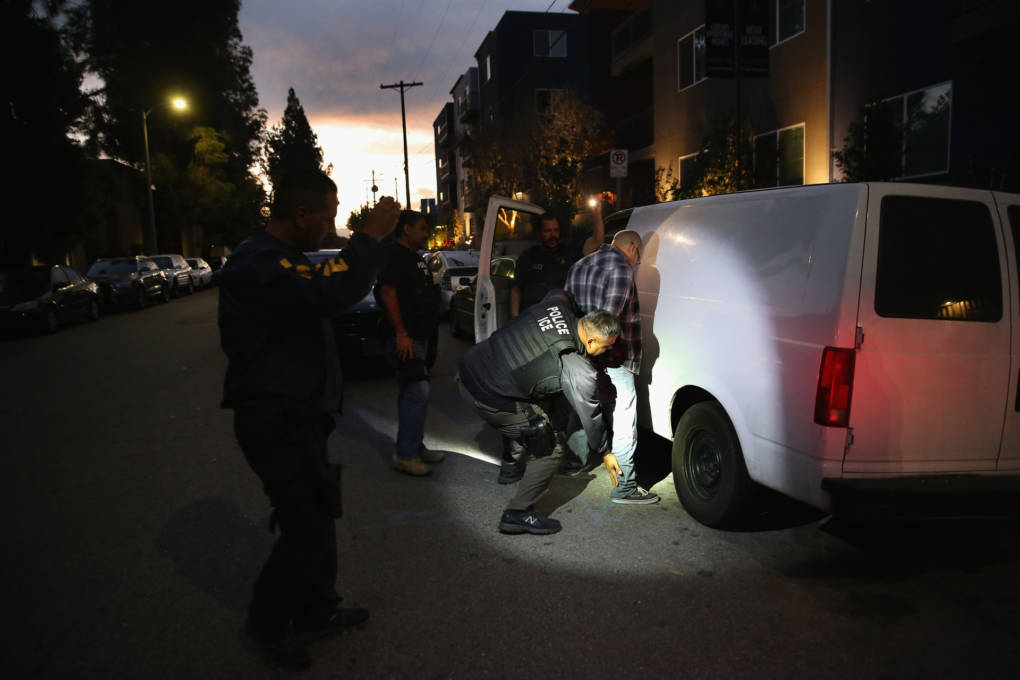
"caption": " A man is detained by Immigration and Customs Enforcement (ICE) agents early on Oct. 14, 2015, in Los Angeles.",
"description": null,
"title": "RS24598_GettyImages-492659324-qut",
"credit": "John Moore/Getty Images",
"status": "inherit",
"isLoading": false,
"fetchFailed": false
},
"news_11655312": {
"type": "attachments",
"id": "news_11655312",
"meta": {
"index": "attachments_1716263798",
"site": "news",
"id": "11655312",
"found": true
},
"parent": 11654965,
"imgSizes": {
"small": {
"file": "https://ww2.kqed.org/app/uploads/sites/10/2018/03/PoindexterOrchardMain-520x308.jpg",
"width": 520,
"mimeType": "image/jpeg",
"height": 308
},
"twentyfourteen-full-width": {
"file": "https://ww2.kqed.org/app/uploads/sites/10/2018/03/PoindexterOrchardMain-1038x576.jpg",
"width": 1038,
"mimeType": "image/jpeg",
"height": 576
},
"thumbnail": {
"file": "https://ww2.kqed.org/app/uploads/sites/10/2018/03/PoindexterOrchardMain-160x95.jpg",
"width": 160,
"mimeType": "image/jpeg",
"height": 95
},
"fd-sm": {
"file": "https://ww2.kqed.org/app/uploads/sites/10/2018/03/PoindexterOrchardMain-960x569.jpg",
"width": 960,
"mimeType": "image/jpeg",
"height": 569
},
"post-thumbnail": {
"file": "https://ww2.kqed.org/app/uploads/sites/10/2018/03/PoindexterOrchardMain-672x372.jpg",
"width": 672,
"mimeType": "image/jpeg",
"height": 372
},
"xsmall": {
"file": "https://ww2.kqed.org/app/uploads/sites/10/2018/03/PoindexterOrchardMain-375x222.jpg",
"width": 375,
"mimeType": "image/jpeg",
"height": 222
},
"kqedFullSize": {
"file": "https://ww2.kqed.org/app/uploads/sites/10/2018/03/PoindexterOrchardMain.jpg",
"width": 1920,
"height": 1138
},
"large": {
"file": "https://ww2.kqed.org/app/uploads/sites/10/2018/03/PoindexterOrchardMain-1020x605.jpg",
"width": 1020,
"mimeType": "image/jpeg",
"height": 605
},
"xlarge": {
"file": "https://ww2.kqed.org/app/uploads/sites/10/2018/03/PoindexterOrchardMain-1180x699.jpg",
"width": 1180,
"mimeType": "image/jpeg",
"height": 699
},
"guest-author-50": {
"file": "https://ww2.kqed.org/app/uploads/sites/10/2018/03/PoindexterOrchardMain-50x50.jpg",
"width": 50,
"mimeType": "image/jpeg",
"height": 50
},
"guest-author-96": {
"file": "https://ww2.kqed.org/app/uploads/sites/10/2018/03/PoindexterOrchardMain-96x96.jpg",
"width": 96,
"mimeType": "image/jpeg",
"height": 96
},
"medium": {
"file": "https://ww2.kqed.org/app/uploads/sites/10/2018/03/PoindexterOrchardMain-800x474.jpg",
"width": 800,
"mimeType": "image/jpeg",
"height": 474
},
"guest-author-64": {
"file": "https://ww2.kqed.org/app/uploads/sites/10/2018/03/PoindexterOrchardMain-64x64.jpg",
"width": 64,
"mimeType": "image/jpeg",
"height": 64
},
"guest-author-32": {
"file": "https://ww2.kqed.org/app/uploads/sites/10/2018/03/PoindexterOrchardMain-32x32.jpg",
"width": 32,
"mimeType": "image/jpeg",
"height": 32
},
"fd-lrg": {
"file": "https://ww2.kqed.org/app/uploads/sites/10/2018/03/PoindexterOrchardMain-1920x1138.jpg",
"width": 1920,
"mimeType": "image/jpeg",
"height": 1138
},
"fd-med": {
"file": "https://ww2.kqed.org/app/uploads/sites/10/2018/03/PoindexterOrchardMain-1180x699.jpg",
"width": 1180,
"mimeType": "image/jpeg",
"height": 699
},
"full-width": {
"file": "https://ww2.kqed.org/app/uploads/sites/10/2018/03/PoindexterOrchardMain-1920x1138.jpg",
"width": 1920,
"mimeType": "image/jpeg",
"height": 1138
},
"detail": {
"file": "https://ww2.kqed.org/app/uploads/sites/10/2018/03/PoindexterOrchardMain-150x150.jpg",
"width": 150,
"mimeType": "image/jpeg",
"height": 150
},
"guest-author-128": {
"file": "https://ww2.kqed.org/app/uploads/sites/10/2018/03/PoindexterOrchardMain-128x128.jpg",
"width": 128,
"mimeType": "image/jpeg",
"height": 128
},
"xxsmall": {
"file": "https://ww2.kqed.org/app/uploads/sites/10/2018/03/PoindexterOrchardMain-240x142.jpg",
"width": 240,
"mimeType": "image/jpeg",
"height": 142
}
},
"publishDate": 1520894612,
"modified": 1520899100,
"caption": "Mike Poindexter, CEO of Poindexter Nut Company and a third-generation walnut grower, stands in a walnut orchard in Selma, just outside Fresno. Poindexter says he feels caught in the middle over California’s fight with the Department of Justice over immigration.",
"description": "Mike Poindexter, CEO of Poindexter Nut Company and a third-generation walnut grower, stands in a walnut orchard in Selma, just outside of Fresno. Poindexter says he feels caught in the middle over California’s fight with the Department of Justice over immigration.",
"title": "PoindexterOrchardMain",
"credit": "Alexandra Hall/KQED",
"status": "inherit",
"isLoading": false,
"fetchFailed": false
},
"news_11654506": {
"type": "attachments",
"id": "news_11654506",
"meta": {
"index": "attachments_1716263798",
"site": "news",
"id": "11654506",
"found": true
},
"parent": 11654489,
"imgSizes": {
"small": {
"file": "https://ww2.kqed.org/app/uploads/sites/10/2018/03/ICEAdelanto-520x347.jpg",
"width": 520,
"mimeType": "image/jpeg",
"height": 347
},
"twentyfourteen-full-width": {
"file": "https://ww2.kqed.org/app/uploads/sites/10/2018/03/ICEAdelanto-1038x576.jpg",
"width": 1038,
"mimeType": "image/jpeg",
"height": 576
},
"thumbnail": {
"file": "https://ww2.kqed.org/app/uploads/sites/10/2018/03/ICEAdelanto-160x107.jpg",
"width": 160,
"mimeType": "image/jpeg",
"height": 107
},
"fd-sm": {
"file": "https://ww2.kqed.org/app/uploads/sites/10/2018/03/ICEAdelanto-960x641.jpg",
"width": 960,
"mimeType": "image/jpeg",
"height": 641
},
"post-thumbnail": {
"file": "https://ww2.kqed.org/app/uploads/sites/10/2018/03/ICEAdelanto-672x372.jpg",
"width": 672,
"mimeType": "image/jpeg",
"height": 372
},
"xsmall": {
"file": "https://ww2.kqed.org/app/uploads/sites/10/2018/03/ICEAdelanto-375x250.jpg",
"width": 375,
"mimeType": "image/jpeg",
"height": 250
},
"kqedFullSize": {
"file": "https://ww2.kqed.org/app/uploads/sites/10/2018/03/ICEAdelanto.jpg",
"width": 1920,
"height": 1281
},
"large": {
"file": "https://ww2.kqed.org/app/uploads/sites/10/2018/03/ICEAdelanto-1020x681.jpg",
"width": 1020,
"mimeType": "image/jpeg",
"height": 681
},
"xlarge": {
"file": "https://ww2.kqed.org/app/uploads/sites/10/2018/03/ICEAdelanto-1180x787.jpg",
"width": 1180,
"mimeType": "image/jpeg",
"height": 787
},
"guest-author-50": {
"file": "https://ww2.kqed.org/app/uploads/sites/10/2018/03/ICEAdelanto-50x50.jpg",
"width": 50,
"mimeType": "image/jpeg",
"height": 50
},
"guest-author-96": {
"file": "https://ww2.kqed.org/app/uploads/sites/10/2018/03/ICEAdelanto-96x96.jpg",
"width": 96,
"mimeType": "image/jpeg",
"height": 96
},
"medium": {
"file": "https://ww2.kqed.org/app/uploads/sites/10/2018/03/ICEAdelanto-800x534.jpg",
"width": 800,
"mimeType": "image/jpeg",
"height": 534
},
"guest-author-64": {
"file": "https://ww2.kqed.org/app/uploads/sites/10/2018/03/ICEAdelanto-64x64.jpg",
"width": 64,
"mimeType": "image/jpeg",
"height": 64
},
"guest-author-32": {
"file": "https://ww2.kqed.org/app/uploads/sites/10/2018/03/ICEAdelanto-32x32.jpg",
"width": 32,
"mimeType": "image/jpeg",
"height": 32
},
"fd-lrg": {
"file": "https://ww2.kqed.org/app/uploads/sites/10/2018/03/ICEAdelanto-1920x1281.jpg",
"width": 1920,
"mimeType": "image/jpeg",
"height": 1281
},
"fd-med": {
"file": "https://ww2.kqed.org/app/uploads/sites/10/2018/03/ICEAdelanto-1180x787.jpg",
"width": 1180,
"mimeType": "image/jpeg",
"height": 787
},
"full-width": {
"file": "https://ww2.kqed.org/app/uploads/sites/10/2018/03/ICEAdelanto-1920x1281.jpg",
"width": 1920,
"mimeType": "image/jpeg",
"height": 1281
},
"detail": {
"file": "https://ww2.kqed.org/app/uploads/sites/10/2018/03/ICEAdelanto-150x150.jpg",
"width": 150,
"mimeType": "image/jpeg",
"height": 150
},
"guest-author-128": {
"file": "https://ww2.kqed.org/app/uploads/sites/10/2018/03/ICEAdelanto-128x128.jpg",
"width": 128,
"mimeType": "image/jpeg",
"height": 128
},
"xxsmall": {
"file": "https://ww2.kqed.org/app/uploads/sites/10/2018/03/ICEAdelanto-240x160.jpg",
"width": 240,
"mimeType": "image/jpeg",
"height": 160
}
},
"publishDate": 1520473648,
"modified": 1569446794,
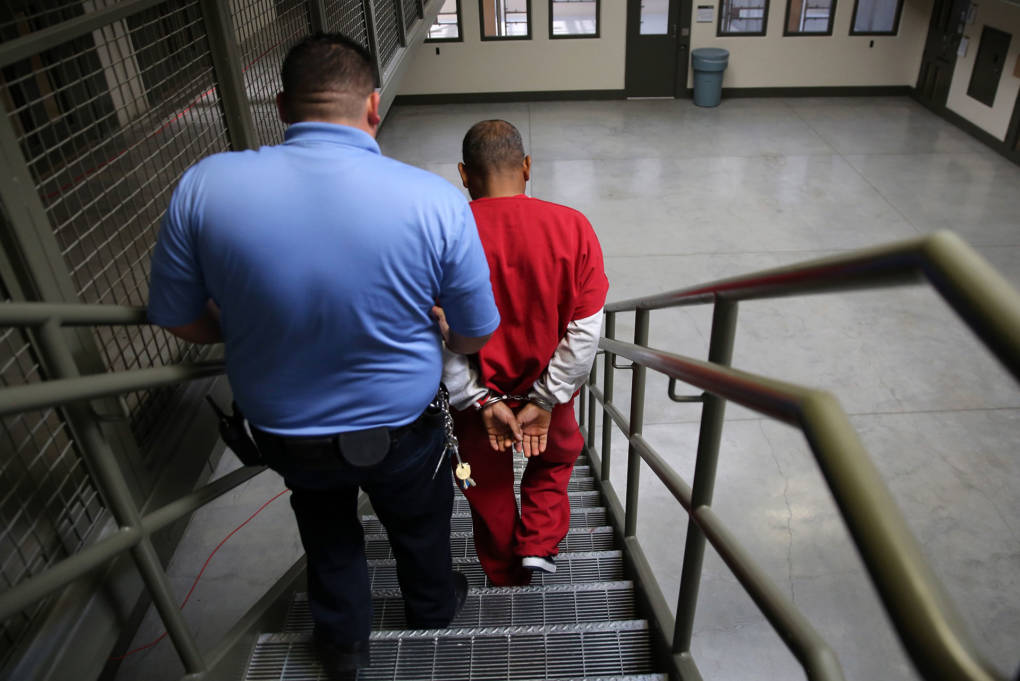
"caption": "A guard escorts an immigrant detainee at the Adelanto Detention Facility in Adelanto, California.",
"description": "A guard escorts an immigrant detainee at the Adelanto Detention Facility in Adelanto, California.",
"title": "ICEAdelanto",
"credit": "John Moore/Getty Images",
"status": "inherit",
"isLoading": false,
"fetchFailed": false
},
"news_11654418": {
"type": "attachments",
"id": "news_11654418",
"meta": {
"index": "attachments_1716263798",
"site": "news",
"id": "11654418",
"found": true
},
"parent": 11654414,
"imgSizes": {
"small": {
"file": "https://ww2.kqed.org/app/uploads/sites/10/2018/03/waroncalifornia_030718_final-520x520.jpg",
"width": 520,
"mimeType": "image/jpeg",
"height": 520
},
"twentyfourteen-full-width": {
"file": "https://ww2.kqed.org/app/uploads/sites/10/2018/03/waroncalifornia_030718_final-1038x576.jpg",
"width": 1038,
"mimeType": "image/jpeg",
"height": 576
},
"thumbnail": {
"file": "https://ww2.kqed.org/app/uploads/sites/10/2018/03/waroncalifornia_030718_final-160x160.jpg",
"width": 160,
"mimeType": "image/jpeg",
"height": 160
},
"fd-sm": {
"file": "https://ww2.kqed.org/app/uploads/sites/10/2018/03/waroncalifornia_030718_final-960x960.jpg",
"width": 960,
"mimeType": "image/jpeg",
"height": 960
},
"post-thumbnail": {
"file": "https://ww2.kqed.org/app/uploads/sites/10/2018/03/waroncalifornia_030718_final-672x372.jpg",
"width": 672,
"mimeType": "image/jpeg",
"height": 372
},
"xsmall": {
"file": "https://ww2.kqed.org/app/uploads/sites/10/2018/03/waroncalifornia_030718_final-375x375.jpg",
"width": 375,
"mimeType": "image/jpeg",
"height": 375
},
"kqedFullSize": {
"file": "https://ww2.kqed.org/app/uploads/sites/10/2018/03/waroncalifornia_030718_final.jpg",
"width": 1920,
"height": 1920
},
"large": {
"file": "https://ww2.kqed.org/app/uploads/sites/10/2018/03/waroncalifornia_030718_final-1020x1020.jpg",
"width": 1020,
"mimeType": "image/jpeg",
"height": 1020
},
"xlarge": {
"file": "https://ww2.kqed.org/app/uploads/sites/10/2018/03/waroncalifornia_030718_final-1180x1180.jpg",
"width": 1180,
"mimeType": "image/jpeg",
"height": 1180
},
"guest-author-50": {
"file": "https://ww2.kqed.org/app/uploads/sites/10/2018/03/waroncalifornia_030718_final-50x50.jpg",
"width": 50,
"mimeType": "image/jpeg",
"height": 50
},
"guest-author-96": {
"file": "https://ww2.kqed.org/app/uploads/sites/10/2018/03/waroncalifornia_030718_final-96x96.jpg",
"width": 96,
"mimeType": "image/jpeg",
"height": 96
},
"medium": {
"file": "https://ww2.kqed.org/app/uploads/sites/10/2018/03/waroncalifornia_030718_final-800x800.jpg",
"width": 800,
"mimeType": "image/jpeg",
"height": 800
},
"guest-author-64": {
"file": "https://ww2.kqed.org/app/uploads/sites/10/2018/03/waroncalifornia_030718_final-64x64.jpg",
"width": 64,
"mimeType": "image/jpeg",
"height": 64
},
"guest-author-32": {
"file": "https://ww2.kqed.org/app/uploads/sites/10/2018/03/waroncalifornia_030718_final-32x32.jpg",
"width": 32,
"mimeType": "image/jpeg",
"height": 32
},
"fd-lrg": {
"file": "https://ww2.kqed.org/app/uploads/sites/10/2018/03/waroncalifornia_030718_final-1920x1920.jpg",
"width": 1920,
"mimeType": "image/jpeg",
"height": 1920
},
"fd-med": {
"file": "https://ww2.kqed.org/app/uploads/sites/10/2018/03/waroncalifornia_030718_final-1180x1180.jpg",
"width": 1180,
"mimeType": "image/jpeg",
"height": 1180
},
"full-width": {
"file": "https://ww2.kqed.org/app/uploads/sites/10/2018/03/waroncalifornia_030718_final-1920x1920.jpg",
"width": 1920,
"mimeType": "image/jpeg",
"height": 1920
},
"detail": {
"file": "https://ww2.kqed.org/app/uploads/sites/10/2018/03/waroncalifornia_030718_final-150x150.jpg",
"width": 150,
"mimeType": "image/jpeg",
"height": 150
},
"guest-author-128": {
"file": "https://ww2.kqed.org/app/uploads/sites/10/2018/03/waroncalifornia_030718_final-128x128.jpg",
"width": 128,
"mimeType": "image/jpeg",
"height": 128
},
"xxsmall": {
"file": "https://ww2.kqed.org/app/uploads/sites/10/2018/03/waroncalifornia_030718_final-240x240.jpg",
"width": 240,
"mimeType": "image/jpeg",
"height": 240
}
},
"publishDate": 1520456641,
"modified": 1520456664,
"caption": null,
"description": null,
"title": "waroncalifornia_030718_final",
"credit": null,
"status": "inherit",
"isLoading": false,
"fetchFailed": false
},
"news_11654317": {
"type": "attachments",
"id": "news_11654317",
"meta": {
"index": "attachments_1716263798",
"site": "news",
"id": "11654317",
"found": true
},
"parent": 11654314,
"imgSizes": {
"small": {
"file": "https://ww2.kqed.org/app/uploads/sites/10/2018/03/ICEEnforce-520x346.jpg",
"width": 520,
"mimeType": "image/jpeg",
"height": 346
},
"twentyfourteen-full-width": {
"file": "https://ww2.kqed.org/app/uploads/sites/10/2018/03/ICEEnforce-1038x576.jpg",
"width": 1038,
"mimeType": "image/jpeg",
"height": 576
},
"thumbnail": {
"file": "https://ww2.kqed.org/app/uploads/sites/10/2018/03/ICEEnforce-160x107.jpg",
"width": 160,
"mimeType": "image/jpeg",
"height": 107
},
"fd-sm": {
"file": "https://ww2.kqed.org/app/uploads/sites/10/2018/03/ICEEnforce-960x640.jpg",
"width": 960,
"mimeType": "image/jpeg",
"height": 640
},
"post-thumbnail": {
"file": "https://ww2.kqed.org/app/uploads/sites/10/2018/03/ICEEnforce-672x372.jpg",
"width": 672,
"mimeType": "image/jpeg",
"height": 372
},
"xsmall": {
"file": "https://ww2.kqed.org/app/uploads/sites/10/2018/03/ICEEnforce-375x250.jpg",
"width": 375,
"mimeType": "image/jpeg",
"height": 250
},
"kqedFullSize": {
"file": "https://ww2.kqed.org/app/uploads/sites/10/2018/03/ICEEnforce.jpg",
"width": 1920,
"height": 1279
},
"large": {
"file": "https://ww2.kqed.org/app/uploads/sites/10/2018/03/ICEEnforce-1020x679.jpg",
"width": 1020,
"mimeType": "image/jpeg",
"height": 679
},
"xlarge": {
"file": "https://ww2.kqed.org/app/uploads/sites/10/2018/03/ICEEnforce-1180x786.jpg",
"width": 1180,
"mimeType": "image/jpeg",
"height": 786
},
"guest-author-50": {
"file": "https://ww2.kqed.org/app/uploads/sites/10/2018/03/ICEEnforce-50x50.jpg",
"width": 50,
"mimeType": "image/jpeg",
"height": 50
},
"guest-author-96": {
"file": "https://ww2.kqed.org/app/uploads/sites/10/2018/03/ICEEnforce-96x96.jpg",
"width": 96,
"mimeType": "image/jpeg",
"height": 96
},
"medium": {
"file": "https://ww2.kqed.org/app/uploads/sites/10/2018/03/ICEEnforce-800x533.jpg",
"width": 800,
"mimeType": "image/jpeg",
"height": 533
},
"guest-author-64": {
"file": "https://ww2.kqed.org/app/uploads/sites/10/2018/03/ICEEnforce-64x64.jpg",
"width": 64,
"mimeType": "image/jpeg",
"height": 64
},
"guest-author-32": {
"file": "https://ww2.kqed.org/app/uploads/sites/10/2018/03/ICEEnforce-32x32.jpg",
"width": 32,
"mimeType": "image/jpeg",
"height": 32
},
"fd-lrg": {
"file": "https://ww2.kqed.org/app/uploads/sites/10/2018/03/ICEEnforce-1920x1279.jpg",
"width": 1920,
"mimeType": "image/jpeg",
"height": 1279
},
"fd-med": {
"file": "https://ww2.kqed.org/app/uploads/sites/10/2018/03/ICEEnforce-1180x786.jpg",
"width": 1180,
"mimeType": "image/jpeg",
"height": 786
},
"full-width": {
"file": "https://ww2.kqed.org/app/uploads/sites/10/2018/03/ICEEnforce-1920x1279.jpg",
"width": 1920,
"mimeType": "image/jpeg",
"height": 1279
},
"detail": {
"file": "https://ww2.kqed.org/app/uploads/sites/10/2018/03/ICEEnforce-150x150.jpg",
"width": 150,
"mimeType": "image/jpeg",
"height": 150
},
"guest-author-128": {
"file": "https://ww2.kqed.org/app/uploads/sites/10/2018/03/ICEEnforce-128x128.jpg",
"width": 128,
"mimeType": "image/jpeg",
"height": 128
},
"xxsmall": {
"file": "https://ww2.kqed.org/app/uploads/sites/10/2018/03/ICEEnforce-240x160.jpg",
"width": 240,
"mimeType": "image/jpeg",
"height": 160
}
},
"publishDate": 1520388779,
"modified": 1520468112,
"caption": "A man is detained by U.S. Immigration and Customs Enforcement (ICE) agents in Los Angeles in October 2015.",
"description": "A man is detained by U.S. Immigration and Customs Enforcement (ICE), agents on in Los Angeles in Oct., 2015.",
"title": "ICEEnforce",
"credit": "John Moore/Getty Images",
"status": "inherit",
"isLoading": false,
"fetchFailed": false
},
"news_11653544": {
"type": "attachments",
"id": "news_11653544",
"meta": {
"index": "attachments_1716263798",
"site": "news",
"id": "11653544",
"found": true
},
"parent": 11653531,
"imgSizes": {
"small": {
"file": "https://ww2.kqed.org/app/uploads/sites/10/2018/03/NR_SHOW-MARQ-519-520x293.jpg",
"width": 520,
"mimeType": "image/jpeg",
"height": 293
},
"twentyfourteen-full-width": {
"file": "https://ww2.kqed.org/app/uploads/sites/10/2018/03/NR_SHOW-MARQ-519-1038x576.jpg",
"width": 1038,
"mimeType": "image/jpeg",
"height": 576
},
"thumbnail": {
"file": "https://ww2.kqed.org/app/uploads/sites/10/2018/03/NR_SHOW-MARQ-519-160x90.jpg",
"width": 160,
"mimeType": "image/jpeg",
"height": 90
},
"fd-sm": {
"file": "https://ww2.kqed.org/app/uploads/sites/10/2018/03/NR_SHOW-MARQ-519-960x540.jpg",
"width": 960,
"mimeType": "image/jpeg",
"height": 540
},
"post-thumbnail": {
"file": "https://ww2.kqed.org/app/uploads/sites/10/2018/03/NR_SHOW-MARQ-519-672x372.jpg",
"width": 672,
"mimeType": "image/jpeg",
"height": 372
},
"xsmall": {
"file": "https://ww2.kqed.org/app/uploads/sites/10/2018/03/NR_SHOW-MARQ-519-375x211.jpg",
"width": 375,
"mimeType": "image/jpeg",
"height": 211
},
"kqedFullSize": {
"file": "https://ww2.kqed.org/app/uploads/sites/10/2018/03/NR_SHOW-MARQ-519.jpg",
"width": 1920,
"height": 1080
},
"large": {
"file": "https://ww2.kqed.org/app/uploads/sites/10/2018/03/NR_SHOW-MARQ-519-1020x574.jpg",
"width": 1020,
"mimeType": "image/jpeg",
"height": 574
},
"xlarge": {
"file": "https://ww2.kqed.org/app/uploads/sites/10/2018/03/NR_SHOW-MARQ-519-1180x664.jpg",
"width": 1180,
"mimeType": "image/jpeg",
"height": 664
},
"guest-author-50": {
"file": "https://ww2.kqed.org/app/uploads/sites/10/2018/03/NR_SHOW-MARQ-519-50x50.jpg",
"width": 50,
"mimeType": "image/jpeg",
"height": 50
},
"guest-author-96": {
"file": "https://ww2.kqed.org/app/uploads/sites/10/2018/03/NR_SHOW-MARQ-519-96x96.jpg",
"width": 96,
"mimeType": "image/jpeg",
"height": 96
},
"medium": {
"file": "https://ww2.kqed.org/app/uploads/sites/10/2018/03/NR_SHOW-MARQ-519-800x450.jpg",
"width": 800,
"mimeType": "image/jpeg",
"height": 450
},
"guest-author-64": {
"file": "https://ww2.kqed.org/app/uploads/sites/10/2018/03/NR_SHOW-MARQ-519-64x64.jpg",
"width": 64,
"mimeType": "image/jpeg",
"height": 64
},
"guest-author-32": {
"file": "https://ww2.kqed.org/app/uploads/sites/10/2018/03/NR_SHOW-MARQ-519-32x32.jpg",
"width": 32,
"mimeType": "image/jpeg",
"height": 32
},
"fd-lrg": {
"file": "https://ww2.kqed.org/app/uploads/sites/10/2018/03/NR_SHOW-MARQ-519-1920x1080.jpg",
"width": 1920,
"mimeType": "image/jpeg",
"height": 1080
},
"fd-med": {
"file": "https://ww2.kqed.org/app/uploads/sites/10/2018/03/NR_SHOW-MARQ-519-1180x664.jpg",
"width": 1180,
"mimeType": "image/jpeg",
"height": 664
},
"full-width": {
"file": "https://ww2.kqed.org/app/uploads/sites/10/2018/03/NR_SHOW-MARQ-519-1920x1080.jpg",
"width": 1920,
"mimeType": "image/jpeg",
"height": 1080
},
"detail": {
"file": "https://ww2.kqed.org/app/uploads/sites/10/2018/03/NR_SHOW-MARQ-519-150x150.jpg",
"width": 150,
"mimeType": "image/jpeg",
"height": 150
},
"guest-author-128": {
"file": "https://ww2.kqed.org/app/uploads/sites/10/2018/03/NR_SHOW-MARQ-519-128x128.jpg",
"width": 128,
"mimeType": "image/jpeg",
"height": 128
},
"xxsmall": {
"file": "https://ww2.kqed.org/app/uploads/sites/10/2018/03/NR_SHOW-MARQ-519-240x135.jpg",
"width": 240,
"mimeType": "image/jpeg",
"height": 135
}
},
"publishDate": 1520039175,
"modified": 1520039175,
"caption": null,
"description": null,
"title": "NR_SHOW MARQ 519",
"credit": null,
"status": "inherit",
"isLoading": false,
"fetchFailed": false
},
"news_11653185": {
"type": "attachments",
"id": "news_11653185",
"meta": {
"index": "attachments_1716263798",
"site": "news",
"id": "11653185",
"found": true
},
"parent": 11653050,
"imgSizes": {
"small": {
"file": "https://ww2.kqed.org/app/uploads/sites/10/2018/03/RS29674_IMG_8242-qut-520x390.jpg",
"width": 520,
"mimeType": "image/jpeg",
"height": 390
},
"twentyfourteen-full-width": {
"file": "https://ww2.kqed.org/app/uploads/sites/10/2018/03/RS29674_IMG_8242-qut-1038x576.jpg",
"width": 1038,
"mimeType": "image/jpeg",
"height": 576
},
"thumbnail": {
"file": "https://ww2.kqed.org/app/uploads/sites/10/2018/03/RS29674_IMG_8242-qut-160x120.jpg",
"width": 160,
"mimeType": "image/jpeg",
"height": 120
},
"fd-sm": {
"file": "https://ww2.kqed.org/app/uploads/sites/10/2018/03/RS29674_IMG_8242-qut-960x720.jpg",
"width": 960,
"mimeType": "image/jpeg",
"height": 720
},
"post-thumbnail": {
"file": "https://ww2.kqed.org/app/uploads/sites/10/2018/03/RS29674_IMG_8242-qut-672x372.jpg",
"width": 672,
"mimeType": "image/jpeg",
"height": 372
},
"xsmall": {
"file": "https://ww2.kqed.org/app/uploads/sites/10/2018/03/RS29674_IMG_8242-qut-375x281.jpg",
"width": 375,
"mimeType": "image/jpeg",
"height": 281
},
"kqedFullSize": {
"file": "https://ww2.kqed.org/app/uploads/sites/10/2018/03/RS29674_IMG_8242-qut.jpg",
"width": 1920,
"height": 1440
},
"large": {
"file": "https://ww2.kqed.org/app/uploads/sites/10/2018/03/RS29674_IMG_8242-qut-1020x765.jpg",
"width": 1020,
"mimeType": "image/jpeg",
"height": 765
},
"xlarge": {
"file": "https://ww2.kqed.org/app/uploads/sites/10/2018/03/RS29674_IMG_8242-qut-1180x885.jpg",
"width": 1180,
"mimeType": "image/jpeg",
"height": 885
},
"guest-author-50": {
"file": "https://ww2.kqed.org/app/uploads/sites/10/2018/03/RS29674_IMG_8242-qut-50x50.jpg",
"width": 50,
"mimeType": "image/jpeg",
"height": 50
},
"guest-author-96": {
"file": "https://ww2.kqed.org/app/uploads/sites/10/2018/03/RS29674_IMG_8242-qut-96x96.jpg",
"width": 96,
"mimeType": "image/jpeg",
"height": 96
},
"medium": {
"file": "https://ww2.kqed.org/app/uploads/sites/10/2018/03/RS29674_IMG_8242-qut-800x600.jpg",
"width": 800,
"mimeType": "image/jpeg",
"height": 600
},
"guest-author-64": {
"file": "https://ww2.kqed.org/app/uploads/sites/10/2018/03/RS29674_IMG_8242-qut-64x64.jpg",
"width": 64,
"mimeType": "image/jpeg",
"height": 64
},
"guest-author-32": {
"file": "https://ww2.kqed.org/app/uploads/sites/10/2018/03/RS29674_IMG_8242-qut-32x32.jpg",
"width": 32,
"mimeType": "image/jpeg",
"height": 32
},
"fd-lrg": {
"file": "https://ww2.kqed.org/app/uploads/sites/10/2018/03/RS29674_IMG_8242-qut-1920x1440.jpg",
"width": 1920,
"mimeType": "image/jpeg",
"height": 1440
},
"fd-med": {
"file": "https://ww2.kqed.org/app/uploads/sites/10/2018/03/RS29674_IMG_8242-qut-1180x885.jpg",
"width": 1180,
"mimeType": "image/jpeg",
"height": 885
},
"full-width": {
"file": "https://ww2.kqed.org/app/uploads/sites/10/2018/03/RS29674_IMG_8242-qut-1920x1440.jpg",
"width": 1920,
"mimeType": "image/jpeg",
"height": 1440
},
"detail": {
"file": "https://ww2.kqed.org/app/uploads/sites/10/2018/03/RS29674_IMG_8242-qut-150x150.jpg",
"width": 150,
"mimeType": "image/jpeg",
"height": 150
},
"guest-author-128": {
"file": "https://ww2.kqed.org/app/uploads/sites/10/2018/03/RS29674_IMG_8242-qut-128x128.jpg",
"width": 128,
"mimeType": "image/jpeg",
"height": 128
},
"xxsmall": {
"file": "https://ww2.kqed.org/app/uploads/sites/10/2018/03/RS29674_IMG_8242-qut-240x180.jpg",
"width": 240,
"mimeType": "image/jpeg",
"height": 180
}
},
"publishDate": 1519949262,
"modified": 1520534414,
"caption": "Protesters closed intersections next to the ICE offices in downtown San Francisco on Feb. 28, 2018.",
"description": "Protesters closed intersections next to the ICE offices in downtown San Francisco on Feb. 28, 2018. (Farida Jhabvala Romero/KQED) ",
"title": "RS29674_IMG_8242-qut",
"credit": "Farida Jhabvala Romero/KQED",
"status": "inherit",
"isLoading": false,
"fetchFailed": false
},
"news_11652088": {
"type": "attachments",
"id": "news_11652088",
"meta": {
"index": "attachments_1716263798",
"site": "news",
"id": "11652088",
"found": true
},
"parent": 11652084,
"imgSizes": {
"small": {
"file": "https://ww2.kqed.org/app/uploads/sites/10/2018/02/RS29569_4137994-qut-520x347.jpg",
"width": 520,
"mimeType": "image/jpeg",
"height": 347
},
"twentyfourteen-full-width": {
"file": "https://ww2.kqed.org/app/uploads/sites/10/2018/02/RS29569_4137994-qut-1038x576.jpg",
"width": 1038,
"mimeType": "image/jpeg",
"height": 576
},
"thumbnail": {
"file": "https://ww2.kqed.org/app/uploads/sites/10/2018/02/RS29569_4137994-qut-160x107.jpg",
"width": 160,
"mimeType": "image/jpeg",
"height": 107
},
"fd-sm": {
"file": "https://ww2.kqed.org/app/uploads/sites/10/2018/02/RS29569_4137994-qut-960x641.jpg",
"width": 960,
"mimeType": "image/jpeg",
"height": 641
},
"post-thumbnail": {
"file": "https://ww2.kqed.org/app/uploads/sites/10/2018/02/RS29569_4137994-qut-672x372.jpg",
"width": 672,
"mimeType": "image/jpeg",
"height": 372
},
"xsmall": {
"file": "https://ww2.kqed.org/app/uploads/sites/10/2018/02/RS29569_4137994-qut-375x250.jpg",
"width": 375,
"mimeType": "image/jpeg",
"height": 250
},
"kqedFullSize": {
"file": "https://ww2.kqed.org/app/uploads/sites/10/2018/02/RS29569_4137994-qut.jpg",
"width": 1920,
"height": 1281
},
"large": {
"file": "https://ww2.kqed.org/app/uploads/sites/10/2018/02/RS29569_4137994-qut-1020x681.jpg",
"width": 1020,
"mimeType": "image/jpeg",
"height": 681
},
"xlarge": {
"file": "https://ww2.kqed.org/app/uploads/sites/10/2018/02/RS29569_4137994-qut-1180x787.jpg",
"width": 1180,
"mimeType": "image/jpeg",
"height": 787
},
"guest-author-50": {
"file": "https://ww2.kqed.org/app/uploads/sites/10/2018/02/RS29569_4137994-qut-50x50.jpg",
"width": 50,
"mimeType": "image/jpeg",
"height": 50
},
"guest-author-96": {
"file": "https://ww2.kqed.org/app/uploads/sites/10/2018/02/RS29569_4137994-qut-96x96.jpg",
"width": 96,
"mimeType": "image/jpeg",
"height": 96
},
"medium": {
"file": "https://ww2.kqed.org/app/uploads/sites/10/2018/02/RS29569_4137994-qut-800x534.jpg",
"width": 800,
"mimeType": "image/jpeg",
"height": 534
},
"guest-author-64": {
"file": "https://ww2.kqed.org/app/uploads/sites/10/2018/02/RS29569_4137994-qut-64x64.jpg",
"width": 64,
"mimeType": "image/jpeg",
"height": 64
},
"guest-author-32": {
"file": "https://ww2.kqed.org/app/uploads/sites/10/2018/02/RS29569_4137994-qut-32x32.jpg",
"width": 32,
"mimeType": "image/jpeg",
"height": 32
},
"fd-lrg": {
"file": "https://ww2.kqed.org/app/uploads/sites/10/2018/02/RS29569_4137994-qut-1920x1281.jpg",
"width": 1920,
"mimeType": "image/jpeg",
"height": 1281
},
"fd-med": {
"file": "https://ww2.kqed.org/app/uploads/sites/10/2018/02/RS29569_4137994-qut-1180x787.jpg",
"width": 1180,
"mimeType": "image/jpeg",
"height": 787
},
"full-width": {
"file": "https://ww2.kqed.org/app/uploads/sites/10/2018/02/RS29569_4137994-qut-1920x1281.jpg",
"width": 1920,
"mimeType": "image/jpeg",
"height": 1281
},
"detail": {
"file": "https://ww2.kqed.org/app/uploads/sites/10/2018/02/RS29569_4137994-qut-150x150.jpg",
"width": 150,
"mimeType": "image/jpeg",
"height": 150
},
"guest-author-128": {
"file": "https://ww2.kqed.org/app/uploads/sites/10/2018/02/RS29569_4137994-qut-128x128.jpg",
"width": 128,
"mimeType": "image/jpeg",
"height": 128
},
"xxsmall": {
"file": "https://ww2.kqed.org/app/uploads/sites/10/2018/02/RS29569_4137994-qut-240x160.jpg",
"width": 240,
"mimeType": "image/jpeg",
"height": 160
}
},
"publishDate": 1519543702,
"modified": 1519770299,
"caption": "U.S. Immigration and Customs Enforcement agents in Los Angeles on Feb. 11, 2018, during an immigration enforcement operation that resulted in more than 200 arrests over a five-day period, according to the agency.",
"description": "U.S. Immigration and Customs Enforcement agents in Los Angeles on Feb. 11, 2018 during an immigration enforcement operation that resulted in more than 200 arrests over a five-day period, according to the agency.",
"title": "RS29569_4137994-qut",
"credit": "Courtesy of U.S. Immigration and Customs Enforcement",
"status": "inherit",
"isLoading": false,
"fetchFailed": false
},
"news_11652923": {
"type": "attachments",
"id": "news_11652923",
"meta": {
"index": "attachments_1716263798",
"site": "news",
"id": "11652923",
"found": true
},
"parent": 11652901,
"imgSizes": {
"small": {
"file": "https://ww2.kqed.org/app/uploads/sites/10/2018/02/RS29672_alt_694-520x330.jpg",
"width": 520,
"mimeType": "image/jpeg",
"height": 330
},
"twentyfourteen-full-width": {
"file": "https://ww2.kqed.org/app/uploads/sites/10/2018/02/RS29672_alt_694-1038x576.jpg",
"width": 1038,
"mimeType": "image/jpeg",
"height": 576
},
"thumbnail": {
"file": "https://ww2.kqed.org/app/uploads/sites/10/2018/02/RS29672_alt_694-160x102.jpg",
"width": 160,
"mimeType": "image/jpeg",
"height": 102
},
"fd-sm": {
"file": "https://ww2.kqed.org/app/uploads/sites/10/2018/02/RS29672_alt_694-960x609.jpg",
"width": 960,
"mimeType": "image/jpeg",
"height": 609
},
"post-thumbnail": {
"file": "https://ww2.kqed.org/app/uploads/sites/10/2018/02/RS29672_alt_694-672x372.jpg",
"width": 672,
"mimeType": "image/jpeg",
"height": 372
},
"xsmall": {
"file": "https://ww2.kqed.org/app/uploads/sites/10/2018/02/RS29672_alt_694-375x238.jpg",
"width": 375,
"mimeType": "image/jpeg",
"height": 238
},
"kqedFullSize": {
"file": "https://ww2.kqed.org/app/uploads/sites/10/2018/02/RS29672_alt_694-e1522176104933.jpg",
"width": 1920,
"height": 1218
},
"large": {
"file": "https://ww2.kqed.org/app/uploads/sites/10/2018/02/RS29672_alt_694-1020x647.jpg",
"width": 1020,
"mimeType": "image/jpeg",
"height": 647
},
"xlarge": {
"file": "https://ww2.kqed.org/app/uploads/sites/10/2018/02/RS29672_alt_694-1180x749.jpg",
"width": 1180,
"mimeType": "image/jpeg",
"height": 749
},
"guest-author-50": {
"file": "https://ww2.kqed.org/app/uploads/sites/10/2018/02/RS29672_alt_694-50x50.jpg",
"width": 50,
"mimeType": "image/jpeg",
"height": 50
},
"guest-author-96": {
"file": "https://ww2.kqed.org/app/uploads/sites/10/2018/02/RS29672_alt_694-96x96.jpg",
"width": 96,
"mimeType": "image/jpeg",
"height": 96
},
"medium": {
"file": "https://ww2.kqed.org/app/uploads/sites/10/2018/02/RS29672_alt_694-800x508.jpg",
"width": 800,
"mimeType": "image/jpeg",
"height": 508
},
"guest-author-64": {
"file": "https://ww2.kqed.org/app/uploads/sites/10/2018/02/RS29672_alt_694-64x64.jpg",
"width": 64,
"mimeType": "image/jpeg",
"height": 64
},
"guest-author-32": {
"file": "https://ww2.kqed.org/app/uploads/sites/10/2018/02/RS29672_alt_694-32x32.jpg",
"width": 32,
"mimeType": "image/jpeg",
"height": 32
},
"fd-lrg": {
"file": "https://ww2.kqed.org/app/uploads/sites/10/2018/02/RS29672_alt_694-1920x1218.jpg",
"width": 1920,
"mimeType": "image/jpeg",
"height": 1218
},
"fd-med": {
"file": "https://ww2.kqed.org/app/uploads/sites/10/2018/02/RS29672_alt_694-1180x749.jpg",
"width": 1180,
"mimeType": "image/jpeg",
"height": 749
},
"full-width": {
"file": "https://ww2.kqed.org/app/uploads/sites/10/2018/02/RS29672_alt_694-1920x1218.jpg",
"width": 1920,
"mimeType": "image/jpeg",
"height": 1218
},
"detail": {
"file": "https://ww2.kqed.org/app/uploads/sites/10/2018/02/RS29672_alt_694-150x150.jpg",
"width": 150,
"mimeType": "image/jpeg",
"height": 150
},
"guest-author-128": {
"file": "https://ww2.kqed.org/app/uploads/sites/10/2018/02/RS29672_alt_694-128x128.jpg",
"width": 128,
"mimeType": "image/jpeg",
"height": 128
},
"xxsmall": {
"file": "https://ww2.kqed.org/app/uploads/sites/10/2018/02/RS29672_alt_694-240x152.jpg",
"width": 240,
"mimeType": "image/jpeg",
"height": 152
}
},
"publishDate": 1519872243,
"modified": 1519872650,
"caption": "Protesters closed intersections next to the ICE offices in downtown San Francisco on Feb. 28, 2018.",
"description": null,
"title": "RS29672_alt_694",
"credit": "Farida Jhabvala Romero/KQED",
"status": "inherit",
"isLoading": false,
"fetchFailed": false
},
"news_11652820": {
"type": "attachments",
"id": "news_11652820",
"meta": {
"index": "attachments_1716263798",
"site": "news",
"id": "11652820",
"found": true
},
"parent": 11652754,
"imgSizes": {
"small": {
"file": "https://ww2.kqed.org/app/uploads/sites/10/2018/02/criminals_022818_final_revised-520x520.jpg",
"width": 520,
"mimeType": "image/jpeg",
"height": 520
},
"twentyfourteen-full-width": {
"file": "https://ww2.kqed.org/app/uploads/sites/10/2018/02/criminals_022818_final_revised-1038x576.jpg",
"width": 1038,
"mimeType": "image/jpeg",
"height": 576
},
"thumbnail": {
"file": "https://ww2.kqed.org/app/uploads/sites/10/2018/02/criminals_022818_final_revised-160x160.jpg",
"width": 160,
"mimeType": "image/jpeg",
"height": 160
},
"fd-sm": {
"file": "https://ww2.kqed.org/app/uploads/sites/10/2018/02/criminals_022818_final_revised-960x960.jpg",
"width": 960,
"mimeType": "image/jpeg",
"height": 960
},
"post-thumbnail": {
"file": "https://ww2.kqed.org/app/uploads/sites/10/2018/02/criminals_022818_final_revised-672x372.jpg",
"width": 672,
"mimeType": "image/jpeg",
"height": 372
},
"xsmall": {
"file": "https://ww2.kqed.org/app/uploads/sites/10/2018/02/criminals_022818_final_revised-375x375.jpg",
"width": 375,
"mimeType": "image/jpeg",
"height": 375
},
"kqedFullSize": {
"file": "https://ww2.kqed.org/app/uploads/sites/10/2018/02/criminals_022818_final_revised.jpg",
"width": 1920,
"height": 1920
},
"large": {
"file": "https://ww2.kqed.org/app/uploads/sites/10/2018/02/criminals_022818_final_revised-1020x1020.jpg",
"width": 1020,
"mimeType": "image/jpeg",
"height": 1020
},
"xlarge": {
"file": "https://ww2.kqed.org/app/uploads/sites/10/2018/02/criminals_022818_final_revised-1180x1180.jpg",
"width": 1180,
"mimeType": "image/jpeg",
"height": 1180
},
"guest-author-50": {
"file": "https://ww2.kqed.org/app/uploads/sites/10/2018/02/criminals_022818_final_revised-50x50.jpg",
"width": 50,
"mimeType": "image/jpeg",
"height": 50
},
"guest-author-96": {
"file": "https://ww2.kqed.org/app/uploads/sites/10/2018/02/criminals_022818_final_revised-96x96.jpg",
"width": 96,
"mimeType": "image/jpeg",
"height": 96
},
"medium": {
"file": "https://ww2.kqed.org/app/uploads/sites/10/2018/02/criminals_022818_final_revised-800x800.jpg",
"width": 800,
"mimeType": "image/jpeg",
"height": 800
},
"guest-author-64": {
"file": "https://ww2.kqed.org/app/uploads/sites/10/2018/02/criminals_022818_final_revised-64x64.jpg",
"width": 64,
"mimeType": "image/jpeg",
"height": 64
},
"guest-author-32": {
"file": "https://ww2.kqed.org/app/uploads/sites/10/2018/02/criminals_022818_final_revised-32x32.jpg",
"width": 32,
"mimeType": "image/jpeg",
"height": 32
},
"fd-lrg": {
"file": "https://ww2.kqed.org/app/uploads/sites/10/2018/02/criminals_022818_final_revised-1920x1920.jpg",
"width": 1920,
"mimeType": "image/jpeg",
"height": 1920
},
"fd-med": {
"file": "https://ww2.kqed.org/app/uploads/sites/10/2018/02/criminals_022818_final_revised-1180x1180.jpg",
"width": 1180,
"mimeType": "image/jpeg",
"height": 1180
},
"full-width": {
"file": "https://ww2.kqed.org/app/uploads/sites/10/2018/02/criminals_022818_final_revised-1920x1920.jpg",
"width": 1920,
"mimeType": "image/jpeg",
"height": 1920
},
"detail": {
"file": "https://ww2.kqed.org/app/uploads/sites/10/2018/02/criminals_022818_final_revised-150x150.jpg",
"width": 150,
"mimeType": "image/jpeg",
"height": 150
},
"guest-author-128": {
"file": "https://ww2.kqed.org/app/uploads/sites/10/2018/02/criminals_022818_final_revised-128x128.jpg",
"width": 128,
"mimeType": "image/jpeg",
"height": 128
},
"xxsmall": {
"file": "https://ww2.kqed.org/app/uploads/sites/10/2018/02/criminals_022818_final_revised-240x240.jpg",
"width": 240,
"mimeType": "image/jpeg",
"height": 240
}
},
"publishDate": 1519861504,
"modified": 1519861525,
"caption": null,
"description": null,
"title": "criminals_022818_final_revised",
"credit": null,
"status": "inherit",
"isLoading": false,
"fetchFailed": false
},
"news_11652536": {
"type": "attachments",
"id": "news_11652536",
"meta": {
"index": "attachments_1716263798",
"site": "news",
"id": "11652536",
"found": true
},
"parent": 11652522,
"imgSizes": {
"small": {
"file": "https://ww2.kqed.org/app/uploads/sites/10/2018/02/JohnKelly-520x345.jpg",
"width": 520,
"mimeType": "image/jpeg",
"height": 345
},
"twentyfourteen-full-width": {
"file": "https://ww2.kqed.org/app/uploads/sites/10/2018/02/JohnKelly-1038x576.jpg",
"width": 1038,
"mimeType": "image/jpeg",
"height": 576
},
"thumbnail": {
"file": "https://ww2.kqed.org/app/uploads/sites/10/2018/02/JohnKelly-160x106.jpg",
"width": 160,
"mimeType": "image/jpeg",
"height": 106
},
"fd-sm": {
"file": "https://ww2.kqed.org/app/uploads/sites/10/2018/02/JohnKelly-960x638.jpg",
"width": 960,
"mimeType": "image/jpeg",
"height": 638
},
"post-thumbnail": {
"file": "https://ww2.kqed.org/app/uploads/sites/10/2018/02/JohnKelly-672x372.jpg",
"width": 672,
"mimeType": "image/jpeg",
"height": 372
},
"xsmall": {
"file": "https://ww2.kqed.org/app/uploads/sites/10/2018/02/JohnKelly-375x249.jpg",
"width": 375,
"mimeType": "image/jpeg",
"height": 249
},
"kqedFullSize": {
"file": "https://ww2.kqed.org/app/uploads/sites/10/2018/02/JohnKelly.jpg",
"width": 1920,
"height": 1275
},
"large": {
"file": "https://ww2.kqed.org/app/uploads/sites/10/2018/02/JohnKelly-1020x677.jpg",
"width": 1020,
"mimeType": "image/jpeg",
"height": 677
},
"xlarge": {
"file": "https://ww2.kqed.org/app/uploads/sites/10/2018/02/JohnKelly-1180x784.jpg",
"width": 1180,
"mimeType": "image/jpeg",
"height": 784
},
"guest-author-50": {
"file": "https://ww2.kqed.org/app/uploads/sites/10/2018/02/JohnKelly-50x50.jpg",
"width": 50,
"mimeType": "image/jpeg",
"height": 50
},
"guest-author-96": {
"file": "https://ww2.kqed.org/app/uploads/sites/10/2018/02/JohnKelly-96x96.jpg",
"width": 96,
"mimeType": "image/jpeg",
"height": 96
},
"medium": {
"file": "https://ww2.kqed.org/app/uploads/sites/10/2018/02/JohnKelly-800x531.jpg",
"width": 800,
"mimeType": "image/jpeg",
"height": 531
},
"guest-author-64": {
"file": "https://ww2.kqed.org/app/uploads/sites/10/2018/02/JohnKelly-64x64.jpg",
"width": 64,
"mimeType": "image/jpeg",
"height": 64
},
"guest-author-32": {
"file": "https://ww2.kqed.org/app/uploads/sites/10/2018/02/JohnKelly-32x32.jpg",
"width": 32,
"mimeType": "image/jpeg",
"height": 32
},
"fd-lrg": {
"file": "https://ww2.kqed.org/app/uploads/sites/10/2018/02/JohnKelly-1920x1275.jpg",
"width": 1920,
"mimeType": "image/jpeg",
"height": 1275
},
"fd-med": {
"file": "https://ww2.kqed.org/app/uploads/sites/10/2018/02/JohnKelly-1180x784.jpg",
"width": 1180,
"mimeType": "image/jpeg",
"height": 784
},
"full-width": {
"file": "https://ww2.kqed.org/app/uploads/sites/10/2018/02/JohnKelly-1920x1275.jpg",
"width": 1920,
"mimeType": "image/jpeg",
"height": 1275
},
"detail": {
"file": "https://ww2.kqed.org/app/uploads/sites/10/2018/02/JohnKelly-150x150.jpg",
"width": 150,
"mimeType": "image/jpeg",
"height": 150
},
"guest-author-128": {
"file": "https://ww2.kqed.org/app/uploads/sites/10/2018/02/JohnKelly-128x128.jpg",
"width": 128,
"mimeType": "image/jpeg",
"height": 128
},
"xxsmall": {
"file": "https://ww2.kqed.org/app/uploads/sites/10/2018/02/JohnKelly-240x159.jpg",
"width": 240,
"mimeType": "image/jpeg",
"height": 159
}
},
"publishDate": 1519764520,
"modified": 1519764617,
"caption": "Last year, then-Homeland Security Secretary John Kelly said the Trump administration was considering a plan to separate families in its custody as a way to deter more people from coming to the U.S.",
"description": "Last year, then-Homeland Security Secretary John Kelly said the Trump administration was considering a plan to separate families in its custody as a way to deter more people from coming to the U.S.",
"title": "JohnKelly",
"credit": "Chip Somodevilla/Getty Images",
"status": "inherit",
"isLoading": false,
"fetchFailed": false
},
"news_11652467": {
"type": "attachments",
"id": "news_11652467",
"meta": {
"index": "attachments_1716263798",
"site": "news",
"id": "11652467",
"found": true
},
"parent": 11652459,
"imgSizes": {
"small": {
"file": "https://ww2.kqed.org/app/uploads/sites/10/2018/02/RS16147_GettyImages-103173723-qut-520x347.jpg",
"width": 520,
"mimeType": "image/jpeg",
"height": 347
},
"twentyfourteen-full-width": {
"file": "https://ww2.kqed.org/app/uploads/sites/10/2018/02/RS16147_GettyImages-103173723-qut-1038x576.jpg",
"width": 1038,
"mimeType": "image/jpeg",
"height": 576
},
"thumbnail": {
"file": "https://ww2.kqed.org/app/uploads/sites/10/2018/02/RS16147_GettyImages-103173723-qut-160x107.jpg",
"width": 160,
"mimeType": "image/jpeg",
"height": 107
},
"fd-sm": {
"file": "https://ww2.kqed.org/app/uploads/sites/10/2018/02/RS16147_GettyImages-103173723-qut-960x640.jpg",
"width": 960,
"mimeType": "image/jpeg",
"height": 640
},
"post-thumbnail": {
"file": "https://ww2.kqed.org/app/uploads/sites/10/2018/02/RS16147_GettyImages-103173723-qut-672x372.jpg",
"width": 672,
"mimeType": "image/jpeg",
"height": 372
},
"xsmall": {
"file": "https://ww2.kqed.org/app/uploads/sites/10/2018/02/RS16147_GettyImages-103173723-qut-375x250.jpg",
"width": 375,
"mimeType": "image/jpeg",
"height": 250
},
"kqedFullSize": {
"file": "https://ww2.kqed.org/app/uploads/sites/10/2018/02/RS16147_GettyImages-103173723-qut.jpg",
"width": 1920,
"height": 1280
},
"large": {
"file": "https://ww2.kqed.org/app/uploads/sites/10/2018/02/RS16147_GettyImages-103173723-qut-1020x680.jpg",
"width": 1020,
"mimeType": "image/jpeg",
"height": 680
},
"xlarge": {
"file": "https://ww2.kqed.org/app/uploads/sites/10/2018/02/RS16147_GettyImages-103173723-qut-1180x787.jpg",
"width": 1180,
"mimeType": "image/jpeg",
"height": 787
},
"guest-author-50": {
"file": "https://ww2.kqed.org/app/uploads/sites/10/2018/02/RS16147_GettyImages-103173723-qut-50x50.jpg",
"width": 50,
"mimeType": "image/jpeg",
"height": 50
},
"guest-author-96": {
"file": "https://ww2.kqed.org/app/uploads/sites/10/2018/02/RS16147_GettyImages-103173723-qut-96x96.jpg",
"width": 96,
"mimeType": "image/jpeg",
"height": 96
},
"medium": {
"file": "https://ww2.kqed.org/app/uploads/sites/10/2018/02/RS16147_GettyImages-103173723-qut-800x533.jpg",
"width": 800,
"mimeType": "image/jpeg",
"height": 533
},
"guest-author-64": {
"file": "https://ww2.kqed.org/app/uploads/sites/10/2018/02/RS16147_GettyImages-103173723-qut-64x64.jpg",
"width": 64,
"mimeType": "image/jpeg",
"height": 64
},
"guest-author-32": {
"file": "https://ww2.kqed.org/app/uploads/sites/10/2018/02/RS16147_GettyImages-103173723-qut-32x32.jpg",
"width": 32,
"mimeType": "image/jpeg",
"height": 32
},
"fd-lrg": {
"file": "https://ww2.kqed.org/app/uploads/sites/10/2018/02/RS16147_GettyImages-103173723-qut-1920x1280.jpg",
"width": 1920,
"mimeType": "image/jpeg",
"height": 1280
},
"fd-med": {
"file": "https://ww2.kqed.org/app/uploads/sites/10/2018/02/RS16147_GettyImages-103173723-qut-1180x787.jpg",
"width": 1180,
"mimeType": "image/jpeg",
"height": 787
},
"full-width": {
"file": "https://ww2.kqed.org/app/uploads/sites/10/2018/02/RS16147_GettyImages-103173723-qut-1920x1280.jpg",
"width": 1920,
"mimeType": "image/jpeg",
"height": 1280
},
"detail": {
"file": "https://ww2.kqed.org/app/uploads/sites/10/2018/02/RS16147_GettyImages-103173723-qut-150x150.jpg",
"width": 150,
"mimeType": "image/jpeg",
"height": 150
},
"guest-author-128": {
"file": "https://ww2.kqed.org/app/uploads/sites/10/2018/02/RS16147_GettyImages-103173723-qut-128x128.jpg",
"width": 128,
"mimeType": "image/jpeg",
"height": 128
},
"xxsmall": {
"file": "https://ww2.kqed.org/app/uploads/sites/10/2018/02/RS16147_GettyImages-103173723-qut-240x160.jpg",
"width": 240,
"mimeType": "image/jpeg",
"height": 160
}
},
"publishDate": 1519750757,
"modified": 1519776642,
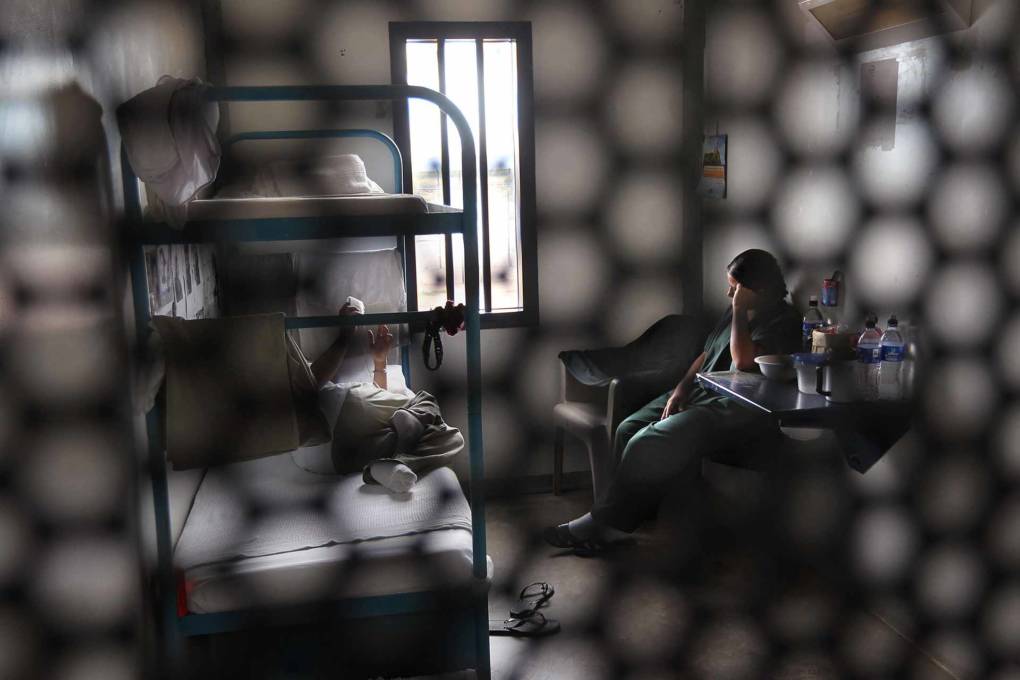
"caption": "Immigrants sit in their housing cell in the women's wing of the detention facility for illegal immigrants on July 30, 2010 in Eloy, Arizona. The Supreme Court ruled on Monday that immigrants, even those who are permanent legal residents and asylum seekers, have no right to periodic bond hearings, meaning they could be held indefinitely in some cases.",
"description": "Immigrants sit in their housing cell in the women's wing of the detention facility for illegal immigrants on July 30, 2010 in Eloy, Arizona. The Supreme Court ruled on Monday that immigrants, even those who are permanent legal residents and asylum seekers, have no right to periodic bond hearings, meaning they could be held indefinitely in some cases.",
"title": "RS16147_GettyImages-103173723-qut",
"credit": "John Moore/Getty Images",
"status": "inherit",
"isLoading": false,
"fetchFailed": false
}
},
"audioPlayerReducer": {
"postId": "stream_live",
"isPaused": true,
"isPlaying": false,
"pfsActive": false,
"pledgeModalIsOpen": true,
"playerDrawerIsOpen": false,
"liveAudioPlayStartedAt": 0,
"liveAudioPlayContext": ""
},
"authorsReducer": {
"byline_news_11654314": {
"type": "authors",
"id": "byline_news_11654314",
"meta": {
"override": true
},
"slug": "byline_news_11654314",
"name": "Carrie Johnson",
"isLoading": false
},
"byline_news_11652522": {
"type": "authors",
"id": "byline_news_11652522",
"meta": {
"override": true
},
"slug": "byline_news_11652522",
"name": "\u003cstrong>\u003ca href=\"http://www.kpbs.org/staff/jean-guerrero/\">Jean Guerrero\u003c/a>\u003c/strong> and Associated Press",
"isLoading": false
},
"byline_news_11652459": {
"type": "authors",
"id": "byline_news_11652459",
"meta": {
"override": true
},
"slug": "byline_news_11652459",
"name": "Domenico Montanaro, Richard Gonzales and Nina Totenberg",
"isLoading": false
},
"kqed": {
"type": "authors",
"id": "236",
"meta": {
"index": "authors_1716337520",
"id": "236",
"found": true
},
"name": "KQED News Staff",
"firstName": "KQED News Staff",
"lastName": null,
"slug": "kqed",
"email": "faq@kqed.org",
"display_author_email": false,
"staff_mastheads": [],
"title": null,
"bio": null,
"avatar": "https://secure.gravatar.com/avatar/ef0e801a68c4c54afa9180db14084167?s=600&d=blank&r=g",
"twitter": null,
"facebook": null,
"instagram": null,
"linkedin": null,
"sites": [
{
"site": "arts",
"roles": [
"contributor"
]
},
{
"site": "news",
"roles": [
"editor"
]
},
{
"site": "futureofyou",
"roles": [
"author"
]
}
],
"headData": {
"title": "KQED News Staff | KQED",
"description": null,
"ogImgSrc": "https://secure.gravatar.com/avatar/ef0e801a68c4c54afa9180db14084167?s=600&d=blank&r=g",
"twImgSrc": "https://secure.gravatar.com/avatar/ef0e801a68c4c54afa9180db14084167?s=600&d=blank&r=g"
},
"isLoading": false,
"link": "/author/kqed"
},
"aemslie": {
"type": "authors",
"id": "3206",
"meta": {
"index": "authors_1716337520",
"id": "3206",
"found": true
},
"name": "Alex Emslie",
"firstName": "Alex",
"lastName": "Emslie",
"slug": "aemslie",
"email": "aemslie@kqed.org",
"display_author_email": true,
"staff_mastheads": [
"news"
],
"title": "KQED Senior Editor",
"bio": "Alex Emslie is senior editor of talent and development at KQED, where he manages dozens of early career journalists and oversees news department internships.\r\n\r\nHe is a former carpenter and proud graduate of City College of San Francisco and San Francisco State University, where he studied journalism and criminal justice before joining KQED in 2013.\r\n\r\nAlex produced investigative journalism focused on \u003ca href=\"https://www.kqed.org/news/11667594/the-trials-of-marvin-mutch-video\">criminal justice\u003c/a> and policing for most of a decade. He has broken major stories about \u003ca href=\"https://www.kqed.org/news/135682/amid-a-series-of-vallejo-police-shootings-one-officers-name-stands-out\">police use of deadly force\u003c/a>, \u003ca href=\"https://www.kqed.org/news/10454955/racist-texts-prompt-sfpd-internal-investigation\">officer misconduct\u003c/a> and \u003ca href=\"https://www.kqed.org/news/11712239/terrorist-or-troll-judge-to-weigh-whether-oakland-man-really-intended-to-attack-bay-area\">other\u003c/a> \u003ca href=\"https://www.kqed.org/news/11221414/hayward-paid-159000-to-husband-of-retired-police-chief-documents-show\">high\u003c/a>-\u003ca href=\"https://www.kqed.org/news/10622762/the-forgotten-tracking-two-homicides-in-san-francisco-public-housing\">profile\u003c/a> \u003ca href=\"https://www.kqed.org/news/11624516/federal-agency-promoted-ranger-just-months-after-his-gun-was-stolen-and-used-in-steinle-killing\">cases\u003c/a>. He co-founded the \u003ca href=\"https://projects.scpr.org/california-reporting-project/\">California Reporting Project\u003c/a> in 2019 to obtain and report on previously confidential police internal investigations. The effort produced well over 100 original stories and changed the course of multiple criminal cases.\r\n\r\nHis work has been recognized with numerous journalism awards, including a national Edward R. Murrow award for several years of \u003ca href=\"https://www.kqed.org/news/11688481/sfpd-officers-in-mario-woods-case-recount-shooting-in-newly-filed-depositions\">reporting\u003c/a> on the San Francisco Police shooting of Mario Woods. His \u003ca href=\"https://www.kqed.org/news/147854/half-of-those-killed-by-san-francisco-police-are-mentally-ill\">reporting\u003c/a> on police killings of people in psychiatric crisis was cited in amicus briefs before the U.S. Supreme Court.\r\n\r\nAlex now enjoys mentoring the next generation of journalists at KQED.",
"avatar": "https://secure.gravatar.com/avatar/e691e65209f20e9da202bd730ead5663?s=600&d=blank&r=g",
"twitter": "SFNewsReporter",
"facebook": null,
"instagram": null,
"linkedin": null,
"sites": [
{
"site": "arts",
"roles": [
"editor"
]
},
{
"site": "news",
"roles": [
"editor"
]
},
{
"site": "mindshift",
"roles": [
"editor"
]
},
{
"site": "stateofhealth",
"roles": [
"editor"
]
},
{
"site": "science",
"roles": [
"administrator"
]
}
],
"headData": {
"title": "Alex Emslie | KQED",
"description": "KQED Senior Editor",
"ogImgSrc": "https://secure.gravatar.com/avatar/e691e65209f20e9da202bd730ead5663?s=600&d=blank&r=g",
"twImgSrc": "https://secure.gravatar.com/avatar/e691e65209f20e9da202bd730ead5663?s=600&d=blank&r=g"
},
"isLoading": false,
"link": "/author/aemslie"
},
"markfiore": {
"type": "authors",
"id": "3236",
"meta": {
"index": "authors_1716337520",
"id": "3236",
"found": true
},
"name": "Mark Fiore",
"firstName": "Mark",
"lastName": "Fiore",
"slug": "markfiore",
"email": "mark@markfiore.com",
"display_author_email": false,
"staff_mastheads": [
"news"
],
"title": "KQED News Cartoonist",
"bio": "\u003ca href=\"http://www.MarkFiore.com\">MarkFiore.com\u003c/a> | \u003ca href=\"https://twitter.com/markfiore\">Follow on Twitter\u003c/a> | \u003ca href=\"https://www.facebook.com/pages/Mark-Fiore-Animated-Political-Cartoons/94451707396?ref=bookmarks\">Facebook\u003c/a> | \u003ca href=\"mailto:mark@markfiore.com\">email\u003c/a>\r\n\r\nPulitzer Prize-winner, Mark Fiore, who the Wall Street Journal has called “the undisputed guru of the form,” creates animated political cartoons in San Francisco, where his work has been featured regularly on the San Francisco Chronicle’s web site, SFGate.com. His work has appeared on Newsweek.com, Slate.com, CBSNews.com, MotherJones.com, DailyKos.com and NPR’s web site. Fiore’s political animation has appeared on CNN, Frontline, Bill Moyers Journal, Salon.com and cable and broadcast outlets across the globe.\r\n\r\nBeginning his professional life by drawing traditional political cartoons for newspapers, Fiore’s work appeared in publications ranging from the Washington Post to the Los Angeles Times. In the late 1990s, he began to experiment with animating political cartoons and, after a short stint at the San Jose Mercury News as their staff cartoonist, Fiore devoted all his energies to animation.\r\nGrowing up in California, Fiore also spent a good portion of his life in the backwoods of Idaho. It was this combination that shaped him politically. Mark majored in political science at Colorado College, where, in a perfect send-off for a cartoonist, he received his diploma in 1991 as commencement speaker Dick Cheney smiled approvingly.\r\nMark Fiore was awarded the Pulitzer Prize for political cartooning in 2010, a Robert F. Kennedy Journalism Award in 2004 and has twice received an Online Journalism Award for commentary from the Online News Association (2002, 2008). Fiore has received two awards for his work in new media from the National Cartoonists Society (2001, 2002), and in 2006 received The James Madison Freedom of Information Award from The Society of Professional Journalists.",
"avatar": "https://secure.gravatar.com/avatar/fc4e2a612b15b67bad0c6f0e1db4ca9b?s=600&d=blank&r=g",
"twitter": "MarkFiore",
"facebook": null,
"instagram": "https://www.instagram.com/markfiore/?hl=en",
"linkedin": null,
"sites": [
{
"site": "arts",
"roles": [
"contributor"
]
},
{
"site": "news",
"roles": [
"editor"
]
},
{
"site": "futureofyou",
"roles": [
"editor"
]
},
{
"site": "science",
"roles": [
"editor"
]
}
],
"headData": {
"title": "Mark Fiore | KQED",
"description": "KQED News Cartoonist",
"ogImgSrc": "https://secure.gravatar.com/avatar/fc4e2a612b15b67bad0c6f0e1db4ca9b?s=600&d=blank&r=g",
"twImgSrc": "https://secure.gravatar.com/avatar/fc4e2a612b15b67bad0c6f0e1db4ca9b?s=600&d=blank&r=g"
},
"isLoading": false,
"link": "/author/markfiore"
},
"jsmall": {
"type": "authors",
"id": "6625",
"meta": {
"index": "authors_1716337520",
"id": "6625",
"found": true
},
"name": "Julie Small",
"firstName": "Julie",
"lastName": "Small",
"slug": "jsmall",
"email": "jsmall@kqed.org",
"display_author_email": true,
"staff_mastheads": [
"news"
],
"title": "KQED Contributor",
"bio": "Julie Small reports on criminal justice and immigration.\r\n\r\nShe was part of a team at KQED awarded a regional 2019 Edward R. Murrow award for continuing coverage of the Trump Administration's family separation policy.\r\n\r\nThe Society for Professional Journalists recognized Julie's 2018 \u003ca href=\"https://www.kqed.org/news/11636262/the-officer-tased-him-31-times-the-sheriff-called-his-death-an-accident\">reporting\u003c/a> on the San Joaquin County Sheriff's \u003ca href=\"https://www.kqed.org/news/11634689/autopsy-doctors-sheriff-overrode-death-findings-to-protect-law-enforcement\">interference\u003c/a> in death investigations with an Excellence in Journalism Award for Ongoing Coverage.\r\n\r\nJulie's\u003ca href=\"https://www.kqed.org/news/11039666/two-mentally-ill-inmates-died-one-month-in-santa-clara\"> reporting\u003c/a> with Lisa Pickoff-White on the treatment of mentally ill offenders in California jails earned a 2017 regional Edward R. Murrow Award for news reporting and an investigative reporting award from the SPJ of Northern California.\r\n\r\nBefore joining KQED, Julie covered government and politics in Sacramento for Southern California Public Radio (SCPR). Her 2010 \u003ca href=\"https://www.scpr.org/specials/prisonmedical/\">series\u003c/a> on lapses in California’s prison medical care also won a regional Edward R. Murrow Award for investigative reporting and a Golden Mic Award from the RTNDA of Southern California.\r\n\r\nJulie began her career in journalism in 2000 as the deputy foreign editor for public radio's \u003cem>Marketplace, \u003c/em>while earning her master's degree in journalism from USC’s Annenberg School of Communication.",
"avatar": "https://secure.gravatar.com/avatar/4baedf201468df97be97c2a9dd7585d0?s=600&d=blank&r=g",
"twitter": "@SmallRadio2",
"facebook": null,
"instagram": null,
"linkedin": null,
"sites": [
{
"site": "news",
"roles": [
"editor"
]
},
{
"site": "stateofhealth",
"roles": [
"author"
]
},
{
"site": "science",
"roles": [
"author"
]
}
],
"headData": {
"title": "Julie Small | KQED",
"description": "KQED Contributor",
"ogImgSrc": "https://secure.gravatar.com/avatar/4baedf201468df97be97c2a9dd7585d0?s=600&d=blank&r=g",
"twImgSrc": "https://secure.gravatar.com/avatar/4baedf201468df97be97c2a9dd7585d0?s=600&d=blank&r=g"
},
"isLoading": false,
"link": "/author/jsmall"
},
"fjhabvala": {
"type": "authors",
"id": "8659",
"meta": {
"index": "authors_1716337520",
"id": "8659",
"found": true
},
"name": "Farida Jhabvala Romero",
"firstName": "Farida",
"lastName": "Jhabvala Romero",
"slug": "fjhabvala",
"email": "fjhabvala@kqed.org",
"display_author_email": true,
"staff_mastheads": [
"news"
],
"title": "KQED Contributor",
"bio": "Farida Jhabvala Romero is a Labor Correspondent for KQED. She previously covered immigration. Farida was \u003ca href=\"https://www.ccnma.org/2022-most-influential-latina-journalists\">named\u003c/a> one of the 10 Most Influential Latina Journalists in California in 2022 by the California Chicano News Media Association. Her work has won awards from the Society of Professional Journalists (Northern California), as well as a national and regional Edward M. Murrow Award for the collaborative reporting projects “Dangerous Air” and “Graying California.” Before joining KQED, Farida worked as a producer at Radio Bilingüe, a national public radio network. Farida earned her master’s degree in journalism from Stanford University.",
"avatar": "https://secure.gravatar.com/avatar/f9f022d4e2609741874222a1e9d41f48fea74011aa7c615eef91d9a50c944ebe?s=600&d=blank&r=g",
"twitter": "FaridaJhabvala",
"bluesky": null,
"facebook": null,
"instagram": null,
"linkedin": "https://www.linkedin.com/in/faridajhabvala/",
"sites": [
{
"site": "news",
"roles": [
"editor"
]
},
{
"site": "stateofhealth",
"roles": [
"author"
]
},
{
"site": "liveblog",
"roles": [
"author"
]
}
],
"headData": {
"title": "Farida Jhabvala Romero | KQED",
"description": "KQED Contributor",
"ogImgSrc": "https://secure.gravatar.com/avatar/f9f022d4e2609741874222a1e9d41f48fea74011aa7c615eef91d9a50c944ebe?s=600&d=blank&r=g",
"twImgSrc": "https://secure.gravatar.com/avatar/f9f022d4e2609741874222a1e9d41f48fea74011aa7c615eef91d9a50c944ebe?s=600&d=blank&r=g"
},
"isLoading": false,
"link": "/author/fjhabvala"
},
"ahall": {
"type": "authors",
"id": "11490",
"meta": {
"index": "authors_1716337520",
"id": "11490",
"found": true
},
"name": "Alex Hall",
"firstName": "Alex",
"lastName": "Hall",
"slug": "ahall",
"email": "ahall@kqed.org",
"display_author_email": false,
"staff_mastheads": [
"news"
],
"title": "KQED Enterprise & Accountability Reporter",
"bio": "Alex Hall is KQED's Enterprise and Accountability Reporter. She previously covered the Central Valley for five years from KQED's bureau in Fresno. Before joining KQED, Alex was an investigative reporting fellow at Wisconsin Public Radio and the Wisconsin Center for Investigative Journalism. She has also worked as a bilingual producer for NPR's investigative unit and freelance video producer for Reuters TV on the Latin America desk. She got her start in journalism in South America, where she worked as a radio producer and Spanish-English translator for CNN Chile. Her documentary and investigation into the series of deadly COVID-19 outbreaks at Foster Farms won a national Edward R. Murrow award and was named an Investigative Reporters & Editors award finalist. Alex's reporting for Reveal on the Wisconsin dairy industry's reliance on undocumented immigrant labor was made into a film, Los Lecheros, which won a regional Edward R. Murrow award for best news documentary.",
"avatar": "https://secure.gravatar.com/avatar/04c28ad4a7caa7ac2ef39c655c4030c993a3f331481d1da4799bb76ea85b9afa?s=600&d=blank&r=g",
"twitter": "@chalexhall",
"bluesky": null,
"facebook": null,
"instagram": null,
"linkedin": null,
"sites": [
{
"site": "news",
"roles": [
"editor"
]
},
{
"site": "liveblog",
"roles": [
"author"
]
}
],
"headData": {
"title": "Alex Hall | KQED",
"description": "KQED Enterprise & Accountability Reporter",
"ogImgSrc": "https://secure.gravatar.com/avatar/04c28ad4a7caa7ac2ef39c655c4030c993a3f331481d1da4799bb76ea85b9afa?s=600&d=blank&r=g",
"twImgSrc": "https://secure.gravatar.com/avatar/04c28ad4a7caa7ac2ef39c655c4030c993a3f331481d1da4799bb76ea85b9afa?s=600&d=blank&r=g"
},
"isLoading": false,
"link": "/author/ahall"
}
},
"pagesReducer": {
"news_tag_u-s-immigration-and-customs-enforcement": {
"type": "terms",
"id": "news_20529",
"meta": {
"index": "terms_1716263798",
"site": "news",
"id": "20529",
"score": 10.404648
},
"featImg": null,
"name": "U.S. Immigration and Customs Enforcement",
"description": null,
"taxonomy": "tag",
"headData": {
"twImgId": null,
"twTitle": null,
"ogTitle": null,
"ogImgId": null,
"twDescription": null,
"description": null,
"title": "U.S. Immigration and Customs Enforcement Archives | KQED News",
"ogDescription": null
},
"ttid": 20546,
"slug": "u-s-immigration-and-customs-enforcement",
"isLoading": false,
"title": "U.S. Immigration and Customs Enforcement",
"pageMeta": {
"site": "news",
"WpPageTemplate": "page-topic-editorial",
"currentPage": 24
},
"blocks": [
{
"blockName": "kqed/post-list",
"attrs": {
"layout": "cardArticle2",
"query": "posts/news?tag=u-s-immigration-and-customs-enforcement",
"seeMore": false,
"paginated": true,
"page": 24
}
},
{
"blockName": "kqed/ad"
}
]
}
},
"pfsSessionReducer": {},
"postsReducer": {
"stream_live": {
"type": "live",
"id": "stream_live",
"audioUrl": "https://streams.kqed.org/kqedradio",
"title": "Live Stream",
"excerpt": "Live Stream information currently unavailable.",
"link": "/radio",
"featImg": "",
"label": {
"name": "KQED Live",
"link": "/"
}
},
"stream_kqedNewscast": {
"type": "posts",
"id": "stream_kqedNewscast",
"audioUrl": "https://www.kqed.org/.stream/anon/radio/RDnews/newscast.mp3?_=1",
"title": "KQED Newscast",
"featImg": "",
"label": {
"name": "88.5 FM",
"link": "/"
}
},
"news_11655373": {
"type": "posts",
"id": "news_11655373",
"meta": {
"index": "posts_1716263798",
"site": "news",
"id": "11655373",
"score": null,
"sort": [
1520958615000
]
},
"parent": 0,
"labelTerm": {
"site": "news",
"term": 72
},
"blocks": [],
"publishDate": 1520958615,
"format": "audio",
"disqusTitle": "ICE Spokesman Quits to Protest Agency Claim That 800 Evaded Arrest After Schaaf Warning",
"title": "ICE Spokesman Quits to Protest Agency Claim That 800 Evaded Arrest After Schaaf Warning",
"headTitle": "The California Report | KQED News",
"content": "\u003cp>\u003cem>Updated 12:15 a.m. Tuesday\u003c/em>\u003c/p>\n\u003cp>The public affairs officer for the San Francisco field office of U.S. Immigration and Customs Enforcement quit last week to protest Trump administration statements that 800 people evaded arrest because Oakland Mayor Libby Schaaf issued a public warning that an immigration sweep was imminent.\u003c/p>\n\u003cp>ICE arrested 232 people during the four-day sweep in late February, but federal officials have repeatedly stated that many others would likely have been caught if Schaaf had not warned the public a day before the operation began.\u003c/p>\n\u003cp>In a Feb. 27 press release, ICE Deputy Director Thomas Homan wrote: “864 criminal aliens and public safety threats remain at large in the community, and I have to believe that some of them were able to elude us thanks to the mayor’s irresponsible decision.”\u003c/p>\n\u003cp>The next day on Fox News, Homan said, “There’s 800 that we are unable to locate because of that warning, so that community is a lot less safe than it would have been.\"\u003c/p>\n\u003cp>[ad fullwidth]\u003c/p>\n\u003cp>In \u003ca href=\"https://www.sfgate.com/bayarea/article/ICE-spokesman-said-to-quit-over-officials-12748022.php\" target=\"_blank\" rel=\"noopener\">an interview\u003c/a> with the San Francisco Chronicle on Monday, public information officer James Schwab said he objected to that characterization.\u003c/p>\n\u003cp>Schwab said statements about immigrants evading arrest were misleading “because we were not ever going to be able to capture 100 percent of the target list” of roughly 1,000 undocumented immigrants in Northern California.\u003c/p>\n\u003cp>“I didn’t feel like fabricating the truth to defend ourselves against (Schaaf’s) actions was the way to go about it,” he told the Chronicle. “We were never going to pick up that many people. To say that 100 percent are dangerous criminals on the street, or that those people weren’t picked up because of the misguided actions of the mayor, is just wrong.”\u003c/p>\n\u003cp>In recent months immigration operations have led to dozens of arrests, rather than many hundreds, according to ICE press releases. Typically ICE agents arrest 30 percent of their targets during large-scale enforcement operations, a Department of Homeland Security official told the New York Times after the Northern California arrests.\u003c/p>\n\u003cp>An agency spokeswoman said the 864 people described as evading arrest in Northern and Central California were wanted for \"violating immigration law,\" in response to a KQED request for information about why they were considered public safety threats. She provided just five examples of people on that list who ICE believes have been convicted of serious crimes.\u003c/p>\n\u003cul>\n\u003cli>A Honduran citizen who was previously arrested in San Francisco County multiple times for cocaine possession and transport, probation violations and sex with a minor under 16\u003c/li>\n\u003cli>A citizen of Mexico who was previously arrested and convicted for carrying a loaded firearm, transportation and sale of narcotics and DUI\u003c/li>\n\u003cli>A citizen of Mexico who was previously removed from the United States in 2003 with convictions for unlawful sexual intercourse with a minor in 2002 and driving under the influence in 2007\u003c/li>\n\u003cli>A citizen of Mexico who was previously removed from the United States in 2013 with a conviction for sodomy, drugged victim from 2012 and driving under the influence in 2018\u003c/li>\n\u003cli>A citizen of Mexico who was previously removed from the United States in 2014 with a conviction for second-degree robbery while armed\u003c/li>\n\u003c/ul>\n\u003cp>ICE officials have declined to clarify the criminal histories of the people arrested in the Northern California region last month, relying instead on categories that lumped immigrants convicted of murder with those found guilty of entering the country illegally (a federal misdemeanor).\u003c/p>\n\u003cp>Of the 232 people arrested, ICE stated that 115, or just under half, had “prior felony convictions for serious and violent offenses” or past convictions for \"significant or multiple misdemeanors.\" The other half had no criminal history.\u003c/p>\n\u003cp>When asked to specify how many arrestees were felons, spokeswoman Danielle Bennett would only respond, “All of those arrested were arrested for being in violation of immigration law.”\u003c/p>\n\u003cp>Bennett did provide a list of “the most egregious criminal convictions of those arrested,” which ranged from marijuana possession and disorderly conduct to aggravated assault and drug trafficking.\u003c/p>\n\u003cp>Of all those arrested, 52 neither had criminal histories nor had been ordered deported, according to ICE.\u003c/p>\n\u003cp>Schwab had said a more detailed breakdown on the arrests was in the works before his resignation Thursday.\u003c/p>\n\u003cp>Citing privacy restrictions, ICE would not provide further details on Schwab’s reasons for quitting, but acknowledged: “He recently announced his departure from the ICE OPA team and we are working to transition his responsibilities to other team members, as is standard practice, until we are able to hire a new public affairs officer in the San Francisco area.”\u003c/p>\n\u003cp>\u003c/p>\n\u003cp>The San Francisco field office is responsible for an area that extends from Bakersfield north to the Oregon border and includes 49 counties.\u003c/p>\n\n",
"disqusIdentifier": "11655373 https://ww2.kqed.org/news/?p=11655373",
"disqusUrl": "https://ww2.kqed.org/news/2018/03/13/ice-spokesman-quits-reportedly-over-claims-that-800-criminals-evaded-arrest/",
"stats": {
"hasVideo": false,
"hasChartOrMap": false,
"hasAudio": false,
"hasPolis": false,
"wordCount": 810,
"hasGoogleForm": false,
"hasGallery": false,
"hasHearkenModule": false,
"iframeSrcs": [],
"paragraphCount": 20
},
"modified": 1523049468,
"excerpt": "Former spokesman James Schwab took issue with statements by President Trump and others that a warning by Oakland Mayor Libby Schaaf helped hundreds evade arrest.",
"headData": {
"twImgId": "",
"twTitle": "",
"ogTitle": "",
"ogImgId": "",
"twDescription": "",
"description": "Former spokesman James Schwab took issue with statements by President Trump and others that a warning by Oakland Mayor Libby Schaaf helped hundreds evade arrest.",
"title": "ICE Spokesman Quits to Protest Agency Claim That 800 Evaded Arrest After Schaaf Warning | KQED",
"ogDescription": "",
"schema": {
"@context": "https://schema.org",
"@type": "NewsArticle",
"headline": "ICE Spokesman Quits to Protest Agency Claim That 800 Evaded Arrest After Schaaf Warning",
"datePublished": "2018-03-13T09:30:15-07:00",
"dateModified": "2018-04-06T14:17:48-07:00",
"image": "https://cdn.kqed.org/wp-content/uploads/2020/02/KQED-OG-Image@1x.png",
"isAccessibleForFree": "True",
"publisher": {
"@type": "NewsMediaOrganization",
"@id": "https://www.kqed.org/#organization",
"name": "KQED",
"logo": "https://cdn.kqed.org/wp-content/uploads/2020/02/KQED-OG-Image@1x.png",
"url": "https://www.kqed.org",
"sameAs": [
"https://www.facebook.com/KQED",
"https://twitter.com/KQED",
"https://www.instagram.com/kqed/",
"https://www.tiktok.com/@kqedofficial",
"https://www.linkedin.com/company/kqed",
"https://www.youtube.com/channel/UCeC0IOo7i1P_61zVUWbJ4nw"
]
}
}
},
"guestAuthors": [],
"slug": "ice-spokesman-quits-reportedly-over-claims-that-800-criminals-evaded-arrest",
"status": "publish",
"audioUrl": "https://www.kqed.org/.stream/anon/radio/tcr/2018/03/ICETCRSmall.mp3",
"path": "/news/11655373/ice-spokesman-quits-reportedly-over-claims-that-800-criminals-evaded-arrest",
"audioDuration": 66000,
"audioTrackLength": null,
"parsedContent": [
{
"type": "contentString",
"content": "\u003cdiv class=\"post-body\">\u003cp>\u003cp>\u003cem>Updated 12:15 a.m. Tuesday\u003c/em>\u003c/p>\n\u003cp>The public affairs officer for the San Francisco field office of U.S. Immigration and Customs Enforcement quit last week to protest Trump administration statements that 800 people evaded arrest because Oakland Mayor Libby Schaaf issued a public warning that an immigration sweep was imminent.\u003c/p>\n\u003cp>ICE arrested 232 people during the four-day sweep in late February, but federal officials have repeatedly stated that many others would likely have been caught if Schaaf had not warned the public a day before the operation began.\u003c/p>\n\u003cp>In a Feb. 27 press release, ICE Deputy Director Thomas Homan wrote: “864 criminal aliens and public safety threats remain at large in the community, and I have to believe that some of them were able to elude us thanks to the mayor’s irresponsible decision.”\u003c/p>\n\u003cp>The next day on Fox News, Homan said, “There’s 800 that we are unable to locate because of that warning, so that community is a lot less safe than it would have been.\"\u003c/p>\n\u003cp>\u003c/p>\u003c/div>",
"attributes": {
"named": {},
"numeric": []
}
},
{
"type": "component",
"content": "",
"name": "ad",
"attributes": {
"named": {
"label": "fullwidth"
},
"numeric": [
"fullwidth"
]
}
},
{
"type": "contentString",
"content": "\u003cdiv class=\"post-body\">\u003cp>\u003c/p>\n\u003cp>In \u003ca href=\"https://www.sfgate.com/bayarea/article/ICE-spokesman-said-to-quit-over-officials-12748022.php\" target=\"_blank\" rel=\"noopener\">an interview\u003c/a> with the San Francisco Chronicle on Monday, public information officer James Schwab said he objected to that characterization.\u003c/p>\n\u003cp>Schwab said statements about immigrants evading arrest were misleading “because we were not ever going to be able to capture 100 percent of the target list” of roughly 1,000 undocumented immigrants in Northern California.\u003c/p>\n\u003cp>“I didn’t feel like fabricating the truth to defend ourselves against (Schaaf’s) actions was the way to go about it,” he told the Chronicle. “We were never going to pick up that many people. To say that 100 percent are dangerous criminals on the street, or that those people weren’t picked up because of the misguided actions of the mayor, is just wrong.”\u003c/p>\n\u003cp>In recent months immigration operations have led to dozens of arrests, rather than many hundreds, according to ICE press releases. Typically ICE agents arrest 30 percent of their targets during large-scale enforcement operations, a Department of Homeland Security official told the New York Times after the Northern California arrests.\u003c/p>\n\u003cp>An agency spokeswoman said the 864 people described as evading arrest in Northern and Central California were wanted for \"violating immigration law,\" in response to a KQED request for information about why they were considered public safety threats. She provided just five examples of people on that list who ICE believes have been convicted of serious crimes.\u003c/p>\n\u003cul>\n\u003cli>A Honduran citizen who was previously arrested in San Francisco County multiple times for cocaine possession and transport, probation violations and sex with a minor under 16\u003c/li>\n\u003cli>A citizen of Mexico who was previously arrested and convicted for carrying a loaded firearm, transportation and sale of narcotics and DUI\u003c/li>\n\u003cli>A citizen of Mexico who was previously removed from the United States in 2003 with convictions for unlawful sexual intercourse with a minor in 2002 and driving under the influence in 2007\u003c/li>\n\u003cli>A citizen of Mexico who was previously removed from the United States in 2013 with a conviction for sodomy, drugged victim from 2012 and driving under the influence in 2018\u003c/li>\n\u003cli>A citizen of Mexico who was previously removed from the United States in 2014 with a conviction for second-degree robbery while armed\u003c/li>\n\u003c/ul>\n\u003cp>ICE officials have declined to clarify the criminal histories of the people arrested in the Northern California region last month, relying instead on categories that lumped immigrants convicted of murder with those found guilty of entering the country illegally (a federal misdemeanor).\u003c/p>\n\u003cp>Of the 232 people arrested, ICE stated that 115, or just under half, had “prior felony convictions for serious and violent offenses” or past convictions for \"significant or multiple misdemeanors.\" The other half had no criminal history.\u003c/p>\n\u003cp>When asked to specify how many arrestees were felons, spokeswoman Danielle Bennett would only respond, “All of those arrested were arrested for being in violation of immigration law.”\u003c/p>\n\u003cp>Bennett did provide a list of “the most egregious criminal convictions of those arrested,” which ranged from marijuana possession and disorderly conduct to aggravated assault and drug trafficking.\u003c/p>\n\u003cp>Of all those arrested, 52 neither had criminal histories nor had been ordered deported, according to ICE.\u003c/p>\n\u003cp>Schwab had said a more detailed breakdown on the arrests was in the works before his resignation Thursday.\u003c/p>\n\u003cp>Citing privacy restrictions, ICE would not provide further details on Schwab’s reasons for quitting, but acknowledged: “He recently announced his departure from the ICE OPA team and we are working to transition his responsibilities to other team members, as is standard practice, until we are able to hire a new public affairs officer in the San Francisco area.”\u003c/p>\n\u003cp>\u003c/p>\n\u003cp>The San Francisco field office is responsible for an area that extends from Bakersfield north to the Oregon border and includes 49 counties.\u003c/p>\n\n\u003c/div>\u003c/p>",
"attributes": {
"named": {},
"numeric": []
}
}
],
"link": "/news/11655373/ice-spokesman-quits-reportedly-over-claims-that-800-criminals-evaded-arrest",
"authors": [
"6625"
],
"programs": [
"news_6944",
"news_72"
],
"categories": [
"news_1169",
"news_6188",
"news_8",
"news_13"
],
"tags": [
"news_19542",
"news_6905",
"news_17286",
"news_17041",
"news_20529"
],
"featImg": "news_11357784",
"label": "news_72"
},
"news_11654965": {
"type": "posts",
"id": "news_11654965",
"meta": {
"index": "posts_1716263798",
"site": "news",
"id": "11654965",
"score": null,
"sort": [
1520897786000
]
},
"parent": 0,
"labelTerm": {
"site": "news",
"term": 72
},
"blocks": [],
"publishDate": 1520897786,
"format": "audio",
"disqusTitle": "ICE Is Auditing This Central Valley Grower, Again - And He Blames California Lawmakers",
"title": "ICE Is Auditing This Central Valley Grower, Again - And He Blames California Lawmakers",
"headTitle": "The California Report | KQED News",
"content": "\u003cp>In late January, Mike Poindexter, a third-generation walnut grower in the Central Valley town of Selma, received some bad news. It came in the form of a letter from U.S. Immigration and Customs Enforcement (ICE). It said federal agents would be auditing his business.\u003c/p>\n\u003cp>Soon after receiving the letter, Poindexter hung \u003ca href=\"https://www.dir.ca.gov/DLSE/LC_90.2_EE_Notice.pdf\">a notice to workers\u003c/a> about the I-9 audit above the time clock where staff punch in before their shifts. Within two days, 18 people had quit, likely out of fear authorities would discover they lacked permission to work.\u003c/p>\n\u003cp>\"You get attached to people,\" said Poindexter, the CEO of Poindexter Nut Company. \"I understand there are a lot of people who say, 'Hey, these people are illegal, they have to go.' I understand what they're saying. But they're saying that about people they don't know. They're saying that about some nameless, faceless thing out there.\"\u003c/p>\n\u003cp>Back in the spring of 2008, Poindexter was audited by ICE for the first time. So he turned in a stack of paperwork and waited for months. He didn’t hear back from officers until August. When the agents got back to him, they said 70 percent of his staff would have to go that same day. He says the turnover cost his company $2 million and it took three years to bounce back from the losses.\u003c/p>\n\u003cp>He now uses \u003ca href=\"https://www.uscis.gov/e-verify\">E-Verify\u003c/a>, the federal website used to verify work authorization, and he thought that would ensure he was hiring a legal workforce. But Poindexter still compares the most recent audit to a sword hanging over his head.\u003c/p>\n\u003cp>[ad fullwidth]\u003c/p>\n\u003cp>“ 'Cause you've been hurt, bad. And you don't want it to happen again,” he said. “You've done everything right you can. And you think, I'll be OK this time. I probably will, but you don't know. And until we get that all clear, it's hanging over you. That stress. What's gonna happen?”\u003c/p>\n\u003cfigure id=\"attachment_11655325\" class=\"wp-caption aligncenter\" style=\"max-width: 800px\">\u003cimg class=\"size-medium wp-image-11655325\" src=\"https://ww2.kqed.org/news/wp-content/uploads/sites/10/2018/03/SortingWalnuts-800x522.jpg\" alt=\"Workers at Poindexter Nut Company sort walnuts. The company is undergoing an ICE audit for the second time.\" width=\"800\" height=\"522\" srcset=\"https://ww2.kqed.org/app/uploads/sites/10/2018/03/SortingWalnuts-800x522.jpg 800w, https://ww2.kqed.org/app/uploads/sites/10/2018/03/SortingWalnuts-160x104.jpg 160w, https://ww2.kqed.org/app/uploads/sites/10/2018/03/SortingWalnuts-1020x666.jpg 1020w, https://ww2.kqed.org/app/uploads/sites/10/2018/03/SortingWalnuts.jpg 1920w, https://ww2.kqed.org/app/uploads/sites/10/2018/03/SortingWalnuts-1180x770.jpg 1180w, https://ww2.kqed.org/app/uploads/sites/10/2018/03/SortingWalnuts-960x627.jpg 960w, https://ww2.kqed.org/app/uploads/sites/10/2018/03/SortingWalnuts-240x157.jpg 240w, https://ww2.kqed.org/app/uploads/sites/10/2018/03/SortingWalnuts-375x245.jpg 375w, https://ww2.kqed.org/app/uploads/sites/10/2018/03/SortingWalnuts-520x339.jpg 520w\" sizes=\"(max-width: 800px) 100vw, 800px\">\u003cfigcaption class=\"wp-caption-text\">Workers at Poindexter Nut Company sort walnuts. The company is undergoing an ICE audit for the second time. \u003ccite>(Alexandra Hall/KQED)\u003c/cite>\u003c/figcaption>\u003c/figure>\n\u003cp>Despite the ongoing stress of the audits, Poindexter’s frustration is not directed toward ICE. Instead, he blames California lawmakers for provoking the federal government by enacting statewide sanctuary policies.\u003c/p>\n\u003cp>\"You have a bear and you have a person throwing rocks at a bear. And then when the bear lashes out and you get slashed by it, you want me to be mad at the bear?” Poindexter said.\u003c/p>\n\u003cp>The notice Poindexter posted, informing workers of the audit, is now required by \u003ca href=\"https://leginfo.legislature.ca.gov/faces/billNavClient.xhtml?bill_id=201720180AB450\">state law\u003c/a> in California. It’s just one of the rules recently put in place to protect immigrant workers in the state, regardless of their immigration status. Starting this year, employers can also be fined up to $10,000 for voluntarily handing over certain employee records to ICE, or allowing federal agents into private areas of a workplace without a warrant.\u003c/p>\n\u003caside class=\"pullquote alignright\">'You're saying you're protecting people from being hauled off. Well, you may stop that part of it. But you're not gonna stop the business audits. And you've done more damage than anything ever now. ‘Cause now I have to let go of all these people.’\u003ccite>Manuel Cunha, Nisei Farmers League\u003c/cite>\u003c/aside>\n\u003cp>Last week, the U.S. Department of Justice \u003ca href=\"https://www.kqed.org/news/11654314\">filed a lawsuit\u003c/a> against California, arguing that the state’s so-called sanctuary laws are unconstitutional and block ICE from doing its job. The news came just days after \u003ca href=\"https://www.kqed.org/news/11652479/advocates-confirm-23-immigrants-arrested-in-northern-california-operation\">232 people were arrested\u003c/a> in an ICE operation throughout Northern and Central California. The Bakersfield Californian reported at least 24 farmworkers were detained on their way to the fields.\u003c/p>\n\u003cp>In \u003ca href=\"https://www.ice.gov/news/releases/232-illegal-aliens-arrested-during-ice-operation-northern-california\">a statement\u003c/a>, ICE pointed to new legal barriers to working with local jails and police departments in the state, and said that situation had “forced” the agency to conduct raids in neighborhoods and at workplaces.\u003c/p>\n\u003cp>The majority of workers keeping agricultural businesses running in California are unauthorized immigrants, according to Philip Martin, a professor of agricultural economics at UC Davis. California growers, through their business associations, have long supported a path to citizenship for undocumented farmworkers who agree to keep working in agriculture for several years.\u003c/p>\n\u003cp>But Poindexter is not alone in his frustration with state lawmakers, according to Manuel Cunha, president of the Nisei Farmers League -- a nonprofit that represents the interests of Central Valley growers. Many agricultural businesses are concerned that the standoff over sanctuary policies between California and the federal government is triggering retaliation in the form of more audits. And the attention is unwanted.\u003c/p>\n\u003cfigure id=\"attachment_11655329\" class=\"wp-caption aligncenter\" style=\"max-width: 800px\">\u003cimg class=\"size-medium wp-image-11655329\" src=\"https://ww2.kqed.org/news/wp-content/uploads/sites/10/2018/03/MikeLetter-800x483.jpg\" alt=\"Poindexter Nut Company CEO Mike Poindexter reads a letter he recently received from ICE, notifying him that his business is being audited.\" width=\"800\" height=\"483\" srcset=\"https://ww2.kqed.org/app/uploads/sites/10/2018/03/MikeLetter-800x483.jpg 800w, https://ww2.kqed.org/app/uploads/sites/10/2018/03/MikeLetter-160x97.jpg 160w, https://ww2.kqed.org/app/uploads/sites/10/2018/03/MikeLetter-1020x615.jpg 1020w, https://ww2.kqed.org/app/uploads/sites/10/2018/03/MikeLetter.jpg 1920w, https://ww2.kqed.org/app/uploads/sites/10/2018/03/MikeLetter-1180x712.jpg 1180w, https://ww2.kqed.org/app/uploads/sites/10/2018/03/MikeLetter-960x579.jpg 960w, https://ww2.kqed.org/app/uploads/sites/10/2018/03/MikeLetter-240x145.jpg 240w, https://ww2.kqed.org/app/uploads/sites/10/2018/03/MikeLetter-375x226.jpg 375w, https://ww2.kqed.org/app/uploads/sites/10/2018/03/MikeLetter-520x314.jpg 520w\" sizes=\"(max-width: 800px) 100vw, 800px\">\u003cfigcaption class=\"wp-caption-text\">Poindexter Nut Company CEO Mike Poindexter reads a letter he recently received from ICE, notifying him that his business is being audited. \u003ccite>(Alexandra Hall/KQED)\u003c/cite>\u003c/figcaption>\u003c/figure>\n\u003cp>“I'm gonna say the largest percentage of our farmers and businesses do not support the sanctuary state. At all,” Cunha said.\u003c/p>\n\u003cp>“You're saying you're protecting people from being hauled off. Well, you may stop that part of it. But you're not gonna stop the business audits. And you've done more damage than anything ever now. ‘Cause now I have to let go of all these people,” added Cunha.\u003c/p>\n\u003cp>[contextly_sidebar id=\"z2buvssPQDFcAYlnCkqwsB99NP0pxnQr\"]\u003c/p>\n\u003cp>In 2017, ICE conducted over 1,300 workplace audits nationwide, resulting in 311 arrests of workers. ICE spokeswoman Lori Haley would not confirm whether the agency is now increasing I-9 audits in California, but she did say that across the country, “ICE is stepping up efforts to enforce the laws that prohibit businesses from hiring illegal workers.”\u003c/p>\n\u003cp>Poindexter believes California lawmakers should expect a backlash if they’re going to snub the federal government’s authority to enforce immigration laws.\u003c/p>\n\u003cp>\"Why is ICE cracking down on California? Why aren't they cracking down on Texas?” he asked.\u003c/p>\n\u003cp>\u003c/p>\n\u003cp>“We have the state of California actively obstructing the federal government from enforcing these laws. It doesn't surprise me that the bear's tired of the rocks getting thrown.”\u003c/p>\n\n",
"disqusIdentifier": "11654965 https://ww2.kqed.org/news/?p=11654965",
"disqusUrl": "https://ww2.kqed.org/news/2018/03/12/ice-is-auditing-this-central-valley-grower-again-and-he-blames-california-lawmakers/",
"stats": {
"hasVideo": false,
"hasChartOrMap": false,
"hasAudio": false,
"hasPolis": false,
"wordCount": 1018,
"hasGoogleForm": false,
"hasGallery": false,
"hasHearkenModule": false,
"iframeSrcs": [],
"paragraphCount": 22
},
"modified": 1520900197,
"excerpt": "Growers are worried ICE may be ramping up audits of their businesses in response to California’s standoff with feds over immigration.",
"headData": {
"twImgId": "",
"twTitle": "",
"ogTitle": "",
"ogImgId": "",
"twDescription": "",
"description": "Growers are worried ICE may be ramping up audits of their businesses in response to California’s standoff with feds over immigration.",
"title": "ICE Is Auditing This Central Valley Grower, Again - And He Blames California Lawmakers | KQED",
"ogDescription": "",
"schema": {
"@context": "https://schema.org",
"@type": "NewsArticle",
"headline": "ICE Is Auditing This Central Valley Grower, Again - And He Blames California Lawmakers",
"datePublished": "2018-03-12T16:36:26-07:00",
"dateModified": "2018-03-12T17:16:37-07:00",
"image": "https://cdn.kqed.org/wp-content/uploads/2020/02/KQED-OG-Image@1x.png",
"isAccessibleForFree": "True",
"publisher": {
"@type": "NewsMediaOrganization",
"@id": "https://www.kqed.org/#organization",
"name": "KQED",
"logo": "https://cdn.kqed.org/wp-content/uploads/2020/02/KQED-OG-Image@1x.png",
"url": "https://www.kqed.org",
"sameAs": [
"https://www.facebook.com/KQED",
"https://twitter.com/KQED",
"https://www.instagram.com/kqed/",
"https://www.tiktok.com/@kqedofficial",
"https://www.linkedin.com/company/kqed",
"https://www.youtube.com/channel/UCeC0IOo7i1P_61zVUWbJ4nw"
]
}
}
},
"guestAuthors": [],
"slug": "ice-is-auditing-this-central-valley-grower-again-and-he-blames-california-lawmakers",
"status": "publish",
"audioUrl": "https://www.kqed.org/.stream/anon/radio/tcr/2018/03/ICEAuditsHallTCRAM180312.mp3",
"path": "/news/11654965/ice-is-auditing-this-central-valley-grower-again-and-he-blames-california-lawmakers",
"audioDuration": 246000,
"audioTrackLength": null,
"parsedContent": [
{
"type": "contentString",
"content": "\u003cdiv class=\"post-body\">\u003cp>\u003cp>In late January, Mike Poindexter, a third-generation walnut grower in the Central Valley town of Selma, received some bad news. It came in the form of a letter from U.S. Immigration and Customs Enforcement (ICE). It said federal agents would be auditing his business.\u003c/p>\n\u003cp>Soon after receiving the letter, Poindexter hung \u003ca href=\"https://www.dir.ca.gov/DLSE/LC_90.2_EE_Notice.pdf\">a notice to workers\u003c/a> about the I-9 audit above the time clock where staff punch in before their shifts. Within two days, 18 people had quit, likely out of fear authorities would discover they lacked permission to work.\u003c/p>\n\u003cp>\"You get attached to people,\" said Poindexter, the CEO of Poindexter Nut Company. \"I understand there are a lot of people who say, 'Hey, these people are illegal, they have to go.' I understand what they're saying. But they're saying that about people they don't know. They're saying that about some nameless, faceless thing out there.\"\u003c/p>\n\u003cp>Back in the spring of 2008, Poindexter was audited by ICE for the first time. So he turned in a stack of paperwork and waited for months. He didn’t hear back from officers until August. When the agents got back to him, they said 70 percent of his staff would have to go that same day. He says the turnover cost his company $2 million and it took three years to bounce back from the losses.\u003c/p>\n\u003cp>He now uses \u003ca href=\"https://www.uscis.gov/e-verify\">E-Verify\u003c/a>, the federal website used to verify work authorization, and he thought that would ensure he was hiring a legal workforce. But Poindexter still compares the most recent audit to a sword hanging over his head.\u003c/p>\n\u003cp>\u003c/p>\u003c/div>",
"attributes": {
"named": {},
"numeric": []
}
},
{
"type": "component",
"content": "",
"name": "ad",
"attributes": {
"named": {
"label": "fullwidth"
},
"numeric": [
"fullwidth"
]
}
},
{
"type": "contentString",
"content": "\u003cdiv class=\"post-body\">\u003cp>\u003c/p>\n\u003cp>“ 'Cause you've been hurt, bad. And you don't want it to happen again,” he said. “You've done everything right you can. And you think, I'll be OK this time. I probably will, but you don't know. And until we get that all clear, it's hanging over you. That stress. What's gonna happen?”\u003c/p>\n\u003cfigure id=\"attachment_11655325\" class=\"wp-caption aligncenter\" style=\"max-width: 800px\">\u003cimg class=\"size-medium wp-image-11655325\" src=\"https://ww2.kqed.org/news/wp-content/uploads/sites/10/2018/03/SortingWalnuts-800x522.jpg\" alt=\"Workers at Poindexter Nut Company sort walnuts. The company is undergoing an ICE audit for the second time.\" width=\"800\" height=\"522\" srcset=\"https://ww2.kqed.org/app/uploads/sites/10/2018/03/SortingWalnuts-800x522.jpg 800w, https://ww2.kqed.org/app/uploads/sites/10/2018/03/SortingWalnuts-160x104.jpg 160w, https://ww2.kqed.org/app/uploads/sites/10/2018/03/SortingWalnuts-1020x666.jpg 1020w, https://ww2.kqed.org/app/uploads/sites/10/2018/03/SortingWalnuts.jpg 1920w, https://ww2.kqed.org/app/uploads/sites/10/2018/03/SortingWalnuts-1180x770.jpg 1180w, https://ww2.kqed.org/app/uploads/sites/10/2018/03/SortingWalnuts-960x627.jpg 960w, https://ww2.kqed.org/app/uploads/sites/10/2018/03/SortingWalnuts-240x157.jpg 240w, https://ww2.kqed.org/app/uploads/sites/10/2018/03/SortingWalnuts-375x245.jpg 375w, https://ww2.kqed.org/app/uploads/sites/10/2018/03/SortingWalnuts-520x339.jpg 520w\" sizes=\"(max-width: 800px) 100vw, 800px\">\u003cfigcaption class=\"wp-caption-text\">Workers at Poindexter Nut Company sort walnuts. The company is undergoing an ICE audit for the second time. \u003ccite>(Alexandra Hall/KQED)\u003c/cite>\u003c/figcaption>\u003c/figure>\n\u003cp>Despite the ongoing stress of the audits, Poindexter’s frustration is not directed toward ICE. Instead, he blames California lawmakers for provoking the federal government by enacting statewide sanctuary policies.\u003c/p>\n\u003cp>\"You have a bear and you have a person throwing rocks at a bear. And then when the bear lashes out and you get slashed by it, you want me to be mad at the bear?” Poindexter said.\u003c/p>\n\u003cp>The notice Poindexter posted, informing workers of the audit, is now required by \u003ca href=\"https://leginfo.legislature.ca.gov/faces/billNavClient.xhtml?bill_id=201720180AB450\">state law\u003c/a> in California. It’s just one of the rules recently put in place to protect immigrant workers in the state, regardless of their immigration status. Starting this year, employers can also be fined up to $10,000 for voluntarily handing over certain employee records to ICE, or allowing federal agents into private areas of a workplace without a warrant.\u003c/p>\n\u003caside class=\"pullquote alignright\">'You're saying you're protecting people from being hauled off. Well, you may stop that part of it. But you're not gonna stop the business audits. And you've done more damage than anything ever now. ‘Cause now I have to let go of all these people.’\u003ccite>Manuel Cunha, Nisei Farmers League\u003c/cite>\u003c/aside>\n\u003cp>Last week, the U.S. Department of Justice \u003ca href=\"https://www.kqed.org/news/11654314\">filed a lawsuit\u003c/a> against California, arguing that the state’s so-called sanctuary laws are unconstitutional and block ICE from doing its job. The news came just days after \u003ca href=\"https://www.kqed.org/news/11652479/advocates-confirm-23-immigrants-arrested-in-northern-california-operation\">232 people were arrested\u003c/a> in an ICE operation throughout Northern and Central California. The Bakersfield Californian reported at least 24 farmworkers were detained on their way to the fields.\u003c/p>\n\u003cp>In \u003ca href=\"https://www.ice.gov/news/releases/232-illegal-aliens-arrested-during-ice-operation-northern-california\">a statement\u003c/a>, ICE pointed to new legal barriers to working with local jails and police departments in the state, and said that situation had “forced” the agency to conduct raids in neighborhoods and at workplaces.\u003c/p>\n\u003cp>The majority of workers keeping agricultural businesses running in California are unauthorized immigrants, according to Philip Martin, a professor of agricultural economics at UC Davis. California growers, through their business associations, have long supported a path to citizenship for undocumented farmworkers who agree to keep working in agriculture for several years.\u003c/p>\n\u003cp>But Poindexter is not alone in his frustration with state lawmakers, according to Manuel Cunha, president of the Nisei Farmers League -- a nonprofit that represents the interests of Central Valley growers. Many agricultural businesses are concerned that the standoff over sanctuary policies between California and the federal government is triggering retaliation in the form of more audits. And the attention is unwanted.\u003c/p>\n\u003cfigure id=\"attachment_11655329\" class=\"wp-caption aligncenter\" style=\"max-width: 800px\">\u003cimg class=\"size-medium wp-image-11655329\" src=\"https://ww2.kqed.org/news/wp-content/uploads/sites/10/2018/03/MikeLetter-800x483.jpg\" alt=\"Poindexter Nut Company CEO Mike Poindexter reads a letter he recently received from ICE, notifying him that his business is being audited.\" width=\"800\" height=\"483\" srcset=\"https://ww2.kqed.org/app/uploads/sites/10/2018/03/MikeLetter-800x483.jpg 800w, https://ww2.kqed.org/app/uploads/sites/10/2018/03/MikeLetter-160x97.jpg 160w, https://ww2.kqed.org/app/uploads/sites/10/2018/03/MikeLetter-1020x615.jpg 1020w, https://ww2.kqed.org/app/uploads/sites/10/2018/03/MikeLetter.jpg 1920w, https://ww2.kqed.org/app/uploads/sites/10/2018/03/MikeLetter-1180x712.jpg 1180w, https://ww2.kqed.org/app/uploads/sites/10/2018/03/MikeLetter-960x579.jpg 960w, https://ww2.kqed.org/app/uploads/sites/10/2018/03/MikeLetter-240x145.jpg 240w, https://ww2.kqed.org/app/uploads/sites/10/2018/03/MikeLetter-375x226.jpg 375w, https://ww2.kqed.org/app/uploads/sites/10/2018/03/MikeLetter-520x314.jpg 520w\" sizes=\"(max-width: 800px) 100vw, 800px\">\u003cfigcaption class=\"wp-caption-text\">Poindexter Nut Company CEO Mike Poindexter reads a letter he recently received from ICE, notifying him that his business is being audited. \u003ccite>(Alexandra Hall/KQED)\u003c/cite>\u003c/figcaption>\u003c/figure>\n\u003cp>“I'm gonna say the largest percentage of our farmers and businesses do not support the sanctuary state. At all,” Cunha said.\u003c/p>\n\u003cp>“You're saying you're protecting people from being hauled off. Well, you may stop that part of it. But you're not gonna stop the business audits. And you've done more damage than anything ever now. ‘Cause now I have to let go of all these people,” added Cunha.\u003c/p>\n\u003cp>\u003c/p>\u003cp>\u003c/p>\u003cp>\u003c/p>\n\u003cp>In 2017, ICE conducted over 1,300 workplace audits nationwide, resulting in 311 arrests of workers. ICE spokeswoman Lori Haley would not confirm whether the agency is now increasing I-9 audits in California, but she did say that across the country, “ICE is stepping up efforts to enforce the laws that prohibit businesses from hiring illegal workers.”\u003c/p>\n\u003cp>Poindexter believes California lawmakers should expect a backlash if they’re going to snub the federal government’s authority to enforce immigration laws.\u003c/p>\n\u003cp>\"Why is ICE cracking down on California? Why aren't they cracking down on Texas?” he asked.\u003c/p>\n\u003cp>\u003c/p>\n\u003cp>“We have the state of California actively obstructing the federal government from enforcing these laws. It doesn't surprise me that the bear's tired of the rocks getting thrown.”\u003c/p>\n\n\u003c/div>\u003c/p>",
"attributes": {
"named": {},
"numeric": []
}
}
],
"link": "/news/11654965/ice-is-auditing-this-central-valley-grower-again-and-he-blames-california-lawmakers",
"authors": [
"11490"
],
"programs": [
"news_6944",
"news_72"
],
"categories": [
"news_1758",
"news_1169",
"news_8",
"news_13"
],
"tags": [
"news_4092",
"news_311",
"news_18269",
"news_20445",
"news_17286",
"news_17041",
"news_20529",
"news_244"
],
"featImg": "news_11655312",
"label": "news_72"
},
"news_11654489": {
"type": "posts",
"id": "news_11654489",
"meta": {
"index": "posts_1716263798",
"site": "news",
"id": "11654489",
"score": null,
"sort": [
1520532079000
]
},
"parent": 0,
"labelTerm": {
"site": "news",
"term": 72
},
"blocks": [],
"publishDate": 1520532079,
"format": "audio",
"disqusTitle": "Feds Challenge California’s Oversight of ICE Detention",
"title": "Feds Challenge California’s Oversight of ICE Detention",
"headTitle": "The California Report | KQED News",
"content": "\u003cp>The federal government sued Tuesday to block a California law that empowers the state’s attorney general to inspect facilities holding immigrants facing deportation. It’s one of three laws the U.S. Department of Justice is seeking to overturn, saying they are a deliberate effort to obstruct federal immigration enforcement.\u003c/p>\n\u003cp>The lawsuit came the day before U.S. Attorney General Jeff Sessions \u003ca href=\"https://www.kqed.org/news/11654355/gov-brown-calls-sessions-lawsuit-part-of-a-reign-of-terror\" rel=\"noopener\" target=\"_blank\">spoke to a meeting of California law enforcement officials\u003c/a>, where he fiercely criticized the recent state laws as \"irrational, unfair, unconstitutional policies.\"\u003c/p>\n\u003cp>In the complaint, filed in U.S. District Court in Sacramento, federal officials wrote that Assembly Bill 103 “constitutes an improper, significant intrusion into federal enforcement of the immigration laws.”\u003c/p>\n\u003cp>California Attorney General Xavier Becerra, at a press conference Wednesday, defended the law granting state oversight of ICE facilities.\u003c/p>\n\u003cp>“Our residents and our public officials have a right to know the conditions under which people are detained in these facilities,” Becerra said. “Those conditions include whether they are be treated properly, whether they have access to necessary medical care, whether they have access to an attorney, if they have an attorney, and whether or not they are being afforded due process. ”\u003c/p>\n\u003cp>[ad fullwidth]\u003c/p>\n\u003cp>U.S. Immigration and Customs Enforcement holds 20 contracts for detention services with local governments in California, to provide guaranteed housing for detainees as needed. ICE regularly houses detainees at nine of the 20 facilities, according to court documents -- in Contra Costa, Orange, Sacramento, San Bernardino, San Diego and Yuba counties.\u003c/p>\n\u003cp>State Sen. Ricardo Lara became alarmed in recent years after receiving repeated reports of inhumane, unsanitary conditions in some of the facilities, and hearing allegations that detainees’ due process rights were violated.\u003c/p>\n\u003cp>In 2017 the Los Angeles Democrat introduced Senate Bill 29 to block the expansion of immigrant detention in the state. The law prohibits local entities from contracting with for-profit operators to detain immigrants. Lara sponsored AB 103 as a companion measure to stop local governments from expanding or establishing new detention contracts with ICE. The measure also gave the state attorney general powers to inspect detention facilities, with full access to immigrants, staff and relevant documents.\u003c/p>\n\u003cp>“Stopping the growth of immigrant jails is about human rights, plain and simple,” Lara said in a statement responding to the federal lawsuit.\u003c/p>\n\u003cfigure id=\"attachment_11654512\" class=\"wp-caption aligncenter\" style=\"max-width: 800px\">\u003cimg src=\"https://ww2.kqed.org/news/wp-content/uploads/sites/10/2018/03/BrownBecerra-800x517.jpg\" alt='\"Our residents and our public officials have a right to know the conditions under which people are detained in these facilities,\" California Attorney General Xavier Becerra said. He spoke at a news conference along with Gov. Brown at the state Capitol on Wednesday.' width=\"800\" height=\"517\" class=\"size-medium wp-image-11654512\" srcset=\"https://ww2.kqed.org/app/uploads/sites/10/2018/03/BrownBecerra-800x517.jpg 800w, https://ww2.kqed.org/app/uploads/sites/10/2018/03/BrownBecerra-160x103.jpg 160w, https://ww2.kqed.org/app/uploads/sites/10/2018/03/BrownBecerra-1020x659.jpg 1020w, https://ww2.kqed.org/app/uploads/sites/10/2018/03/BrownBecerra.jpg 1920w, https://ww2.kqed.org/app/uploads/sites/10/2018/03/BrownBecerra-1180x762.jpg 1180w, https://ww2.kqed.org/app/uploads/sites/10/2018/03/BrownBecerra-960x620.jpg 960w, https://ww2.kqed.org/app/uploads/sites/10/2018/03/BrownBecerra-240x155.jpg 240w, https://ww2.kqed.org/app/uploads/sites/10/2018/03/BrownBecerra-375x242.jpg 375w, https://ww2.kqed.org/app/uploads/sites/10/2018/03/BrownBecerra-520x336.jpg 520w\" sizes=\"(max-width: 800px) 100vw, 800px\">\u003cfigcaption class=\"wp-caption-text\">\"Our residents and our public officials have a right to know the conditions under which people are detained in these facilities,\" California Attorney General Xavier Becerra said. He spoke at a news conference along with Gov. Brown at the state Capitol on Wednesday. \u003ccite>(Stephen Lam/Getty Images)\u003c/cite>\u003c/figcaption>\u003c/figure>\n\u003cp>But U.S. Acting Assistant Attorney General Chad Readler argued in the complaint that the law wrongly establishes “an inspection and review scheme that requires the Attorney General of California to investigate the immigration and enforcement efforts of federal agents.”\u003c/p>\n\u003cp>He said the U.S. government already conducts its own review of detention standards, carried out by a division of ICE.\u003c/p>\n\u003cp>Readler argued that the law granting California officials oversight of ICE detention violates the primary authority of the federal government to detain immigrants for deportation.\u003c/p>\n\u003cp>“The provisions of state law at issue have the purpose and effect of making it more difficult for federal immigration officers to carry out their responsibilities in California,” Readler wrote.\u003c/p>\n\u003cp>The federal complaint emphasized that the Department of Homeland Security, though ICE and Customs and Border Protection, \"performs a significant portion of its law enforcement activities in California.”\u003c/p>\n\u003cp>In fiscal year 2017 ICE detained nearly 42,000 noncitizens in the state.\u003c/p>\n\u003cp>\u003c/p>\n\u003cp>The federal government is seeking a permanent injunction against AB 103 and two other California laws, Senate Bill 54 and Assembly Bill 450, that limited California’s participation in federal enforcement actions. The state has 21 days to reply.\u003c/p>\n\n",
"disqusIdentifier": "11654489 https://ww2.kqed.org/news/?p=11654489",
"disqusUrl": "https://ww2.kqed.org/news/2018/03/08/feds-challenge-californias-oversight-of-ice-detention/",
"stats": {
"hasVideo": false,
"hasChartOrMap": false,
"hasAudio": false,
"hasPolis": false,
"wordCount": 642,
"hasGoogleForm": false,
"hasGallery": false,
"hasHearkenModule": false,
"iframeSrcs": [],
"paragraphCount": 18
},
"modified": 1520537634,
"excerpt": "The Trump administration is suing to block California inspections of immigrant detention facilities in the state.",
"headData": {
"twImgId": "",
"twTitle": "",
"ogTitle": "",
"ogImgId": "",
"twDescription": "",
"description": "The Trump administration is suing to block California inspections of immigrant detention facilities in the state.",
"title": "Feds Challenge California’s Oversight of ICE Detention | KQED",
"ogDescription": "",
"schema": {
"@context": "https://schema.org",
"@type": "NewsArticle",
"headline": "Feds Challenge California’s Oversight of ICE Detention",
"datePublished": "2018-03-08T10:01:19-08:00",
"dateModified": "2018-03-08T11:33:54-08:00",
"image": "https://cdn.kqed.org/wp-content/uploads/2020/02/KQED-OG-Image@1x.png",
"isAccessibleForFree": "True",
"publisher": {
"@type": "NewsMediaOrganization",
"@id": "https://www.kqed.org/#organization",
"name": "KQED",
"logo": "https://cdn.kqed.org/wp-content/uploads/2020/02/KQED-OG-Image@1x.png",
"url": "https://www.kqed.org",
"sameAs": [
"https://www.facebook.com/KQED",
"https://twitter.com/KQED",
"https://www.instagram.com/kqed/",
"https://www.tiktok.com/@kqedofficial",
"https://www.linkedin.com/company/kqed",
"https://www.youtube.com/channel/UCeC0IOo7i1P_61zVUWbJ4nw"
]
}
}
},
"guestAuthors": [],
"slug": "feds-challenge-californias-oversight-of-ice-detention",
"status": "publish",
"audioUrl": "https://www.kqed.org/.stream/anon/radio/RDnews/2018/03/SmallSessionsLawsuit.mp3",
"path": "/news/11654489/feds-challenge-californias-oversight-of-ice-detention",
"audioDuration": 162000,
"audioTrackLength": null,
"parsedContent": [
{
"type": "contentString",
"content": "\u003cdiv class=\"post-body\">\u003cp>\u003cp>The federal government sued Tuesday to block a California law that empowers the state’s attorney general to inspect facilities holding immigrants facing deportation. It’s one of three laws the U.S. Department of Justice is seeking to overturn, saying they are a deliberate effort to obstruct federal immigration enforcement.\u003c/p>\n\u003cp>The lawsuit came the day before U.S. Attorney General Jeff Sessions \u003ca href=\"https://www.kqed.org/news/11654355/gov-brown-calls-sessions-lawsuit-part-of-a-reign-of-terror\" rel=\"noopener\" target=\"_blank\">spoke to a meeting of California law enforcement officials\u003c/a>, where he fiercely criticized the recent state laws as \"irrational, unfair, unconstitutional policies.\"\u003c/p>\n\u003cp>In the complaint, filed in U.S. District Court in Sacramento, federal officials wrote that Assembly Bill 103 “constitutes an improper, significant intrusion into federal enforcement of the immigration laws.”\u003c/p>\n\u003cp>California Attorney General Xavier Becerra, at a press conference Wednesday, defended the law granting state oversight of ICE facilities.\u003c/p>\n\u003cp>“Our residents and our public officials have a right to know the conditions under which people are detained in these facilities,” Becerra said. “Those conditions include whether they are be treated properly, whether they have access to necessary medical care, whether they have access to an attorney, if they have an attorney, and whether or not they are being afforded due process. ”\u003c/p>\n\u003cp>\u003c/p>\u003c/div>",
"attributes": {
"named": {},
"numeric": []
}
},
{
"type": "component",
"content": "",
"name": "ad",
"attributes": {
"named": {
"label": "fullwidth"
},
"numeric": [
"fullwidth"
]
}
},
{
"type": "contentString",
"content": "\u003cdiv class=\"post-body\">\u003cp>\u003c/p>\n\u003cp>U.S. Immigration and Customs Enforcement holds 20 contracts for detention services with local governments in California, to provide guaranteed housing for detainees as needed. ICE regularly houses detainees at nine of the 20 facilities, according to court documents -- in Contra Costa, Orange, Sacramento, San Bernardino, San Diego and Yuba counties.\u003c/p>\n\u003cp>State Sen. Ricardo Lara became alarmed in recent years after receiving repeated reports of inhumane, unsanitary conditions in some of the facilities, and hearing allegations that detainees’ due process rights were violated.\u003c/p>\n\u003cp>In 2017 the Los Angeles Democrat introduced Senate Bill 29 to block the expansion of immigrant detention in the state. The law prohibits local entities from contracting with for-profit operators to detain immigrants. Lara sponsored AB 103 as a companion measure to stop local governments from expanding or establishing new detention contracts with ICE. The measure also gave the state attorney general powers to inspect detention facilities, with full access to immigrants, staff and relevant documents.\u003c/p>\n\u003cp>“Stopping the growth of immigrant jails is about human rights, plain and simple,” Lara said in a statement responding to the federal lawsuit.\u003c/p>\n\u003cfigure id=\"attachment_11654512\" class=\"wp-caption aligncenter\" style=\"max-width: 800px\">\u003cimg src=\"https://ww2.kqed.org/news/wp-content/uploads/sites/10/2018/03/BrownBecerra-800x517.jpg\" alt='\"Our residents and our public officials have a right to know the conditions under which people are detained in these facilities,\" California Attorney General Xavier Becerra said. He spoke at a news conference along with Gov. Brown at the state Capitol on Wednesday.' width=\"800\" height=\"517\" class=\"size-medium wp-image-11654512\" srcset=\"https://ww2.kqed.org/app/uploads/sites/10/2018/03/BrownBecerra-800x517.jpg 800w, https://ww2.kqed.org/app/uploads/sites/10/2018/03/BrownBecerra-160x103.jpg 160w, https://ww2.kqed.org/app/uploads/sites/10/2018/03/BrownBecerra-1020x659.jpg 1020w, https://ww2.kqed.org/app/uploads/sites/10/2018/03/BrownBecerra.jpg 1920w, https://ww2.kqed.org/app/uploads/sites/10/2018/03/BrownBecerra-1180x762.jpg 1180w, https://ww2.kqed.org/app/uploads/sites/10/2018/03/BrownBecerra-960x620.jpg 960w, https://ww2.kqed.org/app/uploads/sites/10/2018/03/BrownBecerra-240x155.jpg 240w, https://ww2.kqed.org/app/uploads/sites/10/2018/03/BrownBecerra-375x242.jpg 375w, https://ww2.kqed.org/app/uploads/sites/10/2018/03/BrownBecerra-520x336.jpg 520w\" sizes=\"(max-width: 800px) 100vw, 800px\">\u003cfigcaption class=\"wp-caption-text\">\"Our residents and our public officials have a right to know the conditions under which people are detained in these facilities,\" California Attorney General Xavier Becerra said. He spoke at a news conference along with Gov. Brown at the state Capitol on Wednesday. \u003ccite>(Stephen Lam/Getty Images)\u003c/cite>\u003c/figcaption>\u003c/figure>\n\u003cp>But U.S. Acting Assistant Attorney General Chad Readler argued in the complaint that the law wrongly establishes “an inspection and review scheme that requires the Attorney General of California to investigate the immigration and enforcement efforts of federal agents.”\u003c/p>\n\u003cp>He said the U.S. government already conducts its own review of detention standards, carried out by a division of ICE.\u003c/p>\n\u003cp>Readler argued that the law granting California officials oversight of ICE detention violates the primary authority of the federal government to detain immigrants for deportation.\u003c/p>\n\u003cp>“The provisions of state law at issue have the purpose and effect of making it more difficult for federal immigration officers to carry out their responsibilities in California,” Readler wrote.\u003c/p>\n\u003cp>The federal complaint emphasized that the Department of Homeland Security, though ICE and Customs and Border Protection, \"performs a significant portion of its law enforcement activities in California.”\u003c/p>\n\u003cp>In fiscal year 2017 ICE detained nearly 42,000 noncitizens in the state.\u003c/p>\n\u003cp>\u003c/p>\n\u003cp>The federal government is seeking a permanent injunction against AB 103 and two other California laws, Senate Bill 54 and Assembly Bill 450, that limited California’s participation in federal enforcement actions. The state has 21 days to reply.\u003c/p>\n\n\u003c/div>\u003c/p>",
"attributes": {
"named": {},
"numeric": []
}
}
],
"link": "/news/11654489/feds-challenge-californias-oversight-of-ice-detention",
"authors": [
"6625"
],
"programs": [
"news_6944",
"news_72"
],
"categories": [
"news_1169",
"news_6188",
"news_8",
"news_13"
],
"tags": [
"news_6884",
"news_17286",
"news_20529",
"news_244"
],
"featImg": "news_11654506",
"label": "news_72"
},
"news_11654414": {
"type": "posts",
"id": "news_11654414",
"meta": {
"index": "posts_1716263798",
"site": "news",
"id": "11654414",
"score": null,
"sort": [
1520461080000
]
},
"parent": 0,
"labelTerm": {
"site": "news",
"term": 18515
},
"blocks": [],
"publishDate": 1520461080,
"format": "standard",
"disqusTitle": "'An Act of War'",
"title": "'An Act of War'",
"headTitle": "Mark Fiore: Drawn to the Bay | KQED News",
"content": "\u003cp>Following Attorney General Jeff Sessions' speech slamming \"open borders radicals\" in California, Gov. Jerry Brown called the Trump administration's lawsuit \"\u003ca href=\"http://bit.ly/2D8eJ3v\">an act of war\u003c/a>.\"\u003c/p>\n\u003cp>The Justice Department is \u003ca href=\"https://www.kqed.org/news/11654314/justice-department-sues-california-over-impeding-immigration-enforcement\">suing the state of California\u003c/a>, Gov. Brown and California Attorney General Xavier Becerra, accusing them of obstructing federal immigration agents trying to enforce the law.\u003c/p>\n\u003cp>The war of words between California and the Trump administration heated up as Sessions unleashed criticism on Oakland Mayor Libby Schaaf, among others, and Brown launched a strongly-worded volley in return.\u003c/p>\n\u003cp>California's governor seems to be reveling in his role as a leading voice against the Trump administration.\u003c/p>\n\u003cp>https://twitter.com/JerryBrownGov/status/971202824045445120\u003c/p>\n\u003cp>[ad fullwidth]\u003c/p>\u003cp>\u003c/p>\n",
"disqusIdentifier": "11654414 https://ww2.kqed.org/news/?p=11654414",
"disqusUrl": "https://ww2.kqed.org/news/2018/03/07/an-act-of-war/",
"stats": {
"hasVideo": false,
"hasChartOrMap": false,
"hasAudio": false,
"hasPolis": false,
"wordCount": 112,
"hasGoogleForm": false,
"hasGallery": false,
"hasHearkenModule": false,
"iframeSrcs": [],
"paragraphCount": 6
},
"modified": 1520461080,
"excerpt": "Following Jeff Sessions' speech slamming \"open borders radicals\" in California, Gov. Jerry Brown called the Trump administration's lawsuit \"an act of war.\"",
"headData": {
"twImgId": "",
"twTitle": "",
"ogTitle": "",
"ogImgId": "",
"twDescription": "",
"description": "Following Jeff Sessions' speech slamming "open borders radicals" in California, Gov. Jerry Brown called the Trump administration's lawsuit "an act of war."",
"title": "'An Act of War' | KQED",
"ogDescription": "",
"schema": {
"@context": "https://schema.org",
"@type": "NewsArticle",
"headline": "'An Act of War'",
"datePublished": "2018-03-07T14:18:00-08:00",
"dateModified": "2018-03-07T14:18:00-08:00",
"image": "https://cdn.kqed.org/wp-content/uploads/2020/02/KQED-OG-Image@1x.png",
"isAccessibleForFree": "True",
"publisher": {
"@type": "NewsMediaOrganization",
"@id": "https://www.kqed.org/#organization",
"name": "KQED",
"logo": "https://cdn.kqed.org/wp-content/uploads/2020/02/KQED-OG-Image@1x.png",
"url": "https://www.kqed.org",
"sameAs": [
"https://www.facebook.com/KQED",
"https://twitter.com/KQED",
"https://www.instagram.com/kqed/",
"https://www.tiktok.com/@kqedofficial",
"https://www.linkedin.com/company/kqed",
"https://www.youtube.com/channel/UCeC0IOo7i1P_61zVUWbJ4nw"
]
}
}
},
"guestAuthors": [],
"slug": "an-act-of-war",
"status": "publish",
"path": "/news/11654414/an-act-of-war",
"audioTrackLength": null,
"parsedContent": [
{
"type": "contentString",
"content": "\u003cdiv class=\"post-body\">\u003cp>\u003cp>Following Attorney General Jeff Sessions' speech slamming \"open borders radicals\" in California, Gov. Jerry Brown called the Trump administration's lawsuit \"\u003ca href=\"http://bit.ly/2D8eJ3v\">an act of war\u003c/a>.\"\u003c/p>\n\u003cp>The Justice Department is \u003ca href=\"https://www.kqed.org/news/11654314/justice-department-sues-california-over-impeding-immigration-enforcement\">suing the state of California\u003c/a>, Gov. Brown and California Attorney General Xavier Becerra, accusing them of obstructing federal immigration agents trying to enforce the law.\u003c/p>\n\u003cp>The war of words between California and the Trump administration heated up as Sessions unleashed criticism on Oakland Mayor Libby Schaaf, among others, and Brown launched a strongly-worded volley in return.\u003c/p>\n\u003cp>California's governor seems to be reveling in his role as a leading voice against the Trump administration.\u003c/p>\u003c/p>\u003c/div>",
"attributes": {
"named": {},
"numeric": []
}
},
{
"type": "component",
"content": "",
"name": "singleTwitterStatus",
"attributes": {
"named": {
"id": "971202824045445120"
},
"numeric": []
}
},
{
"type": "contentString",
"content": "\u003cdiv class=\"post-body\">\u003cp>\n\u003cp>\u003c/p>\u003c/div>",
"attributes": {
"named": {},
"numeric": []
}
},
{
"type": "component",
"content": "",
"name": "ad",
"attributes": {
"named": {
"label": "fullwidth"
},
"numeric": [
"fullwidth"
]
}
},
{
"type": "contentString",
"content": "\u003cdiv class=\"post-body\">\u003cp>\u003c/p>\u003cp>\u003c/p>\n\u003c/div>\u003c/p>",
"attributes": {
"named": {},
"numeric": []
}
}
],
"link": "/news/11654414/an-act-of-war",
"authors": [
"3236"
],
"series": [
"news_18515"
],
"categories": [
"news_1169",
"news_6188",
"news_8",
"news_13"
],
"tags": [
"news_20150",
"news_21027",
"news_20377",
"news_30",
"news_20949",
"news_20523",
"news_20445",
"news_18775",
"news_20529"
],
"featImg": "news_11654418",
"label": "news_18515"
},
"news_11654314": {
"type": "posts",
"id": "news_11654314",
"meta": {
"index": "posts_1716263798",
"site": "news",
"id": "11654314",
"score": null,
"sort": [
1520398860000
]
},
"parent": 0,
"labelTerm": {},
"blocks": [],
"publishDate": 1520398860,
"format": "standard",
"disqusTitle": "Justice Department Sues California Over Impeding Immigration Enforcement",
"title": "Justice Department Sues California Over Impeding Immigration Enforcement",
"headTitle": "The California Report | KQED News",
"content": "\u003cp>\u003cstrong>Updated at 9:20 p.m. ET\u003c/strong>\u003c/p>\n\u003cp>The Justice Department is suing California and two top state officials, accusing them of interfering with federal immigration efforts by passing and enforcing state laws that hinder U.S. operations against undocumented people.\u003c/p>\n\u003cp>The lawsuit filed late Tuesday in federal court in Sacramento points out that the Constitution gives the U.S. government sweeping authority over immigration.\u003c/p>\n\u003cp>Justice Department lawyers argue that California is blocking enforcement efforts by the Department of Homeland Security and imposing other impermissible obligations on the federal government. Federal authorities said that evades common sense and has the potential to endanger communities in California and beyond.\u003c/p>\n\u003cp>The new federal case represents an escalation of the long-running battle between the Trump administration and California, whose Democratic governor, Jerry Brown, and attorney general, Xavier Becerra, have positioned themselves as ideological opponents to the White House on matters from immigration and climate change to criminal justice.\u003c/p>\n\u003cp>[ad fullwidth]\u003c/p>\n\u003cp>Echoing the tone and favored language of President Trump on Twitter, Gov. Brown issued a statement Tuesday night that called the federal lawsuit \"SAD!!!\" and a political stunt.\u003c/p>\n\u003cp>Last year, California lawmakers passed three immigration-related laws that feature prominently in the new lawsuit. One bars private employers from voluntarily cooperating with federal immigration officials and requires businesses to notify workers in advance of a federal raid.\u003c/p>\n\u003cp>A second law restricts state and local law enforcement from voluntarily sharing information with the feds about the release dates of undocumented people in their custody. That law also bars the transfer of undocumented people into federal custody. The third law under federal challenge covers state inspections of detention facilities that hold noncitizens in federal custody.\u003c/p>\n\u003cp>The Justice Department is asking for a preliminary injunction to block those three laws. To advance their cause, federal lawyers cite a 2012 Supreme Court dispute, in which the Obama administration sued Arizona over its punitive law meant to crack down on immigrants there.\u003c/p>\n\u003cp>A divided Supreme Court eventually ruled parts of the state law were \"pre-empted\" under the Supremacy Clause of the Constitution. In essence, the court's five-justice majority said that federal law trumps state law in the immigration area, lest each state develop its own policy toward immigrants.\u003c/p>\n\u003cp>Attorney General Jeff Sessions, a longtime proponent of immigration restrictions, will speak Wednesday at an annual Law Enforcement Legislative Day hosted by the California Peace Officers' Association in Sacramento.\u003c/p>\n\u003cp>\"The Department of Justice and the Trump administration are going to fight these unjust, unfair and unconstitutional policies that have been imposed on you,\" Sessions will tell that group, according to an advance excerpt of his remarks. \"We are fighting to make your jobs safer and to help you reduce crime in America.\"\u003c/p>\n\u003cp>Becerra, a former Democratic representative, will speak to the same group later Wednesday.\u003c/p>\n\u003cp>In his statement, the state's governor took on Sessions. \"At a time of unprecedented political turmoil, Jeff Sessions has come to California to further divide and polarize America,\" Brown said. \"Jeff, these political stunts may be the norm in Washington, but they don't work here. SAD!!!\"\u003c/p>\n\u003cp>In D.C., senior Justice Department officials said California had acted in \"quite obviously novel ways\" and that the state laws there were \"glaring and in some respects go beyond what we've seen\" elsewhere. Those officials said the Justice Department is in the process of reviewing other state immigration laws.\u003c/p>\n\u003cp>The U.S. Justice Department is also locked in courtroom battles with California and other jurisdictions over its threats to withhold federal law enforcement grant money from sanctuary cities, which refuse to voluntarily share information with immigration agents.\u003c/p>\n\u003cp>\u003c/p>\n\u003cp>Copyright 2018 NPR. To see more, visit http://www.npr.org/.\u003c/p>\n\n",
"disqusIdentifier": "11654314 https://ww2.kqed.org/news/?p=11654314",
"disqusUrl": "https://ww2.kqed.org/news/2018/03/06/justice-department-sues-california-over-impeding-immigration-enforcement/",
"stats": {
"hasVideo": false,
"hasChartOrMap": false,
"hasAudio": false,
"hasPolis": false,
"wordCount": 616,
"hasGoogleForm": false,
"hasGallery": false,
"hasHearkenModule": false,
"iframeSrcs": [],
"paragraphCount": 19
},
"modified": 1520468123,
"excerpt": "The new federal lawsuit against California escalates a long-running battle between the Trump administration and state officials on matters from immigration to climate change.",
"headData": {
"twImgId": "",
"twTitle": "",
"ogTitle": "",
"ogImgId": "",
"twDescription": "",
"description": "The new federal lawsuit against California escalates a long-running battle between the Trump administration and state officials on matters from immigration to climate change.",
"title": "Justice Department Sues California Over Impeding Immigration Enforcement | KQED",
"ogDescription": "",
"schema": {
"@context": "https://schema.org",
"@type": "NewsArticle",
"headline": "Justice Department Sues California Over Impeding Immigration Enforcement",
"datePublished": "2018-03-06T21:01:00-08:00",
"dateModified": "2018-03-07T16:15:23-08:00",
"image": "https://cdn.kqed.org/wp-content/uploads/2020/02/KQED-OG-Image@1x.png",
"isAccessibleForFree": "True",
"publisher": {
"@type": "NewsMediaOrganization",
"@id": "https://www.kqed.org/#organization",
"name": "KQED",
"logo": "https://cdn.kqed.org/wp-content/uploads/2020/02/KQED-OG-Image@1x.png",
"url": "https://www.kqed.org",
"sameAs": [
"https://www.facebook.com/KQED",
"https://twitter.com/KQED",
"https://www.instagram.com/kqed/",
"https://www.tiktok.com/@kqedofficial",
"https://www.linkedin.com/company/kqed",
"https://www.youtube.com/channel/UCeC0IOo7i1P_61zVUWbJ4nw"
]
}
}
},
"guestAuthors": [],
"slug": "justice-department-sues-california-over-impeding-immigration-enforcement",
"status": "publish",
"nprApiLink": "http://api.npr.org/query?id=591301485&apiKey=MDAxOTAwOTE4MDEyMTkxMDAzNjczZDljZA004",
"nprStoryDate": "Tue, 06 Mar 2018 21:01:00 -0500",
"nprLastModifiedDate": "Wed, 07 Mar 2018 05:05:34 -0500",
"nprHtmlLink": "https://www.npr.org/2018/03/06/591301485/justice-department-sues-california-over-immigration-laws?ft=nprml&f=591301485",
"nprAudio": "https://ondemand.npr.org/anon.npr-mp3/npr/atc/2018/03/20180306_atc_doj_vs_california.mp3?orgId=1&topicId=1070&d=210&p=2&story=591301485&ft=nprml&f=591301485",
"nprImageAgency": "AP",
"source": "NPR",
"nprAudioM3u": "http://api.npr.org/m3u/1591365629-f53ec6.m3u?orgId=1&topicId=1070&d=210&p=2&story=591301485&ft=nprml&f=591301485",
"nprStoryId": "591301485",
"sourceUrl": "https://www.npr.org/",
"nprByline": "Carrie Johnson",
"nprImageCredit": "Charles Reed",
"nprRetrievedStory": "1",
"nprPubDate": "Tue, 06 Mar 2018 21:23:00 -0500",
"path": "/news/11654314/justice-department-sues-california-over-impeding-immigration-enforcement",
"audioUrl": "https://ondemand.npr.org/anon.npr-mp3/npr/atc/2018/03/20180306_atc_doj_vs_california.mp3?orgId=1&topicId=1070&d=210&p=2&story=591301485&ft=nprml&f=591301485",
"audioTrackLength": null,
"parsedContent": [
{
"type": "contentString",
"content": "\u003cdiv class=\"post-body\">\u003cp>\u003cp>\u003cstrong>Updated at 9:20 p.m. ET\u003c/strong>\u003c/p>\n\u003cp>The Justice Department is suing California and two top state officials, accusing them of interfering with federal immigration efforts by passing and enforcing state laws that hinder U.S. operations against undocumented people.\u003c/p>\n\u003cp>The lawsuit filed late Tuesday in federal court in Sacramento points out that the Constitution gives the U.S. government sweeping authority over immigration.\u003c/p>\n\u003cp>Justice Department lawyers argue that California is blocking enforcement efforts by the Department of Homeland Security and imposing other impermissible obligations on the federal government. Federal authorities said that evades common sense and has the potential to endanger communities in California and beyond.\u003c/p>\n\u003cp>The new federal case represents an escalation of the long-running battle between the Trump administration and California, whose Democratic governor, Jerry Brown, and attorney general, Xavier Becerra, have positioned themselves as ideological opponents to the White House on matters from immigration and climate change to criminal justice.\u003c/p>\n\u003cp>\u003c/p>\u003c/div>",
"attributes": {
"named": {},
"numeric": []
}
},
{
"type": "component",
"content": "",
"name": "ad",
"attributes": {
"named": {
"label": "fullwidth"
},
"numeric": [
"fullwidth"
]
}
},
{
"type": "contentString",
"content": "\u003cdiv class=\"post-body\">\u003cp>\u003c/p>\n\u003cp>Echoing the tone and favored language of President Trump on Twitter, Gov. Brown issued a statement Tuesday night that called the federal lawsuit \"SAD!!!\" and a political stunt.\u003c/p>\n\u003cp>Last year, California lawmakers passed three immigration-related laws that feature prominently in the new lawsuit. One bars private employers from voluntarily cooperating with federal immigration officials and requires businesses to notify workers in advance of a federal raid.\u003c/p>\n\u003cp>A second law restricts state and local law enforcement from voluntarily sharing information with the feds about the release dates of undocumented people in their custody. That law also bars the transfer of undocumented people into federal custody. The third law under federal challenge covers state inspections of detention facilities that hold noncitizens in federal custody.\u003c/p>\n\u003cp>The Justice Department is asking for a preliminary injunction to block those three laws. To advance their cause, federal lawyers cite a 2012 Supreme Court dispute, in which the Obama administration sued Arizona over its punitive law meant to crack down on immigrants there.\u003c/p>\n\u003cp>A divided Supreme Court eventually ruled parts of the state law were \"pre-empted\" under the Supremacy Clause of the Constitution. In essence, the court's five-justice majority said that federal law trumps state law in the immigration area, lest each state develop its own policy toward immigrants.\u003c/p>\n\u003cp>Attorney General Jeff Sessions, a longtime proponent of immigration restrictions, will speak Wednesday at an annual Law Enforcement Legislative Day hosted by the California Peace Officers' Association in Sacramento.\u003c/p>\n\u003cp>\"The Department of Justice and the Trump administration are going to fight these unjust, unfair and unconstitutional policies that have been imposed on you,\" Sessions will tell that group, according to an advance excerpt of his remarks. \"We are fighting to make your jobs safer and to help you reduce crime in America.\"\u003c/p>\n\u003cp>Becerra, a former Democratic representative, will speak to the same group later Wednesday.\u003c/p>\n\u003cp>In his statement, the state's governor took on Sessions. \"At a time of unprecedented political turmoil, Jeff Sessions has come to California to further divide and polarize America,\" Brown said. \"Jeff, these political stunts may be the norm in Washington, but they don't work here. SAD!!!\"\u003c/p>\n\u003cp>In D.C., senior Justice Department officials said California had acted in \"quite obviously novel ways\" and that the state laws there were \"glaring and in some respects go beyond what we've seen\" elsewhere. Those officials said the Justice Department is in the process of reviewing other state immigration laws.\u003c/p>\n\u003cp>The U.S. Justice Department is also locked in courtroom battles with California and other jurisdictions over its threats to withhold federal law enforcement grant money from sanctuary cities, which refuse to voluntarily share information with immigration agents.\u003c/p>\n\u003cp>\u003c/p>\n\u003cp>Copyright 2018 NPR. To see more, visit http://www.npr.org/.\u003c/p>\n\n\u003c/div>\u003c/p>",
"attributes": {
"named": {},
"numeric": []
}
}
],
"link": "/news/11654314/justice-department-sues-california-over-impeding-immigration-enforcement",
"authors": [
"byline_news_11654314"
],
"programs": [
"news_6944",
"news_72"
],
"categories": [
"news_1169",
"news_8",
"news_13"
],
"tags": [
"news_1323",
"news_20377",
"news_30",
"news_20445",
"news_17286",
"news_17041",
"news_20529",
"news_244",
"news_20378"
],
"affiliates": [
"news_253"
],
"featImg": "news_11654317",
"label": "source_news_11654314"
},
"news_11653531": {
"type": "posts",
"id": "news_11653531",
"meta": {
"index": "posts_1716263798",
"site": "news",
"id": "11653531",
"score": null,
"sort": [
1520045435000
]
},
"guestAuthors": [],
"slug": "ice-raids-driverless-cars-emily-changs-brotopia-ripples-adam-lowry",
"title": "ICE Raids, Driverless Cars, Emily Chang’s \"Brotopia\", Ripple’s Adam Lowry",
"publishDate": 1520045435,
"format": "video",
"headTitle": "ICE Raids, Driverless Cars, Emily Chang’s “Brotopia”, Ripple’s Adam Lowry | KQED",
"labelTerm": {
"term": 7052,
"site": "news"
},
"content": "\u003cp>\u003cb>Northern California ICE Raids\u003cbr>\n\u003c/b>\u003cspan style=\"font-weight: 400\">This week, Immigration and Customs Enforcement (ICE) agents arrested more than 200 undocumented immigrants in the Bay Area and Northern California, sparking protest outside the ICE field office in San Francisco. Shortly before the raids, Oakland Mayor Libby Schaaf gave a controversial warning to the public about an imminent ICE operation, saying she did it to protect residents. A top ICE official criticized the mayor for a “reckless decision” that he said helped suspects flee and put immigration agents at risk.\u003c/span>\u003c/p>\n\u003cp>\u003cspan style=\"font-weight: 400\">Guests:\u003c/span>\u003c/p>\n\u003cul>\n\u003cli style=\"font-weight: 400\">\u003cspan style=\"font-weight: 400\">Maricela Gutierrez, SIREN executive director\u003c/span>\u003c/li>\n\u003cli style=\"font-weight: 400\">\u003cspan style=\"font-weight: 400\">Julie Small, KQED criminal justice and immigration reporter\u003c/span>\u003c/li>\n\u003c/ul>\n\u003cp>\u003cb>Driverless Cars\u003cbr>\n\u003c/b>\u003cspan style=\"font-weight: 400\">For the first time, the California DMV is allowing prototypes of self-driving cars to be tested without a human behind the wheel. But are the cars and the public ready for the road ahead? We talk to California DMV Deputy Director Bernard Soriano about the decision to allow the testing, which takes effect on April 2, 2017. \u003c/span>\u003c/p>\n\u003cp>\u003cb>Emily Chang’s \u003c/b>\u003cb>\u003ci>Brotopia: Breaking Up the Boys’ Club of Silicon Valley\u003cbr>\n\u003c/i>\u003c/b>\u003cspan style=\"font-weight: 400\">Silicon Valley is home to some of the world’s most profitable and innovative companies, all vying to create game-changing products and services. But a new book tackles the dark side of tech, where a male-dominated culture normalizes the mistreatment and marginalization of women. We talk to author Emily Chang about the stark gender gap in the tech industry.\u003c/span>\u003c/p>\n\u003cp>\u003cb>Ripple Co-Founder and Co-CEO Adam Lowry\u003cbr>\n\u003c/b>\u003cspan style=\"font-weight: 400\">Bay Area entrepreneur Adam Lowry created Method, a line of environmentally friendly cleaning products. After selling Method in 2012, he launched Ripple Foods, whose flagship product is a nondairy milk alternative made from peas.\u003c/span>\u003c/p>\n\u003cp>[ad fullwidth]\u003c/p>\u003cp>\u003c/p>\n",
"blocks": [],
"excerpt": "Immigration and Customs Enforcement agents arrested more than 200 undocumented immigrants in the Bay Area and Northern California.",
"status": "publish",
"parent": 0,
"modified": 1740180646,
"stats": {
"hasAudio": false,
"hasVideo": false,
"hasChartOrMap": false,
"iframeSrcs": [],
"hasGoogleForm": false,
"hasGallery": false,
"hasHearkenModule": false,
"hasPolis": false,
"paragraphCount": 7,
"wordCount": 281
},
"headData": {
"title": "ICE Raids, Driverless Cars, Emily Chang’s \"Brotopia\", Ripple’s Adam Lowry | KQED",
"description": "Immigration and Customs Enforcement agents arrested more than 200 undocumented immigrants in the Bay Area and Northern California.",
"ogTitle": "",
"ogDescription": "",
"ogImgId": "",
"twTitle": "",
"twDescription": "",
"twImgId": "",
"schema": {
"@context": "https://schema.org",
"@type": "NewsArticle",
"headline": "ICE Raids, Driverless Cars, Emily Chang’s \"Brotopia\", Ripple’s Adam Lowry",
"datePublished": "2018-03-02T18:50:35-08:00",
"dateModified": "2025-02-21T15:30:46-08:00",
"image": "https://cdn.kqed.org/wp-content/uploads/2020/02/KQED-OG-Image@1x.png",
"isAccessibleForFree": "True",
"publisher": {
"@type": "NewsMediaOrganization",
"@id": "https://www.kqed.org/#organization",
"name": "KQED",
"logo": "https://cdn.kqed.org/wp-content/uploads/2020/02/KQED-OG-Image@1x.png",
"url": "https://www.kqed.org",
"sameAs": [
"https://www.facebook.com/KQED",
"https://twitter.com/KQED",
"https://www.instagram.com/kqed/",
"https://www.tiktok.com/@kqedofficial",
"https://www.linkedin.com/company/kqed",
"https://www.youtube.com/channel/UCeC0IOo7i1P_61zVUWbJ4nw"
]
}
}
},
"videoEmbed": "https://youtu.be/4FViCkt2Qzc",
"sticky": false,
"path": "/news/11653531/ice-raids-driverless-cars-emily-changs-brotopia-ripples-adam-lowry",
"audioTrackLength": null,
"parsedContent": [
{
"type": "contentString",
"content": "\u003cdiv class=\"post-body\">\u003cp>\u003cp>\u003cb>Northern California ICE Raids\u003cbr>\n\u003c/b>\u003cspan style=\"font-weight: 400\">This week, Immigration and Customs Enforcement (ICE) agents arrested more than 200 undocumented immigrants in the Bay Area and Northern California, sparking protest outside the ICE field office in San Francisco. Shortly before the raids, Oakland Mayor Libby Schaaf gave a controversial warning to the public about an imminent ICE operation, saying she did it to protect residents. A top ICE official criticized the mayor for a “reckless decision” that he said helped suspects flee and put immigration agents at risk.\u003c/span>\u003c/p>\n\u003cp>\u003cspan style=\"font-weight: 400\">Guests:\u003c/span>\u003c/p>\n\u003cul>\n\u003cli style=\"font-weight: 400\">\u003cspan style=\"font-weight: 400\">Maricela Gutierrez, SIREN executive director\u003c/span>\u003c/li>\n\u003cli style=\"font-weight: 400\">\u003cspan style=\"font-weight: 400\">Julie Small, KQED criminal justice and immigration reporter\u003c/span>\u003c/li>\n\u003c/ul>\n\u003cp>\u003cb>Driverless Cars\u003cbr>\n\u003c/b>\u003cspan style=\"font-weight: 400\">For the first time, the California DMV is allowing prototypes of self-driving cars to be tested without a human behind the wheel. But are the cars and the public ready for the road ahead? We talk to California DMV Deputy Director Bernard Soriano about the decision to allow the testing, which takes effect on April 2, 2017. \u003c/span>\u003c/p>\n\u003cp>\u003cb>Emily Chang’s \u003c/b>\u003cb>\u003ci>Brotopia: Breaking Up the Boys’ Club of Silicon Valley\u003cbr>\n\u003c/i>\u003c/b>\u003cspan style=\"font-weight: 400\">Silicon Valley is home to some of the world’s most profitable and innovative companies, all vying to create game-changing products and services. But a new book tackles the dark side of tech, where a male-dominated culture normalizes the mistreatment and marginalization of women. We talk to author Emily Chang about the stark gender gap in the tech industry.\u003c/span>\u003c/p>\n\u003cp>\u003cb>Ripple Co-Founder and Co-CEO Adam Lowry\u003cbr>\n\u003c/b>\u003cspan style=\"font-weight: 400\">Bay Area entrepreneur Adam Lowry created Method, a line of environmentally friendly cleaning products. After selling Method in 2012, he launched Ripple Foods, whose flagship product is a nondairy milk alternative made from peas.\u003c/span>\u003c/p>\n\u003cp>\u003c/p>\u003c/div>",
"attributes": {
"named": {},
"numeric": []
}
},
{
"type": "component",
"content": "",
"name": "ad",
"attributes": {
"named": {
"label": "fullwidth"
},
"numeric": [
"fullwidth"
]
}
},
{
"type": "contentString",
"content": "\u003cdiv class=\"post-body\">\u003cp>\u003c/p>\u003cp>\u003c/p>\n\u003c/div>\u003c/p>",
"attributes": {
"named": {},
"numeric": []
}
}
],
"link": "/news/11653531/ice-raids-driverless-cars-emily-changs-brotopia-ripples-adam-lowry",
"authors": [
"236"
],
"programs": [
"news_7052"
],
"categories": [
"news_34165",
"news_457",
"news_1169",
"news_6188",
"news_8",
"news_13",
"news_248"
],
"tags": [
"news_1386",
"news_255",
"news_22973",
"news_20023",
"news_333",
"news_21027",
"news_20297",
"news_19177",
"news_5930",
"news_17968",
"news_38",
"news_1631",
"news_20517",
"news_20529"
],
"featImg": "news_11653544",
"label": "news_7052"
},
"news_11653050": {
"type": "posts",
"id": "news_11653050",
"meta": {
"index": "posts_1716263798",
"site": "news",
"id": "11653050",
"score": null,
"sort": [
1520041726000
]
},
"parent": 0,
"labelTerm": {
"site": "news",
"term": 72
},
"blocks": [],
"publishDate": 1520041726,
"format": "standard",
"disqusTitle": "People Arrested in NorCal ICE Sweep Face Complex Immigration System",
"title": "People Arrested in NorCal ICE Sweep Face Complex Immigration System",
"headTitle": "The California Report | KQED News",
"content": "\u003cp>It was about 7:50 a.m. on Tuesday in Oakland, a few days since the city's \u003ca href=\"https://ww2.kqed.org/news/2018/02/26/oakland-mayor-warns-immigration-arrests-could-hit-bay-area-sunday/\" target=\"_blank\" rel=\"noopener\">mayor warned\u003c/a> of an immigration enforcement operation targeting the Bay Area and several hours before U.S. Immigration and Customs Enforcement \u003ca href=\"https://ww2.kqed.org/news/2018/02/27/advocates-confirm-23-immigrants-arrested-in-northern-california-operation/\" target=\"_blank\" rel=\"noopener\">would confirm arrests\u003c/a> throughout the Northern and Central California region.\u003c/p>\n\u003cp>A 26-year-old Laney College student, Cristian, who asked to use only his first name, said he was running a few minutes late for class when he hopped into his car.\u003c/p>\n\u003cp>\"Three to four cars got up behind me,\" he said. \"They ordered me to get out of the car.\"\u003c/p>\n\u003caside class=\"pullquote alignright\">'I have no words. I’m so lost. I feel violated and lost.'\u003ccite>Cristian,\u003cbr>\nArrested by ICE agents in Oakland on Tuesday\u003c/cite>\u003c/aside>\n\u003cp>He said federal agents told him they had a warrant for his arrest. As they put him in handcuffs, he shouted to a neighbor -- trying to let someone know he was being detained.\u003c/p>\n\u003cp>Cristian was one of 232 people arrested by ICE agents over a four-day operation that ended Wednesday. Officials said 180 of those apprehended had criminal convictions or had been ordered deported.\u003c/p>\n\u003cp>[ad fullwidth]\u003c/p>\n\u003cp>“There's this misnomer out there that we're just collecting up all these people that have never had any kind of encounter with us, which is really not the case,” said Erik Bonnar, director of enforcement and removal for ICE’s San Francisco Field Office.\u003c/p>\n\u003cp>“We can't arrest somebody without probable cause,” Bonnar told KQED Thursday. “So there would be no time when an officer would just take someone into custody to bring them in to find out whether they're illegal or not. That's just not how we operate.”\u003c/p>\n\u003cp>[audio src=\"https://www.kqed.org/.stream/anon/radio/RDnews/2018/03/EmslieICEFoloLegalSystem.mp3\" Image=\"https://ww2.kqed.org/news/wp-content/uploads/sites/10/2017/09/RS24379_GettyImages-492659304-qut.jpg\" Title=\"People Arrested in ICE Operation Face Complex System\" program=\"KQED News”]\u003c/p>\n\u003cp>Cristian said he was taken to a Walmart parking lot nearby, then loaded into a different vehicle with other detainees. They were driven across the Bay Bridge into San Francisco, and to the ICE processing center at 630 Sansome St.\u003c/p>\n\u003cp>He agreed to an interview Tuesday afternoon and spoke through a telephone receiver from behind a glass partition on the building's sixth floor. He was in custody, expecting to be transferred to a detention facility within a couple of hours.\u003c/p>\n\u003cp>\"I have no words,\" he said. \"I’m so lost. I feel violated and lost.\"\u003c/p>\n\u003ch2>\u003cstrong>Rapid Response\u003c/strong>\u003c/h2>\n\u003cp>Lisa Knox, a staff attorney with Oakland-based Centro Legal de la Raza, also drove across the Bay Bridge Tuesday on her way to 630 Sansome St. Her organization had received reports of several detentions in the East Bay, including in Oakland, and she was trying to get in touch with the detainees.\u003c/p>\n\u003cp>She had limited time.\u003c/p>\n\u003cp>\"Usually, no one will be actually physically deported before around 2 to 3 o’clock,\" she said.\u003c/p>\n\u003cp>Though most of the people arrested won't be subject to a fast-track deportation, by evening they would be transferred to detention centers throughout California or across the country.\u003c/p>\n\u003cp>\"It’s really important to intervene right away to make sure that folks have full information, understand their rights and their options before they are pressured into giving up those rights,\" Knox said.\u003c/p>\n\u003cp>People in immigration proceedings have no right to government-appointed counsel. If they want an attorney, they have to find and pay for one themselves.\u003c/p>\n\u003cp>[audio src=\"https://www.kqed.org/.stream/anon/radio/tcr/2018/03/ImmigrationAdvocatesSmall180301.mp3\" Image=\"https://ww2.kqed.org/news/wp-content/uploads/sites/10/2018/02/RS29666_IMG_8268-qut.jpg\" Title=\"Fewer Immigration Attorneys Available to Those Arrested in Central Valley\" program=\"The California Report”]\u003c/p>\n\u003cp>Knox is part of a \"rapid response\" network in Alameda County. There are similar networks throughout California set up by immigrant advocacy groups to provide legal representation to detainees.\u003c/p>\n\u003cp>In rural areas like the Central Valley, the task is harder.\u003c/p>\n\u003cp>“Unlike Los Angeles, San Francisco, San Diego, Santa Clara County, there is not a large bar of immigration attorneys who are available,” said Cynthia Rice, who is with California Rural Legal Assistance, “especially on short notice.”\u003c/p>\n\u003cp>Rice said attorneys in the bigger cities sometimes will take cases in rural areas. Other times, people facing deportation go without legal help.\u003c/p>\n\u003ch2>\u003cstrong>Chances for Release\u003c/strong>\u003c/h2>\n\u003cp>Cristian said that ICE officials determined he would be held on a $5,000 bond. He said agents targeted him because of a misdemeanor conviction in 2013, which was referenced on paperwork he was holding. He pleaded guilty to disturbing the peace, court records confirm -- drug possession charges were dismissed.\u003c/p>\n\u003cp>\"I was on my way to school, not going to rob somebody,\" he said. \"It feels like they're the ones doing illegal things.\"\u003c/p>\n\u003cp>Before last year, ICE might not have not picked up Cristian. The Obama administration developed immigration enforcement \u003ca href=\"https://www.dhs.gov/sites/default/files/publications/14_1120_memo_prosecutorial_discretion.pdf\" target=\"_blank\" rel=\"noopener\">policies\u003c/a> that primarily prioritized people with serious criminal convictions.\u003c/p>\n\u003cp>\"Previously, you had to basically be a criminal,\" said Bonner. \"If they didn't have a certain criminal history, we were not taking action in those cases.\"\u003c/p>\n\u003cp>[audio src=\"https://www.kqed.org/.stream/anon/radio/tcr/2018/03/ICEBonnerSmall2way180302.mp3\" Image=\"https://ww2.kqed.org/news/wp-content/uploads/sites/10/2017/10/RS18012_GettyImages-492659230-e1509046076403.jpg\" Title=\"An Interview With ICE\" program=\"The California Report”]\u003c/p>\n\u003cp>The Trump administration broadened the scope greatly in a Jan. 25, 2017, \u003ca href=\"https://www.whitehouse.gov/presidential-actions/executive-order-enhancing-public-safety-interior-united-states/\" target=\"_blank\" rel=\"noopener\">executive order\u003c/a> to include people who had been previously removed from the United States, or who an immigration judge had ordered removed, among others.\u003c/p>\n\u003cp>After arresting someone, ICE agents take them to a field office for booking. According to Bonnar, ICE informs all detainees of their legal right to an attorney, provides a list of legal service providers and allows free phone calls to seek legal help.\u003c/p>\n\u003cp>If a person has been previously detained by ICE, agents must review their case file to determine whether to keep them in custody.\u003c/p>\n\u003cp>\"In some cases we don't,\" Bonnar said. \"Before they go see a judge we can put them on an order of supervision or recognizance. We can set a bond if we don't find them to be a high threat to the community.\"\u003c/p>\n\u003cp>Bonnar declined to discuss the criteria that ICE uses to make that determination, \u003cspan style=\"font-weight: 400\">but he said they had not changed under President Trump\u003c/span>.\u003c/p>\n\u003ch2>\u003cstrong>Detained Pending Removal\u003c/strong>\u003c/h2>\n\u003cp>However, data show that people in deportation proceedings were far more likely to be detained over the past year.\u003c/p>\n\u003cp>The proportion of those detained during court proceedings tripled from 18 percent in January 2017 to over 63 percent in December, according to immigration \u003ca href=\"http://trac.syr.edu/phptools/immigration/nta/\" target=\"_blank\" rel=\"noopener\">court data\u003c/a> collected by the Transactional Records Access Clearinghouse at Syracuse University. That's the highest rate since the beginning of the data set in late 2000.\u003cbr>\n[contextly_sidebar id=\"yOdvbT2Sf6v0rFJ6EWz6dn4LMurRwtux\"]\u003cbr>\nImmigration attorneys, as well as an immigration judge in San Francisco, have noticed the increase and attribute it to a Trump administration priority for limiting what the president and others call “\u003ca href=\"http://www.latimes.com/nation/la-na-immigration-central-americans-20180207-story.html\" target=\"_blank\" rel=\"noopener\">catch and release\u003c/a>,” for immigrants in deportation proceedings.\u003c/p>\n\u003cp>“What’s driving their policy decisions is this sort of misconception that we’re releasing people and having them pay bond and then they’re sort of absconding and then going into the interior of the United States,” UC Davis immigration law professor Holly Cooper said.\u003c/p>\n\u003cp>\u003ca href=\"http://trac.syr.edu/immigration/reports/438/\" target=\"_blank\" rel=\"noopener\">Research from TRAC\u003c/a> published in September 2016 found that about 23 percent of people released on bond at intake -- that is, by an ICE or Customs and Border Protection official -- failed to appear for a subsequent deportation hearing. A smaller proportion -- 14 percent -- failed to appear after a judge granted release later in the process.\u003c/p>\n\u003cp>Dana Marks, an immigration judge in San Francisco who spoke in her role as president emeritus of the National Association of Immigration Judges, said she has seen a rise over the past year in cases in which the people facing deportation are locked up. And it's contributing to a nearly 700,000-and-growing national \u003ca href=\"http://trac.syr.edu/phptools/immigration/court_backlog/\" target=\"_blank\" rel=\"noopener\">case backlog\u003c/a>.\u003c/p>\n\u003cp>That’s because some of the people detained can petition a judge to overturn ICE’s initial determination and release them with no bond or lower the amount. And because they involve people who are in detention, those “bond redetermination” hearings are prioritized over other cases.\u003c/p>\n\u003cp>“There’s nothing wrong with a particular administration deciding what their priorities should be, but we object to putting the cart before the horse, as it were,” Marks said. “Don’t start holding these people in huge numbers in detained settings until you have the judge docketing potential by hiring more immigration judges to be able to handle those cases in a reasonable time frame.”\u003c/p>\n\u003cp>The U.S. \u003ca href=\"https://ww2.kqed.org/news/2018/02/27/supreme-court-ruling-means-immigrants-could-continue-to-be-detained-indefinitely/\" target=\"_blank\" rel=\"noopener\">Supreme Court ruled\u003c/a> on Feb. 27 that detained immigrants can be held indefinitely, overturning a California-region appellate ruling that people in detention should get a custody hearing every six months. The ruling could clear many of those hearings from the court dockets, but it means many more people can be locked up for longer.\u003c/p>\n\u003cp>“The American public doesn’t want to be paying the detention costs,” Marks said. “There’s a lot of hardship for [detainees], and most people being detained now do not have criminal records or do not have serious criminal records, because of the shift that is occurring.”\u003c/p>\n\u003ch2>\u003cstrong>Complex System\u003c/strong>\u003c/h2>\n\u003cp>What will happen in the case of Cristian and other immigrants arrested by ICE involves many different factors. Some people could be deported within hours. Others will be scheduled for a hearing in immigration court that could be several years down the road.\u003c/p>\n\u003cp>Generally, those subject to fast-tracked deportation without a hearing are limited to three categories:\u003c/p>\n\u003cul>\n\u003cli>\u003cstrong>Expedited Removal:\u003c/strong> People who have been in the United States up to 14 days and who are apprehended within 100 miles of the border (\u003ca href=\"//www.washingtontimes.com/news/2006/jan/30/20060130-113212-2189r/%E2%80%9D\" target=\"”_blank”\">expanded to include\u003c/a> the coasts and the U.S.-Canadian border in 2006).\u003c/li>\n\u003cli>\u003cstrong>Reinstatement of Removal:\u003c/strong> People who have been previously deported.\u003c/li>\n\u003cli>\u003cstrong>Voluntary Departure:\u003c/strong> People who agree to relinquish their right to a hearing. This doesn’t necessarily mean an immediate departure, but it often does for Mexicans caught at the border.\u003c/li>\n\u003c/ul>\n\u003cp>But those subject to immediate deportation may be allowed to stay in the U.S., if they can prove they have a well-founded fear of persecution (based on religion, politics or other factors) if they return to their home country. That's called an asylum claim.\u003c/p>\n\u003cp>“When you tell the apprehending border patrol agent or ICE officer ‘I’m afraid to go back,’ it should trigger a special process for you,” said Cooper, the UC Davis law professor. “In that process, you are supposed to be permitted to have an interview with an asylum officer who can assess whether you have a credible fear in your home country. … If you pass that, then you go in front of a judge.”\u003c/p>\n\u003cp>Most of those apprehended, including Cristian, are not subject to fast-track deportation. They are entitled to a hearing that will probe whether the person should be deported or granted some form of immigration relief.\u003c/p>\n\u003cp>In addition to asylum, people can be granted relief for humanitarian reasons -- if their deportation would create extreme hardship for a U.S. citizen or permanent resident, said Marks, the immigration judge.\u003c/p>\n\u003cp>Deportations can take years to be carried out, largely due to a backlog in the courts. Marks said some courts have scheduled, through 2022 or beyond, hearings on the merits of immigration cases.\u003c/p>\n\u003ch2>\u003cstrong>’Self-Deportation’\u003c/strong>\u003c/h2>\n\u003cp>Advocates say that if people are released while awaiting their hearing, they have a much better chance at winning their case.\u003c/p>\n\u003cp>And prolonged detention can coerce them into voluntarily leaving the country.\u003c/p>\n\u003cp>Maricela Gutiérrez is the executive director of SIREN, an immigrant advocacy organization based in San Jose. She recalled the case of a man arrested in San Jose in February 2016.\u003c/p>\n\u003cp>He was transferred to a detention center in Texas, Gutiérrez said, before SIREN was able to link him with an attorney.\u003c/p>\n\u003cp>“The entire time they were telling him if he would be willing to just self-deport,” she said, “and he really was trying to fight his case.\"\u003c/p>\n\u003cp>“Time just kept eating away at him and he couldn’t stand being in detention very much longer. It was just really affecting him and he was experiencing a lot of anxiety and stress, and in the end he self-deported to Mexico,” she said.\u003c/p>\n\u003ch2>\u003cstrong>Release Pending Removal\u003c/strong>\u003c/h2>\n\u003cp>Centro Legal de la Raza helped Cristian's family navigate paying his bond. They weren't able to do it Wednesday because protests shut down the ICE processing center at 630 Sansome St., but they posted the bond on Thursday, Knox said.\u003c/p>\n\u003cp>By that time, though, Cristian had been transferred 400 miles south to a private detention facility in Adelanto, in San Bernardino County. He was released Thursday evening and made it home to Oakland on Friday. But he’ll still have a notice to appear in court for deportation proceedings.\u003c/p>\n\u003cp>It’s unclear at this point how Cristian will fight his case, but he could seek help from Centro Legal de la Raza's free legal clinics.\u003c/p>\n\u003cp>He said he's a hard worker who is studying to be an electronics technician and volunteers with an Oakland youth organization.\u003c/p>\n\u003cp>[ad floatright]\u003c/p>\n\u003cp>Cristian came to the U.S. from Mexico when he was 5 years old, he said, and has known no home but Oakland.\u003c/p>\n\n",
"disqusIdentifier": "11653050 https://ww2.kqed.org/news/?p=11653050",
"disqusUrl": "https://ww2.kqed.org/news/2018/03/02/people-arrested-in-norcal-ice-sweep-face-complex-immigration-system/",
"stats": {
"hasVideo": false,
"hasChartOrMap": false,
"hasAudio": true,
"hasPolis": false,
"wordCount": 2304,
"hasGoogleForm": false,
"hasGallery": false,
"hasHearkenModule": false,
"iframeSrcs": [],
"paragraphCount": 58
},
"modified": 1520057965,
"excerpt": "Some may face immediate deportation or criminal prosecution. Others will be given a notice to appear in immigration court, and they're more likely to be detained while they await that hearing.",
"headData": {
"twImgId": "",
"twTitle": "",
"ogTitle": "",
"ogImgId": "",
"twDescription": "",
"description": "Some may face immediate deportation or criminal prosecution. Others will be given a notice to appear in immigration court, and they're more likely to be detained while they await that hearing.",
"title": "People Arrested in NorCal ICE Sweep Face Complex Immigration System | KQED",
"ogDescription": "",
"schema": {
"@context": "https://schema.org",
"@type": "NewsArticle",
"headline": "People Arrested in NorCal ICE Sweep Face Complex Immigration System",
"datePublished": "2018-03-02T17:48:46-08:00",
"dateModified": "2018-03-02T22:19:25-08:00",
"image": "https://cdn.kqed.org/wp-content/uploads/2020/02/KQED-OG-Image@1x.png",
"isAccessibleForFree": "True",
"publisher": {
"@type": "NewsMediaOrganization",
"@id": "https://www.kqed.org/#organization",
"name": "KQED",
"logo": "https://cdn.kqed.org/wp-content/uploads/2020/02/KQED-OG-Image@1x.png",
"url": "https://www.kqed.org",
"sameAs": [
"https://www.facebook.com/KQED",
"https://twitter.com/KQED",
"https://www.instagram.com/kqed/",
"https://www.tiktok.com/@kqedofficial",
"https://www.linkedin.com/company/kqed",
"https://www.youtube.com/channel/UCeC0IOo7i1P_61zVUWbJ4nw"
]
}
}
},
"guestAuthors": [],
"slug": "people-arrested-in-norcal-ice-sweep-face-complex-immigration-system",
"status": "publish",
"path": "/news/11653050/people-arrested-in-norcal-ice-sweep-face-complex-immigration-system",
"audioTrackLength": null,
"parsedContent": [
{
"type": "contentString",
"content": "\u003cdiv class=\"post-body\">\u003cp>\u003cp>It was about 7:50 a.m. on Tuesday in Oakland, a few days since the city's \u003ca href=\"https://ww2.kqed.org/news/2018/02/26/oakland-mayor-warns-immigration-arrests-could-hit-bay-area-sunday/\" target=\"_blank\" rel=\"noopener\">mayor warned\u003c/a> of an immigration enforcement operation targeting the Bay Area and several hours before U.S. Immigration and Customs Enforcement \u003ca href=\"https://ww2.kqed.org/news/2018/02/27/advocates-confirm-23-immigrants-arrested-in-northern-california-operation/\" target=\"_blank\" rel=\"noopener\">would confirm arrests\u003c/a> throughout the Northern and Central California region.\u003c/p>\n\u003cp>A 26-year-old Laney College student, Cristian, who asked to use only his first name, said he was running a few minutes late for class when he hopped into his car.\u003c/p>\n\u003cp>\"Three to four cars got up behind me,\" he said. \"They ordered me to get out of the car.\"\u003c/p>\n\u003caside class=\"pullquote alignright\">'I have no words. I’m so lost. I feel violated and lost.'\u003ccite>Cristian,\u003cbr>\nArrested by ICE agents in Oakland on Tuesday\u003c/cite>\u003c/aside>\n\u003cp>He said federal agents told him they had a warrant for his arrest. As they put him in handcuffs, he shouted to a neighbor -- trying to let someone know he was being detained.\u003c/p>\n\u003cp>Cristian was one of 232 people arrested by ICE agents over a four-day operation that ended Wednesday. Officials said 180 of those apprehended had criminal convictions or had been ordered deported.\u003c/p>\n\u003cp>\u003c/p>\u003c/div>",
"attributes": {
"named": {},
"numeric": []
}
},
{
"type": "component",
"content": "",
"name": "ad",
"attributes": {
"named": {
"label": "fullwidth"
},
"numeric": [
"fullwidth"
]
}
},
{
"type": "contentString",
"content": "\u003cdiv class=\"post-body\">\u003cp>\u003c/p>\n\u003cp>“There's this misnomer out there that we're just collecting up all these people that have never had any kind of encounter with us, which is really not the case,” said Erik Bonnar, director of enforcement and removal for ICE’s San Francisco Field Office.\u003c/p>\n\u003cp>“We can't arrest somebody without probable cause,” Bonnar told KQED Thursday. “So there would be no time when an officer would just take someone into custody to bring them in to find out whether they're illegal or not. That's just not how we operate.”\u003c/p>\n\u003cp>\u003c/p>\u003c/div>",
"attributes": {
"named": {},
"numeric": []
}
},
{
"type": "component",
"content": "",
"name": "audio",
"attributes": {
"named": {
"src": "https://www.kqed.org/.stream/anon/radio/RDnews/2018/03/EmslieICEFoloLegalSystem.mp3",
"image": "https://ww2.kqed.org/news/wp-content/uploads/sites/10/2017/09/RS24379_GettyImages-492659304-qut.jpg",
"title": "People Arrested in ICE Operation Face Complex System",
"label": "program=\"KQED News”"
},
"numeric": [
"program=\"KQED",
"News”"
]
}
},
{
"type": "contentString",
"content": "\u003cdiv class=\"post-body\">\u003cp>\u003c/p>\n\u003cp>Cristian said he was taken to a Walmart parking lot nearby, then loaded into a different vehicle with other detainees. They were driven across the Bay Bridge into San Francisco, and to the ICE processing center at 630 Sansome St.\u003c/p>\n\u003cp>He agreed to an interview Tuesday afternoon and spoke through a telephone receiver from behind a glass partition on the building's sixth floor. He was in custody, expecting to be transferred to a detention facility within a couple of hours.\u003c/p>\n\u003cp>\"I have no words,\" he said. \"I’m so lost. I feel violated and lost.\"\u003c/p>\n\u003ch2>\u003cstrong>Rapid Response\u003c/strong>\u003c/h2>\n\u003cp>Lisa Knox, a staff attorney with Oakland-based Centro Legal de la Raza, also drove across the Bay Bridge Tuesday on her way to 630 Sansome St. Her organization had received reports of several detentions in the East Bay, including in Oakland, and she was trying to get in touch with the detainees.\u003c/p>\n\u003cp>She had limited time.\u003c/p>\n\u003cp>\"Usually, no one will be actually physically deported before around 2 to 3 o’clock,\" she said.\u003c/p>\n\u003cp>Though most of the people arrested won't be subject to a fast-track deportation, by evening they would be transferred to detention centers throughout California or across the country.\u003c/p>\n\u003cp>\"It’s really important to intervene right away to make sure that folks have full information, understand their rights and their options before they are pressured into giving up those rights,\" Knox said.\u003c/p>\n\u003cp>People in immigration proceedings have no right to government-appointed counsel. If they want an attorney, they have to find and pay for one themselves.\u003c/p>\n\u003cp>\u003c/p>\u003c/div>",
"attributes": {
"named": {},
"numeric": []
}
},
{
"type": "component",
"content": "",
"name": "audio",
"attributes": {
"named": {
"src": "https://www.kqed.org/.stream/anon/radio/tcr/2018/03/ImmigrationAdvocatesSmall180301.mp3",
"image": "https://ww2.kqed.org/news/wp-content/uploads/sites/10/2018/02/RS29666_IMG_8268-qut.jpg",
"title": "Fewer Immigration Attorneys Available to Those Arrested in Central Valley",
"label": "program=\"The California Report”"
},
"numeric": [
"program=\"The",
"California",
"Report”"
]
}
},
{
"type": "contentString",
"content": "\u003cdiv class=\"post-body\">\u003cp>\u003c/p>\n\u003cp>Knox is part of a \"rapid response\" network in Alameda County. There are similar networks throughout California set up by immigrant advocacy groups to provide legal representation to detainees.\u003c/p>\n\u003cp>In rural areas like the Central Valley, the task is harder.\u003c/p>\n\u003cp>“Unlike Los Angeles, San Francisco, San Diego, Santa Clara County, there is not a large bar of immigration attorneys who are available,” said Cynthia Rice, who is with California Rural Legal Assistance, “especially on short notice.”\u003c/p>\n\u003cp>Rice said attorneys in the bigger cities sometimes will take cases in rural areas. Other times, people facing deportation go without legal help.\u003c/p>\n\u003ch2>\u003cstrong>Chances for Release\u003c/strong>\u003c/h2>\n\u003cp>Cristian said that ICE officials determined he would be held on a $5,000 bond. He said agents targeted him because of a misdemeanor conviction in 2013, which was referenced on paperwork he was holding. He pleaded guilty to disturbing the peace, court records confirm -- drug possession charges were dismissed.\u003c/p>\n\u003cp>\"I was on my way to school, not going to rob somebody,\" he said. \"It feels like they're the ones doing illegal things.\"\u003c/p>\n\u003cp>Before last year, ICE might not have not picked up Cristian. The Obama administration developed immigration enforcement \u003ca href=\"https://www.dhs.gov/sites/default/files/publications/14_1120_memo_prosecutorial_discretion.pdf\" target=\"_blank\" rel=\"noopener\">policies\u003c/a> that primarily prioritized people with serious criminal convictions.\u003c/p>\n\u003cp>\"Previously, you had to basically be a criminal,\" said Bonner. \"If they didn't have a certain criminal history, we were not taking action in those cases.\"\u003c/p>\n\u003cp>\u003c/p>\u003c/div>",
"attributes": {
"named": {},
"numeric": []
}
},
{
"type": "component",
"content": "",
"name": "audio",
"attributes": {
"named": {
"src": "https://www.kqed.org/.stream/anon/radio/tcr/2018/03/ICEBonnerSmall2way180302.mp3",
"image": "https://ww2.kqed.org/news/wp-content/uploads/sites/10/2017/10/RS18012_GettyImages-492659230-e1509046076403.jpg",
"title": "An Interview With ICE",
"label": "program=\"The California Report”"
},
"numeric": [
"program=\"The",
"California",
"Report”"
]
}
},
{
"type": "contentString",
"content": "\u003cdiv class=\"post-body\">\u003cp>\u003c/p>\n\u003cp>The Trump administration broadened the scope greatly in a Jan. 25, 2017, \u003ca href=\"https://www.whitehouse.gov/presidential-actions/executive-order-enhancing-public-safety-interior-united-states/\" target=\"_blank\" rel=\"noopener\">executive order\u003c/a> to include people who had been previously removed from the United States, or who an immigration judge had ordered removed, among others.\u003c/p>\n\u003cp>After arresting someone, ICE agents take them to a field office for booking. According to Bonnar, ICE informs all detainees of their legal right to an attorney, provides a list of legal service providers and allows free phone calls to seek legal help.\u003c/p>\n\u003cp>If a person has been previously detained by ICE, agents must review their case file to determine whether to keep them in custody.\u003c/p>\n\u003cp>\"In some cases we don't,\" Bonnar said. \"Before they go see a judge we can put them on an order of supervision or recognizance. We can set a bond if we don't find them to be a high threat to the community.\"\u003c/p>\n\u003cp>Bonnar declined to discuss the criteria that ICE uses to make that determination, \u003cspan style=\"font-weight: 400\">but he said they had not changed under President Trump\u003c/span>.\u003c/p>\n\u003ch2>\u003cstrong>Detained Pending Removal\u003c/strong>\u003c/h2>\n\u003cp>However, data show that people in deportation proceedings were far more likely to be detained over the past year.\u003c/p>\n\u003cp>The proportion of those detained during court proceedings tripled from 18 percent in January 2017 to over 63 percent in December, according to immigration \u003ca href=\"http://trac.syr.edu/phptools/immigration/nta/\" target=\"_blank\" rel=\"noopener\">court data\u003c/a> collected by the Transactional Records Access Clearinghouse at Syracuse University. That's the highest rate since the beginning of the data set in late 2000.\u003cbr>\n\u003c/p>\u003cp>\u003c/p>\u003cp>\u003cbr>\nImmigration attorneys, as well as an immigration judge in San Francisco, have noticed the increase and attribute it to a Trump administration priority for limiting what the president and others call “\u003ca href=\"http://www.latimes.com/nation/la-na-immigration-central-americans-20180207-story.html\" target=\"_blank\" rel=\"noopener\">catch and release\u003c/a>,” for immigrants in deportation proceedings.\u003c/p>\n\u003cp>“What’s driving their policy decisions is this sort of misconception that we’re releasing people and having them pay bond and then they’re sort of absconding and then going into the interior of the United States,” UC Davis immigration law professor Holly Cooper said.\u003c/p>\n\u003cp>\u003ca href=\"http://trac.syr.edu/immigration/reports/438/\" target=\"_blank\" rel=\"noopener\">Research from TRAC\u003c/a> published in September 2016 found that about 23 percent of people released on bond at intake -- that is, by an ICE or Customs and Border Protection official -- failed to appear for a subsequent deportation hearing. A smaller proportion -- 14 percent -- failed to appear after a judge granted release later in the process.\u003c/p>\n\u003cp>Dana Marks, an immigration judge in San Francisco who spoke in her role as president emeritus of the National Association of Immigration Judges, said she has seen a rise over the past year in cases in which the people facing deportation are locked up. And it's contributing to a nearly 700,000-and-growing national \u003ca href=\"http://trac.syr.edu/phptools/immigration/court_backlog/\" target=\"_blank\" rel=\"noopener\">case backlog\u003c/a>.\u003c/p>\n\u003cp>That’s because some of the people detained can petition a judge to overturn ICE’s initial determination and release them with no bond or lower the amount. And because they involve people who are in detention, those “bond redetermination” hearings are prioritized over other cases.\u003c/p>\n\u003cp>“There’s nothing wrong with a particular administration deciding what their priorities should be, but we object to putting the cart before the horse, as it were,” Marks said. “Don’t start holding these people in huge numbers in detained settings until you have the judge docketing potential by hiring more immigration judges to be able to handle those cases in a reasonable time frame.”\u003c/p>\n\u003cp>The U.S. \u003ca href=\"https://ww2.kqed.org/news/2018/02/27/supreme-court-ruling-means-immigrants-could-continue-to-be-detained-indefinitely/\" target=\"_blank\" rel=\"noopener\">Supreme Court ruled\u003c/a> on Feb. 27 that detained immigrants can be held indefinitely, overturning a California-region appellate ruling that people in detention should get a custody hearing every six months. The ruling could clear many of those hearings from the court dockets, but it means many more people can be locked up for longer.\u003c/p>\n\u003cp>“The American public doesn’t want to be paying the detention costs,” Marks said. “There’s a lot of hardship for [detainees], and most people being detained now do not have criminal records or do not have serious criminal records, because of the shift that is occurring.”\u003c/p>\n\u003ch2>\u003cstrong>Complex System\u003c/strong>\u003c/h2>\n\u003cp>What will happen in the case of Cristian and other immigrants arrested by ICE involves many different factors. Some people could be deported within hours. Others will be scheduled for a hearing in immigration court that could be several years down the road.\u003c/p>\n\u003cp>Generally, those subject to fast-tracked deportation without a hearing are limited to three categories:\u003c/p>\n\u003cul>\n\u003cli>\u003cstrong>Expedited Removal:\u003c/strong> People who have been in the United States up to 14 days and who are apprehended within 100 miles of the border (\u003ca href=\"//www.washingtontimes.com/news/2006/jan/30/20060130-113212-2189r/%E2%80%9D\" target=\"”_blank”\">expanded to include\u003c/a> the coasts and the U.S.-Canadian border in 2006).\u003c/li>\n\u003cli>\u003cstrong>Reinstatement of Removal:\u003c/strong> People who have been previously deported.\u003c/li>\n\u003cli>\u003cstrong>Voluntary Departure:\u003c/strong> People who agree to relinquish their right to a hearing. This doesn’t necessarily mean an immediate departure, but it often does for Mexicans caught at the border.\u003c/li>\n\u003c/ul>\n\u003cp>But those subject to immediate deportation may be allowed to stay in the U.S., if they can prove they have a well-founded fear of persecution (based on religion, politics or other factors) if they return to their home country. That's called an asylum claim.\u003c/p>\n\u003cp>“When you tell the apprehending border patrol agent or ICE officer ‘I’m afraid to go back,’ it should trigger a special process for you,” said Cooper, the UC Davis law professor. “In that process, you are supposed to be permitted to have an interview with an asylum officer who can assess whether you have a credible fear in your home country. … If you pass that, then you go in front of a judge.”\u003c/p>\n\u003cp>Most of those apprehended, including Cristian, are not subject to fast-track deportation. They are entitled to a hearing that will probe whether the person should be deported or granted some form of immigration relief.\u003c/p>\n\u003cp>In addition to asylum, people can be granted relief for humanitarian reasons -- if their deportation would create extreme hardship for a U.S. citizen or permanent resident, said Marks, the immigration judge.\u003c/p>\n\u003cp>Deportations can take years to be carried out, largely due to a backlog in the courts. Marks said some courts have scheduled, through 2022 or beyond, hearings on the merits of immigration cases.\u003c/p>\n\u003ch2>\u003cstrong>’Self-Deportation’\u003c/strong>\u003c/h2>\n\u003cp>Advocates say that if people are released while awaiting their hearing, they have a much better chance at winning their case.\u003c/p>\n\u003cp>And prolonged detention can coerce them into voluntarily leaving the country.\u003c/p>\n\u003cp>Maricela Gutiérrez is the executive director of SIREN, an immigrant advocacy organization based in San Jose. She recalled the case of a man arrested in San Jose in February 2016.\u003c/p>\n\u003cp>He was transferred to a detention center in Texas, Gutiérrez said, before SIREN was able to link him with an attorney.\u003c/p>\n\u003cp>“The entire time they were telling him if he would be willing to just self-deport,” she said, “and he really was trying to fight his case.\"\u003c/p>\n\u003cp>“Time just kept eating away at him and he couldn’t stand being in detention very much longer. It was just really affecting him and he was experiencing a lot of anxiety and stress, and in the end he self-deported to Mexico,” she said.\u003c/p>\n\u003ch2>\u003cstrong>Release Pending Removal\u003c/strong>\u003c/h2>\n\u003cp>Centro Legal de la Raza helped Cristian's family navigate paying his bond. They weren't able to do it Wednesday because protests shut down the ICE processing center at 630 Sansome St., but they posted the bond on Thursday, Knox said.\u003c/p>\n\u003cp>By that time, though, Cristian had been transferred 400 miles south to a private detention facility in Adelanto, in San Bernardino County. He was released Thursday evening and made it home to Oakland on Friday. But he’ll still have a notice to appear in court for deportation proceedings.\u003c/p>\n\u003cp>It’s unclear at this point how Cristian will fight his case, but he could seek help from Centro Legal de la Raza's free legal clinics.\u003c/p>\n\u003cp>He said he's a hard worker who is studying to be an electronics technician and volunteers with an Oakland youth organization.\u003c/p>\n\u003cp>\u003c/p>\u003c/div>",
"attributes": {
"named": {},
"numeric": []
}
},
{
"type": "component",
"content": "",
"name": "ad",
"attributes": {
"named": {
"label": "floatright"
},
"numeric": [
"floatright"
]
}
},
{
"type": "contentString",
"content": "\u003cdiv class=\"post-body\">\u003cp>\u003c/p>\n\u003cp>Cristian came to the U.S. from Mexico when he was 5 years old, he said, and has known no home but Oakland.\u003c/p>\n\n\u003c/div>\u003c/p>",
"attributes": {
"named": {},
"numeric": []
}
}
],
"link": "/news/11653050/people-arrested-in-norcal-ice-sweep-face-complex-immigration-system",
"authors": [
"3206",
"6625"
],
"programs": [
"news_6944",
"news_72"
],
"categories": [
"news_1169",
"news_6188",
"news_8"
],
"tags": [
"news_19542",
"news_6883",
"news_20584",
"news_17286",
"news_17041",
"news_20529"
],
"featImg": "news_11653185",
"label": "news_72"
},
"news_11652479": {
"type": "posts",
"id": "news_11652479",
"meta": {
"index": "posts_1716263798",
"site": "news",
"id": "11652479",
"score": null,
"sort": [
1519956007000
]
},
"parent": 0,
"labelTerm": {
"site": "news",
"term": 72
},
"blocks": [],
"publishDate": 1519956007,
"format": "audio",
"disqusTitle": "ICE: 232 Arrests in Northern California Operation This Week",
"title": "ICE: 232 Arrests in Northern California Operation This Week",
"headTitle": "The California Report | KQED News",
"content": "\u003cp>\u003cem>Updated 6:05 p.m. Thursday\u003c/em>\u003c/p>\n\u003cp>Federal immigration agents have arrested 232 people in Northern California over the past four days, according to a statement from U.S. Immigration and Customs Enforcement Thursday evening, which announced the operation has ended.\u003c/p>\n\u003cp>Legal advocates for immigrants say they have confirmed arrests in the Bay Area counties of Alameda, Contra Costa, Napa, San Francisco and Santa Clara. There have also been arrests reported in Fresno, Merced, Monterey and Sacramento counties. ICE reported one arrest in San Joaquin County. All the counties fall under the jurisdiction of the San Francisco field office for U.S. Immigration and Customs Enforcement.\u003c/p>\n\u003cp>“Sanctuary jurisdictions like San Francisco and Oakland shield dangerous criminal aliens from federal law enforcement at the expense of public safety,\" ICE Deputy Director Thomas Homan said in a written statement Tuesday. \"Thanks to the dedicated and professional work of ICE deportation officers, we were able to remove many public safety threats from the streets of the Bay Area during the past few days.\"\u003cbr>\n[contextly_sidebar id=\"idWNVLZVt6PAx7x8TOGM6eE5NchcKMkh\"]\u003cbr>\nAdvocates who work to rapidly respond to immigration arrests and connect detainees with attorneys had counted dozens of arrests as of late Tuesday and expected the actual number of those detained would be in the hundreds.\u003c/p>\n\u003cp>“We’ve often seen that actual confirmed reports that come through the local rapid-response networks and the hotlines are usually just a small percentage of how many people are actually being picked up,” said Hamid Yazdan Panah, with the Northern California Rapid Response and Immigrant Defense Network.\u003c/p>\n\u003cp>[ad fullwidth]\u003c/p>\n\u003cp>The arrests came after a Saturday evening \u003ca href=\"https://ww2.kqed.org/news/2018/02/26/oakland-mayor-warns-immigration-arrests-could-hit-bay-area-sunday/\" target=\"_blank\" rel=\"noopener\">warning\u003c/a> from Oakland Mayor Libby Schaaf that a sweeping immigration enforcement operation in Oakland and other parts of the Bay Area was imminent. The mayor cited \"multiple credible sources,\" and said Sunday that she did not learn of the planned operation through official channels. Schaaf was the \u003ca href=\"https://www.mercurynews.com/2018/02/26/mayor-schaaf-receives-threats-after-warning-of-ice-raids/\" target=\"_blank\" rel=\"noopener\">target\u003c/a> of threatening phone calls and social media posts following her announcement.\u003c/p>\n\u003cp>Schaaf has drawn \u003ca href=\"https://www.sfgate.com/crime/article/White-House-slams-Oakland-Mayor-Libby-Schaaf-s-12720624.php\" target=\"_blank\" rel=\"noopener\">significant backlash\u003c/a> from the Trump administration.\u003c/p>\n\u003cp>\"The Oakland mayor’s decision to publicize her suspicions about ICE operations further increased that risk for my officers and alerted criminal aliens,\" Homan said on Tuesday, adding that he believes Schaaf's statement was reckless and politically motivated. \"864 criminal aliens and public safety threats remain at large in the community, and I have to believe that some of them were able to elude us thanks to the mayor’s irresponsible decision.\"\u003c/p>\n\u003cp>Schaaf reiterated throughout the week that she does not regret the warning.\u003c/p>\n\u003cp>\"It was my intention that one mother, or one father, would use the information to help keep their family together,\" Schaaf said in a written statement. \"It is Oakland’s legal right to be a sanctuary city and we have not broken any laws. We believe our community is safer when families stay together.\"\u003c/p>\n\u003cp>ICE highlighted arrests of those with prior criminal convictions, including those of alleged gang members who had previously been deported and had also been convicted of violent crimes. ICE also noted the arrest of one man convicted for lewd acts with a child under 14 years old.\u003c/p>\n\u003cp>The agency said on Thursday that 180 of those arrested \"were either convicted criminals, had been issued a final order of removal and failed to depart the United States, or had been previously removed from the United States and returned illegally.\"\u003c/p>\n\u003cp>ICE said 115, less than half, had prior serious felony convictions or past convictions \"for significant or multiple misdemeanors.\"\u003c/p>\n\u003caside class=\"alignright\">\n\u003ch2 style=\"text-align: center\">Counties Where ICE Made Arrests\u003c/h2>\n\u003cfigure>\n\u003cul>\n\u003cli>\u003cstrong>Alameda County\u003c/strong>\u003c/li>\n\u003cli>\u003cstrong>Contra Costa\u003c/strong>\u003c/li>\n\u003cli>\u003cstrong>Fresno\u003c/strong>\u003c/li>\n\u003cli>\u003cstrong>Napa\u003c/strong>\u003c/li>\n\u003cli>\u003cstrong>Merced\u003c/strong>\u003c/li>\n\u003cli>\u003cstrong>Monterey\u003c/strong>\u003c/li>\n\u003cli>\u003cstrong>Sacramento\u003c/strong>\u003c/li>\n\u003cli>\u003cstrong>San Francisco\u003c/strong>\u003c/li>\n\u003cli>\u003cstrong>San Joaquin\u003c/strong>\u003c/li>\n\u003cli>\u003cstrong>Santa Clara\u003c/strong>\u003c/li>\n\u003c/ul>\n\u003cp>\u003cem>Sources: ICE and the Northern California Rapid Response and Immigration Defense Network\u003c/em>\u003c/p>\u003c/figure>\n\u003c/aside>\n\u003cp>The ACLU of Northern California accused ICE agents of intimidation, racial profiling and \"terrorizing communities of color\" during the operation in a statement Tuesday evening.\u003c/p>\n\u003cp>\"Reports of abusive tactics by ICE are nothing new, they are part of a pattern of fear-mongering and retaliation,\" ACLU of Northern California attorney Angelica Salceda said. \"We need strong families, not families torn apart by deportation. We need communities that trust each other, not communities living in fear of police every second of the day.\"\u003c/p>\n\u003cp>Without legal representation, some detainees may agree to leave the U.S. voluntarily and waive their right to make a case for asylum or other deportation relief before an immigration judge. Yazdan Panah said that has already happened with one of the people arrested.\u003c/p>\n\u003cp>“People are often under tremendous psychological stress in those circumstances,\" he said. \"They’re often in shock, just given how they were apprehended.”\u003c/p>\n\u003cp>“ICE does not conduct sweeps or raids that target aliens indiscriminately,\" regional ICE spokesman James Schwab said in a written statement this week. \"The agency prioritizes public and national security threats, immigration fugitives and illegal reentrants. ”\u003c/p>\n\u003cp>Schwab wrote that anyone who violates immigration laws may be subject to arrest, detention and deportation.\u003c/p>\n\u003cp>The Trump administration altered an Obama-era policy that prioritized the arrest and deportation of people convicted of serious or violent crimes.\u003c/p>\n\u003cp>Blanca Vazquez, with the Bay Area-based Immigrant Liberation Movement, said the Trump administration’s stepped-up enforcement has galvanized immigrant communities to learn their rights and scrutinize ICE’s actions.\u003c/p>\n\u003cp>And that gives her hope.\u003c/p>\n\u003cp>\u003c/p>\n\u003cp>“The community is going to be there,\" Vasquez said. \"It’s not going to happen in the shadows anymore.”\u003c/p>\n\n",
"disqusIdentifier": "11652479 https://ww2.kqed.org/news/?p=11652479",
"disqusUrl": "https://ww2.kqed.org/news/2018/03/01/advocates-confirm-23-immigrants-arrested-in-northern-california-operation/",
"stats": {
"hasVideo": false,
"hasChartOrMap": false,
"hasAudio": false,
"hasPolis": false,
"wordCount": 906,
"hasGoogleForm": false,
"hasGallery": false,
"hasHearkenModule": false,
"iframeSrcs": [],
"paragraphCount": 26
},
"modified": 1520041613,
"excerpt": "U.S. Immigration and Customs Enforcement criticizes San Francisco and Oakland for policies of non-cooperation. Advocates say ICE is unfairly targeting the Bay Area and terrorizing immigrant communities.",
"headData": {
"twImgId": "",
"twTitle": "",
"ogTitle": "",
"ogImgId": "",
"twDescription": "",
"description": "U.S. Immigration and Customs Enforcement criticizes San Francisco and Oakland for policies of non-cooperation. Advocates say ICE is unfairly targeting the Bay Area and terrorizing immigrant communities.",
"title": "ICE: 232 Arrests in Northern California Operation This Week | KQED",
"ogDescription": "",
"schema": {
"@context": "https://schema.org",
"@type": "NewsArticle",
"headline": "ICE: 232 Arrests in Northern California Operation This Week",
"datePublished": "2018-03-01T18:00:07-08:00",
"dateModified": "2018-03-02T17:46:53-08:00",
"image": "https://cdn.kqed.org/wp-content/uploads/2020/02/KQED-OG-Image@1x.png",
"isAccessibleForFree": "True",
"publisher": {
"@type": "NewsMediaOrganization",
"@id": "https://www.kqed.org/#organization",
"name": "KQED",
"logo": "https://cdn.kqed.org/wp-content/uploads/2020/02/KQED-OG-Image@1x.png",
"url": "https://www.kqed.org",
"sameAs": [
"https://www.facebook.com/KQED",
"https://twitter.com/KQED",
"https://www.instagram.com/kqed/",
"https://www.tiktok.com/@kqedofficial",
"https://www.linkedin.com/company/kqed",
"https://www.youtube.com/channel/UCeC0IOo7i1P_61zVUWbJ4nw"
]
}
}
},
"guestAuthors": [],
"slug": "advocates-confirm-23-immigrants-arrested-in-northern-california-operation",
"status": "publish",
"audioUrl": "https://www.kqed.org/.stream/anon/radio/tcr/2018/03/ICEBonnerSmall2way180302.mp3",
"path": "/news/11652479/advocates-confirm-23-immigrants-arrested-in-northern-california-operation",
"audioDuration": 228000,
"audioTrackLength": null,
"parsedContent": [
{
"type": "contentString",
"content": "\u003cdiv class=\"post-body\">\u003cp>\u003cp>\u003cem>Updated 6:05 p.m. Thursday\u003c/em>\u003c/p>\n\u003cp>Federal immigration agents have arrested 232 people in Northern California over the past four days, according to a statement from U.S. Immigration and Customs Enforcement Thursday evening, which announced the operation has ended.\u003c/p>\n\u003cp>Legal advocates for immigrants say they have confirmed arrests in the Bay Area counties of Alameda, Contra Costa, Napa, San Francisco and Santa Clara. There have also been arrests reported in Fresno, Merced, Monterey and Sacramento counties. ICE reported one arrest in San Joaquin County. All the counties fall under the jurisdiction of the San Francisco field office for U.S. Immigration and Customs Enforcement.\u003c/p>\n\u003cp>“Sanctuary jurisdictions like San Francisco and Oakland shield dangerous criminal aliens from federal law enforcement at the expense of public safety,\" ICE Deputy Director Thomas Homan said in a written statement Tuesday. \"Thanks to the dedicated and professional work of ICE deportation officers, we were able to remove many public safety threats from the streets of the Bay Area during the past few days.\"\u003cbr>\n\u003c/p>\u003cp>\u003c/p>\u003cp>\u003cbr>\nAdvocates who work to rapidly respond to immigration arrests and connect detainees with attorneys had counted dozens of arrests as of late Tuesday and expected the actual number of those detained would be in the hundreds.\u003c/p>\n\u003cp>“We’ve often seen that actual confirmed reports that come through the local rapid-response networks and the hotlines are usually just a small percentage of how many people are actually being picked up,” said Hamid Yazdan Panah, with the Northern California Rapid Response and Immigrant Defense Network.\u003c/p>\n\u003cp>\u003c/p>\u003c/div>",
"attributes": {
"named": {},
"numeric": []
}
},
{
"type": "component",
"content": "",
"name": "ad",
"attributes": {
"named": {
"label": "fullwidth"
},
"numeric": [
"fullwidth"
]
}
},
{
"type": "contentString",
"content": "\u003cdiv class=\"post-body\">\u003cp>\u003c/p>\n\u003cp>The arrests came after a Saturday evening \u003ca href=\"https://ww2.kqed.org/news/2018/02/26/oakland-mayor-warns-immigration-arrests-could-hit-bay-area-sunday/\" target=\"_blank\" rel=\"noopener\">warning\u003c/a> from Oakland Mayor Libby Schaaf that a sweeping immigration enforcement operation in Oakland and other parts of the Bay Area was imminent. The mayor cited \"multiple credible sources,\" and said Sunday that she did not learn of the planned operation through official channels. Schaaf was the \u003ca href=\"https://www.mercurynews.com/2018/02/26/mayor-schaaf-receives-threats-after-warning-of-ice-raids/\" target=\"_blank\" rel=\"noopener\">target\u003c/a> of threatening phone calls and social media posts following her announcement.\u003c/p>\n\u003cp>Schaaf has drawn \u003ca href=\"https://www.sfgate.com/crime/article/White-House-slams-Oakland-Mayor-Libby-Schaaf-s-12720624.php\" target=\"_blank\" rel=\"noopener\">significant backlash\u003c/a> from the Trump administration.\u003c/p>\n\u003cp>\"The Oakland mayor’s decision to publicize her suspicions about ICE operations further increased that risk for my officers and alerted criminal aliens,\" Homan said on Tuesday, adding that he believes Schaaf's statement was reckless and politically motivated. \"864 criminal aliens and public safety threats remain at large in the community, and I have to believe that some of them were able to elude us thanks to the mayor’s irresponsible decision.\"\u003c/p>\n\u003cp>Schaaf reiterated throughout the week that she does not regret the warning.\u003c/p>\n\u003cp>\"It was my intention that one mother, or one father, would use the information to help keep their family together,\" Schaaf said in a written statement. \"It is Oakland’s legal right to be a sanctuary city and we have not broken any laws. We believe our community is safer when families stay together.\"\u003c/p>\n\u003cp>ICE highlighted arrests of those with prior criminal convictions, including those of alleged gang members who had previously been deported and had also been convicted of violent crimes. ICE also noted the arrest of one man convicted for lewd acts with a child under 14 years old.\u003c/p>\n\u003cp>The agency said on Thursday that 180 of those arrested \"were either convicted criminals, had been issued a final order of removal and failed to depart the United States, or had been previously removed from the United States and returned illegally.\"\u003c/p>\n\u003cp>ICE said 115, less than half, had prior serious felony convictions or past convictions \"for significant or multiple misdemeanors.\"\u003c/p>\n\u003caside class=\"alignright\">\n\u003ch2 style=\"text-align: center\">Counties Where ICE Made Arrests\u003c/h2>\n\u003cfigure>\n\u003cul>\n\u003cli>\u003cstrong>Alameda County\u003c/strong>\u003c/li>\n\u003cli>\u003cstrong>Contra Costa\u003c/strong>\u003c/li>\n\u003cli>\u003cstrong>Fresno\u003c/strong>\u003c/li>\n\u003cli>\u003cstrong>Napa\u003c/strong>\u003c/li>\n\u003cli>\u003cstrong>Merced\u003c/strong>\u003c/li>\n\u003cli>\u003cstrong>Monterey\u003c/strong>\u003c/li>\n\u003cli>\u003cstrong>Sacramento\u003c/strong>\u003c/li>\n\u003cli>\u003cstrong>San Francisco\u003c/strong>\u003c/li>\n\u003cli>\u003cstrong>San Joaquin\u003c/strong>\u003c/li>\n\u003cli>\u003cstrong>Santa Clara\u003c/strong>\u003c/li>\n\u003c/ul>\n\u003cp>\u003cem>Sources: ICE and the Northern California Rapid Response and Immigration Defense Network\u003c/em>\u003c/p>\u003c/figure>\n\u003c/aside>\n\u003cp>The ACLU of Northern California accused ICE agents of intimidation, racial profiling and \"terrorizing communities of color\" during the operation in a statement Tuesday evening.\u003c/p>\n\u003cp>\"Reports of abusive tactics by ICE are nothing new, they are part of a pattern of fear-mongering and retaliation,\" ACLU of Northern California attorney Angelica Salceda said. \"We need strong families, not families torn apart by deportation. We need communities that trust each other, not communities living in fear of police every second of the day.\"\u003c/p>\n\u003cp>Without legal representation, some detainees may agree to leave the U.S. voluntarily and waive their right to make a case for asylum or other deportation relief before an immigration judge. Yazdan Panah said that has already happened with one of the people arrested.\u003c/p>\n\u003cp>“People are often under tremendous psychological stress in those circumstances,\" he said. \"They’re often in shock, just given how they were apprehended.”\u003c/p>\n\u003cp>“ICE does not conduct sweeps or raids that target aliens indiscriminately,\" regional ICE spokesman James Schwab said in a written statement this week. \"The agency prioritizes public and national security threats, immigration fugitives and illegal reentrants. ”\u003c/p>\n\u003cp>Schwab wrote that anyone who violates immigration laws may be subject to arrest, detention and deportation.\u003c/p>\n\u003cp>The Trump administration altered an Obama-era policy that prioritized the arrest and deportation of people convicted of serious or violent crimes.\u003c/p>\n\u003cp>Blanca Vazquez, with the Bay Area-based Immigrant Liberation Movement, said the Trump administration’s stepped-up enforcement has galvanized immigrant communities to learn their rights and scrutinize ICE’s actions.\u003c/p>\n\u003cp>And that gives her hope.\u003c/p>\n\u003cp>\u003c/p>\n\u003cp>“The community is going to be there,\" Vasquez said. \"It’s not going to happen in the shadows anymore.”\u003c/p>\n\n\u003c/div>\u003c/p>",
"attributes": {
"named": {},
"numeric": []
}
}
],
"link": "/news/11652479/advocates-confirm-23-immigrants-arrested-in-northern-california-operation",
"authors": [
"6625",
"3206"
],
"programs": [
"news_6944",
"news_72"
],
"categories": [
"news_1169",
"news_6188",
"news_8"
],
"tags": [
"news_20584",
"news_17041",
"news_20529"
],
"featImg": "news_11652088",
"label": "news_72"
},
"news_11652901": {
"type": "posts",
"id": "news_11652901",
"meta": {
"index": "posts_1716263798",
"site": "news",
"id": "11652901",
"score": null,
"sort": [
1519873038000
]
},
"parent": 0,
"labelTerm": {
"site": "news",
"term": 72
},
"blocks": [],
"publishDate": 1519873038,
"format": "standard",
"disqusTitle": "Protesters Surround San Francisco ICE Office After Immigration Arrests",
"title": "Protesters Surround San Francisco ICE Office After Immigration Arrests",
"headTitle": "The California Report | KQED News",
"content": "\u003cp>\u003cstrong>Update, March 1, 12:40 p.m: \u003c/strong>San Francisco officials have announced that the city will spend an additional $3.5 million annually on legal services for detained immigrants, through the Public Defender's Office and local nonprofits. That's more money than initially suggested by Supervisor Sandra Lee Fewer, who worked with Mayor Mark Farrell and others on the funding plan.\u003c/p>\n\u003cp>The additional resources bring total annual city spending for immigrant legal aid to more than $11 million. In addition, Farrell and San Francisco Assemblyman Phil Ting are advocating for $7 million in state funding to provide legal representation for all immigrants detained in Northern California. A majority of detained immigrants lack legal representation, according to city officials.\u003c/p>\n\u003cp>\u003cstrong>Original story:\u003c/strong>\u003c/p>\n\u003cp>More than 200 protesters surrounded the offices of U.S. Immigration and Customs Enforcement in downtown San Francisco Wednesday and closed the area to traffic, after \u003ca href=\"https://ww2.kqed.org/news/2018/02/27/advocates-confirm-23-immigrants-arrested-in-northern-california-operation/\" target=\"_blank\" rel=\"noopener\">the federal agency arrested more than 150 people\u003c/a> in Northern and Central California this week.\u003c/p>\n\u003cp>About half of the immigrants arrested since Sunday have criminal backgrounds, according to an ICE statement, which said the agency is targeting people it considers a threat to public safety. But protesters denounced the operation as a move that terrorizes communities and separates families.\u003c/p>\n\u003cp>[ad fullwidth]\u003c/p>\n\u003cp>[contextly_sidebar id=\"sDH8fHn25tck1dSHHSP43D8YIpDYin5G\"]\u003c/p>\n\u003cp>UC Berkeley graduate Juan Prieto went to the protest to demand that ICE ensure detainees are treated fairly and are given access to immigration attorneys. Prieto, a recipient of Deferred Action for Childhood Arrivals, or DACA, protection, was one of 10 protesters who linked arms and blocked the intersection of Sansome and Washington streets for four hours.\u003c/p>\n\u003cp>[audio src=\"https://www.kqed.org/.stream/anon/radio/RDnews/2018/03/20180301romero.mp3\" title=\"Protesters Surround San Francisco ICE Office After Immigration Arrests\" program=\"KQED News\" image=\"https://ww2.kqed.org/news/wp-content/uploads/sites/10/2018/02/RS29672_alt_694.jpg\"]\u003c/p>\n\u003cp>\"Sharing a post on Facebook is no longer enough to protect the undocumented community. They need to get to the streets and shut down ICE,\" said Prieto, 25, whose younger brother is a U.S. citizen while other relatives are undocumented.\u003c/p>\n\u003cp>\"I need to set an example for my family that we don't need to be afraid. We need to be bolder,\" he said.\u003c/p>\n\u003cfigure id=\"attachment_11652916\" class=\"wp-caption aligncenter\" style=\"max-width: 1920px\">\u003cimg class=\"wp-image-11652916 size-full\" src=\"https://ww2.kqed.org/news/wp-content/uploads/sites/10/2018/02/RS29666_IMG_8268-qut.jpg\" alt=\"\" width=\"1920\" height=\"1440\" srcset=\"https://ww2.kqed.org/app/uploads/sites/10/2018/02/RS29666_IMG_8268-qut.jpg 1920w, https://ww2.kqed.org/app/uploads/sites/10/2018/02/RS29666_IMG_8268-qut-160x120.jpg 160w, https://ww2.kqed.org/app/uploads/sites/10/2018/02/RS29666_IMG_8268-qut-800x600.jpg 800w, https://ww2.kqed.org/app/uploads/sites/10/2018/02/RS29666_IMG_8268-qut-1020x765.jpg 1020w, https://ww2.kqed.org/app/uploads/sites/10/2018/02/RS29666_IMG_8268-qut-1180x885.jpg 1180w, https://ww2.kqed.org/app/uploads/sites/10/2018/02/RS29666_IMG_8268-qut-960x720.jpg 960w, https://ww2.kqed.org/app/uploads/sites/10/2018/02/RS29666_IMG_8268-qut-240x180.jpg 240w, https://ww2.kqed.org/app/uploads/sites/10/2018/02/RS29666_IMG_8268-qut-375x281.jpg 375w, https://ww2.kqed.org/app/uploads/sites/10/2018/02/RS29666_IMG_8268-qut-520x390.jpg 520w\" sizes=\"(max-width: 1920px) 100vw, 1920px\">\u003cfigcaption class=\"wp-caption-text\">Juan Prieto, 25, links arms with Cristian Alejandre, 23, to block the intersection of Sansome and Washington streets on Feb. 28, 2018. \u003ccite>(Farida Jhabvala Romero/KQED)\u003c/cite>\u003c/figcaption>\u003c/figure>\n\u003cp>While protester Rosa Alvarado said she wants to protect undocumented immigrants who are otherwise law-abiding, she welcomes immigration enforcement targeting criminal activity.\u003c/p>\n\u003cp>\"We don't need that here. We already have a lot of problems with drugs and homelessness,\" said Alvarado, adding that she frequently sees drug sales on the streets of her Tenderloin neighborhood.\u003c/p>\n\u003cfigure id=\"attachment_11652924\" class=\"wp-caption aligncenter\" style=\"max-width: 1920px\">\u003cimg class=\"wp-image-11652924 size-full\" src=\"https://ww2.kqed.org/news/wp-content/uploads/sites/10/2018/02/RS29673_407-qut.jpg\" alt=\"\" width=\"1920\" height=\"1440\" srcset=\"https://ww2.kqed.org/app/uploads/sites/10/2018/02/RS29673_407-qut.jpg 1920w, https://ww2.kqed.org/app/uploads/sites/10/2018/02/RS29673_407-qut-160x120.jpg 160w, https://ww2.kqed.org/app/uploads/sites/10/2018/02/RS29673_407-qut-800x600.jpg 800w, https://ww2.kqed.org/app/uploads/sites/10/2018/02/RS29673_407-qut-1020x765.jpg 1020w, https://ww2.kqed.org/app/uploads/sites/10/2018/02/RS29673_407-qut-1180x885.jpg 1180w, https://ww2.kqed.org/app/uploads/sites/10/2018/02/RS29673_407-qut-960x720.jpg 960w, https://ww2.kqed.org/app/uploads/sites/10/2018/02/RS29673_407-qut-240x180.jpg 240w, https://ww2.kqed.org/app/uploads/sites/10/2018/02/RS29673_407-qut-375x281.jpg 375w, https://ww2.kqed.org/app/uploads/sites/10/2018/02/RS29673_407-qut-520x390.jpg 520w\" sizes=\"(max-width: 1920px) 100vw, 1920px\">\u003cfigcaption class=\"wp-caption-text\">Protesters gathered by the entrance to ICE offices on 630 Sansome St. \u003ccite>(Farida Jhabvala Romero/KQED)\u003c/cite>\u003c/figcaption>\u003c/figure>\n\u003cp>San Francisco Supervisor Sandra Lee Fewer said the city is announcing Thursday that it will hire four more attorneys to represent detained immigrants through the Public Defender's Office. The city is also giving an additional $1.5 million to local nonprofit immigrant rights groups so they can conduct education campaigns and provide legal aid, she said.\u003c/p>\n\u003cp>\u003c/p>\n\u003cp>\"We are not going to sit by idly. San Francisco is going to put money where their values are,\" said Fewer, who represents the Richmond district and is the granddaughter of immigrants.\u003c/p>\n\n",
"disqusIdentifier": "11652901 https://ww2.kqed.org/news/?p=11652901",
"disqusUrl": "https://ww2.kqed.org/news/2018/02/28/protesters-surround-san-francisco-ice-office-after-immigration-arrests/",
"stats": {
"hasVideo": false,
"hasChartOrMap": false,
"hasAudio": true,
"hasPolis": false,
"wordCount": 564,
"hasGoogleForm": false,
"hasGallery": false,
"hasHearkenModule": false,
"iframeSrcs": [],
"paragraphCount": 15
},
"modified": 1519943288,
"excerpt": "ICE says recent Northern California immigration arrests of more than 150 people improve public safety. Protesters denounce the operation as sowing fear and separating families. ",
"headData": {
"twImgId": "",
"twTitle": "",
"ogTitle": "",
"ogImgId": "",
"twDescription": "",
"description": "ICE says recent Northern California immigration arrests of more than 150 people improve public safety. Protesters denounce the operation as sowing fear and separating families. ",
"title": "Protesters Surround San Francisco ICE Office After Immigration Arrests | KQED",
"ogDescription": "",
"schema": {
"@context": "https://schema.org",
"@type": "NewsArticle",
"headline": "Protesters Surround San Francisco ICE Office After Immigration Arrests",
"datePublished": "2018-02-28T18:57:18-08:00",
"dateModified": "2018-03-01T14:28:08-08:00",
"image": "https://cdn.kqed.org/wp-content/uploads/2020/02/KQED-OG-Image@1x.png",
"isAccessibleForFree": "True",
"publisher": {
"@type": "NewsMediaOrganization",
"@id": "https://www.kqed.org/#organization",
"name": "KQED",
"logo": "https://cdn.kqed.org/wp-content/uploads/2020/02/KQED-OG-Image@1x.png",
"url": "https://www.kqed.org",
"sameAs": [
"https://www.facebook.com/KQED",
"https://twitter.com/KQED",
"https://www.instagram.com/kqed/",
"https://www.tiktok.com/@kqedofficial",
"https://www.linkedin.com/company/kqed",
"https://www.youtube.com/channel/UCeC0IOo7i1P_61zVUWbJ4nw"
]
}
}
},
"guestAuthors": [],
"slug": "protesters-surround-san-francisco-ice-office-after-immigration-arrests",
"status": "publish",
"path": "/news/11652901/protesters-surround-san-francisco-ice-office-after-immigration-arrests",
"audioUrl": "https://www.kqed.org/.stream/anon/radio/RDnews/2018/03/20180301romero.mp3",
"audioDuration": 101000,
"audioTrackLength": null,
"parsedContent": [
{
"type": "contentString",
"content": "\u003cdiv class=\"post-body\">\u003cp>\u003cp>\u003cstrong>Update, March 1, 12:40 p.m: \u003c/strong>San Francisco officials have announced that the city will spend an additional $3.5 million annually on legal services for detained immigrants, through the Public Defender's Office and local nonprofits. That's more money than initially suggested by Supervisor Sandra Lee Fewer, who worked with Mayor Mark Farrell and others on the funding plan.\u003c/p>\n\u003cp>The additional resources bring total annual city spending for immigrant legal aid to more than $11 million. In addition, Farrell and San Francisco Assemblyman Phil Ting are advocating for $7 million in state funding to provide legal representation for all immigrants detained in Northern California. A majority of detained immigrants lack legal representation, according to city officials.\u003c/p>\n\u003cp>\u003cstrong>Original story:\u003c/strong>\u003c/p>\n\u003cp>More than 200 protesters surrounded the offices of U.S. Immigration and Customs Enforcement in downtown San Francisco Wednesday and closed the area to traffic, after \u003ca href=\"https://ww2.kqed.org/news/2018/02/27/advocates-confirm-23-immigrants-arrested-in-northern-california-operation/\" target=\"_blank\" rel=\"noopener\">the federal agency arrested more than 150 people\u003c/a> in Northern and Central California this week.\u003c/p>\n\u003cp>About half of the immigrants arrested since Sunday have criminal backgrounds, according to an ICE statement, which said the agency is targeting people it considers a threat to public safety. But protesters denounced the operation as a move that terrorizes communities and separates families.\u003c/p>\n\u003cp>\u003c/p>\u003c/div>",
"attributes": {
"named": {},
"numeric": []
}
},
{
"type": "component",
"content": "",
"name": "ad",
"attributes": {
"named": {
"label": "fullwidth"
},
"numeric": [
"fullwidth"
]
}
},
{
"type": "contentString",
"content": "\u003cdiv class=\"post-body\">\u003cp>\u003c/p>\n\u003cp>\u003c/p>\u003cp>\u003c/p>\u003cp>\u003c/p>\n\u003cp>UC Berkeley graduate Juan Prieto went to the protest to demand that ICE ensure detainees are treated fairly and are given access to immigration attorneys. Prieto, a recipient of Deferred Action for Childhood Arrivals, or DACA, protection, was one of 10 protesters who linked arms and blocked the intersection of Sansome and Washington streets for four hours.\u003c/p>\n\u003cp>\u003c/p>\u003c/div>",
"attributes": {
"named": {},
"numeric": []
}
},
{
"type": "component",
"content": "",
"name": "audio",
"attributes": {
"named": {
"src": "https://www.kqed.org/.stream/anon/radio/RDnews/2018/03/20180301romero.mp3",
"title": "Protesters Surround San Francisco ICE Office After Immigration Arrests",
"program": "KQED News",
"image": "https://ww2.kqed.org/news/wp-content/uploads/sites/10/2018/02/RS29672_alt_694.jpg",
"label": ""
},
"numeric": []
}
},
{
"type": "contentString",
"content": "\u003cdiv class=\"post-body\">\u003cp>\u003c/p>\n\u003cp>\"Sharing a post on Facebook is no longer enough to protect the undocumented community. They need to get to the streets and shut down ICE,\" said Prieto, 25, whose younger brother is a U.S. citizen while other relatives are undocumented.\u003c/p>\n\u003cp>\"I need to set an example for my family that we don't need to be afraid. We need to be bolder,\" he said.\u003c/p>\n\u003cfigure id=\"attachment_11652916\" class=\"wp-caption aligncenter\" style=\"max-width: 1920px\">\u003cimg class=\"wp-image-11652916 size-full\" src=\"https://ww2.kqed.org/news/wp-content/uploads/sites/10/2018/02/RS29666_IMG_8268-qut.jpg\" alt=\"\" width=\"1920\" height=\"1440\" srcset=\"https://ww2.kqed.org/app/uploads/sites/10/2018/02/RS29666_IMG_8268-qut.jpg 1920w, https://ww2.kqed.org/app/uploads/sites/10/2018/02/RS29666_IMG_8268-qut-160x120.jpg 160w, https://ww2.kqed.org/app/uploads/sites/10/2018/02/RS29666_IMG_8268-qut-800x600.jpg 800w, https://ww2.kqed.org/app/uploads/sites/10/2018/02/RS29666_IMG_8268-qut-1020x765.jpg 1020w, https://ww2.kqed.org/app/uploads/sites/10/2018/02/RS29666_IMG_8268-qut-1180x885.jpg 1180w, https://ww2.kqed.org/app/uploads/sites/10/2018/02/RS29666_IMG_8268-qut-960x720.jpg 960w, https://ww2.kqed.org/app/uploads/sites/10/2018/02/RS29666_IMG_8268-qut-240x180.jpg 240w, https://ww2.kqed.org/app/uploads/sites/10/2018/02/RS29666_IMG_8268-qut-375x281.jpg 375w, https://ww2.kqed.org/app/uploads/sites/10/2018/02/RS29666_IMG_8268-qut-520x390.jpg 520w\" sizes=\"(max-width: 1920px) 100vw, 1920px\">\u003cfigcaption class=\"wp-caption-text\">Juan Prieto, 25, links arms with Cristian Alejandre, 23, to block the intersection of Sansome and Washington streets on Feb. 28, 2018. \u003ccite>(Farida Jhabvala Romero/KQED)\u003c/cite>\u003c/figcaption>\u003c/figure>\n\u003cp>While protester Rosa Alvarado said she wants to protect undocumented immigrants who are otherwise law-abiding, she welcomes immigration enforcement targeting criminal activity.\u003c/p>\n\u003cp>\"We don't need that here. We already have a lot of problems with drugs and homelessness,\" said Alvarado, adding that she frequently sees drug sales on the streets of her Tenderloin neighborhood.\u003c/p>\n\u003cfigure id=\"attachment_11652924\" class=\"wp-caption aligncenter\" style=\"max-width: 1920px\">\u003cimg class=\"wp-image-11652924 size-full\" src=\"https://ww2.kqed.org/news/wp-content/uploads/sites/10/2018/02/RS29673_407-qut.jpg\" alt=\"\" width=\"1920\" height=\"1440\" srcset=\"https://ww2.kqed.org/app/uploads/sites/10/2018/02/RS29673_407-qut.jpg 1920w, https://ww2.kqed.org/app/uploads/sites/10/2018/02/RS29673_407-qut-160x120.jpg 160w, https://ww2.kqed.org/app/uploads/sites/10/2018/02/RS29673_407-qut-800x600.jpg 800w, https://ww2.kqed.org/app/uploads/sites/10/2018/02/RS29673_407-qut-1020x765.jpg 1020w, https://ww2.kqed.org/app/uploads/sites/10/2018/02/RS29673_407-qut-1180x885.jpg 1180w, https://ww2.kqed.org/app/uploads/sites/10/2018/02/RS29673_407-qut-960x720.jpg 960w, https://ww2.kqed.org/app/uploads/sites/10/2018/02/RS29673_407-qut-240x180.jpg 240w, https://ww2.kqed.org/app/uploads/sites/10/2018/02/RS29673_407-qut-375x281.jpg 375w, https://ww2.kqed.org/app/uploads/sites/10/2018/02/RS29673_407-qut-520x390.jpg 520w\" sizes=\"(max-width: 1920px) 100vw, 1920px\">\u003cfigcaption class=\"wp-caption-text\">Protesters gathered by the entrance to ICE offices on 630 Sansome St. \u003ccite>(Farida Jhabvala Romero/KQED)\u003c/cite>\u003c/figcaption>\u003c/figure>\n\u003cp>San Francisco Supervisor Sandra Lee Fewer said the city is announcing Thursday that it will hire four more attorneys to represent detained immigrants through the Public Defender's Office. The city is also giving an additional $1.5 million to local nonprofit immigrant rights groups so they can conduct education campaigns and provide legal aid, she said.\u003c/p>\n\u003cp>\u003c/p>\n\u003cp>\"We are not going to sit by idly. San Francisco is going to put money where their values are,\" said Fewer, who represents the Richmond district and is the granddaughter of immigrants.\u003c/p>\n\n\u003c/div>\u003c/p>",
"attributes": {
"named": {},
"numeric": []
}
}
],
"link": "/news/11652901/protesters-surround-san-francisco-ice-office-after-immigration-arrests",
"authors": [
"8659"
],
"programs": [
"news_6944",
"news_72"
],
"categories": [
"news_1169",
"news_8"
],
"tags": [
"news_19542",
"news_17041",
"news_20529"
],
"featImg": "news_11652923",
"label": "news_72"
},
"news_11652754": {
"type": "posts",
"id": "news_11652754",
"meta": {
"index": "posts_1716263798",
"site": "news",
"id": "11652754",
"score": null,
"sort": [
1519855640000
]
},
"guestAuthors": [],
"slug": "collateral-detainees",
"title": "Collateral Detainees",
"publishDate": 1519855640,
"format": "standard",
"headTitle": "Collateral Detainees | KQED",
"labelTerm": {
"term": 18515,
"site": "news"
},
"content": "\u003cp>Reaction to \u003ca href=\"http://bit.ly/fioreraids\">recent Northern California immigration raids\u003c/a> continues after U.S. Immigration and Customs Enforcement officials reported arresting 150 people, half with no criminal convictions.\u003c/p>\n\u003cp>The Trump administration continues to claim that sanctuary city policies lead to rampant crime while ICE Deputy Director Thomas Homan says immigration enforcement focuses on “public safety threats.”\u003c/p>\n\u003cp>On Tuesday ICE \u003ca href=\"https://www.ice.gov/news/releases/ice-statement-immigration-enforcement-activities-northern-california\">issued a statement\u003c/a> saying that approximately half of the people arrested had no criminal convictions and were being detained for violating immigration laws.\u003c/p>\n\u003cp>[ad fullwidth]\u003c/p>\u003cp>\u003c/p>\n",
"blocks": [],
"excerpt": "Reaction to recent Northern California immigration raids continues after ICE reported arresting 150 people, half with no criminal convictions. ",
"status": "publish",
"parent": 0,
"modified": 1721114611,
"stats": {
"hasAudio": false,
"hasVideo": false,
"hasChartOrMap": false,
"iframeSrcs": [],
"hasGoogleForm": false,
"hasGallery": false,
"hasHearkenModule": false,
"hasPolis": false,
"paragraphCount": 5,
"wordCount": 83
},
"headData": {
"title": "Collateral Detainees | KQED",
"description": "Reaction to recent Northern California immigration raids continues after ICE reported arresting 150 people, half with no criminal convictions. ",
"ogTitle": "",
"ogDescription": "",
"ogImgId": "",
"twTitle": "",
"twDescription": "",
"twImgId": "",
"schema": {
"@context": "https://schema.org",
"@type": "NewsArticle",
"headline": "Collateral Detainees",
"datePublished": "2018-02-28T14:07:20-08:00",
"dateModified": "2024-07-16T00:23:31-07:00",
"image": "https://cdn.kqed.org/wp-content/uploads/2020/02/KQED-OG-Image@1x.png",
"isAccessibleForFree": "True",
"publisher": {
"@type": "NewsMediaOrganization",
"@id": "https://www.kqed.org/#organization",
"name": "KQED",
"logo": "https://cdn.kqed.org/wp-content/uploads/2020/02/KQED-OG-Image@1x.png",
"url": "https://www.kqed.org",
"sameAs": [
"https://www.facebook.com/KQED",
"https://twitter.com/KQED",
"https://www.instagram.com/kqed/",
"https://www.tiktok.com/@kqedofficial",
"https://www.linkedin.com/company/kqed",
"https://www.youtube.com/channel/UCeC0IOo7i1P_61zVUWbJ4nw"
]
}
}
},
"sticky": false,
"path": "/news/11652754/collateral-detainees",
"audioTrackLength": null,
"parsedContent": [
{
"type": "contentString",
"content": "\u003cdiv class=\"post-body\">\u003cp>\u003cp>Reaction to \u003ca href=\"http://bit.ly/fioreraids\">recent Northern California immigration raids\u003c/a> continues after U.S. Immigration and Customs Enforcement officials reported arresting 150 people, half with no criminal convictions.\u003c/p>\n\u003cp>The Trump administration continues to claim that sanctuary city policies lead to rampant crime while ICE Deputy Director Thomas Homan says immigration enforcement focuses on “public safety threats.”\u003c/p>\n\u003cp>On Tuesday ICE \u003ca href=\"https://www.ice.gov/news/releases/ice-statement-immigration-enforcement-activities-northern-california\">issued a statement\u003c/a> saying that approximately half of the people arrested had no criminal convictions and were being detained for violating immigration laws.\u003c/p>\n\u003cp>\u003c/p>\u003c/div>",
"attributes": {
"named": {},
"numeric": []
}
},
{
"type": "component",
"content": "",
"name": "ad",
"attributes": {
"named": {
"label": "fullwidth"
},
"numeric": [
"fullwidth"
]
}
},
{
"type": "contentString",
"content": "\u003cdiv class=\"post-body\">\u003cp>\u003c/p>\u003cp>\u003c/p>\n\u003c/div>\u003c/p>",
"attributes": {
"named": {},
"numeric": []
}
}
],
"link": "/news/11652754/collateral-detainees",
"authors": [
"3236"
],
"series": [
"news_18515"
],
"categories": [
"news_1169",
"news_6188",
"news_13"
],
"tags": [
"news_18123",
"news_20150",
"news_21027",
"news_20202",
"news_20584",
"news_20949",
"news_20529"
],
"featImg": "news_11652820",
"label": "news_18515"
},
"news_11652522": {
"type": "posts",
"id": "news_11652522",
"meta": {
"index": "posts_1716263798",
"site": "news",
"id": "11652522",
"score": null,
"sort": [
1519765600000
]
},
"guestAuthors": [],
"slug": "aclu-sues-u-s-over-separation-of-mother-and-child-seeking-asylum",
"title": "ACLU Sues U.S. Over Separation of Mother and Child Seeking Asylum",
"publishDate": 1519765600,
"format": "standard",
"headTitle": "ACLU Sues U.S. Over Separation of Mother and Child Seeking Asylum | KQED",
"labelTerm": {},
"content": "\u003cp>The American Civil Liberties Union \u003ca href=\"https://www.aclu.org/news/aclu-challenges-trump-administration-practice-forcibly-separating-asylum-seeking-parents-and\">accused the U.S. government\u003c/a> on Monday of unlawfully separating a Congolese woman and her 7-year-old daughter by holding them in different immigration facilities, two time zones apart, after they sought asylum four months ago.\u003c/p>\n\u003cp>The ACLU said the family’s case is one example of the practice of President Trump’s administration to target immigrant families who are seeking asylum through processes established under U.S. law.\u003c/p>\n\u003cp>Trump has not announced a formal policy to hold adult asylum seekers separately from their children, but top administration officials have said they believe the asylum process is overwhelmed and challenged by people making frivolous claims.\u003c/p>\n\u003cp>[contextly_sidebar id=”i7nbshjkBokJ9wxuOBfCfCJlIyL5bOeO”]\u003c/p>\n\u003cp>Last year, then-Homeland Security Secretary John Kelly said the administration was considering a plan to separate families in its custody as a way to deter more people from coming to the U.S.\u003c/p>\n\u003cp>[ad fullwidth]\u003c/p>\n\u003cp>ACLU attorney Lee Gelernt said this violates due process rights under the Constitution.\u003c/p>\n\u003cp>“The child is being used as a pawn in a public policy experiment by the administration to see if they can deter asylum seekers from coming to the United States by taking away their children,” he said.\u003c/p>\n\u003cp>[audio src=\"https://www.kqed.org/.stream/anon/radio/tcr/2018/02/ImmigrationSeparationGuerrero.mp3\" Image=\"https://ww2.kqed.org/news/wp-content/uploads/sites/10/2018/02/JohnKelly-1180x784.jpg\" Title=\"ACLU Sues U.S. Over Separation of Mother, Child Seeking Asylum\" program=\"The California Report\"]\u003c/p>\n\u003cp>More than 75 members of Congress \u003ca href=\"https://degette.house.gov/sites/degette.house.gov/files/DHS%20Letter.pdf\">have asked Homeland Security\u003c/a> to clarify its policies when it comes to the separation of families in its custody, saying the practice is “unconscionable.” The American Academy of Pediatrics and other child welfare organizations\u003ca href=\"https://www.aclu.org/letter/letter-dhs-child-welfare-advocates-family-separation\"> said this practice\u003c/a> of separating families can cause long-term mental health damage to the already traumatized children.\u003c/p>\n\u003cp>The woman in the lawsuit is being held at a detention center in San Diego, while her daughter is being held in a facility for unaccompanied minor children in Chicago, about 2,000 miles (3,200 kilometers) away.\u003c/p>\n\u003cp>The mother and daughter entered the U.S. together in California in November and turned themselves into U.S. Customs and Border Protection agents. Initially, the two were kept together. But about five days after they entered the U.S., the child was taken away “screaming and crying, pleading with guards not to take her away from her mother,” according to a lawsuit filed in federal court in San Diego.\u003c/p>\n\u003cp>The woman and her daughter have spoken about six times by phone since their separation.\u003c/p>\n\u003cp>The ACLU is asking that the woman and her daughter be released to a shelter that serves asylum seekers from African countries or be placed in a family detention center run by U.S. Immigration and Customs Enforcement.\u003c/p>\n\u003cp>The U.S. Department of Homeland Security declined to comment on the lawsuit.\u003c/p>\n\u003cfigure id=\"attachment_11652545\" class=\"wp-caption aligncenter\" style=\"max-width: 800px\">\u003cimg loading=\"lazy\" decoding=\"async\" class=\"size-medium wp-image-11652545\" src=\"https://ww2.kqed.org/news/wp-content/uploads/sites/10/2018/02/BorderPatrol-800x457.jpg\" alt=\"The Congolese mother and daughter entered the U.S. together in California in November and turned themselves into U.S. Customs and Border Protection agents.\" width=\"800\" height=\"457\" srcset=\"https://cdn.kqed.org/wp-content/uploads/sites/10/2018/02/BorderPatrol-800x457.jpg 800w, https://cdn.kqed.org/wp-content/uploads/sites/10/2018/02/BorderPatrol-160x91.jpg 160w, https://cdn.kqed.org/wp-content/uploads/sites/10/2018/02/BorderPatrol-1020x583.jpg 1020w, https://cdn.kqed.org/wp-content/uploads/sites/10/2018/02/BorderPatrol.jpg 1920w, https://cdn.kqed.org/wp-content/uploads/sites/10/2018/02/BorderPatrol-1180x674.jpg 1180w, https://cdn.kqed.org/wp-content/uploads/sites/10/2018/02/BorderPatrol-960x549.jpg 960w, https://cdn.kqed.org/wp-content/uploads/sites/10/2018/02/BorderPatrol-240x137.jpg 240w, https://cdn.kqed.org/wp-content/uploads/sites/10/2018/02/BorderPatrol-375x214.jpg 375w, https://cdn.kqed.org/wp-content/uploads/sites/10/2018/02/BorderPatrol-520x297.jpg 520w\" sizes=\"(max-width: 800px) 100vw, 800px\">\u003cfigcaption class=\"wp-caption-text\">The Congolese mother and daughter entered the U.S. together in California in November and turned themselves in to U.S. Customs and Border Protection agents. \u003ccite>(FREDERIC J. BROWN/AFP/Getty Images)\u003c/cite>\u003c/figcaption>\u003c/figure>\n\u003cp>The U.S. government is bound to release immigrant children from custody if possible and otherwise hold children in the “least restrictive setting” available, according to the 1997 Flores settlement, which ended a long-running lawsuit over the treatment of immigrant children, and later court rulings. The Trump administration has called for ending the Flores settlement as part of its demands for changes to immigration laws.\u003c/p>\n\u003cp>Gelernt, deputy director of the ACLU’s Immigrants’ Rights Project, said Monday that the woman is from a village in the Democratic Republic of the Congo and speaks little English.\u003c/p>\n\u003cp>The woman passed the initial screening to determine if she had a “credible fear” of returning to the Democratic Republic of the Congo, the lawsuit said. Gelernt declined to name her or discuss her case in detail, saying she could be in danger if she’s ultimately denied asylum and has to return to Congo.\u003c/p>\n\u003cp>[contextly_sidebar id=”O1iaJk3s2XySBfGoTIvVmJMLpZYUsNX5″]\u003c/p>\n\u003cp>For now, Gelernt said, “she is worried sick about her daughter, whether she’s ever going to see her again.”\u003c/p>\n\u003cp>Under previous administrations, immigration authorities charged thousands of people with illegally entering or re-entering the U.S., holding them in jail and at times separating them from their children. But Gelernt and other immigrant advocates say the Trump administration is detaining more adults seeking asylum and separating them from their children than in previous years.\u003c/p>\n\u003cp>Advocates have also accused border agents of unlawfully turning away people who are seeking asylum at the U.S.-Mexico border.\u003c/p>\n\u003cp>The Trump administration has broadly cracked down on people who cross the U.S.-Mexico border without legal permission. In a January interview with The Associated Press, Tom Homan, acting director of U.S. Immigration and Customs Enforcement, said there “have been some separations done,” particularly in cases where parents have been accused of paying smugglers to bring their children across the border.\u003c/p>\n\u003cp>Homan said he believed many families that seek asylum are making weak claims that are ultimately rejected by immigration judges.\u003c/p>\n\u003cp>\u003c/p>\n\u003cp>“I’d be a fool to say that none of them have a case of credible fear. They’re really escaping danger,” Homan said. “But I can tell you … many of them are taking advantage of a low threshold.”\u003c/p>\n\n",
"blocks": [],
"excerpt": "The suit accuses the U.S. of unlawfully separating a Congolese woman and her 7-year-old daughter by holding them in different immigration facilities, two time zones apart, after they sought asylum four months ago.",
"status": "publish",
"parent": 0,
"modified": 1721111241,
"stats": {
"hasAudio": true,
"hasVideo": false,
"hasChartOrMap": false,
"iframeSrcs": [],
"hasGoogleForm": false,
"hasGallery": false,
"hasHearkenModule": false,
"hasPolis": false,
"paragraphCount": 25,
"wordCount": 920
},
"headData": {
"title": "ACLU Sues U.S. Over Separation of Mother and Child Seeking Asylum | KQED",
"description": "The suit accuses the U.S. of unlawfully separating a Congolese woman and her 7-year-old daughter by holding them in different immigration facilities, two time zones apart, after they sought asylum four months ago.",
"ogTitle": "",
"ogDescription": "",
"ogImgId": "",
"twTitle": "",
"twDescription": "",
"twImgId": "",
"schema": {
"@context": "https://schema.org",
"@type": "NewsArticle",
"headline": "ACLU Sues U.S. Over Separation of Mother and Child Seeking Asylum",
"datePublished": "2018-02-27T13:06:40-08:00",
"dateModified": "2024-07-15T23:27:21-07:00",
"image": "https://cdn.kqed.org/wp-content/uploads/2020/02/KQED-OG-Image@1x.png",
"isAccessibleForFree": "True",
"publisher": {
"@type": "NewsMediaOrganization",
"@id": "https://www.kqed.org/#organization",
"name": "KQED",
"logo": "https://cdn.kqed.org/wp-content/uploads/2020/02/KQED-OG-Image@1x.png",
"url": "https://www.kqed.org",
"sameAs": [
"https://www.facebook.com/KQED",
"https://twitter.com/KQED",
"https://www.instagram.com/kqed/",
"https://www.tiktok.com/@kqedofficial",
"https://www.linkedin.com/company/kqed",
"https://www.youtube.com/channel/UCeC0IOo7i1P_61zVUWbJ4nw"
]
}
}
},
"source": "KPBS",
"sourceUrl": "http://www.kpbs.org/",
"sticky": false,
"nprByline": "\u003cstrong>\u003ca href=\"http://www.kpbs.org/staff/jean-guerrero/\">Jean Guerrero\u003c/a>\u003c/strong> and Associated Press",
"path": "/news/11652522/aclu-sues-u-s-over-separation-of-mother-and-child-seeking-asylum",
"audioUrl": "https://www.kqed.org/.stream/anon/radio/tcr/2018/02/ImmigrationSeparationGuerrero.mp3",
"audioDuration": 101000,
"audioTrackLength": null,
"parsedContent": [
{
"type": "contentString",
"content": "\u003cdiv class=\"post-body\">\u003cp>\u003cp>The American Civil Liberties Union \u003ca href=\"https://www.aclu.org/news/aclu-challenges-trump-administration-practice-forcibly-separating-asylum-seeking-parents-and\">accused the U.S. government\u003c/a> on Monday of unlawfully separating a Congolese woman and her 7-year-old daughter by holding them in different immigration facilities, two time zones apart, after they sought asylum four months ago.\u003c/p>\n\u003cp>The ACLU said the family’s case is one example of the practice of President Trump’s administration to target immigrant families who are seeking asylum through processes established under U.S. law.\u003c/p>\n\u003cp>Trump has not announced a formal policy to hold adult asylum seekers separately from their children, but top administration officials have said they believe the asylum process is overwhelmed and challenged by people making frivolous claims.\u003c/p>\n\u003cp>\u003c/p>\u003cp>\u003c/p>\u003cp>\u003c/p>\n\u003cp>Last year, then-Homeland Security Secretary John Kelly said the administration was considering a plan to separate families in its custody as a way to deter more people from coming to the U.S.\u003c/p>\n\u003cp>\u003c/p>\u003c/div>",
"attributes": {
"named": {},
"numeric": []
}
},
{
"type": "component",
"content": "",
"name": "ad",
"attributes": {
"named": {
"label": "fullwidth"
},
"numeric": [
"fullwidth"
]
}
},
{
"type": "contentString",
"content": "\u003cdiv class=\"post-body\">\u003cp>\u003c/p>\n\u003cp>ACLU attorney Lee Gelernt said this violates due process rights under the Constitution.\u003c/p>\n\u003cp>“The child is being used as a pawn in a public policy experiment by the administration to see if they can deter asylum seekers from coming to the United States by taking away their children,” he said.\u003c/p>\n\u003cp>\u003c/p>\u003c/div>",
"attributes": {
"named": {},
"numeric": []
}
},
{
"type": "component",
"content": "",
"name": "audio",
"attributes": {
"named": {
"src": "https://www.kqed.org/.stream/anon/radio/tcr/2018/02/ImmigrationSeparationGuerrero.mp3",
"image": "https://ww2.kqed.org/news/wp-content/uploads/sites/10/2018/02/JohnKelly-1180x784.jpg",
"title": "ACLU Sues U.S. Over Separation of Mother, Child Seeking Asylum",
"program": "The California Report",
"label": ""
},
"numeric": []
}
},
{
"type": "contentString",
"content": "\u003cdiv class=\"post-body\">\u003cp>\u003c/p>\n\u003cp>More than 75 members of Congress \u003ca href=\"https://degette.house.gov/sites/degette.house.gov/files/DHS%20Letter.pdf\">have asked Homeland Security\u003c/a> to clarify its policies when it comes to the separation of families in its custody, saying the practice is “unconscionable.” The American Academy of Pediatrics and other child welfare organizations\u003ca href=\"https://www.aclu.org/letter/letter-dhs-child-welfare-advocates-family-separation\"> said this practice\u003c/a> of separating families can cause long-term mental health damage to the already traumatized children.\u003c/p>\n\u003cp>The woman in the lawsuit is being held at a detention center in San Diego, while her daughter is being held in a facility for unaccompanied minor children in Chicago, about 2,000 miles (3,200 kilometers) away.\u003c/p>\n\u003cp>The mother and daughter entered the U.S. together in California in November and turned themselves into U.S. Customs and Border Protection agents. Initially, the two were kept together. But about five days after they entered the U.S., the child was taken away “screaming and crying, pleading with guards not to take her away from her mother,” according to a lawsuit filed in federal court in San Diego.\u003c/p>\n\u003cp>The woman and her daughter have spoken about six times by phone since their separation.\u003c/p>\n\u003cp>The ACLU is asking that the woman and her daughter be released to a shelter that serves asylum seekers from African countries or be placed in a family detention center run by U.S. Immigration and Customs Enforcement.\u003c/p>\n\u003cp>The U.S. Department of Homeland Security declined to comment on the lawsuit.\u003c/p>\n\u003cfigure id=\"attachment_11652545\" class=\"wp-caption aligncenter\" style=\"max-width: 800px\">\u003cimg loading=\"lazy\" decoding=\"async\" class=\"size-medium wp-image-11652545\" src=\"https://ww2.kqed.org/news/wp-content/uploads/sites/10/2018/02/BorderPatrol-800x457.jpg\" alt=\"The Congolese mother and daughter entered the U.S. together in California in November and turned themselves into U.S. Customs and Border Protection agents.\" width=\"800\" height=\"457\" srcset=\"https://cdn.kqed.org/wp-content/uploads/sites/10/2018/02/BorderPatrol-800x457.jpg 800w, https://cdn.kqed.org/wp-content/uploads/sites/10/2018/02/BorderPatrol-160x91.jpg 160w, https://cdn.kqed.org/wp-content/uploads/sites/10/2018/02/BorderPatrol-1020x583.jpg 1020w, https://cdn.kqed.org/wp-content/uploads/sites/10/2018/02/BorderPatrol.jpg 1920w, https://cdn.kqed.org/wp-content/uploads/sites/10/2018/02/BorderPatrol-1180x674.jpg 1180w, https://cdn.kqed.org/wp-content/uploads/sites/10/2018/02/BorderPatrol-960x549.jpg 960w, https://cdn.kqed.org/wp-content/uploads/sites/10/2018/02/BorderPatrol-240x137.jpg 240w, https://cdn.kqed.org/wp-content/uploads/sites/10/2018/02/BorderPatrol-375x214.jpg 375w, https://cdn.kqed.org/wp-content/uploads/sites/10/2018/02/BorderPatrol-520x297.jpg 520w\" sizes=\"(max-width: 800px) 100vw, 800px\">\u003cfigcaption class=\"wp-caption-text\">The Congolese mother and daughter entered the U.S. together in California in November and turned themselves in to U.S. Customs and Border Protection agents. \u003ccite>(FREDERIC J. BROWN/AFP/Getty Images)\u003c/cite>\u003c/figcaption>\u003c/figure>\n\u003cp>The U.S. government is bound to release immigrant children from custody if possible and otherwise hold children in the “least restrictive setting” available, according to the 1997 Flores settlement, which ended a long-running lawsuit over the treatment of immigrant children, and later court rulings. The Trump administration has called for ending the Flores settlement as part of its demands for changes to immigration laws.\u003c/p>\n\u003cp>Gelernt, deputy director of the ACLU’s Immigrants’ Rights Project, said Monday that the woman is from a village in the Democratic Republic of the Congo and speaks little English.\u003c/p>\n\u003cp>The woman passed the initial screening to determine if she had a “credible fear” of returning to the Democratic Republic of the Congo, the lawsuit said. Gelernt declined to name her or discuss her case in detail, saying she could be in danger if she’s ultimately denied asylum and has to return to Congo.\u003c/p>\n\u003cp>\u003c/p>\u003cp>\u003c/p>\u003cp>\u003c/p>\n\u003cp>For now, Gelernt said, “she is worried sick about her daughter, whether she’s ever going to see her again.”\u003c/p>\n\u003cp>Under previous administrations, immigration authorities charged thousands of people with illegally entering or re-entering the U.S., holding them in jail and at times separating them from their children. But Gelernt and other immigrant advocates say the Trump administration is detaining more adults seeking asylum and separating them from their children than in previous years.\u003c/p>\n\u003cp>Advocates have also accused border agents of unlawfully turning away people who are seeking asylum at the U.S.-Mexico border.\u003c/p>\n\u003cp>The Trump administration has broadly cracked down on people who cross the U.S.-Mexico border without legal permission. In a January interview with The Associated Press, Tom Homan, acting director of U.S. Immigration and Customs Enforcement, said there “have been some separations done,” particularly in cases where parents have been accused of paying smugglers to bring their children across the border.\u003c/p>\n\u003cp>Homan said he believed many families that seek asylum are making weak claims that are ultimately rejected by immigration judges.\u003c/p>\n\u003cp>\u003c/p>\n\u003cp>“I’d be a fool to say that none of them have a case of credible fear. They’re really escaping danger,” Homan said. “But I can tell you … many of them are taking advantage of a low threshold.”\u003c/p>\n\n\u003c/div>\u003c/p>",
"attributes": {
"named": {},
"numeric": []
}
}
],
"link": "/news/11652522/aclu-sues-u-s-over-separation-of-mother-and-child-seeking-asylum",
"authors": [
"byline_news_11652522"
],
"programs": [
"news_72"
],
"categories": [
"news_1169",
"news_6188",
"news_8",
"news_13"
],
"tags": [
"news_1323",
"news_6904",
"news_20584",
"news_17968",
"news_4486",
"news_17286",
"news_22226",
"news_20529"
],
"affiliates": [
"news_7054"
],
"featImg": "news_11652536",
"label": "source_news_11652522"
},
"news_11652459": {
"type": "posts",
"id": "news_11652459",
"meta": {
"index": "posts_1716263798",
"site": "news",
"id": "11652459",
"score": null,
"sort": [
1519756930000
]
},
"parent": 0,
"labelTerm": {},
"blocks": [],
"publishDate": 1519756930,
"format": "standard",
"disqusTitle": "Supreme Court Ruling Means Immigrants Could Continue To Be Detained Indefinitely",
"title": "Supreme Court Ruling Means Immigrants Could Continue To Be Detained Indefinitely",
"headTitle": "The California Report | KQED News",
"content": "\u003cp>\u003cstrong>Updated at 5:27 p.m. ET\u003c/strong>\u003c/p>\n\u003cp>The U.S. Supreme Court ruled Tuesday that immigrants, even those with permanent legal status and asylum seekers, do not have the right to periodic bond hearings.\u003c/p>\n\u003cp>It's a profound loss for those immigrants appealing what are sometimes indefinite detentions by the government. Many are held for long periods of time — on average, \u003ca href=\"https://www.npr.org/2016/11/30/503658628/supreme-court-to-consider-how-long-immigrants-may-be-detained-without-bond-heari\">13 months \u003c/a>— after being picked up for things as minor as joyriding. Some are held even longer.\u003c/p>\n\u003cp>The case, \u003cem>Jennings v. Rodriguez\u003c/em>, has implications for legal permanent residents whom the government wants to deport because they committed crimes and for asylum seekers who are awaiting a court date after turning themselves in at the border. Immigrant advocates contend that many of these immigrants have a right to be free on bail until their case is heard.\u003c/p>\n\u003cp>But the court wrote in its 5-3 opinion Tuesday, \"Immigration officials are authorized to detain certain aliens in the course of immigration proceedings while they determine whether those aliens may be lawfully present in the country.\"\u003c/p>\n\u003cp>[ad fullwidth]\u003c/p>\n\u003cp>The majority opinion was penned by Justice Samuel Alito and joined by the court's conservatives. (Justice Elena Kagan did not participate. She recused herself, stemming from work she had done as former President Barack Obama's solicitor general.)\u003c/p>\n\u003cp>[contextly_sidebar id=\"9AlhnHFEyp0ZrGQxVqWiK3ClufMMrbgz\"]\u003c/p>\n\u003cp>The decision reversed a Ninth Circuit ruling, but this is not the last word and could come back to the high court.\u003c/p>\n\u003cp>The Supreme Court sent the case the back to the lower court with two questions unresolved. First, whether indefinite detention without a chance for bail is unconstitutional. Second, whether the challenge to that no-bail provision can be brought as a class action, instead of as individual cases.\u003c/p>\n\u003cp>Stanford Law professor Lucas Guttentag says that in practical terms, the class action question is enormously important because most of the immigrants affected by Tuesday's decision don't have lawyers.\u003c/p>\n\u003cp>\"If they're required to proceed individually, many of them will never be able to pursue their claims,\" he says. \"A class action provides protection to everyone, not just to those who have a lawyer who can file a lawsuit.\"\u003c/p>\n\u003cp>On Tuesday, Justice Stephen G. Breyer read from his dissent, a rare move for the court and an indication of just how passionately he disagrees with the majority opinion.\u003c/p>\n\u003cp>\"We need only recall the words of the Declaration of Independence,\" Breyer said, \"in particular its insistence that all men and women have 'certain unalienable Rights,' and that among them is the right to 'Liberty.' \"\u003c/p>\n\u003cp>He continued, calling the ruling \"legal fiction.\"\u003c/p>\n\u003cp>\"Whatever the fiction, would the Constitution leave the Government free to starve, beat, or lash those held within our boundaries?\" Breyer argued. \"If not, then, whatever the fiction, how can the Constitution authorize the Government to imprison arbitrarily those who, whatever we might pretend, are in reality right here in the United States?\"\u003c/p>\n\u003cp>[contextly_sidebar id=\"dnaQesUx3P7zOC2BxUWpS9dgPZQNL35z\"]\u003c/p>\n\u003cp>Breyer added, \"No one can claim, nor since the time of slavery has anyone to my knowledge successfully claimed, that persons held within the United States are totally without constitutional protection.\"\u003c/p>\n\u003cp>The lead plaintiff in the case is a legal permanent resident, Alejandro Rodriguez, who came to the U.S. as a child and worked as a dental assistant. As a teenager, he was convicted for joyriding, and at 24, he pleaded guilty to misdemeanor possession of a controlled substance.\u003c/p>\n\u003cp>Rodriguez was detained for three years without the right to appear before a judge to ask for bond.\u003c/p>\n\u003cp>The American Civil Liberties Union took up Rodriguez's case. The civil rights group filed a class action lawsuit and eventually won his release and the cancellation of his deportation order. Rodriguez remains in the United States.\u003c/p>\n\u003cp>The Ninth Circuit Court of Appeals ruled that the immigrant detainees and asylum seekers can't be detained indefinitely and that they have a right to a bond hearing every six months. The appellate court also held that in order to hold these detainees, the government must show that the immigrants would pose a danger or become a flight risk if set free.\u003c/p>\n\u003cp>[contextly_sidebar id=\"s3Blt7N935YNlIm4RVpsQuUlgkjqeclI\"]\u003c/p>\n\u003cp>The Obama administration \u003ca href=\"http://www.scotusblog.com/wp-content/uploads/2016/05/15-1204_rb_jennings_v._rodriguez.pdf\">appealed\u003c/a> to the high court, insisting that Congress — not the courts — has the power to make immigration law and that the law allows the government to detain \"criminal and terrorist aliens\" as well as \"aliens seeking admission to the United States.\"\u003c/p>\n\u003cp>The Trump administration continued the case.\u003c/p>\n\u003cp>The administration also argued that detained immigrants should not be recognized as a class that could bring legal action. Lawyers for the Justice Department said detainees should rely on individual habeas corpus petitions to challenge their detentions.\u003c/p>\n\u003cp>\u003c/p>\n\u003cp>The ACLU countered that few detainees have access to legal counsel and that a backlog of such habeas corpus petitions almost guarantees delays in winning release.\u003c/p>\n\u003cdiv class=\"fullattribution\">Copyright 2018 NPR. To see more, visit http://www.npr.org/.\u003cimg src=\"https://www.google-analytics.com/__utm.gif?utmac=UA-5828686-4&utmdt=Supreme+Court+Ruling+Means+Immigrants+Could+Continue+To+Be+Detained+Indefinitely&utme=8(APIKey)9(MDAxOTAwOTE4MDEyMTkxMDAzNjczZDljZA004)\">\u003c/div>\n\n",
"disqusIdentifier": "11652459 https://ww2.kqed.org/news/?p=11652459",
"disqusUrl": "https://ww2.kqed.org/news/2018/02/27/supreme-court-ruling-means-immigrants-could-continue-to-be-detained-indefinitely/",
"stats": {
"hasVideo": false,
"hasChartOrMap": false,
"hasAudio": false,
"hasPolis": false,
"wordCount": 815,
"hasGoogleForm": false,
"hasGallery": false,
"hasHearkenModule": false,
"iframeSrcs": [],
"paragraphCount": 28
},
"modified": 1519787305,
"excerpt": "The court ruled that immigrants, even those who are permanent legal residents and asylum seekers, have no right to periodic bond hearings, meaning they could be held indefinitely in some cases.",
"headData": {
"twImgId": "",
"twTitle": "",
"ogTitle": "",
"ogImgId": "",
"twDescription": "",
"description": "The court ruled that immigrants, even those who are permanent legal residents and asylum seekers, have no right to periodic bond hearings, meaning they could be held indefinitely in some cases.",
"title": "Supreme Court Ruling Means Immigrants Could Continue To Be Detained Indefinitely | KQED",
"ogDescription": "",
"schema": {
"@context": "https://schema.org",
"@type": "NewsArticle",
"headline": "Supreme Court Ruling Means Immigrants Could Continue To Be Detained Indefinitely",
"datePublished": "2018-02-27T10:42:10-08:00",
"dateModified": "2018-02-27T19:08:25-08:00",
"image": "https://cdn.kqed.org/wp-content/uploads/2020/02/KQED-OG-Image@1x.png",
"isAccessibleForFree": "True",
"publisher": {
"@type": "NewsMediaOrganization",
"@id": "https://www.kqed.org/#organization",
"name": "KQED",
"logo": "https://cdn.kqed.org/wp-content/uploads/2020/02/KQED-OG-Image@1x.png",
"url": "https://www.kqed.org",
"sameAs": [
"https://www.facebook.com/KQED",
"https://twitter.com/KQED",
"https://www.instagram.com/kqed/",
"https://www.tiktok.com/@kqedofficial",
"https://www.linkedin.com/company/kqed",
"https://www.youtube.com/channel/UCeC0IOo7i1P_61zVUWbJ4nw"
]
}
}
},
"guestAuthors": [],
"slug": "supreme-court-ruling-means-immigrants-could-continue-to-be-detained-indefinitely",
"status": "publish",
"sourceUrl": "https://www.npr.org",
"nprApiLink": "http://api.npr.org/query?id=589096901&apiKey=MDAxOTAwOTE4MDEyMTkxMDAzNjczZDljZA004",
"nprByline": "Domenico Montanaro, Richard Gonzales and Nina Totenberg",
"nprStoryDate": "Tue, 27 Feb 2018 10:42:10 -0500",
"nprLastModifiedDate": "Tue, 27 Feb 2018 17:54:10 -0500",
"nprHtmlLink": "https://www.npr.org/2018/02/27/589096901/supreme-court-ruling-means-immigrants-can-continue-to-be-detained-indefinitely?ft=nprml&f=589096901",
"nprImageAgency": "AP",
"nprImageCredit": "Ross D. Franklin",
"source": "NPR",
"nprStoryId": "589096901",
"nprRetrievedStory": "1",
"nprPubDate": "Tue, 27 Feb 2018 17:54:00 -0500",
"path": "/news/11652459/supreme-court-ruling-means-immigrants-could-continue-to-be-detained-indefinitely",
"audioTrackLength": null,
"parsedContent": [
{
"type": "contentString",
"content": "\u003cdiv class=\"post-body\">\u003cp>\u003cp>\u003cstrong>Updated at 5:27 p.m. ET\u003c/strong>\u003c/p>\n\u003cp>The U.S. Supreme Court ruled Tuesday that immigrants, even those with permanent legal status and asylum seekers, do not have the right to periodic bond hearings.\u003c/p>\n\u003cp>It's a profound loss for those immigrants appealing what are sometimes indefinite detentions by the government. Many are held for long periods of time — on average, \u003ca href=\"https://www.npr.org/2016/11/30/503658628/supreme-court-to-consider-how-long-immigrants-may-be-detained-without-bond-heari\">13 months \u003c/a>— after being picked up for things as minor as joyriding. Some are held even longer.\u003c/p>\n\u003cp>The case, \u003cem>Jennings v. Rodriguez\u003c/em>, has implications for legal permanent residents whom the government wants to deport because they committed crimes and for asylum seekers who are awaiting a court date after turning themselves in at the border. Immigrant advocates contend that many of these immigrants have a right to be free on bail until their case is heard.\u003c/p>\n\u003cp>But the court wrote in its 5-3 opinion Tuesday, \"Immigration officials are authorized to detain certain aliens in the course of immigration proceedings while they determine whether those aliens may be lawfully present in the country.\"\u003c/p>\n\u003cp>\u003c/p>\u003c/div>",
"attributes": {
"named": {},
"numeric": []
}
},
{
"type": "component",
"content": "",
"name": "ad",
"attributes": {
"named": {
"label": "fullwidth"
},
"numeric": [
"fullwidth"
]
}
},
{
"type": "contentString",
"content": "\u003cdiv class=\"post-body\">\u003cp>\u003c/p>\n\u003cp>The majority opinion was penned by Justice Samuel Alito and joined by the court's conservatives. (Justice Elena Kagan did not participate. She recused herself, stemming from work she had done as former President Barack Obama's solicitor general.)\u003c/p>\n\u003cp>\u003c/p>\u003cp>\u003c/p>\u003cp>\u003c/p>\n\u003cp>The decision reversed a Ninth Circuit ruling, but this is not the last word and could come back to the high court.\u003c/p>\n\u003cp>The Supreme Court sent the case the back to the lower court with two questions unresolved. First, whether indefinite detention without a chance for bail is unconstitutional. Second, whether the challenge to that no-bail provision can be brought as a class action, instead of as individual cases.\u003c/p>\n\u003cp>Stanford Law professor Lucas Guttentag says that in practical terms, the class action question is enormously important because most of the immigrants affected by Tuesday's decision don't have lawyers.\u003c/p>\n\u003cp>\"If they're required to proceed individually, many of them will never be able to pursue their claims,\" he says. \"A class action provides protection to everyone, not just to those who have a lawyer who can file a lawsuit.\"\u003c/p>\n\u003cp>On Tuesday, Justice Stephen G. Breyer read from his dissent, a rare move for the court and an indication of just how passionately he disagrees with the majority opinion.\u003c/p>\n\u003cp>\"We need only recall the words of the Declaration of Independence,\" Breyer said, \"in particular its insistence that all men and women have 'certain unalienable Rights,' and that among them is the right to 'Liberty.' \"\u003c/p>\n\u003cp>He continued, calling the ruling \"legal fiction.\"\u003c/p>\n\u003cp>\"Whatever the fiction, would the Constitution leave the Government free to starve, beat, or lash those held within our boundaries?\" Breyer argued. \"If not, then, whatever the fiction, how can the Constitution authorize the Government to imprison arbitrarily those who, whatever we might pretend, are in reality right here in the United States?\"\u003c/p>\n\u003cp>\u003c/p>\u003cp>\u003c/p>\u003cp>\u003c/p>\n\u003cp>Breyer added, \"No one can claim, nor since the time of slavery has anyone to my knowledge successfully claimed, that persons held within the United States are totally without constitutional protection.\"\u003c/p>\n\u003cp>The lead plaintiff in the case is a legal permanent resident, Alejandro Rodriguez, who came to the U.S. as a child and worked as a dental assistant. As a teenager, he was convicted for joyriding, and at 24, he pleaded guilty to misdemeanor possession of a controlled substance.\u003c/p>\n\u003cp>Rodriguez was detained for three years without the right to appear before a judge to ask for bond.\u003c/p>\n\u003cp>The American Civil Liberties Union took up Rodriguez's case. The civil rights group filed a class action lawsuit and eventually won his release and the cancellation of his deportation order. Rodriguez remains in the United States.\u003c/p>\n\u003cp>The Ninth Circuit Court of Appeals ruled that the immigrant detainees and asylum seekers can't be detained indefinitely and that they have a right to a bond hearing every six months. The appellate court also held that in order to hold these detainees, the government must show that the immigrants would pose a danger or become a flight risk if set free.\u003c/p>\n\u003cp>\u003c/p>\u003cp>\u003c/p>\u003cp>\u003c/p>\n\u003cp>The Obama administration \u003ca href=\"http://www.scotusblog.com/wp-content/uploads/2016/05/15-1204_rb_jennings_v._rodriguez.pdf\">appealed\u003c/a> to the high court, insisting that Congress — not the courts — has the power to make immigration law and that the law allows the government to detain \"criminal and terrorist aliens\" as well as \"aliens seeking admission to the United States.\"\u003c/p>\n\u003cp>The Trump administration continued the case.\u003c/p>\n\u003cp>The administration also argued that detained immigrants should not be recognized as a class that could bring legal action. Lawyers for the Justice Department said detainees should rely on individual habeas corpus petitions to challenge their detentions.\u003c/p>\n\u003cp>\u003c/p>\n\u003cp>The ACLU countered that few detainees have access to legal counsel and that a backlog of such habeas corpus petitions almost guarantees delays in winning release.\u003c/p>\n\u003cdiv class=\"fullattribution\">Copyright 2018 NPR. To see more, visit http://www.npr.org/.\u003cimg src=\"https://www.google-analytics.com/__utm.gif?utmac=UA-5828686-4&utmdt=Supreme+Court+Ruling+Means+Immigrants+Could+Continue+To+Be+Detained+Indefinitely&utme=8(APIKey)9(MDAxOTAwOTE4MDEyMTkxMDAzNjczZDljZA004)\">\u003c/div>\n\n\u003c/div>\u003c/p>",
"attributes": {
"named": {},
"numeric": []
}
}
],
"link": "/news/11652459/supreme-court-ruling-means-immigrants-could-continue-to-be-detained-indefinitely",
"authors": [
"byline_news_11652459"
],
"programs": [
"news_6944",
"news_72"
],
"categories": [
"news_1169",
"news_6188",
"news_8"
],
"tags": [
"news_19542",
"news_20584",
"news_21791",
"news_17286",
"news_17041",
"news_20529",
"news_1172"
],
"featImg": "news_11652467",
"label": "source_news_11652459"
}
},
"podcastsReducer": {
"isFetching": false,
"fetchFailed": false,
"hasFetched": false,
"podcasts": {}
},
"radioProgramsReducer": {
"isFetching": false,
"fetchFailed": false,
"hasFetched": false,
"radioPrograms": {}
},
"radioSearchSegmentsReducer": {},
"programsReducer": {
"all-things-considered": {
"id": "all-things-considered",
"title": "All Things Considered",
"info": "Every weekday, \u003cem>All Things Considered\u003c/em> hosts Robert Siegel, Audie Cornish, Ari Shapiro, and Kelly McEvers present the program's trademark mix of news, interviews, commentaries, reviews, and offbeat features. Michel Martin hosts on the weekends.",
"airtime": "MON-FRI 1pm-2pm, 4:30pm-6:30pm\u003cbr />SAT-SUN 5pm-6pm",
"imageSrc": "https://cdn.kqed.org/wp-content/uploads/2024/04/All-Things-Considered-Podcast-Tile-360x360-1.jpg",
"officialWebsiteLink": "https://www.npr.org/programs/all-things-considered/",
"meta": {
"site": "news",
"source": "npr"
},
"link": "/radio/program/all-things-considered"
},
"american-suburb-podcast": {
"id": "american-suburb-podcast",
"title": "American Suburb: The Podcast",
"tagline": "The flip side of gentrification, told through one town",
"info": "Gentrification is changing cities across America, forcing people from neighborhoods they have long called home. Call them the displaced. Now those priced out of the Bay Area are looking for a better life in an unlikely place. American Suburb follows this migration to one California town along the Delta, 45 miles from San Francisco. But is this once sleepy suburb ready for them?",
"imageSrc": "https://cdn.kqed.org/wp-content/uploads/2024/04/American-Suburb-Podcast-Tile-703x703-1.jpg",
"officialWebsiteLink": "/news/series/american-suburb-podcast",
"meta": {
"site": "news",
"source": "kqed",
"order": 19
},
"link": "/news/series/american-suburb-podcast/",
"subscribe": {
"npr": "https://rpb3r.app.goo.gl/RBrW",
"apple": "https://itunes.apple.com/WebObjects/MZStore.woa/wa/viewPodcast?mt=2&id=1287748328",
"tuneIn": "https://tunein.com/radio/American-Suburb-p1086805/",
"rss": "https://ww2.kqed.org/news/series/american-suburb-podcast/feed/podcast",
"google": "https://podcasts.google.com/feed/aHR0cHM6Ly9mZWVkcy5tZWdhcGhvbmUuZm0vS1FJTkMzMDExODgxNjA5"
}
},
"baycurious": {
"id": "baycurious",
"title": "Bay Curious",
"tagline": "Exploring the Bay Area, one question at a time",
"info": "KQED’s new podcast, Bay Curious, gets to the bottom of the mysteries — both profound and peculiar — that give the Bay Area its unique identity. And we’ll do it with your help! You ask the questions. You decide what Bay Curious investigates. And you join us on the journey to find the answers.",
"imageSrc": "https://cdn.kqed.org/wp-content/uploads/2024/04/Bay-Curious-Podcast-Tile-703x703-1.jpg",
"imageAlt": "KQED Bay Curious",
"officialWebsiteLink": "/news/series/baycurious",
"meta": {
"site": "news",
"source": "kqed",
"order": 3
},
"link": "/podcasts/baycurious",
"subscribe": {
"apple": "https://podcasts.apple.com/us/podcast/bay-curious/id1172473406",
"npr": "https://www.npr.org/podcasts/500557090/bay-curious",
"rss": "https://ww2.kqed.org/news/category/bay-curious-podcast/feed/podcast",
"amazon": "https://music.amazon.com/podcasts/9a90d476-aa04-455d-9a4c-0871ed6216d4/bay-curious",
"stitcher": "https://www.stitcher.com/podcast/kqed/bay-curious",
"spotify": "https://open.spotify.com/show/6O76IdmhixfijmhTZLIJ8k"
}
},
"bbc-world-service": {
"id": "bbc-world-service",
"title": "BBC World Service",
"info": "The day's top stories from BBC News compiled twice daily in the week, once at weekends.",
"airtime": "MON-FRI 9pm-10pm, TUE-FRI 1am-2am",
"imageSrc": "https://cdn.kqed.org/wp-content/uploads/2024/04/BBC-World-Service-Podcast-Tile-360x360-1.jpg",
"officialWebsiteLink": "https://www.bbc.co.uk/sounds/play/live:bbc_world_service",
"meta": {
"site": "news",
"source": "BBC World Service"
},
"link": "/radio/program/bbc-world-service",
"subscribe": {
"apple": "https://itunes.apple.com/us/podcast/global-news-podcast/id135067274?mt=2",
"tuneIn": "https://tunein.com/radio/BBC-World-Service-p455581/",
"rss": "https://podcasts.files.bbci.co.uk/p02nq0gn.rss"
}
},
"californiareport": {
"id": "californiareport",
"title": "The California Report",
"tagline": "California, day by day",
"info": "KQED’s statewide radio news program providing daily coverage of issues, trends and public policy decisions.",
"imageSrc": "https://cdn.kqed.org/wp-content/uploads/2024/04/The-California-Report-Podcast-Tile-703x703-1.jpg",
"imageAlt": "KQED The California Report",
"officialWebsiteLink": "/californiareport",
"meta": {
"site": "news",
"source": "kqed",
"order": 8
},
"link": "/californiareport",
"subscribe": {
"apple": "https://podcasts.apple.com/us/podcast/kqeds-the-california-report/id79681292",
"amazon": "https://music.amazon.com/podcasts/26099305-72af-4542-9dde-ac1807fe36d5/kqed-s-the-california-report",
"npr": "https://www.npr.org/podcasts/432285393/the-california-report",
"stitcher": "https://www.stitcher.com/podcast/kqedfm-kqeds-the-california-report-podcast-8838",
"rss": "https://ww2.kqed.org/news/tag/tcram/feed/podcast"
}
},
"californiareportmagazine": {
"id": "californiareportmagazine",
"title": "The California Report Magazine",
"tagline": "Your state, your stories",
"info": "Every week, The California Report Magazine takes you on a road trip for the ears: to visit the places and meet the people who make California unique. The in-depth storytelling podcast from the California Report.",
"airtime": "FRI 4:30pm-5pm, 6:30pm-7pm, 11pm-11:30pm",
"imageSrc": "https://cdn.kqed.org/wp-content/uploads/2024/04/The-California-Report-Magazine-Podcast-Tile-703x703-1.jpg",
"imageAlt": "KQED The California Report Magazine",
"officialWebsiteLink": "/californiareportmagazine",
"meta": {
"site": "news",
"source": "kqed",
"order": 10
},
"link": "/californiareportmagazine",
"subscribe": {
"apple": "https://podcasts.apple.com/us/podcast/the-california-report-magazine/id1314750545",
"google": "https://podcasts.google.com/feed/aHR0cHM6Ly9mZWVkcy5tZWdhcGhvbmUuZm0vS1FJTkM3NjkwNjk1OTAz",
"npr": "https://www.npr.org/podcasts/564733126/the-california-report-magazine",
"stitcher": "https://www.stitcher.com/podcast/kqed/the-california-report-magazine",
"rss": "https://ww2.kqed.org/news/tag/tcrmag/feed/podcast"
}
},
"city-arts": {
"id": "city-arts",
"title": "City Arts & Lectures",
"info": "A one-hour radio program to hear celebrated writers, artists and thinkers address contemporary ideas and values, often discussing the creative process. Please note: tapes or transcripts are not available",
"imageSrc": "https://ww2.kqed.org/radio/wp-content/uploads/sites/50/2018/05/cityartsandlecture-300x300.jpg",
"officialWebsiteLink": "https://www.cityarts.net/",
"airtime": "SUN 1pm-2pm, TUE 10pm, WED 1am",
"meta": {
"site": "news",
"source": "City Arts & Lectures"
},
"link": "https://www.cityarts.net",
"subscribe": {
"tuneIn": "https://tunein.com/radio/City-Arts-and-Lectures-p692/",
"rss": "https://www.cityarts.net/feed/"
}
},
"closealltabs": {
"id": "closealltabs",
"title": "Close All Tabs",
"tagline": "Your irreverent guide to the trends redefining our world",
"info": "Close All Tabs breaks down how digital culture shapes our world through thoughtful insights and irreverent humor.",
"imageSrc": "https://cdn.kqed.org/wp-content/uploads/2025/02/CAT_2_Tile-scaled.jpg",
"imageAlt": "KQED Close All Tabs",
"officialWebsiteLink": "/podcasts/closealltabs",
"meta": {
"site": "news",
"source": "kqed",
"order": 1
},
"link": "/podcasts/closealltabs",
"subscribe": {
"apple": "https://podcasts.apple.com/us/podcast/close-all-tabs/id214663465",
"rss": "https://feeds.megaphone.fm/KQINC6993880386",
"amazon": "https://music.amazon.com/podcasts/92d9d4ac-67a3-4eed-b10a-fb45d45b1ef2/close-all-tabs",
"spotify": "https://open.spotify.com/show/6LAJFHnGK1pYXYzv6SIol6?si=deb0cae19813417c"
}
},
"code-switch-life-kit": {
"id": "code-switch-life-kit",
"title": "Code Switch / Life Kit",
"info": "\u003cem>Code Switch\u003c/em>, which listeners will hear in the first part of the hour, has fearless and much-needed conversations about race. Hosted by journalists of color, the show tackles the subject of race head-on, exploring how it impacts every part of society — from politics and pop culture to history, sports and more.\u003cbr />\u003cbr />\u003cem>Life Kit\u003c/em>, which will be in the second part of the hour, guides you through spaces and feelings no one prepares you for — from finances to mental health, from workplace microaggressions to imposter syndrome, from relationships to parenting. The show features experts with real world experience and shares their knowledge. Because everyone needs a little help being human.\u003cbr />\u003cbr />\u003ca href=\"https://www.npr.org/podcasts/510312/codeswitch\">\u003cem>Code Switch\u003c/em> offical site and podcast\u003c/a>\u003cbr />\u003ca href=\"https://www.npr.org/lifekit\">\u003cem>Life Kit\u003c/em> offical site and podcast\u003c/a>\u003cbr />",
"airtime": "SUN 9pm-10pm",
"imageSrc": "https://cdn.kqed.org/wp-content/uploads/2024/04/Code-Switch-Life-Kit-Podcast-Tile-360x360-1.jpg",
"meta": {
"site": "radio",
"source": "npr"
},
"link": "/radio/program/code-switch-life-kit",
"subscribe": {
"apple": "https://podcasts.apple.com/podcast/1112190608?mt=2&at=11l79Y&ct=nprdirectory",
"google": "https://podcasts.google.com/feed/aHR0cHM6Ly93d3cubnByLm9yZy9yc3MvcG9kY2FzdC5waHA_aWQ9NTEwMzEy",
"spotify": "https://open.spotify.com/show/3bExJ9JQpkwNhoHvaIIuyV",
"rss": "https://feeds.npr.org/510312/podcast.xml"
}
},
"commonwealth-club": {
"id": "commonwealth-club",
"title": "Commonwealth Club of California Podcast",
"info": "The Commonwealth Club of California is the nation's oldest and largest public affairs forum. As a non-partisan forum, The Club brings to the public airwaves diverse viewpoints on important topics. The Club's weekly radio broadcast - the oldest in the U.S., dating back to 1924 - is carried across the nation on public radio stations and is now podcasting. Our website archive features audio of our recent programs, as well as selected speeches from our long and distinguished history. This podcast feed is usually updated twice a week and is always un-edited.",
"airtime": "THU 10pm, FRI 1am",
"imageSrc": "https://cdn.kqed.org/wp-content/uploads/2024/04/Commonwealth-Club-Podcast-Tile-360x360-1.jpg",
"officialWebsiteLink": "https://www.commonwealthclub.org/podcasts",
"meta": {
"site": "news",
"source": "Commonwealth Club of California"
},
"link": "/radio/program/commonwealth-club",
"subscribe": {
"apple": "https://itunes.apple.com/us/podcast/commonwealth-club-of-california-podcast/id976334034?mt=2",
"google": "https://podcasts.google.com/feed/aHR0cDovL3d3dy5jb21tb253ZWFsdGhjbHViLm9yZy9hdWRpby9wb2RjYXN0L3dlZWtseS54bWw",
"tuneIn": "https://tunein.com/radio/Commonwealth-Club-of-California-p1060/"
}
},
"forum": {
"id": "forum",
"title": "Forum",
"tagline": "The conversation starts here",
"info": "KQED’s live call-in program discussing local, state, national and international issues, as well as in-depth interviews.",
"airtime": "MON-FRI 9am-11am, 10pm-11pm",
"imageSrc": "https://cdn.kqed.org/wp-content/uploads/2024/04/Forum-Podcast-Tile-703x703-1.jpg",
"imageAlt": "KQED Forum with Mina Kim and Alexis Madrigal",
"officialWebsiteLink": "/forum",
"meta": {
"site": "news",
"source": "kqed",
"order": 9
},
"link": "/forum",
"subscribe": {
"apple": "https://podcasts.apple.com/us/podcast/kqeds-forum/id73329719",
"google": "https://podcasts.google.com/feed/aHR0cHM6Ly9mZWVkcy5tZWdhcGhvbmUuZm0vS1FJTkM5NTU3MzgxNjMz",
"npr": "https://www.npr.org/podcasts/432307980/forum",
"stitcher": "https://www.stitcher.com/podcast/kqedfm-kqeds-forum-podcast",
"rss": "https://feeds.megaphone.fm/KQINC9557381633"
}
},
"freakonomics-radio": {
"id": "freakonomics-radio",
"title": "Freakonomics Radio",
"info": "Freakonomics Radio is a one-hour award-winning podcast and public-radio project hosted by Stephen Dubner, with co-author Steve Levitt as a regular guest. It is produced in partnership with WNYC.",
"imageSrc": "https://ww2.kqed.org/news/wp-content/uploads/sites/10/2018/05/freakonomicsRadio.png",
"officialWebsiteLink": "http://freakonomics.com/",
"airtime": "SUN 1am-2am, SAT 3pm-4pm",
"meta": {
"site": "radio",
"source": "WNYC"
},
"link": "/radio/program/freakonomics-radio",
"subscribe": {
"npr": "https://rpb3r.app.goo.gl/4s8b",
"apple": "https://itunes.apple.com/us/podcast/freakonomics-radio/id354668519",
"tuneIn": "https://tunein.com/podcasts/WNYC-Podcasts/Freakonomics-Radio-p272293/",
"rss": "https://feeds.feedburner.com/freakonomicsradio"
}
},
"fresh-air": {
"id": "fresh-air",
"title": "Fresh Air",
"info": "Hosted by Terry Gross, \u003cem>Fresh Air from WHYY\u003c/em> is the Peabody Award-winning weekday magazine of contemporary arts and issues. One of public radio's most popular programs, Fresh Air features intimate conversations with today's biggest luminaries.",
"airtime": "MON-FRI 7pm-8pm",
"imageSrc": "https://cdn.kqed.org/wp-content/uploads/2024/04/Fresh-Air-Podcast-Tile-360x360-1.jpg",
"officialWebsiteLink": "https://www.npr.org/programs/fresh-air/",
"meta": {
"site": "radio",
"source": "npr"
},
"link": "/radio/program/fresh-air",
"subscribe": {
"npr": "https://rpb3r.app.goo.gl/4s8b",
"apple": "https://itunes.apple.com/WebObjects/MZStore.woa/wa/viewPodcast?s=143441&mt=2&id=214089682&at=11l79Y&ct=nprdirectory",
"tuneIn": "https://tunein.com/radio/Fresh-Air-p17/",
"rss": "https://feeds.npr.org/381444908/podcast.xml"
}
},
"here-and-now": {
"id": "here-and-now",
"title": "Here & Now",
"info": "A live production of NPR and WBUR Boston, in collaboration with stations across the country, Here & Now reflects the fluid world of news as it's happening in the middle of the day, with timely, in-depth news, interviews and conversation. Hosted by Robin Young, Jeremy Hobson and Tonya Mosley.",
"airtime": "MON-THU 11am-12pm",
"imageSrc": "https://cdn.kqed.org/wp-content/uploads/2024/04/Here-And-Now-Podcast-Tile-360x360-1.jpg",
"officialWebsiteLink": "http://www.wbur.org/hereandnow",
"meta": {
"site": "news",
"source": "npr"
},
"link": "/radio/program/here-and-now",
"subsdcribe": {
"apple": "https://itunes.apple.com/WebObjects/MZStore.woa/wa/viewPodcast?mt=2&id=426698661",
"tuneIn": "https://tunein.com/radio/Here--Now-p211/",
"rss": "https://feeds.npr.org/510051/podcast.xml"
}
},
"hidden-brain": {
"id": "hidden-brain",
"title": "Hidden Brain",
"info": "Shankar Vedantam uses science and storytelling to reveal the unconscious patterns that drive human behavior, shape our choices and direct our relationships.",
"imageSrc": "https://ww2.kqed.org/radio/wp-content/uploads/sites/50/2018/05/hiddenbrain.jpg",
"officialWebsiteLink": "https://www.npr.org/series/423302056/hidden-brain",
"airtime": "SUN 7pm-8pm",
"meta": {
"site": "news",
"source": "NPR"
},
"link": "/radio/program/hidden-brain",
"subscribe": {
"apple": "https://itunes.apple.com/us/podcast/hidden-brain/id1028908750?mt=2",
"tuneIn": "https://tunein.com/podcasts/Science-Podcasts/Hidden-Brain-p787503/",
"rss": "https://feeds.npr.org/510308/podcast.xml"
}
},
"how-i-built-this": {
"id": "how-i-built-this",
"title": "How I Built This with Guy Raz",
"info": "Guy Raz dives into the stories behind some of the world's best known companies. How I Built This weaves a narrative journey about innovators, entrepreneurs and idealists—and the movements they built.",
"imageSrc": "https://ww2.kqed.org/news/wp-content/uploads/sites/10/2018/05/howIBuiltThis.png",
"officialWebsiteLink": "https://www.npr.org/podcasts/510313/how-i-built-this",
"airtime": "SUN 7:30pm-8pm",
"meta": {
"site": "news",
"source": "npr"
},
"link": "/radio/program/how-i-built-this",
"subscribe": {
"npr": "https://rpb3r.app.goo.gl/3zxy",
"apple": "https://itunes.apple.com/us/podcast/how-i-built-this-with-guy-raz/id1150510297?mt=2",
"tuneIn": "https://tunein.com/podcasts/Arts--Culture-Podcasts/How-I-Built-This-p910896/",
"rss": "https://feeds.npr.org/510313/podcast.xml"
}
},
"hyphenacion": {
"id": "hyphenacion",
"title": "Hyphenación",
"tagline": "Where conversation and cultura meet",
"info": "What kind of no sabo word is Hyphenación? For us, it’s about living within a hyphenation. Like being a third-gen Mexican-American from the Texas border now living that Bay Area Chicano life. Like Xorje! Each week we bring together a couple of hyphenated Latinos to talk all about personal life choices: family, careers, relationships, belonging … everything is on the table. ",
"imageSrc": "https://cdn.kqed.org/wp-content/uploads/2025/03/Hyphenacion_FinalAssets_PodcastTile.png",
"imageAlt": "KQED Hyphenación",
"officialWebsiteLink": "/podcasts/hyphenacion",
"meta": {
"site": "news",
"source": "kqed",
"order": 15
},
"link": "/podcasts/hyphenacion",
"subscribe": {
"apple": "https://podcasts.apple.com/us/podcast/hyphenaci%C3%B3n/id1191591838",
"spotify": "https://open.spotify.com/show/2p3Fifq96nw9BPcmFdIq0o?si=39209f7b25774f38",
"youtube": "https://www.youtube.com/c/kqedarts",
"amazon": "https://music.amazon.com/podcasts/6c3dd23c-93fb-4aab-97ba-1725fa6315f1/hyphenaci%C3%B3n",
"rss": "https://feeds.megaphone.fm/KQINC2275451163"
}
},
"jerrybrown": {
"id": "jerrybrown",
"title": "The Political Mind of Jerry Brown",
"tagline": "Lessons from a lifetime in politics",
"info": "The Political Mind of Jerry Brown brings listeners the wisdom of the former Governor, Mayor, and presidential candidate. Scott Shafer interviewed Brown for more than 40 hours, covering the former governor's life and half-century in the political game – and Brown has some lessons he'd like to share. ",
"imageSrc": "https://cdn.kqed.org/wp-content/uploads/2024/04/The-Political-Mind-of-Jerry-Brown-Podcast-Tile-703x703-1.jpg",
"imageAlt": "KQED The Political Mind of Jerry Brown",
"officialWebsiteLink": "/podcasts/jerrybrown",
"meta": {
"site": "news",
"source": "kqed",
"order": 18
},
"link": "/podcasts/jerrybrown",
"subscribe": {
"npr": "https://www.npr.org/podcasts/790253322/the-political-mind-of-jerry-brown",
"apple": "https://itunes.apple.com/us/podcast/id1492194549",
"rss": "https://ww2.kqed.org/news/series/jerrybrown/feed/podcast/",
"tuneIn": "http://tun.in/pjGcK",
"stitcher": "https://www.stitcher.com/podcast/kqed/the-political-mind-of-jerry-brown",
"spotify": "https://open.spotify.com/show/54C1dmuyFyKMFttY6X2j6r?si=K8SgRCoISNK6ZbjpXrX5-w",
"amazon": "https://music.amazon.com/podcasts/44420f75-3b0e-4301-ab3b-16da6b09e543/the-political-mind-of-jerry-brown"
}
},
"latino-usa": {
"id": "latino-usa",
"title": "Latino USA",
"airtime": "MON 1am-2am, SUN 6pm-7pm",
"info": "Latino USA, the radio journal of news and culture, is the only national, English-language radio program produced from a Latino perspective.",
"imageSrc": "https://ww2.kqed.org/radio/wp-content/uploads/sites/50/2018/04/latinoUsa.jpg",
"officialWebsiteLink": "http://latinousa.org/",
"meta": {
"site": "news",
"source": "npr"
},
"link": "/radio/program/latino-usa",
"subscribe": {
"npr": "https://rpb3r.app.goo.gl/xtTd",
"apple": "https://itunes.apple.com/WebObjects/MZStore.woa/wa/viewPodcast?s=143441&mt=2&id=79681317&at=11l79Y&ct=nprdirectory",
"tuneIn": "https://tunein.com/radio/Latino-USA-p621/",
"rss": "https://feeds.npr.org/510016/podcast.xml"
}
},
"marketplace": {
"id": "marketplace",
"title": "Marketplace",
"info": "Our flagship program, helmed by Kai Ryssdal, examines what the day in money delivered, through stories, conversations, newsworthy numbers and more. Updated Monday through Friday at about 3:30 p.m. PT.",
"airtime": "MON-FRI 4pm-4:30pm, MON-WED 6:30pm-7pm",
"imageSrc": "https://cdn.kqed.org/wp-content/uploads/2024/04/Marketplace-Podcast-Tile-360x360-1.jpg",
"officialWebsiteLink": "https://www.marketplace.org/",
"meta": {
"site": "news",
"source": "American Public Media"
},
"link": "/radio/program/marketplace",
"subscribe": {
"apple": "https://itunes.apple.com/WebObjects/MZStore.woa/wa/viewPodcast?s=143441&mt=2&id=201853034&at=11l79Y&ct=nprdirectory",
"tuneIn": "https://tunein.com/radio/APM-Marketplace-p88/",
"rss": "https://feeds.publicradio.org/public_feeds/marketplace-pm/rss/rss"
}
},
"masters-of-scale": {
"id": "masters-of-scale",
"title": "Masters of Scale",
"info": "Masters of Scale is an original podcast in which LinkedIn co-founder and Greylock Partner Reid Hoffman sets out to describe and prove theories that explain how great entrepreneurs take their companies from zero to a gazillion in ingenious fashion.",
"airtime": "Every other Wednesday June 12 through October 16 at 8pm (repeats Thursdays at 2am)",
"imageSrc": "https://cdn.kqed.org/wp-content/uploads/2024/04/Masters-of-Scale-Podcast-Tile-360x360-1.jpg",
"officialWebsiteLink": "https://mastersofscale.com/",
"meta": {
"site": "radio",
"source": "WaitWhat"
},
"link": "/radio/program/masters-of-scale",
"subscribe": {
"apple": "http://mastersofscale.app.link/",
"rss": "https://rss.art19.com/masters-of-scale"
}
},
"mindshift": {
"id": "mindshift",
"title": "MindShift",
"tagline": "A podcast about the future of learning and how we raise our kids",
"info": "The MindShift podcast explores the innovations in education that are shaping how kids learn. Hosts Ki Sung and Katrina Schwartz introduce listeners to educators, researchers, parents and students who are developing effective ways to improve how kids learn. We cover topics like how fed-up administrators are developing surprising tactics to deal with classroom disruptions; how listening to podcasts are helping kids develop reading skills; the consequences of overparenting; and why interdisciplinary learning can engage students on all ends of the traditional achievement spectrum. This podcast is part of the MindShift education site, a division of KQED News. KQED is an NPR/PBS member station based in San Francisco. You can also visit the MindShift website for episodes and supplemental blog posts or tweet us \u003ca href=\"https://twitter.com/MindShiftKQED\">@MindShiftKQED\u003c/a> or visit us at \u003ca href=\"/mindshift\">MindShift.KQED.org\u003c/a>",
"imageSrc": "https://cdn.kqed.org/wp-content/uploads/2024/04/Mindshift-Podcast-Tile-703x703-1.jpg",
"imageAlt": "KQED MindShift: How We Will Learn",
"officialWebsiteLink": "/mindshift/",
"meta": {
"site": "news",
"source": "kqed",
"order": 12
},
"link": "/podcasts/mindshift",
"subscribe": {
"apple": "https://podcasts.apple.com/us/podcast/mindshift-podcast/id1078765985",
"google": "https://podcasts.google.com/feed/aHR0cHM6Ly9mZWVkcy5tZWdhcGhvbmUuZm0vS1FJTkM1NzY0NjAwNDI5",
"npr": "https://www.npr.org/podcasts/464615685/mind-shift-podcast",
"stitcher": "https://www.stitcher.com/podcast/kqed/stories-teachers-share",
"spotify": "https://open.spotify.com/show/0MxSpNYZKNprFLCl7eEtyx"
}
},
"morning-edition": {
"id": "morning-edition",
"title": "Morning Edition",
"info": "\u003cem>Morning Edition\u003c/em> takes listeners around the country and the world with multi-faceted stories and commentaries every weekday. Hosts Steve Inskeep, David Greene and Rachel Martin bring you the latest breaking news and features to prepare you for the day.",
"airtime": "MON-FRI 3am-9am",
"imageSrc": "https://cdn.kqed.org/wp-content/uploads/2024/04/Morning-Edition-Podcast-Tile-360x360-1.jpg",
"officialWebsiteLink": "https://www.npr.org/programs/morning-edition/",
"meta": {
"site": "news",
"source": "npr"
},
"link": "/radio/program/morning-edition"
},
"onourwatch": {
"id": "onourwatch",
"title": "On Our Watch",
"tagline": "Deeply-reported investigative journalism",
"info": "For decades, the process for how police police themselves has been inconsistent – if not opaque. In some states, like California, these proceedings were completely hidden. After a new police transparency law unsealed scores of internal affairs files, our reporters set out to examine these cases and the shadow world of police discipline. On Our Watch brings listeners into the rooms where officers are questioned and witnesses are interrogated to find out who this system is really protecting. Is it the officers, or the public they've sworn to serve?",
"imageSrc": "https://cdn.kqed.org/wp-content/uploads/2024/04/On-Our-Watch-Podcast-Tile-703x703-1.jpg",
"imageAlt": "On Our Watch from NPR and KQED",
"officialWebsiteLink": "/podcasts/onourwatch",
"meta": {
"site": "news",
"source": "kqed",
"order": 11
},
"link": "/podcasts/onourwatch",
"subscribe": {
"apple": "https://podcasts.apple.com/podcast/id1567098962",
"google": "https://podcasts.google.com/feed/aHR0cHM6Ly9mZWVkcy5ucHIub3JnLzUxMDM2MC9wb2RjYXN0LnhtbD9zYz1nb29nbGVwb2RjYXN0cw",
"npr": "https://rpb3r.app.goo.gl/onourwatch",
"spotify": "https://open.spotify.com/show/0OLWoyizopu6tY1XiuX70x",
"tuneIn": "https://tunein.com/radio/On-Our-Watch-p1436229/",
"stitcher": "https://www.stitcher.com/show/on-our-watch",
"rss": "https://feeds.npr.org/510360/podcast.xml"
}
},
"on-the-media": {
"id": "on-the-media",
"title": "On The Media",
"info": "Our weekly podcast explores how the media 'sausage' is made, casts an incisive eye on fluctuations in the marketplace of ideas, and examines threats to the freedom of information and expression in America and abroad. For one hour a week, the show tries to lift the veil from the process of \"making media,\" especially news media, because it's through that lens that we see the world and the world sees us",
"airtime": "SUN 2pm-3pm, MON 12am-1am",
"imageSrc": "https://ww2.kqed.org/radio/wp-content/uploads/sites/50/2018/04/onTheMedia.png",
"officialWebsiteLink": "https://www.wnycstudios.org/shows/otm",
"meta": {
"site": "news",
"source": "wnyc"
},
"link": "/radio/program/on-the-media",
"subscribe": {
"apple": "https://itunes.apple.com/us/podcast/on-the-media/id73330715?mt=2",
"tuneIn": "https://tunein.com/radio/On-the-Media-p69/",
"rss": "http://feeds.wnyc.org/onthemedia"
}
},
"pbs-newshour": {
"id": "pbs-newshour",
"title": "PBS NewsHour",
"info": "Analysis, background reports and updates from the PBS NewsHour putting today's news in context.",
"airtime": "MON-FRI 3pm-4pm",
"imageSrc": "https://cdn.kqed.org/wp-content/uploads/2024/04/PBS-News-Hour-Podcast-Tile-360x360-1.jpg",
"officialWebsiteLink": "https://www.pbs.org/newshour/",
"meta": {
"site": "news",
"source": "pbs"
},
"link": "/radio/program/pbs-newshour",
"subscribe": {
"apple": "https://itunes.apple.com/us/podcast/pbs-newshour-full-show/id394432287?mt=2",
"tuneIn": "https://tunein.com/radio/PBS-NewsHour---Full-Show-p425698/",
"rss": "https://www.pbs.org/newshour/feeds/rss/podcasts/show"
}
},
"perspectives": {
"id": "perspectives",
"title": "Perspectives",
"tagline": "KQED's series of daily listener commentaries since 1991",
"info": "KQED's series of daily listener commentaries since 1991.",
"imageSrc": "https://cdn.kqed.org/wp-content/uploads/2025/01/Perspectives_Tile_Final.jpg",
"imageAlt": "KQED Perspectives",
"officialWebsiteLink": "/perspectives/",
"meta": {
"site": "radio",
"source": "kqed",
"order": 14
},
"link": "/perspectives",
"subscribe": {
"apple": "https://podcasts.apple.com/us/podcast/id73801135",
"npr": "https://www.npr.org/podcasts/432309616/perspectives",
"rss": "https://ww2.kqed.org/perspectives/category/perspectives/feed/",
"google": "https://podcasts.google.com/feed/aHR0cHM6Ly93dzIua3FlZC5vcmcvcGVyc3BlY3RpdmVzL2NhdGVnb3J5L3BlcnNwZWN0aXZlcy9mZWVkLw"
}
},
"planet-money": {
"id": "planet-money",
"title": "Planet Money",
"info": "The economy explained. Imagine you could call up a friend and say, Meet me at the bar and tell me what's going on with the economy. Now imagine that's actually a fun evening.",
"airtime": "SUN 3pm-4pm",
"imageSrc": "https://ww2.kqed.org/radio/wp-content/uploads/sites/50/2018/04/planetmoney.jpg",
"officialWebsiteLink": "https://www.npr.org/sections/money/",
"meta": {
"site": "news",
"source": "npr"
},
"link": "/radio/program/planet-money",
"subscribe": {
"npr": "https://rpb3r.app.goo.gl/M4f5",
"apple": "https://itunes.apple.com/us/podcast/planet-money/id290783428?mt=2",
"tuneIn": "https://tunein.com/podcasts/Business--Economics-Podcasts/Planet-Money-p164680/",
"rss": "https://feeds.npr.org/510289/podcast.xml"
}
},
"politicalbreakdown": {
"id": "politicalbreakdown",
"title": "Political Breakdown",
"tagline": "Politics from a personal perspective",
"info": "Political Breakdown is a new series that explores the political intersection of California and the nation. Each week hosts Scott Shafer and Marisa Lagos are joined with a new special guest to unpack politics -- with personality — and offer an insider’s glimpse at how politics happens.",
"airtime": "THU 6:30pm-7pm",
"imageSrc": "https://cdn.kqed.org/wp-content/uploads/2024/04/Political-Breakdown-2024-Podcast-Tile-703x703-1.jpg",
"imageAlt": "KQED Political Breakdown",
"officialWebsiteLink": "/podcasts/politicalbreakdown",
"meta": {
"site": "radio",
"source": "kqed",
"order": 5
},
"link": "/podcasts/politicalbreakdown",
"subscribe": {
"apple": "https://podcasts.apple.com/us/podcast/political-breakdown/id1327641087",
"amazon": "https://music.amazon.com/podcasts/e0c2d153-ad36-4c8d-901d-f1da6a724824/political-breakdown",
"npr": "https://www.npr.org/podcasts/572155894/political-breakdown",
"stitcher": "https://www.stitcher.com/podcast/kqed/political-breakdown",
"spotify": "https://open.spotify.com/show/07RVyIjIdk2WDuVehvBMoN",
"rss": "https://ww2.kqed.org/news/tag/political-breakdown/feed/podcast"
}
},
"possible": {
"id": "possible",
"title": "Possible",
"info": "Possible is hosted by entrepreneur Reid Hoffman and writer Aria Finger. Together in Possible, Hoffman and Finger lead enlightening discussions about building a brighter collective future. The show features interviews with visionary guests like Trevor Noah, Sam Altman and Janette Sadik-Khan. Possible paints an optimistic portrait of the world we can create through science, policy, business, art and our shared humanity. It asks: What if everything goes right for once? How can we get there? Each episode also includes a short fiction story generated by advanced AI GPT-4, serving as a thought-provoking springboard to speculate how humanity could leverage technology for good.",
"airtime": "SUN 2pm",
"imageSrc": "https://cdn.kqed.org/wp-content/uploads/2024/04/Possible-Podcast-Tile-360x360-1.jpg",
"officialWebsiteLink": "https://www.possible.fm/",
"meta": {
"site": "news",
"source": "Possible"
},
"link": "/radio/program/possible",
"subscribe": {
"apple": "https://podcasts.apple.com/us/podcast/possible/id1677184070",
"spotify": "https://open.spotify.com/show/730YpdUSNlMyPQwNnyjp4k"
}
},
"pri-the-world": {
"id": "pri-the-world",
"title": "PRI's The World: Latest Edition",
"info": "Each weekday, host Marco Werman and his team of producers bring you the world's most interesting stories in an hour of radio that reminds us just how small our planet really is.",
"airtime": "MON-FRI 2pm-3pm",
"imageSrc": "https://cdn.kqed.org/wp-content/uploads/2024/04/The-World-Podcast-Tile-360x360-1.jpg",
"officialWebsiteLink": "https://www.pri.org/programs/the-world",
"meta": {
"site": "news",
"source": "PRI"
},
"link": "/radio/program/pri-the-world",
"subscribe": {
"apple": "https://itunes.apple.com/us/podcast/pris-the-world-latest-edition/id278196007?mt=2",
"tuneIn": "https://tunein.com/podcasts/News--Politics-Podcasts/PRIs-The-World-p24/",
"rss": "http://feeds.feedburner.com/pri/theworld"
}
},
"radiolab": {
"id": "radiolab",
"title": "Radiolab",
"info": "A two-time Peabody Award-winner, Radiolab is an investigation told through sounds and stories, and centered around one big idea. In the Radiolab world, information sounds like music and science and culture collide. Hosted by Jad Abumrad and Robert Krulwich, the show is designed for listeners who demand skepticism, but appreciate wonder. WNYC Studios is the producer of other leading podcasts including Freakonomics Radio, Death, Sex & Money, On the Media and many more.",
"airtime": "SUN 12am-1am, SAT 2pm-3pm",
"imageSrc": "https://ww2.kqed.org/radio/wp-content/uploads/sites/50/2018/04/radiolab1400.png",
"officialWebsiteLink": "https://www.wnycstudios.org/shows/radiolab/",
"meta": {
"site": "science",
"source": "WNYC"
},
"link": "/radio/program/radiolab",
"subscribe": {
"apple": "https://itunes.apple.com/us/podcast/radiolab/id152249110?mt=2",
"tuneIn": "https://tunein.com/radio/RadioLab-p68032/",
"rss": "https://feeds.wnyc.org/radiolab"
}
},
"reveal": {
"id": "reveal",
"title": "Reveal",
"info": "Created by The Center for Investigative Reporting and PRX, Reveal is public radios first one-hour weekly radio show and podcast dedicated to investigative reporting. Credible, fact based and without a partisan agenda, Reveal combines the power and artistry of driveway moment storytelling with data-rich reporting on critically important issues. The result is stories that inform and inspire, arming our listeners with information to right injustices, hold the powerful accountable and improve lives.Reveal is hosted by Al Letson and showcases the award-winning work of CIR and newsrooms large and small across the nation. In a radio and podcast market crowded with choices, Reveal focuses on important and often surprising stories that illuminate the world for our listeners.",
"airtime": "SAT 4pm-5pm",
"imageSrc": "https://ww2.kqed.org/radio/wp-content/uploads/sites/50/2018/04/reveal300px.png",
"officialWebsiteLink": "https://www.revealnews.org/episodes/",
"meta": {
"site": "news",
"source": "npr"
},
"link": "/radio/program/reveal",
"subscribe": {
"apple": "https://itunes.apple.com/us/podcast/reveal/id886009669",
"tuneIn": "https://tunein.com/radio/Reveal-p679597/",
"rss": "http://feeds.revealradio.org/revealpodcast"
}
},
"rightnowish": {
"id": "rightnowish",
"title": "Rightnowish",
"tagline": "Art is where you find it",
"info": "Rightnowish digs into life in the Bay Area right now… ish. Journalist Pendarvis Harshaw takes us to galleries painted on the sides of liquor stores in West Oakland. We'll dance in warehouses in the Bayview, make smoothies with kids in South Berkeley, and listen to classical music in a 1984 Cutlass Supreme in Richmond. Every week, Pen talks to movers and shakers about how the Bay Area shapes what they create, and how they shape the place we call home.",
"imageSrc": "https://cdn.kqed.org/wp-content/uploads/2024/04/Rightnowish-Podcast-Tile-500x500-1.jpg",
"imageAlt": "KQED Rightnowish with Pendarvis Harshaw",
"officialWebsiteLink": "/podcasts/rightnowish",
"meta": {
"site": "arts",
"source": "kqed",
"order": 16
},
"link": "/podcasts/rightnowish",
"subscribe": {
"npr": "https://www.npr.org/podcasts/721590300/rightnowish",
"rss": "https://ww2.kqed.org/arts/programs/rightnowish/feed/podcast",
"apple": "https://podcasts.apple.com/us/podcast/rightnowish/id1482187648",
"stitcher": "https://www.stitcher.com/podcast/kqed/rightnowish",
"google": "https://podcasts.google.com/feed/aHR0cHM6Ly9mZWVkcy5tZWdhcGhvbmUuZm0vS1FJTkMxMjU5MTY3NDc4",
"spotify": "https://open.spotify.com/show/7kEJuafTzTVan7B78ttz1I"
}
},
"science-friday": {
"id": "science-friday",
"title": "Science Friday",
"info": "Science Friday is a weekly science talk show, broadcast live over public radio stations nationwide. Each week, the show focuses on science topics that are in the news and tries to bring an educated, balanced discussion to bear on the scientific issues at hand. Panels of expert guests join host Ira Flatow, a veteran science journalist, to discuss science and to take questions from listeners during the call-in portion of the program.",
"airtime": "FRI 11am-1pm",
"imageSrc": "https://cdn.kqed.org/wp-content/uploads/2024/04/Science-Friday-Podcast-Tile-360x360-1.jpg",
"officialWebsiteLink": "https://www.wnycstudios.org/shows/science-friday",
"meta": {
"site": "news",
"source": "npr"
},
"link": "/radio/program/science-friday",
"subscribe": {
"apple": "https://itunes.apple.com/WebObjects/MZStore.woa/wa/viewPodcast?s=143441&mt=2&id=73329284&at=11l79Y&ct=nprdirectory",
"tuneIn": "https://tunein.com/radio/Science-Friday-p394/",
"rss": "http://feeds.wnyc.org/science-friday"
}
},
"snap-judgment": {
"id": "snap-judgment",
"title": "Snap Judgment",
"tagline": "Real stories with killer beats",
"info": "The Snap Judgment radio show and podcast mixes real stories with killer beats to produce cinematic, dramatic radio. Snap's musical brand of storytelling dares listeners to see the world through the eyes of another. This is storytelling... with a BEAT!! Snap first aired on public radio stations nationwide in July 2010. Today, Snap Judgment airs on over 450 public radio stations and is brought to the airwaves by KQED & PRX.",
"airtime": "SAT 1pm-2pm, 9pm-10pm",
"imageSrc": "https://cdn.kqed.org/wp-content/uploads/2024/05/Snap-Judgment-Podcast-Tile-703x703-1.jpg",
"imageAlt": "KQED Snap Judgment",
"officialWebsiteLink": "https://snapjudgment.org",
"meta": {
"site": "arts",
"source": "kqed",
"order": 4
},
"link": "https://snapjudgment.org",
"subscribe": {
"apple": "https://podcasts.apple.com/us/podcast/snap-judgment/id283657561",
"npr": "https://www.npr.org/podcasts/449018144/snap-judgment",
"stitcher": "https://www.pandora.com/podcast/snap-judgment/PC:241?source=stitcher-sunset",
"spotify": "https://open.spotify.com/show/3Cct7ZWmxHNAtLgBTqjC5v",
"rss": "https://snap.feed.snapjudgment.org/"
}
},
"soldout": {
"id": "soldout",
"title": "SOLD OUT: Rethinking Housing in America",
"tagline": "A new future for housing",
"info": "Sold Out: Rethinking Housing in America",
"imageSrc": "https://cdn.kqed.org/wp-content/uploads/2024/04/Sold-Out-Podcast-Tile-703x703-1.jpg",
"imageAlt": "KQED Sold Out: Rethinking Housing in America",
"officialWebsiteLink": "/podcasts/soldout",
"meta": {
"site": "news",
"source": "kqed",
"order": 13
},
"link": "/podcasts/soldout",
"subscribe": {
"npr": "https://www.npr.org/podcasts/911586047/s-o-l-d-o-u-t-a-new-future-for-housing",
"apple": "https://podcasts.apple.com/us/podcast/introducing-sold-out-rethinking-housing-in-america/id1531354937",
"rss": "https://feeds.megaphone.fm/soldout",
"spotify": "https://open.spotify.com/show/38dTBSk2ISFoPiyYNoKn1X",
"stitcher": "https://www.stitcher.com/podcast/kqed/sold-out-rethinking-housing-in-america",
"tunein": "https://tunein.com/radio/SOLD-OUT-Rethinking-Housing-in-America-p1365871/"
}
},
"spooked": {
"id": "spooked",
"title": "Spooked",
"tagline": "True-life supernatural stories",
"info": "",
"imageSrc": "https://cdn.kqed.org/wp-content/uploads/2024/10/Spooked-Podcast-Tile-703x703-1.jpg",
"imageAlt": "KQED Spooked",
"officialWebsiteLink": "https://spookedpodcast.org/",
"meta": {
"site": "news",
"source": "kqed",
"order": 7
},
"link": "https://spookedpodcast.org/",
"subscribe": {
"apple": "https://podcasts.apple.com/us/podcast/spooked/id1279361017",
"npr": "https://www.npr.org/podcasts/549547848/snap-judgment-presents-spooked",
"spotify": "https://open.spotify.com/show/76571Rfl3m7PLJQZKQIGCT",
"rss": "https://feeds.simplecast.com/TBotaapn"
}
},
"tech-nation": {
"id": "tech-nation",
"title": "Tech Nation Radio Podcast",
"info": "Tech Nation is a weekly public radio program, hosted by Dr. Moira Gunn. Founded in 1993, it has grown from a simple interview show to a multi-faceted production, featuring conversations with noted technology and science leaders, and a weekly science and technology-related commentary.",
"airtime": "FRI 10pm",
"imageSrc": "https://cdn.kqed.org/wp-content/uploads/2024/04/Tech-Nation-Radio-Podcast-Tile-360x360-1.jpg",
"officialWebsiteLink": "http://technation.podomatic.com/",
"meta": {
"site": "science",
"source": "Tech Nation Media"
},
"link": "/radio/program/tech-nation",
"subscribe": {
"rss": "https://technation.podomatic.com/rss2.xml"
}
},
"ted-radio-hour": {
"id": "ted-radio-hour",
"title": "TED Radio Hour",
"info": "The TED Radio Hour is a journey through fascinating ideas, astonishing inventions, fresh approaches to old problems, and new ways to think and create.",
"airtime": "SUN 3pm-4pm, SAT 10pm-11pm",
"imageSrc": "https://ww2.kqed.org/radio/wp-content/uploads/sites/50/2018/04/tedRadioHour.jpg",
"officialWebsiteLink": "https://www.npr.org/programs/ted-radio-hour/?showDate=2018-06-22",
"meta": {
"site": "news",
"source": "npr"
},
"link": "/radio/program/ted-radio-hour",
"subscribe": {
"npr": "https://rpb3r.app.goo.gl/8vsS",
"apple": "https://itunes.apple.com/WebObjects/MZStore.woa/wa/viewPodcast?s=143441&mt=2&id=523121474&at=11l79Y&ct=nprdirectory",
"tuneIn": "https://tunein.com/radio/TED-Radio-Hour-p418021/",
"rss": "https://feeds.npr.org/510298/podcast.xml"
}
},
"thebay": {
"id": "thebay",
"title": "The Bay",
"tagline": "Local news to keep you rooted",
"info": "Host Devin Katayama walks you through the biggest story of the day with reporters and newsmakers.",
"imageSrc": "https://cdn.kqed.org/wp-content/uploads/2024/04/The-Bay-Podcast-Tile-703x703-1.jpg",
"imageAlt": "KQED The Bay",
"officialWebsiteLink": "/podcasts/thebay",
"meta": {
"site": "radio",
"source": "kqed",
"order": 2
},
"link": "/podcasts/thebay",
"subscribe": {
"apple": "https://podcasts.apple.com/us/podcast/the-bay/id1350043452",
"amazon": "https://music.amazon.com/podcasts/d800ea4c-7a2c-42f2-b861-edaf78a5db0b/the-bay",
"npr": "https://www.npr.org/podcasts/586725995/the-bay",
"stitcher": "https://www.stitcher.com/podcast/kqed/the-bay",
"spotify": "https://open.spotify.com/show/4BIKBKIujizLHlIlBNaAqQ",
"rss": "https://feeds.megaphone.fm/KQINC8259786327"
}
},
"thelatest": {
"id": "thelatest",
"title": "The Latest",
"tagline": "Trusted local news in real time",
"info": "",
"imageSrc": "https://cdn.kqed.org/wp-content/uploads/2025/05/The-Latest-2025-Podcast-Tile-703x703-1.jpg",
"imageAlt": "KQED The Latest",
"officialWebsiteLink": "/thelatest",
"meta": {
"site": "news",
"source": "kqed",
"order": 6
},
"link": "/thelatest",
"subscribe": {
"apple": "https://podcasts.apple.com/us/podcast/the-latest-from-kqed/id1197721799",
"npr": "https://www.npr.org/podcasts/1257949365/the-latest-from-k-q-e-d",
"spotify": "https://open.spotify.com/show/5KIIXMgM9GTi5AepwOYvIZ?si=bd3053fec7244dba",
"rss": "https://feeds.megaphone.fm/KQINC9137121918"
}
},
"theleap": {
"id": "theleap",
"title": "The Leap",
"tagline": "What if you closed your eyes, and jumped?",
"info": "Stories about people making dramatic, risky changes, told by award-winning public radio reporter Judy Campbell.",
"imageSrc": "https://cdn.kqed.org/wp-content/uploads/2024/04/The-Leap-Podcast-Tile-703x703-1.jpg",
"imageAlt": "KQED The Leap",
"officialWebsiteLink": "/podcasts/theleap",
"meta": {
"site": "news",
"source": "kqed",
"order": 17
},
"link": "/podcasts/theleap",
"subscribe": {
"apple": "https://podcasts.apple.com/us/podcast/the-leap/id1046668171",
"npr": "https://www.npr.org/podcasts/447248267/the-leap",
"stitcher": "https://www.stitcher.com/podcast/kqed/the-leap",
"spotify": "https://open.spotify.com/show/3sSlVHHzU0ytLwuGs1SD1U",
"rss": "https://ww2.kqed.org/news/programs/the-leap/feed/podcast"
}
},
"the-moth-radio-hour": {
"id": "the-moth-radio-hour",
"title": "The Moth Radio Hour",
"info": "Since its launch in 1997, The Moth has presented thousands of true stories, told live and without notes, to standing-room-only crowds worldwide. Moth storytellers stand alone, under a spotlight, with only a microphone and a roomful of strangers. The storyteller and the audience embark on a high-wire act of shared experience which is both terrifying and exhilarating. Since 2008, The Moth podcast has featured many of our favorite stories told live on Moth stages around the country. For information on all of our programs and live events, visit themoth.org.",
"airtime": "SAT 8pm-9pm and SUN 11am-12pm",
"imageSrc": "https://ww2.kqed.org/radio/wp-content/uploads/sites/50/2018/04/theMoth.jpg",
"officialWebsiteLink": "https://themoth.org/",
"meta": {
"site": "arts",
"source": "prx"
},
"link": "/radio/program/the-moth-radio-hour",
"subscribe": {
"apple": "https://itunes.apple.com/us/podcast/the-moth-podcast/id275699983?mt=2",
"tuneIn": "https://tunein.com/radio/The-Moth-p273888/",
"rss": "http://feeds.themoth.org/themothpodcast"
}
},
"the-new-yorker-radio-hour": {
"id": "the-new-yorker-radio-hour",
"title": "The New Yorker Radio Hour",
"info": "The New Yorker Radio Hour is a weekly program presented by the magazine's editor, David Remnick, and produced by WNYC Studios and The New Yorker. Each episode features a diverse mix of interviews, profiles, storytelling, and an occasional burst of humor inspired by the magazine, and shaped by its writers, artists, and editors. This isn't a radio version of a magazine, but something all its own, reflecting the rich possibilities of audio storytelling and conversation. Theme music for the show was composed and performed by Merrill Garbus of tUnE-YArDs.",
"airtime": "SAT 10am-11am",
"imageSrc": "https://cdn.kqed.org/wp-content/uploads/2024/04/The-New-Yorker-Podcast-Tile-360x360-1.jpg",
"officialWebsiteLink": "https://www.wnycstudios.org/shows/tnyradiohour",
"meta": {
"site": "arts",
"source": "WNYC"
},
"link": "/radio/program/the-new-yorker-radio-hour",
"subscribe": {
"apple": "https://itunes.apple.com/us/podcast/id1050430296",
"tuneIn": "https://tunein.com/podcasts/WNYC-Podcasts/New-Yorker-Radio-Hour-p803804/",
"rss": "https://feeds.feedburner.com/newyorkerradiohour"
}
},
"the-sam-sanders-show": {
"id": "the-sam-sanders-show",
"title": "The Sam Sanders Show",
"info": "One of public radio's most dynamic voices, Sam Sanders helped launch The NPR Politics Podcast and hosted NPR's hit show It's Been A Minute. Now, the award-winning host returns with something brand new, The Sam Sanders Show. Every week, Sam Sanders and friends dig into the culture that shapes our lives: what's driving the biggest trends, how artists really think, and even the memes you can't stop scrolling past. Sam is beloved for his way of unpacking the world and bringing you up close to fresh currents and engaging conversations. The Sam Sanders Show is smart, funny and always a good time.",
"airtime": "FRI 12-1pm AND SAT 11am-12pm",
"imageSrc": "https://cdn.kqed.org/wp-content/uploads/2025/11/The-Sam-Sanders-Show-Podcast-Tile-400x400-1.jpg",
"officialWebsiteLink": "https://www.kcrw.com/shows/the-sam-sanders-show/latest",
"meta": {
"site": "arts",
"source": "KCRW"
},
"link": "https://www.kcrw.com/shows/the-sam-sanders-show/latest",
"subscribe": {
"rss": "https://feed.cdnstream1.com/zjb/feed/download/ac/28/59/ac28594c-e1d0-4231-8728-61865cdc80e8.xml"
}
},
"the-splendid-table": {
"id": "the-splendid-table",
"title": "The Splendid Table",
"info": "\u003cem>The Splendid Table\u003c/em> hosts our nation's conversations about cooking, sustainability and food culture.",
"imageSrc": "https://cdn.kqed.org/wp-content/uploads/2024/04/The-Splendid-Table-Podcast-Tile-360x360-1.jpg",
"officialWebsiteLink": "https://www.splendidtable.org/",
"airtime": "SUN 10-11 pm",
"meta": {
"site": "radio",
"source": "npr"
},
"link": "/radio/program/the-splendid-table"
},
"this-american-life": {
"id": "this-american-life",
"title": "This American Life",
"info": "This American Life is a weekly public radio show, heard by 2.2 million people on more than 500 stations. Another 2.5 million people download the weekly podcast. It is hosted by Ira Glass, produced in collaboration with Chicago Public Media, delivered to stations by PRX The Public Radio Exchange, and has won all of the major broadcasting awards.",
"airtime": "SAT 12pm-1pm, 7pm-8pm",
"imageSrc": "https://ww2.kqed.org/radio/wp-content/uploads/sites/50/2018/04/thisAmericanLife.png",
"officialWebsiteLink": "https://www.thisamericanlife.org/",
"meta": {
"site": "news",
"source": "wbez"
},
"link": "/radio/program/this-american-life",
"subscribe": {
"apple": "https://itunes.apple.com/WebObjects/MZStore.woa/wa/viewPodcast?s=143441&mt=2&id=201671138&at=11l79Y&ct=nprdirectory",
"rss": "https://www.thisamericanlife.org/podcast/rss.xml"
}
},
"tinydeskradio": {
"id": "tinydeskradio",
"title": "Tiny Desk Radio",
"info": "We're bringing the best of Tiny Desk to the airwaves, only on public radio.",
"airtime": "SUN 8pm and SAT 9pm",
"imageSrc": "https://cdn.kqed.org/wp-content/uploads/2025/04/300x300-For-Member-Station-Logo-Tiny-Desk-Radio-@2x.png",
"officialWebsiteLink": "https://www.npr.org/series/g-s1-52030/tiny-desk-radio",
"meta": {
"site": "news",
"source": "npr"
},
"link": "/radio/program/tinydeskradio",
"subscribe": {
"rss": "https://feeds.npr.org/g-s1-52030/rss.xml"
}
},
"wait-wait-dont-tell-me": {
"id": "wait-wait-dont-tell-me",
"title": "Wait Wait... Don't Tell Me!",
"info": "Peter Sagal and Bill Kurtis host the weekly NPR News quiz show alongside some of the best and brightest news and entertainment personalities.",
"airtime": "SUN 10am-11am, SAT 11am-12pm, SAT 6pm-7pm",
"imageSrc": "https://cdn.kqed.org/wp-content/uploads/2024/04/Wait-Wait-Podcast-Tile-300x300-1.jpg",
"officialWebsiteLink": "https://www.npr.org/programs/wait-wait-dont-tell-me/",
"meta": {
"site": "news",
"source": "npr"
},
"link": "/radio/program/wait-wait-dont-tell-me",
"subscribe": {
"npr": "https://rpb3r.app.goo.gl/Xogv",
"apple": "https://itunes.apple.com/WebObjects/MZStore.woa/wa/viewPodcast?s=143441&mt=2&id=121493804&at=11l79Y&ct=nprdirectory",
"tuneIn": "https://tunein.com/radio/Wait-Wait-Dont-Tell-Me-p46/",
"rss": "https://feeds.npr.org/344098539/podcast.xml"
}
},
"weekend-edition-saturday": {
"id": "weekend-edition-saturday",
"title": "Weekend Edition Saturday",
"info": "Weekend Edition Saturday wraps up the week's news and offers a mix of analysis and features on a wide range of topics, including arts, sports, entertainment, and human interest stories. The two-hour program is hosted by NPR's Peabody Award-winning Scott Simon.",
"airtime": "SAT 5am-10am",
"imageSrc": "https://cdn.kqed.org/wp-content/uploads/2024/04/Weekend-Edition-Podcast-Tile-360x360-1.jpg",
"officialWebsiteLink": "https://www.npr.org/programs/weekend-edition-saturday/",
"meta": {
"site": "news",
"source": "npr"
},
"link": "/radio/program/weekend-edition-saturday"
},
"weekend-edition-sunday": {
"id": "weekend-edition-sunday",
"title": "Weekend Edition Sunday",
"info": "Weekend Edition Sunday features interviews with newsmakers, artists, scientists, politicians, musicians, writers, theologians and historians. The program has covered news events from Nelson Mandela's 1990 release from a South African prison to the capture of Saddam Hussein.",
"airtime": "SUN 5am-10am",
"imageSrc": "https://cdn.kqed.org/wp-content/uploads/2024/04/Weekend-Edition-Podcast-Tile-360x360-1.jpg",
"officialWebsiteLink": "https://www.npr.org/programs/weekend-edition-sunday/",
"meta": {
"site": "news",
"source": "npr"
},
"link": "/radio/program/weekend-edition-sunday"
}
},
"racesReducer": {},
"racesGenElectionReducer": {},
"racesGenElection2026Reducer": {},
"racesGenElection2026PresidentialReducer": {},
"radioSchedulesReducer": {},
"listsReducer": {
"posts/news?tag=u-s-immigration-and-customs-enforcement": {
"isFetching": false,
"latestQuery": {
"from": 276,
"size": 12
},
"vitalsOnly": false,
"totalRequested": 12,
"isLoading": false,
"isLoadingMore": true,
"total": {
"value": 370,
"relation": "eq"
},
"items": [
"news_11655373",
"news_11654965",
"news_11654489",
"news_11654414",
"news_11654314",
"news_11653531",
"news_11653050",
"news_11652479",
"news_11652901",
"news_11652754",
"news_11652522",
"news_11652459"
],
"complete": true
}
},
"recallGuideReducer": {
"intros": {},
"policy": {},
"candidates": {}
},
"savedArticleReducer": {
"articles": [],
"status": {}
},
"newslettersReducer": {
"isFetching": false,
"fetchFailed": false,
"hasFetched": false,
"newsletters": {},
"isSubscribing": false,
"isUnsubscribing": false,
"subscribedNewsletters": {}
},
"termsReducer": {
"about": {
"name": "About",
"type": "terms",
"id": "about",
"slug": "about",
"link": "/about",
"taxonomy": "site"
},
"arts": {
"name": "Arts & Culture",
"grouping": [
"arts",
"pop",
"trulyca"
],
"description": "KQED Arts provides daily in-depth coverage of the Bay Area's music, art, film, performing arts, literature and arts news, as well as cultural commentary and criticism.",
"type": "terms",
"id": "arts",
"slug": "arts",
"link": "/arts",
"taxonomy": "site"
},
"artschool": {
"name": "Art School",
"parent": "arts",
"type": "terms",
"id": "artschool",
"slug": "artschool",
"link": "/artschool",
"taxonomy": "site"
},
"bayareabites": {
"name": "KQED food",
"grouping": [
"food",
"bayareabites",
"checkplease"
],
"parent": "food",
"type": "terms",
"id": "bayareabites",
"slug": "bayareabites",
"link": "/food",
"taxonomy": "site"
},
"bayareahiphop": {
"name": "Bay Area Hiphop",
"type": "terms",
"id": "bayareahiphop",
"slug": "bayareahiphop",
"link": "/bayareahiphop",
"taxonomy": "site"
},
"campaign21": {
"name": "Campaign 21",
"type": "terms",
"id": "campaign21",
"slug": "campaign21",
"link": "/campaign21",
"taxonomy": "site"
},
"careers": {
"name": "Careers",
"type": "terms",
"id": "careers",
"slug": "careers",
"link": "/careers",
"taxonomy": "site"
},
"checkplease": {
"name": "KQED food",
"grouping": [
"food",
"bayareabites",
"checkplease"
],
"parent": "food",
"type": "terms",
"id": "checkplease",
"slug": "checkplease",
"link": "/food",
"taxonomy": "site"
},
"education": {
"name": "Education",
"grouping": [
"education"
],
"type": "terms",
"id": "education",
"slug": "education",
"link": "/education",
"taxonomy": "site"
},
"elections": {
"name": "Elections",
"type": "terms",
"id": "elections",
"slug": "elections",
"link": "/elections",
"taxonomy": "site"
},
"events": {
"name": "Events",
"type": "terms",
"id": "events",
"slug": "events",
"link": "/events",
"taxonomy": "site"
},
"event": {
"name": "Event",
"alias": "events",
"type": "terms",
"id": "event",
"slug": "event",
"link": "/event",
"taxonomy": "site"
},
"filmschoolshorts": {
"name": "Film School Shorts",
"type": "terms",
"id": "filmschoolshorts",
"slug": "filmschoolshorts",
"link": "/filmschoolshorts",
"taxonomy": "site"
},
"food": {
"name": "KQED food",
"grouping": [
"food",
"bayareabites",
"checkplease"
],
"type": "terms",
"id": "food",
"slug": "food",
"link": "/food",
"taxonomy": "site"
},
"forum": {
"name": "Forum",
"relatedContentQuery": "posts/forum?",
"parent": "news",
"type": "terms",
"id": "forum",
"slug": "forum",
"link": "/forum",
"taxonomy": "site"
},
"futureofyou": {
"name": "Future of You",
"grouping": [
"science",
"futureofyou"
],
"parent": "science",
"type": "terms",
"id": "futureofyou",
"slug": "futureofyou",
"link": "/futureofyou",
"taxonomy": "site"
},
"jpepinheart": {
"name": "KQED food",
"relatedContentQuery": "posts/food,bayareabites,checkplease",
"parent": "food",
"type": "terms",
"id": "jpepinheart",
"slug": "jpepinheart",
"link": "/food",
"taxonomy": "site"
},
"liveblog": {
"name": "Live Blog",
"type": "terms",
"id": "liveblog",
"slug": "liveblog",
"link": "/liveblog",
"taxonomy": "site"
},
"livetv": {
"name": "Live TV",
"parent": "tv",
"type": "terms",
"id": "livetv",
"slug": "livetv",
"link": "/livetv",
"taxonomy": "site"
},
"lowdown": {
"name": "The Lowdown",
"relatedContentQuery": "posts/lowdown?",
"parent": "news",
"type": "terms",
"id": "lowdown",
"slug": "lowdown",
"link": "/lowdown",
"taxonomy": "site"
},
"mindshift": {
"name": "Mindshift",
"parent": "news",
"description": "MindShift explores the future of education by highlighting the innovative – and sometimes counterintuitive – ways educators and parents are helping all children succeed.",
"type": "terms",
"id": "mindshift",
"slug": "mindshift",
"link": "/mindshift",
"taxonomy": "site"
},
"news": {
"name": "News",
"grouping": [
"news",
"forum"
],
"type": "terms",
"id": "news",
"slug": "news",
"link": "/news",
"taxonomy": "site"
},
"newsletters": {
"name": "newsletters",
"type": "terms",
"id": "newsletters",
"slug": "newsletters",
"link": "/newsletters",
"taxonomy": "site"
},
"perspectives": {
"name": "Perspectives",
"parent": "radio",
"type": "terms",
"id": "perspectives",
"slug": "perspectives",
"link": "/perspectives",
"taxonomy": "site"
},
"podcasts": {
"name": "Podcasts",
"type": "terms",
"id": "podcasts",
"slug": "podcasts",
"link": "/podcasts",
"taxonomy": "site"
},
"pop": {
"name": "Pop",
"parent": "arts",
"type": "terms",
"id": "pop",
"slug": "pop",
"link": "/pop",
"taxonomy": "site"
},
"pressroom": {
"name": "Pressroom",
"type": "terms",
"id": "pressroom",
"slug": "pressroom",
"link": "/pressroom",
"taxonomy": "site"
},
"quest": {
"name": "Quest",
"parent": "science",
"type": "terms",
"id": "quest",
"slug": "quest",
"link": "/quest",
"taxonomy": "site"
},
"radio": {
"name": "Radio",
"grouping": [
"forum",
"perspectives"
],
"description": "Listen to KQED Public Radio – home of Forum and The California Report – on 88.5 FM in San Francisco, 89.3 FM in Sacramento, 88.3 FM in Santa Rosa and 88.1 FM in Martinez.",
"type": "terms",
"id": "radio",
"slug": "radio",
"link": "/radio",
"taxonomy": "site"
},
"root": {
"name": "KQED",
"image": "https://ww2.kqed.org/app/uploads/2020/02/KQED-OG-Image@1x.png",
"imageWidth": 1200,
"imageHeight": 630,
"headData": {
"title": "KQED | News, Radio, Podcasts, TV | Public Media for Northern California",
"description": "KQED provides public radio, television, and independent reporting on issues that matter to the Bay Area. We’re the NPR and PBS member station for Northern California."
},
"type": "terms",
"id": "root",
"slug": "root",
"link": "/root",
"taxonomy": "site"
},
"science": {
"name": "Science",
"grouping": [
"science",
"futureofyou"
],
"description": "KQED Science brings you award-winning science and environment coverage from the Bay Area and beyond.",
"type": "terms",
"id": "science",
"slug": "science",
"link": "/science",
"taxonomy": "site"
},
"stateofhealth": {
"name": "State of Health",
"parent": "science",
"type": "terms",
"id": "stateofhealth",
"slug": "stateofhealth",
"link": "/stateofhealth",
"taxonomy": "site"
},
"support": {
"name": "Support",
"type": "terms",
"id": "support",
"slug": "support",
"link": "/support",
"taxonomy": "site"
},
"thedolist": {
"name": "The Do List",
"parent": "arts",
"type": "terms",
"id": "thedolist",
"slug": "thedolist",
"link": "/thedolist",
"taxonomy": "site"
},
"trulyca": {
"name": "Truly CA",
"grouping": [
"arts",
"pop",
"trulyca"
],
"parent": "arts",
"type": "terms",
"id": "trulyca",
"slug": "trulyca",
"link": "/trulyca",
"taxonomy": "site"
},
"tv": {
"name": "TV",
"type": "terms",
"id": "tv",
"slug": "tv",
"link": "/tv",
"taxonomy": "site"
},
"voterguide": {
"name": "Voter Guide",
"parent": "elections",
"alias": "elections",
"type": "terms",
"id": "voterguide",
"slug": "voterguide",
"link": "/voterguide",
"taxonomy": "site"
},
"guiaelectoral": {
"name": "Guia Electoral",
"parent": "elections",
"alias": "elections",
"type": "terms",
"id": "guiaelectoral",
"slug": "guiaelectoral",
"link": "/guiaelectoral",
"taxonomy": "site"
},
"news_tag_u-s-immigration-and-customs-enforcement": {
"isLoading": true
},
"news_20529": {
"type": "terms",
"id": "news_20529",
"meta": {
"index": "terms_1716263798",
"site": "news",
"id": "20529",
"found": true
},
"relationships": {},
"featImg": null,
"name": "U.S. Immigration and Customs Enforcement",
"description": null,
"taxonomy": "tag",
"headData": {
"twImgId": null,
"twTitle": null,
"ogTitle": null,
"ogImgId": null,
"twDescription": null,
"description": null,
"title": "U.S. Immigration and Customs Enforcement Archives | KQED News",
"ogDescription": null
},
"ttid": 20546,
"slug": "u-s-immigration-and-customs-enforcement",
"isLoading": false,
"link": "/news/tag/u-s-immigration-and-customs-enforcement"
},
"source_news_11654314": {
"type": "terms",
"id": "source_news_11654314",
"meta": {
"override": true
},
"name": "NPR",
"link": "https://www.npr.org/",
"isLoading": false
},
"source_news_11652522": {
"type": "terms",
"id": "source_news_11652522",
"meta": {
"override": true
},
"name": "KPBS",
"link": "http://www.kpbs.org/",
"isLoading": false
},
"source_news_11652459": {
"type": "terms",
"id": "source_news_11652459",
"meta": {
"override": true
},
"name": "NPR",
"link": "https://www.npr.org",
"isLoading": false
},
"news_6944": {
"type": "terms",
"id": "news_6944",
"meta": {
"index": "terms_1716263798",
"site": "news",
"id": "6944",
"found": true
},
"relationships": {},
"featImg": "https://ww2.kqed.org/app/uploads/sites/10/2014/10/News-Fix-Logo-Web-Banners-04.png",
"name": "News Fix",
"description": null,
"taxonomy": "program",
"headData": {
"twImgId": null,
"twTitle": null,
"ogTitle": null,
"ogImgId": null,
"twDescription": null,
"description": "The News Fix is a daily news podcast from KQED that breaks down the latest headlines and provides in-depth analysis of the stories that matter to the Bay Area.",
"title": "News Fix - Daily Dose of Bay Area News | KQED",
"ogDescription": null
},
"ttid": 6968,
"slug": "news-fix",
"isLoading": false,
"link": "/news/program/news-fix"
},
"news_72": {
"type": "terms",
"id": "news_72",
"meta": {
"index": "terms_1716263798",
"site": "news",
"id": "72",
"found": true
},
"relationships": {},
"featImg": "https://ww2.kqed.org/app/uploads/sites/10/2014/10/TCR-2-Logo-Web-Banners-03.png",
"name": "The California Report",
"description": null,
"taxonomy": "program",
"headData": {
"twImgId": null,
"twTitle": null,
"ogTitle": null,
"ogImgId": null,
"twDescription": null,
"description": null,
"title": "The California Report Archives | KQED News",
"ogDescription": null
},
"ttid": 6969,
"slug": "the-california-report",
"isLoading": false,
"link": "/news/program/the-california-report"
},
"news_1169": {
"type": "terms",
"id": "news_1169",
"meta": {
"index": "terms_1716263798",
"site": "news",
"id": "1169",
"found": true
},
"relationships": {},
"featImg": null,
"name": "Immigration",
"description": null,
"taxonomy": "category",
"headData": {
"twImgId": null,
"twTitle": null,
"ogTitle": null,
"ogImgId": null,
"twDescription": null,
"description": null,
"title": "Immigration Archives | KQED News",
"ogDescription": null
},
"ttid": 1180,
"slug": "immigration",
"isLoading": false,
"link": "/news/category/immigration"
},
"news_6188": {
"type": "terms",
"id": "news_6188",
"meta": {
"index": "terms_1716263798",
"site": "news",
"id": "6188",
"found": true
},
"relationships": {},
"featImg": null,
"name": "Law and Justice",
"description": null,
"taxonomy": "category",
"headData": {
"twImgId": null,
"twTitle": null,
"ogTitle": null,
"ogImgId": null,
"twDescription": null,
"description": null,
"title": "Law and Justice Archives | KQED News",
"ogDescription": null
},
"ttid": 6212,
"slug": "law-and-justice",
"isLoading": false,
"link": "/news/category/law-and-justice"
},
"news_8": {
"type": "terms",
"id": "news_8",
"meta": {
"index": "terms_1716263798",
"site": "news",
"id": "8",
"found": true
},
"relationships": {},
"featImg": null,
"name": "News",
"description": null,
"taxonomy": "category",
"headData": {
"twImgId": null,
"twTitle": null,
"ogTitle": null,
"ogImgId": null,
"twDescription": null,
"description": null,
"title": "News Archives | KQED News",
"ogDescription": null
},
"ttid": 8,
"slug": "news",
"isLoading": false,
"link": "/news/category/news"
},
"news_13": {
"type": "terms",
"id": "news_13",
"meta": {
"index": "terms_1716263798",
"site": "news",
"id": "13",
"found": true
},
"relationships": {},
"name": "Politics",
"slug": "politics",
"taxonomy": "category",
"description": null,
"featImg": null,
"headData": {
"title": "Politics | KQED News",
"description": null,
"ogTitle": null,
"ogDescription": null,
"ogImgId": null,
"twTitle": null,
"twDescription": null,
"twImgId": null
},
"ttid": 13,
"isLoading": false,
"link": "/news/category/politics"
},
"news_19542": {
"type": "terms",
"id": "news_19542",
"meta": {
"index": "terms_1716263798",
"site": "news",
"id": "19542",
"found": true
},
"relationships": {},
"featImg": null,
"name": "featured",
"description": null,
"taxonomy": "tag",
"headData": {
"twImgId": null,
"twTitle": null,
"ogTitle": null,
"ogImgId": null,
"twDescription": null,
"description": null,
"title": "featured Archives | KQED News",
"ogDescription": null
},
"ttid": 19559,
"slug": "featured",
"isLoading": false,
"link": "/news/tag/featured"
},
"news_6905": {
"type": "terms",
"id": "news_6905",
"meta": {
"index": "terms_1716263798",
"site": "news",
"id": "6905",
"found": true
},
"relationships": {},
"featImg": null,
"name": "Libby Schaaf",
"description": null,
"taxonomy": "tag",
"headData": {
"twImgId": null,
"twTitle": null,
"ogTitle": null,
"ogImgId": null,
"twDescription": null,
"description": null,
"title": "Libby Schaaf Archives | KQED News",
"ogDescription": null
},
"ttid": 6929,
"slug": "libby-schaaf",
"isLoading": false,
"link": "/news/tag/libby-schaaf"
},
"news_17286": {
"type": "terms",
"id": "news_17286",
"meta": {
"index": "terms_1716263798",
"site": "news",
"id": "17286",
"found": true
},
"relationships": {},
"featImg": null,
"name": "tcr",
"description": null,
"taxonomy": "tag",
"headData": {
"twImgId": null,
"twTitle": null,
"ogTitle": null,
"ogImgId": null,
"twDescription": null,
"description": null,
"title": "tcr Archives | KQED News",
"ogDescription": null
},
"ttid": 17318,
"slug": "tcr",
"isLoading": false,
"link": "/news/tag/tcr"
},
"news_17041": {
"type": "terms",
"id": "news_17041",
"meta": {
"index": "terms_1716263798",
"site": "news",
"id": "17041",
"found": true
},
"relationships": {},
"featImg": null,
"name": "the-california-report-featured",
"description": null,
"taxonomy": "tag",
"headData": {
"twImgId": null,
"twTitle": null,
"ogTitle": null,
"ogImgId": null,
"twDescription": null,
"description": null,
"title": "the-california-report-featured Archives | KQED News",
"ogDescription": null
},
"ttid": 17067,
"slug": "the-california-report-featured",
"isLoading": false,
"link": "/news/tag/the-california-report-featured"
},
"news_1758": {
"type": "terms",
"id": "news_1758",
"meta": {
"index": "terms_1716263798",
"site": "news",
"id": "1758",
"found": true
},
"relationships": {},
"featImg": null,
"name": "Economy",
"description": null,
"taxonomy": "category",
"headData": {
"twImgId": null,
"twTitle": null,
"ogTitle": null,
"ogImgId": null,
"twDescription": null,
"description": "Full coverage of the economy",
"title": "Economy Archives | KQED News",
"ogDescription": null
},
"ttid": 2648,
"slug": "economy",
"isLoading": false,
"link": "/news/category/economy"
},
"news_4092": {
"type": "terms",
"id": "news_4092",
"meta": {
"index": "terms_1716263798",
"site": "news",
"id": "4092",
"found": true
},
"relationships": {},
"featImg": null,
"name": "agriculture",
"description": null,
"taxonomy": "tag",
"headData": {
"twImgId": null,
"twTitle": null,
"ogTitle": null,
"ogImgId": null,
"twDescription": null,
"description": null,
"title": "agriculture Archives | KQED News",
"ogDescription": null
},
"ttid": 4111,
"slug": "agriculture-2",
"isLoading": false,
"link": "/news/tag/agriculture-2"
},
"news_311": {
"type": "terms",
"id": "news_311",
"meta": {
"index": "terms_1716263798",
"site": "news",
"id": "311",
"found": true
},
"relationships": {},
"featImg": null,
"name": "Central Valley",
"description": null,
"taxonomy": "tag",
"headData": {
"twImgId": null,
"twTitle": null,
"ogTitle": null,
"ogImgId": null,
"twDescription": null,
"description": null,
"title": "Central Valley Archives | KQED News",
"ogDescription": null
},
"ttid": 319,
"slug": "central-valley",
"isLoading": false,
"link": "/news/tag/central-valley"
},
"news_18269": {
"type": "terms",
"id": "news_18269",
"meta": {
"index": "terms_1716263798",
"site": "news",
"id": "18269",
"found": true
},
"relationships": {},
"featImg": null,
"name": "farmworkers",
"description": null,
"taxonomy": "tag",
"headData": {
"twImgId": null,
"twTitle": null,
"ogTitle": null,
"ogImgId": null,
"twDescription": null,
"description": null,
"title": "farmworkers Archives | KQED News",
"ogDescription": null
},
"ttid": 18303,
"slug": "farmworkers",
"isLoading": false,
"link": "/news/tag/farmworkers"
},
"news_20445": {
"type": "terms",
"id": "news_20445",
"meta": {
"index": "terms_1716263798",
"site": "news",
"id": "20445",
"found": true
},
"relationships": {},
"featImg": null,
"name": "Sanctuary Cities",
"description": null,
"taxonomy": "tag",
"headData": {
"twImgId": null,
"twTitle": null,
"ogTitle": null,
"ogImgId": null,
"twDescription": null,
"description": null,
"title": "Sanctuary Cities Archives | KQED News",
"ogDescription": null
},
"ttid": 20462,
"slug": "sanctuary-cities",
"isLoading": false,
"link": "/news/tag/sanctuary-cities"
},
"news_244": {
"type": "terms",
"id": "news_244",
"meta": {
"index": "terms_1716263798",
"site": "news",
"id": "244",
"found": true
},
"relationships": {},
"featImg": null,
"name": "undocumented immigrants",
"description": null,
"taxonomy": "tag",
"headData": {
"twImgId": null,
"twTitle": null,
"ogTitle": null,
"ogImgId": null,
"twDescription": null,
"description": null,
"title": "undocumented immigrants Archives | KQED News",
"ogDescription": null
},
"ttid": 252,
"slug": "undocumented-immigrants",
"isLoading": false,
"link": "/news/tag/undocumented-immigrants"
},
"news_6884": {
"type": "terms",
"id": "news_6884",
"meta": {
"index": "terms_1716263798",
"site": "news",
"id": "6884",
"found": true
},
"relationships": {},
"featImg": null,
"name": "ICE detention",
"description": null,
"taxonomy": "tag",
"headData": {
"twImgId": null,
"twTitle": null,
"ogTitle": null,
"ogImgId": null,
"twDescription": null,
"description": null,
"title": "ICE detention Archives | KQED News",
"ogDescription": null
},
"ttid": 6908,
"slug": "ice-detention",
"isLoading": false,
"link": "/news/tag/ice-detention"
},
"news_18515": {
"type": "terms",
"id": "news_18515",
"meta": {
"index": "terms_1716263798",
"site": "news",
"id": "18515",
"found": true
},
"relationships": {},
"featImg": "https://ww2.kqed.org/app/uploads/sites/10/2015/09/DrawnBayHeader.jpg",
"name": "Mark Fiore: Drawn to the Bay",
"description": "\"Mark Fiore: Drawn to the Bay\" is a look at the Bay Area through the eyes of a longtime local cartoonist. Sometimes current, sometimes quirky, always interesting and engaging, you can find Drawn to the Bay here and on KQED’s Facebook, Twitter and Instagram feeds Monday through Friday. Mark Fiore is a Pulitzer Prize-winning political animator and cartoonist who hatched in California before the Intertubes were even invented.\r\n",
"taxonomy": "series",
"headData": {
"twImgId": null,
"twTitle": null,
"ogTitle": null,
"ogImgId": null,
"twDescription": null,
"description": "\"Mark Fiore: Drawn to the Bay\" is a look at the Bay Area through the eyes of a longtime local cartoonist. Sometimes current, sometimes quirky, always interesting and engaging, you can find Drawn to the Bay here and on KQED’s Facebook, Twitter and Instagram feeds Monday through Friday. Mark Fiore is a Pulitzer Prize-winning political animator and cartoonist who hatched in California before the Intertubes were even invented.",
"title": "Mark Fiore: Drawn to the Bay Archives | KQED News",
"ogDescription": null
},
"ttid": 18549,
"slug": "mark-fiore-drawn-to-the-bay",
"isLoading": false,
"link": "/news/series/mark-fiore-drawn-to-the-bay"
},
"news_20150": {
"type": "terms",
"id": "news_20150",
"meta": {
"index": "terms_1716263798",
"site": "news",
"id": "20150",
"found": true
},
"relationships": {},
"featImg": null,
"name": "exclude",
"description": null,
"taxonomy": "tag",
"headData": {
"twImgId": null,
"twTitle": null,
"ogTitle": null,
"ogImgId": null,
"twDescription": null,
"description": null,
"title": "exclude Archives | KQED News",
"ogDescription": null
},
"ttid": 20167,
"slug": "exclude",
"isLoading": false,
"link": "/news/tag/exclude"
},
"news_21027": {
"type": "terms",
"id": "news_21027",
"meta": {
"index": "terms_1716263798",
"site": "news",
"id": "21027",
"found": true
},
"relationships": {},
"featImg": null,
"name": "ICE",
"description": null,
"taxonomy": "tag",
"headData": {
"twImgId": null,
"twTitle": null,
"ogTitle": null,
"ogImgId": null,
"twDescription": null,
"description": null,
"title": "ICE Archives | KQED News",
"ogDescription": null
},
"ttid": 21044,
"slug": "ice",
"isLoading": false,
"link": "/news/tag/ice"
},
"news_20377": {
"type": "terms",
"id": "news_20377",
"meta": {
"index": "terms_1716263798",
"site": "news",
"id": "20377",
"found": true
},
"relationships": {},
"featImg": null,
"name": "jeff sessions",
"description": null,
"taxonomy": "tag",
"headData": {
"twImgId": null,
"twTitle": null,
"ogTitle": null,
"ogImgId": null,
"twDescription": null,
"description": null,
"title": "jeff sessions Archives | KQED News",
"ogDescription": null
},
"ttid": 20394,
"slug": "jeff-sessions",
"isLoading": false,
"link": "/news/tag/jeff-sessions"
},
"news_30": {
"type": "terms",
"id": "news_30",
"meta": {
"index": "terms_1716263798",
"site": "news",
"id": "30",
"found": true
},
"relationships": {},
"featImg": null,
"name": "Jerry Brown",
"description": null,
"taxonomy": "tag",
"headData": {
"twImgId": null,
"twTitle": null,
"ogTitle": null,
"ogImgId": null,
"twDescription": null,
"description": null,
"title": "Jerry Brown Archives | KQED News",
"ogDescription": null
},
"ttid": 30,
"slug": "jerry-brown",
"isLoading": false,
"link": "/news/tag/jerry-brown"
},
"news_20949": {
"type": "terms",
"id": "news_20949",
"meta": {
"index": "terms_1716263798",
"site": "news",
"id": "20949",
"found": true
},
"relationships": {},
"featImg": null,
"name": "mark-fiore-drawn-to-the-bay-featured",
"description": null,
"taxonomy": "tag",
"headData": {
"twImgId": null,
"twTitle": null,
"ogTitle": null,
"ogImgId": null,
"twDescription": null,
"description": null,
"title": "mark-fiore-drawn-to-the-bay-featured Archives | KQED News",
"ogDescription": null
},
"ttid": 20966,
"slug": "mark-fiore-drawn-to-the-bay-featured",
"isLoading": false,
"link": "/news/tag/mark-fiore-drawn-to-the-bay-featured"
},
"news_20523": {
"type": "terms",
"id": "news_20523",
"meta": {
"index": "terms_1716263798",
"site": "news",
"id": "20523",
"found": true
},
"relationships": {},
"featImg": null,
"name": "Sanctuary",
"description": null,
"taxonomy": "tag",
"headData": {
"twImgId": null,
"twTitle": null,
"ogTitle": null,
"ogImgId": null,
"twDescription": null,
"description": null,
"title": "Sanctuary Archives | KQED News",
"ogDescription": null
},
"ttid": 20540,
"slug": "sanctuary",
"isLoading": false,
"link": "/news/tag/sanctuary"
},
"news_18775": {
"type": "terms",
"id": "news_18775",
"meta": {
"index": "terms_1716263798",
"site": "news",
"id": "18775",
"found": true
},
"relationships": {},
"featImg": null,
"name": "sanctuary city",
"description": null,
"taxonomy": "tag",
"headData": {
"twImgId": null,
"twTitle": null,
"ogTitle": null,
"ogImgId": null,
"twDescription": null,
"description": null,
"title": "sanctuary city Archives | KQED News",
"ogDescription": null
},
"ttid": 18792,
"slug": "sanctuary-city",
"isLoading": false,
"link": "/news/tag/sanctuary-city"
},
"news_1323": {
"type": "terms",
"id": "news_1323",
"meta": {
"index": "terms_1716263798",
"site": "news",
"id": "1323",
"found": true
},
"relationships": {},
"featImg": null,
"name": "Donald Trump",
"description": null,
"taxonomy": "tag",
"headData": {
"twImgId": null,
"twTitle": null,
"ogTitle": null,
"ogImgId": null,
"twDescription": null,
"description": null,
"title": "Donald Trump Archives | KQED News",
"ogDescription": null
},
"ttid": 1335,
"slug": "donald-trump",
"isLoading": false,
"link": "/news/tag/donald-trump"
},
"news_20378": {
"type": "terms",
"id": "news_20378",
"meta": {
"index": "terms_1716263798",
"site": "news",
"id": "20378",
"found": true
},
"relationships": {},
"featImg": null,
"name": "Xavier Becerra",
"description": null,
"taxonomy": "tag",
"headData": {
"twImgId": null,
"twTitle": null,
"ogTitle": null,
"ogImgId": null,
"twDescription": null,
"description": null,
"title": "Xavier Becerra Archives | KQED News",
"ogDescription": null
},
"ttid": 20395,
"slug": "xavier-becerra",
"isLoading": false,
"link": "/news/tag/xavier-becerra"
},
"news_253": {
"type": "terms",
"id": "news_253",
"meta": {
"index": "terms_1716263798",
"site": "news",
"id": "253",
"found": true
},
"relationships": {},
"featImg": null,
"name": "NPR",
"description": null,
"taxonomy": "affiliate",
"headData": {
"twImgId": null,
"twTitle": null,
"ogTitle": null,
"ogImgId": null,
"twDescription": null,
"description": "KQED is the NPR station for the Bay Area, providing award-winning news, programming, and community engagement.",
"title": "NPR Archives - Get the Latest News and Reports from California | KQED",
"ogDescription": null
},
"ttid": 7083,
"slug": "npr",
"isLoading": false,
"link": "/news/affiliate/npr"
},
"news_7052": {
"type": "terms",
"id": "news_7052",
"meta": {
"index": "terms_1716263798",
"site": "news",
"id": "7052",
"found": true
},
"relationships": {
"ogImgId": {
"data": {
"type": "attachments",
"id": "news_117396"
}
}
},
"featImg": "https://ww2.kqed.org/app/uploads/sites/10/2014/10/KQED-Newsroom-Logo-Web-Banners-051.png",
"name": "KQED Newsroom",
"description": null,
"taxonomy": "program",
"headData": {
"twImgId": null,
"twTitle": null,
"ogTitle": "KQED Newsroom",
"ogImgId": "news_117396",
"twDescription": null,
"description": "KQED Newsroom airs every Friday on KQED-9",
"title": "KQED Newsroom | KQED Arts",
"ogDescription": "KQED Newsroom is our weekly show highlighting the issues that matter most to the people of Northern California."
},
"ttid": 7078,
"slug": "kqed-newsroom",
"isLoading": false,
"link": "/news/program/kqed-newsroom"
},
"news_34165": {
"type": "terms",
"id": "news_34165",
"meta": {
"index": "terms_1716263798",
"site": "news",
"id": "34165",
"found": true
},
"relationships": {},
"name": "Climate",
"slug": "climate",
"taxonomy": "category",
"description": null,
"featImg": null,
"headData": {
"title": "Climate Archives | KQED News",
"description": null,
"ogTitle": null,
"ogDescription": null,
"ogImgId": null,
"twTitle": null,
"twDescription": null,
"twImgId": null
},
"ttid": 34182,
"isLoading": false,
"link": "/news/category/climate"
},
"news_457": {
"type": "terms",
"id": "news_457",
"meta": {
"index": "terms_1716263798",
"site": "news",
"id": "457",
"found": true
},
"relationships": {},
"featImg": null,
"name": "Health",
"description": null,
"taxonomy": "category",
"headData": {
"twImgId": null,
"twTitle": null,
"ogTitle": null,
"ogImgId": null,
"twDescription": null,
"description": null,
"title": "Health Archives | KQED News",
"ogDescription": null
},
"ttid": 16998,
"slug": "health",
"isLoading": false,
"link": "/news/category/health"
},
"news_248": {
"type": "terms",
"id": "news_248",
"meta": {
"index": "terms_1716263798",
"site": "news",
"id": "248",
"found": true
},
"relationships": {},
"featImg": null,
"name": "Technology",
"description": null,
"taxonomy": "category",
"headData": {
"twImgId": null,
"twTitle": null,
"ogTitle": null,
"ogImgId": null,
"twDescription": null,
"description": null,
"title": "Technology Archives | KQED News",
"ogDescription": null
},
"ttid": 256,
"slug": "technology",
"isLoading": false,
"link": "/news/category/technology"
},
"news_1386": {
"type": "terms",
"id": "news_1386",
"meta": {
"index": "terms_1716263798",
"site": "news",
"id": "1386",
"found": true
},
"relationships": {},
"featImg": null,
"name": "Bay Area",
"description": null,
"taxonomy": "tag",
"headData": {
"twImgId": null,
"twTitle": null,
"ogTitle": null,
"ogImgId": null,
"twDescription": null,
"description": null,
"title": "Bay Area Archives | KQED News",
"ogDescription": null
},
"ttid": 1398,
"slug": "bay-area",
"isLoading": false,
"link": "/news/tag/bay-area"
},
"news_255": {
"type": "terms",
"id": "news_255",
"meta": {
"index": "terms_1716263798",
"site": "news",
"id": "255",
"found": true
},
"relationships": {},
"featImg": null,
"name": "climate change",
"description": null,
"taxonomy": "tag",
"headData": {
"twImgId": null,
"twTitle": null,
"ogTitle": null,
"ogImgId": null,
"twDescription": null,
"description": null,
"title": "climate change Archives | KQED News",
"ogDescription": null
},
"ttid": 263,
"slug": "climate-change",
"isLoading": false,
"link": "/news/tag/climate-change"
},
"news_22973": {
"type": "terms",
"id": "news_22973",
"meta": {
"index": "terms_1716263798",
"site": "news",
"id": "22973",
"found": true
},
"relationships": {},
"featImg": null,
"name": "culture",
"description": null,
"taxonomy": "tag",
"headData": {
"twImgId": null,
"twTitle": null,
"ogTitle": null,
"ogImgId": null,
"twDescription": null,
"description": null,
"title": "culture Archives | KQED News",
"ogDescription": null
},
"ttid": 22990,
"slug": "culture",
"isLoading": false,
"link": "/news/tag/culture"
},
"news_20023": {
"type": "terms",
"id": "news_20023",
"meta": {
"index": "terms_1716263798",
"site": "news",
"id": "20023",
"found": true
},
"relationships": {},
"featImg": null,
"name": "environment",
"description": null,
"taxonomy": "tag",
"headData": {
"twImgId": null,
"twTitle": null,
"ogTitle": null,
"ogImgId": null,
"twDescription": null,
"description": null,
"title": "environment Archives | KQED News",
"ogDescription": null
},
"ttid": 20040,
"slug": "environment",
"isLoading": false,
"link": "/news/tag/environment"
},
"news_333": {
"type": "terms",
"id": "news_333",
"meta": {
"index": "terms_1716263798",
"site": "news",
"id": "333",
"found": true
},
"relationships": {},
"featImg": null,
"name": "Food",
"description": null,
"taxonomy": "tag",
"headData": {
"twImgId": null,
"twTitle": null,
"ogTitle": null,
"ogImgId": null,
"twDescription": null,
"description": null,
"title": "Food Archives | KQED News",
"ogDescription": null
},
"ttid": 341,
"slug": "food",
"isLoading": false,
"link": "/news/tag/food"
},
"news_20297": {
"type": "terms",
"id": "news_20297",
"meta": {
"index": "terms_1716263798",
"site": "news",
"id": "20297",
"found": true
},
"relationships": {},
"featImg": "https://ww2.kqed.org/app/uploads/sites/10/2014/10/KQED-Newsroom-Logo-Web-Banners-051.png",
"name": "KQED Newsroom Full Episodes",
"description": null,
"taxonomy": "tag",
"headData": {
"twImgId": null,
"twTitle": null,
"ogTitle": null,
"ogImgId": null,
"twDescription": null,
"description": null,
"title": "KQED Newsroom Full Episodes Archives | KQED News",
"ogDescription": null
},
"ttid": 20314,
"slug": "kqed-newsroom-episode",
"isLoading": false,
"link": "/news/tag/kqed-newsroom-episode"
},
"news_19177": {
"type": "terms",
"id": "news_19177",
"meta": {
"index": "terms_1716263798",
"site": "news",
"id": "19177",
"found": true
},
"relationships": {},
"featImg": null,
"name": "kqed-newsroom-featured",
"description": null,
"taxonomy": "tag",
"headData": {
"twImgId": null,
"twTitle": null,
"ogTitle": null,
"ogImgId": null,
"twDescription": null,
"description": null,
"title": "kqed-newsroom-featured Archives | KQED News",
"ogDescription": null
},
"ttid": 19194,
"slug": "kqed-newsroom-featured",
"isLoading": false,
"link": "/news/tag/kqed-newsroom-featured"
},
"news_5930": {
"type": "terms",
"id": "news_5930",
"meta": {
"index": "terms_1716263798",
"site": "news",
"id": "5930",
"found": true
},
"relationships": {},
"featImg": null,
"name": "Northern California",
"description": null,
"taxonomy": "tag",
"headData": {
"twImgId": null,
"twTitle": null,
"ogTitle": null,
"ogImgId": null,
"twDescription": null,
"description": null,
"title": "Northern California Archives | KQED News",
"ogDescription": null
},
"ttid": 5954,
"slug": "northern-california",
"isLoading": false,
"link": "/news/tag/northern-california"
},
"news_17968": {
"type": "terms",
"id": "news_17968",
"meta": {
"index": "terms_1716263798",
"site": "news",
"id": "17968",
"found": true
},
"relationships": {},
"name": "Politics",
"slug": "politics",
"taxonomy": "tag",
"description": null,
"featImg": null,
"headData": {
"title": "Politics | KQED News",
"description": null,
"ogTitle": null,
"ogDescription": null,
"ogImgId": null,
"twTitle": null,
"twDescription": null,
"twImgId": null
},
"ttid": 18002,
"isLoading": false,
"link": "/news/tag/politics"
},
"news_38": {
"type": "terms",
"id": "news_38",
"meta": {
"index": "terms_1716263798",
"site": "news",
"id": "38",
"found": true
},
"relationships": {},
"featImg": null,
"name": "San Francisco",
"description": null,
"taxonomy": "tag",
"headData": {
"twImgId": null,
"twTitle": null,
"ogTitle": null,
"ogImgId": null,
"twDescription": null,
"description": null,
"title": "San Francisco Archives | KQED News",
"ogDescription": null
},
"ttid": 58,
"slug": "san-francisco",
"isLoading": false,
"link": "/news/tag/san-francisco"
},
"news_1631": {
"type": "terms",
"id": "news_1631",
"meta": {
"index": "terms_1716263798",
"site": "news",
"id": "1631",
"found": true
},
"relationships": {},
"name": "Technology",
"slug": "technology",
"taxonomy": "tag",
"description": null,
"featImg": null,
"headData": {
"title": "Technology | KQED News",
"description": null,
"ogTitle": null,
"ogDescription": null,
"ogImgId": null,
"twTitle": null,
"twDescription": null,
"twImgId": null
},
"ttid": 1643,
"isLoading": false,
"link": "/news/tag/technology"
},
"news_20517": {
"type": "terms",
"id": "news_20517",
"meta": {
"index": "terms_1716263798",
"site": "news",
"id": "20517",
"found": true
},
"relationships": {},
"featImg": null,
"name": "transportation",
"description": null,
"taxonomy": "tag",
"headData": {
"twImgId": null,
"twTitle": null,
"ogTitle": null,
"ogImgId": null,
"twDescription": null,
"description": null,
"title": "transportation Archives | KQED News",
"ogDescription": null
},
"ttid": 20534,
"slug": "transportation",
"isLoading": false,
"link": "/news/tag/transportation"
},
"news_6883": {
"type": "terms",
"id": "news_6883",
"meta": {
"index": "terms_1716263798",
"site": "news",
"id": "6883",
"found": true
},
"relationships": {},
"featImg": null,
"name": "immigration courts",
"description": null,
"taxonomy": "tag",
"headData": {
"twImgId": null,
"twTitle": null,
"ogTitle": null,
"ogImgId": null,
"twDescription": null,
"description": null,
"title": "immigration courts Archives | KQED News",
"ogDescription": null
},
"ttid": 6907,
"slug": "immigration-courts",
"isLoading": false,
"link": "/news/tag/immigration-courts"
},
"news_20584": {
"type": "terms",
"id": "news_20584",
"meta": {
"index": "terms_1716263798",
"site": "news",
"id": "20584",
"found": true
},
"relationships": {},
"featImg": null,
"name": "immigration detention",
"description": null,
"taxonomy": "tag",
"headData": {
"twImgId": null,
"twTitle": null,
"ogTitle": null,
"ogImgId": null,
"twDescription": null,
"description": null,
"title": "immigration detention Archives | KQED News",
"ogDescription": null
},
"ttid": 20601,
"slug": "immigration-detention",
"isLoading": false,
"link": "/news/tag/immigration-detention"
},
"news_18123": {
"type": "terms",
"id": "news_18123",
"meta": {
"index": "terms_1716263798",
"site": "news",
"id": "18123",
"found": true
},
"relationships": {},
"featImg": null,
"name": "deportation",
"description": null,
"taxonomy": "tag",
"headData": {
"twImgId": null,
"twTitle": null,
"ogTitle": null,
"ogImgId": null,
"twDescription": null,
"description": null,
"title": "deportation Archives | KQED News",
"ogDescription": null
},
"ttid": 18157,
"slug": "deportation",
"isLoading": false,
"link": "/news/tag/deportation"
},
"news_20202": {
"type": "terms",
"id": "news_20202",
"meta": {
"index": "terms_1716263798",
"site": "news",
"id": "20202",
"found": true
},
"relationships": {},
"featImg": null,
"name": "immigration",
"description": null,
"taxonomy": "tag",
"headData": {
"twImgId": null,
"twTitle": null,
"ogTitle": null,
"ogImgId": null,
"twDescription": null,
"description": null,
"title": "immigration Archives | KQED News",
"ogDescription": null
},
"ttid": 20219,
"slug": "immigration",
"isLoading": false,
"link": "/news/tag/immigration"
},
"news_6904": {
"type": "terms",
"id": "news_6904",
"meta": {
"index": "terms_1716263798",
"site": "news",
"id": "6904",
"found": true
},
"relationships": {},
"featImg": null,
"name": "immigrant children",
"description": null,
"taxonomy": "tag",
"headData": {
"twImgId": null,
"twTitle": null,
"ogTitle": null,
"ogImgId": null,
"twDescription": null,
"description": null,
"title": "immigrant children Archives | KQED News",
"ogDescription": null
},
"ttid": 6928,
"slug": "immigrant-children",
"isLoading": false,
"link": "/news/tag/immigrant-children"
},
"news_4486": {
"type": "terms",
"id": "news_4486",
"meta": {
"index": "terms_1716263798",
"site": "news",
"id": "4486",
"found": true
},
"relationships": {},
"featImg": null,
"name": "San Diego",
"description": null,
"taxonomy": "tag",
"headData": {
"twImgId": null,
"twTitle": null,
"ogTitle": null,
"ogImgId": null,
"twDescription": null,
"description": null,
"title": "San Diego Archives | KQED News",
"ogDescription": null
},
"ttid": 4505,
"slug": "san-diego",
"isLoading": false,
"link": "/news/tag/san-diego"
},
"news_22226": {
"type": "terms",
"id": "news_22226",
"meta": {
"index": "terms_1716263798",
"site": "news",
"id": "22226",
"found": true
},
"relationships": {},
"featImg": null,
"name": "U.S. Department of Homeland Security",
"description": null,
"taxonomy": "tag",
"headData": {
"twImgId": null,
"twTitle": null,
"ogTitle": null,
"ogImgId": null,
"twDescription": null,
"description": null,
"title": "U.S. Department of Homeland Security Archives | KQED News",
"ogDescription": null
},
"ttid": 22243,
"slug": "u-s-department-of-homeland-security",
"isLoading": false,
"link": "/news/tag/u-s-department-of-homeland-security"
},
"news_7054": {
"type": "terms",
"id": "news_7054",
"meta": {
"index": "terms_1716263798",
"site": "news",
"id": "7054",
"found": true
},
"relationships": {},
"featImg": null,
"name": "KPBS",
"description": null,
"taxonomy": "affiliate",
"headData": {
"twImgId": null,
"twTitle": null,
"ogTitle": null,
"ogImgId": null,
"twDescription": null,
"description": null,
"title": "KPBS Archives | KQED Arts",
"ogDescription": null
},
"ttid": 7081,
"slug": "kpbs",
"isLoading": false,
"link": "/news/affiliate/kpbs"
},
"news_21791": {
"type": "terms",
"id": "news_21791",
"meta": {
"index": "terms_1716263798",
"site": "news",
"id": "21791",
"found": true
},
"relationships": {},
"featImg": null,
"name": "immigration enforcement",
"description": null,
"taxonomy": "tag",
"headData": {
"twImgId": null,
"twTitle": null,
"ogTitle": null,
"ogImgId": null,
"twDescription": null,
"description": null,
"title": "immigration enforcement Archives | KQED News",
"ogDescription": null
},
"ttid": 21808,
"slug": "immigration-enforcement",
"isLoading": false,
"link": "/news/tag/immigration-enforcement"
},
"news_1172": {
"type": "terms",
"id": "news_1172",
"meta": {
"index": "terms_1716263798",
"site": "news",
"id": "1172",
"found": true
},
"relationships": {},
"featImg": null,
"name": "U.S. Supreme Court",
"description": null,
"taxonomy": "tag",
"headData": {
"twImgId": null,
"twTitle": null,
"ogTitle": null,
"ogImgId": null,
"twDescription": null,
"description": null,
"title": "U.S. Supreme Court Archives | KQED News",
"ogDescription": null
},
"ttid": 1183,
"slug": "u-s-supreme-court",
"isLoading": false,
"link": "/news/tag/u-s-supreme-court"
}
},
"userPermissionsReducer": {
"wpLoggedIn": false
},
"eventsReducer": {},
"fssReducer": {},
"tvDailyScheduleReducer": {},
"tvWeeklyScheduleReducer": {},
"tvPrimetimeScheduleReducer": {},
"tvMonthlyScheduleReducer": {},
"userAccountReducer": {
"user": {
"email": null,
"emailStatus": "EMAIL_UNVALIDATED",
"loggedStatus": "LOGGED_OUT",
"loggingChecked": false,
"articles": [],
"firstName": null,
"lastName": null,
"phoneNumber": null,
"fetchingMembership": false,
"membershipError": false,
"memberships": [
{
"id": null,
"startDate": null,
"firstName": null,
"lastName": null,
"familyNumber": null,
"memberNumber": null,
"memberSince": null,
"expirationDate": null,
"pfsEligible": false,
"isSustaining": false,
"membershipLevel": "Prospect",
"membershipStatus": "Non Member",
"lastGiftDate": null,
"renewalDate": null,
"lastDonationAmount": null
}
]
},
"authModal": {
"isOpen": false,
"view": "LANDING_VIEW"
},
"error": null
},
"youthMediaReducer": {},
"checkPleaseReducer": {
"filterData": {
"region": {
"key": "Restaurant Region",
"filters": [
"Any Region"
]
},
"cuisine": {
"key": "Restaurant Cuisine",
"filters": [
"Any Cuisine"
]
}
},
"restaurantDataById": {},
"restaurantIdsSorted": [],
"error": null
},
"userAgentReducer": {
"userAgent": "Mozilla/5.0 AppleWebKit/537.36 (KHTML, like Gecko; compatible; ClaudeBot/1.0; +claudebot@anthropic.com)",
"isBot": true
},
"requestOutcomesReducer": {
"notFound": []
}
}