window.__IS_SSR__=true
window.__INITIAL_STATE__={
"attachmentsReducer": {
"audio_0": {
"type": "attachments",
"id": "audio_0",
"imgSizes": {
"kqedFullSize": {
"file": "https://ww2.kqed.org/news/wp-content/themes/KQED-unified/img/audio_bgs/background0.jpg"
}
}
},
"audio_1": {
"type": "attachments",
"id": "audio_1",
"imgSizes": {
"kqedFullSize": {
"file": "https://ww2.kqed.org/news/wp-content/themes/KQED-unified/img/audio_bgs/background1.jpg"
}
}
},
"audio_2": {
"type": "attachments",
"id": "audio_2",
"imgSizes": {
"kqedFullSize": {
"file": "https://ww2.kqed.org/news/wp-content/themes/KQED-unified/img/audio_bgs/background2.jpg"
}
}
},
"audio_3": {
"type": "attachments",
"id": "audio_3",
"imgSizes": {
"kqedFullSize": {
"file": "https://ww2.kqed.org/news/wp-content/themes/KQED-unified/img/audio_bgs/background3.jpg"
}
}
},
"audio_4": {
"type": "attachments",
"id": "audio_4",
"imgSizes": {
"kqedFullSize": {
"file": "https://ww2.kqed.org/news/wp-content/themes/KQED-unified/img/audio_bgs/background4.jpg"
}
}
},
"placeholder": {
"type": "attachments",
"id": "placeholder",
"imgSizes": {
"thumbnail": {
"file": "https://cdn.kqed.org/wp-content/uploads/2024/12/KQED-Default-Image-816638274-2000x1333-1-160x107.jpg",
"width": 160,
"height": 107,
"mimeType": "image/jpeg"
},
"medium": {
"file": "https://cdn.kqed.org/wp-content/uploads/2024/12/KQED-Default-Image-816638274-2000x1333-1-800x533.jpg",
"width": 800,
"height": 533,
"mimeType": "image/jpeg"
},
"medium_large": {
"file": "https://cdn.kqed.org/wp-content/uploads/2024/12/KQED-Default-Image-816638274-2000x1333-1-768x512.jpg",
"width": 768,
"height": 512,
"mimeType": "image/jpeg"
},
"large": {
"file": "https://cdn.kqed.org/wp-content/uploads/2024/12/KQED-Default-Image-816638274-2000x1333-1-1020x680.jpg",
"width": 1020,
"height": 680,
"mimeType": "image/jpeg"
},
"1536x1536": {
"file": "https://cdn.kqed.org/wp-content/uploads/2024/12/KQED-Default-Image-816638274-2000x1333-1-1536x1024.jpg",
"width": 1536,
"height": 1024,
"mimeType": "image/jpeg"
},
"fd-lrg": {
"file": "https://cdn.kqed.org/wp-content/uploads/2024/12/KQED-Default-Image-816638274-2000x1333-1-1536x1024.jpg",
"width": 1536,
"height": 1024,
"mimeType": "image/jpeg"
},
"fd-med": {
"file": "https://cdn.kqed.org/wp-content/uploads/2024/12/KQED-Default-Image-816638274-2000x1333-1-1020x680.jpg",
"width": 1020,
"height": 680,
"mimeType": "image/jpeg"
},
"fd-sm": {
"file": "https://cdn.kqed.org/wp-content/uploads/2024/12/KQED-Default-Image-816638274-2000x1333-1-800x533.jpg",
"width": 800,
"height": 533,
"mimeType": "image/jpeg"
},
"post-thumbnail": {
"file": "https://cdn.kqed.org/wp-content/uploads/2024/12/KQED-Default-Image-816638274-2000x1333-1-672x372.jpg",
"width": 672,
"height": 372,
"mimeType": "image/jpeg"
},
"twentyfourteen-full-width": {
"file": "https://cdn.kqed.org/wp-content/uploads/2024/12/KQED-Default-Image-816638274-2000x1333-1-1038x576.jpg",
"width": 1038,
"height": 576,
"mimeType": "image/jpeg"
},
"xxsmall": {
"file": "https://cdn.kqed.org/wp-content/uploads/2024/12/KQED-Default-Image-816638274-2000x1333-1-160x107.jpg",
"width": 160,
"height": 107,
"mimeType": "image/jpeg"
},
"xsmall": {
"file": "https://cdn.kqed.org/wp-content/uploads/2024/12/KQED-Default-Image-816638274-2000x1333-1-672x372.jpg",
"width": 672,
"height": 372,
"mimeType": "image/jpeg"
},
"small": {
"file": "https://cdn.kqed.org/wp-content/uploads/2024/12/KQED-Default-Image-816638274-2000x1333-1-672x372.jpg",
"width": 672,
"height": 372,
"mimeType": "image/jpeg"
},
"xlarge": {
"file": "https://cdn.kqed.org/wp-content/uploads/2024/12/KQED-Default-Image-816638274-2000x1333-1-1020x680.jpg",
"width": 1020,
"height": 680,
"mimeType": "image/jpeg"
},
"full-width": {
"file": "https://cdn.kqed.org/wp-content/uploads/2024/12/KQED-Default-Image-816638274-2000x1333-1-1920x1280.jpg",
"width": 1920,
"height": 1280,
"mimeType": "image/jpeg"
},
"guest-author-32": {
"file": "https://cdn.kqed.org/wp-content/uploads/2025/01/KQED-Default-Image-816638274-1333x1333-1-160x160.jpg",
"width": 32,
"height": 32,
"mimeType": "image/jpeg"
},
"guest-author-50": {
"file": "https://cdn.kqed.org/wp-content/uploads/2025/01/KQED-Default-Image-816638274-1333x1333-1-160x160.jpg",
"width": 50,
"height": 50,
"mimeType": "image/jpeg"
},
"guest-author-64": {
"file": "https://cdn.kqed.org/wp-content/uploads/2025/01/KQED-Default-Image-816638274-1333x1333-1-160x160.jpg",
"width": 64,
"height": 64,
"mimeType": "image/jpeg"
},
"guest-author-96": {
"file": "https://cdn.kqed.org/wp-content/uploads/2025/01/KQED-Default-Image-816638274-1333x1333-1-160x160.jpg",
"width": 96,
"height": 96,
"mimeType": "image/jpeg"
},
"guest-author-128": {
"file": "https://cdn.kqed.org/wp-content/uploads/2025/01/KQED-Default-Image-816638274-1333x1333-1-160x160.jpg",
"width": 128,
"height": 128,
"mimeType": "image/jpeg"
},
"detail": {
"file": "https://cdn.kqed.org/wp-content/uploads/2025/01/KQED-Default-Image-816638274-1333x1333-1-160x160.jpg",
"width": 160,
"height": 160,
"mimeType": "image/jpeg"
},
"kqedFullSize": {
"file": "https://cdn.kqed.org/wp-content/uploads/2024/12/KQED-Default-Image-816638274-2000x1333-1.jpg",
"width": 2000,
"height": 1333
}
}
},
"news_11703751": {
"type": "attachments",
"id": "news_11703751",
"meta": {
"index": "attachments_1716263798",
"site": "news",
"id": "11703751",
"found": true
},
"parent": 11703744,
"imgSizes": {
"twentyfourteen-full-width": {
"file": "https://ww2.kqed.org/app/uploads/sites/10/2018/11/trump1-1038x576.jpeg",
"width": 1038,
"mimeType": "image/jpeg",
"height": 576
},
"thumbnail": {
"file": "https://ww2.kqed.org/app/uploads/sites/10/2018/11/trump1-160x107.jpeg",
"width": 160,
"mimeType": "image/jpeg",
"height": 107
},
"post-thumbnail": {
"file": "https://ww2.kqed.org/app/uploads/sites/10/2018/11/trump1-672x372.jpeg",
"width": 672,
"mimeType": "image/jpeg",
"height": 372
},
"kqedFullSize": {
"file": "https://ww2.kqed.org/app/uploads/sites/10/2018/11/trump1.jpeg",
"width": 1260,
"height": 840
},
"large": {
"file": "https://ww2.kqed.org/app/uploads/sites/10/2018/11/trump1-1020x680.jpeg",
"width": 1020,
"mimeType": "image/jpeg",
"height": 680
},
"complete_open_graph": {
"file": "https://ww2.kqed.org/app/uploads/sites/10/2018/11/trump1-1200x800.jpeg",
"width": 1200,
"mimeType": "image/jpeg",
"height": 800
},
"guest-author-50": {
"file": "https://ww2.kqed.org/app/uploads/sites/10/2018/11/trump1-50x50.jpeg",
"width": 50,
"mimeType": "image/jpeg",
"height": 50
},
"guest-author-96": {
"file": "https://ww2.kqed.org/app/uploads/sites/10/2018/11/trump1-96x96.jpeg",
"width": 96,
"mimeType": "image/jpeg",
"height": 96
},
"medium": {
"file": "https://ww2.kqed.org/app/uploads/sites/10/2018/11/trump1-800x533.jpeg",
"width": 800,
"mimeType": "image/jpeg",
"height": 533
},
"guest-author-64": {
"file": "https://ww2.kqed.org/app/uploads/sites/10/2018/11/trump1-64x64.jpeg",
"width": 64,
"mimeType": "image/jpeg",
"height": 64
},
"guest-author-32": {
"file": "https://ww2.kqed.org/app/uploads/sites/10/2018/11/trump1-32x32.jpeg",
"width": 32,
"mimeType": "image/jpeg",
"height": 32
},
"detail": {
"file": "https://ww2.kqed.org/app/uploads/sites/10/2018/11/trump1-150x150.jpeg",
"width": 150,
"mimeType": "image/jpeg",
"height": 150
},
"guest-author-128": {
"file": "https://ww2.kqed.org/app/uploads/sites/10/2018/11/trump1-128x128.jpeg",
"width": 128,
"mimeType": "image/jpeg",
"height": 128
}
},
"publishDate": 1541448326,
"modified": 1541456603,
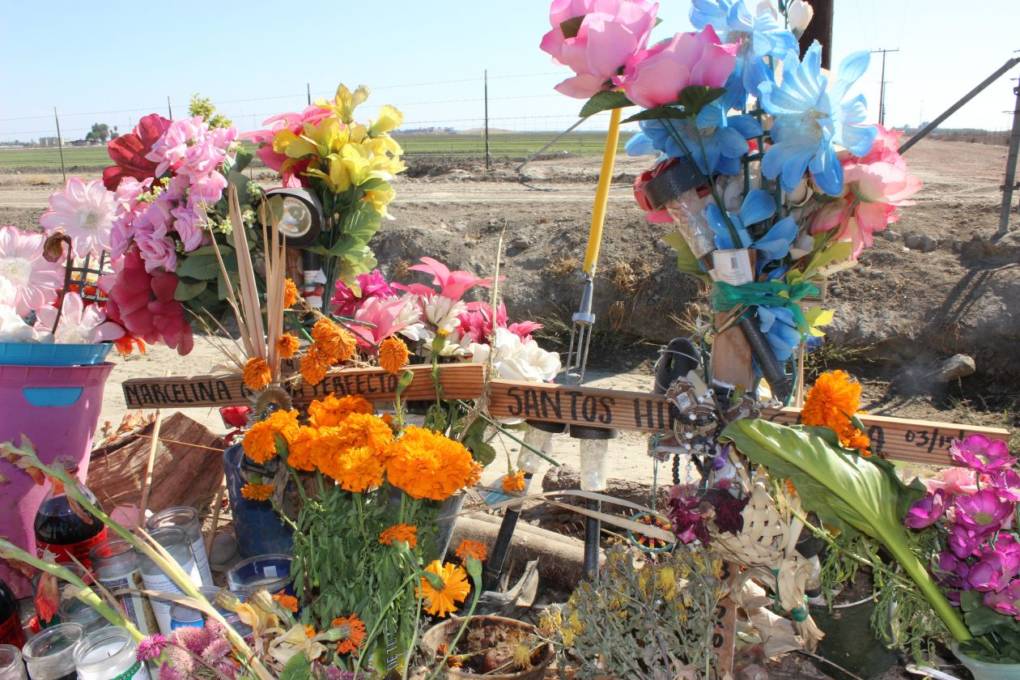
"caption": "A shrine sits next to a Delano road where Marcelina and Santos Garcia died in a car crash while fleeing U.S. Immigration and Customs Enforcement agents.",
"description": "A shrine sits next to a Delano road where Marcelina and Santos Garcia died in a car crash while fleeing U.S. Immigration and Customs Enforcement agents.",
"title": "trump1",
"credit": "Susan Ferriss / Center for Public Integrity",
"status": "inherit",
"isLoading": false,
"fetchFailed": false
},
"news_11700366": {
"type": "attachments",
"id": "news_11700366",
"meta": {
"index": "attachments_1716263798",
"site": "news",
"id": "11700366",
"found": true
},
"parent": 11700361,
"imgSizes": {
"small": {
"file": "https://ww2.kqed.org/app/uploads/sites/10/2018/10/migrant-caravan-8_slide-e298cd91150b0e5461d045079063230dcac7d5ad-520x347.jpg",
"width": 520,
"mimeType": "image/jpeg",
"height": 347
},
"twentyfourteen-full-width": {
"file": "https://ww2.kqed.org/app/uploads/sites/10/2018/10/migrant-caravan-8_slide-e298cd91150b0e5461d045079063230dcac7d5ad-1038x576.jpg",
"width": 1038,
"mimeType": "image/jpeg",
"height": 576
},
"thumbnail": {
"file": "https://ww2.kqed.org/app/uploads/sites/10/2018/10/migrant-caravan-8_slide-e298cd91150b0e5461d045079063230dcac7d5ad-160x107.jpg",
"width": 160,
"mimeType": "image/jpeg",
"height": 107
},
"fd-sm": {
"file": "https://ww2.kqed.org/app/uploads/sites/10/2018/10/migrant-caravan-8_slide-e298cd91150b0e5461d045079063230dcac7d5ad-960x640.jpg",
"width": 960,
"mimeType": "image/jpeg",
"height": 640
},
"post-thumbnail": {
"file": "https://ww2.kqed.org/app/uploads/sites/10/2018/10/migrant-caravan-8_slide-e298cd91150b0e5461d045079063230dcac7d5ad-672x372.jpg",
"width": 672,
"mimeType": "image/jpeg",
"height": 372
},
"xsmall": {
"file": "https://ww2.kqed.org/app/uploads/sites/10/2018/10/migrant-caravan-8_slide-e298cd91150b0e5461d045079063230dcac7d5ad-375x250.jpg",
"width": 375,
"mimeType": "image/jpeg",
"height": 250
},
"kqedFullSize": {
"file": "https://ww2.kqed.org/app/uploads/sites/10/2018/10/migrant-caravan-8_slide-e298cd91150b0e5461d045079063230dcac7d5ad-e1540241592865.jpg",
"width": 1920,
"height": 1280
},
"large": {
"file": "https://ww2.kqed.org/app/uploads/sites/10/2018/10/migrant-caravan-8_slide-e298cd91150b0e5461d045079063230dcac7d5ad-1020x680.jpg",
"width": 1020,
"mimeType": "image/jpeg",
"height": 680
},
"xlarge": {
"file": "https://ww2.kqed.org/app/uploads/sites/10/2018/10/migrant-caravan-8_slide-e298cd91150b0e5461d045079063230dcac7d5ad-1180x787.jpg",
"width": 1180,
"mimeType": "image/jpeg",
"height": 787
},
"complete_open_graph": {
"file": "https://ww2.kqed.org/app/uploads/sites/10/2018/10/migrant-caravan-8_slide-e298cd91150b0e5461d045079063230dcac7d5ad-1200x800.jpg",
"width": 1200,
"mimeType": "image/jpeg",
"height": 800
},
"guest-author-50": {
"file": "https://ww2.kqed.org/app/uploads/sites/10/2018/10/migrant-caravan-8_slide-e298cd91150b0e5461d045079063230dcac7d5ad-50x50.jpg",
"width": 50,
"mimeType": "image/jpeg",
"height": 50
},
"guest-author-96": {
"file": "https://ww2.kqed.org/app/uploads/sites/10/2018/10/migrant-caravan-8_slide-e298cd91150b0e5461d045079063230dcac7d5ad-96x96.jpg",
"width": 96,
"mimeType": "image/jpeg",
"height": 96
},
"medium": {
"file": "https://ww2.kqed.org/app/uploads/sites/10/2018/10/migrant-caravan-8_slide-e298cd91150b0e5461d045079063230dcac7d5ad-800x533.jpg",
"width": 800,
"mimeType": "image/jpeg",
"height": 533
},
"guest-author-64": {
"file": "https://ww2.kqed.org/app/uploads/sites/10/2018/10/migrant-caravan-8_slide-e298cd91150b0e5461d045079063230dcac7d5ad-64x64.jpg",
"width": 64,
"mimeType": "image/jpeg",
"height": 64
},
"guest-author-32": {
"file": "https://ww2.kqed.org/app/uploads/sites/10/2018/10/migrant-caravan-8_slide-e298cd91150b0e5461d045079063230dcac7d5ad-32x32.jpg",
"width": 32,
"mimeType": "image/jpeg",
"height": 32
},
"fd-lrg": {
"file": "https://ww2.kqed.org/app/uploads/sites/10/2018/10/migrant-caravan-8_slide-e298cd91150b0e5461d045079063230dcac7d5ad-1920x1280.jpg",
"width": 1920,
"mimeType": "image/jpeg",
"height": 1280
},
"fd-med": {
"file": "https://ww2.kqed.org/app/uploads/sites/10/2018/10/migrant-caravan-8_slide-e298cd91150b0e5461d045079063230dcac7d5ad-1180x787.jpg",
"width": 1180,
"mimeType": "image/jpeg",
"height": 787
},
"full-width": {
"file": "https://ww2.kqed.org/app/uploads/sites/10/2018/10/migrant-caravan-8_slide-e298cd91150b0e5461d045079063230dcac7d5ad-1920x1280.jpg",
"width": 1920,
"mimeType": "image/jpeg",
"height": 1280
},
"detail": {
"file": "https://ww2.kqed.org/app/uploads/sites/10/2018/10/migrant-caravan-8_slide-e298cd91150b0e5461d045079063230dcac7d5ad-150x150.jpg",
"width": 150,
"mimeType": "image/jpeg",
"height": 150
},
"guest-author-128": {
"file": "https://ww2.kqed.org/app/uploads/sites/10/2018/10/migrant-caravan-8_slide-e298cd91150b0e5461d045079063230dcac7d5ad-128x128.jpg",
"width": 128,
"mimeType": "image/jpeg",
"height": 128
},
"xxsmall": {
"file": "https://ww2.kqed.org/app/uploads/sites/10/2018/10/migrant-caravan-8_slide-e298cd91150b0e5461d045079063230dcac7d5ad-240x160.jpg",
"width": 240,
"mimeType": "image/jpeg",
"height": 160
}
},
"publishDate": 1540238783,
"modified": 1540241622,
"caption": "Members of a migrant caravan carry their children on the walk deeper into Mexico after crossing the Guatemalan border Sunday.",
"description": "Members of a migrant caravan walk into the interior of Mexico after crossing the Guatemalan border on Sunday near Ciudad Hidalgo, Mexic",
"title": "Members of a migrant caravan carry their children on the walk deeper into Mexico after crossing the Guatemalan border Sunday.",
"credit": "John Moore/Getty Images",
"status": "inherit",
"isLoading": false,
"fetchFailed": false
},
"news_11698668": {
"type": "attachments",
"id": "news_11698668",
"meta": {
"index": "attachments_1716263798",
"site": "news",
"id": "11698668",
"found": true
},
"parent": 11698629,
"imgSizes": {
"small": {
"file": "https://ww2.kqed.org/app/uploads/sites/10/2018/10/ChildBorderPatrol-520x386.jpg",
"width": 520,
"mimeType": "image/jpeg",
"height": 386
},
"twentyfourteen-full-width": {
"file": "https://ww2.kqed.org/app/uploads/sites/10/2018/10/ChildBorderPatrol-1038x576.jpg",
"width": 1038,
"mimeType": "image/jpeg",
"height": 576
},
"thumbnail": {
"file": "https://ww2.kqed.org/app/uploads/sites/10/2018/10/ChildBorderPatrol-160x119.jpg",
"width": 160,
"mimeType": "image/jpeg",
"height": 119
},
"fd-sm": {
"file": "https://ww2.kqed.org/app/uploads/sites/10/2018/10/ChildBorderPatrol-960x713.jpg",
"width": 960,
"mimeType": "image/jpeg",
"height": 713
},
"post-thumbnail": {
"file": "https://ww2.kqed.org/app/uploads/sites/10/2018/10/ChildBorderPatrol-672x372.jpg",
"width": 672,
"mimeType": "image/jpeg",
"height": 372
},
"xsmall": {
"file": "https://ww2.kqed.org/app/uploads/sites/10/2018/10/ChildBorderPatrol-375x278.jpg",
"width": 375,
"mimeType": "image/jpeg",
"height": 278
},
"kqedFullSize": {
"file": "https://ww2.kqed.org/app/uploads/sites/10/2018/10/ChildBorderPatrol.jpg",
"width": 1920,
"height": 1425
},
"large": {
"file": "https://ww2.kqed.org/app/uploads/sites/10/2018/10/ChildBorderPatrol-1020x757.jpg",
"width": 1020,
"mimeType": "image/jpeg",
"height": 757
},
"xlarge": {
"file": "https://ww2.kqed.org/app/uploads/sites/10/2018/10/ChildBorderPatrol-1180x876.jpg",
"width": 1180,
"mimeType": "image/jpeg",
"height": 876
},
"complete_open_graph": {
"file": "https://ww2.kqed.org/app/uploads/sites/10/2018/10/ChildBorderPatrol-1200x891.jpg",
"width": 1200,
"mimeType": "image/jpeg",
"height": 891
},
"guest-author-50": {
"file": "https://ww2.kqed.org/app/uploads/sites/10/2018/10/ChildBorderPatrol-50x50.jpg",
"width": 50,
"mimeType": "image/jpeg",
"height": 50
},
"guest-author-96": {
"file": "https://ww2.kqed.org/app/uploads/sites/10/2018/10/ChildBorderPatrol-96x96.jpg",
"width": 96,
"mimeType": "image/jpeg",
"height": 96
},
"medium": {
"file": "https://ww2.kqed.org/app/uploads/sites/10/2018/10/ChildBorderPatrol-800x594.jpg",
"width": 800,
"mimeType": "image/jpeg",
"height": 594
},
"guest-author-64": {
"file": "https://ww2.kqed.org/app/uploads/sites/10/2018/10/ChildBorderPatrol-64x64.jpg",
"width": 64,
"mimeType": "image/jpeg",
"height": 64
},
"guest-author-32": {
"file": "https://ww2.kqed.org/app/uploads/sites/10/2018/10/ChildBorderPatrol-32x32.jpg",
"width": 32,
"mimeType": "image/jpeg",
"height": 32
},
"fd-lrg": {
"file": "https://ww2.kqed.org/app/uploads/sites/10/2018/10/ChildBorderPatrol-1920x1425.jpg",
"width": 1920,
"mimeType": "image/jpeg",
"height": 1425
},
"fd-med": {
"file": "https://ww2.kqed.org/app/uploads/sites/10/2018/10/ChildBorderPatrol-1180x876.jpg",
"width": 1180,
"mimeType": "image/jpeg",
"height": 876
},
"full-width": {
"file": "https://ww2.kqed.org/app/uploads/sites/10/2018/10/ChildBorderPatrol-1920x1425.jpg",
"width": 1920,
"mimeType": "image/jpeg",
"height": 1425
},
"detail": {
"file": "https://ww2.kqed.org/app/uploads/sites/10/2018/10/ChildBorderPatrol-150x150.jpg",
"width": 150,
"mimeType": "image/jpeg",
"height": 150
},
"guest-author-128": {
"file": "https://ww2.kqed.org/app/uploads/sites/10/2018/10/ChildBorderPatrol-128x128.jpg",
"width": 128,
"mimeType": "image/jpeg",
"height": 128
},
"xxsmall": {
"file": "https://ww2.kqed.org/app/uploads/sites/10/2018/10/ChildBorderPatrol-240x178.jpg",
"width": 240,
"mimeType": "image/jpeg",
"height": 178
}
},
"publishDate": 1539389867,
"modified": 1539389997,
"caption": "A boy and his father from Honduras are taken into custody by U.S. Border Patrol agents near the U.S.-Mexico Border on June 12, 2018 in Texas. The asylum seekers were then sent to a U.S. Customs and Border Protection (CBP) processing center for possible separation. ",
"description": "A boy and his father from Honduras are taken into custody by U.S. Border Patrol agents near the U.S.-Mexico Border on June 12, 2018 in Texas. The asylum seekers were then sent to a U.S. Customs and Border Protection (CBP) processing center for possible separation. ",
"title": "ChildBorderPatrol",
"credit": "John Moore/Getty Images",
"status": "inherit",
"isLoading": false,
"fetchFailed": false
},
"news_11698429": {
"type": "attachments",
"id": "news_11698429",
"meta": {
"index": "attachments_1716263798",
"site": "news",
"id": "11698429",
"found": true
},
"parent": 11698189,
"imgSizes": {
"small": {
"file": "https://ww2.kqed.org/app/uploads/sites/10/2018/10/IMG_8091-1-1180x885-1-520x390.jpg",
"width": 520,
"mimeType": "image/jpeg",
"height": 390
},
"twentyfourteen-full-width": {
"file": "https://ww2.kqed.org/app/uploads/sites/10/2018/10/IMG_8091-1-1180x885-1-1038x576.jpg",
"width": 1038,
"mimeType": "image/jpeg",
"height": 576
},
"thumbnail": {
"file": "https://ww2.kqed.org/app/uploads/sites/10/2018/10/IMG_8091-1-1180x885-1-160x120.jpg",
"width": 160,
"mimeType": "image/jpeg",
"height": 120
},
"fd-sm": {
"file": "https://ww2.kqed.org/app/uploads/sites/10/2018/10/IMG_8091-1-1180x885-1-960x720.jpg",
"width": 960,
"mimeType": "image/jpeg",
"height": 720
},
"post-thumbnail": {
"file": "https://ww2.kqed.org/app/uploads/sites/10/2018/10/IMG_8091-1-1180x885-1-672x372.jpg",
"width": 672,
"mimeType": "image/jpeg",
"height": 372
},
"xsmall": {
"file": "https://ww2.kqed.org/app/uploads/sites/10/2018/10/IMG_8091-1-1180x885-1-375x281.jpg",
"width": 375,
"mimeType": "image/jpeg",
"height": 281
},
"kqedFullSize": {
"file": "https://ww2.kqed.org/app/uploads/sites/10/2018/10/IMG_8091-1-1180x885-1.jpg",
"width": 1180,
"height": 885
},
"large": {
"file": "https://ww2.kqed.org/app/uploads/sites/10/2018/10/IMG_8091-1-1180x885-1-1020x765.jpg",
"width": 1020,
"mimeType": "image/jpeg",
"height": 765
},
"xlarge": {
"file": "https://ww2.kqed.org/app/uploads/sites/10/2018/10/IMG_8091-1-1180x885-1-1180x885.jpg",
"width": 1180,
"mimeType": "image/jpeg",
"height": 885
},
"guest-author-50": {
"file": "https://ww2.kqed.org/app/uploads/sites/10/2018/10/IMG_8091-1-1180x885-1-50x50.jpg",
"width": 50,
"mimeType": "image/jpeg",
"height": 50
},
"guest-author-96": {
"file": "https://ww2.kqed.org/app/uploads/sites/10/2018/10/IMG_8091-1-1180x885-1-96x96.jpg",
"width": 96,
"mimeType": "image/jpeg",
"height": 96
},
"medium": {
"file": "https://ww2.kqed.org/app/uploads/sites/10/2018/10/IMG_8091-1-1180x885-1-800x600.jpg",
"width": 800,
"mimeType": "image/jpeg",
"height": 600
},
"guest-author-64": {
"file": "https://ww2.kqed.org/app/uploads/sites/10/2018/10/IMG_8091-1-1180x885-1-64x64.jpg",
"width": 64,
"mimeType": "image/jpeg",
"height": 64
},
"guest-author-32": {
"file": "https://ww2.kqed.org/app/uploads/sites/10/2018/10/IMG_8091-1-1180x885-1-32x32.jpg",
"width": 32,
"mimeType": "image/jpeg",
"height": 32
},
"fd-med": {
"file": "https://ww2.kqed.org/app/uploads/sites/10/2018/10/IMG_8091-1-1180x885-1-1180x885.jpg",
"width": 1180,
"mimeType": "image/jpeg",
"height": 885
},
"detail": {
"file": "https://ww2.kqed.org/app/uploads/sites/10/2018/10/IMG_8091-1-1180x885-1-150x150.jpg",
"width": 150,
"mimeType": "image/jpeg",
"height": 150
},
"guest-author-128": {
"file": "https://ww2.kqed.org/app/uploads/sites/10/2018/10/IMG_8091-1-1180x885-1-128x128.jpg",
"width": 128,
"mimeType": "image/jpeg",
"height": 128
},
"xxsmall": {
"file": "https://ww2.kqed.org/app/uploads/sites/10/2018/10/IMG_8091-1-1180x885-1-240x180.jpg",
"width": 240,
"mimeType": "image/jpeg",
"height": 180
}
},
"publishDate": 1539367806,
"modified": 1539374390,
"caption": "East Bay Assemblyman Rob Bonta speaks at the Asian Law Caucus office in San Francisco on Oct. 11, 2018, alongside Assemblyman David Chiu and community advocates, urging Gov. Jerry Brown to pardon Southeast Asian refugees facing deportation.",
"description": "East Bay Assemblyman Rob Bonta speaks at the Asian Law Caucus office in San Francisco on Oct. 11, 2018, alongside Assemblyman David Chiu and community advocates, urging Gov. Jerry Brown to pardon Southeast Asian refugees facing deportation.",
"title": "IMG_8091-1-1180x885",
"credit": "Hope McKenney/KQED",
"status": "inherit",
"isLoading": false,
"fetchFailed": false
},
"news_11696455": {
"type": "attachments",
"id": "news_11696455",
"meta": {
"index": "attachments_1716263798",
"site": "news",
"id": "11696455",
"found": true
},
"parent": 11696444,
"imgSizes": {
"small": {
"file": "https://ww2.kqed.org/app/uploads/sites/10/2018/10/adelanto_100318_final-520x360.jpg",
"width": 520,
"mimeType": "image/jpeg",
"height": 360
},
"twentyfourteen-full-width": {
"file": "https://ww2.kqed.org/app/uploads/sites/10/2018/10/adelanto_100318_final-1038x576.jpg",
"width": 1038,
"mimeType": "image/jpeg",
"height": 576
},
"thumbnail": {
"file": "https://ww2.kqed.org/app/uploads/sites/10/2018/10/adelanto_100318_final-160x111.jpg",
"width": 160,
"mimeType": "image/jpeg",
"height": 111
},
"fd-sm": {
"file": "https://ww2.kqed.org/app/uploads/sites/10/2018/10/adelanto_100318_final-960x665.jpg",
"width": 960,
"mimeType": "image/jpeg",
"height": 665
},
"post-thumbnail": {
"file": "https://ww2.kqed.org/app/uploads/sites/10/2018/10/adelanto_100318_final-672x372.jpg",
"width": 672,
"mimeType": "image/jpeg",
"height": 372
},
"xsmall": {
"file": "https://ww2.kqed.org/app/uploads/sites/10/2018/10/adelanto_100318_final-375x260.jpg",
"width": 375,
"mimeType": "image/jpeg",
"height": 260
},
"kqedFullSize": {
"file": "https://ww2.kqed.org/app/uploads/sites/10/2018/10/adelanto_100318_final.jpg",
"width": 1920,
"height": 1329
},
"large": {
"file": "https://ww2.kqed.org/app/uploads/sites/10/2018/10/adelanto_100318_final-1020x706.jpg",
"width": 1020,
"mimeType": "image/jpeg",
"height": 706
},
"xlarge": {
"file": "https://ww2.kqed.org/app/uploads/sites/10/2018/10/adelanto_100318_final-1180x817.jpg",
"width": 1180,
"mimeType": "image/jpeg",
"height": 817
},
"complete_open_graph": {
"file": "https://ww2.kqed.org/app/uploads/sites/10/2018/10/adelanto_100318_final-1200x831.jpg",
"width": 1200,
"mimeType": "image/jpeg",
"height": 831
},
"guest-author-50": {
"file": "https://ww2.kqed.org/app/uploads/sites/10/2018/10/adelanto_100318_final-50x50.jpg",
"width": 50,
"mimeType": "image/jpeg",
"height": 50
},
"guest-author-96": {
"file": "https://ww2.kqed.org/app/uploads/sites/10/2018/10/adelanto_100318_final-96x96.jpg",
"width": 96,
"mimeType": "image/jpeg",
"height": 96
},
"medium": {
"file": "https://ww2.kqed.org/app/uploads/sites/10/2018/10/adelanto_100318_final-800x554.jpg",
"width": 800,
"mimeType": "image/jpeg",
"height": 554
},
"guest-author-64": {
"file": "https://ww2.kqed.org/app/uploads/sites/10/2018/10/adelanto_100318_final-64x64.jpg",
"width": 64,
"mimeType": "image/jpeg",
"height": 64
},
"guest-author-32": {
"file": "https://ww2.kqed.org/app/uploads/sites/10/2018/10/adelanto_100318_final-32x32.jpg",
"width": 32,
"mimeType": "image/jpeg",
"height": 32
},
"fd-lrg": {
"file": "https://ww2.kqed.org/app/uploads/sites/10/2018/10/adelanto_100318_final-1920x1329.jpg",
"width": 1920,
"mimeType": "image/jpeg",
"height": 1329
},
"fd-med": {
"file": "https://ww2.kqed.org/app/uploads/sites/10/2018/10/adelanto_100318_final-1180x817.jpg",
"width": 1180,
"mimeType": "image/jpeg",
"height": 817
},
"full-width": {
"file": "https://ww2.kqed.org/app/uploads/sites/10/2018/10/adelanto_100318_final-1920x1329.jpg",
"width": 1920,
"mimeType": "image/jpeg",
"height": 1329
},
"detail": {
"file": "https://ww2.kqed.org/app/uploads/sites/10/2018/10/adelanto_100318_final-150x150.jpg",
"width": 150,
"mimeType": "image/jpeg",
"height": 150
},
"guest-author-128": {
"file": "https://ww2.kqed.org/app/uploads/sites/10/2018/10/adelanto_100318_final-128x128.jpg",
"width": 128,
"mimeType": "image/jpeg",
"height": 128
},
"xxsmall": {
"file": "https://ww2.kqed.org/app/uploads/sites/10/2018/10/adelanto_100318_final-240x166.jpg",
"width": 240,
"mimeType": "image/jpeg",
"height": 166
}
},
"publishDate": 1538605764,
"modified": 1538605791,
"caption": null,
"description": null,
"title": "adelanto_100318_final",
"credit": null,
"status": "inherit",
"isLoading": false,
"fetchFailed": false
},
"news_11695565": {
"type": "attachments",
"id": "news_11695565",
"meta": {
"index": "attachments_1716263798",
"site": "news",
"id": "11695565",
"found": true
},
"parent": 11695539,
"imgSizes": {
"small": {
"file": "https://ww2.kqed.org/app/uploads/sites/10/2018/09/RS32745_9718_AW_Becerra09-qut-520x347.jpg",
"width": 520,
"mimeType": "image/jpeg",
"height": 347
},
"twentyfourteen-full-width": {
"file": "https://ww2.kqed.org/app/uploads/sites/10/2018/09/RS32745_9718_AW_Becerra09-qut-1038x576.jpg",
"width": 1038,
"mimeType": "image/jpeg",
"height": 576
},
"thumbnail": {
"file": "https://ww2.kqed.org/app/uploads/sites/10/2018/09/RS32745_9718_AW_Becerra09-qut-160x107.jpg",
"width": 160,
"mimeType": "image/jpeg",
"height": 107
},
"fd-sm": {
"file": "https://ww2.kqed.org/app/uploads/sites/10/2018/09/RS32745_9718_AW_Becerra09-qut-960x640.jpg",
"width": 960,
"mimeType": "image/jpeg",
"height": 640
},
"post-thumbnail": {
"file": "https://ww2.kqed.org/app/uploads/sites/10/2018/09/RS32745_9718_AW_Becerra09-qut-672x372.jpg",
"width": 672,
"mimeType": "image/jpeg",
"height": 372
},
"xsmall": {
"file": "https://ww2.kqed.org/app/uploads/sites/10/2018/09/RS32745_9718_AW_Becerra09-qut-375x250.jpg",
"width": 375,
"mimeType": "image/jpeg",
"height": 250
},
"kqedFullSize": {
"file": "https://ww2.kqed.org/app/uploads/sites/10/2018/09/RS32745_9718_AW_Becerra09-qut.jpg",
"width": 1920,
"height": 1280
},
"large": {
"file": "https://ww2.kqed.org/app/uploads/sites/10/2018/09/RS32745_9718_AW_Becerra09-qut-1020x680.jpg",
"width": 1020,
"mimeType": "image/jpeg",
"height": 680
},
"xlarge": {
"file": "https://ww2.kqed.org/app/uploads/sites/10/2018/09/RS32745_9718_AW_Becerra09-qut-1180x787.jpg",
"width": 1180,
"mimeType": "image/jpeg",
"height": 787
},
"complete_open_graph": {
"file": "https://ww2.kqed.org/app/uploads/sites/10/2018/09/RS32745_9718_AW_Becerra09-qut-1200x800.jpg",
"width": 1200,
"mimeType": "image/jpeg",
"height": 800
},
"guest-author-50": {
"file": "https://ww2.kqed.org/app/uploads/sites/10/2018/09/RS32745_9718_AW_Becerra09-qut-50x50.jpg",
"width": 50,
"mimeType": "image/jpeg",
"height": 50
},
"guest-author-96": {
"file": "https://ww2.kqed.org/app/uploads/sites/10/2018/09/RS32745_9718_AW_Becerra09-qut-96x96.jpg",
"width": 96,
"mimeType": "image/jpeg",
"height": 96
},
"medium": {
"file": "https://ww2.kqed.org/app/uploads/sites/10/2018/09/RS32745_9718_AW_Becerra09-qut-800x533.jpg",
"width": 800,
"mimeType": "image/jpeg",
"height": 533
},
"guest-author-64": {
"file": "https://ww2.kqed.org/app/uploads/sites/10/2018/09/RS32745_9718_AW_Becerra09-qut-64x64.jpg",
"width": 64,
"mimeType": "image/jpeg",
"height": 64
},
"guest-author-32": {
"file": "https://ww2.kqed.org/app/uploads/sites/10/2018/09/RS32745_9718_AW_Becerra09-qut-32x32.jpg",
"width": 32,
"mimeType": "image/jpeg",
"height": 32
},
"fd-lrg": {
"file": "https://ww2.kqed.org/app/uploads/sites/10/2018/09/RS32745_9718_AW_Becerra09-qut-1920x1280.jpg",
"width": 1920,
"mimeType": "image/jpeg",
"height": 1280
},
"fd-med": {
"file": "https://ww2.kqed.org/app/uploads/sites/10/2018/09/RS32745_9718_AW_Becerra09-qut-1180x787.jpg",
"width": 1180,
"mimeType": "image/jpeg",
"height": 787
},
"full-width": {
"file": "https://ww2.kqed.org/app/uploads/sites/10/2018/09/RS32745_9718_AW_Becerra09-qut-1920x1280.jpg",
"width": 1920,
"mimeType": "image/jpeg",
"height": 1280
},
"detail": {
"file": "https://ww2.kqed.org/app/uploads/sites/10/2018/09/RS32745_9718_AW_Becerra09-qut-150x150.jpg",
"width": 150,
"mimeType": "image/jpeg",
"height": 150
},
"guest-author-128": {
"file": "https://ww2.kqed.org/app/uploads/sites/10/2018/09/RS32745_9718_AW_Becerra09-qut-128x128.jpg",
"width": 128,
"mimeType": "image/jpeg",
"height": 128
},
"xxsmall": {
"file": "https://ww2.kqed.org/app/uploads/sites/10/2018/09/RS32745_9718_AW_Becerra09-qut-240x160.jpg",
"width": 240,
"mimeType": "image/jpeg",
"height": 160
}
},
"publishDate": 1538322793,
"modified": 1538323003,
"caption": "California's Attorney General Xavier Becerra released new guidelines and policy models that outline best practices for client information and how to respond to Immigration and Customs Enforcement activities.",
"description": null,
"title": "RS32745_9718_AW_Becerra09-qut",
"credit": "Anne Wernikoff/KQED",
"status": "inherit",
"isLoading": false,
"fetchFailed": false
},
"news_11693694": {
"type": "attachments",
"id": "news_11693694",
"meta": {
"index": "attachments_1716263798",
"site": "news",
"id": "11693694",
"found": true
},
"parent": 11693682,
"imgSizes": {
"small": {
"file": "https://ww2.kqed.org/app/uploads/sites/10/2018/09/MigrantKidSleeping-520x351.jpg",
"width": 520,
"mimeType": "image/jpeg",
"height": 351
},
"twentyfourteen-full-width": {
"file": "https://ww2.kqed.org/app/uploads/sites/10/2018/09/MigrantKidSleeping-1038x576.jpg",
"width": 1038,
"mimeType": "image/jpeg",
"height": 576
},
"thumbnail": {
"file": "https://ww2.kqed.org/app/uploads/sites/10/2018/09/MigrantKidSleeping-160x108.jpg",
"width": 160,
"mimeType": "image/jpeg",
"height": 108
},
"fd-sm": {
"file": "https://ww2.kqed.org/app/uploads/sites/10/2018/09/MigrantKidSleeping-960x648.jpg",
"width": 960,
"mimeType": "image/jpeg",
"height": 648
},
"post-thumbnail": {
"file": "https://ww2.kqed.org/app/uploads/sites/10/2018/09/MigrantKidSleeping-672x372.jpg",
"width": 672,
"mimeType": "image/jpeg",
"height": 372
},
"xsmall": {
"file": "https://ww2.kqed.org/app/uploads/sites/10/2018/09/MigrantKidSleeping-375x253.jpg",
"width": 375,
"mimeType": "image/jpeg",
"height": 253
},
"kqedFullSize": {
"file": "https://ww2.kqed.org/app/uploads/sites/10/2018/09/MigrantKidSleeping.jpg",
"width": 1920,
"height": 1296
},
"large": {
"file": "https://ww2.kqed.org/app/uploads/sites/10/2018/09/MigrantKidSleeping-1020x689.jpg",
"width": 1020,
"mimeType": "image/jpeg",
"height": 689
},
"xlarge": {
"file": "https://ww2.kqed.org/app/uploads/sites/10/2018/09/MigrantKidSleeping-1180x797.jpg",
"width": 1180,
"mimeType": "image/jpeg",
"height": 797
},
"complete_open_graph": {
"file": "https://ww2.kqed.org/app/uploads/sites/10/2018/09/MigrantKidSleeping-1200x810.jpg",
"width": 1200,
"mimeType": "image/jpeg",
"height": 810
},
"guest-author-50": {
"file": "https://ww2.kqed.org/app/uploads/sites/10/2018/09/MigrantKidSleeping-50x50.jpg",
"width": 50,
"mimeType": "image/jpeg",
"height": 50
},
"guest-author-96": {
"file": "https://ww2.kqed.org/app/uploads/sites/10/2018/09/MigrantKidSleeping-96x96.jpg",
"width": 96,
"mimeType": "image/jpeg",
"height": 96
},
"medium": {
"file": "https://ww2.kqed.org/app/uploads/sites/10/2018/09/MigrantKidSleeping-800x540.jpg",
"width": 800,
"mimeType": "image/jpeg",
"height": 540
},
"guest-author-64": {
"file": "https://ww2.kqed.org/app/uploads/sites/10/2018/09/MigrantKidSleeping-64x64.jpg",
"width": 64,
"mimeType": "image/jpeg",
"height": 64
},
"guest-author-32": {
"file": "https://ww2.kqed.org/app/uploads/sites/10/2018/09/MigrantKidSleeping-32x32.jpg",
"width": 32,
"mimeType": "image/jpeg",
"height": 32
},
"fd-lrg": {
"file": "https://ww2.kqed.org/app/uploads/sites/10/2018/09/MigrantKidSleeping-1920x1296.jpg",
"width": 1920,
"mimeType": "image/jpeg",
"height": 1296
},
"fd-med": {
"file": "https://ww2.kqed.org/app/uploads/sites/10/2018/09/MigrantKidSleeping-1180x797.jpg",
"width": 1180,
"mimeType": "image/jpeg",
"height": 797
},
"full-width": {
"file": "https://ww2.kqed.org/app/uploads/sites/10/2018/09/MigrantKidSleeping-1920x1296.jpg",
"width": 1920,
"mimeType": "image/jpeg",
"height": 1296
},
"detail": {
"file": "https://ww2.kqed.org/app/uploads/sites/10/2018/09/MigrantKidSleeping-150x150.jpg",
"width": 150,
"mimeType": "image/jpeg",
"height": 150
},
"guest-author-128": {
"file": "https://ww2.kqed.org/app/uploads/sites/10/2018/09/MigrantKidSleeping-128x128.jpg",
"width": 128,
"mimeType": "image/jpeg",
"height": 128
},
"xxsmall": {
"file": "https://ww2.kqed.org/app/uploads/sites/10/2018/09/MigrantKidSleeping-240x162.jpg",
"width": 240,
"mimeType": "image/jpeg",
"height": 162
}
},
"publishDate": 1537478605,
"modified": 1537482890,
"caption": "Asylum-seeking Central American migrants sleep outside the El Chaparral port of entry while waiting to be received by U.S. authorities in Tijuana, Mexico, on April 30, 2018.",
"description": "Asylum-seeking Central American migrants sleep outside the El Chaparral port of entry while waiting to be received by U.S. authorities in Tijuana, Mexico on April 30, 2018.",
"title": "MigrantKidSleeping",
"credit": "GUILLERMO ARIAS/AFP/Getty Images",
"status": "inherit",
"isLoading": false,
"fetchFailed": false
},
"news_11690817": {
"type": "attachments",
"id": "news_11690817",
"meta": {
"index": "attachments_1716263798",
"site": "news",
"id": "11690817",
"found": true
},
"parent": 11690816,
"imgSizes": {
"small": {
"file": "https://ww2.kqed.org/app/uploads/sites/10/2018/09/gettyimages-978850064-a4d147f5493ff74287a79f2def81e79174e37d1d-520x390.jpg",
"width": 520,
"mimeType": "image/jpeg",
"height": 390
},
"twentyfourteen-full-width": {
"file": "https://ww2.kqed.org/app/uploads/sites/10/2018/09/gettyimages-978850064-a4d147f5493ff74287a79f2def81e79174e37d1d-1038x576.jpg",
"width": 1038,
"mimeType": "image/jpeg",
"height": 576
},
"thumbnail": {
"file": "https://ww2.kqed.org/app/uploads/sites/10/2018/09/gettyimages-978850064-a4d147f5493ff74287a79f2def81e79174e37d1d-160x120.jpg",
"width": 160,
"mimeType": "image/jpeg",
"height": 120
},
"fd-sm": {
"file": "https://ww2.kqed.org/app/uploads/sites/10/2018/09/gettyimages-978850064-a4d147f5493ff74287a79f2def81e79174e37d1d-960x720.jpg",
"width": 960,
"mimeType": "image/jpeg",
"height": 720
},
"post-thumbnail": {
"file": "https://ww2.kqed.org/app/uploads/sites/10/2018/09/gettyimages-978850064-a4d147f5493ff74287a79f2def81e79174e37d1d-672x372.jpg",
"width": 672,
"mimeType": "image/jpeg",
"height": 372
},
"xsmall": {
"file": "https://ww2.kqed.org/app/uploads/sites/10/2018/09/gettyimages-978850064-a4d147f5493ff74287a79f2def81e79174e37d1d-375x281.jpg",
"width": 375,
"mimeType": "image/jpeg",
"height": 281
},
"kqedFullSize": {
"file": "https://ww2.kqed.org/app/uploads/sites/10/2018/09/gettyimages-978850064-a4d147f5493ff74287a79f2def81e79174e37d1d.jpg",
"width": 2726,
"height": 2044
},
"large": {
"file": "https://ww2.kqed.org/app/uploads/sites/10/2018/09/gettyimages-978850064-a4d147f5493ff74287a79f2def81e79174e37d1d-1020x765.jpg",
"width": 1020,
"mimeType": "image/jpeg",
"height": 765
},
"xlarge": {
"file": "https://ww2.kqed.org/app/uploads/sites/10/2018/09/gettyimages-978850064-a4d147f5493ff74287a79f2def81e79174e37d1d-1180x885.jpg",
"width": 1180,
"mimeType": "image/jpeg",
"height": 885
},
"complete_open_graph": {
"file": "https://ww2.kqed.org/app/uploads/sites/10/2018/09/gettyimages-978850064-a4d147f5493ff74287a79f2def81e79174e37d1d-1200x900.jpg",
"width": 1200,
"mimeType": "image/jpeg",
"height": 900
},
"guest-author-50": {
"file": "https://ww2.kqed.org/app/uploads/sites/10/2018/09/gettyimages-978850064-a4d147f5493ff74287a79f2def81e79174e37d1d-50x50.jpg",
"width": 50,
"mimeType": "image/jpeg",
"height": 50
},
"guest-author-96": {
"file": "https://ww2.kqed.org/app/uploads/sites/10/2018/09/gettyimages-978850064-a4d147f5493ff74287a79f2def81e79174e37d1d-96x96.jpg",
"width": 96,
"mimeType": "image/jpeg",
"height": 96
},
"medium": {
"file": "https://ww2.kqed.org/app/uploads/sites/10/2018/09/gettyimages-978850064-a4d147f5493ff74287a79f2def81e79174e37d1d-800x600.jpg",
"width": 800,
"mimeType": "image/jpeg",
"height": 600
},
"guest-author-64": {
"file": "https://ww2.kqed.org/app/uploads/sites/10/2018/09/gettyimages-978850064-a4d147f5493ff74287a79f2def81e79174e37d1d-64x64.jpg",
"width": 64,
"mimeType": "image/jpeg",
"height": 64
},
"guest-author-32": {
"file": "https://ww2.kqed.org/app/uploads/sites/10/2018/09/gettyimages-978850064-a4d147f5493ff74287a79f2def81e79174e37d1d-32x32.jpg",
"width": 32,
"mimeType": "image/jpeg",
"height": 32
},
"fd-lrg": {
"file": "https://ww2.kqed.org/app/uploads/sites/10/2018/09/gettyimages-978850064-a4d147f5493ff74287a79f2def81e79174e37d1d-1920x1440.jpg",
"width": 1920,
"mimeType": "image/jpeg",
"height": 1440
},
"fd-med": {
"file": "https://ww2.kqed.org/app/uploads/sites/10/2018/09/gettyimages-978850064-a4d147f5493ff74287a79f2def81e79174e37d1d-1180x885.jpg",
"width": 1180,
"mimeType": "image/jpeg",
"height": 885
},
"full-width": {
"file": "https://ww2.kqed.org/app/uploads/sites/10/2018/09/gettyimages-978850064-a4d147f5493ff74287a79f2def81e79174e37d1d-1920x1440.jpg",
"width": 1920,
"mimeType": "image/jpeg",
"height": 1440
},
"detail": {
"file": "https://ww2.kqed.org/app/uploads/sites/10/2018/09/gettyimages-978850064-a4d147f5493ff74287a79f2def81e79174e37d1d-150x150.jpg",
"width": 150,
"mimeType": "image/jpeg",
"height": 150
},
"guest-author-128": {
"file": "https://ww2.kqed.org/app/uploads/sites/10/2018/09/gettyimages-978850064-a4d147f5493ff74287a79f2def81e79174e37d1d-128x128.jpg",
"width": 128,
"mimeType": "image/jpeg",
"height": 128
},
"xxsmall": {
"file": "https://ww2.kqed.org/app/uploads/sites/10/2018/09/gettyimages-978850064-a4d147f5493ff74287a79f2def81e79174e37d1d-240x180.jpg",
"width": 240,
"mimeType": "image/jpeg",
"height": 180
}
},
"publishDate": 1536253366,
"modified": 1536253366,
"caption": null,
"description": "Children and workers are seen at a tent encampment built near the Tornillo Port of Entry in June in Tornillo, Texa",
"title": "Children and workers are seen at a tent encampment built near the Tornillo Port of Entry in June in Tornillo, Texas.",
"credit": null,
"status": "inherit",
"isLoading": false,
"fetchFailed": false
},
"news_11687661": {
"type": "attachments",
"id": "news_11687661",
"meta": {
"index": "attachments_1716263798",
"site": "news",
"id": "11687661",
"found": true
},
"parent": 11687660,
"imgSizes": {
"small": {
"file": "https://ww2.kqed.org/app/uploads/sites/10/2018/08/RS18012_GettyImages-492659230-qut-520x347.jpg",
"width": 520,
"mimeType": "image/jpeg",
"height": 347
},
"twentyfourteen-full-width": {
"file": "https://ww2.kqed.org/app/uploads/sites/10/2018/08/RS18012_GettyImages-492659230-qut-1038x576.jpg",
"width": 1038,
"mimeType": "image/jpeg",
"height": 576
},
"thumbnail": {
"file": "https://ww2.kqed.org/app/uploads/sites/10/2018/08/RS18012_GettyImages-492659230-qut-160x107.jpg",
"width": 160,
"mimeType": "image/jpeg",
"height": 107
},
"fd-sm": {
"file": "https://ww2.kqed.org/app/uploads/sites/10/2018/08/RS18012_GettyImages-492659230-qut-960x640.jpg",
"width": 960,
"mimeType": "image/jpeg",
"height": 640
},
"post-thumbnail": {
"file": "https://ww2.kqed.org/app/uploads/sites/10/2018/08/RS18012_GettyImages-492659230-qut-672x372.jpg",
"width": 672,
"mimeType": "image/jpeg",
"height": 372
},
"xsmall": {
"file": "https://ww2.kqed.org/app/uploads/sites/10/2018/08/RS18012_GettyImages-492659230-qut-375x250.jpg",
"width": 375,
"mimeType": "image/jpeg",
"height": 250
},
"kqedFullSize": {
"file": "https://ww2.kqed.org/app/uploads/sites/10/2018/08/RS18012_GettyImages-492659230-qut.jpg",
"width": 1920,
"height": 1280
},
"large": {
"file": "https://ww2.kqed.org/app/uploads/sites/10/2018/08/RS18012_GettyImages-492659230-qut-1020x680.jpg",
"width": 1020,
"mimeType": "image/jpeg",
"height": 680
},
"xlarge": {
"file": "https://ww2.kqed.org/app/uploads/sites/10/2018/08/RS18012_GettyImages-492659230-qut-1180x787.jpg",
"width": 1180,
"mimeType": "image/jpeg",
"height": 787
},
"complete_open_graph": {
"file": "https://ww2.kqed.org/app/uploads/sites/10/2018/08/RS18012_GettyImages-492659230-qut-1200x800.jpg",
"width": 1200,
"mimeType": "image/jpeg",
"height": 800
},
"guest-author-50": {
"file": "https://ww2.kqed.org/app/uploads/sites/10/2018/08/RS18012_GettyImages-492659230-qut-50x50.jpg",
"width": 50,
"mimeType": "image/jpeg",
"height": 50
},
"guest-author-96": {
"file": "https://ww2.kqed.org/app/uploads/sites/10/2018/08/RS18012_GettyImages-492659230-qut-96x96.jpg",
"width": 96,
"mimeType": "image/jpeg",
"height": 96
},
"medium": {
"file": "https://ww2.kqed.org/app/uploads/sites/10/2018/08/RS18012_GettyImages-492659230-qut-800x533.jpg",
"width": 800,
"mimeType": "image/jpeg",
"height": 533
},
"guest-author-64": {
"file": "https://ww2.kqed.org/app/uploads/sites/10/2018/08/RS18012_GettyImages-492659230-qut-64x64.jpg",
"width": 64,
"mimeType": "image/jpeg",
"height": 64
},
"guest-author-32": {
"file": "https://ww2.kqed.org/app/uploads/sites/10/2018/08/RS18012_GettyImages-492659230-qut-32x32.jpg",
"width": 32,
"mimeType": "image/jpeg",
"height": 32
},
"fd-lrg": {
"file": "https://ww2.kqed.org/app/uploads/sites/10/2018/08/RS18012_GettyImages-492659230-qut-1920x1280.jpg",
"width": 1920,
"mimeType": "image/jpeg",
"height": 1280
},
"fd-med": {
"file": "https://ww2.kqed.org/app/uploads/sites/10/2018/08/RS18012_GettyImages-492659230-qut-1180x787.jpg",
"width": 1180,
"mimeType": "image/jpeg",
"height": 787
},
"full-width": {
"file": "https://ww2.kqed.org/app/uploads/sites/10/2018/08/RS18012_GettyImages-492659230-qut-1920x1280.jpg",
"width": 1920,
"mimeType": "image/jpeg",
"height": 1280
},
"detail": {
"file": "https://ww2.kqed.org/app/uploads/sites/10/2018/08/RS18012_GettyImages-492659230-qut-150x150.jpg",
"width": 150,
"mimeType": "image/jpeg",
"height": 150
},
"guest-author-128": {
"file": "https://ww2.kqed.org/app/uploads/sites/10/2018/08/RS18012_GettyImages-492659230-qut-128x128.jpg",
"width": 128,
"mimeType": "image/jpeg",
"height": 128
},
"xxsmall": {
"file": "https://ww2.kqed.org/app/uploads/sites/10/2018/08/RS18012_GettyImages-492659230-qut-240x160.jpg",
"width": 240,
"mimeType": "image/jpeg",
"height": 160
}
},
"publishDate": 1534692903,
"modified": 1534693379,
"caption": "U.S. Immigration and Customs Enforcement officials say they detained the man due to an outstanding arrest warrant in a homicide case in Mexico.",
"description": "U.S. Immigration and Customs Enforcement officials say they detained the man due to an outstanding arrest warrant in a homicide case in Mexico.",
"title": "RS18012_GettyImages-492659230-qut",
"credit": "John Moore/Getty Images",
"status": "inherit",
"isLoading": false,
"fetchFailed": false
},
"news_11685600": {
"type": "attachments",
"id": "news_11685600",
"meta": {
"index": "attachments_1716263798",
"site": "news",
"id": "11685600",
"found": true
},
"parent": 11685525,
"imgSizes": {
"small": {
"file": "https://ww2.kqed.org/app/uploads/sites/10/2018/08/RS32222_IMG_0651-qut-520x390.jpg",
"width": 520,
"mimeType": "image/jpeg",
"height": 390
},
"twentyfourteen-full-width": {
"file": "https://ww2.kqed.org/app/uploads/sites/10/2018/08/RS32222_IMG_0651-qut-1038x576.jpg",
"width": 1038,
"mimeType": "image/jpeg",
"height": 576
},
"thumbnail": {
"file": "https://ww2.kqed.org/app/uploads/sites/10/2018/08/RS32222_IMG_0651-qut-160x120.jpg",
"width": 160,
"mimeType": "image/jpeg",
"height": 120
},
"fd-sm": {
"file": "https://ww2.kqed.org/app/uploads/sites/10/2018/08/RS32222_IMG_0651-qut-960x720.jpg",
"width": 960,
"mimeType": "image/jpeg",
"height": 720
},
"post-thumbnail": {
"file": "https://ww2.kqed.org/app/uploads/sites/10/2018/08/RS32222_IMG_0651-qut-672x372.jpg",
"width": 672,
"mimeType": "image/jpeg",
"height": 372
},
"xsmall": {
"file": "https://ww2.kqed.org/app/uploads/sites/10/2018/08/RS32222_IMG_0651-qut-375x281.jpg",
"width": 375,
"mimeType": "image/jpeg",
"height": 281
},
"kqedFullSize": {
"file": "https://ww2.kqed.org/app/uploads/sites/10/2018/08/RS32222_IMG_0651-qut.jpg",
"width": 1920,
"height": 1440
},
"large": {
"file": "https://ww2.kqed.org/app/uploads/sites/10/2018/08/RS32222_IMG_0651-qut-1020x765.jpg",
"width": 1020,
"mimeType": "image/jpeg",
"height": 765
},
"xlarge": {
"file": "https://ww2.kqed.org/app/uploads/sites/10/2018/08/RS32222_IMG_0651-qut-1180x885.jpg",
"width": 1180,
"mimeType": "image/jpeg",
"height": 885
},
"complete_open_graph": {
"file": "https://ww2.kqed.org/app/uploads/sites/10/2018/08/RS32222_IMG_0651-qut-1200x900.jpg",
"width": 1200,
"mimeType": "image/jpeg",
"height": 900
},
"guest-author-50": {
"file": "https://ww2.kqed.org/app/uploads/sites/10/2018/08/RS32222_IMG_0651-qut-50x50.jpg",
"width": 50,
"mimeType": "image/jpeg",
"height": 50
},
"guest-author-96": {
"file": "https://ww2.kqed.org/app/uploads/sites/10/2018/08/RS32222_IMG_0651-qut-96x96.jpg",
"width": 96,
"mimeType": "image/jpeg",
"height": 96
},
"medium": {
"file": "https://ww2.kqed.org/app/uploads/sites/10/2018/08/RS32222_IMG_0651-qut-800x600.jpg",
"width": 800,
"mimeType": "image/jpeg",
"height": 600
},
"guest-author-64": {
"file": "https://ww2.kqed.org/app/uploads/sites/10/2018/08/RS32222_IMG_0651-qut-64x64.jpg",
"width": 64,
"mimeType": "image/jpeg",
"height": 64
},
"guest-author-32": {
"file": "https://ww2.kqed.org/app/uploads/sites/10/2018/08/RS32222_IMG_0651-qut-32x32.jpg",
"width": 32,
"mimeType": "image/jpeg",
"height": 32
},
"fd-lrg": {
"file": "https://ww2.kqed.org/app/uploads/sites/10/2018/08/RS32222_IMG_0651-qut-1920x1440.jpg",
"width": 1920,
"mimeType": "image/jpeg",
"height": 1440
},
"fd-med": {
"file": "https://ww2.kqed.org/app/uploads/sites/10/2018/08/RS32222_IMG_0651-qut-1180x885.jpg",
"width": 1180,
"mimeType": "image/jpeg",
"height": 885
},
"full-width": {
"file": "https://ww2.kqed.org/app/uploads/sites/10/2018/08/RS32222_IMG_0651-qut-1920x1440.jpg",
"width": 1920,
"mimeType": "image/jpeg",
"height": 1440
},
"detail": {
"file": "https://ww2.kqed.org/app/uploads/sites/10/2018/08/RS32222_IMG_0651-qut-150x150.jpg",
"width": 150,
"mimeType": "image/jpeg",
"height": 150
},
"guest-author-128": {
"file": "https://ww2.kqed.org/app/uploads/sites/10/2018/08/RS32222_IMG_0651-qut-128x128.jpg",
"width": 128,
"mimeType": "image/jpeg",
"height": 128
},
"xxsmall": {
"file": "https://ww2.kqed.org/app/uploads/sites/10/2018/08/RS32222_IMG_0651-qut-240x180.jpg",
"width": 240,
"mimeType": "image/jpeg",
"height": 180
}
},
"publishDate": 1533698360,
"modified": 1533698481,
"caption": "Filomena, 5, embraces her mom, Marcela, at a shelter in Guatemala City as her brother, Marvin, watches.",
"description": "Filomena, 5, embraces her mom, Marcela, at a shelter in Guatemala City as her brother, Marvin, watches.",
"title": "RS32222_IMG_0651-qut",
"credit": "Farida Jhabvala Romero/KQED",
"status": "inherit",
"isLoading": false,
"fetchFailed": false
},
"news_11683967": {
"type": "attachments",
"id": "news_11683967",
"meta": {
"index": "attachments_1716263798",
"site": "news",
"id": "11683967",
"found": true
},
"parent": 11683957,
"imgSizes": {
"small": {
"file": "https://ww2.kqed.org/app/uploads/sites/10/2018/07/GettyImages-1004835018-520x347.jpg",
"width": 520,
"mimeType": "image/jpeg",
"height": 347
},
"twentyfourteen-full-width": {
"file": "https://ww2.kqed.org/app/uploads/sites/10/2018/07/GettyImages-1004835018-1038x576.jpg",
"width": 1038,
"mimeType": "image/jpeg",
"height": 576
},
"thumbnail": {
"file": "https://ww2.kqed.org/app/uploads/sites/10/2018/07/GettyImages-1004835018-160x107.jpg",
"width": 160,
"mimeType": "image/jpeg",
"height": 107
},
"fd-sm": {
"file": "https://ww2.kqed.org/app/uploads/sites/10/2018/07/GettyImages-1004835018-960x640.jpg",
"width": 960,
"mimeType": "image/jpeg",
"height": 640
},
"post-thumbnail": {
"file": "https://ww2.kqed.org/app/uploads/sites/10/2018/07/GettyImages-1004835018-672x372.jpg",
"width": 672,
"mimeType": "image/jpeg",
"height": 372
},
"xsmall": {
"file": "https://ww2.kqed.org/app/uploads/sites/10/2018/07/GettyImages-1004835018-375x250.jpg",
"width": 375,
"mimeType": "image/jpeg",
"height": 250
},
"kqedFullSize": {
"file": "https://ww2.kqed.org/app/uploads/sites/10/2018/07/GettyImages-1004835018-e1533063948692.jpg",
"width": 1920,
"height": 1280
},
"large": {
"file": "https://ww2.kqed.org/app/uploads/sites/10/2018/07/GettyImages-1004835018-1020x680.jpg",
"width": 1020,
"mimeType": "image/jpeg",
"height": 680
},
"xlarge": {
"file": "https://ww2.kqed.org/app/uploads/sites/10/2018/07/GettyImages-1004835018-1180x787.jpg",
"width": 1180,
"mimeType": "image/jpeg",
"height": 787
},
"complete_open_graph": {
"file": "https://ww2.kqed.org/app/uploads/sites/10/2018/07/GettyImages-1004835018-1200x800.jpg",
"width": 1200,
"mimeType": "image/jpeg",
"height": 800
},
"guest-author-50": {
"file": "https://ww2.kqed.org/app/uploads/sites/10/2018/07/GettyImages-1004835018-50x50.jpg",
"width": 50,
"mimeType": "image/jpeg",
"height": 50
},
"guest-author-96": {
"file": "https://ww2.kqed.org/app/uploads/sites/10/2018/07/GettyImages-1004835018-96x96.jpg",
"width": 96,
"mimeType": "image/jpeg",
"height": 96
},
"medium": {
"file": "https://ww2.kqed.org/app/uploads/sites/10/2018/07/GettyImages-1004835018-800x533.jpg",
"width": 800,
"mimeType": "image/jpeg",
"height": 533
},
"guest-author-64": {
"file": "https://ww2.kqed.org/app/uploads/sites/10/2018/07/GettyImages-1004835018-64x64.jpg",
"width": 64,
"mimeType": "image/jpeg",
"height": 64
},
"guest-author-32": {
"file": "https://ww2.kqed.org/app/uploads/sites/10/2018/07/GettyImages-1004835018-32x32.jpg",
"width": 32,
"mimeType": "image/jpeg",
"height": 32
},
"fd-lrg": {
"file": "https://ww2.kqed.org/app/uploads/sites/10/2018/07/GettyImages-1004835018-1920x1280.jpg",
"width": 1920,
"mimeType": "image/jpeg",
"height": 1280
},
"fd-med": {
"file": "https://ww2.kqed.org/app/uploads/sites/10/2018/07/GettyImages-1004835018-1180x787.jpg",
"width": 1180,
"mimeType": "image/jpeg",
"height": 787
},
"full-width": {
"file": "https://ww2.kqed.org/app/uploads/sites/10/2018/07/GettyImages-1004835018-1920x1280.jpg",
"width": 1920,
"mimeType": "image/jpeg",
"height": 1280
},
"detail": {
"file": "https://ww2.kqed.org/app/uploads/sites/10/2018/07/GettyImages-1004835018-150x150.jpg",
"width": 150,
"mimeType": "image/jpeg",
"height": 150
},
"guest-author-128": {
"file": "https://ww2.kqed.org/app/uploads/sites/10/2018/07/GettyImages-1004835018-128x128.jpg",
"width": 128,
"mimeType": "image/jpeg",
"height": 128
},
"xxsmall": {
"file": "https://ww2.kqed.org/app/uploads/sites/10/2018/07/GettyImages-1004835018-240x160.jpg",
"width": 240,
"mimeType": "image/jpeg",
"height": 160
}
},
"publishDate": 1533063620,
"modified": 1533063939,
"caption": "U.S. Sen. Dianne Feinstein (D-CA) and Sen. Chuck Grassley (R-IA) are asking for investigations into conditions and alleged abuse at immigrant detention facilities. ",
"description": "U.S. Sen. Dianne Feinstein (D-CA) and Sen. Chuck Grassley (R-IA) are asking for investigations into conditions and alleged abuse at immigrant detention facilities. ",
"title": "Senate Commerce Committee Holds Hearing On Protecting And Empowering U.S. Amateur Athletes",
"credit": "Alex Wong/Getty Images",
"status": "inherit",
"isLoading": false,
"fetchFailed": false
},
"news_11683869": {
"type": "attachments",
"id": "news_11683869",
"meta": {
"index": "attachments_1716263798",
"site": "news",
"id": "11683869",
"found": true
},
"parent": 11683623,
"imgSizes": {
"small": {
"file": "https://ww2.kqed.org/app/uploads/sites/10/2018/07/FilemonaMain-520x300.jpg",
"width": 520,
"mimeType": "image/jpeg",
"height": 300
},
"twentyfourteen-full-width": {
"file": "https://ww2.kqed.org/app/uploads/sites/10/2018/07/FilemonaMain-1038x576.jpg",
"width": 1038,
"mimeType": "image/jpeg",
"height": 576
},
"thumbnail": {
"file": "https://ww2.kqed.org/app/uploads/sites/10/2018/07/FilemonaMain-160x92.jpg",
"width": 160,
"mimeType": "image/jpeg",
"height": 92
},
"fd-sm": {
"file": "https://ww2.kqed.org/app/uploads/sites/10/2018/07/FilemonaMain-960x554.jpg",
"width": 960,
"mimeType": "image/jpeg",
"height": 554
},
"post-thumbnail": {
"file": "https://ww2.kqed.org/app/uploads/sites/10/2018/07/FilemonaMain-672x372.jpg",
"width": 672,
"mimeType": "image/jpeg",
"height": 372
},
"xsmall": {
"file": "https://ww2.kqed.org/app/uploads/sites/10/2018/07/FilemonaMain-375x216.jpg",
"width": 375,
"mimeType": "image/jpeg",
"height": 216
},
"kqedFullSize": {
"file": "https://ww2.kqed.org/app/uploads/sites/10/2018/07/FilemonaMain.jpg",
"width": 1920,
"height": 1108
},
"large": {
"file": "https://ww2.kqed.org/app/uploads/sites/10/2018/07/FilemonaMain-1020x589.jpg",
"width": 1020,
"mimeType": "image/jpeg",
"height": 589
},
"xlarge": {
"file": "https://ww2.kqed.org/app/uploads/sites/10/2018/07/FilemonaMain-1180x681.jpg",
"width": 1180,
"mimeType": "image/jpeg",
"height": 681
},
"complete_open_graph": {
"file": "https://ww2.kqed.org/app/uploads/sites/10/2018/07/FilemonaMain-1200x693.jpg",
"width": 1200,
"mimeType": "image/jpeg",
"height": 693
},
"guest-author-50": {
"file": "https://ww2.kqed.org/app/uploads/sites/10/2018/07/FilemonaMain-50x50.jpg",
"width": 50,
"mimeType": "image/jpeg",
"height": 50
},
"guest-author-96": {
"file": "https://ww2.kqed.org/app/uploads/sites/10/2018/07/FilemonaMain-96x96.jpg",
"width": 96,
"mimeType": "image/jpeg",
"height": 96
},
"medium": {
"file": "https://ww2.kqed.org/app/uploads/sites/10/2018/07/FilemonaMain-800x462.jpg",
"width": 800,
"mimeType": "image/jpeg",
"height": 462
},
"guest-author-64": {
"file": "https://ww2.kqed.org/app/uploads/sites/10/2018/07/FilemonaMain-64x64.jpg",
"width": 64,
"mimeType": "image/jpeg",
"height": 64
},
"guest-author-32": {
"file": "https://ww2.kqed.org/app/uploads/sites/10/2018/07/FilemonaMain-32x32.jpg",
"width": 32,
"mimeType": "image/jpeg",
"height": 32
},
"fd-lrg": {
"file": "https://ww2.kqed.org/app/uploads/sites/10/2018/07/FilemonaMain-1920x1108.jpg",
"width": 1920,
"mimeType": "image/jpeg",
"height": 1108
},
"fd-med": {
"file": "https://ww2.kqed.org/app/uploads/sites/10/2018/07/FilemonaMain-1180x681.jpg",
"width": 1180,
"mimeType": "image/jpeg",
"height": 681
},
"full-width": {
"file": "https://ww2.kqed.org/app/uploads/sites/10/2018/07/FilemonaMain-1920x1108.jpg",
"width": 1920,
"mimeType": "image/jpeg",
"height": 1108
},
"detail": {
"file": "https://ww2.kqed.org/app/uploads/sites/10/2018/07/FilemonaMain-150x150.jpg",
"width": 150,
"mimeType": "image/jpeg",
"height": 150
},
"guest-author-128": {
"file": "https://ww2.kqed.org/app/uploads/sites/10/2018/07/FilemonaMain-128x128.jpg",
"width": 128,
"mimeType": "image/jpeg",
"height": 128
},
"xxsmall": {
"file": "https://ww2.kqed.org/app/uploads/sites/10/2018/07/FilemonaMain-240x139.jpg",
"width": 240,
"mimeType": "image/jpeg",
"height": 139
}
},
"publishDate": 1532995749,
"modified": 1533833074,
"caption": "Filomena -- a 5-year-old Guatemalan girl -- is one of 431 migrant children who remain in U.S. government custody but whose parents have been removed from the country.",
"description": "Filomena -- a 5-year-old Guatemalan girl -- is one of 431 migrant children who remain in U.S. government custody but whose parents have been removed from the country.",
"title": "FilemonaMain",
"credit": "Illustration by Mark Fiore",
"status": "inherit",
"isLoading": false,
"fetchFailed": false
}
},
"audioPlayerReducer": {
"postId": "stream_live",
"isPaused": true,
"isPlaying": false,
"pfsActive": false,
"pledgeModalIsOpen": true,
"playerDrawerIsOpen": false,
"liveAudioPlayStartedAt": 0,
"liveAudioPlayContext": ""
},
"authorsReducer": {
"byline_news_11703744": {
"type": "authors",
"id": "byline_news_11703744",
"meta": {
"override": true
},
"slug": "byline_news_11703744",
"name": "Susan Ferriss",
"isLoading": false
},
"byline_news_11693682": {
"type": "authors",
"id": "byline_news_11693682",
"meta": {
"override": true
},
"slug": "byline_news_11693682",
"name": "\u003cstrong>\u003ca href=\"https://www.kpbs.org/staff/jean-guerrero/\">Jean Guerrero\u003c/a>\u003c/strong>",
"isLoading": false
},
"byline_news_11690816": {
"type": "authors",
"id": "byline_news_11690816",
"meta": {
"override": true
},
"slug": "byline_news_11690816",
"name": "Joel Rose",
"isLoading": false
},
"byline_news_11687660": {
"type": "authors",
"id": "byline_news_11687660",
"meta": {
"override": true
},
"slug": "byline_news_11687660",
"name": "\u003cstrong>Amanda Lee Myers\u003c/strong>\u003c/br> Associated Press",
"isLoading": false
},
"markfiore": {
"type": "authors",
"id": "3236",
"meta": {
"index": "authors_1716337520",
"id": "3236",
"found": true
},
"name": "Mark Fiore",
"firstName": "Mark",
"lastName": "Fiore",
"slug": "markfiore",
"email": "mark@markfiore.com",
"display_author_email": false,
"staff_mastheads": [
"news"
],
"title": "KQED News Cartoonist",
"bio": "\u003ca href=\"http://www.MarkFiore.com\">MarkFiore.com\u003c/a> | \u003ca href=\"https://twitter.com/markfiore\">Follow on Twitter\u003c/a> | \u003ca href=\"https://www.facebook.com/pages/Mark-Fiore-Animated-Political-Cartoons/94451707396?ref=bookmarks\">Facebook\u003c/a> | \u003ca href=\"mailto:mark@markfiore.com\">email\u003c/a>\r\n\r\nPulitzer Prize-winner, Mark Fiore, who the Wall Street Journal has called “the undisputed guru of the form,” creates animated political cartoons in San Francisco, where his work has been featured regularly on the San Francisco Chronicle’s web site, SFGate.com. His work has appeared on Newsweek.com, Slate.com, CBSNews.com, MotherJones.com, DailyKos.com and NPR’s web site. Fiore’s political animation has appeared on CNN, Frontline, Bill Moyers Journal, Salon.com and cable and broadcast outlets across the globe.\r\n\r\nBeginning his professional life by drawing traditional political cartoons for newspapers, Fiore’s work appeared in publications ranging from the Washington Post to the Los Angeles Times. In the late 1990s, he began to experiment with animating political cartoons and, after a short stint at the San Jose Mercury News as their staff cartoonist, Fiore devoted all his energies to animation.\r\nGrowing up in California, Fiore also spent a good portion of his life in the backwoods of Idaho. It was this combination that shaped him politically. Mark majored in political science at Colorado College, where, in a perfect send-off for a cartoonist, he received his diploma in 1991 as commencement speaker Dick Cheney smiled approvingly.\r\nMark Fiore was awarded the Pulitzer Prize for political cartooning in 2010, a Robert F. Kennedy Journalism Award in 2004 and has twice received an Online Journalism Award for commentary from the Online News Association (2002, 2008). Fiore has received two awards for his work in new media from the National Cartoonists Society (2001, 2002), and in 2006 received The James Madison Freedom of Information Award from The Society of Professional Journalists.",
"avatar": "https://secure.gravatar.com/avatar/fc4e2a612b15b67bad0c6f0e1db4ca9b?s=600&d=blank&r=g",
"twitter": "MarkFiore",
"facebook": null,
"instagram": "https://www.instagram.com/markfiore/?hl=en",
"linkedin": null,
"sites": [
{
"site": "arts",
"roles": [
"contributor"
]
},
{
"site": "news",
"roles": [
"editor"
]
},
{
"site": "futureofyou",
"roles": [
"editor"
]
},
{
"site": "science",
"roles": [
"editor"
]
}
],
"headData": {
"title": "Mark Fiore | KQED",
"description": "KQED News Cartoonist",
"ogImgSrc": "https://secure.gravatar.com/avatar/fc4e2a612b15b67bad0c6f0e1db4ca9b?s=600&d=blank&r=g",
"twImgSrc": "https://secure.gravatar.com/avatar/fc4e2a612b15b67bad0c6f0e1db4ca9b?s=600&d=blank&r=g"
},
"isLoading": false,
"link": "/author/markfiore"
},
"mlagos": {
"type": "authors",
"id": "3239",
"meta": {
"index": "authors_1716337520",
"id": "3239",
"found": true
},
"name": "Marisa Lagos",
"firstName": "Marisa",
"lastName": "Lagos",
"slug": "mlagos",
"email": "mlagos@kqed.org",
"display_author_email": false,
"staff_mastheads": [
"news"
],
"title": "KQED Contributor",
"bio": "Marisa Lagos is a correspondent for KQED’s California Politics and Government Desk and co-hosts the award-winning show and podcast, Political Breakdown. At KQED, Lagos also conducts reporting, analysis and investigations into state, local and national politics for radio, TV, online and onstage. In 2022, she and co-host, Scott Shafer, moderated the only gubernatorial debate in California. In 2020, the \u003ci>Washington Post\u003c/i> named her one of the top political journalists in California; she was nominated for a Peabody and won several other awards for her work investigating the 2017 California wildfires. She has worked at the \u003ci>San Francisco Chronicle\u003c/i>, \u003ci>San Francisco Examiner\u003c/i> and \u003ci>Los Angeles Times\u003c/i>. A UC Santa Barbara graduate, she lives in San Francisco with her two sons and husband.",
"avatar": "https://secure.gravatar.com/avatar/a261a0d3696fc066871ef96b85b5e7d2?s=600&d=blank&r=g",
"twitter": "@mlagos",
"facebook": null,
"instagram": null,
"linkedin": null,
"sites": [
{
"site": "arts",
"roles": [
"author"
]
},
{
"site": "news",
"roles": [
"editor"
]
},
{
"site": "science",
"roles": [
"editor"
]
},
{
"site": "forum",
"roles": [
"author"
]
},
{
"site": "liveblog",
"roles": [
"author"
]
}
],
"headData": {
"title": "Marisa Lagos | KQED",
"description": "KQED Contributor",
"ogImgSrc": "https://secure.gravatar.com/avatar/a261a0d3696fc066871ef96b85b5e7d2?s=600&d=blank&r=g",
"twImgSrc": "https://secure.gravatar.com/avatar/a261a0d3696fc066871ef96b85b5e7d2?s=600&d=blank&r=g"
},
"isLoading": false,
"link": "/author/mlagos"
},
"jsmall": {
"type": "authors",
"id": "6625",
"meta": {
"index": "authors_1716337520",
"id": "6625",
"found": true
},
"name": "Julie Small",
"firstName": "Julie",
"lastName": "Small",
"slug": "jsmall",
"email": "jsmall@kqed.org",
"display_author_email": true,
"staff_mastheads": [
"news"
],
"title": "KQED Contributor",
"bio": "Julie Small reports on criminal justice and immigration.\r\n\r\nShe was part of a team at KQED awarded a regional 2019 Edward R. Murrow award for continuing coverage of the Trump Administration's family separation policy.\r\n\r\nThe Society for Professional Journalists recognized Julie's 2018 \u003ca href=\"https://www.kqed.org/news/11636262/the-officer-tased-him-31-times-the-sheriff-called-his-death-an-accident\">reporting\u003c/a> on the San Joaquin County Sheriff's \u003ca href=\"https://www.kqed.org/news/11634689/autopsy-doctors-sheriff-overrode-death-findings-to-protect-law-enforcement\">interference\u003c/a> in death investigations with an Excellence in Journalism Award for Ongoing Coverage.\r\n\r\nJulie's\u003ca href=\"https://www.kqed.org/news/11039666/two-mentally-ill-inmates-died-one-month-in-santa-clara\"> reporting\u003c/a> with Lisa Pickoff-White on the treatment of mentally ill offenders in California jails earned a 2017 regional Edward R. Murrow Award for news reporting and an investigative reporting award from the SPJ of Northern California.\r\n\r\nBefore joining KQED, Julie covered government and politics in Sacramento for Southern California Public Radio (SCPR). Her 2010 \u003ca href=\"https://www.scpr.org/specials/prisonmedical/\">series\u003c/a> on lapses in California’s prison medical care also won a regional Edward R. Murrow Award for investigative reporting and a Golden Mic Award from the RTNDA of Southern California.\r\n\r\nJulie began her career in journalism in 2000 as the deputy foreign editor for public radio's \u003cem>Marketplace, \u003c/em>while earning her master's degree in journalism from USC’s Annenberg School of Communication.",
"avatar": "https://secure.gravatar.com/avatar/4baedf201468df97be97c2a9dd7585d0?s=600&d=blank&r=g",
"twitter": "@SmallRadio2",
"facebook": null,
"instagram": null,
"linkedin": null,
"sites": [
{
"site": "news",
"roles": [
"editor"
]
},
{
"site": "stateofhealth",
"roles": [
"author"
]
},
{
"site": "science",
"roles": [
"author"
]
}
],
"headData": {
"title": "Julie Small | KQED",
"description": "KQED Contributor",
"ogImgSrc": "https://secure.gravatar.com/avatar/4baedf201468df97be97c2a9dd7585d0?s=600&d=blank&r=g",
"twImgSrc": "https://secure.gravatar.com/avatar/4baedf201468df97be97c2a9dd7585d0?s=600&d=blank&r=g"
},
"isLoading": false,
"link": "/author/jsmall"
},
"fjhabvala": {
"type": "authors",
"id": "8659",
"meta": {
"index": "authors_1716337520",
"id": "8659",
"found": true
},
"name": "Farida Jhabvala Romero",
"firstName": "Farida",
"lastName": "Jhabvala Romero",
"slug": "fjhabvala",
"email": "fjhabvala@kqed.org",
"display_author_email": true,
"staff_mastheads": [
"news"
],
"title": "KQED Contributor",
"bio": "Farida Jhabvala Romero is a Labor Correspondent for KQED. She previously covered immigration. Farida was \u003ca href=\"https://www.ccnma.org/2022-most-influential-latina-journalists\">named\u003c/a> one of the 10 Most Influential Latina Journalists in California in 2022 by the California Chicano News Media Association. Her work has won awards from the Society of Professional Journalists (Northern California), as well as a national and regional Edward M. Murrow Award for the collaborative reporting projects “Dangerous Air” and “Graying California.” Before joining KQED, Farida worked as a producer at Radio Bilingüe, a national public radio network. Farida earned her master’s degree in journalism from Stanford University.",
"avatar": "https://secure.gravatar.com/avatar/f9f022d4e2609741874222a1e9d41f48fea74011aa7c615eef91d9a50c944ebe?s=600&d=blank&r=g",
"twitter": "FaridaJhabvala",
"bluesky": null,
"facebook": null,
"instagram": null,
"linkedin": "https://www.linkedin.com/in/faridajhabvala/",
"sites": [
{
"site": "news",
"roles": [
"editor"
]
},
{
"site": "stateofhealth",
"roles": [
"author"
]
},
{
"site": "liveblog",
"roles": [
"author"
]
}
],
"headData": {
"title": "Farida Jhabvala Romero | KQED",
"description": "KQED Contributor",
"ogImgSrc": "https://secure.gravatar.com/avatar/f9f022d4e2609741874222a1e9d41f48fea74011aa7c615eef91d9a50c944ebe?s=600&d=blank&r=g",
"twImgSrc": "https://secure.gravatar.com/avatar/f9f022d4e2609741874222a1e9d41f48fea74011aa7c615eef91d9a50c944ebe?s=600&d=blank&r=g"
},
"isLoading": false,
"link": "/author/fjhabvala"
},
"mwiley": {
"type": "authors",
"id": "11526",
"meta": {
"index": "authors_1716337520",
"id": "11526",
"found": true
},
"name": "Michelle Wiley",
"firstName": "Michelle",
"lastName": "Wiley",
"slug": "mwiley",
"email": "mwiley@KQED.org",
"display_author_email": true,
"staff_mastheads": [],
"title": null,
"bio": "Michelle Wiley was the senior editor of weekends.",
"avatar": "https://secure.gravatar.com/avatar/3b897d82a09e8587e8e73fa69fbcc635?s=600&d=blank&r=g",
"twitter": "michelleewiley",
"facebook": null,
"instagram": null,
"linkedin": null,
"sites": [
{
"site": "",
"roles": [
"editor"
]
},
{
"site": "arts",
"roles": [
"editor"
]
},
{
"site": "news",
"roles": [
"subscriber"
]
},
{
"site": "lowdown",
"roles": [
"editor"
]
},
{
"site": "science",
"roles": [
"editor"
]
},
{
"site": "podcasts",
"roles": [
"editor"
]
}
],
"headData": {
"title": "Michelle Wiley | KQED",
"description": null,
"ogImgSrc": "https://secure.gravatar.com/avatar/3b897d82a09e8587e8e73fa69fbcc635?s=600&d=blank&r=g",
"twImgSrc": "https://secure.gravatar.com/avatar/3b897d82a09e8587e8e73fa69fbcc635?s=600&d=blank&r=g"
},
"isLoading": false,
"link": "/author/mwiley"
},
"hmckenney": {
"type": "authors",
"id": "11560",
"meta": {
"index": "authors_1716337520",
"id": "11560",
"found": true
},
"name": "Hope McKenney",
"firstName": "Hope",
"lastName": "McKenney",
"slug": "hmckenney",
"email": "hmckenney@kqed.org",
"display_author_email": false,
"staff_mastheads": [],
"title": null,
"bio": null,
"avatar": "https://secure.gravatar.com/avatar/e1ad0a80c4d64be4937a42a5d59d53df?s=600&d=blank&r=g",
"twitter": null,
"facebook": null,
"instagram": null,
"linkedin": null,
"sites": [
{
"site": "news",
"roles": [
"author"
]
}
],
"headData": {
"title": "Hope McKenney | KQED",
"description": null,
"ogImgSrc": "https://secure.gravatar.com/avatar/e1ad0a80c4d64be4937a42a5d59d53df?s=600&d=blank&r=g",
"twImgSrc": "https://secure.gravatar.com/avatar/e1ad0a80c4d64be4937a42a5d59d53df?s=600&d=blank&r=g"
},
"isLoading": false,
"link": "/author/hmckenney"
}
},
"pagesReducer": {
"news_tag_u-s-immigration-and-customs-enforcement": {
"type": "terms",
"id": "news_20529",
"meta": {
"index": "terms_1716263798",
"site": "news",
"id": "20529",
"score": 10.404648
},
"featImg": null,
"name": "U.S. Immigration and Customs Enforcement",
"description": null,
"taxonomy": "tag",
"headData": {
"twImgId": null,
"twTitle": null,
"ogTitle": null,
"ogImgId": null,
"twDescription": null,
"description": null,
"title": "U.S. Immigration and Customs Enforcement Archives | KQED News",
"ogDescription": null
},
"ttid": 20546,
"slug": "u-s-immigration-and-customs-enforcement",
"isLoading": false,
"title": "U.S. Immigration and Customs Enforcement",
"pageMeta": {
"site": "news",
"WpPageTemplate": "page-topic-editorial",
"currentPage": 21
},
"blocks": [
{
"blockName": "kqed/post-list",
"attrs": {
"layout": "cardArticle2",
"query": "posts/news?tag=u-s-immigration-and-customs-enforcement",
"seeMore": false,
"paginated": true,
"page": 21
}
},
{
"blockName": "kqed/ad"
}
]
}
},
"pfsSessionReducer": {},
"postsReducer": {
"stream_live": {
"type": "live",
"id": "stream_live",
"audioUrl": "https://streams.kqed.org/kqedradio",
"title": "Live Stream",
"excerpt": "Live Stream information currently unavailable.",
"link": "/radio",
"featImg": "",
"label": {
"name": "KQED Live",
"link": "/"
}
},
"stream_kqedNewscast": {
"type": "posts",
"id": "stream_kqedNewscast",
"audioUrl": "https://www.kqed.org/.stream/anon/radio/RDnews/newscast.mp3?_=1",
"title": "KQED Newscast",
"featImg": "",
"label": {
"name": "88.5 FM",
"link": "/"
}
},
"news_11703744": {
"type": "posts",
"id": "news_11703744",
"meta": {
"index": "posts_1716263798",
"site": "news",
"id": "11703744",
"score": null,
"sort": [
1541460144000
]
},
"guestAuthors": [],
"slug": "tragic-immigrant-deaths-fuel-drive-to-flip-california-gop-congressional-district",
"title": "Tragic Immigrant Deaths Fuel Drive to 'Flip' California GOP Congressional District",
"publishDate": 1541460144,
"format": "image",
"headTitle": "Tragic Immigrant Deaths Fuel Drive to ‘Flip’ California GOP Congressional District | KQED",
"labelTerm": {},
"content": "\u003cp>[dropcap]A[/dropcap] small shrine with fresh marigolds and votive candles marks the spot where immigrants Marcelina and Santos Garcia \u003ca href=\"https://www.kqed.org/news/11659380/after-immigrant-couple-dies-fleeing-ice-farmworkers-describe-new-community-fears\">were killed on March 13.\u003c/a> The couple, of Mixtec Indian origin, had emigrated to California’s Central Valley from a rural region in Mexico where family values are strong.\u003c/p>\n\u003cp>Like so many other immigrants, they built a life in Delano, a city of 53,000 that’s about 140 miles north of Los Angeles. There, they worked in the world’s most productive farm industry, in its vast sea of grape vines, fruit trees and multi-seasonal crops.\u003c/p>\n\u003cp>But early that March morning, as the Garcias drove through town, U.S. Immigration and Customs Enforcement agents closed in on their SUV.\u003c/p>\n\u003cp>Attempting to evade agents, the undocumented couple sped down a country road. The vehicle went out of control and crashed into a pole and rolled over, killing the Garcias, who never knew that ICE was looking for Santos’ brother, not for them.\u003c/p>\n\u003cfigure id=\"attachment_11703752\" class=\"wp-caption aligncenter\" style=\"max-width: 800px\">\u003cimg loading=\"lazy\" decoding=\"async\" class=\"size-medium wp-image-11703752\" src=\"https://ww2.kqed.org/news/wp-content/uploads/sites/10/2018/11/trump2-800x476.jpg\" alt=\"Mourning family bid goodbye to the immigrant couple who died fleeing ICE agents.\" width=\"800\" height=\"476\" srcset=\"https://cdn.kqed.org/wp-content/uploads/sites/10/2018/11/trump2-800x476.jpg 800w, https://cdn.kqed.org/wp-content/uploads/sites/10/2018/11/trump2-160x95.jpg 160w, https://cdn.kqed.org/wp-content/uploads/sites/10/2018/11/trump2.jpg 940w\" sizes=\"(max-width: 800px) 100vw, 800px\">\u003cfigcaption class=\"wp-caption-text\">Mourning family bid goodbye to the immigrant couple who died fleeing ICE agents. \u003ccite>(The Bakersfield Californian)\u003c/cite>\u003c/figcaption>\u003c/figure>\n\u003cp>The Garcias’ deaths left their six children, who are not all U.S. citizens, orphaned. And in Delano — where in 1965 the United Farm Workers first carved their place in history — anger and fear about what happened has added urgency and upped the stakes for the midterm election occurring tomorrow.\u003c/p>\n\u003cp>[ad fullwidth]\u003c/p>\n\u003cp>“This has been huge wake-up call for the Latino community,” said Yazmin Hernandez, 22, a graduate of Fresno State University who helps legal permanent-resident immigrants in Delano apply for citizenship. “As a child of farmworkers,” she said, “I really want to vote.”\u003c/p>\n\u003cp>But do others agree? Hernandez and a lot of young Latinos like her — many motivated, some less so — could be pivotal to what happens in this grape-growing region with a disappointing history of voter turnout. That history explains why get-out-the-vote campaigns hoping to energize thousands of voters have been sweeping through California’s Central Valley in recent weeks, as labor groups and immigrant rights activists aim to send a message to President Donald J. Trump.\u003c/p>\n\u003cp>In the eye of the storm: the district’s congressman, U.S. Rep. David Valadao, a Republican who has defied the odds by being elected three times in a district where Democrats hold a registration advantage and Hillary Clinton was victorious just two years ago.\u003c/p>\n\u003ch3>Youth Get Involved\u003c/h3>\n\u003cp>There’s no escaping Delano’s dramatic past. Not far from the roadside shrine commemorating the Garcias, the United Farm Workers’ original adobe headquarters, “Forty Acres,” is now a national historic landmark — something few would have imagined in the late 1960s here in Kern County. A bronze plaque and other markers explain Delano’s place in a chapter of American history that still rankles some conservatives and divides people here even today.\u003c/p>\n\u003cp>It took a five-year strike and a national boycott campaign for the UFW to obtain its first union contract in 1970 benefiting Mexican-American and Mexican and Filipino immigrant grape laborers. As door-to-door voter turnout campaigns tick up to Election Day, Forty Acres is a reminder that change can take root slowly.\u003c/p>\n\u003cfigure id=\"attachment_11703753\" class=\"wp-caption alignnone\" style=\"max-width: 800px\">\u003cimg loading=\"lazy\" decoding=\"async\" class=\"size-medium wp-image-11703753\" src=\"https://ww2.kqed.org/news/wp-content/uploads/sites/10/2018/11/trump3-800x300.jpg\" alt=\"\" width=\"800\" height=\"300\" srcset=\"https://cdn.kqed.org/wp-content/uploads/sites/10/2018/11/trump3-800x300.jpg 800w, https://cdn.kqed.org/wp-content/uploads/sites/10/2018/11/trump3-160x60.jpg 160w, https://cdn.kqed.org/wp-content/uploads/sites/10/2018/11/trump3-1020x382.jpg 1020w, https://cdn.kqed.org/wp-content/uploads/sites/10/2018/11/trump3-1200x450.jpg 1200w, https://cdn.kqed.org/wp-content/uploads/sites/10/2018/11/trump3-1180x442.jpg 1180w, https://cdn.kqed.org/wp-content/uploads/sites/10/2018/11/trump3-960x360.jpg 960w, https://cdn.kqed.org/wp-content/uploads/sites/10/2018/11/trump3-240x90.jpg 240w, https://cdn.kqed.org/wp-content/uploads/sites/10/2018/11/trump3-375x140.jpg 375w, https://cdn.kqed.org/wp-content/uploads/sites/10/2018/11/trump3-520x195.jpg 520w, https://cdn.kqed.org/wp-content/uploads/sites/10/2018/11/trump3.jpg 1260w\" sizes=\"(max-width: 800px) 100vw, 800px\">\u003cfigcaption class=\"wp-caption-text\">Delano is home to Forty Acres, now a national historic landmark. It’s where Cesar Chavez and farmworkers established a headquarters in the late 1960s to fight for farm labor and civil rights. Chavez fasted in a room at Forty Acres, pictured at left, to demand rights for agricultural workers. (Susan Ferriss / Center for Public Integrity).\u003c/figcaption>\u003c/figure>\n\u003cp>For frustrated Democrats, this is a crucial beachhead. Out of the 53 seats allotted to California in the House of Representatives, only 14 districts are held by Republicans in a state that’s been gradually turning deep blue for years now. Delano, 77 percent Latino, sits in one of the GOP pockets: the sprawling 21st Congressional District. The Almanac of American Politics says Valadao has won here against Democratic candidates “who have consistently under-performed initial expectations.”\u003c/p>\n\u003cp>Stretching more than 150 miles northwest to southeast, the Valley district includes parts of Fresno, Kings, Tulare and Kern counties and a piece of the city of Bakersfield. The district is also home to a smattering of small cities, Naval Air Station Lemoore, a major fighter base, and mile after mile of crops and dairy farms.\u003c/p>\n\u003cp>Interest in midterm elections is usually tepid compared to presidential races. But it’s the age of Trump, and California is a state where Latinos, mostly Mexican-American, are now the single largest demographic.\u003c/p>\n\u003caside class=\"pullquote alignright\">“As a child of farmworkers, I really want to vote.” \u003ccite>Yazmin Hernandez, 22 \u003c/cite>\u003c/aside>\n\u003cp>Against this backdrop, Democrats hope that more door-to-door contact with “low-propensity” voters and “ticket splitters” will channel that anti-Trump sentiment into victories in at least a few GOP-held districts. If that happens, GOP California could shrink more and contribute to “flipping” the Republican-held U.S. House of Representatives to Democrats. But Valadao has not been alone in bucking the tide; neighboring conservative districts are held by House Majority Leader Kevin McCarthy and\u003ca href=\"https://www.kqed.org/news/11702053/the-nations-most-expensive-congressional-race-is-in-the-central-valley\"> rising conservative star Devin Nunes.\u003c/a>\u003c/p>\n\u003cp>Democrats would dearly love to do better here. But even enthusiasts don’t expect turnout miracles.\u003c/p>\n\u003cp>Statewide, Latinos are only 21 percent of those most likely to vote in elections generally, even though 34 percent of those eligible to vote in California are Latino, according to the Public Policy Institute of California.\u003c/p>\n\u003cp>But young people, especially, who are scared for their peers’ or their own undocumented parents, say there’s no choice but to hit the streets and persuade those eligible to cast ballots.\u003c/p>\n\u003cp>“We share a history as the children of immigrant parents. We don’t know if the next ICE pursuit will be for one our families,” said Bryan Osorio, 22, who grew up in Delano. He explained the personal stakes for so many here during a meeting at Delano’s sole Starbucks. The coffee shop wasn’t far from where workers, swaddled in scarfs to fend off dust, were gleaning the last of this area’s gargantuan crop of table grapes to ship back East.\u003c/p>\n\u003cfigure id=\"attachment_11703756\" class=\"wp-caption aligncenter\" style=\"max-width: 800px\">\u003cimg loading=\"lazy\" decoding=\"async\" class=\"size-medium wp-image-11703756\" src=\"https://ww2.kqed.org/news/wp-content/uploads/sites/10/2018/11/trump4-800x534.jpeg\" alt=\"\" width=\"800\" height=\"534\" srcset=\"https://cdn.kqed.org/wp-content/uploads/sites/10/2018/11/trump4-800x534.jpeg 800w, https://cdn.kqed.org/wp-content/uploads/sites/10/2018/11/trump4-160x107.jpeg 160w, https://cdn.kqed.org/wp-content/uploads/sites/10/2018/11/trump4-240x160.jpeg 240w, https://cdn.kqed.org/wp-content/uploads/sites/10/2018/11/trump4-375x250.jpeg 375w, https://cdn.kqed.org/wp-content/uploads/sites/10/2018/11/trump4-520x347.jpeg 520w, https://cdn.kqed.org/wp-content/uploads/sites/10/2018/11/trump4.jpeg 940w\" sizes=\"(max-width: 800px) 100vw, 800px\">\u003cfigcaption class=\"wp-caption-text\">Bryan Osorio, 22, of Delano, talks to an 80-year-old Delano voter. Osorio is a University of California, Berkeley, graduate running for Delano City Council to address drinking water problems and defend immigrant families. (Susan Ferriss / Center for Public Integrity).\u003c/figcaption>\u003c/figure>\n\u003cp>After the Garcias died, Delano police examined video and found that ICE agents had pursued the couple with lights flashing, contrary to what ICE agents told officers investigating circumstances of the chase. Police recommended Kern County prosecutors charge ICE agents for providing false information, but prosecutors disagreed that evidence supported that charge. Osorio and fellow students who were home on spring break marched with Delano high school students denouncing Trump’s aggressive deployment of ICE.\u003c/p>\n\u003cp>Osorio’s immigrant parents aren’t citizens and can’t vote, he said. But he can.\u003c/p>\n\u003cp>Going back years, Republican politicians and agribusiness companies in California have acknowledged that they depend on immigrant workers, many of whom likely don’t have authentic work documents. As producers of more than half the fruits, vegetables and nuts in the country — and as the biggest dairy producers — California agribusiness interests lobbied Washington for years to legalize the labor force.\u003c/p>\n\u003cp>That didn’t happen, and then Trump was elected.\u003c/p>\n\u003cp>Because he’d like a leadership role in vigorously challenging Trump policies, Osorio is now running for Delano City Council. He’s also vowing to address Delano’s poor water quality and stop water rate hikes burdening low-income families here. Armed with research to help him home in on infrequent voters, the recent University of California at Berkeley graduate has been knocking on doors on the West side of Delano, the Latino barrio back when Latinos were a minority and some white-owned establishments barred Mexicans from entry.\u003c/p>\n\u003caside class=\"alignright\">\n\u003ch3>\u003ca href=\"https://www.kqed.org/news/11702053/the-nations-most-expensive-congressional-race-is-in-the-central-valley\">The Nation’s Most Expensive Congressional Race Is in the Central Valley\u003c/a>\u003c/h3>\n\u003cfigure>\u003ca href=\"https://www.kqed.org/news/11702053/the-nations-most-expensive-congressional-race-is-in-the-central-valley\">\u003cimg decoding=\"async\" src=\"https://ww2.kqed.org/news/wp-content/uploads/sites/10/2018/10/GettyImages-1000649560-1180x787.jpg\" alt=\"\">\u003c/a>\u003c/figure>\n\u003c/aside>\n\u003cp>Other college students are backing Osorio, and they split up homes chosen as targets. When he’s not campaigning, Osorio’s working as a fellow at the American Civil Liberties Institute.\u003c/p>\n\u003cp>“I’ve gotten a lot of vulgar comments from older men,” Osorio said of reactions to his campaign. “They said, ‘When I was your age I was chasing girls and partying. But my respect to you.’”\u003c/p>\n\u003cp>During his canvassing rounds, Osorio secured a verbal pledge of support from an 80-year-old citizen relaxing in his rose garden. A younger man in dusty work clothes shook Osorio’s hand and assured him in a mix of Spanish and English that he’d already voted “all Democrats” and for Osorio.\u003c/p>\n\u003cp>“Maybe he did,” Osorio said, as his team discussed follow up visits. Not all voters appreciated the students’ visits. As one of Osorio’s friends approached a house, he was met with: “I don’t vote. Go away.”\u003c/p>\n\u003ch3>Split Ticket Voters\u003c/h3>\n\u003cp>It’s easy to see why it’s frustrating to Delano immigrant activists and Democrats that the 21st congressional district remains Republican.\u003c/p>\n\u003cp>The sunbaked valley has some of the worst air pollution in the country and high rates of health problems like diabetes and asthma. Obamacare was a boon to many low-income residents here.\u003c/p>\n\u003cp>The district chose Democrat Hillary Clinton over Trump by more than 15 points in 2016, making it one of seven GOP-held Congressional districts where the Democrat prevailed. But even though Democrats in the 21st had an estimated 16-point registration advantage over Republicans, voters returned Valadao to Congress.\u003c/p>\n\u003caside class=\"pullquote alignleft\">“We share a history as the children of immigrant parents. We don’t know if the next ICE pursuit will be for one our families.” \u003ccite>Bryan Osorio, 22 who grew up in Delano\u003c/cite>\u003c/aside>\n\u003cp>Like the more nationally recognizable Nunes, Valadao, 41, comes from dairy-farming roots. A bank seized Valadao’s family farm in June due to $8 million in unpaid loans, a crisis Valadao said exemplifies the travails of farmers he serves.\u003c/p>\n\u003cp>A mild-mannered man, he recently posed in Arizona with President Trump, along with Nunes and McCarthy of Bakersfield, who hopes to vault from GOP majority leader to Speaker of the House if the GOP retains control.\u003c/p>\n\u003cp>The photo op on Oct. 19 was all about irrigation water — a massive issue here. It showcased Trump signing a memo accelerating biological reviews of water systems that Central Valley farmers — and workers — hope will divert more water from California rivers bearing endangered species. Trump’s move was met here with strong approval, and there was Valadao by his side.\u003c/p>\n\u003cp>In addition to its tight bond with agribusiness, the valley is also one of California’s most culturally conservative regions. Evangelical churches are prominent, along with conservative talk radio in English and Spanish. Some local Latino activists suggest that Valadao has benefited at the polls because some voters think he is of Mexican heritage. In reality, Valadao is of Portuguese descent, as is Nunes.\u003c/p>\n\u003cp>So, what gives Democrats hope for this election?\u003c/p>\n\u003cp>The president’s lacerating rhetoric about Mexican immigrants has upset a lot of people, so even if they regard Valadao as moderate, Trump has further tarnished the Republican brand in California. About 62 percent of the 21st district’s residents who are eligible to register to vote are Latino.\u003c/p>\n\u003cp>“These immigrants risk their lives to work here,” said Mexican-American Erica Cruz, 48, a self-employed hairdresser whose husband used to be undocumented. “Latinos are getting picked on. This town thrives on Latinos…Trump is putting us in a terrible position and we’re scared.”\u003c/p>\n\u003cp>It’s irksome to Cruz because it’s plain to her that the region’s agribusiness industry — America’s farm powerhouse — has benefited from people who shoulder all the risks that come with undocumented immigration. Workers have assumed the burden of paying smugglers thousands of dollars to get them over the border, so they can take back-breaking jobs they obtain by showing fake documents that employers have no obligation to authenticate.\u003c/p>\n\u003cp>Today, it’s common for there to be no bright line between documented and undocumented in towns like Delano because there are many “mixed status” families, with some members citizens, others legal residents and still others who are undocumented, “sin papales,” without papers.\u003c/p>\n\u003cfigure id=\"attachment_11703757\" class=\"wp-caption alignnone\" style=\"max-width: 800px\">\u003cimg loading=\"lazy\" decoding=\"async\" class=\"size-medium wp-image-11703757\" src=\"https://ww2.kqed.org/news/wp-content/uploads/sites/10/2018/11/trump5-800x534.jpeg\" alt=\"\" width=\"800\" height=\"534\" srcset=\"https://cdn.kqed.org/wp-content/uploads/sites/10/2018/11/trump5-800x534.jpeg 800w, https://cdn.kqed.org/wp-content/uploads/sites/10/2018/11/trump5-160x107.jpeg 160w, https://cdn.kqed.org/wp-content/uploads/sites/10/2018/11/trump5.jpeg 940w\" sizes=\"(max-width: 800px) 100vw, 800px\">\u003cfigcaption class=\"wp-caption-text\">Immigrant workers are the backbone of agribusiness in California’s 21st Congressional District and other GOP-held districts in the Central Valley. (Susan Ferriss / Center for Public Integrity).\u003c/figcaption>\u003c/figure>\n\u003cp>Valadao, whose campaign did not respond to interview requests, has succeeded in part because he’s sensitive to the composition of his district, and he’s tried to walk a difficult line on immigration.\u003c/p>\n\u003cp>On his Spanish-language website, he calls himself as an “hijo de inmigrantes,” a son of immigrants.\u003c/p>\n\u003cp>Valadao’s website also says he supports a path to legal status for undocumented people: “This will allow millions of immigrants to come out of the shadows…and raise their families without the constant fear of deportation.” But none of Valadao’s positions have gone anywhere under GOP leadership.\u003c/p>\n\u003cp>When pressed on immigration, Valadao has pointed out that he signed a petition this year designed to force GOP House leaders to allow lawmakers to vote on a series of complex immigration proposals, among them a path to legal status for Dreamers, undocumented people brought to the United States as children.\u003c/p>\n\u003cp>The petition failed to lead to any reforms passing.\u003c/p>\n\u003cp>In Delano, voters seemed either unaware of the byzantine petition process or dismissed it as window dressing to aid GOP legislators looking for Latino votes.\u003c/p>\n\u003cp>TJ Cox, Valadao’s Democratic rival, told Valadao during a recent debate: “The fact is your party has control of every branch of government … and you can’t pass … an immigration bill.”\u003c/p>\n\u003cp>Cox, 55, is a Fresno engineer and businessman who’s developed dams — he can talk water — and who’s also founded two nut-processing businesses and a series of health centers in lower-income areas. He’s part Chinese and Filipino, which he’s highlighted in this multicultural region.\u003c/p>\n\u003caside class=\"alignright\">\n\u003ch3>\u003ca href=\"https://www.kqed.org/news/11703637/immigrant-candidates-versus-trump-anti-immigrant-rhetoric\">Immigrant Candidates Versus Trump’s Anti-Immigrant Rhetoric\u003c/a>\u003c/h3>\n\u003cfigure>\u003ca href=\"https://www.kqed.org/news/11703637/immigrant-candidates-versus-trump-anti-immigrant-rhetoric\">\u003cimg decoding=\"async\" src=\"https://ww2.kqed.org/news/wp-content/uploads/sites/10/2018/11/valencia_crowd-qut-1180x885.jpg\" alt=\"\">\u003c/a>\u003c/figure>\n\u003c/aside>\n\u003cp>But Valadao has attacked Cox for living a few miles outside the 21st district — which is allowed — and for what Cox says was an “honest mistake” in claiming his Fresno home and an East Coast home as his primary address while his wife was studying in Maryland.\u003c/p>\n\u003cp>The influential Cook Political Report predicts a win for Valadao. It’s moved the 21st district race to “likely Republican,” rather than the more equivocal “lean” or “toss up” designations given to some of California’s other contested districts.\u003c/p>\n\u003cp>Cox’s campaign, though, sees hope in fresh numbers pollsters might not be capturing.\u003c/p>\n\u003cp>Since Trump took office in January 2017, campaign workers point out, more than 30,000 additional people have registered to vote in the 21st district, more than 20,000 of them Latinos.\u003c/p>\n\u003cp>“Latinos know there’s some guy there in the administration that has no respect for them,” Cox told the Center for Public Integrity after his wife, Kathleen Murphy, a pediatric intensive care physician, passed her cell phone over for a chat. On a recent weekend, she was in a Delano park with supporters who fanned out through town as part of a Democratic “blue wave” door-to-door strategy to try to coax voters to come out.\u003c/p>\n\u003cp>Joining Murphy was Cruz, the Delano hairdresser, who said that rather than just casting a ballot this year, she felt compelled to hold home meetings and to canvass along with other bilingual volunteers. She’s hoping Republican hostility to the Affordable Care Act — and Valadao’s votes to oppose and then repeal it — will also animate voters to choose Cox.\u003c/p>\n\u003cp>But, she conceded, many people aren’t aware of Valadao’s votes and she’s left explaining them.\u003c/p>\n\u003cp>“We must fight back,” she said.\u003c/p>\n\u003cp>Veronica Lopez, 36, a medical technician, is just the type of voter Cruz wants to reach.\u003c/p>\n\u003cp>In an interview at Starbucks, where she was scrolling through her phone, Lopez said that she had voted for Hillary Clinton. She has health insurance through her job. What’s weighing on her mind these days is college affordability, which has stymied her son’s plans for a four-year college.\u003c/p>\n\u003cp>She does care about immigration to the extent that she doesn’t want to see families “torn apart.”\u003c/p>\n\u003cp>“I don’t like people deported for no good reason,” she said. Farms have been losing workers because of ICE enforcement and they need workers, she added.\u003c/p>\n\u003cp>And as for Trump, she said with a shake of her head, “I’ve never seen a president who talks so badly about people.” Will she vote? She thinks so but wasn’t certain. She didn’t seem that excited about the kinds of races on the ballot this time around.\u003c/p>\n\u003cp>Political scientist Mark Martinez at California State University at Bakersfield, also in Kern County, said he thinks if TJ Cox were running in a presidential election year, his odds of defeating Valadao would be far greater.\u003c/p>\n\u003caside class=\"pullquote alignleft\">“Latinos know there’s some guy there in the administration that has no respect for them.” — TJ Cox, David Valadao’s Democratic rival\u003c/aside>\n\u003cp>A longtime observer of elections here, Martinez said it’s “Poli Sci 101” why more Central Valley voters don’t come out more at midterms: Just as in other parts of the country, he said, the least advantaged people are the least likely \u003ca href=\"https://www.kqed.org/news/11697624/why-is-it-so-hard-to-engage-latino-voters-theyre-young-and-historically-neglected\">to believe their vote matters\u003c/a>.\u003c/p>\n\u003cp>“We have some of the poorest congressional districts,” he said. Valadao, he added, doesn’t make “any stupid mistakes” in regard to the hot-button issue of immigration.\u003c/p>\n\u003ch3>Sowing Voter Seeds\u003c/h3>\n\u003cp>Another Delano resident, Valerie Gorospe, 40, is a community organizer at Delano’s Center on Race, Poverty and the Environment. She collaborated with a bipartisan voter-registration education campaign this past year called Central Valley Freedom Summer.\u003c/p>\n\u003cp>The campaign sent college students from the University of California’s Santa Cruz and Merced campuses back to their Valley hometowns to talk to kids about voting, and register 18-year-olds along with kids 16 and older, who can pre-register in California.\u003c/p>\n\u003cp>Gorospe grew up in an Earlimart, right across from a giant vineyard in the 21st Congressional District.\u003c/p>\n\u003cp>Gorospe said she can’t understand how agribusiness can continue to vote for politicians who support Trump, who’s portrayed undocumented people as criminals and has pushed for blanket deportation.\u003c/p>\n\u003cp>“It’s like cutting your arms off,” Gorospe said of Trump-supporting politicians whose districts have so eagerly used immigrant laborers.\u003c/p>\n\u003cfigure id=\"attachment_11703758\" class=\"wp-caption alignnone\" style=\"max-width: 800px\">\u003cimg loading=\"lazy\" decoding=\"async\" class=\"size-medium wp-image-11703758\" src=\"https://ww2.kqed.org/news/wp-content/uploads/sites/10/2018/11/trump6-800x534.jpeg\" alt=\"\" width=\"800\" height=\"534\" srcset=\"https://cdn.kqed.org/wp-content/uploads/sites/10/2018/11/trump6-800x534.jpeg 800w, https://cdn.kqed.org/wp-content/uploads/sites/10/2018/11/trump6-160x107.jpeg 160w, https://cdn.kqed.org/wp-content/uploads/sites/10/2018/11/trump6.jpeg 940w\" sizes=\"(max-width: 800px) 100vw, 800px\">\u003cfigcaption class=\"wp-caption-text\">Valerie Gorospe, 40, a Delano community organizer, said more young voters are connecting federal policy under Trump with their families’ lives. (Susan Ferriss / Center for Public Integrity).\u003c/figcaption>\u003c/figure>\n\u003cp>The Kern County Farm Bureau didn’t respond to a request to talk about Trump, ICE enforcement and the election. The group’s Facebook page has multiple posts about labor shortage concerns and educational sessions on how to respond to audits of employment records ICE carries out to identify potential undocumented employees.\u003c/p>\n\u003cp>Local chambers of commerce and the U.S. Chamber of Commerce have endorsed Valadao, because of his connections to “ag, energy and water,” as a press release said.\u003c/p>\n\u003cp>Golespe said she thinks Trump and GOP positions on immigration are going to bring more younger voters to the polls next week.\u003c/p>\n\u003cp>“I’ve never seen curiosity about voting in this age group like I’ve seen this year,” she said. “They’ve really connected federal policies with what’s happening here.”\u003c/p>\n\u003cp>Others are trying to share that optimism. Veronica Terriquez, who is a UC Santa Cruz associate professor of sociology, organized the Freedom Summer project. Research, she said, shows that kids are often “socialized” to vote and learn about candidates and issues within their family. The project is trying to address the absence of that socialization in Central Valley homes because so many kids’ parents aren’t citizens and either can’t vote or vote infrequently.\u003c/p>\n\u003cp>Schools, too, Terriquez said, don’t devote a lot of time encouraging voting. She said some Central Valley school administrators, worried about controversy, were initially hesitant to allow returning college students to talk with younger kids and conduct registration.\u003c/p>\n\u003cp>“One of the high school students asked if there were concerns if she, a citizen, registered, and her parents were undocumented,” Terriquez added.\u003c/p>\n\u003caside class=\"alignright\">\n\u003ch3>\u003ca href=\"https://www.kqed.org/news/11697624/why-is-it-so-hard-to-engage-latino-voters-theyre-young-and-historically-neglected\">Why Is It So Hard to Engage Latino Voters? They’re Young – and Historically Neglected\u003c/a>\u003c/h3>\n\u003cfigure>\u003ca href=\"https://www.kqed.org/news/11697624/why-is-it-so-hard-to-engage-latino-voters-theyre-young-and-historically-neglected\">\u003cimg decoding=\"async\" src=\"https://ww2.kqed.org/news/wp-content/uploads/sites/10/2018/10/MenaCanvassing-1180x752.jpg\" alt=\"\">\u003c/a>\u003c/figure>\n\u003c/aside>\n\u003cp>During the 2014 midterms, turnout among all Californians eligible to vote was a record low of about 31 percent. But for eligible 18- to 24-year-olds, turnout was even worse at about 8 percent. Turnout for the young demographic in the Central Valley was even lower at less than 7 percent, according to research by the California Civic Engagement Project at the University of Southern California’s Sacramento office.\u003c/p>\n\u003cp>Mindy Romero, director of the California Civic Engagement Project, said that beyond registration, cultivating turnout “takes deep, multiple contacts,” along with strategies that include “peer to peer” outreach and time spent in communities off the election cycle.\u003c/p>\n\u003cp>That’s what one nonpartisan group, Faith in the Valley, has been trying to do in five counties, including Kern, where Delano is.\u003c/p>\n\u003cp>“We’re shooting to speak to between 12,000 and 15,000 voters,” said Carmen Medrano, a regional organizer for the Valley group. “We’re not from a political party, we say. We’re here about issues, like affordable housing, fair rents, making sure immigrant families are protected.”\u003c/p>\n\u003cp>The United Farm Workers are also active in the district, though they’re focused more on a state Assembly race. On their rounds, canvassers explain the union’s slate choices, which include Valadao’s opponent, TJ Cox. UFW member Nancy Oropeza, who’s working on the effort, said that canvassers have also left potted flowers with voters to remind them — when you water the flower, think about voting.\u003c/p>\n\u003caside class=\"pullquote alignright\">“I don’t like people deported for no good reason.” — Veronica Lopez, 36, a medical technician\u003c/aside>\n\u003cp>The UFW assignment was to reach a universe in multiple towns of 16,000, face-to-face, who are Latino and infrequent voters.\u003c/p>\n\u003cp>“The first thing we’ve been hearing from people we contact is: Trump, Trump. He attacks us,” Oropeza said. “Once they say, yes, they want to vote, you go back to ensure they’ve received their ballot.”\u003c/p>\n\u003cp>Over at Delano’s Our Lady of Guadalupe Church, another influential institution in town — which has collaborated with the UFW to aid the orphaned Garcia children — Father Miguel Campos said the church doesn’t favor candidates in elections. But the church does believe that elections matter.\u003c/p>\n\u003cp>“We tell people,” he said, “that it’s a civic and Christian duty to vote.” Tomorrow he’ll find out whether they’re listening.\u003c/p>\n\u003cp>[ad floatright]\u003c/p>\n\u003cp>\u003cem>This story was published in partnership with HuffPost.\u003c/em>\u003c/p>\n\n",
"blocks": [],
"excerpt": "In shadow of Cesar Chavez, turnout drive seeks to engage Latinos upset over Trump’s policies.",
"status": "publish",
"parent": 0,
"modified": 1728427709,
"stats": {
"hasAudio": false,
"hasVideo": false,
"hasChartOrMap": false,
"iframeSrcs": [],
"hasGoogleForm": false,
"hasGallery": false,
"hasHearkenModule": false,
"hasPolis": false,
"paragraphCount": 87,
"wordCount": 4048
},
"headData": {
"title": "Tragic Immigrant Deaths Fuel Drive to 'Flip' California GOP Congressional District | KQED",
"description": "In shadow of Cesar Chavez, turnout drive seeks to engage Latinos upset over Trump’s policies.",
"ogTitle": "",
"ogDescription": "",
"ogImgId": "",
"twTitle": "",
"twDescription": "",
"twImgId": "",
"schema": {
"@context": "https://schema.org",
"@type": "NewsArticle",
"headline": "Tragic Immigrant Deaths Fuel Drive to 'Flip' California GOP Congressional District",
"datePublished": "2018-11-05T15:22:24-08:00",
"dateModified": "2024-10-08T15:48:29-07:00",
"image": "https://cdn.kqed.org/wp-content/uploads/2020/02/KQED-OG-Image@1x.png",
"isAccessibleForFree": "True",
"publisher": {
"@type": "NewsMediaOrganization",
"@id": "https://www.kqed.org/#organization",
"name": "KQED",
"logo": "https://cdn.kqed.org/wp-content/uploads/2020/02/KQED-OG-Image@1x.png",
"url": "https://www.kqed.org",
"sameAs": [
"https://www.facebook.com/KQED",
"https://twitter.com/KQED",
"https://www.instagram.com/kqed/",
"https://www.tiktok.com/@kqedofficial",
"https://www.linkedin.com/company/kqed",
"https://www.youtube.com/channel/UCeC0IOo7i1P_61zVUWbJ4nw"
]
}
}
},
"source": "The Center for Public Integrity",
"sourceUrl": "www.publicintegrity.org",
"sticky": false,
"nprByline": "Susan Ferriss",
"path": "/news/11703744/tragic-immigrant-deaths-fuel-drive-to-flip-california-gop-congressional-district",
"audioTrackLength": null,
"parsedContent": [
{
"type": "contentString",
"content": "\u003cdiv class=\"post-body\">\u003cp>\u003cp>\u003c/p>\u003cp>\u003cspan class=\"utils-parseShortcode-shortcodes-__dropcapShortcode__dropcap\">A\u003c/span>\u003c/p>\u003cp> small shrine with fresh marigolds and votive candles marks the spot where immigrants Marcelina and Santos Garcia \u003ca href=\"https://www.kqed.org/news/11659380/after-immigrant-couple-dies-fleeing-ice-farmworkers-describe-new-community-fears\">were killed on March 13.\u003c/a> The couple, of Mixtec Indian origin, had emigrated to California’s Central Valley from a rural region in Mexico where family values are strong.\u003c/p>\n\u003cp>Like so many other immigrants, they built a life in Delano, a city of 53,000 that’s about 140 miles north of Los Angeles. There, they worked in the world’s most productive farm industry, in its vast sea of grape vines, fruit trees and multi-seasonal crops.\u003c/p>\n\u003cp>But early that March morning, as the Garcias drove through town, U.S. Immigration and Customs Enforcement agents closed in on their SUV.\u003c/p>\n\u003cp>Attempting to evade agents, the undocumented couple sped down a country road. The vehicle went out of control and crashed into a pole and rolled over, killing the Garcias, who never knew that ICE was looking for Santos’ brother, not for them.\u003c/p>\n\u003cfigure id=\"attachment_11703752\" class=\"wp-caption aligncenter\" style=\"max-width: 800px\">\u003cimg loading=\"lazy\" decoding=\"async\" class=\"size-medium wp-image-11703752\" src=\"https://ww2.kqed.org/news/wp-content/uploads/sites/10/2018/11/trump2-800x476.jpg\" alt=\"Mourning family bid goodbye to the immigrant couple who died fleeing ICE agents.\" width=\"800\" height=\"476\" srcset=\"https://cdn.kqed.org/wp-content/uploads/sites/10/2018/11/trump2-800x476.jpg 800w, https://cdn.kqed.org/wp-content/uploads/sites/10/2018/11/trump2-160x95.jpg 160w, https://cdn.kqed.org/wp-content/uploads/sites/10/2018/11/trump2.jpg 940w\" sizes=\"(max-width: 800px) 100vw, 800px\">\u003cfigcaption class=\"wp-caption-text\">Mourning family bid goodbye to the immigrant couple who died fleeing ICE agents. \u003ccite>(The Bakersfield Californian)\u003c/cite>\u003c/figcaption>\u003c/figure>\n\u003cp>The Garcias’ deaths left their six children, who are not all U.S. citizens, orphaned. And in Delano — where in 1965 the United Farm Workers first carved their place in history — anger and fear about what happened has added urgency and upped the stakes for the midterm election occurring tomorrow.\u003c/p>\n\u003cp>\u003c/p>\u003c/div>",
"attributes": {
"named": {},
"numeric": []
}
},
{
"type": "component",
"content": "",
"name": "ad",
"attributes": {
"named": {
"label": "fullwidth"
},
"numeric": [
"fullwidth"
]
}
},
{
"type": "contentString",
"content": "\u003cdiv class=\"post-body\">\u003cp>\u003c/p>\n\u003cp>“This has been huge wake-up call for the Latino community,” said Yazmin Hernandez, 22, a graduate of Fresno State University who helps legal permanent-resident immigrants in Delano apply for citizenship. “As a child of farmworkers,” she said, “I really want to vote.”\u003c/p>\n\u003cp>But do others agree? Hernandez and a lot of young Latinos like her — many motivated, some less so — could be pivotal to what happens in this grape-growing region with a disappointing history of voter turnout. That history explains why get-out-the-vote campaigns hoping to energize thousands of voters have been sweeping through California’s Central Valley in recent weeks, as labor groups and immigrant rights activists aim to send a message to President Donald J. Trump.\u003c/p>\n\u003cp>In the eye of the storm: the district’s congressman, U.S. Rep. David Valadao, a Republican who has defied the odds by being elected three times in a district where Democrats hold a registration advantage and Hillary Clinton was victorious just two years ago.\u003c/p>\n\u003ch3>Youth Get Involved\u003c/h3>\n\u003cp>There’s no escaping Delano’s dramatic past. Not far from the roadside shrine commemorating the Garcias, the United Farm Workers’ original adobe headquarters, “Forty Acres,” is now a national historic landmark — something few would have imagined in the late 1960s here in Kern County. A bronze plaque and other markers explain Delano’s place in a chapter of American history that still rankles some conservatives and divides people here even today.\u003c/p>\n\u003cp>It took a five-year strike and a national boycott campaign for the UFW to obtain its first union contract in 1970 benefiting Mexican-American and Mexican and Filipino immigrant grape laborers. As door-to-door voter turnout campaigns tick up to Election Day, Forty Acres is a reminder that change can take root slowly.\u003c/p>\n\u003cfigure id=\"attachment_11703753\" class=\"wp-caption alignnone\" style=\"max-width: 800px\">\u003cimg loading=\"lazy\" decoding=\"async\" class=\"size-medium wp-image-11703753\" src=\"https://ww2.kqed.org/news/wp-content/uploads/sites/10/2018/11/trump3-800x300.jpg\" alt=\"\" width=\"800\" height=\"300\" srcset=\"https://cdn.kqed.org/wp-content/uploads/sites/10/2018/11/trump3-800x300.jpg 800w, https://cdn.kqed.org/wp-content/uploads/sites/10/2018/11/trump3-160x60.jpg 160w, https://cdn.kqed.org/wp-content/uploads/sites/10/2018/11/trump3-1020x382.jpg 1020w, https://cdn.kqed.org/wp-content/uploads/sites/10/2018/11/trump3-1200x450.jpg 1200w, https://cdn.kqed.org/wp-content/uploads/sites/10/2018/11/trump3-1180x442.jpg 1180w, https://cdn.kqed.org/wp-content/uploads/sites/10/2018/11/trump3-960x360.jpg 960w, https://cdn.kqed.org/wp-content/uploads/sites/10/2018/11/trump3-240x90.jpg 240w, https://cdn.kqed.org/wp-content/uploads/sites/10/2018/11/trump3-375x140.jpg 375w, https://cdn.kqed.org/wp-content/uploads/sites/10/2018/11/trump3-520x195.jpg 520w, https://cdn.kqed.org/wp-content/uploads/sites/10/2018/11/trump3.jpg 1260w\" sizes=\"(max-width: 800px) 100vw, 800px\">\u003cfigcaption class=\"wp-caption-text\">Delano is home to Forty Acres, now a national historic landmark. It’s where Cesar Chavez and farmworkers established a headquarters in the late 1960s to fight for farm labor and civil rights. Chavez fasted in a room at Forty Acres, pictured at left, to demand rights for agricultural workers. (Susan Ferriss / Center for Public Integrity).\u003c/figcaption>\u003c/figure>\n\u003cp>For frustrated Democrats, this is a crucial beachhead. Out of the 53 seats allotted to California in the House of Representatives, only 14 districts are held by Republicans in a state that’s been gradually turning deep blue for years now. Delano, 77 percent Latino, sits in one of the GOP pockets: the sprawling 21st Congressional District. The Almanac of American Politics says Valadao has won here against Democratic candidates “who have consistently under-performed initial expectations.”\u003c/p>\n\u003cp>Stretching more than 150 miles northwest to southeast, the Valley district includes parts of Fresno, Kings, Tulare and Kern counties and a piece of the city of Bakersfield. The district is also home to a smattering of small cities, Naval Air Station Lemoore, a major fighter base, and mile after mile of crops and dairy farms.\u003c/p>\n\u003cp>Interest in midterm elections is usually tepid compared to presidential races. But it’s the age of Trump, and California is a state where Latinos, mostly Mexican-American, are now the single largest demographic.\u003c/p>\n\u003caside class=\"pullquote alignright\">“As a child of farmworkers, I really want to vote.” \u003ccite>Yazmin Hernandez, 22 \u003c/cite>\u003c/aside>\n\u003cp>Against this backdrop, Democrats hope that more door-to-door contact with “low-propensity” voters and “ticket splitters” will channel that anti-Trump sentiment into victories in at least a few GOP-held districts. If that happens, GOP California could shrink more and contribute to “flipping” the Republican-held U.S. House of Representatives to Democrats. But Valadao has not been alone in bucking the tide; neighboring conservative districts are held by House Majority Leader Kevin McCarthy and\u003ca href=\"https://www.kqed.org/news/11702053/the-nations-most-expensive-congressional-race-is-in-the-central-valley\"> rising conservative star Devin Nunes.\u003c/a>\u003c/p>\n\u003cp>Democrats would dearly love to do better here. But even enthusiasts don’t expect turnout miracles.\u003c/p>\n\u003cp>Statewide, Latinos are only 21 percent of those most likely to vote in elections generally, even though 34 percent of those eligible to vote in California are Latino, according to the Public Policy Institute of California.\u003c/p>\n\u003cp>But young people, especially, who are scared for their peers’ or their own undocumented parents, say there’s no choice but to hit the streets and persuade those eligible to cast ballots.\u003c/p>\n\u003cp>“We share a history as the children of immigrant parents. We don’t know if the next ICE pursuit will be for one our families,” said Bryan Osorio, 22, who grew up in Delano. He explained the personal stakes for so many here during a meeting at Delano’s sole Starbucks. The coffee shop wasn’t far from where workers, swaddled in scarfs to fend off dust, were gleaning the last of this area’s gargantuan crop of table grapes to ship back East.\u003c/p>\n\u003cfigure id=\"attachment_11703756\" class=\"wp-caption aligncenter\" style=\"max-width: 800px\">\u003cimg loading=\"lazy\" decoding=\"async\" class=\"size-medium wp-image-11703756\" src=\"https://ww2.kqed.org/news/wp-content/uploads/sites/10/2018/11/trump4-800x534.jpeg\" alt=\"\" width=\"800\" height=\"534\" srcset=\"https://cdn.kqed.org/wp-content/uploads/sites/10/2018/11/trump4-800x534.jpeg 800w, https://cdn.kqed.org/wp-content/uploads/sites/10/2018/11/trump4-160x107.jpeg 160w, https://cdn.kqed.org/wp-content/uploads/sites/10/2018/11/trump4-240x160.jpeg 240w, https://cdn.kqed.org/wp-content/uploads/sites/10/2018/11/trump4-375x250.jpeg 375w, https://cdn.kqed.org/wp-content/uploads/sites/10/2018/11/trump4-520x347.jpeg 520w, https://cdn.kqed.org/wp-content/uploads/sites/10/2018/11/trump4.jpeg 940w\" sizes=\"(max-width: 800px) 100vw, 800px\">\u003cfigcaption class=\"wp-caption-text\">Bryan Osorio, 22, of Delano, talks to an 80-year-old Delano voter. Osorio is a University of California, Berkeley, graduate running for Delano City Council to address drinking water problems and defend immigrant families. (Susan Ferriss / Center for Public Integrity).\u003c/figcaption>\u003c/figure>\n\u003cp>After the Garcias died, Delano police examined video and found that ICE agents had pursued the couple with lights flashing, contrary to what ICE agents told officers investigating circumstances of the chase. Police recommended Kern County prosecutors charge ICE agents for providing false information, but prosecutors disagreed that evidence supported that charge. Osorio and fellow students who were home on spring break marched with Delano high school students denouncing Trump’s aggressive deployment of ICE.\u003c/p>\n\u003cp>Osorio’s immigrant parents aren’t citizens and can’t vote, he said. But he can.\u003c/p>\n\u003cp>Going back years, Republican politicians and agribusiness companies in California have acknowledged that they depend on immigrant workers, many of whom likely don’t have authentic work documents. As producers of more than half the fruits, vegetables and nuts in the country — and as the biggest dairy producers — California agribusiness interests lobbied Washington for years to legalize the labor force.\u003c/p>\n\u003cp>That didn’t happen, and then Trump was elected.\u003c/p>\n\u003cp>Because he’d like a leadership role in vigorously challenging Trump policies, Osorio is now running for Delano City Council. He’s also vowing to address Delano’s poor water quality and stop water rate hikes burdening low-income families here. Armed with research to help him home in on infrequent voters, the recent University of California at Berkeley graduate has been knocking on doors on the West side of Delano, the Latino barrio back when Latinos were a minority and some white-owned establishments barred Mexicans from entry.\u003c/p>\n\u003caside class=\"alignright\">\n\u003ch3>\u003ca href=\"https://www.kqed.org/news/11702053/the-nations-most-expensive-congressional-race-is-in-the-central-valley\">The Nation’s Most Expensive Congressional Race Is in the Central Valley\u003c/a>\u003c/h3>\n\u003cfigure>\u003ca href=\"https://www.kqed.org/news/11702053/the-nations-most-expensive-congressional-race-is-in-the-central-valley\">\u003cimg decoding=\"async\" src=\"https://ww2.kqed.org/news/wp-content/uploads/sites/10/2018/10/GettyImages-1000649560-1180x787.jpg\" alt=\"\">\u003c/a>\u003c/figure>\n\u003c/aside>\n\u003cp>Other college students are backing Osorio, and they split up homes chosen as targets. When he’s not campaigning, Osorio’s working as a fellow at the American Civil Liberties Institute.\u003c/p>\n\u003cp>“I’ve gotten a lot of vulgar comments from older men,” Osorio said of reactions to his campaign. “They said, ‘When I was your age I was chasing girls and partying. But my respect to you.’”\u003c/p>\n\u003cp>During his canvassing rounds, Osorio secured a verbal pledge of support from an 80-year-old citizen relaxing in his rose garden. A younger man in dusty work clothes shook Osorio’s hand and assured him in a mix of Spanish and English that he’d already voted “all Democrats” and for Osorio.\u003c/p>\n\u003cp>“Maybe he did,” Osorio said, as his team discussed follow up visits. Not all voters appreciated the students’ visits. As one of Osorio’s friends approached a house, he was met with: “I don’t vote. Go away.”\u003c/p>\n\u003ch3>Split Ticket Voters\u003c/h3>\n\u003cp>It’s easy to see why it’s frustrating to Delano immigrant activists and Democrats that the 21st congressional district remains Republican.\u003c/p>\n\u003cp>The sunbaked valley has some of the worst air pollution in the country and high rates of health problems like diabetes and asthma. Obamacare was a boon to many low-income residents here.\u003c/p>\n\u003cp>The district chose Democrat Hillary Clinton over Trump by more than 15 points in 2016, making it one of seven GOP-held Congressional districts where the Democrat prevailed. But even though Democrats in the 21st had an estimated 16-point registration advantage over Republicans, voters returned Valadao to Congress.\u003c/p>\n\u003caside class=\"pullquote alignleft\">“We share a history as the children of immigrant parents. We don’t know if the next ICE pursuit will be for one our families.” \u003ccite>Bryan Osorio, 22 who grew up in Delano\u003c/cite>\u003c/aside>\n\u003cp>Like the more nationally recognizable Nunes, Valadao, 41, comes from dairy-farming roots. A bank seized Valadao’s family farm in June due to $8 million in unpaid loans, a crisis Valadao said exemplifies the travails of farmers he serves.\u003c/p>\n\u003cp>A mild-mannered man, he recently posed in Arizona with President Trump, along with Nunes and McCarthy of Bakersfield, who hopes to vault from GOP majority leader to Speaker of the House if the GOP retains control.\u003c/p>\n\u003cp>The photo op on Oct. 19 was all about irrigation water — a massive issue here. It showcased Trump signing a memo accelerating biological reviews of water systems that Central Valley farmers — and workers — hope will divert more water from California rivers bearing endangered species. Trump’s move was met here with strong approval, and there was Valadao by his side.\u003c/p>\n\u003cp>In addition to its tight bond with agribusiness, the valley is also one of California’s most culturally conservative regions. Evangelical churches are prominent, along with conservative talk radio in English and Spanish. Some local Latino activists suggest that Valadao has benefited at the polls because some voters think he is of Mexican heritage. In reality, Valadao is of Portuguese descent, as is Nunes.\u003c/p>\n\u003cp>So, what gives Democrats hope for this election?\u003c/p>\n\u003cp>The president’s lacerating rhetoric about Mexican immigrants has upset a lot of people, so even if they regard Valadao as moderate, Trump has further tarnished the Republican brand in California. About 62 percent of the 21st district’s residents who are eligible to register to vote are Latino.\u003c/p>\n\u003cp>“These immigrants risk their lives to work here,” said Mexican-American Erica Cruz, 48, a self-employed hairdresser whose husband used to be undocumented. “Latinos are getting picked on. This town thrives on Latinos…Trump is putting us in a terrible position and we’re scared.”\u003c/p>\n\u003cp>It’s irksome to Cruz because it’s plain to her that the region’s agribusiness industry — America’s farm powerhouse — has benefited from people who shoulder all the risks that come with undocumented immigration. Workers have assumed the burden of paying smugglers thousands of dollars to get them over the border, so they can take back-breaking jobs they obtain by showing fake documents that employers have no obligation to authenticate.\u003c/p>\n\u003cp>Today, it’s common for there to be no bright line between documented and undocumented in towns like Delano because there are many “mixed status” families, with some members citizens, others legal residents and still others who are undocumented, “sin papales,” without papers.\u003c/p>\n\u003cfigure id=\"attachment_11703757\" class=\"wp-caption alignnone\" style=\"max-width: 800px\">\u003cimg loading=\"lazy\" decoding=\"async\" class=\"size-medium wp-image-11703757\" src=\"https://ww2.kqed.org/news/wp-content/uploads/sites/10/2018/11/trump5-800x534.jpeg\" alt=\"\" width=\"800\" height=\"534\" srcset=\"https://cdn.kqed.org/wp-content/uploads/sites/10/2018/11/trump5-800x534.jpeg 800w, https://cdn.kqed.org/wp-content/uploads/sites/10/2018/11/trump5-160x107.jpeg 160w, https://cdn.kqed.org/wp-content/uploads/sites/10/2018/11/trump5.jpeg 940w\" sizes=\"(max-width: 800px) 100vw, 800px\">\u003cfigcaption class=\"wp-caption-text\">Immigrant workers are the backbone of agribusiness in California’s 21st Congressional District and other GOP-held districts in the Central Valley. (Susan Ferriss / Center for Public Integrity).\u003c/figcaption>\u003c/figure>\n\u003cp>Valadao, whose campaign did not respond to interview requests, has succeeded in part because he’s sensitive to the composition of his district, and he’s tried to walk a difficult line on immigration.\u003c/p>\n\u003cp>On his Spanish-language website, he calls himself as an “hijo de inmigrantes,” a son of immigrants.\u003c/p>\n\u003cp>Valadao’s website also says he supports a path to legal status for undocumented people: “This will allow millions of immigrants to come out of the shadows…and raise their families without the constant fear of deportation.” But none of Valadao’s positions have gone anywhere under GOP leadership.\u003c/p>\n\u003cp>When pressed on immigration, Valadao has pointed out that he signed a petition this year designed to force GOP House leaders to allow lawmakers to vote on a series of complex immigration proposals, among them a path to legal status for Dreamers, undocumented people brought to the United States as children.\u003c/p>\n\u003cp>The petition failed to lead to any reforms passing.\u003c/p>\n\u003cp>In Delano, voters seemed either unaware of the byzantine petition process or dismissed it as window dressing to aid GOP legislators looking for Latino votes.\u003c/p>\n\u003cp>TJ Cox, Valadao’s Democratic rival, told Valadao during a recent debate: “The fact is your party has control of every branch of government … and you can’t pass … an immigration bill.”\u003c/p>\n\u003cp>Cox, 55, is a Fresno engineer and businessman who’s developed dams — he can talk water — and who’s also founded two nut-processing businesses and a series of health centers in lower-income areas. He’s part Chinese and Filipino, which he’s highlighted in this multicultural region.\u003c/p>\n\u003caside class=\"alignright\">\n\u003ch3>\u003ca href=\"https://www.kqed.org/news/11703637/immigrant-candidates-versus-trump-anti-immigrant-rhetoric\">Immigrant Candidates Versus Trump’s Anti-Immigrant Rhetoric\u003c/a>\u003c/h3>\n\u003cfigure>\u003ca href=\"https://www.kqed.org/news/11703637/immigrant-candidates-versus-trump-anti-immigrant-rhetoric\">\u003cimg decoding=\"async\" src=\"https://ww2.kqed.org/news/wp-content/uploads/sites/10/2018/11/valencia_crowd-qut-1180x885.jpg\" alt=\"\">\u003c/a>\u003c/figure>\n\u003c/aside>\n\u003cp>But Valadao has attacked Cox for living a few miles outside the 21st district — which is allowed — and for what Cox says was an “honest mistake” in claiming his Fresno home and an East Coast home as his primary address while his wife was studying in Maryland.\u003c/p>\n\u003cp>The influential Cook Political Report predicts a win for Valadao. It’s moved the 21st district race to “likely Republican,” rather than the more equivocal “lean” or “toss up” designations given to some of California’s other contested districts.\u003c/p>\n\u003cp>Cox’s campaign, though, sees hope in fresh numbers pollsters might not be capturing.\u003c/p>\n\u003cp>Since Trump took office in January 2017, campaign workers point out, more than 30,000 additional people have registered to vote in the 21st district, more than 20,000 of them Latinos.\u003c/p>\n\u003cp>“Latinos know there’s some guy there in the administration that has no respect for them,” Cox told the Center for Public Integrity after his wife, Kathleen Murphy, a pediatric intensive care physician, passed her cell phone over for a chat. On a recent weekend, she was in a Delano park with supporters who fanned out through town as part of a Democratic “blue wave” door-to-door strategy to try to coax voters to come out.\u003c/p>\n\u003cp>Joining Murphy was Cruz, the Delano hairdresser, who said that rather than just casting a ballot this year, she felt compelled to hold home meetings and to canvass along with other bilingual volunteers. She’s hoping Republican hostility to the Affordable Care Act — and Valadao’s votes to oppose and then repeal it — will also animate voters to choose Cox.\u003c/p>\n\u003cp>But, she conceded, many people aren’t aware of Valadao’s votes and she’s left explaining them.\u003c/p>\n\u003cp>“We must fight back,” she said.\u003c/p>\n\u003cp>Veronica Lopez, 36, a medical technician, is just the type of voter Cruz wants to reach.\u003c/p>\n\u003cp>In an interview at Starbucks, where she was scrolling through her phone, Lopez said that she had voted for Hillary Clinton. She has health insurance through her job. What’s weighing on her mind these days is college affordability, which has stymied her son’s plans for a four-year college.\u003c/p>\n\u003cp>She does care about immigration to the extent that she doesn’t want to see families “torn apart.”\u003c/p>\n\u003cp>“I don’t like people deported for no good reason,” she said. Farms have been losing workers because of ICE enforcement and they need workers, she added.\u003c/p>\n\u003cp>And as for Trump, she said with a shake of her head, “I’ve never seen a president who talks so badly about people.” Will she vote? She thinks so but wasn’t certain. She didn’t seem that excited about the kinds of races on the ballot this time around.\u003c/p>\n\u003cp>Political scientist Mark Martinez at California State University at Bakersfield, also in Kern County, said he thinks if TJ Cox were running in a presidential election year, his odds of defeating Valadao would be far greater.\u003c/p>\n\u003caside class=\"pullquote alignleft\">“Latinos know there’s some guy there in the administration that has no respect for them.” — TJ Cox, David Valadao’s Democratic rival\u003c/aside>\n\u003cp>A longtime observer of elections here, Martinez said it’s “Poli Sci 101” why more Central Valley voters don’t come out more at midterms: Just as in other parts of the country, he said, the least advantaged people are the least likely \u003ca href=\"https://www.kqed.org/news/11697624/why-is-it-so-hard-to-engage-latino-voters-theyre-young-and-historically-neglected\">to believe their vote matters\u003c/a>.\u003c/p>\n\u003cp>“We have some of the poorest congressional districts,” he said. Valadao, he added, doesn’t make “any stupid mistakes” in regard to the hot-button issue of immigration.\u003c/p>\n\u003ch3>Sowing Voter Seeds\u003c/h3>\n\u003cp>Another Delano resident, Valerie Gorospe, 40, is a community organizer at Delano’s Center on Race, Poverty and the Environment. She collaborated with a bipartisan voter-registration education campaign this past year called Central Valley Freedom Summer.\u003c/p>\n\u003cp>The campaign sent college students from the University of California’s Santa Cruz and Merced campuses back to their Valley hometowns to talk to kids about voting, and register 18-year-olds along with kids 16 and older, who can pre-register in California.\u003c/p>\n\u003cp>Gorospe grew up in an Earlimart, right across from a giant vineyard in the 21st Congressional District.\u003c/p>\n\u003cp>Gorospe said she can’t understand how agribusiness can continue to vote for politicians who support Trump, who’s portrayed undocumented people as criminals and has pushed for blanket deportation.\u003c/p>\n\u003cp>“It’s like cutting your arms off,” Gorospe said of Trump-supporting politicians whose districts have so eagerly used immigrant laborers.\u003c/p>\n\u003cfigure id=\"attachment_11703758\" class=\"wp-caption alignnone\" style=\"max-width: 800px\">\u003cimg loading=\"lazy\" decoding=\"async\" class=\"size-medium wp-image-11703758\" src=\"https://ww2.kqed.org/news/wp-content/uploads/sites/10/2018/11/trump6-800x534.jpeg\" alt=\"\" width=\"800\" height=\"534\" srcset=\"https://cdn.kqed.org/wp-content/uploads/sites/10/2018/11/trump6-800x534.jpeg 800w, https://cdn.kqed.org/wp-content/uploads/sites/10/2018/11/trump6-160x107.jpeg 160w, https://cdn.kqed.org/wp-content/uploads/sites/10/2018/11/trump6.jpeg 940w\" sizes=\"(max-width: 800px) 100vw, 800px\">\u003cfigcaption class=\"wp-caption-text\">Valerie Gorospe, 40, a Delano community organizer, said more young voters are connecting federal policy under Trump with their families’ lives. (Susan Ferriss / Center for Public Integrity).\u003c/figcaption>\u003c/figure>\n\u003cp>The Kern County Farm Bureau didn’t respond to a request to talk about Trump, ICE enforcement and the election. The group’s Facebook page has multiple posts about labor shortage concerns and educational sessions on how to respond to audits of employment records ICE carries out to identify potential undocumented employees.\u003c/p>\n\u003cp>Local chambers of commerce and the U.S. Chamber of Commerce have endorsed Valadao, because of his connections to “ag, energy and water,” as a press release said.\u003c/p>\n\u003cp>Golespe said she thinks Trump and GOP positions on immigration are going to bring more younger voters to the polls next week.\u003c/p>\n\u003cp>“I’ve never seen curiosity about voting in this age group like I’ve seen this year,” she said. “They’ve really connected federal policies with what’s happening here.”\u003c/p>\n\u003cp>Others are trying to share that optimism. Veronica Terriquez, who is a UC Santa Cruz associate professor of sociology, organized the Freedom Summer project. Research, she said, shows that kids are often “socialized” to vote and learn about candidates and issues within their family. The project is trying to address the absence of that socialization in Central Valley homes because so many kids’ parents aren’t citizens and either can’t vote or vote infrequently.\u003c/p>\n\u003cp>Schools, too, Terriquez said, don’t devote a lot of time encouraging voting. She said some Central Valley school administrators, worried about controversy, were initially hesitant to allow returning college students to talk with younger kids and conduct registration.\u003c/p>\n\u003cp>“One of the high school students asked if there were concerns if she, a citizen, registered, and her parents were undocumented,” Terriquez added.\u003c/p>\n\u003caside class=\"alignright\">\n\u003ch3>\u003ca href=\"https://www.kqed.org/news/11697624/why-is-it-so-hard-to-engage-latino-voters-theyre-young-and-historically-neglected\">Why Is It So Hard to Engage Latino Voters? They’re Young – and Historically Neglected\u003c/a>\u003c/h3>\n\u003cfigure>\u003ca href=\"https://www.kqed.org/news/11697624/why-is-it-so-hard-to-engage-latino-voters-theyre-young-and-historically-neglected\">\u003cimg decoding=\"async\" src=\"https://ww2.kqed.org/news/wp-content/uploads/sites/10/2018/10/MenaCanvassing-1180x752.jpg\" alt=\"\">\u003c/a>\u003c/figure>\n\u003c/aside>\n\u003cp>During the 2014 midterms, turnout among all Californians eligible to vote was a record low of about 31 percent. But for eligible 18- to 24-year-olds, turnout was even worse at about 8 percent. Turnout for the young demographic in the Central Valley was even lower at less than 7 percent, according to research by the California Civic Engagement Project at the University of Southern California’s Sacramento office.\u003c/p>\n\u003cp>Mindy Romero, director of the California Civic Engagement Project, said that beyond registration, cultivating turnout “takes deep, multiple contacts,” along with strategies that include “peer to peer” outreach and time spent in communities off the election cycle.\u003c/p>\n\u003cp>That’s what one nonpartisan group, Faith in the Valley, has been trying to do in five counties, including Kern, where Delano is.\u003c/p>\n\u003cp>“We’re shooting to speak to between 12,000 and 15,000 voters,” said Carmen Medrano, a regional organizer for the Valley group. “We’re not from a political party, we say. We’re here about issues, like affordable housing, fair rents, making sure immigrant families are protected.”\u003c/p>\n\u003cp>The United Farm Workers are also active in the district, though they’re focused more on a state Assembly race. On their rounds, canvassers explain the union’s slate choices, which include Valadao’s opponent, TJ Cox. UFW member Nancy Oropeza, who’s working on the effort, said that canvassers have also left potted flowers with voters to remind them — when you water the flower, think about voting.\u003c/p>\n\u003caside class=\"pullquote alignright\">“I don’t like people deported for no good reason.” — Veronica Lopez, 36, a medical technician\u003c/aside>\n\u003cp>The UFW assignment was to reach a universe in multiple towns of 16,000, face-to-face, who are Latino and infrequent voters.\u003c/p>\n\u003cp>“The first thing we’ve been hearing from people we contact is: Trump, Trump. He attacks us,” Oropeza said. “Once they say, yes, they want to vote, you go back to ensure they’ve received their ballot.”\u003c/p>\n\u003cp>Over at Delano’s Our Lady of Guadalupe Church, another influential institution in town — which has collaborated with the UFW to aid the orphaned Garcia children — Father Miguel Campos said the church doesn’t favor candidates in elections. But the church does believe that elections matter.\u003c/p>\n\u003cp>“We tell people,” he said, “that it’s a civic and Christian duty to vote.” Tomorrow he’ll find out whether they’re listening.\u003c/p>\n\u003cp>\u003c/p>\u003c/div>",
"attributes": {
"named": {},
"numeric": []
}
},
{
"type": "component",
"content": "",
"name": "ad",
"attributes": {
"named": {
"label": "floatright"
},
"numeric": [
"floatright"
]
}
},
{
"type": "contentString",
"content": "\u003cdiv class=\"post-body\">\u003cp>\u003c/p>\n\u003cp>\u003cem>This story was published in partnership with HuffPost.\u003c/em>\u003c/p>\n\n\u003c/div>\u003c/p>",
"attributes": {
"named": {},
"numeric": []
}
}
],
"link": "/news/11703744/tragic-immigrant-deaths-fuel-drive-to-flip-california-gop-congressional-district",
"authors": [
"byline_news_11703744"
],
"programs": [
"news_72"
],
"categories": [
"news_1169",
"news_6188",
"news_8",
"news_33520",
"news_13"
],
"tags": [
"news_20717",
"news_5968",
"news_20597",
"news_1323",
"news_20191",
"news_18269",
"news_23228",
"news_20320",
"news_18142",
"news_20529"
],
"affiliates": [
"news_18975"
],
"featImg": "news_11703751",
"label": "source_news_11703744"
},
"news_11701728": {
"type": "posts",
"id": "news_11701728",
"meta": {
"index": "posts_1716263798",
"site": "news",
"id": "11701728",
"score": null,
"sort": [
1540623665000
]
},
"parent": 0,
"labelTerm": {
"site": "news",
"term": 72
},
"blocks": [],
"publishDate": 1540623665,
"format": "standard",
"disqusTitle": "Advocates Question Timing of Change in Migrant Family Release Policy",
"title": "Advocates Question Timing of Change in Migrant Family Release Policy",
"headTitle": "The California Report | KQED News",
"content": "\u003cp>Advocates for immigrants along the U.S.-Mexico border say a Tuesday decision by U.S. Immigration and Customs Enforcement to no longer provide assistance to migrant families being released from detention may be more rhetorical than real.\u003c/p>\n\u003cp>Until this week, ICE had a policy of conducting “post-release planning” to ensure that migrant families being released in the U.S. had transportation arrangements.\u003c/p>\n\u003cp>But on Tuesday, ICE abandoned the policy, ostensibly in order to release families from detention more quickly and adhere to court orders on the treatment of migrant children.\u003c/p>\n\u003cp>“To mitigate the risk of holding family units past the time frame allotted to the government, ICE began curtailing all reviews of post-release plans from families apprehended along the southwest border,” ICE Deputy Press Secretary Sarah Rodriguez said in a statement shared with KQED Thursday.\u003c/p>\n\u003cp>Immigrant rights advocates say they learned about the policy change only after it was implemented.\u003c/p>\n\u003cp>[ad fullwidth]\u003c/p>\n\u003cp>A Catholic church group in El Paso, Texas, that provides temporary housing for hundreds of migrant families released from local detention facilities each week, expressed concern. In an email to supporters, Annunciation House warned that the group’s shelters could be overwhelmed.\u003c/p>\n\u003cp>“Annunciation House is committed to increasing its network of hospitality centers so as to prevent releases to the street,\" the email says. \"Right now we are not there yet and so I expect that we will start seeing families with their children on the street in the coming days.” \u003c/p>\n\u003cp>But Vicki Gaubeca with the Southern Border Communities Coalition in Tucson, Arizona, said that in recent years ICE has already been making large-scale releases of families without ensuring they have transportation arrangements from border detention facilities.\u003c/p>\n\u003cp>“It's not an unusual event,” Gaubeca said. “But it is part of the enhanced political theater … that's in essence trying to rally the Republican base to come out and vote through a narrative of fear.”\u003c/p>\n\u003cp>Gaubeca said the ICE policy change seems calculated to give an impression that migrants seeking refuge in the U.S. will overwhelm border communities. But, she said, that has never been the case.\u003c/p>\n\u003cp>Gaubeca speculated that the ICE announcement was related to an executive order the president is expected to announce next week, aimed at blocking a caravan of thousands of Central Americans seeking asylum in the U.S.\u003c/p>\n\u003cp>In San Diego, advocates also said they had seen no changes to the number and manner of family releases since the government’s announcement.\u003c/p>\n\u003cp>Lauren Cusitello with Crossroads Justice Center, a nonprofit group that provides legal services to migrants, said community organizations in the San Diego can provide a lot of support to migrant families.\u003c/p>\n\u003cp>“There are resources available to make sure that that they are safe and healthy,” Cusitello said.\u003c/p>\n\u003cp>But she worried that if ICE stops reviewing families’ post-release plans, the burden will shift to nonprofit and church groups to locate families and ensure their safety. And that could mean some people don’t get help.\u003c/p>\n\u003cp>“There may be people whose needs go unmet even though there are providers in the community,” Cusitello said. \u003c/p>\n\u003cp>In her statement, ICE’s Rodriguez said: “The government remains severely constrained in its ability to detain and promptly remove families with no legal basis to remain in the U.S.”\u003c/p>\n\u003cp>She went on: “[D]ue to the recent uptick in family units presenting themselves along the Southwest border, ICE no longer has the capacity to conduct … reviews without risking violation of the Flores limitations on lengths of stay for families in both [U.S. Customs and Border Patrol] and ICE custody.”\u003c/p>\n\u003cp>The 1997 Flores Settlement Agreement requires migrant children to be kept in the least restrictive environment possible and released from custody as soon as possible. Children who cannot be released, must be transferred to a state-licensed child care facility, usually within 72 hours. A federal judge has ruled that the agreement applies to children with a known parent as well as those who arrive at the border without their parents.\u003c/p>\n\u003cp>Carlos Holguín, one of the plaintiffs’ attorneys in the Flores case, said the change in ICE policy is “not necessary” to comply with the settlement agreement. That’s because the number of migrant kids has been high in recent years, triggering an exemption to the 72-hour rule.\u003c/p>\n\u003cp>According to Holguín, the government must simply release children from unlicensed immigration facilities along the border “as expeditiously as possible.” \u003c/p>\n\u003cp>\u003c/p>\n\u003cp>“The only hard limit on family detention right now is the capacity of the three family detention centers,” Holguín said. “Inasmuch as those are not full, ICE’s statements appear aimed at spreading disinformation.”\u003c/p>\n\n",
"disqusIdentifier": "11701728 https://ww2.kqed.org/news/?p=11701728",
"disqusUrl": "https://ww2.kqed.org/news/2018/10/27/advocates-question-timing-of-change-in-migrant-families-releases/",
"stats": {
"hasVideo": false,
"hasChartOrMap": false,
"hasAudio": false,
"hasPolis": false,
"wordCount": 813,
"hasGoogleForm": false,
"hasGallery": false,
"hasHearkenModule": false,
"iframeSrcs": [],
"paragraphCount": 24
},
"modified": 1540619067,
"excerpt": "Immigrant advocates question the timing of a policy change that could result in families seeking asylum being released to the street without food or shelter.",
"headData": {
"twImgId": "",
"twTitle": "",
"ogTitle": "",
"ogImgId": "",
"twDescription": "",
"description": "Immigrant advocates question the timing of a policy change that could result in families seeking asylum being released to the street without food or shelter.",
"title": "Advocates Question Timing of Change in Migrant Family Release Policy | KQED",
"ogDescription": "",
"schema": {
"@context": "https://schema.org",
"@type": "NewsArticle",
"headline": "Advocates Question Timing of Change in Migrant Family Release Policy",
"datePublished": "2018-10-27T00:01:05-07:00",
"dateModified": "2018-10-26T22:44:27-07:00",
"image": "https://cdn.kqed.org/wp-content/uploads/2020/02/KQED-OG-Image@1x.png",
"isAccessibleForFree": "True",
"publisher": {
"@type": "NewsMediaOrganization",
"@id": "https://www.kqed.org/#organization",
"name": "KQED",
"logo": "https://cdn.kqed.org/wp-content/uploads/2020/02/KQED-OG-Image@1x.png",
"url": "https://www.kqed.org",
"sameAs": [
"https://www.facebook.com/KQED",
"https://twitter.com/KQED",
"https://www.instagram.com/kqed/",
"https://www.tiktok.com/@kqedofficial",
"https://www.linkedin.com/company/kqed",
"https://www.youtube.com/channel/UCeC0IOo7i1P_61zVUWbJ4nw"
]
}
}
},
"guestAuthors": [],
"slug": "advocates-question-timing-of-change-in-migrant-families-releases",
"status": "publish",
"path": "/news/11701728/advocates-question-timing-of-change-in-migrant-families-releases",
"audioTrackLength": null,
"parsedContent": [
{
"type": "contentString",
"content": "\u003cdiv class=\"post-body\">\u003cp>\u003cp>Advocates for immigrants along the U.S.-Mexico border say a Tuesday decision by U.S. Immigration and Customs Enforcement to no longer provide assistance to migrant families being released from detention may be more rhetorical than real.\u003c/p>\n\u003cp>Until this week, ICE had a policy of conducting “post-release planning” to ensure that migrant families being released in the U.S. had transportation arrangements.\u003c/p>\n\u003cp>But on Tuesday, ICE abandoned the policy, ostensibly in order to release families from detention more quickly and adhere to court orders on the treatment of migrant children.\u003c/p>\n\u003cp>“To mitigate the risk of holding family units past the time frame allotted to the government, ICE began curtailing all reviews of post-release plans from families apprehended along the southwest border,” ICE Deputy Press Secretary Sarah Rodriguez said in a statement shared with KQED Thursday.\u003c/p>\n\u003cp>Immigrant rights advocates say they learned about the policy change only after it was implemented.\u003c/p>\n\u003cp>\u003c/p>\u003c/div>",
"attributes": {
"named": {},
"numeric": []
}
},
{
"type": "component",
"content": "",
"name": "ad",
"attributes": {
"named": {
"label": "fullwidth"
},
"numeric": [
"fullwidth"
]
}
},
{
"type": "contentString",
"content": "\u003cdiv class=\"post-body\">\u003cp>\u003c/p>\n\u003cp>A Catholic church group in El Paso, Texas, that provides temporary housing for hundreds of migrant families released from local detention facilities each week, expressed concern. In an email to supporters, Annunciation House warned that the group’s shelters could be overwhelmed.\u003c/p>\n\u003cp>“Annunciation House is committed to increasing its network of hospitality centers so as to prevent releases to the street,\" the email says. \"Right now we are not there yet and so I expect that we will start seeing families with their children on the street in the coming days.” \u003c/p>\n\u003cp>But Vicki Gaubeca with the Southern Border Communities Coalition in Tucson, Arizona, said that in recent years ICE has already been making large-scale releases of families without ensuring they have transportation arrangements from border detention facilities.\u003c/p>\n\u003cp>“It's not an unusual event,” Gaubeca said. “But it is part of the enhanced political theater … that's in essence trying to rally the Republican base to come out and vote through a narrative of fear.”\u003c/p>\n\u003cp>Gaubeca said the ICE policy change seems calculated to give an impression that migrants seeking refuge in the U.S. will overwhelm border communities. But, she said, that has never been the case.\u003c/p>\n\u003cp>Gaubeca speculated that the ICE announcement was related to an executive order the president is expected to announce next week, aimed at blocking a caravan of thousands of Central Americans seeking asylum in the U.S.\u003c/p>\n\u003cp>In San Diego, advocates also said they had seen no changes to the number and manner of family releases since the government’s announcement.\u003c/p>\n\u003cp>Lauren Cusitello with Crossroads Justice Center, a nonprofit group that provides legal services to migrants, said community organizations in the San Diego can provide a lot of support to migrant families.\u003c/p>\n\u003cp>“There are resources available to make sure that that they are safe and healthy,” Cusitello said.\u003c/p>\n\u003cp>But she worried that if ICE stops reviewing families’ post-release plans, the burden will shift to nonprofit and church groups to locate families and ensure their safety. And that could mean some people don’t get help.\u003c/p>\n\u003cp>“There may be people whose needs go unmet even though there are providers in the community,” Cusitello said. \u003c/p>\n\u003cp>In her statement, ICE’s Rodriguez said: “The government remains severely constrained in its ability to detain and promptly remove families with no legal basis to remain in the U.S.”\u003c/p>\n\u003cp>She went on: “[D]ue to the recent uptick in family units presenting themselves along the Southwest border, ICE no longer has the capacity to conduct … reviews without risking violation of the Flores limitations on lengths of stay for families in both [U.S. Customs and Border Patrol] and ICE custody.”\u003c/p>\n\u003cp>The 1997 Flores Settlement Agreement requires migrant children to be kept in the least restrictive environment possible and released from custody as soon as possible. Children who cannot be released, must be transferred to a state-licensed child care facility, usually within 72 hours. A federal judge has ruled that the agreement applies to children with a known parent as well as those who arrive at the border without their parents.\u003c/p>\n\u003cp>Carlos Holguín, one of the plaintiffs’ attorneys in the Flores case, said the change in ICE policy is “not necessary” to comply with the settlement agreement. That’s because the number of migrant kids has been high in recent years, triggering an exemption to the 72-hour rule.\u003c/p>\n\u003cp>According to Holguín, the government must simply release children from unlicensed immigration facilities along the border “as expeditiously as possible.” \u003c/p>\n\u003cp>\u003c/p>\n\u003cp>“The only hard limit on family detention right now is the capacity of the three family detention centers,” Holguín said. “Inasmuch as those are not full, ICE’s statements appear aimed at spreading disinformation.”\u003c/p>\n\n\u003c/div>\u003c/p>",
"attributes": {
"named": {},
"numeric": []
}
}
],
"link": "/news/11701728/advocates-question-timing-of-change-in-migrant-families-releases",
"authors": [
"6625"
],
"programs": [
"news_72"
],
"categories": [
"news_1169",
"news_6188",
"news_8",
"news_13"
],
"tags": [
"news_23087",
"news_23653",
"news_20458",
"news_1323",
"news_19542",
"news_17041",
"news_20529",
"news_21038",
"news_244"
],
"featImg": "news_11700366",
"label": "news_72"
},
"news_11698629": {
"type": "posts",
"id": "news_11698629",
"meta": {
"index": "posts_1716263798",
"site": "news",
"id": "11698629",
"score": null,
"sort": [
1539390197000
]
},
"parent": 0,
"labelTerm": {
"site": "news",
"term": 72
},
"blocks": [],
"publishDate": 1539390197,
"format": "standard",
"disqusTitle": "Parents Deported Without Their Kids Face Untenable Choice",
"title": "Parents Deported Without Their Kids Face Untenable Choice",
"headTitle": "The California Report | KQED News",
"content": "\u003cp>A federal judge in San Diego gave provisional approval this week to a settlement agreement that gives hundreds of migrant parents and children separated at the U.S.-Mexico border another chance to apply for asylum — but some immigrant advocates say the agreement unfairly excludes hundreds of already-deported families.\u003c/p>\n\u003cp>The settlement comes more than three months after U.S. District Judge Dana Sabraw halted a Trump administration “zero tolerance” policy that led to thousands of children, including infants and toddlers, being forcibly taken from their parents in Border Patrol stations, ostensibly so the parents could be prosecuted in criminal court for illegally entering the United States. \u003c/p>\n\u003cp>Sabraw has been overseeing the reunification of 2,654 children with their families, and all but 358 children have so far been released to a parent or other sponsor.\u003c/p>\n\u003cp>At a San Diego hearing Tuesday, Sabraw congratulated attorneys on the progress toward reunifications.\u003c/p>\n\u003cp>“We appear to be moving closer to wrapping things up,” he said.\u003c/p>\n\u003ch2>Rights Under the Settlement Agreement\u003c/h2>\n\u003cp>The agreement reached between the government and the American Civil Liberties Union will resolve three separate lawsuits challenging migrant family separations, and give children and parents who are still in the United States a chance to re-file an asylum claim and provide them legal help to do so.\u003c/p>\n\u003cp>[ad fullwidth]\u003c/p>\n\u003cp>ACLU attorney Lee Gelernt says the agreement protects the asylum rights of at least 1,000 immigrant children and parents by giving them a new interview regarding credible fear in their home countries — the first hurdle in applying for asylum.\u003c/p>\n\u003cp>“If they pass, they and their child will get to pursue asylum in more full immigration hearings,” Gelernt said. “If the parents don't pass, the child will get to have an asylum hearing. And if they [the children] pass, both parent and child will get to have a more full process to seek asylum.”\u003c/p>\n\u003ch2>Deported Parents Face Untenable Choice\u003c/h2>\n\u003cp>But advocates say the settlement unfairly excludes 414 parents deported by U.S. Immigration and Customs Enforcement without their children. Immigrant kids who have since returned to their home countries are also ineligible to reapply for asylum. \u003c/p>\n\u003cp>“To me it’s striking,” said attorney Erika Pinheiro. “Parents who suffered the same or worse rights violations and who were deported are not receiving the same kind of benefits.”\u003c/p>\n\u003cp>Pinheiro is with the nonprofit legal organization Al Otro Lado, whose attorneys recently fanned out through El Salvador, Guatemala and Honduras to meet with dozens of deported parents whose kids are still in the U.S.\u003c/p>\n\u003caside class=\"pullquote alignright\">'Essentially they were told that the only way that they could ... have contact with their child was to get out of detention. And the only way to do that was to sign their own removal order.'\u003ccite>Erika Pinheiro, Al Otro Lado\u003c/cite>\u003c/aside>\n\u003cp>She said all of the parents she met with in Central America had legitimate fears that they would be threatened or killed if they returned to their home countries, but most were not allowed to meet with an asylum officer before they were deported. \u003c/p>\n\u003cp>The countries of Central America’s northern triangle are experiencing widespread gang violence and extortion.\u003c/p>\n\u003cp>Pinheiro said excluding deported parents from reapplying for asylum means that if they want their children to remain in the U.S. to seek asylum, they may never see them again.\u003c/p>\n\u003cp>“The parents are really desperate and feel very powerless to help their children,” Pinheiro said. “But at the same time they don't want their children returned to them in home country because of the very real threat of persecution or death that they face.” \u003c/p>\n\u003ch2>Government Refuses to Bring Parents Back\u003c/h2>\n\u003cp>Department of Homeland Security officials have repeatedly said they have no legal obligation to bring deported parents back to the U.S., and the settlement agreement explicitly states, “The government does not intend to, nor does it agree to, return any removed parent to the United States.”\u003c/p>\n\u003cp>There is a provision in the agreement that enables attorneys to advocate for the return of some deported parents, but only in “rare” and “unusual” cases. \u003c/p>\n\u003cp>“We'll be looking into a number of cases where we believe the parent may have been misled or coerced,” said the ACLU’s Gelernt.\u003c/p>\n\u003caside class=\"alignright\">\n\u003ch3>\u003ca href=\"https://www.kqed.org/news/11695281/u-s-still-separating-families-at-border-when-children-are-u-s-citizens\">U.S. Still Separating Families at Border When Children Are U.S. Citizens\u003c/a>\u003c/h3>\n\u003cfigure>\u003ca href=\"https://www.kqed.org/news/11695281/u-s-still-separating-families-at-border-when-children-are-u-s-citizens\">\u003cimg src=\"https://ww2.kqed.org/news/wp-content/uploads/sites/10/2018/09/CBPSanYsidro-1180x787.jpg\" alt=\"\">\u003c/a>\u003c/figure>\n\u003c/aside>\n\u003cp>Pinheiro said many of the men and women she spoke to in Central America say they were pressured or misled into accepting deportation after their children were taken from them.\u003c/p>\n\u003cp>“Essentially they were told that the only way that they could really have contact with their child was to get out of detention,” Pinheiro said. “And the only way to do that was to sign their own removal order.” \u003c/p>\n\u003cp>Immigrant advocates hope to convince Judge Sabraw to give deported parents a chance to return to their children in the U.S. to seek asylum.\u003c/p>\n\u003cp>Any objections to the settlement will be considered at a Nov. 15 hearing in Sabraw’s courtroom.\u003c/p>\n\u003ch2>Family Separations Before Zero Tolerance\u003c/h2>\n\u003cp>Under the settlement, the right to reapply for asylum is given only to children and parents who have been in the United States since June 26 — the day Sabraw issued a preliminary \u003ca href=\"https://www.kqed.org/news/11677646/judge-bars-migrant-family-separations-orders-return-of-children-within-30-days\">injunction\u003c/a> that stopped the government from separating families.\u003c/p>\n\u003cp>But Pinhiero and other immigrant advocates say they started getting reports of numerous children being taken from parents as early as January 2017, long before the May 5 adoption of the zero tolerance policy.\u003c/p>\n\u003cp>\u003c/p>\n\u003cp>An \u003ca href=\"https://www.nbcnews.com/storyline/immigration-border-crisis/trump-admin-ran-pilot-program-separating-migrant-families-2017-n887616\">investigation\u003c/a> this summer by NBC found that the government separated 1,768 children from their parents between October 2016 and February 2018.\u003c/p>\n\n",
"disqusIdentifier": "11698629 https://ww2.kqed.org/news/?p=11698629",
"disqusUrl": "https://ww2.kqed.org/news/2018/10/12/parents-deported-without-their-kids-face-untenable-choice/",
"stats": {
"hasVideo": false,
"hasChartOrMap": false,
"hasAudio": false,
"hasPolis": false,
"wordCount": 962,
"hasGoogleForm": false,
"hasGallery": false,
"hasHearkenModule": false,
"iframeSrcs": [],
"paragraphCount": 27
},
"modified": 1539393539,
"excerpt": "Under a settlement provisionally approved this week, the choice is this: bring the children back to violence the family fled, or leave the children in the U.S. and risk never seeing them again.",
"headData": {
"twImgId": "",
"twTitle": "",
"ogTitle": "",
"ogImgId": "",
"twDescription": "",
"description": "Under a settlement provisionally approved this week, the choice is this: bring the children back to violence the family fled, or leave the children in the U.S. and risk never seeing them again.",
"title": "Parents Deported Without Their Kids Face Untenable Choice | KQED",
"ogDescription": "",
"schema": {
"@context": "https://schema.org",
"@type": "NewsArticle",
"headline": "Parents Deported Without Their Kids Face Untenable Choice",
"datePublished": "2018-10-12T17:23:17-07:00",
"dateModified": "2018-10-12T18:18:59-07:00",
"image": "https://cdn.kqed.org/wp-content/uploads/2020/02/KQED-OG-Image@1x.png",
"isAccessibleForFree": "True",
"publisher": {
"@type": "NewsMediaOrganization",
"@id": "https://www.kqed.org/#organization",
"name": "KQED",
"logo": "https://cdn.kqed.org/wp-content/uploads/2020/02/KQED-OG-Image@1x.png",
"url": "https://www.kqed.org",
"sameAs": [
"https://www.facebook.com/KQED",
"https://twitter.com/KQED",
"https://www.instagram.com/kqed/",
"https://www.tiktok.com/@kqedofficial",
"https://www.linkedin.com/company/kqed",
"https://www.youtube.com/channel/UCeC0IOo7i1P_61zVUWbJ4nw"
]
}
}
},
"guestAuthors": [],
"slug": "parents-deported-without-their-kids-face-untenable-choice",
"status": "publish",
"path": "/news/11698629/parents-deported-without-their-kids-face-untenable-choice",
"audioTrackLength": null,
"parsedContent": [
{
"type": "contentString",
"content": "\u003cdiv class=\"post-body\">\u003cp>\u003cp>A federal judge in San Diego gave provisional approval this week to a settlement agreement that gives hundreds of migrant parents and children separated at the U.S.-Mexico border another chance to apply for asylum — but some immigrant advocates say the agreement unfairly excludes hundreds of already-deported families.\u003c/p>\n\u003cp>The settlement comes more than three months after U.S. District Judge Dana Sabraw halted a Trump administration “zero tolerance” policy that led to thousands of children, including infants and toddlers, being forcibly taken from their parents in Border Patrol stations, ostensibly so the parents could be prosecuted in criminal court for illegally entering the United States. \u003c/p>\n\u003cp>Sabraw has been overseeing the reunification of 2,654 children with their families, and all but 358 children have so far been released to a parent or other sponsor.\u003c/p>\n\u003cp>At a San Diego hearing Tuesday, Sabraw congratulated attorneys on the progress toward reunifications.\u003c/p>\n\u003cp>“We appear to be moving closer to wrapping things up,” he said.\u003c/p>\n\u003ch2>Rights Under the Settlement Agreement\u003c/h2>\n\u003cp>The agreement reached between the government and the American Civil Liberties Union will resolve three separate lawsuits challenging migrant family separations, and give children and parents who are still in the United States a chance to re-file an asylum claim and provide them legal help to do so.\u003c/p>\n\u003cp>\u003c/p>\u003c/div>",
"attributes": {
"named": {},
"numeric": []
}
},
{
"type": "component",
"content": "",
"name": "ad",
"attributes": {
"named": {
"label": "fullwidth"
},
"numeric": [
"fullwidth"
]
}
},
{
"type": "contentString",
"content": "\u003cdiv class=\"post-body\">\u003cp>\u003c/p>\n\u003cp>ACLU attorney Lee Gelernt says the agreement protects the asylum rights of at least 1,000 immigrant children and parents by giving them a new interview regarding credible fear in their home countries — the first hurdle in applying for asylum.\u003c/p>\n\u003cp>“If they pass, they and their child will get to pursue asylum in more full immigration hearings,” Gelernt said. “If the parents don't pass, the child will get to have an asylum hearing. And if they [the children] pass, both parent and child will get to have a more full process to seek asylum.”\u003c/p>\n\u003ch2>Deported Parents Face Untenable Choice\u003c/h2>\n\u003cp>But advocates say the settlement unfairly excludes 414 parents deported by U.S. Immigration and Customs Enforcement without their children. Immigrant kids who have since returned to their home countries are also ineligible to reapply for asylum. \u003c/p>\n\u003cp>“To me it’s striking,” said attorney Erika Pinheiro. “Parents who suffered the same or worse rights violations and who were deported are not receiving the same kind of benefits.”\u003c/p>\n\u003cp>Pinheiro is with the nonprofit legal organization Al Otro Lado, whose attorneys recently fanned out through El Salvador, Guatemala and Honduras to meet with dozens of deported parents whose kids are still in the U.S.\u003c/p>\n\u003caside class=\"pullquote alignright\">'Essentially they were told that the only way that they could ... have contact with their child was to get out of detention. And the only way to do that was to sign their own removal order.'\u003ccite>Erika Pinheiro, Al Otro Lado\u003c/cite>\u003c/aside>\n\u003cp>She said all of the parents she met with in Central America had legitimate fears that they would be threatened or killed if they returned to their home countries, but most were not allowed to meet with an asylum officer before they were deported. \u003c/p>\n\u003cp>The countries of Central America’s northern triangle are experiencing widespread gang violence and extortion.\u003c/p>\n\u003cp>Pinheiro said excluding deported parents from reapplying for asylum means that if they want their children to remain in the U.S. to seek asylum, they may never see them again.\u003c/p>\n\u003cp>“The parents are really desperate and feel very powerless to help their children,” Pinheiro said. “But at the same time they don't want their children returned to them in home country because of the very real threat of persecution or death that they face.” \u003c/p>\n\u003ch2>Government Refuses to Bring Parents Back\u003c/h2>\n\u003cp>Department of Homeland Security officials have repeatedly said they have no legal obligation to bring deported parents back to the U.S., and the settlement agreement explicitly states, “The government does not intend to, nor does it agree to, return any removed parent to the United States.”\u003c/p>\n\u003cp>There is a provision in the agreement that enables attorneys to advocate for the return of some deported parents, but only in “rare” and “unusual” cases. \u003c/p>\n\u003cp>“We'll be looking into a number of cases where we believe the parent may have been misled or coerced,” said the ACLU’s Gelernt.\u003c/p>\n\u003caside class=\"alignright\">\n\u003ch3>\u003ca href=\"https://www.kqed.org/news/11695281/u-s-still-separating-families-at-border-when-children-are-u-s-citizens\">U.S. Still Separating Families at Border When Children Are U.S. Citizens\u003c/a>\u003c/h3>\n\u003cfigure>\u003ca href=\"https://www.kqed.org/news/11695281/u-s-still-separating-families-at-border-when-children-are-u-s-citizens\">\u003cimg src=\"https://ww2.kqed.org/news/wp-content/uploads/sites/10/2018/09/CBPSanYsidro-1180x787.jpg\" alt=\"\">\u003c/a>\u003c/figure>\n\u003c/aside>\n\u003cp>Pinheiro said many of the men and women she spoke to in Central America say they were pressured or misled into accepting deportation after their children were taken from them.\u003c/p>\n\u003cp>“Essentially they were told that the only way that they could really have contact with their child was to get out of detention,” Pinheiro said. “And the only way to do that was to sign their own removal order.” \u003c/p>\n\u003cp>Immigrant advocates hope to convince Judge Sabraw to give deported parents a chance to return to their children in the U.S. to seek asylum.\u003c/p>\n\u003cp>Any objections to the settlement will be considered at a Nov. 15 hearing in Sabraw’s courtroom.\u003c/p>\n\u003ch2>Family Separations Before Zero Tolerance\u003c/h2>\n\u003cp>Under the settlement, the right to reapply for asylum is given only to children and parents who have been in the United States since June 26 — the day Sabraw issued a preliminary \u003ca href=\"https://www.kqed.org/news/11677646/judge-bars-migrant-family-separations-orders-return-of-children-within-30-days\">injunction\u003c/a> that stopped the government from separating families.\u003c/p>\n\u003cp>But Pinhiero and other immigrant advocates say they started getting reports of numerous children being taken from parents as early as January 2017, long before the May 5 adoption of the zero tolerance policy.\u003c/p>\n\u003cp>\u003c/p>\n\u003cp>An \u003ca href=\"https://www.nbcnews.com/storyline/immigration-border-crisis/trump-admin-ran-pilot-program-separating-migrant-families-2017-n887616\">investigation\u003c/a> this summer by NBC found that the government separated 1,768 children from their parents between October 2016 and February 2018.\u003c/p>\n\n\u003c/div>\u003c/p>",
"attributes": {
"named": {},
"numeric": []
}
}
],
"link": "/news/11698629/parents-deported-without-their-kids-face-untenable-choice",
"authors": [
"6625"
],
"programs": [
"news_72"
],
"categories": [
"news_1169",
"news_6188",
"news_8",
"news_13"
],
"tags": [
"news_24082",
"news_23725",
"news_1323",
"news_23456",
"news_20529"
],
"featImg": "news_11698668",
"label": "news_72"
},
"news_11698189": {
"type": "posts",
"id": "news_11698189",
"meta": {
"index": "posts_1716263798",
"site": "news",
"id": "11698189",
"score": null,
"sort": [
1539356742000
]
},
"parent": 0,
"labelTerm": {
"site": "news",
"term": 72
},
"blocks": [],
"publishDate": 1539356742,
"format": "audio",
"disqusTitle": "Bay Area Lawmakers, Advocates Urge Pardon for Southeast Asian Refugees Facing Deportation",
"title": "Bay Area Lawmakers, Advocates Urge Pardon for Southeast Asian Refugees Facing Deportation",
"headTitle": "The California Report | KQED News",
"content": "\u003cp>Asian-American state lawmakers, along with immigrant and civil rights advocates, are urging Gov. Jerry Brown to immediately pardon dozens of Southeast Asian refugees facing deportation.\u003c/p>\n\u003cp>This group of refugees — mostly from Cambodia — are permanent legal residents, and most have lived in the U.S. since they were children. But in past years they were convicted of crimes, some of them gang-related. Because of that, immigration authorities have stripped them of their legal immigration status. \u003c/p>\n\u003cp>The refugees seeking pardons have been detained by U.S. Immigration and Customs Enforcement (ICE) and could be deported before the end of the year.\u003c/p>\n\u003cp>Advocates are turning to the governor because if the criminal convictions are pardoned, the refugees could reopen their cases in immigration court and fight deportation.\u003c/p>\n\u003cp>East Bay Assemblyman Rob Bonta, who joined the call for Brown to intercede, said these longtime California residents have served their time and are now fully rehabilitated and contributing to society. And he condemned ICE for targeting the refugees, which he says is part of a broader hostility of the Trump administration toward immigrants.\u003c/p>\n\u003cp>[ad fullwidth]\u003c/p>\n\u003cp>\"California immigrants are under full frontal assault from the federal administration. Period,\" said Bonta at a San Francisco press conference held by the Asian Law Caucus on Wednesday. \"We believe — the API Caucus and our California Legislature — that we should do, and must do, everything in our power to stand up for, defend and protect our immigrants.\"\u003c/p>\n\u003cp>Angela Chan, policy director of the Asian Law Caucus, said the refugees and their families came to this country because of the violence in Southeast Asia that resulted from the U.S. war in Vietnam and related upheavals. She said it is ironic that decades later, the U.S. is trying to deport them back to those countries. But Chan asserted that the state government also played a role.\u003c/p>\n\u003cp>\"California's prison boom and harsh criminal laws over the past three decades have contributed to the criminalization of many Southeast Asian-Americans, who came to the country as refugees, and were resettled by the U.S. government in low-income communities that were over-policed and over-criminalized,\" Chan said.\u003c/p>\n\u003cp>Between 1977 and 1997 the criminal arrest rate for Asian American and Pacific Islander youth increased by more than 700 percent, according to the Asian Law Caucus.\u003c/p>\n\u003cp>Russell Jeung, chairman of the Asian American Studies Department at San Francisco State University, said the fate of these refugees is a public policy concern that affects the fabric of California families and communities.\u003c/p>\n\u003cp>\"The deportation of Southeast Asians is the top issue facing our community because it has such dire consequences,\" Jeung said. \"We are tearing apart families at the borders. But for Asian Americans, we are tearing families apart by oceans.\"\u003c/p>\n\u003cp>\u003c/p>\n\u003cp>A new law, Assembly Bill 2845, authored by Bonta, will make the pardon and commutation process more transparent and creates an expedited pardon system when an urgent issue, such as a deportation, is at stake. It is due to go into effect in January.\u003c/p>\n\n",
"disqusIdentifier": "11698189 https://ww2.kqed.org/news/?p=11698189",
"disqusUrl": "https://ww2.kqed.org/news/2018/10/12/bay-area-lawmakers-and-advocates-urge-governor-to-pardon-refugees-facing-deportation/",
"stats": {
"hasVideo": false,
"hasChartOrMap": false,
"hasAudio": false,
"hasPolis": false,
"wordCount": 509,
"hasGoogleForm": false,
"hasGallery": false,
"hasHearkenModule": false,
"iframeSrcs": [],
"paragraphCount": 14
},
"modified": 1539375129,
"excerpt": "Southeast Asian refugees who have been convicted of crimes in the past have been detained by ICE, and could be deported before the end of the year. Most have lived in the U.S. since they were children.",
"headData": {
"twImgId": "",
"twTitle": "",
"ogTitle": "",
"ogImgId": "",
"twDescription": "",
"description": "Southeast Asian refugees who have been convicted of crimes in the past have been detained by ICE, and could be deported before the end of the year. Most have lived in the U.S. since they were children.",
"title": "Bay Area Lawmakers, Advocates Urge Pardon for Southeast Asian Refugees Facing Deportation | KQED",
"ogDescription": "",
"schema": {
"@context": "https://schema.org",
"@type": "NewsArticle",
"headline": "Bay Area Lawmakers, Advocates Urge Pardon for Southeast Asian Refugees Facing Deportation",
"datePublished": "2018-10-12T08:05:42-07:00",
"dateModified": "2018-10-12T13:12:09-07:00",
"image": "https://cdn.kqed.org/wp-content/uploads/2020/02/KQED-OG-Image@1x.png",
"isAccessibleForFree": "True",
"publisher": {
"@type": "NewsMediaOrganization",
"@id": "https://www.kqed.org/#organization",
"name": "KQED",
"logo": "https://cdn.kqed.org/wp-content/uploads/2020/02/KQED-OG-Image@1x.png",
"url": "https://www.kqed.org",
"sameAs": [
"https://www.facebook.com/KQED",
"https://twitter.com/KQED",
"https://www.instagram.com/kqed/",
"https://www.tiktok.com/@kqedofficial",
"https://www.linkedin.com/company/kqed",
"https://www.youtube.com/channel/UCeC0IOo7i1P_61zVUWbJ4nw"
]
}
}
},
"guestAuthors": [],
"slug": "bay-area-lawmakers-and-advocates-urge-governor-to-pardon-refugees-facing-deportation",
"status": "publish",
"audioUrl": "https://www.kqed.org/.stream/anon/radio/tcr/2018/10/12McKenneyAPIImmigration.mp3",
"audioTrackLength": 86,
"path": "/news/11698189/bay-area-lawmakers-and-advocates-urge-governor-to-pardon-refugees-facing-deportation",
"audioDuration": 102000,
"parsedContent": [
{
"type": "contentString",
"content": "\u003cdiv class=\"post-body\">\u003cp>\u003cp>Asian-American state lawmakers, along with immigrant and civil rights advocates, are urging Gov. Jerry Brown to immediately pardon dozens of Southeast Asian refugees facing deportation.\u003c/p>\n\u003cp>This group of refugees — mostly from Cambodia — are permanent legal residents, and most have lived in the U.S. since they were children. But in past years they were convicted of crimes, some of them gang-related. Because of that, immigration authorities have stripped them of their legal immigration status. \u003c/p>\n\u003cp>The refugees seeking pardons have been detained by U.S. Immigration and Customs Enforcement (ICE) and could be deported before the end of the year.\u003c/p>\n\u003cp>Advocates are turning to the governor because if the criminal convictions are pardoned, the refugees could reopen their cases in immigration court and fight deportation.\u003c/p>\n\u003cp>East Bay Assemblyman Rob Bonta, who joined the call for Brown to intercede, said these longtime California residents have served their time and are now fully rehabilitated and contributing to society. And he condemned ICE for targeting the refugees, which he says is part of a broader hostility of the Trump administration toward immigrants.\u003c/p>\n\u003cp>\u003c/p>\u003c/div>",
"attributes": {
"named": {},
"numeric": []
}
},
{
"type": "component",
"content": "",
"name": "ad",
"attributes": {
"named": {
"label": "fullwidth"
},
"numeric": [
"fullwidth"
]
}
},
{
"type": "contentString",
"content": "\u003cdiv class=\"post-body\">\u003cp>\u003c/p>\n\u003cp>\"California immigrants are under full frontal assault from the federal administration. Period,\" said Bonta at a San Francisco press conference held by the Asian Law Caucus on Wednesday. \"We believe — the API Caucus and our California Legislature — that we should do, and must do, everything in our power to stand up for, defend and protect our immigrants.\"\u003c/p>\n\u003cp>Angela Chan, policy director of the Asian Law Caucus, said the refugees and their families came to this country because of the violence in Southeast Asia that resulted from the U.S. war in Vietnam and related upheavals. She said it is ironic that decades later, the U.S. is trying to deport them back to those countries. But Chan asserted that the state government also played a role.\u003c/p>\n\u003cp>\"California's prison boom and harsh criminal laws over the past three decades have contributed to the criminalization of many Southeast Asian-Americans, who came to the country as refugees, and were resettled by the U.S. government in low-income communities that were over-policed and over-criminalized,\" Chan said.\u003c/p>\n\u003cp>Between 1977 and 1997 the criminal arrest rate for Asian American and Pacific Islander youth increased by more than 700 percent, according to the Asian Law Caucus.\u003c/p>\n\u003cp>Russell Jeung, chairman of the Asian American Studies Department at San Francisco State University, said the fate of these refugees is a public policy concern that affects the fabric of California families and communities.\u003c/p>\n\u003cp>\"The deportation of Southeast Asians is the top issue facing our community because it has such dire consequences,\" Jeung said. \"We are tearing apart families at the borders. But for Asian Americans, we are tearing families apart by oceans.\"\u003c/p>\n\u003cp>\u003c/p>\n\u003cp>A new law, Assembly Bill 2845, authored by Bonta, will make the pardon and commutation process more transparent and creates an expedited pardon system when an urgent issue, such as a deportation, is at stake. It is due to go into effect in January.\u003c/p>\n\n\u003c/div>\u003c/p>",
"attributes": {
"named": {},
"numeric": []
}
}
],
"link": "/news/11698189/bay-area-lawmakers-and-advocates-urge-governor-to-pardon-refugees-facing-deportation",
"authors": [
"11560"
],
"programs": [
"news_72"
],
"categories": [
"news_1169",
"news_6188",
"news_8"
],
"tags": [
"news_19542",
"news_30",
"news_3674",
"news_20529"
],
"featImg": "news_11698429",
"label": "news_72"
},
"news_11696444": {
"type": "posts",
"id": "news_11696444",
"meta": {
"index": "posts_1716263798",
"site": "news",
"id": "11696444",
"score": null,
"sort": [
1538775922000
]
},
"parent": 0,
"labelTerm": {
"site": "news",
"term": 18515
},
"blocks": [],
"publishDate": 1538775922,
"format": "standard",
"disqusTitle": "Nooses and Neglect in Immigration Detention",
"title": "Nooses and Neglect in Immigration Detention",
"headTitle": "Mark Fiore: Drawn to the Bay | KQED News",
"content": "\u003cp>U.S. Department of Homeland Security inspectors found nooses, medical neglect and other \"\u003ca href=\"https://www.oig.dhs.gov/sites/default/files/assets/2018-10/OIG-18-86-Sep18.pdf\" target=\"_blank\" rel=\"noopener\">significant health and safety risks\u003c/a>\" at the Adelanto ICE Processing Center, a privately-run prison owned and operated by \u003ca href=\"https://www.geogroup.com/GEO_Corrections\" target=\"_blank\" rel=\"noopener\">The GEO Group\u003c/a>.\u003c/p>\n\u003cp>ICE officials have agreed to conduct a full inspection of the Adelanto facility starting Oct. 10, and A spokesman for The GEO Group, said the Florida-based company has \"already taken steps to remedy areas where our processes fell short of our commitment to high-quality care.\" \u003c/p>\n\u003cp>DHS inspectors reported that inmates can wait for medical care for months, and in some cases years. The report noted that a dentist at the facility \"suggested detainees could use string from their socks to floss if they were dedicated to dental hygiene.\"\u003c/p>\n\u003cp>The report comes as California is conducting \u003ca href=\"https://www.kqed.org/news/11696870/scathing-report-on-california-immigration-jail-comes-amid-growing-calls-to-improve-conditions\" rel=\"noopener\" target=\"_blank\">its own first-ever investigation\u003c/a> of federal immigration facilities in the state.\u003c/p>\n\u003cp>[ad fullwidth]\u003c/p>\u003cp>\u003c/p>\n",
"disqusIdentifier": "11696444 https://ww2.kqed.org/news/?p=11696444",
"disqusUrl": "https://ww2.kqed.org/news/2018/10/05/nooses-and-neglect-in-immigration-detention/",
"stats": {
"hasVideo": false,
"hasChartOrMap": false,
"hasAudio": false,
"hasPolis": false,
"wordCount": 146,
"hasGoogleForm": false,
"hasGallery": false,
"hasHearkenModule": false,
"iframeSrcs": [],
"paragraphCount": 6
},
"modified": 1539020777,
"excerpt": "U.S. Department of Homeland Security inspectors found nooses, medical neglect and other \"significant health and safety risks\" at the Adelanto Immigration and Customs Enforcement detention facility.",
"headData": {
"twImgId": "",
"twTitle": "",
"ogTitle": "",
"ogImgId": "",
"twDescription": "",
"description": "U.S. Department of Homeland Security inspectors found nooses, medical neglect and other "significant health and safety risks" at the Adelanto Immigration and Customs Enforcement detention facility.",
"title": "Nooses and Neglect in Immigration Detention | KQED",
"ogDescription": "",
"schema": {
"@context": "https://schema.org",
"@type": "NewsArticle",
"headline": "Nooses and Neglect in Immigration Detention",
"datePublished": "2018-10-05T14:45:22-07:00",
"dateModified": "2018-10-08T10:46:17-07:00",
"image": "https://cdn.kqed.org/wp-content/uploads/2020/02/KQED-OG-Image@1x.png",
"isAccessibleForFree": "True",
"publisher": {
"@type": "NewsMediaOrganization",
"@id": "https://www.kqed.org/#organization",
"name": "KQED",
"logo": "https://cdn.kqed.org/wp-content/uploads/2020/02/KQED-OG-Image@1x.png",
"url": "https://www.kqed.org",
"sameAs": [
"https://www.facebook.com/KQED",
"https://twitter.com/KQED",
"https://www.instagram.com/kqed/",
"https://www.tiktok.com/@kqedofficial",
"https://www.linkedin.com/company/kqed",
"https://www.youtube.com/channel/UCeC0IOo7i1P_61zVUWbJ4nw"
]
}
}
},
"guestAuthors": [],
"slug": "nooses-and-neglect-in-immigration-detention",
"status": "publish",
"path": "/news/11696444/nooses-and-neglect-in-immigration-detention",
"audioTrackLength": null,
"parsedContent": [
{
"type": "contentString",
"content": "\u003cdiv class=\"post-body\">\u003cp>\u003cp>U.S. Department of Homeland Security inspectors found nooses, medical neglect and other \"\u003ca href=\"https://www.oig.dhs.gov/sites/default/files/assets/2018-10/OIG-18-86-Sep18.pdf\" target=\"_blank\" rel=\"noopener\">significant health and safety risks\u003c/a>\" at the Adelanto ICE Processing Center, a privately-run prison owned and operated by \u003ca href=\"https://www.geogroup.com/GEO_Corrections\" target=\"_blank\" rel=\"noopener\">The GEO Group\u003c/a>.\u003c/p>\n\u003cp>ICE officials have agreed to conduct a full inspection of the Adelanto facility starting Oct. 10, and A spokesman for The GEO Group, said the Florida-based company has \"already taken steps to remedy areas where our processes fell short of our commitment to high-quality care.\" \u003c/p>\n\u003cp>DHS inspectors reported that inmates can wait for medical care for months, and in some cases years. The report noted that a dentist at the facility \"suggested detainees could use string from their socks to floss if they were dedicated to dental hygiene.\"\u003c/p>\n\u003cp>The report comes as California is conducting \u003ca href=\"https://www.kqed.org/news/11696870/scathing-report-on-california-immigration-jail-comes-amid-growing-calls-to-improve-conditions\" rel=\"noopener\" target=\"_blank\">its own first-ever investigation\u003c/a> of federal immigration facilities in the state.\u003c/p>\n\u003cp>\u003c/p>\u003c/div>",
"attributes": {
"named": {},
"numeric": []
}
},
{
"type": "component",
"content": "",
"name": "ad",
"attributes": {
"named": {
"label": "fullwidth"
},
"numeric": [
"fullwidth"
]
}
},
{
"type": "contentString",
"content": "\u003cdiv class=\"post-body\">\u003cp>\u003c/p>\u003cp>\u003c/p>\n\u003c/div>\u003c/p>",
"attributes": {
"named": {},
"numeric": []
}
}
],
"link": "/news/11696444/nooses-and-neglect-in-immigration-detention",
"authors": [
"3236"
],
"series": [
"news_18515"
],
"categories": [
"news_457",
"news_1169",
"news_6188",
"news_13"
],
"tags": [
"news_20901",
"news_3716",
"news_24239",
"news_24238",
"news_21027",
"news_20202",
"news_20949",
"news_2728",
"news_22226",
"news_20529",
"news_23457"
],
"featImg": "news_11696455",
"label": "news_18515"
},
"news_11695539": {
"type": "posts",
"id": "news_11695539",
"meta": {
"index": "posts_1716263798",
"site": "news",
"id": "11695539",
"score": null,
"sort": [
1538330505000
]
},
"parent": 0,
"labelTerm": {
"site": "news",
"term": 72
},
"blocks": [],
"publishDate": 1538330505,
"format": "audio",
"disqusTitle": "Attorney General Becerra Releases New Guidelines on Complying With 'Sanctuary' Policies",
"title": "Attorney General Becerra Releases New Guidelines on Complying With 'Sanctuary' Policies",
"headTitle": "The California Report | KQED News",
"content": "\u003cp>California Attorney General Xavier Becerra has released new guidance and \u003ca href=\"https://oag.ca.gov/news/press-releases/attorney-general-becerra-issues-guidance-clarifying-rights-californians-and\" target=\"_blank\" rel=\"noopener\">model policies\u003c/a> on how public institutions across the state should comply with so-called \"sanctuary\" policies.\u003c/p>\n\u003cp>The policies outline best practices for collecting, retaining, and disclosing client information, addressing immigration status inquiries and how to respond to Immigration and Customs Enforcement activities.\u003c/p>\n\u003cp>\"The Attorney General's office did provide quite a bit of detail,\" Angela Chan, Senior Attorney and Policy Director for Advancing Justice Asian Law Caucus, said. \"In explaining the difference, for example, between a warrant signed by a judge versus an administrative warrant signed by only an ICE agent. It gave examples of those in the appendix of the model policies and also advised on making sure courthouse employees are trained and given examples of these differences.\"\u003c/p>\n\u003cp>The model policies were issued as part of the guidelines laid out \u003ca href=\"https://leginfo.legislature.ca.gov/faces/billNavClient.xhtml?bill_id=201720180SB54\" target=\"_blank\" rel=\"noopener\">in Senate Bill 54\u003c/a>, or the \"California Values Act,\" which first established sanctuary laws in the state. The Attorney General's guidelines were issued for \u003ca href=\"https://oag.ca.gov/sites/all/files/agweb/pdfs/immigration/higher-education-guidance.pdf\" target=\"_blank\" rel=\"noopener\">state-run colleges\u003c/a>, \u003ca href=\"https://oag.ca.gov/sites/all/files/agweb/pdfs/immigration/libraries.pdf\" target=\"_blank\" rel=\"noopener\">libraries\u003c/a>, \u003ca href=\"https://oag.ca.gov/sites/all/files/agweb/pdfs/immigration/healthcare-guidance.pdf\" target=\"_blank\" rel=\"noopener\">hospitals\u003c/a>, \u003ca href=\"https://oag.ca.gov/sites/all/files/agweb/pdfs/immigration/healthcare-guidance.pdf\" target=\"_blank\" rel=\"noopener\">clinics\u003c/a>, \u003ca href=\"https://oag.ca.gov/sites/all/files/agweb/pdfs/immigration/court.pdf\" target=\"_blank\" rel=\"noopener\">courthouses\u003c/a>, \u003ca href=\"https://oag.ca.gov/sites/all/files/agweb/pdfs/immigration/shelter.pdf\" target=\"_blank\" rel=\"noopener\">shelters\u003c/a> and \u003ca href=\"https://oag.ca.gov/sites/all/files/agweb/pdfs/immigration/labor-agency-guidance.pdf\" target=\"_blank\" rel=\"noopener\">labor agencies\u003c/a>. But only those run by state or local governments are required to adopt these — or equivalent — guidelines.\u003c/p>\n\u003cp>\"I think the overarching goal of this particular model policy for courthouses, and really for all the public agency model policies, is to allow people to access these public agencies — like courthouses — to access justice regardless of immigration status,\" Chan said. \"And not to have to be afraid of ICE enforcement activity.\"\u003c/p>\n\u003cp>[ad fullwidth]\u003c/p>\n\u003cp>Officials at ICE were not immediately available for comment.\u003c/p>\n\u003cp>Along with the model policies, a law enforcement database information bulletin was issued to aid agencies ensuring that non-criminal history information in law enforcement databases is used appropriately.\u003c/p>\n\u003cp>\u003c/p>\n\u003cp>In a statement, Becerra said, “effective public safety, our economic vitality, and our strength as one community rely on building trust in one another and in our institutions.”\u003c/p>\n\n",
"disqusIdentifier": "11695539 https://ww2.kqed.org/news/?p=11695539",
"disqusUrl": "https://ww2.kqed.org/news/2018/09/30/attorney-general-becerra-releases-new-guidelines-on-complying-with-sanctuary-policies/",
"stats": {
"hasVideo": false,
"hasChartOrMap": false,
"hasAudio": false,
"hasPolis": false,
"wordCount": 320,
"hasGoogleForm": false,
"hasGallery": false,
"hasHearkenModule": false,
"iframeSrcs": [],
"paragraphCount": 10
},
"modified": 1538420510,
"excerpt": "The policies outline best practices for collecting, retaining, and disclosing client information, addressing immigration status inquiries and how to respond to Immigration and Customs Enforcement activities.",
"headData": {
"twImgId": "",
"twTitle": "",
"ogTitle": "",
"ogImgId": "",
"twDescription": "",
"description": "The policies outline best practices for collecting, retaining, and disclosing client information, addressing immigration status inquiries and how to respond to Immigration and Customs Enforcement activities.",
"title": "Attorney General Becerra Releases New Guidelines on Complying With 'Sanctuary' Policies | KQED",
"ogDescription": "",
"schema": {
"@context": "https://schema.org",
"@type": "NewsArticle",
"headline": "Attorney General Becerra Releases New Guidelines on Complying With 'Sanctuary' Policies",
"datePublished": "2018-09-30T11:01:45-07:00",
"dateModified": "2018-10-01T12:01:50-07:00",
"image": "https://cdn.kqed.org/wp-content/uploads/2020/02/KQED-OG-Image@1x.png",
"isAccessibleForFree": "True",
"publisher": {
"@type": "NewsMediaOrganization",
"@id": "https://www.kqed.org/#organization",
"name": "KQED",
"logo": "https://cdn.kqed.org/wp-content/uploads/2020/02/KQED-OG-Image@1x.png",
"url": "https://www.kqed.org",
"sameAs": [
"https://www.facebook.com/KQED",
"https://twitter.com/KQED",
"https://www.instagram.com/kqed/",
"https://www.tiktok.com/@kqedofficial",
"https://www.linkedin.com/company/kqed",
"https://www.youtube.com/channel/UCeC0IOo7i1P_61zVUWbJ4nw"
]
}
}
},
"guestAuthors": [],
"slug": "attorney-general-becerra-releases-new-guidelines-on-complying-with-sanctuary-policies",
"status": "publish",
"audioUrl": "https://www.kqed.org/.stream/anon/radio/tcr/2018/10/TCRAM20181001WileyBecerraSanctuary.mp3",
"audioTrackLength": 83,
"path": "/news/11695539/attorney-general-becerra-releases-new-guidelines-on-complying-with-sanctuary-policies",
"audioDuration": 84000,
"parsedContent": [
{
"type": "contentString",
"content": "\u003cdiv class=\"post-body\">\u003cp>\u003cp>California Attorney General Xavier Becerra has released new guidance and \u003ca href=\"https://oag.ca.gov/news/press-releases/attorney-general-becerra-issues-guidance-clarifying-rights-californians-and\" target=\"_blank\" rel=\"noopener\">model policies\u003c/a> on how public institutions across the state should comply with so-called \"sanctuary\" policies.\u003c/p>\n\u003cp>The policies outline best practices for collecting, retaining, and disclosing client information, addressing immigration status inquiries and how to respond to Immigration and Customs Enforcement activities.\u003c/p>\n\u003cp>\"The Attorney General's office did provide quite a bit of detail,\" Angela Chan, Senior Attorney and Policy Director for Advancing Justice Asian Law Caucus, said. \"In explaining the difference, for example, between a warrant signed by a judge versus an administrative warrant signed by only an ICE agent. It gave examples of those in the appendix of the model policies and also advised on making sure courthouse employees are trained and given examples of these differences.\"\u003c/p>\n\u003cp>The model policies were issued as part of the guidelines laid out \u003ca href=\"https://leginfo.legislature.ca.gov/faces/billNavClient.xhtml?bill_id=201720180SB54\" target=\"_blank\" rel=\"noopener\">in Senate Bill 54\u003c/a>, or the \"California Values Act,\" which first established sanctuary laws in the state. The Attorney General's guidelines were issued for \u003ca href=\"https://oag.ca.gov/sites/all/files/agweb/pdfs/immigration/higher-education-guidance.pdf\" target=\"_blank\" rel=\"noopener\">state-run colleges\u003c/a>, \u003ca href=\"https://oag.ca.gov/sites/all/files/agweb/pdfs/immigration/libraries.pdf\" target=\"_blank\" rel=\"noopener\">libraries\u003c/a>, \u003ca href=\"https://oag.ca.gov/sites/all/files/agweb/pdfs/immigration/healthcare-guidance.pdf\" target=\"_blank\" rel=\"noopener\">hospitals\u003c/a>, \u003ca href=\"https://oag.ca.gov/sites/all/files/agweb/pdfs/immigration/healthcare-guidance.pdf\" target=\"_blank\" rel=\"noopener\">clinics\u003c/a>, \u003ca href=\"https://oag.ca.gov/sites/all/files/agweb/pdfs/immigration/court.pdf\" target=\"_blank\" rel=\"noopener\">courthouses\u003c/a>, \u003ca href=\"https://oag.ca.gov/sites/all/files/agweb/pdfs/immigration/shelter.pdf\" target=\"_blank\" rel=\"noopener\">shelters\u003c/a> and \u003ca href=\"https://oag.ca.gov/sites/all/files/agweb/pdfs/immigration/labor-agency-guidance.pdf\" target=\"_blank\" rel=\"noopener\">labor agencies\u003c/a>. But only those run by state or local governments are required to adopt these — or equivalent — guidelines.\u003c/p>\n\u003cp>\"I think the overarching goal of this particular model policy for courthouses, and really for all the public agency model policies, is to allow people to access these public agencies — like courthouses — to access justice regardless of immigration status,\" Chan said. \"And not to have to be afraid of ICE enforcement activity.\"\u003c/p>\n\u003cp>\u003c/p>\u003c/div>",
"attributes": {
"named": {},
"numeric": []
}
},
{
"type": "component",
"content": "",
"name": "ad",
"attributes": {
"named": {
"label": "fullwidth"
},
"numeric": [
"fullwidth"
]
}
},
{
"type": "contentString",
"content": "\u003cdiv class=\"post-body\">\u003cp>\u003c/p>\n\u003cp>Officials at ICE were not immediately available for comment.\u003c/p>\n\u003cp>Along with the model policies, a law enforcement database information bulletin was issued to aid agencies ensuring that non-criminal history information in law enforcement databases is used appropriately.\u003c/p>\n\u003cp>\u003c/p>\n\u003cp>In a statement, Becerra said, “effective public safety, our economic vitality, and our strength as one community rely on building trust in one another and in our institutions.”\u003c/p>\n\n\u003c/div>\u003c/p>",
"attributes": {
"named": {},
"numeric": []
}
}
],
"link": "/news/11695539/attorney-general-becerra-releases-new-guidelines-on-complying-with-sanctuary-policies",
"authors": [
"11526"
],
"programs": [
"news_72"
],
"categories": [
"news_1169",
"news_6188",
"news_8",
"news_13"
],
"tags": [
"news_21027",
"news_20529",
"news_20378"
],
"featImg": "news_11695565",
"label": "news_72"
},
"news_11693682": {
"type": "posts",
"id": "news_11693682",
"meta": {
"index": "posts_1716263798",
"site": "news",
"id": "11693682",
"score": null,
"sort": [
1537479541000
]
},
"parent": 0,
"labelTerm": {},
"blocks": [],
"publishDate": 1537479541,
"format": "standard",
"disqusTitle": "Jeff Sessions Considers Limiting Bond Hearings for Certain Asylum-Seekers",
"title": "Jeff Sessions Considers Limiting Bond Hearings for Certain Asylum-Seekers",
"headTitle": "The California Report | KQED News",
"content": "\u003cp>U.S. Attorney General Jeff Sessions \u003ca href=\"https://www.justice.gov/eoir/page/file/1095056/download\">plans to review\u003c/a> a case that allows asylum-seekers who enter the U.S. without inspection to have a bond hearing with an immigration judge.\u003c/p>\n\u003cp>If Sessions overrules this case — which he stayed on Tuesday — most asylum-seekers could end up waiting in detention centers indefinitely while their asylum claims are processed.\u003c/p>\n\u003cp>The Department of Justice declined a request for comment from KPBS.\u003c/p>\n\u003cp>As things stand, asylum-seekers who cross the border illegally don’t always have to remain in detention. Based on the case \"\u003ca href=\"https://www.justice.gov/sites/default/files/eoir/legacy/2014/07/25/3510.pdf\">Matter of X-K-\u003c/a>,\" they can request a release on bond if they pass a “credible fear” interview. This applies to anyone apprehended by Border Patrol within 100 miles of the border within 14 days of arrival.\u003c/p>\n\u003cp>But Sessions has referred \"Matter of X-K-\" to himself, just like he has with other Board of Immigration Appeals cases, \u003ca href=\"https://www.npr.org/2018/06/11/618988483/attorney-general-denies-asylum-to-victims-of-domestic-abuse-gang-violence\">such as one\u003c/a> where he revoked the right to asylum based on gang and domestic violence.\u003c/p>\n\u003cp>[ad fullwidth]\u003c/p>\n\u003cp>Sessions asked for briefs from both parties that \"shall not exceed 15,000 words and shall be filed on or before October 9.\"\u003c/p>\n\u003cp>He said requests for extensions were \"disfavored.\"\u003c/p>\n\u003cp>Sessions' decisions are not the \"be all, end all,\" because they can be challenged in federal circuit courts, said immigration attorney Ginger Jacobs. But she said Sessions' decisions have been making it a lot harder for people to win their asylum cases.\u003c/p>\n\u003cp>“We’ve seen him do this now with about a half a dozen cases — he’s starting to pick up speed in going through these cases and referring them to himself so he can basically assert his interpretation of the law,\" Jacobs said.\u003c/p>\n\u003cp>The Board of Immigration Appeals exists within the Department of Justice's Executive Office for Immigration Review.\u003c/p>\n\u003cp>Asylum-seekers who present themselves at ports of entry instead of crossing the border illegally already do not have a right to a bond hearing.\u003c/p>\n\u003cp>\u003c/p>\n\u003cp>They can be released from detention centers on parole or bond at the discretion of U.S. Immigration and Customs Enforcement (ICE), but the agency is decreasingly exercising that discretion under the Trump administration.\u003c/p>\n\n",
"disqusIdentifier": "11693682 https://ww2.kqed.org/news/?p=11693682",
"disqusUrl": "https://ww2.kqed.org/news/2018/09/20/jeff-sessions-considers-limiting-bond-hearings-for-certain-asylum-seekers/",
"stats": {
"hasVideo": false,
"hasChartOrMap": false,
"hasAudio": false,
"hasPolis": false,
"wordCount": 371,
"hasGoogleForm": false,
"hasGallery": false,
"hasHearkenModule": false,
"iframeSrcs": [],
"paragraphCount": 14
},
"modified": 1537483002,
"excerpt": "If Attorney General Sessions overrules a case called “Matter of X-K-,” most asylum-seekers could end up waiting in detention centers indefinitely while their asylum claims are processed.",
"headData": {
"twImgId": "",
"twTitle": "",
"ogTitle": "",
"ogImgId": "",
"twDescription": "",
"description": "If Attorney General Sessions overrules a case called “Matter of X-K-,” most asylum-seekers could end up waiting in detention centers indefinitely while their asylum claims are processed.",
"title": "Jeff Sessions Considers Limiting Bond Hearings for Certain Asylum-Seekers | KQED",
"ogDescription": "",
"schema": {
"@context": "https://schema.org",
"@type": "NewsArticle",
"headline": "Jeff Sessions Considers Limiting Bond Hearings for Certain Asylum-Seekers",
"datePublished": "2018-09-20T14:39:01-07:00",
"dateModified": "2018-09-20T15:36:42-07:00",
"image": "https://cdn.kqed.org/wp-content/uploads/2020/02/KQED-OG-Image@1x.png",
"isAccessibleForFree": "True",
"publisher": {
"@type": "NewsMediaOrganization",
"@id": "https://www.kqed.org/#organization",
"name": "KQED",
"logo": "https://cdn.kqed.org/wp-content/uploads/2020/02/KQED-OG-Image@1x.png",
"url": "https://www.kqed.org",
"sameAs": [
"https://www.facebook.com/KQED",
"https://twitter.com/KQED",
"https://www.instagram.com/kqed/",
"https://www.tiktok.com/@kqedofficial",
"https://www.linkedin.com/company/kqed",
"https://www.youtube.com/channel/UCeC0IOo7i1P_61zVUWbJ4nw"
]
}
}
},
"guestAuthors": [],
"slug": "jeff-sessions-considers-limiting-bond-hearings-for-certain-asylum-seekers",
"status": "publish",
"sourceUrl": "https://www.kpbs.org/",
"nprByline": "\u003cstrong>\u003ca href=\"https://www.kpbs.org/staff/jean-guerrero/\">Jean Guerrero\u003c/a>\u003c/strong>",
"source": "KPBS",
"path": "/news/11693682/jeff-sessions-considers-limiting-bond-hearings-for-certain-asylum-seekers",
"audioTrackLength": null,
"parsedContent": [
{
"type": "contentString",
"content": "\u003cdiv class=\"post-body\">\u003cp>\u003cp>U.S. Attorney General Jeff Sessions \u003ca href=\"https://www.justice.gov/eoir/page/file/1095056/download\">plans to review\u003c/a> a case that allows asylum-seekers who enter the U.S. without inspection to have a bond hearing with an immigration judge.\u003c/p>\n\u003cp>If Sessions overrules this case — which he stayed on Tuesday — most asylum-seekers could end up waiting in detention centers indefinitely while their asylum claims are processed.\u003c/p>\n\u003cp>The Department of Justice declined a request for comment from KPBS.\u003c/p>\n\u003cp>As things stand, asylum-seekers who cross the border illegally don’t always have to remain in detention. Based on the case \"\u003ca href=\"https://www.justice.gov/sites/default/files/eoir/legacy/2014/07/25/3510.pdf\">Matter of X-K-\u003c/a>,\" they can request a release on bond if they pass a “credible fear” interview. This applies to anyone apprehended by Border Patrol within 100 miles of the border within 14 days of arrival.\u003c/p>\n\u003cp>But Sessions has referred \"Matter of X-K-\" to himself, just like he has with other Board of Immigration Appeals cases, \u003ca href=\"https://www.npr.org/2018/06/11/618988483/attorney-general-denies-asylum-to-victims-of-domestic-abuse-gang-violence\">such as one\u003c/a> where he revoked the right to asylum based on gang and domestic violence.\u003c/p>\n\u003cp>\u003c/p>\u003c/div>",
"attributes": {
"named": {},
"numeric": []
}
},
{
"type": "component",
"content": "",
"name": "ad",
"attributes": {
"named": {
"label": "fullwidth"
},
"numeric": [
"fullwidth"
]
}
},
{
"type": "contentString",
"content": "\u003cdiv class=\"post-body\">\u003cp>\u003c/p>\n\u003cp>Sessions asked for briefs from both parties that \"shall not exceed 15,000 words and shall be filed on or before October 9.\"\u003c/p>\n\u003cp>He said requests for extensions were \"disfavored.\"\u003c/p>\n\u003cp>Sessions' decisions are not the \"be all, end all,\" because they can be challenged in federal circuit courts, said immigration attorney Ginger Jacobs. But she said Sessions' decisions have been making it a lot harder for people to win their asylum cases.\u003c/p>\n\u003cp>“We’ve seen him do this now with about a half a dozen cases — he’s starting to pick up speed in going through these cases and referring them to himself so he can basically assert his interpretation of the law,\" Jacobs said.\u003c/p>\n\u003cp>The Board of Immigration Appeals exists within the Department of Justice's Executive Office for Immigration Review.\u003c/p>\n\u003cp>Asylum-seekers who present themselves at ports of entry instead of crossing the border illegally already do not have a right to a bond hearing.\u003c/p>\n\u003cp>\u003c/p>\n\u003cp>They can be released from detention centers on parole or bond at the discretion of U.S. Immigration and Customs Enforcement (ICE), but the agency is decreasingly exercising that discretion under the Trump administration.\u003c/p>\n\n\u003c/div>\u003c/p>",
"attributes": {
"named": {},
"numeric": []
}
}
],
"link": "/news/11693682/jeff-sessions-considers-limiting-bond-hearings-for-certain-asylum-seekers",
"authors": [
"byline_news_11693682"
],
"programs": [
"news_72"
],
"categories": [
"news_1169",
"news_6188",
"news_8",
"news_13"
],
"tags": [
"news_23087",
"news_23653",
"news_20575",
"news_24082",
"news_23456",
"news_20377",
"news_2403",
"news_23524",
"news_20529",
"news_244"
],
"affiliates": [
"news_7054"
],
"featImg": "news_11693694",
"label": "source_news_11693682"
},
"news_11690816": {
"type": "posts",
"id": "news_11690816",
"meta": {
"index": "posts_1716263798",
"site": "news",
"id": "11690816",
"score": null,
"sort": [
1536254972000
]
},
"parent": 0,
"labelTerm": {
"site": "news",
"term": 72
},
"blocks": [],
"publishDate": 1536254972,
"format": "audio",
"disqusTitle": "Trump Administration Proposes Rule to Allow Longer Detention of Migrant Children",
"title": "Trump Administration Proposes Rule to Allow Longer Detention of Migrant Children",
"headTitle": "The California Report | KQED News",
"content": "\u003cp>The Trump administration is proposing to lift court-imposed limits on how long it can hold children in immigration detention.\u003c/p>\n\u003cp>Under \u003ca href=\"https://www.documentcloud.org/documents/4834243-Apprehension-Processing-Care-and-Custody-of.html\" target=\"_blank\" rel=\"noopener\">proposed regulations\u003c/a> set to be published in the Federal Register on Friday, the administration seeks to replace the Flores settlement, a decades-old agreement that dictates how long the government can hold migrant children, and under what conditions.\u003c/p>\n\u003caside class=\"alignright\">\n\u003ch4 style=\"text-align: center\">\u003ca href=\"https://www.kqed.org/news/11690601/toddlers-death-after-detention-casts-doubt-on-medical-care-for-migrant-families\" target=\"_blank\" rel=\"noopener\">\u003cspan style=\"color: #000000\">Toddler's Death After ICE Detention Casts Doubt on Medical Care for Migrant Families\u003c/span>\u003c/a>\u003c/h4>\n\u003cfigure>\u003ca href=\"https://www.kqed.org/news/11690601/toddlers-death-after-detention-casts-doubt-on-medical-care-for-migrant-families\" target=\"_blank\" rel=\"noopener\">\u003cimg src=\"https://ww2.kqed.org/news/wp-content/uploads/sites/10/2018/09/UrgentCareDetention.jpg\" alt=\"\">\u003c/a>\u003c/figure>\n\u003c/aside>\n\u003cp>The administration wants to detain migrant families together for as long as their immigration cases are pending. The proposed regulations will satisfy the \"basic purpose\" of Flores, the administration argues, by making sure that children are treated with \"dignity, respect, and special concern for their particular vulnerability as minors.\"\u003c/p>\n\u003cp>\"Today, legal loopholes significantly hinder the Department's ability to appropriately detain and promptly remove family units that have no legal basis to remain in the country,\" said Homeland Security Kirstjen Nielsen in a statement.\u003c/p>\n\u003cp>The proposed changes are expected to face legal challenges. Federal Judge Dolly Gee, who oversees the Flores settlement, recently rejected a separate attempt by the administration to detain children in jail-like settings for more than 20 days.\u003c/p>\n\u003cp>[ad fullwidth]\u003c/p>\n\u003cp>Under the Flores settlement, decided in 1997 and modified in 2015, immigrant minors can't be held in jail-like settings and can't be held for longer than 20 days. The Justice Department had asked the federal court for permission \"to detain alien families together throughout the pendency of criminal proceedings for improper entry or any removal or other immigration proceedings.\" \u003c/p>\n\u003cp>But Gee rejected that request. \"It is apparent that Defendants' Application is a cynical attempt,\" she wrote, \"to shift responsibility to the Judiciary for over 20 years of congressional inaction and ill-considered Executive action that have led to the current stalemate.\"\u003c/p>\n\u003cp>\u003c/p>\n\u003cp>The move comes just months after the Trump administration attempted to discourage illegal immigration by \u003ca href=\"https://www.kqed.org/news/tag/family-separation\" rel=\"noopener\" target=\"_blank\">separating migrant families\u003c/a> at the border, but then backed down because of the resulting uproar. As of last week, nearly 500 children were still in government-run shelters without their parents. \u003c/p>\n\u003cdiv class=\"fullattribution\">Copyright 2018 NPR. To see more, visit http://www.npr.org/.\u003cimg src=\"https://www.google-analytics.com/__utm.gif?utmac=UA-5828686-4&utmdt=Trump+Administration+Proposes+Rule+To+Allow+Longer+Detention+Of+Migrant+Children&utme=8(APIKey)9(MDAxOTAwOTE4MDEyMTkxMDAzNjczZDljZA004)\">\u003c/div>\n\n",
"disqusIdentifier": "11690816 https://ww2.kqed.org/news/?p=11690816",
"disqusUrl": "https://ww2.kqed.org/news/2018/09/06/trump-administration-proposes-rule-to-allow-longer-detention-of-migrant-children/",
"stats": {
"hasVideo": false,
"hasChartOrMap": false,
"hasAudio": false,
"hasPolis": false,
"wordCount": 358,
"hasGoogleForm": false,
"hasGallery": false,
"hasHearkenModule": false,
"iframeSrcs": [],
"paragraphCount": 10
},
"modified": 1565902446,
"excerpt": "Under the Flores settlement, immigrant minors can't be held in jail-like settings and can't be held for longer than 20 days. The government's move to circumvent that will likely end up in court.",
"headData": {
"twImgId": "",
"twTitle": "",
"ogTitle": "",
"ogImgId": "",
"twDescription": "",
"description": "Under the Flores settlement, immigrant minors can't be held in jail-like settings and can't be held for longer than 20 days. The government's move to circumvent that will likely end up in court.",
"title": "Trump Administration Proposes Rule to Allow Longer Detention of Migrant Children | KQED",
"ogDescription": "",
"schema": {
"@context": "https://schema.org",
"@type": "NewsArticle",
"headline": "Trump Administration Proposes Rule to Allow Longer Detention of Migrant Children",
"datePublished": "2018-09-06T10:29:32-07:00",
"dateModified": "2019-08-15T13:54:06-07:00",
"image": "https://cdn.kqed.org/wp-content/uploads/2020/02/KQED-OG-Image@1x.png",
"isAccessibleForFree": "True",
"publisher": {
"@type": "NewsMediaOrganization",
"@id": "https://www.kqed.org/#organization",
"name": "KQED",
"logo": "https://cdn.kqed.org/wp-content/uploads/2020/02/KQED-OG-Image@1x.png",
"url": "https://www.kqed.org",
"sameAs": [
"https://www.facebook.com/KQED",
"https://twitter.com/KQED",
"https://www.instagram.com/kqed/",
"https://www.tiktok.com/@kqedofficial",
"https://www.linkedin.com/company/kqed",
"https://www.youtube.com/channel/UCeC0IOo7i1P_61zVUWbJ4nw"
]
}
}
},
"guestAuthors": [],
"slug": "trump-administration-proposes-rule-to-allow-longer-detention-of-migrant-children",
"status": "publish",
"nprApiLink": "http://api.npr.org/query?id=645195329&apiKey=MDAxOTAwOTE4MDEyMTkxMDAzNjczZDljZA004",
"nprStoryDate": "Thu, 06 Sep 2018 11:10:22 -0400",
"nprLastModifiedDate": "Thu, 06 Sep 2018 12:50:31 -0400",
"nprHtmlLink": "https://www.npr.org/2018/09/06/645195329/trump-administration-proposes-rule-to-allow-longer-detention-of-migrant-children?ft=nprml&f=645195329",
"nprImageAgency": "Getty Images",
"nprStoryId": "645195329",
"audioUrl": "https://www.kqed.org/.stream/anon/radio/tcr/2018/09/SepulvadoHendricksChildDetentionTCRAM180906.mp3",
"nprByline": "Joel Rose",
"audioTrackLength": 213,
"nprImageCredit": "Joe Raedle",
"WpOldSlug": "trump-administration-proposes-rule-to-allow-longer-detention-of-migrant-children__trashed",
"nprRetrievedStory": "1",
"nprPubDate": "Thu, 06 Sep 2018 12:50:00 -0400",
"path": "/news/11690816/trump-administration-proposes-rule-to-allow-longer-detention-of-migrant-children",
"audioDuration": 227000,
"parsedContent": [
{
"type": "contentString",
"content": "\u003cdiv class=\"post-body\">\u003cp>\u003cp>The Trump administration is proposing to lift court-imposed limits on how long it can hold children in immigration detention.\u003c/p>\n\u003cp>Under \u003ca href=\"https://www.documentcloud.org/documents/4834243-Apprehension-Processing-Care-and-Custody-of.html\" target=\"_blank\" rel=\"noopener\">proposed regulations\u003c/a> set to be published in the Federal Register on Friday, the administration seeks to replace the Flores settlement, a decades-old agreement that dictates how long the government can hold migrant children, and under what conditions.\u003c/p>\n\u003caside class=\"alignright\">\n\u003ch4 style=\"text-align: center\">\u003ca href=\"https://www.kqed.org/news/11690601/toddlers-death-after-detention-casts-doubt-on-medical-care-for-migrant-families\" target=\"_blank\" rel=\"noopener\">\u003cspan style=\"color: #000000\">Toddler's Death After ICE Detention Casts Doubt on Medical Care for Migrant Families\u003c/span>\u003c/a>\u003c/h4>\n\u003cfigure>\u003ca href=\"https://www.kqed.org/news/11690601/toddlers-death-after-detention-casts-doubt-on-medical-care-for-migrant-families\" target=\"_blank\" rel=\"noopener\">\u003cimg src=\"https://ww2.kqed.org/news/wp-content/uploads/sites/10/2018/09/UrgentCareDetention.jpg\" alt=\"\">\u003c/a>\u003c/figure>\n\u003c/aside>\n\u003cp>The administration wants to detain migrant families together for as long as their immigration cases are pending. The proposed regulations will satisfy the \"basic purpose\" of Flores, the administration argues, by making sure that children are treated with \"dignity, respect, and special concern for their particular vulnerability as minors.\"\u003c/p>\n\u003cp>\"Today, legal loopholes significantly hinder the Department's ability to appropriately detain and promptly remove family units that have no legal basis to remain in the country,\" said Homeland Security Kirstjen Nielsen in a statement.\u003c/p>\n\u003cp>The proposed changes are expected to face legal challenges. Federal Judge Dolly Gee, who oversees the Flores settlement, recently rejected a separate attempt by the administration to detain children in jail-like settings for more than 20 days.\u003c/p>\n\u003cp>\u003c/p>\u003c/div>",
"attributes": {
"named": {},
"numeric": []
}
},
{
"type": "component",
"content": "",
"name": "ad",
"attributes": {
"named": {
"label": "fullwidth"
},
"numeric": [
"fullwidth"
]
}
},
{
"type": "contentString",
"content": "\u003cdiv class=\"post-body\">\u003cp>\u003c/p>\n\u003cp>Under the Flores settlement, decided in 1997 and modified in 2015, immigrant minors can't be held in jail-like settings and can't be held for longer than 20 days. The Justice Department had asked the federal court for permission \"to detain alien families together throughout the pendency of criminal proceedings for improper entry or any removal or other immigration proceedings.\" \u003c/p>\n\u003cp>But Gee rejected that request. \"It is apparent that Defendants' Application is a cynical attempt,\" she wrote, \"to shift responsibility to the Judiciary for over 20 years of congressional inaction and ill-considered Executive action that have led to the current stalemate.\"\u003c/p>\n\u003cp>\u003c/p>\n\u003cp>The move comes just months after the Trump administration attempted to discourage illegal immigration by \u003ca href=\"https://www.kqed.org/news/tag/family-separation\" rel=\"noopener\" target=\"_blank\">separating migrant families\u003c/a> at the border, but then backed down because of the resulting uproar. As of last week, nearly 500 children were still in government-run shelters without their parents. \u003c/p>\n\u003cdiv class=\"fullattribution\">Copyright 2018 NPR. To see more, visit http://www.npr.org/.\u003cimg src=\"https://www.google-analytics.com/__utm.gif?utmac=UA-5828686-4&utmdt=Trump+Administration+Proposes+Rule+To+Allow+Longer+Detention+Of+Migrant+Children&utme=8(APIKey)9(MDAxOTAwOTE4MDEyMTkxMDAzNjczZDljZA004)\">\u003c/div>\n\n\u003c/div>\u003c/p>",
"attributes": {
"named": {},
"numeric": []
}
}
],
"link": "/news/11690816/trump-administration-proposes-rule-to-allow-longer-detention-of-migrant-children",
"authors": [
"byline_news_11690816"
],
"programs": [
"news_72"
],
"categories": [
"news_1169",
"news_6188",
"news_8",
"news_13"
],
"tags": [
"news_24082",
"news_23720",
"news_23456",
"news_24254",
"news_20529",
"news_244"
],
"featImg": "news_11690817",
"label": "news_72"
},
"news_11687660": {
"type": "posts",
"id": "news_11687660",
"meta": {
"index": "posts_1716263798",
"site": "news",
"id": "11687660",
"score": null,
"sort": [
1534693497000
]
},
"parent": 0,
"labelTerm": {},
"blocks": [],
"publishDate": 1534693497,
"format": "image",
"disqusTitle": "Migrant Spouse of Pregnant Woman Detained on Way to Hospital",
"title": "Migrant Spouse of Pregnant Woman Detained on Way to Hospital",
"headTitle": "The California Report | KQED News",
"content": "\u003cp>A California woman said Saturday that she had to drive herself to the hospital and give birth without her husband after he was detained by immigration agents.\u003c/p>\n\u003cp>U.S. Immigration and Customs Enforcement officials said the man was detained because he was wanted on an outstanding arrest warrant in a homicide case in Mexico.\u003c/p>\n\u003cp>Maria del Carmen Venegas said she and her husband, Joel Arrona Lara, were driving to the hospital Wednesday when they stopped for gas in San Bernardino, just east of Los Angeles.\u003c/p>\n\u003cp>Surveillance footage shows two vehicles immediately flank the couple's van after they pulled into the gas station. Agents with U.S. Immigration and Customs Enforcement questioned the couple and asked for identification, Venegas said.\u003c/p>\n\u003cp>Venegas, 32, said she provided hers but that Arrona had left his at home in their rush to the hospital. The surveillance footage shows the agents handcuffing the 35-year-old Arrona and taking him away, leaving a sobbing Venegas alone at the gas station.\u003c/p>\n\u003cp>[ad fullwidth]\u003c/p>\n\u003cp>Venegas said she drove herself to the hospital for a scheduled cesarean section for the birth of her fifth child.\u003c/p>\n\u003cp>\"I feel terrible,\" Venegas said in a telephone interview from the hospital as her newborn son Damian cried in the background.\u003c/p>\n\u003cp>\"We need him now more than ever,\" she said.\u003c/p>\n\u003cp>Venegas said she and her husband came to the U.S. 12 years ago from the city of Leon in the central Mexican state of Guanajuato. They do not have legal authorization to live in the U.S., and all five of their children are U.S. citizens, she said.\u003c/p>\n\u003cp>Venegas said her husband is a hard worker and the sole provider of the family.\u003c/p>\n\u003cp>In a statement issued Saturday afternoon, Immigration and Custom Enforcement said Arrona \"was brought to ICE's attention due to an outstanding warrant issued for his arrest in Mexico on homicide charges,\" spokeswoman Lori Haley said.\u003c/p>\n\u003cp>ICE said agents with the agency's Fugitive Operations Team detained Arrona on Wednesday and said he remained in custody pending removal proceedings.\u003c/p>\n\u003cp>Though the team prioritizes arresting immigrants who are transnational gang members, child sex offenders and those who've had previous convictions for violent crimes, the agency's statement said it \"will no longer exempt classes or categories of removable aliens from potential enforcement.\"\u003c/p>\n\u003cp>\"All of those in violation of the immigration laws may be subject to immigration arrest, detention and, if found removable by final order, removal from the United States,\" the statement said.\u003c/p>\n\u003cp>Emilio Amaya Garcia, director of the San Bernardino Community Service Center, said his nonprofit group is providing legal help to Venegas and Arrona, will file a motion on Monday for an immigration court to set a bail hearing for Arrona and will ask that his removal proceedings be canceled.\u003c/p>\n\u003cp>\u003c/p>\n\u003cp>Garcia did not respond to messages and calls for comment about the arrest warrant in Mexico.\u003c/p>\n\n",
"disqusIdentifier": "11687660 https://ww2.kqed.org/news/?p=11687660",
"disqusUrl": "https://ww2.kqed.org/news/2018/08/19/migrant-spouse-of-pregnant-woman-detained-on-way-to-hospital/",
"stats": {
"hasVideo": false,
"hasChartOrMap": false,
"hasAudio": false,
"hasPolis": false,
"wordCount": 480,
"hasGoogleForm": false,
"hasGallery": false,
"hasHearkenModule": false,
"iframeSrcs": [],
"paragraphCount": 18
},
"modified": 1534693497,
"excerpt": "U.S. Immigration and Customs Enforcement officials say they detained the man due to an outstanding arrest warrant in a homicide case in Mexico.",
"headData": {
"twImgId": "",
"twTitle": "",
"ogTitle": "",
"ogImgId": "",
"twDescription": "",
"description": "U.S. Immigration and Customs Enforcement officials say they detained the man due to an outstanding arrest warrant in a homicide case in Mexico.",
"title": "Migrant Spouse of Pregnant Woman Detained on Way to Hospital | KQED",
"ogDescription": "",
"schema": {
"@context": "https://schema.org",
"@type": "NewsArticle",
"headline": "Migrant Spouse of Pregnant Woman Detained on Way to Hospital",
"datePublished": "2018-08-19T08:44:57-07:00",
"dateModified": "2018-08-19T08:44:57-07:00",
"image": "https://cdn.kqed.org/wp-content/uploads/2020/02/KQED-OG-Image@1x.png",
"isAccessibleForFree": "True",
"publisher": {
"@type": "NewsMediaOrganization",
"@id": "https://www.kqed.org/#organization",
"name": "KQED",
"logo": "https://cdn.kqed.org/wp-content/uploads/2020/02/KQED-OG-Image@1x.png",
"url": "https://www.kqed.org",
"sameAs": [
"https://www.facebook.com/KQED",
"https://twitter.com/KQED",
"https://www.instagram.com/kqed/",
"https://www.tiktok.com/@kqedofficial",
"https://www.linkedin.com/company/kqed",
"https://www.youtube.com/channel/UCeC0IOo7i1P_61zVUWbJ4nw"
]
}
}
},
"guestAuthors": [],
"slug": "migrant-spouse-of-pregnant-woman-detained-on-way-to-hospital",
"status": "publish",
"nprByline": "\u003cstrong>Amanda Lee Myers\u003c/strong>\u003c/br> Associated Press",
"source": "Associated Press",
"path": "/news/11687660/migrant-spouse-of-pregnant-woman-detained-on-way-to-hospital",
"audioTrackLength": null,
"parsedContent": [
{
"type": "contentString",
"content": "\u003cdiv class=\"post-body\">\u003cp>\u003cp>A California woman said Saturday that she had to drive herself to the hospital and give birth without her husband after he was detained by immigration agents.\u003c/p>\n\u003cp>U.S. Immigration and Customs Enforcement officials said the man was detained because he was wanted on an outstanding arrest warrant in a homicide case in Mexico.\u003c/p>\n\u003cp>Maria del Carmen Venegas said she and her husband, Joel Arrona Lara, were driving to the hospital Wednesday when they stopped for gas in San Bernardino, just east of Los Angeles.\u003c/p>\n\u003cp>Surveillance footage shows two vehicles immediately flank the couple's van after they pulled into the gas station. Agents with U.S. Immigration and Customs Enforcement questioned the couple and asked for identification, Venegas said.\u003c/p>\n\u003cp>Venegas, 32, said she provided hers but that Arrona had left his at home in their rush to the hospital. The surveillance footage shows the agents handcuffing the 35-year-old Arrona and taking him away, leaving a sobbing Venegas alone at the gas station.\u003c/p>\n\u003cp>\u003c/p>\u003c/div>",
"attributes": {
"named": {},
"numeric": []
}
},
{
"type": "component",
"content": "",
"name": "ad",
"attributes": {
"named": {
"label": "fullwidth"
},
"numeric": [
"fullwidth"
]
}
},
{
"type": "contentString",
"content": "\u003cdiv class=\"post-body\">\u003cp>\u003c/p>\n\u003cp>Venegas said she drove herself to the hospital for a scheduled cesarean section for the birth of her fifth child.\u003c/p>\n\u003cp>\"I feel terrible,\" Venegas said in a telephone interview from the hospital as her newborn son Damian cried in the background.\u003c/p>\n\u003cp>\"We need him now more than ever,\" she said.\u003c/p>\n\u003cp>Venegas said she and her husband came to the U.S. 12 years ago from the city of Leon in the central Mexican state of Guanajuato. They do not have legal authorization to live in the U.S., and all five of their children are U.S. citizens, she said.\u003c/p>\n\u003cp>Venegas said her husband is a hard worker and the sole provider of the family.\u003c/p>\n\u003cp>In a statement issued Saturday afternoon, Immigration and Custom Enforcement said Arrona \"was brought to ICE's attention due to an outstanding warrant issued for his arrest in Mexico on homicide charges,\" spokeswoman Lori Haley said.\u003c/p>\n\u003cp>ICE said agents with the agency's Fugitive Operations Team detained Arrona on Wednesday and said he remained in custody pending removal proceedings.\u003c/p>\n\u003cp>Though the team prioritizes arresting immigrants who are transnational gang members, child sex offenders and those who've had previous convictions for violent crimes, the agency's statement said it \"will no longer exempt classes or categories of removable aliens from potential enforcement.\"\u003c/p>\n\u003cp>\"All of those in violation of the immigration laws may be subject to immigration arrest, detention and, if found removable by final order, removal from the United States,\" the statement said.\u003c/p>\n\u003cp>Emilio Amaya Garcia, director of the San Bernardino Community Service Center, said his nonprofit group is providing legal help to Venegas and Arrona, will file a motion on Monday for an immigration court to set a bail hearing for Arrona and will ask that his removal proceedings be canceled.\u003c/p>\n\u003cp>\u003c/p>\n\u003cp>Garcia did not respond to messages and calls for comment about the arrest warrant in Mexico.\u003c/p>\n\n\u003c/div>\u003c/p>",
"attributes": {
"named": {},
"numeric": []
}
}
],
"link": "/news/11687660/migrant-spouse-of-pregnant-woman-detained-on-way-to-hospital",
"authors": [
"byline_news_11687660"
],
"programs": [
"news_72"
],
"categories": [
"news_1169",
"news_6188",
"news_8"
],
"tags": [
"news_21027",
"news_23978",
"news_20529"
],
"featImg": "news_11687661",
"label": "source_news_11687660"
},
"news_11685525": {
"type": "posts",
"id": "news_11685525",
"meta": {
"index": "posts_1716263798",
"site": "news",
"id": "11685525",
"score": null,
"sort": [
1533699054000
]
},
"parent": 0,
"labelTerm": {
"site": "news",
"term": 72
},
"blocks": [],
"publishDate": 1533699054,
"format": "audio",
"disqusTitle": "Young Migrant Girl Reunited with Family in Guatemala After Months-Long Separation",
"title": "Young Migrant Girl Reunited with Family in Guatemala After Months-Long Separation",
"headTitle": "The California Report | KQED News",
"content": "\u003cp>A 5-year-old Guatemalan girl, who spent almost three months in U.S. government custody at a shelter in New York after being separated from her father at the California border, was finally returned to her parents Tuesday in Guatemala City.\u003c/p>\n\u003cp>Filomena's parents, Nazario and Marcela, hugged their little girl and cried at a child welfare home run by a Guatemalan government agency. Their daughter arrived in the capital on a commercial flight, along with several other children sent home by U.S. immigration authorities. (KQED is not disclosing their last names because the parents are concerned for the family's safety).\u003c/p>\n\u003cp>\"It was very difficult to be separated like that,\" said Nazario, 32. \"I feel happy again to have her with us.\"\u003c/p>\n\u003cp>Nazario has been trying to regain custody of Filomena ever since May 16, when, he said, two Border Patrol agents took her from his arms in a San Diego County holding facility. The father and daughter were one of almost 3,000 families separated as a result of the Trump administration's \"zero tolerance\" policy, announced in April, to prosecute all unauthorized immigrants arrested at the border.\u003c/p>\n\u003cp>U.S. authorities later prosecuted Nazario in criminal court for illegally entering the country. He said he had fled to the United States after gang members threatened his life. But he gave up his claim for asylum, believing that doing so would allow him to get his child back. He was deported on June 20 without Filomena.\u003c/p>\n\u003cp>[ad fullwidth]\u003c/p>\n\u003cp>Filomena was one of more than 400 children who remained in U.S. government custody after their parents were deported. Under orders from a federal judge in San Diego, immigration officials are still scrambling to locate deported parents. Legal experts worry that, in many cases, returning children to their families abroad will take much longer.\u003c/p>\n\u003caside class=\"alignright\">\n\u003ch3>Read More of KQED's Coverage of Filomena's Story\u003c/h3>\n\u003cp> \u003c/p>\n\u003cul>\n\u003cli>\u003ca href=\"https://www.kqed.org/news/11683623/months-after-her-dad-was-deported-young-girl-still-alone-in-u-s-shelter\" target=\"_blank\" rel=\"noopener\">Months After Her Dad Was Deported, Young Girl Still Alone in U.S. Shelter\u003c/a>\u003c/li>\n\u003cli>\u003ca href=\"https://www.kqed.org/news/11677196/one-migrant-familys-story-of-separation-at-the-border\" target=\"_blank\" rel=\"noopener\">One Migrant Family's Story of Separation at the Border\u003c/a>\u003c/li>\n\u003c/ul>\n\u003c/aside>\n\u003cp>Filomena's family, including her 65-year-old grandmother and 2-year-old brother, traveled more than nine hours by foot and bus on Sunday from their village in Guatemala's western highlands to be reunited with her. Guatemalan consular officials in New York had called Nazario to tell him Filomena would arrive Tuesday at the La Aurora international airport in the capital.\u003c/p>\n\u003cp>Guatemalan government officials escorted Filomena and three other children in a white van from the airport to the child welfare home, where dozens of parents waited expectantly for their children to arrive.\u003c/p>\n\u003cp>Reporters from local and international media outlets prowled the street outside the shelter's thick wooden doors, as officials didn't allow them to enter the building for most of the day.\u003c/p>\n\u003cp>In the afternoon, Nazario and his family emerged, carrying Filomena wrapped in a thick red blanket. They tried to protect her from the crowd of clicking cameras and reporters demanding, \"How do you feel? How do you feel?\"\u003c/p>\n\u003cp>The family rushed away and headed for a migrant shelter in the city where they had been staying, to find a more tranquil setting to reconnect with Filomena. They planned to spend the night there before heading back to their village outside Huehuetenango.\u003c/p>\n\u003cp>The family's first dinner together in months was plates of rice, beans and hot dogs, served by the shelter staff. Filomena sat between her mother and father at the table, and laughed often.\u003c/p>\n\u003cp>She was excited to retrieve a white and pink teddy bear she traveled with and show it to her little brother, Marvin. Filomena then kissed the toddler on the cheek.\u003c/p>\n\u003cp>Next, she took a Mickey Mouse doll from her bag and, giggling, said, \"This one I brought for my little brother!\"\u003c/p>\n\u003cp>When she arrived from the United States, Filomena was wearing black leggings and a pink t-shirt. But by evening, her mother had changed her into a handwoven Mayan skirt and blouse, similar to Marcela's own.\u003c/p>\n\u003cp>\u003c/p>\n\u003cp>\u003cem>NOTE: In earlier stories, KQED spelled the girl's name Filemona, as it appeared on a U.S. court document filed by Nazario. In fact, her name is spelled Filomena, and appears that way on her Guatemalan birth certificate.\u003c/em>\u003c/p>\n\n",
"disqusIdentifier": "11685525 https://ww2.kqed.org/news/?p=11685525",
"disqusUrl": "https://ww2.kqed.org/news/2018/08/07/young-migrant-girl-reunited-with-family-in-guatemala-after-forcible-separation/",
"stats": {
"hasVideo": false,
"hasChartOrMap": false,
"hasAudio": false,
"hasPolis": false,
"wordCount": 715,
"hasGoogleForm": false,
"hasGallery": false,
"hasHearkenModule": false,
"iframeSrcs": [],
"paragraphCount": 18
},
"modified": 1534355116,
"excerpt": "Filomena, age 5, was taken from her father by Border Patrol agents almost three months ago. Today she giggled and hugged her parents in Guatemala City. ",
"headData": {
"twImgId": "",
"twTitle": "",
"ogTitle": "",
"ogImgId": "",
"twDescription": "",
"description": "Filomena, age 5, was taken from her father by Border Patrol agents almost three months ago. Today she giggled and hugged her parents in Guatemala City. ",
"title": "Young Migrant Girl Reunited with Family in Guatemala After Months-Long Separation | KQED",
"ogDescription": "",
"schema": {
"@context": "https://schema.org",
"@type": "NewsArticle",
"headline": "Young Migrant Girl Reunited with Family in Guatemala After Months-Long Separation",
"datePublished": "2018-08-07T20:30:54-07:00",
"dateModified": "2018-08-15T10:45:16-07:00",
"image": "https://cdn.kqed.org/wp-content/uploads/2020/02/KQED-OG-Image@1x.png",
"isAccessibleForFree": "True",
"publisher": {
"@type": "NewsMediaOrganization",
"@id": "https://www.kqed.org/#organization",
"name": "KQED",
"logo": "https://cdn.kqed.org/wp-content/uploads/2020/02/KQED-OG-Image@1x.png",
"url": "https://www.kqed.org",
"sameAs": [
"https://www.facebook.com/KQED",
"https://twitter.com/KQED",
"https://www.instagram.com/kqed/",
"https://www.tiktok.com/@kqedofficial",
"https://www.linkedin.com/company/kqed",
"https://www.youtube.com/channel/UCeC0IOo7i1P_61zVUWbJ4nw"
]
}
}
},
"guestAuthors": [],
"slug": "young-migrant-girl-reunited-with-family-in-guatemala-after-forcible-separation",
"status": "publish",
"audioUrl": "https://www.kqed.org/.stream/anon/radio/tcr/2018/08/TCRAM20180808SepulvadoFilomenaReunited.mp3",
"audioTrackLength": 216,
"path": "/news/11685525/young-migrant-girl-reunited-with-family-in-guatemala-after-forcible-separation",
"parsedContent": [
{
"type": "contentString",
"content": "\u003cdiv class=\"post-body\">\u003cp>\u003cp>A 5-year-old Guatemalan girl, who spent almost three months in U.S. government custody at a shelter in New York after being separated from her father at the California border, was finally returned to her parents Tuesday in Guatemala City.\u003c/p>\n\u003cp>Filomena's parents, Nazario and Marcela, hugged their little girl and cried at a child welfare home run by a Guatemalan government agency. Their daughter arrived in the capital on a commercial flight, along with several other children sent home by U.S. immigration authorities. (KQED is not disclosing their last names because the parents are concerned for the family's safety).\u003c/p>\n\u003cp>\"It was very difficult to be separated like that,\" said Nazario, 32. \"I feel happy again to have her with us.\"\u003c/p>\n\u003cp>Nazario has been trying to regain custody of Filomena ever since May 16, when, he said, two Border Patrol agents took her from his arms in a San Diego County holding facility. The father and daughter were one of almost 3,000 families separated as a result of the Trump administration's \"zero tolerance\" policy, announced in April, to prosecute all unauthorized immigrants arrested at the border.\u003c/p>\n\u003cp>U.S. authorities later prosecuted Nazario in criminal court for illegally entering the country. He said he had fled to the United States after gang members threatened his life. But he gave up his claim for asylum, believing that doing so would allow him to get his child back. He was deported on June 20 without Filomena.\u003c/p>\n\u003cp>\u003c/p>\u003c/div>",
"attributes": {
"named": {},
"numeric": []
}
},
{
"type": "component",
"content": "",
"name": "ad",
"attributes": {
"named": {
"label": "fullwidth"
},
"numeric": [
"fullwidth"
]
}
},
{
"type": "contentString",
"content": "\u003cdiv class=\"post-body\">\u003cp>\u003c/p>\n\u003cp>Filomena was one of more than 400 children who remained in U.S. government custody after their parents were deported. Under orders from a federal judge in San Diego, immigration officials are still scrambling to locate deported parents. Legal experts worry that, in many cases, returning children to their families abroad will take much longer.\u003c/p>\n\u003caside class=\"alignright\">\n\u003ch3>Read More of KQED's Coverage of Filomena's Story\u003c/h3>\n\u003cp> \u003c/p>\n\u003cul>\n\u003cli>\u003ca href=\"https://www.kqed.org/news/11683623/months-after-her-dad-was-deported-young-girl-still-alone-in-u-s-shelter\" target=\"_blank\" rel=\"noopener\">Months After Her Dad Was Deported, Young Girl Still Alone in U.S. Shelter\u003c/a>\u003c/li>\n\u003cli>\u003ca href=\"https://www.kqed.org/news/11677196/one-migrant-familys-story-of-separation-at-the-border\" target=\"_blank\" rel=\"noopener\">One Migrant Family's Story of Separation at the Border\u003c/a>\u003c/li>\n\u003c/ul>\n\u003c/aside>\n\u003cp>Filomena's family, including her 65-year-old grandmother and 2-year-old brother, traveled more than nine hours by foot and bus on Sunday from their village in Guatemala's western highlands to be reunited with her. Guatemalan consular officials in New York had called Nazario to tell him Filomena would arrive Tuesday at the La Aurora international airport in the capital.\u003c/p>\n\u003cp>Guatemalan government officials escorted Filomena and three other children in a white van from the airport to the child welfare home, where dozens of parents waited expectantly for their children to arrive.\u003c/p>\n\u003cp>Reporters from local and international media outlets prowled the street outside the shelter's thick wooden doors, as officials didn't allow them to enter the building for most of the day.\u003c/p>\n\u003cp>In the afternoon, Nazario and his family emerged, carrying Filomena wrapped in a thick red blanket. They tried to protect her from the crowd of clicking cameras and reporters demanding, \"How do you feel? How do you feel?\"\u003c/p>\n\u003cp>The family rushed away and headed for a migrant shelter in the city where they had been staying, to find a more tranquil setting to reconnect with Filomena. They planned to spend the night there before heading back to their village outside Huehuetenango.\u003c/p>\n\u003cp>The family's first dinner together in months was plates of rice, beans and hot dogs, served by the shelter staff. Filomena sat between her mother and father at the table, and laughed often.\u003c/p>\n\u003cp>She was excited to retrieve a white and pink teddy bear she traveled with and show it to her little brother, Marvin. Filomena then kissed the toddler on the cheek.\u003c/p>\n\u003cp>Next, she took a Mickey Mouse doll from her bag and, giggling, said, \"This one I brought for my little brother!\"\u003c/p>\n\u003cp>When she arrived from the United States, Filomena was wearing black leggings and a pink t-shirt. But by evening, her mother had changed her into a handwoven Mayan skirt and blouse, similar to Marcela's own.\u003c/p>\n\u003cp>\u003c/p>\n\u003cp>\u003cem>NOTE: In earlier stories, KQED spelled the girl's name Filemona, as it appeared on a U.S. court document filed by Nazario. In fact, her name is spelled Filomena, and appears that way on her Guatemalan birth certificate.\u003c/em>\u003c/p>\n\n\u003c/div>\u003c/p>",
"attributes": {
"named": {},
"numeric": []
}
}
],
"link": "/news/11685525/young-migrant-girl-reunited-with-family-in-guatemala-after-forcible-separation",
"authors": [
"8659"
],
"programs": [
"news_72"
],
"categories": [
"news_1169",
"news_6188",
"news_8",
"news_13"
],
"tags": [
"news_23720",
"news_23456",
"news_21691",
"news_20202",
"news_20529"
],
"featImg": "news_11685600",
"label": "news_72"
},
"news_11683957": {
"type": "posts",
"id": "news_11683957",
"meta": {
"index": "posts_1716263798",
"site": "news",
"id": "11683957",
"score": null,
"sort": [
1533066012000
]
},
"guestAuthors": [],
"slug": "senators-feinstein-grassley-want-investigation-into-alleged-immigrant-detention-abuses",
"title": "Senators Feinstein, Grassley Want Investigation Into Alleged Immigrant Detention Abuses",
"publishDate": 1533066012,
"format": "audio",
"headTitle": "Senators Feinstein, Grassley Want Investigation Into Alleged Immigrant Detention Abuses | KQED",
"labelTerm": {
"term": 72,
"site": "news"
},
"content": "\u003cp>California’s senior U.S. senator joined with her Republican counterpart on the Senate Judiciary Committee on Monday to call for an investigation into years of alleged abuses at immigration detention facilities overseen by U.S. Immigration and Customs Enforcement (ICE) and the Department of Health and Human Services (HHS).\u003c/p>\n\u003cp>In a \u003ca href=\"https://www.judiciary.senate.gov/imo/media/doc/2018-07-30%20CEG%20+%20DF%20to%20DHS%20OIG%20+%20HHS%20OIG%20(migrant%20facilities).pdf\">letter\u003c/a> to the inspectors general of both offices, California Democrat Dianne Feinstein and Iowa Republican Charles Grassley wrote that the “serious and disturbing allegations of physical and sexual abuse of detainees by guards and other staff” at ICE and HHS facilities “demonstrate a long-term pattern of abuse warranting a thorough investigation into the claims, including the process and procedure by which any guards or contracted staff are hired, trained, and vetted.”\u003c/p>\n\u003cp>They cited a recent New York Times \u003ca href=\"https://www.nytimes.com/2018/07/17/us/sexual-assault-ice-detention-survivor-stories.html\">story,\u003c/a> as well as several other recent media reports. And the senators — chairman Grassley and ranking member Feinstein on the Senate Judiciary Committee — wrote that the issue should not be viewed as partisan because some of the allegations date back to the Obama administration.\u003c/p>\n\u003cp>[documentcloud url=\"https://www.documentcloud.org/documents/4623436-Feinstein-Grassley-Letter.html\" responsive=true]\u003c/p>\n\u003cp>The letter details a number of disturbing allegations, including a 19-year-old woman who was seeking asylum and said she felt compelled to engage in sexual acts with a guard because he threatened her with deportation; and a caseworker for a migrant facility who was convicted of felony sexual abuse after inappropriately touching a 15-year-old boy.\u003c/p>\n\u003cp>[ad fullwidth]\u003c/p>\n\u003cp>The senators also noted ICE has reported 1,310 claims of sexual abuse against detainees from 2013 to 2017.\u003c/p>\n\u003cp>“Similarly, recent press reports have also revealed allegations of abuse of children in HHS-contracted facilities. One report describes a Virginia juvenile detention center where immigrant children were routinely handcuffed, placed in solitary confinement, and left ‘nude and shivering’ in concrete cells,” the letter states.\u003c/p>\n\u003cp>“Worse still, lawsuits filed by immigrant children indicate that at least some forms of abuse at this facility had been occurring since 2016, with no clear action taken by either the grantee or HHS to end these practices. These allegations of abuse are extremely disturbing and must be addressed. … Immigrant families and children kept in federal custody deserve to be treated with basic human dignity and respect and should never be subjected to these forms of abuse.”\u003c/p>\n\u003cp>\u003c/p>\n\u003cp>The call for an investigation came one day before Grassley and Feinstein \u003ca href=\"http://www.wsaz.com/content/news/ICE-Border-Patrol-at-Senate-hearing-on-family-separations-489627821.html\">presided over a hearing\u003c/a> examining the government’s efforts to reunite more than 2,500 children who were separated from their families earlier this year under President Trump’s zero tolerance immigration policy.\u003c/p>\n\n",
"blocks": [],
"excerpt": "California's senior U.S. senator and her Republican counterpart on the Senate Judiciary Committee cited 'serious and disturbing allegations of physical and sexual abuse of detainees by guards and other staff.'",
"status": "publish",
"parent": 0,
"modified": 1721110809,
"stats": {
"hasAudio": false,
"hasVideo": false,
"hasChartOrMap": false,
"iframeSrcs": [],
"hasGoogleForm": false,
"hasGallery": false,
"hasHearkenModule": false,
"hasPolis": false,
"paragraphCount": 11,
"wordCount": 464
},
"headData": {
"title": "Senators Feinstein, Grassley Want Investigation Into Alleged Immigrant Detention Abuses | KQED",
"description": "California's senior U.S. senator and her Republican counterpart on the Senate Judiciary Committee cited 'serious and disturbing allegations of physical and sexual abuse of detainees by guards and other staff.'",
"ogTitle": "",
"ogDescription": "",
"ogImgId": "",
"twTitle": "",
"twDescription": "",
"twImgId": "",
"schema": {
"@context": "https://schema.org",
"@type": "NewsArticle",
"headline": "Senators Feinstein, Grassley Want Investigation Into Alleged Immigrant Detention Abuses",
"datePublished": "2018-07-31T12:40:12-07:00",
"dateModified": "2024-07-15T23:20:09-07:00",
"image": "https://cdn.kqed.org/wp-content/uploads/2020/02/KQED-OG-Image@1x.png",
"isAccessibleForFree": "True",
"publisher": {
"@type": "NewsMediaOrganization",
"@id": "https://www.kqed.org/#organization",
"name": "KQED",
"logo": "https://cdn.kqed.org/wp-content/uploads/2020/02/KQED-OG-Image@1x.png",
"url": "https://www.kqed.org",
"sameAs": [
"https://www.facebook.com/KQED",
"https://twitter.com/KQED",
"https://www.instagram.com/kqed/",
"https://www.tiktok.com/@kqedofficial",
"https://www.linkedin.com/company/kqed",
"https://www.youtube.com/channel/UCeC0IOo7i1P_61zVUWbJ4nw"
]
}
}
},
"audioUrl": "https://www.kqed.org/.stream/anon/radio/tcr/2018/07/TCRAM20180731LagosFeinstein.mp3",
"sticky": false,
"audioTrackLength": 66,
"path": "/news/11683957/senators-feinstein-grassley-want-investigation-into-alleged-immigrant-detention-abuses",
"audioDuration": 67000,
"parsedContent": [
{
"type": "contentString",
"content": "\u003cdiv class=\"post-body\">\u003cp>\u003cp>California’s senior U.S. senator joined with her Republican counterpart on the Senate Judiciary Committee on Monday to call for an investigation into years of alleged abuses at immigration detention facilities overseen by U.S. Immigration and Customs Enforcement (ICE) and the Department of Health and Human Services (HHS).\u003c/p>\n\u003cp>In a \u003ca href=\"https://www.judiciary.senate.gov/imo/media/doc/2018-07-30%20CEG%20+%20DF%20to%20DHS%20OIG%20+%20HHS%20OIG%20(migrant%20facilities).pdf\">letter\u003c/a> to the inspectors general of both offices, California Democrat Dianne Feinstein and Iowa Republican Charles Grassley wrote that the “serious and disturbing allegations of physical and sexual abuse of detainees by guards and other staff” at ICE and HHS facilities “demonstrate a long-term pattern of abuse warranting a thorough investigation into the claims, including the process and procedure by which any guards or contracted staff are hired, trained, and vetted.”\u003c/p>\n\u003cp>They cited a recent New York Times \u003ca href=\"https://www.nytimes.com/2018/07/17/us/sexual-assault-ice-detention-survivor-stories.html\">story,\u003c/a> as well as several other recent media reports. And the senators — chairman Grassley and ranking member Feinstein on the Senate Judiciary Committee — wrote that the issue should not be viewed as partisan because some of the allegations date back to the Obama administration.\u003c/p>\n\u003cp>\u003c/p>\u003c/div>",
"attributes": {
"named": {},
"numeric": []
}
},
{
"type": "component",
"content": "",
"name": "documentcloud",
"attributes": {
"named": {
"url": "https://www.documentcloud.org/documents/4623436-Feinstein-Grassley-Letter.html",
"responsive": "true",
"label": ""
},
"numeric": []
}
},
{
"type": "contentString",
"content": "\u003cdiv class=\"post-body\">\u003cp>\u003c/p>\n\u003cp>The letter details a number of disturbing allegations, including a 19-year-old woman who was seeking asylum and said she felt compelled to engage in sexual acts with a guard because he threatened her with deportation; and a caseworker for a migrant facility who was convicted of felony sexual abuse after inappropriately touching a 15-year-old boy.\u003c/p>\n\u003cp>\u003c/p>\u003c/div>",
"attributes": {
"named": {},
"numeric": []
}
},
{
"type": "component",
"content": "",
"name": "ad",
"attributes": {
"named": {
"label": "fullwidth"
},
"numeric": [
"fullwidth"
]
}
},
{
"type": "contentString",
"content": "\u003cdiv class=\"post-body\">\u003cp>\u003c/p>\n\u003cp>The senators also noted ICE has reported 1,310 claims of sexual abuse against detainees from 2013 to 2017.\u003c/p>\n\u003cp>“Similarly, recent press reports have also revealed allegations of abuse of children in HHS-contracted facilities. One report describes a Virginia juvenile detention center where immigrant children were routinely handcuffed, placed in solitary confinement, and left ‘nude and shivering’ in concrete cells,” the letter states.\u003c/p>\n\u003cp>“Worse still, lawsuits filed by immigrant children indicate that at least some forms of abuse at this facility had been occurring since 2016, with no clear action taken by either the grantee or HHS to end these practices. These allegations of abuse are extremely disturbing and must be addressed. … Immigrant families and children kept in federal custody deserve to be treated with basic human dignity and respect and should never be subjected to these forms of abuse.”\u003c/p>\n\u003cp>\u003c/p>\n\u003cp>The call for an investigation came one day before Grassley and Feinstein \u003ca href=\"http://www.wsaz.com/content/news/ICE-Border-Patrol-at-Senate-hearing-on-family-separations-489627821.html\">presided over a hearing\u003c/a> examining the government’s efforts to reunite more than 2,500 children who were separated from their families earlier this year under President Trump’s zero tolerance immigration policy.\u003c/p>\n\n\u003c/div>\u003c/p>",
"attributes": {
"named": {},
"numeric": []
}
}
],
"link": "/news/11683957/senators-feinstein-grassley-want-investigation-into-alleged-immigrant-detention-abuses",
"authors": [
"3239"
],
"programs": [
"news_72"
],
"categories": [
"news_1169",
"news_6188",
"news_8",
"news_13"
],
"tags": [
"news_5559",
"news_274",
"news_1323",
"news_23456",
"news_21027",
"news_23524",
"news_17968",
"news_20529"
],
"featImg": "news_11683967",
"label": "news_72"
},
"news_11683623": {
"type": "posts",
"id": "news_11683623",
"meta": {
"index": "posts_1716263798",
"site": "news",
"id": "11683623",
"score": null,
"sort": [
1532997114000
]
},
"parent": 0,
"labelTerm": {
"site": "news",
"term": 72
},
"blocks": [],
"publishDate": 1532997114,
"format": "audio",
"disqusTitle": "Months After Her Dad Was Deported, Young Girl Still Alone in U.S. Shelter",
"title": "Months After Her Dad Was Deported, Young Girl Still Alone in U.S. Shelter",
"headTitle": "The California Report | KQED News",
"content": "\u003cp>Since Border Patrol agents took 5-year-old Filomena away from her father on May 16, she cries often and sometimes even vomits from distress, according to a lawyer for the family. Filomena's father, Nazario, told KQED that when he tried to talk to her by phone last week at the New York shelter where she is staying, she was sobbing so hard she couldn't speak.\u003c/p>\n\u003cp>Nazario said he is desperate to recover his little girl. But after the pair were separated at a Border Patrol station in California, he was prosecuted under the Trump administration's \"zero tolerance\" policy for the misdemeanor of illegal entry, and deported to Guatemala on June 20. (KQED is not disclosing their last names because Nazario and his wife are concerned for the family's safety).\u003c/p>\n\u003cp>\"It's been nearly three months,\" he said by phone. \"Why don't they want to return my daughter?\"\u003c/p>\n\u003cp>Filomena is one of 431 migrant children who remain in U.S. government custody but whose parents have been removed from the country, according to court \u003ca href=\"https://www.documentcloud.org/documents/4620803-180726-Status-Report-Family-Reunification-Case.html\" target=\"_blank\" rel=\"noopener\">filings\u003c/a>. The family's story shows the monumental challenges the government faces to comply with a \u003ca href=\"https://www.kqed.org/news/11683618/judge-orders-reunification-plan-for-deported-parents-aclu-presents-evidence-of-ice-coercion\" rel=\"noopener\" target=\"_blank\">federal judge's order\u003c/a> to reunify all eligible families it separated as a result of the zero tolerance policy.\u003c/p>\n\u003cp>For Nazario, a 32-year-old peasant farmer, navigating the bureaucratic maze of U.S. agencies and courts to get his child back was never going to be easy. Now that he's thousands of miles away, back in his village in Guatemala's western highlands, it's much harder.\u003c/p>\n\u003cp>[ad fullwidth]\u003c/p>\n\u003cp>Nazario said he and Filomena trekked across Mexico to the U.S. border to seek asylum after his life was threatened by gang members in Guatemala. After being locked up for two weeks, he gave up his asylum claim because he said he was told it was the swiftest way to be reunited with his little girl. Instead, he was flown back to Guatemala without Filomena.\u003c/p>\n\u003cp>Nazario's case should actually be simpler than that of other deported parents, according to immigration experts. Unlike many detained immigrants, Nazario had help from \u003cem>pro bono\u003c/em> attorneys and officials with the Guatemalan consulate who located Filomena in New York, and helped Nazario submit all the documents the government required to bring them back together.\u003c/p>\n\u003cp>The U.S. Department of Homeland Security, which oversees immigration authorities, did not return KQED's requests for comment on Filomena's case.\u003c/p>\n\u003caside class=\"pullquote alignright\">'I definitely am afraid that parents who’ve been deported will never see their children again.'\u003ccite>Erika Pinheiro, attorney with L.A.-based non-profit Al Otro Lado\u003c/cite>\u003c/aside>\n\u003cp>But a high-ranking official with U.S. Immigration and Customs Enforcement (ICE) told reporters on a recent call that, although the agency plans to continue its reunification efforts, it may not know the location of every parent whose kids were taken.\u003c/p>\n\u003cp>\"We don't keep track of individuals once they've been deported to foreign countries,\" said Matthew Albence, who oversees deportations for ICE.\u003c/p>\n\u003cp>He added: \"We will work with the court and look at the process to how we could potentially facilitate reunification of these individuals, should these individuals want reunification.\"\u003c/p>\n\u003cp>In a report last week to U.S. District Judge Dana Sabraw in San Diego, lawyers for ICE said parents for 120 children in federal custody \"waived reunification.\" But \u003ca href=\"https://www.kqed.org/news/11683618/judge-orders-reunification-plan-for-deported-parents-aclu-presents-evidence-of-ice-coercion\" rel=\"noopener\" target=\"_blank\">filings by the ACLU\u003c/a> question whether the parents understood the documents they were signing.\u003c/p>\n\u003cp>Nazario says he has always wanted to be reunited with his daughter.\u003c/p>\n\u003cp>Erika Pinheiro, an attorney who is helping the family, said the process should be straightforward and she is baffled by the delays. But for separated families who lack legal help, the obstacles could prove insurmountable.\u003c/p>\n\u003cp>\"I definitely am afraid that parents who’ve been deported will never see their children again,\" said Pinheiro, with the Los Angeles-based non-profit group Al Otro Lado.\u003c/p>\n\u003caside class=\"alignright\">\n\u003ch3>\u003ca href=\"https://www.kqed.org/news/11683618/judge-orders-reunification-plan-for-deported-parents-aclu-presents-evidence-of-ice-coercion\">Judge Orders Reunification Plan for Deported Parents, ACLU Presents Evidence of ICE Coercion\u003c/a>\u003c/h3>\n\u003cfigure>\u003ca href=\"https://www.kqed.org/news/11683618/judge-orders-reunification-plan-for-deported-parents-aclu-presents-evidence-of-ice-coercion\">\u003cimg src=\"https://ww2.kqed.org/news/wp-content/uploads/sites/10/2018/07/GettyImages-1005223924-1180x787.jpg\" alt=\"\">\u003c/a>\u003c/figure>\n\u003c/aside>\n\u003cp>Many of the deported parents are from hard-to-reach, rural areas in Guatemala, Honduras and El Salvador. Pinheiro said it may be difficult to find them if they are still fleeing persecution. \u003c/p>\n\u003cp>\"Sometimes they can't stay at home, you know, they're facing immediate danger or death. And so by definition they're going to be on the move to try to find a safe place,\" she said.\u003c/p>\n\u003cp>Many child development and health experts say kids like Filomena who languish in government custody without their parents could suffer lasting trauma.\u003c/p>\n\u003cp>\"Forced separation disrupts the parent-child relationship and puts children at increased risk for both physical and mental illness,\" reads a \u003ca href=\"http://www.childrensdefense.org/library/data/child-welfare-juvenile.pdf\" target=\"_blank\" rel=\"noopener\">letter\u003c/a> to DHS Secretary Kirstjen Nielsen from leaders with 540 organizations with expertise in child health and welfare.\u003c/p>\n\u003cp>That's why reuniting these families is urgent, said Michelle Brané, with the Women’s Refugee Commission in New York City. Her group and other U.S. non-profits have reached out to organizations in Central America to locate deported parents and get them legal assistance. But she says those \u003cem>ad hoc\u003c/em> efforts should not be a substitute for official action.\u003c/p>\n\u003cp>\"It is the government's responsibility, who separated them wrongly, to reunify them. So they need to find them,\" she said.\u003c/p>\n\u003cp>In Guatemala, Nazario said he and his wife Marcela are debating whether to give up the small parcel of mountainous land where he grows potatoes -- to avoid the gang violence. First, though, he must get Filomena back.\u003c/p>\n\u003cp>\"Once I have my daughter, I'll see if we leave or if we stay home,\" he said.\u003c/p>\n\u003cp>\u003c/p>\n\u003cp>\u003cem>NOTE: KQED originally spelled Filomena's name Filemona, as it appeared on a U.S. court document filed by her father. In fact, her name is spelled Filomena and appears that way on her Guatemalan birth certificate.\u003c/em>\u003c/p>\n\n",
"disqusIdentifier": "11683623 https://ww2.kqed.org/news/?p=11683623",
"disqusUrl": "https://ww2.kqed.org/news/2018/07/30/months-after-her-dad-was-deported-young-girl-still-alone-in-u-s-shelter/",
"stats": {
"hasVideo": false,
"hasChartOrMap": false,
"hasAudio": false,
"hasPolis": false,
"wordCount": 979,
"hasGoogleForm": false,
"hasGallery": false,
"hasHearkenModule": false,
"iframeSrcs": [],
"paragraphCount": 26
},
"modified": 1536607680,
"excerpt": "ICE doesn't track parents after deportation, complicating reunification for more than 400 children left behind.",
"headData": {
"twImgId": "",
"twTitle": "",
"ogTitle": "",
"ogImgId": "",
"twDescription": "",
"description": "ICE doesn't track parents after deportation, complicating reunification for more than 400 children left behind.",
"title": "Months After Her Dad Was Deported, Young Girl Still Alone in U.S. Shelter | KQED",
"ogDescription": "",
"schema": {
"@context": "https://schema.org",
"@type": "NewsArticle",
"headline": "Months After Her Dad Was Deported, Young Girl Still Alone in U.S. Shelter",
"datePublished": "2018-07-30T17:31:54-07:00",
"dateModified": "2018-09-10T12:28:00-07:00",
"image": "https://cdn.kqed.org/wp-content/uploads/2020/02/KQED-OG-Image@1x.png",
"isAccessibleForFree": "True",
"publisher": {
"@type": "NewsMediaOrganization",
"@id": "https://www.kqed.org/#organization",
"name": "KQED",
"logo": "https://cdn.kqed.org/wp-content/uploads/2020/02/KQED-OG-Image@1x.png",
"url": "https://www.kqed.org",
"sameAs": [
"https://www.facebook.com/KQED",
"https://twitter.com/KQED",
"https://www.instagram.com/kqed/",
"https://www.tiktok.com/@kqedofficial",
"https://www.linkedin.com/company/kqed",
"https://www.youtube.com/channel/UCeC0IOo7i1P_61zVUWbJ4nw"
]
}
}
},
"guestAuthors": [],
"slug": "months-after-her-dad-was-deported-young-girl-still-alone-in-u-s-shelter",
"status": "publish",
"audioUrl": "https://www.kqed.org/.stream/anon/radio/tcr/2018/07/TCRAM20180730JhabvalaRomeroDeportedParentsandKids.mp3",
"audioTrackLength": 240,
"path": "/news/11683623/months-after-her-dad-was-deported-young-girl-still-alone-in-u-s-shelter",
"audioDuration": 240000,
"parsedContent": [
{
"type": "contentString",
"content": "\u003cdiv class=\"post-body\">\u003cp>\u003cp>Since Border Patrol agents took 5-year-old Filomena away from her father on May 16, she cries often and sometimes even vomits from distress, according to a lawyer for the family. Filomena's father, Nazario, told KQED that when he tried to talk to her by phone last week at the New York shelter where she is staying, she was sobbing so hard she couldn't speak.\u003c/p>\n\u003cp>Nazario said he is desperate to recover his little girl. But after the pair were separated at a Border Patrol station in California, he was prosecuted under the Trump administration's \"zero tolerance\" policy for the misdemeanor of illegal entry, and deported to Guatemala on June 20. (KQED is not disclosing their last names because Nazario and his wife are concerned for the family's safety).\u003c/p>\n\u003cp>\"It's been nearly three months,\" he said by phone. \"Why don't they want to return my daughter?\"\u003c/p>\n\u003cp>Filomena is one of 431 migrant children who remain in U.S. government custody but whose parents have been removed from the country, according to court \u003ca href=\"https://www.documentcloud.org/documents/4620803-180726-Status-Report-Family-Reunification-Case.html\" target=\"_blank\" rel=\"noopener\">filings\u003c/a>. The family's story shows the monumental challenges the government faces to comply with a \u003ca href=\"https://www.kqed.org/news/11683618/judge-orders-reunification-plan-for-deported-parents-aclu-presents-evidence-of-ice-coercion\" rel=\"noopener\" target=\"_blank\">federal judge's order\u003c/a> to reunify all eligible families it separated as a result of the zero tolerance policy.\u003c/p>\n\u003cp>For Nazario, a 32-year-old peasant farmer, navigating the bureaucratic maze of U.S. agencies and courts to get his child back was never going to be easy. Now that he's thousands of miles away, back in his village in Guatemala's western highlands, it's much harder.\u003c/p>\n\u003cp>\u003c/p>\u003c/div>",
"attributes": {
"named": {},
"numeric": []
}
},
{
"type": "component",
"content": "",
"name": "ad",
"attributes": {
"named": {
"label": "fullwidth"
},
"numeric": [
"fullwidth"
]
}
},
{
"type": "contentString",
"content": "\u003cdiv class=\"post-body\">\u003cp>\u003c/p>\n\u003cp>Nazario said he and Filomena trekked across Mexico to the U.S. border to seek asylum after his life was threatened by gang members in Guatemala. After being locked up for two weeks, he gave up his asylum claim because he said he was told it was the swiftest way to be reunited with his little girl. Instead, he was flown back to Guatemala without Filomena.\u003c/p>\n\u003cp>Nazario's case should actually be simpler than that of other deported parents, according to immigration experts. Unlike many detained immigrants, Nazario had help from \u003cem>pro bono\u003c/em> attorneys and officials with the Guatemalan consulate who located Filomena in New York, and helped Nazario submit all the documents the government required to bring them back together.\u003c/p>\n\u003cp>The U.S. Department of Homeland Security, which oversees immigration authorities, did not return KQED's requests for comment on Filomena's case.\u003c/p>\n\u003caside class=\"pullquote alignright\">'I definitely am afraid that parents who’ve been deported will never see their children again.'\u003ccite>Erika Pinheiro, attorney with L.A.-based non-profit Al Otro Lado\u003c/cite>\u003c/aside>\n\u003cp>But a high-ranking official with U.S. Immigration and Customs Enforcement (ICE) told reporters on a recent call that, although the agency plans to continue its reunification efforts, it may not know the location of every parent whose kids were taken.\u003c/p>\n\u003cp>\"We don't keep track of individuals once they've been deported to foreign countries,\" said Matthew Albence, who oversees deportations for ICE.\u003c/p>\n\u003cp>He added: \"We will work with the court and look at the process to how we could potentially facilitate reunification of these individuals, should these individuals want reunification.\"\u003c/p>\n\u003cp>In a report last week to U.S. District Judge Dana Sabraw in San Diego, lawyers for ICE said parents for 120 children in federal custody \"waived reunification.\" But \u003ca href=\"https://www.kqed.org/news/11683618/judge-orders-reunification-plan-for-deported-parents-aclu-presents-evidence-of-ice-coercion\" rel=\"noopener\" target=\"_blank\">filings by the ACLU\u003c/a> question whether the parents understood the documents they were signing.\u003c/p>\n\u003cp>Nazario says he has always wanted to be reunited with his daughter.\u003c/p>\n\u003cp>Erika Pinheiro, an attorney who is helping the family, said the process should be straightforward and she is baffled by the delays. But for separated families who lack legal help, the obstacles could prove insurmountable.\u003c/p>\n\u003cp>\"I definitely am afraid that parents who’ve been deported will never see their children again,\" said Pinheiro, with the Los Angeles-based non-profit group Al Otro Lado.\u003c/p>\n\u003caside class=\"alignright\">\n\u003ch3>\u003ca href=\"https://www.kqed.org/news/11683618/judge-orders-reunification-plan-for-deported-parents-aclu-presents-evidence-of-ice-coercion\">Judge Orders Reunification Plan for Deported Parents, ACLU Presents Evidence of ICE Coercion\u003c/a>\u003c/h3>\n\u003cfigure>\u003ca href=\"https://www.kqed.org/news/11683618/judge-orders-reunification-plan-for-deported-parents-aclu-presents-evidence-of-ice-coercion\">\u003cimg src=\"https://ww2.kqed.org/news/wp-content/uploads/sites/10/2018/07/GettyImages-1005223924-1180x787.jpg\" alt=\"\">\u003c/a>\u003c/figure>\n\u003c/aside>\n\u003cp>Many of the deported parents are from hard-to-reach, rural areas in Guatemala, Honduras and El Salvador. Pinheiro said it may be difficult to find them if they are still fleeing persecution. \u003c/p>\n\u003cp>\"Sometimes they can't stay at home, you know, they're facing immediate danger or death. And so by definition they're going to be on the move to try to find a safe place,\" she said.\u003c/p>\n\u003cp>Many child development and health experts say kids like Filomena who languish in government custody without their parents could suffer lasting trauma.\u003c/p>\n\u003cp>\"Forced separation disrupts the parent-child relationship and puts children at increased risk for both physical and mental illness,\" reads a \u003ca href=\"http://www.childrensdefense.org/library/data/child-welfare-juvenile.pdf\" target=\"_blank\" rel=\"noopener\">letter\u003c/a> to DHS Secretary Kirstjen Nielsen from leaders with 540 organizations with expertise in child health and welfare.\u003c/p>\n\u003cp>That's why reuniting these families is urgent, said Michelle Brané, with the Women’s Refugee Commission in New York City. Her group and other U.S. non-profits have reached out to organizations in Central America to locate deported parents and get them legal assistance. But she says those \u003cem>ad hoc\u003c/em> efforts should not be a substitute for official action.\u003c/p>\n\u003cp>\"It is the government's responsibility, who separated them wrongly, to reunify them. So they need to find them,\" she said.\u003c/p>\n\u003cp>In Guatemala, Nazario said he and his wife Marcela are debating whether to give up the small parcel of mountainous land where he grows potatoes -- to avoid the gang violence. First, though, he must get Filomena back.\u003c/p>\n\u003cp>\"Once I have my daughter, I'll see if we leave or if we stay home,\" he said.\u003c/p>\n\u003cp>\u003c/p>\n\u003cp>\u003cem>NOTE: KQED originally spelled Filomena's name Filemona, as it appeared on a U.S. court document filed by her father. In fact, her name is spelled Filomena and appears that way on her Guatemalan birth certificate.\u003c/em>\u003c/p>\n\n\u003c/div>\u003c/p>",
"attributes": {
"named": {},
"numeric": []
}
}
],
"link": "/news/11683623/months-after-her-dad-was-deported-young-girl-still-alone-in-u-s-shelter",
"authors": [
"8659"
],
"programs": [
"news_72"
],
"categories": [
"news_1169",
"news_6188",
"news_8",
"news_13"
],
"tags": [
"news_21143",
"news_23456",
"news_21691",
"news_23524",
"news_23792",
"news_20529"
],
"featImg": "news_11683869",
"label": "news_72"
}
},
"podcastsReducer": {
"isFetching": false,
"fetchFailed": false,
"hasFetched": false,
"podcasts": {}
},
"radioProgramsReducer": {
"isFetching": false,
"fetchFailed": false,
"hasFetched": false,
"radioPrograms": {}
},
"radioSearchSegmentsReducer": {},
"programsReducer": {
"all-things-considered": {
"id": "all-things-considered",
"title": "All Things Considered",
"info": "Every weekday, \u003cem>All Things Considered\u003c/em> hosts Robert Siegel, Audie Cornish, Ari Shapiro, and Kelly McEvers present the program's trademark mix of news, interviews, commentaries, reviews, and offbeat features. Michel Martin hosts on the weekends.",
"airtime": "MON-FRI 1pm-2pm, 4:30pm-6:30pm\u003cbr />SAT-SUN 5pm-6pm",
"imageSrc": "https://cdn.kqed.org/wp-content/uploads/2024/04/All-Things-Considered-Podcast-Tile-360x360-1.jpg",
"officialWebsiteLink": "https://www.npr.org/programs/all-things-considered/",
"meta": {
"site": "news",
"source": "npr"
},
"link": "/radio/program/all-things-considered"
},
"american-suburb-podcast": {
"id": "american-suburb-podcast",
"title": "American Suburb: The Podcast",
"tagline": "The flip side of gentrification, told through one town",
"info": "Gentrification is changing cities across America, forcing people from neighborhoods they have long called home. Call them the displaced. Now those priced out of the Bay Area are looking for a better life in an unlikely place. American Suburb follows this migration to one California town along the Delta, 45 miles from San Francisco. But is this once sleepy suburb ready for them?",
"imageSrc": "https://cdn.kqed.org/wp-content/uploads/2024/04/American-Suburb-Podcast-Tile-703x703-1.jpg",
"officialWebsiteLink": "/news/series/american-suburb-podcast",
"meta": {
"site": "news",
"source": "kqed",
"order": 19
},
"link": "/news/series/american-suburb-podcast/",
"subscribe": {
"npr": "https://rpb3r.app.goo.gl/RBrW",
"apple": "https://itunes.apple.com/WebObjects/MZStore.woa/wa/viewPodcast?mt=2&id=1287748328",
"tuneIn": "https://tunein.com/radio/American-Suburb-p1086805/",
"rss": "https://ww2.kqed.org/news/series/american-suburb-podcast/feed/podcast",
"google": "https://podcasts.google.com/feed/aHR0cHM6Ly9mZWVkcy5tZWdhcGhvbmUuZm0vS1FJTkMzMDExODgxNjA5"
}
},
"baycurious": {
"id": "baycurious",
"title": "Bay Curious",
"tagline": "Exploring the Bay Area, one question at a time",
"info": "KQED’s new podcast, Bay Curious, gets to the bottom of the mysteries — both profound and peculiar — that give the Bay Area its unique identity. And we’ll do it with your help! You ask the questions. You decide what Bay Curious investigates. And you join us on the journey to find the answers.",
"imageSrc": "https://cdn.kqed.org/wp-content/uploads/2024/04/Bay-Curious-Podcast-Tile-703x703-1.jpg",
"imageAlt": "KQED Bay Curious",
"officialWebsiteLink": "/news/series/baycurious",
"meta": {
"site": "news",
"source": "kqed",
"order": 3
},
"link": "/podcasts/baycurious",
"subscribe": {
"apple": "https://podcasts.apple.com/us/podcast/bay-curious/id1172473406",
"npr": "https://www.npr.org/podcasts/500557090/bay-curious",
"rss": "https://ww2.kqed.org/news/category/bay-curious-podcast/feed/podcast",
"amazon": "https://music.amazon.com/podcasts/9a90d476-aa04-455d-9a4c-0871ed6216d4/bay-curious",
"stitcher": "https://www.stitcher.com/podcast/kqed/bay-curious",
"spotify": "https://open.spotify.com/show/6O76IdmhixfijmhTZLIJ8k"
}
},
"bbc-world-service": {
"id": "bbc-world-service",
"title": "BBC World Service",
"info": "The day's top stories from BBC News compiled twice daily in the week, once at weekends.",
"airtime": "MON-FRI 9pm-10pm, TUE-FRI 1am-2am",
"imageSrc": "https://cdn.kqed.org/wp-content/uploads/2024/04/BBC-World-Service-Podcast-Tile-360x360-1.jpg",
"officialWebsiteLink": "https://www.bbc.co.uk/sounds/play/live:bbc_world_service",
"meta": {
"site": "news",
"source": "BBC World Service"
},
"link": "/radio/program/bbc-world-service",
"subscribe": {
"apple": "https://itunes.apple.com/us/podcast/global-news-podcast/id135067274?mt=2",
"tuneIn": "https://tunein.com/radio/BBC-World-Service-p455581/",
"rss": "https://podcasts.files.bbci.co.uk/p02nq0gn.rss"
}
},
"californiareport": {
"id": "californiareport",
"title": "The California Report",
"tagline": "California, day by day",
"info": "KQED’s statewide radio news program providing daily coverage of issues, trends and public policy decisions.",
"imageSrc": "https://cdn.kqed.org/wp-content/uploads/2024/04/The-California-Report-Podcast-Tile-703x703-1.jpg",
"imageAlt": "KQED The California Report",
"officialWebsiteLink": "/californiareport",
"meta": {
"site": "news",
"source": "kqed",
"order": 8
},
"link": "/californiareport",
"subscribe": {
"apple": "https://podcasts.apple.com/us/podcast/kqeds-the-california-report/id79681292",
"amazon": "https://music.amazon.com/podcasts/26099305-72af-4542-9dde-ac1807fe36d5/kqed-s-the-california-report",
"npr": "https://www.npr.org/podcasts/432285393/the-california-report",
"stitcher": "https://www.stitcher.com/podcast/kqedfm-kqeds-the-california-report-podcast-8838",
"rss": "https://ww2.kqed.org/news/tag/tcram/feed/podcast"
}
},
"californiareportmagazine": {
"id": "californiareportmagazine",
"title": "The California Report Magazine",
"tagline": "Your state, your stories",
"info": "Every week, The California Report Magazine takes you on a road trip for the ears: to visit the places and meet the people who make California unique. The in-depth storytelling podcast from the California Report.",
"airtime": "FRI 4:30pm-5pm, 6:30pm-7pm, 11pm-11:30pm",
"imageSrc": "https://cdn.kqed.org/wp-content/uploads/2024/04/The-California-Report-Magazine-Podcast-Tile-703x703-1.jpg",
"imageAlt": "KQED The California Report Magazine",
"officialWebsiteLink": "/californiareportmagazine",
"meta": {
"site": "news",
"source": "kqed",
"order": 10
},
"link": "/californiareportmagazine",
"subscribe": {
"apple": "https://podcasts.apple.com/us/podcast/the-california-report-magazine/id1314750545",
"google": "https://podcasts.google.com/feed/aHR0cHM6Ly9mZWVkcy5tZWdhcGhvbmUuZm0vS1FJTkM3NjkwNjk1OTAz",
"npr": "https://www.npr.org/podcasts/564733126/the-california-report-magazine",
"stitcher": "https://www.stitcher.com/podcast/kqed/the-california-report-magazine",
"rss": "https://ww2.kqed.org/news/tag/tcrmag/feed/podcast"
}
},
"city-arts": {
"id": "city-arts",
"title": "City Arts & Lectures",
"info": "A one-hour radio program to hear celebrated writers, artists and thinkers address contemporary ideas and values, often discussing the creative process. Please note: tapes or transcripts are not available",
"imageSrc": "https://ww2.kqed.org/radio/wp-content/uploads/sites/50/2018/05/cityartsandlecture-300x300.jpg",
"officialWebsiteLink": "https://www.cityarts.net/",
"airtime": "SUN 1pm-2pm, TUE 10pm, WED 1am",
"meta": {
"site": "news",
"source": "City Arts & Lectures"
},
"link": "https://www.cityarts.net",
"subscribe": {
"tuneIn": "https://tunein.com/radio/City-Arts-and-Lectures-p692/",
"rss": "https://www.cityarts.net/feed/"
}
},
"closealltabs": {
"id": "closealltabs",
"title": "Close All Tabs",
"tagline": "Your irreverent guide to the trends redefining our world",
"info": "Close All Tabs breaks down how digital culture shapes our world through thoughtful insights and irreverent humor.",
"imageSrc": "https://cdn.kqed.org/wp-content/uploads/2025/02/CAT_2_Tile-scaled.jpg",
"imageAlt": "KQED Close All Tabs",
"officialWebsiteLink": "/podcasts/closealltabs",
"meta": {
"site": "news",
"source": "kqed",
"order": 1
},
"link": "/podcasts/closealltabs",
"subscribe": {
"apple": "https://podcasts.apple.com/us/podcast/close-all-tabs/id214663465",
"rss": "https://feeds.megaphone.fm/KQINC6993880386",
"amazon": "https://music.amazon.com/podcasts/92d9d4ac-67a3-4eed-b10a-fb45d45b1ef2/close-all-tabs",
"spotify": "https://open.spotify.com/show/6LAJFHnGK1pYXYzv6SIol6?si=deb0cae19813417c"
}
},
"code-switch-life-kit": {
"id": "code-switch-life-kit",
"title": "Code Switch / Life Kit",
"info": "\u003cem>Code Switch\u003c/em>, which listeners will hear in the first part of the hour, has fearless and much-needed conversations about race. Hosted by journalists of color, the show tackles the subject of race head-on, exploring how it impacts every part of society — from politics and pop culture to history, sports and more.\u003cbr />\u003cbr />\u003cem>Life Kit\u003c/em>, which will be in the second part of the hour, guides you through spaces and feelings no one prepares you for — from finances to mental health, from workplace microaggressions to imposter syndrome, from relationships to parenting. The show features experts with real world experience and shares their knowledge. Because everyone needs a little help being human.\u003cbr />\u003cbr />\u003ca href=\"https://www.npr.org/podcasts/510312/codeswitch\">\u003cem>Code Switch\u003c/em> offical site and podcast\u003c/a>\u003cbr />\u003ca href=\"https://www.npr.org/lifekit\">\u003cem>Life Kit\u003c/em> offical site and podcast\u003c/a>\u003cbr />",
"airtime": "SUN 9pm-10pm",
"imageSrc": "https://cdn.kqed.org/wp-content/uploads/2024/04/Code-Switch-Life-Kit-Podcast-Tile-360x360-1.jpg",
"meta": {
"site": "radio",
"source": "npr"
},
"link": "/radio/program/code-switch-life-kit",
"subscribe": {
"apple": "https://podcasts.apple.com/podcast/1112190608?mt=2&at=11l79Y&ct=nprdirectory",
"google": "https://podcasts.google.com/feed/aHR0cHM6Ly93d3cubnByLm9yZy9yc3MvcG9kY2FzdC5waHA_aWQ9NTEwMzEy",
"spotify": "https://open.spotify.com/show/3bExJ9JQpkwNhoHvaIIuyV",
"rss": "https://feeds.npr.org/510312/podcast.xml"
}
},
"commonwealth-club": {
"id": "commonwealth-club",
"title": "Commonwealth Club of California Podcast",
"info": "The Commonwealth Club of California is the nation's oldest and largest public affairs forum. As a non-partisan forum, The Club brings to the public airwaves diverse viewpoints on important topics. The Club's weekly radio broadcast - the oldest in the U.S., dating back to 1924 - is carried across the nation on public radio stations and is now podcasting. Our website archive features audio of our recent programs, as well as selected speeches from our long and distinguished history. This podcast feed is usually updated twice a week and is always un-edited.",
"airtime": "THU 10pm, FRI 1am",
"imageSrc": "https://cdn.kqed.org/wp-content/uploads/2024/04/Commonwealth-Club-Podcast-Tile-360x360-1.jpg",
"officialWebsiteLink": "https://www.commonwealthclub.org/podcasts",
"meta": {
"site": "news",
"source": "Commonwealth Club of California"
},
"link": "/radio/program/commonwealth-club",
"subscribe": {
"apple": "https://itunes.apple.com/us/podcast/commonwealth-club-of-california-podcast/id976334034?mt=2",
"google": "https://podcasts.google.com/feed/aHR0cDovL3d3dy5jb21tb253ZWFsdGhjbHViLm9yZy9hdWRpby9wb2RjYXN0L3dlZWtseS54bWw",
"tuneIn": "https://tunein.com/radio/Commonwealth-Club-of-California-p1060/"
}
},
"forum": {
"id": "forum",
"title": "Forum",
"tagline": "The conversation starts here",
"info": "KQED’s live call-in program discussing local, state, national and international issues, as well as in-depth interviews.",
"airtime": "MON-FRI 9am-11am, 10pm-11pm",
"imageSrc": "https://cdn.kqed.org/wp-content/uploads/2024/04/Forum-Podcast-Tile-703x703-1.jpg",
"imageAlt": "KQED Forum with Mina Kim and Alexis Madrigal",
"officialWebsiteLink": "/forum",
"meta": {
"site": "news",
"source": "kqed",
"order": 9
},
"link": "/forum",
"subscribe": {
"apple": "https://podcasts.apple.com/us/podcast/kqeds-forum/id73329719",
"google": "https://podcasts.google.com/feed/aHR0cHM6Ly9mZWVkcy5tZWdhcGhvbmUuZm0vS1FJTkM5NTU3MzgxNjMz",
"npr": "https://www.npr.org/podcasts/432307980/forum",
"stitcher": "https://www.stitcher.com/podcast/kqedfm-kqeds-forum-podcast",
"rss": "https://feeds.megaphone.fm/KQINC9557381633"
}
},
"freakonomics-radio": {
"id": "freakonomics-radio",
"title": "Freakonomics Radio",
"info": "Freakonomics Radio is a one-hour award-winning podcast and public-radio project hosted by Stephen Dubner, with co-author Steve Levitt as a regular guest. It is produced in partnership with WNYC.",
"imageSrc": "https://ww2.kqed.org/news/wp-content/uploads/sites/10/2018/05/freakonomicsRadio.png",
"officialWebsiteLink": "http://freakonomics.com/",
"airtime": "SUN 1am-2am, SAT 3pm-4pm",
"meta": {
"site": "radio",
"source": "WNYC"
},
"link": "/radio/program/freakonomics-radio",
"subscribe": {
"npr": "https://rpb3r.app.goo.gl/4s8b",
"apple": "https://itunes.apple.com/us/podcast/freakonomics-radio/id354668519",
"tuneIn": "https://tunein.com/podcasts/WNYC-Podcasts/Freakonomics-Radio-p272293/",
"rss": "https://feeds.feedburner.com/freakonomicsradio"
}
},
"fresh-air": {
"id": "fresh-air",
"title": "Fresh Air",
"info": "Hosted by Terry Gross, \u003cem>Fresh Air from WHYY\u003c/em> is the Peabody Award-winning weekday magazine of contemporary arts and issues. One of public radio's most popular programs, Fresh Air features intimate conversations with today's biggest luminaries.",
"airtime": "MON-FRI 7pm-8pm",
"imageSrc": "https://cdn.kqed.org/wp-content/uploads/2024/04/Fresh-Air-Podcast-Tile-360x360-1.jpg",
"officialWebsiteLink": "https://www.npr.org/programs/fresh-air/",
"meta": {
"site": "radio",
"source": "npr"
},
"link": "/radio/program/fresh-air",
"subscribe": {
"npr": "https://rpb3r.app.goo.gl/4s8b",
"apple": "https://itunes.apple.com/WebObjects/MZStore.woa/wa/viewPodcast?s=143441&mt=2&id=214089682&at=11l79Y&ct=nprdirectory",
"tuneIn": "https://tunein.com/radio/Fresh-Air-p17/",
"rss": "https://feeds.npr.org/381444908/podcast.xml"
}
},
"here-and-now": {
"id": "here-and-now",
"title": "Here & Now",
"info": "A live production of NPR and WBUR Boston, in collaboration with stations across the country, Here & Now reflects the fluid world of news as it's happening in the middle of the day, with timely, in-depth news, interviews and conversation. Hosted by Robin Young, Jeremy Hobson and Tonya Mosley.",
"airtime": "MON-THU 11am-12pm",
"imageSrc": "https://cdn.kqed.org/wp-content/uploads/2024/04/Here-And-Now-Podcast-Tile-360x360-1.jpg",
"officialWebsiteLink": "http://www.wbur.org/hereandnow",
"meta": {
"site": "news",
"source": "npr"
},
"link": "/radio/program/here-and-now",
"subsdcribe": {
"apple": "https://itunes.apple.com/WebObjects/MZStore.woa/wa/viewPodcast?mt=2&id=426698661",
"tuneIn": "https://tunein.com/radio/Here--Now-p211/",
"rss": "https://feeds.npr.org/510051/podcast.xml"
}
},
"hidden-brain": {
"id": "hidden-brain",
"title": "Hidden Brain",
"info": "Shankar Vedantam uses science and storytelling to reveal the unconscious patterns that drive human behavior, shape our choices and direct our relationships.",
"imageSrc": "https://ww2.kqed.org/radio/wp-content/uploads/sites/50/2018/05/hiddenbrain.jpg",
"officialWebsiteLink": "https://www.npr.org/series/423302056/hidden-brain",
"airtime": "SUN 7pm-8pm",
"meta": {
"site": "news",
"source": "NPR"
},
"link": "/radio/program/hidden-brain",
"subscribe": {
"apple": "https://itunes.apple.com/us/podcast/hidden-brain/id1028908750?mt=2",
"tuneIn": "https://tunein.com/podcasts/Science-Podcasts/Hidden-Brain-p787503/",
"rss": "https://feeds.npr.org/510308/podcast.xml"
}
},
"how-i-built-this": {
"id": "how-i-built-this",
"title": "How I Built This with Guy Raz",
"info": "Guy Raz dives into the stories behind some of the world's best known companies. How I Built This weaves a narrative journey about innovators, entrepreneurs and idealists—and the movements they built.",
"imageSrc": "https://ww2.kqed.org/news/wp-content/uploads/sites/10/2018/05/howIBuiltThis.png",
"officialWebsiteLink": "https://www.npr.org/podcasts/510313/how-i-built-this",
"airtime": "SUN 7:30pm-8pm",
"meta": {
"site": "news",
"source": "npr"
},
"link": "/radio/program/how-i-built-this",
"subscribe": {
"npr": "https://rpb3r.app.goo.gl/3zxy",
"apple": "https://itunes.apple.com/us/podcast/how-i-built-this-with-guy-raz/id1150510297?mt=2",
"tuneIn": "https://tunein.com/podcasts/Arts--Culture-Podcasts/How-I-Built-This-p910896/",
"rss": "https://feeds.npr.org/510313/podcast.xml"
}
},
"hyphenacion": {
"id": "hyphenacion",
"title": "Hyphenación",
"tagline": "Where conversation and cultura meet",
"info": "What kind of no sabo word is Hyphenación? For us, it’s about living within a hyphenation. Like being a third-gen Mexican-American from the Texas border now living that Bay Area Chicano life. Like Xorje! Each week we bring together a couple of hyphenated Latinos to talk all about personal life choices: family, careers, relationships, belonging … everything is on the table. ",
"imageSrc": "https://cdn.kqed.org/wp-content/uploads/2025/03/Hyphenacion_FinalAssets_PodcastTile.png",
"imageAlt": "KQED Hyphenación",
"officialWebsiteLink": "/podcasts/hyphenacion",
"meta": {
"site": "news",
"source": "kqed",
"order": 15
},
"link": "/podcasts/hyphenacion",
"subscribe": {
"apple": "https://podcasts.apple.com/us/podcast/hyphenaci%C3%B3n/id1191591838",
"spotify": "https://open.spotify.com/show/2p3Fifq96nw9BPcmFdIq0o?si=39209f7b25774f38",
"youtube": "https://www.youtube.com/c/kqedarts",
"amazon": "https://music.amazon.com/podcasts/6c3dd23c-93fb-4aab-97ba-1725fa6315f1/hyphenaci%C3%B3n",
"rss": "https://feeds.megaphone.fm/KQINC2275451163"
}
},
"jerrybrown": {
"id": "jerrybrown",
"title": "The Political Mind of Jerry Brown",
"tagline": "Lessons from a lifetime in politics",
"info": "The Political Mind of Jerry Brown brings listeners the wisdom of the former Governor, Mayor, and presidential candidate. Scott Shafer interviewed Brown for more than 40 hours, covering the former governor's life and half-century in the political game – and Brown has some lessons he'd like to share. ",
"imageSrc": "https://cdn.kqed.org/wp-content/uploads/2024/04/The-Political-Mind-of-Jerry-Brown-Podcast-Tile-703x703-1.jpg",
"imageAlt": "KQED The Political Mind of Jerry Brown",
"officialWebsiteLink": "/podcasts/jerrybrown",
"meta": {
"site": "news",
"source": "kqed",
"order": 18
},
"link": "/podcasts/jerrybrown",
"subscribe": {
"npr": "https://www.npr.org/podcasts/790253322/the-political-mind-of-jerry-brown",
"apple": "https://itunes.apple.com/us/podcast/id1492194549",
"rss": "https://ww2.kqed.org/news/series/jerrybrown/feed/podcast/",
"tuneIn": "http://tun.in/pjGcK",
"stitcher": "https://www.stitcher.com/podcast/kqed/the-political-mind-of-jerry-brown",
"spotify": "https://open.spotify.com/show/54C1dmuyFyKMFttY6X2j6r?si=K8SgRCoISNK6ZbjpXrX5-w",
"amazon": "https://music.amazon.com/podcasts/44420f75-3b0e-4301-ab3b-16da6b09e543/the-political-mind-of-jerry-brown"
}
},
"latino-usa": {
"id": "latino-usa",
"title": "Latino USA",
"airtime": "MON 1am-2am, SUN 6pm-7pm",
"info": "Latino USA, the radio journal of news and culture, is the only national, English-language radio program produced from a Latino perspective.",
"imageSrc": "https://ww2.kqed.org/radio/wp-content/uploads/sites/50/2018/04/latinoUsa.jpg",
"officialWebsiteLink": "http://latinousa.org/",
"meta": {
"site": "news",
"source": "npr"
},
"link": "/radio/program/latino-usa",
"subscribe": {
"npr": "https://rpb3r.app.goo.gl/xtTd",
"apple": "https://itunes.apple.com/WebObjects/MZStore.woa/wa/viewPodcast?s=143441&mt=2&id=79681317&at=11l79Y&ct=nprdirectory",
"tuneIn": "https://tunein.com/radio/Latino-USA-p621/",
"rss": "https://feeds.npr.org/510016/podcast.xml"
}
},
"marketplace": {
"id": "marketplace",
"title": "Marketplace",
"info": "Our flagship program, helmed by Kai Ryssdal, examines what the day in money delivered, through stories, conversations, newsworthy numbers and more. Updated Monday through Friday at about 3:30 p.m. PT.",
"airtime": "MON-FRI 4pm-4:30pm, MON-WED 6:30pm-7pm",
"imageSrc": "https://cdn.kqed.org/wp-content/uploads/2024/04/Marketplace-Podcast-Tile-360x360-1.jpg",
"officialWebsiteLink": "https://www.marketplace.org/",
"meta": {
"site": "news",
"source": "American Public Media"
},
"link": "/radio/program/marketplace",
"subscribe": {
"apple": "https://itunes.apple.com/WebObjects/MZStore.woa/wa/viewPodcast?s=143441&mt=2&id=201853034&at=11l79Y&ct=nprdirectory",
"tuneIn": "https://tunein.com/radio/APM-Marketplace-p88/",
"rss": "https://feeds.publicradio.org/public_feeds/marketplace-pm/rss/rss"
}
},
"masters-of-scale": {
"id": "masters-of-scale",
"title": "Masters of Scale",
"info": "Masters of Scale is an original podcast in which LinkedIn co-founder and Greylock Partner Reid Hoffman sets out to describe and prove theories that explain how great entrepreneurs take their companies from zero to a gazillion in ingenious fashion.",
"airtime": "Every other Wednesday June 12 through October 16 at 8pm (repeats Thursdays at 2am)",
"imageSrc": "https://cdn.kqed.org/wp-content/uploads/2024/04/Masters-of-Scale-Podcast-Tile-360x360-1.jpg",
"officialWebsiteLink": "https://mastersofscale.com/",
"meta": {
"site": "radio",
"source": "WaitWhat"
},
"link": "/radio/program/masters-of-scale",
"subscribe": {
"apple": "http://mastersofscale.app.link/",
"rss": "https://rss.art19.com/masters-of-scale"
}
},
"mindshift": {
"id": "mindshift",
"title": "MindShift",
"tagline": "A podcast about the future of learning and how we raise our kids",
"info": "The MindShift podcast explores the innovations in education that are shaping how kids learn. Hosts Ki Sung and Katrina Schwartz introduce listeners to educators, researchers, parents and students who are developing effective ways to improve how kids learn. We cover topics like how fed-up administrators are developing surprising tactics to deal with classroom disruptions; how listening to podcasts are helping kids develop reading skills; the consequences of overparenting; and why interdisciplinary learning can engage students on all ends of the traditional achievement spectrum. This podcast is part of the MindShift education site, a division of KQED News. KQED is an NPR/PBS member station based in San Francisco. You can also visit the MindShift website for episodes and supplemental blog posts or tweet us \u003ca href=\"https://twitter.com/MindShiftKQED\">@MindShiftKQED\u003c/a> or visit us at \u003ca href=\"/mindshift\">MindShift.KQED.org\u003c/a>",
"imageSrc": "https://cdn.kqed.org/wp-content/uploads/2024/04/Mindshift-Podcast-Tile-703x703-1.jpg",
"imageAlt": "KQED MindShift: How We Will Learn",
"officialWebsiteLink": "/mindshift/",
"meta": {
"site": "news",
"source": "kqed",
"order": 12
},
"link": "/podcasts/mindshift",
"subscribe": {
"apple": "https://podcasts.apple.com/us/podcast/mindshift-podcast/id1078765985",
"google": "https://podcasts.google.com/feed/aHR0cHM6Ly9mZWVkcy5tZWdhcGhvbmUuZm0vS1FJTkM1NzY0NjAwNDI5",
"npr": "https://www.npr.org/podcasts/464615685/mind-shift-podcast",
"stitcher": "https://www.stitcher.com/podcast/kqed/stories-teachers-share",
"spotify": "https://open.spotify.com/show/0MxSpNYZKNprFLCl7eEtyx"
}
},
"morning-edition": {
"id": "morning-edition",
"title": "Morning Edition",
"info": "\u003cem>Morning Edition\u003c/em> takes listeners around the country and the world with multi-faceted stories and commentaries every weekday. Hosts Steve Inskeep, David Greene and Rachel Martin bring you the latest breaking news and features to prepare you for the day.",
"airtime": "MON-FRI 3am-9am",
"imageSrc": "https://cdn.kqed.org/wp-content/uploads/2024/04/Morning-Edition-Podcast-Tile-360x360-1.jpg",
"officialWebsiteLink": "https://www.npr.org/programs/morning-edition/",
"meta": {
"site": "news",
"source": "npr"
},
"link": "/radio/program/morning-edition"
},
"onourwatch": {
"id": "onourwatch",
"title": "On Our Watch",
"tagline": "Deeply-reported investigative journalism",
"info": "For decades, the process for how police police themselves has been inconsistent – if not opaque. In some states, like California, these proceedings were completely hidden. After a new police transparency law unsealed scores of internal affairs files, our reporters set out to examine these cases and the shadow world of police discipline. On Our Watch brings listeners into the rooms where officers are questioned and witnesses are interrogated to find out who this system is really protecting. Is it the officers, or the public they've sworn to serve?",
"imageSrc": "https://cdn.kqed.org/wp-content/uploads/2024/04/On-Our-Watch-Podcast-Tile-703x703-1.jpg",
"imageAlt": "On Our Watch from NPR and KQED",
"officialWebsiteLink": "/podcasts/onourwatch",
"meta": {
"site": "news",
"source": "kqed",
"order": 11
},
"link": "/podcasts/onourwatch",
"subscribe": {
"apple": "https://podcasts.apple.com/podcast/id1567098962",
"google": "https://podcasts.google.com/feed/aHR0cHM6Ly9mZWVkcy5ucHIub3JnLzUxMDM2MC9wb2RjYXN0LnhtbD9zYz1nb29nbGVwb2RjYXN0cw",
"npr": "https://rpb3r.app.goo.gl/onourwatch",
"spotify": "https://open.spotify.com/show/0OLWoyizopu6tY1XiuX70x",
"tuneIn": "https://tunein.com/radio/On-Our-Watch-p1436229/",
"stitcher": "https://www.stitcher.com/show/on-our-watch",
"rss": "https://feeds.npr.org/510360/podcast.xml"
}
},
"on-the-media": {
"id": "on-the-media",
"title": "On The Media",
"info": "Our weekly podcast explores how the media 'sausage' is made, casts an incisive eye on fluctuations in the marketplace of ideas, and examines threats to the freedom of information and expression in America and abroad. For one hour a week, the show tries to lift the veil from the process of \"making media,\" especially news media, because it's through that lens that we see the world and the world sees us",
"airtime": "SUN 2pm-3pm, MON 12am-1am",
"imageSrc": "https://ww2.kqed.org/radio/wp-content/uploads/sites/50/2018/04/onTheMedia.png",
"officialWebsiteLink": "https://www.wnycstudios.org/shows/otm",
"meta": {
"site": "news",
"source": "wnyc"
},
"link": "/radio/program/on-the-media",
"subscribe": {
"apple": "https://itunes.apple.com/us/podcast/on-the-media/id73330715?mt=2",
"tuneIn": "https://tunein.com/radio/On-the-Media-p69/",
"rss": "http://feeds.wnyc.org/onthemedia"
}
},
"pbs-newshour": {
"id": "pbs-newshour",
"title": "PBS NewsHour",
"info": "Analysis, background reports and updates from the PBS NewsHour putting today's news in context.",
"airtime": "MON-FRI 3pm-4pm",
"imageSrc": "https://cdn.kqed.org/wp-content/uploads/2024/04/PBS-News-Hour-Podcast-Tile-360x360-1.jpg",
"officialWebsiteLink": "https://www.pbs.org/newshour/",
"meta": {
"site": "news",
"source": "pbs"
},
"link": "/radio/program/pbs-newshour",
"subscribe": {
"apple": "https://itunes.apple.com/us/podcast/pbs-newshour-full-show/id394432287?mt=2",
"tuneIn": "https://tunein.com/radio/PBS-NewsHour---Full-Show-p425698/",
"rss": "https://www.pbs.org/newshour/feeds/rss/podcasts/show"
}
},
"perspectives": {
"id": "perspectives",
"title": "Perspectives",
"tagline": "KQED's series of daily listener commentaries since 1991",
"info": "KQED's series of daily listener commentaries since 1991.",
"imageSrc": "https://cdn.kqed.org/wp-content/uploads/2025/01/Perspectives_Tile_Final.jpg",
"imageAlt": "KQED Perspectives",
"officialWebsiteLink": "/perspectives/",
"meta": {
"site": "radio",
"source": "kqed",
"order": 14
},
"link": "/perspectives",
"subscribe": {
"apple": "https://podcasts.apple.com/us/podcast/id73801135",
"npr": "https://www.npr.org/podcasts/432309616/perspectives",
"rss": "https://ww2.kqed.org/perspectives/category/perspectives/feed/",
"google": "https://podcasts.google.com/feed/aHR0cHM6Ly93dzIua3FlZC5vcmcvcGVyc3BlY3RpdmVzL2NhdGVnb3J5L3BlcnNwZWN0aXZlcy9mZWVkLw"
}
},
"planet-money": {
"id": "planet-money",
"title": "Planet Money",
"info": "The economy explained. Imagine you could call up a friend and say, Meet me at the bar and tell me what's going on with the economy. Now imagine that's actually a fun evening.",
"airtime": "SUN 3pm-4pm",
"imageSrc": "https://ww2.kqed.org/radio/wp-content/uploads/sites/50/2018/04/planetmoney.jpg",
"officialWebsiteLink": "https://www.npr.org/sections/money/",
"meta": {
"site": "news",
"source": "npr"
},
"link": "/radio/program/planet-money",
"subscribe": {
"npr": "https://rpb3r.app.goo.gl/M4f5",
"apple": "https://itunes.apple.com/us/podcast/planet-money/id290783428?mt=2",
"tuneIn": "https://tunein.com/podcasts/Business--Economics-Podcasts/Planet-Money-p164680/",
"rss": "https://feeds.npr.org/510289/podcast.xml"
}
},
"politicalbreakdown": {
"id": "politicalbreakdown",
"title": "Political Breakdown",
"tagline": "Politics from a personal perspective",
"info": "Political Breakdown is a new series that explores the political intersection of California and the nation. Each week hosts Scott Shafer and Marisa Lagos are joined with a new special guest to unpack politics -- with personality — and offer an insider’s glimpse at how politics happens.",
"airtime": "THU 6:30pm-7pm",
"imageSrc": "https://cdn.kqed.org/wp-content/uploads/2024/04/Political-Breakdown-2024-Podcast-Tile-703x703-1.jpg",
"imageAlt": "KQED Political Breakdown",
"officialWebsiteLink": "/podcasts/politicalbreakdown",
"meta": {
"site": "radio",
"source": "kqed",
"order": 5
},
"link": "/podcasts/politicalbreakdown",
"subscribe": {
"apple": "https://podcasts.apple.com/us/podcast/political-breakdown/id1327641087",
"amazon": "https://music.amazon.com/podcasts/e0c2d153-ad36-4c8d-901d-f1da6a724824/political-breakdown",
"npr": "https://www.npr.org/podcasts/572155894/political-breakdown",
"stitcher": "https://www.stitcher.com/podcast/kqed/political-breakdown",
"spotify": "https://open.spotify.com/show/07RVyIjIdk2WDuVehvBMoN",
"rss": "https://ww2.kqed.org/news/tag/political-breakdown/feed/podcast"
}
},
"possible": {
"id": "possible",
"title": "Possible",
"info": "Possible is hosted by entrepreneur Reid Hoffman and writer Aria Finger. Together in Possible, Hoffman and Finger lead enlightening discussions about building a brighter collective future. The show features interviews with visionary guests like Trevor Noah, Sam Altman and Janette Sadik-Khan. Possible paints an optimistic portrait of the world we can create through science, policy, business, art and our shared humanity. It asks: What if everything goes right for once? How can we get there? Each episode also includes a short fiction story generated by advanced AI GPT-4, serving as a thought-provoking springboard to speculate how humanity could leverage technology for good.",
"airtime": "SUN 2pm",
"imageSrc": "https://cdn.kqed.org/wp-content/uploads/2024/04/Possible-Podcast-Tile-360x360-1.jpg",
"officialWebsiteLink": "https://www.possible.fm/",
"meta": {
"site": "news",
"source": "Possible"
},
"link": "/radio/program/possible",
"subscribe": {
"apple": "https://podcasts.apple.com/us/podcast/possible/id1677184070",
"spotify": "https://open.spotify.com/show/730YpdUSNlMyPQwNnyjp4k"
}
},
"pri-the-world": {
"id": "pri-the-world",
"title": "PRI's The World: Latest Edition",
"info": "Each weekday, host Marco Werman and his team of producers bring you the world's most interesting stories in an hour of radio that reminds us just how small our planet really is.",
"airtime": "MON-FRI 2pm-3pm",
"imageSrc": "https://cdn.kqed.org/wp-content/uploads/2024/04/The-World-Podcast-Tile-360x360-1.jpg",
"officialWebsiteLink": "https://www.pri.org/programs/the-world",
"meta": {
"site": "news",
"source": "PRI"
},
"link": "/radio/program/pri-the-world",
"subscribe": {
"apple": "https://itunes.apple.com/us/podcast/pris-the-world-latest-edition/id278196007?mt=2",
"tuneIn": "https://tunein.com/podcasts/News--Politics-Podcasts/PRIs-The-World-p24/",
"rss": "http://feeds.feedburner.com/pri/theworld"
}
},
"radiolab": {
"id": "radiolab",
"title": "Radiolab",
"info": "A two-time Peabody Award-winner, Radiolab is an investigation told through sounds and stories, and centered around one big idea. In the Radiolab world, information sounds like music and science and culture collide. Hosted by Jad Abumrad and Robert Krulwich, the show is designed for listeners who demand skepticism, but appreciate wonder. WNYC Studios is the producer of other leading podcasts including Freakonomics Radio, Death, Sex & Money, On the Media and many more.",
"airtime": "SUN 12am-1am, SAT 2pm-3pm",
"imageSrc": "https://ww2.kqed.org/radio/wp-content/uploads/sites/50/2018/04/radiolab1400.png",
"officialWebsiteLink": "https://www.wnycstudios.org/shows/radiolab/",
"meta": {
"site": "science",
"source": "WNYC"
},
"link": "/radio/program/radiolab",
"subscribe": {
"apple": "https://itunes.apple.com/us/podcast/radiolab/id152249110?mt=2",
"tuneIn": "https://tunein.com/radio/RadioLab-p68032/",
"rss": "https://feeds.wnyc.org/radiolab"
}
},
"reveal": {
"id": "reveal",
"title": "Reveal",
"info": "Created by The Center for Investigative Reporting and PRX, Reveal is public radios first one-hour weekly radio show and podcast dedicated to investigative reporting. Credible, fact based and without a partisan agenda, Reveal combines the power and artistry of driveway moment storytelling with data-rich reporting on critically important issues. The result is stories that inform and inspire, arming our listeners with information to right injustices, hold the powerful accountable and improve lives.Reveal is hosted by Al Letson and showcases the award-winning work of CIR and newsrooms large and small across the nation. In a radio and podcast market crowded with choices, Reveal focuses on important and often surprising stories that illuminate the world for our listeners.",
"airtime": "SAT 4pm-5pm",
"imageSrc": "https://ww2.kqed.org/radio/wp-content/uploads/sites/50/2018/04/reveal300px.png",
"officialWebsiteLink": "https://www.revealnews.org/episodes/",
"meta": {
"site": "news",
"source": "npr"
},
"link": "/radio/program/reveal",
"subscribe": {
"apple": "https://itunes.apple.com/us/podcast/reveal/id886009669",
"tuneIn": "https://tunein.com/radio/Reveal-p679597/",
"rss": "http://feeds.revealradio.org/revealpodcast"
}
},
"rightnowish": {
"id": "rightnowish",
"title": "Rightnowish",
"tagline": "Art is where you find it",
"info": "Rightnowish digs into life in the Bay Area right now… ish. Journalist Pendarvis Harshaw takes us to galleries painted on the sides of liquor stores in West Oakland. We'll dance in warehouses in the Bayview, make smoothies with kids in South Berkeley, and listen to classical music in a 1984 Cutlass Supreme in Richmond. Every week, Pen talks to movers and shakers about how the Bay Area shapes what they create, and how they shape the place we call home.",
"imageSrc": "https://cdn.kqed.org/wp-content/uploads/2024/04/Rightnowish-Podcast-Tile-500x500-1.jpg",
"imageAlt": "KQED Rightnowish with Pendarvis Harshaw",
"officialWebsiteLink": "/podcasts/rightnowish",
"meta": {
"site": "arts",
"source": "kqed",
"order": 16
},
"link": "/podcasts/rightnowish",
"subscribe": {
"npr": "https://www.npr.org/podcasts/721590300/rightnowish",
"rss": "https://ww2.kqed.org/arts/programs/rightnowish/feed/podcast",
"apple": "https://podcasts.apple.com/us/podcast/rightnowish/id1482187648",
"stitcher": "https://www.stitcher.com/podcast/kqed/rightnowish",
"google": "https://podcasts.google.com/feed/aHR0cHM6Ly9mZWVkcy5tZWdhcGhvbmUuZm0vS1FJTkMxMjU5MTY3NDc4",
"spotify": "https://open.spotify.com/show/7kEJuafTzTVan7B78ttz1I"
}
},
"science-friday": {
"id": "science-friday",
"title": "Science Friday",
"info": "Science Friday is a weekly science talk show, broadcast live over public radio stations nationwide. Each week, the show focuses on science topics that are in the news and tries to bring an educated, balanced discussion to bear on the scientific issues at hand. Panels of expert guests join host Ira Flatow, a veteran science journalist, to discuss science and to take questions from listeners during the call-in portion of the program.",
"airtime": "FRI 11am-1pm",
"imageSrc": "https://cdn.kqed.org/wp-content/uploads/2024/04/Science-Friday-Podcast-Tile-360x360-1.jpg",
"officialWebsiteLink": "https://www.wnycstudios.org/shows/science-friday",
"meta": {
"site": "news",
"source": "npr"
},
"link": "/radio/program/science-friday",
"subscribe": {
"apple": "https://itunes.apple.com/WebObjects/MZStore.woa/wa/viewPodcast?s=143441&mt=2&id=73329284&at=11l79Y&ct=nprdirectory",
"tuneIn": "https://tunein.com/radio/Science-Friday-p394/",
"rss": "http://feeds.wnyc.org/science-friday"
}
},
"snap-judgment": {
"id": "snap-judgment",
"title": "Snap Judgment",
"tagline": "Real stories with killer beats",
"info": "The Snap Judgment radio show and podcast mixes real stories with killer beats to produce cinematic, dramatic radio. Snap's musical brand of storytelling dares listeners to see the world through the eyes of another. This is storytelling... with a BEAT!! Snap first aired on public radio stations nationwide in July 2010. Today, Snap Judgment airs on over 450 public radio stations and is brought to the airwaves by KQED & PRX.",
"airtime": "SAT 1pm-2pm, 9pm-10pm",
"imageSrc": "https://cdn.kqed.org/wp-content/uploads/2024/05/Snap-Judgment-Podcast-Tile-703x703-1.jpg",
"imageAlt": "KQED Snap Judgment",
"officialWebsiteLink": "https://snapjudgment.org",
"meta": {
"site": "arts",
"source": "kqed",
"order": 4
},
"link": "https://snapjudgment.org",
"subscribe": {
"apple": "https://podcasts.apple.com/us/podcast/snap-judgment/id283657561",
"npr": "https://www.npr.org/podcasts/449018144/snap-judgment",
"stitcher": "https://www.pandora.com/podcast/snap-judgment/PC:241?source=stitcher-sunset",
"spotify": "https://open.spotify.com/show/3Cct7ZWmxHNAtLgBTqjC5v",
"rss": "https://snap.feed.snapjudgment.org/"
}
},
"soldout": {
"id": "soldout",
"title": "SOLD OUT: Rethinking Housing in America",
"tagline": "A new future for housing",
"info": "Sold Out: Rethinking Housing in America",
"imageSrc": "https://cdn.kqed.org/wp-content/uploads/2024/04/Sold-Out-Podcast-Tile-703x703-1.jpg",
"imageAlt": "KQED Sold Out: Rethinking Housing in America",
"officialWebsiteLink": "/podcasts/soldout",
"meta": {
"site": "news",
"source": "kqed",
"order": 13
},
"link": "/podcasts/soldout",
"subscribe": {
"npr": "https://www.npr.org/podcasts/911586047/s-o-l-d-o-u-t-a-new-future-for-housing",
"apple": "https://podcasts.apple.com/us/podcast/introducing-sold-out-rethinking-housing-in-america/id1531354937",
"rss": "https://feeds.megaphone.fm/soldout",
"spotify": "https://open.spotify.com/show/38dTBSk2ISFoPiyYNoKn1X",
"stitcher": "https://www.stitcher.com/podcast/kqed/sold-out-rethinking-housing-in-america",
"tunein": "https://tunein.com/radio/SOLD-OUT-Rethinking-Housing-in-America-p1365871/"
}
},
"spooked": {
"id": "spooked",
"title": "Spooked",
"tagline": "True-life supernatural stories",
"info": "",
"imageSrc": "https://cdn.kqed.org/wp-content/uploads/2024/10/Spooked-Podcast-Tile-703x703-1.jpg",
"imageAlt": "KQED Spooked",
"officialWebsiteLink": "https://spookedpodcast.org/",
"meta": {
"site": "news",
"source": "kqed",
"order": 7
},
"link": "https://spookedpodcast.org/",
"subscribe": {
"apple": "https://podcasts.apple.com/us/podcast/spooked/id1279361017",
"npr": "https://www.npr.org/podcasts/549547848/snap-judgment-presents-spooked",
"spotify": "https://open.spotify.com/show/76571Rfl3m7PLJQZKQIGCT",
"rss": "https://feeds.simplecast.com/TBotaapn"
}
},
"tech-nation": {
"id": "tech-nation",
"title": "Tech Nation Radio Podcast",
"info": "Tech Nation is a weekly public radio program, hosted by Dr. Moira Gunn. Founded in 1993, it has grown from a simple interview show to a multi-faceted production, featuring conversations with noted technology and science leaders, and a weekly science and technology-related commentary.",
"airtime": "FRI 10pm",
"imageSrc": "https://cdn.kqed.org/wp-content/uploads/2024/04/Tech-Nation-Radio-Podcast-Tile-360x360-1.jpg",
"officialWebsiteLink": "http://technation.podomatic.com/",
"meta": {
"site": "science",
"source": "Tech Nation Media"
},
"link": "/radio/program/tech-nation",
"subscribe": {
"rss": "https://technation.podomatic.com/rss2.xml"
}
},
"ted-radio-hour": {
"id": "ted-radio-hour",
"title": "TED Radio Hour",
"info": "The TED Radio Hour is a journey through fascinating ideas, astonishing inventions, fresh approaches to old problems, and new ways to think and create.",
"airtime": "SUN 3pm-4pm, SAT 10pm-11pm",
"imageSrc": "https://ww2.kqed.org/radio/wp-content/uploads/sites/50/2018/04/tedRadioHour.jpg",
"officialWebsiteLink": "https://www.npr.org/programs/ted-radio-hour/?showDate=2018-06-22",
"meta": {
"site": "news",
"source": "npr"
},
"link": "/radio/program/ted-radio-hour",
"subscribe": {
"npr": "https://rpb3r.app.goo.gl/8vsS",
"apple": "https://itunes.apple.com/WebObjects/MZStore.woa/wa/viewPodcast?s=143441&mt=2&id=523121474&at=11l79Y&ct=nprdirectory",
"tuneIn": "https://tunein.com/radio/TED-Radio-Hour-p418021/",
"rss": "https://feeds.npr.org/510298/podcast.xml"
}
},
"thebay": {
"id": "thebay",
"title": "The Bay",
"tagline": "Local news to keep you rooted",
"info": "Host Devin Katayama walks you through the biggest story of the day with reporters and newsmakers.",
"imageSrc": "https://cdn.kqed.org/wp-content/uploads/2024/04/The-Bay-Podcast-Tile-703x703-1.jpg",
"imageAlt": "KQED The Bay",
"officialWebsiteLink": "/podcasts/thebay",
"meta": {
"site": "radio",
"source": "kqed",
"order": 2
},
"link": "/podcasts/thebay",
"subscribe": {
"apple": "https://podcasts.apple.com/us/podcast/the-bay/id1350043452",
"amazon": "https://music.amazon.com/podcasts/d800ea4c-7a2c-42f2-b861-edaf78a5db0b/the-bay",
"npr": "https://www.npr.org/podcasts/586725995/the-bay",
"stitcher": "https://www.stitcher.com/podcast/kqed/the-bay",
"spotify": "https://open.spotify.com/show/4BIKBKIujizLHlIlBNaAqQ",
"rss": "https://feeds.megaphone.fm/KQINC8259786327"
}
},
"thelatest": {
"id": "thelatest",
"title": "The Latest",
"tagline": "Trusted local news in real time",
"info": "",
"imageSrc": "https://cdn.kqed.org/wp-content/uploads/2025/05/The-Latest-2025-Podcast-Tile-703x703-1.jpg",
"imageAlt": "KQED The Latest",
"officialWebsiteLink": "/thelatest",
"meta": {
"site": "news",
"source": "kqed",
"order": 6
},
"link": "/thelatest",
"subscribe": {
"apple": "https://podcasts.apple.com/us/podcast/the-latest-from-kqed/id1197721799",
"npr": "https://www.npr.org/podcasts/1257949365/the-latest-from-k-q-e-d",
"spotify": "https://open.spotify.com/show/5KIIXMgM9GTi5AepwOYvIZ?si=bd3053fec7244dba",
"rss": "https://feeds.megaphone.fm/KQINC9137121918"
}
},
"theleap": {
"id": "theleap",
"title": "The Leap",
"tagline": "What if you closed your eyes, and jumped?",
"info": "Stories about people making dramatic, risky changes, told by award-winning public radio reporter Judy Campbell.",
"imageSrc": "https://cdn.kqed.org/wp-content/uploads/2024/04/The-Leap-Podcast-Tile-703x703-1.jpg",
"imageAlt": "KQED The Leap",
"officialWebsiteLink": "/podcasts/theleap",
"meta": {
"site": "news",
"source": "kqed",
"order": 17
},
"link": "/podcasts/theleap",
"subscribe": {
"apple": "https://podcasts.apple.com/us/podcast/the-leap/id1046668171",
"npr": "https://www.npr.org/podcasts/447248267/the-leap",
"stitcher": "https://www.stitcher.com/podcast/kqed/the-leap",
"spotify": "https://open.spotify.com/show/3sSlVHHzU0ytLwuGs1SD1U",
"rss": "https://ww2.kqed.org/news/programs/the-leap/feed/podcast"
}
},
"the-moth-radio-hour": {
"id": "the-moth-radio-hour",
"title": "The Moth Radio Hour",
"info": "Since its launch in 1997, The Moth has presented thousands of true stories, told live and without notes, to standing-room-only crowds worldwide. Moth storytellers stand alone, under a spotlight, with only a microphone and a roomful of strangers. The storyteller and the audience embark on a high-wire act of shared experience which is both terrifying and exhilarating. Since 2008, The Moth podcast has featured many of our favorite stories told live on Moth stages around the country. For information on all of our programs and live events, visit themoth.org.",
"airtime": "SAT 8pm-9pm and SUN 11am-12pm",
"imageSrc": "https://ww2.kqed.org/radio/wp-content/uploads/sites/50/2018/04/theMoth.jpg",
"officialWebsiteLink": "https://themoth.org/",
"meta": {
"site": "arts",
"source": "prx"
},
"link": "/radio/program/the-moth-radio-hour",
"subscribe": {
"apple": "https://itunes.apple.com/us/podcast/the-moth-podcast/id275699983?mt=2",
"tuneIn": "https://tunein.com/radio/The-Moth-p273888/",
"rss": "http://feeds.themoth.org/themothpodcast"
}
},
"the-new-yorker-radio-hour": {
"id": "the-new-yorker-radio-hour",
"title": "The New Yorker Radio Hour",
"info": "The New Yorker Radio Hour is a weekly program presented by the magazine's editor, David Remnick, and produced by WNYC Studios and The New Yorker. Each episode features a diverse mix of interviews, profiles, storytelling, and an occasional burst of humor inspired by the magazine, and shaped by its writers, artists, and editors. This isn't a radio version of a magazine, but something all its own, reflecting the rich possibilities of audio storytelling and conversation. Theme music for the show was composed and performed by Merrill Garbus of tUnE-YArDs.",
"airtime": "SAT 10am-11am",
"imageSrc": "https://cdn.kqed.org/wp-content/uploads/2024/04/The-New-Yorker-Podcast-Tile-360x360-1.jpg",
"officialWebsiteLink": "https://www.wnycstudios.org/shows/tnyradiohour",
"meta": {
"site": "arts",
"source": "WNYC"
},
"link": "/radio/program/the-new-yorker-radio-hour",
"subscribe": {
"apple": "https://itunes.apple.com/us/podcast/id1050430296",
"tuneIn": "https://tunein.com/podcasts/WNYC-Podcasts/New-Yorker-Radio-Hour-p803804/",
"rss": "https://feeds.feedburner.com/newyorkerradiohour"
}
},
"the-sam-sanders-show": {
"id": "the-sam-sanders-show",
"title": "The Sam Sanders Show",
"info": "One of public radio's most dynamic voices, Sam Sanders helped launch The NPR Politics Podcast and hosted NPR's hit show It's Been A Minute. Now, the award-winning host returns with something brand new, The Sam Sanders Show. Every week, Sam Sanders and friends dig into the culture that shapes our lives: what's driving the biggest trends, how artists really think, and even the memes you can't stop scrolling past. Sam is beloved for his way of unpacking the world and bringing you up close to fresh currents and engaging conversations. The Sam Sanders Show is smart, funny and always a good time.",
"airtime": "FRI 12-1pm AND SAT 11am-12pm",
"imageSrc": "https://cdn.kqed.org/wp-content/uploads/2025/11/The-Sam-Sanders-Show-Podcast-Tile-400x400-1.jpg",
"officialWebsiteLink": "https://www.kcrw.com/shows/the-sam-sanders-show/latest",
"meta": {
"site": "arts",
"source": "KCRW"
},
"link": "https://www.kcrw.com/shows/the-sam-sanders-show/latest",
"subscribe": {
"rss": "https://feed.cdnstream1.com/zjb/feed/download/ac/28/59/ac28594c-e1d0-4231-8728-61865cdc80e8.xml"
}
},
"the-splendid-table": {
"id": "the-splendid-table",
"title": "The Splendid Table",
"info": "\u003cem>The Splendid Table\u003c/em> hosts our nation's conversations about cooking, sustainability and food culture.",
"imageSrc": "https://cdn.kqed.org/wp-content/uploads/2024/04/The-Splendid-Table-Podcast-Tile-360x360-1.jpg",
"officialWebsiteLink": "https://www.splendidtable.org/",
"airtime": "SUN 10-11 pm",
"meta": {
"site": "radio",
"source": "npr"
},
"link": "/radio/program/the-splendid-table"
},
"this-american-life": {
"id": "this-american-life",
"title": "This American Life",
"info": "This American Life is a weekly public radio show, heard by 2.2 million people on more than 500 stations. Another 2.5 million people download the weekly podcast. It is hosted by Ira Glass, produced in collaboration with Chicago Public Media, delivered to stations by PRX The Public Radio Exchange, and has won all of the major broadcasting awards.",
"airtime": "SAT 12pm-1pm, 7pm-8pm",
"imageSrc": "https://ww2.kqed.org/radio/wp-content/uploads/sites/50/2018/04/thisAmericanLife.png",
"officialWebsiteLink": "https://www.thisamericanlife.org/",
"meta": {
"site": "news",
"source": "wbez"
},
"link": "/radio/program/this-american-life",
"subscribe": {
"apple": "https://itunes.apple.com/WebObjects/MZStore.woa/wa/viewPodcast?s=143441&mt=2&id=201671138&at=11l79Y&ct=nprdirectory",
"rss": "https://www.thisamericanlife.org/podcast/rss.xml"
}
},
"tinydeskradio": {
"id": "tinydeskradio",
"title": "Tiny Desk Radio",
"info": "We're bringing the best of Tiny Desk to the airwaves, only on public radio.",
"airtime": "SUN 8pm and SAT 9pm",
"imageSrc": "https://cdn.kqed.org/wp-content/uploads/2025/04/300x300-For-Member-Station-Logo-Tiny-Desk-Radio-@2x.png",
"officialWebsiteLink": "https://www.npr.org/series/g-s1-52030/tiny-desk-radio",
"meta": {
"site": "news",
"source": "npr"
},
"link": "/radio/program/tinydeskradio",
"subscribe": {
"rss": "https://feeds.npr.org/g-s1-52030/rss.xml"
}
},
"wait-wait-dont-tell-me": {
"id": "wait-wait-dont-tell-me",
"title": "Wait Wait... Don't Tell Me!",
"info": "Peter Sagal and Bill Kurtis host the weekly NPR News quiz show alongside some of the best and brightest news and entertainment personalities.",
"airtime": "SUN 10am-11am, SAT 11am-12pm, SAT 6pm-7pm",
"imageSrc": "https://cdn.kqed.org/wp-content/uploads/2024/04/Wait-Wait-Podcast-Tile-300x300-1.jpg",
"officialWebsiteLink": "https://www.npr.org/programs/wait-wait-dont-tell-me/",
"meta": {
"site": "news",
"source": "npr"
},
"link": "/radio/program/wait-wait-dont-tell-me",
"subscribe": {
"npr": "https://rpb3r.app.goo.gl/Xogv",
"apple": "https://itunes.apple.com/WebObjects/MZStore.woa/wa/viewPodcast?s=143441&mt=2&id=121493804&at=11l79Y&ct=nprdirectory",
"tuneIn": "https://tunein.com/radio/Wait-Wait-Dont-Tell-Me-p46/",
"rss": "https://feeds.npr.org/344098539/podcast.xml"
}
},
"weekend-edition-saturday": {
"id": "weekend-edition-saturday",
"title": "Weekend Edition Saturday",
"info": "Weekend Edition Saturday wraps up the week's news and offers a mix of analysis and features on a wide range of topics, including arts, sports, entertainment, and human interest stories. The two-hour program is hosted by NPR's Peabody Award-winning Scott Simon.",
"airtime": "SAT 5am-10am",
"imageSrc": "https://cdn.kqed.org/wp-content/uploads/2024/04/Weekend-Edition-Podcast-Tile-360x360-1.jpg",
"officialWebsiteLink": "https://www.npr.org/programs/weekend-edition-saturday/",
"meta": {
"site": "news",
"source": "npr"
},
"link": "/radio/program/weekend-edition-saturday"
},
"weekend-edition-sunday": {
"id": "weekend-edition-sunday",
"title": "Weekend Edition Sunday",
"info": "Weekend Edition Sunday features interviews with newsmakers, artists, scientists, politicians, musicians, writers, theologians and historians. The program has covered news events from Nelson Mandela's 1990 release from a South African prison to the capture of Saddam Hussein.",
"airtime": "SUN 5am-10am",
"imageSrc": "https://cdn.kqed.org/wp-content/uploads/2024/04/Weekend-Edition-Podcast-Tile-360x360-1.jpg",
"officialWebsiteLink": "https://www.npr.org/programs/weekend-edition-sunday/",
"meta": {
"site": "news",
"source": "npr"
},
"link": "/radio/program/weekend-edition-sunday"
}
},
"racesReducer": {},
"racesGenElectionReducer": {},
"racesGenElection2026Reducer": {},
"racesGenElection2026PresidentialReducer": {},
"radioSchedulesReducer": {},
"listsReducer": {
"posts/news?tag=u-s-immigration-and-customs-enforcement": {
"isFetching": false,
"latestQuery": {
"from": 240,
"size": 12
},
"vitalsOnly": false,
"totalRequested": 12,
"isLoading": false,
"isLoadingMore": true,
"total": {
"value": 370,
"relation": "eq"
},
"items": [
"news_11703744",
"news_11701728",
"news_11698629",
"news_11698189",
"news_11696444",
"news_11695539",
"news_11693682",
"news_11690816",
"news_11687660",
"news_11685525",
"news_11683957",
"news_11683623"
],
"complete": true
}
},
"recallGuideReducer": {
"intros": {},
"policy": {},
"candidates": {}
},
"savedArticleReducer": {
"articles": [],
"status": {}
},
"newslettersReducer": {
"isFetching": false,
"fetchFailed": false,
"hasFetched": false,
"newsletters": {},
"isSubscribing": false,
"isUnsubscribing": false,
"subscribedNewsletters": {}
},
"termsReducer": {
"about": {
"name": "About",
"type": "terms",
"id": "about",
"slug": "about",
"link": "/about",
"taxonomy": "site"
},
"arts": {
"name": "Arts & Culture",
"grouping": [
"arts",
"pop",
"trulyca"
],
"description": "KQED Arts provides daily in-depth coverage of the Bay Area's music, art, film, performing arts, literature and arts news, as well as cultural commentary and criticism.",
"type": "terms",
"id": "arts",
"slug": "arts",
"link": "/arts",
"taxonomy": "site"
},
"artschool": {
"name": "Art School",
"parent": "arts",
"type": "terms",
"id": "artschool",
"slug": "artschool",
"link": "/artschool",
"taxonomy": "site"
},
"bayareabites": {
"name": "KQED food",
"grouping": [
"food",
"bayareabites",
"checkplease"
],
"parent": "food",
"type": "terms",
"id": "bayareabites",
"slug": "bayareabites",
"link": "/food",
"taxonomy": "site"
},
"bayareahiphop": {
"name": "Bay Area Hiphop",
"type": "terms",
"id": "bayareahiphop",
"slug": "bayareahiphop",
"link": "/bayareahiphop",
"taxonomy": "site"
},
"campaign21": {
"name": "Campaign 21",
"type": "terms",
"id": "campaign21",
"slug": "campaign21",
"link": "/campaign21",
"taxonomy": "site"
},
"careers": {
"name": "Careers",
"type": "terms",
"id": "careers",
"slug": "careers",
"link": "/careers",
"taxonomy": "site"
},
"checkplease": {
"name": "KQED food",
"grouping": [
"food",
"bayareabites",
"checkplease"
],
"parent": "food",
"type": "terms",
"id": "checkplease",
"slug": "checkplease",
"link": "/food",
"taxonomy": "site"
},
"education": {
"name": "Education",
"grouping": [
"education"
],
"type": "terms",
"id": "education",
"slug": "education",
"link": "/education",
"taxonomy": "site"
},
"elections": {
"name": "Elections",
"type": "terms",
"id": "elections",
"slug": "elections",
"link": "/elections",
"taxonomy": "site"
},
"events": {
"name": "Events",
"type": "terms",
"id": "events",
"slug": "events",
"link": "/events",
"taxonomy": "site"
},
"event": {
"name": "Event",
"alias": "events",
"type": "terms",
"id": "event",
"slug": "event",
"link": "/event",
"taxonomy": "site"
},
"filmschoolshorts": {
"name": "Film School Shorts",
"type": "terms",
"id": "filmschoolshorts",
"slug": "filmschoolshorts",
"link": "/filmschoolshorts",
"taxonomy": "site"
},
"food": {
"name": "KQED food",
"grouping": [
"food",
"bayareabites",
"checkplease"
],
"type": "terms",
"id": "food",
"slug": "food",
"link": "/food",
"taxonomy": "site"
},
"forum": {
"name": "Forum",
"relatedContentQuery": "posts/forum?",
"parent": "news",
"type": "terms",
"id": "forum",
"slug": "forum",
"link": "/forum",
"taxonomy": "site"
},
"futureofyou": {
"name": "Future of You",
"grouping": [
"science",
"futureofyou"
],
"parent": "science",
"type": "terms",
"id": "futureofyou",
"slug": "futureofyou",
"link": "/futureofyou",
"taxonomy": "site"
},
"jpepinheart": {
"name": "KQED food",
"relatedContentQuery": "posts/food,bayareabites,checkplease",
"parent": "food",
"type": "terms",
"id": "jpepinheart",
"slug": "jpepinheart",
"link": "/food",
"taxonomy": "site"
},
"liveblog": {
"name": "Live Blog",
"type": "terms",
"id": "liveblog",
"slug": "liveblog",
"link": "/liveblog",
"taxonomy": "site"
},
"livetv": {
"name": "Live TV",
"parent": "tv",
"type": "terms",
"id": "livetv",
"slug": "livetv",
"link": "/livetv",
"taxonomy": "site"
},
"lowdown": {
"name": "The Lowdown",
"relatedContentQuery": "posts/lowdown?",
"parent": "news",
"type": "terms",
"id": "lowdown",
"slug": "lowdown",
"link": "/lowdown",
"taxonomy": "site"
},
"mindshift": {
"name": "Mindshift",
"parent": "news",
"description": "MindShift explores the future of education by highlighting the innovative – and sometimes counterintuitive – ways educators and parents are helping all children succeed.",
"type": "terms",
"id": "mindshift",
"slug": "mindshift",
"link": "/mindshift",
"taxonomy": "site"
},
"news": {
"name": "News",
"grouping": [
"news",
"forum"
],
"type": "terms",
"id": "news",
"slug": "news",
"link": "/news",
"taxonomy": "site"
},
"newsletters": {
"name": "newsletters",
"type": "terms",
"id": "newsletters",
"slug": "newsletters",
"link": "/newsletters",
"taxonomy": "site"
},
"perspectives": {
"name": "Perspectives",
"parent": "radio",
"type": "terms",
"id": "perspectives",
"slug": "perspectives",
"link": "/perspectives",
"taxonomy": "site"
},
"podcasts": {
"name": "Podcasts",
"type": "terms",
"id": "podcasts",
"slug": "podcasts",
"link": "/podcasts",
"taxonomy": "site"
},
"pop": {
"name": "Pop",
"parent": "arts",
"type": "terms",
"id": "pop",
"slug": "pop",
"link": "/pop",
"taxonomy": "site"
},
"pressroom": {
"name": "Pressroom",
"type": "terms",
"id": "pressroom",
"slug": "pressroom",
"link": "/pressroom",
"taxonomy": "site"
},
"quest": {
"name": "Quest",
"parent": "science",
"type": "terms",
"id": "quest",
"slug": "quest",
"link": "/quest",
"taxonomy": "site"
},
"radio": {
"name": "Radio",
"grouping": [
"forum",
"perspectives"
],
"description": "Listen to KQED Public Radio – home of Forum and The California Report – on 88.5 FM in San Francisco, 89.3 FM in Sacramento, 88.3 FM in Santa Rosa and 88.1 FM in Martinez.",
"type": "terms",
"id": "radio",
"slug": "radio",
"link": "/radio",
"taxonomy": "site"
},
"root": {
"name": "KQED",
"image": "https://ww2.kqed.org/app/uploads/2020/02/KQED-OG-Image@1x.png",
"imageWidth": 1200,
"imageHeight": 630,
"headData": {
"title": "KQED | News, Radio, Podcasts, TV | Public Media for Northern California",
"description": "KQED provides public radio, television, and independent reporting on issues that matter to the Bay Area. We’re the NPR and PBS member station for Northern California."
},
"type": "terms",
"id": "root",
"slug": "root",
"link": "/root",
"taxonomy": "site"
},
"science": {
"name": "Science",
"grouping": [
"science",
"futureofyou"
],
"description": "KQED Science brings you award-winning science and environment coverage from the Bay Area and beyond.",
"type": "terms",
"id": "science",
"slug": "science",
"link": "/science",
"taxonomy": "site"
},
"stateofhealth": {
"name": "State of Health",
"parent": "science",
"type": "terms",
"id": "stateofhealth",
"slug": "stateofhealth",
"link": "/stateofhealth",
"taxonomy": "site"
},
"support": {
"name": "Support",
"type": "terms",
"id": "support",
"slug": "support",
"link": "/support",
"taxonomy": "site"
},
"thedolist": {
"name": "The Do List",
"parent": "arts",
"type": "terms",
"id": "thedolist",
"slug": "thedolist",
"link": "/thedolist",
"taxonomy": "site"
},
"trulyca": {
"name": "Truly CA",
"grouping": [
"arts",
"pop",
"trulyca"
],
"parent": "arts",
"type": "terms",
"id": "trulyca",
"slug": "trulyca",
"link": "/trulyca",
"taxonomy": "site"
},
"tv": {
"name": "TV",
"type": "terms",
"id": "tv",
"slug": "tv",
"link": "/tv",
"taxonomy": "site"
},
"voterguide": {
"name": "Voter Guide",
"parent": "elections",
"alias": "elections",
"type": "terms",
"id": "voterguide",
"slug": "voterguide",
"link": "/voterguide",
"taxonomy": "site"
},
"guiaelectoral": {
"name": "Guia Electoral",
"parent": "elections",
"alias": "elections",
"type": "terms",
"id": "guiaelectoral",
"slug": "guiaelectoral",
"link": "/guiaelectoral",
"taxonomy": "site"
},
"news_tag_u-s-immigration-and-customs-enforcement": {
"isLoading": true
},
"news_20529": {
"type": "terms",
"id": "news_20529",
"meta": {
"index": "terms_1716263798",
"site": "news",
"id": "20529",
"found": true
},
"relationships": {},
"featImg": null,
"name": "U.S. Immigration and Customs Enforcement",
"description": null,
"taxonomy": "tag",
"headData": {
"twImgId": null,
"twTitle": null,
"ogTitle": null,
"ogImgId": null,
"twDescription": null,
"description": null,
"title": "U.S. Immigration and Customs Enforcement Archives | KQED News",
"ogDescription": null
},
"ttid": 20546,
"slug": "u-s-immigration-and-customs-enforcement",
"isLoading": false,
"link": "/news/tag/u-s-immigration-and-customs-enforcement"
},
"source_news_11703744": {
"type": "terms",
"id": "source_news_11703744",
"meta": {
"override": true
},
"name": "The Center for Public Integrity",
"link": "www.publicintegrity.org",
"isLoading": false
},
"source_news_11693682": {
"type": "terms",
"id": "source_news_11693682",
"meta": {
"override": true
},
"name": "KPBS",
"link": "https://www.kpbs.org/",
"isLoading": false
},
"source_news_11687660": {
"type": "terms",
"id": "source_news_11687660",
"meta": {
"override": true
},
"name": "Associated Press",
"isLoading": false
},
"news_72": {
"type": "terms",
"id": "news_72",
"meta": {
"index": "terms_1716263798",
"site": "news",
"id": "72",
"found": true
},
"relationships": {},
"featImg": "https://ww2.kqed.org/app/uploads/sites/10/2014/10/TCR-2-Logo-Web-Banners-03.png",
"name": "The California Report",
"description": null,
"taxonomy": "program",
"headData": {
"twImgId": null,
"twTitle": null,
"ogTitle": null,
"ogImgId": null,
"twDescription": null,
"description": null,
"title": "The California Report Archives | KQED News",
"ogDescription": null
},
"ttid": 6969,
"slug": "the-california-report",
"isLoading": false,
"link": "/news/program/the-california-report"
},
"news_1169": {
"type": "terms",
"id": "news_1169",
"meta": {
"index": "terms_1716263798",
"site": "news",
"id": "1169",
"found": true
},
"relationships": {},
"featImg": null,
"name": "Immigration",
"description": null,
"taxonomy": "category",
"headData": {
"twImgId": null,
"twTitle": null,
"ogTitle": null,
"ogImgId": null,
"twDescription": null,
"description": null,
"title": "Immigration Archives | KQED News",
"ogDescription": null
},
"ttid": 1180,
"slug": "immigration",
"isLoading": false,
"link": "/news/category/immigration"
},
"news_6188": {
"type": "terms",
"id": "news_6188",
"meta": {
"index": "terms_1716263798",
"site": "news",
"id": "6188",
"found": true
},
"relationships": {},
"featImg": null,
"name": "Law and Justice",
"description": null,
"taxonomy": "category",
"headData": {
"twImgId": null,
"twTitle": null,
"ogTitle": null,
"ogImgId": null,
"twDescription": null,
"description": null,
"title": "Law and Justice Archives | KQED News",
"ogDescription": null
},
"ttid": 6212,
"slug": "law-and-justice",
"isLoading": false,
"link": "/news/category/law-and-justice"
},
"news_8": {
"type": "terms",
"id": "news_8",
"meta": {
"index": "terms_1716263798",
"site": "news",
"id": "8",
"found": true
},
"relationships": {},
"featImg": null,
"name": "News",
"description": null,
"taxonomy": "category",
"headData": {
"twImgId": null,
"twTitle": null,
"ogTitle": null,
"ogImgId": null,
"twDescription": null,
"description": null,
"title": "News Archives | KQED News",
"ogDescription": null
},
"ttid": 8,
"slug": "news",
"isLoading": false,
"link": "/news/category/news"
},
"news_33520": {
"type": "terms",
"id": "news_33520",
"meta": {
"index": "terms_1716263798",
"site": "news",
"id": "33520",
"found": true
},
"relationships": {},
"featImg": null,
"name": "Podcast",
"description": null,
"taxonomy": "category",
"headData": {
"twImgId": null,
"twTitle": null,
"ogTitle": null,
"ogImgId": null,
"twDescription": null,
"description": null,
"title": "Podcast Archives | KQED News",
"ogDescription": null
},
"ttid": 33537,
"slug": "podcast",
"isLoading": false,
"link": "/news/category/podcast"
},
"news_13": {
"type": "terms",
"id": "news_13",
"meta": {
"index": "terms_1716263798",
"site": "news",
"id": "13",
"found": true
},
"relationships": {},
"name": "Politics",
"slug": "politics",
"taxonomy": "category",
"description": null,
"featImg": null,
"headData": {
"title": "Politics | KQED News",
"description": null,
"ogTitle": null,
"ogDescription": null,
"ogImgId": null,
"twTitle": null,
"twDescription": null,
"twImgId": null
},
"ttid": 13,
"isLoading": false,
"link": "/news/category/politics"
},
"news_20717": {
"type": "terms",
"id": "news_20717",
"meta": {
"index": "terms_1716263798",
"site": "news",
"id": "20717",
"found": true
},
"relationships": {},
"featImg": null,
"name": "David Valadao",
"description": null,
"taxonomy": "tag",
"headData": {
"twImgId": null,
"twTitle": null,
"ogTitle": null,
"ogImgId": null,
"twDescription": null,
"description": null,
"title": "David Valadao Archives | KQED News",
"ogDescription": null
},
"ttid": 20734,
"slug": "david-valadao",
"isLoading": false,
"link": "/news/tag/david-valadao"
},
"news_5968": {
"type": "terms",
"id": "news_5968",
"meta": {
"index": "terms_1716263798",
"site": "news",
"id": "5968",
"found": true
},
"relationships": {},
"featImg": null,
"name": "Delano",
"description": null,
"taxonomy": "tag",
"headData": {
"twImgId": null,
"twTitle": null,
"ogTitle": null,
"ogImgId": null,
"twDescription": null,
"description": null,
"title": "Delano Archives | KQED News",
"ogDescription": null
},
"ttid": 5992,
"slug": "delano",
"isLoading": false,
"link": "/news/tag/delano"
},
"news_20597": {
"type": "terms",
"id": "news_20597",
"meta": {
"index": "terms_1716263798",
"site": "news",
"id": "20597",
"found": true
},
"relationships": {},
"featImg": null,
"name": "Devin Nunes",
"description": null,
"taxonomy": "tag",
"headData": {
"twImgId": null,
"twTitle": null,
"ogTitle": null,
"ogImgId": null,
"twDescription": null,
"description": null,
"title": "Devin Nunes Archives | KQED News",
"ogDescription": null
},
"ttid": 20614,
"slug": "devin-nunes",
"isLoading": false,
"link": "/news/tag/devin-nunes"
},
"news_1323": {
"type": "terms",
"id": "news_1323",
"meta": {
"index": "terms_1716263798",
"site": "news",
"id": "1323",
"found": true
},
"relationships": {},
"featImg": null,
"name": "Donald Trump",
"description": null,
"taxonomy": "tag",
"headData": {
"twImgId": null,
"twTitle": null,
"ogTitle": null,
"ogImgId": null,
"twDescription": null,
"description": null,
"title": "Donald Trump Archives | KQED News",
"ogDescription": null
},
"ttid": 1335,
"slug": "donald-trump",
"isLoading": false,
"link": "/news/tag/donald-trump"
},
"news_20191": {
"type": "terms",
"id": "news_20191",
"meta": {
"index": "terms_1716263798",
"site": "news",
"id": "20191",
"found": true
},
"relationships": {},
"featImg": null,
"name": "election 2018",
"description": null,
"taxonomy": "tag",
"headData": {
"twImgId": null,
"twTitle": null,
"ogTitle": null,
"ogImgId": null,
"twDescription": null,
"description": null,
"title": "election 2018 Archives | KQED News",
"ogDescription": null
},
"ttid": 20208,
"slug": "election-2018",
"isLoading": false,
"link": "/news/tag/election-2018"
},
"news_18269": {
"type": "terms",
"id": "news_18269",
"meta": {
"index": "terms_1716263798",
"site": "news",
"id": "18269",
"found": true
},
"relationships": {},
"featImg": null,
"name": "farmworkers",
"description": null,
"taxonomy": "tag",
"headData": {
"twImgId": null,
"twTitle": null,
"ogTitle": null,
"ogImgId": null,
"twDescription": null,
"description": null,
"title": "farmworkers Archives | KQED News",
"ogDescription": null
},
"ttid": 18303,
"slug": "farmworkers",
"isLoading": false,
"link": "/news/tag/farmworkers"
},
"news_23228": {
"type": "terms",
"id": "news_23228",
"meta": {
"index": "terms_1716263798",
"site": "news",
"id": "23228",
"found": true
},
"relationships": {},
"featImg": null,
"name": "House 2018",
"description": null,
"taxonomy": "tag",
"headData": {
"twImgId": null,
"twTitle": null,
"ogTitle": null,
"ogImgId": null,
"twDescription": null,
"description": null,
"title": "House 2018 Archives | KQED News",
"ogDescription": null
},
"ttid": 23245,
"slug": "house-2018",
"isLoading": false,
"link": "/news/tag/house-2018"
},
"news_20320": {
"type": "terms",
"id": "news_20320",
"meta": {
"index": "terms_1716263798",
"site": "news",
"id": "20320",
"found": true
},
"relationships": {},
"featImg": null,
"name": "kern county",
"description": null,
"taxonomy": "tag",
"headData": {
"twImgId": null,
"twTitle": null,
"ogTitle": null,
"ogImgId": null,
"twDescription": null,
"description": null,
"title": "kern county Archives | KQED News",
"ogDescription": null
},
"ttid": 20337,
"slug": "kern-county",
"isLoading": false,
"link": "/news/tag/kern-county"
},
"news_18142": {
"type": "terms",
"id": "news_18142",
"meta": {
"index": "terms_1716263798",
"site": "news",
"id": "18142",
"found": true
},
"relationships": {},
"featImg": null,
"name": "Latinos",
"description": null,
"taxonomy": "tag",
"headData": {
"twImgId": null,
"twTitle": null,
"ogTitle": null,
"ogImgId": null,
"twDescription": null,
"description": null,
"title": "Latinos Archives | KQED News",
"ogDescription": null
},
"ttid": 18176,
"slug": "latinos",
"isLoading": false,
"link": "/news/tag/latinos"
},
"news_18975": {
"type": "terms",
"id": "news_18975",
"meta": {
"index": "terms_1716263798",
"site": "news",
"id": "18975",
"found": true
},
"relationships": {},
"featImg": null,
"name": "Center for Public Integrity",
"description": null,
"taxonomy": "affiliate",
"headData": {
"twImgId": null,
"twTitle": null,
"ogTitle": null,
"ogImgId": null,
"twDescription": null,
"description": null,
"title": "Center for Public Integrity Archives | KQED Arts",
"ogDescription": null
},
"ttid": 18992,
"slug": "center-for-public-integrity",
"isLoading": false,
"link": "/news/affiliate/center-for-public-integrity"
},
"news_23087": {
"type": "terms",
"id": "news_23087",
"meta": {
"index": "terms_1716263798",
"site": "news",
"id": "23087",
"found": true
},
"relationships": {},
"featImg": null,
"name": "Asylum",
"description": null,
"taxonomy": "tag",
"headData": {
"twImgId": null,
"twTitle": null,
"ogTitle": null,
"ogImgId": null,
"twDescription": null,
"description": null,
"title": "Asylum Archives | KQED News",
"ogDescription": null
},
"ttid": 23104,
"slug": "asylum",
"isLoading": false,
"link": "/news/tag/asylum"
},
"news_23653": {
"type": "terms",
"id": "news_23653",
"meta": {
"index": "terms_1716263798",
"site": "news",
"id": "23653",
"found": true
},
"relationships": {},
"featImg": null,
"name": "Asylum-seekers",
"description": null,
"taxonomy": "tag",
"headData": {
"twImgId": null,
"twTitle": null,
"ogTitle": null,
"ogImgId": null,
"twDescription": null,
"description": null,
"title": "Asylum-seekers Archives | KQED News",
"ogDescription": null
},
"ttid": 23670,
"slug": "asylum-seekers",
"isLoading": false,
"link": "/news/tag/asylum-seekers"
},
"news_20458": {
"type": "terms",
"id": "news_20458",
"meta": {
"index": "terms_1716263798",
"site": "news",
"id": "20458",
"found": true
},
"relationships": {},
"featImg": null,
"name": "border",
"description": null,
"taxonomy": "tag",
"headData": {
"twImgId": null,
"twTitle": null,
"ogTitle": null,
"ogImgId": null,
"twDescription": null,
"description": null,
"title": "border Archives | KQED News",
"ogDescription": null
},
"ttid": 20475,
"slug": "border",
"isLoading": false,
"link": "/news/tag/border"
},
"news_19542": {
"type": "terms",
"id": "news_19542",
"meta": {
"index": "terms_1716263798",
"site": "news",
"id": "19542",
"found": true
},
"relationships": {},
"featImg": null,
"name": "featured",
"description": null,
"taxonomy": "tag",
"headData": {
"twImgId": null,
"twTitle": null,
"ogTitle": null,
"ogImgId": null,
"twDescription": null,
"description": null,
"title": "featured Archives | KQED News",
"ogDescription": null
},
"ttid": 19559,
"slug": "featured",
"isLoading": false,
"link": "/news/tag/featured"
},
"news_17041": {
"type": "terms",
"id": "news_17041",
"meta": {
"index": "terms_1716263798",
"site": "news",
"id": "17041",
"found": true
},
"relationships": {},
"featImg": null,
"name": "the-california-report-featured",
"description": null,
"taxonomy": "tag",
"headData": {
"twImgId": null,
"twTitle": null,
"ogTitle": null,
"ogImgId": null,
"twDescription": null,
"description": null,
"title": "the-california-report-featured Archives | KQED News",
"ogDescription": null
},
"ttid": 17067,
"slug": "the-california-report-featured",
"isLoading": false,
"link": "/news/tag/the-california-report-featured"
},
"news_21038": {
"type": "terms",
"id": "news_21038",
"meta": {
"index": "terms_1716263798",
"site": "news",
"id": "21038",
"found": true
},
"relationships": {},
"featImg": null,
"name": "U.S. Mexico border",
"description": null,
"taxonomy": "tag",
"headData": {
"twImgId": null,
"twTitle": null,
"ogTitle": null,
"ogImgId": null,
"twDescription": null,
"description": null,
"title": "U.S. Mexico border Archives | KQED News",
"ogDescription": null
},
"ttid": 21055,
"slug": "u-s-mexico-border",
"isLoading": false,
"link": "/news/tag/u-s-mexico-border"
},
"news_244": {
"type": "terms",
"id": "news_244",
"meta": {
"index": "terms_1716263798",
"site": "news",
"id": "244",
"found": true
},
"relationships": {},
"featImg": null,
"name": "undocumented immigrants",
"description": null,
"taxonomy": "tag",
"headData": {
"twImgId": null,
"twTitle": null,
"ogTitle": null,
"ogImgId": null,
"twDescription": null,
"description": null,
"title": "undocumented immigrants Archives | KQED News",
"ogDescription": null
},
"ttid": 252,
"slug": "undocumented-immigrants",
"isLoading": false,
"link": "/news/tag/undocumented-immigrants"
},
"news_24082": {
"type": "terms",
"id": "news_24082",
"meta": {
"index": "terms_1716263798",
"site": "news",
"id": "24082",
"found": true
},
"relationships": {},
"featImg": null,
"name": "child migrants",
"description": null,
"taxonomy": "tag",
"headData": {
"twImgId": null,
"twTitle": null,
"ogTitle": null,
"ogImgId": null,
"twDescription": null,
"description": null,
"title": "child migrants Archives | KQED News",
"ogDescription": null
},
"ttid": 24099,
"slug": "child-migrants",
"isLoading": false,
"link": "/news/tag/child-migrants"
},
"news_23725": {
"type": "terms",
"id": "news_23725",
"meta": {
"index": "terms_1716263798",
"site": "news",
"id": "23725",
"found": true
},
"relationships": {},
"featImg": null,
"name": "Dana Sabraw",
"description": null,
"taxonomy": "tag",
"headData": {
"twImgId": null,
"twTitle": null,
"ogTitle": null,
"ogImgId": null,
"twDescription": null,
"description": null,
"title": "Dana Sabraw Archives | KQED News",
"ogDescription": null
},
"ttid": 23742,
"slug": "dana-sabraw",
"isLoading": false,
"link": "/news/tag/dana-sabraw"
},
"news_23456": {
"type": "terms",
"id": "news_23456",
"meta": {
"index": "terms_1716263798",
"site": "news",
"id": "23456",
"found": true
},
"relationships": {},
"featImg": null,
"name": "family separation",
"description": null,
"taxonomy": "tag",
"headData": {
"twImgId": null,
"twTitle": null,
"ogTitle": null,
"ogImgId": null,
"twDescription": null,
"description": null,
"title": "family separation Archives | KQED News",
"ogDescription": null
},
"ttid": 23473,
"slug": "family-separation",
"isLoading": false,
"link": "/news/tag/family-separation"
},
"news_30": {
"type": "terms",
"id": "news_30",
"meta": {
"index": "terms_1716263798",
"site": "news",
"id": "30",
"found": true
},
"relationships": {},
"featImg": null,
"name": "Jerry Brown",
"description": null,
"taxonomy": "tag",
"headData": {
"twImgId": null,
"twTitle": null,
"ogTitle": null,
"ogImgId": null,
"twDescription": null,
"description": null,
"title": "Jerry Brown Archives | KQED News",
"ogDescription": null
},
"ttid": 30,
"slug": "jerry-brown",
"isLoading": false,
"link": "/news/tag/jerry-brown"
},
"news_3674": {
"type": "terms",
"id": "news_3674",
"meta": {
"index": "terms_1716263798",
"site": "news",
"id": "3674",
"found": true
},
"relationships": {},
"featImg": null,
"name": "Rob Bonta",
"description": null,
"taxonomy": "tag",
"headData": {
"twImgId": null,
"twTitle": null,
"ogTitle": null,
"ogImgId": null,
"twDescription": null,
"description": null,
"title": "Rob Bonta Archives | KQED News",
"ogDescription": null
},
"ttid": 3692,
"slug": "rob-bonta",
"isLoading": false,
"link": "/news/tag/rob-bonta"
},
"news_18515": {
"type": "terms",
"id": "news_18515",
"meta": {
"index": "terms_1716263798",
"site": "news",
"id": "18515",
"found": true
},
"relationships": {},
"featImg": "https://ww2.kqed.org/app/uploads/sites/10/2015/09/DrawnBayHeader.jpg",
"name": "Mark Fiore: Drawn to the Bay",
"description": "\"Mark Fiore: Drawn to the Bay\" is a look at the Bay Area through the eyes of a longtime local cartoonist. Sometimes current, sometimes quirky, always interesting and engaging, you can find Drawn to the Bay here and on KQED’s Facebook, Twitter and Instagram feeds Monday through Friday. Mark Fiore is a Pulitzer Prize-winning political animator and cartoonist who hatched in California before the Intertubes were even invented.\r\n",
"taxonomy": "series",
"headData": {
"twImgId": null,
"twTitle": null,
"ogTitle": null,
"ogImgId": null,
"twDescription": null,
"description": "\"Mark Fiore: Drawn to the Bay\" is a look at the Bay Area through the eyes of a longtime local cartoonist. Sometimes current, sometimes quirky, always interesting and engaging, you can find Drawn to the Bay here and on KQED’s Facebook, Twitter and Instagram feeds Monday through Friday. Mark Fiore is a Pulitzer Prize-winning political animator and cartoonist who hatched in California before the Intertubes were even invented.",
"title": "Mark Fiore: Drawn to the Bay Archives | KQED News",
"ogDescription": null
},
"ttid": 18549,
"slug": "mark-fiore-drawn-to-the-bay",
"isLoading": false,
"link": "/news/series/mark-fiore-drawn-to-the-bay"
},
"news_457": {
"type": "terms",
"id": "news_457",
"meta": {
"index": "terms_1716263798",
"site": "news",
"id": "457",
"found": true
},
"relationships": {},
"featImg": null,
"name": "Health",
"description": null,
"taxonomy": "category",
"headData": {
"twImgId": null,
"twTitle": null,
"ogTitle": null,
"ogImgId": null,
"twDescription": null,
"description": null,
"title": "Health Archives | KQED News",
"ogDescription": null
},
"ttid": 16998,
"slug": "health",
"isLoading": false,
"link": "/news/category/health"
},
"news_20901": {
"type": "terms",
"id": "news_20901",
"meta": {
"index": "terms_1716263798",
"site": "news",
"id": "20901",
"found": true
},
"relationships": {},
"name": "Adelanto",
"slug": "adelanto",
"taxonomy": "tag",
"description": null,
"featImg": null,
"headData": {
"title": "Adelanto | KQED News",
"description": null,
"ogTitle": null,
"ogDescription": null,
"ogImgId": null,
"twTitle": null,
"twDescription": null,
"twImgId": null,
"metaRobotsNoIndex": "noindex"
},
"ttid": 20918,
"isLoading": false,
"link": "/news/tag/adelanto"
},
"news_3716": {
"type": "terms",
"id": "news_3716",
"meta": {
"index": "terms_1716263798",
"site": "news",
"id": "3716",
"found": true
},
"relationships": {},
"featImg": null,
"name": "Department of Homeland Security",
"description": null,
"taxonomy": "tag",
"headData": {
"twImgId": null,
"twTitle": null,
"ogTitle": null,
"ogImgId": null,
"twDescription": null,
"description": null,
"title": "Department of Homeland Security Archives | KQED News",
"ogDescription": null
},
"ttid": 3734,
"slug": "department-of-homeland-security",
"isLoading": false,
"link": "/news/tag/department-of-homeland-security"
},
"news_24239": {
"type": "terms",
"id": "news_24239",
"meta": {
"index": "terms_1716263798",
"site": "news",
"id": "24239",
"found": true
},
"relationships": {},
"featImg": null,
"name": "DHS",
"description": null,
"taxonomy": "tag",
"headData": {
"twImgId": null,
"twTitle": null,
"ogTitle": null,
"ogImgId": null,
"twDescription": null,
"description": null,
"title": "DHS Archives | KQED News",
"ogDescription": null
},
"ttid": 24256,
"slug": "dhs",
"isLoading": false,
"link": "/news/tag/dhs"
},
"news_24238": {
"type": "terms",
"id": "news_24238",
"meta": {
"index": "terms_1716263798",
"site": "news",
"id": "24238",
"found": true
},
"relationships": {},
"featImg": null,
"name": "GEO Group",
"description": null,
"taxonomy": "tag",
"headData": {
"twImgId": null,
"twTitle": null,
"ogTitle": null,
"ogImgId": null,
"twDescription": null,
"description": null,
"title": "GEO Group Archives | KQED News",
"ogDescription": null
},
"ttid": 24255,
"slug": "geo-group",
"isLoading": false,
"link": "/news/tag/geo-group"
},
"news_21027": {
"type": "terms",
"id": "news_21027",
"meta": {
"index": "terms_1716263798",
"site": "news",
"id": "21027",
"found": true
},
"relationships": {},
"featImg": null,
"name": "ICE",
"description": null,
"taxonomy": "tag",
"headData": {
"twImgId": null,
"twTitle": null,
"ogTitle": null,
"ogImgId": null,
"twDescription": null,
"description": null,
"title": "ICE Archives | KQED News",
"ogDescription": null
},
"ttid": 21044,
"slug": "ice",
"isLoading": false,
"link": "/news/tag/ice"
},
"news_20202": {
"type": "terms",
"id": "news_20202",
"meta": {
"index": "terms_1716263798",
"site": "news",
"id": "20202",
"found": true
},
"relationships": {},
"featImg": null,
"name": "immigration",
"description": null,
"taxonomy": "tag",
"headData": {
"twImgId": null,
"twTitle": null,
"ogTitle": null,
"ogImgId": null,
"twDescription": null,
"description": null,
"title": "immigration Archives | KQED News",
"ogDescription": null
},
"ttid": 20219,
"slug": "immigration",
"isLoading": false,
"link": "/news/tag/immigration"
},
"news_20949": {
"type": "terms",
"id": "news_20949",
"meta": {
"index": "terms_1716263798",
"site": "news",
"id": "20949",
"found": true
},
"relationships": {},
"featImg": null,
"name": "mark-fiore-drawn-to-the-bay-featured",
"description": null,
"taxonomy": "tag",
"headData": {
"twImgId": null,
"twTitle": null,
"ogTitle": null,
"ogImgId": null,
"twDescription": null,
"description": null,
"title": "mark-fiore-drawn-to-the-bay-featured Archives | KQED News",
"ogDescription": null
},
"ttid": 20966,
"slug": "mark-fiore-drawn-to-the-bay-featured",
"isLoading": false,
"link": "/news/tag/mark-fiore-drawn-to-the-bay-featured"
},
"news_2728": {
"type": "terms",
"id": "news_2728",
"meta": {
"index": "terms_1716263798",
"site": "news",
"id": "2728",
"found": true
},
"relationships": {},
"featImg": null,
"name": "private prisons",
"description": null,
"taxonomy": "tag",
"headData": {
"twImgId": null,
"twTitle": null,
"ogTitle": null,
"ogImgId": null,
"twDescription": null,
"description": null,
"title": "private prisons Archives | KQED News",
"ogDescription": null
},
"ttid": 2746,
"slug": "private-prisons",
"isLoading": false,
"link": "/news/tag/private-prisons"
},
"news_22226": {
"type": "terms",
"id": "news_22226",
"meta": {
"index": "terms_1716263798",
"site": "news",
"id": "22226",
"found": true
},
"relationships": {},
"featImg": null,
"name": "U.S. Department of Homeland Security",
"description": null,
"taxonomy": "tag",
"headData": {
"twImgId": null,
"twTitle": null,
"ogTitle": null,
"ogImgId": null,
"twDescription": null,
"description": null,
"title": "U.S. Department of Homeland Security Archives | KQED News",
"ogDescription": null
},
"ttid": 22243,
"slug": "u-s-department-of-homeland-security",
"isLoading": false,
"link": "/news/tag/u-s-department-of-homeland-security"
},
"news_23457": {
"type": "terms",
"id": "news_23457",
"meta": {
"index": "terms_1716263798",
"site": "news",
"id": "23457",
"found": true
},
"relationships": {},
"featImg": null,
"name": "zero tolerance",
"description": null,
"taxonomy": "tag",
"headData": {
"twImgId": null,
"twTitle": null,
"ogTitle": null,
"ogImgId": null,
"twDescription": null,
"description": null,
"title": "zero tolerance Archives | KQED News",
"ogDescription": null
},
"ttid": 23474,
"slug": "zero-tolerance",
"isLoading": false,
"link": "/news/tag/zero-tolerance"
},
"news_20378": {
"type": "terms",
"id": "news_20378",
"meta": {
"index": "terms_1716263798",
"site": "news",
"id": "20378",
"found": true
},
"relationships": {},
"featImg": null,
"name": "Xavier Becerra",
"description": null,
"taxonomy": "tag",
"headData": {
"twImgId": null,
"twTitle": null,
"ogTitle": null,
"ogImgId": null,
"twDescription": null,
"description": null,
"title": "Xavier Becerra Archives | KQED News",
"ogDescription": null
},
"ttid": 20395,
"slug": "xavier-becerra",
"isLoading": false,
"link": "/news/tag/xavier-becerra"
},
"news_20575": {
"type": "terms",
"id": "news_20575",
"meta": {
"index": "terms_1716263798",
"site": "news",
"id": "20575",
"found": true
},
"relationships": {},
"featImg": null,
"name": "Central America",
"description": null,
"taxonomy": "tag",
"headData": {
"twImgId": null,
"twTitle": null,
"ogTitle": null,
"ogImgId": null,
"twDescription": null,
"description": null,
"title": "Central America Archives | KQED News",
"ogDescription": null
},
"ttid": 20592,
"slug": "central-america",
"isLoading": false,
"link": "/news/tag/central-america"
},
"news_20377": {
"type": "terms",
"id": "news_20377",
"meta": {
"index": "terms_1716263798",
"site": "news",
"id": "20377",
"found": true
},
"relationships": {},
"featImg": null,
"name": "jeff sessions",
"description": null,
"taxonomy": "tag",
"headData": {
"twImgId": null,
"twTitle": null,
"ogTitle": null,
"ogImgId": null,
"twDescription": null,
"description": null,
"title": "jeff sessions Archives | KQED News",
"ogDescription": null
},
"ttid": 20394,
"slug": "jeff-sessions",
"isLoading": false,
"link": "/news/tag/jeff-sessions"
},
"news_2403": {
"type": "terms",
"id": "news_2403",
"meta": {
"index": "terms_1716263798",
"site": "news",
"id": "2403",
"found": true
},
"relationships": {},
"featImg": null,
"name": "Mexico",
"description": null,
"taxonomy": "tag",
"headData": {
"twImgId": null,
"twTitle": null,
"ogTitle": null,
"ogImgId": null,
"twDescription": null,
"description": null,
"title": "Mexico Archives | KQED News",
"ogDescription": null
},
"ttid": 2418,
"slug": "mexico",
"isLoading": false,
"link": "/news/tag/mexico"
},
"news_23524": {
"type": "terms",
"id": "news_23524",
"meta": {
"index": "terms_1716263798",
"site": "news",
"id": "23524",
"found": true
},
"relationships": {},
"featImg": null,
"name": "migrant children",
"description": null,
"taxonomy": "tag",
"headData": {
"twImgId": null,
"twTitle": null,
"ogTitle": null,
"ogImgId": null,
"twDescription": null,
"description": null,
"title": "migrant children Archives | KQED News",
"ogDescription": null
},
"ttid": 23541,
"slug": "migrant-children",
"isLoading": false,
"link": "/news/tag/migrant-children"
},
"news_7054": {
"type": "terms",
"id": "news_7054",
"meta": {
"index": "terms_1716263798",
"site": "news",
"id": "7054",
"found": true
},
"relationships": {},
"featImg": null,
"name": "KPBS",
"description": null,
"taxonomy": "affiliate",
"headData": {
"twImgId": null,
"twTitle": null,
"ogTitle": null,
"ogImgId": null,
"twDescription": null,
"description": null,
"title": "KPBS Archives | KQED Arts",
"ogDescription": null
},
"ttid": 7081,
"slug": "kpbs",
"isLoading": false,
"link": "/news/affiliate/kpbs"
},
"news_23720": {
"type": "terms",
"id": "news_23720",
"meta": {
"index": "terms_1716263798",
"site": "news",
"id": "23720",
"found": true
},
"relationships": {},
"featImg": null,
"name": "family reunification",
"description": null,
"taxonomy": "tag",
"headData": {
"twImgId": null,
"twTitle": null,
"ogTitle": null,
"ogImgId": null,
"twDescription": null,
"description": null,
"title": "family reunification Archives | KQED News",
"ogDescription": null
},
"ttid": 23737,
"slug": "family-reunification",
"isLoading": false,
"link": "/news/tag/family-reunification"
},
"news_24254": {
"type": "terms",
"id": "news_24254",
"meta": {
"index": "terms_1716263798",
"site": "news",
"id": "24254",
"found": true
},
"relationships": {},
"featImg": null,
"name": "Flores Settlement",
"description": null,
"taxonomy": "tag",
"headData": {
"twImgId": null,
"twTitle": null,
"ogTitle": null,
"ogImgId": null,
"twDescription": null,
"description": null,
"title": "Flores Settlement Archives | KQED News",
"ogDescription": null
},
"ttid": 24271,
"slug": "flores-settlement",
"isLoading": false,
"link": "/news/tag/flores-settlement"
},
"news_23978": {
"type": "terms",
"id": "news_23978",
"meta": {
"index": "terms_1716263798",
"site": "news",
"id": "23978",
"found": true
},
"relationships": {},
"featImg": null,
"name": "migrants",
"description": null,
"taxonomy": "tag",
"headData": {
"twImgId": null,
"twTitle": null,
"ogTitle": null,
"ogImgId": null,
"twDescription": null,
"description": null,
"title": "migrants Archives | KQED News",
"ogDescription": null
},
"ttid": 23995,
"slug": "migrants",
"isLoading": false,
"link": "/news/tag/migrants"
},
"news_21691": {
"type": "terms",
"id": "news_21691",
"meta": {
"index": "terms_1716263798",
"site": "news",
"id": "21691",
"found": true
},
"relationships": {},
"featImg": null,
"name": "Guatemala",
"description": null,
"taxonomy": "tag",
"headData": {
"twImgId": null,
"twTitle": null,
"ogTitle": null,
"ogImgId": null,
"twDescription": null,
"description": null,
"title": "Guatemala Archives | KQED News",
"ogDescription": null
},
"ttid": 21708,
"slug": "guatemala",
"isLoading": false,
"link": "/news/tag/guatemala"
},
"news_5559": {
"type": "terms",
"id": "news_5559",
"meta": {
"index": "terms_1716263798",
"site": "news",
"id": "5559",
"found": true
},
"relationships": {},
"featImg": null,
"name": "child abuse",
"description": null,
"taxonomy": "tag",
"headData": {
"twImgId": null,
"twTitle": null,
"ogTitle": null,
"ogImgId": null,
"twDescription": null,
"description": null,
"title": "child abuse Archives | KQED News",
"ogDescription": null
},
"ttid": 5582,
"slug": "child-abuse",
"isLoading": false,
"link": "/news/tag/child-abuse"
},
"news_274": {
"type": "terms",
"id": "news_274",
"meta": {
"index": "terms_1716263798",
"site": "news",
"id": "274",
"found": true
},
"relationships": {},
"featImg": null,
"name": "Dianne Feinstein",
"description": null,
"taxonomy": "tag",
"headData": {
"twImgId": null,
"twTitle": null,
"ogTitle": null,
"ogImgId": null,
"twDescription": null,
"description": null,
"title": "Dianne Feinstein Archives | KQED News",
"ogDescription": null
},
"ttid": 282,
"slug": "dianne-feinstein",
"isLoading": false,
"link": "/news/tag/dianne-feinstein"
},
"news_17968": {
"type": "terms",
"id": "news_17968",
"meta": {
"index": "terms_1716263798",
"site": "news",
"id": "17968",
"found": true
},
"relationships": {},
"name": "Politics",
"slug": "politics",
"taxonomy": "tag",
"description": null,
"featImg": null,
"headData": {
"title": "Politics | KQED News",
"description": null,
"ogTitle": null,
"ogDescription": null,
"ogImgId": null,
"twTitle": null,
"twDescription": null,
"twImgId": null
},
"ttid": 18002,
"isLoading": false,
"link": "/news/tag/politics"
},
"news_21143": {
"type": "terms",
"id": "news_21143",
"meta": {
"index": "terms_1716263798",
"site": "news",
"id": "21143",
"found": true
},
"relationships": {},
"featImg": null,
"name": "Deportees",
"description": null,
"taxonomy": "tag",
"headData": {
"twImgId": null,
"twTitle": null,
"ogTitle": null,
"ogImgId": null,
"twDescription": null,
"description": null,
"title": "Deportees Archives | KQED News",
"ogDescription": null
},
"ttid": 21160,
"slug": "deportees",
"isLoading": false,
"link": "/news/tag/deportees"
},
"news_23792": {
"type": "terms",
"id": "news_23792",
"meta": {
"index": "terms_1716263798",
"site": "news",
"id": "23792",
"found": true
},
"relationships": {},
"featImg": null,
"name": "migrant families",
"description": null,
"taxonomy": "tag",
"headData": {
"twImgId": null,
"twTitle": null,
"ogTitle": null,
"ogImgId": null,
"twDescription": null,
"description": null,
"title": "migrant families Archives | KQED News",
"ogDescription": null
},
"ttid": 23809,
"slug": "migrant-families",
"isLoading": false,
"link": "/news/tag/migrant-families"
}
},
"userPermissionsReducer": {
"wpLoggedIn": false
},
"eventsReducer": {},
"fssReducer": {},
"tvDailyScheduleReducer": {},
"tvWeeklyScheduleReducer": {},
"tvPrimetimeScheduleReducer": {},
"tvMonthlyScheduleReducer": {},
"userAccountReducer": {
"user": {
"email": null,
"emailStatus": "EMAIL_UNVALIDATED",
"loggedStatus": "LOGGED_OUT",
"loggingChecked": false,
"articles": [],
"firstName": null,
"lastName": null,
"phoneNumber": null,
"fetchingMembership": false,
"membershipError": false,
"memberships": [
{
"id": null,
"startDate": null,
"firstName": null,
"lastName": null,
"familyNumber": null,
"memberNumber": null,
"memberSince": null,
"expirationDate": null,
"pfsEligible": false,
"isSustaining": false,
"membershipLevel": "Prospect",
"membershipStatus": "Non Member",
"lastGiftDate": null,
"renewalDate": null,
"lastDonationAmount": null
}
]
},
"authModal": {
"isOpen": false,
"view": "LANDING_VIEW"
},
"error": null
},
"youthMediaReducer": {},
"checkPleaseReducer": {
"filterData": {
"region": {
"key": "Restaurant Region",
"filters": [
"Any Region"
]
},
"cuisine": {
"key": "Restaurant Cuisine",
"filters": [
"Any Cuisine"
]
}
},
"restaurantDataById": {},
"restaurantIdsSorted": [],
"error": null
},
"userAgentReducer": {
"userAgent": "Mozilla/5.0 AppleWebKit/537.36 (KHTML, like Gecko; compatible; ClaudeBot/1.0; +claudebot@anthropic.com)",
"isBot": true
},
"requestOutcomesReducer": {
"notFound": []
}
}