window.__IS_SSR__=true
window.__INITIAL_STATE__={
"attachmentsReducer": {
"audio_0": {
"type": "attachments",
"id": "audio_0",
"imgSizes": {
"kqedFullSize": {
"file": "https://ww2.kqed.org/news/wp-content/themes/KQED-unified/img/audio_bgs/background0.jpg"
}
}
},
"audio_1": {
"type": "attachments",
"id": "audio_1",
"imgSizes": {
"kqedFullSize": {
"file": "https://ww2.kqed.org/news/wp-content/themes/KQED-unified/img/audio_bgs/background1.jpg"
}
}
},
"audio_2": {
"type": "attachments",
"id": "audio_2",
"imgSizes": {
"kqedFullSize": {
"file": "https://ww2.kqed.org/news/wp-content/themes/KQED-unified/img/audio_bgs/background2.jpg"
}
}
},
"audio_3": {
"type": "attachments",
"id": "audio_3",
"imgSizes": {
"kqedFullSize": {
"file": "https://ww2.kqed.org/news/wp-content/themes/KQED-unified/img/audio_bgs/background3.jpg"
}
}
},
"audio_4": {
"type": "attachments",
"id": "audio_4",
"imgSizes": {
"kqedFullSize": {
"file": "https://ww2.kqed.org/news/wp-content/themes/KQED-unified/img/audio_bgs/background4.jpg"
}
}
},
"placeholder": {
"type": "attachments",
"id": "placeholder",
"imgSizes": {
"thumbnail": {
"file": "https://cdn.kqed.org/wp-content/uploads/2024/12/KQED-Default-Image-816638274-2000x1333-1-160x107.jpg",
"width": 160,
"height": 107,
"mimeType": "image/jpeg"
},
"medium": {
"file": "https://cdn.kqed.org/wp-content/uploads/2024/12/KQED-Default-Image-816638274-2000x1333-1-800x533.jpg",
"width": 800,
"height": 533,
"mimeType": "image/jpeg"
},
"medium_large": {
"file": "https://cdn.kqed.org/wp-content/uploads/2024/12/KQED-Default-Image-816638274-2000x1333-1-768x512.jpg",
"width": 768,
"height": 512,
"mimeType": "image/jpeg"
},
"large": {
"file": "https://cdn.kqed.org/wp-content/uploads/2024/12/KQED-Default-Image-816638274-2000x1333-1-1020x680.jpg",
"width": 1020,
"height": 680,
"mimeType": "image/jpeg"
},
"1536x1536": {
"file": "https://cdn.kqed.org/wp-content/uploads/2024/12/KQED-Default-Image-816638274-2000x1333-1-1536x1024.jpg",
"width": 1536,
"height": 1024,
"mimeType": "image/jpeg"
},
"fd-lrg": {
"file": "https://cdn.kqed.org/wp-content/uploads/2024/12/KQED-Default-Image-816638274-2000x1333-1-1536x1024.jpg",
"width": 1536,
"height": 1024,
"mimeType": "image/jpeg"
},
"fd-med": {
"file": "https://cdn.kqed.org/wp-content/uploads/2024/12/KQED-Default-Image-816638274-2000x1333-1-1020x680.jpg",
"width": 1020,
"height": 680,
"mimeType": "image/jpeg"
},
"fd-sm": {
"file": "https://cdn.kqed.org/wp-content/uploads/2024/12/KQED-Default-Image-816638274-2000x1333-1-800x533.jpg",
"width": 800,
"height": 533,
"mimeType": "image/jpeg"
},
"post-thumbnail": {
"file": "https://cdn.kqed.org/wp-content/uploads/2024/12/KQED-Default-Image-816638274-2000x1333-1-672x372.jpg",
"width": 672,
"height": 372,
"mimeType": "image/jpeg"
},
"twentyfourteen-full-width": {
"file": "https://cdn.kqed.org/wp-content/uploads/2024/12/KQED-Default-Image-816638274-2000x1333-1-1038x576.jpg",
"width": 1038,
"height": 576,
"mimeType": "image/jpeg"
},
"xxsmall": {
"file": "https://cdn.kqed.org/wp-content/uploads/2024/12/KQED-Default-Image-816638274-2000x1333-1-160x107.jpg",
"width": 160,
"height": 107,
"mimeType": "image/jpeg"
},
"xsmall": {
"file": "https://cdn.kqed.org/wp-content/uploads/2024/12/KQED-Default-Image-816638274-2000x1333-1-672x372.jpg",
"width": 672,
"height": 372,
"mimeType": "image/jpeg"
},
"small": {
"file": "https://cdn.kqed.org/wp-content/uploads/2024/12/KQED-Default-Image-816638274-2000x1333-1-672x372.jpg",
"width": 672,
"height": 372,
"mimeType": "image/jpeg"
},
"xlarge": {
"file": "https://cdn.kqed.org/wp-content/uploads/2024/12/KQED-Default-Image-816638274-2000x1333-1-1020x680.jpg",
"width": 1020,
"height": 680,
"mimeType": "image/jpeg"
},
"full-width": {
"file": "https://cdn.kqed.org/wp-content/uploads/2024/12/KQED-Default-Image-816638274-2000x1333-1-1920x1280.jpg",
"width": 1920,
"height": 1280,
"mimeType": "image/jpeg"
},
"guest-author-32": {
"file": "https://cdn.kqed.org/wp-content/uploads/2025/01/KQED-Default-Image-816638274-1333x1333-1-160x160.jpg",
"width": 32,
"height": 32,
"mimeType": "image/jpeg"
},
"guest-author-50": {
"file": "https://cdn.kqed.org/wp-content/uploads/2025/01/KQED-Default-Image-816638274-1333x1333-1-160x160.jpg",
"width": 50,
"height": 50,
"mimeType": "image/jpeg"
},
"guest-author-64": {
"file": "https://cdn.kqed.org/wp-content/uploads/2025/01/KQED-Default-Image-816638274-1333x1333-1-160x160.jpg",
"width": 64,
"height": 64,
"mimeType": "image/jpeg"
},
"guest-author-96": {
"file": "https://cdn.kqed.org/wp-content/uploads/2025/01/KQED-Default-Image-816638274-1333x1333-1-160x160.jpg",
"width": 96,
"height": 96,
"mimeType": "image/jpeg"
},
"guest-author-128": {
"file": "https://cdn.kqed.org/wp-content/uploads/2025/01/KQED-Default-Image-816638274-1333x1333-1-160x160.jpg",
"width": 128,
"height": 128,
"mimeType": "image/jpeg"
},
"detail": {
"file": "https://cdn.kqed.org/wp-content/uploads/2025/01/KQED-Default-Image-816638274-1333x1333-1-160x160.jpg",
"width": 160,
"height": 160,
"mimeType": "image/jpeg"
},
"kqedFullSize": {
"file": "https://cdn.kqed.org/wp-content/uploads/2024/12/KQED-Default-Image-816638274-2000x1333-1.jpg",
"width": 2000,
"height": 1333
}
}
},
"news_12043263": {
"type": "attachments",
"id": "news_12043263",
"meta": {
"index": "attachments_1716263798",
"site": "news",
"id": "12043263",
"found": true
},
"title": "Protestors rally outside of the ICE building in San Francisco on June 8, 2035.",
"publishDate": 1749445594,
"status": "inherit",
"parent": 12043255,
"modified": 1749504778,
"caption": "Protestors rally outside of the ICE building in San Francisco on June 8, 2035. Over 150 people were arrested Sunday night at a protest against President Trump’s deployment of National Guard troops in Los Angeles. More demonstrations are planned.",
"credit": "Aryk Copley for KQED",
"altTag": null,
"description": null,
"imgSizes": {
"thumbnail": {
"file": "https://cdn.kqed.org/wp-content/uploads/sites/10/2025/06/250608-ICE-OUT-OF-THE-BAY-AC-03-KQED-160x107.jpg",
"width": 160,
"height": 107,
"mimeType": "image/jpeg"
},
"1536x1536": {
"file": "https://cdn.kqed.org/wp-content/uploads/sites/10/2025/06/250608-ICE-OUT-OF-THE-BAY-AC-03-KQED-1536x1024.jpg",
"width": 1536,
"height": 1024,
"mimeType": "image/jpeg"
},
"post-thumbnail": {
"file": "https://cdn.kqed.org/wp-content/uploads/sites/10/2025/06/250608-ICE-OUT-OF-THE-BAY-AC-03-KQED-672x372.jpg",
"width": 672,
"height": 372,
"mimeType": "image/jpeg"
},
"twentyfourteen-full-width": {
"file": "https://cdn.kqed.org/wp-content/uploads/sites/10/2025/06/250608-ICE-OUT-OF-THE-BAY-AC-03-KQED-1038x576.jpg",
"width": 1038,
"height": 576,
"mimeType": "image/jpeg"
},
"kqedFullSize": {
"file": "https://cdn.kqed.org/wp-content/uploads/sites/10/2025/06/250608-ICE-OUT-OF-THE-BAY-AC-03-KQED.jpg",
"width": 2000,
"height": 1333
}
},
"isLoading": false,
"fetchFailed": false
},
"news_12043405": {
"type": "attachments",
"id": "news_12043405",
"meta": {
"index": "attachments_1716263798",
"site": "news",
"id": "12043405",
"found": true
},
"title": "Los Angeles Protest Racist Comments",
"publishDate": 1749502363,
"status": "inherit",
"parent": 12043348,
"modified": 1749502380,
"caption": "David Huerta, president of SEIU California speaks outside City Hall in Los Angeles during a protest to condemn the racist comments made in a 2021 by Los Angeles City Councilmembers, on Oct. 18, 2022.",
"credit": "Photo by Ringo Chiu via AP",
"altTag": null,
"description": null,
"imgSizes": {
"thumbnail": {
"file": "https://cdn.kqed.org/wp-content/uploads/sites/10/2025/06/101822-DAVID-HUERTA-AP-CM-01-KQED-160x107.jpg",
"width": 160,
"height": 107,
"mimeType": "image/jpeg"
},
"1536x1536": {
"file": "https://cdn.kqed.org/wp-content/uploads/sites/10/2025/06/101822-DAVID-HUERTA-AP-CM-01-KQED-1536x1024.jpg",
"width": 1536,
"height": 1024,
"mimeType": "image/jpeg"
},
"post-thumbnail": {
"file": "https://cdn.kqed.org/wp-content/uploads/sites/10/2025/06/101822-DAVID-HUERTA-AP-CM-01-KQED-672x372.jpg",
"width": 672,
"height": 372,
"mimeType": "image/jpeg"
},
"twentyfourteen-full-width": {
"file": "https://cdn.kqed.org/wp-content/uploads/sites/10/2025/06/101822-DAVID-HUERTA-AP-CM-01-KQED-1038x576.jpg",
"width": 1038,
"height": 576,
"mimeType": "image/jpeg"
},
"kqedFullSize": {
"file": "https://cdn.kqed.org/wp-content/uploads/sites/10/2025/06/101822-DAVID-HUERTA-AP-CM-01-KQED.jpg",
"width": 2000,
"height": 1333
}
},
"isLoading": false,
"fetchFailed": false
},
"news_12043273": {
"type": "attachments",
"id": "news_12043273",
"meta": {
"index": "attachments_1716263798",
"site": "news",
"id": "12043273",
"found": true
},
"title": "250608-ICE OUT OF THE BAY-AC-13-KQED",
"publishDate": 1749445686,
"status": "inherit",
"parent": 12042755,
"modified": 1749859323,
"caption": "San Francisco police officers face off with protesters during an anti-ICE protest on June 8, 2025.",
"credit": "Aryk Copley for KQED",
"altTag": null,
"description": null,
"imgSizes": {
"thumbnail": {
"file": "https://cdn.kqed.org/wp-content/uploads/sites/10/2025/06/250608-ICE-OUT-OF-THE-BAY-AC-13-KQED-160x107.jpg",
"width": 160,
"height": 107,
"mimeType": "image/jpeg"
},
"1536x1536": {
"file": "https://cdn.kqed.org/wp-content/uploads/sites/10/2025/06/250608-ICE-OUT-OF-THE-BAY-AC-13-KQED-1536x1024.jpg",
"width": 1536,
"height": 1024,
"mimeType": "image/jpeg"
},
"post-thumbnail": {
"file": "https://cdn.kqed.org/wp-content/uploads/sites/10/2025/06/250608-ICE-OUT-OF-THE-BAY-AC-13-KQED-672x372.jpg",
"width": 672,
"height": 372,
"mimeType": "image/jpeg"
},
"twentyfourteen-full-width": {
"file": "https://cdn.kqed.org/wp-content/uploads/sites/10/2025/06/250608-ICE-OUT-OF-THE-BAY-AC-13-KQED-1038x576.jpg",
"width": 1038,
"height": 576,
"mimeType": "image/jpeg"
},
"kqedFullSize": {
"file": "https://cdn.kqed.org/wp-content/uploads/sites/10/2025/06/250608-ICE-OUT-OF-THE-BAY-AC-13-KQED.jpg",
"width": 2000,
"height": 1333
}
},
"isLoading": false,
"fetchFailed": false
},
"news_12043223": {
"type": "attachments",
"id": "news_12043223",
"meta": {
"index": "attachments_1716263798",
"site": "news",
"id": "12043223",
"found": true
},
"title": "Immigration Raids Los Angeles",
"publishDate": 1749347588,
"status": "inherit",
"parent": 12043221,
"modified": 1749347975,
"caption": "A car burns during a protest in Compton, Calif., Saturday, June 7, 2025, after federal immigration authorities conducted operations. The Department of Homeland Security said recent ICE operations in LA resulted in the arrest of 118 immigrants.",
"credit": "Eric Thayer/AP Photo",
"altTag": null,
"description": null,
"imgSizes": {
"medium": {
"file": "https://cdn.kqed.org/wp-content/uploads/sites/10/2025/06/AP25159020191076-2000x1333.jpg",
"width": 2000,
"height": 1333,
"mimeType": "image/jpeg"
},
"large": {
"file": "https://cdn.kqed.org/wp-content/uploads/sites/10/2025/06/AP25159020191076-2000x1333.jpg",
"width": 2000,
"height": 1333,
"mimeType": "image/jpeg"
},
"thumbnail": {
"file": "https://cdn.kqed.org/wp-content/uploads/sites/10/2025/06/AP25159020191076-160x107.jpg",
"width": 160,
"height": 107,
"mimeType": "image/jpeg"
},
"1536x1536": {
"file": "https://cdn.kqed.org/wp-content/uploads/sites/10/2025/06/AP25159020191076-1536x1024.jpg",
"width": 1536,
"height": 1024,
"mimeType": "image/jpeg"
},
"2048x2048": {
"file": "https://cdn.kqed.org/wp-content/uploads/sites/10/2025/06/AP25159020191076-2048x1365.jpg",
"width": 2048,
"height": 1365,
"mimeType": "image/jpeg"
},
"post-thumbnail": {
"file": "https://cdn.kqed.org/wp-content/uploads/sites/10/2025/06/AP25159020191076-672x372.jpg",
"width": 672,
"height": 372,
"mimeType": "image/jpeg"
},
"twentyfourteen-full-width": {
"file": "https://cdn.kqed.org/wp-content/uploads/sites/10/2025/06/AP25159020191076-1038x576.jpg",
"width": 1038,
"height": 576,
"mimeType": "image/jpeg"
},
"full-width": {
"file": "https://cdn.kqed.org/wp-content/uploads/sites/10/2025/06/AP25159020191076-2000x1333.jpg",
"width": 2000,
"height": 1333,
"mimeType": "image/jpeg"
},
"kqedFullSize": {
"file": "https://cdn.kqed.org/wp-content/uploads/sites/10/2025/06/AP25159020191076-scaled.jpg",
"width": 2560,
"height": 1706
}
},
"isLoading": false,
"fetchFailed": false
},
"news_12043193": {
"type": "attachments",
"id": "news_12043193",
"meta": {
"index": "attachments_1716263798",
"site": "news",
"id": "12043193",
"found": true
},
"title": "250606-SJICEPROTEST-JG-2-KQED",
"publishDate": 1749252936,
"status": "inherit",
"parent": 12043139,
"modified": 1749252975,
"caption": "Uriel Magdaleno, an organizer with the Silicon Valley Immigration Committee, chants into a megaphone at the intersection of Snell Avenue and Blossom Hill Road during a protest against ICE in South San José on June 6, 2025.",
"credit": "Joseph Geha/KQED",
"altTag": null,
"description": null,
"imgSizes": {
"thumbnail": {
"file": "https://cdn.kqed.org/wp-content/uploads/sites/10/2025/06/250606-SJICEPROTEST-JG-2-KQED-160x107.jpg",
"width": 160,
"height": 107,
"mimeType": "image/jpeg"
},
"1536x1536": {
"file": "https://cdn.kqed.org/wp-content/uploads/sites/10/2025/06/250606-SJICEPROTEST-JG-2-KQED-1536x1024.jpg",
"width": 1536,
"height": 1024,
"mimeType": "image/jpeg"
},
"post-thumbnail": {
"file": "https://cdn.kqed.org/wp-content/uploads/sites/10/2025/06/250606-SJICEPROTEST-JG-2-KQED-672x372.jpg",
"width": 672,
"height": 372,
"mimeType": "image/jpeg"
},
"twentyfourteen-full-width": {
"file": "https://cdn.kqed.org/wp-content/uploads/sites/10/2025/06/250606-SJICEPROTEST-JG-2-KQED-1038x576.jpg",
"width": 1038,
"height": 576,
"mimeType": "image/jpeg"
},
"kqedFullSize": {
"file": "https://cdn.kqed.org/wp-content/uploads/sites/10/2025/06/250606-SJICEPROTEST-JG-2-KQED.jpg",
"width": 2000,
"height": 1333
}
},
"isLoading": false,
"fetchFailed": false
},
"news_12043007": {
"type": "attachments",
"id": "news_12043007",
"meta": {
"index": "attachments_1716263798",
"site": "news",
"id": "12043007",
"found": true
},
"title": "npr.brightspotcdn copy",
"publishDate": 1749166683,
"status": "inherit",
"parent": 12043004,
"modified": 1749166704,
"caption": "People place white carnation flowers on the fence of the Krome Detention Center during a vigil protesting US Immigration and Customs Enforcement custody and mass deportations in Miami on May 24, 2025.",
"credit": "Giorgio Viera/AFP via Getty Images",
"altTag": null,
"description": null,
"imgSizes": {
"thumbnail": {
"file": "https://cdn.kqed.org/wp-content/uploads/sites/10/2025/06/npr.brightspotcdn-copy-1-160x107.jpg",
"width": 160,
"height": 107,
"mimeType": "image/jpeg"
},
"1536x1536": {
"file": "https://cdn.kqed.org/wp-content/uploads/sites/10/2025/06/npr.brightspotcdn-copy-1-1536x1024.jpg",
"width": 1536,
"height": 1024,
"mimeType": "image/jpeg"
},
"post-thumbnail": {
"file": "https://cdn.kqed.org/wp-content/uploads/sites/10/2025/06/npr.brightspotcdn-copy-1-672x372.jpg",
"width": 672,
"height": 372,
"mimeType": "image/jpeg"
},
"twentyfourteen-full-width": {
"file": "https://cdn.kqed.org/wp-content/uploads/sites/10/2025/06/npr.brightspotcdn-copy-1-1038x576.jpg",
"width": 1038,
"height": 576,
"mimeType": "image/jpeg"
},
"kqedFullSize": {
"file": "https://cdn.kqed.org/wp-content/uploads/sites/10/2025/06/npr.brightspotcdn-copy-1.jpg",
"width": 1800,
"height": 1200
}
},
"isLoading": false,
"fetchFailed": false
},
"news_12042200": {
"type": "attachments",
"id": "news_12042200",
"meta": {
"index": "attachments_1716263798",
"site": "news",
"id": "12042200",
"found": true
},
"title": "008_KQED_630Sansome_02052020_1470_qed",
"publishDate": 1748630169,
"status": "inherit",
"parent": 12042197,
"modified": 1784932362,
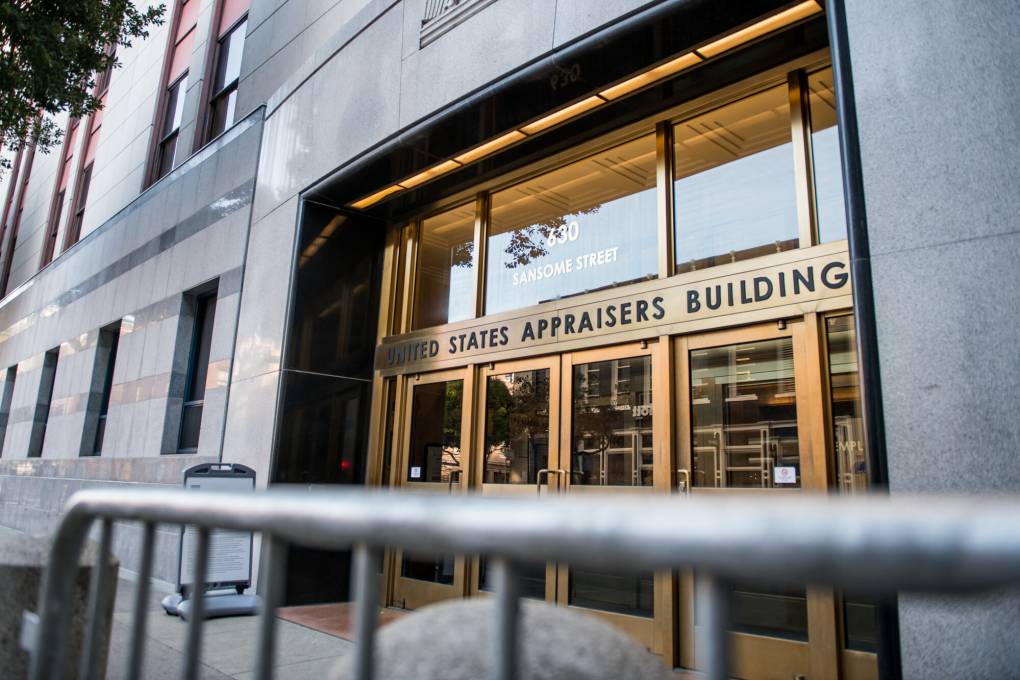
"caption": "The U.S. Immigration & Customs Enforcement building at 630 Sansome St., in San Francisco, California, on Feb. 5, 2020.",
"credit": "Beth LaBerge/KQED",
"altTag": null,
"description": null,
"imgSizes": {
"medium": {
"file": "https://cdn.kqed.org/wp-content/uploads/sites/10/2025/05/008_KQED_630Sansome_02052020_1470_qed-800x533.jpg",
"width": 800,
"height": 533,
"mimeType": "image/jpeg"
},
"large": {
"file": "https://cdn.kqed.org/wp-content/uploads/sites/10/2025/05/008_KQED_630Sansome_02052020_1470_qed-1020x680.jpg",
"width": 1020,
"height": 680,
"mimeType": "image/jpeg"
},
"thumbnail": {
"file": "https://cdn.kqed.org/wp-content/uploads/sites/10/2025/05/008_KQED_630Sansome_02052020_1470_qed-160x107.jpg",
"width": 160,
"height": 107,
"mimeType": "image/jpeg"
},
"1536x1536": {
"file": "https://cdn.kqed.org/wp-content/uploads/sites/10/2025/05/008_KQED_630Sansome_02052020_1470_qed-1536x1024.jpg",
"width": 1536,
"height": 1024,
"mimeType": "image/jpeg"
},
"post-thumbnail": {
"file": "https://cdn.kqed.org/wp-content/uploads/sites/10/2025/05/008_KQED_630Sansome_02052020_1470_qed-672x372.jpg",
"width": 672,
"height": 372,
"mimeType": "image/jpeg"
},
"twentyfourteen-full-width": {
"file": "https://cdn.kqed.org/wp-content/uploads/sites/10/2025/05/008_KQED_630Sansome_02052020_1470_qed-1038x576.jpg",
"width": 1038,
"height": 576,
"mimeType": "image/jpeg"
},
"full-width": {
"file": "https://cdn.kqed.org/wp-content/uploads/sites/10/2025/05/008_KQED_630Sansome_02052020_1470_qed-1920x1280.jpg",
"width": 1920,
"height": 1280,
"mimeType": "image/jpeg"
},
"kqedFullSize": {
"file": "https://cdn.kqed.org/wp-content/uploads/sites/10/2025/05/008_KQED_630Sansome_02052020_1470_qed.jpg",
"width": 1999,
"height": 1333
}
},
"isLoading": false,
"fetchFailed": false
},
"news_12042519": {
"type": "attachments",
"id": "news_12042519",
"meta": {
"index": "attachments_1716263798",
"site": "news",
"id": "12042519",
"found": true
},
"title": "20250501_MayDayRally_GC-11_qed",
"publishDate": 1748973260,
"status": "inherit",
"parent": 12042492,
"modified": 1748973272,
"caption": "Hundreds march during a May Day rally, calling for immigrant rights, on International Workers’ Day, in Santa Rosa on May 1, 2025.",
"credit": "Gina Castro/KQED",
"altTag": null,
"description": null,
"imgSizes": {
"medium": {
"file": "https://cdn.kqed.org/wp-content/uploads/sites/10/2025/06/20250501_MayDayRally_GC-11_qed-800x533.jpg",
"width": 800,
"height": 533,
"mimeType": "image/jpeg"
},
"large": {
"file": "https://cdn.kqed.org/wp-content/uploads/sites/10/2025/06/20250501_MayDayRally_GC-11_qed-1020x680.jpg",
"width": 1020,
"height": 680,
"mimeType": "image/jpeg"
},
"thumbnail": {
"file": "https://cdn.kqed.org/wp-content/uploads/sites/10/2025/06/20250501_MayDayRally_GC-11_qed-160x107.jpg",
"width": 160,
"height": 107,
"mimeType": "image/jpeg"
},
"1536x1536": {
"file": "https://cdn.kqed.org/wp-content/uploads/sites/10/2025/06/20250501_MayDayRally_GC-11_qed-1536x1024.jpg",
"width": 1536,
"height": 1024,
"mimeType": "image/jpeg"
},
"post-thumbnail": {
"file": "https://cdn.kqed.org/wp-content/uploads/sites/10/2025/06/20250501_MayDayRally_GC-11_qed-672x372.jpg",
"width": 672,
"height": 372,
"mimeType": "image/jpeg"
},
"twentyfourteen-full-width": {
"file": "https://cdn.kqed.org/wp-content/uploads/sites/10/2025/06/20250501_MayDayRally_GC-11_qed-1038x576.jpg",
"width": 1038,
"height": 576,
"mimeType": "image/jpeg"
},
"full-width": {
"file": "https://cdn.kqed.org/wp-content/uploads/sites/10/2025/06/20250501_MayDayRally_GC-11_qed-1920x1280.jpg",
"width": 1920,
"height": 1280,
"mimeType": "image/jpeg"
},
"kqedFullSize": {
"file": "https://cdn.kqed.org/wp-content/uploads/sites/10/2025/06/20250501_MayDayRally_GC-11_qed.jpg",
"width": 2000,
"height": 1333
}
},
"isLoading": false,
"fetchFailed": false
},
"news_11979156": {
"type": "attachments",
"id": "news_11979156",
"meta": {
"index": "attachments_1716263798",
"site": "news",
"id": "11979156",
"found": true
},
"title": "240212-ImmigrationCourt-31-BL_qut",
"publishDate": 1710283094,
"status": "inherit",
"parent": 11979131,
"modified": 1748456121,
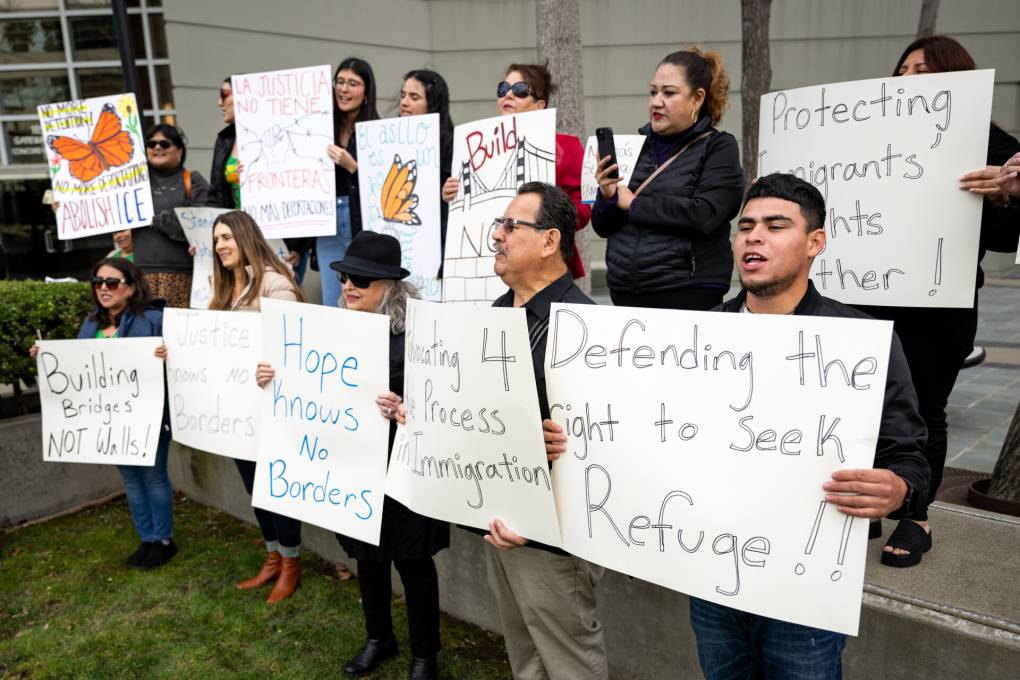
"caption": "Immigration rights supporters stand outside the new Concord Immigration Court in Concord during a press conference on Feb. 12, 2024.",
"credit": "Beth LaBerge/KQED",
"altTag": null,
"description": null,
"imgSizes": {
"medium": {
"file": "https://cdn.kqed.org/wp-content/uploads/sites/10/2024/03/240212-ImmigrationCourt-31-BL_qut-800x533.jpg",
"width": 800,
"height": 533,
"mimeType": "image/jpeg"
},
"large": {
"file": "https://cdn.kqed.org/wp-content/uploads/sites/10/2024/03/240212-ImmigrationCourt-31-BL_qut-1020x680.jpg",
"width": 1020,
"height": 680,
"mimeType": "image/jpeg"
},
"thumbnail": {
"file": "https://cdn.kqed.org/wp-content/uploads/sites/10/2024/03/240212-ImmigrationCourt-31-BL_qut-160x107.jpg",
"width": 160,
"height": 107,
"mimeType": "image/jpeg"
},
"1536x1536": {
"file": "https://cdn.kqed.org/wp-content/uploads/sites/10/2024/03/240212-ImmigrationCourt-31-BL_qut-1536x1024.jpg",
"width": 1536,
"height": 1024,
"mimeType": "image/jpeg"
},
"post-thumbnail": {
"file": "https://cdn.kqed.org/wp-content/uploads/sites/10/2024/03/240212-ImmigrationCourt-31-BL_qut-672x372.jpg",
"width": 672,
"height": 372,
"mimeType": "image/jpeg"
},
"twentyfourteen-full-width": {
"file": "https://cdn.kqed.org/wp-content/uploads/sites/10/2024/03/240212-ImmigrationCourt-31-BL_qut-1038x576.jpg",
"width": 1038,
"height": 576,
"mimeType": "image/jpeg"
},
"kqedFullSize": {
"file": "https://cdn.kqed.org/wp-content/uploads/sites/10/2024/03/240212-ImmigrationCourt-31-BL_qut.jpg",
"width": 1920,
"height": 1280
}
},
"isLoading": false,
"fetchFailed": false
},
"news_12024249": {
"type": "attachments",
"id": "news_12024249",
"meta": {
"index": "attachments_1716263798",
"site": "news",
"id": "12024249",
"found": true
},
"title": "ICE agents raid to arrest illigal immigrants.",
"publishDate": 1738015637,
"status": "inherit",
"parent": 12024246,
"modified": 1738716093,
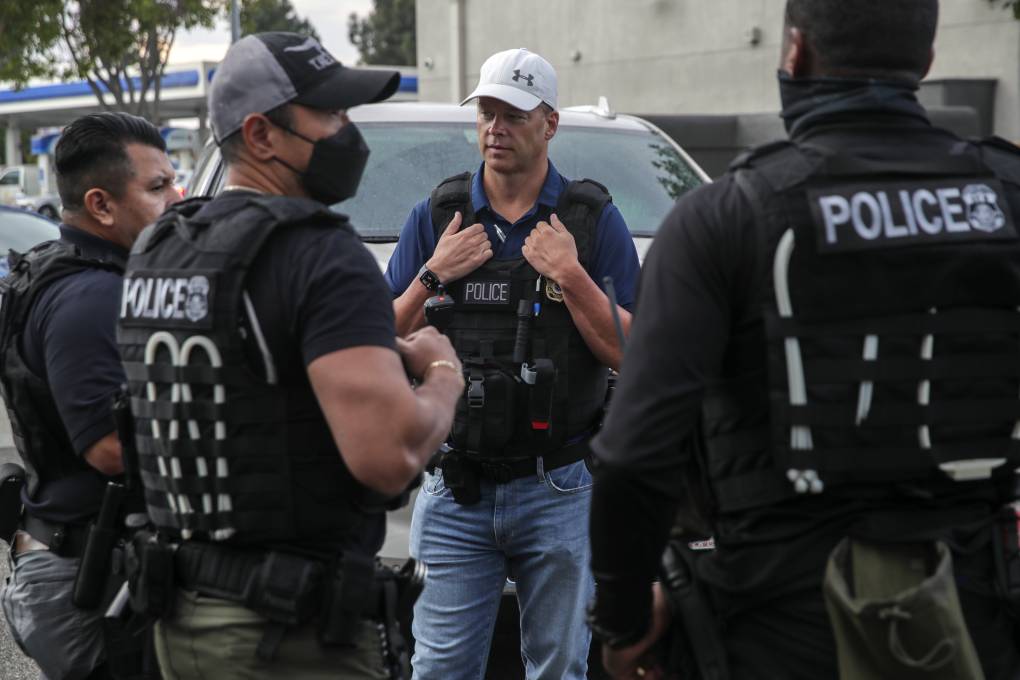
"caption": "Thomas Giles, ICE Field Office Director, center, talks to other agents after going to arrest an immigrant with a criminal record on Sept. 8, 2022, in Los Angeles.",
"credit": "Irfan Khan / Los Angeles Times via Getty Images",
"altTag": null,
"description": null,
"imgSizes": {
"medium": {
"file": "https://cdn.kqed.org/wp-content/uploads/sites/10/2025/01/GettyImages-1243312873-800x533.jpg",
"width": 800,
"height": 533,
"mimeType": "image/jpeg"
},
"large": {
"file": "https://cdn.kqed.org/wp-content/uploads/sites/10/2025/01/GettyImages-1243312873-1020x680.jpg",
"width": 1020,
"height": 680,
"mimeType": "image/jpeg"
},
"thumbnail": {
"file": "https://cdn.kqed.org/wp-content/uploads/sites/10/2025/01/GettyImages-1243312873-160x107.jpg",
"width": 160,
"height": 107,
"mimeType": "image/jpeg"
},
"1536x1536": {
"file": "https://cdn.kqed.org/wp-content/uploads/sites/10/2025/01/GettyImages-1243312873-1536x1024.jpg",
"width": 1536,
"height": 1024,
"mimeType": "image/jpeg"
},
"2048x2048": {
"file": "https://cdn.kqed.org/wp-content/uploads/sites/10/2025/01/GettyImages-1243312873-2048x1365.jpg",
"width": 2048,
"height": 1365,
"mimeType": "image/jpeg"
},
"post-thumbnail": {
"file": "https://cdn.kqed.org/wp-content/uploads/sites/10/2025/01/GettyImages-1243312873-672x372.jpg",
"width": 672,
"height": 372,
"mimeType": "image/jpeg"
},
"twentyfourteen-full-width": {
"file": "https://cdn.kqed.org/wp-content/uploads/sites/10/2025/01/GettyImages-1243312873-1038x576.jpg",
"width": 1038,
"height": 576,
"mimeType": "image/jpeg"
},
"full-width": {
"file": "https://cdn.kqed.org/wp-content/uploads/sites/10/2025/01/GettyImages-1243312873-1920x1280.jpg",
"width": 1920,
"height": 1280,
"mimeType": "image/jpeg"
},
"kqedFullSize": {
"file": "https://cdn.kqed.org/wp-content/uploads/sites/10/2025/01/GettyImages-1243312873-scaled.jpg",
"width": 2560,
"height": 1707
}
},
"isLoading": false,
"fetchFailed": false
},
"news_12041516": {
"type": "attachments",
"id": "news_12041516",
"meta": {
"index": "attachments_1716263798",
"site": "news",
"id": "12041516",
"found": true
},
"title": "CoreCivic Otay Mesa Detention Center",
"publishDate": 1748032296,
"status": "inherit",
"parent": 12041326,
"modified": 1748032401,
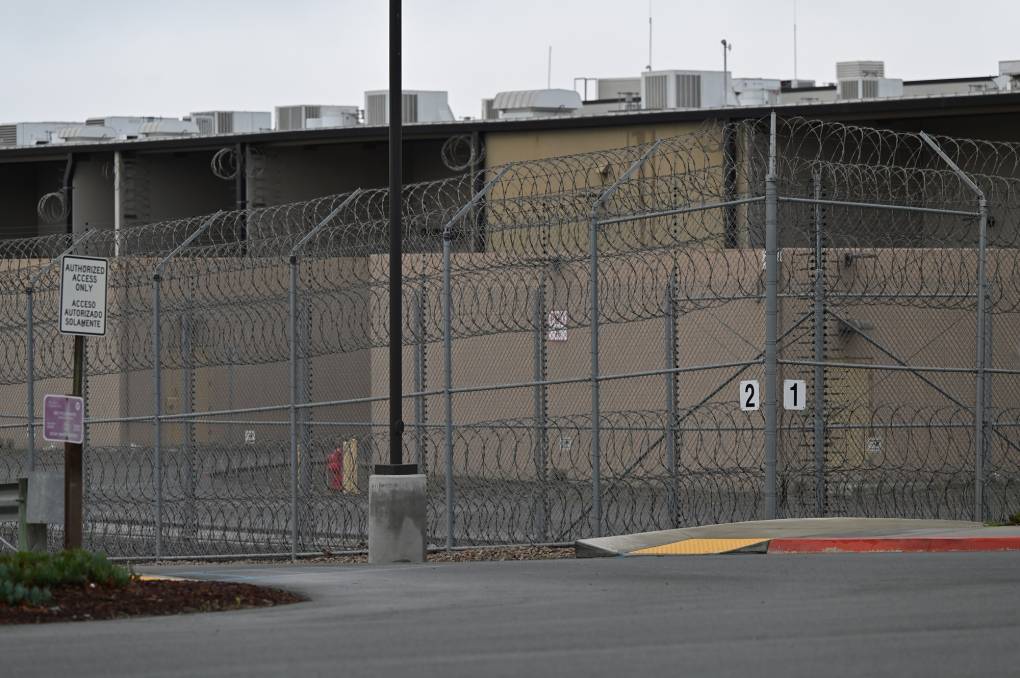
"caption": "A view of the CoreCivic Otay Mesa Detention Center in San Diego, California, on Feb. 7, 2025. The private institution has been plagued by allegations of medical negligence, abusive and retaliatory behavior against immigrants, sexual harassment, poor food and water quality and other dangerous conditions. ",
"credit": "Carlos Moreno/Anadolu via Getty Images",
"altTag": null,
"description": null,
"imgSizes": {
"medium": {
"file": "https://cdn.kqed.org/wp-content/uploads/sites/10/2025/05/CANewsroom1-800x532.jpg",
"width": 800,
"height": 532,
"mimeType": "image/jpeg"
},
"large": {
"file": "https://cdn.kqed.org/wp-content/uploads/sites/10/2025/05/CANewsroom1-1020x678.jpg",
"width": 1020,
"height": 678,
"mimeType": "image/jpeg"
},
"thumbnail": {
"file": "https://cdn.kqed.org/wp-content/uploads/sites/10/2025/05/CANewsroom1-160x106.jpg",
"width": 160,
"height": 106,
"mimeType": "image/jpeg"
},
"1536x1536": {
"file": "https://cdn.kqed.org/wp-content/uploads/sites/10/2025/05/CANewsroom1-1536x1021.jpg",
"width": 1536,
"height": 1021,
"mimeType": "image/jpeg"
},
"post-thumbnail": {
"file": "https://cdn.kqed.org/wp-content/uploads/sites/10/2025/05/CANewsroom1-672x372.jpg",
"width": 672,
"height": 372,
"mimeType": "image/jpeg"
},
"twentyfourteen-full-width": {
"file": "https://cdn.kqed.org/wp-content/uploads/sites/10/2025/05/CANewsroom1-1038x576.jpg",
"width": 1038,
"height": 576,
"mimeType": "image/jpeg"
},
"full-width": {
"file": "https://cdn.kqed.org/wp-content/uploads/sites/10/2025/05/CANewsroom1-1920x1277.jpg",
"width": 1920,
"height": 1277,
"mimeType": "image/jpeg"
},
"kqedFullSize": {
"file": "https://cdn.kqed.org/wp-content/uploads/sites/10/2025/05/CANewsroom1.jpg",
"width": 2000,
"height": 1330
}
},
"isLoading": false,
"fetchFailed": false
}
},
"audioPlayerReducer": {
"postId": "stream_live",
"isPaused": true,
"isPlaying": false,
"pfsActive": false,
"pledgeModalIsOpen": true,
"playerDrawerIsOpen": false,
"liveAudioPlayStartedAt": 0,
"liveAudioPlayContext": ""
},
"authorsReducer": {
"byline_news_12043348": {
"type": "authors",
"id": "byline_news_12043348",
"meta": {
"override": true
},
"slug": "byline_news_12043348",
"name": "Jeanne Kuang, CalMatters",
"isLoading": false
},
"byline_news_12043004": {
"type": "authors",
"id": "byline_news_12043004",
"meta": {
"override": true
},
"slug": "byline_news_12043004",
"name": "\u003ca href=\"https://www.npr.org/people/297147616/jasmine-garsd\">Jasmine Garsd\u003c/a>, NPR",
"isLoading": false
},
"byline_news_12041326": {
"type": "authors",
"id": "byline_news_12041326",
"meta": {
"override": true
},
"slug": "byline_news_12041326",
"name": "Mark Betancourt, The California Newsroom",
"isLoading": false
},
"kqednewsstaffandwires": {
"type": "authors",
"id": "237",
"meta": {
"index": "authors_1716337520",
"id": "237",
"found": true
},
"name": "KQED News Staff and Wires",
"firstName": "KQED News Staff and Wires",
"lastName": null,
"slug": "kqednewsstaffandwires",
"email": "onlinenewsstaff@kqed.org",
"display_author_email": false,
"staff_mastheads": [],
"title": null,
"bio": null,
"avatar": "https://secure.gravatar.com/avatar/72295af8ebbfbd19a4948f5271285664?s=600&d=blank&r=g",
"twitter": null,
"facebook": null,
"instagram": null,
"linkedin": null,
"sites": [
{
"site": "arts",
"roles": [
"contributor"
]
},
{
"site": "news",
"roles": [
"contributor"
]
},
{
"site": "lowdown",
"roles": [
"author"
]
},
{
"site": "stateofhealth",
"roles": [
"contributor"
]
},
{
"site": "food",
"roles": [
"author"
]
}
],
"headData": {
"title": "KQED News Staff and Wires | KQED",
"description": null,
"ogImgSrc": "https://secure.gravatar.com/avatar/72295af8ebbfbd19a4948f5271285664?s=600&d=blank&r=g",
"twImgSrc": "https://secure.gravatar.com/avatar/72295af8ebbfbd19a4948f5271285664?s=600&d=blank&r=g"
},
"isLoading": false,
"link": "/author/kqednewsstaffandwires"
},
"ccabreralomeli": {
"type": "authors",
"id": "11708",
"meta": {
"index": "authors_1716337520",
"id": "11708",
"found": true
},
"name": "Carlos Cabrera-Lomelí",
"firstName": "Carlos",
"lastName": "Cabrera-Lomelí",
"slug": "ccabreralomeli",
"email": "ccabreralomeli@KQED.org",
"display_author_email": true,
"staff_mastheads": [
"news"
],
"title": "Community Reporter",
"bio": "Carlos Cabrera-Lomelí is a community reporter with KQED's digital engagement team. He also reports and co-produces for KQED's bilingual news hub KQED en Español. He grew up in San Francisco's Mission District and has previously worked with Univision, 48 Hills and REFORMA in Mexico City.",
"avatar": "https://secure.gravatar.com/avatar/c309be9665e484f887b818c89e273ecc673004f426f36b24d00a4d813a2e0518?s=600&d=blank&r=g",
"twitter": "@LomeliCabrera",
"bluesky": null,
"facebook": null,
"instagram": null,
"linkedin": null,
"sites": [
{
"site": "arts",
"roles": [
"editor"
]
},
{
"site": "news",
"roles": [
"editor"
]
},
{
"site": "about",
"roles": [
"editor"
]
},
{
"site": "science",
"roles": [
"editor"
]
},
{
"site": "perspectives",
"roles": [
"editor"
]
},
{
"site": "elections",
"roles": [
"editor"
]
},
{
"site": "liveblog",
"roles": [
"contributor"
]
}
],
"headData": {
"title": "Carlos Cabrera-Lomelí | KQED",
"description": "Community Reporter",
"ogImgSrc": "https://secure.gravatar.com/avatar/c309be9665e484f887b818c89e273ecc673004f426f36b24d00a4d813a2e0518?s=600&d=blank&r=g",
"twImgSrc": "https://secure.gravatar.com/avatar/c309be9665e484f887b818c89e273ecc673004f426f36b24d00a4d813a2e0518?s=600&d=blank&r=g"
},
"isLoading": false,
"link": "/author/ccabreralomeli"
},
"jlara": {
"type": "authors",
"id": "11761",
"meta": {
"index": "authors_1716337520",
"id": "11761",
"found": true
},
"name": "Juan Carlos Lara",
"firstName": "Juan Carlos",
"lastName": "Lara",
"slug": "jlara",
"email": "jlara@kqed.org",
"display_author_email": false,
"staff_mastheads": [],
"title": "KQED Contributor",
"bio": null,
"avatar": "https://secure.gravatar.com/avatar/19e2052b9b05657c5ff2af2121846e9c?s=600&d=blank&r=g",
"twitter": null,
"facebook": null,
"instagram": null,
"linkedin": null,
"sites": [
{
"site": "arts",
"roles": [
"editor"
]
},
{
"site": "news",
"roles": [
"editor"
]
},
{
"site": "forum",
"roles": [
"editor"
]
},
{
"site": "liveblog",
"roles": [
"contributor"
]
}
],
"headData": {
"title": "Juan Carlos Lara | KQED",
"description": "KQED Contributor",
"ogImgSrc": "https://secure.gravatar.com/avatar/19e2052b9b05657c5ff2af2121846e9c?s=600&d=blank&r=g",
"twImgSrc": "https://secure.gravatar.com/avatar/19e2052b9b05657c5ff2af2121846e9c?s=600&d=blank&r=g"
},
"isLoading": false,
"link": "/author/jlara"
},
"nkhan": {
"type": "authors",
"id": "11867",
"meta": {
"index": "authors_1716337520",
"id": "11867",
"found": true
},
"name": "Nisa Khan",
"firstName": "Nisa",
"lastName": "Khan",
"slug": "nkhan",
"email": "nkhan@kqed.org",
"display_author_email": false,
"staff_mastheads": [],
"title": "KQED Contributor",
"bio": "Nisa Khan is a reporter for KQED's Audience News Desk. She was formerly a data reporter at Michigan Radio. She earned a Bachelor of Science in Information from the University of Michigan and a Master of Arts in Communication from Stanford University.",
"avatar": "https://secure.gravatar.com/avatar/8720459eef081ff64582b3506b124d58523e80e120704a0cbd9892533c914991?s=600&d=blank&r=g",
"twitter": "mnisakhan",
"bluesky": null,
"facebook": null,
"instagram": null,
"linkedin": null,
"sites": [
{
"site": "arts",
"roles": [
"editor"
]
},
{
"site": "news",
"roles": [
"editor"
]
},
{
"site": "science",
"roles": [
"editor",
"author"
]
},
{
"site": "forum",
"roles": [
"editor"
]
},
{
"site": "liveblog",
"roles": [
"contributor"
]
}
],
"headData": {
"title": "Nisa Khan | KQED",
"description": "KQED Contributor",
"ogImgSrc": "https://secure.gravatar.com/avatar/8720459eef081ff64582b3506b124d58523e80e120704a0cbd9892533c914991?s=600&d=blank&r=g",
"twImgSrc": "https://secure.gravatar.com/avatar/8720459eef081ff64582b3506b124d58523e80e120704a0cbd9892533c914991?s=600&d=blank&r=g"
},
"isLoading": false,
"link": "/author/nkhan"
},
"jgeha": {
"type": "authors",
"id": "11906",
"meta": {
"index": "authors_1716337520",
"id": "11906",
"found": true
},
"name": "Joseph Geha",
"firstName": "Joseph",
"lastName": "Geha",
"slug": "jgeha",
"email": "jgeha@kqed.org",
"display_author_email": false,
"staff_mastheads": [
"news",
"science"
],
"title": "KQED Contributor",
"bio": null,
"avatar": "https://secure.gravatar.com/avatar/ea84d2b6dd93d6369d453edf19dd583f117cd1759d2d9c9c92f9de77017354fe?s=600&d=blank&r=g",
"twitter": null,
"bluesky": null,
"facebook": null,
"instagram": null,
"linkedin": null,
"sites": [
{
"site": "news",
"roles": [
"editor"
]
},
{
"site": "liveblog",
"roles": [
"author"
]
}
],
"headData": {
"title": "Joseph Geha | KQED",
"description": "KQED Contributor",
"ogImgSrc": "https://secure.gravatar.com/avatar/ea84d2b6dd93d6369d453edf19dd583f117cd1759d2d9c9c92f9de77017354fe?s=600&d=blank&r=g",
"twImgSrc": "https://secure.gravatar.com/avatar/ea84d2b6dd93d6369d453edf19dd583f117cd1759d2d9c9c92f9de77017354fe?s=600&d=blank&r=g"
},
"isLoading": false,
"link": "/author/jgeha"
},
"kdebenedetti": {
"type": "authors",
"id": "11913",
"meta": {
"index": "authors_1716337520",
"id": "11913",
"found": true
},
"name": "Katie DeBenedetti",
"firstName": "Katie",
"lastName": "DeBenedetti",
"slug": "kdebenedetti",
"email": "kdebenedetti@kqed.org",
"display_author_email": false,
"staff_mastheads": [
"news",
"science"
],
"title": "KQED Contributor",
"bio": "Katie DeBenedetti is a digital reporter covering daily news for the Express Desk. Prior to joining KQED as a culture reporting intern in January 2024, she covered education and city government for the Napa Valley Register.",
"avatar": "https://secure.gravatar.com/avatar/6e31073cb8f7e4214ab03f42771d0f45?s=600&d=blank&r=g",
"twitter": null,
"facebook": null,
"instagram": null,
"linkedin": null,
"sites": [
{
"site": "news",
"roles": [
"author"
]
},
{
"site": "science",
"roles": [
"author"
]
},
{
"site": "liveblog",
"roles": [
"author"
]
}
],
"headData": {
"title": "Katie DeBenedetti | KQED",
"description": "KQED Contributor",
"ogImgSrc": "https://secure.gravatar.com/avatar/6e31073cb8f7e4214ab03f42771d0f45?s=600&d=blank&r=g",
"twImgSrc": "https://secure.gravatar.com/avatar/6e31073cb8f7e4214ab03f42771d0f45?s=600&d=blank&r=g"
},
"isLoading": false,
"link": "/author/kdebenedetti"
},
"rcooke": {
"type": "authors",
"id": "11921",
"meta": {
"index": "authors_1716337520",
"id": "11921",
"found": true
},
"name": "Riley Cooke",
"firstName": "Riley",
"lastName": "Cooke",
"slug": "rcooke",
"email": "rcooke@kqed.org",
"display_author_email": true,
"staff_mastheads": [
"news"
],
"title": "KQED Contributor",
"bio": "Riley is a senior at UC Berkeley, where she studies political science and journalism. Her work has appeared in SFGate, NBC Bay Area, Local News Matters and more. She enjoys reporting on politics, housing and homelessness — and using as many em dashes as her editors will allow.",
"avatar": "https://secure.gravatar.com/avatar/792f98c126cc5e270a8a96f77f7224ea?s=600&d=blank&r=g",
"twitter": "rrileycooke",
"facebook": null,
"instagram": null,
"linkedin": null,
"sites": [
{
"site": "arts",
"roles": [
"author"
]
},
{
"site": "news",
"roles": [
"author"
]
}
],
"headData": {
"title": "Riley Cooke | KQED",
"description": "KQED Contributor",
"ogImgSrc": "https://secure.gravatar.com/avatar/792f98c126cc5e270a8a96f77f7224ea?s=600&d=blank&r=g",
"twImgSrc": "https://secure.gravatar.com/avatar/792f98c126cc5e270a8a96f77f7224ea?s=600&d=blank&r=g"
},
"isLoading": false,
"link": "/author/rcooke"
},
"emanoukian": {
"type": "authors",
"id": "11925",
"meta": {
"index": "authors_1716337520",
"id": "11925",
"found": true
},
"name": "Elize Manoukian",
"firstName": "Elize",
"lastName": "Manoukian",
"slug": "emanoukian",
"email": "emanoukian@KQED.org",
"display_author_email": false,
"staff_mastheads": [
"news"
],
"title": "Digital News Editor",
"bio": "Elize Manoukian is an award-winning audio producer and Senior Editor on the Express Desk, KQED's digital news platform. Her work has appeared on KPFA, Interlochen Public Radio, Oregon Public Broadcast, the New York Daily News, LA Times and the San Diego Union-Tribune.",
"avatar": "https://secure.gravatar.com/avatar/4525f1a8e46ccb30933b32653d9772064cfefe3fa655eb45b3b3a80341f6bdad?s=600&d=blank&r=g",
"twitter": null,
"bluesky": null,
"facebook": null,
"instagram": null,
"linkedin": null,
"sites": [
{
"site": "arts",
"roles": [
"editor"
]
},
{
"site": "news",
"roles": [
"editor"
]
},
{
"site": "science",
"roles": [
"editor"
]
}
],
"headData": {
"title": "Elize Manoukian | KQED",
"description": "Digital News Editor",
"ogImgSrc": "https://secure.gravatar.com/avatar/4525f1a8e46ccb30933b32653d9772064cfefe3fa655eb45b3b3a80341f6bdad?s=600&d=blank&r=g",
"twImgSrc": "https://secure.gravatar.com/avatar/4525f1a8e46ccb30933b32653d9772064cfefe3fa655eb45b3b3a80341f6bdad?s=600&d=blank&r=g"
},
"isLoading": false,
"link": "/author/emanoukian"
}
},
"pagesReducer": {
"news_tag_u-s-immigration-and-customs-enforcement": {
"type": "terms",
"id": "news_20529",
"meta": {
"index": "terms_1716263798",
"site": "news",
"id": "20529",
"score": 10.404648
},
"featImg": null,
"name": "U.S. Immigration and Customs Enforcement",
"description": null,
"taxonomy": "tag",
"headData": {
"twImgId": null,
"twTitle": null,
"ogTitle": null,
"ogImgId": null,
"twDescription": null,
"description": null,
"title": "U.S. Immigration and Customs Enforcement Archives | KQED News",
"ogDescription": null
},
"ttid": 20546,
"slug": "u-s-immigration-and-customs-enforcement",
"isLoading": false,
"title": "U.S. Immigration and Customs Enforcement",
"pageMeta": {
"site": "news",
"WpPageTemplate": "page-topic-editorial",
"currentPage": 14
},
"blocks": [
{
"blockName": "kqed/post-list",
"attrs": {
"layout": "cardArticle2",
"query": "posts/news?tag=u-s-immigration-and-customs-enforcement",
"seeMore": false,
"paginated": true,
"page": 14
}
},
{
"blockName": "kqed/ad"
}
]
}
},
"pfsSessionReducer": {},
"postsReducer": {
"stream_live": {
"type": "live",
"id": "stream_live",
"audioUrl": "https://streams.kqed.org/kqedradio",
"title": "Live Stream",
"excerpt": "Live Stream information currently unavailable.",
"link": "/radio",
"featImg": "",
"label": {
"name": "KQED Live",
"link": "/"
}
},
"stream_kqedNewscast": {
"type": "posts",
"id": "stream_kqedNewscast",
"audioUrl": "https://www.kqed.org/.stream/anon/radio/RDnews/newscast.mp3?_=1",
"title": "KQED Newscast",
"featImg": "",
"label": {
"name": "88.5 FM",
"link": "/"
}
},
"news_12043333": {
"type": "posts",
"id": "news_12043333",
"meta": {
"index": "posts_1716263798",
"site": "news",
"id": "12043333",
"score": null,
"sort": [
1749504345000
]
},
"guestAuthors": [],
"slug": "san-francisco-prepares-for-more-ice-protests-after-night-of-mass-arrests",
"title": "San Francisco Prepares for More ICE Protests After Night of Mass Arrests",
"publishDate": 1749504345,
"format": "standard",
"headTitle": "San Francisco Prepares for More ICE Protests After Night of Mass Arrests | KQED",
"labelTerm": {
"site": "news"
},
"content": "\u003cp>San Francisco officials are preparing for more protests after more than \u003ca href=\"https://www.kqed.org/news/12043255/sf-protesters-denounce-ice-raids-and-trumps-national-guard-deployment-to-la\">150 people were arrested at a demonstration on Sunday\u003c/a> night against President Trump’s \u003ca href=\"https://www.kqed.org/news/12043221/protesters-and-immigration-authorities-face-off-for-a-2nd-day-in-la-area-after-arrests\">deployment of National Guard troops\u003c/a> in Los Angeles.\u003c/p>\n\u003cp>At least three more demonstrations are planned for Monday in San Francisco. More are expected throughout the week as Immigration and Customs Enforcement officials ramp up raids and arrests across the country, inflaming tensions between Democrat-led cities and the federal government.\u003c/p>\n\u003cp>Mayor Daniel Lurie made clear that while the city is prepared for unrest, backup from the National Guard was not needed or wanted in San Francisco.\u003c/p>\n\u003cp>[ad fullwidth]\u003c/p>\n\u003cp>“We are ready. We are meeting regularly. … We have what we need behind me,” he said at a public safety briefing on Monday morning, referencing the line of department heads standing behind him at the podium.\u003c/p>\n\u003cp>The news conference came after Gov. Gavin Newsom and Attorney General Rob Bonta said \u003ca href=\"https://www.kqed.org/news/12043314/california-to-sue-trump-for-sending-national-guard-troops-into-la-after-ice-protests?utm_source=facebook.com&utm_campaign=npr&utm_term=nprnews&utm_medium=social&fbclid=IwY2xjawK0EIVleHRuA2FlbQIxMQBicmlkETFCZDF0aUphMG5OTExsNXFBAR6Yl0wLUTt56HSmHmFsAAxw8iOdY00y-L9C4cKs5dhvQWbo4g_UVfU3f3Odfw_aem_9xak5nIWgp42_BlxNQUtCg\">California would sue Trump\u003c/a> over the deployment of National Guard troops, who normally operate under state command.\u003c/p>\n\u003cfigure id=\"attachment_12043368\" class=\"wp-caption aligncenter\" style=\"max-width: 2000px\">\u003cimg loading=\"lazy\" decoding=\"async\" class=\"size-full wp-image-12043368\" src=\"https://cdn.kqed.org/wp-content/uploads/sites/10/2025/06/250609-LURIEPRESSER-04-BL-KQED.jpg\" alt=\"\" width=\"2000\" height=\"1333\" srcset=\"https://cdn.kqed.org/wp-content/uploads/sites/10/2025/06/250609-LURIEPRESSER-04-BL-KQED.jpg 2000w, https://cdn.kqed.org/wp-content/uploads/sites/10/2025/06/250609-LURIEPRESSER-04-BL-KQED-160x107.jpg 160w, https://cdn.kqed.org/wp-content/uploads/sites/10/2025/06/250609-LURIEPRESSER-04-BL-KQED-1536x1024.jpg 1536w\" sizes=\"auto, (max-width: 2000px) 100vw, 2000px\">\u003cfigcaption class=\"wp-caption-text\">Mayor Daniel Lurie speaks at a press conference with public safety leaders in San Francisco on June 9, 2025. \u003ccite>(Beth LaBerge/KQED)\u003c/cite>\u003c/figcaption>\u003c/figure>\n\u003cp>At Sunday night’s protest outside an ICE field office in San Francisco, hundreds of demonstrators decried the agency’s operations in the city and the federal response to a tense weekend of protests in Southern California.\u003c/p>\n\u003cp>About 155 people were arrested and issued citations for refusal to disperse, according to interim Police Chief Paul Yep.\u003c/p>\n\u003cp>Authorities said they declared an unlawful assembly when protesters were at Washington and Sansome streets after “members of the crowd began committing vandalism, destroying property and committing assaults.” Many people left after the crowd was ordered to disperse shortly after 7 p.m., police officials said, but a contingency proceeded to march down Market Street and eventually to the 200 block of Montgomery Street downtown, where protesters were arrested.[aside postID=news_12043314 hero='https://cdn.kqed.org/wp-content/uploads/sites/10/2025/06/250608-ICE-OUT-OF-THE-BAY-AC-05-KQED.jpg']Protesters damaged Muni buses and broke windows of some downtown businesses, according to police. Three officers were injured during the demonstration, including one who was sent to a hospital for medical examination.\u003c/p>\n\u003cp>Of those arrested, 147 adults were released after being cited, while one was booked on suspicion of assault with a deadly weapon upon a peace officer, removing a weapon from a peace officer and resisting arrest. Six children were also arrested and released.\u003c/p>\n\u003cp>District Attorney Brooke Jenkins said her office could opt to file charges against additional people after it reviews video footage. She asked protesters planning to take to the streets in the coming days to do so in accordance with the law.\u003c/p>\n\u003cp>“I really stand here before you to urge anyone involved in these upcoming demonstrations to ensure that you follow the law in your expression of First Amendment speech,” she said. “That is how we remain a leader in this country. Those who are committing acts of violence and vandalism are undermining the true mission of those who are standing up for what they believe.”\u003c/p>\n\u003cp>Assistant Sheriff Kathy Johnson said that the Sheriff’s Department had activated a county jail for mass arrests should they become necessary, and was prepared to open additional housing units.\u003c/p>\n\u003cfigure id=\"attachment_12043370\" class=\"wp-caption aligncenter\" style=\"max-width: 2000px\">\u003cimg loading=\"lazy\" decoding=\"async\" class=\"size-full wp-image-12043370\" src=\"https://cdn.kqed.org/wp-content/uploads/sites/10/2025/06/250609-LURIEPRESSER-11-BL-KQED.jpg\" alt=\"\" width=\"2000\" height=\"1333\" srcset=\"https://cdn.kqed.org/wp-content/uploads/sites/10/2025/06/250609-LURIEPRESSER-11-BL-KQED.jpg 2000w, https://cdn.kqed.org/wp-content/uploads/sites/10/2025/06/250609-LURIEPRESSER-11-BL-KQED-160x107.jpg 160w, https://cdn.kqed.org/wp-content/uploads/sites/10/2025/06/250609-LURIEPRESSER-11-BL-KQED-1536x1024.jpg 1536w\" sizes=\"auto, (max-width: 2000px) 100vw, 2000px\">\u003cfigcaption class=\"wp-caption-text\">Interim San Francisco Police Chief Paul Yep speaks at a press conference with public safety leaders in San Francisco on June 9, 2025. \u003ccite>(Beth LaBerge/KQED)\u003c/cite>\u003c/figcaption>\u003c/figure>\n\u003cp>“We do not enforce immigration laws,” she said. “However, violent destruction of property is a different matter. We are prepared, we are coordinated, and we are committed to protecting San Francisco and its people.”\u003c/p>\n\u003cp>Lurie dodged questions from reporters directly related to Trump — as he has done since taking office in January — but he affirmed San Franciscans’ right to protest, noting that federal immigration policy was making the city less safe.[aside postID=news_11821950 hero='https://ww2.kqed.org/app/uploads/sites/10/2023/04/RS64575_022_KQED_AntiochPoliceRacistTextProtest_04182023-qut-1020x680.jpg']“I understand why people are out on the streets,” he said. “The tactics being used across the country to target immigrant communities are meant to instill fear. Those tactics make members of our community less likely to work with law enforcement to report crimes and criminals; they make people afraid to go to work or send their kids to school.”\u003c/p>\n\u003cp>Last week, 15 people were \u003ca href=\"https://www.kqed.org/news/12042887/ice-arrests-15-people-in-san-francisco-including-a-child\">detained at the city’s immigration court\u003c/a> following ICE check-ins, including a 3-year-old. Many of the women and children who were detained have been sent to detention centers out of state, since California does not have any family detention centers, according to Milli Atkinson, director of the Immigrant Legal Defense Program at the San Francisco Bar Association’s Justice and Diversity Center.\u003c/p>\n\u003cp>She said at least one woman and her children are being held in a Texas detention center.\u003c/p>\n\u003cp>Although ICE officials haven’t been seen at the immigration court on Montgomery Street since May 27, Atkinson said the first confirmed ICE arrest at the city’s federal courthouse occurred Friday.\u003c/p>\n\u003cp>She said that the legal defense center would be more carefully monitoring the courtroom where the man was detained, since it is where immigration hearings occur and could be a target for ICE operations.\u003c/p>\n\u003cp>San Francisco will continue to prohibit local law enforcement from assisting in immigration enforcement, Lurie said, adding that his administration is investing in immigrant legal services and community organizations.\u003c/p>\n\u003cp>\u003cem>KQED’s \u003c/em>\u003ca href=\"https://www.kqed.org/author/slewis\">\u003cem>Sukey Lewis\u003c/em>\u003c/a>\u003cem> contributed to this report.\u003c/em>\u003c/p>\n\u003cp>\u003c/p>\n",
"blocks": [],
"excerpt": "Over 150 people were arrested Sunday night at a protest against President Trump’s deployment of National Guard troops in Los Angeles. More demonstrations are planned.",
"status": "publish",
"parent": 0,
"modified": 1749505409,
"stats": {
"hasAudio": false,
"hasVideo": false,
"hasChartOrMap": false,
"iframeSrcs": [],
"hasGoogleForm": false,
"hasGallery": false,
"hasHearkenModule": false,
"hasPolis": false,
"paragraphCount": 22,
"wordCount": 946
},
"headData": {
"title": "San Francisco Prepares for More ICE Protests After Night of Mass Arrests | KQED",
"description": "Over 150 people were arrested Sunday night at a protest against President Trump’s deployment of National Guard troops in Los Angeles. More demonstrations are planned.",
"ogTitle": "",
"ogDescription": "",
"ogImgId": "",
"twTitle": "",
"twDescription": "",
"twImgId": "",
"schema": {
"@context": "https://schema.org",
"@type": "NewsArticle",
"headline": "San Francisco Prepares for More ICE Protests After Night of Mass Arrests",
"datePublished": "2025-06-09T14:25:45-07:00",
"dateModified": "2025-06-09T14:43:29-07:00",
"image": "https://cdn.kqed.org/wp-content/uploads/2020/02/KQED-OG-Image@1x.png",
"isAccessibleForFree": "True",
"publisher": {
"@type": "NewsMediaOrganization",
"@id": "https://www.kqed.org/#organization",
"name": "KQED",
"logo": "https://cdn.kqed.org/wp-content/uploads/2020/02/KQED-OG-Image@1x.png",
"url": "https://www.kqed.org",
"sameAs": [
"https://www.facebook.com/KQED",
"https://twitter.com/KQED",
"https://www.instagram.com/kqed/",
"https://www.tiktok.com/@kqedofficial",
"https://www.linkedin.com/company/kqed",
"https://www.youtube.com/channel/UCeC0IOo7i1P_61zVUWbJ4nw"
]
}
}
},
"sticky": false,
"nprStoryId": "kqed-12043333",
"templateType": "standard",
"featuredImageType": "standard",
"excludeFromSiteSearch": "Include",
"articleAge": "0",
"path": "/news/12043333/san-francisco-prepares-for-more-ice-protests-after-night-of-mass-arrests",
"audioTrackLength": null,
"parsedContent": [
{
"type": "contentString",
"content": "\u003cdiv class=\"post-body\">\u003cp>\u003cp>San Francisco officials are preparing for more protests after more than \u003ca href=\"https://www.kqed.org/news/12043255/sf-protesters-denounce-ice-raids-and-trumps-national-guard-deployment-to-la\">150 people were arrested at a demonstration on Sunday\u003c/a> night against President Trump’s \u003ca href=\"https://www.kqed.org/news/12043221/protesters-and-immigration-authorities-face-off-for-a-2nd-day-in-la-area-after-arrests\">deployment of National Guard troops\u003c/a> in Los Angeles.\u003c/p>\n\u003cp>At least three more demonstrations are planned for Monday in San Francisco. More are expected throughout the week as Immigration and Customs Enforcement officials ramp up raids and arrests across the country, inflaming tensions between Democrat-led cities and the federal government.\u003c/p>\n\u003cp>Mayor Daniel Lurie made clear that while the city is prepared for unrest, backup from the National Guard was not needed or wanted in San Francisco.\u003c/p>\n\u003cp>\u003c/p>\u003c/div>",
"attributes": {
"named": {},
"numeric": []
}
},
{
"type": "component",
"content": "",
"name": "ad",
"attributes": {
"named": {
"label": "fullwidth"
},
"numeric": [
"fullwidth"
]
}
},
{
"type": "contentString",
"content": "\u003cdiv class=\"post-body\">\u003cp>\u003c/p>\n\u003cp>“We are ready. We are meeting regularly. … We have what we need behind me,” he said at a public safety briefing on Monday morning, referencing the line of department heads standing behind him at the podium.\u003c/p>\n\u003cp>The news conference came after Gov. Gavin Newsom and Attorney General Rob Bonta said \u003ca href=\"https://www.kqed.org/news/12043314/california-to-sue-trump-for-sending-national-guard-troops-into-la-after-ice-protests?utm_source=facebook.com&utm_campaign=npr&utm_term=nprnews&utm_medium=social&fbclid=IwY2xjawK0EIVleHRuA2FlbQIxMQBicmlkETFCZDF0aUphMG5OTExsNXFBAR6Yl0wLUTt56HSmHmFsAAxw8iOdY00y-L9C4cKs5dhvQWbo4g_UVfU3f3Odfw_aem_9xak5nIWgp42_BlxNQUtCg\">California would sue Trump\u003c/a> over the deployment of National Guard troops, who normally operate under state command.\u003c/p>\n\u003cfigure id=\"attachment_12043368\" class=\"wp-caption aligncenter\" style=\"max-width: 2000px\">\u003cimg loading=\"lazy\" decoding=\"async\" class=\"size-full wp-image-12043368\" src=\"https://cdn.kqed.org/wp-content/uploads/sites/10/2025/06/250609-LURIEPRESSER-04-BL-KQED.jpg\" alt=\"\" width=\"2000\" height=\"1333\" srcset=\"https://cdn.kqed.org/wp-content/uploads/sites/10/2025/06/250609-LURIEPRESSER-04-BL-KQED.jpg 2000w, https://cdn.kqed.org/wp-content/uploads/sites/10/2025/06/250609-LURIEPRESSER-04-BL-KQED-160x107.jpg 160w, https://cdn.kqed.org/wp-content/uploads/sites/10/2025/06/250609-LURIEPRESSER-04-BL-KQED-1536x1024.jpg 1536w\" sizes=\"auto, (max-width: 2000px) 100vw, 2000px\">\u003cfigcaption class=\"wp-caption-text\">Mayor Daniel Lurie speaks at a press conference with public safety leaders in San Francisco on June 9, 2025. \u003ccite>(Beth LaBerge/KQED)\u003c/cite>\u003c/figcaption>\u003c/figure>\n\u003cp>At Sunday night’s protest outside an ICE field office in San Francisco, hundreds of demonstrators decried the agency’s operations in the city and the federal response to a tense weekend of protests in Southern California.\u003c/p>\n\u003cp>About 155 people were arrested and issued citations for refusal to disperse, according to interim Police Chief Paul Yep.\u003c/p>\n\u003cp>Authorities said they declared an unlawful assembly when protesters were at Washington and Sansome streets after “members of the crowd began committing vandalism, destroying property and committing assaults.” Many people left after the crowd was ordered to disperse shortly after 7 p.m., police officials said, but a contingency proceeded to march down Market Street and eventually to the 200 block of Montgomery Street downtown, where protesters were arrested.\u003c/p>\u003c/div>",
"attributes": {
"named": {},
"numeric": []
}
},
{
"type": "component",
"content": "",
"name": "aside",
"attributes": {
"named": {
"postid": "news_12043314",
"hero": "https://cdn.kqed.org/wp-content/uploads/sites/10/2025/06/250608-ICE-OUT-OF-THE-BAY-AC-05-KQED.jpg",
"label": ""
},
"numeric": []
}
},
{
"type": "contentString",
"content": "\u003cdiv class=\"post-body\">\u003cp>Protesters damaged Muni buses and broke windows of some downtown businesses, according to police. Three officers were injured during the demonstration, including one who was sent to a hospital for medical examination.\u003c/p>\n\u003cp>Of those arrested, 147 adults were released after being cited, while one was booked on suspicion of assault with a deadly weapon upon a peace officer, removing a weapon from a peace officer and resisting arrest. Six children were also arrested and released.\u003c/p>\n\u003cp>District Attorney Brooke Jenkins said her office could opt to file charges against additional people after it reviews video footage. She asked protesters planning to take to the streets in the coming days to do so in accordance with the law.\u003c/p>\n\u003cp>“I really stand here before you to urge anyone involved in these upcoming demonstrations to ensure that you follow the law in your expression of First Amendment speech,” she said. “That is how we remain a leader in this country. Those who are committing acts of violence and vandalism are undermining the true mission of those who are standing up for what they believe.”\u003c/p>\n\u003cp>Assistant Sheriff Kathy Johnson said that the Sheriff’s Department had activated a county jail for mass arrests should they become necessary, and was prepared to open additional housing units.\u003c/p>\n\u003cfigure id=\"attachment_12043370\" class=\"wp-caption aligncenter\" style=\"max-width: 2000px\">\u003cimg loading=\"lazy\" decoding=\"async\" class=\"size-full wp-image-12043370\" src=\"https://cdn.kqed.org/wp-content/uploads/sites/10/2025/06/250609-LURIEPRESSER-11-BL-KQED.jpg\" alt=\"\" width=\"2000\" height=\"1333\" srcset=\"https://cdn.kqed.org/wp-content/uploads/sites/10/2025/06/250609-LURIEPRESSER-11-BL-KQED.jpg 2000w, https://cdn.kqed.org/wp-content/uploads/sites/10/2025/06/250609-LURIEPRESSER-11-BL-KQED-160x107.jpg 160w, https://cdn.kqed.org/wp-content/uploads/sites/10/2025/06/250609-LURIEPRESSER-11-BL-KQED-1536x1024.jpg 1536w\" sizes=\"auto, (max-width: 2000px) 100vw, 2000px\">\u003cfigcaption class=\"wp-caption-text\">Interim San Francisco Police Chief Paul Yep speaks at a press conference with public safety leaders in San Francisco on June 9, 2025. \u003ccite>(Beth LaBerge/KQED)\u003c/cite>\u003c/figcaption>\u003c/figure>\n\u003cp>“We do not enforce immigration laws,” she said. “However, violent destruction of property is a different matter. We are prepared, we are coordinated, and we are committed to protecting San Francisco and its people.”\u003c/p>\n\u003cp>Lurie dodged questions from reporters directly related to Trump — as he has done since taking office in January — but he affirmed San Franciscans’ right to protest, noting that federal immigration policy was making the city less safe.\u003c/p>\u003c/div>",
"attributes": {
"named": {},
"numeric": []
}
},
{
"type": "component",
"content": "",
"name": "aside",
"attributes": {
"named": {
"postid": "news_11821950",
"hero": "https://ww2.kqed.org/app/uploads/sites/10/2023/04/RS64575_022_KQED_AntiochPoliceRacistTextProtest_04182023-qut-1020x680.jpg",
"label": ""
},
"numeric": []
}
},
{
"type": "contentString",
"content": "\u003cdiv class=\"post-body\">\u003cp>“I understand why people are out on the streets,” he said. “The tactics being used across the country to target immigrant communities are meant to instill fear. Those tactics make members of our community less likely to work with law enforcement to report crimes and criminals; they make people afraid to go to work or send their kids to school.”\u003c/p>\n\u003cp>Last week, 15 people were \u003ca href=\"https://www.kqed.org/news/12042887/ice-arrests-15-people-in-san-francisco-including-a-child\">detained at the city’s immigration court\u003c/a> following ICE check-ins, including a 3-year-old. Many of the women and children who were detained have been sent to detention centers out of state, since California does not have any family detention centers, according to Milli Atkinson, director of the Immigrant Legal Defense Program at the San Francisco Bar Association’s Justice and Diversity Center.\u003c/p>\n\u003cp>She said at least one woman and her children are being held in a Texas detention center.\u003c/p>\n\u003cp>Although ICE officials haven’t been seen at the immigration court on Montgomery Street since May 27, Atkinson said the first confirmed ICE arrest at the city’s federal courthouse occurred Friday.\u003c/p>\n\u003cp>She said that the legal defense center would be more carefully monitoring the courtroom where the man was detained, since it is where immigration hearings occur and could be a target for ICE operations.\u003c/p>\n\u003cp>San Francisco will continue to prohibit local law enforcement from assisting in immigration enforcement, Lurie said, adding that his administration is investing in immigrant legal services and community organizations.\u003c/p>\n\u003cp>\u003cem>KQED’s \u003c/em>\u003ca href=\"https://www.kqed.org/author/slewis\">\u003cem>Sukey Lewis\u003c/em>\u003c/a>\u003cem> contributed to this report.\u003c/em>\u003c/p>\n\u003cp>\u003c/p>\n\u003c/div>\u003c/p>",
"attributes": {
"named": {},
"numeric": []
}
}
],
"link": "/news/12043333/san-francisco-prepares-for-more-ice-protests-after-night-of-mass-arrests",
"authors": [
"11913"
],
"categories": [
"news_1169",
"news_28250",
"news_8",
"news_13"
],
"tags": [
"news_18538",
"news_20098",
"news_1323",
"news_27626",
"news_34377",
"news_16",
"news_20202",
"news_17968",
"news_745",
"news_38",
"news_20529"
],
"featImg": "news_12043263",
"label": "news"
},
"news_12043348": {
"type": "posts",
"id": "news_12043348",
"meta": {
"index": "posts_1716263798",
"site": "news",
"id": "12043348",
"score": null,
"sort": [
1749492386000
]
},
"guestAuthors": [],
"slug": "everybody-stood-up-why-a-union-leaders-arrest-galvanized-california-democrats-on-immigration",
"title": "‘Everybody Stood Up’: Why a Union Leader’s Arrest Galvanized California Democrats on Immigration",
"publishDate": 1749492386,
"format": "standard",
"headTitle": "‘Everybody Stood Up’: Why a Union Leader’s Arrest Galvanized California Democrats on Immigration | KQED",
"labelTerm": {
"site": "news"
},
"content": "\u003cp>\u003cstrong>\u003cem>This story was originally published by \u003ca href=\"https://calmatters.org/\">CalMatters\u003c/a>. \u003ca href=\"https://calmatters.org/subscribe-to-calmatters/\">Sign up\u003c/a> for their newsletters.\u003c/em>\u003c/strong>\u003c/p>\n\u003cp>The union leader federal agents detained at an immigration protest in Los Angeles last week is well known to California’s Democratic leadership from his years of activism in and out of the Capitol.\u003c/p>\n\u003cp>That’s one reason so many leading Democrats jumped to his defense.\u003c/p>\n\u003cp>David Huerta, the 58-year-old president of a statewide janitor’s union and of the \u003ca href=\"https://seiu503.org/member_news/statement-condemning-the-detention-of-seiu-california-president-david-huerta/\">Service Employees International Union California\u003c/a>, was arrested by federal agents Friday outside a Los Angeles garment warehouse where \u003ca href=\"https://calmatters.org/justice/2025/06/national-guard-los-angeles/\">protesters gathered to watch and oppose\u003c/a> an apparent workplace immigration raid.\u003c/p>\n\u003cp>The denouncements poured in quickly after that.\u003c/p>\n\u003cp>[ad fullwidth]\u003c/p>\n\u003cp>“David Huerta is a respected leader, a patriot, and an advocate for working people,”\u003cbr>\nGov. Gavin Newsom said in a statement. “No one should ever be harmed for witnessing government action.”\u003c/p>\n\u003cp>At SEIU California, Huerta, who remains in federal custody, leads a union with nearly 750,000 members that is a heavyweight in statewide politics. It represents a wide range of workers, from nurses and university researchers to janitors and public sector employees.\u003c/p>\n\u003cfigure id=\"attachment_12043353\" class=\"wp-caption aligncenter\" style=\"max-width: 1536px\">\u003ca href=\"https://cdn.kqed.org/wp-content/uploads/sites/10/2025/06/060625_ICE-Raid-DTLA_JWBH_CM_18.jpg\">\u003cimg loading=\"lazy\" decoding=\"async\" class=\"size-full wp-image-12043353\" src=\"https://cdn.kqed.org/wp-content/uploads/sites/10/2025/06/060625_ICE-Raid-DTLA_JWBH_CM_18.jpg\" alt=\"\" width=\"1536\" height=\"1025\" srcset=\"https://cdn.kqed.org/wp-content/uploads/sites/10/2025/06/060625_ICE-Raid-DTLA_JWBH_CM_18.jpg 1536w, https://cdn.kqed.org/wp-content/uploads/sites/10/2025/06/060625_ICE-Raid-DTLA_JWBH_CM_18-160x107.jpg 160w\" sizes=\"auto, (max-width: 1536px) 100vw, 1536px\">\u003c/a>\u003cfigcaption class=\"wp-caption-text\">Federal Bureau of Investigation agents face off against protesters during an ICE raid at Ambiance Apparel in Downtown Los Angeles on June 6, 2025. \u003ccite>(Photo by J.W. Hendricks for CalMatters)\u003c/cite>\u003c/figcaption>\u003c/figure>\n\u003cp>It’s a major donor to Democratic candidates; an endorsement with its purple logo is a badge of honor for some lawmakers. The union’s recent victories include a \u003ca href=\"https://calmatters.org/health/2024/10/health-care-minimum-wage-date/\">$25 minimum wage\u003c/a> for all workers at health care facilities.\u003c/p>\n\u003cp>“Everyone knows him,” said Lorena Gonzalez, leader of the California Labor Federation, a politically powerful statewide group of unions. Huerta is also vice president of the federation’s board. “He’s been around for a very long time in the movement … We sounded the alarm and everybody stood up.”\u003c/p>\n\u003cp>Huerta is a U.S. citizen. His grandparents immigrated from Mexico to work in the fields, and his father was a Teamsters union member, he has said. He’s been organizing janitors since as early as the 1990s, led historic strikes in Los Angeles over wages and been involved with immigration politics for just as long.\u003c/p>\n\u003cp>[aside postID=news_12043314 hero='https://cdn.kqed.org/wp-content/uploads/sites/10/2025/06/250608-ICE-OUT-OF-THE-BAY-AC-05-KQED.jpg']\u003c/p>\n\u003cp>When federal authorities — working then under the now-defunct Immigration and Naturalization Service — swept through California’s airports in a post-9/11 crackdown on immigrant janitors and baggage handlers who were employed illegally, Huerta called for reforms that would allow more workers to get their papers.\u003c/p>\n\u003cp>As leader of the SEIU United Service Workers West, which represents janitors and security guards across California, he’s emphasized \u003ca href=\"https://obamawhitehouse.archives.gov/champions/promoting-citizenship-in-the-workplace/david-huerta\">English classes and citizenship\u003c/a> for members. In 2016, his union successfully pushed for the state to pass training and stronger harassment protections for janitors who often face sexual assault working alone on the night shift.\u003c/p>\n\u003cp>Senate President Pro Tem Mike McGuire criticized Immigration and Customs Enforcement’s “fascist tactics.” U.S. Senator Adam Schiff called it “part of a larger campaign of intimidation by the White House.”\u003c/p>\n\u003cp>By Saturday morning, Congressional Democratic leaders from around the country were criticizing the raids and calling for Huerta’s release.\u003c/p>\n\u003cp>Federal authorities accuse Huerta of obstructing agents, though the circumstances of his arrest remain blurry. Video posted Friday on social media by Assemblymember Isaac Bryan, a Culver City Democrat, appears to show agents in law enforcement vests pushing Huerta to the ground as protesters cry out nearby.\u003c/p>\n\u003cp>[aside postID=news_12043255 hero='https://cdn.kqed.org/wp-content/uploads/sites/10/2025/06/250608-ICE-OUT-OF-THE-BAY-AC-13-KQED.jpg']\u003c/p>\n\u003cp>Bill Essayli, the U.S. Attorney in Los Angeles, wrote on social media that Huerta had “deliberately obstructed” federal agents who had a judicial warrant by blocking their car. Ciaran McEvoy, spokesperson for Essayli’s office, would not share the warrant, saying only that the agents were “targeting employers and businesses believed to not be in compliance with federal immigration laws.”\u003c/p>\n\u003cp>The union leader is detained at the federal Metropolitan Detention Center in downtown LA and is scheduled to make an initial appearance Monday afternoon on charges of impeding a federal agent.\u003c/p>\n\u003cp>“Hard-working people, and members of our family and our community, are being treated like criminals,” Huerta said in a statement released by SEIU California after he was treated in the hospital for injuries during the arrest on Friday. “We all collectively have to object to this madness because this is not justice.”\u003c/p>\n\u003cp>The union is planning a protest Monday to call for his release.\u003c/p>\n\u003cp>“He represents a union that is a lot of immigrant women,” Gonzalez said. “He’s a constant and consistent voice for immigrant workers, and he’s been at the forefront of fighting for a path to citizenship and to stop deportations and workplace raids.”\u003c/p>\n\u003cp>At the warehouse where Huerta was arrested Friday, a crowd of workers’ advocates and other protesters had gathered to watch federal agents at Ambiance Apparel; an immigration raid \u003ca href=\"https://www.latimes.com/california/story/2025-06-06/immigration-sweeps-across-los-angeles\">was also reported\u003c/a> at Ambiance’s storefront in downtown LA’s garment district.\u003c/p>\n\u003cp>ICE reported that it served four search warrants that day, arresting 44 immigrants who were in the U.S. without authorization, all during worksite raids.\u003c/p>\n\u003cp>\u003cem>This article was \u003ca href=\"https://calmatters.org/justice/2025/06/seiu-leader-detained-immigration-protest/\">originally published on CalMatters\u003c/a> and was republished under the \u003ca href=\"https://creativecommons.org/licenses/by-nc-nd/4.0/\">Creative Commons Attribution-NonCommercial-NoDerivatives\u003c/a> license.\u003c/em>\u003c/p>\n\u003cp>\u003c/p>\n",
"blocks": [],
"excerpt": null,
"status": "publish",
"parent": 0,
"modified": 1749502384,
"stats": {
"hasAudio": false,
"hasVideo": false,
"hasChartOrMap": false,
"iframeSrcs": [],
"hasGoogleForm": false,
"hasGallery": false,
"hasHearkenModule": false,
"hasPolis": false,
"paragraphCount": 27,
"wordCount": 941
},
"headData": {
"title": "‘Everybody Stood Up’: Why a Union Leader’s Arrest Galvanized California Democrats on Immigration | KQED",
"description": "This story was originally published by CalMatters. Sign up for their newsletters. The union leader federal agents detained at an immigration protest in Los Angeles last week is well known to California’s Democratic leadership from his years of activism in and out of the Capitol. That’s one reason so many leading Democrats jumped to his defense. David Huerta, the 58-year-old president of a statewide janitor’s union and of the Service Employees International Union California, was arrested by federal agents Friday outside a Los Angeles garment warehouse where protesters gathered to watch and oppose an apparent workplace immigration raid. The denouncements",
"ogTitle": "",
"ogDescription": "",
"ogImgId": "",
"twTitle": "",
"twDescription": "",
"twImgId": "",
"schema": {
"@context": "https://schema.org",
"@type": "NewsArticle",
"headline": "‘Everybody Stood Up’: Why a Union Leader’s Arrest Galvanized California Democrats on Immigration",
"datePublished": "2025-06-09T11:06:26-07:00",
"dateModified": "2025-06-09T13:53:04-07:00",
"image": "https://cdn.kqed.org/wp-content/uploads/2020/02/KQED-OG-Image@1x.png",
"isAccessibleForFree": "True",
"publisher": {
"@type": "NewsMediaOrganization",
"@id": "https://www.kqed.org/#organization",
"name": "KQED",
"logo": "https://cdn.kqed.org/wp-content/uploads/2020/02/KQED-OG-Image@1x.png",
"url": "https://www.kqed.org",
"sameAs": [
"https://www.facebook.com/KQED",
"https://twitter.com/KQED",
"https://www.instagram.com/kqed/",
"https://www.tiktok.com/@kqedofficial",
"https://www.linkedin.com/company/kqed",
"https://www.youtube.com/channel/UCeC0IOo7i1P_61zVUWbJ4nw"
]
}
}
},
"sticky": false,
"nprByline": "Jeanne Kuang, CalMatters",
"nprStoryId": "kqed-12043348",
"templateType": "standard",
"featuredImageType": "standard",
"excludeFromSiteSearch": "Include",
"showOnAuthorArchivePages": "No",
"articleAge": "0",
"path": "/news/12043348/everybody-stood-up-why-a-union-leaders-arrest-galvanized-california-democrats-on-immigration",
"audioTrackLength": null,
"parsedContent": [
{
"type": "contentString",
"content": "\u003cdiv class=\"post-body\">\u003cp>\u003cp>\u003cstrong>\u003cem>This story was originally published by \u003ca href=\"https://calmatters.org/\">CalMatters\u003c/a>. \u003ca href=\"https://calmatters.org/subscribe-to-calmatters/\">Sign up\u003c/a> for their newsletters.\u003c/em>\u003c/strong>\u003c/p>\n\u003cp>The union leader federal agents detained at an immigration protest in Los Angeles last week is well known to California’s Democratic leadership from his years of activism in and out of the Capitol.\u003c/p>\n\u003cp>That’s one reason so many leading Democrats jumped to his defense.\u003c/p>\n\u003cp>David Huerta, the 58-year-old president of a statewide janitor’s union and of the \u003ca href=\"https://seiu503.org/member_news/statement-condemning-the-detention-of-seiu-california-president-david-huerta/\">Service Employees International Union California\u003c/a>, was arrested by federal agents Friday outside a Los Angeles garment warehouse where \u003ca href=\"https://calmatters.org/justice/2025/06/national-guard-los-angeles/\">protesters gathered to watch and oppose\u003c/a> an apparent workplace immigration raid.\u003c/p>\n\u003cp>The denouncements poured in quickly after that.\u003c/p>\n\u003cp>\u003c/p>\u003c/div>",
"attributes": {
"named": {},
"numeric": []
}
},
{
"type": "component",
"content": "",
"name": "ad",
"attributes": {
"named": {
"label": "fullwidth"
},
"numeric": [
"fullwidth"
]
}
},
{
"type": "contentString",
"content": "\u003cdiv class=\"post-body\">\u003cp>\u003c/p>\n\u003cp>“David Huerta is a respected leader, a patriot, and an advocate for working people,”\u003cbr>\nGov. Gavin Newsom said in a statement. “No one should ever be harmed for witnessing government action.”\u003c/p>\n\u003cp>At SEIU California, Huerta, who remains in federal custody, leads a union with nearly 750,000 members that is a heavyweight in statewide politics. It represents a wide range of workers, from nurses and university researchers to janitors and public sector employees.\u003c/p>\n\u003cfigure id=\"attachment_12043353\" class=\"wp-caption aligncenter\" style=\"max-width: 1536px\">\u003ca href=\"https://cdn.kqed.org/wp-content/uploads/sites/10/2025/06/060625_ICE-Raid-DTLA_JWBH_CM_18.jpg\">\u003cimg loading=\"lazy\" decoding=\"async\" class=\"size-full wp-image-12043353\" src=\"https://cdn.kqed.org/wp-content/uploads/sites/10/2025/06/060625_ICE-Raid-DTLA_JWBH_CM_18.jpg\" alt=\"\" width=\"1536\" height=\"1025\" srcset=\"https://cdn.kqed.org/wp-content/uploads/sites/10/2025/06/060625_ICE-Raid-DTLA_JWBH_CM_18.jpg 1536w, https://cdn.kqed.org/wp-content/uploads/sites/10/2025/06/060625_ICE-Raid-DTLA_JWBH_CM_18-160x107.jpg 160w\" sizes=\"auto, (max-width: 1536px) 100vw, 1536px\">\u003c/a>\u003cfigcaption class=\"wp-caption-text\">Federal Bureau of Investigation agents face off against protesters during an ICE raid at Ambiance Apparel in Downtown Los Angeles on June 6, 2025. \u003ccite>(Photo by J.W. Hendricks for CalMatters)\u003c/cite>\u003c/figcaption>\u003c/figure>\n\u003cp>It’s a major donor to Democratic candidates; an endorsement with its purple logo is a badge of honor for some lawmakers. The union’s recent victories include a \u003ca href=\"https://calmatters.org/health/2024/10/health-care-minimum-wage-date/\">$25 minimum wage\u003c/a> for all workers at health care facilities.\u003c/p>\n\u003cp>“Everyone knows him,” said Lorena Gonzalez, leader of the California Labor Federation, a politically powerful statewide group of unions. Huerta is also vice president of the federation’s board. “He’s been around for a very long time in the movement … We sounded the alarm and everybody stood up.”\u003c/p>\n\u003cp>Huerta is a U.S. citizen. His grandparents immigrated from Mexico to work in the fields, and his father was a Teamsters union member, he has said. He’s been organizing janitors since as early as the 1990s, led historic strikes in Los Angeles over wages and been involved with immigration politics for just as long.\u003c/p>\n\u003cp>\u003c/p>\u003c/div>",
"attributes": {
"named": {},
"numeric": []
}
},
{
"type": "component",
"content": "",
"name": "aside",
"attributes": {
"named": {
"postid": "news_12043314",
"hero": "https://cdn.kqed.org/wp-content/uploads/sites/10/2025/06/250608-ICE-OUT-OF-THE-BAY-AC-05-KQED.jpg",
"label": ""
},
"numeric": []
}
},
{
"type": "contentString",
"content": "\u003cdiv class=\"post-body\">\u003cp>\u003c/p>\n\u003cp>When federal authorities — working then under the now-defunct Immigration and Naturalization Service — swept through California’s airports in a post-9/11 crackdown on immigrant janitors and baggage handlers who were employed illegally, Huerta called for reforms that would allow more workers to get their papers.\u003c/p>\n\u003cp>As leader of the SEIU United Service Workers West, which represents janitors and security guards across California, he’s emphasized \u003ca href=\"https://obamawhitehouse.archives.gov/champions/promoting-citizenship-in-the-workplace/david-huerta\">English classes and citizenship\u003c/a> for members. In 2016, his union successfully pushed for the state to pass training and stronger harassment protections for janitors who often face sexual assault working alone on the night shift.\u003c/p>\n\u003cp>Senate President Pro Tem Mike McGuire criticized Immigration and Customs Enforcement’s “fascist tactics.” U.S. Senator Adam Schiff called it “part of a larger campaign of intimidation by the White House.”\u003c/p>\n\u003cp>By Saturday morning, Congressional Democratic leaders from around the country were criticizing the raids and calling for Huerta’s release.\u003c/p>\n\u003cp>Federal authorities accuse Huerta of obstructing agents, though the circumstances of his arrest remain blurry. Video posted Friday on social media by Assemblymember Isaac Bryan, a Culver City Democrat, appears to show agents in law enforcement vests pushing Huerta to the ground as protesters cry out nearby.\u003c/p>\n\u003cp>\u003c/p>\u003c/div>",
"attributes": {
"named": {},
"numeric": []
}
},
{
"type": "component",
"content": "",
"name": "aside",
"attributes": {
"named": {
"postid": "news_12043255",
"hero": "https://cdn.kqed.org/wp-content/uploads/sites/10/2025/06/250608-ICE-OUT-OF-THE-BAY-AC-13-KQED.jpg",
"label": ""
},
"numeric": []
}
},
{
"type": "contentString",
"content": "\u003cdiv class=\"post-body\">\u003cp>\u003c/p>\n\u003cp>Bill Essayli, the U.S. Attorney in Los Angeles, wrote on social media that Huerta had “deliberately obstructed” federal agents who had a judicial warrant by blocking their car. Ciaran McEvoy, spokesperson for Essayli’s office, would not share the warrant, saying only that the agents were “targeting employers and businesses believed to not be in compliance with federal immigration laws.”\u003c/p>\n\u003cp>The union leader is detained at the federal Metropolitan Detention Center in downtown LA and is scheduled to make an initial appearance Monday afternoon on charges of impeding a federal agent.\u003c/p>\n\u003cp>“Hard-working people, and members of our family and our community, are being treated like criminals,” Huerta said in a statement released by SEIU California after he was treated in the hospital for injuries during the arrest on Friday. “We all collectively have to object to this madness because this is not justice.”\u003c/p>\n\u003cp>The union is planning a protest Monday to call for his release.\u003c/p>\n\u003cp>“He represents a union that is a lot of immigrant women,” Gonzalez said. “He’s a constant and consistent voice for immigrant workers, and he’s been at the forefront of fighting for a path to citizenship and to stop deportations and workplace raids.”\u003c/p>\n\u003cp>At the warehouse where Huerta was arrested Friday, a crowd of workers’ advocates and other protesters had gathered to watch federal agents at Ambiance Apparel; an immigration raid \u003ca href=\"https://www.latimes.com/california/story/2025-06-06/immigration-sweeps-across-los-angeles\">was also reported\u003c/a> at Ambiance’s storefront in downtown LA’s garment district.\u003c/p>\n\u003cp>ICE reported that it served four search warrants that day, arresting 44 immigrants who were in the U.S. without authorization, all during worksite raids.\u003c/p>\n\u003cp>\u003cem>This article was \u003ca href=\"https://calmatters.org/justice/2025/06/seiu-leader-detained-immigration-protest/\">originally published on CalMatters\u003c/a> and was republished under the \u003ca href=\"https://creativecommons.org/licenses/by-nc-nd/4.0/\">Creative Commons Attribution-NonCommercial-NoDerivatives\u003c/a> license.\u003c/em>\u003c/p>\n\u003cp>\u003c/p>\n\u003c/div>\u003c/p>",
"attributes": {
"named": {},
"numeric": []
}
}
],
"link": "/news/12043348/everybody-stood-up-why-a-union-leaders-arrest-galvanized-california-democrats-on-immigration",
"authors": [
"byline_news_12043348"
],
"categories": [
"news_31795",
"news_1169",
"news_8"
],
"tags": [
"news_18538",
"news_20202",
"news_35293",
"news_19904",
"news_21238",
"news_214",
"news_20529"
],
"featImg": "news_12043405",
"label": "news"
},
"news_12043255": {
"type": "posts",
"id": "news_12043255",
"meta": {
"index": "posts_1716263798",
"site": "news",
"id": "12043255",
"score": null,
"sort": [
1749492027000
]
},
"guestAuthors": [],
"slug": "sf-protesters-denounce-ice-raids-and-trumps-national-guard-deployment-to-la",
"title": "Over 150 Arrested in SF Protest, Dozens More Than Police First Reported",
"publishDate": 1749492027,
"format": "standard",
"headTitle": "Over 150 Arrested in SF Protest, Dozens More Than Police First Reported | KQED",
"labelTerm": {
"site": "news"
},
"content": "\u003cp>\u003cem>Updated 11:00 a.m. Monday\u003c/em>\u003c/p>\n\u003cp>A night of protest in downtown San Francisco prompted by recent immigrant arrests and the Trump administration’s \u003ca href=\"https://www.kqed.org/news/12043314/california-to-sue-trump-for-sending-national-guard-troops-into-la-after-ice-protests\">deployment of the National Guard\u003c/a> to Los Angeles ended late Sunday with over twice as many arrests as police initially reported.\u003c/p>\n\u003cp>Police officials said Monday that about 155 people, including six children, were arrested. One person was arrested on suspicion of a felony, while everyone else was cited and released, interim Police Chief Paul Yep said.\u003c/p>\n\u003cp>Earlier statements from the department had reported about 60 arrests.\u003c/p>\n\u003cp>[ad fullwidth]\u003c/p>\n\u003cp>\u003ca href=\"https://x.com/SFPD/status/1931956246275621253\" target=\"_blank\" rel=\"noopener\">Police said\u003c/a> they moved to make the arrests shortly after 9:30 p.m. when a remnant of the original group of protesters “became violent and committed crimes ranging from assault to felony vandalism.”\u003c/p>\n\u003cp>City officials said the group damaged Muni buses and broke windows of some downtown businesses, but did not immediately give details of the extent of damage. The Police Department said three officers were injured during the demonstration.\u003c/p>\n\u003cp>Mayor Daniel Lurie issued \u003ca href=\"https://x.com/DanielLurie/status/1931957300828524682\" target=\"_blank\" rel=\"noopener\">a statement\u003c/a> saying that while the city is committed to protecting the right to protest, “We will never tolerate violent and destructive behavior.”\u003c/p>\n\u003cp>Lurie plans to hold a briefing Monday morning with public safety leaders and city department heads about the protest, a spokesperson for the mayor said.\u003c/p>\n\u003cfigure id=\"attachment_12043271\" class=\"wp-caption aligncenter\" style=\"max-width: 2000px\">\u003cimg loading=\"lazy\" decoding=\"async\" class=\"wp-image-12043271 size-full\" src=\"https://cdn.kqed.org/wp-content/uploads/sites/10/2025/06/250608-ICE-OUT-OF-THE-BAY-AC-11-KQED.jpg\" alt=\"\" width=\"2000\" height=\"1333\" srcset=\"https://cdn.kqed.org/wp-content/uploads/sites/10/2025/06/250608-ICE-OUT-OF-THE-BAY-AC-11-KQED.jpg 2000w, https://cdn.kqed.org/wp-content/uploads/sites/10/2025/06/250608-ICE-OUT-OF-THE-BAY-AC-11-KQED-160x107.jpg 160w, https://cdn.kqed.org/wp-content/uploads/sites/10/2025/06/250608-ICE-OUT-OF-THE-BAY-AC-11-KQED-1536x1024.jpg 1536w\" sizes=\"auto, (max-width: 2000px) 100vw, 2000px\">\u003cfigcaption class=\"wp-caption-text\">Protestors link arms during an anti-ICE protest on June 8, 2025. \u003ccite>(Aryk Copley for KQED)\u003c/cite>\u003c/figcaption>\u003c/figure>\n\u003cp>The evening had begun peacefully as activists rallied outside the local field office for Immigration and Customs Enforcement on Sansome Street. The demonstrators called for ICE to cease the arrests of immigrants in the Bay Area and for withdrawal of National Guard troops, 2,000 of whom arrived in Los Angeles early Sunday on orders from the Trump administration.\u003c/p>\n\u003cp>Graffiti sprayed on the side of the building read “ABOLISH ICE” “ICE OUT OF CALIFORNIA” and “ICE=IOF=KKK” comparing the immigration agency to the Ku Klux Klan and the Israeli Defense Forces, which anti-Zionist protesters often refer to as the Israeli Occupation Forces.[aside postID=news_12042887]\u003c/p>\n\u003cp>Within a half hour of the start of the event, the protest grew tense, with the crowd facing off against a line of police officers that had formed on the next block, with several police vehicles positioned behind them.\u003c/p>\n\u003cp>“Whose streets? Our streets!” the crowd chanted as it moved to meet the police line.\u003c/p>\n\u003cp>On the front line, talking to police, stood 72-year-old Janet Militello.\u003c/p>\n\u003cp>“I saw all of the cops lined up with all of their trucks and I told them, ‘Move away, you’re going to incite the crowd, nobody’s even noticed you down here yet,’ and that’s exactly what happened,” Militello said. “This is a shame. The police are so afraid of something happening, and they’re going to make it happen.”\u003c/p>\n\u003cp>The two sides stood just a few feet apart and around 7:30 p.m. the police declared an unlawful assembly and ordered the crowd to disperse.\u003c/p>\n\u003cp>Many did leave at that time, but others chose to stay and lock arms, chanting “Who do you protect? Who do you serve?”\u003c/p>\n\u003cp>One person standing among the protesters’ front line shouted, “Show no fear! Show no fear!” over and over.\u003c/p>\n\u003cfigure id=\"attachment_12043274\" class=\"wp-caption aligncenter\" style=\"max-width: 2000px\">\u003cimg loading=\"lazy\" decoding=\"async\" class=\"wp-image-12043274 size-full\" src=\"https://cdn.kqed.org/wp-content/uploads/sites/10/2025/06/250608-ICE-OUT-OF-THE-BAY-AC-14-KQED.jpg\" alt=\"\" width=\"2000\" height=\"1333\" srcset=\"https://cdn.kqed.org/wp-content/uploads/sites/10/2025/06/250608-ICE-OUT-OF-THE-BAY-AC-14-KQED.jpg 2000w, https://cdn.kqed.org/wp-content/uploads/sites/10/2025/06/250608-ICE-OUT-OF-THE-BAY-AC-14-KQED-160x107.jpg 160w, https://cdn.kqed.org/wp-content/uploads/sites/10/2025/06/250608-ICE-OUT-OF-THE-BAY-AC-14-KQED-1536x1024.jpg 1536w\" sizes=\"auto, (max-width: 2000px) 100vw, 2000px\">\u003cfigcaption class=\"wp-caption-text\">San Francisco police officers scuffle with protesters during an anti-ICE protest on June 8, 2025. \u003ccite>(Aryk Copley for KQED)\u003c/cite>\u003c/figcaption>\u003c/figure>\n\u003cp>The police began advancing, in some cases shoving people backward or prodding them with batons. At least one bottle and the metal base of a barricade were hurled toward officers.\u003c/p>\n\u003cp>Protesters continued moving backward and police periodically stopped, only to advance again.\u003c/p>\n\u003cp>After being pushed back two blocks, protesters turned away from police just after 8 p.m. and moved south toward Market Street to reunite with a group that had split off earlier in the evening.\u003c/p>\n\u003cp>The crowd walked down Market toward the Ferry Building, then back up.\u003c/p>\n\u003cp>[ad fullwidth]\u003c/p>\n\u003cp>Milo Ramirez, 23, said he came out to the protest because he thinks the ICE arrests and the government’s deployment of the National Guard are clear signs of authoritarianism.\u003c/p>\n\u003cp>“It’s a power play. The people of LA are obviously not having it, and we shouldn’t let it happen either,” Ramirez said.\u003c/p>\n\u003cp>The president’s decision to deploy the National Guard marked the first time \u003ca href=\"https://www.nytimes.com/2025/06/08/us/lbj-national-guard-alabama-1965.html\" target=\"_blank\" rel=\"noopener\">since 1965\u003c/a> that a president has done so without a governor’s request.\u003c/p>\n\u003cp>Elected Democrats across the state condemned the action. They included Gov. Gavin Newsom, Sens. Alex Padilla and Adam Schiff, Rep. Sam Liccardo of San Jose and Los Angeles Mayor Karen Bass, all of whom accused the president of intentionally sowing chaos in the area.\u003c/p>\n\u003cp>In \u003ca href=\"https://www.kqed.org/news/12043221/newsom-asks-trump-to-rescind-unlawful-deployment-of-troops-in-los-angeles\" target=\"_blank\" rel=\"noopener\">a letter to Secretary of Defense Pete Hegseth\u003c/a>, the Newsom administration requested the Trump administration to rescind its National Guard order and return the guard contingent to state control.\u003c/p>\n\u003cp>“There is currently no need for the National Guard to be deployed in Los Angeles, and to do so in this unlawful manner and for such a lengthy period is a serious breach of state sovereignty that seems intentionally designed to inflame the situation,” wrote Legal Affairs Secretary David Sapp.\u003c/p>\n\u003cp>Newsom said in \u003ca href=\"https://www.msnbc.com/msnbc/watch/gov-newsom-tells-president-trump-to-stand-down-amid-l-a-protests-241152581707\" target=\"_blank\" rel=\"noopener\">a Sunday night interview\u003c/a> on MSNBC that the state will file suit against the Trump administration over the troop deployment, which the governor called “an illegal act, an immoral act, an unconstitutional act.”\u003c/p>\n\u003cfigure id=\"attachment_12043272\" class=\"wp-caption aligncenter\" style=\"max-width: 2000px\">\u003cimg loading=\"lazy\" decoding=\"async\" class=\"wp-image-12043272 size-full\" src=\"https://cdn.kqed.org/wp-content/uploads/sites/10/2025/06/250608-ICE-OUT-OF-THE-BAY-AC-12-KQED.jpg\" alt=\"\" width=\"2000\" height=\"1333\" srcset=\"https://cdn.kqed.org/wp-content/uploads/sites/10/2025/06/250608-ICE-OUT-OF-THE-BAY-AC-12-KQED.jpg 2000w, https://cdn.kqed.org/wp-content/uploads/sites/10/2025/06/250608-ICE-OUT-OF-THE-BAY-AC-12-KQED-160x107.jpg 160w, https://cdn.kqed.org/wp-content/uploads/sites/10/2025/06/250608-ICE-OUT-OF-THE-BAY-AC-12-KQED-1536x1024.jpg 1536w\" sizes=\"auto, (max-width: 2000px) 100vw, 2000px\">\u003cfigcaption class=\"wp-caption-text\">The United States Appraisers Building in San Francisco, which houses the ICE offices, is covered in graffiti following an anti-ICE protest on June 8, 2025. \u003ccite>(Aryk Copley for KQED)\u003c/cite>\u003c/figcaption>\u003c/figure>\n\u003cp>Sunday’s protest followed several immigration arrest actions across the Bay Area in recent weeks.\u003c/p>\n\u003cp>On Wednesday, the San Francisco Rapid Response Network reported that \u003ca href=\"https://www.kqed.org/news/12042887/ice-arrests-15-people-in-san-francisco-including-a-child\" target=\"_blank\" rel=\"noopener\">ICE officers arrested at least 15 people\u003c/a> at the same field office where protesters rallied Sunday.\u003c/p>\n\u003cp>Officials with the California Collaborative for Immigrant justice said those arrested – which included multiple families and children as young as 3 years old – were at the ICE office for scheduled check-ins with immigration officials.\u003c/p>\n\u003cp>By the next day, immigration officials had sent one 25-year-old mother and her two children to a Texas detention center, said Priya Patel, a supervising attorney with the collaborative.\u003c/p>\n\u003cp>\u003cem>KQED’s \u003ca href=\"https://www.kqed.org/author/kdebenedetti\">Katie DeBenedetti\u003c/a> contributed to this report.\u003c/em>\u003c/p>\n\u003cp>[ad floatright]\u003c/p>\n",
"blocks": [],
"excerpt": "Arrests came after hundreds of protesters faced off with police at local immigration field office in downtown San Francisco.",
"status": "publish",
"parent": 0,
"modified": 1749492396,
"stats": {
"hasAudio": false,
"hasVideo": false,
"hasChartOrMap": false,
"iframeSrcs": [],
"hasGoogleForm": false,
"hasGallery": false,
"hasHearkenModule": false,
"hasPolis": false,
"paragraphCount": 36,
"wordCount": 1076
},
"headData": {
"title": "Over 150 Arrested in SF Protest, Dozens More Than Police First Reported | KQED",
"description": "Arrests came after hundreds of protesters faced off with police at local immigration field office in downtown San Francisco.",
"ogTitle": "",
"ogDescription": "",
"ogImgId": "",
"twTitle": "",
"twDescription": "",
"twImgId": "",
"socialDescription": "Arrests came after hundreds of protesters faced off with police at local immigration field office in downtown San Francisco.",
"schema": {
"@context": "https://schema.org",
"@type": "NewsArticle",
"headline": "Over 150 Arrested in SF Protest, Dozens More Than Police First Reported",
"datePublished": "2025-06-09T11:00:27-07:00",
"dateModified": "2025-06-09T11:06:36-07:00",
"image": "https://cdn.kqed.org/wp-content/uploads/2020/02/KQED-OG-Image@1x.png",
"isAccessibleForFree": "True",
"publisher": {
"@type": "NewsMediaOrganization",
"@id": "https://www.kqed.org/#organization",
"name": "KQED",
"logo": "https://cdn.kqed.org/wp-content/uploads/2020/02/KQED-OG-Image@1x.png",
"url": "https://www.kqed.org",
"sameAs": [
"https://www.facebook.com/KQED",
"https://twitter.com/KQED",
"https://www.instagram.com/kqed/",
"https://www.tiktok.com/@kqedofficial",
"https://www.linkedin.com/company/kqed",
"https://www.youtube.com/channel/UCeC0IOo7i1P_61zVUWbJ4nw"
]
}
}
},
"sticky": false,
"nprStoryId": "kqed-12043255",
"templateType": "standard",
"featuredImageType": "standard",
"excludeFromSiteSearch": "Include",
"articleAge": "0",
"path": "/news/12043255/sf-protesters-denounce-ice-raids-and-trumps-national-guard-deployment-to-la",
"audioTrackLength": null,
"parsedContent": [
{
"type": "contentString",
"content": "\u003cdiv class=\"post-body\">\u003cp>\u003cp>\u003cem>Updated 11:00 a.m. Monday\u003c/em>\u003c/p>\n\u003cp>A night of protest in downtown San Francisco prompted by recent immigrant arrests and the Trump administration’s \u003ca href=\"https://www.kqed.org/news/12043314/california-to-sue-trump-for-sending-national-guard-troops-into-la-after-ice-protests\">deployment of the National Guard\u003c/a> to Los Angeles ended late Sunday with over twice as many arrests as police initially reported.\u003c/p>\n\u003cp>Police officials said Monday that about 155 people, including six children, were arrested. One person was arrested on suspicion of a felony, while everyone else was cited and released, interim Police Chief Paul Yep said.\u003c/p>\n\u003cp>Earlier statements from the department had reported about 60 arrests.\u003c/p>\n\u003cp>\u003c/p>\u003c/div>",
"attributes": {
"named": {},
"numeric": []
}
},
{
"type": "component",
"content": "",
"name": "ad",
"attributes": {
"named": {
"label": "fullwidth"
},
"numeric": [
"fullwidth"
]
}
},
{
"type": "contentString",
"content": "\u003cdiv class=\"post-body\">\u003cp>\u003c/p>\n\u003cp>\u003ca href=\"https://x.com/SFPD/status/1931956246275621253\" target=\"_blank\" rel=\"noopener\">Police said\u003c/a> they moved to make the arrests shortly after 9:30 p.m. when a remnant of the original group of protesters “became violent and committed crimes ranging from assault to felony vandalism.”\u003c/p>\n\u003cp>City officials said the group damaged Muni buses and broke windows of some downtown businesses, but did not immediately give details of the extent of damage. The Police Department said three officers were injured during the demonstration.\u003c/p>\n\u003cp>Mayor Daniel Lurie issued \u003ca href=\"https://x.com/DanielLurie/status/1931957300828524682\" target=\"_blank\" rel=\"noopener\">a statement\u003c/a> saying that while the city is committed to protecting the right to protest, “We will never tolerate violent and destructive behavior.”\u003c/p>\n\u003cp>Lurie plans to hold a briefing Monday morning with public safety leaders and city department heads about the protest, a spokesperson for the mayor said.\u003c/p>\n\u003cfigure id=\"attachment_12043271\" class=\"wp-caption aligncenter\" style=\"max-width: 2000px\">\u003cimg loading=\"lazy\" decoding=\"async\" class=\"wp-image-12043271 size-full\" src=\"https://cdn.kqed.org/wp-content/uploads/sites/10/2025/06/250608-ICE-OUT-OF-THE-BAY-AC-11-KQED.jpg\" alt=\"\" width=\"2000\" height=\"1333\" srcset=\"https://cdn.kqed.org/wp-content/uploads/sites/10/2025/06/250608-ICE-OUT-OF-THE-BAY-AC-11-KQED.jpg 2000w, https://cdn.kqed.org/wp-content/uploads/sites/10/2025/06/250608-ICE-OUT-OF-THE-BAY-AC-11-KQED-160x107.jpg 160w, https://cdn.kqed.org/wp-content/uploads/sites/10/2025/06/250608-ICE-OUT-OF-THE-BAY-AC-11-KQED-1536x1024.jpg 1536w\" sizes=\"auto, (max-width: 2000px) 100vw, 2000px\">\u003cfigcaption class=\"wp-caption-text\">Protestors link arms during an anti-ICE protest on June 8, 2025. \u003ccite>(Aryk Copley for KQED)\u003c/cite>\u003c/figcaption>\u003c/figure>\n\u003cp>The evening had begun peacefully as activists rallied outside the local field office for Immigration and Customs Enforcement on Sansome Street. The demonstrators called for ICE to cease the arrests of immigrants in the Bay Area and for withdrawal of National Guard troops, 2,000 of whom arrived in Los Angeles early Sunday on orders from the Trump administration.\u003c/p>\n\u003cp>Graffiti sprayed on the side of the building read “ABOLISH ICE” “ICE OUT OF CALIFORNIA” and “ICE=IOF=KKK” comparing the immigration agency to the Ku Klux Klan and the Israeli Defense Forces, which anti-Zionist protesters often refer to as the Israeli Occupation Forces.\u003c/p>\u003c/div>",
"attributes": {
"named": {},
"numeric": []
}
},
{
"type": "component",
"content": "",
"name": "aside",
"attributes": {
"named": {
"postid": "news_12042887",
"label": ""
},
"numeric": []
}
},
{
"type": "contentString",
"content": "\u003cdiv class=\"post-body\">\u003cp>\u003c/p>\n\u003cp>Within a half hour of the start of the event, the protest grew tense, with the crowd facing off against a line of police officers that had formed on the next block, with several police vehicles positioned behind them.\u003c/p>\n\u003cp>“Whose streets? Our streets!” the crowd chanted as it moved to meet the police line.\u003c/p>\n\u003cp>On the front line, talking to police, stood 72-year-old Janet Militello.\u003c/p>\n\u003cp>“I saw all of the cops lined up with all of their trucks and I told them, ‘Move away, you’re going to incite the crowd, nobody’s even noticed you down here yet,’ and that’s exactly what happened,” Militello said. “This is a shame. The police are so afraid of something happening, and they’re going to make it happen.”\u003c/p>\n\u003cp>The two sides stood just a few feet apart and around 7:30 p.m. the police declared an unlawful assembly and ordered the crowd to disperse.\u003c/p>\n\u003cp>Many did leave at that time, but others chose to stay and lock arms, chanting “Who do you protect? Who do you serve?”\u003c/p>\n\u003cp>One person standing among the protesters’ front line shouted, “Show no fear! Show no fear!” over and over.\u003c/p>\n\u003cfigure id=\"attachment_12043274\" class=\"wp-caption aligncenter\" style=\"max-width: 2000px\">\u003cimg loading=\"lazy\" decoding=\"async\" class=\"wp-image-12043274 size-full\" src=\"https://cdn.kqed.org/wp-content/uploads/sites/10/2025/06/250608-ICE-OUT-OF-THE-BAY-AC-14-KQED.jpg\" alt=\"\" width=\"2000\" height=\"1333\" srcset=\"https://cdn.kqed.org/wp-content/uploads/sites/10/2025/06/250608-ICE-OUT-OF-THE-BAY-AC-14-KQED.jpg 2000w, https://cdn.kqed.org/wp-content/uploads/sites/10/2025/06/250608-ICE-OUT-OF-THE-BAY-AC-14-KQED-160x107.jpg 160w, https://cdn.kqed.org/wp-content/uploads/sites/10/2025/06/250608-ICE-OUT-OF-THE-BAY-AC-14-KQED-1536x1024.jpg 1536w\" sizes=\"auto, (max-width: 2000px) 100vw, 2000px\">\u003cfigcaption class=\"wp-caption-text\">San Francisco police officers scuffle with protesters during an anti-ICE protest on June 8, 2025. \u003ccite>(Aryk Copley for KQED)\u003c/cite>\u003c/figcaption>\u003c/figure>\n\u003cp>The police began advancing, in some cases shoving people backward or prodding them with batons. At least one bottle and the metal base of a barricade were hurled toward officers.\u003c/p>\n\u003cp>Protesters continued moving backward and police periodically stopped, only to advance again.\u003c/p>\n\u003cp>After being pushed back two blocks, protesters turned away from police just after 8 p.m. and moved south toward Market Street to reunite with a group that had split off earlier in the evening.\u003c/p>\n\u003cp>The crowd walked down Market toward the Ferry Building, then back up.\u003c/p>\n\u003cp>\u003c/p>\u003c/div>",
"attributes": {
"named": {},
"numeric": []
}
},
{
"type": "component",
"content": "",
"name": "ad",
"attributes": {
"named": {
"label": "fullwidth"
},
"numeric": [
"fullwidth"
]
}
},
{
"type": "contentString",
"content": "\u003cdiv class=\"post-body\">\u003cp>\u003c/p>\n\u003cp>Milo Ramirez, 23, said he came out to the protest because he thinks the ICE arrests and the government’s deployment of the National Guard are clear signs of authoritarianism.\u003c/p>\n\u003cp>“It’s a power play. The people of LA are obviously not having it, and we shouldn’t let it happen either,” Ramirez said.\u003c/p>\n\u003cp>The president’s decision to deploy the National Guard marked the first time \u003ca href=\"https://www.nytimes.com/2025/06/08/us/lbj-national-guard-alabama-1965.html\" target=\"_blank\" rel=\"noopener\">since 1965\u003c/a> that a president has done so without a governor’s request.\u003c/p>\n\u003cp>Elected Democrats across the state condemned the action. They included Gov. Gavin Newsom, Sens. Alex Padilla and Adam Schiff, Rep. Sam Liccardo of San Jose and Los Angeles Mayor Karen Bass, all of whom accused the president of intentionally sowing chaos in the area.\u003c/p>\n\u003cp>In \u003ca href=\"https://www.kqed.org/news/12043221/newsom-asks-trump-to-rescind-unlawful-deployment-of-troops-in-los-angeles\" target=\"_blank\" rel=\"noopener\">a letter to Secretary of Defense Pete Hegseth\u003c/a>, the Newsom administration requested the Trump administration to rescind its National Guard order and return the guard contingent to state control.\u003c/p>\n\u003cp>“There is currently no need for the National Guard to be deployed in Los Angeles, and to do so in this unlawful manner and for such a lengthy period is a serious breach of state sovereignty that seems intentionally designed to inflame the situation,” wrote Legal Affairs Secretary David Sapp.\u003c/p>\n\u003cp>Newsom said in \u003ca href=\"https://www.msnbc.com/msnbc/watch/gov-newsom-tells-president-trump-to-stand-down-amid-l-a-protests-241152581707\" target=\"_blank\" rel=\"noopener\">a Sunday night interview\u003c/a> on MSNBC that the state will file suit against the Trump administration over the troop deployment, which the governor called “an illegal act, an immoral act, an unconstitutional act.”\u003c/p>\n\u003cfigure id=\"attachment_12043272\" class=\"wp-caption aligncenter\" style=\"max-width: 2000px\">\u003cimg loading=\"lazy\" decoding=\"async\" class=\"wp-image-12043272 size-full\" src=\"https://cdn.kqed.org/wp-content/uploads/sites/10/2025/06/250608-ICE-OUT-OF-THE-BAY-AC-12-KQED.jpg\" alt=\"\" width=\"2000\" height=\"1333\" srcset=\"https://cdn.kqed.org/wp-content/uploads/sites/10/2025/06/250608-ICE-OUT-OF-THE-BAY-AC-12-KQED.jpg 2000w, https://cdn.kqed.org/wp-content/uploads/sites/10/2025/06/250608-ICE-OUT-OF-THE-BAY-AC-12-KQED-160x107.jpg 160w, https://cdn.kqed.org/wp-content/uploads/sites/10/2025/06/250608-ICE-OUT-OF-THE-BAY-AC-12-KQED-1536x1024.jpg 1536w\" sizes=\"auto, (max-width: 2000px) 100vw, 2000px\">\u003cfigcaption class=\"wp-caption-text\">The United States Appraisers Building in San Francisco, which houses the ICE offices, is covered in graffiti following an anti-ICE protest on June 8, 2025. \u003ccite>(Aryk Copley for KQED)\u003c/cite>\u003c/figcaption>\u003c/figure>\n\u003cp>Sunday’s protest followed several immigration arrest actions across the Bay Area in recent weeks.\u003c/p>\n\u003cp>On Wednesday, the San Francisco Rapid Response Network reported that \u003ca href=\"https://www.kqed.org/news/12042887/ice-arrests-15-people-in-san-francisco-including-a-child\" target=\"_blank\" rel=\"noopener\">ICE officers arrested at least 15 people\u003c/a> at the same field office where protesters rallied Sunday.\u003c/p>\n\u003cp>Officials with the California Collaborative for Immigrant justice said those arrested – which included multiple families and children as young as 3 years old – were at the ICE office for scheduled check-ins with immigration officials.\u003c/p>\n\u003cp>By the next day, immigration officials had sent one 25-year-old mother and her two children to a Texas detention center, said Priya Patel, a supervising attorney with the collaborative.\u003c/p>\n\u003cp>\u003cem>KQED’s \u003ca href=\"https://www.kqed.org/author/kdebenedetti\">Katie DeBenedetti\u003c/a> contributed to this report.\u003c/em>\u003c/p>\n\u003cp>\u003c/p>\u003c/div>",
"attributes": {
"named": {},
"numeric": []
}
},
{
"type": "component",
"content": "",
"name": "ad",
"attributes": {
"named": {
"label": "floatright"
},
"numeric": [
"floatright"
]
}
},
{
"type": "contentString",
"content": "\u003cdiv class=\"post-body\">\u003cp>\u003c/p>\n\u003c/div>\u003c/p>",
"attributes": {
"named": {},
"numeric": []
}
}
],
"link": "/news/12043255/sf-protesters-denounce-ice-raids-and-trumps-national-guard-deployment-to-la",
"authors": [
"11761"
],
"categories": [
"news_8"
],
"tags": [
"news_27626",
"news_21027",
"news_17708",
"news_20202",
"news_79",
"news_745",
"news_20529"
],
"featImg": "news_12043273",
"label": "news"
},
"news_12043221": {
"type": "posts",
"id": "news_12043221",
"meta": {
"index": "posts_1716263798",
"site": "news",
"id": "12043221",
"score": null,
"sort": [
1749348011000
]
},
"guestAuthors": [],
"slug": "newsom-asks-trump-to-rescind-unlawful-deployment-of-troops-in-los-angeles",
"title": "Newsom Asks Trump to Rescind ‘Unlawful Deployment of Troops’ in Los Angeles",
"publishDate": 1749348011,
"format": "standard",
"headTitle": "Newsom Asks Trump to Rescind ‘Unlawful Deployment of Troops’ in Los Angeles | KQED",
"labelTerm": {
"site": "news"
},
"content": "\u003cp>\u003cem>Updated 5:30 pm Sunday\u003c/em>\u003c/p>\n\u003cp>Governor Gavin Newsom has sent a letter to the Trump administration, calling in a post on X for “their unlawful deployment of troops in Los Angeles [C]ounty be rescinded” and for the state National Guard to be returned to his command.\u003c/p>\n\u003cp>https://x.com/gavinnewsom/status/1931840646773715068?s=46\u003c/p>\n\u003cp>“We didn’t have a problem until Trump got involved,” Newsom wrote. “This is a serious breach of state sovereignty — inflaming tensions while pulling resources from where they’re actually needed.”\u003c/p>\n\u003cp>In response, the White House called the governor’s leadership “feckless,” accusing him of refusing to stop violent attacks on law enforcement.\u003c/p>\n\u003cp>“It’s a bald-faced lie for Newsom to claim there was no problem in Los Angeles before President Trump got involved,” said White House spokeswoman Abigail Jackson. “Everyone saw the chaos, violence, and lawlessness – unless, of course, Gavin Newsom doesn’t think any of that is a problem.”\u003c/p>\n\u003cp>In Los Angeles Sunday, tear gas was fired at protesters when some demonstrators moved close to National Guard troops and shouted insults at them, hours after President Donald Trump’s \u003ca href=\"https://apnews.com/article/insurrection-act-trump-troops-newsom-military-national-guard-a842f79e1c0e244039be274a6f266a7a\">extraordinary decision to deploy them. \u003c/a>\u003c/p>\n\u003cp>The confrontation broke out as hundreds of people protested in front of the Metropolitan Detention Center in downtown Los Angeles, where several of the newly-arrived National Guard troops stood shoulder to shoulder behind plastic riot shields.\u003c/p>\n\u003cfigure id=\"attachment_12043224\" class=\"wp-caption aligncenter\" style=\"max-width: 2560px\">\u003cimg loading=\"lazy\" decoding=\"async\" class=\"size-full wp-image-12043224\" src=\"https://cdn.kqed.org/wp-content/uploads/sites/10/2025/06/AP25158746934704-scaled.jpg\" alt=\"\" width=\"2560\" height=\"1707\" srcset=\"https://cdn.kqed.org/wp-content/uploads/sites/10/2025/06/AP25158746934704-scaled.jpg 2560w, https://cdn.kqed.org/wp-content/uploads/sites/10/2025/06/AP25158746934704-2000x1333.jpg 2000w, https://cdn.kqed.org/wp-content/uploads/sites/10/2025/06/AP25158746934704-160x107.jpg 160w, https://cdn.kqed.org/wp-content/uploads/sites/10/2025/06/AP25158746934704-1536x1024.jpg 1536w, https://cdn.kqed.org/wp-content/uploads/sites/10/2025/06/AP25158746934704-2048x1365.jpg 2048w\" sizes=\"auto, (max-width: 2560px) 100vw, 2560px\">\u003cfigcaption class=\"wp-caption-text\">Border Patrol personnel deploy tear gas during a demonstration over the dozens detained in an operation by federal immigration authorities a day earlier in Paramount section of Los Angeles Saturday, June 7, 2025. \u003ccite>(Eric Thayer/AP Photo)\u003c/cite>\u003c/figcaption>\u003c/figure>\n\u003cp>Video showed uniformed officers shooting off the smoke-filled canisters as they advanced into the street, forcing protesters to retreat. It was not immediately clear what prompted the use of chemical irritants or which law enforcement agency fired them.\u003c/p>\n\u003cp>Minutes later, loud popping sounds erupted again, as some protesters chanted “go home” and “shame.” One person was taken to the ground by uniformed officers. Another appeared to be bleeding from their head.\u003c/p>\n\u003cp>The move came over the objections of Newsom, who accused Trump of a “complete overreaction.” It marked the first time in decades that a state’s national guard was activated without a request from its governor, according to the Brennan Center for Justice.\u003c/p>\n\u003cp>In a \u003ca href=\"https://www.whitehouse.gov/presidential-actions/2025/06/department-of-defense-security-for-the-protection-of-department-of-homeland-security-functions/\">directive\u003c/a> Saturday, Trump invoked a legal provision allowing him to deploy federal service members when there is ”a rebellion or danger of a rebellion against the authority of the Government of the United States.”\u003c/p>\n\u003cp>Approximately 300 National Guard members were deployed Sunday to three separate locations in the greater Los Angeles area, according to military officials. Several protests and marches were scheduled to kick off Sunday.\u003c/p>\n\u003cp>Local Bay Area leaders condemned President Trump’s decision to deploy the troops.\u003c/p>\n\u003cp>“Trump’s unwarranted and unwise deployment of California’s National Guard over the objections of California officials is likely intended to inflame the situation,” said Rep. Zoe Lofgren in a written statement. “Our citizen soldiers, members of California’s National Guard, should not be abused in this way.”\u003c/p>\n\u003cp>In an interview with KQED, Rep. Mike Thompson called Trump’s move “outrageous.”\u003c/p>\n\u003cp>“This is the president that wouldn’t call in the National Guard on January 6th when there was an insurrection at the Capitol, and then later pardoned everyone who was tried in court and found guilty,” he said.\u003c/p>\n\u003cp>Rep. Mark DeSaulnier blamed Trump for sabotaging the bipartisan efforts to deal with the border and immigration problems.\u003c/p>\n\u003cp>“[President Trump] created this crisis and now he’s trying to provoke a constitutional crisis,” said DeSaulnier.\u003c/p>\n\u003cp>Attorney General Rob Bonta said his team has been in touch with local law enforcement in Los Angeles and stands ready to assist if additional resources are needed. He called Trump and Defense Secretary Pete Hegseth’s decision “unnecessary and counterproductive.”\u003c/p>\n\u003cp>“To follow [the deployment] with a threat to order additional active duty Marines to the city is an inflammatory escalation,” said Bonta in a written statement.\u003c/p>\n\u003cp>Bay Area immigrant rights activists also spoke out against President Trump’s response to protests.\u003c/p>\n\u003cp>“The enforcement tactics being used by the Trump administration to attempt and terrorize our communities are morally unacceptable,” said Renee Saucedo, an organizer with the Northern California Coalition for Just Immigration Reform. “Immigrant communities have always held peaceful protests … law enforcement, including local police and ICE agents, have unfortunately been the ones to instigate violence.”\u003c/p>\n\u003cp>A \u003ca href=\"https://www.instagram.com/p/DKn5F4-Mnjd/?hl=en\">solidarity protest\u003c/a> in San Francisco is scheduled to take place outside an ICE facility Sunday evening.\u003c/p>\n\u003cfigure id=\"attachment_12043225\" class=\"wp-caption aligncenter\" style=\"max-width: 2560px\">\u003cimg loading=\"lazy\" decoding=\"async\" class=\"size-full wp-image-12043225\" src=\"https://cdn.kqed.org/wp-content/uploads/sites/10/2025/06/AP25158725476549-scaled.jpg\" alt=\"\" width=\"2560\" height=\"1707\" srcset=\"https://cdn.kqed.org/wp-content/uploads/sites/10/2025/06/AP25158725476549-scaled.jpg 2560w, https://cdn.kqed.org/wp-content/uploads/sites/10/2025/06/AP25158725476549-2000x1334.jpg 2000w, https://cdn.kqed.org/wp-content/uploads/sites/10/2025/06/AP25158725476549-160x107.jpg 160w, https://cdn.kqed.org/wp-content/uploads/sites/10/2025/06/AP25158725476549-1536x1024.jpg 1536w, https://cdn.kqed.org/wp-content/uploads/sites/10/2025/06/AP25158725476549-2048x1366.jpg 2048w\" sizes=\"auto, (max-width: 2560px) 100vw, 2560px\">\u003cfigcaption class=\"wp-caption-text\">Protesters kick the side of a Border Patrol vehicle during a demonstration over the dozens detained in an operation by federal immigration authorities a day earlier in Paramount section of Los Angeles Saturday, June 7, 2025. \u003ccite>(Eric Thayer/AP Photo)\u003c/cite>\u003c/figcaption>\u003c/figure>\n\u003cp>Newsom called Trump on Friday night and they spoke for about 40 minutes, according to the governor’s office. It was not clear if they spoke Saturday or Sunday.\u003c/p>\n\u003cp>There was some confusion surrounding the exact timing of the guard’s arrival. Shortly before midnight local time, Trump congratulated the National Guard on a “job well done.” But less than an hour later, Bass said troops had yet to arrive in the city.\u003c/p>\n\u003cp>Homeland Security Secretary Kristi Noem said Sunday that the purpose of the deployment was to “provide security for operations and to make sure that there are peaceful protests.”\u003c/p>\n\u003cfigure id=\"attachment_12043226\" class=\"wp-caption aligncenter\" style=\"max-width: 2026px\">\u003cimg loading=\"lazy\" decoding=\"async\" class=\"size-full wp-image-12043226\" src=\"https://cdn.kqed.org/wp-content/uploads/sites/10/2025/06/AP25158838294201.jpg\" alt=\"\" width=\"2026\" height=\"1350\" srcset=\"https://cdn.kqed.org/wp-content/uploads/sites/10/2025/06/AP25158838294201.jpg 2026w, https://cdn.kqed.org/wp-content/uploads/sites/10/2025/06/AP25158838294201-2000x1333.jpg 2000w, https://cdn.kqed.org/wp-content/uploads/sites/10/2025/06/AP25158838294201-160x107.jpg 160w, https://cdn.kqed.org/wp-content/uploads/sites/10/2025/06/AP25158838294201-1536x1023.jpg 1536w\" sizes=\"auto, (max-width: 2026px) 100vw, 2026px\">\u003cfigcaption class=\"wp-caption-text\">Police detain a man during a protest in the Paramount section of Los Angeles, Saturday, June 7, 2025, after federal immigration authorities conducted operations. \u003ccite>(Eric Thayer/AP Photo)\u003c/cite>\u003c/figcaption>\u003c/figure>\n\u003cp>The troops included members of the 79th Infantry Brigade Combat Team, according to a \u003ca href=\"https://x.com/USNorthernCmd/status/1931728687772098645/photo/2\">social media post\u003c/a> from the Department of Defense that showed dozens of National Guard members with long guns and an armored vehicle.\u003c/p>\n\u003cp>In a signal of the administration’s aggressive approach, Defense Secretary Pete Hegseth also threatened to deploy active-duty Marines “if violence continues” in the region.\u003c/p>\n\u003cp>[ad fullwidth]\u003c/p>\n\u003cp>Newsom, a Democrat, described Trump’s decision to call in the National Guard as a “provocative show of force” that would only escalate tensions, adding that Hegseth’s threat to deploy Marines on American soil was “deranged behavior.”\u003c/p>\n\u003cp>Vermont Sen. Bernie Sanders said the order by Trump reflected “a president moving this country rapidly into authoritarianism” and “usurping the powers of the United States Congress.”\u003c/p>\n\u003cp>House Speaker Mike Johnson, a staunch Trump ally, endorsed the president’s move, doubling down on Republicans’ criticisms of California Democrats.\u003c/p>\n\u003cp>“Gavin Newsom has shown an inability or an unwillingness to do what is necessary, so the president stepped in,” Johnson said.\u003c/p>\n\u003cp>\u003ci data-stringify-type=\"italic\">The Associated Press’ Eric Thayer and Jake Offenhartz contributed reporting to this story. KQED’s Dana Cronin, Sara Hossaini, Saul Gonzalez, Lakshmi Sarah and Spencer Whitney also contributed reporting.\u003c/i>\u003c/p>\n\u003cp>[ad floatright]\u003c/p>\n",
"blocks": [],
"excerpt": "Gov. Newsom has sent a letter to the Trump administration, calling for “their unlawful deployment of troops in Los Angeles [C]ounty be rescinded” and for the state National Guard to be returned to his command.",
"status": "publish",
"parent": 0,
"modified": 1749428811,
"stats": {
"hasAudio": false,
"hasVideo": false,
"hasChartOrMap": false,
"iframeSrcs": [],
"hasGoogleForm": false,
"hasGallery": false,
"hasHearkenModule": false,
"hasPolis": false,
"paragraphCount": 35,
"wordCount": 1203
},
"headData": {
"title": "Newsom Asks Trump to Rescind ‘Unlawful Deployment of Troops’ in Los Angeles | KQED",
"description": "Gov. Newsom has sent a letter to the Trump administration, calling for “their unlawful deployment of troops in Los Angeles ounty be rescinded” and for the state National Guard to be returned to his command.",
"ogTitle": "",
"ogDescription": "",
"ogImgId": "",
"twTitle": "",
"twDescription": "",
"twImgId": "",
"schema": {
"@context": "https://schema.org",
"@type": "NewsArticle",
"headline": "Newsom Asks Trump to Rescind ‘Unlawful Deployment of Troops’ in Los Angeles",
"datePublished": "2025-06-07T19:00:11-07:00",
"dateModified": "2025-06-08T17:26:51-07:00",
"image": "https://cdn.kqed.org/wp-content/uploads/2020/02/KQED-OG-Image@1x.png",
"isAccessibleForFree": "True",
"publisher": {
"@type": "NewsMediaOrganization",
"@id": "https://www.kqed.org/#organization",
"name": "KQED",
"logo": "https://cdn.kqed.org/wp-content/uploads/2020/02/KQED-OG-Image@1x.png",
"url": "https://www.kqed.org",
"sameAs": [
"https://www.facebook.com/KQED",
"https://twitter.com/KQED",
"https://www.instagram.com/kqed/",
"https://www.tiktok.com/@kqedofficial",
"https://www.linkedin.com/company/kqed",
"https://www.youtube.com/channel/UCeC0IOo7i1P_61zVUWbJ4nw"
]
}
}
},
"sticky": false,
"WpOldSlug": "protesters-and-immigration-authorities-face-off-for-a-2nd-day-in-la-area-after-arrests",
"nprStoryId": "kqed-12043221",
"templateType": "standard",
"featuredImageType": "standard",
"excludeFromSiteSearch": "Include",
"showOnAuthorArchivePages": "No",
"articleAge": "0",
"path": "/news/12043221/newsom-asks-trump-to-rescind-unlawful-deployment-of-troops-in-los-angeles",
"audioTrackLength": null,
"parsedContent": [
{
"type": "contentString",
"content": "\u003cdiv class=\"post-body\">\u003cp>\u003cp>\u003cem>Updated 5:30 pm Sunday\u003c/em>\u003c/p>\n\u003cp>Governor Gavin Newsom has sent a letter to the Trump administration, calling in a post on X for “their unlawful deployment of troops in Los Angeles [C]ounty be rescinded” and for the state National Guard to be returned to his command.\u003c/p>\u003c/p>\u003c/div>",
"attributes": {
"named": {},
"numeric": []
}
},
{
"type": "component",
"content": "",
"name": "singleTwitterStatus",
"attributes": {
"named": {
"id": "1931840646773715068"
},
"numeric": []
}
},
{
"type": "contentString",
"content": "\u003cdiv class=\"post-body\">\u003cp>\n\u003cp>“We didn’t have a problem until Trump got involved,” Newsom wrote. “This is a serious breach of state sovereignty — inflaming tensions while pulling resources from where they’re actually needed.”\u003c/p>\n\u003cp>In response, the White House called the governor’s leadership “feckless,” accusing him of refusing to stop violent attacks on law enforcement.\u003c/p>\n\u003cp>“It’s a bald-faced lie for Newsom to claim there was no problem in Los Angeles before President Trump got involved,” said White House spokeswoman Abigail Jackson. “Everyone saw the chaos, violence, and lawlessness – unless, of course, Gavin Newsom doesn’t think any of that is a problem.”\u003c/p>\n\u003cp>In Los Angeles Sunday, tear gas was fired at protesters when some demonstrators moved close to National Guard troops and shouted insults at them, hours after President Donald Trump’s \u003ca href=\"https://apnews.com/article/insurrection-act-trump-troops-newsom-military-national-guard-a842f79e1c0e244039be274a6f266a7a\">extraordinary decision to deploy them. \u003c/a>\u003c/p>\n\u003cp>The confrontation broke out as hundreds of people protested in front of the Metropolitan Detention Center in downtown Los Angeles, where several of the newly-arrived National Guard troops stood shoulder to shoulder behind plastic riot shields.\u003c/p>\n\u003cfigure id=\"attachment_12043224\" class=\"wp-caption aligncenter\" style=\"max-width: 2560px\">\u003cimg loading=\"lazy\" decoding=\"async\" class=\"size-full wp-image-12043224\" src=\"https://cdn.kqed.org/wp-content/uploads/sites/10/2025/06/AP25158746934704-scaled.jpg\" alt=\"\" width=\"2560\" height=\"1707\" srcset=\"https://cdn.kqed.org/wp-content/uploads/sites/10/2025/06/AP25158746934704-scaled.jpg 2560w, https://cdn.kqed.org/wp-content/uploads/sites/10/2025/06/AP25158746934704-2000x1333.jpg 2000w, https://cdn.kqed.org/wp-content/uploads/sites/10/2025/06/AP25158746934704-160x107.jpg 160w, https://cdn.kqed.org/wp-content/uploads/sites/10/2025/06/AP25158746934704-1536x1024.jpg 1536w, https://cdn.kqed.org/wp-content/uploads/sites/10/2025/06/AP25158746934704-2048x1365.jpg 2048w\" sizes=\"auto, (max-width: 2560px) 100vw, 2560px\">\u003cfigcaption class=\"wp-caption-text\">Border Patrol personnel deploy tear gas during a demonstration over the dozens detained in an operation by federal immigration authorities a day earlier in Paramount section of Los Angeles Saturday, June 7, 2025. \u003ccite>(Eric Thayer/AP Photo)\u003c/cite>\u003c/figcaption>\u003c/figure>\n\u003cp>Video showed uniformed officers shooting off the smoke-filled canisters as they advanced into the street, forcing protesters to retreat. It was not immediately clear what prompted the use of chemical irritants or which law enforcement agency fired them.\u003c/p>\n\u003cp>Minutes later, loud popping sounds erupted again, as some protesters chanted “go home” and “shame.” One person was taken to the ground by uniformed officers. Another appeared to be bleeding from their head.\u003c/p>\n\u003cp>The move came over the objections of Newsom, who accused Trump of a “complete overreaction.” It marked the first time in decades that a state’s national guard was activated without a request from its governor, according to the Brennan Center for Justice.\u003c/p>\n\u003cp>In a \u003ca href=\"https://www.whitehouse.gov/presidential-actions/2025/06/department-of-defense-security-for-the-protection-of-department-of-homeland-security-functions/\">directive\u003c/a> Saturday, Trump invoked a legal provision allowing him to deploy federal service members when there is ”a rebellion or danger of a rebellion against the authority of the Government of the United States.”\u003c/p>\n\u003cp>Approximately 300 National Guard members were deployed Sunday to three separate locations in the greater Los Angeles area, according to military officials. Several protests and marches were scheduled to kick off Sunday.\u003c/p>\n\u003cp>Local Bay Area leaders condemned President Trump’s decision to deploy the troops.\u003c/p>\n\u003cp>“Trump’s unwarranted and unwise deployment of California’s National Guard over the objections of California officials is likely intended to inflame the situation,” said Rep. Zoe Lofgren in a written statement. “Our citizen soldiers, members of California’s National Guard, should not be abused in this way.”\u003c/p>\n\u003cp>In an interview with KQED, Rep. Mike Thompson called Trump’s move “outrageous.”\u003c/p>\n\u003cp>“This is the president that wouldn’t call in the National Guard on January 6th when there was an insurrection at the Capitol, and then later pardoned everyone who was tried in court and found guilty,” he said.\u003c/p>\n\u003cp>Rep. Mark DeSaulnier blamed Trump for sabotaging the bipartisan efforts to deal with the border and immigration problems.\u003c/p>\n\u003cp>“[President Trump] created this crisis and now he’s trying to provoke a constitutional crisis,” said DeSaulnier.\u003c/p>\n\u003cp>Attorney General Rob Bonta said his team has been in touch with local law enforcement in Los Angeles and stands ready to assist if additional resources are needed. He called Trump and Defense Secretary Pete Hegseth’s decision “unnecessary and counterproductive.”\u003c/p>\n\u003cp>“To follow [the deployment] with a threat to order additional active duty Marines to the city is an inflammatory escalation,” said Bonta in a written statement.\u003c/p>\n\u003cp>Bay Area immigrant rights activists also spoke out against President Trump’s response to protests.\u003c/p>\n\u003cp>“The enforcement tactics being used by the Trump administration to attempt and terrorize our communities are morally unacceptable,” said Renee Saucedo, an organizer with the Northern California Coalition for Just Immigration Reform. “Immigrant communities have always held peaceful protests … law enforcement, including local police and ICE agents, have unfortunately been the ones to instigate violence.”\u003c/p>\n\u003cp>A \u003ca href=\"https://www.instagram.com/p/DKn5F4-Mnjd/?hl=en\">solidarity protest\u003c/a> in San Francisco is scheduled to take place outside an ICE facility Sunday evening.\u003c/p>\n\u003cfigure id=\"attachment_12043225\" class=\"wp-caption aligncenter\" style=\"max-width: 2560px\">\u003cimg loading=\"lazy\" decoding=\"async\" class=\"size-full wp-image-12043225\" src=\"https://cdn.kqed.org/wp-content/uploads/sites/10/2025/06/AP25158725476549-scaled.jpg\" alt=\"\" width=\"2560\" height=\"1707\" srcset=\"https://cdn.kqed.org/wp-content/uploads/sites/10/2025/06/AP25158725476549-scaled.jpg 2560w, https://cdn.kqed.org/wp-content/uploads/sites/10/2025/06/AP25158725476549-2000x1334.jpg 2000w, https://cdn.kqed.org/wp-content/uploads/sites/10/2025/06/AP25158725476549-160x107.jpg 160w, https://cdn.kqed.org/wp-content/uploads/sites/10/2025/06/AP25158725476549-1536x1024.jpg 1536w, https://cdn.kqed.org/wp-content/uploads/sites/10/2025/06/AP25158725476549-2048x1366.jpg 2048w\" sizes=\"auto, (max-width: 2560px) 100vw, 2560px\">\u003cfigcaption class=\"wp-caption-text\">Protesters kick the side of a Border Patrol vehicle during a demonstration over the dozens detained in an operation by federal immigration authorities a day earlier in Paramount section of Los Angeles Saturday, June 7, 2025. \u003ccite>(Eric Thayer/AP Photo)\u003c/cite>\u003c/figcaption>\u003c/figure>\n\u003cp>Newsom called Trump on Friday night and they spoke for about 40 minutes, according to the governor’s office. It was not clear if they spoke Saturday or Sunday.\u003c/p>\n\u003cp>There was some confusion surrounding the exact timing of the guard’s arrival. Shortly before midnight local time, Trump congratulated the National Guard on a “job well done.” But less than an hour later, Bass said troops had yet to arrive in the city.\u003c/p>\n\u003cp>Homeland Security Secretary Kristi Noem said Sunday that the purpose of the deployment was to “provide security for operations and to make sure that there are peaceful protests.”\u003c/p>\n\u003cfigure id=\"attachment_12043226\" class=\"wp-caption aligncenter\" style=\"max-width: 2026px\">\u003cimg loading=\"lazy\" decoding=\"async\" class=\"size-full wp-image-12043226\" src=\"https://cdn.kqed.org/wp-content/uploads/sites/10/2025/06/AP25158838294201.jpg\" alt=\"\" width=\"2026\" height=\"1350\" srcset=\"https://cdn.kqed.org/wp-content/uploads/sites/10/2025/06/AP25158838294201.jpg 2026w, https://cdn.kqed.org/wp-content/uploads/sites/10/2025/06/AP25158838294201-2000x1333.jpg 2000w, https://cdn.kqed.org/wp-content/uploads/sites/10/2025/06/AP25158838294201-160x107.jpg 160w, https://cdn.kqed.org/wp-content/uploads/sites/10/2025/06/AP25158838294201-1536x1023.jpg 1536w\" sizes=\"auto, (max-width: 2026px) 100vw, 2026px\">\u003cfigcaption class=\"wp-caption-text\">Police detain a man during a protest in the Paramount section of Los Angeles, Saturday, June 7, 2025, after federal immigration authorities conducted operations. \u003ccite>(Eric Thayer/AP Photo)\u003c/cite>\u003c/figcaption>\u003c/figure>\n\u003cp>The troops included members of the 79th Infantry Brigade Combat Team, according to a \u003ca href=\"https://x.com/USNorthernCmd/status/1931728687772098645/photo/2\">social media post\u003c/a> from the Department of Defense that showed dozens of National Guard members with long guns and an armored vehicle.\u003c/p>\n\u003cp>In a signal of the administration’s aggressive approach, Defense Secretary Pete Hegseth also threatened to deploy active-duty Marines “if violence continues” in the region.\u003c/p>\n\u003cp>\u003c/p>\u003c/div>",
"attributes": {
"named": {},
"numeric": []
}
},
{
"type": "component",
"content": "",
"name": "ad",
"attributes": {
"named": {
"label": "fullwidth"
},
"numeric": [
"fullwidth"
]
}
},
{
"type": "contentString",
"content": "\u003cdiv class=\"post-body\">\u003cp>\u003c/p>\n\u003cp>Newsom, a Democrat, described Trump’s decision to call in the National Guard as a “provocative show of force” that would only escalate tensions, adding that Hegseth’s threat to deploy Marines on American soil was “deranged behavior.”\u003c/p>\n\u003cp>Vermont Sen. Bernie Sanders said the order by Trump reflected “a president moving this country rapidly into authoritarianism” and “usurping the powers of the United States Congress.”\u003c/p>\n\u003cp>House Speaker Mike Johnson, a staunch Trump ally, endorsed the president’s move, doubling down on Republicans’ criticisms of California Democrats.\u003c/p>\n\u003cp>“Gavin Newsom has shown an inability or an unwillingness to do what is necessary, so the president stepped in,” Johnson said.\u003c/p>\n\u003cp>\u003ci data-stringify-type=\"italic\">The Associated Press’ Eric Thayer and Jake Offenhartz contributed reporting to this story. KQED’s Dana Cronin, Sara Hossaini, Saul Gonzalez, Lakshmi Sarah and Spencer Whitney also contributed reporting.\u003c/i>\u003c/p>\n\u003cp>\u003c/p>\u003c/div>",
"attributes": {
"named": {},
"numeric": []
}
},
{
"type": "component",
"content": "",
"name": "ad",
"attributes": {
"named": {
"label": "floatright"
},
"numeric": [
"floatright"
]
}
},
{
"type": "contentString",
"content": "\u003cdiv class=\"post-body\">\u003cp>\u003c/p>\n\u003c/div>\u003c/p>",
"attributes": {
"named": {},
"numeric": []
}
}
],
"link": "/news/12043221/newsom-asks-trump-to-rescind-unlawful-deployment-of-troops-in-los-angeles",
"authors": [
"237"
],
"categories": [
"news_1169",
"news_6188",
"news_8",
"news_13"
],
"tags": [
"news_1323",
"news_27626",
"news_16",
"news_6884",
"news_20202",
"news_4",
"news_20529"
],
"featImg": "news_12043223",
"label": "news"
},
"news_12043139": {
"type": "posts",
"id": "news_12043139",
"meta": {
"index": "posts_1716263798",
"site": "news",
"id": "12043139",
"score": null,
"sort": [
1749253514000
]
},
"guestAuthors": [],
"slug": "san-jose-immigrant-advocates-protest-sweeping-ice-arrests",
"title": "San José Immigrant Advocates Protest Sweeping ICE Arrests",
"publishDate": 1749253514,
"format": "standard",
"headTitle": "San José Immigrant Advocates Protest Sweeping ICE Arrests | KQED",
"labelTerm": {
"site": "news"
},
"content": "\u003cp>A coalition of immigrant advocacy groups protested Friday outside of U.S. immigration offices in South San José, demanding an end to what they called a “harsh escalation” of arrests by the Trump administration.\u003c/p>\n\u003cp>The action came in response to what appeared to be a wave of coordinated arrests in recent weeks carried out by\u003ca href=\"https://www.kqed.org/news/12042887/ice-arrests-15-people-in-san-francisco-including-a-child\"> Immigration and Customs Enforcement agents\u003c/a> at U.S. Citizenship and Immigration Services offices, ICE offices and immigration courts in San Francisco, San José and across the nation.\u003c/p>\n\u003cp>“These raids are not about justice or security, they are about terrorizing our communities and enforcing an unjust immigration system,” Lyla Salinas, an organizer with the Silicon Valley Immigration Committee, said Friday during the protest outside a USCIS office on Blossom Hill Road.\u003c/p>\n\u003cp>[ad fullwidth]\u003c/p>\n\u003cp>“We refuse to stay silent,” Salinas said. “Across the country, we’re seeing people rise up to fight back against these cruel arrests everywhere they are happening.”\u003c/p>\n\u003cp>Organizers claimed some of the arrests in recent days and weeks took place when undocumented immigrants were called into local offices for what is known as a “check-in” appointment under the federal “Intensive Supervision Appearance Program.”\u003c/p>\n\u003cp>[aside postID=news_12025647 hero='https://cdn.kqed.org/wp-content/uploads/sites/10/2025/01/GettyImages-1243312873-1020x680.jpg']\u003c/p>\n\u003cp>The program keeps track of immigrants at various stages of the immigration process and releases individuals back into their communities while their court hearings proceed.\u003c/p>\n\u003cp>Critics of ICE’s operations say that targeting immigrants who are cooperating with authorities is deceptive. At Friday’s protest, District 5 City Councilmember Peter Ortiz characterized the federal administration’s actions toward immigrants as “domestic terrorism.”\u003c/p>\n\u003cp>“They are targeting residents, law-abiding residents, for nothing more than simply not having papers, for not having citizenship. That’s disgusting. That’s things that we see in fascist governments, and it’s happening here in our very own backyard,” Ortiz said.\u003c/p>\n\u003cp>On Friday, Ortiz also issued a memo asking his city council colleagues to approve allocating an additional $1 million in the upcoming city budget toward emergency support for immigrants and undocumented residents, in addition to the $500,000 Mayor Matt Mahan allocated in a draft budget.\u003c/p>\n\u003cp>“It’s already apparent from these last two weeks that ICE activity has been increasing. We’ve seen more than ten people detained last week; we’re seeing more detained this week. Our community can’t wait. Our gente can’t wait,” Ortiz said.\u003c/p>\n\u003cp>“They are under attack, and it’s the city’s job to make sure that the people of the city of San José are safe, regardless of their citizenship.”\u003c/p>\n\u003cfigure id=\"attachment_12043197\" class=\"wp-caption aligncenter\" style=\"max-width: 2000px\">\u003cimg loading=\"lazy\" decoding=\"async\" class=\"size-full wp-image-12043197\" src=\"https://cdn.kqed.org/wp-content/uploads/sites/10/2025/06/250606-SJICEPROTEST-JG-5-KQED.jpg\" alt=\"\" width=\"2000\" height=\"1333\" srcset=\"https://cdn.kqed.org/wp-content/uploads/sites/10/2025/06/250606-SJICEPROTEST-JG-5-KQED.jpg 2000w, https://cdn.kqed.org/wp-content/uploads/sites/10/2025/06/250606-SJICEPROTEST-JG-5-KQED-160x107.jpg 160w, https://cdn.kqed.org/wp-content/uploads/sites/10/2025/06/250606-SJICEPROTEST-JG-5-KQED-1536x1024.jpg 1536w\" sizes=\"auto, (max-width: 2000px) 100vw, 2000px\">\u003cfigcaption class=\"wp-caption-text\">District 5 San José City Councilmember Peter Ortiz speaks during a protest against ICE in South San José on June 6, 2025. \u003ccite>(Joseph Geha/KQED)\u003c/cite>\u003c/figcaption>\u003c/figure>\n\u003cp>In an emailed statement, an ICE spokesperson appeared to push back on the characterization of the arrests by advocates, but declined to offer specifics about the people arrested.\u003c/p>\n\u003cp>“Those arrested had executable final orders of removal by an immigration judge and had not complied with that order. If you are in the country illegally and a judge has ordered you to be removed, that is precisely what will happen,” the statement said.\u003c/p>\n\u003cp>The supervision program “exists to ensure compliance with release conditions. All illegal aliens are afforded due process,” the statement said.\u003c/p>\n\u003cp>District 2 City Councilmember Pamela Campos, who represents the area where the protest took place, said the city of San José is beautiful because it was built on the strength of a diverse immigrant population.\u003c/p>\n\u003cp>“And so every single day that we have a federal government, a federal administration that tries to challenge that, that tries to threaten our immigrant community, we are going to stand up and fight back,” Campos said during the protest.\u003c/p>\n\u003cp>Dozens of volunteers and activists held signs outside the USCIS office that read “No Deportations!” and “ICE out of San José.” They chanted slogans like “Stand up, fight back,” and “Si, se puede.”\u003c/p>\n\u003cp>The protesters then marched from the USCIS office down Blossom Hill Road to continue their action outside a local ICE office, with cars honking all along their route.\u003c/p>\n\u003cp>The group entered the office building that houses an ICE office, which was closed, and then exited.\u003c/p>\n\u003cp>They then rallied outside of Chavez Supermarket on Blossom Hill Road, where ICE agents were reported to have been conducting arrests earlier in the week in unmarked vans and cars.\u003c/p>\n\u003cp>Santa Clara County Supervisor Betty Duong, who represents District 2 — the highest concentration of immigrants in the county — thanked the protesters for speaking up for those who can’t speak for themselves.\u003c/p>\n\u003cp>“It’s dangerous right now in this current political climate, against the backdrop of federal legislation which is unduly burdening immigrants and targeting immigrant communities,” Duong told KQED. “These are folks who say, ‘We will not back down. We will protect our neighbors and our friends and our community members.’”\u003c/p>\n\u003cp>Uriel Magdaleno, an organizer with the Silicon Valley Immigration Committee, said part of the goal of protests like these is to encourage local residents and activists to “out-organize ICE” through efforts like barrio walks.\u003c/p>\n\u003cfigure id=\"attachment_12043199\" class=\"wp-caption aligncenter\" style=\"max-width: 2000px\">\u003cimg loading=\"lazy\" decoding=\"async\" class=\"size-full wp-image-12043199\" src=\"https://cdn.kqed.org/wp-content/uploads/sites/10/2025/06/250606-SJICEPROTEST-JG-1-KQED.jpg\" alt=\"\" width=\"2000\" height=\"1333\" srcset=\"https://cdn.kqed.org/wp-content/uploads/sites/10/2025/06/250606-SJICEPROTEST-JG-1-KQED.jpg 2000w, https://cdn.kqed.org/wp-content/uploads/sites/10/2025/06/250606-SJICEPROTEST-JG-1-KQED-160x107.jpg 160w, https://cdn.kqed.org/wp-content/uploads/sites/10/2025/06/250606-SJICEPROTEST-JG-1-KQED-1536x1024.jpg 1536w\" sizes=\"auto, (max-width: 2000px) 100vw, 2000px\">\u003cfigcaption class=\"wp-caption-text\">Uriel Magdaleno, an organizer with the Silicon Valley Immigration Committee, chants into a megaphone during a protest outside an ICE office in South San José on June 6, 2025. \u003ccite>(Joseph Geha/KQED)\u003c/cite>\u003c/figcaption>\u003c/figure>\n\u003cp>“What we seek to do is go door to door, letting people know of their rights, passing out ‘Know Your Rights’ literature, engaging with the community,” Magdaleno said.\u003c/p>\n\u003cp>“Letting the community know how they can stand up against ICE — how the community can intimidate ICE instead of ICE intimidating us.”\u003c/p>\n\u003cp>\u003c/p>\n",
"blocks": [],
"excerpt": "Advocates say routine immigration check-ins are turning into detention hotspots as President Donald Trump’s Department of Homeland Security ramps up arrests. ",
"status": "publish",
"parent": 0,
"modified": 1749256411,
"stats": {
"hasAudio": false,
"hasVideo": false,
"hasChartOrMap": false,
"iframeSrcs": [],
"hasGoogleForm": false,
"hasGallery": false,
"hasHearkenModule": false,
"hasPolis": false,
"paragraphCount": 28,
"wordCount": 1008
},
"headData": {
"title": "San José Immigrant Advocates Protest Sweeping ICE Arrests | KQED",
"description": "Advocates say routine immigration check-ins are turning into detention hotspots as President Donald Trump’s Department of Homeland Security ramps up arrests. ",
"ogTitle": "",
"ogDescription": "",
"ogImgId": "",
"twTitle": "",
"twDescription": "",
"twImgId": "",
"schema": {
"@context": "https://schema.org",
"@type": "NewsArticle",
"headline": "San José Immigrant Advocates Protest Sweeping ICE Arrests",
"datePublished": "2025-06-06T16:45:14-07:00",
"dateModified": "2025-06-06T17:33:31-07:00",
"image": "https://cdn.kqed.org/wp-content/uploads/2020/02/KQED-OG-Image@1x.png",
"isAccessibleForFree": "True",
"publisher": {
"@type": "NewsMediaOrganization",
"@id": "https://www.kqed.org/#organization",
"name": "KQED",
"logo": "https://cdn.kqed.org/wp-content/uploads/2020/02/KQED-OG-Image@1x.png",
"url": "https://www.kqed.org",
"sameAs": [
"https://www.facebook.com/KQED",
"https://twitter.com/KQED",
"https://www.instagram.com/kqed/",
"https://www.tiktok.com/@kqedofficial",
"https://www.linkedin.com/company/kqed",
"https://www.youtube.com/channel/UCeC0IOo7i1P_61zVUWbJ4nw"
]
}
}
},
"sticky": false,
"nprStoryId": "kqed-12043139",
"templateType": "standard",
"featuredImageType": "standard",
"excludeFromSiteSearch": "Include",
"articleAge": "0",
"path": "/news/12043139/san-jose-immigrant-advocates-protest-sweeping-ice-arrests",
"audioTrackLength": null,
"parsedContent": [
{
"type": "contentString",
"content": "\u003cdiv class=\"post-body\">\u003cp>\u003cp>A coalition of immigrant advocacy groups protested Friday outside of U.S. immigration offices in South San José, demanding an end to what they called a “harsh escalation” of arrests by the Trump administration.\u003c/p>\n\u003cp>The action came in response to what appeared to be a wave of coordinated arrests in recent weeks carried out by\u003ca href=\"https://www.kqed.org/news/12042887/ice-arrests-15-people-in-san-francisco-including-a-child\"> Immigration and Customs Enforcement agents\u003c/a> at U.S. Citizenship and Immigration Services offices, ICE offices and immigration courts in San Francisco, San José and across the nation.\u003c/p>\n\u003cp>“These raids are not about justice or security, they are about terrorizing our communities and enforcing an unjust immigration system,” Lyla Salinas, an organizer with the Silicon Valley Immigration Committee, said Friday during the protest outside a USCIS office on Blossom Hill Road.\u003c/p>\n\u003cp>\u003c/p>\u003c/div>",
"attributes": {
"named": {},
"numeric": []
}
},
{
"type": "component",
"content": "",
"name": "ad",
"attributes": {
"named": {
"label": "fullwidth"
},
"numeric": [
"fullwidth"
]
}
},
{
"type": "contentString",
"content": "\u003cdiv class=\"post-body\">\u003cp>\u003c/p>\n\u003cp>“We refuse to stay silent,” Salinas said. “Across the country, we’re seeing people rise up to fight back against these cruel arrests everywhere they are happening.”\u003c/p>\n\u003cp>Organizers claimed some of the arrests in recent days and weeks took place when undocumented immigrants were called into local offices for what is known as a “check-in” appointment under the federal “Intensive Supervision Appearance Program.”\u003c/p>\n\u003cp>\u003c/p>\u003c/div>",
"attributes": {
"named": {},
"numeric": []
}
},
{
"type": "component",
"content": "",
"name": "aside",
"attributes": {
"named": {
"postid": "news_12025647",
"hero": "https://cdn.kqed.org/wp-content/uploads/sites/10/2025/01/GettyImages-1243312873-1020x680.jpg",
"label": ""
},
"numeric": []
}
},
{
"type": "contentString",
"content": "\u003cdiv class=\"post-body\">\u003cp>\u003c/p>\n\u003cp>The program keeps track of immigrants at various stages of the immigration process and releases individuals back into their communities while their court hearings proceed.\u003c/p>\n\u003cp>Critics of ICE’s operations say that targeting immigrants who are cooperating with authorities is deceptive. At Friday’s protest, District 5 City Councilmember Peter Ortiz characterized the federal administration’s actions toward immigrants as “domestic terrorism.”\u003c/p>\n\u003cp>“They are targeting residents, law-abiding residents, for nothing more than simply not having papers, for not having citizenship. That’s disgusting. That’s things that we see in fascist governments, and it’s happening here in our very own backyard,” Ortiz said.\u003c/p>\n\u003cp>On Friday, Ortiz also issued a memo asking his city council colleagues to approve allocating an additional $1 million in the upcoming city budget toward emergency support for immigrants and undocumented residents, in addition to the $500,000 Mayor Matt Mahan allocated in a draft budget.\u003c/p>\n\u003cp>“It’s already apparent from these last two weeks that ICE activity has been increasing. We’ve seen more than ten people detained last week; we’re seeing more detained this week. Our community can’t wait. Our gente can’t wait,” Ortiz said.\u003c/p>\n\u003cp>“They are under attack, and it’s the city’s job to make sure that the people of the city of San José are safe, regardless of their citizenship.”\u003c/p>\n\u003cfigure id=\"attachment_12043197\" class=\"wp-caption aligncenter\" style=\"max-width: 2000px\">\u003cimg loading=\"lazy\" decoding=\"async\" class=\"size-full wp-image-12043197\" src=\"https://cdn.kqed.org/wp-content/uploads/sites/10/2025/06/250606-SJICEPROTEST-JG-5-KQED.jpg\" alt=\"\" width=\"2000\" height=\"1333\" srcset=\"https://cdn.kqed.org/wp-content/uploads/sites/10/2025/06/250606-SJICEPROTEST-JG-5-KQED.jpg 2000w, https://cdn.kqed.org/wp-content/uploads/sites/10/2025/06/250606-SJICEPROTEST-JG-5-KQED-160x107.jpg 160w, https://cdn.kqed.org/wp-content/uploads/sites/10/2025/06/250606-SJICEPROTEST-JG-5-KQED-1536x1024.jpg 1536w\" sizes=\"auto, (max-width: 2000px) 100vw, 2000px\">\u003cfigcaption class=\"wp-caption-text\">District 5 San José City Councilmember Peter Ortiz speaks during a protest against ICE in South San José on June 6, 2025. \u003ccite>(Joseph Geha/KQED)\u003c/cite>\u003c/figcaption>\u003c/figure>\n\u003cp>In an emailed statement, an ICE spokesperson appeared to push back on the characterization of the arrests by advocates, but declined to offer specifics about the people arrested.\u003c/p>\n\u003cp>“Those arrested had executable final orders of removal by an immigration judge and had not complied with that order. If you are in the country illegally and a judge has ordered you to be removed, that is precisely what will happen,” the statement said.\u003c/p>\n\u003cp>The supervision program “exists to ensure compliance with release conditions. All illegal aliens are afforded due process,” the statement said.\u003c/p>\n\u003cp>District 2 City Councilmember Pamela Campos, who represents the area where the protest took place, said the city of San José is beautiful because it was built on the strength of a diverse immigrant population.\u003c/p>\n\u003cp>“And so every single day that we have a federal government, a federal administration that tries to challenge that, that tries to threaten our immigrant community, we are going to stand up and fight back,” Campos said during the protest.\u003c/p>\n\u003cp>Dozens of volunteers and activists held signs outside the USCIS office that read “No Deportations!” and “ICE out of San José.” They chanted slogans like “Stand up, fight back,” and “Si, se puede.”\u003c/p>\n\u003cp>The protesters then marched from the USCIS office down Blossom Hill Road to continue their action outside a local ICE office, with cars honking all along their route.\u003c/p>\n\u003cp>The group entered the office building that houses an ICE office, which was closed, and then exited.\u003c/p>\n\u003cp>They then rallied outside of Chavez Supermarket on Blossom Hill Road, where ICE agents were reported to have been conducting arrests earlier in the week in unmarked vans and cars.\u003c/p>\n\u003cp>Santa Clara County Supervisor Betty Duong, who represents District 2 — the highest concentration of immigrants in the county — thanked the protesters for speaking up for those who can’t speak for themselves.\u003c/p>\n\u003cp>“It’s dangerous right now in this current political climate, against the backdrop of federal legislation which is unduly burdening immigrants and targeting immigrant communities,” Duong told KQED. “These are folks who say, ‘We will not back down. We will protect our neighbors and our friends and our community members.’”\u003c/p>\n\u003cp>Uriel Magdaleno, an organizer with the Silicon Valley Immigration Committee, said part of the goal of protests like these is to encourage local residents and activists to “out-organize ICE” through efforts like barrio walks.\u003c/p>\n\u003cfigure id=\"attachment_12043199\" class=\"wp-caption aligncenter\" style=\"max-width: 2000px\">\u003cimg loading=\"lazy\" decoding=\"async\" class=\"size-full wp-image-12043199\" src=\"https://cdn.kqed.org/wp-content/uploads/sites/10/2025/06/250606-SJICEPROTEST-JG-1-KQED.jpg\" alt=\"\" width=\"2000\" height=\"1333\" srcset=\"https://cdn.kqed.org/wp-content/uploads/sites/10/2025/06/250606-SJICEPROTEST-JG-1-KQED.jpg 2000w, https://cdn.kqed.org/wp-content/uploads/sites/10/2025/06/250606-SJICEPROTEST-JG-1-KQED-160x107.jpg 160w, https://cdn.kqed.org/wp-content/uploads/sites/10/2025/06/250606-SJICEPROTEST-JG-1-KQED-1536x1024.jpg 1536w\" sizes=\"auto, (max-width: 2000px) 100vw, 2000px\">\u003cfigcaption class=\"wp-caption-text\">Uriel Magdaleno, an organizer with the Silicon Valley Immigration Committee, chants into a megaphone during a protest outside an ICE office in South San José on June 6, 2025. \u003ccite>(Joseph Geha/KQED)\u003c/cite>\u003c/figcaption>\u003c/figure>\n\u003cp>“What we seek to do is go door to door, letting people know of their rights, passing out ‘Know Your Rights’ literature, engaging with the community,” Magdaleno said.\u003c/p>\n\u003cp>“Letting the community know how they can stand up against ICE — how the community can intimidate ICE instead of ICE intimidating us.”\u003c/p>\n\u003cp>\u003c/p>\n\u003c/div>\u003c/p>",
"attributes": {
"named": {},
"numeric": []
}
}
],
"link": "/news/12043139/san-jose-immigrant-advocates-protest-sweeping-ice-arrests",
"authors": [
"11906"
],
"categories": [
"news_31795",
"news_1169",
"news_8"
],
"tags": [
"news_1323",
"news_34377",
"news_20202",
"news_17968",
"news_18541",
"news_21285",
"news_20529",
"news_244"
],
"featImg": "news_12043193",
"label": "news"
},
"news_12043004": {
"type": "posts",
"id": "news_12043004",
"meta": {
"index": "posts_1716263798",
"site": "news",
"id": "12043004",
"score": null,
"sort": [
1749232824000
]
},
"guestAuthors": [],
"slug": "in-recorded-calls-reports-of-overcrowding-and-lack-of-food-at-ice-detention-centers",
"title": "In Recorded Calls, Reports of Overcrowding and Lack of Food at ICE Detention Centers",
"publishDate": 1749232824,
"format": "standard",
"headTitle": "In Recorded Calls, Reports of Overcrowding and Lack of Food at ICE Detention Centers | KQED",
"labelTerm": {
"term": 253,
"site": "news"
},
"content": "\u003cp>The text message sent to NPR came in early May:\u003c/p>\n\u003cfigure id=\"attachment_12043008\" class=\"wp-caption aligncenter\" style=\"max-width: 1800px\">\u003cimg loading=\"lazy\" decoding=\"async\" class=\"size-full wp-image-12043008\" src=\"https://cdn.kqed.org/wp-content/uploads/sites/10/2025/06/npr.brightspotcdn-copy-2.jpg\" alt=\"\" width=\"1800\" height=\"663\" srcset=\"https://cdn.kqed.org/wp-content/uploads/sites/10/2025/06/npr.brightspotcdn-copy-2.jpg 1800w, https://cdn.kqed.org/wp-content/uploads/sites/10/2025/06/npr.brightspotcdn-copy-2-160x59.jpg 160w, https://cdn.kqed.org/wp-content/uploads/sites/10/2025/06/npr.brightspotcdn-copy-2-1536x566.jpg 1536w\" sizes=\"auto, (max-width: 1800px) 100vw, 1800px\">\u003cfigcaption class=\"wp-caption-text\">In early May, NPR began receiving desperate messages from family members of detainees in Florida. \u003ccite>(Jasmine Garsd/NPR)\u003c/cite>\u003c/figcaption>\u003c/figure>\n\u003cp>It was accompanied by a screenshot of a photo of a man with swollen red eyes, with another screenshot of his full detainee information.\u003c/p>\n\u003cp>“Please help me. Im desperate.”\u003c/p>\n\u003cp>The woman who sent it, Maria, was texting about her brother at the Krome Detention Center in Miami. She requested their last name be withheld for fear of retaliation against her brother, who has been held in detention for more than two months.\u003c/p>\n\u003cp>She told NPR he had a fever, a serious eye infection for almost two weeks, and says he was denied medication for both.\u003c/p>\n\u003cp>“There are a lot of sick people there, and they aren’t getting medical attention,” she said in a phone interview. “They are sleeping on the floor and sometimes don’t get meals.”\u003c/p>\n\u003cfigure id=\"attachment_12043009\" class=\"wp-caption aligncenter\" style=\"max-width: 1800px\">\u003cimg loading=\"lazy\" decoding=\"async\" class=\"size-full wp-image-12043009\" src=\"https://cdn.kqed.org/wp-content/uploads/sites/10/2025/06/npr.brightspotcdn-1-copy.jpg\" alt=\"\" width=\"1800\" height=\"1178\" srcset=\"https://cdn.kqed.org/wp-content/uploads/sites/10/2025/06/npr.brightspotcdn-1-copy.jpg 1800w, https://cdn.kqed.org/wp-content/uploads/sites/10/2025/06/npr.brightspotcdn-1-copy-160x105.jpg 160w, https://cdn.kqed.org/wp-content/uploads/sites/10/2025/06/npr.brightspotcdn-1-copy-1536x1005.jpg 1536w\" sizes=\"auto, (max-width: 1800px) 100vw, 1800px\">\u003cfigcaption class=\"wp-caption-text\">Florida Gov. Ron DeSantis speaks during a May 1 press conference at the ICE-Enforcement and Removal Operation office in Miramar, Fla. DeSantis talked about an immigration enforcement effort called Operation Tidal Wave that officials say resulted in more than 1,100 arrests in a week in Florida. \u003ccite>(Joe Raedle/Getty Images/Getty Images North America)\u003c/cite>\u003c/figcaption>\u003c/figure>\n\u003cp>Florida has pledged to be a national model for state cooperation with President Trump’s immigration crackdown. As detention centers here and across the country fill up, NPR has received an outpouring of messages about severe overcrowding and inhumane conditions in immigration facilities across the state.\u003c/p>\n\u003cp>More than a dozen detainees, family members and lawyers described similar issues as Maria, including detainees underfed and in ill health. Krome, \u003ca href=\"https://www.oig.dhs.gov/sites/default/files/assets/2024-04/OIG-24-21-Apr24.pdf\" target=\"_blank\" rel=\"noopener\">which is run by U.S. Immigration and Customs Enforcement\u003c/a>, has been dogged for years by allegations of inhumane conditions and \u003ca href=\"https://www.nytimes.com/2000/10/05/us/sexual-abuse-reported-at-an-immigration-center.html\">investigated by the Department of Justice in 2000\u003c/a> on accusations of sexual abuse. This year alone, there have been two deaths at the facility: Ukrainian immigrant \u003ca href=\"https://www.ice.gov/doclib/foia/reports/ddrMaksymChernyak.pdf\" target=\"_blank\" rel=\"noopener\">Maksym Chernayak\u003c/a> and \u003ca href=\"https://www.ice.gov/doclib/foia/reports/ddr-GenryRuizGuillen.pdf\" target=\"_blank\" rel=\"noopener\">Genry Ruiz Guillen\u003c/a> of Honduras.\u003c/p>\n\u003cp>This morning, a group of Krome detainees assembled in the patio to form a human “SOS” sign.\u003c/p>\n\u003cp>[ad fullwidth]\u003c/p>\n\u003cp>In a written statement, ICE told NPR that “a group of detainees at the Krome Service Processing Center (Krome) decided to stage a peaceful sit-in in the center’s recreation area. There has been no injuries or use of force of any kind during this demonstration.” It added, “U.S. Immigration and Customs Enforcement (ICE) is committed to ensuring that all those in the agency’s custody reside in safe, secure, and humane environments under appropriate conditions of confinement.”\u003c/p>\n\u003cp>“I had a client who was at Krome,” says Miami based lawyer Jeff Botelho, who adds the client recently told him that “they had been sleeping on the floor for a week or two. For food, he said they were given a cup of rice and a glass of water a day. It was very concerning.”\u003c/p>\n\u003cp>Lawyers, advocates and experts are warning that overcrowding is the new normal across the country. The federal government is holding more than 48,000 people in immigration detention, about a 20% increase since January. But deportations are not keeping pace. Experts say that’s largely what’s driving the overcrowding in detention centers.\u003c/p>\n\u003cp>“There’s incredible pressure to ramp up arrests inside the interior of the United States,” says Adam Isacson of the Washington Office on Latin America (WOLA), a nonprofit immigrant advocacy group. He estimates that ICE is at 125% detention capacity. “And so far, there has been, if anything, just a slight increase in the capacity to actually deport people.”\u003c/p>\n\u003cp>ICE told NPR that “some ICE facilities are experiencing temporary overcrowding due to recent increases in detention populations. We are actively implementing measures to manage capacity while maintaining compliance with federal standards and our commitment to humane treatment. The reality is that these accusations do not reflect ICE’s policies or practices.”\u003c/p>\n\u003ch2>What do the detention and deportation numbers say?\u003c/h2>\n\u003cp>The increase to nearly 50,000 detainees marks a sharp increase from the number of detentions during the Biden administration, which climbed to \u003ca href=\"https://tracreports.org/reports/753/\">39,703 in January 2025\u003c/a>.\u003c/p>\n\u003cp>Syracuse University \u003ca href=\"https://newhouse.syracuse.edu/people/austin-kocher\">professor Austin Kocher\u003c/a>, who tracks immigration statistics, notes that immigration arrest numbers are simply not made available by local or federal officials.[aside postID=news_12002260 hero='https://cdn.kqed.org/wp-content/uploads/sites/10/2024/08/240828-ICEDETAINEES-15-BL-KQED-1020x680.jpg']ICE did not respond to NPR’s questions about Florida’s detention numbers so far this year.\u003c/p>\n\u003cp>Deportation numbers are even trickier to come by. The government claims it has deported more than \u003ca href=\"https://www.ice.gov/news/releases/ice-conducts-single-adult-family-unit-removal-flights-nov-1-0#:~:text=Since%20the%20Presidential%20Proclamation%20and,airports%20or%20the%20northern%20border.\">160,000 people\u003c/a> since Trump took office for a second term in January. Some experts are skeptical that those figures are accurate.\u003c/p>\n\u003cp>“Up until about three weeks ago or so, things were pretty consistent with what they were in terms of the end of the Biden Administration,” says \u003ca href=\"https://witnessattheborder.org/\">Tom Cartwright\u003c/a>, who has been tracking deportation flights for years. “Typically four to five deportation flights per day.”\u003c/p>\n\u003cp>But Cartwright says that number has increased in the last few weeks to six to seven flights a day, mostly to Central America. And while he has no way of knowing how many people are in each airplane, he calculates each plane has the capacity to carry between 120 and 150 people.\u003c/p>\n\u003cp>At most, that’s an estimated 1,050 people being deported every day out of the 50,000 or so who are detained.\u003c/p>\n\u003ch2>Overcrowding, illness and hunger reported in detention facilities\u003c/h2>\n\u003cp>“They’re serving rotten food. People are getting sick. My spouse is not eating,” J. told NPR in May. His loved one was being held at Glades County Detention Center in Moore Haven, Fla. He asked that we refer to him by his first initial because he fears retaliation against his loved one.\u003c/p>\n\u003cp>J. is one of the many family members of detainees who called NPR to report their loved ones not receiving meals or getting rotten food. Detainees who NPR spoke to over the phone confirmed this, and many said they’d had to sleep on the floor for weeks.[aside postID=forum_2010101909406 hero='https://cdn.kqed.org/wp-content/uploads/sites/43/2025/03/immigration-1020x574.jpg']The situation at Krome Detention Center is believed to have gotten so dire, Democratic Rep. Debbie Wasserman-Schultz of Florida paid \u003ca href=\"https://www.wlrn.org/immigration/2025-05-29/krome-miami-wasserman-schultz\">a surprise visit\u003c/a> there last week. She told NPR that in the intake area, two to three dozen men are “crammed into the perimeter of a very tiny room for up to 48 hours. They defecate in front of each other, they eat, they sleep on stone floors. It’s really inhumane.”\u003c/p>\n\u003cp>Advocates say this situation is playing out nationally.\u003c/p>\n\u003cp>“We have seen a rapid deterioration over the last few months,” says Setareh Ghandehari, advocacy director at the nonprofit advocacy group Detention Watch Network. “We’re hearing reports … that there isn’t enough food.” She says she’s increasingly been hearing accounts from people in detention going hungry. “I’ve heard people use the word ‘starving.’ ”\u003c/p>\n\u003cp>There have been \u003ca href=\"https://www.aa.com.tr/en/americas/ice-acting-director-says-9-people-died-in-custody-since-january/3567956\">nine deaths in ICE detention since January\u003c/a>, which is on track to be the deadliest year \u003ca href=\"https://www.ice.gov/detain/detainee-death-reporting\">since 2020\u003c/a>. At least three of those deaths have been in Florida.\u003c/p>\n\u003ch2>Major expansion of detention facilities coming\u003c/h2>\n\u003cp>The Trump administration is promising to increase the rate of arrests of immigrants to 3,000 people a day. “President Trump is going to keep pushing to get that number up higher each and every single day,” White House Deputy Chief of Staff Stephen Miller told Fox News \u003ca href=\"https://www.youtube.com/watch?v=MJNXsOqFSZs&list=RDNSMJNXsOqFSZs&start_radio=1\">last week\u003c/a>.\u003c/p>\n\u003cp>Miller was discussing the sweeping budget bill passed by the House and now before the Senate. It would provide $75 billion over the next couple of years in additional funding for ICE, including $45 billion for detention facilities and $14.4 billion for removal operations.\u003c/p>\n\u003cp>“We can have, permanently, the safest, strongest, most secure system in American history,” Miller told the network.\u003c/p>\n\u003cp>But immigrant advocates warn the measure will expand mass detention and surveillance.\u003c/p>\n\u003cp>“I think that it is not designed to increase the removals of people who are not legally allowed to be here,” says Deborah Fleischaker, former acting chief of staff for ICE during the Biden administration. “It is designed to hold more people for longer.”\u003c/p>\n\u003cp>Fleischaker believes ICE has historically been underfunded. But she says the bill as written “is so significant and so extreme. What they’re trying to enable … I don’t think it is within the imagination of the American people when they voted for Donald Trump.”\u003c/p>\n\u003cp>Isacson of WOLA adds that the actions occurring now will multiply. “Plainclothes people using rough tactics and covering their faces to take people off the streets and sort of muscle them into vehicles,” he says. “This is going to be common. And it’s going to become much more common to see that all around the country military bases may have detention facilities.”\u003c/p>\n\u003ch2>‘What are the chances my deportation flight will make a wrong turn?’\u003c/h2>\n\u003cp>“I am anguished. I have not heard anything about my son.”\u003c/p>\n\u003cp>Late in May, NPR began receiving messages from Vivian Ortega, a mother in Venezuela, regarding her son, Jhonkleiver Ortega.\u003c/p>\n\u003cp>Jhonkleiver Ortega came to the U.S. three years ago and was working in construction. He was picked up while driving in November 2024 for not having a license, which under Florida state law is not available to immigrants without legal status. She told us she had sold her house in Venezuela to pay for his $7,000 bond in January. When he went to his next court hearing in February, he was detained.\u003c/p>\n\u003cp>Vivian had heard from him infrequently, and she was terrified “he was barely eating in there.”\u003c/p>\n\u003cp>Data trackers and policy experts say the Trump administration’s goal of deporting one million migrants a year is so high that encouraging self-deportation is paramount. “The fact that [detention] is often so unsafe and unhealthy leads me to believe that there’s also a desire to wear people down,” says Isacson.\u003c/p>\n\u003cp>High-profile flights — with migrants sent to the U.S. naval base in Guantanamo, Cuba, and to El Salvador’s notorious detention center CECOT and, more recently, a flight headed to South Sudan — have sent a strong message. For Vivian, the possibility was a source of constant anguish.\u003c/p>\n\u003cp>On June 3, NPR was able to locate Jhonkleiver Ortega at Glades Detention Center in Florida. He had been to immigration court the day before. NPR was given permission by the family to record his conversation with his mother.\u003c/p>\n\u003cp>“They told me they had to review my asylum case,” Ortega told his mother. “They told me I have to send proof that I was tortured in Venezuela. And in four months they would give me an answer. And I said I can’t anymore. It’s been months of this. They barely feed us here. I can’t anymore. I asked to be deported. This week or next I will be on a flight to Venezuela. If they give me a call from Louisiana I’ll call you before the flight.”\u003c/p>\n\u003cp>“What?” his mother asks.\u003c/p>\n\u003cp>“I asked the judge what are the chances that my flight will get lost and accidentally end up in another country? And she said if that happens you call the deporter. Or email me.”\u003c/p>\n\u003cp>\u003cem>If you have immigration tips you can contact our tip line, on Whatsapp and Signal: 202-713-6697 or reporter Jasmine Garsd: jgarsd@npr.org \u003c/em>\u003c/p>\n\u003cp>[ad floatright]\u003c/p>\n",
"blocks": [],
"excerpt": "Lawyers, advocates and experts are warning that overcrowding is the new normal across the country as the federal government is holding more than 48,000 people in immigration detention, but deportations are not keeping pace. ",
"status": "publish",
"parent": 0,
"modified": 1749167917,
"stats": {
"hasAudio": false,
"hasVideo": false,
"hasChartOrMap": false,
"iframeSrcs": [],
"hasGoogleForm": false,
"hasGallery": false,
"hasHearkenModule": false,
"hasPolis": false,
"paragraphCount": 45,
"wordCount": 2036
},
"headData": {
"title": "In Recorded Calls, Reports of Overcrowding and Lack of Food at ICE Detention Centers | KQED",
"description": "Lawyers, advocates and experts are warning that overcrowding is the new normal across the country as the federal government is holding more than 48,000 people in immigration detention, but deportations are not keeping pace. ",
"ogTitle": "",
"ogDescription": "",
"ogImgId": "",
"twTitle": "",
"twDescription": "",
"twImgId": "",
"schema": {
"@context": "https://schema.org",
"@type": "NewsArticle",
"headline": "In Recorded Calls, Reports of Overcrowding and Lack of Food at ICE Detention Centers",
"datePublished": "2025-06-06T11:00:24-07:00",
"dateModified": "2025-06-05T16:58:37-07:00",
"image": "https://cdn.kqed.org/wp-content/uploads/2020/02/KQED-OG-Image@1x.png",
"isAccessibleForFree": "True",
"publisher": {
"@type": "NewsMediaOrganization",
"@id": "https://www.kqed.org/#organization",
"name": "KQED",
"logo": "https://cdn.kqed.org/wp-content/uploads/2020/02/KQED-OG-Image@1x.png",
"url": "https://www.kqed.org",
"sameAs": [
"https://www.facebook.com/KQED",
"https://twitter.com/KQED",
"https://www.instagram.com/kqed/",
"https://www.tiktok.com/@kqedofficial",
"https://www.linkedin.com/company/kqed",
"https://www.youtube.com/channel/UCeC0IOo7i1P_61zVUWbJ4nw"
]
}
}
},
"sticky": false,
"nprByline": "\u003ca href=\"https://www.npr.org/people/297147616/jasmine-garsd\">Jasmine Garsd\u003c/a>, NPR",
"templateType": "standard",
"featuredImageType": "standard",
"excludeFromSiteSearch": "Include",
"showOnAuthorArchivePages": "No",
"articleAge": "0",
"path": "/news/12043004/in-recorded-calls-reports-of-overcrowding-and-lack-of-food-at-ice-detention-centers",
"audioTrackLength": null,
"parsedContent": [
{
"type": "contentString",
"content": "\u003cdiv class=\"post-body\">\u003cp>\u003cp>The text message sent to NPR came in early May:\u003c/p>\n\u003cfigure id=\"attachment_12043008\" class=\"wp-caption aligncenter\" style=\"max-width: 1800px\">\u003cimg loading=\"lazy\" decoding=\"async\" class=\"size-full wp-image-12043008\" src=\"https://cdn.kqed.org/wp-content/uploads/sites/10/2025/06/npr.brightspotcdn-copy-2.jpg\" alt=\"\" width=\"1800\" height=\"663\" srcset=\"https://cdn.kqed.org/wp-content/uploads/sites/10/2025/06/npr.brightspotcdn-copy-2.jpg 1800w, https://cdn.kqed.org/wp-content/uploads/sites/10/2025/06/npr.brightspotcdn-copy-2-160x59.jpg 160w, https://cdn.kqed.org/wp-content/uploads/sites/10/2025/06/npr.brightspotcdn-copy-2-1536x566.jpg 1536w\" sizes=\"auto, (max-width: 1800px) 100vw, 1800px\">\u003cfigcaption class=\"wp-caption-text\">In early May, NPR began receiving desperate messages from family members of detainees in Florida. \u003ccite>(Jasmine Garsd/NPR)\u003c/cite>\u003c/figcaption>\u003c/figure>\n\u003cp>It was accompanied by a screenshot of a photo of a man with swollen red eyes, with another screenshot of his full detainee information.\u003c/p>\n\u003cp>“Please help me. Im desperate.”\u003c/p>\n\u003cp>The woman who sent it, Maria, was texting about her brother at the Krome Detention Center in Miami. She requested their last name be withheld for fear of retaliation against her brother, who has been held in detention for more than two months.\u003c/p>\n\u003cp>She told NPR he had a fever, a serious eye infection for almost two weeks, and says he was denied medication for both.\u003c/p>\n\u003cp>“There are a lot of sick people there, and they aren’t getting medical attention,” she said in a phone interview. “They are sleeping on the floor and sometimes don’t get meals.”\u003c/p>\n\u003cfigure id=\"attachment_12043009\" class=\"wp-caption aligncenter\" style=\"max-width: 1800px\">\u003cimg loading=\"lazy\" decoding=\"async\" class=\"size-full wp-image-12043009\" src=\"https://cdn.kqed.org/wp-content/uploads/sites/10/2025/06/npr.brightspotcdn-1-copy.jpg\" alt=\"\" width=\"1800\" height=\"1178\" srcset=\"https://cdn.kqed.org/wp-content/uploads/sites/10/2025/06/npr.brightspotcdn-1-copy.jpg 1800w, https://cdn.kqed.org/wp-content/uploads/sites/10/2025/06/npr.brightspotcdn-1-copy-160x105.jpg 160w, https://cdn.kqed.org/wp-content/uploads/sites/10/2025/06/npr.brightspotcdn-1-copy-1536x1005.jpg 1536w\" sizes=\"auto, (max-width: 1800px) 100vw, 1800px\">\u003cfigcaption class=\"wp-caption-text\">Florida Gov. Ron DeSantis speaks during a May 1 press conference at the ICE-Enforcement and Removal Operation office in Miramar, Fla. DeSantis talked about an immigration enforcement effort called Operation Tidal Wave that officials say resulted in more than 1,100 arrests in a week in Florida. \u003ccite>(Joe Raedle/Getty Images/Getty Images North America)\u003c/cite>\u003c/figcaption>\u003c/figure>\n\u003cp>Florida has pledged to be a national model for state cooperation with President Trump’s immigration crackdown. As detention centers here and across the country fill up, NPR has received an outpouring of messages about severe overcrowding and inhumane conditions in immigration facilities across the state.\u003c/p>\n\u003cp>More than a dozen detainees, family members and lawyers described similar issues as Maria, including detainees underfed and in ill health. Krome, \u003ca href=\"https://www.oig.dhs.gov/sites/default/files/assets/2024-04/OIG-24-21-Apr24.pdf\" target=\"_blank\" rel=\"noopener\">which is run by U.S. Immigration and Customs Enforcement\u003c/a>, has been dogged for years by allegations of inhumane conditions and \u003ca href=\"https://www.nytimes.com/2000/10/05/us/sexual-abuse-reported-at-an-immigration-center.html\">investigated by the Department of Justice in 2000\u003c/a> on accusations of sexual abuse. This year alone, there have been two deaths at the facility: Ukrainian immigrant \u003ca href=\"https://www.ice.gov/doclib/foia/reports/ddrMaksymChernyak.pdf\" target=\"_blank\" rel=\"noopener\">Maksym Chernayak\u003c/a> and \u003ca href=\"https://www.ice.gov/doclib/foia/reports/ddr-GenryRuizGuillen.pdf\" target=\"_blank\" rel=\"noopener\">Genry Ruiz Guillen\u003c/a> of Honduras.\u003c/p>\n\u003cp>This morning, a group of Krome detainees assembled in the patio to form a human “SOS” sign.\u003c/p>\n\u003cp>\u003c/p>\u003c/div>",
"attributes": {
"named": {},
"numeric": []
}
},
{
"type": "component",
"content": "",
"name": "ad",
"attributes": {
"named": {
"label": "fullwidth"
},
"numeric": [
"fullwidth"
]
}
},
{
"type": "contentString",
"content": "\u003cdiv class=\"post-body\">\u003cp>\u003c/p>\n\u003cp>In a written statement, ICE told NPR that “a group of detainees at the Krome Service Processing Center (Krome) decided to stage a peaceful sit-in in the center’s recreation area. There has been no injuries or use of force of any kind during this demonstration.” It added, “U.S. Immigration and Customs Enforcement (ICE) is committed to ensuring that all those in the agency’s custody reside in safe, secure, and humane environments under appropriate conditions of confinement.”\u003c/p>\n\u003cp>“I had a client who was at Krome,” says Miami based lawyer Jeff Botelho, who adds the client recently told him that “they had been sleeping on the floor for a week or two. For food, he said they were given a cup of rice and a glass of water a day. It was very concerning.”\u003c/p>\n\u003cp>Lawyers, advocates and experts are warning that overcrowding is the new normal across the country. The federal government is holding more than 48,000 people in immigration detention, about a 20% increase since January. But deportations are not keeping pace. Experts say that’s largely what’s driving the overcrowding in detention centers.\u003c/p>\n\u003cp>“There’s incredible pressure to ramp up arrests inside the interior of the United States,” says Adam Isacson of the Washington Office on Latin America (WOLA), a nonprofit immigrant advocacy group. He estimates that ICE is at 125% detention capacity. “And so far, there has been, if anything, just a slight increase in the capacity to actually deport people.”\u003c/p>\n\u003cp>ICE told NPR that “some ICE facilities are experiencing temporary overcrowding due to recent increases in detention populations. We are actively implementing measures to manage capacity while maintaining compliance with federal standards and our commitment to humane treatment. The reality is that these accusations do not reflect ICE’s policies or practices.”\u003c/p>\n\u003ch2>What do the detention and deportation numbers say?\u003c/h2>\n\u003cp>The increase to nearly 50,000 detainees marks a sharp increase from the number of detentions during the Biden administration, which climbed to \u003ca href=\"https://tracreports.org/reports/753/\">39,703 in January 2025\u003c/a>.\u003c/p>\n\u003cp>Syracuse University \u003ca href=\"https://newhouse.syracuse.edu/people/austin-kocher\">professor Austin Kocher\u003c/a>, who tracks immigration statistics, notes that immigration arrest numbers are simply not made available by local or federal officials.\u003c/p>\u003c/div>",
"attributes": {
"named": {},
"numeric": []
}
},
{
"type": "component",
"content": "",
"name": "aside",
"attributes": {
"named": {
"postid": "news_12002260",
"hero": "https://cdn.kqed.org/wp-content/uploads/sites/10/2024/08/240828-ICEDETAINEES-15-BL-KQED-1020x680.jpg",
"label": ""
},
"numeric": []
}
},
{
"type": "contentString",
"content": "\u003cdiv class=\"post-body\">\u003cp>ICE did not respond to NPR’s questions about Florida’s detention numbers so far this year.\u003c/p>\n\u003cp>Deportation numbers are even trickier to come by. The government claims it has deported more than \u003ca href=\"https://www.ice.gov/news/releases/ice-conducts-single-adult-family-unit-removal-flights-nov-1-0#:~:text=Since%20the%20Presidential%20Proclamation%20and,airports%20or%20the%20northern%20border.\">160,000 people\u003c/a> since Trump took office for a second term in January. Some experts are skeptical that those figures are accurate.\u003c/p>\n\u003cp>“Up until about three weeks ago or so, things were pretty consistent with what they were in terms of the end of the Biden Administration,” says \u003ca href=\"https://witnessattheborder.org/\">Tom Cartwright\u003c/a>, who has been tracking deportation flights for years. “Typically four to five deportation flights per day.”\u003c/p>\n\u003cp>But Cartwright says that number has increased in the last few weeks to six to seven flights a day, mostly to Central America. And while he has no way of knowing how many people are in each airplane, he calculates each plane has the capacity to carry between 120 and 150 people.\u003c/p>\n\u003cp>At most, that’s an estimated 1,050 people being deported every day out of the 50,000 or so who are detained.\u003c/p>\n\u003ch2>Overcrowding, illness and hunger reported in detention facilities\u003c/h2>\n\u003cp>“They’re serving rotten food. People are getting sick. My spouse is not eating,” J. told NPR in May. His loved one was being held at Glades County Detention Center in Moore Haven, Fla. He asked that we refer to him by his first initial because he fears retaliation against his loved one.\u003c/p>\n\u003cp>J. is one of the many family members of detainees who called NPR to report their loved ones not receiving meals or getting rotten food. Detainees who NPR spoke to over the phone confirmed this, and many said they’d had to sleep on the floor for weeks.\u003c/p>\u003c/div>",
"attributes": {
"named": {},
"numeric": []
}
},
{
"type": "component",
"content": "",
"name": "aside",
"attributes": {
"named": {
"postid": "forum_2010101909406",
"hero": "https://cdn.kqed.org/wp-content/uploads/sites/43/2025/03/immigration-1020x574.jpg",
"label": ""
},
"numeric": []
}
},
{
"type": "contentString",
"content": "\u003cdiv class=\"post-body\">\u003cp>The situation at Krome Detention Center is believed to have gotten so dire, Democratic Rep. Debbie Wasserman-Schultz of Florida paid \u003ca href=\"https://www.wlrn.org/immigration/2025-05-29/krome-miami-wasserman-schultz\">a surprise visit\u003c/a> there last week. She told NPR that in the intake area, two to three dozen men are “crammed into the perimeter of a very tiny room for up to 48 hours. They defecate in front of each other, they eat, they sleep on stone floors. It’s really inhumane.”\u003c/p>\n\u003cp>Advocates say this situation is playing out nationally.\u003c/p>\n\u003cp>“We have seen a rapid deterioration over the last few months,” says Setareh Ghandehari, advocacy director at the nonprofit advocacy group Detention Watch Network. “We’re hearing reports … that there isn’t enough food.” She says she’s increasingly been hearing accounts from people in detention going hungry. “I’ve heard people use the word ‘starving.’ ”\u003c/p>\n\u003cp>There have been \u003ca href=\"https://www.aa.com.tr/en/americas/ice-acting-director-says-9-people-died-in-custody-since-january/3567956\">nine deaths in ICE detention since January\u003c/a>, which is on track to be the deadliest year \u003ca href=\"https://www.ice.gov/detain/detainee-death-reporting\">since 2020\u003c/a>. At least three of those deaths have been in Florida.\u003c/p>\n\u003ch2>Major expansion of detention facilities coming\u003c/h2>\n\u003cp>The Trump administration is promising to increase the rate of arrests of immigrants to 3,000 people a day. “President Trump is going to keep pushing to get that number up higher each and every single day,” White House Deputy Chief of Staff Stephen Miller told Fox News \u003ca href=\"https://www.youtube.com/watch?v=MJNXsOqFSZs&list=RDNSMJNXsOqFSZs&start_radio=1\">last week\u003c/a>.\u003c/p>\n\u003cp>Miller was discussing the sweeping budget bill passed by the House and now before the Senate. It would provide $75 billion over the next couple of years in additional funding for ICE, including $45 billion for detention facilities and $14.4 billion for removal operations.\u003c/p>\n\u003cp>“We can have, permanently, the safest, strongest, most secure system in American history,” Miller told the network.\u003c/p>\n\u003cp>But immigrant advocates warn the measure will expand mass detention and surveillance.\u003c/p>\n\u003cp>“I think that it is not designed to increase the removals of people who are not legally allowed to be here,” says Deborah Fleischaker, former acting chief of staff for ICE during the Biden administration. “It is designed to hold more people for longer.”\u003c/p>\n\u003cp>Fleischaker believes ICE has historically been underfunded. But she says the bill as written “is so significant and so extreme. What they’re trying to enable … I don’t think it is within the imagination of the American people when they voted for Donald Trump.”\u003c/p>\n\u003cp>Isacson of WOLA adds that the actions occurring now will multiply. “Plainclothes people using rough tactics and covering their faces to take people off the streets and sort of muscle them into vehicles,” he says. “This is going to be common. And it’s going to become much more common to see that all around the country military bases may have detention facilities.”\u003c/p>\n\u003ch2>‘What are the chances my deportation flight will make a wrong turn?’\u003c/h2>\n\u003cp>“I am anguished. I have not heard anything about my son.”\u003c/p>\n\u003cp>Late in May, NPR began receiving messages from Vivian Ortega, a mother in Venezuela, regarding her son, Jhonkleiver Ortega.\u003c/p>\n\u003cp>Jhonkleiver Ortega came to the U.S. three years ago and was working in construction. He was picked up while driving in November 2024 for not having a license, which under Florida state law is not available to immigrants without legal status. She told us she had sold her house in Venezuela to pay for his $7,000 bond in January. When he went to his next court hearing in February, he was detained.\u003c/p>\n\u003cp>Vivian had heard from him infrequently, and she was terrified “he was barely eating in there.”\u003c/p>\n\u003cp>Data trackers and policy experts say the Trump administration’s goal of deporting one million migrants a year is so high that encouraging self-deportation is paramount. “The fact that [detention] is often so unsafe and unhealthy leads me to believe that there’s also a desire to wear people down,” says Isacson.\u003c/p>\n\u003cp>High-profile flights — with migrants sent to the U.S. naval base in Guantanamo, Cuba, and to El Salvador’s notorious detention center CECOT and, more recently, a flight headed to South Sudan — have sent a strong message. For Vivian, the possibility was a source of constant anguish.\u003c/p>\n\u003cp>On June 3, NPR was able to locate Jhonkleiver Ortega at Glades Detention Center in Florida. He had been to immigration court the day before. NPR was given permission by the family to record his conversation with his mother.\u003c/p>\n\u003cp>“They told me they had to review my asylum case,” Ortega told his mother. “They told me I have to send proof that I was tortured in Venezuela. And in four months they would give me an answer. And I said I can’t anymore. It’s been months of this. They barely feed us here. I can’t anymore. I asked to be deported. This week or next I will be on a flight to Venezuela. If they give me a call from Louisiana I’ll call you before the flight.”\u003c/p>\n\u003cp>“What?” his mother asks.\u003c/p>\n\u003cp>“I asked the judge what are the chances that my flight will get lost and accidentally end up in another country? And she said if that happens you call the deporter. Or email me.”\u003c/p>\n\u003cp>\u003cem>If you have immigration tips you can contact our tip line, on Whatsapp and Signal: 202-713-6697 or reporter Jasmine Garsd: jgarsd@npr.org \u003c/em>\u003c/p>\n\u003cp>\u003c/p>\u003c/div>",
"attributes": {
"named": {},
"numeric": []
}
},
{
"type": "component",
"content": "",
"name": "ad",
"attributes": {
"named": {
"label": "floatright"
},
"numeric": [
"floatright"
]
}
},
{
"type": "contentString",
"content": "\u003cdiv class=\"post-body\">\u003cp>\u003c/p>\n\u003c/div>\u003c/p>",
"attributes": {
"named": {},
"numeric": []
}
}
],
"link": "/news/12043004/in-recorded-calls-reports-of-overcrowding-and-lack-of-food-at-ice-detention-centers",
"authors": [
"byline_news_12043004"
],
"categories": [
"news_1169",
"news_6188",
"news_8",
"news_13"
],
"tags": [
"news_27240",
"news_4691",
"news_6884",
"news_23687",
"news_20202",
"news_20529"
],
"affiliates": [
"news_253"
],
"featImg": "news_12043007",
"label": "news_253"
},
"news_12042887": {
"type": "posts",
"id": "news_12042887",
"meta": {
"index": "posts_1716263798",
"site": "news",
"id": "12042887",
"score": null,
"sort": [
1749153006000
]
},
"guestAuthors": [],
"slug": "ice-arrests-15-people-in-san-francisco-including-a-child",
"title": "ICE Arrests 15 People in San Francisco, Including Children, Pelosi Says",
"publishDate": 1749153006,
"format": "standard",
"headTitle": "ICE Arrests 15 People in San Francisco, Including Children, Pelosi Says | KQED",
"labelTerm": {
"site": "news"
},
"content": "\u003cp>\u003cem>Updated 5:06 p.m. Thursday\u003c/em>\u003c/p>\n\u003cp>More than a dozen people, including a 3-year-old child, were arrested at the Immigration and Customs Enforcement office in \u003ca href=\"https://www.kqed.org/news/tag/san-francisco\">San Francisco\u003c/a> on Wednesday, according to advocates and local political leaders.\u003c/p>\n\u003cp>At least 15 people were taken into custody after appearing for ICE check-in appointments, according to the \u003ca href=\"https://sfilen.org/resources/sf-rapid-response-network/\">SF Rapid Response Network\u003c/a>, a coalition of legal and immigration groups.\u003c/p>\n\u003cp>An ICE spokesperson did not confirm the number of people detained, but said those arrested “had executable final orders of removal by an immigration judge and had not complied with that order.”\u003c/p>\n\u003cp>[ad fullwidth]\u003c/p>\n\u003cp>Priya Patel, a supervising attorney with the California Collaborative for Immigrant Justice, said multiple families were detained, including three sets of mothers and children. All of these families were held overnight at 630 Sansome, ICE’s offices in San Francisco, Patel said.\u003c/p>\n\u003cp>By Thursday afternoon, one of those families was routed to ICE’s South Texas Family Residential Center in Dilley, Texas, Patel said. That facility was shuttered under the Biden administration due to operational costs, but has been reopened by Trump for the practice of detaining families.\u003c/p>\n\u003cp>ICE check-ins can occur for various reasons, but generally are ordered by the Department of Homeland Security to ensure immigrants are following the legal process.[aside postID=news_12042492 hero='https://cdn.kqed.org/wp-content/uploads/sites/10/2025/06/20250501_MayDayRally_GC-11_qed-1020x680.jpg']The arrests come after ICE officers ramped up \u003ca href=\"https://www.kqed.org/news/12041473/unprecedented-ice-officers-operating-inside-bay-area-immigration-courts-lawyers-say\">enforcement actions at immigration courts\u003c/a> around the Bay Area and across the country in recent weeks. ICE reportedly made more arrests on June 4 than any other day in the \u003ca href=\"https://www.nbcnews.com/politics/national-security/ice-arrests-record-number-immigrants-single-day-rcna210817\">agency’s history\u003c/a>, NBC reported.\u003c/p>\n\u003cp>Arrests made during routine check-in appointments represent an escalation of ICE’s tactics, said Sanika Mahajan, an organizer with the community organization Mission Action.\u003c/p>\n\u003cp>“These operations, along with misleading messaging, are an attempt to intimidate our communities, undermine due process, prevent them from attending their mandated hearings and check-ins and carry out racist schemes for mass deportation,” Mahajan said.\u003c/p>\n\u003cp>One of the people detained Wednesday was described by her sister at a press conference Thursday as a 25-year-old woman who was previously assigned an ankle monitor by ICE as an alternative to detention. The woman and her two children slept on the floor of the ICE offices, where they were hungry and cold, the sister said.\u003c/p>\n\u003cp>Democratic Rep. Nancy Pelosi lambasted ICE’s arrests as “stupid,” in a statement Thursday.\u003c/p>\n\u003cp>“The traumatic impact these detainments will have on these families — including a 3-year-old child — who are being detained for obeying the law is outrageous and unforgivable,” Pelosi said. “This menacing conduct will instill fear in immigrants who have scheduled future check-ins with ICE officials and their trepidation may deter them from pursuing lawful pathways.”\u003c/p>\n\u003cp>Legal aid groups are encouraging immigrants to speak to attorneys, and to continue to attend court dates and ICE check-ins, ideally with a U.S. citizen advocate accompanying them.\u003c/p>\n\u003cp>\u003cem>KQED’s \u003c/em>\u003ca href=\"https://www.kqed.org/author/jlara\">\u003cem>Juan Carlos Lara\u003c/em>\u003c/a>\u003cem> contributed to this report.\u003c/em>\u003c/p>\n\u003cp>\u003c/p>\n",
"blocks": [],
"excerpt": "Speaker Emerita Nancy Pelosi called the detainments by immigration enforcement “outrageous and unforgivable.”",
"status": "publish",
"parent": 0,
"modified": 1749226423,
"stats": {
"hasAudio": false,
"hasVideo": false,
"hasChartOrMap": false,
"iframeSrcs": [],
"hasGoogleForm": false,
"hasGallery": false,
"hasHearkenModule": false,
"hasPolis": false,
"paragraphCount": 16,
"wordCount": 525
},
"headData": {
"title": "ICE Arrests 15 People in San Francisco, Including Children, Pelosi Says | KQED",
"description": "Speaker Emerita Nancy Pelosi called the detainments by immigration enforcement “outrageous and unforgivable.”",
"ogTitle": "",
"ogDescription": "",
"ogImgId": "",
"twTitle": "",
"twDescription": "",
"twImgId": "",
"schema": {
"@context": "https://schema.org",
"@type": "NewsArticle",
"headline": "ICE Arrests 15 People in San Francisco, Including Children, Pelosi Says",
"datePublished": "2025-06-05T12:50:06-07:00",
"dateModified": "2025-06-06T09:13:43-07:00",
"image": "https://cdn.kqed.org/wp-content/uploads/2020/02/KQED-OG-Image@1x.png",
"isAccessibleForFree": "True",
"publisher": {
"@type": "NewsMediaOrganization",
"@id": "https://www.kqed.org/#organization",
"name": "KQED",
"logo": "https://cdn.kqed.org/wp-content/uploads/2020/02/KQED-OG-Image@1x.png",
"url": "https://www.kqed.org",
"sameAs": [
"https://www.facebook.com/KQED",
"https://twitter.com/KQED",
"https://www.instagram.com/kqed/",
"https://www.tiktok.com/@kqedofficial",
"https://www.linkedin.com/company/kqed",
"https://www.youtube.com/channel/UCeC0IOo7i1P_61zVUWbJ4nw"
]
}
}
},
"sticky": false,
"nprStoryId": "kqed-12042887",
"templateType": "standard",
"featuredImageType": "standard",
"excludeFromSiteSearch": "Include",
"articleAge": "0",
"path": "/news/12042887/ice-arrests-15-people-in-san-francisco-including-a-child",
"audioTrackLength": null,
"parsedContent": [
{
"type": "contentString",
"content": "\u003cdiv class=\"post-body\">\u003cp>\u003cp>\u003cem>Updated 5:06 p.m. Thursday\u003c/em>\u003c/p>\n\u003cp>More than a dozen people, including a 3-year-old child, were arrested at the Immigration and Customs Enforcement office in \u003ca href=\"https://www.kqed.org/news/tag/san-francisco\">San Francisco\u003c/a> on Wednesday, according to advocates and local political leaders.\u003c/p>\n\u003cp>At least 15 people were taken into custody after appearing for ICE check-in appointments, according to the \u003ca href=\"https://sfilen.org/resources/sf-rapid-response-network/\">SF Rapid Response Network\u003c/a>, a coalition of legal and immigration groups.\u003c/p>\n\u003cp>An ICE spokesperson did not confirm the number of people detained, but said those arrested “had executable final orders of removal by an immigration judge and had not complied with that order.”\u003c/p>\n\u003cp>\u003c/p>\u003c/div>",
"attributes": {
"named": {},
"numeric": []
}
},
{
"type": "component",
"content": "",
"name": "ad",
"attributes": {
"named": {
"label": "fullwidth"
},
"numeric": [
"fullwidth"
]
}
},
{
"type": "contentString",
"content": "\u003cdiv class=\"post-body\">\u003cp>\u003c/p>\n\u003cp>Priya Patel, a supervising attorney with the California Collaborative for Immigrant Justice, said multiple families were detained, including three sets of mothers and children. All of these families were held overnight at 630 Sansome, ICE’s offices in San Francisco, Patel said.\u003c/p>\n\u003cp>By Thursday afternoon, one of those families was routed to ICE’s South Texas Family Residential Center in Dilley, Texas, Patel said. That facility was shuttered under the Biden administration due to operational costs, but has been reopened by Trump for the practice of detaining families.\u003c/p>\n\u003cp>ICE check-ins can occur for various reasons, but generally are ordered by the Department of Homeland Security to ensure immigrants are following the legal process.\u003c/p>\u003c/div>",
"attributes": {
"named": {},
"numeric": []
}
},
{
"type": "component",
"content": "",
"name": "aside",
"attributes": {
"named": {
"postid": "news_12042492",
"hero": "https://cdn.kqed.org/wp-content/uploads/sites/10/2025/06/20250501_MayDayRally_GC-11_qed-1020x680.jpg",
"label": ""
},
"numeric": []
}
},
{
"type": "contentString",
"content": "\u003cdiv class=\"post-body\">\u003cp>The arrests come after ICE officers ramped up \u003ca href=\"https://www.kqed.org/news/12041473/unprecedented-ice-officers-operating-inside-bay-area-immigration-courts-lawyers-say\">enforcement actions at immigration courts\u003c/a> around the Bay Area and across the country in recent weeks. ICE reportedly made more arrests on June 4 than any other day in the \u003ca href=\"https://www.nbcnews.com/politics/national-security/ice-arrests-record-number-immigrants-single-day-rcna210817\">agency’s history\u003c/a>, NBC reported.\u003c/p>\n\u003cp>Arrests made during routine check-in appointments represent an escalation of ICE’s tactics, said Sanika Mahajan, an organizer with the community organization Mission Action.\u003c/p>\n\u003cp>“These operations, along with misleading messaging, are an attempt to intimidate our communities, undermine due process, prevent them from attending their mandated hearings and check-ins and carry out racist schemes for mass deportation,” Mahajan said.\u003c/p>\n\u003cp>One of the people detained Wednesday was described by her sister at a press conference Thursday as a 25-year-old woman who was previously assigned an ankle monitor by ICE as an alternative to detention. The woman and her two children slept on the floor of the ICE offices, where they were hungry and cold, the sister said.\u003c/p>\n\u003cp>Democratic Rep. Nancy Pelosi lambasted ICE’s arrests as “stupid,” in a statement Thursday.\u003c/p>\n\u003cp>“The traumatic impact these detainments will have on these families — including a 3-year-old child — who are being detained for obeying the law is outrageous and unforgivable,” Pelosi said. “This menacing conduct will instill fear in immigrants who have scheduled future check-ins with ICE officials and their trepidation may deter them from pursuing lawful pathways.”\u003c/p>\n\u003cp>Legal aid groups are encouraging immigrants to speak to attorneys, and to continue to attend court dates and ICE check-ins, ideally with a U.S. citizen advocate accompanying them.\u003c/p>\n\u003cp>\u003cem>KQED’s \u003c/em>\u003ca href=\"https://www.kqed.org/author/jlara\">\u003cem>Juan Carlos Lara\u003c/em>\u003c/a>\u003cem> contributed to this report.\u003c/em>\u003c/p>\n\u003cp>\u003c/p>\n\u003c/div>\u003c/p>",
"attributes": {
"named": {},
"numeric": []
}
}
],
"link": "/news/12042887/ice-arrests-15-people-in-san-francisco-including-a-child",
"authors": [
"11925",
"11913"
],
"categories": [
"news_1169",
"news_8",
"news_13"
],
"tags": [
"news_1386",
"news_18538",
"news_4750",
"news_1323",
"news_34377",
"news_20202",
"news_35293",
"news_32906",
"news_17968",
"news_20529",
"news_244"
],
"featImg": "news_12042200",
"label": "news"
},
"news_12042492": {
"type": "posts",
"id": "news_12042492",
"meta": {
"index": "posts_1716263798",
"site": "news",
"id": "12042492",
"score": null,
"sort": [
1749045637000
]
},
"guestAuthors": [],
"slug": "what-is-due-process-habeas-corpus-definition-courts-push-back-trump-moves-limit-this-right",
"title": "What Is Due Process? Courts Push Back as Trump Moves to Limit This Right",
"publishDate": 1749045637,
"format": "standard",
"headTitle": "What Is Due Process? Courts Push Back as Trump Moves to Limit This Right | KQED",
"labelTerm": {
"site": "news"
},
"content": "\u003cp>In President Donald Trump’s second term, one phrase \u003ca href=\"https://www.kqed.org/news/12038481/may-day-thousands-bay-area-take-streets-immigrant-worker-rights\">keeps showing up\u003c/a>: “due process.”\u003c/p>\n\u003cp>Many of Trump’s critics claim that many actions taken by his administration violate due process, including \u003ca href=\"https://www.govexec.com/workforce/2025/02/oversight-agency-finds-trumps-federal-worker-firings-unlawful-asks-some-employees-be-reinstated/403218/\">terminating federal workers\u003c/a>, \u003ca href=\"https://www.npr.org/2025/04/22/nx-s1-5372214/harvard-sues-trump-administration-research\">freezing federal grants for universities\u003c/a> and \u003ca href=\"https://www.npr.org/2025/05/02/nx-s1-5385355/perkins-coie-trump-executive-order-law-firms\">targeting law firms the White House sees as its enemies\u003c/a>.\u003c/p>\n\u003cp>But the president is testing his ability to challenge due process most frequently \u003ca href=\"https://www.npr.org/2025/04/29/g-s1-63187/trump-courts-immigration-judges-due-process\">in the area of immigration\u003c/a>. The administration has \u003ca href=\"https://www.bbc.com/news/articles/cy871w21d3vo\">invoked a wartime power\u003c/a> to rush deportations of alleged gang members, \u003ca href=\"https://www.kqed.org/news/12034742/california-students-visa-cancellations-sue-trump-administration\">stripped thousands of foreign students of their visas\u003c/a> and is quietly \u003ca href=\"https://www.kqed.org/news/12041326/this-ethiopian-woman-was-tortured-by-her-government-the-us-is-sending-her-home-anyway\">whittling away legal protections for torture survivors\u003c/a>.\u003c/p>\n\u003cp>Both legal scholars and immigration advocates say that disregarding due process for immigrants could have serious consequences for the civil liberties of everyone else, and potentially, \u003ca href=\"https://www.theatlantic.com/politics/archive/2025/04/trump-constitution-abrego-garcia/682487/\">the country’s democracy\u003c/a>.\u003c/p>\n\u003cp>[ad fullwidth]\u003c/p>\n\u003ch2>So what exactly is due process?\u003c/h2>\n\u003cp>The U.S. Constitution — the document that establishes \u003ca href=\"https://www.kqed.org/news/12028351/what-happens-if-the-president-disobeys-the-courts-a-constitutional-crisis-experts-say\">the powers and limitations of government\u003c/a> — first mentions \u003ca href=\"https://constitutioncenter.org/the-constitution/amendments/amendment-v\">due process in the Fifth Amendment\u003c/a>: “No person shall … be deprived of life, liberty, or property, without due process of law.”\u003c/p>\n\u003cp>“What this simply means is that the government can’t impose harm on somebody unless there are fair procedures,” said Erwin Chemerinsky, dean of the School of Law at UC Berkeley.\u003c/p>\n\u003cfigure id=\"attachment_12042500\" class=\"wp-caption aligncenter\" style=\"max-width: 2000px\">\u003cimg loading=\"lazy\" decoding=\"async\" class=\"size-full wp-image-12042500\" src=\"https://cdn.kqed.org/wp-content/uploads/sites/10/2025/06/ErwinChemerinskyGetty.jpg\" alt=\"\" width=\"2000\" height=\"1373\" srcset=\"https://cdn.kqed.org/wp-content/uploads/sites/10/2025/06/ErwinChemerinskyGetty.jpg 2000w, https://cdn.kqed.org/wp-content/uploads/sites/10/2025/06/ErwinChemerinskyGetty-800x549.jpg 800w, https://cdn.kqed.org/wp-content/uploads/sites/10/2025/06/ErwinChemerinskyGetty-1020x700.jpg 1020w, https://cdn.kqed.org/wp-content/uploads/sites/10/2025/06/ErwinChemerinskyGetty-160x110.jpg 160w, https://cdn.kqed.org/wp-content/uploads/sites/10/2025/06/ErwinChemerinskyGetty-1536x1054.jpg 1536w, https://cdn.kqed.org/wp-content/uploads/sites/10/2025/06/ErwinChemerinskyGetty-1920x1318.jpg 1920w\" sizes=\"auto, (max-width: 2000px) 100vw, 2000px\">\u003cfigcaption class=\"wp-caption-text\">UC Berkeley law school dean Erwin Chemerinsky at his home in Oakland, California, on Jan. 19, 2021. \u003ccite>(Carlos Avila Gonzalez/The San Francisco Chronicle via Getty Images)\u003c/cite>\u003c/figcaption>\u003c/figure>\n\u003cp>“The government has tremendous power: the power to take away somebody’s property, their freedom, even their life,” he said — but due process of law dictates that “the government shouldn’t be able to do that without notice, hearings, a fair decision maker, appeals.”\u003c/p>\n\u003cp>Yet recent declarations by \u003ca href=\"https://www.npr.org/2025/05/01/nx-s1-5382400/dhs-spokesperson-tricia-mclaughlin-deporations\">several White House officials\u003c/a> and \u003ca href=\"https://www.nbcnews.com/politics/trump-administration/read-full-transcript-president-donald-trump-interviewed-meet-press-mod-rcna203514\">even Trump himself\u003c/a> suggest that this administration believes some immigrants are not actually entitled to due process. If the government believes an individual is undocumented or part of a gang or terrorist organization, due process “is going to look different,” a top spokesperson for the Department of Homeland Security \u003ca href=\"https://www.npr.org/2025/05/01/nx-s1-5382400/dhs-spokesperson-tricia-mclaughlin-deporations\">told NPR\u003c/a>.\u003c/p>\n\u003ch2>Who does due process actually protect?\u003c/h2>\n\u003cp>In the federal government, it’s the Supreme Court that is tasked with \u003ca href=\"https://www.supremecourt.gov/about/constitutional.aspx\">interpreting the Constitution\u003c/a> — not the White House.\u003c/p>\n\u003cp>And the Supreme Court has established multiple times that every person \u003ca href=\"https://www.britannica.com/event/Boumediene-v-Bush\">on U.S. soil\u003c/a> — regardless of their immigration status — is entitled to due process. In the 1976 case, \u003ca href=\"https://supreme.justia.com/cases/federal/us/426/67/\">\u003cem>Mathews v. Diaz\u003c/em>\u003c/a>, the court declared that the Constitution’s Fifth Amendment protects the millions of non-citizens living in the U.S. “from deprivation of life, liberty, or property without due process of law.”\u003c/p>\n\u003ch2>The Trump administration and due process\u003c/h2>\n\u003cp>Despite these rulings from the Supreme Court, the White House insists on its own definition of due process. The case of Kilmar Abrego García — a Salvadoran citizen who lived in Maryland and \u003ca href=\"https://www.npr.org/2025/04/20/g-s1-61475/trump-faces-bipartisan-criticism-over-abrego-garcia-deportation\">was deported to a prison in El Salvador last April\u003c/a> — shows what can happen when the administration’s interpretation is put into practice.\u003c/p>\n\u003cp>On March 15, Immigration and Customs Enforcement (ICE) agents \u003ca href=\"https://www.npr.org/2025/04/10/nx-s1-5358421/supreme-court-abrego-garcia-deportation-decision\">pulled over Abrego García\u003c/a> on his way home from work in Baltimore. At the time, Abrego García was living in the U.S. with a legal status protecting him from deportation, but when ICE officials detained him, they told his family \u003ca href=\"https://www.nbcnews.com/news/us-news/kilmar-abrego-garcia-deported-el-salvador-trump-immigration-what-know-rcna201708\">that his “status had changed.”\u003c/a>\u003c/p>\n\u003cfigure id=\"attachment_12035874\" class=\"wp-caption aligncenter\" style=\"max-width: 2000px\">\u003cimg loading=\"lazy\" decoding=\"async\" class=\"size-full wp-image-12035874\" src=\"https://cdn.kqed.org/wp-content/uploads/sites/10/2025/04/gettyimages-2210243092-scaled-e1745537471811.jpeg\" alt=\"Two men wearing suits shake hands while seated in chairs.\" width=\"2000\" height=\"1333\">\u003cfigcaption class=\"wp-caption-text\">President Trump meets with President Nayib Bukele of El Salvador in the Oval Office on April 14, 2025. Trump and Bukele were expected to discuss a range of bilateral issues, including the detention of Kilmar Armando Abrego Garcia, who has been held in a prison in El Salvador since March 15. \u003ccite>(Win McNamee/Getty Images)\u003c/cite>\u003c/figcaption>\u003c/figure>\n\u003cp>Three days later, the administration placed Abrego García on a deportation flight to El Salvador — before a judge could actually hold a new hearing to review his immigration status. The Salvadoran government now \u003ca href=\"https://www.nbcnews.com/news/us-news/kilmar-abrego-garcia-el-salvador-prison-rcna203429\">has custody over Abrego García\u003c/a> and has refused to return him to the U.S.\u003c/p>\n\u003cp>The White House, for its part, acknowledged that Abrego García’s deportation \u003ca href=\"https://apnews.com/article/kilmar-abrego-garcia-deportation-mistake-el-salvador-ed94130580412b81d5ff5c86aea5c0c7\">was an “administrative error,”\u003c/a> but has since then insisted he was \u003ca href=\"https://www.npr.org/2025/04/07/g-s1-58709/trump-immigration-dhs-maryland-el-salvador\">involved with the gang MS-13\u003c/a> — something his lawyers \u003ca href=\"https://www.cbsnews.com/news/kilmar-abrego-garcia-case-trump-state-secrets-privilege/\">have repeatedly denied\u003c/a>. Trump and Bukele were expected to discuss a range of bilateral issues, including the detention of Kilmar Armando Abrego Garcia, who has been held in a prison in El Salvador since March 15.[aside postID=news_12034742 hero='https://cdn.kqed.org/wp-content/uploads/sites/10/2025/04/20250129_UCBerkeleyRally_GC-72_qed-1020x680.jpg']On social media, Deputy Chief of Staff Stephen Miller \u003ca href=\"https://x.com/StephenM/status/1919377123266937140\">wrote that\u003c/a> due process “guarantees the rights of a criminal defendant facing prosecution, not an illegal alien facing deportation.” But the Supreme Court \u003ca href=\"https://www.supremecourt.gov/opinions/24pdf/24a949_lkhn.pdf\">has criticized the administration’s actions\u003c/a> and stated that the government “must comply with its obligation to provide Abrego Garcia with ‘due process of law,’ including notice and an opportunity to be heard, in any future proceedings.”\u003c/p>\n\u003cp>When asked \u003ca href=\"https://www.nbcnews.com/politics/trump-administration/read-full-transcript-president-donald-trump-interviewed-meet-press-mod-rcna203514\">by NBC journalist Kristen Welker\u003c/a> if he thought citizens and non-citizens alike deserve due process, Trump said, “I’m not a lawyer. I don’t know.” Welker then reminded the president that due process was enshrined by the Fifth Amendment, to which Trump replied, “It might say that, but if you’re talking about that, then we’d have to have a million or two million or three million trials.”\u003c/p>\n\u003cp>But having too many legal cases is not a good enough reason to ignore due process, said Matt Coles, professor of practice at UC Law San Francisco.\u003c/p>\n\u003cp>“The due process clause results in a lot of cases all the time,” he said. “Every single criminal case we have in the United States in a sense exists because we require due process.”\u003c/p>\n\u003ch2>Habeas corpus: The White House’s latest focus\u003c/h2>\n\u003cp>In the past few weeks, judges around the country \u003ca href=\"https://www.nytimes.com/2025/05/17/us/politics/courts-immigrants-venezuelans-garcia-trump.html\">have frozen many of the White House’s immigration plans\u003c/a>, slowing down what \u003ca href=\"https://www.theguardian.com/us-news/article/2024/may/03/trump-mass-deportations-detention-camps-military-migrants\">Trump promised to be\u003c/a> “the largest domestic deportation operation in American history.”\u003c/p>\n\u003cp>In response, the White House has become even more defiant.\u003c/p>\n\u003cp>In May, Miller \u003ca href=\"https://www.bbc.com/news/articles/c0qgz18glljo\">told reporters\u003c/a> that the administration is considering suspending habeas corpus: a legal right that allows individuals held by the government to \u003ca href=\"https://apnews.com/article/habeas-corpus-trump-migrants-deportations-constitution-28a598363d03bfc9448b5132c72f2b3d\">challenge their detention\u003c/a> in court. This term originally comes from the Latin phrase “you should have the body” because the detained person has to be brought to court so a court can review their situation — \u003ca href=\"https://www.npr.org/2025/05/23/1253043762/can-trump-suspend-habeas-corpus\">a form of due process\u003c/a>.\u003c/p>\n\u003cfigure id=\"attachment_12019937\" class=\"wp-caption aligncenter\" style=\"max-width: 2000px\">\u003cimg loading=\"lazy\" decoding=\"async\" class=\"size-full wp-image-12019937\" src=\"https://cdn.kqed.org/wp-content/uploads/sites/10/2024/12/122724-Stephen-Miller-MB-REUTERS-01-copy.jpg\" alt=\"\" width=\"2000\" height=\"1333\" srcset=\"https://cdn.kqed.org/wp-content/uploads/sites/10/2024/12/122724-Stephen-Miller-MB-REUTERS-01-copy.jpg 2000w, https://cdn.kqed.org/wp-content/uploads/sites/10/2024/12/122724-Stephen-Miller-MB-REUTERS-01-copy-800x533.jpg 800w, https://cdn.kqed.org/wp-content/uploads/sites/10/2024/12/122724-Stephen-Miller-MB-REUTERS-01-copy-1020x680.jpg 1020w, https://cdn.kqed.org/wp-content/uploads/sites/10/2024/12/122724-Stephen-Miller-MB-REUTERS-01-copy-160x107.jpg 160w, https://cdn.kqed.org/wp-content/uploads/sites/10/2024/12/122724-Stephen-Miller-MB-REUTERS-01-copy-1536x1024.jpg 1536w, https://cdn.kqed.org/wp-content/uploads/sites/10/2024/12/122724-Stephen-Miller-MB-REUTERS-01-copy-1920x1280.jpg 1920w\" sizes=\"auto, (max-width: 2000px) 100vw, 2000px\">\u003cfigcaption class=\"wp-caption-text\">Stephen Miller, an adviser to President-elect Donald Trump who is expected to join the incoming administration, speaks during a rally for the president-elect in Coachella on Oct. 12, 2024. \u003ccite>(Mike Blake/Reuters)\u003c/cite>\u003c/figcaption>\u003c/figure>\n\u003cp>Through habeas corpus, multiple individuals detained by ICE \u003ca href=\"https://www.bbc.com/news/articles/cp3nd0dwlpgo\">have been able to regain their freedom\u003c/a> and avoid deportation after a court decided the federal government broke the law when arresting them. Without habeas corpus, the administration could move even faster with certain deportations.\u003c/p>\n\u003cp>But even as the administration eyes this new target, some officials have shown a lack of knowledge about what habeas corpus actually entails.\u003c/p>\n\u003cp>At \u003ca href=\"https://apnews.com/article/noem-homeland-security-habeas-corpus-trump-338604206f40fed32c2790608d3e5da6\">a congressional hearing last month\u003c/a>, Secretary of Homeland Security Kristi Noem stated that habeas corpus allows “the president has to be able to remove people from this country and suspend their rights.”[aside postID=news_12025647 hero='https://cdn.kqed.org/wp-content/uploads/sites/10/2025/01/GettyImages-1243312873-1020x680.jpg']Democratic Senator Maggie Hassan of New Hampshire quickly pushed back and described habeas corpus as “the foundational right that separates free societies like America from police states like North Korea.”\u003c/p>\n\u003cp>“The writ of habeas corpus is available to anyone who’s been held by the government and who says that they’re being held illegally,” said UC Berkeley’s Chemerinsky, who added that the Constitution \u003ca href=\"https://constitution.congress.gov/constitution/article-1/\">only allows one part of government to suspend habeas corpus\u003c/a>: Congress — not the president — and only when “cases of rebellion or invasion the public safety may require it.”\u003c/p>\n\u003cp>The Trump administration, however, insists that \u003ca href=\"https://www.cnbc.com/2025/05/20/kristi-noem-habeas-corpus-immigration.html\">there is a historical precedent\u003c/a> for the president to freeze habeas corpus: In 1861, Abraham Lincoln suspended habeas corpus without permission from Congress during the Civil War. And although Lincoln argued that this only impacted suspected Confederate spies and sympathizers, the courts soon decided that the president’s actions were unconstitutional.\u003c/p>\n\u003cp>“Lincoln had no authority to suspend the writ of habeas corpus,” Chemerinsky said. “The fact that this was a constitutional violation back in the mid-19th century certainly doesn’t justify one now in the early 21st century.”\u003c/p>\n\u003ch2>Due process: A final failsafe\u003c/h2>\n\u003cp>In March, Trump \u003ca href=\"https://www.whitehouse.gov/presidential-actions/2025/03/invocation-of-the-alien-enemies-act-regarding-the-invasion-of-the-united-states-by-tren-de-aragua/\">signed a proclamation\u003c/a> claiming that the gang Tren de Aragua — founded in a Venezuelan prison in 2011 — is cooperating with the regime of Nicolás Maduro to perpetrate “an invasion of and predatory incursion” into the U.S. Any Venezuelan immigrant the administration believes to be a TDA member, according to the proclamation, is “liable to be apprehended, restrained, secured, and removed” from the country.\u003c/p>\n\u003cp>Behind this aggressive deportation policy is the \u003ca href=\"https://www.archives.gov/milestone-documents/alien-and-sedition-acts#:~:text=Be%20it%20enacted%20by%20the%20Senate%20and%20House%20of%20Representatives,attempted%2C%20or%20threatened%20against%20the\">Alien Enemies Act of 1798\u003c/a> — a law that’s only been invoked before when the U.S. was at war with a foreign nation. On April 7, the Supreme Court \u003ca href=\"https://www.supremecourt.gov/opinions/24pdf/24a931_2c83.pdf\">ruled that the administration could move forward\u003c/a> with its plan as long as suspected gang members were given “reasonable time” to challenge their deportations in court — due process.\u003c/p>\n\u003cfigure id=\"attachment_11958277\" class=\"wp-caption aligncenter\" style=\"max-width: 2000px\">\u003cimg loading=\"lazy\" decoding=\"async\" class=\"size-full wp-image-11958277\" src=\"https://cdn.kqed.org/wp-content/uploads/sites/10/2023/08/230815-IMMIGRATION-RALLY-AP-JC-KQED.jpg\" alt=\"People fill a plaza holding signs in front of a large ornate building.\" width=\"2000\" height=\"1397\" srcset=\"https://cdn.kqed.org/wp-content/uploads/sites/10/2023/08/230815-IMMIGRATION-RALLY-AP-JC-KQED.jpg 2000w, https://cdn.kqed.org/wp-content/uploads/sites/10/2023/08/230815-IMMIGRATION-RALLY-AP-JC-KQED-800x559.jpg 800w, https://cdn.kqed.org/wp-content/uploads/sites/10/2023/08/230815-IMMIGRATION-RALLY-AP-JC-KQED-1020x712.jpg 1020w, https://cdn.kqed.org/wp-content/uploads/sites/10/2023/08/230815-IMMIGRATION-RALLY-AP-JC-KQED-160x112.jpg 160w, https://cdn.kqed.org/wp-content/uploads/sites/10/2023/08/230815-IMMIGRATION-RALLY-AP-JC-KQED-1536x1073.jpg 1536w, https://cdn.kqed.org/wp-content/uploads/sites/10/2023/08/230815-IMMIGRATION-RALLY-AP-JC-KQED-1920x1341.jpg 1920w\" sizes=\"auto, (max-width: 2000px) 100vw, 2000px\">\u003cfigcaption class=\"wp-caption-text\">Demonstrators hold signs at a rally held by immigrant and union groups as they march to mark May Day and protest against President Donald Trump’s efforts to boost deportations at the San Francisco City Hall on May 1, 2017. \u003ccite>(Jeff Chiu/AP Photo)\u003c/cite>\u003c/figcaption>\u003c/figure>\n\u003cp>But by the time the court announced its ruling, the administration \u003ca href=\"https://apnews.com/article/supreme-court-trump-deportations-el-salvador-9988b667199e1b02fc0a6a83570225c1\">had already deported hundreds of Venezuelan citizens\u003c/a> without a hearing. Many of these individuals are now held in prisons in El Salvador, per an agreement \u003ca href=\"https://www.kqed.org/news/12038872/what-us-taxpayers-getting-6-million-deal-salvadoran-mega-prison\">between the U.S. and the government of Nayib Bukele\u003c/a>.\u003c/p>\n\u003cp>A recent study from the Cato Institute, a libertarian think tank, found that 50 Venezuelan men deported to El Salvador’s maximum security CECOT prison \u003ca href=\"https://www.cato.org/blog/50-venezuelans-imprisoned-el-salvador-came-us-legally-never-violated-immigration-law\">came to the U.S. legally, with advanced government permission\u003c/a>. “Because these men were denied due process, the public had no opportunity to obtain a real accounting of any evidence against them,” the Cato Institute report said.\u003c/p>\n\u003cp>New evidence also puts into question Trump’s claim that the Venezuelan government is collaborating with TDA. The Freedom of the Press Foundation \u003ca href=\"https://media.freedom.press/media/documents/SOCM_2025-11374_Redacted.pdf\">obtained last month an internal memo\u003c/a> from the administration’s own intelligence agencies that states the Maduro regime “probably does not have a policy of cooperating with TDA and is not directing TDA movement” into the U.S.\u003c/p>\n\u003cp>Government can still make mistakes, Chemerinsky said. “The only way we can check the government is to have a fair process.”\u003c/p>\n\u003cp>Rewriting — or eliminating completely due process — for one group could make everyone else vulnerable in the future, added Coles. “The guarantees of individual rights are only meaningful if the government doesn’t get to pick and choose who’s got the rights,” he said.\u003c/p>\n\u003cp>[ad floatright]\u003c/p>\n",
"blocks": [],
"excerpt": "The courts are pushing back against the White House and affirming that everyone is entitled to due process and habeas corpus — regardless of immigration status.",
"status": "publish",
"parent": 0,
"modified": 1749247702,
"stats": {
"hasAudio": false,
"hasVideo": false,
"hasChartOrMap": false,
"iframeSrcs": [],
"hasGoogleForm": false,
"hasGallery": false,
"hasHearkenModule": false,
"hasPolis": false,
"paragraphCount": 35,
"wordCount": 1935
},
"headData": {
"title": "What Is Due Process? Courts Push Back as Trump Moves to Limit This Right | KQED",
"description": "The courts are pushing back against the White House and affirming that everyone is entitled to due process and habeas corpus — regardless of immigration status.",
"ogTitle": "",
"ogDescription": "",
"ogImgId": "",
"twTitle": "",
"twDescription": "",
"twImgId": "",
"schema": {
"@context": "https://schema.org",
"@type": "NewsArticle",
"headline": "What Is Due Process? Courts Push Back as Trump Moves to Limit This Right",
"datePublished": "2025-06-04T07:00:37-07:00",
"dateModified": "2025-06-06T15:08:22-07:00",
"image": "https://cdn.kqed.org/wp-content/uploads/2020/02/KQED-OG-Image@1x.png",
"isAccessibleForFree": "True",
"publisher": {
"@type": "NewsMediaOrganization",
"@id": "https://www.kqed.org/#organization",
"name": "KQED",
"logo": "https://cdn.kqed.org/wp-content/uploads/2020/02/KQED-OG-Image@1x.png",
"url": "https://www.kqed.org",
"sameAs": [
"https://www.facebook.com/KQED",
"https://twitter.com/KQED",
"https://www.instagram.com/kqed/",
"https://www.tiktok.com/@kqedofficial",
"https://www.linkedin.com/company/kqed",
"https://www.youtube.com/channel/UCeC0IOo7i1P_61zVUWbJ4nw"
]
}
}
},
"sticky": false,
"nprStoryId": "kqed-12042492",
"templateType": "standard",
"featuredImageType": "standard",
"excludeFromSiteSearch": "Include",
"articleAge": "0",
"path": "/news/12042492/what-is-due-process-habeas-corpus-definition-courts-push-back-trump-moves-limit-this-right",
"audioTrackLength": null,
"parsedContent": [
{
"type": "contentString",
"content": "\u003cdiv class=\"post-body\">\u003cp>\u003cp>In President Donald Trump’s second term, one phrase \u003ca href=\"https://www.kqed.org/news/12038481/may-day-thousands-bay-area-take-streets-immigrant-worker-rights\">keeps showing up\u003c/a>: “due process.”\u003c/p>\n\u003cp>Many of Trump’s critics claim that many actions taken by his administration violate due process, including \u003ca href=\"https://www.govexec.com/workforce/2025/02/oversight-agency-finds-trumps-federal-worker-firings-unlawful-asks-some-employees-be-reinstated/403218/\">terminating federal workers\u003c/a>, \u003ca href=\"https://www.npr.org/2025/04/22/nx-s1-5372214/harvard-sues-trump-administration-research\">freezing federal grants for universities\u003c/a> and \u003ca href=\"https://www.npr.org/2025/05/02/nx-s1-5385355/perkins-coie-trump-executive-order-law-firms\">targeting law firms the White House sees as its enemies\u003c/a>.\u003c/p>\n\u003cp>But the president is testing his ability to challenge due process most frequently \u003ca href=\"https://www.npr.org/2025/04/29/g-s1-63187/trump-courts-immigration-judges-due-process\">in the area of immigration\u003c/a>. The administration has \u003ca href=\"https://www.bbc.com/news/articles/cy871w21d3vo\">invoked a wartime power\u003c/a> to rush deportations of alleged gang members, \u003ca href=\"https://www.kqed.org/news/12034742/california-students-visa-cancellations-sue-trump-administration\">stripped thousands of foreign students of their visas\u003c/a> and is quietly \u003ca href=\"https://www.kqed.org/news/12041326/this-ethiopian-woman-was-tortured-by-her-government-the-us-is-sending-her-home-anyway\">whittling away legal protections for torture survivors\u003c/a>.\u003c/p>\n\u003cp>Both legal scholars and immigration advocates say that disregarding due process for immigrants could have serious consequences for the civil liberties of everyone else, and potentially, \u003ca href=\"https://www.theatlantic.com/politics/archive/2025/04/trump-constitution-abrego-garcia/682487/\">the country’s democracy\u003c/a>.\u003c/p>\n\u003cp>\u003c/p>\u003c/div>",
"attributes": {
"named": {},
"numeric": []
}
},
{
"type": "component",
"content": "",
"name": "ad",
"attributes": {
"named": {
"label": "fullwidth"
},
"numeric": [
"fullwidth"
]
}
},
{
"type": "contentString",
"content": "\u003cdiv class=\"post-body\">\u003cp>\u003c/p>\n\u003ch2>So what exactly is due process?\u003c/h2>\n\u003cp>The U.S. Constitution — the document that establishes \u003ca href=\"https://www.kqed.org/news/12028351/what-happens-if-the-president-disobeys-the-courts-a-constitutional-crisis-experts-say\">the powers and limitations of government\u003c/a> — first mentions \u003ca href=\"https://constitutioncenter.org/the-constitution/amendments/amendment-v\">due process in the Fifth Amendment\u003c/a>: “No person shall … be deprived of life, liberty, or property, without due process of law.”\u003c/p>\n\u003cp>“What this simply means is that the government can’t impose harm on somebody unless there are fair procedures,” said Erwin Chemerinsky, dean of the School of Law at UC Berkeley.\u003c/p>\n\u003cfigure id=\"attachment_12042500\" class=\"wp-caption aligncenter\" style=\"max-width: 2000px\">\u003cimg loading=\"lazy\" decoding=\"async\" class=\"size-full wp-image-12042500\" src=\"https://cdn.kqed.org/wp-content/uploads/sites/10/2025/06/ErwinChemerinskyGetty.jpg\" alt=\"\" width=\"2000\" height=\"1373\" srcset=\"https://cdn.kqed.org/wp-content/uploads/sites/10/2025/06/ErwinChemerinskyGetty.jpg 2000w, https://cdn.kqed.org/wp-content/uploads/sites/10/2025/06/ErwinChemerinskyGetty-800x549.jpg 800w, https://cdn.kqed.org/wp-content/uploads/sites/10/2025/06/ErwinChemerinskyGetty-1020x700.jpg 1020w, https://cdn.kqed.org/wp-content/uploads/sites/10/2025/06/ErwinChemerinskyGetty-160x110.jpg 160w, https://cdn.kqed.org/wp-content/uploads/sites/10/2025/06/ErwinChemerinskyGetty-1536x1054.jpg 1536w, https://cdn.kqed.org/wp-content/uploads/sites/10/2025/06/ErwinChemerinskyGetty-1920x1318.jpg 1920w\" sizes=\"auto, (max-width: 2000px) 100vw, 2000px\">\u003cfigcaption class=\"wp-caption-text\">UC Berkeley law school dean Erwin Chemerinsky at his home in Oakland, California, on Jan. 19, 2021. \u003ccite>(Carlos Avila Gonzalez/The San Francisco Chronicle via Getty Images)\u003c/cite>\u003c/figcaption>\u003c/figure>\n\u003cp>“The government has tremendous power: the power to take away somebody’s property, their freedom, even their life,” he said — but due process of law dictates that “the government shouldn’t be able to do that without notice, hearings, a fair decision maker, appeals.”\u003c/p>\n\u003cp>Yet recent declarations by \u003ca href=\"https://www.npr.org/2025/05/01/nx-s1-5382400/dhs-spokesperson-tricia-mclaughlin-deporations\">several White House officials\u003c/a> and \u003ca href=\"https://www.nbcnews.com/politics/trump-administration/read-full-transcript-president-donald-trump-interviewed-meet-press-mod-rcna203514\">even Trump himself\u003c/a> suggest that this administration believes some immigrants are not actually entitled to due process. If the government believes an individual is undocumented or part of a gang or terrorist organization, due process “is going to look different,” a top spokesperson for the Department of Homeland Security \u003ca href=\"https://www.npr.org/2025/05/01/nx-s1-5382400/dhs-spokesperson-tricia-mclaughlin-deporations\">told NPR\u003c/a>.\u003c/p>\n\u003ch2>Who does due process actually protect?\u003c/h2>\n\u003cp>In the federal government, it’s the Supreme Court that is tasked with \u003ca href=\"https://www.supremecourt.gov/about/constitutional.aspx\">interpreting the Constitution\u003c/a> — not the White House.\u003c/p>\n\u003cp>And the Supreme Court has established multiple times that every person \u003ca href=\"https://www.britannica.com/event/Boumediene-v-Bush\">on U.S. soil\u003c/a> — regardless of their immigration status — is entitled to due process. In the 1976 case, \u003ca href=\"https://supreme.justia.com/cases/federal/us/426/67/\">\u003cem>Mathews v. Diaz\u003c/em>\u003c/a>, the court declared that the Constitution’s Fifth Amendment protects the millions of non-citizens living in the U.S. “from deprivation of life, liberty, or property without due process of law.”\u003c/p>\n\u003ch2>The Trump administration and due process\u003c/h2>\n\u003cp>Despite these rulings from the Supreme Court, the White House insists on its own definition of due process. The case of Kilmar Abrego García — a Salvadoran citizen who lived in Maryland and \u003ca href=\"https://www.npr.org/2025/04/20/g-s1-61475/trump-faces-bipartisan-criticism-over-abrego-garcia-deportation\">was deported to a prison in El Salvador last April\u003c/a> — shows what can happen when the administration’s interpretation is put into practice.\u003c/p>\n\u003cp>On March 15, Immigration and Customs Enforcement (ICE) agents \u003ca href=\"https://www.npr.org/2025/04/10/nx-s1-5358421/supreme-court-abrego-garcia-deportation-decision\">pulled over Abrego García\u003c/a> on his way home from work in Baltimore. At the time, Abrego García was living in the U.S. with a legal status protecting him from deportation, but when ICE officials detained him, they told his family \u003ca href=\"https://www.nbcnews.com/news/us-news/kilmar-abrego-garcia-deported-el-salvador-trump-immigration-what-know-rcna201708\">that his “status had changed.”\u003c/a>\u003c/p>\n\u003cfigure id=\"attachment_12035874\" class=\"wp-caption aligncenter\" style=\"max-width: 2000px\">\u003cimg loading=\"lazy\" decoding=\"async\" class=\"size-full wp-image-12035874\" src=\"https://cdn.kqed.org/wp-content/uploads/sites/10/2025/04/gettyimages-2210243092-scaled-e1745537471811.jpeg\" alt=\"Two men wearing suits shake hands while seated in chairs.\" width=\"2000\" height=\"1333\">\u003cfigcaption class=\"wp-caption-text\">President Trump meets with President Nayib Bukele of El Salvador in the Oval Office on April 14, 2025. Trump and Bukele were expected to discuss a range of bilateral issues, including the detention of Kilmar Armando Abrego Garcia, who has been held in a prison in El Salvador since March 15. \u003ccite>(Win McNamee/Getty Images)\u003c/cite>\u003c/figcaption>\u003c/figure>\n\u003cp>Three days later, the administration placed Abrego García on a deportation flight to El Salvador — before a judge could actually hold a new hearing to review his immigration status. The Salvadoran government now \u003ca href=\"https://www.nbcnews.com/news/us-news/kilmar-abrego-garcia-el-salvador-prison-rcna203429\">has custody over Abrego García\u003c/a> and has refused to return him to the U.S.\u003c/p>\n\u003cp>The White House, for its part, acknowledged that Abrego García’s deportation \u003ca href=\"https://apnews.com/article/kilmar-abrego-garcia-deportation-mistake-el-salvador-ed94130580412b81d5ff5c86aea5c0c7\">was an “administrative error,”\u003c/a> but has since then insisted he was \u003ca href=\"https://www.npr.org/2025/04/07/g-s1-58709/trump-immigration-dhs-maryland-el-salvador\">involved with the gang MS-13\u003c/a> — something his lawyers \u003ca href=\"https://www.cbsnews.com/news/kilmar-abrego-garcia-case-trump-state-secrets-privilege/\">have repeatedly denied\u003c/a>. Trump and Bukele were expected to discuss a range of bilateral issues, including the detention of Kilmar Armando Abrego Garcia, who has been held in a prison in El Salvador since March 15.\u003c/p>\u003c/div>",
"attributes": {
"named": {},
"numeric": []
}
},
{
"type": "component",
"content": "",
"name": "aside",
"attributes": {
"named": {
"postid": "news_12034742",
"hero": "https://cdn.kqed.org/wp-content/uploads/sites/10/2025/04/20250129_UCBerkeleyRally_GC-72_qed-1020x680.jpg",
"label": ""
},
"numeric": []
}
},
{
"type": "contentString",
"content": "\u003cdiv class=\"post-body\">\u003cp>On social media, Deputy Chief of Staff Stephen Miller \u003ca href=\"https://x.com/StephenM/status/1919377123266937140\">wrote that\u003c/a> due process “guarantees the rights of a criminal defendant facing prosecution, not an illegal alien facing deportation.” But the Supreme Court \u003ca href=\"https://www.supremecourt.gov/opinions/24pdf/24a949_lkhn.pdf\">has criticized the administration’s actions\u003c/a> and stated that the government “must comply with its obligation to provide Abrego Garcia with ‘due process of law,’ including notice and an opportunity to be heard, in any future proceedings.”\u003c/p>\n\u003cp>When asked \u003ca href=\"https://www.nbcnews.com/politics/trump-administration/read-full-transcript-president-donald-trump-interviewed-meet-press-mod-rcna203514\">by NBC journalist Kristen Welker\u003c/a> if he thought citizens and non-citizens alike deserve due process, Trump said, “I’m not a lawyer. I don’t know.” Welker then reminded the president that due process was enshrined by the Fifth Amendment, to which Trump replied, “It might say that, but if you’re talking about that, then we’d have to have a million or two million or three million trials.”\u003c/p>\n\u003cp>But having too many legal cases is not a good enough reason to ignore due process, said Matt Coles, professor of practice at UC Law San Francisco.\u003c/p>\n\u003cp>“The due process clause results in a lot of cases all the time,” he said. “Every single criminal case we have in the United States in a sense exists because we require due process.”\u003c/p>\n\u003ch2>Habeas corpus: The White House’s latest focus\u003c/h2>\n\u003cp>In the past few weeks, judges around the country \u003ca href=\"https://www.nytimes.com/2025/05/17/us/politics/courts-immigrants-venezuelans-garcia-trump.html\">have frozen many of the White House’s immigration plans\u003c/a>, slowing down what \u003ca href=\"https://www.theguardian.com/us-news/article/2024/may/03/trump-mass-deportations-detention-camps-military-migrants\">Trump promised to be\u003c/a> “the largest domestic deportation operation in American history.”\u003c/p>\n\u003cp>In response, the White House has become even more defiant.\u003c/p>\n\u003cp>In May, Miller \u003ca href=\"https://www.bbc.com/news/articles/c0qgz18glljo\">told reporters\u003c/a> that the administration is considering suspending habeas corpus: a legal right that allows individuals held by the government to \u003ca href=\"https://apnews.com/article/habeas-corpus-trump-migrants-deportations-constitution-28a598363d03bfc9448b5132c72f2b3d\">challenge their detention\u003c/a> in court. This term originally comes from the Latin phrase “you should have the body” because the detained person has to be brought to court so a court can review their situation — \u003ca href=\"https://www.npr.org/2025/05/23/1253043762/can-trump-suspend-habeas-corpus\">a form of due process\u003c/a>.\u003c/p>\n\u003cfigure id=\"attachment_12019937\" class=\"wp-caption aligncenter\" style=\"max-width: 2000px\">\u003cimg loading=\"lazy\" decoding=\"async\" class=\"size-full wp-image-12019937\" src=\"https://cdn.kqed.org/wp-content/uploads/sites/10/2024/12/122724-Stephen-Miller-MB-REUTERS-01-copy.jpg\" alt=\"\" width=\"2000\" height=\"1333\" srcset=\"https://cdn.kqed.org/wp-content/uploads/sites/10/2024/12/122724-Stephen-Miller-MB-REUTERS-01-copy.jpg 2000w, https://cdn.kqed.org/wp-content/uploads/sites/10/2024/12/122724-Stephen-Miller-MB-REUTERS-01-copy-800x533.jpg 800w, https://cdn.kqed.org/wp-content/uploads/sites/10/2024/12/122724-Stephen-Miller-MB-REUTERS-01-copy-1020x680.jpg 1020w, https://cdn.kqed.org/wp-content/uploads/sites/10/2024/12/122724-Stephen-Miller-MB-REUTERS-01-copy-160x107.jpg 160w, https://cdn.kqed.org/wp-content/uploads/sites/10/2024/12/122724-Stephen-Miller-MB-REUTERS-01-copy-1536x1024.jpg 1536w, https://cdn.kqed.org/wp-content/uploads/sites/10/2024/12/122724-Stephen-Miller-MB-REUTERS-01-copy-1920x1280.jpg 1920w\" sizes=\"auto, (max-width: 2000px) 100vw, 2000px\">\u003cfigcaption class=\"wp-caption-text\">Stephen Miller, an adviser to President-elect Donald Trump who is expected to join the incoming administration, speaks during a rally for the president-elect in Coachella on Oct. 12, 2024. \u003ccite>(Mike Blake/Reuters)\u003c/cite>\u003c/figcaption>\u003c/figure>\n\u003cp>Through habeas corpus, multiple individuals detained by ICE \u003ca href=\"https://www.bbc.com/news/articles/cp3nd0dwlpgo\">have been able to regain their freedom\u003c/a> and avoid deportation after a court decided the federal government broke the law when arresting them. Without habeas corpus, the administration could move even faster with certain deportations.\u003c/p>\n\u003cp>But even as the administration eyes this new target, some officials have shown a lack of knowledge about what habeas corpus actually entails.\u003c/p>\n\u003cp>At \u003ca href=\"https://apnews.com/article/noem-homeland-security-habeas-corpus-trump-338604206f40fed32c2790608d3e5da6\">a congressional hearing last month\u003c/a>, Secretary of Homeland Security Kristi Noem stated that habeas corpus allows “the president has to be able to remove people from this country and suspend their rights.”\u003c/p>\u003c/div>",
"attributes": {
"named": {},
"numeric": []
}
},
{
"type": "component",
"content": "",
"name": "aside",
"attributes": {
"named": {
"postid": "news_12025647",
"hero": "https://cdn.kqed.org/wp-content/uploads/sites/10/2025/01/GettyImages-1243312873-1020x680.jpg",
"label": ""
},
"numeric": []
}
},
{
"type": "contentString",
"content": "\u003cdiv class=\"post-body\">\u003cp>Democratic Senator Maggie Hassan of New Hampshire quickly pushed back and described habeas corpus as “the foundational right that separates free societies like America from police states like North Korea.”\u003c/p>\n\u003cp>“The writ of habeas corpus is available to anyone who’s been held by the government and who says that they’re being held illegally,” said UC Berkeley’s Chemerinsky, who added that the Constitution \u003ca href=\"https://constitution.congress.gov/constitution/article-1/\">only allows one part of government to suspend habeas corpus\u003c/a>: Congress — not the president — and only when “cases of rebellion or invasion the public safety may require it.”\u003c/p>\n\u003cp>The Trump administration, however, insists that \u003ca href=\"https://www.cnbc.com/2025/05/20/kristi-noem-habeas-corpus-immigration.html\">there is a historical precedent\u003c/a> for the president to freeze habeas corpus: In 1861, Abraham Lincoln suspended habeas corpus without permission from Congress during the Civil War. And although Lincoln argued that this only impacted suspected Confederate spies and sympathizers, the courts soon decided that the president’s actions were unconstitutional.\u003c/p>\n\u003cp>“Lincoln had no authority to suspend the writ of habeas corpus,” Chemerinsky said. “The fact that this was a constitutional violation back in the mid-19th century certainly doesn’t justify one now in the early 21st century.”\u003c/p>\n\u003ch2>Due process: A final failsafe\u003c/h2>\n\u003cp>In March, Trump \u003ca href=\"https://www.whitehouse.gov/presidential-actions/2025/03/invocation-of-the-alien-enemies-act-regarding-the-invasion-of-the-united-states-by-tren-de-aragua/\">signed a proclamation\u003c/a> claiming that the gang Tren de Aragua — founded in a Venezuelan prison in 2011 — is cooperating with the regime of Nicolás Maduro to perpetrate “an invasion of and predatory incursion” into the U.S. Any Venezuelan immigrant the administration believes to be a TDA member, according to the proclamation, is “liable to be apprehended, restrained, secured, and removed” from the country.\u003c/p>\n\u003cp>Behind this aggressive deportation policy is the \u003ca href=\"https://www.archives.gov/milestone-documents/alien-and-sedition-acts#:~:text=Be%20it%20enacted%20by%20the%20Senate%20and%20House%20of%20Representatives,attempted%2C%20or%20threatened%20against%20the\">Alien Enemies Act of 1798\u003c/a> — a law that’s only been invoked before when the U.S. was at war with a foreign nation. On April 7, the Supreme Court \u003ca href=\"https://www.supremecourt.gov/opinions/24pdf/24a931_2c83.pdf\">ruled that the administration could move forward\u003c/a> with its plan as long as suspected gang members were given “reasonable time” to challenge their deportations in court — due process.\u003c/p>\n\u003cfigure id=\"attachment_11958277\" class=\"wp-caption aligncenter\" style=\"max-width: 2000px\">\u003cimg loading=\"lazy\" decoding=\"async\" class=\"size-full wp-image-11958277\" src=\"https://cdn.kqed.org/wp-content/uploads/sites/10/2023/08/230815-IMMIGRATION-RALLY-AP-JC-KQED.jpg\" alt=\"People fill a plaza holding signs in front of a large ornate building.\" width=\"2000\" height=\"1397\" srcset=\"https://cdn.kqed.org/wp-content/uploads/sites/10/2023/08/230815-IMMIGRATION-RALLY-AP-JC-KQED.jpg 2000w, https://cdn.kqed.org/wp-content/uploads/sites/10/2023/08/230815-IMMIGRATION-RALLY-AP-JC-KQED-800x559.jpg 800w, https://cdn.kqed.org/wp-content/uploads/sites/10/2023/08/230815-IMMIGRATION-RALLY-AP-JC-KQED-1020x712.jpg 1020w, https://cdn.kqed.org/wp-content/uploads/sites/10/2023/08/230815-IMMIGRATION-RALLY-AP-JC-KQED-160x112.jpg 160w, https://cdn.kqed.org/wp-content/uploads/sites/10/2023/08/230815-IMMIGRATION-RALLY-AP-JC-KQED-1536x1073.jpg 1536w, https://cdn.kqed.org/wp-content/uploads/sites/10/2023/08/230815-IMMIGRATION-RALLY-AP-JC-KQED-1920x1341.jpg 1920w\" sizes=\"auto, (max-width: 2000px) 100vw, 2000px\">\u003cfigcaption class=\"wp-caption-text\">Demonstrators hold signs at a rally held by immigrant and union groups as they march to mark May Day and protest against President Donald Trump’s efforts to boost deportations at the San Francisco City Hall on May 1, 2017. \u003ccite>(Jeff Chiu/AP Photo)\u003c/cite>\u003c/figcaption>\u003c/figure>\n\u003cp>But by the time the court announced its ruling, the administration \u003ca href=\"https://apnews.com/article/supreme-court-trump-deportations-el-salvador-9988b667199e1b02fc0a6a83570225c1\">had already deported hundreds of Venezuelan citizens\u003c/a> without a hearing. Many of these individuals are now held in prisons in El Salvador, per an agreement \u003ca href=\"https://www.kqed.org/news/12038872/what-us-taxpayers-getting-6-million-deal-salvadoran-mega-prison\">between the U.S. and the government of Nayib Bukele\u003c/a>.\u003c/p>\n\u003cp>A recent study from the Cato Institute, a libertarian think tank, found that 50 Venezuelan men deported to El Salvador’s maximum security CECOT prison \u003ca href=\"https://www.cato.org/blog/50-venezuelans-imprisoned-el-salvador-came-us-legally-never-violated-immigration-law\">came to the U.S. legally, with advanced government permission\u003c/a>. “Because these men were denied due process, the public had no opportunity to obtain a real accounting of any evidence against them,” the Cato Institute report said.\u003c/p>\n\u003cp>New evidence also puts into question Trump’s claim that the Venezuelan government is collaborating with TDA. The Freedom of the Press Foundation \u003ca href=\"https://media.freedom.press/media/documents/SOCM_2025-11374_Redacted.pdf\">obtained last month an internal memo\u003c/a> from the administration’s own intelligence agencies that states the Maduro regime “probably does not have a policy of cooperating with TDA and is not directing TDA movement” into the U.S.\u003c/p>\n\u003cp>Government can still make mistakes, Chemerinsky said. “The only way we can check the government is to have a fair process.”\u003c/p>\n\u003cp>Rewriting — or eliminating completely due process — for one group could make everyone else vulnerable in the future, added Coles. “The guarantees of individual rights are only meaningful if the government doesn’t get to pick and choose who’s got the rights,” he said.\u003c/p>\n\u003cp>\u003c/p>\u003c/div>",
"attributes": {
"named": {},
"numeric": []
}
},
{
"type": "component",
"content": "",
"name": "ad",
"attributes": {
"named": {
"label": "floatright"
},
"numeric": [
"floatright"
]
}
},
{
"type": "contentString",
"content": "\u003cdiv class=\"post-body\">\u003cp>\u003c/p>\n\u003c/div>\u003c/p>",
"attributes": {
"named": {},
"numeric": []
}
}
],
"link": "/news/12042492/what-is-due-process-habeas-corpus-definition-courts-push-back-trump-moves-limit-this-right",
"authors": [
"11708"
],
"categories": [
"news_34168",
"news_1169",
"news_8",
"news_13"
],
"tags": [
"news_32707",
"news_1386",
"news_18538",
"news_4750",
"news_1323",
"news_20579",
"news_20202",
"news_6883",
"news_20529",
"news_244"
],
"featImg": "news_12042519",
"label": "news"
},
"news_12042197": {
"type": "posts",
"id": "news_12042197",
"meta": {
"index": "posts_1716263798",
"site": "news",
"id": "12042197",
"score": null,
"sort": [
1748646649000
]
},
"guestAuthors": [],
"slug": "an-sf-journalist-took-photos-of-ice-officers-then-he-was-asked-to-blur-their-faces",
"title": "An SF Journalist Took Photos of ICE Officers. Then He Was Asked to Blur Their Faces",
"publishDate": 1748646649,
"format": "standard",
"headTitle": "An SF Journalist Took Photos of ICE Officers. Then He Was Asked to Blur Their Faces | KQED",
"labelTerm": {
"site": "news"
},
"content": "\u003cp>When Immigration and Customs Enforcement officers \u003ca href=\"https://www.kqed.org/news/12041810/ice-arrests-at-bay-area-immigration-courts-are-meant-to-stoke-fear-advocates-say\">arrested four people outside the immigration court\u003c/a> in downtown San Francisco this week, reporter Tomoki Chien was there to take cellphone photos and videos of the officers, some of whom wore sunglasses and masks that concealed their faces.\u003c/p>\n\u003cp>Chien, whose \u003ca href=\"https://sfstandard.com/2025/05/27/undercover-ice-agents-make-arrests-san-francisco-court/\">story for the \u003cem>San Francisco Standard\u003c/em>\u003c/a> published with those images, said he was surprised when he received a request from ICE to blur the officers’ faces after the fact.\u003c/p>\n\u003cp>“The interaction was not confrontational,” he said. “There was no confrontation or sense of hostility between us during that exchange.”\u003c/p>\n\u003cp>[ad fullwidth]\u003c/p>\n\u003cp>After the story was published, ICE spokesperson Richard Beam reached out to ask about blurring the faces.\u003c/p>\n\u003cp>“I fully respect the media’s right to take and use photos taken in a public space and would normally not make such a request,” Beam wrote in the email to Chien. “However, out of a concern for the safety of our personnel I wanted to simply ask.”\u003c/p>\n\u003cp>The \u003cem>Standard’s\u003c/em> managing editor, Jeff Bercovici, said he quickly realized that ICE would need a much stronger case for him and his colleagues to grant the request to alter the images — and that doing so would set a dangerous precedent.\u003c/p>\n\u003cfigure id=\"attachment_12024430\" class=\"wp-caption aligncenter\" style=\"max-width: 2000px\">\u003cimg loading=\"lazy\" decoding=\"async\" class=\"size-full wp-image-12024430\" src=\"https://cdn.kqed.org/wp-content/uploads/sites/10/2025/01/250128-SFImmigration-08-BL.jpg\" alt=\"\" width=\"2000\" height=\"1333\" srcset=\"https://cdn.kqed.org/wp-content/uploads/sites/10/2025/01/250128-SFImmigration-08-BL.jpg 2000w, https://cdn.kqed.org/wp-content/uploads/sites/10/2025/01/250128-SFImmigration-08-BL-800x533.jpg 800w, https://cdn.kqed.org/wp-content/uploads/sites/10/2025/01/250128-SFImmigration-08-BL-1020x680.jpg 1020w, https://cdn.kqed.org/wp-content/uploads/sites/10/2025/01/250128-SFImmigration-08-BL-160x107.jpg 160w, https://cdn.kqed.org/wp-content/uploads/sites/10/2025/01/250128-SFImmigration-08-BL-1536x1024.jpg 1536w, https://cdn.kqed.org/wp-content/uploads/sites/10/2025/01/250128-SFImmigration-08-BL-1920x1280.jpg 1920w\" sizes=\"auto, (max-width: 2000px) 100vw, 2000px\">\u003cfigcaption class=\"wp-caption-text\">A group of elected and public safety officials, labor leaders, and community members fills the steps in front of City Hall in San Francisco on Jan. 28, 2025, during a press conference to reaffirm San Francisco’s commitment to being a Sanctuary City. \u003ccite>(Beth LaBerge/KQED)\u003c/cite>\u003c/figcaption>\u003c/figure>\n\u003cp>“That’s the kind of thing that anybody who works in law enforcement, anybody who works in government, any powerful person in the tech industry could say,” Bercovici said. “If we were to consider every time someone makes a plea like that, we would basically not run pictures of people with power or people who are involved with controversial government policy.”\u003c/p>\n\u003cp>To his knowledge, ICE is the only law enforcement agency that has made such a request of the \u003cem>Standard\u003c/em>. It’s unclear how often ICE makes these requests to media outlets, but Beam told KQED that the agency “routinely” does so.\u003c/p>\n\u003cp>David Loy, the legal director of the First Amendment Coalition, said that while government officials can always ask, there is no law barring media outlets from publishing photos or other identifying information of officers conducting operations in public — such as on the street in front of immigration court.\u003c/p>\n\u003cp>“If it’s just a polite request, the government has the right to ask,” Loy said. “What the government should never do is make it the least bit coercive or threatening, in substance if not in form.”[aside postID=news_12041810 hero='https://cdn.kqed.org/wp-content/uploads/sites/10/2024/03/240212-ImmigrationCourt-31-BL_qut-1020x680.jpg']According to emails between ICE and the \u003cem>Standard \u003c/em>reviewed by KQED, there was no evidence of coercion or threats.\u003c/p>\n\u003cp>The same cannot be said for the \u003ca href=\"https://www.kqed.org/news/12025977/fcc-investigates-sf-radio-station-for-ice-reporting-sparking-press-freedom-fears\">Federal Communications Commission’s announcement that it would investigate KCBS\u003c/a> after the San Francisco radio station published details about an ICE operation in February — something Loy described as having a chilling effect on coverage of immigration enforcement.\u003c/p>\n\u003cp>“They claim they’re ‘investigating’ to leave this threat dangling over the station’s head, and that’s very pernicious,” Loy said. “It’s a direct attack on freedom of speech.”\u003c/p>\n\u003cp>Uniformed law enforcement officers in California are required to wear some form of identification, such as a badge or name plate. But that does not extend to federal agents, and ICE officers frequently conduct operations in plainclothes without any identification. During the arrests covered by Chien in the \u003cem>Standard\u003c/em>, all the officers were in plainclothes and only one wore an ICE badge.\u003c/p>\n\u003cp>Journalistic ethics codes also generally oppose any alterations to photos or videos. But as the \u003cem>Standard \u003c/em>reported in its \u003ca href=\"https://sfstandard.com/2025/05/29/ice-arrests-blur-photos-agents-san-francisco-court/\">follow-up story\u003c/a>, other outlets such as \u003ca href=\"https://www.nbcbayarea.com/news/local/2-detained-in-ice-action-at-san-francisco-courthouse/3878292/\">NBC Bay Area\u003c/a> and \u003ca href=\"https://www.ktvu.com/news/immigrant-advocates-california-decry-trump-tactics-detain-asylum-seekers\">KTVU \u003c/a>intermittently blurred the faces of ICE agents in television segments this week.\u003c/p>\n\u003cp>“We as journalists should not slide into a new norm of helping these agencies create a zone of unaccountability around their actions,” Bercovici said.\u003c/p>\n\u003cp>Bercovici also said that ICE, as a public agency, should make its case publicly if it plans to regularly ask news outlets to keep officers anonymous.\u003c/p>\n\u003cp>“If we can be convinced that there is a very specific threat, then we will consider that and might make a different decision,” Bercovici said. “But we think this is the right one for now.”\u003c/p>\n\u003cp>\u003c/p>\n",
"blocks": [],
"excerpt": "After a San Francisco Standard story about ICE arrests was published, a spokesperson for the agency asked to alter the images “out of a concern for the safety of our personnel.”",
"status": "publish",
"parent": 0,
"modified": 1748651450,
"stats": {
"hasAudio": false,
"hasVideo": false,
"hasChartOrMap": false,
"iframeSrcs": [],
"hasGoogleForm": false,
"hasGallery": false,
"hasHearkenModule": false,
"hasPolis": false,
"paragraphCount": 19,
"wordCount": 786
},
"headData": {
"title": "An SF Journalist Took Photos of ICE Officers. Then He Was Asked to Blur Their Faces | KQED",
"description": "After a San Francisco Standard story about ICE arrests was published, a spokesperson for the agency asked to alter the images “out of a concern for the safety of our personnel.”",
"ogTitle": "",
"ogDescription": "",
"ogImgId": "",
"twTitle": "",
"twDescription": "",
"twImgId": "",
"schema": {
"@context": "https://schema.org",
"@type": "NewsArticle",
"headline": "An SF Journalist Took Photos of ICE Officers. Then He Was Asked to Blur Their Faces",
"datePublished": "2025-05-30T16:10:49-07:00",
"dateModified": "2025-05-30T17:30:50-07:00",
"image": "https://cdn.kqed.org/wp-content/uploads/2020/02/KQED-OG-Image@1x.png",
"isAccessibleForFree": "True",
"publisher": {
"@type": "NewsMediaOrganization",
"@id": "https://www.kqed.org/#organization",
"name": "KQED",
"logo": "https://cdn.kqed.org/wp-content/uploads/2020/02/KQED-OG-Image@1x.png",
"url": "https://www.kqed.org",
"sameAs": [
"https://www.facebook.com/KQED",
"https://twitter.com/KQED",
"https://www.instagram.com/kqed/",
"https://www.tiktok.com/@kqedofficial",
"https://www.linkedin.com/company/kqed",
"https://www.youtube.com/channel/UCeC0IOo7i1P_61zVUWbJ4nw"
]
}
}
},
"sticky": false,
"nprStoryId": "kqed-12042197",
"templateType": "standard",
"featuredImageType": "standard",
"excludeFromSiteSearch": "Include",
"articleAge": "0",
"path": "/news/12042197/an-sf-journalist-took-photos-of-ice-officers-then-he-was-asked-to-blur-their-faces",
"audioTrackLength": null,
"parsedContent": [
{
"type": "contentString",
"content": "\u003cdiv class=\"post-body\">\u003cp>\u003cp>When Immigration and Customs Enforcement officers \u003ca href=\"https://www.kqed.org/news/12041810/ice-arrests-at-bay-area-immigration-courts-are-meant-to-stoke-fear-advocates-say\">arrested four people outside the immigration court\u003c/a> in downtown San Francisco this week, reporter Tomoki Chien was there to take cellphone photos and videos of the officers, some of whom wore sunglasses and masks that concealed their faces.\u003c/p>\n\u003cp>Chien, whose \u003ca href=\"https://sfstandard.com/2025/05/27/undercover-ice-agents-make-arrests-san-francisco-court/\">story for the \u003cem>San Francisco Standard\u003c/em>\u003c/a> published with those images, said he was surprised when he received a request from ICE to blur the officers’ faces after the fact.\u003c/p>\n\u003cp>“The interaction was not confrontational,” he said. “There was no confrontation or sense of hostility between us during that exchange.”\u003c/p>\n\u003cp>\u003c/p>\u003c/div>",
"attributes": {
"named": {},
"numeric": []
}
},
{
"type": "component",
"content": "",
"name": "ad",
"attributes": {
"named": {
"label": "fullwidth"
},
"numeric": [
"fullwidth"
]
}
},
{
"type": "contentString",
"content": "\u003cdiv class=\"post-body\">\u003cp>\u003c/p>\n\u003cp>After the story was published, ICE spokesperson Richard Beam reached out to ask about blurring the faces.\u003c/p>\n\u003cp>“I fully respect the media’s right to take and use photos taken in a public space and would normally not make such a request,” Beam wrote in the email to Chien. “However, out of a concern for the safety of our personnel I wanted to simply ask.”\u003c/p>\n\u003cp>The \u003cem>Standard’s\u003c/em> managing editor, Jeff Bercovici, said he quickly realized that ICE would need a much stronger case for him and his colleagues to grant the request to alter the images — and that doing so would set a dangerous precedent.\u003c/p>\n\u003cfigure id=\"attachment_12024430\" class=\"wp-caption aligncenter\" style=\"max-width: 2000px\">\u003cimg loading=\"lazy\" decoding=\"async\" class=\"size-full wp-image-12024430\" src=\"https://cdn.kqed.org/wp-content/uploads/sites/10/2025/01/250128-SFImmigration-08-BL.jpg\" alt=\"\" width=\"2000\" height=\"1333\" srcset=\"https://cdn.kqed.org/wp-content/uploads/sites/10/2025/01/250128-SFImmigration-08-BL.jpg 2000w, https://cdn.kqed.org/wp-content/uploads/sites/10/2025/01/250128-SFImmigration-08-BL-800x533.jpg 800w, https://cdn.kqed.org/wp-content/uploads/sites/10/2025/01/250128-SFImmigration-08-BL-1020x680.jpg 1020w, https://cdn.kqed.org/wp-content/uploads/sites/10/2025/01/250128-SFImmigration-08-BL-160x107.jpg 160w, https://cdn.kqed.org/wp-content/uploads/sites/10/2025/01/250128-SFImmigration-08-BL-1536x1024.jpg 1536w, https://cdn.kqed.org/wp-content/uploads/sites/10/2025/01/250128-SFImmigration-08-BL-1920x1280.jpg 1920w\" sizes=\"auto, (max-width: 2000px) 100vw, 2000px\">\u003cfigcaption class=\"wp-caption-text\">A group of elected and public safety officials, labor leaders, and community members fills the steps in front of City Hall in San Francisco on Jan. 28, 2025, during a press conference to reaffirm San Francisco’s commitment to being a Sanctuary City. \u003ccite>(Beth LaBerge/KQED)\u003c/cite>\u003c/figcaption>\u003c/figure>\n\u003cp>“That’s the kind of thing that anybody who works in law enforcement, anybody who works in government, any powerful person in the tech industry could say,” Bercovici said. “If we were to consider every time someone makes a plea like that, we would basically not run pictures of people with power or people who are involved with controversial government policy.”\u003c/p>\n\u003cp>To his knowledge, ICE is the only law enforcement agency that has made such a request of the \u003cem>Standard\u003c/em>. It’s unclear how often ICE makes these requests to media outlets, but Beam told KQED that the agency “routinely” does so.\u003c/p>\n\u003cp>David Loy, the legal director of the First Amendment Coalition, said that while government officials can always ask, there is no law barring media outlets from publishing photos or other identifying information of officers conducting operations in public — such as on the street in front of immigration court.\u003c/p>\n\u003cp>“If it’s just a polite request, the government has the right to ask,” Loy said. “What the government should never do is make it the least bit coercive or threatening, in substance if not in form.”\u003c/p>\u003c/div>",
"attributes": {
"named": {},
"numeric": []
}
},
{
"type": "component",
"content": "",
"name": "aside",
"attributes": {
"named": {
"postid": "news_12041810",
"hero": "https://cdn.kqed.org/wp-content/uploads/sites/10/2024/03/240212-ImmigrationCourt-31-BL_qut-1020x680.jpg",
"label": ""
},
"numeric": []
}
},
{
"type": "contentString",
"content": "\u003cdiv class=\"post-body\">\u003cp>According to emails between ICE and the \u003cem>Standard \u003c/em>reviewed by KQED, there was no evidence of coercion or threats.\u003c/p>\n\u003cp>The same cannot be said for the \u003ca href=\"https://www.kqed.org/news/12025977/fcc-investigates-sf-radio-station-for-ice-reporting-sparking-press-freedom-fears\">Federal Communications Commission’s announcement that it would investigate KCBS\u003c/a> after the San Francisco radio station published details about an ICE operation in February — something Loy described as having a chilling effect on coverage of immigration enforcement.\u003c/p>\n\u003cp>“They claim they’re ‘investigating’ to leave this threat dangling over the station’s head, and that’s very pernicious,” Loy said. “It’s a direct attack on freedom of speech.”\u003c/p>\n\u003cp>Uniformed law enforcement officers in California are required to wear some form of identification, such as a badge or name plate. But that does not extend to federal agents, and ICE officers frequently conduct operations in plainclothes without any identification. During the arrests covered by Chien in the \u003cem>Standard\u003c/em>, all the officers were in plainclothes and only one wore an ICE badge.\u003c/p>\n\u003cp>Journalistic ethics codes also generally oppose any alterations to photos or videos. But as the \u003cem>Standard \u003c/em>reported in its \u003ca href=\"https://sfstandard.com/2025/05/29/ice-arrests-blur-photos-agents-san-francisco-court/\">follow-up story\u003c/a>, other outlets such as \u003ca href=\"https://www.nbcbayarea.com/news/local/2-detained-in-ice-action-at-san-francisco-courthouse/3878292/\">NBC Bay Area\u003c/a> and \u003ca href=\"https://www.ktvu.com/news/immigrant-advocates-california-decry-trump-tactics-detain-asylum-seekers\">KTVU \u003c/a>intermittently blurred the faces of ICE agents in television segments this week.\u003c/p>\n\u003cp>“We as journalists should not slide into a new norm of helping these agencies create a zone of unaccountability around their actions,” Bercovici said.\u003c/p>\n\u003cp>Bercovici also said that ICE, as a public agency, should make its case publicly if it plans to regularly ask news outlets to keep officers anonymous.\u003c/p>\n\u003cp>“If we can be convinced that there is a very specific threat, then we will consider that and might make a different decision,” Bercovici said. “But we think this is the right one for now.”\u003c/p>\n\u003cp>\u003c/p>\n\u003c/div>\u003c/p>",
"attributes": {
"named": {},
"numeric": []
}
}
],
"link": "/news/12042197/an-sf-journalist-took-photos-of-ice-officers-then-he-was-asked-to-blur-their-faces",
"authors": [
"11921"
],
"categories": [
"news_31795",
"news_1169",
"news_28250",
"news_8",
"news_13"
],
"tags": [
"news_1386",
"news_18538",
"news_1323",
"news_20466",
"news_20579",
"news_20202",
"news_17968",
"news_38",
"news_20529",
"news_244"
],
"featImg": "news_12042200",
"label": "news"
},
"news_12041810": {
"type": "posts",
"id": "news_12041810",
"meta": {
"index": "posts_1716263798",
"site": "news",
"id": "12041810",
"score": null,
"sort": [
1748461608000
]
},
"guestAuthors": [],
"slug": "ice-arrests-at-bay-area-immigration-courts-are-meant-to-stoke-fear-advocates-say",
"title": "ICE Arrests at Bay Area Immigration Courts Are Meant to Stoke Fear, Advocates Say",
"publishDate": 1748461608,
"format": "standard",
"headTitle": "ICE Arrests at Bay Area Immigration Courts Are Meant to Stoke Fear, Advocates Say | KQED",
"labelTerm": {
"site": "news"
},
"content": "\u003cp>\u003cem>Updated 12:45 p.m. Wednesday\u003c/em>\u003c/p>\n\u003cp>Immigration advocates gathered across Northern California on Wednesday morning to condemn what they called the unprecedented and unconstitutional \u003ca href=\"https://www.kqed.org/news/12041473/unprecedented-ice-officers-operating-inside-bay-area-immigration-courts-lawyers-say\">arrests of asylum seekers in courthouses\u003c/a>.\u003c/p>\n\u003cp>According to Lisa Knox, the co-executive director of the California Collaborative for Immigrant Justice, at least 10 people have been arrested in San Francisco, Sacramento and Concord this week. Some of the immigrants were taken into custody despite having open asylum cases, a tactic that ICE officials have not previously used in the Bay Area, Knox said.\u003c/p>\n\u003cp>“The Constitution guarantees due process,” she told KQED. “When you’re facing something as life-changing as deportation, you have a right to a process, you have the right to fight that.”\u003c/p>\n\u003cp>[ad fullwidth]\u003c/p>\n\u003cp>Four of the arrests, which took place Tuesday in the halls of San Francisco’s immigration court on Montgomery Street, came after attorneys for the Department of Homeland Security asked judges to reject the individuals’ requests for asylum.\u003c/p>\n\u003cp>Last week, a man was arrested in Concord’s immigration courthouse after his case was thrown out by a judge, but Knox said that on Tuesday, some of those arrested still had active cases after judges rejected the attorneys’ motions to dismiss them.\u003c/p>\n\u003cp>Immigration advocates speaking to a crowd of at least 100 people gathered outside the downtown San Francisco immigration court facility Wednesday said the arrests and deportations are designed to stoke fear and undermine immigrants’ rights.\u003c/p>\n\u003cfigure id=\"attachment_12041832\" class=\"wp-caption aligncenter\" style=\"max-width: 2000px\">\u003cimg loading=\"lazy\" decoding=\"async\" class=\"size-full wp-image-12041832\" src=\"https://cdn.kqed.org/wp-content/uploads/sites/10/2025/05/Immigration1.jpg\" alt=\"\" width=\"2000\" height=\"1500\" srcset=\"https://cdn.kqed.org/wp-content/uploads/sites/10/2025/05/Immigration1.jpg 2000w, https://cdn.kqed.org/wp-content/uploads/sites/10/2025/05/Immigration1-800x600.jpg 800w, https://cdn.kqed.org/wp-content/uploads/sites/10/2025/05/Immigration1-1020x765.jpg 1020w, https://cdn.kqed.org/wp-content/uploads/sites/10/2025/05/Immigration1-160x120.jpg 160w, https://cdn.kqed.org/wp-content/uploads/sites/10/2025/05/Immigration1-1536x1152.jpg 1536w, https://cdn.kqed.org/wp-content/uploads/sites/10/2025/05/Immigration1-1920x1440.jpg 1920w\" sizes=\"auto, (max-width: 2000px) 100vw, 2000px\">\u003cfigcaption class=\"wp-caption-text\">Immigrant rights advocates call on local and federal officials to end detentions by Immigration and Customs Enforcement on May 28, 2025, in downtown San Francisco. \u003ccite>(Riley Cooke/KQED)\u003c/cite>\u003c/figcaption>\u003c/figure>\n\u003cp>“The rights of immigrant children, of our immigrant communities here in San Francisco and Sacramento and Concord, are constantly shifting. They’re trying to keep us on our back foot,” said Fernando Antunez, a social worker with the nonprofit Legal Services for Children.\u003c/p>\n\u003cp>\u003ca href=\"https://www.kqed.org/news/12025647/what-to-do-if-you-encounter-ice\">Immigration enforcement officials\u003c/a> were seen at San Francisco’s downtown immigration court every day last week, and on at least one day at similar facilities in Concord and Sacramento.\u003c/p>\n\u003cp>Similar ICE presence and enforcement actions have been reported at immigration courts across the country, including in Phoenix and New York.\u003c/p>\n\u003cp>But on Wednesday, with the crowd gathered outside, ICE officials were not in the San Francisco court building, said Sanika Mahajan, the director of community engagement and organizing at Mission Action.\u003c/p>\n\u003cp>“There are dozens of us here in the streets, there are dozens more upstairs accompanying our immigrants to their court appointments, and ICE is nowhere to be found,” she told the crowd at the press conference. “That is what happens when we show our people power.”\u003c/p>\n\u003cp>The ICE enforcement efforts are part of a DHS campaign to increase deportations under President Trump, who has pledged to deport at least 1 million undocumented immigrants during the first year of his term.\u003c/p>\n\u003cp>DHS said in a statement that it is “implementing the rule of law,” which allows for the expedited deportation of immigrants who arrived in the U.S. illegally less than two years ago.[aside postID=news_12025647 hero='https://cdn.kqed.org/wp-content/uploads/sites/10/2025/01/GettyImages-1243312873-1020x680.jpg']Historically, the expedited deportation policy has been used mostly to deport people who have just crossed the border or are found within 100 miles of it. However, the Trump administration plans to expand the use of the policy to any person who cannot prove that they have been in the country for more than two years.\u003c/p>\n\u003cp>“Biden ignored this legal fact and chose to release millions of illegal aliens, including violent criminals, into the country with a notice to appear before an immigration judge,” DHS said in its statement. “ICE is now following the law and placing these illegal aliens in expedited removal, as they always should have been.”\u003c/p>\n\u003cp>“This is part of a coordinated campaign by the Trump administration to undermine due process, to not give people their day in court,” Knox said, adding that government officials are also posting flyers on the walls of courthouses that encourage immigrants to “self-deport” and mislead them about their rights in an asylum case.\u003c/p>\n\u003cp>The actions are especially alarming because they are sowing panic and could prevent some immigrants from appearing for a hearing in their case, Knox said. If an asylum seeker misses a hearing, they automatically lose and can be ordered to be deported in absentia.\u003c/p>\n\u003cp>“People are really panicked,” Knox said. “The one place that folks thought they had to go was safe to go, now ICE is arresting people.”\u003c/p>\n\u003cp>\u003cem>KQED’s \u003c/em>\u003ca href=\"https://www.kqed.org/author/rcooke\">\u003cem>Riley Cooke\u003c/em>\u003c/a>\u003cem> contributed to this report.\u003c/em>\u003c/p>\n\u003cp>\u003c/p>\n",
"blocks": [],
"excerpt": "Immigration advocates gathered across Northern California to condemn what they called the unprecedented and unconstitutional arrests of asylum seekers in courthouses.",
"status": "publish",
"parent": 0,
"modified": 1748461580,
"stats": {
"hasAudio": false,
"hasVideo": false,
"hasChartOrMap": false,
"iframeSrcs": [],
"hasGoogleForm": false,
"hasGallery": false,
"hasHearkenModule": false,
"hasPolis": false,
"paragraphCount": 21,
"wordCount": 795
},
"headData": {
"title": "ICE Arrests at Bay Area Immigration Courts Are Meant to Stoke Fear, Advocates Say | KQED",
"description": "Immigration advocates gathered across Northern California to condemn what they called the unprecedented and unconstitutional arrests of asylum seekers in courthouses.",
"ogTitle": "",
"ogDescription": "",
"ogImgId": "",
"twTitle": "",
"twDescription": "",
"twImgId": "",
"schema": {
"@context": "https://schema.org",
"@type": "NewsArticle",
"headline": "ICE Arrests at Bay Area Immigration Courts Are Meant to Stoke Fear, Advocates Say",
"datePublished": "2025-05-28T12:46:48-07:00",
"dateModified": "2025-05-28T12:46:20-07:00",
"image": "https://cdn.kqed.org/wp-content/uploads/2020/02/KQED-OG-Image@1x.png",
"isAccessibleForFree": "True",
"publisher": {
"@type": "NewsMediaOrganization",
"@id": "https://www.kqed.org/#organization",
"name": "KQED",
"logo": "https://cdn.kqed.org/wp-content/uploads/2020/02/KQED-OG-Image@1x.png",
"url": "https://www.kqed.org",
"sameAs": [
"https://www.facebook.com/KQED",
"https://twitter.com/KQED",
"https://www.instagram.com/kqed/",
"https://www.tiktok.com/@kqedofficial",
"https://www.linkedin.com/company/kqed",
"https://www.youtube.com/channel/UCeC0IOo7i1P_61zVUWbJ4nw"
]
}
}
},
"sticky": false,
"nprStoryId": "kqed-12041810",
"templateType": "standard",
"featuredImageType": "standard",
"excludeFromSiteSearch": "Include",
"articleAge": "0",
"path": "/news/12041810/ice-arrests-at-bay-area-immigration-courts-are-meant-to-stoke-fear-advocates-say",
"audioTrackLength": null,
"parsedContent": [
{
"type": "contentString",
"content": "\u003cdiv class=\"post-body\">\u003cp>\u003cp>\u003cem>Updated 12:45 p.m. Wednesday\u003c/em>\u003c/p>\n\u003cp>Immigration advocates gathered across Northern California on Wednesday morning to condemn what they called the unprecedented and unconstitutional \u003ca href=\"https://www.kqed.org/news/12041473/unprecedented-ice-officers-operating-inside-bay-area-immigration-courts-lawyers-say\">arrests of asylum seekers in courthouses\u003c/a>.\u003c/p>\n\u003cp>According to Lisa Knox, the co-executive director of the California Collaborative for Immigrant Justice, at least 10 people have been arrested in San Francisco, Sacramento and Concord this week. Some of the immigrants were taken into custody despite having open asylum cases, a tactic that ICE officials have not previously used in the Bay Area, Knox said.\u003c/p>\n\u003cp>“The Constitution guarantees due process,” she told KQED. “When you’re facing something as life-changing as deportation, you have a right to a process, you have the right to fight that.”\u003c/p>\n\u003cp>\u003c/p>\u003c/div>",
"attributes": {
"named": {},
"numeric": []
}
},
{
"type": "component",
"content": "",
"name": "ad",
"attributes": {
"named": {
"label": "fullwidth"
},
"numeric": [
"fullwidth"
]
}
},
{
"type": "contentString",
"content": "\u003cdiv class=\"post-body\">\u003cp>\u003c/p>\n\u003cp>Four of the arrests, which took place Tuesday in the halls of San Francisco’s immigration court on Montgomery Street, came after attorneys for the Department of Homeland Security asked judges to reject the individuals’ requests for asylum.\u003c/p>\n\u003cp>Last week, a man was arrested in Concord’s immigration courthouse after his case was thrown out by a judge, but Knox said that on Tuesday, some of those arrested still had active cases after judges rejected the attorneys’ motions to dismiss them.\u003c/p>\n\u003cp>Immigration advocates speaking to a crowd of at least 100 people gathered outside the downtown San Francisco immigration court facility Wednesday said the arrests and deportations are designed to stoke fear and undermine immigrants’ rights.\u003c/p>\n\u003cfigure id=\"attachment_12041832\" class=\"wp-caption aligncenter\" style=\"max-width: 2000px\">\u003cimg loading=\"lazy\" decoding=\"async\" class=\"size-full wp-image-12041832\" src=\"https://cdn.kqed.org/wp-content/uploads/sites/10/2025/05/Immigration1.jpg\" alt=\"\" width=\"2000\" height=\"1500\" srcset=\"https://cdn.kqed.org/wp-content/uploads/sites/10/2025/05/Immigration1.jpg 2000w, https://cdn.kqed.org/wp-content/uploads/sites/10/2025/05/Immigration1-800x600.jpg 800w, https://cdn.kqed.org/wp-content/uploads/sites/10/2025/05/Immigration1-1020x765.jpg 1020w, https://cdn.kqed.org/wp-content/uploads/sites/10/2025/05/Immigration1-160x120.jpg 160w, https://cdn.kqed.org/wp-content/uploads/sites/10/2025/05/Immigration1-1536x1152.jpg 1536w, https://cdn.kqed.org/wp-content/uploads/sites/10/2025/05/Immigration1-1920x1440.jpg 1920w\" sizes=\"auto, (max-width: 2000px) 100vw, 2000px\">\u003cfigcaption class=\"wp-caption-text\">Immigrant rights advocates call on local and federal officials to end detentions by Immigration and Customs Enforcement on May 28, 2025, in downtown San Francisco. \u003ccite>(Riley Cooke/KQED)\u003c/cite>\u003c/figcaption>\u003c/figure>\n\u003cp>“The rights of immigrant children, of our immigrant communities here in San Francisco and Sacramento and Concord, are constantly shifting. They’re trying to keep us on our back foot,” said Fernando Antunez, a social worker with the nonprofit Legal Services for Children.\u003c/p>\n\u003cp>\u003ca href=\"https://www.kqed.org/news/12025647/what-to-do-if-you-encounter-ice\">Immigration enforcement officials\u003c/a> were seen at San Francisco’s downtown immigration court every day last week, and on at least one day at similar facilities in Concord and Sacramento.\u003c/p>\n\u003cp>Similar ICE presence and enforcement actions have been reported at immigration courts across the country, including in Phoenix and New York.\u003c/p>\n\u003cp>But on Wednesday, with the crowd gathered outside, ICE officials were not in the San Francisco court building, said Sanika Mahajan, the director of community engagement and organizing at Mission Action.\u003c/p>\n\u003cp>“There are dozens of us here in the streets, there are dozens more upstairs accompanying our immigrants to their court appointments, and ICE is nowhere to be found,” she told the crowd at the press conference. “That is what happens when we show our people power.”\u003c/p>\n\u003cp>The ICE enforcement efforts are part of a DHS campaign to increase deportations under President Trump, who has pledged to deport at least 1 million undocumented immigrants during the first year of his term.\u003c/p>\n\u003cp>DHS said in a statement that it is “implementing the rule of law,” which allows for the expedited deportation of immigrants who arrived in the U.S. illegally less than two years ago.\u003c/p>\u003c/div>",
"attributes": {
"named": {},
"numeric": []
}
},
{
"type": "component",
"content": "",
"name": "aside",
"attributes": {
"named": {
"postid": "news_12025647",
"hero": "https://cdn.kqed.org/wp-content/uploads/sites/10/2025/01/GettyImages-1243312873-1020x680.jpg",
"label": ""
},
"numeric": []
}
},
{
"type": "contentString",
"content": "\u003cdiv class=\"post-body\">\u003cp>Historically, the expedited deportation policy has been used mostly to deport people who have just crossed the border or are found within 100 miles of it. However, the Trump administration plans to expand the use of the policy to any person who cannot prove that they have been in the country for more than two years.\u003c/p>\n\u003cp>“Biden ignored this legal fact and chose to release millions of illegal aliens, including violent criminals, into the country with a notice to appear before an immigration judge,” DHS said in its statement. “ICE is now following the law and placing these illegal aliens in expedited removal, as they always should have been.”\u003c/p>\n\u003cp>“This is part of a coordinated campaign by the Trump administration to undermine due process, to not give people their day in court,” Knox said, adding that government officials are also posting flyers on the walls of courthouses that encourage immigrants to “self-deport” and mislead them about their rights in an asylum case.\u003c/p>\n\u003cp>The actions are especially alarming because they are sowing panic and could prevent some immigrants from appearing for a hearing in their case, Knox said. If an asylum seeker misses a hearing, they automatically lose and can be ordered to be deported in absentia.\u003c/p>\n\u003cp>“People are really panicked,” Knox said. “The one place that folks thought they had to go was safe to go, now ICE is arresting people.”\u003c/p>\n\u003cp>\u003cem>KQED’s \u003c/em>\u003ca href=\"https://www.kqed.org/author/rcooke\">\u003cem>Riley Cooke\u003c/em>\u003c/a>\u003cem> contributed to this report.\u003c/em>\u003c/p>\n\u003cp>\u003c/p>\n\u003c/div>\u003c/p>",
"attributes": {
"named": {},
"numeric": []
}
}
],
"link": "/news/12041810/ice-arrests-at-bay-area-immigration-courts-are-meant-to-stoke-fear-advocates-say",
"authors": [
"11913"
],
"categories": [
"news_31795",
"news_1169",
"news_8",
"news_13"
],
"tags": [
"news_18538",
"news_27626",
"news_34377",
"news_20579",
"news_20202",
"news_6883",
"news_5930",
"news_17968",
"news_38",
"news_20529",
"news_244"
],
"featImg": "news_11979156",
"label": "news"
},
"news_12025647": {
"type": "posts",
"id": "news_12025647",
"meta": {
"index": "posts_1716263798",
"site": "news",
"id": "12025647",
"score": null,
"sort": [
1748451603000
]
},
"guestAuthors": [],
"slug": "what-to-do-if-you-encounter-ice",
"title": "What to Do If ICE Shows Up at Your Home or Workplace",
"publishDate": 1748451603,
"format": "standard",
"headTitle": "What to Do If ICE Shows Up at Your Home or Workplace | KQED",
"labelTerm": {
"site": "news"
},
"content": "\u003cp>\u003ca href=\"https://www.kqed.org/news/12026143/que-hacer-si-se-topa-con-ice\">\u003cem>Leer en español\u003c/em>\u003c/a>\u003c/p>\n\u003cp>California has \u003ca href=\"https://www.pewresearch.org/short-reads/2024/07/22/what-we-know-about-unauthorized-immigrants-living-in-the-us/\">close to 2 million undocumented residents\u003c/a> — and 8% of households include a family member without a permanent legal status.\u003c/p>\n\u003cp>This year, President Donald Trump’s return to the White House has brought \u003ca href=\"https://www.kqed.org/news/12023560/bay-area-officials-vow-uphold-sanctuary-immigrants-despite-threats-from-trump\">promises of “mass deportations,”\u003c/a> high-profile raids by U.S. Immigration and Customs Enforcement (ICE) and \u003ca href=\"https://www.nytimes.com/interactive/2025/06/27/us/ice-arrests-trump.html?smid=url-share&rsrc=deeplink#ice_arrests_California\">a sharp rise in immigration arrests in California.\u003c/a>\u003c/p>\n\u003cp>[ad fullwidth]\u003c/p>\n\u003cp>In the Bay Area, \u003ca href=\"https://www.kqed.org/news/12024332/ice-raids-in-california-how-to-sort-fact-from-rumor-online\">rumors of ICE sightings\u003c/a> continue to spread alongside news of \u003ca href=\"https://www.kqed.org/news/12050993/a-day-in-the-life-of-san-joses-rapid-response-network-built-to-resist-ice-fear\">real, verified operations by immigration agents\u003c/a>. And even after \u003ca href=\"https://www.kqed.org/news/12061545/bay-area-spared-from-federal-immigration-enforcement-surge-officials-say\">a “surge” of federal immigration enforcement planned in the region\u003c/a> for the week of Oct. 20 was called off, Bay Area residents remain on high alert.\u003c/p>\n\u003cp>As NPR has noted, \u003ca href=\"https://www.npr.org/2025/09/05/nx-s1-5517998/ice-arrest-rules-explained\">immigration agents are frequently given wide latitude\u003c/a> in the line of duty – meaning a good number of the tactics witnessed by the public since Trump’s inauguration, while shocking to many, are likely legal. And despite \u003ca href=\"https://oag.ca.gov/news/press-releases/attorney-general-bonta-reminds-california-immigrants-their-rights-and\">California’s relatively strong stance on protecting undocumented families\u003c/a>, people without legal status in the United States have always been at risk of deportations.[aside postID='news_12024332,news_12047506,news_12026817,news_11871364' label='Related Explainers']\u003c/p>\n\u003cp>But in stressful, uncertain times like these, advocates have emphasized that one of the best things people can do is to \u003ca href=\"https://laist.com/news/politics/immigration-california-students-know-your-rights\">know their rights\u003c/a>. Keep reading for what activists and legal experts say people should know about when dealing with immigration officers.\u003c/p>\n\u003cp>It may also be helpful to \u003ca href=\"https://www.ilrc.org/red-cards-tarjetas-rojas\">carry a card that details your rights\u003c/a>, like \u003ca href=\"https://www.ilrc.org/red-cards-tarjetas-rojas\">this printable version from the Immigrant Legal Resource Center\u003c/a>.\u003c/p>\n\u003cp>Bear in mind that the information below is not legal advice, and it’s recommended that you consult an immigration attorney for guidance on your specific situation.(\u003ca href=\"#lawyer\">Jump straight to a list of free or low-cost lawyers in the Bay Area\u003c/a>.)\u003c/p>\n\u003ch2>Q. How can I recognize if someone is actually an ICE agent?\u003c/h2>\n\u003cp>ICE agents can sometimes wear uniforms or gear that suggests they are police officers or probation officers, \u003ca href=\"https://www.aclusocal.org/en/icenotwelcome\">according to the American Civil Liberties Union Southern California\u003c/a>.\u003c/p>\n\u003cp>This can sometimes help \u003ca href=\"https://www.npr.org/2017/02/21/516488396/without-warrants-immigration-agents-often-pose-as-police-officers\">agents enter a home without a warrant\u003c/a>. In 2018, several \u003ca href=\"https://www.kqed.org/news/11642905/s-f-police-commissioners-want-ice-agents-to-stop-impersonating-police\">San Francisco police commissioners called on ICE\u003c/a> to stop \u003ca href=\"https://www.immigrantdefenseproject.org/raids-foia/\">these practices\u003c/a>, saying it interfered with local policing. ICE agents can also wear civilian clothes or plain dark clothing with a bulletproof vest.\u003c/p>\n\u003cp>Police officers, however, usually wear a more specific-looking uniform “with identifying insignias,” \u003ca href=\"https://www.aclusocal.org/en/icenotwelcome\">says ACLU SoCal\u003c/a>.\u003c/p>\n\u003ch2>Q. What is the difference between ICE and CBP?\u003c/h2>\n\u003cp>ICE and Customs and Border Protection (CBP) are both immigration enforcement agencies within the Department of Homeland Security.\u003c/p>\n\u003cp>\u003ca href=\"https://crsreports.congress.gov/product/pdf/LSB/LSB10362\">ICE conducts enforcement within the U.S.\u003c/a> and manages detention and deportation operations.\u003c/p>\n\u003cp>CBP conducts inspections at all U.S. “ports of entry” — at land borders, seaports and airports. And the Border Patrol, which is part of CBP, polices the land borders in between the official ports of entry.\u003c/p>\n\u003cp>Similar to ICE, CBP officers may have “police” written prominently on their uniform. “U.S. Customs and Border Protection” may be written on their sleeve or on their back.\u003c/p>\n\u003cp>Federal law grants additional powers to CBP within \u003ca href=\"https://www.aclu.org/know-your-rights/border-zone\">a wide border zone\u003c/a> that the government has defined as 100 air miles from an “external boundary” of the U.S. Within that zone — which \u003ca href=\"https://www.kqed.org/news/11801962/immigration-advocates-call-sending-border-patrol-agents-to-sanctuary-cities-a-scare-tactic\">covers most coastal cities in the country, as well as the entire Bay Area\u003c/a> — \u003ca href=\"https://crsreports.congress.gov/product/pdf/LSB/LSB10559\">CBP officers and Border Patrol agents can stop and question people\u003c/a> and board vessels, buses and trains to search for unauthorized immigrants without a warrant. They would still \u003ca href=\"https://www.acluaz.org/sites/default/files/field_documents/aclu_border_rights.pdf\">need a warrant — or consent — to enter a house\u003c/a>, however.\u003c/p>\n\u003cp>In recent months, Border Patrol agents have been deployed to American cities, including Los Angeles and Chicago, to conduct immigration arrests that would ordinarily be handled by ICE.\u003c/p>\n\u003cp>In spite of this “dissolving” of the distinction between ICE and CBP functions, Bree Bernwanger, a senior attorney at the ACLU of Northern California, says, “both agencies are bound by the same laws and the same rules, especially in the interior of the United States.”\u003c/p>\n\u003cfigure id=\"attachment_11695291\" class=\"wp-caption aligncenter\" style=\"max-width: 1920px\">\u003cimg loading=\"lazy\" decoding=\"async\" class=\"size-full wp-image-11695291\" src=\"https://cdn.kqed.org/wp-content/uploads/sites/10/2018/09/CBPSanYsidro.jpg\" alt=\"A U.S. Customs and Border Protection officer at the San Ysidro port of entry. One of the U.S.-citizen children separated recently is a seven-year-old boy who was taken from his Mexican mother at the San Ysidro port of entry after the two presented themselves legally and asked for asylum.\" width=\"1920\" height=\"1280\" srcset=\"https://cdn.kqed.org/wp-content/uploads/sites/10/2018/09/CBPSanYsidro.jpg 1920w, https://cdn.kqed.org/wp-content/uploads/sites/10/2018/09/CBPSanYsidro-160x107.jpg 160w, https://cdn.kqed.org/wp-content/uploads/sites/10/2018/09/CBPSanYsidro-800x533.jpg 800w, https://cdn.kqed.org/wp-content/uploads/sites/10/2018/09/CBPSanYsidro-1020x680.jpg 1020w, https://cdn.kqed.org/wp-content/uploads/sites/10/2018/09/CBPSanYsidro-1200x800.jpg 1200w, https://cdn.kqed.org/wp-content/uploads/sites/10/2018/09/CBPSanYsidro-1180x787.jpg 1180w, https://cdn.kqed.org/wp-content/uploads/sites/10/2018/09/CBPSanYsidro-960x640.jpg 960w, https://cdn.kqed.org/wp-content/uploads/sites/10/2018/09/CBPSanYsidro-240x160.jpg 240w, https://cdn.kqed.org/wp-content/uploads/sites/10/2018/09/CBPSanYsidro-375x250.jpg 375w, https://cdn.kqed.org/wp-content/uploads/sites/10/2018/09/CBPSanYsidro-520x347.jpg 520w\" sizes=\"auto, (max-width: 1920px) 100vw, 1920px\">\u003cfigcaption class=\"wp-caption-text\">A U.S. Customs and Border Protection (CBP) officer at the San Ysidro port of entry. \u003ccite>(Mario Tama/Getty Images)\u003c/cite>\u003c/figcaption>\u003c/figure>\n\u003cp>“And that’s true in the Bay Area, even though we are close to this maritime border,” said Bernwanger. “That doesn’t matter: If you’re a person walking down the street, if you’re a person driving your private car, Border Patrol and ICE are bound by the same rules.”\u003c/p>\n\u003cp>In these scenarios, “they have to have a reason to stop you,” said Bernwanger. They have to have a reason to suspect that you’re violating an immigration law.”\u003c/p>\n\u003cp>In most cases, both ICE and CBP also require a judicial warrant to enter a private property and an administrative warrant to make an arrest (more on this below.)\u003c/p>\n\u003ch2>Q. Wat should I say to ICE or CBP if they approach me?\u003c/h2>\n\u003cp>CBP and ICE powers at border checkpoints — including airports and land crossings – are strongest. Here, \u003ca href=\"https://www.npr.org/2025/09/05/nx-s1-5517998/ice-arrest-rules-explained\">officers can ask questions, carry out personal searches and detain people\u003c/a> with wide latitude, Ahilan Arulanantham, co-director of the UCLA School of Law’s Center for Immigration Law & Policy, told NPR.\u003c/p>\n\u003cp>But outside of this specific border context, Arulanantham stressed the difference between a “consensual” encounter with immigration agents – where you have the right to leave — and a detention.\u003c/p>\n\u003cp>“T\u003ca href=\"https://www.npr.org/2025/09/05/nx-s1-5517998/ice-arrest-rules-explained\">he first question anyone should ask\u003c/a> if they feel uncomfortable when approached by any officer is ‘Am I free to leave?’ If the officer says they are, then they should exercise their right to leave,” Arulanantham told NPR. “If the officer tries not to answer, the individual should repeat the question until they get a response.”\u003c/p>\n\u003cp>Advocates stress that you also have the right to remain silent, in all cases, when it comes to encountering ICE agents. If — for whatever reason — \u003ca href=\"https://www.aclusocal.org/en/icenotwelcome\">it’s not possible for you to remain silent, ACLU SoCal suggests\u003c/a> taking the following steps — while prioritizing your physical safety:\u003c/p>\n\u003cp>Ask the right questions:\u003c/p>\n\u003cul>\n\u003cli>Ask to see a badge or business card\u003c/li>\n\u003cli>Ask if they have a warrant signed by a judge\u003c/li>\n\u003cli>Ask for their name and title (and write it down)\u003c/li>\n\u003c/ul>\n\u003cp>Make sure the encounter is witnessed somehow:\u003c/p>\n\u003cul>\n\u003cli>Find or enlist another person to witness the encounter, like someone else in your house or someone passing by\u003c/li>\n\u003cli>Record the encounter yourself or have someone else do it — and ask them to identify which agency they’re with in the video.\u003c/li>\n\u003c/ul>\n\u003cp>You can send the video or audio of the encounter to advocacy organizations, for example \u003ca href=\"https://www.aclusocal.org/en/mobilejustice\">the ACLU’s Mobile Justice app\u003c/a>, for them to evaluate whether the footage might show any potential abuses of authority. KQED also has \u003ca href=\"https://www.kqed.org/news/11871364/recording-the-police-what-to-know-and-how-to-stay-safe-doing-it\">a guide on your rights when filming officers\u003c/a> and \u003ca href=\"https://www.kqed.org/news/12024332/ice-raids-in-california-how-to-sort-fact-from-rumor-online\">how to report ICE activity to local advocates\u003c/a>.\u003c/p>\n\u003ch2>Q. What should I do if I’m at home and an ICE agent knocks on my door?\u003c/h2>\n\u003cp>Under the Fourth Amendment, if ICE agents or any law enforcement officer — comes to your door and wants to enter your home, they either need:\u003c/p>\n\u003cul>\n\u003cli>To present a warrant signed by a judge (not just an administrative warrant from their agency) OR\u003c/li>\n\u003cli>Your consent to enter your home\u003c/li>\n\u003c/ul>\n\u003cp>Agents \u003ca href=\"https://www.axios.com/2025/01/27/ice-warrants-undocumented-immigrants-raids-arrests\">could also technically enter without permission if they report hearing an emergency happening\u003c/a> inside the home.\u003c/p>\n\u003cp>If you don’t want the agent to come in, legal advocates say, you don’t have to open the door unless the agent shows you a judicial warrant. (\u003ca href=\"https://www.nilc.org/resources/know-your-rights-what-to-do-if-arrested-detained-immigration/\">Advocates suggest asking the agent to slide the warrant under the door\u003c/a> or hold it up to a window where you can read it so you don’t have to step outside.)\u003c/p>\n\u003cp>“ICE will often trick you into giving consent by saying they are investigating a crime or need to ‘take a quick look around’ or ‘come in to talk,” warns the National Immigrant Law Center (NILC).\u003c/p>\n\u003cp>If a judge does not sign the warrant, NILC says you can tell the agent that you do not want to talk right now.\u003c/p>\n\u003ch2>Q. What do I do if an officer approaches me on the street or public transportation and asks my immigration status?\u003c/h2>\n\u003cp>Your rights are strongest in your home.\u003c/p>\n\u003cp>So, if you encounter ICE agents outside your home and you don’t have any documentation, \u003ca href=\"https://www.nilc.org/resources/know-your-rights-what-to-do-if-arrested-detained-immigration/\">you have the right to remain silent\u003c/a> and refuse to answer any questions. You also have a right to a lawyer, \u003ca href=\"https://sahanjournal.com/immigration/know-your-rights-ice-minnesota-resources/#:~:text=Because%20immigration%20violations%20are%20not,by%20local%20law%20enforcement%20does.\">although one may not be provided for you by the government\u003c/a>.\u003c/p>\n\u003cp>The law \u003ca href=\"https://cilawgroup.com/news/2014/01/23/foreign-national-in-the-u-s-what-documents-should-i-carry-with-me/\">requires noncitizens to carry their papers, such as \u003c/a>a \u003ca href=\"https://www.uscis.gov/save/current-user-agencies/commonly-used-immigration-documents\">green card or Employment Authorization Document\u003c/a>, with them — and if you have such papers, you should show them to the agent. You still, however, have the right to remain silent while you’re doing so.\u003c/p>\n\u003ch2>Q. What is the difference between an administrative warrant and a judicial warrant?\u003c/h2>\n\u003cp>To enter \u003ca href=\"https://www.congress.gov/crs-product/LSB10362\">private property like a home or the non-public areas of a business\u003c/a>, ICE and CBP officers \u003ca href=\"https://www.nilc.org/wp-content/uploads/2025/01/2025-Subpoenas-Warrants_.pdf\">need a judicial warrant\u003c/a>.\u003c/p>\n\u003cp>To arrest a person, ICE and CBP officers generally need an administrative warrant (signed by an ICE or CBP supervisor.) However, they can make an arrest without a warrant if they see a person illegally entering the country or they have “reason to believe” a person is here illegally and likely to escape before they can get a warrant.\u003c/p>\n\u003cp>That said, even if an immigration officer proceeds with arresting you, you still have constitutional protections, including the right to remain silent so you don’t say something that could incriminate you. Immigration officers cannot detain you without “reasonable suspicion” of a crime, and they cannot search you or your belongings without “probable cause” — unless you give your consent.\u003c/p>\n\u003ch2>Q. What if I’m at work and immigration officers approach me and my colleagues?\u003c/h2>\n\u003cp>ICE \u003ca href=\"https://www.nilc.org/wp-content/uploads/2017/07/EmployerGuide-NELP-NILC-2017-07-1.pdf\">tends to go to a workplace for three reasons\u003c/a>:\u003c/p>\n\u003cul>\n\u003cli>To perform a document audit to check if employees have work authorization\u003c/li>\n\u003cli>To conduct a raid — \u003ca href=\"https://www.nilc.org/wp-content/uploads/2017/07/EmployerGuide-NELP-NILC-2017-07-1.pdf\">meaning, in this case\u003c/a>, going to a workplace without informing the employer beforehand\u003c/li>\n\u003cli>To detain a specific person\u003c/li>\n\u003c/ul>\n\u003cp>ICE agents can freely enter public areas of a workplace, such as a dining area in a restaurant, a parking lot or a lobby or waiting area. But it does not give them the right to stop, question or arrest just anyone in those spaces.\u003c/p>\n\u003cfigure id=\"attachment_12013975\" class=\"wp-caption aligncenter\" style=\"max-width: 2000px\">\u003cimg loading=\"lazy\" decoding=\"async\" class=\"size-full wp-image-12013975\" src=\"https://cdn.kqed.org/wp-content/uploads/sites/10/2024/11/02_060622-ICE-Immigration-AP-CM.jpg\" alt=\"A person in jeans and a t-shirt stands while someone with a vest and gun ties something around them.\" width=\"2000\" height=\"1333\" srcset=\"https://cdn.kqed.org/wp-content/uploads/sites/10/2024/11/02_060622-ICE-Immigration-AP-CM.jpg 2000w, https://cdn.kqed.org/wp-content/uploads/sites/10/2024/11/02_060622-ICE-Immigration-AP-CM-800x533.jpg 800w, https://cdn.kqed.org/wp-content/uploads/sites/10/2024/11/02_060622-ICE-Immigration-AP-CM-1020x680.jpg 1020w, https://cdn.kqed.org/wp-content/uploads/sites/10/2024/11/02_060622-ICE-Immigration-AP-CM-160x107.jpg 160w, https://cdn.kqed.org/wp-content/uploads/sites/10/2024/11/02_060622-ICE-Immigration-AP-CM-1536x1024.jpg 1536w, https://cdn.kqed.org/wp-content/uploads/sites/10/2024/11/02_060622-ICE-Immigration-AP-CM-1920x1280.jpg 1920w\" sizes=\"auto, (max-width: 2000px) 100vw, 2000px\">\u003cfigcaption class=\"wp-caption-text\">U.S. Immigration and Customs Enforcement agents transfer an immigrant after an early morning raid on June 6, 2022. \u003ccite>(Damian Dovarganes/AP Photo)\u003c/cite>\u003c/figcaption>\u003c/figure>\n\u003cp>Agents cannot enter \u003ca href=\"https://www.nilc.org/wp-content/uploads/2017/07/EmployerGuide-NELP-NILC-2017-07-1.pdf\">a private area of the business without permission or a judicial warrant\u003c/a>. Ask to see this warrant, and see if it is signed by a judge. A judicial warrant is \u003cem>not the same\u003c/em> as an administrative warrant, which is signed by an ICE supervisor and generally assists the agent in making arrests.\u003c/p>\n\u003cp>If \u003ca href=\"https://www.nilc.org/resources/a-guide-for-employers-what-to-do-if-immigration-comes-to-your-workplace/\">an immigration officer comes to your place of work\u003c/a>, you do not have to answer questions or answer questions about other employees. But \u003ca href=\"https://www.nilc.org/resources/know-your-rights-what-to-do-if-arrested-detained-immigration/\">the National Immigration Law Center stresses not to run away\u003c/a> — instead, they recommend that it’s “safer to continue working, ask if you are being detained, and calmly ask if you may leave.”\u003c/p>\n\u003cp>If you have the ability to record the agents and if they do have a warrant, make sure they are doing what the warrant is allowing them to do.\u003c/p>\n\u003ch2>Q. What do I do if ICE has detained me?\u003c/h2>\n\u003cp>You still have\u003ca href=\"https://www.nilc.org/resources/know-your-rights-what-to-do-if-arrested-detained-immigration/\"> the right to remain silent\u003c/a> and the right to a lawyer. However, you should not lie about your immigration status, according to the National Immigration Law Center.\u003c/p>\n\u003cp>Do \u003cem>not\u003c/em> sign any documents without speaking to a lawyer first.\u003c/p>\n\u003cp>Note the officer who detained you by writing down their name and number.\u003c/p>\n\u003cp>You still have the right to receive calls when detained. The government \u003ca href=\"https://www.nilc.org/resources/know-your-rights-what-to-do-if-arrested-detained-immigration/\">will not provide you with a lawyer\u003c/a>, so you or your family will need to secure one on your own.\u003c/p>\n\u003ch2>Q. How can I find someone who’s been detained by ICE?\u003c/h2>\n\u003cp>\u003cb>Use ICE’s online system\u003c/b>\u003c/p>\n\u003cp>If the person is an adult, you can use\u003ca href=\"https://locator.ice.gov/odls/#/search\"> ICE’s own Online Detainee Locator System\u003c/a> to search for them, or you can call \u003ca href=\"https://www.help.cbp.gov/s/article/Article-1706?language=en_US\">(866) 347-2423\u003c/a>.\u003c/p>\n\u003cp>You will need to have\u003ca href=\"https://www.latimes.com/california/story/2025-06-27/what-to-do-if-relative-detained-immigration-officials\"> the person’s information\u003c/a>, like:\u003c/p>\n\u003cul>\n\u003cli>Their A-number, or the “alien registration number,” which is assigned by the Department of Homeland Security. This number can be found on a green card, work permit or other immigration documents, and is usually \u003ca href=\"https://www.uscis.gov/glossary-term/50684#:~:text=or%20A%23)-,A%2DNumber/Alien%20Registration%20Number/Alien%20Number%20(,A%2DNumber%20or%20A%23)&text=A%20unique%20seven%2D%2C%20eight%2D,Also%20see%20USCIS%20Number.\">7, 8 or 9 digits\u003c/a>.\u003c/li>\n\u003cli>Their full name\u003c/li>\n\u003cli>Their country of birth\u003c/li>\n\u003cli>Their date of birth\u003c/li>\n\u003c/ul>\n\u003cp>According to the\u003ca href=\"https://help.asylumadvocacy.org/faqs-other-topics/#detained-loved-one\"> Asylum Seeker Advocacy Project\u003c/a>, it may take a few days for a person to appear in this ICE database.\u003c/p>\n\u003cp>If the name you’re searching for isn’t showing up in the ICE system, or if you’re worried about their safety and possible deportation, you can seek out assistance from advocacy organizations like\u003ca href=\"https://www.freedomforimmigrants.org/\"> Freedom for Immigrants\u003c/a> through\u003ca href=\"https://www.freedomforimmigrants.org/reunite\"> their form online\u003c/a> or by calling 209-757-3733. (There’s more on resources for free or low-cost legal support below.)\u003c/p>\n\u003cp>\u003cb>Check the Bureau of Prisons’ search tool\u003c/b>\u003c/p>\n\u003cp>According to the NILC, \u003ca href=\"https://www.latimes.com/california/story/2025-02-12/trump-administration-immigrants-dublin-federal-prison\">this year\u003c/a>, \u003ca href=\"https://www.nilc.org/wp-content/uploads/2025/04/How-to-Locate-a-ICE-Disappearance.pdf\">“CE began using prisons run by the Bureau of Prisons (BOP) to hold people for immigration cases.” \u003c/a>\u003c/p>\n\u003cp>You can use \u003ca href=\"https://www.bop.gov/inmateloc/\">the Bureau of Prisons’ search tool\u003c/a> to look up a person. NILC says that people who are being held by the Bureau of Prisons should also show up in \u003ca href=\"https://locator.ice.gov/odls/#/search\">the ICE online locator system\u003c/a>.\u003c/p>\n\u003cp>If you know someone was detained nearby one of these prisons, \u003ca href=\"https://www.bop.gov/locations/map.jsp?region=WXR\">you can try calling that individual facility\u003c/a> too.\u003c/p>\n\u003cp>\u003cb>Looking for a minor?\u003c/b>\u003c/p>\n\u003cp>If you are trying to find a minor you suspect has been detained, you can call ICE at 1-800-203-7001.\u003c/p>\n\u003cp>You can also email the\u003ca href=\"https://www.cbp.gov/sites/default/files/assets/documents/2018-Jun/next-steps-for-families.pdf\"> Office of Refugee Resettlement\u003c/a> at information@ORRNCC.com.\u003c/p>\n\u003cp>\u003cb>Reach out to an ICE field office\u003c/b>\u003c/p>\n\u003cp>The ICE Enforcement and Removal Operations field office is in San Francisco, with an area of responsibility that includes \u003ca href=\"https://www.ice.gov/field-office/san-francisco-field-office\">Northern California, Hawaii, Guam and Saipan\u003c/a>.\u003c/p>\n\u003cp>You can contact theSF field office – which is located at 630 Sansome Street – by phone at (415) 365-8800 or by email at \u003ca href=\"mailto:SanFrancisco.Outreach@ice.dhs.gov\">SanFrancisco.Outreach@ice.dhs.gov\u003c/a>.\u003c/p>\n\u003cp>Please note: NILC warns that if you’re calling or emailing a field office, \u003ca href=\"https://www.nilc.org/wp-content/uploads/2025/04/How-to-Locate-a-ICE-Disappearance.pdf\">“don’t give more information than you need to,”\u003c/a> and “only give the necessary A number or basic information, like name and country of birth, that you would use in the online locator.”\u003c/p>\n\u003cp>If you can’t reach anyone at the field office, San Francisco has an ICE Community Relations Officer, who can be reached at \u003ca href=\"mailto:CommunityRelations.SanFrancisco@ice.dhs.gov\">CommunityRelations.SanFrancisco@ice.dhs.gov\u003c/a>.\u003c/p>\n\u003cp>\u003cb>Call a detention facility\u003c/b>\u003c/p>\n\u003cp>ICE’s website lists \u003ca href=\"https://www.ice.gov/detention-facilities\">five detention facilities\u003c/a> associated with the agency’s San Francisco field office, but not all of them are in the Bay Area or even California.\u003c/p>\n\u003cp>If\u003ca href=\"https://www.usa.gov/detained-by-ice\"> you know someone is being held at a detention facility\u003c/a>, you can call to try to get more information about them. The facilities include:\u003c/p>\n\u003cul>\n\u003cli>\u003ca href=\"https://www.ice.gov/detain/detention-facilities/golden-state-annex\">Golden State Annex\u003c/a>, located in McFarland. The number is (661) 792-2731, and you can call between 8 a.m. and 3:30 p.m.\u003c/li>\n\u003cli>\u003ca href=\"https://www.ice.gov/detain/detention-facilities/mesa-verde-ice-processing-facility\">The Mesa Verde ICE Processing Center\u003c/a>, located in Bakersfield. You can call (661) 859-1028 between 8 a.m. and 3:30 p.m.\u003c/li>\n\u003cli>\u003ca href=\"https://www.ice.gov/detain/detention-facilities/federal-detention-center-honolulu-fdc-honolulu\">Federal Detention Center, Honolulu\u003c/a>, located in Hawaii. You can call (808) 529-1970 between 8 a.m. and 3 p.m. Hawaii is three hours behind San Francisco.\u003c/li>\n\u003cli>The \u003ca href=\"https://www.ice.gov/detain/detention-facilities/guam-department-corrections-hagatna-detention-facility\">Guam Department of Corrections, Hagatna Detention Facility\u003c/a>, is in Guam. You can call (671) 777-2976 between the hours of 7:30 a.m. and 3:30 p.m. Guam is 17 hours ahead of San Francisco.\u003c/li>\n\u003cli>The \u003ca href=\"https://www.ice.gov/detain/detention-facilities/cnmi-department-corrections\">CNMI Department of Corrections\u003c/a> is in Saipan. You can call (670) 237-6000 between the hours of 8 a.m. and 4 p.m. Saipan is 17 hours ahead of San Francisco.\u003c/li>\n\u003c/ul>\n\u003cp>According to ICE’s website, people detained cannot receive incoming calls. You would have to leave a message with the office, along with the detainee’s full name, alien registration number, as well as your name and telephone number where you can be reached.\u003c/p>\n\u003cp>\u003cb>Contact the person’s consulate \u003c/b>\u003c/p>\n\u003cp>According to \u003ca href=\"https://www.nilc.org/wp-content/uploads/2025/04/How-to-Locate-a-ICE-Disappearance.pdf\">the NILC\u003c/a>, “All immigrants in ICE jails \u003ca href=\"https://www.ice.gov/detain/detention-management/national-detainee-handbook\">have the right\u003c/a> to contact their country’s consulate.”\u003c/p>\n\u003cp>You can also try contacting this office yourself in an effort to find a person. However, the \u003ca href=\"https://www.nilc.org/wp-content/uploads/2025/04/How-to-Locate-a-ICE-Disappearance.pdf\">NILC strongly suggests\u003c/a> that you do \u003ci>not\u003c/i> do this if the person is applying for asylum or fears for their life back in said country.\u003c/p>\n\u003cp>KPBS, the NPR and PBS station of San Diego, has a video guide on how to use publicly available data released by ICE:\u003c/p>\n\u003cblockquote class=\"tiktok-embed\" style=\"max-width: 605px; min-width: 325px;\" cite=\"https://www.tiktok.com/@kpbssandiego/video/7521816864264162591\" data-video-id=\"7521816864264162591\">\n\u003csection>\u003ca title=\"@kpbssandiego\" href=\"https://www.tiktok.com/@kpbssandiego?refer=embed\" target=\"_blank\" rel=\"noopener\">@kpbssandiego\u003c/a> Did you know that the federal government has a public spreadsheet that shows you exactly who is being held in immigration detention? It gives you an up-to-date picture of what is going on around the country, and is available for anyone to look up at any time. KPBS San Diego’s border reporter Gustavo Solis is here to show you how to access it. \u003ca title=\"sandiego\" href=\"https://www.tiktok.com/tag/sandiego?refer=embed\" target=\"_blank\" rel=\"noopener\">#sandiego\u003c/a> \u003ca title=\"border\" href=\"https://www.tiktok.com/tag/border?refer=embed\" target=\"_blank\" rel=\"noopener\">#border\u003c/a> \u003ca title=\"usmexicoborder\" href=\"https://www.tiktok.com/tag/usmexicoborder?refer=embed\" target=\"_blank\" rel=\"noopener\">#usmexicoborder\u003c/a> \u003ca title=\"ice\" href=\"https://www.tiktok.com/tag/ice?refer=embed\" target=\"_blank\" rel=\"noopener\">#ice\u003c/a> \u003ca title=\"immigration\" href=\"https://www.tiktok.com/tag/immigration?refer=embed\" target=\"_blank\" rel=\"noopener\">#immigration\u003c/a> \u003ca title=\"♬ original sound - KPBS San Diego\" href=\"https://www.tiktok.com/music/original-sound-KPBS-San-Diego-7521821993948252959?refer=embed\" target=\"_blank\" rel=\"noopener\">♬ original sound – KPBS San Diego\u003c/a>\u003c/section>\n\u003c/blockquote>\n\u003cp>[tiktok]\u003c/p>\n\u003cp>[aside label='Immigration Coverage' tag='immigration']\u003c/p>\n\u003cp>\u003cstrong>Look up their possible court date\u003c/strong>\u003c/p>\n\u003cp>If you are worried someone is being subject to expedited removal, check if they have a court hearing. “If someone has a pending court date, they have not yet been subject to expedited removal,” said Jordan Weiner, the legal director of the Removal Defense Program at La Raza Centro Legal in San Francisco. “But once expedited removal is applied, their court date will go away.”\u003c/p>\n\u003cp>You can search for someone’s next hearing date by using their A number on the \u003ca href=\"https://acis.eoir.justice.gov/en/\">Executive Office for Immigration Review’s website\u003c/a>.\u003c/p>\n\u003cp>People who are especially vulnerable to quick deportation without a hearing are those who are detained and do not have information showing up on the EOIR website – because they were never issued a notice to appear.\u003c/p>\n\u003cp>If someone has their case dismissed or didn’t show up on the system and then later shows up with an upcoming court date, “this likely means they passed \u003ca href=\"https://www.kqed.org/news/12047018/how-legal-experts-advocates-are-responding-to-the-detention-of-asylum-seekers\">their credible fear interview\u003c/a> and are back in proceedings before an immigration judge,” Weiner explained.\u003c/p>\n\u003cp>“Which is good because it means they can fight their case.”\u003c/p>\n\u003ch2>Hotlines for ICE encounters and sightings:\u003c/h2>\n\u003cp>Immigration advocates highly encourage people who think they have seen ICE sightings in their neighborhood to call them instead of posting on social media. With these hotlines, \u003ca href=\"https://www.kqed.org/news/12024332/ice-raids-in-california-how-to-sort-fact-from-rumor-online\">the advocates can fact-check these sightings\u003c/a>. This practice aims to prevent the spread of misinformation online, which can ripple to larger panic in the community.\u003c/p>\n\u003cp>These numbers can change, so be sure to visit \u003ca href=\"https://www.ccijustice.org/carrn\">California Collaborative for Immigrant Justice’s updated hotline list on their website\u003c/a>.\u003c/p>\n\u003cul>\n\u003cli>\u003ca href=\"https://immigrants.sf.gov/help/rapid-response\">San Francisco’s 24-hour hotline\u003c/a> to either report ICE sightings or get legal assistance: \u003cstrong>415-200-1548\u003c/strong>. This is run by the \u003ca href=\"https://sfilen.org/\">San Francisco Immigrant Legal & Education Network\u003c/a>\u003c/li>\n\u003cli>\u003ca href=\"https://www.centrolegal.org/acilep/\">Alameda County\u003c/a>: \u003cstrong>510-437-1554\u003c/strong>\u003c/li>\n\u003cli>\u003ca href=\"https://pactsj.org/\">Santa Clara County\u003c/a>: \u003cstrong>408-290-1144\u003c/strong>\u003c/li>\n\u003cli>\u003ca href=\"https://montereycountyrrn.com/\">Monterey County\u003c/a>: \u003cstrong>831-204-8082\u003c/strong>\u003c/li>\n\u003cli>\u003ca href=\"https://www.facebook.com/YARRsantacruz/\">Santa Cruz County\u003c/a>: \u003cstrong>831-239-4289\u003c/strong>\u003c/li>\n\u003cli>\u003ca href=\"https://www.marinrrn.org/\">Marin County\u003c/a>: \u003cstrong>415-991-4545\u003c/strong>\u003c/li>\n\u003cli>\u003ca href=\"https://podersf.org/wp-content/uploads/2023/11/Northern-California-Rapid-Response-Network.pdf\">San Mateo County\u003c/a>: \u003cstrong>203-666-4472\u003c/strong>\u003c/li>\n\u003cli>\u003ca href=\"https://standtogethercontracosta.org/\">Contra Costa County\u003c/a>: \u003cstrong>925-900-5151\u003c/strong>\u003c/li>\n\u003cli>Sacramento County: \u003cstrong>916-382-0256\u003c/strong>\u003c/li>\n\u003cli>\u003ca href=\"https://www.sirenimmigrantrights.org/\">Services, Immigration Rights and Education Network\u003c/a>: \u003cstrong>201-468-6088\u003c/strong> or \u003cstrong>918-609-4480\u003c/strong>\u003c/li>\n\u003cli>\u003ca href=\"http://northbayop.org/rapidresponse/\">Sonoma, Solano and Napa Counties\u003c/a>: \u003cstrong>707- 800-4544\u003c/strong>\u003c/li>\n\u003cli>\u003ca href=\"https://www.aclusocal.org/en/mobilejustice\">Mobile Justice\u003c/a>, which sends information, incident reporting, and more to the ACLU\u003c/li>\n\u003cli>If someone is inside a detention facility, they can dial \u003cstrong>9233# from a facility phone\u003c/strong> on Tuesdays, Wednesdays and Thursdays to reach the \u003ca href=\"https://www.freedomforimmigrants.org/resources\">National Immigration Detention Hotline\u003c/a>\u003c/li>\n\u003c/ul>\n\u003cp>More contacts can be found on \u003ca href=\"https://www.ccijustice.org/carrn\">California Collaborative for Immigrant Justice’s website\u003c/a>.\u003c/p>\n\u003cp>\u003ca id=\"lawyer\">\u003c/a>Selected resources for free or low-cost legal support:\u003c/p>\n\u003cul>\n\u003cli>\u003ca href=\"https://www.centrolegal.org/\">Centro Legal de la Raza\u003c/a>\u003c/li>\n\u003cli>\u003ca href=\"https://www.larazacrc.org/\">La Raza Community\u003c/a>\u003c/li>\n\u003cli>\u003ca href=\"https://www.missionaction.org/find-services/\">Mission Action\u003c/a>\u003c/li>\n\u003cli>\u003ca href=\"https://mujeresunidas.net/en/programas/\">Mujeres Unidas y Activas\u003c/a>\u003c/li>\n\u003cli>\u003ca href=\"https://www.asianlawcaucus.org/\">Asian Law Center\u003c/a>\u003c/li>\n\u003cli>\u003ca href=\"https://immigrantsrising.org/\">Immigrants Rising\u003c/a>\u003c/li>\n\u003cli>\u003ca href=\"https://unitedwedream.org/our-work/undocuhealth-wellness/\">UndocuHealth\u003c/a>\u003c/li>\n\u003cli>\u003ca href=\"https://iibayarea.org/get-involved/\">Immigration Institute of the Bay Area\u003c/a>\u003c/li>\n\u003cli>\u003ca href=\"https://www.chirla.org/\">Coalition for Humane Immigrant Rights\u003c/a>\u003c/li>\n\u003cli>\u003ca href=\"https://www.sfbar.org/jdc/immigrant-legal-defense/attorney-of-the-day-resources-for-our-immigrant-community/\">Bar Association of San Francisco\u003c/a>\u003c/li>\n\u003cli>\u003ca href=\"https://www.immigrationadvocates.org/nonprofit/legaldirectory/search?state=CA\">National Immigration Legal Services Directory for California\u003c/a>\u003c/li>\n\u003cli>\u003ca href=\"https://www.informedimmigrant.com/help/\">Informed Immigrant\u003c/a>\u003c/li>\n\u003cli>\u003ca href=\"https://help.asylumadvocacy.org/private-attorneys/\">Private immigration lawyer look-up\u003c/a>\u003c/li>\n\u003c/ul>\n\u003cp>\u003cem>This story contains reporting from KQED’s Tyche Hendricks and Carly Severn.\u003c/em>\u003c/p>\n\u003cp>[ad floatright]\u003c/p>\n",
"blocks": [],
"excerpt": "Here's what experts say people should know when dealing with immigration officers, whether on the doorstep or as part of an ICE raid on a workplace.",
"status": "publish",
"parent": 0,
"modified": 1761588111,
"stats": {
"hasAudio": false,
"hasVideo": false,
"hasChartOrMap": false,
"iframeSrcs": [],
"hasGoogleForm": false,
"hasGallery": false,
"hasHearkenModule": false,
"hasPolis": false,
"paragraphCount": 88,
"wordCount": 3449
},
"headData": {
"title": "What to Do If ICE Shows Up at Your Home or Workplace | KQED",
"description": "Here's what experts say people should know when dealing with immigration officers, whether on the doorstep or as part of an ICE raid on a workplace.",
"ogTitle": "",
"ogDescription": "",
"ogImgId": "",
"twTitle": "",
"twDescription": "",
"twImgId": "",
"translatedArticles": [
{
"path": "/news/12025647/what-to-do-if-you-encounter-ice",
"lang": "en"
},
{
"path": "/news/12026143/que-hacer-si-se-topa-con-ice",
"lang": "es"
}
],
"schema": {
"@context": "https://schema.org",
"@type": "NewsArticle",
"headline": "What to Do If ICE Shows Up at Your Home or Workplace",
"datePublished": "2025-05-28T10:00:03-07:00",
"dateModified": "2025-10-27T11:01:51-07:00",
"image": "https://cdn.kqed.org/wp-content/uploads/2020/02/KQED-OG-Image@1x.png",
"isAccessibleForFree": "True",
"publisher": {
"@type": "NewsMediaOrganization",
"@id": "https://www.kqed.org/#organization",
"name": "KQED",
"logo": "https://cdn.kqed.org/wp-content/uploads/2020/02/KQED-OG-Image@1x.png",
"url": "https://www.kqed.org",
"sameAs": [
"https://www.facebook.com/KQED",
"https://twitter.com/KQED",
"https://www.instagram.com/kqed/",
"https://www.tiktok.com/@kqedofficial",
"https://www.linkedin.com/company/kqed",
"https://www.youtube.com/channel/UCeC0IOo7i1P_61zVUWbJ4nw"
]
}
}
},
"primaryCategory": {
"termId": 34168,
"slug": "guides-and-explainers",
"name": "Guides and Explainers"
},
"audioUrl": "https://traffic.omny.fm/d/clips/0af137ef-751e-4b19-a055-aaef00d2d578/ffca7e9f-6831-41c5-bcaf-aaef00f5a073/52fb6941-6d0e-45f5-b4e5-b2f90104922a/audio.mp3",
"sticky": false,
"nprStoryId": "kqed-12025647",
"templateType": "standard",
"featuredImageType": "standard",
"excludeFromSiteSearch": "Include",
"articleAge": "0",
"path": "/news/12025647/what-to-do-if-you-encounter-ice",
"audioTrackLength": null,
"parsedContent": [
{
"type": "contentString",
"content": "\u003cdiv class=\"post-body\">\u003cp>\u003cp>\u003ca href=\"https://www.kqed.org/news/12026143/que-hacer-si-se-topa-con-ice\">\u003cem>Leer en español\u003c/em>\u003c/a>\u003c/p>\n\u003cp>California has \u003ca href=\"https://www.pewresearch.org/short-reads/2024/07/22/what-we-know-about-unauthorized-immigrants-living-in-the-us/\">close to 2 million undocumented residents\u003c/a> — and 8% of households include a family member without a permanent legal status.\u003c/p>\n\u003cp>This year, President Donald Trump’s return to the White House has brought \u003ca href=\"https://www.kqed.org/news/12023560/bay-area-officials-vow-uphold-sanctuary-immigrants-despite-threats-from-trump\">promises of “mass deportations,”\u003c/a> high-profile raids by U.S. Immigration and Customs Enforcement (ICE) and \u003ca href=\"https://www.nytimes.com/interactive/2025/06/27/us/ice-arrests-trump.html?smid=url-share&rsrc=deeplink#ice_arrests_California\">a sharp rise in immigration arrests in California.\u003c/a>\u003c/p>\n\u003cp>\u003c/p>\u003c/div>",
"attributes": {
"named": {},
"numeric": []
}
},
{
"type": "component",
"content": "",
"name": "ad",
"attributes": {
"named": {
"label": "fullwidth"
},
"numeric": [
"fullwidth"
]
}
},
{
"type": "contentString",
"content": "\u003cdiv class=\"post-body\">\u003cp>\u003c/p>\n\u003cp>In the Bay Area, \u003ca href=\"https://www.kqed.org/news/12024332/ice-raids-in-california-how-to-sort-fact-from-rumor-online\">rumors of ICE sightings\u003c/a> continue to spread alongside news of \u003ca href=\"https://www.kqed.org/news/12050993/a-day-in-the-life-of-san-joses-rapid-response-network-built-to-resist-ice-fear\">real, verified operations by immigration agents\u003c/a>. And even after \u003ca href=\"https://www.kqed.org/news/12061545/bay-area-spared-from-federal-immigration-enforcement-surge-officials-say\">a “surge” of federal immigration enforcement planned in the region\u003c/a> for the week of Oct. 20 was called off, Bay Area residents remain on high alert.\u003c/p>\n\u003cp>As NPR has noted, \u003ca href=\"https://www.npr.org/2025/09/05/nx-s1-5517998/ice-arrest-rules-explained\">immigration agents are frequently given wide latitude\u003c/a> in the line of duty – meaning a good number of the tactics witnessed by the public since Trump’s inauguration, while shocking to many, are likely legal. And despite \u003ca href=\"https://oag.ca.gov/news/press-releases/attorney-general-bonta-reminds-california-immigrants-their-rights-and\">California’s relatively strong stance on protecting undocumented families\u003c/a>, people without legal status in the United States have always been at risk of deportations.\u003c/p>\u003c/div>",
"attributes": {
"named": {},
"numeric": []
}
},
{
"type": "component",
"content": "",
"name": "aside",
"attributes": {
"named": {
"postid": "news_12024332,news_12047506,news_12026817,news_11871364",
"label": "Related Explainers "
},
"numeric": []
}
},
{
"type": "contentString",
"content": "\u003cdiv class=\"post-body\">\u003cp>\u003c/p>\n\u003cp>But in stressful, uncertain times like these, advocates have emphasized that one of the best things people can do is to \u003ca href=\"https://laist.com/news/politics/immigration-california-students-know-your-rights\">know their rights\u003c/a>. Keep reading for what activists and legal experts say people should know about when dealing with immigration officers.\u003c/p>\n\u003cp>It may also be helpful to \u003ca href=\"https://www.ilrc.org/red-cards-tarjetas-rojas\">carry a card that details your rights\u003c/a>, like \u003ca href=\"https://www.ilrc.org/red-cards-tarjetas-rojas\">this printable version from the Immigrant Legal Resource Center\u003c/a>.\u003c/p>\n\u003cp>Bear in mind that the information below is not legal advice, and it’s recommended that you consult an immigration attorney for guidance on your specific situation.(\u003ca href=\"#lawyer\">Jump straight to a list of free or low-cost lawyers in the Bay Area\u003c/a>.)\u003c/p>\n\u003ch2>Q. How can I recognize if someone is actually an ICE agent?\u003c/h2>\n\u003cp>ICE agents can sometimes wear uniforms or gear that suggests they are police officers or probation officers, \u003ca href=\"https://www.aclusocal.org/en/icenotwelcome\">according to the American Civil Liberties Union Southern California\u003c/a>.\u003c/p>\n\u003cp>This can sometimes help \u003ca href=\"https://www.npr.org/2017/02/21/516488396/without-warrants-immigration-agents-often-pose-as-police-officers\">agents enter a home without a warrant\u003c/a>. In 2018, several \u003ca href=\"https://www.kqed.org/news/11642905/s-f-police-commissioners-want-ice-agents-to-stop-impersonating-police\">San Francisco police commissioners called on ICE\u003c/a> to stop \u003ca href=\"https://www.immigrantdefenseproject.org/raids-foia/\">these practices\u003c/a>, saying it interfered with local policing. ICE agents can also wear civilian clothes or plain dark clothing with a bulletproof vest.\u003c/p>\n\u003cp>Police officers, however, usually wear a more specific-looking uniform “with identifying insignias,” \u003ca href=\"https://www.aclusocal.org/en/icenotwelcome\">says ACLU SoCal\u003c/a>.\u003c/p>\n\u003ch2>Q. What is the difference between ICE and CBP?\u003c/h2>\n\u003cp>ICE and Customs and Border Protection (CBP) are both immigration enforcement agencies within the Department of Homeland Security.\u003c/p>\n\u003cp>\u003ca href=\"https://crsreports.congress.gov/product/pdf/LSB/LSB10362\">ICE conducts enforcement within the U.S.\u003c/a> and manages detention and deportation operations.\u003c/p>\n\u003cp>CBP conducts inspections at all U.S. “ports of entry” — at land borders, seaports and airports. And the Border Patrol, which is part of CBP, polices the land borders in between the official ports of entry.\u003c/p>\n\u003cp>Similar to ICE, CBP officers may have “police” written prominently on their uniform. “U.S. Customs and Border Protection” may be written on their sleeve or on their back.\u003c/p>\n\u003cp>Federal law grants additional powers to CBP within \u003ca href=\"https://www.aclu.org/know-your-rights/border-zone\">a wide border zone\u003c/a> that the government has defined as 100 air miles from an “external boundary” of the U.S. Within that zone — which \u003ca href=\"https://www.kqed.org/news/11801962/immigration-advocates-call-sending-border-patrol-agents-to-sanctuary-cities-a-scare-tactic\">covers most coastal cities in the country, as well as the entire Bay Area\u003c/a> — \u003ca href=\"https://crsreports.congress.gov/product/pdf/LSB/LSB10559\">CBP officers and Border Patrol agents can stop and question people\u003c/a> and board vessels, buses and trains to search for unauthorized immigrants without a warrant. They would still \u003ca href=\"https://www.acluaz.org/sites/default/files/field_documents/aclu_border_rights.pdf\">need a warrant — or consent — to enter a house\u003c/a>, however.\u003c/p>\n\u003cp>In recent months, Border Patrol agents have been deployed to American cities, including Los Angeles and Chicago, to conduct immigration arrests that would ordinarily be handled by ICE.\u003c/p>\n\u003cp>In spite of this “dissolving” of the distinction between ICE and CBP functions, Bree Bernwanger, a senior attorney at the ACLU of Northern California, says, “both agencies are bound by the same laws and the same rules, especially in the interior of the United States.”\u003c/p>\n\u003cfigure id=\"attachment_11695291\" class=\"wp-caption aligncenter\" style=\"max-width: 1920px\">\u003cimg loading=\"lazy\" decoding=\"async\" class=\"size-full wp-image-11695291\" src=\"https://cdn.kqed.org/wp-content/uploads/sites/10/2018/09/CBPSanYsidro.jpg\" alt=\"A U.S. Customs and Border Protection officer at the San Ysidro port of entry. One of the U.S.-citizen children separated recently is a seven-year-old boy who was taken from his Mexican mother at the San Ysidro port of entry after the two presented themselves legally and asked for asylum.\" width=\"1920\" height=\"1280\" srcset=\"https://cdn.kqed.org/wp-content/uploads/sites/10/2018/09/CBPSanYsidro.jpg 1920w, https://cdn.kqed.org/wp-content/uploads/sites/10/2018/09/CBPSanYsidro-160x107.jpg 160w, https://cdn.kqed.org/wp-content/uploads/sites/10/2018/09/CBPSanYsidro-800x533.jpg 800w, https://cdn.kqed.org/wp-content/uploads/sites/10/2018/09/CBPSanYsidro-1020x680.jpg 1020w, https://cdn.kqed.org/wp-content/uploads/sites/10/2018/09/CBPSanYsidro-1200x800.jpg 1200w, https://cdn.kqed.org/wp-content/uploads/sites/10/2018/09/CBPSanYsidro-1180x787.jpg 1180w, https://cdn.kqed.org/wp-content/uploads/sites/10/2018/09/CBPSanYsidro-960x640.jpg 960w, https://cdn.kqed.org/wp-content/uploads/sites/10/2018/09/CBPSanYsidro-240x160.jpg 240w, https://cdn.kqed.org/wp-content/uploads/sites/10/2018/09/CBPSanYsidro-375x250.jpg 375w, https://cdn.kqed.org/wp-content/uploads/sites/10/2018/09/CBPSanYsidro-520x347.jpg 520w\" sizes=\"auto, (max-width: 1920px) 100vw, 1920px\">\u003cfigcaption class=\"wp-caption-text\">A U.S. Customs and Border Protection (CBP) officer at the San Ysidro port of entry. \u003ccite>(Mario Tama/Getty Images)\u003c/cite>\u003c/figcaption>\u003c/figure>\n\u003cp>“And that’s true in the Bay Area, even though we are close to this maritime border,” said Bernwanger. “That doesn’t matter: If you’re a person walking down the street, if you’re a person driving your private car, Border Patrol and ICE are bound by the same rules.”\u003c/p>\n\u003cp>In these scenarios, “they have to have a reason to stop you,” said Bernwanger. They have to have a reason to suspect that you’re violating an immigration law.”\u003c/p>\n\u003cp>In most cases, both ICE and CBP also require a judicial warrant to enter a private property and an administrative warrant to make an arrest (more on this below.)\u003c/p>\n\u003ch2>Q. Wat should I say to ICE or CBP if they approach me?\u003c/h2>\n\u003cp>CBP and ICE powers at border checkpoints — including airports and land crossings – are strongest. Here, \u003ca href=\"https://www.npr.org/2025/09/05/nx-s1-5517998/ice-arrest-rules-explained\">officers can ask questions, carry out personal searches and detain people\u003c/a> with wide latitude, Ahilan Arulanantham, co-director of the UCLA School of Law’s Center for Immigration Law & Policy, told NPR.\u003c/p>\n\u003cp>But outside of this specific border context, Arulanantham stressed the difference between a “consensual” encounter with immigration agents – where you have the right to leave — and a detention.\u003c/p>\n\u003cp>“T\u003ca href=\"https://www.npr.org/2025/09/05/nx-s1-5517998/ice-arrest-rules-explained\">he first question anyone should ask\u003c/a> if they feel uncomfortable when approached by any officer is ‘Am I free to leave?’ If the officer says they are, then they should exercise their right to leave,” Arulanantham told NPR. “If the officer tries not to answer, the individual should repeat the question until they get a response.”\u003c/p>\n\u003cp>Advocates stress that you also have the right to remain silent, in all cases, when it comes to encountering ICE agents. If — for whatever reason — \u003ca href=\"https://www.aclusocal.org/en/icenotwelcome\">it’s not possible for you to remain silent, ACLU SoCal suggests\u003c/a> taking the following steps — while prioritizing your physical safety:\u003c/p>\n\u003cp>Ask the right questions:\u003c/p>\n\u003cul>\n\u003cli>Ask to see a badge or business card\u003c/li>\n\u003cli>Ask if they have a warrant signed by a judge\u003c/li>\n\u003cli>Ask for their name and title (and write it down)\u003c/li>\n\u003c/ul>\n\u003cp>Make sure the encounter is witnessed somehow:\u003c/p>\n\u003cul>\n\u003cli>Find or enlist another person to witness the encounter, like someone else in your house or someone passing by\u003c/li>\n\u003cli>Record the encounter yourself or have someone else do it — and ask them to identify which agency they’re with in the video.\u003c/li>\n\u003c/ul>\n\u003cp>You can send the video or audio of the encounter to advocacy organizations, for example \u003ca href=\"https://www.aclusocal.org/en/mobilejustice\">the ACLU’s Mobile Justice app\u003c/a>, for them to evaluate whether the footage might show any potential abuses of authority. KQED also has \u003ca href=\"https://www.kqed.org/news/11871364/recording-the-police-what-to-know-and-how-to-stay-safe-doing-it\">a guide on your rights when filming officers\u003c/a> and \u003ca href=\"https://www.kqed.org/news/12024332/ice-raids-in-california-how-to-sort-fact-from-rumor-online\">how to report ICE activity to local advocates\u003c/a>.\u003c/p>\n\u003ch2>Q. What should I do if I’m at home and an ICE agent knocks on my door?\u003c/h2>\n\u003cp>Under the Fourth Amendment, if ICE agents or any law enforcement officer — comes to your door and wants to enter your home, they either need:\u003c/p>\n\u003cul>\n\u003cli>To present a warrant signed by a judge (not just an administrative warrant from their agency) OR\u003c/li>\n\u003cli>Your consent to enter your home\u003c/li>\n\u003c/ul>\n\u003cp>Agents \u003ca href=\"https://www.axios.com/2025/01/27/ice-warrants-undocumented-immigrants-raids-arrests\">could also technically enter without permission if they report hearing an emergency happening\u003c/a> inside the home.\u003c/p>\n\u003cp>If you don’t want the agent to come in, legal advocates say, you don’t have to open the door unless the agent shows you a judicial warrant. (\u003ca href=\"https://www.nilc.org/resources/know-your-rights-what-to-do-if-arrested-detained-immigration/\">Advocates suggest asking the agent to slide the warrant under the door\u003c/a> or hold it up to a window where you can read it so you don’t have to step outside.)\u003c/p>\n\u003cp>“ICE will often trick you into giving consent by saying they are investigating a crime or need to ‘take a quick look around’ or ‘come in to talk,” warns the National Immigrant Law Center (NILC).\u003c/p>\n\u003cp>If a judge does not sign the warrant, NILC says you can tell the agent that you do not want to talk right now.\u003c/p>\n\u003ch2>Q. What do I do if an officer approaches me on the street or public transportation and asks my immigration status?\u003c/h2>\n\u003cp>Your rights are strongest in your home.\u003c/p>\n\u003cp>So, if you encounter ICE agents outside your home and you don’t have any documentation, \u003ca href=\"https://www.nilc.org/resources/know-your-rights-what-to-do-if-arrested-detained-immigration/\">you have the right to remain silent\u003c/a> and refuse to answer any questions. You also have a right to a lawyer, \u003ca href=\"https://sahanjournal.com/immigration/know-your-rights-ice-minnesota-resources/#:~:text=Because%20immigration%20violations%20are%20not,by%20local%20law%20enforcement%20does.\">although one may not be provided for you by the government\u003c/a>.\u003c/p>\n\u003cp>The law \u003ca href=\"https://cilawgroup.com/news/2014/01/23/foreign-national-in-the-u-s-what-documents-should-i-carry-with-me/\">requires noncitizens to carry their papers, such as \u003c/a>a \u003ca href=\"https://www.uscis.gov/save/current-user-agencies/commonly-used-immigration-documents\">green card or Employment Authorization Document\u003c/a>, with them — and if you have such papers, you should show them to the agent. You still, however, have the right to remain silent while you’re doing so.\u003c/p>\n\u003ch2>Q. What is the difference between an administrative warrant and a judicial warrant?\u003c/h2>\n\u003cp>To enter \u003ca href=\"https://www.congress.gov/crs-product/LSB10362\">private property like a home or the non-public areas of a business\u003c/a>, ICE and CBP officers \u003ca href=\"https://www.nilc.org/wp-content/uploads/2025/01/2025-Subpoenas-Warrants_.pdf\">need a judicial warrant\u003c/a>.\u003c/p>\n\u003cp>To arrest a person, ICE and CBP officers generally need an administrative warrant (signed by an ICE or CBP supervisor.) However, they can make an arrest without a warrant if they see a person illegally entering the country or they have “reason to believe” a person is here illegally and likely to escape before they can get a warrant.\u003c/p>\n\u003cp>That said, even if an immigration officer proceeds with arresting you, you still have constitutional protections, including the right to remain silent so you don’t say something that could incriminate you. Immigration officers cannot detain you without “reasonable suspicion” of a crime, and they cannot search you or your belongings without “probable cause” — unless you give your consent.\u003c/p>\n\u003ch2>Q. What if I’m at work and immigration officers approach me and my colleagues?\u003c/h2>\n\u003cp>ICE \u003ca href=\"https://www.nilc.org/wp-content/uploads/2017/07/EmployerGuide-NELP-NILC-2017-07-1.pdf\">tends to go to a workplace for three reasons\u003c/a>:\u003c/p>\n\u003cul>\n\u003cli>To perform a document audit to check if employees have work authorization\u003c/li>\n\u003cli>To conduct a raid — \u003ca href=\"https://www.nilc.org/wp-content/uploads/2017/07/EmployerGuide-NELP-NILC-2017-07-1.pdf\">meaning, in this case\u003c/a>, going to a workplace without informing the employer beforehand\u003c/li>\n\u003cli>To detain a specific person\u003c/li>\n\u003c/ul>\n\u003cp>ICE agents can freely enter public areas of a workplace, such as a dining area in a restaurant, a parking lot or a lobby or waiting area. But it does not give them the right to stop, question or arrest just anyone in those spaces.\u003c/p>\n\u003cfigure id=\"attachment_12013975\" class=\"wp-caption aligncenter\" style=\"max-width: 2000px\">\u003cimg loading=\"lazy\" decoding=\"async\" class=\"size-full wp-image-12013975\" src=\"https://cdn.kqed.org/wp-content/uploads/sites/10/2024/11/02_060622-ICE-Immigration-AP-CM.jpg\" alt=\"A person in jeans and a t-shirt stands while someone with a vest and gun ties something around them.\" width=\"2000\" height=\"1333\" srcset=\"https://cdn.kqed.org/wp-content/uploads/sites/10/2024/11/02_060622-ICE-Immigration-AP-CM.jpg 2000w, https://cdn.kqed.org/wp-content/uploads/sites/10/2024/11/02_060622-ICE-Immigration-AP-CM-800x533.jpg 800w, https://cdn.kqed.org/wp-content/uploads/sites/10/2024/11/02_060622-ICE-Immigration-AP-CM-1020x680.jpg 1020w, https://cdn.kqed.org/wp-content/uploads/sites/10/2024/11/02_060622-ICE-Immigration-AP-CM-160x107.jpg 160w, https://cdn.kqed.org/wp-content/uploads/sites/10/2024/11/02_060622-ICE-Immigration-AP-CM-1536x1024.jpg 1536w, https://cdn.kqed.org/wp-content/uploads/sites/10/2024/11/02_060622-ICE-Immigration-AP-CM-1920x1280.jpg 1920w\" sizes=\"auto, (max-width: 2000px) 100vw, 2000px\">\u003cfigcaption class=\"wp-caption-text\">U.S. Immigration and Customs Enforcement agents transfer an immigrant after an early morning raid on June 6, 2022. \u003ccite>(Damian Dovarganes/AP Photo)\u003c/cite>\u003c/figcaption>\u003c/figure>\n\u003cp>Agents cannot enter \u003ca href=\"https://www.nilc.org/wp-content/uploads/2017/07/EmployerGuide-NELP-NILC-2017-07-1.pdf\">a private area of the business without permission or a judicial warrant\u003c/a>. Ask to see this warrant, and see if it is signed by a judge. A judicial warrant is \u003cem>not the same\u003c/em> as an administrative warrant, which is signed by an ICE supervisor and generally assists the agent in making arrests.\u003c/p>\n\u003cp>If \u003ca href=\"https://www.nilc.org/resources/a-guide-for-employers-what-to-do-if-immigration-comes-to-your-workplace/\">an immigration officer comes to your place of work\u003c/a>, you do not have to answer questions or answer questions about other employees. But \u003ca href=\"https://www.nilc.org/resources/know-your-rights-what-to-do-if-arrested-detained-immigration/\">the National Immigration Law Center stresses not to run away\u003c/a> — instead, they recommend that it’s “safer to continue working, ask if you are being detained, and calmly ask if you may leave.”\u003c/p>\n\u003cp>If you have the ability to record the agents and if they do have a warrant, make sure they are doing what the warrant is allowing them to do.\u003c/p>\n\u003ch2>Q. What do I do if ICE has detained me?\u003c/h2>\n\u003cp>You still have\u003ca href=\"https://www.nilc.org/resources/know-your-rights-what-to-do-if-arrested-detained-immigration/\"> the right to remain silent\u003c/a> and the right to a lawyer. However, you should not lie about your immigration status, according to the National Immigration Law Center.\u003c/p>\n\u003cp>Do \u003cem>not\u003c/em> sign any documents without speaking to a lawyer first.\u003c/p>\n\u003cp>Note the officer who detained you by writing down their name and number.\u003c/p>\n\u003cp>You still have the right to receive calls when detained. The government \u003ca href=\"https://www.nilc.org/resources/know-your-rights-what-to-do-if-arrested-detained-immigration/\">will not provide you with a lawyer\u003c/a>, so you or your family will need to secure one on your own.\u003c/p>\n\u003ch2>Q. How can I find someone who’s been detained by ICE?\u003c/h2>\n\u003cp>\u003cb>Use ICE’s online system\u003c/b>\u003c/p>\n\u003cp>If the person is an adult, you can use\u003ca href=\"https://locator.ice.gov/odls/#/search\"> ICE’s own Online Detainee Locator System\u003c/a> to search for them, or you can call \u003ca href=\"https://www.help.cbp.gov/s/article/Article-1706?language=en_US\">(866) 347-2423\u003c/a>.\u003c/p>\n\u003cp>You will need to have\u003ca href=\"https://www.latimes.com/california/story/2025-06-27/what-to-do-if-relative-detained-immigration-officials\"> the person’s information\u003c/a>, like:\u003c/p>\n\u003cul>\n\u003cli>Their A-number, or the “alien registration number,” which is assigned by the Department of Homeland Security. This number can be found on a green card, work permit or other immigration documents, and is usually \u003ca href=\"https://www.uscis.gov/glossary-term/50684#:~:text=or%20A%23)-,A%2DNumber/Alien%20Registration%20Number/Alien%20Number%20(,A%2DNumber%20or%20A%23)&text=A%20unique%20seven%2D%2C%20eight%2D,Also%20see%20USCIS%20Number.\">7, 8 or 9 digits\u003c/a>.\u003c/li>\n\u003cli>Their full name\u003c/li>\n\u003cli>Their country of birth\u003c/li>\n\u003cli>Their date of birth\u003c/li>\n\u003c/ul>\n\u003cp>According to the\u003ca href=\"https://help.asylumadvocacy.org/faqs-other-topics/#detained-loved-one\"> Asylum Seeker Advocacy Project\u003c/a>, it may take a few days for a person to appear in this ICE database.\u003c/p>\n\u003cp>If the name you’re searching for isn’t showing up in the ICE system, or if you’re worried about their safety and possible deportation, you can seek out assistance from advocacy organizations like\u003ca href=\"https://www.freedomforimmigrants.org/\"> Freedom for Immigrants\u003c/a> through\u003ca href=\"https://www.freedomforimmigrants.org/reunite\"> their form online\u003c/a> or by calling 209-757-3733. (There’s more on resources for free or low-cost legal support below.)\u003c/p>\n\u003cp>\u003cb>Check the Bureau of Prisons’ search tool\u003c/b>\u003c/p>\n\u003cp>According to the NILC, \u003ca href=\"https://www.latimes.com/california/story/2025-02-12/trump-administration-immigrants-dublin-federal-prison\">this year\u003c/a>, \u003ca href=\"https://www.nilc.org/wp-content/uploads/2025/04/How-to-Locate-a-ICE-Disappearance.pdf\">“CE began using prisons run by the Bureau of Prisons (BOP) to hold people for immigration cases.” \u003c/a>\u003c/p>\n\u003cp>You can use \u003ca href=\"https://www.bop.gov/inmateloc/\">the Bureau of Prisons’ search tool\u003c/a> to look up a person. NILC says that people who are being held by the Bureau of Prisons should also show up in \u003ca href=\"https://locator.ice.gov/odls/#/search\">the ICE online locator system\u003c/a>.\u003c/p>\n\u003cp>If you know someone was detained nearby one of these prisons, \u003ca href=\"https://www.bop.gov/locations/map.jsp?region=WXR\">you can try calling that individual facility\u003c/a> too.\u003c/p>\n\u003cp>\u003cb>Looking for a minor?\u003c/b>\u003c/p>\n\u003cp>If you are trying to find a minor you suspect has been detained, you can call ICE at 1-800-203-7001.\u003c/p>\n\u003cp>You can also email the\u003ca href=\"https://www.cbp.gov/sites/default/files/assets/documents/2018-Jun/next-steps-for-families.pdf\"> Office of Refugee Resettlement\u003c/a> at information@ORRNCC.com.\u003c/p>\n\u003cp>\u003cb>Reach out to an ICE field office\u003c/b>\u003c/p>\n\u003cp>The ICE Enforcement and Removal Operations field office is in San Francisco, with an area of responsibility that includes \u003ca href=\"https://www.ice.gov/field-office/san-francisco-field-office\">Northern California, Hawaii, Guam and Saipan\u003c/a>.\u003c/p>\n\u003cp>You can contact theSF field office – which is located at 630 Sansome Street – by phone at (415) 365-8800 or by email at \u003ca href=\"mailto:SanFrancisco.Outreach@ice.dhs.gov\">SanFrancisco.Outreach@ice.dhs.gov\u003c/a>.\u003c/p>\n\u003cp>Please note: NILC warns that if you’re calling or emailing a field office, \u003ca href=\"https://www.nilc.org/wp-content/uploads/2025/04/How-to-Locate-a-ICE-Disappearance.pdf\">“don’t give more information than you need to,”\u003c/a> and “only give the necessary A number or basic information, like name and country of birth, that you would use in the online locator.”\u003c/p>\n\u003cp>If you can’t reach anyone at the field office, San Francisco has an ICE Community Relations Officer, who can be reached at \u003ca href=\"mailto:CommunityRelations.SanFrancisco@ice.dhs.gov\">CommunityRelations.SanFrancisco@ice.dhs.gov\u003c/a>.\u003c/p>\n\u003cp>\u003cb>Call a detention facility\u003c/b>\u003c/p>\n\u003cp>ICE’s website lists \u003ca href=\"https://www.ice.gov/detention-facilities\">five detention facilities\u003c/a> associated with the agency’s San Francisco field office, but not all of them are in the Bay Area or even California.\u003c/p>\n\u003cp>If\u003ca href=\"https://www.usa.gov/detained-by-ice\"> you know someone is being held at a detention facility\u003c/a>, you can call to try to get more information about them. The facilities include:\u003c/p>\n\u003cul>\n\u003cli>\u003ca href=\"https://www.ice.gov/detain/detention-facilities/golden-state-annex\">Golden State Annex\u003c/a>, located in McFarland. The number is (661) 792-2731, and you can call between 8 a.m. and 3:30 p.m.\u003c/li>\n\u003cli>\u003ca href=\"https://www.ice.gov/detain/detention-facilities/mesa-verde-ice-processing-facility\">The Mesa Verde ICE Processing Center\u003c/a>, located in Bakersfield. You can call (661) 859-1028 between 8 a.m. and 3:30 p.m.\u003c/li>\n\u003cli>\u003ca href=\"https://www.ice.gov/detain/detention-facilities/federal-detention-center-honolulu-fdc-honolulu\">Federal Detention Center, Honolulu\u003c/a>, located in Hawaii. You can call (808) 529-1970 between 8 a.m. and 3 p.m. Hawaii is three hours behind San Francisco.\u003c/li>\n\u003cli>The \u003ca href=\"https://www.ice.gov/detain/detention-facilities/guam-department-corrections-hagatna-detention-facility\">Guam Department of Corrections, Hagatna Detention Facility\u003c/a>, is in Guam. You can call (671) 777-2976 between the hours of 7:30 a.m. and 3:30 p.m. Guam is 17 hours ahead of San Francisco.\u003c/li>\n\u003cli>The \u003ca href=\"https://www.ice.gov/detain/detention-facilities/cnmi-department-corrections\">CNMI Department of Corrections\u003c/a> is in Saipan. You can call (670) 237-6000 between the hours of 8 a.m. and 4 p.m. Saipan is 17 hours ahead of San Francisco.\u003c/li>\n\u003c/ul>\n\u003cp>According to ICE’s website, people detained cannot receive incoming calls. You would have to leave a message with the office, along with the detainee’s full name, alien registration number, as well as your name and telephone number where you can be reached.\u003c/p>\n\u003cp>\u003cb>Contact the person’s consulate \u003c/b>\u003c/p>\n\u003cp>According to \u003ca href=\"https://www.nilc.org/wp-content/uploads/2025/04/How-to-Locate-a-ICE-Disappearance.pdf\">the NILC\u003c/a>, “All immigrants in ICE jails \u003ca href=\"https://www.ice.gov/detain/detention-management/national-detainee-handbook\">have the right\u003c/a> to contact their country’s consulate.”\u003c/p>\n\u003cp>You can also try contacting this office yourself in an effort to find a person. However, the \u003ca href=\"https://www.nilc.org/wp-content/uploads/2025/04/How-to-Locate-a-ICE-Disappearance.pdf\">NILC strongly suggests\u003c/a> that you do \u003ci>not\u003c/i> do this if the person is applying for asylum or fears for their life back in said country.\u003c/p>\n\u003cp>KPBS, the NPR and PBS station of San Diego, has a video guide on how to use publicly available data released by ICE:\u003c/p>\n\u003cblockquote class=\"tiktok-embed\" style=\"max-width: 605px; min-width: 325px;\" cite=\"https://www.tiktok.com/@kpbssandiego/video/7521816864264162591\" data-video-id=\"7521816864264162591\">\n\u003csection>\u003ca title=\"@kpbssandiego\" href=\"https://www.tiktok.com/@kpbssandiego?refer=embed\" target=\"_blank\" rel=\"noopener\">@kpbssandiego\u003c/a> Did you know that the federal government has a public spreadsheet that shows you exactly who is being held in immigration detention? It gives you an up-to-date picture of what is going on around the country, and is available for anyone to look up at any time. KPBS San Diego’s border reporter Gustavo Solis is here to show you how to access it. \u003ca title=\"sandiego\" href=\"https://www.tiktok.com/tag/sandiego?refer=embed\" target=\"_blank\" rel=\"noopener\">#sandiego\u003c/a> \u003ca title=\"border\" href=\"https://www.tiktok.com/tag/border?refer=embed\" target=\"_blank\" rel=\"noopener\">#border\u003c/a> \u003ca title=\"usmexicoborder\" href=\"https://www.tiktok.com/tag/usmexicoborder?refer=embed\" target=\"_blank\" rel=\"noopener\">#usmexicoborder\u003c/a> \u003ca title=\"ice\" href=\"https://www.tiktok.com/tag/ice?refer=embed\" target=\"_blank\" rel=\"noopener\">#ice\u003c/a> \u003ca title=\"immigration\" href=\"https://www.tiktok.com/tag/immigration?refer=embed\" target=\"_blank\" rel=\"noopener\">#immigration\u003c/a> \u003ca title=\"♬ original sound - KPBS San Diego\" href=\"https://www.tiktok.com/music/original-sound-KPBS-San-Diego-7521821993948252959?refer=embed\" target=\"_blank\" rel=\"noopener\">♬ original sound – KPBS San Diego\u003c/a>\u003c/section>\n\u003c/blockquote>\n\u003cp>\u003c/p>\u003c/div>",
"attributes": {
"named": {},
"numeric": []
}
},
{
"type": "component",
"content": "",
"name": "tiktok",
"attributes": {
"named": {
"label": ""
},
"numeric": []
}
},
{
"type": "contentString",
"content": "\u003cdiv class=\"post-body\">\u003cp>\u003c/p>\n\u003cp>\u003c/p>\u003c/div>",
"attributes": {
"named": {},
"numeric": []
}
},
{
"type": "component",
"content": "",
"name": "aside",
"attributes": {
"named": {
"label": "Immigration Coverage ",
"tag": "immigration"
},
"numeric": []
}
},
{
"type": "contentString",
"content": "\u003cdiv class=\"post-body\">\u003cp>\u003c/p>\n\u003cp>\u003cstrong>Look up their possible court date\u003c/strong>\u003c/p>\n\u003cp>If you are worried someone is being subject to expedited removal, check if they have a court hearing. “If someone has a pending court date, they have not yet been subject to expedited removal,” said Jordan Weiner, the legal director of the Removal Defense Program at La Raza Centro Legal in San Francisco. “But once expedited removal is applied, their court date will go away.”\u003c/p>\n\u003cp>You can search for someone’s next hearing date by using their A number on the \u003ca href=\"https://acis.eoir.justice.gov/en/\">Executive Office for Immigration Review’s website\u003c/a>.\u003c/p>\n\u003cp>People who are especially vulnerable to quick deportation without a hearing are those who are detained and do not have information showing up on the EOIR website – because they were never issued a notice to appear.\u003c/p>\n\u003cp>If someone has their case dismissed or didn’t show up on the system and then later shows up with an upcoming court date, “this likely means they passed \u003ca href=\"https://www.kqed.org/news/12047018/how-legal-experts-advocates-are-responding-to-the-detention-of-asylum-seekers\">their credible fear interview\u003c/a> and are back in proceedings before an immigration judge,” Weiner explained.\u003c/p>\n\u003cp>“Which is good because it means they can fight their case.”\u003c/p>\n\u003ch2>Hotlines for ICE encounters and sightings:\u003c/h2>\n\u003cp>Immigration advocates highly encourage people who think they have seen ICE sightings in their neighborhood to call them instead of posting on social media. With these hotlines, \u003ca href=\"https://www.kqed.org/news/12024332/ice-raids-in-california-how-to-sort-fact-from-rumor-online\">the advocates can fact-check these sightings\u003c/a>. This practice aims to prevent the spread of misinformation online, which can ripple to larger panic in the community.\u003c/p>\n\u003cp>These numbers can change, so be sure to visit \u003ca href=\"https://www.ccijustice.org/carrn\">California Collaborative for Immigrant Justice’s updated hotline list on their website\u003c/a>.\u003c/p>\n\u003cul>\n\u003cli>\u003ca href=\"https://immigrants.sf.gov/help/rapid-response\">San Francisco’s 24-hour hotline\u003c/a> to either report ICE sightings or get legal assistance: \u003cstrong>415-200-1548\u003c/strong>. This is run by the \u003ca href=\"https://sfilen.org/\">San Francisco Immigrant Legal & Education Network\u003c/a>\u003c/li>\n\u003cli>\u003ca href=\"https://www.centrolegal.org/acilep/\">Alameda County\u003c/a>: \u003cstrong>510-437-1554\u003c/strong>\u003c/li>\n\u003cli>\u003ca href=\"https://pactsj.org/\">Santa Clara County\u003c/a>: \u003cstrong>408-290-1144\u003c/strong>\u003c/li>\n\u003cli>\u003ca href=\"https://montereycountyrrn.com/\">Monterey County\u003c/a>: \u003cstrong>831-204-8082\u003c/strong>\u003c/li>\n\u003cli>\u003ca href=\"https://www.facebook.com/YARRsantacruz/\">Santa Cruz County\u003c/a>: \u003cstrong>831-239-4289\u003c/strong>\u003c/li>\n\u003cli>\u003ca href=\"https://www.marinrrn.org/\">Marin County\u003c/a>: \u003cstrong>415-991-4545\u003c/strong>\u003c/li>\n\u003cli>\u003ca href=\"https://podersf.org/wp-content/uploads/2023/11/Northern-California-Rapid-Response-Network.pdf\">San Mateo County\u003c/a>: \u003cstrong>203-666-4472\u003c/strong>\u003c/li>\n\u003cli>\u003ca href=\"https://standtogethercontracosta.org/\">Contra Costa County\u003c/a>: \u003cstrong>925-900-5151\u003c/strong>\u003c/li>\n\u003cli>Sacramento County: \u003cstrong>916-382-0256\u003c/strong>\u003c/li>\n\u003cli>\u003ca href=\"https://www.sirenimmigrantrights.org/\">Services, Immigration Rights and Education Network\u003c/a>: \u003cstrong>201-468-6088\u003c/strong> or \u003cstrong>918-609-4480\u003c/strong>\u003c/li>\n\u003cli>\u003ca href=\"http://northbayop.org/rapidresponse/\">Sonoma, Solano and Napa Counties\u003c/a>: \u003cstrong>707- 800-4544\u003c/strong>\u003c/li>\n\u003cli>\u003ca href=\"https://www.aclusocal.org/en/mobilejustice\">Mobile Justice\u003c/a>, which sends information, incident reporting, and more to the ACLU\u003c/li>\n\u003cli>If someone is inside a detention facility, they can dial \u003cstrong>9233# from a facility phone\u003c/strong> on Tuesdays, Wednesdays and Thursdays to reach the \u003ca href=\"https://www.freedomforimmigrants.org/resources\">National Immigration Detention Hotline\u003c/a>\u003c/li>\n\u003c/ul>\n\u003cp>More contacts can be found on \u003ca href=\"https://www.ccijustice.org/carrn\">California Collaborative for Immigrant Justice’s website\u003c/a>.\u003c/p>\n\u003cp>\u003ca id=\"lawyer\">\u003c/a>Selected resources for free or low-cost legal support:\u003c/p>\n\u003cul>\n\u003cli>\u003ca href=\"https://www.centrolegal.org/\">Centro Legal de la Raza\u003c/a>\u003c/li>\n\u003cli>\u003ca href=\"https://www.larazacrc.org/\">La Raza Community\u003c/a>\u003c/li>\n\u003cli>\u003ca href=\"https://www.missionaction.org/find-services/\">Mission Action\u003c/a>\u003c/li>\n\u003cli>\u003ca href=\"https://mujeresunidas.net/en/programas/\">Mujeres Unidas y Activas\u003c/a>\u003c/li>\n\u003cli>\u003ca href=\"https://www.asianlawcaucus.org/\">Asian Law Center\u003c/a>\u003c/li>\n\u003cli>\u003ca href=\"https://immigrantsrising.org/\">Immigrants Rising\u003c/a>\u003c/li>\n\u003cli>\u003ca href=\"https://unitedwedream.org/our-work/undocuhealth-wellness/\">UndocuHealth\u003c/a>\u003c/li>\n\u003cli>\u003ca href=\"https://iibayarea.org/get-involved/\">Immigration Institute of the Bay Area\u003c/a>\u003c/li>\n\u003cli>\u003ca href=\"https://www.chirla.org/\">Coalition for Humane Immigrant Rights\u003c/a>\u003c/li>\n\u003cli>\u003ca href=\"https://www.sfbar.org/jdc/immigrant-legal-defense/attorney-of-the-day-resources-for-our-immigrant-community/\">Bar Association of San Francisco\u003c/a>\u003c/li>\n\u003cli>\u003ca href=\"https://www.immigrationadvocates.org/nonprofit/legaldirectory/search?state=CA\">National Immigration Legal Services Directory for California\u003c/a>\u003c/li>\n\u003cli>\u003ca href=\"https://www.informedimmigrant.com/help/\">Informed Immigrant\u003c/a>\u003c/li>\n\u003cli>\u003ca href=\"https://help.asylumadvocacy.org/private-attorneys/\">Private immigration lawyer look-up\u003c/a>\u003c/li>\n\u003c/ul>\n\u003cp>\u003cem>This story contains reporting from KQED’s Tyche Hendricks and Carly Severn.\u003c/em>\u003c/p>\n\u003cp>\u003c/p>\u003c/div>",
"attributes": {
"named": {},
"numeric": []
}
},
{
"type": "component",
"content": "",
"name": "ad",
"attributes": {
"named": {
"label": "floatright"
},
"numeric": [
"floatright"
]
}
},
{
"type": "contentString",
"content": "\u003cdiv class=\"post-body\">\u003cp>\u003c/p>\n\u003c/div>\u003c/p>",
"attributes": {
"named": {},
"numeric": []
}
}
],
"link": "/news/12025647/what-to-do-if-you-encounter-ice",
"authors": [
"11867"
],
"categories": [
"news_34167",
"news_34168",
"news_1169",
"news_6188",
"news_28250",
"news_8",
"news_13"
],
"tags": [
"news_32707",
"news_1323",
"news_20202",
"news_17968",
"news_20529",
"news_244"
],
"featImg": "news_12024249",
"label": "news"
},
"news_12041326": {
"type": "posts",
"id": "news_12041326",
"meta": {
"index": "posts_1716263798",
"site": "news",
"id": "12041326",
"score": null,
"sort": [
1748347218000
]
},
"guestAuthors": [],
"slug": "this-ethiopian-woman-was-tortured-by-her-government-the-us-is-sending-her-home-anyway",
"title": "This Ethiopian Woman Was Tortured by Her Government. The US is Sending Her Home Anyway",
"publishDate": 1748347218,
"format": "standard",
"headTitle": "This Ethiopian Woman Was Tortured by Her Government. The US is Sending Her Home Anyway | KQED",
"labelTerm": {
"site": "news"
},
"content": "\u003cp>The woman’s story is summarized only briefly in the document that seals her impending deportation: After she inadvertently witnessed an extrajudicial killing by members of the Ethiopian military, she was imprisoned and beaten for more than a week.\u003c/p>\n\u003cp>But that was only the beginning. The witness — as the \u003cem>California Newsroom\u003c/em> has chosen to call her after she asked not to be named due to safety concerns for herself and her family — fled Ethiopia and made her way to Mexico. She was planning to ask for protection in the United States. But by the time she made it to the banks of the Rio Grande, her options had narrowed.\u003c/p>\n\u003cp>President \u003ca href=\"https://www.kqed.org/news/tag/donald-trump\">Donald Trump\u003c/a>, on the day he was inaugurated for the second time, had declared that anyone trying to cross the southern border without prior authorization was part of an “invasion.” The order suspended their right to apply for asylum at the border. So the witness swam across the river to Texas, where she sought out Border Patrol agents to ask for help.\u003c/p>\n\u003cp>She didn’t know it, but there was still a way to avoid being sent home — a narrow form of protection, called the United Nations Convention Against Torture, that applies to people whose governments could torture them or allow them to be tortured. CAT is harder to qualify for than asylum and doesn’t come with the same benefits, like a path to citizenship and the possibility of bringing her family to the U.S. as well. It would, however, stop her from being deported to Ethiopia.\u003c/p>\n\u003cp>[ad fullwidth]\u003c/p>\n\u003cp>But under the president’s order, nearly all of her rights as a CAT applicant — such as the right to bring a lawyer to interviews with asylum officers and to appeal denials — had been quietly and deliberately erased, and what remains of the process now takes place under a veil of secrecy.\u003c/p>\n\u003cp>That’s according to federal guidance produced in a \u003ca href=\"https://www.npr.org/2025/02/03/nx-s1-5285543/aclu-trump-lawsuit-asylum-ban-southern-border-january\">class-action lawsuit\u003c/a> filed by the American Civil Liberties Union, a new report by two prominent human rights organizations, and independent reporting by the \u003cem>California Newsroom\u003c/em>, including nearly a dozen interviews with immigration attorneys and immigrants’ rights advocates around the country, as well as a former asylum officer.\u003c/p>\n\u003cp>The Department of Homeland Security has declined to answer the\u003cem> California Newsroom’s\u003c/em> questions about the witness’s case or how the asylum system — in particular the process of applying for protection under the Convention Against Torture — is currently working.\u003c/p>\n\u003cp>But the changes in practice appear to mean that, for thousands of people fleeing or trying to avoid torture by their own governments, the process of applying for humanitarian protection in the U.S. provides little more than false hope. And its dismantling has been so well hidden that immigration attorneys are only just now starting to catch on.\u003c/p>\n\u003cp>Ginger Jacobs, a senior partner at the San Diego firm that represents the witness, worries that many people who have legitimate claims to humanitarian protection could end up casualties of the Trump administration’s zeal to effect mass deportations.\u003c/p>\n\u003cp>“The danger is that it’s another way to disappear people,” she said.\u003c/p>\n\u003ch2>‘There’s nothing you can do’\u003c/h2>\n\u003cp>Before they can go before an immigration judge to formally plead their cases, applicants for CAT protection must first convince an asylum officer with the U.S. Citizenship and Immigration Services (USCIS) that their fear of torture is credible. For her interview on April 27, the witness spoke with the officer by phone. She sat alone in a tiny booth in the Otay Mesa Detention Center, a massive U.S. Immigration and Customs Enforcement (ICE) facility outside San Diego, where she has been detained since early April.\u003c/p>\n\u003cp>Afterward, the witness was handed the two-page document containing the short summary of what she’d told the asylum officer. A box on the document had been checked to indicate that her story was credible. But further down, another checked box indicated that the witness “did not establish it is more likely than not that she will be tortured in Ethiopia.” There was no explanation of the decision.\u003c/p>\n\u003cp>\u003cimg loading=\"lazy\" decoding=\"async\" class=\"aligncenter size-full wp-image-12041513\" src=\"https://cdn.kqed.org/wp-content/uploads/sites/10/2025/05/CANewsroom3.png\" alt=\"\" width=\"1321\" height=\"171\" srcset=\"https://cdn.kqed.org/wp-content/uploads/sites/10/2025/05/CANewsroom3.png 1321w, https://cdn.kqed.org/wp-content/uploads/sites/10/2025/05/CANewsroom3-800x104.png 800w, https://cdn.kqed.org/wp-content/uploads/sites/10/2025/05/CANewsroom3-1020x132.png 1020w, https://cdn.kqed.org/wp-content/uploads/sites/10/2025/05/CANewsroom3-160x21.png 160w\" sizes=\"auto, (max-width: 1321px) 100vw, 1321px\">\u003c/p>\n\u003cfigure id=\"attachment_12041512\" class=\"wp-caption aligncenter\" style=\"max-width: 1355px\">\u003cimg loading=\"lazy\" decoding=\"async\" class=\"size-full wp-image-12041512\" src=\"https://cdn.kqed.org/wp-content/uploads/sites/10/2025/05/CANewsroom2.jpg\" alt=\"\" width=\"1355\" height=\"181\" srcset=\"https://cdn.kqed.org/wp-content/uploads/sites/10/2025/05/CANewsroom2.jpg 1355w, https://cdn.kqed.org/wp-content/uploads/sites/10/2025/05/CANewsroom2-800x107.jpg 800w, https://cdn.kqed.org/wp-content/uploads/sites/10/2025/05/CANewsroom2-1020x136.jpg 1020w, https://cdn.kqed.org/wp-content/uploads/sites/10/2025/05/CANewsroom2-160x21.jpg 160w\" sizes=\"auto, (max-width: 1355px) 100vw, 1355px\">\u003cfigcaption class=\"wp-caption-text\">U.S. Citizenship and Immigration Services said the witness’s account of torture by the Ethiopian government was credible, but still determined she could be deported back to her country. \u003ccite>(Sydney Johnson, Jacobs & Schlesinger LLP)\u003c/cite>\u003c/figcaption>\u003c/figure>\n\u003cp>Before Jan. 20, that determination could only have been made in court by an immigration judge. Now, that single checkmark, made by an official whom the witness never saw, is the final and uncontestable decision that will send her back to the government that she believes will imprison and torture her, or worse.\u003c/p>\n\u003cp>“Her deportation officer just said, there’s nothing you can do,” said Sydney Johnson, who became the witness’s attorney after the decision was made, referring to the ICE official in charge of arranging the witness’s return to Ethiopia. (Johnson requested that her client not be interviewed directly because ICE records detainee phone calls.)\u003c/p>\n\u003cp>Had the witness arrived in the U.S. before Trump signed his executive order, “\u003ca href=\"https://www.whitehouse.gov/presidential-actions/2025/01/guaranteeing-the-states-protection-against-invasion/\">Guaranteeing the States Protection Against Invasion,”\u003c/a> she would have been given time to find a lawyer before the interview, and been allowed to have the lawyer present on the call. She would have received detailed documentation of how the asylum officer made the decision, and had the right to ask an immigration judge to review and possibly overturn it.\u003c/p>\n\u003cp>However, new \u003ca href=\"https://cdn.kqed.org/wp-content/uploads/sites/10/2025/05/gov.uscourts.dcd_.277039.52.1.pdf\" target=\"_blank\" rel=\"noopener\">federal guidance\u003c/a> for asylum officers, submitted by the U.S. Department of Justice in the ACLU lawsuit, clarifies that those rights no longer exist. In addition to claiming that the president’s suspension of asylum is illegal, the ACLU complaint specifies that his order is “depriving noncitizens of a meaningful opportunity to present CAT claims.”\u003cbr>\n[aside postID=news_12038128 hero='https://cdn.kqed.org/wp-content/uploads/sites/10/2025/04/npr.brightspotcdn-copy-21-1020x680.jpg']A \u003ca href=\"https://humanrightsfirst.org/wp-content/uploads/2025/05/ThisIsAnOrderFromTrumpReport_final1.pdf\">report published in early May\u003c/a> by researchers with Human Rights First and Refugees International calls screenings for CAT applicants a “sham” that is now being used to fast-track deportations. Some who have asked for humanitarian protection at the U.S.-Mexico border are not even granted interviews like the one the witness had, according to the report.\u003c/p>\n\u003cp>Immigration attorneys say that also includes screenings for a form of protection, similar to CAT, called “withholding of removal,” which applies to people who have been threatened or persecuted but are not facing torture. (It’s why the U.S. government was not supposed to send \u003ca href=\"https://www.npr.org/2025/04/01/nx-s1-5347427/maryland-el-salvador-error\">Kilmar Abrego Garcia\u003c/a> back to El Salvador.)\u003c/p>\n\u003cp>Both withholding of removal and CAT are enshrined in international law, and are not up for interpretation by U.S. officials, said Jennifer Scarborough, an immigration attorney who focuses on detained clients at the border and around the country. “Withholding is not discretionary,” she said. “The law says that if you meet those requirements, then the government may not deport you.”\u003c/p>\n\u003cp>If the government isn’t screening people for withholding of removal, Scarborough said, it has no way of knowing whether they meet the requirements.\u003c/p>\n\u003cp>DHS has \u003ca href=\"https://www.uscis.gov/tools/reports-and-studies/semi-monthly-credible-fear-and-reasonable-fear-receipts-and-decisions\">stopped publishing semi-monthly data\u003c/a> about screenings, making it difficult to determine how many people have been denied access to protection since the new rules went into effect.\u003c/p>\n\u003cp>“It’s such a terrifying situation,” said Jennifer Babaie, director of legal services at Las Americas Immigrant Advocacy Center in El Paso, Texas. The organization is a plaintiff in the ACLU lawsuit.\u003c/p>\n\u003cp>A former USCIS asylum officer who routinely conducted screening interviews called the new system “an erosion of due process and these people’s rights.” The person asked not to be named due to fear of reprisal from the current administration.\u003c/p>\n\u003cp>By removing these checks and balances that protect the rights of immigrants, the former asylum officer said, “the Trump administration is behaving in the same way as those governments we offer protection from.”\u003c/p>\n\u003ch2>‘A farce by design’\u003c/h2>\n\u003cp>The night before her phone screening with the asylum officer, the witness had been ill. A chronic medical condition had flared up, and that morning, she was groggy and lethargic after ICE doctors increased the dosage of her medication. She had a splitting headache. According to Johnson, her attorney, the witness said the asylum officer did not ask if she felt up to the screening interview, and the witness didn’t think she had the option to reschedule.\u003c/p>\n\u003cp>The witness told Johnson the interview lasted two hours. Twice, as she told the asylum officer her story — how prison guards had touched her breasts and taunted her as they beat her, how they poured water on her when she urinated on herself — the Amharic interpreter, who had been patched into the call, suddenly dropped off.\u003c/p>\n\u003cp>After the second time, toward the end of the call, the interpreter didn’t come back. The witness said she could continue in English as long as the asylum officer spoke slowly. She told Johnson that throughout the entire screening, the officer asked only “yes” or “no” questions. When the officer finally read back a summary, details were missing, but the witness said she was not allowed to add anything.\u003c/p>\n\u003cp>According to the current guidance under Trump’s order, “at the end of the interview, the AO [Asylum Officer] must review the summary with the individual and give him or her an opportunity to correct errors.” Officers also have the option to reschedule the interview if needed, including if the applicant doesn’t feel well or is having trouble communicating. In fact, officers were previously required to ask whether an applicant felt well enough to be interviewed, and “should avoid communicating” without an interpreter, according to internal USCIS documents reviewed by the \u003cem>California Newsroom\u003c/em>.\u003c/p>\n\u003cfigure id=\"attachment_12041501\" class=\"wp-caption aligncenter\" style=\"max-width: 2000px\">\u003cimg loading=\"lazy\" decoding=\"async\" class=\"size-full wp-image-12041501\" src=\"https://cdn.kqed.org/wp-content/uploads/sites/10/2025/05/InterviewProcedures.jpg\" alt=\"\" width=\"2000\" height=\"1188\" srcset=\"https://cdn.kqed.org/wp-content/uploads/sites/10/2025/05/InterviewProcedures.jpg 2000w, https://cdn.kqed.org/wp-content/uploads/sites/10/2025/05/InterviewProcedures-800x475.jpg 800w, https://cdn.kqed.org/wp-content/uploads/sites/10/2025/05/InterviewProcedures-1020x606.jpg 1020w, https://cdn.kqed.org/wp-content/uploads/sites/10/2025/05/InterviewProcedures-160x95.jpg 160w, https://cdn.kqed.org/wp-content/uploads/sites/10/2025/05/InterviewProcedures-1536x912.jpg 1536w, https://cdn.kqed.org/wp-content/uploads/sites/10/2025/05/InterviewProcedures-1920x1140.jpg 1920w\" sizes=\"auto, (max-width: 2000px) 100vw, 2000px\">\u003cfigcaption class=\"wp-caption-text\">Guidance for asylum officers issued by the U.S. Citizenship and Immigration Services in late January, after President Donald Trump’s executive order. \u003ccite>(Public filing in RAICES v. Noem)\u003c/cite>\u003c/figcaption>\u003c/figure>\n\u003cp>Training documents also recommend that asylum officers cross-check applicants’ fear claims with contextual information about the conditions in their countries.\u003c/p>\n\u003cp>While USCIS has declined to provide documentation of the information used to make the decision in the witness’s case, local reporting shows that since 2018, Ethiopia has been embroiled in \u003ca href=\"https://apnews.com/article/ethiopia-amhara-fano-insurgency-rebels-6108686ebbffee1458f71269380346fc\">ethnically charged fighting\u003c/a> between the government and armed militias. An April 2024 \u003ca href=\"https://upr-info.org/sites/default/files/country-document/2025-04/JS23_UPR47_Ethiopia.pdf\">joint report\u003c/a> from the World Organisation Against Torture and the Ethiopian Human Rights Council says that “enforced disappearance and torture” by government forces and other militant groups are “rampant in most parts of the country.”\u003c/p>\n\u003cp>The most recent \u003ca href=\"https://www.state.gov/reports/2023-country-reports-on-human-rights-practices/ethiopia/\">U.S. State Department report\u003c/a> on humans rights practices in Ethiopia, published in 2023, cites “credible reports of: arbitrary or unlawful killings, including extrajudicial killings; enforced disappearance; torture or cruel, inhuman or degrading treatment or punishment by the government.”\u003c/p>\n\u003cp>The \u003cem>California Newsroom\u003c/em> has omitted some details of the witness’s experience and background to protect her and her family.[aside postID=news_12038327 hero='https://cdn.kqed.org/wp-content/uploads/sites/10/2021/09/GettyImages-1031228044-1020x680.jpg']Johnson said she thinks her client’s illness, along with the incomplete translation, likely muddied what should have been an open-and-shut CAT case. She asked ICE to refer the witness back to USCIS for another interview when the witness felt well enough and proper translation was available. In an email reviewed by the \u003cem>California Newsroom\u003c/em>, an ICE officer wrote that the witness is “not eligible” for a second interview, because she’d already had one.\u003c/p>\n\u003cp>In other words, the asylum officer’s decision was final, and under the new rules, there was no way to appeal it.\u003c/p>\n\u003cp>Advocates for immigrants say there are further signs that the screening process is deteriorating as applicants’ attorneys and judges have been sidelined. Natalie Cadwalader-Schultheis, a San Diego-based attorney with Human Rights First, said screenings used to take anywhere from half an hour to four hours. She now has clients who say their interviews lasted as little as five minutes.\u003c/p>\n\u003cp>According to her organization’s new report, “these torture screenings are a farce by design.”\u003c/p>\n\u003cp>The report also highlights a trend that alarms human rights watchdogs. Some asylum seekers at the border told the researchers that their requests for humanitarian protection were ignored. “In some instances, officers told [asylum seekers] they were being transported to other facilities where they would have asylum interviews, only to be taken to staging areas for their removal,” the report says.\u003c/p>\n\u003cp>The California Newsroom asked DHS about the report’s findings, including the specific anecdotes it cites, and received no response.\u003c/p>\n\u003cp>In one testimonial from the report, a Russian woman refused to board a government flight to Costa Rica, demanding to know why she was being deported. According to the report, officers “falsely stated that there had been a court decision and told her she should just go quietly so as not to traumatize her children, who were crying.”\u003c/p>\n\u003ch2>‘It’s too quiet’\u003c/h2>\n\u003cp>Both ICE and USCIS have refused to give the witness any further documents related to her interview, according to Johnson. In one email to Johnson, reviewed by the \u003cem>California Newsroom\u003c/em>, USCIS implied that either the interview did not happen or that the agency doesn’t have to share the records with detainees’ lawyers. “The whole thing is just this incredibly frustrating cycle where nobody can tell me anything,” Johnson said.\u003c/p>\n\u003cp>When the witness asked to see the detailed notes from her interview, which asylum officers are required to take, an ICE officer suggested she file a Freedom of Information Act request, or FOIA.\u003c/p>\n\u003cp>When told about this suggestion, Scarborough, a veteran immigration attorney, called it “stupid.”\u003c/p>\n\u003cp>“You know how long it takes to get a FOIA response? Two to three months,” she said. “You know what’s going to happen in two to three months? Your client’s going to be deported.”\u003c/p>\n\u003cfigure id=\"attachment_12025344\" class=\"wp-caption aligncenter\" style=\"max-width: 1020px\">\u003cimg loading=\"lazy\" decoding=\"async\" class=\"size-full wp-image-12025344\" src=\"https://cdn.kqed.org/wp-content/uploads/sites/10/2025/02/trump-with-executive-order.jpg\" alt=\"\" width=\"1020\" height=\"680\" srcset=\"https://cdn.kqed.org/wp-content/uploads/sites/10/2025/02/trump-with-executive-order.jpg 1020w, https://cdn.kqed.org/wp-content/uploads/sites/10/2025/02/trump-with-executive-order-800x533.jpg 800w, https://cdn.kqed.org/wp-content/uploads/sites/10/2025/02/trump-with-executive-order-160x107.jpg 160w\" sizes=\"auto, (max-width: 1020px) 100vw, 1020px\">\u003cfigcaption class=\"wp-caption-text\">President Donald Trump signs executive orders in the Oval Office on Jan. 20, 2025, in Washington, DC. \u003ccite>(Anna Moneymaker/Getty Images)\u003c/cite>\u003c/figcaption>\u003c/figure>\n\u003cp>The \u003cem>California Newsroom\u003c/em> spoke with several immigration attorneys around the country who say they’re being stonewalled in similar ways.\u003c/p>\n\u003cp>“The CAT application process has been disappeared from us,” Cadwalader-Schultheis said. “It’s happening absolutely in secret, and they don’t want us understanding how it works. If we did, I think it would be very apparent just how illegal and how much of a sham this whole thing is.”\u003c/p>\n\u003cp>Several of the asylum-focused attorneys the \u003cem>California Newsroom\u003c/em> spoke with convene a weekly phone call to compare cases and try to piece together the administration’s new rules amidst a gaping lack of transparency. “We’re all just trying to figure it out in real time,” said Babaie, the Texas legal services director, who participates in the call.\u003c/p>\n\u003cp>The group seems to be at the bleeding edge of an unfolding situation that even most immigration lawyers have not yet realized, just as even the savviest experts took months to catch on to \u003ca href=\"https://www.theatlantic.com/magazine/archive/2022/09/trump-administration-family-separation-policy-immigration/670604/\">Trump’s family separation policy in 2018\u003c/a>.\u003c/p>\n\u003cp>Tess Feldman, an immigration attorney who directs Southwestern Law School’s Asylum Law Clinic, said she suspects CAT applicants are being rushed through the screening process, if they get one, then being deported quickly. Because the Trump administration has done away with a “consultation period” that previously allowed applicants to contact an attorney before their screening, she thinks many applicants may not be reaching out to lawyers at all. “It’s just silent,” she said. “That doesn’t mean there’s not a problem. In fact, it’s too quiet.”\u003c/p>\n\u003cp>“In 90 days,” she said, “I think we’ll look back and say, how did we not know this was happening in May?”\u003c/p>\n\u003ch2>‘They’re going to know she’s there’\u003c/h2>\n\u003cp>It’s unclear what high-level immigration officials actually know about recent changes to humanitarian protection. In response to questions from the \u003cem>California Newsroom\u003c/em> about what is currently happening when detained migrants express fear of returning to their countries, Matthew Tragesser, the public affairs chief at USCIS, provided links to several websites that don’t reflect the new rules, including that judges no longer review screening decisions.\u003c/p>\n\u003cp>The USCIS did not answer specific questions about the discrepancy, and why public websites that contain outdated information are still online.\u003c/p>\n\u003cp>In its class-action lawsuit, filed in U.S. District Court for the District of Columbia, the ACLU argues that the president does not have the power to broadly suspend protections laid out in law by Congress.\u003c/p>\n\u003cp>If the judge hearing the case rules to suspend the president’s executive order, thousands of asylum seekers could be allowed to stay in the country until they can apply for protection in immigration court. Those like the witness, who have already failed screenings under the order, would be allowed a do-over. But this time, they could have their lawyers present, and they’d have the right to appeal negative decisions.[aside postID=news_12037889 hero='https://cdn.kqed.org/wp-content/uploads/sites/10/2025/04/TravisAirForceBaseGetty-1020x602.jpg']In the meantime, the witness has told Johnson that other detainees at Otay Mesa have also failed their CAT screenings — and that some have disappeared in the middle of the night. The witness said she doesn’t know whether they have been moved to other facilities or deported.\u003c/p>\n\u003cp>ICE officials did not respond to questions from the \u003cem>California Newsroom\u003c/em> about when the witness will be deported. Johnson said ICE told her that the witness will be sent home as soon as the Ethiopian government provides her passport and a flight can be arranged.\u003c/p>\n\u003cp>Jacobs, who has been advising Johnson on the case, said that even by requesting the witness’s travel documents, ICE is putting her in danger. Once she arrives in Ethiopia, Jacobs said, “They’re going to know she’s there. I don’t see how she escapes from just being sent straight back to detention or prison, where she will be tortured again.”\u003c/p>\n\u003cp>This week, Johnson filed a request for an administrative stay, essentially asking ICE not to deport the witness until the ACLU lawsuit is resolved, and also requested that she be released from detention so that she can get proper medical care.\u003c/p>\n\u003cp>According to Johnson, the witness believes that if she is sent back to her country, Ethiopian officials will kill her. “She told me she would rather die here than return to die in Ethiopia,” Johnson said.\u003c/p>\n\u003cp>The witness’s cousin, a U.S. citizen who lives in California, said he knows her as a smart, kind woman who is always easy to talk to. Now, when she calls him from detention, she sounds subdued, nervous and scared. The cousin asked to be referred to only as Negash, his middle name, out of fear that the Ethiopian government would harm him if he were to return.\u003c/p>\n\u003cp>Negash said he was shocked to learn that the witness was denied the opportunity to make her case before a judge.\u003c/p>\n\u003cp>“This is my country,” he said, referring to the United States. “It’s the best country in the world. How are we going to send her to die over there?”\u003c/p>\n\u003cp>\u003ca href=\"https://www.kqed.org/californianewsroom\">\u003cem>The California Newsroom\u003c/em>\u003c/a>\u003cem> is a collaboration of public media outlets throughout the state, with NPR as its national partner.\u003c/em>\u003c/p>\n\u003cp>\u003cem>Anna Sussman contributed to this story\u003c/em>.\u003c/p>\n\u003cp>[ad floatright]\u003c/p>\n",
"blocks": [],
"excerpt": "The Trump Administration has turned the remaining sliver of hope for people fleeing torture into what experts fear is a fast track to deportation. And it’s trying to keep it a secret.",
"status": "publish",
"parent": 0,
"modified": 1748552290,
"stats": {
"hasAudio": false,
"hasVideo": false,
"hasChartOrMap": false,
"iframeSrcs": [],
"hasGoogleForm": false,
"hasGallery": false,
"hasHearkenModule": false,
"hasPolis": false,
"paragraphCount": 63,
"wordCount": 3365
},
"headData": {
"title": "This Ethiopian Woman Was Tortured by Her Government. The US is Sending Her Home Anyway | KQED",
"description": "The Trump Administration has turned the remaining sliver of hope for people fleeing torture into what experts fear is a fast track to deportation. And it’s trying to keep it a secret.",
"ogTitle": "",
"ogDescription": "",
"ogImgId": "",
"twTitle": "",
"twDescription": "",
"twImgId": "",
"schema": {
"@context": "https://schema.org",
"@type": "NewsArticle",
"headline": "This Ethiopian Woman Was Tortured by Her Government. The US is Sending Her Home Anyway",
"datePublished": "2025-05-27T05:00:18-07:00",
"dateModified": "2025-05-29T13:58:10-07:00",
"image": "https://cdn.kqed.org/wp-content/uploads/2020/02/KQED-OG-Image@1x.png",
"isAccessibleForFree": "True",
"publisher": {
"@type": "NewsMediaOrganization",
"@id": "https://www.kqed.org/#organization",
"name": "KQED",
"logo": "https://cdn.kqed.org/wp-content/uploads/2020/02/KQED-OG-Image@1x.png",
"url": "https://www.kqed.org",
"sameAs": [
"https://www.facebook.com/KQED",
"https://twitter.com/KQED",
"https://www.instagram.com/kqed/",
"https://www.tiktok.com/@kqedofficial",
"https://www.linkedin.com/company/kqed",
"https://www.youtube.com/channel/UCeC0IOo7i1P_61zVUWbJ4nw"
]
}
}
},
"sticky": false,
"nprByline": "Mark Betancourt, The California Newsroom",
"nprStoryId": "kqed-12041326",
"templateType": "standard",
"featuredImageType": "standard",
"excludeFromSiteSearch": "Include",
"showOnAuthorArchivePages": "No",
"articleAge": "0",
"path": "/news/12041326/this-ethiopian-woman-was-tortured-by-her-government-the-us-is-sending-her-home-anyway",
"audioTrackLength": null,
"parsedContent": [
{
"type": "contentString",
"content": "\u003cdiv class=\"post-body\">\u003cp>\u003cp>The woman’s story is summarized only briefly in the document that seals her impending deportation: After she inadvertently witnessed an extrajudicial killing by members of the Ethiopian military, she was imprisoned and beaten for more than a week.\u003c/p>\n\u003cp>But that was only the beginning. The witness — as the \u003cem>California Newsroom\u003c/em> has chosen to call her after she asked not to be named due to safety concerns for herself and her family — fled Ethiopia and made her way to Mexico. She was planning to ask for protection in the United States. But by the time she made it to the banks of the Rio Grande, her options had narrowed.\u003c/p>\n\u003cp>President \u003ca href=\"https://www.kqed.org/news/tag/donald-trump\">Donald Trump\u003c/a>, on the day he was inaugurated for the second time, had declared that anyone trying to cross the southern border without prior authorization was part of an “invasion.” The order suspended their right to apply for asylum at the border. So the witness swam across the river to Texas, where she sought out Border Patrol agents to ask for help.\u003c/p>\n\u003cp>She didn’t know it, but there was still a way to avoid being sent home — a narrow form of protection, called the United Nations Convention Against Torture, that applies to people whose governments could torture them or allow them to be tortured. CAT is harder to qualify for than asylum and doesn’t come with the same benefits, like a path to citizenship and the possibility of bringing her family to the U.S. as well. It would, however, stop her from being deported to Ethiopia.\u003c/p>\n\u003cp>\u003c/p>\u003c/div>",
"attributes": {
"named": {},
"numeric": []
}
},
{
"type": "component",
"content": "",
"name": "ad",
"attributes": {
"named": {
"label": "fullwidth"
},
"numeric": [
"fullwidth"
]
}
},
{
"type": "contentString",
"content": "\u003cdiv class=\"post-body\">\u003cp>\u003c/p>\n\u003cp>But under the president’s order, nearly all of her rights as a CAT applicant — such as the right to bring a lawyer to interviews with asylum officers and to appeal denials — had been quietly and deliberately erased, and what remains of the process now takes place under a veil of secrecy.\u003c/p>\n\u003cp>That’s according to federal guidance produced in a \u003ca href=\"https://www.npr.org/2025/02/03/nx-s1-5285543/aclu-trump-lawsuit-asylum-ban-southern-border-january\">class-action lawsuit\u003c/a> filed by the American Civil Liberties Union, a new report by two prominent human rights organizations, and independent reporting by the \u003cem>California Newsroom\u003c/em>, including nearly a dozen interviews with immigration attorneys and immigrants’ rights advocates around the country, as well as a former asylum officer.\u003c/p>\n\u003cp>The Department of Homeland Security has declined to answer the\u003cem> California Newsroom’s\u003c/em> questions about the witness’s case or how the asylum system — in particular the process of applying for protection under the Convention Against Torture — is currently working.\u003c/p>\n\u003cp>But the changes in practice appear to mean that, for thousands of people fleeing or trying to avoid torture by their own governments, the process of applying for humanitarian protection in the U.S. provides little more than false hope. And its dismantling has been so well hidden that immigration attorneys are only just now starting to catch on.\u003c/p>\n\u003cp>Ginger Jacobs, a senior partner at the San Diego firm that represents the witness, worries that many people who have legitimate claims to humanitarian protection could end up casualties of the Trump administration’s zeal to effect mass deportations.\u003c/p>\n\u003cp>“The danger is that it’s another way to disappear people,” she said.\u003c/p>\n\u003ch2>‘There’s nothing you can do’\u003c/h2>\n\u003cp>Before they can go before an immigration judge to formally plead their cases, applicants for CAT protection must first convince an asylum officer with the U.S. Citizenship and Immigration Services (USCIS) that their fear of torture is credible. For her interview on April 27, the witness spoke with the officer by phone. She sat alone in a tiny booth in the Otay Mesa Detention Center, a massive U.S. Immigration and Customs Enforcement (ICE) facility outside San Diego, where she has been detained since early April.\u003c/p>\n\u003cp>Afterward, the witness was handed the two-page document containing the short summary of what she’d told the asylum officer. A box on the document had been checked to indicate that her story was credible. But further down, another checked box indicated that the witness “did not establish it is more likely than not that she will be tortured in Ethiopia.” There was no explanation of the decision.\u003c/p>\n\u003cp>\u003cimg loading=\"lazy\" decoding=\"async\" class=\"aligncenter size-full wp-image-12041513\" src=\"https://cdn.kqed.org/wp-content/uploads/sites/10/2025/05/CANewsroom3.png\" alt=\"\" width=\"1321\" height=\"171\" srcset=\"https://cdn.kqed.org/wp-content/uploads/sites/10/2025/05/CANewsroom3.png 1321w, https://cdn.kqed.org/wp-content/uploads/sites/10/2025/05/CANewsroom3-800x104.png 800w, https://cdn.kqed.org/wp-content/uploads/sites/10/2025/05/CANewsroom3-1020x132.png 1020w, https://cdn.kqed.org/wp-content/uploads/sites/10/2025/05/CANewsroom3-160x21.png 160w\" sizes=\"auto, (max-width: 1321px) 100vw, 1321px\">\u003c/p>\n\u003cfigure id=\"attachment_12041512\" class=\"wp-caption aligncenter\" style=\"max-width: 1355px\">\u003cimg loading=\"lazy\" decoding=\"async\" class=\"size-full wp-image-12041512\" src=\"https://cdn.kqed.org/wp-content/uploads/sites/10/2025/05/CANewsroom2.jpg\" alt=\"\" width=\"1355\" height=\"181\" srcset=\"https://cdn.kqed.org/wp-content/uploads/sites/10/2025/05/CANewsroom2.jpg 1355w, https://cdn.kqed.org/wp-content/uploads/sites/10/2025/05/CANewsroom2-800x107.jpg 800w, https://cdn.kqed.org/wp-content/uploads/sites/10/2025/05/CANewsroom2-1020x136.jpg 1020w, https://cdn.kqed.org/wp-content/uploads/sites/10/2025/05/CANewsroom2-160x21.jpg 160w\" sizes=\"auto, (max-width: 1355px) 100vw, 1355px\">\u003cfigcaption class=\"wp-caption-text\">U.S. Citizenship and Immigration Services said the witness’s account of torture by the Ethiopian government was credible, but still determined she could be deported back to her country. \u003ccite>(Sydney Johnson, Jacobs & Schlesinger LLP)\u003c/cite>\u003c/figcaption>\u003c/figure>\n\u003cp>Before Jan. 20, that determination could only have been made in court by an immigration judge. Now, that single checkmark, made by an official whom the witness never saw, is the final and uncontestable decision that will send her back to the government that she believes will imprison and torture her, or worse.\u003c/p>\n\u003cp>“Her deportation officer just said, there’s nothing you can do,” said Sydney Johnson, who became the witness’s attorney after the decision was made, referring to the ICE official in charge of arranging the witness’s return to Ethiopia. (Johnson requested that her client not be interviewed directly because ICE records detainee phone calls.)\u003c/p>\n\u003cp>Had the witness arrived in the U.S. before Trump signed his executive order, “\u003ca href=\"https://www.whitehouse.gov/presidential-actions/2025/01/guaranteeing-the-states-protection-against-invasion/\">Guaranteeing the States Protection Against Invasion,”\u003c/a> she would have been given time to find a lawyer before the interview, and been allowed to have the lawyer present on the call. She would have received detailed documentation of how the asylum officer made the decision, and had the right to ask an immigration judge to review and possibly overturn it.\u003c/p>\n\u003cp>However, new \u003ca href=\"https://cdn.kqed.org/wp-content/uploads/sites/10/2025/05/gov.uscourts.dcd_.277039.52.1.pdf\" target=\"_blank\" rel=\"noopener\">federal guidance\u003c/a> for asylum officers, submitted by the U.S. Department of Justice in the ACLU lawsuit, clarifies that those rights no longer exist. In addition to claiming that the president’s suspension of asylum is illegal, the ACLU complaint specifies that his order is “depriving noncitizens of a meaningful opportunity to present CAT claims.”\u003cbr>\n\u003c/p>\u003c/div>",
"attributes": {
"named": {},
"numeric": []
}
},
{
"type": "component",
"content": "",
"name": "aside",
"attributes": {
"named": {
"postid": "news_12038128",
"hero": "https://cdn.kqed.org/wp-content/uploads/sites/10/2025/04/npr.brightspotcdn-copy-21-1020x680.jpg",
"label": ""
},
"numeric": []
}
},
{
"type": "contentString",
"content": "\u003cdiv class=\"post-body\">\u003cp>A \u003ca href=\"https://humanrightsfirst.org/wp-content/uploads/2025/05/ThisIsAnOrderFromTrumpReport_final1.pdf\">report published in early May\u003c/a> by researchers with Human Rights First and Refugees International calls screenings for CAT applicants a “sham” that is now being used to fast-track deportations. Some who have asked for humanitarian protection at the U.S.-Mexico border are not even granted interviews like the one the witness had, according to the report.\u003c/p>\n\u003cp>Immigration attorneys say that also includes screenings for a form of protection, similar to CAT, called “withholding of removal,” which applies to people who have been threatened or persecuted but are not facing torture. (It’s why the U.S. government was not supposed to send \u003ca href=\"https://www.npr.org/2025/04/01/nx-s1-5347427/maryland-el-salvador-error\">Kilmar Abrego Garcia\u003c/a> back to El Salvador.)\u003c/p>\n\u003cp>Both withholding of removal and CAT are enshrined in international law, and are not up for interpretation by U.S. officials, said Jennifer Scarborough, an immigration attorney who focuses on detained clients at the border and around the country. “Withholding is not discretionary,” she said. “The law says that if you meet those requirements, then the government may not deport you.”\u003c/p>\n\u003cp>If the government isn’t screening people for withholding of removal, Scarborough said, it has no way of knowing whether they meet the requirements.\u003c/p>\n\u003cp>DHS has \u003ca href=\"https://www.uscis.gov/tools/reports-and-studies/semi-monthly-credible-fear-and-reasonable-fear-receipts-and-decisions\">stopped publishing semi-monthly data\u003c/a> about screenings, making it difficult to determine how many people have been denied access to protection since the new rules went into effect.\u003c/p>\n\u003cp>“It’s such a terrifying situation,” said Jennifer Babaie, director of legal services at Las Americas Immigrant Advocacy Center in El Paso, Texas. The organization is a plaintiff in the ACLU lawsuit.\u003c/p>\n\u003cp>A former USCIS asylum officer who routinely conducted screening interviews called the new system “an erosion of due process and these people’s rights.” The person asked not to be named due to fear of reprisal from the current administration.\u003c/p>\n\u003cp>By removing these checks and balances that protect the rights of immigrants, the former asylum officer said, “the Trump administration is behaving in the same way as those governments we offer protection from.”\u003c/p>\n\u003ch2>‘A farce by design’\u003c/h2>\n\u003cp>The night before her phone screening with the asylum officer, the witness had been ill. A chronic medical condition had flared up, and that morning, she was groggy and lethargic after ICE doctors increased the dosage of her medication. She had a splitting headache. According to Johnson, her attorney, the witness said the asylum officer did not ask if she felt up to the screening interview, and the witness didn’t think she had the option to reschedule.\u003c/p>\n\u003cp>The witness told Johnson the interview lasted two hours. Twice, as she told the asylum officer her story — how prison guards had touched her breasts and taunted her as they beat her, how they poured water on her when she urinated on herself — the Amharic interpreter, who had been patched into the call, suddenly dropped off.\u003c/p>\n\u003cp>After the second time, toward the end of the call, the interpreter didn’t come back. The witness said she could continue in English as long as the asylum officer spoke slowly. She told Johnson that throughout the entire screening, the officer asked only “yes” or “no” questions. When the officer finally read back a summary, details were missing, but the witness said she was not allowed to add anything.\u003c/p>\n\u003cp>According to the current guidance under Trump’s order, “at the end of the interview, the AO [Asylum Officer] must review the summary with the individual and give him or her an opportunity to correct errors.” Officers also have the option to reschedule the interview if needed, including if the applicant doesn’t feel well or is having trouble communicating. In fact, officers were previously required to ask whether an applicant felt well enough to be interviewed, and “should avoid communicating” without an interpreter, according to internal USCIS documents reviewed by the \u003cem>California Newsroom\u003c/em>.\u003c/p>\n\u003cfigure id=\"attachment_12041501\" class=\"wp-caption aligncenter\" style=\"max-width: 2000px\">\u003cimg loading=\"lazy\" decoding=\"async\" class=\"size-full wp-image-12041501\" src=\"https://cdn.kqed.org/wp-content/uploads/sites/10/2025/05/InterviewProcedures.jpg\" alt=\"\" width=\"2000\" height=\"1188\" srcset=\"https://cdn.kqed.org/wp-content/uploads/sites/10/2025/05/InterviewProcedures.jpg 2000w, https://cdn.kqed.org/wp-content/uploads/sites/10/2025/05/InterviewProcedures-800x475.jpg 800w, https://cdn.kqed.org/wp-content/uploads/sites/10/2025/05/InterviewProcedures-1020x606.jpg 1020w, https://cdn.kqed.org/wp-content/uploads/sites/10/2025/05/InterviewProcedures-160x95.jpg 160w, https://cdn.kqed.org/wp-content/uploads/sites/10/2025/05/InterviewProcedures-1536x912.jpg 1536w, https://cdn.kqed.org/wp-content/uploads/sites/10/2025/05/InterviewProcedures-1920x1140.jpg 1920w\" sizes=\"auto, (max-width: 2000px) 100vw, 2000px\">\u003cfigcaption class=\"wp-caption-text\">Guidance for asylum officers issued by the U.S. Citizenship and Immigration Services in late January, after President Donald Trump’s executive order. \u003ccite>(Public filing in RAICES v. Noem)\u003c/cite>\u003c/figcaption>\u003c/figure>\n\u003cp>Training documents also recommend that asylum officers cross-check applicants’ fear claims with contextual information about the conditions in their countries.\u003c/p>\n\u003cp>While USCIS has declined to provide documentation of the information used to make the decision in the witness’s case, local reporting shows that since 2018, Ethiopia has been embroiled in \u003ca href=\"https://apnews.com/article/ethiopia-amhara-fano-insurgency-rebels-6108686ebbffee1458f71269380346fc\">ethnically charged fighting\u003c/a> between the government and armed militias. An April 2024 \u003ca href=\"https://upr-info.org/sites/default/files/country-document/2025-04/JS23_UPR47_Ethiopia.pdf\">joint report\u003c/a> from the World Organisation Against Torture and the Ethiopian Human Rights Council says that “enforced disappearance and torture” by government forces and other militant groups are “rampant in most parts of the country.”\u003c/p>\n\u003cp>The most recent \u003ca href=\"https://www.state.gov/reports/2023-country-reports-on-human-rights-practices/ethiopia/\">U.S. State Department report\u003c/a> on humans rights practices in Ethiopia, published in 2023, cites “credible reports of: arbitrary or unlawful killings, including extrajudicial killings; enforced disappearance; torture or cruel, inhuman or degrading treatment or punishment by the government.”\u003c/p>\n\u003cp>The \u003cem>California Newsroom\u003c/em> has omitted some details of the witness’s experience and background to protect her and her family.\u003c/p>\u003c/div>",
"attributes": {
"named": {},
"numeric": []
}
},
{
"type": "component",
"content": "",
"name": "aside",
"attributes": {
"named": {
"postid": "news_12038327",
"hero": "https://cdn.kqed.org/wp-content/uploads/sites/10/2021/09/GettyImages-1031228044-1020x680.jpg",
"label": ""
},
"numeric": []
}
},
{
"type": "contentString",
"content": "\u003cdiv class=\"post-body\">\u003cp>Johnson said she thinks her client’s illness, along with the incomplete translation, likely muddied what should have been an open-and-shut CAT case. She asked ICE to refer the witness back to USCIS for another interview when the witness felt well enough and proper translation was available. In an email reviewed by the \u003cem>California Newsroom\u003c/em>, an ICE officer wrote that the witness is “not eligible” for a second interview, because she’d already had one.\u003c/p>\n\u003cp>In other words, the asylum officer’s decision was final, and under the new rules, there was no way to appeal it.\u003c/p>\n\u003cp>Advocates for immigrants say there are further signs that the screening process is deteriorating as applicants’ attorneys and judges have been sidelined. Natalie Cadwalader-Schultheis, a San Diego-based attorney with Human Rights First, said screenings used to take anywhere from half an hour to four hours. She now has clients who say their interviews lasted as little as five minutes.\u003c/p>\n\u003cp>According to her organization’s new report, “these torture screenings are a farce by design.”\u003c/p>\n\u003cp>The report also highlights a trend that alarms human rights watchdogs. Some asylum seekers at the border told the researchers that their requests for humanitarian protection were ignored. “In some instances, officers told [asylum seekers] they were being transported to other facilities where they would have asylum interviews, only to be taken to staging areas for their removal,” the report says.\u003c/p>\n\u003cp>The California Newsroom asked DHS about the report’s findings, including the specific anecdotes it cites, and received no response.\u003c/p>\n\u003cp>In one testimonial from the report, a Russian woman refused to board a government flight to Costa Rica, demanding to know why she was being deported. According to the report, officers “falsely stated that there had been a court decision and told her she should just go quietly so as not to traumatize her children, who were crying.”\u003c/p>\n\u003ch2>‘It’s too quiet’\u003c/h2>\n\u003cp>Both ICE and USCIS have refused to give the witness any further documents related to her interview, according to Johnson. In one email to Johnson, reviewed by the \u003cem>California Newsroom\u003c/em>, USCIS implied that either the interview did not happen or that the agency doesn’t have to share the records with detainees’ lawyers. “The whole thing is just this incredibly frustrating cycle where nobody can tell me anything,” Johnson said.\u003c/p>\n\u003cp>When the witness asked to see the detailed notes from her interview, which asylum officers are required to take, an ICE officer suggested she file a Freedom of Information Act request, or FOIA.\u003c/p>\n\u003cp>When told about this suggestion, Scarborough, a veteran immigration attorney, called it “stupid.”\u003c/p>\n\u003cp>“You know how long it takes to get a FOIA response? Two to three months,” she said. “You know what’s going to happen in two to three months? Your client’s going to be deported.”\u003c/p>\n\u003cfigure id=\"attachment_12025344\" class=\"wp-caption aligncenter\" style=\"max-width: 1020px\">\u003cimg loading=\"lazy\" decoding=\"async\" class=\"size-full wp-image-12025344\" src=\"https://cdn.kqed.org/wp-content/uploads/sites/10/2025/02/trump-with-executive-order.jpg\" alt=\"\" width=\"1020\" height=\"680\" srcset=\"https://cdn.kqed.org/wp-content/uploads/sites/10/2025/02/trump-with-executive-order.jpg 1020w, https://cdn.kqed.org/wp-content/uploads/sites/10/2025/02/trump-with-executive-order-800x533.jpg 800w, https://cdn.kqed.org/wp-content/uploads/sites/10/2025/02/trump-with-executive-order-160x107.jpg 160w\" sizes=\"auto, (max-width: 1020px) 100vw, 1020px\">\u003cfigcaption class=\"wp-caption-text\">President Donald Trump signs executive orders in the Oval Office on Jan. 20, 2025, in Washington, DC. \u003ccite>(Anna Moneymaker/Getty Images)\u003c/cite>\u003c/figcaption>\u003c/figure>\n\u003cp>The \u003cem>California Newsroom\u003c/em> spoke with several immigration attorneys around the country who say they’re being stonewalled in similar ways.\u003c/p>\n\u003cp>“The CAT application process has been disappeared from us,” Cadwalader-Schultheis said. “It’s happening absolutely in secret, and they don’t want us understanding how it works. If we did, I think it would be very apparent just how illegal and how much of a sham this whole thing is.”\u003c/p>\n\u003cp>Several of the asylum-focused attorneys the \u003cem>California Newsroom\u003c/em> spoke with convene a weekly phone call to compare cases and try to piece together the administration’s new rules amidst a gaping lack of transparency. “We’re all just trying to figure it out in real time,” said Babaie, the Texas legal services director, who participates in the call.\u003c/p>\n\u003cp>The group seems to be at the bleeding edge of an unfolding situation that even most immigration lawyers have not yet realized, just as even the savviest experts took months to catch on to \u003ca href=\"https://www.theatlantic.com/magazine/archive/2022/09/trump-administration-family-separation-policy-immigration/670604/\">Trump’s family separation policy in 2018\u003c/a>.\u003c/p>\n\u003cp>Tess Feldman, an immigration attorney who directs Southwestern Law School’s Asylum Law Clinic, said she suspects CAT applicants are being rushed through the screening process, if they get one, then being deported quickly. Because the Trump administration has done away with a “consultation period” that previously allowed applicants to contact an attorney before their screening, she thinks many applicants may not be reaching out to lawyers at all. “It’s just silent,” she said. “That doesn’t mean there’s not a problem. In fact, it’s too quiet.”\u003c/p>\n\u003cp>“In 90 days,” she said, “I think we’ll look back and say, how did we not know this was happening in May?”\u003c/p>\n\u003ch2>‘They’re going to know she’s there’\u003c/h2>\n\u003cp>It’s unclear what high-level immigration officials actually know about recent changes to humanitarian protection. In response to questions from the \u003cem>California Newsroom\u003c/em> about what is currently happening when detained migrants express fear of returning to their countries, Matthew Tragesser, the public affairs chief at USCIS, provided links to several websites that don’t reflect the new rules, including that judges no longer review screening decisions.\u003c/p>\n\u003cp>The USCIS did not answer specific questions about the discrepancy, and why public websites that contain outdated information are still online.\u003c/p>\n\u003cp>In its class-action lawsuit, filed in U.S. District Court for the District of Columbia, the ACLU argues that the president does not have the power to broadly suspend protections laid out in law by Congress.\u003c/p>\n\u003cp>If the judge hearing the case rules to suspend the president’s executive order, thousands of asylum seekers could be allowed to stay in the country until they can apply for protection in immigration court. Those like the witness, who have already failed screenings under the order, would be allowed a do-over. But this time, they could have their lawyers present, and they’d have the right to appeal negative decisions.\u003c/p>\u003c/div>",
"attributes": {
"named": {},
"numeric": []
}
},
{
"type": "component",
"content": "",
"name": "aside",
"attributes": {
"named": {
"postid": "news_12037889",
"hero": "https://cdn.kqed.org/wp-content/uploads/sites/10/2025/04/TravisAirForceBaseGetty-1020x602.jpg",
"label": ""
},
"numeric": []
}
},
{
"type": "contentString",
"content": "\u003cdiv class=\"post-body\">\u003cp>In the meantime, the witness has told Johnson that other detainees at Otay Mesa have also failed their CAT screenings — and that some have disappeared in the middle of the night. The witness said she doesn’t know whether they have been moved to other facilities or deported.\u003c/p>\n\u003cp>ICE officials did not respond to questions from the \u003cem>California Newsroom\u003c/em> about when the witness will be deported. Johnson said ICE told her that the witness will be sent home as soon as the Ethiopian government provides her passport and a flight can be arranged.\u003c/p>\n\u003cp>Jacobs, who has been advising Johnson on the case, said that even by requesting the witness’s travel documents, ICE is putting her in danger. Once she arrives in Ethiopia, Jacobs said, “They’re going to know she’s there. I don’t see how she escapes from just being sent straight back to detention or prison, where she will be tortured again.”\u003c/p>\n\u003cp>This week, Johnson filed a request for an administrative stay, essentially asking ICE not to deport the witness until the ACLU lawsuit is resolved, and also requested that she be released from detention so that she can get proper medical care.\u003c/p>\n\u003cp>According to Johnson, the witness believes that if she is sent back to her country, Ethiopian officials will kill her. “She told me she would rather die here than return to die in Ethiopia,” Johnson said.\u003c/p>\n\u003cp>The witness’s cousin, a U.S. citizen who lives in California, said he knows her as a smart, kind woman who is always easy to talk to. Now, when she calls him from detention, she sounds subdued, nervous and scared. The cousin asked to be referred to only as Negash, his middle name, out of fear that the Ethiopian government would harm him if he were to return.\u003c/p>\n\u003cp>Negash said he was shocked to learn that the witness was denied the opportunity to make her case before a judge.\u003c/p>\n\u003cp>“This is my country,” he said, referring to the United States. “It’s the best country in the world. How are we going to send her to die over there?”\u003c/p>\n\u003cp>\u003ca href=\"https://www.kqed.org/californianewsroom\">\u003cem>The California Newsroom\u003c/em>\u003c/a>\u003cem> is a collaboration of public media outlets throughout the state, with NPR as its national partner.\u003c/em>\u003c/p>\n\u003cp>\u003cem>Anna Sussman contributed to this story\u003c/em>.\u003c/p>\n\u003cp>\u003c/p>\u003c/div>",
"attributes": {
"named": {},
"numeric": []
}
},
{
"type": "component",
"content": "",
"name": "ad",
"attributes": {
"named": {
"label": "floatright"
},
"numeric": [
"floatright"
]
}
},
{
"type": "contentString",
"content": "\u003cdiv class=\"post-body\">\u003cp>\u003c/p>\n\u003c/div>\u003c/p>",
"attributes": {
"named": {},
"numeric": []
}
}
],
"link": "/news/12041326/this-ethiopian-woman-was-tortured-by-her-government-the-us-is-sending-her-home-anyway",
"authors": [
"byline_news_12041326"
],
"categories": [
"news_31795",
"news_1169",
"news_8",
"news_13"
],
"tags": [
"news_18538",
"news_1323",
"news_20466",
"news_27626",
"news_34377",
"news_6884",
"news_22215",
"news_20202",
"news_20857",
"news_17968",
"news_20529"
],
"featImg": "news_12041516",
"label": "news"
}
},
"podcastsReducer": {
"isFetching": false,
"fetchFailed": false,
"hasFetched": false,
"podcasts": {}
},
"radioProgramsReducer": {
"isFetching": false,
"fetchFailed": false,
"hasFetched": false,
"radioPrograms": {}
},
"radioSearchSegmentsReducer": {},
"programsReducer": {
"all-things-considered": {
"id": "all-things-considered",
"title": "All Things Considered",
"info": "Every weekday, \u003cem>All Things Considered\u003c/em> hosts Robert Siegel, Audie Cornish, Ari Shapiro, and Kelly McEvers present the program's trademark mix of news, interviews, commentaries, reviews, and offbeat features. Michel Martin hosts on the weekends.",
"airtime": "MON-FRI 1pm-2pm, 4:30pm-6:30pm\u003cbr />SAT-SUN 5pm-6pm",
"imageSrc": "https://cdn.kqed.org/wp-content/uploads/2024/04/All-Things-Considered-Podcast-Tile-360x360-1.jpg",
"officialWebsiteLink": "https://www.npr.org/programs/all-things-considered/",
"meta": {
"site": "news",
"source": "npr"
},
"link": "/radio/program/all-things-considered"
},
"american-suburb-podcast": {
"id": "american-suburb-podcast",
"title": "American Suburb: The Podcast",
"tagline": "The flip side of gentrification, told through one town",
"info": "Gentrification is changing cities across America, forcing people from neighborhoods they have long called home. Call them the displaced. Now those priced out of the Bay Area are looking for a better life in an unlikely place. American Suburb follows this migration to one California town along the Delta, 45 miles from San Francisco. But is this once sleepy suburb ready for them?",
"imageSrc": "https://cdn.kqed.org/wp-content/uploads/2024/04/American-Suburb-Podcast-Tile-703x703-1.jpg",
"officialWebsiteLink": "/news/series/american-suburb-podcast",
"meta": {
"site": "news",
"source": "kqed",
"order": 19
},
"link": "/news/series/american-suburb-podcast/",
"subscribe": {
"npr": "https://rpb3r.app.goo.gl/RBrW",
"apple": "https://itunes.apple.com/WebObjects/MZStore.woa/wa/viewPodcast?mt=2&id=1287748328",
"tuneIn": "https://tunein.com/radio/American-Suburb-p1086805/",
"rss": "https://ww2.kqed.org/news/series/american-suburb-podcast/feed/podcast",
"google": "https://podcasts.google.com/feed/aHR0cHM6Ly9mZWVkcy5tZWdhcGhvbmUuZm0vS1FJTkMzMDExODgxNjA5"
}
},
"baycurious": {
"id": "baycurious",
"title": "Bay Curious",
"tagline": "Exploring the Bay Area, one question at a time",
"info": "KQED’s new podcast, Bay Curious, gets to the bottom of the mysteries — both profound and peculiar — that give the Bay Area its unique identity. And we’ll do it with your help! You ask the questions. You decide what Bay Curious investigates. And you join us on the journey to find the answers.",
"imageSrc": "https://cdn.kqed.org/wp-content/uploads/2024/04/Bay-Curious-Podcast-Tile-703x703-1.jpg",
"imageAlt": "KQED Bay Curious",
"officialWebsiteLink": "/news/series/baycurious",
"meta": {
"site": "news",
"source": "kqed",
"order": 3
},
"link": "/podcasts/baycurious",
"subscribe": {
"apple": "https://podcasts.apple.com/us/podcast/bay-curious/id1172473406",
"npr": "https://www.npr.org/podcasts/500557090/bay-curious",
"rss": "https://ww2.kqed.org/news/category/bay-curious-podcast/feed/podcast",
"amazon": "https://music.amazon.com/podcasts/9a90d476-aa04-455d-9a4c-0871ed6216d4/bay-curious",
"stitcher": "https://www.stitcher.com/podcast/kqed/bay-curious",
"spotify": "https://open.spotify.com/show/6O76IdmhixfijmhTZLIJ8k"
}
},
"bbc-world-service": {
"id": "bbc-world-service",
"title": "BBC World Service",
"info": "The day's top stories from BBC News compiled twice daily in the week, once at weekends.",
"airtime": "MON-FRI 9pm-10pm, TUE-FRI 1am-2am",
"imageSrc": "https://cdn.kqed.org/wp-content/uploads/2024/04/BBC-World-Service-Podcast-Tile-360x360-1.jpg",
"officialWebsiteLink": "https://www.bbc.co.uk/sounds/play/live:bbc_world_service",
"meta": {
"site": "news",
"source": "BBC World Service"
},
"link": "/radio/program/bbc-world-service",
"subscribe": {
"apple": "https://itunes.apple.com/us/podcast/global-news-podcast/id135067274?mt=2",
"tuneIn": "https://tunein.com/radio/BBC-World-Service-p455581/",
"rss": "https://podcasts.files.bbci.co.uk/p02nq0gn.rss"
}
},
"californiareport": {
"id": "californiareport",
"title": "The California Report",
"tagline": "California, day by day",
"info": "KQED’s statewide radio news program providing daily coverage of issues, trends and public policy decisions.",
"imageSrc": "https://cdn.kqed.org/wp-content/uploads/2024/04/The-California-Report-Podcast-Tile-703x703-1.jpg",
"imageAlt": "KQED The California Report",
"officialWebsiteLink": "/californiareport",
"meta": {
"site": "news",
"source": "kqed",
"order": 8
},
"link": "/californiareport",
"subscribe": {
"apple": "https://podcasts.apple.com/us/podcast/kqeds-the-california-report/id79681292",
"amazon": "https://music.amazon.com/podcasts/26099305-72af-4542-9dde-ac1807fe36d5/kqed-s-the-california-report",
"npr": "https://www.npr.org/podcasts/432285393/the-california-report",
"stitcher": "https://www.stitcher.com/podcast/kqedfm-kqeds-the-california-report-podcast-8838",
"rss": "https://ww2.kqed.org/news/tag/tcram/feed/podcast"
}
},
"californiareportmagazine": {
"id": "californiareportmagazine",
"title": "The California Report Magazine",
"tagline": "Your state, your stories",
"info": "Every week, The California Report Magazine takes you on a road trip for the ears: to visit the places and meet the people who make California unique. The in-depth storytelling podcast from the California Report.",
"airtime": "FRI 4:30pm-5pm, 6:30pm-7pm, 11pm-11:30pm",
"imageSrc": "https://cdn.kqed.org/wp-content/uploads/2024/04/The-California-Report-Magazine-Podcast-Tile-703x703-1.jpg",
"imageAlt": "KQED The California Report Magazine",
"officialWebsiteLink": "/californiareportmagazine",
"meta": {
"site": "news",
"source": "kqed",
"order": 10
},
"link": "/californiareportmagazine",
"subscribe": {
"apple": "https://podcasts.apple.com/us/podcast/the-california-report-magazine/id1314750545",
"google": "https://podcasts.google.com/feed/aHR0cHM6Ly9mZWVkcy5tZWdhcGhvbmUuZm0vS1FJTkM3NjkwNjk1OTAz",
"npr": "https://www.npr.org/podcasts/564733126/the-california-report-magazine",
"stitcher": "https://www.stitcher.com/podcast/kqed/the-california-report-magazine",
"rss": "https://ww2.kqed.org/news/tag/tcrmag/feed/podcast"
}
},
"city-arts": {
"id": "city-arts",
"title": "City Arts & Lectures",
"info": "A one-hour radio program to hear celebrated writers, artists and thinkers address contemporary ideas and values, often discussing the creative process. Please note: tapes or transcripts are not available",
"imageSrc": "https://ww2.kqed.org/radio/wp-content/uploads/sites/50/2018/05/cityartsandlecture-300x300.jpg",
"officialWebsiteLink": "https://www.cityarts.net/",
"airtime": "SUN 1pm-2pm, TUE 10pm, WED 1am",
"meta": {
"site": "news",
"source": "City Arts & Lectures"
},
"link": "https://www.cityarts.net",
"subscribe": {
"tuneIn": "https://tunein.com/radio/City-Arts-and-Lectures-p692/",
"rss": "https://www.cityarts.net/feed/"
}
},
"closealltabs": {
"id": "closealltabs",
"title": "Close All Tabs",
"tagline": "Your irreverent guide to the trends redefining our world",
"info": "Close All Tabs breaks down how digital culture shapes our world through thoughtful insights and irreverent humor.",
"imageSrc": "https://cdn.kqed.org/wp-content/uploads/2025/02/CAT_2_Tile-scaled.jpg",
"imageAlt": "KQED Close All Tabs",
"officialWebsiteLink": "/podcasts/closealltabs",
"meta": {
"site": "news",
"source": "kqed",
"order": 1
},
"link": "/podcasts/closealltabs",
"subscribe": {
"apple": "https://podcasts.apple.com/us/podcast/close-all-tabs/id214663465",
"rss": "https://feeds.megaphone.fm/KQINC6993880386",
"amazon": "https://music.amazon.com/podcasts/92d9d4ac-67a3-4eed-b10a-fb45d45b1ef2/close-all-tabs",
"spotify": "https://open.spotify.com/show/6LAJFHnGK1pYXYzv6SIol6?si=deb0cae19813417c"
}
},
"code-switch-life-kit": {
"id": "code-switch-life-kit",
"title": "Code Switch / Life Kit",
"info": "\u003cem>Code Switch\u003c/em>, which listeners will hear in the first part of the hour, has fearless and much-needed conversations about race. Hosted by journalists of color, the show tackles the subject of race head-on, exploring how it impacts every part of society — from politics and pop culture to history, sports and more.\u003cbr />\u003cbr />\u003cem>Life Kit\u003c/em>, which will be in the second part of the hour, guides you through spaces and feelings no one prepares you for — from finances to mental health, from workplace microaggressions to imposter syndrome, from relationships to parenting. The show features experts with real world experience and shares their knowledge. Because everyone needs a little help being human.\u003cbr />\u003cbr />\u003ca href=\"https://www.npr.org/podcasts/510312/codeswitch\">\u003cem>Code Switch\u003c/em> offical site and podcast\u003c/a>\u003cbr />\u003ca href=\"https://www.npr.org/lifekit\">\u003cem>Life Kit\u003c/em> offical site and podcast\u003c/a>\u003cbr />",
"airtime": "SUN 9pm-10pm",
"imageSrc": "https://cdn.kqed.org/wp-content/uploads/2024/04/Code-Switch-Life-Kit-Podcast-Tile-360x360-1.jpg",
"meta": {
"site": "radio",
"source": "npr"
},
"link": "/radio/program/code-switch-life-kit",
"subscribe": {
"apple": "https://podcasts.apple.com/podcast/1112190608?mt=2&at=11l79Y&ct=nprdirectory",
"google": "https://podcasts.google.com/feed/aHR0cHM6Ly93d3cubnByLm9yZy9yc3MvcG9kY2FzdC5waHA_aWQ9NTEwMzEy",
"spotify": "https://open.spotify.com/show/3bExJ9JQpkwNhoHvaIIuyV",
"rss": "https://feeds.npr.org/510312/podcast.xml"
}
},
"commonwealth-club": {
"id": "commonwealth-club",
"title": "Commonwealth Club of California Podcast",
"info": "The Commonwealth Club of California is the nation's oldest and largest public affairs forum. As a non-partisan forum, The Club brings to the public airwaves diverse viewpoints on important topics. The Club's weekly radio broadcast - the oldest in the U.S., dating back to 1924 - is carried across the nation on public radio stations and is now podcasting. Our website archive features audio of our recent programs, as well as selected speeches from our long and distinguished history. This podcast feed is usually updated twice a week and is always un-edited.",
"airtime": "THU 10pm, FRI 1am",
"imageSrc": "https://cdn.kqed.org/wp-content/uploads/2024/04/Commonwealth-Club-Podcast-Tile-360x360-1.jpg",
"officialWebsiteLink": "https://www.commonwealthclub.org/podcasts",
"meta": {
"site": "news",
"source": "Commonwealth Club of California"
},
"link": "/radio/program/commonwealth-club",
"subscribe": {
"apple": "https://itunes.apple.com/us/podcast/commonwealth-club-of-california-podcast/id976334034?mt=2",
"google": "https://podcasts.google.com/feed/aHR0cDovL3d3dy5jb21tb253ZWFsdGhjbHViLm9yZy9hdWRpby9wb2RjYXN0L3dlZWtseS54bWw",
"tuneIn": "https://tunein.com/radio/Commonwealth-Club-of-California-p1060/"
}
},
"forum": {
"id": "forum",
"title": "Forum",
"tagline": "The conversation starts here",
"info": "KQED’s live call-in program discussing local, state, national and international issues, as well as in-depth interviews.",
"airtime": "MON-FRI 9am-11am, 10pm-11pm",
"imageSrc": "https://cdn.kqed.org/wp-content/uploads/2024/04/Forum-Podcast-Tile-703x703-1.jpg",
"imageAlt": "KQED Forum with Mina Kim and Alexis Madrigal",
"officialWebsiteLink": "/forum",
"meta": {
"site": "news",
"source": "kqed",
"order": 9
},
"link": "/forum",
"subscribe": {
"apple": "https://podcasts.apple.com/us/podcast/kqeds-forum/id73329719",
"google": "https://podcasts.google.com/feed/aHR0cHM6Ly9mZWVkcy5tZWdhcGhvbmUuZm0vS1FJTkM5NTU3MzgxNjMz",
"npr": "https://www.npr.org/podcasts/432307980/forum",
"stitcher": "https://www.stitcher.com/podcast/kqedfm-kqeds-forum-podcast",
"rss": "https://feeds.megaphone.fm/KQINC9557381633"
}
},
"freakonomics-radio": {
"id": "freakonomics-radio",
"title": "Freakonomics Radio",
"info": "Freakonomics Radio is a one-hour award-winning podcast and public-radio project hosted by Stephen Dubner, with co-author Steve Levitt as a regular guest. It is produced in partnership with WNYC.",
"imageSrc": "https://ww2.kqed.org/news/wp-content/uploads/sites/10/2018/05/freakonomicsRadio.png",
"officialWebsiteLink": "http://freakonomics.com/",
"airtime": "SUN 1am-2am, SAT 3pm-4pm",
"meta": {
"site": "radio",
"source": "WNYC"
},
"link": "/radio/program/freakonomics-radio",
"subscribe": {
"npr": "https://rpb3r.app.goo.gl/4s8b",
"apple": "https://itunes.apple.com/us/podcast/freakonomics-radio/id354668519",
"tuneIn": "https://tunein.com/podcasts/WNYC-Podcasts/Freakonomics-Radio-p272293/",
"rss": "https://feeds.feedburner.com/freakonomicsradio"
}
},
"fresh-air": {
"id": "fresh-air",
"title": "Fresh Air",
"info": "Hosted by Terry Gross, \u003cem>Fresh Air from WHYY\u003c/em> is the Peabody Award-winning weekday magazine of contemporary arts and issues. One of public radio's most popular programs, Fresh Air features intimate conversations with today's biggest luminaries.",
"airtime": "MON-FRI 7pm-8pm",
"imageSrc": "https://cdn.kqed.org/wp-content/uploads/2024/04/Fresh-Air-Podcast-Tile-360x360-1.jpg",
"officialWebsiteLink": "https://www.npr.org/programs/fresh-air/",
"meta": {
"site": "radio",
"source": "npr"
},
"link": "/radio/program/fresh-air",
"subscribe": {
"npr": "https://rpb3r.app.goo.gl/4s8b",
"apple": "https://itunes.apple.com/WebObjects/MZStore.woa/wa/viewPodcast?s=143441&mt=2&id=214089682&at=11l79Y&ct=nprdirectory",
"tuneIn": "https://tunein.com/radio/Fresh-Air-p17/",
"rss": "https://feeds.npr.org/381444908/podcast.xml"
}
},
"here-and-now": {
"id": "here-and-now",
"title": "Here & Now",
"info": "A live production of NPR and WBUR Boston, in collaboration with stations across the country, Here & Now reflects the fluid world of news as it's happening in the middle of the day, with timely, in-depth news, interviews and conversation. Hosted by Robin Young, Jeremy Hobson and Tonya Mosley.",
"airtime": "MON-THU 11am-12pm",
"imageSrc": "https://cdn.kqed.org/wp-content/uploads/2024/04/Here-And-Now-Podcast-Tile-360x360-1.jpg",
"officialWebsiteLink": "http://www.wbur.org/hereandnow",
"meta": {
"site": "news",
"source": "npr"
},
"link": "/radio/program/here-and-now",
"subsdcribe": {
"apple": "https://itunes.apple.com/WebObjects/MZStore.woa/wa/viewPodcast?mt=2&id=426698661",
"tuneIn": "https://tunein.com/radio/Here--Now-p211/",
"rss": "https://feeds.npr.org/510051/podcast.xml"
}
},
"hidden-brain": {
"id": "hidden-brain",
"title": "Hidden Brain",
"info": "Shankar Vedantam uses science and storytelling to reveal the unconscious patterns that drive human behavior, shape our choices and direct our relationships.",
"imageSrc": "https://ww2.kqed.org/radio/wp-content/uploads/sites/50/2018/05/hiddenbrain.jpg",
"officialWebsiteLink": "https://www.npr.org/series/423302056/hidden-brain",
"airtime": "SUN 7pm-8pm",
"meta": {
"site": "news",
"source": "NPR"
},
"link": "/radio/program/hidden-brain",
"subscribe": {
"apple": "https://itunes.apple.com/us/podcast/hidden-brain/id1028908750?mt=2",
"tuneIn": "https://tunein.com/podcasts/Science-Podcasts/Hidden-Brain-p787503/",
"rss": "https://feeds.npr.org/510308/podcast.xml"
}
},
"how-i-built-this": {
"id": "how-i-built-this",
"title": "How I Built This with Guy Raz",
"info": "Guy Raz dives into the stories behind some of the world's best known companies. How I Built This weaves a narrative journey about innovators, entrepreneurs and idealists—and the movements they built.",
"imageSrc": "https://ww2.kqed.org/news/wp-content/uploads/sites/10/2018/05/howIBuiltThis.png",
"officialWebsiteLink": "https://www.npr.org/podcasts/510313/how-i-built-this",
"airtime": "SUN 7:30pm-8pm",
"meta": {
"site": "news",
"source": "npr"
},
"link": "/radio/program/how-i-built-this",
"subscribe": {
"npr": "https://rpb3r.app.goo.gl/3zxy",
"apple": "https://itunes.apple.com/us/podcast/how-i-built-this-with-guy-raz/id1150510297?mt=2",
"tuneIn": "https://tunein.com/podcasts/Arts--Culture-Podcasts/How-I-Built-This-p910896/",
"rss": "https://feeds.npr.org/510313/podcast.xml"
}
},
"hyphenacion": {
"id": "hyphenacion",
"title": "Hyphenación",
"tagline": "Where conversation and cultura meet",
"info": "What kind of no sabo word is Hyphenación? For us, it’s about living within a hyphenation. Like being a third-gen Mexican-American from the Texas border now living that Bay Area Chicano life. Like Xorje! Each week we bring together a couple of hyphenated Latinos to talk all about personal life choices: family, careers, relationships, belonging … everything is on the table. ",
"imageSrc": "https://cdn.kqed.org/wp-content/uploads/2025/03/Hyphenacion_FinalAssets_PodcastTile.png",
"imageAlt": "KQED Hyphenación",
"officialWebsiteLink": "/podcasts/hyphenacion",
"meta": {
"site": "news",
"source": "kqed",
"order": 15
},
"link": "/podcasts/hyphenacion",
"subscribe": {
"apple": "https://podcasts.apple.com/us/podcast/hyphenaci%C3%B3n/id1191591838",
"spotify": "https://open.spotify.com/show/2p3Fifq96nw9BPcmFdIq0o?si=39209f7b25774f38",
"youtube": "https://www.youtube.com/c/kqedarts",
"amazon": "https://music.amazon.com/podcasts/6c3dd23c-93fb-4aab-97ba-1725fa6315f1/hyphenaci%C3%B3n",
"rss": "https://feeds.megaphone.fm/KQINC2275451163"
}
},
"jerrybrown": {
"id": "jerrybrown",
"title": "The Political Mind of Jerry Brown",
"tagline": "Lessons from a lifetime in politics",
"info": "The Political Mind of Jerry Brown brings listeners the wisdom of the former Governor, Mayor, and presidential candidate. Scott Shafer interviewed Brown for more than 40 hours, covering the former governor's life and half-century in the political game – and Brown has some lessons he'd like to share. ",
"imageSrc": "https://cdn.kqed.org/wp-content/uploads/2024/04/The-Political-Mind-of-Jerry-Brown-Podcast-Tile-703x703-1.jpg",
"imageAlt": "KQED The Political Mind of Jerry Brown",
"officialWebsiteLink": "/podcasts/jerrybrown",
"meta": {
"site": "news",
"source": "kqed",
"order": 18
},
"link": "/podcasts/jerrybrown",
"subscribe": {
"npr": "https://www.npr.org/podcasts/790253322/the-political-mind-of-jerry-brown",
"apple": "https://itunes.apple.com/us/podcast/id1492194549",
"rss": "https://ww2.kqed.org/news/series/jerrybrown/feed/podcast/",
"tuneIn": "http://tun.in/pjGcK",
"stitcher": "https://www.stitcher.com/podcast/kqed/the-political-mind-of-jerry-brown",
"spotify": "https://open.spotify.com/show/54C1dmuyFyKMFttY6X2j6r?si=K8SgRCoISNK6ZbjpXrX5-w",
"amazon": "https://music.amazon.com/podcasts/44420f75-3b0e-4301-ab3b-16da6b09e543/the-political-mind-of-jerry-brown"
}
},
"latino-usa": {
"id": "latino-usa",
"title": "Latino USA",
"airtime": "MON 1am-2am, SUN 6pm-7pm",
"info": "Latino USA, the radio journal of news and culture, is the only national, English-language radio program produced from a Latino perspective.",
"imageSrc": "https://ww2.kqed.org/radio/wp-content/uploads/sites/50/2018/04/latinoUsa.jpg",
"officialWebsiteLink": "http://latinousa.org/",
"meta": {
"site": "news",
"source": "npr"
},
"link": "/radio/program/latino-usa",
"subscribe": {
"npr": "https://rpb3r.app.goo.gl/xtTd",
"apple": "https://itunes.apple.com/WebObjects/MZStore.woa/wa/viewPodcast?s=143441&mt=2&id=79681317&at=11l79Y&ct=nprdirectory",
"tuneIn": "https://tunein.com/radio/Latino-USA-p621/",
"rss": "https://feeds.npr.org/510016/podcast.xml"
}
},
"marketplace": {
"id": "marketplace",
"title": "Marketplace",
"info": "Our flagship program, helmed by Kai Ryssdal, examines what the day in money delivered, through stories, conversations, newsworthy numbers and more. Updated Monday through Friday at about 3:30 p.m. PT.",
"airtime": "MON-FRI 4pm-4:30pm, MON-WED 6:30pm-7pm",
"imageSrc": "https://cdn.kqed.org/wp-content/uploads/2024/04/Marketplace-Podcast-Tile-360x360-1.jpg",
"officialWebsiteLink": "https://www.marketplace.org/",
"meta": {
"site": "news",
"source": "American Public Media"
},
"link": "/radio/program/marketplace",
"subscribe": {
"apple": "https://itunes.apple.com/WebObjects/MZStore.woa/wa/viewPodcast?s=143441&mt=2&id=201853034&at=11l79Y&ct=nprdirectory",
"tuneIn": "https://tunein.com/radio/APM-Marketplace-p88/",
"rss": "https://feeds.publicradio.org/public_feeds/marketplace-pm/rss/rss"
}
},
"masters-of-scale": {
"id": "masters-of-scale",
"title": "Masters of Scale",
"info": "Masters of Scale is an original podcast in which LinkedIn co-founder and Greylock Partner Reid Hoffman sets out to describe and prove theories that explain how great entrepreneurs take their companies from zero to a gazillion in ingenious fashion.",
"airtime": "Every other Wednesday June 12 through October 16 at 8pm (repeats Thursdays at 2am)",
"imageSrc": "https://cdn.kqed.org/wp-content/uploads/2024/04/Masters-of-Scale-Podcast-Tile-360x360-1.jpg",
"officialWebsiteLink": "https://mastersofscale.com/",
"meta": {
"site": "radio",
"source": "WaitWhat"
},
"link": "/radio/program/masters-of-scale",
"subscribe": {
"apple": "http://mastersofscale.app.link/",
"rss": "https://rss.art19.com/masters-of-scale"
}
},
"mindshift": {
"id": "mindshift",
"title": "MindShift",
"tagline": "A podcast about the future of learning and how we raise our kids",
"info": "The MindShift podcast explores the innovations in education that are shaping how kids learn. Hosts Ki Sung and Katrina Schwartz introduce listeners to educators, researchers, parents and students who are developing effective ways to improve how kids learn. We cover topics like how fed-up administrators are developing surprising tactics to deal with classroom disruptions; how listening to podcasts are helping kids develop reading skills; the consequences of overparenting; and why interdisciplinary learning can engage students on all ends of the traditional achievement spectrum. This podcast is part of the MindShift education site, a division of KQED News. KQED is an NPR/PBS member station based in San Francisco. You can also visit the MindShift website for episodes and supplemental blog posts or tweet us \u003ca href=\"https://twitter.com/MindShiftKQED\">@MindShiftKQED\u003c/a> or visit us at \u003ca href=\"/mindshift\">MindShift.KQED.org\u003c/a>",
"imageSrc": "https://cdn.kqed.org/wp-content/uploads/2024/04/Mindshift-Podcast-Tile-703x703-1.jpg",
"imageAlt": "KQED MindShift: How We Will Learn",
"officialWebsiteLink": "/mindshift/",
"meta": {
"site": "news",
"source": "kqed",
"order": 12
},
"link": "/podcasts/mindshift",
"subscribe": {
"apple": "https://podcasts.apple.com/us/podcast/mindshift-podcast/id1078765985",
"google": "https://podcasts.google.com/feed/aHR0cHM6Ly9mZWVkcy5tZWdhcGhvbmUuZm0vS1FJTkM1NzY0NjAwNDI5",
"npr": "https://www.npr.org/podcasts/464615685/mind-shift-podcast",
"stitcher": "https://www.stitcher.com/podcast/kqed/stories-teachers-share",
"spotify": "https://open.spotify.com/show/0MxSpNYZKNprFLCl7eEtyx"
}
},
"morning-edition": {
"id": "morning-edition",
"title": "Morning Edition",
"info": "\u003cem>Morning Edition\u003c/em> takes listeners around the country and the world with multi-faceted stories and commentaries every weekday. Hosts Steve Inskeep, David Greene and Rachel Martin bring you the latest breaking news and features to prepare you for the day.",
"airtime": "MON-FRI 3am-9am",
"imageSrc": "https://cdn.kqed.org/wp-content/uploads/2024/04/Morning-Edition-Podcast-Tile-360x360-1.jpg",
"officialWebsiteLink": "https://www.npr.org/programs/morning-edition/",
"meta": {
"site": "news",
"source": "npr"
},
"link": "/radio/program/morning-edition"
},
"onourwatch": {
"id": "onourwatch",
"title": "On Our Watch",
"tagline": "Deeply-reported investigative journalism",
"info": "For decades, the process for how police police themselves has been inconsistent – if not opaque. In some states, like California, these proceedings were completely hidden. After a new police transparency law unsealed scores of internal affairs files, our reporters set out to examine these cases and the shadow world of police discipline. On Our Watch brings listeners into the rooms where officers are questioned and witnesses are interrogated to find out who this system is really protecting. Is it the officers, or the public they've sworn to serve?",
"imageSrc": "https://cdn.kqed.org/wp-content/uploads/2024/04/On-Our-Watch-Podcast-Tile-703x703-1.jpg",
"imageAlt": "On Our Watch from NPR and KQED",
"officialWebsiteLink": "/podcasts/onourwatch",
"meta": {
"site": "news",
"source": "kqed",
"order": 11
},
"link": "/podcasts/onourwatch",
"subscribe": {
"apple": "https://podcasts.apple.com/podcast/id1567098962",
"google": "https://podcasts.google.com/feed/aHR0cHM6Ly9mZWVkcy5ucHIub3JnLzUxMDM2MC9wb2RjYXN0LnhtbD9zYz1nb29nbGVwb2RjYXN0cw",
"npr": "https://rpb3r.app.goo.gl/onourwatch",
"spotify": "https://open.spotify.com/show/0OLWoyizopu6tY1XiuX70x",
"tuneIn": "https://tunein.com/radio/On-Our-Watch-p1436229/",
"stitcher": "https://www.stitcher.com/show/on-our-watch",
"rss": "https://feeds.npr.org/510360/podcast.xml"
}
},
"on-the-media": {
"id": "on-the-media",
"title": "On The Media",
"info": "Our weekly podcast explores how the media 'sausage' is made, casts an incisive eye on fluctuations in the marketplace of ideas, and examines threats to the freedom of information and expression in America and abroad. For one hour a week, the show tries to lift the veil from the process of \"making media,\" especially news media, because it's through that lens that we see the world and the world sees us",
"airtime": "SUN 2pm-3pm, MON 12am-1am",
"imageSrc": "https://ww2.kqed.org/radio/wp-content/uploads/sites/50/2018/04/onTheMedia.png",
"officialWebsiteLink": "https://www.wnycstudios.org/shows/otm",
"meta": {
"site": "news",
"source": "wnyc"
},
"link": "/radio/program/on-the-media",
"subscribe": {
"apple": "https://itunes.apple.com/us/podcast/on-the-media/id73330715?mt=2",
"tuneIn": "https://tunein.com/radio/On-the-Media-p69/",
"rss": "http://feeds.wnyc.org/onthemedia"
}
},
"pbs-newshour": {
"id": "pbs-newshour",
"title": "PBS NewsHour",
"info": "Analysis, background reports and updates from the PBS NewsHour putting today's news in context.",
"airtime": "MON-FRI 3pm-4pm",
"imageSrc": "https://cdn.kqed.org/wp-content/uploads/2024/04/PBS-News-Hour-Podcast-Tile-360x360-1.jpg",
"officialWebsiteLink": "https://www.pbs.org/newshour/",
"meta": {
"site": "news",
"source": "pbs"
},
"link": "/radio/program/pbs-newshour",
"subscribe": {
"apple": "https://itunes.apple.com/us/podcast/pbs-newshour-full-show/id394432287?mt=2",
"tuneIn": "https://tunein.com/radio/PBS-NewsHour---Full-Show-p425698/",
"rss": "https://www.pbs.org/newshour/feeds/rss/podcasts/show"
}
},
"perspectives": {
"id": "perspectives",
"title": "Perspectives",
"tagline": "KQED's series of daily listener commentaries since 1991",
"info": "KQED's series of daily listener commentaries since 1991.",
"imageSrc": "https://cdn.kqed.org/wp-content/uploads/2025/01/Perspectives_Tile_Final.jpg",
"imageAlt": "KQED Perspectives",
"officialWebsiteLink": "/perspectives/",
"meta": {
"site": "radio",
"source": "kqed",
"order": 14
},
"link": "/perspectives",
"subscribe": {
"apple": "https://podcasts.apple.com/us/podcast/id73801135",
"npr": "https://www.npr.org/podcasts/432309616/perspectives",
"rss": "https://ww2.kqed.org/perspectives/category/perspectives/feed/",
"google": "https://podcasts.google.com/feed/aHR0cHM6Ly93dzIua3FlZC5vcmcvcGVyc3BlY3RpdmVzL2NhdGVnb3J5L3BlcnNwZWN0aXZlcy9mZWVkLw"
}
},
"planet-money": {
"id": "planet-money",
"title": "Planet Money",
"info": "The economy explained. Imagine you could call up a friend and say, Meet me at the bar and tell me what's going on with the economy. Now imagine that's actually a fun evening.",
"airtime": "SUN 3pm-4pm",
"imageSrc": "https://ww2.kqed.org/radio/wp-content/uploads/sites/50/2018/04/planetmoney.jpg",
"officialWebsiteLink": "https://www.npr.org/sections/money/",
"meta": {
"site": "news",
"source": "npr"
},
"link": "/radio/program/planet-money",
"subscribe": {
"npr": "https://rpb3r.app.goo.gl/M4f5",
"apple": "https://itunes.apple.com/us/podcast/planet-money/id290783428?mt=2",
"tuneIn": "https://tunein.com/podcasts/Business--Economics-Podcasts/Planet-Money-p164680/",
"rss": "https://feeds.npr.org/510289/podcast.xml"
}
},
"politicalbreakdown": {
"id": "politicalbreakdown",
"title": "Political Breakdown",
"tagline": "Politics from a personal perspective",
"info": "Political Breakdown is a new series that explores the political intersection of California and the nation. Each week hosts Scott Shafer and Marisa Lagos are joined with a new special guest to unpack politics -- with personality — and offer an insider’s glimpse at how politics happens.",
"airtime": "THU 6:30pm-7pm",
"imageSrc": "https://cdn.kqed.org/wp-content/uploads/2024/04/Political-Breakdown-2024-Podcast-Tile-703x703-1.jpg",
"imageAlt": "KQED Political Breakdown",
"officialWebsiteLink": "/podcasts/politicalbreakdown",
"meta": {
"site": "radio",
"source": "kqed",
"order": 5
},
"link": "/podcasts/politicalbreakdown",
"subscribe": {
"apple": "https://podcasts.apple.com/us/podcast/political-breakdown/id1327641087",
"amazon": "https://music.amazon.com/podcasts/e0c2d153-ad36-4c8d-901d-f1da6a724824/political-breakdown",
"npr": "https://www.npr.org/podcasts/572155894/political-breakdown",
"stitcher": "https://www.stitcher.com/podcast/kqed/political-breakdown",
"spotify": "https://open.spotify.com/show/07RVyIjIdk2WDuVehvBMoN",
"rss": "https://ww2.kqed.org/news/tag/political-breakdown/feed/podcast"
}
},
"possible": {
"id": "possible",
"title": "Possible",
"info": "Possible is hosted by entrepreneur Reid Hoffman and writer Aria Finger. Together in Possible, Hoffman and Finger lead enlightening discussions about building a brighter collective future. The show features interviews with visionary guests like Trevor Noah, Sam Altman and Janette Sadik-Khan. Possible paints an optimistic portrait of the world we can create through science, policy, business, art and our shared humanity. It asks: What if everything goes right for once? How can we get there? Each episode also includes a short fiction story generated by advanced AI GPT-4, serving as a thought-provoking springboard to speculate how humanity could leverage technology for good.",
"airtime": "SUN 2pm",
"imageSrc": "https://cdn.kqed.org/wp-content/uploads/2024/04/Possible-Podcast-Tile-360x360-1.jpg",
"officialWebsiteLink": "https://www.possible.fm/",
"meta": {
"site": "news",
"source": "Possible"
},
"link": "/radio/program/possible",
"subscribe": {
"apple": "https://podcasts.apple.com/us/podcast/possible/id1677184070",
"spotify": "https://open.spotify.com/show/730YpdUSNlMyPQwNnyjp4k"
}
},
"pri-the-world": {
"id": "pri-the-world",
"title": "PRI's The World: Latest Edition",
"info": "Each weekday, host Marco Werman and his team of producers bring you the world's most interesting stories in an hour of radio that reminds us just how small our planet really is.",
"airtime": "MON-FRI 2pm-3pm",
"imageSrc": "https://cdn.kqed.org/wp-content/uploads/2024/04/The-World-Podcast-Tile-360x360-1.jpg",
"officialWebsiteLink": "https://www.pri.org/programs/the-world",
"meta": {
"site": "news",
"source": "PRI"
},
"link": "/radio/program/pri-the-world",
"subscribe": {
"apple": "https://itunes.apple.com/us/podcast/pris-the-world-latest-edition/id278196007?mt=2",
"tuneIn": "https://tunein.com/podcasts/News--Politics-Podcasts/PRIs-The-World-p24/",
"rss": "http://feeds.feedburner.com/pri/theworld"
}
},
"radiolab": {
"id": "radiolab",
"title": "Radiolab",
"info": "A two-time Peabody Award-winner, Radiolab is an investigation told through sounds and stories, and centered around one big idea. In the Radiolab world, information sounds like music and science and culture collide. Hosted by Jad Abumrad and Robert Krulwich, the show is designed for listeners who demand skepticism, but appreciate wonder. WNYC Studios is the producer of other leading podcasts including Freakonomics Radio, Death, Sex & Money, On the Media and many more.",
"airtime": "SUN 12am-1am, SAT 2pm-3pm",
"imageSrc": "https://ww2.kqed.org/radio/wp-content/uploads/sites/50/2018/04/radiolab1400.png",
"officialWebsiteLink": "https://www.wnycstudios.org/shows/radiolab/",
"meta": {
"site": "science",
"source": "WNYC"
},
"link": "/radio/program/radiolab",
"subscribe": {
"apple": "https://itunes.apple.com/us/podcast/radiolab/id152249110?mt=2",
"tuneIn": "https://tunein.com/radio/RadioLab-p68032/",
"rss": "https://feeds.wnyc.org/radiolab"
}
},
"reveal": {
"id": "reveal",
"title": "Reveal",
"info": "Created by The Center for Investigative Reporting and PRX, Reveal is public radios first one-hour weekly radio show and podcast dedicated to investigative reporting. Credible, fact based and without a partisan agenda, Reveal combines the power and artistry of driveway moment storytelling with data-rich reporting on critically important issues. The result is stories that inform and inspire, arming our listeners with information to right injustices, hold the powerful accountable and improve lives.Reveal is hosted by Al Letson and showcases the award-winning work of CIR and newsrooms large and small across the nation. In a radio and podcast market crowded with choices, Reveal focuses on important and often surprising stories that illuminate the world for our listeners.",
"airtime": "SAT 4pm-5pm",
"imageSrc": "https://ww2.kqed.org/radio/wp-content/uploads/sites/50/2018/04/reveal300px.png",
"officialWebsiteLink": "https://www.revealnews.org/episodes/",
"meta": {
"site": "news",
"source": "npr"
},
"link": "/radio/program/reveal",
"subscribe": {
"apple": "https://itunes.apple.com/us/podcast/reveal/id886009669",
"tuneIn": "https://tunein.com/radio/Reveal-p679597/",
"rss": "http://feeds.revealradio.org/revealpodcast"
}
},
"rightnowish": {
"id": "rightnowish",
"title": "Rightnowish",
"tagline": "Art is where you find it",
"info": "Rightnowish digs into life in the Bay Area right now… ish. Journalist Pendarvis Harshaw takes us to galleries painted on the sides of liquor stores in West Oakland. We'll dance in warehouses in the Bayview, make smoothies with kids in South Berkeley, and listen to classical music in a 1984 Cutlass Supreme in Richmond. Every week, Pen talks to movers and shakers about how the Bay Area shapes what they create, and how they shape the place we call home.",
"imageSrc": "https://cdn.kqed.org/wp-content/uploads/2024/04/Rightnowish-Podcast-Tile-500x500-1.jpg",
"imageAlt": "KQED Rightnowish with Pendarvis Harshaw",
"officialWebsiteLink": "/podcasts/rightnowish",
"meta": {
"site": "arts",
"source": "kqed",
"order": 16
},
"link": "/podcasts/rightnowish",
"subscribe": {
"npr": "https://www.npr.org/podcasts/721590300/rightnowish",
"rss": "https://ww2.kqed.org/arts/programs/rightnowish/feed/podcast",
"apple": "https://podcasts.apple.com/us/podcast/rightnowish/id1482187648",
"stitcher": "https://www.stitcher.com/podcast/kqed/rightnowish",
"google": "https://podcasts.google.com/feed/aHR0cHM6Ly9mZWVkcy5tZWdhcGhvbmUuZm0vS1FJTkMxMjU5MTY3NDc4",
"spotify": "https://open.spotify.com/show/7kEJuafTzTVan7B78ttz1I"
}
},
"science-friday": {
"id": "science-friday",
"title": "Science Friday",
"info": "Science Friday is a weekly science talk show, broadcast live over public radio stations nationwide. Each week, the show focuses on science topics that are in the news and tries to bring an educated, balanced discussion to bear on the scientific issues at hand. Panels of expert guests join host Ira Flatow, a veteran science journalist, to discuss science and to take questions from listeners during the call-in portion of the program.",
"airtime": "FRI 11am-1pm",
"imageSrc": "https://cdn.kqed.org/wp-content/uploads/2024/04/Science-Friday-Podcast-Tile-360x360-1.jpg",
"officialWebsiteLink": "https://www.wnycstudios.org/shows/science-friday",
"meta": {
"site": "news",
"source": "npr"
},
"link": "/radio/program/science-friday",
"subscribe": {
"apple": "https://itunes.apple.com/WebObjects/MZStore.woa/wa/viewPodcast?s=143441&mt=2&id=73329284&at=11l79Y&ct=nprdirectory",
"tuneIn": "https://tunein.com/radio/Science-Friday-p394/",
"rss": "http://feeds.wnyc.org/science-friday"
}
},
"snap-judgment": {
"id": "snap-judgment",
"title": "Snap Judgment",
"tagline": "Real stories with killer beats",
"info": "The Snap Judgment radio show and podcast mixes real stories with killer beats to produce cinematic, dramatic radio. Snap's musical brand of storytelling dares listeners to see the world through the eyes of another. This is storytelling... with a BEAT!! Snap first aired on public radio stations nationwide in July 2010. Today, Snap Judgment airs on over 450 public radio stations and is brought to the airwaves by KQED & PRX.",
"airtime": "SAT 1pm-2pm, 9pm-10pm",
"imageSrc": "https://cdn.kqed.org/wp-content/uploads/2024/05/Snap-Judgment-Podcast-Tile-703x703-1.jpg",
"imageAlt": "KQED Snap Judgment",
"officialWebsiteLink": "https://snapjudgment.org",
"meta": {
"site": "arts",
"source": "kqed",
"order": 4
},
"link": "https://snapjudgment.org",
"subscribe": {
"apple": "https://podcasts.apple.com/us/podcast/snap-judgment/id283657561",
"npr": "https://www.npr.org/podcasts/449018144/snap-judgment",
"stitcher": "https://www.pandora.com/podcast/snap-judgment/PC:241?source=stitcher-sunset",
"spotify": "https://open.spotify.com/show/3Cct7ZWmxHNAtLgBTqjC5v",
"rss": "https://snap.feed.snapjudgment.org/"
}
},
"soldout": {
"id": "soldout",
"title": "SOLD OUT: Rethinking Housing in America",
"tagline": "A new future for housing",
"info": "Sold Out: Rethinking Housing in America",
"imageSrc": "https://cdn.kqed.org/wp-content/uploads/2024/04/Sold-Out-Podcast-Tile-703x703-1.jpg",
"imageAlt": "KQED Sold Out: Rethinking Housing in America",
"officialWebsiteLink": "/podcasts/soldout",
"meta": {
"site": "news",
"source": "kqed",
"order": 13
},
"link": "/podcasts/soldout",
"subscribe": {
"npr": "https://www.npr.org/podcasts/911586047/s-o-l-d-o-u-t-a-new-future-for-housing",
"apple": "https://podcasts.apple.com/us/podcast/introducing-sold-out-rethinking-housing-in-america/id1531354937",
"rss": "https://feeds.megaphone.fm/soldout",
"spotify": "https://open.spotify.com/show/38dTBSk2ISFoPiyYNoKn1X",
"stitcher": "https://www.stitcher.com/podcast/kqed/sold-out-rethinking-housing-in-america",
"tunein": "https://tunein.com/radio/SOLD-OUT-Rethinking-Housing-in-America-p1365871/"
}
},
"spooked": {
"id": "spooked",
"title": "Spooked",
"tagline": "True-life supernatural stories",
"info": "",
"imageSrc": "https://cdn.kqed.org/wp-content/uploads/2024/10/Spooked-Podcast-Tile-703x703-1.jpg",
"imageAlt": "KQED Spooked",
"officialWebsiteLink": "https://spookedpodcast.org/",
"meta": {
"site": "news",
"source": "kqed",
"order": 7
},
"link": "https://spookedpodcast.org/",
"subscribe": {
"apple": "https://podcasts.apple.com/us/podcast/spooked/id1279361017",
"npr": "https://www.npr.org/podcasts/549547848/snap-judgment-presents-spooked",
"spotify": "https://open.spotify.com/show/76571Rfl3m7PLJQZKQIGCT",
"rss": "https://feeds.simplecast.com/TBotaapn"
}
},
"tech-nation": {
"id": "tech-nation",
"title": "Tech Nation Radio Podcast",
"info": "Tech Nation is a weekly public radio program, hosted by Dr. Moira Gunn. Founded in 1993, it has grown from a simple interview show to a multi-faceted production, featuring conversations with noted technology and science leaders, and a weekly science and technology-related commentary.",
"airtime": "FRI 10pm",
"imageSrc": "https://cdn.kqed.org/wp-content/uploads/2024/04/Tech-Nation-Radio-Podcast-Tile-360x360-1.jpg",
"officialWebsiteLink": "http://technation.podomatic.com/",
"meta": {
"site": "science",
"source": "Tech Nation Media"
},
"link": "/radio/program/tech-nation",
"subscribe": {
"rss": "https://technation.podomatic.com/rss2.xml"
}
},
"ted-radio-hour": {
"id": "ted-radio-hour",
"title": "TED Radio Hour",
"info": "The TED Radio Hour is a journey through fascinating ideas, astonishing inventions, fresh approaches to old problems, and new ways to think and create.",
"airtime": "SUN 3pm-4pm, SAT 10pm-11pm",
"imageSrc": "https://ww2.kqed.org/radio/wp-content/uploads/sites/50/2018/04/tedRadioHour.jpg",
"officialWebsiteLink": "https://www.npr.org/programs/ted-radio-hour/?showDate=2018-06-22",
"meta": {
"site": "news",
"source": "npr"
},
"link": "/radio/program/ted-radio-hour",
"subscribe": {
"npr": "https://rpb3r.app.goo.gl/8vsS",
"apple": "https://itunes.apple.com/WebObjects/MZStore.woa/wa/viewPodcast?s=143441&mt=2&id=523121474&at=11l79Y&ct=nprdirectory",
"tuneIn": "https://tunein.com/radio/TED-Radio-Hour-p418021/",
"rss": "https://feeds.npr.org/510298/podcast.xml"
}
},
"thebay": {
"id": "thebay",
"title": "The Bay",
"tagline": "Local news to keep you rooted",
"info": "Host Devin Katayama walks you through the biggest story of the day with reporters and newsmakers.",
"imageSrc": "https://cdn.kqed.org/wp-content/uploads/2024/04/The-Bay-Podcast-Tile-703x703-1.jpg",
"imageAlt": "KQED The Bay",
"officialWebsiteLink": "/podcasts/thebay",
"meta": {
"site": "radio",
"source": "kqed",
"order": 2
},
"link": "/podcasts/thebay",
"subscribe": {
"apple": "https://podcasts.apple.com/us/podcast/the-bay/id1350043452",
"amazon": "https://music.amazon.com/podcasts/d800ea4c-7a2c-42f2-b861-edaf78a5db0b/the-bay",
"npr": "https://www.npr.org/podcasts/586725995/the-bay",
"stitcher": "https://www.stitcher.com/podcast/kqed/the-bay",
"spotify": "https://open.spotify.com/show/4BIKBKIujizLHlIlBNaAqQ",
"rss": "https://feeds.megaphone.fm/KQINC8259786327"
}
},
"thelatest": {
"id": "thelatest",
"title": "The Latest",
"tagline": "Trusted local news in real time",
"info": "",
"imageSrc": "https://cdn.kqed.org/wp-content/uploads/2025/05/The-Latest-2025-Podcast-Tile-703x703-1.jpg",
"imageAlt": "KQED The Latest",
"officialWebsiteLink": "/thelatest",
"meta": {
"site": "news",
"source": "kqed",
"order": 6
},
"link": "/thelatest",
"subscribe": {
"apple": "https://podcasts.apple.com/us/podcast/the-latest-from-kqed/id1197721799",
"npr": "https://www.npr.org/podcasts/1257949365/the-latest-from-k-q-e-d",
"spotify": "https://open.spotify.com/show/5KIIXMgM9GTi5AepwOYvIZ?si=bd3053fec7244dba",
"rss": "https://feeds.megaphone.fm/KQINC9137121918"
}
},
"theleap": {
"id": "theleap",
"title": "The Leap",
"tagline": "What if you closed your eyes, and jumped?",
"info": "Stories about people making dramatic, risky changes, told by award-winning public radio reporter Judy Campbell.",
"imageSrc": "https://cdn.kqed.org/wp-content/uploads/2024/04/The-Leap-Podcast-Tile-703x703-1.jpg",
"imageAlt": "KQED The Leap",
"officialWebsiteLink": "/podcasts/theleap",
"meta": {
"site": "news",
"source": "kqed",
"order": 17
},
"link": "/podcasts/theleap",
"subscribe": {
"apple": "https://podcasts.apple.com/us/podcast/the-leap/id1046668171",
"npr": "https://www.npr.org/podcasts/447248267/the-leap",
"stitcher": "https://www.stitcher.com/podcast/kqed/the-leap",
"spotify": "https://open.spotify.com/show/3sSlVHHzU0ytLwuGs1SD1U",
"rss": "https://ww2.kqed.org/news/programs/the-leap/feed/podcast"
}
},
"the-moth-radio-hour": {
"id": "the-moth-radio-hour",
"title": "The Moth Radio Hour",
"info": "Since its launch in 1997, The Moth has presented thousands of true stories, told live and without notes, to standing-room-only crowds worldwide. Moth storytellers stand alone, under a spotlight, with only a microphone and a roomful of strangers. The storyteller and the audience embark on a high-wire act of shared experience which is both terrifying and exhilarating. Since 2008, The Moth podcast has featured many of our favorite stories told live on Moth stages around the country. For information on all of our programs and live events, visit themoth.org.",
"airtime": "SAT 8pm-9pm and SUN 11am-12pm",
"imageSrc": "https://ww2.kqed.org/radio/wp-content/uploads/sites/50/2018/04/theMoth.jpg",
"officialWebsiteLink": "https://themoth.org/",
"meta": {
"site": "arts",
"source": "prx"
},
"link": "/radio/program/the-moth-radio-hour",
"subscribe": {
"apple": "https://itunes.apple.com/us/podcast/the-moth-podcast/id275699983?mt=2",
"tuneIn": "https://tunein.com/radio/The-Moth-p273888/",
"rss": "http://feeds.themoth.org/themothpodcast"
}
},
"the-new-yorker-radio-hour": {
"id": "the-new-yorker-radio-hour",
"title": "The New Yorker Radio Hour",
"info": "The New Yorker Radio Hour is a weekly program presented by the magazine's editor, David Remnick, and produced by WNYC Studios and The New Yorker. Each episode features a diverse mix of interviews, profiles, storytelling, and an occasional burst of humor inspired by the magazine, and shaped by its writers, artists, and editors. This isn't a radio version of a magazine, but something all its own, reflecting the rich possibilities of audio storytelling and conversation. Theme music for the show was composed and performed by Merrill Garbus of tUnE-YArDs.",
"airtime": "SAT 10am-11am",
"imageSrc": "https://cdn.kqed.org/wp-content/uploads/2024/04/The-New-Yorker-Podcast-Tile-360x360-1.jpg",
"officialWebsiteLink": "https://www.wnycstudios.org/shows/tnyradiohour",
"meta": {
"site": "arts",
"source": "WNYC"
},
"link": "/radio/program/the-new-yorker-radio-hour",
"subscribe": {
"apple": "https://itunes.apple.com/us/podcast/id1050430296",
"tuneIn": "https://tunein.com/podcasts/WNYC-Podcasts/New-Yorker-Radio-Hour-p803804/",
"rss": "https://feeds.feedburner.com/newyorkerradiohour"
}
},
"the-sam-sanders-show": {
"id": "the-sam-sanders-show",
"title": "The Sam Sanders Show",
"info": "One of public radio's most dynamic voices, Sam Sanders helped launch The NPR Politics Podcast and hosted NPR's hit show It's Been A Minute. Now, the award-winning host returns with something brand new, The Sam Sanders Show. Every week, Sam Sanders and friends dig into the culture that shapes our lives: what's driving the biggest trends, how artists really think, and even the memes you can't stop scrolling past. Sam is beloved for his way of unpacking the world and bringing you up close to fresh currents and engaging conversations. The Sam Sanders Show is smart, funny and always a good time.",
"airtime": "FRI 12-1pm AND SAT 11am-12pm",
"imageSrc": "https://cdn.kqed.org/wp-content/uploads/2025/11/The-Sam-Sanders-Show-Podcast-Tile-400x400-1.jpg",
"officialWebsiteLink": "https://www.kcrw.com/shows/the-sam-sanders-show/latest",
"meta": {
"site": "arts",
"source": "KCRW"
},
"link": "https://www.kcrw.com/shows/the-sam-sanders-show/latest",
"subscribe": {
"rss": "https://feed.cdnstream1.com/zjb/feed/download/ac/28/59/ac28594c-e1d0-4231-8728-61865cdc80e8.xml"
}
},
"the-splendid-table": {
"id": "the-splendid-table",
"title": "The Splendid Table",
"info": "\u003cem>The Splendid Table\u003c/em> hosts our nation's conversations about cooking, sustainability and food culture.",
"imageSrc": "https://cdn.kqed.org/wp-content/uploads/2024/04/The-Splendid-Table-Podcast-Tile-360x360-1.jpg",
"officialWebsiteLink": "https://www.splendidtable.org/",
"airtime": "SUN 10-11 pm",
"meta": {
"site": "radio",
"source": "npr"
},
"link": "/radio/program/the-splendid-table"
},
"this-american-life": {
"id": "this-american-life",
"title": "This American Life",
"info": "This American Life is a weekly public radio show, heard by 2.2 million people on more than 500 stations. Another 2.5 million people download the weekly podcast. It is hosted by Ira Glass, produced in collaboration with Chicago Public Media, delivered to stations by PRX The Public Radio Exchange, and has won all of the major broadcasting awards.",
"airtime": "SAT 12pm-1pm, 7pm-8pm",
"imageSrc": "https://ww2.kqed.org/radio/wp-content/uploads/sites/50/2018/04/thisAmericanLife.png",
"officialWebsiteLink": "https://www.thisamericanlife.org/",
"meta": {
"site": "news",
"source": "wbez"
},
"link": "/radio/program/this-american-life",
"subscribe": {
"apple": "https://itunes.apple.com/WebObjects/MZStore.woa/wa/viewPodcast?s=143441&mt=2&id=201671138&at=11l79Y&ct=nprdirectory",
"rss": "https://www.thisamericanlife.org/podcast/rss.xml"
}
},
"tinydeskradio": {
"id": "tinydeskradio",
"title": "Tiny Desk Radio",
"info": "We're bringing the best of Tiny Desk to the airwaves, only on public radio.",
"airtime": "SUN 8pm and SAT 9pm",
"imageSrc": "https://cdn.kqed.org/wp-content/uploads/2025/04/300x300-For-Member-Station-Logo-Tiny-Desk-Radio-@2x.png",
"officialWebsiteLink": "https://www.npr.org/series/g-s1-52030/tiny-desk-radio",
"meta": {
"site": "news",
"source": "npr"
},
"link": "/radio/program/tinydeskradio",
"subscribe": {
"rss": "https://feeds.npr.org/g-s1-52030/rss.xml"
}
},
"wait-wait-dont-tell-me": {
"id": "wait-wait-dont-tell-me",
"title": "Wait Wait... Don't Tell Me!",
"info": "Peter Sagal and Bill Kurtis host the weekly NPR News quiz show alongside some of the best and brightest news and entertainment personalities.",
"airtime": "SUN 10am-11am, SAT 11am-12pm, SAT 6pm-7pm",
"imageSrc": "https://cdn.kqed.org/wp-content/uploads/2024/04/Wait-Wait-Podcast-Tile-300x300-1.jpg",
"officialWebsiteLink": "https://www.npr.org/programs/wait-wait-dont-tell-me/",
"meta": {
"site": "news",
"source": "npr"
},
"link": "/radio/program/wait-wait-dont-tell-me",
"subscribe": {
"npr": "https://rpb3r.app.goo.gl/Xogv",
"apple": "https://itunes.apple.com/WebObjects/MZStore.woa/wa/viewPodcast?s=143441&mt=2&id=121493804&at=11l79Y&ct=nprdirectory",
"tuneIn": "https://tunein.com/radio/Wait-Wait-Dont-Tell-Me-p46/",
"rss": "https://feeds.npr.org/344098539/podcast.xml"
}
},
"weekend-edition-saturday": {
"id": "weekend-edition-saturday",
"title": "Weekend Edition Saturday",
"info": "Weekend Edition Saturday wraps up the week's news and offers a mix of analysis and features on a wide range of topics, including arts, sports, entertainment, and human interest stories. The two-hour program is hosted by NPR's Peabody Award-winning Scott Simon.",
"airtime": "SAT 5am-10am",
"imageSrc": "https://cdn.kqed.org/wp-content/uploads/2024/04/Weekend-Edition-Podcast-Tile-360x360-1.jpg",
"officialWebsiteLink": "https://www.npr.org/programs/weekend-edition-saturday/",
"meta": {
"site": "news",
"source": "npr"
},
"link": "/radio/program/weekend-edition-saturday"
},
"weekend-edition-sunday": {
"id": "weekend-edition-sunday",
"title": "Weekend Edition Sunday",
"info": "Weekend Edition Sunday features interviews with newsmakers, artists, scientists, politicians, musicians, writers, theologians and historians. The program has covered news events from Nelson Mandela's 1990 release from a South African prison to the capture of Saddam Hussein.",
"airtime": "SUN 5am-10am",
"imageSrc": "https://cdn.kqed.org/wp-content/uploads/2024/04/Weekend-Edition-Podcast-Tile-360x360-1.jpg",
"officialWebsiteLink": "https://www.npr.org/programs/weekend-edition-sunday/",
"meta": {
"site": "news",
"source": "npr"
},
"link": "/radio/program/weekend-edition-sunday"
}
},
"racesReducer": {},
"racesGenElectionReducer": {},
"racesGenElection2026Reducer": {},
"racesGenElection2026PresidentialReducer": {},
"radioSchedulesReducer": {},
"listsReducer": {
"posts/news?tag=u-s-immigration-and-customs-enforcement": {
"isFetching": false,
"latestQuery": {
"from": 156,
"size": 12
},
"vitalsOnly": false,
"totalRequested": 12,
"isLoading": false,
"isLoadingMore": true,
"total": {
"value": 370,
"relation": "eq"
},
"items": [
"news_12043333",
"news_12043348",
"news_12043255",
"news_12043221",
"news_12043139",
"news_12043004",
"news_12042887",
"news_12042492",
"news_12042197",
"news_12041810",
"news_12025647",
"news_12041326"
],
"complete": true
}
},
"recallGuideReducer": {
"intros": {},
"policy": {},
"candidates": {}
},
"savedArticleReducer": {
"articles": [],
"status": {}
},
"newslettersReducer": {
"isFetching": false,
"fetchFailed": false,
"hasFetched": false,
"newsletters": {},
"isSubscribing": false,
"isUnsubscribing": false,
"subscribedNewsletters": {}
},
"termsReducer": {
"about": {
"name": "About",
"type": "terms",
"id": "about",
"slug": "about",
"link": "/about",
"taxonomy": "site"
},
"arts": {
"name": "Arts & Culture",
"grouping": [
"arts",
"pop",
"trulyca"
],
"description": "KQED Arts provides daily in-depth coverage of the Bay Area's music, art, film, performing arts, literature and arts news, as well as cultural commentary and criticism.",
"type": "terms",
"id": "arts",
"slug": "arts",
"link": "/arts",
"taxonomy": "site"
},
"artschool": {
"name": "Art School",
"parent": "arts",
"type": "terms",
"id": "artschool",
"slug": "artschool",
"link": "/artschool",
"taxonomy": "site"
},
"bayareabites": {
"name": "KQED food",
"grouping": [
"food",
"bayareabites",
"checkplease"
],
"parent": "food",
"type": "terms",
"id": "bayareabites",
"slug": "bayareabites",
"link": "/food",
"taxonomy": "site"
},
"bayareahiphop": {
"name": "Bay Area Hiphop",
"type": "terms",
"id": "bayareahiphop",
"slug": "bayareahiphop",
"link": "/bayareahiphop",
"taxonomy": "site"
},
"campaign21": {
"name": "Campaign 21",
"type": "terms",
"id": "campaign21",
"slug": "campaign21",
"link": "/campaign21",
"taxonomy": "site"
},
"careers": {
"name": "Careers",
"type": "terms",
"id": "careers",
"slug": "careers",
"link": "/careers",
"taxonomy": "site"
},
"checkplease": {
"name": "KQED food",
"grouping": [
"food",
"bayareabites",
"checkplease"
],
"parent": "food",
"type": "terms",
"id": "checkplease",
"slug": "checkplease",
"link": "/food",
"taxonomy": "site"
},
"education": {
"name": "Education",
"grouping": [
"education"
],
"type": "terms",
"id": "education",
"slug": "education",
"link": "/education",
"taxonomy": "site"
},
"elections": {
"name": "Elections",
"type": "terms",
"id": "elections",
"slug": "elections",
"link": "/elections",
"taxonomy": "site"
},
"events": {
"name": "Events",
"type": "terms",
"id": "events",
"slug": "events",
"link": "/events",
"taxonomy": "site"
},
"event": {
"name": "Event",
"alias": "events",
"type": "terms",
"id": "event",
"slug": "event",
"link": "/event",
"taxonomy": "site"
},
"filmschoolshorts": {
"name": "Film School Shorts",
"type": "terms",
"id": "filmschoolshorts",
"slug": "filmschoolshorts",
"link": "/filmschoolshorts",
"taxonomy": "site"
},
"food": {
"name": "KQED food",
"grouping": [
"food",
"bayareabites",
"checkplease"
],
"type": "terms",
"id": "food",
"slug": "food",
"link": "/food",
"taxonomy": "site"
},
"forum": {
"name": "Forum",
"relatedContentQuery": "posts/forum?",
"parent": "news",
"type": "terms",
"id": "forum",
"slug": "forum",
"link": "/forum",
"taxonomy": "site"
},
"futureofyou": {
"name": "Future of You",
"grouping": [
"science",
"futureofyou"
],
"parent": "science",
"type": "terms",
"id": "futureofyou",
"slug": "futureofyou",
"link": "/futureofyou",
"taxonomy": "site"
},
"jpepinheart": {
"name": "KQED food",
"relatedContentQuery": "posts/food,bayareabites,checkplease",
"parent": "food",
"type": "terms",
"id": "jpepinheart",
"slug": "jpepinheart",
"link": "/food",
"taxonomy": "site"
},
"liveblog": {
"name": "Live Blog",
"type": "terms",
"id": "liveblog",
"slug": "liveblog",
"link": "/liveblog",
"taxonomy": "site"
},
"livetv": {
"name": "Live TV",
"parent": "tv",
"type": "terms",
"id": "livetv",
"slug": "livetv",
"link": "/livetv",
"taxonomy": "site"
},
"lowdown": {
"name": "The Lowdown",
"relatedContentQuery": "posts/lowdown?",
"parent": "news",
"type": "terms",
"id": "lowdown",
"slug": "lowdown",
"link": "/lowdown",
"taxonomy": "site"
},
"mindshift": {
"name": "Mindshift",
"parent": "news",
"description": "MindShift explores the future of education by highlighting the innovative – and sometimes counterintuitive – ways educators and parents are helping all children succeed.",
"type": "terms",
"id": "mindshift",
"slug": "mindshift",
"link": "/mindshift",
"taxonomy": "site"
},
"news": {
"name": "News",
"grouping": [
"news",
"forum"
],
"type": "terms",
"id": "news",
"slug": "news",
"link": "/news",
"taxonomy": "site"
},
"newsletters": {
"name": "newsletters",
"type": "terms",
"id": "newsletters",
"slug": "newsletters",
"link": "/newsletters",
"taxonomy": "site"
},
"perspectives": {
"name": "Perspectives",
"parent": "radio",
"type": "terms",
"id": "perspectives",
"slug": "perspectives",
"link": "/perspectives",
"taxonomy": "site"
},
"podcasts": {
"name": "Podcasts",
"type": "terms",
"id": "podcasts",
"slug": "podcasts",
"link": "/podcasts",
"taxonomy": "site"
},
"pop": {
"name": "Pop",
"parent": "arts",
"type": "terms",
"id": "pop",
"slug": "pop",
"link": "/pop",
"taxonomy": "site"
},
"pressroom": {
"name": "Pressroom",
"type": "terms",
"id": "pressroom",
"slug": "pressroom",
"link": "/pressroom",
"taxonomy": "site"
},
"quest": {
"name": "Quest",
"parent": "science",
"type": "terms",
"id": "quest",
"slug": "quest",
"link": "/quest",
"taxonomy": "site"
},
"radio": {
"name": "Radio",
"grouping": [
"forum",
"perspectives"
],
"description": "Listen to KQED Public Radio – home of Forum and The California Report – on 88.5 FM in San Francisco, 89.3 FM in Sacramento, 88.3 FM in Santa Rosa and 88.1 FM in Martinez.",
"type": "terms",
"id": "radio",
"slug": "radio",
"link": "/radio",
"taxonomy": "site"
},
"root": {
"name": "KQED",
"image": "https://ww2.kqed.org/app/uploads/2020/02/KQED-OG-Image@1x.png",
"imageWidth": 1200,
"imageHeight": 630,
"headData": {
"title": "KQED | News, Radio, Podcasts, TV | Public Media for Northern California",
"description": "KQED provides public radio, television, and independent reporting on issues that matter to the Bay Area. We’re the NPR and PBS member station for Northern California."
},
"type": "terms",
"id": "root",
"slug": "root",
"link": "/root",
"taxonomy": "site"
},
"science": {
"name": "Science",
"grouping": [
"science",
"futureofyou"
],
"description": "KQED Science brings you award-winning science and environment coverage from the Bay Area and beyond.",
"type": "terms",
"id": "science",
"slug": "science",
"link": "/science",
"taxonomy": "site"
},
"stateofhealth": {
"name": "State of Health",
"parent": "science",
"type": "terms",
"id": "stateofhealth",
"slug": "stateofhealth",
"link": "/stateofhealth",
"taxonomy": "site"
},
"support": {
"name": "Support",
"type": "terms",
"id": "support",
"slug": "support",
"link": "/support",
"taxonomy": "site"
},
"thedolist": {
"name": "The Do List",
"parent": "arts",
"type": "terms",
"id": "thedolist",
"slug": "thedolist",
"link": "/thedolist",
"taxonomy": "site"
},
"trulyca": {
"name": "Truly CA",
"grouping": [
"arts",
"pop",
"trulyca"
],
"parent": "arts",
"type": "terms",
"id": "trulyca",
"slug": "trulyca",
"link": "/trulyca",
"taxonomy": "site"
},
"tv": {
"name": "TV",
"type": "terms",
"id": "tv",
"slug": "tv",
"link": "/tv",
"taxonomy": "site"
},
"voterguide": {
"name": "Voter Guide",
"parent": "elections",
"alias": "elections",
"type": "terms",
"id": "voterguide",
"slug": "voterguide",
"link": "/voterguide",
"taxonomy": "site"
},
"guiaelectoral": {
"name": "Guia Electoral",
"parent": "elections",
"alias": "elections",
"type": "terms",
"id": "guiaelectoral",
"slug": "guiaelectoral",
"link": "/guiaelectoral",
"taxonomy": "site"
},
"news_tag_u-s-immigration-and-customs-enforcement": {
"isLoading": true
},
"news_20529": {
"type": "terms",
"id": "news_20529",
"meta": {
"index": "terms_1716263798",
"site": "news",
"id": "20529",
"found": true
},
"relationships": {},
"featImg": null,
"name": "U.S. Immigration and Customs Enforcement",
"description": null,
"taxonomy": "tag",
"headData": {
"twImgId": null,
"twTitle": null,
"ogTitle": null,
"ogImgId": null,
"twDescription": null,
"description": null,
"title": "U.S. Immigration and Customs Enforcement Archives | KQED News",
"ogDescription": null
},
"ttid": 20546,
"slug": "u-s-immigration-and-customs-enforcement",
"isLoading": false,
"link": "/news/tag/u-s-immigration-and-customs-enforcement"
},
"news_1169": {
"type": "terms",
"id": "news_1169",
"meta": {
"index": "terms_1716263798",
"site": "news",
"id": "1169",
"found": true
},
"relationships": {},
"featImg": null,
"name": "Immigration",
"description": null,
"taxonomy": "category",
"headData": {
"twImgId": null,
"twTitle": null,
"ogTitle": null,
"ogImgId": null,
"twDescription": null,
"description": null,
"title": "Immigration Archives | KQED News",
"ogDescription": null
},
"ttid": 1180,
"slug": "immigration",
"isLoading": false,
"link": "/news/category/immigration"
},
"news_28250": {
"type": "terms",
"id": "news_28250",
"meta": {
"index": "terms_1716263798",
"site": "news",
"id": "28250",
"found": true
},
"relationships": {},
"featImg": null,
"name": "Local",
"description": null,
"taxonomy": "category",
"headData": {
"twImgId": null,
"twTitle": null,
"ogTitle": null,
"ogImgId": null,
"twDescription": null,
"description": null,
"title": "Local Archives | KQED News",
"ogDescription": null
},
"ttid": 28267,
"slug": "local",
"isLoading": false,
"link": "/news/category/local"
},
"news_8": {
"type": "terms",
"id": "news_8",
"meta": {
"index": "terms_1716263798",
"site": "news",
"id": "8",
"found": true
},
"relationships": {},
"featImg": null,
"name": "News",
"description": null,
"taxonomy": "category",
"headData": {
"twImgId": null,
"twTitle": null,
"ogTitle": null,
"ogImgId": null,
"twDescription": null,
"description": null,
"title": "News Archives | KQED News",
"ogDescription": null
},
"ttid": 8,
"slug": "news",
"isLoading": false,
"link": "/news/category/news"
},
"news_13": {
"type": "terms",
"id": "news_13",
"meta": {
"index": "terms_1716263798",
"site": "news",
"id": "13",
"found": true
},
"relationships": {},
"name": "Politics",
"slug": "politics",
"taxonomy": "category",
"description": null,
"featImg": null,
"headData": {
"title": "Politics | KQED News",
"description": null,
"ogTitle": null,
"ogDescription": null,
"ogImgId": null,
"twTitle": null,
"twDescription": null,
"twImgId": null
},
"ttid": 13,
"isLoading": false,
"link": "/news/category/politics"
},
"news_18538": {
"type": "terms",
"id": "news_18538",
"meta": {
"index": "terms_1716263798",
"site": "news",
"id": "18538",
"found": true
},
"relationships": {},
"featImg": null,
"name": "California",
"description": null,
"taxonomy": "tag",
"headData": {
"twImgId": null,
"twTitle": null,
"ogTitle": null,
"ogImgId": null,
"twDescription": null,
"description": null,
"title": "California Archives | KQED News",
"ogDescription": null
},
"ttid": 31,
"slug": "california",
"isLoading": false,
"link": "/news/tag/california"
},
"news_20098": {
"type": "terms",
"id": "news_20098",
"meta": {
"index": "terms_1716263798",
"site": "news",
"id": "20098",
"found": true
},
"relationships": {},
"featImg": null,
"name": "California National Guard",
"description": null,
"taxonomy": "tag",
"headData": {
"twImgId": null,
"twTitle": null,
"ogTitle": null,
"ogImgId": null,
"twDescription": null,
"description": null,
"title": "California National Guard Archives | KQED News",
"ogDescription": null
},
"ttid": 20115,
"slug": "california-national-guard",
"isLoading": false,
"link": "/news/tag/california-national-guard"
},
"news_1323": {
"type": "terms",
"id": "news_1323",
"meta": {
"index": "terms_1716263798",
"site": "news",
"id": "1323",
"found": true
},
"relationships": {},
"featImg": null,
"name": "Donald Trump",
"description": null,
"taxonomy": "tag",
"headData": {
"twImgId": null,
"twTitle": null,
"ogTitle": null,
"ogImgId": null,
"twDescription": null,
"description": null,
"title": "Donald Trump Archives | KQED News",
"ogDescription": null
},
"ttid": 1335,
"slug": "donald-trump",
"isLoading": false,
"link": "/news/tag/donald-trump"
},
"news_27626": {
"type": "terms",
"id": "news_27626",
"meta": {
"index": "terms_1716263798",
"site": "news",
"id": "27626",
"found": true
},
"relationships": {},
"featImg": null,
"name": "featured-news",
"description": null,
"taxonomy": "tag",
"headData": {
"twImgId": null,
"twTitle": null,
"ogTitle": null,
"ogImgId": null,
"twDescription": null,
"description": null,
"title": "featured-news Archives | KQED News",
"ogDescription": null
},
"ttid": 27643,
"slug": "featured-news",
"isLoading": false,
"link": "/news/tag/featured-news"
},
"news_34377": {
"type": "terms",
"id": "news_34377",
"meta": {
"index": "terms_1716263798",
"site": "news",
"id": "34377",
"found": true
},
"relationships": {},
"name": "featured-politics",
"slug": "featured-politics",
"taxonomy": "tag",
"description": null,
"featImg": null,
"headData": {
"title": "featured-politics Archives | KQED News",
"description": null,
"ogTitle": null,
"ogDescription": null,
"ogImgId": null,
"twTitle": null,
"twDescription": null,
"twImgId": null
},
"ttid": 34394,
"isLoading": false,
"link": "/news/tag/featured-politics"
},
"news_16": {
"type": "terms",
"id": "news_16",
"meta": {
"index": "terms_1716263798",
"site": "news",
"id": "16",
"found": true
},
"relationships": {},
"featImg": null,
"name": "Gavin Newsom",
"description": null,
"taxonomy": "tag",
"headData": {
"twImgId": null,
"twTitle": null,
"ogTitle": null,
"ogImgId": null,
"twDescription": null,
"description": null,
"title": "Gavin Newsom Archives | KQED News",
"ogDescription": null
},
"ttid": 16,
"slug": "gavin-newsom",
"isLoading": false,
"link": "/news/tag/gavin-newsom"
},
"news_20202": {
"type": "terms",
"id": "news_20202",
"meta": {
"index": "terms_1716263798",
"site": "news",
"id": "20202",
"found": true
},
"relationships": {},
"featImg": null,
"name": "immigration",
"description": null,
"taxonomy": "tag",
"headData": {
"twImgId": null,
"twTitle": null,
"ogTitle": null,
"ogImgId": null,
"twDescription": null,
"description": null,
"title": "immigration Archives | KQED News",
"ogDescription": null
},
"ttid": 20219,
"slug": "immigration",
"isLoading": false,
"link": "/news/tag/immigration"
},
"news_17968": {
"type": "terms",
"id": "news_17968",
"meta": {
"index": "terms_1716263798",
"site": "news",
"id": "17968",
"found": true
},
"relationships": {},
"name": "Politics",
"slug": "politics",
"taxonomy": "tag",
"description": null,
"featImg": null,
"headData": {
"title": "Politics | KQED News",
"description": null,
"ogTitle": null,
"ogDescription": null,
"ogImgId": null,
"twTitle": null,
"twDescription": null,
"twImgId": null
},
"ttid": 18002,
"isLoading": false,
"link": "/news/tag/politics"
},
"news_745": {
"type": "terms",
"id": "news_745",
"meta": {
"index": "terms_1716263798",
"site": "news",
"id": "745",
"found": true
},
"relationships": {},
"featImg": null,
"name": "protests",
"description": null,
"taxonomy": "tag",
"headData": {
"twImgId": null,
"twTitle": null,
"ogTitle": null,
"ogImgId": null,
"twDescription": null,
"description": null,
"title": "protests Archives | KQED News",
"ogDescription": null
},
"ttid": 754,
"slug": "protests",
"isLoading": false,
"link": "/news/tag/protests"
},
"news_38": {
"type": "terms",
"id": "news_38",
"meta": {
"index": "terms_1716263798",
"site": "news",
"id": "38",
"found": true
},
"relationships": {},
"featImg": null,
"name": "San Francisco",
"description": null,
"taxonomy": "tag",
"headData": {
"twImgId": null,
"twTitle": null,
"ogTitle": null,
"ogImgId": null,
"twDescription": null,
"description": null,
"title": "San Francisco Archives | KQED News",
"ogDescription": null
},
"ttid": 58,
"slug": "san-francisco",
"isLoading": false,
"link": "/news/tag/san-francisco"
},
"news_33748": {
"type": "terms",
"id": "news_33748",
"meta": {
"index": "terms_1716263798",
"site": "news",
"id": "33748",
"found": true
},
"relationships": {},
"featImg": null,
"name": "Immigration",
"description": null,
"taxonomy": "interest",
"headData": {
"twImgId": null,
"twTitle": null,
"ogTitle": null,
"ogImgId": null,
"twDescription": null,
"description": null,
"title": "Immigration Archives | KQED News",
"ogDescription": null
},
"ttid": 33765,
"slug": "immigration",
"isLoading": false,
"link": "/news/interest/immigration"
},
"news_33733": {
"type": "terms",
"id": "news_33733",
"meta": {
"index": "terms_1716263798",
"site": "news",
"id": "33733",
"found": true
},
"relationships": {},
"featImg": null,
"name": "News",
"description": null,
"taxonomy": "interest",
"headData": {
"twImgId": null,
"twTitle": null,
"ogTitle": null,
"ogImgId": null,
"twDescription": null,
"description": null,
"title": "News Archives | KQED News",
"ogDescription": null
},
"ttid": 33750,
"slug": "news",
"isLoading": false,
"link": "/news/interest/news"
},
"news_33729": {
"type": "terms",
"id": "news_33729",
"meta": {
"index": "terms_1716263798",
"site": "news",
"id": "33729",
"found": true
},
"relationships": {},
"featImg": null,
"name": "San Francisco",
"description": null,
"taxonomy": "interest",
"headData": {
"twImgId": null,
"twTitle": null,
"ogTitle": null,
"ogImgId": null,
"twDescription": null,
"description": null,
"title": "San Francisco Archives | KQED News",
"ogDescription": null
},
"ttid": 33746,
"slug": "san-francisco",
"isLoading": false,
"link": "/news/interest/san-francisco"
},
"news_31795": {
"type": "terms",
"id": "news_31795",
"meta": {
"index": "terms_1716263798",
"site": "news",
"id": "31795",
"found": true
},
"relationships": {},
"featImg": null,
"name": "California",
"description": null,
"taxonomy": "category",
"headData": {
"twImgId": null,
"twTitle": null,
"ogTitle": null,
"ogImgId": null,
"twDescription": null,
"description": null,
"title": "California Archives | KQED News",
"ogDescription": null
},
"ttid": 31812,
"slug": "california",
"isLoading": false,
"link": "/news/category/california"
},
"news_35293": {
"type": "terms",
"id": "news_35293",
"meta": {
"index": "terms_1716263798",
"site": "news",
"id": "35293",
"found": true
},
"relationships": {},
"name": "immigrations raids",
"slug": "immigrations-raids",
"taxonomy": "tag",
"description": null,
"featImg": null,
"headData": {
"title": "immigrations raids | KQED News",
"description": null,
"ogTitle": null,
"ogDescription": null,
"ogImgId": null,
"twTitle": null,
"twDescription": null,
"twImgId": null
},
"ttid": 35310,
"isLoading": false,
"link": "/news/tag/immigrations-raids"
},
"news_19904": {
"type": "terms",
"id": "news_19904",
"meta": {
"index": "terms_1716263798",
"site": "news",
"id": "19904",
"found": true
},
"relationships": {},
"name": "Labor",
"slug": "labor",
"taxonomy": "tag",
"description": null,
"featImg": null,
"headData": {
"title": "Labor | KQED News",
"description": null,
"ogTitle": null,
"ogDescription": null,
"ogImgId": null,
"twTitle": null,
"twDescription": null,
"twImgId": null
},
"ttid": 19921,
"isLoading": false,
"link": "/news/tag/labor"
},
"news_21238": {
"type": "terms",
"id": "news_21238",
"meta": {
"index": "terms_1716263798",
"site": "news",
"id": "21238",
"found": true
},
"relationships": {},
"featImg": null,
"name": "Los Angeles County",
"description": null,
"taxonomy": "tag",
"headData": {
"twImgId": null,
"twTitle": null,
"ogTitle": null,
"ogImgId": null,
"twDescription": null,
"description": null,
"title": "Los Angeles County Archives | KQED News",
"ogDescription": null
},
"ttid": 21255,
"slug": "los-angeles-county",
"isLoading": false,
"link": "/news/tag/los-angeles-county"
},
"news_214": {
"type": "terms",
"id": "news_214",
"meta": {
"index": "terms_1716263798",
"site": "news",
"id": "214",
"found": true
},
"relationships": {},
"featImg": null,
"name": "SEIU",
"description": null,
"taxonomy": "tag",
"headData": {
"twImgId": null,
"twTitle": null,
"ogTitle": null,
"ogImgId": null,
"twDescription": null,
"description": null,
"title": "SEIU Archives | KQED News",
"ogDescription": null
},
"ttid": 222,
"slug": "seiu",
"isLoading": false,
"link": "/news/tag/seiu"
},
"news_33738": {
"type": "terms",
"id": "news_33738",
"meta": {
"index": "terms_1716263798",
"site": "news",
"id": "33738",
"found": true
},
"relationships": {},
"featImg": null,
"name": "California",
"description": null,
"taxonomy": "interest",
"headData": {
"twImgId": null,
"twTitle": null,
"ogTitle": null,
"ogImgId": null,
"twDescription": null,
"description": null,
"title": "California Archives | KQED News",
"ogDescription": null
},
"ttid": 33755,
"slug": "california",
"isLoading": false,
"link": "/news/interest/california"
},
"news_21027": {
"type": "terms",
"id": "news_21027",
"meta": {
"index": "terms_1716263798",
"site": "news",
"id": "21027",
"found": true
},
"relationships": {},
"featImg": null,
"name": "ICE",
"description": null,
"taxonomy": "tag",
"headData": {
"twImgId": null,
"twTitle": null,
"ogTitle": null,
"ogImgId": null,
"twDescription": null,
"description": null,
"title": "ICE Archives | KQED News",
"ogDescription": null
},
"ttid": 21044,
"slug": "ice",
"isLoading": false,
"link": "/news/tag/ice"
},
"news_17708": {
"type": "terms",
"id": "news_17708",
"meta": {
"index": "terms_1716263798",
"site": "news",
"id": "17708",
"found": true
},
"relationships": {},
"featImg": null,
"name": "immigrants",
"description": null,
"taxonomy": "tag",
"headData": {
"twImgId": null,
"twTitle": null,
"ogTitle": null,
"ogImgId": null,
"twDescription": null,
"description": null,
"title": "immigrants Archives | KQED News",
"ogDescription": null
},
"ttid": 17742,
"slug": "immigrants",
"isLoading": false,
"link": "/news/tag/immigrants"
},
"news_79": {
"type": "terms",
"id": "news_79",
"meta": {
"index": "terms_1716263798",
"site": "news",
"id": "79",
"found": true
},
"relationships": {},
"featImg": null,
"name": "National Guard",
"description": null,
"taxonomy": "tag",
"headData": {
"twImgId": null,
"twTitle": null,
"ogTitle": null,
"ogImgId": null,
"twDescription": null,
"description": null,
"title": "National Guard Archives | KQED News",
"ogDescription": null
},
"ttid": 80,
"slug": "national-guard",
"isLoading": false,
"link": "/news/tag/national-guard"
},
"news_6188": {
"type": "terms",
"id": "news_6188",
"meta": {
"index": "terms_1716263798",
"site": "news",
"id": "6188",
"found": true
},
"relationships": {},
"featImg": null,
"name": "Law and Justice",
"description": null,
"taxonomy": "category",
"headData": {
"twImgId": null,
"twTitle": null,
"ogTitle": null,
"ogImgId": null,
"twDescription": null,
"description": null,
"title": "Law and Justice Archives | KQED News",
"ogDescription": null
},
"ttid": 6212,
"slug": "law-and-justice",
"isLoading": false,
"link": "/news/category/law-and-justice"
},
"news_6884": {
"type": "terms",
"id": "news_6884",
"meta": {
"index": "terms_1716263798",
"site": "news",
"id": "6884",
"found": true
},
"relationships": {},
"featImg": null,
"name": "ICE detention",
"description": null,
"taxonomy": "tag",
"headData": {
"twImgId": null,
"twTitle": null,
"ogTitle": null,
"ogImgId": null,
"twDescription": null,
"description": null,
"title": "ICE detention Archives | KQED News",
"ogDescription": null
},
"ttid": 6908,
"slug": "ice-detention",
"isLoading": false,
"link": "/news/tag/ice-detention"
},
"news_4": {
"type": "terms",
"id": "news_4",
"meta": {
"index": "terms_1716263798",
"site": "news",
"id": "4",
"found": true
},
"relationships": {},
"featImg": null,
"name": "los angeles",
"description": null,
"taxonomy": "tag",
"headData": {
"twImgId": null,
"twTitle": null,
"ogTitle": null,
"ogImgId": null,
"twDescription": null,
"description": null,
"title": "los angeles Archives | KQED News",
"ogDescription": null
},
"ttid": 4,
"slug": "los-angeles",
"isLoading": false,
"link": "/news/tag/los-angeles"
},
"news_18541": {
"type": "terms",
"id": "news_18541",
"meta": {
"index": "terms_1716263798",
"site": "news",
"id": "18541",
"found": true
},
"relationships": {},
"featImg": null,
"name": "San Jose",
"description": null,
"taxonomy": "tag",
"headData": {
"twImgId": null,
"twTitle": null,
"ogTitle": null,
"ogImgId": null,
"twDescription": null,
"description": null,
"title": "San Jose Archives | KQED News",
"ogDescription": null
},
"ttid": 91,
"slug": "san-jose",
"isLoading": false,
"link": "/news/tag/san-jose"
},
"news_21285": {
"type": "terms",
"id": "news_21285",
"meta": {
"index": "terms_1716263798",
"site": "news",
"id": "21285",
"found": true
},
"relationships": {},
"featImg": null,
"name": "South Bay",
"description": null,
"taxonomy": "tag",
"headData": {
"twImgId": null,
"twTitle": null,
"ogTitle": null,
"ogImgId": null,
"twDescription": null,
"description": null,
"title": "South Bay Archives | KQED News",
"ogDescription": null
},
"ttid": 21302,
"slug": "south-bay",
"isLoading": false,
"link": "/news/tag/south-bay"
},
"news_244": {
"type": "terms",
"id": "news_244",
"meta": {
"index": "terms_1716263798",
"site": "news",
"id": "244",
"found": true
},
"relationships": {},
"featImg": null,
"name": "undocumented immigrants",
"description": null,
"taxonomy": "tag",
"headData": {
"twImgId": null,
"twTitle": null,
"ogTitle": null,
"ogImgId": null,
"twDescription": null,
"description": null,
"title": "undocumented immigrants Archives | KQED News",
"ogDescription": null
},
"ttid": 252,
"slug": "undocumented-immigrants",
"isLoading": false,
"link": "/news/tag/undocumented-immigrants"
},
"news_33731": {
"type": "terms",
"id": "news_33731",
"meta": {
"index": "terms_1716263798",
"site": "news",
"id": "33731",
"found": true
},
"relationships": {},
"featImg": null,
"name": "South Bay",
"description": null,
"taxonomy": "interest",
"headData": {
"twImgId": null,
"twTitle": null,
"ogTitle": null,
"ogImgId": null,
"twDescription": null,
"description": null,
"title": "South Bay Archives | KQED News",
"ogDescription": null
},
"ttid": 33748,
"slug": "south-bay",
"isLoading": false,
"link": "/news/interest/south-bay"
},
"news_27240": {
"type": "terms",
"id": "news_27240",
"meta": {
"index": "terms_1716263798",
"site": "news",
"id": "27240",
"found": true
},
"relationships": {},
"featImg": null,
"name": "detention centers",
"description": null,
"taxonomy": "tag",
"headData": {
"twImgId": null,
"twTitle": null,
"ogTitle": null,
"ogImgId": null,
"twDescription": null,
"description": null,
"title": "detention centers Archives | KQED News",
"ogDescription": null
},
"ttid": 27257,
"slug": "detention-centers",
"isLoading": false,
"link": "/news/tag/detention-centers"
},
"news_4691": {
"type": "terms",
"id": "news_4691",
"meta": {
"index": "terms_1716263798",
"site": "news",
"id": "4691",
"found": true
},
"relationships": {},
"featImg": null,
"name": "human rights",
"description": null,
"taxonomy": "tag",
"headData": {
"twImgId": null,
"twTitle": null,
"ogTitle": null,
"ogImgId": null,
"twDescription": null,
"description": null,
"title": "human rights Archives | KQED News",
"ogDescription": null
},
"ttid": 4710,
"slug": "human-rights-2",
"isLoading": false,
"link": "/news/tag/human-rights-2"
},
"news_23687": {
"type": "terms",
"id": "news_23687",
"meta": {
"index": "terms_1716263798",
"site": "news",
"id": "23687",
"found": true
},
"relationships": {},
"featImg": null,
"name": "immigrant detention",
"description": null,
"taxonomy": "tag",
"headData": {
"twImgId": null,
"twTitle": null,
"ogTitle": null,
"ogImgId": null,
"twDescription": null,
"description": null,
"title": "immigrant detention Archives | KQED News",
"ogDescription": null
},
"ttid": 23704,
"slug": "immigrant-detention",
"isLoading": false,
"link": "/news/tag/immigrant-detention"
},
"news_253": {
"type": "terms",
"id": "news_253",
"meta": {
"index": "terms_1716263798",
"site": "news",
"id": "253",
"found": true
},
"relationships": {},
"featImg": null,
"name": "NPR",
"description": null,
"taxonomy": "affiliate",
"headData": {
"twImgId": null,
"twTitle": null,
"ogTitle": null,
"ogImgId": null,
"twDescription": null,
"description": "KQED is the NPR station for the Bay Area, providing award-winning news, programming, and community engagement.",
"title": "NPR Archives - Get the Latest News and Reports from California | KQED",
"ogDescription": null
},
"ttid": 7083,
"slug": "npr",
"isLoading": false,
"link": "/news/affiliate/npr"
},
"news_1386": {
"type": "terms",
"id": "news_1386",
"meta": {
"index": "terms_1716263798",
"site": "news",
"id": "1386",
"found": true
},
"relationships": {},
"featImg": null,
"name": "Bay Area",
"description": null,
"taxonomy": "tag",
"headData": {
"twImgId": null,
"twTitle": null,
"ogTitle": null,
"ogImgId": null,
"twDescription": null,
"description": null,
"title": "Bay Area Archives | KQED News",
"ogDescription": null
},
"ttid": 1398,
"slug": "bay-area",
"isLoading": false,
"link": "/news/tag/bay-area"
},
"news_4750": {
"type": "terms",
"id": "news_4750",
"meta": {
"index": "terms_1716263798",
"site": "news",
"id": "4750",
"found": true
},
"relationships": {},
"featImg": null,
"name": "civil rights",
"description": null,
"taxonomy": "tag",
"headData": {
"twImgId": null,
"twTitle": null,
"ogTitle": null,
"ogImgId": null,
"twDescription": null,
"description": null,
"title": "civil rights Archives | KQED News",
"ogDescription": null
},
"ttid": 4769,
"slug": "civil-rights",
"isLoading": false,
"link": "/news/tag/civil-rights"
},
"news_32906": {
"type": "terms",
"id": "news_32906",
"meta": {
"index": "terms_1716263798",
"site": "news",
"id": "32906",
"found": true
},
"relationships": {},
"featImg": null,
"name": "mass arrests",
"description": null,
"taxonomy": "tag",
"headData": {
"twImgId": null,
"twTitle": null,
"ogTitle": null,
"ogImgId": null,
"twDescription": null,
"description": null,
"title": "mass arrests Archives | KQED News",
"ogDescription": null
},
"ttid": 32923,
"slug": "mass-arrests",
"isLoading": false,
"link": "/news/tag/mass-arrests"
},
"news_33734": {
"type": "terms",
"id": "news_33734",
"meta": {
"index": "terms_1716263798",
"site": "news",
"id": "33734",
"found": true
},
"relationships": {},
"featImg": null,
"name": "Local Politics",
"description": null,
"taxonomy": "interest",
"headData": {
"twImgId": null,
"twTitle": null,
"ogTitle": null,
"ogImgId": null,
"twDescription": null,
"description": null,
"title": "Local Politics Archives | KQED News",
"ogDescription": null
},
"ttid": 33751,
"slug": "local-politics",
"isLoading": false,
"link": "/news/interest/local-politics"
},
"news_34168": {
"type": "terms",
"id": "news_34168",
"meta": {
"index": "terms_1716263798",
"site": "news",
"id": "34168",
"found": true
},
"relationships": {},
"name": "Guides and Explainers",
"slug": "guides-and-explainers",
"taxonomy": "category",
"description": null,
"featImg": null,
"headData": {
"title": "Guides and Explainers Archives | KQED News",
"description": null,
"ogTitle": null,
"ogDescription": null,
"ogImgId": null,
"twTitle": null,
"twDescription": null,
"twImgId": null
},
"ttid": 34185,
"isLoading": false,
"link": "/news/category/guides-and-explainers"
},
"news_32707": {
"type": "terms",
"id": "news_32707",
"meta": {
"index": "terms_1716263798",
"site": "news",
"id": "32707",
"found": true
},
"relationships": {},
"featImg": null,
"name": "audience-news",
"description": null,
"taxonomy": "tag",
"headData": {
"twImgId": null,
"twTitle": null,
"ogTitle": null,
"ogImgId": null,
"twDescription": null,
"description": null,
"title": "audience-news Archives | KQED News",
"ogDescription": null
},
"ttid": 32724,
"slug": "audience-news",
"isLoading": false,
"link": "/news/tag/audience-news"
},
"news_20579": {
"type": "terms",
"id": "news_20579",
"meta": {
"index": "terms_1716263798",
"site": "news",
"id": "20579",
"found": true
},
"relationships": {},
"featImg": null,
"name": "immigrant rights",
"description": null,
"taxonomy": "tag",
"headData": {
"twImgId": null,
"twTitle": null,
"ogTitle": null,
"ogImgId": null,
"twDescription": null,
"description": null,
"title": "immigrant rights Archives | KQED News",
"ogDescription": null
},
"ttid": 20596,
"slug": "immigrant-rights",
"isLoading": false,
"link": "/news/tag/immigrant-rights"
},
"news_6883": {
"type": "terms",
"id": "news_6883",
"meta": {
"index": "terms_1716263798",
"site": "news",
"id": "6883",
"found": true
},
"relationships": {},
"featImg": null,
"name": "immigration courts",
"description": null,
"taxonomy": "tag",
"headData": {
"twImgId": null,
"twTitle": null,
"ogTitle": null,
"ogImgId": null,
"twDescription": null,
"description": null,
"title": "immigration courts Archives | KQED News",
"ogDescription": null
},
"ttid": 6907,
"slug": "immigration-courts",
"isLoading": false,
"link": "/news/tag/immigration-courts"
},
"news_20466": {
"type": "terms",
"id": "news_20466",
"meta": {
"index": "terms_1716263798",
"site": "news",
"id": "20466",
"found": true
},
"relationships": {},
"featImg": null,
"name": "Executive Order",
"description": null,
"taxonomy": "tag",
"headData": {
"twImgId": null,
"twTitle": null,
"ogTitle": null,
"ogImgId": null,
"twDescription": null,
"description": null,
"title": "Executive Order Archives | KQED News",
"ogDescription": null
},
"ttid": 20483,
"slug": "executive-order",
"isLoading": false,
"link": "/news/tag/executive-order"
},
"news_5930": {
"type": "terms",
"id": "news_5930",
"meta": {
"index": "terms_1716263798",
"site": "news",
"id": "5930",
"found": true
},
"relationships": {},
"featImg": null,
"name": "Northern California",
"description": null,
"taxonomy": "tag",
"headData": {
"twImgId": null,
"twTitle": null,
"ogTitle": null,
"ogImgId": null,
"twDescription": null,
"description": null,
"title": "Northern California Archives | KQED News",
"ogDescription": null
},
"ttid": 5954,
"slug": "northern-california",
"isLoading": false,
"link": "/news/tag/northern-california"
},
"news_34167": {
"type": "terms",
"id": "news_34167",
"meta": {
"index": "terms_1716263798",
"site": "news",
"id": "34167",
"found": true
},
"relationships": {},
"name": "Criminal Justice",
"slug": "criminal-justice",
"taxonomy": "category",
"description": null,
"featImg": null,
"headData": {
"title": "Criminal Justice Archives | KQED News",
"description": null,
"ogTitle": null,
"ogDescription": null,
"ogImgId": null,
"twTitle": null,
"twDescription": null,
"twImgId": null
},
"ttid": 34184,
"isLoading": false,
"link": "/news/category/criminal-justice"
},
"news_33745": {
"type": "terms",
"id": "news_33745",
"meta": {
"index": "terms_1716263798",
"site": "news",
"id": "33745",
"found": true
},
"relationships": {},
"featImg": null,
"name": "Criminal Justice",
"description": null,
"taxonomy": "interest",
"headData": {
"twImgId": null,
"twTitle": null,
"ogTitle": null,
"ogImgId": null,
"twDescription": null,
"description": null,
"title": "Criminal Justice Archives | KQED News",
"ogDescription": null
},
"ttid": 33762,
"slug": "criminal-justice",
"isLoading": false,
"link": "/news/interest/criminal-justice"
},
"news_22215": {
"type": "terms",
"id": "news_22215",
"meta": {
"index": "terms_1716263798",
"site": "news",
"id": "22215",
"found": true
},
"relationships": {},
"featImg": null,
"name": "immigrant detention centers",
"description": null,
"taxonomy": "tag",
"headData": {
"twImgId": null,
"twTitle": null,
"ogTitle": null,
"ogImgId": null,
"twDescription": null,
"description": null,
"title": "immigrant detention centers Archives | KQED News",
"ogDescription": null
},
"ttid": 22232,
"slug": "immigrant-detention-centers",
"isLoading": false,
"link": "/news/tag/immigrant-detention-centers"
},
"news_20857": {
"type": "terms",
"id": "news_20857",
"meta": {
"index": "terms_1716263798",
"site": "news",
"id": "20857",
"found": true
},
"relationships": {},
"featImg": null,
"name": "Immigration Customs and Enforcement",
"description": null,
"taxonomy": "tag",
"headData": {
"twImgId": null,
"twTitle": null,
"ogTitle": null,
"ogImgId": null,
"twDescription": null,
"description": null,
"title": "Immigration Customs and Enforcement Archives | KQED News",
"ogDescription": null
},
"ttid": 20874,
"slug": "immigration-customs-and-enforcement",
"isLoading": false,
"link": "/news/tag/immigration-customs-and-enforcement"
}
},
"userPermissionsReducer": {
"wpLoggedIn": false
},
"eventsReducer": {},
"fssReducer": {},
"tvDailyScheduleReducer": {},
"tvWeeklyScheduleReducer": {},
"tvPrimetimeScheduleReducer": {},
"tvMonthlyScheduleReducer": {},
"userAccountReducer": {
"user": {
"email": null,
"emailStatus": "EMAIL_UNVALIDATED",
"loggedStatus": "LOGGED_OUT",
"loggingChecked": false,
"articles": [],
"firstName": null,
"lastName": null,
"phoneNumber": null,
"fetchingMembership": false,
"membershipError": false,
"memberships": [
{
"id": null,
"startDate": null,
"firstName": null,
"lastName": null,
"familyNumber": null,
"memberNumber": null,
"memberSince": null,
"expirationDate": null,
"pfsEligible": false,
"isSustaining": false,
"membershipLevel": "Prospect",
"membershipStatus": "Non Member",
"lastGiftDate": null,
"renewalDate": null,
"lastDonationAmount": null
}
]
},
"authModal": {
"isOpen": false,
"view": "LANDING_VIEW"
},
"error": null
},
"youthMediaReducer": {},
"checkPleaseReducer": {
"filterData": {
"region": {
"key": "Restaurant Region",
"filters": [
"Any Region"
]
},
"cuisine": {
"key": "Restaurant Cuisine",
"filters": [
"Any Cuisine"
]
}
},
"restaurantDataById": {},
"restaurantIdsSorted": [],
"error": null
},
"userAgentReducer": {
"userAgent": "Mozilla/5.0 AppleWebKit/537.36 (KHTML, like Gecko; compatible; ClaudeBot/1.0; +claudebot@anthropic.com)",
"isBot": true
},
"requestOutcomesReducer": {
"notFound": []
}
}