window.__IS_SSR__=true
window.__INITIAL_STATE__={
"attachmentsReducer": {
"audio_0": {
"type": "attachments",
"id": "audio_0",
"imgSizes": {
"kqedFullSize": {
"file": "https://ww2.kqed.org/news/wp-content/themes/KQED-unified/img/audio_bgs/background0.jpg"
}
}
},
"audio_1": {
"type": "attachments",
"id": "audio_1",
"imgSizes": {
"kqedFullSize": {
"file": "https://ww2.kqed.org/news/wp-content/themes/KQED-unified/img/audio_bgs/background1.jpg"
}
}
},
"audio_2": {
"type": "attachments",
"id": "audio_2",
"imgSizes": {
"kqedFullSize": {
"file": "https://ww2.kqed.org/news/wp-content/themes/KQED-unified/img/audio_bgs/background2.jpg"
}
}
},
"audio_3": {
"type": "attachments",
"id": "audio_3",
"imgSizes": {
"kqedFullSize": {
"file": "https://ww2.kqed.org/news/wp-content/themes/KQED-unified/img/audio_bgs/background3.jpg"
}
}
},
"audio_4": {
"type": "attachments",
"id": "audio_4",
"imgSizes": {
"kqedFullSize": {
"file": "https://ww2.kqed.org/news/wp-content/themes/KQED-unified/img/audio_bgs/background4.jpg"
}
}
},
"placeholder": {
"type": "attachments",
"id": "placeholder",
"imgSizes": {
"thumbnail": {
"file": "https://cdn.kqed.org/wp-content/uploads/2024/12/KQED-Default-Image-816638274-2000x1333-1-160x107.jpg",
"width": 160,
"height": 107,
"mimeType": "image/jpeg"
},
"medium": {
"file": "https://cdn.kqed.org/wp-content/uploads/2024/12/KQED-Default-Image-816638274-2000x1333-1-800x533.jpg",
"width": 800,
"height": 533,
"mimeType": "image/jpeg"
},
"medium_large": {
"file": "https://cdn.kqed.org/wp-content/uploads/2024/12/KQED-Default-Image-816638274-2000x1333-1-768x512.jpg",
"width": 768,
"height": 512,
"mimeType": "image/jpeg"
},
"large": {
"file": "https://cdn.kqed.org/wp-content/uploads/2024/12/KQED-Default-Image-816638274-2000x1333-1-1020x680.jpg",
"width": 1020,
"height": 680,
"mimeType": "image/jpeg"
},
"1536x1536": {
"file": "https://cdn.kqed.org/wp-content/uploads/2024/12/KQED-Default-Image-816638274-2000x1333-1-1536x1024.jpg",
"width": 1536,
"height": 1024,
"mimeType": "image/jpeg"
},
"fd-lrg": {
"file": "https://cdn.kqed.org/wp-content/uploads/2024/12/KQED-Default-Image-816638274-2000x1333-1-1536x1024.jpg",
"width": 1536,
"height": 1024,
"mimeType": "image/jpeg"
},
"fd-med": {
"file": "https://cdn.kqed.org/wp-content/uploads/2024/12/KQED-Default-Image-816638274-2000x1333-1-1020x680.jpg",
"width": 1020,
"height": 680,
"mimeType": "image/jpeg"
},
"fd-sm": {
"file": "https://cdn.kqed.org/wp-content/uploads/2024/12/KQED-Default-Image-816638274-2000x1333-1-800x533.jpg",
"width": 800,
"height": 533,
"mimeType": "image/jpeg"
},
"post-thumbnail": {
"file": "https://cdn.kqed.org/wp-content/uploads/2024/12/KQED-Default-Image-816638274-2000x1333-1-672x372.jpg",
"width": 672,
"height": 372,
"mimeType": "image/jpeg"
},
"twentyfourteen-full-width": {
"file": "https://cdn.kqed.org/wp-content/uploads/2024/12/KQED-Default-Image-816638274-2000x1333-1-1038x576.jpg",
"width": 1038,
"height": 576,
"mimeType": "image/jpeg"
},
"xxsmall": {
"file": "https://cdn.kqed.org/wp-content/uploads/2024/12/KQED-Default-Image-816638274-2000x1333-1-160x107.jpg",
"width": 160,
"height": 107,
"mimeType": "image/jpeg"
},
"xsmall": {
"file": "https://cdn.kqed.org/wp-content/uploads/2024/12/KQED-Default-Image-816638274-2000x1333-1-672x372.jpg",
"width": 672,
"height": 372,
"mimeType": "image/jpeg"
},
"small": {
"file": "https://cdn.kqed.org/wp-content/uploads/2024/12/KQED-Default-Image-816638274-2000x1333-1-672x372.jpg",
"width": 672,
"height": 372,
"mimeType": "image/jpeg"
},
"xlarge": {
"file": "https://cdn.kqed.org/wp-content/uploads/2024/12/KQED-Default-Image-816638274-2000x1333-1-1020x680.jpg",
"width": 1020,
"height": 680,
"mimeType": "image/jpeg"
},
"full-width": {
"file": "https://cdn.kqed.org/wp-content/uploads/2024/12/KQED-Default-Image-816638274-2000x1333-1-1920x1280.jpg",
"width": 1920,
"height": 1280,
"mimeType": "image/jpeg"
},
"guest-author-32": {
"file": "https://cdn.kqed.org/wp-content/uploads/2025/01/KQED-Default-Image-816638274-1333x1333-1-160x160.jpg",
"width": 32,
"height": 32,
"mimeType": "image/jpeg"
},
"guest-author-50": {
"file": "https://cdn.kqed.org/wp-content/uploads/2025/01/KQED-Default-Image-816638274-1333x1333-1-160x160.jpg",
"width": 50,
"height": 50,
"mimeType": "image/jpeg"
},
"guest-author-64": {
"file": "https://cdn.kqed.org/wp-content/uploads/2025/01/KQED-Default-Image-816638274-1333x1333-1-160x160.jpg",
"width": 64,
"height": 64,
"mimeType": "image/jpeg"
},
"guest-author-96": {
"file": "https://cdn.kqed.org/wp-content/uploads/2025/01/KQED-Default-Image-816638274-1333x1333-1-160x160.jpg",
"width": 96,
"height": 96,
"mimeType": "image/jpeg"
},
"guest-author-128": {
"file": "https://cdn.kqed.org/wp-content/uploads/2025/01/KQED-Default-Image-816638274-1333x1333-1-160x160.jpg",
"width": 128,
"height": 128,
"mimeType": "image/jpeg"
},
"detail": {
"file": "https://cdn.kqed.org/wp-content/uploads/2025/01/KQED-Default-Image-816638274-1333x1333-1-160x160.jpg",
"width": 160,
"height": 160,
"mimeType": "image/jpeg"
},
"kqedFullSize": {
"file": "https://cdn.kqed.org/wp-content/uploads/2024/12/KQED-Default-Image-816638274-2000x1333-1.jpg",
"width": 2000,
"height": 1333
}
}
},
"news_12016476": {
"type": "attachments",
"id": "news_12016476",
"meta": {
"index": "attachments_1716263798",
"site": "news",
"id": "12016476",
"found": true
},
"title": "IMG_8102",
"publishDate": 1733264749,
"status": "inherit",
"parent": 12016475,
"modified": 1733268477,
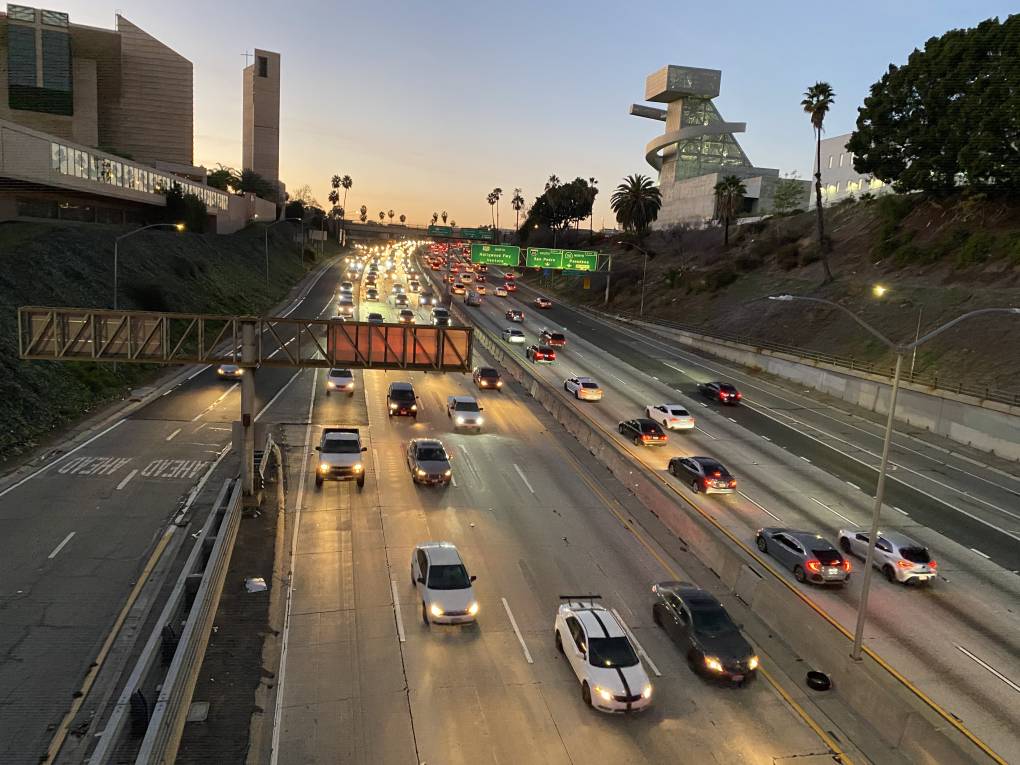
"caption": "Cars drive along U.S. Route 101 in downtown Los Angeles.",
"credit": "Saul Gonzalez/KQED",
"altTag": null,
"description": null,
"imgSizes": {
"medium": {
"file": "https://cdn.kqed.org/wp-content/uploads/sites/10/2024/12/IMG_8102-800x600.jpeg",
"width": 800,
"height": 600,
"mimeType": "image/jpeg"
},
"large": {
"file": "https://cdn.kqed.org/wp-content/uploads/sites/10/2024/12/IMG_8102-1020x765.jpeg",
"width": 1020,
"height": 765,
"mimeType": "image/jpeg"
},
"thumbnail": {
"file": "https://cdn.kqed.org/wp-content/uploads/sites/10/2024/12/IMG_8102-160x120.jpeg",
"width": 160,
"height": 120,
"mimeType": "image/jpeg"
},
"1536x1536": {
"file": "https://cdn.kqed.org/wp-content/uploads/sites/10/2024/12/IMG_8102-1536x1152.jpeg",
"width": 1536,
"height": 1152,
"mimeType": "image/jpeg"
},
"2048x2048": {
"file": "https://cdn.kqed.org/wp-content/uploads/sites/10/2024/12/IMG_8102-2048x1536.jpeg",
"width": 2048,
"height": 1536,
"mimeType": "image/jpeg"
},
"post-thumbnail": {
"file": "https://cdn.kqed.org/wp-content/uploads/sites/10/2024/12/IMG_8102-672x372.jpeg",
"width": 672,
"height": 372,
"mimeType": "image/jpeg"
},
"twentyfourteen-full-width": {
"file": "https://cdn.kqed.org/wp-content/uploads/sites/10/2024/12/IMG_8102-1038x576.jpeg",
"width": 1038,
"height": 576,
"mimeType": "image/jpeg"
},
"full-width": {
"file": "https://cdn.kqed.org/wp-content/uploads/sites/10/2024/12/IMG_8102-1920x1440.jpeg",
"width": 1920,
"height": 1440,
"mimeType": "image/jpeg"
},
"kqedFullSize": {
"file": "https://cdn.kqed.org/wp-content/uploads/sites/10/2024/12/IMG_8102-scaled.jpeg",
"width": 2560,
"height": 1920
}
},
"isLoading": false,
"fetchFailed": false
},
"news_11971075": {
"type": "attachments",
"id": "news_11971075",
"meta": {
"index": "attachments_1716263798",
"site": "news",
"id": "11971075",
"found": true
},
"title": null,
"publishDate": 1703791683,
"status": "inherit",
"parent": 11971074,
"modified": 1733165485,
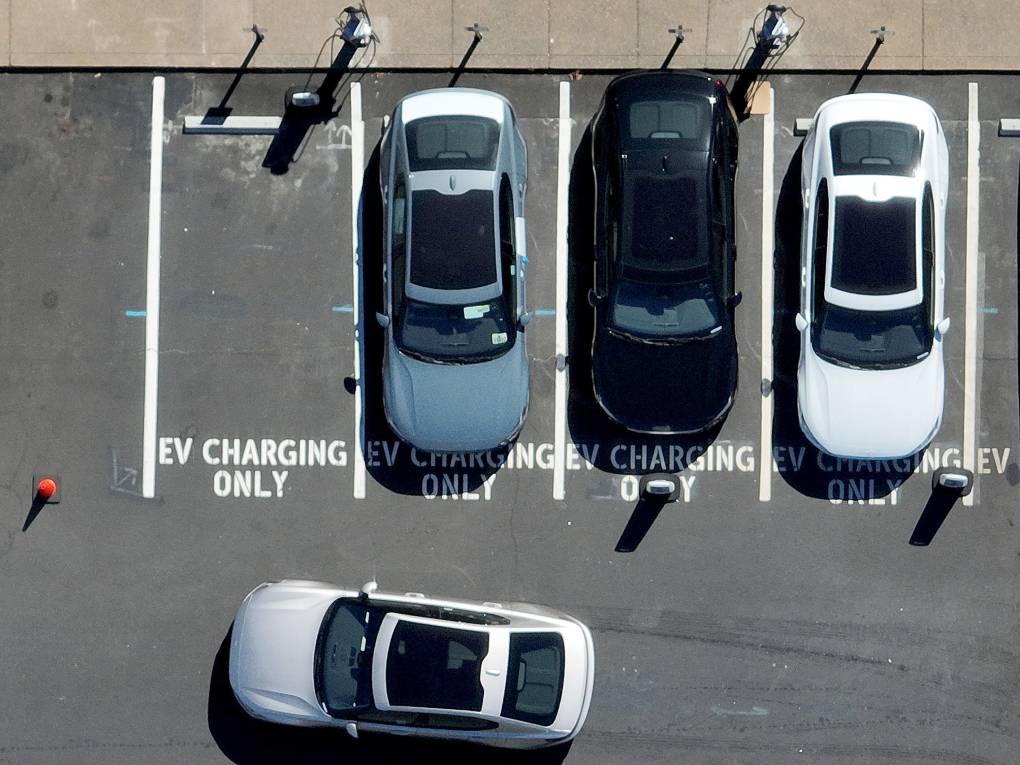
"caption": "A Polestar electric car prepares to park at an EV charging station on July 28, 2023 in Corte Madera.",
"credit": "Justin Sullivan/Getty Images",
"altTag": "An aerial view of a parking lot that has EV chargers, with three cars parked in 'EV Charging Only' spots, and a fourth car pulling in to another one.",
"description": "CORTE MADERA, CALIFORNIA - JULY 28: A Polestar electric car prepares to park at an EV charging station on July 28, 2023 in Corte Madera, California. Seven major automakers announced plans earlier this week to increase the number of high-powered electric vehicle chargers in the country with 30,000 new charging stations along highways and in urban areas. According to the Energy Department, there are currently an estimated 32,000 chargers across the country. (Photo by Justin Sullivan/Getty Images)",
"imgSizes": {
"medium": {
"file": "https://cdn.kqed.org/wp-content/uploads/sites/10/2023/12/gettyimages-1576817852-98c5c2b1e80ed40f3e2b7969add10f2d9535efdf-800x600.jpg",
"width": 800,
"height": 600,
"mimeType": "image/jpeg"
},
"large": {
"file": "https://cdn.kqed.org/wp-content/uploads/sites/10/2023/12/gettyimages-1576817852-98c5c2b1e80ed40f3e2b7969add10f2d9535efdf-1020x765.jpg",
"width": 1020,
"height": 765,
"mimeType": "image/jpeg"
},
"thumbnail": {
"file": "https://cdn.kqed.org/wp-content/uploads/sites/10/2023/12/gettyimages-1576817852-98c5c2b1e80ed40f3e2b7969add10f2d9535efdf-160x120.jpg",
"width": 160,
"height": 120,
"mimeType": "image/jpeg"
},
"1536x1536": {
"file": "https://cdn.kqed.org/wp-content/uploads/sites/10/2023/12/gettyimages-1576817852-98c5c2b1e80ed40f3e2b7969add10f2d9535efdf-1536x1152.jpg",
"width": 1536,
"height": 1152,
"mimeType": "image/jpeg"
},
"2048x2048": {
"file": "https://cdn.kqed.org/wp-content/uploads/sites/10/2023/12/gettyimages-1576817852-98c5c2b1e80ed40f3e2b7969add10f2d9535efdf-2048x1536.jpg",
"width": 2048,
"height": 1536,
"mimeType": "image/jpeg"
},
"post-thumbnail": {
"file": "https://cdn.kqed.org/wp-content/uploads/sites/10/2023/12/gettyimages-1576817852-98c5c2b1e80ed40f3e2b7969add10f2d9535efdf-672x372.jpg",
"width": 672,
"height": 372,
"mimeType": "image/jpeg"
},
"twentyfourteen-full-width": {
"file": "https://cdn.kqed.org/wp-content/uploads/sites/10/2023/12/gettyimages-1576817852-98c5c2b1e80ed40f3e2b7969add10f2d9535efdf-1038x576.jpg",
"width": 1038,
"height": 576,
"mimeType": "image/jpeg"
},
"full-width": {
"file": "https://cdn.kqed.org/wp-content/uploads/sites/10/2023/12/gettyimages-1576817852-98c5c2b1e80ed40f3e2b7969add10f2d9535efdf-1920x1440.jpg",
"width": 1920,
"height": 1440,
"mimeType": "image/jpeg"
},
"kqedFullSize": {
"file": "https://cdn.kqed.org/wp-content/uploads/sites/10/2023/12/gettyimages-1576817852-98c5c2b1e80ed40f3e2b7969add10f2d9535efdf.jpg",
"width": 2274,
"height": 1706
}
},
"isLoading": false,
"fetchFailed": false
},
"news_12016082": {
"type": "attachments",
"id": "news_12016082",
"meta": {
"index": "attachments_1716263798",
"site": "news",
"id": "12016082",
"found": true
},
"title": "Police tape and crime scene",
"publishDate": 1732727273,
"status": "inherit",
"parent": 12016081,
"modified": 1732727319,
"caption": "Police tape stretching across a road in front of a crime scene.",
"credit": "Ajax9/Getty Images",
"altTag": null,
"description": null,
"imgSizes": {
"medium": {
"file": "https://cdn.kqed.org/wp-content/uploads/sites/10/2024/11/GettyImages-1889004792-800x533.jpg",
"width": 800,
"height": 533,
"mimeType": "image/jpeg"
},
"large": {
"file": "https://cdn.kqed.org/wp-content/uploads/sites/10/2024/11/GettyImages-1889004792-1020x680.jpg",
"width": 1020,
"height": 680,
"mimeType": "image/jpeg"
},
"thumbnail": {
"file": "https://cdn.kqed.org/wp-content/uploads/sites/10/2024/11/GettyImages-1889004792-160x107.jpg",
"width": 160,
"height": 107,
"mimeType": "image/jpeg"
},
"1536x1536": {
"file": "https://cdn.kqed.org/wp-content/uploads/sites/10/2024/11/GettyImages-1889004792-1536x1024.jpg",
"width": 1536,
"height": 1024,
"mimeType": "image/jpeg"
},
"post-thumbnail": {
"file": "https://cdn.kqed.org/wp-content/uploads/sites/10/2024/11/GettyImages-1889004792-672x372.jpg",
"width": 672,
"height": 372,
"mimeType": "image/jpeg"
},
"twentyfourteen-full-width": {
"file": "https://cdn.kqed.org/wp-content/uploads/sites/10/2024/11/GettyImages-1889004792-1038x576.jpg",
"width": 1038,
"height": 576,
"mimeType": "image/jpeg"
},
"full-width": {
"file": "https://cdn.kqed.org/wp-content/uploads/sites/10/2024/11/GettyImages-1889004792-1920x1280.jpg",
"width": 1920,
"height": 1280,
"mimeType": "image/jpeg"
},
"kqedFullSize": {
"file": "https://cdn.kqed.org/wp-content/uploads/sites/10/2024/11/GettyImages-1889004792.jpg",
"width": 2000,
"height": 1333
}
},
"isLoading": false,
"fetchFailed": false
},
"news_11796751": {
"type": "attachments",
"id": "news_11796751",
"meta": {
"index": "attachments_1716263798",
"site": "news",
"id": "11796751",
"found": true
},
"title": "Investigation Continues Into Tesla Driver's Death While In Autopilot Mode",
"publishDate": 1579299477,
"status": "inherit",
"parent": 11796657,
"modified": 1729283665,
"caption": "Tesla vehicles sit parked outside of a new Tesla showroom and service center in New York. ",
"credit": "Spencer Platt/Getty Images",
"altTag": null,
"description": null,
"imgSizes": {
"thumbnail": {
"file": "https://cdn.kqed.org/wp-content/uploads/sites/10/2020/01/GettyImages-545144484-160x107.jpg",
"width": 160,
"height": 107,
"mimeType": "image/jpeg"
},
"medium": {
"file": "https://cdn.kqed.org/wp-content/uploads/sites/10/2020/01/GettyImages-545144484-800x533.jpg",
"width": 800,
"height": 533,
"mimeType": "image/jpeg"
},
"large": {
"file": "https://cdn.kqed.org/wp-content/uploads/sites/10/2020/01/GettyImages-545144484-1020x680.jpg",
"width": 1020,
"height": 680,
"mimeType": "image/jpeg"
},
"post-thumbnail": {
"file": "https://cdn.kqed.org/wp-content/uploads/sites/10/2020/01/GettyImages-545144484-672x372.jpg",
"width": 672,
"height": 372,
"mimeType": "image/jpeg"
},
"twentyfourteen-full-width": {
"file": "https://cdn.kqed.org/wp-content/uploads/sites/10/2020/01/GettyImages-545144484-1038x576.jpg",
"width": 1038,
"height": 576,
"mimeType": "image/jpeg"
},
"full-width": {
"file": "https://cdn.kqed.org/wp-content/uploads/sites/10/2020/01/GettyImages-545144484-1920x1280.jpg",
"width": 1920,
"height": 1280,
"mimeType": "image/jpeg"
},
"apple_news_ca_landscape_12_9": {
"file": "https://cdn.kqed.org/wp-content/uploads/sites/10/2020/01/GettyImages-545144484-1832x1374.jpg",
"width": 1832,
"height": 1374,
"mimeType": "image/jpeg"
},
"apple_news_ca_landscape_9_7": {
"file": "https://cdn.kqed.org/wp-content/uploads/sites/10/2020/01/GettyImages-545144484-1376x1032.jpg",
"width": 1376,
"height": 1032,
"mimeType": "image/jpeg"
},
"apple_news_ca_landscape_5_5": {
"file": "https://cdn.kqed.org/wp-content/uploads/sites/10/2020/01/GettyImages-545144484-1044x783.jpg",
"width": 1044,
"height": 783,
"mimeType": "image/jpeg"
},
"apple_news_ca_landscape_4_7": {
"file": "https://cdn.kqed.org/wp-content/uploads/sites/10/2020/01/GettyImages-545144484-632x474.jpg",
"width": 632,
"height": 474,
"mimeType": "image/jpeg"
},
"apple_news_ca_landscape_4_0": {
"file": "https://cdn.kqed.org/wp-content/uploads/sites/10/2020/01/GettyImages-545144484-536x402.jpg",
"width": 536,
"height": 402,
"mimeType": "image/jpeg"
},
"apple_news_ca_portrait_12_9": {
"file": "https://cdn.kqed.org/wp-content/uploads/sites/10/2020/01/GettyImages-545144484-1122x1496.jpg",
"width": 1122,
"height": 1496,
"mimeType": "image/jpeg"
},
"apple_news_ca_portrait_9_7": {
"file": "https://cdn.kqed.org/wp-content/uploads/sites/10/2020/01/GettyImages-545144484-840x1120.jpg",
"width": 840,
"height": 1120,
"mimeType": "image/jpeg"
},
"apple_news_ca_portrait_5_5": {
"file": "https://cdn.kqed.org/wp-content/uploads/sites/10/2020/01/GettyImages-545144484-687x916.jpg",
"width": 687,
"height": 916,
"mimeType": "image/jpeg"
},
"apple_news_ca_portrait_4_7": {
"file": "https://cdn.kqed.org/wp-content/uploads/sites/10/2020/01/GettyImages-545144484-414x552.jpg",
"width": 414,
"height": 552,
"mimeType": "image/jpeg"
},
"apple_news_ca_portrait_4_0": {
"file": "https://cdn.kqed.org/wp-content/uploads/sites/10/2020/01/GettyImages-545144484-354x472.jpg",
"width": 354,
"height": 472,
"mimeType": "image/jpeg"
},
"apple_news_ca_square_12_9": {
"file": "https://cdn.kqed.org/wp-content/uploads/sites/10/2020/01/GettyImages-545144484-1472x1472.jpg",
"width": 1472,
"height": 1472,
"mimeType": "image/jpeg"
},
"apple_news_ca_square_9_7": {
"file": "https://cdn.kqed.org/wp-content/uploads/sites/10/2020/01/GettyImages-545144484-1104x1104.jpg",
"width": 1104,
"height": 1104,
"mimeType": "image/jpeg"
},
"apple_news_ca_square_5_5": {
"file": "https://cdn.kqed.org/wp-content/uploads/sites/10/2020/01/GettyImages-545144484-912x912.jpg",
"width": 912,
"height": 912,
"mimeType": "image/jpeg"
},
"apple_news_ca_square_4_7": {
"file": "https://cdn.kqed.org/wp-content/uploads/sites/10/2020/01/GettyImages-545144484-550x550.jpg",
"width": 550,
"height": 550,
"mimeType": "image/jpeg"
},
"apple_news_ca_square_4_0": {
"file": "https://cdn.kqed.org/wp-content/uploads/sites/10/2020/01/GettyImages-545144484-470x470.jpg",
"width": 470,
"height": 470,
"mimeType": "image/jpeg"
},
"kqedFullSize": {
"file": "https://cdn.kqed.org/wp-content/uploads/sites/10/2020/01/GettyImages-545144484.jpg",
"width": 3000,
"height": 2000
}
},
"isLoading": false,
"fetchFailed": false
},
"news_12001421": {
"type": "attachments",
"id": "news_12001421",
"meta": {
"index": "attachments_1716263798",
"site": "news",
"id": "12001421",
"found": true
},
"title": "TeslaSemi",
"publishDate": 1724353064,
"status": "inherit",
"parent": 12001417,
"modified": 1724353414,
"caption": "A Tesla Semi truck, pictured in 2019. ",
"credit": "Tomas Ovalle/AP",
"altTag": null,
"description": null,
"imgSizes": {
"medium": {
"file": "https://cdn.kqed.org/wp-content/uploads/sites/10/2024/08/TeslaSemi-800x510.jpg",
"width": 800,
"height": 510,
"mimeType": "image/jpeg"
},
"large": {
"file": "https://cdn.kqed.org/wp-content/uploads/sites/10/2024/08/TeslaSemi-1020x650.jpg",
"width": 1020,
"height": 650,
"mimeType": "image/jpeg"
},
"thumbnail": {
"file": "https://cdn.kqed.org/wp-content/uploads/sites/10/2024/08/TeslaSemi-160x102.jpg",
"width": 160,
"height": 102,
"mimeType": "image/jpeg"
},
"1536x1536": {
"file": "https://cdn.kqed.org/wp-content/uploads/sites/10/2024/08/TeslaSemi-1536x979.jpg",
"width": 1536,
"height": 979,
"mimeType": "image/jpeg"
},
"post-thumbnail": {
"file": "https://cdn.kqed.org/wp-content/uploads/sites/10/2024/08/TeslaSemi-672x372.jpg",
"width": 672,
"height": 372,
"mimeType": "image/jpeg"
},
"twentyfourteen-full-width": {
"file": "https://cdn.kqed.org/wp-content/uploads/sites/10/2024/08/TeslaSemi-1038x576.jpg",
"width": 1038,
"height": 576,
"mimeType": "image/jpeg"
},
"full-width": {
"file": "https://cdn.kqed.org/wp-content/uploads/sites/10/2024/08/TeslaSemi-1920x1224.jpg",
"width": 1920,
"height": 1224,
"mimeType": "image/jpeg"
},
"kqedFullSize": {
"file": "https://cdn.kqed.org/wp-content/uploads/sites/10/2024/08/TeslaSemi.jpg",
"width": 2000,
"height": 1275
}
},
"isLoading": false,
"fetchFailed": false
},
"news_11998266": {
"type": "attachments",
"id": "news_11998266",
"meta": {
"index": "attachments_1716263798",
"site": "news",
"id": "11998266",
"found": true
},
"title": "Tesla-police",
"publishDate": 1722461363,
"status": "inherit",
"parent": 11998235,
"modified": 1722530368,
"caption": "The nation's first all-electric police car fleet is launched with outfitted Tesla Model Ys for use as police patrol cars on Monday, July 29, 2024, in Pasadena, California.",
"credit": "Damian Dovarganes/AP Photo",
"altTag": "Teslas are labeled as police cars that are parked in a row.",
"description": null,
"imgSizes": {
"medium": {
"file": "https://cdn.kqed.org/wp-content/uploads/sites/10/2024/07/Tesla-police-800x533.jpg",
"width": 800,
"height": 533,
"mimeType": "image/jpeg"
},
"large": {
"file": "https://cdn.kqed.org/wp-content/uploads/sites/10/2024/07/Tesla-police-1020x680.jpg",
"width": 1020,
"height": 680,
"mimeType": "image/jpeg"
},
"thumbnail": {
"file": "https://cdn.kqed.org/wp-content/uploads/sites/10/2024/07/Tesla-police-160x107.jpg",
"width": 160,
"height": 107,
"mimeType": "image/jpeg"
},
"post-thumbnail": {
"file": "https://cdn.kqed.org/wp-content/uploads/sites/10/2024/07/Tesla-police-672x372.jpg",
"width": 672,
"height": 372,
"mimeType": "image/jpeg"
},
"twentyfourteen-full-width": {
"file": "https://cdn.kqed.org/wp-content/uploads/sites/10/2024/07/Tesla-police-1038x576.jpg",
"width": 1038,
"height": 576,
"mimeType": "image/jpeg"
},
"kqedFullSize": {
"file": "https://cdn.kqed.org/wp-content/uploads/sites/10/2024/07/Tesla-police.jpg",
"width": 1440,
"height": 960
}
},
"isLoading": false,
"fetchFailed": false
},
"news_11992305": {
"type": "attachments",
"id": "news_11992305",
"meta": {
"index": "attachments_1716263798",
"site": "news",
"id": "11992305",
"found": true
},
"title": "Telsa Motors Opens New \"Supercharger\" Station In Fremont, California",
"publishDate": 1719519939,
"status": "inherit",
"parent": 11992304,
"modified": 1763424509,
"caption": "A row of new Tesla Superchargers seen outside of the Tesla Factory on Aug. 16, 2013, in Fremont, California.",
"credit": "Justin Sullivan/Getty Images",
"altTag": null,
"description": null,
"imgSizes": {
"medium": {
"file": "https://cdn.kqed.org/wp-content/uploads/sites/10/2024/06/TeslaFremont-800x527.jpg",
"width": 800,
"height": 527,
"mimeType": "image/jpeg"
},
"large": {
"file": "https://cdn.kqed.org/wp-content/uploads/sites/10/2024/06/TeslaFremont-1020x672.jpg",
"width": 1020,
"height": 672,
"mimeType": "image/jpeg"
},
"thumbnail": {
"file": "https://cdn.kqed.org/wp-content/uploads/sites/10/2024/06/TeslaFremont-160x105.jpg",
"width": 160,
"height": 105,
"mimeType": "image/jpeg"
},
"1536x1536": {
"file": "https://cdn.kqed.org/wp-content/uploads/sites/10/2024/06/TeslaFremont-1536x1012.jpg",
"width": 1536,
"height": 1012,
"mimeType": "image/jpeg"
},
"post-thumbnail": {
"file": "https://cdn.kqed.org/wp-content/uploads/sites/10/2024/06/TeslaFremont-672x372.jpg",
"width": 672,
"height": 372,
"mimeType": "image/jpeg"
},
"twentyfourteen-full-width": {
"file": "https://cdn.kqed.org/wp-content/uploads/sites/10/2024/06/TeslaFremont-1038x576.jpg",
"width": 1038,
"height": 576,
"mimeType": "image/jpeg"
},
"kqedFullSize": {
"file": "https://cdn.kqed.org/wp-content/uploads/sites/10/2024/06/TeslaFremont.jpg",
"width": 1920,
"height": 1265
}
},
"isLoading": false,
"fetchFailed": false
},
"news_11983040": {
"type": "attachments",
"id": "news_11983040",
"meta": {
"index": "attachments_1716263798",
"site": "news",
"id": "11983040",
"found": true
},
"parent": 11983039,
"imgSizes": {
"twentyfourteen-full-width": {
"file": "https://cdn.kqed.org/wp-content/uploads/sites/10/2024/04/AP24106515134687-1038x576.jpg",
"width": 1038,
"mimeType": "image/jpeg",
"height": 576
},
"thumbnail": {
"file": "https://cdn.kqed.org/wp-content/uploads/sites/10/2024/04/AP24106515134687-160x108.jpg",
"width": 160,
"mimeType": "image/jpeg",
"height": 108
},
"post-thumbnail": {
"file": "https://cdn.kqed.org/wp-content/uploads/sites/10/2024/04/AP24106515134687-672x372.jpg",
"width": 672,
"mimeType": "image/jpeg",
"height": 372
},
"kqedFullSize": {
"file": "https://cdn.kqed.org/wp-content/uploads/sites/10/2024/04/AP24106515134687-scaled.jpg",
"width": 2560,
"height": 1727
},
"2048x2048": {
"file": "https://cdn.kqed.org/wp-content/uploads/sites/10/2024/04/AP24106515134687-2048x1382.jpg",
"width": 2048,
"mimeType": "image/jpeg",
"height": 1382
},
"large": {
"file": "https://cdn.kqed.org/wp-content/uploads/sites/10/2024/04/AP24106515134687-1020x688.jpg",
"width": 1020,
"mimeType": "image/jpeg",
"height": 688
},
"1536x1536": {
"file": "https://cdn.kqed.org/wp-content/uploads/sites/10/2024/04/AP24106515134687-1536x1036.jpg",
"width": 1536,
"mimeType": "image/jpeg",
"height": 1036
},
"full-width": {
"file": "https://cdn.kqed.org/wp-content/uploads/sites/10/2024/04/AP24106515134687-1920x1296.jpg",
"width": 1920,
"mimeType": "image/jpeg",
"height": 1296
},
"medium": {
"file": "https://cdn.kqed.org/wp-content/uploads/sites/10/2024/04/AP24106515134687-800x540.jpg",
"width": 800,
"mimeType": "image/jpeg",
"height": 540
}
},
"publishDate": 1713214687,
"modified": 1713215905,
"caption": "People walk to the Tesla Gigafactory for electric cars in Gruenheide near Berlin, Germany, on March 13, 2024. After reporting dismal first-quarter sales, Tesla plans to lay off about a tenth of its workforce as it tries to cut costs, multiple media outlets reported Monday. ",
"description": null,
"title": "Tesla Layoffs",
"credit": "Ebrahim Noroozi/The Associated Press",
"status": "inherit",
"altTag": "Several people wearing backpacks walk into a building that says \"Tesla\" on the front.",
"isLoading": false,
"fetchFailed": false
},
"news_11927665": {
"type": "attachments",
"id": "news_11927665",
"meta": {
"index": "attachments_1716263798",
"site": "news",
"id": "11927665",
"found": true
},
"parent": 11927664,
"imgSizes": {
"twentyfourteen-full-width": {
"file": "https://ww2.kqed.org/app/uploads/sites/10/2022/10/gettyimages-1240649087-562ad186ebb4d575d473dd82897a4303ec164f7f-1038x576.jpg",
"width": 1038,
"mimeType": "image/jpeg",
"height": 576
},
"thumbnail": {
"file": "https://ww2.kqed.org/app/uploads/sites/10/2022/10/gettyimages-1240649087-562ad186ebb4d575d473dd82897a4303ec164f7f-160x120.jpg",
"width": 160,
"mimeType": "image/jpeg",
"height": 120
},
"post-thumbnail": {
"file": "https://ww2.kqed.org/app/uploads/sites/10/2022/10/gettyimages-1240649087-562ad186ebb4d575d473dd82897a4303ec164f7f-672x372.jpg",
"width": 672,
"mimeType": "image/jpeg",
"height": 372
},
"kqedFullSize": {
"file": "https://ww2.kqed.org/app/uploads/sites/10/2022/10/gettyimages-1240649087-562ad186ebb4d575d473dd82897a4303ec164f7f-scaled.jpg",
"width": 2560,
"height": 1919
},
"2048x2048": {
"file": "https://ww2.kqed.org/app/uploads/sites/10/2022/10/gettyimages-1240649087-562ad186ebb4d575d473dd82897a4303ec164f7f-2048x1535.jpg",
"width": 2048,
"mimeType": "image/jpeg",
"height": 1535
},
"large": {
"file": "https://ww2.kqed.org/app/uploads/sites/10/2022/10/gettyimages-1240649087-562ad186ebb4d575d473dd82897a4303ec164f7f-1020x764.jpg",
"width": 1020,
"mimeType": "image/jpeg",
"height": 764
},
"1536x1536": {
"file": "https://ww2.kqed.org/app/uploads/sites/10/2022/10/gettyimages-1240649087-562ad186ebb4d575d473dd82897a4303ec164f7f-1536x1151.jpg",
"width": 1536,
"mimeType": "image/jpeg",
"height": 1151
},
"full-width": {
"file": "https://ww2.kqed.org/app/uploads/sites/10/2022/10/gettyimages-1240649087-562ad186ebb4d575d473dd82897a4303ec164f7f-1920x1439.jpg",
"width": 1920,
"mimeType": "image/jpeg",
"height": 1439
},
"medium": {
"file": "https://ww2.kqed.org/app/uploads/sites/10/2022/10/gettyimages-1240649087-562ad186ebb4d575d473dd82897a4303ec164f7f-800x600.jpg",
"width": 800,
"mimeType": "image/jpeg",
"height": 600
}
},
"publishDate": 1664910032,
"modified": 1669767607,
"caption": "Under Twitter's new owner, Elon Musk — who himself has spread COVID misinformation — the platform has rolled back its policy banning the spread of misinformation related to the pandemic.",
"description": "This illustration photo taken May 13, 2022, displays Elon Musks Twitter account with a Twitter logo in the background. Under new owner Musk — who has spread COVID misinformation — the platform has rolled back its policy banning the spread of misinformation related to the pandemic.",
"title": "Billionaire Elon Musk has told Twitter he's willing to buy the company after all, and at the originally agreed upon price of $54.20 per share.",
"credit": "Chris Delmas/AFP via Getty Images",
"status": "inherit",
"altTag": "A hand holding a smartphone showing Elon Musks Twitter account.",
"isLoading": false,
"fetchFailed": false
},
"news_11926063": {
"type": "attachments",
"id": "news_11926063",
"meta": {
"index": "attachments_1716263798",
"site": "news",
"id": "11926063",
"found": true
},
"parent": 11926059,
"imgSizes": {
"twentyfourteen-full-width": {
"file": "https://ww2.kqed.org/app/uploads/sites/10/2022/09/072522-AB5-TRUCKER-PROTEST-OAKLAND-MHN-01-CM-1038x576.jpg",
"width": 1038,
"mimeType": "image/jpeg",
"height": 576
},
"thumbnail": {
"file": "https://ww2.kqed.org/app/uploads/sites/10/2022/09/072522-AB5-TRUCKER-PROTEST-OAKLAND-MHN-01-CM-160x100.jpg",
"width": 160,
"mimeType": "image/jpeg",
"height": 100
},
"post-thumbnail": {
"file": "https://ww2.kqed.org/app/uploads/sites/10/2022/09/072522-AB5-TRUCKER-PROTEST-OAKLAND-MHN-01-CM-672x372.jpg",
"width": 672,
"mimeType": "image/jpeg",
"height": 372
},
"kqedFullSize": {
"file": "https://ww2.kqed.org/app/uploads/sites/10/2022/09/072522-AB5-TRUCKER-PROTEST-OAKLAND-MHN-01-CM.jpg",
"width": 2000,
"height": 1251
},
"large": {
"file": "https://ww2.kqed.org/app/uploads/sites/10/2022/09/072522-AB5-TRUCKER-PROTEST-OAKLAND-MHN-01-CM-1020x638.jpg",
"width": 1020,
"mimeType": "image/jpeg",
"height": 638
},
"1536x1536": {
"file": "https://ww2.kqed.org/app/uploads/sites/10/2022/09/072522-AB5-TRUCKER-PROTEST-OAKLAND-MHN-01-CM-1536x961.jpg",
"width": 1536,
"mimeType": "image/jpeg",
"height": 961
},
"full-width": {
"file": "https://ww2.kqed.org/app/uploads/sites/10/2022/09/072522-AB5-TRUCKER-PROTEST-OAKLAND-MHN-01-CM-1920x1201.jpg",
"width": 1920,
"mimeType": "image/jpeg",
"height": 1201
},
"medium": {
"file": "https://ww2.kqed.org/app/uploads/sites/10/2022/09/072522-AB5-TRUCKER-PROTEST-OAKLAND-MHN-01-CM-800x500.jpg",
"width": 800,
"mimeType": "image/jpeg",
"height": 500
}
},
"publishDate": 1663367165,
"modified": 1694551514,
"caption": "Shipments of cargo leave the Port of Oakland on July 25, 2022. ",
"description": "Cargo is loaded onto trucks at the Port of Oakland. ",
"title": "072522-AB5-TRUCKER-PROTEST-OAKLAND-MHN-01-CM",
"credit": "Martin do Nascimento/CalMatters",
"status": "inherit",
"altTag": "two big rig trucks drive with cranes at the Port of Oakland in the background",
"isLoading": false,
"fetchFailed": false
},
"news_11919899": {
"type": "attachments",
"id": "news_11919899",
"meta": {
"index": "attachments_1716263798",
"site": "news",
"id": "11919899",
"found": true
},
"parent": 11919886,
"imgSizes": {
"twentyfourteen-full-width": {
"file": "https://ww2.kqed.org/app/uploads/sites/10/2022/07/GettyImages-1241980380-1038x576.jpg",
"width": 1038,
"mimeType": "image/jpeg",
"height": 576
},
"thumbnail": {
"file": "https://ww2.kqed.org/app/uploads/sites/10/2022/07/GettyImages-1241980380-160x102.jpg",
"width": 160,
"mimeType": "image/jpeg",
"height": 102
},
"post-thumbnail": {
"file": "https://ww2.kqed.org/app/uploads/sites/10/2022/07/GettyImages-1241980380-672x372.jpg",
"width": 672,
"mimeType": "image/jpeg",
"height": 372
},
"kqedFullSize": {
"file": "https://ww2.kqed.org/app/uploads/sites/10/2022/07/GettyImages-1241980380.jpg",
"width": 1920,
"height": 1222
},
"large": {
"file": "https://ww2.kqed.org/app/uploads/sites/10/2022/07/GettyImages-1241980380-1020x649.jpg",
"width": 1020,
"mimeType": "image/jpeg",
"height": 649
},
"1536x1536": {
"file": "https://ww2.kqed.org/app/uploads/sites/10/2022/07/GettyImages-1241980380-1536x978.jpg",
"width": 1536,
"mimeType": "image/jpeg",
"height": 978
},
"medium": {
"file": "https://ww2.kqed.org/app/uploads/sites/10/2022/07/GettyImages-1241980380-800x509.jpg",
"width": 800,
"mimeType": "image/jpeg",
"height": 509
}
},
"publishDate": 1658257645,
"modified": 1658257699,
"caption": "In this illustration photo taken on July 18, 2022 Elon Musk's reply Tweet to Parag Agrawal, the CEO of Twitter, showing a poop emoji is displayed on the screen of a smartphone with Musk Twitter page in the background in Los Angeles. ",
"description": null,
"title": "GettyImages-1241980380",
"credit": "Chris Delmas/AFP/Getty Images",
"status": "inherit",
"altTag": "A smart phone showing an Elon Musk tweet",
"isLoading": false,
"fetchFailed": false
},
"news_11913749": {
"type": "attachments",
"id": "news_11913749",
"meta": {
"index": "attachments_1716263798",
"site": "news",
"id": "11913749",
"found": true
},
"parent": 11913748,
"imgSizes": {
"twentyfourteen-full-width": {
"file": "https://ww2.kqed.org/app/uploads/sites/10/2022/05/copy-of-composites_custom-f5a340a115f8a698b96ada0cc7b060536cb6b184-1038x576.jpg",
"width": 1038,
"mimeType": "image/jpeg",
"height": 576
},
"thumbnail": {
"file": "https://ww2.kqed.org/app/uploads/sites/10/2022/05/copy-of-composites_custom-f5a340a115f8a698b96ada0cc7b060536cb6b184-160x90.jpg",
"width": 160,
"mimeType": "image/jpeg",
"height": 90
},
"post-thumbnail": {
"file": "https://ww2.kqed.org/app/uploads/sites/10/2022/05/copy-of-composites_custom-f5a340a115f8a698b96ada0cc7b060536cb6b184-672x372.jpg",
"width": 672,
"mimeType": "image/jpeg",
"height": 372
},
"kqedFullSize": {
"file": "https://ww2.kqed.org/app/uploads/sites/10/2022/05/copy-of-composites_custom-f5a340a115f8a698b96ada0cc7b060536cb6b184.jpg",
"width": 2400,
"height": 1350
},
"2048x2048": {
"file": "https://ww2.kqed.org/app/uploads/sites/10/2022/05/copy-of-composites_custom-f5a340a115f8a698b96ada0cc7b060536cb6b184-2048x1152.jpg",
"width": 2048,
"mimeType": "image/jpeg",
"height": 1152
},
"large": {
"file": "https://ww2.kqed.org/app/uploads/sites/10/2022/05/copy-of-composites_custom-f5a340a115f8a698b96ada0cc7b060536cb6b184-1020x574.jpg",
"width": 1020,
"mimeType": "image/jpeg",
"height": 574
},
"1536x1536": {
"file": "https://ww2.kqed.org/app/uploads/sites/10/2022/05/copy-of-composites_custom-f5a340a115f8a698b96ada0cc7b060536cb6b184-1536x864.jpg",
"width": 1536,
"mimeType": "image/jpeg",
"height": 864
},
"full-width": {
"file": "https://ww2.kqed.org/app/uploads/sites/10/2022/05/copy-of-composites_custom-f5a340a115f8a698b96ada0cc7b060536cb6b184-1920x1080.jpg",
"width": 1920,
"mimeType": "image/jpeg",
"height": 1080
},
"medium": {
"file": "https://ww2.kqed.org/app/uploads/sites/10/2022/05/copy-of-composites_custom-f5a340a115f8a698b96ada0cc7b060536cb6b184-800x450.jpg",
"width": 800,
"mimeType": "image/jpeg",
"height": 450
}
},
"publishDate": 1652219242,
"modified": 1652222745,
"caption": "Left to right: Elon Musk and Donald Trump",
"description": null,
"title": null,
"credit": "Jamie Squire/Getty Images;Angela Weiss/AFP via Getty Images",
"status": "inherit",
"altTag": null,
"isLoading": false,
"fetchFailed": false
}
},
"audioPlayerReducer": {
"postId": "stream_live",
"isPaused": true,
"isPlaying": false,
"pfsActive": false,
"pledgeModalIsOpen": true,
"playerDrawerIsOpen": false,
"liveAudioPlayStartedAt": 0,
"liveAudioPlayContext": ""
},
"authorsReducer": {
"byline_news_12010070": {
"type": "authors",
"id": "byline_news_12010070",
"meta": {
"override": true
},
"slug": "byline_news_12010070",
"name": "Tom Krisher, The Associated Press",
"isLoading": false
},
"byline_news_12001417": {
"type": "authors",
"id": "byline_news_12001417",
"meta": {
"override": true
},
"slug": "byline_news_12001417",
"name": "The Associated Press",
"isLoading": false
},
"byline_news_11998235": {
"type": "authors",
"id": "byline_news_11998235",
"meta": {
"override": true
},
"slug": "byline_news_11998235",
"name": "Jaimie Ding \u003cbr>Associated Press",
"isLoading": false
},
"byline_news_11927664": {
"type": "authors",
"id": "byline_news_11927664",
"meta": {
"override": true
},
"slug": "byline_news_11927664",
"name": "Raquel Maria Dillon and Shannon Bond",
"isLoading": false
},
"byline_news_11926059": {
"type": "authors",
"id": "byline_news_11926059",
"meta": {
"override": true
},
"slug": "byline_news_11926059",
"name": "\u003ca href=\"https://calmatters.org/author/nadia-lopez/\">Nadia Lopez\u003c/a>",
"isLoading": false
},
"byline_news_11919886": {
"type": "authors",
"id": "byline_news_11919886",
"meta": {
"override": true
},
"slug": "byline_news_11919886",
"name": "Shannon Bond",
"isLoading": false
},
"byline_news_11913748": {
"type": "authors",
"id": "byline_news_11913748",
"meta": {
"override": true
},
"slug": "byline_news_11913748",
"name": "\u003ca>Shannon Bond\u003c/a> ",
"isLoading": false
},
"danbrekke": {
"type": "authors",
"id": "222",
"meta": {
"index": "authors_1716337520",
"id": "222",
"found": true
},
"name": "Dan Brekke",
"firstName": "Dan",
"lastName": "Brekke",
"slug": "danbrekke",
"email": "dbrekke@kqed.org",
"display_author_email": true,
"staff_mastheads": [
"news",
"science"
],
"title": "KQED Editor and Reporter",
"bio": "Dan Brekke is a reporter and editor for KQED News, responsible for coverage of topics ranging from California water issues to the Bay Area's transportation challenges. In a newsroom career that began in Chicago in 1972, Dan has worked for \u003cem>The San Francisco Examiner,\u003c/em> Wired and TechTV and has been published in The New York Times, The New York Times Magazine, Business 2.0, Salon and elsewhere.\r\n\r\nSince joining KQED in 2007, Dan has reported, edited and produced both radio and online features and breaking news pieces. He has shared as both editor and reporter in four Society of Professional Journalists Norcal Excellence in Journalism awards and one Edward R. Murrow regional award. He was chosen for a spring 2017 residency at the Mesa Refuge to advance his research on California salmon.\r\n\r\nEmail Dan at: \u003ca href=\"mailto:dbrekke@kqed.org\">dbrekke@kqed.org\u003c/a>\r\n\r\n\u003cstrong>Twitter:\u003c/strong> \u003ca href=\"https://twitter.com/danbrekke\" rel=\"noopener noreferrer\">twitter.com/danbrekke\u003c/a>\r\n\u003cstrong>Facebook:\u003c/strong> \u003ca href=\"https://www.facebook.com/danbrekke\" rel=\"noopener noreferrer\">www.facebook.com/danbrekke\u003c/a>\r\n\u003cstrong>LinkedIn:\u003c/strong> \u003ca href=\"https://www.linkedin.com/in/danbrekke\" rel=\"noopener noreferrer\">www.linkedin.com/in/danbrekke\u003c/a>",
"avatar": "https://secure.gravatar.com/avatar/8f1f0d2a978fb3b23426c922c7e2af558fa36905b49c4ce76a97dc3c72d27226?s=600&d=mm&r=g",
"twitter": "danbrekke",
"bluesky": null,
"facebook": null,
"instagram": "https://www.instagram.com/dan.brekke/",
"linkedin": "https://www.linkedin.com/in/danbrekke/",
"sites": [
{
"site": "news",
"roles": [
"administrator",
"create_posts"
]
},
{
"site": "stateofhealth",
"roles": [
"editor"
]
},
{
"site": "science",
"roles": [
"editor"
]
},
{
"site": "quest",
"roles": [
"contributor"
]
},
{
"site": "food",
"roles": [
"contributor"
]
},
{
"site": "forum",
"roles": [
"contributor"
]
},
{
"site": "elections",
"roles": [
"editor"
]
},
{
"site": "liveblog",
"roles": [
"editor"
]
}
],
"headData": {
"title": "Dan Brekke | KQED",
"description": "KQED Editor and Reporter",
"ogImgSrc": "https://secure.gravatar.com/avatar/8f1f0d2a978fb3b23426c922c7e2af558fa36905b49c4ce76a97dc3c72d27226?s=600&d=mm&r=g",
"twImgSrc": "https://secure.gravatar.com/avatar/8f1f0d2a978fb3b23426c922c7e2af558fa36905b49c4ce76a97dc3c72d27226?s=600&d=mm&r=g"
},
"isLoading": false,
"link": "/author/danbrekke"
},
"kqednewsstaffandwires": {
"type": "authors",
"id": "237",
"meta": {
"index": "authors_1716337520",
"id": "237",
"found": true
},
"name": "KQED News Staff and Wires",
"firstName": "KQED News Staff and Wires",
"lastName": null,
"slug": "kqednewsstaffandwires",
"email": "onlinenewsstaff@kqed.org",
"display_author_email": false,
"staff_mastheads": [],
"title": null,
"bio": null,
"avatar": "https://secure.gravatar.com/avatar/72295af8ebbfbd19a4948f5271285664?s=600&d=blank&r=g",
"twitter": null,
"facebook": null,
"instagram": null,
"linkedin": null,
"sites": [
{
"site": "arts",
"roles": [
"contributor"
]
},
{
"site": "news",
"roles": [
"contributor"
]
},
{
"site": "lowdown",
"roles": [
"author"
]
},
{
"site": "stateofhealth",
"roles": [
"contributor"
]
},
{
"site": "food",
"roles": [
"author"
]
}
],
"headData": {
"title": "KQED News Staff and Wires | KQED",
"description": null,
"ogImgSrc": "https://secure.gravatar.com/avatar/72295af8ebbfbd19a4948f5271285664?s=600&d=blank&r=g",
"twImgSrc": "https://secure.gravatar.com/avatar/72295af8ebbfbd19a4948f5271285664?s=600&d=blank&r=g"
},
"isLoading": false,
"link": "/author/kqednewsstaffandwires"
},
"sgonzalez": {
"type": "authors",
"id": "11621",
"meta": {
"index": "authors_1716337520",
"id": "11621",
"found": true
},
"name": "Saul Gonzalez",
"firstName": "Saul",
"lastName": "Gonzalez",
"slug": "sgonzalez",
"email": "sgonzalez@KQED.org",
"display_author_email": false,
"staff_mastheads": [
"news"
],
"title": "Host, The California Report",
"bio": "A Golden State native, Saul has been the Los Angeles co-host of \u003cem>The California Report\u003c/em>since 2019, covering such issues as homelessness and housing policy, the state's response to climate change and the ravages of the Covid pandemic. Whenever possible, tries to be outside of the studio, connecting these big issues to the daily lives of Californians experiencing them in very personal ways.\r\n\r\nBefore joining KQED, Saul worked for the PBS \u003cem>NewsHour, Religion & Ethics Newsweekly, \u003c/em>and public radio affiliate KCRW in Santa Monica, where he also hosted the podcast series \"There Goes the Neighborhood\" about gentrification. For his work, Saul has been honored with several Emmys and is a two-time winner of the L.A. Press Club's Radio Journalist of the Year Award.\r\n\r\nWhen not working, Saul spends his time trying to hone his amateur photography skills and spending as much time as possible in bookstores and coffee houses.",
"avatar": "https://secure.gravatar.com/avatar/06e10f8ad252ef896cc4dc6bbee5f901?s=600&d=blank&r=g",
"twitter": null,
"facebook": null,
"instagram": null,
"linkedin": null,
"sites": [
{
"site": "news",
"roles": [
"author"
]
}
],
"headData": {
"title": "Saul Gonzalez | KQED",
"description": "Host, The California Report",
"ogImgSrc": "https://secure.gravatar.com/avatar/06e10f8ad252ef896cc4dc6bbee5f901?s=600&d=blank&r=g",
"twImgSrc": "https://secure.gravatar.com/avatar/06e10f8ad252ef896cc4dc6bbee5f901?s=600&d=blank&r=g"
},
"isLoading": false,
"link": "/author/sgonzalez"
},
"bsiavoshy": {
"type": "authors",
"id": "11890",
"meta": {
"index": "authors_1716337520",
"id": "11890",
"found": true
},
"name": "Bejan Siavoshy",
"firstName": "Bejan",
"lastName": "Siavoshy",
"slug": "bsiavoshy",
"email": "bsiavoshy@kqed.org",
"display_author_email": false,
"staff_mastheads": [],
"title": "KQED Contributor",
"bio": null,
"avatar": "https://secure.gravatar.com/avatar/ead3e7c509634b37a73b1f57677e49f9?s=600&d=blank&r=g",
"twitter": null,
"facebook": null,
"instagram": null,
"linkedin": null,
"sites": [
{
"site": "news",
"roles": [
"editor"
]
}
],
"headData": {
"title": "Bejan Siavoshy | KQED",
"description": "KQED Contributor",
"ogImgSrc": "https://secure.gravatar.com/avatar/ead3e7c509634b37a73b1f57677e49f9?s=600&d=blank&r=g",
"twImgSrc": "https://secure.gravatar.com/avatar/ead3e7c509634b37a73b1f57677e49f9?s=600&d=blank&r=g"
},
"isLoading": false,
"link": "/author/bsiavoshy"
},
"kdebenedetti": {
"type": "authors",
"id": "11913",
"meta": {
"index": "authors_1716337520",
"id": "11913",
"found": true
},
"name": "Katie DeBenedetti",
"firstName": "Katie",
"lastName": "DeBenedetti",
"slug": "kdebenedetti",
"email": "kdebenedetti@kqed.org",
"display_author_email": false,
"staff_mastheads": [
"news",
"science"
],
"title": "KQED Contributor",
"bio": "Katie DeBenedetti is a digital reporter covering daily news for the Express Desk. Prior to joining KQED as a culture reporting intern in January 2024, she covered education and city government for the Napa Valley Register.",
"avatar": "https://secure.gravatar.com/avatar/6e31073cb8f7e4214ab03f42771d0f45?s=600&d=blank&r=g",
"twitter": null,
"facebook": null,
"instagram": null,
"linkedin": null,
"sites": [
{
"site": "news",
"roles": [
"author"
]
},
{
"site": "science",
"roles": [
"author"
]
},
{
"site": "liveblog",
"roles": [
"author"
]
}
],
"headData": {
"title": "Katie DeBenedetti | KQED",
"description": "KQED Contributor",
"ogImgSrc": "https://secure.gravatar.com/avatar/6e31073cb8f7e4214ab03f42771d0f45?s=600&d=blank&r=g",
"twImgSrc": "https://secure.gravatar.com/avatar/6e31073cb8f7e4214ab03f42771d0f45?s=600&d=blank&r=g"
},
"isLoading": false,
"link": "/author/kdebenedetti"
},
"emanoukian": {
"type": "authors",
"id": "11925",
"meta": {
"index": "authors_1716337520",
"id": "11925",
"found": true
},
"name": "Elize Manoukian",
"firstName": "Elize",
"lastName": "Manoukian",
"slug": "emanoukian",
"email": "emanoukian@KQED.org",
"display_author_email": false,
"staff_mastheads": [
"news"
],
"title": "Digital News Editor",
"bio": "Elize Manoukian is an award-winning audio producer and editor on the Express Desk, KQED's digital news platform. Her work has appeared on KPFA, Interlochen Public Radio, Oregon Public Broadcast, the New York Daily News, LA Times and the San Diego Union-Tribune. You can reach her at emanoukian@kqed.org.",
"avatar": "https://secure.gravatar.com/avatar/4525f1a8e46ccb30933b32653d9772064cfefe3fa655eb45b3b3a80341f6bdad?s=600&d=blank&r=g",
"twitter": null,
"bluesky": null,
"facebook": null,
"instagram": null,
"linkedin": null,
"sites": [
{
"site": "arts",
"roles": [
"editor"
]
},
{
"site": "news",
"roles": [
"editor"
]
},
{
"site": "science",
"roles": [
"editor"
]
}
],
"headData": {
"title": "Elize Manoukian | KQED",
"description": "Digital News Editor",
"ogImgSrc": "https://secure.gravatar.com/avatar/4525f1a8e46ccb30933b32653d9772064cfefe3fa655eb45b3b3a80341f6bdad?s=600&d=blank&r=g",
"twImgSrc": "https://secure.gravatar.com/avatar/4525f1a8e46ccb30933b32653d9772064cfefe3fa655eb45b3b3a80341f6bdad?s=600&d=blank&r=g"
},
"isLoading": false,
"link": "/author/emanoukian"
}
},
"pagesReducer": {
"news_tag_tesla": {
"type": "terms",
"id": "news_57",
"meta": {
"index": "terms_1716263798",
"site": "news",
"id": "57",
"score": 9.3087635
},
"featImg": null,
"name": "Tesla",
"description": null,
"taxonomy": "tag",
"headData": {
"twImgId": null,
"twTitle": null,
"ogTitle": null,
"ogImgId": null,
"twDescription": null,
"description": null,
"title": "Tesla Archives | KQED News",
"ogDescription": null
},
"ttid": 57,
"slug": "tesla",
"isLoading": false,
"title": "Tesla",
"pageMeta": {
"site": "news",
"WpPageTemplate": "page-topic-editorial",
"currentPage": 2
},
"blocks": [
{
"blockName": "kqed/post-list",
"attrs": {
"layout": "cardArticle2",
"query": "posts/news?tag=tesla",
"seeMore": false,
"paginated": true,
"page": 2
}
},
{
"blockName": "kqed/ad"
}
]
}
},
"pfsSessionReducer": {},
"postsReducer": {
"stream_live": {
"type": "live",
"id": "stream_live",
"audioUrl": "https://hls.kqed.org/hls/kqed_app/playlist.m3u8",
"title": "Live Stream",
"excerpt": "Live Stream information currently unavailable.",
"link": "/radio",
"featImg": "",
"label": {
"name": "KQED Live",
"link": "/"
}
},
"stream_kqedNewscast": {
"type": "posts",
"id": "stream_kqedNewscast",
"audioUrl": "https://www.kqed.org/.stream/anon/radio/RDnews/newscast.mp3?_=1",
"title": "KQED Newscast",
"featImg": "",
"label": {
"name": "88.5 FM",
"link": "/"
}
},
"news_12016475": {
"type": "posts",
"id": "news_12016475",
"meta": {
"index": "posts_1716263798",
"site": "news",
"id": "12016475",
"score": null,
"sort": [
1733313604000
]
},
"guestAuthors": [],
"slug": "despite-trumps-threats-california-doubles-down-on-electric-vehicles",
"title": "Despite Trump’s Threats, California Doubles Down on Electric Vehicles",
"publishDate": 1733313604,
"format": "standard",
"headTitle": "Despite Trump’s Threats, California Doubles Down on Electric Vehicles | KQED",
"labelTerm": {
"site": "news"
},
"content": "\u003cp>At this year’s Los Angeles Auto Show, automakers made big bets on zero-emission vehicles. Very big.\u003c/p>\n\u003cp>Commercial car makers like Kia and Cadillac unveiled three-row, family-friendly electric SUVs to appeal to American tastes for larger cars.\u003c/p>\n\u003cp>These honking big vehicles don’t need engines or fuel. But they’re debuting at a dicey moment for the industry.\u003c/p>\n\u003cp>With Donald Trump’s return to the White House in January, advocates in California are concerned about the future of zero-emission vehicles, regardless of size, purpose or environmental impact.\u003c/p>\n\u003cp>Their fear? \u003ca href=\"https://www.kqed.org/news/12016258/californias-embrace-of-zero-emission-vehicles-could-hit-a-wall-with-the-new-trump-presidency\">Trump will repeal tax credits\u003c/a> for purchasing the vehicles, as promised during his campaign.\u003c/p>\n\u003cp>[ad fullwidth]\u003c/p>\n\u003cp>“It’s quite disappointing, knowing how helpful that tax credit and other incentives have been, especially for those who don’t have a lot of financial means to afford these vehicles,” said Cecelia Sullivan, president emeritus of the North Bay Electric Auto Association (NBEAA).\u003c/p>\n\u003cp>“This is going to be a real test of the durability of federal policies surrounding EVs,” said policy analyst Ingrid Malmgren, with the advocacy group Plug In America.\u003c/p>\n\u003cp>The tax credits Trump targeted were originally introduced as part of President Joe Biden’s Inflation Reduction Act, passed in 2022. The bill provides buyers who \u003ca href=\"https://www.energy.gov/energysaver/new-and-used-clean-vehicle-tax-credits#:~:text=The%20taxpayer%27s%20modified%20adjusted%20gross,on%20another%20taxpayer%27s%20tax%20return.\">meet certain criteria\u003c/a> with up to $7,500 for new EVs and up to $4,000 for used ones. Starting in 2024, customers were able to opt to transfer the credits directly to eligible dealers instead, for a discount upfront.\u003c/p>\n\u003cp>There are already more than two million zero-emission vehicles on California’s roads, according to the \u003ca href=\"https://www.veloz.org/ev-market-report/\">state’s latest available data\u003c/a>. Malmgren said lifting tax credits may make it harder for many drivers to be able to afford an EV in the future.\u003c/p>\n\u003cp>“People who have a lot of money are still going to be able to buy fancy cars, whether they’re EVs or gas cars,” she added. “But if EVs end up being more expensive because these tax credits are taken away or regulations are removed, then the people who will be most impacted are the people who don’t have as much.”\u003c/p>\n\u003cfigure id=\"attachment_12016485\" class=\"wp-caption aligncenter\" style=\"max-width: 2560px\">\u003cimg loading=\"lazy\" decoding=\"async\" class=\"wp-image-12016485 size-full\" src=\"https://cdn.kqed.org/wp-content/uploads/sites/10/2024/12/IMG_5809-scaled.jpg\" alt=\"\" width=\"2560\" height=\"1920\" srcset=\"https://cdn.kqed.org/wp-content/uploads/sites/10/2024/12/IMG_5809-scaled.jpg 2560w, https://cdn.kqed.org/wp-content/uploads/sites/10/2024/12/IMG_5809-800x600.jpg 800w, https://cdn.kqed.org/wp-content/uploads/sites/10/2024/12/IMG_5809-1020x765.jpg 1020w, https://cdn.kqed.org/wp-content/uploads/sites/10/2024/12/IMG_5809-160x120.jpg 160w, https://cdn.kqed.org/wp-content/uploads/sites/10/2024/12/IMG_5809-1536x1152.jpg 1536w, https://cdn.kqed.org/wp-content/uploads/sites/10/2024/12/IMG_5809-2048x1536.jpg 2048w, https://cdn.kqed.org/wp-content/uploads/sites/10/2024/12/IMG_5809-1920x1440.jpg 1920w\" sizes=\"(max-width: 2560px) 100vw, 2560px\">\u003cfigcaption class=\"wp-caption-text\">A Toyota electric vehicle on display at the Los Angeles Auto Show on Nov. 21 at the Los Angeles Convention Center. \u003ccite>(Saul Gonzalez/KQED)\u003c/cite>\u003c/figcaption>\u003c/figure>\n\u003cp>In response to Trump’s threats to end the credits, Gov. Gavin Newsom announced a plan to restart California’s Clean Vehicle Rebate Program, which ended in 2023.\u003c/p>\n\u003cp>“We will intervene if the Trump administration eliminates the federal tax credit, doubling down on our commitment to clean air and green jobs in California,” Newsom said in a statement. “We’re not turning back on a clean transportation future — we’re going to make it more affordable for people to drive vehicles that don’t pollute.”\u003c/p>\n\u003cp>The program provided up to $7,500 for the purchase or lease of a zero-emission vehicle. During its lifetime, the program funded nearly 600,000 vehicles and saved more than 450 million gallons of fuel, according to a \u003ca href=\"https://www.gov.ca.gov/2024/11/25/as-california-achieves-historic-milestone-governor-newsom-commits-to-restarting-states-zev-rebate-program-if-federal-tax-credit-is-eliminated/\">state press release\u003c/a>.\u003c/p>\n\u003cp>Newsom’s proposed rebates would come from the state’s Greenhouse Gas Reduction Fund, paid for by polluters under the state’s cap-and-trade program, according to the governor’s statement. That fund pays for clean transportation, sustainable housing and other programs that benefit historically disadvantaged communities in the state.\u003c/p>\n\u003cfigure id=\"attachment_12016486\" class=\"wp-caption aligncenter\" style=\"max-width: 2560px\">\u003cimg loading=\"lazy\" decoding=\"async\" class=\"wp-image-12016486 size-full\" src=\"https://cdn.kqed.org/wp-content/uploads/sites/10/2024/12/IMG_5466-scaled.jpg\" alt=\"\" width=\"2560\" height=\"1920\" srcset=\"https://cdn.kqed.org/wp-content/uploads/sites/10/2024/12/IMG_5466-scaled.jpg 2560w, https://cdn.kqed.org/wp-content/uploads/sites/10/2024/12/IMG_5466-800x600.jpg 800w, https://cdn.kqed.org/wp-content/uploads/sites/10/2024/12/IMG_5466-1020x765.jpg 1020w, https://cdn.kqed.org/wp-content/uploads/sites/10/2024/12/IMG_5466-160x120.jpg 160w, https://cdn.kqed.org/wp-content/uploads/sites/10/2024/12/IMG_5466-1536x1152.jpg 1536w, https://cdn.kqed.org/wp-content/uploads/sites/10/2024/12/IMG_5466-2048x1536.jpg 2048w, https://cdn.kqed.org/wp-content/uploads/sites/10/2024/12/IMG_5466-1920x1440.jpg 1920w\" sizes=\"(max-width: 2560px) 100vw, 2560px\">\u003cfigcaption class=\"wp-caption-text\">An employee of Phoenix-based brand Nikola operates an electric semi-truck during a demonstration at a commercial zero emission vehicle event, co-sponsored by the California Air Resources Board, at the Los Angeles County Fairgrounds in Pomona, on Nov 13, 2024.. \u003ccite>(Saul Gonzalez/KQED)\u003c/cite>\u003c/figcaption>\u003c/figure>\n\u003cp>California’s rebuttal is the latest in the state’s ongoing battle with the incoming administration over environment, abortion access, immigration and other political issues.\u003c/p>\n\u003cp>State lawmakers \u003ca href=\"https://www.kqed.org/news/12016294/california-democrats-prepare-for-trump-vow-renewed-focus-affordability\">convened a special session\u003c/a> on Monday to pad the budget of the state’s Department of Justice in preparation. As during his first term, the Trump administration is \u003ca href=\"https://www.kqed.org/news/11997168/california-largely-won-its-climate-fight-with-trump-round-2-could-be-tougher\">expected to take aim\u003c/a> at California’s authority to set auto emissions stricter than federal standards.\u003c/p>\n\u003cp>While Trump cannot unilaterally eliminate the electric vehicle tax credits, his transition team views the consumer EV credit as an easy target, believing that eliminating it would get broad consensus in a Republican-controlled Congress, \u003ca href=\"https://www.reuters.com/business/autos-transportation/trumps-transition-team-aims-kill-biden-ev-tax-credit-2024-11-14/\">Reuters reported\u003c/a>.\u003c/p>\n\u003cp>Tesla CEO Elon Musk, who emerged as a key player in the upcoming Trump administration, effectively \u003ca href=\"https://x.com/elonmusk/status/1813112958157005259\">endorsed the credit’s elimination\u003c/a> on his social media platform X. As the most popular EV maker on the market, Tesla’s competitors are more reliant upon the credits to support sales.\u003c/p>\n\u003cp>\u003cspan style=\"font-weight: 400\">[aside label='Related Coverage' tag='electric-cars']\u003c/span>\u003c/p>\n\u003cp>However, other advocates are not as concerned about the industry’s longevity. Sullivan, of the NBEAA, pointed out that some municipalities, including the \u003ca href=\"https://www.baaqmd.gov/funding-and-incentives/residents/clean-cars-for-all\">Bay Area Air Quality Management District\u003c/a>, offer their own grants for income-eligible residents to replace their cars with electric vehicles.\u003c/p>\n\u003cp>“There are still local programs and opportunities for state governments and lower down to provide incentives,” Sullivan said.\u003c/p>\n\u003cp>Bruce Tuter, a Supervisor at California’s Air Resources Board, is drawing hope from the momentum of the electric and hydrogen vehicle market, like those unveiled at this month’s L.A. Auto Show.\u003c/p>\n\u003cp>A lot of Californians are driving electric cars, Tuter told KQED. No matter Trump’s goals, the zero-emission vehicle market may be too big to fail.\u003c/p>\n\u003cp>\u003c/p>\n\u003cp>“There are a lot of jobs that have been created in producing these vehicles and producing all the parts that go into those vehicles,” Tuter said. “There is a lot of positive economic pressure to continue with these kinds of vehicles.”\u003c/p>\n\n",
"blocks": [],
"excerpt": "California’s electric vehicle consumer and industry advocates are cautiously moving ahead despite Trump’s threats to kill EV tax credits. ",
"status": "publish",
"parent": 0,
"modified": 1733333509,
"stats": {
"hasAudio": false,
"hasVideo": false,
"hasChartOrMap": false,
"iframeSrcs": [],
"hasGoogleForm": false,
"hasGallery": false,
"hasHearkenModule": false,
"hasPolis": false,
"paragraphCount": 26,
"wordCount": 976
},
"headData": {
"title": "Despite Trump’s Threats, California Doubles Down on Electric Vehicles | KQED",
"description": "California’s electric vehicle consumer and industry advocates are cautiously moving ahead despite Trump’s threats to kill EV tax credits. ",
"ogTitle": "",
"ogDescription": "",
"ogImgId": "",
"twTitle": "",
"twDescription": "",
"twImgId": "",
"schema": {
"@context": "https://schema.org",
"@type": "NewsArticle",
"headline": "Despite Trump’s Threats, California Doubles Down on Electric Vehicles",
"datePublished": "2024-12-04T04:00:04-08:00",
"dateModified": "2024-12-04T09:31:49-08:00",
"image": "https://cdn.kqed.org/wp-content/uploads/2020/02/KQED-OG-Image@1x.png",
"isAccessibleForFree": "True",
"publisher": {
"@type": "NewsMediaOrganization",
"@id": "https://www.kqed.org/#organization",
"name": "KQED",
"logo": "https://cdn.kqed.org/wp-content/uploads/2020/02/KQED-OG-Image@1x.png",
"url": "https://www.kqed.org",
"sameAs": [
"https://www.facebook.com/KQED",
"https://twitter.com/KQED",
"https://www.instagram.com/kqed/",
"https://www.tiktok.com/@kqedofficial",
"https://www.linkedin.com/company/kqed",
"https://www.youtube.com/channel/UCeC0IOo7i1P_61zVUWbJ4nw"
]
}
}
},
"sticky": false,
"nprStoryId": "kqed-12016475",
"excludeFromSiteSearch": "Include",
"articleAge": "0",
"path": "/news/12016475/despite-trumps-threats-california-doubles-down-on-electric-vehicles",
"audioTrackLength": null,
"parsedContent": [
{
"type": "contentString",
"content": "\u003cdiv class=\"post-body\">\u003cp>\u003cp>At this year’s Los Angeles Auto Show, automakers made big bets on zero-emission vehicles. Very big.\u003c/p>\n\u003cp>Commercial car makers like Kia and Cadillac unveiled three-row, family-friendly electric SUVs to appeal to American tastes for larger cars.\u003c/p>\n\u003cp>These honking big vehicles don’t need engines or fuel. But they’re debuting at a dicey moment for the industry.\u003c/p>\n\u003cp>With Donald Trump’s return to the White House in January, advocates in California are concerned about the future of zero-emission vehicles, regardless of size, purpose or environmental impact.\u003c/p>\n\u003cp>Their fear? \u003ca href=\"https://www.kqed.org/news/12016258/californias-embrace-of-zero-emission-vehicles-could-hit-a-wall-with-the-new-trump-presidency\">Trump will repeal tax credits\u003c/a> for purchasing the vehicles, as promised during his campaign.\u003c/p>\n\u003cp>\u003c/p>\u003c/div>",
"attributes": {
"named": {},
"numeric": []
}
},
{
"type": "component",
"content": "",
"name": "ad",
"attributes": {
"named": {
"label": "fullwidth"
},
"numeric": [
"fullwidth"
]
}
},
{
"type": "contentString",
"content": "\u003cdiv class=\"post-body\">\u003cp>\u003c/p>\n\u003cp>“It’s quite disappointing, knowing how helpful that tax credit and other incentives have been, especially for those who don’t have a lot of financial means to afford these vehicles,” said Cecelia Sullivan, president emeritus of the North Bay Electric Auto Association (NBEAA).\u003c/p>\n\u003cp>“This is going to be a real test of the durability of federal policies surrounding EVs,” said policy analyst Ingrid Malmgren, with the advocacy group Plug In America.\u003c/p>\n\u003cp>The tax credits Trump targeted were originally introduced as part of President Joe Biden’s Inflation Reduction Act, passed in 2022. The bill provides buyers who \u003ca href=\"https://www.energy.gov/energysaver/new-and-used-clean-vehicle-tax-credits#:~:text=The%20taxpayer%27s%20modified%20adjusted%20gross,on%20another%20taxpayer%27s%20tax%20return.\">meet certain criteria\u003c/a> with up to $7,500 for new EVs and up to $4,000 for used ones. Starting in 2024, customers were able to opt to transfer the credits directly to eligible dealers instead, for a discount upfront.\u003c/p>\n\u003cp>There are already more than two million zero-emission vehicles on California’s roads, according to the \u003ca href=\"https://www.veloz.org/ev-market-report/\">state’s latest available data\u003c/a>. Malmgren said lifting tax credits may make it harder for many drivers to be able to afford an EV in the future.\u003c/p>\n\u003cp>“People who have a lot of money are still going to be able to buy fancy cars, whether they’re EVs or gas cars,” she added. “But if EVs end up being more expensive because these tax credits are taken away or regulations are removed, then the people who will be most impacted are the people who don’t have as much.”\u003c/p>\n\u003cfigure id=\"attachment_12016485\" class=\"wp-caption aligncenter\" style=\"max-width: 2560px\">\u003cimg loading=\"lazy\" decoding=\"async\" class=\"wp-image-12016485 size-full\" src=\"https://cdn.kqed.org/wp-content/uploads/sites/10/2024/12/IMG_5809-scaled.jpg\" alt=\"\" width=\"2560\" height=\"1920\" srcset=\"https://cdn.kqed.org/wp-content/uploads/sites/10/2024/12/IMG_5809-scaled.jpg 2560w, https://cdn.kqed.org/wp-content/uploads/sites/10/2024/12/IMG_5809-800x600.jpg 800w, https://cdn.kqed.org/wp-content/uploads/sites/10/2024/12/IMG_5809-1020x765.jpg 1020w, https://cdn.kqed.org/wp-content/uploads/sites/10/2024/12/IMG_5809-160x120.jpg 160w, https://cdn.kqed.org/wp-content/uploads/sites/10/2024/12/IMG_5809-1536x1152.jpg 1536w, https://cdn.kqed.org/wp-content/uploads/sites/10/2024/12/IMG_5809-2048x1536.jpg 2048w, https://cdn.kqed.org/wp-content/uploads/sites/10/2024/12/IMG_5809-1920x1440.jpg 1920w\" sizes=\"(max-width: 2560px) 100vw, 2560px\">\u003cfigcaption class=\"wp-caption-text\">A Toyota electric vehicle on display at the Los Angeles Auto Show on Nov. 21 at the Los Angeles Convention Center. \u003ccite>(Saul Gonzalez/KQED)\u003c/cite>\u003c/figcaption>\u003c/figure>\n\u003cp>In response to Trump’s threats to end the credits, Gov. Gavin Newsom announced a plan to restart California’s Clean Vehicle Rebate Program, which ended in 2023.\u003c/p>\n\u003cp>“We will intervene if the Trump administration eliminates the federal tax credit, doubling down on our commitment to clean air and green jobs in California,” Newsom said in a statement. “We’re not turning back on a clean transportation future — we’re going to make it more affordable for people to drive vehicles that don’t pollute.”\u003c/p>\n\u003cp>The program provided up to $7,500 for the purchase or lease of a zero-emission vehicle. During its lifetime, the program funded nearly 600,000 vehicles and saved more than 450 million gallons of fuel, according to a \u003ca href=\"https://www.gov.ca.gov/2024/11/25/as-california-achieves-historic-milestone-governor-newsom-commits-to-restarting-states-zev-rebate-program-if-federal-tax-credit-is-eliminated/\">state press release\u003c/a>.\u003c/p>\n\u003cp>Newsom’s proposed rebates would come from the state’s Greenhouse Gas Reduction Fund, paid for by polluters under the state’s cap-and-trade program, according to the governor’s statement. That fund pays for clean transportation, sustainable housing and other programs that benefit historically disadvantaged communities in the state.\u003c/p>\n\u003cfigure id=\"attachment_12016486\" class=\"wp-caption aligncenter\" style=\"max-width: 2560px\">\u003cimg loading=\"lazy\" decoding=\"async\" class=\"wp-image-12016486 size-full\" src=\"https://cdn.kqed.org/wp-content/uploads/sites/10/2024/12/IMG_5466-scaled.jpg\" alt=\"\" width=\"2560\" height=\"1920\" srcset=\"https://cdn.kqed.org/wp-content/uploads/sites/10/2024/12/IMG_5466-scaled.jpg 2560w, https://cdn.kqed.org/wp-content/uploads/sites/10/2024/12/IMG_5466-800x600.jpg 800w, https://cdn.kqed.org/wp-content/uploads/sites/10/2024/12/IMG_5466-1020x765.jpg 1020w, https://cdn.kqed.org/wp-content/uploads/sites/10/2024/12/IMG_5466-160x120.jpg 160w, https://cdn.kqed.org/wp-content/uploads/sites/10/2024/12/IMG_5466-1536x1152.jpg 1536w, https://cdn.kqed.org/wp-content/uploads/sites/10/2024/12/IMG_5466-2048x1536.jpg 2048w, https://cdn.kqed.org/wp-content/uploads/sites/10/2024/12/IMG_5466-1920x1440.jpg 1920w\" sizes=\"(max-width: 2560px) 100vw, 2560px\">\u003cfigcaption class=\"wp-caption-text\">An employee of Phoenix-based brand Nikola operates an electric semi-truck during a demonstration at a commercial zero emission vehicle event, co-sponsored by the California Air Resources Board, at the Los Angeles County Fairgrounds in Pomona, on Nov 13, 2024.. \u003ccite>(Saul Gonzalez/KQED)\u003c/cite>\u003c/figcaption>\u003c/figure>\n\u003cp>California’s rebuttal is the latest in the state’s ongoing battle with the incoming administration over environment, abortion access, immigration and other political issues.\u003c/p>\n\u003cp>State lawmakers \u003ca href=\"https://www.kqed.org/news/12016294/california-democrats-prepare-for-trump-vow-renewed-focus-affordability\">convened a special session\u003c/a> on Monday to pad the budget of the state’s Department of Justice in preparation. As during his first term, the Trump administration is \u003ca href=\"https://www.kqed.org/news/11997168/california-largely-won-its-climate-fight-with-trump-round-2-could-be-tougher\">expected to take aim\u003c/a> at California’s authority to set auto emissions stricter than federal standards.\u003c/p>\n\u003cp>While Trump cannot unilaterally eliminate the electric vehicle tax credits, his transition team views the consumer EV credit as an easy target, believing that eliminating it would get broad consensus in a Republican-controlled Congress, \u003ca href=\"https://www.reuters.com/business/autos-transportation/trumps-transition-team-aims-kill-biden-ev-tax-credit-2024-11-14/\">Reuters reported\u003c/a>.\u003c/p>\n\u003cp>Tesla CEO Elon Musk, who emerged as a key player in the upcoming Trump administration, effectively \u003ca href=\"https://x.com/elonmusk/status/1813112958157005259\">endorsed the credit’s elimination\u003c/a> on his social media platform X. As the most popular EV maker on the market, Tesla’s competitors are more reliant upon the credits to support sales.\u003c/p>\n\u003cp>\u003cspan style=\"font-weight: 400\">\u003c/p>\u003c/div>",
"attributes": {
"named": {},
"numeric": []
}
},
{
"type": "component",
"content": "",
"name": "aside",
"attributes": {
"named": {
"label": "Related Coverage ",
"tag": "electric-cars"
},
"numeric": []
}
},
{
"type": "contentString",
"content": "\u003cdiv class=\"post-body\">\u003cp>\u003c/span>\u003c/p>\n\u003cp>However, other advocates are not as concerned about the industry’s longevity. Sullivan, of the NBEAA, pointed out that some municipalities, including the \u003ca href=\"https://www.baaqmd.gov/funding-and-incentives/residents/clean-cars-for-all\">Bay Area Air Quality Management District\u003c/a>, offer their own grants for income-eligible residents to replace their cars with electric vehicles.\u003c/p>\n\u003cp>“There are still local programs and opportunities for state governments and lower down to provide incentives,” Sullivan said.\u003c/p>\n\u003cp>Bruce Tuter, a Supervisor at California’s Air Resources Board, is drawing hope from the momentum of the electric and hydrogen vehicle market, like those unveiled at this month’s L.A. Auto Show.\u003c/p>\n\u003cp>A lot of Californians are driving electric cars, Tuter told KQED. No matter Trump’s goals, the zero-emission vehicle market may be too big to fail.\u003c/p>\n\u003cp>\u003c/p>\n\u003cp>“There are a lot of jobs that have been created in producing these vehicles and producing all the parts that go into those vehicles,” Tuter said. “There is a lot of positive economic pressure to continue with these kinds of vehicles.”\u003c/p>\n\n\u003c/div>\u003c/p>",
"attributes": {
"named": {},
"numeric": []
}
}
],
"link": "/news/12016475/despite-trumps-threats-california-doubles-down-on-electric-vehicles",
"authors": [
"11621",
"11925"
],
"categories": [
"news_19906",
"news_8",
"news_248",
"news_1397"
],
"tags": [
"news_255",
"news_1323",
"news_21348",
"news_20023",
"news_27626",
"news_57"
],
"featImg": "news_12016476",
"label": "news"
},
"news_12016258": {
"type": "posts",
"id": "news_12016258",
"meta": {
"index": "posts_1716263798",
"site": "news",
"id": "12016258",
"score": null,
"sort": [
1733168586000
]
},
"guestAuthors": [],
"slug": "californias-embrace-of-zero-emission-vehicles-could-hit-a-wall-with-the-new-trump-presidency",
"title": "California's Embrace of Zero-Emission Vehicles Could Hit a Wall With the New Trump Presidency",
"publishDate": 1733168586,
"format": "audio",
"headTitle": "California’s Embrace of Zero-Emission Vehicles Could Hit a Wall With the New Trump Presidency | KQED",
"labelTerm": {},
"content": "\u003cp>Under Governor Gavin Newsom, California has taken on an environmental policy \u003ca href=\"https://www.kqed.org/news/11923646/california-sets-historic-policy-on-zero-emission-vehicles\">that aims to reduce its carbon footprint\u003c/a>, and that relies heavily on zero-emission vehicles (ZEVs).\u003c/p>\n\u003cp>California already has\u003ca href=\"https://www.energy.ca.gov/news/2024-05/zero-emission-vehicle-sales-remain-strong-california\"> nearly 2 million electric vehicles\u003c/a> cruising its roadways, and the state has drawn out plans \u003ca href=\"https://ww2.arb.ca.gov/our-work/programs/truckstop-resources/zev-truckstop/zev-101/californias-plan-zero-emission-vehicles#:~:text=CARB%20also%20recently%20passed%20a,emission%20trucks%20beginning%20in%202024.\">for commercial truckers to switch their heavy duty vehicles to ZEVs,\u003c/a> in an effort to further cut pollution.\u003c/p>\n\u003cp>But California’s pathway to going green may face its biggest obstacle in the coming Trump Administration. The President-Elect has \u003ca href=\"https://www.reuters.com/business/autos-transportation/trumps-transition-team-aims-kill-biden-ev-tax-credit-2024-11-14/\">vowed to cut federal tax breaks for ZEV purchases\u003c/a>, and \u003ca href=\"https://stateline.org/2024/12/02/blue-states-prepare-for-battle-over-trumps-environmental-rollbacks/\">de-regulate federal environmental policies. \u003c/a>\u003c/p>\n\u003cp>While Governor Newsom says he plans to \u003ca href=\"https://www.kqed.org/news/12015764/newsom-vows-bring-back-california-ev-rebates-trump-cuts-federal-credit\">bring back state-level incentives for ZEV purchases\u003c/a> if those tax breaks are revoked, California is preparing for a fight with the new Trump Administration over its environmental future.\u003c/p>\n\u003cp>\u003cstrong>California University Students Make Presence Felt at NASA Challenge \u003c/strong>\u003c/p>\n\u003cp>[ad fullwidth]\u003c/p>\n\u003cp>Students from the Golden State make up half of the 12 teams heading to Houston this week to participate in the NASA Challenge competition, \u003ca href=\"https://stemgateway.nasa.gov/s/course-offering/a0BSJ000000BQC5/mittic-space2pitch-fall-2024\">Space2Pitch.\u003c/a>\u003c/p>\n\u003cp>\u003c/p>\n\u003cp>\u003ca href=\"https://www.kazu.org/kazu-news/2024-12-02/two-teams-of-cal-state-monterey-bay-students-are-headed-to-a-national-nasa-competition-in-houston\">Cal State Monterey, UC Davis and San Diego State each sent two-person teams\u003c/a> to take part in the business incubator competition, where students from Minority Serving Institutions pitch innovative uses for NASA’s intellectual property.\u003c/p>\n\n",
"blocks": [],
"excerpt": null,
"status": "publish",
"parent": 0,
"modified": 1733244414,
"stats": {
"hasAudio": false,
"hasVideo": false,
"hasChartOrMap": false,
"iframeSrcs": [],
"hasGoogleForm": false,
"hasGallery": false,
"hasHearkenModule": false,
"hasPolis": false,
"paragraphCount": 9,
"wordCount": 213
},
"headData": {
"title": "California's Embrace of Zero-Emission Vehicles Could Hit a Wall With the New Trump Presidency | KQED",
"description": "Under Governor Gavin Newsom, California has taken on an environmental policy that aims to reduce its carbon footprint, and that relies heavily on zero-emission vehicles (ZEVs). California already has nearly 2 million electric vehicles cruising its roadways, and the state has drawn out plans for commercial truckers to switch their heavy duty vehicles to ZEVs, in an effort to further cut pollution. But California's pathway to going green may face its biggest obstacle in the coming Trump Administration. The President-Elect has vowed to cut federal tax breaks for ZEV purchases, and de-regulate federal environmental policies. While Governor Newsom says he plans",
"ogTitle": "",
"ogDescription": "",
"ogImgId": "",
"twTitle": "",
"twDescription": "",
"twImgId": "",
"schema": {
"@context": "https://schema.org",
"@type": "NewsArticle",
"headline": "California's Embrace of Zero-Emission Vehicles Could Hit a Wall With the New Trump Presidency",
"datePublished": "2024-12-02T11:43:06-08:00",
"dateModified": "2024-12-03T08:46:54-08:00",
"image": "https://cdn.kqed.org/wp-content/uploads/2020/02/KQED-OG-Image@1x.png",
"isAccessibleForFree": "True",
"publisher": {
"@type": "NewsMediaOrganization",
"@id": "https://www.kqed.org/#organization",
"name": "KQED",
"logo": "https://cdn.kqed.org/wp-content/uploads/2020/02/KQED-OG-Image@1x.png",
"url": "https://www.kqed.org",
"sameAs": [
"https://www.facebook.com/KQED",
"https://twitter.com/KQED",
"https://www.instagram.com/kqed/",
"https://www.tiktok.com/@kqedofficial",
"https://www.linkedin.com/company/kqed",
"https://www.youtube.com/channel/UCeC0IOo7i1P_61zVUWbJ4nw"
]
}
}
},
"source": "The California Report",
"sourceUrl": "https://www.kqed.org/californiareport",
"audioUrl": "https://www.podtrac.com/pts/redirect.mp3/chrt.fm/track/G6C7C3/traffic.megaphone.fm/KQINC5154396313.mp3?updated=1733168673",
"sticky": false,
"nprStoryId": "kqed-12016258",
"excludeFromSiteSearch": "Include",
"articleAge": "0",
"path": "/news/12016258/californias-embrace-of-zero-emission-vehicles-could-hit-a-wall-with-the-new-trump-presidency",
"audioTrackLength": null,
"parsedContent": [
{
"type": "contentString",
"content": "\u003cdiv class=\"post-body\">\u003cp>\u003cp>Under Governor Gavin Newsom, California has taken on an environmental policy \u003ca href=\"https://www.kqed.org/news/11923646/california-sets-historic-policy-on-zero-emission-vehicles\">that aims to reduce its carbon footprint\u003c/a>, and that relies heavily on zero-emission vehicles (ZEVs).\u003c/p>\n\u003cp>California already has\u003ca href=\"https://www.energy.ca.gov/news/2024-05/zero-emission-vehicle-sales-remain-strong-california\"> nearly 2 million electric vehicles\u003c/a> cruising its roadways, and the state has drawn out plans \u003ca href=\"https://ww2.arb.ca.gov/our-work/programs/truckstop-resources/zev-truckstop/zev-101/californias-plan-zero-emission-vehicles#:~:text=CARB%20also%20recently%20passed%20a,emission%20trucks%20beginning%20in%202024.\">for commercial truckers to switch their heavy duty vehicles to ZEVs,\u003c/a> in an effort to further cut pollution.\u003c/p>\n\u003cp>But California’s pathway to going green may face its biggest obstacle in the coming Trump Administration. The President-Elect has \u003ca href=\"https://www.reuters.com/business/autos-transportation/trumps-transition-team-aims-kill-biden-ev-tax-credit-2024-11-14/\">vowed to cut federal tax breaks for ZEV purchases\u003c/a>, and \u003ca href=\"https://stateline.org/2024/12/02/blue-states-prepare-for-battle-over-trumps-environmental-rollbacks/\">de-regulate federal environmental policies. \u003c/a>\u003c/p>\n\u003cp>While Governor Newsom says he plans to \u003ca href=\"https://www.kqed.org/news/12015764/newsom-vows-bring-back-california-ev-rebates-trump-cuts-federal-credit\">bring back state-level incentives for ZEV purchases\u003c/a> if those tax breaks are revoked, California is preparing for a fight with the new Trump Administration over its environmental future.\u003c/p>\n\u003cp>\u003cstrong>California University Students Make Presence Felt at NASA Challenge \u003c/strong>\u003c/p>\n\u003cp>\u003c/p>\u003c/div>",
"attributes": {
"named": {},
"numeric": []
}
},
{
"type": "component",
"content": "",
"name": "ad",
"attributes": {
"named": {
"label": "fullwidth"
},
"numeric": [
"fullwidth"
]
}
},
{
"type": "contentString",
"content": "\u003cdiv class=\"post-body\">\u003cp>\u003c/p>\n\u003cp>Students from the Golden State make up half of the 12 teams heading to Houston this week to participate in the NASA Challenge competition, \u003ca href=\"https://stemgateway.nasa.gov/s/course-offering/a0BSJ000000BQC5/mittic-space2pitch-fall-2024\">Space2Pitch.\u003c/a>\u003c/p>\n\u003cp>\u003c/p>\n\u003cp>\u003ca href=\"https://www.kazu.org/kazu-news/2024-12-02/two-teams-of-cal-state-monterey-bay-students-are-headed-to-a-national-nasa-competition-in-houston\">Cal State Monterey, UC Davis and San Diego State each sent two-person teams\u003c/a> to take part in the business incubator competition, where students from Minority Serving Institutions pitch innovative uses for NASA’s intellectual property.\u003c/p>\n\n\u003c/div>\u003c/p>",
"attributes": {
"named": {},
"numeric": []
}
}
],
"link": "/news/12016258/californias-embrace-of-zero-emission-vehicles-could-hit-a-wall-with-the-new-trump-presidency",
"authors": [
"11890"
],
"programs": [
"news_72"
],
"categories": [
"news_33520",
"news_34018"
],
"tags": [
"news_18538",
"news_1323",
"news_33152",
"news_22457",
"news_31926",
"news_20023",
"news_31830",
"news_34146",
"news_16",
"news_21998",
"news_21268",
"news_57"
],
"featImg": "news_11971075",
"label": "source_news_12016258"
},
"news_12016081": {
"type": "posts",
"id": "news_12016081",
"meta": {
"index": "posts_1716263798",
"site": "news",
"id": "12016081",
"score": null,
"sort": [
1732727699000
]
},
"guestAuthors": [],
"slug": "fiery-cybertruck-crash-kills-3-injures-1-in-east-bay",
"title": "Fiery Cybertruck Crash Kills 3, Injures 1 in East Bay",
"publishDate": 1732727699,
"format": "standard",
"headTitle": "Fiery Cybertruck Crash Kills 3, Injures 1 in East Bay | KQED",
"labelTerm": {
"site": "news"
},
"content": "\u003cp>Three people were killed and one injured when a \u003ca href=\"https://www.kqed.org/news/tag/tesla\">Tesla\u003c/a> Cybertruck crashed and caught fire in \u003ca href=\"https://www.kqed.org/news/tag/piedmont\">Piedmont\u003c/a> early Wednesday, according to police.\u003c/p>\n\u003cp>Shortly after 3 a.m., the vehicle jumped a curb and collided into a retaining wall on Hampton Road at King Avenue.\u003c/p>\n\u003cp>The truck wedged between the wall and a tree and caught fire, according to Piedmont Police Captain Chris Monahan. The vehicle called 911 and alerted police of the incident, along with a neighbor who heard the crash and informed police that the vehicle was on fire.\u003c/p>\n\u003cp>[ad fullwidth]\u003c/p>\n\u003cp>Monahan said that when police and fire units arrived, they found the car engulfed in flames.\u003c/p>\n\u003cp>The three victims inside the vehicle died at the scene. A fourth person was pulled out of the car by another driver, who arrived shortly after the crash occurred and taken to a nearby hospital. That person is in stable condition.\u003c/p>\n\u003cp>The cause of the crash was not immediately clear.\u003c/p>\n\u003cp>The identities of the victims are unknown, and the California Highway Patrol will be taking the lead in investigating the incident.\u003c/p>\n\u003cp>Monahan expected the residential road to remain closed past 9 a.m.\u003c/p>\n\u003cp>\u003c/p>\n",
"blocks": [],
"excerpt": "Shortly after 3 a.m. Wednesday, the Tesla Cybertruck jumped a curb and crashed into a retaining wall in Piedmont, then caught fire, police said.",
"status": "publish",
"parent": 0,
"modified": 1732731169,
"stats": {
"hasAudio": false,
"hasVideo": false,
"hasChartOrMap": false,
"iframeSrcs": [],
"hasGoogleForm": false,
"hasGallery": false,
"hasHearkenModule": false,
"hasPolis": false,
"paragraphCount": 10,
"wordCount": 191
},
"headData": {
"title": "Fiery Cybertruck Crash Kills 3, Injures 1 in East Bay | KQED",
"description": "Shortly after 3 a.m. Wednesday, the Tesla Cybertruck jumped a curb and crashed into a retaining wall in Piedmont, then caught fire, police said.",
"ogTitle": "",
"ogDescription": "",
"ogImgId": "",
"twTitle": "",
"twDescription": "",
"twImgId": "",
"schema": {
"@context": "https://schema.org",
"@type": "NewsArticle",
"headline": "Fiery Cybertruck Crash Kills 3, Injures 1 in East Bay",
"datePublished": "2024-11-27T09:14:59-08:00",
"dateModified": "2024-11-27T10:12:49-08:00",
"image": "https://cdn.kqed.org/wp-content/uploads/2020/02/KQED-OG-Image@1x.png",
"isAccessibleForFree": "True",
"publisher": {
"@type": "NewsMediaOrganization",
"@id": "https://www.kqed.org/#organization",
"name": "KQED",
"logo": "https://cdn.kqed.org/wp-content/uploads/2020/02/KQED-OG-Image@1x.png",
"url": "https://www.kqed.org",
"sameAs": [
"https://www.facebook.com/KQED",
"https://twitter.com/KQED",
"https://www.instagram.com/kqed/",
"https://www.tiktok.com/@kqedofficial",
"https://www.linkedin.com/company/kqed",
"https://www.youtube.com/channel/UCeC0IOo7i1P_61zVUWbJ4nw"
]
}
}
},
"sticky": false,
"nprStoryId": "kqed-12016081",
"excludeFromSiteSearch": "Include",
"articleAge": "0",
"path": "/news/12016081/fiery-cybertruck-crash-kills-3-injures-1-in-east-bay",
"audioTrackLength": null,
"parsedContent": [
{
"type": "contentString",
"content": "\u003cdiv class=\"post-body\">\u003cp>\u003cp>Three people were killed and one injured when a \u003ca href=\"https://www.kqed.org/news/tag/tesla\">Tesla\u003c/a> Cybertruck crashed and caught fire in \u003ca href=\"https://www.kqed.org/news/tag/piedmont\">Piedmont\u003c/a> early Wednesday, according to police.\u003c/p>\n\u003cp>Shortly after 3 a.m., the vehicle jumped a curb and collided into a retaining wall on Hampton Road at King Avenue.\u003c/p>\n\u003cp>The truck wedged between the wall and a tree and caught fire, according to Piedmont Police Captain Chris Monahan. The vehicle called 911 and alerted police of the incident, along with a neighbor who heard the crash and informed police that the vehicle was on fire.\u003c/p>\n\u003cp>\u003c/p>\u003c/div>",
"attributes": {
"named": {},
"numeric": []
}
},
{
"type": "component",
"content": "",
"name": "ad",
"attributes": {
"named": {
"label": "fullwidth"
},
"numeric": [
"fullwidth"
]
}
},
{
"type": "contentString",
"content": "\u003cdiv class=\"post-body\">\u003cp>\u003c/p>\n\u003cp>Monahan said that when police and fire units arrived, they found the car engulfed in flames.\u003c/p>\n\u003cp>The three victims inside the vehicle died at the scene. A fourth person was pulled out of the car by another driver, who arrived shortly after the crash occurred and taken to a nearby hospital. That person is in stable condition.\u003c/p>\n\u003cp>The cause of the crash was not immediately clear.\u003c/p>\n\u003cp>The identities of the victims are unknown, and the California Highway Patrol will be taking the lead in investigating the incident.\u003c/p>\n\u003cp>Monahan expected the residential road to remain closed past 9 a.m.\u003c/p>\n\u003cp>\u003c/p>\n\u003c/div>\u003c/p>",
"attributes": {
"named": {},
"numeric": []
}
}
],
"link": "/news/12016081/fiery-cybertruck-crash-kills-3-injures-1-in-east-bay",
"authors": [
"11913"
],
"categories": [
"news_31795",
"news_28250",
"news_8",
"news_1397"
],
"tags": [
"news_4090",
"news_1573",
"news_57"
],
"featImg": "news_12016082",
"label": "news"
},
"news_12010070": {
"type": "posts",
"id": "news_12010070",
"meta": {
"index": "posts_1716263798",
"site": "news",
"id": "12010070",
"score": null,
"sort": [
1729292458000
]
},
"guestAuthors": [],
"slug": "feds-investigate-tesla-after-deadly-full-self-driving-crash",
"title": "Feds Investigate Tesla After Deadly 'Full Self-Driving' Crash",
"publishDate": 1729292458,
"format": "standard",
"headTitle": "Feds Investigate Tesla After Deadly ‘Full Self-Driving’ Crash | KQED",
"labelTerm": {
"site": "news"
},
"content": "\u003cp>The U.S. government’s road safety agency is investigating Tesla’s “Full Self-Driving” system after getting reports of crashes in low-visibility conditions, including one that killed a pedestrian.\u003c/p>\n\u003cp>The National Highway Traffic Safety Administration said in documents that it opened the probe on Thursday after the company reported four crashes when Teslas encountered sun glare, fog and airborne dust.\u003c/p>\n\u003cp>In addition to the pedestrian’s death, another crash involved an injury, the agency said.\u003c/p>\n\u003cp>Investigators will look into the ability of “Full Self-Driving” to “detect and respond appropriately to reduced roadway visibility conditions, and if so, the contributing circumstances for these crashes.”\u003c/p>\n\u003cp>The investigation covers roughly 2.4 million Teslas from the 2016 through 2024 model years.\u003c/p>\n\u003cp>[ad fullwidth]\u003c/p>\n\u003cp>A message was left early Friday seeking comment from Tesla, which has repeatedly said the system cannot drive itself and human drivers must be ready to intervene at all times.\u003c/p>\n\u003cp>Last week, Tesla held an event at a Hollywood studio to unveil a fully autonomous robotaxi without a steering wheel or pedals. Musk, who has promised autonomous vehicles before, said the company plans to have autonomous Models Y and 3 running without human drivers next year. Robotaxis without steering wheels would be available in 2026, starting in California and Texas, he said.\u003c/p>\n\u003cfigure id=\"attachment_11997842\" class=\"wp-caption alignnone\" style=\"max-width: 800px\">\u003cimg loading=\"lazy\" decoding=\"async\" class=\"size-medium wp-image-11997842\" src=\"https://cdn.kqed.org/wp-content/uploads/sites/10/2024/07/GettyImages-2158244120-800x534.jpg\" alt=\"\" width=\"800\" height=\"534\" srcset=\"https://cdn.kqed.org/wp-content/uploads/sites/10/2024/07/GettyImages-2158244120-800x534.jpg 800w, https://cdn.kqed.org/wp-content/uploads/sites/10/2024/07/GettyImages-2158244120-1020x681.jpg 1020w, https://cdn.kqed.org/wp-content/uploads/sites/10/2024/07/GettyImages-2158244120-160x107.jpg 160w, https://cdn.kqed.org/wp-content/uploads/sites/10/2024/07/GettyImages-2158244120-1536x1025.jpg 1536w, https://cdn.kqed.org/wp-content/uploads/sites/10/2024/07/GettyImages-2158244120.jpg 1920w\" sizes=\"auto, (max-width: 800px) 100vw, 800px\">\u003cfigcaption class=\"wp-caption-text\">Elon Musk at an event on June 19, 2024, in Cannes, France. \u003ccite>(Marc Piasecki/Getty Images)\u003c/cite>\u003c/figcaption>\u003c/figure>\n\u003cp>The investigation’s impact on Tesla’s self-driving ambitions isn’t clear. NHTSA would have to approve any robotaxi without pedals or a steering wheel, and it’s unlikely that would happen while the investigation is in progress. However, if the company tries to deploy autonomous vehicles in its existing models, that likely would fall to state regulations. There are no federal regulations specifically focused on autonomous vehicles, although they must meet broader safety rules.\u003c/p>\n\u003cp>NHTSA also said it would look into whether any other similar crashes involving “Full Self-Driving” have happened in low visibility conditions, and it will seek information from the company on whether any updates affected the system’s performance in those conditions.\u003c/p>\n\u003cp>“In particular, this review will assess the timing, purpose and capabilities of any such updates, as well as Tesla’s assessment of their safety impact,” the documents said.\u003c/p>\n\u003cp>[aside label='Related Coverage' tag='tesla']\u003c/p>\n\u003cp>Tesla reported the four crashes to NHTSA under an order from the agency covering all automakers. An agency database said the pedestrian was killed in Rimrock, Arizona, in November of 2023 after being hit by a 2021 Tesla Model Y. Rimrock is about 100 miles north of Phoenix.\u003c/p>\n\u003cp>The Arizona Department of Public Safety said in a statement that the crash happened just after 5 p.m. Nov. 27 on Interstate 17. Two vehicles collided on the freeway, blocking the left lane. A Toyota 4Runner stopped, and two people got out to help with traffic control. A red Tesla Model Y then hit the 4Runner and one of the people who exited from it. A 71-year-old woman from Mesa, Arizona, was pronounced dead at the scene. Further details weren’t immediately available.\u003c/p>\n\u003cp>Tesla has twice recalled “Full Self-Driving” under pressure from NHTSA, which in July sought information from law enforcement and the company after a Tesla using the system struck and killed a motorcyclist near Seattle.\u003c/p>\n\u003cp>The recalls were issued because the system was programmed to run stop signs at slow speeds and because the system disobeyed other traffic laws. Both problems were to be fixed with online software updates.\u003c/p>\n\u003cp>Critics have said that Tesla’s system, which uses only cameras to spot hazards, doesn’t have proper sensors to be fully self-driving. Nearly all other companies working on autonomous vehicles use radar and laser sensors in addition to cameras to see better in the dark or poor visibility conditions.\u003c/p>\n\u003cp>Musk has said that humans drive with only eyesight, so cars should be able to drive with just cameras. He has called lidar (light detection and ranging), which uses lasers to detect objects, a “fool’s errand.”\u003c/p>\n\u003cfigure id=\"attachment_11872864\" class=\"wp-caption alignnone\" style=\"max-width: 800px\">\u003cimg loading=\"lazy\" decoding=\"async\" class=\"size-medium wp-image-11872864\" src=\"https://cdn.kqed.org/wp-content/uploads/sites/10/2021/05/1920_GettyImages-1224454538-800x450.jpg\" alt=\"\" width=\"800\" height=\"450\" srcset=\"https://cdn.kqed.org/wp-content/uploads/sites/10/2021/05/1920_GettyImages-1224454538-800x450.jpg 800w, https://cdn.kqed.org/wp-content/uploads/sites/10/2021/05/1920_GettyImages-1224454538-1020x574.jpg 1020w, https://cdn.kqed.org/wp-content/uploads/sites/10/2021/05/1920_GettyImages-1224454538-160x90.jpg 160w, https://cdn.kqed.org/wp-content/uploads/sites/10/2021/05/1920_GettyImages-1224454538-1536x864.jpg 1536w, https://cdn.kqed.org/wp-content/uploads/sites/10/2021/05/1920_GettyImages-1224454538-2048x1152.jpg 2048w, https://cdn.kqed.org/wp-content/uploads/sites/10/2021/05/1920_GettyImages-1224454538-1920x1080.jpg 1920w\" sizes=\"auto, (max-width: 800px) 100vw, 800px\">\u003cfigcaption class=\"wp-caption-text\">An aerial view of the Tesla Fremont Factory on May 12, 2020, in Fremont, California. \u003ccite>(Justin Sullivan/Getty Images)\u003c/cite>\u003c/figcaption>\u003c/figure>\n\u003cp>The “Full Self-Driving” recalls arrived after a three-year investigation into Tesla’s less-sophisticated Autopilot system crashing into emergency and other vehicles parked on highways, many with warning lights flashing.\u003c/p>\n\u003cp>That investigation was closed last April after the agency pressured Tesla into recalling its vehicles to bolster a weak system that made sure drivers were paying attention. A few weeks after the recall, NHTSA began investigating whether the recall was working.\u003c/p>\n\u003cp>NHTSA began its Autopilot crash investigation in 2021 after receiving 11 reports that Teslas that were using Autopilot struck parked emergency vehicles. In documents explaining why the investigation was ended, NHTSA said it ultimately found 467 crashes involving Autopilot, resulting in 54 injuries and 14 deaths. Autopilot is a fancy version of cruise control, while “Full Self-Driving” has been billed by Musk as capable of driving without human intervention.\u003c/p>\n\u003cp>The investigation that was opened Thursday enters new territory for NHTSA, which previously had viewed Tesla’s systems as assisting drivers rather than driving themselves. With the new probe, the agency focuses on the capabilities of “Full Self-Driving” rather than simply ensuring drivers are paying attention.\u003c/p>\n\u003cp>Michael Brooks, executive director of the nonprofit Center for Auto Safety, said the previous investigation of Autopilot didn’t look at why the Teslas weren’t seeing and stopping for emergency vehicles.\u003c/p>\n\u003cp>\u003c/p>\n\u003cp>“Before, they were kind of putting the onus on the driver rather than the car,” he said. “Here they’re saying these systems are not capable of appropriately detecting safety hazards whether the drivers are paying attention or not.”\u003c/p>\n\n",
"blocks": [],
"excerpt": "A federal road safety agency is investigating Tesla after reports of crashes in low-visibility conditions.",
"status": "publish",
"parent": 0,
"modified": 1740181230,
"stats": {
"hasAudio": false,
"hasVideo": false,
"hasChartOrMap": false,
"iframeSrcs": [],
"hasGoogleForm": false,
"hasGallery": false,
"hasHearkenModule": false,
"hasPolis": false,
"paragraphCount": 25,
"wordCount": 996
},
"headData": {
"title": "Feds Investigate Tesla After Deadly 'Full Self-Driving' Crash | KQED",
"description": "A federal road safety agency is investigating Tesla after reports of crashes in low-visibility conditions.",
"ogTitle": "",
"ogDescription": "",
"ogImgId": "",
"twTitle": "",
"twDescription": "",
"twImgId": "",
"schema": {
"@context": "https://schema.org",
"@type": "NewsArticle",
"headline": "Feds Investigate Tesla After Deadly 'Full Self-Driving' Crash",
"datePublished": "2024-10-18T16:00:58-07:00",
"dateModified": "2025-02-21T15:40:30-08:00",
"image": "https://cdn.kqed.org/wp-content/uploads/2020/02/KQED-OG-Image@1x.png",
"isAccessibleForFree": "True",
"publisher": {
"@type": "NewsMediaOrganization",
"@id": "https://www.kqed.org/#organization",
"name": "KQED",
"logo": "https://cdn.kqed.org/wp-content/uploads/2020/02/KQED-OG-Image@1x.png",
"url": "https://www.kqed.org",
"sameAs": [
"https://www.facebook.com/KQED",
"https://twitter.com/KQED",
"https://www.instagram.com/kqed/",
"https://www.tiktok.com/@kqedofficial",
"https://www.linkedin.com/company/kqed",
"https://www.youtube.com/channel/UCeC0IOo7i1P_61zVUWbJ4nw"
]
}
}
},
"sticky": false,
"nprByline": "Tom Krisher, The Associated Press",
"nprStoryId": "kqed-12010070",
"excludeFromSiteSearch": "Include",
"showOnAuthorArchivePages": "No",
"articleAge": "0",
"path": "/news/12010070/feds-investigate-tesla-after-deadly-full-self-driving-crash",
"audioTrackLength": null,
"parsedContent": [
{
"type": "contentString",
"content": "\u003cdiv class=\"post-body\">\u003cp>\u003cp>The U.S. government’s road safety agency is investigating Tesla’s “Full Self-Driving” system after getting reports of crashes in low-visibility conditions, including one that killed a pedestrian.\u003c/p>\n\u003cp>The National Highway Traffic Safety Administration said in documents that it opened the probe on Thursday after the company reported four crashes when Teslas encountered sun glare, fog and airborne dust.\u003c/p>\n\u003cp>In addition to the pedestrian’s death, another crash involved an injury, the agency said.\u003c/p>\n\u003cp>Investigators will look into the ability of “Full Self-Driving” to “detect and respond appropriately to reduced roadway visibility conditions, and if so, the contributing circumstances for these crashes.”\u003c/p>\n\u003cp>The investigation covers roughly 2.4 million Teslas from the 2016 through 2024 model years.\u003c/p>\n\u003cp>\u003c/p>\u003c/div>",
"attributes": {
"named": {},
"numeric": []
}
},
{
"type": "component",
"content": "",
"name": "ad",
"attributes": {
"named": {
"label": "fullwidth"
},
"numeric": [
"fullwidth"
]
}
},
{
"type": "contentString",
"content": "\u003cdiv class=\"post-body\">\u003cp>\u003c/p>\n\u003cp>A message was left early Friday seeking comment from Tesla, which has repeatedly said the system cannot drive itself and human drivers must be ready to intervene at all times.\u003c/p>\n\u003cp>Last week, Tesla held an event at a Hollywood studio to unveil a fully autonomous robotaxi without a steering wheel or pedals. Musk, who has promised autonomous vehicles before, said the company plans to have autonomous Models Y and 3 running without human drivers next year. Robotaxis without steering wheels would be available in 2026, starting in California and Texas, he said.\u003c/p>\n\u003cfigure id=\"attachment_11997842\" class=\"wp-caption alignnone\" style=\"max-width: 800px\">\u003cimg loading=\"lazy\" decoding=\"async\" class=\"size-medium wp-image-11997842\" src=\"https://cdn.kqed.org/wp-content/uploads/sites/10/2024/07/GettyImages-2158244120-800x534.jpg\" alt=\"\" width=\"800\" height=\"534\" srcset=\"https://cdn.kqed.org/wp-content/uploads/sites/10/2024/07/GettyImages-2158244120-800x534.jpg 800w, https://cdn.kqed.org/wp-content/uploads/sites/10/2024/07/GettyImages-2158244120-1020x681.jpg 1020w, https://cdn.kqed.org/wp-content/uploads/sites/10/2024/07/GettyImages-2158244120-160x107.jpg 160w, https://cdn.kqed.org/wp-content/uploads/sites/10/2024/07/GettyImages-2158244120-1536x1025.jpg 1536w, https://cdn.kqed.org/wp-content/uploads/sites/10/2024/07/GettyImages-2158244120.jpg 1920w\" sizes=\"auto, (max-width: 800px) 100vw, 800px\">\u003cfigcaption class=\"wp-caption-text\">Elon Musk at an event on June 19, 2024, in Cannes, France. \u003ccite>(Marc Piasecki/Getty Images)\u003c/cite>\u003c/figcaption>\u003c/figure>\n\u003cp>The investigation’s impact on Tesla’s self-driving ambitions isn’t clear. NHTSA would have to approve any robotaxi without pedals or a steering wheel, and it’s unlikely that would happen while the investigation is in progress. However, if the company tries to deploy autonomous vehicles in its existing models, that likely would fall to state regulations. There are no federal regulations specifically focused on autonomous vehicles, although they must meet broader safety rules.\u003c/p>\n\u003cp>NHTSA also said it would look into whether any other similar crashes involving “Full Self-Driving” have happened in low visibility conditions, and it will seek information from the company on whether any updates affected the system’s performance in those conditions.\u003c/p>\n\u003cp>“In particular, this review will assess the timing, purpose and capabilities of any such updates, as well as Tesla’s assessment of their safety impact,” the documents said.\u003c/p>\n\u003cp>\u003c/p>\u003c/div>",
"attributes": {
"named": {},
"numeric": []
}
},
{
"type": "component",
"content": "",
"name": "aside",
"attributes": {
"named": {
"label": "Related Coverage ",
"tag": "tesla"
},
"numeric": []
}
},
{
"type": "contentString",
"content": "\u003cdiv class=\"post-body\">\u003cp>\u003c/p>\n\u003cp>Tesla reported the four crashes to NHTSA under an order from the agency covering all automakers. An agency database said the pedestrian was killed in Rimrock, Arizona, in November of 2023 after being hit by a 2021 Tesla Model Y. Rimrock is about 100 miles north of Phoenix.\u003c/p>\n\u003cp>The Arizona Department of Public Safety said in a statement that the crash happened just after 5 p.m. Nov. 27 on Interstate 17. Two vehicles collided on the freeway, blocking the left lane. A Toyota 4Runner stopped, and two people got out to help with traffic control. A red Tesla Model Y then hit the 4Runner and one of the people who exited from it. A 71-year-old woman from Mesa, Arizona, was pronounced dead at the scene. Further details weren’t immediately available.\u003c/p>\n\u003cp>Tesla has twice recalled “Full Self-Driving” under pressure from NHTSA, which in July sought information from law enforcement and the company after a Tesla using the system struck and killed a motorcyclist near Seattle.\u003c/p>\n\u003cp>The recalls were issued because the system was programmed to run stop signs at slow speeds and because the system disobeyed other traffic laws. Both problems were to be fixed with online software updates.\u003c/p>\n\u003cp>Critics have said that Tesla’s system, which uses only cameras to spot hazards, doesn’t have proper sensors to be fully self-driving. Nearly all other companies working on autonomous vehicles use radar and laser sensors in addition to cameras to see better in the dark or poor visibility conditions.\u003c/p>\n\u003cp>Musk has said that humans drive with only eyesight, so cars should be able to drive with just cameras. He has called lidar (light detection and ranging), which uses lasers to detect objects, a “fool’s errand.”\u003c/p>\n\u003cfigure id=\"attachment_11872864\" class=\"wp-caption alignnone\" style=\"max-width: 800px\">\u003cimg loading=\"lazy\" decoding=\"async\" class=\"size-medium wp-image-11872864\" src=\"https://cdn.kqed.org/wp-content/uploads/sites/10/2021/05/1920_GettyImages-1224454538-800x450.jpg\" alt=\"\" width=\"800\" height=\"450\" srcset=\"https://cdn.kqed.org/wp-content/uploads/sites/10/2021/05/1920_GettyImages-1224454538-800x450.jpg 800w, https://cdn.kqed.org/wp-content/uploads/sites/10/2021/05/1920_GettyImages-1224454538-1020x574.jpg 1020w, https://cdn.kqed.org/wp-content/uploads/sites/10/2021/05/1920_GettyImages-1224454538-160x90.jpg 160w, https://cdn.kqed.org/wp-content/uploads/sites/10/2021/05/1920_GettyImages-1224454538-1536x864.jpg 1536w, https://cdn.kqed.org/wp-content/uploads/sites/10/2021/05/1920_GettyImages-1224454538-2048x1152.jpg 2048w, https://cdn.kqed.org/wp-content/uploads/sites/10/2021/05/1920_GettyImages-1224454538-1920x1080.jpg 1920w\" sizes=\"auto, (max-width: 800px) 100vw, 800px\">\u003cfigcaption class=\"wp-caption-text\">An aerial view of the Tesla Fremont Factory on May 12, 2020, in Fremont, California. \u003ccite>(Justin Sullivan/Getty Images)\u003c/cite>\u003c/figcaption>\u003c/figure>\n\u003cp>The “Full Self-Driving” recalls arrived after a three-year investigation into Tesla’s less-sophisticated Autopilot system crashing into emergency and other vehicles parked on highways, many with warning lights flashing.\u003c/p>\n\u003cp>That investigation was closed last April after the agency pressured Tesla into recalling its vehicles to bolster a weak system that made sure drivers were paying attention. A few weeks after the recall, NHTSA began investigating whether the recall was working.\u003c/p>\n\u003cp>NHTSA began its Autopilot crash investigation in 2021 after receiving 11 reports that Teslas that were using Autopilot struck parked emergency vehicles. In documents explaining why the investigation was ended, NHTSA said it ultimately found 467 crashes involving Autopilot, resulting in 54 injuries and 14 deaths. Autopilot is a fancy version of cruise control, while “Full Self-Driving” has been billed by Musk as capable of driving without human intervention.\u003c/p>\n\u003cp>The investigation that was opened Thursday enters new territory for NHTSA, which previously had viewed Tesla’s systems as assisting drivers rather than driving themselves. With the new probe, the agency focuses on the capabilities of “Full Self-Driving” rather than simply ensuring drivers are paying attention.\u003c/p>\n\u003cp>Michael Brooks, executive director of the nonprofit Center for Auto Safety, said the previous investigation of Autopilot didn’t look at why the Teslas weren’t seeing and stopping for emergency vehicles.\u003c/p>\n\u003cp>\u003c/p>\n\u003cp>“Before, they were kind of putting the onus on the driver rather than the car,” he said. “Here they’re saying these systems are not capable of appropriately detecting safety hazards whether the drivers are paying attention or not.”\u003c/p>\n\n\u003c/div>\u003c/p>",
"attributes": {
"named": {},
"numeric": []
}
}
],
"link": "/news/12010070/feds-investigate-tesla-after-deadly-full-self-driving-crash",
"authors": [
"byline_news_12010070"
],
"categories": [
"news_8",
"news_248",
"news_1397"
],
"tags": [
"news_34681",
"news_3897",
"news_18078",
"news_34586",
"news_1631",
"news_57",
"news_20517",
"news_4523"
],
"featImg": "news_11796751",
"label": "news"
},
"news_12001417": {
"type": "posts",
"id": "news_12001417",
"meta": {
"index": "posts_1716263798",
"site": "news",
"id": "12001417",
"score": null,
"sort": [
1724353279000
]
},
"guestAuthors": [],
"slug": "tesla-semi-crash-fire-where-temperatures-hit-1000-degrees-draws-ntsb-investigation",
"title": "Tesla Semi Crash, Fire Where Temperatures Hit 1,000 Degrees Draws NTSB Investigation",
"publishDate": 1724353279,
"format": "standard",
"headTitle": "Tesla Semi Crash, Fire Where Temperatures Hit 1,000 Degrees Draws NTSB Investigation | KQED",
"labelTerm": {
"site": "news"
},
"content": "\u003cp>A crash and large fire along Interstate 80 in the Sierra involving an electric Tesla Semi has drawn the attention of federal safety investigators.\u003c/p>\n\u003cp>The U.S. National Transportation Safety Board said Thursday it’s sending a team of investigators from the Office of Highway Safety mainly to look into fire risks posed by lithium-ion batteries.\u003c/p>\n\u003cp>The team will work with the California Highway Patrol to “examine the wreckage and gather details about the events leading up to the collision and the subsequent fire response,” the agency said in a statement.\u003c/p>\n\u003cp>The \u003cem>Los Angeles Times\u003c/em> reported that the Tesla rig was traveling east on I-80 around 3:15 a.m. Monday near Emigrant Gap, about 70 miles northeast of Sacramento in Placer County, when it went off the road and collided with trees near the right shoulder.\u003c/p>\n\u003cp>The battery caught fire, spewing toxic fumes and reaching a temperature of 1,000 degrees, forcing firefighters to wait for it to burn out, the Highway Patrol told the newspaper. The Tesla driver walked away from the crash and was taken to a hospital, and the freeway was temporarily closed.\u003c/p>\n\u003cp>[ad fullwidth]\u003c/p>\n\u003cp>The battery burned into the late afternoon while firefighters tried to cool it down for cleanup, and the freeway didn’t reopen until 7:20 p.m., authorities said.\u003c/p>\n\u003cp>A message was left Thursday seeking comment on the crash and fire from Tesla.\u003c/p>\n\u003cp>[aside label='More Transportation Coverage' tag='transportation']\u003c/p>\n\u003cp>After an investigation that ended in 2021, the NTSB determined that high-voltage electric vehicle battery fires \u003ca href=\"https://apnews.com/article/fires-vehicle-fires-69421270f049c9875c07b011e8d4a51e\">pose risks to first responders\u003c/a> and that guidelines from manufacturers about how to deal with them were inadequate.\u003c/p>\n\u003cp>The agency, which has no enforcement powers and can only make recommendations, called for manufacturers to write vehicle-specific response guides for fighting battery fires and limiting chemical thermal runaway and reignition. The guidelines also should include information on how to safely store vehicles with damaged lithium-ion batteries, the agency said.\u003c/p>\n\u003cp>\u003c/p>\n\u003cp>Tesla began delivering the electric Semis in December of 2022, more than three years after CEO Elon Musk said his company would start making the trucks. Musk has said the Semi has a range per charge of 500 miles when pulling an 82,000-pound load.\u003c/p>\n\n",
"blocks": [],
"excerpt": "A previous federal investigation determined that high-voltage electric vehicle battery fires pose risks to first responders.",
"status": "publish",
"parent": 0,
"modified": 1724366358,
"stats": {
"hasAudio": false,
"hasVideo": false,
"hasChartOrMap": false,
"iframeSrcs": [],
"hasGoogleForm": false,
"hasGallery": false,
"hasHearkenModule": false,
"hasPolis": false,
"paragraphCount": 13,
"wordCount": 378
},
"headData": {
"title": "Tesla Semi Crash, Fire Where Temperatures Hit 1,000 Degrees Draws NTSB Investigation | KQED",
"description": "A previous federal investigation determined that high-voltage electric vehicle battery fires pose risks to first responders.",
"ogTitle": "",
"ogDescription": "",
"ogImgId": "",
"twTitle": "",
"twDescription": "",
"twImgId": "",
"schema": {
"@context": "https://schema.org",
"@type": "NewsArticle",
"headline": "Tesla Semi Crash, Fire Where Temperatures Hit 1,000 Degrees Draws NTSB Investigation",
"datePublished": "2024-08-22T12:01:19-07:00",
"dateModified": "2024-08-22T15:39:18-07:00",
"image": "https://cdn.kqed.org/wp-content/uploads/2020/02/KQED-OG-Image@1x.png",
"isAccessibleForFree": "True",
"publisher": {
"@type": "NewsMediaOrganization",
"@id": "https://www.kqed.org/#organization",
"name": "KQED",
"logo": "https://cdn.kqed.org/wp-content/uploads/2020/02/KQED-OG-Image@1x.png",
"url": "https://www.kqed.org",
"sameAs": [
"https://www.facebook.com/KQED",
"https://twitter.com/KQED",
"https://www.instagram.com/kqed/",
"https://www.tiktok.com/@kqedofficial",
"https://www.linkedin.com/company/kqed",
"https://www.youtube.com/channel/UCeC0IOo7i1P_61zVUWbJ4nw"
]
}
}
},
"sticky": false,
"nprByline": "The Associated Press",
"nprStoryId": "kqed-12001417",
"excludeFromSiteSearch": "Include",
"showOnAuthorArchivePages": "No",
"articleAge": "0",
"path": "/news/12001417/tesla-semi-crash-fire-where-temperatures-hit-1000-degrees-draws-ntsb-investigation",
"audioTrackLength": null,
"parsedContent": [
{
"type": "contentString",
"content": "\u003cdiv class=\"post-body\">\u003cp>\u003cp>A crash and large fire along Interstate 80 in the Sierra involving an electric Tesla Semi has drawn the attention of federal safety investigators.\u003c/p>\n\u003cp>The U.S. National Transportation Safety Board said Thursday it’s sending a team of investigators from the Office of Highway Safety mainly to look into fire risks posed by lithium-ion batteries.\u003c/p>\n\u003cp>The team will work with the California Highway Patrol to “examine the wreckage and gather details about the events leading up to the collision and the subsequent fire response,” the agency said in a statement.\u003c/p>\n\u003cp>The \u003cem>Los Angeles Times\u003c/em> reported that the Tesla rig was traveling east on I-80 around 3:15 a.m. Monday near Emigrant Gap, about 70 miles northeast of Sacramento in Placer County, when it went off the road and collided with trees near the right shoulder.\u003c/p>\n\u003cp>The battery caught fire, spewing toxic fumes and reaching a temperature of 1,000 degrees, forcing firefighters to wait for it to burn out, the Highway Patrol told the newspaper. The Tesla driver walked away from the crash and was taken to a hospital, and the freeway was temporarily closed.\u003c/p>\n\u003cp>\u003c/p>\u003c/div>",
"attributes": {
"named": {},
"numeric": []
}
},
{
"type": "component",
"content": "",
"name": "ad",
"attributes": {
"named": {
"label": "fullwidth"
},
"numeric": [
"fullwidth"
]
}
},
{
"type": "contentString",
"content": "\u003cdiv class=\"post-body\">\u003cp>\u003c/p>\n\u003cp>The battery burned into the late afternoon while firefighters tried to cool it down for cleanup, and the freeway didn’t reopen until 7:20 p.m., authorities said.\u003c/p>\n\u003cp>A message was left Thursday seeking comment on the crash and fire from Tesla.\u003c/p>\n\u003cp>\u003c/p>\u003c/div>",
"attributes": {
"named": {},
"numeric": []
}
},
{
"type": "component",
"content": "",
"name": "aside",
"attributes": {
"named": {
"label": "More Transportation Coverage ",
"tag": "transportation"
},
"numeric": []
}
},
{
"type": "contentString",
"content": "\u003cdiv class=\"post-body\">\u003cp>\u003c/p>\n\u003cp>After an investigation that ended in 2021, the NTSB determined that high-voltage electric vehicle battery fires \u003ca href=\"https://apnews.com/article/fires-vehicle-fires-69421270f049c9875c07b011e8d4a51e\">pose risks to first responders\u003c/a> and that guidelines from manufacturers about how to deal with them were inadequate.\u003c/p>\n\u003cp>The agency, which has no enforcement powers and can only make recommendations, called for manufacturers to write vehicle-specific response guides for fighting battery fires and limiting chemical thermal runaway and reignition. The guidelines also should include information on how to safely store vehicles with damaged lithium-ion batteries, the agency said.\u003c/p>\n\u003cp>\u003c/p>\n\u003cp>Tesla began delivering the electric Semis in December of 2022, more than three years after CEO Elon Musk said his company would start making the trucks. Musk has said the Semi has a range per charge of 500 miles when pulling an 82,000-pound load.\u003c/p>\n\n\u003c/div>\u003c/p>",
"attributes": {
"named": {},
"numeric": []
}
}
],
"link": "/news/12001417/tesla-semi-crash-fire-where-temperatures-hit-1000-degrees-draws-ntsb-investigation",
"authors": [
"byline_news_12001417"
],
"categories": [
"news_8",
"news_1397"
],
"tags": [
"news_413",
"news_57",
"news_20517"
],
"featImg": "news_12001421",
"label": "news"
},
"news_11998235": {
"type": "posts",
"id": "news_11998235",
"meta": {
"index": "posts_1716263798",
"site": "news",
"id": "11998235",
"score": null,
"sort": [
1722495671000
]
},
"guestAuthors": [],
"slug": "south-pasadena-unveils-nations-first-tesla-police-fleet",
"title": "South Pasadena Unveils Nation's 1st Tesla Police Fleet",
"publishDate": 1722495671,
"format": "standard",
"headTitle": "South Pasadena Unveils Nation’s 1st Tesla Police Fleet | KQED",
"labelTerm": {
"site": "news"
},
"content": "\u003cp>A city in Southern California has become the first in the nation to replace its police patrol cars with electric vehicles, officials announced Monday, unveiling a fleet of 20 new Teslas.\u003c/p>\n\u003cp>South Pasadena, on the edge of Los Angeles, will replace its gas-guzzling police cruisers with Teslas to help protect public health and fight climate change by reducing emissions. The Teslas will use new electric vehicle chargers installed at City Hall, officials said.\u003c/p>\n\u003cp>Police vehicles typically idle more than other vehicles when officers make traffic stops or respond to emergency calls, which greatly adds to emissions, said Michael Cacciotti, a city council member and regional air quality official.\u003c/p>\n\u003cp>“This is important, particularly in the Los Angeles area, which still has the most unhealthful air in the nation,” Cacciotti said. “We hope other police departments in the region and state will make the switch, too.”\u003c/p>\n\u003cp>Other cities have some electric vehicles in their fleets, but this is the first to go entirely electric, officials said. The police department in nearby Anaheim introduced six Teslas to its patrol fleet through a pilot program \u003ca href=\"https://ktla.com/news/local-news/anaheim-police-debuts-tesla-patrol-vehicles-in-pilot-program/\">earlier this year\u003c/a>.\u003c/p>\n\u003cp>[ad fullwidth]\u003c/p>\n\u003cp>South Pasadena Police Sgt. Tony Abdalla said in an email that they were tracking about 35 other agencies across the U.S. who were willing to share their experiences with incorporating one or more Teslas into their respective fleets.\u003c/p>\n\u003cp>The police department will have 10 Tesla Model Ys as patrol vehicles and 10 Tesla Model 3s for detective and administrative duties, both customized for police use. The city’s net cost is $1.85 million, with more than half the total cost covered by energy providers Southern California Edison, the Clean Power Alliance, and the Mobile Source Air Pollution Reduction Review Committee.\u003c/p>\n\u003cp>“We will have a 21st Century police force that is safe, clean and saves taxpayer dollars,” South Pasadena Mayor Evelyn Zneimer stated in a news release.\u003c/p>\n\u003cp>The switch to electric is expected to save South Pasadena about $4,000 annually per vehicle on energy costs and generate savings on maintenance such as brakes, oil changes and air filters, the news release said. The overall operational cost per mile will be at least half of what it was previously with gas-powered vehicles, according to police Chief Brian Solinsky.\u003c/p>\n\u003cp>The Los Angeles-Long Beach ranked No. 1 worst in the country for ozone pollution — also known as smog — and No. 6 for annual particle pollution, according to the American Lung Association. Carbon dioxide emissions also contribute to climate change, which is blamed in part for \u003ca href=\"https://apnews.com/article/wildfires-western-california-park-fire-3e888a7e89f7b5b6b9c2172afb4671a1\">increasingly deadly wildfires\u003c/a> in the region.\u003c/p>\n\u003cp>\u003c/p>\n\u003cp>California’s Advanced Clean Fleets rule requires public agencies to ensure 50% of their vehicle purchases are zero-emissions beginning this year and 100% by 2027, but it exempts police cars and other emergency vehicles.\u003c/p>\n\n",
"blocks": [],
"excerpt": "A city in Southern California has become the first in the nation to replace its police patrol cars with electric vehicles, officials announced Monday, unveiling a fleet of 20 new Teslas.",
"status": "publish",
"parent": 0,
"modified": 1722546150,
"stats": {
"hasAudio": false,
"hasVideo": false,
"hasChartOrMap": false,
"iframeSrcs": [],
"hasGoogleForm": false,
"hasGallery": false,
"hasHearkenModule": false,
"hasPolis": false,
"paragraphCount": 13,
"wordCount": 474
},
"headData": {
"title": "South Pasadena Unveils Nation's 1st Tesla Police Fleet | KQED",
"description": "A city in Southern California has become the first in the nation to replace its police patrol cars with electric vehicles, officials announced Monday, unveiling a fleet of 20 new Teslas.",
"ogTitle": "",
"ogDescription": "",
"ogImgId": "",
"twTitle": "",
"twDescription": "",
"twImgId": "",
"schema": {
"@context": "https://schema.org",
"@type": "NewsArticle",
"headline": "South Pasadena Unveils Nation's 1st Tesla Police Fleet",
"datePublished": "2024-08-01T00:01:11-07:00",
"dateModified": "2024-08-01T14:02:30-07:00",
"image": "https://cdn.kqed.org/wp-content/uploads/2020/02/KQED-OG-Image@1x.png",
"isAccessibleForFree": "True",
"publisher": {
"@type": "NewsMediaOrganization",
"@id": "https://www.kqed.org/#organization",
"name": "KQED",
"logo": "https://cdn.kqed.org/wp-content/uploads/2020/02/KQED-OG-Image@1x.png",
"url": "https://www.kqed.org",
"sameAs": [
"https://www.facebook.com/KQED",
"https://twitter.com/KQED",
"https://www.instagram.com/kqed/",
"https://www.tiktok.com/@kqedofficial",
"https://www.linkedin.com/company/kqed",
"https://www.youtube.com/channel/UCeC0IOo7i1P_61zVUWbJ4nw"
]
}
}
},
"sticky": false,
"nprByline": "Jaimie Ding \u003cbr>Associated Press",
"nprStoryId": "kqed-11998235",
"excludeFromSiteSearch": "Include",
"showOnAuthorArchivePages": "No",
"articleAge": "0",
"path": "/news/11998235/south-pasadena-unveils-nations-first-tesla-police-fleet",
"audioTrackLength": null,
"parsedContent": [
{
"type": "contentString",
"content": "\u003cdiv class=\"post-body\">\u003cp>\u003cp>A city in Southern California has become the first in the nation to replace its police patrol cars with electric vehicles, officials announced Monday, unveiling a fleet of 20 new Teslas.\u003c/p>\n\u003cp>South Pasadena, on the edge of Los Angeles, will replace its gas-guzzling police cruisers with Teslas to help protect public health and fight climate change by reducing emissions. The Teslas will use new electric vehicle chargers installed at City Hall, officials said.\u003c/p>\n\u003cp>Police vehicles typically idle more than other vehicles when officers make traffic stops or respond to emergency calls, which greatly adds to emissions, said Michael Cacciotti, a city council member and regional air quality official.\u003c/p>\n\u003cp>“This is important, particularly in the Los Angeles area, which still has the most unhealthful air in the nation,” Cacciotti said. “We hope other police departments in the region and state will make the switch, too.”\u003c/p>\n\u003cp>Other cities have some electric vehicles in their fleets, but this is the first to go entirely electric, officials said. The police department in nearby Anaheim introduced six Teslas to its patrol fleet through a pilot program \u003ca href=\"https://ktla.com/news/local-news/anaheim-police-debuts-tesla-patrol-vehicles-in-pilot-program/\">earlier this year\u003c/a>.\u003c/p>\n\u003cp>\u003c/p>\u003c/div>",
"attributes": {
"named": {},
"numeric": []
}
},
{
"type": "component",
"content": "",
"name": "ad",
"attributes": {
"named": {
"label": "fullwidth"
},
"numeric": [
"fullwidth"
]
}
},
{
"type": "contentString",
"content": "\u003cdiv class=\"post-body\">\u003cp>\u003c/p>\n\u003cp>South Pasadena Police Sgt. Tony Abdalla said in an email that they were tracking about 35 other agencies across the U.S. who were willing to share their experiences with incorporating one or more Teslas into their respective fleets.\u003c/p>\n\u003cp>The police department will have 10 Tesla Model Ys as patrol vehicles and 10 Tesla Model 3s for detective and administrative duties, both customized for police use. The city’s net cost is $1.85 million, with more than half the total cost covered by energy providers Southern California Edison, the Clean Power Alliance, and the Mobile Source Air Pollution Reduction Review Committee.\u003c/p>\n\u003cp>“We will have a 21st Century police force that is safe, clean and saves taxpayer dollars,” South Pasadena Mayor Evelyn Zneimer stated in a news release.\u003c/p>\n\u003cp>The switch to electric is expected to save South Pasadena about $4,000 annually per vehicle on energy costs and generate savings on maintenance such as brakes, oil changes and air filters, the news release said. The overall operational cost per mile will be at least half of what it was previously with gas-powered vehicles, according to police Chief Brian Solinsky.\u003c/p>\n\u003cp>The Los Angeles-Long Beach ranked No. 1 worst in the country for ozone pollution — also known as smog — and No. 6 for annual particle pollution, according to the American Lung Association. Carbon dioxide emissions also contribute to climate change, which is blamed in part for \u003ca href=\"https://apnews.com/article/wildfires-western-california-park-fire-3e888a7e89f7b5b6b9c2172afb4671a1\">increasingly deadly wildfires\u003c/a> in the region.\u003c/p>\n\u003cp>\u003c/p>\n\u003cp>California’s Advanced Clean Fleets rule requires public agencies to ensure 50% of their vehicle purchases are zero-emissions beginning this year and 100% by 2027, but it exempts police cars and other emergency vehicles.\u003c/p>\n\n\u003c/div>\u003c/p>",
"attributes": {
"named": {},
"numeric": []
}
}
],
"link": "/news/11998235/south-pasadena-unveils-nations-first-tesla-police-fleet",
"authors": [
"byline_news_11998235"
],
"categories": [
"news_34165",
"news_8"
],
"tags": [
"news_22457",
"news_57"
],
"featImg": "news_11998266",
"label": "news"
},
"news_11992304": {
"type": "posts",
"id": "news_11992304",
"meta": {
"index": "posts_1716263798",
"site": "news",
"id": "11992304",
"score": null,
"sort": [
1719523777000
]
},
"guestAuthors": [],
"slug": "tesla-is-given-months-to-halt-toxic-emissions-in-fremont-after-repeated-violations",
"title": "Tesla Factory is Ordered to Fix Toxic Emissions. It's Got Over a Year to Do It",
"publishDate": 1719523777,
"format": "standard",
"headTitle": "Tesla Factory is Ordered to Fix Toxic Emissions. It’s Got Over a Year to Do It | KQED",
"labelTerm": {
"site": "news"
},
"content": "\u003cp>The Bay Area’s air quality watchdog has ordered Tesla to take steps to fix problems at its Fremont factory that have led to frequent toxic emissions over the last five years.\u003c/p>\n\u003cp>In \u003ca href=\"https://s3.documentcloud.org/documents/24780613/20240626-stipulated-order-for-abatement-pdf.pdf\">an order\u003c/a> issued Wednesday and signed by lawyers for Tesla, the Bay Area Air Quality Management District gives the automaker more than a year to implement a plan to stop the releases originating in the factory’s vehicle-painting facilities.\u003c/p>\n\u003cp>Tesla had racked up 112 notices of violation since 2019, the district said in \u003ca href=\"https://s3.documentcloud.org/documents/24780608/20240502-accusation-pdf.pdf\">a formal complaint\u003c/a> filed last month. Each incident resulted in the release of precursor organic compounds — chemicals that react with nitrogen oxides to form ozone — and other toxic air contaminants. Ozone exposure can make it harder to breathe deeply or aggravate respiratory illnesses such as asthma, among other health effects.\u003c/p>\n\u003cp>[ad fullwidth]\u003c/p>\n\u003cp>According to the air quality district, the releases have stemmed from equipment malfunctions in the Tesla plant’s two paint shops, where the auto bodies and components for the hundreds of thousands of vehicles the facility produces each year are spray-coated.\u003c/p>\n\u003cp>Most of the malfunctions have involved systems designed to prevent the release of pollutants from the paint shops. The air district’s complaint also notes that releases sometimes occur even when the anti-pollution systems are operating normally.\u003c/p>\n\u003cp>Failures anywhere in the factory’s production line, “such as vehicles crashing into one another when they are not properly overseen by Tesla staff,” can result in an automatic shutdown of the pollution-abatement systems “even if the abatement equipment is still working properly,” according to the complaint.\u003c/p>\n\u003cp>The air agency’s order gives Tesla a maximum of about 15 months to retain an engineering firm and devise a process to stop all toxic emissions from the paint shops except in emergencies when releases may be unavoidable. Once the air district signs off on the plan, the company will have six more months to implement it.\u003c/p>\n\u003cp>Tesla did not immediately respond to a request for comment on the order.\u003c/p>\n\u003cp>The air district’s case is the second major pollution action against the automaker this year.\u003c/p>\n\u003cp>In February, district attorneys in 25 California counties \u003ca href=\"https://www.theverge.com/2024/2/3/24058476/tesla-hazardous-waste-suit-settlement-california\">sued the company\u003c/a> for mishandling hazardous waste at dozens of facilities across the state, including the Fremont plant.\u003c/p>\n\u003cp>The lawsuit filed in San Joaquin County said Tesla improperly discarded toxic materials — including batteries, fuel and paint — in Dumpsters or at landfills not permitted to accept hazardous waste.\u003c/p>\n\u003cp>The company settled that case for $1.5 million.\u003c/p>\n\u003cp>\u003c/p>\n",
"blocks": [],
"excerpt": "The Bay Area Air Quality Management District cited 112 pollution violations at the Tesla factory in Fremont over the last five years.",
"status": "publish",
"parent": 0,
"modified": 1719527381,
"stats": {
"hasAudio": false,
"hasVideo": false,
"hasChartOrMap": false,
"iframeSrcs": [],
"hasGoogleForm": false,
"hasGallery": false,
"hasHearkenModule": false,
"hasPolis": false,
"paragraphCount": 14,
"wordCount": 433
},
"headData": {
"title": "Tesla Factory is Ordered to Fix Toxic Emissions. It's Got Over a Year to Do It | KQED",
"description": "The Bay Area Air Quality Management District cited 112 pollution violations at the Tesla factory in Fremont over the last five years.",
"ogTitle": "",
"ogDescription": "",
"ogImgId": "",
"twTitle": "",
"twDescription": "",
"twImgId": "",
"schema": {
"@context": "https://schema.org",
"@type": "NewsArticle",
"headline": "Tesla Factory is Ordered to Fix Toxic Emissions. It's Got Over a Year to Do It",
"datePublished": "2024-06-27T14:29:37-07:00",
"dateModified": "2024-06-27T15:29:41-07:00",
"image": "https://cdn.kqed.org/wp-content/uploads/2020/02/KQED-OG-Image@1x.png",
"isAccessibleForFree": "True",
"publisher": {
"@type": "NewsMediaOrganization",
"@id": "https://www.kqed.org/#organization",
"name": "KQED",
"logo": "https://cdn.kqed.org/wp-content/uploads/2020/02/KQED-OG-Image@1x.png",
"url": "https://www.kqed.org",
"sameAs": [
"https://www.facebook.com/KQED",
"https://twitter.com/KQED",
"https://www.instagram.com/kqed/",
"https://www.tiktok.com/@kqedofficial",
"https://www.linkedin.com/company/kqed",
"https://www.youtube.com/channel/UCeC0IOo7i1P_61zVUWbJ4nw"
]
}
}
},
"sticky": false,
"nprStoryId": "kqed-11992304",
"excludeFromSiteSearch": "Include",
"articleAge": "0",
"path": "/news/11992304/tesla-is-given-months-to-halt-toxic-emissions-in-fremont-after-repeated-violations",
"audioTrackLength": null,
"parsedContent": [
{
"type": "contentString",
"content": "\u003cdiv class=\"post-body\">\u003cp>\u003cp>The Bay Area’s air quality watchdog has ordered Tesla to take steps to fix problems at its Fremont factory that have led to frequent toxic emissions over the last five years.\u003c/p>\n\u003cp>In \u003ca href=\"https://s3.documentcloud.org/documents/24780613/20240626-stipulated-order-for-abatement-pdf.pdf\">an order\u003c/a> issued Wednesday and signed by lawyers for Tesla, the Bay Area Air Quality Management District gives the automaker more than a year to implement a plan to stop the releases originating in the factory’s vehicle-painting facilities.\u003c/p>\n\u003cp>Tesla had racked up 112 notices of violation since 2019, the district said in \u003ca href=\"https://s3.documentcloud.org/documents/24780608/20240502-accusation-pdf.pdf\">a formal complaint\u003c/a> filed last month. Each incident resulted in the release of precursor organic compounds — chemicals that react with nitrogen oxides to form ozone — and other toxic air contaminants. Ozone exposure can make it harder to breathe deeply or aggravate respiratory illnesses such as asthma, among other health effects.\u003c/p>\n\u003cp>\u003c/p>\u003c/div>",
"attributes": {
"named": {},
"numeric": []
}
},
{
"type": "component",
"content": "",
"name": "ad",
"attributes": {
"named": {
"label": "fullwidth"
},
"numeric": [
"fullwidth"
]
}
},
{
"type": "contentString",
"content": "\u003cdiv class=\"post-body\">\u003cp>\u003c/p>\n\u003cp>According to the air quality district, the releases have stemmed from equipment malfunctions in the Tesla plant’s two paint shops, where the auto bodies and components for the hundreds of thousands of vehicles the facility produces each year are spray-coated.\u003c/p>\n\u003cp>Most of the malfunctions have involved systems designed to prevent the release of pollutants from the paint shops. The air district’s complaint also notes that releases sometimes occur even when the anti-pollution systems are operating normally.\u003c/p>\n\u003cp>Failures anywhere in the factory’s production line, “such as vehicles crashing into one another when they are not properly overseen by Tesla staff,” can result in an automatic shutdown of the pollution-abatement systems “even if the abatement equipment is still working properly,” according to the complaint.\u003c/p>\n\u003cp>The air agency’s order gives Tesla a maximum of about 15 months to retain an engineering firm and devise a process to stop all toxic emissions from the paint shops except in emergencies when releases may be unavoidable. Once the air district signs off on the plan, the company will have six more months to implement it.\u003c/p>\n\u003cp>Tesla did not immediately respond to a request for comment on the order.\u003c/p>\n\u003cp>The air district’s case is the second major pollution action against the automaker this year.\u003c/p>\n\u003cp>In February, district attorneys in 25 California counties \u003ca href=\"https://www.theverge.com/2024/2/3/24058476/tesla-hazardous-waste-suit-settlement-california\">sued the company\u003c/a> for mishandling hazardous waste at dozens of facilities across the state, including the Fremont plant.\u003c/p>\n\u003cp>The lawsuit filed in San Joaquin County said Tesla improperly discarded toxic materials — including batteries, fuel and paint — in Dumpsters or at landfills not permitted to accept hazardous waste.\u003c/p>\n\u003cp>The company settled that case for $1.5 million.\u003c/p>\n\u003cp>\u003c/p>\n\u003c/div>\u003c/p>",
"attributes": {
"named": {},
"numeric": []
}
}
],
"link": "/news/11992304/tesla-is-given-months-to-halt-toxic-emissions-in-fremont-after-repeated-violations",
"authors": [
"222"
],
"categories": [
"news_8"
],
"tags": [
"news_22457",
"news_3897",
"news_21973",
"news_20023",
"news_66",
"news_2920",
"news_1631",
"news_57"
],
"featImg": "news_11992305",
"label": "news"
},
"news_11983039": {
"type": "posts",
"id": "news_11983039",
"meta": {
"index": "posts_1716263798",
"site": "news",
"id": "11983039",
"score": null,
"sort": [
1713215281000
]
},
"parent": 0,
"labelTerm": {
"site": "news"
},
"blocks": [],
"publishDate": 1713215281,
"format": "standard",
"title": "Tesla to Lay Off 10% of Workforce Amid Sluggish Sales",
"headTitle": "Tesla to Lay Off 10% of Workforce Amid Sluggish Sales | KQED",
"content": "\u003cp>After reporting dismal first-quarter sales, Tesla plans to lay off about a tenth of its workforce as it \u003ca href=\"https://apnews.com/article/tesla-sales-fall-electric-vehicle-demand-slows-1ce56d5948f9f96235b9c809e3380108\">tries to cut costs\u003c/a>, multiple media outlets reported Monday.\u003c/p>\n\u003cp>CEO Elon Musk detailed the plans in a memo sent to employees. The layoffs could affect about 14,000 of the 140,473 workers employed by the Austin, Texas, company at the end of last year.\u003c/p>\n\u003cp>Musk’s memo said that as Tesla prepares for its next phase of growth, “it is extremely important to look at every aspect of the company for cost reductions and increasing productivity,” \u003cem>The New York Times \u003c/em>and \u003cem>CNBC\u003c/em> reported. News of the layoffs was first reported by electric vehicle website Electrek.\u003c/p>\n\u003cp>Also, on Monday, two key Tesla executives announced on the social media platform X that they were leaving the company. Andrew Baglino, senior vice president of powertrain and energy engineering, wrote that he had decided to leave after 18 years with the company.\u003c/p>\n\u003cp>Rohan Patel, senior global director of public policy and business development, also wrote on X that he was leaving Tesla after eight years.\u003c/p>\n\u003cp>[ad fullwidth]\u003c/p>\n\u003cp>[aside postID=\"news_11974466,news_11980088,science_1991185\" label=\"Related Stories\"]Baglino, who held several top engineering jobs at the company and was chief technology officer, wrote that the decision to leave was difficult. “I loved tackling nearly every problem we solved as a team and feel gratified to have contributed to the mission of accelerating the transition to sustainable energy,” he wrote.\u003c/p>\n\u003cp>He has no concrete plans beyond spending more time with family and his young children but wrote that he has difficulty staying still for long.\u003c/p>\n\u003cp>Musk thanked Baglino in a reply. “Few have contributed as much as you,” he wrote.\u003c/p>\n\u003cp>Shares of Tesla fell 4.8% Monday afternoon, hours after news of the layoffs and departures broke. Shares of Tesla Inc. have lost about one-third of their value so far this year as \u003ca href=\"https://apnews.com/70a663fbc0719ebda7a4ca814c2827d2\">sales of electric vehicles soften\u003c/a>.\u003c/p>\n\u003cp>Tesla sales \u003ca href=\"https://apnews.com/article/tesla-sales-fall-electric-vehicle-demand-slows-1ce56d5948f9f96235b9c809e3380108\">fell sharply last quarter\u003c/a> as competition increased worldwide, electric vehicle sales growth slowed, and price cuts failed to draw more buyers. The company said it delivered 386,810 vehicles from January through March, nearly 9% below the 423,000 it sold in the same quarter of last year.\u003c/p>\n\u003cp>Since last year, Tesla has \u003ca href=\"https://apnews.com/97648bc3624cfd2df3080e9a6dde8b1d\">cut prices by as much as $20,000\u003c/a> on some models as it faced increasing competition and slowing demand. The price cuts caused used electric vehicle values to drop and clipped Tesla’s profit margins.\u003c/p>\n\u003cp>\u003c/p>\n\u003cp>The company has said it will reveal an autonomous robotaxi at an event in August.\u003c/p>\n\n",
"stats": {
"hasVideo": false,
"hasChartOrMap": false,
"hasAudio": false,
"hasPolis": false,
"wordCount": 435,
"hasGoogleForm": false,
"hasGallery": false,
"hasHearkenModule": false,
"iframeSrcs": [],
"paragraphCount": 14
},
"modified": 1713217110,
"excerpt": "After reporting dismal first-quarter sales, Tesla plans to lay off about a tenth of its workforce as it tries to cut costs, multiple media outlets reported Monday.",
"headData": {
"twImgId": "",
"twTitle": "",
"ogTitle": "",
"ogImgId": "",
"twDescription": "",
"description": "After reporting dismal first-quarter sales, Tesla plans to lay off about a tenth of its workforce as it tries to cut costs, multiple media outlets reported Monday.",
"title": "Tesla to Lay Off 10% of Workforce Amid Sluggish Sales | KQED",
"ogDescription": "",
"schema": {
"@context": "https://schema.org",
"@type": "NewsArticle",
"headline": "Tesla to Lay Off 10% of Workforce Amid Sluggish Sales",
"datePublished": "2024-04-15T14:08:01-07:00",
"dateModified": "2024-04-15T14:38:30-07:00",
"image": "https://cdn.kqed.org/wp-content/uploads/2020/02/KQED-OG-Image@1x.png",
"isAccessibleForFree": "True",
"publisher": {
"@type": "NewsMediaOrganization",
"@id": "https://www.kqed.org/#organization",
"name": "KQED",
"logo": "https://cdn.kqed.org/wp-content/uploads/2020/02/KQED-OG-Image@1x.png",
"url": "https://www.kqed.org",
"sameAs": [
"https://www.facebook.com/KQED",
"https://twitter.com/KQED",
"https://www.instagram.com/kqed/",
"https://www.tiktok.com/@kqedofficial",
"https://www.linkedin.com/company/kqed",
"https://www.youtube.com/channel/UCeC0IOo7i1P_61zVUWbJ4nw"
]
}
}
},
"guestAuthors": [],
"slug": "tesla-to-lay-off-10-of-workforce-amid-sluggish-sales",
"status": "publish",
"excludeFromSiteSearch": "Include",
"sticky": false,
"articleAge": "0",
"path": "/news/11983039/tesla-to-lay-off-10-of-workforce-amid-sluggish-sales",
"audioTrackLength": null,
"parsedContent": [
{
"type": "contentString",
"content": "\u003cdiv class=\"post-body\">\u003cp>\u003cp>After reporting dismal first-quarter sales, Tesla plans to lay off about a tenth of its workforce as it \u003ca href=\"https://apnews.com/article/tesla-sales-fall-electric-vehicle-demand-slows-1ce56d5948f9f96235b9c809e3380108\">tries to cut costs\u003c/a>, multiple media outlets reported Monday.\u003c/p>\n\u003cp>CEO Elon Musk detailed the plans in a memo sent to employees. The layoffs could affect about 14,000 of the 140,473 workers employed by the Austin, Texas, company at the end of last year.\u003c/p>\n\u003cp>Musk’s memo said that as Tesla prepares for its next phase of growth, “it is extremely important to look at every aspect of the company for cost reductions and increasing productivity,” \u003cem>The New York Times \u003c/em>and \u003cem>CNBC\u003c/em> reported. News of the layoffs was first reported by electric vehicle website Electrek.\u003c/p>\n\u003cp>Also, on Monday, two key Tesla executives announced on the social media platform X that they were leaving the company. Andrew Baglino, senior vice president of powertrain and energy engineering, wrote that he had decided to leave after 18 years with the company.\u003c/p>\n\u003cp>Rohan Patel, senior global director of public policy and business development, also wrote on X that he was leaving Tesla after eight years.\u003c/p>\n\u003cp>\u003c/p>\u003c/div>",
"attributes": {
"named": {},
"numeric": []
}
},
{
"type": "component",
"content": "",
"name": "ad",
"attributes": {
"named": {
"label": "fullwidth"
},
"numeric": [
"fullwidth"
]
}
},
{
"type": "contentString",
"content": "\u003cdiv class=\"post-body\">\u003cp>\u003c/p>\n\u003cp>\u003c/p>\u003c/div>",
"attributes": {
"named": {},
"numeric": []
}
},
{
"type": "component",
"content": "",
"name": "aside",
"attributes": {
"named": {
"postid": "news_11974466,news_11980088,science_1991185",
"label": "Related Stories "
},
"numeric": []
}
},
{
"type": "contentString",
"content": "\u003cdiv class=\"post-body\">\u003cp>Baglino, who held several top engineering jobs at the company and was chief technology officer, wrote that the decision to leave was difficult. “I loved tackling nearly every problem we solved as a team and feel gratified to have contributed to the mission of accelerating the transition to sustainable energy,” he wrote.\u003c/p>\n\u003cp>He has no concrete plans beyond spending more time with family and his young children but wrote that he has difficulty staying still for long.\u003c/p>\n\u003cp>Musk thanked Baglino in a reply. “Few have contributed as much as you,” he wrote.\u003c/p>\n\u003cp>Shares of Tesla fell 4.8% Monday afternoon, hours after news of the layoffs and departures broke. Shares of Tesla Inc. have lost about one-third of their value so far this year as \u003ca href=\"https://apnews.com/70a663fbc0719ebda7a4ca814c2827d2\">sales of electric vehicles soften\u003c/a>.\u003c/p>\n\u003cp>Tesla sales \u003ca href=\"https://apnews.com/article/tesla-sales-fall-electric-vehicle-demand-slows-1ce56d5948f9f96235b9c809e3380108\">fell sharply last quarter\u003c/a> as competition increased worldwide, electric vehicle sales growth slowed, and price cuts failed to draw more buyers. The company said it delivered 386,810 vehicles from January through March, nearly 9% below the 423,000 it sold in the same quarter of last year.\u003c/p>\n\u003cp>Since last year, Tesla has \u003ca href=\"https://apnews.com/97648bc3624cfd2df3080e9a6dde8b1d\">cut prices by as much as $20,000\u003c/a> on some models as it faced increasing competition and slowing demand. The price cuts caused used electric vehicle values to drop and clipped Tesla’s profit margins.\u003c/p>\n\u003cp>\u003c/p>\n\u003cp>The company has said it will reveal an autonomous robotaxi at an event in August.\u003c/p>\n\n\u003c/div>\u003c/p>",
"attributes": {
"named": {},
"numeric": []
}
}
],
"link": "/news/11983039/tesla-to-lay-off-10-of-workforce-amid-sluggish-sales",
"authors": [
"237"
],
"categories": [
"news_8"
],
"tags": [
"news_3897",
"news_352",
"news_57"
],
"featImg": "news_11983040",
"label": "news"
},
"news_11927664": {
"type": "posts",
"id": "news_11927664",
"meta": {
"index": "posts_1716263798",
"site": "news",
"id": "11927664",
"score": null,
"sort": [
1664911145000
]
},
"guestAuthors": [],
"slug": "elon-musk-says-hes-willing-to-buy-twitter-after-all",
"title": "Elon Musk Says He's Willing to Buy Twitter After All",
"publishDate": 1664911145,
"format": "standard",
"headTitle": "Elon Musk Says He’s Willing to Buy Twitter After All | KQED",
"labelTerm": {},
"content": "\u003cdiv class=\"storyMajorUpdateDate\">\u003cstrong>Updated October 4, 2022 at 1:56 PM ET\u003c/strong>\u003c/div>\n\u003cp>Elon Musk now wants to go through with his original offer to buy Twitter for the previously agreed upon price, a source close to the deal tells NPR.\u003c/p>\n\u003cp>The billionaire Tesla CEO sent a letter to Twitter Monday night, the person said, which could put an end to the knock-down, drag-out legal fight over the merger that he tried to abandon in July.\u003c/p>\n\u003cp>The news, first reported by Bloomberg, sent shares of the struggling social media company soaring 13% before the Nasdaq halted trading.\u003c/p>\n\u003cp>Musk had agreed to buy Twitter for $54.20 per share, or about $44 billion, in May, but then tried to back out of the deal after the company’s value sank, along with other tech stocks and the broader market.\u003c/p>\n\u003cp>Twitter sued to force Musk to abide by the deal. A trial is scheduled to begin in less than two weeks. It’s now up to the company to accept Musk’s renewed offer or force the billionaire to go to court in an effort to seal the deal.\u003c/p>\n\u003cp>Representatives for Musk and Twitter didn’t respond to requests for comment.\u003c/p>\n\u003ch2>A tumultuous courtship Twitter never sought\u003c/h2>\n\u003cp>Musk and Twitter have been at odds almost since Musk first revealed his interest in the company in early April. In the course of just a few months, Musk went from being Twitter’s largest individual shareholder to would-be board member to unsolicited bidder to unwilling buyer.\u003c/p>\n\u003cp>Twitter, which never put itself up for sale in the first place, found itself in the awkward position of trying to force Musk to buy it, even as it acknowledged the specter of his ownership was causing disruption to its already \u003ca href=\"https://www.npr.org/2022/04/23/1094324614/twitter-elon-musk-old-problems\">struggling business\u003c/a>.\u003c/p>\n\u003cp>[aside label=\"related coverage\" tag=\"elon-musk\"]Along the way, Musk has used his Twitter account – which now boasts nearly 108 million followers – to mock the company, critique its products, attack its executives and keep the world guessing about what he’d do next.\u003c/p>\n\u003cp>The billionaire began buying Twitter shares in January. By spring, he’d become its biggest individual shareholder, but delayed notifying regulators or the public until early April. At that point, he told Twitter he saw three options: join its board, buy the company and take it private, or start a competing social network, according to Twitter’s lawsuit.\u003c/p>\n\u003cp>After accepting and then reneging an invitation to \u003ca href=\"https://www.npr.org/2022/04/11/1091969075/elon-musk-will-not-join-twitter-board\">join the company’s board\u003c/a>, Musk made an unsolicited offer to buy Twitter for $54.20 a share, or about $44 billion.\u003c/p>\n\u003cp>Twitter initially resisted, adopting a so-called \u003ca href=\"https://www.npr.org/2022/04/19/1093408513/twitter-elon-musk-explainer-investors-shareholders\">“poison pill”\u003c/a> to slow down Musk’s advances and give the board and management time to evaluate his offer against other prospects. Musk started tweeting veiled references to making a tender offer directly to Twitter shareholders to get his way.\u003c/p>\n\u003cp>Finally, Twitter \u003ca href=\"https://www.npr.org/2022/04/25/1094604406/twitter-elon-musk-deal\">agreed to sell\u003c/a> to Musk in late April. The company and Musk signed a deal in which Musk waived any further due diligence, pledged tens of billions of his own money, and promised not to use his Twitter megaphone to disparage the company. The deal included another important protection for Twitter: it said if Musk tried to back out, with few exceptions, the company could take him to court to force him to complete the purchase.\u003c/p>\n\u003ch2>Musk’s change-of-heart led to high-stakes legal battle, with trial scheduled for this month\u003c/h2>\n\u003cp>The ink was barely dry on the agreement when Musk began suggesting he had cold feet. When he struck the deal, he said one of his goals in owning Twitter was to clean up its longstanding problems with spam and automated bot accounts. Soon, he began saying he didn’t want to buy Twitter \u003ca href=\"https://www.npr.org/2022/05/13/1098741154/elon-musk-twitter-deal-hold-pause\">because of the bots\u003c/a> – and accused the company of misleading him and the public about the scale of the problem. (Twitter has for years said it estimates about 5% of daily users are not real people.)\u003c/p>\n\u003cp>In early July, he announced he was \u003ca href=\"https://www.npr.org/2022/07/08/1110539504/twitter-elon-musk-deal-jeopardy\">terminating the deal\u003c/a>, citing his concerns over Twitter’s user numbers and his allegations that Twitter deceived him. Twitter hit back two days later with a \u003ca href=\"https://www.npr.org/2022/07/12/1111032233/elon-musk-twitter-lawsuit-deal\">lawsuit\u003c/a> seeking to hold Musk to the terms of the sale.\u003c/p>\n\u003cp>Twitter accused Musk of suffering from buyer’s remorse, noting that the stock market rout since the deal was signed made the price Musk had agreed to pay look high and dented the value of his \u003ca href=\"https://www.npr.org/2022/04/26/1094870412/tesla-shares-sink-twitter-elon-musk\">Tesla stake\u003c/a> – his primary source of wealth.\u003c/p>\n\u003cp>The company argued Musk’s claims about bots were irrelevant to the question of whether he broke the legal agreement, which made no mention of how many accounts on Twitter aren’t real.\u003c/p>\n\u003cp>Indeed, Musk amended his legal argument in August, after Twitter’s former security chief filed a federal complaint contending Twitter was putting users’ privacy and sensitive company information at risk through lax security practices. (Twitter has called the allegations inaccurate, inconsistent and opportunistic.)\u003c/p>\n\u003cp>Musk’s reversal comes after an unusually eventful discovery phase of the case, in which attorneys for both sides filed more than a hundred subpoenas and took dozens of depositions.\u003c/p>\n\u003cp>Internal emails and texts were beginning to pour out of the case, including a cache of Musk’s texts in which some of the richest, most powerful, boldface names in Silicon Valley begged to get in on the deal, handed out free advice and generally kissed up to him.\u003c/p>\n\u003cp>Musk is scheduled to sit for a deposition this week. A five-day trial is slated to begin Oct. 17.\u003c/p>\n\u003cdiv class=\"fullattribution\">Copyright 2022 NPR. To see more, visit https://www.npr.org.\u003cimg decoding=\"async\" src=\"https://www.google-analytics.com/__utm.gif?utmac=UA-5828686-4&utmdt=Elon+Musk+says+he%27s+willing+to+buy+Twitter+after+all&utme=8(APIKey)9(MDAxOTAwOTE4MDEyMTkxMDAzNjczZDljZA004)\">\u003c/div>\n\u003cp>[ad fullwidth]\u003c/p>\n\u003cp>\u003c/p>\n",
"blocks": [],
"excerpt": "The Tesla CEO tells Twitter that he'll go ahead with the original deal to buy the company for $54.20 a share, possibly averting a trial. The news led Twitter stock to soar before trading was halted. ",
"status": "publish",
"parent": 0,
"modified": 1740180487,
"stats": {
"hasAudio": false,
"hasVideo": false,
"hasChartOrMap": false,
"iframeSrcs": [],
"hasGoogleForm": false,
"hasGallery": false,
"hasHearkenModule": false,
"hasPolis": false,
"paragraphCount": 23,
"wordCount": 959
},
"headData": {
"title": "Elon Musk Says He's Willing to Buy Twitter After All | KQED",
"description": "The Tesla CEO tells Twitter that he'll go ahead with the original deal to buy the company for $54.20 a share, possibly averting a trial. The news led Twitter stock to soar before trading was halted. ",
"ogTitle": "",
"ogDescription": "",
"ogImgId": "",
"twTitle": "",
"twDescription": "",
"twImgId": "",
"schema": {
"@context": "https://schema.org",
"@type": "NewsArticle",
"headline": "Elon Musk Says He's Willing to Buy Twitter After All",
"datePublished": "2022-10-04T12:19:05-07:00",
"dateModified": "2025-02-21T15:28:07-08:00",
"image": "https://cdn.kqed.org/wp-content/uploads/2020/02/KQED-OG-Image@1x.png",
"isAccessibleForFree": "True",
"publisher": {
"@type": "NewsMediaOrganization",
"@id": "https://www.kqed.org/#organization",
"name": "KQED",
"logo": "https://cdn.kqed.org/wp-content/uploads/2020/02/KQED-OG-Image@1x.png",
"url": "https://www.kqed.org",
"sameAs": [
"https://www.facebook.com/KQED",
"https://twitter.com/KQED",
"https://www.instagram.com/kqed/",
"https://www.tiktok.com/@kqedofficial",
"https://www.linkedin.com/company/kqed",
"https://www.youtube.com/channel/UCeC0IOo7i1P_61zVUWbJ4nw"
]
}
}
},
"source": "American Suburb",
"sourceUrl": "https://www.kqed.org/news/series/american-suburb-podcast/",
"sticky": false,
"nprImageCredit": "CHRIS DELMAS",
"nprByline": "Raquel Maria Dillon and Shannon Bond",
"nprImageAgency": "AFP via Getty Images",
"nprStoryId": "1126752359",
"nprApiLink": "http://api.npr.org/query?id=1126752359&apiKey=MDAxOTAwOTE4MDEyMTkxMDAzNjczZDljZA004",
"nprHtmlLink": "https://www.npr.org/2022/10/04/1126752359/elon-musk-twitter-trading-stops?ft=nprml&f=1126752359",
"nprRetrievedStory": "1",
"nprPubDate": "Tue, 04 Oct 2022 14:53:00 -0400",
"nprStoryDate": "Tue, 04 Oct 2022 13:21:57 -0400",
"nprLastModifiedDate": "Tue, 04 Oct 2022 14:53:11 -0400",
"templateType": "standard",
"featuredImageType": "standard",
"excludeFromSiteSearch": "Include",
"showOnAuthorArchivePages": "No",
"articleAge": "0",
"path": "/news/11927664/elon-musk-says-hes-willing-to-buy-twitter-after-all",
"audioTrackLength": null,
"parsedContent": [
{
"type": "contentString",
"content": "\u003cdiv class=\"post-body\">\u003cp>\u003cdiv class=\"storyMajorUpdateDate\">\u003cstrong>Updated October 4, 2022 at 1:56 PM ET\u003c/strong>\u003c/div>\n\u003cp>Elon Musk now wants to go through with his original offer to buy Twitter for the previously agreed upon price, a source close to the deal tells NPR.\u003c/p>\n\u003cp>The billionaire Tesla CEO sent a letter to Twitter Monday night, the person said, which could put an end to the knock-down, drag-out legal fight over the merger that he tried to abandon in July.\u003c/p>\n\u003cp>The news, first reported by Bloomberg, sent shares of the struggling social media company soaring 13% before the Nasdaq halted trading.\u003c/p>\n\u003cp>Musk had agreed to buy Twitter for $54.20 per share, or about $44 billion, in May, but then tried to back out of the deal after the company’s value sank, along with other tech stocks and the broader market.\u003c/p>\n\u003cp>Twitter sued to force Musk to abide by the deal. A trial is scheduled to begin in less than two weeks. It’s now up to the company to accept Musk’s renewed offer or force the billionaire to go to court in an effort to seal the deal.\u003c/p>\n\u003cp>Representatives for Musk and Twitter didn’t respond to requests for comment.\u003c/p>\n\u003ch2>A tumultuous courtship Twitter never sought\u003c/h2>\n\u003cp>Musk and Twitter have been at odds almost since Musk first revealed his interest in the company in early April. In the course of just a few months, Musk went from being Twitter’s largest individual shareholder to would-be board member to unsolicited bidder to unwilling buyer.\u003c/p>\n\u003cp>Twitter, which never put itself up for sale in the first place, found itself in the awkward position of trying to force Musk to buy it, even as it acknowledged the specter of his ownership was causing disruption to its already \u003ca href=\"https://www.npr.org/2022/04/23/1094324614/twitter-elon-musk-old-problems\">struggling business\u003c/a>.\u003c/p>\n\u003cp>\u003c/p>\u003c/div>",
"attributes": {
"named": {},
"numeric": []
}
},
{
"type": "component",
"content": "",
"name": "aside",
"attributes": {
"named": {
"label": "related coverage ",
"tag": "elon-musk"
},
"numeric": []
}
},
{
"type": "contentString",
"content": "\u003cdiv class=\"post-body\">\u003cp>Along the way, Musk has used his Twitter account – which now boasts nearly 108 million followers – to mock the company, critique its products, attack its executives and keep the world guessing about what he’d do next.\u003c/p>\n\u003cp>The billionaire began buying Twitter shares in January. By spring, he’d become its biggest individual shareholder, but delayed notifying regulators or the public until early April. At that point, he told Twitter he saw three options: join its board, buy the company and take it private, or start a competing social network, according to Twitter’s lawsuit.\u003c/p>\n\u003cp>After accepting and then reneging an invitation to \u003ca href=\"https://www.npr.org/2022/04/11/1091969075/elon-musk-will-not-join-twitter-board\">join the company’s board\u003c/a>, Musk made an unsolicited offer to buy Twitter for $54.20 a share, or about $44 billion.\u003c/p>\n\u003cp>Twitter initially resisted, adopting a so-called \u003ca href=\"https://www.npr.org/2022/04/19/1093408513/twitter-elon-musk-explainer-investors-shareholders\">“poison pill”\u003c/a> to slow down Musk’s advances and give the board and management time to evaluate his offer against other prospects. Musk started tweeting veiled references to making a tender offer directly to Twitter shareholders to get his way.\u003c/p>\n\u003cp>Finally, Twitter \u003ca href=\"https://www.npr.org/2022/04/25/1094604406/twitter-elon-musk-deal\">agreed to sell\u003c/a> to Musk in late April. The company and Musk signed a deal in which Musk waived any further due diligence, pledged tens of billions of his own money, and promised not to use his Twitter megaphone to disparage the company. The deal included another important protection for Twitter: it said if Musk tried to back out, with few exceptions, the company could take him to court to force him to complete the purchase.\u003c/p>\n\u003ch2>Musk’s change-of-heart led to high-stakes legal battle, with trial scheduled for this month\u003c/h2>\n\u003cp>The ink was barely dry on the agreement when Musk began suggesting he had cold feet. When he struck the deal, he said one of his goals in owning Twitter was to clean up its longstanding problems with spam and automated bot accounts. Soon, he began saying he didn’t want to buy Twitter \u003ca href=\"https://www.npr.org/2022/05/13/1098741154/elon-musk-twitter-deal-hold-pause\">because of the bots\u003c/a> – and accused the company of misleading him and the public about the scale of the problem. (Twitter has for years said it estimates about 5% of daily users are not real people.)\u003c/p>\n\u003cp>In early July, he announced he was \u003ca href=\"https://www.npr.org/2022/07/08/1110539504/twitter-elon-musk-deal-jeopardy\">terminating the deal\u003c/a>, citing his concerns over Twitter’s user numbers and his allegations that Twitter deceived him. Twitter hit back two days later with a \u003ca href=\"https://www.npr.org/2022/07/12/1111032233/elon-musk-twitter-lawsuit-deal\">lawsuit\u003c/a> seeking to hold Musk to the terms of the sale.\u003c/p>\n\u003cp>Twitter accused Musk of suffering from buyer’s remorse, noting that the stock market rout since the deal was signed made the price Musk had agreed to pay look high and dented the value of his \u003ca href=\"https://www.npr.org/2022/04/26/1094870412/tesla-shares-sink-twitter-elon-musk\">Tesla stake\u003c/a> – his primary source of wealth.\u003c/p>\n\u003cp>The company argued Musk’s claims about bots were irrelevant to the question of whether he broke the legal agreement, which made no mention of how many accounts on Twitter aren’t real.\u003c/p>\n\u003cp>Indeed, Musk amended his legal argument in August, after Twitter’s former security chief filed a federal complaint contending Twitter was putting users’ privacy and sensitive company information at risk through lax security practices. (Twitter has called the allegations inaccurate, inconsistent and opportunistic.)\u003c/p>\n\u003cp>Musk’s reversal comes after an unusually eventful discovery phase of the case, in which attorneys for both sides filed more than a hundred subpoenas and took dozens of depositions.\u003c/p>\n\u003cp>Internal emails and texts were beginning to pour out of the case, including a cache of Musk’s texts in which some of the richest, most powerful, boldface names in Silicon Valley begged to get in on the deal, handed out free advice and generally kissed up to him.\u003c/p>\n\u003cp>Musk is scheduled to sit for a deposition this week. A five-day trial is slated to begin Oct. 17.\u003c/p>\n\u003cdiv class=\"fullattribution\">Copyright 2022 NPR. To see more, visit https://www.npr.org.\u003cimg decoding=\"async\" src=\"https://www.google-analytics.com/__utm.gif?utmac=UA-5828686-4&utmdt=Elon+Musk+says+he%27s+willing+to+buy+Twitter+after+all&utme=8(APIKey)9(MDAxOTAwOTE4MDEyMTkxMDAzNjczZDljZA004)\">\u003c/div>\n\u003cp>\u003c/p>\u003c/div>",
"attributes": {
"named": {},
"numeric": []
}
},
{
"type": "component",
"content": "",
"name": "ad",
"attributes": {
"named": {
"label": "fullwidth"
},
"numeric": [
"fullwidth"
]
}
},
{
"type": "contentString",
"content": "\u003cdiv class=\"post-body\">\u003cp>\u003c/p>\n\u003cp>\u003c/p>\n\u003c/div>\u003c/p>",
"attributes": {
"named": {},
"numeric": []
}
}
],
"link": "/news/11927664/elon-musk-says-hes-willing-to-buy-twitter-after-all",
"authors": [
"byline_news_11927664"
],
"programs": [
"news_33547"
],
"series": [
"news_21576"
],
"categories": [
"news_8",
"news_33520",
"news_248"
],
"tags": [
"news_3897",
"news_1089",
"news_1631",
"news_57",
"news_346"
],
"affiliates": [
"news_253"
],
"featImg": "news_11927665",
"label": "source_news_11927664"
},
"news_11926059": {
"type": "posts",
"id": "news_11926059",
"meta": {
"index": "posts_1716263798",
"site": "news",
"id": "11926059",
"score": null,
"sort": [
1663374999000
]
},
"guestAuthors": [],
"slug": "big-change-for-big-rigs-california-unveils-mandate-to-phase-out-diesel-trucks",
"title": "Big Change for Big Rigs: California Unveils Mandate to Phase Out Diesel Trucks",
"publishDate": 1663374999,
"format": "standard",
"headTitle": "Big Change for Big Rigs: California Unveils Mandate to Phase Out Diesel Trucks | KQED",
"labelTerm": {
"term": 18481,
"site": "news"
},
"content": "\u003cp>New big rigs and other trucks will have to be zero-emissions in 2040 — ending their decades-long reliance on high-polluting diesel — under a proposed regulation unveiled by the California Air Resources Board.\u003c/p>\n\u003cp>Under \u003ca href=\"https://ww2.arb.ca.gov/sites/default/files/barcu/regact/2022/acf22/isor2.pdf\">the proposal\u003c/a>, manufacturers couldn’t sell new medium-duty and heavy-duty trucks fueled by diesel or gasoline that operate in California, instead turning to electric models. In addition, large trucking companies would have to gradually convert their existing fleets to zero-emissions vehicles, buying more over time until all are zero emissions by 2042.\u003c/p>\n\u003cp>[aside label=\"Related Stories\" postID=\"news_11923224,news_11925703,news_11923634\"]In another worldwide first, California aims to amp up its efforts to end the use of fossil fuels by setting requirements for clean-burning big rigs, garbage trucks, delivery trucks and other large trucks. Transportation is California’s largest contributor to climate-warming greenhouse gases as well as smog and other air pollutants.\u003c/p>\n\u003cp>Chris Shimoda, a senior vice president at the California Trucking Association, which represents truck drivers, said zero-emissions truck technology has great possibilities, but truckers worry about “the practical unknowns,” such as the high cost of the trucks, a lack of charging stations and the limited range of the vehicles.\u003c/p>\n\u003cp>“We’re flying blind into some pretty major questions about the practicality of actually implementing this rule,” Shimoda said.\u003c/p>\n\u003cp>The air board did not include cost estimates for trucking companies and truck drivers in its proposal, only saying that their upfront costs would be high but that they’d save money over time.\u003c/p>\n\u003cp>About 1.8 million heavy-duty trucks on California’s roads would be affected by the regulation, according to the report.\u003c/p>\n\u003cp>The proposed rule could put about 510,000 carbon-free medium- and heavy-duty vehicles on California’s roads in 2035, increasing to 1.2 million in 2045 and nearly 1.6 million in 2050, according to the air board. Currently there are only \u003ca href=\"https://tableau.cnra.ca.gov/t/CNRA_CEC/views/MDHDVehiclesPop/MDHD?%3Adisplay_count=n&%3Aembed=y&%3AisGuestRedirectFromVizportal=y&%3Aorigin=viz_share_link\">1,943 zero-emissions medium- and heavy-duty vehicles\u003c/a> on the state’s roads, and nearly all of them are buses.\u003c/p>\n\u003cp>[pullquote align=\"right\" size=\"medium\" citation=\"Chris Shimoda, California Trucking Association\"]‘We’re flying blind into some pretty major questions about the practicality of actually implementing this rule.’[/pullquote]The new truck mandate is “really a critical piece of the state’s climate and clean air objectives,” said Patricio Portillo, a clean transportation advocate at the Natural Resources Defense Council. “A common sight on California’s highways are trucks clogging lanes, blowing thick smoke into the sky while overheated trucks rest at the side. It’s so normal that we stop thinking about it, but that exhaust permeating the air harms our lungs and bodies.”\u003c/p>\n\u003cp>The air board will hold a public hearing on the proposal on Oct. 27, after a 45-day public comment period. It comes just a few weeks after the air board passed another \u003ca href=\"https://calmatters.org/environment/2022/08/electric-cars-california-to-phase-out-gas-cars/\">far-reaching mandate\u003c/a> that bans sales of gas-powered cars by 2035.\u003c/p>\n\u003cp>California has been ratcheting down emissions from diesel-powered trucks and buses for decades in an effort to combat the state’s severe air pollution. The new proposal builds on a \u003ca href=\"https://ww2.arb.ca.gov/our-work/programs/advanced-clean-trucks\">clean trucks regulation\u003c/a> passed in 2020, which gradually increases the number of \u003ca href=\"https://calmatters.org/environment/2020/06/california-zero-emission-trucks/\">zero-emissions trucks\u003c/a> that manufacturers must sell, starting in 2024.\u003c/p>\n\u003cp>The provisions requiring turnover of existing fleets would apply only to federal agencies and so-called “high-priority fleets,” which are owned or operated by companies with 50 or more trucks or with $50 million or more in annual revenue. Included are trucks weighing 10,001 pounds or more and package delivery vehicles of 8,500 lbs or more, including U.S. Postal Service, FedEx, UPS and Amazon fleets.\u003c/p>\n\u003cp>These large companies and federal agencies would have a choice on how to comply: They could purchase only zero-emissions vehicles beginning in 2024 while retiring diesel trucks at the end of their useful life. Or they could phase-in zero-emissions trucks as a percentage of their total fleet, starting with 10% of delivery trucks and other types that are the easiest to electrify in 2025, then ramping up to 100% between 2035 and 2042.\u003c/p>\n\u003cp>The requirements for converting fleets would not apply to smaller companies, unless they were using a larger company’s trucks. They could keep their trucks as long as they want under the proposal, although their new purchases would have to be zero-emissions by 2040, according to Tony Brasil, chief of the air board’s transportation and technology branch.\u003c/p>\n\u003cp>“We also believe that some of the market dynamics will probably encourage fleets to replace their trucks earlier,” Brasil said. “As new zero-emissions trucks become available, the cost of operation is considerably lower.”\u003c/p>\n\u003cp>Working toward the 2040 ban on new diesel and gas trucks, the proposal has other deadlines for phasing in new sales, varying based on the type of truck.\u003c/p>\n\u003cp>Drayage trucks — used largely to transport cargo from ports and railways — would have the strictest timeline. New models would be zero-emissions in 2024, while diesel and gas drayage trucks must retire after 18 years to guarantee that they meet a zero-emissions requirement by 2035.\u003c/p>\n\u003cp>In addition, half of all new trucks purchased by state and local governments would be zero-emissions in 2024, increasing to 100% by 2027. Some exemptions are allowed, if there is a lack of available models. Counties with small populations, including Inyo, Butte, Mendocino and Tuolumne, would be exempt until 2027.\u003c/p>\n\u003cp>The new rule banning sale of diesel vehicles would not apply to emergency vehicles, such as ambulances.\u003c/p>\n\u003cp>Some manufacturers have already announced plans to ramp up sales of electric truck fleets. Tesla plans to roll out electric semi trucks with 500 miles of range \u003ca href=\"https://twitter.com/elonmusk/status/1557236629412007937?ref_src=twsrc%5Etfw%7Ctwcamp%5Etweetembed%7Ctwterm%5E1557236629412007937%7Ctwgr%5E2977be77fff926169a4689be26070d5de6a85a33%7Ctwcon%5Es1_&ref_url=https%3A%2F%2Fhypebeast.com%2F2022%2F8%2Ftesla-elon-musk-semi-truck-2022-cybertruck-2023-production\">later this year\u003c/a>, while \u003ca href=\"https://www.volvotrucks.us/trucks/vnr-electric/\">Volvo Trucks\u003c/a> and \u003ca href=\"https://nikolamotor.com/tre-bev\">Nikola Inc.\u003c/a> have launched electric big rigs and other models with ranges of up to 350 miles. Volvo Trucks this year set a global goal that half of its truck sales would be electric by 2030.\u003c/p>\n\u003cp>“We are determined to lead the transformation of the transport industry,” Roger Alm, president of Volvo Trucks, said in a statement. “The interest among customers is high and it’s quickly becoming a competitive advantage for transporters to be able to offer electric, sustainable transports.”\u003c/p>\n\u003cfigure id=\"attachment_11926077\" class=\"wp-caption aligncenter\" style=\"max-width: 1568px\">\u003ca href=\"https://ww2.kqed.org/app/uploads/sites/10/2022/09/091422-VOLVO-ELECTRIC-TRUCK-Cm.jpg\">\u003cimg loading=\"lazy\" decoding=\"async\" class=\"size-full wp-image-11926077\" src=\"https://ww2.kqed.org/app/uploads/sites/10/2022/09/091422-VOLVO-ELECTRIC-TRUCK-Cm.jpg\" alt=\"workers at a car factory manufacture an electric truck\" width=\"1568\" height=\"1046\" srcset=\"https://cdn.kqed.org/wp-content/uploads/sites/10/2022/09/091422-VOLVO-ELECTRIC-TRUCK-Cm.jpg 1568w, https://cdn.kqed.org/wp-content/uploads/sites/10/2022/09/091422-VOLVO-ELECTRIC-TRUCK-Cm-800x534.jpg 800w, https://cdn.kqed.org/wp-content/uploads/sites/10/2022/09/091422-VOLVO-ELECTRIC-TRUCK-Cm-1020x680.jpg 1020w, https://cdn.kqed.org/wp-content/uploads/sites/10/2022/09/091422-VOLVO-ELECTRIC-TRUCK-Cm-160x107.jpg 160w, https://cdn.kqed.org/wp-content/uploads/sites/10/2022/09/091422-VOLVO-ELECTRIC-TRUCK-Cm-1536x1025.jpg 1536w\" sizes=\"(max-width: 1568px) 100vw, 1568px\">\u003c/a>\u003cfigcaption class=\"wp-caption-text\">Workers at a Volvo Trucks’ plant in Sweden assemble an electric truck. \u003ccite>(Courtesy of Volvo)\u003c/cite>\u003c/figcaption>\u003c/figure>\n\u003cp>But challenges with the transition remain.\u003c/p>\n\u003cp>Many electric heavy-duty trucks currently on the market still lack the range needed to transport cargo statewide and across state lines. Some vehicles like drayage trucks are better suited for electrification because those vehicles may not need as long of a vehicle range, said Shimoda of the California Trucking Association. But for long-haulers, the mandate could pose serious problems, he said.\u003c/p>\n\u003cp>Long-haul diesel trucks can operate up to 1,000 miles before needing to refill the tank, which takes 10 to 15 minutes to fill up. But electric models have to be charged often because they have “significantly shorter range” and they take hours to charge.\u003c/p>\n\u003cp>“The charging infrastructure that is necessary to support these trucks is basically non-existent today. Even the fastest available chargers right now are going to take 3 to 4 hours to charge up to a full state,” said Shimoda, who represents California truckers.\u003c/p>\n\u003cp>Todd Spencer, president and CEO of the Owner-Operator Independent Drivers Association, said charging times of more than two hours could “cause total disruption” of the industry.\u003c/p>\n\u003cp>“Neither the technology nor the interstate infrastructure will be available in the foreseeable future to support a zero-emissions requirement for long-haul interstate trucks,” he said.\u003c/p>\n\u003cp>Some new technology, however, has already surfaced that dramatically cuts the charging time. The newest model of the Volvo eVNR tractor-trailer can recharge to 80% \u003ca href=\"https://www.volvotrucks.us/trucks/vnr-electric/\">in just 90 minutes\u003c/a>.\u003c/p>\n\u003cp>The mandate also would increase demand on the state’s already-fragile electric grid.\u003c/p>\n\u003cp>“These charging stations are going to be a huge, huge power draw,” Shimoda said. “To put into context, the Levi’s Stadium in Santa Clara on a game day uses around 300 to 350 kilowatts of power. A charging station needed for a big rig is going to be like 30 times larger.”\u003c/p>\n\u003cp>Stanley Young, an Air Resources Board spokesperson, said many concerns over the charging infrastructure are already being addressed under the buildout of the grid outlined in the state’s \u003ca href=\"https://calmatters.org/environment/2022/09/california-climate-change-plan/\">proposed scoping plan\u003c/a>, its climate change blueprint.\u003c/p>\n\u003cp>Though new model prices are high, electric trucks would need much lower maintenance costs over time compared to fossil-fueled engines and recharging with electricity would save more money than using diesel.\u003c/p>\n\u003cp>Shane Levy of Proterra, an electric-vehicle technology company, said the company has rapidly scaled up its battery technology in recent years. It is currently working with more than a dozen manufacturers to electrify medium- and heavy-duty trucks and has delivered battery systems for more than a thousand commercial vehicles.\u003c/p>\n\u003cp>He said the new rule could accelerate the market.\u003c/p>\n\u003cp>“Commercial vehicles are ripe for electrification — benefiting not only how we move people around cities and towns, but also how we provide goods and services to the communities we live in,” he added.\u003c/p>\n\u003cp>Some \u003ca href=\"https://californiahvip.org/\">state and federal subsidy programs\u003c/a> could also help provide relief to companies and truck drivers.\u003c/p>\n\u003cp>Although the board provided no cost data, staff said the long-term economic net benefits are expected to save companies about $22 billion over the life of the regulation and will save more than 5,000 California lives between 2024 and 2050, according to air board staff’s estimates.\u003c/p>\n\u003cp>Environmental groups say the deadlines should be accelerated by four years — from 2040 to 2036 — for all sales of new zero-emissions trucks.\u003c/p>\n\u003cp>Portillo, of the Natural Resources Defense Council, said speeding up the transition would have health benefits for low-income, disadvantaged communities that live near highways, railyards and ports, where trucks spew toxic diesel exhaust and smog-forming pollutants.\u003c/p>\n\u003cp>Diesel exhaust is one of the \u003ca href=\"https://ww2.arb.ca.gov/resources/overview-diesel-exhaust-and-health\">most harmful pollutants\u003c/a> that threaten Californians’ health, containing more than 40 carcinogens as well as particles that contribute to cardiovascular and respiratory disease.\u003c/p>\n\u003cp>[ad fullwidth]\u003c/p>\n\u003cp>[ad floatright]\u003c/p>\n",
"blocks": [],
"excerpt": "In a worldwide first, California would require new trucks to be zero-emissions in 2040 — meaning large trucking companies would gradually convert their fleets. But truckers worry about the plan's costs and practicality.",
"status": "publish",
"parent": 0,
"modified": 1721132956,
"stats": {
"hasAudio": false,
"hasVideo": false,
"hasChartOrMap": false,
"iframeSrcs": [],
"hasGoogleForm": false,
"hasGallery": false,
"hasHearkenModule": false,
"hasPolis": false,
"paragraphCount": 42,
"wordCount": 1744
},
"headData": {
"title": "Big Change for Big Rigs: California Unveils Mandate to Phase Out Diesel Trucks | KQED",
"description": "In a worldwide first, California would require new trucks to be zero-emissions in 2040 — meaning large trucking companies would gradually convert their fleets. But truckers worry about the plan's costs and practicality.",
"ogTitle": "",
"ogDescription": "",
"ogImgId": "",
"twTitle": "",
"twDescription": "",
"twImgId": "",
"schema": {
"@context": "https://schema.org",
"@type": "NewsArticle",
"headline": "Big Change for Big Rigs: California Unveils Mandate to Phase Out Diesel Trucks",
"datePublished": "2022-09-16T17:36:39-07:00",
"dateModified": "2024-07-16T05:29:16-07:00",
"image": "https://cdn.kqed.org/wp-content/uploads/2020/02/KQED-OG-Image@1x.png",
"isAccessibleForFree": "True",
"publisher": {
"@type": "NewsMediaOrganization",
"@id": "https://www.kqed.org/#organization",
"name": "KQED",
"logo": "https://cdn.kqed.org/wp-content/uploads/2020/02/KQED-OG-Image@1x.png",
"url": "https://www.kqed.org",
"sameAs": [
"https://www.facebook.com/KQED",
"https://twitter.com/KQED",
"https://www.instagram.com/kqed/",
"https://www.tiktok.com/@kqedofficial",
"https://www.linkedin.com/company/kqed",
"https://www.youtube.com/channel/UCeC0IOo7i1P_61zVUWbJ4nw"
]
}
}
},
"sticky": false,
"nprByline": "\u003ca href=\"https://calmatters.org/author/nadia-lopez/\">Nadia Lopez\u003c/a>",
"excludeFromSiteSearch": "Include",
"showOnAuthorArchivePages": "No",
"path": "/news/11926059/big-change-for-big-rigs-california-unveils-mandate-to-phase-out-diesel-trucks",
"audioTrackLength": null,
"parsedContent": [
{
"type": "contentString",
"content": "\u003cdiv class=\"post-body\">\u003cp>\u003cp>New big rigs and other trucks will have to be zero-emissions in 2040 — ending their decades-long reliance on high-polluting diesel — under a proposed regulation unveiled by the California Air Resources Board.\u003c/p>\n\u003cp>Under \u003ca href=\"https://ww2.arb.ca.gov/sites/default/files/barcu/regact/2022/acf22/isor2.pdf\">the proposal\u003c/a>, manufacturers couldn’t sell new medium-duty and heavy-duty trucks fueled by diesel or gasoline that operate in California, instead turning to electric models. In addition, large trucking companies would have to gradually convert their existing fleets to zero-emissions vehicles, buying more over time until all are zero emissions by 2042.\u003c/p>\n\u003cp>\u003c/p>\u003c/div>",
"attributes": {
"named": {},
"numeric": []
}
},
{
"type": "component",
"content": "",
"name": "aside",
"attributes": {
"named": {
"label": "Related Stories ",
"postid": "news_11923224,news_11925703,news_11923634"
},
"numeric": []
}
},
{
"type": "contentString",
"content": "\u003cdiv class=\"post-body\">\u003cp>In another worldwide first, California aims to amp up its efforts to end the use of fossil fuels by setting requirements for clean-burning big rigs, garbage trucks, delivery trucks and other large trucks. Transportation is California’s largest contributor to climate-warming greenhouse gases as well as smog and other air pollutants.\u003c/p>\n\u003cp>Chris Shimoda, a senior vice president at the California Trucking Association, which represents truck drivers, said zero-emissions truck technology has great possibilities, but truckers worry about “the practical unknowns,” such as the high cost of the trucks, a lack of charging stations and the limited range of the vehicles.\u003c/p>\n\u003cp>“We’re flying blind into some pretty major questions about the practicality of actually implementing this rule,” Shimoda said.\u003c/p>\n\u003cp>The air board did not include cost estimates for trucking companies and truck drivers in its proposal, only saying that their upfront costs would be high but that they’d save money over time.\u003c/p>\n\u003cp>About 1.8 million heavy-duty trucks on California’s roads would be affected by the regulation, according to the report.\u003c/p>\n\u003cp>The proposed rule could put about 510,000 carbon-free medium- and heavy-duty vehicles on California’s roads in 2035, increasing to 1.2 million in 2045 and nearly 1.6 million in 2050, according to the air board. Currently there are only \u003ca href=\"https://tableau.cnra.ca.gov/t/CNRA_CEC/views/MDHDVehiclesPop/MDHD?%3Adisplay_count=n&%3Aembed=y&%3AisGuestRedirectFromVizportal=y&%3Aorigin=viz_share_link\">1,943 zero-emissions medium- and heavy-duty vehicles\u003c/a> on the state’s roads, and nearly all of them are buses.\u003c/p>\n\u003cp>\u003c/p>\u003c/div>",
"attributes": {
"named": {},
"numeric": []
}
},
{
"type": "component",
"content": "‘We’re flying blind into some pretty major questions about the practicality of actually implementing this rule.’",
"name": "pullquote",
"attributes": {
"named": {
"align": "right",
"size": "medium",
"citation": "Chris Shimoda, California Trucking Association",
"label": ""
},
"numeric": []
}
},
{
"type": "contentString",
"content": "\u003cdiv class=\"post-body\">\u003cp>The new truck mandate is “really a critical piece of the state’s climate and clean air objectives,” said Patricio Portillo, a clean transportation advocate at the Natural Resources Defense Council. “A common sight on California’s highways are trucks clogging lanes, blowing thick smoke into the sky while overheated trucks rest at the side. It’s so normal that we stop thinking about it, but that exhaust permeating the air harms our lungs and bodies.”\u003c/p>\n\u003cp>The air board will hold a public hearing on the proposal on Oct. 27, after a 45-day public comment period. It comes just a few weeks after the air board passed another \u003ca href=\"https://calmatters.org/environment/2022/08/electric-cars-california-to-phase-out-gas-cars/\">far-reaching mandate\u003c/a> that bans sales of gas-powered cars by 2035.\u003c/p>\n\u003cp>California has been ratcheting down emissions from diesel-powered trucks and buses for decades in an effort to combat the state’s severe air pollution. The new proposal builds on a \u003ca href=\"https://ww2.arb.ca.gov/our-work/programs/advanced-clean-trucks\">clean trucks regulation\u003c/a> passed in 2020, which gradually increases the number of \u003ca href=\"https://calmatters.org/environment/2020/06/california-zero-emission-trucks/\">zero-emissions trucks\u003c/a> that manufacturers must sell, starting in 2024.\u003c/p>\n\u003cp>The provisions requiring turnover of existing fleets would apply only to federal agencies and so-called “high-priority fleets,” which are owned or operated by companies with 50 or more trucks or with $50 million or more in annual revenue. Included are trucks weighing 10,001 pounds or more and package delivery vehicles of 8,500 lbs or more, including U.S. Postal Service, FedEx, UPS and Amazon fleets.\u003c/p>\n\u003cp>These large companies and federal agencies would have a choice on how to comply: They could purchase only zero-emissions vehicles beginning in 2024 while retiring diesel trucks at the end of their useful life. Or they could phase-in zero-emissions trucks as a percentage of their total fleet, starting with 10% of delivery trucks and other types that are the easiest to electrify in 2025, then ramping up to 100% between 2035 and 2042.\u003c/p>\n\u003cp>The requirements for converting fleets would not apply to smaller companies, unless they were using a larger company’s trucks. They could keep their trucks as long as they want under the proposal, although their new purchases would have to be zero-emissions by 2040, according to Tony Brasil, chief of the air board’s transportation and technology branch.\u003c/p>\n\u003cp>“We also believe that some of the market dynamics will probably encourage fleets to replace their trucks earlier,” Brasil said. “As new zero-emissions trucks become available, the cost of operation is considerably lower.”\u003c/p>\n\u003cp>Working toward the 2040 ban on new diesel and gas trucks, the proposal has other deadlines for phasing in new sales, varying based on the type of truck.\u003c/p>\n\u003cp>Drayage trucks — used largely to transport cargo from ports and railways — would have the strictest timeline. New models would be zero-emissions in 2024, while diesel and gas drayage trucks must retire after 18 years to guarantee that they meet a zero-emissions requirement by 2035.\u003c/p>\n\u003cp>In addition, half of all new trucks purchased by state and local governments would be zero-emissions in 2024, increasing to 100% by 2027. Some exemptions are allowed, if there is a lack of available models. Counties with small populations, including Inyo, Butte, Mendocino and Tuolumne, would be exempt until 2027.\u003c/p>\n\u003cp>The new rule banning sale of diesel vehicles would not apply to emergency vehicles, such as ambulances.\u003c/p>\n\u003cp>Some manufacturers have already announced plans to ramp up sales of electric truck fleets. Tesla plans to roll out electric semi trucks with 500 miles of range \u003ca href=\"https://twitter.com/elonmusk/status/1557236629412007937?ref_src=twsrc%5Etfw%7Ctwcamp%5Etweetembed%7Ctwterm%5E1557236629412007937%7Ctwgr%5E2977be77fff926169a4689be26070d5de6a85a33%7Ctwcon%5Es1_&ref_url=https%3A%2F%2Fhypebeast.com%2F2022%2F8%2Ftesla-elon-musk-semi-truck-2022-cybertruck-2023-production\">later this year\u003c/a>, while \u003ca href=\"https://www.volvotrucks.us/trucks/vnr-electric/\">Volvo Trucks\u003c/a> and \u003ca href=\"https://nikolamotor.com/tre-bev\">Nikola Inc.\u003c/a> have launched electric big rigs and other models with ranges of up to 350 miles. Volvo Trucks this year set a global goal that half of its truck sales would be electric by 2030.\u003c/p>\n\u003cp>“We are determined to lead the transformation of the transport industry,” Roger Alm, president of Volvo Trucks, said in a statement. “The interest among customers is high and it’s quickly becoming a competitive advantage for transporters to be able to offer electric, sustainable transports.”\u003c/p>\n\u003cfigure id=\"attachment_11926077\" class=\"wp-caption aligncenter\" style=\"max-width: 1568px\">\u003ca href=\"https://ww2.kqed.org/app/uploads/sites/10/2022/09/091422-VOLVO-ELECTRIC-TRUCK-Cm.jpg\">\u003cimg loading=\"lazy\" decoding=\"async\" class=\"size-full wp-image-11926077\" src=\"https://ww2.kqed.org/app/uploads/sites/10/2022/09/091422-VOLVO-ELECTRIC-TRUCK-Cm.jpg\" alt=\"workers at a car factory manufacture an electric truck\" width=\"1568\" height=\"1046\" srcset=\"https://cdn.kqed.org/wp-content/uploads/sites/10/2022/09/091422-VOLVO-ELECTRIC-TRUCK-Cm.jpg 1568w, https://cdn.kqed.org/wp-content/uploads/sites/10/2022/09/091422-VOLVO-ELECTRIC-TRUCK-Cm-800x534.jpg 800w, https://cdn.kqed.org/wp-content/uploads/sites/10/2022/09/091422-VOLVO-ELECTRIC-TRUCK-Cm-1020x680.jpg 1020w, https://cdn.kqed.org/wp-content/uploads/sites/10/2022/09/091422-VOLVO-ELECTRIC-TRUCK-Cm-160x107.jpg 160w, https://cdn.kqed.org/wp-content/uploads/sites/10/2022/09/091422-VOLVO-ELECTRIC-TRUCK-Cm-1536x1025.jpg 1536w\" sizes=\"(max-width: 1568px) 100vw, 1568px\">\u003c/a>\u003cfigcaption class=\"wp-caption-text\">Workers at a Volvo Trucks’ plant in Sweden assemble an electric truck. \u003ccite>(Courtesy of Volvo)\u003c/cite>\u003c/figcaption>\u003c/figure>\n\u003cp>But challenges with the transition remain.\u003c/p>\n\u003cp>Many electric heavy-duty trucks currently on the market still lack the range needed to transport cargo statewide and across state lines. Some vehicles like drayage trucks are better suited for electrification because those vehicles may not need as long of a vehicle range, said Shimoda of the California Trucking Association. But for long-haulers, the mandate could pose serious problems, he said.\u003c/p>\n\u003cp>Long-haul diesel trucks can operate up to 1,000 miles before needing to refill the tank, which takes 10 to 15 minutes to fill up. But electric models have to be charged often because they have “significantly shorter range” and they take hours to charge.\u003c/p>\n\u003cp>“The charging infrastructure that is necessary to support these trucks is basically non-existent today. Even the fastest available chargers right now are going to take 3 to 4 hours to charge up to a full state,” said Shimoda, who represents California truckers.\u003c/p>\n\u003cp>Todd Spencer, president and CEO of the Owner-Operator Independent Drivers Association, said charging times of more than two hours could “cause total disruption” of the industry.\u003c/p>\n\u003cp>“Neither the technology nor the interstate infrastructure will be available in the foreseeable future to support a zero-emissions requirement for long-haul interstate trucks,” he said.\u003c/p>\n\u003cp>Some new technology, however, has already surfaced that dramatically cuts the charging time. The newest model of the Volvo eVNR tractor-trailer can recharge to 80% \u003ca href=\"https://www.volvotrucks.us/trucks/vnr-electric/\">in just 90 minutes\u003c/a>.\u003c/p>\n\u003cp>The mandate also would increase demand on the state’s already-fragile electric grid.\u003c/p>\n\u003cp>“These charging stations are going to be a huge, huge power draw,” Shimoda said. “To put into context, the Levi’s Stadium in Santa Clara on a game day uses around 300 to 350 kilowatts of power. A charging station needed for a big rig is going to be like 30 times larger.”\u003c/p>\n\u003cp>Stanley Young, an Air Resources Board spokesperson, said many concerns over the charging infrastructure are already being addressed under the buildout of the grid outlined in the state’s \u003ca href=\"https://calmatters.org/environment/2022/09/california-climate-change-plan/\">proposed scoping plan\u003c/a>, its climate change blueprint.\u003c/p>\n\u003cp>Though new model prices are high, electric trucks would need much lower maintenance costs over time compared to fossil-fueled engines and recharging with electricity would save more money than using diesel.\u003c/p>\n\u003cp>Shane Levy of Proterra, an electric-vehicle technology company, said the company has rapidly scaled up its battery technology in recent years. It is currently working with more than a dozen manufacturers to electrify medium- and heavy-duty trucks and has delivered battery systems for more than a thousand commercial vehicles.\u003c/p>\n\u003cp>He said the new rule could accelerate the market.\u003c/p>\n\u003cp>“Commercial vehicles are ripe for electrification — benefiting not only how we move people around cities and towns, but also how we provide goods and services to the communities we live in,” he added.\u003c/p>\n\u003cp>Some \u003ca href=\"https://californiahvip.org/\">state and federal subsidy programs\u003c/a> could also help provide relief to companies and truck drivers.\u003c/p>\n\u003cp>Although the board provided no cost data, staff said the long-term economic net benefits are expected to save companies about $22 billion over the life of the regulation and will save more than 5,000 California lives between 2024 and 2050, according to air board staff’s estimates.\u003c/p>\n\u003cp>Environmental groups say the deadlines should be accelerated by four years — from 2040 to 2036 — for all sales of new zero-emissions trucks.\u003c/p>\n\u003cp>Portillo, of the Natural Resources Defense Council, said speeding up the transition would have health benefits for low-income, disadvantaged communities that live near highways, railyards and ports, where trucks spew toxic diesel exhaust and smog-forming pollutants.\u003c/p>\n\u003cp>Diesel exhaust is one of the \u003ca href=\"https://ww2.arb.ca.gov/resources/overview-diesel-exhaust-and-health\">most harmful pollutants\u003c/a> that threaten Californians’ health, containing more than 40 carcinogens as well as particles that contribute to cardiovascular and respiratory disease.\u003c/p>\n\u003cp>\u003c/p>\u003c/div>",
"attributes": {
"named": {},
"numeric": []
}
},
{
"type": "component",
"content": "",
"name": "ad",
"attributes": {
"named": {
"label": "fullwidth"
},
"numeric": [
"fullwidth"
]
}
},
{
"type": "contentString",
"content": "\u003cdiv class=\"post-body\">\u003cp>\u003c/p>\n\u003cp>\u003c/p>\u003c/div>",
"attributes": {
"named": {},
"numeric": []
}
},
{
"type": "component",
"content": "",
"name": "ad",
"attributes": {
"named": {
"label": "floatright"
},
"numeric": [
"floatright"
]
}
},
{
"type": "contentString",
"content": "\u003cdiv class=\"post-body\">\u003cp>\u003c/p>\n\u003c/div>\u003c/p>",
"attributes": {
"named": {},
"numeric": []
}
}
],
"link": "/news/11926059/big-change-for-big-rigs-california-unveils-mandate-to-phase-out-diesel-trucks",
"authors": [
"byline_news_11926059"
],
"categories": [
"news_8"
],
"tags": [
"news_22457",
"news_57",
"news_20517"
],
"affiliates": [
"news_18481"
],
"featImg": "news_11926063",
"label": "news_18481"
},
"news_11919886": {
"type": "posts",
"id": "news_11919886",
"meta": {
"index": "posts_1716263798",
"site": "news",
"id": "11919886",
"score": null,
"sort": [
1658275547000
]
},
"parent": 0,
"labelTerm": {},
"blocks": [],
"publishDate": 1658275547,
"format": "standard",
"disqusTitle": "Judge Sets October Trial Date in Twitter Lawsuit Against Elon Musk",
"title": "Judge Sets October Trial Date in Twitter Lawsuit Against Elon Musk",
"headTitle": "KQED News",
"content": "\u003cp>Twitter and Elon Musk are scheduled to face off in a five-day trial in October over the billionaire's change of heart about buying the social media company for $44 billion.\u003c/p>\n\u003cp>The decision from Chancellor Kathaleen McCormick, the chief judge at Delaware's Court of Chancery, was a blow to Musk, whose lawyers sought a trial early next year.\u003c/p>\n\u003cp>But with the Twitter deal now in limbo, McCormick agreed to fast-track the trial during a hearing over Zoom on Tuesday. \u003c/p>\n\u003cp>\"The reality is that delay threatens irreparable harm to the sellers and Twitter,\" McCormick said in her ruling from the bench. \"The longer the delay, the greater the risk.\"\u003c/p>\n\u003cp>Earlier this month, the Tesla and SpaceX CEO said he was \u003ca href=\"https://www.npr.org/2022/07/08/1110539504/twitter-elon-musk-deal-jeopardy\">calling off the deal\u003c/a> because of concerns over how many accounts on Twitter are \u003ca href=\"https://www.npr.org/2022/05/13/1098741154/elon-musk-twitter-deal-hold-pause\">fake or spam\u003c/a>. Last week, \u003ca href=\"https://www.npr.org/2022/07/12/1111032233/elon-musk-twitter-lawsuit-deal\">Twitter sued Musk\u003c/a> to force him to go through with the purchase, accusing him of using the issue of automated bot accounts as a pretext to get out of a deal that was no longer good for him financially.\u003c/p>\n\u003cp>[ad fullwidth]\u003c/p>\n\u003cp>The October trial date is a win for Twitter, which had requested an expedited four-day trial in September.\u003c/p>\n\u003cp>The uncertainty caused by Musk's threat to pull out of the deal \"inflicts harm on Twitter every hour of every day,\" Bill Savitt, Twitter's lead lawyer, said at the hearing.\u003c/p>\n\u003cp>Musk's lawyers argued they need more time to investigate his concerns over Twitter's user figures, and that a trial should not take place before February.\u003c/p>\n\u003cp>[pullquote size='medium' align='right' citation=\"Andrew Rossman, lawyer for Elon Musk\"]'The answers that he got were alarming. The runaround that he got from the company was even more alarming.'[/pullquote]\u003c/p>\n\u003cp>Andrew Rossman, Musk's lawyer, called Twitter's request for a September trial \"completely unjustifiable,\" saying it would take months to analyze Twitter's data and consult experts. He said Twitter had already dragged its feet about sharing information that Musk said he needed to vet the company's estimates of fake accounts.\u003c/p>\n\u003cp>\"The answers that he got were alarming,\" Rossman said. \"The runaround that he got from the company was even more alarming.\"\u003c/p>\n\u003cp>Savitt accused Musk of trying to \"sabotage\" the deal and run out the clock past April 2023, when the $13 billion Musk has lined up from banks to fund the deal expires. \u003c/p>\n\u003cp>\"Mr. Musk has made perfectly clear he has no intention of keeping any of his promises,\" Savitt said. \"Candidly, we suspect that Mr. Musk wants to delay this trial long enough to never really face a reckoning.\"\u003c/p>\n\u003cp>Twitter argued Musk's fixation on bots is a distraction from the question facing the court: whether Musk broke his legal agreement to buy the company.\u003c/p>\n\u003cp>[pullquote size='medium' align='left' citation=\"Bill Savitt, lead lawyer for Twitter\"]'Mr. Musk has made perfectly clear he has no intention of keeping any of his promises. Candidly, we suspect that Mr. Musk wants to delay this trial long enough to never really face a reckoning.'[/pullquote]\u003c/p>\n\u003cp>Twitter has long said that it estimates less than 5% of daily users are not real people. Musk says he believes the true figure is much higher, but has not presented any evidence for his claim that Twitter is misrepresenting the prevalence of fake accounts on the platform.\u003c/p>\n\u003cp>The question of how many accounts are not real people \"is emphatically and plainly not in front of the court,\" Savitt said, because it is not part of the agreement Musk signed. He called it \"an invented issue\" intended to \"obfuscate and delay.\"\u003c/p>\n\u003cp>Rossman countered that Twitter's user numbers are the key issue at stake in the dispute, and that the court should give Musk's team time to dig in.\u003c/p>\n\u003cp>He accused Twitter of trying to \"shroud in secrecy\" its spam estimates in order to railroad Musk into completing the deal.\u003c/p>\n\u003cp>\"We are pleased that the court agreed to expedite this trial,\" a Twitter spokesman said after the ruling.\u003c/p>\n\u003cp>\u003c/p>\n\u003cp>Musk and his lawyers did not respond to a request for comment. \u003c/p>\n\n",
"disqusIdentifier": "11919886 https://ww2.kqed.org/news/?p=11919886",
"disqusUrl": "https://ww2.kqed.org/news/2022/07/19/judge-sets-october-trial-date-in-twitter-lawsuit-against-elon-musk/",
"stats": {
"hasVideo": false,
"hasChartOrMap": false,
"hasAudio": false,
"hasPolis": false,
"wordCount": 680,
"hasGoogleForm": false,
"hasGallery": false,
"hasHearkenModule": false,
"iframeSrcs": [],
"paragraphCount": 23
},
"modified": 1658275547,
"excerpt": "A Delaware judge ruled the trial will last for five days in October, giving Twitter an early victory in its legal battle against the Tesla CEO. The company had argued that any delay would hurt it.",
"headData": {
"twImgId": "",
"twTitle": "",
"ogTitle": "",
"ogImgId": "",
"twDescription": "",
"description": "A Delaware judge ruled the trial will last for five days in October, giving Twitter an early victory in its legal battle against the Tesla CEO. The company had argued that any delay would hurt it.",
"title": "Judge Sets October Trial Date in Twitter Lawsuit Against Elon Musk | KQED",
"ogDescription": "",
"schema": {
"@context": "https://schema.org",
"@type": "NewsArticle",
"headline": "Judge Sets October Trial Date in Twitter Lawsuit Against Elon Musk",
"datePublished": "2022-07-19T17:05:47-07:00",
"dateModified": "2022-07-19T17:05:47-07:00",
"image": "https://cdn.kqed.org/wp-content/uploads/2020/02/KQED-OG-Image@1x.png",
"isAccessibleForFree": "True",
"publisher": {
"@type": "NewsMediaOrganization",
"@id": "https://www.kqed.org/#organization",
"name": "KQED",
"logo": "https://cdn.kqed.org/wp-content/uploads/2020/02/KQED-OG-Image@1x.png",
"url": "https://www.kqed.org",
"sameAs": [
"https://www.facebook.com/KQED",
"https://twitter.com/KQED",
"https://www.instagram.com/kqed/",
"https://www.tiktok.com/@kqedofficial",
"https://www.linkedin.com/company/kqed",
"https://www.youtube.com/channel/UCeC0IOo7i1P_61zVUWbJ4nw"
]
}
}
},
"guestAuthors": [],
"slug": "judge-sets-october-trial-date-in-twitter-lawsuit-against-elon-musk",
"status": "publish",
"nprApiLink": "http://api.npr.org/query?id=1112267017&apiKey=MDAxOTAwOTE4MDEyMTkxMDAzNjczZDljZA004",
"nprStoryDate": "Tue, 19 Jul 2022 13:39:43 -0400",
"excludeFromSiteSearch": "Include",
"nprLastModifiedDate": "Tue, 19 Jul 2022 13:53:01 -0400",
"nprHtmlLink": "https://www.npr.org/2022/07/19/1112267017/elon-musk-twitter-trial-october?ft=nprml&f=1112267017",
"nprImageAgency": "AFP via Getty Images",
"source": "NPR",
"nprStoryId": "1112267017",
"sourceUrl": "https://www.npr.org/2022/07/19/1112267017/elon-musk-twitter-trial-october",
"nprByline": "Shannon Bond",
"nprImageCredit": "CHRIS DELMAS",
"showOnAuthorArchivePages": "No",
"nprRetrievedStory": "1",
"nprPubDate": "Tue, 19 Jul 2022 13:53:00 -0400",
"path": "/news/11919886/judge-sets-october-trial-date-in-twitter-lawsuit-against-elon-musk",
"audioTrackLength": null,
"parsedContent": [
{
"type": "contentString",
"content": "\u003cdiv class=\"post-body\">\u003cp>\u003cp>Twitter and Elon Musk are scheduled to face off in a five-day trial in October over the billionaire's change of heart about buying the social media company for $44 billion.\u003c/p>\n\u003cp>The decision from Chancellor Kathaleen McCormick, the chief judge at Delaware's Court of Chancery, was a blow to Musk, whose lawyers sought a trial early next year.\u003c/p>\n\u003cp>But with the Twitter deal now in limbo, McCormick agreed to fast-track the trial during a hearing over Zoom on Tuesday. \u003c/p>\n\u003cp>\"The reality is that delay threatens irreparable harm to the sellers and Twitter,\" McCormick said in her ruling from the bench. \"The longer the delay, the greater the risk.\"\u003c/p>\n\u003cp>Earlier this month, the Tesla and SpaceX CEO said he was \u003ca href=\"https://www.npr.org/2022/07/08/1110539504/twitter-elon-musk-deal-jeopardy\">calling off the deal\u003c/a> because of concerns over how many accounts on Twitter are \u003ca href=\"https://www.npr.org/2022/05/13/1098741154/elon-musk-twitter-deal-hold-pause\">fake or spam\u003c/a>. Last week, \u003ca href=\"https://www.npr.org/2022/07/12/1111032233/elon-musk-twitter-lawsuit-deal\">Twitter sued Musk\u003c/a> to force him to go through with the purchase, accusing him of using the issue of automated bot accounts as a pretext to get out of a deal that was no longer good for him financially.\u003c/p>\n\u003cp>\u003c/p>\u003c/div>",
"attributes": {
"named": {},
"numeric": []
}
},
{
"type": "component",
"content": "",
"name": "ad",
"attributes": {
"named": {
"label": "fullwidth"
},
"numeric": [
"fullwidth"
]
}
},
{
"type": "contentString",
"content": "\u003cdiv class=\"post-body\">\u003cp>\u003c/p>\n\u003cp>The October trial date is a win for Twitter, which had requested an expedited four-day trial in September.\u003c/p>\n\u003cp>The uncertainty caused by Musk's threat to pull out of the deal \"inflicts harm on Twitter every hour of every day,\" Bill Savitt, Twitter's lead lawyer, said at the hearing.\u003c/p>\n\u003cp>Musk's lawyers argued they need more time to investigate his concerns over Twitter's user figures, and that a trial should not take place before February.\u003c/p>\n\u003cp>\u003c/p>\u003c/div>",
"attributes": {
"named": {},
"numeric": []
}
},
{
"type": "component",
"content": "'The answers that he got were alarming. The runaround that he got from the company was even more alarming.'",
"name": "pullquote",
"attributes": {
"named": {
"size": "medium",
"align": "right",
"citation": "Andrew Rossman, lawyer for Elon Musk",
"label": ""
},
"numeric": []
}
},
{
"type": "contentString",
"content": "\u003cdiv class=\"post-body\">\u003cp>\u003c/p>\n\u003cp>Andrew Rossman, Musk's lawyer, called Twitter's request for a September trial \"completely unjustifiable,\" saying it would take months to analyze Twitter's data and consult experts. He said Twitter had already dragged its feet about sharing information that Musk said he needed to vet the company's estimates of fake accounts.\u003c/p>\n\u003cp>\"The answers that he got were alarming,\" Rossman said. \"The runaround that he got from the company was even more alarming.\"\u003c/p>\n\u003cp>Savitt accused Musk of trying to \"sabotage\" the deal and run out the clock past April 2023, when the $13 billion Musk has lined up from banks to fund the deal expires. \u003c/p>\n\u003cp>\"Mr. Musk has made perfectly clear he has no intention of keeping any of his promises,\" Savitt said. \"Candidly, we suspect that Mr. Musk wants to delay this trial long enough to never really face a reckoning.\"\u003c/p>\n\u003cp>Twitter argued Musk's fixation on bots is a distraction from the question facing the court: whether Musk broke his legal agreement to buy the company.\u003c/p>\n\u003cp>\u003c/p>\u003c/div>",
"attributes": {
"named": {},
"numeric": []
}
},
{
"type": "component",
"content": "'Mr. Musk has made perfectly clear he has no intention of keeping any of his promises. Candidly, we suspect that Mr. Musk wants to delay this trial long enough to never really face a reckoning.'",
"name": "pullquote",
"attributes": {
"named": {
"size": "medium",
"align": "left",
"citation": "Bill Savitt, lead lawyer for Twitter",
"label": ""
},
"numeric": []
}
},
{
"type": "contentString",
"content": "\u003cdiv class=\"post-body\">\u003cp>\u003c/p>\n\u003cp>Twitter has long said that it estimates less than 5% of daily users are not real people. Musk says he believes the true figure is much higher, but has not presented any evidence for his claim that Twitter is misrepresenting the prevalence of fake accounts on the platform.\u003c/p>\n\u003cp>The question of how many accounts are not real people \"is emphatically and plainly not in front of the court,\" Savitt said, because it is not part of the agreement Musk signed. He called it \"an invented issue\" intended to \"obfuscate and delay.\"\u003c/p>\n\u003cp>Rossman countered that Twitter's user numbers are the key issue at stake in the dispute, and that the court should give Musk's team time to dig in.\u003c/p>\n\u003cp>He accused Twitter of trying to \"shroud in secrecy\" its spam estimates in order to railroad Musk into completing the deal.\u003c/p>\n\u003cp>\"We are pleased that the court agreed to expedite this trial,\" a Twitter spokesman said after the ruling.\u003c/p>\n\u003cp>\u003c/p>\n\u003cp>Musk and his lawyers did not respond to a request for comment. \u003c/p>\n\n\u003c/div>\u003c/p>",
"attributes": {
"named": {},
"numeric": []
}
}
],
"link": "/news/11919886/judge-sets-october-trial-date-in-twitter-lawsuit-against-elon-musk",
"authors": [
"byline_news_11919886"
],
"categories": [
"news_8",
"news_248"
],
"tags": [
"news_3897",
"news_57",
"news_346"
],
"featImg": "news_11919899",
"label": "source_news_11919886"
},
"news_11913748": {
"type": "posts",
"id": "news_11913748",
"meta": {
"index": "posts_1716263798",
"site": "news",
"id": "11913748",
"score": null,
"sort": [
1652226450000
]
},
"guestAuthors": [],
"slug": "elon-musk-says-hell-reverse-donald-trump-twitter-ban",
"title": "Elon Musk Says He'll Reverse Donald Trump Twitter Ban",
"publishDate": 1652226450,
"format": "standard",
"headTitle": "Elon Musk Says He’ll Reverse Donald Trump Twitter Ban | KQED",
"labelTerm": {},
"content": "\u003cp>Elon Musk says he would reverse former President Donald Trump’s permanent ban from Twitter if his deal to \u003ca href=\"https://www.npr.org/2022/04/25/1094604406/twitter-elon-musk-deal\">buy the social network\u003c/a> goes through.\u003c/p>\n\u003cp>Banning Trump “was a morally bad decision, to be clear, and foolish in the extreme,” the billionaire said at a \u003ca href=\"https://www.youtube.com/watch?v=VfyrQVhfGZc\">Financial Times conference\u003c/a> on Tuesday.\u003c/p>\n\u003cp>Twitter \u003ca href=\"https://www.npr.org/2021/01/08/954760928/twitter-bans-president-trump-citing-risk-of-further-incitement-of-violence\">kicked Trump off\u003c/a> after his supporters stormed the U.S. Capitol on Jan. 6, 2021. The social network said Trump had broken its rules against inciting violence and that it decided to remove him “due to the risk of further incitement of violence.” It was the first major platform to ban the then-president, a move quickly followed by \u003ca href=\"https://www.npr.org/2021/06/04/1003284948/trump-suspended-from-facebook-for-2-years\">Facebook\u003c/a> and \u003ca href=\"https://www.npr.org/sections/insurrection-at-the-capitol/2021/01/13/956317191/youtube-joins-twitter-facebook-in-taking-down-trumps-account-after-capitol-siege\">YouTube\u003c/a>.[aside label=\"More Stories on Elon Musk\" postID=\"forum_2010101888908,forum_2010101888933,news_11912155\"]“I do think that it was not correct to ban Donald Trump,” Musk said on Tuesday. “I think that was a mistake because it alienated a large part of the country and did not ultimately result in Donald Trump not having a voice,” he added, pointing out that the former president has said he will start posting on his own social media app, \u003ca href=\"https://www.npr.org/2022/02/22/1082243094/trumps-social-media-app-launches-year-after-twitter-ban\">Truth Social\u003c/a>. (Trump has said he will not return to Twitter even if the ban is lifted.)\u003c/p>\n\u003cp>Musk, who has said he wants to buy Twitter to encourage \u003ca href=\"https://www.npr.org/2022/04/25/1094671225/elon-musk-bought-twitter-plans\">more free speech\u003c/a>, said he thinks the platform should only ban accounts in rare cases to remove bots, spammers and scammers, “where there’s just no legitimacy to the account at all.” Otherwise, he said, permanent bans “undermine trust.”\u003c/p>\n\u003cp>He said Twitter co-founder and former chief executive \u003ca href=\"https://www.npr.org/2021/01/14/956664893/twitter-ceo-tweets-about-banning-trump-from-site\">Jack Dorsey\u003c/a> shares his opinion that Twitter should not have permanent bans. Twitter has said Dorsey made the call to ban Trump last year, and the former CEO previously said it was \u003ca href=\"https://www.npr.org/2021/01/14/956664893/twitter-ceo-tweets-about-banning-trump-from-site\">“the right decision.”\u003c/a>\u003c/p>\n\u003cp>[ad fullwidth]\u003c/p>\n\u003cp>Shortly after Musk’s comments, Dorsey confirmed that he agrees. “Generally permanent bans are a failure of ours and don’t work,” he \u003ca href=\"https://twitter.com/jack/status/1524096528419274753\">tweeted\u003c/a>.\u003c/p>\n\u003cp>Musk acknowledged that he does not yet own Twitter and so any plans to reinstate Trump’s account are still theoretical. “This is not like a thing that will definitely happen,” he said.\u003c/p>\n\u003cp>But his comments answer a question that has been hanging over the company since Musk made his surprise offer to buy it last month, saying he wanted to “unlock” its potential by loosening what he sees as unfair restrictions on free speech.\u003c/p>\n\u003cp>Musk has given few details on how he would overhaul Twitter beyond saying he believes it should be a town square where everyone can be heard, and that the company should only restrict speech when required by law.\u003c/p>\n\u003cp>Reinstating Trump, who was one of Twitter’s most divisive and successful users, would add fuel to a heated discourse over the role of social networks in fostering open debate while not allowing their platforms to be abused by the loudest voices.[pullquote size=\"medium\" align=\"right\" citation=\"Sumayyah Waheed of the civil rights group Muslim Advocates\"]‘Trump used that platform to encourage obviously false conspiracies about the election, all to undermine democracy and ensure that he could remain in office.’[/pullquote]“What Musk proposes to do with the platform would represent a severe backslide in favor of allowing hate and misinformation that would put our communities in even more danger,” said Sumayyah Waheed of the civil rights group Muslim Advocates. The group is a member of Twitter’s Trust and Safety Council, which advises the company on its policies and products.\u003c/p>\n\u003cp>“Trump used that platform to encourage obviously false conspiracies about the election, all to undermine democracy and ensure that he could remain in office,” Waheed said. “As part of that effort, he encouraged a violent mob to storm the U.S. Capitol, which resulted in multiple deaths. During and after the insurrection, he used his Twitter account to downplay the insurrectionists’ actions.”\u003c/p>\n\u003cp>She continued: “If this does not merit being banned from the platform, then I’m terrified of what else would be allowed under Musk’s watch.”\u003c/p>\n\u003cp>Allowing Trump to return could also exacerbate concerns among some Twitter employees who worry that Musk will undo years of work to curb abuse and harassment.\u003c/p>\n\u003cp>Since Musk first revealed he had become Twitter’s \u003ca href=\"https://www.npr.org/2022/04/04/1090789822/elon-musk-twitter-stock-largest-shareholder\">largest individual shareholder\u003c/a> in early April, he has been publicly critical of the company and its employees. He continued to lob criticism even after reaching an agreement to buy the company for $44 billion, and has amplified attacks on Twitter’s \u003ca href=\"https://www.washingtonpost.com/technology/2022/05/09/twitter-lawyer-censor-musk/\">top lawyer\u003c/a> and head of policy.\u003c/p>\n\u003cp>\u003c/p>\n\u003cp>“Twitter needs to be much more even-handed. It currently has a strong left bias because it’s based in San Francisco,” Musk said on Tuesday. Conservatives have long accused tech companies of bias and \u003ca href=\"https://www.npr.org/2021/07/07/1013760153/donald-trump-says-he-is-suing-facebook-google-and-twitter-for-alleged-censorship\">censorship\u003c/a>, even though there is \u003ca href=\"https://www.npr.org/2021/07/19/1013793067/outrage-as-a-business-model-how-ben-shapiro-is-using-facebook-to-build-an-empire\">no evidence\u003c/a> for these allegations.\u003c/p>\n\u003cdiv class=\"fullattribution\">Copyright 2022 NPR. To see more, visit \u003ca href=\"https://www.npr.org\">https://www.npr.org\u003c/a>.\u003cimg decoding=\"async\" src=\"https://www.google-analytics.com/__utm.gif?utmac=UA-5828686-4&utmdt=Elon+Musk+says+he%27ll+reverse+Donald+Trump+Twitter+ban&utme=8(APIKey)9(MDAxOTAwOTE4MDEyMTkxMDAzNjczZDljZA004)\">\u003c/div>\n\n",
"blocks": [],
"excerpt": "The billionaire said it was a \"mistake\" for the social network to ban the former president after the Jan. 6th Capitol insurrection.",
"status": "publish",
"parent": 0,
"modified": 1740178542,
"stats": {
"hasAudio": false,
"hasVideo": false,
"hasChartOrMap": false,
"iframeSrcs": [],
"hasGoogleForm": false,
"hasGallery": false,
"hasHearkenModule": false,
"hasPolis": false,
"paragraphCount": 17,
"wordCount": 850
},
"headData": {
"title": "Elon Musk Says He'll Reverse Donald Trump Twitter Ban | KQED",
"description": "The billionaire said it was a "mistake" for the social network to ban the former president after the Jan. 6th Capitol insurrection.",
"ogTitle": "",
"ogDescription": "",
"ogImgId": "",
"twTitle": "",
"twDescription": "",
"twImgId": "",
"schema": {
"@context": "https://schema.org",
"@type": "NewsArticle",
"headline": "Elon Musk Says He'll Reverse Donald Trump Twitter Ban",
"datePublished": "2022-05-10T16:47:30-07:00",
"dateModified": "2025-02-21T14:55:42-08:00",
"image": "https://cdn.kqed.org/wp-content/uploads/2020/02/KQED-OG-Image@1x.png",
"isAccessibleForFree": "True",
"publisher": {
"@type": "NewsMediaOrganization",
"@id": "https://www.kqed.org/#organization",
"name": "KQED",
"logo": "https://cdn.kqed.org/wp-content/uploads/2020/02/KQED-OG-Image@1x.png",
"url": "https://www.kqed.org",
"sameAs": [
"https://www.facebook.com/KQED",
"https://twitter.com/KQED",
"https://www.instagram.com/kqed/",
"https://www.tiktok.com/@kqedofficial",
"https://www.linkedin.com/company/kqed",
"https://www.youtube.com/channel/UCeC0IOo7i1P_61zVUWbJ4nw"
]
}
}
},
"source": "NPR",
"sourceUrl": "https://www.npr.org",
"sticky": false,
"nprByline": "\u003ca>Shannon Bond\u003c/a> ",
"nprImageAgency": "Jamie Squire/Getty Images;Angela Weiss/AFP via Getty Images",
"nprStoryId": "1097942860",
"nprApiLink": "http://api.npr.org/query?id=1097942860&apiKey=MDAxOTAwOTE4MDEyMTkxMDAzNjczZDljZA004",
"nprHtmlLink": "https://www.npr.org/2022/05/10/1097942860/elon-musk-reverse-donald-trump-twitter-ban?ft=nprml&f=1097942860",
"nprRetrievedStory": "1",
"nprPubDate": "Tue, 10 May 2022 16:19:00 -0400",
"nprStoryDate": "Tue, 10 May 2022 14:16:10 -0400",
"nprLastModifiedDate": "Tue, 10 May 2022 16:19:39 -0400",
"excludeFromSiteSearch": "Include",
"showOnAuthorArchivePages": "No",
"path": "/news/11913748/elon-musk-says-hell-reverse-donald-trump-twitter-ban",
"audioTrackLength": null,
"parsedContent": [
{
"type": "contentString",
"content": "\u003cdiv class=\"post-body\">\u003cp>\u003cp>Elon Musk says he would reverse former President Donald Trump’s permanent ban from Twitter if his deal to \u003ca href=\"https://www.npr.org/2022/04/25/1094604406/twitter-elon-musk-deal\">buy the social network\u003c/a> goes through.\u003c/p>\n\u003cp>Banning Trump “was a morally bad decision, to be clear, and foolish in the extreme,” the billionaire said at a \u003ca href=\"https://www.youtube.com/watch?v=VfyrQVhfGZc\">Financial Times conference\u003c/a> on Tuesday.\u003c/p>\n\u003cp>Twitter \u003ca href=\"https://www.npr.org/2021/01/08/954760928/twitter-bans-president-trump-citing-risk-of-further-incitement-of-violence\">kicked Trump off\u003c/a> after his supporters stormed the U.S. Capitol on Jan. 6, 2021. The social network said Trump had broken its rules against inciting violence and that it decided to remove him “due to the risk of further incitement of violence.” It was the first major platform to ban the then-president, a move quickly followed by \u003ca href=\"https://www.npr.org/2021/06/04/1003284948/trump-suspended-from-facebook-for-2-years\">Facebook\u003c/a> and \u003ca href=\"https://www.npr.org/sections/insurrection-at-the-capitol/2021/01/13/956317191/youtube-joins-twitter-facebook-in-taking-down-trumps-account-after-capitol-siege\">YouTube\u003c/a>.\u003c/p>\u003c/div>",
"attributes": {
"named": {},
"numeric": []
}
},
{
"type": "component",
"content": "",
"name": "aside",
"attributes": {
"named": {
"label": "More Stories on Elon Musk ",
"postid": "forum_2010101888908,forum_2010101888933,news_11912155"
},
"numeric": []
}
},
{
"type": "contentString",
"content": "\u003cdiv class=\"post-body\">\u003cp>“I do think that it was not correct to ban Donald Trump,” Musk said on Tuesday. “I think that was a mistake because it alienated a large part of the country and did not ultimately result in Donald Trump not having a voice,” he added, pointing out that the former president has said he will start posting on his own social media app, \u003ca href=\"https://www.npr.org/2022/02/22/1082243094/trumps-social-media-app-launches-year-after-twitter-ban\">Truth Social\u003c/a>. (Trump has said he will not return to Twitter even if the ban is lifted.)\u003c/p>\n\u003cp>Musk, who has said he wants to buy Twitter to encourage \u003ca href=\"https://www.npr.org/2022/04/25/1094671225/elon-musk-bought-twitter-plans\">more free speech\u003c/a>, said he thinks the platform should only ban accounts in rare cases to remove bots, spammers and scammers, “where there’s just no legitimacy to the account at all.” Otherwise, he said, permanent bans “undermine trust.”\u003c/p>\n\u003cp>He said Twitter co-founder and former chief executive \u003ca href=\"https://www.npr.org/2021/01/14/956664893/twitter-ceo-tweets-about-banning-trump-from-site\">Jack Dorsey\u003c/a> shares his opinion that Twitter should not have permanent bans. Twitter has said Dorsey made the call to ban Trump last year, and the former CEO previously said it was \u003ca href=\"https://www.npr.org/2021/01/14/956664893/twitter-ceo-tweets-about-banning-trump-from-site\">“the right decision.”\u003c/a>\u003c/p>\n\u003cp>\u003c/p>\u003c/div>",
"attributes": {
"named": {},
"numeric": []
}
},
{
"type": "component",
"content": "",
"name": "ad",
"attributes": {
"named": {
"label": "fullwidth"
},
"numeric": [
"fullwidth"
]
}
},
{
"type": "contentString",
"content": "\u003cdiv class=\"post-body\">\u003cp>\u003c/p>\n\u003cp>Shortly after Musk’s comments, Dorsey confirmed that he agrees. “Generally permanent bans are a failure of ours and don’t work,” he \u003ca href=\"https://twitter.com/jack/status/1524096528419274753\">tweeted\u003c/a>.\u003c/p>\n\u003cp>Musk acknowledged that he does not yet own Twitter and so any plans to reinstate Trump’s account are still theoretical. “This is not like a thing that will definitely happen,” he said.\u003c/p>\n\u003cp>But his comments answer a question that has been hanging over the company since Musk made his surprise offer to buy it last month, saying he wanted to “unlock” its potential by loosening what he sees as unfair restrictions on free speech.\u003c/p>\n\u003cp>Musk has given few details on how he would overhaul Twitter beyond saying he believes it should be a town square where everyone can be heard, and that the company should only restrict speech when required by law.\u003c/p>\n\u003cp>Reinstating Trump, who was one of Twitter’s most divisive and successful users, would add fuel to a heated discourse over the role of social networks in fostering open debate while not allowing their platforms to be abused by the loudest voices.\u003c/p>\u003c/div>",
"attributes": {
"named": {},
"numeric": []
}
},
{
"type": "component",
"content": "‘Trump used that platform to encourage obviously false conspiracies about the election, all to undermine democracy and ensure that he could remain in office.’",
"name": "pullquote",
"attributes": {
"named": {
"size": "medium",
"align": "right",
"citation": "Sumayyah Waheed of the civil rights group Muslim Advocates",
"label": ""
},
"numeric": []
}
},
{
"type": "contentString",
"content": "\u003cdiv class=\"post-body\">\u003cp>“What Musk proposes to do with the platform would represent a severe backslide in favor of allowing hate and misinformation that would put our communities in even more danger,” said Sumayyah Waheed of the civil rights group Muslim Advocates. The group is a member of Twitter’s Trust and Safety Council, which advises the company on its policies and products.\u003c/p>\n\u003cp>“Trump used that platform to encourage obviously false conspiracies about the election, all to undermine democracy and ensure that he could remain in office,” Waheed said. “As part of that effort, he encouraged a violent mob to storm the U.S. Capitol, which resulted in multiple deaths. During and after the insurrection, he used his Twitter account to downplay the insurrectionists’ actions.”\u003c/p>\n\u003cp>She continued: “If this does not merit being banned from the platform, then I’m terrified of what else would be allowed under Musk’s watch.”\u003c/p>\n\u003cp>Allowing Trump to return could also exacerbate concerns among some Twitter employees who worry that Musk will undo years of work to curb abuse and harassment.\u003c/p>\n\u003cp>Since Musk first revealed he had become Twitter’s \u003ca href=\"https://www.npr.org/2022/04/04/1090789822/elon-musk-twitter-stock-largest-shareholder\">largest individual shareholder\u003c/a> in early April, he has been publicly critical of the company and its employees. He continued to lob criticism even after reaching an agreement to buy the company for $44 billion, and has amplified attacks on Twitter’s \u003ca href=\"https://www.washingtonpost.com/technology/2022/05/09/twitter-lawyer-censor-musk/\">top lawyer\u003c/a> and head of policy.\u003c/p>\n\u003cp>\u003c/p>\n\u003cp>“Twitter needs to be much more even-handed. It currently has a strong left bias because it’s based in San Francisco,” Musk said on Tuesday. Conservatives have long accused tech companies of bias and \u003ca href=\"https://www.npr.org/2021/07/07/1013760153/donald-trump-says-he-is-suing-facebook-google-and-twitter-for-alleged-censorship\">censorship\u003c/a>, even though there is \u003ca href=\"https://www.npr.org/2021/07/19/1013793067/outrage-as-a-business-model-how-ben-shapiro-is-using-facebook-to-build-an-empire\">no evidence\u003c/a> for these allegations.\u003c/p>\n\u003cdiv class=\"fullattribution\">Copyright 2022 NPR. To see more, visit \u003ca href=\"https://www.npr.org\">https://www.npr.org\u003c/a>.\u003cimg decoding=\"async\" src=\"https://www.google-analytics.com/__utm.gif?utmac=UA-5828686-4&utmdt=Elon+Musk+says+he%27ll+reverse+Donald+Trump+Twitter+ban&utme=8(APIKey)9(MDAxOTAwOTE4MDEyMTkxMDAzNjczZDljZA004)\">\u003c/div>\n\n\u003c/div>\u003c/p>",
"attributes": {
"named": {},
"numeric": []
}
}
],
"link": "/news/11913748/elon-musk-says-hell-reverse-donald-trump-twitter-ban",
"authors": [
"byline_news_11913748"
],
"categories": [
"news_8"
],
"tags": [
"news_29011",
"news_1323",
"news_3897",
"news_28987",
"news_30470",
"news_1631",
"news_57",
"news_346",
"news_20449"
],
"featImg": "news_11913749",
"label": "source_news_11913748"
}
},
"podcastsReducer": {
"isFetching": false,
"fetchFailed": false,
"hasFetched": false,
"podcasts": {}
},
"radioProgramsReducer": {
"isFetching": false,
"fetchFailed": false,
"hasFetched": false,
"radioPrograms": {}
},
"radioSearchSegmentsReducer": {},
"programsReducer": {
"all-things-considered": {
"id": "all-things-considered",
"title": "All Things Considered",
"info": "Every weekday, \u003cem>All Things Considered\u003c/em> hosts Robert Siegel, Audie Cornish, Ari Shapiro, and Kelly McEvers present the program's trademark mix of news, interviews, commentaries, reviews, and offbeat features. Michel Martin hosts on the weekends.",
"airtime": "MON-FRI 1pm-2pm, 4:30pm-6:30pm\u003cbr />SAT-SUN 5pm-6pm",
"imageSrc": "https://cdn.kqed.org/wp-content/uploads/2024/04/All-Things-Considered-Podcast-Tile-360x360-1.jpg",
"officialWebsiteLink": "https://www.npr.org/programs/all-things-considered/",
"meta": {
"site": "news",
"source": "npr"
},
"link": "/radio/program/all-things-considered"
},
"american-suburb-podcast": {
"id": "american-suburb-podcast",
"title": "American Suburb: The Podcast",
"tagline": "The flip side of gentrification, told through one town",
"info": "Gentrification is changing cities across America, forcing people from neighborhoods they have long called home. Call them the displaced. Now those priced out of the Bay Area are looking for a better life in an unlikely place. American Suburb follows this migration to one California town along the Delta, 45 miles from San Francisco. But is this once sleepy suburb ready for them?",
"imageSrc": "https://cdn.kqed.org/wp-content/uploads/2024/04/American-Suburb-Podcast-Tile-703x703-1.jpg",
"officialWebsiteLink": "/news/series/american-suburb-podcast",
"meta": {
"site": "news",
"source": "kqed",
"order": 19
},
"link": "/news/series/american-suburb-podcast/",
"subscribe": {
"npr": "https://rpb3r.app.goo.gl/RBrW",
"apple": "https://itunes.apple.com/WebObjects/MZStore.woa/wa/viewPodcast?mt=2&id=1287748328",
"tuneIn": "https://tunein.com/radio/American-Suburb-p1086805/",
"rss": "https://ww2.kqed.org/news/series/american-suburb-podcast/feed/podcast",
"google": "https://podcasts.google.com/feed/aHR0cHM6Ly9mZWVkcy5tZWdhcGhvbmUuZm0vS1FJTkMzMDExODgxNjA5"
}
},
"baycurious": {
"id": "baycurious",
"title": "Bay Curious",
"tagline": "Exploring the Bay Area, one question at a time",
"info": "KQED’s new podcast, Bay Curious, gets to the bottom of the mysteries — both profound and peculiar — that give the Bay Area its unique identity. And we’ll do it with your help! You ask the questions. You decide what Bay Curious investigates. And you join us on the journey to find the answers.",
"imageSrc": "https://cdn.kqed.org/wp-content/uploads/2024/04/Bay-Curious-Podcast-Tile-703x703-1.jpg",
"imageAlt": "KQED Bay Curious",
"officialWebsiteLink": "/news/series/baycurious",
"meta": {
"site": "news",
"source": "kqed",
"order": 3
},
"link": "/podcasts/baycurious",
"subscribe": {
"apple": "https://podcasts.apple.com/us/podcast/bay-curious/id1172473406",
"npr": "https://www.npr.org/podcasts/500557090/bay-curious",
"rss": "https://ww2.kqed.org/news/category/bay-curious-podcast/feed/podcast",
"amazon": "https://music.amazon.com/podcasts/9a90d476-aa04-455d-9a4c-0871ed6216d4/bay-curious",
"stitcher": "https://www.stitcher.com/podcast/kqed/bay-curious",
"spotify": "https://open.spotify.com/show/6O76IdmhixfijmhTZLIJ8k"
}
},
"bbc-world-service": {
"id": "bbc-world-service",
"title": "BBC World Service",
"info": "The day's top stories from BBC News compiled twice daily in the week, once at weekends.",
"airtime": "MON-FRI 9pm-10pm, TUE-FRI 1am-2am",
"imageSrc": "https://cdn.kqed.org/wp-content/uploads/2024/04/BBC-World-Service-Podcast-Tile-360x360-1.jpg",
"officialWebsiteLink": "https://www.bbc.co.uk/sounds/play/live:bbc_world_service",
"meta": {
"site": "news",
"source": "BBC World Service"
},
"link": "/radio/program/bbc-world-service",
"subscribe": {
"apple": "https://itunes.apple.com/us/podcast/global-news-podcast/id135067274?mt=2",
"tuneIn": "https://tunein.com/radio/BBC-World-Service-p455581/",
"rss": "https://podcasts.files.bbci.co.uk/p02nq0gn.rss"
}
},
"californiareport": {
"id": "californiareport",
"title": "The California Report",
"tagline": "California, day by day",
"info": "KQED’s statewide radio news program providing daily coverage of issues, trends and public policy decisions.",
"imageSrc": "https://cdn.kqed.org/wp-content/uploads/2024/04/The-California-Report-Podcast-Tile-703x703-1.jpg",
"imageAlt": "KQED The California Report",
"officialWebsiteLink": "/californiareport",
"meta": {
"site": "news",
"source": "kqed",
"order": 8
},
"link": "/californiareport",
"subscribe": {
"apple": "https://podcasts.apple.com/us/podcast/kqeds-the-california-report/id79681292",
"amazon": "https://music.amazon.com/podcasts/26099305-72af-4542-9dde-ac1807fe36d5/kqed-s-the-california-report",
"npr": "https://www.npr.org/podcasts/432285393/the-california-report",
"stitcher": "https://www.stitcher.com/podcast/kqedfm-kqeds-the-california-report-podcast-8838",
"rss": "https://ww2.kqed.org/news/tag/tcram/feed/podcast"
}
},
"californiareportmagazine": {
"id": "californiareportmagazine",
"title": "The California Report Magazine",
"tagline": "Your state, your stories",
"info": "Every week, The California Report Magazine takes you on a road trip for the ears: to visit the places and meet the people who make California unique. The in-depth storytelling podcast from the California Report.",
"airtime": "FRI 4:30pm-5pm, 6:30pm-7pm, 11pm-11:30pm",
"imageSrc": "https://cdn.kqed.org/wp-content/uploads/2024/04/The-California-Report-Magazine-Podcast-Tile-703x703-1.jpg",
"imageAlt": "KQED The California Report Magazine",
"officialWebsiteLink": "/californiareportmagazine",
"meta": {
"site": "news",
"source": "kqed",
"order": 10
},
"link": "/californiareportmagazine",
"subscribe": {
"apple": "https://podcasts.apple.com/us/podcast/the-california-report-magazine/id1314750545",
"google": "https://podcasts.google.com/feed/aHR0cHM6Ly9mZWVkcy5tZWdhcGhvbmUuZm0vS1FJTkM3NjkwNjk1OTAz",
"npr": "https://www.npr.org/podcasts/564733126/the-california-report-magazine",
"stitcher": "https://www.stitcher.com/podcast/kqed/the-california-report-magazine",
"rss": "https://ww2.kqed.org/news/tag/tcrmag/feed/podcast"
}
},
"city-arts": {
"id": "city-arts",
"title": "City Arts & Lectures",
"info": "A one-hour radio program to hear celebrated writers, artists and thinkers address contemporary ideas and values, often discussing the creative process. Please note: tapes or transcripts are not available",
"imageSrc": "https://ww2.kqed.org/radio/wp-content/uploads/sites/50/2018/05/cityartsandlecture-300x300.jpg",
"officialWebsiteLink": "https://www.cityarts.net/",
"airtime": "SUN 1pm-2pm, TUE 10pm, WED 1am",
"meta": {
"site": "news",
"source": "City Arts & Lectures"
},
"link": "https://www.cityarts.net",
"subscribe": {
"tuneIn": "https://tunein.com/radio/City-Arts-and-Lectures-p692/",
"rss": "https://www.cityarts.net/feed/"
}
},
"closealltabs": {
"id": "closealltabs",
"title": "Close All Tabs",
"tagline": "Your irreverent guide to the trends redefining our world",
"info": "Close All Tabs breaks down how digital culture shapes our world through thoughtful insights and irreverent humor.",
"imageSrc": "https://cdn.kqed.org/wp-content/uploads/2025/02/CAT_2_Tile-scaled.jpg",
"imageAlt": "KQED Close All Tabs",
"officialWebsiteLink": "/podcasts/closealltabs",
"meta": {
"site": "news",
"source": "kqed",
"order": 1
},
"link": "/podcasts/closealltabs",
"subscribe": {
"apple": "https://podcasts.apple.com/us/podcast/close-all-tabs/id214663465",
"rss": "https://feeds.megaphone.fm/KQINC6993880386",
"amazon": "https://music.amazon.com/podcasts/92d9d4ac-67a3-4eed-b10a-fb45d45b1ef2/close-all-tabs",
"spotify": "https://open.spotify.com/show/6LAJFHnGK1pYXYzv6SIol6?si=deb0cae19813417c"
}
},
"code-switch-life-kit": {
"id": "code-switch-life-kit",
"title": "Code Switch / Life Kit",
"info": "\u003cem>Code Switch\u003c/em>, which listeners will hear in the first part of the hour, has fearless and much-needed conversations about race. Hosted by journalists of color, the show tackles the subject of race head-on, exploring how it impacts every part of society — from politics and pop culture to history, sports and more.\u003cbr />\u003cbr />\u003cem>Life Kit\u003c/em>, which will be in the second part of the hour, guides you through spaces and feelings no one prepares you for — from finances to mental health, from workplace microaggressions to imposter syndrome, from relationships to parenting. The show features experts with real world experience and shares their knowledge. Because everyone needs a little help being human.\u003cbr />\u003cbr />\u003ca href=\"https://www.npr.org/podcasts/510312/codeswitch\">\u003cem>Code Switch\u003c/em> offical site and podcast\u003c/a>\u003cbr />\u003ca href=\"https://www.npr.org/lifekit\">\u003cem>Life Kit\u003c/em> offical site and podcast\u003c/a>\u003cbr />",
"airtime": "SUN 9pm-10pm",
"imageSrc": "https://cdn.kqed.org/wp-content/uploads/2024/04/Code-Switch-Life-Kit-Podcast-Tile-360x360-1.jpg",
"meta": {
"site": "radio",
"source": "npr"
},
"link": "/radio/program/code-switch-life-kit",
"subscribe": {
"apple": "https://podcasts.apple.com/podcast/1112190608?mt=2&at=11l79Y&ct=nprdirectory",
"google": "https://podcasts.google.com/feed/aHR0cHM6Ly93d3cubnByLm9yZy9yc3MvcG9kY2FzdC5waHA_aWQ9NTEwMzEy",
"spotify": "https://open.spotify.com/show/3bExJ9JQpkwNhoHvaIIuyV",
"rss": "https://feeds.npr.org/510312/podcast.xml"
}
},
"commonwealth-club": {
"id": "commonwealth-club",
"title": "Commonwealth Club of California Podcast",
"info": "The Commonwealth Club of California is the nation's oldest and largest public affairs forum. As a non-partisan forum, The Club brings to the public airwaves diverse viewpoints on important topics. The Club's weekly radio broadcast - the oldest in the U.S., dating back to 1924 - is carried across the nation on public radio stations and is now podcasting. Our website archive features audio of our recent programs, as well as selected speeches from our long and distinguished history. This podcast feed is usually updated twice a week and is always un-edited.",
"airtime": "THU 10pm, FRI 1am",
"imageSrc": "https://cdn.kqed.org/wp-content/uploads/2024/04/Commonwealth-Club-Podcast-Tile-360x360-1.jpg",
"officialWebsiteLink": "https://www.commonwealthclub.org/podcasts",
"meta": {
"site": "news",
"source": "Commonwealth Club of California"
},
"link": "/radio/program/commonwealth-club",
"subscribe": {
"apple": "https://itunes.apple.com/us/podcast/commonwealth-club-of-california-podcast/id976334034?mt=2",
"google": "https://podcasts.google.com/feed/aHR0cDovL3d3dy5jb21tb253ZWFsdGhjbHViLm9yZy9hdWRpby9wb2RjYXN0L3dlZWtseS54bWw",
"tuneIn": "https://tunein.com/radio/Commonwealth-Club-of-California-p1060/"
}
},
"forum": {
"id": "forum",
"title": "Forum",
"tagline": "The conversation starts here",
"info": "KQED’s live call-in program discussing local, state, national and international issues, as well as in-depth interviews.",
"airtime": "MON-FRI 9am-11am, 10pm-11pm",
"imageSrc": "https://cdn.kqed.org/wp-content/uploads/2024/04/Forum-Podcast-Tile-703x703-1.jpg",
"imageAlt": "KQED Forum with Mina Kim and Alexis Madrigal",
"officialWebsiteLink": "/forum",
"meta": {
"site": "news",
"source": "kqed",
"order": 9
},
"link": "/forum",
"subscribe": {
"apple": "https://podcasts.apple.com/us/podcast/kqeds-forum/id73329719",
"google": "https://podcasts.google.com/feed/aHR0cHM6Ly9mZWVkcy5tZWdhcGhvbmUuZm0vS1FJTkM5NTU3MzgxNjMz",
"npr": "https://www.npr.org/podcasts/432307980/forum",
"stitcher": "https://www.stitcher.com/podcast/kqedfm-kqeds-forum-podcast",
"rss": "https://feeds.megaphone.fm/KQINC9557381633"
}
},
"freakonomics-radio": {
"id": "freakonomics-radio",
"title": "Freakonomics Radio",
"info": "Freakonomics Radio is a one-hour award-winning podcast and public-radio project hosted by Stephen Dubner, with co-author Steve Levitt as a regular guest. It is produced in partnership with WNYC.",
"imageSrc": "https://ww2.kqed.org/news/wp-content/uploads/sites/10/2018/05/freakonomicsRadio.png",
"officialWebsiteLink": "http://freakonomics.com/",
"airtime": "SUN 1am-2am, SAT 3pm-4pm",
"meta": {
"site": "radio",
"source": "WNYC"
},
"link": "/radio/program/freakonomics-radio",
"subscribe": {
"npr": "https://rpb3r.app.goo.gl/4s8b",
"apple": "https://itunes.apple.com/us/podcast/freakonomics-radio/id354668519",
"tuneIn": "https://tunein.com/podcasts/WNYC-Podcasts/Freakonomics-Radio-p272293/",
"rss": "https://feeds.feedburner.com/freakonomicsradio"
}
},
"fresh-air": {
"id": "fresh-air",
"title": "Fresh Air",
"info": "Hosted by Terry Gross, \u003cem>Fresh Air from WHYY\u003c/em> is the Peabody Award-winning weekday magazine of contemporary arts and issues. One of public radio's most popular programs, Fresh Air features intimate conversations with today's biggest luminaries.",
"airtime": "MON-FRI 7pm-8pm",
"imageSrc": "https://cdn.kqed.org/wp-content/uploads/2024/04/Fresh-Air-Podcast-Tile-360x360-1.jpg",
"officialWebsiteLink": "https://www.npr.org/programs/fresh-air/",
"meta": {
"site": "radio",
"source": "npr"
},
"link": "/radio/program/fresh-air",
"subscribe": {
"npr": "https://rpb3r.app.goo.gl/4s8b",
"apple": "https://itunes.apple.com/WebObjects/MZStore.woa/wa/viewPodcast?s=143441&mt=2&id=214089682&at=11l79Y&ct=nprdirectory",
"tuneIn": "https://tunein.com/radio/Fresh-Air-p17/",
"rss": "https://feeds.npr.org/381444908/podcast.xml"
}
},
"here-and-now": {
"id": "here-and-now",
"title": "Here & Now",
"info": "A live production of NPR and WBUR Boston, in collaboration with stations across the country, Here & Now reflects the fluid world of news as it's happening in the middle of the day, with timely, in-depth news, interviews and conversation. Hosted by Robin Young, Jeremy Hobson and Tonya Mosley.",
"airtime": "MON-THU 11am-12pm",
"imageSrc": "https://cdn.kqed.org/wp-content/uploads/2024/04/Here-And-Now-Podcast-Tile-360x360-1.jpg",
"officialWebsiteLink": "http://www.wbur.org/hereandnow",
"meta": {
"site": "news",
"source": "npr"
},
"link": "/radio/program/here-and-now",
"subsdcribe": {
"apple": "https://itunes.apple.com/WebObjects/MZStore.woa/wa/viewPodcast?mt=2&id=426698661",
"tuneIn": "https://tunein.com/radio/Here--Now-p211/",
"rss": "https://feeds.npr.org/510051/podcast.xml"
}
},
"hidden-brain": {
"id": "hidden-brain",
"title": "Hidden Brain",
"info": "Shankar Vedantam uses science and storytelling to reveal the unconscious patterns that drive human behavior, shape our choices and direct our relationships.",
"imageSrc": "https://ww2.kqed.org/radio/wp-content/uploads/sites/50/2018/05/hiddenbrain.jpg",
"officialWebsiteLink": "https://www.npr.org/series/423302056/hidden-brain",
"airtime": "SUN 7pm-8pm",
"meta": {
"site": "news",
"source": "NPR"
},
"link": "/radio/program/hidden-brain",
"subscribe": {
"apple": "https://itunes.apple.com/us/podcast/hidden-brain/id1028908750?mt=2",
"tuneIn": "https://tunein.com/podcasts/Science-Podcasts/Hidden-Brain-p787503/",
"rss": "https://feeds.npr.org/510308/podcast.xml"
}
},
"how-i-built-this": {
"id": "how-i-built-this",
"title": "How I Built This with Guy Raz",
"info": "Guy Raz dives into the stories behind some of the world's best known companies. How I Built This weaves a narrative journey about innovators, entrepreneurs and idealists—and the movements they built.",
"imageSrc": "https://ww2.kqed.org/news/wp-content/uploads/sites/10/2018/05/howIBuiltThis.png",
"officialWebsiteLink": "https://www.npr.org/podcasts/510313/how-i-built-this",
"airtime": "SUN 7:30pm-8pm",
"meta": {
"site": "news",
"source": "npr"
},
"link": "/radio/program/how-i-built-this",
"subscribe": {
"npr": "https://rpb3r.app.goo.gl/3zxy",
"apple": "https://itunes.apple.com/us/podcast/how-i-built-this-with-guy-raz/id1150510297?mt=2",
"tuneIn": "https://tunein.com/podcasts/Arts--Culture-Podcasts/How-I-Built-This-p910896/",
"rss": "https://feeds.npr.org/510313/podcast.xml"
}
},
"hyphenacion": {
"id": "hyphenacion",
"title": "Hyphenación",
"tagline": "Where conversation and cultura meet",
"info": "What kind of no sabo word is Hyphenación? For us, it’s about living within a hyphenation. Like being a third-gen Mexican-American from the Texas border now living that Bay Area Chicano life. Like Xorje! Each week we bring together a couple of hyphenated Latinos to talk all about personal life choices: family, careers, relationships, belonging … everything is on the table. ",
"imageSrc": "https://cdn.kqed.org/wp-content/uploads/2025/03/Hyphenacion_FinalAssets_PodcastTile.png",
"imageAlt": "KQED Hyphenación",
"officialWebsiteLink": "/podcasts/hyphenacion",
"meta": {
"site": "news",
"source": "kqed",
"order": 15
},
"link": "/podcasts/hyphenacion",
"subscribe": {
"apple": "https://podcasts.apple.com/us/podcast/hyphenaci%C3%B3n/id1191591838",
"spotify": "https://open.spotify.com/show/2p3Fifq96nw9BPcmFdIq0o?si=39209f7b25774f38",
"youtube": "https://www.youtube.com/c/kqedarts",
"amazon": "https://music.amazon.com/podcasts/6c3dd23c-93fb-4aab-97ba-1725fa6315f1/hyphenaci%C3%B3n",
"rss": "https://feeds.megaphone.fm/KQINC2275451163"
}
},
"jerrybrown": {
"id": "jerrybrown",
"title": "The Political Mind of Jerry Brown",
"tagline": "Lessons from a lifetime in politics",
"info": "The Political Mind of Jerry Brown brings listeners the wisdom of the former Governor, Mayor, and presidential candidate. Scott Shafer interviewed Brown for more than 40 hours, covering the former governor's life and half-century in the political game – and Brown has some lessons he'd like to share. ",
"imageSrc": "https://cdn.kqed.org/wp-content/uploads/2024/04/The-Political-Mind-of-Jerry-Brown-Podcast-Tile-703x703-1.jpg",
"imageAlt": "KQED The Political Mind of Jerry Brown",
"officialWebsiteLink": "/podcasts/jerrybrown",
"meta": {
"site": "news",
"source": "kqed",
"order": 18
},
"link": "/podcasts/jerrybrown",
"subscribe": {
"npr": "https://www.npr.org/podcasts/790253322/the-political-mind-of-jerry-brown",
"apple": "https://itunes.apple.com/us/podcast/id1492194549",
"rss": "https://ww2.kqed.org/news/series/jerrybrown/feed/podcast/",
"tuneIn": "http://tun.in/pjGcK",
"stitcher": "https://www.stitcher.com/podcast/kqed/the-political-mind-of-jerry-brown",
"spotify": "https://open.spotify.com/show/54C1dmuyFyKMFttY6X2j6r?si=K8SgRCoISNK6ZbjpXrX5-w",
"amazon": "https://music.amazon.com/podcasts/44420f75-3b0e-4301-ab3b-16da6b09e543/the-political-mind-of-jerry-brown"
}
},
"latino-usa": {
"id": "latino-usa",
"title": "Latino USA",
"airtime": "MON 1am-2am, SUN 6pm-7pm",
"info": "Latino USA, the radio journal of news and culture, is the only national, English-language radio program produced from a Latino perspective.",
"imageSrc": "https://ww2.kqed.org/radio/wp-content/uploads/sites/50/2018/04/latinoUsa.jpg",
"officialWebsiteLink": "http://latinousa.org/",
"meta": {
"site": "news",
"source": "npr"
},
"link": "/radio/program/latino-usa",
"subscribe": {
"npr": "https://rpb3r.app.goo.gl/xtTd",
"apple": "https://itunes.apple.com/WebObjects/MZStore.woa/wa/viewPodcast?s=143441&mt=2&id=79681317&at=11l79Y&ct=nprdirectory",
"tuneIn": "https://tunein.com/radio/Latino-USA-p621/",
"rss": "https://feeds.npr.org/510016/podcast.xml"
}
},
"marketplace": {
"id": "marketplace",
"title": "Marketplace",
"info": "Our flagship program, helmed by Kai Ryssdal, examines what the day in money delivered, through stories, conversations, newsworthy numbers and more. Updated Monday through Friday at about 3:30 p.m. PT.",
"airtime": "MON-FRI 4pm-4:30pm, MON-WED 6:30pm-7pm",
"imageSrc": "https://cdn.kqed.org/wp-content/uploads/2024/04/Marketplace-Podcast-Tile-360x360-1.jpg",
"officialWebsiteLink": "https://www.marketplace.org/",
"meta": {
"site": "news",
"source": "American Public Media"
},
"link": "/radio/program/marketplace",
"subscribe": {
"apple": "https://itunes.apple.com/WebObjects/MZStore.woa/wa/viewPodcast?s=143441&mt=2&id=201853034&at=11l79Y&ct=nprdirectory",
"tuneIn": "https://tunein.com/radio/APM-Marketplace-p88/",
"rss": "https://feeds.publicradio.org/public_feeds/marketplace-pm/rss/rss"
}
},
"masters-of-scale": {
"id": "masters-of-scale",
"title": "Masters of Scale",
"info": "Masters of Scale is an original podcast in which LinkedIn co-founder and Greylock Partner Reid Hoffman sets out to describe and prove theories that explain how great entrepreneurs take their companies from zero to a gazillion in ingenious fashion.",
"airtime": "Every other Wednesday June 12 through October 16 at 8pm (repeats Thursdays at 2am)",
"imageSrc": "https://cdn.kqed.org/wp-content/uploads/2024/04/Masters-of-Scale-Podcast-Tile-360x360-1.jpg",
"officialWebsiteLink": "https://mastersofscale.com/",
"meta": {
"site": "radio",
"source": "WaitWhat"
},
"link": "/radio/program/masters-of-scale",
"subscribe": {
"apple": "http://mastersofscale.app.link/",
"rss": "https://rss.art19.com/masters-of-scale"
}
},
"mindshift": {
"id": "mindshift",
"title": "MindShift",
"tagline": "A podcast about the future of learning and how we raise our kids",
"info": "The MindShift podcast explores the innovations in education that are shaping how kids learn. Hosts Ki Sung and Katrina Schwartz introduce listeners to educators, researchers, parents and students who are developing effective ways to improve how kids learn. We cover topics like how fed-up administrators are developing surprising tactics to deal with classroom disruptions; how listening to podcasts are helping kids develop reading skills; the consequences of overparenting; and why interdisciplinary learning can engage students on all ends of the traditional achievement spectrum. This podcast is part of the MindShift education site, a division of KQED News. KQED is an NPR/PBS member station based in San Francisco. You can also visit the MindShift website for episodes and supplemental blog posts or tweet us \u003ca href=\"https://twitter.com/MindShiftKQED\">@MindShiftKQED\u003c/a> or visit us at \u003ca href=\"/mindshift\">MindShift.KQED.org\u003c/a>",
"imageSrc": "https://cdn.kqed.org/wp-content/uploads/2024/04/Mindshift-Podcast-Tile-703x703-1.jpg",
"imageAlt": "KQED MindShift: How We Will Learn",
"officialWebsiteLink": "/mindshift/",
"meta": {
"site": "news",
"source": "kqed",
"order": 12
},
"link": "/podcasts/mindshift",
"subscribe": {
"apple": "https://podcasts.apple.com/us/podcast/mindshift-podcast/id1078765985",
"google": "https://podcasts.google.com/feed/aHR0cHM6Ly9mZWVkcy5tZWdhcGhvbmUuZm0vS1FJTkM1NzY0NjAwNDI5",
"npr": "https://www.npr.org/podcasts/464615685/mind-shift-podcast",
"stitcher": "https://www.stitcher.com/podcast/kqed/stories-teachers-share",
"spotify": "https://open.spotify.com/show/0MxSpNYZKNprFLCl7eEtyx"
}
},
"morning-edition": {
"id": "morning-edition",
"title": "Morning Edition",
"info": "\u003cem>Morning Edition\u003c/em> takes listeners around the country and the world with multi-faceted stories and commentaries every weekday. Hosts Steve Inskeep, David Greene and Rachel Martin bring you the latest breaking news and features to prepare you for the day.",
"airtime": "MON-FRI 3am-9am",
"imageSrc": "https://cdn.kqed.org/wp-content/uploads/2024/04/Morning-Edition-Podcast-Tile-360x360-1.jpg",
"officialWebsiteLink": "https://www.npr.org/programs/morning-edition/",
"meta": {
"site": "news",
"source": "npr"
},
"link": "/radio/program/morning-edition"
},
"onourwatch": {
"id": "onourwatch",
"title": "On Our Watch",
"tagline": "Deeply-reported investigative journalism",
"info": "For decades, the process for how police police themselves has been inconsistent – if not opaque. In some states, like California, these proceedings were completely hidden. After a new police transparency law unsealed scores of internal affairs files, our reporters set out to examine these cases and the shadow world of police discipline. On Our Watch brings listeners into the rooms where officers are questioned and witnesses are interrogated to find out who this system is really protecting. Is it the officers, or the public they've sworn to serve?",
"imageSrc": "https://cdn.kqed.org/wp-content/uploads/2024/04/On-Our-Watch-Podcast-Tile-703x703-1.jpg",
"imageAlt": "On Our Watch from NPR and KQED",
"officialWebsiteLink": "/podcasts/onourwatch",
"meta": {
"site": "news",
"source": "kqed",
"order": 11
},
"link": "/podcasts/onourwatch",
"subscribe": {
"apple": "https://podcasts.apple.com/podcast/id1567098962",
"google": "https://podcasts.google.com/feed/aHR0cHM6Ly9mZWVkcy5ucHIub3JnLzUxMDM2MC9wb2RjYXN0LnhtbD9zYz1nb29nbGVwb2RjYXN0cw",
"npr": "https://rpb3r.app.goo.gl/onourwatch",
"spotify": "https://open.spotify.com/show/0OLWoyizopu6tY1XiuX70x",
"tuneIn": "https://tunein.com/radio/On-Our-Watch-p1436229/",
"stitcher": "https://www.stitcher.com/show/on-our-watch",
"rss": "https://feeds.npr.org/510360/podcast.xml"
}
},
"on-the-media": {
"id": "on-the-media",
"title": "On The Media",
"info": "Our weekly podcast explores how the media 'sausage' is made, casts an incisive eye on fluctuations in the marketplace of ideas, and examines threats to the freedom of information and expression in America and abroad. For one hour a week, the show tries to lift the veil from the process of \"making media,\" especially news media, because it's through that lens that we see the world and the world sees us",
"airtime": "SUN 2pm-3pm, MON 12am-1am",
"imageSrc": "https://ww2.kqed.org/radio/wp-content/uploads/sites/50/2018/04/onTheMedia.png",
"officialWebsiteLink": "https://www.wnycstudios.org/shows/otm",
"meta": {
"site": "news",
"source": "wnyc"
},
"link": "/radio/program/on-the-media",
"subscribe": {
"apple": "https://itunes.apple.com/us/podcast/on-the-media/id73330715?mt=2",
"tuneIn": "https://tunein.com/radio/On-the-Media-p69/",
"rss": "http://feeds.wnyc.org/onthemedia"
}
},
"pbs-newshour": {
"id": "pbs-newshour",
"title": "PBS NewsHour",
"info": "Analysis, background reports and updates from the PBS NewsHour putting today's news in context.",
"airtime": "MON-FRI 3pm-4pm",
"imageSrc": "https://cdn.kqed.org/wp-content/uploads/2024/04/PBS-News-Hour-Podcast-Tile-360x360-1.jpg",
"officialWebsiteLink": "https://www.pbs.org/newshour/",
"meta": {
"site": "news",
"source": "pbs"
},
"link": "/radio/program/pbs-newshour",
"subscribe": {
"apple": "https://itunes.apple.com/us/podcast/pbs-newshour-full-show/id394432287?mt=2",
"tuneIn": "https://tunein.com/radio/PBS-NewsHour---Full-Show-p425698/",
"rss": "https://www.pbs.org/newshour/feeds/rss/podcasts/show"
}
},
"perspectives": {
"id": "perspectives",
"title": "Perspectives",
"tagline": "KQED's series of daily listener commentaries since 1991",
"info": "KQED's series of daily listener commentaries since 1991.",
"imageSrc": "https://cdn.kqed.org/wp-content/uploads/2025/01/Perspectives_Tile_Final.jpg",
"imageAlt": "KQED Perspectives",
"officialWebsiteLink": "/perspectives/",
"meta": {
"site": "radio",
"source": "kqed",
"order": 14
},
"link": "/perspectives",
"subscribe": {
"apple": "https://podcasts.apple.com/us/podcast/id73801135",
"npr": "https://www.npr.org/podcasts/432309616/perspectives",
"rss": "https://ww2.kqed.org/perspectives/category/perspectives/feed/",
"google": "https://podcasts.google.com/feed/aHR0cHM6Ly93dzIua3FlZC5vcmcvcGVyc3BlY3RpdmVzL2NhdGVnb3J5L3BlcnNwZWN0aXZlcy9mZWVkLw"
}
},
"planet-money": {
"id": "planet-money",
"title": "Planet Money",
"info": "The economy explained. Imagine you could call up a friend and say, Meet me at the bar and tell me what's going on with the economy. Now imagine that's actually a fun evening.",
"airtime": "SUN 3pm-4pm",
"imageSrc": "https://ww2.kqed.org/radio/wp-content/uploads/sites/50/2018/04/planetmoney.jpg",
"officialWebsiteLink": "https://www.npr.org/sections/money/",
"meta": {
"site": "news",
"source": "npr"
},
"link": "/radio/program/planet-money",
"subscribe": {
"npr": "https://rpb3r.app.goo.gl/M4f5",
"apple": "https://itunes.apple.com/us/podcast/planet-money/id290783428?mt=2",
"tuneIn": "https://tunein.com/podcasts/Business--Economics-Podcasts/Planet-Money-p164680/",
"rss": "https://feeds.npr.org/510289/podcast.xml"
}
},
"politicalbreakdown": {
"id": "politicalbreakdown",
"title": "Political Breakdown",
"tagline": "Politics from a personal perspective",
"info": "Political Breakdown is a new series that explores the political intersection of California and the nation. Each week hosts Scott Shafer and Marisa Lagos are joined with a new special guest to unpack politics -- with personality — and offer an insider’s glimpse at how politics happens.",
"airtime": "THU 6:30pm-7pm",
"imageSrc": "https://cdn.kqed.org/wp-content/uploads/2024/04/Political-Breakdown-2024-Podcast-Tile-703x703-1.jpg",
"imageAlt": "KQED Political Breakdown",
"officialWebsiteLink": "/podcasts/politicalbreakdown",
"meta": {
"site": "radio",
"source": "kqed",
"order": 5
},
"link": "/podcasts/politicalbreakdown",
"subscribe": {
"apple": "https://podcasts.apple.com/us/podcast/political-breakdown/id1327641087",
"amazon": "https://music.amazon.com/podcasts/e0c2d153-ad36-4c8d-901d-f1da6a724824/political-breakdown",
"npr": "https://www.npr.org/podcasts/572155894/political-breakdown",
"stitcher": "https://www.stitcher.com/podcast/kqed/political-breakdown",
"spotify": "https://open.spotify.com/show/07RVyIjIdk2WDuVehvBMoN",
"rss": "https://ww2.kqed.org/news/tag/political-breakdown/feed/podcast"
}
},
"possible": {
"id": "possible",
"title": "Possible",
"info": "Possible is hosted by entrepreneur Reid Hoffman and writer Aria Finger. Together in Possible, Hoffman and Finger lead enlightening discussions about building a brighter collective future. The show features interviews with visionary guests like Trevor Noah, Sam Altman and Janette Sadik-Khan. Possible paints an optimistic portrait of the world we can create through science, policy, business, art and our shared humanity. It asks: What if everything goes right for once? How can we get there? Each episode also includes a short fiction story generated by advanced AI GPT-4, serving as a thought-provoking springboard to speculate how humanity could leverage technology for good.",
"airtime": "SUN 2pm",
"imageSrc": "https://cdn.kqed.org/wp-content/uploads/2024/04/Possible-Podcast-Tile-360x360-1.jpg",
"officialWebsiteLink": "https://www.possible.fm/",
"meta": {
"site": "news",
"source": "Possible"
},
"link": "/radio/program/possible",
"subscribe": {
"apple": "https://podcasts.apple.com/us/podcast/possible/id1677184070",
"spotify": "https://open.spotify.com/show/730YpdUSNlMyPQwNnyjp4k"
}
},
"pri-the-world": {
"id": "pri-the-world",
"title": "PRI's The World: Latest Edition",
"info": "Each weekday, host Marco Werman and his team of producers bring you the world's most interesting stories in an hour of radio that reminds us just how small our planet really is.",
"airtime": "MON-FRI 2pm-3pm",
"imageSrc": "https://cdn.kqed.org/wp-content/uploads/2024/04/The-World-Podcast-Tile-360x360-1.jpg",
"officialWebsiteLink": "https://www.pri.org/programs/the-world",
"meta": {
"site": "news",
"source": "PRI"
},
"link": "/radio/program/pri-the-world",
"subscribe": {
"apple": "https://itunes.apple.com/us/podcast/pris-the-world-latest-edition/id278196007?mt=2",
"tuneIn": "https://tunein.com/podcasts/News--Politics-Podcasts/PRIs-The-World-p24/",
"rss": "http://feeds.feedburner.com/pri/theworld"
}
},
"radiolab": {
"id": "radiolab",
"title": "Radiolab",
"info": "A two-time Peabody Award-winner, Radiolab is an investigation told through sounds and stories, and centered around one big idea. In the Radiolab world, information sounds like music and science and culture collide. Hosted by Jad Abumrad and Robert Krulwich, the show is designed for listeners who demand skepticism, but appreciate wonder. WNYC Studios is the producer of other leading podcasts including Freakonomics Radio, Death, Sex & Money, On the Media and many more.",
"airtime": "SUN 12am-1am, SAT 2pm-3pm",
"imageSrc": "https://ww2.kqed.org/radio/wp-content/uploads/sites/50/2018/04/radiolab1400.png",
"officialWebsiteLink": "https://www.wnycstudios.org/shows/radiolab/",
"meta": {
"site": "science",
"source": "WNYC"
},
"link": "/radio/program/radiolab",
"subscribe": {
"apple": "https://itunes.apple.com/us/podcast/radiolab/id152249110?mt=2",
"tuneIn": "https://tunein.com/radio/RadioLab-p68032/",
"rss": "https://feeds.wnyc.org/radiolab"
}
},
"reveal": {
"id": "reveal",
"title": "Reveal",
"info": "Created by The Center for Investigative Reporting and PRX, Reveal is public radios first one-hour weekly radio show and podcast dedicated to investigative reporting. Credible, fact based and without a partisan agenda, Reveal combines the power and artistry of driveway moment storytelling with data-rich reporting on critically important issues. The result is stories that inform and inspire, arming our listeners with information to right injustices, hold the powerful accountable and improve lives.Reveal is hosted by Al Letson and showcases the award-winning work of CIR and newsrooms large and small across the nation. In a radio and podcast market crowded with choices, Reveal focuses on important and often surprising stories that illuminate the world for our listeners.",
"airtime": "SAT 4pm-5pm",
"imageSrc": "https://ww2.kqed.org/radio/wp-content/uploads/sites/50/2018/04/reveal300px.png",
"officialWebsiteLink": "https://www.revealnews.org/episodes/",
"meta": {
"site": "news",
"source": "npr"
},
"link": "/radio/program/reveal",
"subscribe": {
"apple": "https://itunes.apple.com/us/podcast/reveal/id886009669",
"tuneIn": "https://tunein.com/radio/Reveal-p679597/",
"rss": "http://feeds.revealradio.org/revealpodcast"
}
},
"rightnowish": {
"id": "rightnowish",
"title": "Rightnowish",
"tagline": "Art is where you find it",
"info": "Rightnowish digs into life in the Bay Area right now… ish. Journalist Pendarvis Harshaw takes us to galleries painted on the sides of liquor stores in West Oakland. We'll dance in warehouses in the Bayview, make smoothies with kids in South Berkeley, and listen to classical music in a 1984 Cutlass Supreme in Richmond. Every week, Pen talks to movers and shakers about how the Bay Area shapes what they create, and how they shape the place we call home.",
"imageSrc": "https://cdn.kqed.org/wp-content/uploads/2024/04/Rightnowish-Podcast-Tile-500x500-1.jpg",
"imageAlt": "KQED Rightnowish with Pendarvis Harshaw",
"officialWebsiteLink": "/podcasts/rightnowish",
"meta": {
"site": "arts",
"source": "kqed",
"order": 16
},
"link": "/podcasts/rightnowish",
"subscribe": {
"npr": "https://www.npr.org/podcasts/721590300/rightnowish",
"rss": "https://ww2.kqed.org/arts/programs/rightnowish/feed/podcast",
"apple": "https://podcasts.apple.com/us/podcast/rightnowish/id1482187648",
"stitcher": "https://www.stitcher.com/podcast/kqed/rightnowish",
"google": "https://podcasts.google.com/feed/aHR0cHM6Ly9mZWVkcy5tZWdhcGhvbmUuZm0vS1FJTkMxMjU5MTY3NDc4",
"spotify": "https://open.spotify.com/show/7kEJuafTzTVan7B78ttz1I"
}
},
"science-friday": {
"id": "science-friday",
"title": "Science Friday",
"info": "Science Friday is a weekly science talk show, broadcast live over public radio stations nationwide. Each week, the show focuses on science topics that are in the news and tries to bring an educated, balanced discussion to bear on the scientific issues at hand. Panels of expert guests join host Ira Flatow, a veteran science journalist, to discuss science and to take questions from listeners during the call-in portion of the program.",
"airtime": "FRI 11am-1pm",
"imageSrc": "https://cdn.kqed.org/wp-content/uploads/2024/04/Science-Friday-Podcast-Tile-360x360-1.jpg",
"officialWebsiteLink": "https://www.wnycstudios.org/shows/science-friday",
"meta": {
"site": "news",
"source": "npr"
},
"link": "/radio/program/science-friday",
"subscribe": {
"apple": "https://itunes.apple.com/WebObjects/MZStore.woa/wa/viewPodcast?s=143441&mt=2&id=73329284&at=11l79Y&ct=nprdirectory",
"tuneIn": "https://tunein.com/radio/Science-Friday-p394/",
"rss": "http://feeds.wnyc.org/science-friday"
}
},
"snap-judgment": {
"id": "snap-judgment",
"title": "Snap Judgment",
"tagline": "Real stories with killer beats",
"info": "The Snap Judgment radio show and podcast mixes real stories with killer beats to produce cinematic, dramatic radio. Snap's musical brand of storytelling dares listeners to see the world through the eyes of another. This is storytelling... with a BEAT!! Snap first aired on public radio stations nationwide in July 2010. Today, Snap Judgment airs on over 450 public radio stations and is brought to the airwaves by KQED & PRX.",
"airtime": "SAT 1pm-2pm, 9pm-10pm",
"imageSrc": "https://cdn.kqed.org/wp-content/uploads/2024/05/Snap-Judgment-Podcast-Tile-703x703-1.jpg",
"imageAlt": "KQED Snap Judgment",
"officialWebsiteLink": "https://snapjudgment.org",
"meta": {
"site": "arts",
"source": "kqed",
"order": 4
},
"link": "https://snapjudgment.org",
"subscribe": {
"apple": "https://podcasts.apple.com/us/podcast/snap-judgment/id283657561",
"npr": "https://www.npr.org/podcasts/449018144/snap-judgment",
"stitcher": "https://www.pandora.com/podcast/snap-judgment/PC:241?source=stitcher-sunset",
"spotify": "https://open.spotify.com/show/3Cct7ZWmxHNAtLgBTqjC5v",
"rss": "https://snap.feed.snapjudgment.org/"
}
},
"soldout": {
"id": "soldout",
"title": "SOLD OUT: Rethinking Housing in America",
"tagline": "A new future for housing",
"info": "Sold Out: Rethinking Housing in America",
"imageSrc": "https://cdn.kqed.org/wp-content/uploads/2024/04/Sold-Out-Podcast-Tile-703x703-1.jpg",
"imageAlt": "KQED Sold Out: Rethinking Housing in America",
"officialWebsiteLink": "/podcasts/soldout",
"meta": {
"site": "news",
"source": "kqed",
"order": 13
},
"link": "/podcasts/soldout",
"subscribe": {
"npr": "https://www.npr.org/podcasts/911586047/s-o-l-d-o-u-t-a-new-future-for-housing",
"apple": "https://podcasts.apple.com/us/podcast/introducing-sold-out-rethinking-housing-in-america/id1531354937",
"rss": "https://feeds.megaphone.fm/soldout",
"spotify": "https://open.spotify.com/show/38dTBSk2ISFoPiyYNoKn1X",
"stitcher": "https://www.stitcher.com/podcast/kqed/sold-out-rethinking-housing-in-america",
"tunein": "https://tunein.com/radio/SOLD-OUT-Rethinking-Housing-in-America-p1365871/"
}
},
"spooked": {
"id": "spooked",
"title": "Spooked",
"tagline": "True-life supernatural stories",
"info": "",
"imageSrc": "https://cdn.kqed.org/wp-content/uploads/2024/10/Spooked-Podcast-Tile-703x703-1.jpg",
"imageAlt": "KQED Spooked",
"officialWebsiteLink": "https://spookedpodcast.org/",
"meta": {
"site": "news",
"source": "kqed",
"order": 7
},
"link": "https://spookedpodcast.org/",
"subscribe": {
"apple": "https://podcasts.apple.com/us/podcast/spooked/id1279361017",
"npr": "https://www.npr.org/podcasts/549547848/snap-judgment-presents-spooked",
"spotify": "https://open.spotify.com/show/76571Rfl3m7PLJQZKQIGCT",
"rss": "https://feeds.simplecast.com/TBotaapn"
}
},
"tech-nation": {
"id": "tech-nation",
"title": "Tech Nation Radio Podcast",
"info": "Tech Nation is a weekly public radio program, hosted by Dr. Moira Gunn. Founded in 1993, it has grown from a simple interview show to a multi-faceted production, featuring conversations with noted technology and science leaders, and a weekly science and technology-related commentary.",
"airtime": "FRI 10pm",
"imageSrc": "https://cdn.kqed.org/wp-content/uploads/2024/04/Tech-Nation-Radio-Podcast-Tile-360x360-1.jpg",
"officialWebsiteLink": "http://technation.podomatic.com/",
"meta": {
"site": "science",
"source": "Tech Nation Media"
},
"link": "/radio/program/tech-nation",
"subscribe": {
"rss": "https://technation.podomatic.com/rss2.xml"
}
},
"ted-radio-hour": {
"id": "ted-radio-hour",
"title": "TED Radio Hour",
"info": "The TED Radio Hour is a journey through fascinating ideas, astonishing inventions, fresh approaches to old problems, and new ways to think and create.",
"airtime": "SUN 3pm-4pm, SAT 10pm-11pm",
"imageSrc": "https://ww2.kqed.org/radio/wp-content/uploads/sites/50/2018/04/tedRadioHour.jpg",
"officialWebsiteLink": "https://www.npr.org/programs/ted-radio-hour/?showDate=2018-06-22",
"meta": {
"site": "news",
"source": "npr"
},
"link": "/radio/program/ted-radio-hour",
"subscribe": {
"npr": "https://rpb3r.app.goo.gl/8vsS",
"apple": "https://itunes.apple.com/WebObjects/MZStore.woa/wa/viewPodcast?s=143441&mt=2&id=523121474&at=11l79Y&ct=nprdirectory",
"tuneIn": "https://tunein.com/radio/TED-Radio-Hour-p418021/",
"rss": "https://feeds.npr.org/510298/podcast.xml"
}
},
"thebay": {
"id": "thebay",
"title": "The Bay",
"tagline": "Local news to keep you rooted",
"info": "Host Devin Katayama walks you through the biggest story of the day with reporters and newsmakers.",
"imageSrc": "https://cdn.kqed.org/wp-content/uploads/2024/04/The-Bay-Podcast-Tile-703x703-1.jpg",
"imageAlt": "KQED The Bay",
"officialWebsiteLink": "/podcasts/thebay",
"meta": {
"site": "radio",
"source": "kqed",
"order": 2
},
"link": "/podcasts/thebay",
"subscribe": {
"apple": "https://podcasts.apple.com/us/podcast/the-bay/id1350043452",
"amazon": "https://music.amazon.com/podcasts/d800ea4c-7a2c-42f2-b861-edaf78a5db0b/the-bay",
"npr": "https://www.npr.org/podcasts/586725995/the-bay",
"stitcher": "https://www.stitcher.com/podcast/kqed/the-bay",
"spotify": "https://open.spotify.com/show/4BIKBKIujizLHlIlBNaAqQ",
"rss": "https://feeds.megaphone.fm/KQINC8259786327"
}
},
"thelatest": {
"id": "thelatest",
"title": "The Latest",
"tagline": "Trusted local news in real time",
"info": "",
"imageSrc": "https://cdn.kqed.org/wp-content/uploads/2025/05/The-Latest-2025-Podcast-Tile-703x703-1.jpg",
"imageAlt": "KQED The Latest",
"officialWebsiteLink": "/thelatest",
"meta": {
"site": "news",
"source": "kqed",
"order": 6
},
"link": "/thelatest",
"subscribe": {
"apple": "https://podcasts.apple.com/us/podcast/the-latest-from-kqed/id1197721799",
"npr": "https://www.npr.org/podcasts/1257949365/the-latest-from-k-q-e-d",
"spotify": "https://open.spotify.com/show/5KIIXMgM9GTi5AepwOYvIZ?si=bd3053fec7244dba",
"rss": "https://feeds.megaphone.fm/KQINC9137121918"
}
},
"theleap": {
"id": "theleap",
"title": "The Leap",
"tagline": "What if you closed your eyes, and jumped?",
"info": "Stories about people making dramatic, risky changes, told by award-winning public radio reporter Judy Campbell.",
"imageSrc": "https://cdn.kqed.org/wp-content/uploads/2024/04/The-Leap-Podcast-Tile-703x703-1.jpg",
"imageAlt": "KQED The Leap",
"officialWebsiteLink": "/podcasts/theleap",
"meta": {
"site": "news",
"source": "kqed",
"order": 17
},
"link": "/podcasts/theleap",
"subscribe": {
"apple": "https://podcasts.apple.com/us/podcast/the-leap/id1046668171",
"npr": "https://www.npr.org/podcasts/447248267/the-leap",
"stitcher": "https://www.stitcher.com/podcast/kqed/the-leap",
"spotify": "https://open.spotify.com/show/3sSlVHHzU0ytLwuGs1SD1U",
"rss": "https://ww2.kqed.org/news/programs/the-leap/feed/podcast"
}
},
"the-moth-radio-hour": {
"id": "the-moth-radio-hour",
"title": "The Moth Radio Hour",
"info": "Since its launch in 1997, The Moth has presented thousands of true stories, told live and without notes, to standing-room-only crowds worldwide. Moth storytellers stand alone, under a spotlight, with only a microphone and a roomful of strangers. The storyteller and the audience embark on a high-wire act of shared experience which is both terrifying and exhilarating. Since 2008, The Moth podcast has featured many of our favorite stories told live on Moth stages around the country. For information on all of our programs and live events, visit themoth.org.",
"airtime": "SAT 8pm-9pm and SUN 11am-12pm",
"imageSrc": "https://ww2.kqed.org/radio/wp-content/uploads/sites/50/2018/04/theMoth.jpg",
"officialWebsiteLink": "https://themoth.org/",
"meta": {
"site": "arts",
"source": "prx"
},
"link": "/radio/program/the-moth-radio-hour",
"subscribe": {
"apple": "https://itunes.apple.com/us/podcast/the-moth-podcast/id275699983?mt=2",
"tuneIn": "https://tunein.com/radio/The-Moth-p273888/",
"rss": "http://feeds.themoth.org/themothpodcast"
}
},
"the-new-yorker-radio-hour": {
"id": "the-new-yorker-radio-hour",
"title": "The New Yorker Radio Hour",
"info": "The New Yorker Radio Hour is a weekly program presented by the magazine's editor, David Remnick, and produced by WNYC Studios and The New Yorker. Each episode features a diverse mix of interviews, profiles, storytelling, and an occasional burst of humor inspired by the magazine, and shaped by its writers, artists, and editors. This isn't a radio version of a magazine, but something all its own, reflecting the rich possibilities of audio storytelling and conversation. Theme music for the show was composed and performed by Merrill Garbus of tUnE-YArDs.",
"airtime": "SAT 10am-11am",
"imageSrc": "https://cdn.kqed.org/wp-content/uploads/2024/04/The-New-Yorker-Podcast-Tile-360x360-1.jpg",
"officialWebsiteLink": "https://www.wnycstudios.org/shows/tnyradiohour",
"meta": {
"site": "arts",
"source": "WNYC"
},
"link": "/radio/program/the-new-yorker-radio-hour",
"subscribe": {
"apple": "https://itunes.apple.com/us/podcast/id1050430296",
"tuneIn": "https://tunein.com/podcasts/WNYC-Podcasts/New-Yorker-Radio-Hour-p803804/",
"rss": "https://feeds.feedburner.com/newyorkerradiohour"
}
},
"the-sam-sanders-show": {
"id": "the-sam-sanders-show",
"title": "The Sam Sanders Show",
"info": "One of public radio's most dynamic voices, Sam Sanders helped launch The NPR Politics Podcast and hosted NPR's hit show It's Been A Minute. Now, the award-winning host returns with something brand new, The Sam Sanders Show. Every week, Sam Sanders and friends dig into the culture that shapes our lives: what's driving the biggest trends, how artists really think, and even the memes you can't stop scrolling past. Sam is beloved for his way of unpacking the world and bringing you up close to fresh currents and engaging conversations. The Sam Sanders Show is smart, funny and always a good time.",
"airtime": "FRI 12-1pm AND SAT 11am-12pm",
"imageSrc": "https://cdn.kqed.org/wp-content/uploads/2025/11/The-Sam-Sanders-Show-Podcast-Tile-400x400-1.jpg",
"officialWebsiteLink": "https://www.kcrw.com/shows/the-sam-sanders-show/latest",
"meta": {
"site": "arts",
"source": "KCRW"
},
"link": "https://www.kcrw.com/shows/the-sam-sanders-show/latest",
"subscribe": {
"rss": "https://feed.cdnstream1.com/zjb/feed/download/ac/28/59/ac28594c-e1d0-4231-8728-61865cdc80e8.xml"
}
},
"the-splendid-table": {
"id": "the-splendid-table",
"title": "The Splendid Table",
"info": "\u003cem>The Splendid Table\u003c/em> hosts our nation's conversations about cooking, sustainability and food culture.",
"imageSrc": "https://cdn.kqed.org/wp-content/uploads/2024/04/The-Splendid-Table-Podcast-Tile-360x360-1.jpg",
"officialWebsiteLink": "https://www.splendidtable.org/",
"airtime": "SUN 10-11 pm",
"meta": {
"site": "radio",
"source": "npr"
},
"link": "/radio/program/the-splendid-table"
},
"this-american-life": {
"id": "this-american-life",
"title": "This American Life",
"info": "This American Life is a weekly public radio show, heard by 2.2 million people on more than 500 stations. Another 2.5 million people download the weekly podcast. It is hosted by Ira Glass, produced in collaboration with Chicago Public Media, delivered to stations by PRX The Public Radio Exchange, and has won all of the major broadcasting awards.",
"airtime": "SAT 12pm-1pm, 7pm-8pm",
"imageSrc": "https://ww2.kqed.org/radio/wp-content/uploads/sites/50/2018/04/thisAmericanLife.png",
"officialWebsiteLink": "https://www.thisamericanlife.org/",
"meta": {
"site": "news",
"source": "wbez"
},
"link": "/radio/program/this-american-life",
"subscribe": {
"apple": "https://itunes.apple.com/WebObjects/MZStore.woa/wa/viewPodcast?s=143441&mt=2&id=201671138&at=11l79Y&ct=nprdirectory",
"rss": "https://www.thisamericanlife.org/podcast/rss.xml"
}
},
"tinydeskradio": {
"id": "tinydeskradio",
"title": "Tiny Desk Radio",
"info": "We're bringing the best of Tiny Desk to the airwaves, only on public radio.",
"airtime": "SUN 8pm and SAT 9pm",
"imageSrc": "https://cdn.kqed.org/wp-content/uploads/2025/04/300x300-For-Member-Station-Logo-Tiny-Desk-Radio-@2x.png",
"officialWebsiteLink": "https://www.npr.org/series/g-s1-52030/tiny-desk-radio",
"meta": {
"site": "news",
"source": "npr"
},
"link": "/radio/program/tinydeskradio",
"subscribe": {
"rss": "https://feeds.npr.org/g-s1-52030/rss.xml"
}
},
"wait-wait-dont-tell-me": {
"id": "wait-wait-dont-tell-me",
"title": "Wait Wait... Don't Tell Me!",
"info": "Peter Sagal and Bill Kurtis host the weekly NPR News quiz show alongside some of the best and brightest news and entertainment personalities.",
"airtime": "SUN 10am-11am, SAT 11am-12pm, SAT 6pm-7pm",
"imageSrc": "https://cdn.kqed.org/wp-content/uploads/2024/04/Wait-Wait-Podcast-Tile-300x300-1.jpg",
"officialWebsiteLink": "https://www.npr.org/programs/wait-wait-dont-tell-me/",
"meta": {
"site": "news",
"source": "npr"
},
"link": "/radio/program/wait-wait-dont-tell-me",
"subscribe": {
"npr": "https://rpb3r.app.goo.gl/Xogv",
"apple": "https://itunes.apple.com/WebObjects/MZStore.woa/wa/viewPodcast?s=143441&mt=2&id=121493804&at=11l79Y&ct=nprdirectory",
"tuneIn": "https://tunein.com/radio/Wait-Wait-Dont-Tell-Me-p46/",
"rss": "https://feeds.npr.org/344098539/podcast.xml"
}
},
"weekend-edition-saturday": {
"id": "weekend-edition-saturday",
"title": "Weekend Edition Saturday",
"info": "Weekend Edition Saturday wraps up the week's news and offers a mix of analysis and features on a wide range of topics, including arts, sports, entertainment, and human interest stories. The two-hour program is hosted by NPR's Peabody Award-winning Scott Simon.",
"airtime": "SAT 5am-10am",
"imageSrc": "https://cdn.kqed.org/wp-content/uploads/2024/04/Weekend-Edition-Podcast-Tile-360x360-1.jpg",
"officialWebsiteLink": "https://www.npr.org/programs/weekend-edition-saturday/",
"meta": {
"site": "news",
"source": "npr"
},
"link": "/radio/program/weekend-edition-saturday"
},
"weekend-edition-sunday": {
"id": "weekend-edition-sunday",
"title": "Weekend Edition Sunday",
"info": "Weekend Edition Sunday features interviews with newsmakers, artists, scientists, politicians, musicians, writers, theologians and historians. The program has covered news events from Nelson Mandela's 1990 release from a South African prison to the capture of Saddam Hussein.",
"airtime": "SUN 5am-10am",
"imageSrc": "https://cdn.kqed.org/wp-content/uploads/2024/04/Weekend-Edition-Podcast-Tile-360x360-1.jpg",
"officialWebsiteLink": "https://www.npr.org/programs/weekend-edition-sunday/",
"meta": {
"site": "news",
"source": "npr"
},
"link": "/radio/program/weekend-edition-sunday"
}
},
"racesReducer": {},
"racesGenElectionReducer": {},
"racesGenElection2026Reducer": {},
"racesGeneralEl2026Reducer": {},
"radioSchedulesReducer": {},
"listsReducer": {
"posts/news?tag=tesla": {
"isFetching": false,
"latestQuery": {
"from": 12,
"size": 12
},
"vitalsOnly": false,
"totalRequested": 12,
"isLoading": false,
"isLoadingMore": true,
"total": {
"value": 101,
"relation": "eq"
},
"items": [
"news_12016475",
"news_12016258",
"news_12016081",
"news_12010070",
"news_12001417",
"news_11998235",
"news_11992304",
"news_11983039",
"news_11927664",
"news_11926059",
"news_11919886",
"news_11913748"
],
"complete": true
}
},
"recallGuideReducer": {
"intros": {},
"policy": {},
"candidates": {}
},
"savedArticleReducer": {
"articles": [],
"status": {}
},
"newslettersReducer": {
"isFetching": false,
"fetchFailed": false,
"hasFetched": false,
"newsletters": {},
"isSubscribing": false,
"isUnsubscribing": false,
"subscribedNewsletters": {}
},
"termsReducer": {
"about": {
"name": "About",
"type": "terms",
"id": "about",
"slug": "about",
"link": "/about",
"taxonomy": "site"
},
"arts": {
"name": "Arts & Culture",
"grouping": [
"arts",
"pop",
"trulyca"
],
"description": "KQED Arts provides daily in-depth coverage of the Bay Area's music, art, film, performing arts, literature and arts news, as well as cultural commentary and criticism.",
"type": "terms",
"id": "arts",
"slug": "arts",
"link": "/arts",
"taxonomy": "site"
},
"artschool": {
"name": "Art School",
"parent": "arts",
"type": "terms",
"id": "artschool",
"slug": "artschool",
"link": "/artschool",
"taxonomy": "site"
},
"bayareabites": {
"name": "KQED food",
"grouping": [
"food",
"bayareabites",
"checkplease"
],
"parent": "food",
"type": "terms",
"id": "bayareabites",
"slug": "bayareabites",
"link": "/food",
"taxonomy": "site"
},
"bayareahiphop": {
"name": "Bay Area Hiphop",
"type": "terms",
"id": "bayareahiphop",
"slug": "bayareahiphop",
"link": "/bayareahiphop",
"taxonomy": "site"
},
"campaign21": {
"name": "Campaign 21",
"type": "terms",
"id": "campaign21",
"slug": "campaign21",
"link": "/campaign21",
"taxonomy": "site"
},
"careers": {
"name": "Careers",
"type": "terms",
"id": "careers",
"slug": "careers",
"link": "/careers",
"taxonomy": "site"
},
"checkplease": {
"name": "KQED food",
"grouping": [
"food",
"bayareabites",
"checkplease"
],
"parent": "food",
"type": "terms",
"id": "checkplease",
"slug": "checkplease",
"link": "/food",
"taxonomy": "site"
},
"education": {
"name": "Education",
"grouping": [
"education"
],
"type": "terms",
"id": "education",
"slug": "education",
"link": "/education",
"taxonomy": "site"
},
"elections": {
"name": "Elections",
"type": "terms",
"id": "elections",
"slug": "elections",
"link": "/elections",
"taxonomy": "site"
},
"events": {
"name": "Events",
"type": "terms",
"id": "events",
"slug": "events",
"link": "/events",
"taxonomy": "site"
},
"event": {
"name": "Event",
"alias": "events",
"type": "terms",
"id": "event",
"slug": "event",
"link": "/event",
"taxonomy": "site"
},
"filmschoolshorts": {
"name": "Film School Shorts",
"type": "terms",
"id": "filmschoolshorts",
"slug": "filmschoolshorts",
"link": "/filmschoolshorts",
"taxonomy": "site"
},
"food": {
"name": "KQED food",
"grouping": [
"food",
"bayareabites",
"checkplease"
],
"type": "terms",
"id": "food",
"slug": "food",
"link": "/food",
"taxonomy": "site"
},
"forum": {
"name": "Forum",
"relatedContentQuery": "posts/forum?",
"parent": "news",
"type": "terms",
"id": "forum",
"slug": "forum",
"link": "/forum",
"taxonomy": "site"
},
"futureofyou": {
"name": "Future of You",
"grouping": [
"science",
"futureofyou"
],
"parent": "science",
"type": "terms",
"id": "futureofyou",
"slug": "futureofyou",
"link": "/futureofyou",
"taxonomy": "site"
},
"jpepinheart": {
"name": "KQED food",
"relatedContentQuery": "posts/food,bayareabites,checkplease",
"parent": "food",
"type": "terms",
"id": "jpepinheart",
"slug": "jpepinheart",
"link": "/food",
"taxonomy": "site"
},
"liveblog": {
"name": "Live Blog",
"type": "terms",
"id": "liveblog",
"slug": "liveblog",
"link": "/liveblog",
"taxonomy": "site"
},
"livetv": {
"name": "Live TV",
"parent": "tv",
"type": "terms",
"id": "livetv",
"slug": "livetv",
"link": "/livetv",
"taxonomy": "site"
},
"lowdown": {
"name": "The Lowdown",
"relatedContentQuery": "posts/lowdown?",
"parent": "news",
"type": "terms",
"id": "lowdown",
"slug": "lowdown",
"link": "/lowdown",
"taxonomy": "site"
},
"mindshift": {
"name": "Mindshift",
"parent": "news",
"description": "MindShift explores the future of education by highlighting the innovative – and sometimes counterintuitive – ways educators and parents are helping all children succeed.",
"type": "terms",
"id": "mindshift",
"slug": "mindshift",
"link": "/mindshift",
"taxonomy": "site"
},
"news": {
"name": "News",
"grouping": [
"news",
"forum"
],
"type": "terms",
"id": "news",
"slug": "news",
"link": "/news",
"taxonomy": "site"
},
"newsletters": {
"name": "newsletters",
"type": "terms",
"id": "newsletters",
"slug": "newsletters",
"link": "/newsletters",
"taxonomy": "site"
},
"perspectives": {
"name": "Perspectives",
"parent": "radio",
"type": "terms",
"id": "perspectives",
"slug": "perspectives",
"link": "/perspectives",
"taxonomy": "site"
},
"podcasts": {
"name": "Podcasts",
"type": "terms",
"id": "podcasts",
"slug": "podcasts",
"link": "/podcasts",
"taxonomy": "site"
},
"pop": {
"name": "Pop",
"parent": "arts",
"type": "terms",
"id": "pop",
"slug": "pop",
"link": "/pop",
"taxonomy": "site"
},
"pressroom": {
"name": "Pressroom",
"type": "terms",
"id": "pressroom",
"slug": "pressroom",
"link": "/pressroom",
"taxonomy": "site"
},
"quest": {
"name": "Quest",
"parent": "science",
"type": "terms",
"id": "quest",
"slug": "quest",
"link": "/quest",
"taxonomy": "site"
},
"radio": {
"name": "Radio",
"grouping": [
"forum",
"perspectives"
],
"description": "Listen to KQED Public Radio – home of Forum and The California Report – on 88.5 FM in San Francisco, 89.3 FM in Sacramento, 88.3 FM in Santa Rosa and 88.1 FM in Martinez.",
"type": "terms",
"id": "radio",
"slug": "radio",
"link": "/radio",
"taxonomy": "site"
},
"root": {
"name": "KQED",
"image": "https://ww2.kqed.org/app/uploads/2020/02/KQED-OG-Image@1x.png",
"imageWidth": 1200,
"imageHeight": 630,
"headData": {
"title": "KQED | News, Radio, Podcasts, TV | Public Media for Northern California",
"description": "KQED provides public radio, television, and independent reporting on issues that matter to the Bay Area. We’re the NPR and PBS member station for Northern California."
},
"type": "terms",
"id": "root",
"slug": "root",
"link": "/root",
"taxonomy": "site"
},
"science": {
"name": "Science",
"grouping": [
"science",
"futureofyou"
],
"description": "KQED Science brings you award-winning science and environment coverage from the Bay Area and beyond.",
"type": "terms",
"id": "science",
"slug": "science",
"link": "/science",
"taxonomy": "site"
},
"stateofhealth": {
"name": "State of Health",
"parent": "science",
"type": "terms",
"id": "stateofhealth",
"slug": "stateofhealth",
"link": "/stateofhealth",
"taxonomy": "site"
},
"support": {
"name": "Support",
"type": "terms",
"id": "support",
"slug": "support",
"link": "/support",
"taxonomy": "site"
},
"thedolist": {
"name": "The Do List",
"parent": "arts",
"type": "terms",
"id": "thedolist",
"slug": "thedolist",
"link": "/thedolist",
"taxonomy": "site"
},
"trulyca": {
"name": "Truly CA",
"grouping": [
"arts",
"pop",
"trulyca"
],
"parent": "arts",
"type": "terms",
"id": "trulyca",
"slug": "trulyca",
"link": "/trulyca",
"taxonomy": "site"
},
"tv": {
"name": "TV",
"type": "terms",
"id": "tv",
"slug": "tv",
"link": "/tv",
"taxonomy": "site"
},
"voterguide": {
"name": "Voter Guide",
"parent": "elections",
"alias": "elections",
"type": "terms",
"id": "voterguide",
"slug": "voterguide",
"link": "/voterguide",
"taxonomy": "site"
},
"guiaelectoral": {
"name": "Guia Electoral",
"parent": "elections",
"alias": "elections",
"type": "terms",
"id": "guiaelectoral",
"slug": "guiaelectoral",
"link": "/guiaelectoral",
"taxonomy": "site"
},
"news_tag_tesla": {
"isLoading": true
},
"news_57": {
"type": "terms",
"id": "news_57",
"meta": {
"index": "terms_1716263798",
"site": "news",
"id": "57",
"found": true
},
"relationships": {},
"featImg": null,
"name": "Tesla",
"description": null,
"taxonomy": "tag",
"headData": {
"twImgId": null,
"twTitle": null,
"ogTitle": null,
"ogImgId": null,
"twDescription": null,
"description": null,
"title": "Tesla Archives | KQED News",
"ogDescription": null
},
"ttid": 57,
"slug": "tesla",
"isLoading": false,
"link": "/news/tag/tesla"
},
"source_news_12016258": {
"type": "terms",
"id": "source_news_12016258",
"meta": {
"override": true
},
"name": "The California Report",
"link": "https://www.kqed.org/californiareport",
"isLoading": false
},
"source_news_11927664": {
"type": "terms",
"id": "source_news_11927664",
"meta": {
"override": true
},
"name": "American Suburb",
"link": "https://www.kqed.org/news/series/american-suburb-podcast/",
"isLoading": false
},
"source_news_11919886": {
"type": "terms",
"id": "source_news_11919886",
"meta": {
"override": true
},
"name": "NPR",
"link": "https://www.npr.org/2022/07/19/1112267017/elon-musk-twitter-trial-october",
"isLoading": false
},
"source_news_11913748": {
"type": "terms",
"id": "source_news_11913748",
"meta": {
"override": true
},
"name": "NPR",
"link": "https://www.npr.org",
"isLoading": false
},
"news_19906": {
"type": "terms",
"id": "news_19906",
"meta": {
"index": "terms_1716263798",
"site": "news",
"id": "19906",
"found": true
},
"relationships": {},
"featImg": null,
"name": "Environment",
"description": null,
"taxonomy": "category",
"headData": {
"twImgId": null,
"twTitle": null,
"ogTitle": null,
"ogImgId": null,
"twDescription": null,
"description": null,
"title": "Environment Archives | KQED News",
"ogDescription": null
},
"ttid": 19923,
"slug": "environment",
"isLoading": false,
"link": "/news/category/environment"
},
"news_8": {
"type": "terms",
"id": "news_8",
"meta": {
"index": "terms_1716263798",
"site": "news",
"id": "8",
"found": true
},
"relationships": {},
"featImg": null,
"name": "News",
"description": null,
"taxonomy": "category",
"headData": {
"twImgId": null,
"twTitle": null,
"ogTitle": null,
"ogImgId": null,
"twDescription": null,
"description": null,
"title": "News Archives | KQED News",
"ogDescription": null
},
"ttid": 8,
"slug": "news",
"isLoading": false,
"link": "/news/category/news"
},
"news_248": {
"type": "terms",
"id": "news_248",
"meta": {
"index": "terms_1716263798",
"site": "news",
"id": "248",
"found": true
},
"relationships": {},
"featImg": null,
"name": "Technology",
"description": null,
"taxonomy": "category",
"headData": {
"twImgId": null,
"twTitle": null,
"ogTitle": null,
"ogImgId": null,
"twDescription": null,
"description": null,
"title": "Technology Archives | KQED News",
"ogDescription": null
},
"ttid": 256,
"slug": "technology",
"isLoading": false,
"link": "/news/category/technology"
},
"news_1397": {
"type": "terms",
"id": "news_1397",
"meta": {
"index": "terms_1716263798",
"site": "news",
"id": "1397",
"found": true
},
"relationships": {},
"featImg": null,
"name": "Transportation",
"description": null,
"taxonomy": "category",
"headData": {
"twImgId": null,
"twTitle": null,
"ogTitle": null,
"ogImgId": null,
"twDescription": null,
"description": null,
"title": "Transportation Archives | KQED News",
"ogDescription": null
},
"ttid": 1409,
"slug": "transportation",
"isLoading": false,
"link": "/news/category/transportation"
},
"news_255": {
"type": "terms",
"id": "news_255",
"meta": {
"index": "terms_1716263798",
"site": "news",
"id": "255",
"found": true
},
"relationships": {},
"featImg": null,
"name": "climate change",
"description": null,
"taxonomy": "tag",
"headData": {
"twImgId": null,
"twTitle": null,
"ogTitle": null,
"ogImgId": null,
"twDescription": null,
"description": null,
"title": "climate change Archives | KQED News",
"ogDescription": null
},
"ttid": 263,
"slug": "climate-change",
"isLoading": false,
"link": "/news/tag/climate-change"
},
"news_1323": {
"type": "terms",
"id": "news_1323",
"meta": {
"index": "terms_1716263798",
"site": "news",
"id": "1323",
"found": true
},
"relationships": {},
"featImg": null,
"name": "Donald Trump",
"description": null,
"taxonomy": "tag",
"headData": {
"twImgId": null,
"twTitle": null,
"ogTitle": null,
"ogImgId": null,
"twDescription": null,
"description": null,
"title": "Donald Trump Archives | KQED News",
"ogDescription": null
},
"ttid": 1335,
"slug": "donald-trump",
"isLoading": false,
"link": "/news/tag/donald-trump"
},
"news_21348": {
"type": "terms",
"id": "news_21348",
"meta": {
"index": "terms_1716263798",
"site": "news",
"id": "21348",
"found": true
},
"relationships": {},
"featImg": null,
"name": "electric vehicles;",
"description": null,
"taxonomy": "tag",
"headData": {
"twImgId": null,
"twTitle": null,
"ogTitle": null,
"ogImgId": null,
"twDescription": null,
"description": null,
"title": "electric vehicles; Archives | KQED News",
"ogDescription": null
},
"ttid": 21365,
"slug": "electric-vehicles",
"isLoading": false,
"link": "/news/tag/electric-vehicles"
},
"news_20023": {
"type": "terms",
"id": "news_20023",
"meta": {
"index": "terms_1716263798",
"site": "news",
"id": "20023",
"found": true
},
"relationships": {},
"featImg": null,
"name": "environment",
"description": null,
"taxonomy": "tag",
"headData": {
"twImgId": null,
"twTitle": null,
"ogTitle": null,
"ogImgId": null,
"twDescription": null,
"description": null,
"title": "environment Archives | KQED News",
"ogDescription": null
},
"ttid": 20040,
"slug": "environment",
"isLoading": false,
"link": "/news/tag/environment"
},
"news_27626": {
"type": "terms",
"id": "news_27626",
"meta": {
"index": "terms_1716263798",
"site": "news",
"id": "27626",
"found": true
},
"relationships": {},
"featImg": null,
"name": "featured-news",
"description": null,
"taxonomy": "tag",
"headData": {
"twImgId": null,
"twTitle": null,
"ogTitle": null,
"ogImgId": null,
"twDescription": null,
"description": null,
"title": "featured-news Archives | KQED News",
"ogDescription": null
},
"ttid": 27643,
"slug": "featured-news",
"isLoading": false,
"link": "/news/tag/featured-news"
},
"news_33738": {
"type": "terms",
"id": "news_33738",
"meta": {
"index": "terms_1716263798",
"site": "news",
"id": "33738",
"found": true
},
"relationships": {},
"featImg": null,
"name": "California",
"description": null,
"taxonomy": "interest",
"headData": {
"twImgId": null,
"twTitle": null,
"ogTitle": null,
"ogImgId": null,
"twDescription": null,
"description": null,
"title": "California Archives | KQED News",
"ogDescription": null
},
"ttid": 33755,
"slug": "california",
"isLoading": false,
"link": "/news/interest/california"
},
"news_33750": {
"type": "terms",
"id": "news_33750",
"meta": {
"index": "terms_1716263798",
"site": "news",
"id": "33750",
"found": true
},
"relationships": {},
"featImg": null,
"name": "Climate",
"description": null,
"taxonomy": "interest",
"headData": {
"twImgId": null,
"twTitle": null,
"ogTitle": null,
"ogImgId": null,
"twDescription": null,
"description": null,
"title": "Climate Archives | KQED News",
"ogDescription": null
},
"ttid": 33767,
"slug": "climate",
"isLoading": false,
"link": "/news/interest/climate"
},
"news_33733": {
"type": "terms",
"id": "news_33733",
"meta": {
"index": "terms_1716263798",
"site": "news",
"id": "33733",
"found": true
},
"relationships": {},
"featImg": null,
"name": "News",
"description": null,
"taxonomy": "interest",
"headData": {
"twImgId": null,
"twTitle": null,
"ogTitle": null,
"ogImgId": null,
"twDescription": null,
"description": null,
"title": "News Archives | KQED News",
"ogDescription": null
},
"ttid": 33750,
"slug": "news",
"isLoading": false,
"link": "/news/interest/news"
},
"news_33732": {
"type": "terms",
"id": "news_33732",
"meta": {
"index": "terms_1716263798",
"site": "news",
"id": "33732",
"found": true
},
"relationships": {},
"featImg": null,
"name": "Technology",
"description": null,
"taxonomy": "interest",
"headData": {
"twImgId": null,
"twTitle": null,
"ogTitle": null,
"ogImgId": null,
"twDescription": null,
"description": null,
"title": "Technology Archives | KQED News",
"ogDescription": null
},
"ttid": 33749,
"slug": "technology",
"isLoading": false,
"link": "/news/interest/technology"
},
"news_72": {
"type": "terms",
"id": "news_72",
"meta": {
"index": "terms_1716263798",
"site": "news",
"id": "72",
"found": true
},
"relationships": {},
"featImg": "https://ww2.kqed.org/app/uploads/sites/10/2014/10/TCR-2-Logo-Web-Banners-03.png",
"name": "The California Report",
"description": null,
"taxonomy": "program",
"headData": {
"twImgId": null,
"twTitle": null,
"ogTitle": null,
"ogImgId": null,
"twDescription": null,
"description": null,
"title": "The California Report Archives | KQED News",
"ogDescription": null
},
"ttid": 6969,
"slug": "the-california-report",
"isLoading": false,
"link": "/news/program/the-california-report"
},
"news_33520": {
"type": "terms",
"id": "news_33520",
"meta": {
"index": "terms_1716263798",
"site": "news",
"id": "33520",
"found": true
},
"relationships": {},
"featImg": null,
"name": "Podcast",
"description": null,
"taxonomy": "category",
"headData": {
"twImgId": null,
"twTitle": null,
"ogTitle": null,
"ogImgId": null,
"twDescription": null,
"description": null,
"title": "Podcast Archives | KQED News",
"ogDescription": null
},
"ttid": 33537,
"slug": "podcast",
"isLoading": false,
"link": "/news/category/podcast"
},
"news_34018": {
"type": "terms",
"id": "news_34018",
"meta": {
"index": "terms_1716263798",
"site": "news",
"id": "34018",
"found": true
},
"relationships": {},
"featImg": null,
"name": "tcr",
"description": null,
"taxonomy": "category",
"headData": {
"twImgId": null,
"twTitle": null,
"ogTitle": null,
"ogImgId": null,
"twDescription": null,
"description": null,
"title": "tcr Archives | KQED News",
"ogDescription": null
},
"ttid": 34035,
"slug": "tcr",
"isLoading": false,
"link": "/news/category/tcr"
},
"news_18538": {
"type": "terms",
"id": "news_18538",
"meta": {
"index": "terms_1716263798",
"site": "news",
"id": "18538",
"found": true
},
"relationships": {},
"featImg": null,
"name": "California",
"description": null,
"taxonomy": "tag",
"headData": {
"twImgId": null,
"twTitle": null,
"ogTitle": null,
"ogImgId": null,
"twDescription": null,
"description": null,
"title": "California Archives | KQED News",
"ogDescription": null
},
"ttid": 31,
"slug": "california",
"isLoading": false,
"link": "/news/tag/california"
},
"news_33152": {
"type": "terms",
"id": "news_33152",
"meta": {
"index": "terms_1716263798",
"site": "news",
"id": "33152",
"found": true
},
"relationships": {},
"name": "electric car subsidies",
"slug": "electric-car-subsidies",
"taxonomy": "tag",
"description": null,
"featImg": null,
"headData": {
"title": "electric car subsidies | KQED News",
"description": null,
"ogTitle": null,
"ogDescription": null,
"ogImgId": null,
"twTitle": null,
"twDescription": null,
"twImgId": null,
"metaRobotsNoIndex": "noindex"
},
"ttid": 33169,
"isLoading": false,
"link": "/news/tag/electric-car-subsidies"
},
"news_22457": {
"type": "terms",
"id": "news_22457",
"meta": {
"index": "terms_1716263798",
"site": "news",
"id": "22457",
"found": true
},
"relationships": {},
"featImg": null,
"name": "electric cars",
"description": null,
"taxonomy": "tag",
"headData": {
"twImgId": null,
"twTitle": null,
"ogTitle": null,
"ogImgId": null,
"twDescription": null,
"description": null,
"title": "electric cars Archives | KQED News",
"ogDescription": null
},
"ttid": 22474,
"slug": "electric-cars",
"isLoading": false,
"link": "/news/tag/electric-cars"
},
"news_31926": {
"type": "terms",
"id": "news_31926",
"meta": {
"index": "terms_1716263798",
"site": "news",
"id": "31926",
"found": true
},
"relationships": {},
"featImg": null,
"name": "electric trucks",
"description": null,
"taxonomy": "tag",
"headData": {
"twImgId": null,
"twTitle": null,
"ogTitle": null,
"ogImgId": null,
"twDescription": null,
"description": null,
"title": "electric trucks Archives | KQED News",
"ogDescription": null
},
"ttid": 31943,
"slug": "electric-trucks",
"isLoading": false,
"link": "/news/tag/electric-trucks"
},
"news_31830": {
"type": "terms",
"id": "news_31830",
"meta": {
"index": "terms_1716263798",
"site": "news",
"id": "31830",
"found": true
},
"relationships": {},
"featImg": null,
"name": "environmental pollution",
"description": null,
"taxonomy": "tag",
"headData": {
"twImgId": null,
"twTitle": null,
"ogTitle": null,
"ogImgId": null,
"twDescription": null,
"description": null,
"title": "environmental pollution Archives | KQED News",
"ogDescription": null
},
"ttid": 31847,
"slug": "environmental-pollution",
"isLoading": false,
"link": "/news/tag/environmental-pollution"
},
"news_34146": {
"type": "terms",
"id": "news_34146",
"meta": {
"index": "terms_1716263798",
"site": "news",
"id": "34146",
"found": true
},
"relationships": {},
"name": "EVs",
"slug": "evs",
"taxonomy": "tag",
"description": null,
"featImg": null,
"headData": {
"title": "EVs Archives | KQED News",
"description": null,
"ogTitle": null,
"ogDescription": null,
"ogImgId": null,
"twTitle": null,
"twDescription": null,
"twImgId": null
},
"ttid": 34163,
"isLoading": false,
"link": "/news/tag/evs"
},
"news_16": {
"type": "terms",
"id": "news_16",
"meta": {
"index": "terms_1716263798",
"site": "news",
"id": "16",
"found": true
},
"relationships": {},
"featImg": null,
"name": "Gavin Newsom",
"description": null,
"taxonomy": "tag",
"headData": {
"twImgId": null,
"twTitle": null,
"ogTitle": null,
"ogImgId": null,
"twDescription": null,
"description": null,
"title": "Gavin Newsom Archives | KQED News",
"ogDescription": null
},
"ttid": 16,
"slug": "gavin-newsom",
"isLoading": false,
"link": "/news/tag/gavin-newsom"
},
"news_21998": {
"type": "terms",
"id": "news_21998",
"meta": {
"index": "terms_1716263798",
"site": "news",
"id": "21998",
"found": true
},
"relationships": {},
"featImg": null,
"name": "TCRAM",
"description": null,
"taxonomy": "tag",
"headData": {
"twImgId": null,
"twTitle": null,
"ogTitle": null,
"ogImgId": null,
"twDescription": null,
"description": null,
"title": "TCRAM Archives | KQED News",
"ogDescription": null
},
"ttid": 22015,
"slug": "tcram",
"isLoading": false,
"link": "/news/tag/tcram"
},
"news_21268": {
"type": "terms",
"id": "news_21268",
"meta": {
"index": "terms_1716263798",
"site": "news",
"id": "21268",
"found": true
},
"relationships": {},
"featImg": null,
"name": "tcrarchive",
"description": null,
"taxonomy": "tag",
"headData": {
"twImgId": null,
"twTitle": null,
"ogTitle": null,
"ogImgId": null,
"twDescription": null,
"description": null,
"title": "tcrarchive Archives | KQED News",
"ogDescription": null
},
"ttid": 21285,
"slug": "tcrarchive",
"isLoading": false,
"link": "/news/tag/tcrarchive"
},
"news_31795": {
"type": "terms",
"id": "news_31795",
"meta": {
"index": "terms_1716263798",
"site": "news",
"id": "31795",
"found": true
},
"relationships": {},
"featImg": null,
"name": "California",
"description": null,
"taxonomy": "category",
"headData": {
"twImgId": null,
"twTitle": null,
"ogTitle": null,
"ogImgId": null,
"twDescription": null,
"description": null,
"title": "California Archives | KQED News",
"ogDescription": null
},
"ttid": 31812,
"slug": "california",
"isLoading": false,
"link": "/news/category/california"
},
"news_28250": {
"type": "terms",
"id": "news_28250",
"meta": {
"index": "terms_1716263798",
"site": "news",
"id": "28250",
"found": true
},
"relationships": {},
"featImg": null,
"name": "Local",
"description": null,
"taxonomy": "category",
"headData": {
"twImgId": null,
"twTitle": null,
"ogTitle": null,
"ogImgId": null,
"twDescription": null,
"description": null,
"title": "Local Archives | KQED News",
"ogDescription": null
},
"ttid": 28267,
"slug": "local",
"isLoading": false,
"link": "/news/category/local"
},
"news_4090": {
"type": "terms",
"id": "news_4090",
"meta": {
"index": "terms_1716263798",
"site": "news",
"id": "4090",
"found": true
},
"relationships": {},
"featImg": null,
"name": "Bay Area Traffic",
"description": null,
"taxonomy": "tag",
"headData": {
"twImgId": null,
"twTitle": null,
"ogTitle": null,
"ogImgId": null,
"twDescription": null,
"description": "KQED's Bay Area Traffic is your go-to source for the latest updates on traffic conditions. We share real-time traffic reports to help commuters stay informed.",
"title": "Bay Area Traffic Archives | KQED News",
"ogDescription": null
},
"ttid": 4109,
"slug": "bay-area-traffic",
"isLoading": false,
"link": "/news/tag/bay-area-traffic"
},
"news_1573": {
"type": "terms",
"id": "news_1573",
"meta": {
"index": "terms_1716263798",
"site": "news",
"id": "1573",
"found": true
},
"relationships": {},
"name": "Piedmont",
"slug": "piedmont",
"taxonomy": "tag",
"description": null,
"featImg": null,
"headData": {
"title": "Piedmont | KQED News",
"description": null,
"ogTitle": null,
"ogDescription": null,
"ogImgId": null,
"twTitle": null,
"twDescription": null,
"twImgId": null,
"metaRobotsNoIndex": "noindex"
},
"ttid": 1585,
"isLoading": false,
"link": "/news/tag/piedmont"
},
"news_33741": {
"type": "terms",
"id": "news_33741",
"meta": {
"index": "terms_1716263798",
"site": "news",
"id": "33741",
"found": true
},
"relationships": {},
"featImg": null,
"name": "East Bay",
"description": null,
"taxonomy": "interest",
"headData": {
"twImgId": null,
"twTitle": null,
"ogTitle": null,
"ogImgId": null,
"twDescription": null,
"description": null,
"title": "East Bay Archives | KQED News",
"ogDescription": null
},
"ttid": 33758,
"slug": "east-bay",
"isLoading": false,
"link": "/news/interest/east-bay"
},
"news_34681": {
"type": "terms",
"id": "news_34681",
"meta": {
"index": "terms_1716263798",
"site": "news",
"id": "34681",
"found": true
},
"relationships": {},
"name": "automobiles",
"slug": "automobiles",
"taxonomy": "tag",
"description": null,
"featImg": null,
"headData": {
"title": "automobiles | KQED News",
"description": null,
"ogTitle": null,
"ogDescription": null,
"ogImgId": null,
"twTitle": null,
"twDescription": null,
"twImgId": null
},
"ttid": 34698,
"isLoading": false,
"link": "/news/tag/automobiles"
},
"news_3897": {
"type": "terms",
"id": "news_3897",
"meta": {
"index": "terms_1716263798",
"site": "news",
"id": "3897",
"found": true
},
"relationships": {},
"featImg": null,
"name": "Elon Musk",
"description": null,
"taxonomy": "tag",
"headData": {
"twImgId": null,
"twTitle": null,
"ogTitle": null,
"ogImgId": null,
"twDescription": null,
"description": null,
"title": "Elon Musk Archives | KQED News",
"ogDescription": null
},
"ttid": 3916,
"slug": "elon-musk",
"isLoading": false,
"link": "/news/tag/elon-musk"
},
"news_18078": {
"type": "terms",
"id": "news_18078",
"meta": {
"index": "terms_1716263798",
"site": "news",
"id": "18078",
"found": true
},
"relationships": {},
"featImg": null,
"name": "self-driving cars",
"description": null,
"taxonomy": "tag",
"headData": {
"twImgId": null,
"twTitle": null,
"ogTitle": null,
"ogImgId": null,
"twDescription": null,
"description": null,
"title": "self-driving cars Archives | KQED News",
"ogDescription": null
},
"ttid": 18112,
"slug": "self-driving-cars",
"isLoading": false,
"link": "/news/tag/self-driving-cars"
},
"news_34586": {
"type": "terms",
"id": "news_34586",
"meta": {
"index": "terms_1716263798",
"site": "news",
"id": "34586",
"found": true
},
"relationships": {},
"name": "Silicon Valley",
"slug": "silicon-valley",
"taxonomy": "tag",
"description": null,
"featImg": null,
"headData": {
"title": "Silicon Valley | KQED News",
"description": null,
"ogTitle": null,
"ogDescription": null,
"ogImgId": null,
"twTitle": null,
"twDescription": null,
"twImgId": null
},
"ttid": 34603,
"isLoading": false,
"link": "/news/tag/silicon-valley"
},
"news_1631": {
"type": "terms",
"id": "news_1631",
"meta": {
"index": "terms_1716263798",
"site": "news",
"id": "1631",
"found": true
},
"relationships": {},
"name": "Technology",
"slug": "technology",
"taxonomy": "tag",
"description": null,
"featImg": null,
"headData": {
"title": "Technology | KQED News",
"description": null,
"ogTitle": null,
"ogDescription": null,
"ogImgId": null,
"twTitle": null,
"twDescription": null,
"twImgId": null
},
"ttid": 1643,
"isLoading": false,
"link": "/news/tag/technology"
},
"news_20517": {
"type": "terms",
"id": "news_20517",
"meta": {
"index": "terms_1716263798",
"site": "news",
"id": "20517",
"found": true
},
"relationships": {},
"featImg": null,
"name": "transportation",
"description": null,
"taxonomy": "tag",
"headData": {
"twImgId": null,
"twTitle": null,
"ogTitle": null,
"ogImgId": null,
"twDescription": null,
"description": null,
"title": "transportation Archives | KQED News",
"ogDescription": null
},
"ttid": 20534,
"slug": "transportation",
"isLoading": false,
"link": "/news/tag/transportation"
},
"news_4523": {
"type": "terms",
"id": "news_4523",
"meta": {
"index": "terms_1716263798",
"site": "news",
"id": "4523",
"found": true
},
"relationships": {},
"featImg": null,
"name": "Uber",
"description": null,
"taxonomy": "tag",
"headData": {
"twImgId": null,
"twTitle": null,
"ogTitle": null,
"ogImgId": null,
"twDescription": null,
"description": null,
"title": "Uber Archives | KQED News",
"ogDescription": null
},
"ttid": 4542,
"slug": "uber",
"isLoading": false,
"link": "/news/tag/uber"
},
"news_413": {
"type": "terms",
"id": "news_413",
"meta": {
"index": "terms_1716263798",
"site": "news",
"id": "413",
"found": true
},
"relationships": {},
"featImg": null,
"name": "NTSB",
"description": null,
"taxonomy": "tag",
"headData": {
"twImgId": null,
"twTitle": null,
"ogTitle": null,
"ogImgId": null,
"twDescription": null,
"description": null,
"title": "NTSB Archives | KQED News",
"ogDescription": null
},
"ttid": 422,
"slug": "ntsb",
"isLoading": false,
"link": "/news/tag/ntsb"
},
"news_34165": {
"type": "terms",
"id": "news_34165",
"meta": {
"index": "terms_1716263798",
"site": "news",
"id": "34165",
"found": true
},
"relationships": {},
"name": "Climate",
"slug": "climate",
"taxonomy": "category",
"description": null,
"featImg": null,
"headData": {
"title": "Climate Archives | KQED News",
"description": null,
"ogTitle": null,
"ogDescription": null,
"ogImgId": null,
"twTitle": null,
"twDescription": null,
"twImgId": null
},
"ttid": 34182,
"isLoading": false,
"link": "/news/category/climate"
},
"news_21973": {
"type": "terms",
"id": "news_21973",
"meta": {
"index": "terms_1716263798",
"site": "news",
"id": "21973",
"found": true
},
"relationships": {},
"featImg": null,
"name": "energy",
"description": null,
"taxonomy": "tag",
"headData": {
"twImgId": null,
"twTitle": null,
"ogTitle": null,
"ogImgId": null,
"twDescription": null,
"description": null,
"title": "energy Archives | KQED News",
"ogDescription": null
},
"ttid": 21990,
"slug": "energy",
"isLoading": false,
"link": "/news/tag/energy"
},
"news_66": {
"type": "terms",
"id": "news_66",
"meta": {
"index": "terms_1716263798",
"site": "news",
"id": "66",
"found": true
},
"relationships": {},
"featImg": null,
"name": "Fremont",
"description": null,
"taxonomy": "tag",
"headData": {
"twImgId": null,
"twTitle": null,
"ogTitle": null,
"ogImgId": null,
"twDescription": null,
"description": null,
"title": "Fremont Archives | KQED News",
"ogDescription": null
},
"ttid": 67,
"slug": "fremont",
"isLoading": false,
"link": "/news/tag/fremont"
},
"news_2920": {
"type": "terms",
"id": "news_2920",
"meta": {
"index": "terms_1716263798",
"site": "news",
"id": "2920",
"found": true
},
"relationships": {},
"featImg": null,
"name": "pollution",
"description": null,
"taxonomy": "tag",
"headData": {
"twImgId": null,
"twTitle": null,
"ogTitle": null,
"ogImgId": null,
"twDescription": null,
"description": null,
"title": "pollution Archives | KQED News",
"ogDescription": null
},
"ttid": 2938,
"slug": "pollution",
"isLoading": false,
"link": "/news/tag/pollution"
},
"news_352": {
"type": "terms",
"id": "news_352",
"meta": {
"index": "terms_1716263798",
"site": "news",
"id": "352",
"found": true
},
"relationships": {},
"featImg": null,
"name": "layoffs",
"description": null,
"taxonomy": "tag",
"headData": {
"twImgId": null,
"twTitle": null,
"ogTitle": null,
"ogImgId": null,
"twDescription": null,
"description": null,
"title": "layoffs Archives | KQED News",
"ogDescription": null
},
"ttid": 360,
"slug": "layoffs",
"isLoading": false,
"link": "/news/tag/layoffs"
},
"news_33547": {
"type": "terms",
"id": "news_33547",
"meta": {
"index": "terms_1716263798",
"site": "news",
"id": "33547",
"found": true
},
"relationships": {},
"featImg": null,
"name": "American Suburb",
"description": null,
"taxonomy": "program",
"headData": {
"twImgId": null,
"twTitle": null,
"ogTitle": null,
"ogImgId": null,
"twDescription": null,
"description": null,
"title": "American Suburb Archives | KQED News",
"ogDescription": null
},
"ttid": 33564,
"slug": "american-suburb",
"isLoading": false,
"link": "/news/program/american-suburb"
},
"news_21576": {
"type": "terms",
"id": "news_21576",
"meta": {
"index": "terms_1716263798",
"site": "news",
"id": "21576",
"found": true
},
"relationships": {},
"featImg": "https://ww2.kqed.org/app/uploads/sites/10/2017/09/AmericanSuburb_LandingPageImage_01-1.jpg",
"name": "American Suburb: The Podcast",
"description": "Gentrification is changing cities across America, forcing people from neighborhoods they have long called home. Call them the displaced. Now those priced out of the Bay Area are looking for a better life in an unlikely place. American Suburb follows this migration to one California town along the Delta, 45 miles from San Francisco. But is this once sleepy suburb ready for them?\r\n\r\n\u003ca href=\"https://itunes.apple.com/WebObjects/MZStore.woa/wa/viewPodcast?mt=2&id=1287748328\">\u003cimg src=\"https://ww2.kqed.org/news/wp-content/uploads/sites/10/2016/11/DownloadOniTunes_100x100.png\" width=\"75px\" />\u003c/a>\u003ca href=\"https://play.google.com/music/listen?u=0#/ps/Iwsknw544wnn7npbw7m4cdtul5u\">\u003cimg src=\"https://ww2.kqed.org/news/wp-content/uploads/sites/10/2016/11/Google_Play_100x100.png\" width=\"75px\" />\u003c/a>",
"taxonomy": "series",
"headData": {
"twImgId": null,
"twTitle": null,
"ogTitle": null,
"ogImgId": null,
"twDescription": null,
"description": "Explore the impact of gentrification and migration in the series \"American Suburb.\" Witness how displaced individuals seek new life in surburban California towns.",
"title": "American Suburb: A Podcast on Gentrification and Migration | KQED",
"ogDescription": null
},
"ttid": 21593,
"slug": "american-suburb-podcast",
"isLoading": false,
"link": "/news/series/american-suburb-podcast"
},
"news_1089": {
"type": "terms",
"id": "news_1089",
"meta": {
"index": "terms_1716263798",
"site": "news",
"id": "1089",
"found": true
},
"relationships": {},
"featImg": null,
"name": "social media",
"description": null,
"taxonomy": "tag",
"headData": {
"twImgId": null,
"twTitle": null,
"ogTitle": null,
"ogImgId": null,
"twDescription": null,
"description": null,
"title": "social media Archives | KQED News",
"ogDescription": null
},
"ttid": 1100,
"slug": "social-media",
"isLoading": false,
"link": "/news/tag/social-media"
},
"news_346": {
"type": "terms",
"id": "news_346",
"meta": {
"index": "terms_1716263798",
"site": "news",
"id": "346",
"found": true
},
"relationships": {},
"featImg": null,
"name": "Twitter",
"description": null,
"taxonomy": "tag",
"headData": {
"twImgId": null,
"twTitle": null,
"ogTitle": null,
"ogImgId": null,
"twDescription": null,
"description": null,
"title": "Twitter Archives | KQED News",
"ogDescription": null
},
"ttid": 354,
"slug": "twitter",
"isLoading": false,
"link": "/news/tag/twitter"
},
"news_253": {
"type": "terms",
"id": "news_253",
"meta": {
"index": "terms_1716263798",
"site": "news",
"id": "253",
"found": true
},
"relationships": {},
"featImg": null,
"name": "NPR",
"description": null,
"taxonomy": "affiliate",
"headData": {
"twImgId": null,
"twTitle": null,
"ogTitle": null,
"ogImgId": null,
"twDescription": null,
"description": "KQED is the NPR station for the Bay Area, providing award-winning news, programming, and community engagement.",
"title": "NPR Archives - Get the Latest News and Reports from California | KQED",
"ogDescription": null
},
"ttid": 7083,
"slug": "npr",
"isLoading": false,
"link": "/news/affiliate/npr"
},
"news_18481": {
"type": "terms",
"id": "news_18481",
"meta": {
"index": "terms_1716263798",
"site": "news",
"id": "18481",
"found": true
},
"relationships": {},
"featImg": null,
"name": "CALmatters",
"description": null,
"taxonomy": "affiliate",
"headData": {
"twImgId": null,
"twTitle": null,
"ogTitle": null,
"ogImgId": null,
"twDescription": null,
"description": null,
"title": "CALmatters Archives | KQED Arts",
"ogDescription": null
},
"ttid": 18515,
"slug": "calmatters",
"isLoading": false,
"link": "/news/affiliate/calmatters"
},
"news_29011": {
"type": "terms",
"id": "news_29011",
"meta": {
"index": "terms_1716263798",
"site": "news",
"id": "29011",
"found": true
},
"relationships": {},
"featImg": null,
"name": "capitol insurrection",
"description": null,
"taxonomy": "tag",
"headData": {
"twImgId": null,
"twTitle": null,
"ogTitle": null,
"ogImgId": null,
"twDescription": null,
"description": null,
"title": "capitol insurrection Archives | KQED News",
"ogDescription": null
},
"ttid": 29028,
"slug": "capitol-insurrection",
"isLoading": false,
"link": "/news/tag/capitol-insurrection"
},
"news_28987": {
"type": "terms",
"id": "news_28987",
"meta": {
"index": "terms_1716263798",
"site": "news",
"id": "28987",
"found": true
},
"relationships": {},
"featImg": null,
"name": "insurrection",
"description": null,
"taxonomy": "tag",
"headData": {
"twImgId": null,
"twTitle": null,
"ogTitle": null,
"ogImgId": null,
"twDescription": null,
"description": null,
"title": "insurrection Archives | KQED News",
"ogDescription": null
},
"ttid": 29004,
"slug": "insurrection",
"isLoading": false,
"link": "/news/tag/insurrection"
},
"news_30470": {
"type": "terms",
"id": "news_30470",
"meta": {
"index": "terms_1716263798",
"site": "news",
"id": "30470",
"found": true
},
"relationships": {},
"featImg": null,
"name": "January 6",
"description": null,
"taxonomy": "tag",
"headData": {
"twImgId": null,
"twTitle": null,
"ogTitle": null,
"ogImgId": null,
"twDescription": null,
"description": null,
"title": "January 6 Archives | KQED News",
"ogDescription": null
},
"ttid": 30487,
"slug": "january-6",
"isLoading": false,
"link": "/news/tag/january-6"
},
"news_20449": {
"type": "terms",
"id": "news_20449",
"meta": {
"index": "terms_1716263798",
"site": "news",
"id": "20449",
"found": true
},
"relationships": {},
"featImg": null,
"name": "White House",
"description": null,
"taxonomy": "tag",
"headData": {
"twImgId": null,
"twTitle": null,
"ogTitle": null,
"ogImgId": null,
"twDescription": null,
"description": null,
"title": "White House Archives | KQED News",
"ogDescription": null
},
"ttid": 20466,
"slug": "white-house",
"isLoading": false,
"link": "/news/tag/white-house"
}
},
"userPermissionsReducer": {
"wpLoggedIn": false
},
"eventsReducer": {},
"fssReducer": {},
"tvDailyScheduleReducer": {},
"tvWeeklyScheduleReducer": {},
"tvPrimetimeScheduleReducer": {},
"tvMonthlyScheduleReducer": {},
"userAccountReducer": {
"user": {
"email": null,
"emailStatus": "EMAIL_UNVALIDATED",
"loggedStatus": "LOGGED_OUT",
"loggingChecked": false,
"articles": [],
"firstName": null,
"lastName": null,
"phoneNumber": null,
"fetchingMembership": false,
"membershipError": false,
"memberships": [
{
"id": null,
"startDate": null,
"firstName": null,
"lastName": null,
"familyNumber": null,
"memberNumber": null,
"memberSince": null,
"expirationDate": null,
"pfsEligible": false,
"isSustaining": false,
"membershipLevel": "Prospect",
"membershipStatus": "Non Member",
"lastGiftDate": null,
"renewalDate": null,
"lastDonationAmount": null
}
]
},
"authModal": {
"isOpen": false,
"view": "LANDING_VIEW"
},
"error": null
},
"youthMediaReducer": {},
"checkPleaseReducer": {
"filterData": {
"region": {
"key": "Restaurant Region",
"filters": [
"Any Region"
]
},
"cuisine": {
"key": "Restaurant Cuisine",
"filters": [
"Any Cuisine"
]
}
},
"restaurantDataById": {},
"restaurantIdsSorted": [],
"error": null
},
"userAgentReducer": {
"userAgent": "Mozilla/5.0 AppleWebKit/537.36 (KHTML, like Gecko; compatible; ClaudeBot/1.0; +claudebot@anthropic.com)",
"isBot": true
},
"requestOutcomesReducer": {
"notFound": []
},
"navPromosReducer": {
"isFetching": false,
"fetchFailed": false,
"hasFetched": true,
"promos": {
"news": {
"name": "2026 Voter Guide",
"link": "/voterguide",
"imageURL": "https://cdn.kqed.org/wp-content/uploads/2026/10/Nav-News-Nov2026ElectionCoverage@2x-7bd4aad4.png",
"description": "Get informed in minutes with our Voter Guide for California’s November 3 election."
},
"podcasts-radio": {},
"video-tv": {},
"events": {},
"support": {}
}
}
}