window.__IS_SSR__=true
window.__INITIAL_STATE__={
"attachmentsReducer": {
"audio_0": {
"type": "attachments",
"id": "audio_0",
"imgSizes": {
"kqedFullSize": {
"file": "https://ww2.kqed.org/news/wp-content/themes/KQED-unified/img/audio_bgs/background0.jpg"
}
}
},
"audio_1": {
"type": "attachments",
"id": "audio_1",
"imgSizes": {
"kqedFullSize": {
"file": "https://ww2.kqed.org/news/wp-content/themes/KQED-unified/img/audio_bgs/background1.jpg"
}
}
},
"audio_2": {
"type": "attachments",
"id": "audio_2",
"imgSizes": {
"kqedFullSize": {
"file": "https://ww2.kqed.org/news/wp-content/themes/KQED-unified/img/audio_bgs/background2.jpg"
}
}
},
"audio_3": {
"type": "attachments",
"id": "audio_3",
"imgSizes": {
"kqedFullSize": {
"file": "https://ww2.kqed.org/news/wp-content/themes/KQED-unified/img/audio_bgs/background3.jpg"
}
}
},
"audio_4": {
"type": "attachments",
"id": "audio_4",
"imgSizes": {
"kqedFullSize": {
"file": "https://ww2.kqed.org/news/wp-content/themes/KQED-unified/img/audio_bgs/background4.jpg"
}
}
},
"placeholder": {
"type": "attachments",
"id": "placeholder",
"imgSizes": {
"thumbnail": {
"file": "https://cdn.kqed.org/wp-content/uploads/2024/12/KQED-Default-Image-816638274-2000x1333-1-160x107.jpg",
"width": 160,
"height": 107,
"mimeType": "image/jpeg"
},
"medium": {
"file": "https://cdn.kqed.org/wp-content/uploads/2024/12/KQED-Default-Image-816638274-2000x1333-1-800x533.jpg",
"width": 800,
"height": 533,
"mimeType": "image/jpeg"
},
"medium_large": {
"file": "https://cdn.kqed.org/wp-content/uploads/2024/12/KQED-Default-Image-816638274-2000x1333-1-768x512.jpg",
"width": 768,
"height": 512,
"mimeType": "image/jpeg"
},
"large": {
"file": "https://cdn.kqed.org/wp-content/uploads/2024/12/KQED-Default-Image-816638274-2000x1333-1-1020x680.jpg",
"width": 1020,
"height": 680,
"mimeType": "image/jpeg"
},
"1536x1536": {
"file": "https://cdn.kqed.org/wp-content/uploads/2024/12/KQED-Default-Image-816638274-2000x1333-1-1536x1024.jpg",
"width": 1536,
"height": 1024,
"mimeType": "image/jpeg"
},
"fd-lrg": {
"file": "https://cdn.kqed.org/wp-content/uploads/2024/12/KQED-Default-Image-816638274-2000x1333-1-1536x1024.jpg",
"width": 1536,
"height": 1024,
"mimeType": "image/jpeg"
},
"fd-med": {
"file": "https://cdn.kqed.org/wp-content/uploads/2024/12/KQED-Default-Image-816638274-2000x1333-1-1020x680.jpg",
"width": 1020,
"height": 680,
"mimeType": "image/jpeg"
},
"fd-sm": {
"file": "https://cdn.kqed.org/wp-content/uploads/2024/12/KQED-Default-Image-816638274-2000x1333-1-800x533.jpg",
"width": 800,
"height": 533,
"mimeType": "image/jpeg"
},
"post-thumbnail": {
"file": "https://cdn.kqed.org/wp-content/uploads/2024/12/KQED-Default-Image-816638274-2000x1333-1-672x372.jpg",
"width": 672,
"height": 372,
"mimeType": "image/jpeg"
},
"twentyfourteen-full-width": {
"file": "https://cdn.kqed.org/wp-content/uploads/2024/12/KQED-Default-Image-816638274-2000x1333-1-1038x576.jpg",
"width": 1038,
"height": 576,
"mimeType": "image/jpeg"
},
"xxsmall": {
"file": "https://cdn.kqed.org/wp-content/uploads/2024/12/KQED-Default-Image-816638274-2000x1333-1-160x107.jpg",
"width": 160,
"height": 107,
"mimeType": "image/jpeg"
},
"xsmall": {
"file": "https://cdn.kqed.org/wp-content/uploads/2024/12/KQED-Default-Image-816638274-2000x1333-1-672x372.jpg",
"width": 672,
"height": 372,
"mimeType": "image/jpeg"
},
"small": {
"file": "https://cdn.kqed.org/wp-content/uploads/2024/12/KQED-Default-Image-816638274-2000x1333-1-672x372.jpg",
"width": 672,
"height": 372,
"mimeType": "image/jpeg"
},
"xlarge": {
"file": "https://cdn.kqed.org/wp-content/uploads/2024/12/KQED-Default-Image-816638274-2000x1333-1-1020x680.jpg",
"width": 1020,
"height": 680,
"mimeType": "image/jpeg"
},
"full-width": {
"file": "https://cdn.kqed.org/wp-content/uploads/2024/12/KQED-Default-Image-816638274-2000x1333-1-1920x1280.jpg",
"width": 1920,
"height": 1280,
"mimeType": "image/jpeg"
},
"guest-author-32": {
"file": "https://cdn.kqed.org/wp-content/uploads/2025/01/KQED-Default-Image-816638274-1333x1333-1-160x160.jpg",
"width": 32,
"height": 32,
"mimeType": "image/jpeg"
},
"guest-author-50": {
"file": "https://cdn.kqed.org/wp-content/uploads/2025/01/KQED-Default-Image-816638274-1333x1333-1-160x160.jpg",
"width": 50,
"height": 50,
"mimeType": "image/jpeg"
},
"guest-author-64": {
"file": "https://cdn.kqed.org/wp-content/uploads/2025/01/KQED-Default-Image-816638274-1333x1333-1-160x160.jpg",
"width": 64,
"height": 64,
"mimeType": "image/jpeg"
},
"guest-author-96": {
"file": "https://cdn.kqed.org/wp-content/uploads/2025/01/KQED-Default-Image-816638274-1333x1333-1-160x160.jpg",
"width": 96,
"height": 96,
"mimeType": "image/jpeg"
},
"guest-author-128": {
"file": "https://cdn.kqed.org/wp-content/uploads/2025/01/KQED-Default-Image-816638274-1333x1333-1-160x160.jpg",
"width": 128,
"height": 128,
"mimeType": "image/jpeg"
},
"detail": {
"file": "https://cdn.kqed.org/wp-content/uploads/2025/01/KQED-Default-Image-816638274-1333x1333-1-160x160.jpg",
"width": 160,
"height": 160,
"mimeType": "image/jpeg"
},
"kqedFullSize": {
"file": "https://cdn.kqed.org/wp-content/uploads/2024/12/KQED-Default-Image-816638274-2000x1333-1.jpg",
"width": 2000,
"height": 1333
}
}
},
"news_11944056": {
"type": "attachments",
"id": "news_11944056",
"meta": {
"index": "attachments_1716263798",
"site": "news",
"id": "11944056",
"found": true
},
"parent": 11944055,
"imgSizes": {
"twentyfourteen-full-width": {
"file": "https://ww2.kqed.org/app/uploads/sites/10/2023/03/image-of-family-of-four-walking-on-sidewalk-1020x576.jpg",
"width": 1020,
"mimeType": "image/jpeg",
"height": 576
},
"thumbnail": {
"file": "https://ww2.kqed.org/app/uploads/sites/10/2023/03/image-of-family-of-four-walking-on-sidewalk-160x107.jpg",
"width": 160,
"mimeType": "image/jpeg",
"height": 107
},
"post-thumbnail": {
"file": "https://ww2.kqed.org/app/uploads/sites/10/2023/03/image-of-family-of-four-walking-on-sidewalk-672x372.jpg",
"width": 672,
"mimeType": "image/jpeg",
"height": 372
},
"kqedFullSize": {
"file": "https://ww2.kqed.org/app/uploads/sites/10/2023/03/image-of-family-of-four-walking-on-sidewalk.jpg",
"width": 1020,
"height": 681
},
"medium": {
"file": "https://ww2.kqed.org/app/uploads/sites/10/2023/03/image-of-family-of-four-walking-on-sidewalk-800x534.jpg",
"width": 800,
"mimeType": "image/jpeg",
"height": 534
}
},
"publishDate": 1679192710,
"modified": 1679195021,
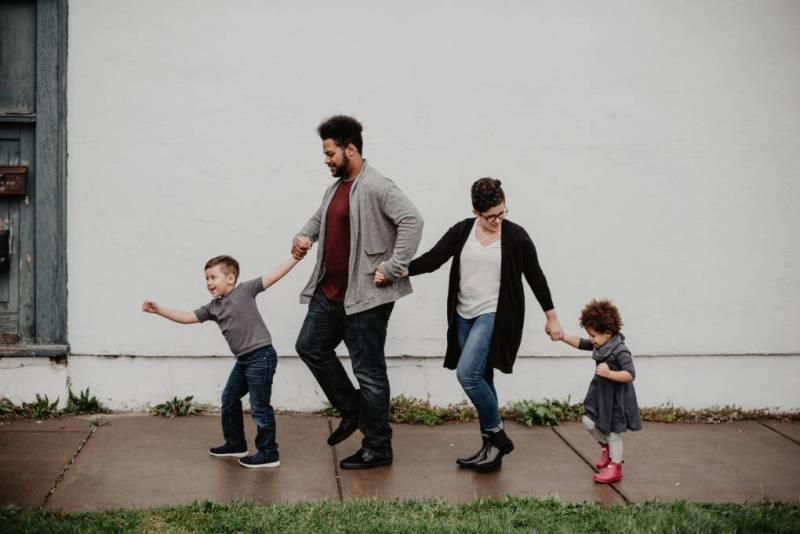
"caption": "Si ha estado reclamando el crédito tributario por hijos, su reembolso se verá afectado en 2023.",
"description": null,
"title": "image of family of four walking on sidewalk",
"credit": "Emma Bauso/Pexels",
"status": "inherit",
"altTag": null,
"isLoading": false,
"fetchFailed": false
},
"news_11943501": {
"type": "attachments",
"id": "news_11943501",
"meta": {
"index": "attachments_1716263798",
"site": "news",
"id": "11943501",
"found": true
},
"title": "california-tax-deadline-2023",
"publishDate": 1678832637,
"status": "inherit",
"parent": 11943420,
"modified": 1771019197,
"caption": "A family of four skipping along a wet street, holding hands.",
"credit": "Emma Bauso/Pexels",
"altTag": "A family of four -- two adult parents or caregivers, and two children -- are photographed skipping along a wet street, holding hands.",
"description": null,
"imgSizes": {
"medium": {
"file": "https://cdn.kqed.org/wp-content/uploads/sites/10/2023/03/pexels-emma-bauso-2253879-800x534.jpg",
"width": 800,
"height": 534,
"mimeType": "image/jpeg"
},
"large": {
"file": "https://cdn.kqed.org/wp-content/uploads/sites/10/2023/03/pexels-emma-bauso-2253879-1020x681.jpg",
"width": 1020,
"height": 681,
"mimeType": "image/jpeg"
},
"thumbnail": {
"file": "https://cdn.kqed.org/wp-content/uploads/sites/10/2023/03/pexels-emma-bauso-2253879-160x107.jpg",
"width": 160,
"height": 107,
"mimeType": "image/jpeg"
},
"1536x1536": {
"file": "https://cdn.kqed.org/wp-content/uploads/sites/10/2023/03/pexels-emma-bauso-2253879-1536x1026.jpg",
"width": 1536,
"height": 1026,
"mimeType": "image/jpeg"
},
"post-thumbnail": {
"file": "https://cdn.kqed.org/wp-content/uploads/sites/10/2023/03/pexels-emma-bauso-2253879-672x372.jpg",
"width": 672,
"height": 372,
"mimeType": "image/jpeg"
},
"twentyfourteen-full-width": {
"file": "https://cdn.kqed.org/wp-content/uploads/sites/10/2023/03/pexels-emma-bauso-2253879-1038x576.jpg",
"width": 1038,
"height": 576,
"mimeType": "image/jpeg"
},
"kqedFullSize": {
"file": "https://cdn.kqed.org/wp-content/uploads/sites/10/2023/03/pexels-emma-bauso-2253879.jpg",
"width": 1920,
"height": 1282
}
},
"isLoading": false,
"fetchFailed": false
},
"news_11942002": {
"type": "attachments",
"id": "news_11942002",
"meta": {
"index": "attachments_1716263798",
"site": "news",
"id": "11942002",
"found": true
},
"parent": 11941996,
"imgSizes": {
"twentyfourteen-full-width": {
"file": "https://ww2.kqed.org/app/uploads/sites/10/2023/02/GettyImages-1426582974-1038x576.jpg",
"width": 1038,
"mimeType": "image/jpeg",
"height": 576
},
"thumbnail": {
"file": "https://ww2.kqed.org/app/uploads/sites/10/2023/02/GettyImages-1426582974-160x107.jpg",
"width": 160,
"mimeType": "image/jpeg",
"height": 107
},
"post-thumbnail": {
"file": "https://ww2.kqed.org/app/uploads/sites/10/2023/02/GettyImages-1426582974-672x372.jpg",
"width": 672,
"mimeType": "image/jpeg",
"height": 372
},
"kqedFullSize": {
"file": "https://ww2.kqed.org/app/uploads/sites/10/2023/02/GettyImages-1426582974.jpg",
"width": 2120,
"height": 1414
},
"2048x2048": {
"file": "https://ww2.kqed.org/app/uploads/sites/10/2023/02/GettyImages-1426582974-2048x1366.jpg",
"width": 2048,
"mimeType": "image/jpeg",
"height": 1366
},
"large": {
"file": "https://ww2.kqed.org/app/uploads/sites/10/2023/02/GettyImages-1426582974-1020x680.jpg",
"width": 1020,
"mimeType": "image/jpeg",
"height": 680
},
"1536x1536": {
"file": "https://ww2.kqed.org/app/uploads/sites/10/2023/02/GettyImages-1426582974-1536x1024.jpg",
"width": 1536,
"mimeType": "image/jpeg",
"height": 1024
},
"full-width": {
"file": "https://ww2.kqed.org/app/uploads/sites/10/2023/02/GettyImages-1426582974-1920x1281.jpg",
"width": 1920,
"mimeType": "image/jpeg",
"height": 1281
},
"medium": {
"file": "https://ww2.kqed.org/app/uploads/sites/10/2023/02/GettyImages-1426582974-800x534.jpg",
"width": 800,
"mimeType": "image/jpeg",
"height": 534
}
},
"publishDate": 1677534804,
"modified": 1677535167,
"caption": null,
"description": null,
"title": "Close up of woman planning home budget and using calculator.",
"credit": "Songsak Rohprasit/Getty Images",
"status": "inherit",
"altTag": "Close up of woman planning home budget and using calculator.",
"isLoading": false,
"fetchFailed": false
},
"news_11940696": {
"type": "attachments",
"id": "news_11940696",
"meta": {
"index": "attachments_1716263798",
"site": "news",
"id": "11940696",
"found": true
},
"parent": 11939953,
"imgSizes": {
"twentyfourteen-full-width": {
"file": "https://ww2.kqed.org/app/uploads/sites/10/2023/02/pexels-mikhail-nilov-8297351-1038x576.jpg",
"width": 1038,
"mimeType": "image/jpeg",
"height": 576
},
"thumbnail": {
"file": "https://ww2.kqed.org/app/uploads/sites/10/2023/02/pexels-mikhail-nilov-8297351-160x107.jpg",
"width": 160,
"mimeType": "image/jpeg",
"height": 107
},
"post-thumbnail": {
"file": "https://ww2.kqed.org/app/uploads/sites/10/2023/02/pexels-mikhail-nilov-8297351-672x372.jpg",
"width": 672,
"mimeType": "image/jpeg",
"height": 372
},
"kqedFullSize": {
"file": "https://ww2.kqed.org/app/uploads/sites/10/2023/02/pexels-mikhail-nilov-8297351.jpg",
"width": 1920,
"height": 1280
},
"large": {
"file": "https://ww2.kqed.org/app/uploads/sites/10/2023/02/pexels-mikhail-nilov-8297351-1020x680.jpg",
"width": 1020,
"mimeType": "image/jpeg",
"height": 680
},
"1536x1536": {
"file": "https://ww2.kqed.org/app/uploads/sites/10/2023/02/pexels-mikhail-nilov-8297351-1536x1024.jpg",
"width": 1536,
"mimeType": "image/jpeg",
"height": 1024
},
"medium": {
"file": "https://ww2.kqed.org/app/uploads/sites/10/2023/02/pexels-mikhail-nilov-8297351-800x533.jpg",
"width": 800,
"mimeType": "image/jpeg",
"height": 533
}
},
"publishDate": 1676065779,
"modified": 1676065873,
"caption": "Questions about filing your taxes in 2023? We want to help find you answers.",
"description": null,
"title": "pexels-mikhail-nilov-8297351",
"credit": "Mikhail Nilov/Pexels",
"status": "inherit",
"altTag": "A person with short brown curly hair and medium-toned skin wearing a light blue shirt sits at a desk, looking down at a laptop, a notebook and a calculator.",
"isLoading": false,
"fetchFailed": false
},
"news_11938183": {
"type": "attachments",
"id": "news_11938183",
"meta": {
"index": "attachments_1716263798",
"site": "news",
"id": "11938183",
"found": true
},
"parent": 11938180,
"imgSizes": {
"twentyfourteen-full-width": {
"file": "https://ww2.kqed.org/app/uploads/sites/10/2023/01/Screen-Shot-2023-01-15-at-2.06.52-PM-1038x576.png",
"width": 1038,
"mimeType": "image/png",
"height": 576
},
"thumbnail": {
"file": "https://ww2.kqed.org/app/uploads/sites/10/2023/01/Screen-Shot-2023-01-15-at-2.06.52-PM-160x105.png",
"width": 160,
"mimeType": "image/png",
"height": 105
},
"post-thumbnail": {
"file": "https://ww2.kqed.org/app/uploads/sites/10/2023/01/Screen-Shot-2023-01-15-at-2.06.52-PM-672x372.png",
"width": 672,
"mimeType": "image/png",
"height": 372
},
"kqedFullSize": {
"file": "https://ww2.kqed.org/app/uploads/sites/10/2023/01/Screen-Shot-2023-01-15-at-2.06.52-PM.png",
"width": 1546,
"height": 1010
},
"large": {
"file": "https://ww2.kqed.org/app/uploads/sites/10/2023/01/Screen-Shot-2023-01-15-at-2.06.52-PM-1020x666.png",
"width": 1020,
"mimeType": "image/png",
"height": 666
},
"1536x1536": {
"file": "https://ww2.kqed.org/app/uploads/sites/10/2023/01/Screen-Shot-2023-01-15-at-2.06.52-PM-1536x1003.png",
"width": 1536,
"mimeType": "image/png",
"height": 1003
},
"medium": {
"file": "https://ww2.kqed.org/app/uploads/sites/10/2023/01/Screen-Shot-2023-01-15-at-2.06.52-PM-800x523.png",
"width": 800,
"mimeType": "image/png",
"height": 523
}
},
"publishDate": 1673821292,
"modified": 1674067464,
"caption": null,
"description": null,
"title": "Screen Shot 2023-01-15 at 2.06.52 PM",
"credit": "Illustration by Miguel Gutierrez Jr./CalMatters/iStock",
"status": "inherit",
"altTag": "A collage image of two hands holding a credit card, gas pumps and part of a 1040 tax form.",
"isLoading": false,
"fetchFailed": false
},
"news_11932080": {
"type": "attachments",
"id": "news_11932080",
"meta": {
"index": "attachments_1716263798",
"site": "news",
"id": "11932080",
"found": true
},
"parent": 11932078,
"imgSizes": {
"twentyfourteen-full-width": {
"file": "https://ww2.kqed.org/app/uploads/sites/10/2022/11/GettyImages-555000497-1038x576.jpg",
"width": 1038,
"mimeType": "image/jpeg",
"height": 576
},
"thumbnail": {
"file": "https://ww2.kqed.org/app/uploads/sites/10/2022/11/GettyImages-555000497-160x107.jpg",
"width": 160,
"mimeType": "image/jpeg",
"height": 107
},
"post-thumbnail": {
"file": "https://ww2.kqed.org/app/uploads/sites/10/2022/11/GettyImages-555000497-672x372.jpg",
"width": 672,
"mimeType": "image/jpeg",
"height": 372
},
"kqedFullSize": {
"file": "https://ww2.kqed.org/app/uploads/sites/10/2022/11/GettyImages-555000497.jpg",
"width": 2120,
"height": 1414
},
"2048x2048": {
"file": "https://ww2.kqed.org/app/uploads/sites/10/2022/11/GettyImages-555000497-2048x1366.jpg",
"width": 2048,
"mimeType": "image/jpeg",
"height": 1366
},
"large": {
"file": "https://ww2.kqed.org/app/uploads/sites/10/2022/11/GettyImages-555000497-1020x680.jpg",
"width": 1020,
"mimeType": "image/jpeg",
"height": 680
},
"1536x1536": {
"file": "https://ww2.kqed.org/app/uploads/sites/10/2022/11/GettyImages-555000497-1536x1024.jpg",
"width": 1536,
"mimeType": "image/jpeg",
"height": 1024
},
"full-width": {
"file": "https://ww2.kqed.org/app/uploads/sites/10/2022/11/GettyImages-555000497-1920x1281.jpg",
"width": 1920,
"mimeType": "image/jpeg",
"height": 1281
},
"medium": {
"file": "https://ww2.kqed.org/app/uploads/sites/10/2022/11/GettyImages-555000497-800x534.jpg",
"width": 800,
"mimeType": "image/jpeg",
"height": 534
}
},
"publishDate": 1668282977,
"modified": 1668284166,
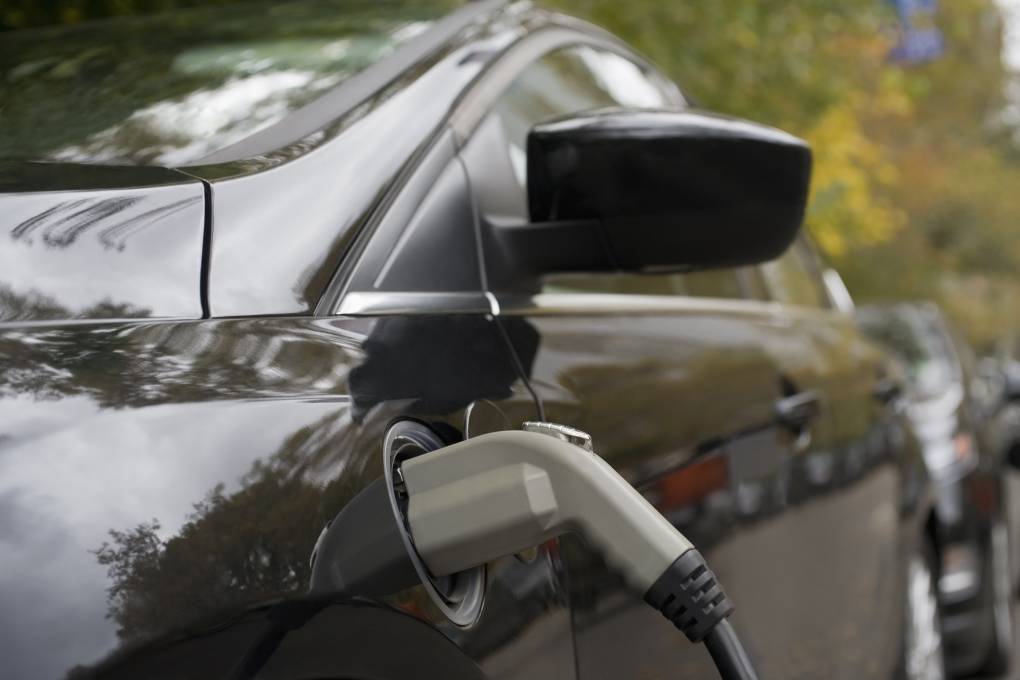
"caption": "The Prop. 30 ballot measure that would have increased taxes on about 43,000 multimillionaires to fund electric-car rebates and combat wildfires suffered an unambiguous defeat on Election Day.",
"description": null,
"title": "Charging an electric car, close-up",
"credit": "REB Images/Getty Images",
"status": "inherit",
"altTag": "Charging an electric car, close-up",
"isLoading": false,
"fetchFailed": false
},
"news_11923225": {
"type": "attachments",
"id": "news_11923225",
"meta": {
"index": "attachments_1716263798",
"site": "news",
"id": "11923225",
"found": true
},
"parent": 11923224,
"imgSizes": {
"twentyfourteen-full-width": {
"file": "https://ww2.kqed.org/app/uploads/sites/10/2022/08/gettyimages-1232464481-bf200986fcc5c2b3277d97edd495ddd6381625b7-1038x576.jpg",
"width": 1038,
"mimeType": "image/jpeg",
"height": 576
},
"thumbnail": {
"file": "https://ww2.kqed.org/app/uploads/sites/10/2022/08/gettyimages-1232464481-bf200986fcc5c2b3277d97edd495ddd6381625b7-160x120.jpg",
"width": 160,
"mimeType": "image/jpeg",
"height": 120
},
"post-thumbnail": {
"file": "https://ww2.kqed.org/app/uploads/sites/10/2022/08/gettyimages-1232464481-bf200986fcc5c2b3277d97edd495ddd6381625b7-672x372.jpg",
"width": 672,
"mimeType": "image/jpeg",
"height": 372
},
"kqedFullSize": {
"file": "https://ww2.kqed.org/app/uploads/sites/10/2022/08/gettyimages-1232464481-bf200986fcc5c2b3277d97edd495ddd6381625b7-scaled.jpg",
"width": 2560,
"height": 1920
},
"2048x2048": {
"file": "https://ww2.kqed.org/app/uploads/sites/10/2022/08/gettyimages-1232464481-bf200986fcc5c2b3277d97edd495ddd6381625b7-2048x1536.jpg",
"width": 2048,
"mimeType": "image/jpeg",
"height": 1536
},
"large": {
"file": "https://ww2.kqed.org/app/uploads/sites/10/2022/08/gettyimages-1232464481-bf200986fcc5c2b3277d97edd495ddd6381625b7-1020x765.jpg",
"width": 1020,
"mimeType": "image/jpeg",
"height": 765
},
"1536x1536": {
"file": "https://ww2.kqed.org/app/uploads/sites/10/2022/08/gettyimages-1232464481-bf200986fcc5c2b3277d97edd495ddd6381625b7-1536x1152.jpg",
"width": 1536,
"mimeType": "image/jpeg",
"height": 1152
},
"full-width": {
"file": "https://ww2.kqed.org/app/uploads/sites/10/2022/08/gettyimages-1232464481-bf200986fcc5c2b3277d97edd495ddd6381625b7-1920x1440.jpg",
"width": 1920,
"mimeType": "image/jpeg",
"height": 1440
},
"medium": {
"file": "https://ww2.kqed.org/app/uploads/sites/10/2022/08/gettyimages-1232464481-bf200986fcc5c2b3277d97edd495ddd6381625b7-800x600.jpg",
"width": 800,
"mimeType": "image/jpeg",
"height": 600
}
},
"publishDate": 1661231210,
"modified": 1667983070,
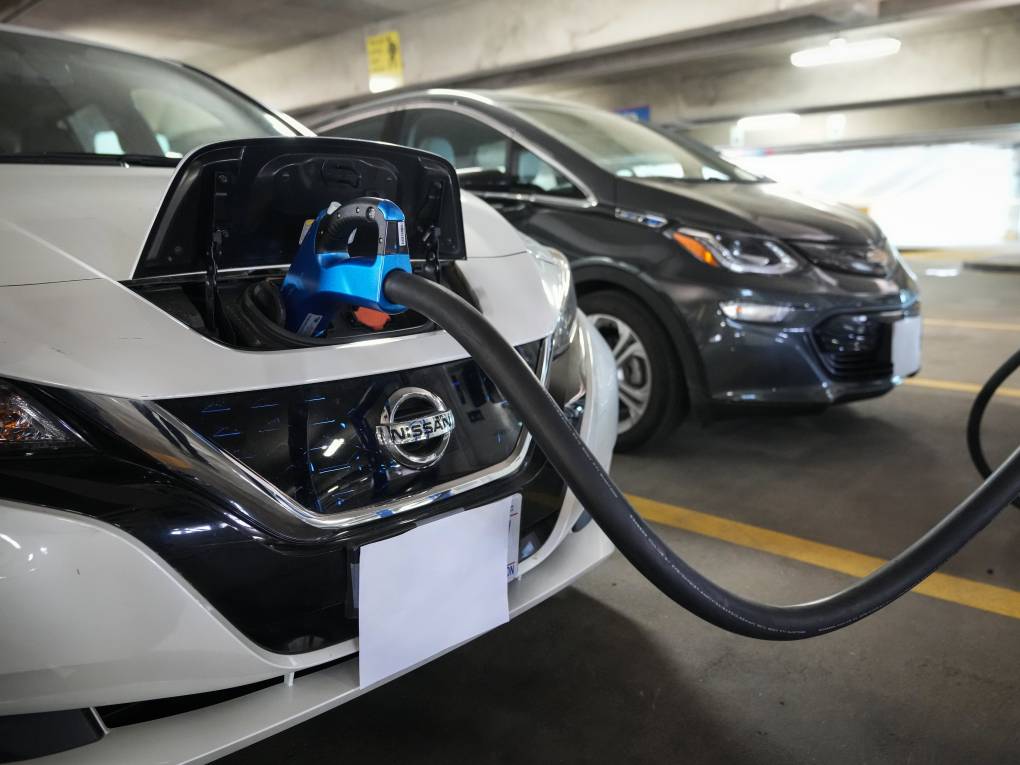
"caption": "Proposition 30 would have taxed California's richest residents to fund electric-vehicle infrastructure projects and wildfire mitigation.",
"description": "Electric vehicles are displayed before a news conference with White House Climate Adviser Gina McCarthy and U.S. Secretary of Transportation Pete Buttigieg about the American Jobs Plan and to highlight electric vehicles at Union Station near Capitol Hill on April 22, 2021 in Washington, DC. The Biden administration has proposed over $170 billion in spending to boost the production of zero-emission buses and cars and increase the number of EV charging stations. ",
"title": "Electric vehicles are displayed at a news conference with White House Climate Adviser Gina McCarthy and Secretary of Transportation Pete Buttigieg in Washington, D.C., on April 22, 2021. The Biden administration's climate and health care bill passed by Congress last week revamps a tax credit for buyers of electric cars.",
"credit": "Drew Angerer/Getty Images",
"status": "inherit",
"altTag": "electric vehicles in a parking lot",
"isLoading": false,
"fetchFailed": false
},
"news_11922383": {
"type": "attachments",
"id": "news_11922383",
"meta": {
"index": "attachments_1716263798",
"site": "news",
"id": "11922383",
"found": true
},
"parent": 11922351,
"imgSizes": {
"twentyfourteen-full-width": {
"file": "https://ww2.kqed.org/app/uploads/sites/10/2022/08/ap16300738774185-eaa1d5a7dc036f6718465d899f3c881d884087dd-s1600-c85-1038x576.jpg",
"width": 1038,
"mimeType": "image/jpeg",
"height": 576
},
"thumbnail": {
"file": "https://ww2.kqed.org/app/uploads/sites/10/2022/08/ap16300738774185-eaa1d5a7dc036f6718465d899f3c881d884087dd-s1600-c85-160x98.jpg",
"width": 160,
"mimeType": "image/jpeg",
"height": 98
},
"post-thumbnail": {
"file": "https://ww2.kqed.org/app/uploads/sites/10/2022/08/ap16300738774185-eaa1d5a7dc036f6718465d899f3c881d884087dd-s1600-c85-672x372.jpg",
"width": 672,
"mimeType": "image/jpeg",
"height": 372
},
"kqedFullSize": {
"file": "https://ww2.kqed.org/app/uploads/sites/10/2022/08/ap16300738774185-eaa1d5a7dc036f6718465d899f3c881d884087dd-s1600-c85.jpg",
"width": 1600,
"height": 979
},
"large": {
"file": "https://ww2.kqed.org/app/uploads/sites/10/2022/08/ap16300738774185-eaa1d5a7dc036f6718465d899f3c881d884087dd-s1600-c85-1020x624.jpg",
"width": 1020,
"mimeType": "image/jpeg",
"height": 624
},
"1536x1536": {
"file": "https://ww2.kqed.org/app/uploads/sites/10/2022/08/ap16300738774185-eaa1d5a7dc036f6718465d899f3c881d884087dd-s1600-c85-1536x940.jpg",
"width": 1536,
"mimeType": "image/jpeg",
"height": 940
},
"medium": {
"file": "https://ww2.kqed.org/app/uploads/sites/10/2022/08/ap16300738774185-eaa1d5a7dc036f6718465d899f3c881d884087dd-s1600-c85-800x490.jpg",
"width": 800,
"mimeType": "image/jpeg",
"height": 490
}
},
"publishDate": 1660332193,
"modified": 1660332225,
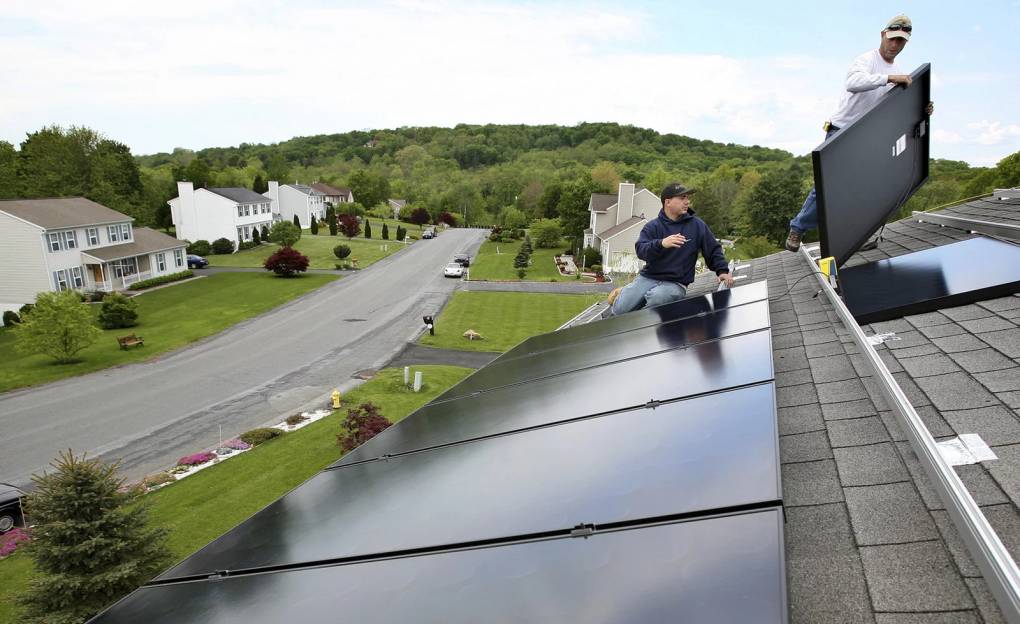
"caption": "The Inflation Reduction Act includes tax credits for residential solar and battery storage systems, along with other measures aimed at encouraging individuals to cut their carbon emissions.",
"description": null,
"title": "ap16300738774185-eaa1d5a7dc036f6718465d899f3c881d884087dd-s1600-c85",
"credit": "Craig Ruttle/AP",
"status": "inherit",
"altTag": "two men install solar panels on a roof",
"isLoading": false,
"fetchFailed": false
},
"news_11920715": {
"type": "attachments",
"id": "news_11920715",
"meta": {
"index": "attachments_1716263798",
"site": "news",
"id": "11920715",
"found": true
},
"parent": 11920714,
"imgSizes": {
"twentyfourteen-full-width": {
"file": "https://ww2.kqed.org/app/uploads/sites/10/2022/07/ap22074669160101_wide-8033a7fafc90be24c6478af644a7f553c6e4da97-1038x576.jpg",
"width": 1038,
"mimeType": "image/jpeg",
"height": 576
},
"thumbnail": {
"file": "https://ww2.kqed.org/app/uploads/sites/10/2022/07/ap22074669160101_wide-8033a7fafc90be24c6478af644a7f553c6e4da97-160x90.jpg",
"width": 160,
"mimeType": "image/jpeg",
"height": 90
},
"post-thumbnail": {
"file": "https://ww2.kqed.org/app/uploads/sites/10/2022/07/ap22074669160101_wide-8033a7fafc90be24c6478af644a7f553c6e4da97-672x372.jpg",
"width": 672,
"mimeType": "image/jpeg",
"height": 372
},
"kqedFullSize": {
"file": "https://ww2.kqed.org/app/uploads/sites/10/2022/07/ap22074669160101_wide-8033a7fafc90be24c6478af644a7f553c6e4da97-scaled.jpg",
"width": 2560,
"height": 1440
},
"2048x2048": {
"file": "https://ww2.kqed.org/app/uploads/sites/10/2022/07/ap22074669160101_wide-8033a7fafc90be24c6478af644a7f553c6e4da97-2048x1152.jpg",
"width": 2048,
"mimeType": "image/jpeg",
"height": 1152
},
"large": {
"file": "https://ww2.kqed.org/app/uploads/sites/10/2022/07/ap22074669160101_wide-8033a7fafc90be24c6478af644a7f553c6e4da97-1020x574.jpg",
"width": 1020,
"mimeType": "image/jpeg",
"height": 574
},
"1536x1536": {
"file": "https://ww2.kqed.org/app/uploads/sites/10/2022/07/ap22074669160101_wide-8033a7fafc90be24c6478af644a7f553c6e4da97-1536x864.jpg",
"width": 1536,
"mimeType": "image/jpeg",
"height": 864
},
"full-width": {
"file": "https://ww2.kqed.org/app/uploads/sites/10/2022/07/ap22074669160101_wide-8033a7fafc90be24c6478af644a7f553c6e4da97-1920x1080.jpg",
"width": 1920,
"mimeType": "image/jpeg",
"height": 1080
},
"medium": {
"file": "https://ww2.kqed.org/app/uploads/sites/10/2022/07/ap22074669160101_wide-8033a7fafc90be24c6478af644a7f553c6e4da97-800x450.jpg",
"width": 800,
"mimeType": "image/jpeg",
"height": 450
}
},
"publishDate": 1659027449,
"modified": 1659027531,
"caption": "Sen. Joe Manchin, D-W.Va., talks with Senate Majority Leader Chuck Schumer of N.Y., before an event in the Indian Treaty Room in the Eisenhower Executive Office Building on the White House Campus in Washington, Tuesday, March 15, 2022.",
"description": "Sen. Joe Manchin, D-W.Va., talks with Senate Majority Leader Chuck Schumer of N.Y., before an event in the Indian Treaty Room in the Eisenhower Executive Office Building on the White House Campus in Washington, Tuesday, March 15, 2022. (AP Photo/Patrick Semansky)",
"title": "Sen. Joe Manchin, D-W.Va., talks with Senate Majority Leader Chuck Schumer of N.Y., on March 15, 2022.",
"credit": "Patrick Semansky/AP Photo",
"status": "inherit",
"altTag": "Two men in suits have their backs turned looking at each other.",
"isLoading": false,
"fetchFailed": false
},
"news_11837953": {
"type": "attachments",
"id": "news_11837953",
"meta": {
"index": "attachments_1716263798",
"site": "news",
"id": "11837953",
"found": true
},
"parent": 11837939,
"imgSizes": {
"apple_news_ca_square_4_0": {
"file": "https://ww2.kqed.org/app/uploads/sites/10/2020/09/RS44904_SOLD-OUT-Web-Banners__Tune-In_656x336-sfi-470x328.jpg",
"width": 470,
"mimeType": "image/jpeg",
"height": 328
},
"thumbnail": {
"file": "https://ww2.kqed.org/app/uploads/sites/10/2020/09/RS44904_SOLD-OUT-Web-Banners__Tune-In_656x336-sfi-160x82.jpg",
"width": 160,
"mimeType": "image/jpeg",
"height": 82
},
"kqedFullSize": {
"file": "https://ww2.kqed.org/app/uploads/sites/10/2020/09/RS44904_SOLD-OUT-Web-Banners__Tune-In_656x336-sfi.jpg",
"width": 640,
"height": 328
},
"apple_news_ca_landscape_4_7": {
"file": "https://ww2.kqed.org/app/uploads/sites/10/2020/09/RS44904_SOLD-OUT-Web-Banners__Tune-In_656x336-sfi-632x328.jpg",
"width": 632,
"mimeType": "image/jpeg",
"height": 328
},
"apple_news_ca_portrait_4_7": {
"file": "https://ww2.kqed.org/app/uploads/sites/10/2020/09/RS44904_SOLD-OUT-Web-Banners__Tune-In_656x336-sfi-414x328.jpg",
"width": 414,
"mimeType": "image/jpeg",
"height": 328
},
"apple_news_ca_square_4_7": {
"file": "https://ww2.kqed.org/app/uploads/sites/10/2020/09/RS44904_SOLD-OUT-Web-Banners__Tune-In_656x336-sfi-550x328.jpg",
"width": 550,
"mimeType": "image/jpeg",
"height": 328
},
"apple_news_ca_landscape_4_0": {
"file": "https://ww2.kqed.org/app/uploads/sites/10/2020/09/RS44904_SOLD-OUT-Web-Banners__Tune-In_656x336-sfi-536x328.jpg",
"width": 536,
"mimeType": "image/jpeg",
"height": 328
},
"apple_news_ca_portrait_4_0": {
"file": "https://ww2.kqed.org/app/uploads/sites/10/2020/09/RS44904_SOLD-OUT-Web-Banners__Tune-In_656x336-sfi-354x328.jpg",
"width": 354,
"mimeType": "image/jpeg",
"height": 328
}
},
"publishDate": 1600132494,
"modified": 1600132530,
"caption": null,
"description": "This is the podcast banner for SOLD OUT from KQED. ",
"title": "RS44904_SOLD-OUT-Web-Banners__Tune-In_656x336-sfi",
"credit": "KQED",
"status": "inherit",
"isLoading": false,
"fetchFailed": false
},
"news_11911163": {
"type": "attachments",
"id": "news_11911163",
"meta": {
"index": "attachments_1716263798",
"site": "news",
"id": "11911163",
"found": true
},
"parent": 11911156,
"imgSizes": {
"twentyfourteen-full-width": {
"file": "https://ww2.kqed.org/app/uploads/sites/10/2022/04/GettyImages-828483630-1024x576.jpg",
"width": 1024,
"mimeType": "image/jpeg",
"height": 576
},
"thumbnail": {
"file": "https://ww2.kqed.org/app/uploads/sites/10/2022/04/GettyImages-828483630-160x108.jpg",
"width": 160,
"mimeType": "image/jpeg",
"height": 108
},
"post-thumbnail": {
"file": "https://ww2.kqed.org/app/uploads/sites/10/2022/04/GettyImages-828483630-672x372.jpg",
"width": 672,
"mimeType": "image/jpeg",
"height": 372
},
"kqedFullSize": {
"file": "https://ww2.kqed.org/app/uploads/sites/10/2022/04/GettyImages-828483630.jpg",
"width": 1024,
"height": 694
},
"large": {
"file": "https://ww2.kqed.org/app/uploads/sites/10/2022/04/GettyImages-828483630-1020x691.jpg",
"width": 1020,
"mimeType": "image/jpeg",
"height": 691
},
"medium": {
"file": "https://ww2.kqed.org/app/uploads/sites/10/2022/04/GettyImages-828483630-800x542.jpg",
"width": 800,
"mimeType": "image/jpeg",
"height": 542
}
},
"publishDate": 1649973648,
"modified": 1649981601,
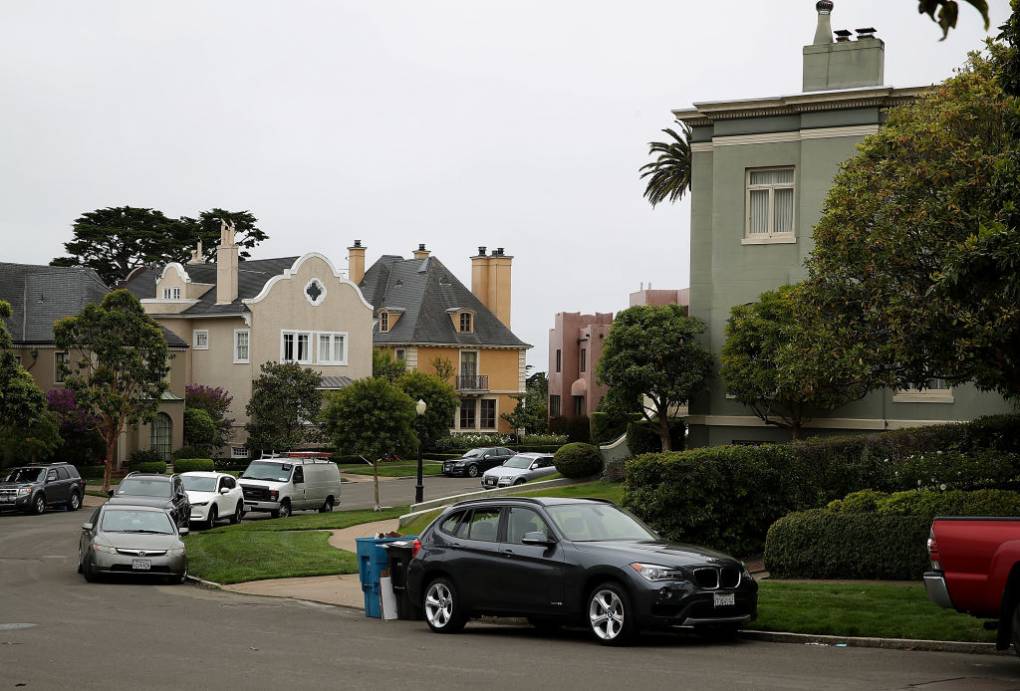
"caption": "A view of homes in Presidio Terrace on Aug. 9, 2017, in San Francisco.",
"description": null,
"title": "California Couple Buys Street In Exclusive San Francisco Enclave",
"credit": "Justin Sullivan/Getty Images",
"status": "inherit",
"altTag": "A street view of a neighborhood with cars and homes.",
"isLoading": false,
"fetchFailed": false
},
"news_11908000": {
"type": "attachments",
"id": "news_11908000",
"meta": {
"index": "attachments_1716263798",
"site": "news",
"id": "11908000",
"found": true
},
"parent": 11907999,
"imgSizes": {
"twentyfourteen-full-width": {
"file": "https://ww2.kqed.org/app/uploads/sites/10/2022/03/CalMatterGasPrices-1038x576.jpg",
"width": 1038,
"mimeType": "image/jpeg",
"height": 576
},
"thumbnail": {
"file": "https://ww2.kqed.org/app/uploads/sites/10/2022/03/CalMatterGasPrices-160x107.jpg",
"width": 160,
"mimeType": "image/jpeg",
"height": 107
},
"post-thumbnail": {
"file": "https://ww2.kqed.org/app/uploads/sites/10/2022/03/CalMatterGasPrices-672x372.jpg",
"width": 672,
"mimeType": "image/jpeg",
"height": 372
},
"kqedFullSize": {
"file": "https://ww2.kqed.org/app/uploads/sites/10/2022/03/CalMatterGasPrices.jpg",
"width": 2000,
"height": 1333
},
"large": {
"file": "https://ww2.kqed.org/app/uploads/sites/10/2022/03/CalMatterGasPrices-1020x680.jpg",
"width": 1020,
"mimeType": "image/jpeg",
"height": 680
},
"1536x1536": {
"file": "https://ww2.kqed.org/app/uploads/sites/10/2022/03/CalMatterGasPrices-1536x1024.jpg",
"width": 1536,
"mimeType": "image/jpeg",
"height": 1024
},
"full-width": {
"file": "https://ww2.kqed.org/app/uploads/sites/10/2022/03/CalMatterGasPrices-1920x1280.jpg",
"width": 1920,
"mimeType": "image/jpeg",
"height": 1280
},
"medium": {
"file": "https://ww2.kqed.org/app/uploads/sites/10/2022/03/CalMatterGasPrices-800x533.jpg",
"width": 800,
"mimeType": "image/jpeg",
"height": 533
}
},
"publishDate": 1647046990,
"modified": 1647279392,
"caption": "A Valero gas station in Sacramento on March 10, 2022.",
"description": null,
"title": "A teal sign with gas prices showing $5.89",
"credit": "Miguel Gutierrez Jr./CalMatters",
"status": "inherit",
"altTag": null,
"isLoading": false,
"fetchFailed": false
}
},
"audioPlayerReducer": {
"postId": "stream_live",
"isPaused": true,
"isPlaying": false,
"pfsActive": false,
"pledgeModalIsOpen": true,
"playerDrawerIsOpen": false,
"liveAudioPlayStartedAt": 0,
"liveAudioPlayContext": ""
},
"authorsReducer": {
"byline_news_11938180": {
"type": "authors",
"id": "byline_news_11938180",
"meta": {
"override": true
},
"slug": "byline_news_11938180",
"name": "Grace Gedye",
"isLoading": false
},
"byline_news_11932078": {
"type": "authors",
"id": "byline_news_11932078",
"meta": {
"override": true
},
"slug": "byline_news_11932078",
"name": "\u003ca href=\"https://calmatters.org/author/ben-christopher/\">Ben Christopher\u003c/a>",
"isLoading": false
},
"byline_news_11923224": {
"type": "authors",
"id": "byline_news_11923224",
"meta": {
"override": true
},
"slug": "byline_news_11923224",
"name": "Arezou Rezvani",
"isLoading": false
},
"byline_news_11922351": {
"type": "authors",
"id": "byline_news_11922351",
"meta": {
"override": true
},
"slug": "byline_news_11922351",
"name": "Laura Benshoff",
"isLoading": false
},
"byline_news_11920714": {
"type": "authors",
"id": "byline_news_11920714",
"meta": {
"override": true
},
"slug": "byline_news_11920714",
"name": "Kelsey Snell",
"isLoading": false
},
"byline_news_11911156": {
"type": "authors",
"id": "byline_news_11911156",
"meta": {
"override": true
},
"slug": "byline_news_11911156",
"name": "\u003ca href=\"https://calmatters.org/author/jesse-bedayn\">Jesse Bedayn\u003c/a>",
"isLoading": false
},
"byline_news_11907999": {
"type": "authors",
"id": "byline_news_11907999",
"meta": {
"override": true
},
"slug": "byline_news_11907999",
"name": "\u003ca href=\"https://calmatters.org/author/grace-gedye/\">Grace Gedye",
"isLoading": false
},
"kmoghadam": {
"type": "authors",
"id": "11637",
"meta": {
"index": "authors_1716337520",
"id": "11637",
"found": true
},
"name": "Kyana Moghadam",
"firstName": "Kyana",
"lastName": "Moghadam",
"slug": "kmoghadam",
"email": "kmoghadam@kqed.org",
"display_author_email": false,
"staff_mastheads": [
"news"
],
"title": "Senior Producer ",
"bio": "Kyana Moghadam is a senior producer at KQED. Prior to joining KQED, she was an audio producer and editor with Al Jazeera, Jetty Studios, VOX Media, Democracy Now!, and Global Press.",
"avatar": "https://secure.gravatar.com/avatar/cdbd6cb0b9e99deaa9eb618abdba56f265d374a2c614710aebeb4e58decbc5f0?s=600&d=blank&r=g",
"twitter": null,
"bluesky": null,
"facebook": null,
"instagram": null,
"linkedin": "https://www.linkedin.com/in/kyanamoghadam/",
"sites": [
{
"site": "",
"roles": [
"editor"
]
},
{
"site": "arts",
"roles": [
"editor"
]
},
{
"site": "news",
"roles": [
"administrator"
]
},
{
"site": "pop",
"roles": [
"editor"
]
},
{
"site": "about",
"roles": [
"editor"
]
},
{
"site": "forum",
"roles": [
"editor"
]
},
{
"site": "perspectives",
"roles": [
"editor"
]
},
{
"site": "podcasts",
"roles": [
"administrator"
]
}
],
"headData": {
"title": "Kyana Moghadam | KQED",
"description": "Senior Producer ",
"ogImgSrc": "https://secure.gravatar.com/avatar/cdbd6cb0b9e99deaa9eb618abdba56f265d374a2c614710aebeb4e58decbc5f0?s=600&d=blank&r=g",
"twImgSrc": "https://secure.gravatar.com/avatar/cdbd6cb0b9e99deaa9eb618abdba56f265d374a2c614710aebeb4e58decbc5f0?s=600&d=blank&r=g"
},
"isLoading": false,
"link": "/author/kmoghadam"
},
"ccabreralomeli": {
"type": "authors",
"id": "11708",
"meta": {
"index": "authors_1716337520",
"id": "11708",
"found": true
},
"name": "Carlos Cabrera-Lomelí",
"firstName": "Carlos",
"lastName": "Cabrera-Lomelí",
"slug": "ccabreralomeli",
"email": "ccabreralomeli@KQED.org",
"display_author_email": true,
"staff_mastheads": [
"news"
],
"title": "Community Reporter",
"bio": "Carlos Cabrera-Lomelí is a community reporter with KQED's digital engagement team. He also reports and co-produces for KQED's bilingual news hub KQED en Español. He grew up in San Francisco's Mission District and has previously worked with Univision, 48 Hills and REFORMA in Mexico City.",
"avatar": "https://secure.gravatar.com/avatar/c309be9665e484f887b818c89e273ecc673004f426f36b24d00a4d813a2e0518?s=600&d=blank&r=g",
"twitter": "@LomeliCabrera",
"bluesky": null,
"facebook": null,
"instagram": null,
"linkedin": null,
"sites": [
{
"site": "arts",
"roles": [
"editor"
]
},
{
"site": "news",
"roles": [
"editor"
]
},
{
"site": "about",
"roles": [
"editor"
]
},
{
"site": "science",
"roles": [
"editor"
]
},
{
"site": "perspectives",
"roles": [
"editor"
]
},
{
"site": "elections",
"roles": [
"editor"
]
},
{
"site": "liveblog",
"roles": [
"contributor"
]
}
],
"headData": {
"title": "Carlos Cabrera-Lomelí | KQED",
"description": "Community Reporter",
"ogImgSrc": "https://secure.gravatar.com/avatar/c309be9665e484f887b818c89e273ecc673004f426f36b24d00a4d813a2e0518?s=600&d=blank&r=g",
"twImgSrc": "https://secure.gravatar.com/avatar/c309be9665e484f887b818c89e273ecc673004f426f36b24d00a4d813a2e0518?s=600&d=blank&r=g"
},
"isLoading": false,
"link": "/author/ccabreralomeli"
},
"naldana": {
"type": "authors",
"id": "11793",
"meta": {
"index": "authors_1716337520",
"id": "11793",
"found": true
},
"name": "Natalia Aldana",
"firstName": "Natalia",
"lastName": "Aldana",
"slug": "naldana",
"email": "naldana@kqed.org",
"display_author_email": false,
"staff_mastheads": [],
"title": "KQED Producer",
"bio": "Natalia Aldana is the senior engagement producer for KQED podcasts.",
"avatar": "https://secure.gravatar.com/avatar/c784d8a94359b38cc84991c1a7a565b2?s=600&d=blank&r=g",
"twitter": null,
"facebook": null,
"instagram": null,
"linkedin": null,
"sites": [
{
"site": "news",
"roles": [
"editor"
]
}
],
"headData": {
"title": "Natalia Aldana | KQED",
"description": "KQED Producer",
"ogImgSrc": "https://secure.gravatar.com/avatar/c784d8a94359b38cc84991c1a7a565b2?s=600&d=blank&r=g",
"twImgSrc": "https://secure.gravatar.com/avatar/c784d8a94359b38cc84991c1a7a565b2?s=600&d=blank&r=g"
},
"isLoading": false,
"link": "/author/naldana"
},
"sjohnson": {
"type": "authors",
"id": "11840",
"meta": {
"index": "authors_1716337520",
"id": "11840",
"found": true
},
"name": "Sydney Johnson",
"firstName": "Sydney",
"lastName": "Johnson",
"slug": "sjohnson",
"email": "sjohnson@kqed.org",
"display_author_email": false,
"staff_mastheads": [
"news"
],
"title": "KQED Reporter",
"bio": "Sydney Johnson is a general assignment reporter at KQED. She previously reported on public health and city government at the San Francisco Examiner, and before that, she covered statewide education policy for EdSource. Her reporting has won multiple local, state and national awards. Sydney is a graduate of the University of California, Berkeley and lives in San Francisco.",
"avatar": "https://secure.gravatar.com/avatar/97855f2719b72ad6190b7c535fe642c8?s=600&d=blank&r=g",
"twitter": "sydneyfjohnson",
"facebook": null,
"instagram": null,
"linkedin": null,
"sites": [
{
"site": "news",
"roles": [
"editor"
]
}
],
"headData": {
"title": "Sydney Johnson | KQED",
"description": "KQED Reporter",
"ogImgSrc": "https://secure.gravatar.com/avatar/97855f2719b72ad6190b7c535fe642c8?s=600&d=blank&r=g",
"twImgSrc": "https://secure.gravatar.com/avatar/97855f2719b72ad6190b7c535fe642c8?s=600&d=blank&r=g"
},
"isLoading": false,
"link": "/author/sjohnson"
}
},
"pagesReducer": {
"news_tag_taxes": {
"type": "terms",
"id": "news_423",
"meta": {
"index": "terms_1716263798",
"site": "news",
"id": "423",
"score": 8.795169
},
"featImg": null,
"name": "taxes",
"description": null,
"taxonomy": "tag",
"headData": {
"twImgId": null,
"twTitle": null,
"ogTitle": null,
"ogImgId": null,
"twDescription": null,
"description": null,
"title": "taxes Archives | KQED News",
"ogDescription": null
},
"ttid": 432,
"slug": "taxes",
"isLoading": false,
"title": "taxes",
"pageMeta": {
"site": "news",
"WpPageTemplate": "page-topic-editorial",
"currentPage": 4
},
"blocks": [
{
"blockName": "kqed/post-list",
"attrs": {
"layout": "cardArticle2",
"query": "posts/news?tag=taxes",
"seeMore": false,
"paginated": true,
"page": 4
}
},
{
"blockName": "kqed/ad"
}
]
}
},
"pfsSessionReducer": {},
"postsReducer": {
"stream_live": {
"type": "live",
"id": "stream_live",
"audioUrl": "https://streams.kqed.org/kqedradio",
"title": "Live Stream",
"excerpt": "Live Stream information currently unavailable.",
"link": "/radio",
"featImg": "",
"label": {
"name": "KQED Live",
"link": "/"
}
},
"stream_kqedNewscast": {
"type": "posts",
"id": "stream_kqedNewscast",
"audioUrl": "https://www.kqed.org/.stream/anon/radio/RDnews/newscast.mp3?_=1",
"title": "KQED Newscast",
"featImg": "",
"label": {
"name": "88.5 FM",
"link": "/"
}
},
"news_11944055": {
"type": "posts",
"id": "news_11944055",
"meta": {
"index": "posts_1716263798",
"site": "news",
"id": "11944055",
"score": null,
"sort": [
1680634800000
]
},
"guestAuthors": [],
"slug": "impuestos-2023",
"title": "En esta temporada de impuestos, el crédito tributario por hijos ha cambiado. Cómo se puede preparar",
"publishDate": 1680634800,
"format": "standard",
"headTitle": "En esta temporada de impuestos, el crédito tributario por hijos ha cambiado. Cómo se puede preparar | KQED",
"labelTerm": {},
"content": "\u003cp>\u003cstrong>\u003ca href=\"https://www.kqed.org/news/11943464/irs-child-tax-credits-how-much-changes\">Leer en inglés\u003c/a>\u003c/strong>\u003c/p>\n\u003cp>\u003cem>Este reportaje fue actualizado viernes, 14 de abril, a las 4:15 p.m.\u003c/em>\u003c/p>\n\u003cp>Han pasado tres meses desde que empezó la temporada de impuestos y Jaqueline Marcelos, quien dirige la clínica gratuita de impuestos de la Agencia de Desarrollo Económico de la Misión (MEDA, por sus siglas en inglés) en San Francisco, ya ha escuchado la misma preocupación de decenas de familias: ¿Por qué ha cambiado tanto mi devolución de impuestos?\u003c/p>\n\u003cp>“Muchos clientes llegan aquí pensando que este año van a recibir el mismo reembolso que el año pasado”, explica Marcelos. Una clienta, dice, calificó para recibir miles de dólares al presentar su declaración de impuestos en 2022, pero este año en realidad terminará debiendo dinero al Tío Sam.\u003c/p>\n\u003cp>¿Qué ha cambiado? Entre otras cosas, el crédito tributario por hijos ha reducido, y muchos padres y cuidadores están viendo una disminución importante de su devolución de impuestos.\u003cbr>\n[ad fullwidth]\u003c/p>\n\u003ch3>¿Por qué bajó el crédito tributario por hijos?\u003c/h3>\n\u003cp>Cuando el Congreso aprobó el Plan de Rescate Estadounidense de 2021, \u003ca href=\"https://home.treasury.gov/utility/languages/espanol\">el crédito fiscal por hijos aumentó de 2 mil a 3 mil 600 dólares para los menores de 6 años\u003c/a> que cumplieran los requisitos. Para los niños de entre 6 y 18 años, el crédito tributario por hijos aumentó a 3 mil dólares.\u003c/p>\n\u003cp>Pero a finales de 2021, \u003ca href=\"https://www.npr.org/2021/12/30/1069143123/expanded-child-tax-credit-expires-friday-congress\">los congresistas no renovaron la ampliación de este crédito\u003c/a>. Y ahora, las familias de todo el país están viendo miles de dólares desaparecer de sus declaraciones, al mismo tiempo que \u003ca href=\"https://www.kqed.org/news/11941075/californias-covid-emergency-ends-feb-28-what-does-that-actually-mean-for-you#calfreshmedical\">otros programas de ayuda relacionados con la pandemia se están agotando\u003c/a>.\u003c/p>\n\u003cp>Algunos padres que realizan su declaración de impuestos en las oficinas de MEDA en San Francisco no pueden creer la diferencia, así que Marcelos les pide que traigan sus declaraciones del año anterior. “Juntamos ambas declaraciones y les explicamos línea por línea por qué reciben un reembolso menor”, explica ella.\u003c/p>\n\u003cp>Aunque este año el plazo para la mayor parte del país cae el martes 18 de abril para presentar sus impuestos, \u003ca href=\"https://www.irs.gov/es/newsroom/irs-may-15-tax-deadline-extended-to-oct-16-for-disaster-area-taxpayers-in-california-alabama-and-georgia\">el Servicio de Rentas Internas (IRS, por sus siglas en inglés) aplazó la fecha límite para los residentes de 44 condados de California, incluidos los nueve condados del Área de la Bahía, hasta el 16 de octubre\u003c/a>, debido a las extensas inundaciones y deslizamientos causados por las tormentas invernales de este año. Las autoridades de California han confirmado que \u003ca href=\"https://www.gov.ca.gov/2023/03/02/more-time-to-file-state-taxes-for-californians-impacted-by-december-and-january-winter-storms/\">el plazo de presentación de los impuestos estatales también se ha aplazado al 16 de octubre\u003c/a>.\u003c/p>\n\u003cp>[pullquote align=\"right\" size=\"medium\" citation=]Consejo: El plazo para presentar la declaración de la renta federal y estatal se ha ampliado hasta el 16 de octubre para los residentes en los nueve condados del Área de la Bahía.[/pullquote]Tampoco tiene que hacer nada para obtener esta prórroga si es que vive en uno de los nueve condados del Área de la Bahía. “El IRS exime automáticamente de la obligación de declarar y de las multas a cualquier contribuyente con una dirección de registro del IRS situada en la zona de desastre”, dijo la agencia en un comunicado de prensa de febrero. “Por lo tanto, los contribuyentes no necesitan ponerse en contacto con la agencia para obtener este alivio”.\u003c/p>\n\u003cp>Con las preocupaciones de las familias de clase trabajadora en mente, KQED habló con los siguientes expertos sobre lo que los padres y cuidadores pueden esperar cuando declaren en 2023, y cómo pueden prepararse para una declaración que podría potencialmente en un reembolso menor:\u003c/p>\n\u003cul>\n\u003cli>Jaqueline Marcelos, líder de la clínica gratuita de impuestos en MEDA\u003c/li>\n\u003cli>Amy Spivey, directora de la Clínica de contribuyentes de bajos ingresos de UC Law\u003c/li>\n\u003cli>Lindsay Rojas, especialista en impuestos de United Way Bay Area\u003c/li>\n\u003c/ul>\n\u003ch3>Prepárese para un reembolso más pequeño y obtenga ayuda gratuita para presentar sus impuestos\u003c/h3>\n\u003cp>Las declaraciones de impuestos son únicas para cada familia, pero los recortes en el crédito tributario por hijos de este año son universales. Los padres recibirán ahora un crédito de 2 mil dólares por cada hijo que esté a su cargo y tenga 16 años o menos (17 años ya no es el límite máximo de edad para el crédito).\u003c/p>\n\u003cp>Esto significa que un padre con dos hijos de 5 años podría ver disminuir su reembolso en al menos 3 mil 200 dólares. Y algunos padres, dijo Amy Spivey de UC Law, “es posible que no reciba ningún reembolso, en realidad podrían tener que pagar al IRS”.\u003c/p>\n\u003cp>Esto ha sido especialmente frustrante para las familias de bajos ingresos en el Área de la Bahía que se beneficiaron de reembolsos cuantiosos el año pasado para ayudar a compensar el alto costo de vida. “Entró mucho dinero”, dijo Marcelos de MEDA. “Y ahora este año no hay dinero”.\u003c/p>\n\u003cul>\n\u003cli>\u003cstrong>\u003ca href=\"https://uwba.org/free-tax-help-es/\">Encuentre un servicio gratuito de declaración de impuestos cerca de usted\u003c/a>\u003c/strong>\u003c/li>\n\u003c/ul>\n\u003cp>Marcelos incluso ha tenido conversaciones con clientes que insisten en que los reembolsos más pequeños son un error, y que preferirían acudir a un declarante de impuestos privado ya que creen que este podría conseguirles una mayor devolución de impuestos. “Muchos clientes dicen: ‘Voy a declarar que he donado 50, 60 dólares, o quiero declarar algún gasto, y voy a solicitar un formulario extra en mis impuestos”, dijo Marcelos, añadiendo que, sí, una empresa de declaración privada puede anular lo que un cliente pida, “pero eso no quiere decir que la cantidad de dinero que le devuelvan vaya aumentar”.\u003c/p>\n\u003cp>[pullquote align=\"right\" size=\"medium\" citation=]Consejo: No asuma que un declarante de impuestos privado siempre podrá conseguirle un reembolso mayor.[/pullquote]Marcelos destacó que la clínica de MEDA forma parte del programa de Asistencia Voluntaria para la Declaración de Rentas (VITA, por sus siglas en inglés), administrado por el IRS, y que los preparadores fiscales de su equipo están preparados para responder a situaciones únicas, como tener varios empleos o utilizar un número de identificación individual del contribuyente (ITIN, por sus siglas en inglés) para presentar la declaración.\u003c/p>\n\u003cp>Presentar la declaración en un centro VITA o en otra clínica comunitaria no sólo es gratis, dice Marcelos, y también subraya que estos proporcionan acceso a los conocimientos de un preparador que puede ponerle en contacto con cursos de educación financiera o con programas de prestaciones públicas a los que puede optar.\u003c/p>\n\u003cp>En toda el Área de la Bahía, docenas de organizaciones sin fines de lucro y sitios VITA ofrecen servicios gratuitos de declaración de impuestos, tanto en persona como virtualmente. \u003ca href=\"https://uwba.org/free-tax-help-es/\">\u003cstrong>Encuentre aquí la clínica comunitaria de impuestos más cercana a usted usando el mapa de United Way Bay Area.\u003c/strong>\u003c/a>\u003c/p>\n\u003ch3>Si le afecta el cambio al crédito tributario por hijos, sepa que existen más créditos\u003c/h3>\n\u003cp>Puede que el crédito tributario por hijos haya vuelto a bajar a 2 mil dólares, pero hay otros créditos tributarios federales que las familias deben tener en cuenta a la hora de presentar la declaración, dice Rojas, de United Way.\u003c/p>\n\u003cp>El más importante es \u003ca href=\"https://www.irs.gov/es/credits-deductions/individuals/earned-income-tax-credit-eitc\">el crédito tributario por ingresos del trabajo\u003c/a> (EITC, por sus siglas en inglés), que se concede tanto a los declarantes individuales como a los matrimonios que ganan menos de un determinado límite de ingresos. \u003ca href=\"https://www.irs.gov/es/credits-deductions/individuals/earned-income-tax-credit/earned-income-and-earned-income-tax-credit-eitc-tables\">El monto depende de factores como los ingresos y el número de hijos\u003c/a>. Una pareja que presente una declaración conjunta, tenga dos hijos y unos ingresos inferiores a 55 mil 529 dólares, por ejemplo, podría recibir un crédito máximo de 6 mil 164 dólares.\u003c/p>\n\u003cp>\u003ca href=\"https://www.ftb.ca.gov/about-ftb/newsroom/caleitc/eligibility-and-credit-information.html\">California tiene su propia versión de este crédito: el CalEITC\u003c/a>. “Ese es otro crédito al que los declarantes potencialmente pueden calificar, si obtuvieron ingresos de hasta 30 mil dólares”, dijo Rojas, agregando que los declarantes sin hijos podrían recibir hasta 275 dólares, y aquellos con hijos podrían ser elegibles para una cantidad que oscila entre mil 843 y 3 mil 417 dólares, dependiendo del número de hijos que tengan. Las personas que no tienen un número de Seguro Social, pero tienen un ITIN también son elegibles para este crédito.\u003c/p>\n\u003cp>[aside label='Más en español' tag='kqed-en-espanol']Si califica para el CalEITC, dice Rojas, eso abre la puerta a otros créditos adicionales. “Si [los declarantes] tienen hijos menores de 6 años, entonces calificarían para \u003ca href=\"https://www.ftb.ca.gov/file/personal/credits/young-child-tax-credit.html\">el crédito tributario para niños pequeños de California\u003c/a> y pueden recibir un crédito de hasta mil 83 dólares”. Esa cifra de mil 83 dólares sigue siendo la misma, independientemente del número de hijos que tenga el declarante.\u003c/p>\n\u003cp>Además, los residentes de San Francisco que califiquen para el EITC federal o el CalEITC también pueden recibir otro crédito, pero esta vez de la ciudad: se conoce como \u003ca href=\"https://es.sfhsa.org/services/financial-assistance/free-tax-help/working-families-credit-wfc/working-family-credit-wfc\">Working Families Credit\u003c/a> (o el “crédito para familias trabajadoras”) y otorga a los declarantes con hijos un crédito máximo de 250 dólares, independientemente del número de hijos en el hogar.\u003c/p>\n\u003cp>Pero para recibir este crédito, dice Spivey, de UC Law, hay que \u003ca href=\"https://es.sfhsa.org/services/financial-assistance/free-tax-help/working-families-credit-wfc/working-family-credit-wfc\">rellenar por separado una solicitud de crédito para familias trabajadoras con la Agencia de Servicios Humanos\u003c/a> de la ciudad. “No es algo que se reclame directamente en la declaración de impuestos”, explica.\u003c/p>\n\u003cp>Algo más a tener en cuenta sobre el crédito para familias trabajadoras de San Francisco: el plazo para solicitar este monto también se ha ampliado hasta el 16 de octubre.\u003c/p>\n\u003cp>California tiene una larga lista de créditos adicionales, incluyendo \u003ca href=\"https://www.ftb.ca.gov/file/personal/credits/nonrefundable-renters-credit.html\">un crédito para inquilinos (que oscila entre 60 y 120 dólares, dependiendo de cómo se presente la declaración) y un Crédito Fiscal para Jóvenes de Crianza Temporal\u003c/a> (FYTC, por sus siglas en inglés). Este último es nuevo este año y proporciona a los declarantes que formaron parte del sistema de cuidado de crianza temporal de California (también conocido como “foster care”) y que ahora tienen entre 18 y 25 años, un crédito que oscila entre mil 83 y 2 mil 166 dólares, dependiendo de cómo presenten la declaración.\u003c/p>\n\u003cul>\n\u003cli>\u003cstrong>\u003ca href=\"https://www.ftb.ca.gov/file/personal/credits/\">Consulte una lista más extensa de los créditos fiscales de California\u003c/a>.\u003c/strong>\u003c/li>\n\u003c/ul>\n\u003ch3>Incluso con una devolución más pequeña, es una buena idea presentar sus impuestos\u003c/h3>\n\u003cp>Datos del IRS muestran que entre los años fiscales 2012-2019, \u003ca href=\"https://www.eitc.irs.gov/eitc-central/participation-rate-by-state/eitc-participation-rate-by-states#:~:text=Approximately%2C%2021%25%20of%20all%20eligible,Income%20Tax%20Credit%20(EITC).\">aproximadamente una cuarta parte de los contribuyentes elegibles de California no reclamaron el crédito tributario EITC\u003c/a>.\u003c/p>\n\u003cp>Eso significa que millones de personas perdieron lo que podría haber sido un crédito considerable en sus declaraciones de impuestos. Spivey, de UC Law, explica que muchas personas no reclaman el EITC porque deciden no declarar sus impuestos.\u003c/p>\n\u003cp>Muchos contribuyentes que podrían ser elegibles para el EITC no están obligados a presentar impuestos porque ganan por debajo del umbral de presentación”, dijo. “Pero si lo hicieran, probablemente podrían recibir un reembolso en forma de los impuestos que pagaron y también el EITC o el crédito tributario por hijos, si tienen derecho a ellos”.\u003c/p>\n\u003cp>Spivey también señala que si no presentó sus impuestos el año pasado, pero este año presenta para 2022 y también para 2021, usted sería elegible para el crédito tributario por hijos ampliado de 2021. “Si no presentó en 2021, aún puede declarar este año y recibir ese crédito grande, si es que califica”, dijo.\u003c/p>\n\u003cp>[pullquote align=\"right\" size=\"medium\" citation=]Consejo: Si su hijo llega a solicitar ayuda financiera FAFSA algún día, asegúrese de que sus declaraciones de impuestos estén siempre al día.[/pullquote]\u003cbr>\nY si su declaración de este año no es tan grande como en años anteriores, presentar este año todavía puede tener beneficios a largo plazo para sus hijos, dice Marcelos de MEDA.\u003c/p>\n\u003cp>Muchas de las personas que atienden la clínica gratuita de impuestos son padres que sueñan con que sus hijos vayan a la universidad algún día.\u003c/p>\n\u003cp>“Pero si los padres no tenemos nuestros impuestos de años anteriores disponibles, nuestros hijos no pueden completar el formulario FAFSA cuando están solicitando universidades”, dijo, refiriéndose a la \u003ca href=\"https://studentaid.gov/h/apply-for-aid/fafsa\">Solicitud Gratuita de Ayuda Federal para Estudiantes\u003c/a>, el formulario federal que los estudiantes deben completar para recibir ayuda financiera de las universidades, becas y subvenciones.\u003c/p>\n\u003chr>\n\u003cp>\u003cem>Este artículo fue traducido por la periodista \u003ca href=\"https://www.kqed.org/author/mpena/\">María Peña\u003c/a> y editado por el periodista \u003ca href=\"https://www.kqed.org/author/ccabreralomeli\">Carlos Cabrera-Lomelí\u003c/a>.\u003c/em>\u003c/p>\n\u003cp>[ad fullwidth]\u003c/p>\n\u003cp>[ad floatright]\u003c/p>\n",
"blocks": [],
"excerpt": "Se acerca la fecha límite para presentar los impuestos y muchos verán un reembolso más pequeño este año. Le explicamos porqué y dónde puede recibir ayuda para sus impuestos en California.",
"status": "publish",
"parent": 0,
"modified": 1721146080,
"stats": {
"hasAudio": false,
"hasVideo": false,
"hasChartOrMap": false,
"iframeSrcs": [],
"hasGoogleForm": false,
"hasGallery": false,
"hasHearkenModule": false,
"hasPolis": false,
"paragraphCount": 36,
"wordCount": 2476
},
"headData": {
"title": "En esta temporada de impuestos, el crédito tributario por hijos ha cambiado. Cómo se puede preparar | KQED",
"description": "Se acerca la fecha límite para presentar los impuestos y muchos verán un reembolso más pequeño este año. Le explicamos porqué y dónde puede recibir ayuda para sus impuestos en California.",
"ogTitle": "",
"ogDescription": "",
"ogImgId": "",
"twTitle": "",
"twDescription": "",
"twImgId": "",
"schema": {
"@context": "https://schema.org",
"@type": "NewsArticle",
"headline": "En esta temporada de impuestos, el crédito tributario por hijos ha cambiado. Cómo se puede preparar",
"datePublished": "2023-04-04T12:00:00-07:00",
"dateModified": "2024-07-16T09:08:00-07:00",
"image": "https://cdn.kqed.org/wp-content/uploads/2020/02/KQED-OG-Image@1x.png",
"isAccessibleForFree": "True",
"publisher": {
"@type": "NewsMediaOrganization",
"@id": "https://www.kqed.org/#organization",
"name": "KQED",
"logo": "https://cdn.kqed.org/wp-content/uploads/2020/02/KQED-OG-Image@1x.png",
"url": "https://www.kqed.org",
"sameAs": [
"https://www.facebook.com/KQED",
"https://twitter.com/KQED",
"https://www.instagram.com/kqed/",
"https://www.tiktok.com/@kqedofficial",
"https://www.linkedin.com/company/kqed",
"https://www.youtube.com/channel/UCeC0IOo7i1P_61zVUWbJ4nw"
]
}
}
},
"source": "KQED en Español",
"sourceUrl": "https://kqed.org/kqedenespanol",
"sticky": false,
"excludeFromSiteSearch": "Include",
"articleAge": "0",
"path": "/news/11944055/impuestos-2023",
"audioTrackLength": null,
"parsedContent": [
{
"type": "contentString",
"content": "\u003cdiv class=\"post-body\">\u003cp>\u003cp>\u003cstrong>\u003ca href=\"https://www.kqed.org/news/11943464/irs-child-tax-credits-how-much-changes\">Leer en inglés\u003c/a>\u003c/strong>\u003c/p>\n\u003cp>\u003cem>Este reportaje fue actualizado viernes, 14 de abril, a las 4:15 p.m.\u003c/em>\u003c/p>\n\u003cp>Han pasado tres meses desde que empezó la temporada de impuestos y Jaqueline Marcelos, quien dirige la clínica gratuita de impuestos de la Agencia de Desarrollo Económico de la Misión (MEDA, por sus siglas en inglés) en San Francisco, ya ha escuchado la misma preocupación de decenas de familias: ¿Por qué ha cambiado tanto mi devolución de impuestos?\u003c/p>\n\u003cp>“Muchos clientes llegan aquí pensando que este año van a recibir el mismo reembolso que el año pasado”, explica Marcelos. Una clienta, dice, calificó para recibir miles de dólares al presentar su declaración de impuestos en 2022, pero este año en realidad terminará debiendo dinero al Tío Sam.\u003c/p>\n\u003cp>¿Qué ha cambiado? Entre otras cosas, el crédito tributario por hijos ha reducido, y muchos padres y cuidadores están viendo una disminución importante de su devolución de impuestos.\u003cbr>\n\u003c/p>\u003c/div>",
"attributes": {
"named": {},
"numeric": []
}
},
{
"type": "component",
"content": "",
"name": "ad",
"attributes": {
"named": {
"label": "fullwidth"
},
"numeric": [
"fullwidth"
]
}
},
{
"type": "contentString",
"content": "\u003cdiv class=\"post-body\">\u003cp>\u003c/p>\n\u003ch3>¿Por qué bajó el crédito tributario por hijos?\u003c/h3>\n\u003cp>Cuando el Congreso aprobó el Plan de Rescate Estadounidense de 2021, \u003ca href=\"https://home.treasury.gov/utility/languages/espanol\">el crédito fiscal por hijos aumentó de 2 mil a 3 mil 600 dólares para los menores de 6 años\u003c/a> que cumplieran los requisitos. Para los niños de entre 6 y 18 años, el crédito tributario por hijos aumentó a 3 mil dólares.\u003c/p>\n\u003cp>Pero a finales de 2021, \u003ca href=\"https://www.npr.org/2021/12/30/1069143123/expanded-child-tax-credit-expires-friday-congress\">los congresistas no renovaron la ampliación de este crédito\u003c/a>. Y ahora, las familias de todo el país están viendo miles de dólares desaparecer de sus declaraciones, al mismo tiempo que \u003ca href=\"https://www.kqed.org/news/11941075/californias-covid-emergency-ends-feb-28-what-does-that-actually-mean-for-you#calfreshmedical\">otros programas de ayuda relacionados con la pandemia se están agotando\u003c/a>.\u003c/p>\n\u003cp>Algunos padres que realizan su declaración de impuestos en las oficinas de MEDA en San Francisco no pueden creer la diferencia, así que Marcelos les pide que traigan sus declaraciones del año anterior. “Juntamos ambas declaraciones y les explicamos línea por línea por qué reciben un reembolso menor”, explica ella.\u003c/p>\n\u003cp>Aunque este año el plazo para la mayor parte del país cae el martes 18 de abril para presentar sus impuestos, \u003ca href=\"https://www.irs.gov/es/newsroom/irs-may-15-tax-deadline-extended-to-oct-16-for-disaster-area-taxpayers-in-california-alabama-and-georgia\">el Servicio de Rentas Internas (IRS, por sus siglas en inglés) aplazó la fecha límite para los residentes de 44 condados de California, incluidos los nueve condados del Área de la Bahía, hasta el 16 de octubre\u003c/a>, debido a las extensas inundaciones y deslizamientos causados por las tormentas invernales de este año. Las autoridades de California han confirmado que \u003ca href=\"https://www.gov.ca.gov/2023/03/02/more-time-to-file-state-taxes-for-californians-impacted-by-december-and-january-winter-storms/\">el plazo de presentación de los impuestos estatales también se ha aplazado al 16 de octubre\u003c/a>.\u003c/p>\n\u003cp>\u003c/p>\u003c/div>",
"attributes": {
"named": {},
"numeric": []
}
},
{
"type": "component",
"content": "Consejo: El plazo para presentar la declaración de la renta federal y estatal se ha ampliado hasta el 16 de octubre para los residentes en los nueve condados del Área de la Bahía.",
"name": "pullquote",
"attributes": {
"named": {
"align": "right",
"size": "medium",
"label": "citation="
},
"numeric": [
"citation="
]
}
},
{
"type": "contentString",
"content": "\u003cdiv class=\"post-body\">\u003cp>Tampoco tiene que hacer nada para obtener esta prórroga si es que vive en uno de los nueve condados del Área de la Bahía. “El IRS exime automáticamente de la obligación de declarar y de las multas a cualquier contribuyente con una dirección de registro del IRS situada en la zona de desastre”, dijo la agencia en un comunicado de prensa de febrero. “Por lo tanto, los contribuyentes no necesitan ponerse en contacto con la agencia para obtener este alivio”.\u003c/p>\n\u003cp>Con las preocupaciones de las familias de clase trabajadora en mente, KQED habló con los siguientes expertos sobre lo que los padres y cuidadores pueden esperar cuando declaren en 2023, y cómo pueden prepararse para una declaración que podría potencialmente en un reembolso menor:\u003c/p>\n\u003cul>\n\u003cli>Jaqueline Marcelos, líder de la clínica gratuita de impuestos en MEDA\u003c/li>\n\u003cli>Amy Spivey, directora de la Clínica de contribuyentes de bajos ingresos de UC Law\u003c/li>\n\u003cli>Lindsay Rojas, especialista en impuestos de United Way Bay Area\u003c/li>\n\u003c/ul>\n\u003ch3>Prepárese para un reembolso más pequeño y obtenga ayuda gratuita para presentar sus impuestos\u003c/h3>\n\u003cp>Las declaraciones de impuestos son únicas para cada familia, pero los recortes en el crédito tributario por hijos de este año son universales. Los padres recibirán ahora un crédito de 2 mil dólares por cada hijo que esté a su cargo y tenga 16 años o menos (17 años ya no es el límite máximo de edad para el crédito).\u003c/p>\n\u003cp>Esto significa que un padre con dos hijos de 5 años podría ver disminuir su reembolso en al menos 3 mil 200 dólares. Y algunos padres, dijo Amy Spivey de UC Law, “es posible que no reciba ningún reembolso, en realidad podrían tener que pagar al IRS”.\u003c/p>\n\u003cp>Esto ha sido especialmente frustrante para las familias de bajos ingresos en el Área de la Bahía que se beneficiaron de reembolsos cuantiosos el año pasado para ayudar a compensar el alto costo de vida. “Entró mucho dinero”, dijo Marcelos de MEDA. “Y ahora este año no hay dinero”.\u003c/p>\n\u003cul>\n\u003cli>\u003cstrong>\u003ca href=\"https://uwba.org/free-tax-help-es/\">Encuentre un servicio gratuito de declaración de impuestos cerca de usted\u003c/a>\u003c/strong>\u003c/li>\n\u003c/ul>\n\u003cp>Marcelos incluso ha tenido conversaciones con clientes que insisten en que los reembolsos más pequeños son un error, y que preferirían acudir a un declarante de impuestos privado ya que creen que este podría conseguirles una mayor devolución de impuestos. “Muchos clientes dicen: ‘Voy a declarar que he donado 50, 60 dólares, o quiero declarar algún gasto, y voy a solicitar un formulario extra en mis impuestos”, dijo Marcelos, añadiendo que, sí, una empresa de declaración privada puede anular lo que un cliente pida, “pero eso no quiere decir que la cantidad de dinero que le devuelvan vaya aumentar”.\u003c/p>\n\u003cp>\u003c/p>\u003c/div>",
"attributes": {
"named": {},
"numeric": []
}
},
{
"type": "component",
"content": "Consejo: No asuma que un declarante de impuestos privado siempre podrá conseguirle un reembolso mayor.",
"name": "pullquote",
"attributes": {
"named": {
"align": "right",
"size": "medium",
"label": "citation="
},
"numeric": [
"citation="
]
}
},
{
"type": "contentString",
"content": "\u003cdiv class=\"post-body\">\u003cp>Marcelos destacó que la clínica de MEDA forma parte del programa de Asistencia Voluntaria para la Declaración de Rentas (VITA, por sus siglas en inglés), administrado por el IRS, y que los preparadores fiscales de su equipo están preparados para responder a situaciones únicas, como tener varios empleos o utilizar un número de identificación individual del contribuyente (ITIN, por sus siglas en inglés) para presentar la declaración.\u003c/p>\n\u003cp>Presentar la declaración en un centro VITA o en otra clínica comunitaria no sólo es gratis, dice Marcelos, y también subraya que estos proporcionan acceso a los conocimientos de un preparador que puede ponerle en contacto con cursos de educación financiera o con programas de prestaciones públicas a los que puede optar.\u003c/p>\n\u003cp>En toda el Área de la Bahía, docenas de organizaciones sin fines de lucro y sitios VITA ofrecen servicios gratuitos de declaración de impuestos, tanto en persona como virtualmente. \u003ca href=\"https://uwba.org/free-tax-help-es/\">\u003cstrong>Encuentre aquí la clínica comunitaria de impuestos más cercana a usted usando el mapa de United Way Bay Area.\u003c/strong>\u003c/a>\u003c/p>\n\u003ch3>Si le afecta el cambio al crédito tributario por hijos, sepa que existen más créditos\u003c/h3>\n\u003cp>Puede que el crédito tributario por hijos haya vuelto a bajar a 2 mil dólares, pero hay otros créditos tributarios federales que las familias deben tener en cuenta a la hora de presentar la declaración, dice Rojas, de United Way.\u003c/p>\n\u003cp>El más importante es \u003ca href=\"https://www.irs.gov/es/credits-deductions/individuals/earned-income-tax-credit-eitc\">el crédito tributario por ingresos del trabajo\u003c/a> (EITC, por sus siglas en inglés), que se concede tanto a los declarantes individuales como a los matrimonios que ganan menos de un determinado límite de ingresos. \u003ca href=\"https://www.irs.gov/es/credits-deductions/individuals/earned-income-tax-credit/earned-income-and-earned-income-tax-credit-eitc-tables\">El monto depende de factores como los ingresos y el número de hijos\u003c/a>. Una pareja que presente una declaración conjunta, tenga dos hijos y unos ingresos inferiores a 55 mil 529 dólares, por ejemplo, podría recibir un crédito máximo de 6 mil 164 dólares.\u003c/p>\n\u003cp>\u003ca href=\"https://www.ftb.ca.gov/about-ftb/newsroom/caleitc/eligibility-and-credit-information.html\">California tiene su propia versión de este crédito: el CalEITC\u003c/a>. “Ese es otro crédito al que los declarantes potencialmente pueden calificar, si obtuvieron ingresos de hasta 30 mil dólares”, dijo Rojas, agregando que los declarantes sin hijos podrían recibir hasta 275 dólares, y aquellos con hijos podrían ser elegibles para una cantidad que oscila entre mil 843 y 3 mil 417 dólares, dependiendo del número de hijos que tengan. Las personas que no tienen un número de Seguro Social, pero tienen un ITIN también son elegibles para este crédito.\u003c/p>\n\u003cp>\u003c/p>\u003c/div>",
"attributes": {
"named": {},
"numeric": []
}
},
{
"type": "component",
"content": "",
"name": "aside",
"attributes": {
"named": {
"label": "Más en español ",
"tag": "kqed-en-espanol"
},
"numeric": []
}
},
{
"type": "contentString",
"content": "\u003cdiv class=\"post-body\">\u003cp>Si califica para el CalEITC, dice Rojas, eso abre la puerta a otros créditos adicionales. “Si [los declarantes] tienen hijos menores de 6 años, entonces calificarían para \u003ca href=\"https://www.ftb.ca.gov/file/personal/credits/young-child-tax-credit.html\">el crédito tributario para niños pequeños de California\u003c/a> y pueden recibir un crédito de hasta mil 83 dólares”. Esa cifra de mil 83 dólares sigue siendo la misma, independientemente del número de hijos que tenga el declarante.\u003c/p>\n\u003cp>Además, los residentes de San Francisco que califiquen para el EITC federal o el CalEITC también pueden recibir otro crédito, pero esta vez de la ciudad: se conoce como \u003ca href=\"https://es.sfhsa.org/services/financial-assistance/free-tax-help/working-families-credit-wfc/working-family-credit-wfc\">Working Families Credit\u003c/a> (o el “crédito para familias trabajadoras”) y otorga a los declarantes con hijos un crédito máximo de 250 dólares, independientemente del número de hijos en el hogar.\u003c/p>\n\u003cp>Pero para recibir este crédito, dice Spivey, de UC Law, hay que \u003ca href=\"https://es.sfhsa.org/services/financial-assistance/free-tax-help/working-families-credit-wfc/working-family-credit-wfc\">rellenar por separado una solicitud de crédito para familias trabajadoras con la Agencia de Servicios Humanos\u003c/a> de la ciudad. “No es algo que se reclame directamente en la declaración de impuestos”, explica.\u003c/p>\n\u003cp>Algo más a tener en cuenta sobre el crédito para familias trabajadoras de San Francisco: el plazo para solicitar este monto también se ha ampliado hasta el 16 de octubre.\u003c/p>\n\u003cp>California tiene una larga lista de créditos adicionales, incluyendo \u003ca href=\"https://www.ftb.ca.gov/file/personal/credits/nonrefundable-renters-credit.html\">un crédito para inquilinos (que oscila entre 60 y 120 dólares, dependiendo de cómo se presente la declaración) y un Crédito Fiscal para Jóvenes de Crianza Temporal\u003c/a> (FYTC, por sus siglas en inglés). Este último es nuevo este año y proporciona a los declarantes que formaron parte del sistema de cuidado de crianza temporal de California (también conocido como “foster care”) y que ahora tienen entre 18 y 25 años, un crédito que oscila entre mil 83 y 2 mil 166 dólares, dependiendo de cómo presenten la declaración.\u003c/p>\n\u003cul>\n\u003cli>\u003cstrong>\u003ca href=\"https://www.ftb.ca.gov/file/personal/credits/\">Consulte una lista más extensa de los créditos fiscales de California\u003c/a>.\u003c/strong>\u003c/li>\n\u003c/ul>\n\u003ch3>Incluso con una devolución más pequeña, es una buena idea presentar sus impuestos\u003c/h3>\n\u003cp>Datos del IRS muestran que entre los años fiscales 2012-2019, \u003ca href=\"https://www.eitc.irs.gov/eitc-central/participation-rate-by-state/eitc-participation-rate-by-states#:~:text=Approximately%2C%2021%25%20of%20all%20eligible,Income%20Tax%20Credit%20(EITC).\">aproximadamente una cuarta parte de los contribuyentes elegibles de California no reclamaron el crédito tributario EITC\u003c/a>.\u003c/p>\n\u003cp>Eso significa que millones de personas perdieron lo que podría haber sido un crédito considerable en sus declaraciones de impuestos. Spivey, de UC Law, explica que muchas personas no reclaman el EITC porque deciden no declarar sus impuestos.\u003c/p>\n\u003cp>Muchos contribuyentes que podrían ser elegibles para el EITC no están obligados a presentar impuestos porque ganan por debajo del umbral de presentación”, dijo. “Pero si lo hicieran, probablemente podrían recibir un reembolso en forma de los impuestos que pagaron y también el EITC o el crédito tributario por hijos, si tienen derecho a ellos”.\u003c/p>\n\u003cp>Spivey también señala que si no presentó sus impuestos el año pasado, pero este año presenta para 2022 y también para 2021, usted sería elegible para el crédito tributario por hijos ampliado de 2021. “Si no presentó en 2021, aún puede declarar este año y recibir ese crédito grande, si es que califica”, dijo.\u003c/p>\n\u003cp>\u003c/p>\u003c/div>",
"attributes": {
"named": {},
"numeric": []
}
},
{
"type": "component",
"content": "Consejo: Si su hijo llega a solicitar ayuda financiera FAFSA algún día, asegúrese de que sus declaraciones de impuestos estén siempre al día.",
"name": "pullquote",
"attributes": {
"named": {
"align": "right",
"size": "medium",
"label": "citation="
},
"numeric": [
"citation="
]
}
},
{
"type": "contentString",
"content": "\u003cdiv class=\"post-body\">\u003cp>\u003cbr>\nY si su declaración de este año no es tan grande como en años anteriores, presentar este año todavía puede tener beneficios a largo plazo para sus hijos, dice Marcelos de MEDA.\u003c/p>\n\u003cp>Muchas de las personas que atienden la clínica gratuita de impuestos son padres que sueñan con que sus hijos vayan a la universidad algún día.\u003c/p>\n\u003cp>“Pero si los padres no tenemos nuestros impuestos de años anteriores disponibles, nuestros hijos no pueden completar el formulario FAFSA cuando están solicitando universidades”, dijo, refiriéndose a la \u003ca href=\"https://studentaid.gov/h/apply-for-aid/fafsa\">Solicitud Gratuita de Ayuda Federal para Estudiantes\u003c/a>, el formulario federal que los estudiantes deben completar para recibir ayuda financiera de las universidades, becas y subvenciones.\u003c/p>\n\u003chr>\n\u003cp>\u003cem>Este artículo fue traducido por la periodista \u003ca href=\"https://www.kqed.org/author/mpena/\">María Peña\u003c/a> y editado por el periodista \u003ca href=\"https://www.kqed.org/author/ccabreralomeli\">Carlos Cabrera-Lomelí\u003c/a>.\u003c/em>\u003c/p>\n\u003cp>\u003c/p>\u003c/div>",
"attributes": {
"named": {},
"numeric": []
}
},
{
"type": "component",
"content": "",
"name": "ad",
"attributes": {
"named": {
"label": "fullwidth"
},
"numeric": [
"fullwidth"
]
}
},
{
"type": "contentString",
"content": "\u003cdiv class=\"post-body\">\u003cp>\u003c/p>\n\u003cp>\u003c/p>\u003c/div>",
"attributes": {
"named": {},
"numeric": []
}
},
{
"type": "component",
"content": "",
"name": "ad",
"attributes": {
"named": {
"label": "floatright"
},
"numeric": [
"floatright"
]
}
},
{
"type": "contentString",
"content": "\u003cdiv class=\"post-body\">\u003cp>\u003c/p>\n\u003c/div>\u003c/p>",
"attributes": {
"named": {},
"numeric": []
}
}
],
"link": "/news/11944055/impuestos-2023",
"authors": [
"11708"
],
"categories": [
"news_28523"
],
"tags": [
"news_32707",
"news_18538",
"news_29235",
"news_28586",
"news_29423",
"news_29517",
"news_30152",
"news_27775",
"news_28444",
"news_423"
],
"featImg": "news_11944056",
"label": "source_news_11944055"
},
"news_11943464": {
"type": "posts",
"id": "news_11943464",
"meta": {
"index": "posts_1716263798",
"site": "news",
"id": "11943464",
"score": null,
"sort": [
1678848202000
]
},
"guestAuthors": [],
"slug": "irs-child-tax-credits-how-much-changes",
"title": "With IRS Changes to Child Tax Credit, Your Refund Will Shrink. Here's What You Can Do",
"publishDate": 1678848202,
"format": "audio",
"headTitle": "With IRS Changes to Child Tax Credit, Your Refund Will Shrink. Here’s What You Can Do | KQED",
"labelTerm": {
"site": "news"
},
"content": "\u003cp>\u003cstrong>\u003ca href=\"https://www.kqed.org/news/11944055/impuestos-2023\">Leer en español\u003c/a>\u003c/strong>\u003c/p>\n\u003cp>\u003cem>Updated 4:15 p.m. Friday\u003c/em>\u003c/p>\n\u003cp>It’s been less than two months since tax season started. And Jaqueline Marcelos, who leads the free tax clinic at the Mission Economic Development Agency (MEDA) in San Francisco, has already heard the same concern from dozens of families: Why has my tax refund changed so much?\u003c/p>\n\u003cp>“Many clients are coming here thinking that this year they’re going to get the same refund as last year,” Marcelos said. One client, she says, qualified to receive thousands of dollars in her return when filing in 2022 — but this year she’ll actually end up owing money to Uncle Sam.\u003c/p>\n\u003cp>What changed? Among other things, the extended child tax credit from 2022 has ended, and many parents and caregivers are seeing a major drop in their tax refund.\u003c/p>\n\u003ch2>The change in the child tax credit, explained\u003c/h2>\n\u003cp>When the American Rescue Plan was approved by Congress in 2021, \u003ca href=\"https://home.treasury.gov/policy-issues/coronavirus/assistance-for-american-families-and-workers/child-tax-credit\">the child tax credit increased from $2,000 to $3,600 for qualifying children under 6\u003c/a>. For kids between ages 6 and 18, the child tax credit increased to $3,000.\u003c/p>\n\u003cul>\n\u003cli>\u003cstrong>\u003ca href=\"#tellus\">Tell us: What else do you need information about right now?\u003c/a>\u003c/strong>\u003c/li>\n\u003c/ul>\n\u003cp>But \u003ca href=\"https://www.npr.org/2021/12/30/1069143123/expanded-child-tax-credit-expires-friday-congress\">legislators failed to renew this extended credit at the end of 2021\u003c/a>. And now, families across the country are seeing thousands of dollars disappear from their returns — at the same time that \u003ca href=\"https://www.kqed.org/news/11941075/californias-covid-emergency-ends-feb-28-what-does-that-actually-mean-for-you#calfreshmedical\">other pandemic-related aid programs are drying up\u003c/a>.\u003c/p>\n\u003cp>Some parents who file at the MEDA clinic in San Francisco can’t even believe the difference, so Marcelos asks them to bring their returns from last year. “We put both taxes together and explain line by line why they’re getting a lower refund,” she said.[pullquote size='medium' align='right']Tax tip: The deadline to file both federal and state taxes has been extended to Oct. 16 for people living in all nine Bay Area counties.[/pullquote]Although this year’s filing deadline for most of the country falls on Tuesday, April 18, \u003ca href=\"https://www.irs.gov/newsroom/irs-announces-tax-relief-for-victims-of-severe-winter-storms-flooding-landslides-and-mudslides-in-california\">the IRS extended the filing deadline for residents living in 44 of California’s counties — including all nine Bay Area counties — to Oct. 16\u003c/a>, due to the widespread flooding and landslides caused by this year’s winter storms. California officials have confirmed that \u003ca href=\"https://www.gov.ca.gov/2023/03/02/more-time-to-file-state-taxes-for-californians-impacted-by-december-and-january-winter-storms/\">the filing deadline for state taxes has also been moved to Oct. 16\u003c/a>.\u003c/p>\n\u003cp>You also don’t have to \u003cem>do\u003c/em> anything to get the tax filing extension if you live in one of the nine Bay Area counties. “\u003ca href=\"https://www.irs.gov/newsroom/irs-may-15-tax-deadline-extended-to-oct-16-for-disaster-area-taxpayers-in-california-alabama-and-georgia\">The IRS automatically provides filing and penalty relief\u003c/a> to any taxpayer with an IRS address of record located in the disaster area,” the agency said in a February press release. “Therefore, taxpayers do not need to contact the agency to get this relief.”\u003c/p>\n\u003cp>With the worries of working-class families in mind, KQED spoke with the following experts about what parents and caregivers can expect when they file in 2023 — and how they can prepare for a potentially smaller return:\u003c/p>\n\u003cul>\n\u003cli>Jaqueline Marcelos, leader of the free tax clinic at MEDA\u003c/li>\n\u003cli>Amy Spivey, director of the UC Law Low-Income Taxpayer Clinic\u003c/li>\n\u003cli>Lindsay Rojas, tax specialist with United Way Bay Area\u003c/li>\n\u003c/ul>\n\u003ch2>Prepare for a smaller return — and find free filing help\u003c/h2>\n\u003cp>Tax filings are unique for every family, but the cuts on the child tax credit this year are universal. Parents will now receive a $2,000 credit for each child who is both their dependent \u003cem>and\u003c/em> age 16 or younger (17 is no longer the upper age limit for the credit).\u003c/p>\n\u003cp>This means that a parent with two 5-year-old kids could see their refund diminish by at least $3,200. And some parents, UC Law’s Amy Spivey said, “might not receive any refund — they actually may have to pay the IRS.”\u003c/p>\n\u003cp>This has been especially frustrating for lower-income families in the Bay Area who benefited from large refunds last year to help offset the high cost of living. “It was a lot of money that came in,” MEDA’s Marcelos said. “And now this year, boom, no money.”\u003c/p>\n\u003cul>\n\u003cli>\u003cstrong>\u003ca href=\"https://uwba.org/freetaxhelp/\">Find a free tax filing service near you\u003c/a>\u003c/strong>\u003c/li>\n\u003c/ul>\n\u003cp>Marcelos has even had conversations with clients who insist the smaller returns are a mistake, and that they’d rather file with a private tax filer, whom they believe could get them bigger returns. “So many clients say, ‘I am going to report that I donated $50, $60, or I want to put down this expense, and I am going to request an extra form in my taxes,” Marcelos said — adding that, yes, a private filing company can write off what a client asks for, “but that [still] might not increase the amount of money that you’re getting back.”[pullquote size='medium' align='right']Tax tip: Don’t assume a private tax filer will always be able to get you a bigger tax refund.[/pullquote]Marcelos highlighted that the MEDA clinic is part of the IRS-administered Volunteer Income Tax Assistance (VITA) program, and that the tax preparers on her team are trained to answer questions from filers with unique situations such as having multiple jobs, or using an individual taxpayer identification number (ITIN) to file. \u003ca href=\"https://uwba.org/freetaxhelp/\">Filing at a VITA site or another community clinic\u003c/a> is not just free, she stresses, but also provides access to the knowledge of a preparer who can connect you to financial education trainings — or public benefit programs you may qualify for.\u003c/p>\n\u003cp>Across the Bay Area, dozens of nonprofit organizations and VITA sites are offering free tax filing services, both in person and virtually. \u003ca href=\"https://uwba.org/freetaxhelp/\">Find the closest one to you using United Way Bay Area’s map.\u003c/a>\u003c/p>\n\u003ch2>If you’re affected by the change in the child tax credit, know more credits are out there\u003c/h2>\n\u003cp>The child tax credit may be back down to $2,000, but there are other federal tax credits that families should keep in mind when filing, says Rojas from United Way.\u003c/p>\n\u003cp>The biggest one is the \u003ca href=\"https://www.irs.gov/credits-deductions/individuals/earned-income-tax-credit-eitc\">earned income tax credit (EITC)\u003c/a>, which is available for both individual filers and married couples who make below a certain income limit. \u003ca href=\"https://www.irs.gov/credits-deductions/individuals/earned-income-tax-credit/earned-income-and-earned-income-tax-credit-eitc-tables\">What you get depends on factors like income and number of children.\u003c/a> A couple who files jointly, has two kids and has an income smaller than $55,529, for example, could potentially receive a maximum credit of $6,164.\u003c/p>\n\u003cp>[pullquote size='medium' align='right']Tax tip: You might be eligible for a lot more tax credits than you’re aware of.[/pullquote]\u003ca href=\"https://www.ftb.ca.gov/about-ftb/newsroom/caleitc/eligibility-and-credit-information.html\">California has its own version of this credit: the CalEITC.\u003c/a> “That’s another credit that filers can potentially qualify for, if they had earned income up to $30,000,” Rojas said, adding that filers with no kids could receive up to $275, and those with kids could be eligible for an amount ranging between $1,843 and $3,417, depending on the number of children they have. Folks who don’t have a Social Security number but have an ITIN also are eligible for this credit.\u003c/p>\n\u003cp>Once you qualify for the CalEITC, says Rojas, that opens the door for other, additional credits. “If [filers] have children who are under 6 years old, they would then qualify for \u003ca href=\"https://www.ftb.ca.gov/file/personal/credits/young-child-tax-credit.html\">California’s young child tax credit\u003c/a> and they can receive a credit of up to $1,083.” That $1,083 number stays the same, regardless of how many kids a filer has.\u003c/p>\n\u003cp>Additionally, San Francisco residents who qualify either for the federal EITC or the CalEITC can also receive \u003ca href=\"https://www.sfhsa.org/services/financial-assistance/free-tax-help/working-families-credit-wfc\">the city’s working families credit\u003c/a>, which grants filers with kids a maximum credit of $250, independent of the number of children. But to receive this credit, says Spivey from UC Law, you have to \u003ca href=\"https://www.sfhsa.org/services/financial-assistance/free-tax-help/working-families-credit-wfc/working-family-credit-wfc\">complete a separate working families credit application with the city’s Human Services Agency\u003c/a>. “This isn’t something that is claimed directly on your tax return,” she said.\u003c/p>\n\u003cp>Something else to keep in mind about San Francisco’s working families credit: The deadline has also been pushed back to Oct. 16.\u003c/p>\n\u003cp>California has a long list of additional credits, including \u003ca href=\"https://www.ftb.ca.gov/file/personal/credits/nonrefundable-renters-credit.html\">a renters credit (which ranges between $60 and $120, depending on how you file)\u003c/a> and a \u003ca href=\"https://www.ftb.ca.gov/file/personal/credits/foster-youth-tax-credit.html\">foster youth tax credit\u003c/a>, which is new this year and provides filers who were in the California foster care system when they were 13 or older — and who are now between 18 and 25 — with another credit that ranges between $1,083 and $2,166, depending on how they file.\u003c/p>\n\u003cp>\u003ca href=\"https://www.ftb.ca.gov/file/personal/credits/\">See a more extensive list of California’s tax credits.\u003c/a>\u003c/p>\n\u003cp>[ad fullwidth]\u003c/p>\n\u003ch2>Even with a smaller return, it’s still a good idea to file\u003c/h2>\n\u003cp>IRS data shows that in the 2012–19 tax years, \u003ca href=\"https://www.eitc.irs.gov/eitc-central/participation-rate-by-state/eitc-participation-rate-by-states#:~:text=Approximately%2C%2021%25%20of%20all%20eligible,Income%20Tax%20Credit%20(EITC).\">roughly a quarter of eligible California taxpayers did not claim the federal earned income tax credit (EITC)\u003c/a>.\u003c/p>\n\u003cp>That’s millions of people who missed out on what could have been a sizable credit going into their tax returns. UC Law’s Spivey explains that many people don’t claim the EITC because they choose not to file their taxes.[pullquote size='medium' align='right']Tax tip: If your child might apply for FAFSA one day, make sure your tax filings are always up to date.[/pullquote]“Many taxpayers who might be eligible for the EITC aren’t required to file because they make under the filing threshold,” she said. “But if they did file, they could likely receive a refund in the form of any taxes that they paid and also the EITC or the child tax credit, if they’re eligible for those.”\u003c/p>\n\u003cp>Spivey also points out that if you did not file your taxes last year, but you file for both 2021 and 2022 this year, you would be eligible for the 2021 extended child tax credit. “If you did not file in 2021, you can still file this year and receive that large credit, if you’re eligible,” she said.\u003c/p>\n\u003cp>And if your return this year isn’t as big as in previous years, making sure to file this year can still have long-term benefits for your kids, says Marcelos from MEDA.\u003c/p>\n\u003cp>Many of the people she sees at the tax clinic are parents who dream that their kids go to college one day. “But if we parents don’t have our taxes from past years available, our kids can’t complete the FAFSA form when they are applying for colleges,” she said, referring to the \u003ca href=\"https://studentaid.gov/h/apply-for-aid/fafsa\">Free Application for Federal Student Aid\u003c/a>, the federal form students must complete to receive financial aid from colleges, scholarships and grants.\u003c/p>\n\u003ch2>\u003ca id=\"tellus\">\u003c/a>Tell us: What else do you need information about?\u003c/h2>\n\u003cp>At KQED News, we know that it can sometimes be hard to track down the answers to navigate life in the Bay Area in 2023. We’ve published \u003ca href=\"https://www.kqed.org/news/tag/coronavirus-resources-and-explainers\">clear, helpful explainers and guides about issues like COVID\u003c/a>, \u003ca href=\"https://www.kqed.org/news/11936674/how-to-prepare-for-this-weeks-atmospheric-river-storm-sandbags-emergency-kits-and-more\">how to cope with intense winter weather\u003c/a> and \u003ca href=\"https://www.kqed.org/news/11821950/how-to-safely-attend-a-protest-in-the-bay-area\">how to exercise your right to protest safely\u003c/a>.\u003c/p>\n\u003cp>So tell us: What do you need to know more about? Tell us, and you could see your question answered online or on social media. What you submit will make our reporting stronger, and help us decide what to cover here on our site, and on KQED Public Radio, too.\u003c/p>\n\u003cp>[hearken id=\"10483\" src=\"https://modules.wearehearken.com/kqed/embed/10483.js\"]\u003c/p>\n\u003cp>[ad floatright]\u003c/p>\n",
"blocks": [],
"excerpt": "The 2023 California tax deadline has been extended, along with the federal tax deadline, for the Bay Area. But there are also big changes to the child tax credit for 2023. ",
"status": "publish",
"parent": 0,
"modified": 1721135477,
"stats": {
"hasAudio": false,
"hasVideo": false,
"hasChartOrMap": false,
"iframeSrcs": [],
"hasGoogleForm": false,
"hasGallery": false,
"hasHearkenModule": true,
"hasPolis": false,
"paragraphCount": 33,
"wordCount": 1959
},
"headData": {
"title": "With IRS Changes to Child Tax Credit, Your Refund Will Shrink. Here's What You Can Do | KQED",
"description": "The 2023 California tax deadline has been extended, along with the federal tax deadline, for the Bay Area. But there are also big changes to the child tax credit for 2023. ",
"ogTitle": "",
"ogDescription": "",
"ogImgId": "",
"twTitle": "",
"twDescription": "",
"twImgId": "",
"schema": {
"@context": "https://schema.org",
"@type": "NewsArticle",
"headline": "With IRS Changes to Child Tax Credit, Your Refund Will Shrink. Here's What You Can Do",
"datePublished": "2023-03-14T19:43:22-07:00",
"dateModified": "2024-07-16T06:11:17-07:00",
"image": "https://cdn.kqed.org/wp-content/uploads/2020/02/KQED-OG-Image@1x.png",
"isAccessibleForFree": "True",
"publisher": {
"@type": "NewsMediaOrganization",
"@id": "https://www.kqed.org/#organization",
"name": "KQED",
"logo": "https://cdn.kqed.org/wp-content/uploads/2020/02/KQED-OG-Image@1x.png",
"url": "https://www.kqed.org",
"sameAs": [
"https://www.facebook.com/KQED",
"https://twitter.com/KQED",
"https://www.instagram.com/kqed/",
"https://www.tiktok.com/@kqedofficial",
"https://www.linkedin.com/company/kqed",
"https://www.youtube.com/channel/UCeC0IOo7i1P_61zVUWbJ4nw"
]
}
}
},
"audioUrl": "https://traffic.omny.fm/d/clips/0af137ef-751e-4b19-a055-aaef00d2d578/ffca7e9f-6831-41c5-bcaf-aaef00f5a073/6b34061b-a439-4cb1-aac7-afce011a3cbe/audio.mp3",
"sticky": false,
"excludeFromSiteSearch": "Include",
"articleAge": "0",
"path": "/news/11943464/irs-child-tax-credits-how-much-changes",
"audioTrackLength": null,
"parsedContent": [
{
"type": "contentString",
"content": "\u003cdiv class=\"post-body\">\u003cp>\u003cp>\u003cstrong>\u003ca href=\"https://www.kqed.org/news/11944055/impuestos-2023\">Leer en español\u003c/a>\u003c/strong>\u003c/p>\n\u003cp>\u003cem>Updated 4:15 p.m. Friday\u003c/em>\u003c/p>\n\u003cp>It’s been less than two months since tax season started. And Jaqueline Marcelos, who leads the free tax clinic at the Mission Economic Development Agency (MEDA) in San Francisco, has already heard the same concern from dozens of families: Why has my tax refund changed so much?\u003c/p>\n\u003cp>“Many clients are coming here thinking that this year they’re going to get the same refund as last year,” Marcelos said. One client, she says, qualified to receive thousands of dollars in her return when filing in 2022 — but this year she’ll actually end up owing money to Uncle Sam.\u003c/p>\n\u003cp>What changed? Among other things, the extended child tax credit from 2022 has ended, and many parents and caregivers are seeing a major drop in their tax refund.\u003c/p>\n\u003ch2>The change in the child tax credit, explained\u003c/h2>\n\u003cp>When the American Rescue Plan was approved by Congress in 2021, \u003ca href=\"https://home.treasury.gov/policy-issues/coronavirus/assistance-for-american-families-and-workers/child-tax-credit\">the child tax credit increased from $2,000 to $3,600 for qualifying children under 6\u003c/a>. For kids between ages 6 and 18, the child tax credit increased to $3,000.\u003c/p>\n\u003cul>\n\u003cli>\u003cstrong>\u003ca href=\"#tellus\">Tell us: What else do you need information about right now?\u003c/a>\u003c/strong>\u003c/li>\n\u003c/ul>\n\u003cp>But \u003ca href=\"https://www.npr.org/2021/12/30/1069143123/expanded-child-tax-credit-expires-friday-congress\">legislators failed to renew this extended credit at the end of 2021\u003c/a>. And now, families across the country are seeing thousands of dollars disappear from their returns — at the same time that \u003ca href=\"https://www.kqed.org/news/11941075/californias-covid-emergency-ends-feb-28-what-does-that-actually-mean-for-you#calfreshmedical\">other pandemic-related aid programs are drying up\u003c/a>.\u003c/p>\n\u003cp>Some parents who file at the MEDA clinic in San Francisco can’t even believe the difference, so Marcelos asks them to bring their returns from last year. “We put both taxes together and explain line by line why they’re getting a lower refund,” she said.\u003c/p>\u003c/div>",
"attributes": {
"named": {},
"numeric": []
}
},
{
"type": "component",
"content": "Tax tip: The deadline to file both federal and state taxes has been extended to Oct. 16 for people living in all nine Bay Area counties.",
"name": "pullquote",
"attributes": {
"named": {
"size": "medium",
"align": "right",
"label": ""
},
"numeric": []
}
},
{
"type": "contentString",
"content": "\u003cdiv class=\"post-body\">\u003cp>Although this year’s filing deadline for most of the country falls on Tuesday, April 18, \u003ca href=\"https://www.irs.gov/newsroom/irs-announces-tax-relief-for-victims-of-severe-winter-storms-flooding-landslides-and-mudslides-in-california\">the IRS extended the filing deadline for residents living in 44 of California’s counties — including all nine Bay Area counties — to Oct. 16\u003c/a>, due to the widespread flooding and landslides caused by this year’s winter storms. California officials have confirmed that \u003ca href=\"https://www.gov.ca.gov/2023/03/02/more-time-to-file-state-taxes-for-californians-impacted-by-december-and-january-winter-storms/\">the filing deadline for state taxes has also been moved to Oct. 16\u003c/a>.\u003c/p>\n\u003cp>You also don’t have to \u003cem>do\u003c/em> anything to get the tax filing extension if you live in one of the nine Bay Area counties. “\u003ca href=\"https://www.irs.gov/newsroom/irs-may-15-tax-deadline-extended-to-oct-16-for-disaster-area-taxpayers-in-california-alabama-and-georgia\">The IRS automatically provides filing and penalty relief\u003c/a> to any taxpayer with an IRS address of record located in the disaster area,” the agency said in a February press release. “Therefore, taxpayers do not need to contact the agency to get this relief.”\u003c/p>\n\u003cp>With the worries of working-class families in mind, KQED spoke with the following experts about what parents and caregivers can expect when they file in 2023 — and how they can prepare for a potentially smaller return:\u003c/p>\n\u003cul>\n\u003cli>Jaqueline Marcelos, leader of the free tax clinic at MEDA\u003c/li>\n\u003cli>Amy Spivey, director of the UC Law Low-Income Taxpayer Clinic\u003c/li>\n\u003cli>Lindsay Rojas, tax specialist with United Way Bay Area\u003c/li>\n\u003c/ul>\n\u003ch2>Prepare for a smaller return — and find free filing help\u003c/h2>\n\u003cp>Tax filings are unique for every family, but the cuts on the child tax credit this year are universal. Parents will now receive a $2,000 credit for each child who is both their dependent \u003cem>and\u003c/em> age 16 or younger (17 is no longer the upper age limit for the credit).\u003c/p>\n\u003cp>This means that a parent with two 5-year-old kids could see their refund diminish by at least $3,200. And some parents, UC Law’s Amy Spivey said, “might not receive any refund — they actually may have to pay the IRS.”\u003c/p>\n\u003cp>This has been especially frustrating for lower-income families in the Bay Area who benefited from large refunds last year to help offset the high cost of living. “It was a lot of money that came in,” MEDA’s Marcelos said. “And now this year, boom, no money.”\u003c/p>\n\u003cul>\n\u003cli>\u003cstrong>\u003ca href=\"https://uwba.org/freetaxhelp/\">Find a free tax filing service near you\u003c/a>\u003c/strong>\u003c/li>\n\u003c/ul>\n\u003cp>Marcelos has even had conversations with clients who insist the smaller returns are a mistake, and that they’d rather file with a private tax filer, whom they believe could get them bigger returns. “So many clients say, ‘I am going to report that I donated $50, $60, or I want to put down this expense, and I am going to request an extra form in my taxes,” Marcelos said — adding that, yes, a private filing company can write off what a client asks for, “but that [still] might not increase the amount of money that you’re getting back.”\u003c/p>\u003c/div>",
"attributes": {
"named": {},
"numeric": []
}
},
{
"type": "component",
"content": "Tax tip: Don’t assume a private tax filer will always be able to get you a bigger tax refund.",
"name": "pullquote",
"attributes": {
"named": {
"size": "medium",
"align": "right",
"label": ""
},
"numeric": []
}
},
{
"type": "contentString",
"content": "\u003cdiv class=\"post-body\">\u003cp>Marcelos highlighted that the MEDA clinic is part of the IRS-administered Volunteer Income Tax Assistance (VITA) program, and that the tax preparers on her team are trained to answer questions from filers with unique situations such as having multiple jobs, or using an individual taxpayer identification number (ITIN) to file. \u003ca href=\"https://uwba.org/freetaxhelp/\">Filing at a VITA site or another community clinic\u003c/a> is not just free, she stresses, but also provides access to the knowledge of a preparer who can connect you to financial education trainings — or public benefit programs you may qualify for.\u003c/p>\n\u003cp>Across the Bay Area, dozens of nonprofit organizations and VITA sites are offering free tax filing services, both in person and virtually. \u003ca href=\"https://uwba.org/freetaxhelp/\">Find the closest one to you using United Way Bay Area’s map.\u003c/a>\u003c/p>\n\u003ch2>If you’re affected by the change in the child tax credit, know more credits are out there\u003c/h2>\n\u003cp>The child tax credit may be back down to $2,000, but there are other federal tax credits that families should keep in mind when filing, says Rojas from United Way.\u003c/p>\n\u003cp>The biggest one is the \u003ca href=\"https://www.irs.gov/credits-deductions/individuals/earned-income-tax-credit-eitc\">earned income tax credit (EITC)\u003c/a>, which is available for both individual filers and married couples who make below a certain income limit. \u003ca href=\"https://www.irs.gov/credits-deductions/individuals/earned-income-tax-credit/earned-income-and-earned-income-tax-credit-eitc-tables\">What you get depends on factors like income and number of children.\u003c/a> A couple who files jointly, has two kids and has an income smaller than $55,529, for example, could potentially receive a maximum credit of $6,164.\u003c/p>\n\u003cp>\u003c/p>\u003c/div>",
"attributes": {
"named": {},
"numeric": []
}
},
{
"type": "component",
"content": "Tax tip: You might be eligible for a lot more tax credits than you’re aware of.",
"name": "pullquote",
"attributes": {
"named": {
"size": "medium",
"align": "right",
"label": ""
},
"numeric": []
}
},
{
"type": "contentString",
"content": "\u003cdiv class=\"post-body\">\u003cp>\u003ca href=\"https://www.ftb.ca.gov/about-ftb/newsroom/caleitc/eligibility-and-credit-information.html\">California has its own version of this credit: the CalEITC.\u003c/a> “That’s another credit that filers can potentially qualify for, if they had earned income up to $30,000,” Rojas said, adding that filers with no kids could receive up to $275, and those with kids could be eligible for an amount ranging between $1,843 and $3,417, depending on the number of children they have. Folks who don’t have a Social Security number but have an ITIN also are eligible for this credit.\u003c/p>\n\u003cp>Once you qualify for the CalEITC, says Rojas, that opens the door for other, additional credits. “If [filers] have children who are under 6 years old, they would then qualify for \u003ca href=\"https://www.ftb.ca.gov/file/personal/credits/young-child-tax-credit.html\">California’s young child tax credit\u003c/a> and they can receive a credit of up to $1,083.” That $1,083 number stays the same, regardless of how many kids a filer has.\u003c/p>\n\u003cp>Additionally, San Francisco residents who qualify either for the federal EITC or the CalEITC can also receive \u003ca href=\"https://www.sfhsa.org/services/financial-assistance/free-tax-help/working-families-credit-wfc\">the city’s working families credit\u003c/a>, which grants filers with kids a maximum credit of $250, independent of the number of children. But to receive this credit, says Spivey from UC Law, you have to \u003ca href=\"https://www.sfhsa.org/services/financial-assistance/free-tax-help/working-families-credit-wfc/working-family-credit-wfc\">complete a separate working families credit application with the city’s Human Services Agency\u003c/a>. “This isn’t something that is claimed directly on your tax return,” she said.\u003c/p>\n\u003cp>Something else to keep in mind about San Francisco’s working families credit: The deadline has also been pushed back to Oct. 16.\u003c/p>\n\u003cp>California has a long list of additional credits, including \u003ca href=\"https://www.ftb.ca.gov/file/personal/credits/nonrefundable-renters-credit.html\">a renters credit (which ranges between $60 and $120, depending on how you file)\u003c/a> and a \u003ca href=\"https://www.ftb.ca.gov/file/personal/credits/foster-youth-tax-credit.html\">foster youth tax credit\u003c/a>, which is new this year and provides filers who were in the California foster care system when they were 13 or older — and who are now between 18 and 25 — with another credit that ranges between $1,083 and $2,166, depending on how they file.\u003c/p>\n\u003cp>\u003ca href=\"https://www.ftb.ca.gov/file/personal/credits/\">See a more extensive list of California’s tax credits.\u003c/a>\u003c/p>\n\u003cp>\u003c/p>\u003c/div>",
"attributes": {
"named": {},
"numeric": []
}
},
{
"type": "component",
"content": "",
"name": "ad",
"attributes": {
"named": {
"label": "fullwidth"
},
"numeric": [
"fullwidth"
]
}
},
{
"type": "contentString",
"content": "\u003cdiv class=\"post-body\">\u003cp>\u003c/p>\n\u003ch2>Even with a smaller return, it’s still a good idea to file\u003c/h2>\n\u003cp>IRS data shows that in the 2012–19 tax years, \u003ca href=\"https://www.eitc.irs.gov/eitc-central/participation-rate-by-state/eitc-participation-rate-by-states#:~:text=Approximately%2C%2021%25%20of%20all%20eligible,Income%20Tax%20Credit%20(EITC).\">roughly a quarter of eligible California taxpayers did not claim the federal earned income tax credit (EITC)\u003c/a>.\u003c/p>\n\u003cp>That’s millions of people who missed out on what could have been a sizable credit going into their tax returns. UC Law’s Spivey explains that many people don’t claim the EITC because they choose not to file their taxes.\u003c/p>\u003c/div>",
"attributes": {
"named": {},
"numeric": []
}
},
{
"type": "component",
"content": "Tax tip: If your child might apply for FAFSA one day, make sure your tax filings are always up to date.",
"name": "pullquote",
"attributes": {
"named": {
"size": "medium",
"align": "right",
"label": ""
},
"numeric": []
}
},
{
"type": "contentString",
"content": "\u003cdiv class=\"post-body\">\u003cp>“Many taxpayers who might be eligible for the EITC aren’t required to file because they make under the filing threshold,” she said. “But if they did file, they could likely receive a refund in the form of any taxes that they paid and also the EITC or the child tax credit, if they’re eligible for those.”\u003c/p>\n\u003cp>Spivey also points out that if you did not file your taxes last year, but you file for both 2021 and 2022 this year, you would be eligible for the 2021 extended child tax credit. “If you did not file in 2021, you can still file this year and receive that large credit, if you’re eligible,” she said.\u003c/p>\n\u003cp>And if your return this year isn’t as big as in previous years, making sure to file this year can still have long-term benefits for your kids, says Marcelos from MEDA.\u003c/p>\n\u003cp>Many of the people she sees at the tax clinic are parents who dream that their kids go to college one day. “But if we parents don’t have our taxes from past years available, our kids can’t complete the FAFSA form when they are applying for colleges,” she said, referring to the \u003ca href=\"https://studentaid.gov/h/apply-for-aid/fafsa\">Free Application for Federal Student Aid\u003c/a>, the federal form students must complete to receive financial aid from colleges, scholarships and grants.\u003c/p>\n\u003ch2>\u003ca id=\"tellus\">\u003c/a>Tell us: What else do you need information about?\u003c/h2>\n\u003cp>At KQED News, we know that it can sometimes be hard to track down the answers to navigate life in the Bay Area in 2023. We’ve published \u003ca href=\"https://www.kqed.org/news/tag/coronavirus-resources-and-explainers\">clear, helpful explainers and guides about issues like COVID\u003c/a>, \u003ca href=\"https://www.kqed.org/news/11936674/how-to-prepare-for-this-weeks-atmospheric-river-storm-sandbags-emergency-kits-and-more\">how to cope with intense winter weather\u003c/a> and \u003ca href=\"https://www.kqed.org/news/11821950/how-to-safely-attend-a-protest-in-the-bay-area\">how to exercise your right to protest safely\u003c/a>.\u003c/p>\n\u003cp>So tell us: What do you need to know more about? Tell us, and you could see your question answered online or on social media. What you submit will make our reporting stronger, and help us decide what to cover here on our site, and on KQED Public Radio, too.\u003c/p>\n\u003cp>\u003c/p>\u003c/div>",
"attributes": {
"named": {},
"numeric": []
}
},
{
"type": "component",
"content": "",
"name": "hearken",
"attributes": {
"named": {
"id": "10483",
"src": "https://modules.wearehearken.com/kqed/embed/10483.js",
"label": ""
},
"numeric": []
}
},
{
"type": "contentString",
"content": "\u003cdiv class=\"post-body\">\u003cp>\u003c/p>\n\u003cp>\u003c/p>\u003c/div>",
"attributes": {
"named": {},
"numeric": []
}
},
{
"type": "component",
"content": "",
"name": "ad",
"attributes": {
"named": {
"label": "floatright"
},
"numeric": [
"floatright"
]
}
},
{
"type": "contentString",
"content": "\u003cdiv class=\"post-body\">\u003cp>\u003c/p>\n\u003c/div>\u003c/p>",
"attributes": {
"named": {},
"numeric": []
}
}
],
"link": "/news/11943464/irs-child-tax-credits-how-much-changes",
"authors": [
"11708"
],
"categories": [
"news_8"
],
"tags": [
"news_32707",
"news_18538",
"news_29235",
"news_27626",
"news_423"
],
"featImg": "news_11943501",
"label": "news"
},
"news_11941996": {
"type": "posts",
"id": "news_11941996",
"meta": {
"index": "posts_1716263798",
"site": "news",
"id": "11941996",
"score": null,
"sort": [
1677805267000
]
},
"guestAuthors": [],
"slug": "federal-tax-deadline-moved-to-oct-16-for-california-disaster-areas-including-all-bay-area-counties",
"title": "If You Live in the Bay Area, You Now Have Until October to File Your Taxes",
"publishDate": 1677805267,
"format": "standard",
"headTitle": "If You Live in the Bay Area, You Now Have Until October to File Your Taxes | KQED",
"labelTerm": {
"site": "news"
},
"content": "\u003cp>\u003cstrong>Update, 5:10 p.m. Wednesday:\u003c/strong> April 18’s Tax Day is fast approaching for most of the country. But many people in the Bay Area remain unaware that\u003ca href=\"https://www.kqed.org/news/11946379/tax-deadline-2023-california-bay-area-extension\"> the deadline to file and pay both federal and state taxes has been extended to Oct. 16\u003c/a> for all of the region’s nine counties, says Amy Spivey, visiting assistant professor and clinic director at UC College of the Law, San Francisco’s Low-Income Taxpayer Clinic.\u003c/p>\n\u003cp>Spivey says that not only are many people in the Bay Area unaware that the deadline has been extended as a form of tax relief for regions affected by recent winter storms, but also that those who do know are unaware it’s automatic and requires no application. Spivey also notes that at her tax assistance clinic, she’s hearing that people believe they have to be directly “affected” by the winter storms to benefit from the extension.\u003c/p>\n\u003cp>“For example, their records were not personally lost or delayed by the storms, so they believe they were not ‘affected’ by the storms,” she said. But just by living in or owning a business in one of the nine Bay Area counties, federal and state authorities will count you as being “affected” by the storms.\u003c/p>\n\u003cp>\u003ca href=\"https://www.kqed.org/news/11946379/tax-deadline-2023-california-bay-area-extension\">Read more about why some people might consider filing their taxes by April 18 regardless.\u003c/a>\u003c/p>\n\u003cp>\u003cstrong>Original story.\u003c/strong> Californians still recovering from this year’s heavy storm season have one less worry:\u003ca href=\"https://www.irs.gov/newsroom/irs-may-15-tax-deadline-extended-to-oct-16-for-disaster-area-taxpayers-in-california-alabama-and-georgia\"> State and federal tax deadlines have been extended\u003c/a>, again, this time to Oct. 16, 2023.\u003c/p>\n\u003cp>The extension comes just a few weeks after the Internal Revenue Service and California state tax authorities extended both federal and state tax deadlines from April 18 to May 15, following the severe storms from late December to early January.\u003c/p>\n\u003cp>“As communities across the state continue recovering from the damage caused by the winter storms, California is working swiftly to help recovering Californians get back on their feet,” \u003ca href=\"https://www.gov.ca.gov/2023/03/02/more-time-to-file-state-taxes-for-californians-impacted-by-december-and-january-winter-storms/\">Gov. Newsom said in a statement\u003c/a> on March 2. “The state is aligning with the Biden Administration and extending the tax filing deadline in addition to the tax relief announced earlier this year.”\u003c/p>\n\u003cp>[ad fullwidth]\u003cbr>\nClimate experts estimate that the flooding, landslides and mudslides from \u003ca href=\"https://www.latimes.com/california/story/2023-01-10/california-storm-costs-could-add-up-to-nations-first-billion-dollar-disaster-of-2023#:~:text=California%20storm%20costs%20could%20add,floodwaters%20Tuesday%20in%20Merced%2C%20Calif.&text=As%20severe%20storms%20continue%20to,in%20excess%20of%20%241%20billion.\">this year’s winter storms have caused nearly $1 billion in damage\u003c/a>, according to a\u003cem> Los Angeles Times\u003c/em> report. At least \u003ca href=\"https://www.latimes.com/california/story/2023-01-10/tracking-the-deaths-from-californias-winter-storms\">22 people died due to storm-related accidents\u003c/a> in January.\u003c/p>\n\u003cp>[pullquote align=\"right\" size=\"medium\" citation=\"Gov. Gavin Newsom\"]‘California is working swiftly to help recovering Californians get back on their feet.’[/pullquote]Most Californians filing individual and business tax returns and payments are eligible for the federal tax extension, which applies to any disaster area as designated by the Federal Emergency Management Agency. All nine Bay Area counties are included, as well as Sonoma, Sacramento, Santa Cruz, Mendocino, Monterey and Napa counties. \u003ca href=\"https://www.irs.gov/newsroom/irs-announces-tax-relief-for-victims-of-severe-winter-storms-flooding-landslides-and-mudslides-in-california\">A list of eligible localities can be found at the IRS website.\u003c/a>\u003c/p>\n\u003cp>The federal extension also applies to individual tax returns, business returns, and returns for tax-exempt organizations, normally due on May 15. Taxpayers also now have until Oct. 16 to make contributions to health savings accounts and retirement accounts. Tuesday, April 18, 2023, remains the tax filing deadline for most Americans.\u003c/p>\n\u003cp>Californians living in disaster areas who suffered losses due to the storms can also \u003ca href=\"https://www.irs.gov/forms-pubs/about-publication-547\">claim those losses\u003c/a> on their tax return this year, if the losses are unreimbursed or uninsured.\u003c/p>\n\u003cp>Taxpayers do not need to file any additional paperwork to qualify for the federal tax deadline extension.\u003c/p>\n\u003cp>The IRS is now accepting returns for the 2023 tax season.\u003c/p>\n\u003cp>\u003cem>This story has been updated to reflect the state of California’s latest tax deadline extension. An earlier version of this story was published on Feb. 27. KQED’s Carly Severn contributed to this story.\u003c/em>\u003c/p>\n\u003cp>\u003c/p>\n",
"blocks": [],
"excerpt": "The IRS offered a six-month reprieve to Californians suffering a collective $1 billion in storm-related damages. Gov. Newsom followed suit, extending the state's tax deadline to Oct. 16.",
"status": "publish",
"parent": 0,
"modified": 1721108595,
"stats": {
"hasAudio": false,
"hasVideo": false,
"hasChartOrMap": false,
"iframeSrcs": [],
"hasGoogleForm": false,
"hasGallery": false,
"hasHearkenModule": false,
"hasPolis": false,
"paragraphCount": 15,
"wordCount": 653
},
"headData": {
"title": "If You Live in the Bay Area, You Now Have Until October to File Your Taxes | KQED",
"description": "The IRS offered a six-month reprieve to Californians suffering a collective $1 billion in storm-related damages. Gov. Newsom followed suit, extending the state's tax deadline to Oct. 16.",
"ogTitle": "",
"ogDescription": "",
"ogImgId": "",
"twTitle": "",
"twDescription": "",
"twImgId": "",
"schema": {
"@context": "https://schema.org",
"@type": "NewsArticle",
"headline": "If You Live in the Bay Area, You Now Have Until October to File Your Taxes",
"datePublished": "2023-03-02T17:01:07-08:00",
"dateModified": "2024-07-15T22:43:15-07:00",
"image": "https://cdn.kqed.org/wp-content/uploads/2020/02/KQED-OG-Image@1x.png",
"isAccessibleForFree": "True",
"publisher": {
"@type": "NewsMediaOrganization",
"@id": "https://www.kqed.org/#organization",
"name": "KQED",
"logo": "https://cdn.kqed.org/wp-content/uploads/2020/02/KQED-OG-Image@1x.png",
"url": "https://www.kqed.org",
"sameAs": [
"https://www.facebook.com/KQED",
"https://twitter.com/KQED",
"https://www.instagram.com/kqed/",
"https://www.tiktok.com/@kqedofficial",
"https://www.linkedin.com/company/kqed",
"https://www.youtube.com/channel/UCeC0IOo7i1P_61zVUWbJ4nw"
]
}
}
},
"sticky": false,
"excludeFromSiteSearch": "Include",
"articleAge": "0",
"path": "/news/11941996/federal-tax-deadline-moved-to-oct-16-for-california-disaster-areas-including-all-bay-area-counties",
"audioTrackLength": null,
"parsedContent": [
{
"type": "contentString",
"content": "\u003cdiv class=\"post-body\">\u003cp>\u003cp>\u003cstrong>Update, 5:10 p.m. Wednesday:\u003c/strong> April 18’s Tax Day is fast approaching for most of the country. But many people in the Bay Area remain unaware that\u003ca href=\"https://www.kqed.org/news/11946379/tax-deadline-2023-california-bay-area-extension\"> the deadline to file and pay both federal and state taxes has been extended to Oct. 16\u003c/a> for all of the region’s nine counties, says Amy Spivey, visiting assistant professor and clinic director at UC College of the Law, San Francisco’s Low-Income Taxpayer Clinic.\u003c/p>\n\u003cp>Spivey says that not only are many people in the Bay Area unaware that the deadline has been extended as a form of tax relief for regions affected by recent winter storms, but also that those who do know are unaware it’s automatic and requires no application. Spivey also notes that at her tax assistance clinic, she’s hearing that people believe they have to be directly “affected” by the winter storms to benefit from the extension.\u003c/p>\n\u003cp>“For example, their records were not personally lost or delayed by the storms, so they believe they were not ‘affected’ by the storms,” she said. But just by living in or owning a business in one of the nine Bay Area counties, federal and state authorities will count you as being “affected” by the storms.\u003c/p>\n\u003cp>\u003ca href=\"https://www.kqed.org/news/11946379/tax-deadline-2023-california-bay-area-extension\">Read more about why some people might consider filing their taxes by April 18 regardless.\u003c/a>\u003c/p>\n\u003cp>\u003cstrong>Original story.\u003c/strong> Californians still recovering from this year’s heavy storm season have one less worry:\u003ca href=\"https://www.irs.gov/newsroom/irs-may-15-tax-deadline-extended-to-oct-16-for-disaster-area-taxpayers-in-california-alabama-and-georgia\"> State and federal tax deadlines have been extended\u003c/a>, again, this time to Oct. 16, 2023.\u003c/p>\n\u003cp>The extension comes just a few weeks after the Internal Revenue Service and California state tax authorities extended both federal and state tax deadlines from April 18 to May 15, following the severe storms from late December to early January.\u003c/p>\n\u003cp>“As communities across the state continue recovering from the damage caused by the winter storms, California is working swiftly to help recovering Californians get back on their feet,” \u003ca href=\"https://www.gov.ca.gov/2023/03/02/more-time-to-file-state-taxes-for-californians-impacted-by-december-and-january-winter-storms/\">Gov. Newsom said in a statement\u003c/a> on March 2. “The state is aligning with the Biden Administration and extending the tax filing deadline in addition to the tax relief announced earlier this year.”\u003c/p>\n\u003cp>\u003c/p>\u003c/div>",
"attributes": {
"named": {},
"numeric": []
}
},
{
"type": "component",
"content": "",
"name": "ad",
"attributes": {
"named": {
"label": "fullwidth"
},
"numeric": [
"fullwidth"
]
}
},
{
"type": "contentString",
"content": "\u003cdiv class=\"post-body\">\u003cp>\u003cbr>\nClimate experts estimate that the flooding, landslides and mudslides from \u003ca href=\"https://www.latimes.com/california/story/2023-01-10/california-storm-costs-could-add-up-to-nations-first-billion-dollar-disaster-of-2023#:~:text=California%20storm%20costs%20could%20add,floodwaters%20Tuesday%20in%20Merced%2C%20Calif.&text=As%20severe%20storms%20continue%20to,in%20excess%20of%20%241%20billion.\">this year’s winter storms have caused nearly $1 billion in damage\u003c/a>, according to a\u003cem> Los Angeles Times\u003c/em> report. At least \u003ca href=\"https://www.latimes.com/california/story/2023-01-10/tracking-the-deaths-from-californias-winter-storms\">22 people died due to storm-related accidents\u003c/a> in January.\u003c/p>\n\u003cp>\u003c/p>\u003c/div>",
"attributes": {
"named": {},
"numeric": []
}
},
{
"type": "component",
"content": "‘California is working swiftly to help recovering Californians get back on their feet.’",
"name": "pullquote",
"attributes": {
"named": {
"align": "right",
"size": "medium",
"citation": "Gov. Gavin Newsom",
"label": ""
},
"numeric": []
}
},
{
"type": "contentString",
"content": "\u003cdiv class=\"post-body\">\u003cp>Most Californians filing individual and business tax returns and payments are eligible for the federal tax extension, which applies to any disaster area as designated by the Federal Emergency Management Agency. All nine Bay Area counties are included, as well as Sonoma, Sacramento, Santa Cruz, Mendocino, Monterey and Napa counties. \u003ca href=\"https://www.irs.gov/newsroom/irs-announces-tax-relief-for-victims-of-severe-winter-storms-flooding-landslides-and-mudslides-in-california\">A list of eligible localities can be found at the IRS website.\u003c/a>\u003c/p>\n\u003cp>The federal extension also applies to individual tax returns, business returns, and returns for tax-exempt organizations, normally due on May 15. Taxpayers also now have until Oct. 16 to make contributions to health savings accounts and retirement accounts. Tuesday, April 18, 2023, remains the tax filing deadline for most Americans.\u003c/p>\n\u003cp>Californians living in disaster areas who suffered losses due to the storms can also \u003ca href=\"https://www.irs.gov/forms-pubs/about-publication-547\">claim those losses\u003c/a> on their tax return this year, if the losses are unreimbursed or uninsured.\u003c/p>\n\u003cp>Taxpayers do not need to file any additional paperwork to qualify for the federal tax deadline extension.\u003c/p>\n\u003cp>The IRS is now accepting returns for the 2023 tax season.\u003c/p>\n\u003cp>\u003cem>This story has been updated to reflect the state of California’s latest tax deadline extension. An earlier version of this story was published on Feb. 27. KQED’s Carly Severn contributed to this story.\u003c/em>\u003c/p>\n\u003cp>\u003c/p>\n\u003c/div>\u003c/p>",
"attributes": {
"named": {},
"numeric": []
}
}
],
"link": "/news/11941996/federal-tax-deadline-moved-to-oct-16-for-california-disaster-areas-including-all-bay-area-counties",
"authors": [
"11840"
],
"categories": [
"news_8"
],
"tags": [
"news_18538",
"news_25694",
"news_25464",
"news_423"
],
"featImg": "news_11942002",
"label": "news"
},
"news_11939953": {
"type": "posts",
"id": "news_11939953",
"meta": {
"index": "posts_1716263798",
"site": "news",
"id": "11939953",
"score": null,
"sort": [
1676067746000
]
},
"guestAuthors": [],
"slug": "got-questions-about-filing-your-taxes-this-year-were-talking-to-tax-experts-to-get-answers",
"title": "Got Questions About Filing Your Taxes This Year? We're Talking to Tax Experts to Get Answers",
"publishDate": 1676067746,
"format": "standard",
"headTitle": "Got Questions About Filing Your Taxes This Year? We’re Talking to Tax Experts to Get Answers | KQED",
"labelTerm": {
"site": "news"
},
"content": "\u003cul>\n\u003cli>\u003cstrong>Submit your question: \u003ca href=\"#taxfiling2023Q\">What do you need to know about filing your taxes in 2023?\u003c/a>\u003c/strong>\u003c/li>\n\u003c/ul>\n\u003cp>It may be hard to hear, but: Tax season is here again.\u003c/p>\n\u003cp>That means it’s time to get the income forms ready, and try to catch up with all the changes at the federal and state levels before the April 18 deadline.\u003c/p>\n\u003cp>But for those of us juggling jobs, family responsibilities, school or health issues, preparing to file and knowing what exemptions and credits you qualify for is not easy — especially without the help of a professional tax filer.\u003c/p>\n\u003cp>Hiring a tax filer can be out of reach for many who are already struggling with the cost of living in the Bay Area. However, there’s a large network of community tax clinics who will help you file for free if you make below certain income limits.\u003c/p>\n\u003cp>In previous years, KQED has worked with these sites to understand what questions they are hearing from community members. And this year, we want to expand this conversation to include you: our audiences.\u003c/p>\n\u003cp>\u003cstrong>Tell us: \u003ca href=\"#taxfiling2023Q\">What questions do you have about filing this year? And what changes are you most confused about?\u003c/a>\u003c/strong>\u003c/p>\n\u003ch2>Some of the tax filing changes to look out for this year\u003c/h2>\n\u003cp>\u003cstrong>If you claim the child tax credit …\u003c/strong>\u003c/p>\n\u003cp>Back in 2021, \u003ca href=\"https://home.treasury.gov/policy-issues/coronavirus/assistance-for-american-families-and-workers/child-tax-credit\">the American Rescue Plan increased the child tax credit\u003c/a> from $2,000 to $3,600 for qualifying children under 6, and $3,000 for other children under 18. However, this enhanced tax credit has ended and the credit has returned to $2,000 per child. Additionally, the age eligibility was brought down from under 18 to under 17.\u003c/p>\n\u003cp>\u003cstrong>If you were affected by the winter storms and floods …\u003c/strong>\u003c/p>\n\u003cp>The \u003ca href=\"https://www.irs.gov/newsroom/irs-announces-tax-relief-for-victims-of-severe-winter-storms-flooding-and-mudslides-in-california#:~:text=WASHINGTON%20%E2%80%94%20Victims%20of%20severe%20winter,Internal%20Revenue%20Service%20announced%20today.\">IRS has pushed back the filing deadline to May 15\u003c/a> for those whose homes or businesses were affected by the winter storms and floods in any of the nine Bay Area counties. The IRS has also included 32 other California counties in the extension list.\u003c/p>\n\u003cp>\u003cstrong>If you received a tax refund or stimulus payment from the state in the last year …\u003c/strong>\u003c/p>\n\u003cp>On Feb. 3, the IRS released a statement saying they are working with state officials across the country to decide how state-level tax refunds and stimulus payments (which would include California’s middle class tax refund, also known as the “inflation relief check”) should be filed. However, a week later, \u003ca href=\"https://www.irs.gov/newsroom/irs-issues-guidance-on-state-tax-payments-to-help-taxpayers\">the IRS released a second statement clarifying\u003c/a> that taxpayers in several states, including California, will not need to report these payments on their 2022 tax returns.\u003c/p>\n\u003ch2>\u003ca id=\"taxfiling2023Q\">\u003c/a>Submit your question about filing your taxes in 2023\u003c/h2>\n\u003cp>We’ll be collecting questions from audience members and sharing them with community tax aid clinics, so we can make their expert insight more widely available to you, our audiences. Share your question with us in the Google Form below. You may also see your question featured — and answered — on KQED.org, KQED Public Radio or our social media. You can stay anonymous if you want to.\u003c/p>\n\u003cp>Remember: Neither KQED nor the tax aid groups we’re speaking to are able to give specialized advice to individuals — so we ask that you don’t go into \u003cem>deep\u003c/em> specifics about your personal situation in your question. Additionally, we want to prioritize the information needs of residents and families who have limited access to expert tax help due to limited time or financial resources.\u003c/p>\n\u003cp>https://docs.google.com/forms/d/e/1FAIpQLSebQuQGHaZ2xDhHESzrqAh7Kx0d4hUrxlNnorvI_nLfUrxH4g/viewform?embedded=true\u003c/p>\n\u003cp>[ad fullwidth]\u003c/p>\n\u003cp>\u003c/p>\n",
"blocks": [],
"excerpt": "Tell us: What questions do you have about filing your taxes this year? And what changes are you most confused about?",
"status": "publish",
"parent": 0,
"modified": 1721146084,
"stats": {
"hasAudio": false,
"hasVideo": false,
"hasChartOrMap": false,
"iframeSrcs": [],
"hasGoogleForm": true,
"hasGallery": false,
"hasHearkenModule": false,
"hasPolis": false,
"paragraphCount": 16,
"wordCount": 593
},
"headData": {
"title": "Got Questions About Filing Your Taxes This Year? We're Talking to Tax Experts to Get Answers | KQED",
"description": "Tell us: What questions do you have about filing your taxes this year? And what changes are you most confused about?",
"ogTitle": "",
"ogDescription": "",
"ogImgId": "",
"twTitle": "",
"twDescription": "",
"twImgId": "",
"schema": {
"@context": "https://schema.org",
"@type": "NewsArticle",
"headline": "Got Questions About Filing Your Taxes This Year? We're Talking to Tax Experts to Get Answers",
"datePublished": "2023-02-10T14:22:26-08:00",
"dateModified": "2024-07-16T09:08:04-07:00",
"image": "https://cdn.kqed.org/wp-content/uploads/2020/02/KQED-OG-Image@1x.png",
"isAccessibleForFree": "True",
"publisher": {
"@type": "NewsMediaOrganization",
"@id": "https://www.kqed.org/#organization",
"name": "KQED",
"logo": "https://cdn.kqed.org/wp-content/uploads/2020/02/KQED-OG-Image@1x.png",
"url": "https://www.kqed.org",
"sameAs": [
"https://www.facebook.com/KQED",
"https://twitter.com/KQED",
"https://www.instagram.com/kqed/",
"https://www.tiktok.com/@kqedofficial",
"https://www.linkedin.com/company/kqed",
"https://www.youtube.com/channel/UCeC0IOo7i1P_61zVUWbJ4nw"
]
}
}
},
"sticky": false,
"excludeFromSiteSearch": "Include",
"articleAge": "0",
"path": "/news/11939953/got-questions-about-filing-your-taxes-this-year-were-talking-to-tax-experts-to-get-answers",
"audioTrackLength": null,
"parsedContent": [
{
"type": "contentString",
"content": "\u003cdiv class=\"post-body\">\u003cp>\u003cul>\n\u003cli>\u003cstrong>Submit your question: \u003ca href=\"#taxfiling2023Q\">What do you need to know about filing your taxes in 2023?\u003c/a>\u003c/strong>\u003c/li>\n\u003c/ul>\n\u003cp>It may be hard to hear, but: Tax season is here again.\u003c/p>\n\u003cp>That means it’s time to get the income forms ready, and try to catch up with all the changes at the federal and state levels before the April 18 deadline.\u003c/p>\n\u003cp>But for those of us juggling jobs, family responsibilities, school or health issues, preparing to file and knowing what exemptions and credits you qualify for is not easy — especially without the help of a professional tax filer.\u003c/p>\n\u003cp>Hiring a tax filer can be out of reach for many who are already struggling with the cost of living in the Bay Area. However, there’s a large network of community tax clinics who will help you file for free if you make below certain income limits.\u003c/p>\n\u003cp>In previous years, KQED has worked with these sites to understand what questions they are hearing from community members. And this year, we want to expand this conversation to include you: our audiences.\u003c/p>\n\u003cp>\u003cstrong>Tell us: \u003ca href=\"#taxfiling2023Q\">What questions do you have about filing this year? And what changes are you most confused about?\u003c/a>\u003c/strong>\u003c/p>\n\u003ch2>Some of the tax filing changes to look out for this year\u003c/h2>\n\u003cp>\u003cstrong>If you claim the child tax credit …\u003c/strong>\u003c/p>\n\u003cp>Back in 2021, \u003ca href=\"https://home.treasury.gov/policy-issues/coronavirus/assistance-for-american-families-and-workers/child-tax-credit\">the American Rescue Plan increased the child tax credit\u003c/a> from $2,000 to $3,600 for qualifying children under 6, and $3,000 for other children under 18. However, this enhanced tax credit has ended and the credit has returned to $2,000 per child. Additionally, the age eligibility was brought down from under 18 to under 17.\u003c/p>\n\u003cp>\u003cstrong>If you were affected by the winter storms and floods …\u003c/strong>\u003c/p>\n\u003cp>The \u003ca href=\"https://www.irs.gov/newsroom/irs-announces-tax-relief-for-victims-of-severe-winter-storms-flooding-and-mudslides-in-california#:~:text=WASHINGTON%20%E2%80%94%20Victims%20of%20severe%20winter,Internal%20Revenue%20Service%20announced%20today.\">IRS has pushed back the filing deadline to May 15\u003c/a> for those whose homes or businesses were affected by the winter storms and floods in any of the nine Bay Area counties. The IRS has also included 32 other California counties in the extension list.\u003c/p>\n\u003cp>\u003cstrong>If you received a tax refund or stimulus payment from the state in the last year …\u003c/strong>\u003c/p>\n\u003cp>On Feb. 3, the IRS released a statement saying they are working with state officials across the country to decide how state-level tax refunds and stimulus payments (which would include California’s middle class tax refund, also known as the “inflation relief check”) should be filed. However, a week later, \u003ca href=\"https://www.irs.gov/newsroom/irs-issues-guidance-on-state-tax-payments-to-help-taxpayers\">the IRS released a second statement clarifying\u003c/a> that taxpayers in several states, including California, will not need to report these payments on their 2022 tax returns.\u003c/p>\n\u003ch2>\u003ca id=\"taxfiling2023Q\">\u003c/a>Submit your question about filing your taxes in 2023\u003c/h2>\n\u003cp>We’ll be collecting questions from audience members and sharing them with community tax aid clinics, so we can make their expert insight more widely available to you, our audiences. Share your question with us in the Google Form below. You may also see your question featured — and answered — on KQED.org, KQED Public Radio or our social media. You can stay anonymous if you want to.\u003c/p>\n\u003cp>Remember: Neither KQED nor the tax aid groups we’re speaking to are able to give specialized advice to individuals — so we ask that you don’t go into \u003cem>deep\u003c/em> specifics about your personal situation in your question. Additionally, we want to prioritize the information needs of residents and families who have limited access to expert tax help due to limited time or financial resources.\u003c/p>\u003c/p>\u003cp>\u003cdiv class='utils-parseShortcode-shortcodes-__shortcodes__shortcodeWrapper'>\n \u003ciframe\n src='https://docs.google.com/forms/d/e/1FAIpQLSebQuQGHaZ2xDhHESzrqAh7Kx0d4hUrxlNnorvI_nLfUrxH4g/viewform?embedded=true?embedded=true'\n title='https://docs.google.com/forms/d/e/1FAIpQLSebQuQGHaZ2xDhHESzrqAh7Kx0d4hUrxlNnorvI_nLfUrxH4g/viewform?embedded=true'\n width='760' height='500'\n frameborder='0'\n marginheight='0' marginwidth='0'>\u003c/iframe>\u003c/div>\u003c/p>\u003cp>\u003cp>\u003c/p>\u003c/div>",
"attributes": {
"named": {},
"numeric": []
}
},
{
"type": "component",
"content": "",
"name": "ad",
"attributes": {
"named": {
"label": "fullwidth"
},
"numeric": [
"fullwidth"
]
}
},
{
"type": "contentString",
"content": "\u003cdiv class=\"post-body\">\u003cp>\u003c/p>\n\u003cp>\u003c/p>\n\u003c/div>\u003c/p>",
"attributes": {
"named": {},
"numeric": []
}
}
],
"link": "/news/11939953/got-questions-about-filing-your-taxes-this-year-were-talking-to-tax-experts-to-get-answers",
"authors": [
"11708"
],
"categories": [
"news_8"
],
"tags": [
"news_29235",
"news_25694",
"news_2679",
"news_423"
],
"featImg": "news_11940696",
"label": "news"
},
"news_11938180": {
"type": "posts",
"id": "news_11938180",
"meta": {
"index": "posts_1716263798",
"site": "news",
"id": "11938180",
"score": null,
"sort": [
1673823644000
]
},
"guestAuthors": [],
"slug": "why-you-should-file-taxes-even-if-you-dont-owe-any",
"title": "Why You Should File Taxes Even if You Don't Owe Any",
"publishDate": 1673823644,
"format": "standard",
"headTitle": "Why You Should File Taxes Even if You Don’t Owe Any | KQED",
"labelTerm": {},
"content": "\u003cp>Tax season approaches: Cue dread, confusion and mentally preparing to part with a chunk of your money.\u003c/p>\n\u003cp>At least, that’s how many people think of taxes.\u003c/p>\n\u003cp>But in recent years, especially after payments related to the pandemic and rising gas prices in California, submitting a tax return has also become key to receiving money.\u003c/p>\n\u003cp>Adam Kuhn learned this the hard way. His wife, who is a contractor, lost all of her work early in the pandemic. She received some unemployment benefits, but even with Adam’s work as a software trainer, the couple’s earnings in 2020 were low enough that they didn’t owe taxes. “So why would we bother?” Kuhn, a Sacramento resident, said. They didn’t bother.[pullquote size=\"medium\" align=\"right\" citation=\"Elizabeth Linos, public policy professor, Harvard University\"]‘What we’re seeing is that people will be missing out on benefits if they’re not filing their taxes.’[/pullquote]\u003c/p>\n\u003cp>Then, in 2021, California started sending out its own pandemic stimulus payments, which reached up to $1,200. To get the payments, you had to have filed a 2020 tax return. The state did a second round of payments in late 2021, also predicated on having filed a 2020 return.\u003c/p>\n\u003cp>In 2022, with gas prices soaring and a massive budget surplus on their hands, state lawmakers decided to send out \u003ca href=\"https://calmatters.org/politics/2022/06/california-tax-relief-deal/\">another round of payments to help with the rising cost of living\u003c/a> — again tied to 2020 tax returns.\u003c/p>\n\u003cp>“I wish I had filed taxes especially because, you know, it’s not that much trouble to file taxes, and especially when you don’t owe anything,” said Kuhn. “We do OK for two people with no kids, but we certainly don’t make a ton of money.” They were late on their rent several times in 2020, but luckily their landlord was “gracious” about it, Kuhn said. If they had received some of those payments, they said, the couple probably would have spent the money on food.\u003c/p>\n\u003cp>It’s a recurring problem. One of the main ways California helps people financially — and redistributes wealth — is by passing money through the tax system. It’s not just one-time pandemic payments; there are also yearly payments, called refundable tax credits, that provide thousands of dollars to lower-income people through the tax system.\u003c/p>\n\u003cp>But some of the people eligible for those programs earn little enough that they don’t owe any taxes. So, many don’t file a tax return. And if they don’t file, they can’t collect what is essentially free money on the table.\u003c/p>\n\u003cp>“Your best bet is to file your taxes, because there may be things like stimulus payments or the [gas payments] that we can’t anticipate,” said Anna Hasselblad, director of public policy at United Ways of California, a network for dozens of organizations across the state which, among other things, provide free tax prep.\u003c/p>\n\u003cp>That’s especially true for any Californian earning less than $30,000, Hasselblad said, because they are likely eligible for cash back, in the form of a tax credit.\u003c/p>\n\u003cp>The official line, from the state’s Franchise Tax Board, is essentially the same: Filing your taxes, even if you don’t owe any, can be beneficial, because it allows you to potentially get tax refunds, payments via \u003ca href=\"https://calmatters.org/economy/2023/01/california-tax-return-low-income/\">tax\u003c/a> \u003ca href=\"https://www.ftb.ca.gov/file/personal/credits/index.html\">credits\u003c/a> if you qualify, and potential future one-time payments like the pandemic stimulus packages. You can file a state tax return even if you have no income from work — this includes seniors living off of Social Security — wrote tax board spokesperson Andrew LePage in an email.\u003c/p>\n\u003cp>One caveat: High fees charged by paid tax preparers might make the trade-off of filing taxes if you don’t owe any not worth it. But many people qualify for free, individualized tax prep through an IRS program — more on that later.\u003c/p>\n\u003cp>Kim Kaufman, a retiree in Los Angeles, hasn’t paid California taxes for several years; she paid off her house a handful of years ago, she said, and the state doesn’t tax the Social Security checks she receives.\u003c/p>\n\u003cp>When she heard about the gas payments and learned they were based on 2020 tax returns, “I thought ‘Well, s—. I could’ve used that money,’” Kaufman said. It would have chipped away at her property tax and home insurance bills.\u003c/p>\n\u003cp>She plans to file a return this year, “in case something like this comes up again,” she said.\u003c/p>\n\u003cp>“I’ll do it early. I’m not gonna wait until, you know, April.”\u003c/p>\n\u003cp>More and more aid programs are being delivered as tax-based benefits, said Elizabeth Linos, public policy professor at Harvard who has studied how people interact with the tax system. “What we’re seeing is that people will be missing out on benefits if they’re not filing their taxes.”\u003c/p>\n\u003ch2>‘It’s your money, go get it’\u003c/h2>\n\u003cp>California’s biggest cash back credit for lower-wage people is CalEITC, or the state’s earned income tax credit. That credit alone can give tax filers as much as $3,417 cash back, and combined with the federal credit, the sum can grow larger. There’s also federal cash-back credit for people with kids under 17, and another California credit for families with kids under 6.\u003c/p>\n\u003cp>So, for example, if you’re a single parent in California making $25,000 with two kids under 6, you could receive $9,990 when you file your taxes in 2023, according to figures provided by the California Budget and Policy Center.\u003c/p>\n\u003cp>“We like to say, ‘It’s your money, go get it,’” said Hasselblad, with United Ways of California. “And going and getting it means also: Ask for help if you need it.”\u003c/p>\n\u003cp>Despite all the money on the table, lots of people don’t file their taxes and miss out. It’s difficult to know exactly how many people are in this group. Nationally, about \u003ca href=\"https://aspe.hhs.gov/sites/default/files/documents/9e9000cb7b1e4e30c2e616e547ed9bd9/program-eligibility-participation-brief-december-2021.pdf\">one-fifth of the people who are eligible for the federal earned income tax credit don’t receive it (PDF)\u003c/a>, according to the U.S. Department of Health and Human Services. When researchers looked at California households who receive food assistance and are eligible for CalEITC, they found that \u003ca href=\"https://mattunrath.github.io/files/research/Iselin_etal_CalEITC.pdf\">about 400,000 households that qualified for credit didn’t receive it (PDF)\u003c/a>, largely due to lower-income families not filing taxes.\u003c/p>\n\u003cp>It’s hard to convince people they should file a tax return even if they know they could get cash back. In 2020, Berkeley researchers partnered with California state agencies to research whether small “nudges” — including sending text messages and letters with information about the tax credits to 1 million people — aimed at people who were probably eligible, but who might not claim the benefit, would increase filing. \u003ca href=\"https://www.capolicylab.org/news/report-raising-awareness-of-tax-credits-isnt-enough-to-increase-the-number-of-low-income-californians-who-claim-them/\">The nudges had no effect.\u003c/a>\u003c/p>\n\u003cp>Another approach was slightly more successful. Researchers reached out to households with emails and voice messages explaining they could receive stimulus payments and directing them to a \u003ca href=\"https://www.getctc.org/en\">simplified filing tool\u003c/a> designed by Code for America, but \u003ca href=\"https://www.capolicylab.org/increasing-stimulus-payment-take-up-in-california-results-from-a-phone-and-email-campaign/\">the largest boost was only from 0.43% to 2.4%\u003c/a>.\u003c/p>\n\u003cp>California saw an uptick in lower-income tax returns in 2020, which the state’s Franchise Tax Board attributed to pandemic-related factors. In 2021 the number of tax returns from people or households making less than $30,000 went down again.\u003c/p>\n\u003ch2>Trying to make it easy to file\u003c/h2>\n\u003cp>This summer the state Franchise Tax Board plans to send letters to two groups of Californians.\u003c/p>\n\u003cp>For people who filed a timely 2022 return and appear to qualify for CalEITC but didn’t claim the credit, the tax board will make them aware of the credit and allow them to fill out just one form to receive it. For people who worked and have filed taxes recently but missed 2021, they will potentially receive a letter explaining how much money they might qualify for, as well as how to receive free help filing a return.\u003c/p>\n\u003cp>Illinois has run a promising pilot with another approach: \u003ca href=\"https://www.newamerica.org/chicago/briefs/tax-filing-without-the-headaches/\">sending people forms that are already filled out\u003c/a>. The state sent tens of thousands of letters to people who had filed a federal tax return and claimed the federal earned income tax credit, but who hadn’t filed an Illinois state tax return. Those people received letters explaining that they might be eligible for an Illinois tax credit, as well as a form with their tax information already filled out, which they could review for accuracy. Recipients could simply sign the letter and mail it back, or take a photo of their signed letter and email it to the Illinois Department of Revenue. Almost half responded and got refunds in the first year of the pilot.\u003c/p>\n\u003cp>“I don’t understand why — if the IRS and the California tax board, kind of broadly knows how much I owe in the first place, or if I owe anything at all — why they don’t just send me a letter?” Kuhn, the Sacramento resident, said. “Why have to go through Intuit, or, you know, Turbo Tax or whatever?”\u003c/p>\n\u003ch2>Getting free tax help\u003c/h2>\n\u003cp>One big reason people don’t file tax returns is that taxes are hard.\u003c/p>\n\u003cp>“It’s entirely too complicated, it’s entirely too difficult, and there’s a lot of fear around, you know, getting it wrong,” said Teri Olle, California campaign director for Economic Security Project Action, an advocacy organization. “We, as a country and as a state, do not make it automatic in the way that a lot of other countries do,” she said.\u003c/p>\n\u003cp>But there is a network of over 100 sites across California that offer \u003ca href=\"https://www.irs.gov/individuals/free-tax-return-preparation-for-qualifying-taxpayers\">free tax prep\u003c/a>. The help is provided by trained volunteers and the program is funded in part by the IRS. It’s generally for people making $60,000 or less, people with limited English, and folks with disabilities; California has a \u003ca href=\"https://www.ftb.ca.gov/help/free-tax-help/VITA_Locator/\">lookup tool for finding a site near you\u003c/a>, and many sites offer multiple languages.\u003c/p>\n\u003cp>Anna Perez manages United Way of Kern County’s free tax prep program, which typically operates at 10 sites across the county during tax season. People who visit a site, Perez says, will generally get checked in, chat with a volunteer who will ask them questions about their situation and collect their paperwork, and then that information will get passed on to another volunteer who is certified to prepare their tax return. Then the return will get double-checked by yet another volunteer, reviewed by the client who came in, and then a return will get filed — all for free. The whole process typically takes 45 minutes to an hour, Perez says.\u003c/p>\n\u003cp>There are also locations that provide \u003ca href=\"https://www.ftb.ca.gov/help/free-tax-help/\">free tax help\u003c/a> specifically for people over 60. And if you want to file yourself, the Franchise Tax Board recommends some \u003ca href=\"https://www.ftb.ca.gov/file/ways-to-file/online/index.html\">free online tools\u003c/a>.\u003c/p>\n\u003cp>“The bottom line is, a lot of Californians qualify for tax credits,” said Hasselblad, “and none of them should have to pay a tax preparer to get those credits.”\u003c/p>\n\u003cp>[ad fullwidth]\u003c/p>\n\u003cp>[ad floatright]\u003c/p>\n",
"blocks": [],
"excerpt": "Tax returns are used by the state government to send Californians money. But some of the people who could most use the money don't get it — if their incomes are low, they may not be required to file taxes, and if they choose not to, they might miss out.",
"status": "publish",
"parent": 0,
"modified": 1721130070,
"stats": {
"hasAudio": false,
"hasVideo": false,
"hasChartOrMap": false,
"iframeSrcs": [],
"hasGoogleForm": false,
"hasGallery": false,
"hasHearkenModule": false,
"hasPolis": false,
"paragraphCount": 37,
"wordCount": 1934
},
"headData": {
"title": "Why You Should File Taxes Even if You Don't Owe Any | KQED",
"description": "Tax returns are used by the state government to send Californians money. But some of the people who could most use the money don't get it — if their incomes are low, they may not be required to file taxes, and if they choose not to, they might miss out.",
"ogTitle": "",
"ogDescription": "",
"ogImgId": "",
"twTitle": "",
"twDescription": "",
"twImgId": "",
"schema": {
"@context": "https://schema.org",
"@type": "NewsArticle",
"headline": "Why You Should File Taxes Even if You Don't Owe Any",
"datePublished": "2023-01-15T15:00:44-08:00",
"dateModified": "2024-07-16T04:41:10-07:00",
"image": "https://cdn.kqed.org/wp-content/uploads/2020/02/KQED-OG-Image@1x.png",
"isAccessibleForFree": "True",
"publisher": {
"@type": "NewsMediaOrganization",
"@id": "https://www.kqed.org/#organization",
"name": "KQED",
"logo": "https://cdn.kqed.org/wp-content/uploads/2020/02/KQED-OG-Image@1x.png",
"url": "https://www.kqed.org",
"sameAs": [
"https://www.facebook.com/KQED",
"https://twitter.com/KQED",
"https://www.instagram.com/kqed/",
"https://www.tiktok.com/@kqedofficial",
"https://www.linkedin.com/company/kqed",
"https://www.youtube.com/channel/UCeC0IOo7i1P_61zVUWbJ4nw"
]
}
}
},
"source": "CalMatters",
"sourceUrl": "https://calmatters.org/",
"sticky": false,
"nprByline": "Grace Gedye",
"excludeFromSiteSearch": "Include",
"showOnAuthorArchivePages": "No",
"articleAge": "0",
"path": "/news/11938180/why-you-should-file-taxes-even-if-you-dont-owe-any",
"audioTrackLength": null,
"parsedContent": [
{
"type": "contentString",
"content": "\u003cdiv class=\"post-body\">\u003cp>\u003cp>Tax season approaches: Cue dread, confusion and mentally preparing to part with a chunk of your money.\u003c/p>\n\u003cp>At least, that’s how many people think of taxes.\u003c/p>\n\u003cp>But in recent years, especially after payments related to the pandemic and rising gas prices in California, submitting a tax return has also become key to receiving money.\u003c/p>\n\u003cp>Adam Kuhn learned this the hard way. His wife, who is a contractor, lost all of her work early in the pandemic. She received some unemployment benefits, but even with Adam’s work as a software trainer, the couple’s earnings in 2020 were low enough that they didn’t owe taxes. “So why would we bother?” Kuhn, a Sacramento resident, said. They didn’t bother.\u003c/p>\u003c/div>",
"attributes": {
"named": {},
"numeric": []
}
},
{
"type": "component",
"content": "‘What we’re seeing is that people will be missing out on benefits if they’re not filing their taxes.’",
"name": "pullquote",
"attributes": {
"named": {
"size": "medium",
"align": "right",
"citation": "Elizabeth Linos, public policy professor, Harvard University",
"label": ""
},
"numeric": []
}
},
{
"type": "contentString",
"content": "\u003cdiv class=\"post-body\">\u003cp>\u003c/p>\n\u003cp>Then, in 2021, California started sending out its own pandemic stimulus payments, which reached up to $1,200. To get the payments, you had to have filed a 2020 tax return. The state did a second round of payments in late 2021, also predicated on having filed a 2020 return.\u003c/p>\n\u003cp>In 2022, with gas prices soaring and a massive budget surplus on their hands, state lawmakers decided to send out \u003ca href=\"https://calmatters.org/politics/2022/06/california-tax-relief-deal/\">another round of payments to help with the rising cost of living\u003c/a> — again tied to 2020 tax returns.\u003c/p>\n\u003cp>“I wish I had filed taxes especially because, you know, it’s not that much trouble to file taxes, and especially when you don’t owe anything,” said Kuhn. “We do OK for two people with no kids, but we certainly don’t make a ton of money.” They were late on their rent several times in 2020, but luckily their landlord was “gracious” about it, Kuhn said. If they had received some of those payments, they said, the couple probably would have spent the money on food.\u003c/p>\n\u003cp>It’s a recurring problem. One of the main ways California helps people financially — and redistributes wealth — is by passing money through the tax system. It’s not just one-time pandemic payments; there are also yearly payments, called refundable tax credits, that provide thousands of dollars to lower-income people through the tax system.\u003c/p>\n\u003cp>But some of the people eligible for those programs earn little enough that they don’t owe any taxes. So, many don’t file a tax return. And if they don’t file, they can’t collect what is essentially free money on the table.\u003c/p>\n\u003cp>“Your best bet is to file your taxes, because there may be things like stimulus payments or the [gas payments] that we can’t anticipate,” said Anna Hasselblad, director of public policy at United Ways of California, a network for dozens of organizations across the state which, among other things, provide free tax prep.\u003c/p>\n\u003cp>That’s especially true for any Californian earning less than $30,000, Hasselblad said, because they are likely eligible for cash back, in the form of a tax credit.\u003c/p>\n\u003cp>The official line, from the state’s Franchise Tax Board, is essentially the same: Filing your taxes, even if you don’t owe any, can be beneficial, because it allows you to potentially get tax refunds, payments via \u003ca href=\"https://calmatters.org/economy/2023/01/california-tax-return-low-income/\">tax\u003c/a> \u003ca href=\"https://www.ftb.ca.gov/file/personal/credits/index.html\">credits\u003c/a> if you qualify, and potential future one-time payments like the pandemic stimulus packages. You can file a state tax return even if you have no income from work — this includes seniors living off of Social Security — wrote tax board spokesperson Andrew LePage in an email.\u003c/p>\n\u003cp>One caveat: High fees charged by paid tax preparers might make the trade-off of filing taxes if you don’t owe any not worth it. But many people qualify for free, individualized tax prep through an IRS program — more on that later.\u003c/p>\n\u003cp>Kim Kaufman, a retiree in Los Angeles, hasn’t paid California taxes for several years; she paid off her house a handful of years ago, she said, and the state doesn’t tax the Social Security checks she receives.\u003c/p>\n\u003cp>When she heard about the gas payments and learned they were based on 2020 tax returns, “I thought ‘Well, s—. I could’ve used that money,’” Kaufman said. It would have chipped away at her property tax and home insurance bills.\u003c/p>\n\u003cp>She plans to file a return this year, “in case something like this comes up again,” she said.\u003c/p>\n\u003cp>“I’ll do it early. I’m not gonna wait until, you know, April.”\u003c/p>\n\u003cp>More and more aid programs are being delivered as tax-based benefits, said Elizabeth Linos, public policy professor at Harvard who has studied how people interact with the tax system. “What we’re seeing is that people will be missing out on benefits if they’re not filing their taxes.”\u003c/p>\n\u003ch2>‘It’s your money, go get it’\u003c/h2>\n\u003cp>California’s biggest cash back credit for lower-wage people is CalEITC, or the state’s earned income tax credit. That credit alone can give tax filers as much as $3,417 cash back, and combined with the federal credit, the sum can grow larger. There’s also federal cash-back credit for people with kids under 17, and another California credit for families with kids under 6.\u003c/p>\n\u003cp>So, for example, if you’re a single parent in California making $25,000 with two kids under 6, you could receive $9,990 when you file your taxes in 2023, according to figures provided by the California Budget and Policy Center.\u003c/p>\n\u003cp>“We like to say, ‘It’s your money, go get it,’” said Hasselblad, with United Ways of California. “And going and getting it means also: Ask for help if you need it.”\u003c/p>\n\u003cp>Despite all the money on the table, lots of people don’t file their taxes and miss out. It’s difficult to know exactly how many people are in this group. Nationally, about \u003ca href=\"https://aspe.hhs.gov/sites/default/files/documents/9e9000cb7b1e4e30c2e616e547ed9bd9/program-eligibility-participation-brief-december-2021.pdf\">one-fifth of the people who are eligible for the federal earned income tax credit don’t receive it (PDF)\u003c/a>, according to the U.S. Department of Health and Human Services. When researchers looked at California households who receive food assistance and are eligible for CalEITC, they found that \u003ca href=\"https://mattunrath.github.io/files/research/Iselin_etal_CalEITC.pdf\">about 400,000 households that qualified for credit didn’t receive it (PDF)\u003c/a>, largely due to lower-income families not filing taxes.\u003c/p>\n\u003cp>It’s hard to convince people they should file a tax return even if they know they could get cash back. In 2020, Berkeley researchers partnered with California state agencies to research whether small “nudges” — including sending text messages and letters with information about the tax credits to 1 million people — aimed at people who were probably eligible, but who might not claim the benefit, would increase filing. \u003ca href=\"https://www.capolicylab.org/news/report-raising-awareness-of-tax-credits-isnt-enough-to-increase-the-number-of-low-income-californians-who-claim-them/\">The nudges had no effect.\u003c/a>\u003c/p>\n\u003cp>Another approach was slightly more successful. Researchers reached out to households with emails and voice messages explaining they could receive stimulus payments and directing them to a \u003ca href=\"https://www.getctc.org/en\">simplified filing tool\u003c/a> designed by Code for America, but \u003ca href=\"https://www.capolicylab.org/increasing-stimulus-payment-take-up-in-california-results-from-a-phone-and-email-campaign/\">the largest boost was only from 0.43% to 2.4%\u003c/a>.\u003c/p>\n\u003cp>California saw an uptick in lower-income tax returns in 2020, which the state’s Franchise Tax Board attributed to pandemic-related factors. In 2021 the number of tax returns from people or households making less than $30,000 went down again.\u003c/p>\n\u003ch2>Trying to make it easy to file\u003c/h2>\n\u003cp>This summer the state Franchise Tax Board plans to send letters to two groups of Californians.\u003c/p>\n\u003cp>For people who filed a timely 2022 return and appear to qualify for CalEITC but didn’t claim the credit, the tax board will make them aware of the credit and allow them to fill out just one form to receive it. For people who worked and have filed taxes recently but missed 2021, they will potentially receive a letter explaining how much money they might qualify for, as well as how to receive free help filing a return.\u003c/p>\n\u003cp>Illinois has run a promising pilot with another approach: \u003ca href=\"https://www.newamerica.org/chicago/briefs/tax-filing-without-the-headaches/\">sending people forms that are already filled out\u003c/a>. The state sent tens of thousands of letters to people who had filed a federal tax return and claimed the federal earned income tax credit, but who hadn’t filed an Illinois state tax return. Those people received letters explaining that they might be eligible for an Illinois tax credit, as well as a form with their tax information already filled out, which they could review for accuracy. Recipients could simply sign the letter and mail it back, or take a photo of their signed letter and email it to the Illinois Department of Revenue. Almost half responded and got refunds in the first year of the pilot.\u003c/p>\n\u003cp>“I don’t understand why — if the IRS and the California tax board, kind of broadly knows how much I owe in the first place, or if I owe anything at all — why they don’t just send me a letter?” Kuhn, the Sacramento resident, said. “Why have to go through Intuit, or, you know, Turbo Tax or whatever?”\u003c/p>\n\u003ch2>Getting free tax help\u003c/h2>\n\u003cp>One big reason people don’t file tax returns is that taxes are hard.\u003c/p>\n\u003cp>“It’s entirely too complicated, it’s entirely too difficult, and there’s a lot of fear around, you know, getting it wrong,” said Teri Olle, California campaign director for Economic Security Project Action, an advocacy organization. “We, as a country and as a state, do not make it automatic in the way that a lot of other countries do,” she said.\u003c/p>\n\u003cp>But there is a network of over 100 sites across California that offer \u003ca href=\"https://www.irs.gov/individuals/free-tax-return-preparation-for-qualifying-taxpayers\">free tax prep\u003c/a>. The help is provided by trained volunteers and the program is funded in part by the IRS. It’s generally for people making $60,000 or less, people with limited English, and folks with disabilities; California has a \u003ca href=\"https://www.ftb.ca.gov/help/free-tax-help/VITA_Locator/\">lookup tool for finding a site near you\u003c/a>, and many sites offer multiple languages.\u003c/p>\n\u003cp>Anna Perez manages United Way of Kern County’s free tax prep program, which typically operates at 10 sites across the county during tax season. People who visit a site, Perez says, will generally get checked in, chat with a volunteer who will ask them questions about their situation and collect their paperwork, and then that information will get passed on to another volunteer who is certified to prepare their tax return. Then the return will get double-checked by yet another volunteer, reviewed by the client who came in, and then a return will get filed — all for free. The whole process typically takes 45 minutes to an hour, Perez says.\u003c/p>\n\u003cp>There are also locations that provide \u003ca href=\"https://www.ftb.ca.gov/help/free-tax-help/\">free tax help\u003c/a> specifically for people over 60. And if you want to file yourself, the Franchise Tax Board recommends some \u003ca href=\"https://www.ftb.ca.gov/file/ways-to-file/online/index.html\">free online tools\u003c/a>.\u003c/p>\n\u003cp>“The bottom line is, a lot of Californians qualify for tax credits,” said Hasselblad, “and none of them should have to pay a tax preparer to get those credits.”\u003c/p>\n\u003cp>\u003c/p>\u003c/div>",
"attributes": {
"named": {},
"numeric": []
}
},
{
"type": "component",
"content": "",
"name": "ad",
"attributes": {
"named": {
"label": "fullwidth"
},
"numeric": [
"fullwidth"
]
}
},
{
"type": "contentString",
"content": "\u003cdiv class=\"post-body\">\u003cp>\u003c/p>\n\u003cp>\u003c/p>\u003c/div>",
"attributes": {
"named": {},
"numeric": []
}
},
{
"type": "component",
"content": "",
"name": "ad",
"attributes": {
"named": {
"label": "floatright"
},
"numeric": [
"floatright"
]
}
},
{
"type": "contentString",
"content": "\u003cdiv class=\"post-body\">\u003cp>\u003c/p>\n\u003c/div>\u003c/p>",
"attributes": {
"named": {},
"numeric": []
}
}
],
"link": "/news/11938180/why-you-should-file-taxes-even-if-you-dont-owe-any",
"authors": [
"byline_news_11938180"
],
"categories": [
"news_8"
],
"tags": [
"news_423"
],
"affiliates": [
"news_18481"
],
"featImg": "news_11938183",
"label": "source_news_11938180"
},
"news_11932078": {
"type": "posts",
"id": "news_11932078",
"meta": {
"index": "posts_1716263798",
"site": "news",
"id": "11932078",
"score": null,
"sort": [
1668284419000
]
},
"guestAuthors": [],
"slug": "why-californias-eco-friendly-tax-the-rich-electorate-killed-prop-30",
"title": "Why California's Eco-Friendly, Tax-the-Rich Electorate Killed Prop. 30",
"publishDate": 1668284419,
"format": "standard",
"headTitle": "Why California’s Eco-Friendly, Tax-the-Rich Electorate Killed Prop. 30 | KQED",
"labelTerm": {
"term": 18481,
"site": "news"
},
"content": "\u003cp>Voting down Proposition 30 might seem a little off-brand for the California electorate.\u003c/p>\n\u003cp>These are the voters, after all, who showed no qualms just a decade ago about \u003ca href=\"https://www.latimes.com/local/la-xpm-2012-nov-08-la-me-jerry-brown-20121109-story.html\">hiking income taxes on top earners\u003c/a> and who also \u003ca href=\"https://ballotpedia.org/California_Proposition_63,_Tax_Increase_on_Income_Above_%241_Million_for_Mental_Health_Services_Initiative_(2004)\">hit up millionaires in 2004\u003c/a> to pay for mental health services. These are the California majorities who, as recently as June (PDF), told pollsters that \u003ca href=\"https://www.ppic.org/wp-content/uploads/crosstabs-likely-voters-0722.pdf\">they were either considering purchasing or had already purchased an electric car\u003c/a>. Most named air pollution, wildfires and climate change as areas of major personal concern.\u003c/p>\n\u003cp>And yet the \u003ca href=\"https://calmatters.org/california-voter-guide-2022/propositions/prop-30-income-tax-electric-cars/\">ballot measure\u003c/a> that would have increased taxes on about 43,000 multimillionaires (on income above $2 million a year) to fund electric-car rebates and to combat wildfires has suffered an unambiguous defeat. In the statewide vote count as of late Wednesday, \u003ca href=\"https://calmatters.org/explainers/california-election-results/#5f96571e-ac80-453f-be3a-1b2c8f977df5\">59% rejected the proposal\u003c/a>.\u003c/p>\n\u003cp>At first glance, the fate of Proposition 30 may be the most compelling head-scratcher of the 2022 California election. But for the campaigns on both sides of the highly contested measure, and for many independent political observers to boot, there’s an obvious answer to this electoral mystery — and its name is Gov. Gavin Newsom.[pullquote align=\"right\" size=\"medium\" citation=\"Mary Creasman, CEO, California Environmental Voters\"]‘Where’s the money going to come from? If the governor has some exciting, innovative new stuff that he can pull out of his pocket and say, ‘Here’s how we’re gonna pay for it,’ we are all in.’[/pullquote]“You can’t remove the governor from it,” said Matt Rodriguez, campaign manager for No on 30. “He’s a credible messenger on the opposition side, simply because I think a lot of people and a lot of Democrats take their cues from him.”\u003c/p>\n\u003cp>Newsom’s decision to \u003ca href=\"https://calmatters.org/newsletters/whatmatters/2022/09/california-propositions-newsom/\">come out swinging against Proposition 30\u003c/a> in mid-September caught many political observers by surprise. That’s both because his position seemed at odds with his reputation as a climate advocate in general and as a booster of electric cars specifically, and because his opposition was so fervent. Of the seven measures on the state ballot this year, the governor only lent his likeness and directed his own campaign resources to two — the overwhelmingly successful Proposition 1 to codify abortion rights in the California Constitution, and Proposition 30, a riskier political gambit.\u003c/p>\n\u003cp>That was a coup for the anti-Proposition 30 forces. Comparing polls taken before and after the governor cut his first No on 30 ad, public support wilted — especially among his supporters.\u003c/p>\n\u003cp>“The drop among those who approve of Newsom was three times greater than those who were disapproving,” said Dean Bonner, associate survey director at the Public Policy Institute of California. The No campaign found a similar shift in its \u003ca href=\"https://calmatters.org/wp-content/uploads/2022/06/M-14394-No-on-Prop-30-09-12-22.jpg\">private polling\u003c/a>.\u003c/p>\n\u003cp>Mary Creasman, CEO of California Environmental Voters and a member of the campaign supporting Proposition 30, also said Newsom’s role “100%” contributed to the measure’s demise, though she also blamed the No campaign for what she said were “lies” about what the ballot measure would actually do.\u003c/p>\n\u003cp>Proposition 30 “had a record number of billionaires against it, it had complete falsehoods thrown at it, and it had the most popular Democratic leader in the state against it,” she said. “And we still got 40% of the vote.”\u003c/p>\n\u003cfigure id=\"attachment_11932083\" class=\"wp-caption alignnone\" style=\"max-width: 1024px\">\u003cimg loading=\"lazy\" decoding=\"async\" class=\"size-full wp-image-11932083\" src=\"https://ww2.kqed.org/app/uploads/sites/10/2022/11/GettyImages-1244567253.jpg\" alt=\"Governor Gavin Newsom greets voters at a Prop 1 rally\" width=\"1024\" height=\"683\" srcset=\"https://cdn.kqed.org/wp-content/uploads/sites/10/2022/11/GettyImages-1244567253.jpg 1024w, https://cdn.kqed.org/wp-content/uploads/sites/10/2022/11/GettyImages-1244567253-800x534.jpg 800w, https://cdn.kqed.org/wp-content/uploads/sites/10/2022/11/GettyImages-1244567253-1020x680.jpg 1020w, https://cdn.kqed.org/wp-content/uploads/sites/10/2022/11/GettyImages-1244567253-160x107.jpg 160w\" sizes=\"(max-width: 1024px) 100vw, 1024px\">\u003cfigcaption class=\"wp-caption-text\">Gov. Newsom at a rally endorsing ballot Prop. 1 at Long Beach City College on Nov. 6, 2022. Newsom’s opposition was a key factor in voters’ rejection of Prop. 30. \u003ccite>(Robert Gauthier/Los Angeles Times via Getty Images)\u003c/cite>\u003c/figcaption>\u003c/figure>\n\u003cp>Specifically, Creasman said the suggestion, made by Newsom and in many No on 30 ads, that Proposition 30 would have specifically benefited Lyft was false. In fact, though the measure could have helped the rideshare company meet some of the state’s vehicle electrification mandates, it would have done so by subsidizing zero-emission vehicles and expanding charging infrastructure in general, \u003ca href=\"https://calmatters.org/explainers/california-ballot-measures-prop-30-key-numbers/#8f9fce7f-c7fd-4f1c-b2ce-aff54c57df33\">not by providing money to Lyft directly\u003c/a>.\u003c/p>\n\u003cp>Lyft, however, provided roughly 94% of the funding, nearly $48 million, for the Yes on Proposition 30 campaign.\u003c/p>\n\u003cp>Creasman said she was especially puzzled by the governor’s position, given his support for a state policy to \u003ca href=\"https://calmatters.org/environment/2022/08/electric-cars-california-to-phase-out-gas-cars/\">phase out the sale of new gas-powered cars by 2035\u003c/a>. The governor and Legislature have committed $10 billion to zero-emission programs and subsidies over the next five years. But Creasman argued that making the mandated transition will require more, and more reliable, public funding.\u003c/p>\n\u003cp>The failure of Proposition 30 puts the ball in the governor’s court, she added.\u003c/p>\n\u003cp>“Where’s the money going to come from?” said Creasman. “If the governor has some exciting, innovative new stuff that he can pull out of his pocket and say, ‘Here’s how we’re gonna pay for it,’ we are all in.”\u003c/p>\n\u003ch2>Not a referendum on climate\u003c/h2>\n\u003cp>Both Creasman and Rodriguez cautioned against drawing any sweeping conclusions about California voters’ policy preferences from the outcome of this single contentious proposition.\u003c/p>\n\u003cp>Will voters “still be progressive on tax policy? I think possibly,” said Rodriguez. “Will they still be very progressive on climate? I think absolutely. I don’t think any of that is gone. I just think that voters weren’t fooled.”\u003c/p>\n\u003cp>David Vogel, author of “California Greenin’: How the Golden State Became an Environmental Leader” and a UC Berkeley professor emeritus, agreed.\u003c/p>\n\u003cp>“I don’t see it as a referendum at all on climate change or the environment,” he said of Proposition 30. He pointed to the governor’s opposition, the neutrality of some high-profile environmental organizations including the Sierra Club and the allegations of self-dealing by Lyft as top reasons for voter skepticism.\u003c/p>\n\u003cp>\u003ca href=\"https://www.sierraclub.org/california/2022-endorsements\">The Sierra Club’s decision not to endorse\u003c/a> was motivated by concerns that some of the money that the measure would have directed toward wildfire mitigation could have funded clear-cutting forests.\u003c/p>\n\u003cp>But that was only one of many dueling endorsements and non-endorsements in the Proposition 30 campaign that may have confused voters.\u003c/p>\n\u003cp>In opposing the measure, Newsom joined traditional allies in the state’s two largest teachers’ unions, which \u003ca href=\"https://www.cta.org/our-advocacy/election-2022/no-on-proposition-30\">warned that Proposition 30 could reduce state funding\u003c/a> to public schools. But he broke with many\u003cstrong> \u003c/strong>Democrats and was on the same side\u003cstrong> \u003c/strong>as stranger political bedfellows, including the California Republican Party, the state Chamber of Commerce and the Howard Jarvis Taxpayers Association.[pullquote align=\"right\" size=\"medium\" citation=\"Paul Mitchell, analyst, Political Data\"]‘Confusion is the best friend of the No side. You don’t have to even win the argument, you just have to muddy the waters.’[/pullquote]On the Yes side, the Democratic Party, many environmentalists and trade unions joined Lyft, even though they battled the corporate giant just two years ago over its successful referendum to \u003ca href=\"https://calmatters.org/economy/2020/11/after-gig-companies-prop-22-win-labor-groups-vow-challenges/\">exempt the company’s drivers from a state labor law\u003c/a>.\u003c/p>\n\u003cp>The utter strangeness of those coalitions likely contributed to the defeat of Proposition 30, too, said Paul Mitchell, with Political Data, an election-analysis firm that works with Democrats.\u003c/p>\n\u003cp>“I don’t think it was so much the governor’s messaging, but it was confusing to voters. It was like, ‘Wait, this is an environmental thing? It’s a Lyft thing? The governor isn’t for it?’” he said.\u003c/p>\n\u003cp>Mitchell pointed to the trend in California politics that \u003ca href=\"https://calmatters.org/politics/california-election-2020/2019/10/ballot-california-polling-trend-slump-fact-check-myth-data/\">ballot measures frequently lose support as Election Day nears\u003c/a>. That’s often because undecided and puzzled voters are driven by a “first, do no harm” principle and, erring on the side of the status quo, vote no.\u003c/p>\n\u003cp>“Confusion is the best friend of the No side,” said Mitchell. “You don’t have to even win the argument, you just have to muddy the waters.”\u003c/p>\n\u003cp>[ad fullwidth]\u003c/p>\n\u003cp>[ad floatright]\u003c/p>\n",
"blocks": [],
"excerpt": "In one of the highest-profile California election results, Prop. 30 failed despite the state's commitment to climate action and its history of taxing the wealthy. But the ballot measure also was complicated and divided Democrats, a recipe for failure.",
"status": "publish",
"parent": 0,
"modified": 1721135486,
"stats": {
"hasAudio": false,
"hasVideo": false,
"hasChartOrMap": false,
"iframeSrcs": [],
"hasGoogleForm": false,
"hasGallery": false,
"hasHearkenModule": false,
"hasPolis": false,
"paragraphCount": 27,
"wordCount": 1374
},
"headData": {
"title": "Why California's Eco-Friendly, Tax-the-Rich Electorate Killed Prop. 30 | KQED",
"description": "In one of the highest-profile California election results, Prop. 30 failed despite the state's commitment to climate action and its history of taxing the wealthy. But the ballot measure also was complicated and divided Democrats, a recipe for failure.",
"ogTitle": "",
"ogDescription": "",
"ogImgId": "",
"twTitle": "",
"twDescription": "",
"twImgId": "",
"schema": {
"@context": "https://schema.org",
"@type": "NewsArticle",
"headline": "Why California's Eco-Friendly, Tax-the-Rich Electorate Killed Prop. 30",
"datePublished": "2022-11-12T12:20:19-08:00",
"dateModified": "2024-07-16T06:11:26-07:00",
"image": "https://cdn.kqed.org/wp-content/uploads/2020/02/KQED-OG-Image@1x.png",
"isAccessibleForFree": "True",
"publisher": {
"@type": "NewsMediaOrganization",
"@id": "https://www.kqed.org/#organization",
"name": "KQED",
"logo": "https://cdn.kqed.org/wp-content/uploads/2020/02/KQED-OG-Image@1x.png",
"url": "https://www.kqed.org",
"sameAs": [
"https://www.facebook.com/KQED",
"https://twitter.com/KQED",
"https://www.instagram.com/kqed/",
"https://www.tiktok.com/@kqedofficial",
"https://www.linkedin.com/company/kqed",
"https://www.youtube.com/channel/UCeC0IOo7i1P_61zVUWbJ4nw"
]
}
}
},
"sticky": false,
"nprByline": "\u003ca href=\"https://calmatters.org/author/ben-christopher/\">Ben Christopher\u003c/a>",
"excludeFromSiteSearch": "Include",
"showOnAuthorArchivePages": "No",
"path": "/news/11932078/why-californias-eco-friendly-tax-the-rich-electorate-killed-prop-30",
"audioTrackLength": null,
"parsedContent": [
{
"type": "contentString",
"content": "\u003cdiv class=\"post-body\">\u003cp>\u003cp>Voting down Proposition 30 might seem a little off-brand for the California electorate.\u003c/p>\n\u003cp>These are the voters, after all, who showed no qualms just a decade ago about \u003ca href=\"https://www.latimes.com/local/la-xpm-2012-nov-08-la-me-jerry-brown-20121109-story.html\">hiking income taxes on top earners\u003c/a> and who also \u003ca href=\"https://ballotpedia.org/California_Proposition_63,_Tax_Increase_on_Income_Above_%241_Million_for_Mental_Health_Services_Initiative_(2004)\">hit up millionaires in 2004\u003c/a> to pay for mental health services. These are the California majorities who, as recently as June (PDF), told pollsters that \u003ca href=\"https://www.ppic.org/wp-content/uploads/crosstabs-likely-voters-0722.pdf\">they were either considering purchasing or had already purchased an electric car\u003c/a>. Most named air pollution, wildfires and climate change as areas of major personal concern.\u003c/p>\n\u003cp>And yet the \u003ca href=\"https://calmatters.org/california-voter-guide-2022/propositions/prop-30-income-tax-electric-cars/\">ballot measure\u003c/a> that would have increased taxes on about 43,000 multimillionaires (on income above $2 million a year) to fund electric-car rebates and to combat wildfires has suffered an unambiguous defeat. In the statewide vote count as of late Wednesday, \u003ca href=\"https://calmatters.org/explainers/california-election-results/#5f96571e-ac80-453f-be3a-1b2c8f977df5\">59% rejected the proposal\u003c/a>.\u003c/p>\n\u003cp>At first glance, the fate of Proposition 30 may be the most compelling head-scratcher of the 2022 California election. But for the campaigns on both sides of the highly contested measure, and for many independent political observers to boot, there’s an obvious answer to this electoral mystery — and its name is Gov. Gavin Newsom.\u003c/p>\u003c/div>",
"attributes": {
"named": {},
"numeric": []
}
},
{
"type": "component",
"content": "‘Where’s the money going to come from? If the governor has some exciting, innovative new stuff that he can pull out of his pocket and say, ‘Here’s how we’re gonna pay for it,’ we are all in.’",
"name": "pullquote",
"attributes": {
"named": {
"align": "right",
"size": "medium",
"citation": "Mary Creasman, CEO, California Environmental Voters",
"label": ""
},
"numeric": []
}
},
{
"type": "contentString",
"content": "\u003cdiv class=\"post-body\">\u003cp>“You can’t remove the governor from it,” said Matt Rodriguez, campaign manager for No on 30. “He’s a credible messenger on the opposition side, simply because I think a lot of people and a lot of Democrats take their cues from him.”\u003c/p>\n\u003cp>Newsom’s decision to \u003ca href=\"https://calmatters.org/newsletters/whatmatters/2022/09/california-propositions-newsom/\">come out swinging against Proposition 30\u003c/a> in mid-September caught many political observers by surprise. That’s both because his position seemed at odds with his reputation as a climate advocate in general and as a booster of electric cars specifically, and because his opposition was so fervent. Of the seven measures on the state ballot this year, the governor only lent his likeness and directed his own campaign resources to two — the overwhelmingly successful Proposition 1 to codify abortion rights in the California Constitution, and Proposition 30, a riskier political gambit.\u003c/p>\n\u003cp>That was a coup for the anti-Proposition 30 forces. Comparing polls taken before and after the governor cut his first No on 30 ad, public support wilted — especially among his supporters.\u003c/p>\n\u003cp>“The drop among those who approve of Newsom was three times greater than those who were disapproving,” said Dean Bonner, associate survey director at the Public Policy Institute of California. The No campaign found a similar shift in its \u003ca href=\"https://calmatters.org/wp-content/uploads/2022/06/M-14394-No-on-Prop-30-09-12-22.jpg\">private polling\u003c/a>.\u003c/p>\n\u003cp>Mary Creasman, CEO of California Environmental Voters and a member of the campaign supporting Proposition 30, also said Newsom’s role “100%” contributed to the measure’s demise, though she also blamed the No campaign for what she said were “lies” about what the ballot measure would actually do.\u003c/p>\n\u003cp>Proposition 30 “had a record number of billionaires against it, it had complete falsehoods thrown at it, and it had the most popular Democratic leader in the state against it,” she said. “And we still got 40% of the vote.”\u003c/p>\n\u003cfigure id=\"attachment_11932083\" class=\"wp-caption alignnone\" style=\"max-width: 1024px\">\u003cimg loading=\"lazy\" decoding=\"async\" class=\"size-full wp-image-11932083\" src=\"https://ww2.kqed.org/app/uploads/sites/10/2022/11/GettyImages-1244567253.jpg\" alt=\"Governor Gavin Newsom greets voters at a Prop 1 rally\" width=\"1024\" height=\"683\" srcset=\"https://cdn.kqed.org/wp-content/uploads/sites/10/2022/11/GettyImages-1244567253.jpg 1024w, https://cdn.kqed.org/wp-content/uploads/sites/10/2022/11/GettyImages-1244567253-800x534.jpg 800w, https://cdn.kqed.org/wp-content/uploads/sites/10/2022/11/GettyImages-1244567253-1020x680.jpg 1020w, https://cdn.kqed.org/wp-content/uploads/sites/10/2022/11/GettyImages-1244567253-160x107.jpg 160w\" sizes=\"(max-width: 1024px) 100vw, 1024px\">\u003cfigcaption class=\"wp-caption-text\">Gov. Newsom at a rally endorsing ballot Prop. 1 at Long Beach City College on Nov. 6, 2022. Newsom’s opposition was a key factor in voters’ rejection of Prop. 30. \u003ccite>(Robert Gauthier/Los Angeles Times via Getty Images)\u003c/cite>\u003c/figcaption>\u003c/figure>\n\u003cp>Specifically, Creasman said the suggestion, made by Newsom and in many No on 30 ads, that Proposition 30 would have specifically benefited Lyft was false. In fact, though the measure could have helped the rideshare company meet some of the state’s vehicle electrification mandates, it would have done so by subsidizing zero-emission vehicles and expanding charging infrastructure in general, \u003ca href=\"https://calmatters.org/explainers/california-ballot-measures-prop-30-key-numbers/#8f9fce7f-c7fd-4f1c-b2ce-aff54c57df33\">not by providing money to Lyft directly\u003c/a>.\u003c/p>\n\u003cp>Lyft, however, provided roughly 94% of the funding, nearly $48 million, for the Yes on Proposition 30 campaign.\u003c/p>\n\u003cp>Creasman said she was especially puzzled by the governor’s position, given his support for a state policy to \u003ca href=\"https://calmatters.org/environment/2022/08/electric-cars-california-to-phase-out-gas-cars/\">phase out the sale of new gas-powered cars by 2035\u003c/a>. The governor and Legislature have committed $10 billion to zero-emission programs and subsidies over the next five years. But Creasman argued that making the mandated transition will require more, and more reliable, public funding.\u003c/p>\n\u003cp>The failure of Proposition 30 puts the ball in the governor’s court, she added.\u003c/p>\n\u003cp>“Where’s the money going to come from?” said Creasman. “If the governor has some exciting, innovative new stuff that he can pull out of his pocket and say, ‘Here’s how we’re gonna pay for it,’ we are all in.”\u003c/p>\n\u003ch2>Not a referendum on climate\u003c/h2>\n\u003cp>Both Creasman and Rodriguez cautioned against drawing any sweeping conclusions about California voters’ policy preferences from the outcome of this single contentious proposition.\u003c/p>\n\u003cp>Will voters “still be progressive on tax policy? I think possibly,” said Rodriguez. “Will they still be very progressive on climate? I think absolutely. I don’t think any of that is gone. I just think that voters weren’t fooled.”\u003c/p>\n\u003cp>David Vogel, author of “California Greenin’: How the Golden State Became an Environmental Leader” and a UC Berkeley professor emeritus, agreed.\u003c/p>\n\u003cp>“I don’t see it as a referendum at all on climate change or the environment,” he said of Proposition 30. He pointed to the governor’s opposition, the neutrality of some high-profile environmental organizations including the Sierra Club and the allegations of self-dealing by Lyft as top reasons for voter skepticism.\u003c/p>\n\u003cp>\u003ca href=\"https://www.sierraclub.org/california/2022-endorsements\">The Sierra Club’s decision not to endorse\u003c/a> was motivated by concerns that some of the money that the measure would have directed toward wildfire mitigation could have funded clear-cutting forests.\u003c/p>\n\u003cp>But that was only one of many dueling endorsements and non-endorsements in the Proposition 30 campaign that may have confused voters.\u003c/p>\n\u003cp>In opposing the measure, Newsom joined traditional allies in the state’s two largest teachers’ unions, which \u003ca href=\"https://www.cta.org/our-advocacy/election-2022/no-on-proposition-30\">warned that Proposition 30 could reduce state funding\u003c/a> to public schools. But he broke with many\u003cstrong> \u003c/strong>Democrats and was on the same side\u003cstrong> \u003c/strong>as stranger political bedfellows, including the California Republican Party, the state Chamber of Commerce and the Howard Jarvis Taxpayers Association.\u003c/p>\u003c/div>",
"attributes": {
"named": {},
"numeric": []
}
},
{
"type": "component",
"content": "‘Confusion is the best friend of the No side. You don’t have to even win the argument, you just have to muddy the waters.’",
"name": "pullquote",
"attributes": {
"named": {
"align": "right",
"size": "medium",
"citation": "Paul Mitchell, analyst, Political Data",
"label": ""
},
"numeric": []
}
},
{
"type": "contentString",
"content": "\u003cdiv class=\"post-body\">\u003cp>On the Yes side, the Democratic Party, many environmentalists and trade unions joined Lyft, even though they battled the corporate giant just two years ago over its successful referendum to \u003ca href=\"https://calmatters.org/economy/2020/11/after-gig-companies-prop-22-win-labor-groups-vow-challenges/\">exempt the company’s drivers from a state labor law\u003c/a>.\u003c/p>\n\u003cp>The utter strangeness of those coalitions likely contributed to the defeat of Proposition 30, too, said Paul Mitchell, with Political Data, an election-analysis firm that works with Democrats.\u003c/p>\n\u003cp>“I don’t think it was so much the governor’s messaging, but it was confusing to voters. It was like, ‘Wait, this is an environmental thing? It’s a Lyft thing? The governor isn’t for it?’” he said.\u003c/p>\n\u003cp>Mitchell pointed to the trend in California politics that \u003ca href=\"https://calmatters.org/politics/california-election-2020/2019/10/ballot-california-polling-trend-slump-fact-check-myth-data/\">ballot measures frequently lose support as Election Day nears\u003c/a>. That’s often because undecided and puzzled voters are driven by a “first, do no harm” principle and, erring on the side of the status quo, vote no.\u003c/p>\n\u003cp>“Confusion is the best friend of the No side,” said Mitchell. “You don’t have to even win the argument, you just have to muddy the waters.”\u003c/p>\n\u003cp>\u003c/p>\u003c/div>",
"attributes": {
"named": {},
"numeric": []
}
},
{
"type": "component",
"content": "",
"name": "ad",
"attributes": {
"named": {
"label": "fullwidth"
},
"numeric": [
"fullwidth"
]
}
},
{
"type": "contentString",
"content": "\u003cdiv class=\"post-body\">\u003cp>\u003c/p>\n\u003cp>\u003c/p>\u003c/div>",
"attributes": {
"named": {},
"numeric": []
}
},
{
"type": "component",
"content": "",
"name": "ad",
"attributes": {
"named": {
"label": "floatright"
},
"numeric": [
"floatright"
]
}
},
{
"type": "contentString",
"content": "\u003cdiv class=\"post-body\">\u003cp>\u003c/p>\n\u003c/div>\u003c/p>",
"attributes": {
"named": {},
"numeric": []
}
}
],
"link": "/news/11932078/why-californias-eco-friendly-tax-the-rich-electorate-killed-prop-30",
"authors": [
"byline_news_11932078"
],
"categories": [
"news_19906",
"news_8",
"news_13"
],
"tags": [
"news_18538",
"news_30879",
"news_22457",
"news_17602",
"news_423"
],
"affiliates": [
"news_18481"
],
"featImg": "news_11932080",
"label": "news_18481"
},
"news_11923224": {
"type": "posts",
"id": "news_11923224",
"meta": {
"index": "posts_1716263798",
"site": "news",
"id": "11923224",
"score": null,
"sort": [
1661259601000
]
},
"guestAuthors": [],
"slug": "you-can-get-a-7500-tax-credit-to-buy-an-electric-car-but-its-really-complicated",
"title": "You Can Get a $7,500 Tax Credit to Buy an Electric Car, But It's Really Complicated",
"publishDate": 1661259601,
"format": "standard",
"headTitle": "You Can Get a $7,500 Tax Credit to Buy an Electric Car, But It’s Really Complicated | KQED",
"labelTerm": {
"term": 253,
"site": "news"
},
"content": "\u003cp>The big climate and health care bill signed into law by President Biden has what at first sight looks like a big incentive for those shopping for a car: a revamped $7,500 tax credit if you buy a new electric vehicle, or $4,000 if you get a used one.\u003c/p>\n\u003cp>Although tax credits for electric cars have been offered before, the new bill revamps those incentives. But there are so many caveats — on everything from the buyers’ income level to which models can qualify — that many electric cars may actually not be eligible for the tax credit.\u003c/p>\n\u003cp>Nonetheless, the caveats are there for two key reasons: to eventually make electric cars more affordable for more Americans and to bring more of the production across the supply chain to the U.S.\u003c/p>\n\u003cp>If the bill succeeds in accomplishing those two goals, experts believe the law could catapult the electric vehicle market into the mainstream in ways the country hasn’t seen before.\u003c/p>\n\u003cp>Here’s what to know about the tax credits.\u003c/p>\n\u003ch2>So, who qualifies for the revamped tax credits?\u003c/h2>\n\u003cp>Not everybody.\u003c/p>\n\u003cp>[ad fullwidth]\u003c/p>\n\u003cp>Only singles with incomes up to $150,000 a year and couples who file taxes jointly who earn up to $300,000 will qualify.\u003c/p>\n\u003cp>This income cap requirement is meant to help less affluent people afford electric cars — and incentivize automakers to expand their customer base.\u003c/p>\n\u003cp>The high cost of electric cars has long been seen as a major impediment to the adoption of these vehicles. Currently \u003ca href=\"https://electrek.co/2022/07/25/average-electric-car-price-hit-66000-us-whole-story/\">the average price of an electric vehicle \u003c/a>is $66,000.\u003c/p>\n\u003ch2>What about the requirements for the electric vehicles?\u003c/h2>\n\u003cp>There are some major requirements, both on how the car — and its battery — is produced and the overall price of the vehicle.\u003c/p>\n\u003cp>To start with, to get the full tax credit, the car has to be assembled in North America. This provision of the law went into effect when President Biden signed the legislation into law last week. There are more than two dozen vehicles that meet this requirement, according to the \u003ca href=\"https://afdc.energy.gov/laws/inflation-reduction-act\">U.S. Department of Energy\u003c/a>, but dozens more have already been disqualified from the tax credit with this requirement alone.\u003c/p>\n\u003cp>Starting Jan. 1, 2023, more caveats come into effect.\u003c/p>\n\u003cp>Sedans have to be under $55,000 to qualify, and the cost of trucks, vans, and sports utility vehicles can’t exceed $80,000.\u003c/p>\n\u003cp>The price caps for used electric vehicles is $25,000, but the cars won’t have to comply with the made-in-America requirements.\u003c/p>\n\u003ch2>Are there requirements for the batteries as well?\u003c/h2>\n\u003cp>Yes, and that’s important because batteries are the most important part of any electric car\u003c/p>\n\u003cp>[aside label=\"related coverage\" tag=\"electric-vehicles\"]A certain percentage of minerals in the EV battery must come from North America or a country that has a free trade agreement with the U.S.\u003c/p>\n\u003cp>Much of the battery components must also be manufactured or assembled in North America.\u003c/p>\n\u003cp>That’s expected to complicate things for auto companies.\u003c/p>\n\u003cp>“That’s going to be a huge burden and hurdle to overcome,” says Carla Bailo, CEO of the Center for Automotive Research. “We don’t have the mining, we don’t have the critical minerals that are needed in North America or from our free trade partners, and almost 90% of the refining is done in China.”\u003c/p>\n\u003cp>Currently, no electric vehicle on the market will qualify for the full tax credit when battery requirements take effect in 2023, according to the \u003ca href=\"https://www.autosinnovate.org/posts/blog/what-if-no-evs-qualify-for-the-ev-tax-credit\">Alliance for Automotive Innovation\u003c/a>.\u003c/p>\n\u003ch2>Is it possible to qualify for a partial tax credit?\u003c/h2>\n\u003cp>It is.\u003c/p>\n\u003cp>A buyer could get a partial credit of $3,750 if 40% of the critical minerals in EV batteries are sourced from countries with which the U.S. has a free trade agreement.\u003c/p>\n\u003cp>The other $3,750 is linked to battery components. Starting in 2023, 50% of components will have to be manufactured or assembled in North America.\u003c/p>\n\u003cp>Over time, the required amount of minerals in the EV batteries sourced from the U.S. or trading partners will increase. So too will the required amount of components manufactured or assembled in North America.\u003c/p>\n\u003ch2>Which automakers win and lose under this law?\u003c/h2>\n\u003cp>Based on what’s currently available on the market, higher-end electric car companies like Rivian stand to lose customers who qualify for the tax credit based on the cost of their vehicles.\u003c/p>\n\u003cp>Companies like Tesla or General Motors that have been producing cars in the U.S. and have already shifted their supply chains are better poised to meet the many requirements.\u003c/p>\n\u003cp>“They’re probably at the forefront of this technology right now with some vehicles on the market and many more on the way,” says Jessica Caldwell, executive director of insights at Edmunds.\u003c/p>\n\u003cp>Meanwhile, international automakers, like Toyota and Hyundai, face some big decisions.\u003c/p>\n\u003cp>“For the Asian and European automakers who have some limited production in North America, that’s where we might see some more weighing of the scales in terms of, ‘Is it worthwhile for us to shift production of vehicles or sourcing of materials to qualify for this, or do we just walk away?,’ ” says Michael Fiske, associated director of Powertrain and Compliance for S&P Global Mobility.\u003c/p>\n\u003ch2>Don’t these caveats make it hard to get the tax credit?\u003c/h2>\n\u003cp>Initially, yes.\u003c/p>\n\u003cp>It will be difficult, if not impossible, for buyers to qualify for the full $7,500 tax credit as automakers rethink their operations to meet the various requirements.\u003c/p>\n\u003cp>But this is a long-term play by the Biden administration. By incentivizing automakers to cater to a less affluent crowd and by pushing automakers to bring their supply chains to the U.S., the administration believes it can make EVs more mainstream and accelerate toward an ambitious goal: to have half of all new car sales be for electric models by 2030, up from only 3% today.\u003c/p>\n\u003cp>Another motivating factor is China.\u003c/p>\n\u003cp>China controls about \u003ca href=\"https://www.npr.org/2022/03/13/1085707854/how-a-handful-of-metals-could-determine-the-future-of-the-electric-car-industry\">three-quarters of the market for the minerals\u003c/a> that are essential for batteries and the Biden administration has been worried about continued access to those minerals. By bolstering domestic supply chains, the administration intends to reduce China’s ability to roil the electric vehicle market.\u003c/p>\n\u003cp>[ad floatright]\u003c/p>\n\u003cp>“This is about protecting American national security” says Fiske. ” We’ve seen a lot of the challenges that have come from being reliant on the Middle East for oil for the last half century or more. Now, I think there are valid concerns about becoming overly reliant on Asian countries for processing and manufacturing of batteries and battery-related materials for the next decade or 50 years.”\u003c/p>\n\u003cdiv class=\"fullattribution\">Copyright 2022 NPR. To see more, visit https://www.npr.org.\u003cimg decoding=\"async\" src=\"https://www.google-analytics.com/__utm.gif?utmac=UA-5828686-4&utmdt=You+can+get+a+%247%2C500+tax+credit+to+buy+an+electric+car%2C+but+it%27s+really+complicated&utme=8(APIKey)9(MDAxOTAwOTE4MDEyMTkxMDAzNjczZDljZA004)\">\u003c/div>\n\n",
"blocks": [],
"excerpt": "The Biden administration's climate and health care bill revamps the available tax credits for buyers of electric cars. Here's what to know about how they work.",
"status": "publish",
"parent": 0,
"modified": 1726000760,
"stats": {
"hasAudio": false,
"hasVideo": false,
"hasChartOrMap": false,
"iframeSrcs": [],
"hasGoogleForm": false,
"hasGallery": false,
"hasHearkenModule": false,
"hasPolis": false,
"paragraphCount": 37,
"wordCount": 1148
},
"headData": {
"title": "You Can Get a $7,500 Tax Credit to Buy an Electric Car, But It's Really Complicated | KQED",
"description": "The Biden administration's climate and health care bill revamps the available tax credits for buyers of electric cars. Here's what to know about how they work.",
"ogTitle": "",
"ogDescription": "",
"ogImgId": "",
"twTitle": "",
"twDescription": "",
"twImgId": "",
"schema": {
"@context": "https://schema.org",
"@type": "NewsArticle",
"headline": "You Can Get a $7,500 Tax Credit to Buy an Electric Car, But It's Really Complicated",
"datePublished": "2022-08-23T06:00:01-07:00",
"dateModified": "2024-09-10T13:39:20-07:00",
"image": "https://cdn.kqed.org/wp-content/uploads/2020/02/KQED-OG-Image@1x.png",
"isAccessibleForFree": "True",
"publisher": {
"@type": "NewsMediaOrganization",
"@id": "https://www.kqed.org/#organization",
"name": "KQED",
"logo": "https://cdn.kqed.org/wp-content/uploads/2020/02/KQED-OG-Image@1x.png",
"url": "https://www.kqed.org",
"sameAs": [
"https://www.facebook.com/KQED",
"https://twitter.com/KQED",
"https://www.instagram.com/kqed/",
"https://www.tiktok.com/@kqedofficial",
"https://www.linkedin.com/company/kqed",
"https://www.youtube.com/channel/UCeC0IOo7i1P_61zVUWbJ4nw"
]
}
}
},
"sticky": false,
"nprImageCredit": "Drew Angerer",
"nprByline": "Arezou Rezvani",
"nprImageAgency": "Getty Images",
"nprStoryId": "1118052620",
"nprApiLink": "http://api.npr.org/query?id=1118052620&apiKey=MDAxOTAwOTE4MDEyMTkxMDAzNjczZDljZA004",
"nprHtmlLink": "https://www.npr.org/2022/08/22/1118052620/tax-credit-electric-cars-vehicles-tesla-gm-inflation-reduction-act-climate?ft=nprml&f=1118052620",
"nprRetrievedStory": "1",
"nprPubDate": "Mon, 22 Aug 2022 17:07:00 -0400",
"nprStoryDate": "Mon, 22 Aug 2022 05:00:40 -0400",
"nprLastModifiedDate": "Mon, 22 Aug 2022 17:07:06 -0400",
"nprAudio": "https://ondemand.npr.org/anon.npr-mp3/npr/atc/2022/08/20220819_atc_what_the_inflation_reduction_act_means_for_electric_car_buyers_and_auto_companies.mp3?orgId=1&topicId=1006&d=220&story=1118052620&ft=nprml&f=1118052620",
"nprAudioM3u": "http://api.npr.org/m3u/11118676540-70191f.m3u?orgId=1&topicId=1006&d=220&story=1118052620&ft=nprml&f=1118052620",
"excludeFromSiteSearch": "Include",
"showOnAuthorArchivePages": "No",
"path": "/news/11923224/you-can-get-a-7500-tax-credit-to-buy-an-electric-car-but-its-really-complicated",
"audioUrl": "https://ondemand.npr.org/anon.npr-mp3/npr/atc/2022/08/20220819_atc_what_the_inflation_reduction_act_means_for_electric_car_buyers_and_auto_companies.mp3?orgId=1&topicId=1006&d=220&story=1118052620&ft=nprml&f=1118052620",
"audioTrackLength": null,
"parsedContent": [
{
"type": "contentString",
"content": "\u003cdiv class=\"post-body\">\u003cp>\u003cp>The big climate and health care bill signed into law by President Biden has what at first sight looks like a big incentive for those shopping for a car: a revamped $7,500 tax credit if you buy a new electric vehicle, or $4,000 if you get a used one.\u003c/p>\n\u003cp>Although tax credits for electric cars have been offered before, the new bill revamps those incentives. But there are so many caveats — on everything from the buyers’ income level to which models can qualify — that many electric cars may actually not be eligible for the tax credit.\u003c/p>\n\u003cp>Nonetheless, the caveats are there for two key reasons: to eventually make electric cars more affordable for more Americans and to bring more of the production across the supply chain to the U.S.\u003c/p>\n\u003cp>If the bill succeeds in accomplishing those two goals, experts believe the law could catapult the electric vehicle market into the mainstream in ways the country hasn’t seen before.\u003c/p>\n\u003cp>Here’s what to know about the tax credits.\u003c/p>\n\u003ch2>So, who qualifies for the revamped tax credits?\u003c/h2>\n\u003cp>Not everybody.\u003c/p>\n\u003cp>\u003c/p>\u003c/div>",
"attributes": {
"named": {},
"numeric": []
}
},
{
"type": "component",
"content": "",
"name": "ad",
"attributes": {
"named": {
"label": "fullwidth"
},
"numeric": [
"fullwidth"
]
}
},
{
"type": "contentString",
"content": "\u003cdiv class=\"post-body\">\u003cp>\u003c/p>\n\u003cp>Only singles with incomes up to $150,000 a year and couples who file taxes jointly who earn up to $300,000 will qualify.\u003c/p>\n\u003cp>This income cap requirement is meant to help less affluent people afford electric cars — and incentivize automakers to expand their customer base.\u003c/p>\n\u003cp>The high cost of electric cars has long been seen as a major impediment to the adoption of these vehicles. Currently \u003ca href=\"https://electrek.co/2022/07/25/average-electric-car-price-hit-66000-us-whole-story/\">the average price of an electric vehicle \u003c/a>is $66,000.\u003c/p>\n\u003ch2>What about the requirements for the electric vehicles?\u003c/h2>\n\u003cp>There are some major requirements, both on how the car — and its battery — is produced and the overall price of the vehicle.\u003c/p>\n\u003cp>To start with, to get the full tax credit, the car has to be assembled in North America. This provision of the law went into effect when President Biden signed the legislation into law last week. There are more than two dozen vehicles that meet this requirement, according to the \u003ca href=\"https://afdc.energy.gov/laws/inflation-reduction-act\">U.S. Department of Energy\u003c/a>, but dozens more have already been disqualified from the tax credit with this requirement alone.\u003c/p>\n\u003cp>Starting Jan. 1, 2023, more caveats come into effect.\u003c/p>\n\u003cp>Sedans have to be under $55,000 to qualify, and the cost of trucks, vans, and sports utility vehicles can’t exceed $80,000.\u003c/p>\n\u003cp>The price caps for used electric vehicles is $25,000, but the cars won’t have to comply with the made-in-America requirements.\u003c/p>\n\u003ch2>Are there requirements for the batteries as well?\u003c/h2>\n\u003cp>Yes, and that’s important because batteries are the most important part of any electric car\u003c/p>\n\u003cp>\u003c/p>\u003c/div>",
"attributes": {
"named": {},
"numeric": []
}
},
{
"type": "component",
"content": "",
"name": "aside",
"attributes": {
"named": {
"label": "related coverage ",
"tag": "electric-vehicles"
},
"numeric": []
}
},
{
"type": "contentString",
"content": "\u003cdiv class=\"post-body\">\u003cp>A certain percentage of minerals in the EV battery must come from North America or a country that has a free trade agreement with the U.S.\u003c/p>\n\u003cp>Much of the battery components must also be manufactured or assembled in North America.\u003c/p>\n\u003cp>That’s expected to complicate things for auto companies.\u003c/p>\n\u003cp>“That’s going to be a huge burden and hurdle to overcome,” says Carla Bailo, CEO of the Center for Automotive Research. “We don’t have the mining, we don’t have the critical minerals that are needed in North America or from our free trade partners, and almost 90% of the refining is done in China.”\u003c/p>\n\u003cp>Currently, no electric vehicle on the market will qualify for the full tax credit when battery requirements take effect in 2023, according to the \u003ca href=\"https://www.autosinnovate.org/posts/blog/what-if-no-evs-qualify-for-the-ev-tax-credit\">Alliance for Automotive Innovation\u003c/a>.\u003c/p>\n\u003ch2>Is it possible to qualify for a partial tax credit?\u003c/h2>\n\u003cp>It is.\u003c/p>\n\u003cp>A buyer could get a partial credit of $3,750 if 40% of the critical minerals in EV batteries are sourced from countries with which the U.S. has a free trade agreement.\u003c/p>\n\u003cp>The other $3,750 is linked to battery components. Starting in 2023, 50% of components will have to be manufactured or assembled in North America.\u003c/p>\n\u003cp>Over time, the required amount of minerals in the EV batteries sourced from the U.S. or trading partners will increase. So too will the required amount of components manufactured or assembled in North America.\u003c/p>\n\u003ch2>Which automakers win and lose under this law?\u003c/h2>\n\u003cp>Based on what’s currently available on the market, higher-end electric car companies like Rivian stand to lose customers who qualify for the tax credit based on the cost of their vehicles.\u003c/p>\n\u003cp>Companies like Tesla or General Motors that have been producing cars in the U.S. and have already shifted their supply chains are better poised to meet the many requirements.\u003c/p>\n\u003cp>“They’re probably at the forefront of this technology right now with some vehicles on the market and many more on the way,” says Jessica Caldwell, executive director of insights at Edmunds.\u003c/p>\n\u003cp>Meanwhile, international automakers, like Toyota and Hyundai, face some big decisions.\u003c/p>\n\u003cp>“For the Asian and European automakers who have some limited production in North America, that’s where we might see some more weighing of the scales in terms of, ‘Is it worthwhile for us to shift production of vehicles or sourcing of materials to qualify for this, or do we just walk away?,’ ” says Michael Fiske, associated director of Powertrain and Compliance for S&P Global Mobility.\u003c/p>\n\u003ch2>Don’t these caveats make it hard to get the tax credit?\u003c/h2>\n\u003cp>Initially, yes.\u003c/p>\n\u003cp>It will be difficult, if not impossible, for buyers to qualify for the full $7,500 tax credit as automakers rethink their operations to meet the various requirements.\u003c/p>\n\u003cp>But this is a long-term play by the Biden administration. By incentivizing automakers to cater to a less affluent crowd and by pushing automakers to bring their supply chains to the U.S., the administration believes it can make EVs more mainstream and accelerate toward an ambitious goal: to have half of all new car sales be for electric models by 2030, up from only 3% today.\u003c/p>\n\u003cp>Another motivating factor is China.\u003c/p>\n\u003cp>China controls about \u003ca href=\"https://www.npr.org/2022/03/13/1085707854/how-a-handful-of-metals-could-determine-the-future-of-the-electric-car-industry\">three-quarters of the market for the minerals\u003c/a> that are essential for batteries and the Biden administration has been worried about continued access to those minerals. By bolstering domestic supply chains, the administration intends to reduce China’s ability to roil the electric vehicle market.\u003c/p>\n\u003cp>\u003c/p>\u003c/div>",
"attributes": {
"named": {},
"numeric": []
}
},
{
"type": "component",
"content": "",
"name": "ad",
"attributes": {
"named": {
"label": "floatright"
},
"numeric": [
"floatright"
]
}
},
{
"type": "contentString",
"content": "\u003cdiv class=\"post-body\">\u003cp>\u003c/p>\n\u003cp>“This is about protecting American national security” says Fiske. ” We’ve seen a lot of the challenges that have come from being reliant on the Middle East for oil for the last half century or more. Now, I think there are valid concerns about becoming overly reliant on Asian countries for processing and manufacturing of batteries and battery-related materials for the next decade or 50 years.”\u003c/p>\n\u003cdiv class=\"fullattribution\">Copyright 2022 NPR. To see more, visit https://www.npr.org.\u003cimg decoding=\"async\" src=\"https://www.google-analytics.com/__utm.gif?utmac=UA-5828686-4&utmdt=You+can+get+a+%247%2C500+tax+credit+to+buy+an+electric+car%2C+but+it%27s+really+complicated&utme=8(APIKey)9(MDAxOTAwOTE4MDEyMTkxMDAzNjczZDljZA004)\">\u003c/div>\n\n\u003c/div>\u003c/p>",
"attributes": {
"named": {},
"numeric": []
}
}
],
"link": "/news/11923224/you-can-get-a-7500-tax-credit-to-buy-an-electric-car-but-its-really-complicated",
"authors": [
"byline_news_11923224"
],
"categories": [
"news_34165",
"news_19906",
"news_8"
],
"tags": [
"news_29052",
"news_255",
"news_21348",
"news_423"
],
"affiliates": [
"news_253"
],
"featImg": "news_11923225",
"label": "news_253"
},
"news_11922351": {
"type": "posts",
"id": "news_11922351",
"meta": {
"index": "posts_1716263798",
"site": "news",
"id": "11922351",
"score": null,
"sort": [
1660331807000
]
},
"guestAuthors": [],
"slug": "3-ways-the-inflation-reduction-act-would-pay-you-to-help-fight-climate-change",
"title": "3 Ways the Inflation Reduction Act Would Pay You to Help Fight Climate Change",
"publishDate": 1660331807,
"format": "standard",
"headTitle": "3 Ways the Inflation Reduction Act Would Pay You to Help Fight Climate Change | KQED",
"labelTerm": {
"term": 253,
"site": "news"
},
"content": "\u003cp>Money in the\u003ca href=\"https://www.democrats.senate.gov/imo/media/doc/inflation_reduction_act_of_2022.pdf\"> Inflation Reduction Act\u003c/a> would make it cheaper for Americans to curb their own climate-warming emissions.\u003c/p>\n\u003cp>While most of the bill’s climate benefits would come from incentivizing major shifts, such as building more wind and solar power, individual choices can add up when undertaken on a large scale.\u003c/p>\n\u003cp>Here’s what you need to know about three ways the bill would pay consumers to make greener choices if it passes the House of Representatives, as expected.\u003c/p>\n\u003ch2>Money for efficient electric appliances — and the home upgrades needed to support them\u003c/h2>\n\u003cp>The first home benefit Americans would see is a tax credit for energy efficiency upgrades.\u003c/p>\n\u003cp>The Inflation Reduction Act calls for reviving a credit that ended last year, making it retroactive for all of 2022 and extending it for more than a decade. Homeowners who front the cost of energy efficiency improvements, from new doors and windows to more efficient appliances, would be able to claim up to $1,200 a year or 30% of the total cost at tax time.\u003c/p>\n\u003cp>[ad fullwidth]\u003c/p>\n\u003cp>Down the road, the bill would also set aside more than $8 billion for two rebate programs, aimed at lower- and middle-income households. One would incentivize replacing old appliances with new energy-efficient ones, as well as the home upgrades necessary to support them; and the other, to cut down on energy wasted at home. But those will take time to set up because states must apply for the money and set up systems to implement the rebates, according to Lowell Ungar, director of federal policy with the American Council for an Energy-Efficient Economy (ACEEE), a nonprofit research organization.\u003c/p>\n\u003cp>Once that happens, the language in the bill allows for the rebates to take effect at the point of sale.\u003c/p>\n\u003cp>“The rebate actually means a discount,” says Jamal Lewis, director of Policy Partnerships and Equitable Electrification at Rewiring America. Buyers who make 80% or less of the\u003ca href=\"https://www.huduser.gov/portal/datasets/il.html\"> area median income\u003c/a> can access the most money, while those making up to 150% of area median income see a smaller benefit.\u003c/p>\n\u003cp>These rebates are:\u003c/p>\n\u003cul>\n\u003cli>Up to $1,750 for a heat pump water heater.\u003c/li>\n\u003cli>Up to $8,000 for a heat pump for space heating or cooling.\u003c/li>\n\u003cli>Up to $840 for an electric stove, cooktop, range, or oven; or an electric heat pump clothes dryer.\u003c/li>\n\u003cli>Up to $4,000 for a breaker box upgrade.\u003c/li>\n\u003cli>Up to $1,600 for insulation, air sealing, and ventilation.\u003c/li>\n\u003cli>Up to $2,500 for electric wiring.\u003c/li>\n\u003c/ul>\n\u003cp>Once installed, certain appliances like heat pumps are also cheaper to run in most of the United States, \u003ca href=\"https://www.aceee.org/press-release/2022/07/analysis-electric-heat-pumps-offer-cheapest-clean-heating-option-most-us\">according to ACEEE\u003c/a>. Electric appliances, unlike fossil-fuel-powered ones, can also switch to run on renewable energy as more wind and solar power are added to the grid. Simply put, “it’s a cleaner, better approach” to home energy, Ungar says.\u003c/p>\n\u003cp>[aside label=\"Related Stories\" postID=\"science_1978640,science_1978423,news_11921266\"]The Act would also create a second rebate program, which would pay households between $2,000 and $8,000 for undertaking holistic upgrades such as new insulation or air sealing, which significantly lower their energy waste.\u003c/p>\n\u003ch2>Money for residential solar panels and energy storage\u003c/h2>\n\u003cp>For homeowners looking to capture renewable energy themselves, the Act would bulk up existing tax credits for residential solar and as well home energy storage systems, basically giant batteries.\u003c/p>\n\u003cp>Taken together, these measures would reduce a building’s draw on the electric grid during peak use, for example, when everyone is running their air conditioners during a heat wave.\u003c/p>\n\u003cp>“It really strengthens the grid for everybody,” says Abigail Ross Hopper, president of the Solar Energy Industries Association.\u003c/p>\n\u003cp>Homeowners could get up to 30% of the cost of home solar back at tax time, retroactive to the beginning of 2022 and running through 2032, with the amount tapering until the end of 2034. The same incentive would apply to storage.\u003c/p>\n\u003ch2>Electric vehicle tax credits aims to help low- and middle-income buyers, but excludes many vehicles\u003c/h2>\n\u003cp>Experts say the bill’s electric vehicle tax credits — up to $7,500 for a new EV and $4,000 for a used one — are a mixed bag.\u003c/p>\n\u003cp>Some measures would democratize who can buy an EV, according to John Helveston, an assistant professor at George Washington University who studies EV markets. Eligible buyers can’t make more than $300,000/year on a jointly filed tax return when claiming the credit for a new EV, and the money cannot apply to a car that sells for more than $55,000, or truck/SUV/van priced higher than $80,000, a step that excludes luxury vehicles from the tax credit scheme.\u003c/p>\n\u003cp>“It’s steering everything towards making more affordable, more accessible EVs for the mass market. And that’s the direction we need to be going,” says Helveston.\u003c/p>\n\u003cp>The credits could also be transferred to car dealers, in order to apply at the time of sale.\u003c/p>\n\u003cp>But half of the tax credit amount is tied to gradually increasing requirements that critical minerals used to make EV batteries come from North America or the U.S.’s free trade partners, something manufacturers say is difficult if not impossible right now.\u003c/p>\n\u003cp>“While we work to unlock supplies of critical minerals and ramp up battery production at home, we can’t currently meet the demand for these materials on our own,” wrote John Bozzella, president and CEO of the Alliance for Automotive Innovation, in a\u003ca href=\"https://www.autosinnovate.org/posts/press-release/auto-innovators-statement-on-inflation-reduction-act\"> statement\u003c/a> on the Act.\u003c/p>\n\u003cp>His group estimated that the language in the bill would exclude many models from qualifying, and that\u003ca href=\"https://www.autosinnovate.org/posts/blog/what-if-no-evs-qualify-for-the-ev-tax-credit\"> none could qualify for the full $7,500\u003c/a> once the mineral requirements kick in.\u003c/p>\n\u003cp>However, consumers should not despair, says Helveston, since the other half of the tax credit should be accessible for at least some vehicles.\u003c/p>\n\u003cp>\u003c/p>\n\u003cp>“It’s not all or nothing,” he says.\u003c/p>\n\u003cdiv class=\"fullattribution\">Copyright 2022 NPR. To see more, visit https://www.npr.org.\u003cimg decoding=\"async\" src=\"https://www.google-analytics.com/__utm.gif?utmac=UA-5828686-4&utmdt=3+ways+the+Inflation+Reduction+Act+would+pay+you+to+help+fight+climate+change&utme=8(APIKey)9(MDAxOTAwOTE4MDEyMTkxMDAzNjczZDljZA004)\">\u003c/div>\n\n",
"blocks": [],
"excerpt": "Some of the Act's $369 billion in energy and climate spending aims to make it easier and cheaper for Americans to live more sustainably. ",
"status": "publish",
"parent": 0,
"modified": 1721130078,
"stats": {
"hasAudio": false,
"hasVideo": false,
"hasChartOrMap": false,
"iframeSrcs": [],
"hasGoogleForm": false,
"hasGallery": false,
"hasHearkenModule": false,
"hasPolis": false,
"paragraphCount": 26,
"wordCount": 1008
},
"headData": {
"title": "3 Ways the Inflation Reduction Act Would Pay You to Help Fight Climate Change | KQED",
"description": "Some of the Act's $369 billion in energy and climate spending aims to make it easier and cheaper for Americans to live more sustainably. ",
"ogTitle": "",
"ogDescription": "",
"ogImgId": "",
"twTitle": "",
"twDescription": "",
"twImgId": "",
"schema": {
"@context": "https://schema.org",
"@type": "NewsArticle",
"headline": "3 Ways the Inflation Reduction Act Would Pay You to Help Fight Climate Change",
"datePublished": "2022-08-12T12:16:47-07:00",
"dateModified": "2024-07-16T04:41:18-07:00",
"image": "https://cdn.kqed.org/wp-content/uploads/2020/02/KQED-OG-Image@1x.png",
"isAccessibleForFree": "True",
"publisher": {
"@type": "NewsMediaOrganization",
"@id": "https://www.kqed.org/#organization",
"name": "KQED",
"logo": "https://cdn.kqed.org/wp-content/uploads/2020/02/KQED-OG-Image@1x.png",
"url": "https://www.kqed.org",
"sameAs": [
"https://www.facebook.com/KQED",
"https://twitter.com/KQED",
"https://www.instagram.com/kqed/",
"https://www.tiktok.com/@kqedofficial",
"https://www.linkedin.com/company/kqed",
"https://www.youtube.com/channel/UCeC0IOo7i1P_61zVUWbJ4nw"
]
}
}
},
"sticky": false,
"nprImageCredit": "Craig Ruttle",
"nprByline": "Laura Benshoff",
"nprImageAgency": "AP",
"nprStoryId": "1116769983",
"nprApiLink": "http://api.npr.org/query?id=1116769983&apiKey=MDAxOTAwOTE4MDEyMTkxMDAzNjczZDljZA004",
"nprHtmlLink": "https://www.npr.org/2022/08/11/1116769983/3-ways-the-inflation-reduction-act-would-pay-you-to-help-fight-climate-change?ft=nprml&f=1116769983",
"nprRetrievedStory": "1",
"nprPubDate": "Thu, 11 Aug 2022 18:04:00 -0400",
"nprStoryDate": "Thu, 11 Aug 2022 11:53:44 -0400",
"nprLastModifiedDate": "Thu, 11 Aug 2022 11:53:58 -0400",
"nprAudio": "https://ondemand.npr.org/anon.npr-mp3/npr/atc/2022/08/20220811_atc_3_ways_the_inflation_reduction_act_would_pay_you_to_help_fight_climate_change.mp3?orgId=1&topicId=1167&d=194&p=2&story=1116769983&ft=nprml&f=1116769983",
"nprAudioM3u": "http://api.npr.org/m3u/11117015512-0c52ee.m3u?orgId=1&topicId=1167&d=194&p=2&story=1116769983&ft=nprml&f=1116769983",
"excludeFromSiteSearch": "Include",
"showOnAuthorArchivePages": "No",
"path": "/news/11922351/3-ways-the-inflation-reduction-act-would-pay-you-to-help-fight-climate-change",
"audioUrl": "https://ondemand.npr.org/anon.npr-mp3/npr/atc/2022/08/20220811_atc_3_ways_the_inflation_reduction_act_would_pay_you_to_help_fight_climate_change.mp3?orgId=1&topicId=1167&d=194&p=2&story=1116769983&ft=nprml&f=1116769983",
"audioTrackLength": null,
"parsedContent": [
{
"type": "contentString",
"content": "\u003cdiv class=\"post-body\">\u003cp>\u003cp>Money in the\u003ca href=\"https://www.democrats.senate.gov/imo/media/doc/inflation_reduction_act_of_2022.pdf\"> Inflation Reduction Act\u003c/a> would make it cheaper for Americans to curb their own climate-warming emissions.\u003c/p>\n\u003cp>While most of the bill’s climate benefits would come from incentivizing major shifts, such as building more wind and solar power, individual choices can add up when undertaken on a large scale.\u003c/p>\n\u003cp>Here’s what you need to know about three ways the bill would pay consumers to make greener choices if it passes the House of Representatives, as expected.\u003c/p>\n\u003ch2>Money for efficient electric appliances — and the home upgrades needed to support them\u003c/h2>\n\u003cp>The first home benefit Americans would see is a tax credit for energy efficiency upgrades.\u003c/p>\n\u003cp>The Inflation Reduction Act calls for reviving a credit that ended last year, making it retroactive for all of 2022 and extending it for more than a decade. Homeowners who front the cost of energy efficiency improvements, from new doors and windows to more efficient appliances, would be able to claim up to $1,200 a year or 30% of the total cost at tax time.\u003c/p>\n\u003cp>\u003c/p>\u003c/div>",
"attributes": {
"named": {},
"numeric": []
}
},
{
"type": "component",
"content": "",
"name": "ad",
"attributes": {
"named": {
"label": "fullwidth"
},
"numeric": [
"fullwidth"
]
}
},
{
"type": "contentString",
"content": "\u003cdiv class=\"post-body\">\u003cp>\u003c/p>\n\u003cp>Down the road, the bill would also set aside more than $8 billion for two rebate programs, aimed at lower- and middle-income households. One would incentivize replacing old appliances with new energy-efficient ones, as well as the home upgrades necessary to support them; and the other, to cut down on energy wasted at home. But those will take time to set up because states must apply for the money and set up systems to implement the rebates, according to Lowell Ungar, director of federal policy with the American Council for an Energy-Efficient Economy (ACEEE), a nonprofit research organization.\u003c/p>\n\u003cp>Once that happens, the language in the bill allows for the rebates to take effect at the point of sale.\u003c/p>\n\u003cp>“The rebate actually means a discount,” says Jamal Lewis, director of Policy Partnerships and Equitable Electrification at Rewiring America. Buyers who make 80% or less of the\u003ca href=\"https://www.huduser.gov/portal/datasets/il.html\"> area median income\u003c/a> can access the most money, while those making up to 150% of area median income see a smaller benefit.\u003c/p>\n\u003cp>These rebates are:\u003c/p>\n\u003cul>\n\u003cli>Up to $1,750 for a heat pump water heater.\u003c/li>\n\u003cli>Up to $8,000 for a heat pump for space heating or cooling.\u003c/li>\n\u003cli>Up to $840 for an electric stove, cooktop, range, or oven; or an electric heat pump clothes dryer.\u003c/li>\n\u003cli>Up to $4,000 for a breaker box upgrade.\u003c/li>\n\u003cli>Up to $1,600 for insulation, air sealing, and ventilation.\u003c/li>\n\u003cli>Up to $2,500 for electric wiring.\u003c/li>\n\u003c/ul>\n\u003cp>Once installed, certain appliances like heat pumps are also cheaper to run in most of the United States, \u003ca href=\"https://www.aceee.org/press-release/2022/07/analysis-electric-heat-pumps-offer-cheapest-clean-heating-option-most-us\">according to ACEEE\u003c/a>. Electric appliances, unlike fossil-fuel-powered ones, can also switch to run on renewable energy as more wind and solar power are added to the grid. Simply put, “it’s a cleaner, better approach” to home energy, Ungar says.\u003c/p>\n\u003cp>\u003c/p>\u003c/div>",
"attributes": {
"named": {},
"numeric": []
}
},
{
"type": "component",
"content": "",
"name": "aside",
"attributes": {
"named": {
"label": "Related Stories ",
"postid": "science_1978640,science_1978423,news_11921266"
},
"numeric": []
}
},
{
"type": "contentString",
"content": "\u003cdiv class=\"post-body\">\u003cp>The Act would also create a second rebate program, which would pay households between $2,000 and $8,000 for undertaking holistic upgrades such as new insulation or air sealing, which significantly lower their energy waste.\u003c/p>\n\u003ch2>Money for residential solar panels and energy storage\u003c/h2>\n\u003cp>For homeowners looking to capture renewable energy themselves, the Act would bulk up existing tax credits for residential solar and as well home energy storage systems, basically giant batteries.\u003c/p>\n\u003cp>Taken together, these measures would reduce a building’s draw on the electric grid during peak use, for example, when everyone is running their air conditioners during a heat wave.\u003c/p>\n\u003cp>“It really strengthens the grid for everybody,” says Abigail Ross Hopper, president of the Solar Energy Industries Association.\u003c/p>\n\u003cp>Homeowners could get up to 30% of the cost of home solar back at tax time, retroactive to the beginning of 2022 and running through 2032, with the amount tapering until the end of 2034. The same incentive would apply to storage.\u003c/p>\n\u003ch2>Electric vehicle tax credits aims to help low- and middle-income buyers, but excludes many vehicles\u003c/h2>\n\u003cp>Experts say the bill’s electric vehicle tax credits — up to $7,500 for a new EV and $4,000 for a used one — are a mixed bag.\u003c/p>\n\u003cp>Some measures would democratize who can buy an EV, according to John Helveston, an assistant professor at George Washington University who studies EV markets. Eligible buyers can’t make more than $300,000/year on a jointly filed tax return when claiming the credit for a new EV, and the money cannot apply to a car that sells for more than $55,000, or truck/SUV/van priced higher than $80,000, a step that excludes luxury vehicles from the tax credit scheme.\u003c/p>\n\u003cp>“It’s steering everything towards making more affordable, more accessible EVs for the mass market. And that’s the direction we need to be going,” says Helveston.\u003c/p>\n\u003cp>The credits could also be transferred to car dealers, in order to apply at the time of sale.\u003c/p>\n\u003cp>But half of the tax credit amount is tied to gradually increasing requirements that critical minerals used to make EV batteries come from North America or the U.S.’s free trade partners, something manufacturers say is difficult if not impossible right now.\u003c/p>\n\u003cp>“While we work to unlock supplies of critical minerals and ramp up battery production at home, we can’t currently meet the demand for these materials on our own,” wrote John Bozzella, president and CEO of the Alliance for Automotive Innovation, in a\u003ca href=\"https://www.autosinnovate.org/posts/press-release/auto-innovators-statement-on-inflation-reduction-act\"> statement\u003c/a> on the Act.\u003c/p>\n\u003cp>His group estimated that the language in the bill would exclude many models from qualifying, and that\u003ca href=\"https://www.autosinnovate.org/posts/blog/what-if-no-evs-qualify-for-the-ev-tax-credit\"> none could qualify for the full $7,500\u003c/a> once the mineral requirements kick in.\u003c/p>\n\u003cp>However, consumers should not despair, says Helveston, since the other half of the tax credit should be accessible for at least some vehicles.\u003c/p>\n\u003cp>\u003c/p>\n\u003cp>“It’s not all or nothing,” he says.\u003c/p>\n\u003cdiv class=\"fullattribution\">Copyright 2022 NPR. To see more, visit https://www.npr.org.\u003cimg decoding=\"async\" src=\"https://www.google-analytics.com/__utm.gif?utmac=UA-5828686-4&utmdt=3+ways+the+Inflation+Reduction+Act+would+pay+you+to+help+fight+climate+change&utme=8(APIKey)9(MDAxOTAwOTE4MDEyMTkxMDAzNjczZDljZA004)\">\u003c/div>\n\n\u003c/div>\u003c/p>",
"attributes": {
"named": {},
"numeric": []
}
}
],
"link": "/news/11922351/3-ways-the-inflation-reduction-act-would-pay-you-to-help-fight-climate-change",
"authors": [
"byline_news_11922351"
],
"categories": [
"news_8"
],
"tags": [
"news_255",
"news_30877",
"news_18542",
"news_423"
],
"affiliates": [
"news_253"
],
"featImg": "news_11922383",
"label": "news_253"
},
"news_11920714": {
"type": "posts",
"id": "news_11920714",
"meta": {
"index": "posts_1716263798",
"site": "news",
"id": "11920714",
"score": null,
"sort": [
1659027780000
]
},
"guestAuthors": [],
"slug": "after-spiking-earlier-talks-manchin-agrees-to-a-new-deal-on-climate-and-taxes",
"title": "After Spiking Earlier Talks, Manchin Agrees to a New Deal on Climate and Taxes",
"publishDate": 1659027780,
"format": "standard",
"headTitle": "After Spiking Earlier Talks, Manchin Agrees to a New Deal on Climate and Taxes | KQED",
"labelTerm": {
"term": 253,
"site": "news"
},
"content": "\u003cdiv class=\"storyMajorUpdateDate\">\u003cstrong>Updated July 27, 2022 at 9:00 PM ET\u003c/strong>\u003c/div>\n\u003cp>Senate Majority Leader Chuck Schumer, D-N.Y., and Sen. Joe Manchin, D-W.Va., have released preliminary details of a bill to address climate change, taxes, health care and inflation.\u003c/p>\n\u003cp>The agreement is a major reversal for Democrats, who had narrowed their ambitions for the package to address looming lapses in the Affordable Care Act and changes to prescription drug prices after Manchin raised concerns over approving more spending during record inflation.\u003c/p>\n\u003cp>“\u003ca href=\"https://www.npr.org/2022/07/15/1111675233/manchin-rejects-climate-and-tax-provisions-in-democrats-spending-package\">After many months of negotiations\u003c/a>, we have finalized legislative text that will invest approximately $300 billion in Deficit Reduction and $369.75 billion in \u003ca href=\"https://www.democrats.senate.gov/imo/media/doc/summary_of_the_energy_security_and_climate_change_investments_in_the_inflation_reduction_act_of_2022.pdf\">Energy Security and Climate Change\u003c/a> programs over the next 10 years,” the senators said in a joint statement. “The investments will be fully paid for by closing tax loopholes on wealthy individuals and corporations.”\u003c/p>\n\u003cp>The legislation — called the \u003ca href=\"https://urldefense.com/v3/__https:/www.democrats.senate.gov/inflation-reduction-act-one-page-summary__;!!Iwwt!T_erBxxpsxo0-Hmp8mN0_yyTMtr1hHNdwOqioGHm_BFtSoENMuYlN1rZvJA_mG15UD3A3FfsnoGpEzSZAONcKbXVivzI8w%24\">Inflation Reduction Act of 2022\u003c/a> — would also continue expansions to the Affordable Care Act that passed during the pandemic through 2025 and allow Medicare to pursue \u003ca href=\"https://urldefense.com/v3/__https:/www.democrats.senate.gov/topline-messages-for-senate-prescription-drug-pricing-reforms_fy22-budget-reconciliation__;!!Iwwt!T_erBxxpsxo0-Hmp8mN0_yyTMtr1hHNdwOqioGHm_BFtSoENMuYlN1rZvJA_mG15UD3A3FfsnoGpEzSZAONcKbWWL0vaEQ%24\">lower drug costs\u003c/a> by negotiating directly with drug companies. Democrats say the plan \u003ca href=\"https://urldefense.com/v3/__https:/www.democrats.senate.gov/summary-closing-tax-loopholes-in-the-inflation-reduction-act-of-2022__;!!Iwwt!T_erBxxpsxo0-Hmp8mN0_yyTMtr1hHNdwOqioGHm_BFtSoENMuYlN1rZvJA_mG15UD3A3FfsnoGpEzSZAONcKbXlchQO-A%24\">avoids any new taxes\u003c/a> on families making $400,000 or less and does not include any new taxes on small businesses.\u003c/p>\n\u003cp>Read the bill \u003ca href=\"https://www.democrats.senate.gov/imo/media/doc/inflation_reduction_act_of_2022.pdf\">here\u003c/a>.\u003c/p>\n\u003cp>[ad fullwidth]\u003c/p>\n\u003cp>The new agreement aims to “reduce carbon emissions by roughly 40% by 2030” and address inflation while also reducing the deficit, according to documents released by Schumer and Manchin. Schumer planned to submit the bill to the Senate parliamentarian for review on Wednesday night in order to start votes on the bill next week. Democrats plan to pass the bill using the budget process known as reconciliation to avoid a Republican filibuster, provided the legislation has unanimous support among Senate Democrats.\u003c/p>\n\u003cp>[aside label=\"related coverage\" tag=\"climate-change\"]Manchin and Schumer say they have also reached an agreement with House Speaker Nancy Pelosi, D-Calif., and President Biden to pass a permitting reform bill by the end of the year, with the goal of easing permits for domestic energy production and transmission.\u003c/p>\n\u003cp>The agreement is a significant expansion of the very narrow bill Democrats had hoped to pass through reconciliation before the midterm elections, though it still falls far short of the broader Build Back Better plan they began negotiating last year. That proposal initially included massive domestic spending to address climate, taxes, health care and social programs.\u003c/p>\n\u003cp>Manchin became the leading voice of opposition to major spending as inflation concerns grew in the country. He was able to single-handedly drive the talks because Democrats need unanimous support to pass the bill in the evenly divided Senate.\u003c/p>\n\u003cp>The agreement comes hours after the Senate passed a major bipartisan bill to expand domestic production of critical semiconductor chips that have been in short supply, leading to delays in the delivery of new cars and supply chain issues for smartphones, computers and medical equipment. Senate Minority Leader Mitch McConnell, R-Ky., had threatened to block the semiconductor bill, known as CHIPS, if Democrats continued to pursue climate and tax legislation.\u003c/p>\n\u003cp>\u003ca href=\"https://www.npr.org/2022/07/26/1113470753/chip-production-semiconductor-senate\">Finalizing the CHIPS bill\u003c/a> paved the way for Democrats to reach a deal without the threat of losing support for the semiconductor bill they viewed as a critical economic and political achievement.\u003c/p>\n\u003cp>The next step will be for the Senate parliamentarian to assess whether the proposals meet strict Senate budget rules that govern the reconciliation process. Once that is done, it will go through a vote-a-rama, a process that would serve to circumvent the 60-vote threshold that bills normally must cross in order to be passed. The House must then pass a similar bill before Biden signs it into law.\u003c/p>\n\u003cp>In a statement after the deal was announced, Biden praised it as “the action the American people have been waiting for.”\u003c/p>\n\u003cp>\u003c/p>\n\u003cp>“This addresses the problems of today — high health care costs and overall inflation — as well as investments in our energy security for the future,” he said.\u003c/p>\n\u003cdiv class=\"fullattribution\">Copyright 2022 NPR. To see more, visit https://www.npr.org.\u003cimg decoding=\"async\" src=\"https://www.google-analytics.com/__utm.gif?utmac=UA-5828686-4&utmdt=After+spiking+earlier+talks%2C+Manchin+agrees+to+a+new+deal+on+climate+and+taxes&utme=8(APIKey)9(MDAxOTAwOTE4MDEyMTkxMDAzNjczZDljZA004)\">\u003c/div>\n\n",
"blocks": [],
"excerpt": "The agreement is a major reversal for Democrats who had narrowed their ambitions for the package to addressing looming lapses in the Affordable Care Act and changes to prescription drug prices.",
"status": "publish",
"parent": 0,
"modified": 1738186453,
"stats": {
"hasAudio": false,
"hasVideo": false,
"hasChartOrMap": false,
"iframeSrcs": [],
"hasGoogleForm": false,
"hasGallery": false,
"hasHearkenModule": false,
"hasPolis": false,
"paragraphCount": 16,
"wordCount": 684
},
"headData": {
"title": "After Spiking Earlier Talks, Manchin Agrees to a New Deal on Climate and Taxes | KQED",
"description": "The agreement is a major reversal for Democrats who had narrowed their ambitions for the package to addressing looming lapses in the Affordable Care Act and changes to prescription drug prices.",
"ogTitle": "",
"ogDescription": "",
"ogImgId": "",
"twTitle": "",
"twDescription": "",
"twImgId": "",
"schema": {
"@context": "https://schema.org",
"@type": "NewsArticle",
"headline": "After Spiking Earlier Talks, Manchin Agrees to a New Deal on Climate and Taxes",
"datePublished": "2022-07-28T10:03:00-07:00",
"dateModified": "2025-01-29T13:34:13-08:00",
"image": "https://cdn.kqed.org/wp-content/uploads/2020/02/KQED-OG-Image@1x.png",
"isAccessibleForFree": "True",
"publisher": {
"@type": "NewsMediaOrganization",
"@id": "https://www.kqed.org/#organization",
"name": "KQED",
"logo": "https://cdn.kqed.org/wp-content/uploads/2020/02/KQED-OG-Image@1x.png",
"url": "https://www.kqed.org",
"sameAs": [
"https://www.facebook.com/KQED",
"https://twitter.com/KQED",
"https://www.instagram.com/kqed/",
"https://www.tiktok.com/@kqedofficial",
"https://www.linkedin.com/company/kqed",
"https://www.youtube.com/channel/UCeC0IOo7i1P_61zVUWbJ4nw"
]
}
}
},
"sticky": false,
"nprImageCredit": "Patrick Semansky",
"nprByline": "Kelsey Snell",
"nprImageAgency": "AP",
"nprStoryId": "1114108340",
"nprApiLink": "http://api.npr.org/query?id=1114108340&apiKey=MDAxOTAwOTE4MDEyMTkxMDAzNjczZDljZA004",
"nprHtmlLink": "https://www.npr.org/2022/07/27/1114108340/manchin-deal-inflation-reduction-act?ft=nprml&f=1114108340",
"nprRetrievedStory": "1",
"nprPubDate": "Thu, 28 Jul 2022 12:56:00 -0400",
"nprStoryDate": "Wed, 27 Jul 2022 17:27:00 -0400",
"nprLastModifiedDate": "Thu, 28 Jul 2022 12:56:41 -0400",
"nprAudio": "https://ondemand.npr.org/anon.npr-mp3/npr/atc/2022/07/20220727_atc_dems_revive_climate_and_tax_deal.mp3?orgId=1&topicId=1014&d=226&p=2&story=1114108340&ft=nprml&f=1114108340",
"nprAudioM3u": "http://api.npr.org/m3u/11114167227-e5e34f.m3u?orgId=1&topicId=1014&d=226&p=2&story=1114108340&ft=nprml&f=1114108340",
"excludeFromSiteSearch": "Include",
"showOnAuthorArchivePages": "No",
"path": "/news/11920714/after-spiking-earlier-talks-manchin-agrees-to-a-new-deal-on-climate-and-taxes",
"audioUrl": "https://ondemand.npr.org/anon.npr-mp3/npr/atc/2022/07/20220727_atc_dems_revive_climate_and_tax_deal.mp3?orgId=1&topicId=1014&d=226&p=2&story=1114108340&ft=nprml&f=1114108340",
"audioTrackLength": null,
"parsedContent": [
{
"type": "contentString",
"content": "\u003cdiv class=\"post-body\">\u003cp>\u003cdiv class=\"storyMajorUpdateDate\">\u003cstrong>Updated July 27, 2022 at 9:00 PM ET\u003c/strong>\u003c/div>\n\u003cp>Senate Majority Leader Chuck Schumer, D-N.Y., and Sen. Joe Manchin, D-W.Va., have released preliminary details of a bill to address climate change, taxes, health care and inflation.\u003c/p>\n\u003cp>The agreement is a major reversal for Democrats, who had narrowed their ambitions for the package to address looming lapses in the Affordable Care Act and changes to prescription drug prices after Manchin raised concerns over approving more spending during record inflation.\u003c/p>\n\u003cp>“\u003ca href=\"https://www.npr.org/2022/07/15/1111675233/manchin-rejects-climate-and-tax-provisions-in-democrats-spending-package\">After many months of negotiations\u003c/a>, we have finalized legislative text that will invest approximately $300 billion in Deficit Reduction and $369.75 billion in \u003ca href=\"https://www.democrats.senate.gov/imo/media/doc/summary_of_the_energy_security_and_climate_change_investments_in_the_inflation_reduction_act_of_2022.pdf\">Energy Security and Climate Change\u003c/a> programs over the next 10 years,” the senators said in a joint statement. “The investments will be fully paid for by closing tax loopholes on wealthy individuals and corporations.”\u003c/p>\n\u003cp>The legislation — called the \u003ca href=\"https://urldefense.com/v3/__https:/www.democrats.senate.gov/inflation-reduction-act-one-page-summary__;!!Iwwt!T_erBxxpsxo0-Hmp8mN0_yyTMtr1hHNdwOqioGHm_BFtSoENMuYlN1rZvJA_mG15UD3A3FfsnoGpEzSZAONcKbXVivzI8w%24\">Inflation Reduction Act of 2022\u003c/a> — would also continue expansions to the Affordable Care Act that passed during the pandemic through 2025 and allow Medicare to pursue \u003ca href=\"https://urldefense.com/v3/__https:/www.democrats.senate.gov/topline-messages-for-senate-prescription-drug-pricing-reforms_fy22-budget-reconciliation__;!!Iwwt!T_erBxxpsxo0-Hmp8mN0_yyTMtr1hHNdwOqioGHm_BFtSoENMuYlN1rZvJA_mG15UD3A3FfsnoGpEzSZAONcKbWWL0vaEQ%24\">lower drug costs\u003c/a> by negotiating directly with drug companies. Democrats say the plan \u003ca href=\"https://urldefense.com/v3/__https:/www.democrats.senate.gov/summary-closing-tax-loopholes-in-the-inflation-reduction-act-of-2022__;!!Iwwt!T_erBxxpsxo0-Hmp8mN0_yyTMtr1hHNdwOqioGHm_BFtSoENMuYlN1rZvJA_mG15UD3A3FfsnoGpEzSZAONcKbXlchQO-A%24\">avoids any new taxes\u003c/a> on families making $400,000 or less and does not include any new taxes on small businesses.\u003c/p>\n\u003cp>Read the bill \u003ca href=\"https://www.democrats.senate.gov/imo/media/doc/inflation_reduction_act_of_2022.pdf\">here\u003c/a>.\u003c/p>\n\u003cp>\u003c/p>\u003c/div>",
"attributes": {
"named": {},
"numeric": []
}
},
{
"type": "component",
"content": "",
"name": "ad",
"attributes": {
"named": {
"label": "fullwidth"
},
"numeric": [
"fullwidth"
]
}
},
{
"type": "contentString",
"content": "\u003cdiv class=\"post-body\">\u003cp>\u003c/p>\n\u003cp>The new agreement aims to “reduce carbon emissions by roughly 40% by 2030” and address inflation while also reducing the deficit, according to documents released by Schumer and Manchin. Schumer planned to submit the bill to the Senate parliamentarian for review on Wednesday night in order to start votes on the bill next week. Democrats plan to pass the bill using the budget process known as reconciliation to avoid a Republican filibuster, provided the legislation has unanimous support among Senate Democrats.\u003c/p>\n\u003cp>\u003c/p>\u003c/div>",
"attributes": {
"named": {},
"numeric": []
}
},
{
"type": "component",
"content": "",
"name": "aside",
"attributes": {
"named": {
"label": "related coverage ",
"tag": "climate-change"
},
"numeric": []
}
},
{
"type": "contentString",
"content": "\u003cdiv class=\"post-body\">\u003cp>Manchin and Schumer say they have also reached an agreement with House Speaker Nancy Pelosi, D-Calif., and President Biden to pass a permitting reform bill by the end of the year, with the goal of easing permits for domestic energy production and transmission.\u003c/p>\n\u003cp>The agreement is a significant expansion of the very narrow bill Democrats had hoped to pass through reconciliation before the midterm elections, though it still falls far short of the broader Build Back Better plan they began negotiating last year. That proposal initially included massive domestic spending to address climate, taxes, health care and social programs.\u003c/p>\n\u003cp>Manchin became the leading voice of opposition to major spending as inflation concerns grew in the country. He was able to single-handedly drive the talks because Democrats need unanimous support to pass the bill in the evenly divided Senate.\u003c/p>\n\u003cp>The agreement comes hours after the Senate passed a major bipartisan bill to expand domestic production of critical semiconductor chips that have been in short supply, leading to delays in the delivery of new cars and supply chain issues for smartphones, computers and medical equipment. Senate Minority Leader Mitch McConnell, R-Ky., had threatened to block the semiconductor bill, known as CHIPS, if Democrats continued to pursue climate and tax legislation.\u003c/p>\n\u003cp>\u003ca href=\"https://www.npr.org/2022/07/26/1113470753/chip-production-semiconductor-senate\">Finalizing the CHIPS bill\u003c/a> paved the way for Democrats to reach a deal without the threat of losing support for the semiconductor bill they viewed as a critical economic and political achievement.\u003c/p>\n\u003cp>The next step will be for the Senate parliamentarian to assess whether the proposals meet strict Senate budget rules that govern the reconciliation process. Once that is done, it will go through a vote-a-rama, a process that would serve to circumvent the 60-vote threshold that bills normally must cross in order to be passed. The House must then pass a similar bill before Biden signs it into law.\u003c/p>\n\u003cp>In a statement after the deal was announced, Biden praised it as “the action the American people have been waiting for.”\u003c/p>\n\u003cp>\u003c/p>\n\u003cp>“This addresses the problems of today — high health care costs and overall inflation — as well as investments in our energy security for the future,” he said.\u003c/p>\n\u003cdiv class=\"fullattribution\">Copyright 2022 NPR. To see more, visit https://www.npr.org.\u003cimg decoding=\"async\" src=\"https://www.google-analytics.com/__utm.gif?utmac=UA-5828686-4&utmdt=After+spiking+earlier+talks%2C+Manchin+agrees+to+a+new+deal+on+climate+and+taxes&utme=8(APIKey)9(MDAxOTAwOTE4MDEyMTkxMDAzNjczZDljZA004)\">\u003c/div>\n\n\u003c/div>\u003c/p>",
"attributes": {
"named": {},
"numeric": []
}
}
],
"link": "/news/11920714/after-spiking-earlier-talks-manchin-agrees-to-a-new-deal-on-climate-and-taxes",
"authors": [
"byline_news_11920714"
],
"categories": [
"news_34165",
"news_8"
],
"tags": [
"news_23716",
"news_19204",
"news_27626",
"news_18543",
"news_30877",
"news_423"
],
"affiliates": [
"news_253"
],
"featImg": "news_11920715",
"label": "news_253"
},
"news_11911130": {
"type": "posts",
"id": "news_11911130",
"meta": {
"index": "posts_1716263798",
"site": "news",
"id": "11911130",
"score": null,
"sort": [
1650915313000
]
},
"guestAuthors": [],
"slug": "bonus-your-stories-and-solutions-for-the-housing-crisis",
"title": "Bonus: Your Stories and Solutions for the Housing Crisis",
"publishDate": 1650915313,
"format": "audio",
"headTitle": "Bonus: Your Stories and Solutions for the Housing Crisis | KQED",
"labelTerm": {},
"content": "\u003cp>\u003cspan style=\"font-weight: 400\">What are your biggest ideas on how to solve the housing crisis? How has housing shaped your life?\u003c/span>\u003c/p>\n\u003cp>\u003cspan style=\"font-weight: 400\">Throughout this season, we wanted to hear from you — the Sold Out audience. We asked you to get in touch, and you came through!\u003c/span>\u003c/p>\n\u003cp>\u003cspan style=\"font-weight: 400\">From voice memos to emails and social media, dozens of listeners reached out and shared stories of housing insecurity and loss, advocacy work, and visions for an equitable housing future.\u003c/span>\u003c/p>\n\u003cp>\u003cspan style=\"font-weight: 400\">In this bonus episode, hear from seven people for whom housing is at the center of everything. \u003c/span>\u003c/p>\n\u003ch5 id=\"embed-code\" class=\"inconsolata\">\n\u003c!-- iframe plugin v.4.3 wordpress.org/plugins/iframe/ -->\u003cbr>\n\u003ciframe loading=\"lazy\" frameborder=\"0\" height=\"200\" scrolling=\"no\" src=\"https://playlist.megaphone.fm?e=KQINC9285725518&light=true\" width=\"100%\" class=\"iframe-class\">\u003c/iframe>\u003cbr>\n\u003c/h5>\n\u003chr>\n\u003cp>\u003cb>[TRANSCRIPT]\u003c/b>\u003c/p>\n\u003cp>\u003cstrong>MOLLY SOLOMON: \u003c/strong>Hi! I’m Molly Solomon.\u003c/p>\n\u003cp>[ad fullwidth]\u003c/p>\n\u003cp>\u003cstrong>ERIN BALDASSARI: \u003c/strong>\u003cspan style=\"font-weight: 400\">And I’m Erin Baldassari. You’re listening to Sold Out: Rethinking Housing in America, and today we’ve got something special for you from producer Natalia Aldana.\u003c/span>\u003c/p>\n\u003cp>\u003cspan style=\"font-weight: 400\">Take it away, Natalia.\u003c/span>\u003c/p>\n\u003cp>\u003cb>[SOLD OUT THEME MUSIC BEGINS]\u003c/b>\u003c/p>\n\u003cfigure id=\"attachment_11841421\" class=\"wp-caption aligncenter\" style=\"max-width: 451px\">\u003cimg loading=\"lazy\" decoding=\"async\" class=\" wp-image-11841421\" src=\"https://ww2.kqed.org/app/uploads/sites/10/2020/10/RS16247_GettyImages-150582090-qut-800x530.jpg\" alt=\"\" width=\"451\" height=\"299\" srcset=\"https://cdn.kqed.org/wp-content/uploads/sites/10/2020/10/RS16247_GettyImages-150582090-qut-800x530.jpg 800w, https://cdn.kqed.org/wp-content/uploads/sites/10/2020/10/RS16247_GettyImages-150582090-qut-1020x676.jpg 1020w, https://cdn.kqed.org/wp-content/uploads/sites/10/2020/10/RS16247_GettyImages-150582090-qut-160x106.jpg 160w, https://cdn.kqed.org/wp-content/uploads/sites/10/2020/10/RS16247_GettyImages-150582090-qut-1536x1018.jpg 1536w, https://cdn.kqed.org/wp-content/uploads/sites/10/2020/10/RS16247_GettyImages-150582090-qut.jpg 1920w\" sizes=\"auto, (max-width: 451px) 100vw, 451px\">\u003cfigcaption class=\"wp-caption-text\">A red for sale sign outside a home with a “sold pending” sticker posted across the front. \u003ccite>(Justin Sullivan/KQED)\u003c/cite>\u003c/figcaption>\u003c/figure>\n\u003cp>\u003cb>NATALIA ALDANA:\u003c/b>\u003cspan style=\"font-weight: 400\"> When it comes to the housing crisis, every Californian has something to say about it.\u003c/span>\u003c/p>\n\u003cp>\u003cb>MARGOT RINALDO: \u003c/b>\u003cspan style=\"font-weight: 400\">Man, it’s like — it’s like the air we breathe. It is literally, like, a fact of life if you live in California.\u003c/span>\u003c/p>\n\u003cp>\u003cspan style=\"font-weight: 400\">\u003cstrong>NATALIA: \u003c/strong>We can all point to how it’s impacted us — affected our families, our neighborhoods, and our livelihoods.\u003c/span>\u003c/p>\n\u003cp>\u003cspan style=\"font-weight: 400\">Throughout this season of Sold Out, we’ve been asking for your thoughts and experiences when it comes to housing. \u003c/span>\u003c/p>\n\u003cp>\u003cspan style=\"font-weight: 400\">So many of you got in touch. And today, you’ll hear from seven people whose stories might challenge you, empathize with you, and hopefully, inspire you.\u003c/span>\u003c/p>\n\u003cp>\u003cb>[MUSIC – DECK LOFI]\u003c/b>\u003c/p>\n\u003cp>\u003cspan style=\"font-weight: 400\">First up, we have a listener who wants us to rethink how we live — literally\u003c/span> \u003cspan style=\"font-weight: 400\">who we share a roof with, and how the \u003c/span>\u003cspan style=\"font-weight: 400\">way \u003c/span>\u003cspan style=\"font-weight: 400\">we understand family impacts our housing.\u003c/span>\u003c/p>\n\u003cp>\u003cspan style=\"font-weight: 400\">Cam Coulter rents an apartment with his partner in San Jose. And Cam thinks the housing system favors homeowners. \u003c/span>\u003c/p>\n\u003cp>\u003cb>CAM COULTER: \u003c/b>\u003cspan style=\"font-weight: 400\">This is probably a little hot-take, but I wish I could write off my rent payments as tax-deductible.\u003c/span>\u003c/p>\n\u003cp>\u003cb>NATALIA: \u003c/b>\u003cspan style=\"font-weight: 400\">Cam recognizes that tax incentives are meant to motivate homeownership. \u003c/span>\u003c/p>\n\u003cp>\u003cb>CAM:\u003c/b>\u003cspan style=\"font-weight: 400\"> And that might work in other parts of the country. But here I feel like it really just punishes the people who can’t afford to buy a home.\u003c/span>\u003c/p>\n\u003cp>\u003cb>NATALIA: \u003c/b>\u003cspan style=\"font-weight: 400\">Although rent is not tax-deductible in California — the state does award a $60 renters tax credit for qualifying single filers who earn less than $43,533 a year. Since Cam and I last spoke, \u003ca href=\"https://www.msn.com/en-us/news/us/californias-renter-tax-credit-has-remained-unchanged-for-43-years-it-could-soon-increase/ar-AAW402s\">a state bill has been proposed that could potentially increase that credit to $500.\u003c/a>\u003c/span>\u003c/p>\n\u003cp>\u003cb>[MUSIC OUT – DECK LOFI OUT]\u003c/b>\u003c/p>\n\u003cp>\u003cspan style=\"font-weight: 400\">While Cam\u003c/span>\u003cspan style=\"font-weight: 400\"> doesn’t really want to buy a h\u003c/span>\u003cspan style=\"font-weight: 400\">ome, they do want to build equity.\u003c/span>\u003c/p>\n\u003cp>\u003cb>CAM: \u003c/b>\u003cspan style=\"font-weight: 400\">So I see the way that the desire to own a home is sort of constructed by the fact that it’s a great way to build wealth and have long-term stability. But I wish there were other ways to achieve that.\u003c/span>\u003c/p>\n\u003cfigure id=\"attachment_11911686\" class=\"wp-caption alignright\" style=\"max-width: 334px\">\u003cimg loading=\"lazy\" decoding=\"async\" class=\" wp-image-11911686\" src=\"https://ww2.kqed.org/app/uploads/sites/10/2022/04/Cam-Coulter-800x800.jpeg\" alt=\"A person sits on the grass.\" width=\"334\" height=\"334\" srcset=\"https://cdn.kqed.org/wp-content/uploads/sites/10/2022/04/Cam-Coulter-800x800.jpeg 800w, https://cdn.kqed.org/wp-content/uploads/sites/10/2022/04/Cam-Coulter-1020x1020.jpeg 1020w, https://cdn.kqed.org/wp-content/uploads/sites/10/2022/04/Cam-Coulter-160x160.jpeg 160w, https://cdn.kqed.org/wp-content/uploads/sites/10/2022/04/Cam-Coulter-1536x1536.jpeg 1536w, https://cdn.kqed.org/wp-content/uploads/sites/10/2022/04/Cam-Coulter-1920x1920.jpeg 1920w, https://cdn.kqed.org/wp-content/uploads/sites/10/2022/04/Cam-Coulter.jpeg 2048w\" sizes=\"auto, (max-width: 334px) 100vw, 334px\">\u003cfigcaption class=\"wp-caption-text\">Cam Coulter wants KQED listeners to reimagine who we consider family, and how that might improve the housing crisis. \u003ccite>(Courtesy of Cam Coulter)\u003c/cite>\u003c/figcaption>\u003c/figure>\n\u003cp>\u003cb>NATALIA:\u003c/b>\u003cspan style=\"font-weight: 400\"> As for their other pie in the sky: Cam wants more \u003c/span>\u003ca href=\"https://www.ic.org/what-is-an-intentional-community-30th-birthday-day-13/\">\u003cspan style=\"font-weight: 400\">intentional housing or co-housing communities\u003c/span>\u003c/a>\u003cspan style=\"font-weight: 400\">.\u003c/span>\u003c/p>\n\u003cp>\u003cspan style=\"font-weight: 400\"> \u003c/span>\u003cb>CAM: \u003c/b>\u003cspan style=\"font-weight: 400\">When I stop and dream about what, like, a beautiful, sustainable, healthy future would look like, I see housing that looks more like this.\u003c/span>\u003c/p>\n\u003cp>\u003cspan style=\"font-weight: 400\">I’ve lived in intentional community before, and I’d like to do that again in the future.\u003c/span>\u003c/p>\n\u003cp>\u003cb>[MUSIC IN – \u003c/b>\u003cb>SUNKISSED]\u003c/b>\u003c/p>\n\u003cp>\u003cspan style=\"font-weight: 400\">Live not just with my own, how to say, like, nuclear family, but with other people, and to share space with them, share grocery budgets, do communal activities.\u003c/span>\u003c/p>\n\u003cp>\u003cspan style=\"font-weight: 400\">I would love to live in a co-housing community where my partner and I could have some of our own space but also share common spaces with community. I would love to live in, like, a larger, multi-family home where maybe four to 10 adults, or kids, could comfortably live together without overcrowding.\u003c/span>\u003c/p>\n\u003cp>\u003cspan style=\"font-weight: 400\">And this could benefit a lot of multi-generational families who I know are already overcrowded in their small single-family home. I think we have too few of those options.\u003c/span>\u003c/p>\n\u003cp>\u003cb>[MUSIC OUT – \u003c/b>\u003cb>SUNKISSED]\u003c/b>\u003c/p>\n\u003cp>\u003cb>NATALIA: \u003c/b>\u003cspan style=\"font-weight: 400\">Cam is nonbinary, and says the connection between queer and trans folks living in found families has probably influenced this perspective.\u003c/span>\u003c/p>\n\u003cp>\u003cb>CAM: \u003c/b>\u003cspan style=\"font-weight: 400\">One thing that makes me frustrated is that so many of the housing units we have are designed for a nuclear family. Or perhaps, you know, you can have maybe grandparents or something, but they’re really designed as like single-family homes or small apartments, or just one or a couple of people. But that’s not really what I want.\u003c/span>\u003c/p>\n\u003cp>\u003cb>NATALIA: \u003c/b>\u003cspan style=\"font-weight: 400\">One of the largest barriers to\u003c/span> \u003cspan style=\"font-weight: 400\">building more co-housing is, no surprise, money. But,\u003c/span> \u003cspan style=\"font-weight: 400\">Cam is cheering on organizations like the \u003c/span>\u003ca href=\"https://southbayclt.org/\">\u003cspan style=\"font-weight: 400\">South Bay Community Land Trust\u003c/span>\u003c/a>\u003cspan style=\"font-weight: 400\">, which is working on acquiring their \u003c/span>\u003ca href=\"https://southbayclt.org/capital-campaign-reed-st-acquisition/\">\u003cspan style=\"font-weight: 400\">first community-owned house in San Jose\u003c/span>\u003c/a>\u003cspan style=\"font-weight: 400\">.\u003c/span>\u003c/p>\n\u003cp>\u003cspan style=\"font-weight: 400\">Cam believes co-housing can have additional benefits, like boosting our social health.\u003c/span>\u003c/p>\n\u003cp>\u003cb>CAM: \u003c/b>\u003cspan style=\"font-weight: 400\">That’s like a really big issue these days, is that so many people are isolated. And when I lived in community before, I really loved just constantly having people around. \u003c/span>\u003c/p>\n\u003cp>\u003cspan style=\"font-weight: 400\">It did a lot of good for me.\u003c/span>\u003c/p>\n\u003cp>\u003cb>[MUSIC IN – SEARCHING FOR TREASURE]\u003c/b>\u003c/p>\n\u003cp>\u003cb>NATALIA: \u003c/b>\u003cspan style=\"font-weight: 400\">Our next listener knows that\u003c/span> \u003cspan style=\"font-weight: 400\">the housing crisis should be attacked on every single front. So Santa Cruz renter Ernesto Anguiano is setting his sights on a culprit that some might consider a friend.\u003c/span>\u003c/p>\n\u003cp>\u003cspan style=\"font-weight: 400\">You see… Ernesto wants to see cities change their zoning laws to allow for more multi-family housing. And he wants to see Bay Area cities built denser. He thinks one way to achieve that is by rethinking parking.\u003c/span>\u003c/p>\n\u003cfigure id=\"attachment_11911347\" class=\"wp-caption alignleft\" style=\"max-width: 536px\">\u003cimg loading=\"lazy\" decoding=\"async\" class=\"wp-image-11911347 \" src=\"https://ww2.kqed.org/app/uploads/sites/10/2022/04/ErnestoA-1020x689.jpg\" alt=\"A man stands on a mountainside with a board.\" width=\"536\" height=\"362\" srcset=\"https://cdn.kqed.org/wp-content/uploads/sites/10/2022/04/ErnestoA-1020x689.jpg 1020w, https://cdn.kqed.org/wp-content/uploads/sites/10/2022/04/ErnestoA-800x540.jpg 800w, https://cdn.kqed.org/wp-content/uploads/sites/10/2022/04/ErnestoA-160x108.jpg 160w, https://cdn.kqed.org/wp-content/uploads/sites/10/2022/04/ErnestoA-1536x1038.jpg 1536w, https://cdn.kqed.org/wp-content/uploads/sites/10/2022/04/ErnestoA.jpg 1818w\" sizes=\"auto, (max-width: 536px) 100vw, 536px\">\u003cfigcaption class=\"wp-caption-text\">Ernesto Anguiano rents in Santa Cruz and wants listeners to consider how their car might impact the housing crisis. \u003ccite>(Courtesy of Ernesto Anguiano)\u003c/cite>\u003c/figcaption>\u003c/figure>\n\u003cp>\u003cb>[MUSIC OUT – SEARCHING FOR TREASURE]\u003c/b>\u003c/p>\n\u003cp>\u003cb>ERNESTO: \u003c/b>\u003cspan style=\"font-weight: 400\">There’s a lot of things that affect your ability to purchase a home. And the parking one was a unique aspect on it\u003c/span>\u003ci>\u003cspan style=\"font-weight: 400\">.\u003c/span>\u003c/i>\u003c/p>\n\u003cp>\u003cb>NATALIA: \u003c/b>\u003cspan style=\"font-weight: 400\">When there are parking minimums for housing developments\u003c/span>\u003cspan style=\"font-weight: 400\">, spaces for cars eat up what could be spaces for housing.\u003c/span>\u003c/p>\n\u003cp>\u003cb>ERNESTO: \u003c/b>\u003cspan style=\"font-weight: 400\">So you’re essentially subsidizing that parking space that you could be building valuable housing in.\u003c/span>\u003c/p>\n\u003cp>\u003cb>NATALIA: \u003c/b>\u003cspan style=\"font-weight: 400\">As Ernesto sees it, denser cities create more transit options, so reducing a dependency on cars can help the environment, \u003c/span>\u003cspan style=\"font-weight: 400\">and makes it possible to afford a home. \u003c/span>\u003c/p>\n\u003cp>\u003cspan style=\"font-weight: 400\">All of these changes can help the housing crisis.\u003c/span>\u003cspan style=\"font-weight: 400\"> \u003c/span>\u003c/p>\n\u003cp>\u003cb>ERNESTO: \u003c/b>\u003cspan style=\"font-weight: 400\">You know, everybody should have the opportunity and the ability to live where they want to live. \u003c/span>\u003c/p>\n\u003cp>\u003cspan style=\"font-weight: 400\">And if you want to have, you know, your single-family home, or your single-family neighborhood, you know, I can respect that. But at the same time, you have to give others the opportunity to live in that same neighborhood.\u003c/span>\u003c/p>\n\u003cp>\u003cb>[MUSIC IN: WURLY REGGAETON]\u003c/b>\u003c/p>\n\u003cp>\u003cb>NATALIA: \u003c/b>\u003cspan style=\"font-weight: 400\">Ernesto knows folks have a reliance on cars, but he hopes he’s planted the seed for more conversations in the future.\u003c/span>\u003c/p>\n\u003cp>\u003cspan style=\"font-weight: 400\">Next, we turn to Eva Hopkins who has a vision for Oakland, her hometown. She has big thoughts on gentrification and ways to address it.\u003c/span>\u003c/p>\n\u003cp>\u003cb>EVA HOPKINS:\u003c/b>\u003cspan style=\"font-weight: 400\"> You have to at least have one point something million dollars to get a good house, in a good area, in Oakland. And I essentially got priced out of Oakland.\u003c/span>\u003c/p>\n\u003cp>\u003cb>NATALIA: \u003c/b>\u003cspan style=\"font-weight: 400\">When we spoke Eva had just sold her condo in Emeryville and was preparing to move into her new home in Hercules. \u003c/span>\u003c/p>\n\u003cp>\u003cb>[MUSIC OUT: WURLY REGGAETON]\u003c/b>\u003c/p>\n\u003cp>\u003cspan style=\"font-weight: 400\">She sees how Oakland has changed. \u003c/span>\u003c/p>\n\u003cfigure id=\"attachment_11830938\" class=\"wp-caption aligncenter\" style=\"max-width: 800px\">\u003cimg loading=\"lazy\" decoding=\"async\" class=\"size-medium wp-image-11830938\" src=\"https://ww2.kqed.org/app/uploads/sites/10/2020/07/RS41536_009_KQED_Housing_Oakland_02212020_3511-qut-800x533.jpg\" alt=\"\" width=\"800\" height=\"533\" srcset=\"https://cdn.kqed.org/wp-content/uploads/sites/10/2020/07/RS41536_009_KQED_Housing_Oakland_02212020_3511-qut-800x533.jpg 800w, https://cdn.kqed.org/wp-content/uploads/sites/10/2020/07/RS41536_009_KQED_Housing_Oakland_02212020_3511-qut-1020x680.jpg 1020w, https://cdn.kqed.org/wp-content/uploads/sites/10/2020/07/RS41536_009_KQED_Housing_Oakland_02212020_3511-qut-160x107.jpg 160w, https://cdn.kqed.org/wp-content/uploads/sites/10/2020/07/RS41536_009_KQED_Housing_Oakland_02212020_3511-qut-1536x1024.jpg 1536w, https://cdn.kqed.org/wp-content/uploads/sites/10/2020/07/RS41536_009_KQED_Housing_Oakland_02212020_3511-qut.jpg 1920w\" sizes=\"auto, (max-width: 800px) 100vw, 800px\">\u003cfigcaption class=\"wp-caption-text\">Single-family homes near MacArthur BART station in Oakland, on Feb. 21, 2020. \u003ccite>(Beth LaBerge/KQED)\u003c/cite>\u003c/figcaption>\u003c/figure>\n\u003cp>\u003cb>EVA: \u003c/b>\u003cspan style=\"font-weight: 400\">All these developers coming in, and I’m going to say, white developers, coming in and kicking us all out, rebuilding stuff, and making it unaffordable for the people that were there before. \u003c/span>\u003c/p>\n\u003cp>\u003cspan style=\"font-weight: 400\">Where you could have been paying $1,000 for rent, now you’re paying $4,000 for rent.\u003c/span>\u003c/p>\n\u003cp>\u003cb>[MUSIC IN: DIZZY]\u003c/b>\u003c/p>\n\u003cp>\u003cspan style=\"font-weight: 400\">Because if you talk about poverty, and stuff like that, you’re pushing us into poverty because we can’t afford this, and people don’t have anywhere to go. So where does that push them? When you push them out, that pushes them on the streets, and there’s poverty right there, right? So it’s basically keeping us from rising on top, and pushing us straight to the bottom.\u003c/span>\u003c/p>\n\u003cp>\u003cspan style=\"font-weight: 400\">It’s really important that when there are major developers coming in and redeveloping places, that they are community-driven. Get those construction companies that are in the community that you’re building in and get those residents working somehow, someway on this project so that they can live in the places that they build.\u003c/span>\u003c/p>\n\u003cp>\u003cb>NATALIA: \u003c/b>\u003cspan style=\"font-weight: 400\">And it’s not just Oakland\u003c/span>\u003cb> — \u003c/b>\u003cspan style=\"font-weight: 400\">Eva works at a non-profit in San Francisco, and points to the \u003c/span>\u003ca href=\"https://sf-hrc.org/sites/default/files/Dream%20Keeper%20Initiative_One%20Pager.pdf\">\u003cspan style=\"font-weight: 400\">Dream Keeper Initiative\u003c/span>\u003c/a>\u003cspan style=\"font-weight: 400\"> as one tool to address gentrification there.\u003c/span>\u003c/p>\n\u003cp>\u003cb>[MUSIC OUT: DIZZY]\u003c/b>\u003c/p>\n\u003cp>\u003cspan style=\"font-weight: 400\">It’s a city-wide effort to reinvest $120 million from law enforcement into San Francisco’s Black community. $10 million is allocated for housing and homeownership.\u003c/span>\u003c/p>\n\u003cp>\u003cspan style=\"font-weight: 400\">As Eva navigated the buyer and seller’s market these past few months, she said similar programs and initiatives really helped her, and she hopes prospective home buyers will take advantage of resources out there.\u003c/span>\u003c/p>\n\u003cp>\u003cb>EVA: \u003c/b>\u003cspan style=\"font-weight: 400\">They are making it possible for people of color, and you know us, to buy homes, so take advantage of it.\u003c/span>\u003c/p>\n\u003cp>\u003cb>NATALIA: \u003c/b>\u003cspan style=\"font-weight: 400\">Taking advantage of programs is just one way to stabilize communities. But while that may not have been enough to help Eva own in Oakland, she said she’s proud to live in a Bay Area city and remain near her mom and brother.\u003c/span>\u003c/p>\n\u003cp>\u003cb>[MUSIC TRANSITION]\u003c/b>\u003c/p>\n\u003cp>\u003cb>NATALIA:\u003c/b>\u003cspan style=\"font-weight: 400\"> We’re going to take a quick break. Coming up, one listener points to some legislation they think could make waves in affordability, a landlord who considered leaving the business, and someone who shows us the devastating effects of displacement.\u003c/span>\u003c/p>\n\u003cp>\u003cb>[MIDROLL – ADVERTISEMENT]\u003c/b>\u003c/p>\n\u003cp>\u003cb>NATALIA: \u003c/b>\u003cspan style=\"font-weight: 400\">Sean Ripley emailed us wanting to talk about a controversial policy in his city. \u003c/span>\u003c/p>\n\u003cp>\u003cspan style=\"font-weight: 400\">The Opportunity to Purchase Act, or OPA, would give current tenants, as well as qualifying nonprofits, the first shot at buying certain residential properties.\u003c/span>\u003c/p>\n\u003cp>\u003cb>SEAN RIPLEY: \u003c/b>\u003cspan style=\"font-weight: 400\">The hope is that this will create housing that has a permanent affordability to it, like the housing preservation that will happen over time.\u003c/span>\u003c/p>\n\u003cp>\u003cb>NATALIA: \u003c/b>\u003cspan style=\"font-weight: 400\">Although OPA has been discussed in the city since \u003c/span>\u003ca href=\"https://www.cityofepa.org/sites/default/files/fileattachments/housing/page/20967/2021.10.05_ppt_epa_opportunity_to_purchase_act_final.pdf\">\u003cspan style=\"font-weight: 400\">2018\u003c/span>\u003c/a>\u003cspan style=\"font-weight: 400\">, it was first formally considered by the East Palo Alto City Council in \u003c/span>\u003ca href=\"https://www.cityofepa.org/sites/default/files/fileattachments/housing/page/20967/2021.10.05_ppt_epa_opportunity_to_purchase_act_final.pdf\">\u003cspan style=\"font-weight: 400\">October 2021\u003c/span>\u003c/a>\u003cspan style=\"font-weight: 400\"> — and the disagreements soon followed, through Facebook forums and city protests.\u003c/span>\u003c/p>\n\u003cp>\u003cspan style=\"font-weight: 400\">According to the \u003c/span>\u003ca href=\"https://www.noepaopa.com/home\">\u003cspan style=\"font-weight: 400\">NO to EPA OPA\u003c/span>\u003c/a>\u003cspan style=\"font-weight: 400\"> website, one of the arguments against this ordinance is that it could damage the single-family housing market and property values.\u003c/span>\u003c/p>\n\u003cfigure id=\"attachment_11911350\" class=\"wp-caption alignright\" style=\"max-width: 332px\">\u003cimg loading=\"lazy\" decoding=\"async\" class=\"wp-image-11911350 \" src=\"https://ww2.kqed.org/app/uploads/sites/10/2022/04/Sean-Ripley-Day-of-Love-1020x1530.jpeg\" alt=\"A man smiles at the camera while wearing a bright red jacket, in front of a wall of bright red flowers.\" width=\"332\" height=\"498\" srcset=\"https://cdn.kqed.org/wp-content/uploads/sites/10/2022/04/Sean-Ripley-Day-of-Love-1020x1530.jpeg 1020w, https://cdn.kqed.org/wp-content/uploads/sites/10/2022/04/Sean-Ripley-Day-of-Love-800x1200.jpeg 800w, https://cdn.kqed.org/wp-content/uploads/sites/10/2022/04/Sean-Ripley-Day-of-Love-160x240.jpeg 160w, https://cdn.kqed.org/wp-content/uploads/sites/10/2022/04/Sean-Ripley-Day-of-Love-1024x1536.jpeg 1024w, https://cdn.kqed.org/wp-content/uploads/sites/10/2022/04/Sean-Ripley-Day-of-Love.jpeg 1365w\" sizes=\"auto, (max-width: 332px) 100vw, 332px\">\u003cfigcaption class=\"wp-caption-text\">Sean Ripley, seen here posing for a local event, wants KQED listeners to know what’s happening in his city of East Palo Alto. \u003ccite>(Jerry Chang, courtesy of Sean Ripley)\u003c/cite>\u003c/figcaption>\u003c/figure>\n\u003cp>\u003cb>SEAN: \u003c/b>\u003cspan style=\"font-weight: 400\">It’s kind of that part of the conversation, the financial argument on one side, against the kind of, housing and restorative justice aspect on the other side.\u003c/span>\u003c/p>\n\u003cp>\u003cb>NATALIA: \u003c/b>\u003cspan style=\"font-weight: 400\">Sean and his wife own a single-family home in East Palo Alto. As a homeowner, he recognizes that his property value could fall, but in the end, he says he wants to see everyone in his community have an equitable opportunity to grow and thrive.\u003c/span>\u003c/p>\n\u003cp>\u003cb>SEAN: \u003c/b>\u003cspan style=\"font-weight: 400\">I do care about the value of my house. But I would be willing to take a hit to that value if I knew that the neighbors around me would be able to be uplifted.\u003c/span>\u003c/p>\n\u003cp>\u003cb>[MUSIC IN: ALWAYS ON THE UP HIP HOP]\u003c/b>\u003c/p>\n\u003cp>\u003cspan style=\"font-weight: 400\">Because I know that them being uplifted raises everything, including myself. I don’t have to just focus on my property, in my silo, in my small piece of the world — I live in something bigger. \u003c/span>\u003cspan style=\"font-weight: 400\"> \u003c/span>\u003c/p>\n\u003cp>\u003cb>NATALIA: \u003c/b>\u003cspan style=\"font-weight: 400\">When I spoke to Sean in February, a vote was expected on OPA on March 1st, \u003c/span>\u003ca href=\"https://www.mercurynews.com/2022/03/02/east-palo-alto-tables-considers-diluting-controversial-tenants-rights-ordinance/\">\u003cspan style=\"font-weight: 400\">but it’s since been postponed, likely, for up to 10 months.\u003c/span>\u003c/a>\u003cspan style=\"font-weight: 400\"> \u003c/span>\u003c/p>\n\u003cp>\u003cspan style=\"font-weight: 400\">This season of Sold Out talked about the loss of small landlords, and how the rise of corporate landlords has led to more evictions. But what makes a small landlord want to stop being a landlord?\u003c/span>\u003c/p>\n\u003cp>\u003cspan style=\"font-weight: 400\">Jenny Johnston says so much of being a landlord has changed, and recently, she considered leaving the business.\u003c/span>\u003c/p>\n\u003cp>\u003cspan style=\"font-weight: 400\">Jenny lives in a Berkeley duplex she and her husband purchased in 2003, and they started renting it out to help pay their mortgage.\u003c/span>\u003c/p>\n\u003cp>\u003cspan style=\"font-weight: 400\">Back then, she says identifying a tenant was a lot easier. \u003c/span>\u003c/p>\n\u003cp>\u003cb>[MUSIC OUT: ALWAYS ON THE UP HIP HOP]\u003c/b>\u003c/p>\n\u003cp>\u003cb>JENNY JOHNSTON: \u003c/b>\u003cspan style=\"font-weight: 400\">And at that time, we interviewed people and we did a background check, and we checked and saw what they were earning. We kind of basically just said, “Well, I don’t know, did you get a good feeling from those people or not?”\u003c/span>\u003c/p>\n\u003cp>\u003cb>NATALIA: \u003c/b>\u003cspan style=\"font-weight: 400\">But now, she says the pandemic’s impacts on the economy, plus the eviction moratorium have made it much more challenging to be a landlord.\u003c/span>\u003c/p>\n\u003cfigure id=\"attachment_11809882\" class=\"wp-caption aligncenter\" style=\"max-width: 800px\">\u003cimg loading=\"lazy\" decoding=\"async\" class=\"size-medium wp-image-11809882\" src=\"https://ww2.kqed.org/app/uploads/sites/10/2020/04/RS612_foreclosure20120511-800x523.jpg\" alt=\"Two houses, side by side, one with boarded-up windows.\" width=\"800\" height=\"523\" srcset=\"https://cdn.kqed.org/wp-content/uploads/sites/10/2020/04/RS612_foreclosure20120511-800x523.jpg 800w, https://cdn.kqed.org/wp-content/uploads/sites/10/2020/04/RS612_foreclosure20120511-160x105.jpg 160w, https://cdn.kqed.org/wp-content/uploads/sites/10/2020/04/RS612_foreclosure20120511-1020x666.jpg 1020w, https://cdn.kqed.org/wp-content/uploads/sites/10/2020/04/RS612_foreclosure20120511-1920x1254.jpg 1920w\" sizes=\"auto, (max-width: 800px) 100vw, 800px\">\u003cfigcaption class=\"wp-caption-text\">Gov. Gavin Newsom’s moratorium on evictions came after advocacy organizations and some state lawmakers made repeated calls to the governor to provide protection to renters when residents were told to shelter in place. \u003ccite>(Justin Sullivan/Getty Images)\u003c/cite>\u003c/figcaption>\u003c/figure>\n\u003cp>\u003cb>JENNY: \u003c/b>\u003cspan style=\"font-weight: 400\">The criteria have gotten stricter. I needed to make sure that people had almost like an extra cushion, that they would be able to, you know — and maybe I’m very careful — like, you know, what if somebody was working for a restaurant or a bakery? Well, you know, it could shut down if business wasn’t good, right?\u003c/span>\u003c/p>\n\u003cp>\u003cb>NATALIA:\u003c/b>\u003cspan style=\"font-weight: 400\"> It even made Jenny question whether this was still a sustainable source of income.\u003c/span>\u003c/p>\n\u003cp>\u003cb>JENNY: \u003c/b>\u003cspan style=\"font-weight: 400\">If I look back that far and I say, hey, if I had gotten out of this and just put the money into some mutual fund in the stock market or something, I would have actually done better.\u003c/span>\u003c/p>\n\u003cp>\u003cb>[MUSIC IN: PASTIME]\u003c/b>\u003c/p>\n\u003cp>\u003cspan style=\"font-weight: 400\"> \u003c/span>\u003cb>NATALIA: \u003c/b>\u003cspan style=\"font-weight: 400\">Today, companies own at least two-thirds of apartment buildings nationwide — a big change from the late 80’s when a majority of landlords were considered “mom and pop” shops.\u003c/span>\u003c/p>\n\u003cp>\u003cspan style=\"font-weight: 400\">Jenny says she knows of other property owners who have stopped renting because the process has become too difficult to manage.\u003c/span>\u003c/p>\n\u003cp>\u003cb>JENNY:\u003c/b>\u003cspan style=\"font-weight: 400\"> I mean, I understand that during the pandemic the government didn’t want people to be kicked out of their housing because of the lack of rent, but I’ve heard of several cases of other friends of mine who have units who just stopped renting them because they didn’t want to rent out without knowing that they had some control over what was happening on their property.\u003c/span>\u003c/p>\n\u003cp>\u003cb>NATALIA: \u003c/b>\u003cspan style=\"font-weight: 400\">Jenny says regulations like eviction protections and rent payment postponement, have made renting more labor-intensive, and financially riskier for her.\u003c/span>\u003c/p>\n\u003cp>\u003cb>[MUSIC OUT: PASTIME]\u003c/b>\u003c/p>\n\u003cp>\u003cspan style=\"font-weight: 400\">She believes a way out of the crisis is to build more housing, rather than placing more restrictions on the limited housing available.\u003c/span>\u003c/p>\n\u003cp>\u003cb>JENNY:\u003c/b>\u003cspan style=\"font-weight: 400\"> If you take a number of places that already exist and start to make a lot of rules about how people can offer those, it doesn’t make more places for people to live, it actually makes it harder.\u003c/span>\u003c/p>\n\u003cp>\u003cspan style=\"font-weight: 400\">I don’t hear that point of view very often. And I know that, you know, different people see this in different ways and that, you know, some protections are important, but just trying to make people offer their units in a certain way is not going to create new units or places for people to live.\u003c/span>\u003c/p>\n\u003cp>\u003cb>NATALIA: \u003c/b>\u003cspan style=\"font-weight: 400\">Jenny continues to rent out her place in Berkeley, and says seeing more houses built in her East Bay community gives her hope.\u003c/span>\u003c/p>\n\u003cp>\u003cb>[MUSIC IN: Lo Fi Fun Rap]\u003c/b>\u003c/p>\n\u003cp>\u003cb>NATALIA: \u003c/b>\u003cspan style=\"font-weight: 400\">Next, we’ll hear from two organizers — the experiences that brought them to this work, and the issues they’re determined to solve.\u003c/span>\u003c/p>\n\u003cp>\u003cb>ALEX MELENDREZ: \u003c/b>\u003cspan style=\"font-weight: 400\">Housing is a human right.\u003c/span>\u003c/p>\n\u003cp>\u003cb>NATALIA: \u003c/b>\u003cspan style=\"font-weight: 400\">Alex Melendrez lives with his parents in San Bruno, where he pays rent.\u003c/span>\u003c/p>\n\u003cp>\u003cspan style=\"font-weight: 400\">And he has a guiding principle for his work.\u003c/span>\u003c/p>\n\u003cp>\u003cspan style=\"font-weight: 400\"> \u003c/span>\u003cb>ALEX: \u003c/b>\u003cspan style=\"font-weight: 400\">Everyone deserves a stable home.\u003c/span>\u003c/p>\n\u003cp>\u003cb>[MUSIC OUT: Lo Fi Fun Rap]\u003c/b>\u003cb>\u003cbr>\n\u003c/b>\u003c/p>\n\u003cp>\u003cb>NATALIA: \u003c/b>\u003cspan style=\"font-weight: 400\">As the son of Mexican and Afghan immigrants, Alex is concerned with how the housing crisis has led to overcrowding in immigrant and refugee communities.\u003c/span>\u003c/p>\n\u003cp>\u003cb>ALEX: \u003c/b>\u003cspan style=\"font-weight: 400\">Many of them will tell you finding permanently affordable housing is the biggest challenge to stabilizing community members who already face large barriers and cultural changes that make adjusting difficult.\u003c/span>\u003c/p>\n\u003cp>\u003cspan style=\"font-weight: 400\">It’s not a recipe for success if you do not have a stable home.\u003c/span>\u003cb>\u003cbr>\n\u003c/b>\u003c/p>\n\u003cfigure id=\"attachment_11911688\" class=\"wp-caption alignleft\" style=\"max-width: 372px\">\u003cimg loading=\"lazy\" decoding=\"async\" class=\" wp-image-11911688\" src=\"https://ww2.kqed.org/app/uploads/sites/10/2022/04/Alex-Melendrez-800x1000.jpg\" alt=\"A young man stands in the snow.\" width=\"372\" height=\"465\" srcset=\"https://cdn.kqed.org/wp-content/uploads/sites/10/2022/04/Alex-Melendrez-800x1000.jpg 800w, https://cdn.kqed.org/wp-content/uploads/sites/10/2022/04/Alex-Melendrez-1020x1275.jpg 1020w, https://cdn.kqed.org/wp-content/uploads/sites/10/2022/04/Alex-Melendrez-160x200.jpg 160w, https://cdn.kqed.org/wp-content/uploads/sites/10/2022/04/Alex-Melendrez-1229x1536.jpg 1229w, https://cdn.kqed.org/wp-content/uploads/sites/10/2022/04/Alex-Melendrez.jpg 1440w\" sizes=\"auto, (max-width: 372px) 100vw, 372px\">\u003cfigcaption class=\"wp-caption-text\">Alex Melendrez wrote to KQED wanting to talk about the effects the housing crisis has had on refugee communities. \u003ccite>(Courtesy of Alex Melendrez)\u003c/cite>\u003c/figcaption>\u003c/figure>\n\u003cp>\u003cb>NATALIA:\u003c/b>\u003cspan style=\"font-weight: 400\"> Despite all the challenges surrounding the housing crisis, Alex remains hopeful.\u003c/span>\u003c/p>\n\u003cp>\u003cb>[MUSIC IN: PEACEFUL WONDER]\u003c/b>\u003c/p>\n\u003cp>\u003cb>ALEX: \u003c/b>\u003cspan style=\"font-weight: 400\">As cheesy as it sounds, never underestimate your power to be part of the solution. Sending an email, making public comments, participating in an upcoming housing discussion.\u003c/span>\u003c/p>\n\u003cp>\u003cspan style=\"font-weight: 400\">I like to say any good organizer who loves policies or the debates around these conversations knows that policy isn’t what organizes people — it’s stories and impact.\u003c/span>\u003c/p>\n\u003cp>\u003cb>NATALIA\u003c/b>\u003cspan style=\"font-weight: 400\">: With that, we turn to our final conversation with someone who has experienced eviction very young — Margot Rinaldo.\u003c/span>\u003c/p>\n\u003cp>\u003cspan style=\"font-weight: 400\">Knowing its effects firsthand has been a huge motivation in Margot’s work today, and it gives her a unique perspective on politics.\u003c/span>\u003c/p>\n\u003cp>\u003cspan style=\"font-weight: 400\">Her story starts in San Jose — the place where she last felt stability during her childhood.\u003c/span>\u003c/p>\n\u003cp>\u003cb>MARGOT RINALDO: \u003c/b>\u003cspan style=\"font-weight: 400\">It was a two-story house. It was like a white building with, like, blue roofs.\u003c/span>\u003c/p>\n\u003cp>\u003cspan style=\"font-weight: 400\">I lived in that house until I was 11. What I really remember about that home was like, it was ours, like, it was ours.\u003c/span>\u003c/p>\n\u003cp>\u003cspan style=\"font-weight: 400\">All of that started changing around 2007, which is when my dad started receiving lots of calls from the bank.\u003c/span>\u003c/p>\n\u003cp>\u003cb>[MUSIC OUT: PEACEFUL WONDER]\u003c/b>\u003c/p>\n\u003cp>\u003cspan style=\"font-weight: 400\">And then finally, in like 2008, I remember one day my dad telling us, we’re going to lose the house.\u003c/span>\u003c/p>\n\u003cp>\u003cb>NATALIA: \u003c/b>\u003cspan style=\"font-weight: 400\">This was during the Great Recession. Without an immediate place to go, her dad put their belongings in a storage unit.\u003c/span>\u003cspan style=\"font-weight: 400\">\u003cbr>\n\u003c/span>\u003cspan style=\"font-weight: 400\">\u003cbr>\n\u003c/span>\u003cb>MARGOT:\u003c/b>\u003cspan style=\"font-weight: 400\"> And I remember, like, just staring at a pile of my toys and thinking to myself, like, I’m not going to be able to take all of these with me.\u003c/span>\u003c/p>\n\u003cp>\u003cb>NATALIA: \u003c/b>\u003cspan style=\"font-weight: 400\">As a child, Margot says she didn’t understand the foreclosure crisis, or why the things that comforted her were now going away.\u003c/span>\u003c/p>\n\u003cp>\u003cspan style=\"font-weight: 400\">She has a strong memory of sitting in her dad’s car.\u003c/span>\u003c/p>\n\u003cp>\u003cb>MARGOT: \u003c/b>\u003cspan style=\"font-weight: 400\">And like looking up at the sky and being like, I hope to God he finds a house soon. Like, that we can be a family again.\u003c/span>\u003c/p>\n\u003cp>\u003cb>NATALIA: \u003c/b>\u003cspan style=\"font-weight: 400\">Margot moved around a lot over the next few years — 4 different cities, 3 different high schools, and many different homes.\u003c/span>\u003c/p>\n\u003cp>\u003cspan style=\"font-weight: 400\">She told me about the place they moved into after losing her childhood home.\u003c/span>\u003c/p>\n\u003cp>\u003cb>MARGOT:\u003c/b>\u003cspan style=\"font-weight: 400\"> The only house we could get was not equipped for people to be living in.\u003c/span>\u003c/p>\n\u003cp>\u003cspan style=\"font-weight: 400\">I just remember like constantly, like, scratching at my ankles, and like these open sores would be on my ankles for, like, days because of all the flea bites. And we also didn’t have any furniture in that house.\u003c/span>\u003c/p>\n\u003cp>\u003cb>NATALIA:\u003c/b>\u003cspan style=\"font-weight: 400\"> Margot says housing instability dominoed into every part of her life.\u003c/span>\u003c/p>\n\u003cp>\u003cb>MARGOT: \u003c/b>\u003cspan style=\"font-weight: 400\">It’s largely like a lack of security, a lack of the ability to feel calm, a lack of the ability to relax or, you know, feel confident in your future.\u003c/span>\u003c/p>\n\u003cp>\u003cb>NATALIA: \u003c/b>\u003cspan style=\"font-weight: 400\">That lack of security affected\u003c/span> \u003cspan style=\"font-weight: 400\">Margot’s grades and social life. She remembers getting a D in Spanish class, despite being a native speaker.\u003c/span>\u003c/p>\n\u003cp>\u003cb>MARGOT: \u003c/b>\u003cspan style=\"font-weight: 400\">I remember sitting at the Caltrain and, like, thinking, like, there’s no future for me to go to college or anything like that.\u003c/span>\u003c/p>\n\u003cp>\u003cb>NATALIA: \u003c/b>\u003cspan style=\"font-weight: 400\">But Margot remained determined to continue her education.\u003c/span> \u003cspan style=\"font-weight: 400\">In her senior year of high school, she worked 40 hours a week to save enough money for the first few months of rent in the college dorms.\u003c/span>\u003c/p>\n\u003cp>\u003cb>MARGOT: \u003c/b>\u003cspan style=\"font-weight: 400\">Then for my 18th birthday present, my dad bought me a chance to take the S.A.T. and so that was my — I remember that was my 18th birthday present.\u003c/span>\u003c/p>\n\u003cp>\u003cb>NATALIA: \u003c/b>\u003cspan style=\"font-weight: 400\">Margot’s experiences with the housing crisis set her on her life path.\u003c/span>\u003c/p>\n\u003cfigure id=\"attachment_11911349\" class=\"wp-caption alignright\" style=\"max-width: 342px\">\u003cimg loading=\"lazy\" decoding=\"async\" class=\"wp-image-11911349 \" src=\"https://ww2.kqed.org/app/uploads/sites/10/2022/04/IMG_5823-1020x1360.jpeg\" alt=\"A young woman with red glasses takes a selfie while in a room decorated with books.\" width=\"342\" height=\"456\" srcset=\"https://cdn.kqed.org/wp-content/uploads/sites/10/2022/04/IMG_5823-1020x1360.jpeg 1020w, https://cdn.kqed.org/wp-content/uploads/sites/10/2022/04/IMG_5823-800x1067.jpeg 800w, https://cdn.kqed.org/wp-content/uploads/sites/10/2022/04/IMG_5823-160x213.jpeg 160w, https://cdn.kqed.org/wp-content/uploads/sites/10/2022/04/IMG_5823-1152x1536.jpeg 1152w, https://cdn.kqed.org/wp-content/uploads/sites/10/2022/04/IMG_5823-1536x2048.jpeg 1536w, https://cdn.kqed.org/wp-content/uploads/sites/10/2022/04/IMG_5823-scaled.jpeg 1920w\" sizes=\"auto, (max-width: 342px) 100vw, 342px\">\u003cfigcaption class=\"wp-caption-text\">Margot Rinaldo wrote to KQED wanting to share how her childhood shaped her views on housing issues. \u003ccite>(Courtesy of Margot Rinaldo)\u003c/cite>\u003c/figcaption>\u003c/figure>\n\u003cp>\u003cb>[MUSIC IN: NEW INQUIRY]\u003c/b>\u003c/p>\n\u003cp>\u003cspan style=\"font-weight: 400\">She graduated from Sacramento State in December 2021 with a degree in political science. She now lives in Sacramento and is a community organizer.\u003c/span>\u003c/p>\n\u003cp>\u003cspan style=\"font-weight: 400\">She’s \u003c/span>\u003cspan style=\"font-weight: 400\">also\u003c/span>\u003cspan style=\"font-weight: 400\"> a regular at City Council meetings.\u003c/span>\u003c/p>\n\u003cp>\u003cb>MARGOT: \u003c/b>\u003cspan style=\"font-weight: 400\">If you’re a homeowner, you’re listened to when you call into the City Council meetings and you tell them you don’t like the look of unhoused people living near your neighborhood. They’ll go and sweep those people because you’re a homeowner, like, you matter.\u003c/span>\u003c/p>\n\u003cp>\u003cspan style=\"font-weight: 400\">What’s clear to me is, like, certain people’s housing is a priority.\u003c/span>\u003c/p>\n\u003cp>\u003cb>[MUSIC OUT: NEW INQUIRY]\u003c/b>\u003c/p>\n\u003cp>\u003cb>NATALIA:\u003c/b>\u003cspan style=\"font-weight: 400\"> \u003c/span>\u003cspan style=\"font-weight: 400\">What Margot has learned throughout her childhood, her studies and her involvement in the community is that housing instability and displacement is not a failure of individuals.\u003c/span>\u003c/p>\n\u003cp>\u003cb>MARGOT: \u003c/b>\u003cspan style=\"font-weight: 400\">It’s a collective failure of our society. Especially for folks who have gone through so much housing insecurity like it’s really important to like, reclaim your sense of self.\u003c/span>\u003c/p>\n\u003cp>\u003cb>NATALIA: \u003c/b>\u003cspan style=\"font-weight: 400\">As for solutions, Margot has a lot of ideas on how we can begin to chip away at the housing crisis, starting with more action from government leaders.\u003c/span>\u003c/p>\n\u003cp>\u003cb>MARGOT: \u003c/b>You know, o\u003cspan style=\"font-weight: 400\">ur local representatives need to start advocating at the state level. If they are being burdened by state policies that are not allowing them to move quickly enough for renters or for unhoused people, like, they need to start advocating at the state level. \u003c/span>\u003c/p>\n\u003cp>\u003cb>NATALIA: \u003c/b>\u003cspan style=\"font-weight: 400\">And she’s got some advice on how to get started.\u003c/span>\u003c/p>\n\u003cp>\u003cb>MARGOT: \u003c/b>\u003cspan style=\"font-weight: 400\">I hope if any young people are listening like you have power — you do have power. It takes a bit to organize and to, like, get to know where your supporters are in your community, but they’re there.\u003c/span>\u003c/p>\n\u003cp>\u003cspan style=\"font-weight: 400\">Not only should you join an organization, but you should also be, like, reevaluating possibly how your individual circumstances are connected to the larger community around you.\u003c/span>\u003c/p>\n\u003cp>\u003cb>[MUSIC IN: LEAVING THE CITY]\u003c/b>\u003cspan style=\"font-weight: 400\">\u003cbr>\n\u003c/span>\u003c/p>\n\u003cp>\u003cb>MARGOT:\u003c/b>\u003cspan style=\"font-weight: 400\"> When I think of home, I think about how every time I go to the Bay now, I take the Amtrak. When I get off the Amtrak, the bus transfer is right in front of the biggest Chase Bank building you’ve ever seen. When I sit across the street from that building, I wonder who is allowed in the highest levels of that building?\u003c/span>\u003c/p>\n\u003cp>\u003cspan style=\"font-weight: 400\">I know that my view of San Francisco is really different than theirs. And so in those moments, I’m really overcome with, like, bittersweet homesickness. That reminds me of when I was growing up there.\u003c/span>\u003c/p>\n\u003cp>\u003cspan style=\"font-weight: 400\">I feel like the Bay Area for me has always been an art gallery, where the paintings are placed really high so only the tallest people are ever able to see them. And then as I’ve gotten older, I’ve been able to identify that the place that I’ve always considered home has always seemed to reject me.\u003c/span>\u003c/p>\n\u003cp>\u003cb>NATALIA: \u003c/b>\u003cspan style=\"font-weight: 400\">Margot has been dedicating her energy on political education, by organizing teach-ins on Sacramento’s history of housing segregation, how housing policies work, and how to inspire greater local advocacy.\u003c/span>\u003c/p>\n\u003cp>\u003cspan style=\"font-weight: 400\">Thank you to everyone who shared their stories with me. That’s Cam Coulter, Ernesto Anguiano, Eva Hopkins, and Sean Ripley, Jenny Johnston, Alex Melendrez, and Margot Rinaldo.\u003c/span>\u003c/p>\n\u003cp>\u003cb>[MUSIC OUT: LEAVING THE CITY]\u003c/b>\u003c/p>\n\u003cp>\u003cspan style=\"font-weight: 400\">And to the many others who shared their housing experiences — thank you.\u003c/span>\u003c/p>\n\u003cp>\u003cb>[THEME MUSIC IN] \u003c/b>\u003c/p>\n\u003cp>\u003cspan style=\"font-weight: 400\">For those of you who haven’t gotten in touch — and still want to — we’re here! Send us an email at \u003ca href=\"mailto:housing@kqed.org\">housing@kqed.org\u003c/a>\u003c/span>\u003c/p>\n\u003cp>\u003cspan style=\"font-weight: 400\">We always want to hear your experiences and your biggest, boldest and wildest idea for the future of housing.\u003c/span>\u003c/p>\n\u003cp>\u003cb>ERIN: \u003c/b>\u003cspan style=\"font-weight: 400\">That was Sold Out producer Natalia Aldana.\u003c/span>\u003cspan style=\"font-weight: 400\"> \u003c/span>\u003c/p>\n\u003cp>\u003cspan style=\"font-weight: 400\">Thank you to everyone who shared a tweet, Instagram post, or called and emailed us.\u003c/span>\u003c/p>\n\u003cp>\u003cspan style=\"font-weight: 400\">Sold Out is a production of KQED. Natalia Aldana reported and produced this story. Editing by Kyana Moghadam and Jessica Placzek. Additional support came from Erika Kelly, Molly Solomon, and me, Erin Baldassari.\u003c/span>\u003c/p>\n\u003cp>\u003cspan style=\"font-weight: 400\">\u003cstrong>MOLLY: \u003c/strong>Brendan Willard is our sound engineer. And Rob Speight wrote our theme song. Gerald Fermin is our engagement intern.\u003c/span>\u003c/p>\n\u003cp>\u003cspan style=\"font-weight: 400\">We couldn’t have made this season without Ethan Toven-Lindsey, Holly Kernan, Erika Aguilar and Vinnee Tong.\u003c/span>\u003c/p>\n\u003cp>\u003cspan style=\"font-weight: 400\">\u003cstrong>ERIN: \u003c/strong>Thanks so much for listening. That’s a wrap!\u003c/span>\u003c/p>\n\u003cp>[ad floatright]\u003c/p>\n\u003cp>\u003cb>[THEME MUSIC OUT]\u003c/b>\u003c/p>\n\n",
"blocks": [],
"excerpt": null,
"status": "publish",
"parent": 0,
"modified": 1739919820,
"stats": {
"hasAudio": true,
"hasVideo": false,
"hasChartOrMap": false,
"iframeSrcs": [],
"hasGoogleForm": false,
"hasGallery": false,
"hasHearkenModule": false,
"hasPolis": false,
"paragraphCount": 168,
"wordCount": 4285
},
"headData": {
"title": "Bonus: Your Stories and Solutions for the Housing Crisis | KQED",
"description": "What are your biggest ideas on how to solve the housing crisis? How has housing shaped your life? Throughout this season, we wanted to hear from you — the Sold Out audience. We asked you to get in touch, and you came through! From voice memos to emails and social media, dozens of listeners reached out and shared stories of housing insecurity and loss, advocacy work, and visions for an equitable housing future. In this bonus episode, hear from seven people for whom housing is at the center of everything. MOLLY SOLOMON: Hi! I’m Molly Solomon. ERIN BALDASSARI: And",
"ogTitle": "",
"ogDescription": "",
"ogImgId": "",
"twTitle": "",
"twDescription": "",
"twImgId": "",
"schema": {
"@context": "https://schema.org",
"@type": "NewsArticle",
"headline": "Bonus: Your Stories and Solutions for the Housing Crisis",
"datePublished": "2022-04-25T12:35:13-07:00",
"dateModified": "2025-02-18T15:03:40-08:00",
"image": "https://cdn.kqed.org/wp-content/uploads/2020/02/KQED-OG-Image@1x.png",
"isAccessibleForFree": "True",
"publisher": {
"@type": "NewsMediaOrganization",
"@id": "https://www.kqed.org/#organization",
"name": "KQED",
"logo": "https://cdn.kqed.org/wp-content/uploads/2020/02/KQED-OG-Image@1x.png",
"url": "https://www.kqed.org",
"sameAs": [
"https://www.facebook.com/KQED",
"https://twitter.com/KQED",
"https://www.instagram.com/kqed/",
"https://www.tiktok.com/@kqedofficial",
"https://www.linkedin.com/company/kqed",
"https://www.youtube.com/channel/UCeC0IOo7i1P_61zVUWbJ4nw"
]
}
}
},
"source": "SOLD OUT",
"sourceUrl": "https://www.kqed.org/podcasts/soldout",
"audioUrl": "https://www.podtrac.com/pts/redirect.mp3/traffic.megaphone.fm/KQINC9285725518.mp3?updated=1650648347",
"sticky": false,
"excludeFromSiteSearch": "Include",
"path": "/news/11911130/bonus-your-stories-and-solutions-for-the-housing-crisis",
"audioTrackLength": null,
"parsedContent": [
{
"type": "contentString",
"content": "\u003cdiv class=\"post-body\">\u003cp>\u003cp>\u003cspan style=\"font-weight: 400\">What are your biggest ideas on how to solve the housing crisis? How has housing shaped your life?\u003c/span>\u003c/p>\n\u003cp>\u003cspan style=\"font-weight: 400\">Throughout this season, we wanted to hear from you — the Sold Out audience. We asked you to get in touch, and you came through!\u003c/span>\u003c/p>\n\u003cp>\u003cspan style=\"font-weight: 400\">From voice memos to emails and social media, dozens of listeners reached out and shared stories of housing insecurity and loss, advocacy work, and visions for an equitable housing future.\u003c/span>\u003c/p>\n\u003cp>\u003cspan style=\"font-weight: 400\">In this bonus episode, hear from seven people for whom housing is at the center of everything. \u003c/span>\u003c/p>\n\u003ch5 id=\"embed-code\" class=\"inconsolata\">\n\u003c!-- iframe plugin v.4.3 wordpress.org/plugins/iframe/ -->\u003cbr>\n\u003ciframe loading=\"lazy\" frameborder=\"0\" height=\"200\" scrolling=\"no\" src=\"https://playlist.megaphone.fm?e=KQINC9285725518&light=true\" width=\"100%\" class=\"iframe-class\">\u003c/iframe>\u003cbr>\n\u003c/h5>\n\u003chr>\n\u003cp>\u003cb>[TRANSCRIPT]\u003c/b>\u003c/p>\n\u003cp>\u003cstrong>MOLLY SOLOMON: \u003c/strong>Hi! I’m Molly Solomon.\u003c/p>\n\u003cp>\u003c/p>\u003c/div>",
"attributes": {
"named": {},
"numeric": []
}
},
{
"type": "component",
"content": "",
"name": "ad",
"attributes": {
"named": {
"label": "fullwidth"
},
"numeric": [
"fullwidth"
]
}
},
{
"type": "contentString",
"content": "\u003cdiv class=\"post-body\">\u003cp>\u003c/p>\n\u003cp>\u003cstrong>ERIN BALDASSARI: \u003c/strong>\u003cspan style=\"font-weight: 400\">And I’m Erin Baldassari. You’re listening to Sold Out: Rethinking Housing in America, and today we’ve got something special for you from producer Natalia Aldana.\u003c/span>\u003c/p>\n\u003cp>\u003cspan style=\"font-weight: 400\">Take it away, Natalia.\u003c/span>\u003c/p>\n\u003cp>\u003cb>[SOLD OUT THEME MUSIC BEGINS]\u003c/b>\u003c/p>\n\u003cfigure id=\"attachment_11841421\" class=\"wp-caption aligncenter\" style=\"max-width: 451px\">\u003cimg loading=\"lazy\" decoding=\"async\" class=\" wp-image-11841421\" src=\"https://ww2.kqed.org/app/uploads/sites/10/2020/10/RS16247_GettyImages-150582090-qut-800x530.jpg\" alt=\"\" width=\"451\" height=\"299\" srcset=\"https://cdn.kqed.org/wp-content/uploads/sites/10/2020/10/RS16247_GettyImages-150582090-qut-800x530.jpg 800w, https://cdn.kqed.org/wp-content/uploads/sites/10/2020/10/RS16247_GettyImages-150582090-qut-1020x676.jpg 1020w, https://cdn.kqed.org/wp-content/uploads/sites/10/2020/10/RS16247_GettyImages-150582090-qut-160x106.jpg 160w, https://cdn.kqed.org/wp-content/uploads/sites/10/2020/10/RS16247_GettyImages-150582090-qut-1536x1018.jpg 1536w, https://cdn.kqed.org/wp-content/uploads/sites/10/2020/10/RS16247_GettyImages-150582090-qut.jpg 1920w\" sizes=\"auto, (max-width: 451px) 100vw, 451px\">\u003cfigcaption class=\"wp-caption-text\">A red for sale sign outside a home with a “sold pending” sticker posted across the front. \u003ccite>(Justin Sullivan/KQED)\u003c/cite>\u003c/figcaption>\u003c/figure>\n\u003cp>\u003cb>NATALIA ALDANA:\u003c/b>\u003cspan style=\"font-weight: 400\"> When it comes to the housing crisis, every Californian has something to say about it.\u003c/span>\u003c/p>\n\u003cp>\u003cb>MARGOT RINALDO: \u003c/b>\u003cspan style=\"font-weight: 400\">Man, it’s like — it’s like the air we breathe. It is literally, like, a fact of life if you live in California.\u003c/span>\u003c/p>\n\u003cp>\u003cspan style=\"font-weight: 400\">\u003cstrong>NATALIA: \u003c/strong>We can all point to how it’s impacted us — affected our families, our neighborhoods, and our livelihoods.\u003c/span>\u003c/p>\n\u003cp>\u003cspan style=\"font-weight: 400\">Throughout this season of Sold Out, we’ve been asking for your thoughts and experiences when it comes to housing. \u003c/span>\u003c/p>\n\u003cp>\u003cspan style=\"font-weight: 400\">So many of you got in touch. And today, you’ll hear from seven people whose stories might challenge you, empathize with you, and hopefully, inspire you.\u003c/span>\u003c/p>\n\u003cp>\u003cb>[MUSIC – DECK LOFI]\u003c/b>\u003c/p>\n\u003cp>\u003cspan style=\"font-weight: 400\">First up, we have a listener who wants us to rethink how we live — literally\u003c/span> \u003cspan style=\"font-weight: 400\">who we share a roof with, and how the \u003c/span>\u003cspan style=\"font-weight: 400\">way \u003c/span>\u003cspan style=\"font-weight: 400\">we understand family impacts our housing.\u003c/span>\u003c/p>\n\u003cp>\u003cspan style=\"font-weight: 400\">Cam Coulter rents an apartment with his partner in San Jose. And Cam thinks the housing system favors homeowners. \u003c/span>\u003c/p>\n\u003cp>\u003cb>CAM COULTER: \u003c/b>\u003cspan style=\"font-weight: 400\">This is probably a little hot-take, but I wish I could write off my rent payments as tax-deductible.\u003c/span>\u003c/p>\n\u003cp>\u003cb>NATALIA: \u003c/b>\u003cspan style=\"font-weight: 400\">Cam recognizes that tax incentives are meant to motivate homeownership. \u003c/span>\u003c/p>\n\u003cp>\u003cb>CAM:\u003c/b>\u003cspan style=\"font-weight: 400\"> And that might work in other parts of the country. But here I feel like it really just punishes the people who can’t afford to buy a home.\u003c/span>\u003c/p>\n\u003cp>\u003cb>NATALIA: \u003c/b>\u003cspan style=\"font-weight: 400\">Although rent is not tax-deductible in California — the state does award a $60 renters tax credit for qualifying single filers who earn less than $43,533 a year. Since Cam and I last spoke, \u003ca href=\"https://www.msn.com/en-us/news/us/californias-renter-tax-credit-has-remained-unchanged-for-43-years-it-could-soon-increase/ar-AAW402s\">a state bill has been proposed that could potentially increase that credit to $500.\u003c/a>\u003c/span>\u003c/p>\n\u003cp>\u003cb>[MUSIC OUT – DECK LOFI OUT]\u003c/b>\u003c/p>\n\u003cp>\u003cspan style=\"font-weight: 400\">While Cam\u003c/span>\u003cspan style=\"font-weight: 400\"> doesn’t really want to buy a h\u003c/span>\u003cspan style=\"font-weight: 400\">ome, they do want to build equity.\u003c/span>\u003c/p>\n\u003cp>\u003cb>CAM: \u003c/b>\u003cspan style=\"font-weight: 400\">So I see the way that the desire to own a home is sort of constructed by the fact that it’s a great way to build wealth and have long-term stability. But I wish there were other ways to achieve that.\u003c/span>\u003c/p>\n\u003cfigure id=\"attachment_11911686\" class=\"wp-caption alignright\" style=\"max-width: 334px\">\u003cimg loading=\"lazy\" decoding=\"async\" class=\" wp-image-11911686\" src=\"https://ww2.kqed.org/app/uploads/sites/10/2022/04/Cam-Coulter-800x800.jpeg\" alt=\"A person sits on the grass.\" width=\"334\" height=\"334\" srcset=\"https://cdn.kqed.org/wp-content/uploads/sites/10/2022/04/Cam-Coulter-800x800.jpeg 800w, https://cdn.kqed.org/wp-content/uploads/sites/10/2022/04/Cam-Coulter-1020x1020.jpeg 1020w, https://cdn.kqed.org/wp-content/uploads/sites/10/2022/04/Cam-Coulter-160x160.jpeg 160w, https://cdn.kqed.org/wp-content/uploads/sites/10/2022/04/Cam-Coulter-1536x1536.jpeg 1536w, https://cdn.kqed.org/wp-content/uploads/sites/10/2022/04/Cam-Coulter-1920x1920.jpeg 1920w, https://cdn.kqed.org/wp-content/uploads/sites/10/2022/04/Cam-Coulter.jpeg 2048w\" sizes=\"auto, (max-width: 334px) 100vw, 334px\">\u003cfigcaption class=\"wp-caption-text\">Cam Coulter wants KQED listeners to reimagine who we consider family, and how that might improve the housing crisis. \u003ccite>(Courtesy of Cam Coulter)\u003c/cite>\u003c/figcaption>\u003c/figure>\n\u003cp>\u003cb>NATALIA:\u003c/b>\u003cspan style=\"font-weight: 400\"> As for their other pie in the sky: Cam wants more \u003c/span>\u003ca href=\"https://www.ic.org/what-is-an-intentional-community-30th-birthday-day-13/\">\u003cspan style=\"font-weight: 400\">intentional housing or co-housing communities\u003c/span>\u003c/a>\u003cspan style=\"font-weight: 400\">.\u003c/span>\u003c/p>\n\u003cp>\u003cspan style=\"font-weight: 400\"> \u003c/span>\u003cb>CAM: \u003c/b>\u003cspan style=\"font-weight: 400\">When I stop and dream about what, like, a beautiful, sustainable, healthy future would look like, I see housing that looks more like this.\u003c/span>\u003c/p>\n\u003cp>\u003cspan style=\"font-weight: 400\">I’ve lived in intentional community before, and I’d like to do that again in the future.\u003c/span>\u003c/p>\n\u003cp>\u003cb>[MUSIC IN – \u003c/b>\u003cb>SUNKISSED]\u003c/b>\u003c/p>\n\u003cp>\u003cspan style=\"font-weight: 400\">Live not just with my own, how to say, like, nuclear family, but with other people, and to share space with them, share grocery budgets, do communal activities.\u003c/span>\u003c/p>\n\u003cp>\u003cspan style=\"font-weight: 400\">I would love to live in a co-housing community where my partner and I could have some of our own space but also share common spaces with community. I would love to live in, like, a larger, multi-family home where maybe four to 10 adults, or kids, could comfortably live together without overcrowding.\u003c/span>\u003c/p>\n\u003cp>\u003cspan style=\"font-weight: 400\">And this could benefit a lot of multi-generational families who I know are already overcrowded in their small single-family home. I think we have too few of those options.\u003c/span>\u003c/p>\n\u003cp>\u003cb>[MUSIC OUT – \u003c/b>\u003cb>SUNKISSED]\u003c/b>\u003c/p>\n\u003cp>\u003cb>NATALIA: \u003c/b>\u003cspan style=\"font-weight: 400\">Cam is nonbinary, and says the connection between queer and trans folks living in found families has probably influenced this perspective.\u003c/span>\u003c/p>\n\u003cp>\u003cb>CAM: \u003c/b>\u003cspan style=\"font-weight: 400\">One thing that makes me frustrated is that so many of the housing units we have are designed for a nuclear family. Or perhaps, you know, you can have maybe grandparents or something, but they’re really designed as like single-family homes or small apartments, or just one or a couple of people. But that’s not really what I want.\u003c/span>\u003c/p>\n\u003cp>\u003cb>NATALIA: \u003c/b>\u003cspan style=\"font-weight: 400\">One of the largest barriers to\u003c/span> \u003cspan style=\"font-weight: 400\">building more co-housing is, no surprise, money. But,\u003c/span> \u003cspan style=\"font-weight: 400\">Cam is cheering on organizations like the \u003c/span>\u003ca href=\"https://southbayclt.org/\">\u003cspan style=\"font-weight: 400\">South Bay Community Land Trust\u003c/span>\u003c/a>\u003cspan style=\"font-weight: 400\">, which is working on acquiring their \u003c/span>\u003ca href=\"https://southbayclt.org/capital-campaign-reed-st-acquisition/\">\u003cspan style=\"font-weight: 400\">first community-owned house in San Jose\u003c/span>\u003c/a>\u003cspan style=\"font-weight: 400\">.\u003c/span>\u003c/p>\n\u003cp>\u003cspan style=\"font-weight: 400\">Cam believes co-housing can have additional benefits, like boosting our social health.\u003c/span>\u003c/p>\n\u003cp>\u003cb>CAM: \u003c/b>\u003cspan style=\"font-weight: 400\">That’s like a really big issue these days, is that so many people are isolated. And when I lived in community before, I really loved just constantly having people around. \u003c/span>\u003c/p>\n\u003cp>\u003cspan style=\"font-weight: 400\">It did a lot of good for me.\u003c/span>\u003c/p>\n\u003cp>\u003cb>[MUSIC IN – SEARCHING FOR TREASURE]\u003c/b>\u003c/p>\n\u003cp>\u003cb>NATALIA: \u003c/b>\u003cspan style=\"font-weight: 400\">Our next listener knows that\u003c/span> \u003cspan style=\"font-weight: 400\">the housing crisis should be attacked on every single front. So Santa Cruz renter Ernesto Anguiano is setting his sights on a culprit that some might consider a friend.\u003c/span>\u003c/p>\n\u003cp>\u003cspan style=\"font-weight: 400\">You see… Ernesto wants to see cities change their zoning laws to allow for more multi-family housing. And he wants to see Bay Area cities built denser. He thinks one way to achieve that is by rethinking parking.\u003c/span>\u003c/p>\n\u003cfigure id=\"attachment_11911347\" class=\"wp-caption alignleft\" style=\"max-width: 536px\">\u003cimg loading=\"lazy\" decoding=\"async\" class=\"wp-image-11911347 \" src=\"https://ww2.kqed.org/app/uploads/sites/10/2022/04/ErnestoA-1020x689.jpg\" alt=\"A man stands on a mountainside with a board.\" width=\"536\" height=\"362\" srcset=\"https://cdn.kqed.org/wp-content/uploads/sites/10/2022/04/ErnestoA-1020x689.jpg 1020w, https://cdn.kqed.org/wp-content/uploads/sites/10/2022/04/ErnestoA-800x540.jpg 800w, https://cdn.kqed.org/wp-content/uploads/sites/10/2022/04/ErnestoA-160x108.jpg 160w, https://cdn.kqed.org/wp-content/uploads/sites/10/2022/04/ErnestoA-1536x1038.jpg 1536w, https://cdn.kqed.org/wp-content/uploads/sites/10/2022/04/ErnestoA.jpg 1818w\" sizes=\"auto, (max-width: 536px) 100vw, 536px\">\u003cfigcaption class=\"wp-caption-text\">Ernesto Anguiano rents in Santa Cruz and wants listeners to consider how their car might impact the housing crisis. \u003ccite>(Courtesy of Ernesto Anguiano)\u003c/cite>\u003c/figcaption>\u003c/figure>\n\u003cp>\u003cb>[MUSIC OUT – SEARCHING FOR TREASURE]\u003c/b>\u003c/p>\n\u003cp>\u003cb>ERNESTO: \u003c/b>\u003cspan style=\"font-weight: 400\">There’s a lot of things that affect your ability to purchase a home. And the parking one was a unique aspect on it\u003c/span>\u003ci>\u003cspan style=\"font-weight: 400\">.\u003c/span>\u003c/i>\u003c/p>\n\u003cp>\u003cb>NATALIA: \u003c/b>\u003cspan style=\"font-weight: 400\">When there are parking minimums for housing developments\u003c/span>\u003cspan style=\"font-weight: 400\">, spaces for cars eat up what could be spaces for housing.\u003c/span>\u003c/p>\n\u003cp>\u003cb>ERNESTO: \u003c/b>\u003cspan style=\"font-weight: 400\">So you’re essentially subsidizing that parking space that you could be building valuable housing in.\u003c/span>\u003c/p>\n\u003cp>\u003cb>NATALIA: \u003c/b>\u003cspan style=\"font-weight: 400\">As Ernesto sees it, denser cities create more transit options, so reducing a dependency on cars can help the environment, \u003c/span>\u003cspan style=\"font-weight: 400\">and makes it possible to afford a home. \u003c/span>\u003c/p>\n\u003cp>\u003cspan style=\"font-weight: 400\">All of these changes can help the housing crisis.\u003c/span>\u003cspan style=\"font-weight: 400\"> \u003c/span>\u003c/p>\n\u003cp>\u003cb>ERNESTO: \u003c/b>\u003cspan style=\"font-weight: 400\">You know, everybody should have the opportunity and the ability to live where they want to live. \u003c/span>\u003c/p>\n\u003cp>\u003cspan style=\"font-weight: 400\">And if you want to have, you know, your single-family home, or your single-family neighborhood, you know, I can respect that. But at the same time, you have to give others the opportunity to live in that same neighborhood.\u003c/span>\u003c/p>\n\u003cp>\u003cb>[MUSIC IN: WURLY REGGAETON]\u003c/b>\u003c/p>\n\u003cp>\u003cb>NATALIA: \u003c/b>\u003cspan style=\"font-weight: 400\">Ernesto knows folks have a reliance on cars, but he hopes he’s planted the seed for more conversations in the future.\u003c/span>\u003c/p>\n\u003cp>\u003cspan style=\"font-weight: 400\">Next, we turn to Eva Hopkins who has a vision for Oakland, her hometown. She has big thoughts on gentrification and ways to address it.\u003c/span>\u003c/p>\n\u003cp>\u003cb>EVA HOPKINS:\u003c/b>\u003cspan style=\"font-weight: 400\"> You have to at least have one point something million dollars to get a good house, in a good area, in Oakland. And I essentially got priced out of Oakland.\u003c/span>\u003c/p>\n\u003cp>\u003cb>NATALIA: \u003c/b>\u003cspan style=\"font-weight: 400\">When we spoke Eva had just sold her condo in Emeryville and was preparing to move into her new home in Hercules. \u003c/span>\u003c/p>\n\u003cp>\u003cb>[MUSIC OUT: WURLY REGGAETON]\u003c/b>\u003c/p>\n\u003cp>\u003cspan style=\"font-weight: 400\">She sees how Oakland has changed. \u003c/span>\u003c/p>\n\u003cfigure id=\"attachment_11830938\" class=\"wp-caption aligncenter\" style=\"max-width: 800px\">\u003cimg loading=\"lazy\" decoding=\"async\" class=\"size-medium wp-image-11830938\" src=\"https://ww2.kqed.org/app/uploads/sites/10/2020/07/RS41536_009_KQED_Housing_Oakland_02212020_3511-qut-800x533.jpg\" alt=\"\" width=\"800\" height=\"533\" srcset=\"https://cdn.kqed.org/wp-content/uploads/sites/10/2020/07/RS41536_009_KQED_Housing_Oakland_02212020_3511-qut-800x533.jpg 800w, https://cdn.kqed.org/wp-content/uploads/sites/10/2020/07/RS41536_009_KQED_Housing_Oakland_02212020_3511-qut-1020x680.jpg 1020w, https://cdn.kqed.org/wp-content/uploads/sites/10/2020/07/RS41536_009_KQED_Housing_Oakland_02212020_3511-qut-160x107.jpg 160w, https://cdn.kqed.org/wp-content/uploads/sites/10/2020/07/RS41536_009_KQED_Housing_Oakland_02212020_3511-qut-1536x1024.jpg 1536w, https://cdn.kqed.org/wp-content/uploads/sites/10/2020/07/RS41536_009_KQED_Housing_Oakland_02212020_3511-qut.jpg 1920w\" sizes=\"auto, (max-width: 800px) 100vw, 800px\">\u003cfigcaption class=\"wp-caption-text\">Single-family homes near MacArthur BART station in Oakland, on Feb. 21, 2020. \u003ccite>(Beth LaBerge/KQED)\u003c/cite>\u003c/figcaption>\u003c/figure>\n\u003cp>\u003cb>EVA: \u003c/b>\u003cspan style=\"font-weight: 400\">All these developers coming in, and I’m going to say, white developers, coming in and kicking us all out, rebuilding stuff, and making it unaffordable for the people that were there before. \u003c/span>\u003c/p>\n\u003cp>\u003cspan style=\"font-weight: 400\">Where you could have been paying $1,000 for rent, now you’re paying $4,000 for rent.\u003c/span>\u003c/p>\n\u003cp>\u003cb>[MUSIC IN: DIZZY]\u003c/b>\u003c/p>\n\u003cp>\u003cspan style=\"font-weight: 400\">Because if you talk about poverty, and stuff like that, you’re pushing us into poverty because we can’t afford this, and people don’t have anywhere to go. So where does that push them? When you push them out, that pushes them on the streets, and there’s poverty right there, right? So it’s basically keeping us from rising on top, and pushing us straight to the bottom.\u003c/span>\u003c/p>\n\u003cp>\u003cspan style=\"font-weight: 400\">It’s really important that when there are major developers coming in and redeveloping places, that they are community-driven. Get those construction companies that are in the community that you’re building in and get those residents working somehow, someway on this project so that they can live in the places that they build.\u003c/span>\u003c/p>\n\u003cp>\u003cb>NATALIA: \u003c/b>\u003cspan style=\"font-weight: 400\">And it’s not just Oakland\u003c/span>\u003cb> — \u003c/b>\u003cspan style=\"font-weight: 400\">Eva works at a non-profit in San Francisco, and points to the \u003c/span>\u003ca href=\"https://sf-hrc.org/sites/default/files/Dream%20Keeper%20Initiative_One%20Pager.pdf\">\u003cspan style=\"font-weight: 400\">Dream Keeper Initiative\u003c/span>\u003c/a>\u003cspan style=\"font-weight: 400\"> as one tool to address gentrification there.\u003c/span>\u003c/p>\n\u003cp>\u003cb>[MUSIC OUT: DIZZY]\u003c/b>\u003c/p>\n\u003cp>\u003cspan style=\"font-weight: 400\">It’s a city-wide effort to reinvest $120 million from law enforcement into San Francisco’s Black community. $10 million is allocated for housing and homeownership.\u003c/span>\u003c/p>\n\u003cp>\u003cspan style=\"font-weight: 400\">As Eva navigated the buyer and seller’s market these past few months, she said similar programs and initiatives really helped her, and she hopes prospective home buyers will take advantage of resources out there.\u003c/span>\u003c/p>\n\u003cp>\u003cb>EVA: \u003c/b>\u003cspan style=\"font-weight: 400\">They are making it possible for people of color, and you know us, to buy homes, so take advantage of it.\u003c/span>\u003c/p>\n\u003cp>\u003cb>NATALIA: \u003c/b>\u003cspan style=\"font-weight: 400\">Taking advantage of programs is just one way to stabilize communities. But while that may not have been enough to help Eva own in Oakland, she said she’s proud to live in a Bay Area city and remain near her mom and brother.\u003c/span>\u003c/p>\n\u003cp>\u003cb>[MUSIC TRANSITION]\u003c/b>\u003c/p>\n\u003cp>\u003cb>NATALIA:\u003c/b>\u003cspan style=\"font-weight: 400\"> We’re going to take a quick break. Coming up, one listener points to some legislation they think could make waves in affordability, a landlord who considered leaving the business, and someone who shows us the devastating effects of displacement.\u003c/span>\u003c/p>\n\u003cp>\u003cb>[MIDROLL – ADVERTISEMENT]\u003c/b>\u003c/p>\n\u003cp>\u003cb>NATALIA: \u003c/b>\u003cspan style=\"font-weight: 400\">Sean Ripley emailed us wanting to talk about a controversial policy in his city. \u003c/span>\u003c/p>\n\u003cp>\u003cspan style=\"font-weight: 400\">The Opportunity to Purchase Act, or OPA, would give current tenants, as well as qualifying nonprofits, the first shot at buying certain residential properties.\u003c/span>\u003c/p>\n\u003cp>\u003cb>SEAN RIPLEY: \u003c/b>\u003cspan style=\"font-weight: 400\">The hope is that this will create housing that has a permanent affordability to it, like the housing preservation that will happen over time.\u003c/span>\u003c/p>\n\u003cp>\u003cb>NATALIA: \u003c/b>\u003cspan style=\"font-weight: 400\">Although OPA has been discussed in the city since \u003c/span>\u003ca href=\"https://www.cityofepa.org/sites/default/files/fileattachments/housing/page/20967/2021.10.05_ppt_epa_opportunity_to_purchase_act_final.pdf\">\u003cspan style=\"font-weight: 400\">2018\u003c/span>\u003c/a>\u003cspan style=\"font-weight: 400\">, it was first formally considered by the East Palo Alto City Council in \u003c/span>\u003ca href=\"https://www.cityofepa.org/sites/default/files/fileattachments/housing/page/20967/2021.10.05_ppt_epa_opportunity_to_purchase_act_final.pdf\">\u003cspan style=\"font-weight: 400\">October 2021\u003c/span>\u003c/a>\u003cspan style=\"font-weight: 400\"> — and the disagreements soon followed, through Facebook forums and city protests.\u003c/span>\u003c/p>\n\u003cp>\u003cspan style=\"font-weight: 400\">According to the \u003c/span>\u003ca href=\"https://www.noepaopa.com/home\">\u003cspan style=\"font-weight: 400\">NO to EPA OPA\u003c/span>\u003c/a>\u003cspan style=\"font-weight: 400\"> website, one of the arguments against this ordinance is that it could damage the single-family housing market and property values.\u003c/span>\u003c/p>\n\u003cfigure id=\"attachment_11911350\" class=\"wp-caption alignright\" style=\"max-width: 332px\">\u003cimg loading=\"lazy\" decoding=\"async\" class=\"wp-image-11911350 \" src=\"https://ww2.kqed.org/app/uploads/sites/10/2022/04/Sean-Ripley-Day-of-Love-1020x1530.jpeg\" alt=\"A man smiles at the camera while wearing a bright red jacket, in front of a wall of bright red flowers.\" width=\"332\" height=\"498\" srcset=\"https://cdn.kqed.org/wp-content/uploads/sites/10/2022/04/Sean-Ripley-Day-of-Love-1020x1530.jpeg 1020w, https://cdn.kqed.org/wp-content/uploads/sites/10/2022/04/Sean-Ripley-Day-of-Love-800x1200.jpeg 800w, https://cdn.kqed.org/wp-content/uploads/sites/10/2022/04/Sean-Ripley-Day-of-Love-160x240.jpeg 160w, https://cdn.kqed.org/wp-content/uploads/sites/10/2022/04/Sean-Ripley-Day-of-Love-1024x1536.jpeg 1024w, https://cdn.kqed.org/wp-content/uploads/sites/10/2022/04/Sean-Ripley-Day-of-Love.jpeg 1365w\" sizes=\"auto, (max-width: 332px) 100vw, 332px\">\u003cfigcaption class=\"wp-caption-text\">Sean Ripley, seen here posing for a local event, wants KQED listeners to know what’s happening in his city of East Palo Alto. \u003ccite>(Jerry Chang, courtesy of Sean Ripley)\u003c/cite>\u003c/figcaption>\u003c/figure>\n\u003cp>\u003cb>SEAN: \u003c/b>\u003cspan style=\"font-weight: 400\">It’s kind of that part of the conversation, the financial argument on one side, against the kind of, housing and restorative justice aspect on the other side.\u003c/span>\u003c/p>\n\u003cp>\u003cb>NATALIA: \u003c/b>\u003cspan style=\"font-weight: 400\">Sean and his wife own a single-family home in East Palo Alto. As a homeowner, he recognizes that his property value could fall, but in the end, he says he wants to see everyone in his community have an equitable opportunity to grow and thrive.\u003c/span>\u003c/p>\n\u003cp>\u003cb>SEAN: \u003c/b>\u003cspan style=\"font-weight: 400\">I do care about the value of my house. But I would be willing to take a hit to that value if I knew that the neighbors around me would be able to be uplifted.\u003c/span>\u003c/p>\n\u003cp>\u003cb>[MUSIC IN: ALWAYS ON THE UP HIP HOP]\u003c/b>\u003c/p>\n\u003cp>\u003cspan style=\"font-weight: 400\">Because I know that them being uplifted raises everything, including myself. I don’t have to just focus on my property, in my silo, in my small piece of the world — I live in something bigger. \u003c/span>\u003cspan style=\"font-weight: 400\"> \u003c/span>\u003c/p>\n\u003cp>\u003cb>NATALIA: \u003c/b>\u003cspan style=\"font-weight: 400\">When I spoke to Sean in February, a vote was expected on OPA on March 1st, \u003c/span>\u003ca href=\"https://www.mercurynews.com/2022/03/02/east-palo-alto-tables-considers-diluting-controversial-tenants-rights-ordinance/\">\u003cspan style=\"font-weight: 400\">but it’s since been postponed, likely, for up to 10 months.\u003c/span>\u003c/a>\u003cspan style=\"font-weight: 400\"> \u003c/span>\u003c/p>\n\u003cp>\u003cspan style=\"font-weight: 400\">This season of Sold Out talked about the loss of small landlords, and how the rise of corporate landlords has led to more evictions. But what makes a small landlord want to stop being a landlord?\u003c/span>\u003c/p>\n\u003cp>\u003cspan style=\"font-weight: 400\">Jenny Johnston says so much of being a landlord has changed, and recently, she considered leaving the business.\u003c/span>\u003c/p>\n\u003cp>\u003cspan style=\"font-weight: 400\">Jenny lives in a Berkeley duplex she and her husband purchased in 2003, and they started renting it out to help pay their mortgage.\u003c/span>\u003c/p>\n\u003cp>\u003cspan style=\"font-weight: 400\">Back then, she says identifying a tenant was a lot easier. \u003c/span>\u003c/p>\n\u003cp>\u003cb>[MUSIC OUT: ALWAYS ON THE UP HIP HOP]\u003c/b>\u003c/p>\n\u003cp>\u003cb>JENNY JOHNSTON: \u003c/b>\u003cspan style=\"font-weight: 400\">And at that time, we interviewed people and we did a background check, and we checked and saw what they were earning. We kind of basically just said, “Well, I don’t know, did you get a good feeling from those people or not?”\u003c/span>\u003c/p>\n\u003cp>\u003cb>NATALIA: \u003c/b>\u003cspan style=\"font-weight: 400\">But now, she says the pandemic’s impacts on the economy, plus the eviction moratorium have made it much more challenging to be a landlord.\u003c/span>\u003c/p>\n\u003cfigure id=\"attachment_11809882\" class=\"wp-caption aligncenter\" style=\"max-width: 800px\">\u003cimg loading=\"lazy\" decoding=\"async\" class=\"size-medium wp-image-11809882\" src=\"https://ww2.kqed.org/app/uploads/sites/10/2020/04/RS612_foreclosure20120511-800x523.jpg\" alt=\"Two houses, side by side, one with boarded-up windows.\" width=\"800\" height=\"523\" srcset=\"https://cdn.kqed.org/wp-content/uploads/sites/10/2020/04/RS612_foreclosure20120511-800x523.jpg 800w, https://cdn.kqed.org/wp-content/uploads/sites/10/2020/04/RS612_foreclosure20120511-160x105.jpg 160w, https://cdn.kqed.org/wp-content/uploads/sites/10/2020/04/RS612_foreclosure20120511-1020x666.jpg 1020w, https://cdn.kqed.org/wp-content/uploads/sites/10/2020/04/RS612_foreclosure20120511-1920x1254.jpg 1920w\" sizes=\"auto, (max-width: 800px) 100vw, 800px\">\u003cfigcaption class=\"wp-caption-text\">Gov. Gavin Newsom’s moratorium on evictions came after advocacy organizations and some state lawmakers made repeated calls to the governor to provide protection to renters when residents were told to shelter in place. \u003ccite>(Justin Sullivan/Getty Images)\u003c/cite>\u003c/figcaption>\u003c/figure>\n\u003cp>\u003cb>JENNY: \u003c/b>\u003cspan style=\"font-weight: 400\">The criteria have gotten stricter. I needed to make sure that people had almost like an extra cushion, that they would be able to, you know — and maybe I’m very careful — like, you know, what if somebody was working for a restaurant or a bakery? Well, you know, it could shut down if business wasn’t good, right?\u003c/span>\u003c/p>\n\u003cp>\u003cb>NATALIA:\u003c/b>\u003cspan style=\"font-weight: 400\"> It even made Jenny question whether this was still a sustainable source of income.\u003c/span>\u003c/p>\n\u003cp>\u003cb>JENNY: \u003c/b>\u003cspan style=\"font-weight: 400\">If I look back that far and I say, hey, if I had gotten out of this and just put the money into some mutual fund in the stock market or something, I would have actually done better.\u003c/span>\u003c/p>\n\u003cp>\u003cb>[MUSIC IN: PASTIME]\u003c/b>\u003c/p>\n\u003cp>\u003cspan style=\"font-weight: 400\"> \u003c/span>\u003cb>NATALIA: \u003c/b>\u003cspan style=\"font-weight: 400\">Today, companies own at least two-thirds of apartment buildings nationwide — a big change from the late 80’s when a majority of landlords were considered “mom and pop” shops.\u003c/span>\u003c/p>\n\u003cp>\u003cspan style=\"font-weight: 400\">Jenny says she knows of other property owners who have stopped renting because the process has become too difficult to manage.\u003c/span>\u003c/p>\n\u003cp>\u003cb>JENNY:\u003c/b>\u003cspan style=\"font-weight: 400\"> I mean, I understand that during the pandemic the government didn’t want people to be kicked out of their housing because of the lack of rent, but I’ve heard of several cases of other friends of mine who have units who just stopped renting them because they didn’t want to rent out without knowing that they had some control over what was happening on their property.\u003c/span>\u003c/p>\n\u003cp>\u003cb>NATALIA: \u003c/b>\u003cspan style=\"font-weight: 400\">Jenny says regulations like eviction protections and rent payment postponement, have made renting more labor-intensive, and financially riskier for her.\u003c/span>\u003c/p>\n\u003cp>\u003cb>[MUSIC OUT: PASTIME]\u003c/b>\u003c/p>\n\u003cp>\u003cspan style=\"font-weight: 400\">She believes a way out of the crisis is to build more housing, rather than placing more restrictions on the limited housing available.\u003c/span>\u003c/p>\n\u003cp>\u003cb>JENNY:\u003c/b>\u003cspan style=\"font-weight: 400\"> If you take a number of places that already exist and start to make a lot of rules about how people can offer those, it doesn’t make more places for people to live, it actually makes it harder.\u003c/span>\u003c/p>\n\u003cp>\u003cspan style=\"font-weight: 400\">I don’t hear that point of view very often. And I know that, you know, different people see this in different ways and that, you know, some protections are important, but just trying to make people offer their units in a certain way is not going to create new units or places for people to live.\u003c/span>\u003c/p>\n\u003cp>\u003cb>NATALIA: \u003c/b>\u003cspan style=\"font-weight: 400\">Jenny continues to rent out her place in Berkeley, and says seeing more houses built in her East Bay community gives her hope.\u003c/span>\u003c/p>\n\u003cp>\u003cb>[MUSIC IN: Lo Fi Fun Rap]\u003c/b>\u003c/p>\n\u003cp>\u003cb>NATALIA: \u003c/b>\u003cspan style=\"font-weight: 400\">Next, we’ll hear from two organizers — the experiences that brought them to this work, and the issues they’re determined to solve.\u003c/span>\u003c/p>\n\u003cp>\u003cb>ALEX MELENDREZ: \u003c/b>\u003cspan style=\"font-weight: 400\">Housing is a human right.\u003c/span>\u003c/p>\n\u003cp>\u003cb>NATALIA: \u003c/b>\u003cspan style=\"font-weight: 400\">Alex Melendrez lives with his parents in San Bruno, where he pays rent.\u003c/span>\u003c/p>\n\u003cp>\u003cspan style=\"font-weight: 400\">And he has a guiding principle for his work.\u003c/span>\u003c/p>\n\u003cp>\u003cspan style=\"font-weight: 400\"> \u003c/span>\u003cb>ALEX: \u003c/b>\u003cspan style=\"font-weight: 400\">Everyone deserves a stable home.\u003c/span>\u003c/p>\n\u003cp>\u003cb>[MUSIC OUT: Lo Fi Fun Rap]\u003c/b>\u003cb>\u003cbr>\n\u003c/b>\u003c/p>\n\u003cp>\u003cb>NATALIA: \u003c/b>\u003cspan style=\"font-weight: 400\">As the son of Mexican and Afghan immigrants, Alex is concerned with how the housing crisis has led to overcrowding in immigrant and refugee communities.\u003c/span>\u003c/p>\n\u003cp>\u003cb>ALEX: \u003c/b>\u003cspan style=\"font-weight: 400\">Many of them will tell you finding permanently affordable housing is the biggest challenge to stabilizing community members who already face large barriers and cultural changes that make adjusting difficult.\u003c/span>\u003c/p>\n\u003cp>\u003cspan style=\"font-weight: 400\">It’s not a recipe for success if you do not have a stable home.\u003c/span>\u003cb>\u003cbr>\n\u003c/b>\u003c/p>\n\u003cfigure id=\"attachment_11911688\" class=\"wp-caption alignleft\" style=\"max-width: 372px\">\u003cimg loading=\"lazy\" decoding=\"async\" class=\" wp-image-11911688\" src=\"https://ww2.kqed.org/app/uploads/sites/10/2022/04/Alex-Melendrez-800x1000.jpg\" alt=\"A young man stands in the snow.\" width=\"372\" height=\"465\" srcset=\"https://cdn.kqed.org/wp-content/uploads/sites/10/2022/04/Alex-Melendrez-800x1000.jpg 800w, https://cdn.kqed.org/wp-content/uploads/sites/10/2022/04/Alex-Melendrez-1020x1275.jpg 1020w, https://cdn.kqed.org/wp-content/uploads/sites/10/2022/04/Alex-Melendrez-160x200.jpg 160w, https://cdn.kqed.org/wp-content/uploads/sites/10/2022/04/Alex-Melendrez-1229x1536.jpg 1229w, https://cdn.kqed.org/wp-content/uploads/sites/10/2022/04/Alex-Melendrez.jpg 1440w\" sizes=\"auto, (max-width: 372px) 100vw, 372px\">\u003cfigcaption class=\"wp-caption-text\">Alex Melendrez wrote to KQED wanting to talk about the effects the housing crisis has had on refugee communities. \u003ccite>(Courtesy of Alex Melendrez)\u003c/cite>\u003c/figcaption>\u003c/figure>\n\u003cp>\u003cb>NATALIA:\u003c/b>\u003cspan style=\"font-weight: 400\"> Despite all the challenges surrounding the housing crisis, Alex remains hopeful.\u003c/span>\u003c/p>\n\u003cp>\u003cb>[MUSIC IN: PEACEFUL WONDER]\u003c/b>\u003c/p>\n\u003cp>\u003cb>ALEX: \u003c/b>\u003cspan style=\"font-weight: 400\">As cheesy as it sounds, never underestimate your power to be part of the solution. Sending an email, making public comments, participating in an upcoming housing discussion.\u003c/span>\u003c/p>\n\u003cp>\u003cspan style=\"font-weight: 400\">I like to say any good organizer who loves policies or the debates around these conversations knows that policy isn’t what organizes people — it’s stories and impact.\u003c/span>\u003c/p>\n\u003cp>\u003cb>NATALIA\u003c/b>\u003cspan style=\"font-weight: 400\">: With that, we turn to our final conversation with someone who has experienced eviction very young — Margot Rinaldo.\u003c/span>\u003c/p>\n\u003cp>\u003cspan style=\"font-weight: 400\">Knowing its effects firsthand has been a huge motivation in Margot’s work today, and it gives her a unique perspective on politics.\u003c/span>\u003c/p>\n\u003cp>\u003cspan style=\"font-weight: 400\">Her story starts in San Jose — the place where she last felt stability during her childhood.\u003c/span>\u003c/p>\n\u003cp>\u003cb>MARGOT RINALDO: \u003c/b>\u003cspan style=\"font-weight: 400\">It was a two-story house. It was like a white building with, like, blue roofs.\u003c/span>\u003c/p>\n\u003cp>\u003cspan style=\"font-weight: 400\">I lived in that house until I was 11. What I really remember about that home was like, it was ours, like, it was ours.\u003c/span>\u003c/p>\n\u003cp>\u003cspan style=\"font-weight: 400\">All of that started changing around 2007, which is when my dad started receiving lots of calls from the bank.\u003c/span>\u003c/p>\n\u003cp>\u003cb>[MUSIC OUT: PEACEFUL WONDER]\u003c/b>\u003c/p>\n\u003cp>\u003cspan style=\"font-weight: 400\">And then finally, in like 2008, I remember one day my dad telling us, we’re going to lose the house.\u003c/span>\u003c/p>\n\u003cp>\u003cb>NATALIA: \u003c/b>\u003cspan style=\"font-weight: 400\">This was during the Great Recession. Without an immediate place to go, her dad put their belongings in a storage unit.\u003c/span>\u003cspan style=\"font-weight: 400\">\u003cbr>\n\u003c/span>\u003cspan style=\"font-weight: 400\">\u003cbr>\n\u003c/span>\u003cb>MARGOT:\u003c/b>\u003cspan style=\"font-weight: 400\"> And I remember, like, just staring at a pile of my toys and thinking to myself, like, I’m not going to be able to take all of these with me.\u003c/span>\u003c/p>\n\u003cp>\u003cb>NATALIA: \u003c/b>\u003cspan style=\"font-weight: 400\">As a child, Margot says she didn’t understand the foreclosure crisis, or why the things that comforted her were now going away.\u003c/span>\u003c/p>\n\u003cp>\u003cspan style=\"font-weight: 400\">She has a strong memory of sitting in her dad’s car.\u003c/span>\u003c/p>\n\u003cp>\u003cb>MARGOT: \u003c/b>\u003cspan style=\"font-weight: 400\">And like looking up at the sky and being like, I hope to God he finds a house soon. Like, that we can be a family again.\u003c/span>\u003c/p>\n\u003cp>\u003cb>NATALIA: \u003c/b>\u003cspan style=\"font-weight: 400\">Margot moved around a lot over the next few years — 4 different cities, 3 different high schools, and many different homes.\u003c/span>\u003c/p>\n\u003cp>\u003cspan style=\"font-weight: 400\">She told me about the place they moved into after losing her childhood home.\u003c/span>\u003c/p>\n\u003cp>\u003cb>MARGOT:\u003c/b>\u003cspan style=\"font-weight: 400\"> The only house we could get was not equipped for people to be living in.\u003c/span>\u003c/p>\n\u003cp>\u003cspan style=\"font-weight: 400\">I just remember like constantly, like, scratching at my ankles, and like these open sores would be on my ankles for, like, days because of all the flea bites. And we also didn’t have any furniture in that house.\u003c/span>\u003c/p>\n\u003cp>\u003cb>NATALIA:\u003c/b>\u003cspan style=\"font-weight: 400\"> Margot says housing instability dominoed into every part of her life.\u003c/span>\u003c/p>\n\u003cp>\u003cb>MARGOT: \u003c/b>\u003cspan style=\"font-weight: 400\">It’s largely like a lack of security, a lack of the ability to feel calm, a lack of the ability to relax or, you know, feel confident in your future.\u003c/span>\u003c/p>\n\u003cp>\u003cb>NATALIA: \u003c/b>\u003cspan style=\"font-weight: 400\">That lack of security affected\u003c/span> \u003cspan style=\"font-weight: 400\">Margot’s grades and social life. She remembers getting a D in Spanish class, despite being a native speaker.\u003c/span>\u003c/p>\n\u003cp>\u003cb>MARGOT: \u003c/b>\u003cspan style=\"font-weight: 400\">I remember sitting at the Caltrain and, like, thinking, like, there’s no future for me to go to college or anything like that.\u003c/span>\u003c/p>\n\u003cp>\u003cb>NATALIA: \u003c/b>\u003cspan style=\"font-weight: 400\">But Margot remained determined to continue her education.\u003c/span> \u003cspan style=\"font-weight: 400\">In her senior year of high school, she worked 40 hours a week to save enough money for the first few months of rent in the college dorms.\u003c/span>\u003c/p>\n\u003cp>\u003cb>MARGOT: \u003c/b>\u003cspan style=\"font-weight: 400\">Then for my 18th birthday present, my dad bought me a chance to take the S.A.T. and so that was my — I remember that was my 18th birthday present.\u003c/span>\u003c/p>\n\u003cp>\u003cb>NATALIA: \u003c/b>\u003cspan style=\"font-weight: 400\">Margot’s experiences with the housing crisis set her on her life path.\u003c/span>\u003c/p>\n\u003cfigure id=\"attachment_11911349\" class=\"wp-caption alignright\" style=\"max-width: 342px\">\u003cimg loading=\"lazy\" decoding=\"async\" class=\"wp-image-11911349 \" src=\"https://ww2.kqed.org/app/uploads/sites/10/2022/04/IMG_5823-1020x1360.jpeg\" alt=\"A young woman with red glasses takes a selfie while in a room decorated with books.\" width=\"342\" height=\"456\" srcset=\"https://cdn.kqed.org/wp-content/uploads/sites/10/2022/04/IMG_5823-1020x1360.jpeg 1020w, https://cdn.kqed.org/wp-content/uploads/sites/10/2022/04/IMG_5823-800x1067.jpeg 800w, https://cdn.kqed.org/wp-content/uploads/sites/10/2022/04/IMG_5823-160x213.jpeg 160w, https://cdn.kqed.org/wp-content/uploads/sites/10/2022/04/IMG_5823-1152x1536.jpeg 1152w, https://cdn.kqed.org/wp-content/uploads/sites/10/2022/04/IMG_5823-1536x2048.jpeg 1536w, https://cdn.kqed.org/wp-content/uploads/sites/10/2022/04/IMG_5823-scaled.jpeg 1920w\" sizes=\"auto, (max-width: 342px) 100vw, 342px\">\u003cfigcaption class=\"wp-caption-text\">Margot Rinaldo wrote to KQED wanting to share how her childhood shaped her views on housing issues. \u003ccite>(Courtesy of Margot Rinaldo)\u003c/cite>\u003c/figcaption>\u003c/figure>\n\u003cp>\u003cb>[MUSIC IN: NEW INQUIRY]\u003c/b>\u003c/p>\n\u003cp>\u003cspan style=\"font-weight: 400\">She graduated from Sacramento State in December 2021 with a degree in political science. She now lives in Sacramento and is a community organizer.\u003c/span>\u003c/p>\n\u003cp>\u003cspan style=\"font-weight: 400\">She’s \u003c/span>\u003cspan style=\"font-weight: 400\">also\u003c/span>\u003cspan style=\"font-weight: 400\"> a regular at City Council meetings.\u003c/span>\u003c/p>\n\u003cp>\u003cb>MARGOT: \u003c/b>\u003cspan style=\"font-weight: 400\">If you’re a homeowner, you’re listened to when you call into the City Council meetings and you tell them you don’t like the look of unhoused people living near your neighborhood. They’ll go and sweep those people because you’re a homeowner, like, you matter.\u003c/span>\u003c/p>\n\u003cp>\u003cspan style=\"font-weight: 400\">What’s clear to me is, like, certain people’s housing is a priority.\u003c/span>\u003c/p>\n\u003cp>\u003cb>[MUSIC OUT: NEW INQUIRY]\u003c/b>\u003c/p>\n\u003cp>\u003cb>NATALIA:\u003c/b>\u003cspan style=\"font-weight: 400\"> \u003c/span>\u003cspan style=\"font-weight: 400\">What Margot has learned throughout her childhood, her studies and her involvement in the community is that housing instability and displacement is not a failure of individuals.\u003c/span>\u003c/p>\n\u003cp>\u003cb>MARGOT: \u003c/b>\u003cspan style=\"font-weight: 400\">It’s a collective failure of our society. Especially for folks who have gone through so much housing insecurity like it’s really important to like, reclaim your sense of self.\u003c/span>\u003c/p>\n\u003cp>\u003cb>NATALIA: \u003c/b>\u003cspan style=\"font-weight: 400\">As for solutions, Margot has a lot of ideas on how we can begin to chip away at the housing crisis, starting with more action from government leaders.\u003c/span>\u003c/p>\n\u003cp>\u003cb>MARGOT: \u003c/b>You know, o\u003cspan style=\"font-weight: 400\">ur local representatives need to start advocating at the state level. If they are being burdened by state policies that are not allowing them to move quickly enough for renters or for unhoused people, like, they need to start advocating at the state level. \u003c/span>\u003c/p>\n\u003cp>\u003cb>NATALIA: \u003c/b>\u003cspan style=\"font-weight: 400\">And she’s got some advice on how to get started.\u003c/span>\u003c/p>\n\u003cp>\u003cb>MARGOT: \u003c/b>\u003cspan style=\"font-weight: 400\">I hope if any young people are listening like you have power — you do have power. It takes a bit to organize and to, like, get to know where your supporters are in your community, but they’re there.\u003c/span>\u003c/p>\n\u003cp>\u003cspan style=\"font-weight: 400\">Not only should you join an organization, but you should also be, like, reevaluating possibly how your individual circumstances are connected to the larger community around you.\u003c/span>\u003c/p>\n\u003cp>\u003cb>[MUSIC IN: LEAVING THE CITY]\u003c/b>\u003cspan style=\"font-weight: 400\">\u003cbr>\n\u003c/span>\u003c/p>\n\u003cp>\u003cb>MARGOT:\u003c/b>\u003cspan style=\"font-weight: 400\"> When I think of home, I think about how every time I go to the Bay now, I take the Amtrak. When I get off the Amtrak, the bus transfer is right in front of the biggest Chase Bank building you’ve ever seen. When I sit across the street from that building, I wonder who is allowed in the highest levels of that building?\u003c/span>\u003c/p>\n\u003cp>\u003cspan style=\"font-weight: 400\">I know that my view of San Francisco is really different than theirs. And so in those moments, I’m really overcome with, like, bittersweet homesickness. That reminds me of when I was growing up there.\u003c/span>\u003c/p>\n\u003cp>\u003cspan style=\"font-weight: 400\">I feel like the Bay Area for me has always been an art gallery, where the paintings are placed really high so only the tallest people are ever able to see them. And then as I’ve gotten older, I’ve been able to identify that the place that I’ve always considered home has always seemed to reject me.\u003c/span>\u003c/p>\n\u003cp>\u003cb>NATALIA: \u003c/b>\u003cspan style=\"font-weight: 400\">Margot has been dedicating her energy on political education, by organizing teach-ins on Sacramento’s history of housing segregation, how housing policies work, and how to inspire greater local advocacy.\u003c/span>\u003c/p>\n\u003cp>\u003cspan style=\"font-weight: 400\">Thank you to everyone who shared their stories with me. That’s Cam Coulter, Ernesto Anguiano, Eva Hopkins, and Sean Ripley, Jenny Johnston, Alex Melendrez, and Margot Rinaldo.\u003c/span>\u003c/p>\n\u003cp>\u003cb>[MUSIC OUT: LEAVING THE CITY]\u003c/b>\u003c/p>\n\u003cp>\u003cspan style=\"font-weight: 400\">And to the many others who shared their housing experiences — thank you.\u003c/span>\u003c/p>\n\u003cp>\u003cb>[THEME MUSIC IN] \u003c/b>\u003c/p>\n\u003cp>\u003cspan style=\"font-weight: 400\">For those of you who haven’t gotten in touch — and still want to — we’re here! Send us an email at \u003ca href=\"mailto:housing@kqed.org\">housing@kqed.org\u003c/a>\u003c/span>\u003c/p>\n\u003cp>\u003cspan style=\"font-weight: 400\">We always want to hear your experiences and your biggest, boldest and wildest idea for the future of housing.\u003c/span>\u003c/p>\n\u003cp>\u003cb>ERIN: \u003c/b>\u003cspan style=\"font-weight: 400\">That was Sold Out producer Natalia Aldana.\u003c/span>\u003cspan style=\"font-weight: 400\"> \u003c/span>\u003c/p>\n\u003cp>\u003cspan style=\"font-weight: 400\">Thank you to everyone who shared a tweet, Instagram post, or called and emailed us.\u003c/span>\u003c/p>\n\u003cp>\u003cspan style=\"font-weight: 400\">Sold Out is a production of KQED. Natalia Aldana reported and produced this story. Editing by Kyana Moghadam and Jessica Placzek. Additional support came from Erika Kelly, Molly Solomon, and me, Erin Baldassari.\u003c/span>\u003c/p>\n\u003cp>\u003cspan style=\"font-weight: 400\">\u003cstrong>MOLLY: \u003c/strong>Brendan Willard is our sound engineer. And Rob Speight wrote our theme song. Gerald Fermin is our engagement intern.\u003c/span>\u003c/p>\n\u003cp>\u003cspan style=\"font-weight: 400\">We couldn’t have made this season without Ethan Toven-Lindsey, Holly Kernan, Erika Aguilar and Vinnee Tong.\u003c/span>\u003c/p>\n\u003cp>\u003cspan style=\"font-weight: 400\">\u003cstrong>ERIN: \u003c/strong>Thanks so much for listening. That’s a wrap!\u003c/span>\u003c/p>\n\u003cp>\u003c/p>\u003c/div>",
"attributes": {
"named": {},
"numeric": []
}
},
{
"type": "component",
"content": "",
"name": "ad",
"attributes": {
"named": {
"label": "floatright"
},
"numeric": [
"floatright"
]
}
},
{
"type": "contentString",
"content": "\u003cdiv class=\"post-body\">\u003cp>\u003c/p>\n\u003cp>\u003cb>[THEME MUSIC OUT]\u003c/b>\u003c/p>\n\n\u003c/div>\u003c/p>",
"attributes": {
"named": {},
"numeric": []
}
}
],
"link": "/news/11911130/bonus-your-stories-and-solutions-for-the-housing-crisis",
"authors": [
"11793",
"11637"
],
"programs": [
"news_33522"
],
"categories": [
"news_18540",
"news_6266",
"news_8",
"news_33520"
],
"tags": [
"news_3921",
"news_129",
"news_18538",
"news_22960",
"news_4612",
"news_20013",
"news_19542",
"news_27626",
"news_4020",
"news_1775",
"news_21358",
"news_28082",
"news_28426",
"news_20967",
"news_95",
"news_38",
"news_18541",
"news_28541",
"news_21285",
"news_423"
],
"featImg": "news_11837953",
"label": "source_news_11911130"
},
"news_11911156": {
"type": "posts",
"id": "news_11911156",
"meta": {
"index": "posts_1716263798",
"site": "news",
"id": "11911156",
"score": null,
"sort": [
1649979927000
]
},
"parent": 0,
"labelTerm": {},
"blocks": [],
"publishDate": 1649979927,
"format": "standard",
"disqusTitle": "Prop. 13 Offers Bigger Tax Breaks to Homeowners in Wealthy, White Neighborhoods",
"title": "Prop. 13 Offers Bigger Tax Breaks to Homeowners in Wealthy, White Neighborhoods",
"headTitle": "KQED News",
"content": "\u003cp>Homeowners in wealthy, white neighborhoods in Oakland received thousands of dollars more in property tax breaks than their counterparts in neighborhoods with large Black, Asian and Latino populations, according to a \u003ca href=\"https://www.spur.org/sites/default/files/2022-02/SPUR_Burdens_and_Benefits.pdf\">new report\u003c/a> based on a study by the Tax Fairness Project and the San Francisco Bay Area Planning and Urban Research Association, or SPUR.\u003c/p>\n\u003cp>The report takes aim at Proposition 13, a 1978 California law that limits how much governments can tax property to 1% of its assessed value. The law also constrains property values for tax purposes, so properties are taxed at the value at which they were sold — not a property’s up-to-date market price. In most cases, properties are only reassessed when they sell.\u003c/p>\n\u003cp>The law has been criticized by policy experts for effectively offering long-time homeowners hefty tax discounts relative to new buyers.\u003c/p>\n\u003cp>The new analysis, called \"Burdens and Benefits,\" concludes that the law disproportionately benefits white and wealthier homeowners, who tend to live in higher-income communities where property values have risen faster relative to other neighborhoods.[pullquote size=\"medium\" align=\"right\" citation=\"Luke Quirk, homeowner\"]'Not only are they going to be absolutely devastated by their mortgage payment, they are going to be paying four times what their neighbor pays if their neighbor has been around since 1999. It just doesn't seem fair for the same services.'[/pullquote]\u003c/p>\n\u003cp>Phil Levin, who founded the Tax Fairness Project to measure the effects of Prop. 13 in the Bay Area, argues that the law has offered businesses and largely white, wealthy homeowners huge tax breaks at the expense of government revenue and school funding.\u003c/p>\n\u003cp>But “the people who are hurt by it just don’t even know about it,” said Levin. “Then, of course, all the people who benefit from it intensely care about it.”\u003c/p>\n\u003cp>Prop. 13 does allow a property’s selling value to increase by 2% annually to account for inflation, but median home prices throughout California have soared far beyond that adjustment. In the last year alone, Bay Area median \u003ca href=\"https://www.mercurynews.com/2022/03/07/bay-area-home-prices-headed-one-way-up/\">home prices have risen by nearly 14% to $1 million\u003c/a>, according to CoreLogic sales data.[aside postID=\"news_11847109,news_11838267\" label=\"Related Posts\"]The law creates situations where mansions are paying similar taxes as fixer-uppers, “because homes in higher-income communities have increased in value at a faster pace than other homes, making the effects of Prop. 13 much larger for those homeowners,” Levin wrote in the report.\u003c/p>\n\u003cp>While the study focused on Oakland, Levin said the findings shed light on how Prop. 13 affects communities across the state. The owner of a 6,740-square-foot mansion in San Francisco estimated to be worth $9 million paid $5,625 in property taxes in 2020, \u003ca href=\"https://www.taxfairnessproject.org\">according to the Tax Fairness Project\u003c/a>, which analyzed county tax records and market values on home-buying websites such as Zillow. Across the bay in Richmond, the owner of a 991-square-foot home worth $331,000 and in need of repairs paid almost as much tax at $5,240.\u003c/p>\n\u003cp>Luke Quirk, 42, purchased a four-bedroom home in Concord with his wife and two children for about $697,000 in 2015. While he pays more than $9,000 annually in property taxes, he said, his long-time homeowner neighbor told him he pays about $3,700 in taxes, though their houses are similar sizes.\u003c/p>\n\u003cp>Still, Quirk, who works in pharmaceuticals, is saving, too. Since 2015, his house has risen in value to about $1.1 million.\u003c/p>\n\u003cp>But Quirk said he thinks the next couple with children who want to buy a family home in the blue-collar suburb of Concord won’t have it as good.\u003c/p>\n\u003cp>“Not only are they going to be absolutely devastated by their mortgage payment, they are going to be paying four times what their neighbor pays if their neighbor has been around since 1999. It just doesn’t seem fair for the same services,” he said.\u003c/p>\n\u003cp>People often assume that Prop. 13 yields large benefits for all homeowners, but “that’s just not the case,” said Jacob Denney, co-author of the report and economic justice policy director at SPUR.\u003c/p>\n\u003cp>“Where you live within your city matters,” he said. And race and ethnicity matter, too.\u003c/p>\n\u003cp>For example, Oakland homeowners in white neighborhoods pay taxes on homes that, on average, are assessed at $693,924 below their market value, the study says, resulting in $9,631 per home in property tax breaks.\u003c/p>\n\u003cp>Homeowners in Latino neighborhoods also pay taxes on homes that are under-assessed, but by an average of $216,430, resulting in about $3,000 in tax breaks per home — a third of the savings in white neighborhoods, according to the analysis.\u003c/p>\n\u003cp>While the study identifies neighborhoods as white, Black, Latino or Asian, in most cases those races or ethnicities did not make up the majority of the population but represented large proportions of those parts of the city.\u003c/p>\n\u003cp>More white residents in Oakland benefitted in general from Prop. 13 because more own their homes than other racial groups. White residents make up 28% of the city’s population but represent 43% of its homeowners, the report found.\u003c/p>\n\u003cp>Latino, Black and Asian residents are more likely to rent, a likely legacy of redlining, Denney said, referring to a banking practice that kept residents of poor neighborhoods, and largely neighborhoods of color, from obtaining bank loans to purchase or refinance their homes.\u003c/p>\n\u003cp>“The wealthiest neighborhoods receive the most [tax breaks], which helps them build more wealth for their communities that were already benefiting from lots of wealth,” Denney said.\u003c/p>\n\u003cp>Added Levin in the report, “Even when people of color do own their homes, their tax savings from Prop. 13 are smaller than those of majority white communities.”\u003c/p>\n\u003cp>Low property taxes from Prop. 13 also mean fewer tax dollars for Oakland. Critics say removing the proposition would be a game changer for the city.\u003c/p>\n\u003cp>The report found that if Oakland homes were taxed at their current market value, the city would gain an estimated $400 million in annual revenue. That’s more than the city’s current budgets for its transportation, fire, housing and community development, and human services departments combined.\u003c/p>\n\u003cp>But such solutions are complicated. Lower-income households may be getting a far smaller subsidy, but it’s a subsidy nonetheless.\u003c/p>\n\u003cp>Doing away with Prop. 13 altogether would have far-reaching implications, including the potential to make property taxes unaffordable for lower-income families and retired seniors who rely on a fixed income and low-property taxes to keep their homes, said Susan Shelley, a spokesperson for the Howard Jarvis Taxpayers Association, an organization working to protect Prop. 13.\u003c/p>\n\u003cp>“You can look at the data any way you want,” she said, adding that raising property taxes would “knock the middle class of California out of homeownership.”\u003c/p>\n\u003cp>Levin said he hopes for “a system that makes California look like the other 49 states … Every other state does it another way and they do fine.”\u003c/p>\n\u003cp>Other states have higher caps on property taxes and assessed values, and many have higher rates for commercial properties. Massachusetts, for example, allows cities to tax commercial property at nearly double the rate of residential property, while New York allows for an annual reassessment increase of 6% instead of California’s 2%.\u003c/p>\n\u003cp>But in California, Prop. 13 remains popular.\u003c/p>\n\u003cp>A \u003ca href=\"https://www.ppic.org/publication/financing-californias-public-schools/#:~:text=Most%20of%20the%20funding%20for,the%20federal%20government%20(9%25).\">2018 poll\u003c/a> from the Public Policy Institute of California found that 57% of adults thought the measure was “mostly a good thing,” while 23% believed it was “mostly a bad thing.”\u003c/p>\n\u003cp>In 2020 a ballot initiative that would have changed part of it by requiring that commercial properties be taxed at their market value lost 52%-48%, a difference of more than \u003ca href=\"https://ballotpedia.org/California_Proposition_15,_Tax_on_Commercial_and_Industrial_Properties_for_Education_and_Local_Government_Funding_Initiative_(2020)\">600,000 votes\u003c/a>.\u003c/p>\n\u003cp>Denney said, “The conversation we have to have with the people of California is: Is the personal money saved worth it?”\u003c/p>\n\u003cp>[ad fullwidth]\u003c/p>\n\u003cp>[ad floatright]\u003c/p>\n",
"disqusIdentifier": "11911156 https://ww2.kqed.org/news/?p=11911156",
"disqusUrl": "https://ww2.kqed.org/news/2022/04/14/prop-13-offers-bigger-tax-breaks-to-homeowners-in-wealthy-white-neighborhoods/",
"stats": {
"hasVideo": false,
"hasChartOrMap": false,
"hasAudio": false,
"hasPolis": false,
"wordCount": 1357,
"hasGoogleForm": false,
"hasGallery": false,
"hasHearkenModule": false,
"iframeSrcs": [],
"paragraphCount": 34
},
"modified": 1649982019,
"excerpt": "A new study finds that white, wealthy homeowners in Oakland receive thousands more in tax breaks than owners of homes in neighborhoods of color.",
"headData": {
"twImgId": "",
"twTitle": "",
"ogTitle": "",
"ogImgId": "",
"twDescription": "",
"description": "A new study finds that white, wealthy homeowners in Oakland receive thousands more in tax breaks than owners of homes in neighborhoods of color.",
"title": "Prop. 13 Offers Bigger Tax Breaks to Homeowners in Wealthy, White Neighborhoods | KQED",
"ogDescription": "",
"schema": {
"@context": "https://schema.org",
"@type": "NewsArticle",
"headline": "Prop. 13 Offers Bigger Tax Breaks to Homeowners in Wealthy, White Neighborhoods",
"datePublished": "2022-04-14T16:45:27-07:00",
"dateModified": "2022-04-14T17:20:19-07:00",
"image": "https://cdn.kqed.org/wp-content/uploads/2020/02/KQED-OG-Image@1x.png",
"isAccessibleForFree": "True",
"publisher": {
"@type": "NewsMediaOrganization",
"@id": "https://www.kqed.org/#organization",
"name": "KQED",
"logo": "https://cdn.kqed.org/wp-content/uploads/2020/02/KQED-OG-Image@1x.png",
"url": "https://www.kqed.org",
"sameAs": [
"https://www.facebook.com/KQED",
"https://twitter.com/KQED",
"https://www.instagram.com/kqed/",
"https://www.tiktok.com/@kqedofficial",
"https://www.linkedin.com/company/kqed",
"https://www.youtube.com/channel/UCeC0IOo7i1P_61zVUWbJ4nw"
]
}
}
},
"guestAuthors": [],
"slug": "prop-13-offers-bigger-tax-breaks-to-homeowners-in-wealthy-white-neighborhoods",
"status": "publish",
"sourceUrl": "https://calmatters.org/",
"nprByline": "\u003ca href=\"https://calmatters.org/author/jesse-bedayn\">Jesse Bedayn\u003c/a>",
"excludeFromSiteSearch": "Include",
"source": "CalMatters",
"showOnAuthorArchivePages": "No",
"path": "/news/11911156/prop-13-offers-bigger-tax-breaks-to-homeowners-in-wealthy-white-neighborhoods",
"audioTrackLength": null,
"parsedContent": [
{
"type": "contentString",
"content": "\u003cdiv class=\"post-body\">\u003cp>\u003cp>Homeowners in wealthy, white neighborhoods in Oakland received thousands of dollars more in property tax breaks than their counterparts in neighborhoods with large Black, Asian and Latino populations, according to a \u003ca href=\"https://www.spur.org/sites/default/files/2022-02/SPUR_Burdens_and_Benefits.pdf\">new report\u003c/a> based on a study by the Tax Fairness Project and the San Francisco Bay Area Planning and Urban Research Association, or SPUR.\u003c/p>\n\u003cp>The report takes aim at Proposition 13, a 1978 California law that limits how much governments can tax property to 1% of its assessed value. The law also constrains property values for tax purposes, so properties are taxed at the value at which they were sold — not a property’s up-to-date market price. In most cases, properties are only reassessed when they sell.\u003c/p>\n\u003cp>The law has been criticized by policy experts for effectively offering long-time homeowners hefty tax discounts relative to new buyers.\u003c/p>\n\u003cp>The new analysis, called \"Burdens and Benefits,\" concludes that the law disproportionately benefits white and wealthier homeowners, who tend to live in higher-income communities where property values have risen faster relative to other neighborhoods.\u003c/p>\u003c/div>",
"attributes": {
"named": {},
"numeric": []
}
},
{
"type": "component",
"content": "'Not only are they going to be absolutely devastated by their mortgage payment, they are going to be paying four times what their neighbor pays if their neighbor has been around since 1999. It just doesn't seem fair for the same services.'",
"name": "pullquote",
"attributes": {
"named": {
"size": "medium",
"align": "right",
"citation": "Luke Quirk, homeowner",
"label": ""
},
"numeric": []
}
},
{
"type": "contentString",
"content": "\u003cdiv class=\"post-body\">\u003cp>\u003c/p>\n\u003cp>Phil Levin, who founded the Tax Fairness Project to measure the effects of Prop. 13 in the Bay Area, argues that the law has offered businesses and largely white, wealthy homeowners huge tax breaks at the expense of government revenue and school funding.\u003c/p>\n\u003cp>But “the people who are hurt by it just don’t even know about it,” said Levin. “Then, of course, all the people who benefit from it intensely care about it.”\u003c/p>\n\u003cp>Prop. 13 does allow a property’s selling value to increase by 2% annually to account for inflation, but median home prices throughout California have soared far beyond that adjustment. In the last year alone, Bay Area median \u003ca href=\"https://www.mercurynews.com/2022/03/07/bay-area-home-prices-headed-one-way-up/\">home prices have risen by nearly 14% to $1 million\u003c/a>, according to CoreLogic sales data.\u003c/p>\u003c/div>",
"attributes": {
"named": {},
"numeric": []
}
},
{
"type": "component",
"content": "",
"name": "aside",
"attributes": {
"named": {
"postid": "news_11847109,news_11838267",
"label": "Related Posts "
},
"numeric": []
}
},
{
"type": "contentString",
"content": "\u003cdiv class=\"post-body\">\u003cp>The law creates situations where mansions are paying similar taxes as fixer-uppers, “because homes in higher-income communities have increased in value at a faster pace than other homes, making the effects of Prop. 13 much larger for those homeowners,” Levin wrote in the report.\u003c/p>\n\u003cp>While the study focused on Oakland, Levin said the findings shed light on how Prop. 13 affects communities across the state. The owner of a 6,740-square-foot mansion in San Francisco estimated to be worth $9 million paid $5,625 in property taxes in 2020, \u003ca href=\"https://www.taxfairnessproject.org\">according to the Tax Fairness Project\u003c/a>, which analyzed county tax records and market values on home-buying websites such as Zillow. Across the bay in Richmond, the owner of a 991-square-foot home worth $331,000 and in need of repairs paid almost as much tax at $5,240.\u003c/p>\n\u003cp>Luke Quirk, 42, purchased a four-bedroom home in Concord with his wife and two children for about $697,000 in 2015. While he pays more than $9,000 annually in property taxes, he said, his long-time homeowner neighbor told him he pays about $3,700 in taxes, though their houses are similar sizes.\u003c/p>\n\u003cp>Still, Quirk, who works in pharmaceuticals, is saving, too. Since 2015, his house has risen in value to about $1.1 million.\u003c/p>\n\u003cp>But Quirk said he thinks the next couple with children who want to buy a family home in the blue-collar suburb of Concord won’t have it as good.\u003c/p>\n\u003cp>“Not only are they going to be absolutely devastated by their mortgage payment, they are going to be paying four times what their neighbor pays if their neighbor has been around since 1999. It just doesn’t seem fair for the same services,” he said.\u003c/p>\n\u003cp>People often assume that Prop. 13 yields large benefits for all homeowners, but “that’s just not the case,” said Jacob Denney, co-author of the report and economic justice policy director at SPUR.\u003c/p>\n\u003cp>“Where you live within your city matters,” he said. And race and ethnicity matter, too.\u003c/p>\n\u003cp>For example, Oakland homeowners in white neighborhoods pay taxes on homes that, on average, are assessed at $693,924 below their market value, the study says, resulting in $9,631 per home in property tax breaks.\u003c/p>\n\u003cp>Homeowners in Latino neighborhoods also pay taxes on homes that are under-assessed, but by an average of $216,430, resulting in about $3,000 in tax breaks per home — a third of the savings in white neighborhoods, according to the analysis.\u003c/p>\n\u003cp>While the study identifies neighborhoods as white, Black, Latino or Asian, in most cases those races or ethnicities did not make up the majority of the population but represented large proportions of those parts of the city.\u003c/p>\n\u003cp>More white residents in Oakland benefitted in general from Prop. 13 because more own their homes than other racial groups. White residents make up 28% of the city’s population but represent 43% of its homeowners, the report found.\u003c/p>\n\u003cp>Latino, Black and Asian residents are more likely to rent, a likely legacy of redlining, Denney said, referring to a banking practice that kept residents of poor neighborhoods, and largely neighborhoods of color, from obtaining bank loans to purchase or refinance their homes.\u003c/p>\n\u003cp>“The wealthiest neighborhoods receive the most [tax breaks], which helps them build more wealth for their communities that were already benefiting from lots of wealth,” Denney said.\u003c/p>\n\u003cp>Added Levin in the report, “Even when people of color do own their homes, their tax savings from Prop. 13 are smaller than those of majority white communities.”\u003c/p>\n\u003cp>Low property taxes from Prop. 13 also mean fewer tax dollars for Oakland. Critics say removing the proposition would be a game changer for the city.\u003c/p>\n\u003cp>The report found that if Oakland homes were taxed at their current market value, the city would gain an estimated $400 million in annual revenue. That’s more than the city’s current budgets for its transportation, fire, housing and community development, and human services departments combined.\u003c/p>\n\u003cp>But such solutions are complicated. Lower-income households may be getting a far smaller subsidy, but it’s a subsidy nonetheless.\u003c/p>\n\u003cp>Doing away with Prop. 13 altogether would have far-reaching implications, including the potential to make property taxes unaffordable for lower-income families and retired seniors who rely on a fixed income and low-property taxes to keep their homes, said Susan Shelley, a spokesperson for the Howard Jarvis Taxpayers Association, an organization working to protect Prop. 13.\u003c/p>\n\u003cp>“You can look at the data any way you want,” she said, adding that raising property taxes would “knock the middle class of California out of homeownership.”\u003c/p>\n\u003cp>Levin said he hopes for “a system that makes California look like the other 49 states … Every other state does it another way and they do fine.”\u003c/p>\n\u003cp>Other states have higher caps on property taxes and assessed values, and many have higher rates for commercial properties. Massachusetts, for example, allows cities to tax commercial property at nearly double the rate of residential property, while New York allows for an annual reassessment increase of 6% instead of California’s 2%.\u003c/p>\n\u003cp>But in California, Prop. 13 remains popular.\u003c/p>\n\u003cp>A \u003ca href=\"https://www.ppic.org/publication/financing-californias-public-schools/#:~:text=Most%20of%20the%20funding%20for,the%20federal%20government%20(9%25).\">2018 poll\u003c/a> from the Public Policy Institute of California found that 57% of adults thought the measure was “mostly a good thing,” while 23% believed it was “mostly a bad thing.”\u003c/p>\n\u003cp>In 2020 a ballot initiative that would have changed part of it by requiring that commercial properties be taxed at their market value lost 52%-48%, a difference of more than \u003ca href=\"https://ballotpedia.org/California_Proposition_15,_Tax_on_Commercial_and_Industrial_Properties_for_Education_and_Local_Government_Funding_Initiative_(2020)\">600,000 votes\u003c/a>.\u003c/p>\n\u003cp>Denney said, “The conversation we have to have with the people of California is: Is the personal money saved worth it?”\u003c/p>\n\u003cp>\u003c/p>\u003c/div>",
"attributes": {
"named": {},
"numeric": []
}
},
{
"type": "component",
"content": "",
"name": "ad",
"attributes": {
"named": {
"label": "fullwidth"
},
"numeric": [
"fullwidth"
]
}
},
{
"type": "contentString",
"content": "\u003cdiv class=\"post-body\">\u003cp>\u003c/p>\n\u003cp>\u003c/p>\u003c/div>",
"attributes": {
"named": {},
"numeric": []
}
},
{
"type": "component",
"content": "",
"name": "ad",
"attributes": {
"named": {
"label": "floatright"
},
"numeric": [
"floatright"
]
}
},
{
"type": "contentString",
"content": "\u003cdiv class=\"post-body\">\u003cp>\u003c/p>\n\u003c/div>\u003c/p>",
"attributes": {
"named": {},
"numeric": []
}
}
],
"link": "/news/11911156/prop-13-offers-bigger-tax-breaks-to-homeowners-in-wealthy-white-neighborhoods",
"authors": [
"byline_news_11911156"
],
"categories": [
"news_8"
],
"tags": [
"news_30931",
"news_23484",
"news_725",
"news_30930",
"news_30929",
"news_423"
],
"featImg": "news_11911163",
"label": "source_news_11911156"
},
"news_11907999": {
"type": "posts",
"id": "news_11907999",
"meta": {
"index": "posts_1716263798",
"site": "news",
"id": "11907999",
"score": null,
"sort": [
1647101294000
]
},
"parent": 0,
"labelTerm": {},
"blocks": [],
"publishDate": 1647101294,
"format": "standard",
"disqusTitle": "Here's How State Lawmakers Want to Help Californians Deal With High Gas Prices",
"title": "Here's How State Lawmakers Want to Help Californians Deal With High Gas Prices",
"headTitle": "KQED News",
"content": "\u003cp>There’s a collective groan rippling across California as drivers pull into gas stations and see prices above $5.\u003c/p>\n\u003cp>Gas prices per gallon are getting higher across the U.S., but prices in California are soaring higher than those in any other state, according to \u003ca href=\"https://gasprices.aaa.com/state-gas-price-averages/\">AAA\u003c/a>. Yesterday, the average price of gas in California was $5.69 — up from $4.68 a month ago — while the national average was $4.32.\u003c/p>\n\u003cp>Much of what has driven up gas prices over the past several months is outside of California lawmakers’ control: Russia’s invasion of Ukraine, and the sanctions that followed, have spiked prices, combined with the fact that \u003ca href=\"https://www.vox.com/22959903/russia-ukraine-oil-gas-price-europe-us-exports-climate-change\">demand for oil has ramped up from pandemic lows faster than supply\u003c/a>.[pullquote size=\"medium\" align=\"right\" citation=\"James Bushnell, energy economist, UC Davis\"]'While the war is affecting the gas supply, a gas tax cut could mean more profits for gas sellers, and less of a price reduction.'[/pullquote]\u003c/p>\n\u003cp>California’s gas prices tend to be higher than those in other states in part because of higher taxes for infrastructure and environmental fees. State lawmakers \u003ca href=\"https://www.sacbee.com/news/politics-government/capitol-alert/article147437054.html\">raised the gas tax by $0.12\u003c/a> after a fraught battle in 2017 to pay for roads, bridges, transit projects and more. Then there’s some amount of higher gas prices in California that’s harder to account for, which Severin Borenstein, an energy economist at UC Berkeley, has dubbed the \"\u003ca href=\"https://energyathaas.wordpress.com/2018/10/15/trying-to-unpack-californias-mystery-gasoline-surcharge/\">mystery gasoline surcharge\u003c/a>.\"\u003c/p>\n\u003cp>But people are feeling the effects of \u003ca href=\"https://www.eia.gov/dnav/pet/hist/LeafHandler.ashx?n=pet&s=emm_epm0_pte_nus_dpg&f=m\">climbing prices\u003c/a> now, and both Democrat and Republican state lawmakers say they want to help. One option is decreasing the state tax on gas suppliers, with the aim of reducing prices. Another, which Gov. Gavin Newsom teased in his \u003ca href=\"https://calmatters.org/politics/2022/03/gov-newsom-speech/\">State of the State address\u003c/a>, is some form of rebate to help defray the higher cost of gas.\u003c/p>\n\u003cp>Here’s how each of those proposals would work, and what they would mean for Californians.\u003c/p>\n\u003ch2>Decrease the tax on gas suppliers — but by how much?\u003c/h2>\n\u003cp>California taxes gas before it gets sold and uses the money to fund highway improvements and transit projects. Right now that tax — paid by suppliers — is about $0.51 per gallon, which makes it the \u003ca href=\"https://www.taxadmin.org/assets/docs/Research/Rates/mf.pdf\">second highest in the nation\u003c/a>, after Pennsylvania’s tax. It increases a little bit each year to keep up with inflation. This July the tax is set to go up by about \u003ca href=\"https://lao.ca.gov/Publications/Report/4528\">$0.03 per gallon\u003c/a>.\u003c/p>\n\u003cp>Democratic Gov. Gavin Newsom made a modest proposal in January, before Russia invaded Ukraine: Pause the increase for one year. In other words, don’t let the tax go up by $0.03 this year. The Newsom administration described it as \u003ca href=\"https://www.ebudget.ca.gov/FullBudgetSummary.pdf\">an effort “to potentially lower the price of gasoline”\u003c/a> and provide some relief to consumers.\u003c/p>\n\u003cp>The proposal is so small that “it’s not going to have an effect that anyone will notice,” said Borenstein, the Berkeley economist. Drivers probably wouldn’t notice, but people managing state infrastructure budgets probably would: The plan would cost the state about $523 million in lost revenue. That would mostly wind up affecting funding for state highway projects in a couple of years, according to \u003ca href=\"https://lao.ca.gov/Publications/Report/4528\" target=\"_blank\" rel=\"noopener noreferrer\">analysis from the Legislative Analyst’s Office\u003c/a>.\u003c/p>\n\u003cp>Leaders of the majority-Democrat Legislature, which Newsom would need to get on board with his plan, aren’t wild about the idea, saying “our focus cannot be a small cut to the gas tax that might not get passed on to consumers.”\u003c/p>\n\u003cp>California Republicans have proposed wiping away the whole $0.51 tax in the short term. Last year, Republican state senators \u003ca href=\"https://cssrc.us/content/senate-republicans-call-gas-tax-holiday\">proposed suspending the tax completely for a year\u003c/a>; this year, Granite Bay Republican Kevin Kiley \u003ca href=\"https://leginfo.legislature.ca.gov/faces/billNavClient.xhtml?bill_id=202120220AB1638\">proposed getting rid of the tax for six months\u003c/a>. The six-month proposal would cost the state somewhere between $4 billion and $4.5 billion in lost revenue, according to estimates from Assemblymember Kiley’s office. In both cases, the lost tax money for infrastructure would be made up for by a one-time infusion of other state funds into infrastructure accounts.\u003c/p>\n\u003cp>“The gas tax is something that we control as state lawmakers and it is one lever by which we can provide California taxpayers a bit of relief,” said Kiley. It would be impossible for a Republican to get a bill passed through the Democrat-controlled Legislature without significant support from Democrats; so far a \u003ca href=\"https://www.ocregister.com/2022/03/02/proposal-from-gop-lawmakers-would-cut-california-gas-tax-for-six-months/\">couple of Democrats have expressed interest\u003c/a> in the proposal.\u003c/p>\n\u003cp>But because the tax applies to gas suppliers, the price of gas would go down only if gas sellers actually passed the savings along to consumers by reducing the price of gas. And there aren’t any guarantees on how much of the savings they’d pass along.\u003c/p>\n\u003cp>In February, economists at the nonpartisan Legislative Analyst’s Office reviewed research on how changes in fuel taxes affect fuel prices, said Seth Kerstein, an economist at the agency. They estimated that between two-thirds to 100% of the governor’s proposal — or \u003ca href=\"https://lao.ca.gov/Publications/Report/4528\">$0.02 to $0.03 per gallon\u003c/a> — would likely be passed along to people paying at the pump.\u003c/p>\n\u003cp>If that same estimated range applies to the Republicans’ larger tax break — which the agency did not analyze — it would translate into roughly $0.34 to $0.51 per gallon in savings at the pump. Generally, economic theory would say that larger tax changes would get passed through in the same way as smaller ones, said James Bushnell, an energy economist at UC Davis. But gas tax changes also are generally much smaller than $0.51, so the research has been focused on the impacts of smaller changes, he said.\u003c/p>\n\u003cp>That was before Russia invaded Ukraine and the sanctions on Russian companies and gas that followed threw the international gas market into flux.\u003c/p>\n\u003cp>Gas tax breaks “come up every time there’s some kind of oil shock,” said Bushnell. “And that’s the absolute worst time to cut these taxes if the goal is to relieve customer prices.” Gas sellers are less likely to pass all of the savings on to customers when the supply of gas is constrained. In other words, while the war is affecting the gas supply, a gas tax cut could mean more profits for gas sellers, and less of a price reduction.\u003c/p>\n\u003cp>On top of that, \u003ca href=\"https://energyathaas.wordpress.com/2018/10/15/trying-to-unpack-californias-mystery-gasoline-surcharge/\">California may have a less competitive market\u003c/a> for gas distribution and retail than other states, Borenstein, the Berkeley economist, has found. Far more gasoline in California “flows through stations that are owned by refiners or have long-term contracts that give the refiners significant control over gas prices,” he wrote. That could make it even more likely that sellers pocket some of the savings of a gas tax break for themselves.\u003c/p>\n\u003cp>In addition to the question of just how much tax breaks would actually save consumers, Borenstein said reducing or getting rid of the gas tax would be bad policy.\u003c/p>\n\u003cp>“We need gasoline prices to reflect the real costs to society,” said Borenstein, referring to the negative effects of greenhouse gas emissions, air pollution, and the costs of cars hitting other cars, bikers or pedestrians. When you add up all those costs, gas taxes are actually too low, he wrote in an analysis of the governor’s proposal.\u003c/p>\n\u003ch2>Checks from the state for high gas prices\u003c/h2>\n\u003cp>During his \u003ca href=\"https://calmatters.org/politics/2022/03/fact-checking-newsom-speech-2022-state-of-state/\">State of the State address\u003c/a> on Tuesday, Newsom unveiled another idea for helping Californians with high gas prices — or, at least, the germ of an idea.\u003c/p>\n\u003cp>“I’ll be submitting a proposal to put money back in the pockets of Californians to address rising gas prices,” he said. The proposal will be a tax rebate and give billions of dollars to Californians, a spokesperson for the governor said, though it’s not clear yet who exactly will get the money and how much they will get.[aside tag=\"gas, energy\" label=\"More Related Stories\"]The money may be tied to owning a car that’s registered with the state, said Dee Dee Myers, an economic adviser to Newsom. People who have switched to other modes of transit to reduce their carbon footprint \u003ca href=\"https://twitter.com/IDoTheThinking/status/1501398807631646729\">aren’t\u003c/a> \u003ca href=\"https://twitter.com/skip_sf/status/1501406272729632769\">wild\u003c/a> \u003ca href=\"https://twitter.com/schadenfraade/status/1501573882284806147\">about\u003c/a> that idea.\u003c/p>\n\u003cp>It could also wind up looking like the \u003ca href=\"https://calmatters.org/california-divide/2021/02/california-golden-state-stimulus-600-check/\">stimulus checks California sent out last year\u003c/a>, said Chris Hoene, executive director of the California Budget and Policy Center. If the last stimulus program is an indicator, the state could send out checks a couple of months after lawmakers reach an agreement, Hoene said.\u003c/p>\n\u003cp>Funding could come from the state’s estimated \u003ca href=\"https://www.ebudget.ca.gov/FullBudgetSummary.pdf\">$21 billion surplus\u003c/a>. But there are a lot of “ifs” and “maybes” because most of the details still need to be worked out with the legislature.\u003c/p>\n\u003cp>This proposal would also ensure that money intended to reach Californians actually does, said Bushnell, the UC Davis economist.\u003c/p>\n\u003cp>Sending out checks to everyone — if lawmakers go that route — would also be more economically equitable than lowering the price of gas, said Borenstein. \u003ca href=\"https://www.vox.com/energy-and-environment/2020/3/20/21184814/climate-change-energy-income-inequality\">Wealthier people use more energy than poorer people\u003c/a> on average, so lowering the price of gas would help them more. If lawmakers send out checks, they could choose who gets how much.\u003c/p>\n\u003cp>A rebate could also help Californians deal with other rising costs, like rent and electricity. For most people, those other costs actually make a larger dent in their bank accounts than gas, said Borenstein, but they aren’t as publicly visible.\u003c/p>\n\u003cp>As the U.S. turns away from Russian oil, there’s a fundamental reality that we’ll have to make do with less fuel, said James Hamilton, an energy economist at UC San Diego. And when it comes to gas prices, Hamilton doesn’t think good news is right around the corner. “I think they’re headed up before they come down,” he said.\u003c/p>\n\u003cp>[ad fullwidth]\u003c/p>\n\u003cp>[ad floatright]\u003c/p>\n",
"disqusIdentifier": "11907999 https://ww2.kqed.org/news/?p=11907999",
"disqusUrl": "https://ww2.kqed.org/news/2022/03/12/heres-how-state-lawmakers-want-to-help-californians-deal-with-high-gas-prices/",
"stats": {
"hasVideo": false,
"hasChartOrMap": false,
"hasAudio": false,
"hasPolis": false,
"wordCount": 1675,
"hasGoogleForm": false,
"hasGallery": false,
"hasHearkenModule": false,
"iframeSrcs": [],
"paragraphCount": 30
},
"modified": 1647298764,
"excerpt": "Gov. Gavin Newsom has proposed pausing a tax increase on gas sellers, while Republican state lawmakers have pushed for suspending the tax entirely in the short term.",
"headData": {
"twImgId": "",
"twTitle": "",
"ogTitle": "",
"ogImgId": "",
"twDescription": "",
"description": "Gov. Gavin Newsom has proposed pausing a tax increase on gas sellers, while Republican state lawmakers have pushed for suspending the tax entirely in the short term.",
"title": "Here's How State Lawmakers Want to Help Californians Deal With High Gas Prices | KQED",
"ogDescription": "",
"schema": {
"@context": "https://schema.org",
"@type": "NewsArticle",
"headline": "Here's How State Lawmakers Want to Help Californians Deal With High Gas Prices",
"datePublished": "2022-03-12T08:08:14-08:00",
"dateModified": "2022-03-14T15:59:24-07:00",
"image": "https://cdn.kqed.org/wp-content/uploads/2020/02/KQED-OG-Image@1x.png",
"isAccessibleForFree": "True",
"publisher": {
"@type": "NewsMediaOrganization",
"@id": "https://www.kqed.org/#organization",
"name": "KQED",
"logo": "https://cdn.kqed.org/wp-content/uploads/2020/02/KQED-OG-Image@1x.png",
"url": "https://www.kqed.org",
"sameAs": [
"https://www.facebook.com/KQED",
"https://twitter.com/KQED",
"https://www.instagram.com/kqed/",
"https://www.tiktok.com/@kqedofficial",
"https://www.linkedin.com/company/kqed",
"https://www.youtube.com/channel/UCeC0IOo7i1P_61zVUWbJ4nw"
]
}
}
},
"guestAuthors": [],
"slug": "heres-how-state-lawmakers-want-to-help-californians-deal-with-high-gas-prices",
"status": "publish",
"sourceUrl": "https://calmatters.org",
"nprByline": "\u003ca href=\"https://calmatters.org/author/grace-gedye/\">Grace Gedye",
"excludeFromSiteSearch": "Include",
"source": "CalMatters",
"showOnAuthorArchivePages": "No",
"path": "/news/11907999/heres-how-state-lawmakers-want-to-help-californians-deal-with-high-gas-prices",
"audioTrackLength": null,
"parsedContent": [
{
"type": "contentString",
"content": "\u003cdiv class=\"post-body\">\u003cp>\u003cp>There’s a collective groan rippling across California as drivers pull into gas stations and see prices above $5.\u003c/p>\n\u003cp>Gas prices per gallon are getting higher across the U.S., but prices in California are soaring higher than those in any other state, according to \u003ca href=\"https://gasprices.aaa.com/state-gas-price-averages/\">AAA\u003c/a>. Yesterday, the average price of gas in California was $5.69 — up from $4.68 a month ago — while the national average was $4.32.\u003c/p>\n\u003cp>Much of what has driven up gas prices over the past several months is outside of California lawmakers’ control: Russia’s invasion of Ukraine, and the sanctions that followed, have spiked prices, combined with the fact that \u003ca href=\"https://www.vox.com/22959903/russia-ukraine-oil-gas-price-europe-us-exports-climate-change\">demand for oil has ramped up from pandemic lows faster than supply\u003c/a>.\u003c/p>\u003c/div>",
"attributes": {
"named": {},
"numeric": []
}
},
{
"type": "component",
"content": "'While the war is affecting the gas supply, a gas tax cut could mean more profits for gas sellers, and less of a price reduction.'",
"name": "pullquote",
"attributes": {
"named": {
"size": "medium",
"align": "right",
"citation": "James Bushnell, energy economist, UC Davis",
"label": ""
},
"numeric": []
}
},
{
"type": "contentString",
"content": "\u003cdiv class=\"post-body\">\u003cp>\u003c/p>\n\u003cp>California’s gas prices tend to be higher than those in other states in part because of higher taxes for infrastructure and environmental fees. State lawmakers \u003ca href=\"https://www.sacbee.com/news/politics-government/capitol-alert/article147437054.html\">raised the gas tax by $0.12\u003c/a> after a fraught battle in 2017 to pay for roads, bridges, transit projects and more. Then there’s some amount of higher gas prices in California that’s harder to account for, which Severin Borenstein, an energy economist at UC Berkeley, has dubbed the \"\u003ca href=\"https://energyathaas.wordpress.com/2018/10/15/trying-to-unpack-californias-mystery-gasoline-surcharge/\">mystery gasoline surcharge\u003c/a>.\"\u003c/p>\n\u003cp>But people are feeling the effects of \u003ca href=\"https://www.eia.gov/dnav/pet/hist/LeafHandler.ashx?n=pet&s=emm_epm0_pte_nus_dpg&f=m\">climbing prices\u003c/a> now, and both Democrat and Republican state lawmakers say they want to help. One option is decreasing the state tax on gas suppliers, with the aim of reducing prices. Another, which Gov. Gavin Newsom teased in his \u003ca href=\"https://calmatters.org/politics/2022/03/gov-newsom-speech/\">State of the State address\u003c/a>, is some form of rebate to help defray the higher cost of gas.\u003c/p>\n\u003cp>Here’s how each of those proposals would work, and what they would mean for Californians.\u003c/p>\n\u003ch2>Decrease the tax on gas suppliers — but by how much?\u003c/h2>\n\u003cp>California taxes gas before it gets sold and uses the money to fund highway improvements and transit projects. Right now that tax — paid by suppliers — is about $0.51 per gallon, which makes it the \u003ca href=\"https://www.taxadmin.org/assets/docs/Research/Rates/mf.pdf\">second highest in the nation\u003c/a>, after Pennsylvania’s tax. It increases a little bit each year to keep up with inflation. This July the tax is set to go up by about \u003ca href=\"https://lao.ca.gov/Publications/Report/4528\">$0.03 per gallon\u003c/a>.\u003c/p>\n\u003cp>Democratic Gov. Gavin Newsom made a modest proposal in January, before Russia invaded Ukraine: Pause the increase for one year. In other words, don’t let the tax go up by $0.03 this year. The Newsom administration described it as \u003ca href=\"https://www.ebudget.ca.gov/FullBudgetSummary.pdf\">an effort “to potentially lower the price of gasoline”\u003c/a> and provide some relief to consumers.\u003c/p>\n\u003cp>The proposal is so small that “it’s not going to have an effect that anyone will notice,” said Borenstein, the Berkeley economist. Drivers probably wouldn’t notice, but people managing state infrastructure budgets probably would: The plan would cost the state about $523 million in lost revenue. That would mostly wind up affecting funding for state highway projects in a couple of years, according to \u003ca href=\"https://lao.ca.gov/Publications/Report/4528\" target=\"_blank\" rel=\"noopener noreferrer\">analysis from the Legislative Analyst’s Office\u003c/a>.\u003c/p>\n\u003cp>Leaders of the majority-Democrat Legislature, which Newsom would need to get on board with his plan, aren’t wild about the idea, saying “our focus cannot be a small cut to the gas tax that might not get passed on to consumers.”\u003c/p>\n\u003cp>California Republicans have proposed wiping away the whole $0.51 tax in the short term. Last year, Republican state senators \u003ca href=\"https://cssrc.us/content/senate-republicans-call-gas-tax-holiday\">proposed suspending the tax completely for a year\u003c/a>; this year, Granite Bay Republican Kevin Kiley \u003ca href=\"https://leginfo.legislature.ca.gov/faces/billNavClient.xhtml?bill_id=202120220AB1638\">proposed getting rid of the tax for six months\u003c/a>. The six-month proposal would cost the state somewhere between $4 billion and $4.5 billion in lost revenue, according to estimates from Assemblymember Kiley’s office. In both cases, the lost tax money for infrastructure would be made up for by a one-time infusion of other state funds into infrastructure accounts.\u003c/p>\n\u003cp>“The gas tax is something that we control as state lawmakers and it is one lever by which we can provide California taxpayers a bit of relief,” said Kiley. It would be impossible for a Republican to get a bill passed through the Democrat-controlled Legislature without significant support from Democrats; so far a \u003ca href=\"https://www.ocregister.com/2022/03/02/proposal-from-gop-lawmakers-would-cut-california-gas-tax-for-six-months/\">couple of Democrats have expressed interest\u003c/a> in the proposal.\u003c/p>\n\u003cp>But because the tax applies to gas suppliers, the price of gas would go down only if gas sellers actually passed the savings along to consumers by reducing the price of gas. And there aren’t any guarantees on how much of the savings they’d pass along.\u003c/p>\n\u003cp>In February, economists at the nonpartisan Legislative Analyst’s Office reviewed research on how changes in fuel taxes affect fuel prices, said Seth Kerstein, an economist at the agency. They estimated that between two-thirds to 100% of the governor’s proposal — or \u003ca href=\"https://lao.ca.gov/Publications/Report/4528\">$0.02 to $0.03 per gallon\u003c/a> — would likely be passed along to people paying at the pump.\u003c/p>\n\u003cp>If that same estimated range applies to the Republicans’ larger tax break — which the agency did not analyze — it would translate into roughly $0.34 to $0.51 per gallon in savings at the pump. Generally, economic theory would say that larger tax changes would get passed through in the same way as smaller ones, said James Bushnell, an energy economist at UC Davis. But gas tax changes also are generally much smaller than $0.51, so the research has been focused on the impacts of smaller changes, he said.\u003c/p>\n\u003cp>That was before Russia invaded Ukraine and the sanctions on Russian companies and gas that followed threw the international gas market into flux.\u003c/p>\n\u003cp>Gas tax breaks “come up every time there’s some kind of oil shock,” said Bushnell. “And that’s the absolute worst time to cut these taxes if the goal is to relieve customer prices.” Gas sellers are less likely to pass all of the savings on to customers when the supply of gas is constrained. In other words, while the war is affecting the gas supply, a gas tax cut could mean more profits for gas sellers, and less of a price reduction.\u003c/p>\n\u003cp>On top of that, \u003ca href=\"https://energyathaas.wordpress.com/2018/10/15/trying-to-unpack-californias-mystery-gasoline-surcharge/\">California may have a less competitive market\u003c/a> for gas distribution and retail than other states, Borenstein, the Berkeley economist, has found. Far more gasoline in California “flows through stations that are owned by refiners or have long-term contracts that give the refiners significant control over gas prices,” he wrote. That could make it even more likely that sellers pocket some of the savings of a gas tax break for themselves.\u003c/p>\n\u003cp>In addition to the question of just how much tax breaks would actually save consumers, Borenstein said reducing or getting rid of the gas tax would be bad policy.\u003c/p>\n\u003cp>“We need gasoline prices to reflect the real costs to society,” said Borenstein, referring to the negative effects of greenhouse gas emissions, air pollution, and the costs of cars hitting other cars, bikers or pedestrians. When you add up all those costs, gas taxes are actually too low, he wrote in an analysis of the governor’s proposal.\u003c/p>\n\u003ch2>Checks from the state for high gas prices\u003c/h2>\n\u003cp>During his \u003ca href=\"https://calmatters.org/politics/2022/03/fact-checking-newsom-speech-2022-state-of-state/\">State of the State address\u003c/a> on Tuesday, Newsom unveiled another idea for helping Californians with high gas prices — or, at least, the germ of an idea.\u003c/p>\n\u003cp>“I’ll be submitting a proposal to put money back in the pockets of Californians to address rising gas prices,” he said. The proposal will be a tax rebate and give billions of dollars to Californians, a spokesperson for the governor said, though it’s not clear yet who exactly will get the money and how much they will get.\u003c/p>\u003c/div>",
"attributes": {
"named": {},
"numeric": []
}
},
{
"type": "component",
"content": "",
"name": "aside",
"attributes": {
"named": {
"tag": "gas, energy",
"label": "More Related Stories "
},
"numeric": []
}
},
{
"type": "contentString",
"content": "\u003cdiv class=\"post-body\">\u003cp>The money may be tied to owning a car that’s registered with the state, said Dee Dee Myers, an economic adviser to Newsom. People who have switched to other modes of transit to reduce their carbon footprint \u003ca href=\"https://twitter.com/IDoTheThinking/status/1501398807631646729\">aren’t\u003c/a> \u003ca href=\"https://twitter.com/skip_sf/status/1501406272729632769\">wild\u003c/a> \u003ca href=\"https://twitter.com/schadenfraade/status/1501573882284806147\">about\u003c/a> that idea.\u003c/p>\n\u003cp>It could also wind up looking like the \u003ca href=\"https://calmatters.org/california-divide/2021/02/california-golden-state-stimulus-600-check/\">stimulus checks California sent out last year\u003c/a>, said Chris Hoene, executive director of the California Budget and Policy Center. If the last stimulus program is an indicator, the state could send out checks a couple of months after lawmakers reach an agreement, Hoene said.\u003c/p>\n\u003cp>Funding could come from the state’s estimated \u003ca href=\"https://www.ebudget.ca.gov/FullBudgetSummary.pdf\">$21 billion surplus\u003c/a>. But there are a lot of “ifs” and “maybes” because most of the details still need to be worked out with the legislature.\u003c/p>\n\u003cp>This proposal would also ensure that money intended to reach Californians actually does, said Bushnell, the UC Davis economist.\u003c/p>\n\u003cp>Sending out checks to everyone — if lawmakers go that route — would also be more economically equitable than lowering the price of gas, said Borenstein. \u003ca href=\"https://www.vox.com/energy-and-environment/2020/3/20/21184814/climate-change-energy-income-inequality\">Wealthier people use more energy than poorer people\u003c/a> on average, so lowering the price of gas would help them more. If lawmakers send out checks, they could choose who gets how much.\u003c/p>\n\u003cp>A rebate could also help Californians deal with other rising costs, like rent and electricity. For most people, those other costs actually make a larger dent in their bank accounts than gas, said Borenstein, but they aren’t as publicly visible.\u003c/p>\n\u003cp>As the U.S. turns away from Russian oil, there’s a fundamental reality that we’ll have to make do with less fuel, said James Hamilton, an energy economist at UC San Diego. And when it comes to gas prices, Hamilton doesn’t think good news is right around the corner. “I think they’re headed up before they come down,” he said.\u003c/p>\n\u003cp>\u003c/p>\u003c/div>",
"attributes": {
"named": {},
"numeric": []
}
},
{
"type": "component",
"content": "",
"name": "ad",
"attributes": {
"named": {
"label": "fullwidth"
},
"numeric": [
"fullwidth"
]
}
},
{
"type": "contentString",
"content": "\u003cdiv class=\"post-body\">\u003cp>\u003c/p>\n\u003cp>\u003c/p>\u003c/div>",
"attributes": {
"named": {},
"numeric": []
}
},
{
"type": "component",
"content": "",
"name": "ad",
"attributes": {
"named": {
"label": "floatright"
},
"numeric": [
"floatright"
]
}
},
{
"type": "contentString",
"content": "\u003cdiv class=\"post-body\">\u003cp>\u003c/p>\n\u003c/div>\u003c/p>",
"attributes": {
"named": {},
"numeric": []
}
}
],
"link": "/news/11907999/heres-how-state-lawmakers-want-to-help-californians-deal-with-high-gas-prices",
"authors": [
"byline_news_11907999"
],
"categories": [
"news_1758",
"news_8"
],
"tags": [
"news_641",
"news_16",
"news_423"
],
"featImg": "news_11908000",
"label": "source_news_11907999"
}
},
"podcastsReducer": {
"isFetching": false,
"fetchFailed": false,
"hasFetched": false,
"podcasts": {}
},
"radioProgramsReducer": {
"isFetching": false,
"fetchFailed": false,
"hasFetched": false,
"radioPrograms": {}
},
"radioSearchSegmentsReducer": {},
"programsReducer": {
"all-things-considered": {
"id": "all-things-considered",
"title": "All Things Considered",
"info": "Every weekday, \u003cem>All Things Considered\u003c/em> hosts Robert Siegel, Audie Cornish, Ari Shapiro, and Kelly McEvers present the program's trademark mix of news, interviews, commentaries, reviews, and offbeat features. Michel Martin hosts on the weekends.",
"airtime": "MON-FRI 1pm-2pm, 4:30pm-6:30pm\u003cbr />SAT-SUN 5pm-6pm",
"imageSrc": "https://cdn.kqed.org/wp-content/uploads/2024/04/All-Things-Considered-Podcast-Tile-360x360-1.jpg",
"officialWebsiteLink": "https://www.npr.org/programs/all-things-considered/",
"meta": {
"site": "news",
"source": "npr"
},
"link": "/radio/program/all-things-considered"
},
"american-suburb-podcast": {
"id": "american-suburb-podcast",
"title": "American Suburb: The Podcast",
"tagline": "The flip side of gentrification, told through one town",
"info": "Gentrification is changing cities across America, forcing people from neighborhoods they have long called home. Call them the displaced. Now those priced out of the Bay Area are looking for a better life in an unlikely place. American Suburb follows this migration to one California town along the Delta, 45 miles from San Francisco. But is this once sleepy suburb ready for them?",
"imageSrc": "https://cdn.kqed.org/wp-content/uploads/2024/04/American-Suburb-Podcast-Tile-703x703-1.jpg",
"officialWebsiteLink": "/news/series/american-suburb-podcast",
"meta": {
"site": "news",
"source": "kqed",
"order": 19
},
"link": "/news/series/american-suburb-podcast/",
"subscribe": {
"npr": "https://rpb3r.app.goo.gl/RBrW",
"apple": "https://itunes.apple.com/WebObjects/MZStore.woa/wa/viewPodcast?mt=2&id=1287748328",
"tuneIn": "https://tunein.com/radio/American-Suburb-p1086805/",
"rss": "https://ww2.kqed.org/news/series/american-suburb-podcast/feed/podcast",
"google": "https://podcasts.google.com/feed/aHR0cHM6Ly9mZWVkcy5tZWdhcGhvbmUuZm0vS1FJTkMzMDExODgxNjA5"
}
},
"baycurious": {
"id": "baycurious",
"title": "Bay Curious",
"tagline": "Exploring the Bay Area, one question at a time",
"info": "KQED’s new podcast, Bay Curious, gets to the bottom of the mysteries — both profound and peculiar — that give the Bay Area its unique identity. And we’ll do it with your help! You ask the questions. You decide what Bay Curious investigates. And you join us on the journey to find the answers.",
"imageSrc": "https://cdn.kqed.org/wp-content/uploads/2024/04/Bay-Curious-Podcast-Tile-703x703-1.jpg",
"imageAlt": "KQED Bay Curious",
"officialWebsiteLink": "/news/series/baycurious",
"meta": {
"site": "news",
"source": "kqed",
"order": 3
},
"link": "/podcasts/baycurious",
"subscribe": {
"apple": "https://podcasts.apple.com/us/podcast/bay-curious/id1172473406",
"npr": "https://www.npr.org/podcasts/500557090/bay-curious",
"rss": "https://ww2.kqed.org/news/category/bay-curious-podcast/feed/podcast",
"amazon": "https://music.amazon.com/podcasts/9a90d476-aa04-455d-9a4c-0871ed6216d4/bay-curious",
"stitcher": "https://www.stitcher.com/podcast/kqed/bay-curious",
"spotify": "https://open.spotify.com/show/6O76IdmhixfijmhTZLIJ8k"
}
},
"bbc-world-service": {
"id": "bbc-world-service",
"title": "BBC World Service",
"info": "The day's top stories from BBC News compiled twice daily in the week, once at weekends.",
"airtime": "MON-FRI 9pm-10pm, TUE-FRI 1am-2am",
"imageSrc": "https://cdn.kqed.org/wp-content/uploads/2024/04/BBC-World-Service-Podcast-Tile-360x360-1.jpg",
"officialWebsiteLink": "https://www.bbc.co.uk/sounds/play/live:bbc_world_service",
"meta": {
"site": "news",
"source": "BBC World Service"
},
"link": "/radio/program/bbc-world-service",
"subscribe": {
"apple": "https://itunes.apple.com/us/podcast/global-news-podcast/id135067274?mt=2",
"tuneIn": "https://tunein.com/radio/BBC-World-Service-p455581/",
"rss": "https://podcasts.files.bbci.co.uk/p02nq0gn.rss"
}
},
"californiareport": {
"id": "californiareport",
"title": "The California Report",
"tagline": "California, day by day",
"info": "KQED’s statewide radio news program providing daily coverage of issues, trends and public policy decisions.",
"imageSrc": "https://cdn.kqed.org/wp-content/uploads/2024/04/The-California-Report-Podcast-Tile-703x703-1.jpg",
"imageAlt": "KQED The California Report",
"officialWebsiteLink": "/californiareport",
"meta": {
"site": "news",
"source": "kqed",
"order": 8
},
"link": "/californiareport",
"subscribe": {
"apple": "https://podcasts.apple.com/us/podcast/kqeds-the-california-report/id79681292",
"amazon": "https://music.amazon.com/podcasts/26099305-72af-4542-9dde-ac1807fe36d5/kqed-s-the-california-report",
"npr": "https://www.npr.org/podcasts/432285393/the-california-report",
"stitcher": "https://www.stitcher.com/podcast/kqedfm-kqeds-the-california-report-podcast-8838",
"rss": "https://ww2.kqed.org/news/tag/tcram/feed/podcast"
}
},
"californiareportmagazine": {
"id": "californiareportmagazine",
"title": "The California Report Magazine",
"tagline": "Your state, your stories",
"info": "Every week, The California Report Magazine takes you on a road trip for the ears: to visit the places and meet the people who make California unique. The in-depth storytelling podcast from the California Report.",
"airtime": "FRI 4:30pm-5pm, 6:30pm-7pm, 11pm-11:30pm",
"imageSrc": "https://cdn.kqed.org/wp-content/uploads/2024/04/The-California-Report-Magazine-Podcast-Tile-703x703-1.jpg",
"imageAlt": "KQED The California Report Magazine",
"officialWebsiteLink": "/californiareportmagazine",
"meta": {
"site": "news",
"source": "kqed",
"order": 10
},
"link": "/californiareportmagazine",
"subscribe": {
"apple": "https://podcasts.apple.com/us/podcast/the-california-report-magazine/id1314750545",
"google": "https://podcasts.google.com/feed/aHR0cHM6Ly9mZWVkcy5tZWdhcGhvbmUuZm0vS1FJTkM3NjkwNjk1OTAz",
"npr": "https://www.npr.org/podcasts/564733126/the-california-report-magazine",
"stitcher": "https://www.stitcher.com/podcast/kqed/the-california-report-magazine",
"rss": "https://ww2.kqed.org/news/tag/tcrmag/feed/podcast"
}
},
"city-arts": {
"id": "city-arts",
"title": "City Arts & Lectures",
"info": "A one-hour radio program to hear celebrated writers, artists and thinkers address contemporary ideas and values, often discussing the creative process. Please note: tapes or transcripts are not available",
"imageSrc": "https://ww2.kqed.org/radio/wp-content/uploads/sites/50/2018/05/cityartsandlecture-300x300.jpg",
"officialWebsiteLink": "https://www.cityarts.net/",
"airtime": "SUN 1pm-2pm, TUE 10pm, WED 1am",
"meta": {
"site": "news",
"source": "City Arts & Lectures"
},
"link": "https://www.cityarts.net",
"subscribe": {
"tuneIn": "https://tunein.com/radio/City-Arts-and-Lectures-p692/",
"rss": "https://www.cityarts.net/feed/"
}
},
"closealltabs": {
"id": "closealltabs",
"title": "Close All Tabs",
"tagline": "Your irreverent guide to the trends redefining our world",
"info": "Close All Tabs breaks down how digital culture shapes our world through thoughtful insights and irreverent humor.",
"imageSrc": "https://cdn.kqed.org/wp-content/uploads/2025/02/CAT_2_Tile-scaled.jpg",
"imageAlt": "KQED Close All Tabs",
"officialWebsiteLink": "/podcasts/closealltabs",
"meta": {
"site": "news",
"source": "kqed",
"order": 1
},
"link": "/podcasts/closealltabs",
"subscribe": {
"apple": "https://podcasts.apple.com/us/podcast/close-all-tabs/id214663465",
"rss": "https://feeds.megaphone.fm/KQINC6993880386",
"amazon": "https://music.amazon.com/podcasts/92d9d4ac-67a3-4eed-b10a-fb45d45b1ef2/close-all-tabs",
"spotify": "https://open.spotify.com/show/6LAJFHnGK1pYXYzv6SIol6?si=deb0cae19813417c"
}
},
"code-switch-life-kit": {
"id": "code-switch-life-kit",
"title": "Code Switch / Life Kit",
"info": "\u003cem>Code Switch\u003c/em>, which listeners will hear in the first part of the hour, has fearless and much-needed conversations about race. Hosted by journalists of color, the show tackles the subject of race head-on, exploring how it impacts every part of society — from politics and pop culture to history, sports and more.\u003cbr />\u003cbr />\u003cem>Life Kit\u003c/em>, which will be in the second part of the hour, guides you through spaces and feelings no one prepares you for — from finances to mental health, from workplace microaggressions to imposter syndrome, from relationships to parenting. The show features experts with real world experience and shares their knowledge. Because everyone needs a little help being human.\u003cbr />\u003cbr />\u003ca href=\"https://www.npr.org/podcasts/510312/codeswitch\">\u003cem>Code Switch\u003c/em> offical site and podcast\u003c/a>\u003cbr />\u003ca href=\"https://www.npr.org/lifekit\">\u003cem>Life Kit\u003c/em> offical site and podcast\u003c/a>\u003cbr />",
"airtime": "SUN 9pm-10pm",
"imageSrc": "https://cdn.kqed.org/wp-content/uploads/2024/04/Code-Switch-Life-Kit-Podcast-Tile-360x360-1.jpg",
"meta": {
"site": "radio",
"source": "npr"
},
"link": "/radio/program/code-switch-life-kit",
"subscribe": {
"apple": "https://podcasts.apple.com/podcast/1112190608?mt=2&at=11l79Y&ct=nprdirectory",
"google": "https://podcasts.google.com/feed/aHR0cHM6Ly93d3cubnByLm9yZy9yc3MvcG9kY2FzdC5waHA_aWQ9NTEwMzEy",
"spotify": "https://open.spotify.com/show/3bExJ9JQpkwNhoHvaIIuyV",
"rss": "https://feeds.npr.org/510312/podcast.xml"
}
},
"commonwealth-club": {
"id": "commonwealth-club",
"title": "Commonwealth Club of California Podcast",
"info": "The Commonwealth Club of California is the nation's oldest and largest public affairs forum. As a non-partisan forum, The Club brings to the public airwaves diverse viewpoints on important topics. The Club's weekly radio broadcast - the oldest in the U.S., dating back to 1924 - is carried across the nation on public radio stations and is now podcasting. Our website archive features audio of our recent programs, as well as selected speeches from our long and distinguished history. This podcast feed is usually updated twice a week and is always un-edited.",
"airtime": "THU 10pm, FRI 1am",
"imageSrc": "https://cdn.kqed.org/wp-content/uploads/2024/04/Commonwealth-Club-Podcast-Tile-360x360-1.jpg",
"officialWebsiteLink": "https://www.commonwealthclub.org/podcasts",
"meta": {
"site": "news",
"source": "Commonwealth Club of California"
},
"link": "/radio/program/commonwealth-club",
"subscribe": {
"apple": "https://itunes.apple.com/us/podcast/commonwealth-club-of-california-podcast/id976334034?mt=2",
"google": "https://podcasts.google.com/feed/aHR0cDovL3d3dy5jb21tb253ZWFsdGhjbHViLm9yZy9hdWRpby9wb2RjYXN0L3dlZWtseS54bWw",
"tuneIn": "https://tunein.com/radio/Commonwealth-Club-of-California-p1060/"
}
},
"forum": {
"id": "forum",
"title": "Forum",
"tagline": "The conversation starts here",
"info": "KQED’s live call-in program discussing local, state, national and international issues, as well as in-depth interviews.",
"airtime": "MON-FRI 9am-11am, 10pm-11pm",
"imageSrc": "https://cdn.kqed.org/wp-content/uploads/2024/04/Forum-Podcast-Tile-703x703-1.jpg",
"imageAlt": "KQED Forum with Mina Kim and Alexis Madrigal",
"officialWebsiteLink": "/forum",
"meta": {
"site": "news",
"source": "kqed",
"order": 9
},
"link": "/forum",
"subscribe": {
"apple": "https://podcasts.apple.com/us/podcast/kqeds-forum/id73329719",
"google": "https://podcasts.google.com/feed/aHR0cHM6Ly9mZWVkcy5tZWdhcGhvbmUuZm0vS1FJTkM5NTU3MzgxNjMz",
"npr": "https://www.npr.org/podcasts/432307980/forum",
"stitcher": "https://www.stitcher.com/podcast/kqedfm-kqeds-forum-podcast",
"rss": "https://feeds.megaphone.fm/KQINC9557381633"
}
},
"freakonomics-radio": {
"id": "freakonomics-radio",
"title": "Freakonomics Radio",
"info": "Freakonomics Radio is a one-hour award-winning podcast and public-radio project hosted by Stephen Dubner, with co-author Steve Levitt as a regular guest. It is produced in partnership with WNYC.",
"imageSrc": "https://ww2.kqed.org/news/wp-content/uploads/sites/10/2018/05/freakonomicsRadio.png",
"officialWebsiteLink": "http://freakonomics.com/",
"airtime": "SUN 1am-2am, SAT 3pm-4pm",
"meta": {
"site": "radio",
"source": "WNYC"
},
"link": "/radio/program/freakonomics-radio",
"subscribe": {
"npr": "https://rpb3r.app.goo.gl/4s8b",
"apple": "https://itunes.apple.com/us/podcast/freakonomics-radio/id354668519",
"tuneIn": "https://tunein.com/podcasts/WNYC-Podcasts/Freakonomics-Radio-p272293/",
"rss": "https://feeds.feedburner.com/freakonomicsradio"
}
},
"fresh-air": {
"id": "fresh-air",
"title": "Fresh Air",
"info": "Hosted by Terry Gross, \u003cem>Fresh Air from WHYY\u003c/em> is the Peabody Award-winning weekday magazine of contemporary arts and issues. One of public radio's most popular programs, Fresh Air features intimate conversations with today's biggest luminaries.",
"airtime": "MON-FRI 7pm-8pm",
"imageSrc": "https://cdn.kqed.org/wp-content/uploads/2024/04/Fresh-Air-Podcast-Tile-360x360-1.jpg",
"officialWebsiteLink": "https://www.npr.org/programs/fresh-air/",
"meta": {
"site": "radio",
"source": "npr"
},
"link": "/radio/program/fresh-air",
"subscribe": {
"npr": "https://rpb3r.app.goo.gl/4s8b",
"apple": "https://itunes.apple.com/WebObjects/MZStore.woa/wa/viewPodcast?s=143441&mt=2&id=214089682&at=11l79Y&ct=nprdirectory",
"tuneIn": "https://tunein.com/radio/Fresh-Air-p17/",
"rss": "https://feeds.npr.org/381444908/podcast.xml"
}
},
"here-and-now": {
"id": "here-and-now",
"title": "Here & Now",
"info": "A live production of NPR and WBUR Boston, in collaboration with stations across the country, Here & Now reflects the fluid world of news as it's happening in the middle of the day, with timely, in-depth news, interviews and conversation. Hosted by Robin Young, Jeremy Hobson and Tonya Mosley.",
"airtime": "MON-THU 11am-12pm",
"imageSrc": "https://cdn.kqed.org/wp-content/uploads/2024/04/Here-And-Now-Podcast-Tile-360x360-1.jpg",
"officialWebsiteLink": "http://www.wbur.org/hereandnow",
"meta": {
"site": "news",
"source": "npr"
},
"link": "/radio/program/here-and-now",
"subsdcribe": {
"apple": "https://itunes.apple.com/WebObjects/MZStore.woa/wa/viewPodcast?mt=2&id=426698661",
"tuneIn": "https://tunein.com/radio/Here--Now-p211/",
"rss": "https://feeds.npr.org/510051/podcast.xml"
}
},
"hidden-brain": {
"id": "hidden-brain",
"title": "Hidden Brain",
"info": "Shankar Vedantam uses science and storytelling to reveal the unconscious patterns that drive human behavior, shape our choices and direct our relationships.",
"imageSrc": "https://ww2.kqed.org/radio/wp-content/uploads/sites/50/2018/05/hiddenbrain.jpg",
"officialWebsiteLink": "https://www.npr.org/series/423302056/hidden-brain",
"airtime": "SUN 7pm-8pm",
"meta": {
"site": "news",
"source": "NPR"
},
"link": "/radio/program/hidden-brain",
"subscribe": {
"apple": "https://itunes.apple.com/us/podcast/hidden-brain/id1028908750?mt=2",
"tuneIn": "https://tunein.com/podcasts/Science-Podcasts/Hidden-Brain-p787503/",
"rss": "https://feeds.npr.org/510308/podcast.xml"
}
},
"how-i-built-this": {
"id": "how-i-built-this",
"title": "How I Built This with Guy Raz",
"info": "Guy Raz dives into the stories behind some of the world's best known companies. How I Built This weaves a narrative journey about innovators, entrepreneurs and idealists—and the movements they built.",
"imageSrc": "https://ww2.kqed.org/news/wp-content/uploads/sites/10/2018/05/howIBuiltThis.png",
"officialWebsiteLink": "https://www.npr.org/podcasts/510313/how-i-built-this",
"airtime": "SUN 7:30pm-8pm",
"meta": {
"site": "news",
"source": "npr"
},
"link": "/radio/program/how-i-built-this",
"subscribe": {
"npr": "https://rpb3r.app.goo.gl/3zxy",
"apple": "https://itunes.apple.com/us/podcast/how-i-built-this-with-guy-raz/id1150510297?mt=2",
"tuneIn": "https://tunein.com/podcasts/Arts--Culture-Podcasts/How-I-Built-This-p910896/",
"rss": "https://feeds.npr.org/510313/podcast.xml"
}
},
"hyphenacion": {
"id": "hyphenacion",
"title": "Hyphenación",
"tagline": "Where conversation and cultura meet",
"info": "What kind of no sabo word is Hyphenación? For us, it’s about living within a hyphenation. Like being a third-gen Mexican-American from the Texas border now living that Bay Area Chicano life. Like Xorje! Each week we bring together a couple of hyphenated Latinos to talk all about personal life choices: family, careers, relationships, belonging … everything is on the table. ",
"imageSrc": "https://cdn.kqed.org/wp-content/uploads/2025/03/Hyphenacion_FinalAssets_PodcastTile.png",
"imageAlt": "KQED Hyphenación",
"officialWebsiteLink": "/podcasts/hyphenacion",
"meta": {
"site": "news",
"source": "kqed",
"order": 15
},
"link": "/podcasts/hyphenacion",
"subscribe": {
"apple": "https://podcasts.apple.com/us/podcast/hyphenaci%C3%B3n/id1191591838",
"spotify": "https://open.spotify.com/show/2p3Fifq96nw9BPcmFdIq0o?si=39209f7b25774f38",
"youtube": "https://www.youtube.com/c/kqedarts",
"amazon": "https://music.amazon.com/podcasts/6c3dd23c-93fb-4aab-97ba-1725fa6315f1/hyphenaci%C3%B3n",
"rss": "https://feeds.megaphone.fm/KQINC2275451163"
}
},
"jerrybrown": {
"id": "jerrybrown",
"title": "The Political Mind of Jerry Brown",
"tagline": "Lessons from a lifetime in politics",
"info": "The Political Mind of Jerry Brown brings listeners the wisdom of the former Governor, Mayor, and presidential candidate. Scott Shafer interviewed Brown for more than 40 hours, covering the former governor's life and half-century in the political game – and Brown has some lessons he'd like to share. ",
"imageSrc": "https://cdn.kqed.org/wp-content/uploads/2024/04/The-Political-Mind-of-Jerry-Brown-Podcast-Tile-703x703-1.jpg",
"imageAlt": "KQED The Political Mind of Jerry Brown",
"officialWebsiteLink": "/podcasts/jerrybrown",
"meta": {
"site": "news",
"source": "kqed",
"order": 18
},
"link": "/podcasts/jerrybrown",
"subscribe": {
"npr": "https://www.npr.org/podcasts/790253322/the-political-mind-of-jerry-brown",
"apple": "https://itunes.apple.com/us/podcast/id1492194549",
"rss": "https://ww2.kqed.org/news/series/jerrybrown/feed/podcast/",
"tuneIn": "http://tun.in/pjGcK",
"stitcher": "https://www.stitcher.com/podcast/kqed/the-political-mind-of-jerry-brown",
"spotify": "https://open.spotify.com/show/54C1dmuyFyKMFttY6X2j6r?si=K8SgRCoISNK6ZbjpXrX5-w",
"amazon": "https://music.amazon.com/podcasts/44420f75-3b0e-4301-ab3b-16da6b09e543/the-political-mind-of-jerry-brown"
}
},
"latino-usa": {
"id": "latino-usa",
"title": "Latino USA",
"airtime": "MON 1am-2am, SUN 6pm-7pm",
"info": "Latino USA, the radio journal of news and culture, is the only national, English-language radio program produced from a Latino perspective.",
"imageSrc": "https://ww2.kqed.org/radio/wp-content/uploads/sites/50/2018/04/latinoUsa.jpg",
"officialWebsiteLink": "http://latinousa.org/",
"meta": {
"site": "news",
"source": "npr"
},
"link": "/radio/program/latino-usa",
"subscribe": {
"npr": "https://rpb3r.app.goo.gl/xtTd",
"apple": "https://itunes.apple.com/WebObjects/MZStore.woa/wa/viewPodcast?s=143441&mt=2&id=79681317&at=11l79Y&ct=nprdirectory",
"tuneIn": "https://tunein.com/radio/Latino-USA-p621/",
"rss": "https://feeds.npr.org/510016/podcast.xml"
}
},
"marketplace": {
"id": "marketplace",
"title": "Marketplace",
"info": "Our flagship program, helmed by Kai Ryssdal, examines what the day in money delivered, through stories, conversations, newsworthy numbers and more. Updated Monday through Friday at about 3:30 p.m. PT.",
"airtime": "MON-FRI 4pm-4:30pm, MON-WED 6:30pm-7pm",
"imageSrc": "https://cdn.kqed.org/wp-content/uploads/2024/04/Marketplace-Podcast-Tile-360x360-1.jpg",
"officialWebsiteLink": "https://www.marketplace.org/",
"meta": {
"site": "news",
"source": "American Public Media"
},
"link": "/radio/program/marketplace",
"subscribe": {
"apple": "https://itunes.apple.com/WebObjects/MZStore.woa/wa/viewPodcast?s=143441&mt=2&id=201853034&at=11l79Y&ct=nprdirectory",
"tuneIn": "https://tunein.com/radio/APM-Marketplace-p88/",
"rss": "https://feeds.publicradio.org/public_feeds/marketplace-pm/rss/rss"
}
},
"masters-of-scale": {
"id": "masters-of-scale",
"title": "Masters of Scale",
"info": "Masters of Scale is an original podcast in which LinkedIn co-founder and Greylock Partner Reid Hoffman sets out to describe and prove theories that explain how great entrepreneurs take their companies from zero to a gazillion in ingenious fashion.",
"airtime": "Every other Wednesday June 12 through October 16 at 8pm (repeats Thursdays at 2am)",
"imageSrc": "https://cdn.kqed.org/wp-content/uploads/2024/04/Masters-of-Scale-Podcast-Tile-360x360-1.jpg",
"officialWebsiteLink": "https://mastersofscale.com/",
"meta": {
"site": "radio",
"source": "WaitWhat"
},
"link": "/radio/program/masters-of-scale",
"subscribe": {
"apple": "http://mastersofscale.app.link/",
"rss": "https://rss.art19.com/masters-of-scale"
}
},
"mindshift": {
"id": "mindshift",
"title": "MindShift",
"tagline": "A podcast about the future of learning and how we raise our kids",
"info": "The MindShift podcast explores the innovations in education that are shaping how kids learn. Hosts Ki Sung and Katrina Schwartz introduce listeners to educators, researchers, parents and students who are developing effective ways to improve how kids learn. We cover topics like how fed-up administrators are developing surprising tactics to deal with classroom disruptions; how listening to podcasts are helping kids develop reading skills; the consequences of overparenting; and why interdisciplinary learning can engage students on all ends of the traditional achievement spectrum. This podcast is part of the MindShift education site, a division of KQED News. KQED is an NPR/PBS member station based in San Francisco. You can also visit the MindShift website for episodes and supplemental blog posts or tweet us \u003ca href=\"https://twitter.com/MindShiftKQED\">@MindShiftKQED\u003c/a> or visit us at \u003ca href=\"/mindshift\">MindShift.KQED.org\u003c/a>",
"imageSrc": "https://cdn.kqed.org/wp-content/uploads/2024/04/Mindshift-Podcast-Tile-703x703-1.jpg",
"imageAlt": "KQED MindShift: How We Will Learn",
"officialWebsiteLink": "/mindshift/",
"meta": {
"site": "news",
"source": "kqed",
"order": 12
},
"link": "/podcasts/mindshift",
"subscribe": {
"apple": "https://podcasts.apple.com/us/podcast/mindshift-podcast/id1078765985",
"google": "https://podcasts.google.com/feed/aHR0cHM6Ly9mZWVkcy5tZWdhcGhvbmUuZm0vS1FJTkM1NzY0NjAwNDI5",
"npr": "https://www.npr.org/podcasts/464615685/mind-shift-podcast",
"stitcher": "https://www.stitcher.com/podcast/kqed/stories-teachers-share",
"spotify": "https://open.spotify.com/show/0MxSpNYZKNprFLCl7eEtyx"
}
},
"morning-edition": {
"id": "morning-edition",
"title": "Morning Edition",
"info": "\u003cem>Morning Edition\u003c/em> takes listeners around the country and the world with multi-faceted stories and commentaries every weekday. Hosts Steve Inskeep, David Greene and Rachel Martin bring you the latest breaking news and features to prepare you for the day.",
"airtime": "MON-FRI 3am-9am",
"imageSrc": "https://cdn.kqed.org/wp-content/uploads/2024/04/Morning-Edition-Podcast-Tile-360x360-1.jpg",
"officialWebsiteLink": "https://www.npr.org/programs/morning-edition/",
"meta": {
"site": "news",
"source": "npr"
},
"link": "/radio/program/morning-edition"
},
"onourwatch": {
"id": "onourwatch",
"title": "On Our Watch",
"tagline": "Deeply-reported investigative journalism",
"info": "For decades, the process for how police police themselves has been inconsistent – if not opaque. In some states, like California, these proceedings were completely hidden. After a new police transparency law unsealed scores of internal affairs files, our reporters set out to examine these cases and the shadow world of police discipline. On Our Watch brings listeners into the rooms where officers are questioned and witnesses are interrogated to find out who this system is really protecting. Is it the officers, or the public they've sworn to serve?",
"imageSrc": "https://cdn.kqed.org/wp-content/uploads/2024/04/On-Our-Watch-Podcast-Tile-703x703-1.jpg",
"imageAlt": "On Our Watch from NPR and KQED",
"officialWebsiteLink": "/podcasts/onourwatch",
"meta": {
"site": "news",
"source": "kqed",
"order": 11
},
"link": "/podcasts/onourwatch",
"subscribe": {
"apple": "https://podcasts.apple.com/podcast/id1567098962",
"google": "https://podcasts.google.com/feed/aHR0cHM6Ly9mZWVkcy5ucHIub3JnLzUxMDM2MC9wb2RjYXN0LnhtbD9zYz1nb29nbGVwb2RjYXN0cw",
"npr": "https://rpb3r.app.goo.gl/onourwatch",
"spotify": "https://open.spotify.com/show/0OLWoyizopu6tY1XiuX70x",
"tuneIn": "https://tunein.com/radio/On-Our-Watch-p1436229/",
"stitcher": "https://www.stitcher.com/show/on-our-watch",
"rss": "https://feeds.npr.org/510360/podcast.xml"
}
},
"on-the-media": {
"id": "on-the-media",
"title": "On The Media",
"info": "Our weekly podcast explores how the media 'sausage' is made, casts an incisive eye on fluctuations in the marketplace of ideas, and examines threats to the freedom of information and expression in America and abroad. For one hour a week, the show tries to lift the veil from the process of \"making media,\" especially news media, because it's through that lens that we see the world and the world sees us",
"airtime": "SUN 2pm-3pm, MON 12am-1am",
"imageSrc": "https://ww2.kqed.org/radio/wp-content/uploads/sites/50/2018/04/onTheMedia.png",
"officialWebsiteLink": "https://www.wnycstudios.org/shows/otm",
"meta": {
"site": "news",
"source": "wnyc"
},
"link": "/radio/program/on-the-media",
"subscribe": {
"apple": "https://itunes.apple.com/us/podcast/on-the-media/id73330715?mt=2",
"tuneIn": "https://tunein.com/radio/On-the-Media-p69/",
"rss": "http://feeds.wnyc.org/onthemedia"
}
},
"pbs-newshour": {
"id": "pbs-newshour",
"title": "PBS NewsHour",
"info": "Analysis, background reports and updates from the PBS NewsHour putting today's news in context.",
"airtime": "MON-FRI 3pm-4pm",
"imageSrc": "https://cdn.kqed.org/wp-content/uploads/2024/04/PBS-News-Hour-Podcast-Tile-360x360-1.jpg",
"officialWebsiteLink": "https://www.pbs.org/newshour/",
"meta": {
"site": "news",
"source": "pbs"
},
"link": "/radio/program/pbs-newshour",
"subscribe": {
"apple": "https://itunes.apple.com/us/podcast/pbs-newshour-full-show/id394432287?mt=2",
"tuneIn": "https://tunein.com/radio/PBS-NewsHour---Full-Show-p425698/",
"rss": "https://www.pbs.org/newshour/feeds/rss/podcasts/show"
}
},
"perspectives": {
"id": "perspectives",
"title": "Perspectives",
"tagline": "KQED's series of daily listener commentaries since 1991",
"info": "KQED's series of daily listener commentaries since 1991.",
"imageSrc": "https://cdn.kqed.org/wp-content/uploads/2025/01/Perspectives_Tile_Final.jpg",
"imageAlt": "KQED Perspectives",
"officialWebsiteLink": "/perspectives/",
"meta": {
"site": "radio",
"source": "kqed",
"order": 14
},
"link": "/perspectives",
"subscribe": {
"apple": "https://podcasts.apple.com/us/podcast/id73801135",
"npr": "https://www.npr.org/podcasts/432309616/perspectives",
"rss": "https://ww2.kqed.org/perspectives/category/perspectives/feed/",
"google": "https://podcasts.google.com/feed/aHR0cHM6Ly93dzIua3FlZC5vcmcvcGVyc3BlY3RpdmVzL2NhdGVnb3J5L3BlcnNwZWN0aXZlcy9mZWVkLw"
}
},
"planet-money": {
"id": "planet-money",
"title": "Planet Money",
"info": "The economy explained. Imagine you could call up a friend and say, Meet me at the bar and tell me what's going on with the economy. Now imagine that's actually a fun evening.",
"airtime": "SUN 3pm-4pm",
"imageSrc": "https://ww2.kqed.org/radio/wp-content/uploads/sites/50/2018/04/planetmoney.jpg",
"officialWebsiteLink": "https://www.npr.org/sections/money/",
"meta": {
"site": "news",
"source": "npr"
},
"link": "/radio/program/planet-money",
"subscribe": {
"npr": "https://rpb3r.app.goo.gl/M4f5",
"apple": "https://itunes.apple.com/us/podcast/planet-money/id290783428?mt=2",
"tuneIn": "https://tunein.com/podcasts/Business--Economics-Podcasts/Planet-Money-p164680/",
"rss": "https://feeds.npr.org/510289/podcast.xml"
}
},
"politicalbreakdown": {
"id": "politicalbreakdown",
"title": "Political Breakdown",
"tagline": "Politics from a personal perspective",
"info": "Political Breakdown is a new series that explores the political intersection of California and the nation. Each week hosts Scott Shafer and Marisa Lagos are joined with a new special guest to unpack politics -- with personality — and offer an insider’s glimpse at how politics happens.",
"airtime": "THU 6:30pm-7pm",
"imageSrc": "https://cdn.kqed.org/wp-content/uploads/2024/04/Political-Breakdown-2024-Podcast-Tile-703x703-1.jpg",
"imageAlt": "KQED Political Breakdown",
"officialWebsiteLink": "/podcasts/politicalbreakdown",
"meta": {
"site": "radio",
"source": "kqed",
"order": 5
},
"link": "/podcasts/politicalbreakdown",
"subscribe": {
"apple": "https://podcasts.apple.com/us/podcast/political-breakdown/id1327641087",
"amazon": "https://music.amazon.com/podcasts/e0c2d153-ad36-4c8d-901d-f1da6a724824/political-breakdown",
"npr": "https://www.npr.org/podcasts/572155894/political-breakdown",
"stitcher": "https://www.stitcher.com/podcast/kqed/political-breakdown",
"spotify": "https://open.spotify.com/show/07RVyIjIdk2WDuVehvBMoN",
"rss": "https://ww2.kqed.org/news/tag/political-breakdown/feed/podcast"
}
},
"possible": {
"id": "possible",
"title": "Possible",
"info": "Possible is hosted by entrepreneur Reid Hoffman and writer Aria Finger. Together in Possible, Hoffman and Finger lead enlightening discussions about building a brighter collective future. The show features interviews with visionary guests like Trevor Noah, Sam Altman and Janette Sadik-Khan. Possible paints an optimistic portrait of the world we can create through science, policy, business, art and our shared humanity. It asks: What if everything goes right for once? How can we get there? Each episode also includes a short fiction story generated by advanced AI GPT-4, serving as a thought-provoking springboard to speculate how humanity could leverage technology for good.",
"airtime": "SUN 2pm",
"imageSrc": "https://cdn.kqed.org/wp-content/uploads/2024/04/Possible-Podcast-Tile-360x360-1.jpg",
"officialWebsiteLink": "https://www.possible.fm/",
"meta": {
"site": "news",
"source": "Possible"
},
"link": "/radio/program/possible",
"subscribe": {
"apple": "https://podcasts.apple.com/us/podcast/possible/id1677184070",
"spotify": "https://open.spotify.com/show/730YpdUSNlMyPQwNnyjp4k"
}
},
"pri-the-world": {
"id": "pri-the-world",
"title": "PRI's The World: Latest Edition",
"info": "Each weekday, host Marco Werman and his team of producers bring you the world's most interesting stories in an hour of radio that reminds us just how small our planet really is.",
"airtime": "MON-FRI 2pm-3pm",
"imageSrc": "https://cdn.kqed.org/wp-content/uploads/2024/04/The-World-Podcast-Tile-360x360-1.jpg",
"officialWebsiteLink": "https://www.pri.org/programs/the-world",
"meta": {
"site": "news",
"source": "PRI"
},
"link": "/radio/program/pri-the-world",
"subscribe": {
"apple": "https://itunes.apple.com/us/podcast/pris-the-world-latest-edition/id278196007?mt=2",
"tuneIn": "https://tunein.com/podcasts/News--Politics-Podcasts/PRIs-The-World-p24/",
"rss": "http://feeds.feedburner.com/pri/theworld"
}
},
"radiolab": {
"id": "radiolab",
"title": "Radiolab",
"info": "A two-time Peabody Award-winner, Radiolab is an investigation told through sounds and stories, and centered around one big idea. In the Radiolab world, information sounds like music and science and culture collide. Hosted by Jad Abumrad and Robert Krulwich, the show is designed for listeners who demand skepticism, but appreciate wonder. WNYC Studios is the producer of other leading podcasts including Freakonomics Radio, Death, Sex & Money, On the Media and many more.",
"airtime": "SUN 12am-1am, SAT 2pm-3pm",
"imageSrc": "https://ww2.kqed.org/radio/wp-content/uploads/sites/50/2018/04/radiolab1400.png",
"officialWebsiteLink": "https://www.wnycstudios.org/shows/radiolab/",
"meta": {
"site": "science",
"source": "WNYC"
},
"link": "/radio/program/radiolab",
"subscribe": {
"apple": "https://itunes.apple.com/us/podcast/radiolab/id152249110?mt=2",
"tuneIn": "https://tunein.com/radio/RadioLab-p68032/",
"rss": "https://feeds.wnyc.org/radiolab"
}
},
"reveal": {
"id": "reveal",
"title": "Reveal",
"info": "Created by The Center for Investigative Reporting and PRX, Reveal is public radios first one-hour weekly radio show and podcast dedicated to investigative reporting. Credible, fact based and without a partisan agenda, Reveal combines the power and artistry of driveway moment storytelling with data-rich reporting on critically important issues. The result is stories that inform and inspire, arming our listeners with information to right injustices, hold the powerful accountable and improve lives.Reveal is hosted by Al Letson and showcases the award-winning work of CIR and newsrooms large and small across the nation. In a radio and podcast market crowded with choices, Reveal focuses on important and often surprising stories that illuminate the world for our listeners.",
"airtime": "SAT 4pm-5pm",
"imageSrc": "https://ww2.kqed.org/radio/wp-content/uploads/sites/50/2018/04/reveal300px.png",
"officialWebsiteLink": "https://www.revealnews.org/episodes/",
"meta": {
"site": "news",
"source": "npr"
},
"link": "/radio/program/reveal",
"subscribe": {
"apple": "https://itunes.apple.com/us/podcast/reveal/id886009669",
"tuneIn": "https://tunein.com/radio/Reveal-p679597/",
"rss": "http://feeds.revealradio.org/revealpodcast"
}
},
"rightnowish": {
"id": "rightnowish",
"title": "Rightnowish",
"tagline": "Art is where you find it",
"info": "Rightnowish digs into life in the Bay Area right now… ish. Journalist Pendarvis Harshaw takes us to galleries painted on the sides of liquor stores in West Oakland. We'll dance in warehouses in the Bayview, make smoothies with kids in South Berkeley, and listen to classical music in a 1984 Cutlass Supreme in Richmond. Every week, Pen talks to movers and shakers about how the Bay Area shapes what they create, and how they shape the place we call home.",
"imageSrc": "https://cdn.kqed.org/wp-content/uploads/2024/04/Rightnowish-Podcast-Tile-500x500-1.jpg",
"imageAlt": "KQED Rightnowish with Pendarvis Harshaw",
"officialWebsiteLink": "/podcasts/rightnowish",
"meta": {
"site": "arts",
"source": "kqed",
"order": 16
},
"link": "/podcasts/rightnowish",
"subscribe": {
"npr": "https://www.npr.org/podcasts/721590300/rightnowish",
"rss": "https://ww2.kqed.org/arts/programs/rightnowish/feed/podcast",
"apple": "https://podcasts.apple.com/us/podcast/rightnowish/id1482187648",
"stitcher": "https://www.stitcher.com/podcast/kqed/rightnowish",
"google": "https://podcasts.google.com/feed/aHR0cHM6Ly9mZWVkcy5tZWdhcGhvbmUuZm0vS1FJTkMxMjU5MTY3NDc4",
"spotify": "https://open.spotify.com/show/7kEJuafTzTVan7B78ttz1I"
}
},
"science-friday": {
"id": "science-friday",
"title": "Science Friday",
"info": "Science Friday is a weekly science talk show, broadcast live over public radio stations nationwide. Each week, the show focuses on science topics that are in the news and tries to bring an educated, balanced discussion to bear on the scientific issues at hand. Panels of expert guests join host Ira Flatow, a veteran science journalist, to discuss science and to take questions from listeners during the call-in portion of the program.",
"airtime": "FRI 11am-1pm",
"imageSrc": "https://cdn.kqed.org/wp-content/uploads/2024/04/Science-Friday-Podcast-Tile-360x360-1.jpg",
"officialWebsiteLink": "https://www.wnycstudios.org/shows/science-friday",
"meta": {
"site": "news",
"source": "npr"
},
"link": "/radio/program/science-friday",
"subscribe": {
"apple": "https://itunes.apple.com/WebObjects/MZStore.woa/wa/viewPodcast?s=143441&mt=2&id=73329284&at=11l79Y&ct=nprdirectory",
"tuneIn": "https://tunein.com/radio/Science-Friday-p394/",
"rss": "http://feeds.wnyc.org/science-friday"
}
},
"snap-judgment": {
"id": "snap-judgment",
"title": "Snap Judgment",
"tagline": "Real stories with killer beats",
"info": "The Snap Judgment radio show and podcast mixes real stories with killer beats to produce cinematic, dramatic radio. Snap's musical brand of storytelling dares listeners to see the world through the eyes of another. This is storytelling... with a BEAT!! Snap first aired on public radio stations nationwide in July 2010. Today, Snap Judgment airs on over 450 public radio stations and is brought to the airwaves by KQED & PRX.",
"airtime": "SAT 1pm-2pm, 9pm-10pm",
"imageSrc": "https://cdn.kqed.org/wp-content/uploads/2024/05/Snap-Judgment-Podcast-Tile-703x703-1.jpg",
"imageAlt": "KQED Snap Judgment",
"officialWebsiteLink": "https://snapjudgment.org",
"meta": {
"site": "arts",
"source": "kqed",
"order": 4
},
"link": "https://snapjudgment.org",
"subscribe": {
"apple": "https://podcasts.apple.com/us/podcast/snap-judgment/id283657561",
"npr": "https://www.npr.org/podcasts/449018144/snap-judgment",
"stitcher": "https://www.pandora.com/podcast/snap-judgment/PC:241?source=stitcher-sunset",
"spotify": "https://open.spotify.com/show/3Cct7ZWmxHNAtLgBTqjC5v",
"rss": "https://snap.feed.snapjudgment.org/"
}
},
"soldout": {
"id": "soldout",
"title": "SOLD OUT: Rethinking Housing in America",
"tagline": "A new future for housing",
"info": "Sold Out: Rethinking Housing in America",
"imageSrc": "https://cdn.kqed.org/wp-content/uploads/2024/04/Sold-Out-Podcast-Tile-703x703-1.jpg",
"imageAlt": "KQED Sold Out: Rethinking Housing in America",
"officialWebsiteLink": "/podcasts/soldout",
"meta": {
"site": "news",
"source": "kqed",
"order": 13
},
"link": "/podcasts/soldout",
"subscribe": {
"npr": "https://www.npr.org/podcasts/911586047/s-o-l-d-o-u-t-a-new-future-for-housing",
"apple": "https://podcasts.apple.com/us/podcast/introducing-sold-out-rethinking-housing-in-america/id1531354937",
"rss": "https://feeds.megaphone.fm/soldout",
"spotify": "https://open.spotify.com/show/38dTBSk2ISFoPiyYNoKn1X",
"stitcher": "https://www.stitcher.com/podcast/kqed/sold-out-rethinking-housing-in-america",
"tunein": "https://tunein.com/radio/SOLD-OUT-Rethinking-Housing-in-America-p1365871/"
}
},
"spooked": {
"id": "spooked",
"title": "Spooked",
"tagline": "True-life supernatural stories",
"info": "",
"imageSrc": "https://cdn.kqed.org/wp-content/uploads/2024/10/Spooked-Podcast-Tile-703x703-1.jpg",
"imageAlt": "KQED Spooked",
"officialWebsiteLink": "https://spookedpodcast.org/",
"meta": {
"site": "news",
"source": "kqed",
"order": 7
},
"link": "https://spookedpodcast.org/",
"subscribe": {
"apple": "https://podcasts.apple.com/us/podcast/spooked/id1279361017",
"npr": "https://www.npr.org/podcasts/549547848/snap-judgment-presents-spooked",
"spotify": "https://open.spotify.com/show/76571Rfl3m7PLJQZKQIGCT",
"rss": "https://feeds.simplecast.com/TBotaapn"
}
},
"tech-nation": {
"id": "tech-nation",
"title": "Tech Nation Radio Podcast",
"info": "Tech Nation is a weekly public radio program, hosted by Dr. Moira Gunn. Founded in 1993, it has grown from a simple interview show to a multi-faceted production, featuring conversations with noted technology and science leaders, and a weekly science and technology-related commentary.",
"airtime": "FRI 10pm",
"imageSrc": "https://cdn.kqed.org/wp-content/uploads/2024/04/Tech-Nation-Radio-Podcast-Tile-360x360-1.jpg",
"officialWebsiteLink": "http://technation.podomatic.com/",
"meta": {
"site": "science",
"source": "Tech Nation Media"
},
"link": "/radio/program/tech-nation",
"subscribe": {
"rss": "https://technation.podomatic.com/rss2.xml"
}
},
"ted-radio-hour": {
"id": "ted-radio-hour",
"title": "TED Radio Hour",
"info": "The TED Radio Hour is a journey through fascinating ideas, astonishing inventions, fresh approaches to old problems, and new ways to think and create.",
"airtime": "SUN 3pm-4pm, SAT 10pm-11pm",
"imageSrc": "https://ww2.kqed.org/radio/wp-content/uploads/sites/50/2018/04/tedRadioHour.jpg",
"officialWebsiteLink": "https://www.npr.org/programs/ted-radio-hour/?showDate=2018-06-22",
"meta": {
"site": "news",
"source": "npr"
},
"link": "/radio/program/ted-radio-hour",
"subscribe": {
"npr": "https://rpb3r.app.goo.gl/8vsS",
"apple": "https://itunes.apple.com/WebObjects/MZStore.woa/wa/viewPodcast?s=143441&mt=2&id=523121474&at=11l79Y&ct=nprdirectory",
"tuneIn": "https://tunein.com/radio/TED-Radio-Hour-p418021/",
"rss": "https://feeds.npr.org/510298/podcast.xml"
}
},
"thebay": {
"id": "thebay",
"title": "The Bay",
"tagline": "Local news to keep you rooted",
"info": "Host Devin Katayama walks you through the biggest story of the day with reporters and newsmakers.",
"imageSrc": "https://cdn.kqed.org/wp-content/uploads/2024/04/The-Bay-Podcast-Tile-703x703-1.jpg",
"imageAlt": "KQED The Bay",
"officialWebsiteLink": "/podcasts/thebay",
"meta": {
"site": "radio",
"source": "kqed",
"order": 2
},
"link": "/podcasts/thebay",
"subscribe": {
"apple": "https://podcasts.apple.com/us/podcast/the-bay/id1350043452",
"amazon": "https://music.amazon.com/podcasts/d800ea4c-7a2c-42f2-b861-edaf78a5db0b/the-bay",
"npr": "https://www.npr.org/podcasts/586725995/the-bay",
"stitcher": "https://www.stitcher.com/podcast/kqed/the-bay",
"spotify": "https://open.spotify.com/show/4BIKBKIujizLHlIlBNaAqQ",
"rss": "https://feeds.megaphone.fm/KQINC8259786327"
}
},
"thelatest": {
"id": "thelatest",
"title": "The Latest",
"tagline": "Trusted local news in real time",
"info": "",
"imageSrc": "https://cdn.kqed.org/wp-content/uploads/2025/05/The-Latest-2025-Podcast-Tile-703x703-1.jpg",
"imageAlt": "KQED The Latest",
"officialWebsiteLink": "/thelatest",
"meta": {
"site": "news",
"source": "kqed",
"order": 6
},
"link": "/thelatest",
"subscribe": {
"apple": "https://podcasts.apple.com/us/podcast/the-latest-from-kqed/id1197721799",
"npr": "https://www.npr.org/podcasts/1257949365/the-latest-from-k-q-e-d",
"spotify": "https://open.spotify.com/show/5KIIXMgM9GTi5AepwOYvIZ?si=bd3053fec7244dba",
"rss": "https://feeds.megaphone.fm/KQINC9137121918"
}
},
"theleap": {
"id": "theleap",
"title": "The Leap",
"tagline": "What if you closed your eyes, and jumped?",
"info": "Stories about people making dramatic, risky changes, told by award-winning public radio reporter Judy Campbell.",
"imageSrc": "https://cdn.kqed.org/wp-content/uploads/2024/04/The-Leap-Podcast-Tile-703x703-1.jpg",
"imageAlt": "KQED The Leap",
"officialWebsiteLink": "/podcasts/theleap",
"meta": {
"site": "news",
"source": "kqed",
"order": 17
},
"link": "/podcasts/theleap",
"subscribe": {
"apple": "https://podcasts.apple.com/us/podcast/the-leap/id1046668171",
"npr": "https://www.npr.org/podcasts/447248267/the-leap",
"stitcher": "https://www.stitcher.com/podcast/kqed/the-leap",
"spotify": "https://open.spotify.com/show/3sSlVHHzU0ytLwuGs1SD1U",
"rss": "https://ww2.kqed.org/news/programs/the-leap/feed/podcast"
}
},
"the-moth-radio-hour": {
"id": "the-moth-radio-hour",
"title": "The Moth Radio Hour",
"info": "Since its launch in 1997, The Moth has presented thousands of true stories, told live and without notes, to standing-room-only crowds worldwide. Moth storytellers stand alone, under a spotlight, with only a microphone and a roomful of strangers. The storyteller and the audience embark on a high-wire act of shared experience which is both terrifying and exhilarating. Since 2008, The Moth podcast has featured many of our favorite stories told live on Moth stages around the country. For information on all of our programs and live events, visit themoth.org.",
"airtime": "SAT 8pm-9pm and SUN 11am-12pm",
"imageSrc": "https://ww2.kqed.org/radio/wp-content/uploads/sites/50/2018/04/theMoth.jpg",
"officialWebsiteLink": "https://themoth.org/",
"meta": {
"site": "arts",
"source": "prx"
},
"link": "/radio/program/the-moth-radio-hour",
"subscribe": {
"apple": "https://itunes.apple.com/us/podcast/the-moth-podcast/id275699983?mt=2",
"tuneIn": "https://tunein.com/radio/The-Moth-p273888/",
"rss": "http://feeds.themoth.org/themothpodcast"
}
},
"the-new-yorker-radio-hour": {
"id": "the-new-yorker-radio-hour",
"title": "The New Yorker Radio Hour",
"info": "The New Yorker Radio Hour is a weekly program presented by the magazine's editor, David Remnick, and produced by WNYC Studios and The New Yorker. Each episode features a diverse mix of interviews, profiles, storytelling, and an occasional burst of humor inspired by the magazine, and shaped by its writers, artists, and editors. This isn't a radio version of a magazine, but something all its own, reflecting the rich possibilities of audio storytelling and conversation. Theme music for the show was composed and performed by Merrill Garbus of tUnE-YArDs.",
"airtime": "SAT 10am-11am",
"imageSrc": "https://cdn.kqed.org/wp-content/uploads/2024/04/The-New-Yorker-Podcast-Tile-360x360-1.jpg",
"officialWebsiteLink": "https://www.wnycstudios.org/shows/tnyradiohour",
"meta": {
"site": "arts",
"source": "WNYC"
},
"link": "/radio/program/the-new-yorker-radio-hour",
"subscribe": {
"apple": "https://itunes.apple.com/us/podcast/id1050430296",
"tuneIn": "https://tunein.com/podcasts/WNYC-Podcasts/New-Yorker-Radio-Hour-p803804/",
"rss": "https://feeds.feedburner.com/newyorkerradiohour"
}
},
"the-sam-sanders-show": {
"id": "the-sam-sanders-show",
"title": "The Sam Sanders Show",
"info": "One of public radio's most dynamic voices, Sam Sanders helped launch The NPR Politics Podcast and hosted NPR's hit show It's Been A Minute. Now, the award-winning host returns with something brand new, The Sam Sanders Show. Every week, Sam Sanders and friends dig into the culture that shapes our lives: what's driving the biggest trends, how artists really think, and even the memes you can't stop scrolling past. Sam is beloved for his way of unpacking the world and bringing you up close to fresh currents and engaging conversations. The Sam Sanders Show is smart, funny and always a good time.",
"airtime": "FRI 12-1pm AND SAT 11am-12pm",
"imageSrc": "https://cdn.kqed.org/wp-content/uploads/2025/11/The-Sam-Sanders-Show-Podcast-Tile-400x400-1.jpg",
"officialWebsiteLink": "https://www.kcrw.com/shows/the-sam-sanders-show/latest",
"meta": {
"site": "arts",
"source": "KCRW"
},
"link": "https://www.kcrw.com/shows/the-sam-sanders-show/latest",
"subscribe": {
"rss": "https://feed.cdnstream1.com/zjb/feed/download/ac/28/59/ac28594c-e1d0-4231-8728-61865cdc80e8.xml"
}
},
"the-splendid-table": {
"id": "the-splendid-table",
"title": "The Splendid Table",
"info": "\u003cem>The Splendid Table\u003c/em> hosts our nation's conversations about cooking, sustainability and food culture.",
"imageSrc": "https://cdn.kqed.org/wp-content/uploads/2024/04/The-Splendid-Table-Podcast-Tile-360x360-1.jpg",
"officialWebsiteLink": "https://www.splendidtable.org/",
"airtime": "SUN 10-11 pm",
"meta": {
"site": "radio",
"source": "npr"
},
"link": "/radio/program/the-splendid-table"
},
"this-american-life": {
"id": "this-american-life",
"title": "This American Life",
"info": "This American Life is a weekly public radio show, heard by 2.2 million people on more than 500 stations. Another 2.5 million people download the weekly podcast. It is hosted by Ira Glass, produced in collaboration with Chicago Public Media, delivered to stations by PRX The Public Radio Exchange, and has won all of the major broadcasting awards.",
"airtime": "SAT 12pm-1pm, 7pm-8pm",
"imageSrc": "https://ww2.kqed.org/radio/wp-content/uploads/sites/50/2018/04/thisAmericanLife.png",
"officialWebsiteLink": "https://www.thisamericanlife.org/",
"meta": {
"site": "news",
"source": "wbez"
},
"link": "/radio/program/this-american-life",
"subscribe": {
"apple": "https://itunes.apple.com/WebObjects/MZStore.woa/wa/viewPodcast?s=143441&mt=2&id=201671138&at=11l79Y&ct=nprdirectory",
"rss": "https://www.thisamericanlife.org/podcast/rss.xml"
}
},
"tinydeskradio": {
"id": "tinydeskradio",
"title": "Tiny Desk Radio",
"info": "We're bringing the best of Tiny Desk to the airwaves, only on public radio.",
"airtime": "SUN 8pm and SAT 9pm",
"imageSrc": "https://cdn.kqed.org/wp-content/uploads/2025/04/300x300-For-Member-Station-Logo-Tiny-Desk-Radio-@2x.png",
"officialWebsiteLink": "https://www.npr.org/series/g-s1-52030/tiny-desk-radio",
"meta": {
"site": "news",
"source": "npr"
},
"link": "/radio/program/tinydeskradio",
"subscribe": {
"rss": "https://feeds.npr.org/g-s1-52030/rss.xml"
}
},
"wait-wait-dont-tell-me": {
"id": "wait-wait-dont-tell-me",
"title": "Wait Wait... Don't Tell Me!",
"info": "Peter Sagal and Bill Kurtis host the weekly NPR News quiz show alongside some of the best and brightest news and entertainment personalities.",
"airtime": "SUN 10am-11am, SAT 11am-12pm, SAT 6pm-7pm",
"imageSrc": "https://cdn.kqed.org/wp-content/uploads/2024/04/Wait-Wait-Podcast-Tile-300x300-1.jpg",
"officialWebsiteLink": "https://www.npr.org/programs/wait-wait-dont-tell-me/",
"meta": {
"site": "news",
"source": "npr"
},
"link": "/radio/program/wait-wait-dont-tell-me",
"subscribe": {
"npr": "https://rpb3r.app.goo.gl/Xogv",
"apple": "https://itunes.apple.com/WebObjects/MZStore.woa/wa/viewPodcast?s=143441&mt=2&id=121493804&at=11l79Y&ct=nprdirectory",
"tuneIn": "https://tunein.com/radio/Wait-Wait-Dont-Tell-Me-p46/",
"rss": "https://feeds.npr.org/344098539/podcast.xml"
}
},
"weekend-edition-saturday": {
"id": "weekend-edition-saturday",
"title": "Weekend Edition Saturday",
"info": "Weekend Edition Saturday wraps up the week's news and offers a mix of analysis and features on a wide range of topics, including arts, sports, entertainment, and human interest stories. The two-hour program is hosted by NPR's Peabody Award-winning Scott Simon.",
"airtime": "SAT 5am-10am",
"imageSrc": "https://cdn.kqed.org/wp-content/uploads/2024/04/Weekend-Edition-Podcast-Tile-360x360-1.jpg",
"officialWebsiteLink": "https://www.npr.org/programs/weekend-edition-saturday/",
"meta": {
"site": "news",
"source": "npr"
},
"link": "/radio/program/weekend-edition-saturday"
},
"weekend-edition-sunday": {
"id": "weekend-edition-sunday",
"title": "Weekend Edition Sunday",
"info": "Weekend Edition Sunday features interviews with newsmakers, artists, scientists, politicians, musicians, writers, theologians and historians. The program has covered news events from Nelson Mandela's 1990 release from a South African prison to the capture of Saddam Hussein.",
"airtime": "SUN 5am-10am",
"imageSrc": "https://cdn.kqed.org/wp-content/uploads/2024/04/Weekend-Edition-Podcast-Tile-360x360-1.jpg",
"officialWebsiteLink": "https://www.npr.org/programs/weekend-edition-sunday/",
"meta": {
"site": "news",
"source": "npr"
},
"link": "/radio/program/weekend-edition-sunday"
}
},
"racesReducer": {},
"racesGenElectionReducer": {},
"racesGenElection2026Reducer": {},
"racesGenElection2026PresidentialReducer": {},
"radioSchedulesReducer": {},
"listsReducer": {
"posts/news?tag=taxes": {
"isFetching": false,
"latestQuery": {
"from": 36,
"size": 12
},
"vitalsOnly": false,
"totalRequested": 12,
"isLoading": false,
"isLoadingMore": true,
"total": {
"value": 181,
"relation": "eq"
},
"items": [
"news_11944055",
"news_11943464",
"news_11941996",
"news_11939953",
"news_11938180",
"news_11932078",
"news_11923224",
"news_11922351",
"news_11920714",
"news_11911130",
"news_11911156",
"news_11907999"
],
"complete": true
}
},
"recallGuideReducer": {
"intros": {},
"policy": {},
"candidates": {}
},
"savedArticleReducer": {
"articles": [],
"status": {}
},
"newslettersReducer": {
"isFetching": false,
"fetchFailed": false,
"hasFetched": false,
"newsletters": {},
"isSubscribing": false,
"isUnsubscribing": false,
"subscribedNewsletters": {}
},
"termsReducer": {
"about": {
"name": "About",
"type": "terms",
"id": "about",
"slug": "about",
"link": "/about",
"taxonomy": "site"
},
"arts": {
"name": "Arts & Culture",
"grouping": [
"arts",
"pop",
"trulyca"
],
"description": "KQED Arts provides daily in-depth coverage of the Bay Area's music, art, film, performing arts, literature and arts news, as well as cultural commentary and criticism.",
"type": "terms",
"id": "arts",
"slug": "arts",
"link": "/arts",
"taxonomy": "site"
},
"artschool": {
"name": "Art School",
"parent": "arts",
"type": "terms",
"id": "artschool",
"slug": "artschool",
"link": "/artschool",
"taxonomy": "site"
},
"bayareabites": {
"name": "KQED food",
"grouping": [
"food",
"bayareabites",
"checkplease"
],
"parent": "food",
"type": "terms",
"id": "bayareabites",
"slug": "bayareabites",
"link": "/food",
"taxonomy": "site"
},
"bayareahiphop": {
"name": "Bay Area Hiphop",
"type": "terms",
"id": "bayareahiphop",
"slug": "bayareahiphop",
"link": "/bayareahiphop",
"taxonomy": "site"
},
"campaign21": {
"name": "Campaign 21",
"type": "terms",
"id": "campaign21",
"slug": "campaign21",
"link": "/campaign21",
"taxonomy": "site"
},
"careers": {
"name": "Careers",
"type": "terms",
"id": "careers",
"slug": "careers",
"link": "/careers",
"taxonomy": "site"
},
"checkplease": {
"name": "KQED food",
"grouping": [
"food",
"bayareabites",
"checkplease"
],
"parent": "food",
"type": "terms",
"id": "checkplease",
"slug": "checkplease",
"link": "/food",
"taxonomy": "site"
},
"education": {
"name": "Education",
"grouping": [
"education"
],
"type": "terms",
"id": "education",
"slug": "education",
"link": "/education",
"taxonomy": "site"
},
"elections": {
"name": "Elections",
"type": "terms",
"id": "elections",
"slug": "elections",
"link": "/elections",
"taxonomy": "site"
},
"events": {
"name": "Events",
"type": "terms",
"id": "events",
"slug": "events",
"link": "/events",
"taxonomy": "site"
},
"event": {
"name": "Event",
"alias": "events",
"type": "terms",
"id": "event",
"slug": "event",
"link": "/event",
"taxonomy": "site"
},
"filmschoolshorts": {
"name": "Film School Shorts",
"type": "terms",
"id": "filmschoolshorts",
"slug": "filmschoolshorts",
"link": "/filmschoolshorts",
"taxonomy": "site"
},
"food": {
"name": "KQED food",
"grouping": [
"food",
"bayareabites",
"checkplease"
],
"type": "terms",
"id": "food",
"slug": "food",
"link": "/food",
"taxonomy": "site"
},
"forum": {
"name": "Forum",
"relatedContentQuery": "posts/forum?",
"parent": "news",
"type": "terms",
"id": "forum",
"slug": "forum",
"link": "/forum",
"taxonomy": "site"
},
"futureofyou": {
"name": "Future of You",
"grouping": [
"science",
"futureofyou"
],
"parent": "science",
"type": "terms",
"id": "futureofyou",
"slug": "futureofyou",
"link": "/futureofyou",
"taxonomy": "site"
},
"jpepinheart": {
"name": "KQED food",
"relatedContentQuery": "posts/food,bayareabites,checkplease",
"parent": "food",
"type": "terms",
"id": "jpepinheart",
"slug": "jpepinheart",
"link": "/food",
"taxonomy": "site"
},
"liveblog": {
"name": "Live Blog",
"type": "terms",
"id": "liveblog",
"slug": "liveblog",
"link": "/liveblog",
"taxonomy": "site"
},
"livetv": {
"name": "Live TV",
"parent": "tv",
"type": "terms",
"id": "livetv",
"slug": "livetv",
"link": "/livetv",
"taxonomy": "site"
},
"lowdown": {
"name": "The Lowdown",
"relatedContentQuery": "posts/lowdown?",
"parent": "news",
"type": "terms",
"id": "lowdown",
"slug": "lowdown",
"link": "/lowdown",
"taxonomy": "site"
},
"mindshift": {
"name": "Mindshift",
"parent": "news",
"description": "MindShift explores the future of education by highlighting the innovative – and sometimes counterintuitive – ways educators and parents are helping all children succeed.",
"type": "terms",
"id": "mindshift",
"slug": "mindshift",
"link": "/mindshift",
"taxonomy": "site"
},
"news": {
"name": "News",
"grouping": [
"news",
"forum"
],
"type": "terms",
"id": "news",
"slug": "news",
"link": "/news",
"taxonomy": "site"
},
"newsletters": {
"name": "newsletters",
"type": "terms",
"id": "newsletters",
"slug": "newsletters",
"link": "/newsletters",
"taxonomy": "site"
},
"perspectives": {
"name": "Perspectives",
"parent": "radio",
"type": "terms",
"id": "perspectives",
"slug": "perspectives",
"link": "/perspectives",
"taxonomy": "site"
},
"podcasts": {
"name": "Podcasts",
"type": "terms",
"id": "podcasts",
"slug": "podcasts",
"link": "/podcasts",
"taxonomy": "site"
},
"pop": {
"name": "Pop",
"parent": "arts",
"type": "terms",
"id": "pop",
"slug": "pop",
"link": "/pop",
"taxonomy": "site"
},
"pressroom": {
"name": "Pressroom",
"type": "terms",
"id": "pressroom",
"slug": "pressroom",
"link": "/pressroom",
"taxonomy": "site"
},
"quest": {
"name": "Quest",
"parent": "science",
"type": "terms",
"id": "quest",
"slug": "quest",
"link": "/quest",
"taxonomy": "site"
},
"radio": {
"name": "Radio",
"grouping": [
"forum",
"perspectives"
],
"description": "Listen to KQED Public Radio – home of Forum and The California Report – on 88.5 FM in San Francisco, 89.3 FM in Sacramento, 88.3 FM in Santa Rosa and 88.1 FM in Martinez.",
"type": "terms",
"id": "radio",
"slug": "radio",
"link": "/radio",
"taxonomy": "site"
},
"root": {
"name": "KQED",
"image": "https://ww2.kqed.org/app/uploads/2020/02/KQED-OG-Image@1x.png",
"imageWidth": 1200,
"imageHeight": 630,
"headData": {
"title": "KQED | News, Radio, Podcasts, TV | Public Media for Northern California",
"description": "KQED provides public radio, television, and independent reporting on issues that matter to the Bay Area. We’re the NPR and PBS member station for Northern California."
},
"type": "terms",
"id": "root",
"slug": "root",
"link": "/root",
"taxonomy": "site"
},
"science": {
"name": "Science",
"grouping": [
"science",
"futureofyou"
],
"description": "KQED Science brings you award-winning science and environment coverage from the Bay Area and beyond.",
"type": "terms",
"id": "science",
"slug": "science",
"link": "/science",
"taxonomy": "site"
},
"stateofhealth": {
"name": "State of Health",
"parent": "science",
"type": "terms",
"id": "stateofhealth",
"slug": "stateofhealth",
"link": "/stateofhealth",
"taxonomy": "site"
},
"support": {
"name": "Support",
"type": "terms",
"id": "support",
"slug": "support",
"link": "/support",
"taxonomy": "site"
},
"thedolist": {
"name": "The Do List",
"parent": "arts",
"type": "terms",
"id": "thedolist",
"slug": "thedolist",
"link": "/thedolist",
"taxonomy": "site"
},
"trulyca": {
"name": "Truly CA",
"grouping": [
"arts",
"pop",
"trulyca"
],
"parent": "arts",
"type": "terms",
"id": "trulyca",
"slug": "trulyca",
"link": "/trulyca",
"taxonomy": "site"
},
"tv": {
"name": "TV",
"type": "terms",
"id": "tv",
"slug": "tv",
"link": "/tv",
"taxonomy": "site"
},
"voterguide": {
"name": "Voter Guide",
"parent": "elections",
"alias": "elections",
"type": "terms",
"id": "voterguide",
"slug": "voterguide",
"link": "/voterguide",
"taxonomy": "site"
},
"guiaelectoral": {
"name": "Guia Electoral",
"parent": "elections",
"alias": "elections",
"type": "terms",
"id": "guiaelectoral",
"slug": "guiaelectoral",
"link": "/guiaelectoral",
"taxonomy": "site"
},
"news_tag_taxes": {
"isLoading": true
},
"news_423": {
"type": "terms",
"id": "news_423",
"meta": {
"index": "terms_1716263798",
"site": "news",
"id": "423",
"found": true
},
"relationships": {},
"featImg": null,
"name": "taxes",
"description": null,
"taxonomy": "tag",
"headData": {
"twImgId": null,
"twTitle": null,
"ogTitle": null,
"ogImgId": null,
"twDescription": null,
"description": null,
"title": "taxes Archives | KQED News",
"ogDescription": null
},
"ttid": 432,
"slug": "taxes",
"isLoading": false,
"link": "/news/tag/taxes"
},
"source_news_11944055": {
"type": "terms",
"id": "source_news_11944055",
"meta": {
"override": true
},
"name": "KQED en Español",
"link": "https://kqed.org/kqedenespanol",
"isLoading": false
},
"source_news_11938180": {
"type": "terms",
"id": "source_news_11938180",
"meta": {
"override": true
},
"name": "CalMatters",
"link": "https://calmatters.org/",
"isLoading": false
},
"source_news_11911130": {
"type": "terms",
"id": "source_news_11911130",
"meta": {
"override": true
},
"name": "SOLD OUT",
"link": "https://www.kqed.org/podcasts/soldout",
"isLoading": false
},
"source_news_11911156": {
"type": "terms",
"id": "source_news_11911156",
"meta": {
"override": true
},
"name": "CalMatters",
"link": "https://calmatters.org/",
"isLoading": false
},
"source_news_11907999": {
"type": "terms",
"id": "source_news_11907999",
"meta": {
"override": true
},
"name": "CalMatters",
"link": "https://calmatters.org",
"isLoading": false
},
"news_28523": {
"type": "terms",
"id": "news_28523",
"meta": {
"index": "terms_1716263798",
"site": "news",
"id": "28523",
"found": true
},
"relationships": {},
"featImg": null,
"name": "KQED en Español",
"description": null,
"taxonomy": "category",
"headData": {
"twImgId": null,
"twTitle": null,
"ogTitle": null,
"ogImgId": null,
"twDescription": null,
"description": null,
"title": "KQED en Español Archives | KQED News",
"ogDescription": null
},
"ttid": 28540,
"slug": "kqed-en-espanol",
"isLoading": false,
"link": "/news/category/kqed-en-espanol"
},
"news_32707": {
"type": "terms",
"id": "news_32707",
"meta": {
"index": "terms_1716263798",
"site": "news",
"id": "32707",
"found": true
},
"relationships": {},
"featImg": null,
"name": "audience-news",
"description": null,
"taxonomy": "tag",
"headData": {
"twImgId": null,
"twTitle": null,
"ogTitle": null,
"ogImgId": null,
"twDescription": null,
"description": null,
"title": "audience-news Archives | KQED News",
"ogDescription": null
},
"ttid": 32724,
"slug": "audience-news",
"isLoading": false,
"link": "/news/tag/audience-news"
},
"news_18538": {
"type": "terms",
"id": "news_18538",
"meta": {
"index": "terms_1716263798",
"site": "news",
"id": "18538",
"found": true
},
"relationships": {},
"featImg": null,
"name": "California",
"description": null,
"taxonomy": "tag",
"headData": {
"twImgId": null,
"twTitle": null,
"ogTitle": null,
"ogImgId": null,
"twDescription": null,
"description": null,
"title": "California Archives | KQED News",
"ogDescription": null
},
"ttid": 31,
"slug": "california",
"isLoading": false,
"link": "/news/tag/california"
},
"news_29235": {
"type": "terms",
"id": "news_29235",
"meta": {
"index": "terms_1716263798",
"site": "news",
"id": "29235",
"found": true
},
"relationships": {},
"featImg": null,
"name": "child tax credit",
"description": null,
"taxonomy": "tag",
"headData": {
"twImgId": null,
"twTitle": null,
"ogTitle": null,
"ogImgId": null,
"twDescription": null,
"description": null,
"title": "child tax credit Archives | KQED News",
"ogDescription": null
},
"ttid": 29252,
"slug": "child-tax-credit",
"isLoading": false,
"link": "/news/tag/child-tax-credit"
},
"news_28586": {
"type": "terms",
"id": "news_28586",
"meta": {
"index": "terms_1716263798",
"site": "news",
"id": "28586",
"found": true
},
"relationships": {},
"featImg": null,
"name": "en español",
"description": null,
"taxonomy": "tag",
"headData": {
"twImgId": null,
"twTitle": null,
"ogTitle": null,
"ogImgId": null,
"twDescription": null,
"description": null,
"title": "en español Archives | KQED News",
"ogDescription": null
},
"ttid": 28603,
"slug": "en-espanol",
"isLoading": false,
"link": "/news/tag/en-espanol"
},
"news_29423": {
"type": "terms",
"id": "news_29423",
"meta": {
"index": "terms_1716263798",
"site": "news",
"id": "29423",
"found": true
},
"relationships": {},
"featImg": null,
"name": "guia",
"description": null,
"taxonomy": "tag",
"headData": {
"twImgId": null,
"twTitle": null,
"ogTitle": null,
"ogImgId": null,
"twDescription": null,
"description": null,
"title": "guia Archives | KQED News",
"ogDescription": null
},
"ttid": 29440,
"slug": "guia",
"isLoading": false,
"link": "/news/tag/guia"
},
"news_29517": {
"type": "terms",
"id": "news_29517",
"meta": {
"index": "terms_1716263798",
"site": "news",
"id": "29517",
"found": true
},
"relationships": {},
"featImg": null,
"name": "guías",
"description": null,
"taxonomy": "tag",
"headData": {
"twImgId": null,
"twTitle": null,
"ogTitle": null,
"ogImgId": null,
"twDescription": null,
"description": null,
"title": "guías Archives | KQED News",
"ogDescription": null
},
"ttid": 29534,
"slug": "guias",
"isLoading": false,
"link": "/news/tag/guias"
},
"news_30152": {
"type": "terms",
"id": "news_30152",
"meta": {
"index": "terms_1716263798",
"site": "news",
"id": "30152",
"found": true
},
"relationships": {},
"featImg": null,
"name": "guías de KQED",
"description": null,
"taxonomy": "tag",
"headData": {
"twImgId": null,
"twTitle": null,
"ogTitle": null,
"ogImgId": null,
"twDescription": null,
"description": null,
"title": "guías de KQED Archives | KQED News",
"ogDescription": null
},
"ttid": 30169,
"slug": "guias-de-kqed",
"isLoading": false,
"link": "/news/tag/guias-de-kqed"
},
"news_27775": {
"type": "terms",
"id": "news_27775",
"meta": {
"index": "terms_1716263798",
"site": "news",
"id": "27775",
"found": true
},
"relationships": {},
"featImg": null,
"name": "kqed en español",
"description": null,
"taxonomy": "tag",
"headData": {
"twImgId": null,
"twTitle": null,
"ogTitle": null,
"ogImgId": null,
"twDescription": null,
"description": null,
"title": "kqed en español Archives | KQED News",
"ogDescription": null
},
"ttid": 27792,
"slug": "kqed-en-espanol",
"isLoading": false,
"link": "/news/tag/kqed-en-espanol"
},
"news_28444": {
"type": "terms",
"id": "news_28444",
"meta": {
"index": "terms_1716263798",
"site": "news",
"id": "28444",
"found": true
},
"relationships": {},
"featImg": null,
"name": "kqedenespanol",
"description": null,
"taxonomy": "tag",
"headData": {
"twImgId": null,
"twTitle": null,
"ogTitle": null,
"ogImgId": null,
"twDescription": null,
"description": null,
"title": "kqedenespanol Archives | KQED News",
"ogDescription": null
},
"ttid": 28461,
"slug": "kqedenespanol",
"isLoading": false,
"link": "/news/tag/kqedenespanol"
},
"news_8": {
"type": "terms",
"id": "news_8",
"meta": {
"index": "terms_1716263798",
"site": "news",
"id": "8",
"found": true
},
"relationships": {},
"featImg": null,
"name": "News",
"description": null,
"taxonomy": "category",
"headData": {
"twImgId": null,
"twTitle": null,
"ogTitle": null,
"ogImgId": null,
"twDescription": null,
"description": null,
"title": "News Archives | KQED News",
"ogDescription": null
},
"ttid": 8,
"slug": "news",
"isLoading": false,
"link": "/news/category/news"
},
"news_27626": {
"type": "terms",
"id": "news_27626",
"meta": {
"index": "terms_1716263798",
"site": "news",
"id": "27626",
"found": true
},
"relationships": {},
"featImg": null,
"name": "featured-news",
"description": null,
"taxonomy": "tag",
"headData": {
"twImgId": null,
"twTitle": null,
"ogTitle": null,
"ogImgId": null,
"twDescription": null,
"description": null,
"title": "featured-news Archives | KQED News",
"ogDescription": null
},
"ttid": 27643,
"slug": "featured-news",
"isLoading": false,
"link": "/news/tag/featured-news"
},
"news_25694": {
"type": "terms",
"id": "news_25694",
"meta": {
"index": "terms_1716263798",
"site": "news",
"id": "25694",
"found": true
},
"relationships": {},
"featImg": null,
"name": "income taxes",
"description": null,
"taxonomy": "tag",
"headData": {
"twImgId": null,
"twTitle": null,
"ogTitle": null,
"ogImgId": null,
"twDescription": null,
"description": null,
"title": "income taxes Archives | KQED News",
"ogDescription": null
},
"ttid": 25711,
"slug": "income-taxes",
"isLoading": false,
"link": "/news/tag/income-taxes"
},
"news_25464": {
"type": "terms",
"id": "news_25464",
"meta": {
"index": "terms_1716263798",
"site": "news",
"id": "25464",
"found": true
},
"relationships": {},
"featImg": null,
"name": "IRS",
"description": null,
"taxonomy": "tag",
"headData": {
"twImgId": null,
"twTitle": null,
"ogTitle": null,
"ogImgId": null,
"twDescription": null,
"description": null,
"title": "IRS Archives | KQED News",
"ogDescription": null
},
"ttid": 25481,
"slug": "irs",
"isLoading": false,
"link": "/news/tag/irs"
},
"news_2679": {
"type": "terms",
"id": "news_2679",
"meta": {
"index": "terms_1716263798",
"site": "news",
"id": "2679",
"found": true
},
"relationships": {},
"featImg": null,
"name": "tax",
"description": null,
"taxonomy": "tag",
"headData": {
"twImgId": null,
"twTitle": null,
"ogTitle": null,
"ogImgId": null,
"twDescription": null,
"description": null,
"title": "tax Archives | KQED News",
"ogDescription": null
},
"ttid": 2696,
"slug": "tax",
"isLoading": false,
"link": "/news/tag/tax"
},
"news_18481": {
"type": "terms",
"id": "news_18481",
"meta": {
"index": "terms_1716263798",
"site": "news",
"id": "18481",
"found": true
},
"relationships": {},
"featImg": null,
"name": "CALmatters",
"description": null,
"taxonomy": "affiliate",
"headData": {
"twImgId": null,
"twTitle": null,
"ogTitle": null,
"ogImgId": null,
"twDescription": null,
"description": null,
"title": "CALmatters Archives | KQED Arts",
"ogDescription": null
},
"ttid": 18515,
"slug": "calmatters",
"isLoading": false,
"link": "/news/affiliate/calmatters"
},
"news_19906": {
"type": "terms",
"id": "news_19906",
"meta": {
"index": "terms_1716263798",
"site": "news",
"id": "19906",
"found": true
},
"relationships": {},
"featImg": null,
"name": "Environment",
"description": null,
"taxonomy": "category",
"headData": {
"twImgId": null,
"twTitle": null,
"ogTitle": null,
"ogImgId": null,
"twDescription": null,
"description": null,
"title": "Environment Archives | KQED News",
"ogDescription": null
},
"ttid": 19923,
"slug": "environment",
"isLoading": false,
"link": "/news/category/environment"
},
"news_13": {
"type": "terms",
"id": "news_13",
"meta": {
"index": "terms_1716263798",
"site": "news",
"id": "13",
"found": true
},
"relationships": {},
"name": "Politics",
"slug": "politics",
"taxonomy": "category",
"description": null,
"featImg": null,
"headData": {
"title": "Politics | KQED News",
"description": null,
"ogTitle": null,
"ogDescription": null,
"ogImgId": null,
"twTitle": null,
"twDescription": null,
"twImgId": null
},
"ttid": 13,
"isLoading": false,
"link": "/news/category/politics"
},
"news_30879": {
"type": "terms",
"id": "news_30879",
"meta": {
"index": "terms_1716263798",
"site": "news",
"id": "30879",
"found": true
},
"relationships": {},
"name": "Election 2022",
"slug": "election-2022",
"taxonomy": "tag",
"description": null,
"featImg": null,
"headData": {
"title": "Election 2022 | KQED News",
"description": null,
"ogTitle": null,
"ogDescription": null,
"ogImgId": null,
"twTitle": null,
"twDescription": null,
"twImgId": null
},
"ttid": 30896,
"isLoading": false,
"link": "/news/tag/election-2022"
},
"news_22457": {
"type": "terms",
"id": "news_22457",
"meta": {
"index": "terms_1716263798",
"site": "news",
"id": "22457",
"found": true
},
"relationships": {},
"featImg": null,
"name": "electric cars",
"description": null,
"taxonomy": "tag",
"headData": {
"twImgId": null,
"twTitle": null,
"ogTitle": null,
"ogImgId": null,
"twDescription": null,
"description": null,
"title": "electric cars Archives | KQED News",
"ogDescription": null
},
"ttid": 22474,
"slug": "electric-cars",
"isLoading": false,
"link": "/news/tag/electric-cars"
},
"news_17602": {
"type": "terms",
"id": "news_17602",
"meta": {
"index": "terms_1716263798",
"site": "news",
"id": "17602",
"found": true
},
"relationships": {},
"featImg": null,
"name": "Proposition 30",
"description": null,
"taxonomy": "tag",
"headData": {
"twImgId": null,
"twTitle": null,
"ogTitle": null,
"ogImgId": null,
"twDescription": null,
"description": null,
"title": "Proposition 30 Archives | KQED News",
"ogDescription": null
},
"ttid": 17636,
"slug": "proposition-30",
"isLoading": false,
"link": "/news/tag/proposition-30"
},
"news_34165": {
"type": "terms",
"id": "news_34165",
"meta": {
"index": "terms_1716263798",
"site": "news",
"id": "34165",
"found": true
},
"relationships": {},
"name": "Climate",
"slug": "climate",
"taxonomy": "category",
"description": null,
"featImg": null,
"headData": {
"title": "Climate Archives | KQED News",
"description": null,
"ogTitle": null,
"ogDescription": null,
"ogImgId": null,
"twTitle": null,
"twDescription": null,
"twImgId": null
},
"ttid": 34182,
"isLoading": false,
"link": "/news/category/climate"
},
"news_29052": {
"type": "terms",
"id": "news_29052",
"meta": {
"index": "terms_1716263798",
"site": "news",
"id": "29052",
"found": true
},
"relationships": {},
"featImg": null,
"name": "biden administration",
"description": null,
"taxonomy": "tag",
"headData": {
"twImgId": null,
"twTitle": null,
"ogTitle": null,
"ogImgId": null,
"twDescription": null,
"description": null,
"title": "biden administration Archives | KQED News",
"ogDescription": null
},
"ttid": 29069,
"slug": "biden-administration",
"isLoading": false,
"link": "/news/tag/biden-administration"
},
"news_255": {
"type": "terms",
"id": "news_255",
"meta": {
"index": "terms_1716263798",
"site": "news",
"id": "255",
"found": true
},
"relationships": {},
"featImg": null,
"name": "climate change",
"description": null,
"taxonomy": "tag",
"headData": {
"twImgId": null,
"twTitle": null,
"ogTitle": null,
"ogImgId": null,
"twDescription": null,
"description": null,
"title": "climate change Archives | KQED News",
"ogDescription": null
},
"ttid": 263,
"slug": "climate-change",
"isLoading": false,
"link": "/news/tag/climate-change"
},
"news_21348": {
"type": "terms",
"id": "news_21348",
"meta": {
"index": "terms_1716263798",
"site": "news",
"id": "21348",
"found": true
},
"relationships": {},
"featImg": null,
"name": "electric vehicles;",
"description": null,
"taxonomy": "tag",
"headData": {
"twImgId": null,
"twTitle": null,
"ogTitle": null,
"ogImgId": null,
"twDescription": null,
"description": null,
"title": "electric vehicles; Archives | KQED News",
"ogDescription": null
},
"ttid": 21365,
"slug": "electric-vehicles",
"isLoading": false,
"link": "/news/tag/electric-vehicles"
},
"news_253": {
"type": "terms",
"id": "news_253",
"meta": {
"index": "terms_1716263798",
"site": "news",
"id": "253",
"found": true
},
"relationships": {},
"featImg": null,
"name": "NPR",
"description": null,
"taxonomy": "affiliate",
"headData": {
"twImgId": null,
"twTitle": null,
"ogTitle": null,
"ogImgId": null,
"twDescription": null,
"description": "KQED is the NPR station for the Bay Area, providing award-winning news, programming, and community engagement.",
"title": "NPR Archives - Get the Latest News and Reports from California | KQED",
"ogDescription": null
},
"ttid": 7083,
"slug": "npr",
"isLoading": false,
"link": "/news/affiliate/npr"
},
"news_30877": {
"type": "terms",
"id": "news_30877",
"meta": {
"index": "terms_1716263798",
"site": "news",
"id": "30877",
"found": true
},
"relationships": {},
"featImg": null,
"name": "inflation",
"description": null,
"taxonomy": "tag",
"headData": {
"twImgId": null,
"twTitle": null,
"ogTitle": null,
"ogImgId": null,
"twDescription": null,
"description": null,
"title": "inflation Archives | KQED News",
"ogDescription": null
},
"ttid": 30894,
"slug": "inflation",
"isLoading": false,
"link": "/news/tag/inflation"
},
"news_18542": {
"type": "terms",
"id": "news_18542",
"meta": {
"index": "terms_1716263798",
"site": "news",
"id": "18542",
"found": true
},
"relationships": {},
"featImg": null,
"name": "NPR",
"description": null,
"taxonomy": "tag",
"headData": {
"twImgId": null,
"twTitle": null,
"ogTitle": null,
"ogImgId": null,
"twDescription": null,
"description": null,
"title": "NPR Archives | KQED News",
"ogDescription": null
},
"ttid": 261,
"slug": "npr",
"isLoading": false,
"link": "/news/tag/npr"
},
"news_23716": {
"type": "terms",
"id": "news_23716",
"meta": {
"index": "terms_1716263798",
"site": "news",
"id": "23716",
"found": true
},
"relationships": {},
"featImg": null,
"name": "carbon emissions",
"description": null,
"taxonomy": "tag",
"headData": {
"twImgId": null,
"twTitle": null,
"ogTitle": null,
"ogImgId": null,
"twDescription": null,
"description": null,
"title": "carbon emissions Archives | KQED News",
"ogDescription": null
},
"ttid": 23733,
"slug": "carbon-emissions",
"isLoading": false,
"link": "/news/tag/carbon-emissions"
},
"news_19204": {
"type": "terms",
"id": "news_19204",
"meta": {
"index": "terms_1716263798",
"site": "news",
"id": "19204",
"found": true
},
"relationships": {},
"featImg": null,
"name": "climate",
"description": null,
"taxonomy": "tag",
"headData": {
"twImgId": null,
"twTitle": null,
"ogTitle": null,
"ogImgId": null,
"twDescription": null,
"description": null,
"title": "climate Archives | KQED News",
"ogDescription": null
},
"ttid": 19221,
"slug": "climate",
"isLoading": false,
"link": "/news/tag/climate"
},
"news_18543": {
"type": "terms",
"id": "news_18543",
"meta": {
"index": "terms_1716263798",
"site": "news",
"id": "18543",
"found": true
},
"relationships": {},
"featImg": null,
"name": "Health",
"description": null,
"taxonomy": "tag",
"headData": {
"twImgId": null,
"twTitle": null,
"ogTitle": null,
"ogImgId": null,
"twDescription": null,
"description": null,
"title": "Health Archives | KQED News",
"ogDescription": null
},
"ttid": 466,
"slug": "health",
"isLoading": false,
"link": "/news/tag/health"
},
"news_33522": {
"type": "terms",
"id": "news_33522",
"meta": {
"index": "terms_1716263798",
"site": "news",
"id": "33522",
"found": true
},
"relationships": {},
"featImg": null,
"name": "SOLD OUT",
"description": null,
"taxonomy": "program",
"headData": {
"twImgId": null,
"twTitle": null,
"ogTitle": null,
"ogImgId": null,
"twDescription": null,
"description": null,
"title": "SOLD OUT Archives | KQED News",
"ogDescription": null
},
"ttid": 33539,
"slug": "sold-out",
"isLoading": false,
"link": "/news/program/sold-out"
},
"news_18540": {
"type": "terms",
"id": "news_18540",
"meta": {
"index": "terms_1716263798",
"site": "news",
"id": "18540",
"found": true
},
"relationships": {},
"featImg": null,
"name": "Education",
"description": null,
"taxonomy": "category",
"headData": {
"twImgId": null,
"twTitle": null,
"ogTitle": null,
"ogImgId": null,
"twDescription": null,
"description": null,
"title": "Education Archives | KQED News",
"ogDescription": null
},
"ttid": 2595,
"slug": "education",
"isLoading": false,
"link": "/news/category/education"
},
"news_6266": {
"type": "terms",
"id": "news_6266",
"meta": {
"index": "terms_1716263798",
"site": "news",
"id": "6266",
"found": true
},
"relationships": {},
"featImg": null,
"name": "Housing",
"description": null,
"taxonomy": "category",
"headData": {
"twImgId": null,
"twTitle": null,
"ogTitle": null,
"ogImgId": null,
"twDescription": null,
"description": null,
"title": "Housing Archives | KQED News",
"ogDescription": null
},
"ttid": 6290,
"slug": "housing",
"isLoading": false,
"link": "/news/category/housing"
},
"news_33520": {
"type": "terms",
"id": "news_33520",
"meta": {
"index": "terms_1716263798",
"site": "news",
"id": "33520",
"found": true
},
"relationships": {},
"featImg": null,
"name": "Podcast",
"description": null,
"taxonomy": "category",
"headData": {
"twImgId": null,
"twTitle": null,
"ogTitle": null,
"ogImgId": null,
"twDescription": null,
"description": null,
"title": "Podcast Archives | KQED News",
"ogDescription": null
},
"ttid": 33537,
"slug": "podcast",
"isLoading": false,
"link": "/news/category/podcast"
},
"news_3921": {
"type": "terms",
"id": "news_3921",
"meta": {
"index": "terms_1716263798",
"site": "news",
"id": "3921",
"found": true
},
"relationships": {},
"featImg": null,
"name": "affordable housing",
"description": null,
"taxonomy": "tag",
"headData": {
"twImgId": null,
"twTitle": null,
"ogTitle": null,
"ogImgId": null,
"twDescription": null,
"description": null,
"title": "affordable housing Archives | KQED News",
"ogDescription": null
},
"ttid": 3940,
"slug": "affordable-housing",
"isLoading": false,
"link": "/news/tag/affordable-housing"
},
"news_129": {
"type": "terms",
"id": "news_129",
"meta": {
"index": "terms_1716263798",
"site": "news",
"id": "129",
"found": true
},
"relationships": {},
"featImg": null,
"name": "Berkeley",
"description": null,
"taxonomy": "tag",
"headData": {
"twImgId": null,
"twTitle": null,
"ogTitle": null,
"ogImgId": null,
"twDescription": null,
"description": null,
"title": "Berkeley Archives | KQED News",
"ogDescription": null
},
"ttid": 133,
"slug": "berkeley",
"isLoading": false,
"link": "/news/tag/berkeley"
},
"news_22960": {
"type": "terms",
"id": "news_22960",
"meta": {
"index": "terms_1716263798",
"site": "news",
"id": "22960",
"found": true
},
"relationships": {},
"featImg": null,
"name": "community",
"description": null,
"taxonomy": "tag",
"headData": {
"twImgId": null,
"twTitle": null,
"ogTitle": null,
"ogImgId": null,
"twDescription": null,
"description": null,
"title": "community Archives | KQED News",
"ogDescription": null
},
"ttid": 22977,
"slug": "community",
"isLoading": false,
"link": "/news/tag/community"
},
"news_4612": {
"type": "terms",
"id": "news_4612",
"meta": {
"index": "terms_1716263798",
"site": "news",
"id": "4612",
"found": true
},
"relationships": {},
"featImg": null,
"name": "East Palo Alto",
"description": null,
"taxonomy": "tag",
"headData": {
"twImgId": null,
"twTitle": null,
"ogTitle": null,
"ogImgId": null,
"twDescription": null,
"description": null,
"title": "East Palo Alto Archives | KQED News",
"ogDescription": null
},
"ttid": 4631,
"slug": "east-palo-alto",
"isLoading": false,
"link": "/news/tag/east-palo-alto"
},
"news_20013": {
"type": "terms",
"id": "news_20013",
"meta": {
"index": "terms_1716263798",
"site": "news",
"id": "20013",
"found": true
},
"relationships": {},
"featImg": null,
"name": "education",
"description": null,
"taxonomy": "tag",
"headData": {
"twImgId": null,
"twTitle": null,
"ogTitle": null,
"ogImgId": null,
"twDescription": null,
"description": null,
"title": "education Archives | KQED News",
"ogDescription": null
},
"ttid": 20030,
"slug": "education",
"isLoading": false,
"link": "/news/tag/education"
},
"news_19542": {
"type": "terms",
"id": "news_19542",
"meta": {
"index": "terms_1716263798",
"site": "news",
"id": "19542",
"found": true
},
"relationships": {},
"featImg": null,
"name": "featured",
"description": null,
"taxonomy": "tag",
"headData": {
"twImgId": null,
"twTitle": null,
"ogTitle": null,
"ogImgId": null,
"twDescription": null,
"description": null,
"title": "featured Archives | KQED News",
"ogDescription": null
},
"ttid": 19559,
"slug": "featured",
"isLoading": false,
"link": "/news/tag/featured"
},
"news_4020": {
"type": "terms",
"id": "news_4020",
"meta": {
"index": "terms_1716263798",
"site": "news",
"id": "4020",
"found": true
},
"relationships": {},
"name": "Homelessness",
"slug": "homelessness",
"taxonomy": "tag",
"description": null,
"featImg": null,
"headData": {
"title": "Homelessness | KQED News",
"description": null,
"ogTitle": null,
"ogDescription": null,
"ogImgId": null,
"twTitle": null,
"twDescription": null,
"twImgId": null,
"metaRobotsNoIndex": "index"
},
"ttid": 4039,
"isLoading": false,
"link": "/news/tag/homelessness"
},
"news_1775": {
"type": "terms",
"id": "news_1775",
"meta": {
"index": "terms_1716263798",
"site": "news",
"id": "1775",
"found": true
},
"relationships": {},
"featImg": null,
"name": "housing",
"description": null,
"taxonomy": "tag",
"headData": {
"twImgId": null,
"twTitle": null,
"ogTitle": null,
"ogImgId": null,
"twDescription": null,
"description": null,
"title": "housing Archives | KQED News",
"ogDescription": null
},
"ttid": 1790,
"slug": "housing",
"isLoading": false,
"link": "/news/tag/housing"
},
"news_21358": {
"type": "terms",
"id": "news_21358",
"meta": {
"index": "terms_1716263798",
"site": "news",
"id": "21358",
"found": true
},
"relationships": {},
"featImg": null,
"name": "housing crisis",
"description": null,
"taxonomy": "tag",
"headData": {
"twImgId": null,
"twTitle": null,
"ogTitle": null,
"ogImgId": null,
"twDescription": null,
"description": null,
"title": "housing crisis Archives | KQED News",
"ogDescription": null
},
"ttid": 21375,
"slug": "housing-crisis",
"isLoading": false,
"link": "/news/tag/housing-crisis"
},
"news_28082": {
"type": "terms",
"id": "news_28082",
"meta": {
"index": "terms_1716263798",
"site": "news",
"id": "28082",
"found": true
},
"relationships": {},
"featImg": null,
"name": "landlord",
"description": null,
"taxonomy": "tag",
"headData": {
"twImgId": null,
"twTitle": null,
"ogTitle": null,
"ogImgId": null,
"twDescription": null,
"description": null,
"title": "landlord Archives | KQED News",
"ogDescription": null
},
"ttid": 28099,
"slug": "landlord",
"isLoading": false,
"link": "/news/tag/landlord"
},
"news_28426": {
"type": "terms",
"id": "news_28426",
"meta": {
"index": "terms_1716263798",
"site": "news",
"id": "28426",
"found": true
},
"relationships": {},
"featImg": null,
"name": "podcast",
"description": null,
"taxonomy": "tag",
"headData": {
"twImgId": null,
"twTitle": null,
"ogTitle": null,
"ogImgId": null,
"twDescription": null,
"description": null,
"title": "podcast Archives | KQED News",
"ogDescription": null
},
"ttid": 28443,
"slug": "podcast",
"isLoading": false,
"link": "/news/tag/podcast"
},
"news_20967": {
"type": "terms",
"id": "news_20967",
"meta": {
"index": "terms_1716263798",
"site": "news",
"id": "20967",
"found": true
},
"relationships": {},
"featImg": null,
"name": "Rent",
"description": null,
"taxonomy": "tag",
"headData": {
"twImgId": null,
"twTitle": null,
"ogTitle": null,
"ogImgId": null,
"twDescription": null,
"description": null,
"title": "Rent Archives | KQED News",
"ogDescription": null
},
"ttid": 20984,
"slug": "rent",
"isLoading": false,
"link": "/news/tag/rent"
},
"news_95": {
"type": "terms",
"id": "news_95",
"meta": {
"index": "terms_1716263798",
"site": "news",
"id": "95",
"found": true
},
"relationships": {},
"featImg": null,
"name": "Sacramento",
"description": null,
"taxonomy": "tag",
"headData": {
"twImgId": null,
"twTitle": null,
"ogTitle": null,
"ogImgId": null,
"twDescription": null,
"description": null,
"title": "Sacramento Archives | KQED News",
"ogDescription": null
},
"ttid": 411,
"slug": "sacramento",
"isLoading": false,
"link": "/news/tag/sacramento"
},
"news_38": {
"type": "terms",
"id": "news_38",
"meta": {
"index": "terms_1716263798",
"site": "news",
"id": "38",
"found": true
},
"relationships": {},
"featImg": null,
"name": "San Francisco",
"description": null,
"taxonomy": "tag",
"headData": {
"twImgId": null,
"twTitle": null,
"ogTitle": null,
"ogImgId": null,
"twDescription": null,
"description": null,
"title": "San Francisco Archives | KQED News",
"ogDescription": null
},
"ttid": 58,
"slug": "san-francisco",
"isLoading": false,
"link": "/news/tag/san-francisco"
},
"news_18541": {
"type": "terms",
"id": "news_18541",
"meta": {
"index": "terms_1716263798",
"site": "news",
"id": "18541",
"found": true
},
"relationships": {},
"featImg": null,
"name": "San Jose",
"description": null,
"taxonomy": "tag",
"headData": {
"twImgId": null,
"twTitle": null,
"ogTitle": null,
"ogImgId": null,
"twDescription": null,
"description": null,
"title": "San Jose Archives | KQED News",
"ogDescription": null
},
"ttid": 91,
"slug": "san-jose",
"isLoading": false,
"link": "/news/tag/san-jose"
},
"news_28541": {
"type": "terms",
"id": "news_28541",
"meta": {
"index": "terms_1716263798",
"site": "news",
"id": "28541",
"found": true
},
"relationships": {},
"featImg": null,
"name": "sold out",
"description": null,
"taxonomy": "tag",
"headData": {
"twImgId": null,
"twTitle": null,
"ogTitle": null,
"ogImgId": null,
"twDescription": null,
"description": null,
"title": "sold out Archives | KQED News",
"ogDescription": null
},
"ttid": 28558,
"slug": "sold-out",
"isLoading": false,
"link": "/news/tag/sold-out"
},
"news_21285": {
"type": "terms",
"id": "news_21285",
"meta": {
"index": "terms_1716263798",
"site": "news",
"id": "21285",
"found": true
},
"relationships": {},
"featImg": null,
"name": "South Bay",
"description": null,
"taxonomy": "tag",
"headData": {
"twImgId": null,
"twTitle": null,
"ogTitle": null,
"ogImgId": null,
"twDescription": null,
"description": null,
"title": "South Bay Archives | KQED News",
"ogDescription": null
},
"ttid": 21302,
"slug": "south-bay",
"isLoading": false,
"link": "/news/tag/south-bay"
},
"news_23484": {
"type": "terms",
"id": "news_23484",
"meta": {
"index": "terms_1716263798",
"site": "news",
"id": "23484",
"found": true
},
"relationships": {},
"featImg": null,
"name": "Prop 13",
"description": null,
"taxonomy": "tag",
"headData": {
"twImgId": null,
"twTitle": null,
"ogTitle": null,
"ogImgId": null,
"twDescription": null,
"description": null,
"title": "Prop 13 Archives | KQED News",
"ogDescription": null
},
"ttid": 23501,
"slug": "prop-13",
"isLoading": false,
"link": "/news/tag/prop-13"
},
"news_725": {
"type": "terms",
"id": "news_725",
"meta": {
"index": "terms_1716263798",
"site": "news",
"id": "725",
"found": true
},
"relationships": {},
"featImg": null,
"name": "Proposition 13",
"description": null,
"taxonomy": "tag",
"headData": {
"twImgId": null,
"twTitle": null,
"ogTitle": null,
"ogImgId": null,
"twDescription": null,
"description": null,
"title": "Proposition 13 Archives | KQED News",
"ogDescription": null
},
"ttid": 734,
"slug": "proposition-13",
"isLoading": false,
"link": "/news/tag/proposition-13"
},
"news_1758": {
"type": "terms",
"id": "news_1758",
"meta": {
"index": "terms_1716263798",
"site": "news",
"id": "1758",
"found": true
},
"relationships": {},
"featImg": null,
"name": "Economy",
"description": null,
"taxonomy": "category",
"headData": {
"twImgId": null,
"twTitle": null,
"ogTitle": null,
"ogImgId": null,
"twDescription": null,
"description": "Full coverage of the economy",
"title": "Economy Archives | KQED News",
"ogDescription": null
},
"ttid": 2648,
"slug": "economy",
"isLoading": false,
"link": "/news/category/economy"
},
"news_641": {
"type": "terms",
"id": "news_641",
"meta": {
"index": "terms_1716263798",
"site": "news",
"id": "641",
"found": true
},
"relationships": {},
"featImg": null,
"name": "gas prices",
"description": null,
"taxonomy": "tag",
"headData": {
"twImgId": null,
"twTitle": null,
"ogTitle": null,
"ogImgId": null,
"twDescription": null,
"description": null,
"title": "gas prices Archives | KQED News",
"ogDescription": null
},
"ttid": 650,
"slug": "gas-prices",
"isLoading": false,
"link": "/news/tag/gas-prices"
},
"news_16": {
"type": "terms",
"id": "news_16",
"meta": {
"index": "terms_1716263798",
"site": "news",
"id": "16",
"found": true
},
"relationships": {},
"featImg": null,
"name": "Gavin Newsom",
"description": null,
"taxonomy": "tag",
"headData": {
"twImgId": null,
"twTitle": null,
"ogTitle": null,
"ogImgId": null,
"twDescription": null,
"description": null,
"title": "Gavin Newsom Archives | KQED News",
"ogDescription": null
},
"ttid": 16,
"slug": "gavin-newsom",
"isLoading": false,
"link": "/news/tag/gavin-newsom"
}
},
"userPermissionsReducer": {
"wpLoggedIn": false
},
"eventsReducer": {},
"fssReducer": {},
"tvDailyScheduleReducer": {},
"tvWeeklyScheduleReducer": {},
"tvPrimetimeScheduleReducer": {},
"tvMonthlyScheduleReducer": {},
"userAccountReducer": {
"user": {
"email": null,
"emailStatus": "EMAIL_UNVALIDATED",
"loggedStatus": "LOGGED_OUT",
"loggingChecked": false,
"articles": [],
"firstName": null,
"lastName": null,
"phoneNumber": null,
"fetchingMembership": false,
"membershipError": false,
"memberships": [
{
"id": null,
"startDate": null,
"firstName": null,
"lastName": null,
"familyNumber": null,
"memberNumber": null,
"memberSince": null,
"expirationDate": null,
"pfsEligible": false,
"isSustaining": false,
"membershipLevel": "Prospect",
"membershipStatus": "Non Member",
"lastGiftDate": null,
"renewalDate": null,
"lastDonationAmount": null
}
]
},
"authModal": {
"isOpen": false,
"view": "LANDING_VIEW"
},
"error": null
},
"youthMediaReducer": {},
"checkPleaseReducer": {
"filterData": {
"region": {
"key": "Restaurant Region",
"filters": [
"Any Region"
]
},
"cuisine": {
"key": "Restaurant Cuisine",
"filters": [
"Any Cuisine"
]
}
},
"restaurantDataById": {},
"restaurantIdsSorted": [],
"error": null
},
"userAgentReducer": {
"userAgent": "Mozilla/5.0 AppleWebKit/537.36 (KHTML, like Gecko; compatible; ClaudeBot/1.0; +claudebot@anthropic.com)",
"isBot": true
},
"requestOutcomesReducer": {
"notFound": []
}
}