window.__IS_SSR__=true
window.__INITIAL_STATE__={
"attachmentsReducer": {
"audio_0": {
"type": "attachments",
"id": "audio_0",
"imgSizes": {
"kqedFullSize": {
"file": "https://ww2.kqed.org/news/wp-content/themes/KQED-unified/img/audio_bgs/background0.jpg"
}
}
},
"audio_1": {
"type": "attachments",
"id": "audio_1",
"imgSizes": {
"kqedFullSize": {
"file": "https://ww2.kqed.org/news/wp-content/themes/KQED-unified/img/audio_bgs/background1.jpg"
}
}
},
"audio_2": {
"type": "attachments",
"id": "audio_2",
"imgSizes": {
"kqedFullSize": {
"file": "https://ww2.kqed.org/news/wp-content/themes/KQED-unified/img/audio_bgs/background2.jpg"
}
}
},
"audio_3": {
"type": "attachments",
"id": "audio_3",
"imgSizes": {
"kqedFullSize": {
"file": "https://ww2.kqed.org/news/wp-content/themes/KQED-unified/img/audio_bgs/background3.jpg"
}
}
},
"audio_4": {
"type": "attachments",
"id": "audio_4",
"imgSizes": {
"kqedFullSize": {
"file": "https://ww2.kqed.org/news/wp-content/themes/KQED-unified/img/audio_bgs/background4.jpg"
}
}
},
"placeholder": {
"type": "attachments",
"id": "placeholder",
"imgSizes": {
"thumbnail": {
"file": "https://cdn.kqed.org/wp-content/uploads/2024/12/KQED-Default-Image-816638274-2000x1333-1-160x107.jpg",
"width": 160,
"height": 107,
"mimeType": "image/jpeg"
},
"medium": {
"file": "https://cdn.kqed.org/wp-content/uploads/2024/12/KQED-Default-Image-816638274-2000x1333-1-800x533.jpg",
"width": 800,
"height": 533,
"mimeType": "image/jpeg"
},
"medium_large": {
"file": "https://cdn.kqed.org/wp-content/uploads/2024/12/KQED-Default-Image-816638274-2000x1333-1-768x512.jpg",
"width": 768,
"height": 512,
"mimeType": "image/jpeg"
},
"large": {
"file": "https://cdn.kqed.org/wp-content/uploads/2024/12/KQED-Default-Image-816638274-2000x1333-1-1020x680.jpg",
"width": 1020,
"height": 680,
"mimeType": "image/jpeg"
},
"1536x1536": {
"file": "https://cdn.kqed.org/wp-content/uploads/2024/12/KQED-Default-Image-816638274-2000x1333-1-1536x1024.jpg",
"width": 1536,
"height": 1024,
"mimeType": "image/jpeg"
},
"fd-lrg": {
"file": "https://cdn.kqed.org/wp-content/uploads/2024/12/KQED-Default-Image-816638274-2000x1333-1-1536x1024.jpg",
"width": 1536,
"height": 1024,
"mimeType": "image/jpeg"
},
"fd-med": {
"file": "https://cdn.kqed.org/wp-content/uploads/2024/12/KQED-Default-Image-816638274-2000x1333-1-1020x680.jpg",
"width": 1020,
"height": 680,
"mimeType": "image/jpeg"
},
"fd-sm": {
"file": "https://cdn.kqed.org/wp-content/uploads/2024/12/KQED-Default-Image-816638274-2000x1333-1-800x533.jpg",
"width": 800,
"height": 533,
"mimeType": "image/jpeg"
},
"post-thumbnail": {
"file": "https://cdn.kqed.org/wp-content/uploads/2024/12/KQED-Default-Image-816638274-2000x1333-1-672x372.jpg",
"width": 672,
"height": 372,
"mimeType": "image/jpeg"
},
"twentyfourteen-full-width": {
"file": "https://cdn.kqed.org/wp-content/uploads/2024/12/KQED-Default-Image-816638274-2000x1333-1-1038x576.jpg",
"width": 1038,
"height": 576,
"mimeType": "image/jpeg"
},
"xxsmall": {
"file": "https://cdn.kqed.org/wp-content/uploads/2024/12/KQED-Default-Image-816638274-2000x1333-1-160x107.jpg",
"width": 160,
"height": 107,
"mimeType": "image/jpeg"
},
"xsmall": {
"file": "https://cdn.kqed.org/wp-content/uploads/2024/12/KQED-Default-Image-816638274-2000x1333-1-672x372.jpg",
"width": 672,
"height": 372,
"mimeType": "image/jpeg"
},
"small": {
"file": "https://cdn.kqed.org/wp-content/uploads/2024/12/KQED-Default-Image-816638274-2000x1333-1-672x372.jpg",
"width": 672,
"height": 372,
"mimeType": "image/jpeg"
},
"xlarge": {
"file": "https://cdn.kqed.org/wp-content/uploads/2024/12/KQED-Default-Image-816638274-2000x1333-1-1020x680.jpg",
"width": 1020,
"height": 680,
"mimeType": "image/jpeg"
},
"full-width": {
"file": "https://cdn.kqed.org/wp-content/uploads/2024/12/KQED-Default-Image-816638274-2000x1333-1-1920x1280.jpg",
"width": 1920,
"height": 1280,
"mimeType": "image/jpeg"
},
"guest-author-32": {
"file": "https://cdn.kqed.org/wp-content/uploads/2025/01/KQED-Default-Image-816638274-1333x1333-1-160x160.jpg",
"width": 32,
"height": 32,
"mimeType": "image/jpeg"
},
"guest-author-50": {
"file": "https://cdn.kqed.org/wp-content/uploads/2025/01/KQED-Default-Image-816638274-1333x1333-1-160x160.jpg",
"width": 50,
"height": 50,
"mimeType": "image/jpeg"
},
"guest-author-64": {
"file": "https://cdn.kqed.org/wp-content/uploads/2025/01/KQED-Default-Image-816638274-1333x1333-1-160x160.jpg",
"width": 64,
"height": 64,
"mimeType": "image/jpeg"
},
"guest-author-96": {
"file": "https://cdn.kqed.org/wp-content/uploads/2025/01/KQED-Default-Image-816638274-1333x1333-1-160x160.jpg",
"width": 96,
"height": 96,
"mimeType": "image/jpeg"
},
"guest-author-128": {
"file": "https://cdn.kqed.org/wp-content/uploads/2025/01/KQED-Default-Image-816638274-1333x1333-1-160x160.jpg",
"width": 128,
"height": 128,
"mimeType": "image/jpeg"
},
"detail": {
"file": "https://cdn.kqed.org/wp-content/uploads/2025/01/KQED-Default-Image-816638274-1333x1333-1-160x160.jpg",
"width": 160,
"height": 160,
"mimeType": "image/jpeg"
},
"kqedFullSize": {
"file": "https://cdn.kqed.org/wp-content/uploads/2024/12/KQED-Default-Image-816638274-2000x1333-1.jpg",
"width": 2000,
"height": 1333
}
}
},
"news_12004514": {
"type": "attachments",
"id": "news_12004514",
"meta": {
"index": "attachments_1716263798",
"site": "news",
"id": "12004514",
"found": true
},
"title": "240911-RICHMOND CITY HALL-BK-01-KQED",
"publishDate": 1726163772,
"status": "inherit",
"parent": 0,
"modified": 1726166222,
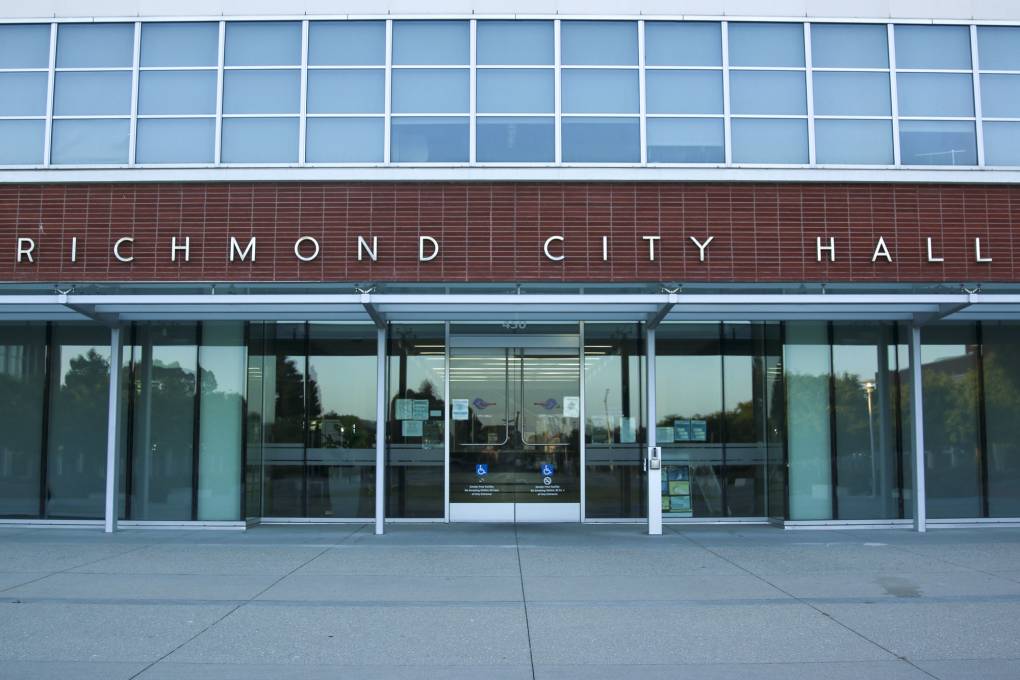
"caption": "Roughly 4,000 Richmond residents this month were told by the city that they need to register their businesses and pay the appropriate taxes from last year.",
"credit": "Brian Krans/KQED",
"altTag": "The front of Richmond City Hall.",
"description": null,
"imgSizes": {
"medium": {
"file": "https://cdn.kqed.org/wp-content/uploads/sites/10/2024/09/240911-RICHMOND-CITY-HALL-BK-01-KQED-800x533.jpg",
"width": 800,
"height": 533,
"mimeType": "image/jpeg"
},
"large": {
"file": "https://cdn.kqed.org/wp-content/uploads/sites/10/2024/09/240911-RICHMOND-CITY-HALL-BK-01-KQED-1020x680.jpg",
"width": 1020,
"height": 680,
"mimeType": "image/jpeg"
},
"thumbnail": {
"file": "https://cdn.kqed.org/wp-content/uploads/sites/10/2024/09/240911-RICHMOND-CITY-HALL-BK-01-KQED-160x107.jpg",
"width": 160,
"height": 107,
"mimeType": "image/jpeg"
},
"1536x1536": {
"file": "https://cdn.kqed.org/wp-content/uploads/sites/10/2024/09/240911-RICHMOND-CITY-HALL-BK-01-KQED-1536x1024.jpg",
"width": 1536,
"height": 1024,
"mimeType": "image/jpeg"
},
"post-thumbnail": {
"file": "https://cdn.kqed.org/wp-content/uploads/sites/10/2024/09/240911-RICHMOND-CITY-HALL-BK-01-KQED-672x372.jpg",
"width": 672,
"height": 372,
"mimeType": "image/jpeg"
},
"twentyfourteen-full-width": {
"file": "https://cdn.kqed.org/wp-content/uploads/sites/10/2024/09/240911-RICHMOND-CITY-HALL-BK-01-KQED-1038x576.jpg",
"width": 1038,
"height": 576,
"mimeType": "image/jpeg"
},
"full-width": {
"file": "https://cdn.kqed.org/wp-content/uploads/sites/10/2024/09/240911-RICHMOND-CITY-HALL-BK-01-KQED-1920x1280.jpg",
"width": 1920,
"height": 1280,
"mimeType": "image/jpeg"
},
"kqedFullSize": {
"file": "https://cdn.kqed.org/wp-content/uploads/sites/10/2024/09/240911-RICHMOND-CITY-HALL-BK-01-KQED.jpg",
"width": 2000,
"height": 1333
}
},
"isLoading": false,
"fetchFailed": false
},
"news_11997354": {
"type": "attachments",
"id": "news_11997354",
"meta": {
"index": "attachments_1716263798",
"site": "news",
"id": "11997354",
"found": true
},
"title": "042924_Covered-CA_AH_CM_04",
"publishDate": 1721925016,
"status": "inherit",
"parent": 11997351,
"modified": 1721932461,
"caption": "A Covered California Enrollment Center in Chula Vista on April 29, 2024.",
"credit": "Adriana Heldiz, CalMatters",
"altTag": "A window has a sign that reads \"Health Insurance Covered California.\"",
"description": null,
"imgSizes": {
"medium": {
"file": "https://cdn.kqed.org/wp-content/uploads/sites/10/2024/07/042924_Covered-CA_AH_CM_04-800x533.jpg",
"width": 800,
"height": 533,
"mimeType": "image/jpeg"
},
"large": {
"file": "https://cdn.kqed.org/wp-content/uploads/sites/10/2024/07/042924_Covered-CA_AH_CM_04-1020x680.jpg",
"width": 1020,
"height": 680,
"mimeType": "image/jpeg"
},
"thumbnail": {
"file": "https://cdn.kqed.org/wp-content/uploads/sites/10/2024/07/042924_Covered-CA_AH_CM_04-160x107.jpg",
"width": 160,
"height": 107,
"mimeType": "image/jpeg"
},
"1536x1536": {
"file": "https://cdn.kqed.org/wp-content/uploads/sites/10/2024/07/042924_Covered-CA_AH_CM_04-1536x1024.jpg",
"width": 1536,
"height": 1024,
"mimeType": "image/jpeg"
},
"post-thumbnail": {
"file": "https://cdn.kqed.org/wp-content/uploads/sites/10/2024/07/042924_Covered-CA_AH_CM_04-672x372.jpg",
"width": 672,
"height": 372,
"mimeType": "image/jpeg"
},
"twentyfourteen-full-width": {
"file": "https://cdn.kqed.org/wp-content/uploads/sites/10/2024/07/042924_Covered-CA_AH_CM_04-1038x576.jpg",
"width": 1038,
"height": 576,
"mimeType": "image/jpeg"
},
"full-width": {
"file": "https://cdn.kqed.org/wp-content/uploads/sites/10/2024/07/042924_Covered-CA_AH_CM_04-1920x1280.jpg",
"width": 1920,
"height": 1280,
"mimeType": "image/jpeg"
},
"kqedFullSize": {
"file": "https://cdn.kqed.org/wp-content/uploads/sites/10/2024/07/042924_Covered-CA_AH_CM_04.jpg",
"width": 2000,
"height": 1333
}
},
"isLoading": false,
"fetchFailed": false
},
"news_11991291": {
"type": "attachments",
"id": "news_11991291",
"meta": {
"index": "attachments_1716263798",
"site": "news",
"id": "11991291",
"found": true
},
"title": "73076353_qut",
"publishDate": 1718909047,
"status": "inherit",
"parent": 11991285,
"modified": 1718914449,
"caption": "A section of the California seal hangs in San Francisco on the front of the State of California Earl Warren building on Jan. 22, 2007. The California Supreme Court blocked a ballot measure that would have required all state and local tax increases to be approved by voters, amounting to a constitutional revision.",
"credit": "Justin Sullivan/Getty Images",
"altTag": null,
"description": null,
"imgSizes": {
"medium": {
"file": "https://cdn.kqed.org/wp-content/uploads/sites/10/2024/06/73076353_qut-800x525.jpg",
"width": 800,
"height": 525,
"mimeType": "image/jpeg"
},
"large": {
"file": "https://cdn.kqed.org/wp-content/uploads/sites/10/2024/06/73076353_qut-1020x670.jpg",
"width": 1020,
"height": 670,
"mimeType": "image/jpeg"
},
"thumbnail": {
"file": "https://cdn.kqed.org/wp-content/uploads/sites/10/2024/06/73076353_qut-160x105.jpg",
"width": 160,
"height": 105,
"mimeType": "image/jpeg"
},
"1536x1536": {
"file": "https://cdn.kqed.org/wp-content/uploads/sites/10/2024/06/73076353_qut-1536x1009.jpg",
"width": 1536,
"height": 1009,
"mimeType": "image/jpeg"
},
"post-thumbnail": {
"file": "https://cdn.kqed.org/wp-content/uploads/sites/10/2024/06/73076353_qut-672x372.jpg",
"width": 672,
"height": 372,
"mimeType": "image/jpeg"
},
"twentyfourteen-full-width": {
"file": "https://cdn.kqed.org/wp-content/uploads/sites/10/2024/06/73076353_qut-1038x576.jpg",
"width": 1038,
"height": 576,
"mimeType": "image/jpeg"
},
"kqedFullSize": {
"file": "https://cdn.kqed.org/wp-content/uploads/sites/10/2024/06/73076353_qut.jpg",
"width": 1920,
"height": 1261
}
},
"isLoading": false,
"fetchFailed": false
},
"news_11988887": {
"type": "attachments",
"id": "news_11988887",
"meta": {
"index": "attachments_1716263798",
"site": "news",
"id": "11988887",
"found": true
},
"title": "092223-Native-American-Day-MG-CM-28",
"publishDate": 1717522137,
"status": "inherit",
"parent": 11988884,
"modified": 1717530240,
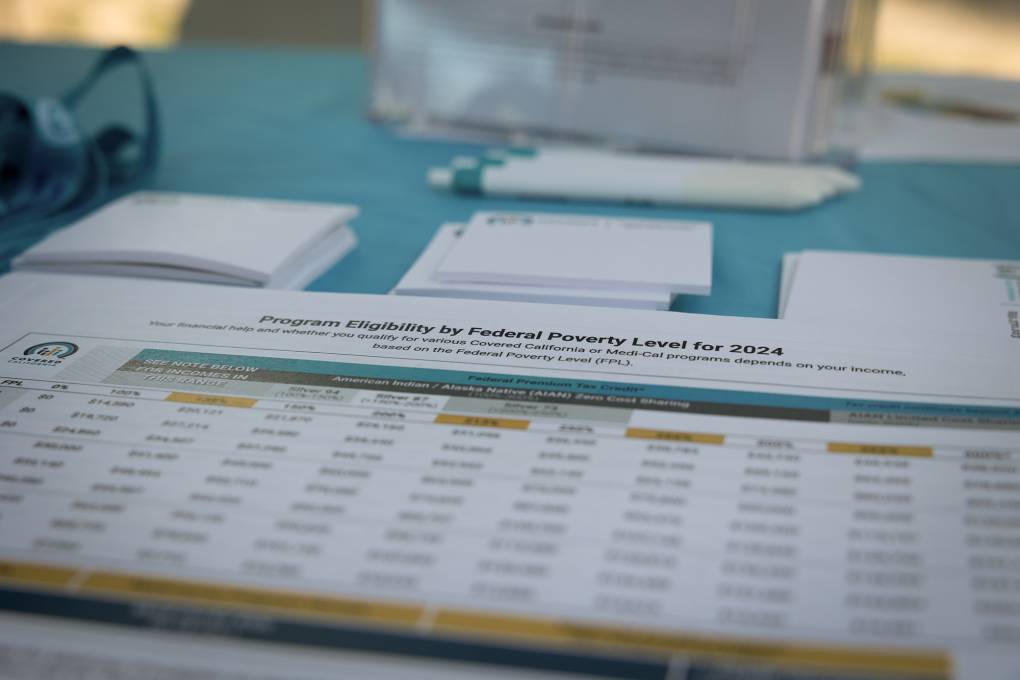
"caption": "A booth with information on Covered California at the California Native Americans Day celebration at the state Capitol on Sept. 22, 2023. ",
"credit": "Miguel Gutierrez Jr./CalMatters",
"altTag": "A stack of papers with pens on a table.",
"description": null,
"imgSizes": {
"medium": {
"file": "https://cdn.kqed.org/wp-content/uploads/sites/10/2024/06/092223-Native-American-Day-MG-CM-28-800x533.jpg",
"width": 800,
"height": 533,
"mimeType": "image/jpeg"
},
"large": {
"file": "https://cdn.kqed.org/wp-content/uploads/sites/10/2024/06/092223-Native-American-Day-MG-CM-28-1020x680.jpg",
"width": 1020,
"height": 680,
"mimeType": "image/jpeg"
},
"thumbnail": {
"file": "https://cdn.kqed.org/wp-content/uploads/sites/10/2024/06/092223-Native-American-Day-MG-CM-28-160x107.jpg",
"width": 160,
"height": 107,
"mimeType": "image/jpeg"
},
"1536x1536": {
"file": "https://cdn.kqed.org/wp-content/uploads/sites/10/2024/06/092223-Native-American-Day-MG-CM-28-1536x1024.jpg",
"width": 1536,
"height": 1024,
"mimeType": "image/jpeg"
},
"post-thumbnail": {
"file": "https://cdn.kqed.org/wp-content/uploads/sites/10/2024/06/092223-Native-American-Day-MG-CM-28-672x372.jpg",
"width": 672,
"height": 372,
"mimeType": "image/jpeg"
},
"twentyfourteen-full-width": {
"file": "https://cdn.kqed.org/wp-content/uploads/sites/10/2024/06/092223-Native-American-Day-MG-CM-28-1038x576.jpg",
"width": 1038,
"height": 576,
"mimeType": "image/jpeg"
},
"full-width": {
"file": "https://cdn.kqed.org/wp-content/uploads/sites/10/2024/06/092223-Native-American-Day-MG-CM-28-1920x1280.jpg",
"width": 1920,
"height": 1280,
"mimeType": "image/jpeg"
},
"kqedFullSize": {
"file": "https://cdn.kqed.org/wp-content/uploads/sites/10/2024/06/092223-Native-American-Day-MG-CM-28.jpg",
"width": 2000,
"height": 1333
}
},
"isLoading": false,
"fetchFailed": false
},
"news_11986247": {
"type": "attachments",
"id": "news_11986247",
"meta": {
"index": "attachments_1716263798",
"site": "news",
"id": "11986247",
"found": true
},
"parent": 11986246,
"imgSizes": {
"twentyfourteen-full-width": {
"file": "https://cdn.kqed.org/wp-content/uploads/sites/10/2024/05/BCN-20240514-OAKTAXES-01-1038x576.jpg",
"width": 1038,
"mimeType": "image/jpeg",
"height": 576
},
"thumbnail": {
"file": "https://cdn.kqed.org/wp-content/uploads/sites/10/2024/05/BCN-20240514-OAKTAXES-01-160x95.jpg",
"width": 160,
"mimeType": "image/jpeg",
"height": 95
},
"post-thumbnail": {
"file": "https://cdn.kqed.org/wp-content/uploads/sites/10/2024/05/BCN-20240514-OAKTAXES-01-672x372.jpg",
"width": 672,
"mimeType": "image/jpeg",
"height": 372
},
"kqedFullSize": {
"file": "https://cdn.kqed.org/wp-content/uploads/sites/10/2024/05/BCN-20240514-OAKTAXES-01.jpg",
"width": 2048,
"height": 1212
},
"large": {
"file": "https://cdn.kqed.org/wp-content/uploads/sites/10/2024/05/BCN-20240514-OAKTAXES-01-1020x604.jpg",
"width": 1020,
"mimeType": "image/jpeg",
"height": 604
},
"1536x1536": {
"file": "https://cdn.kqed.org/wp-content/uploads/sites/10/2024/05/BCN-20240514-OAKTAXES-01-1536x909.jpg",
"width": 1536,
"mimeType": "image/jpeg",
"height": 909
},
"full-width": {
"file": "https://cdn.kqed.org/wp-content/uploads/sites/10/2024/05/BCN-20240514-OAKTAXES-01-1920x1136.jpg",
"width": 1920,
"mimeType": "image/jpeg",
"height": 1136
},
"medium": {
"file": "https://cdn.kqed.org/wp-content/uploads/sites/10/2024/05/BCN-20240514-OAKTAXES-01-800x473.jpg",
"width": 800,
"mimeType": "image/jpeg",
"height": 473
}
},
"publishDate": 1715732703,
"modified": 1715734824,
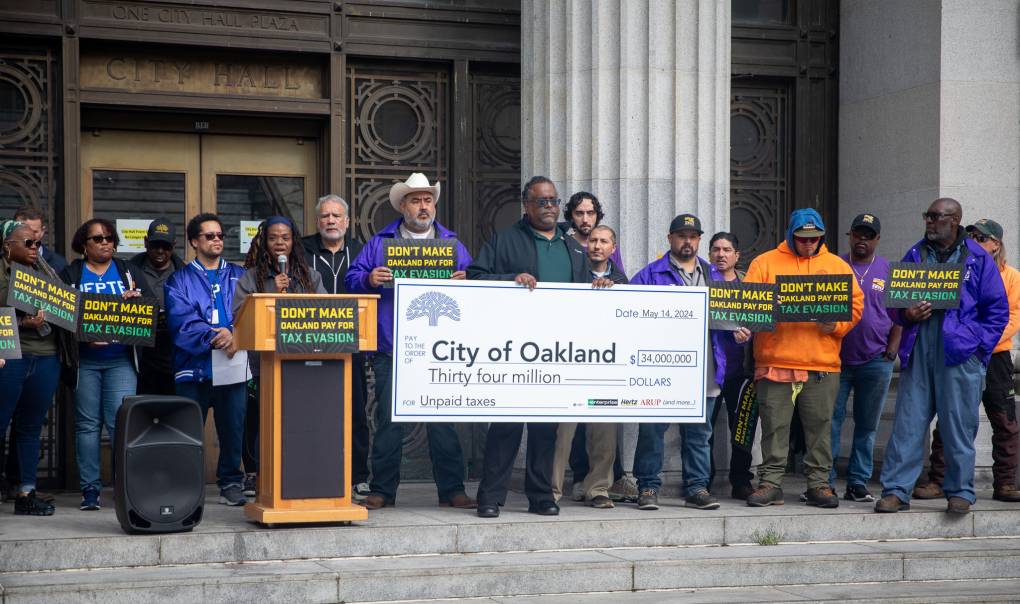
"caption": "Oakland city workers and residents gather in front of City Hall before joining the City’s Finance & Management Committee meeting on May 14, 2024, to deliver public comment. The group believes thousands of businesses did not pay business taxes by the deadline of April 17, 2023, and as much as $34 million in business tax collections from prior years may still be outstanding. ",
"description": null,
"title": "BCN-20240514-OAKTAXES-01",
"credit": "Courtesy of IFPTE Local 21 via Bay City News",
"status": "inherit",
"altTag": null,
"isLoading": false,
"fetchFailed": false
},
"news_10447124": {
"type": "attachments",
"id": "news_10447124",
"meta": {
"index": "attachments_1716263798",
"site": "news",
"id": "10447124",
"found": true
},
"parent": 10447118,
"imgSizes": {
"twentyfourteen-full-width": {
"file": "https://ww2.kqed.org/app/uploads/sites/10/2015/03/californiasupremecourt-1038x576.jpg",
"width": 1038,
"mimeType": "image/jpeg",
"height": 576
},
"thumbnail": {
"file": "https://ww2.kqed.org/app/uploads/sites/10/2015/03/californiasupremecourt-400x300.jpg",
"width": 400,
"mimeType": "image/jpeg",
"height": 300
},
"fd-sm": {
"file": "https://ww2.kqed.org/app/uploads/sites/10/2015/03/californiasupremecourt-320x240.jpg",
"width": 320,
"mimeType": "image/jpeg",
"height": 240
},
"post-thumbnail": {
"file": "https://ww2.kqed.org/app/uploads/sites/10/2015/03/californiasupremecourt-672x372.jpg",
"width": 672,
"mimeType": "image/jpeg",
"height": 372
},
"kqedFullSize": {
"file": "https://ww2.kqed.org/app/uploads/sites/10/2015/03/californiasupremecourt.jpg",
"width": 1536,
"height": 1152
},
"large": {
"file": "https://ww2.kqed.org/app/uploads/sites/10/2015/03/californiasupremecourt-1440x1080.jpg",
"width": 1440,
"mimeType": "image/jpeg",
"height": 1080
},
"guest-author-96": {
"file": "https://ww2.kqed.org/app/uploads/sites/10/2015/03/californiasupremecourt-96x96.jpg",
"width": 96,
"mimeType": "image/jpeg",
"height": 96
},
"medium": {
"file": "https://ww2.kqed.org/app/uploads/sites/10/2015/03/californiasupremecourt-800x600.jpg",
"width": 800,
"mimeType": "image/jpeg",
"height": 600
},
"guest-author-64": {
"file": "https://ww2.kqed.org/app/uploads/sites/10/2015/03/californiasupremecourt-64x64.jpg",
"width": 64,
"mimeType": "image/jpeg",
"height": 64
},
"guest-author-32": {
"file": "https://ww2.kqed.org/app/uploads/sites/10/2015/03/californiasupremecourt-32x32.jpg",
"width": 32,
"mimeType": "image/jpeg",
"height": 32
},
"fd-lrg": {
"file": "https://ww2.kqed.org/app/uploads/sites/10/2015/03/californiasupremecourt-1180x885.jpg",
"width": 1180,
"mimeType": "image/jpeg",
"height": 885
},
"fd-med": {
"file": "https://ww2.kqed.org/app/uploads/sites/10/2015/03/californiasupremecourt-768x576.jpg",
"width": 768,
"mimeType": "image/jpeg",
"height": 576
},
"detail": {
"file": "https://ww2.kqed.org/app/uploads/sites/10/2015/03/californiasupremecourt-75x75.jpg",
"width": 75,
"mimeType": "image/jpeg",
"height": 75
},
"guest-author-128": {
"file": "https://ww2.kqed.org/app/uploads/sites/10/2015/03/californiasupremecourt-128x128.jpg",
"width": 128,
"mimeType": "image/jpeg",
"height": 128
}
},
"publishDate": 1425323779,
"modified": 1425323907,
"caption": "The Earl Warren Building in San Francisco, seat of the California Supreme Court. ",
"description": null,
"title": "California Supreme Court",
"credit": "Wikimedia Commons",
"status": "inherit",
"isLoading": false,
"fetchFailed": false
},
"news_11983025": {
"type": "attachments",
"id": "news_11983025",
"meta": {
"index": "attachments_1716263798",
"site": "news",
"id": "11983025",
"found": true
},
"parent": 11983000,
"imgSizes": {
"twentyfourteen-full-width": {
"file": "https://cdn.kqed.org/wp-content/uploads/sites/10/2024/04/GettyImages-623874284_qut-1038x576.jpg",
"width": 1038,
"mimeType": "image/jpeg",
"height": 576
},
"thumbnail": {
"file": "https://cdn.kqed.org/wp-content/uploads/sites/10/2024/04/GettyImages-623874284_qut-160x111.jpg",
"width": 160,
"mimeType": "image/jpeg",
"height": 111
},
"post-thumbnail": {
"file": "https://cdn.kqed.org/wp-content/uploads/sites/10/2024/04/GettyImages-623874284_qut-672x372.jpg",
"width": 672,
"mimeType": "image/jpeg",
"height": 372
},
"kqedFullSize": {
"file": "https://cdn.kqed.org/wp-content/uploads/sites/10/2024/04/GettyImages-623874284_qut.jpg",
"width": 1920,
"height": 1327
},
"large": {
"file": "https://cdn.kqed.org/wp-content/uploads/sites/10/2024/04/GettyImages-623874284_qut-1020x705.jpg",
"width": 1020,
"mimeType": "image/jpeg",
"height": 705
},
"1536x1536": {
"file": "https://cdn.kqed.org/wp-content/uploads/sites/10/2024/04/GettyImages-623874284_qut-1536x1062.jpg",
"width": 1536,
"mimeType": "image/jpeg",
"height": 1062
},
"medium": {
"file": "https://cdn.kqed.org/wp-content/uploads/sites/10/2024/04/GettyImages-623874284_qut-800x553.jpg",
"width": 800,
"mimeType": "image/jpeg",
"height": 553
}
},
"publishDate": 1713210545,
"modified": 1713214063,
"caption": "A worker stands on the roof of a home under construction at a new housing development on Nov. 17, 2016, in San Rafael. ",
"description": null,
"title": "GettyImages-623874284_qut",
"credit": "Justin Sullivan/Getty Images",
"status": "inherit",
"altTag": "A person wearing construction equipment holds a wooden support beam while a roof is built.",
"isLoading": false,
"fetchFailed": false
},
"news_11982862": {
"type": "attachments",
"id": "news_11982862",
"meta": {
"index": "attachments_1716263798",
"site": "news",
"id": "11982862",
"found": true
},
"parent": 11982856,
"imgSizes": {
"twentyfourteen-full-width": {
"file": "https://cdn.kqed.org/wp-content/uploads/sites/10/2024/04/gettyimages-1403824678_slide-f338fde370196cf054676c1627f763c404b1fa9a-s1600-c85-copy-1038x576.jpg",
"width": 1038,
"mimeType": "image/jpeg",
"height": 576
},
"thumbnail": {
"file": "https://cdn.kqed.org/wp-content/uploads/sites/10/2024/04/gettyimages-1403824678_slide-f338fde370196cf054676c1627f763c404b1fa9a-s1600-c85-copy-160x107.jpg",
"width": 160,
"mimeType": "image/jpeg",
"height": 107
},
"post-thumbnail": {
"file": "https://cdn.kqed.org/wp-content/uploads/sites/10/2024/04/gettyimages-1403824678_slide-f338fde370196cf054676c1627f763c404b1fa9a-s1600-c85-copy-672x372.jpg",
"width": 672,
"mimeType": "image/jpeg",
"height": 372
},
"kqedFullSize": {
"file": "https://cdn.kqed.org/wp-content/uploads/sites/10/2024/04/gettyimages-1403824678_slide-f338fde370196cf054676c1627f763c404b1fa9a-s1600-c85-copy.jpg",
"width": 1600,
"height": 1066
},
"large": {
"file": "https://cdn.kqed.org/wp-content/uploads/sites/10/2024/04/gettyimages-1403824678_slide-f338fde370196cf054676c1627f763c404b1fa9a-s1600-c85-copy-1020x680.jpg",
"width": 1020,
"mimeType": "image/jpeg",
"height": 680
},
"1536x1536": {
"file": "https://cdn.kqed.org/wp-content/uploads/sites/10/2024/04/gettyimages-1403824678_slide-f338fde370196cf054676c1627f763c404b1fa9a-s1600-c85-copy-1536x1023.jpg",
"width": 1536,
"mimeType": "image/jpeg",
"height": 1023
},
"medium": {
"file": "https://cdn.kqed.org/wp-content/uploads/sites/10/2024/04/gettyimages-1403824678_slide-f338fde370196cf054676c1627f763c404b1fa9a-s1600-c85-copy-800x533.jpg",
"width": 800,
"mimeType": "image/jpeg",
"height": 533
}
},
"publishDate": 1712962105,
"modified": 1712963162,
"caption": "This year, those who are eligible can do their taxes directly through the IRS using their Direct File tool instead of buying and using tax software.",
"description": null,
"title": "gettyimages-1403824678_slide-f338fde370196cf054676c1627f763c404b1fa9a-s1600-c85 copy",
"credit": "d3sign/Getty Images",
"status": "inherit",
"altTag": null,
"isLoading": false,
"fetchFailed": false
},
"news_11982211": {
"type": "attachments",
"id": "news_11982211",
"meta": {
"index": "attachments_1716263798",
"site": "news",
"id": "11982211",
"found": true
},
"parent": 11981714,
"imgSizes": {
"twentyfourteen-full-width": {
"file": "https://cdn.kqed.org/wp-content/uploads/sites/10/2024/04/GettyImages-1941725396_qut-1020x680-1-1020x576.jpg",
"width": 1020,
"mimeType": "image/jpeg",
"height": 576
},
"thumbnail": {
"file": "https://cdn.kqed.org/wp-content/uploads/sites/10/2024/04/GettyImages-1941725396_qut-1020x680-1-160x107.jpg",
"width": 160,
"mimeType": "image/jpeg",
"height": 107
},
"post-thumbnail": {
"file": "https://cdn.kqed.org/wp-content/uploads/sites/10/2024/04/GettyImages-1941725396_qut-1020x680-1-672x372.jpg",
"width": 672,
"mimeType": "image/jpeg",
"height": 372
},
"kqedFullSize": {
"file": "https://cdn.kqed.org/wp-content/uploads/sites/10/2024/04/GettyImages-1941725396_qut-1020x680-1.jpg",
"width": 1020,
"height": 680
},
"medium": {
"file": "https://cdn.kqed.org/wp-content/uploads/sites/10/2024/04/GettyImages-1941725396_qut-1020x680-1-800x533.jpg",
"width": 800,
"mimeType": "image/jpeg",
"height": 533
}
},
"publishDate": 1712566625,
"modified": 1712566841,
"caption": "Tomando en cuenta la cantidad de desinformación que circula las redes sobre cómo presentar la declaración de impuestos este año, KQED consultó expertos fiscales del Área de la Bahía para mejor entender qué es verdad y qué es mito.",
"description": null,
"title": "GettyImages-1941725396_qut-1020x680",
"credit": "skynesher",
"status": "inherit",
"altTag": null,
"isLoading": false,
"fetchFailed": false
},
"news_11972314": {
"type": "attachments",
"id": "news_11972314",
"meta": {
"index": "attachments_1716263798",
"site": "news",
"id": "11972314",
"found": true
},
"parent": 11972309,
"imgSizes": {
"twentyfourteen-full-width": {
"file": "https://cdn.kqed.org/wp-content/uploads/sites/10/2024/01/CMTech01-1038x576.jpg",
"width": 1038,
"mimeType": "image/jpeg",
"height": 576
},
"thumbnail": {
"file": "https://cdn.kqed.org/wp-content/uploads/sites/10/2024/01/CMTech01-160x107.jpg",
"width": 160,
"mimeType": "image/jpeg",
"height": 107
},
"post-thumbnail": {
"file": "https://cdn.kqed.org/wp-content/uploads/sites/10/2024/01/CMTech01-672x372.jpg",
"width": 672,
"mimeType": "image/jpeg",
"height": 372
},
"kqedFullSize": {
"file": "https://cdn.kqed.org/wp-content/uploads/sites/10/2024/01/CMTech01.jpg",
"width": 2000,
"height": 1333
},
"large": {
"file": "https://cdn.kqed.org/wp-content/uploads/sites/10/2024/01/CMTech01-1020x680.jpg",
"width": 1020,
"mimeType": "image/jpeg",
"height": 680
},
"1536x1536": {
"file": "https://cdn.kqed.org/wp-content/uploads/sites/10/2024/01/CMTech01-1536x1024.jpg",
"width": 1536,
"mimeType": "image/jpeg",
"height": 1024
},
"full-width": {
"file": "https://cdn.kqed.org/wp-content/uploads/sites/10/2024/01/CMTech01-1920x1280.jpg",
"width": 1920,
"mimeType": "image/jpeg",
"height": 1280
},
"medium": {
"file": "https://cdn.kqed.org/wp-content/uploads/sites/10/2024/01/CMTech01-800x533.jpg",
"width": 800,
"mimeType": "image/jpeg",
"height": 533
}
},
"publishDate": 1704996061,
"modified": 1704996229,
"caption": null,
"description": null,
"title": "CMTech01",
"credit": "Miguel Gutierrez Jr./CalMatters/iStock",
"status": "inherit",
"altTag": "A graphic illustration of a capitol building with tech company logos floating around it.",
"isLoading": false,
"fetchFailed": false
},
"news_11964303": {
"type": "attachments",
"id": "news_11964303",
"meta": {
"index": "attachments_1716263798",
"site": "news",
"id": "11964303",
"found": true
},
"title": "Black woman, budget and home finance on laptop for accounting, money planning and fintech investment. Paper bills, savings and web payment review, online banking and insurance loan of financial taxes",
"publishDate": 1697148227,
"status": "inherit",
"parent": 11964241,
"modified": 1697148424,
"caption": "For almost all California counties, the extended tax deadline is Monday, Oct. 16.",
"credit": "Pixdeluxe via Getty Images",
"altTag": "A Black woman wearing a tan sweater sits at a desk holding a piece of paper in one hand and staring at a laptop.",
"description": null,
"imgSizes": {
"medium": {
"file": "https://cdn.kqed.org/wp-content/uploads/sites/10/2023/10/GettyImages-1438452854-800x534.jpg",
"width": 800,
"height": 534,
"mimeType": "image/jpeg"
},
"large": {
"file": "https://cdn.kqed.org/wp-content/uploads/sites/10/2023/10/GettyImages-1438452854-1020x680.jpg",
"width": 1020,
"height": 680,
"mimeType": "image/jpeg"
},
"thumbnail": {
"file": "https://cdn.kqed.org/wp-content/uploads/sites/10/2023/10/GettyImages-1438452854-160x107.jpg",
"width": 160,
"height": 107,
"mimeType": "image/jpeg"
},
"1536x1536": {
"file": "https://cdn.kqed.org/wp-content/uploads/sites/10/2023/10/GettyImages-1438452854-1536x1024.jpg",
"width": 1536,
"height": 1024,
"mimeType": "image/jpeg"
},
"2048x2048": {
"file": "https://cdn.kqed.org/wp-content/uploads/sites/10/2023/10/GettyImages-1438452854-2048x1366.jpg",
"width": 2048,
"height": 1366,
"mimeType": "image/jpeg"
},
"post-thumbnail": {
"file": "https://cdn.kqed.org/wp-content/uploads/sites/10/2023/10/GettyImages-1438452854-672x372.jpg",
"width": 672,
"height": 372,
"mimeType": "image/jpeg"
},
"twentyfourteen-full-width": {
"file": "https://cdn.kqed.org/wp-content/uploads/sites/10/2023/10/GettyImages-1438452854-1038x576.jpg",
"width": 1038,
"height": 576,
"mimeType": "image/jpeg"
},
"full-width": {
"file": "https://cdn.kqed.org/wp-content/uploads/sites/10/2023/10/GettyImages-1438452854-1920x1281.jpg",
"width": 1920,
"height": 1281,
"mimeType": "image/jpeg"
},
"kqedFullSize": {
"file": "https://cdn.kqed.org/wp-content/uploads/sites/10/2023/10/GettyImages-1438452854-e1741641207115.jpg",
"width": 2000,
"height": 1334
}
},
"isLoading": false,
"fetchFailed": false
},
"news_11946480": {
"type": "attachments",
"id": "news_11946480",
"meta": {
"index": "attachments_1716263798",
"site": "news",
"id": "11946480",
"found": true
},
"title": "Woman paying bills using her laptop at her kitchen table",
"publishDate": 1681326684,
"status": "inherit",
"parent": 11946379,
"modified": 1681326875,
"caption": "Most Californians have received an automatic extension from the IRS to file and pay their taxes. The deadline has been extended to Oct. 16, which also includes state taxes.",
"credit": "MoMo Productions/Getty Images",
"altTag": "A woman sits at her kitchen table and sifts through documents, looking concerned. Next to her is her opened laptop.",
"description": null,
"imgSizes": {
"medium": {
"file": "https://cdn.kqed.org/wp-content/uploads/sites/10/2023/04/GettyImages-1400799758-800x534.jpg",
"width": 800,
"height": 534,
"mimeType": "image/jpeg"
},
"large": {
"file": "https://cdn.kqed.org/wp-content/uploads/sites/10/2023/04/GettyImages-1400799758-1020x680.jpg",
"width": 1020,
"height": 680,
"mimeType": "image/jpeg"
},
"thumbnail": {
"file": "https://cdn.kqed.org/wp-content/uploads/sites/10/2023/04/GettyImages-1400799758-160x107.jpg",
"width": 160,
"height": 107,
"mimeType": "image/jpeg"
},
"1536x1536": {
"file": "https://cdn.kqed.org/wp-content/uploads/sites/10/2023/04/GettyImages-1400799758-1536x1025.jpg",
"width": 1536,
"height": 1025,
"mimeType": "image/jpeg"
},
"2048x2048": {
"file": "https://cdn.kqed.org/wp-content/uploads/sites/10/2023/04/GettyImages-1400799758-2048x1366.jpg",
"width": 2048,
"height": 1366,
"mimeType": "image/jpeg"
},
"post-thumbnail": {
"file": "https://cdn.kqed.org/wp-content/uploads/sites/10/2023/04/GettyImages-1400799758-672x372.jpg",
"width": 672,
"height": 372,
"mimeType": "image/jpeg"
},
"twentyfourteen-full-width": {
"file": "https://cdn.kqed.org/wp-content/uploads/sites/10/2023/04/GettyImages-1400799758-1038x576.jpg",
"width": 1038,
"height": 576,
"mimeType": "image/jpeg"
},
"full-width": {
"file": "https://cdn.kqed.org/wp-content/uploads/sites/10/2023/04/GettyImages-1400799758-1920x1281.jpg",
"width": 1920,
"height": 1281,
"mimeType": "image/jpeg"
},
"kqedFullSize": {
"file": "https://cdn.kqed.org/wp-content/uploads/sites/10/2023/04/GettyImages-1400799758-scaled-e1779405949186.jpg",
"width": 2000,
"height": 1334
}
},
"isLoading": false,
"fetchFailed": false
}
},
"audioPlayerReducer": {
"postId": "stream_live",
"isPaused": true,
"isPlaying": false,
"pfsActive": false,
"pledgeModalIsOpen": true,
"playerDrawerIsOpen": false,
"liveAudioPlayStartedAt": 0,
"liveAudioPlayContext": ""
},
"authorsReducer": {
"byline_news_11997351": {
"type": "authors",
"id": "byline_news_11997351",
"meta": {
"override": true
},
"slug": "byline_news_11997351",
"name": "Ana B. Ibarra, CalMatters",
"isLoading": false
},
"byline_news_11988884": {
"type": "authors",
"id": "byline_news_11988884",
"meta": {
"override": true
},
"slug": "byline_news_11988884",
"name": "Ana B. Ibarra, CalMatters",
"isLoading": false
},
"byline_news_11986246": {
"type": "authors",
"id": "byline_news_11986246",
"meta": {
"override": true
},
"slug": "byline_news_11986246",
"name": "Kiley Russell, Bay City News",
"isLoading": false
},
"byline_news_11982856": {
"type": "authors",
"id": "byline_news_11982856",
"meta": {
"override": true
},
"slug": "byline_news_11982856",
"name": "\u003ca href=\"https://www.npr.org/people/1123235730/marielle-segarra\">Marielle Segarra\u003c/a>",
"isLoading": false
},
"byline_news_11972309": {
"type": "authors",
"id": "byline_news_11972309",
"meta": {
"override": true
},
"slug": "byline_news_11972309",
"name": "\u003ca href=\"https://calmatters.org/author/levi-sumagaysay/\">Levi Sumagaysay\u003c/a>",
"isLoading": false
},
"mlagos": {
"type": "authors",
"id": "3239",
"meta": {
"index": "authors_1716337520",
"id": "3239",
"found": true
},
"name": "Marisa Lagos",
"firstName": "Marisa",
"lastName": "Lagos",
"slug": "mlagos",
"email": "mlagos@kqed.org",
"display_author_email": false,
"staff_mastheads": [
"news"
],
"title": "KQED Contributor",
"bio": "Marisa Lagos is a correspondent for KQED’s California Politics and Government Desk and co-hosts the award-winning show and podcast, Political Breakdown. At KQED, Lagos also conducts reporting, analysis and investigations into state, local and national politics for radio, TV, online and onstage. In 2022, she and co-host, Scott Shafer, moderated the only gubernatorial debate in California. In 2020, the \u003ci>Washington Post\u003c/i> named her one of the top political journalists in California; she was nominated for a Peabody and won several other awards for her work investigating the 2017 California wildfires. She has worked at the \u003ci>San Francisco Chronicle\u003c/i>, \u003ci>San Francisco Examiner\u003c/i> and \u003ci>Los Angeles Times\u003c/i>. A UC Santa Barbara graduate, she lives in San Francisco with her two sons and husband.",
"avatar": "https://secure.gravatar.com/avatar/a261a0d3696fc066871ef96b85b5e7d2?s=600&d=blank&r=g",
"twitter": "@mlagos",
"facebook": null,
"instagram": null,
"linkedin": null,
"sites": [
{
"site": "arts",
"roles": [
"author"
]
},
{
"site": "news",
"roles": [
"editor"
]
},
{
"site": "science",
"roles": [
"editor"
]
},
{
"site": "forum",
"roles": [
"author"
]
},
{
"site": "liveblog",
"roles": [
"author"
]
}
],
"headData": {
"title": "Marisa Lagos | KQED",
"description": "KQED Contributor",
"ogImgSrc": "https://secure.gravatar.com/avatar/a261a0d3696fc066871ef96b85b5e7d2?s=600&d=blank&r=g",
"twImgSrc": "https://secure.gravatar.com/avatar/a261a0d3696fc066871ef96b85b5e7d2?s=600&d=blank&r=g"
},
"isLoading": false,
"link": "/author/mlagos"
},
"carlysevern": {
"type": "authors",
"id": "3243",
"meta": {
"index": "authors_1716337520",
"id": "3243",
"found": true
},
"name": "Carly Severn",
"firstName": "Carly",
"lastName": "Severn",
"slug": "carlysevern",
"email": "csevern@kqed.org",
"display_author_email": false,
"staff_mastheads": [
"news"
],
"title": "Senior Editor, Audience News ",
"bio": "Carly is KQED's Senior Editor of Audience News on the Digital News team, and has reported for the California Report Magazine, Bay Curious and KQED Arts. She's formerly the host of \u003ca href=\"http://ww2.kqed.org/pop/category/the-cooler/\" rel=\"noopener noreferrer\">The Cooler\u003c/a> podcast.",
"avatar": "https://secure.gravatar.com/avatar/54037bf5c128fe678f0ef26cec97a93f2e7f220a22d7285703328f12c42c1b1d?s=600&d=blank&r=g",
"twitter": "teacupinthebay",
"bluesky": null,
"facebook": null,
"instagram": null,
"linkedin": null,
"sites": [
{
"site": "",
"roles": [
"editor"
]
},
{
"site": "arts",
"roles": [
"editor"
]
},
{
"site": "news",
"roles": [
"administrator"
]
},
{
"site": "pop",
"roles": [
"editor"
]
},
{
"site": "futureofyou",
"roles": [
"editor"
]
},
{
"site": "about",
"roles": [
"administrator"
]
},
{
"site": "mindshift",
"roles": [
"editor"
]
},
{
"site": "bayareabites",
"roles": [
"editor"
]
},
{
"site": "stateofhealth",
"roles": [
"editor"
]
},
{
"site": "science",
"roles": [
"editor"
]
},
{
"site": "food",
"roles": [
"contributor"
]
},
{
"site": "forum",
"roles": [
"editor"
]
},
{
"site": "perspectives",
"roles": [
"administrator"
]
},
{
"site": "liveblog",
"roles": [
"editor"
]
}
],
"headData": {
"title": "Carly Severn | KQED",
"description": "Senior Editor, Audience News ",
"ogImgSrc": "https://secure.gravatar.com/avatar/54037bf5c128fe678f0ef26cec97a93f2e7f220a22d7285703328f12c42c1b1d?s=600&d=blank&r=g",
"twImgSrc": "https://secure.gravatar.com/avatar/54037bf5c128fe678f0ef26cec97a93f2e7f220a22d7285703328f12c42c1b1d?s=600&d=blank&r=g"
},
"isLoading": false,
"link": "/author/carlysevern"
},
"abandlamudi": {
"type": "authors",
"id": "11672",
"meta": {
"index": "authors_1716337520",
"id": "11672",
"found": true
},
"name": "Adhiti Bandlamudi",
"firstName": "Adhiti",
"lastName": "Bandlamudi",
"slug": "abandlamudi",
"email": "abandlamudi@kqed.org",
"display_author_email": false,
"staff_mastheads": [
"news"
],
"title": "KQED Housing Reporter",
"bio": "Adhiti Bandlamudi reports for KQED's Housing desk. She focuses on how housing gets built across the Bay Area. Before joining KQED in 2020, she reported for WUNC in Durham, North Carolina, WABE in Atlanta, Georgia and Capital Public Radio in Sacramento. In 2017, she was awarded a Kroc Fellowship at NPR where she reported on everything from sprinkles to the Golden State Killer's arrest. When she's not reporting, she's baking new recipes in her kitchen or watching movies with friends and family. She's originally from Georgia and has strong opinions about Great British Bake Off.",
"avatar": "https://secure.gravatar.com/avatar/868129c8b257bb99a3500e2c86a65400?s=600&d=mm&r=g",
"twitter": "oddity_adhiti",
"facebook": null,
"instagram": null,
"linkedin": null,
"sites": [
{
"site": "arts",
"roles": [
"author"
]
},
{
"site": "news",
"roles": [
"editor"
]
},
{
"site": "liveblog",
"roles": [
"author"
]
}
],
"headData": {
"title": "Adhiti Bandlamudi | KQED",
"description": "KQED Housing Reporter",
"ogImgSrc": "https://secure.gravatar.com/avatar/868129c8b257bb99a3500e2c86a65400?s=600&d=mm&r=g",
"twImgSrc": "https://secure.gravatar.com/avatar/868129c8b257bb99a3500e2c86a65400?s=600&d=mm&r=g"
},
"isLoading": false,
"link": "/author/abandlamudi"
},
"ccabreralomeli": {
"type": "authors",
"id": "11708",
"meta": {
"index": "authors_1716337520",
"id": "11708",
"found": true
},
"name": "Carlos Cabrera-Lomelí",
"firstName": "Carlos",
"lastName": "Cabrera-Lomelí",
"slug": "ccabreralomeli",
"email": "ccabreralomeli@KQED.org",
"display_author_email": true,
"staff_mastheads": [
"news"
],
"title": "Community Reporter",
"bio": "Carlos Cabrera-Lomelí is a community reporter with KQED's digital engagement team. He also reports and co-produces for KQED's bilingual news hub KQED en Español. He grew up in San Francisco's Mission District and has previously worked with Univision, 48 Hills and REFORMA in Mexico City.",
"avatar": "https://secure.gravatar.com/avatar/c309be9665e484f887b818c89e273ecc673004f426f36b24d00a4d813a2e0518?s=600&d=blank&r=g",
"twitter": "@LomeliCabrera",
"bluesky": null,
"facebook": null,
"instagram": null,
"linkedin": null,
"sites": [
{
"site": "arts",
"roles": [
"editor"
]
},
{
"site": "news",
"roles": [
"editor"
]
},
{
"site": "about",
"roles": [
"editor"
]
},
{
"site": "science",
"roles": [
"editor"
]
},
{
"site": "perspectives",
"roles": [
"editor"
]
},
{
"site": "elections",
"roles": [
"editor"
]
},
{
"site": "liveblog",
"roles": [
"contributor"
]
}
],
"headData": {
"title": "Carlos Cabrera-Lomelí | KQED",
"description": "Community Reporter",
"ogImgSrc": "https://secure.gravatar.com/avatar/c309be9665e484f887b818c89e273ecc673004f426f36b24d00a4d813a2e0518?s=600&d=blank&r=g",
"twImgSrc": "https://secure.gravatar.com/avatar/c309be9665e484f887b818c89e273ecc673004f426f36b24d00a4d813a2e0518?s=600&d=blank&r=g"
},
"isLoading": false,
"link": "/author/ccabreralomeli"
},
"bkrans": {
"type": "authors",
"id": "11923",
"meta": {
"index": "authors_1716337520",
"id": "11923",
"found": true
},
"name": "Brian Krans",
"firstName": "Brian",
"lastName": "Krans",
"slug": "bkrans",
"email": "bkrans@kqed.org",
"display_author_email": false,
"staff_mastheads": [
"news"
],
"title": "KQED Contributing Reporter",
"bio": "Brian Krans is an award-winning local news and investigative reporter who has been proudly working as a general assignment reporter for KQED since August 2023. He lives in Richmond, where he also reports on air pollution for Richmondside. He is also a founding member of the Vallejo Sun.",
"avatar": "https://secure.gravatar.com/avatar/71fa91f931774612559f7640390b53d9c2840ff72b20f195a25239aab2d9fbb9?s=600&d=blank&r=g",
"twitter": "citizenkrans",
"bluesky": null,
"facebook": null,
"instagram": null,
"linkedin": null,
"sites": [
{
"site": "news",
"roles": [
"editor"
]
}
],
"headData": {
"title": "Brian Krans | KQED",
"description": "KQED Contributing Reporter",
"ogImgSrc": "https://secure.gravatar.com/avatar/71fa91f931774612559f7640390b53d9c2840ff72b20f195a25239aab2d9fbb9?s=600&d=blank&r=g",
"twImgSrc": "https://secure.gravatar.com/avatar/71fa91f931774612559f7640390b53d9c2840ff72b20f195a25239aab2d9fbb9?s=600&d=blank&r=g"
},
"isLoading": false,
"link": "/author/bkrans"
}
},
"pagesReducer": {
"news_tag_taxes": {
"type": "terms",
"id": "news_423",
"meta": {
"index": "terms_1716263798",
"site": "news",
"id": "423",
"score": 8.79519
},
"featImg": null,
"name": "taxes",
"description": null,
"taxonomy": "tag",
"headData": {
"twImgId": null,
"twTitle": null,
"ogTitle": null,
"ogImgId": null,
"twDescription": null,
"description": null,
"title": "taxes Archives | KQED News",
"ogDescription": null
},
"ttid": 432,
"slug": "taxes",
"isLoading": false,
"title": "taxes",
"pageMeta": {
"site": "news",
"WpPageTemplate": "page-topic-editorial",
"currentPage": 3
},
"blocks": [
{
"blockName": "kqed/post-list",
"attrs": {
"layout": "cardArticle2",
"query": "posts/news?tag=taxes",
"seeMore": false,
"paginated": true,
"page": 3
}
},
{
"blockName": "kqed/ad"
}
]
}
},
"pfsSessionReducer": {},
"postsReducer": {
"stream_live": {
"type": "live",
"id": "stream_live",
"audioUrl": "https://streams.kqed.org/kqedradio",
"title": "Live Stream",
"excerpt": "Live Stream information currently unavailable.",
"link": "/radio",
"featImg": "",
"label": {
"name": "KQED Live",
"link": "/"
}
},
"stream_kqedNewscast": {
"type": "posts",
"id": "stream_kqedNewscast",
"audioUrl": "https://www.kqed.org/.stream/anon/radio/RDnews/newscast.mp3?_=1",
"title": "KQED Newscast",
"featImg": "",
"label": {
"name": "88.5 FM",
"link": "/"
}
},
"news_12004502": {
"type": "posts",
"id": "news_12004502",
"meta": {
"index": "posts_1716263798",
"site": "news",
"id": "12004502",
"score": null,
"sort": [
1726167610000
]
},
"guestAuthors": [],
"slug": "thousands-in-richmond-told-to-get-licenses-for-businesses-many-didnt-even-know-they-owned",
"title": "Thousands in Richmond Told to Get Licenses for Businesses Many Didn’t Even Know They Owned",
"publishDate": 1726167610,
"format": "standard",
"headTitle": "Thousands in Richmond Told to Get Licenses for Businesses Many Didn’t Even Know They Owned | KQED",
"labelTerm": {
"site": "news"
},
"content": "\u003cp>Around 4,000 Richmond residents this month received letters from the city’s finance department saying they need to register their businesses and pay the appropriate taxes from last year.\u003c/p>\n\u003cp>But that came as a surprise to many who were unaware that they were operating a business in Richmond.\u003c/p>\n\u003cp>The letters — which the city said are part of a new approach to get “everyone to pay their fair share” — direct recipients to City Hall to get their business cleared and inspected by Sept. 30.\u003c/p>\n\u003cp>The letters say the city received information from the state Franchise Tax Board that shows business activity was conducted at a Richmond residence, most often people’s home address, without the appropriate business tax certificate. That requires paying a $39 application fee and annual taxes of between 0.075% to 1.395% on a business’ gross receipts.\u003c/p>\n\u003cp>For someone making $40,000 a year, that could be between $70 and $600, depending on the type of industry.\u003c/p>\n\u003cp>[ad fullwidth]\u003c/p>\n\u003cp>Since the letters went out late last month, a steady stream of people have trickled into City Hall, letters and tax information in hand, wondering why the city thought they were running a business out of their homes. (Full disclosure: one of those people was this reporter’s spouse.)\u003c/p>\n\u003cp>KQED spoke to nearly two dozen people who received a letter. The two things most had in common were that they lived in Richmond and that last year, they filed a version of Form 1099, a common document for independent contractors, freelance employees, gig workers or people who received one-time payments.\u003c/p>\n\u003cp>Many said they felt confused and even fearful when they opened the letters, as they worried they could face penalties if they didn’t get a license. Some said they had tried to call the number on the letter but couldn’t reach anyone.\u003c/p>\n\u003cp>Residents who received letters and subsequent business applications from city staff included a full-time Uber driver, a landscaper, a handyman, and a housekeeper, all who said they don’t work in Richmond. One confused recipient was a mother who didn’t work at all in 2023 because she was caring for her newborn child. Another recipient said their only 1099 in 2023 was for $17.07.\u003c/p>\n\u003cp>Richmond is one of many California cities participating in the state’s opt-in information-sharing program, which uses tax board information to help “identify unlicensed individuals or businesses.” In return, the state uses city and county data to “identify self-employed individuals or businesses who are not filing required state income tax returns.”\u003c/p>\n\u003cp>Katherine Gorringe, a documentary filmmaker, said receiving that letter “struck fear into my heart.” She has an accountant and has her business pay taxes as an \u003ca href=\"https://www.irs.gov/businesses/small-businesses-self-employed\">S Corporation,\u003c/a> where she’s the only employee.\u003c/p>\n\u003cp>“I like to think I’m really on top of those things. So it was shocking to get in the mail, and it had some wording on it that I would have to be approved or have an inspection, and so that just made me really nervous,” she said.\u003c/p>\n\u003cp>But there was one thing that really stuck out to Gorringe: she got an extension on her 2023 taxes and her accountant hasn’t even filed them yet.\u003c/p>\n\u003cp>[aside label=\"more on Richmond\" tag=\"richmond\"]“In the letter, it indicated that it was for the calendar year 2023 that the Franchise Tax Board had informed them that I had reported business income, so that is just untrue,” Gorringe said.\u003c/p>\n\u003cp>Andrew LePage, a spokesperson for the Franchise Tax Board, said the state doesn’t share 1099 filing information or business expenses or income with cities and counties. Instead, local governments submit \u003ca href=\"https://www.ftb.ca.gov/forms/misc/909A.pdf\">their business tax licensee data\u003c/a>, which the tax board matches with tax returns. That process reveals “additional businesses or individuals who have indicated on their return that they conduct business in the participating city or county.”\u003c/p>\n\u003cp>In a FAQ on the back of the letter, the city states that businesses “both large and small” in Richmond are required to have the tax certificate and that “Most activities conducted within the city on a continuing and regular basis are considered engaging in business and subject to business license tax.”\u003c/p>\n\u003cp>Jeff Rogers, a handyman who has lived in Richmond for 17 years, was surprised and confused by the letter. “I work all over the place,” he said.\u003c/p>\n\u003cp>His business is based out of El Cerrito, where he has a business license, so he wonders what Richmond wants him to pay taxes on. \u003ca href=\"https://www.ci.richmond.ca.us/2913/Measure-U---Gross-Receipts-Ballot-Measur\">City rules\u003c/a> say taxes will be calculated based on gross receipts from sales in Richmond.\u003c/p>\n\u003cp>“I have no problem getting a business license, but if this is just a way for them to get their hands in my pockets and screw me over, that’s where I have a problem,” Rogers said.\u003c/p>\n\u003cp>David James has been in real estate for 20 years. He works for an agency in Berkeley and doesn’t consider his Richmond home his office. Still, he got the letter and left City Hall Friday with a business license application form.\u003c/p>\n\u003cp>“I didn’t understand what it was or what it was about, and now they’re telling me I have to pay for doing business in Richmond and have a business license, and I don’t have a business in Richmond,” James said after visiting the Finance Department. “If I knew how to fight it, I would be fighting it. I’m trying to figure it out. Right now, it makes no sense at all.”\u003c/p>\n\u003cp>Antonio Banuelos — the city accounting manager whose signature appears on the letters — briefed the city council on the information-sharing agreement with the Franchise Tax Board at its Sept. 10 meeting. Banuelos told the council that many people who responded to the letters were not aware the city required them to have a business license. Some, he said, should not have received a letter, including people whose businesses are located outside the city or whose employer gave them a 1099 instead of a W-2.\u003c/p>\n\u003cfigure id=\"attachment_12004517\" class=\"wp-caption alignnone\" style=\"max-width: 928px\">\u003ca href=\"https://cdn.kqed.org/wp-content/uploads/sites/10/2024/09/240910-Antonio-Banuelos-KQED.jpg\">\u003cimg loading=\"lazy\" decoding=\"async\" class=\"wp-image-12004517 size-full\" src=\"https://cdn.kqed.org/wp-content/uploads/sites/10/2024/09/240910-Antonio-Banuelos-KQED.jpg\" alt=\"\" width=\"928\" height=\"619\" srcset=\"https://cdn.kqed.org/wp-content/uploads/sites/10/2024/09/240910-Antonio-Banuelos-KQED.jpg 928w, https://cdn.kqed.org/wp-content/uploads/sites/10/2024/09/240910-Antonio-Banuelos-KQED-800x534.jpg 800w, https://cdn.kqed.org/wp-content/uploads/sites/10/2024/09/240910-Antonio-Banuelos-KQED-160x107.jpg 160w\" sizes=\"(max-width: 928px) 100vw, 928px\">\u003c/a>\u003cfigcaption class=\"wp-caption-text\">A screenshot of Antonio Banuelos, Richmond’s accounting manager, during a City Council meeting on Sept. 10, 2024. \u003ccite>(Courtesy of the city of Richmond)\u003c/cite>\u003c/figcaption>\u003c/figure>\n\u003cp>Banuelos said the city also mistakenly only included the name of one person on the letter when people were filing jointly.\u003c/p>\n\u003cp>“That was an error on our part and has caused some confusion,” Banuelos told the council.\u003c/p>\n\u003cp>Banuelos said the data exchange program with the Franchise Tax Board has been in place since 2009, but the city doesn’t use it every year because “it’s very labor intensive and oftentimes doesn’t lead to a lot of revenue.”\u003c/p>\n\u003cp>In response to questions from KQED, Banuelos said via email that the Franchise Tax Board information provided a listing of all non-wage earners, both businesses and the self-employed. Of them, “most have 1099s.” The city reviewed what the state sent, matching the tax ID or Social Security number, and then sent out the letters.\u003c/p>\n\u003cp>Banuelos said when people come into City Hall, “we do not know if we are talking with someone that reported $600 or $1,000,000 in non-wage income.”\u003c/p>\n\u003cp>Banuelos said if people do not meet the Sept. 30 deadline listed on the letter, they’ll receive another notice from the city.\u003c/p>\n\u003cp>Colisa McFadden, owner of \u003ca href=\"https://cmafinancial.com/\">CMA Financial Services\u003c/a> in the Hilltop neighborhood, said the city sending letters en masse was “quite ridiculous.”\u003c/p>\n\u003cp>“It’s scary to get that letter,” she said.\u003c/p>\n\u003cp>McFadden said Richmond residents who are not doing business within Richmond’s borders do not need to get a business license. “If you work from home and file a 1099, you’re self-employed and need a business license,” she said.\u003c/p>\n\u003cp>The letters are the latest in the city’s efforts to fund city critical services, which began in 2020 with \u003ca href=\"https://www.ci.richmond.ca.us/2913/Measure-U---Gross-Receipts-Ballot-Measur\">Measure U\u003c/a>, which changed the city’s business tax from a per-employee payroll fee to a tax on gross receipts. The change, which \u003ca href=\"https://ballotpedia.org/Richmond,_California,_Measure_U,_Business_Tax_(November_2020)\">voters approved\u003c/a>, was expected to bring $6.2 million into the city’s general fund to \u003ca href=\"https://www.ci.richmond.ca.us/DocumentCenter/View/54678/Agenda-Report-852020---Richmond-Business-Tax-Ordinance-FINAL\">address quality-of-life issues\u003c/a>, like 911 response times and potholes.\u003c/p>\n\u003cp>As Measure U took effect, the city sent registered businesses letters about the changes — \u003ca href=\"https://www.ci.richmond.ca.us/2913/Measure-U---Gross-Receipts-Ballot-Measur\">4,000 of them went out in January 2022\u003c/a>. But the people KQED spoke to for this story say this was the first time they’d received letters from the city about alleged business activity.\u003c/p>\n\u003cp>Shawn Dunning, a candidate for the District 6 city council seat that includes City Hall, has a business license with the city for his consulting job, even though he said he has no clients in Richmond. He said Measure U changed how businesses’ taxes are calculated but not the requirements for those who need a business license.\u003c/p>\n\u003cp>[ad floatright]\u003c/p>\n\u003cp>“It’s confusing to me why there’s an entirely new approach going on right now,” Dunning said. “I would like to give the benefit of the doubt and hope that this is just an administrative error, but if they are literally just casting a wide net and fishing to see who will take the bait, that would be really sad to me.”\u003c/p>\n\n",
"blocks": [],
"excerpt": "The letters — which the city says are part of a new approach to get 'everyone to pay their fair share' — direct recipients to City Hall to get their business cleared and inspected by Sept. 30. ",
"status": "publish",
"parent": 0,
"modified": 1726181393,
"stats": {
"hasAudio": false,
"hasVideo": false,
"hasChartOrMap": false,
"iframeSrcs": [],
"hasGoogleForm": false,
"hasGallery": false,
"hasHearkenModule": false,
"hasPolis": false,
"paragraphCount": 37,
"wordCount": 1612
},
"headData": {
"title": "Thousands in Richmond Told to Get Licenses for Businesses Many Didn’t Even Know They Owned | KQED",
"description": "The letters — which the city says are part of a new approach to get 'everyone to pay their fair share' — direct recipients to City Hall to get their business cleared and inspected by Sept. 30. ",
"ogTitle": "",
"ogDescription": "",
"ogImgId": "",
"twTitle": "",
"twDescription": "",
"twImgId": "",
"schema": {
"@context": "https://schema.org",
"@type": "NewsArticle",
"headline": "Thousands in Richmond Told to Get Licenses for Businesses Many Didn’t Even Know They Owned",
"datePublished": "2024-09-12T12:00:10-07:00",
"dateModified": "2024-09-12T15:49:53-07:00",
"image": "https://cdn.kqed.org/wp-content/uploads/2020/02/KQED-OG-Image@1x.png",
"isAccessibleForFree": "True",
"publisher": {
"@type": "NewsMediaOrganization",
"@id": "https://www.kqed.org/#organization",
"name": "KQED",
"logo": "https://cdn.kqed.org/wp-content/uploads/2020/02/KQED-OG-Image@1x.png",
"url": "https://www.kqed.org",
"sameAs": [
"https://www.facebook.com/KQED",
"https://twitter.com/KQED",
"https://www.instagram.com/kqed/",
"https://www.tiktok.com/@kqedofficial",
"https://www.linkedin.com/company/kqed",
"https://www.youtube.com/channel/UCeC0IOo7i1P_61zVUWbJ4nw"
]
}
}
},
"sticky": false,
"nprStoryId": "kqed-12004502",
"excludeFromSiteSearch": "Include",
"articleAge": "0",
"path": "/news/12004502/thousands-in-richmond-told-to-get-licenses-for-businesses-many-didnt-even-know-they-owned",
"audioTrackLength": null,
"parsedContent": [
{
"type": "contentString",
"content": "\u003cdiv class=\"post-body\">\u003cp>\u003cp>Around 4,000 Richmond residents this month received letters from the city’s finance department saying they need to register their businesses and pay the appropriate taxes from last year.\u003c/p>\n\u003cp>But that came as a surprise to many who were unaware that they were operating a business in Richmond.\u003c/p>\n\u003cp>The letters — which the city said are part of a new approach to get “everyone to pay their fair share” — direct recipients to City Hall to get their business cleared and inspected by Sept. 30.\u003c/p>\n\u003cp>The letters say the city received information from the state Franchise Tax Board that shows business activity was conducted at a Richmond residence, most often people’s home address, without the appropriate business tax certificate. That requires paying a $39 application fee and annual taxes of between 0.075% to 1.395% on a business’ gross receipts.\u003c/p>\n\u003cp>For someone making $40,000 a year, that could be between $70 and $600, depending on the type of industry.\u003c/p>\n\u003cp>\u003c/p>\u003c/div>",
"attributes": {
"named": {},
"numeric": []
}
},
{
"type": "component",
"content": "",
"name": "ad",
"attributes": {
"named": {
"label": "fullwidth"
},
"numeric": [
"fullwidth"
]
}
},
{
"type": "contentString",
"content": "\u003cdiv class=\"post-body\">\u003cp>\u003c/p>\n\u003cp>Since the letters went out late last month, a steady stream of people have trickled into City Hall, letters and tax information in hand, wondering why the city thought they were running a business out of their homes. (Full disclosure: one of those people was this reporter’s spouse.)\u003c/p>\n\u003cp>KQED spoke to nearly two dozen people who received a letter. The two things most had in common were that they lived in Richmond and that last year, they filed a version of Form 1099, a common document for independent contractors, freelance employees, gig workers or people who received one-time payments.\u003c/p>\n\u003cp>Many said they felt confused and even fearful when they opened the letters, as they worried they could face penalties if they didn’t get a license. Some said they had tried to call the number on the letter but couldn’t reach anyone.\u003c/p>\n\u003cp>Residents who received letters and subsequent business applications from city staff included a full-time Uber driver, a landscaper, a handyman, and a housekeeper, all who said they don’t work in Richmond. One confused recipient was a mother who didn’t work at all in 2023 because she was caring for her newborn child. Another recipient said their only 1099 in 2023 was for $17.07.\u003c/p>\n\u003cp>Richmond is one of many California cities participating in the state’s opt-in information-sharing program, which uses tax board information to help “identify unlicensed individuals or businesses.” In return, the state uses city and county data to “identify self-employed individuals or businesses who are not filing required state income tax returns.”\u003c/p>\n\u003cp>Katherine Gorringe, a documentary filmmaker, said receiving that letter “struck fear into my heart.” She has an accountant and has her business pay taxes as an \u003ca href=\"https://www.irs.gov/businesses/small-businesses-self-employed\">S Corporation,\u003c/a> where she’s the only employee.\u003c/p>\n\u003cp>“I like to think I’m really on top of those things. So it was shocking to get in the mail, and it had some wording on it that I would have to be approved or have an inspection, and so that just made me really nervous,” she said.\u003c/p>\n\u003cp>But there was one thing that really stuck out to Gorringe: she got an extension on her 2023 taxes and her accountant hasn’t even filed them yet.\u003c/p>\n\u003cp>\u003c/p>\u003c/div>",
"attributes": {
"named": {},
"numeric": []
}
},
{
"type": "component",
"content": "",
"name": "aside",
"attributes": {
"named": {
"label": "more on Richmond ",
"tag": "richmond"
},
"numeric": []
}
},
{
"type": "contentString",
"content": "\u003cdiv class=\"post-body\">\u003cp>“In the letter, it indicated that it was for the calendar year 2023 that the Franchise Tax Board had informed them that I had reported business income, so that is just untrue,” Gorringe said.\u003c/p>\n\u003cp>Andrew LePage, a spokesperson for the Franchise Tax Board, said the state doesn’t share 1099 filing information or business expenses or income with cities and counties. Instead, local governments submit \u003ca href=\"https://www.ftb.ca.gov/forms/misc/909A.pdf\">their business tax licensee data\u003c/a>, which the tax board matches with tax returns. That process reveals “additional businesses or individuals who have indicated on their return that they conduct business in the participating city or county.”\u003c/p>\n\u003cp>In a FAQ on the back of the letter, the city states that businesses “both large and small” in Richmond are required to have the tax certificate and that “Most activities conducted within the city on a continuing and regular basis are considered engaging in business and subject to business license tax.”\u003c/p>\n\u003cp>Jeff Rogers, a handyman who has lived in Richmond for 17 years, was surprised and confused by the letter. “I work all over the place,” he said.\u003c/p>\n\u003cp>His business is based out of El Cerrito, where he has a business license, so he wonders what Richmond wants him to pay taxes on. \u003ca href=\"https://www.ci.richmond.ca.us/2913/Measure-U---Gross-Receipts-Ballot-Measur\">City rules\u003c/a> say taxes will be calculated based on gross receipts from sales in Richmond.\u003c/p>\n\u003cp>“I have no problem getting a business license, but if this is just a way for them to get their hands in my pockets and screw me over, that’s where I have a problem,” Rogers said.\u003c/p>\n\u003cp>David James has been in real estate for 20 years. He works for an agency in Berkeley and doesn’t consider his Richmond home his office. Still, he got the letter and left City Hall Friday with a business license application form.\u003c/p>\n\u003cp>“I didn’t understand what it was or what it was about, and now they’re telling me I have to pay for doing business in Richmond and have a business license, and I don’t have a business in Richmond,” James said after visiting the Finance Department. “If I knew how to fight it, I would be fighting it. I’m trying to figure it out. Right now, it makes no sense at all.”\u003c/p>\n\u003cp>Antonio Banuelos — the city accounting manager whose signature appears on the letters — briefed the city council on the information-sharing agreement with the Franchise Tax Board at its Sept. 10 meeting. Banuelos told the council that many people who responded to the letters were not aware the city required them to have a business license. Some, he said, should not have received a letter, including people whose businesses are located outside the city or whose employer gave them a 1099 instead of a W-2.\u003c/p>\n\u003cfigure id=\"attachment_12004517\" class=\"wp-caption alignnone\" style=\"max-width: 928px\">\u003ca href=\"https://cdn.kqed.org/wp-content/uploads/sites/10/2024/09/240910-Antonio-Banuelos-KQED.jpg\">\u003cimg loading=\"lazy\" decoding=\"async\" class=\"wp-image-12004517 size-full\" src=\"https://cdn.kqed.org/wp-content/uploads/sites/10/2024/09/240910-Antonio-Banuelos-KQED.jpg\" alt=\"\" width=\"928\" height=\"619\" srcset=\"https://cdn.kqed.org/wp-content/uploads/sites/10/2024/09/240910-Antonio-Banuelos-KQED.jpg 928w, https://cdn.kqed.org/wp-content/uploads/sites/10/2024/09/240910-Antonio-Banuelos-KQED-800x534.jpg 800w, https://cdn.kqed.org/wp-content/uploads/sites/10/2024/09/240910-Antonio-Banuelos-KQED-160x107.jpg 160w\" sizes=\"(max-width: 928px) 100vw, 928px\">\u003c/a>\u003cfigcaption class=\"wp-caption-text\">A screenshot of Antonio Banuelos, Richmond’s accounting manager, during a City Council meeting on Sept. 10, 2024. \u003ccite>(Courtesy of the city of Richmond)\u003c/cite>\u003c/figcaption>\u003c/figure>\n\u003cp>Banuelos said the city also mistakenly only included the name of one person on the letter when people were filing jointly.\u003c/p>\n\u003cp>“That was an error on our part and has caused some confusion,” Banuelos told the council.\u003c/p>\n\u003cp>Banuelos said the data exchange program with the Franchise Tax Board has been in place since 2009, but the city doesn’t use it every year because “it’s very labor intensive and oftentimes doesn’t lead to a lot of revenue.”\u003c/p>\n\u003cp>In response to questions from KQED, Banuelos said via email that the Franchise Tax Board information provided a listing of all non-wage earners, both businesses and the self-employed. Of them, “most have 1099s.” The city reviewed what the state sent, matching the tax ID or Social Security number, and then sent out the letters.\u003c/p>\n\u003cp>Banuelos said when people come into City Hall, “we do not know if we are talking with someone that reported $600 or $1,000,000 in non-wage income.”\u003c/p>\n\u003cp>Banuelos said if people do not meet the Sept. 30 deadline listed on the letter, they’ll receive another notice from the city.\u003c/p>\n\u003cp>Colisa McFadden, owner of \u003ca href=\"https://cmafinancial.com/\">CMA Financial Services\u003c/a> in the Hilltop neighborhood, said the city sending letters en masse was “quite ridiculous.”\u003c/p>\n\u003cp>“It’s scary to get that letter,” she said.\u003c/p>\n\u003cp>McFadden said Richmond residents who are not doing business within Richmond’s borders do not need to get a business license. “If you work from home and file a 1099, you’re self-employed and need a business license,” she said.\u003c/p>\n\u003cp>The letters are the latest in the city’s efforts to fund city critical services, which began in 2020 with \u003ca href=\"https://www.ci.richmond.ca.us/2913/Measure-U---Gross-Receipts-Ballot-Measur\">Measure U\u003c/a>, which changed the city’s business tax from a per-employee payroll fee to a tax on gross receipts. The change, which \u003ca href=\"https://ballotpedia.org/Richmond,_California,_Measure_U,_Business_Tax_(November_2020)\">voters approved\u003c/a>, was expected to bring $6.2 million into the city’s general fund to \u003ca href=\"https://www.ci.richmond.ca.us/DocumentCenter/View/54678/Agenda-Report-852020---Richmond-Business-Tax-Ordinance-FINAL\">address quality-of-life issues\u003c/a>, like 911 response times and potholes.\u003c/p>\n\u003cp>As Measure U took effect, the city sent registered businesses letters about the changes — \u003ca href=\"https://www.ci.richmond.ca.us/2913/Measure-U---Gross-Receipts-Ballot-Measur\">4,000 of them went out in January 2022\u003c/a>. But the people KQED spoke to for this story say this was the first time they’d received letters from the city about alleged business activity.\u003c/p>\n\u003cp>Shawn Dunning, a candidate for the District 6 city council seat that includes City Hall, has a business license with the city for his consulting job, even though he said he has no clients in Richmond. He said Measure U changed how businesses’ taxes are calculated but not the requirements for those who need a business license.\u003c/p>\n\u003cp>\u003c/p>\u003c/div>",
"attributes": {
"named": {},
"numeric": []
}
},
{
"type": "component",
"content": "",
"name": "ad",
"attributes": {
"named": {
"label": "floatright"
},
"numeric": [
"floatright"
]
}
},
{
"type": "contentString",
"content": "\u003cdiv class=\"post-body\">\u003cp>\u003c/p>\n\u003cp>“It’s confusing to me why there’s an entirely new approach going on right now,” Dunning said. “I would like to give the benefit of the doubt and hope that this is just an administrative error, but if they are literally just casting a wide net and fishing to see who will take the bait, that would be really sad to me.”\u003c/p>\n\n\u003c/div>\u003c/p>",
"attributes": {
"named": {},
"numeric": []
}
}
],
"link": "/news/12004502/thousands-in-richmond-told-to-get-licenses-for-businesses-many-didnt-even-know-they-owned",
"authors": [
"11923"
],
"categories": [
"news_1758",
"news_8"
],
"tags": [
"news_579",
"news_27734",
"news_423"
],
"featImg": "news_12004514",
"label": "news"
},
"news_11997351": {
"type": "posts",
"id": "news_11997351",
"meta": {
"index": "posts_1716263798",
"site": "news",
"id": "11997351",
"score": null,
"sort": [
1721934029000
]
},
"guestAuthors": [],
"slug": "premiums-for-covered-california-insurance-will-go-up-in-2025-heres-how-much",
"title": "Find Out How Much Covered California Insurance Premiums Will Increase in 2025",
"publishDate": 1721934029,
"format": "standard",
"headTitle": "Find Out How Much Covered California Insurance Premiums Will Increase in 2025 | KQED",
"labelTerm": {
"term": 18481,
"site": "news"
},
"content": "\u003cp>Premiums for health insurance sold through the state’s marketplace will increase by nearly 8% in 2025, Covered California officials announced Wednesday.\u003c/p>\n\u003cp>That’s a smaller increase than this year’s 10% hike, which was the biggest jump in \u003ca href=\"https://calmatters.org/health/2023/07/covered-california-2024-health-rates/\" target=\"_blank\" rel=\"noreferrer noopener\">Covered California insurance costs\u003c/a> since 2018.\u003c/p>\n\u003cp>Covered California Executive Director Jessica Altman, in a media call, attributed the upcoming increase to factors such as rising pharmacy costs, labor shortages and wage increases in the \u003ca href=\"https://calmatters.org/health/2024/06/health-care-minimum-wage/\" target=\"_blank\" rel=\"noreferrer noopener\">health care industry\u003c/a>.\u003c/p>\n\u003cp>So, what does this mean for consumers?\u003c/p>\n\u003cp>Most enrollees are typically shielded from annual premium increases because they receive financial assistance from the government. When the cost of premiums rise, usually so do government-funded subsidies.\u003c/p>\n\u003cp>[ad fullwidth]\u003c/p>\n\u003cp>People who don’t qualify for subsidies bear the full cost of rate hikes. About 90% of Covered California’s 1.7 million enrollees receive aid.\u003c/p>\n\u003cp>Premium increases vary by region and insurance carrier. Like most years, the 29,000 enrollees in the coastal region comprising Monterey, San Benito and Santa Cruz counties will see the biggest spike: an average increase of 15.7%.\u003c/p>\n\u003cp>That area is one of the \u003ca href=\"https://calmatters.org/health/2024/01/california-hospital-salinas-cost/\" target=\"_blank\" rel=\"noreferrer noopener\">most expensive health care markets\u003c/a> in the country. Experts have blamed geographic isolation and lack of market competition in the area for its high \u003ca href=\"https://calmatters.org/tag/health-care/\" target=\"_blank\" rel=\"noreferrer noopener\">health care \u003c/a>costs.\u003c/p>\n\u003cp>A notable change in 2025 for that area is that Kaiser Permanente will begin serving residents in Monterey County and is expected to cover about half of the marketplace enrollees there.\u003c/p>\n\u003cp>In terms of insurance carriers, Aetna CVS Health, Anthem Blue Cross and Blue Shield have proposed the biggest rate hikes — 15.4%, 12.7% and 8.4%, respectively. Blue Shield and Anthem cover about 40% of all Covered California enrollees.\u003c/p>\n\u003ch2>Subsidies for Covered California premiums\u003c/h2>\n\u003cp>A combination of state and federal subsidies has kept premiums affordable for many Californians despite recent inflation.\u003c/p>\n\u003cp>In the new \u003ca href=\"https://calmatters.org/tag/california-budget/\" target=\"_blank\" rel=\"noreferrer noopener\">state budget\u003c/a>, lawmakers and Gov. Gavin Newsom approved $165 million to eliminate or reduce deductibles and lower copays for enrollees.\u003c/p>\n\u003cp>That’s in addition to the premium assistance provided by the federal government.\u003c/p>\n\u003cp>Under the Affordable Care Act, the federal government has consistently provided some financial assistance. More recent laws adopted during the COVID-19 pandemic — the American Rescue Plan and then later the Inflation Reduction Act — enhanced that aid by capping what people spend on their health insurance premiums to 8.5% of their income. That allowed more middle-income people to qualify for aid.\u003c/p>\n\u003cp>“Despite the rate increase, Californians who enroll in health insurance through Covered California in 2025 will benefit from the greatest level of financial support ever offered by Covered California,” Altman said.\u003c/p>\n\u003cp>What people end up paying for a health plan depends largely on their income, household size and age. Individuals and families on the lower end of the income spectrum may find they qualify for a plan with a monthly premium of $0 a month or $20 a month.\u003c/p>\n\u003cp>The enhanced financial assistance provided by the Inflation Reduction Act expires at the end of 2025. Congress would have to extend this aid for it to continue beyond next year.\u003c/p>\n\u003cp>“Us and advocates all across the country are hoping that it does not end at the end of 2025. We hope that we will be able to get a continuation of these subsidies that have been really popular across the country and especially in California,” said Diana Douglas, director of policy and legislative advocacy at the advocacy group Health Access California.\u003c/p>\n\u003ch2>Tax penalties for uninsured Californians\u003c/h2>\n\u003cp>Many Californians who go without insurance may unknowingly pay more in tax penalties than they would for a health plan. California is one of four states, plus the District of Columbia, that penalizes residents for not having health insurance. This most recent tax season, Californians saw penalties of up to $850 per adult and $425 per child.\u003c/p>\n\u003cp>During the 2022 tax season, the latest year for which data is available, more than 271,000 households paid\u003ca href=\"https://www.ftb.ca.gov/about-ftb/data-reports-plans/Health-Care-Minimum-Essential-Coverage-Mandated-Report-2023-Process-Year-2022%20.pdf\" target=\"_blank\" rel=\"noreferrer noopener\"> fines for lacking health insurance\u003c/a>, according to the Franchise Tax Board. Most of those who paid the fines earned less than $50,000.\u003c/p>\n\u003cp>Advocates also advise that Covered California enrollees should ensure their household and income information is up to date. If that information is outdated because of a job change or another life event, enrollees could receive excess premium subsidies. In that case, they may find that they’ll have to \u003ca href=\"https://calmatters.org/health/2024/06/affordable-care-act-repayment/\" target=\"_blank\" rel=\"noreferrer noopener\">repay some of that assistance\u003c/a> when they next file their taxes. Conversely, some people may learn they are eligible for more assistance than they currently receive.\u003c/p>\n\u003cp>\u003c/p>\n\u003cp>Open enrollment for 2025 starts Nov. 1.\u003c/p>\n\n",
"blocks": [],
"excerpt": "Premium increases are expected to vary largely by region and plan, but most consumers will receive subsidies protecting them from steep hikes.",
"status": "publish",
"parent": 0,
"modified": 1721933776,
"stats": {
"hasAudio": false,
"hasVideo": false,
"hasChartOrMap": false,
"iframeSrcs": [],
"hasGoogleForm": false,
"hasGallery": false,
"hasHearkenModule": false,
"hasPolis": false,
"paragraphCount": 24,
"wordCount": 773
},
"headData": {
"title": "Find Out How Much Covered California Insurance Premiums Will Increase in 2025 | KQED",
"description": "Premium increases are expected to vary largely by region and plan, but most consumers will receive subsidies protecting them from steep hikes.",
"ogTitle": "",
"ogDescription": "",
"ogImgId": "",
"twTitle": "",
"twDescription": "",
"twImgId": "",
"schema": {
"@context": "https://schema.org",
"@type": "NewsArticle",
"headline": "Find Out How Much Covered California Insurance Premiums Will Increase in 2025",
"datePublished": "2024-07-25T12:00:29-07:00",
"dateModified": "2024-07-25T11:56:16-07:00",
"image": "https://cdn.kqed.org/wp-content/uploads/2020/02/KQED-OG-Image@1x.png",
"isAccessibleForFree": "True",
"publisher": {
"@type": "NewsMediaOrganization",
"@id": "https://www.kqed.org/#organization",
"name": "KQED",
"logo": "https://cdn.kqed.org/wp-content/uploads/2020/02/KQED-OG-Image@1x.png",
"url": "https://www.kqed.org",
"sameAs": [
"https://www.facebook.com/KQED",
"https://twitter.com/KQED",
"https://www.instagram.com/kqed/",
"https://www.tiktok.com/@kqedofficial",
"https://www.linkedin.com/company/kqed",
"https://www.youtube.com/channel/UCeC0IOo7i1P_61zVUWbJ4nw"
]
}
}
},
"sticky": false,
"nprByline": "Ana B. Ibarra, CalMatters",
"excludeFromSiteSearch": "Include",
"showOnAuthorArchivePages": "No",
"articleAge": "0",
"path": "/news/11997351/premiums-for-covered-california-insurance-will-go-up-in-2025-heres-how-much",
"audioTrackLength": null,
"parsedContent": [
{
"type": "contentString",
"content": "\u003cdiv class=\"post-body\">\u003cp>\u003cp>Premiums for health insurance sold through the state’s marketplace will increase by nearly 8% in 2025, Covered California officials announced Wednesday.\u003c/p>\n\u003cp>That’s a smaller increase than this year’s 10% hike, which was the biggest jump in \u003ca href=\"https://calmatters.org/health/2023/07/covered-california-2024-health-rates/\" target=\"_blank\" rel=\"noreferrer noopener\">Covered California insurance costs\u003c/a> since 2018.\u003c/p>\n\u003cp>Covered California Executive Director Jessica Altman, in a media call, attributed the upcoming increase to factors such as rising pharmacy costs, labor shortages and wage increases in the \u003ca href=\"https://calmatters.org/health/2024/06/health-care-minimum-wage/\" target=\"_blank\" rel=\"noreferrer noopener\">health care industry\u003c/a>.\u003c/p>\n\u003cp>So, what does this mean for consumers?\u003c/p>\n\u003cp>Most enrollees are typically shielded from annual premium increases because they receive financial assistance from the government. When the cost of premiums rise, usually so do government-funded subsidies.\u003c/p>\n\u003cp>\u003c/p>\u003c/div>",
"attributes": {
"named": {},
"numeric": []
}
},
{
"type": "component",
"content": "",
"name": "ad",
"attributes": {
"named": {
"label": "fullwidth"
},
"numeric": [
"fullwidth"
]
}
},
{
"type": "contentString",
"content": "\u003cdiv class=\"post-body\">\u003cp>\u003c/p>\n\u003cp>People who don’t qualify for subsidies bear the full cost of rate hikes. About 90% of Covered California’s 1.7 million enrollees receive aid.\u003c/p>\n\u003cp>Premium increases vary by region and insurance carrier. Like most years, the 29,000 enrollees in the coastal region comprising Monterey, San Benito and Santa Cruz counties will see the biggest spike: an average increase of 15.7%.\u003c/p>\n\u003cp>That area is one of the \u003ca href=\"https://calmatters.org/health/2024/01/california-hospital-salinas-cost/\" target=\"_blank\" rel=\"noreferrer noopener\">most expensive health care markets\u003c/a> in the country. Experts have blamed geographic isolation and lack of market competition in the area for its high \u003ca href=\"https://calmatters.org/tag/health-care/\" target=\"_blank\" rel=\"noreferrer noopener\">health care \u003c/a>costs.\u003c/p>\n\u003cp>A notable change in 2025 for that area is that Kaiser Permanente will begin serving residents in Monterey County and is expected to cover about half of the marketplace enrollees there.\u003c/p>\n\u003cp>In terms of insurance carriers, Aetna CVS Health, Anthem Blue Cross and Blue Shield have proposed the biggest rate hikes — 15.4%, 12.7% and 8.4%, respectively. Blue Shield and Anthem cover about 40% of all Covered California enrollees.\u003c/p>\n\u003ch2>Subsidies for Covered California premiums\u003c/h2>\n\u003cp>A combination of state and federal subsidies has kept premiums affordable for many Californians despite recent inflation.\u003c/p>\n\u003cp>In the new \u003ca href=\"https://calmatters.org/tag/california-budget/\" target=\"_blank\" rel=\"noreferrer noopener\">state budget\u003c/a>, lawmakers and Gov. Gavin Newsom approved $165 million to eliminate or reduce deductibles and lower copays for enrollees.\u003c/p>\n\u003cp>That’s in addition to the premium assistance provided by the federal government.\u003c/p>\n\u003cp>Under the Affordable Care Act, the federal government has consistently provided some financial assistance. More recent laws adopted during the COVID-19 pandemic — the American Rescue Plan and then later the Inflation Reduction Act — enhanced that aid by capping what people spend on their health insurance premiums to 8.5% of their income. That allowed more middle-income people to qualify for aid.\u003c/p>\n\u003cp>“Despite the rate increase, Californians who enroll in health insurance through Covered California in 2025 will benefit from the greatest level of financial support ever offered by Covered California,” Altman said.\u003c/p>\n\u003cp>What people end up paying for a health plan depends largely on their income, household size and age. Individuals and families on the lower end of the income spectrum may find they qualify for a plan with a monthly premium of $0 a month or $20 a month.\u003c/p>\n\u003cp>The enhanced financial assistance provided by the Inflation Reduction Act expires at the end of 2025. Congress would have to extend this aid for it to continue beyond next year.\u003c/p>\n\u003cp>“Us and advocates all across the country are hoping that it does not end at the end of 2025. We hope that we will be able to get a continuation of these subsidies that have been really popular across the country and especially in California,” said Diana Douglas, director of policy and legislative advocacy at the advocacy group Health Access California.\u003c/p>\n\u003ch2>Tax penalties for uninsured Californians\u003c/h2>\n\u003cp>Many Californians who go without insurance may unknowingly pay more in tax penalties than they would for a health plan. California is one of four states, plus the District of Columbia, that penalizes residents for not having health insurance. This most recent tax season, Californians saw penalties of up to $850 per adult and $425 per child.\u003c/p>\n\u003cp>During the 2022 tax season, the latest year for which data is available, more than 271,000 households paid\u003ca href=\"https://www.ftb.ca.gov/about-ftb/data-reports-plans/Health-Care-Minimum-Essential-Coverage-Mandated-Report-2023-Process-Year-2022%20.pdf\" target=\"_blank\" rel=\"noreferrer noopener\"> fines for lacking health insurance\u003c/a>, according to the Franchise Tax Board. Most of those who paid the fines earned less than $50,000.\u003c/p>\n\u003cp>Advocates also advise that Covered California enrollees should ensure their household and income information is up to date. If that information is outdated because of a job change or another life event, enrollees could receive excess premium subsidies. In that case, they may find that they’ll have to \u003ca href=\"https://calmatters.org/health/2024/06/affordable-care-act-repayment/\" target=\"_blank\" rel=\"noreferrer noopener\">repay some of that assistance\u003c/a> when they next file their taxes. Conversely, some people may learn they are eligible for more assistance than they currently receive.\u003c/p>\n\u003cp>\u003c/p>\n\u003cp>Open enrollment for 2025 starts Nov. 1.\u003c/p>\n\n\u003c/div>\u003c/p>",
"attributes": {
"named": {},
"numeric": []
}
}
],
"link": "/news/11997351/premiums-for-covered-california-insurance-will-go-up-in-2025-heres-how-much",
"authors": [
"byline_news_11997351"
],
"categories": [
"news_457",
"news_8"
],
"tags": [
"news_5164",
"news_1054",
"news_423"
],
"affiliates": [
"news_18481"
],
"featImg": "news_11997354",
"label": "news_18481"
},
"news_11991285": {
"type": "posts",
"id": "news_11991285",
"meta": {
"index": "posts_1716263798",
"site": "news",
"id": "11991285",
"score": null,
"sort": [
1718911119000
]
},
"guestAuthors": [],
"slug": "california-ballot-measure-to-limit-new-taxes-is-blocked-by-supreme-court",
"title": "California Ballot Measure to Limit New Taxes Is Blocked by Supreme Court",
"publishDate": 1718911119,
"format": "standard",
"headTitle": "California Ballot Measure to Limit New Taxes Is Blocked by Supreme Court | KQED",
"labelTerm": {
"site": "news"
},
"content": "\u003cp>\u003cem>Updated 3:05 p.m. Thursday \u003c/em>\u003c/p>\n\u003cp>A sweeping ballot measure that would have made it far more difficult for local and state governments to pass tax increases and raise revenue of all kinds was booted off the November ballot on Thursday by the \u003ca href=\"https://www.kqed.org/news/tag/california-supreme-court\">California Supreme Court\u003c/a>.\u003c/p>\n\u003cp>The measure would have required all state and local tax increases to be approved by voters, even after elected officials approved them. In a unanimous ruling, the court wrote that it must be removed from the ballot because it clearly amounted to a revision of the state Constitution by removing power from lawmakers to approve taxes and by requiring elected leaders to vote on all government fees, like library fines.\u003c/p>\n\u003cp>Under the California Constitution, revisions must be placed on the ballot by either a constitutional convention or a supermajority vote of the state Legislature; this measure was placed on the ballot through the signature-gathering process.\u003c/p>\n\u003cp>[ad fullwidth]\u003c/p>\n\u003cp>“The measure exceeds the scope of power to amend the constitution via citizen initiative,” the justices wrote. “It is within the people’s prerogative to make these changes, but they must be undertaken in a manner commensurate with their gravity: through the process for revision set forth in Article XVIII of the Constitution.”\u003c/p>\n\u003cp>The court wrote that case law has long distinguished between a revision and amendment to the state Constitution — and that a revision makes “far-reaching changes in the nature of our basic governmental plan.”\u003c/p>\n\u003cp>Dubbed the “Taxpayer Protection Act,” the measure was placed on the ballot by the California Business Roundtable, a group of top business executives, as well as the anti-tax Howard Jarvis Taxpayers Association. They criticized the ruling as a “travesty” and vowed to continue pushing anti-tax measures.\u003c/p>\n\u003cp>Rob Lapsley, CEO of the Business Roundtable, said the outcome wasn’t a total loss because just the threat of the initiative prevented local and state tax measures from being placed on the November ballot.\u003c/p>\n\u003cp>“We have major wins,” he said. “We have kept major tax increases off the ballot … because they knew that if this measure passed, it was going to have an impact on all new future taxes.”\u003c/p>\n\u003cp>Democratic leaders, supported by labor unions, sued to have the measure taken off the November ballot, framing it as an existential threat to the government’s ability to provide services. In a statement Thursday, a spokesperson for Gov. Gavin Newsom praised the ruling.\u003c/p>\n\u003cp>“We are grateful the California Supreme Court unanimously removed this unconstitutional measure from the ballot,” said Izzy Gardon. “The Governor believes the initiative process is a sacred part of our democracy, but as the Court’s decision affirmed today, that process does not allow for an illegal constitutional revision.”\u003c/p>\n\u003cp>At oral arguments in May, the justices appeared skeptical of Democrats’ arguments, noting the court’s general reluctance to prevent voters from weighing in on a measure and asking lawyers for the governor why they shouldn’t take up the constitutional question after the election.\u003c/p>\n\u003cp>But in Thursday’s ruling, authored by Justice Goodwin Liu, the court explained its rationale for preventing voters from weighing in at all.\u003c/p>\n\u003cp>“We typically review constitutional challenges to an initiative after an election in order to avoid disrupting the electoral process and the exercise of the franchise,” the ruling stated. “But preelection review is proper for challenges that go to the power of the electorate to adopt the proposal in the first instance.”[aside postID=news_11989237 hero='https://cdn.kqed.org/wp-content/uploads/sites/10/2024/06/240104-PEOPLES-PARK-MD-10_qut-1020x680.jpg']The opinion noted that the ballot measure didn’t only raise the threshold for passing future state and local taxes — it would have retroactively nullified any taxes and fees adopted since Jan. 1, 2022, that did not comply with the measure’s provisions. Those “rollback provisions,” the court wrote, complicated matters and generated uncertainty, prompting justices to determine that it was appropriate to weigh in before voters.\u003c/p>\n\u003cp>And the court rejected arguments by the ballot measure backers’ attorneys that the court could take out only the provisions of the measure that amounted to a revision of the Constitution, saying the thousands of voters who signed petitions to place the measure on the ballot did so with the understanding that the entire initiative would move forward.\u003c/p>\n\u003cp>The ruling was praised by unions and groups representing local governments and slammed by Republicans.\u003c/p>\n\u003cp>Graham Knaus, CEO of the California State Association of Counties, commended the court for protecting Californians “from unlawful changes to our state constitution that would have crippled essential government functions that our communities rely upon.”\u003c/p>\n\u003cp>However, state Sen. Brian Dahle (R-Bieber), who ran to replace Newsom in the unsuccessful 2021 recall attempt against the governor, lashed out at the court.\u003c/p>\n\u003cp>“Today’s ruling is a slap in the face to California citizens as these partisan justices are not only interfering in the initiative process put in place to protect the people’s right to be heard in our democracy, but they’re doing it at the request of the very people who want to raise our taxes time and time again,” he said.\u003c/p>\n\u003cp>\u003c/p>\n",
"blocks": [],
"excerpt": "The ballot measure would have required all state and local tax increases to be approved by voters, amounting to a constitutional revision, the California Supreme Court ruled.",
"status": "publish",
"parent": 0,
"modified": 1725490826,
"stats": {
"hasAudio": false,
"hasVideo": false,
"hasChartOrMap": false,
"iframeSrcs": [],
"hasGoogleForm": false,
"hasGallery": false,
"hasHearkenModule": false,
"hasPolis": false,
"paragraphCount": 21,
"wordCount": 901
},
"headData": {
"title": "California Ballot Measure to Limit New Taxes Is Blocked by Supreme Court | KQED",
"description": "The ballot measure would have required all state and local tax increases to be approved by voters, amounting to a constitutional revision, the California Supreme Court ruled.",
"ogTitle": "",
"ogDescription": "",
"ogImgId": "",
"twTitle": "",
"twDescription": "",
"twImgId": "",
"schema": {
"@context": "https://schema.org",
"@type": "NewsArticle",
"headline": "California Ballot Measure to Limit New Taxes Is Blocked by Supreme Court",
"datePublished": "2024-06-20T12:18:39-07:00",
"dateModified": "2024-09-04T16:00:26-07:00",
"image": "https://cdn.kqed.org/wp-content/uploads/2020/02/KQED-OG-Image@1x.png",
"isAccessibleForFree": "True",
"publisher": {
"@type": "NewsMediaOrganization",
"@id": "https://www.kqed.org/#organization",
"name": "KQED",
"logo": "https://cdn.kqed.org/wp-content/uploads/2020/02/KQED-OG-Image@1x.png",
"url": "https://www.kqed.org",
"sameAs": [
"https://www.facebook.com/KQED",
"https://twitter.com/KQED",
"https://www.instagram.com/kqed/",
"https://www.tiktok.com/@kqedofficial",
"https://www.linkedin.com/company/kqed",
"https://www.youtube.com/channel/UCeC0IOo7i1P_61zVUWbJ4nw"
]
}
}
},
"sticky": false,
"nprStoryId": "kqed-11991285",
"excludeFromSiteSearch": "Include",
"articleAge": "0",
"path": "/news/11991285/california-ballot-measure-to-limit-new-taxes-is-blocked-by-supreme-court",
"audioTrackLength": null,
"parsedContent": [
{
"type": "contentString",
"content": "\u003cdiv class=\"post-body\">\u003cp>\u003cp>\u003cem>Updated 3:05 p.m. Thursday \u003c/em>\u003c/p>\n\u003cp>A sweeping ballot measure that would have made it far more difficult for local and state governments to pass tax increases and raise revenue of all kinds was booted off the November ballot on Thursday by the \u003ca href=\"https://www.kqed.org/news/tag/california-supreme-court\">California Supreme Court\u003c/a>.\u003c/p>\n\u003cp>The measure would have required all state and local tax increases to be approved by voters, even after elected officials approved them. In a unanimous ruling, the court wrote that it must be removed from the ballot because it clearly amounted to a revision of the state Constitution by removing power from lawmakers to approve taxes and by requiring elected leaders to vote on all government fees, like library fines.\u003c/p>\n\u003cp>Under the California Constitution, revisions must be placed on the ballot by either a constitutional convention or a supermajority vote of the state Legislature; this measure was placed on the ballot through the signature-gathering process.\u003c/p>\n\u003cp>\u003c/p>\u003c/div>",
"attributes": {
"named": {},
"numeric": []
}
},
{
"type": "component",
"content": "",
"name": "ad",
"attributes": {
"named": {
"label": "fullwidth"
},
"numeric": [
"fullwidth"
]
}
},
{
"type": "contentString",
"content": "\u003cdiv class=\"post-body\">\u003cp>\u003c/p>\n\u003cp>“The measure exceeds the scope of power to amend the constitution via citizen initiative,” the justices wrote. “It is within the people’s prerogative to make these changes, but they must be undertaken in a manner commensurate with their gravity: through the process for revision set forth in Article XVIII of the Constitution.”\u003c/p>\n\u003cp>The court wrote that case law has long distinguished between a revision and amendment to the state Constitution — and that a revision makes “far-reaching changes in the nature of our basic governmental plan.”\u003c/p>\n\u003cp>Dubbed the “Taxpayer Protection Act,” the measure was placed on the ballot by the California Business Roundtable, a group of top business executives, as well as the anti-tax Howard Jarvis Taxpayers Association. They criticized the ruling as a “travesty” and vowed to continue pushing anti-tax measures.\u003c/p>\n\u003cp>Rob Lapsley, CEO of the Business Roundtable, said the outcome wasn’t a total loss because just the threat of the initiative prevented local and state tax measures from being placed on the November ballot.\u003c/p>\n\u003cp>“We have major wins,” he said. “We have kept major tax increases off the ballot … because they knew that if this measure passed, it was going to have an impact on all new future taxes.”\u003c/p>\n\u003cp>Democratic leaders, supported by labor unions, sued to have the measure taken off the November ballot, framing it as an existential threat to the government’s ability to provide services. In a statement Thursday, a spokesperson for Gov. Gavin Newsom praised the ruling.\u003c/p>\n\u003cp>“We are grateful the California Supreme Court unanimously removed this unconstitutional measure from the ballot,” said Izzy Gardon. “The Governor believes the initiative process is a sacred part of our democracy, but as the Court’s decision affirmed today, that process does not allow for an illegal constitutional revision.”\u003c/p>\n\u003cp>At oral arguments in May, the justices appeared skeptical of Democrats’ arguments, noting the court’s general reluctance to prevent voters from weighing in on a measure and asking lawyers for the governor why they shouldn’t take up the constitutional question after the election.\u003c/p>\n\u003cp>But in Thursday’s ruling, authored by Justice Goodwin Liu, the court explained its rationale for preventing voters from weighing in at all.\u003c/p>\n\u003cp>“We typically review constitutional challenges to an initiative after an election in order to avoid disrupting the electoral process and the exercise of the franchise,” the ruling stated. “But preelection review is proper for challenges that go to the power of the electorate to adopt the proposal in the first instance.”\u003c/p>\u003c/div>",
"attributes": {
"named": {},
"numeric": []
}
},
{
"type": "component",
"content": "",
"name": "aside",
"attributes": {
"named": {
"postid": "news_11989237",
"hero": "https://cdn.kqed.org/wp-content/uploads/sites/10/2024/06/240104-PEOPLES-PARK-MD-10_qut-1020x680.jpg",
"label": ""
},
"numeric": []
}
},
{
"type": "contentString",
"content": "\u003cdiv class=\"post-body\">\u003cp>The opinion noted that the ballot measure didn’t only raise the threshold for passing future state and local taxes — it would have retroactively nullified any taxes and fees adopted since Jan. 1, 2022, that did not comply with the measure’s provisions. Those “rollback provisions,” the court wrote, complicated matters and generated uncertainty, prompting justices to determine that it was appropriate to weigh in before voters.\u003c/p>\n\u003cp>And the court rejected arguments by the ballot measure backers’ attorneys that the court could take out only the provisions of the measure that amounted to a revision of the Constitution, saying the thousands of voters who signed petitions to place the measure on the ballot did so with the understanding that the entire initiative would move forward.\u003c/p>\n\u003cp>The ruling was praised by unions and groups representing local governments and slammed by Republicans.\u003c/p>\n\u003cp>Graham Knaus, CEO of the California State Association of Counties, commended the court for protecting Californians “from unlawful changes to our state constitution that would have crippled essential government functions that our communities rely upon.”\u003c/p>\n\u003cp>However, state Sen. Brian Dahle (R-Bieber), who ran to replace Newsom in the unsuccessful 2021 recall attempt against the governor, lashed out at the court.\u003c/p>\n\u003cp>“Today’s ruling is a slap in the face to California citizens as these partisan justices are not only interfering in the initiative process put in place to protect the people’s right to be heard in our democracy, but they’re doing it at the request of the very people who want to raise our taxes time and time again,” he said.\u003c/p>\n\u003cp>\u003c/p>\n\u003c/div>\u003c/p>",
"attributes": {
"named": {},
"numeric": []
}
}
],
"link": "/news/11991285/california-ballot-measure-to-limit-new-taxes-is-blocked-by-supreme-court",
"authors": [
"3239"
],
"categories": [
"news_8",
"news_13"
],
"tags": [
"news_18538",
"news_548",
"news_25694",
"news_17968",
"news_423"
],
"featImg": "news_11991291",
"label": "news"
},
"news_11988884": {
"type": "posts",
"id": "news_11988884",
"meta": {
"index": "posts_1716263798",
"site": "news",
"id": "11988884",
"score": null,
"sort": [
1717534820000
]
},
"guestAuthors": [],
"slug": "how-to-avoid-unexpected-tax-liabilities-with-covered-california-health-care",
"title": "How to Avoid Unexpected Tax Liabilities with Covered California Health Care",
"publishDate": 1717534820,
"format": "standard",
"headTitle": "How to Avoid Unexpected Tax Liabilities with Covered California Health Care | KQED",
"labelTerm": {
"term": 18481,
"site": "news"
},
"content": "\u003cp>Every tax season, hundreds of thousands of Californians are hit with an unexpected bill: They owe hundreds of dollars or more to the IRS because they accepted more money in subsidies for health insurance than they were allowed.\u003c/p>\n\u003cp>The chargeback can sting. Collectively, \u003ca href=\"https://www.irs.gov/statistics/soi-tax-stats-historic-table-2\">415,000 California households\u003c/a> owed the IRS close to $690 million in 2021 in charges related to the health care subsidies, according to agency data from the most recent year available. That is roughly $1,662 per person or family. Many people who end up owing money live in lower-income households.\u003c/p>\n\u003cp>[aside postID=\"news_11974310,news_11956545\" label=\"What are teachers really paid?\"]This repayment rule is connected to the federal \u003ca href=\"https://calmatters.org/tag/affordable-care-act/\" target=\"_blank\" rel=\"noreferrer noopener\">Affordable Care Act\u003c/a> and the state-based health insurance plans it encouraged. \u003ca href=\"https://calmatters.org/health/2023/07/covered-california-2024-health-rates/\" target=\"_blank\" rel=\"noreferrer noopener\">Covered California\u003c/a>, the state’s insurance marketplace offers generous premium subsidies to those who qualify based on their income, but people can unknowingly receive too much aid if they underestimate how much they’ll earn the following year or if they lose a dependent and do not report that change.\u003c/p>\n\u003cp>The federal government collects any “excess” aid when people file their taxes. The government calls this process “reconciliation.”\u003c/p>\n\u003cp>Ten years after the rollout of the insurance marketplace, many Californians continue to be caught off guard come tax filing time. Often, the charges come as a shock.\u003c/p>\n\u003cp>[ad fullwidth]\u003c/p>\n\u003cp>“They feel like they’re following the rules, they’re getting their coverage. And, they just kind of feel like they’re getting in trouble for doing everything right,” said \u003ca href=\"https://www.kyccla.org/about/executive-leadership/\" target=\"_blank\" rel=\"noreferrer noopener\">Audrey Casillas\u003c/a>, assistant director of community economic development services at \u003ca href=\"https://www.kyccla.org/\" target=\"_blank\" rel=\"noreferrer noopener\">Koreatown Youth and Community Center.\u003c/a> Her nonprofit helps local low-income residents prepare their taxes at no cost as part of a \u003ca href=\"https://dcba.lacounty.gov/volunteer-income-tax-assistance/\" target=\"_blank\" rel=\"noreferrer noopener\">Los Angeles County tax assistance program\u003c/a>.\u003c/p>\n\u003cp>The people who receive excess aid are not wealthy. About half of the households who owed the IRS for excess premium subsidies in tax year 2021 earned less than $50,000, according to data from the agency.\u003c/p>\n\u003cp>\u003ca href=\"https://www.quotevalley.com/about-us/\" target=\"_blank\" rel=\"noreferrer noopener\">Alex Hernandez\u003c/a>, an insurance broker in Merced, said most people can avoid this clawback by reporting any changes in income and dependents to Covered California as soon as possible. This way, the agency will adjust the amount of premium subsidies a person or family receives, and they’ll avoid an unpleasant surprise come tax filing time.\u003c/p>\n\u003cp>Hernandez tells clients to report all taxable income to the agency, including any extras, such as a bonus or significant winnings from a lucky night at the casino.\u003c/p>\n\u003cp>“Some members who are doing the enrollment themselves think that they need to go by last year’s income, and that’s not always the case,” Hernandez said. People should instead estimate income based on their current situation, he explained.\u003c/p>\n\u003ch2>Don’t wait for open enrollment\u003c/h2>\n\u003cp>Covered California, in an emailed response to questions from CalMatters, said it sends a notice reminding enrollees to report any changes, such as income and household size before they sign up for or renew coverage.\u003c/p>\n\u003cp>“Consumers are reminded throughout the notice to ensure their information is accurate, and states what the tax implications are if information is incorrect,” Jagdip Dhillon, a Covered California spokesperson, said in an email.\u003c/p>\n\u003cp>Of course, people shouldn’t wait until open enrollment to declare changes. Enrollees can report changes at any point, either with the help of an enrollment counselor or by calling Covered California directly.\u003c/p>\n\u003cp>“People may need mid-year reminders; if you’re only getting this (notice) once a year, it can be kind of late,” said \u003ca href=\"https://www.kff.org/person/cynthia-cox/\" target=\"_blank\" rel=\"noreferrer noopener\">Cynthia Cox\u003c/a>, director of the program on the Affordable Care Act at KFF, a health policy organization that conducts polling and research. “Open enrollment is in November, and tax season is April. It might be a good idea to think about it in July.”\u003c/p>\n\u003cp>The reconciliation rule also works the other way around. People who overestimate their income and receive less subsidies than they’re eligible for could get money back. And for those who make less than 400% of the federal poverty level, there are \u003ca href=\"https://www.kff.org/faqs/faqs-health-insurance-marketplace-and-the-aca/whats-the-most-i-would-have-to-repay-the-irs/\" target=\"_blank\" rel=\"noreferrer noopener\">limits to how much they’d have to repay\u003c/a> the IRS if they were to owe.\u003c/p>\n\u003cp>At the time of learning they’ll owe the IRS, some people question whether they should keep their health insurance, Casillas said. But people may also owe if they go without insurance. That’s because California is one of five states that require residents to have health insurance. Those \u003ca href=\"https://calmatters.org/health/2024/03/california-health-insurance-penalty/\" target=\"_blank\" rel=\"noreferrer noopener\">who go without it may face penalties\u003c/a>.\u003c/p>\n\u003ch2>Many save money with Covered California\u003c/h2>\n\u003cp>Some people who have encountered this issue in the past see it as a tradeoff, Casillas said. They pay very little for their health insurance every month but pay hundreds or a couple of thousand dollars when they file their taxes. For many people, what they end up owing the IRS is still less than what they’d pay for a health plan at full price or what they’d pay for a hospital visit, Casillas said.\u003c/p>\n\u003cp>“We just tell them, ‘Hey, you know what, these things can be unpredictable. You want to have some savings,’” she said.\u003c/p>\n\u003cp>Correctly estimating next year’s earnings can be especially difficult for people who freelance or job hop, causing their estimates to be less precise, experts say.\u003c/p>\n\u003cp>“A lot of people on the ACA marketplace do have incomes that can be very volatile. They might be piecing together part-time jobs or are self-employed or small business owners,” Cox said.\u003c/p>\n\u003cp>Hernandez said he advises people enrolled in a Covered California plan to find an agent of their own and check in with them every so often. Because agents get commissions from insurance companies, this service is often free to the public. This is the best way to be informed and avoid unexpected charges, he said.\u003c/p>\n\u003cp>\u003c/p>\n\u003cp>\u003cem>Supported by the California Health Care Foundation (CHCF), which works to ensure that people have access to the care they need, when they need it, at a price they can afford. Visit www.chcf.org to learn more.\u003c/em>\u003c/p>\n\n",
"blocks": [],
"excerpt": "Every year, thousands of Californians are shocked to learn they owe the IRS for their subsidized health plan. Here’s how to avoid it.",
"status": "publish",
"parent": 0,
"modified": 1726011877,
"stats": {
"hasAudio": false,
"hasVideo": false,
"hasChartOrMap": false,
"iframeSrcs": [],
"hasGoogleForm": false,
"hasGallery": false,
"hasHearkenModule": false,
"hasPolis": false,
"paragraphCount": 24,
"wordCount": 1035
},
"headData": {
"title": "How to Avoid Unexpected Tax Liabilities with Covered California Health Care | KQED",
"description": "Every year, thousands of Californians are shocked to learn they owe the IRS for their subsidized health plan. Here’s how to avoid it.",
"ogTitle": "",
"ogDescription": "",
"ogImgId": "",
"twTitle": "",
"twDescription": "",
"twImgId": "",
"schema": {
"@context": "https://schema.org",
"@type": "NewsArticle",
"headline": "How to Avoid Unexpected Tax Liabilities with Covered California Health Care",
"datePublished": "2024-06-04T14:00:20-07:00",
"dateModified": "2024-09-10T16:44:37-07:00",
"image": "https://cdn.kqed.org/wp-content/uploads/2020/02/KQED-OG-Image@1x.png",
"isAccessibleForFree": "True",
"publisher": {
"@type": "NewsMediaOrganization",
"@id": "https://www.kqed.org/#organization",
"name": "KQED",
"logo": "https://cdn.kqed.org/wp-content/uploads/2020/02/KQED-OG-Image@1x.png",
"url": "https://www.kqed.org",
"sameAs": [
"https://www.facebook.com/KQED",
"https://twitter.com/KQED",
"https://www.instagram.com/kqed/",
"https://www.tiktok.com/@kqedofficial",
"https://www.linkedin.com/company/kqed",
"https://www.youtube.com/channel/UCeC0IOo7i1P_61zVUWbJ4nw"
]
}
}
},
"sticky": false,
"nprByline": "Ana B. Ibarra, CalMatters",
"nprStoryId": "kqed-11988884",
"excludeFromSiteSearch": "Include",
"showOnAuthorArchivePages": "No",
"articleAge": "0",
"path": "/news/11988884/how-to-avoid-unexpected-tax-liabilities-with-covered-california-health-care",
"audioTrackLength": null,
"parsedContent": [
{
"type": "contentString",
"content": "\u003cdiv class=\"post-body\">\u003cp>\u003cp>Every tax season, hundreds of thousands of Californians are hit with an unexpected bill: They owe hundreds of dollars or more to the IRS because they accepted more money in subsidies for health insurance than they were allowed.\u003c/p>\n\u003cp>The chargeback can sting. Collectively, \u003ca href=\"https://www.irs.gov/statistics/soi-tax-stats-historic-table-2\">415,000 California households\u003c/a> owed the IRS close to $690 million in 2021 in charges related to the health care subsidies, according to agency data from the most recent year available. That is roughly $1,662 per person or family. Many people who end up owing money live in lower-income households.\u003c/p>\n\u003cp>\u003c/p>\u003c/div>",
"attributes": {
"named": {},
"numeric": []
}
},
{
"type": "component",
"content": "",
"name": "aside",
"attributes": {
"named": {
"postid": "news_11974310,news_11956545",
"label": "What are teachers really paid? "
},
"numeric": []
}
},
{
"type": "contentString",
"content": "\u003cdiv class=\"post-body\">\u003cp>This repayment rule is connected to the federal \u003ca href=\"https://calmatters.org/tag/affordable-care-act/\" target=\"_blank\" rel=\"noreferrer noopener\">Affordable Care Act\u003c/a> and the state-based health insurance plans it encouraged. \u003ca href=\"https://calmatters.org/health/2023/07/covered-california-2024-health-rates/\" target=\"_blank\" rel=\"noreferrer noopener\">Covered California\u003c/a>, the state’s insurance marketplace offers generous premium subsidies to those who qualify based on their income, but people can unknowingly receive too much aid if they underestimate how much they’ll earn the following year or if they lose a dependent and do not report that change.\u003c/p>\n\u003cp>The federal government collects any “excess” aid when people file their taxes. The government calls this process “reconciliation.”\u003c/p>\n\u003cp>Ten years after the rollout of the insurance marketplace, many Californians continue to be caught off guard come tax filing time. Often, the charges come as a shock.\u003c/p>\n\u003cp>\u003c/p>\u003c/div>",
"attributes": {
"named": {},
"numeric": []
}
},
{
"type": "component",
"content": "",
"name": "ad",
"attributes": {
"named": {
"label": "fullwidth"
},
"numeric": [
"fullwidth"
]
}
},
{
"type": "contentString",
"content": "\u003cdiv class=\"post-body\">\u003cp>\u003c/p>\n\u003cp>“They feel like they’re following the rules, they’re getting their coverage. And, they just kind of feel like they’re getting in trouble for doing everything right,” said \u003ca href=\"https://www.kyccla.org/about/executive-leadership/\" target=\"_blank\" rel=\"noreferrer noopener\">Audrey Casillas\u003c/a>, assistant director of community economic development services at \u003ca href=\"https://www.kyccla.org/\" target=\"_blank\" rel=\"noreferrer noopener\">Koreatown Youth and Community Center.\u003c/a> Her nonprofit helps local low-income residents prepare their taxes at no cost as part of a \u003ca href=\"https://dcba.lacounty.gov/volunteer-income-tax-assistance/\" target=\"_blank\" rel=\"noreferrer noopener\">Los Angeles County tax assistance program\u003c/a>.\u003c/p>\n\u003cp>The people who receive excess aid are not wealthy. About half of the households who owed the IRS for excess premium subsidies in tax year 2021 earned less than $50,000, according to data from the agency.\u003c/p>\n\u003cp>\u003ca href=\"https://www.quotevalley.com/about-us/\" target=\"_blank\" rel=\"noreferrer noopener\">Alex Hernandez\u003c/a>, an insurance broker in Merced, said most people can avoid this clawback by reporting any changes in income and dependents to Covered California as soon as possible. This way, the agency will adjust the amount of premium subsidies a person or family receives, and they’ll avoid an unpleasant surprise come tax filing time.\u003c/p>\n\u003cp>Hernandez tells clients to report all taxable income to the agency, including any extras, such as a bonus or significant winnings from a lucky night at the casino.\u003c/p>\n\u003cp>“Some members who are doing the enrollment themselves think that they need to go by last year’s income, and that’s not always the case,” Hernandez said. People should instead estimate income based on their current situation, he explained.\u003c/p>\n\u003ch2>Don’t wait for open enrollment\u003c/h2>\n\u003cp>Covered California, in an emailed response to questions from CalMatters, said it sends a notice reminding enrollees to report any changes, such as income and household size before they sign up for or renew coverage.\u003c/p>\n\u003cp>“Consumers are reminded throughout the notice to ensure their information is accurate, and states what the tax implications are if information is incorrect,” Jagdip Dhillon, a Covered California spokesperson, said in an email.\u003c/p>\n\u003cp>Of course, people shouldn’t wait until open enrollment to declare changes. Enrollees can report changes at any point, either with the help of an enrollment counselor or by calling Covered California directly.\u003c/p>\n\u003cp>“People may need mid-year reminders; if you’re only getting this (notice) once a year, it can be kind of late,” said \u003ca href=\"https://www.kff.org/person/cynthia-cox/\" target=\"_blank\" rel=\"noreferrer noopener\">Cynthia Cox\u003c/a>, director of the program on the Affordable Care Act at KFF, a health policy organization that conducts polling and research. “Open enrollment is in November, and tax season is April. It might be a good idea to think about it in July.”\u003c/p>\n\u003cp>The reconciliation rule also works the other way around. People who overestimate their income and receive less subsidies than they’re eligible for could get money back. And for those who make less than 400% of the federal poverty level, there are \u003ca href=\"https://www.kff.org/faqs/faqs-health-insurance-marketplace-and-the-aca/whats-the-most-i-would-have-to-repay-the-irs/\" target=\"_blank\" rel=\"noreferrer noopener\">limits to how much they’d have to repay\u003c/a> the IRS if they were to owe.\u003c/p>\n\u003cp>At the time of learning they’ll owe the IRS, some people question whether they should keep their health insurance, Casillas said. But people may also owe if they go without insurance. That’s because California is one of five states that require residents to have health insurance. Those \u003ca href=\"https://calmatters.org/health/2024/03/california-health-insurance-penalty/\" target=\"_blank\" rel=\"noreferrer noopener\">who go without it may face penalties\u003c/a>.\u003c/p>\n\u003ch2>Many save money with Covered California\u003c/h2>\n\u003cp>Some people who have encountered this issue in the past see it as a tradeoff, Casillas said. They pay very little for their health insurance every month but pay hundreds or a couple of thousand dollars when they file their taxes. For many people, what they end up owing the IRS is still less than what they’d pay for a health plan at full price or what they’d pay for a hospital visit, Casillas said.\u003c/p>\n\u003cp>“We just tell them, ‘Hey, you know what, these things can be unpredictable. You want to have some savings,’” she said.\u003c/p>\n\u003cp>Correctly estimating next year’s earnings can be especially difficult for people who freelance or job hop, causing their estimates to be less precise, experts say.\u003c/p>\n\u003cp>“A lot of people on the ACA marketplace do have incomes that can be very volatile. They might be piecing together part-time jobs or are self-employed or small business owners,” Cox said.\u003c/p>\n\u003cp>Hernandez said he advises people enrolled in a Covered California plan to find an agent of their own and check in with them every so often. Because agents get commissions from insurance companies, this service is often free to the public. This is the best way to be informed and avoid unexpected charges, he said.\u003c/p>\n\u003cp>\u003c/p>\n\u003cp>\u003cem>Supported by the California Health Care Foundation (CHCF), which works to ensure that people have access to the care they need, when they need it, at a price they can afford. Visit www.chcf.org to learn more.\u003c/em>\u003c/p>\n\n\u003c/div>\u003c/p>",
"attributes": {
"named": {},
"numeric": []
}
}
],
"link": "/news/11988884/how-to-avoid-unexpected-tax-liabilities-with-covered-california-health-care",
"authors": [
"byline_news_11988884"
],
"categories": [
"news_34168",
"news_8"
],
"tags": [
"news_32707",
"news_5164",
"news_1054",
"news_25464",
"news_423"
],
"affiliates": [
"news_18481"
],
"featImg": "news_11988887",
"label": "news_18481"
},
"news_11986246": {
"type": "posts",
"id": "news_11986246",
"meta": {
"index": "posts_1716263798",
"site": "news",
"id": "11986246",
"score": null,
"sort": [
1715733926000
]
},
"guestAuthors": [],
"slug": "oakland-city-workers-criticize-administration-over-uncollected-business-taxes",
"title": "Oakland City Workers Criticize Administration Over Uncollected Business Taxes",
"publishDate": 1715733926,
"format": "standard",
"headTitle": "Oakland City Workers Criticize Administration Over Uncollected Business Taxes | KQED",
"labelTerm": {
"site": "news"
},
"content": "\u003cp>A group of city workers and union leaders gathered on the steps of Oakland City Hall on Tuesday morning to demand answers to their allegations regarding tens of millions of dollars in uncollected city taxes.\u003c/p>\n\u003cp>At a time when Oakland is facing a potential budget shortfall of roughly $177 million, union leaders allege that the city’s Finance Department failed to collect taxes from thousands of businesses by the April 17, 2023 deadline and that as much as $34 million in unpaid business taxes from previous years could still be outstanding.\u003c/p>\n\u003cp>During the rally — and in a letter addressed to Mayor Sheng Thao and the City Council’s Finance and Management Committee — the unions said department staff, including Finance Director Erin Roseman, have been evasive or provided information that is “contradictory or untrue” about their tax collection efforts.\u003c/p>\n\u003cp>“The Finance Department is currently projecting a $177 million deficit. This deficit projection is in part based on the assumption that business tax collections for this year will remain at last year’s levels,” according to the letter. “Not only did Director Roseman fail to collect revenues from approximately half of Oakland businesses last year, but Director Roseman is essentially assuming that we will do the same this year, which is driving dramatic service cuts to our community and potential layoffs of union members.”\u003c/p>\n\u003cp>[ad fullwidth]\u003c/p>\n\u003cp>The rally was held prior to the city’s Finance and Management Committee meeting on Tuesday, during which City Councilmember Rebecca Kaplan said she understood that the issue involves both businesses that have filed tax documents with the city and for whom there may be some outstanding taxes and those businesses that haven’t filed tax documents at all.\u003c/p>\n\u003cp>Kaplan said she believes the larger potential for generating tax revenue lies primarily with tracking down businesses that simply don’t file their tax documents with the city.\u003c/p>\n\u003cp>“It’s my understanding that years ago that was a greater focus and that there hasn’t been as much personnel assigned to that task recently, and so that question, identifying non-filers to get them to file and pay their share of the revenue, I think is really important,” she said.\u003c/p>\n\u003cp>Council President Nikki Fortunato Bas said revenue collection is central to the city’s long-term fiscal health.\u003c/p>\n\u003cp>“The city needs to identify and collect the revenue owed to us; each $1 million we successfully collect in owed revenue can maintain several city workers who provide the services we must deliver to Oaklanders — from clean streets to active parks to community safety,” Bas said in an email on Tuesday. “I look forward to the upcoming Revenue Report to the City Council to take action on improving our systems and immediately collecting owed revenue.”\u003c/p>\n\u003cp>Union leaders who signed their names to the letter include those from the International Association of Firefighters Local 55, Service Employees International Union 1021, the International Brotherhood of Electrical Workers Local 1245 and the International Federation of Professional and Technical Engineers Local 21, as well as a representative from the East Bay Alliance for a Sustainable Economy.\u003c/p>\n\u003cp>“It is a failure of government to talk about cuts for first responders when millions of dollars in tax revenues are going uncollected,” IAFF 55 President Zac Unger said. “We demand clear action and accountability from the City Administration to ensure corporations are paying their fair share.”\u003c/p>\n\u003cp>City officials acknowledged that the department has some work to do to modernize and improve its tax collection processes but noted that the estimated amount of uncollected taxes is based on three years of data and represents less than 1% of the city’s overall budget.\u003c/p>\n\u003cp>Also, the city’s initial calculation of the total business taxes it’s owed every year is reliant on annual “gross receipts” estimates provided by individual businesses — estimates that can vary widely based on the health of the overall economy, among other factors.\u003c/p>\n\u003cp>Additionally, a ransomware attack that impacted several city departments delayed the city’s ability to collect taxes in 2023.\u003c/p>\n\u003cp>\u003cem>This is a Bay City News story.\u003c/em>\u003c/p>\n\u003cp>\u003c/p>\n",
"blocks": [],
"excerpt": "The group believes thousands of businesses did not pay business taxes by the April 17, 2023, deadline, and as much as $34 million in business tax collections from prior years may still be outstanding.",
"status": "publish",
"parent": 0,
"modified": 1721103126,
"stats": {
"hasAudio": false,
"hasVideo": false,
"hasChartOrMap": false,
"iframeSrcs": [],
"hasGoogleForm": false,
"hasGallery": false,
"hasHearkenModule": false,
"hasPolis": false,
"paragraphCount": 17,
"wordCount": 710
},
"headData": {
"title": "Oakland City Workers Criticize Administration Over Uncollected Business Taxes | KQED",
"description": "The group believes thousands of businesses did not pay business taxes by the April 17, 2023, deadline, and as much as $34 million in business tax collections from prior years may still be outstanding.",
"ogTitle": "",
"ogDescription": "",
"ogImgId": "",
"twTitle": "",
"twDescription": "",
"twImgId": "",
"schema": {
"@context": "https://schema.org",
"@type": "NewsArticle",
"headline": "Oakland City Workers Criticize Administration Over Uncollected Business Taxes",
"datePublished": "2024-05-14T17:45:26-07:00",
"dateModified": "2024-07-15T21:12:06-07:00",
"image": "https://cdn.kqed.org/wp-content/uploads/2020/02/KQED-OG-Image@1x.png",
"isAccessibleForFree": "True",
"publisher": {
"@type": "NewsMediaOrganization",
"@id": "https://www.kqed.org/#organization",
"name": "KQED",
"logo": "https://cdn.kqed.org/wp-content/uploads/2020/02/KQED-OG-Image@1x.png",
"url": "https://www.kqed.org",
"sameAs": [
"https://www.facebook.com/KQED",
"https://twitter.com/KQED",
"https://www.instagram.com/kqed/",
"https://www.tiktok.com/@kqedofficial",
"https://www.linkedin.com/company/kqed",
"https://www.youtube.com/channel/UCeC0IOo7i1P_61zVUWbJ4nw"
]
}
}
},
"sticky": false,
"nprByline": "Kiley Russell, Bay City News",
"nprStoryId": "kqed-11986246",
"excludeFromSiteSearch": "Include",
"showOnAuthorArchivePages": "No",
"articleAge": "0",
"path": "/news/11986246/oakland-city-workers-criticize-administration-over-uncollected-business-taxes",
"audioTrackLength": null,
"parsedContent": [
{
"type": "contentString",
"content": "\u003cdiv class=\"post-body\">\u003cp>\u003cp>A group of city workers and union leaders gathered on the steps of Oakland City Hall on Tuesday morning to demand answers to their allegations regarding tens of millions of dollars in uncollected city taxes.\u003c/p>\n\u003cp>At a time when Oakland is facing a potential budget shortfall of roughly $177 million, union leaders allege that the city’s Finance Department failed to collect taxes from thousands of businesses by the April 17, 2023 deadline and that as much as $34 million in unpaid business taxes from previous years could still be outstanding.\u003c/p>\n\u003cp>During the rally — and in a letter addressed to Mayor Sheng Thao and the City Council’s Finance and Management Committee — the unions said department staff, including Finance Director Erin Roseman, have been evasive or provided information that is “contradictory or untrue” about their tax collection efforts.\u003c/p>\n\u003cp>“The Finance Department is currently projecting a $177 million deficit. This deficit projection is in part based on the assumption that business tax collections for this year will remain at last year’s levels,” according to the letter. “Not only did Director Roseman fail to collect revenues from approximately half of Oakland businesses last year, but Director Roseman is essentially assuming that we will do the same this year, which is driving dramatic service cuts to our community and potential layoffs of union members.”\u003c/p>\n\u003cp>\u003c/p>\u003c/div>",
"attributes": {
"named": {},
"numeric": []
}
},
{
"type": "component",
"content": "",
"name": "ad",
"attributes": {
"named": {
"label": "fullwidth"
},
"numeric": [
"fullwidth"
]
}
},
{
"type": "contentString",
"content": "\u003cdiv class=\"post-body\">\u003cp>\u003c/p>\n\u003cp>The rally was held prior to the city’s Finance and Management Committee meeting on Tuesday, during which City Councilmember Rebecca Kaplan said she understood that the issue involves both businesses that have filed tax documents with the city and for whom there may be some outstanding taxes and those businesses that haven’t filed tax documents at all.\u003c/p>\n\u003cp>Kaplan said she believes the larger potential for generating tax revenue lies primarily with tracking down businesses that simply don’t file their tax documents with the city.\u003c/p>\n\u003cp>“It’s my understanding that years ago that was a greater focus and that there hasn’t been as much personnel assigned to that task recently, and so that question, identifying non-filers to get them to file and pay their share of the revenue, I think is really important,” she said.\u003c/p>\n\u003cp>Council President Nikki Fortunato Bas said revenue collection is central to the city’s long-term fiscal health.\u003c/p>\n\u003cp>“The city needs to identify and collect the revenue owed to us; each $1 million we successfully collect in owed revenue can maintain several city workers who provide the services we must deliver to Oaklanders — from clean streets to active parks to community safety,” Bas said in an email on Tuesday. “I look forward to the upcoming Revenue Report to the City Council to take action on improving our systems and immediately collecting owed revenue.”\u003c/p>\n\u003cp>Union leaders who signed their names to the letter include those from the International Association of Firefighters Local 55, Service Employees International Union 1021, the International Brotherhood of Electrical Workers Local 1245 and the International Federation of Professional and Technical Engineers Local 21, as well as a representative from the East Bay Alliance for a Sustainable Economy.\u003c/p>\n\u003cp>“It is a failure of government to talk about cuts for first responders when millions of dollars in tax revenues are going uncollected,” IAFF 55 President Zac Unger said. “We demand clear action and accountability from the City Administration to ensure corporations are paying their fair share.”\u003c/p>\n\u003cp>City officials acknowledged that the department has some work to do to modernize and improve its tax collection processes but noted that the estimated amount of uncollected taxes is based on three years of data and represents less than 1% of the city’s overall budget.\u003c/p>\n\u003cp>Also, the city’s initial calculation of the total business taxes it’s owed every year is reliant on annual “gross receipts” estimates provided by individual businesses — estimates that can vary widely based on the health of the overall economy, among other factors.\u003c/p>\n\u003cp>Additionally, a ransomware attack that impacted several city departments delayed the city’s ability to collect taxes in 2023.\u003c/p>\n\u003cp>\u003cem>This is a Bay City News story.\u003c/em>\u003c/p>\n\u003cp>\u003c/p>\n\u003c/div>\u003c/p>",
"attributes": {
"named": {},
"numeric": []
}
}
],
"link": "/news/11986246/oakland-city-workers-criticize-administration-over-uncollected-business-taxes",
"authors": [
"byline_news_11986246"
],
"categories": [
"news_8"
],
"tags": [
"news_20013",
"news_34052",
"news_17968",
"news_423",
"news_4569"
],
"featImg": "news_11986247",
"label": "news"
},
"news_11985366": {
"type": "posts",
"id": "news_11985366",
"meta": {
"index": "posts_1716263798",
"site": "news",
"id": "11985366",
"score": null,
"sort": [
1715197385000
]
},
"parent": 0,
"labelTerm": {
"site": "news"
},
"blocks": [],
"publishDate": 1715197385,
"format": "standard",
"title": "Ballot Measure to Limit New Taxes Goes Before California Supreme Court",
"headTitle": "Ballot Measure to Limit New Taxes Goes Before California Supreme Court | KQED",
"content": "\u003cp>California’s top court had tough questions for both sides on Wednesday morning about whether voters should be allowed to weigh in on a sweeping ballot initiative that would make it \u003ca href=\"https://www.kqed.org/news/11985267/why-cities-call-this-ballot-measure-an-existential-threat\">more difficult for state and local governments to raise taxes\u003c/a>.\u003c/p>\n\u003cp>The ballot measure, sponsored by business executives and anti-tax groups, would require voters to approve all state and local tax increases — including retroactively applying to any tax approved since January 2022. It also would require the Legislature or local elected leaders to vote to approve all government fees, including library fines and park entrance charges. Dubbed the “Taxpayer Protection Act,” it’s being bankrolled by the California Business Roundtable, a group made up of top executives.\u003c/p>\n\u003cp>Democratic state leaders, including Gov. Gavin Newsom, sued to have the measure taken off the November ballot, claiming that it amounts to a full revision of the state Constitution, not just an amendment. Revisions must be placed on the ballot by either a constitutional convention or a supermajority vote of the state Legislature; this measure was placed on the ballot through the signature-gathering process.\u003c/p>\n\u003cp>Justices seemed skeptical at times of both sides’ arguments during Wednesday’s proceedings at the Supreme Court.\u003c/p>\n\u003cp>Opponents, represented in court by Oakland-based attorney Margaret R. Prinzing, argued that the initiative is already hampering state and local governments’ ability to plan because they are crafting budget proposals without knowing whether dozens of taxes approved since 2022 would have to be delayed and put back before voters.\u003c/p>\n\u003cp>[ad fullwidth]\u003c/p>\n\u003cp>Prinzing said the proposal clearly shifts power from elected officials to the electorate, making it too far-reaching for the normal initiative process.\u003c/p>\n\u003cp>“What qualifies a revision as a revision is that it’s a fundamental change in the structure of government and its powers. And that’s what’s happening here,” Prinzing said, noting that the court has previously described the power to tax as “the most vital and essential attribute of government, without which government cannot function.\u003c/p>\n\u003cp>“And what we would be talking about here with this measure is the Legislature would no longer have that power. It would instead be delayed through the voter approval requirement and would be in the hands of a body that is not the Legislature,” she said.\u003c/p>\n\u003cp>[aside label='More Politics Coverage' tag='politics']The court pressed Prinzing on why it should strip the measure from the ballot entirely, limiting voters’ ability to weigh in, instead of waiting to see whether it passes and then staying the law while the court decides its legality.\u003c/p>\n\u003cp>Justice Goodwin Liu wondered whether the proposal went so far as to be a constitutional revision, given the state’s long history of sharing the power to tax between elected officials and voters. Prinzing said it’s because the initiative would take away the Legislature’s power to levy taxes “and turn it into a power to propose.\u003c/p>\n\u003cp>“The voters and the Legislature obviously operate, occupy different spaces and in the area of taxation,” she said. “This measure would obliterate that distinction when it comes to taxes…. So it’s a revision, and it’s a revision that would occur in ways that would endanger the government’s ability to provide essential government services.”\u003c/p>\n\u003cp>Thomas Hiltachk, the Sacramento-based lawyer representing the initiative sponsors, pushed back. When pressed by Liu as to whether the ballot measure shifts California from a republican form of government, where elected officials are granted power, to a direct democracy, Hiltachk argued that the state has never had a purely republican form of government.\u003c/p>\n\u003cp>“Because our Constitution, since its inception, has stated that all political power is inherent in the people and has stated that the people have the power to reform and alter their government whenever they decide it needs reform,” he said.\u003c/p>\n\u003cp>Hiltachk also noted that the power to approve taxes has been shared between the electorate and the Legislature “at least since 1911 and the enactment of the initiative referendum power.\u003c/p>\n\u003cp>“It’s a shared power between the people and the Legislature, so there is no unilateral power of the Legislature to impose taxes,” he added.\u003c/p>\n\u003cp>Hiltachk was pressed on whether delaying a tax proposal to get voter approval could tie the government’s hands in an emergency situation like the COVID-19 pandemic. And Liu pushed him on the provision that requires all fees to be approved by lawmakers, musing that it would strip power from the executive branch and potentially expand the referendum power.\u003c/p>\n\u003cp>“So if a local senior center wants to charge a fee, right, for rental of its facilities, that has to be approved now by the city council, right, in order to do that?” Liu asked. “And it is thus subject to the referendum power. If you want to impose a library fine, and you don’t give individual due process to the person subject to the fine, that too right can be subject to legislative approval? I mean, this is vast.”\u003c/p>\n\u003cp>Hiltachk said the measure would simply return California to a system that existed a century ago.\u003c/p>\n\u003cp>“What we have evolved into is an administrative state that has far too much power among non-elected bureaucrats who no one knows their name,” he said, arguing that the Legislature and local elected bodies should have to weigh in. “That’s accountability. That’s not a revision, and that does not impair essential government functions.”\u003c/p>\n\u003cp>The court will decide by the end of June whether to allow the measure to stay on the November ballot. If it does appear before voters, Democrats and their allies will not only campaign against the initiative but also push two of their own aimed at weakening the Business Roundtable measure’s impacts.\u003c/p>\n\u003cp>\u003c/p>\n\u003cp>One would require that this type of ballot measure pass by a two-thirds majority to take effect instead of the current majority required. Another would make it easier to pass local tax and bond measures related to housing and infrastructure, requiring only a 55% vote instead of two-thirds.\u003c/p>\n\n",
"stats": {
"hasVideo": false,
"hasChartOrMap": false,
"hasAudio": false,
"hasPolis": false,
"wordCount": 1051,
"hasGoogleForm": false,
"hasGallery": false,
"hasHearkenModule": false,
"iframeSrcs": [],
"paragraphCount": 23
},
"modified": 1715200071,
"excerpt": "Justices seemed skeptical of both sides' arguments at times in a case over a sweeping ballot initiative that would make it more difficult for state and local governments to raise taxes.",
"headData": {
"twImgId": "",
"twTitle": "",
"ogTitle": "",
"ogImgId": "",
"twDescription": "",
"description": "Justices seemed skeptical of both sides' arguments at times in a case over a sweeping ballot initiative that would make it more difficult for state and local governments to raise taxes.",
"title": "Ballot Measure to Limit New Taxes Goes Before California Supreme Court | KQED",
"ogDescription": "",
"schema": {
"@context": "https://schema.org",
"@type": "NewsArticle",
"headline": "Ballot Measure to Limit New Taxes Goes Before California Supreme Court",
"datePublished": "2024-05-08T12:43:05-07:00",
"dateModified": "2024-05-08T13:27:51-07:00",
"image": "https://cdn.kqed.org/wp-content/uploads/2020/02/KQED-OG-Image@1x.png",
"isAccessibleForFree": "True",
"publisher": {
"@type": "NewsMediaOrganization",
"@id": "https://www.kqed.org/#organization",
"name": "KQED",
"logo": "https://cdn.kqed.org/wp-content/uploads/2020/02/KQED-OG-Image@1x.png",
"url": "https://www.kqed.org",
"sameAs": [
"https://www.facebook.com/KQED",
"https://twitter.com/KQED",
"https://www.instagram.com/kqed/",
"https://www.tiktok.com/@kqedofficial",
"https://www.linkedin.com/company/kqed",
"https://www.youtube.com/channel/UCeC0IOo7i1P_61zVUWbJ4nw"
]
}
}
},
"guestAuthors": [],
"slug": "ballot-measure-to-limit-new-taxes-goes-before-california-supreme-court",
"status": "publish",
"excludeFromSiteSearch": "Include",
"sticky": false,
"articleAge": "0",
"nprStoryId": "kqed-11985366",
"path": "/news/11985366/ballot-measure-to-limit-new-taxes-goes-before-california-supreme-court",
"audioTrackLength": null,
"parsedContent": [
{
"type": "contentString",
"content": "\u003cdiv class=\"post-body\">\u003cp>\u003cp>California’s top court had tough questions for both sides on Wednesday morning about whether voters should be allowed to weigh in on a sweeping ballot initiative that would make it \u003ca href=\"https://www.kqed.org/news/11985267/why-cities-call-this-ballot-measure-an-existential-threat\">more difficult for state and local governments to raise taxes\u003c/a>.\u003c/p>\n\u003cp>The ballot measure, sponsored by business executives and anti-tax groups, would require voters to approve all state and local tax increases — including retroactively applying to any tax approved since January 2022. It also would require the Legislature or local elected leaders to vote to approve all government fees, including library fines and park entrance charges. Dubbed the “Taxpayer Protection Act,” it’s being bankrolled by the California Business Roundtable, a group made up of top executives.\u003c/p>\n\u003cp>Democratic state leaders, including Gov. Gavin Newsom, sued to have the measure taken off the November ballot, claiming that it amounts to a full revision of the state Constitution, not just an amendment. Revisions must be placed on the ballot by either a constitutional convention or a supermajority vote of the state Legislature; this measure was placed on the ballot through the signature-gathering process.\u003c/p>\n\u003cp>Justices seemed skeptical at times of both sides’ arguments during Wednesday’s proceedings at the Supreme Court.\u003c/p>\n\u003cp>Opponents, represented in court by Oakland-based attorney Margaret R. Prinzing, argued that the initiative is already hampering state and local governments’ ability to plan because they are crafting budget proposals without knowing whether dozens of taxes approved since 2022 would have to be delayed and put back before voters.\u003c/p>\n\u003cp>\u003c/p>\u003c/div>",
"attributes": {
"named": {},
"numeric": []
}
},
{
"type": "component",
"content": "",
"name": "ad",
"attributes": {
"named": {
"label": "fullwidth"
},
"numeric": [
"fullwidth"
]
}
},
{
"type": "contentString",
"content": "\u003cdiv class=\"post-body\">\u003cp>\u003c/p>\n\u003cp>Prinzing said the proposal clearly shifts power from elected officials to the electorate, making it too far-reaching for the normal initiative process.\u003c/p>\n\u003cp>“What qualifies a revision as a revision is that it’s a fundamental change in the structure of government and its powers. And that’s what’s happening here,” Prinzing said, noting that the court has previously described the power to tax as “the most vital and essential attribute of government, without which government cannot function.\u003c/p>\n\u003cp>“And what we would be talking about here with this measure is the Legislature would no longer have that power. It would instead be delayed through the voter approval requirement and would be in the hands of a body that is not the Legislature,” she said.\u003c/p>\n\u003cp>\u003c/p>\u003c/div>",
"attributes": {
"named": {},
"numeric": []
}
},
{
"type": "component",
"content": "",
"name": "aside",
"attributes": {
"named": {
"label": "More Politics Coverage ",
"tag": "politics"
},
"numeric": []
}
},
{
"type": "contentString",
"content": "\u003cdiv class=\"post-body\">\u003cp>The court pressed Prinzing on why it should strip the measure from the ballot entirely, limiting voters’ ability to weigh in, instead of waiting to see whether it passes and then staying the law while the court decides its legality.\u003c/p>\n\u003cp>Justice Goodwin Liu wondered whether the proposal went so far as to be a constitutional revision, given the state’s long history of sharing the power to tax between elected officials and voters. Prinzing said it’s because the initiative would take away the Legislature’s power to levy taxes “and turn it into a power to propose.\u003c/p>\n\u003cp>“The voters and the Legislature obviously operate, occupy different spaces and in the area of taxation,” she said. “This measure would obliterate that distinction when it comes to taxes…. So it’s a revision, and it’s a revision that would occur in ways that would endanger the government’s ability to provide essential government services.”\u003c/p>\n\u003cp>Thomas Hiltachk, the Sacramento-based lawyer representing the initiative sponsors, pushed back. When pressed by Liu as to whether the ballot measure shifts California from a republican form of government, where elected officials are granted power, to a direct democracy, Hiltachk argued that the state has never had a purely republican form of government.\u003c/p>\n\u003cp>“Because our Constitution, since its inception, has stated that all political power is inherent in the people and has stated that the people have the power to reform and alter their government whenever they decide it needs reform,” he said.\u003c/p>\n\u003cp>Hiltachk also noted that the power to approve taxes has been shared between the electorate and the Legislature “at least since 1911 and the enactment of the initiative referendum power.\u003c/p>\n\u003cp>“It’s a shared power between the people and the Legislature, so there is no unilateral power of the Legislature to impose taxes,” he added.\u003c/p>\n\u003cp>Hiltachk was pressed on whether delaying a tax proposal to get voter approval could tie the government’s hands in an emergency situation like the COVID-19 pandemic. And Liu pushed him on the provision that requires all fees to be approved by lawmakers, musing that it would strip power from the executive branch and potentially expand the referendum power.\u003c/p>\n\u003cp>“So if a local senior center wants to charge a fee, right, for rental of its facilities, that has to be approved now by the city council, right, in order to do that?” Liu asked. “And it is thus subject to the referendum power. If you want to impose a library fine, and you don’t give individual due process to the person subject to the fine, that too right can be subject to legislative approval? I mean, this is vast.”\u003c/p>\n\u003cp>Hiltachk said the measure would simply return California to a system that existed a century ago.\u003c/p>\n\u003cp>“What we have evolved into is an administrative state that has far too much power among non-elected bureaucrats who no one knows their name,” he said, arguing that the Legislature and local elected bodies should have to weigh in. “That’s accountability. That’s not a revision, and that does not impair essential government functions.”\u003c/p>\n\u003cp>The court will decide by the end of June whether to allow the measure to stay on the November ballot. If it does appear before voters, Democrats and their allies will not only campaign against the initiative but also push two of their own aimed at weakening the Business Roundtable measure’s impacts.\u003c/p>\n\u003cp>\u003c/p>\n\u003cp>One would require that this type of ballot measure pass by a two-thirds majority to take effect instead of the current majority required. Another would make it easier to pass local tax and bond measures related to housing and infrastructure, requiring only a 55% vote instead of two-thirds.\u003c/p>\n\n\u003c/div>\u003c/p>",
"attributes": {
"named": {},
"numeric": []
}
}
],
"link": "/news/11985366/ballot-measure-to-limit-new-taxes-goes-before-california-supreme-court",
"authors": [
"3239"
],
"categories": [
"news_8",
"news_13"
],
"tags": [
"news_18538",
"news_27626",
"news_16",
"news_17996",
"news_17968",
"news_423"
],
"featImg": "news_10447124",
"label": "news"
},
"news_11983000": {
"type": "posts",
"id": "news_11983000",
"meta": {
"index": "posts_1716263798",
"site": "news",
"id": "11983000",
"score": null,
"sort": [
1713277810000
]
},
"guestAuthors": [],
"slug": "california-legislators-take-aim-at-construction-fees-to-boost-housing",
"title": "California Legislators Take Aim at Construction Fees to Boost Housing",
"publishDate": 1713277810,
"format": "standard",
"headTitle": "California Legislators Take Aim at Construction Fees to Boost Housing | KQED",
"labelTerm": {},
"content": "\u003cp>After nearly a decade of trying to peel away the red tape holding back housing construction in California, legislators this year are nibbling away at the last of the low-hanging fruit: impact fees.\u003c/p>\n\u003cp>Cities impose impact fees to fund construction for new schools, road maintenance, public art installations, and other amenities. The fees vary widely based on the type of project and city — ranging from \u003ca href=\"https://ternercenter.berkeley.edu/development-fees\">as low as $12,000 per unit to as high as $157,000 per unit\u003c/a>.[pullquote size=\"medium\" align=\"right\" citation=\"Erik Schoennauer, land use consultant\"]‘The city should create a master list of all potential fees, anything conceivable.’[/pullquote]\u003c/p>\n\u003cp>“These can be really, really high costs that can make or break the math on a development,” said Sean Roberts, a developer and CEO of Villa Homes. “These fees create a barrier to actually getting homes built, and that’s not good for anybody right now in California.”\u003c/p>\n\u003cp>The constitutionality of these fees was recently challenged in the Supreme Court. Last week, the court unanimously ruled that cities should have to demonstrate the fees they are charging are reasonable. But, they left it to lower courts to decide what counts as a reasonable fee. Meaning, there won’t be any immediate changes to how much cities are charging.\u003c/p>\n\u003cp>In the meantime, a slate of bills is making its way through the legislature. None of the bills would actually reduce these fees. That’s because doing so would require tackling a much thornier question of how to make up for cities’ lost revenue. Instead, these bills aim to address other issues that developers have with the fees: that they don’t often know going into a project how much the fees will cost and that they are often due before projects even break ground.\u003c/p>\n\u003cp>[ad fullwidth]\u003c/p>\n\u003cp>[aside postID=\"news_11981595,news_11945744,news_11980019\" label=\"Related Stories\"]SB 937 would make payment due only once people are actually living in the new housing. AB 2144, authored by Assemblymember Timothy Grayson (D-Concord), and AB 1820, authored by Assemblymember Pilar Schiavo (D-Santa Clarita), would both require cities to post easily accessible information about the fees they charge. And a fifth bill, AB 1210, would cap the fees developers have to pay to connect new homes and apartment buildings to utility services, limiting the fees to 1% of the project’s estimated value.\u003c/p>\n\u003cp>As the cost of materials, labor and interest rates continue to soar, legislators see these changes as one of the last remaining levers they can pull to reduce the cost of construction and spur development across the state. And while developers generally welcome these efforts to make housing easier to build, they say there are much bigger, meatier fish to fry in the complicated politics of California housing construction.\u003c/p>\n\u003cp>Erik Schoennauer, a land use consultant who works with developers in San Jose, said he’s been advocating for the changes the bills propose for years. As it stands, he said, “there is no one-stop location” to understand what fees are due and when.\u003c/p>\n\u003cp>“The city should create a master list of all potential fees, anything conceivable,” Schoennauer said. “It’s much harder to determine what [fees] apply when you don’t even know what the maximum list is.”\u003c/p>\n\u003cp>AB 2144 would require cities to post information on impact fee schedules, along with a “nexus study,” which would break down the total cost of construction on a city’s website. AB 1820 mandates cities provide an estimate of the fees developers would have to pay within 10 days of a developer filing an application.\u003c/p>\n\u003cp>But the problems surrounding fees are much deeper than a lack of transparency, Roberts said. His company specializes in constructing prefabricated granny flats and in-law units homeowners can put in their backyards. For the past few months, he’s also been working on building clusters of small homes called cottage courts.\u003c/p>\n\u003cfigure id=\"attachment_11983026\" class=\"wp-caption aligncenter\" style=\"max-width: 1920px\">\u003ca href=\"https://cdn.kqed.org/wp-content/uploads/sites/10/2024/04/Overlook-151_qut.jpg\">\u003cimg loading=\"lazy\" decoding=\"async\" class=\"size-full wp-image-11983026\" src=\"https://cdn.kqed.org/wp-content/uploads/sites/10/2024/04/Overlook-151_qut.jpg\" alt=\"An aerial view of a green house with a solar panel on the roof and a yard.\" width=\"1920\" height=\"1440\" srcset=\"https://cdn.kqed.org/wp-content/uploads/sites/10/2024/04/Overlook-151_qut.jpg 1920w, https://cdn.kqed.org/wp-content/uploads/sites/10/2024/04/Overlook-151_qut-800x600.jpg 800w, https://cdn.kqed.org/wp-content/uploads/sites/10/2024/04/Overlook-151_qut-1020x765.jpg 1020w, https://cdn.kqed.org/wp-content/uploads/sites/10/2024/04/Overlook-151_qut-160x120.jpg 160w, https://cdn.kqed.org/wp-content/uploads/sites/10/2024/04/Overlook-151_qut-1536x1152.jpg 1536w\" sizes=\"(max-width: 1920px) 100vw, 1920px\">\u003c/a>\u003cfigcaption class=\"wp-caption-text\">While Villa Homes specializes in constructing prefabricated granny flats and in-law units, the company has started to branch out into building small and affordable single-family homes. According to Roberts, impact fees raise costs and can make these homes unaffordable. \u003ccite>(Courtesy Villa Homes)\u003c/cite>\u003c/figcaption>\u003c/figure>\n\u003cp>By design, these homes are smaller and, therefore, meant to be more affordable to purchase than a standard single-family home. But as he’s put together budget sheets for these projects, the impact fees have started to add up.\u003c/p>\n\u003cp>“The impact fees that we often run into in many jurisdictions don’t scale down, even though we’re building a smaller home at a lower price point,” he said. “At the end of the day, we want to get people into homes they can afford to buy and to do that on a private market without a bunch of government subsidies.”\u003c/p>\n\u003cp>SB 937 would push impact fees to be due once the homes are sold, but Roberts said that would only be “moving money through time.”\u003c/p>\n\u003cp>“The cost is still there,” he said. “It’s just going to be borne later in the project and ultimately by the [occupant].”\u003c/p>\n\u003cp>Sen. Scott Wiener (D- San Francisco) said he authored this bill to help developers with the upfront costs of construction but acknowledged that there is a much larger conversation still to be had about how cities rationalize exorbitant fees that can kill projects while claiming to want more housing.\u003c/p>\n\u003cp>“There are cities where the impact fees are way too high,” he said. “They’re out of whack, and they’re harming the ability of housing to be built.”\u003c/p>\n\u003cp>The high cost of these fees was at the heart of the case that went to the Supreme Court. In 2016, contractor George Sheetz was preparing to build a small home on a vacant lot in El Dorado County, but the county charged $23,000 for a “traffic impact fee,” even though, Sheetz alleged, there was no evidence the development would lead to more traffic.\u003c/p>\n\u003cp>On Friday, the U.S. Supreme Court ruled unanimously in favor of Sheetz, saying developers have a right to challenge the constitutionality of these fees. Though the case’s fate ultimately rests in a lower court, the high court’s ruling could mean more developers will take cities to court over what Sheetz argued was “extortionate fees.”\u003c/p>\n\u003cp>“The way impact fees have thus far been imposed has been arbitrary and varies widely from town to town,” Jim Wunderman, President and CEO of the Bay Area Council said in a \u003ca href=\"https://www.bayareacouncil.org/press-releases/bay-area-council-hails-supreme-court-decision-on-costly-impact-fees/\">statement\u003c/a>. The regional business advocacy organization was one of many to submit amicus briefs in favor of Sheetz’s case. “This ruling is hopefully the first step on the path to returning some fairness in how housing and other local impact fees are charged.”\u003c/p>\n\u003cp>Many cities, however, rely on these fees to fund government services and city maintenance. Jason Rhine, director of legislative affairs for the League of California Cities, argues impact fees simply account for more people living in a city once the new housing is built.\u003c/p>\n\u003cp>“Most cities do not have a lot of excess dollars lying around in their general fund to help subsidize these [new] projects,” he said. “Developers have to pay their fair share when it comes to the impact that project is going to have on their community.”\u003c/p>\n\u003cp>When voters in 1978 passed Proposition 13, which limits the amount cities can increase property taxes each year, this revenue accounted for 90% of a city’s total income. According to a \u003ca href=\"https://lao.ca.gov/Publications/Report/3497#How_Did_Proposition.A013_Change_Local_Governments_Mix_of_Tax_Revenues.3F\">study from the Legislative Analyst’s Office\u003c/a>, that share in 2016 was less than two-thirds.\u003c/p>\n\u003cp>“The biggest reason why impact fees are so pricey is due to municipal governments not having many ways to levy taxes,” said Muhammad Alameldin, a policy associate at UC Berkeley’s Terner Center for Housing Innovation.\u003c/p>\n\u003cp>Because Proposition 13 has artificially suppressed property tax revenue for decades, cities can no longer rely on property owners to foot the bill for maintaining their neighborhoods. Cities with fewer commercial centers, like San Jose or other suburban municipalities, are, therefore, in a tighter bind to find revenue.\u003c/p>\n\u003cp>Wiener said he was sympathetic to cities’ plight.\u003c/p>\n\u003cp>“We made it really hard for them to fund basic municipal services,” he said. “So, that’s why they have become overly reliant on impact fees on new housing.”\u003c/p>\n\u003cp>And he acknowledged that he and other lawmakers are kicking the can down the road on a much larger — and more meaningful — conversation.\u003c/p>\n\u003cp>[ad floatright]\u003c/p>\n\u003cp>“The much broader issue is how cities are funded in California,” Wiener said. “[My] bill is not a substitute for the broader conversation.”\u003c/p>\n\n",
"blocks": [],
"excerpt": "Cities rely on impact fees to maintain parks, schools and other amenities. But developers say the fees can prevent housing from being built. A series of new bills try to find a middle ground.",
"status": "publish",
"parent": 0,
"modified": 1718401098,
"stats": {
"hasAudio": false,
"hasVideo": false,
"hasChartOrMap": false,
"iframeSrcs": [],
"hasGoogleForm": false,
"hasGallery": false,
"hasHearkenModule": false,
"hasPolis": false,
"paragraphCount": 31,
"wordCount": 1505
},
"headData": {
"title": "California Legislators Take Aim at Construction Fees to Boost Housing | KQED",
"description": "Cities rely on impact fees to maintain parks, schools and other amenities. But developers say the fees can prevent housing from being built. A series of new bills try to find a middle ground.",
"ogTitle": "",
"ogDescription": "",
"ogImgId": "",
"twTitle": "",
"twDescription": "",
"twImgId": "",
"schema": {
"@context": "https://schema.org",
"@type": "NewsArticle",
"headline": "California Legislators Take Aim at Construction Fees to Boost Housing",
"datePublished": "2024-04-16T07:30:10-07:00",
"dateModified": "2024-06-14T14:38:18-07:00",
"image": "https://cdn.kqed.org/wp-content/uploads/2020/02/KQED-OG-Image@1x.png",
"isAccessibleForFree": "True",
"publisher": {
"@type": "NewsMediaOrganization",
"@id": "https://www.kqed.org/#organization",
"name": "KQED",
"logo": "https://cdn.kqed.org/wp-content/uploads/2020/02/KQED-OG-Image@1x.png",
"url": "https://www.kqed.org",
"sameAs": [
"https://www.facebook.com/KQED",
"https://twitter.com/KQED",
"https://www.instagram.com/kqed/",
"https://www.tiktok.com/@kqedofficial",
"https://www.linkedin.com/company/kqed",
"https://www.youtube.com/channel/UCeC0IOo7i1P_61zVUWbJ4nw"
]
}
}
},
"source": "News",
"sourceUrl": "https://www.kqed.org",
"sticky": false,
"excludeFromSiteSearch": "Include",
"articleAge": "0",
"path": "/news/11983000/california-legislators-take-aim-at-construction-fees-to-boost-housing",
"audioTrackLength": null,
"parsedContent": [
{
"type": "contentString",
"content": "\u003cdiv class=\"post-body\">\u003cp>\u003cp>After nearly a decade of trying to peel away the red tape holding back housing construction in California, legislators this year are nibbling away at the last of the low-hanging fruit: impact fees.\u003c/p>\n\u003cp>Cities impose impact fees to fund construction for new schools, road maintenance, public art installations, and other amenities. The fees vary widely based on the type of project and city — ranging from \u003ca href=\"https://ternercenter.berkeley.edu/development-fees\">as low as $12,000 per unit to as high as $157,000 per unit\u003c/a>.\u003c/p>\u003c/div>",
"attributes": {
"named": {},
"numeric": []
}
},
{
"type": "component",
"content": "‘The city should create a master list of all potential fees, anything conceivable.’",
"name": "pullquote",
"attributes": {
"named": {
"size": "medium",
"align": "right",
"citation": "Erik Schoennauer, land use consultant",
"label": ""
},
"numeric": []
}
},
{
"type": "contentString",
"content": "\u003cdiv class=\"post-body\">\u003cp>\u003c/p>\n\u003cp>“These can be really, really high costs that can make or break the math on a development,” said Sean Roberts, a developer and CEO of Villa Homes. “These fees create a barrier to actually getting homes built, and that’s not good for anybody right now in California.”\u003c/p>\n\u003cp>The constitutionality of these fees was recently challenged in the Supreme Court. Last week, the court unanimously ruled that cities should have to demonstrate the fees they are charging are reasonable. But, they left it to lower courts to decide what counts as a reasonable fee. Meaning, there won’t be any immediate changes to how much cities are charging.\u003c/p>\n\u003cp>In the meantime, a slate of bills is making its way through the legislature. None of the bills would actually reduce these fees. That’s because doing so would require tackling a much thornier question of how to make up for cities’ lost revenue. Instead, these bills aim to address other issues that developers have with the fees: that they don’t often know going into a project how much the fees will cost and that they are often due before projects even break ground.\u003c/p>\n\u003cp>\u003c/p>\u003c/div>",
"attributes": {
"named": {},
"numeric": []
}
},
{
"type": "component",
"content": "",
"name": "ad",
"attributes": {
"named": {
"label": "fullwidth"
},
"numeric": [
"fullwidth"
]
}
},
{
"type": "contentString",
"content": "\u003cdiv class=\"post-body\">\u003cp>\u003c/p>\n\u003cp>\u003c/p>\u003c/div>",
"attributes": {
"named": {},
"numeric": []
}
},
{
"type": "component",
"content": "",
"name": "aside",
"attributes": {
"named": {
"postid": "news_11981595,news_11945744,news_11980019",
"label": "Related Stories "
},
"numeric": []
}
},
{
"type": "contentString",
"content": "\u003cdiv class=\"post-body\">\u003cp>SB 937 would make payment due only once people are actually living in the new housing. AB 2144, authored by Assemblymember Timothy Grayson (D-Concord), and AB 1820, authored by Assemblymember Pilar Schiavo (D-Santa Clarita), would both require cities to post easily accessible information about the fees they charge. And a fifth bill, AB 1210, would cap the fees developers have to pay to connect new homes and apartment buildings to utility services, limiting the fees to 1% of the project’s estimated value.\u003c/p>\n\u003cp>As the cost of materials, labor and interest rates continue to soar, legislators see these changes as one of the last remaining levers they can pull to reduce the cost of construction and spur development across the state. And while developers generally welcome these efforts to make housing easier to build, they say there are much bigger, meatier fish to fry in the complicated politics of California housing construction.\u003c/p>\n\u003cp>Erik Schoennauer, a land use consultant who works with developers in San Jose, said he’s been advocating for the changes the bills propose for years. As it stands, he said, “there is no one-stop location” to understand what fees are due and when.\u003c/p>\n\u003cp>“The city should create a master list of all potential fees, anything conceivable,” Schoennauer said. “It’s much harder to determine what [fees] apply when you don’t even know what the maximum list is.”\u003c/p>\n\u003cp>AB 2144 would require cities to post information on impact fee schedules, along with a “nexus study,” which would break down the total cost of construction on a city’s website. AB 1820 mandates cities provide an estimate of the fees developers would have to pay within 10 days of a developer filing an application.\u003c/p>\n\u003cp>But the problems surrounding fees are much deeper than a lack of transparency, Roberts said. His company specializes in constructing prefabricated granny flats and in-law units homeowners can put in their backyards. For the past few months, he’s also been working on building clusters of small homes called cottage courts.\u003c/p>\n\u003cfigure id=\"attachment_11983026\" class=\"wp-caption aligncenter\" style=\"max-width: 1920px\">\u003ca href=\"https://cdn.kqed.org/wp-content/uploads/sites/10/2024/04/Overlook-151_qut.jpg\">\u003cimg loading=\"lazy\" decoding=\"async\" class=\"size-full wp-image-11983026\" src=\"https://cdn.kqed.org/wp-content/uploads/sites/10/2024/04/Overlook-151_qut.jpg\" alt=\"An aerial view of a green house with a solar panel on the roof and a yard.\" width=\"1920\" height=\"1440\" srcset=\"https://cdn.kqed.org/wp-content/uploads/sites/10/2024/04/Overlook-151_qut.jpg 1920w, https://cdn.kqed.org/wp-content/uploads/sites/10/2024/04/Overlook-151_qut-800x600.jpg 800w, https://cdn.kqed.org/wp-content/uploads/sites/10/2024/04/Overlook-151_qut-1020x765.jpg 1020w, https://cdn.kqed.org/wp-content/uploads/sites/10/2024/04/Overlook-151_qut-160x120.jpg 160w, https://cdn.kqed.org/wp-content/uploads/sites/10/2024/04/Overlook-151_qut-1536x1152.jpg 1536w\" sizes=\"(max-width: 1920px) 100vw, 1920px\">\u003c/a>\u003cfigcaption class=\"wp-caption-text\">While Villa Homes specializes in constructing prefabricated granny flats and in-law units, the company has started to branch out into building small and affordable single-family homes. According to Roberts, impact fees raise costs and can make these homes unaffordable. \u003ccite>(Courtesy Villa Homes)\u003c/cite>\u003c/figcaption>\u003c/figure>\n\u003cp>By design, these homes are smaller and, therefore, meant to be more affordable to purchase than a standard single-family home. But as he’s put together budget sheets for these projects, the impact fees have started to add up.\u003c/p>\n\u003cp>“The impact fees that we often run into in many jurisdictions don’t scale down, even though we’re building a smaller home at a lower price point,” he said. “At the end of the day, we want to get people into homes they can afford to buy and to do that on a private market without a bunch of government subsidies.”\u003c/p>\n\u003cp>SB 937 would push impact fees to be due once the homes are sold, but Roberts said that would only be “moving money through time.”\u003c/p>\n\u003cp>“The cost is still there,” he said. “It’s just going to be borne later in the project and ultimately by the [occupant].”\u003c/p>\n\u003cp>Sen. Scott Wiener (D- San Francisco) said he authored this bill to help developers with the upfront costs of construction but acknowledged that there is a much larger conversation still to be had about how cities rationalize exorbitant fees that can kill projects while claiming to want more housing.\u003c/p>\n\u003cp>“There are cities where the impact fees are way too high,” he said. “They’re out of whack, and they’re harming the ability of housing to be built.”\u003c/p>\n\u003cp>The high cost of these fees was at the heart of the case that went to the Supreme Court. In 2016, contractor George Sheetz was preparing to build a small home on a vacant lot in El Dorado County, but the county charged $23,000 for a “traffic impact fee,” even though, Sheetz alleged, there was no evidence the development would lead to more traffic.\u003c/p>\n\u003cp>On Friday, the U.S. Supreme Court ruled unanimously in favor of Sheetz, saying developers have a right to challenge the constitutionality of these fees. Though the case’s fate ultimately rests in a lower court, the high court’s ruling could mean more developers will take cities to court over what Sheetz argued was “extortionate fees.”\u003c/p>\n\u003cp>“The way impact fees have thus far been imposed has been arbitrary and varies widely from town to town,” Jim Wunderman, President and CEO of the Bay Area Council said in a \u003ca href=\"https://www.bayareacouncil.org/press-releases/bay-area-council-hails-supreme-court-decision-on-costly-impact-fees/\">statement\u003c/a>. The regional business advocacy organization was one of many to submit amicus briefs in favor of Sheetz’s case. “This ruling is hopefully the first step on the path to returning some fairness in how housing and other local impact fees are charged.”\u003c/p>\n\u003cp>Many cities, however, rely on these fees to fund government services and city maintenance. Jason Rhine, director of legislative affairs for the League of California Cities, argues impact fees simply account for more people living in a city once the new housing is built.\u003c/p>\n\u003cp>“Most cities do not have a lot of excess dollars lying around in their general fund to help subsidize these [new] projects,” he said. “Developers have to pay their fair share when it comes to the impact that project is going to have on their community.”\u003c/p>\n\u003cp>When voters in 1978 passed Proposition 13, which limits the amount cities can increase property taxes each year, this revenue accounted for 90% of a city’s total income. According to a \u003ca href=\"https://lao.ca.gov/Publications/Report/3497#How_Did_Proposition.A013_Change_Local_Governments_Mix_of_Tax_Revenues.3F\">study from the Legislative Analyst’s Office\u003c/a>, that share in 2016 was less than two-thirds.\u003c/p>\n\u003cp>“The biggest reason why impact fees are so pricey is due to municipal governments not having many ways to levy taxes,” said Muhammad Alameldin, a policy associate at UC Berkeley’s Terner Center for Housing Innovation.\u003c/p>\n\u003cp>Because Proposition 13 has artificially suppressed property tax revenue for decades, cities can no longer rely on property owners to foot the bill for maintaining their neighborhoods. Cities with fewer commercial centers, like San Jose or other suburban municipalities, are, therefore, in a tighter bind to find revenue.\u003c/p>\n\u003cp>Wiener said he was sympathetic to cities’ plight.\u003c/p>\n\u003cp>“We made it really hard for them to fund basic municipal services,” he said. “So, that’s why they have become overly reliant on impact fees on new housing.”\u003c/p>\n\u003cp>And he acknowledged that he and other lawmakers are kicking the can down the road on a much larger — and more meaningful — conversation.\u003c/p>\n\u003cp>\u003c/p>\u003c/div>",
"attributes": {
"named": {},
"numeric": []
}
},
{
"type": "component",
"content": "",
"name": "ad",
"attributes": {
"named": {
"label": "floatright"
},
"numeric": [
"floatright"
]
}
},
{
"type": "contentString",
"content": "\u003cdiv class=\"post-body\">\u003cp>\u003c/p>\n\u003cp>“The much broader issue is how cities are funded in California,” Wiener said. “[My] bill is not a substitute for the broader conversation.”\u003c/p>\n\n\u003c/div>\u003c/p>",
"attributes": {
"named": {},
"numeric": []
}
}
],
"link": "/news/11983000/california-legislators-take-aim-at-construction-fees-to-boost-housing",
"authors": [
"11672"
],
"categories": [
"news_6266",
"news_8"
],
"tags": [
"news_32695",
"news_1775",
"news_423"
],
"featImg": "news_11983025",
"label": "source_news_11983000"
},
"news_11982856": {
"type": "posts",
"id": "news_11982856",
"meta": {
"index": "posts_1716263798",
"site": "news",
"id": "11982856",
"score": null,
"sort": [
1713006054000
]
},
"parent": 0,
"labelTerm": {
"site": "news",
"term": 253
},
"blocks": [],
"publishDate": 1713006054,
"format": "standard",
"title": "Tax Day 2024: From Credits to Extensions, What to Know About Filing",
"headTitle": "Tax Day 2024: From Credits to Extensions, What to Know About Filing | KQED",
"content": "\u003cp>For something that’s legally required, taxes can be tough to figure out. The U.S. system is complicated — and unfortunately, most of us never learned how to do our taxes in school.\u003c/p>\n\u003cp>The deadline to file your taxes this year is April 15. But it helps to get started as soon as possible.\u003c/p>\n\u003cp>In this guide from Life Kit, we share six expert tips you should know about filing your taxes — from what steps to take as the deadline approaches to whether hiring a tax preparer is worth it.\u003c/p>\n\u003ch2>1. You don’t have to pay to file your taxes\u003c/h2>\n\u003cp>One free option: \u003ca href=\"https://www.irs.gov/individuals/tax-forms-and-publications\">Download your tax forms from the IRS website\u003c/a>, read the instructions, fill everything out and submit them by mail or online. That’s easier if someone like a parent has walked you through it before or if you have a simple tax situation, like one job in one state for the entire year.\u003c/p>\n\u003cp>[aside postID=news_11980776 hero='https://cdn.kqed.org/wp-content/uploads/sites/10/2024/03/GettyImages-1941725396_qut-1020x680.jpg']If your tax situation is more complex, there’s free online software you can use. If your adjusted gross income is $79,000 or less, you qualify for a program called IRS Free File. \u003ca href=\"https://apps.irs.gov/app/freeFile\">Find out more\u003c/a> at the IRS website.\u003c/p>\n\u003cp>If you don’t qualify, you can still get deals on online tax software, says Akeiva Ellis, a certified financial planner and the cofounder of \u003ca href=\"https://www.thebemusedtv.com/\">The Bemused\u003c/a>. She uses a service called Free Tax USA, which charges $14.99 per state and is free for the federal return.\u003c/p>\n\u003ch2>2. Consider tagging in a professional\u003c/h2>\n\u003cp>Another option is to go to an accountant or tax preparer. That might make sense if you’re doing your taxes for the first time or have had a major life change — like getting married or starting a new business. It may also make sense if you want to do some tax planning for the year ahead, says \u003ca href=\"https://aparnesscpa.com/\">Andrea Parness\u003c/a>, a CPA and certified tax coach.\u003c/p>\n\u003cp>If you’re looking for a pro, start by asking friends and family for referrals, she says. And then interview the person. Prepare questions for them: Will they be giving you tax advice or just filling out the forms and submitting them? Will you have an appointment? And what happens if they make a mistake?\u003c/p>\n\u003ch2>3. Gather your documents\u003c/h2>\n\u003cp>The \u003ca href=\"https://www.irs.gov/newsroom/things-to-remember-when-filing-a-2023-tax-return\">IRS has a list \u003c/a>of documents you might need. Tax preparers can give you one, too. Some common examples are W2 forms, which your employers send you by mail; student loan interest forms; bank interest forms; and any receipts for things you plan to take as a tax credit or deduction, like medical expenses or charitable donations.\u003c/p>\n\u003ch2>4. Look into tax credits and deductions\u003c/h2>\n\u003cp>Both are benefits that save you money on taxes. A tax credit lowers your final tax bill; it comes off the top of what you owe. A tax deduction, on the other hand, “reduces the amount of income you have to pay tax on,” Ellis says.\u003c/p>\n\u003cp>To figure out which credits and deductions you’re eligible for, look at \u003ca href=\"https://www.irs.gov/credits-and-deductions\">the IRS \u003c/a>\u003ca href=\"https://www.irs.gov/credits-and-deductions\">website\u003c/a>. If you use software, it’ll prompt you with questions to help figure this out. So will tax preparers.\u003c/p>\n\u003cp>But do your research. “You certainly always want to be able to educate yourself and not just depend on someone else asking you, ‘Hey, did you buy a new car? Did you do this? Did you put your kid in daycare?’ … Everybody runs their practice differently, and not everybody asks those questions,” Parness says.\u003c/p>\n\u003cp>[ad fullwidth]\u003c/p>\n\u003ch2>5. You can file an extension — but you still have to pay\u003c/h2>\n\u003cp>If you think you won’t make the April 15 deadline this year, \u003ca href=\"https://www.irs.gov/forms-pubs/extension-of-time-to-file-your-tax-return\">file an extension\u003c/a> with the IRS online. Then, you’ll have until mid-October to file the forms. But if you owe money, you still need to estimate how much and pay it now, or you might get penalized later.\u003c/p>\n\u003ch2>6. Plan ahead for next year\u003c/h2>\n\u003cp>Think about what went wrong on your tax return this year. For instance, did you end up owing a ton of money? Did you get a huge refund? That often means you gave the federal government an interest-free loan. You can make changes now so that doesn’t happen next year. For instance, “ask your employer for a W-4 form so you can properly tell them how much taxes to take out of your check,” Ellis says.\u003c/p>\n\u003cp>Also, look out for tax credits, deductions or rebates that you’re newly eligible for. A little planning and research now could lower your next tax bill.\u003c/p>\n\u003cp>\u003cem>Listen to Life Kit on\u003c/em>\u003ca href=\"http://n.pr/3LdRb0X\">\u003cem> Apple Podcasts\u003c/em>\u003c/a>\u003cem> and\u003c/em>\u003ca href=\"http://n.pr/3K3xVln\">\u003cem> Spotify\u003c/em>\u003c/a>\u003cem>, or sign up for our\u003c/em>\u003ca href=\"http://n.pr/3xN1tB9\">\u003cem> newsletter\u003c/em>\u003c/a>\u003cem>.\u003c/em>\u003c/p>\n\u003cp>\u003c/p>\n",
"stats": {
"hasVideo": false,
"hasChartOrMap": false,
"hasAudio": false,
"hasPolis": false,
"wordCount": 829,
"hasGoogleForm": false,
"hasGallery": false,
"hasHearkenModule": false,
"iframeSrcs": [],
"paragraphCount": 18
},
"modified": 1712969786,
"excerpt": "In this guide from NPR's Life Kit, we share six expert tips you should know about filing your taxes.",
"headData": {
"twImgId": "",
"twTitle": "",
"ogTitle": "",
"ogImgId": "",
"twDescription": "",
"description": "In this guide from NPR's Life Kit, we share six expert tips you should know about filing your taxes.",
"title": "Tax Day 2024: From Credits to Extensions, What to Know About Filing | KQED",
"ogDescription": "",
"schema": {
"@context": "https://schema.org",
"@type": "NewsArticle",
"headline": "Tax Day 2024: From Credits to Extensions, What to Know About Filing",
"datePublished": "2024-04-13T04:00:54-07:00",
"dateModified": "2024-04-12T17:56:26-07:00",
"image": "https://cdn.kqed.org/wp-content/uploads/2020/02/KQED-OG-Image@1x.png",
"isAccessibleForFree": "True",
"publisher": {
"@type": "NewsMediaOrganization",
"@id": "https://www.kqed.org/#organization",
"name": "KQED",
"logo": "https://cdn.kqed.org/wp-content/uploads/2020/02/KQED-OG-Image@1x.png",
"url": "https://www.kqed.org",
"sameAs": [
"https://www.facebook.com/KQED",
"https://twitter.com/KQED",
"https://www.instagram.com/kqed/",
"https://www.tiktok.com/@kqedofficial",
"https://www.linkedin.com/company/kqed",
"https://www.youtube.com/channel/UCeC0IOo7i1P_61zVUWbJ4nw"
]
}
}
},
"guestAuthors": [],
"slug": "tax-day-2024-from-credits-to-extensions-what-to-know-about-filing",
"status": "publish",
"nprByline": "\u003ca href=\"https://www.npr.org/people/1123235730/marielle-segarra\">Marielle Segarra\u003c/a>",
"excludeFromSiteSearch": "Include",
"sticky": false,
"showOnAuthorArchivePages": "No",
"articleAge": "0",
"path": "/news/11982856/tax-day-2024-from-credits-to-extensions-what-to-know-about-filing",
"audioTrackLength": null,
"parsedContent": [
{
"type": "contentString",
"content": "\u003cdiv class=\"post-body\">\u003cp>\u003cp>For something that’s legally required, taxes can be tough to figure out. The U.S. system is complicated — and unfortunately, most of us never learned how to do our taxes in school.\u003c/p>\n\u003cp>The deadline to file your taxes this year is April 15. But it helps to get started as soon as possible.\u003c/p>\n\u003cp>In this guide from Life Kit, we share six expert tips you should know about filing your taxes — from what steps to take as the deadline approaches to whether hiring a tax preparer is worth it.\u003c/p>\n\u003ch2>1. You don’t have to pay to file your taxes\u003c/h2>\n\u003cp>One free option: \u003ca href=\"https://www.irs.gov/individuals/tax-forms-and-publications\">Download your tax forms from the IRS website\u003c/a>, read the instructions, fill everything out and submit them by mail or online. That’s easier if someone like a parent has walked you through it before or if you have a simple tax situation, like one job in one state for the entire year.\u003c/p>\n\u003cp>\u003c/p>\u003c/div>",
"attributes": {
"named": {},
"numeric": []
}
},
{
"type": "component",
"content": "",
"name": "aside",
"attributes": {
"named": {
"postid": "news_11980776",
"hero": "https://cdn.kqed.org/wp-content/uploads/sites/10/2024/03/GettyImages-1941725396_qut-1020x680.jpg",
"label": ""
},
"numeric": []
}
},
{
"type": "contentString",
"content": "\u003cdiv class=\"post-body\">\u003cp>If your tax situation is more complex, there’s free online software you can use. If your adjusted gross income is $79,000 or less, you qualify for a program called IRS Free File. \u003ca href=\"https://apps.irs.gov/app/freeFile\">Find out more\u003c/a> at the IRS website.\u003c/p>\n\u003cp>If you don’t qualify, you can still get deals on online tax software, says Akeiva Ellis, a certified financial planner and the cofounder of \u003ca href=\"https://www.thebemusedtv.com/\">The Bemused\u003c/a>. She uses a service called Free Tax USA, which charges $14.99 per state and is free for the federal return.\u003c/p>\n\u003ch2>2. Consider tagging in a professional\u003c/h2>\n\u003cp>Another option is to go to an accountant or tax preparer. That might make sense if you’re doing your taxes for the first time or have had a major life change — like getting married or starting a new business. It may also make sense if you want to do some tax planning for the year ahead, says \u003ca href=\"https://aparnesscpa.com/\">Andrea Parness\u003c/a>, a CPA and certified tax coach.\u003c/p>\n\u003cp>If you’re looking for a pro, start by asking friends and family for referrals, she says. And then interview the person. Prepare questions for them: Will they be giving you tax advice or just filling out the forms and submitting them? Will you have an appointment? And what happens if they make a mistake?\u003c/p>\n\u003ch2>3. Gather your documents\u003c/h2>\n\u003cp>The \u003ca href=\"https://www.irs.gov/newsroom/things-to-remember-when-filing-a-2023-tax-return\">IRS has a list \u003c/a>of documents you might need. Tax preparers can give you one, too. Some common examples are W2 forms, which your employers send you by mail; student loan interest forms; bank interest forms; and any receipts for things you plan to take as a tax credit or deduction, like medical expenses or charitable donations.\u003c/p>\n\u003ch2>4. Look into tax credits and deductions\u003c/h2>\n\u003cp>Both are benefits that save you money on taxes. A tax credit lowers your final tax bill; it comes off the top of what you owe. A tax deduction, on the other hand, “reduces the amount of income you have to pay tax on,” Ellis says.\u003c/p>\n\u003cp>To figure out which credits and deductions you’re eligible for, look at \u003ca href=\"https://www.irs.gov/credits-and-deductions\">the IRS \u003c/a>\u003ca href=\"https://www.irs.gov/credits-and-deductions\">website\u003c/a>. If you use software, it’ll prompt you with questions to help figure this out. So will tax preparers.\u003c/p>\n\u003cp>But do your research. “You certainly always want to be able to educate yourself and not just depend on someone else asking you, ‘Hey, did you buy a new car? Did you do this? Did you put your kid in daycare?’ … Everybody runs their practice differently, and not everybody asks those questions,” Parness says.\u003c/p>\n\u003cp>\u003c/p>\u003c/div>",
"attributes": {
"named": {},
"numeric": []
}
},
{
"type": "component",
"content": "",
"name": "ad",
"attributes": {
"named": {
"label": "fullwidth"
},
"numeric": [
"fullwidth"
]
}
},
{
"type": "contentString",
"content": "\u003cdiv class=\"post-body\">\u003cp>\u003c/p>\n\u003ch2>5. You can file an extension — but you still have to pay\u003c/h2>\n\u003cp>If you think you won’t make the April 15 deadline this year, \u003ca href=\"https://www.irs.gov/forms-pubs/extension-of-time-to-file-your-tax-return\">file an extension\u003c/a> with the IRS online. Then, you’ll have until mid-October to file the forms. But if you owe money, you still need to estimate how much and pay it now, or you might get penalized later.\u003c/p>\n\u003ch2>6. Plan ahead for next year\u003c/h2>\n\u003cp>Think about what went wrong on your tax return this year. For instance, did you end up owing a ton of money? Did you get a huge refund? That often means you gave the federal government an interest-free loan. You can make changes now so that doesn’t happen next year. For instance, “ask your employer for a W-4 form so you can properly tell them how much taxes to take out of your check,” Ellis says.\u003c/p>\n\u003cp>Also, look out for tax credits, deductions or rebates that you’re newly eligible for. A little planning and research now could lower your next tax bill.\u003c/p>\n\u003cp>\u003cem>Listen to Life Kit on\u003c/em>\u003ca href=\"http://n.pr/3LdRb0X\">\u003cem> Apple Podcasts\u003c/em>\u003c/a>\u003cem> and\u003c/em>\u003ca href=\"http://n.pr/3K3xVln\">\u003cem> Spotify\u003c/em>\u003c/a>\u003cem>, or sign up for our\u003c/em>\u003ca href=\"http://n.pr/3xN1tB9\">\u003cem> newsletter\u003c/em>\u003c/a>\u003cem>.\u003c/em>\u003c/p>\n\u003cp>\u003c/p>\n\u003c/div>\u003c/p>",
"attributes": {
"named": {},
"numeric": []
}
}
],
"link": "/news/11982856/tax-day-2024-from-credits-to-extensions-what-to-know-about-filing",
"authors": [
"byline_news_11982856"
],
"categories": [
"news_1758",
"news_8"
],
"tags": [
"news_32707",
"news_27626",
"news_423"
],
"affiliates": [
"news_253"
],
"featImg": "news_11982862",
"label": "news_253"
},
"news_11981714": {
"type": "posts",
"id": "news_11981714",
"meta": {
"index": "posts_1716263798",
"site": "news",
"id": "11981714",
"score": null,
"sort": [
1712610072000
]
},
"guestAuthors": [],
"slug": "impuestos-taxes-california-2024-ayuda",
"title": "Faltan pocos días para presentar sus impuestos en 2024, esto es lo que debe saber",
"publishDate": 1712610072,
"format": "standard",
"headTitle": "Faltan pocos días para presentar sus impuestos en 2024, esto es lo que debe saber | KQED",
"labelTerm": {},
"content": "\u003cp>\u003cem>\u003ca href=\"https://www.kqed.org/news/11980776/when-is-tax-deadline-2024-myths-refund\">Leer en inglés\u003c/a>\u003c/em>\u003c/p>\n\u003cp>Se acerca rápidamente el 15 de abril, la fecha límite para presentar su declaración de impuestos de 2023.\u003c/p>\n\u003cp>Si usted se siente estresado por cuánto podría tener que pagar, o si está confundido \u003ca href=\"https://finance.yahoo.com/news/dangerous-and-illegal-tax-advice-on-tiktok-targets-millennials-and-gen-z-with-w-2s-161113972.html?guccounter=1&guce_referrer=aHR0cHM6Ly93d3cua3FlZC5vcmcv&guce_referrer_sig=AQAAALywO6o06O8IvzeUYuDUtYXmqCEnLWcFtJmS7sBFhF6hGEyOZXq-8mPzotvq2QYTEbvmwe9sYoD4PP8eoSfUWL_YEU1U-V1KmRMLdL-GMgWo-M5SIuRJuHq3c84apaYiHuBugl8i2FH3wHl43nZJ7iTJN9wvS-S9Wn85bhWF3ics\">después de ver un vídeo en redes sociales con información posiblemente dudosa\u003c/a>, esta guía es para usted.\u003c/p>\n\u003cp>Nuestra redacción habló con expertos en impuestos del Área de la Bahía para entender exactamente lo que el Servicio de Rentas Internas (o IRS, por sus siglas en inglés) ha cambiado y lo que ha mantenido igual para la declaración de este año, además de aprovechar para desmentir algunos rumores. Este año, no deje que el miedo o la desinformación lo impidan cumplir con sus taxes.\u003c/p>\n\u003cp>\u003cstrong>Ir directamente a:\u003c/strong>\u003c/p>\n\u003cul>\n\u003cli>\u003ca href=\"#fecha\">\u003cstrong>¿Cuál es el plazo para presentar la declaración de la renta este año? ¿Puedo obtener una prórroga?\u003c/strong>\u003c/a>\u003c/li>\n\u003cli>\u003ca href=\"#herramienta\">\u003cstrong>¿Cómo puedo presentar mis impuestos directamente al IRS de forma gratuita?\u003c/strong>\u003c/a>\u003c/li>\n\u003cli>\u003ca href=\"#hijos\">\u003cstrong>¿Qué hay de nuevo con el crédito fiscal por hijo en 2024?\u003c/strong>\u003c/a>\u003c/li>\n\u003cli>\u003ca href=\"#preparador\">\u003cstrong>¿Puedo obtener un reembolso de impuestos más grande si uso un preparador de impuestos privado?\u003c/strong>\u003c/a>\u003c/li>\n\u003c/ul>\n\u003cp>Si usted está leyendo esto antes del 15 de abril y le preocupa no encontrar un experto en impuestos cerca de usted para ayudarle a presentar antes de la fecha límite, hay una nueva herramienta del IRS disponible para los contribuyentes de California que puede ayudarle a presentar desde su hogar de forma gratuita. O si está buscando ayuda gratuita en persona, hay decenas de organizaciones sin fines de lucro en el Área de la Bahía que ofrecen servicios fiscales gratuitos. \u003ca href=\"https://uwba.org/what-we-do/free-tax-help/es/\">Encuentre los recursos de impuestos gratuitos o de bajo costo más cercanos con el mapa del Área de la Bahía de United Way\u003c/a>.\u003c/p>\n\u003cp>Siga leyendo para saber lo que es cierto o falso sobre la presentación de sus impuestos de 2023, y recuerde que la situación fiscal de cada persona es diferente, por lo que si tiene preguntas o inquietudes sobre este trámite individual, siempre es mejor hablar con un experto en impuestos.\u003c/p>\n\u003ch2>\u003ca id=\"fecha\">\u003c/a>¿El 15 de abril es realmente la fecha límite ?\u003c/h2>\n\u003cp>Así es. La fecha límite para presentar sus impuestos estatales y federales en California este año es el lunes 15 de abril.\u003c/p>\n\u003cp>En años anteriores, \u003ca href=\"https://www.kqed.org/news/11946379/tax-deadline-2023-california-bay-area-extension\">el IRS concedió prórrogas automáticas a millones de contribuyentes en todo Estados Unidos\u003c/a> debido a la pandemia por COVID-19 y varios desastres naturales. El año pasado, por ejemplo, la agencia permitió a millones de californianos presentar y pagar sus impuestos antes del 16 de noviembre. Pero este año, \u003ca href=\"https://www.irs.gov/es/newsroom/tax-time-guide-2024-what-to-know-before-completing-a-tax-return\">el IRS se ha mantenido firme en su plazo habitual del 15 de abril\u003c/a>.\u003c/p>\n\u003cp>Sin embargo, el IRS ha concedido una prórroga este año a un grupo específico de californianos: Las personas que viven o tienen un negocio en el Condado de San Diego.\u003c/p>\n\u003cp>Intensas tormentas e inundaciones azotaron el Condado de San Diego en enero, y tras una declaración de desastre de la Agencia Federal de Gestión de Emergencias (o FEMA, por sus siglas en inglés), \u003ca href=\"https://www.irs.gov/es/newsroom/irs-announces-tax-relief-for-taxpayers-impacted-by-severe-storms-and-flooding-in-san-diego-california\">el IRS anunció que los residentes ahora tienen hasta el 17 de junio para presentar sus impuestos federales de 2023\u003c/a>. La dependencia California Franchise Tax Board también confirmó que la misma extensión se aplica a los impuestos estatales para los contribuyentes del Condado de San Diego.\u003c/p>\n\u003cp>¿Necesita más tiempo para declarar? \u003ca href=\"https://www.irs.gov/es/forms-pubs/extension-of-time-to-file-your-tax-return\">El IRS tiene una opción para solicitar una prórroga y obtener más tiempo para presentar toda su información\u003c/a>, pero a pesar de esto, usted todavía tendrá que estimar cuánto le debe al Tío Sam y pagar esa cantidad cuando solicite la prórroga.\u003c/p>\n\u003cfigure id=\"attachment_11981725\" class=\"wp-caption aligncenter\" style=\"max-width: 1536px\">\u003cimg loading=\"lazy\" decoding=\"async\" class=\"wp-image-11981725 size-full\" src=\"https://cdn.kqed.org/wp-content/uploads/sites/10/2024/04/LADY-LOOKING-AT-A-BILL-AT-TABLE-1.jpg\" alt=\"Una persona mayor de edad está sentada en una mesa con una computadora y varios papeles frente a ella.\" width=\"1536\" height=\"1025\" srcset=\"https://cdn.kqed.org/wp-content/uploads/sites/10/2024/04/LADY-LOOKING-AT-A-BILL-AT-TABLE-1.jpg 1536w, https://cdn.kqed.org/wp-content/uploads/sites/10/2024/04/LADY-LOOKING-AT-A-BILL-AT-TABLE-1-800x534.jpg 800w, https://cdn.kqed.org/wp-content/uploads/sites/10/2024/04/LADY-LOOKING-AT-A-BILL-AT-TABLE-1-1020x681.jpg 1020w, https://cdn.kqed.org/wp-content/uploads/sites/10/2024/04/LADY-LOOKING-AT-A-BILL-AT-TABLE-1-160x107.jpg 160w\" sizes=\"(max-width: 1536px) 100vw, 1536px\">\u003cfigcaption class=\"wp-caption-text\">Este año, sólo las personas que viven y trabajan en el Condado de San Diego han recibido una prórroga automática para declarar sus impuestos estatales y federales. En todos los demás condados de California, la fecha límite para presentar sus “taxes” sigue siendo el 15 de abril. \u003ccite>(MoMo Productions/Getty Images)\u003c/cite>\u003c/figcaption>\u003c/figure>\n\u003ch2>He oído que ahora puedo presentar mis impuestos directamente al IRS de manera gratuita. ¿Cómo funciona eso?\u003c/h2>\n\u003cp>Este año, el IRS puso en marcha \u003ca href=\"https://directfile.irs.gov/\">‘Direct File’, una nueva herramienta tributaria\u003c/a> para declarar sus impuestos federales de manera gratuita. Esto significa que los residentes de 12 estados, incluido California, ahora pueden presentar sus impuestos federales directamente al IRS a través de una plataforma virtual que les guía paso a paso a través del proceso. Una vez que haya terminado, el IRS tendrá su información sin necesidad de salir de casa o pagar por un servicio de impuestos en línea.\u003c/p>\n\u003cul>\n\u003cli>\u003cstrong>\u003ca href=\"https://directfile.irs.gov/\">Obtenga más información sobre ‘Direct File’, la herramienta para la declaración de impuestos gratuita del IRS aquí.\u003c/a>\u003c/strong>\u003c/li>\n\u003c/ul>\n\u003cp>Esta nueva herramienta es \u003ca href=\"https://www.propublica.org/article/inside-turbotax-20-year-fight-to-stop-americans-from-filing-their-taxes-for-free\">el resultado de años de trabajo por parte de organizaciones que buscan facilitar el proceso de declarar impuestos\u003c/a>. Según estos grupos, familias trabajadoras y de clase media pueden ahorrar más dinero si presentan sus impuestos directamente al IRS ya que estas no tendrán que depender tanto de los preparadores privados.\u003c/p>\n\u003cp>“Creemos que la declaración de impuestos debe ser gratuita, sencilla, fácil y automática”, afirma Teri Olle, del \u003ca href=\"https://economicsecurityproject.org/\">Economic Security Project\u003c/a>, una de las organizaciones que abogaron por la herramienta de impuestos ‘Direct File’. “Este programa piloto realmente mantiene más dinero en manos de la gente”.\u003c/p>\n\u003cp>Pero hay algunas cosas que resaltar sobre la nueva herramienta de impuestos ‘Direct File’ del IRS:\u003c/p>\n\u003ch4>\u003cstrong>No todo el mundo puede utilizar ‘Direct File’\u003c/strong>\u003c/h4>\n\u003cp>Cualquier persona que haya recibido el formulario W-2 para sus ingresos de 2023 puede utilizar la herramienta de impuestos ‘Direct File’, sin importar sus ingresos, así como las personas que hayan recibido ingresos del seguro social o prestaciones por desempleo. Las personas que no tienen un número del seguro social, pero tienen un número de identificación de contribuyente individual (o ITIN) también pueden utilizar esta herramienta del IRS.\u003c/p>\n\u003cp>Sin embargo, si usted sólo trabajó dentro de la industria ‘gig’ (usando aplicaciones como para Lyft o DoorDash), y sólo recibió un formulario 1099, pero no un W-2, desafortunadamente no podrá utilizar la herramienta de ‘Direct File’, al menos no esta vez.\u003c/p>\n\u003ch4>\u003cstrong>Sólo puede presentar impuestos federales con ‘Direct File’\u003c/strong>\u003c/h4>\n\u003cp>Para empezar con la herramienta de impuestos \u003ca href=\"https://directfile.irs.gov/\">‘Direct File’ del IRS\u003c/a>, necesitará su documento W-2, documentación adicional, y su identificación gubernamental. Pero una vez que haya terminado, es importante que \u003ca href=\"https://www.ftb.ca.gov/file/ways-to-file/online/calfile/index.asp\">se dirija a CalFile para completar sus impuestos estatales\u003c/a>, ya que la herramienta de impuestos ‘Direct File’ sólo sirve para sus impuestos federales.\u003c/p>\n\u003cp>[ad fullwidth]\u003c/p>\n\u003ch2>He visto en las redes sociales que puedo evitar pagar impuestos si selecciono “Exempt” en mi formulario W-4. ¿Es cierto?\u003c/h2>\n\u003cp>No es cierto. De hecho, los expertos fiscales dicen que hacer esto podría ponerle en una situación mucho más difícil con el IRS en el futuro.\u003c/p>\n\u003cp>Para explicar por qué, repasemos \u003ca href=\"https://www.irs.gov/es/forms-pubs/about-form-w-4\">qué es el W-4\u003c/a>: Es un formulario que su empleador debe proporcionarle cuando usted empiece a trabajar, y se usa para retener la cantidad correcta del impuesto federal sobre los ingresos de su paga.\u003c/p>\n\u003cp>Si usted recibe talones de pago, es posible ver el porcentaje de impuestos federales y estatales deducidos de su sueldo. Esto sucede porque usted ha indicado “Non-exempt” en su formulario W-4. A la hora de presentar la declaración de impuestos, muchas personas ven que ya han pagado todo, o la mayor parte de lo que deben al IRS en el año porque han estado pagando su deuda tributaria poco a poco con cada cheque de pago.[aside label='Más en español' tag='kqed-en-espanol']Entonces, ¿qué ocurre cuando opta por “Exempt” en su formulario W-4? Por lo general, lo que sucede es que usted recibirá un cheque más grande cada mes porque los impuestos no están siendo retenidos. Pero esto no impedirá que el Tío Sam cobre su dinero. Cuando llegue el momento de presentar la declaración, es posible que ahora vaya a deber una cantidad mucho mayor porque tendrá que pagar todo el saldo de impuestos a la vez, frente a pagarla mes a mes si hubiera elegido “Non-exempt”.\u003c/p>\n\u003cp>Si usted es un trabajador ‘gig’ (conduce para Uber, por ejemplo), \u003ca href=\"https://www.irs.gov/es/businesses/small-businesses-self-employed/manage-taxes-for-your-gig-work\">podría establecer pagos trimestrales al IRS\u003c/a> y, de esa manera, evitar que termine con una enorme factura al presentar su declaración de impuestos.\u003c/p>\n\u003cp>“Los trabajadores ‘gig’ son autónomos y tienen que pagar impuestos”, dice Lindsay Rojas, especialista fiscal y gestora de programas de United Way Bay Area. “No están reteniendo a menos que sepan que necesitan hacer esos pagos estimados porque son su propio empleador”.\u003c/p>\n\u003cfigure id=\"attachment_11981719\" class=\"wp-caption aligncenter\" style=\"max-width: 1536px\">\u003cimg loading=\"lazy\" decoding=\"async\" class=\"wp-image-11981719 size-full\" src=\"https://cdn.kqed.org/wp-content/uploads/sites/10/2024/04/FAMILY-ON-THE-SIDEWALK.jpg\" alt=\"Una familia compuesta de dos padres y dos hijos pequeños camina por la calle sonriendo. Los cuatro se llevan de la mano.\" width=\"1536\" height=\"1026\" srcset=\"https://cdn.kqed.org/wp-content/uploads/sites/10/2024/04/FAMILY-ON-THE-SIDEWALK.jpg 1536w, https://cdn.kqed.org/wp-content/uploads/sites/10/2024/04/FAMILY-ON-THE-SIDEWALK-800x534.jpg 800w, https://cdn.kqed.org/wp-content/uploads/sites/10/2024/04/FAMILY-ON-THE-SIDEWALK-1020x681.jpg 1020w, https://cdn.kqed.org/wp-content/uploads/sites/10/2024/04/FAMILY-ON-THE-SIDEWALK-160x107.jpg 160w\" sizes=\"(max-width: 1536px) 100vw, 1536px\">\u003cfigcaption class=\"wp-caption-text\">Si ha estado solicitando el Crédito Fiscal por Hijos, hay actualizaciones que debe conocer para el 2024. \u003ccite>(Emma Bauso/Pexels)\u003c/cite>\u003c/figcaption>\u003c/figure>\n\u003ch2>Tengo hijos pero me han devuelto menos impuestos que a mis amigos que también tienen hijos. ¿He hecho algo mal?\u003c/h2>\n\u003cp>Algo que Rojas, de United Way, dice que siempre recalca a sus clientes: La situación fiscal de cada persona es diferente.\u003c/p>\n\u003cp>“Depende del cliente”, dice, y “nunca es una situación uniforme en la que se pueda decir que lo que sucede con una persona sucederá con todas las demás”.\u003c/p>\n\u003cp>Rojas subraya, sin embargo, que las familias pueden ver reembolsos más pequeños este año debido a \u003ca href=\"https://www.kqed.org/news/11944055/impuestos-2023\">los cambios en el crédito tributario por hijos que comenzaron el año pasado\u003c/a>. Durante la pandemia, este crédito tributario por hijos subió a 3 mil 600 dólares para los menores de 6 años y a 3 mil dólares para los niños de entre 6 y 18 años de edad. Durante ese tiempo, los padres y cuidadores recibieron reembolsos mucho mayores que antes de la pandemia.\u003c/p>\n\u003cp>Pero a partir del año pasado, el crédito tributario por hijos volvió a reducirse a 2 mil dólares por cada hijo de 16 años o menos, y los hijos de 17 años ya no tienen derecho al crédito. También hay un requisito adicional para recibir estos reembolsos: Los padres tienen que haber tenido al menos 2 mil 500 dólares de ingresos el año pasado para poder optar a ellas.\u003c/p>\n\u003cp>Todo esto significa que con estos cambios, muchos padres y cuidadores pueden ver reembolsos mucho más pequeños en 2024. Y en algunos casos, las familias pueden terminar hasta debiendo dinero al IRS cuando presenten la declaración de impuestos, pero recuerde: esto depende de su situación.\u003c/p>\n\u003cp>Si usted ganó menos de 2 mil 500 el año pasado, no califica para el crédito fiscal por hijo a nivel federal, \u003ca href=\"https://www.ftb.ca.gov/file/personal/credits/young-child-tax-credit.html#:~:text=Overview,income%20of%20%2430%2C931%20or%20less.\">pero es posible que pueda recibir el credito estatal\u003c/a>. Se trata de un reembolso para familias que ganaron $30,931 dólares o menos el año pasado y tienen al menos un hijo menor de 6 años de edad.\u003c/p>\n\u003cp>“[Los padres] no tienen que tener ingresos para reclamar ese crédito, pero sí tienen que ser los que están proporcionando el apoyo para el niño, y ese [apoyo] puede venir de diferentes maneras”, dice Rojas.\u003c/p>\n\u003cp>Tenga en cuenta que también hay muchos otros créditos a los que puede optar, dependiendo de su situación. Y si va a presentar la declaración en persona, ya sea a través de una clínica gratuita de impuestos de la comunidad o con un preparador privado, asegúrese de compartir exactamente lo que ha cambiado en su vida este último año, ya sea matrimonio, divorcio, un hijo en la universidad o \u003ca href=\"https://www.irs.gov/es/forms-pubs/about-form-8936\">incluso si compró un vehículo eléctrico\u003c/a>. Y si no sabe lo que le debe decir a su preparador, pregúntele.\u003c/p>\n\u003cp>“Tiene que entender perfectamente su declaración”, dice Rojas.\u003c/p>\n\u003ch2>¿Es cierto que puedo obtener un reembolso mayor si utilizo un servicio fiscal privado?\u003c/h2>\n\u003cp>A veces creemos que si algo es gratis, puede ser de menor calidad. Olle, del Economic Security Project, dice que se ha dado cuenta de que esta forma de pensar a menudo motiva cómo y dónde algunas personas declaran sus impuestos, y puede convencerlos a pagar por un preparador de impuestos profesional.\u003c/p>\n\u003cp>“Existe la creencia de que las opciones de pago son mejores”, ella dice. “Pero eso se no ha comprobado”.\u003c/p>\n\u003cp>En un estudio de 2014, la Oficina de Rendición de Cuentas del Gobierno (GAO, por sus siglas en inglés), una agencia federal independiente, envió a funcionarios encubiertos a visitar \u003ca href=\"https://www.gao.gov/products/gao-14-467t\">19 preparadores de impuestos privados\u003c/a> seleccionados al azar y descubrió que, de ellos, 17 preparadores cometieron algunos errores al presentar una declaración.\u003c/p>\n\u003cp>La GAO subrayó que la muestra utilizada en el estudio “no puede generalizarse”, pero tras dar a conocer sus conclusiones, esta oficina \u003ca href=\"https://www.gao.gov/assets/gao-14-467t.pdf\">recomendó al Congreso que otorgara al IRS mayor autoridad para regular a los preparadores de impuestos privados (PDF)\u003c/a>.\u003c/p>\n\u003cp>Si acude a un centro de preparación de impuestos gratuito administrado por el programa federal de Asistencia Voluntaria al Contribuyente (VITA, por sus siglas en inglés), muchos de los empleados que allí trabajan han presentado declaraciones de impuestos durante años y han recibido una rigurosa formación diseñada por el propio personal del IRS. \u003ca href=\"https://uwba.org/what-we-do/free-tax-help/es/\">Puede encontrar el centro VITA más cercano en el sitio web de United Way Bay Area\u003c/a>.\u003c/p>\n\u003cp>Jaqueline Marcelos, que ayuda a las familias a presentar sus impuestos de forma gratuita en la Agencia de Desarrollo Económico de la Misión (o MEDA por sus siglas en inglés) de San Francisco, dijo a KQED en 2023 que a \u003ca href=\"https://www.kqed.org/news/11944055/impuestos-2023\">lo largo de los años, los clientes acuden a ella pensando que trabajar con un preparador privado podría conseguirles mayores reembolsos\u003c/a>.\u003c/p>\n\u003cp>“Muchos clientes dicen: ‘Voy a declarar que he donado $50 o $60 dólares, o quiero anotar este gasto, y voy a solicitar un formulario extra en mis impuestos”, explica Marcelos, pero aunque una empresa de declaración privada puede anular lo que el cliente pida, “eso no quiere decir que se aumente la cantidad de dinero que te devuelven”.\u003c/p>\n\u003chr>\n\u003cp>\u003cem>Este artículo fue traducido por la periodista \u003ca href=\"https://www.kqed.org/author/mpena/\">María Peña\u003c/a> y editado por el periodista \u003ca href=\"https://www.kqed.org/author/ccabreralomeli\">Carlos Cabrera-Lomelí\u003c/a>.\u003c/em>\u003c/p>\n\u003cp>[ad fullwidth]\u003c/p>\n\u003cp>[ad floatright]\u003c/p>\n",
"blocks": [],
"excerpt": "¿Busca ayuda para presentar sus impuestos, o taxes, este año? Hay varias organizaciones en California que lo ayudaran a presentar su declaración antes de la fecha límite de 15 de abril.",
"status": "publish",
"parent": 0,
"modified": 1721108586,
"stats": {
"hasAudio": false,
"hasVideo": false,
"hasChartOrMap": false,
"iframeSrcs": [],
"hasGoogleForm": false,
"hasGallery": false,
"hasHearkenModule": false,
"hasPolis": false,
"paragraphCount": 44,
"wordCount": 2719
},
"headData": {
"title": "Faltan pocos días para presentar sus impuestos en 2024, esto es lo que debe saber | KQED",
"description": "¿Busca ayuda para presentar sus impuestos, o taxes, este año? Hay varias organizaciones en California que lo ayudaran a presentar su declaración antes de la fecha límite de 15 de abril.",
"ogTitle": "",
"ogDescription": "",
"ogImgId": "",
"twTitle": "",
"twDescription": "",
"twImgId": "",
"schema": {
"@context": "https://schema.org",
"@type": "NewsArticle",
"headline": "Faltan pocos días para presentar sus impuestos en 2024, esto es lo que debe saber",
"datePublished": "2024-04-08T14:01:12-07:00",
"dateModified": "2024-07-15T22:43:06-07:00",
"image": "https://cdn.kqed.org/wp-content/uploads/2020/02/KQED-OG-Image@1x.png",
"isAccessibleForFree": "True",
"publisher": {
"@type": "NewsMediaOrganization",
"@id": "https://www.kqed.org/#organization",
"name": "KQED",
"logo": "https://cdn.kqed.org/wp-content/uploads/2020/02/KQED-OG-Image@1x.png",
"url": "https://www.kqed.org",
"sameAs": [
"https://www.facebook.com/KQED",
"https://twitter.com/KQED",
"https://www.instagram.com/kqed/",
"https://www.tiktok.com/@kqedofficial",
"https://www.linkedin.com/company/kqed",
"https://www.youtube.com/channel/UCeC0IOo7i1P_61zVUWbJ4nw"
]
}
}
},
"source": "KQED en Español",
"sourceUrl": "https://www.kqed.org/kqedenespanol",
"sticky": false,
"excludeFromSiteSearch": "Include",
"articleAge": "0",
"path": "/news/11981714/impuestos-taxes-california-2024-ayuda",
"audioTrackLength": null,
"parsedContent": [
{
"type": "contentString",
"content": "\u003cdiv class=\"post-body\">\u003cp>\u003cp>\u003cem>\u003ca href=\"https://www.kqed.org/news/11980776/when-is-tax-deadline-2024-myths-refund\">Leer en inglés\u003c/a>\u003c/em>\u003c/p>\n\u003cp>Se acerca rápidamente el 15 de abril, la fecha límite para presentar su declaración de impuestos de 2023.\u003c/p>\n\u003cp>Si usted se siente estresado por cuánto podría tener que pagar, o si está confundido \u003ca href=\"https://finance.yahoo.com/news/dangerous-and-illegal-tax-advice-on-tiktok-targets-millennials-and-gen-z-with-w-2s-161113972.html?guccounter=1&guce_referrer=aHR0cHM6Ly93d3cua3FlZC5vcmcv&guce_referrer_sig=AQAAALywO6o06O8IvzeUYuDUtYXmqCEnLWcFtJmS7sBFhF6hGEyOZXq-8mPzotvq2QYTEbvmwe9sYoD4PP8eoSfUWL_YEU1U-V1KmRMLdL-GMgWo-M5SIuRJuHq3c84apaYiHuBugl8i2FH3wHl43nZJ7iTJN9wvS-S9Wn85bhWF3ics\">después de ver un vídeo en redes sociales con información posiblemente dudosa\u003c/a>, esta guía es para usted.\u003c/p>\n\u003cp>Nuestra redacción habló con expertos en impuestos del Área de la Bahía para entender exactamente lo que el Servicio de Rentas Internas (o IRS, por sus siglas en inglés) ha cambiado y lo que ha mantenido igual para la declaración de este año, además de aprovechar para desmentir algunos rumores. Este año, no deje que el miedo o la desinformación lo impidan cumplir con sus taxes.\u003c/p>\n\u003cp>\u003cstrong>Ir directamente a:\u003c/strong>\u003c/p>\n\u003cul>\n\u003cli>\u003ca href=\"#fecha\">\u003cstrong>¿Cuál es el plazo para presentar la declaración de la renta este año? ¿Puedo obtener una prórroga?\u003c/strong>\u003c/a>\u003c/li>\n\u003cli>\u003ca href=\"#herramienta\">\u003cstrong>¿Cómo puedo presentar mis impuestos directamente al IRS de forma gratuita?\u003c/strong>\u003c/a>\u003c/li>\n\u003cli>\u003ca href=\"#hijos\">\u003cstrong>¿Qué hay de nuevo con el crédito fiscal por hijo en 2024?\u003c/strong>\u003c/a>\u003c/li>\n\u003cli>\u003ca href=\"#preparador\">\u003cstrong>¿Puedo obtener un reembolso de impuestos más grande si uso un preparador de impuestos privado?\u003c/strong>\u003c/a>\u003c/li>\n\u003c/ul>\n\u003cp>Si usted está leyendo esto antes del 15 de abril y le preocupa no encontrar un experto en impuestos cerca de usted para ayudarle a presentar antes de la fecha límite, hay una nueva herramienta del IRS disponible para los contribuyentes de California que puede ayudarle a presentar desde su hogar de forma gratuita. O si está buscando ayuda gratuita en persona, hay decenas de organizaciones sin fines de lucro en el Área de la Bahía que ofrecen servicios fiscales gratuitos. \u003ca href=\"https://uwba.org/what-we-do/free-tax-help/es/\">Encuentre los recursos de impuestos gratuitos o de bajo costo más cercanos con el mapa del Área de la Bahía de United Way\u003c/a>.\u003c/p>\n\u003cp>Siga leyendo para saber lo que es cierto o falso sobre la presentación de sus impuestos de 2023, y recuerde que la situación fiscal de cada persona es diferente, por lo que si tiene preguntas o inquietudes sobre este trámite individual, siempre es mejor hablar con un experto en impuestos.\u003c/p>\n\u003ch2>\u003ca id=\"fecha\">\u003c/a>¿El 15 de abril es realmente la fecha límite ?\u003c/h2>\n\u003cp>Así es. La fecha límite para presentar sus impuestos estatales y federales en California este año es el lunes 15 de abril.\u003c/p>\n\u003cp>En años anteriores, \u003ca href=\"https://www.kqed.org/news/11946379/tax-deadline-2023-california-bay-area-extension\">el IRS concedió prórrogas automáticas a millones de contribuyentes en todo Estados Unidos\u003c/a> debido a la pandemia por COVID-19 y varios desastres naturales. El año pasado, por ejemplo, la agencia permitió a millones de californianos presentar y pagar sus impuestos antes del 16 de noviembre. Pero este año, \u003ca href=\"https://www.irs.gov/es/newsroom/tax-time-guide-2024-what-to-know-before-completing-a-tax-return\">el IRS se ha mantenido firme en su plazo habitual del 15 de abril\u003c/a>.\u003c/p>\n\u003cp>Sin embargo, el IRS ha concedido una prórroga este año a un grupo específico de californianos: Las personas que viven o tienen un negocio en el Condado de San Diego.\u003c/p>\n\u003cp>Intensas tormentas e inundaciones azotaron el Condado de San Diego en enero, y tras una declaración de desastre de la Agencia Federal de Gestión de Emergencias (o FEMA, por sus siglas en inglés), \u003ca href=\"https://www.irs.gov/es/newsroom/irs-announces-tax-relief-for-taxpayers-impacted-by-severe-storms-and-flooding-in-san-diego-california\">el IRS anunció que los residentes ahora tienen hasta el 17 de junio para presentar sus impuestos federales de 2023\u003c/a>. La dependencia California Franchise Tax Board también confirmó que la misma extensión se aplica a los impuestos estatales para los contribuyentes del Condado de San Diego.\u003c/p>\n\u003cp>¿Necesita más tiempo para declarar? \u003ca href=\"https://www.irs.gov/es/forms-pubs/extension-of-time-to-file-your-tax-return\">El IRS tiene una opción para solicitar una prórroga y obtener más tiempo para presentar toda su información\u003c/a>, pero a pesar de esto, usted todavía tendrá que estimar cuánto le debe al Tío Sam y pagar esa cantidad cuando solicite la prórroga.\u003c/p>\n\u003cfigure id=\"attachment_11981725\" class=\"wp-caption aligncenter\" style=\"max-width: 1536px\">\u003cimg loading=\"lazy\" decoding=\"async\" class=\"wp-image-11981725 size-full\" src=\"https://cdn.kqed.org/wp-content/uploads/sites/10/2024/04/LADY-LOOKING-AT-A-BILL-AT-TABLE-1.jpg\" alt=\"Una persona mayor de edad está sentada en una mesa con una computadora y varios papeles frente a ella.\" width=\"1536\" height=\"1025\" srcset=\"https://cdn.kqed.org/wp-content/uploads/sites/10/2024/04/LADY-LOOKING-AT-A-BILL-AT-TABLE-1.jpg 1536w, https://cdn.kqed.org/wp-content/uploads/sites/10/2024/04/LADY-LOOKING-AT-A-BILL-AT-TABLE-1-800x534.jpg 800w, https://cdn.kqed.org/wp-content/uploads/sites/10/2024/04/LADY-LOOKING-AT-A-BILL-AT-TABLE-1-1020x681.jpg 1020w, https://cdn.kqed.org/wp-content/uploads/sites/10/2024/04/LADY-LOOKING-AT-A-BILL-AT-TABLE-1-160x107.jpg 160w\" sizes=\"(max-width: 1536px) 100vw, 1536px\">\u003cfigcaption class=\"wp-caption-text\">Este año, sólo las personas que viven y trabajan en el Condado de San Diego han recibido una prórroga automática para declarar sus impuestos estatales y federales. En todos los demás condados de California, la fecha límite para presentar sus “taxes” sigue siendo el 15 de abril. \u003ccite>(MoMo Productions/Getty Images)\u003c/cite>\u003c/figcaption>\u003c/figure>\n\u003ch2>He oído que ahora puedo presentar mis impuestos directamente al IRS de manera gratuita. ¿Cómo funciona eso?\u003c/h2>\n\u003cp>Este año, el IRS puso en marcha \u003ca href=\"https://directfile.irs.gov/\">‘Direct File’, una nueva herramienta tributaria\u003c/a> para declarar sus impuestos federales de manera gratuita. Esto significa que los residentes de 12 estados, incluido California, ahora pueden presentar sus impuestos federales directamente al IRS a través de una plataforma virtual que les guía paso a paso a través del proceso. Una vez que haya terminado, el IRS tendrá su información sin necesidad de salir de casa o pagar por un servicio de impuestos en línea.\u003c/p>\n\u003cul>\n\u003cli>\u003cstrong>\u003ca href=\"https://directfile.irs.gov/\">Obtenga más información sobre ‘Direct File’, la herramienta para la declaración de impuestos gratuita del IRS aquí.\u003c/a>\u003c/strong>\u003c/li>\n\u003c/ul>\n\u003cp>Esta nueva herramienta es \u003ca href=\"https://www.propublica.org/article/inside-turbotax-20-year-fight-to-stop-americans-from-filing-their-taxes-for-free\">el resultado de años de trabajo por parte de organizaciones que buscan facilitar el proceso de declarar impuestos\u003c/a>. Según estos grupos, familias trabajadoras y de clase media pueden ahorrar más dinero si presentan sus impuestos directamente al IRS ya que estas no tendrán que depender tanto de los preparadores privados.\u003c/p>\n\u003cp>“Creemos que la declaración de impuestos debe ser gratuita, sencilla, fácil y automática”, afirma Teri Olle, del \u003ca href=\"https://economicsecurityproject.org/\">Economic Security Project\u003c/a>, una de las organizaciones que abogaron por la herramienta de impuestos ‘Direct File’. “Este programa piloto realmente mantiene más dinero en manos de la gente”.\u003c/p>\n\u003cp>Pero hay algunas cosas que resaltar sobre la nueva herramienta de impuestos ‘Direct File’ del IRS:\u003c/p>\n\u003ch4>\u003cstrong>No todo el mundo puede utilizar ‘Direct File’\u003c/strong>\u003c/h4>\n\u003cp>Cualquier persona que haya recibido el formulario W-2 para sus ingresos de 2023 puede utilizar la herramienta de impuestos ‘Direct File’, sin importar sus ingresos, así como las personas que hayan recibido ingresos del seguro social o prestaciones por desempleo. Las personas que no tienen un número del seguro social, pero tienen un número de identificación de contribuyente individual (o ITIN) también pueden utilizar esta herramienta del IRS.\u003c/p>\n\u003cp>Sin embargo, si usted sólo trabajó dentro de la industria ‘gig’ (usando aplicaciones como para Lyft o DoorDash), y sólo recibió un formulario 1099, pero no un W-2, desafortunadamente no podrá utilizar la herramienta de ‘Direct File’, al menos no esta vez.\u003c/p>\n\u003ch4>\u003cstrong>Sólo puede presentar impuestos federales con ‘Direct File’\u003c/strong>\u003c/h4>\n\u003cp>Para empezar con la herramienta de impuestos \u003ca href=\"https://directfile.irs.gov/\">‘Direct File’ del IRS\u003c/a>, necesitará su documento W-2, documentación adicional, y su identificación gubernamental. Pero una vez que haya terminado, es importante que \u003ca href=\"https://www.ftb.ca.gov/file/ways-to-file/online/calfile/index.asp\">se dirija a CalFile para completar sus impuestos estatales\u003c/a>, ya que la herramienta de impuestos ‘Direct File’ sólo sirve para sus impuestos federales.\u003c/p>\n\u003cp>\u003c/p>\u003c/div>",
"attributes": {
"named": {},
"numeric": []
}
},
{
"type": "component",
"content": "",
"name": "ad",
"attributes": {
"named": {
"label": "fullwidth"
},
"numeric": [
"fullwidth"
]
}
},
{
"type": "contentString",
"content": "\u003cdiv class=\"post-body\">\u003cp>\u003c/p>\n\u003ch2>He visto en las redes sociales que puedo evitar pagar impuestos si selecciono “Exempt” en mi formulario W-4. ¿Es cierto?\u003c/h2>\n\u003cp>No es cierto. De hecho, los expertos fiscales dicen que hacer esto podría ponerle en una situación mucho más difícil con el IRS en el futuro.\u003c/p>\n\u003cp>Para explicar por qué, repasemos \u003ca href=\"https://www.irs.gov/es/forms-pubs/about-form-w-4\">qué es el W-4\u003c/a>: Es un formulario que su empleador debe proporcionarle cuando usted empiece a trabajar, y se usa para retener la cantidad correcta del impuesto federal sobre los ingresos de su paga.\u003c/p>\n\u003cp>Si usted recibe talones de pago, es posible ver el porcentaje de impuestos federales y estatales deducidos de su sueldo. Esto sucede porque usted ha indicado “Non-exempt” en su formulario W-4. A la hora de presentar la declaración de impuestos, muchas personas ven que ya han pagado todo, o la mayor parte de lo que deben al IRS en el año porque han estado pagando su deuda tributaria poco a poco con cada cheque de pago.\u003c/p>\u003c/div>",
"attributes": {
"named": {},
"numeric": []
}
},
{
"type": "component",
"content": "",
"name": "aside",
"attributes": {
"named": {
"label": "Más en español ",
"tag": "kqed-en-espanol"
},
"numeric": []
}
},
{
"type": "contentString",
"content": "\u003cdiv class=\"post-body\">\u003cp>Entonces, ¿qué ocurre cuando opta por “Exempt” en su formulario W-4? Por lo general, lo que sucede es que usted recibirá un cheque más grande cada mes porque los impuestos no están siendo retenidos. Pero esto no impedirá que el Tío Sam cobre su dinero. Cuando llegue el momento de presentar la declaración, es posible que ahora vaya a deber una cantidad mucho mayor porque tendrá que pagar todo el saldo de impuestos a la vez, frente a pagarla mes a mes si hubiera elegido “Non-exempt”.\u003c/p>\n\u003cp>Si usted es un trabajador ‘gig’ (conduce para Uber, por ejemplo), \u003ca href=\"https://www.irs.gov/es/businesses/small-businesses-self-employed/manage-taxes-for-your-gig-work\">podría establecer pagos trimestrales al IRS\u003c/a> y, de esa manera, evitar que termine con una enorme factura al presentar su declaración de impuestos.\u003c/p>\n\u003cp>“Los trabajadores ‘gig’ son autónomos y tienen que pagar impuestos”, dice Lindsay Rojas, especialista fiscal y gestora de programas de United Way Bay Area. “No están reteniendo a menos que sepan que necesitan hacer esos pagos estimados porque son su propio empleador”.\u003c/p>\n\u003cfigure id=\"attachment_11981719\" class=\"wp-caption aligncenter\" style=\"max-width: 1536px\">\u003cimg loading=\"lazy\" decoding=\"async\" class=\"wp-image-11981719 size-full\" src=\"https://cdn.kqed.org/wp-content/uploads/sites/10/2024/04/FAMILY-ON-THE-SIDEWALK.jpg\" alt=\"Una familia compuesta de dos padres y dos hijos pequeños camina por la calle sonriendo. Los cuatro se llevan de la mano.\" width=\"1536\" height=\"1026\" srcset=\"https://cdn.kqed.org/wp-content/uploads/sites/10/2024/04/FAMILY-ON-THE-SIDEWALK.jpg 1536w, https://cdn.kqed.org/wp-content/uploads/sites/10/2024/04/FAMILY-ON-THE-SIDEWALK-800x534.jpg 800w, https://cdn.kqed.org/wp-content/uploads/sites/10/2024/04/FAMILY-ON-THE-SIDEWALK-1020x681.jpg 1020w, https://cdn.kqed.org/wp-content/uploads/sites/10/2024/04/FAMILY-ON-THE-SIDEWALK-160x107.jpg 160w\" sizes=\"(max-width: 1536px) 100vw, 1536px\">\u003cfigcaption class=\"wp-caption-text\">Si ha estado solicitando el Crédito Fiscal por Hijos, hay actualizaciones que debe conocer para el 2024. \u003ccite>(Emma Bauso/Pexels)\u003c/cite>\u003c/figcaption>\u003c/figure>\n\u003ch2>Tengo hijos pero me han devuelto menos impuestos que a mis amigos que también tienen hijos. ¿He hecho algo mal?\u003c/h2>\n\u003cp>Algo que Rojas, de United Way, dice que siempre recalca a sus clientes: La situación fiscal de cada persona es diferente.\u003c/p>\n\u003cp>“Depende del cliente”, dice, y “nunca es una situación uniforme en la que se pueda decir que lo que sucede con una persona sucederá con todas las demás”.\u003c/p>\n\u003cp>Rojas subraya, sin embargo, que las familias pueden ver reembolsos más pequeños este año debido a \u003ca href=\"https://www.kqed.org/news/11944055/impuestos-2023\">los cambios en el crédito tributario por hijos que comenzaron el año pasado\u003c/a>. Durante la pandemia, este crédito tributario por hijos subió a 3 mil 600 dólares para los menores de 6 años y a 3 mil dólares para los niños de entre 6 y 18 años de edad. Durante ese tiempo, los padres y cuidadores recibieron reembolsos mucho mayores que antes de la pandemia.\u003c/p>\n\u003cp>Pero a partir del año pasado, el crédito tributario por hijos volvió a reducirse a 2 mil dólares por cada hijo de 16 años o menos, y los hijos de 17 años ya no tienen derecho al crédito. También hay un requisito adicional para recibir estos reembolsos: Los padres tienen que haber tenido al menos 2 mil 500 dólares de ingresos el año pasado para poder optar a ellas.\u003c/p>\n\u003cp>Todo esto significa que con estos cambios, muchos padres y cuidadores pueden ver reembolsos mucho más pequeños en 2024. Y en algunos casos, las familias pueden terminar hasta debiendo dinero al IRS cuando presenten la declaración de impuestos, pero recuerde: esto depende de su situación.\u003c/p>\n\u003cp>Si usted ganó menos de 2 mil 500 el año pasado, no califica para el crédito fiscal por hijo a nivel federal, \u003ca href=\"https://www.ftb.ca.gov/file/personal/credits/young-child-tax-credit.html#:~:text=Overview,income%20of%20%2430%2C931%20or%20less.\">pero es posible que pueda recibir el credito estatal\u003c/a>. Se trata de un reembolso para familias que ganaron $30,931 dólares o menos el año pasado y tienen al menos un hijo menor de 6 años de edad.\u003c/p>\n\u003cp>“[Los padres] no tienen que tener ingresos para reclamar ese crédito, pero sí tienen que ser los que están proporcionando el apoyo para el niño, y ese [apoyo] puede venir de diferentes maneras”, dice Rojas.\u003c/p>\n\u003cp>Tenga en cuenta que también hay muchos otros créditos a los que puede optar, dependiendo de su situación. Y si va a presentar la declaración en persona, ya sea a través de una clínica gratuita de impuestos de la comunidad o con un preparador privado, asegúrese de compartir exactamente lo que ha cambiado en su vida este último año, ya sea matrimonio, divorcio, un hijo en la universidad o \u003ca href=\"https://www.irs.gov/es/forms-pubs/about-form-8936\">incluso si compró un vehículo eléctrico\u003c/a>. Y si no sabe lo que le debe decir a su preparador, pregúntele.\u003c/p>\n\u003cp>“Tiene que entender perfectamente su declaración”, dice Rojas.\u003c/p>\n\u003ch2>¿Es cierto que puedo obtener un reembolso mayor si utilizo un servicio fiscal privado?\u003c/h2>\n\u003cp>A veces creemos que si algo es gratis, puede ser de menor calidad. Olle, del Economic Security Project, dice que se ha dado cuenta de que esta forma de pensar a menudo motiva cómo y dónde algunas personas declaran sus impuestos, y puede convencerlos a pagar por un preparador de impuestos profesional.\u003c/p>\n\u003cp>“Existe la creencia de que las opciones de pago son mejores”, ella dice. “Pero eso se no ha comprobado”.\u003c/p>\n\u003cp>En un estudio de 2014, la Oficina de Rendición de Cuentas del Gobierno (GAO, por sus siglas en inglés), una agencia federal independiente, envió a funcionarios encubiertos a visitar \u003ca href=\"https://www.gao.gov/products/gao-14-467t\">19 preparadores de impuestos privados\u003c/a> seleccionados al azar y descubrió que, de ellos, 17 preparadores cometieron algunos errores al presentar una declaración.\u003c/p>\n\u003cp>La GAO subrayó que la muestra utilizada en el estudio “no puede generalizarse”, pero tras dar a conocer sus conclusiones, esta oficina \u003ca href=\"https://www.gao.gov/assets/gao-14-467t.pdf\">recomendó al Congreso que otorgara al IRS mayor autoridad para regular a los preparadores de impuestos privados (PDF)\u003c/a>.\u003c/p>\n\u003cp>Si acude a un centro de preparación de impuestos gratuito administrado por el programa federal de Asistencia Voluntaria al Contribuyente (VITA, por sus siglas en inglés), muchos de los empleados que allí trabajan han presentado declaraciones de impuestos durante años y han recibido una rigurosa formación diseñada por el propio personal del IRS. \u003ca href=\"https://uwba.org/what-we-do/free-tax-help/es/\">Puede encontrar el centro VITA más cercano en el sitio web de United Way Bay Area\u003c/a>.\u003c/p>\n\u003cp>Jaqueline Marcelos, que ayuda a las familias a presentar sus impuestos de forma gratuita en la Agencia de Desarrollo Económico de la Misión (o MEDA por sus siglas en inglés) de San Francisco, dijo a KQED en 2023 que a \u003ca href=\"https://www.kqed.org/news/11944055/impuestos-2023\">lo largo de los años, los clientes acuden a ella pensando que trabajar con un preparador privado podría conseguirles mayores reembolsos\u003c/a>.\u003c/p>\n\u003cp>“Muchos clientes dicen: ‘Voy a declarar que he donado $50 o $60 dólares, o quiero anotar este gasto, y voy a solicitar un formulario extra en mis impuestos”, explica Marcelos, pero aunque una empresa de declaración privada puede anular lo que el cliente pida, “eso no quiere decir que se aumente la cantidad de dinero que te devuelven”.\u003c/p>\n\u003chr>\n\u003cp>\u003cem>Este artículo fue traducido por la periodista \u003ca href=\"https://www.kqed.org/author/mpena/\">María Peña\u003c/a> y editado por el periodista \u003ca href=\"https://www.kqed.org/author/ccabreralomeli\">Carlos Cabrera-Lomelí\u003c/a>.\u003c/em>\u003c/p>\n\u003cp>\u003c/p>\u003c/div>",
"attributes": {
"named": {},
"numeric": []
}
},
{
"type": "component",
"content": "",
"name": "ad",
"attributes": {
"named": {
"label": "fullwidth"
},
"numeric": [
"fullwidth"
]
}
},
{
"type": "contentString",
"content": "\u003cdiv class=\"post-body\">\u003cp>\u003c/p>\n\u003cp>\u003c/p>\u003c/div>",
"attributes": {
"named": {},
"numeric": []
}
},
{
"type": "component",
"content": "",
"name": "ad",
"attributes": {
"named": {
"label": "floatright"
},
"numeric": [
"floatright"
]
}
},
{
"type": "contentString",
"content": "\u003cdiv class=\"post-body\">\u003cp>\u003c/p>\n\u003c/div>\u003c/p>",
"attributes": {
"named": {},
"numeric": []
}
}
],
"link": "/news/11981714/impuestos-taxes-california-2024-ayuda",
"authors": [
"11708"
],
"categories": [
"news_31795",
"news_28523",
"news_28250",
"news_8"
],
"tags": [
"news_32707",
"news_29235",
"news_25464",
"news_27775",
"news_28444",
"news_423"
],
"featImg": "news_11982211",
"label": "source_news_11981714"
},
"news_11972309": {
"type": "posts",
"id": "news_11972309",
"meta": {
"index": "posts_1716263798",
"site": "news",
"id": "11972309",
"score": null,
"sort": [
1705003460000
]
},
"guestAuthors": [],
"slug": "why-californias-tech-industry-tax-contributions-are-a-double-edged-sword",
"title": "Why California's Tech Industry Tax Contributions Are a Double-Edged Sword",
"publishDate": 1705003460,
"format": "standard",
"headTitle": "Why California’s Tech Industry Tax Contributions Are a Double-Edged Sword | KQED",
"labelTerm": {},
"content": "\u003cp>If you’re a California resident, you use tax-funded roads, schools and other services, so you’re on the Silicon Valley financial roller coaster whether you know it or not.\u003c/p>\n\u003cp>The tech industry has contributed an increasing amount to the state budget, and even the way tech companies pay their employees has become a growing source of the state’s income tax revenue, a new analysis shows.\u003c/p>\n\u003cp>Many tech companies pay their employees base wages as well as stock options. Vested stock options — options that have matured and are fully owned by employees who can choose to sell them — are treated like ordinary income for tax purposes. Companies must pay withholding taxes on part of that income to state and federal governments. Last year, those taxes paid by the four largest tech companies in the state — Apple, Google, Meta and Nvidia — grew to at least $5 billion, making up more than 6% of all of the state’s income-tax withholding, the Legislative Analyst’s Office \u003ca href=\"https://lao.ca.gov/LAOEconTax/Article/Detail/789\">estimated\u003c/a>.\u003c/p>\n\u003cp>[ad fullwidth]\u003c/p>\n\u003cp>That’s up from 4% to 5% pre-pandemic, has more than doubled since 2016 and quadrupled over the past decade. That increase has come as those companies have grown tremendously in market value — the four of them are now worth more than $7 trillion. Last year, the withholding taxes they paid helped offset the effects of fewer initial public offerings on the state’s revenue.\u003c/p>\n\u003cp>Chas Alamo, the principal fiscal and policy analyst for the office, did the analysis. He said that if he had the resources to do a deeper dive and had tallied the stock-equity withholding from all large tech companies in the state instead of just the biggest four, it might make up as much as 10% of all income-tax withholding. That’s on top of what the tech industry contributes to the state’s income-tax revenue, which makes it even more dependent on tech’s ups and downs.\u003c/p>\n\u003cp>Historically, “withholding has been a stable barometer of how the state’s economy is doing,” Alamo said. “It hasn’t been subject to the volatility of the stock market. But that has changed over the last several years.”\u003c/p>\n\u003cp>\u003c!-- iframe plugin v.4.3 wordpress.org/plugins/iframe/ -->\u003cbr>\n\u003ciframe loading=\"lazy\" title=\"Tax revenue from stock-options withholding at the biggest tech companies has quadrupled in the past decade\" aria-label=\"Column Chart\" id=\"datawrapper-chart-CZPfV\" src=\"https://datawrapper.dwcdn.net/CZPfV/3/\" scrolling=\"no\" frameborder=\"0\" style=\"width: 0; min-width: 100% !important; border: none;\" height=\"400\" data-external=\"1\" width=\"100%\" class=\"iframe-class\">\u003c/iframe>\u003c/p>\n\u003cp>All Californians have a stake in the health of the tech industry because the state relies so heavily on personal income taxes for revenue. In light of a \u003ca href=\"https://calmatters.org/politics/2024/01/newsom-budget-california/\">multibillion-dollar budget deficit\u003c/a> and mixed signals around tech — which, on the one hand, continues to lay off employees but, on the other hand, is seeing an artificial intelligence boom that has translated into gains on Wall Street — income-tax withholding from both tech employee wages, as well as the withholding from their stock options, matter more than ever.\u003c/p>\n\u003cp>Pinpointing exactly how much tech-industry employment contributes to the state’s coffers can be tricky because tech companies have many different types of employees, but consider this: Software developers in the state earned about $48.9 billion, based on average annual earnings of about $190,000, according to data from the Employment Development Department as of the first quarter of last year. That total from just one segment of the industry was more than what the state received in total income-tax revenue from all sectors of the labor force through November: $47.2 billion, according to the \u003ca href=\"https://www.sco.ca.gov/2023Nov_personal_income_tax_tracker.html\">State Controller’s tracker\u003c/a>.\u003c/p>\n\u003cp>As for the rise in stock-equity withholding, it was the result of a great 2023 for the large tech companies whose financial filings Alamo analyzed, especially Meta and Nvidia. Shares in chip company Nvidia, whose graphics processing units dominate the artificial intelligence market, ended last year up about 239% from the previous year. Facebook parent company Meta’s investments in artificial intelligence helped propel its stock 198% higher year over year. Meanwhile, the stocks of Apple and Google ended 2023 up 49% and 59% year over year, respectively. [pullquote size=\"medium\" align=\"right\" citation=\"Ahmad Thomas, chief executive, Silicon Valley Leadership Group\"]‘AI is going to power the next wave of economic growth in the state and nation.’[/pullquote]If artificial intelligence continues to lead to stock-market gains for tech companies, the state will keep reaping the rewards.\u003c/p>\n\u003cp>Some experts and economists are plenty optimistic about artificial intelligence.\u003c/p>\n\u003cp>“AI is going to power the next wave of economic growth in the state and nation,” said Ahmad Thomas, chief executive of Silicon Valley Leadership Group, a tech policy advocacy group whose hundreds of member companies include some of the biggest names in tech and business. Thomas called the Bay Area the “epicenter” of artificial intelligence because most hot startups in the space are based in San Francisco or elsewhere in the Bay Area.\u003c/p>\n\u003cp>Stephen Levy, a longtime economist and director of the Center for Continuing Study of the California Economy, an independent, private research organization, said that despite more than 260,000 layoffs in the tech industry worldwide last year, \u003ca href=\"https://layoffs.fyi/\">according to one count\u003c/a>, the number of tech jobs is now higher than what it was before the coronavirus pandemic.\u003c/p>\n\u003cp>The California Center echoes that for Jobs and the Economy, the information arm of the California Business Roundtable, an advocacy organization made up of top executives of the state’s major employers. The center said there were about 1.4 million jobs it considers part of the tech industry as of November 2023, about 76,000 more than the total tech jobs in the state in February 2020.\u003c/p>\n\u003cp>Levy said there is a “rebalancing” that’s going on in tech after all the hiring companies did during the pandemic, but that electric vehicles, cleantech infrastructure and artificial intelligence are “three areas [where he expects] massive amounts of money over the next five years.”\u003c/p>\n\u003cp>The budget Gov. Gavin Newsom proposed on Wednesday mentioned expectations for continued slower and more moderate job growth, which his staff also attributed to “reverting to historical trends as the labor market is now in the post-pandemic recovery period.”\u003c/p>\n\u003cp>In the past couple of years, fewer initial public offerings for companies in California — 195 in 2021 vs. 30 in 2023, according to \u003ca href=\"https://pitchbook.com/news/reports/q3-2023-pitchbook-nvca-venture-monitor\">data from PitchBook\u003c/a>, which keeps track of capital markets — have meant fewer newly minted multimillionaire tech employees and less state revenue from income-tax withholding and capital gains, which is the profit investors make when they sell stock. [aside label='More on Big Tech' tag='tech']PitchBook’s 2024 venture capital outlook, though, said that if inflation continues to ease and the Federal Reserve does not raise interest rates, IPOs could make a comeback.\u003c/p>\n\u003cp>Yet Alamo, of the Legislative Analyst’s Office, cautioned that just as companies’ stock-price surges can result in a bump in revenue from withholding, “the same could happen on the opposite side.”\u003c/p>\n\u003cp>That’s one reason the Center for Jobs and the Economy has warned against the state’s heavy dependence on one region and has said the state needs to regulate — and spend — less. The tech-heavy Bay Area contributes more than 40% of personal income-tax revenue to the state, according to U.S. Bureau of Economic Analysis figures cited by the group. And, as Newsom’s budget also pointed out this week, the top 1% earners in the state, most of whose income comes from stock-based compensation and capital gains, contributed half of all personal income taxes to the state in 2021.\u003c/p>\n\u003cp>“The problem is it really disguises the true economy of California,” said Brooke Armour, president of the California Center for Jobs and the Economy. “When you have one small part of the economy that carries the state, that papers over the affordability crisis.”\u003c/p>\n\u003cp>[ad floatright]\u003c/p>\n",
"blocks": [],
"excerpt": "California’s top tech companies, such as Apple, Google, Meta and Nvidia, paid at least $5 billion, making up more than 6% of the state’s income-tax withholding, the Legislative Analyst’s Office estimates.",
"status": "publish",
"parent": 0,
"modified": 1740178974,
"stats": {
"hasAudio": false,
"hasVideo": false,
"hasChartOrMap": true,
"iframeSrcs": [
"https://datawrapper.dwcdn.net/CZPfV/3/"
],
"hasGoogleForm": false,
"hasGallery": false,
"hasHearkenModule": false,
"hasPolis": false,
"paragraphCount": 22,
"wordCount": 1325
},
"headData": {
"title": "Why California's Tech Industry Tax Contributions Are a Double-Edged Sword | KQED",
"description": "California’s top tech companies, such as Apple, Google, Meta and Nvidia, paid at least $5 billion, making up more than 6% of the state’s income-tax withholding, the Legislative Analyst’s Office estimates.",
"ogTitle": "",
"ogDescription": "",
"ogImgId": "",
"twTitle": "",
"twDescription": "",
"twImgId": "",
"schema": {
"@context": "https://schema.org",
"@type": "NewsArticle",
"headline": "Why California's Tech Industry Tax Contributions Are a Double-Edged Sword",
"datePublished": "2024-01-11T12:04:20-08:00",
"dateModified": "2025-02-21T15:02:54-08:00",
"image": "https://cdn.kqed.org/wp-content/uploads/2020/02/KQED-OG-Image@1x.png",
"isAccessibleForFree": "True",
"publisher": {
"@type": "NewsMediaOrganization",
"@id": "https://www.kqed.org/#organization",
"name": "KQED",
"logo": "https://cdn.kqed.org/wp-content/uploads/2020/02/KQED-OG-Image@1x.png",
"url": "https://www.kqed.org",
"sameAs": [
"https://www.facebook.com/KQED",
"https://twitter.com/KQED",
"https://www.instagram.com/kqed/",
"https://www.tiktok.com/@kqedofficial",
"https://www.linkedin.com/company/kqed",
"https://www.youtube.com/channel/UCeC0IOo7i1P_61zVUWbJ4nw"
]
}
}
},
"source": "CalMatters",
"sourceUrl": "https://calmatters.org/",
"sticky": false,
"nprByline": "\u003ca href=\"https://calmatters.org/author/levi-sumagaysay/\">Levi Sumagaysay\u003c/a>",
"excludeFromSiteSearch": "Include",
"showOnAuthorArchivePages": "No",
"articleAge": "0",
"path": "/news/11972309/why-californias-tech-industry-tax-contributions-are-a-double-edged-sword",
"audioTrackLength": null,
"parsedContent": [
{
"type": "contentString",
"content": "\u003cdiv class=\"post-body\">\u003cp>\u003cp>If you’re a California resident, you use tax-funded roads, schools and other services, so you’re on the Silicon Valley financial roller coaster whether you know it or not.\u003c/p>\n\u003cp>The tech industry has contributed an increasing amount to the state budget, and even the way tech companies pay their employees has become a growing source of the state’s income tax revenue, a new analysis shows.\u003c/p>\n\u003cp>Many tech companies pay their employees base wages as well as stock options. Vested stock options — options that have matured and are fully owned by employees who can choose to sell them — are treated like ordinary income for tax purposes. Companies must pay withholding taxes on part of that income to state and federal governments. Last year, those taxes paid by the four largest tech companies in the state — Apple, Google, Meta and Nvidia — grew to at least $5 billion, making up more than 6% of all of the state’s income-tax withholding, the Legislative Analyst’s Office \u003ca href=\"https://lao.ca.gov/LAOEconTax/Article/Detail/789\">estimated\u003c/a>.\u003c/p>\n\u003cp>\u003c/p>\u003c/div>",
"attributes": {
"named": {},
"numeric": []
}
},
{
"type": "component",
"content": "",
"name": "ad",
"attributes": {
"named": {
"label": "fullwidth"
},
"numeric": [
"fullwidth"
]
}
},
{
"type": "contentString",
"content": "\u003cdiv class=\"post-body\">\u003cp>\u003c/p>\n\u003cp>That’s up from 4% to 5% pre-pandemic, has more than doubled since 2016 and quadrupled over the past decade. That increase has come as those companies have grown tremendously in market value — the four of them are now worth more than $7 trillion. Last year, the withholding taxes they paid helped offset the effects of fewer initial public offerings on the state’s revenue.\u003c/p>\n\u003cp>Chas Alamo, the principal fiscal and policy analyst for the office, did the analysis. He said that if he had the resources to do a deeper dive and had tallied the stock-equity withholding from all large tech companies in the state instead of just the biggest four, it might make up as much as 10% of all income-tax withholding. That’s on top of what the tech industry contributes to the state’s income-tax revenue, which makes it even more dependent on tech’s ups and downs.\u003c/p>\n\u003cp>Historically, “withholding has been a stable barometer of how the state’s economy is doing,” Alamo said. “It hasn’t been subject to the volatility of the stock market. But that has changed over the last several years.”\u003c/p>\n\u003cp>\u003c!-- iframe plugin v.4.3 wordpress.org/plugins/iframe/ -->\u003cbr>\n\u003ciframe loading=\"lazy\" title=\"Tax revenue from stock-options withholding at the biggest tech companies has quadrupled in the past decade\" aria-label=\"Column Chart\" id=\"datawrapper-chart-CZPfV\" src=\"https://datawrapper.dwcdn.net/CZPfV/3/\" scrolling=\"no\" frameborder=\"0\" style=\"width: 0; min-width: 100% !important; border: none;\" height=\"400\" data-external=\"1\" width=\"100%\" class=\"iframe-class\">\u003c/iframe>\u003c/p>\n\u003cp>All Californians have a stake in the health of the tech industry because the state relies so heavily on personal income taxes for revenue. In light of a \u003ca href=\"https://calmatters.org/politics/2024/01/newsom-budget-california/\">multibillion-dollar budget deficit\u003c/a> and mixed signals around tech — which, on the one hand, continues to lay off employees but, on the other hand, is seeing an artificial intelligence boom that has translated into gains on Wall Street — income-tax withholding from both tech employee wages, as well as the withholding from their stock options, matter more than ever.\u003c/p>\n\u003cp>Pinpointing exactly how much tech-industry employment contributes to the state’s coffers can be tricky because tech companies have many different types of employees, but consider this: Software developers in the state earned about $48.9 billion, based on average annual earnings of about $190,000, according to data from the Employment Development Department as of the first quarter of last year. That total from just one segment of the industry was more than what the state received in total income-tax revenue from all sectors of the labor force through November: $47.2 billion, according to the \u003ca href=\"https://www.sco.ca.gov/2023Nov_personal_income_tax_tracker.html\">State Controller’s tracker\u003c/a>.\u003c/p>\n\u003cp>As for the rise in stock-equity withholding, it was the result of a great 2023 for the large tech companies whose financial filings Alamo analyzed, especially Meta and Nvidia. Shares in chip company Nvidia, whose graphics processing units dominate the artificial intelligence market, ended last year up about 239% from the previous year. Facebook parent company Meta’s investments in artificial intelligence helped propel its stock 198% higher year over year. Meanwhile, the stocks of Apple and Google ended 2023 up 49% and 59% year over year, respectively. \u003c/p>\u003c/div>",
"attributes": {
"named": {},
"numeric": []
}
},
{
"type": "component",
"content": "‘AI is going to power the next wave of economic growth in the state and nation.’",
"name": "pullquote",
"attributes": {
"named": {
"size": "medium",
"align": "right",
"citation": "Ahmad Thomas, chief executive, Silicon Valley Leadership Group",
"label": ""
},
"numeric": []
}
},
{
"type": "contentString",
"content": "\u003cdiv class=\"post-body\">\u003cp>If artificial intelligence continues to lead to stock-market gains for tech companies, the state will keep reaping the rewards.\u003c/p>\n\u003cp>Some experts and economists are plenty optimistic about artificial intelligence.\u003c/p>\n\u003cp>“AI is going to power the next wave of economic growth in the state and nation,” said Ahmad Thomas, chief executive of Silicon Valley Leadership Group, a tech policy advocacy group whose hundreds of member companies include some of the biggest names in tech and business. Thomas called the Bay Area the “epicenter” of artificial intelligence because most hot startups in the space are based in San Francisco or elsewhere in the Bay Area.\u003c/p>\n\u003cp>Stephen Levy, a longtime economist and director of the Center for Continuing Study of the California Economy, an independent, private research organization, said that despite more than 260,000 layoffs in the tech industry worldwide last year, \u003ca href=\"https://layoffs.fyi/\">according to one count\u003c/a>, the number of tech jobs is now higher than what it was before the coronavirus pandemic.\u003c/p>\n\u003cp>The California Center echoes that for Jobs and the Economy, the information arm of the California Business Roundtable, an advocacy organization made up of top executives of the state’s major employers. The center said there were about 1.4 million jobs it considers part of the tech industry as of November 2023, about 76,000 more than the total tech jobs in the state in February 2020.\u003c/p>\n\u003cp>Levy said there is a “rebalancing” that’s going on in tech after all the hiring companies did during the pandemic, but that electric vehicles, cleantech infrastructure and artificial intelligence are “three areas [where he expects] massive amounts of money over the next five years.”\u003c/p>\n\u003cp>The budget Gov. Gavin Newsom proposed on Wednesday mentioned expectations for continued slower and more moderate job growth, which his staff also attributed to “reverting to historical trends as the labor market is now in the post-pandemic recovery period.”\u003c/p>\n\u003cp>In the past couple of years, fewer initial public offerings for companies in California — 195 in 2021 vs. 30 in 2023, according to \u003ca href=\"https://pitchbook.com/news/reports/q3-2023-pitchbook-nvca-venture-monitor\">data from PitchBook\u003c/a>, which keeps track of capital markets — have meant fewer newly minted multimillionaire tech employees and less state revenue from income-tax withholding and capital gains, which is the profit investors make when they sell stock. \u003c/p>\u003c/div>",
"attributes": {
"named": {},
"numeric": []
}
},
{
"type": "component",
"content": "",
"name": "aside",
"attributes": {
"named": {
"label": "More on Big Tech ",
"tag": "tech"
},
"numeric": []
}
},
{
"type": "contentString",
"content": "\u003cdiv class=\"post-body\">\u003cp>PitchBook’s 2024 venture capital outlook, though, said that if inflation continues to ease and the Federal Reserve does not raise interest rates, IPOs could make a comeback.\u003c/p>\n\u003cp>Yet Alamo, of the Legislative Analyst’s Office, cautioned that just as companies’ stock-price surges can result in a bump in revenue from withholding, “the same could happen on the opposite side.”\u003c/p>\n\u003cp>That’s one reason the Center for Jobs and the Economy has warned against the state’s heavy dependence on one region and has said the state needs to regulate — and spend — less. The tech-heavy Bay Area contributes more than 40% of personal income-tax revenue to the state, according to U.S. Bureau of Economic Analysis figures cited by the group. And, as Newsom’s budget also pointed out this week, the top 1% earners in the state, most of whose income comes from stock-based compensation and capital gains, contributed half of all personal income taxes to the state in 2021.\u003c/p>\n\u003cp>“The problem is it really disguises the true economy of California,” said Brooke Armour, president of the California Center for Jobs and the Economy. “When you have one small part of the economy that carries the state, that papers over the affordability crisis.”\u003c/p>\n\u003cp>\u003c/p>\u003c/div>",
"attributes": {
"named": {},
"numeric": []
}
},
{
"type": "component",
"content": "",
"name": "ad",
"attributes": {
"named": {
"label": "floatright"
},
"numeric": [
"floatright"
]
}
},
{
"type": "contentString",
"content": "\u003cdiv class=\"post-body\">\u003cp>\u003c/p>\n\u003c/div>\u003c/p>",
"attributes": {
"named": {},
"numeric": []
}
}
],
"link": "/news/11972309/why-californias-tech-industry-tax-contributions-are-a-double-edged-sword",
"authors": [
"byline_news_11972309"
],
"categories": [
"news_8",
"news_248"
],
"tags": [
"news_18538",
"news_3651",
"news_249",
"news_93",
"news_30214",
"news_423",
"news_1631"
],
"affiliates": [
"news_18481"
],
"featImg": "news_11972314",
"label": "source_news_11972309"
},
"news_11964241": {
"type": "posts",
"id": "news_11964241",
"meta": {
"index": "posts_1716263798",
"site": "news",
"id": "11964241",
"score": null,
"sort": [
1697194808000
]
},
"guestAuthors": [],
"slug": "tax-deadline-california-october-16",
"title": "California Tax Deadline Extension: What You Need to Know",
"publishDate": 1697194808,
"format": "standard",
"headTitle": "California Tax Deadline Extension: What You Need to Know | KQED",
"labelTerm": {
"site": "news"
},
"content": "\u003cp>\u003cstrong>Update 7:20 p.m. Monday: \u003c/strong>The deadline to file and pay both federal and state taxes for almost all California counties has now been pushed back by a month, to Nov. 16 2023.\u003c/p>\n\u003cp>\u003ca href=\"https://www.irs.gov/newsroom/for-california-storm-victims-irs-postpones-tax-filing-and-tax-payment-deadline-to-nov-16\">The Internal Revenue Service (IRS) earlier Monday issued this additional extension\u003c/a> to the deadline for most Californians to file and pay their federal taxes. “As a result, most individuals and businesses in California will now have until Nov. 16 to file their 2022 returns and pay any tax due,” said the IRS statement — giving people in every county but Lassen, Modoc and Shasta counties an extra month to handle their federal taxes.\u003c/p>\n\u003cp>On Monday evening, with just hours to go until the original Oct. 16 deadline, the State of California Franchise Tax Board confirmed that \u003ca href=\"https://www.ftb.ca.gov/about-ftb/newsroom/news-releases/2023-10-due-date-for-tax-returns-payments-moved.html\">the deadline to file and pay state taxes would also be extended\u003c/a> to Nov. 16. So if you haven’t yet filed and paid your taxes, you don’t need to do anything to get these extensions, which are owing to \u003ca href=\"https://www.kqed.org/news/11941996/federal-tax-deadline-moved-to-oct-16-for-california-disaster-areas-including-all-bay-area-counties\">the severe winter storms that hit the state earlier in the year.\u003c/a>\u003c/p>\n\u003cp>\u003cstrong>Original story:\u003c/strong> If you live or own a business in the Bay Area, \u003ca href=\"https://www.kqed.org/news/11941996/federal-tax-deadline-moved-to-oct-16-for-california-disaster-areas-including-all-bay-area-counties\">your deadline to file and pay both federal and state taxes was extended earlier this year, to Monday, Oct. 16\u003c/a>.\u003c/p>\n\u003cp>Which now means that this new, extended deadline is right around the corner. And if you were one of many Californians who took advantage of the automatic extension for most counties in the state, you need to prepare your taxes ASAP.\u003c/p>\n\u003cp>Keep reading for what you need to know about the extension, who’s eligible, and about filing your taxes before the deadline.\u003c/p>\n\u003ch2>Remind me: Why did the Bay Area get this tax deadline extension?\u003c/h2>\n\u003cp>For most Americans, Tax Day this year still fell on April 18. But earlier this year, \u003ca href=\"https://www.kqed.org/news/11946379/tax-deadline-2023-california-bay-area-extension\">both federal and state tax deadlines were extended for the majority of California counties\u003c/a>, including all nine Bay Area counties — because of \u003ca href=\"https://www.kqed.org/news/11941996/federal-tax-deadline-moved-to-oct-16-for-california-disaster-areas-including-all-bay-area-counties\">the severe winter storms that hit the state from late December to early January\u003c/a>.\u003c/p>\n\u003cp>\u003ca href=\"https://www.ftb.ca.gov/file/when-to-file/Emergency-tax-relief.html\">The only California counties that \u003ci>didn’t \u003c/i>get that extension\u003c/a> are Lassen, Modoc and Shasta. And because the extension was granted automatically to everyone in the affected areas, there was no application to fill out: The IRS and the state of California knew where you lived or owned a business during the tax year, so they used that information to extend this relief to you.\u003c/p>\n\u003cp>[aside postID=\"news_11943464\" hero=\"https://ww2.kqed.org/app/uploads/sites/10/2023/03/pexels-emma-bauso-2253879-1020x681.jpg\"]Many Californians had their homes and belongings devastated by these storms and by the flooding, landslides, mudslides and evacuations they caused. A \u003cem>Los Angeles Times\u003c/em> report estimated that \u003ca href=\"https://www.latimes.com/california/story/2023-01-10/california-storm-costs-could-add-up-to-nations-first-billion-dollar-disaster-of-2023#:~:text=California%20storm%20costs%20could%20add,floodwaters%20Tuesday%20in%20Merced%2C%20Calif.&text=As%20severe%20storms%20continue%20to,in%20excess%20of%20%241%20billion.\">this year’s winter storms have caused nearly $1 billion in damage\u003c/a>. This extension was intended as a form of tax relief for the majority of Californians, in light of those severe weather events.\u003c/p>\n\u003cp>But you didn’t need to have been directly affected by the winter storms — as in, having your home or your documents damaged during a storm — to get this extension on your federal and state taxes, even though the storms were the reason for the extensions.\u003c/p>\n\u003cp>“As long as you lived or worked in one of the affected counties, you are eligible to take advantage of the extended deadline,” confirmed Amy Spivey, visiting assistant professor and clinic director for UC Law SF’s Low-Income Taxpayer Clinic. “You do not have to have been personally impacted by the flooding in order to receive the benefit of the extended filing and payment deadlines.” You won’t be asked to provide any evidence at the time of filing that you were affected by these storms, either.\u003c/p>\n\u003cp>See the \u003ca href=\"https://www.kqed.org/news/11946379/tax-deadline-2023-california-bay-area-extension\">three separate IRS announcements on the federal tax deadline extension\u003c/a> that included the Bay Area, and \u003ca href=\"https://www.ftb.ca.gov/file/when-to-file/Emergency-tax-relief.html\">the announcement from the California Franchise Tax Board\u003c/a> on the state tax deadline extension for those California counties named in those IRS announcements.\u003c/p>\n\u003cp>The IRS also confirmed that if you live in one of the affected areas, \u003ca href=\"https://www.irs.gov/newsroom/irs-may-15-tax-deadline-extended-to-oct-16-for-disaster-area-taxpayers-in-california-alabama-and-georgia\">you have until Oct. 16 to make 2022 contributions to your IRAs and health savings accounts\u003c/a>.\u003c/p>\n\u003ch2>Why might some people have chosen to take advantage of the extended deadline?\u003c/h2>\n\u003cp>The big downside of not filing earlier, of course, is not getting any refund you’re owed earlier.\u003c/p>\n\u003cp>But, as UC Law’s Spivey notes, \u003ca href=\"https://www.kqed.org/news/11943464/irs-child-tax-credits-how-much-changes\">many folks won’t have been eligible for a refund this year\u003c/a>, and would instead have owed payments to the IRS. And unlike a regular extension, this disaster extension on filing your federal and state taxes was also an extension on \u003cem>paying\u003c/em> your taxes — which Spivey said she saw come as a welcome delay for some of the people coming to UC Law SF’s Low-Income Taxpayer Clinic back around the original filing deadline of April.\u003c/p>\n\u003cp>So “if you tried to file by April but maybe didn’t have the money to pay the tax bill, you won’t be incurring any penalties or interest as long as you pay by October 16th this year,” said Spivey. “For many folks, that actually ended up being a benefit if they owed, and weren’t able to pay their taxes by that deadline.”\u003c/p>\n\u003ch2>Can I request another extension on filing or paying my taxes beyond Oct. 16?\u003c/h2>\n\u003cp>No, unfortunately you can’t request another extension.\u003c/p>\n\u003cp>Oct. 16 is the final deadline for everyone in those affected California counties to file and pay their taxes.\u003c/p>\n\u003cp>[ad fullwidth]\u003c/p>\n\u003ch2>I lived or worked in one of the eligible California counties but I still got a late notice from the IRS. What do I do?\u003c/h2>\n\u003cp>The extensions on filing your federal and state taxes were wholly automatic, confirms UC Law’s Spivey — you didn’t need to opt into them, or request the extensions.\u003c/p>\n\u003cp>That said, it’s possible that “you still may get a bill for penalties and interest in certain circumstances,” she noted. One reason you might get such a bill: If you moved to a different county, and your new address is no longer in one of the California counties eligible for the extensions.\u003c/p>\n\u003cp>But \u003ca href=\"https://www.irs.gov/newsroom/irs-may-15-tax-deadline-extended-to-oct-16-for-disaster-area-taxpayers-in-california-alabama-and-georgia\">if you \u003cem>do\u003c/em> get a late filing or a late payment notice from the IRS before Oct. 16\u003c/a>, don’t panic. Just call the telephone number that’s on the notice, and as long as you lived or worked in one of the eligible California counties during the tax year, the IRS says you can get the penalty wiped.\u003c/p>\n\u003cp>“Explain the situation, and they should be able to reverse that for you,” said Spivey.\u003c/p>\n\u003cul>\n\u003cli>\u003cstrong>\u003ca href=\"#tellus\">Tell us: What else do you need information about right now?\u003c/a>\u003c/strong>\u003c/li>\n\u003c/ul>\n\u003ch2>Where can I still find free or low-cost help preparing my taxes?\u003c/h2>\n\u003cp>You can consult the following tools to see if there’s a free or low-cost tax preparation clinic near you:\u003c/p>\n\u003cul>\n\u003cli>\u003ca href=\"http://earnitkeepitsaveit.org\">\u003cstrong>United Way Bay Area’s Free Tax Help portal\u003c/strong>\u003c/a>\u003c/li>\n\u003cli>\u003ca href=\"https://www.irs.gov/individuals/free-tax-return-preparation-for-qualifying-taxpayers\">\u003cstrong>The VITA site locator tool from the IRS\u003c/strong>\u003c/a>\u003c/li>\n\u003c/ul>\n\u003cp>Spivey also confirms that it’s not too late in the year for undocumented immigrants to request an Individual Taxpayer Identification Number (ITIN), the tax-processing given out by the IRS to individuals so they can file and pay their taxes regardless of their immigration status or whether they have a Social Security number. If that’s you, “you would file a form W7 along with your tax return,” advised Spivey, alongside which you’ll provide various identification documents like your passport or birth certificate. If you’re (understandably) nervous about submitting your original documents, Spivey advises that you can visit a certified acceptance agent (CAA) who can sign off on your documents visually on behalf of the IRS.\u003c/p>\n\u003ch2>\u003ca id=\"tellus\">\u003c/a>Tell us: What else do you need information about?\u003c/h2>\n\u003cp>At KQED News, we know that it can sometimes be hard to track down the answers to navigate life in the Bay Area in 2023. We’ve published \u003ca href=\"https://www.kqed.org/news/tag/coronavirus-resources-and-explainers\">clear, practical explainers and guides about COVID\u003c/a>, \u003ca href=\"https://www.kqed.org/news/11936674/how-to-prepare-for-this-weeks-atmospheric-river-storm-sandbags-emergency-kits-and-more\">how to cope with intense winter weather\u003c/a> and \u003ca href=\"https://www.kqed.org/news/11821950/how-to-safely-attend-a-protest-in-the-bay-area\">how to exercise your right to protest safely\u003c/a>.\u003c/p>\n\u003cp>So tell us: What do you need to know more about? Tell us, and you could see your question answered online or on social media. What you submit will make our reporting stronger, and help us decide what to cover here on our site, and on KQED Public Radio, too.\u003c/p>\n\u003cp>[hearken id=\"10483\" src=\"https://modules.wearehearken.com/kqed/embed/10483.js\"]\u003c/p>\n\u003cp>[ad floatright]\u003c/p>\n",
"blocks": [],
"excerpt": "Hours before Monday's original deadline, the IRS and the state announced another extension on filing and paying federal and state taxes — making Tax Day Nov. 16 for most Californians. ",
"status": "publish",
"parent": 0,
"modified": 1747675618,
"stats": {
"hasAudio": false,
"hasVideo": false,
"hasChartOrMap": false,
"iframeSrcs": [],
"hasGoogleForm": false,
"hasGallery": false,
"hasHearkenModule": true,
"hasPolis": false,
"paragraphCount": 29,
"wordCount": 1455
},
"headData": {
"title": "California Tax Filing Extension: What You Should Know | KQED",
"description": "Learn how California’s tax deadline extension—granted after severe winter storms—could affect your filing and payment plans this year.",
"ogTitle": "",
"ogDescription": "",
"ogImgId": "",
"twTitle": "",
"twDescription": "",
"twImgId": "",
"socialTitle": "California Tax Filing Extension: What You Should Know | KQED",
"socialDescription": "Learn how California’s tax deadline extension—granted after severe winter storms—could affect your filing and payment plans this year.",
"schema": {
"@context": "https://schema.org",
"@type": "NewsArticle",
"headline": "California Tax Deadline Extension: What You Need to Know",
"datePublished": "2023-10-13T04:00:08-07:00",
"dateModified": "2025-05-19T10:26:58-07:00",
"image": "https://cdn.kqed.org/wp-content/uploads/2020/02/KQED-OG-Image@1x.png",
"isAccessibleForFree": "True",
"publisher": {
"@type": "NewsMediaOrganization",
"@id": "https://www.kqed.org/#organization",
"name": "KQED",
"logo": "https://cdn.kqed.org/wp-content/uploads/2020/02/KQED-OG-Image@1x.png",
"url": "https://www.kqed.org",
"sameAs": [
"https://www.facebook.com/KQED",
"https://twitter.com/KQED",
"https://www.instagram.com/kqed/",
"https://www.tiktok.com/@kqedofficial",
"https://www.linkedin.com/company/kqed",
"https://www.youtube.com/channel/UCeC0IOo7i1P_61zVUWbJ4nw"
]
}
}
},
"sticky": false,
"templateType": "standard",
"featuredImageType": "standard",
"excludeFromSiteSearch": "Include",
"articleAge": "0",
"path": "/news/11964241/tax-deadline-california-october-16",
"audioTrackLength": null,
"parsedContent": [
{
"type": "contentString",
"content": "\u003cdiv class=\"post-body\">\u003cp>\u003cp>\u003cstrong>Update 7:20 p.m. Monday: \u003c/strong>The deadline to file and pay both federal and state taxes for almost all California counties has now been pushed back by a month, to Nov. 16 2023.\u003c/p>\n\u003cp>\u003ca href=\"https://www.irs.gov/newsroom/for-california-storm-victims-irs-postpones-tax-filing-and-tax-payment-deadline-to-nov-16\">The Internal Revenue Service (IRS) earlier Monday issued this additional extension\u003c/a> to the deadline for most Californians to file and pay their federal taxes. “As a result, most individuals and businesses in California will now have until Nov. 16 to file their 2022 returns and pay any tax due,” said the IRS statement — giving people in every county but Lassen, Modoc and Shasta counties an extra month to handle their federal taxes.\u003c/p>\n\u003cp>On Monday evening, with just hours to go until the original Oct. 16 deadline, the State of California Franchise Tax Board confirmed that \u003ca href=\"https://www.ftb.ca.gov/about-ftb/newsroom/news-releases/2023-10-due-date-for-tax-returns-payments-moved.html\">the deadline to file and pay state taxes would also be extended\u003c/a> to Nov. 16. So if you haven’t yet filed and paid your taxes, you don’t need to do anything to get these extensions, which are owing to \u003ca href=\"https://www.kqed.org/news/11941996/federal-tax-deadline-moved-to-oct-16-for-california-disaster-areas-including-all-bay-area-counties\">the severe winter storms that hit the state earlier in the year.\u003c/a>\u003c/p>\n\u003cp>\u003cstrong>Original story:\u003c/strong> If you live or own a business in the Bay Area, \u003ca href=\"https://www.kqed.org/news/11941996/federal-tax-deadline-moved-to-oct-16-for-california-disaster-areas-including-all-bay-area-counties\">your deadline to file and pay both federal and state taxes was extended earlier this year, to Monday, Oct. 16\u003c/a>.\u003c/p>\n\u003cp>Which now means that this new, extended deadline is right around the corner. And if you were one of many Californians who took advantage of the automatic extension for most counties in the state, you need to prepare your taxes ASAP.\u003c/p>\n\u003cp>Keep reading for what you need to know about the extension, who’s eligible, and about filing your taxes before the deadline.\u003c/p>\n\u003ch2>Remind me: Why did the Bay Area get this tax deadline extension?\u003c/h2>\n\u003cp>For most Americans, Tax Day this year still fell on April 18. But earlier this year, \u003ca href=\"https://www.kqed.org/news/11946379/tax-deadline-2023-california-bay-area-extension\">both federal and state tax deadlines were extended for the majority of California counties\u003c/a>, including all nine Bay Area counties — because of \u003ca href=\"https://www.kqed.org/news/11941996/federal-tax-deadline-moved-to-oct-16-for-california-disaster-areas-including-all-bay-area-counties\">the severe winter storms that hit the state from late December to early January\u003c/a>.\u003c/p>\n\u003cp>\u003ca href=\"https://www.ftb.ca.gov/file/when-to-file/Emergency-tax-relief.html\">The only California counties that \u003ci>didn’t \u003c/i>get that extension\u003c/a> are Lassen, Modoc and Shasta. And because the extension was granted automatically to everyone in the affected areas, there was no application to fill out: The IRS and the state of California knew where you lived or owned a business during the tax year, so they used that information to extend this relief to you.\u003c/p>\n\u003cp>\u003c/p>\u003c/div>",
"attributes": {
"named": {},
"numeric": []
}
},
{
"type": "component",
"content": "",
"name": "aside",
"attributes": {
"named": {
"postid": "news_11943464",
"hero": "https://ww2.kqed.org/app/uploads/sites/10/2023/03/pexels-emma-bauso-2253879-1020x681.jpg",
"label": ""
},
"numeric": []
}
},
{
"type": "contentString",
"content": "\u003cdiv class=\"post-body\">\u003cp>Many Californians had their homes and belongings devastated by these storms and by the flooding, landslides, mudslides and evacuations they caused. A \u003cem>Los Angeles Times\u003c/em> report estimated that \u003ca href=\"https://www.latimes.com/california/story/2023-01-10/california-storm-costs-could-add-up-to-nations-first-billion-dollar-disaster-of-2023#:~:text=California%20storm%20costs%20could%20add,floodwaters%20Tuesday%20in%20Merced%2C%20Calif.&text=As%20severe%20storms%20continue%20to,in%20excess%20of%20%241%20billion.\">this year’s winter storms have caused nearly $1 billion in damage\u003c/a>. This extension was intended as a form of tax relief for the majority of Californians, in light of those severe weather events.\u003c/p>\n\u003cp>But you didn’t need to have been directly affected by the winter storms — as in, having your home or your documents damaged during a storm — to get this extension on your federal and state taxes, even though the storms were the reason for the extensions.\u003c/p>\n\u003cp>“As long as you lived or worked in one of the affected counties, you are eligible to take advantage of the extended deadline,” confirmed Amy Spivey, visiting assistant professor and clinic director for UC Law SF’s Low-Income Taxpayer Clinic. “You do not have to have been personally impacted by the flooding in order to receive the benefit of the extended filing and payment deadlines.” You won’t be asked to provide any evidence at the time of filing that you were affected by these storms, either.\u003c/p>\n\u003cp>See the \u003ca href=\"https://www.kqed.org/news/11946379/tax-deadline-2023-california-bay-area-extension\">three separate IRS announcements on the federal tax deadline extension\u003c/a> that included the Bay Area, and \u003ca href=\"https://www.ftb.ca.gov/file/when-to-file/Emergency-tax-relief.html\">the announcement from the California Franchise Tax Board\u003c/a> on the state tax deadline extension for those California counties named in those IRS announcements.\u003c/p>\n\u003cp>The IRS also confirmed that if you live in one of the affected areas, \u003ca href=\"https://www.irs.gov/newsroom/irs-may-15-tax-deadline-extended-to-oct-16-for-disaster-area-taxpayers-in-california-alabama-and-georgia\">you have until Oct. 16 to make 2022 contributions to your IRAs and health savings accounts\u003c/a>.\u003c/p>\n\u003ch2>Why might some people have chosen to take advantage of the extended deadline?\u003c/h2>\n\u003cp>The big downside of not filing earlier, of course, is not getting any refund you’re owed earlier.\u003c/p>\n\u003cp>But, as UC Law’s Spivey notes, \u003ca href=\"https://www.kqed.org/news/11943464/irs-child-tax-credits-how-much-changes\">many folks won’t have been eligible for a refund this year\u003c/a>, and would instead have owed payments to the IRS. And unlike a regular extension, this disaster extension on filing your federal and state taxes was also an extension on \u003cem>paying\u003c/em> your taxes — which Spivey said she saw come as a welcome delay for some of the people coming to UC Law SF’s Low-Income Taxpayer Clinic back around the original filing deadline of April.\u003c/p>\n\u003cp>So “if you tried to file by April but maybe didn’t have the money to pay the tax bill, you won’t be incurring any penalties or interest as long as you pay by October 16th this year,” said Spivey. “For many folks, that actually ended up being a benefit if they owed, and weren’t able to pay their taxes by that deadline.”\u003c/p>\n\u003ch2>Can I request another extension on filing or paying my taxes beyond Oct. 16?\u003c/h2>\n\u003cp>No, unfortunately you can’t request another extension.\u003c/p>\n\u003cp>Oct. 16 is the final deadline for everyone in those affected California counties to file and pay their taxes.\u003c/p>\n\u003cp>\u003c/p>\u003c/div>",
"attributes": {
"named": {},
"numeric": []
}
},
{
"type": "component",
"content": "",
"name": "ad",
"attributes": {
"named": {
"label": "fullwidth"
},
"numeric": [
"fullwidth"
]
}
},
{
"type": "contentString",
"content": "\u003cdiv class=\"post-body\">\u003cp>\u003c/p>\n\u003ch2>I lived or worked in one of the eligible California counties but I still got a late notice from the IRS. What do I do?\u003c/h2>\n\u003cp>The extensions on filing your federal and state taxes were wholly automatic, confirms UC Law’s Spivey — you didn’t need to opt into them, or request the extensions.\u003c/p>\n\u003cp>That said, it’s possible that “you still may get a bill for penalties and interest in certain circumstances,” she noted. One reason you might get such a bill: If you moved to a different county, and your new address is no longer in one of the California counties eligible for the extensions.\u003c/p>\n\u003cp>But \u003ca href=\"https://www.irs.gov/newsroom/irs-may-15-tax-deadline-extended-to-oct-16-for-disaster-area-taxpayers-in-california-alabama-and-georgia\">if you \u003cem>do\u003c/em> get a late filing or a late payment notice from the IRS before Oct. 16\u003c/a>, don’t panic. Just call the telephone number that’s on the notice, and as long as you lived or worked in one of the eligible California counties during the tax year, the IRS says you can get the penalty wiped.\u003c/p>\n\u003cp>“Explain the situation, and they should be able to reverse that for you,” said Spivey.\u003c/p>\n\u003cul>\n\u003cli>\u003cstrong>\u003ca href=\"#tellus\">Tell us: What else do you need information about right now?\u003c/a>\u003c/strong>\u003c/li>\n\u003c/ul>\n\u003ch2>Where can I still find free or low-cost help preparing my taxes?\u003c/h2>\n\u003cp>You can consult the following tools to see if there’s a free or low-cost tax preparation clinic near you:\u003c/p>\n\u003cul>\n\u003cli>\u003ca href=\"http://earnitkeepitsaveit.org\">\u003cstrong>United Way Bay Area’s Free Tax Help portal\u003c/strong>\u003c/a>\u003c/li>\n\u003cli>\u003ca href=\"https://www.irs.gov/individuals/free-tax-return-preparation-for-qualifying-taxpayers\">\u003cstrong>The VITA site locator tool from the IRS\u003c/strong>\u003c/a>\u003c/li>\n\u003c/ul>\n\u003cp>Spivey also confirms that it’s not too late in the year for undocumented immigrants to request an Individual Taxpayer Identification Number (ITIN), the tax-processing given out by the IRS to individuals so they can file and pay their taxes regardless of their immigration status or whether they have a Social Security number. If that’s you, “you would file a form W7 along with your tax return,” advised Spivey, alongside which you’ll provide various identification documents like your passport or birth certificate. If you’re (understandably) nervous about submitting your original documents, Spivey advises that you can visit a certified acceptance agent (CAA) who can sign off on your documents visually on behalf of the IRS.\u003c/p>\n\u003ch2>\u003ca id=\"tellus\">\u003c/a>Tell us: What else do you need information about?\u003c/h2>\n\u003cp>At KQED News, we know that it can sometimes be hard to track down the answers to navigate life in the Bay Area in 2023. We’ve published \u003ca href=\"https://www.kqed.org/news/tag/coronavirus-resources-and-explainers\">clear, practical explainers and guides about COVID\u003c/a>, \u003ca href=\"https://www.kqed.org/news/11936674/how-to-prepare-for-this-weeks-atmospheric-river-storm-sandbags-emergency-kits-and-more\">how to cope with intense winter weather\u003c/a> and \u003ca href=\"https://www.kqed.org/news/11821950/how-to-safely-attend-a-protest-in-the-bay-area\">how to exercise your right to protest safely\u003c/a>.\u003c/p>\n\u003cp>So tell us: What do you need to know more about? Tell us, and you could see your question answered online or on social media. What you submit will make our reporting stronger, and help us decide what to cover here on our site, and on KQED Public Radio, too.\u003c/p>\n\u003cp>\u003c/p>\u003c/div>",
"attributes": {
"named": {},
"numeric": []
}
},
{
"type": "component",
"content": "",
"name": "hearken",
"attributes": {
"named": {
"id": "10483",
"src": "https://modules.wearehearken.com/kqed/embed/10483.js",
"label": ""
},
"numeric": []
}
},
{
"type": "contentString",
"content": "\u003cdiv class=\"post-body\">\u003cp>\u003c/p>\n\u003cp>\u003c/p>\u003c/div>",
"attributes": {
"named": {},
"numeric": []
}
},
{
"type": "component",
"content": "",
"name": "ad",
"attributes": {
"named": {
"label": "floatright"
},
"numeric": [
"floatright"
]
}
},
{
"type": "contentString",
"content": "\u003cdiv class=\"post-body\">\u003cp>\u003c/p>\n\u003c/div>\u003c/p>",
"attributes": {
"named": {},
"numeric": []
}
}
],
"link": "/news/11964241/tax-deadline-california-october-16",
"authors": [
"3243"
],
"categories": [
"news_8"
],
"tags": [
"news_32707",
"news_423",
"news_32743"
],
"featImg": "news_11964303",
"label": "news"
},
"news_11946379": {
"type": "posts",
"id": "news_11946379",
"meta": {
"index": "posts_1716263798",
"site": "news",
"id": "11946379",
"score": null,
"sort": [
1681332491000
]
},
"guestAuthors": [],
"slug": "tax-deadline-2023-california-bay-area-extension",
"title": "Bay Area Tax Deadline: Yes, It's Been Extended to Oct. 16 (and Here's the Proof)",
"publishDate": 1681332491,
"format": "standard",
"headTitle": "Bay Area Tax Deadline: Yes, It’s Been Extended to Oct. 16 (and Here’s the Proof) | KQED",
"labelTerm": {
"site": "news"
},
"content": "\u003cp>\u003cem>Updated 4:10 p.m. Friday\u003c/em>\u003c/p>\n\u003cp>Yes, for most Americans, Tax Day this year falls on Tuesday, April 18.\u003c/p>\n\u003cp>But if you live or own a business in the Bay Area, \u003ca href=\"https://www.kqed.org/news/11941996/federal-tax-deadline-moved-to-oct-16-for-california-disaster-areas-including-all-bay-area-counties\">the deadline to file and pay both your federal and state taxes has been extended to Oct. 16\u003c/a>.\u003c/p>\n\u003cp>Not everyone is aware that the federal and state tax deadlines have been extended for the majority of California counties, including all nine Bay Area counties. So if you’re feeling nervous because there are only a few days left till April 18, keep reading for everything you need to know about the 2023 tax deadline extension — including why you’re not alone if you had no idea you could benefit from this extension.\u003c/p>\n\u003cp>(And when you’re done, why not send this to someone else, so they know about the extension, too?)\u003c/p>\n\u003cul>\n\u003cli>\u003cstrong>Jump to: \u003ca href=\"#taxdeadline\">Why you might choose to file your taxes as soon as possible anyway, regardless of the extension\u003c/a>\u003c/strong>\u003c/li>\n\u003c/ul>\n\u003ch2>Why is the Bay Area getting this tax deadline extension?\u003c/h2>\n\u003cp>In short, it’s because of \u003ca href=\"https://www.kqed.org/news/11941996/federal-tax-deadline-moved-to-oct-16-for-california-disaster-areas-including-all-bay-area-counties\">the severe winter storms that hit California from late December to early January\u003c/a>.\u003c/p>\n\u003cp>Many Californians had their homes and belongings devastated by these storms and by the flooding, landslides, mudslides and evacuations they caused. A \u003cem>Los Angeles Times\u003c/em> report estimated that \u003ca href=\"https://www.latimes.com/california/story/2023-01-10/california-storm-costs-could-add-up-to-nations-first-billion-dollar-disaster-of-2023#:~:text=California%20storm%20costs%20could%20add,floodwaters%20Tuesday%20in%20Merced%2C%20Calif.&text=As%20severe%20storms%20continue%20to,in%20excess%20of%20%241%20billion.\">this year’s winter storms have caused nearly $1 billion in damage\u003c/a>. This extension is intended as a form of tax relief for the majority of Californians, in light of those severe weather events.\u003c/p>\n\u003cp>For your reassurance, here are the three IRS announcements on the federal tax deadline extension that includes the Bay Area. After each serious storm event, the IRS listed the California counties that were affected each time. If a county was named in any of these three IRS announcements — as every one of the nine counties in the Bay Area was — it remains eligible for the federal tax extension:\u003c/p>\n\u003cul>\n\u003cli>\u003cstrong>Link: \u003ca href=\"https://www.irs.gov/newsroom/irs-announces-tax-relief-for-victims-of-severe-winter-storms-flooding-and-mudslides-in-california\">IRS announces tax relief for victims of severe winter storms, flooding, and mudslides in California (Jan. 10)\u003c/a>\u003c/strong>\u003c/li>\n\u003cli>\u003cstrong>Link: \u003ca href=\"https://www.irs.gov/newsroom/irs-announces-tax-relief-for-victims-of-severe-winter-storms-flooding-landslides-and-mudslides-in-california\">IRS announces tax relief for victims of severe winter storms, flooding, landslides, and mudslides in California (Jan. 24)\u003c/a>\u003c/strong>\u003c/li>\n\u003cli>\u003cstrong>Link: \u003ca href=\"https://www.irs.gov/newsroom/irs-provides-tax-relief-for-victims-of-severe-winter-storms-flooding-landslides-and-mudslides-in-california\">IRS provides tax relief for victims of severe winter storms, flooding, landslides and mudslides in California (March 17)\u003c/a>\u003c/strong>\u003c/li>\n\u003c/ul>\n\u003cp>As for state taxes, here is the information from the California Franchise Tax Board on the state tax deadline extension for those California counties named in those IRS announcements, including the Bay Area:\u003c/p>\n\u003cul>\n\u003cli>\u003cstrong>Link: \u003ca href=\"https://www.ftb.ca.gov/file/when-to-file/Emergency-tax-relief.html\">Emergency tax relief: Tax relief for disasters\u003c/a> \u003c/strong>\u003c/li>\n\u003c/ul>\n\u003cp>Gov. Gavin Newsom also explicitly named the nine Bay Area counties in \u003ca href=\"https://www.gov.ca.gov/2023/03/02/more-time-to-file-state-taxes-for-californians-impacted-by-december-and-january-winter-storms/\">his March 2 statement that California would be extending the filing and payment deadline\u003c/a> for state taxes as well as federal taxes, “aligning with the IRS.”\u003c/p>\n\u003ch2>What Bay Area counties get this automatic extension to file and pay their federal and state taxes?\u003c/h2>\n\u003cp>All of them: Every county in the nine-county Bay Area region will get this extension. That means if you live or own a business in one of the following Bay Area counties, you’ll automatically get the extension:\u003c/p>\n\u003cul>\n\u003cli>Alameda\u003c/li>\n\u003cli>Contra Costa\u003c/li>\n\u003cli>San Francisco\u003c/li>\n\u003cli>Marin\u003c/li>\n\u003cli>Napa\u003c/li>\n\u003cli>Santa Clara\u003c/li>\n\u003cli>San Mateo\u003c/li>\n\u003cli>Solano\u003c/li>\n\u003cli>Sonoma\u003c/li>\n\u003c/ul>\n\u003cp>And if you’re reading this outside the Bay Area, the full alphabetical list of California counties in which residents and businesses can receive an automatic extension is:\u003c/p>\n\u003cp>\u003ci>Alameda, Alpine, Amador, Butte, Calaveras, Colusa, Contra Costa, Del Norte, El Dorado, Fresno, Glenn, Humboldt, Imperial, Inyo, Kern, Kings, Lake, Los Angeles, Madera, Marin, Mariposa, Mendocino, Merced, Mono, Monterey, Napa, Nevada, Orange, Placer, Plumas, Riverside, Sacramento, San Benito, San Bernardino, San Diego, San Francisco, San Joaquin, San Luis Obispo, San Mateo, Santa Barbara, Santa Clara, Santa Cruz, Sierra, Siskiyou, Solano, Sonoma, Stanislaus, Sutter, Tehama, Trinity, Tulare, Tuolumne, Ventura, Yolo, Yuba\u003c/i>\u003c/p>\n\u003cp>[aside postID=\"news_11943464\" hero=\"https://ww2.kqed.org/app/uploads/sites/10/2023/03/pexels-emma-bauso-2253879-1020x681.jpg\"]Another way of looking at it: \u003ca href=\"https://www.ftb.ca.gov/file/when-to-file/Emergency-tax-relief.html\">The only California counties that \u003cem>aren’t\u003c/em> getting that extension\u003c/a> are Lassen, Modoc and Shasta.\u003c/p>\n\u003cp>Because the extension is granted automatically to everyone in the affected areas, there’s no application to fill out: The IRS and the state of California know where you live or own a business, so they will use that information to extend this relief to you. That said, \u003ca href=\"https://www.irs.gov/newsroom/irs-may-15-tax-deadline-extended-to-oct-16-for-disaster-area-taxpayers-in-california-alabama-and-georgia\">if you do get a late filing or a late payment notice from the IRS before Oct. 16\u003c/a> and you live in an area that’s receiving the automatic extension, don’t panic. Just call the telephone number that’s on the notice, and the IRS says you can get the penalty wiped.\u003c/p>\n\u003cp>[ad fullwidth]\u003c/p>\n\u003ch2>Do I get this automatic extension even if I didn’t lose anything in the winter storms?\u003c/h2>\n\u003cp>Yes — you don’t need to have been directly affected by the winter storms to get this extension on your federal and state taxes, even though the storms are the reason for the extension.\u003c/p>\n\u003cp>This means that even if your home or your documents weren’t damaged during a storm, you still get the extension.\u003c/p>\n\u003cp>Despite this, Amy Spivey, visiting assistant professor and clinic director at UC College of the Law, San Francisco’s \u003ca href=\"https://www.uchastings.edu/academics/experiential-learning-opportunities/clinical-programs/low-income-taxpayer-clinic/\">Low-Income Taxpayer Clinic\u003c/a> says she hears a certain misconception a lot: people thinking that you have to be directly “affected” by the winter storms to benefit from the extension. “For example, their records were not personally lost or delayed by the storms, so they believe they were not ‘affected’ by the storms,” she said.\u003c/p>\n\u003cp>This, however, is false: Just by living in or owning a business in one of the nine Bay Area counties, federal and state authorities will count you as being “affected” by the storms. You won’t need to provide any evidence at the time of filing that you were affected by these storms.\u003c/p>\n\u003ch2>I had no idea there was an extension this year. When did this happen?\u003c/h2>\n\u003cp>\u003ca href=\"https://www.irs.gov/newsroom/irs-may-15-tax-deadline-extended-to-oct-16-for-disaster-area-taxpayers-in-california-alabama-and-georgia\">The IRS announced the Oct. 16 extension for filing and paying federal taxes\u003c/a> for certain United States counties affected by winter storms — including the nine Bay Area counties — on Feb. 24. (Back in January, \u003ca href=\"https://www.irs.gov/newsroom/irs-announces-tax-relief-for-victims-of-severe-winter-storms-flooding-and-mudslides-in-california\">the IRS had initially only extended the deadline to May 15\u003c/a>.)\u003c/p>\n\u003cp>On March 2, Newsom’s office announced that California would follow the IRS’ lead and offer \u003ca href=\"https://www.gov.ca.gov/2023/03/02/more-time-to-file-state-taxes-for-californians-impacted-by-december-and-january-winter-storms/\">a similar extension for filing and paying state taxes\u003c/a> for residents and business owners in those same counties. On March 17, \u003ca href=\"https://www.irs.gov/newsroom/irs-provides-tax-relief-for-victims-of-severe-winter-storms-flooding-landslides-and-mudslides-in-california\">the IRS added more California counties to the list of affected areas\u003c/a> that were now eligible for the extension, bringing the total to 55 counties out of 58.\u003c/p>\n\u003cul>\n\u003cli>\u003cstrong>\u003ca href=\"#tellus\">Tell us: What else do you need information about right now?\u003c/a>\u003c/strong>\u003c/li>\n\u003c/ul>\n\u003cp>The IRS also has confirmed that if you live in one of the affected areas, \u003ca href=\"https://www.irs.gov/newsroom/irs-may-15-tax-deadline-extended-to-oct-16-for-disaster-area-taxpayers-in-california-alabama-and-georgia\">you have until Oct. 16 to make 2022 contributions to your IRAs and health savings accounts\u003c/a>.\u003c/p>\n\u003cp>But if you didn’t know that the Bay Area was getting an extension on filing and paying taxes this year, you’re not alone. In fact, “we are seeing this a lot,” said Spivey.\u003c/p>\n\u003cp>Spivey says that not only are many people in the Bay Area unaware that the deadline to both file and pay their federal and state taxes has been extended, but also those who do know are unaware it’s automatic and requires no action or application to receive it.\u003c/p>\n\u003ch2>\u003ca id=\"taxdeadline\">\u003c/a>I haven’t filed my taxes yet. What are the pros of filing by April 18, even though I can get the extension?\u003c/h2>\n\u003cp>One big reason you might consider filing and paying your taxes by April 18: Doing so will make it possible to receive your refund earlier, if you’re eligible for one, says Spivey.\u003c/p>\n\u003cp>You may also be planning to apply for other credits, financial aid programs or benefits, which still require you to have filed your taxes by the original Tax Day of April 18, even if you qualify for the deadline extension. That said, some programs may have also recently changed their key dates to align with the federal and state tax extension (like San Francisco’s \u003ca href=\"https://www.sfhsa.org/services/financial-assistance/free-tax-help/working-families-credit-wfc\">working families credit for residents\u003c/a>, which has moved its application date to Oct. 16.)\u003c/p>\n\u003cp>And if you’ve already applied or are planning to apply for any financial aid programs in 2023 — like the \u003ca href=\"https://studentaid.gov/h/apply-for-aid/fafsa\">Free Application for Federal Student Aid (FAFSA)\u003c/a>, for example — be sure that waiting until Oct. 16 to file your taxes won’t interfere with your application.\u003c/p>\n\u003cp>One more reason you might consider filing by the original Tax Day: Spivey points out that many free \u003ca href=\"https://www.uchastings.edu/academics/pro-bono/vita/\">Volunteer Income Tax Assistance (VITA) clinics\u003c/a>, including hers at UC College of the Law, San Francisco, are scheduled to close after April 18, meaning that “your options to get free filing help may be more limited if you wait” until after that date. To find free tax help after that date, Spivey recommends you visit:\u003c/p>\n\u003cul>\n\u003cli>\u003ca href=\"http://earnitkeepitsaveit.org\">\u003cstrong>United Way Bay Area’s Free Tax Help portal\u003c/strong>\u003c/a>\u003c/li>\n\u003cli>\u003ca href=\"https://www.irs.gov/individuals/free-tax-return-preparation-for-qualifying-taxpayers\">\u003cstrong>The VITA site locator tool from the IRS\u003c/strong>\u003c/a>\u003c/li>\n\u003c/ul>\n\u003ch2>\u003ca id=\"tellus\">\u003c/a>Tell us: What else do you need information about?\u003c/h2>\n\u003cp>At KQED News, we know that it can sometimes be hard to track down the answers to navigate life in the Bay Area in 2023. We’ve published \u003ca href=\"https://www.kqed.org/news/tag/coronavirus-resources-and-explainers\">clear, practical explainers and guides about COVID\u003c/a>, \u003ca href=\"https://www.kqed.org/news/11936674/how-to-prepare-for-this-weeks-atmospheric-river-storm-sandbags-emergency-kits-and-more\">how to cope with intense winter weather\u003c/a> and \u003ca href=\"https://www.kqed.org/news/11821950/how-to-safely-attend-a-protest-in-the-bay-area\">how to exercise your right to protest safely\u003c/a>.\u003c/p>\n\u003cp>So tell us: What do you need to know more about? Tell us, and you could see your question answered online or on social media. What you submit will make our reporting stronger, and help us decide what to cover here on our site, and on KQED Public Radio, too.\u003c/p>\n\u003cp>[hearken id=\"10483\" src=\"https://modules.wearehearken.com/kqed/embed/10483.js\"]\u003c/p>\n\u003cp>\u003cem>This story has been updated to reflect the IRS’s multiple announcements listing the California counties that will receive the Oct. 16 extension on filing and paying state and federal taxes, and that the only remaining counties that will not receive this extension are Lassen, Modoc, and Shasta. \u003c/em>\u003c/p>\n\u003cp>[ad floatright]\u003c/p>\n",
"blocks": [],
"excerpt": "The 2023 federal and state tax deadlines have been extended if you live or own a business in most California counties. Here's everything you need to know about the extension, and what you need to do.",
"status": "publish",
"parent": 0,
"modified": 1721146075,
"stats": {
"hasAudio": false,
"hasVideo": false,
"hasChartOrMap": false,
"iframeSrcs": [],
"hasGoogleForm": false,
"hasGallery": false,
"hasHearkenModule": true,
"hasPolis": false,
"paragraphCount": 34,
"wordCount": 1713
},
"headData": {
"title": "Bay Area Tax Deadline: Yes, It's Been Extended to Oct. 16 (and Here's the Proof) | KQED",
"description": "The 2023 federal and state tax deadlines have been extended if you live or own a business in most California counties. Here's everything you need to know about the extension, and what you need to do.",
"ogTitle": "",
"ogDescription": "",
"ogImgId": "",
"twTitle": "",
"twDescription": "",
"twImgId": "",
"schema": {
"@context": "https://schema.org",
"@type": "NewsArticle",
"headline": "Bay Area Tax Deadline: Yes, It's Been Extended to Oct. 16 (and Here's the Proof)",
"datePublished": "2023-04-12T13:48:11-07:00",
"dateModified": "2024-07-16T09:07:55-07:00",
"image": "https://cdn.kqed.org/wp-content/uploads/2020/02/KQED-OG-Image@1x.png",
"isAccessibleForFree": "True",
"publisher": {
"@type": "NewsMediaOrganization",
"@id": "https://www.kqed.org/#organization",
"name": "KQED",
"logo": "https://cdn.kqed.org/wp-content/uploads/2020/02/KQED-OG-Image@1x.png",
"url": "https://www.kqed.org",
"sameAs": [
"https://www.facebook.com/KQED",
"https://twitter.com/KQED",
"https://www.instagram.com/kqed/",
"https://www.tiktok.com/@kqedofficial",
"https://www.linkedin.com/company/kqed",
"https://www.youtube.com/channel/UCeC0IOo7i1P_61zVUWbJ4nw"
]
}
}
},
"sticky": false,
"excludeFromSiteSearch": "Include",
"articleAge": "0",
"path": "/news/11946379/tax-deadline-2023-california-bay-area-extension",
"audioTrackLength": null,
"parsedContent": [
{
"type": "contentString",
"content": "\u003cdiv class=\"post-body\">\u003cp>\u003cp>\u003cem>Updated 4:10 p.m. Friday\u003c/em>\u003c/p>\n\u003cp>Yes, for most Americans, Tax Day this year falls on Tuesday, April 18.\u003c/p>\n\u003cp>But if you live or own a business in the Bay Area, \u003ca href=\"https://www.kqed.org/news/11941996/federal-tax-deadline-moved-to-oct-16-for-california-disaster-areas-including-all-bay-area-counties\">the deadline to file and pay both your federal and state taxes has been extended to Oct. 16\u003c/a>.\u003c/p>\n\u003cp>Not everyone is aware that the federal and state tax deadlines have been extended for the majority of California counties, including all nine Bay Area counties. So if you’re feeling nervous because there are only a few days left till April 18, keep reading for everything you need to know about the 2023 tax deadline extension — including why you’re not alone if you had no idea you could benefit from this extension.\u003c/p>\n\u003cp>(And when you’re done, why not send this to someone else, so they know about the extension, too?)\u003c/p>\n\u003cul>\n\u003cli>\u003cstrong>Jump to: \u003ca href=\"#taxdeadline\">Why you might choose to file your taxes as soon as possible anyway, regardless of the extension\u003c/a>\u003c/strong>\u003c/li>\n\u003c/ul>\n\u003ch2>Why is the Bay Area getting this tax deadline extension?\u003c/h2>\n\u003cp>In short, it’s because of \u003ca href=\"https://www.kqed.org/news/11941996/federal-tax-deadline-moved-to-oct-16-for-california-disaster-areas-including-all-bay-area-counties\">the severe winter storms that hit California from late December to early January\u003c/a>.\u003c/p>\n\u003cp>Many Californians had their homes and belongings devastated by these storms and by the flooding, landslides, mudslides and evacuations they caused. A \u003cem>Los Angeles Times\u003c/em> report estimated that \u003ca href=\"https://www.latimes.com/california/story/2023-01-10/california-storm-costs-could-add-up-to-nations-first-billion-dollar-disaster-of-2023#:~:text=California%20storm%20costs%20could%20add,floodwaters%20Tuesday%20in%20Merced%2C%20Calif.&text=As%20severe%20storms%20continue%20to,in%20excess%20of%20%241%20billion.\">this year’s winter storms have caused nearly $1 billion in damage\u003c/a>. This extension is intended as a form of tax relief for the majority of Californians, in light of those severe weather events.\u003c/p>\n\u003cp>For your reassurance, here are the three IRS announcements on the federal tax deadline extension that includes the Bay Area. After each serious storm event, the IRS listed the California counties that were affected each time. If a county was named in any of these three IRS announcements — as every one of the nine counties in the Bay Area was — it remains eligible for the federal tax extension:\u003c/p>\n\u003cul>\n\u003cli>\u003cstrong>Link: \u003ca href=\"https://www.irs.gov/newsroom/irs-announces-tax-relief-for-victims-of-severe-winter-storms-flooding-and-mudslides-in-california\">IRS announces tax relief for victims of severe winter storms, flooding, and mudslides in California (Jan. 10)\u003c/a>\u003c/strong>\u003c/li>\n\u003cli>\u003cstrong>Link: \u003ca href=\"https://www.irs.gov/newsroom/irs-announces-tax-relief-for-victims-of-severe-winter-storms-flooding-landslides-and-mudslides-in-california\">IRS announces tax relief for victims of severe winter storms, flooding, landslides, and mudslides in California (Jan. 24)\u003c/a>\u003c/strong>\u003c/li>\n\u003cli>\u003cstrong>Link: \u003ca href=\"https://www.irs.gov/newsroom/irs-provides-tax-relief-for-victims-of-severe-winter-storms-flooding-landslides-and-mudslides-in-california\">IRS provides tax relief for victims of severe winter storms, flooding, landslides and mudslides in California (March 17)\u003c/a>\u003c/strong>\u003c/li>\n\u003c/ul>\n\u003cp>As for state taxes, here is the information from the California Franchise Tax Board on the state tax deadline extension for those California counties named in those IRS announcements, including the Bay Area:\u003c/p>\n\u003cul>\n\u003cli>\u003cstrong>Link: \u003ca href=\"https://www.ftb.ca.gov/file/when-to-file/Emergency-tax-relief.html\">Emergency tax relief: Tax relief for disasters\u003c/a> \u003c/strong>\u003c/li>\n\u003c/ul>\n\u003cp>Gov. Gavin Newsom also explicitly named the nine Bay Area counties in \u003ca href=\"https://www.gov.ca.gov/2023/03/02/more-time-to-file-state-taxes-for-californians-impacted-by-december-and-january-winter-storms/\">his March 2 statement that California would be extending the filing and payment deadline\u003c/a> for state taxes as well as federal taxes, “aligning with the IRS.”\u003c/p>\n\u003ch2>What Bay Area counties get this automatic extension to file and pay their federal and state taxes?\u003c/h2>\n\u003cp>All of them: Every county in the nine-county Bay Area region will get this extension. That means if you live or own a business in one of the following Bay Area counties, you’ll automatically get the extension:\u003c/p>\n\u003cul>\n\u003cli>Alameda\u003c/li>\n\u003cli>Contra Costa\u003c/li>\n\u003cli>San Francisco\u003c/li>\n\u003cli>Marin\u003c/li>\n\u003cli>Napa\u003c/li>\n\u003cli>Santa Clara\u003c/li>\n\u003cli>San Mateo\u003c/li>\n\u003cli>Solano\u003c/li>\n\u003cli>Sonoma\u003c/li>\n\u003c/ul>\n\u003cp>And if you’re reading this outside the Bay Area, the full alphabetical list of California counties in which residents and businesses can receive an automatic extension is:\u003c/p>\n\u003cp>\u003ci>Alameda, Alpine, Amador, Butte, Calaveras, Colusa, Contra Costa, Del Norte, El Dorado, Fresno, Glenn, Humboldt, Imperial, Inyo, Kern, Kings, Lake, Los Angeles, Madera, Marin, Mariposa, Mendocino, Merced, Mono, Monterey, Napa, Nevada, Orange, Placer, Plumas, Riverside, Sacramento, San Benito, San Bernardino, San Diego, San Francisco, San Joaquin, San Luis Obispo, San Mateo, Santa Barbara, Santa Clara, Santa Cruz, Sierra, Siskiyou, Solano, Sonoma, Stanislaus, Sutter, Tehama, Trinity, Tulare, Tuolumne, Ventura, Yolo, Yuba\u003c/i>\u003c/p>\n\u003cp>\u003c/p>\u003c/div>",
"attributes": {
"named": {},
"numeric": []
}
},
{
"type": "component",
"content": "",
"name": "aside",
"attributes": {
"named": {
"postid": "news_11943464",
"hero": "https://ww2.kqed.org/app/uploads/sites/10/2023/03/pexels-emma-bauso-2253879-1020x681.jpg",
"label": ""
},
"numeric": []
}
},
{
"type": "contentString",
"content": "\u003cdiv class=\"post-body\">\u003cp>Another way of looking at it: \u003ca href=\"https://www.ftb.ca.gov/file/when-to-file/Emergency-tax-relief.html\">The only California counties that \u003cem>aren’t\u003c/em> getting that extension\u003c/a> are Lassen, Modoc and Shasta.\u003c/p>\n\u003cp>Because the extension is granted automatically to everyone in the affected areas, there’s no application to fill out: The IRS and the state of California know where you live or own a business, so they will use that information to extend this relief to you. That said, \u003ca href=\"https://www.irs.gov/newsroom/irs-may-15-tax-deadline-extended-to-oct-16-for-disaster-area-taxpayers-in-california-alabama-and-georgia\">if you do get a late filing or a late payment notice from the IRS before Oct. 16\u003c/a> and you live in an area that’s receiving the automatic extension, don’t panic. Just call the telephone number that’s on the notice, and the IRS says you can get the penalty wiped.\u003c/p>\n\u003cp>\u003c/p>\u003c/div>",
"attributes": {
"named": {},
"numeric": []
}
},
{
"type": "component",
"content": "",
"name": "ad",
"attributes": {
"named": {
"label": "fullwidth"
},
"numeric": [
"fullwidth"
]
}
},
{
"type": "contentString",
"content": "\u003cdiv class=\"post-body\">\u003cp>\u003c/p>\n\u003ch2>Do I get this automatic extension even if I didn’t lose anything in the winter storms?\u003c/h2>\n\u003cp>Yes — you don’t need to have been directly affected by the winter storms to get this extension on your federal and state taxes, even though the storms are the reason for the extension.\u003c/p>\n\u003cp>This means that even if your home or your documents weren’t damaged during a storm, you still get the extension.\u003c/p>\n\u003cp>Despite this, Amy Spivey, visiting assistant professor and clinic director at UC College of the Law, San Francisco’s \u003ca href=\"https://www.uchastings.edu/academics/experiential-learning-opportunities/clinical-programs/low-income-taxpayer-clinic/\">Low-Income Taxpayer Clinic\u003c/a> says she hears a certain misconception a lot: people thinking that you have to be directly “affected” by the winter storms to benefit from the extension. “For example, their records were not personally lost or delayed by the storms, so they believe they were not ‘affected’ by the storms,” she said.\u003c/p>\n\u003cp>This, however, is false: Just by living in or owning a business in one of the nine Bay Area counties, federal and state authorities will count you as being “affected” by the storms. You won’t need to provide any evidence at the time of filing that you were affected by these storms.\u003c/p>\n\u003ch2>I had no idea there was an extension this year. When did this happen?\u003c/h2>\n\u003cp>\u003ca href=\"https://www.irs.gov/newsroom/irs-may-15-tax-deadline-extended-to-oct-16-for-disaster-area-taxpayers-in-california-alabama-and-georgia\">The IRS announced the Oct. 16 extension for filing and paying federal taxes\u003c/a> for certain United States counties affected by winter storms — including the nine Bay Area counties — on Feb. 24. (Back in January, \u003ca href=\"https://www.irs.gov/newsroom/irs-announces-tax-relief-for-victims-of-severe-winter-storms-flooding-and-mudslides-in-california\">the IRS had initially only extended the deadline to May 15\u003c/a>.)\u003c/p>\n\u003cp>On March 2, Newsom’s office announced that California would follow the IRS’ lead and offer \u003ca href=\"https://www.gov.ca.gov/2023/03/02/more-time-to-file-state-taxes-for-californians-impacted-by-december-and-january-winter-storms/\">a similar extension for filing and paying state taxes\u003c/a> for residents and business owners in those same counties. On March 17, \u003ca href=\"https://www.irs.gov/newsroom/irs-provides-tax-relief-for-victims-of-severe-winter-storms-flooding-landslides-and-mudslides-in-california\">the IRS added more California counties to the list of affected areas\u003c/a> that were now eligible for the extension, bringing the total to 55 counties out of 58.\u003c/p>\n\u003cul>\n\u003cli>\u003cstrong>\u003ca href=\"#tellus\">Tell us: What else do you need information about right now?\u003c/a>\u003c/strong>\u003c/li>\n\u003c/ul>\n\u003cp>The IRS also has confirmed that if you live in one of the affected areas, \u003ca href=\"https://www.irs.gov/newsroom/irs-may-15-tax-deadline-extended-to-oct-16-for-disaster-area-taxpayers-in-california-alabama-and-georgia\">you have until Oct. 16 to make 2022 contributions to your IRAs and health savings accounts\u003c/a>.\u003c/p>\n\u003cp>But if you didn’t know that the Bay Area was getting an extension on filing and paying taxes this year, you’re not alone. In fact, “we are seeing this a lot,” said Spivey.\u003c/p>\n\u003cp>Spivey says that not only are many people in the Bay Area unaware that the deadline to both file and pay their federal and state taxes has been extended, but also those who do know are unaware it’s automatic and requires no action or application to receive it.\u003c/p>\n\u003ch2>\u003ca id=\"taxdeadline\">\u003c/a>I haven’t filed my taxes yet. What are the pros of filing by April 18, even though I can get the extension?\u003c/h2>\n\u003cp>One big reason you might consider filing and paying your taxes by April 18: Doing so will make it possible to receive your refund earlier, if you’re eligible for one, says Spivey.\u003c/p>\n\u003cp>You may also be planning to apply for other credits, financial aid programs or benefits, which still require you to have filed your taxes by the original Tax Day of April 18, even if you qualify for the deadline extension. That said, some programs may have also recently changed their key dates to align with the federal and state tax extension (like San Francisco’s \u003ca href=\"https://www.sfhsa.org/services/financial-assistance/free-tax-help/working-families-credit-wfc\">working families credit for residents\u003c/a>, which has moved its application date to Oct. 16.)\u003c/p>\n\u003cp>And if you’ve already applied or are planning to apply for any financial aid programs in 2023 — like the \u003ca href=\"https://studentaid.gov/h/apply-for-aid/fafsa\">Free Application for Federal Student Aid (FAFSA)\u003c/a>, for example — be sure that waiting until Oct. 16 to file your taxes won’t interfere with your application.\u003c/p>\n\u003cp>One more reason you might consider filing by the original Tax Day: Spivey points out that many free \u003ca href=\"https://www.uchastings.edu/academics/pro-bono/vita/\">Volunteer Income Tax Assistance (VITA) clinics\u003c/a>, including hers at UC College of the Law, San Francisco, are scheduled to close after April 18, meaning that “your options to get free filing help may be more limited if you wait” until after that date. To find free tax help after that date, Spivey recommends you visit:\u003c/p>\n\u003cul>\n\u003cli>\u003ca href=\"http://earnitkeepitsaveit.org\">\u003cstrong>United Way Bay Area’s Free Tax Help portal\u003c/strong>\u003c/a>\u003c/li>\n\u003cli>\u003ca href=\"https://www.irs.gov/individuals/free-tax-return-preparation-for-qualifying-taxpayers\">\u003cstrong>The VITA site locator tool from the IRS\u003c/strong>\u003c/a>\u003c/li>\n\u003c/ul>\n\u003ch2>\u003ca id=\"tellus\">\u003c/a>Tell us: What else do you need information about?\u003c/h2>\n\u003cp>At KQED News, we know that it can sometimes be hard to track down the answers to navigate life in the Bay Area in 2023. We’ve published \u003ca href=\"https://www.kqed.org/news/tag/coronavirus-resources-and-explainers\">clear, practical explainers and guides about COVID\u003c/a>, \u003ca href=\"https://www.kqed.org/news/11936674/how-to-prepare-for-this-weeks-atmospheric-river-storm-sandbags-emergency-kits-and-more\">how to cope with intense winter weather\u003c/a> and \u003ca href=\"https://www.kqed.org/news/11821950/how-to-safely-attend-a-protest-in-the-bay-area\">how to exercise your right to protest safely\u003c/a>.\u003c/p>\n\u003cp>So tell us: What do you need to know more about? Tell us, and you could see your question answered online or on social media. What you submit will make our reporting stronger, and help us decide what to cover here on our site, and on KQED Public Radio, too.\u003c/p>\n\u003cp>\u003c/p>\u003c/div>",
"attributes": {
"named": {},
"numeric": []
}
},
{
"type": "component",
"content": "",
"name": "hearken",
"attributes": {
"named": {
"id": "10483",
"src": "https://modules.wearehearken.com/kqed/embed/10483.js",
"label": ""
},
"numeric": []
}
},
{
"type": "contentString",
"content": "\u003cdiv class=\"post-body\">\u003cp>\u003c/p>\n\u003cp>\u003cem>This story has been updated to reflect the IRS’s multiple announcements listing the California counties that will receive the Oct. 16 extension on filing and paying state and federal taxes, and that the only remaining counties that will not receive this extension are Lassen, Modoc, and Shasta. \u003c/em>\u003c/p>\n\u003cp>\u003c/p>\u003c/div>",
"attributes": {
"named": {},
"numeric": []
}
},
{
"type": "component",
"content": "",
"name": "ad",
"attributes": {
"named": {
"label": "floatright"
},
"numeric": [
"floatright"
]
}
},
{
"type": "contentString",
"content": "\u003cdiv class=\"post-body\">\u003cp>\u003c/p>\n\u003c/div>\u003c/p>",
"attributes": {
"named": {},
"numeric": []
}
}
],
"link": "/news/11946379/tax-deadline-2023-california-bay-area-extension",
"authors": [
"3243"
],
"categories": [
"news_31795",
"news_8"
],
"tags": [
"news_32707",
"news_18538",
"news_29235",
"news_29029",
"news_25694",
"news_25464",
"news_26702",
"news_423"
],
"featImg": "news_11946480",
"label": "news"
}
},
"podcastsReducer": {
"isFetching": false,
"fetchFailed": false,
"hasFetched": false,
"podcasts": {}
},
"radioProgramsReducer": {
"isFetching": false,
"fetchFailed": false,
"hasFetched": false,
"radioPrograms": {}
},
"radioSearchSegmentsReducer": {},
"programsReducer": {
"all-things-considered": {
"id": "all-things-considered",
"title": "All Things Considered",
"info": "Every weekday, \u003cem>All Things Considered\u003c/em> hosts Robert Siegel, Audie Cornish, Ari Shapiro, and Kelly McEvers present the program's trademark mix of news, interviews, commentaries, reviews, and offbeat features. Michel Martin hosts on the weekends.",
"airtime": "MON-FRI 1pm-2pm, 4:30pm-6:30pm\u003cbr />SAT-SUN 5pm-6pm",
"imageSrc": "https://cdn.kqed.org/wp-content/uploads/2024/04/All-Things-Considered-Podcast-Tile-360x360-1.jpg",
"officialWebsiteLink": "https://www.npr.org/programs/all-things-considered/",
"meta": {
"site": "news",
"source": "npr"
},
"link": "/radio/program/all-things-considered"
},
"american-suburb-podcast": {
"id": "american-suburb-podcast",
"title": "American Suburb: The Podcast",
"tagline": "The flip side of gentrification, told through one town",
"info": "Gentrification is changing cities across America, forcing people from neighborhoods they have long called home. Call them the displaced. Now those priced out of the Bay Area are looking for a better life in an unlikely place. American Suburb follows this migration to one California town along the Delta, 45 miles from San Francisco. But is this once sleepy suburb ready for them?",
"imageSrc": "https://cdn.kqed.org/wp-content/uploads/2024/04/American-Suburb-Podcast-Tile-703x703-1.jpg",
"officialWebsiteLink": "/news/series/american-suburb-podcast",
"meta": {
"site": "news",
"source": "kqed",
"order": 19
},
"link": "/news/series/american-suburb-podcast/",
"subscribe": {
"npr": "https://rpb3r.app.goo.gl/RBrW",
"apple": "https://itunes.apple.com/WebObjects/MZStore.woa/wa/viewPodcast?mt=2&id=1287748328",
"tuneIn": "https://tunein.com/radio/American-Suburb-p1086805/",
"rss": "https://ww2.kqed.org/news/series/american-suburb-podcast/feed/podcast",
"google": "https://podcasts.google.com/feed/aHR0cHM6Ly9mZWVkcy5tZWdhcGhvbmUuZm0vS1FJTkMzMDExODgxNjA5"
}
},
"baycurious": {
"id": "baycurious",
"title": "Bay Curious",
"tagline": "Exploring the Bay Area, one question at a time",
"info": "KQED’s new podcast, Bay Curious, gets to the bottom of the mysteries — both profound and peculiar — that give the Bay Area its unique identity. And we’ll do it with your help! You ask the questions. You decide what Bay Curious investigates. And you join us on the journey to find the answers.",
"imageSrc": "https://cdn.kqed.org/wp-content/uploads/2024/04/Bay-Curious-Podcast-Tile-703x703-1.jpg",
"imageAlt": "KQED Bay Curious",
"officialWebsiteLink": "/news/series/baycurious",
"meta": {
"site": "news",
"source": "kqed",
"order": 3
},
"link": "/podcasts/baycurious",
"subscribe": {
"apple": "https://podcasts.apple.com/us/podcast/bay-curious/id1172473406",
"npr": "https://www.npr.org/podcasts/500557090/bay-curious",
"rss": "https://ww2.kqed.org/news/category/bay-curious-podcast/feed/podcast",
"amazon": "https://music.amazon.com/podcasts/9a90d476-aa04-455d-9a4c-0871ed6216d4/bay-curious",
"stitcher": "https://www.stitcher.com/podcast/kqed/bay-curious",
"spotify": "https://open.spotify.com/show/6O76IdmhixfijmhTZLIJ8k"
}
},
"bbc-world-service": {
"id": "bbc-world-service",
"title": "BBC World Service",
"info": "The day's top stories from BBC News compiled twice daily in the week, once at weekends.",
"airtime": "MON-FRI 9pm-10pm, TUE-FRI 1am-2am",
"imageSrc": "https://cdn.kqed.org/wp-content/uploads/2024/04/BBC-World-Service-Podcast-Tile-360x360-1.jpg",
"officialWebsiteLink": "https://www.bbc.co.uk/sounds/play/live:bbc_world_service",
"meta": {
"site": "news",
"source": "BBC World Service"
},
"link": "/radio/program/bbc-world-service",
"subscribe": {
"apple": "https://itunes.apple.com/us/podcast/global-news-podcast/id135067274?mt=2",
"tuneIn": "https://tunein.com/radio/BBC-World-Service-p455581/",
"rss": "https://podcasts.files.bbci.co.uk/p02nq0gn.rss"
}
},
"californiareport": {
"id": "californiareport",
"title": "The California Report",
"tagline": "California, day by day",
"info": "KQED’s statewide radio news program providing daily coverage of issues, trends and public policy decisions.",
"imageSrc": "https://cdn.kqed.org/wp-content/uploads/2024/04/The-California-Report-Podcast-Tile-703x703-1.jpg",
"imageAlt": "KQED The California Report",
"officialWebsiteLink": "/californiareport",
"meta": {
"site": "news",
"source": "kqed",
"order": 8
},
"link": "/californiareport",
"subscribe": {
"apple": "https://podcasts.apple.com/us/podcast/kqeds-the-california-report/id79681292",
"amazon": "https://music.amazon.com/podcasts/26099305-72af-4542-9dde-ac1807fe36d5/kqed-s-the-california-report",
"npr": "https://www.npr.org/podcasts/432285393/the-california-report",
"stitcher": "https://www.stitcher.com/podcast/kqedfm-kqeds-the-california-report-podcast-8838",
"rss": "https://ww2.kqed.org/news/tag/tcram/feed/podcast"
}
},
"californiareportmagazine": {
"id": "californiareportmagazine",
"title": "The California Report Magazine",
"tagline": "Your state, your stories",
"info": "Every week, The California Report Magazine takes you on a road trip for the ears: to visit the places and meet the people who make California unique. The in-depth storytelling podcast from the California Report.",
"airtime": "FRI 4:30pm-5pm, 6:30pm-7pm, 11pm-11:30pm",
"imageSrc": "https://cdn.kqed.org/wp-content/uploads/2024/04/The-California-Report-Magazine-Podcast-Tile-703x703-1.jpg",
"imageAlt": "KQED The California Report Magazine",
"officialWebsiteLink": "/californiareportmagazine",
"meta": {
"site": "news",
"source": "kqed",
"order": 10
},
"link": "/californiareportmagazine",
"subscribe": {
"apple": "https://podcasts.apple.com/us/podcast/the-california-report-magazine/id1314750545",
"google": "https://podcasts.google.com/feed/aHR0cHM6Ly9mZWVkcy5tZWdhcGhvbmUuZm0vS1FJTkM3NjkwNjk1OTAz",
"npr": "https://www.npr.org/podcasts/564733126/the-california-report-magazine",
"stitcher": "https://www.stitcher.com/podcast/kqed/the-california-report-magazine",
"rss": "https://ww2.kqed.org/news/tag/tcrmag/feed/podcast"
}
},
"city-arts": {
"id": "city-arts",
"title": "City Arts & Lectures",
"info": "A one-hour radio program to hear celebrated writers, artists and thinkers address contemporary ideas and values, often discussing the creative process. Please note: tapes or transcripts are not available",
"imageSrc": "https://ww2.kqed.org/radio/wp-content/uploads/sites/50/2018/05/cityartsandlecture-300x300.jpg",
"officialWebsiteLink": "https://www.cityarts.net/",
"airtime": "SUN 1pm-2pm, TUE 10pm, WED 1am",
"meta": {
"site": "news",
"source": "City Arts & Lectures"
},
"link": "https://www.cityarts.net",
"subscribe": {
"tuneIn": "https://tunein.com/radio/City-Arts-and-Lectures-p692/",
"rss": "https://www.cityarts.net/feed/"
}
},
"closealltabs": {
"id": "closealltabs",
"title": "Close All Tabs",
"tagline": "Your irreverent guide to the trends redefining our world",
"info": "Close All Tabs breaks down how digital culture shapes our world through thoughtful insights and irreverent humor.",
"imageSrc": "https://cdn.kqed.org/wp-content/uploads/2025/02/CAT_2_Tile-scaled.jpg",
"imageAlt": "KQED Close All Tabs",
"officialWebsiteLink": "/podcasts/closealltabs",
"meta": {
"site": "news",
"source": "kqed",
"order": 1
},
"link": "/podcasts/closealltabs",
"subscribe": {
"apple": "https://podcasts.apple.com/us/podcast/close-all-tabs/id214663465",
"rss": "https://feeds.megaphone.fm/KQINC6993880386",
"amazon": "https://music.amazon.com/podcasts/92d9d4ac-67a3-4eed-b10a-fb45d45b1ef2/close-all-tabs",
"spotify": "https://open.spotify.com/show/6LAJFHnGK1pYXYzv6SIol6?si=deb0cae19813417c"
}
},
"code-switch-life-kit": {
"id": "code-switch-life-kit",
"title": "Code Switch / Life Kit",
"info": "\u003cem>Code Switch\u003c/em>, which listeners will hear in the first part of the hour, has fearless and much-needed conversations about race. Hosted by journalists of color, the show tackles the subject of race head-on, exploring how it impacts every part of society — from politics and pop culture to history, sports and more.\u003cbr />\u003cbr />\u003cem>Life Kit\u003c/em>, which will be in the second part of the hour, guides you through spaces and feelings no one prepares you for — from finances to mental health, from workplace microaggressions to imposter syndrome, from relationships to parenting. The show features experts with real world experience and shares their knowledge. Because everyone needs a little help being human.\u003cbr />\u003cbr />\u003ca href=\"https://www.npr.org/podcasts/510312/codeswitch\">\u003cem>Code Switch\u003c/em> offical site and podcast\u003c/a>\u003cbr />\u003ca href=\"https://www.npr.org/lifekit\">\u003cem>Life Kit\u003c/em> offical site and podcast\u003c/a>\u003cbr />",
"airtime": "SUN 9pm-10pm",
"imageSrc": "https://cdn.kqed.org/wp-content/uploads/2024/04/Code-Switch-Life-Kit-Podcast-Tile-360x360-1.jpg",
"meta": {
"site": "radio",
"source": "npr"
},
"link": "/radio/program/code-switch-life-kit",
"subscribe": {
"apple": "https://podcasts.apple.com/podcast/1112190608?mt=2&at=11l79Y&ct=nprdirectory",
"google": "https://podcasts.google.com/feed/aHR0cHM6Ly93d3cubnByLm9yZy9yc3MvcG9kY2FzdC5waHA_aWQ9NTEwMzEy",
"spotify": "https://open.spotify.com/show/3bExJ9JQpkwNhoHvaIIuyV",
"rss": "https://feeds.npr.org/510312/podcast.xml"
}
},
"commonwealth-club": {
"id": "commonwealth-club",
"title": "Commonwealth Club of California Podcast",
"info": "The Commonwealth Club of California is the nation's oldest and largest public affairs forum. As a non-partisan forum, The Club brings to the public airwaves diverse viewpoints on important topics. The Club's weekly radio broadcast - the oldest in the U.S., dating back to 1924 - is carried across the nation on public radio stations and is now podcasting. Our website archive features audio of our recent programs, as well as selected speeches from our long and distinguished history. This podcast feed is usually updated twice a week and is always un-edited.",
"airtime": "THU 10pm, FRI 1am",
"imageSrc": "https://cdn.kqed.org/wp-content/uploads/2024/04/Commonwealth-Club-Podcast-Tile-360x360-1.jpg",
"officialWebsiteLink": "https://www.commonwealthclub.org/podcasts",
"meta": {
"site": "news",
"source": "Commonwealth Club of California"
},
"link": "/radio/program/commonwealth-club",
"subscribe": {
"apple": "https://itunes.apple.com/us/podcast/commonwealth-club-of-california-podcast/id976334034?mt=2",
"google": "https://podcasts.google.com/feed/aHR0cDovL3d3dy5jb21tb253ZWFsdGhjbHViLm9yZy9hdWRpby9wb2RjYXN0L3dlZWtseS54bWw",
"tuneIn": "https://tunein.com/radio/Commonwealth-Club-of-California-p1060/"
}
},
"forum": {
"id": "forum",
"title": "Forum",
"tagline": "The conversation starts here",
"info": "KQED’s live call-in program discussing local, state, national and international issues, as well as in-depth interviews.",
"airtime": "MON-FRI 9am-11am, 10pm-11pm",
"imageSrc": "https://cdn.kqed.org/wp-content/uploads/2024/04/Forum-Podcast-Tile-703x703-1.jpg",
"imageAlt": "KQED Forum with Mina Kim and Alexis Madrigal",
"officialWebsiteLink": "/forum",
"meta": {
"site": "news",
"source": "kqed",
"order": 9
},
"link": "/forum",
"subscribe": {
"apple": "https://podcasts.apple.com/us/podcast/kqeds-forum/id73329719",
"google": "https://podcasts.google.com/feed/aHR0cHM6Ly9mZWVkcy5tZWdhcGhvbmUuZm0vS1FJTkM5NTU3MzgxNjMz",
"npr": "https://www.npr.org/podcasts/432307980/forum",
"stitcher": "https://www.stitcher.com/podcast/kqedfm-kqeds-forum-podcast",
"rss": "https://feeds.megaphone.fm/KQINC9557381633"
}
},
"freakonomics-radio": {
"id": "freakonomics-radio",
"title": "Freakonomics Radio",
"info": "Freakonomics Radio is a one-hour award-winning podcast and public-radio project hosted by Stephen Dubner, with co-author Steve Levitt as a regular guest. It is produced in partnership with WNYC.",
"imageSrc": "https://ww2.kqed.org/news/wp-content/uploads/sites/10/2018/05/freakonomicsRadio.png",
"officialWebsiteLink": "http://freakonomics.com/",
"airtime": "SUN 1am-2am, SAT 3pm-4pm",
"meta": {
"site": "radio",
"source": "WNYC"
},
"link": "/radio/program/freakonomics-radio",
"subscribe": {
"npr": "https://rpb3r.app.goo.gl/4s8b",
"apple": "https://itunes.apple.com/us/podcast/freakonomics-radio/id354668519",
"tuneIn": "https://tunein.com/podcasts/WNYC-Podcasts/Freakonomics-Radio-p272293/",
"rss": "https://feeds.feedburner.com/freakonomicsradio"
}
},
"fresh-air": {
"id": "fresh-air",
"title": "Fresh Air",
"info": "Hosted by Terry Gross, \u003cem>Fresh Air from WHYY\u003c/em> is the Peabody Award-winning weekday magazine of contemporary arts and issues. One of public radio's most popular programs, Fresh Air features intimate conversations with today's biggest luminaries.",
"airtime": "MON-FRI 7pm-8pm",
"imageSrc": "https://cdn.kqed.org/wp-content/uploads/2024/04/Fresh-Air-Podcast-Tile-360x360-1.jpg",
"officialWebsiteLink": "https://www.npr.org/programs/fresh-air/",
"meta": {
"site": "radio",
"source": "npr"
},
"link": "/radio/program/fresh-air",
"subscribe": {
"npr": "https://rpb3r.app.goo.gl/4s8b",
"apple": "https://itunes.apple.com/WebObjects/MZStore.woa/wa/viewPodcast?s=143441&mt=2&id=214089682&at=11l79Y&ct=nprdirectory",
"tuneIn": "https://tunein.com/radio/Fresh-Air-p17/",
"rss": "https://feeds.npr.org/381444908/podcast.xml"
}
},
"here-and-now": {
"id": "here-and-now",
"title": "Here & Now",
"info": "A live production of NPR and WBUR Boston, in collaboration with stations across the country, Here & Now reflects the fluid world of news as it's happening in the middle of the day, with timely, in-depth news, interviews and conversation. Hosted by Robin Young, Jeremy Hobson and Tonya Mosley.",
"airtime": "MON-THU 11am-12pm",
"imageSrc": "https://cdn.kqed.org/wp-content/uploads/2024/04/Here-And-Now-Podcast-Tile-360x360-1.jpg",
"officialWebsiteLink": "http://www.wbur.org/hereandnow",
"meta": {
"site": "news",
"source": "npr"
},
"link": "/radio/program/here-and-now",
"subsdcribe": {
"apple": "https://itunes.apple.com/WebObjects/MZStore.woa/wa/viewPodcast?mt=2&id=426698661",
"tuneIn": "https://tunein.com/radio/Here--Now-p211/",
"rss": "https://feeds.npr.org/510051/podcast.xml"
}
},
"hidden-brain": {
"id": "hidden-brain",
"title": "Hidden Brain",
"info": "Shankar Vedantam uses science and storytelling to reveal the unconscious patterns that drive human behavior, shape our choices and direct our relationships.",
"imageSrc": "https://ww2.kqed.org/radio/wp-content/uploads/sites/50/2018/05/hiddenbrain.jpg",
"officialWebsiteLink": "https://www.npr.org/series/423302056/hidden-brain",
"airtime": "SUN 7pm-8pm",
"meta": {
"site": "news",
"source": "NPR"
},
"link": "/radio/program/hidden-brain",
"subscribe": {
"apple": "https://itunes.apple.com/us/podcast/hidden-brain/id1028908750?mt=2",
"tuneIn": "https://tunein.com/podcasts/Science-Podcasts/Hidden-Brain-p787503/",
"rss": "https://feeds.npr.org/510308/podcast.xml"
}
},
"how-i-built-this": {
"id": "how-i-built-this",
"title": "How I Built This with Guy Raz",
"info": "Guy Raz dives into the stories behind some of the world's best known companies. How I Built This weaves a narrative journey about innovators, entrepreneurs and idealists—and the movements they built.",
"imageSrc": "https://ww2.kqed.org/news/wp-content/uploads/sites/10/2018/05/howIBuiltThis.png",
"officialWebsiteLink": "https://www.npr.org/podcasts/510313/how-i-built-this",
"airtime": "SUN 7:30pm-8pm",
"meta": {
"site": "news",
"source": "npr"
},
"link": "/radio/program/how-i-built-this",
"subscribe": {
"npr": "https://rpb3r.app.goo.gl/3zxy",
"apple": "https://itunes.apple.com/us/podcast/how-i-built-this-with-guy-raz/id1150510297?mt=2",
"tuneIn": "https://tunein.com/podcasts/Arts--Culture-Podcasts/How-I-Built-This-p910896/",
"rss": "https://feeds.npr.org/510313/podcast.xml"
}
},
"hyphenacion": {
"id": "hyphenacion",
"title": "Hyphenación",
"tagline": "Where conversation and cultura meet",
"info": "What kind of no sabo word is Hyphenación? For us, it’s about living within a hyphenation. Like being a third-gen Mexican-American from the Texas border now living that Bay Area Chicano life. Like Xorje! Each week we bring together a couple of hyphenated Latinos to talk all about personal life choices: family, careers, relationships, belonging … everything is on the table. ",
"imageSrc": "https://cdn.kqed.org/wp-content/uploads/2025/03/Hyphenacion_FinalAssets_PodcastTile.png",
"imageAlt": "KQED Hyphenación",
"officialWebsiteLink": "/podcasts/hyphenacion",
"meta": {
"site": "news",
"source": "kqed",
"order": 15
},
"link": "/podcasts/hyphenacion",
"subscribe": {
"apple": "https://podcasts.apple.com/us/podcast/hyphenaci%C3%B3n/id1191591838",
"spotify": "https://open.spotify.com/show/2p3Fifq96nw9BPcmFdIq0o?si=39209f7b25774f38",
"youtube": "https://www.youtube.com/c/kqedarts",
"amazon": "https://music.amazon.com/podcasts/6c3dd23c-93fb-4aab-97ba-1725fa6315f1/hyphenaci%C3%B3n",
"rss": "https://feeds.megaphone.fm/KQINC2275451163"
}
},
"jerrybrown": {
"id": "jerrybrown",
"title": "The Political Mind of Jerry Brown",
"tagline": "Lessons from a lifetime in politics",
"info": "The Political Mind of Jerry Brown brings listeners the wisdom of the former Governor, Mayor, and presidential candidate. Scott Shafer interviewed Brown for more than 40 hours, covering the former governor's life and half-century in the political game – and Brown has some lessons he'd like to share. ",
"imageSrc": "https://cdn.kqed.org/wp-content/uploads/2024/04/The-Political-Mind-of-Jerry-Brown-Podcast-Tile-703x703-1.jpg",
"imageAlt": "KQED The Political Mind of Jerry Brown",
"officialWebsiteLink": "/podcasts/jerrybrown",
"meta": {
"site": "news",
"source": "kqed",
"order": 18
},
"link": "/podcasts/jerrybrown",
"subscribe": {
"npr": "https://www.npr.org/podcasts/790253322/the-political-mind-of-jerry-brown",
"apple": "https://itunes.apple.com/us/podcast/id1492194549",
"rss": "https://ww2.kqed.org/news/series/jerrybrown/feed/podcast/",
"tuneIn": "http://tun.in/pjGcK",
"stitcher": "https://www.stitcher.com/podcast/kqed/the-political-mind-of-jerry-brown",
"spotify": "https://open.spotify.com/show/54C1dmuyFyKMFttY6X2j6r?si=K8SgRCoISNK6ZbjpXrX5-w",
"amazon": "https://music.amazon.com/podcasts/44420f75-3b0e-4301-ab3b-16da6b09e543/the-political-mind-of-jerry-brown"
}
},
"latino-usa": {
"id": "latino-usa",
"title": "Latino USA",
"airtime": "MON 1am-2am, SUN 6pm-7pm",
"info": "Latino USA, the radio journal of news and culture, is the only national, English-language radio program produced from a Latino perspective.",
"imageSrc": "https://ww2.kqed.org/radio/wp-content/uploads/sites/50/2018/04/latinoUsa.jpg",
"officialWebsiteLink": "http://latinousa.org/",
"meta": {
"site": "news",
"source": "npr"
},
"link": "/radio/program/latino-usa",
"subscribe": {
"npr": "https://rpb3r.app.goo.gl/xtTd",
"apple": "https://itunes.apple.com/WebObjects/MZStore.woa/wa/viewPodcast?s=143441&mt=2&id=79681317&at=11l79Y&ct=nprdirectory",
"tuneIn": "https://tunein.com/radio/Latino-USA-p621/",
"rss": "https://feeds.npr.org/510016/podcast.xml"
}
},
"marketplace": {
"id": "marketplace",
"title": "Marketplace",
"info": "Our flagship program, helmed by Kai Ryssdal, examines what the day in money delivered, through stories, conversations, newsworthy numbers and more. Updated Monday through Friday at about 3:30 p.m. PT.",
"airtime": "MON-FRI 4pm-4:30pm, MON-WED 6:30pm-7pm",
"imageSrc": "https://cdn.kqed.org/wp-content/uploads/2024/04/Marketplace-Podcast-Tile-360x360-1.jpg",
"officialWebsiteLink": "https://www.marketplace.org/",
"meta": {
"site": "news",
"source": "American Public Media"
},
"link": "/radio/program/marketplace",
"subscribe": {
"apple": "https://itunes.apple.com/WebObjects/MZStore.woa/wa/viewPodcast?s=143441&mt=2&id=201853034&at=11l79Y&ct=nprdirectory",
"tuneIn": "https://tunein.com/radio/APM-Marketplace-p88/",
"rss": "https://feeds.publicradio.org/public_feeds/marketplace-pm/rss/rss"
}
},
"masters-of-scale": {
"id": "masters-of-scale",
"title": "Masters of Scale",
"info": "Masters of Scale is an original podcast in which LinkedIn co-founder and Greylock Partner Reid Hoffman sets out to describe and prove theories that explain how great entrepreneurs take their companies from zero to a gazillion in ingenious fashion.",
"airtime": "Every other Wednesday June 12 through October 16 at 8pm (repeats Thursdays at 2am)",
"imageSrc": "https://cdn.kqed.org/wp-content/uploads/2024/04/Masters-of-Scale-Podcast-Tile-360x360-1.jpg",
"officialWebsiteLink": "https://mastersofscale.com/",
"meta": {
"site": "radio",
"source": "WaitWhat"
},
"link": "/radio/program/masters-of-scale",
"subscribe": {
"apple": "http://mastersofscale.app.link/",
"rss": "https://rss.art19.com/masters-of-scale"
}
},
"mindshift": {
"id": "mindshift",
"title": "MindShift",
"tagline": "A podcast about the future of learning and how we raise our kids",
"info": "The MindShift podcast explores the innovations in education that are shaping how kids learn. Hosts Ki Sung and Katrina Schwartz introduce listeners to educators, researchers, parents and students who are developing effective ways to improve how kids learn. We cover topics like how fed-up administrators are developing surprising tactics to deal with classroom disruptions; how listening to podcasts are helping kids develop reading skills; the consequences of overparenting; and why interdisciplinary learning can engage students on all ends of the traditional achievement spectrum. This podcast is part of the MindShift education site, a division of KQED News. KQED is an NPR/PBS member station based in San Francisco. You can also visit the MindShift website for episodes and supplemental blog posts or tweet us \u003ca href=\"https://twitter.com/MindShiftKQED\">@MindShiftKQED\u003c/a> or visit us at \u003ca href=\"/mindshift\">MindShift.KQED.org\u003c/a>",
"imageSrc": "https://cdn.kqed.org/wp-content/uploads/2024/04/Mindshift-Podcast-Tile-703x703-1.jpg",
"imageAlt": "KQED MindShift: How We Will Learn",
"officialWebsiteLink": "/mindshift/",
"meta": {
"site": "news",
"source": "kqed",
"order": 12
},
"link": "/podcasts/mindshift",
"subscribe": {
"apple": "https://podcasts.apple.com/us/podcast/mindshift-podcast/id1078765985",
"google": "https://podcasts.google.com/feed/aHR0cHM6Ly9mZWVkcy5tZWdhcGhvbmUuZm0vS1FJTkM1NzY0NjAwNDI5",
"npr": "https://www.npr.org/podcasts/464615685/mind-shift-podcast",
"stitcher": "https://www.stitcher.com/podcast/kqed/stories-teachers-share",
"spotify": "https://open.spotify.com/show/0MxSpNYZKNprFLCl7eEtyx"
}
},
"morning-edition": {
"id": "morning-edition",
"title": "Morning Edition",
"info": "\u003cem>Morning Edition\u003c/em> takes listeners around the country and the world with multi-faceted stories and commentaries every weekday. Hosts Steve Inskeep, David Greene and Rachel Martin bring you the latest breaking news and features to prepare you for the day.",
"airtime": "MON-FRI 3am-9am",
"imageSrc": "https://cdn.kqed.org/wp-content/uploads/2024/04/Morning-Edition-Podcast-Tile-360x360-1.jpg",
"officialWebsiteLink": "https://www.npr.org/programs/morning-edition/",
"meta": {
"site": "news",
"source": "npr"
},
"link": "/radio/program/morning-edition"
},
"onourwatch": {
"id": "onourwatch",
"title": "On Our Watch",
"tagline": "Deeply-reported investigative journalism",
"info": "For decades, the process for how police police themselves has been inconsistent – if not opaque. In some states, like California, these proceedings were completely hidden. After a new police transparency law unsealed scores of internal affairs files, our reporters set out to examine these cases and the shadow world of police discipline. On Our Watch brings listeners into the rooms where officers are questioned and witnesses are interrogated to find out who this system is really protecting. Is it the officers, or the public they've sworn to serve?",
"imageSrc": "https://cdn.kqed.org/wp-content/uploads/2024/04/On-Our-Watch-Podcast-Tile-703x703-1.jpg",
"imageAlt": "On Our Watch from NPR and KQED",
"officialWebsiteLink": "/podcasts/onourwatch",
"meta": {
"site": "news",
"source": "kqed",
"order": 11
},
"link": "/podcasts/onourwatch",
"subscribe": {
"apple": "https://podcasts.apple.com/podcast/id1567098962",
"google": "https://podcasts.google.com/feed/aHR0cHM6Ly9mZWVkcy5ucHIub3JnLzUxMDM2MC9wb2RjYXN0LnhtbD9zYz1nb29nbGVwb2RjYXN0cw",
"npr": "https://rpb3r.app.goo.gl/onourwatch",
"spotify": "https://open.spotify.com/show/0OLWoyizopu6tY1XiuX70x",
"tuneIn": "https://tunein.com/radio/On-Our-Watch-p1436229/",
"stitcher": "https://www.stitcher.com/show/on-our-watch",
"rss": "https://feeds.npr.org/510360/podcast.xml"
}
},
"on-the-media": {
"id": "on-the-media",
"title": "On The Media",
"info": "Our weekly podcast explores how the media 'sausage' is made, casts an incisive eye on fluctuations in the marketplace of ideas, and examines threats to the freedom of information and expression in America and abroad. For one hour a week, the show tries to lift the veil from the process of \"making media,\" especially news media, because it's through that lens that we see the world and the world sees us",
"airtime": "SUN 2pm-3pm, MON 12am-1am",
"imageSrc": "https://ww2.kqed.org/radio/wp-content/uploads/sites/50/2018/04/onTheMedia.png",
"officialWebsiteLink": "https://www.wnycstudios.org/shows/otm",
"meta": {
"site": "news",
"source": "wnyc"
},
"link": "/radio/program/on-the-media",
"subscribe": {
"apple": "https://itunes.apple.com/us/podcast/on-the-media/id73330715?mt=2",
"tuneIn": "https://tunein.com/radio/On-the-Media-p69/",
"rss": "http://feeds.wnyc.org/onthemedia"
}
},
"pbs-newshour": {
"id": "pbs-newshour",
"title": "PBS NewsHour",
"info": "Analysis, background reports and updates from the PBS NewsHour putting today's news in context.",
"airtime": "MON-FRI 3pm-4pm",
"imageSrc": "https://cdn.kqed.org/wp-content/uploads/2024/04/PBS-News-Hour-Podcast-Tile-360x360-1.jpg",
"officialWebsiteLink": "https://www.pbs.org/newshour/",
"meta": {
"site": "news",
"source": "pbs"
},
"link": "/radio/program/pbs-newshour",
"subscribe": {
"apple": "https://itunes.apple.com/us/podcast/pbs-newshour-full-show/id394432287?mt=2",
"tuneIn": "https://tunein.com/radio/PBS-NewsHour---Full-Show-p425698/",
"rss": "https://www.pbs.org/newshour/feeds/rss/podcasts/show"
}
},
"perspectives": {
"id": "perspectives",
"title": "Perspectives",
"tagline": "KQED's series of daily listener commentaries since 1991",
"info": "KQED's series of daily listener commentaries since 1991.",
"imageSrc": "https://cdn.kqed.org/wp-content/uploads/2025/01/Perspectives_Tile_Final.jpg",
"imageAlt": "KQED Perspectives",
"officialWebsiteLink": "/perspectives/",
"meta": {
"site": "radio",
"source": "kqed",
"order": 14
},
"link": "/perspectives",
"subscribe": {
"apple": "https://podcasts.apple.com/us/podcast/id73801135",
"npr": "https://www.npr.org/podcasts/432309616/perspectives",
"rss": "https://ww2.kqed.org/perspectives/category/perspectives/feed/",
"google": "https://podcasts.google.com/feed/aHR0cHM6Ly93dzIua3FlZC5vcmcvcGVyc3BlY3RpdmVzL2NhdGVnb3J5L3BlcnNwZWN0aXZlcy9mZWVkLw"
}
},
"planet-money": {
"id": "planet-money",
"title": "Planet Money",
"info": "The economy explained. Imagine you could call up a friend and say, Meet me at the bar and tell me what's going on with the economy. Now imagine that's actually a fun evening.",
"airtime": "SUN 3pm-4pm",
"imageSrc": "https://ww2.kqed.org/radio/wp-content/uploads/sites/50/2018/04/planetmoney.jpg",
"officialWebsiteLink": "https://www.npr.org/sections/money/",
"meta": {
"site": "news",
"source": "npr"
},
"link": "/radio/program/planet-money",
"subscribe": {
"npr": "https://rpb3r.app.goo.gl/M4f5",
"apple": "https://itunes.apple.com/us/podcast/planet-money/id290783428?mt=2",
"tuneIn": "https://tunein.com/podcasts/Business--Economics-Podcasts/Planet-Money-p164680/",
"rss": "https://feeds.npr.org/510289/podcast.xml"
}
},
"politicalbreakdown": {
"id": "politicalbreakdown",
"title": "Political Breakdown",
"tagline": "Politics from a personal perspective",
"info": "Political Breakdown is a new series that explores the political intersection of California and the nation. Each week hosts Scott Shafer and Marisa Lagos are joined with a new special guest to unpack politics -- with personality — and offer an insider’s glimpse at how politics happens.",
"airtime": "THU 6:30pm-7pm",
"imageSrc": "https://cdn.kqed.org/wp-content/uploads/2024/04/Political-Breakdown-2024-Podcast-Tile-703x703-1.jpg",
"imageAlt": "KQED Political Breakdown",
"officialWebsiteLink": "/podcasts/politicalbreakdown",
"meta": {
"site": "radio",
"source": "kqed",
"order": 5
},
"link": "/podcasts/politicalbreakdown",
"subscribe": {
"apple": "https://podcasts.apple.com/us/podcast/political-breakdown/id1327641087",
"amazon": "https://music.amazon.com/podcasts/e0c2d153-ad36-4c8d-901d-f1da6a724824/political-breakdown",
"npr": "https://www.npr.org/podcasts/572155894/political-breakdown",
"stitcher": "https://www.stitcher.com/podcast/kqed/political-breakdown",
"spotify": "https://open.spotify.com/show/07RVyIjIdk2WDuVehvBMoN",
"rss": "https://ww2.kqed.org/news/tag/political-breakdown/feed/podcast"
}
},
"possible": {
"id": "possible",
"title": "Possible",
"info": "Possible is hosted by entrepreneur Reid Hoffman and writer Aria Finger. Together in Possible, Hoffman and Finger lead enlightening discussions about building a brighter collective future. The show features interviews with visionary guests like Trevor Noah, Sam Altman and Janette Sadik-Khan. Possible paints an optimistic portrait of the world we can create through science, policy, business, art and our shared humanity. It asks: What if everything goes right for once? How can we get there? Each episode also includes a short fiction story generated by advanced AI GPT-4, serving as a thought-provoking springboard to speculate how humanity could leverage technology for good.",
"airtime": "SUN 2pm",
"imageSrc": "https://cdn.kqed.org/wp-content/uploads/2024/04/Possible-Podcast-Tile-360x360-1.jpg",
"officialWebsiteLink": "https://www.possible.fm/",
"meta": {
"site": "news",
"source": "Possible"
},
"link": "/radio/program/possible",
"subscribe": {
"apple": "https://podcasts.apple.com/us/podcast/possible/id1677184070",
"spotify": "https://open.spotify.com/show/730YpdUSNlMyPQwNnyjp4k"
}
},
"pri-the-world": {
"id": "pri-the-world",
"title": "PRI's The World: Latest Edition",
"info": "Each weekday, host Marco Werman and his team of producers bring you the world's most interesting stories in an hour of radio that reminds us just how small our planet really is.",
"airtime": "MON-FRI 2pm-3pm",
"imageSrc": "https://cdn.kqed.org/wp-content/uploads/2024/04/The-World-Podcast-Tile-360x360-1.jpg",
"officialWebsiteLink": "https://www.pri.org/programs/the-world",
"meta": {
"site": "news",
"source": "PRI"
},
"link": "/radio/program/pri-the-world",
"subscribe": {
"apple": "https://itunes.apple.com/us/podcast/pris-the-world-latest-edition/id278196007?mt=2",
"tuneIn": "https://tunein.com/podcasts/News--Politics-Podcasts/PRIs-The-World-p24/",
"rss": "http://feeds.feedburner.com/pri/theworld"
}
},
"radiolab": {
"id": "radiolab",
"title": "Radiolab",
"info": "A two-time Peabody Award-winner, Radiolab is an investigation told through sounds and stories, and centered around one big idea. In the Radiolab world, information sounds like music and science and culture collide. Hosted by Jad Abumrad and Robert Krulwich, the show is designed for listeners who demand skepticism, but appreciate wonder. WNYC Studios is the producer of other leading podcasts including Freakonomics Radio, Death, Sex & Money, On the Media and many more.",
"airtime": "SUN 12am-1am, SAT 2pm-3pm",
"imageSrc": "https://ww2.kqed.org/radio/wp-content/uploads/sites/50/2018/04/radiolab1400.png",
"officialWebsiteLink": "https://www.wnycstudios.org/shows/radiolab/",
"meta": {
"site": "science",
"source": "WNYC"
},
"link": "/radio/program/radiolab",
"subscribe": {
"apple": "https://itunes.apple.com/us/podcast/radiolab/id152249110?mt=2",
"tuneIn": "https://tunein.com/radio/RadioLab-p68032/",
"rss": "https://feeds.wnyc.org/radiolab"
}
},
"reveal": {
"id": "reveal",
"title": "Reveal",
"info": "Created by The Center for Investigative Reporting and PRX, Reveal is public radios first one-hour weekly radio show and podcast dedicated to investigative reporting. Credible, fact based and without a partisan agenda, Reveal combines the power and artistry of driveway moment storytelling with data-rich reporting on critically important issues. The result is stories that inform and inspire, arming our listeners with information to right injustices, hold the powerful accountable and improve lives.Reveal is hosted by Al Letson and showcases the award-winning work of CIR and newsrooms large and small across the nation. In a radio and podcast market crowded with choices, Reveal focuses on important and often surprising stories that illuminate the world for our listeners.",
"airtime": "SAT 4pm-5pm",
"imageSrc": "https://ww2.kqed.org/radio/wp-content/uploads/sites/50/2018/04/reveal300px.png",
"officialWebsiteLink": "https://www.revealnews.org/episodes/",
"meta": {
"site": "news",
"source": "npr"
},
"link": "/radio/program/reveal",
"subscribe": {
"apple": "https://itunes.apple.com/us/podcast/reveal/id886009669",
"tuneIn": "https://tunein.com/radio/Reveal-p679597/",
"rss": "http://feeds.revealradio.org/revealpodcast"
}
},
"rightnowish": {
"id": "rightnowish",
"title": "Rightnowish",
"tagline": "Art is where you find it",
"info": "Rightnowish digs into life in the Bay Area right now… ish. Journalist Pendarvis Harshaw takes us to galleries painted on the sides of liquor stores in West Oakland. We'll dance in warehouses in the Bayview, make smoothies with kids in South Berkeley, and listen to classical music in a 1984 Cutlass Supreme in Richmond. Every week, Pen talks to movers and shakers about how the Bay Area shapes what they create, and how they shape the place we call home.",
"imageSrc": "https://cdn.kqed.org/wp-content/uploads/2024/04/Rightnowish-Podcast-Tile-500x500-1.jpg",
"imageAlt": "KQED Rightnowish with Pendarvis Harshaw",
"officialWebsiteLink": "/podcasts/rightnowish",
"meta": {
"site": "arts",
"source": "kqed",
"order": 16
},
"link": "/podcasts/rightnowish",
"subscribe": {
"npr": "https://www.npr.org/podcasts/721590300/rightnowish",
"rss": "https://ww2.kqed.org/arts/programs/rightnowish/feed/podcast",
"apple": "https://podcasts.apple.com/us/podcast/rightnowish/id1482187648",
"stitcher": "https://www.stitcher.com/podcast/kqed/rightnowish",
"google": "https://podcasts.google.com/feed/aHR0cHM6Ly9mZWVkcy5tZWdhcGhvbmUuZm0vS1FJTkMxMjU5MTY3NDc4",
"spotify": "https://open.spotify.com/show/7kEJuafTzTVan7B78ttz1I"
}
},
"science-friday": {
"id": "science-friday",
"title": "Science Friday",
"info": "Science Friday is a weekly science talk show, broadcast live over public radio stations nationwide. Each week, the show focuses on science topics that are in the news and tries to bring an educated, balanced discussion to bear on the scientific issues at hand. Panels of expert guests join host Ira Flatow, a veteran science journalist, to discuss science and to take questions from listeners during the call-in portion of the program.",
"airtime": "FRI 11am-1pm",
"imageSrc": "https://cdn.kqed.org/wp-content/uploads/2024/04/Science-Friday-Podcast-Tile-360x360-1.jpg",
"officialWebsiteLink": "https://www.wnycstudios.org/shows/science-friday",
"meta": {
"site": "news",
"source": "npr"
},
"link": "/radio/program/science-friday",
"subscribe": {
"apple": "https://itunes.apple.com/WebObjects/MZStore.woa/wa/viewPodcast?s=143441&mt=2&id=73329284&at=11l79Y&ct=nprdirectory",
"tuneIn": "https://tunein.com/radio/Science-Friday-p394/",
"rss": "http://feeds.wnyc.org/science-friday"
}
},
"snap-judgment": {
"id": "snap-judgment",
"title": "Snap Judgment",
"tagline": "Real stories with killer beats",
"info": "The Snap Judgment radio show and podcast mixes real stories with killer beats to produce cinematic, dramatic radio. Snap's musical brand of storytelling dares listeners to see the world through the eyes of another. This is storytelling... with a BEAT!! Snap first aired on public radio stations nationwide in July 2010. Today, Snap Judgment airs on over 450 public radio stations and is brought to the airwaves by KQED & PRX.",
"airtime": "SAT 1pm-2pm, 9pm-10pm",
"imageSrc": "https://cdn.kqed.org/wp-content/uploads/2024/05/Snap-Judgment-Podcast-Tile-703x703-1.jpg",
"imageAlt": "KQED Snap Judgment",
"officialWebsiteLink": "https://snapjudgment.org",
"meta": {
"site": "arts",
"source": "kqed",
"order": 4
},
"link": "https://snapjudgment.org",
"subscribe": {
"apple": "https://podcasts.apple.com/us/podcast/snap-judgment/id283657561",
"npr": "https://www.npr.org/podcasts/449018144/snap-judgment",
"stitcher": "https://www.pandora.com/podcast/snap-judgment/PC:241?source=stitcher-sunset",
"spotify": "https://open.spotify.com/show/3Cct7ZWmxHNAtLgBTqjC5v",
"rss": "https://snap.feed.snapjudgment.org/"
}
},
"soldout": {
"id": "soldout",
"title": "SOLD OUT: Rethinking Housing in America",
"tagline": "A new future for housing",
"info": "Sold Out: Rethinking Housing in America",
"imageSrc": "https://cdn.kqed.org/wp-content/uploads/2024/04/Sold-Out-Podcast-Tile-703x703-1.jpg",
"imageAlt": "KQED Sold Out: Rethinking Housing in America",
"officialWebsiteLink": "/podcasts/soldout",
"meta": {
"site": "news",
"source": "kqed",
"order": 13
},
"link": "/podcasts/soldout",
"subscribe": {
"npr": "https://www.npr.org/podcasts/911586047/s-o-l-d-o-u-t-a-new-future-for-housing",
"apple": "https://podcasts.apple.com/us/podcast/introducing-sold-out-rethinking-housing-in-america/id1531354937",
"rss": "https://feeds.megaphone.fm/soldout",
"spotify": "https://open.spotify.com/show/38dTBSk2ISFoPiyYNoKn1X",
"stitcher": "https://www.stitcher.com/podcast/kqed/sold-out-rethinking-housing-in-america",
"tunein": "https://tunein.com/radio/SOLD-OUT-Rethinking-Housing-in-America-p1365871/"
}
},
"spooked": {
"id": "spooked",
"title": "Spooked",
"tagline": "True-life supernatural stories",
"info": "",
"imageSrc": "https://cdn.kqed.org/wp-content/uploads/2024/10/Spooked-Podcast-Tile-703x703-1.jpg",
"imageAlt": "KQED Spooked",
"officialWebsiteLink": "https://spookedpodcast.org/",
"meta": {
"site": "news",
"source": "kqed",
"order": 7
},
"link": "https://spookedpodcast.org/",
"subscribe": {
"apple": "https://podcasts.apple.com/us/podcast/spooked/id1279361017",
"npr": "https://www.npr.org/podcasts/549547848/snap-judgment-presents-spooked",
"spotify": "https://open.spotify.com/show/76571Rfl3m7PLJQZKQIGCT",
"rss": "https://feeds.simplecast.com/TBotaapn"
}
},
"tech-nation": {
"id": "tech-nation",
"title": "Tech Nation Radio Podcast",
"info": "Tech Nation is a weekly public radio program, hosted by Dr. Moira Gunn. Founded in 1993, it has grown from a simple interview show to a multi-faceted production, featuring conversations with noted technology and science leaders, and a weekly science and technology-related commentary.",
"airtime": "FRI 10pm",
"imageSrc": "https://cdn.kqed.org/wp-content/uploads/2024/04/Tech-Nation-Radio-Podcast-Tile-360x360-1.jpg",
"officialWebsiteLink": "http://technation.podomatic.com/",
"meta": {
"site": "science",
"source": "Tech Nation Media"
},
"link": "/radio/program/tech-nation",
"subscribe": {
"rss": "https://technation.podomatic.com/rss2.xml"
}
},
"ted-radio-hour": {
"id": "ted-radio-hour",
"title": "TED Radio Hour",
"info": "The TED Radio Hour is a journey through fascinating ideas, astonishing inventions, fresh approaches to old problems, and new ways to think and create.",
"airtime": "SUN 3pm-4pm, SAT 10pm-11pm",
"imageSrc": "https://ww2.kqed.org/radio/wp-content/uploads/sites/50/2018/04/tedRadioHour.jpg",
"officialWebsiteLink": "https://www.npr.org/programs/ted-radio-hour/?showDate=2018-06-22",
"meta": {
"site": "news",
"source": "npr"
},
"link": "/radio/program/ted-radio-hour",
"subscribe": {
"npr": "https://rpb3r.app.goo.gl/8vsS",
"apple": "https://itunes.apple.com/WebObjects/MZStore.woa/wa/viewPodcast?s=143441&mt=2&id=523121474&at=11l79Y&ct=nprdirectory",
"tuneIn": "https://tunein.com/radio/TED-Radio-Hour-p418021/",
"rss": "https://feeds.npr.org/510298/podcast.xml"
}
},
"thebay": {
"id": "thebay",
"title": "The Bay",
"tagline": "Local news to keep you rooted",
"info": "Host Devin Katayama walks you through the biggest story of the day with reporters and newsmakers.",
"imageSrc": "https://cdn.kqed.org/wp-content/uploads/2024/04/The-Bay-Podcast-Tile-703x703-1.jpg",
"imageAlt": "KQED The Bay",
"officialWebsiteLink": "/podcasts/thebay",
"meta": {
"site": "radio",
"source": "kqed",
"order": 2
},
"link": "/podcasts/thebay",
"subscribe": {
"apple": "https://podcasts.apple.com/us/podcast/the-bay/id1350043452",
"amazon": "https://music.amazon.com/podcasts/d800ea4c-7a2c-42f2-b861-edaf78a5db0b/the-bay",
"npr": "https://www.npr.org/podcasts/586725995/the-bay",
"stitcher": "https://www.stitcher.com/podcast/kqed/the-bay",
"spotify": "https://open.spotify.com/show/4BIKBKIujizLHlIlBNaAqQ",
"rss": "https://feeds.megaphone.fm/KQINC8259786327"
}
},
"thelatest": {
"id": "thelatest",
"title": "The Latest",
"tagline": "Trusted local news in real time",
"info": "",
"imageSrc": "https://cdn.kqed.org/wp-content/uploads/2025/05/The-Latest-2025-Podcast-Tile-703x703-1.jpg",
"imageAlt": "KQED The Latest",
"officialWebsiteLink": "/thelatest",
"meta": {
"site": "news",
"source": "kqed",
"order": 6
},
"link": "/thelatest",
"subscribe": {
"apple": "https://podcasts.apple.com/us/podcast/the-latest-from-kqed/id1197721799",
"npr": "https://www.npr.org/podcasts/1257949365/the-latest-from-k-q-e-d",
"spotify": "https://open.spotify.com/show/5KIIXMgM9GTi5AepwOYvIZ?si=bd3053fec7244dba",
"rss": "https://feeds.megaphone.fm/KQINC9137121918"
}
},
"theleap": {
"id": "theleap",
"title": "The Leap",
"tagline": "What if you closed your eyes, and jumped?",
"info": "Stories about people making dramatic, risky changes, told by award-winning public radio reporter Judy Campbell.",
"imageSrc": "https://cdn.kqed.org/wp-content/uploads/2024/04/The-Leap-Podcast-Tile-703x703-1.jpg",
"imageAlt": "KQED The Leap",
"officialWebsiteLink": "/podcasts/theleap",
"meta": {
"site": "news",
"source": "kqed",
"order": 17
},
"link": "/podcasts/theleap",
"subscribe": {
"apple": "https://podcasts.apple.com/us/podcast/the-leap/id1046668171",
"npr": "https://www.npr.org/podcasts/447248267/the-leap",
"stitcher": "https://www.stitcher.com/podcast/kqed/the-leap",
"spotify": "https://open.spotify.com/show/3sSlVHHzU0ytLwuGs1SD1U",
"rss": "https://ww2.kqed.org/news/programs/the-leap/feed/podcast"
}
},
"the-moth-radio-hour": {
"id": "the-moth-radio-hour",
"title": "The Moth Radio Hour",
"info": "Since its launch in 1997, The Moth has presented thousands of true stories, told live and without notes, to standing-room-only crowds worldwide. Moth storytellers stand alone, under a spotlight, with only a microphone and a roomful of strangers. The storyteller and the audience embark on a high-wire act of shared experience which is both terrifying and exhilarating. Since 2008, The Moth podcast has featured many of our favorite stories told live on Moth stages around the country. For information on all of our programs and live events, visit themoth.org.",
"airtime": "SAT 8pm-9pm and SUN 11am-12pm",
"imageSrc": "https://ww2.kqed.org/radio/wp-content/uploads/sites/50/2018/04/theMoth.jpg",
"officialWebsiteLink": "https://themoth.org/",
"meta": {
"site": "arts",
"source": "prx"
},
"link": "/radio/program/the-moth-radio-hour",
"subscribe": {
"apple": "https://itunes.apple.com/us/podcast/the-moth-podcast/id275699983?mt=2",
"tuneIn": "https://tunein.com/radio/The-Moth-p273888/",
"rss": "http://feeds.themoth.org/themothpodcast"
}
},
"the-new-yorker-radio-hour": {
"id": "the-new-yorker-radio-hour",
"title": "The New Yorker Radio Hour",
"info": "The New Yorker Radio Hour is a weekly program presented by the magazine's editor, David Remnick, and produced by WNYC Studios and The New Yorker. Each episode features a diverse mix of interviews, profiles, storytelling, and an occasional burst of humor inspired by the magazine, and shaped by its writers, artists, and editors. This isn't a radio version of a magazine, but something all its own, reflecting the rich possibilities of audio storytelling and conversation. Theme music for the show was composed and performed by Merrill Garbus of tUnE-YArDs.",
"airtime": "SAT 10am-11am",
"imageSrc": "https://cdn.kqed.org/wp-content/uploads/2024/04/The-New-Yorker-Podcast-Tile-360x360-1.jpg",
"officialWebsiteLink": "https://www.wnycstudios.org/shows/tnyradiohour",
"meta": {
"site": "arts",
"source": "WNYC"
},
"link": "/radio/program/the-new-yorker-radio-hour",
"subscribe": {
"apple": "https://itunes.apple.com/us/podcast/id1050430296",
"tuneIn": "https://tunein.com/podcasts/WNYC-Podcasts/New-Yorker-Radio-Hour-p803804/",
"rss": "https://feeds.feedburner.com/newyorkerradiohour"
}
},
"the-sam-sanders-show": {
"id": "the-sam-sanders-show",
"title": "The Sam Sanders Show",
"info": "One of public radio's most dynamic voices, Sam Sanders helped launch The NPR Politics Podcast and hosted NPR's hit show It's Been A Minute. Now, the award-winning host returns with something brand new, The Sam Sanders Show. Every week, Sam Sanders and friends dig into the culture that shapes our lives: what's driving the biggest trends, how artists really think, and even the memes you can't stop scrolling past. Sam is beloved for his way of unpacking the world and bringing you up close to fresh currents and engaging conversations. The Sam Sanders Show is smart, funny and always a good time.",
"airtime": "FRI 12-1pm AND SAT 11am-12pm",
"imageSrc": "https://cdn.kqed.org/wp-content/uploads/2025/11/The-Sam-Sanders-Show-Podcast-Tile-400x400-1.jpg",
"officialWebsiteLink": "https://www.kcrw.com/shows/the-sam-sanders-show/latest",
"meta": {
"site": "arts",
"source": "KCRW"
},
"link": "https://www.kcrw.com/shows/the-sam-sanders-show/latest",
"subscribe": {
"rss": "https://feed.cdnstream1.com/zjb/feed/download/ac/28/59/ac28594c-e1d0-4231-8728-61865cdc80e8.xml"
}
},
"the-splendid-table": {
"id": "the-splendid-table",
"title": "The Splendid Table",
"info": "\u003cem>The Splendid Table\u003c/em> hosts our nation's conversations about cooking, sustainability and food culture.",
"imageSrc": "https://cdn.kqed.org/wp-content/uploads/2024/04/The-Splendid-Table-Podcast-Tile-360x360-1.jpg",
"officialWebsiteLink": "https://www.splendidtable.org/",
"airtime": "SUN 10-11 pm",
"meta": {
"site": "radio",
"source": "npr"
},
"link": "/radio/program/the-splendid-table"
},
"this-american-life": {
"id": "this-american-life",
"title": "This American Life",
"info": "This American Life is a weekly public radio show, heard by 2.2 million people on more than 500 stations. Another 2.5 million people download the weekly podcast. It is hosted by Ira Glass, produced in collaboration with Chicago Public Media, delivered to stations by PRX The Public Radio Exchange, and has won all of the major broadcasting awards.",
"airtime": "SAT 12pm-1pm, 7pm-8pm",
"imageSrc": "https://ww2.kqed.org/radio/wp-content/uploads/sites/50/2018/04/thisAmericanLife.png",
"officialWebsiteLink": "https://www.thisamericanlife.org/",
"meta": {
"site": "news",
"source": "wbez"
},
"link": "/radio/program/this-american-life",
"subscribe": {
"apple": "https://itunes.apple.com/WebObjects/MZStore.woa/wa/viewPodcast?s=143441&mt=2&id=201671138&at=11l79Y&ct=nprdirectory",
"rss": "https://www.thisamericanlife.org/podcast/rss.xml"
}
},
"tinydeskradio": {
"id": "tinydeskradio",
"title": "Tiny Desk Radio",
"info": "We're bringing the best of Tiny Desk to the airwaves, only on public radio.",
"airtime": "SUN 8pm and SAT 9pm",
"imageSrc": "https://cdn.kqed.org/wp-content/uploads/2025/04/300x300-For-Member-Station-Logo-Tiny-Desk-Radio-@2x.png",
"officialWebsiteLink": "https://www.npr.org/series/g-s1-52030/tiny-desk-radio",
"meta": {
"site": "news",
"source": "npr"
},
"link": "/radio/program/tinydeskradio",
"subscribe": {
"rss": "https://feeds.npr.org/g-s1-52030/rss.xml"
}
},
"wait-wait-dont-tell-me": {
"id": "wait-wait-dont-tell-me",
"title": "Wait Wait... Don't Tell Me!",
"info": "Peter Sagal and Bill Kurtis host the weekly NPR News quiz show alongside some of the best and brightest news and entertainment personalities.",
"airtime": "SUN 10am-11am, SAT 11am-12pm, SAT 6pm-7pm",
"imageSrc": "https://cdn.kqed.org/wp-content/uploads/2024/04/Wait-Wait-Podcast-Tile-300x300-1.jpg",
"officialWebsiteLink": "https://www.npr.org/programs/wait-wait-dont-tell-me/",
"meta": {
"site": "news",
"source": "npr"
},
"link": "/radio/program/wait-wait-dont-tell-me",
"subscribe": {
"npr": "https://rpb3r.app.goo.gl/Xogv",
"apple": "https://itunes.apple.com/WebObjects/MZStore.woa/wa/viewPodcast?s=143441&mt=2&id=121493804&at=11l79Y&ct=nprdirectory",
"tuneIn": "https://tunein.com/radio/Wait-Wait-Dont-Tell-Me-p46/",
"rss": "https://feeds.npr.org/344098539/podcast.xml"
}
},
"weekend-edition-saturday": {
"id": "weekend-edition-saturday",
"title": "Weekend Edition Saturday",
"info": "Weekend Edition Saturday wraps up the week's news and offers a mix of analysis and features on a wide range of topics, including arts, sports, entertainment, and human interest stories. The two-hour program is hosted by NPR's Peabody Award-winning Scott Simon.",
"airtime": "SAT 5am-10am",
"imageSrc": "https://cdn.kqed.org/wp-content/uploads/2024/04/Weekend-Edition-Podcast-Tile-360x360-1.jpg",
"officialWebsiteLink": "https://www.npr.org/programs/weekend-edition-saturday/",
"meta": {
"site": "news",
"source": "npr"
},
"link": "/radio/program/weekend-edition-saturday"
},
"weekend-edition-sunday": {
"id": "weekend-edition-sunday",
"title": "Weekend Edition Sunday",
"info": "Weekend Edition Sunday features interviews with newsmakers, artists, scientists, politicians, musicians, writers, theologians and historians. The program has covered news events from Nelson Mandela's 1990 release from a South African prison to the capture of Saddam Hussein.",
"airtime": "SUN 5am-10am",
"imageSrc": "https://cdn.kqed.org/wp-content/uploads/2024/04/Weekend-Edition-Podcast-Tile-360x360-1.jpg",
"officialWebsiteLink": "https://www.npr.org/programs/weekend-edition-sunday/",
"meta": {
"site": "news",
"source": "npr"
},
"link": "/radio/program/weekend-edition-sunday"
}
},
"racesReducer": {},
"racesGenElectionReducer": {},
"racesGenElection2026Reducer": {},
"racesGenElection2026PresidentialReducer": {},
"radioSchedulesReducer": {},
"listsReducer": {
"posts/news?tag=taxes": {
"isFetching": false,
"latestQuery": {
"from": 24,
"size": 12
},
"vitalsOnly": false,
"totalRequested": 12,
"isLoading": false,
"isLoadingMore": true,
"total": {
"value": 181,
"relation": "eq"
},
"items": [
"news_12004502",
"news_11997351",
"news_11991285",
"news_11988884",
"news_11986246",
"news_11985366",
"news_11983000",
"news_11982856",
"news_11981714",
"news_11972309",
"news_11964241",
"news_11946379"
],
"complete": true
}
},
"recallGuideReducer": {
"intros": {},
"policy": {},
"candidates": {}
},
"savedArticleReducer": {
"articles": [],
"status": {}
},
"newslettersReducer": {
"isFetching": false,
"fetchFailed": false,
"hasFetched": false,
"newsletters": {},
"isSubscribing": false,
"isUnsubscribing": false,
"subscribedNewsletters": {}
},
"termsReducer": {
"about": {
"name": "About",
"type": "terms",
"id": "about",
"slug": "about",
"link": "/about",
"taxonomy": "site"
},
"arts": {
"name": "Arts & Culture",
"grouping": [
"arts",
"pop",
"trulyca"
],
"description": "KQED Arts provides daily in-depth coverage of the Bay Area's music, art, film, performing arts, literature and arts news, as well as cultural commentary and criticism.",
"type": "terms",
"id": "arts",
"slug": "arts",
"link": "/arts",
"taxonomy": "site"
},
"artschool": {
"name": "Art School",
"parent": "arts",
"type": "terms",
"id": "artschool",
"slug": "artschool",
"link": "/artschool",
"taxonomy": "site"
},
"bayareabites": {
"name": "KQED food",
"grouping": [
"food",
"bayareabites",
"checkplease"
],
"parent": "food",
"type": "terms",
"id": "bayareabites",
"slug": "bayareabites",
"link": "/food",
"taxonomy": "site"
},
"bayareahiphop": {
"name": "Bay Area Hiphop",
"type": "terms",
"id": "bayareahiphop",
"slug": "bayareahiphop",
"link": "/bayareahiphop",
"taxonomy": "site"
},
"campaign21": {
"name": "Campaign 21",
"type": "terms",
"id": "campaign21",
"slug": "campaign21",
"link": "/campaign21",
"taxonomy": "site"
},
"careers": {
"name": "Careers",
"type": "terms",
"id": "careers",
"slug": "careers",
"link": "/careers",
"taxonomy": "site"
},
"checkplease": {
"name": "KQED food",
"grouping": [
"food",
"bayareabites",
"checkplease"
],
"parent": "food",
"type": "terms",
"id": "checkplease",
"slug": "checkplease",
"link": "/food",
"taxonomy": "site"
},
"education": {
"name": "Education",
"grouping": [
"education"
],
"type": "terms",
"id": "education",
"slug": "education",
"link": "/education",
"taxonomy": "site"
},
"elections": {
"name": "Elections",
"type": "terms",
"id": "elections",
"slug": "elections",
"link": "/elections",
"taxonomy": "site"
},
"events": {
"name": "Events",
"type": "terms",
"id": "events",
"slug": "events",
"link": "/events",
"taxonomy": "site"
},
"event": {
"name": "Event",
"alias": "events",
"type": "terms",
"id": "event",
"slug": "event",
"link": "/event",
"taxonomy": "site"
},
"filmschoolshorts": {
"name": "Film School Shorts",
"type": "terms",
"id": "filmschoolshorts",
"slug": "filmschoolshorts",
"link": "/filmschoolshorts",
"taxonomy": "site"
},
"food": {
"name": "KQED food",
"grouping": [
"food",
"bayareabites",
"checkplease"
],
"type": "terms",
"id": "food",
"slug": "food",
"link": "/food",
"taxonomy": "site"
},
"forum": {
"name": "Forum",
"relatedContentQuery": "posts/forum?",
"parent": "news",
"type": "terms",
"id": "forum",
"slug": "forum",
"link": "/forum",
"taxonomy": "site"
},
"futureofyou": {
"name": "Future of You",
"grouping": [
"science",
"futureofyou"
],
"parent": "science",
"type": "terms",
"id": "futureofyou",
"slug": "futureofyou",
"link": "/futureofyou",
"taxonomy": "site"
},
"jpepinheart": {
"name": "KQED food",
"relatedContentQuery": "posts/food,bayareabites,checkplease",
"parent": "food",
"type": "terms",
"id": "jpepinheart",
"slug": "jpepinheart",
"link": "/food",
"taxonomy": "site"
},
"liveblog": {
"name": "Live Blog",
"type": "terms",
"id": "liveblog",
"slug": "liveblog",
"link": "/liveblog",
"taxonomy": "site"
},
"livetv": {
"name": "Live TV",
"parent": "tv",
"type": "terms",
"id": "livetv",
"slug": "livetv",
"link": "/livetv",
"taxonomy": "site"
},
"lowdown": {
"name": "The Lowdown",
"relatedContentQuery": "posts/lowdown?",
"parent": "news",
"type": "terms",
"id": "lowdown",
"slug": "lowdown",
"link": "/lowdown",
"taxonomy": "site"
},
"mindshift": {
"name": "Mindshift",
"parent": "news",
"description": "MindShift explores the future of education by highlighting the innovative – and sometimes counterintuitive – ways educators and parents are helping all children succeed.",
"type": "terms",
"id": "mindshift",
"slug": "mindshift",
"link": "/mindshift",
"taxonomy": "site"
},
"news": {
"name": "News",
"grouping": [
"news",
"forum"
],
"type": "terms",
"id": "news",
"slug": "news",
"link": "/news",
"taxonomy": "site"
},
"newsletters": {
"name": "newsletters",
"type": "terms",
"id": "newsletters",
"slug": "newsletters",
"link": "/newsletters",
"taxonomy": "site"
},
"perspectives": {
"name": "Perspectives",
"parent": "radio",
"type": "terms",
"id": "perspectives",
"slug": "perspectives",
"link": "/perspectives",
"taxonomy": "site"
},
"podcasts": {
"name": "Podcasts",
"type": "terms",
"id": "podcasts",
"slug": "podcasts",
"link": "/podcasts",
"taxonomy": "site"
},
"pop": {
"name": "Pop",
"parent": "arts",
"type": "terms",
"id": "pop",
"slug": "pop",
"link": "/pop",
"taxonomy": "site"
},
"pressroom": {
"name": "Pressroom",
"type": "terms",
"id": "pressroom",
"slug": "pressroom",
"link": "/pressroom",
"taxonomy": "site"
},
"quest": {
"name": "Quest",
"parent": "science",
"type": "terms",
"id": "quest",
"slug": "quest",
"link": "/quest",
"taxonomy": "site"
},
"radio": {
"name": "Radio",
"grouping": [
"forum",
"perspectives"
],
"description": "Listen to KQED Public Radio – home of Forum and The California Report – on 88.5 FM in San Francisco, 89.3 FM in Sacramento, 88.3 FM in Santa Rosa and 88.1 FM in Martinez.",
"type": "terms",
"id": "radio",
"slug": "radio",
"link": "/radio",
"taxonomy": "site"
},
"root": {
"name": "KQED",
"image": "https://ww2.kqed.org/app/uploads/2020/02/KQED-OG-Image@1x.png",
"imageWidth": 1200,
"imageHeight": 630,
"headData": {
"title": "KQED | News, Radio, Podcasts, TV | Public Media for Northern California",
"description": "KQED provides public radio, television, and independent reporting on issues that matter to the Bay Area. We’re the NPR and PBS member station for Northern California."
},
"type": "terms",
"id": "root",
"slug": "root",
"link": "/root",
"taxonomy": "site"
},
"science": {
"name": "Science",
"grouping": [
"science",
"futureofyou"
],
"description": "KQED Science brings you award-winning science and environment coverage from the Bay Area and beyond.",
"type": "terms",
"id": "science",
"slug": "science",
"link": "/science",
"taxonomy": "site"
},
"stateofhealth": {
"name": "State of Health",
"parent": "science",
"type": "terms",
"id": "stateofhealth",
"slug": "stateofhealth",
"link": "/stateofhealth",
"taxonomy": "site"
},
"support": {
"name": "Support",
"type": "terms",
"id": "support",
"slug": "support",
"link": "/support",
"taxonomy": "site"
},
"thedolist": {
"name": "The Do List",
"parent": "arts",
"type": "terms",
"id": "thedolist",
"slug": "thedolist",
"link": "/thedolist",
"taxonomy": "site"
},
"trulyca": {
"name": "Truly CA",
"grouping": [
"arts",
"pop",
"trulyca"
],
"parent": "arts",
"type": "terms",
"id": "trulyca",
"slug": "trulyca",
"link": "/trulyca",
"taxonomy": "site"
},
"tv": {
"name": "TV",
"type": "terms",
"id": "tv",
"slug": "tv",
"link": "/tv",
"taxonomy": "site"
},
"voterguide": {
"name": "Voter Guide",
"parent": "elections",
"alias": "elections",
"type": "terms",
"id": "voterguide",
"slug": "voterguide",
"link": "/voterguide",
"taxonomy": "site"
},
"guiaelectoral": {
"name": "Guia Electoral",
"parent": "elections",
"alias": "elections",
"type": "terms",
"id": "guiaelectoral",
"slug": "guiaelectoral",
"link": "/guiaelectoral",
"taxonomy": "site"
},
"news_tag_taxes": {
"isLoading": true
},
"news_423": {
"type": "terms",
"id": "news_423",
"meta": {
"index": "terms_1716263798",
"site": "news",
"id": "423",
"found": true
},
"relationships": {},
"featImg": null,
"name": "taxes",
"description": null,
"taxonomy": "tag",
"headData": {
"twImgId": null,
"twTitle": null,
"ogTitle": null,
"ogImgId": null,
"twDescription": null,
"description": null,
"title": "taxes Archives | KQED News",
"ogDescription": null
},
"ttid": 432,
"slug": "taxes",
"isLoading": false,
"link": "/news/tag/taxes"
},
"source_news_11983000": {
"type": "terms",
"id": "source_news_11983000",
"meta": {
"override": true
},
"name": "News",
"link": "https://www.kqed.org",
"isLoading": false
},
"source_news_11981714": {
"type": "terms",
"id": "source_news_11981714",
"meta": {
"override": true
},
"name": "KQED en Español",
"link": "https://www.kqed.org/kqedenespanol",
"isLoading": false
},
"source_news_11972309": {
"type": "terms",
"id": "source_news_11972309",
"meta": {
"override": true
},
"name": "CalMatters",
"link": "https://calmatters.org/",
"isLoading": false
},
"news_1758": {
"type": "terms",
"id": "news_1758",
"meta": {
"index": "terms_1716263798",
"site": "news",
"id": "1758",
"found": true
},
"relationships": {},
"featImg": null,
"name": "Economy",
"description": null,
"taxonomy": "category",
"headData": {
"twImgId": null,
"twTitle": null,
"ogTitle": null,
"ogImgId": null,
"twDescription": null,
"description": "Full coverage of the economy",
"title": "Economy Archives | KQED News",
"ogDescription": null
},
"ttid": 2648,
"slug": "economy",
"isLoading": false,
"link": "/news/category/economy"
},
"news_8": {
"type": "terms",
"id": "news_8",
"meta": {
"index": "terms_1716263798",
"site": "news",
"id": "8",
"found": true
},
"relationships": {},
"featImg": null,
"name": "News",
"description": null,
"taxonomy": "category",
"headData": {
"twImgId": null,
"twTitle": null,
"ogTitle": null,
"ogImgId": null,
"twDescription": null,
"description": null,
"title": "News Archives | KQED News",
"ogDescription": null
},
"ttid": 8,
"slug": "news",
"isLoading": false,
"link": "/news/category/news"
},
"news_579": {
"type": "terms",
"id": "news_579",
"meta": {
"index": "terms_1716263798",
"site": "news",
"id": "579",
"found": true
},
"relationships": {},
"featImg": null,
"name": "Richmond",
"description": null,
"taxonomy": "tag",
"headData": {
"twImgId": null,
"twTitle": null,
"ogTitle": null,
"ogImgId": null,
"twDescription": null,
"description": null,
"title": "Richmond Archives | KQED News",
"ogDescription": null
},
"ttid": 2717,
"slug": "richmond",
"isLoading": false,
"link": "/news/tag/richmond"
},
"news_27734": {
"type": "terms",
"id": "news_27734",
"meta": {
"index": "terms_1716263798",
"site": "news",
"id": "27734",
"found": true
},
"relationships": {},
"featImg": null,
"name": "small businesses",
"description": null,
"taxonomy": "tag",
"headData": {
"twImgId": null,
"twTitle": null,
"ogTitle": null,
"ogImgId": null,
"twDescription": null,
"description": null,
"title": "small businesses Archives | KQED News",
"ogDescription": null
},
"ttid": 27751,
"slug": "small-businesses",
"isLoading": false,
"link": "/news/tag/small-businesses"
},
"news_33741": {
"type": "terms",
"id": "news_33741",
"meta": {
"index": "terms_1716263798",
"site": "news",
"id": "33741",
"found": true
},
"relationships": {},
"featImg": null,
"name": "East Bay",
"description": null,
"taxonomy": "interest",
"headData": {
"twImgId": null,
"twTitle": null,
"ogTitle": null,
"ogImgId": null,
"twDescription": null,
"description": null,
"title": "East Bay Archives | KQED News",
"ogDescription": null
},
"ttid": 33758,
"slug": "east-bay",
"isLoading": false,
"link": "/news/interest/east-bay"
},
"news_33733": {
"type": "terms",
"id": "news_33733",
"meta": {
"index": "terms_1716263798",
"site": "news",
"id": "33733",
"found": true
},
"relationships": {},
"featImg": null,
"name": "News",
"description": null,
"taxonomy": "interest",
"headData": {
"twImgId": null,
"twTitle": null,
"ogTitle": null,
"ogImgId": null,
"twDescription": null,
"description": null,
"title": "News Archives | KQED News",
"ogDescription": null
},
"ttid": 33750,
"slug": "news",
"isLoading": false,
"link": "/news/interest/news"
},
"news_457": {
"type": "terms",
"id": "news_457",
"meta": {
"index": "terms_1716263798",
"site": "news",
"id": "457",
"found": true
},
"relationships": {},
"featImg": null,
"name": "Health",
"description": null,
"taxonomy": "category",
"headData": {
"twImgId": null,
"twTitle": null,
"ogTitle": null,
"ogImgId": null,
"twDescription": null,
"description": null,
"title": "Health Archives | KQED News",
"ogDescription": null
},
"ttid": 16998,
"slug": "health",
"isLoading": false,
"link": "/news/category/health"
},
"news_5164": {
"type": "terms",
"id": "news_5164",
"meta": {
"index": "terms_1716263798",
"site": "news",
"id": "5164",
"found": true
},
"relationships": {},
"featImg": null,
"name": "Covered California",
"description": null,
"taxonomy": "tag",
"headData": {
"twImgId": null,
"twTitle": null,
"ogTitle": null,
"ogImgId": null,
"twDescription": null,
"description": null,
"title": "Covered California Archives | KQED News",
"ogDescription": null
},
"ttid": 5185,
"slug": "covered-california",
"isLoading": false,
"link": "/news/tag/covered-california"
},
"news_1054": {
"type": "terms",
"id": "news_1054",
"meta": {
"index": "terms_1716263798",
"site": "news",
"id": "1054",
"found": true
},
"relationships": {},
"featImg": null,
"name": "health insurance",
"description": null,
"taxonomy": "tag",
"headData": {
"twImgId": null,
"twTitle": null,
"ogTitle": null,
"ogImgId": null,
"twDescription": null,
"description": null,
"title": "health insurance Archives | KQED News",
"ogDescription": null
},
"ttid": 1065,
"slug": "health-insurance",
"isLoading": false,
"link": "/news/tag/health-insurance"
},
"news_18481": {
"type": "terms",
"id": "news_18481",
"meta": {
"index": "terms_1716263798",
"site": "news",
"id": "18481",
"found": true
},
"relationships": {},
"featImg": null,
"name": "CALmatters",
"description": null,
"taxonomy": "affiliate",
"headData": {
"twImgId": null,
"twTitle": null,
"ogTitle": null,
"ogImgId": null,
"twDescription": null,
"description": null,
"title": "CALmatters Archives | KQED Arts",
"ogDescription": null
},
"ttid": 18515,
"slug": "calmatters",
"isLoading": false,
"link": "/news/affiliate/calmatters"
},
"news_33747": {
"type": "terms",
"id": "news_33747",
"meta": {
"index": "terms_1716263798",
"site": "news",
"id": "33747",
"found": true
},
"relationships": {},
"featImg": null,
"name": "Health",
"description": null,
"taxonomy": "interest",
"headData": {
"twImgId": null,
"twTitle": null,
"ogTitle": null,
"ogImgId": null,
"twDescription": null,
"description": null,
"title": "Health Archives | KQED News",
"ogDescription": null
},
"ttid": 33764,
"slug": "health",
"isLoading": false,
"link": "/news/interest/health"
},
"news_13": {
"type": "terms",
"id": "news_13",
"meta": {
"index": "terms_1716263798",
"site": "news",
"id": "13",
"found": true
},
"relationships": {},
"name": "Politics",
"slug": "politics",
"taxonomy": "category",
"description": null,
"featImg": null,
"headData": {
"title": "Politics | KQED News",
"description": null,
"ogTitle": null,
"ogDescription": null,
"ogImgId": null,
"twTitle": null,
"twDescription": null,
"twImgId": null
},
"ttid": 13,
"isLoading": false,
"link": "/news/category/politics"
},
"news_18538": {
"type": "terms",
"id": "news_18538",
"meta": {
"index": "terms_1716263798",
"site": "news",
"id": "18538",
"found": true
},
"relationships": {},
"featImg": null,
"name": "California",
"description": null,
"taxonomy": "tag",
"headData": {
"twImgId": null,
"twTitle": null,
"ogTitle": null,
"ogImgId": null,
"twDescription": null,
"description": null,
"title": "California Archives | KQED News",
"ogDescription": null
},
"ttid": 31,
"slug": "california",
"isLoading": false,
"link": "/news/tag/california"
},
"news_548": {
"type": "terms",
"id": "news_548",
"meta": {
"index": "terms_1716263798",
"site": "news",
"id": "548",
"found": true
},
"relationships": {},
"featImg": null,
"name": "California Supreme Court",
"description": null,
"taxonomy": "tag",
"headData": {
"twImgId": null,
"twTitle": null,
"ogTitle": null,
"ogImgId": null,
"twDescription": null,
"description": null,
"title": "California Supreme Court Archives | KQED News",
"ogDescription": null
},
"ttid": 557,
"slug": "california-supreme-court",
"isLoading": false,
"link": "/news/tag/california-supreme-court"
},
"news_25694": {
"type": "terms",
"id": "news_25694",
"meta": {
"index": "terms_1716263798",
"site": "news",
"id": "25694",
"found": true
},
"relationships": {},
"featImg": null,
"name": "income taxes",
"description": null,
"taxonomy": "tag",
"headData": {
"twImgId": null,
"twTitle": null,
"ogTitle": null,
"ogImgId": null,
"twDescription": null,
"description": null,
"title": "income taxes Archives | KQED News",
"ogDescription": null
},
"ttid": 25711,
"slug": "income-taxes",
"isLoading": false,
"link": "/news/tag/income-taxes"
},
"news_17968": {
"type": "terms",
"id": "news_17968",
"meta": {
"index": "terms_1716263798",
"site": "news",
"id": "17968",
"found": true
},
"relationships": {},
"name": "Politics",
"slug": "politics",
"taxonomy": "tag",
"description": null,
"featImg": null,
"headData": {
"title": "Politics | KQED News",
"description": null,
"ogTitle": null,
"ogDescription": null,
"ogImgId": null,
"twTitle": null,
"twDescription": null,
"twImgId": null
},
"ttid": 18002,
"isLoading": false,
"link": "/news/tag/politics"
},
"news_33738": {
"type": "terms",
"id": "news_33738",
"meta": {
"index": "terms_1716263798",
"site": "news",
"id": "33738",
"found": true
},
"relationships": {},
"featImg": null,
"name": "California",
"description": null,
"taxonomy": "interest",
"headData": {
"twImgId": null,
"twTitle": null,
"ogTitle": null,
"ogImgId": null,
"twDescription": null,
"description": null,
"title": "California Archives | KQED News",
"ogDescription": null
},
"ttid": 33755,
"slug": "california",
"isLoading": false,
"link": "/news/interest/california"
},
"news_34168": {
"type": "terms",
"id": "news_34168",
"meta": {
"index": "terms_1716263798",
"site": "news",
"id": "34168",
"found": true
},
"relationships": {},
"name": "Guides and Explainers",
"slug": "guides-and-explainers",
"taxonomy": "category",
"description": null,
"featImg": null,
"headData": {
"title": "Guides and Explainers Archives | KQED News",
"description": null,
"ogTitle": null,
"ogDescription": null,
"ogImgId": null,
"twTitle": null,
"twDescription": null,
"twImgId": null
},
"ttid": 34185,
"isLoading": false,
"link": "/news/category/guides-and-explainers"
},
"news_32707": {
"type": "terms",
"id": "news_32707",
"meta": {
"index": "terms_1716263798",
"site": "news",
"id": "32707",
"found": true
},
"relationships": {},
"featImg": null,
"name": "audience-news",
"description": null,
"taxonomy": "tag",
"headData": {
"twImgId": null,
"twTitle": null,
"ogTitle": null,
"ogImgId": null,
"twDescription": null,
"description": null,
"title": "audience-news Archives | KQED News",
"ogDescription": null
},
"ttid": 32724,
"slug": "audience-news",
"isLoading": false,
"link": "/news/tag/audience-news"
},
"news_25464": {
"type": "terms",
"id": "news_25464",
"meta": {
"index": "terms_1716263798",
"site": "news",
"id": "25464",
"found": true
},
"relationships": {},
"featImg": null,
"name": "IRS",
"description": null,
"taxonomy": "tag",
"headData": {
"twImgId": null,
"twTitle": null,
"ogTitle": null,
"ogImgId": null,
"twDescription": null,
"description": null,
"title": "IRS Archives | KQED News",
"ogDescription": null
},
"ttid": 25481,
"slug": "irs",
"isLoading": false,
"link": "/news/tag/irs"
},
"news_20013": {
"type": "terms",
"id": "news_20013",
"meta": {
"index": "terms_1716263798",
"site": "news",
"id": "20013",
"found": true
},
"relationships": {},
"featImg": null,
"name": "education",
"description": null,
"taxonomy": "tag",
"headData": {
"twImgId": null,
"twTitle": null,
"ogTitle": null,
"ogImgId": null,
"twDescription": null,
"description": null,
"title": "education Archives | KQED News",
"ogDescription": null
},
"ttid": 20030,
"slug": "education",
"isLoading": false,
"link": "/news/tag/education"
},
"news_34052": {
"type": "terms",
"id": "news_34052",
"meta": {
"index": "terms_1716263798",
"site": "news",
"id": "34052",
"found": true
},
"relationships": {},
"featImg": null,
"name": "labor union",
"description": null,
"taxonomy": "tag",
"headData": {
"twImgId": null,
"twTitle": null,
"ogTitle": null,
"ogImgId": null,
"twDescription": null,
"description": null,
"title": "labor union Archives | KQED News",
"ogDescription": null
},
"ttid": 34069,
"slug": "labor-union",
"isLoading": false,
"link": "/news/tag/labor-union"
},
"news_4569": {
"type": "terms",
"id": "news_4569",
"meta": {
"index": "terms_1716263798",
"site": "news",
"id": "4569",
"found": true
},
"relationships": {},
"featImg": null,
"name": "Workers",
"description": null,
"taxonomy": "tag",
"headData": {
"twImgId": null,
"twTitle": null,
"ogTitle": null,
"ogImgId": null,
"twDescription": null,
"description": null,
"title": "Workers Archives | KQED News",
"ogDescription": null
},
"ttid": 4588,
"slug": "workers",
"isLoading": false,
"link": "/news/tag/workers"
},
"news_33730": {
"type": "terms",
"id": "news_33730",
"meta": {
"index": "terms_1716263798",
"site": "news",
"id": "33730",
"found": true
},
"relationships": {},
"featImg": null,
"name": "Oakland",
"description": null,
"taxonomy": "interest",
"headData": {
"twImgId": null,
"twTitle": null,
"ogTitle": null,
"ogImgId": null,
"twDescription": null,
"description": null,
"title": "Oakland Archives | KQED News",
"ogDescription": null
},
"ttid": 33747,
"slug": "oakland",
"isLoading": false,
"link": "/news/interest/oakland"
},
"news_27626": {
"type": "terms",
"id": "news_27626",
"meta": {
"index": "terms_1716263798",
"site": "news",
"id": "27626",
"found": true
},
"relationships": {},
"featImg": null,
"name": "featured-news",
"description": null,
"taxonomy": "tag",
"headData": {
"twImgId": null,
"twTitle": null,
"ogTitle": null,
"ogImgId": null,
"twDescription": null,
"description": null,
"title": "featured-news Archives | KQED News",
"ogDescription": null
},
"ttid": 27643,
"slug": "featured-news",
"isLoading": false,
"link": "/news/tag/featured-news"
},
"news_16": {
"type": "terms",
"id": "news_16",
"meta": {
"index": "terms_1716263798",
"site": "news",
"id": "16",
"found": true
},
"relationships": {},
"featImg": null,
"name": "Gavin Newsom",
"description": null,
"taxonomy": "tag",
"headData": {
"twImgId": null,
"twTitle": null,
"ogTitle": null,
"ogImgId": null,
"twDescription": null,
"description": null,
"title": "Gavin Newsom Archives | KQED News",
"ogDescription": null
},
"ttid": 16,
"slug": "gavin-newsom",
"isLoading": false,
"link": "/news/tag/gavin-newsom"
},
"news_17996": {
"type": "terms",
"id": "news_17996",
"meta": {
"index": "terms_1716263798",
"site": "news",
"id": "17996",
"found": true
},
"relationships": {},
"featImg": null,
"name": "News",
"description": null,
"taxonomy": "tag",
"headData": {
"twImgId": null,
"twTitle": null,
"ogTitle": null,
"ogImgId": null,
"twDescription": null,
"description": null,
"title": "News Archives | KQED News",
"ogDescription": null
},
"ttid": 18030,
"slug": "news",
"isLoading": false,
"link": "/news/tag/news"
},
"news_6266": {
"type": "terms",
"id": "news_6266",
"meta": {
"index": "terms_1716263798",
"site": "news",
"id": "6266",
"found": true
},
"relationships": {},
"featImg": null,
"name": "Housing",
"description": null,
"taxonomy": "category",
"headData": {
"twImgId": null,
"twTitle": null,
"ogTitle": null,
"ogImgId": null,
"twDescription": null,
"description": null,
"title": "Housing Archives | KQED News",
"ogDescription": null
},
"ttid": 6290,
"slug": "housing",
"isLoading": false,
"link": "/news/category/housing"
},
"news_32695": {
"type": "terms",
"id": "news_32695",
"meta": {
"index": "terms_1716263798",
"site": "news",
"id": "32695",
"found": true
},
"relationships": {},
"featImg": null,
"name": "construction",
"description": null,
"taxonomy": "tag",
"headData": {
"twImgId": null,
"twTitle": null,
"ogTitle": null,
"ogImgId": null,
"twDescription": null,
"description": null,
"title": "construction Archives | KQED News",
"ogDescription": null
},
"ttid": 32712,
"slug": "construction",
"isLoading": false,
"link": "/news/tag/construction"
},
"news_1775": {
"type": "terms",
"id": "news_1775",
"meta": {
"index": "terms_1716263798",
"site": "news",
"id": "1775",
"found": true
},
"relationships": {},
"featImg": null,
"name": "housing",
"description": null,
"taxonomy": "tag",
"headData": {
"twImgId": null,
"twTitle": null,
"ogTitle": null,
"ogImgId": null,
"twDescription": null,
"description": null,
"title": "housing Archives | KQED News",
"ogDescription": null
},
"ttid": 1790,
"slug": "housing",
"isLoading": false,
"link": "/news/tag/housing"
},
"news_33739": {
"type": "terms",
"id": "news_33739",
"meta": {
"index": "terms_1716263798",
"site": "news",
"id": "33739",
"found": true
},
"relationships": {},
"featImg": null,
"name": "Housing",
"description": null,
"taxonomy": "interest",
"headData": {
"twImgId": null,
"twTitle": null,
"ogTitle": null,
"ogImgId": null,
"twDescription": null,
"description": null,
"title": "Housing Archives | KQED News",
"ogDescription": null
},
"ttid": 33756,
"slug": "housing",
"isLoading": false,
"link": "/news/interest/housing"
},
"news_253": {
"type": "terms",
"id": "news_253",
"meta": {
"index": "terms_1716263798",
"site": "news",
"id": "253",
"found": true
},
"relationships": {},
"featImg": null,
"name": "NPR",
"description": null,
"taxonomy": "affiliate",
"headData": {
"twImgId": null,
"twTitle": null,
"ogTitle": null,
"ogImgId": null,
"twDescription": null,
"description": "KQED is the NPR station for the Bay Area, providing award-winning news, programming, and community engagement.",
"title": "NPR Archives - Get the Latest News and Reports from California | KQED",
"ogDescription": null
},
"ttid": 7083,
"slug": "npr",
"isLoading": false,
"link": "/news/affiliate/npr"
},
"news_31795": {
"type": "terms",
"id": "news_31795",
"meta": {
"index": "terms_1716263798",
"site": "news",
"id": "31795",
"found": true
},
"relationships": {},
"featImg": null,
"name": "California",
"description": null,
"taxonomy": "category",
"headData": {
"twImgId": null,
"twTitle": null,
"ogTitle": null,
"ogImgId": null,
"twDescription": null,
"description": null,
"title": "California Archives | KQED News",
"ogDescription": null
},
"ttid": 31812,
"slug": "california",
"isLoading": false,
"link": "/news/category/california"
},
"news_28523": {
"type": "terms",
"id": "news_28523",
"meta": {
"index": "terms_1716263798",
"site": "news",
"id": "28523",
"found": true
},
"relationships": {},
"featImg": null,
"name": "KQED en Español",
"description": null,
"taxonomy": "category",
"headData": {
"twImgId": null,
"twTitle": null,
"ogTitle": null,
"ogImgId": null,
"twDescription": null,
"description": null,
"title": "KQED en Español Archives | KQED News",
"ogDescription": null
},
"ttid": 28540,
"slug": "kqed-en-espanol",
"isLoading": false,
"link": "/news/category/kqed-en-espanol"
},
"news_28250": {
"type": "terms",
"id": "news_28250",
"meta": {
"index": "terms_1716263798",
"site": "news",
"id": "28250",
"found": true
},
"relationships": {},
"featImg": null,
"name": "Local",
"description": null,
"taxonomy": "category",
"headData": {
"twImgId": null,
"twTitle": null,
"ogTitle": null,
"ogImgId": null,
"twDescription": null,
"description": null,
"title": "Local Archives | KQED News",
"ogDescription": null
},
"ttid": 28267,
"slug": "local",
"isLoading": false,
"link": "/news/category/local"
},
"news_29235": {
"type": "terms",
"id": "news_29235",
"meta": {
"index": "terms_1716263798",
"site": "news",
"id": "29235",
"found": true
},
"relationships": {},
"featImg": null,
"name": "child tax credit",
"description": null,
"taxonomy": "tag",
"headData": {
"twImgId": null,
"twTitle": null,
"ogTitle": null,
"ogImgId": null,
"twDescription": null,
"description": null,
"title": "child tax credit Archives | KQED News",
"ogDescription": null
},
"ttid": 29252,
"slug": "child-tax-credit",
"isLoading": false,
"link": "/news/tag/child-tax-credit"
},
"news_27775": {
"type": "terms",
"id": "news_27775",
"meta": {
"index": "terms_1716263798",
"site": "news",
"id": "27775",
"found": true
},
"relationships": {},
"featImg": null,
"name": "kqed en español",
"description": null,
"taxonomy": "tag",
"headData": {
"twImgId": null,
"twTitle": null,
"ogTitle": null,
"ogImgId": null,
"twDescription": null,
"description": null,
"title": "kqed en español Archives | KQED News",
"ogDescription": null
},
"ttid": 27792,
"slug": "kqed-en-espanol",
"isLoading": false,
"link": "/news/tag/kqed-en-espanol"
},
"news_28444": {
"type": "terms",
"id": "news_28444",
"meta": {
"index": "terms_1716263798",
"site": "news",
"id": "28444",
"found": true
},
"relationships": {},
"featImg": null,
"name": "kqedenespanol",
"description": null,
"taxonomy": "tag",
"headData": {
"twImgId": null,
"twTitle": null,
"ogTitle": null,
"ogImgId": null,
"twDescription": null,
"description": null,
"title": "kqedenespanol Archives | KQED News",
"ogDescription": null
},
"ttid": 28461,
"slug": "kqedenespanol",
"isLoading": false,
"link": "/news/tag/kqedenespanol"
},
"news_248": {
"type": "terms",
"id": "news_248",
"meta": {
"index": "terms_1716263798",
"site": "news",
"id": "248",
"found": true
},
"relationships": {},
"featImg": null,
"name": "Technology",
"description": null,
"taxonomy": "category",
"headData": {
"twImgId": null,
"twTitle": null,
"ogTitle": null,
"ogImgId": null,
"twDescription": null,
"description": null,
"title": "Technology Archives | KQED News",
"ogDescription": null
},
"ttid": 256,
"slug": "technology",
"isLoading": false,
"link": "/news/category/technology"
},
"news_3651": {
"type": "terms",
"id": "news_3651",
"meta": {
"index": "terms_1716263798",
"site": "news",
"id": "3651",
"found": true
},
"relationships": {},
"featImg": null,
"name": "California economy",
"description": null,
"taxonomy": "tag",
"headData": {
"twImgId": null,
"twTitle": null,
"ogTitle": null,
"ogImgId": null,
"twDescription": null,
"description": null,
"title": "California economy Archives | KQED News",
"ogDescription": null
},
"ttid": 3669,
"slug": "california-economy",
"isLoading": false,
"link": "/news/tag/california-economy"
},
"news_249": {
"type": "terms",
"id": "news_249",
"meta": {
"index": "terms_1716263798",
"site": "news",
"id": "249",
"found": true
},
"relationships": {},
"featImg": null,
"name": "Facebook",
"description": null,
"taxonomy": "tag",
"headData": {
"twImgId": null,
"twTitle": null,
"ogTitle": null,
"ogImgId": null,
"twDescription": null,
"description": null,
"title": "Facebook Archives | KQED News",
"ogDescription": null
},
"ttid": 257,
"slug": "facebook",
"isLoading": false,
"link": "/news/tag/facebook"
},
"news_93": {
"type": "terms",
"id": "news_93",
"meta": {
"index": "terms_1716263798",
"site": "news",
"id": "93",
"found": true
},
"relationships": {},
"featImg": null,
"name": "Google",
"description": null,
"taxonomy": "tag",
"headData": {
"twImgId": null,
"twTitle": null,
"ogTitle": null,
"ogImgId": null,
"twDescription": null,
"description": null,
"title": "Google Archives | KQED News",
"ogDescription": null
},
"ttid": 96,
"slug": "google",
"isLoading": false,
"link": "/news/tag/google"
},
"news_30214": {
"type": "terms",
"id": "news_30214",
"meta": {
"index": "terms_1716263798",
"site": "news",
"id": "30214",
"found": true
},
"relationships": {},
"featImg": null,
"name": "Meta",
"description": null,
"taxonomy": "tag",
"headData": {
"twImgId": null,
"twTitle": null,
"ogTitle": null,
"ogImgId": null,
"twDescription": null,
"description": null,
"title": "Meta Archives | KQED News",
"ogDescription": null
},
"ttid": 30231,
"slug": "meta",
"isLoading": false,
"link": "/news/tag/meta"
},
"news_1631": {
"type": "terms",
"id": "news_1631",
"meta": {
"index": "terms_1716263798",
"site": "news",
"id": "1631",
"found": true
},
"relationships": {},
"name": "Technology",
"slug": "technology",
"taxonomy": "tag",
"description": null,
"featImg": null,
"headData": {
"title": "Technology | KQED News",
"description": null,
"ogTitle": null,
"ogDescription": null,
"ogImgId": null,
"twTitle": null,
"twDescription": null,
"twImgId": null
},
"ttid": 1643,
"isLoading": false,
"link": "/news/tag/technology"
},
"news_32743": {
"type": "terms",
"id": "news_32743",
"meta": {
"index": "terms_1716263798",
"site": "news",
"id": "32743",
"found": true
},
"relationships": {},
"featImg": null,
"name": "UC Law SF",
"description": null,
"taxonomy": "tag",
"headData": {
"twImgId": null,
"twTitle": null,
"ogTitle": null,
"ogImgId": null,
"twDescription": null,
"description": null,
"title": "UC Law SF Archives | KQED News",
"ogDescription": null
},
"ttid": 32760,
"slug": "uc-law-sf",
"isLoading": false,
"link": "/news/tag/uc-law-sf"
},
"news_29029": {
"type": "terms",
"id": "news_29029",
"meta": {
"index": "terms_1716263798",
"site": "news",
"id": "29029",
"found": true
},
"relationships": {},
"featImg": null,
"name": "Coronavirus Resources and Explainers",
"description": null,
"taxonomy": "tag",
"headData": {
"twImgId": null,
"twTitle": null,
"ogTitle": null,
"ogImgId": null,
"twDescription": null,
"description": null,
"title": "Coronavirus Resources and Explainers Archives | KQED News",
"ogDescription": null
},
"ttid": 29046,
"slug": "coronavirus-resources-and-explainers",
"isLoading": false,
"link": "/news/tag/coronavirus-resources-and-explainers"
},
"news_26702": {
"type": "terms",
"id": "news_26702",
"meta": {
"index": "terms_1716263798",
"site": "news",
"id": "26702",
"found": true
},
"relationships": {},
"featImg": null,
"name": "KQED guides",
"description": null,
"taxonomy": "tag",
"headData": {
"twImgId": null,
"twTitle": null,
"ogTitle": null,
"ogImgId": null,
"twDescription": null,
"description": null,
"title": "KQED guides Archives | KQED News",
"ogDescription": null
},
"ttid": 26719,
"slug": "kqed-guides",
"isLoading": false,
"link": "/news/tag/kqed-guides"
}
},
"userPermissionsReducer": {
"wpLoggedIn": false
},
"eventsReducer": {},
"fssReducer": {},
"tvDailyScheduleReducer": {},
"tvWeeklyScheduleReducer": {},
"tvPrimetimeScheduleReducer": {},
"tvMonthlyScheduleReducer": {},
"userAccountReducer": {
"user": {
"email": null,
"emailStatus": "EMAIL_UNVALIDATED",
"loggedStatus": "LOGGED_OUT",
"loggingChecked": false,
"articles": [],
"firstName": null,
"lastName": null,
"phoneNumber": null,
"fetchingMembership": false,
"membershipError": false,
"memberships": [
{
"id": null,
"startDate": null,
"firstName": null,
"lastName": null,
"familyNumber": null,
"memberNumber": null,
"memberSince": null,
"expirationDate": null,
"pfsEligible": false,
"isSustaining": false,
"membershipLevel": "Prospect",
"membershipStatus": "Non Member",
"lastGiftDate": null,
"renewalDate": null,
"lastDonationAmount": null
}
]
},
"authModal": {
"isOpen": false,
"view": "LANDING_VIEW"
},
"error": null
},
"youthMediaReducer": {},
"checkPleaseReducer": {
"filterData": {
"region": {
"key": "Restaurant Region",
"filters": [
"Any Region"
]
},
"cuisine": {
"key": "Restaurant Cuisine",
"filters": [
"Any Cuisine"
]
}
},
"restaurantDataById": {},
"restaurantIdsSorted": [],
"error": null
},
"userAgentReducer": {
"userAgent": "Mozilla/5.0 AppleWebKit/537.36 (KHTML, like Gecko; compatible; ClaudeBot/1.0; +claudebot@anthropic.com)",
"isBot": true
},
"requestOutcomesReducer": {
"notFound": []
}
}