window.__IS_SSR__=true
window.__INITIAL_STATE__={
"attachmentsReducer": {
"audio_0": {
"type": "attachments",
"id": "audio_0",
"imgSizes": {
"kqedFullSize": {
"file": "https://ww2.kqed.org/news/wp-content/themes/KQED-unified/img/audio_bgs/background0.jpg"
}
}
},
"audio_1": {
"type": "attachments",
"id": "audio_1",
"imgSizes": {
"kqedFullSize": {
"file": "https://ww2.kqed.org/news/wp-content/themes/KQED-unified/img/audio_bgs/background1.jpg"
}
}
},
"audio_2": {
"type": "attachments",
"id": "audio_2",
"imgSizes": {
"kqedFullSize": {
"file": "https://ww2.kqed.org/news/wp-content/themes/KQED-unified/img/audio_bgs/background2.jpg"
}
}
},
"audio_3": {
"type": "attachments",
"id": "audio_3",
"imgSizes": {
"kqedFullSize": {
"file": "https://ww2.kqed.org/news/wp-content/themes/KQED-unified/img/audio_bgs/background3.jpg"
}
}
},
"audio_4": {
"type": "attachments",
"id": "audio_4",
"imgSizes": {
"kqedFullSize": {
"file": "https://ww2.kqed.org/news/wp-content/themes/KQED-unified/img/audio_bgs/background4.jpg"
}
}
},
"placeholder": {
"type": "attachments",
"id": "placeholder",
"imgSizes": {
"thumbnail": {
"file": "https://cdn.kqed.org/wp-content/uploads/2024/12/KQED-Default-Image-816638274-2000x1333-1-160x107.jpg",
"width": 160,
"height": 107,
"mimeType": "image/jpeg"
},
"medium": {
"file": "https://cdn.kqed.org/wp-content/uploads/2024/12/KQED-Default-Image-816638274-2000x1333-1-800x533.jpg",
"width": 800,
"height": 533,
"mimeType": "image/jpeg"
},
"medium_large": {
"file": "https://cdn.kqed.org/wp-content/uploads/2024/12/KQED-Default-Image-816638274-2000x1333-1-768x512.jpg",
"width": 768,
"height": 512,
"mimeType": "image/jpeg"
},
"large": {
"file": "https://cdn.kqed.org/wp-content/uploads/2024/12/KQED-Default-Image-816638274-2000x1333-1-1020x680.jpg",
"width": 1020,
"height": 680,
"mimeType": "image/jpeg"
},
"1536x1536": {
"file": "https://cdn.kqed.org/wp-content/uploads/2024/12/KQED-Default-Image-816638274-2000x1333-1-1536x1024.jpg",
"width": 1536,
"height": 1024,
"mimeType": "image/jpeg"
},
"fd-lrg": {
"file": "https://cdn.kqed.org/wp-content/uploads/2024/12/KQED-Default-Image-816638274-2000x1333-1-1536x1024.jpg",
"width": 1536,
"height": 1024,
"mimeType": "image/jpeg"
},
"fd-med": {
"file": "https://cdn.kqed.org/wp-content/uploads/2024/12/KQED-Default-Image-816638274-2000x1333-1-1020x680.jpg",
"width": 1020,
"height": 680,
"mimeType": "image/jpeg"
},
"fd-sm": {
"file": "https://cdn.kqed.org/wp-content/uploads/2024/12/KQED-Default-Image-816638274-2000x1333-1-800x533.jpg",
"width": 800,
"height": 533,
"mimeType": "image/jpeg"
},
"post-thumbnail": {
"file": "https://cdn.kqed.org/wp-content/uploads/2024/12/KQED-Default-Image-816638274-2000x1333-1-672x372.jpg",
"width": 672,
"height": 372,
"mimeType": "image/jpeg"
},
"twentyfourteen-full-width": {
"file": "https://cdn.kqed.org/wp-content/uploads/2024/12/KQED-Default-Image-816638274-2000x1333-1-1038x576.jpg",
"width": 1038,
"height": 576,
"mimeType": "image/jpeg"
},
"xxsmall": {
"file": "https://cdn.kqed.org/wp-content/uploads/2024/12/KQED-Default-Image-816638274-2000x1333-1-160x107.jpg",
"width": 160,
"height": 107,
"mimeType": "image/jpeg"
},
"xsmall": {
"file": "https://cdn.kqed.org/wp-content/uploads/2024/12/KQED-Default-Image-816638274-2000x1333-1-672x372.jpg",
"width": 672,
"height": 372,
"mimeType": "image/jpeg"
},
"small": {
"file": "https://cdn.kqed.org/wp-content/uploads/2024/12/KQED-Default-Image-816638274-2000x1333-1-672x372.jpg",
"width": 672,
"height": 372,
"mimeType": "image/jpeg"
},
"xlarge": {
"file": "https://cdn.kqed.org/wp-content/uploads/2024/12/KQED-Default-Image-816638274-2000x1333-1-1020x680.jpg",
"width": 1020,
"height": 680,
"mimeType": "image/jpeg"
},
"full-width": {
"file": "https://cdn.kqed.org/wp-content/uploads/2024/12/KQED-Default-Image-816638274-2000x1333-1-1920x1280.jpg",
"width": 1920,
"height": 1280,
"mimeType": "image/jpeg"
},
"guest-author-32": {
"file": "https://cdn.kqed.org/wp-content/uploads/2025/01/KQED-Default-Image-816638274-1333x1333-1-160x160.jpg",
"width": 32,
"height": 32,
"mimeType": "image/jpeg"
},
"guest-author-50": {
"file": "https://cdn.kqed.org/wp-content/uploads/2025/01/KQED-Default-Image-816638274-1333x1333-1-160x160.jpg",
"width": 50,
"height": 50,
"mimeType": "image/jpeg"
},
"guest-author-64": {
"file": "https://cdn.kqed.org/wp-content/uploads/2025/01/KQED-Default-Image-816638274-1333x1333-1-160x160.jpg",
"width": 64,
"height": 64,
"mimeType": "image/jpeg"
},
"guest-author-96": {
"file": "https://cdn.kqed.org/wp-content/uploads/2025/01/KQED-Default-Image-816638274-1333x1333-1-160x160.jpg",
"width": 96,
"height": 96,
"mimeType": "image/jpeg"
},
"guest-author-128": {
"file": "https://cdn.kqed.org/wp-content/uploads/2025/01/KQED-Default-Image-816638274-1333x1333-1-160x160.jpg",
"width": 128,
"height": 128,
"mimeType": "image/jpeg"
},
"detail": {
"file": "https://cdn.kqed.org/wp-content/uploads/2025/01/KQED-Default-Image-816638274-1333x1333-1-160x160.jpg",
"width": 160,
"height": 160,
"mimeType": "image/jpeg"
},
"kqedFullSize": {
"file": "https://cdn.kqed.org/wp-content/uploads/2024/12/KQED-Default-Image-816638274-2000x1333-1.jpg",
"width": 2000,
"height": 1333
}
}
},
"news_12023992": {
"type": "attachments",
"id": "news_12023992",
"meta": {
"index": "attachments_1716263798",
"site": "news",
"id": "12023992",
"found": true
},
"title": "010925-Pacific-Palisades-GM-GettyImages-01 copy",
"publishDate": 1737743254,
"status": "inherit",
"parent": 12023989,
"modified": 1737743286,
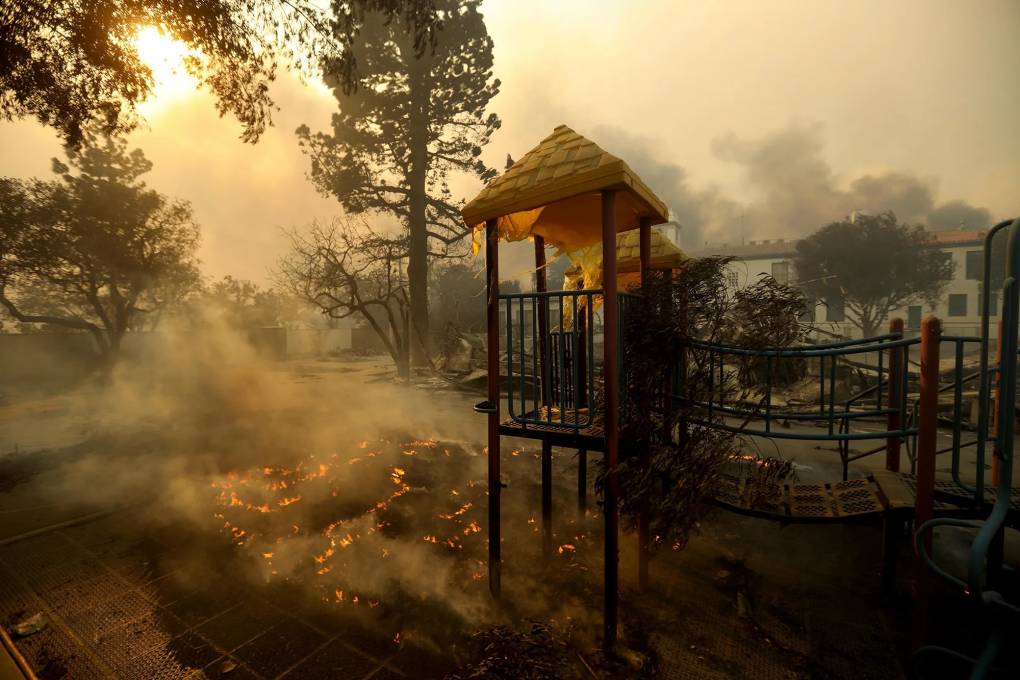
"caption": "A play area smolders at the Palisades Elementary Charter School in Pacific Palisades on Jan. 8, 2025.\n",
"credit": "Genaro Molina/Los Angeles Times via Getty Images",
"altTag": null,
"description": null,
"imgSizes": {
"medium": {
"file": "https://cdn.kqed.org/wp-content/uploads/sites/10/2025/01/010925-Pacific-Palisades-GM-GettyImages-01-copy-800x533.jpg",
"width": 800,
"height": 533,
"mimeType": "image/jpeg"
},
"large": {
"file": "https://cdn.kqed.org/wp-content/uploads/sites/10/2025/01/010925-Pacific-Palisades-GM-GettyImages-01-copy-1020x680.jpg",
"width": 1020,
"height": 680,
"mimeType": "image/jpeg"
},
"thumbnail": {
"file": "https://cdn.kqed.org/wp-content/uploads/sites/10/2025/01/010925-Pacific-Palisades-GM-GettyImages-01-copy-160x107.jpg",
"width": 160,
"height": 107,
"mimeType": "image/jpeg"
},
"1536x1536": {
"file": "https://cdn.kqed.org/wp-content/uploads/sites/10/2025/01/010925-Pacific-Palisades-GM-GettyImages-01-copy-1536x1024.jpg",
"width": 1536,
"height": 1024,
"mimeType": "image/jpeg"
},
"post-thumbnail": {
"file": "https://cdn.kqed.org/wp-content/uploads/sites/10/2025/01/010925-Pacific-Palisades-GM-GettyImages-01-copy-672x372.jpg",
"width": 672,
"height": 372,
"mimeType": "image/jpeg"
},
"twentyfourteen-full-width": {
"file": "https://cdn.kqed.org/wp-content/uploads/sites/10/2025/01/010925-Pacific-Palisades-GM-GettyImages-01-copy-1038x576.jpg",
"width": 1038,
"height": 576,
"mimeType": "image/jpeg"
},
"full-width": {
"file": "https://cdn.kqed.org/wp-content/uploads/sites/10/2025/01/010925-Pacific-Palisades-GM-GettyImages-01-copy-1920x1280.jpg",
"width": 1920,
"height": 1280,
"mimeType": "image/jpeg"
},
"kqedFullSize": {
"file": "https://cdn.kqed.org/wp-content/uploads/sites/10/2025/01/010925-Pacific-Palisades-GM-GettyImages-01-copy.jpg",
"width": 2000,
"height": 1333
}
},
"isLoading": false,
"fetchFailed": false
},
"news_12023936": {
"type": "attachments",
"id": "news_12023936",
"meta": {
"index": "attachments_1716263798",
"site": "news",
"id": "12023936",
"found": true
},
"title": "20250123_SonomaStateCutsFolo_GC-3",
"publishDate": 1737692946,
"status": "inherit",
"parent": 0,
"modified": 1737734232,
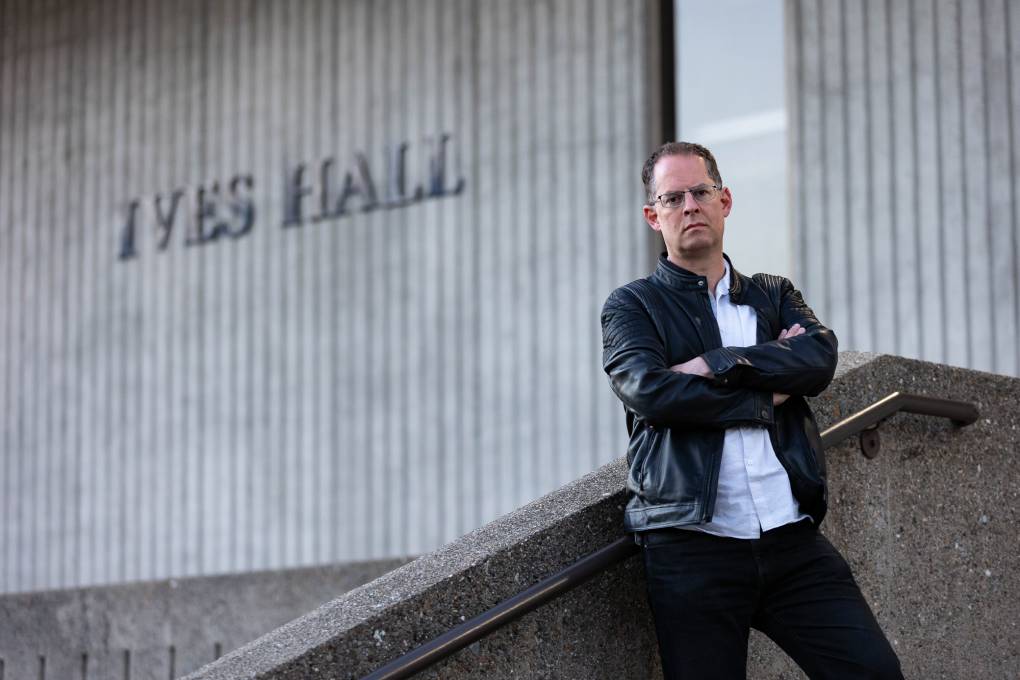
"caption": "Scott Horstein, director of the theatre studies program and professor of 17 years, poses for a photo in front of Ives Hall, where he teaches, at Sonoma State University in Rohnert Park on Jan. 23, 2025. He is one of Sonoma State’s faculty members who got a layoff notice.",
"credit": "Gina Castro/KQED",
"altTag": null,
"description": null,
"imgSizes": {
"medium": {
"file": "https://cdn.kqed.org/wp-content/uploads/sites/10/2025/01/20250123_SonomaStateCutsFolo_GC-3-800x533.jpg",
"width": 800,
"height": 533,
"mimeType": "image/jpeg"
},
"large": {
"file": "https://cdn.kqed.org/wp-content/uploads/sites/10/2025/01/20250123_SonomaStateCutsFolo_GC-3-1020x680.jpg",
"width": 1020,
"height": 680,
"mimeType": "image/jpeg"
},
"thumbnail": {
"file": "https://cdn.kqed.org/wp-content/uploads/sites/10/2025/01/20250123_SonomaStateCutsFolo_GC-3-160x107.jpg",
"width": 160,
"height": 107,
"mimeType": "image/jpeg"
},
"1536x1536": {
"file": "https://cdn.kqed.org/wp-content/uploads/sites/10/2025/01/20250123_SonomaStateCutsFolo_GC-3-1536x1024.jpg",
"width": 1536,
"height": 1024,
"mimeType": "image/jpeg"
},
"post-thumbnail": {
"file": "https://cdn.kqed.org/wp-content/uploads/sites/10/2025/01/20250123_SonomaStateCutsFolo_GC-3-672x372.jpg",
"width": 672,
"height": 372,
"mimeType": "image/jpeg"
},
"twentyfourteen-full-width": {
"file": "https://cdn.kqed.org/wp-content/uploads/sites/10/2025/01/20250123_SonomaStateCutsFolo_GC-3-1038x576.jpg",
"width": 1038,
"height": 576,
"mimeType": "image/jpeg"
},
"full-width": {
"file": "https://cdn.kqed.org/wp-content/uploads/sites/10/2025/01/20250123_SonomaStateCutsFolo_GC-3-1920x1280.jpg",
"width": 1920,
"height": 1280,
"mimeType": "image/jpeg"
},
"kqedFullSize": {
"file": "https://cdn.kqed.org/wp-content/uploads/sites/10/2025/01/20250123_SonomaStateCutsFolo_GC-3.jpg",
"width": 2000,
"height": 1333
}
},
"isLoading": false,
"fetchFailed": false
},
"news_12021944": {
"type": "attachments",
"id": "news_12021944",
"meta": {
"index": "attachments_1716263798",
"site": "news",
"id": "12021944",
"found": true
},
"title": "02172023_ksuzuki_tkprogress 010_qed",
"publishDate": 1736813006,
"status": "inherit",
"parent": 12021883,
"modified": 1736820012,
"caption": "Santa Rosa City Schools district is beginning to hold a series of town hall meetings from Jan. 13–23 to address the community's concerns over potential school closures and consolidations — an issue also playing out in San Francisco and Oakland. ",
"credit": "Kori Suzuki/KQED",
"altTag": null,
"description": null,
"imgSizes": {
"medium": {
"file": "https://cdn.kqed.org/wp-content/uploads/sites/10/2025/01/02172023_ksuzuki_tkprogress-010_qed-800x532.jpg",
"width": 800,
"height": 532,
"mimeType": "image/jpeg"
},
"large": {
"file": "https://cdn.kqed.org/wp-content/uploads/sites/10/2025/01/02172023_ksuzuki_tkprogress-010_qed-1020x679.jpg",
"width": 1020,
"height": 679,
"mimeType": "image/jpeg"
},
"thumbnail": {
"file": "https://cdn.kqed.org/wp-content/uploads/sites/10/2025/01/02172023_ksuzuki_tkprogress-010_qed-160x106.jpg",
"width": 160,
"height": 106,
"mimeType": "image/jpeg"
},
"1536x1536": {
"file": "https://cdn.kqed.org/wp-content/uploads/sites/10/2025/01/02172023_ksuzuki_tkprogress-010_qed-1536x1022.jpg",
"width": 1536,
"height": 1022,
"mimeType": "image/jpeg"
},
"post-thumbnail": {
"file": "https://cdn.kqed.org/wp-content/uploads/sites/10/2025/01/02172023_ksuzuki_tkprogress-010_qed-672x372.jpg",
"width": 672,
"height": 372,
"mimeType": "image/jpeg"
},
"twentyfourteen-full-width": {
"file": "https://cdn.kqed.org/wp-content/uploads/sites/10/2025/01/02172023_ksuzuki_tkprogress-010_qed-1038x576.jpg",
"width": 1038,
"height": 576,
"mimeType": "image/jpeg"
},
"full-width": {
"file": "https://cdn.kqed.org/wp-content/uploads/sites/10/2025/01/02172023_ksuzuki_tkprogress-010_qed-1920x1278.jpg",
"width": 1920,
"height": 1278,
"mimeType": "image/jpeg"
},
"kqedFullSize": {
"file": "https://cdn.kqed.org/wp-content/uploads/sites/10/2025/01/02172023_ksuzuki_tkprogress-010_qed.jpg",
"width": 2000,
"height": 1331
}
},
"isLoading": false,
"fetchFailed": false
},
"news_12018446": {
"type": "attachments",
"id": "news_12018446",
"meta": {
"index": "attachments_1716263798",
"site": "news",
"id": "12018446",
"found": true
},
"title": "Math Concept",
"publishDate": 1734298175,
"status": "inherit",
"parent": 12018441,
"modified": 1734298859,
"caption": "Calculus is often a required course for many STEM majors.",
"credit": "Christian Chan via iStock/Getty Images Plus",
"altTag": "A closeup shot of complex math formulas on paper with a hand holding a ball pen.",
"description": null,
"imgSizes": {
"medium": {
"file": "https://cdn.kqed.org/wp-content/uploads/sites/10/2024/12/GettyImages-657678850-800x533.jpg",
"width": 800,
"height": 533,
"mimeType": "image/jpeg"
},
"large": {
"file": "https://cdn.kqed.org/wp-content/uploads/sites/10/2024/12/GettyImages-657678850-1020x680.jpg",
"width": 1020,
"height": 680,
"mimeType": "image/jpeg"
},
"thumbnail": {
"file": "https://cdn.kqed.org/wp-content/uploads/sites/10/2024/12/GettyImages-657678850-160x107.jpg",
"width": 160,
"height": 107,
"mimeType": "image/jpeg"
},
"1536x1536": {
"file": "https://cdn.kqed.org/wp-content/uploads/sites/10/2024/12/GettyImages-657678850-1536x1024.jpg",
"width": 1536,
"height": 1024,
"mimeType": "image/jpeg"
},
"2048x2048": {
"file": "https://cdn.kqed.org/wp-content/uploads/sites/10/2024/12/GettyImages-657678850-2048x1365.jpg",
"width": 2048,
"height": 1365,
"mimeType": "image/jpeg"
},
"post-thumbnail": {
"file": "https://cdn.kqed.org/wp-content/uploads/sites/10/2024/12/GettyImages-657678850-672x372.jpg",
"width": 672,
"height": 372,
"mimeType": "image/jpeg"
},
"twentyfourteen-full-width": {
"file": "https://cdn.kqed.org/wp-content/uploads/sites/10/2024/12/GettyImages-657678850-1038x576.jpg",
"width": 1038,
"height": 576,
"mimeType": "image/jpeg"
},
"full-width": {
"file": "https://cdn.kqed.org/wp-content/uploads/sites/10/2024/12/GettyImages-657678850-1920x1280.jpg",
"width": 1920,
"height": 1280,
"mimeType": "image/jpeg"
},
"kqedFullSize": {
"file": "https://cdn.kqed.org/wp-content/uploads/sites/10/2024/12/GettyImages-657678850.jpg",
"width": 2121,
"height": 1414
}
},
"isLoading": false,
"fetchFailed": false
},
"news_12014838": {
"type": "attachments",
"id": "news_12014838",
"meta": {
"index": "attachments_1716263798",
"site": "news",
"id": "12014838",
"found": true
},
"title": "math-book-calculus",
"publishDate": 1731875481,
"status": "inherit",
"parent": 12014835,
"modified": 1731875546,
"caption": null,
"credit": "Fermin Leal/EdSource",
"altTag": "A blue textbook that says \"Calculus\" next to a bag on bleacher steps.",
"description": null,
"imgSizes": {
"medium": {
"file": "https://cdn.kqed.org/wp-content/uploads/sites/10/2024/11/math-book-calculus-800x574.jpg",
"width": 800,
"height": 574,
"mimeType": "image/jpeg"
},
"thumbnail": {
"file": "https://cdn.kqed.org/wp-content/uploads/sites/10/2024/11/math-book-calculus-160x115.jpg",
"width": 160,
"height": 115,
"mimeType": "image/jpeg"
},
"post-thumbnail": {
"file": "https://cdn.kqed.org/wp-content/uploads/sites/10/2024/11/math-book-calculus-672x372.jpg",
"width": 672,
"height": 372,
"mimeType": "image/jpeg"
},
"twentyfourteen-full-width": {
"file": "https://cdn.kqed.org/wp-content/uploads/sites/10/2024/11/math-book-calculus-1000x576.jpg",
"width": 1000,
"height": 576,
"mimeType": "image/jpeg"
},
"kqedFullSize": {
"file": "https://cdn.kqed.org/wp-content/uploads/sites/10/2024/11/math-book-calculus.jpg",
"width": 1000,
"height": 717
}
},
"isLoading": false,
"fetchFailed": false
},
"news_11813962": {
"type": "attachments",
"id": "news_11813962",
"meta": {
"index": "attachments_1716263798",
"site": "news",
"id": "11813962",
"found": true
},
"parent": 11813888,
"imgSizes": {
"apple_news_ca_landscape_5_5": {
"file": "https://ww2.kqed.org/app/uploads/sites/10/2020/04/GettyImages-1206287512_1920x-1044x783.jpg",
"width": 1044,
"mimeType": "image/jpeg",
"height": 783
},
"apple_news_ca_square_4_0": {
"file": "https://ww2.kqed.org/app/uploads/sites/10/2020/04/GettyImages-1206287512_1920x-470x470.jpg",
"width": 470,
"mimeType": "image/jpeg",
"height": 470
},
"twentyfourteen-full-width": {
"file": "https://ww2.kqed.org/app/uploads/sites/10/2020/04/GettyImages-1206287512_1920x-1038x576.jpg",
"width": 1038,
"mimeType": "image/jpeg",
"height": 576
},
"thumbnail": {
"file": "https://ww2.kqed.org/app/uploads/sites/10/2020/04/GettyImages-1206287512_1920x-160x107.jpg",
"width": 160,
"mimeType": "image/jpeg",
"height": 107
},
"post-thumbnail": {
"file": "https://ww2.kqed.org/app/uploads/sites/10/2020/04/GettyImages-1206287512_1920x-672x372.jpg",
"width": 672,
"mimeType": "image/jpeg",
"height": 372
},
"kqedFullSize": {
"file": "https://ww2.kqed.org/app/uploads/sites/10/2020/04/GettyImages-1206287512_1920x.jpg",
"width": 1920,
"height": 1280
},
"apple_news_ca_landscape_4_7": {
"file": "https://ww2.kqed.org/app/uploads/sites/10/2020/04/GettyImages-1206287512_1920x-632x474.jpg",
"width": 632,
"mimeType": "image/jpeg",
"height": 474
},
"large": {
"file": "https://ww2.kqed.org/app/uploads/sites/10/2020/04/GettyImages-1206287512_1920x-1020x680.jpg",
"width": 1020,
"mimeType": "image/jpeg",
"height": 680
},
"apple_news_ca_landscape_4_0": {
"file": "https://ww2.kqed.org/app/uploads/sites/10/2020/04/GettyImages-1206287512_1920x-536x402.jpg",
"width": 536,
"mimeType": "image/jpeg",
"height": 402
},
"apple_news_ca_portrait_12_9": {
"file": "https://ww2.kqed.org/app/uploads/sites/10/2020/04/GettyImages-1206287512_1920x-1122x1280.jpg",
"width": 1122,
"mimeType": "image/jpeg",
"height": 1280
},
"medium": {
"file": "https://ww2.kqed.org/app/uploads/sites/10/2020/04/GettyImages-1206287512_1920x-800x533.jpg",
"width": 800,
"mimeType": "image/jpeg",
"height": 533
},
"apple_news_ca_portrait_4_0": {
"file": "https://ww2.kqed.org/app/uploads/sites/10/2020/04/GettyImages-1206287512_1920x-354x472.jpg",
"width": 354,
"mimeType": "image/jpeg",
"height": 472
},
"apple_news_ca_portrait_9_7": {
"file": "https://ww2.kqed.org/app/uploads/sites/10/2020/04/GettyImages-1206287512_1920x-840x1120.jpg",
"width": 840,
"mimeType": "image/jpeg",
"height": 1120
},
"apple_news_ca_landscape_12_9": {
"file": "https://ww2.kqed.org/app/uploads/sites/10/2020/04/GettyImages-1206287512_1920x-1832x1280.jpg",
"width": 1832,
"mimeType": "image/jpeg",
"height": 1280
},
"apple_news_ca_square_9_7": {
"file": "https://ww2.kqed.org/app/uploads/sites/10/2020/04/GettyImages-1206287512_1920x-1104x1104.jpg",
"width": 1104,
"mimeType": "image/jpeg",
"height": 1104
},
"apple_news_ca_portrait_4_7": {
"file": "https://ww2.kqed.org/app/uploads/sites/10/2020/04/GettyImages-1206287512_1920x-414x552.jpg",
"width": 414,
"mimeType": "image/jpeg",
"height": 552
},
"apple_news_ca_square_12_9": {
"file": "https://ww2.kqed.org/app/uploads/sites/10/2020/04/GettyImages-1206287512_1920x-1472x1280.jpg",
"width": 1472,
"mimeType": "image/jpeg",
"height": 1280
},
"apple_news_ca_portrait_5_5": {
"file": "https://ww2.kqed.org/app/uploads/sites/10/2020/04/GettyImages-1206287512_1920x-687x916.jpg",
"width": 687,
"mimeType": "image/jpeg",
"height": 916
},
"full-width": {
"file": "https://ww2.kqed.org/app/uploads/sites/10/2020/04/GettyImages-1206287512_1920x-1920x1280.jpg",
"width": 1920,
"mimeType": "image/jpeg",
"height": 1280
},
"apple_news_ca_square_4_7": {
"file": "https://ww2.kqed.org/app/uploads/sites/10/2020/04/GettyImages-1206287512_1920x-550x550.jpg",
"width": 550,
"mimeType": "image/jpeg",
"height": 550
},
"apple_news_ca_landscape_9_7": {
"file": "https://ww2.kqed.org/app/uploads/sites/10/2020/04/GettyImages-1206287512_1920x-1376x1032.jpg",
"width": 1376,
"mimeType": "image/jpeg",
"height": 1032
},
"apple_news_ca_square_5_5": {
"file": "https://ww2.kqed.org/app/uploads/sites/10/2020/04/GettyImages-1206287512_1920x-912x912.jpg",
"width": 912,
"mimeType": "image/jpeg",
"height": 912
}
},
"publishDate": 1587667826,
"modified": 1587669970,
"caption": "A person walks past archways during a quiet morning at Stanford University on March 9, 2020. ",
"description": "STANFORD, CA - MARCH 09: A person walks past archways during a quiet morning at Stanford University on March 9, 2020 in Stanford, California. ",
"title": "Stanford University Cancels On-Campus Classes After Faculty Member Tests Positive For Coronavirus",
"credit": "Philip Pacheco/Getty Images",
"status": "inherit",
"isLoading": false,
"fetchFailed": false
},
"news_12008775": {
"type": "attachments",
"id": "news_12008775",
"meta": {
"index": "attachments_1716263798",
"site": "news",
"id": "12008775",
"found": true
},
"title": "241009-OAKLAND YOUTH VOTE-MD-01-KQED",
"publishDate": 1728508954,
"status": "inherit",
"parent": 0,
"modified": 1728509043,
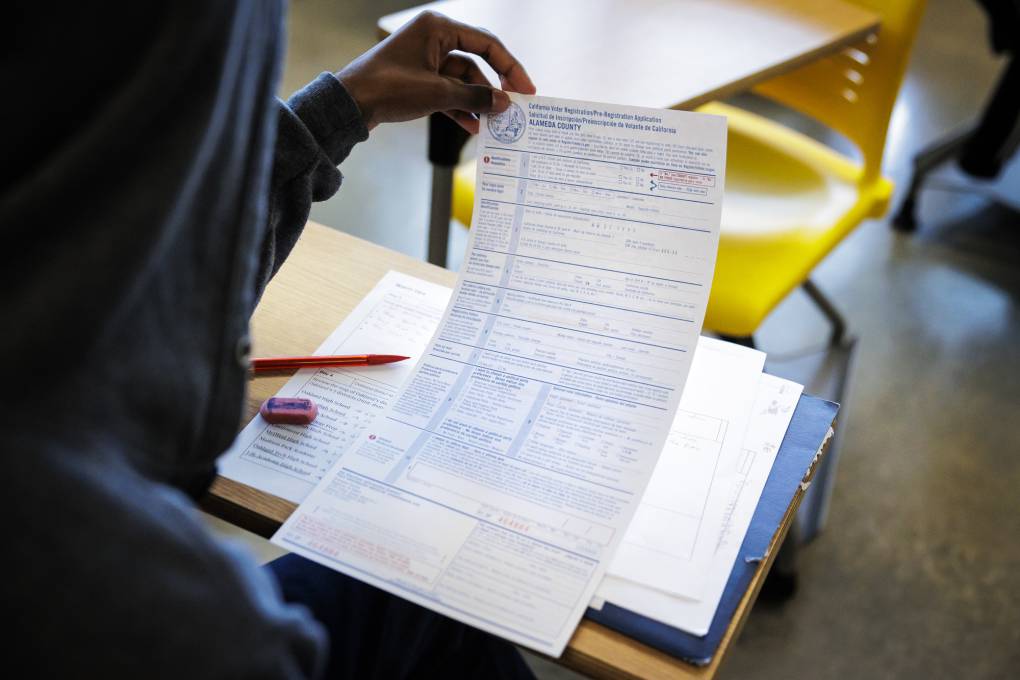
"caption": "A student in Isabel Toscano's class looks over a voter registration form at Oakland High School in Oakland on Oct. 9, 2024.",
"credit": "Martin do Nascimento/KQED",
"altTag": null,
"description": null,
"imgSizes": {
"medium": {
"file": "https://cdn.kqed.org/wp-content/uploads/sites/10/2024/10/241009-OAKLAND-YOUTH-VOTE-MD-01-KQED-800x533.jpg",
"width": 800,
"height": 533,
"mimeType": "image/jpeg"
},
"large": {
"file": "https://cdn.kqed.org/wp-content/uploads/sites/10/2024/10/241009-OAKLAND-YOUTH-VOTE-MD-01-KQED-1020x680.jpg",
"width": 1020,
"height": 680,
"mimeType": "image/jpeg"
},
"thumbnail": {
"file": "https://cdn.kqed.org/wp-content/uploads/sites/10/2024/10/241009-OAKLAND-YOUTH-VOTE-MD-01-KQED-160x107.jpg",
"width": 160,
"height": 107,
"mimeType": "image/jpeg"
},
"1536x1536": {
"file": "https://cdn.kqed.org/wp-content/uploads/sites/10/2024/10/241009-OAKLAND-YOUTH-VOTE-MD-01-KQED-1536x1024.jpg",
"width": 1536,
"height": 1024,
"mimeType": "image/jpeg"
},
"post-thumbnail": {
"file": "https://cdn.kqed.org/wp-content/uploads/sites/10/2024/10/241009-OAKLAND-YOUTH-VOTE-MD-01-KQED-672x372.jpg",
"width": 672,
"height": 372,
"mimeType": "image/jpeg"
},
"twentyfourteen-full-width": {
"file": "https://cdn.kqed.org/wp-content/uploads/sites/10/2024/10/241009-OAKLAND-YOUTH-VOTE-MD-01-KQED-1038x576.jpg",
"width": 1038,
"height": 576,
"mimeType": "image/jpeg"
},
"full-width": {
"file": "https://cdn.kqed.org/wp-content/uploads/sites/10/2024/10/241009-OAKLAND-YOUTH-VOTE-MD-01-KQED-1920x1280.jpg",
"width": 1920,
"height": 1280,
"mimeType": "image/jpeg"
},
"kqedFullSize": {
"file": "https://cdn.kqed.org/wp-content/uploads/sites/10/2024/10/241009-OAKLAND-YOUTH-VOTE-MD-01-KQED.jpg",
"width": 2000,
"height": 1333
}
},
"isLoading": false,
"fetchFailed": false
},
"news_12009086": {
"type": "attachments",
"id": "news_12009086",
"meta": {
"index": "attachments_1716263798",
"site": "news",
"id": "12009086",
"found": true
},
"title": "UC Santa Cruz Workers Strike Over Treatment Of Pro-Palestinian Protesters",
"publishDate": 1728668187,
"status": "inherit",
"parent": 12009083,
"modified": 1728939012,
"caption": "Protesters set up a sign in front of the UC Santa Cruz campus on May 20, 2024, in Santa Cruz, California. Academic workers at the University of California, Santa Cruz, walked off the job Monday morning to strike in protest of the UC system’s handling of pro-Palestinian demonstrations. Organizers say the walkout will not last beyond June 30.",
"credit": "Justin Sullivan/Getty Images",
"altTag": null,
"description": null,
"imgSizes": {
"medium": {
"file": "https://cdn.kqed.org/wp-content/uploads/sites/10/2024/10/UCSantaCruzWalkoutMayGetty-800x509.jpg",
"width": 800,
"height": 509,
"mimeType": "image/jpeg"
},
"large": {
"file": "https://cdn.kqed.org/wp-content/uploads/sites/10/2024/10/UCSantaCruzWalkoutMayGetty-1020x649.jpg",
"width": 1020,
"height": 649,
"mimeType": "image/jpeg"
},
"thumbnail": {
"file": "https://cdn.kqed.org/wp-content/uploads/sites/10/2024/10/UCSantaCruzWalkoutMayGetty-160x102.jpg",
"width": 160,
"height": 102,
"mimeType": "image/jpeg"
},
"1536x1536": {
"file": "https://cdn.kqed.org/wp-content/uploads/sites/10/2024/10/UCSantaCruzWalkoutMayGetty-1536x978.jpg",
"width": 1536,
"height": 978,
"mimeType": "image/jpeg"
},
"post-thumbnail": {
"file": "https://cdn.kqed.org/wp-content/uploads/sites/10/2024/10/UCSantaCruzWalkoutMayGetty-672x372.jpg",
"width": 672,
"height": 372,
"mimeType": "image/jpeg"
},
"twentyfourteen-full-width": {
"file": "https://cdn.kqed.org/wp-content/uploads/sites/10/2024/10/UCSantaCruzWalkoutMayGetty-1038x576.jpg",
"width": 1038,
"height": 576,
"mimeType": "image/jpeg"
},
"full-width": {
"file": "https://cdn.kqed.org/wp-content/uploads/sites/10/2024/10/UCSantaCruzWalkoutMayGetty-1920x1222.jpg",
"width": 1920,
"height": 1222,
"mimeType": "image/jpeg"
},
"kqedFullSize": {
"file": "https://cdn.kqed.org/wp-content/uploads/sites/10/2024/10/UCSantaCruzWalkoutMayGetty.jpg",
"width": 2000,
"height": 1273
}
},
"isLoading": false,
"fetchFailed": false
},
"news_12008836": {
"type": "attachments",
"id": "news_12008836",
"meta": {
"index": "attachments_1716263798",
"site": "news",
"id": "12008836",
"found": true
},
"title": "241009-SFUSDCLOSURESMARCH-32-BL-KQED",
"publishDate": 1728517181,
"status": "inherit",
"parent": 12072028,
"modified": 1770411523,
"caption": "Tiffany Furrell holds her daughter Zoe, 4, on her shoulders alongside teachers and students of Harvey Milk Civil Rights Academy during a rally at Harvey Milk Plaza in the Castro neighborhood of San Francisco on Oct. 9, 2024, to protest against the potential closure of the school. The school is on the list of 11 San Francisco campuses that could close after this academic year as the district grapples with declining enrollment and a budget deficit.",
"credit": "Beth LaBerge/KQED",
"altTag": null,
"description": null,
"imgSizes": {
"medium": {
"file": "https://cdn.kqed.org/wp-content/uploads/sites/10/2024/10/241009-SFUSDCLOSURESMARCH-32-BL-KQED-800x533.jpg",
"width": 800,
"height": 533,
"mimeType": "image/jpeg"
},
"large": {
"file": "https://cdn.kqed.org/wp-content/uploads/sites/10/2024/10/241009-SFUSDCLOSURESMARCH-32-BL-KQED-1020x680.jpg",
"width": 1020,
"height": 680,
"mimeType": "image/jpeg"
},
"thumbnail": {
"file": "https://cdn.kqed.org/wp-content/uploads/sites/10/2024/10/241009-SFUSDCLOSURESMARCH-32-BL-KQED-160x107.jpg",
"width": 160,
"height": 107,
"mimeType": "image/jpeg"
},
"1536x1536": {
"file": "https://cdn.kqed.org/wp-content/uploads/sites/10/2024/10/241009-SFUSDCLOSURESMARCH-32-BL-KQED-1536x1024.jpg",
"width": 1536,
"height": 1024,
"mimeType": "image/jpeg"
},
"post-thumbnail": {
"file": "https://cdn.kqed.org/wp-content/uploads/sites/10/2024/10/241009-SFUSDCLOSURESMARCH-32-BL-KQED-672x372.jpg",
"width": 672,
"height": 372,
"mimeType": "image/jpeg"
},
"twentyfourteen-full-width": {
"file": "https://cdn.kqed.org/wp-content/uploads/sites/10/2024/10/241009-SFUSDCLOSURESMARCH-32-BL-KQED-1038x576.jpg",
"width": 1038,
"height": 576,
"mimeType": "image/jpeg"
},
"full-width": {
"file": "https://cdn.kqed.org/wp-content/uploads/sites/10/2024/10/241009-SFUSDCLOSURESMARCH-32-BL-KQED-1920x1280.jpg",
"width": 1920,
"height": 1280,
"mimeType": "image/jpeg"
},
"kqedFullSize": {
"file": "https://cdn.kqed.org/wp-content/uploads/sites/10/2024/10/241009-SFUSDCLOSURESMARCH-32-BL-KQED.jpg",
"width": 2000,
"height": 1333
}
},
"isLoading": false,
"fetchFailed": false
},
"news_12008916": {
"type": "attachments",
"id": "news_12008916",
"meta": {
"index": "attachments_1716263798",
"site": "news",
"id": "12008916",
"found": true
},
"title": "241010-SFUSDClosures-06-BL",
"publishDate": 1728590533,
"status": "inherit",
"parent": 0,
"modified": 1728601972,
"caption": "Supervisor Connie Chan speaks alongside Board of Supervisors president Aaron Peskin during a press conference outside Spring Valley Science Elementary School in San Francisco on Oct. 10, 2024, to push for city intervention in SFUSD’s school closure plans.",
"credit": "Beth LaBerge/KQED",
"altTag": null,
"description": null,
"imgSizes": {
"medium": {
"file": "https://cdn.kqed.org/wp-content/uploads/sites/10/2024/10/241010-SFUSDClosures-06-BL-800x533.jpg",
"width": 800,
"height": 533,
"mimeType": "image/jpeg"
},
"large": {
"file": "https://cdn.kqed.org/wp-content/uploads/sites/10/2024/10/241010-SFUSDClosures-06-BL-1020x680.jpg",
"width": 1020,
"height": 680,
"mimeType": "image/jpeg"
},
"thumbnail": {
"file": "https://cdn.kqed.org/wp-content/uploads/sites/10/2024/10/241010-SFUSDClosures-06-BL-160x107.jpg",
"width": 160,
"height": 107,
"mimeType": "image/jpeg"
},
"1536x1536": {
"file": "https://cdn.kqed.org/wp-content/uploads/sites/10/2024/10/241010-SFUSDClosures-06-BL-1536x1024.jpg",
"width": 1536,
"height": 1024,
"mimeType": "image/jpeg"
},
"post-thumbnail": {
"file": "https://cdn.kqed.org/wp-content/uploads/sites/10/2024/10/241010-SFUSDClosures-06-BL-672x372.jpg",
"width": 672,
"height": 372,
"mimeType": "image/jpeg"
},
"twentyfourteen-full-width": {
"file": "https://cdn.kqed.org/wp-content/uploads/sites/10/2024/10/241010-SFUSDClosures-06-BL-1038x576.jpg",
"width": 1038,
"height": 576,
"mimeType": "image/jpeg"
},
"full-width": {
"file": "https://cdn.kqed.org/wp-content/uploads/sites/10/2024/10/241010-SFUSDClosures-06-BL-1920x1280.jpg",
"width": 1920,
"height": 1280,
"mimeType": "image/jpeg"
},
"kqedFullSize": {
"file": "https://cdn.kqed.org/wp-content/uploads/sites/10/2024/10/241010-SFUSDClosures-06-BL.jpg",
"width": 2000,
"height": 1333
}
},
"isLoading": false,
"fetchFailed": false
},
"news_12006188": {
"type": "attachments",
"id": "news_12006188",
"meta": {
"index": "attachments_1716263798",
"site": "news",
"id": "12006188",
"found": true
},
"title": "Norte Vista High School Runners",
"publishDate": 1727205499,
"status": "inherit",
"parent": 12006176,
"modified": 1727208666,
"caption": "Students stretch before cross-country practice at Norte Vista High School in Riverside on Sept. 19, 2024. ",
"credit": "Carlin Stiehl/CalMatters",
"altTag": "Young people wearing red, black and gray shirts stretch outside.",
"description": null,
"imgSizes": {
"medium": {
"file": "https://cdn.kqed.org/wp-content/uploads/sites/10/2024/09/091924_Norte-Vista-High_CS_CM_07-800x533.jpg",
"width": 800,
"height": 533,
"mimeType": "image/jpeg"
},
"large": {
"file": "https://cdn.kqed.org/wp-content/uploads/sites/10/2024/09/091924_Norte-Vista-High_CS_CM_07-1020x680.jpg",
"width": 1020,
"height": 680,
"mimeType": "image/jpeg"
},
"thumbnail": {
"file": "https://cdn.kqed.org/wp-content/uploads/sites/10/2024/09/091924_Norte-Vista-High_CS_CM_07-160x107.jpg",
"width": 160,
"height": 107,
"mimeType": "image/jpeg"
},
"1536x1536": {
"file": "https://cdn.kqed.org/wp-content/uploads/sites/10/2024/09/091924_Norte-Vista-High_CS_CM_07-1536x1024.jpg",
"width": 1536,
"height": 1024,
"mimeType": "image/jpeg"
},
"post-thumbnail": {
"file": "https://cdn.kqed.org/wp-content/uploads/sites/10/2024/09/091924_Norte-Vista-High_CS_CM_07-672x372.jpg",
"width": 672,
"height": 372,
"mimeType": "image/jpeg"
},
"twentyfourteen-full-width": {
"file": "https://cdn.kqed.org/wp-content/uploads/sites/10/2024/09/091924_Norte-Vista-High_CS_CM_07-1038x576.jpg",
"width": 1038,
"height": 576,
"mimeType": "image/jpeg"
},
"full-width": {
"file": "https://cdn.kqed.org/wp-content/uploads/sites/10/2024/09/091924_Norte-Vista-High_CS_CM_07-1920x1280.jpg",
"width": 1920,
"height": 1280,
"mimeType": "image/jpeg"
},
"kqedFullSize": {
"file": "https://cdn.kqed.org/wp-content/uploads/sites/10/2024/09/091924_Norte-Vista-High_CS_CM_07.jpg",
"width": 2000,
"height": 1333
}
},
"isLoading": false,
"fetchFailed": false
},
"news_12006155": {
"type": "attachments",
"id": "news_12006155",
"meta": {
"index": "attachments_1716263798",
"site": "news",
"id": "12006155",
"found": true
},
"title": "IMG_4153-1024x768-1",
"publishDate": 1727198162,
"status": "inherit",
"parent": 12006150,
"modified": 1727198296,
"caption": "Family Resource Center in Greenfield, where families go for assistance with basic needs. The school district is located in southern Monterey County.",
"credit": "Betty Márquez Rosales/EdSource",
"altTag": null,
"description": null,
"imgSizes": {
"medium": {
"file": "https://cdn.kqed.org/wp-content/uploads/sites/10/2024/09/IMG_4153-1024x768-1-800x450.jpg",
"width": 800,
"height": 450,
"mimeType": "image/jpeg"
},
"thumbnail": {
"file": "https://cdn.kqed.org/wp-content/uploads/sites/10/2024/09/IMG_4153-1024x768-1-160x90.jpg",
"width": 160,
"height": 90,
"mimeType": "image/jpeg"
},
"post-thumbnail": {
"file": "https://cdn.kqed.org/wp-content/uploads/sites/10/2024/09/IMG_4153-1024x768-1-672x372.jpg",
"width": 672,
"height": 372,
"mimeType": "image/jpeg"
},
"kqedFullSize": {
"file": "https://cdn.kqed.org/wp-content/uploads/sites/10/2024/09/IMG_4153-1024x768-1.jpg",
"width": 1016,
"height": 572
}
},
"isLoading": false,
"fetchFailed": false
}
},
"audioPlayerReducer": {
"postId": "stream_live",
"isPaused": true,
"isPlaying": false,
"pfsActive": false,
"pledgeModalIsOpen": true,
"playerDrawerIsOpen": false,
"liveAudioPlayStartedAt": 0,
"liveAudioPlayContext": ""
},
"authorsReducer": {
"byline_news_12023989": {
"type": "authors",
"id": "byline_news_12023989",
"meta": {
"override": true
},
"slug": "byline_news_12023989",
"name": "\u003ca href=\"https://calmatters.org/author/carolyn-jones/\">Carolyn Jones\u003c/a>, CalMatters",
"isLoading": false
},
"byline_news_12018441": {
"type": "authors",
"id": "byline_news_12018441",
"meta": {
"override": true
},
"slug": "byline_news_12018441",
"name": "\u003ca href=\"https://edsource.org/author/mburke\">Michael Burke\u003c/a> and \u003ca href=\"https://edsource.org/author/adipierro\">Amy DiPierro, \u003c/a>EdSource",
"isLoading": false
},
"byline_news_12014835": {
"type": "authors",
"id": "byline_news_12014835",
"meta": {
"override": true
},
"slug": "byline_news_12014835",
"name": "\u003ca href=\"https://edsource.org/author/adipierro\">Amy DiPierro\u003c/a> and \u003ca href=\"https://edsource.org/author/mburke\">Michael Burke, \u003c/a>EdSource ",
"isLoading": false
},
"byline_news_12006176": {
"type": "authors",
"id": "byline_news_12006176",
"meta": {
"override": true
},
"slug": "byline_news_12006176",
"name": "\u003ca href=\"https://calmatters.org/author/deborah-brennan\">Deborah Brennan, \u003c/a>CalMatters",
"isLoading": false
},
"byline_news_12006150": {
"type": "authors",
"id": "byline_news_12006150",
"meta": {
"override": true
},
"slug": "byline_news_12006150",
"name": "\u003ca>Betty Márquez Rosales\u003c/a>, EdSource",
"isLoading": false
},
"jlara": {
"type": "authors",
"id": "11761",
"meta": {
"index": "authors_1716337520",
"id": "11761",
"found": true
},
"name": "Juan Carlos Lara",
"firstName": "Juan Carlos",
"lastName": "Lara",
"slug": "jlara",
"email": "jlara@kqed.org",
"display_author_email": false,
"staff_mastheads": [],
"title": "KQED Contributor",
"bio": null,
"avatar": "https://secure.gravatar.com/avatar/19e2052b9b05657c5ff2af2121846e9c?s=600&d=blank&r=g",
"twitter": null,
"facebook": null,
"instagram": null,
"linkedin": null,
"sites": [
{
"site": "arts",
"roles": [
"editor"
]
},
{
"site": "news",
"roles": [
"editor"
]
},
{
"site": "forum",
"roles": [
"editor"
]
},
{
"site": "liveblog",
"roles": [
"contributor"
]
}
],
"headData": {
"title": "Juan Carlos Lara | KQED",
"description": "KQED Contributor",
"ogImgSrc": "https://secure.gravatar.com/avatar/19e2052b9b05657c5ff2af2121846e9c?s=600&d=blank&r=g",
"twImgSrc": "https://secure.gravatar.com/avatar/19e2052b9b05657c5ff2af2121846e9c?s=600&d=blank&r=g"
},
"isLoading": false,
"link": "/author/jlara"
},
"afinney": {
"type": "authors",
"id": "11772",
"meta": {
"index": "authors_1716337520",
"id": "11772",
"found": true
},
"name": "Annelise Finney",
"firstName": "Annelise",
"lastName": "Finney",
"slug": "afinney",
"email": "afinney@kqed.org",
"display_author_email": true,
"staff_mastheads": [
"news"
],
"title": "Reporter",
"bio": "Annelise reports on reparations in California and East Bay politics. She co-produced the Sunday Music Drop, a limited-term radio series featuring Bay Area musicians that aired between Sept 2022 and Oct 2024. She joined KQED in 2021 as a general assignment reporter and is an alumna of KALW's Audio Academy. She was born and raised in the East Bay. She is currently away from KQED completing a year-long reporting project in Berlin, Germany as a Alexander Von Humboldt German Chancellor Fellow.",
"avatar": "https://secure.gravatar.com/avatar/5fded66cae47704cdfc5021cde0f3aa4?s=600&d=blank&r=g",
"twitter": null,
"facebook": null,
"instagram": null,
"linkedin": null,
"sites": [
{
"site": "news",
"roles": [
"editor"
]
},
{
"site": "liveblog",
"roles": [
"author"
]
}
],
"headData": {
"title": "Annelise Finney | KQED",
"description": "Reporter",
"ogImgSrc": "https://secure.gravatar.com/avatar/5fded66cae47704cdfc5021cde0f3aa4?s=600&d=blank&r=g",
"twImgSrc": "https://secure.gravatar.com/avatar/5fded66cae47704cdfc5021cde0f3aa4?s=600&d=blank&r=g"
},
"isLoading": false,
"link": "/author/afinney"
},
"daisynguyen": {
"type": "authors",
"id": "11829",
"meta": {
"index": "authors_1716337520",
"id": "11829",
"found": true
},
"name": "Daisy Nguyen",
"firstName": "Daisy",
"lastName": "Nguyen",
"slug": "daisynguyen",
"email": "daisynguyen@kqed.org",
"display_author_email": true,
"staff_mastheads": [
"news"
],
"title": "KQED Contributor",
"bio": "I have covered early childhood education and child care for KQED since 2022. I focus on policies aimed at increasing access to early care and education and how they shape individual lives. I've been a journalist for more than two decades, with most of that time devoted to covering breaking news throughout California for The Associated Press. I grew up in San Francisco and studied at UC Davis and Columbia University's Graduate School of Journalism. I live in Oakland with my husband and two kids.",
"avatar": "https://secure.gravatar.com/avatar/2da2127c27f7143b53ebd419800fd55f?s=600&d=blank&r=g",
"twitter": null,
"facebook": null,
"instagram": null,
"linkedin": "https://www.linkedin.com/in/daisynguyen/",
"sites": [
{
"site": "news",
"roles": [
"author"
]
},
{
"site": "liveblog",
"roles": [
"author"
]
}
],
"headData": {
"title": "Daisy Nguyen | KQED",
"description": "KQED Contributor",
"ogImgSrc": "https://secure.gravatar.com/avatar/2da2127c27f7143b53ebd419800fd55f?s=600&d=blank&r=g",
"twImgSrc": "https://secure.gravatar.com/avatar/2da2127c27f7143b53ebd419800fd55f?s=600&d=blank&r=g"
},
"isLoading": false,
"link": "/author/daisynguyen"
},
"kdebenedetti": {
"type": "authors",
"id": "11913",
"meta": {
"index": "authors_1716337520",
"id": "11913",
"found": true
},
"name": "Katie DeBenedetti",
"firstName": "Katie",
"lastName": "DeBenedetti",
"slug": "kdebenedetti",
"email": "kdebenedetti@kqed.org",
"display_author_email": false,
"staff_mastheads": [
"news",
"science"
],
"title": "KQED Contributor",
"bio": "Katie DeBenedetti is a digital reporter covering daily news for the Express Desk. Prior to joining KQED as a culture reporting intern in January 2024, she covered education and city government for the Napa Valley Register.",
"avatar": "https://secure.gravatar.com/avatar/6e31073cb8f7e4214ab03f42771d0f45?s=600&d=blank&r=g",
"twitter": null,
"facebook": null,
"instagram": null,
"linkedin": null,
"sites": [
{
"site": "news",
"roles": [
"author"
]
},
{
"site": "science",
"roles": [
"author"
]
},
{
"site": "liveblog",
"roles": [
"author"
]
}
],
"headData": {
"title": "Katie DeBenedetti | KQED",
"description": "KQED Contributor",
"ogImgSrc": "https://secure.gravatar.com/avatar/6e31073cb8f7e4214ab03f42771d0f45?s=600&d=blank&r=g",
"twImgSrc": "https://secure.gravatar.com/avatar/6e31073cb8f7e4214ab03f42771d0f45?s=600&d=blank&r=g"
},
"isLoading": false,
"link": "/author/kdebenedetti"
},
"slim": {
"type": "authors",
"id": "11920",
"meta": {
"index": "authors_1716337520",
"id": "11920",
"found": true
},
"name": "Samantha Lim",
"firstName": "Samantha",
"lastName": "Lim",
"slug": "slim",
"email": "slim@KQED.org",
"display_author_email": false,
"staff_mastheads": [],
"title": "KQED Contributor",
"bio": null,
"avatar": "https://secure.gravatar.com/avatar/82e592e6c15fe1a04d385e8ad0fb0b4e?s=600&d=blank&r=g",
"twitter": null,
"facebook": null,
"instagram": null,
"linkedin": null,
"sites": [
{
"site": "news",
"roles": []
}
],
"headData": {
"title": "Samantha Lim | KQED",
"description": "KQED Contributor",
"ogImgSrc": "https://secure.gravatar.com/avatar/82e592e6c15fe1a04d385e8ad0fb0b4e?s=600&d=blank&r=g",
"twImgSrc": "https://secure.gravatar.com/avatar/82e592e6c15fe1a04d385e8ad0fb0b4e?s=600&d=blank&r=g"
},
"isLoading": false,
"link": "/author/slim"
}
},
"pagesReducer": {
"news_tag_students": {
"type": "terms",
"id": "news_3457",
"meta": {
"index": "terms_1716263798",
"site": "news",
"id": "3457",
"score": 8.557341
},
"name": "Students",
"slug": "students",
"taxonomy": "tag",
"description": null,
"featImg": null,
"headData": {
"title": "Students | KQED News",
"description": null,
"ogTitle": null,
"ogDescription": null,
"ogImgId": null,
"twTitle": null,
"twDescription": null,
"twImgId": null
},
"ttid": 3475,
"isLoading": false,
"title": "Students",
"pageMeta": {
"site": "news",
"WpPageTemplate": "page-topic-editorial",
"currentPage": 3
},
"blocks": [
{
"blockName": "kqed/post-list",
"attrs": {
"layout": "cardArticle2",
"query": "posts/news?tag=students",
"seeMore": false,
"paginated": true,
"page": 3
}
},
{
"blockName": "kqed/ad"
}
]
}
},
"pfsSessionReducer": {},
"postsReducer": {
"stream_live": {
"type": "live",
"id": "stream_live",
"audioUrl": "https://streams.kqed.org/kqedradio",
"title": "Live Stream",
"excerpt": "Live Stream information currently unavailable.",
"link": "/radio",
"featImg": "",
"label": {
"name": "KQED Live",
"link": "/"
}
},
"stream_kqedNewscast": {
"type": "posts",
"id": "stream_kqedNewscast",
"audioUrl": "https://www.kqed.org/.stream/anon/radio/RDnews/newscast.mp3?_=1",
"title": "KQED Newscast",
"featImg": "",
"label": {
"name": "88.5 FM",
"link": "/"
}
},
"news_12023989": {
"type": "posts",
"id": "news_12023989",
"meta": {
"index": "posts_1716263798",
"site": "news",
"id": "12023989",
"score": null,
"sort": [
1737905414000
]
},
"guestAuthors": [],
"slug": "will-new-bond-funds-be-enough-to-rebuild-la-schools-and-all-of-californias-other-crumbling-schools",
"title": "Will New Bond Funds Be Enough to Rebuild LA Schools — and All of California’s Other Crumbling Schools?",
"publishDate": 1737905414,
"format": "standard",
"headTitle": "Will New Bond Funds Be Enough to Rebuild LA Schools — and All of California’s Other Crumbling Schools? | KQED",
"labelTerm": {
"term": 18481,
"site": "news"
},
"content": "\u003cp>It’ll be a while before Los Angeles can fully assess the damage to its schools from this recent spate of fires, but a few things already seem certain: rebuilding will take a long time, it will be expensive, and it may sap the statewide fund for school repairs.\u003c/p>\n\u003cp>At least a dozen schools in the Los Angeles area have been damaged in the fires, including at least five that were destroyed completely. Thousands of students and school staff have lost their homes, and countless families are grappling with major disruptions to their day-to-day lives.\u003c/p>\n\u003cp>“The pain of being evacuated, losing your home, or having family and friends who have been impacted. … it’s just so devastating,” said Debra Duardo, Los Angeles County Superintendent of Schools. “At so many districts in our county, the superintendent themselves has been evacuated, or 50% of the staff has been evacuated. And meanwhile they’re all trying to help their students.”\u003c/p>\n\u003cp>[ad fullwidth]\u003c/p>\n\u003cp>In Pacific Palisades, fires destroyed two elementary schools and extensively damaged Palisades Charter High School. Fires in Pasadena and Altadena destroyed three elementary schools. Several others in greater Los Angeles remain closed because they’re in evacuation zones or have been damaged.\u003c/p>\n\u003cp>Students at those schools have been reassigned to other campuses, are learning online or are waiting for conditions to improve so they can return to class.\u003c/p>\n\u003cp>For many students, it will be a long wait. Even with loosened regulations, rebuilding a school could take years as officials piece together a hodgepodge of funding sources: insurance money, private grants and donations, local bonds, lawsuit settlement money and state and federal funds. Some districts will have plenty of funding options, while others will struggle to find enough revenue.\u003c/p>\n\u003cp>In the meantime, some will have immediate expenses such as procuring portable classrooms and hiring mental health counselors to help students, staff and families cope with trauma. Large districts such as Los Angeles Unified can reallocate resources quickly, but smaller districts and charter and private schools face more obstacles.\u003c/p>\n\u003ch2>Big demand for Proposition 2 \u003cstrong>funds\u003c/strong>\u003c/h2>\n\u003cp>Proposition 2, the $10 billion school construction bond approved by voters in November, will be a big help for schools that need to rebuild or make costly repairs, or even buy portables.\u003c/p>\n\u003cp>The state allocates the money to schools with the highest need, and then on a first-come, first-served basis. There’s already a big backlog of schools that have applied for money, and it’s likely that schools gutted by fire will get priority over those with less urgent needs, said Rebekah Kalleen, a legislative advocate for the Coalition for Adequate School Housing.\u003c/p>\n\u003cp>That means some schools will miss out. Because California’s fund for school repairs had been empty for a while, there’s a long list of schools with critical repair needs. Throughout the state, students are attending schools with leaky roofs, lead pipes, unsafe electrical systems and broken air conditioning. Schools in lower-income and rural areas are most affected, because they have less ability to raise money through local bonds.\u003c/p>\n\u003cp>Helio Brasil, superintendent of Keyes Union School District south of Modesto, said he has empathy for those dealing with buildings destroyed or damaged by the fires in Los Angeles, but he worries about \u003ca href=\"https://calmatters.org/education/2023/11/school-construction-2/\">his own district’s needs\u003c/a>. The 1,000-student district, which primarily serves lower-income students whose parents work in the nearby agricultural fields, desperately needs money to replace the 40-year-old roof, upgrade the electric wiring and make other safety improvements.\u003c/p>\n\u003cp>“There is a growing concern that Prop. 2 funds will be quickly depleted, leaving smaller districts like Keyes struggling to address our own long-term facility needs,” Brasil wrote in an email. “We understand the moral imperative to support the devastated districts first, but the reality is that districts like ours cannot be left behind in the process.”\u003c/p>\n\u003cp>Brasil and other superintendents are asking for the state to balance the needs of schools affected by fires with those that aren’t, and provide extra money if possible. Gov. Gavin Newsom last week promised to chip in an extra $1 million from the state’s general fund for schools damaged by fire.\u003c/p>\n\u003ch2>‘Like a bomb had gone off’\u003c/h2>\n\u003cp>The post-fire experience in Sonoma and Butte counties provides a preview of what lies ahead in Los Angeles. Thousands of homes and numerous schools were destroyed in a spate of fires from 2017–20, leaving residents to resurrect entire communities.\u003c/p>\n\u003cp>“Those first few weeks were surreal, almost primordial. It was like a bomb had gone off,” said Andrew Bailey, head of Anova Center for Education, a private school in Sonoma County that serves special education students enrolled in public schools. Anova was destroyed in the 2017 Tubbs Fire, leaving its 125 students without a campus.\u003c/p>\n\u003cp>There was no school at all for three weeks while staff hunted for classroom space at other locations. Eventually they brought in portables and launched an ambitious fundraising campaign to pay for a new school. Last week, the new school finally opened — more than seven years after the fire.\u003c/p>\n\u003cp>“It was miraculous that we were able to do this,” Bailey said. “It was incredibly hard work, but now the headwinds have dissipated and our kids now have a great new school.”\u003c/p>\n\u003ch2>Attending school at a hardware store\u003c/h2>\n\u003cp>In Paradise, a Butte County town which was nearly entirely destroyed in the 2018 Camp Fire, the school district is still recovering. Four school sites were destroyed and nine were extensively damaged. A big obstacle in rebuilding, school officials said, was not knowing how many students to expect. More than 80% of the town burned down, and it was unclear how many residents planned to move back. Enrollment in Paradise Unified dropped from 3,500 before the fire to 1,500 in 2019. It’s now up to 1,700.\u003c/p>\n\u003cp>Although the state was helpful, the paperwork and funding process took time, Superintendent Tom Taylor said. Meanwhile, students attended school any place officials could find space: other school districts, some 20 miles away; warehouses; even a hardware store. (The store was cleared of merchandise. Students ate lunch at the check-out counter.)\u003c/p>\n\u003cp>The district has so far spent $155 million to rebuild campuses, but needs $150 million more to fix everything that needs fixing, Taylor said. The district is hoping to break ground on Paradise Elementary School, one of the schools that was completely destroyed.\u003c/p>\n\u003cp>“There were a few years where all staff worked harder than we ever have. Long days, seven days a week, no time off,” Taylor said. “We’re still not done. … But our staff understands that schools are the center of a community, and we want our schools to help lead the return of the town.”\u003c/p>\n\u003ch2>Prioritizing mental health\u003c/h2>\n\u003cp>In some ways, Los Angeles schools will have it a bit easier than those in Sonoma and Butte. The state now has well-established disaster relief protocols, and there are plenty of experts who can advise. Because of COVID-19, most schools already have distance learning systems in place and robust social-emotional support for students.[aside label=\"Related Stories\" postID=\"news_12023695,news_12022439,news_12021941\"]Support for mental health — for staff as well as students — is a crucial piece of recovery, school officials in Sonoma and Butte said.\u003c/p>\n\u003cp>In Sonoma County, schools learned early on how to screen students for anxiety. They also created partnerships with local nonprofits and health clinics, and the County Office of Education trained teachers to lead class discussions and otherwise support students who felt traumatized by the fires.\u003c/p>\n\u003cp>“In situations like this, you’re never going to have enough money for one-to-one counseling for everyone who needs it,” said Mary Champion, a school psychologist with the Sonoma County Office of Education. “That’s why it’s so important to train educators, to take some of the pressure off clinicians.”\u003c/p>\n\u003cp>Tyson Dickinson, director of the office’s Department of Behavioral Health and Well-Being, said districts in Los Angeles should expect the recovery process — beyond the replacement of buildings — to take a long time. Sonoma County’s last major fire was in 2020, and it’s still never far from residents’ minds.\u003c/p>\n\u003cp>“Any time it’s windy, warm and dry, any time there’s smoke, you can see the stress building,” Dickinson said. “From August through January everyone is on edge. It’s just a different world now.”\u003c/p>\n\u003cp>[ad floatright]\u003c/p>\n",
"blocks": [],
"excerpt": "Some schools destroyed years ago in the Sonoma and Butte fires are just now reopening. The long, costly process of rebuilding in LA may eat up much of the money California voters approved in November for school repairs.",
"status": "publish",
"parent": 0,
"modified": 1737759044,
"stats": {
"hasAudio": false,
"hasVideo": false,
"hasChartOrMap": false,
"iframeSrcs": [],
"hasGoogleForm": false,
"hasGallery": false,
"hasHearkenModule": false,
"hasPolis": false,
"paragraphCount": 28,
"wordCount": 1465
},
"headData": {
"title": "Will New Bond Funds Be Enough to Rebuild LA Schools — and All of California’s Other Crumbling Schools? | KQED",
"description": "Some schools destroyed years ago in the Sonoma and Butte fires are just now reopening. The long, costly process of rebuilding in LA may eat up much of the money California voters approved in November for school repairs.",
"ogTitle": "",
"ogDescription": "",
"ogImgId": "",
"twTitle": "",
"twDescription": "",
"twImgId": "",
"schema": {
"@context": "https://schema.org",
"@type": "NewsArticle",
"headline": "Will New Bond Funds Be Enough to Rebuild LA Schools — and All of California’s Other Crumbling Schools?",
"datePublished": "2025-01-26T07:30:14-08:00",
"dateModified": "2025-01-24T14:50:44-08:00",
"image": "https://cdn.kqed.org/wp-content/uploads/2020/02/KQED-OG-Image@1x.png",
"isAccessibleForFree": "True",
"publisher": {
"@type": "NewsMediaOrganization",
"@id": "https://www.kqed.org/#organization",
"name": "KQED",
"logo": "https://cdn.kqed.org/wp-content/uploads/2020/02/KQED-OG-Image@1x.png",
"url": "https://www.kqed.org",
"sameAs": [
"https://www.facebook.com/KQED",
"https://twitter.com/KQED",
"https://www.instagram.com/kqed/",
"https://www.tiktok.com/@kqedofficial",
"https://www.linkedin.com/company/kqed",
"https://www.youtube.com/channel/UCeC0IOo7i1P_61zVUWbJ4nw"
]
}
}
},
"sticky": false,
"nprByline": "\u003ca href=\"https://calmatters.org/author/carolyn-jones/\">Carolyn Jones\u003c/a>, CalMatters",
"excludeFromSiteSearch": "Include",
"showOnAuthorArchivePages": "No",
"articleAge": "0",
"path": "/news/12023989/will-new-bond-funds-be-enough-to-rebuild-la-schools-and-all-of-californias-other-crumbling-schools",
"audioTrackLength": null,
"parsedContent": [
{
"type": "contentString",
"content": "\u003cdiv class=\"post-body\">\u003cp>\u003cp>It’ll be a while before Los Angeles can fully assess the damage to its schools from this recent spate of fires, but a few things already seem certain: rebuilding will take a long time, it will be expensive, and it may sap the statewide fund for school repairs.\u003c/p>\n\u003cp>At least a dozen schools in the Los Angeles area have been damaged in the fires, including at least five that were destroyed completely. Thousands of students and school staff have lost their homes, and countless families are grappling with major disruptions to their day-to-day lives.\u003c/p>\n\u003cp>“The pain of being evacuated, losing your home, or having family and friends who have been impacted. … it’s just so devastating,” said Debra Duardo, Los Angeles County Superintendent of Schools. “At so many districts in our county, the superintendent themselves has been evacuated, or 50% of the staff has been evacuated. And meanwhile they’re all trying to help their students.”\u003c/p>\n\u003cp>\u003c/p>\u003c/div>",
"attributes": {
"named": {},
"numeric": []
}
},
{
"type": "component",
"content": "",
"name": "ad",
"attributes": {
"named": {
"label": "fullwidth"
},
"numeric": [
"fullwidth"
]
}
},
{
"type": "contentString",
"content": "\u003cdiv class=\"post-body\">\u003cp>\u003c/p>\n\u003cp>In Pacific Palisades, fires destroyed two elementary schools and extensively damaged Palisades Charter High School. Fires in Pasadena and Altadena destroyed three elementary schools. Several others in greater Los Angeles remain closed because they’re in evacuation zones or have been damaged.\u003c/p>\n\u003cp>Students at those schools have been reassigned to other campuses, are learning online or are waiting for conditions to improve so they can return to class.\u003c/p>\n\u003cp>For many students, it will be a long wait. Even with loosened regulations, rebuilding a school could take years as officials piece together a hodgepodge of funding sources: insurance money, private grants and donations, local bonds, lawsuit settlement money and state and federal funds. Some districts will have plenty of funding options, while others will struggle to find enough revenue.\u003c/p>\n\u003cp>In the meantime, some will have immediate expenses such as procuring portable classrooms and hiring mental health counselors to help students, staff and families cope with trauma. Large districts such as Los Angeles Unified can reallocate resources quickly, but smaller districts and charter and private schools face more obstacles.\u003c/p>\n\u003ch2>Big demand for Proposition 2 \u003cstrong>funds\u003c/strong>\u003c/h2>\n\u003cp>Proposition 2, the $10 billion school construction bond approved by voters in November, will be a big help for schools that need to rebuild or make costly repairs, or even buy portables.\u003c/p>\n\u003cp>The state allocates the money to schools with the highest need, and then on a first-come, first-served basis. There’s already a big backlog of schools that have applied for money, and it’s likely that schools gutted by fire will get priority over those with less urgent needs, said Rebekah Kalleen, a legislative advocate for the Coalition for Adequate School Housing.\u003c/p>\n\u003cp>That means some schools will miss out. Because California’s fund for school repairs had been empty for a while, there’s a long list of schools with critical repair needs. Throughout the state, students are attending schools with leaky roofs, lead pipes, unsafe electrical systems and broken air conditioning. Schools in lower-income and rural areas are most affected, because they have less ability to raise money through local bonds.\u003c/p>\n\u003cp>Helio Brasil, superintendent of Keyes Union School District south of Modesto, said he has empathy for those dealing with buildings destroyed or damaged by the fires in Los Angeles, but he worries about \u003ca href=\"https://calmatters.org/education/2023/11/school-construction-2/\">his own district’s needs\u003c/a>. The 1,000-student district, which primarily serves lower-income students whose parents work in the nearby agricultural fields, desperately needs money to replace the 40-year-old roof, upgrade the electric wiring and make other safety improvements.\u003c/p>\n\u003cp>“There is a growing concern that Prop. 2 funds will be quickly depleted, leaving smaller districts like Keyes struggling to address our own long-term facility needs,” Brasil wrote in an email. “We understand the moral imperative to support the devastated districts first, but the reality is that districts like ours cannot be left behind in the process.”\u003c/p>\n\u003cp>Brasil and other superintendents are asking for the state to balance the needs of schools affected by fires with those that aren’t, and provide extra money if possible. Gov. Gavin Newsom last week promised to chip in an extra $1 million from the state’s general fund for schools damaged by fire.\u003c/p>\n\u003ch2>‘Like a bomb had gone off’\u003c/h2>\n\u003cp>The post-fire experience in Sonoma and Butte counties provides a preview of what lies ahead in Los Angeles. Thousands of homes and numerous schools were destroyed in a spate of fires from 2017–20, leaving residents to resurrect entire communities.\u003c/p>\n\u003cp>“Those first few weeks were surreal, almost primordial. It was like a bomb had gone off,” said Andrew Bailey, head of Anova Center for Education, a private school in Sonoma County that serves special education students enrolled in public schools. Anova was destroyed in the 2017 Tubbs Fire, leaving its 125 students without a campus.\u003c/p>\n\u003cp>There was no school at all for three weeks while staff hunted for classroom space at other locations. Eventually they brought in portables and launched an ambitious fundraising campaign to pay for a new school. Last week, the new school finally opened — more than seven years after the fire.\u003c/p>\n\u003cp>“It was miraculous that we were able to do this,” Bailey said. “It was incredibly hard work, but now the headwinds have dissipated and our kids now have a great new school.”\u003c/p>\n\u003ch2>Attending school at a hardware store\u003c/h2>\n\u003cp>In Paradise, a Butte County town which was nearly entirely destroyed in the 2018 Camp Fire, the school district is still recovering. Four school sites were destroyed and nine were extensively damaged. A big obstacle in rebuilding, school officials said, was not knowing how many students to expect. More than 80% of the town burned down, and it was unclear how many residents planned to move back. Enrollment in Paradise Unified dropped from 3,500 before the fire to 1,500 in 2019. It’s now up to 1,700.\u003c/p>\n\u003cp>Although the state was helpful, the paperwork and funding process took time, Superintendent Tom Taylor said. Meanwhile, students attended school any place officials could find space: other school districts, some 20 miles away; warehouses; even a hardware store. (The store was cleared of merchandise. Students ate lunch at the check-out counter.)\u003c/p>\n\u003cp>The district has so far spent $155 million to rebuild campuses, but needs $150 million more to fix everything that needs fixing, Taylor said. The district is hoping to break ground on Paradise Elementary School, one of the schools that was completely destroyed.\u003c/p>\n\u003cp>“There were a few years where all staff worked harder than we ever have. Long days, seven days a week, no time off,” Taylor said. “We’re still not done. … But our staff understands that schools are the center of a community, and we want our schools to help lead the return of the town.”\u003c/p>\n\u003ch2>Prioritizing mental health\u003c/h2>\n\u003cp>In some ways, Los Angeles schools will have it a bit easier than those in Sonoma and Butte. The state now has well-established disaster relief protocols, and there are plenty of experts who can advise. Because of COVID-19, most schools already have distance learning systems in place and robust social-emotional support for students.\u003c/p>\u003c/div>",
"attributes": {
"named": {},
"numeric": []
}
},
{
"type": "component",
"content": "",
"name": "aside",
"attributes": {
"named": {
"label": "Related Stories ",
"postid": "news_12023695,news_12022439,news_12021941"
},
"numeric": []
}
},
{
"type": "contentString",
"content": "\u003cdiv class=\"post-body\">\u003cp>Support for mental health — for staff as well as students — is a crucial piece of recovery, school officials in Sonoma and Butte said.\u003c/p>\n\u003cp>In Sonoma County, schools learned early on how to screen students for anxiety. They also created partnerships with local nonprofits and health clinics, and the County Office of Education trained teachers to lead class discussions and otherwise support students who felt traumatized by the fires.\u003c/p>\n\u003cp>“In situations like this, you’re never going to have enough money for one-to-one counseling for everyone who needs it,” said Mary Champion, a school psychologist with the Sonoma County Office of Education. “That’s why it’s so important to train educators, to take some of the pressure off clinicians.”\u003c/p>\n\u003cp>Tyson Dickinson, director of the office’s Department of Behavioral Health and Well-Being, said districts in Los Angeles should expect the recovery process — beyond the replacement of buildings — to take a long time. Sonoma County’s last major fire was in 2020, and it’s still never far from residents’ minds.\u003c/p>\n\u003cp>“Any time it’s windy, warm and dry, any time there’s smoke, you can see the stress building,” Dickinson said. “From August through January everyone is on edge. It’s just a different world now.”\u003c/p>\n\u003cp>\u003c/p>\u003c/div>",
"attributes": {
"named": {},
"numeric": []
}
},
{
"type": "component",
"content": "",
"name": "ad",
"attributes": {
"named": {
"label": "floatright"
},
"numeric": [
"floatright"
]
}
},
{
"type": "contentString",
"content": "\u003cdiv class=\"post-body\">\u003cp>\u003c/p>\n\u003c/div>\u003c/p>",
"attributes": {
"named": {},
"numeric": []
}
}
],
"link": "/news/12023989/will-new-bond-funds-be-enough-to-rebuild-la-schools-and-all-of-californias-other-crumbling-schools",
"authors": [
"byline_news_12023989"
],
"categories": [
"news_31795",
"news_34165",
"news_18540",
"news_8"
],
"tags": [
"news_18590",
"news_25135",
"news_30911",
"news_24483",
"news_34868",
"news_3457",
"news_21760",
"news_4463"
],
"affiliates": [
"news_18481"
],
"featImg": "news_12023992",
"label": "news_18481"
},
"news_12023790": {
"type": "posts",
"id": "news_12023790",
"meta": {
"index": "posts_1716263798",
"site": "news",
"id": "12023790",
"score": null,
"sort": [
1737734595000
]
},
"guestAuthors": [],
"slug": "sonoma-state-is-reeling-after-huge-cuts-where-does-the-school-go-from-here",
"title": "Sonoma State Is Reeling After Huge Cuts. Where Does the School Go From Here?",
"publishDate": 1737734595,
"format": "standard",
"headTitle": "Sonoma State Is Reeling After Huge Cuts. Where Does the School Go From Here? | KQED",
"labelTerm": {
"site": "news"
},
"content": "\u003cp>Charlene Tung, a women and gender studies professor at Sonoma State University for more than two decades, was devastated when she received an email on Wednesday informing her the university would \u003ca href=\"https://www.kqed.org/news/12023598/sonoma-state-is-eliminating-athletics-slashing-several-degree-programs-to-cut-budget\">eliminate several degree programs and academic departments\u003c/a> — with hers among them.\u003c/p>\n\u003cp>Tung is one of the dozens of faculty members who will be dismissed after the spring semester because of the school’s significant budget shortfall. She told KQED that the university’s cost-cutting will negatively affect the entire campus community, not just students whose majors are being slashed.\u003c/p>\n\u003cp>According to Tung, students and faculty are reeling after the announcement, with many feeling unsure of the school’s future in the face of the budget deficit and declining enrollment.\u003c/p>\n\u003cp>“We will guide our students as we always do, but they are, with reason, anxious and worried and disappointed at the university,” she said.\u003c/p>\n\u003cp>[ad fullwidth]\u003c/p>\n\u003cp>Professors in the women’s and gender studies department teach students about the intersections of gender, race, class and nation status. At a time when discriminatory policies are threatening marginalized communities, Tung said the education she and her colleagues provide is critical.\u003c/p>\n\u003cp>She added that universities need to support educators as they prepare students to intellectually and compassionately engage with complex social issues instead of making them feel “expendable.”\u003c/p>\n\u003cp>“It’s devastating for the morale of the students that are here and for the faculty that are here as well,” Tung said. “Aside from those of us who’ve been targeted to be cut, what it does to the morale of those remaining is pretty grim.”\u003c/p>\n\u003cp>Sonoma State is facing a projected budget shortfall of $23.9 million, while the California State University system may be \u003ca href=\"https://www.kqed.org/news/11998761/california-state-university-stares-down-a-1-billion-budget-gap-as-campuses-cut-costs\">dealing with a deficit of nearly $1 billion\u003c/a> in the next school year. Enrollment rates have gone down by nearly 40% since 2015, and funding avenues have dwindled while costs continue to rise, interim President Emily Cutrer said in a \u003ca href=\"https://budget.sonoma.edu/sites/budget/files/2025-01/Message%20from%20the%20President%201_22%20FINAL%20%281%29.pdf\">statement\u003c/a>.\u003c/p>\n\u003cp>[aside postID=news_12023461 hero='https://cdn.kqed.org/wp-content/uploads/sites/10/2024/12/20241211-OUSDMergerVote-JY-033-1020x679.jpg']\u003c/p>\n\u003cp>The university will cut 46 faculty positions, four management positions and 12 staff positions over the course of the next few months. More than 20 majors, such as art history, environmental science and philosophy, were also cut or merged into other departments, and the school’s entire athletics department is also closing.\u003c/p>\n\u003cp>Scott Horstein, a theatre studies professor and a union leader in the California Faculty Association, said he’s been in a state of shock since he received his layoff notice.\u003c/p>\n\u003cp>Many of Horstein’s students in the theatre arts and dance department, which is scheduled to be cut at the end of the semester, are angry and scared. Horstein said they feel as if the university betrayed them, especially because the deadline for students to transfer to many schools has passed.\u003c/p>\n\u003cp>“We don’t just teach people how to look nice on stage. We’re deeply involved with our community,” Horstein said about his department. “I don’t understand why the university doesn’t think that’s worth supporting and doesn’t think that the North Bay and the state of California deserves that.”\u003c/p>\n\u003cp>University officials are advising students who are more than 60 units away from graduating to switch majors, Horstein said.\u003c/p>\n\u003cfigure id=\"attachment_12023937\" class=\"wp-caption aligncenter\" style=\"max-width: 2000px\">\u003cimg loading=\"lazy\" decoding=\"async\" class=\"size-full wp-image-12023937\" src=\"https://cdn.kqed.org/wp-content/uploads/sites/10/2025/01/20250123_SonomaStateCutsFolo_GC-25.jpg\" alt=\"\" width=\"2000\" height=\"1333\" srcset=\"https://cdn.kqed.org/wp-content/uploads/sites/10/2025/01/20250123_SonomaStateCutsFolo_GC-25.jpg 2000w, https://cdn.kqed.org/wp-content/uploads/sites/10/2025/01/20250123_SonomaStateCutsFolo_GC-25-800x533.jpg 800w, https://cdn.kqed.org/wp-content/uploads/sites/10/2025/01/20250123_SonomaStateCutsFolo_GC-25-1020x680.jpg 1020w, https://cdn.kqed.org/wp-content/uploads/sites/10/2025/01/20250123_SonomaStateCutsFolo_GC-25-160x107.jpg 160w, https://cdn.kqed.org/wp-content/uploads/sites/10/2025/01/20250123_SonomaStateCutsFolo_GC-25-1536x1024.jpg 1536w, https://cdn.kqed.org/wp-content/uploads/sites/10/2025/01/20250123_SonomaStateCutsFolo_GC-25-1920x1280.jpg 1920w\" sizes=\"auto, (max-width: 2000px) 100vw, 2000px\">\u003cfigcaption class=\"wp-caption-text\">Sydnie Crumrine, left, and Estrella Gonzalez Poblano rehearse during a drama ensemble workshop at Sonoma State University in Rohnert Park on Jan. 23, 2025. Theatre arts is one of the majors that will no longer be offered at Sonoma State in response to a budget deficit. \u003ccite>(Gina Castro/KQED)\u003c/cite>\u003c/figcaption>\u003c/figure>\n\u003cp>Sarah Sherod, a first-year student studying technical theatre, said the feelings of shock, confusion and sadness still haven’t faded. Sherod, who is employed as a lighting technician, said she has no intention of staying at Sonoma State. She does not want to study anything else.\u003c/p>\n\u003cp>“I will stay in theatre, and I will not be changed because of someone else’s poor budgeting,” Sherod said. “I think that transfer and dropout rates will skyrocket after this.”\u003c/p>\n\u003cp>Tung is also committed to forging on. She said she is still dedicated to her students and to her role as a teacher and that she will continue to teach women’s and gender studies.\u003c/p>\n\u003cp>“You’re losing your job, and then your department that you’ve poured your heart and soul into for more than 20 years is also going to be eliminated,” Tung said. “But I feel like some of the deeper pain is that future students are not going to get what we have to offer and what we’ve been offering. That’s the part that’s such a painful recognition.”\u003c/p>\n\u003cp>\u003cem>Jan. 27: This article was updated to reflect that the transfer deadline has passed for many schools, but not all, and that students may change majors at any time, not just after the school year.\u003c/em>\u003c/p>\n\u003cp>\u003c/p>\n",
"blocks": [],
"excerpt": "As the university slashes entire departments and degree programs, officials advise students who are more than 60 units away from graduating to switch majors.",
"status": "publish",
"parent": 0,
"modified": 1740612788,
"stats": {
"hasAudio": false,
"hasVideo": false,
"hasChartOrMap": false,
"iframeSrcs": [],
"hasGoogleForm": false,
"hasGallery": false,
"hasHearkenModule": false,
"hasPolis": false,
"paragraphCount": 21,
"wordCount": 861
},
"headData": {
"title": "Sonoma State Is Reeling After Huge Cuts. Where Does the School Go From Here? | KQED",
"description": "As the university slashes entire departments and degree programs, officials advise students who are more than 60 units away from graduating to switch majors.",
"ogTitle": "",
"ogDescription": "",
"ogImgId": "",
"twTitle": "",
"twDescription": "",
"twImgId": "",
"schema": {
"@context": "https://schema.org",
"@type": "NewsArticle",
"headline": "Sonoma State Is Reeling After Huge Cuts. Where Does the School Go From Here?",
"datePublished": "2025-01-24T08:03:15-08:00",
"dateModified": "2025-02-26T15:33:08-08:00",
"image": "https://cdn.kqed.org/wp-content/uploads/2020/02/KQED-OG-Image@1x.png",
"isAccessibleForFree": "True",
"publisher": {
"@type": "NewsMediaOrganization",
"@id": "https://www.kqed.org/#organization",
"name": "KQED",
"logo": "https://cdn.kqed.org/wp-content/uploads/2020/02/KQED-OG-Image@1x.png",
"url": "https://www.kqed.org",
"sameAs": [
"https://www.facebook.com/KQED",
"https://twitter.com/KQED",
"https://www.instagram.com/kqed/",
"https://www.tiktok.com/@kqedofficial",
"https://www.linkedin.com/company/kqed",
"https://www.youtube.com/channel/UCeC0IOo7i1P_61zVUWbJ4nw"
]
}
}
},
"sticky": false,
"nprStoryId": "kqed-12023790",
"excludeFromSiteSearch": "Include",
"articleAge": "0",
"path": "/news/12023790/sonoma-state-is-reeling-after-huge-cuts-where-does-the-school-go-from-here",
"audioTrackLength": null,
"parsedContent": [
{
"type": "contentString",
"content": "\u003cdiv class=\"post-body\">\u003cp>\u003cp>Charlene Tung, a women and gender studies professor at Sonoma State University for more than two decades, was devastated when she received an email on Wednesday informing her the university would \u003ca href=\"https://www.kqed.org/news/12023598/sonoma-state-is-eliminating-athletics-slashing-several-degree-programs-to-cut-budget\">eliminate several degree programs and academic departments\u003c/a> — with hers among them.\u003c/p>\n\u003cp>Tung is one of the dozens of faculty members who will be dismissed after the spring semester because of the school’s significant budget shortfall. She told KQED that the university’s cost-cutting will negatively affect the entire campus community, not just students whose majors are being slashed.\u003c/p>\n\u003cp>According to Tung, students and faculty are reeling after the announcement, with many feeling unsure of the school’s future in the face of the budget deficit and declining enrollment.\u003c/p>\n\u003cp>“We will guide our students as we always do, but they are, with reason, anxious and worried and disappointed at the university,” she said.\u003c/p>\n\u003cp>\u003c/p>\u003c/div>",
"attributes": {
"named": {},
"numeric": []
}
},
{
"type": "component",
"content": "",
"name": "ad",
"attributes": {
"named": {
"label": "fullwidth"
},
"numeric": [
"fullwidth"
]
}
},
{
"type": "contentString",
"content": "\u003cdiv class=\"post-body\">\u003cp>\u003c/p>\n\u003cp>Professors in the women’s and gender studies department teach students about the intersections of gender, race, class and nation status. At a time when discriminatory policies are threatening marginalized communities, Tung said the education she and her colleagues provide is critical.\u003c/p>\n\u003cp>She added that universities need to support educators as they prepare students to intellectually and compassionately engage with complex social issues instead of making them feel “expendable.”\u003c/p>\n\u003cp>“It’s devastating for the morale of the students that are here and for the faculty that are here as well,” Tung said. “Aside from those of us who’ve been targeted to be cut, what it does to the morale of those remaining is pretty grim.”\u003c/p>\n\u003cp>Sonoma State is facing a projected budget shortfall of $23.9 million, while the California State University system may be \u003ca href=\"https://www.kqed.org/news/11998761/california-state-university-stares-down-a-1-billion-budget-gap-as-campuses-cut-costs\">dealing with a deficit of nearly $1 billion\u003c/a> in the next school year. Enrollment rates have gone down by nearly 40% since 2015, and funding avenues have dwindled while costs continue to rise, interim President Emily Cutrer said in a \u003ca href=\"https://budget.sonoma.edu/sites/budget/files/2025-01/Message%20from%20the%20President%201_22%20FINAL%20%281%29.pdf\">statement\u003c/a>.\u003c/p>\n\u003cp>\u003c/p>\u003c/div>",
"attributes": {
"named": {},
"numeric": []
}
},
{
"type": "component",
"content": "",
"name": "aside",
"attributes": {
"named": {
"postid": "news_12023461",
"hero": "https://cdn.kqed.org/wp-content/uploads/sites/10/2024/12/20241211-OUSDMergerVote-JY-033-1020x679.jpg",
"label": ""
},
"numeric": []
}
},
{
"type": "contentString",
"content": "\u003cdiv class=\"post-body\">\u003cp>\u003c/p>\n\u003cp>The university will cut 46 faculty positions, four management positions and 12 staff positions over the course of the next few months. More than 20 majors, such as art history, environmental science and philosophy, were also cut or merged into other departments, and the school’s entire athletics department is also closing.\u003c/p>\n\u003cp>Scott Horstein, a theatre studies professor and a union leader in the California Faculty Association, said he’s been in a state of shock since he received his layoff notice.\u003c/p>\n\u003cp>Many of Horstein’s students in the theatre arts and dance department, which is scheduled to be cut at the end of the semester, are angry and scared. Horstein said they feel as if the university betrayed them, especially because the deadline for students to transfer to many schools has passed.\u003c/p>\n\u003cp>“We don’t just teach people how to look nice on stage. We’re deeply involved with our community,” Horstein said about his department. “I don’t understand why the university doesn’t think that’s worth supporting and doesn’t think that the North Bay and the state of California deserves that.”\u003c/p>\n\u003cp>University officials are advising students who are more than 60 units away from graduating to switch majors, Horstein said.\u003c/p>\n\u003cfigure id=\"attachment_12023937\" class=\"wp-caption aligncenter\" style=\"max-width: 2000px\">\u003cimg loading=\"lazy\" decoding=\"async\" class=\"size-full wp-image-12023937\" src=\"https://cdn.kqed.org/wp-content/uploads/sites/10/2025/01/20250123_SonomaStateCutsFolo_GC-25.jpg\" alt=\"\" width=\"2000\" height=\"1333\" srcset=\"https://cdn.kqed.org/wp-content/uploads/sites/10/2025/01/20250123_SonomaStateCutsFolo_GC-25.jpg 2000w, https://cdn.kqed.org/wp-content/uploads/sites/10/2025/01/20250123_SonomaStateCutsFolo_GC-25-800x533.jpg 800w, https://cdn.kqed.org/wp-content/uploads/sites/10/2025/01/20250123_SonomaStateCutsFolo_GC-25-1020x680.jpg 1020w, https://cdn.kqed.org/wp-content/uploads/sites/10/2025/01/20250123_SonomaStateCutsFolo_GC-25-160x107.jpg 160w, https://cdn.kqed.org/wp-content/uploads/sites/10/2025/01/20250123_SonomaStateCutsFolo_GC-25-1536x1024.jpg 1536w, https://cdn.kqed.org/wp-content/uploads/sites/10/2025/01/20250123_SonomaStateCutsFolo_GC-25-1920x1280.jpg 1920w\" sizes=\"auto, (max-width: 2000px) 100vw, 2000px\">\u003cfigcaption class=\"wp-caption-text\">Sydnie Crumrine, left, and Estrella Gonzalez Poblano rehearse during a drama ensemble workshop at Sonoma State University in Rohnert Park on Jan. 23, 2025. Theatre arts is one of the majors that will no longer be offered at Sonoma State in response to a budget deficit. \u003ccite>(Gina Castro/KQED)\u003c/cite>\u003c/figcaption>\u003c/figure>\n\u003cp>Sarah Sherod, a first-year student studying technical theatre, said the feelings of shock, confusion and sadness still haven’t faded. Sherod, who is employed as a lighting technician, said she has no intention of staying at Sonoma State. She does not want to study anything else.\u003c/p>\n\u003cp>“I will stay in theatre, and I will not be changed because of someone else’s poor budgeting,” Sherod said. “I think that transfer and dropout rates will skyrocket after this.”\u003c/p>\n\u003cp>Tung is also committed to forging on. She said she is still dedicated to her students and to her role as a teacher and that she will continue to teach women’s and gender studies.\u003c/p>\n\u003cp>“You’re losing your job, and then your department that you’ve poured your heart and soul into for more than 20 years is also going to be eliminated,” Tung said. “But I feel like some of the deeper pain is that future students are not going to get what we have to offer and what we’ve been offering. That’s the part that’s such a painful recognition.”\u003c/p>\n\u003cp>\u003cem>Jan. 27: This article was updated to reflect that the transfer deadline has passed for many schools, but not all, and that students may change majors at any time, not just after the school year.\u003c/em>\u003c/p>\n\u003cp>\u003c/p>\n\u003c/div>\u003c/p>",
"attributes": {
"named": {},
"numeric": []
}
}
],
"link": "/news/12023790/sonoma-state-is-reeling-after-huge-cuts-where-does-the-school-go-from-here",
"authors": [
"11920"
],
"categories": [
"news_31795",
"news_18540",
"news_8",
"news_10"
],
"tags": [
"news_3854",
"news_18538",
"news_33638",
"news_34547",
"news_20013",
"news_27626",
"news_34058",
"news_34078",
"news_3457"
],
"featImg": "news_12023936",
"label": "news"
},
"news_12021883": {
"type": "posts",
"id": "news_12021883",
"meta": {
"index": "posts_1716263798",
"site": "news",
"id": "12021883",
"score": null,
"sort": [
1736870459000
]
},
"guestAuthors": [],
"slug": "santa-rosa-weighs-school-mergers-district-faces-30-million-budget-deficit",
"title": "Santa Rosa Weighs School Mergers as District Faces $30 Million Budget Deficit",
"publishDate": 1736870459,
"format": "standard",
"headTitle": "Santa Rosa Weighs School Mergers as District Faces $30 Million Budget Deficit | KQED",
"labelTerm": {
"site": "news"
},
"content": "\u003cp>\u003ca href=\"https://www.kqed.org/news/tag/santa-rosa\">Santa Rosa\u003c/a> City Schools held the first in a series of town halls on Monday night to discuss proposals to close or merge several schools as the district faces declining student enrollment and up to $30 million in budget deficits in the next two years.\u003c/p>\n\u003cp>School district officials suggest closing three elementary schools, a middle school and a high school to save $11 million annually.\u003c/p>\n\u003cp>An advisory committee made up of district staff, teachers, parents and community members is deciding which schools they will recommend to close and where students in the affected schools will go. A district spokesman said all schools are being considered.\u003c/p>\n\u003cp>[ad fullwidth]\u003c/p>\n\u003cp>Meanwhile, the committee has\u003ca href=\"https://docs.google.com/presentation/d/1d1q6-iBTIugWLx-mwNOpKSSmDk2RorTHU5er82pEbkU/view#slide=id.g32603b5876c_2_0\"> laid out several scenarios for consolidating schools\u003c/a>. At the town halls, the committee is asking people to weigh the pros and cons of each alternative, such as putting all transitional kindergarten through 8th-grade students in one school or putting TK to 3rd-grade students in one school and 4th to 8th-grade students in another. Another possibility is to combine 7th to 12th-grade students onto one campus.\u003c/p>\n\u003cp>“There’s all kinds of different ways to look at [consolidation],” said Lisa August, the district’s chief business officer. “It’s always looking at: how can we reinvigorate and reimagine, not just ‘what are we taking away?”\u003c/p>\n\u003cp>[aside postID=news_11986750 hero='https://cdn.kqed.org/wp-content/uploads/sites/10/2024/05/20240514_OAKGROVEUNIONDISTRICTPARENTS-3-KQED-1020x680.jpg']\u003c/p>\n\u003cp>\u003ca href=\"https://calmatters.org/education/k-12-education/2024/03/funding-for-schools/\">Like many school districts across the state\u003c/a>, Santa Rosa City Schools must consider austerity measures as millions of dollars in federal COVID-19 relief funds run out. In addition to school closure or consolidation, the district\u003ca href=\"https://www.pressdemocrat.com/article/news/school-closures-cuts-santa-rosa-sonoma/?artslide=2\"> proposes cutting staff and streamlining special education services\u003c/a>.\u003c/p>\n\u003cp>At the same time, the district is facing declining enrollment. A little more than 15,300 students were enrolled in the school district in the 2013–14 school year, according to district data. A decade later, that number dropped to 12,860.\u003c/p>\n\u003cp>“We’ve operated in the same way for a number of years, as have most schools,” August said. “But we have a declining population of school-aged children, not just a declining enrollment here at our schools. And so we have to do things differently to meet the students in our community where they’re at.”\u003c/p>\n\u003cp>The advisory committee will gather input from the town halls, and will send their recommendation to the superintendent and school board, which is expected to make a final decision on Feb. 19.\u003c/p>\n\u003cp>\u003c/p>\n",
"blocks": [],
"excerpt": "Declining enrollment and the loss of COVID-19 relief funds have put many California school districts in a tight spot. ",
"status": "publish",
"parent": 0,
"modified": 1736820180,
"stats": {
"hasAudio": false,
"hasVideo": false,
"hasChartOrMap": false,
"iframeSrcs": [],
"hasGoogleForm": false,
"hasGallery": false,
"hasHearkenModule": false,
"hasPolis": false,
"paragraphCount": 12,
"wordCount": 427
},
"headData": {
"title": "Santa Rosa Weighs School Mergers as District Faces $30 Million Budget Deficit | KQED",
"description": "Declining enrollment and the loss of COVID-19 relief funds have put many California school districts in a tight spot. ",
"ogTitle": "",
"ogDescription": "",
"ogImgId": "",
"twTitle": "",
"twDescription": "",
"twImgId": "",
"schema": {
"@context": "https://schema.org",
"@type": "NewsArticle",
"headline": "Santa Rosa Weighs School Mergers as District Faces $30 Million Budget Deficit",
"datePublished": "2025-01-14T08:00:59-08:00",
"dateModified": "2025-01-13T18:03:00-08:00",
"image": "https://cdn.kqed.org/wp-content/uploads/2020/02/KQED-OG-Image@1x.png",
"isAccessibleForFree": "True",
"publisher": {
"@type": "NewsMediaOrganization",
"@id": "https://www.kqed.org/#organization",
"name": "KQED",
"logo": "https://cdn.kqed.org/wp-content/uploads/2020/02/KQED-OG-Image@1x.png",
"url": "https://www.kqed.org",
"sameAs": [
"https://www.facebook.com/KQED",
"https://twitter.com/KQED",
"https://www.instagram.com/kqed/",
"https://www.tiktok.com/@kqedofficial",
"https://www.linkedin.com/company/kqed",
"https://www.youtube.com/channel/UCeC0IOo7i1P_61zVUWbJ4nw"
]
}
}
},
"sticky": false,
"excludeFromSiteSearch": "Include",
"articleAge": "0",
"path": "/news/12021883/santa-rosa-weighs-school-mergers-district-faces-30-million-budget-deficit",
"audioTrackLength": null,
"parsedContent": [
{
"type": "contentString",
"content": "\u003cdiv class=\"post-body\">\u003cp>\u003cp>\u003ca href=\"https://www.kqed.org/news/tag/santa-rosa\">Santa Rosa\u003c/a> City Schools held the first in a series of town halls on Monday night to discuss proposals to close or merge several schools as the district faces declining student enrollment and up to $30 million in budget deficits in the next two years.\u003c/p>\n\u003cp>School district officials suggest closing three elementary schools, a middle school and a high school to save $11 million annually.\u003c/p>\n\u003cp>An advisory committee made up of district staff, teachers, parents and community members is deciding which schools they will recommend to close and where students in the affected schools will go. A district spokesman said all schools are being considered.\u003c/p>\n\u003cp>\u003c/p>\u003c/div>",
"attributes": {
"named": {},
"numeric": []
}
},
{
"type": "component",
"content": "",
"name": "ad",
"attributes": {
"named": {
"label": "fullwidth"
},
"numeric": [
"fullwidth"
]
}
},
{
"type": "contentString",
"content": "\u003cdiv class=\"post-body\">\u003cp>\u003c/p>\n\u003cp>Meanwhile, the committee has\u003ca href=\"https://docs.google.com/presentation/d/1d1q6-iBTIugWLx-mwNOpKSSmDk2RorTHU5er82pEbkU/view#slide=id.g32603b5876c_2_0\"> laid out several scenarios for consolidating schools\u003c/a>. At the town halls, the committee is asking people to weigh the pros and cons of each alternative, such as putting all transitional kindergarten through 8th-grade students in one school or putting TK to 3rd-grade students in one school and 4th to 8th-grade students in another. Another possibility is to combine 7th to 12th-grade students onto one campus.\u003c/p>\n\u003cp>“There’s all kinds of different ways to look at [consolidation],” said Lisa August, the district’s chief business officer. “It’s always looking at: how can we reinvigorate and reimagine, not just ‘what are we taking away?”\u003c/p>\n\u003cp>\u003c/p>\u003c/div>",
"attributes": {
"named": {},
"numeric": []
}
},
{
"type": "component",
"content": "",
"name": "aside",
"attributes": {
"named": {
"postid": "news_11986750",
"hero": "https://cdn.kqed.org/wp-content/uploads/sites/10/2024/05/20240514_OAKGROVEUNIONDISTRICTPARENTS-3-KQED-1020x680.jpg",
"label": ""
},
"numeric": []
}
},
{
"type": "contentString",
"content": "\u003cdiv class=\"post-body\">\u003cp>\u003c/p>\n\u003cp>\u003ca href=\"https://calmatters.org/education/k-12-education/2024/03/funding-for-schools/\">Like many school districts across the state\u003c/a>, Santa Rosa City Schools must consider austerity measures as millions of dollars in federal COVID-19 relief funds run out. In addition to school closure or consolidation, the district\u003ca href=\"https://www.pressdemocrat.com/article/news/school-closures-cuts-santa-rosa-sonoma/?artslide=2\"> proposes cutting staff and streamlining special education services\u003c/a>.\u003c/p>\n\u003cp>At the same time, the district is facing declining enrollment. A little more than 15,300 students were enrolled in the school district in the 2013–14 school year, according to district data. A decade later, that number dropped to 12,860.\u003c/p>\n\u003cp>“We’ve operated in the same way for a number of years, as have most schools,” August said. “But we have a declining population of school-aged children, not just a declining enrollment here at our schools. And so we have to do things differently to meet the students in our community where they’re at.”\u003c/p>\n\u003cp>The advisory committee will gather input from the town halls, and will send their recommendation to the superintendent and school board, which is expected to make a final decision on Feb. 19.\u003c/p>\n\u003cp>\u003c/p>\n\u003c/div>\u003c/p>",
"attributes": {
"named": {},
"numeric": []
}
}
],
"link": "/news/12021883/santa-rosa-weighs-school-mergers-district-faces-30-million-budget-deficit",
"authors": [
"11829"
],
"categories": [
"news_31795",
"news_18540",
"news_8"
],
"tags": [
"news_18538",
"news_20013",
"news_3457"
],
"featImg": "news_12021944",
"label": "news"
},
"news_12018441": {
"type": "posts",
"id": "news_12018441",
"meta": {
"index": "posts_1716263798",
"site": "news",
"id": "12018441",
"score": null,
"sort": [
1734300007000
]
},
"guestAuthors": [],
"slug": "community-colleges-ease-stem-math-placement-rules-addressing-critics",
"title": "Community Colleges Ease STEM Math Placement Rules, Addressing Critics",
"publishDate": 1734300007,
"format": "standard",
"headTitle": "Community Colleges Ease STEM Math Placement Rules, Addressing Critics | KQED",
"labelTerm": {
"term": 33681,
"site": "news"
},
"content": "\u003cp>California math educators this fall have been locked in a vigorous debate: Will the implementation of \u003ca class=\"external\" href=\"https://leginfo.legislature.ca.gov/faces/billTextClient.xhtml?bill_id=202120220AB1705\" target=\"_blank\" rel=\"noopener\">a new law\u003c/a> help more community college STEM students by skipping prerequisites and placing them directly into calculus, or will it set up the state’s least-prepared students for failure?\u003c/p>\n\u003cp>This week, critics scored something of a victory. In a move that already faces legal scrutiny, the chancellor’s office for the state’s community colleges \u003ca class=\"external\" href=\"https://edsource.org/wp-content/uploads/2024/12/Academic-Affairs-24-69-AB-1705-STEM-Preparatory-Course-Validations-Final-1-1.pdf\" target=\"_blank\" rel=\"noopener\">issued a memo\u003c/a> making clear that, when the law takes effect next fall, students in science, technology, engineering and math majors who haven’t passed courses like trigonometry in high school will still have the option to start college math with up to two semesters of courses that are considered preparation for calculus.\u003c/p>\n\u003cp>Previous guidance instructed colleges to enroll those students directly into calculus — sometimes with a simultaneous 1- or 2-unit support class — or place them in new semester-long preparatory classes offered on a trial basis.\u003c/p>\n\u003cp>The changes were made after some math faculty across the state criticized the original guidance, \u003ca href=\"https://edsource.org/broadcasts/a-new-law-aims-to-boost-equity-in-stem-what-troubles-some-educators\">including during an EdSource roundtable on the topic hosted last month\u003c/a>. They worried that students without a solid math foundation would struggle if forced to start right away in calculus and said the original guidance went beyond what is required by the law, Assembly Bill 1705.\u003c/p>\n\u003cp>Other math faculty joined advocacy groups in defending the initial rollout plan, citing research that students perform better when they can go straight into calculus regardless of their high school math preparation. Critics, though, say some of that research is flawed.\u003c/p>\n\u003cp>[ad fullwidth]\u003c/p>\n\u003cp>The chancellor’s office issued the memo after gathering feedback from faculty, administrators and students about whether the state’s least experienced math students, such as those who didn’t take a class higher than geometry in high school, would be ready for calculus without taking prerequisites, said Melissa Villarin, a spokesperson for the office.\u003c/p>\n\u003cp>“We’ve been listening to folks, examining the evidence that colleges are bringing to us, and we got to the point that we needed to make a decision,” added John Hetts, the college system’s executive vice chancellor for the Office of Innovation, Data, Evidence and Analytics. “If we didn’t make a decision now, it would not leave colleges enough time to prepare for fall 2025.”\u003c/p>\n\u003cp>Calculus is often a required course for many science, technology and engineering majors. In the past, research has shown that some students never get to calculus because they fail to complete necessary prerequisite courses like trigonometry or precalculus, effectively blocking those students from pursuing their degrees. [aside postID=\"news_12014835,mindshift_63058\" label=\"Related Stories\"]\u003c/p>\n\u003cp>AB 1705, signed into law in 2022, requires the college system to evaluate the impact of enrolling students in prerequisites to calculus and, if they can’t prove students benefit from those classes, to stop requiring or even recommending them.\u003c/p>\n\u003cp>Some backers of the law interpret it as mandating a shift as much as possible to enrolling all STEM students directly into calculus. They cite a section that states students “shall be directly placed into” the transfer-level class that satisfies the requirement for their degree.\u003c/p>\n\u003cp>Chancellor’s office officials, however, maintain that the latest guidance is consistent with the law. “The guidance is fully within the parameters of AB 1705,” Paul Feist, a spokesperson for the system, said in an email.\u003c/p>\n\u003cp>Under the new guidance, students who didn’t pass Algebra II or its equivalent in high school will be allowed to take two semesters worth of calculus prerequisites, which could include some combination of college algebra, trigonometry or precalculus. Students who did pass that course but not trigonometry or precalculus will be allowed to enroll in a one-semester prerequisite course, typically precalculus.\u003c/p>\n\u003cp>The new guidance is a compromise, said Pamela Burdman, executive director of Just Equations, a nonprofit organization focused on the role of math in education equity.\u003c/p>\n\u003cp>“I think the chancellor’s office is trying to strike a balance here,” she added. “I do think there has been a tendency to place students in more prerequisites than they may need, but we don’t know enough from the research exactly what the optimal placement system is and how to identify which students need which levels of support.”\u003c/p>\n\u003cp>The guidance won’t be the final word on the issue. It could face a future legal challenge. Jetaun Stevens, an attorney with the civil rights law firm Public Advocates, said the chancellor’s new directive urges colleges “to violate the law.” Stevens said the firm is still “assessing what we can do” and did not rule out a lawsuit.\u003c/p>\n\u003cp>“This guidance gives colleges permission to completely ignore students’ rights to be placed in calculus. It creates exceptions in the law that don’t exist,” Stevens said. “This is illegal and beyond the chancellor’s office’s authority. They don’t get to pick what part of the law they want to enforce.”\u003c/p>\n\u003cp>Faculty, meanwhile, still plan to pursue legislation next year that would permanently clarify that colleges can offer “standalone foundational pre-transfer courses,” according to a memo being circulated by the Faculty Association for California Community Colleges, a faculty advocacy organization. Wendy Brill-Wynkoop, president of the association, said the draft is being “shared widely with system partners and legislators.”\u003c/p>\n\u003cp>In the meantime, starting next year, the chancellor’s office plans to collect data from each college and examine how students are accessing calculus. Colleges will have to prove that students are at least as likely to get to and complete calculus when they start in prerequisites as when they start right away in calculus. If the prerequisite path shows worse results, guidance says those prerequisites will need to be eliminated for STEM majors by 2027.\u003c/p>\n\u003cp>The updated guidance is “simple and based in common sense,” said Tina Akers-Porter, a math professor at Modesto Junior College and one of the leading critics of the original guidance. “If you’ve taken the preparatory courses, then go into calculus. But if you haven’t, then still offer the preparatory courses. That’s what we wanted.”\u003c/p>\n\u003cp>Tammi Marshall, dean of math, science and engineering at Cuyamaca College, was disappointed in the chancellor’s office’s new direction. She said the chancellor’s office has previously “done a great job of holding the colleges accountable” to evidence suggesting students perform better when placed directly into calculus with a companion support course than in longer sequences of preparatory courses. Her college has been highlighted as an early adopter of AB 1705 and has reported improved calculus completion rates across racial groups.\u003c/p>\n\u003cp>“I felt like they were pressured into making a decision that isn’t completely based on the data,” she said of the new guidance.\u003c/p>\n\u003cp>Some math faculty said the new guidance leaves departments little time to adapt and may sap energy from attempts to reimagine math courses ahead of next fall. Many departments have designed new classes to prepare students for calculus in anticipation of AB 1705, but it’s unclear whether colleges will choose to offer those courses next fall, as they initially planned, or fall back on older courses.\u003c/p>\n\u003cp>“We just don’t know where to focus our energy right now,” said Rena Weiss, a math professor at Moorpark College, adding that she’s glad the chancellor’s office listened to faculty members’ concerns and is grateful for the option to place STEM students into courses like trigonometry.\u003c/p>\n\u003cp>Other faculty are hoping for more information about exactly which students they can now place into precalculus courses.\u003c/p>\n\u003cp>Forecasts of what the guidance means for access to STEM education varied. Marshall predicted greater inequity at colleges that opt to continue calculus prerequisite sequences with high attrition rates, which she said have a “disproportionate impact on our Black and brown STEM students.”\u003cstrong> \u003c/strong>\u003c/p>\n\u003cp>On the other side, Southwestern College math professor Kimberly Eclar said this week’s guidance gives more options to students whose high schools do not offer higher math classes. James Sullivan, a math professor at Sierra College, said the updated rules will benefit students who transition into a STEM career later in life but haven’t yet learned the concepts they’ll need for calculus.\u003c/p>\n\u003cp>Hetts, the executive vice chancellor, said the current evidence is simply “not strong enough” to prohibit colleges from offering prerequisites next year. The chancellor’s office, in consultation with the RP Group, a nonprofit that conducts research on behalf of the college system, plans to conduct additional research starting in 2025 “to more thoroughly understand” how students access calculus.\u003c/p>\n\u003cp>[ad floatright]\u003c/p>\n\u003cp>The RP Group is also deciding whether to conduct a follow-up study that would compare the longer-term outcomes of students who enroll directly in calculus to those who do not, according to Alyssa T. Nguyen, the organization’s senior director of research and evaluation. Such a study could examine how often each group of students completes associate degrees or transfers. Nguyen wrote in an email that RP Group will continue to draw from student records in its analysis and may also survey, interview or conduct focus groups with students.\u003c/p>\n\n",
"blocks": [],
"excerpt": "Math professors were torn on STEM math placement at community colleges. Will new rules published this week ease their concerns?",
"status": "publish",
"parent": 0,
"modified": 1734298874,
"stats": {
"hasAudio": false,
"hasVideo": false,
"hasChartOrMap": false,
"iframeSrcs": [],
"hasGoogleForm": false,
"hasGallery": false,
"hasHearkenModule": false,
"hasPolis": false,
"paragraphCount": 30,
"wordCount": 1603
},
"headData": {
"title": "Community Colleges Ease STEM Math Placement Rules, Addressing Critics | KQED",
"description": "Math professors were torn on STEM math placement at community colleges. Will new rules published this week ease their concerns?",
"ogTitle": "",
"ogDescription": "",
"ogImgId": "",
"twTitle": "",
"twDescription": "",
"twImgId": "",
"schema": {
"@context": "https://schema.org",
"@type": "NewsArticle",
"headline": "Community Colleges Ease STEM Math Placement Rules, Addressing Critics",
"datePublished": "2024-12-15T14:00:07-08:00",
"dateModified": "2024-12-15T13:41:14-08:00",
"image": "https://cdn.kqed.org/wp-content/uploads/2020/02/KQED-OG-Image@1x.png",
"isAccessibleForFree": "True",
"publisher": {
"@type": "NewsMediaOrganization",
"@id": "https://www.kqed.org/#organization",
"name": "KQED",
"logo": "https://cdn.kqed.org/wp-content/uploads/2020/02/KQED-OG-Image@1x.png",
"url": "https://www.kqed.org",
"sameAs": [
"https://www.facebook.com/KQED",
"https://twitter.com/KQED",
"https://www.instagram.com/kqed/",
"https://www.tiktok.com/@kqedofficial",
"https://www.linkedin.com/company/kqed",
"https://www.youtube.com/channel/UCeC0IOo7i1P_61zVUWbJ4nw"
]
}
}
},
"sticky": false,
"nprByline": "\u003ca href=\"https://edsource.org/author/mburke\">Michael Burke\u003c/a> and \u003ca href=\"https://edsource.org/author/adipierro\">Amy DiPierro, \u003c/a>EdSource",
"excludeFromSiteSearch": "Include",
"showOnAuthorArchivePages": "No",
"articleAge": "0",
"path": "/news/12018441/community-colleges-ease-stem-math-placement-rules-addressing-critics",
"audioTrackLength": null,
"parsedContent": [
{
"type": "contentString",
"content": "\u003cdiv class=\"post-body\">\u003cp>\u003cp>California math educators this fall have been locked in a vigorous debate: Will the implementation of \u003ca class=\"external\" href=\"https://leginfo.legislature.ca.gov/faces/billTextClient.xhtml?bill_id=202120220AB1705\" target=\"_blank\" rel=\"noopener\">a new law\u003c/a> help more community college STEM students by skipping prerequisites and placing them directly into calculus, or will it set up the state’s least-prepared students for failure?\u003c/p>\n\u003cp>This week, critics scored something of a victory. In a move that already faces legal scrutiny, the chancellor’s office for the state’s community colleges \u003ca class=\"external\" href=\"https://edsource.org/wp-content/uploads/2024/12/Academic-Affairs-24-69-AB-1705-STEM-Preparatory-Course-Validations-Final-1-1.pdf\" target=\"_blank\" rel=\"noopener\">issued a memo\u003c/a> making clear that, when the law takes effect next fall, students in science, technology, engineering and math majors who haven’t passed courses like trigonometry in high school will still have the option to start college math with up to two semesters of courses that are considered preparation for calculus.\u003c/p>\n\u003cp>Previous guidance instructed colleges to enroll those students directly into calculus — sometimes with a simultaneous 1- or 2-unit support class — or place them in new semester-long preparatory classes offered on a trial basis.\u003c/p>\n\u003cp>The changes were made after some math faculty across the state criticized the original guidance, \u003ca href=\"https://edsource.org/broadcasts/a-new-law-aims-to-boost-equity-in-stem-what-troubles-some-educators\">including during an EdSource roundtable on the topic hosted last month\u003c/a>. They worried that students without a solid math foundation would struggle if forced to start right away in calculus and said the original guidance went beyond what is required by the law, Assembly Bill 1705.\u003c/p>\n\u003cp>Other math faculty joined advocacy groups in defending the initial rollout plan, citing research that students perform better when they can go straight into calculus regardless of their high school math preparation. Critics, though, say some of that research is flawed.\u003c/p>\n\u003cp>\u003c/p>\u003c/div>",
"attributes": {
"named": {},
"numeric": []
}
},
{
"type": "component",
"content": "",
"name": "ad",
"attributes": {
"named": {
"label": "fullwidth"
},
"numeric": [
"fullwidth"
]
}
},
{
"type": "contentString",
"content": "\u003cdiv class=\"post-body\">\u003cp>\u003c/p>\n\u003cp>The chancellor’s office issued the memo after gathering feedback from faculty, administrators and students about whether the state’s least experienced math students, such as those who didn’t take a class higher than geometry in high school, would be ready for calculus without taking prerequisites, said Melissa Villarin, a spokesperson for the office.\u003c/p>\n\u003cp>“We’ve been listening to folks, examining the evidence that colleges are bringing to us, and we got to the point that we needed to make a decision,” added John Hetts, the college system’s executive vice chancellor for the Office of Innovation, Data, Evidence and Analytics. “If we didn’t make a decision now, it would not leave colleges enough time to prepare for fall 2025.”\u003c/p>\n\u003cp>Calculus is often a required course for many science, technology and engineering majors. In the past, research has shown that some students never get to calculus because they fail to complete necessary prerequisite courses like trigonometry or precalculus, effectively blocking those students from pursuing their degrees. \u003c/p>\u003c/div>",
"attributes": {
"named": {},
"numeric": []
}
},
{
"type": "component",
"content": "",
"name": "aside",
"attributes": {
"named": {
"postid": "news_12014835,mindshift_63058",
"label": "Related Stories "
},
"numeric": []
}
},
{
"type": "contentString",
"content": "\u003cdiv class=\"post-body\">\u003cp>\u003c/p>\n\u003cp>AB 1705, signed into law in 2022, requires the college system to evaluate the impact of enrolling students in prerequisites to calculus and, if they can’t prove students benefit from those classes, to stop requiring or even recommending them.\u003c/p>\n\u003cp>Some backers of the law interpret it as mandating a shift as much as possible to enrolling all STEM students directly into calculus. They cite a section that states students “shall be directly placed into” the transfer-level class that satisfies the requirement for their degree.\u003c/p>\n\u003cp>Chancellor’s office officials, however, maintain that the latest guidance is consistent with the law. “The guidance is fully within the parameters of AB 1705,” Paul Feist, a spokesperson for the system, said in an email.\u003c/p>\n\u003cp>Under the new guidance, students who didn’t pass Algebra II or its equivalent in high school will be allowed to take two semesters worth of calculus prerequisites, which could include some combination of college algebra, trigonometry or precalculus. Students who did pass that course but not trigonometry or precalculus will be allowed to enroll in a one-semester prerequisite course, typically precalculus.\u003c/p>\n\u003cp>The new guidance is a compromise, said Pamela Burdman, executive director of Just Equations, a nonprofit organization focused on the role of math in education equity.\u003c/p>\n\u003cp>“I think the chancellor’s office is trying to strike a balance here,” she added. “I do think there has been a tendency to place students in more prerequisites than they may need, but we don’t know enough from the research exactly what the optimal placement system is and how to identify which students need which levels of support.”\u003c/p>\n\u003cp>The guidance won’t be the final word on the issue. It could face a future legal challenge. Jetaun Stevens, an attorney with the civil rights law firm Public Advocates, said the chancellor’s new directive urges colleges “to violate the law.” Stevens said the firm is still “assessing what we can do” and did not rule out a lawsuit.\u003c/p>\n\u003cp>“This guidance gives colleges permission to completely ignore students’ rights to be placed in calculus. It creates exceptions in the law that don’t exist,” Stevens said. “This is illegal and beyond the chancellor’s office’s authority. They don’t get to pick what part of the law they want to enforce.”\u003c/p>\n\u003cp>Faculty, meanwhile, still plan to pursue legislation next year that would permanently clarify that colleges can offer “standalone foundational pre-transfer courses,” according to a memo being circulated by the Faculty Association for California Community Colleges, a faculty advocacy organization. Wendy Brill-Wynkoop, president of the association, said the draft is being “shared widely with system partners and legislators.”\u003c/p>\n\u003cp>In the meantime, starting next year, the chancellor’s office plans to collect data from each college and examine how students are accessing calculus. Colleges will have to prove that students are at least as likely to get to and complete calculus when they start in prerequisites as when they start right away in calculus. If the prerequisite path shows worse results, guidance says those prerequisites will need to be eliminated for STEM majors by 2027.\u003c/p>\n\u003cp>The updated guidance is “simple and based in common sense,” said Tina Akers-Porter, a math professor at Modesto Junior College and one of the leading critics of the original guidance. “If you’ve taken the preparatory courses, then go into calculus. But if you haven’t, then still offer the preparatory courses. That’s what we wanted.”\u003c/p>\n\u003cp>Tammi Marshall, dean of math, science and engineering at Cuyamaca College, was disappointed in the chancellor’s office’s new direction. She said the chancellor’s office has previously “done a great job of holding the colleges accountable” to evidence suggesting students perform better when placed directly into calculus with a companion support course than in longer sequences of preparatory courses. Her college has been highlighted as an early adopter of AB 1705 and has reported improved calculus completion rates across racial groups.\u003c/p>\n\u003cp>“I felt like they were pressured into making a decision that isn’t completely based on the data,” she said of the new guidance.\u003c/p>\n\u003cp>Some math faculty said the new guidance leaves departments little time to adapt and may sap energy from attempts to reimagine math courses ahead of next fall. Many departments have designed new classes to prepare students for calculus in anticipation of AB 1705, but it’s unclear whether colleges will choose to offer those courses next fall, as they initially planned, or fall back on older courses.\u003c/p>\n\u003cp>“We just don’t know where to focus our energy right now,” said Rena Weiss, a math professor at Moorpark College, adding that she’s glad the chancellor’s office listened to faculty members’ concerns and is grateful for the option to place STEM students into courses like trigonometry.\u003c/p>\n\u003cp>Other faculty are hoping for more information about exactly which students they can now place into precalculus courses.\u003c/p>\n\u003cp>Forecasts of what the guidance means for access to STEM education varied. Marshall predicted greater inequity at colleges that opt to continue calculus prerequisite sequences with high attrition rates, which she said have a “disproportionate impact on our Black and brown STEM students.”\u003cstrong> \u003c/strong>\u003c/p>\n\u003cp>On the other side, Southwestern College math professor Kimberly Eclar said this week’s guidance gives more options to students whose high schools do not offer higher math classes. James Sullivan, a math professor at Sierra College, said the updated rules will benefit students who transition into a STEM career later in life but haven’t yet learned the concepts they’ll need for calculus.\u003c/p>\n\u003cp>Hetts, the executive vice chancellor, said the current evidence is simply “not strong enough” to prohibit colleges from offering prerequisites next year. The chancellor’s office, in consultation with the RP Group, a nonprofit that conducts research on behalf of the college system, plans to conduct additional research starting in 2025 “to more thoroughly understand” how students access calculus.\u003c/p>\n\u003cp>\u003c/p>\u003c/div>",
"attributes": {
"named": {},
"numeric": []
}
},
{
"type": "component",
"content": "",
"name": "ad",
"attributes": {
"named": {
"label": "floatright"
},
"numeric": [
"floatright"
]
}
},
{
"type": "contentString",
"content": "\u003cdiv class=\"post-body\">\u003cp>\u003c/p>\n\u003cp>The RP Group is also deciding whether to conduct a follow-up study that would compare the longer-term outcomes of students who enroll directly in calculus to those who do not, according to Alyssa T. Nguyen, the organization’s senior director of research and evaluation. Such a study could examine how often each group of students completes associate degrees or transfers. Nguyen wrote in an email that RP Group will continue to draw from student records in its analysis and may also survey, interview or conduct focus groups with students.\u003c/p>\n\n\u003c/div>\u003c/p>",
"attributes": {
"named": {},
"numeric": []
}
}
],
"link": "/news/12018441/community-colleges-ease-stem-math-placement-rules-addressing-critics",
"authors": [
"byline_news_12018441"
],
"categories": [
"news_18540",
"news_8"
],
"tags": [
"news_32903",
"news_6793",
"news_3457"
],
"affiliates": [
"news_33681"
],
"featImg": "news_12018446",
"label": "news_33681"
},
"news_12014835": {
"type": "posts",
"id": "news_12014835",
"meta": {
"index": "posts_1716263798",
"site": "news",
"id": "12014835",
"score": null,
"sort": [
1731882642000
]
},
"guestAuthors": [],
"slug": "california-community-colleges-are-changing-math-placements-heres-what-to-know",
"title": "California Community Colleges are Changing Math Placements. Here's What to Know",
"publishDate": 1731882642,
"format": "standard",
"headTitle": "California Community Colleges are Changing Math Placements. Here’s What to Know | KQED",
"labelTerm": {},
"content": "\u003cp>If you’re a student at one of California’s community colleges and you plan to study a STEM field, you’ll typically have to pass calculus first before diving into many of the other required classes in physics, engineering, computer science, biology or chemistry.\u003cstrong> \u003c/strong>\u003c/p>\n\u003cp>A decade ago, you might have started college by taking algebra, trigonometry or precalculus class — or even a remedial class like prealgebra — before getting to calculus. But a \u003ca class=\"external\" href=\"https://justequations.org/resource/charting-a-new-course-investigating-barriers-on-the-calculus-pathway-to-stem\" target=\"_blank\" rel=\"noopener\">body of research\u003c/a> has suggested that having to complete a string of prerequisites before enrolling in calculus wasn’t working for many students and that too many never made it to calculus. That finding was bolstered by evidence showing that Black, Latino and Pell Grant students \u003ca class=\"external\" href=\"https://www.ppic.org/wp-content/uploads/content/pubs/report/R_1116MMR.pdf\" target=\"_blank\" rel=\"noopener\">were overrepresented\u003c/a> in community colleges’ remedial courses.\u003cstrong> \u003c/strong>\u003c/p>\n\u003cp>Two recent California laws try to address this problem. \u003ca class=\"external\" href=\"https://leginfo.legislature.ca.gov/faces/billNavClient.xhtml?bill_id=201720180AB705\" target=\"_blank\" rel=\"noopener\">Assembly Bill 705\u003c/a> allows most students to skip all sorts of remedial classes in favor of full credit courses that can transfer to a four-year college; \u003ca class=\"external\" href=\"https://leginfo.legislature.ca.gov/faces/billTextClient.xhtml?bill_id=202120220AB1705\" target=\"_blank\" rel=\"noopener\">AB 1705\u003c/a> additionally requires colleges to place more STEM students directly into calculus rather than lower-level courses like precalculus or trigonometry.\u003c/p>\n\u003cp>AB 1705 has \u003ca class=\"external\" href=\"https://www.reddit.com/r/Professors/comments/1asg239/californias_ab1705_panicking/?rdt=42530\" target=\"_blank\" rel=\"noopener\">sparked fervent opposition\u003c/a> from some math educators, who worry that less-prepared students who skip traditional prerequisites will fail in calculus and abandon plans to study STEM. They’ve also voiced concern that students who want to take courses like trigonometry and precalculus will no longer be able to do so because the classes will be dropped by colleges.\u003c/p>\n\u003cp>But defenders say AB 1705, which math departments have until fall 2025 to implement, will prevent students from getting detoured or derailed by long course sequences. They note that colleges are swapping out the old prerequisite-heavy model of calculus for new calculus courses with extra support for students who need to learn concepts from algebra and trigonometry as they go. Colleges are also investing in tutoring. In addition, colleges have two years to develop revamped precalculus courses.\u003c/p>\n\u003cp>[ad fullwidth]\u003c/p>\n\u003cp>This guide seeks to answer some of the most common questions about what the law means for STEM students and how colleges plan to implement it.\u003c/p>\n\u003ch2>What’s the problem AB 1705 is trying to solve?\u003c/h2>\n\u003cp>Community colleges regularly used to place students deemed to be underprepared in remedialclasses that can’t be transferred to a four-year university. \u003ca class=\"external\" href=\"https://www.ppic.org/publication/policy-brief-tracking-progress-in-community-college-access-and-success/\" target=\"_blank\" rel=\"noopener\">That started to change after AB 705 took effect\u003c/a> in 2018. The Public Policy Institute of California found that between fall 2018 and 2022, the share of students starting in transfer-level math rose, as did the percentage of first-time math students completing such a course in one term.\u003c/p>\n\u003cp>Still, \u003ca href=\"https://edsource.org/2021/community-colleges-are-still-wasting-black-and-latino-students-time/663838\">racial equity gaps\u003c/a> persisted, with white students completing courses at higher rates than Black and Latino students. Advocates also worried that some community colleges were not implementing AB 705 correctly.\u003c/p>\n\u003cp>AB 1705 \u003ca href=\"https://edsource.org/2022/lawmakers-want-to-prevent-students-getting-stuck-in-no-credit-remedial-courses/671448\">builds on AB 705\u003c/a>. As a result of its passage, the \u003ca class=\"external\" href=\"https://leginfo.legislature.ca.gov/faces/codes_displayText.xhtml?lawCode=EDC&division=7.&title=3.&part=48.&chapter=2.&article=1.\" target=\"_blank\" rel=\"noopener\">state education code\u003c/a> now requires U.S. high school graduates to begin community college in courses that meet a requirement of their intended major, though there is an exception if a college can prove a prerequisite course would benefit students. Colleges also have to provide extra help to students who want or need it, such as tutoring or concurrent support courses.\u003c/p>\n\u003cp>“Students should be aware that they have the right to access calculus and, if they want support while they’re in that course, that they’re entitled to get support,” said Jetaun Stevens, a senior staff attorney at the nonprofit law firm Public Advocates.\u003c/p>\n\u003ch2>What guidance has the California Community Colleges Chancellor’s Office provided colleges on implementing the law?\u003c/h2>\n\u003cp>All STEM students must be given the option to take STEM calculus starting on July 1, 2025, according to California Community Colleges Chancellor’s Office \u003ca class=\"external\" href=\"https://www.cccco.edu/-/media/CCCCO-Website/docs/memo/ESLEI-2415-AB-1705-Validation-of-Equitable-Placement-Support-and-Completion-Practices-for-STEM-Progr.pdf\" target=\"_blank\" rel=\"noopener\">guidance\u003c/a>.\u003c/p>\n\u003cp>Only students who either had a high school GPA of 2.6 or less, or who did not pass high school trigonometry, precalculus or calculus with at least a C have the option to take preparatory courses for calculus. Traditionally, that would include courses like precalculus.\u003c/p>\n\u003cp>To comply with the law, the chancellor’s office says colleges can drop or redesign existing preparatory courses like precalculus. If they want to continue offering an existing preparatory course, they’ll need to get the chancellor’s office approval. Colleges must show a student is deemed “highly unlikely to succeed” in STEM calculus without the prep course and meet\u003cs> \u003c/s>additional criteria.\u003c/p>\n\u003ch2>What’s the evidence in favor of overhauling the traditional STEM math prerequisites?\u003c/h2>\n\u003cp>Supporters of AB 1705 often point to studies that tracked how much better STEM students performed when they enrolled directly in calculus.\u003c/p>\n\u003cp>RP Group, a nonprofit that conducts research on behalf of the California community college system, \u003ca class=\"external\" href=\"https://rpgroup.org/Portals/0/Documents/Projects/MultipleMeasures/AB705_Workshops/PreparatoryPathwaysSTEMCalcCompletion_February2024.pdf?ver=2024-04-09-182926-960\" target=\"_blank\" rel=\"noopener\">reported\u003c/a> that students who started in STEM calculus completed the course in two years at higher rates than students who entered a preparatory course for calculus instead and then later tackled calculus, regardless of students’ high school math preparation.\u003c/p>\n\u003cp>\u003ca class=\"external\" href=\"https://rpgroup.org/Portals/0/Documents/Projects/MultipleMeasures/AB705_Workshops/SpotlightOnSTEMCalculus1_Feb2024.pdf\" target=\"_blank\" rel=\"noopener\">Controlling for multiple factors\u003c/a>, RP Group also reported that the probability of completing a first STEM calculus course was lower for students who started in a prerequisite as opposed to students who went straight into calculus.\u003c/p>\n\u003cp>AB 1705’s proponents also highlight Cuyamaca College as an early adopter. \u003ca class=\"external\" href=\"https://accelerationproject.org/wp-content/uploads/2024/06/Cuyamaca-Calc-Coreq-Brief-July-2-2024.pdf\" target=\"_blank\" rel=\"noopener\">A brief by the California Acceleration Project\u003c/a>, one of AB 1705’s backers, reports that 69% of Cuyamaca students who had not studied precalculus and also enrolled in a two-unit support course completed STEM calculus in one term, compared with 30% of students who completed precalculus and then calculus in two terms. Cuyamaca observed improved calculus rates across races; gaps between students of different races were also smaller.\u003c/p>\n\u003ch2>What are math professors’ concerns about AB 1705?\u003c/h2>\n\u003cp>Many math educators said they’re worried about STEM majors with the least math experience — such as students whose highest high school math course was algebra — enrolling directly into calculus. They fear that students will fail those courses at high rates, then drop out of their major or college altogether.\u003c/p>\n\u003cp>“I feel like the state might just be giving up on those students, to be honest,” Rena Weiss, a math professor at Moorpark College said. “They’re wanting to be a STEM major, and they’re going to get put right into Calculus 1. I just can’t imagine a situation where that student would be successful.”\u003c/p>\n\u003cp>Professors are also concerned about students who have been out of school for a long time. Students older than the age of traditional college-goers make up a large portion of the students at California’s community colleges.\u003c/p>\n\u003cp>“To be dropped right into calculus, that’s a pretty significant heavy lift for many of those students,” said Wendy Brill-Wynkoop, president of the Faculty Association of California Community Colleges.\u003c/p>\n\u003cp>Some faculty members also question the RP Group’s research. Both the statewide Academic Senate for the community college system and the academic senates of at least two colleges — \u003ca class=\"external\" href=\"https://edsource.org/wp-content/uploads/2024/11/Resolution-SP24-C-Calling-for-the-Alignment-of-the-CCCCO-AB1705-Guidance-with-AB1705-Legislation.pdf\" target=\"_blank\" rel=\"noopener\">Modesto Junior College\u003c/a> and \u003ca class=\"external\" href=\"https://edsource.org/wp-content/uploads/2024/11/San-Joaquin-Delta-Academic-Senate-AB-1705-resolution-final-draft-1.pdf\" target=\"_blank\" rel=\"noopener\">San Joaquin Delta College\u003c/a> — have passed resolutions calling for a “comprehensive audit” of the data. The \u003ca class=\"external\" href=\"https://sites.google.com/site/csumathcouncil/\" target=\"_blank\" rel=\"noopener\">CSU Math Council\u003c/a>, a forum for the chairs of the university system’s math and statistics departments, also \u003ca class=\"external\" href=\"https://cdn.prod.website-files.com/61afa2b5ded66610900a0b97/66c52247192e9c0327bce1a0_CSU%20Math%20Council%20Resolution%20AB1705%20-%20APPROVED.pdf\" target=\"_blank\" rel=\"noopener\">passed a resolution \u003c/a>calling for a peer review of research used to back AB 1705.\u003c/p>\n\u003ch2>Can STEM students still take calculus prerequisite courses before taking calculus?\u003c/h2>\n\u003cp>Yes, in some cases, at least until 2027.\u003c/p>\n\u003cp>Students at several colleges will have the option to take reshaped, so-called “innovative preparatory courses,” which may include content from college algebra, trigonometry and precalculus.\u003c/p>\n\u003cp>Since the chancellor’s office has not specified what those preparatory courses should include, there is likely to be a lot of variation across the system. At Modesto Junior College, faculty are developing a class that will include curriculum from all three traditional prerequisite courses, said Tina Akers-Porter, a math professor at the college. [aside postID=\"mindshift_63058,mindshift_62724\" label=\"Related Stories\"]\u003c/p>\n\u003cp>Weiss said Moorpark College’s redesigned precalculus course will follow a flipped model, in which students watch lecture videos and complete exercises at home, apply the material to activities in class and then practice the same concepts again after class. Streamlining is another approach; Ohlone College math professor Andy Bloom said colleagues are removing content from an existing precalculus course that students won’t need for their first calculus class.\u003c/p>\n\u003cp>Colleges have until July 2027 to test out the newly revamped preparatory courses. Then, the chancellor’s office will assess the courses again to see if they meet student performance benchmarks.\u003c/p>\n\u003cp>Weiss said she and her colleagues “decided that it was really important to have a precalculus option for students who need it.”\u003c/p>\n\u003cp>Beyond the new innovative preparatory courses, it’s unclear how many colleges will continue to offer prerequisite calculus classes for STEM majors.\u003c/p>\n\u003cp>Tim Melvin, a math professor at Santa Rosa Junior College, is hoping that students can still enroll in calculus prerequisites to get more prepared, even if they have to sign a form acknowledging that the courses aren’t required. “We want to give students more options,” he said. “No requirements, but options.”\u003c/p>\n\u003cp>Brill-Wynkoop said the faculty association is in talks with some legislators and may push for additional legislation that would clarify that colleges can still give STEM majors the option of taking prerequisite classes, without requiring them. The association opposed AB 1705 when it was originally proposed.\u003c/p>\n\u003cp>Chancellor’s office officials, however, would likely oppose such an effort. John Hetts, an executive vice chancellor for the office, said in an email that arguments in favor of giving students a choice are often used “to persuade students to take a slower path or to allow students to self-select into a slower path,” despite the potential for negative consequences.\u003c/p>\n\u003ch2>What are corequisite courses and how are colleges planning to implement them?\u003c/h2>\n\u003cp>Chancellor’s office guidance now says colleges should offer a corequisite course alongside and linked to the calculus class. The corequisite is an additional course of at most two units designed to integrate topics from areas like algebra and trigonometry into calculus.\u003c/p>\n\u003cp>The idea is that with extra course time, instructors can see where students are struggling and offer extra help.\u003c/p>\n\u003cp>Colleges including Chaffey College and Sierra College, for example, now plan to link together corequisite and calculus courses explicitly. Students would sign up for a corequisite scheduledimmediately before or after their calculus course. The two courses would feel to students like a longer, continuous course — one that gives their professors time to review or introduce skills students might have missed.\u003c/p>\n\u003cp>Melvin, at Santa Rosa, said his department is developing a seven-unit calculus class with corequisite support for next fall, which will take up more than half of a given student’s course load.\u003c/p>\n\u003cp>“But for students that maybe need precalculus and a little algebra help, we definitely think it’s going to be effective,” Melvin said.\u003c/p>\n\u003ch2>How are some early calculus corequisite courses going so far?\u003c/h2>\n\u003cp>There are mixed opinions at colleges that already allow STEM students who have not taken precalculus to enroll in calculus courses with a corequisite.\u003c/p>\n\u003cp>Southwestern College math professors Kimberly Eclar and Karen Cliffe said that in fall 2023, the campus opened a calculus course with a two-unit support course for students who had not taken precalculus, offering students additional tutoring and non-credit refresher material, too. They were troubled by the results: Of the students who had not taken precalculus, less than 5% passed the class in its first semester.\u003c/p>\n\u003cp>Some students who do pass calculus without having taken precalculus at college turn out to have learned precalculus while attending high school outside the U.S., Eclar and Cliffe added.\u003c/p>\n\u003cp>Ohlone College is also allowing students who haven’t taken precalculus to enroll directly in calculus with corequisite courses.\u003c/p>\n\u003cp>“I’m not seeing this huge underperformance of my students this semester compared to last semester,” said Bloom, who has presented about STEM calculus support at an \u003ca class=\"external\" href=\"https://rpgroup.org/Events/Strengthening-Student-Success/Workshops\" target=\"_blank\" rel=\"noopener\">RP Group conference\u003c/a>.\u003c/p>\n\u003cp>Bloom said that though some students have dropped the course, there are also positive indicators, including that the average score on the first test of the semester exceeded last year’s average.\u003c/p>\n\u003ch2>What other changes are math departments planning alongside AB 1705?\u003c/h2>\n\u003cp>[ad floatright]\u003c/p>\n\u003cp>Professors said their campuses are experimenting with technology (like guiding students on how to use AI or using homework software that gauges students’ math skills as they answer questions) and different approaches to testing (like allowing students to retake tests or to choose which questions to answer). Others said they’re aiming to create smaller class sizes, use \u003ca class=\"external\" href=\"https://www.researchforaction.org/news-events/college-access-success/rethinking-placement-how-embedded-tutors-are-helping-community-college-students-succeed/\" target=\"_blank\" rel=\"noopener\">embedded tutors\u003c/a> and tailor calculus courses to meet the needs of life sciences students.\u003c/p>\n\n",
"blocks": [],
"excerpt": "Assembly Bill 1705 requiring STEM students to be placed directly into calculus has sparked controversy. Some math educators fear more students will fail calculus. Defenders say the law prevents students getting derailed by prior courses.",
"status": "publish",
"parent": 0,
"modified": 1740612795,
"stats": {
"hasAudio": false,
"hasVideo": false,
"hasChartOrMap": false,
"iframeSrcs": [],
"hasGoogleForm": false,
"hasGallery": false,
"hasHearkenModule": false,
"hasPolis": false,
"paragraphCount": 46,
"wordCount": 2184
},
"headData": {
"title": "California Community Colleges are Changing Math Placements. Here's What to Know | KQED",
"description": "Assembly Bill 1705 requiring STEM students to be placed directly into calculus has sparked controversy. Some math educators fear more students will fail calculus. Defenders say the law prevents students getting derailed by prior courses.",
"ogTitle": "",
"ogDescription": "",
"ogImgId": "",
"twTitle": "",
"twDescription": "",
"twImgId": "",
"schema": {
"@context": "https://schema.org",
"@type": "NewsArticle",
"headline": "California Community Colleges are Changing Math Placements. Here's What to Know",
"datePublished": "2024-11-17T14:30:42-08:00",
"dateModified": "2025-02-26T15:33:15-08:00",
"image": "https://cdn.kqed.org/wp-content/uploads/2020/02/KQED-OG-Image@1x.png",
"isAccessibleForFree": "True",
"publisher": {
"@type": "NewsMediaOrganization",
"@id": "https://www.kqed.org/#organization",
"name": "KQED",
"logo": "https://cdn.kqed.org/wp-content/uploads/2020/02/KQED-OG-Image@1x.png",
"url": "https://www.kqed.org",
"sameAs": [
"https://www.facebook.com/KQED",
"https://twitter.com/KQED",
"https://www.instagram.com/kqed/",
"https://www.tiktok.com/@kqedofficial",
"https://www.linkedin.com/company/kqed",
"https://www.youtube.com/channel/UCeC0IOo7i1P_61zVUWbJ4nw"
]
}
}
},
"source": "EdSource",
"sourceUrl": "https://edsource.org",
"sticky": false,
"nprByline": "\u003ca href=\"https://edsource.org/author/adipierro\">Amy DiPierro\u003c/a> and \u003ca href=\"https://edsource.org/author/mburke\">Michael Burke, \u003c/a>EdSource ",
"nprStoryId": "kqed-12014835",
"excludeFromSiteSearch": "Include",
"showOnAuthorArchivePages": "No",
"articleAge": "0",
"path": "/news/12014835/california-community-colleges-are-changing-math-placements-heres-what-to-know",
"audioTrackLength": null,
"parsedContent": [
{
"type": "contentString",
"content": "\u003cdiv class=\"post-body\">\u003cp>\u003cp>If you’re a student at one of California’s community colleges and you plan to study a STEM field, you’ll typically have to pass calculus first before diving into many of the other required classes in physics, engineering, computer science, biology or chemistry.\u003cstrong> \u003c/strong>\u003c/p>\n\u003cp>A decade ago, you might have started college by taking algebra, trigonometry or precalculus class — or even a remedial class like prealgebra — before getting to calculus. But a \u003ca class=\"external\" href=\"https://justequations.org/resource/charting-a-new-course-investigating-barriers-on-the-calculus-pathway-to-stem\" target=\"_blank\" rel=\"noopener\">body of research\u003c/a> has suggested that having to complete a string of prerequisites before enrolling in calculus wasn’t working for many students and that too many never made it to calculus. That finding was bolstered by evidence showing that Black, Latino and Pell Grant students \u003ca class=\"external\" href=\"https://www.ppic.org/wp-content/uploads/content/pubs/report/R_1116MMR.pdf\" target=\"_blank\" rel=\"noopener\">were overrepresented\u003c/a> in community colleges’ remedial courses.\u003cstrong> \u003c/strong>\u003c/p>\n\u003cp>Two recent California laws try to address this problem. \u003ca class=\"external\" href=\"https://leginfo.legislature.ca.gov/faces/billNavClient.xhtml?bill_id=201720180AB705\" target=\"_blank\" rel=\"noopener\">Assembly Bill 705\u003c/a> allows most students to skip all sorts of remedial classes in favor of full credit courses that can transfer to a four-year college; \u003ca class=\"external\" href=\"https://leginfo.legislature.ca.gov/faces/billTextClient.xhtml?bill_id=202120220AB1705\" target=\"_blank\" rel=\"noopener\">AB 1705\u003c/a> additionally requires colleges to place more STEM students directly into calculus rather than lower-level courses like precalculus or trigonometry.\u003c/p>\n\u003cp>AB 1705 has \u003ca class=\"external\" href=\"https://www.reddit.com/r/Professors/comments/1asg239/californias_ab1705_panicking/?rdt=42530\" target=\"_blank\" rel=\"noopener\">sparked fervent opposition\u003c/a> from some math educators, who worry that less-prepared students who skip traditional prerequisites will fail in calculus and abandon plans to study STEM. They’ve also voiced concern that students who want to take courses like trigonometry and precalculus will no longer be able to do so because the classes will be dropped by colleges.\u003c/p>\n\u003cp>But defenders say AB 1705, which math departments have until fall 2025 to implement, will prevent students from getting detoured or derailed by long course sequences. They note that colleges are swapping out the old prerequisite-heavy model of calculus for new calculus courses with extra support for students who need to learn concepts from algebra and trigonometry as they go. Colleges are also investing in tutoring. In addition, colleges have two years to develop revamped precalculus courses.\u003c/p>\n\u003cp>\u003c/p>\u003c/div>",
"attributes": {
"named": {},
"numeric": []
}
},
{
"type": "component",
"content": "",
"name": "ad",
"attributes": {
"named": {
"label": "fullwidth"
},
"numeric": [
"fullwidth"
]
}
},
{
"type": "contentString",
"content": "\u003cdiv class=\"post-body\">\u003cp>\u003c/p>\n\u003cp>This guide seeks to answer some of the most common questions about what the law means for STEM students and how colleges plan to implement it.\u003c/p>\n\u003ch2>What’s the problem AB 1705 is trying to solve?\u003c/h2>\n\u003cp>Community colleges regularly used to place students deemed to be underprepared in remedialclasses that can’t be transferred to a four-year university. \u003ca class=\"external\" href=\"https://www.ppic.org/publication/policy-brief-tracking-progress-in-community-college-access-and-success/\" target=\"_blank\" rel=\"noopener\">That started to change after AB 705 took effect\u003c/a> in 2018. The Public Policy Institute of California found that between fall 2018 and 2022, the share of students starting in transfer-level math rose, as did the percentage of first-time math students completing such a course in one term.\u003c/p>\n\u003cp>Still, \u003ca href=\"https://edsource.org/2021/community-colleges-are-still-wasting-black-and-latino-students-time/663838\">racial equity gaps\u003c/a> persisted, with white students completing courses at higher rates than Black and Latino students. Advocates also worried that some community colleges were not implementing AB 705 correctly.\u003c/p>\n\u003cp>AB 1705 \u003ca href=\"https://edsource.org/2022/lawmakers-want-to-prevent-students-getting-stuck-in-no-credit-remedial-courses/671448\">builds on AB 705\u003c/a>. As a result of its passage, the \u003ca class=\"external\" href=\"https://leginfo.legislature.ca.gov/faces/codes_displayText.xhtml?lawCode=EDC&division=7.&title=3.&part=48.&chapter=2.&article=1.\" target=\"_blank\" rel=\"noopener\">state education code\u003c/a> now requires U.S. high school graduates to begin community college in courses that meet a requirement of their intended major, though there is an exception if a college can prove a prerequisite course would benefit students. Colleges also have to provide extra help to students who want or need it, such as tutoring or concurrent support courses.\u003c/p>\n\u003cp>“Students should be aware that they have the right to access calculus and, if they want support while they’re in that course, that they’re entitled to get support,” said Jetaun Stevens, a senior staff attorney at the nonprofit law firm Public Advocates.\u003c/p>\n\u003ch2>What guidance has the California Community Colleges Chancellor’s Office provided colleges on implementing the law?\u003c/h2>\n\u003cp>All STEM students must be given the option to take STEM calculus starting on July 1, 2025, according to California Community Colleges Chancellor’s Office \u003ca class=\"external\" href=\"https://www.cccco.edu/-/media/CCCCO-Website/docs/memo/ESLEI-2415-AB-1705-Validation-of-Equitable-Placement-Support-and-Completion-Practices-for-STEM-Progr.pdf\" target=\"_blank\" rel=\"noopener\">guidance\u003c/a>.\u003c/p>\n\u003cp>Only students who either had a high school GPA of 2.6 or less, or who did not pass high school trigonometry, precalculus or calculus with at least a C have the option to take preparatory courses for calculus. Traditionally, that would include courses like precalculus.\u003c/p>\n\u003cp>To comply with the law, the chancellor’s office says colleges can drop or redesign existing preparatory courses like precalculus. If they want to continue offering an existing preparatory course, they’ll need to get the chancellor’s office approval. Colleges must show a student is deemed “highly unlikely to succeed” in STEM calculus without the prep course and meet\u003cs> \u003c/s>additional criteria.\u003c/p>\n\u003ch2>What’s the evidence in favor of overhauling the traditional STEM math prerequisites?\u003c/h2>\n\u003cp>Supporters of AB 1705 often point to studies that tracked how much better STEM students performed when they enrolled directly in calculus.\u003c/p>\n\u003cp>RP Group, a nonprofit that conducts research on behalf of the California community college system, \u003ca class=\"external\" href=\"https://rpgroup.org/Portals/0/Documents/Projects/MultipleMeasures/AB705_Workshops/PreparatoryPathwaysSTEMCalcCompletion_February2024.pdf?ver=2024-04-09-182926-960\" target=\"_blank\" rel=\"noopener\">reported\u003c/a> that students who started in STEM calculus completed the course in two years at higher rates than students who entered a preparatory course for calculus instead and then later tackled calculus, regardless of students’ high school math preparation.\u003c/p>\n\u003cp>\u003ca class=\"external\" href=\"https://rpgroup.org/Portals/0/Documents/Projects/MultipleMeasures/AB705_Workshops/SpotlightOnSTEMCalculus1_Feb2024.pdf\" target=\"_blank\" rel=\"noopener\">Controlling for multiple factors\u003c/a>, RP Group also reported that the probability of completing a first STEM calculus course was lower for students who started in a prerequisite as opposed to students who went straight into calculus.\u003c/p>\n\u003cp>AB 1705’s proponents also highlight Cuyamaca College as an early adopter. \u003ca class=\"external\" href=\"https://accelerationproject.org/wp-content/uploads/2024/06/Cuyamaca-Calc-Coreq-Brief-July-2-2024.pdf\" target=\"_blank\" rel=\"noopener\">A brief by the California Acceleration Project\u003c/a>, one of AB 1705’s backers, reports that 69% of Cuyamaca students who had not studied precalculus and also enrolled in a two-unit support course completed STEM calculus in one term, compared with 30% of students who completed precalculus and then calculus in two terms. Cuyamaca observed improved calculus rates across races; gaps between students of different races were also smaller.\u003c/p>\n\u003ch2>What are math professors’ concerns about AB 1705?\u003c/h2>\n\u003cp>Many math educators said they’re worried about STEM majors with the least math experience — such as students whose highest high school math course was algebra — enrolling directly into calculus. They fear that students will fail those courses at high rates, then drop out of their major or college altogether.\u003c/p>\n\u003cp>“I feel like the state might just be giving up on those students, to be honest,” Rena Weiss, a math professor at Moorpark College said. “They’re wanting to be a STEM major, and they’re going to get put right into Calculus 1. I just can’t imagine a situation where that student would be successful.”\u003c/p>\n\u003cp>Professors are also concerned about students who have been out of school for a long time. Students older than the age of traditional college-goers make up a large portion of the students at California’s community colleges.\u003c/p>\n\u003cp>“To be dropped right into calculus, that’s a pretty significant heavy lift for many of those students,” said Wendy Brill-Wynkoop, president of the Faculty Association of California Community Colleges.\u003c/p>\n\u003cp>Some faculty members also question the RP Group’s research. Both the statewide Academic Senate for the community college system and the academic senates of at least two colleges — \u003ca class=\"external\" href=\"https://edsource.org/wp-content/uploads/2024/11/Resolution-SP24-C-Calling-for-the-Alignment-of-the-CCCCO-AB1705-Guidance-with-AB1705-Legislation.pdf\" target=\"_blank\" rel=\"noopener\">Modesto Junior College\u003c/a> and \u003ca class=\"external\" href=\"https://edsource.org/wp-content/uploads/2024/11/San-Joaquin-Delta-Academic-Senate-AB-1705-resolution-final-draft-1.pdf\" target=\"_blank\" rel=\"noopener\">San Joaquin Delta College\u003c/a> — have passed resolutions calling for a “comprehensive audit” of the data. The \u003ca class=\"external\" href=\"https://sites.google.com/site/csumathcouncil/\" target=\"_blank\" rel=\"noopener\">CSU Math Council\u003c/a>, a forum for the chairs of the university system’s math and statistics departments, also \u003ca class=\"external\" href=\"https://cdn.prod.website-files.com/61afa2b5ded66610900a0b97/66c52247192e9c0327bce1a0_CSU%20Math%20Council%20Resolution%20AB1705%20-%20APPROVED.pdf\" target=\"_blank\" rel=\"noopener\">passed a resolution \u003c/a>calling for a peer review of research used to back AB 1705.\u003c/p>\n\u003ch2>Can STEM students still take calculus prerequisite courses before taking calculus?\u003c/h2>\n\u003cp>Yes, in some cases, at least until 2027.\u003c/p>\n\u003cp>Students at several colleges will have the option to take reshaped, so-called “innovative preparatory courses,” which may include content from college algebra, trigonometry and precalculus.\u003c/p>\n\u003cp>Since the chancellor’s office has not specified what those preparatory courses should include, there is likely to be a lot of variation across the system. At Modesto Junior College, faculty are developing a class that will include curriculum from all three traditional prerequisite courses, said Tina Akers-Porter, a math professor at the college. \u003c/p>\u003c/div>",
"attributes": {
"named": {},
"numeric": []
}
},
{
"type": "component",
"content": "",
"name": "aside",
"attributes": {
"named": {
"postid": "mindshift_63058,mindshift_62724",
"label": "Related Stories "
},
"numeric": []
}
},
{
"type": "contentString",
"content": "\u003cdiv class=\"post-body\">\u003cp>\u003c/p>\n\u003cp>Weiss said Moorpark College’s redesigned precalculus course will follow a flipped model, in which students watch lecture videos and complete exercises at home, apply the material to activities in class and then practice the same concepts again after class. Streamlining is another approach; Ohlone College math professor Andy Bloom said colleagues are removing content from an existing precalculus course that students won’t need for their first calculus class.\u003c/p>\n\u003cp>Colleges have until July 2027 to test out the newly revamped preparatory courses. Then, the chancellor’s office will assess the courses again to see if they meet student performance benchmarks.\u003c/p>\n\u003cp>Weiss said she and her colleagues “decided that it was really important to have a precalculus option for students who need it.”\u003c/p>\n\u003cp>Beyond the new innovative preparatory courses, it’s unclear how many colleges will continue to offer prerequisite calculus classes for STEM majors.\u003c/p>\n\u003cp>Tim Melvin, a math professor at Santa Rosa Junior College, is hoping that students can still enroll in calculus prerequisites to get more prepared, even if they have to sign a form acknowledging that the courses aren’t required. “We want to give students more options,” he said. “No requirements, but options.”\u003c/p>\n\u003cp>Brill-Wynkoop said the faculty association is in talks with some legislators and may push for additional legislation that would clarify that colleges can still give STEM majors the option of taking prerequisite classes, without requiring them. The association opposed AB 1705 when it was originally proposed.\u003c/p>\n\u003cp>Chancellor’s office officials, however, would likely oppose such an effort. John Hetts, an executive vice chancellor for the office, said in an email that arguments in favor of giving students a choice are often used “to persuade students to take a slower path or to allow students to self-select into a slower path,” despite the potential for negative consequences.\u003c/p>\n\u003ch2>What are corequisite courses and how are colleges planning to implement them?\u003c/h2>\n\u003cp>Chancellor’s office guidance now says colleges should offer a corequisite course alongside and linked to the calculus class. The corequisite is an additional course of at most two units designed to integrate topics from areas like algebra and trigonometry into calculus.\u003c/p>\n\u003cp>The idea is that with extra course time, instructors can see where students are struggling and offer extra help.\u003c/p>\n\u003cp>Colleges including Chaffey College and Sierra College, for example, now plan to link together corequisite and calculus courses explicitly. Students would sign up for a corequisite scheduledimmediately before or after their calculus course. The two courses would feel to students like a longer, continuous course — one that gives their professors time to review or introduce skills students might have missed.\u003c/p>\n\u003cp>Melvin, at Santa Rosa, said his department is developing a seven-unit calculus class with corequisite support for next fall, which will take up more than half of a given student’s course load.\u003c/p>\n\u003cp>“But for students that maybe need precalculus and a little algebra help, we definitely think it’s going to be effective,” Melvin said.\u003c/p>\n\u003ch2>How are some early calculus corequisite courses going so far?\u003c/h2>\n\u003cp>There are mixed opinions at colleges that already allow STEM students who have not taken precalculus to enroll in calculus courses with a corequisite.\u003c/p>\n\u003cp>Southwestern College math professors Kimberly Eclar and Karen Cliffe said that in fall 2023, the campus opened a calculus course with a two-unit support course for students who had not taken precalculus, offering students additional tutoring and non-credit refresher material, too. They were troubled by the results: Of the students who had not taken precalculus, less than 5% passed the class in its first semester.\u003c/p>\n\u003cp>Some students who do pass calculus without having taken precalculus at college turn out to have learned precalculus while attending high school outside the U.S., Eclar and Cliffe added.\u003c/p>\n\u003cp>Ohlone College is also allowing students who haven’t taken precalculus to enroll directly in calculus with corequisite courses.\u003c/p>\n\u003cp>“I’m not seeing this huge underperformance of my students this semester compared to last semester,” said Bloom, who has presented about STEM calculus support at an \u003ca class=\"external\" href=\"https://rpgroup.org/Events/Strengthening-Student-Success/Workshops\" target=\"_blank\" rel=\"noopener\">RP Group conference\u003c/a>.\u003c/p>\n\u003cp>Bloom said that though some students have dropped the course, there are also positive indicators, including that the average score on the first test of the semester exceeded last year’s average.\u003c/p>\n\u003ch2>What other changes are math departments planning alongside AB 1705?\u003c/h2>\n\u003cp>\u003c/p>\u003c/div>",
"attributes": {
"named": {},
"numeric": []
}
},
{
"type": "component",
"content": "",
"name": "ad",
"attributes": {
"named": {
"label": "floatright"
},
"numeric": [
"floatright"
]
}
},
{
"type": "contentString",
"content": "\u003cdiv class=\"post-body\">\u003cp>\u003c/p>\n\u003cp>Professors said their campuses are experimenting with technology (like guiding students on how to use AI or using homework software that gauges students’ math skills as they answer questions) and different approaches to testing (like allowing students to retake tests or to choose which questions to answer). Others said they’re aiming to create smaller class sizes, use \u003ca class=\"external\" href=\"https://www.researchforaction.org/news-events/college-access-success/rethinking-placement-how-embedded-tutors-are-helping-community-college-students-succeed/\" target=\"_blank\" rel=\"noopener\">embedded tutors\u003c/a> and tailor calculus courses to meet the needs of life sciences students.\u003c/p>\n\n\u003c/div>\u003c/p>",
"attributes": {
"named": {},
"numeric": []
}
}
],
"link": "/news/12014835/california-community-colleges-are-changing-math-placements-heres-what-to-know",
"authors": [
"byline_news_12014835"
],
"categories": [
"news_18540",
"news_8"
],
"tags": [
"news_25365",
"news_32903",
"news_6793",
"news_3457"
],
"affiliates": [
"news_33681"
],
"featImg": "news_12014838",
"label": "source_news_12014835"
},
"news_12014071": {
"type": "posts",
"id": "news_12014071",
"meta": {
"index": "posts_1716263798",
"site": "news",
"id": "12014071",
"score": null,
"sort": [
1731441536000
]
},
"guestAuthors": [],
"slug": "thousands-stanford-grad-students-delay-strike-push-last-minute-deal",
"title": "Thousands of Stanford Grad Students Delay Strike in Push for Last-Minute Deal",
"publishDate": 1731441536,
"format": "standard",
"headTitle": "Thousands of Stanford Grad Students Delay Strike in Push for Last-Minute Deal | KQED",
"labelTerm": {
"site": "news"
},
"content": "\u003cp>Thousands of \u003ca href=\"https://www.kqed.org/news/tag/stanford\">Stanford\u003c/a> graduate students planning to strike on Tuesday pushed their walkout back a day amid eleventh-hour negotiations with the university.\u003c/p>\n\u003cp>Much like \u003ca href=\"https://www.kqed.org/news/11935671/university-of-california-workers-reach-deal-to-end-monthlong-strike\">a weekslong strike\u003c/a> that gripped the University of California system in 2022, the Stanford strike could mean significant disruptions to the current academic term, which is just under a month away from final exams.\u003c/p>\n\u003cp>The Stanford Graduate Workers’ Union, which \u003ca href=\"https://www.kqed.org/news/11951849/stanford-graduate-workers-move-to-unionize-to-improve-working-conditions\">formed last year\u003c/a> but has not yet approved a contract, is negotiating with the university for higher wages, more comprehensive benefits and guaranteed funding for doctoral students.\u003c/p>\n\u003cp>[ad fullwidth]\u003c/p>\n\u003cp>The bargaining team cited “sufficient movement,” saying in an email to members on Monday night that it postponed the strike for 24 hours while the two contingents returned to the bargaining table on Tuesday.\u003c/p>\n\u003cp>“We are not quite there, but we think it is worthwhile to continue bargaining,” the message reads. “We will resume bargaining Tuesday … with an expectation that we will either get it done or move forward with the strike.”\u003c/p>\n\u003cp>The union now plans to begin striking Wednesday at 10 a.m., when more than 2,000 graduate students — who lead classes, grade student work and conduct research — could walk off the job, threatening to withhold work until a contract is reached.\u003c/p>\n\u003cp>[aside postID=news_12009822 hero='https://cdn.kqed.org/wp-content/uploads/sites/10/2024/04/San-Jose-overview-1020x768.jpg']\u003c/p>\n\u003cp>“A strike will cause massive disruption to the university’s teaching and research missions, should Stanford fail to avert it,” the bargaining team told members last week. “Teaching assistants will cancel their review and discussion sessions, office hours, and labs. Assignments will not be graded. … However, Stanford’s continued refusal to meet the basic needs of its employees leaves thousands of graduate workers with no choice but to walk off the job.”\u003c/p>\n\u003cp>In an email to Stanford community members on Monday, Provost Jenny Martinez and Vice Provost for Graduate Education Stacey Bent said, “The university takes seriously our obligation to preserve the continuity of learning and research.”\u003c/p>\n\u003cp>“The university has worked to listen and engage constructively with the union at the negotiating table and to put forward a competitive contract offer. We continue to seek a timely resolution,” the message continues.\u003c/p>\n\u003cp>The union has been in contract negotiations with the university for a year following its formation in July 2023. SGWU authorized a strike last Wednesday when 94% of members voted against the university’s latest contract offer and 89% agreed to walk off the job.\u003c/p>\n\u003cp>The bargaining team said last week that it had made progress on securing better benefits, but “Stanford is still refusing to offer a living wage.”\u003c/p>\n\u003cp>Stanford’s \u003ca href=\"https://drive.google.com/file/d/1NQ76sax0xEolsR14ujLw3QnjzCCSlaEe/view\">most recent offer\u003c/a> included a minimum salary of $53,908 a year. The union said that’s not enough to cover the cost of living in Santa Clara County, which it estimates to be $68,620 based on an MIT livable wage calculator. SGWU has proposed a minimum compensation of $58,840, followed by annual increases of 4% and 3.5% for the following two years.\u003c/p>\n\u003cp>Martinez and Bent said in a statement on Nov. 7 that the union is demanding a pay increase between 14%–16%, while the university is offering a 12% increase over three years.\u003c/p>\n\u003cp>“Stanford’s offered salary levels … are the highest among our Ivy Plus peers,” the statement said, referring to a group of schools across the country, including the eight Ivy League schools and other elite universities.\u003c/p>\n\u003cp>While the parties haven’t reached an agreement on compensation, a bargaining tracker published by the union shows that they have made 18 tentative agreements related to union rights, appointments, and health and safety, among other things.\u003c/p>\n\u003cp>SGWU said in a message to members last week that they had also made progress on negotiations for benefits like health care and immigration costs, and getting the university to publish information about rent increases through the years of the contract. Seventy percent of graduate workers live on campus, and the union aims to tie wage increases to the rising cost of living in university housing.\u003c/p>\n\u003cp>Still, sticking points between SGWU and Stanford include guaranteed funding for Ph.D. candidates, which the university already agrees to provide, but the union said it has “failed to honor” on many occasions. The union is also lobbying for access to public transit passes for all students, not just those living off campus.\u003c/p>\n\u003cp>The bargaining team said it will be in meetings with staff all day Tuesday in hopes of reaching an agreement.\u003c/p>\n\u003cp>\u003c/p>\n",
"blocks": [],
"excerpt": "Stanford graduate student workers pushed their strike back a day amid negotiations but said they are prepared to walk out on Wednesday if an agreement is not reached.",
"status": "publish",
"parent": 0,
"modified": 1740612803,
"stats": {
"hasAudio": false,
"hasVideo": false,
"hasChartOrMap": false,
"iframeSrcs": [],
"hasGoogleForm": false,
"hasGallery": false,
"hasHearkenModule": false,
"hasPolis": false,
"paragraphCount": 21,
"wordCount": 784
},
"headData": {
"title": "Thousands of Stanford Grad Students Delay Strike in Push for Last-Minute Deal | KQED",
"description": "Stanford graduate student workers pushed their strike back a day amid negotiations but said they are prepared to walk out on Wednesday if an agreement is not reached.",
"ogTitle": "",
"ogDescription": "",
"ogImgId": "",
"twTitle": "",
"twDescription": "",
"twImgId": "",
"schema": {
"@context": "https://schema.org",
"@type": "NewsArticle",
"headline": "Thousands of Stanford Grad Students Delay Strike in Push for Last-Minute Deal",
"datePublished": "2024-11-12T11:58:56-08:00",
"dateModified": "2025-02-26T15:33:23-08:00",
"image": "https://cdn.kqed.org/wp-content/uploads/2020/02/KQED-OG-Image@1x.png",
"isAccessibleForFree": "True",
"publisher": {
"@type": "NewsMediaOrganization",
"@id": "https://www.kqed.org/#organization",
"name": "KQED",
"logo": "https://cdn.kqed.org/wp-content/uploads/2020/02/KQED-OG-Image@1x.png",
"url": "https://www.kqed.org",
"sameAs": [
"https://www.facebook.com/KQED",
"https://twitter.com/KQED",
"https://www.instagram.com/kqed/",
"https://www.tiktok.com/@kqedofficial",
"https://www.linkedin.com/company/kqed",
"https://www.youtube.com/channel/UCeC0IOo7i1P_61zVUWbJ4nw"
]
}
}
},
"sticky": false,
"nprStoryId": "kqed-12014071",
"excludeFromSiteSearch": "Include",
"articleAge": "0",
"path": "/news/12014071/thousands-stanford-grad-students-delay-strike-push-last-minute-deal",
"audioTrackLength": null,
"parsedContent": [
{
"type": "contentString",
"content": "\u003cdiv class=\"post-body\">\u003cp>\u003cp>Thousands of \u003ca href=\"https://www.kqed.org/news/tag/stanford\">Stanford\u003c/a> graduate students planning to strike on Tuesday pushed their walkout back a day amid eleventh-hour negotiations with the university.\u003c/p>\n\u003cp>Much like \u003ca href=\"https://www.kqed.org/news/11935671/university-of-california-workers-reach-deal-to-end-monthlong-strike\">a weekslong strike\u003c/a> that gripped the University of California system in 2022, the Stanford strike could mean significant disruptions to the current academic term, which is just under a month away from final exams.\u003c/p>\n\u003cp>The Stanford Graduate Workers’ Union, which \u003ca href=\"https://www.kqed.org/news/11951849/stanford-graduate-workers-move-to-unionize-to-improve-working-conditions\">formed last year\u003c/a> but has not yet approved a contract, is negotiating with the university for higher wages, more comprehensive benefits and guaranteed funding for doctoral students.\u003c/p>\n\u003cp>\u003c/p>\u003c/div>",
"attributes": {
"named": {},
"numeric": []
}
},
{
"type": "component",
"content": "",
"name": "ad",
"attributes": {
"named": {
"label": "fullwidth"
},
"numeric": [
"fullwidth"
]
}
},
{
"type": "contentString",
"content": "\u003cdiv class=\"post-body\">\u003cp>\u003c/p>\n\u003cp>The bargaining team cited “sufficient movement,” saying in an email to members on Monday night that it postponed the strike for 24 hours while the two contingents returned to the bargaining table on Tuesday.\u003c/p>\n\u003cp>“We are not quite there, but we think it is worthwhile to continue bargaining,” the message reads. “We will resume bargaining Tuesday … with an expectation that we will either get it done or move forward with the strike.”\u003c/p>\n\u003cp>The union now plans to begin striking Wednesday at 10 a.m., when more than 2,000 graduate students — who lead classes, grade student work and conduct research — could walk off the job, threatening to withhold work until a contract is reached.\u003c/p>\n\u003cp>\u003c/p>\u003c/div>",
"attributes": {
"named": {},
"numeric": []
}
},
{
"type": "component",
"content": "",
"name": "aside",
"attributes": {
"named": {
"postid": "news_12009822",
"hero": "https://cdn.kqed.org/wp-content/uploads/sites/10/2024/04/San-Jose-overview-1020x768.jpg",
"label": ""
},
"numeric": []
}
},
{
"type": "contentString",
"content": "\u003cdiv class=\"post-body\">\u003cp>\u003c/p>\n\u003cp>“A strike will cause massive disruption to the university’s teaching and research missions, should Stanford fail to avert it,” the bargaining team told members last week. “Teaching assistants will cancel their review and discussion sessions, office hours, and labs. Assignments will not be graded. … However, Stanford’s continued refusal to meet the basic needs of its employees leaves thousands of graduate workers with no choice but to walk off the job.”\u003c/p>\n\u003cp>In an email to Stanford community members on Monday, Provost Jenny Martinez and Vice Provost for Graduate Education Stacey Bent said, “The university takes seriously our obligation to preserve the continuity of learning and research.”\u003c/p>\n\u003cp>“The university has worked to listen and engage constructively with the union at the negotiating table and to put forward a competitive contract offer. We continue to seek a timely resolution,” the message continues.\u003c/p>\n\u003cp>The union has been in contract negotiations with the university for a year following its formation in July 2023. SGWU authorized a strike last Wednesday when 94% of members voted against the university’s latest contract offer and 89% agreed to walk off the job.\u003c/p>\n\u003cp>The bargaining team said last week that it had made progress on securing better benefits, but “Stanford is still refusing to offer a living wage.”\u003c/p>\n\u003cp>Stanford’s \u003ca href=\"https://drive.google.com/file/d/1NQ76sax0xEolsR14ujLw3QnjzCCSlaEe/view\">most recent offer\u003c/a> included a minimum salary of $53,908 a year. The union said that’s not enough to cover the cost of living in Santa Clara County, which it estimates to be $68,620 based on an MIT livable wage calculator. SGWU has proposed a minimum compensation of $58,840, followed by annual increases of 4% and 3.5% for the following two years.\u003c/p>\n\u003cp>Martinez and Bent said in a statement on Nov. 7 that the union is demanding a pay increase between 14%–16%, while the university is offering a 12% increase over three years.\u003c/p>\n\u003cp>“Stanford’s offered salary levels … are the highest among our Ivy Plus peers,” the statement said, referring to a group of schools across the country, including the eight Ivy League schools and other elite universities.\u003c/p>\n\u003cp>While the parties haven’t reached an agreement on compensation, a bargaining tracker published by the union shows that they have made 18 tentative agreements related to union rights, appointments, and health and safety, among other things.\u003c/p>\n\u003cp>SGWU said in a message to members last week that they had also made progress on negotiations for benefits like health care and immigration costs, and getting the university to publish information about rent increases through the years of the contract. Seventy percent of graduate workers live on campus, and the union aims to tie wage increases to the rising cost of living in university housing.\u003c/p>\n\u003cp>Still, sticking points between SGWU and Stanford include guaranteed funding for Ph.D. candidates, which the university already agrees to provide, but the union said it has “failed to honor” on many occasions. The union is also lobbying for access to public transit passes for all students, not just those living off campus.\u003c/p>\n\u003cp>The bargaining team said it will be in meetings with staff all day Tuesday in hopes of reaching an agreement.\u003c/p>\n\u003cp>\u003c/p>\n\u003c/div>\u003c/p>",
"attributes": {
"named": {},
"numeric": []
}
}
],
"link": "/news/12014071/thousands-stanford-grad-students-delay-strike-push-last-minute-deal",
"authors": [
"11913"
],
"categories": [
"news_18540",
"news_34551",
"news_8"
],
"tags": [
"news_18538",
"news_20013",
"news_27626",
"news_32885",
"news_19904",
"news_803",
"news_21285",
"news_178",
"news_1928",
"news_2759",
"news_3457"
],
"featImg": "news_11813962",
"label": "news"
},
"news_12012537": {
"type": "posts",
"id": "news_12012537",
"meta": {
"index": "posts_1716263798",
"site": "news",
"id": "12012537",
"score": null,
"sort": [
1730820634000
]
},
"guestAuthors": [],
"slug": "young-people-in-oakland-and-berkeley-are-casting-ballots-for-the-first-time-heres-what-it-looks-like",
"title": "'They Will Be Lifelong Voters': Oakland and Berkeley Youth Get Ready to Vote for the First Time",
"publishDate": 1730820634,
"format": "standard",
"headTitle": "‘They Will Be Lifelong Voters’: Oakland and Berkeley Youth Get Ready to Vote for the First Time | KQED",
"labelTerm": {
"site": "news"
},
"content": "\u003cp>For Oakland High School senior Soliyana Dawit, one thing is clear: To get her vote, a school board candidate needs to have deep ties to Oakland schools.\u003c/p>\n\u003cp>“Someone who knows how schooling in Oakland is,” Dawit said on a gray October morning in her U.S. Government class. “Someone who’s gone to school here and knows what the problems are and understands it at a personal level.”\u003c/p>\n\u003cp>A first for California, Dawit is one of an estimated 3,500 \u003ca href=\"https://www.kqed.org/news/12002068/in-oakland-and-berkeley-16-and-17-year-olds-can-now-vote-for-school-board\">16- and 17-year-olds in Oakland now able to cast a vote in local school board races\u003c/a>. Teens in Berkeley will also be voting in school board elections for the first time this November. The city overwhelmingly passed youth voting in 2016, and Oakland followed suit in 2020. Delays in the county registrar’s office to implement the new system postponed the first vote until this year.\u003c/p>\n\u003cfigure id=\"attachment_12008778\" class=\"wp-caption aligncenter\" style=\"max-width: 2000px\">\u003cimg loading=\"lazy\" decoding=\"async\" class=\"size-full wp-image-12008778\" src=\"https://cdn.kqed.org/wp-content/uploads/sites/10/2024/10/241009-OAKLAND-YOUTH-VOTE-MD-04-KQED.jpg\" alt=\"\" width=\"2000\" height=\"1333\" srcset=\"https://cdn.kqed.org/wp-content/uploads/sites/10/2024/10/241009-OAKLAND-YOUTH-VOTE-MD-04-KQED.jpg 2000w, https://cdn.kqed.org/wp-content/uploads/sites/10/2024/10/241009-OAKLAND-YOUTH-VOTE-MD-04-KQED-800x533.jpg 800w, https://cdn.kqed.org/wp-content/uploads/sites/10/2024/10/241009-OAKLAND-YOUTH-VOTE-MD-04-KQED-1020x680.jpg 1020w, https://cdn.kqed.org/wp-content/uploads/sites/10/2024/10/241009-OAKLAND-YOUTH-VOTE-MD-04-KQED-160x107.jpg 160w, https://cdn.kqed.org/wp-content/uploads/sites/10/2024/10/241009-OAKLAND-YOUTH-VOTE-MD-04-KQED-1536x1024.jpg 1536w, https://cdn.kqed.org/wp-content/uploads/sites/10/2024/10/241009-OAKLAND-YOUTH-VOTE-MD-04-KQED-1920x1280.jpg 1920w\" sizes=\"auto, (max-width: 2000px) 100vw, 2000px\">\u003cfigcaption class=\"wp-caption-text\">Soliyana Dawit and other students raise their hands in Isabel Toscano’s class at Oakland High School in Oakland on Oct. 9, 2024. \u003ccite>(Martin do Nascimento/KQED)\u003c/cite>\u003c/figcaption>\u003c/figure>\n\u003cp>Across the U.S., some smaller cities in Vermont, Maryland and New Jersey already allow youth voting in some local elections, but Oakland is the largest American city to give young people this right.\u003c/p>\n\u003cp>As the results come in from the Nov. 5 election, we’ll see how many young people in Oakland took advantage of this new power and what impact that had on four school board seats up for grabs.\u003c/p>\n\u003cp>Leading up to the election, an alliance of organizations forming the Oakland Youth Vote Coalition created \u003ca href=\"https://www.oaklandyouthvote.org/civic-engagement-curriculum/\">a curriculum for teachers\u003c/a> to help prepare young Oaklanders to vote.\u003c/p>\n\u003cp>[ad fullwidth]\u003c/p>\n\u003cp>During KQED’s recent visit to Oakland High School, Dawit’s teacher, Isabel Toscano, was using the curriculum to help students fill out voter registration forms and familiarize them with Oakland’s school board candidates.\u003c/p>\n\u003cp>Toscano, who grew up in the Fremont suburbs and came of age in the 1970s, wished voting had been a part of her high school experience.\u003c/p>\n\u003cp>“I think if I would have gotten a lesson like this, I think I would have been a stronger activist,” Toscano said. “It’s exciting to see young people are registering now and getting that habit of not just registering but hopefully voting. They will be lifelong voters.”\u003c/p>\n\u003cp>\u003cimg loading=\"lazy\" decoding=\"async\" class=\"aligncenter size-full wp-image-12008777\" src=\"https://cdn.kqed.org/wp-content/uploads/sites/10/2024/10/241009-OAKLAND-YOUTH-VOTE-MD-03-KQED.jpg\" alt=\"\" width=\"2000\" height=\"1333\" srcset=\"https://cdn.kqed.org/wp-content/uploads/sites/10/2024/10/241009-OAKLAND-YOUTH-VOTE-MD-03-KQED.jpg 2000w, https://cdn.kqed.org/wp-content/uploads/sites/10/2024/10/241009-OAKLAND-YOUTH-VOTE-MD-03-KQED-800x533.jpg 800w, https://cdn.kqed.org/wp-content/uploads/sites/10/2024/10/241009-OAKLAND-YOUTH-VOTE-MD-03-KQED-1020x680.jpg 1020w, https://cdn.kqed.org/wp-content/uploads/sites/10/2024/10/241009-OAKLAND-YOUTH-VOTE-MD-03-KQED-160x107.jpg 160w, https://cdn.kqed.org/wp-content/uploads/sites/10/2024/10/241009-OAKLAND-YOUTH-VOTE-MD-03-KQED-1536x1024.jpg 1536w, https://cdn.kqed.org/wp-content/uploads/sites/10/2024/10/241009-OAKLAND-YOUTH-VOTE-MD-03-KQED-1920x1280.jpg 1920w\" sizes=\"auto, (max-width: 2000px) 100vw, 2000px\">\u003c/p>\n\u003cfigure id=\"attachment_12012536\" class=\"wp-caption aligncenter\" style=\"max-width: 2500px\">\u003cimg loading=\"lazy\" decoding=\"async\" class=\"size-full wp-image-12012536\" src=\"https://cdn.kqed.org/wp-content/uploads/sites/10/2024/11/Copy-of-KQED-side-by-side-downpage-image-4.jpg\" alt=\"\" width=\"2500\" height=\"833\" srcset=\"https://cdn.kqed.org/wp-content/uploads/sites/10/2024/11/Copy-of-KQED-side-by-side-downpage-image-4.jpg 2500w, https://cdn.kqed.org/wp-content/uploads/sites/10/2024/11/Copy-of-KQED-side-by-side-downpage-image-4-800x267.jpg 800w, https://cdn.kqed.org/wp-content/uploads/sites/10/2024/11/Copy-of-KQED-side-by-side-downpage-image-4-1020x340.jpg 1020w, https://cdn.kqed.org/wp-content/uploads/sites/10/2024/11/Copy-of-KQED-side-by-side-downpage-image-4-160x53.jpg 160w, https://cdn.kqed.org/wp-content/uploads/sites/10/2024/11/Copy-of-KQED-side-by-side-downpage-image-4-1536x512.jpg 1536w, https://cdn.kqed.org/wp-content/uploads/sites/10/2024/11/Copy-of-KQED-side-by-side-downpage-image-4-2048x682.jpg 2048w, https://cdn.kqed.org/wp-content/uploads/sites/10/2024/11/Copy-of-KQED-side-by-side-downpage-image-4-1920x640.jpg 1920w\" sizes=\"auto, (max-width: 2500px) 100vw, 2500px\">\u003cfigcaption class=\"wp-caption-text\">Isabel Toscano teaches (top) at Oakland High School in Oakland on Oct. 9, 2024. She brings candidate promotional material to the classroom (bottom left) and shows students how to fill out a voter registration form (bottom right). \u003ccite>(Martin do Nascimento/KQED)\u003c/cite>\u003c/figcaption>\u003c/figure>\n\u003cp>A recent study from \u003ca href=\"https://uccs.ucdavis.edu/sites/g/files/dgvnsk12071/files/inline-files/White%20Paper%202024%20FINAL.pdf\">the University of California, Los Angeles,\u003c/a> found it’s easier to initiate voting habits in high schoolers before barriers such as work and moving to new places separate them from civic institutions. Another\u003ca href=\"https://alexandercoppock.com/coppock_green_2016.pdf\"> 2016 study\u003c/a> found that people who start voting regularly early in life are more likely to vote consistently throughout their lives.\u003c/p>\n\u003cp>These findings help explain why more jurisdictions are granting voting rights to minors. Oakland’s youth vote is part of a trend across Bay Area cities that have recently voted on or are considering legislation to give young people more say in how their schools — and, in some cases, cities — work. In \u003ca href=\"https://www.politico.com/news/2024/08/12/california-teens-voting-rights-00173719\">Albany\u003c/a>, residents will vote on whether to give 16- and 17-year-olds the right to vote in all municipal races.\u003c/p>\n\u003cp>In San Francisco, voters rejected a law similar to the one under consideration in Albany in 2016 and in 2020, though the measure saw growing support. Youth organizers \u003ca href=\"https://www.cbsnews.com/sanfrancisco/news/sf-youth-3rd-attempt-lower-voting-age-16-years-old-city-elections/\">are now pushing to bring the issue back\u003c/a> to voters for a third vote.\u003c/p>\n\u003cfigure id=\"attachment_12008785\" class=\"wp-caption aligncenter\" style=\"max-width: 2000px\">\u003cimg loading=\"lazy\" decoding=\"async\" class=\"size-full wp-image-12008785\" src=\"https://cdn.kqed.org/wp-content/uploads/sites/10/2024/10/241009-OAKLAND-YOUTH-VOTE-MD-11-KQED.jpg\" alt=\"\" width=\"2000\" height=\"1333\" srcset=\"https://cdn.kqed.org/wp-content/uploads/sites/10/2024/10/241009-OAKLAND-YOUTH-VOTE-MD-11-KQED.jpg 2000w, https://cdn.kqed.org/wp-content/uploads/sites/10/2024/10/241009-OAKLAND-YOUTH-VOTE-MD-11-KQED-800x533.jpg 800w, https://cdn.kqed.org/wp-content/uploads/sites/10/2024/10/241009-OAKLAND-YOUTH-VOTE-MD-11-KQED-1020x680.jpg 1020w, https://cdn.kqed.org/wp-content/uploads/sites/10/2024/10/241009-OAKLAND-YOUTH-VOTE-MD-11-KQED-160x107.jpg 160w, https://cdn.kqed.org/wp-content/uploads/sites/10/2024/10/241009-OAKLAND-YOUTH-VOTE-MD-11-KQED-1536x1024.jpg 1536w, https://cdn.kqed.org/wp-content/uploads/sites/10/2024/10/241009-OAKLAND-YOUTH-VOTE-MD-11-KQED-1920x1280.jpg 1920w\" sizes=\"auto, (max-width: 2000px) 100vw, 2000px\">\u003cfigcaption class=\"wp-caption-text\">Students on campus at Oakland High School in Oakland on Oct. 9, 2024. \u003ccite>(Martin do Nascimento/KQED)\u003c/cite>\u003c/figcaption>\u003c/figure>\n\u003cp>At Oakland High School, seniors Ojiugo Egeonu and Chiagozim Chima are part of a group of student organizers drumming up enthusiasm about the election on campus. They put up youth vote posters in the school’s hallways, presented in classrooms, posted on the school’s social media channels and tabled in the cafeteria at lunch.\u003c/p>\n\u003cp>“I feel like there’s still a long way to go,” Egeonu said. “Now people know what it is, but they’re still asking questions, like, ‘Who are the candidates? What district do I live in?’ And they know the basics. They need to go further in depth.”\u003c/p>\n\u003cp>Chima said talking with her peers about what changes they want at Oakland schools and explaining what the school board does and doesn’t have power over can help motivate the students to engage with candidates and fill out their ballots.\u003c/p>\n\u003cp>The top issues she wants to see addressed are bathroom cleanliness and teacher retention.\u003c/p>\n\u003cp>“One of our AP teachers quit in the middle of Thanksgiving break, and she made us write a 10-page paper that she never graded,” Chima said. “Then we had no World History teacher until like January, which I was like, ‘So what’s the point of having a teacher if the school year is almost over?’” She added that she has asthma and students smoking in the bathrooms sometimes makes it hard to breathe after using the restroom.\u003c/p>\n\u003cfigure id=\"attachment_12012544\" class=\"wp-caption aligncenter\" style=\"max-width: 2500px\">\u003cimg loading=\"lazy\" decoding=\"async\" class=\"size-full wp-image-12012544\" src=\"https://cdn.kqed.org/wp-content/uploads/sites/10/2024/11/Copy-of-KQED-side-by-side-downpage-image-3.jpg\" alt=\"\" width=\"2500\" height=\"833\" srcset=\"https://cdn.kqed.org/wp-content/uploads/sites/10/2024/11/Copy-of-KQED-side-by-side-downpage-image-3.jpg 2500w, https://cdn.kqed.org/wp-content/uploads/sites/10/2024/11/Copy-of-KQED-side-by-side-downpage-image-3-800x267.jpg 800w, https://cdn.kqed.org/wp-content/uploads/sites/10/2024/11/Copy-of-KQED-side-by-side-downpage-image-3-1020x340.jpg 1020w, https://cdn.kqed.org/wp-content/uploads/sites/10/2024/11/Copy-of-KQED-side-by-side-downpage-image-3-160x53.jpg 160w, https://cdn.kqed.org/wp-content/uploads/sites/10/2024/11/Copy-of-KQED-side-by-side-downpage-image-3-1536x512.jpg 1536w, https://cdn.kqed.org/wp-content/uploads/sites/10/2024/11/Copy-of-KQED-side-by-side-downpage-image-3-2048x682.jpg 2048w, https://cdn.kqed.org/wp-content/uploads/sites/10/2024/11/Copy-of-KQED-side-by-side-downpage-image-3-1920x640.jpg 1920w\" sizes=\"auto, (max-width: 2500px) 100vw, 2500px\">\u003cfigcaption class=\"wp-caption-text\">Ojiugo Egeonu (left) at Oakland High School in Oakland on Oct. 9, 2024, and Chiagozin Chima (right). \u003ccite>(Martin do Nascimento/KQED)\u003c/cite>\u003c/figcaption>\u003c/figure>\n\u003cp>The push for the youth vote in Oakland started in 2019. Oakland Unified School District was facing budget cuts and students were fighting to save foster student caseworker positions and restorative justice and AAPI student support programs. Despite student protests, cuts to those services and programs were made anyway.\u003c/p>\n\u003cp>UC Berkeley sophomore Natalie Gallegos Chavez was a student in OUSD at the time and helped kick off the fight for youth voting in the aftermath.\u003c/p>\n\u003cp>At a press conference organized by the Oakland Youth Vote Coalition on Oct. 16, Chavez reflected on why students wanted this right.\u003c/p>\n\u003cp>“We initiated this movement because we observed our school board directors making decisions without adequately considering student perspectives,” Chavez said from the steps of the Rene C. Davidson Courthouse by Oakland’s Lake Merritt. “We were losing valuable programs and witnessing our school board directors make decisions that weren’t in the interest of our students.”\u003c/p>\n\u003cfigure id=\"attachment_12012276\" class=\"wp-caption aligncenter\" style=\"max-width: 2000px\">\u003cimg loading=\"lazy\" decoding=\"async\" class=\"size-full wp-image-12012276\" src=\"https://cdn.kqed.org/wp-content/uploads/sites/10/2024/11/IMG_2084-KQED.jpg\" alt=\"\" width=\"2000\" height=\"1333\" srcset=\"https://cdn.kqed.org/wp-content/uploads/sites/10/2024/11/IMG_2084-KQED.jpg 2000w, https://cdn.kqed.org/wp-content/uploads/sites/10/2024/11/IMG_2084-KQED-800x533.jpg 800w, https://cdn.kqed.org/wp-content/uploads/sites/10/2024/11/IMG_2084-KQED-1020x680.jpg 1020w, https://cdn.kqed.org/wp-content/uploads/sites/10/2024/11/IMG_2084-KQED-160x107.jpg 160w, https://cdn.kqed.org/wp-content/uploads/sites/10/2024/11/IMG_2084-KQED-1536x1024.jpg 1536w, https://cdn.kqed.org/wp-content/uploads/sites/10/2024/11/IMG_2084-KQED-1920x1280.jpg 1920w\" sizes=\"auto, (max-width: 2000px) 100vw, 2000px\">\u003cfigcaption class=\"wp-caption-text\">Maximus Simmons, a student representative on the Oakland Board of Education, asked his peers what it felt like to be a part of history at a youth-led press conference at the Rene C. Davidson Courthouse on Oct. 16, 2024. \u003ccite>(Annelise Finney/KQED)\u003c/cite>\u003c/figcaption>\u003c/figure>\n\u003cp>Chavez was there along with a handful of other students to mark the moment and cheer on students dropping their completed ballots in an Alameda County ballot drop box.\u003c/p>\n\u003cp>As of Monday, Oakland Youth Vote Coalition said they registered more than 1,000 16- and 17-year-olds to vote in Tuesday’s election.\u003c/p>\n\u003cp>Maximus Simmons, a junior at Oakland High and one of two nonvoting student representatives on OUSD’s Board of Education, said this election marks a real change for student power in Oakland.\u003c/p>\n\u003cp>“This is a seat at the table,” Simmons said to the students assembled around him and the gaggle of journalists looking up at him from the courthouse’s stone steps. “We’re not at the kiddie table anymore.”\u003c/p>\n\u003cfigure id=\"attachment_12012277\" class=\"wp-caption aligncenter\" style=\"max-width: 2000px\">\u003cimg loading=\"lazy\" decoding=\"async\" class=\"size-full wp-image-12012277\" src=\"https://cdn.kqed.org/wp-content/uploads/sites/10/2024/11/IMG_2094-KQED.jpg\" alt=\"\" width=\"2000\" height=\"1333\" srcset=\"https://cdn.kqed.org/wp-content/uploads/sites/10/2024/11/IMG_2094-KQED.jpg 2000w, https://cdn.kqed.org/wp-content/uploads/sites/10/2024/11/IMG_2094-KQED-800x533.jpg 800w, https://cdn.kqed.org/wp-content/uploads/sites/10/2024/11/IMG_2094-KQED-1020x680.jpg 1020w, https://cdn.kqed.org/wp-content/uploads/sites/10/2024/11/IMG_2094-KQED-160x107.jpg 160w, https://cdn.kqed.org/wp-content/uploads/sites/10/2024/11/IMG_2094-KQED-1536x1024.jpg 1536w, https://cdn.kqed.org/wp-content/uploads/sites/10/2024/11/IMG_2094-KQED-1920x1280.jpg 1920w\" sizes=\"auto, (max-width: 2000px) 100vw, 2000px\">\u003cfigcaption class=\"wp-caption-text\">Castlemont High School senior Tommy Lemasney celebrates submitting his ballot at the Rene C. Davidson courthouse in Oakland on Oct. 16, 2024. \u003ccite>(Annelise Finney/KQED)\u003c/cite>\u003c/figcaption>\u003c/figure>\n\u003cp>Student votes, he said, are “not just a recommendation to old leaders, but a way to make sure that our input actually counts and matters.”\u003c/p>\n\u003cp>This year’s vote is just the beginning, he added. “We’re not gonna stop until everything, and I mean everything, we know we deserve and we know will help us thrive in schools becomes a reality.”\u003c/p>\n\u003cp>[ad floatright]\u003c/p>\n",
"blocks": [],
"excerpt": "Oakland and Berkeley teens are making history as the first 16- and 17-year-old California youth to vote in school board elections this November. KQED visited one Oakland classroom getting ready for today’s election to take you behind the scenes of the city’s first youth vote.",
"status": "publish",
"parent": 0,
"modified": 1738869823,
"stats": {
"hasAudio": false,
"hasVideo": false,
"hasChartOrMap": false,
"iframeSrcs": [],
"hasGoogleForm": false,
"hasGallery": false,
"hasHearkenModule": false,
"hasPolis": false,
"paragraphCount": 30,
"wordCount": 1341
},
"headData": {
"title": "'They Will Be Lifelong Voters': Oakland and Berkeley Youth Get Ready to Vote for the First Time | KQED",
"description": "Oakland and Berkeley teens are making history as the first 16- and 17-year-old California youth to vote in school board elections this November. KQED visited one Oakland classroom getting ready for today’s election to take you behind the scenes of the city’s first youth vote.",
"ogTitle": "",
"ogDescription": "",
"ogImgId": "",
"twTitle": "",
"twDescription": "",
"twImgId": "",
"schema": {
"@context": "https://schema.org",
"@type": "NewsArticle",
"headline": "'They Will Be Lifelong Voters': Oakland and Berkeley Youth Get Ready to Vote for the First Time",
"datePublished": "2024-11-05T07:30:34-08:00",
"dateModified": "2025-02-06T11:23:43-08:00",
"image": "https://cdn.kqed.org/wp-content/uploads/2020/02/KQED-OG-Image@1x.png",
"isAccessibleForFree": "True",
"publisher": {
"@type": "NewsMediaOrganization",
"@id": "https://www.kqed.org/#organization",
"name": "KQED",
"logo": "https://cdn.kqed.org/wp-content/uploads/2020/02/KQED-OG-Image@1x.png",
"url": "https://www.kqed.org",
"sameAs": [
"https://www.facebook.com/KQED",
"https://twitter.com/KQED",
"https://www.instagram.com/kqed/",
"https://www.tiktok.com/@kqedofficial",
"https://www.linkedin.com/company/kqed",
"https://www.youtube.com/channel/UCeC0IOo7i1P_61zVUWbJ4nw"
]
}
}
},
"audioUrl": "https://traffic.omny.fm/d/clips/0af137ef-751e-4b19-a055-aaef00d2d578/ffca7e9f-6831-4[…]f-aaef00f5a073/b5490dfe-a9f7-425a-a4b8-b21400f058d6/audio.mp3",
"sticky": false,
"nprStoryId": "kqed-12012537",
"excludeFromSiteSearch": "Include",
"articleAge": "0",
"path": "/news/12012537/young-people-in-oakland-and-berkeley-are-casting-ballots-for-the-first-time-heres-what-it-looks-like",
"audioTrackLength": null,
"parsedContent": [
{
"type": "contentString",
"content": "\u003cdiv class=\"post-body\">\u003cp>\u003cp>For Oakland High School senior Soliyana Dawit, one thing is clear: To get her vote, a school board candidate needs to have deep ties to Oakland schools.\u003c/p>\n\u003cp>“Someone who knows how schooling in Oakland is,” Dawit said on a gray October morning in her U.S. Government class. “Someone who’s gone to school here and knows what the problems are and understands it at a personal level.”\u003c/p>\n\u003cp>A first for California, Dawit is one of an estimated 3,500 \u003ca href=\"https://www.kqed.org/news/12002068/in-oakland-and-berkeley-16-and-17-year-olds-can-now-vote-for-school-board\">16- and 17-year-olds in Oakland now able to cast a vote in local school board races\u003c/a>. Teens in Berkeley will also be voting in school board elections for the first time this November. The city overwhelmingly passed youth voting in 2016, and Oakland followed suit in 2020. Delays in the county registrar’s office to implement the new system postponed the first vote until this year.\u003c/p>\n\u003cfigure id=\"attachment_12008778\" class=\"wp-caption aligncenter\" style=\"max-width: 2000px\">\u003cimg loading=\"lazy\" decoding=\"async\" class=\"size-full wp-image-12008778\" src=\"https://cdn.kqed.org/wp-content/uploads/sites/10/2024/10/241009-OAKLAND-YOUTH-VOTE-MD-04-KQED.jpg\" alt=\"\" width=\"2000\" height=\"1333\" srcset=\"https://cdn.kqed.org/wp-content/uploads/sites/10/2024/10/241009-OAKLAND-YOUTH-VOTE-MD-04-KQED.jpg 2000w, https://cdn.kqed.org/wp-content/uploads/sites/10/2024/10/241009-OAKLAND-YOUTH-VOTE-MD-04-KQED-800x533.jpg 800w, https://cdn.kqed.org/wp-content/uploads/sites/10/2024/10/241009-OAKLAND-YOUTH-VOTE-MD-04-KQED-1020x680.jpg 1020w, https://cdn.kqed.org/wp-content/uploads/sites/10/2024/10/241009-OAKLAND-YOUTH-VOTE-MD-04-KQED-160x107.jpg 160w, https://cdn.kqed.org/wp-content/uploads/sites/10/2024/10/241009-OAKLAND-YOUTH-VOTE-MD-04-KQED-1536x1024.jpg 1536w, https://cdn.kqed.org/wp-content/uploads/sites/10/2024/10/241009-OAKLAND-YOUTH-VOTE-MD-04-KQED-1920x1280.jpg 1920w\" sizes=\"auto, (max-width: 2000px) 100vw, 2000px\">\u003cfigcaption class=\"wp-caption-text\">Soliyana Dawit and other students raise their hands in Isabel Toscano’s class at Oakland High School in Oakland on Oct. 9, 2024. \u003ccite>(Martin do Nascimento/KQED)\u003c/cite>\u003c/figcaption>\u003c/figure>\n\u003cp>Across the U.S., some smaller cities in Vermont, Maryland and New Jersey already allow youth voting in some local elections, but Oakland is the largest American city to give young people this right.\u003c/p>\n\u003cp>As the results come in from the Nov. 5 election, we’ll see how many young people in Oakland took advantage of this new power and what impact that had on four school board seats up for grabs.\u003c/p>\n\u003cp>Leading up to the election, an alliance of organizations forming the Oakland Youth Vote Coalition created \u003ca href=\"https://www.oaklandyouthvote.org/civic-engagement-curriculum/\">a curriculum for teachers\u003c/a> to help prepare young Oaklanders to vote.\u003c/p>\n\u003cp>\u003c/p>\u003c/div>",
"attributes": {
"named": {},
"numeric": []
}
},
{
"type": "component",
"content": "",
"name": "ad",
"attributes": {
"named": {
"label": "fullwidth"
},
"numeric": [
"fullwidth"
]
}
},
{
"type": "contentString",
"content": "\u003cdiv class=\"post-body\">\u003cp>\u003c/p>\n\u003cp>During KQED’s recent visit to Oakland High School, Dawit’s teacher, Isabel Toscano, was using the curriculum to help students fill out voter registration forms and familiarize them with Oakland’s school board candidates.\u003c/p>\n\u003cp>Toscano, who grew up in the Fremont suburbs and came of age in the 1970s, wished voting had been a part of her high school experience.\u003c/p>\n\u003cp>“I think if I would have gotten a lesson like this, I think I would have been a stronger activist,” Toscano said. “It’s exciting to see young people are registering now and getting that habit of not just registering but hopefully voting. They will be lifelong voters.”\u003c/p>\n\u003cp>\u003cimg loading=\"lazy\" decoding=\"async\" class=\"aligncenter size-full wp-image-12008777\" src=\"https://cdn.kqed.org/wp-content/uploads/sites/10/2024/10/241009-OAKLAND-YOUTH-VOTE-MD-03-KQED.jpg\" alt=\"\" width=\"2000\" height=\"1333\" srcset=\"https://cdn.kqed.org/wp-content/uploads/sites/10/2024/10/241009-OAKLAND-YOUTH-VOTE-MD-03-KQED.jpg 2000w, https://cdn.kqed.org/wp-content/uploads/sites/10/2024/10/241009-OAKLAND-YOUTH-VOTE-MD-03-KQED-800x533.jpg 800w, https://cdn.kqed.org/wp-content/uploads/sites/10/2024/10/241009-OAKLAND-YOUTH-VOTE-MD-03-KQED-1020x680.jpg 1020w, https://cdn.kqed.org/wp-content/uploads/sites/10/2024/10/241009-OAKLAND-YOUTH-VOTE-MD-03-KQED-160x107.jpg 160w, https://cdn.kqed.org/wp-content/uploads/sites/10/2024/10/241009-OAKLAND-YOUTH-VOTE-MD-03-KQED-1536x1024.jpg 1536w, https://cdn.kqed.org/wp-content/uploads/sites/10/2024/10/241009-OAKLAND-YOUTH-VOTE-MD-03-KQED-1920x1280.jpg 1920w\" sizes=\"auto, (max-width: 2000px) 100vw, 2000px\">\u003c/p>\n\u003cfigure id=\"attachment_12012536\" class=\"wp-caption aligncenter\" style=\"max-width: 2500px\">\u003cimg loading=\"lazy\" decoding=\"async\" class=\"size-full wp-image-12012536\" src=\"https://cdn.kqed.org/wp-content/uploads/sites/10/2024/11/Copy-of-KQED-side-by-side-downpage-image-4.jpg\" alt=\"\" width=\"2500\" height=\"833\" srcset=\"https://cdn.kqed.org/wp-content/uploads/sites/10/2024/11/Copy-of-KQED-side-by-side-downpage-image-4.jpg 2500w, https://cdn.kqed.org/wp-content/uploads/sites/10/2024/11/Copy-of-KQED-side-by-side-downpage-image-4-800x267.jpg 800w, https://cdn.kqed.org/wp-content/uploads/sites/10/2024/11/Copy-of-KQED-side-by-side-downpage-image-4-1020x340.jpg 1020w, https://cdn.kqed.org/wp-content/uploads/sites/10/2024/11/Copy-of-KQED-side-by-side-downpage-image-4-160x53.jpg 160w, https://cdn.kqed.org/wp-content/uploads/sites/10/2024/11/Copy-of-KQED-side-by-side-downpage-image-4-1536x512.jpg 1536w, https://cdn.kqed.org/wp-content/uploads/sites/10/2024/11/Copy-of-KQED-side-by-side-downpage-image-4-2048x682.jpg 2048w, https://cdn.kqed.org/wp-content/uploads/sites/10/2024/11/Copy-of-KQED-side-by-side-downpage-image-4-1920x640.jpg 1920w\" sizes=\"auto, (max-width: 2500px) 100vw, 2500px\">\u003cfigcaption class=\"wp-caption-text\">Isabel Toscano teaches (top) at Oakland High School in Oakland on Oct. 9, 2024. She brings candidate promotional material to the classroom (bottom left) and shows students how to fill out a voter registration form (bottom right). \u003ccite>(Martin do Nascimento/KQED)\u003c/cite>\u003c/figcaption>\u003c/figure>\n\u003cp>A recent study from \u003ca href=\"https://uccs.ucdavis.edu/sites/g/files/dgvnsk12071/files/inline-files/White%20Paper%202024%20FINAL.pdf\">the University of California, Los Angeles,\u003c/a> found it’s easier to initiate voting habits in high schoolers before barriers such as work and moving to new places separate them from civic institutions. Another\u003ca href=\"https://alexandercoppock.com/coppock_green_2016.pdf\"> 2016 study\u003c/a> found that people who start voting regularly early in life are more likely to vote consistently throughout their lives.\u003c/p>\n\u003cp>These findings help explain why more jurisdictions are granting voting rights to minors. Oakland’s youth vote is part of a trend across Bay Area cities that have recently voted on or are considering legislation to give young people more say in how their schools — and, in some cases, cities — work. In \u003ca href=\"https://www.politico.com/news/2024/08/12/california-teens-voting-rights-00173719\">Albany\u003c/a>, residents will vote on whether to give 16- and 17-year-olds the right to vote in all municipal races.\u003c/p>\n\u003cp>In San Francisco, voters rejected a law similar to the one under consideration in Albany in 2016 and in 2020, though the measure saw growing support. Youth organizers \u003ca href=\"https://www.cbsnews.com/sanfrancisco/news/sf-youth-3rd-attempt-lower-voting-age-16-years-old-city-elections/\">are now pushing to bring the issue back\u003c/a> to voters for a third vote.\u003c/p>\n\u003cfigure id=\"attachment_12008785\" class=\"wp-caption aligncenter\" style=\"max-width: 2000px\">\u003cimg loading=\"lazy\" decoding=\"async\" class=\"size-full wp-image-12008785\" src=\"https://cdn.kqed.org/wp-content/uploads/sites/10/2024/10/241009-OAKLAND-YOUTH-VOTE-MD-11-KQED.jpg\" alt=\"\" width=\"2000\" height=\"1333\" srcset=\"https://cdn.kqed.org/wp-content/uploads/sites/10/2024/10/241009-OAKLAND-YOUTH-VOTE-MD-11-KQED.jpg 2000w, https://cdn.kqed.org/wp-content/uploads/sites/10/2024/10/241009-OAKLAND-YOUTH-VOTE-MD-11-KQED-800x533.jpg 800w, https://cdn.kqed.org/wp-content/uploads/sites/10/2024/10/241009-OAKLAND-YOUTH-VOTE-MD-11-KQED-1020x680.jpg 1020w, https://cdn.kqed.org/wp-content/uploads/sites/10/2024/10/241009-OAKLAND-YOUTH-VOTE-MD-11-KQED-160x107.jpg 160w, https://cdn.kqed.org/wp-content/uploads/sites/10/2024/10/241009-OAKLAND-YOUTH-VOTE-MD-11-KQED-1536x1024.jpg 1536w, https://cdn.kqed.org/wp-content/uploads/sites/10/2024/10/241009-OAKLAND-YOUTH-VOTE-MD-11-KQED-1920x1280.jpg 1920w\" sizes=\"auto, (max-width: 2000px) 100vw, 2000px\">\u003cfigcaption class=\"wp-caption-text\">Students on campus at Oakland High School in Oakland on Oct. 9, 2024. \u003ccite>(Martin do Nascimento/KQED)\u003c/cite>\u003c/figcaption>\u003c/figure>\n\u003cp>At Oakland High School, seniors Ojiugo Egeonu and Chiagozim Chima are part of a group of student organizers drumming up enthusiasm about the election on campus. They put up youth vote posters in the school’s hallways, presented in classrooms, posted on the school’s social media channels and tabled in the cafeteria at lunch.\u003c/p>\n\u003cp>“I feel like there’s still a long way to go,” Egeonu said. “Now people know what it is, but they’re still asking questions, like, ‘Who are the candidates? What district do I live in?’ And they know the basics. They need to go further in depth.”\u003c/p>\n\u003cp>Chima said talking with her peers about what changes they want at Oakland schools and explaining what the school board does and doesn’t have power over can help motivate the students to engage with candidates and fill out their ballots.\u003c/p>\n\u003cp>The top issues she wants to see addressed are bathroom cleanliness and teacher retention.\u003c/p>\n\u003cp>“One of our AP teachers quit in the middle of Thanksgiving break, and she made us write a 10-page paper that she never graded,” Chima said. “Then we had no World History teacher until like January, which I was like, ‘So what’s the point of having a teacher if the school year is almost over?’” She added that she has asthma and students smoking in the bathrooms sometimes makes it hard to breathe after using the restroom.\u003c/p>\n\u003cfigure id=\"attachment_12012544\" class=\"wp-caption aligncenter\" style=\"max-width: 2500px\">\u003cimg loading=\"lazy\" decoding=\"async\" class=\"size-full wp-image-12012544\" src=\"https://cdn.kqed.org/wp-content/uploads/sites/10/2024/11/Copy-of-KQED-side-by-side-downpage-image-3.jpg\" alt=\"\" width=\"2500\" height=\"833\" srcset=\"https://cdn.kqed.org/wp-content/uploads/sites/10/2024/11/Copy-of-KQED-side-by-side-downpage-image-3.jpg 2500w, https://cdn.kqed.org/wp-content/uploads/sites/10/2024/11/Copy-of-KQED-side-by-side-downpage-image-3-800x267.jpg 800w, https://cdn.kqed.org/wp-content/uploads/sites/10/2024/11/Copy-of-KQED-side-by-side-downpage-image-3-1020x340.jpg 1020w, https://cdn.kqed.org/wp-content/uploads/sites/10/2024/11/Copy-of-KQED-side-by-side-downpage-image-3-160x53.jpg 160w, https://cdn.kqed.org/wp-content/uploads/sites/10/2024/11/Copy-of-KQED-side-by-side-downpage-image-3-1536x512.jpg 1536w, https://cdn.kqed.org/wp-content/uploads/sites/10/2024/11/Copy-of-KQED-side-by-side-downpage-image-3-2048x682.jpg 2048w, https://cdn.kqed.org/wp-content/uploads/sites/10/2024/11/Copy-of-KQED-side-by-side-downpage-image-3-1920x640.jpg 1920w\" sizes=\"auto, (max-width: 2500px) 100vw, 2500px\">\u003cfigcaption class=\"wp-caption-text\">Ojiugo Egeonu (left) at Oakland High School in Oakland on Oct. 9, 2024, and Chiagozin Chima (right). \u003ccite>(Martin do Nascimento/KQED)\u003c/cite>\u003c/figcaption>\u003c/figure>\n\u003cp>The push for the youth vote in Oakland started in 2019. Oakland Unified School District was facing budget cuts and students were fighting to save foster student caseworker positions and restorative justice and AAPI student support programs. Despite student protests, cuts to those services and programs were made anyway.\u003c/p>\n\u003cp>UC Berkeley sophomore Natalie Gallegos Chavez was a student in OUSD at the time and helped kick off the fight for youth voting in the aftermath.\u003c/p>\n\u003cp>At a press conference organized by the Oakland Youth Vote Coalition on Oct. 16, Chavez reflected on why students wanted this right.\u003c/p>\n\u003cp>“We initiated this movement because we observed our school board directors making decisions without adequately considering student perspectives,” Chavez said from the steps of the Rene C. Davidson Courthouse by Oakland’s Lake Merritt. “We were losing valuable programs and witnessing our school board directors make decisions that weren’t in the interest of our students.”\u003c/p>\n\u003cfigure id=\"attachment_12012276\" class=\"wp-caption aligncenter\" style=\"max-width: 2000px\">\u003cimg loading=\"lazy\" decoding=\"async\" class=\"size-full wp-image-12012276\" src=\"https://cdn.kqed.org/wp-content/uploads/sites/10/2024/11/IMG_2084-KQED.jpg\" alt=\"\" width=\"2000\" height=\"1333\" srcset=\"https://cdn.kqed.org/wp-content/uploads/sites/10/2024/11/IMG_2084-KQED.jpg 2000w, https://cdn.kqed.org/wp-content/uploads/sites/10/2024/11/IMG_2084-KQED-800x533.jpg 800w, https://cdn.kqed.org/wp-content/uploads/sites/10/2024/11/IMG_2084-KQED-1020x680.jpg 1020w, https://cdn.kqed.org/wp-content/uploads/sites/10/2024/11/IMG_2084-KQED-160x107.jpg 160w, https://cdn.kqed.org/wp-content/uploads/sites/10/2024/11/IMG_2084-KQED-1536x1024.jpg 1536w, https://cdn.kqed.org/wp-content/uploads/sites/10/2024/11/IMG_2084-KQED-1920x1280.jpg 1920w\" sizes=\"auto, (max-width: 2000px) 100vw, 2000px\">\u003cfigcaption class=\"wp-caption-text\">Maximus Simmons, a student representative on the Oakland Board of Education, asked his peers what it felt like to be a part of history at a youth-led press conference at the Rene C. Davidson Courthouse on Oct. 16, 2024. \u003ccite>(Annelise Finney/KQED)\u003c/cite>\u003c/figcaption>\u003c/figure>\n\u003cp>Chavez was there along with a handful of other students to mark the moment and cheer on students dropping their completed ballots in an Alameda County ballot drop box.\u003c/p>\n\u003cp>As of Monday, Oakland Youth Vote Coalition said they registered more than 1,000 16- and 17-year-olds to vote in Tuesday’s election.\u003c/p>\n\u003cp>Maximus Simmons, a junior at Oakland High and one of two nonvoting student representatives on OUSD’s Board of Education, said this election marks a real change for student power in Oakland.\u003c/p>\n\u003cp>“This is a seat at the table,” Simmons said to the students assembled around him and the gaggle of journalists looking up at him from the courthouse’s stone steps. “We’re not at the kiddie table anymore.”\u003c/p>\n\u003cfigure id=\"attachment_12012277\" class=\"wp-caption aligncenter\" style=\"max-width: 2000px\">\u003cimg loading=\"lazy\" decoding=\"async\" class=\"size-full wp-image-12012277\" src=\"https://cdn.kqed.org/wp-content/uploads/sites/10/2024/11/IMG_2094-KQED.jpg\" alt=\"\" width=\"2000\" height=\"1333\" srcset=\"https://cdn.kqed.org/wp-content/uploads/sites/10/2024/11/IMG_2094-KQED.jpg 2000w, https://cdn.kqed.org/wp-content/uploads/sites/10/2024/11/IMG_2094-KQED-800x533.jpg 800w, https://cdn.kqed.org/wp-content/uploads/sites/10/2024/11/IMG_2094-KQED-1020x680.jpg 1020w, https://cdn.kqed.org/wp-content/uploads/sites/10/2024/11/IMG_2094-KQED-160x107.jpg 160w, https://cdn.kqed.org/wp-content/uploads/sites/10/2024/11/IMG_2094-KQED-1536x1024.jpg 1536w, https://cdn.kqed.org/wp-content/uploads/sites/10/2024/11/IMG_2094-KQED-1920x1280.jpg 1920w\" sizes=\"auto, (max-width: 2000px) 100vw, 2000px\">\u003cfigcaption class=\"wp-caption-text\">Castlemont High School senior Tommy Lemasney celebrates submitting his ballot at the Rene C. Davidson courthouse in Oakland on Oct. 16, 2024. \u003ccite>(Annelise Finney/KQED)\u003c/cite>\u003c/figcaption>\u003c/figure>\n\u003cp>Student votes, he said, are “not just a recommendation to old leaders, but a way to make sure that our input actually counts and matters.”\u003c/p>\n\u003cp>This year’s vote is just the beginning, he added. “We’re not gonna stop until everything, and I mean everything, we know we deserve and we know will help us thrive in schools becomes a reality.”\u003c/p>\n\u003cp>\u003c/p>\u003c/div>",
"attributes": {
"named": {},
"numeric": []
}
},
{
"type": "component",
"content": "",
"name": "ad",
"attributes": {
"named": {
"label": "floatright"
},
"numeric": [
"floatright"
]
}
},
{
"type": "contentString",
"content": "\u003cdiv class=\"post-body\">\u003cp>\u003c/p>\n\u003c/div>\u003c/p>",
"attributes": {
"named": {},
"numeric": []
}
}
],
"link": "/news/12012537/young-people-in-oakland-and-berkeley-are-casting-ballots-for-the-first-time-heres-what-it-looks-like",
"authors": [
"11772"
],
"categories": [
"news_18540",
"news_8",
"news_13",
"news_27832"
],
"tags": [
"news_32839",
"news_34377",
"news_34054",
"news_1826",
"news_17968",
"news_3457",
"news_34464"
],
"featImg": "news_12008775",
"label": "news"
},
"news_12009083": {
"type": "posts",
"id": "news_12009083",
"meta": {
"index": "posts_1716263798",
"site": "news",
"id": "12009083",
"score": null,
"sort": [
1728691807000
]
},
"guestAuthors": [],
"slug": "uc-santa-cruz-police-search-pro-palestinian-student-protester-civil-rights-lawsuit",
"title": "UC Santa Cruz Police Search of Student Protester’s Phone Raises Concern of Retaliation",
"publishDate": 1728691807,
"format": "standard",
"headTitle": "UC Santa Cruz Police Search of Student Protester’s Phone Raises Concern of Retaliation | KQED",
"labelTerm": {
"site": "news"
},
"content": "\u003cp>Attorneys for a student who is suing \u003ca href=\"https://www.kqed.org/news/tag/uc-santa-cruz\">UC Santa Cruz\u003c/a> over a temporary campus ban she received after last spring’s pro-Palestinian protests are accusing university police of targeting her with a retaliatory, overly broad search in an apparent effort to stifle her speech.\u003c/p>\n\u003cp>Laaila Irshad is the lead plaintiff in \u003ca href=\"https://www.kqed.org/news/12003855/uc-santa-cruz-students-professor-sue-over-campus-bans-after-pro-palestinian-protest\">a lawsuit filed last month\u003c/a> on behalf of two students and a professor who were temporarily barred from UCSC’s campus, saying their suspensions were illegal and \u003ca href=\"https://www.kqed.org/news/12006851/uc-santa-cruz-campus-bans-protesters-fundamentally-unfair\">caused great harm\u003c/a> during the last two weeks of the spring academic session.\u003c/p>\n\u003cp>Less than a week after instruction began this fall, attorneys said, Irshad had her phone seized by university police.\u003c/p>\n\u003cp>After a fire alarm went off early on Oct. 1, she was standing outside the dormitory where she serves as the resident advisor when police approached with a search warrant for her phone, according to Chessie Thacher, an ACLU of Northern California attorney representing Irshad.\u003c/p>\n\u003cp>[ad fullwidth]\u003c/p>\n\u003cp>The warrant was issued based on a sealed affidavit that allegedly outlines probable cause to believe the phone’s contents include evidence of a felony.\u003c/p>\n\u003cp>While the affidavit is sealed, Thacher said her team has reason to believe the warrant is unrelated to the protest that led to Irshad’s arrest and the separate but related civil rights lawsuit.\u003c/p>\n\u003cfigure id=\"attachment_11989566\" class=\"wp-caption aligncenter\" style=\"max-width: 1024px\">\u003cimg loading=\"lazy\" decoding=\"async\" class=\"size-full wp-image-11989566\" src=\"https://cdn.kqed.org/wp-content/uploads/sites/10/2024/06/GettyImages-2153876773.jpg\" alt=\"\" width=\"1024\" height=\"681\" srcset=\"https://cdn.kqed.org/wp-content/uploads/sites/10/2024/06/GettyImages-2153876773.jpg 1024w, https://cdn.kqed.org/wp-content/uploads/sites/10/2024/06/GettyImages-2153876773-800x532.jpg 800w, https://cdn.kqed.org/wp-content/uploads/sites/10/2024/06/GettyImages-2153876773-1020x678.jpg 1020w, https://cdn.kqed.org/wp-content/uploads/sites/10/2024/06/GettyImages-2153876773-160x106.jpg 160w\" sizes=\"auto, (max-width: 1024px) 100vw, 1024px\">\u003cfigcaption class=\"wp-caption-text\">UC Santa Cruz workers who are union members of UAW 4811, part of the United Auto Workers, and pro-Palestinian protesters carry signs as they demonstrate in front of the UC Santa Cruz campus on May 20, 2024, in Santa Cruz. \u003ccite>(Justin Sullivan/Getty Images)\u003c/cite>\u003c/figcaption>\u003c/figure>\n\u003cp>“The kicker for us was that this search warrant, served in such a public way, had a picture of Laila on it, and it wasn’t a picture of her student ID — it was a picture of her giving an interview to a news reporter about her involvement in the case,” Thacher told KQED. “This just feels like it has a retaliatory motive or intent, or an attempt to kind of say to Ms. Irshad: ‘Proceed with caution because we are intent on silencing your speech.’”\u003c/p>\n\u003cp>Attorneys filed a motion on Friday declaring that Irshad plans to petition the court to destroy or void the warrant, return her phone, order the destruction of all seized information and unseal the affidavit at a hearing in December. If the warrant isn’t voided, she is requesting that the court seal her phone until there can be a hearing about her claim that the warrant is overly broad and the phone contained communication that falls under attorney-client privilege.\u003c/p>\n\u003cp>Scott Hernandez Jason, a spokesperson for UC Santa Cruz, said in an email that the warrant was related to an “active investigation that began prior to the lawsuit” and could not share any additional information.\u003c/p>\n\u003cp>Last May, Irshad was among 112 protesters \u003ca href=\"https://www.kqed.org/news/11988397/many-protesters-arrested-at-uc-santa-cruz-pro-palestinian-encampment\">who were arrested\u003c/a> after police in riot gear were deployed to a pro-Palestinian encampment in a little-used parking lot near the base of UC Santa Cruz’s hilly campus. Rachel Lederman, another of the protesters’ attorneys, told KQED in September that throughout the night, officers squeezed in on the protesters and eventually detained many of them.\u003c/p>\n\u003cfigure id=\"attachment_11988048\" class=\"wp-caption aligncenter\" style=\"max-width: 1920px\">\u003cimg loading=\"lazy\" decoding=\"async\" class=\"size-full wp-image-11988048\" src=\"https://cdn.kqed.org/wp-content/uploads/sites/10/2024/05/GettyImages-2153876794.jpg\" alt=\"\" width=\"1920\" height=\"1250\" srcset=\"https://cdn.kqed.org/wp-content/uploads/sites/10/2024/05/GettyImages-2153876794.jpg 1920w, https://cdn.kqed.org/wp-content/uploads/sites/10/2024/05/GettyImages-2153876794-800x521.jpg 800w, https://cdn.kqed.org/wp-content/uploads/sites/10/2024/05/GettyImages-2153876794-1020x664.jpg 1020w, https://cdn.kqed.org/wp-content/uploads/sites/10/2024/05/GettyImages-2153876794-160x104.jpg 160w, https://cdn.kqed.org/wp-content/uploads/sites/10/2024/05/GettyImages-2153876794-1536x1000.jpg 1536w\" sizes=\"auto, (max-width: 1920px) 100vw, 1920px\">\u003cfigcaption class=\"wp-caption-text\">UC Santa Cruz academic workers represented by UAW 4811 and pro-Palestinian protesters carry signs as they demonstrate in front of the campus on May 20, 2024. \u003ccite>(Justin Sullivan/Getty Images)\u003c/cite>\u003c/figcaption>\u003c/figure>\n\u003cp>Irshad and others who were detained received temporary campus bans under Section 626.4 of the California Penal Code, which allows university officials to revoke consent for a person to be on campus for up to 14 days “whenever there is reasonable cause to believe that such person has willfully disrupted the orderly operation of such campus or facility.” Entering the campus while the ban is in place is a misdemeanor punishable by jail time or a fine.\u003c/p>\n\u003cp>Irshad, fellow student Elio Ellutzi and professor Christine Hong joined a lawsuit over their bans in September, accusing UC Santa Cruz of illegally applying Section 626.4. The bans were issued without a hearing, which is unlawful unless the person’s presence on campus constitutes a “substantial and material threat of significant injury to persons or property,” according to the lawsuit.\u003c/p>\n\u003cp>[aside postID=news_12008430 hero='https://cdn.kqed.org/wp-content/uploads/sites/10/2024/10/241008-UCB-CAMPUS-WALKOUT-MD-09-KQED-1020x680.jpg']\u003c/p>\n\u003cp>Although some students had hearings, they did not begin to take place until at least a week after the bans were issued, Lederman said in September.\u003c/p>\n\u003cp>The protesters are asking the court for an injunction to prevent UC Santa Cruz from issuing these bans and a declaration that doing so is illegal, as well as a preliminary injunction that would halt the university’s use of the tactic until the case is ultimately decided.\u003c/p>\n\u003cp>Irshad, who was a resident advisor last year as well, said she was compensated for her RA work with free campus housing and meal points — both of which she lost access to when she was barred from campus. She also said she could not access her computer, complete assignments or attend class, ultimately leading her to fail courses, according to a declaration filed in Santa Cruz Superior Court.\u003c/p>\n\u003cp>The search warrant for her phone was issued on Sept. 25, about two and a half weeks after her lawsuit was filed and five days after filing for the preliminary injunction. Thacher said the “series of events” is troubling to the attorneys.\u003c/p>\n\u003cp>She also believes that the warrant itself — which gives officers access to all data on Irshad’s phone since it first stored data — is overly broad because it does not define a time period and searches her entire digital history.\u003c/p>\n\u003cp>“If Ms. Irschad was not a plaintiff in a civil rights lawsuit against the UC Santa Cruz Police Department and others, this warrant would still be overbroad,” Thacher said. “But she is a plaintiff in a civil rights lawsuit against [UCSC], and the events here … are really troubling. It feels retaliatory. And we’re asking the court to help us understand what is going on here so that we can protect and defend Ms. Irschad’s rights to be a plaintiff in this lawsuit.”\u003c/p>\n\u003cp>Currently, the motion for a preliminary injunction in Irshad’s civil rights suit is slated for a hearing in November, and a hearing to decide whether to void or tighten the restrictions around her search warrant is set for Dec. 19.\u003c/p>\n\u003cp>[ad floatright]\u003c/p>\n",
"blocks": [],
"excerpt": "A pro-Palestinian protester leading a civil rights lawsuit against UC Santa Cruz had her phone seized by police in a search that attorneys said could be an effort to stifle her speech.",
"status": "publish",
"parent": 0,
"modified": 1740612809,
"stats": {
"hasAudio": false,
"hasVideo": false,
"hasChartOrMap": false,
"iframeSrcs": [],
"hasGoogleForm": false,
"hasGallery": false,
"hasHearkenModule": false,
"hasPolis": false,
"paragraphCount": 22,
"wordCount": 1110
},
"headData": {
"title": "UC Santa Cruz Police Search of Student Protester’s Phone Raises Concern of Retaliation | KQED",
"description": "A pro-Palestinian protester leading a civil rights lawsuit against UC Santa Cruz had her phone seized by police in a search that attorneys said could be an effort to stifle her speech.",
"ogTitle": "",
"ogDescription": "",
"ogImgId": "",
"twTitle": "",
"twDescription": "",
"twImgId": "",
"schema": {
"@context": "https://schema.org",
"@type": "NewsArticle",
"headline": "UC Santa Cruz Police Search of Student Protester’s Phone Raises Concern of Retaliation",
"datePublished": "2024-10-11T17:10:07-07:00",
"dateModified": "2025-02-26T15:33:29-08:00",
"image": "https://cdn.kqed.org/wp-content/uploads/2020/02/KQED-OG-Image@1x.png",
"isAccessibleForFree": "True",
"publisher": {
"@type": "NewsMediaOrganization",
"@id": "https://www.kqed.org/#organization",
"name": "KQED",
"logo": "https://cdn.kqed.org/wp-content/uploads/2020/02/KQED-OG-Image@1x.png",
"url": "https://www.kqed.org",
"sameAs": [
"https://www.facebook.com/KQED",
"https://twitter.com/KQED",
"https://www.instagram.com/kqed/",
"https://www.tiktok.com/@kqedofficial",
"https://www.linkedin.com/company/kqed",
"https://www.youtube.com/channel/UCeC0IOo7i1P_61zVUWbJ4nw"
]
}
}
},
"sticky": false,
"nprStoryId": "kqed-12009083",
"excludeFromSiteSearch": "Include",
"articleAge": "0",
"path": "/news/12009083/uc-santa-cruz-police-search-pro-palestinian-student-protester-civil-rights-lawsuit",
"audioTrackLength": null,
"parsedContent": [
{
"type": "contentString",
"content": "\u003cdiv class=\"post-body\">\u003cp>\u003cp>Attorneys for a student who is suing \u003ca href=\"https://www.kqed.org/news/tag/uc-santa-cruz\">UC Santa Cruz\u003c/a> over a temporary campus ban she received after last spring’s pro-Palestinian protests are accusing university police of targeting her with a retaliatory, overly broad search in an apparent effort to stifle her speech.\u003c/p>\n\u003cp>Laaila Irshad is the lead plaintiff in \u003ca href=\"https://www.kqed.org/news/12003855/uc-santa-cruz-students-professor-sue-over-campus-bans-after-pro-palestinian-protest\">a lawsuit filed last month\u003c/a> on behalf of two students and a professor who were temporarily barred from UCSC’s campus, saying their suspensions were illegal and \u003ca href=\"https://www.kqed.org/news/12006851/uc-santa-cruz-campus-bans-protesters-fundamentally-unfair\">caused great harm\u003c/a> during the last two weeks of the spring academic session.\u003c/p>\n\u003cp>Less than a week after instruction began this fall, attorneys said, Irshad had her phone seized by university police.\u003c/p>\n\u003cp>After a fire alarm went off early on Oct. 1, she was standing outside the dormitory where she serves as the resident advisor when police approached with a search warrant for her phone, according to Chessie Thacher, an ACLU of Northern California attorney representing Irshad.\u003c/p>\n\u003cp>\u003c/p>\u003c/div>",
"attributes": {
"named": {},
"numeric": []
}
},
{
"type": "component",
"content": "",
"name": "ad",
"attributes": {
"named": {
"label": "fullwidth"
},
"numeric": [
"fullwidth"
]
}
},
{
"type": "contentString",
"content": "\u003cdiv class=\"post-body\">\u003cp>\u003c/p>\n\u003cp>The warrant was issued based on a sealed affidavit that allegedly outlines probable cause to believe the phone’s contents include evidence of a felony.\u003c/p>\n\u003cp>While the affidavit is sealed, Thacher said her team has reason to believe the warrant is unrelated to the protest that led to Irshad’s arrest and the separate but related civil rights lawsuit.\u003c/p>\n\u003cfigure id=\"attachment_11989566\" class=\"wp-caption aligncenter\" style=\"max-width: 1024px\">\u003cimg loading=\"lazy\" decoding=\"async\" class=\"size-full wp-image-11989566\" src=\"https://cdn.kqed.org/wp-content/uploads/sites/10/2024/06/GettyImages-2153876773.jpg\" alt=\"\" width=\"1024\" height=\"681\" srcset=\"https://cdn.kqed.org/wp-content/uploads/sites/10/2024/06/GettyImages-2153876773.jpg 1024w, https://cdn.kqed.org/wp-content/uploads/sites/10/2024/06/GettyImages-2153876773-800x532.jpg 800w, https://cdn.kqed.org/wp-content/uploads/sites/10/2024/06/GettyImages-2153876773-1020x678.jpg 1020w, https://cdn.kqed.org/wp-content/uploads/sites/10/2024/06/GettyImages-2153876773-160x106.jpg 160w\" sizes=\"auto, (max-width: 1024px) 100vw, 1024px\">\u003cfigcaption class=\"wp-caption-text\">UC Santa Cruz workers who are union members of UAW 4811, part of the United Auto Workers, and pro-Palestinian protesters carry signs as they demonstrate in front of the UC Santa Cruz campus on May 20, 2024, in Santa Cruz. \u003ccite>(Justin Sullivan/Getty Images)\u003c/cite>\u003c/figcaption>\u003c/figure>\n\u003cp>“The kicker for us was that this search warrant, served in such a public way, had a picture of Laila on it, and it wasn’t a picture of her student ID — it was a picture of her giving an interview to a news reporter about her involvement in the case,” Thacher told KQED. “This just feels like it has a retaliatory motive or intent, or an attempt to kind of say to Ms. Irshad: ‘Proceed with caution because we are intent on silencing your speech.’”\u003c/p>\n\u003cp>Attorneys filed a motion on Friday declaring that Irshad plans to petition the court to destroy or void the warrant, return her phone, order the destruction of all seized information and unseal the affidavit at a hearing in December. If the warrant isn’t voided, she is requesting that the court seal her phone until there can be a hearing about her claim that the warrant is overly broad and the phone contained communication that falls under attorney-client privilege.\u003c/p>\n\u003cp>Scott Hernandez Jason, a spokesperson for UC Santa Cruz, said in an email that the warrant was related to an “active investigation that began prior to the lawsuit” and could not share any additional information.\u003c/p>\n\u003cp>Last May, Irshad was among 112 protesters \u003ca href=\"https://www.kqed.org/news/11988397/many-protesters-arrested-at-uc-santa-cruz-pro-palestinian-encampment\">who were arrested\u003c/a> after police in riot gear were deployed to a pro-Palestinian encampment in a little-used parking lot near the base of UC Santa Cruz’s hilly campus. Rachel Lederman, another of the protesters’ attorneys, told KQED in September that throughout the night, officers squeezed in on the protesters and eventually detained many of them.\u003c/p>\n\u003cfigure id=\"attachment_11988048\" class=\"wp-caption aligncenter\" style=\"max-width: 1920px\">\u003cimg loading=\"lazy\" decoding=\"async\" class=\"size-full wp-image-11988048\" src=\"https://cdn.kqed.org/wp-content/uploads/sites/10/2024/05/GettyImages-2153876794.jpg\" alt=\"\" width=\"1920\" height=\"1250\" srcset=\"https://cdn.kqed.org/wp-content/uploads/sites/10/2024/05/GettyImages-2153876794.jpg 1920w, https://cdn.kqed.org/wp-content/uploads/sites/10/2024/05/GettyImages-2153876794-800x521.jpg 800w, https://cdn.kqed.org/wp-content/uploads/sites/10/2024/05/GettyImages-2153876794-1020x664.jpg 1020w, https://cdn.kqed.org/wp-content/uploads/sites/10/2024/05/GettyImages-2153876794-160x104.jpg 160w, https://cdn.kqed.org/wp-content/uploads/sites/10/2024/05/GettyImages-2153876794-1536x1000.jpg 1536w\" sizes=\"auto, (max-width: 1920px) 100vw, 1920px\">\u003cfigcaption class=\"wp-caption-text\">UC Santa Cruz academic workers represented by UAW 4811 and pro-Palestinian protesters carry signs as they demonstrate in front of the campus on May 20, 2024. \u003ccite>(Justin Sullivan/Getty Images)\u003c/cite>\u003c/figcaption>\u003c/figure>\n\u003cp>Irshad and others who were detained received temporary campus bans under Section 626.4 of the California Penal Code, which allows university officials to revoke consent for a person to be on campus for up to 14 days “whenever there is reasonable cause to believe that such person has willfully disrupted the orderly operation of such campus or facility.” Entering the campus while the ban is in place is a misdemeanor punishable by jail time or a fine.\u003c/p>\n\u003cp>Irshad, fellow student Elio Ellutzi and professor Christine Hong joined a lawsuit over their bans in September, accusing UC Santa Cruz of illegally applying Section 626.4. The bans were issued without a hearing, which is unlawful unless the person’s presence on campus constitutes a “substantial and material threat of significant injury to persons or property,” according to the lawsuit.\u003c/p>\n\u003cp>\u003c/p>\u003c/div>",
"attributes": {
"named": {},
"numeric": []
}
},
{
"type": "component",
"content": "",
"name": "aside",
"attributes": {
"named": {
"postid": "news_12008430",
"hero": "https://cdn.kqed.org/wp-content/uploads/sites/10/2024/10/241008-UCB-CAMPUS-WALKOUT-MD-09-KQED-1020x680.jpg",
"label": ""
},
"numeric": []
}
},
{
"type": "contentString",
"content": "\u003cdiv class=\"post-body\">\u003cp>\u003c/p>\n\u003cp>Although some students had hearings, they did not begin to take place until at least a week after the bans were issued, Lederman said in September.\u003c/p>\n\u003cp>The protesters are asking the court for an injunction to prevent UC Santa Cruz from issuing these bans and a declaration that doing so is illegal, as well as a preliminary injunction that would halt the university’s use of the tactic until the case is ultimately decided.\u003c/p>\n\u003cp>Irshad, who was a resident advisor last year as well, said she was compensated for her RA work with free campus housing and meal points — both of which she lost access to when she was barred from campus. She also said she could not access her computer, complete assignments or attend class, ultimately leading her to fail courses, according to a declaration filed in Santa Cruz Superior Court.\u003c/p>\n\u003cp>The search warrant for her phone was issued on Sept. 25, about two and a half weeks after her lawsuit was filed and five days after filing for the preliminary injunction. Thacher said the “series of events” is troubling to the attorneys.\u003c/p>\n\u003cp>She also believes that the warrant itself — which gives officers access to all data on Irshad’s phone since it first stored data — is overly broad because it does not define a time period and searches her entire digital history.\u003c/p>\n\u003cp>“If Ms. Irschad was not a plaintiff in a civil rights lawsuit against the UC Santa Cruz Police Department and others, this warrant would still be overbroad,” Thacher said. “But she is a plaintiff in a civil rights lawsuit against [UCSC], and the events here … are really troubling. It feels retaliatory. And we’re asking the court to help us understand what is going on here so that we can protect and defend Ms. Irschad’s rights to be a plaintiff in this lawsuit.”\u003c/p>\n\u003cp>Currently, the motion for a preliminary injunction in Irshad’s civil rights suit is slated for a hearing in November, and a hearing to decide whether to void or tighten the restrictions around her search warrant is set for Dec. 19.\u003c/p>\n\u003cp>\u003c/p>\u003c/div>",
"attributes": {
"named": {},
"numeric": []
}
},
{
"type": "component",
"content": "",
"name": "ad",
"attributes": {
"named": {
"label": "floatright"
},
"numeric": [
"floatright"
]
}
},
{
"type": "contentString",
"content": "\u003cdiv class=\"post-body\">\u003cp>\u003c/p>\n\u003c/div>\u003c/p>",
"attributes": {
"named": {},
"numeric": []
}
}
],
"link": "/news/12009083/uc-santa-cruz-police-search-pro-palestinian-student-protester-civil-rights-lawsuit",
"authors": [
"11913"
],
"categories": [
"news_31795",
"news_18540",
"news_8"
],
"tags": [
"news_18538",
"news_22844",
"news_20013",
"news_6631",
"news_33333",
"news_17968",
"news_1859",
"news_33647",
"news_721",
"news_3457",
"news_25682"
],
"featImg": "news_12009086",
"label": "news"
},
"news_12008882": {
"type": "posts",
"id": "news_12008882",
"meta": {
"index": "posts_1716263798",
"site": "news",
"id": "12008882",
"score": null,
"sort": [
1728604118000
]
},
"guestAuthors": [],
"slug": "sfusd-faces-backlash-school-closures-community-rallies-town-halls",
"title": "SFUSD Faces Backlash Over Proposed Closures as Community Rallies Before Town Halls",
"publishDate": 1728604118,
"format": "standard",
"headTitle": "SFUSD Faces Backlash Over Proposed Closures as Community Rallies Before Town Halls | KQED",
"labelTerm": {
"site": "news"
},
"content": "\u003cp>\u003ca href=\"https://www.kqed.org/news/tag/san-francisco-unified-school-district\">San Francisco Unified School District\u003c/a> officials plan to hold the first of three town hall meetings on Thursday night to discuss the newly released \u003ca href=\"https://www.kqed.org/news/12008405/these-san-francisco-schools-could-close-list-isnt-final\">list of schools\u003c/a> proposed for closure or merger.\u003c/p>\n\u003cp>Since Tuesday’s announcement, parent and teacher groups have raised several concerns about the school closure list.\u003c/p>\n\u003cp>Parents point out that most of the selected schools are located on the city’s east side, several have Cantonese biliteracy programs and some could merge with schools with different schedules and after-school programs, making it harder for communities to transition together.\u003c/p>\n\u003cp>Some school communities have \u003ca href=\"https://www.kqed.org/news/12008714/parents-sf-schools-named-for-closure-fight-keep-campuses-open\">vowed to fight the closures. \u003c/a>\u003c/p>\n\u003cp>[ad fullwidth]\u003c/p>\n\u003cp>On Wednesday, parents, students and teachers at Harvey Milk Civil Rights Academy rallied against their school’s inclusion on the list.\u003c/p>\n\u003cp>Many hope to get answers during Thursday night’s town hall, but some are disappointed with the virtual-only format. Led by Superintendent Matt Wayne, the meeting requires questions to be submitted in advance via \u003ca href=\"https://docs.google.com/forms/d/1AOHCbQVvBwYSvuSLotfmGZUspMESy8vmESNgW8ygD8w/viewform?edit_requested=true\">a Google form\u003c/a> on the \u003ca href=\"https://www.sfusd.edu/resource-alignment-initiative/town-halls\">district’s website. \u003c/a>\u003c/p>\n\u003cfigure id=\"attachment_12008835\" class=\"wp-caption aligncenter\" style=\"max-width: 2000px\">\u003cimg loading=\"lazy\" decoding=\"async\" class=\"size-full wp-image-12008835\" src=\"https://cdn.kqed.org/wp-content/uploads/sites/10/2024/10/241009-SFUSDCLOSURESMARCH-29-BL-KQED.jpg\" alt=\"\" width=\"2000\" height=\"1333\" srcset=\"https://cdn.kqed.org/wp-content/uploads/sites/10/2024/10/241009-SFUSDCLOSURESMARCH-29-BL-KQED.jpg 2000w, https://cdn.kqed.org/wp-content/uploads/sites/10/2024/10/241009-SFUSDCLOSURESMARCH-29-BL-KQED-800x533.jpg 800w, https://cdn.kqed.org/wp-content/uploads/sites/10/2024/10/241009-SFUSDCLOSURESMARCH-29-BL-KQED-1020x680.jpg 1020w, https://cdn.kqed.org/wp-content/uploads/sites/10/2024/10/241009-SFUSDCLOSURESMARCH-29-BL-KQED-160x107.jpg 160w, https://cdn.kqed.org/wp-content/uploads/sites/10/2024/10/241009-SFUSDCLOSURESMARCH-29-BL-KQED-1536x1024.jpg 1536w, https://cdn.kqed.org/wp-content/uploads/sites/10/2024/10/241009-SFUSDCLOSURESMARCH-29-BL-KQED-1920x1280.jpg 1920w\" sizes=\"(max-width: 2000px) 100vw, 2000px\">\u003cfigcaption class=\"wp-caption-text\">Teachers, K-5 students and families of Harvey Milk Civil Rights Academy rally at Harvey Milk Plaza in the Castro neighborhood of San Francisco on Oct. 9, 2024, to protest against the potential closure of the school. \u003ccite>(Beth LaBerge/KQED)\u003c/cite>\u003c/figcaption>\u003c/figure>\n\u003cp>“If I am expressing concerns about something with my child’s school, I want an active human being that I can interact with,” said Vanessa Marrero, executive director for Parents for Public Schools of San Francisco. “I don’t want a screen that can’t talk back to me or questions that are cherry-picked that may not be my questions.”\u003c/p>\n\u003cp>Marrero added that she’s concerned that the question form wasn’t made available in other languages for non-English speaking families and may be difficult to access for parents who are visually impaired.\u003c/p>\n\u003cp>“I do think that that is a huge indicator of how culturally unresponsive, as the view has been to the immigrant communities in San Francisco,” Marrero said.\u003c/p>\n\u003cp>The meeting will also include updates regarding the district’s ongoing budget deficit crisis, which the closures are meant to help address.\u003c/p>\n\u003cp>[aside postID=news_12008873 hero='https://cdn.kqed.org/wp-content/uploads/sites/10/2024/10/241010-SFUSDClosures-06-BL-1020x680.jpg']\u003c/p>\n\u003cp>Frank Lara, executive vice president for United Educators of San Francisco, said he’s interested in hearing more about how the district is rectifying the budget while minimizing the negative impacts on students and teachers.\u003c/p>\n\u003cp>“The central office has been bloated and is obviously not capable of carrying out its objectives,” Lara said. “So why all of a sudden is the focus on targeting school sites for budget cuts? What happened to the central office cuts?”\u003c/p>\n\u003cp>Mayor London Breed has also stepped into the fray, saying in a statement that she has “heard from families that are confused and frustrated, and there is a lot of fear in the community.”\u003c/p>\n\u003cp>Last month, Breed announced a new School Stabilization Team to assist district officials. That came not long after the district announced it was delaying the release of the school closure list despite the fact that parents and educators had already been waiting for months.\u003c/p>\n\u003cp>Breed said that the team has been encouraging district leadership to deeply engage with families on this matter.\u003c/p>\n\u003cp>“Unfortunately, the way the Superintendent and the School District rolled out their plan earlier this week was antithetical to these goals,” Breed said in a statement.\u003c/p>\n\u003cp>The remaining two town halls will be held on Oct. 26 and Nov. 6, and the proposal will appear before the San Francisco Board of Education on Nov. 12. Over the next few weeks, district officials will also conduct visits to impacted schools.\u003c/p>\n\u003cp>Those interested in viewing Thursday’s meeting, which begins at 5:30 p.m., \u003ca href=\"https://www.youtube.com/live/mxSq7UuDn8k\">can do so at this link\u003c/a>. Questions for the superintendent \u003ca href=\"https://docs.google.com/forms/d/1AOHCbQVvBwYSvuSLotfmGZUspMESy8vmESNgW8ygD8w/viewform?edit_requested=true\">can be submitted to this link\u003c/a>.\u003c/p>\n\u003cp>\u003c/p>\n",
"blocks": [],
"excerpt": "San Francisco parents, teachers and students rally against SFUSD's proposed school closures, citing concerns over Cantonese programs and community disruption ahead of town halls.",
"status": "publish",
"parent": 0,
"modified": 1728607630,
"stats": {
"hasAudio": false,
"hasVideo": false,
"hasChartOrMap": false,
"iframeSrcs": [],
"hasGoogleForm": false,
"hasGallery": false,
"hasHearkenModule": false,
"hasPolis": false,
"paragraphCount": 21,
"wordCount": 672
},
"headData": {
"title": "SFUSD Faces Backlash Over Proposed Closures as Community Rallies Before Town Halls | KQED",
"description": "San Francisco parents, teachers and students rally against SFUSD's proposed school closures, citing concerns over Cantonese programs and community disruption ahead of town halls.",
"ogTitle": "",
"ogDescription": "",
"ogImgId": "",
"twTitle": "",
"twDescription": "",
"twImgId": "",
"schema": {
"@context": "https://schema.org",
"@type": "NewsArticle",
"headline": "SFUSD Faces Backlash Over Proposed Closures as Community Rallies Before Town Halls",
"datePublished": "2024-10-10T16:48:38-07:00",
"dateModified": "2024-10-10T17:47:10-07:00",
"image": "https://cdn.kqed.org/wp-content/uploads/2020/02/KQED-OG-Image@1x.png",
"isAccessibleForFree": "True",
"publisher": {
"@type": "NewsMediaOrganization",
"@id": "https://www.kqed.org/#organization",
"name": "KQED",
"logo": "https://cdn.kqed.org/wp-content/uploads/2020/02/KQED-OG-Image@1x.png",
"url": "https://www.kqed.org",
"sameAs": [
"https://www.facebook.com/KQED",
"https://twitter.com/KQED",
"https://www.instagram.com/kqed/",
"https://www.tiktok.com/@kqedofficial",
"https://www.linkedin.com/company/kqed",
"https://www.youtube.com/channel/UCeC0IOo7i1P_61zVUWbJ4nw"
]
}
}
},
"sticky": false,
"nprStoryId": "kqed-12008882",
"excludeFromSiteSearch": "Include",
"articleAge": "0",
"path": "/news/12008882/sfusd-faces-backlash-school-closures-community-rallies-town-halls",
"audioTrackLength": null,
"parsedContent": [
{
"type": "contentString",
"content": "\u003cdiv class=\"post-body\">\u003cp>\u003cp>\u003ca href=\"https://www.kqed.org/news/tag/san-francisco-unified-school-district\">San Francisco Unified School District\u003c/a> officials plan to hold the first of three town hall meetings on Thursday night to discuss the newly released \u003ca href=\"https://www.kqed.org/news/12008405/these-san-francisco-schools-could-close-list-isnt-final\">list of schools\u003c/a> proposed for closure or merger.\u003c/p>\n\u003cp>Since Tuesday’s announcement, parent and teacher groups have raised several concerns about the school closure list.\u003c/p>\n\u003cp>Parents point out that most of the selected schools are located on the city’s east side, several have Cantonese biliteracy programs and some could merge with schools with different schedules and after-school programs, making it harder for communities to transition together.\u003c/p>\n\u003cp>Some school communities have \u003ca href=\"https://www.kqed.org/news/12008714/parents-sf-schools-named-for-closure-fight-keep-campuses-open\">vowed to fight the closures. \u003c/a>\u003c/p>\n\u003cp>\u003c/p>\u003c/div>",
"attributes": {
"named": {},
"numeric": []
}
},
{
"type": "component",
"content": "",
"name": "ad",
"attributes": {
"named": {
"label": "fullwidth"
},
"numeric": [
"fullwidth"
]
}
},
{
"type": "contentString",
"content": "\u003cdiv class=\"post-body\">\u003cp>\u003c/p>\n\u003cp>On Wednesday, parents, students and teachers at Harvey Milk Civil Rights Academy rallied against their school’s inclusion on the list.\u003c/p>\n\u003cp>Many hope to get answers during Thursday night’s town hall, but some are disappointed with the virtual-only format. Led by Superintendent Matt Wayne, the meeting requires questions to be submitted in advance via \u003ca href=\"https://docs.google.com/forms/d/1AOHCbQVvBwYSvuSLotfmGZUspMESy8vmESNgW8ygD8w/viewform?edit_requested=true\">a Google form\u003c/a> on the \u003ca href=\"https://www.sfusd.edu/resource-alignment-initiative/town-halls\">district’s website. \u003c/a>\u003c/p>\n\u003cfigure id=\"attachment_12008835\" class=\"wp-caption aligncenter\" style=\"max-width: 2000px\">\u003cimg loading=\"lazy\" decoding=\"async\" class=\"size-full wp-image-12008835\" src=\"https://cdn.kqed.org/wp-content/uploads/sites/10/2024/10/241009-SFUSDCLOSURESMARCH-29-BL-KQED.jpg\" alt=\"\" width=\"2000\" height=\"1333\" srcset=\"https://cdn.kqed.org/wp-content/uploads/sites/10/2024/10/241009-SFUSDCLOSURESMARCH-29-BL-KQED.jpg 2000w, https://cdn.kqed.org/wp-content/uploads/sites/10/2024/10/241009-SFUSDCLOSURESMARCH-29-BL-KQED-800x533.jpg 800w, https://cdn.kqed.org/wp-content/uploads/sites/10/2024/10/241009-SFUSDCLOSURESMARCH-29-BL-KQED-1020x680.jpg 1020w, https://cdn.kqed.org/wp-content/uploads/sites/10/2024/10/241009-SFUSDCLOSURESMARCH-29-BL-KQED-160x107.jpg 160w, https://cdn.kqed.org/wp-content/uploads/sites/10/2024/10/241009-SFUSDCLOSURESMARCH-29-BL-KQED-1536x1024.jpg 1536w, https://cdn.kqed.org/wp-content/uploads/sites/10/2024/10/241009-SFUSDCLOSURESMARCH-29-BL-KQED-1920x1280.jpg 1920w\" sizes=\"(max-width: 2000px) 100vw, 2000px\">\u003cfigcaption class=\"wp-caption-text\">Teachers, K-5 students and families of Harvey Milk Civil Rights Academy rally at Harvey Milk Plaza in the Castro neighborhood of San Francisco on Oct. 9, 2024, to protest against the potential closure of the school. \u003ccite>(Beth LaBerge/KQED)\u003c/cite>\u003c/figcaption>\u003c/figure>\n\u003cp>“If I am expressing concerns about something with my child’s school, I want an active human being that I can interact with,” said Vanessa Marrero, executive director for Parents for Public Schools of San Francisco. “I don’t want a screen that can’t talk back to me or questions that are cherry-picked that may not be my questions.”\u003c/p>\n\u003cp>Marrero added that she’s concerned that the question form wasn’t made available in other languages for non-English speaking families and may be difficult to access for parents who are visually impaired.\u003c/p>\n\u003cp>“I do think that that is a huge indicator of how culturally unresponsive, as the view has been to the immigrant communities in San Francisco,” Marrero said.\u003c/p>\n\u003cp>The meeting will also include updates regarding the district’s ongoing budget deficit crisis, which the closures are meant to help address.\u003c/p>\n\u003cp>\u003c/p>\u003c/div>",
"attributes": {
"named": {},
"numeric": []
}
},
{
"type": "component",
"content": "",
"name": "aside",
"attributes": {
"named": {
"postid": "news_12008873",
"hero": "https://cdn.kqed.org/wp-content/uploads/sites/10/2024/10/241010-SFUSDClosures-06-BL-1020x680.jpg",
"label": ""
},
"numeric": []
}
},
{
"type": "contentString",
"content": "\u003cdiv class=\"post-body\">\u003cp>\u003c/p>\n\u003cp>Frank Lara, executive vice president for United Educators of San Francisco, said he’s interested in hearing more about how the district is rectifying the budget while minimizing the negative impacts on students and teachers.\u003c/p>\n\u003cp>“The central office has been bloated and is obviously not capable of carrying out its objectives,” Lara said. “So why all of a sudden is the focus on targeting school sites for budget cuts? What happened to the central office cuts?”\u003c/p>\n\u003cp>Mayor London Breed has also stepped into the fray, saying in a statement that she has “heard from families that are confused and frustrated, and there is a lot of fear in the community.”\u003c/p>\n\u003cp>Last month, Breed announced a new School Stabilization Team to assist district officials. That came not long after the district announced it was delaying the release of the school closure list despite the fact that parents and educators had already been waiting for months.\u003c/p>\n\u003cp>Breed said that the team has been encouraging district leadership to deeply engage with families on this matter.\u003c/p>\n\u003cp>“Unfortunately, the way the Superintendent and the School District rolled out their plan earlier this week was antithetical to these goals,” Breed said in a statement.\u003c/p>\n\u003cp>The remaining two town halls will be held on Oct. 26 and Nov. 6, and the proposal will appear before the San Francisco Board of Education on Nov. 12. Over the next few weeks, district officials will also conduct visits to impacted schools.\u003c/p>\n\u003cp>Those interested in viewing Thursday’s meeting, which begins at 5:30 p.m., \u003ca href=\"https://www.youtube.com/live/mxSq7UuDn8k\">can do so at this link\u003c/a>. Questions for the superintendent \u003ca href=\"https://docs.google.com/forms/d/1AOHCbQVvBwYSvuSLotfmGZUspMESy8vmESNgW8ygD8w/viewform?edit_requested=true\">can be submitted to this link\u003c/a>.\u003c/p>\n\u003cp>\u003c/p>\n\u003c/div>\u003c/p>",
"attributes": {
"named": {},
"numeric": []
}
}
],
"link": "/news/12008882/sfusd-faces-backlash-school-closures-community-rallies-town-halls",
"authors": [
"11761"
],
"categories": [
"news_31795",
"news_18540",
"news_8"
],
"tags": [
"news_22960",
"news_38",
"news_30812",
"news_3946",
"news_1290",
"news_3457"
],
"featImg": "news_12008836",
"label": "news"
},
"news_12008873": {
"type": "posts",
"id": "news_12008873",
"meta": {
"index": "posts_1716263798",
"site": "news",
"id": "12008873",
"score": null,
"sort": [
1728602745000
]
},
"guestAuthors": [],
"slug": "san-francisco-school-closures-will-hurt-chinese-immigrant-communities-city-leaders-say",
"title": "San Francisco School Closures Will Hurt Chinese, Immigrant Communities, City Leaders Say",
"publishDate": 1728602745,
"format": "standard",
"headTitle": "San Francisco School Closures Will Hurt Chinese, Immigrant Communities, City Leaders Say | KQED",
"labelTerm": {
"site": "news"
},
"content": "\u003cp>City leaders rallied Thursday morning to urge the San Francisco Unified School District to halt its \u003ca href=\"https://www.kqed.org/news/12008714/parents-sf-schools-named-for-closure-fight-keep-campuses-open\">effort to close as many as 11 campuses\u003c/a>, which they say will have a disproportionate impact on the city’s immigrant population and communities of color.\u003c/p>\n\u003cp>Board of Supervisors President Aaron Peskin, whose district includes three elementary schools that could close, said Jean Parker Elementary, in particular, is integral to the Chinatown community.\u003c/p>\n\u003cp>“This is more than just a school site,” Peskin, who is a candidate for mayor, said during the rally outside Spring Valley Science Elementary School, which is also on the list of potential closures. “This is an intimate part of the fabric of this community. This is the densest part of San Francisco, and that’s why we have this many school sites in San Francisco. It is also the heartland of the Chinese-American community.”\u003c/p>\n\u003cp>[ad fullwidth]\u003c/p>\n\u003cp>After a hectic and agonizing few months of waiting and confusion for parents, Superintendent Matt Wayne on Tuesday released \u003ca href=\"https://www.kqed.org/news/12008405/these-san-francisco-schools-could-close-list-isnt-final\">a list of 11 campuses that could close\u003c/a> at the end of this school year.\u003c/p>\n\u003cp>The list includes a few schools with special programs geared toward Cantonese-speaking families, one of which is in Peskin’s District 3 near Chinatown.\u003c/p>\n\u003cp>\u003ciframe title=\"Student Demographic Makeup at SFUSD Schools Slated to Merge or Close\" aria-label=\"Multiple Donuts\" id=\"datawrapper-chart-rz3JE\" src=\"https://datawrapper.dwcdn.net/rz3JE/5/\" scrolling=\"no\" frameborder=\"0\" style=\"width: 0; min-width: 100% !important; border: none;\" height=\"481\" data-external=\"1\">\u003c/iframe>\u003cscript type=\"text/javascript\">!function(){\"use strict\";window.addEventListener(\"message\",(function(a){if(void 0!==a.data[\"datawrapper-height\"]){var e=document.querySelectorAll(\"iframe\");for(var t in a.data[\"datawrapper-height\"])for(var r=0;r\u003ce.length;r++)if(e[r].contentWindow===a.source){var i=a.data[\"datawrapper-height\"][t]+\"px\";e[r].style.height=i}}}))}();\u003c/script>\u003cbr>\nJean Parker, which serves students from Chinatown along with Nob Hill and Russian Hill, has a Cantonese biliteracy program, and about 65% of its students identify as Asian or Pacific Islander. More than 80% of students at both Gordon J. Lau and John Yehall Chin elementary schools, where Jean Parker’s general education students could go next year if it closes, also identify as Asian.\u003c/p>\n\u003cp>Supervisor Connie Chan, who represents the Richmond and Presidio, said that it “seems like [the closures are] targeting Chinese Americans and Asian American families.”\u003c/p>\n\u003cp>Sutro Elementary, the only westside elementary school on the district’s initial list, is the only bilingual and immersion school in the Richmond, Chan said, and many of its students have family members who are monolingual Cantonese speakers.\u003c/p>\n\u003cfigure id=\"attachment_12008939\" class=\"wp-caption aligncenter\" style=\"max-width: 2000px\">\u003cimg loading=\"lazy\" decoding=\"async\" class=\"size-full wp-image-12008939\" src=\"https://cdn.kqed.org/wp-content/uploads/sites/10/2024/10/241010-SFUSDClosures-11-BL_qed.jpg\" alt=\"\" width=\"2000\" height=\"1333\" srcset=\"https://cdn.kqed.org/wp-content/uploads/sites/10/2024/10/241010-SFUSDClosures-11-BL_qed.jpg 2000w, https://cdn.kqed.org/wp-content/uploads/sites/10/2024/10/241010-SFUSDClosures-11-BL_qed-800x533.jpg 800w, https://cdn.kqed.org/wp-content/uploads/sites/10/2024/10/241010-SFUSDClosures-11-BL_qed-1020x680.jpg 1020w, https://cdn.kqed.org/wp-content/uploads/sites/10/2024/10/241010-SFUSDClosures-11-BL_qed-160x107.jpg 160w, https://cdn.kqed.org/wp-content/uploads/sites/10/2024/10/241010-SFUSDClosures-11-BL_qed-1536x1024.jpg 1536w, https://cdn.kqed.org/wp-content/uploads/sites/10/2024/10/241010-SFUSDClosures-11-BL_qed-1920x1280.jpg 1920w\" sizes=\"(max-width: 2000px) 100vw, 2000px\">\u003cfigcaption class=\"wp-caption-text\">Signs cover the fence in front of Spring Valley Science Elementary School in San Francisco during a press conference on Oct. 10, 2024, to push for city intervention in SFUSD’s school closure plans. \u003ccite>(Beth LaBerge/KQED)\u003c/cite>\u003c/figcaption>\u003c/figure>\n\u003cp>Students who are enrolled in Sutro’s Cantonese biliteracy program would move to the Chinese Immersion School at De Avila Elementary next year, but Chan said an immersion program would be very different from the support they get at Sutro.\u003c/p>\n\u003cp>“Chinese [Immersion School at] De Avila is really an immersion program where your primary language doesn't have to be Chinese — or in this case, Cantonese — to be part,” she told KQED. “For Sutro Elementary, though, it’s not just about the language itself, but also many of [the students] are actually what we would call newcomer immigrants. They typically would be first generation, newly arrived immigrants, or their family, are typically monolingual.”\u003c/p>\n\u003cp>She said that while the goal of an immersion program is often for students to become bilingual, the biliteracy program at Sutro is geared toward families whose first language is Cantonese.\u003c/p>\n\u003cp>Other speakers at the event got emotional discussing the school communities affected by the list of potential closures.\u003c/p>\n\u003cfigure id=\"attachment_12008914\" class=\"wp-caption aligncenter\" style=\"max-width: 2000px\">\u003cimg loading=\"lazy\" decoding=\"async\" class=\"size-full wp-image-12008914\" src=\"https://cdn.kqed.org/wp-content/uploads/sites/10/2024/10/241010-SFUSDClosures-01-BL.jpg\" alt=\"\" width=\"2000\" height=\"1333\" srcset=\"https://cdn.kqed.org/wp-content/uploads/sites/10/2024/10/241010-SFUSDClosures-01-BL.jpg 2000w, https://cdn.kqed.org/wp-content/uploads/sites/10/2024/10/241010-SFUSDClosures-01-BL-800x533.jpg 800w, https://cdn.kqed.org/wp-content/uploads/sites/10/2024/10/241010-SFUSDClosures-01-BL-1020x680.jpg 1020w, https://cdn.kqed.org/wp-content/uploads/sites/10/2024/10/241010-SFUSDClosures-01-BL-160x107.jpg 160w, https://cdn.kqed.org/wp-content/uploads/sites/10/2024/10/241010-SFUSDClosures-01-BL-1536x1024.jpg 1536w, https://cdn.kqed.org/wp-content/uploads/sites/10/2024/10/241010-SFUSDClosures-01-BL-1920x1280.jpg 1920w\" sizes=\"(max-width: 2000px) 100vw, 2000px\">\u003cfigcaption class=\"wp-caption-text\">Board of Supervisors president Aaron Peskin speaks during a press conference outside Spring Valley Science Elementary School in San Francisco on Oct. 10, 2024. \u003ccite>(Beth LaBerge/KQED)\u003c/cite>\u003c/figcaption>\u003c/figure>\n\u003cp>“This is a similar situation for me because … during my senior year of high school, we were told our school was cutting a bunch of teachers because we didn't have money because enrollment was down,” said Queena Chen, an alumna of Spring Valley Elementary. “Does that sound familiar?”\u003c/p>\n\u003cp>SFUSD last \u003ca href=\"https://www.sfgate.com/education/article/MANY-S-F-SCHOOLS-TO-CLOSE-OR-MERGE-In-front-of-3237431.php\">closed schools in 2005 and 2006\u003c/a>. Those consolidations drew criticism for disproportionately affecting schools with higher percentages of Black students.\u003c/p>\n\u003cp>Four schools in the Western Addition neighborhood shuttered in those two years, along with a K-8 school in the Bayview. The Japanese Bilingual Bicultural Program was merged with Rosa Parks Elementary School in 2006.\u003c/p>\n\u003cp>The school district has made a point to center equity in this round of cuts, citing an equity audit and weighing equity heavily in the “composite scores” it is giving schools to guide its decisions. In Wayne’s announcement sharing the initial list of campuses that qualify for closure under the district’s criteria, he said that elementary schools with under 260 students and composite scores in the lower 50% — which weigh equity, academic performance, school culture and use of resources — could be closed.\u003c/p>\n\u003cp>[aside postID=news_12008405 hero='https://cdn.kqed.org/wp-content/uploads/sites/10/2024/10/SFUSDStudentsGetty-1020x681.jpg']\u003c/p>\n\u003cp>\u003ca href=\"https://www.sfchronicle.com/sf/article/sfusd-releases-list-sf-schools-facing-closure-19752856.php\">Data\u003c/a> from the \u003cem>San Francisco Chronicle\u003c/em> shows that the demographic split of students affected by the closures aligns pretty closely with the demographic makeup of the district. Still, there’s a lot of concern over where the schools getting cut are located and which communities will be the most heavily affected.\u003c/p>\n\u003cp>“I think that there is a general sense that the list of schools proposed to be merged and closed is unequitable,” said Vanessa Marrero, the executive director of Parents for Public School Students of San Francisco. “The three schools that are proposed for closure are all schools that have a high incidence of Asian populations and or bilingual education programs in the Chinese language, so that seems problematic to me.”\u003c/p>\n\u003cp>Chan and Peskin are calling on the district to hold off on the consolidation plan and focus instead on remediating the district’s budget crisis, which puts it at risk of state takeover if it can’t cut an additional $113 million to balance the books by December.\u003c/p>\n\u003cp>Growing up as an immigrant who attended Galileo High School, Chan said that school communities can be a lifeline for families arriving in the city and added that budget solutions should be more thoroughly examined before turning to closures.\u003c/p>\n\u003cp>“When you really think about a school community — especially for immigrants and new immigrants — those are the very critical community spaces … so that they can actually take root and stay here and thrive as part of the larger San Francisco community,” she told KQED.\u003c/p>\n\u003cp>\u003c/p>\n",
"blocks": [],
"excerpt": "Supervisors Aaron Peskin and Connie Chan joined others in a rally urging a halt to the SFUSD closures, which they say will have a disproportionate impact on immigrants.",
"status": "publish",
"parent": 0,
"modified": 1729049746,
"stats": {
"hasAudio": false,
"hasVideo": false,
"hasChartOrMap": true,
"iframeSrcs": [
"https://datawrapper.dwcdn.net/rz3JE/5/"
],
"hasGoogleForm": false,
"hasGallery": false,
"hasHearkenModule": false,
"hasPolis": false,
"paragraphCount": 7,
"wordCount": 244
},
"headData": {
"title": "San Francisco School Closures Will Hurt Chinese, Immigrant Communities, City Leaders Say | KQED",
"description": "Supervisors Aaron Peskin and Connie Chan joined others in a rally urging a halt to the SFUSD closures, which they say will have a disproportionate impact on immigrants.",
"ogTitle": "",
"ogDescription": "",
"ogImgId": "",
"twTitle": "",
"twDescription": "",
"twImgId": "",
"schema": {
"@context": "https://schema.org",
"@type": "NewsArticle",
"headline": "San Francisco School Closures Will Hurt Chinese, Immigrant Communities, City Leaders Say",
"datePublished": "2024-10-10T16:25:45-07:00",
"dateModified": "2024-10-15T20:35:46-07:00",
"image": "https://cdn.kqed.org/wp-content/uploads/2020/02/KQED-OG-Image@1x.png",
"isAccessibleForFree": "True",
"publisher": {
"@type": "NewsMediaOrganization",
"@id": "https://www.kqed.org/#organization",
"name": "KQED",
"logo": "https://cdn.kqed.org/wp-content/uploads/2020/02/KQED-OG-Image@1x.png",
"url": "https://www.kqed.org",
"sameAs": [
"https://www.facebook.com/KQED",
"https://twitter.com/KQED",
"https://www.instagram.com/kqed/",
"https://www.tiktok.com/@kqedofficial",
"https://www.linkedin.com/company/kqed",
"https://www.youtube.com/channel/UCeC0IOo7i1P_61zVUWbJ4nw"
]
}
}
},
"sticky": false,
"nprStoryId": "kqed-12008873",
"excludeFromSiteSearch": "Include",
"articleAge": "0",
"path": "/news/12008873/san-francisco-school-closures-will-hurt-chinese-immigrant-communities-city-leaders-say",
"audioTrackLength": null,
"parsedContent": [
{
"type": "contentString",
"content": "\u003cdiv class=\"post-body\">\u003cp>\u003cp>City leaders rallied Thursday morning to urge the San Francisco Unified School District to halt its \u003ca href=\"https://www.kqed.org/news/12008714/parents-sf-schools-named-for-closure-fight-keep-campuses-open\">effort to close as many as 11 campuses\u003c/a>, which they say will have a disproportionate impact on the city’s immigrant population and communities of color.\u003c/p>\n\u003cp>Board of Supervisors President Aaron Peskin, whose district includes three elementary schools that could close, said Jean Parker Elementary, in particular, is integral to the Chinatown community.\u003c/p>\n\u003cp>“This is more than just a school site,” Peskin, who is a candidate for mayor, said during the rally outside Spring Valley Science Elementary School, which is also on the list of potential closures. “This is an intimate part of the fabric of this community. This is the densest part of San Francisco, and that’s why we have this many school sites in San Francisco. It is also the heartland of the Chinese-American community.”\u003c/p>\n\u003cp>\u003c/p>\u003c/div>",
"attributes": {
"named": {},
"numeric": []
}
},
{
"type": "component",
"content": "",
"name": "ad",
"attributes": {
"named": {
"label": "fullwidth"
},
"numeric": [
"fullwidth"
]
}
},
{
"type": "contentString",
"content": "\u003cdiv class=\"post-body\">\u003cp>\u003c/p>\n\u003cp>After a hectic and agonizing few months of waiting and confusion for parents, Superintendent Matt Wayne on Tuesday released \u003ca href=\"https://www.kqed.org/news/12008405/these-san-francisco-schools-could-close-list-isnt-final\">a list of 11 campuses that could close\u003c/a> at the end of this school year.\u003c/p>\n\u003cp>The list includes a few schools with special programs geared toward Cantonese-speaking families, one of which is in Peskin’s District 3 near Chinatown.\u003c/p>\n\u003cp>\u003ciframe title=\"Student Demographic Makeup at SFUSD Schools Slated to Merge or Close\" aria-label=\"Multiple Donuts\" id=\"datawrapper-chart-rz3JE\" src=\"https://datawrapper.dwcdn.net/rz3JE/5/\" scrolling=\"no\" frameborder=\"0\" style=\"width: 0; min-width: 100% !important; border: none;\" height=\"481\" data-external=\"1\">\u003c/iframe>\u003cscript type=\"text/javascript\">!function(){\"use strict\";window.addEventListener(\"message\",(function(a){if(void 0!==a.data[\"datawrapper-height\"]){var e=document.querySelectorAll(\"iframe\");for(var t in a.data[\"datawrapper-height\"])for(var r=0;r\u003ce.length;r++)if(e[r].contentWindow===a.source){var i=a.data[\"datawrapper-height\"][t]+\"px\";e[r].style.height=i}}}))}();\u003c/script>\u003cbr>\nJean Parker, which serves students from Chinatown along with Nob Hill and Russian Hill, has a Cantonese biliteracy program, and about 65% of its students identify as Asian or Pacific Islander. More than 80% of students at both Gordon J. Lau and John Yehall Chin elementary schools, where Jean Parker’s general education students could go next year if it closes, also identify as Asian.\u003c/p>\n\u003cp>Supervisor Connie Chan, who represents the Richmond and Presidio, said that it “seems like [the closures are] targeting Chinese Americans and Asian American families.”\u003c/p>\n\u003cp>Sutro Elementary, the only westside elementary school on the district’s initial list, is the only bilingual and immersion school in the Richmond, Chan said, and many of its students have family members who are monolingual Cantonese speakers.\u003c/p>\n\u003cfigure id=\"attachment_12008939\" class=\"wp-caption aligncenter\" style=\"max-width: 2000px\">\u003cimg loading=\"lazy\" decoding=\"async\" class=\"size-full wp-image-12008939\" src=\"https://cdn.kqed.org/wp-content/uploads/sites/10/2024/10/241010-SFUSDClosures-11-BL_qed.jpg\" alt=\"\" width=\"2000\" height=\"1333\" srcset=\"https://cdn.kqed.org/wp-content/uploads/sites/10/2024/10/241010-SFUSDClosures-11-BL_qed.jpg 2000w, https://cdn.kqed.org/wp-content/uploads/sites/10/2024/10/241010-SFUSDClosures-11-BL_qed-800x533.jpg 800w, https://cdn.kqed.org/wp-content/uploads/sites/10/2024/10/241010-SFUSDClosures-11-BL_qed-1020x680.jpg 1020w, https://cdn.kqed.org/wp-content/uploads/sites/10/2024/10/241010-SFUSDClosures-11-BL_qed-160x107.jpg 160w, https://cdn.kqed.org/wp-content/uploads/sites/10/2024/10/241010-SFUSDClosures-11-BL_qed-1536x1024.jpg 1536w, https://cdn.kqed.org/wp-content/uploads/sites/10/2024/10/241010-SFUSDClosures-11-BL_qed-1920x1280.jpg 1920w\" sizes=\"(max-width: 2000px) 100vw, 2000px\">\u003cfigcaption class=\"wp-caption-text\">Signs cover the fence in front of Spring Valley Science Elementary School in San Francisco during a press conference on Oct. 10, 2024, to push for city intervention in SFUSD’s school closure plans. \u003ccite>(Beth LaBerge/KQED)\u003c/cite>\u003c/figcaption>\u003c/figure>\n\u003cp>Students who are enrolled in Sutro’s Cantonese biliteracy program would move to the Chinese Immersion School at De Avila Elementary next year, but Chan said an immersion program would be very different from the support they get at Sutro.\u003c/p>\n\u003cp>“Chinese [Immersion School at] De Avila is really an immersion program where your primary language doesn't have to be Chinese — or in this case, Cantonese — to be part,” she told KQED. “For Sutro Elementary, though, it’s not just about the language itself, but also many of [the students] are actually what we would call newcomer immigrants. They typically would be first generation, newly arrived immigrants, or their family, are typically monolingual.”\u003c/p>\n\u003cp>She said that while the goal of an immersion program is often for students to become bilingual, the biliteracy program at Sutro is geared toward families whose first language is Cantonese.\u003c/p>\n\u003cp>Other speakers at the event got emotional discussing the school communities affected by the list of potential closures.\u003c/p>\n\u003cfigure id=\"attachment_12008914\" class=\"wp-caption aligncenter\" style=\"max-width: 2000px\">\u003cimg loading=\"lazy\" decoding=\"async\" class=\"size-full wp-image-12008914\" src=\"https://cdn.kqed.org/wp-content/uploads/sites/10/2024/10/241010-SFUSDClosures-01-BL.jpg\" alt=\"\" width=\"2000\" height=\"1333\" srcset=\"https://cdn.kqed.org/wp-content/uploads/sites/10/2024/10/241010-SFUSDClosures-01-BL.jpg 2000w, https://cdn.kqed.org/wp-content/uploads/sites/10/2024/10/241010-SFUSDClosures-01-BL-800x533.jpg 800w, https://cdn.kqed.org/wp-content/uploads/sites/10/2024/10/241010-SFUSDClosures-01-BL-1020x680.jpg 1020w, https://cdn.kqed.org/wp-content/uploads/sites/10/2024/10/241010-SFUSDClosures-01-BL-160x107.jpg 160w, https://cdn.kqed.org/wp-content/uploads/sites/10/2024/10/241010-SFUSDClosures-01-BL-1536x1024.jpg 1536w, https://cdn.kqed.org/wp-content/uploads/sites/10/2024/10/241010-SFUSDClosures-01-BL-1920x1280.jpg 1920w\" sizes=\"(max-width: 2000px) 100vw, 2000px\">\u003cfigcaption class=\"wp-caption-text\">Board of Supervisors president Aaron Peskin speaks during a press conference outside Spring Valley Science Elementary School in San Francisco on Oct. 10, 2024. \u003ccite>(Beth LaBerge/KQED)\u003c/cite>\u003c/figcaption>\u003c/figure>\n\u003cp>“This is a similar situation for me because … during my senior year of high school, we were told our school was cutting a bunch of teachers because we didn't have money because enrollment was down,” said Queena Chen, an alumna of Spring Valley Elementary. “Does that sound familiar?”\u003c/p>\n\u003cp>SFUSD last \u003ca href=\"https://www.sfgate.com/education/article/MANY-S-F-SCHOOLS-TO-CLOSE-OR-MERGE-In-front-of-3237431.php\">closed schools in 2005 and 2006\u003c/a>. Those consolidations drew criticism for disproportionately affecting schools with higher percentages of Black students.\u003c/p>\n\u003cp>Four schools in the Western Addition neighborhood shuttered in those two years, along with a K-8 school in the Bayview. The Japanese Bilingual Bicultural Program was merged with Rosa Parks Elementary School in 2006.\u003c/p>\n\u003cp>The school district has made a point to center equity in this round of cuts, citing an equity audit and weighing equity heavily in the “composite scores” it is giving schools to guide its decisions. In Wayne’s announcement sharing the initial list of campuses that qualify for closure under the district’s criteria, he said that elementary schools with under 260 students and composite scores in the lower 50% — which weigh equity, academic performance, school culture and use of resources — could be closed.\u003c/p>\n\u003cp>\u003c/p>\u003c/div>",
"attributes": {
"named": {},
"numeric": []
}
},
{
"type": "component",
"content": "",
"name": "aside",
"attributes": {
"named": {
"postid": "news_12008405",
"hero": "https://cdn.kqed.org/wp-content/uploads/sites/10/2024/10/SFUSDStudentsGetty-1020x681.jpg",
"label": ""
},
"numeric": []
}
},
{
"type": "contentString",
"content": "\u003cdiv class=\"post-body\">\u003cp>\u003c/p>\n\u003cp>\u003ca href=\"https://www.sfchronicle.com/sf/article/sfusd-releases-list-sf-schools-facing-closure-19752856.php\">Data\u003c/a> from the \u003cem>San Francisco Chronicle\u003c/em> shows that the demographic split of students affected by the closures aligns pretty closely with the demographic makeup of the district. Still, there’s a lot of concern over where the schools getting cut are located and which communities will be the most heavily affected.\u003c/p>\n\u003cp>“I think that there is a general sense that the list of schools proposed to be merged and closed is unequitable,” said Vanessa Marrero, the executive director of Parents for Public School Students of San Francisco. “The three schools that are proposed for closure are all schools that have a high incidence of Asian populations and or bilingual education programs in the Chinese language, so that seems problematic to me.”\u003c/p>\n\u003cp>Chan and Peskin are calling on the district to hold off on the consolidation plan and focus instead on remediating the district’s budget crisis, which puts it at risk of state takeover if it can’t cut an additional $113 million to balance the books by December.\u003c/p>\n\u003cp>Growing up as an immigrant who attended Galileo High School, Chan said that school communities can be a lifeline for families arriving in the city and added that budget solutions should be more thoroughly examined before turning to closures.\u003c/p>\n\u003cp>“When you really think about a school community — especially for immigrants and new immigrants — those are the very critical community spaces … so that they can actually take root and stay here and thrive as part of the larger San Francisco community,” she told KQED.\u003c/p>\n\u003cp>\u003c/p>\n\u003c/div>\u003c/p>",
"attributes": {
"named": {},
"numeric": []
}
}
],
"link": "/news/12008873/san-francisco-school-closures-will-hurt-chinese-immigrant-communities-city-leaders-say",
"authors": [
"11913"
],
"categories": [
"news_31795",
"news_18540",
"news_8"
],
"tags": [
"news_195",
"news_1386",
"news_393",
"news_22960",
"news_20013",
"news_38",
"news_30076",
"news_3946",
"news_24524",
"news_1290",
"news_3457"
],
"featImg": "news_12008916",
"label": "news"
},
"news_12006176": {
"type": "posts",
"id": "news_12006176",
"meta": {
"index": "posts_1716263798",
"site": "news",
"id": "12006176",
"score": null,
"sort": [
1727274615000
]
},
"guestAuthors": [],
"slug": "how-a-new-california-law-will-shield-student-athletes-from-heat",
"title": "How a New California Law Will Shield Student Athletes From Heat",
"publishDate": 1727274615,
"format": "standard",
"headTitle": "How a New California Law Will Shield Student Athletes From Heat | KQED",
"labelTerm": {
"term": 18481,
"site": "news"
},
"content": "\u003cp>Football practice has always been something of an extreme sport in the Coachella Valley, where temperatures can flare far above 100 degrees for weeks on end.\u003c/p>\n\u003cp>However, a change in California law authored by an Inland Empire lawmaker requires extra monitoring of young athletes on the hottest days and sets strict guidelines for how and when they can play in extreme heat. The rules will affect high school athletics throughout the state and expand safety practices that schools in the desert have observed for years, said Estevan Valencia, athletic director at Palm Desert High.\u003c/p>\n\u003cp>“We’ve been playing sports for over 100 years out here,” he said. “Our coaches and parents and kids have all grown up in this type of environment.”\u003c/p>\n\u003cp>Coaches shift practice schedules to early morning or after sunset, he said, or they call for frequent water breaks and monitor athletes for signs of heat stress, such as red faces or dizziness.\u003c/p>\n\u003cp>“We’ve been doing this for a long time; now it’s just mandated and monitored,” he said.\u003c/p>\n\u003cp>[ad fullwidth]\u003c/p>\n\u003cp>The California Interscholastic Federation developed the rules to meet \u003ca href=\"https://digitaldemocracy.calmatters.org/bills/ca_202320240ab1653\">standards set in the law\u003c/a> by \u003ca href=\"https://digitaldemocracy.calmatters.org/legislators/kate-sanchez-165419\">Assemblymember Kate Sanchez\u003c/a>, a Rancho Santa Margarita Republican whose district includes parts of western Riverside County. Though the law passed last year, the regulations took effect in July, in time for back-to-school sports and the recent heat wave.\u003c/p>\n\u003cp>For Rafael Perez, cross-country coach at Norte Vista High in Riverside, it means reigning in his students’ normally far-ranging runs.\u003c/p>\n\u003cp>“On high heat days, we limit them to a smaller space so they can pause and have water breaks, rather than having them two miles out and having them have heat-related problems where they’re too far for any support,” Perez said.\u003c/p>\n\u003ch3>Practice in the desert\u003c/h3>\n\u003cp>As temperatures soared to 114 degrees in the Coachella Valley earlier this month, coaches moved practices to cooler times or indoors and vigilantly watched what is called the wet bulb, a handheld instrument at the heart of the new rules.\u003c/p>\n\u003cp>“The wet bulb looks like a cell phone on steroids,” Valencia said. “We turn it on, and it gives us a reading of temperature, humidity and wind.”\u003c/p>\n\u003cfigure id=\"attachment_12006190\" class=\"wp-caption aligncenter\" style=\"max-width: 2000px\">\u003ca href=\"https://cdn.kqed.org/wp-content/uploads/sites/10/2024/09/091924_Norte-Vista-High_CS_CM_28.jpg\">\u003cimg loading=\"lazy\" decoding=\"async\" class=\"size-full wp-image-12006190\" src=\"https://cdn.kqed.org/wp-content/uploads/sites/10/2024/09/091924_Norte-Vista-High_CS_CM_28.jpg\" alt=\"A young man wearing a gray shirt runs on the road.\" width=\"2000\" height=\"1333\" srcset=\"https://cdn.kqed.org/wp-content/uploads/sites/10/2024/09/091924_Norte-Vista-High_CS_CM_28.jpg 2000w, https://cdn.kqed.org/wp-content/uploads/sites/10/2024/09/091924_Norte-Vista-High_CS_CM_28-800x533.jpg 800w, https://cdn.kqed.org/wp-content/uploads/sites/10/2024/09/091924_Norte-Vista-High_CS_CM_28-1020x680.jpg 1020w, https://cdn.kqed.org/wp-content/uploads/sites/10/2024/09/091924_Norte-Vista-High_CS_CM_28-160x107.jpg 160w, https://cdn.kqed.org/wp-content/uploads/sites/10/2024/09/091924_Norte-Vista-High_CS_CM_28-1536x1024.jpg 1536w, https://cdn.kqed.org/wp-content/uploads/sites/10/2024/09/091924_Norte-Vista-High_CS_CM_28-1920x1280.jpg 1920w\" sizes=\"(max-width: 2000px) 100vw, 2000px\">\u003c/a>\u003cfigcaption class=\"wp-caption-text\">Junior Isidro Leanos runs along a bike path outside Norte Vista High School in Riverside. \u003ccite>(Carlin Stiehl/CalMatters)\u003c/cite>\u003c/figcaption>\u003c/figure>\n\u003cp>The device is designed to \u003ca href=\"https://koreystringer.institute.uconn.edu/wet-bulb-globe-temperature-monitoring/\">approximate the effect of heat on human bodies\u003c/a>, accounting for air movement, sunlight and evaporative cooling. At high humidity, a wet bulb reading will be at or near air temperature, but in dryer conditions, its temperature measurement drops, estimating the effect of evaporation. It was invented in the 1950s to protect Army and Marine Corps service members from heat illness, and it has been used in sports since then.\u003c/p>\n\u003cfigure id=\"attachment_12006187\" class=\"wp-caption aligncenter\" style=\"max-width: 2000px\">\u003ca href=\"https://cdn.kqed.org/wp-content/uploads/sites/10/2024/09/091924_-Norte-Vista-High_CS_CM_15.jpg\">\u003cimg loading=\"lazy\" decoding=\"async\" class=\"size-full wp-image-12006187\" src=\"https://cdn.kqed.org/wp-content/uploads/sites/10/2024/09/091924_-Norte-Vista-High_CS_CM_15.jpg\" alt=\"The shadows of people on a sidewalk.\" width=\"2000\" height=\"1333\" srcset=\"https://cdn.kqed.org/wp-content/uploads/sites/10/2024/09/091924_-Norte-Vista-High_CS_CM_15.jpg 2000w, https://cdn.kqed.org/wp-content/uploads/sites/10/2024/09/091924_-Norte-Vista-High_CS_CM_15-800x533.jpg 800w, https://cdn.kqed.org/wp-content/uploads/sites/10/2024/09/091924_-Norte-Vista-High_CS_CM_15-1020x680.jpg 1020w, https://cdn.kqed.org/wp-content/uploads/sites/10/2024/09/091924_-Norte-Vista-High_CS_CM_15-160x107.jpg 160w, https://cdn.kqed.org/wp-content/uploads/sites/10/2024/09/091924_-Norte-Vista-High_CS_CM_15-1536x1024.jpg 1536w, https://cdn.kqed.org/wp-content/uploads/sites/10/2024/09/091924_-Norte-Vista-High_CS_CM_15-1920x1280.jpg 1920w\" sizes=\"(max-width: 2000px) 100vw, 2000px\">\u003c/a>\u003cfigcaption class=\"wp-caption-text\">The shadows of students as they stretch before cross-country practice at Norte Vista High School in Riverside. \u003ccite>(Carlin Stiehl/CalMatters)\u003c/cite>\u003c/figcaption>\u003c/figure>\n\u003cp>The wet bulb is a more universally accepted measurement for heat stress than standard readings of air temperature or a heat index, said Dave Gustafson, director of educational services for Desert Sands Unified School District, which includes Palm Desert High. “It’s a bit of a change from what we’ve been used to.”\u003c/p>\n\u003cfigure id=\"attachment_12006191\" class=\"wp-caption aligncenter\" style=\"max-width: 2000px\">\u003ca href=\"https://cdn.kqed.org/wp-content/uploads/sites/10/2024/09/091924_Norte-Vista-High_CS_CM_30.jpg\">\u003cimg loading=\"lazy\" decoding=\"async\" class=\"size-full wp-image-12006191\" src=\"https://cdn.kqed.org/wp-content/uploads/sites/10/2024/09/091924_Norte-Vista-High_CS_CM_30.jpg\" alt=\"Young people run along a bike path on dry land.\" width=\"2000\" height=\"1333\" srcset=\"https://cdn.kqed.org/wp-content/uploads/sites/10/2024/09/091924_Norte-Vista-High_CS_CM_30.jpg 2000w, https://cdn.kqed.org/wp-content/uploads/sites/10/2024/09/091924_Norte-Vista-High_CS_CM_30-800x533.jpg 800w, https://cdn.kqed.org/wp-content/uploads/sites/10/2024/09/091924_Norte-Vista-High_CS_CM_30-1020x680.jpg 1020w, https://cdn.kqed.org/wp-content/uploads/sites/10/2024/09/091924_Norte-Vista-High_CS_CM_30-160x107.jpg 160w, https://cdn.kqed.org/wp-content/uploads/sites/10/2024/09/091924_Norte-Vista-High_CS_CM_30-1536x1024.jpg 1536w, https://cdn.kqed.org/wp-content/uploads/sites/10/2024/09/091924_Norte-Vista-High_CS_CM_30-1920x1280.jpg 1920w\" sizes=\"(max-width: 2000px) 100vw, 2000px\">\u003c/a>\u003cfigcaption class=\"wp-caption-text\">Students run along a bike path outside of Norte Vista High School in Riverside. \u003ccite>(Carlin Stiehl/CalMatters)\u003c/cite>\u003c/figcaption>\u003c/figure>\n\u003cp>The new rules flow from those readings, with escalating restrictions on sports practice and competition at higher wet bulb temperatures. The heat thresholds vary by geographic zone. Coastal areas are in Zone 1, with restrictions at lower temperatures than schools in Zone 2, which is slightly inland. Hotter and dryer inland areas — with the highest heat thresholds — are in Zone 3.\u003c/p>\n\u003cp>Every school district in the Inland Empire falls in Zone 3.\u003c/p>\n\u003ch3>Training in the hot zones\u003c/h3>\n\u003cp>At the first heat threshold of 82.2 degrees Fahrenheit for Zone 3, coaches must provide more frequent water breaks. At the next heat level, football players must shed parts of their uniforms. As heat rises further, they’re forbidden to wear any protective gear. At the final heat level of 92.1 degrees Fahrenheit, outdoor practice is forbidden entirely for that zone.\u003c/p>\n\u003cp>That gives Zone 3 schools a little more leeway to hold hot weather practices than the other schools. However, many days early in the athletic season still exceed the temperature limit, which means teams must reschedule or take practice indoors.\u003c/p>\n\u003cp>“We have to be very flexible,” Valencia said.\u003c/p>\n\u003cp>The law also requires all campuses with interscholastic sports to draw up an emergency action plan in case of sudden cardiac arrest, concussion or heat illness.\u003c/p>\n\u003cp>Sanchez, who played volleyball from elementary through high school, crafted the law after learning about the numbers of sports-related traumas and deaths, said Griffin Bovée, her Capitol director.\u003c/p>\n\u003cp>He cited a report by the \u003ca href=\"https://nccsir.unc.edu/wp-content/uploads/sites/5614/2021/11/2020-Catastrophic-Report-AS-38th-AY2019-2020-FINAL.pdf\">National Center for Catastrophic Sport Injury\u003c/a> that found 2,878 catastrophic injuries or illnesses in high school and college sports nationwide from 1982 to 2020. That’s about 75 catastrophic injuries or illnesses a year, including two football deaths each year.\u003c/p>\n\u003cp>“The impetus for the bill was, unfortunately, many instances of student-athletes dying from heat stroke,” Bovée said. “Usually, the average is two per year who die while playing, which to the assemblywoman is two too many.”\u003c/p>\n\u003ch3>Preventing athletes’ deaths\u003c/h3>\n\u003cp>The Korey Stringer Institute, established in honor of the Minnesota Vikings lineman who died from heatstroke in 2001, wrote in support of Sanchez’s bill, citing heat illness as the third most common cause of school athletic deaths. The institute is at the University of Connecticut.\u003c/p>\n\u003cp>By far, the greatest number of heat-related deaths of high school athletes occurs in football, but basketball, track and field, and cross-country also had significant mortalities.\u003c/p>\n\u003cp>That’s why when temperatures rise, Perez limits runners to laps on the track or along the campus perimeter, where he can keep an eye on them, doubling down on water breaks.\u003c/p>\n\u003cp>Coaches and players say they try to strike a balance between avoiding dangerous heat and preparing for hot weather games. Without some heat conditioning during practice, they’re at risk of illness at competitions.\u003c/p>\n\u003cp>“In the past, when it was really hot, we would still be outside for heat acclimation,” said cross-country team member Natalene Ocampo,15, a sophomore at Norte Vista High School. “But if it was way too hot outside, we would go in the weight room.”\u003c/p>\n\u003cp>Her teammate Liliana Rubalcalva, also a 15-year-old sophomore who is new to cross-country, said even the limited afternoon practices have been a challenge after her previous habit of solo night runs.\u003c/p>\n\u003cp>“Starting to run after school because of the heat, the first time I did it, I wasn’t able to do the entire practice,” she said.\u003c/p>\n\u003cfigure id=\"attachment_12006189\" class=\"wp-caption aligncenter\" style=\"max-width: 1333px\">\u003ca href=\"https://cdn.kqed.org/wp-content/uploads/sites/10/2024/09/091924_Norte-Vista-High_CS_CM_27.jpg\">\u003cimg loading=\"lazy\" decoding=\"async\" class=\"size-full wp-image-12006189\" src=\"https://cdn.kqed.org/wp-content/uploads/sites/10/2024/09/091924_Norte-Vista-High_CS_CM_27.jpg\" alt=\"A young man wearing a red shirt and orange shorts runs next to a young man with a gray shirt around his neck outside.\" width=\"1333\" height=\"2000\" srcset=\"https://cdn.kqed.org/wp-content/uploads/sites/10/2024/09/091924_Norte-Vista-High_CS_CM_27.jpg 1333w, https://cdn.kqed.org/wp-content/uploads/sites/10/2024/09/091924_Norte-Vista-High_CS_CM_27-800x1200.jpg 800w, https://cdn.kqed.org/wp-content/uploads/sites/10/2024/09/091924_Norte-Vista-High_CS_CM_27-1020x1530.jpg 1020w, https://cdn.kqed.org/wp-content/uploads/sites/10/2024/09/091924_Norte-Vista-High_CS_CM_27-160x240.jpg 160w, https://cdn.kqed.org/wp-content/uploads/sites/10/2024/09/091924_Norte-Vista-High_CS_CM_27-1024x1536.jpg 1024w\" sizes=\"(max-width: 1333px) 100vw, 1333px\">\u003c/a>\u003cfigcaption class=\"wp-caption-text\">Senior Andrew Hernandez and junior Oscar Abad run along a bike path outside Norte Vista High School in Riverside. \u003ccite>(Carlin Stiehl/CalMatters)\u003c/cite>\u003c/figcaption>\u003c/figure>\n\u003cp>Although athletic programs in the Inland Empire and other scorching parts of the state face slightly higher thresholds for heat restrictions than coastal areas, the rules can still leave them at a disadvantage, coaches said.\u003c/p>\n\u003cp>“Let’s say we have a couple weeks where it’s extremely hot, and we don’t get to practice during the week but play football on Friday night versus a school in Orange County that has had a full week of practice,” Valencia said, “if you’re not allowed to condition, that could potentially be an issue whether we could compete safely on Friday night.”[aside postID=\"news_11878134,news_12001249,science_1983475\" label=\"Related Stories\"]\u003c/p>\n\u003cp>To level the playing field, some coaches in extreme heat zones may ask the California Interscholastic Federation to move a sports season back a couple of weeks to avoid the most intense temperatures of summer and early fall, he said.\u003c/p>\n\u003cp>In the meantime, coaches are watching the wet bulb and pushing practices earlier in the morning and games later in the evening than usual.\u003c/p>\n\u003cp>[ad floatright]\u003c/p>\n\u003cp>“We all love Friday night football games, but recently, we’ve had to see start times a lot later than we’re used to,” Valencia said. “But it’s all in the name of keeping our student-athletes safe.”\u003c/p>\n\n",
"blocks": [],
"excerpt": "A change in California law has set new rules for when young athletes can play and practice in high temperatures, affecting schools and teams across the state.",
"status": "publish",
"parent": 0,
"modified": 1727210569,
"stats": {
"hasAudio": false,
"hasVideo": false,
"hasChartOrMap": false,
"iframeSrcs": [],
"hasGoogleForm": false,
"hasGallery": false,
"hasHearkenModule": false,
"hasPolis": false,
"paragraphCount": 35,
"wordCount": 1423
},
"headData": {
"title": "How a New California Law Will Shield Student Athletes From Heat | KQED",
"description": "A change in California law has set new rules for when young athletes can play and practice in high temperatures, affecting schools and teams across the state.",
"ogTitle": "",
"ogDescription": "",
"ogImgId": "",
"twTitle": "",
"twDescription": "",
"twImgId": "",
"schema": {
"@context": "https://schema.org",
"@type": "NewsArticle",
"headline": "How a New California Law Will Shield Student Athletes From Heat",
"datePublished": "2024-09-25T07:30:15-07:00",
"dateModified": "2024-09-24T13:42:49-07:00",
"image": "https://cdn.kqed.org/wp-content/uploads/2020/02/KQED-OG-Image@1x.png",
"isAccessibleForFree": "True",
"publisher": {
"@type": "NewsMediaOrganization",
"@id": "https://www.kqed.org/#organization",
"name": "KQED",
"logo": "https://cdn.kqed.org/wp-content/uploads/2020/02/KQED-OG-Image@1x.png",
"url": "https://www.kqed.org",
"sameAs": [
"https://www.facebook.com/KQED",
"https://twitter.com/KQED",
"https://www.instagram.com/kqed/",
"https://www.tiktok.com/@kqedofficial",
"https://www.linkedin.com/company/kqed",
"https://www.youtube.com/channel/UCeC0IOo7i1P_61zVUWbJ4nw"
]
}
}
},
"sticky": false,
"nprByline": "\u003ca href=\"https://calmatters.org/author/deborah-brennan\">Deborah Brennan, \u003c/a>CalMatters",
"excludeFromSiteSearch": "Include",
"showOnAuthorArchivePages": "No",
"articleAge": "0",
"path": "/news/12006176/how-a-new-california-law-will-shield-student-athletes-from-heat",
"audioTrackLength": null,
"parsedContent": [
{
"type": "contentString",
"content": "\u003cdiv class=\"post-body\">\u003cp>\u003cp>Football practice has always been something of an extreme sport in the Coachella Valley, where temperatures can flare far above 100 degrees for weeks on end.\u003c/p>\n\u003cp>However, a change in California law authored by an Inland Empire lawmaker requires extra monitoring of young athletes on the hottest days and sets strict guidelines for how and when they can play in extreme heat. The rules will affect high school athletics throughout the state and expand safety practices that schools in the desert have observed for years, said Estevan Valencia, athletic director at Palm Desert High.\u003c/p>\n\u003cp>“We’ve been playing sports for over 100 years out here,” he said. “Our coaches and parents and kids have all grown up in this type of environment.”\u003c/p>\n\u003cp>Coaches shift practice schedules to early morning or after sunset, he said, or they call for frequent water breaks and monitor athletes for signs of heat stress, such as red faces or dizziness.\u003c/p>\n\u003cp>“We’ve been doing this for a long time; now it’s just mandated and monitored,” he said.\u003c/p>\n\u003cp>\u003c/p>\u003c/div>",
"attributes": {
"named": {},
"numeric": []
}
},
{
"type": "component",
"content": "",
"name": "ad",
"attributes": {
"named": {
"label": "fullwidth"
},
"numeric": [
"fullwidth"
]
}
},
{
"type": "contentString",
"content": "\u003cdiv class=\"post-body\">\u003cp>\u003c/p>\n\u003cp>The California Interscholastic Federation developed the rules to meet \u003ca href=\"https://digitaldemocracy.calmatters.org/bills/ca_202320240ab1653\">standards set in the law\u003c/a> by \u003ca href=\"https://digitaldemocracy.calmatters.org/legislators/kate-sanchez-165419\">Assemblymember Kate Sanchez\u003c/a>, a Rancho Santa Margarita Republican whose district includes parts of western Riverside County. Though the law passed last year, the regulations took effect in July, in time for back-to-school sports and the recent heat wave.\u003c/p>\n\u003cp>For Rafael Perez, cross-country coach at Norte Vista High in Riverside, it means reigning in his students’ normally far-ranging runs.\u003c/p>\n\u003cp>“On high heat days, we limit them to a smaller space so they can pause and have water breaks, rather than having them two miles out and having them have heat-related problems where they’re too far for any support,” Perez said.\u003c/p>\n\u003ch3>Practice in the desert\u003c/h3>\n\u003cp>As temperatures soared to 114 degrees in the Coachella Valley earlier this month, coaches moved practices to cooler times or indoors and vigilantly watched what is called the wet bulb, a handheld instrument at the heart of the new rules.\u003c/p>\n\u003cp>“The wet bulb looks like a cell phone on steroids,” Valencia said. “We turn it on, and it gives us a reading of temperature, humidity and wind.”\u003c/p>\n\u003cfigure id=\"attachment_12006190\" class=\"wp-caption aligncenter\" style=\"max-width: 2000px\">\u003ca href=\"https://cdn.kqed.org/wp-content/uploads/sites/10/2024/09/091924_Norte-Vista-High_CS_CM_28.jpg\">\u003cimg loading=\"lazy\" decoding=\"async\" class=\"size-full wp-image-12006190\" src=\"https://cdn.kqed.org/wp-content/uploads/sites/10/2024/09/091924_Norte-Vista-High_CS_CM_28.jpg\" alt=\"A young man wearing a gray shirt runs on the road.\" width=\"2000\" height=\"1333\" srcset=\"https://cdn.kqed.org/wp-content/uploads/sites/10/2024/09/091924_Norte-Vista-High_CS_CM_28.jpg 2000w, https://cdn.kqed.org/wp-content/uploads/sites/10/2024/09/091924_Norte-Vista-High_CS_CM_28-800x533.jpg 800w, https://cdn.kqed.org/wp-content/uploads/sites/10/2024/09/091924_Norte-Vista-High_CS_CM_28-1020x680.jpg 1020w, https://cdn.kqed.org/wp-content/uploads/sites/10/2024/09/091924_Norte-Vista-High_CS_CM_28-160x107.jpg 160w, https://cdn.kqed.org/wp-content/uploads/sites/10/2024/09/091924_Norte-Vista-High_CS_CM_28-1536x1024.jpg 1536w, https://cdn.kqed.org/wp-content/uploads/sites/10/2024/09/091924_Norte-Vista-High_CS_CM_28-1920x1280.jpg 1920w\" sizes=\"(max-width: 2000px) 100vw, 2000px\">\u003c/a>\u003cfigcaption class=\"wp-caption-text\">Junior Isidro Leanos runs along a bike path outside Norte Vista High School in Riverside. \u003ccite>(Carlin Stiehl/CalMatters)\u003c/cite>\u003c/figcaption>\u003c/figure>\n\u003cp>The device is designed to \u003ca href=\"https://koreystringer.institute.uconn.edu/wet-bulb-globe-temperature-monitoring/\">approximate the effect of heat on human bodies\u003c/a>, accounting for air movement, sunlight and evaporative cooling. At high humidity, a wet bulb reading will be at or near air temperature, but in dryer conditions, its temperature measurement drops, estimating the effect of evaporation. It was invented in the 1950s to protect Army and Marine Corps service members from heat illness, and it has been used in sports since then.\u003c/p>\n\u003cfigure id=\"attachment_12006187\" class=\"wp-caption aligncenter\" style=\"max-width: 2000px\">\u003ca href=\"https://cdn.kqed.org/wp-content/uploads/sites/10/2024/09/091924_-Norte-Vista-High_CS_CM_15.jpg\">\u003cimg loading=\"lazy\" decoding=\"async\" class=\"size-full wp-image-12006187\" src=\"https://cdn.kqed.org/wp-content/uploads/sites/10/2024/09/091924_-Norte-Vista-High_CS_CM_15.jpg\" alt=\"The shadows of people on a sidewalk.\" width=\"2000\" height=\"1333\" srcset=\"https://cdn.kqed.org/wp-content/uploads/sites/10/2024/09/091924_-Norte-Vista-High_CS_CM_15.jpg 2000w, https://cdn.kqed.org/wp-content/uploads/sites/10/2024/09/091924_-Norte-Vista-High_CS_CM_15-800x533.jpg 800w, https://cdn.kqed.org/wp-content/uploads/sites/10/2024/09/091924_-Norte-Vista-High_CS_CM_15-1020x680.jpg 1020w, https://cdn.kqed.org/wp-content/uploads/sites/10/2024/09/091924_-Norte-Vista-High_CS_CM_15-160x107.jpg 160w, https://cdn.kqed.org/wp-content/uploads/sites/10/2024/09/091924_-Norte-Vista-High_CS_CM_15-1536x1024.jpg 1536w, https://cdn.kqed.org/wp-content/uploads/sites/10/2024/09/091924_-Norte-Vista-High_CS_CM_15-1920x1280.jpg 1920w\" sizes=\"(max-width: 2000px) 100vw, 2000px\">\u003c/a>\u003cfigcaption class=\"wp-caption-text\">The shadows of students as they stretch before cross-country practice at Norte Vista High School in Riverside. \u003ccite>(Carlin Stiehl/CalMatters)\u003c/cite>\u003c/figcaption>\u003c/figure>\n\u003cp>The wet bulb is a more universally accepted measurement for heat stress than standard readings of air temperature or a heat index, said Dave Gustafson, director of educational services for Desert Sands Unified School District, which includes Palm Desert High. “It’s a bit of a change from what we’ve been used to.”\u003c/p>\n\u003cfigure id=\"attachment_12006191\" class=\"wp-caption aligncenter\" style=\"max-width: 2000px\">\u003ca href=\"https://cdn.kqed.org/wp-content/uploads/sites/10/2024/09/091924_Norte-Vista-High_CS_CM_30.jpg\">\u003cimg loading=\"lazy\" decoding=\"async\" class=\"size-full wp-image-12006191\" src=\"https://cdn.kqed.org/wp-content/uploads/sites/10/2024/09/091924_Norte-Vista-High_CS_CM_30.jpg\" alt=\"Young people run along a bike path on dry land.\" width=\"2000\" height=\"1333\" srcset=\"https://cdn.kqed.org/wp-content/uploads/sites/10/2024/09/091924_Norte-Vista-High_CS_CM_30.jpg 2000w, https://cdn.kqed.org/wp-content/uploads/sites/10/2024/09/091924_Norte-Vista-High_CS_CM_30-800x533.jpg 800w, https://cdn.kqed.org/wp-content/uploads/sites/10/2024/09/091924_Norte-Vista-High_CS_CM_30-1020x680.jpg 1020w, https://cdn.kqed.org/wp-content/uploads/sites/10/2024/09/091924_Norte-Vista-High_CS_CM_30-160x107.jpg 160w, https://cdn.kqed.org/wp-content/uploads/sites/10/2024/09/091924_Norte-Vista-High_CS_CM_30-1536x1024.jpg 1536w, https://cdn.kqed.org/wp-content/uploads/sites/10/2024/09/091924_Norte-Vista-High_CS_CM_30-1920x1280.jpg 1920w\" sizes=\"(max-width: 2000px) 100vw, 2000px\">\u003c/a>\u003cfigcaption class=\"wp-caption-text\">Students run along a bike path outside of Norte Vista High School in Riverside. \u003ccite>(Carlin Stiehl/CalMatters)\u003c/cite>\u003c/figcaption>\u003c/figure>\n\u003cp>The new rules flow from those readings, with escalating restrictions on sports practice and competition at higher wet bulb temperatures. The heat thresholds vary by geographic zone. Coastal areas are in Zone 1, with restrictions at lower temperatures than schools in Zone 2, which is slightly inland. Hotter and dryer inland areas — with the highest heat thresholds — are in Zone 3.\u003c/p>\n\u003cp>Every school district in the Inland Empire falls in Zone 3.\u003c/p>\n\u003ch3>Training in the hot zones\u003c/h3>\n\u003cp>At the first heat threshold of 82.2 degrees Fahrenheit for Zone 3, coaches must provide more frequent water breaks. At the next heat level, football players must shed parts of their uniforms. As heat rises further, they’re forbidden to wear any protective gear. At the final heat level of 92.1 degrees Fahrenheit, outdoor practice is forbidden entirely for that zone.\u003c/p>\n\u003cp>That gives Zone 3 schools a little more leeway to hold hot weather practices than the other schools. However, many days early in the athletic season still exceed the temperature limit, which means teams must reschedule or take practice indoors.\u003c/p>\n\u003cp>“We have to be very flexible,” Valencia said.\u003c/p>\n\u003cp>The law also requires all campuses with interscholastic sports to draw up an emergency action plan in case of sudden cardiac arrest, concussion or heat illness.\u003c/p>\n\u003cp>Sanchez, who played volleyball from elementary through high school, crafted the law after learning about the numbers of sports-related traumas and deaths, said Griffin Bovée, her Capitol director.\u003c/p>\n\u003cp>He cited a report by the \u003ca href=\"https://nccsir.unc.edu/wp-content/uploads/sites/5614/2021/11/2020-Catastrophic-Report-AS-38th-AY2019-2020-FINAL.pdf\">National Center for Catastrophic Sport Injury\u003c/a> that found 2,878 catastrophic injuries or illnesses in high school and college sports nationwide from 1982 to 2020. That’s about 75 catastrophic injuries or illnesses a year, including two football deaths each year.\u003c/p>\n\u003cp>“The impetus for the bill was, unfortunately, many instances of student-athletes dying from heat stroke,” Bovée said. “Usually, the average is two per year who die while playing, which to the assemblywoman is two too many.”\u003c/p>\n\u003ch3>Preventing athletes’ deaths\u003c/h3>\n\u003cp>The Korey Stringer Institute, established in honor of the Minnesota Vikings lineman who died from heatstroke in 2001, wrote in support of Sanchez’s bill, citing heat illness as the third most common cause of school athletic deaths. The institute is at the University of Connecticut.\u003c/p>\n\u003cp>By far, the greatest number of heat-related deaths of high school athletes occurs in football, but basketball, track and field, and cross-country also had significant mortalities.\u003c/p>\n\u003cp>That’s why when temperatures rise, Perez limits runners to laps on the track or along the campus perimeter, where he can keep an eye on them, doubling down on water breaks.\u003c/p>\n\u003cp>Coaches and players say they try to strike a balance between avoiding dangerous heat and preparing for hot weather games. Without some heat conditioning during practice, they’re at risk of illness at competitions.\u003c/p>\n\u003cp>“In the past, when it was really hot, we would still be outside for heat acclimation,” said cross-country team member Natalene Ocampo,15, a sophomore at Norte Vista High School. “But if it was way too hot outside, we would go in the weight room.”\u003c/p>\n\u003cp>Her teammate Liliana Rubalcalva, also a 15-year-old sophomore who is new to cross-country, said even the limited afternoon practices have been a challenge after her previous habit of solo night runs.\u003c/p>\n\u003cp>“Starting to run after school because of the heat, the first time I did it, I wasn’t able to do the entire practice,” she said.\u003c/p>\n\u003cfigure id=\"attachment_12006189\" class=\"wp-caption aligncenter\" style=\"max-width: 1333px\">\u003ca href=\"https://cdn.kqed.org/wp-content/uploads/sites/10/2024/09/091924_Norte-Vista-High_CS_CM_27.jpg\">\u003cimg loading=\"lazy\" decoding=\"async\" class=\"size-full wp-image-12006189\" src=\"https://cdn.kqed.org/wp-content/uploads/sites/10/2024/09/091924_Norte-Vista-High_CS_CM_27.jpg\" alt=\"A young man wearing a red shirt and orange shorts runs next to a young man with a gray shirt around his neck outside.\" width=\"1333\" height=\"2000\" srcset=\"https://cdn.kqed.org/wp-content/uploads/sites/10/2024/09/091924_Norte-Vista-High_CS_CM_27.jpg 1333w, https://cdn.kqed.org/wp-content/uploads/sites/10/2024/09/091924_Norte-Vista-High_CS_CM_27-800x1200.jpg 800w, https://cdn.kqed.org/wp-content/uploads/sites/10/2024/09/091924_Norte-Vista-High_CS_CM_27-1020x1530.jpg 1020w, https://cdn.kqed.org/wp-content/uploads/sites/10/2024/09/091924_Norte-Vista-High_CS_CM_27-160x240.jpg 160w, https://cdn.kqed.org/wp-content/uploads/sites/10/2024/09/091924_Norte-Vista-High_CS_CM_27-1024x1536.jpg 1024w\" sizes=\"(max-width: 1333px) 100vw, 1333px\">\u003c/a>\u003cfigcaption class=\"wp-caption-text\">Senior Andrew Hernandez and junior Oscar Abad run along a bike path outside Norte Vista High School in Riverside. \u003ccite>(Carlin Stiehl/CalMatters)\u003c/cite>\u003c/figcaption>\u003c/figure>\n\u003cp>Although athletic programs in the Inland Empire and other scorching parts of the state face slightly higher thresholds for heat restrictions than coastal areas, the rules can still leave them at a disadvantage, coaches said.\u003c/p>\n\u003cp>“Let’s say we have a couple weeks where it’s extremely hot, and we don’t get to practice during the week but play football on Friday night versus a school in Orange County that has had a full week of practice,” Valencia said, “if you’re not allowed to condition, that could potentially be an issue whether we could compete safely on Friday night.”\u003c/p>\u003c/div>",
"attributes": {
"named": {},
"numeric": []
}
},
{
"type": "component",
"content": "",
"name": "aside",
"attributes": {
"named": {
"postid": "news_11878134,news_12001249,science_1983475",
"label": "Related Stories "
},
"numeric": []
}
},
{
"type": "contentString",
"content": "\u003cdiv class=\"post-body\">\u003cp>\u003c/p>\n\u003cp>To level the playing field, some coaches in extreme heat zones may ask the California Interscholastic Federation to move a sports season back a couple of weeks to avoid the most intense temperatures of summer and early fall, he said.\u003c/p>\n\u003cp>In the meantime, coaches are watching the wet bulb and pushing practices earlier in the morning and games later in the evening than usual.\u003c/p>\n\u003cp>\u003c/p>\u003c/div>",
"attributes": {
"named": {},
"numeric": []
}
},
{
"type": "component",
"content": "",
"name": "ad",
"attributes": {
"named": {
"label": "floatright"
},
"numeric": [
"floatright"
]
}
},
{
"type": "contentString",
"content": "\u003cdiv class=\"post-body\">\u003cp>\u003c/p>\n\u003cp>“We all love Friday night football games, but recently, we’ve had to see start times a lot later than we’re used to,” Valencia said. “But it’s all in the name of keeping our student-athletes safe.”\u003c/p>\n\n\u003c/div>\u003c/p>",
"attributes": {
"named": {},
"numeric": []
}
}
],
"link": "/news/12006176/how-a-new-california-law-will-shield-student-athletes-from-heat",
"authors": [
"byline_news_12006176"
],
"categories": [
"news_34165",
"news_8"
],
"tags": [
"news_29692",
"news_2231",
"news_21164",
"news_3457"
],
"affiliates": [
"news_18481"
],
"featImg": "news_12006188",
"label": "news_18481"
},
"news_12006150": {
"type": "posts",
"id": "news_12006150",
"meta": {
"index": "posts_1716263798",
"site": "news",
"id": "12006150",
"score": null,
"sort": [
1727211609000
]
},
"guestAuthors": [],
"slug": "looming-end-of-historic-student-homelessness-funding-has-arrived",
"title": "Looming End of Historic Student Homelessness Funding Has Arrived",
"publishDate": 1727211609,
"format": "standard",
"headTitle": "Looming End of Historic Student Homelessness Funding Has Arrived | KQED",
"labelTerm": {
"term": 33681,
"site": "news"
},
"content": "\u003cp>Less than two months into this school year, three families seeking shelter in Monterey County asked for motel vouchers from their children’s schools and were turned away. The vouchers, along with several other services for students experiencing homelessness, are no more.\u003c/p>\n\u003cp>The families sought help from the schools because, in the past, that was where the county’s homeless liaison had provided them with vouchers for short stays at local motels, temporarily sheltering their homeless families with the ultimate goal of getting them into permanent housing.\u003c/p>\n\u003cp>However, the funds that paid for those vouchers came from a federal program, the \u003ca class=\"external\" href=\"http://american%20rescue%20plan-homeless%20children%20and%20youth/\" target=\"_blank\" rel=\"noopener\">American Rescue Plan-Homeless Children and Youth\u003c/a>, known as ARP-HCY. The historic allocation of $800 million for schools nationwide, of which California received $98.76 million, was one-time pandemic-era funding that must be committed by the end of this month and used by the end of January 2025. There is a possibility for schools to receive an extension on the timeline to spend the funds, though they won’t receive additional amounts.\u003c/p>\n\u003cp>[ad fullwidth]\u003c/p>\n\u003cp>There is no plan either at the federal or state level to replace those funds at anywhere near the same level.\u003c/p>\n\u003cp>“There is a fair amount of heartache because the needs are high and higher than they were even before the pandemic, and homelessness is always a crisis,” said Barbara Duffield, executive director of youth homelessness nonprofit \u003ca class=\"external\" href=\"https://schoolhouseconnection.org/arp-hcy?gad_source=1&gclid=Cj0KCQjw9Km3BhDjARIsAGUb4nwON2QtPrh3rWupb3qeZxG64oBxcjoBu6ugYUCiuv6fcTr6ICK9c-kaAp2pEALw_wcB\" target=\"_blank\" rel=\"noopener\">SchoolHouse Connection\u003c/a>. “The prospect of the additional funds to meet those heightened needs going away is demoralizing. It’s true everywhere, but I think particularly true in California, where homelessness is unabated, to say the least.”\u003c/p>\n\u003cp>In preparation for the fiscal cliff, homeless liaisons — \u003ca href=\"https://edsource.org/2022/liaisons-play-pivotal-role-in-connecting-california-homeless-children-to-services/667682\">school staff tasked with identifying and supporting students experiencing homelessness\u003c/a> — are ending some services for students that they’d begun offering during the pandemic, laying off staff, and braiding together other streams of funding.\u003c/p>\n\u003ch2>\u003cstrong>Rising rates of child homelessness as the funding to address it decreases\u003c/strong>\u003c/h2>\n\u003cp>Homeless liaisons have long rung the alarm of rising child homelessness, and their concerns are not without merit. The rate of \u003ca href=\"https://edsource.org/2023/amid-pockets-of-rising-student-homelessness-california-districts-tap-covid-funding-to-help-families/691737\">student homelessness in California rose by 9%\u003c/a> during the 2022–23 school year from the year prior. Child poverty in the state also increased in 2023 for the third year in a row and, at 19.2%, is now higher than its pre-pandemic rate of 18.6%, according to \u003ca href=\"https://edsource.org/updates/california-poverty-increases-for-third-year-in-a-row-surpassing-pre-pandemic-rates\">a recent analysis\u003c/a> published by the California Budget and Policy Center.\u003c/p>\n\u003cp>There was a significant dip in student homelessness rates at the peak of the pandemic, which was followed by a sharp increase once schools reopened. Experts attribute this dramatic shift to \u003ca href=\"https://edsource.org/2022/california-launches-effort-to-count-all-homeless-students-quick-guide/665252\">the identification efforts by liaisons\u003c/a>. While some of the increase can be attributed to rising homelessness amid skyrocketing rent prices and inflation, it is also in part due to the staff hired with ARP-HCY funds whose jobs were to figure out which students were homeless and to connect them with resources.\u003c/p>\n\u003cp>Liaisons have also resoundingly cited a critical issue: There is no dedicated, ongoing funding for their work, which they say impedes their ability to implement long-term programming, hire staff and build out preventive measures to help families avoid homelessness.\u003c/p>\n\u003cp>“The money that we received is the money that we should be receiving on a regular basis to do the work that we need to do,” said Jennifer Kottke, the homeless liaison for the Los Angeles County Office of Education.\u003c/p>\n\u003cp>There are other streams of funding for students experiencing homelessness, but most are one-time funds, too limited to be distributed across all schools, or they are not set aside specifically for this population of students.\u003c/p>\n\u003cp>For example, California’s funding formula for education requires that funds be set aside for high-needs students, which includes homeless students. But those dollars need to be distributed across all high-needs students, not only those experiencing homelessness. As such, the percentage of funds has long been disproportionate to the number of homeless children enrolled in schools statewide. And crucially, this funding requires first identifying students who are homeless — the very effort school staff said needs to first be funded.\u003c/p>\n\u003cp>There is also the McKinney-Vento Homeless Assistance Act’s Education for Homeless Children And Youth grant, but at $129 million nationwide, it is a fraction of the windfall the ARP-HCY provided.\u003c/p>\n\u003cp>Earlier this year, there was \u003ca href=\"https://edsource.org/2024/homeless-youth-advocates-call-for-dedicated-state-funding-local-flexibility/707855\">a statewide push to include $13 million in the state budget\u003c/a> as dedicated funding for students experiencing homelessness. The amount was a match for the federal McKinney-Vento dollars California received in the pre-pandemic years, but the state Legislature failed to pass it.\u003c/p>\n\u003ch2>\u003cstrong>What did liaisons do with ARP-HCY funding?\u003c/strong>\u003c/h2>\n\u003cp>Liaisons are pointing to ARP-HCY dollars as an example of the possibilities for supporting students experiencing homelessness when they are given the opportunity to hire staff and expand their services for children.\u003c/p>\n\u003cp>“The thing is that the work is intense, but the funding doesn’t match, so then you end up undercounting because you don’t have the time to do the proper identification process,” L.A. County’s Kottke said.\u003c/p>\n\u003cp>With the influx of funds, Kottke hired someone to run a countywide free tutoring program for a year and a half that served about 600 students experiencing homelessness, a data analyst to navigate the complicated nature of homelessness data, and a community outreach specialist to distribute informational modules to other liaisons and share social media posts on homeless education resources. In the last school year alone, her office served at least 63,000 students and families experiencing homelessness, though they are still finalizing their numbers and expect that number to be higher.\u003c/p>\n\u003cp>[aside label=\"Related Stories\" postID=\"news_12005503,mindshift_64314,news_11999471\"]\u003c/p>\n\u003cp>Her county office received just over $3 million in the first round of ARP-HCY distributions and about $253,000 in the second round — but these amounts include the funds for 78 districts and charters that Kottke contracted with as the head of her local consortium, which she and other county offices statewide had to create in order to distribute funds to any districts and charters that received less than $500,000.\u003c/p>\n\u003cp>The \u003ca href=\"https://edsource.org/2023/amid-pockets-of-rising-student-homelessness-california-districts-tap-covid-funding-to-help-families/691737\">motel vouchers in \u003c/a>Monterey County were paired with case management to guide families through the county’s housing assistance programs. The part-time staffer in charge of that was hired with ARP-HCY funds, which means that Donna Smith, the county’s homeless liaison, has had to eliminate the position.\u003c/p>\n\u003cp>The American Rescue Plan “was designed as a safety net to be able to help students still participate in school, still have access to the curriculum,” said Smith, whose county has \u003ca href=\"https://edsource.org/2023/pockets-of-districts-across-california-show-increases-in-homeless-students-in-2022-23-school-year/691619\">some of the highest concentrations of student homelessness\u003c/a>. “It was really designed to keep them from failing in school because we know that school is very important no matter what you do.”\u003c/p>\n\u003cp>To highlight the importance of education, Smith also hired two people to run after-school programs for children at homeless shelters in the region. Every day, for two and a half years, children at the shelters were taught music and art, played sports, and went on field trips on the weekends. However, with the money drying up, the programs were shut down on June 30.\u003c/p>\n\u003cp>Smith’s county office received about $423,000 in the first round of allocations and just under $29,000 in the second round. As with Kottke, she was also the head of her local consortium and distributed portions of that funding to other districts and charters.\u003c/p>\n\u003cp>In total, Smith had to lay off seven part-time employees, and Kottke is laying off two this month.\u003c/p>\n\u003cp>Farther north, Meagan Meloy, Butte County’s liaison, began offering what she calls “the next tier of support for students.”\u003c/p>\n\u003cp>In her two decades doing this work, Meloy has focused on ensuring that students experiencing homelessness were enrolled and could get a ride to school. “That always felt like a Band-Aid approach versus the more comprehensive case management,” she said.\u003c/p>\n\u003cp>But with over $295,000 total in ARP-HCY funds, she was also able to support families with getting into housing, maintaining their housing, addressing their social-emotional needs, offering academic support, and distributing basic aid needs like food and clothing.\u003c/p>\n\u003cp>“It just puts more restrictions on prioritizing which students and families we’re going to serve first,” Meloy said, referring to the end of ARP-HCY funds.\u003c/p>\n\u003cp>One of the uses of the federal funds was the increase in identification efforts. A significant dip in student homelessness followed school closures at the height of the pandemic, which experts agree occurred because the identification of students experiencing homelessness relies on school staff being able to see and interact with children. That became much more difficult, at times impossible, via video.\u003c/p>\n\u003cp>If liaisons do not notice signs of potential homelessness, it is then up to the student and their families to self-identify. But, according to interviews with liaisons statewide, few children and families self-identify as homeless; they might feel ashamed, be fearful of their children being taken away from them, or might not consider themselves as being homeless.\u003c/p>\n\u003cp>Such challenges make identification of homelessness among students a key part of every homeless liaison’s job. Some schools, such as \u003ca href=\"https://edsource.org/2023/amid-pockets-of-rising-student-homelessness-california-districts-tap-covid-funding-to-help-families/691737\">Santa Rita Union Elementary in \u003c/a>Monterey County, used their ARP-HCY money to hire staff who focused primarily on calling and visiting families they believed might be homeless. It’s a job that liaisons say requires significant investment in time, money and effort, as trust needs to be built with families.\u003c/p>\n\u003cp>“I think we’ll see even a bigger bump (in homelessness rates) for ’23–’24 because that’s when ARP was fully out, but if it goes down next year, it’s not going to be because ‘Oh, we’re solving homelessness,’” Duffield said. “It’s because there are fewer people knocking on doors and following up and asking questions.”\u003c/p>\n\u003cp>\u003ca href=\"https://edsource.org/2024/looming-end-of-historic-student-homelessness-funding-has-arrived/719222\">\u003cem>This story originally appeared in EdSource.\u003c/em>\u003c/a>\u003c/p>\n\u003cp>[ad floatright]\u003c/p>\n",
"blocks": [],
"excerpt": "The historic allocation of $800 million for schools nationwide, of which California received $98.76 million, was one-time pandemic-era funding that must be committed by the end of this month and used by the end of January 2025.",
"status": "publish",
"parent": 0,
"modified": 1740612323,
"stats": {
"hasAudio": false,
"hasVideo": false,
"hasChartOrMap": false,
"iframeSrcs": [],
"hasGoogleForm": false,
"hasGallery": false,
"hasHearkenModule": false,
"hasPolis": false,
"paragraphCount": 35,
"wordCount": 1720
},
"headData": {
"title": "Looming End of Historic Student Homelessness Funding Has Arrived | KQED",
"description": "The historic allocation of $800 million for schools nationwide, of which California received $98.76 million, was one-time pandemic-era funding that must be committed by the end of this month and used by the end of January 2025.",
"ogTitle": "",
"ogDescription": "",
"ogImgId": "",
"twTitle": "",
"twDescription": "",
"twImgId": "",
"schema": {
"@context": "https://schema.org",
"@type": "NewsArticle",
"headline": "Looming End of Historic Student Homelessness Funding Has Arrived",
"datePublished": "2024-09-24T14:00:09-07:00",
"dateModified": "2025-02-26T15:25:23-08:00",
"image": "https://cdn.kqed.org/wp-content/uploads/2020/02/KQED-OG-Image@1x.png",
"isAccessibleForFree": "True",
"publisher": {
"@type": "NewsMediaOrganization",
"@id": "https://www.kqed.org/#organization",
"name": "KQED",
"logo": "https://cdn.kqed.org/wp-content/uploads/2020/02/KQED-OG-Image@1x.png",
"url": "https://www.kqed.org",
"sameAs": [
"https://www.facebook.com/KQED",
"https://twitter.com/KQED",
"https://www.instagram.com/kqed/",
"https://www.tiktok.com/@kqedofficial",
"https://www.linkedin.com/company/kqed",
"https://www.youtube.com/channel/UCeC0IOo7i1P_61zVUWbJ4nw"
]
}
}
},
"sticky": false,
"nprByline": "\u003ca>Betty Márquez Rosales\u003c/a>, EdSource",
"nprStoryId": "kqed-12006150",
"excludeFromSiteSearch": "Include",
"showOnAuthorArchivePages": "No",
"articleAge": "0",
"path": "/news/12006150/looming-end-of-historic-student-homelessness-funding-has-arrived",
"audioTrackLength": null,
"parsedContent": [
{
"type": "contentString",
"content": "\u003cdiv class=\"post-body\">\u003cp>\u003cp>Less than two months into this school year, three families seeking shelter in Monterey County asked for motel vouchers from their children’s schools and were turned away. The vouchers, along with several other services for students experiencing homelessness, are no more.\u003c/p>\n\u003cp>The families sought help from the schools because, in the past, that was where the county’s homeless liaison had provided them with vouchers for short stays at local motels, temporarily sheltering their homeless families with the ultimate goal of getting them into permanent housing.\u003c/p>\n\u003cp>However, the funds that paid for those vouchers came from a federal program, the \u003ca class=\"external\" href=\"http://american%20rescue%20plan-homeless%20children%20and%20youth/\" target=\"_blank\" rel=\"noopener\">American Rescue Plan-Homeless Children and Youth\u003c/a>, known as ARP-HCY. The historic allocation of $800 million for schools nationwide, of which California received $98.76 million, was one-time pandemic-era funding that must be committed by the end of this month and used by the end of January 2025. There is a possibility for schools to receive an extension on the timeline to spend the funds, though they won’t receive additional amounts.\u003c/p>\n\u003cp>\u003c/p>\u003c/div>",
"attributes": {
"named": {},
"numeric": []
}
},
{
"type": "component",
"content": "",
"name": "ad",
"attributes": {
"named": {
"label": "fullwidth"
},
"numeric": [
"fullwidth"
]
}
},
{
"type": "contentString",
"content": "\u003cdiv class=\"post-body\">\u003cp>\u003c/p>\n\u003cp>There is no plan either at the federal or state level to replace those funds at anywhere near the same level.\u003c/p>\n\u003cp>“There is a fair amount of heartache because the needs are high and higher than they were even before the pandemic, and homelessness is always a crisis,” said Barbara Duffield, executive director of youth homelessness nonprofit \u003ca class=\"external\" href=\"https://schoolhouseconnection.org/arp-hcy?gad_source=1&gclid=Cj0KCQjw9Km3BhDjARIsAGUb4nwON2QtPrh3rWupb3qeZxG64oBxcjoBu6ugYUCiuv6fcTr6ICK9c-kaAp2pEALw_wcB\" target=\"_blank\" rel=\"noopener\">SchoolHouse Connection\u003c/a>. “The prospect of the additional funds to meet those heightened needs going away is demoralizing. It’s true everywhere, but I think particularly true in California, where homelessness is unabated, to say the least.”\u003c/p>\n\u003cp>In preparation for the fiscal cliff, homeless liaisons — \u003ca href=\"https://edsource.org/2022/liaisons-play-pivotal-role-in-connecting-california-homeless-children-to-services/667682\">school staff tasked with identifying and supporting students experiencing homelessness\u003c/a> — are ending some services for students that they’d begun offering during the pandemic, laying off staff, and braiding together other streams of funding.\u003c/p>\n\u003ch2>\u003cstrong>Rising rates of child homelessness as the funding to address it decreases\u003c/strong>\u003c/h2>\n\u003cp>Homeless liaisons have long rung the alarm of rising child homelessness, and their concerns are not without merit. The rate of \u003ca href=\"https://edsource.org/2023/amid-pockets-of-rising-student-homelessness-california-districts-tap-covid-funding-to-help-families/691737\">student homelessness in California rose by 9%\u003c/a> during the 2022–23 school year from the year prior. Child poverty in the state also increased in 2023 for the third year in a row and, at 19.2%, is now higher than its pre-pandemic rate of 18.6%, according to \u003ca href=\"https://edsource.org/updates/california-poverty-increases-for-third-year-in-a-row-surpassing-pre-pandemic-rates\">a recent analysis\u003c/a> published by the California Budget and Policy Center.\u003c/p>\n\u003cp>There was a significant dip in student homelessness rates at the peak of the pandemic, which was followed by a sharp increase once schools reopened. Experts attribute this dramatic shift to \u003ca href=\"https://edsource.org/2022/california-launches-effort-to-count-all-homeless-students-quick-guide/665252\">the identification efforts by liaisons\u003c/a>. While some of the increase can be attributed to rising homelessness amid skyrocketing rent prices and inflation, it is also in part due to the staff hired with ARP-HCY funds whose jobs were to figure out which students were homeless and to connect them with resources.\u003c/p>\n\u003cp>Liaisons have also resoundingly cited a critical issue: There is no dedicated, ongoing funding for their work, which they say impedes their ability to implement long-term programming, hire staff and build out preventive measures to help families avoid homelessness.\u003c/p>\n\u003cp>“The money that we received is the money that we should be receiving on a regular basis to do the work that we need to do,” said Jennifer Kottke, the homeless liaison for the Los Angeles County Office of Education.\u003c/p>\n\u003cp>There are other streams of funding for students experiencing homelessness, but most are one-time funds, too limited to be distributed across all schools, or they are not set aside specifically for this population of students.\u003c/p>\n\u003cp>For example, California’s funding formula for education requires that funds be set aside for high-needs students, which includes homeless students. But those dollars need to be distributed across all high-needs students, not only those experiencing homelessness. As such, the percentage of funds has long been disproportionate to the number of homeless children enrolled in schools statewide. And crucially, this funding requires first identifying students who are homeless — the very effort school staff said needs to first be funded.\u003c/p>\n\u003cp>There is also the McKinney-Vento Homeless Assistance Act’s Education for Homeless Children And Youth grant, but at $129 million nationwide, it is a fraction of the windfall the ARP-HCY provided.\u003c/p>\n\u003cp>Earlier this year, there was \u003ca href=\"https://edsource.org/2024/homeless-youth-advocates-call-for-dedicated-state-funding-local-flexibility/707855\">a statewide push to include $13 million in the state budget\u003c/a> as dedicated funding for students experiencing homelessness. The amount was a match for the federal McKinney-Vento dollars California received in the pre-pandemic years, but the state Legislature failed to pass it.\u003c/p>\n\u003ch2>\u003cstrong>What did liaisons do with ARP-HCY funding?\u003c/strong>\u003c/h2>\n\u003cp>Liaisons are pointing to ARP-HCY dollars as an example of the possibilities for supporting students experiencing homelessness when they are given the opportunity to hire staff and expand their services for children.\u003c/p>\n\u003cp>“The thing is that the work is intense, but the funding doesn’t match, so then you end up undercounting because you don’t have the time to do the proper identification process,” L.A. County’s Kottke said.\u003c/p>\n\u003cp>With the influx of funds, Kottke hired someone to run a countywide free tutoring program for a year and a half that served about 600 students experiencing homelessness, a data analyst to navigate the complicated nature of homelessness data, and a community outreach specialist to distribute informational modules to other liaisons and share social media posts on homeless education resources. In the last school year alone, her office served at least 63,000 students and families experiencing homelessness, though they are still finalizing their numbers and expect that number to be higher.\u003c/p>\n\u003cp>\u003c/p>\u003c/div>",
"attributes": {
"named": {},
"numeric": []
}
},
{
"type": "component",
"content": "",
"name": "aside",
"attributes": {
"named": {
"label": "Related Stories ",
"postid": "news_12005503,mindshift_64314,news_11999471"
},
"numeric": []
}
},
{
"type": "contentString",
"content": "\u003cdiv class=\"post-body\">\u003cp>\u003c/p>\n\u003cp>Her county office received just over $3 million in the first round of ARP-HCY distributions and about $253,000 in the second round — but these amounts include the funds for 78 districts and charters that Kottke contracted with as the head of her local consortium, which she and other county offices statewide had to create in order to distribute funds to any districts and charters that received less than $500,000.\u003c/p>\n\u003cp>The \u003ca href=\"https://edsource.org/2023/amid-pockets-of-rising-student-homelessness-california-districts-tap-covid-funding-to-help-families/691737\">motel vouchers in \u003c/a>Monterey County were paired with case management to guide families through the county’s housing assistance programs. The part-time staffer in charge of that was hired with ARP-HCY funds, which means that Donna Smith, the county’s homeless liaison, has had to eliminate the position.\u003c/p>\n\u003cp>The American Rescue Plan “was designed as a safety net to be able to help students still participate in school, still have access to the curriculum,” said Smith, whose county has \u003ca href=\"https://edsource.org/2023/pockets-of-districts-across-california-show-increases-in-homeless-students-in-2022-23-school-year/691619\">some of the highest concentrations of student homelessness\u003c/a>. “It was really designed to keep them from failing in school because we know that school is very important no matter what you do.”\u003c/p>\n\u003cp>To highlight the importance of education, Smith also hired two people to run after-school programs for children at homeless shelters in the region. Every day, for two and a half years, children at the shelters were taught music and art, played sports, and went on field trips on the weekends. However, with the money drying up, the programs were shut down on June 30.\u003c/p>\n\u003cp>Smith’s county office received about $423,000 in the first round of allocations and just under $29,000 in the second round. As with Kottke, she was also the head of her local consortium and distributed portions of that funding to other districts and charters.\u003c/p>\n\u003cp>In total, Smith had to lay off seven part-time employees, and Kottke is laying off two this month.\u003c/p>\n\u003cp>Farther north, Meagan Meloy, Butte County’s liaison, began offering what she calls “the next tier of support for students.”\u003c/p>\n\u003cp>In her two decades doing this work, Meloy has focused on ensuring that students experiencing homelessness were enrolled and could get a ride to school. “That always felt like a Band-Aid approach versus the more comprehensive case management,” she said.\u003c/p>\n\u003cp>But with over $295,000 total in ARP-HCY funds, she was also able to support families with getting into housing, maintaining their housing, addressing their social-emotional needs, offering academic support, and distributing basic aid needs like food and clothing.\u003c/p>\n\u003cp>“It just puts more restrictions on prioritizing which students and families we’re going to serve first,” Meloy said, referring to the end of ARP-HCY funds.\u003c/p>\n\u003cp>One of the uses of the federal funds was the increase in identification efforts. A significant dip in student homelessness followed school closures at the height of the pandemic, which experts agree occurred because the identification of students experiencing homelessness relies on school staff being able to see and interact with children. That became much more difficult, at times impossible, via video.\u003c/p>\n\u003cp>If liaisons do not notice signs of potential homelessness, it is then up to the student and their families to self-identify. But, according to interviews with liaisons statewide, few children and families self-identify as homeless; they might feel ashamed, be fearful of their children being taken away from them, or might not consider themselves as being homeless.\u003c/p>\n\u003cp>Such challenges make identification of homelessness among students a key part of every homeless liaison’s job. Some schools, such as \u003ca href=\"https://edsource.org/2023/amid-pockets-of-rising-student-homelessness-california-districts-tap-covid-funding-to-help-families/691737\">Santa Rita Union Elementary in \u003c/a>Monterey County, used their ARP-HCY money to hire staff who focused primarily on calling and visiting families they believed might be homeless. It’s a job that liaisons say requires significant investment in time, money and effort, as trust needs to be built with families.\u003c/p>\n\u003cp>“I think we’ll see even a bigger bump (in homelessness rates) for ’23–’24 because that’s when ARP was fully out, but if it goes down next year, it’s not going to be because ‘Oh, we’re solving homelessness,’” Duffield said. “It’s because there are fewer people knocking on doors and following up and asking questions.”\u003c/p>\n\u003cp>\u003ca href=\"https://edsource.org/2024/looming-end-of-historic-student-homelessness-funding-has-arrived/719222\">\u003cem>This story originally appeared in EdSource.\u003c/em>\u003c/a>\u003c/p>\n\u003cp>\u003c/p>\u003c/div>",
"attributes": {
"named": {},
"numeric": []
}
},
{
"type": "component",
"content": "",
"name": "ad",
"attributes": {
"named": {
"label": "floatright"
},
"numeric": [
"floatright"
]
}
},
{
"type": "contentString",
"content": "\u003cdiv class=\"post-body\">\u003cp>\u003c/p>\n\u003c/div>\u003c/p>",
"attributes": {
"named": {},
"numeric": []
}
}
],
"link": "/news/12006150/looming-end-of-historic-student-homelessness-funding-has-arrived",
"authors": [
"byline_news_12006150"
],
"categories": [
"news_18540",
"news_8"
],
"tags": [
"news_20013",
"news_4020",
"news_3457"
],
"affiliates": [
"news_33681"
],
"featImg": "news_12006155",
"label": "news_33681"
}
},
"podcastsReducer": {
"isFetching": false,
"fetchFailed": false,
"hasFetched": false,
"podcasts": {}
},
"radioProgramsReducer": {
"isFetching": false,
"fetchFailed": false,
"hasFetched": false,
"radioPrograms": {}
},
"radioSearchSegmentsReducer": {},
"programsReducer": {
"all-things-considered": {
"id": "all-things-considered",
"title": "All Things Considered",
"info": "Every weekday, \u003cem>All Things Considered\u003c/em> hosts Robert Siegel, Audie Cornish, Ari Shapiro, and Kelly McEvers present the program's trademark mix of news, interviews, commentaries, reviews, and offbeat features. Michel Martin hosts on the weekends.",
"airtime": "MON-FRI 1pm-2pm, 4:30pm-6:30pm\u003cbr />SAT-SUN 5pm-6pm",
"imageSrc": "https://cdn.kqed.org/wp-content/uploads/2024/04/All-Things-Considered-Podcast-Tile-360x360-1.jpg",
"officialWebsiteLink": "https://www.npr.org/programs/all-things-considered/",
"meta": {
"site": "news",
"source": "npr"
},
"link": "/radio/program/all-things-considered"
},
"american-suburb-podcast": {
"id": "american-suburb-podcast",
"title": "American Suburb: The Podcast",
"tagline": "The flip side of gentrification, told through one town",
"info": "Gentrification is changing cities across America, forcing people from neighborhoods they have long called home. Call them the displaced. Now those priced out of the Bay Area are looking for a better life in an unlikely place. American Suburb follows this migration to one California town along the Delta, 45 miles from San Francisco. But is this once sleepy suburb ready for them?",
"imageSrc": "https://cdn.kqed.org/wp-content/uploads/2024/04/American-Suburb-Podcast-Tile-703x703-1.jpg",
"officialWebsiteLink": "/news/series/american-suburb-podcast",
"meta": {
"site": "news",
"source": "kqed",
"order": 19
},
"link": "/news/series/american-suburb-podcast/",
"subscribe": {
"npr": "https://rpb3r.app.goo.gl/RBrW",
"apple": "https://itunes.apple.com/WebObjects/MZStore.woa/wa/viewPodcast?mt=2&id=1287748328",
"tuneIn": "https://tunein.com/radio/American-Suburb-p1086805/",
"rss": "https://ww2.kqed.org/news/series/american-suburb-podcast/feed/podcast",
"google": "https://podcasts.google.com/feed/aHR0cHM6Ly9mZWVkcy5tZWdhcGhvbmUuZm0vS1FJTkMzMDExODgxNjA5"
}
},
"baycurious": {
"id": "baycurious",
"title": "Bay Curious",
"tagline": "Exploring the Bay Area, one question at a time",
"info": "KQED’s new podcast, Bay Curious, gets to the bottom of the mysteries — both profound and peculiar — that give the Bay Area its unique identity. And we’ll do it with your help! You ask the questions. You decide what Bay Curious investigates. And you join us on the journey to find the answers.",
"imageSrc": "https://cdn.kqed.org/wp-content/uploads/2024/04/Bay-Curious-Podcast-Tile-703x703-1.jpg",
"imageAlt": "KQED Bay Curious",
"officialWebsiteLink": "/news/series/baycurious",
"meta": {
"site": "news",
"source": "kqed",
"order": 3
},
"link": "/podcasts/baycurious",
"subscribe": {
"apple": "https://podcasts.apple.com/us/podcast/bay-curious/id1172473406",
"npr": "https://www.npr.org/podcasts/500557090/bay-curious",
"rss": "https://ww2.kqed.org/news/category/bay-curious-podcast/feed/podcast",
"amazon": "https://music.amazon.com/podcasts/9a90d476-aa04-455d-9a4c-0871ed6216d4/bay-curious",
"stitcher": "https://www.stitcher.com/podcast/kqed/bay-curious",
"spotify": "https://open.spotify.com/show/6O76IdmhixfijmhTZLIJ8k"
}
},
"bbc-world-service": {
"id": "bbc-world-service",
"title": "BBC World Service",
"info": "The day's top stories from BBC News compiled twice daily in the week, once at weekends.",
"airtime": "MON-FRI 9pm-10pm, TUE-FRI 1am-2am",
"imageSrc": "https://cdn.kqed.org/wp-content/uploads/2024/04/BBC-World-Service-Podcast-Tile-360x360-1.jpg",
"officialWebsiteLink": "https://www.bbc.co.uk/sounds/play/live:bbc_world_service",
"meta": {
"site": "news",
"source": "BBC World Service"
},
"link": "/radio/program/bbc-world-service",
"subscribe": {
"apple": "https://itunes.apple.com/us/podcast/global-news-podcast/id135067274?mt=2",
"tuneIn": "https://tunein.com/radio/BBC-World-Service-p455581/",
"rss": "https://podcasts.files.bbci.co.uk/p02nq0gn.rss"
}
},
"californiareport": {
"id": "californiareport",
"title": "The California Report",
"tagline": "California, day by day",
"info": "KQED’s statewide radio news program providing daily coverage of issues, trends and public policy decisions.",
"imageSrc": "https://cdn.kqed.org/wp-content/uploads/2024/04/The-California-Report-Podcast-Tile-703x703-1.jpg",
"imageAlt": "KQED The California Report",
"officialWebsiteLink": "/californiareport",
"meta": {
"site": "news",
"source": "kqed",
"order": 8
},
"link": "/californiareport",
"subscribe": {
"apple": "https://podcasts.apple.com/us/podcast/kqeds-the-california-report/id79681292",
"amazon": "https://music.amazon.com/podcasts/26099305-72af-4542-9dde-ac1807fe36d5/kqed-s-the-california-report",
"npr": "https://www.npr.org/podcasts/432285393/the-california-report",
"stitcher": "https://www.stitcher.com/podcast/kqedfm-kqeds-the-california-report-podcast-8838",
"rss": "https://ww2.kqed.org/news/tag/tcram/feed/podcast"
}
},
"californiareportmagazine": {
"id": "californiareportmagazine",
"title": "The California Report Magazine",
"tagline": "Your state, your stories",
"info": "Every week, The California Report Magazine takes you on a road trip for the ears: to visit the places and meet the people who make California unique. The in-depth storytelling podcast from the California Report.",
"airtime": "FRI 4:30pm-5pm, 6:30pm-7pm, 11pm-11:30pm",
"imageSrc": "https://cdn.kqed.org/wp-content/uploads/2024/04/The-California-Report-Magazine-Podcast-Tile-703x703-1.jpg",
"imageAlt": "KQED The California Report Magazine",
"officialWebsiteLink": "/californiareportmagazine",
"meta": {
"site": "news",
"source": "kqed",
"order": 10
},
"link": "/californiareportmagazine",
"subscribe": {
"apple": "https://podcasts.apple.com/us/podcast/the-california-report-magazine/id1314750545",
"google": "https://podcasts.google.com/feed/aHR0cHM6Ly9mZWVkcy5tZWdhcGhvbmUuZm0vS1FJTkM3NjkwNjk1OTAz",
"npr": "https://www.npr.org/podcasts/564733126/the-california-report-magazine",
"stitcher": "https://www.stitcher.com/podcast/kqed/the-california-report-magazine",
"rss": "https://ww2.kqed.org/news/tag/tcrmag/feed/podcast"
}
},
"city-arts": {
"id": "city-arts",
"title": "City Arts & Lectures",
"info": "A one-hour radio program to hear celebrated writers, artists and thinkers address contemporary ideas and values, often discussing the creative process. Please note: tapes or transcripts are not available",
"imageSrc": "https://ww2.kqed.org/radio/wp-content/uploads/sites/50/2018/05/cityartsandlecture-300x300.jpg",
"officialWebsiteLink": "https://www.cityarts.net/",
"airtime": "SUN 1pm-2pm, TUE 10pm, WED 1am",
"meta": {
"site": "news",
"source": "City Arts & Lectures"
},
"link": "https://www.cityarts.net",
"subscribe": {
"tuneIn": "https://tunein.com/radio/City-Arts-and-Lectures-p692/",
"rss": "https://www.cityarts.net/feed/"
}
},
"closealltabs": {
"id": "closealltabs",
"title": "Close All Tabs",
"tagline": "Your irreverent guide to the trends redefining our world",
"info": "Close All Tabs breaks down how digital culture shapes our world through thoughtful insights and irreverent humor.",
"imageSrc": "https://cdn.kqed.org/wp-content/uploads/2025/02/CAT_2_Tile-scaled.jpg",
"imageAlt": "KQED Close All Tabs",
"officialWebsiteLink": "/podcasts/closealltabs",
"meta": {
"site": "news",
"source": "kqed",
"order": 1
},
"link": "/podcasts/closealltabs",
"subscribe": {
"apple": "https://podcasts.apple.com/us/podcast/close-all-tabs/id214663465",
"rss": "https://feeds.megaphone.fm/KQINC6993880386",
"amazon": "https://music.amazon.com/podcasts/92d9d4ac-67a3-4eed-b10a-fb45d45b1ef2/close-all-tabs",
"spotify": "https://open.spotify.com/show/6LAJFHnGK1pYXYzv6SIol6?si=deb0cae19813417c"
}
},
"code-switch-life-kit": {
"id": "code-switch-life-kit",
"title": "Code Switch / Life Kit",
"info": "\u003cem>Code Switch\u003c/em>, which listeners will hear in the first part of the hour, has fearless and much-needed conversations about race. Hosted by journalists of color, the show tackles the subject of race head-on, exploring how it impacts every part of society — from politics and pop culture to history, sports and more.\u003cbr />\u003cbr />\u003cem>Life Kit\u003c/em>, which will be in the second part of the hour, guides you through spaces and feelings no one prepares you for — from finances to mental health, from workplace microaggressions to imposter syndrome, from relationships to parenting. The show features experts with real world experience and shares their knowledge. Because everyone needs a little help being human.\u003cbr />\u003cbr />\u003ca href=\"https://www.npr.org/podcasts/510312/codeswitch\">\u003cem>Code Switch\u003c/em> offical site and podcast\u003c/a>\u003cbr />\u003ca href=\"https://www.npr.org/lifekit\">\u003cem>Life Kit\u003c/em> offical site and podcast\u003c/a>\u003cbr />",
"airtime": "SUN 9pm-10pm",
"imageSrc": "https://cdn.kqed.org/wp-content/uploads/2024/04/Code-Switch-Life-Kit-Podcast-Tile-360x360-1.jpg",
"meta": {
"site": "radio",
"source": "npr"
},
"link": "/radio/program/code-switch-life-kit",
"subscribe": {
"apple": "https://podcasts.apple.com/podcast/1112190608?mt=2&at=11l79Y&ct=nprdirectory",
"google": "https://podcasts.google.com/feed/aHR0cHM6Ly93d3cubnByLm9yZy9yc3MvcG9kY2FzdC5waHA_aWQ9NTEwMzEy",
"spotify": "https://open.spotify.com/show/3bExJ9JQpkwNhoHvaIIuyV",
"rss": "https://feeds.npr.org/510312/podcast.xml"
}
},
"commonwealth-club": {
"id": "commonwealth-club",
"title": "Commonwealth Club of California Podcast",
"info": "The Commonwealth Club of California is the nation's oldest and largest public affairs forum. As a non-partisan forum, The Club brings to the public airwaves diverse viewpoints on important topics. The Club's weekly radio broadcast - the oldest in the U.S., dating back to 1924 - is carried across the nation on public radio stations and is now podcasting. Our website archive features audio of our recent programs, as well as selected speeches from our long and distinguished history. This podcast feed is usually updated twice a week and is always un-edited.",
"airtime": "THU 10pm, FRI 1am",
"imageSrc": "https://cdn.kqed.org/wp-content/uploads/2024/04/Commonwealth-Club-Podcast-Tile-360x360-1.jpg",
"officialWebsiteLink": "https://www.commonwealthclub.org/podcasts",
"meta": {
"site": "news",
"source": "Commonwealth Club of California"
},
"link": "/radio/program/commonwealth-club",
"subscribe": {
"apple": "https://itunes.apple.com/us/podcast/commonwealth-club-of-california-podcast/id976334034?mt=2",
"google": "https://podcasts.google.com/feed/aHR0cDovL3d3dy5jb21tb253ZWFsdGhjbHViLm9yZy9hdWRpby9wb2RjYXN0L3dlZWtseS54bWw",
"tuneIn": "https://tunein.com/radio/Commonwealth-Club-of-California-p1060/"
}
},
"forum": {
"id": "forum",
"title": "Forum",
"tagline": "The conversation starts here",
"info": "KQED’s live call-in program discussing local, state, national and international issues, as well as in-depth interviews.",
"airtime": "MON-FRI 9am-11am, 10pm-11pm",
"imageSrc": "https://cdn.kqed.org/wp-content/uploads/2024/04/Forum-Podcast-Tile-703x703-1.jpg",
"imageAlt": "KQED Forum with Mina Kim and Alexis Madrigal",
"officialWebsiteLink": "/forum",
"meta": {
"site": "news",
"source": "kqed",
"order": 9
},
"link": "/forum",
"subscribe": {
"apple": "https://podcasts.apple.com/us/podcast/kqeds-forum/id73329719",
"google": "https://podcasts.google.com/feed/aHR0cHM6Ly9mZWVkcy5tZWdhcGhvbmUuZm0vS1FJTkM5NTU3MzgxNjMz",
"npr": "https://www.npr.org/podcasts/432307980/forum",
"stitcher": "https://www.stitcher.com/podcast/kqedfm-kqeds-forum-podcast",
"rss": "https://feeds.megaphone.fm/KQINC9557381633"
}
},
"freakonomics-radio": {
"id": "freakonomics-radio",
"title": "Freakonomics Radio",
"info": "Freakonomics Radio is a one-hour award-winning podcast and public-radio project hosted by Stephen Dubner, with co-author Steve Levitt as a regular guest. It is produced in partnership with WNYC.",
"imageSrc": "https://ww2.kqed.org/news/wp-content/uploads/sites/10/2018/05/freakonomicsRadio.png",
"officialWebsiteLink": "http://freakonomics.com/",
"airtime": "SUN 1am-2am, SAT 3pm-4pm",
"meta": {
"site": "radio",
"source": "WNYC"
},
"link": "/radio/program/freakonomics-radio",
"subscribe": {
"npr": "https://rpb3r.app.goo.gl/4s8b",
"apple": "https://itunes.apple.com/us/podcast/freakonomics-radio/id354668519",
"tuneIn": "https://tunein.com/podcasts/WNYC-Podcasts/Freakonomics-Radio-p272293/",
"rss": "https://feeds.feedburner.com/freakonomicsradio"
}
},
"fresh-air": {
"id": "fresh-air",
"title": "Fresh Air",
"info": "Hosted by Terry Gross, \u003cem>Fresh Air from WHYY\u003c/em> is the Peabody Award-winning weekday magazine of contemporary arts and issues. One of public radio's most popular programs, Fresh Air features intimate conversations with today's biggest luminaries.",
"airtime": "MON-FRI 7pm-8pm",
"imageSrc": "https://cdn.kqed.org/wp-content/uploads/2024/04/Fresh-Air-Podcast-Tile-360x360-1.jpg",
"officialWebsiteLink": "https://www.npr.org/programs/fresh-air/",
"meta": {
"site": "radio",
"source": "npr"
},
"link": "/radio/program/fresh-air",
"subscribe": {
"npr": "https://rpb3r.app.goo.gl/4s8b",
"apple": "https://itunes.apple.com/WebObjects/MZStore.woa/wa/viewPodcast?s=143441&mt=2&id=214089682&at=11l79Y&ct=nprdirectory",
"tuneIn": "https://tunein.com/radio/Fresh-Air-p17/",
"rss": "https://feeds.npr.org/381444908/podcast.xml"
}
},
"here-and-now": {
"id": "here-and-now",
"title": "Here & Now",
"info": "A live production of NPR and WBUR Boston, in collaboration with stations across the country, Here & Now reflects the fluid world of news as it's happening in the middle of the day, with timely, in-depth news, interviews and conversation. Hosted by Robin Young, Jeremy Hobson and Tonya Mosley.",
"airtime": "MON-THU 11am-12pm",
"imageSrc": "https://cdn.kqed.org/wp-content/uploads/2024/04/Here-And-Now-Podcast-Tile-360x360-1.jpg",
"officialWebsiteLink": "http://www.wbur.org/hereandnow",
"meta": {
"site": "news",
"source": "npr"
},
"link": "/radio/program/here-and-now",
"subsdcribe": {
"apple": "https://itunes.apple.com/WebObjects/MZStore.woa/wa/viewPodcast?mt=2&id=426698661",
"tuneIn": "https://tunein.com/radio/Here--Now-p211/",
"rss": "https://feeds.npr.org/510051/podcast.xml"
}
},
"hidden-brain": {
"id": "hidden-brain",
"title": "Hidden Brain",
"info": "Shankar Vedantam uses science and storytelling to reveal the unconscious patterns that drive human behavior, shape our choices and direct our relationships.",
"imageSrc": "https://ww2.kqed.org/radio/wp-content/uploads/sites/50/2018/05/hiddenbrain.jpg",
"officialWebsiteLink": "https://www.npr.org/series/423302056/hidden-brain",
"airtime": "SUN 7pm-8pm",
"meta": {
"site": "news",
"source": "NPR"
},
"link": "/radio/program/hidden-brain",
"subscribe": {
"apple": "https://itunes.apple.com/us/podcast/hidden-brain/id1028908750?mt=2",
"tuneIn": "https://tunein.com/podcasts/Science-Podcasts/Hidden-Brain-p787503/",
"rss": "https://feeds.npr.org/510308/podcast.xml"
}
},
"how-i-built-this": {
"id": "how-i-built-this",
"title": "How I Built This with Guy Raz",
"info": "Guy Raz dives into the stories behind some of the world's best known companies. How I Built This weaves a narrative journey about innovators, entrepreneurs and idealists—and the movements they built.",
"imageSrc": "https://ww2.kqed.org/news/wp-content/uploads/sites/10/2018/05/howIBuiltThis.png",
"officialWebsiteLink": "https://www.npr.org/podcasts/510313/how-i-built-this",
"airtime": "SUN 7:30pm-8pm",
"meta": {
"site": "news",
"source": "npr"
},
"link": "/radio/program/how-i-built-this",
"subscribe": {
"npr": "https://rpb3r.app.goo.gl/3zxy",
"apple": "https://itunes.apple.com/us/podcast/how-i-built-this-with-guy-raz/id1150510297?mt=2",
"tuneIn": "https://tunein.com/podcasts/Arts--Culture-Podcasts/How-I-Built-This-p910896/",
"rss": "https://feeds.npr.org/510313/podcast.xml"
}
},
"hyphenacion": {
"id": "hyphenacion",
"title": "Hyphenación",
"tagline": "Where conversation and cultura meet",
"info": "What kind of no sabo word is Hyphenación? For us, it’s about living within a hyphenation. Like being a third-gen Mexican-American from the Texas border now living that Bay Area Chicano life. Like Xorje! Each week we bring together a couple of hyphenated Latinos to talk all about personal life choices: family, careers, relationships, belonging … everything is on the table. ",
"imageSrc": "https://cdn.kqed.org/wp-content/uploads/2025/03/Hyphenacion_FinalAssets_PodcastTile.png",
"imageAlt": "KQED Hyphenación",
"officialWebsiteLink": "/podcasts/hyphenacion",
"meta": {
"site": "news",
"source": "kqed",
"order": 15
},
"link": "/podcasts/hyphenacion",
"subscribe": {
"apple": "https://podcasts.apple.com/us/podcast/hyphenaci%C3%B3n/id1191591838",
"spotify": "https://open.spotify.com/show/2p3Fifq96nw9BPcmFdIq0o?si=39209f7b25774f38",
"youtube": "https://www.youtube.com/c/kqedarts",
"amazon": "https://music.amazon.com/podcasts/6c3dd23c-93fb-4aab-97ba-1725fa6315f1/hyphenaci%C3%B3n",
"rss": "https://feeds.megaphone.fm/KQINC2275451163"
}
},
"jerrybrown": {
"id": "jerrybrown",
"title": "The Political Mind of Jerry Brown",
"tagline": "Lessons from a lifetime in politics",
"info": "The Political Mind of Jerry Brown brings listeners the wisdom of the former Governor, Mayor, and presidential candidate. Scott Shafer interviewed Brown for more than 40 hours, covering the former governor's life and half-century in the political game – and Brown has some lessons he'd like to share. ",
"imageSrc": "https://cdn.kqed.org/wp-content/uploads/2024/04/The-Political-Mind-of-Jerry-Brown-Podcast-Tile-703x703-1.jpg",
"imageAlt": "KQED The Political Mind of Jerry Brown",
"officialWebsiteLink": "/podcasts/jerrybrown",
"meta": {
"site": "news",
"source": "kqed",
"order": 18
},
"link": "/podcasts/jerrybrown",
"subscribe": {
"npr": "https://www.npr.org/podcasts/790253322/the-political-mind-of-jerry-brown",
"apple": "https://itunes.apple.com/us/podcast/id1492194549",
"rss": "https://ww2.kqed.org/news/series/jerrybrown/feed/podcast/",
"tuneIn": "http://tun.in/pjGcK",
"stitcher": "https://www.stitcher.com/podcast/kqed/the-political-mind-of-jerry-brown",
"spotify": "https://open.spotify.com/show/54C1dmuyFyKMFttY6X2j6r?si=K8SgRCoISNK6ZbjpXrX5-w",
"amazon": "https://music.amazon.com/podcasts/44420f75-3b0e-4301-ab3b-16da6b09e543/the-political-mind-of-jerry-brown"
}
},
"latino-usa": {
"id": "latino-usa",
"title": "Latino USA",
"airtime": "MON 1am-2am, SUN 6pm-7pm",
"info": "Latino USA, the radio journal of news and culture, is the only national, English-language radio program produced from a Latino perspective.",
"imageSrc": "https://ww2.kqed.org/radio/wp-content/uploads/sites/50/2018/04/latinoUsa.jpg",
"officialWebsiteLink": "http://latinousa.org/",
"meta": {
"site": "news",
"source": "npr"
},
"link": "/radio/program/latino-usa",
"subscribe": {
"npr": "https://rpb3r.app.goo.gl/xtTd",
"apple": "https://itunes.apple.com/WebObjects/MZStore.woa/wa/viewPodcast?s=143441&mt=2&id=79681317&at=11l79Y&ct=nprdirectory",
"tuneIn": "https://tunein.com/radio/Latino-USA-p621/",
"rss": "https://feeds.npr.org/510016/podcast.xml"
}
},
"marketplace": {
"id": "marketplace",
"title": "Marketplace",
"info": "Our flagship program, helmed by Kai Ryssdal, examines what the day in money delivered, through stories, conversations, newsworthy numbers and more. Updated Monday through Friday at about 3:30 p.m. PT.",
"airtime": "MON-FRI 4pm-4:30pm, MON-WED 6:30pm-7pm",
"imageSrc": "https://cdn.kqed.org/wp-content/uploads/2024/04/Marketplace-Podcast-Tile-360x360-1.jpg",
"officialWebsiteLink": "https://www.marketplace.org/",
"meta": {
"site": "news",
"source": "American Public Media"
},
"link": "/radio/program/marketplace",
"subscribe": {
"apple": "https://itunes.apple.com/WebObjects/MZStore.woa/wa/viewPodcast?s=143441&mt=2&id=201853034&at=11l79Y&ct=nprdirectory",
"tuneIn": "https://tunein.com/radio/APM-Marketplace-p88/",
"rss": "https://feeds.publicradio.org/public_feeds/marketplace-pm/rss/rss"
}
},
"masters-of-scale": {
"id": "masters-of-scale",
"title": "Masters of Scale",
"info": "Masters of Scale is an original podcast in which LinkedIn co-founder and Greylock Partner Reid Hoffman sets out to describe and prove theories that explain how great entrepreneurs take their companies from zero to a gazillion in ingenious fashion.",
"airtime": "Every other Wednesday June 12 through October 16 at 8pm (repeats Thursdays at 2am)",
"imageSrc": "https://cdn.kqed.org/wp-content/uploads/2024/04/Masters-of-Scale-Podcast-Tile-360x360-1.jpg",
"officialWebsiteLink": "https://mastersofscale.com/",
"meta": {
"site": "radio",
"source": "WaitWhat"
},
"link": "/radio/program/masters-of-scale",
"subscribe": {
"apple": "http://mastersofscale.app.link/",
"rss": "https://rss.art19.com/masters-of-scale"
}
},
"mindshift": {
"id": "mindshift",
"title": "MindShift",
"tagline": "A podcast about the future of learning and how we raise our kids",
"info": "The MindShift podcast explores the innovations in education that are shaping how kids learn. Hosts Ki Sung and Katrina Schwartz introduce listeners to educators, researchers, parents and students who are developing effective ways to improve how kids learn. We cover topics like how fed-up administrators are developing surprising tactics to deal with classroom disruptions; how listening to podcasts are helping kids develop reading skills; the consequences of overparenting; and why interdisciplinary learning can engage students on all ends of the traditional achievement spectrum. This podcast is part of the MindShift education site, a division of KQED News. KQED is an NPR/PBS member station based in San Francisco. You can also visit the MindShift website for episodes and supplemental blog posts or tweet us \u003ca href=\"https://twitter.com/MindShiftKQED\">@MindShiftKQED\u003c/a> or visit us at \u003ca href=\"/mindshift\">MindShift.KQED.org\u003c/a>",
"imageSrc": "https://cdn.kqed.org/wp-content/uploads/2024/04/Mindshift-Podcast-Tile-703x703-1.jpg",
"imageAlt": "KQED MindShift: How We Will Learn",
"officialWebsiteLink": "/mindshift/",
"meta": {
"site": "news",
"source": "kqed",
"order": 12
},
"link": "/podcasts/mindshift",
"subscribe": {
"apple": "https://podcasts.apple.com/us/podcast/mindshift-podcast/id1078765985",
"google": "https://podcasts.google.com/feed/aHR0cHM6Ly9mZWVkcy5tZWdhcGhvbmUuZm0vS1FJTkM1NzY0NjAwNDI5",
"npr": "https://www.npr.org/podcasts/464615685/mind-shift-podcast",
"stitcher": "https://www.stitcher.com/podcast/kqed/stories-teachers-share",
"spotify": "https://open.spotify.com/show/0MxSpNYZKNprFLCl7eEtyx"
}
},
"morning-edition": {
"id": "morning-edition",
"title": "Morning Edition",
"info": "\u003cem>Morning Edition\u003c/em> takes listeners around the country and the world with multi-faceted stories and commentaries every weekday. Hosts Steve Inskeep, David Greene and Rachel Martin bring you the latest breaking news and features to prepare you for the day.",
"airtime": "MON-FRI 3am-9am",
"imageSrc": "https://cdn.kqed.org/wp-content/uploads/2024/04/Morning-Edition-Podcast-Tile-360x360-1.jpg",
"officialWebsiteLink": "https://www.npr.org/programs/morning-edition/",
"meta": {
"site": "news",
"source": "npr"
},
"link": "/radio/program/morning-edition"
},
"onourwatch": {
"id": "onourwatch",
"title": "On Our Watch",
"tagline": "Deeply-reported investigative journalism",
"info": "For decades, the process for how police police themselves has been inconsistent – if not opaque. In some states, like California, these proceedings were completely hidden. After a new police transparency law unsealed scores of internal affairs files, our reporters set out to examine these cases and the shadow world of police discipline. On Our Watch brings listeners into the rooms where officers are questioned and witnesses are interrogated to find out who this system is really protecting. Is it the officers, or the public they've sworn to serve?",
"imageSrc": "https://cdn.kqed.org/wp-content/uploads/2024/04/On-Our-Watch-Podcast-Tile-703x703-1.jpg",
"imageAlt": "On Our Watch from NPR and KQED",
"officialWebsiteLink": "/podcasts/onourwatch",
"meta": {
"site": "news",
"source": "kqed",
"order": 11
},
"link": "/podcasts/onourwatch",
"subscribe": {
"apple": "https://podcasts.apple.com/podcast/id1567098962",
"google": "https://podcasts.google.com/feed/aHR0cHM6Ly9mZWVkcy5ucHIub3JnLzUxMDM2MC9wb2RjYXN0LnhtbD9zYz1nb29nbGVwb2RjYXN0cw",
"npr": "https://rpb3r.app.goo.gl/onourwatch",
"spotify": "https://open.spotify.com/show/0OLWoyizopu6tY1XiuX70x",
"tuneIn": "https://tunein.com/radio/On-Our-Watch-p1436229/",
"stitcher": "https://www.stitcher.com/show/on-our-watch",
"rss": "https://feeds.npr.org/510360/podcast.xml"
}
},
"on-the-media": {
"id": "on-the-media",
"title": "On The Media",
"info": "Our weekly podcast explores how the media 'sausage' is made, casts an incisive eye on fluctuations in the marketplace of ideas, and examines threats to the freedom of information and expression in America and abroad. For one hour a week, the show tries to lift the veil from the process of \"making media,\" especially news media, because it's through that lens that we see the world and the world sees us",
"airtime": "SUN 2pm-3pm, MON 12am-1am",
"imageSrc": "https://ww2.kqed.org/radio/wp-content/uploads/sites/50/2018/04/onTheMedia.png",
"officialWebsiteLink": "https://www.wnycstudios.org/shows/otm",
"meta": {
"site": "news",
"source": "wnyc"
},
"link": "/radio/program/on-the-media",
"subscribe": {
"apple": "https://itunes.apple.com/us/podcast/on-the-media/id73330715?mt=2",
"tuneIn": "https://tunein.com/radio/On-the-Media-p69/",
"rss": "http://feeds.wnyc.org/onthemedia"
}
},
"pbs-newshour": {
"id": "pbs-newshour",
"title": "PBS NewsHour",
"info": "Analysis, background reports and updates from the PBS NewsHour putting today's news in context.",
"airtime": "MON-FRI 3pm-4pm",
"imageSrc": "https://cdn.kqed.org/wp-content/uploads/2024/04/PBS-News-Hour-Podcast-Tile-360x360-1.jpg",
"officialWebsiteLink": "https://www.pbs.org/newshour/",
"meta": {
"site": "news",
"source": "pbs"
},
"link": "/radio/program/pbs-newshour",
"subscribe": {
"apple": "https://itunes.apple.com/us/podcast/pbs-newshour-full-show/id394432287?mt=2",
"tuneIn": "https://tunein.com/radio/PBS-NewsHour---Full-Show-p425698/",
"rss": "https://www.pbs.org/newshour/feeds/rss/podcasts/show"
}
},
"perspectives": {
"id": "perspectives",
"title": "Perspectives",
"tagline": "KQED's series of daily listener commentaries since 1991",
"info": "KQED's series of daily listener commentaries since 1991.",
"imageSrc": "https://cdn.kqed.org/wp-content/uploads/2025/01/Perspectives_Tile_Final.jpg",
"imageAlt": "KQED Perspectives",
"officialWebsiteLink": "/perspectives/",
"meta": {
"site": "radio",
"source": "kqed",
"order": 14
},
"link": "/perspectives",
"subscribe": {
"apple": "https://podcasts.apple.com/us/podcast/id73801135",
"npr": "https://www.npr.org/podcasts/432309616/perspectives",
"rss": "https://ww2.kqed.org/perspectives/category/perspectives/feed/",
"google": "https://podcasts.google.com/feed/aHR0cHM6Ly93dzIua3FlZC5vcmcvcGVyc3BlY3RpdmVzL2NhdGVnb3J5L3BlcnNwZWN0aXZlcy9mZWVkLw"
}
},
"planet-money": {
"id": "planet-money",
"title": "Planet Money",
"info": "The economy explained. Imagine you could call up a friend and say, Meet me at the bar and tell me what's going on with the economy. Now imagine that's actually a fun evening.",
"airtime": "SUN 3pm-4pm",
"imageSrc": "https://ww2.kqed.org/radio/wp-content/uploads/sites/50/2018/04/planetmoney.jpg",
"officialWebsiteLink": "https://www.npr.org/sections/money/",
"meta": {
"site": "news",
"source": "npr"
},
"link": "/radio/program/planet-money",
"subscribe": {
"npr": "https://rpb3r.app.goo.gl/M4f5",
"apple": "https://itunes.apple.com/us/podcast/planet-money/id290783428?mt=2",
"tuneIn": "https://tunein.com/podcasts/Business--Economics-Podcasts/Planet-Money-p164680/",
"rss": "https://feeds.npr.org/510289/podcast.xml"
}
},
"politicalbreakdown": {
"id": "politicalbreakdown",
"title": "Political Breakdown",
"tagline": "Politics from a personal perspective",
"info": "Political Breakdown is a new series that explores the political intersection of California and the nation. Each week hosts Scott Shafer and Marisa Lagos are joined with a new special guest to unpack politics -- with personality — and offer an insider’s glimpse at how politics happens.",
"airtime": "THU 6:30pm-7pm",
"imageSrc": "https://cdn.kqed.org/wp-content/uploads/2024/04/Political-Breakdown-2024-Podcast-Tile-703x703-1.jpg",
"imageAlt": "KQED Political Breakdown",
"officialWebsiteLink": "/podcasts/politicalbreakdown",
"meta": {
"site": "radio",
"source": "kqed",
"order": 5
},
"link": "/podcasts/politicalbreakdown",
"subscribe": {
"apple": "https://podcasts.apple.com/us/podcast/political-breakdown/id1327641087",
"amazon": "https://music.amazon.com/podcasts/e0c2d153-ad36-4c8d-901d-f1da6a724824/political-breakdown",
"npr": "https://www.npr.org/podcasts/572155894/political-breakdown",
"stitcher": "https://www.stitcher.com/podcast/kqed/political-breakdown",
"spotify": "https://open.spotify.com/show/07RVyIjIdk2WDuVehvBMoN",
"rss": "https://ww2.kqed.org/news/tag/political-breakdown/feed/podcast"
}
},
"possible": {
"id": "possible",
"title": "Possible",
"info": "Possible is hosted by entrepreneur Reid Hoffman and writer Aria Finger. Together in Possible, Hoffman and Finger lead enlightening discussions about building a brighter collective future. The show features interviews with visionary guests like Trevor Noah, Sam Altman and Janette Sadik-Khan. Possible paints an optimistic portrait of the world we can create through science, policy, business, art and our shared humanity. It asks: What if everything goes right for once? How can we get there? Each episode also includes a short fiction story generated by advanced AI GPT-4, serving as a thought-provoking springboard to speculate how humanity could leverage technology for good.",
"airtime": "SUN 2pm",
"imageSrc": "https://cdn.kqed.org/wp-content/uploads/2024/04/Possible-Podcast-Tile-360x360-1.jpg",
"officialWebsiteLink": "https://www.possible.fm/",
"meta": {
"site": "news",
"source": "Possible"
},
"link": "/radio/program/possible",
"subscribe": {
"apple": "https://podcasts.apple.com/us/podcast/possible/id1677184070",
"spotify": "https://open.spotify.com/show/730YpdUSNlMyPQwNnyjp4k"
}
},
"pri-the-world": {
"id": "pri-the-world",
"title": "PRI's The World: Latest Edition",
"info": "Each weekday, host Marco Werman and his team of producers bring you the world's most interesting stories in an hour of radio that reminds us just how small our planet really is.",
"airtime": "MON-FRI 2pm-3pm",
"imageSrc": "https://cdn.kqed.org/wp-content/uploads/2024/04/The-World-Podcast-Tile-360x360-1.jpg",
"officialWebsiteLink": "https://www.pri.org/programs/the-world",
"meta": {
"site": "news",
"source": "PRI"
},
"link": "/radio/program/pri-the-world",
"subscribe": {
"apple": "https://itunes.apple.com/us/podcast/pris-the-world-latest-edition/id278196007?mt=2",
"tuneIn": "https://tunein.com/podcasts/News--Politics-Podcasts/PRIs-The-World-p24/",
"rss": "http://feeds.feedburner.com/pri/theworld"
}
},
"radiolab": {
"id": "radiolab",
"title": "Radiolab",
"info": "A two-time Peabody Award-winner, Radiolab is an investigation told through sounds and stories, and centered around one big idea. In the Radiolab world, information sounds like music and science and culture collide. Hosted by Jad Abumrad and Robert Krulwich, the show is designed for listeners who demand skepticism, but appreciate wonder. WNYC Studios is the producer of other leading podcasts including Freakonomics Radio, Death, Sex & Money, On the Media and many more.",
"airtime": "SUN 12am-1am, SAT 2pm-3pm",
"imageSrc": "https://ww2.kqed.org/radio/wp-content/uploads/sites/50/2018/04/radiolab1400.png",
"officialWebsiteLink": "https://www.wnycstudios.org/shows/radiolab/",
"meta": {
"site": "science",
"source": "WNYC"
},
"link": "/radio/program/radiolab",
"subscribe": {
"apple": "https://itunes.apple.com/us/podcast/radiolab/id152249110?mt=2",
"tuneIn": "https://tunein.com/radio/RadioLab-p68032/",
"rss": "https://feeds.wnyc.org/radiolab"
}
},
"reveal": {
"id": "reveal",
"title": "Reveal",
"info": "Created by The Center for Investigative Reporting and PRX, Reveal is public radios first one-hour weekly radio show and podcast dedicated to investigative reporting. Credible, fact based and without a partisan agenda, Reveal combines the power and artistry of driveway moment storytelling with data-rich reporting on critically important issues. The result is stories that inform and inspire, arming our listeners with information to right injustices, hold the powerful accountable and improve lives.Reveal is hosted by Al Letson and showcases the award-winning work of CIR and newsrooms large and small across the nation. In a radio and podcast market crowded with choices, Reveal focuses on important and often surprising stories that illuminate the world for our listeners.",
"airtime": "SAT 4pm-5pm",
"imageSrc": "https://ww2.kqed.org/radio/wp-content/uploads/sites/50/2018/04/reveal300px.png",
"officialWebsiteLink": "https://www.revealnews.org/episodes/",
"meta": {
"site": "news",
"source": "npr"
},
"link": "/radio/program/reveal",
"subscribe": {
"apple": "https://itunes.apple.com/us/podcast/reveal/id886009669",
"tuneIn": "https://tunein.com/radio/Reveal-p679597/",
"rss": "http://feeds.revealradio.org/revealpodcast"
}
},
"rightnowish": {
"id": "rightnowish",
"title": "Rightnowish",
"tagline": "Art is where you find it",
"info": "Rightnowish digs into life in the Bay Area right now… ish. Journalist Pendarvis Harshaw takes us to galleries painted on the sides of liquor stores in West Oakland. We'll dance in warehouses in the Bayview, make smoothies with kids in South Berkeley, and listen to classical music in a 1984 Cutlass Supreme in Richmond. Every week, Pen talks to movers and shakers about how the Bay Area shapes what they create, and how they shape the place we call home.",
"imageSrc": "https://cdn.kqed.org/wp-content/uploads/2024/04/Rightnowish-Podcast-Tile-500x500-1.jpg",
"imageAlt": "KQED Rightnowish with Pendarvis Harshaw",
"officialWebsiteLink": "/podcasts/rightnowish",
"meta": {
"site": "arts",
"source": "kqed",
"order": 16
},
"link": "/podcasts/rightnowish",
"subscribe": {
"npr": "https://www.npr.org/podcasts/721590300/rightnowish",
"rss": "https://ww2.kqed.org/arts/programs/rightnowish/feed/podcast",
"apple": "https://podcasts.apple.com/us/podcast/rightnowish/id1482187648",
"stitcher": "https://www.stitcher.com/podcast/kqed/rightnowish",
"google": "https://podcasts.google.com/feed/aHR0cHM6Ly9mZWVkcy5tZWdhcGhvbmUuZm0vS1FJTkMxMjU5MTY3NDc4",
"spotify": "https://open.spotify.com/show/7kEJuafTzTVan7B78ttz1I"
}
},
"science-friday": {
"id": "science-friday",
"title": "Science Friday",
"info": "Science Friday is a weekly science talk show, broadcast live over public radio stations nationwide. Each week, the show focuses on science topics that are in the news and tries to bring an educated, balanced discussion to bear on the scientific issues at hand. Panels of expert guests join host Ira Flatow, a veteran science journalist, to discuss science and to take questions from listeners during the call-in portion of the program.",
"airtime": "FRI 11am-1pm",
"imageSrc": "https://cdn.kqed.org/wp-content/uploads/2024/04/Science-Friday-Podcast-Tile-360x360-1.jpg",
"officialWebsiteLink": "https://www.wnycstudios.org/shows/science-friday",
"meta": {
"site": "news",
"source": "npr"
},
"link": "/radio/program/science-friday",
"subscribe": {
"apple": "https://itunes.apple.com/WebObjects/MZStore.woa/wa/viewPodcast?s=143441&mt=2&id=73329284&at=11l79Y&ct=nprdirectory",
"tuneIn": "https://tunein.com/radio/Science-Friday-p394/",
"rss": "http://feeds.wnyc.org/science-friday"
}
},
"snap-judgment": {
"id": "snap-judgment",
"title": "Snap Judgment",
"tagline": "Real stories with killer beats",
"info": "The Snap Judgment radio show and podcast mixes real stories with killer beats to produce cinematic, dramatic radio. Snap's musical brand of storytelling dares listeners to see the world through the eyes of another. This is storytelling... with a BEAT!! Snap first aired on public radio stations nationwide in July 2010. Today, Snap Judgment airs on over 450 public radio stations and is brought to the airwaves by KQED & PRX.",
"airtime": "SAT 1pm-2pm, 9pm-10pm",
"imageSrc": "https://cdn.kqed.org/wp-content/uploads/2024/05/Snap-Judgment-Podcast-Tile-703x703-1.jpg",
"imageAlt": "KQED Snap Judgment",
"officialWebsiteLink": "https://snapjudgment.org",
"meta": {
"site": "arts",
"source": "kqed",
"order": 4
},
"link": "https://snapjudgment.org",
"subscribe": {
"apple": "https://podcasts.apple.com/us/podcast/snap-judgment/id283657561",
"npr": "https://www.npr.org/podcasts/449018144/snap-judgment",
"stitcher": "https://www.pandora.com/podcast/snap-judgment/PC:241?source=stitcher-sunset",
"spotify": "https://open.spotify.com/show/3Cct7ZWmxHNAtLgBTqjC5v",
"rss": "https://snap.feed.snapjudgment.org/"
}
},
"soldout": {
"id": "soldout",
"title": "SOLD OUT: Rethinking Housing in America",
"tagline": "A new future for housing",
"info": "Sold Out: Rethinking Housing in America",
"imageSrc": "https://cdn.kqed.org/wp-content/uploads/2024/04/Sold-Out-Podcast-Tile-703x703-1.jpg",
"imageAlt": "KQED Sold Out: Rethinking Housing in America",
"officialWebsiteLink": "/podcasts/soldout",
"meta": {
"site": "news",
"source": "kqed",
"order": 13
},
"link": "/podcasts/soldout",
"subscribe": {
"npr": "https://www.npr.org/podcasts/911586047/s-o-l-d-o-u-t-a-new-future-for-housing",
"apple": "https://podcasts.apple.com/us/podcast/introducing-sold-out-rethinking-housing-in-america/id1531354937",
"rss": "https://feeds.megaphone.fm/soldout",
"spotify": "https://open.spotify.com/show/38dTBSk2ISFoPiyYNoKn1X",
"stitcher": "https://www.stitcher.com/podcast/kqed/sold-out-rethinking-housing-in-america",
"tunein": "https://tunein.com/radio/SOLD-OUT-Rethinking-Housing-in-America-p1365871/"
}
},
"spooked": {
"id": "spooked",
"title": "Spooked",
"tagline": "True-life supernatural stories",
"info": "",
"imageSrc": "https://cdn.kqed.org/wp-content/uploads/2024/10/Spooked-Podcast-Tile-703x703-1.jpg",
"imageAlt": "KQED Spooked",
"officialWebsiteLink": "https://spookedpodcast.org/",
"meta": {
"site": "news",
"source": "kqed",
"order": 7
},
"link": "https://spookedpodcast.org/",
"subscribe": {
"apple": "https://podcasts.apple.com/us/podcast/spooked/id1279361017",
"npr": "https://www.npr.org/podcasts/549547848/snap-judgment-presents-spooked",
"spotify": "https://open.spotify.com/show/76571Rfl3m7PLJQZKQIGCT",
"rss": "https://feeds.simplecast.com/TBotaapn"
}
},
"tech-nation": {
"id": "tech-nation",
"title": "Tech Nation Radio Podcast",
"info": "Tech Nation is a weekly public radio program, hosted by Dr. Moira Gunn. Founded in 1993, it has grown from a simple interview show to a multi-faceted production, featuring conversations with noted technology and science leaders, and a weekly science and technology-related commentary.",
"airtime": "FRI 10pm",
"imageSrc": "https://cdn.kqed.org/wp-content/uploads/2024/04/Tech-Nation-Radio-Podcast-Tile-360x360-1.jpg",
"officialWebsiteLink": "http://technation.podomatic.com/",
"meta": {
"site": "science",
"source": "Tech Nation Media"
},
"link": "/radio/program/tech-nation",
"subscribe": {
"rss": "https://technation.podomatic.com/rss2.xml"
}
},
"ted-radio-hour": {
"id": "ted-radio-hour",
"title": "TED Radio Hour",
"info": "The TED Radio Hour is a journey through fascinating ideas, astonishing inventions, fresh approaches to old problems, and new ways to think and create.",
"airtime": "SUN 3pm-4pm, SAT 10pm-11pm",
"imageSrc": "https://ww2.kqed.org/radio/wp-content/uploads/sites/50/2018/04/tedRadioHour.jpg",
"officialWebsiteLink": "https://www.npr.org/programs/ted-radio-hour/?showDate=2018-06-22",
"meta": {
"site": "news",
"source": "npr"
},
"link": "/radio/program/ted-radio-hour",
"subscribe": {
"npr": "https://rpb3r.app.goo.gl/8vsS",
"apple": "https://itunes.apple.com/WebObjects/MZStore.woa/wa/viewPodcast?s=143441&mt=2&id=523121474&at=11l79Y&ct=nprdirectory",
"tuneIn": "https://tunein.com/radio/TED-Radio-Hour-p418021/",
"rss": "https://feeds.npr.org/510298/podcast.xml"
}
},
"thebay": {
"id": "thebay",
"title": "The Bay",
"tagline": "Local news to keep you rooted",
"info": "Host Devin Katayama walks you through the biggest story of the day with reporters and newsmakers.",
"imageSrc": "https://cdn.kqed.org/wp-content/uploads/2024/04/The-Bay-Podcast-Tile-703x703-1.jpg",
"imageAlt": "KQED The Bay",
"officialWebsiteLink": "/podcasts/thebay",
"meta": {
"site": "radio",
"source": "kqed",
"order": 2
},
"link": "/podcasts/thebay",
"subscribe": {
"apple": "https://podcasts.apple.com/us/podcast/the-bay/id1350043452",
"amazon": "https://music.amazon.com/podcasts/d800ea4c-7a2c-42f2-b861-edaf78a5db0b/the-bay",
"npr": "https://www.npr.org/podcasts/586725995/the-bay",
"stitcher": "https://www.stitcher.com/podcast/kqed/the-bay",
"spotify": "https://open.spotify.com/show/4BIKBKIujizLHlIlBNaAqQ",
"rss": "https://feeds.megaphone.fm/KQINC8259786327"
}
},
"thelatest": {
"id": "thelatest",
"title": "The Latest",
"tagline": "Trusted local news in real time",
"info": "",
"imageSrc": "https://cdn.kqed.org/wp-content/uploads/2025/05/The-Latest-2025-Podcast-Tile-703x703-1.jpg",
"imageAlt": "KQED The Latest",
"officialWebsiteLink": "/thelatest",
"meta": {
"site": "news",
"source": "kqed",
"order": 6
},
"link": "/thelatest",
"subscribe": {
"apple": "https://podcasts.apple.com/us/podcast/the-latest-from-kqed/id1197721799",
"npr": "https://www.npr.org/podcasts/1257949365/the-latest-from-k-q-e-d",
"spotify": "https://open.spotify.com/show/5KIIXMgM9GTi5AepwOYvIZ?si=bd3053fec7244dba",
"rss": "https://feeds.megaphone.fm/KQINC9137121918"
}
},
"theleap": {
"id": "theleap",
"title": "The Leap",
"tagline": "What if you closed your eyes, and jumped?",
"info": "Stories about people making dramatic, risky changes, told by award-winning public radio reporter Judy Campbell.",
"imageSrc": "https://cdn.kqed.org/wp-content/uploads/2024/04/The-Leap-Podcast-Tile-703x703-1.jpg",
"imageAlt": "KQED The Leap",
"officialWebsiteLink": "/podcasts/theleap",
"meta": {
"site": "news",
"source": "kqed",
"order": 17
},
"link": "/podcasts/theleap",
"subscribe": {
"apple": "https://podcasts.apple.com/us/podcast/the-leap/id1046668171",
"npr": "https://www.npr.org/podcasts/447248267/the-leap",
"stitcher": "https://www.stitcher.com/podcast/kqed/the-leap",
"spotify": "https://open.spotify.com/show/3sSlVHHzU0ytLwuGs1SD1U",
"rss": "https://ww2.kqed.org/news/programs/the-leap/feed/podcast"
}
},
"the-moth-radio-hour": {
"id": "the-moth-radio-hour",
"title": "The Moth Radio Hour",
"info": "Since its launch in 1997, The Moth has presented thousands of true stories, told live and without notes, to standing-room-only crowds worldwide. Moth storytellers stand alone, under a spotlight, with only a microphone and a roomful of strangers. The storyteller and the audience embark on a high-wire act of shared experience which is both terrifying and exhilarating. Since 2008, The Moth podcast has featured many of our favorite stories told live on Moth stages around the country. For information on all of our programs and live events, visit themoth.org.",
"airtime": "SAT 8pm-9pm and SUN 11am-12pm",
"imageSrc": "https://ww2.kqed.org/radio/wp-content/uploads/sites/50/2018/04/theMoth.jpg",
"officialWebsiteLink": "https://themoth.org/",
"meta": {
"site": "arts",
"source": "prx"
},
"link": "/radio/program/the-moth-radio-hour",
"subscribe": {
"apple": "https://itunes.apple.com/us/podcast/the-moth-podcast/id275699983?mt=2",
"tuneIn": "https://tunein.com/radio/The-Moth-p273888/",
"rss": "http://feeds.themoth.org/themothpodcast"
}
},
"the-new-yorker-radio-hour": {
"id": "the-new-yorker-radio-hour",
"title": "The New Yorker Radio Hour",
"info": "The New Yorker Radio Hour is a weekly program presented by the magazine's editor, David Remnick, and produced by WNYC Studios and The New Yorker. Each episode features a diverse mix of interviews, profiles, storytelling, and an occasional burst of humor inspired by the magazine, and shaped by its writers, artists, and editors. This isn't a radio version of a magazine, but something all its own, reflecting the rich possibilities of audio storytelling and conversation. Theme music for the show was composed and performed by Merrill Garbus of tUnE-YArDs.",
"airtime": "SAT 10am-11am",
"imageSrc": "https://cdn.kqed.org/wp-content/uploads/2024/04/The-New-Yorker-Podcast-Tile-360x360-1.jpg",
"officialWebsiteLink": "https://www.wnycstudios.org/shows/tnyradiohour",
"meta": {
"site": "arts",
"source": "WNYC"
},
"link": "/radio/program/the-new-yorker-radio-hour",
"subscribe": {
"apple": "https://itunes.apple.com/us/podcast/id1050430296",
"tuneIn": "https://tunein.com/podcasts/WNYC-Podcasts/New-Yorker-Radio-Hour-p803804/",
"rss": "https://feeds.feedburner.com/newyorkerradiohour"
}
},
"the-sam-sanders-show": {
"id": "the-sam-sanders-show",
"title": "The Sam Sanders Show",
"info": "One of public radio's most dynamic voices, Sam Sanders helped launch The NPR Politics Podcast and hosted NPR's hit show It's Been A Minute. Now, the award-winning host returns with something brand new, The Sam Sanders Show. Every week, Sam Sanders and friends dig into the culture that shapes our lives: what's driving the biggest trends, how artists really think, and even the memes you can't stop scrolling past. Sam is beloved for his way of unpacking the world and bringing you up close to fresh currents and engaging conversations. The Sam Sanders Show is smart, funny and always a good time.",
"airtime": "FRI 12-1pm AND SAT 11am-12pm",
"imageSrc": "https://cdn.kqed.org/wp-content/uploads/2025/11/The-Sam-Sanders-Show-Podcast-Tile-400x400-1.jpg",
"officialWebsiteLink": "https://www.kcrw.com/shows/the-sam-sanders-show/latest",
"meta": {
"site": "arts",
"source": "KCRW"
},
"link": "https://www.kcrw.com/shows/the-sam-sanders-show/latest",
"subscribe": {
"rss": "https://feed.cdnstream1.com/zjb/feed/download/ac/28/59/ac28594c-e1d0-4231-8728-61865cdc80e8.xml"
}
},
"the-splendid-table": {
"id": "the-splendid-table",
"title": "The Splendid Table",
"info": "\u003cem>The Splendid Table\u003c/em> hosts our nation's conversations about cooking, sustainability and food culture.",
"imageSrc": "https://cdn.kqed.org/wp-content/uploads/2024/04/The-Splendid-Table-Podcast-Tile-360x360-1.jpg",
"officialWebsiteLink": "https://www.splendidtable.org/",
"airtime": "SUN 10-11 pm",
"meta": {
"site": "radio",
"source": "npr"
},
"link": "/radio/program/the-splendid-table"
},
"this-american-life": {
"id": "this-american-life",
"title": "This American Life",
"info": "This American Life is a weekly public radio show, heard by 2.2 million people on more than 500 stations. Another 2.5 million people download the weekly podcast. It is hosted by Ira Glass, produced in collaboration with Chicago Public Media, delivered to stations by PRX The Public Radio Exchange, and has won all of the major broadcasting awards.",
"airtime": "SAT 12pm-1pm, 7pm-8pm",
"imageSrc": "https://ww2.kqed.org/radio/wp-content/uploads/sites/50/2018/04/thisAmericanLife.png",
"officialWebsiteLink": "https://www.thisamericanlife.org/",
"meta": {
"site": "news",
"source": "wbez"
},
"link": "/radio/program/this-american-life",
"subscribe": {
"apple": "https://itunes.apple.com/WebObjects/MZStore.woa/wa/viewPodcast?s=143441&mt=2&id=201671138&at=11l79Y&ct=nprdirectory",
"rss": "https://www.thisamericanlife.org/podcast/rss.xml"
}
},
"tinydeskradio": {
"id": "tinydeskradio",
"title": "Tiny Desk Radio",
"info": "We're bringing the best of Tiny Desk to the airwaves, only on public radio.",
"airtime": "SUN 8pm and SAT 9pm",
"imageSrc": "https://cdn.kqed.org/wp-content/uploads/2025/04/300x300-For-Member-Station-Logo-Tiny-Desk-Radio-@2x.png",
"officialWebsiteLink": "https://www.npr.org/series/g-s1-52030/tiny-desk-radio",
"meta": {
"site": "news",
"source": "npr"
},
"link": "/radio/program/tinydeskradio",
"subscribe": {
"rss": "https://feeds.npr.org/g-s1-52030/rss.xml"
}
},
"wait-wait-dont-tell-me": {
"id": "wait-wait-dont-tell-me",
"title": "Wait Wait... Don't Tell Me!",
"info": "Peter Sagal and Bill Kurtis host the weekly NPR News quiz show alongside some of the best and brightest news and entertainment personalities.",
"airtime": "SUN 10am-11am, SAT 11am-12pm, SAT 6pm-7pm",
"imageSrc": "https://cdn.kqed.org/wp-content/uploads/2024/04/Wait-Wait-Podcast-Tile-300x300-1.jpg",
"officialWebsiteLink": "https://www.npr.org/programs/wait-wait-dont-tell-me/",
"meta": {
"site": "news",
"source": "npr"
},
"link": "/radio/program/wait-wait-dont-tell-me",
"subscribe": {
"npr": "https://rpb3r.app.goo.gl/Xogv",
"apple": "https://itunes.apple.com/WebObjects/MZStore.woa/wa/viewPodcast?s=143441&mt=2&id=121493804&at=11l79Y&ct=nprdirectory",
"tuneIn": "https://tunein.com/radio/Wait-Wait-Dont-Tell-Me-p46/",
"rss": "https://feeds.npr.org/344098539/podcast.xml"
}
},
"weekend-edition-saturday": {
"id": "weekend-edition-saturday",
"title": "Weekend Edition Saturday",
"info": "Weekend Edition Saturday wraps up the week's news and offers a mix of analysis and features on a wide range of topics, including arts, sports, entertainment, and human interest stories. The two-hour program is hosted by NPR's Peabody Award-winning Scott Simon.",
"airtime": "SAT 5am-10am",
"imageSrc": "https://cdn.kqed.org/wp-content/uploads/2024/04/Weekend-Edition-Podcast-Tile-360x360-1.jpg",
"officialWebsiteLink": "https://www.npr.org/programs/weekend-edition-saturday/",
"meta": {
"site": "news",
"source": "npr"
},
"link": "/radio/program/weekend-edition-saturday"
},
"weekend-edition-sunday": {
"id": "weekend-edition-sunday",
"title": "Weekend Edition Sunday",
"info": "Weekend Edition Sunday features interviews with newsmakers, artists, scientists, politicians, musicians, writers, theologians and historians. The program has covered news events from Nelson Mandela's 1990 release from a South African prison to the capture of Saddam Hussein.",
"airtime": "SUN 5am-10am",
"imageSrc": "https://cdn.kqed.org/wp-content/uploads/2024/04/Weekend-Edition-Podcast-Tile-360x360-1.jpg",
"officialWebsiteLink": "https://www.npr.org/programs/weekend-edition-sunday/",
"meta": {
"site": "news",
"source": "npr"
},
"link": "/radio/program/weekend-edition-sunday"
}
},
"racesReducer": {},
"racesGenElectionReducer": {},
"racesGenElection2026Reducer": {},
"radioSchedulesReducer": {},
"listsReducer": {
"posts/news?tag=students": {
"isFetching": false,
"latestQuery": {
"from": 24,
"size": 12
},
"vitalsOnly": false,
"totalRequested": 12,
"isLoading": false,
"isLoadingMore": true,
"total": {
"value": 114,
"relation": "eq"
},
"items": [
"news_12023989",
"news_12023790",
"news_12021883",
"news_12018441",
"news_12014835",
"news_12014071",
"news_12012537",
"news_12009083",
"news_12008882",
"news_12008873",
"news_12006176",
"news_12006150"
],
"complete": true
}
},
"recallGuideReducer": {
"intros": {},
"policy": {},
"candidates": {}
},
"savedArticleReducer": {
"articles": [],
"status": {}
},
"newslettersReducer": {
"isFetching": false,
"fetchFailed": false,
"hasFetched": false,
"newsletters": {},
"isSubscribing": false,
"isUnsubscribing": false,
"subscribedNewsletters": {}
},
"termsReducer": {
"about": {
"name": "About",
"type": "terms",
"id": "about",
"slug": "about",
"link": "/about",
"taxonomy": "site"
},
"arts": {
"name": "Arts & Culture",
"grouping": [
"arts",
"pop",
"trulyca"
],
"description": "KQED Arts provides daily in-depth coverage of the Bay Area's music, art, film, performing arts, literature and arts news, as well as cultural commentary and criticism.",
"type": "terms",
"id": "arts",
"slug": "arts",
"link": "/arts",
"taxonomy": "site"
},
"artschool": {
"name": "Art School",
"parent": "arts",
"type": "terms",
"id": "artschool",
"slug": "artschool",
"link": "/artschool",
"taxonomy": "site"
},
"bayareabites": {
"name": "KQED food",
"grouping": [
"food",
"bayareabites",
"checkplease"
],
"parent": "food",
"type": "terms",
"id": "bayareabites",
"slug": "bayareabites",
"link": "/food",
"taxonomy": "site"
},
"bayareahiphop": {
"name": "Bay Area Hiphop",
"type": "terms",
"id": "bayareahiphop",
"slug": "bayareahiphop",
"link": "/bayareahiphop",
"taxonomy": "site"
},
"campaign21": {
"name": "Campaign 21",
"type": "terms",
"id": "campaign21",
"slug": "campaign21",
"link": "/campaign21",
"taxonomy": "site"
},
"careers": {
"name": "Careers",
"type": "terms",
"id": "careers",
"slug": "careers",
"link": "/careers",
"taxonomy": "site"
},
"checkplease": {
"name": "KQED food",
"grouping": [
"food",
"bayareabites",
"checkplease"
],
"parent": "food",
"type": "terms",
"id": "checkplease",
"slug": "checkplease",
"link": "/food",
"taxonomy": "site"
},
"education": {
"name": "Education",
"grouping": [
"education"
],
"type": "terms",
"id": "education",
"slug": "education",
"link": "/education",
"taxonomy": "site"
},
"elections": {
"name": "Elections",
"type": "terms",
"id": "elections",
"slug": "elections",
"link": "/elections",
"taxonomy": "site"
},
"events": {
"name": "Events",
"type": "terms",
"id": "events",
"slug": "events",
"link": "/events",
"taxonomy": "site"
},
"event": {
"name": "Event",
"alias": "events",
"type": "terms",
"id": "event",
"slug": "event",
"link": "/event",
"taxonomy": "site"
},
"filmschoolshorts": {
"name": "Film School Shorts",
"type": "terms",
"id": "filmschoolshorts",
"slug": "filmschoolshorts",
"link": "/filmschoolshorts",
"taxonomy": "site"
},
"food": {
"name": "KQED food",
"grouping": [
"food",
"bayareabites",
"checkplease"
],
"type": "terms",
"id": "food",
"slug": "food",
"link": "/food",
"taxonomy": "site"
},
"forum": {
"name": "Forum",
"relatedContentQuery": "posts/forum?",
"parent": "news",
"type": "terms",
"id": "forum",
"slug": "forum",
"link": "/forum",
"taxonomy": "site"
},
"futureofyou": {
"name": "Future of You",
"grouping": [
"science",
"futureofyou"
],
"parent": "science",
"type": "terms",
"id": "futureofyou",
"slug": "futureofyou",
"link": "/futureofyou",
"taxonomy": "site"
},
"jpepinheart": {
"name": "KQED food",
"relatedContentQuery": "posts/food,bayareabites,checkplease",
"parent": "food",
"type": "terms",
"id": "jpepinheart",
"slug": "jpepinheart",
"link": "/food",
"taxonomy": "site"
},
"liveblog": {
"name": "Live Blog",
"type": "terms",
"id": "liveblog",
"slug": "liveblog",
"link": "/liveblog",
"taxonomy": "site"
},
"livetv": {
"name": "Live TV",
"parent": "tv",
"type": "terms",
"id": "livetv",
"slug": "livetv",
"link": "/livetv",
"taxonomy": "site"
},
"lowdown": {
"name": "The Lowdown",
"relatedContentQuery": "posts/lowdown?",
"parent": "news",
"type": "terms",
"id": "lowdown",
"slug": "lowdown",
"link": "/lowdown",
"taxonomy": "site"
},
"mindshift": {
"name": "Mindshift",
"parent": "news",
"description": "MindShift explores the future of education by highlighting the innovative – and sometimes counterintuitive – ways educators and parents are helping all children succeed.",
"type": "terms",
"id": "mindshift",
"slug": "mindshift",
"link": "/mindshift",
"taxonomy": "site"
},
"news": {
"name": "News",
"grouping": [
"news",
"forum"
],
"type": "terms",
"id": "news",
"slug": "news",
"link": "/news",
"taxonomy": "site"
},
"newsletters": {
"name": "newsletters",
"type": "terms",
"id": "newsletters",
"slug": "newsletters",
"link": "/newsletters",
"taxonomy": "site"
},
"perspectives": {
"name": "Perspectives",
"parent": "radio",
"type": "terms",
"id": "perspectives",
"slug": "perspectives",
"link": "/perspectives",
"taxonomy": "site"
},
"podcasts": {
"name": "Podcasts",
"type": "terms",
"id": "podcasts",
"slug": "podcasts",
"link": "/podcasts",
"taxonomy": "site"
},
"pop": {
"name": "Pop",
"parent": "arts",
"type": "terms",
"id": "pop",
"slug": "pop",
"link": "/pop",
"taxonomy": "site"
},
"pressroom": {
"name": "Pressroom",
"type": "terms",
"id": "pressroom",
"slug": "pressroom",
"link": "/pressroom",
"taxonomy": "site"
},
"quest": {
"name": "Quest",
"parent": "science",
"type": "terms",
"id": "quest",
"slug": "quest",
"link": "/quest",
"taxonomy": "site"
},
"radio": {
"name": "Radio",
"grouping": [
"forum",
"perspectives"
],
"description": "Listen to KQED Public Radio – home of Forum and The California Report – on 88.5 FM in San Francisco, 89.3 FM in Sacramento, 88.3 FM in Santa Rosa and 88.1 FM in Martinez.",
"type": "terms",
"id": "radio",
"slug": "radio",
"link": "/radio",
"taxonomy": "site"
},
"root": {
"name": "KQED",
"image": "https://ww2.kqed.org/app/uploads/2020/02/KQED-OG-Image@1x.png",
"imageWidth": 1200,
"imageHeight": 630,
"headData": {
"title": "KQED | News, Radio, Podcasts, TV | Public Media for Northern California",
"description": "KQED provides public radio, television, and independent reporting on issues that matter to the Bay Area. We’re the NPR and PBS member station for Northern California."
},
"type": "terms",
"id": "root",
"slug": "root",
"link": "/root",
"taxonomy": "site"
},
"science": {
"name": "Science",
"grouping": [
"science",
"futureofyou"
],
"description": "KQED Science brings you award-winning science and environment coverage from the Bay Area and beyond.",
"type": "terms",
"id": "science",
"slug": "science",
"link": "/science",
"taxonomy": "site"
},
"stateofhealth": {
"name": "State of Health",
"parent": "science",
"type": "terms",
"id": "stateofhealth",
"slug": "stateofhealth",
"link": "/stateofhealth",
"taxonomy": "site"
},
"support": {
"name": "Support",
"type": "terms",
"id": "support",
"slug": "support",
"link": "/support",
"taxonomy": "site"
},
"thedolist": {
"name": "The Do List",
"parent": "arts",
"type": "terms",
"id": "thedolist",
"slug": "thedolist",
"link": "/thedolist",
"taxonomy": "site"
},
"trulyca": {
"name": "Truly CA",
"grouping": [
"arts",
"pop",
"trulyca"
],
"parent": "arts",
"type": "terms",
"id": "trulyca",
"slug": "trulyca",
"link": "/trulyca",
"taxonomy": "site"
},
"tv": {
"name": "TV",
"type": "terms",
"id": "tv",
"slug": "tv",
"link": "/tv",
"taxonomy": "site"
},
"voterguide": {
"name": "Voter Guide",
"parent": "elections",
"alias": "elections",
"type": "terms",
"id": "voterguide",
"slug": "voterguide",
"link": "/voterguide",
"taxonomy": "site"
},
"guiaelectoral": {
"name": "Guia Electoral",
"parent": "elections",
"alias": "elections",
"type": "terms",
"id": "guiaelectoral",
"slug": "guiaelectoral",
"link": "/guiaelectoral",
"taxonomy": "site"
},
"news_tag_students": {
"isLoading": true
},
"news_3457": {
"type": "terms",
"id": "news_3457",
"meta": {
"index": "terms_1716263798",
"site": "news",
"id": "3457",
"found": true
},
"relationships": {},
"name": "Students",
"slug": "students",
"taxonomy": "tag",
"description": null,
"featImg": null,
"headData": {
"title": "Students | KQED News",
"description": null,
"ogTitle": null,
"ogDescription": null,
"ogImgId": null,
"twTitle": null,
"twDescription": null,
"twImgId": null
},
"ttid": 3475,
"isLoading": false,
"link": "/news/tag/students"
},
"source_news_12014835": {
"type": "terms",
"id": "source_news_12014835",
"meta": {
"override": true
},
"name": "EdSource",
"link": "https://edsource.org",
"isLoading": false
},
"news_31795": {
"type": "terms",
"id": "news_31795",
"meta": {
"index": "terms_1716263798",
"site": "news",
"id": "31795",
"found": true
},
"relationships": {},
"featImg": null,
"name": "California",
"description": null,
"taxonomy": "category",
"headData": {
"twImgId": null,
"twTitle": null,
"ogTitle": null,
"ogImgId": null,
"twDescription": null,
"description": null,
"title": "California Archives | KQED News",
"ogDescription": null
},
"ttid": 31812,
"slug": "california",
"isLoading": false,
"link": "/news/category/california"
},
"news_34165": {
"type": "terms",
"id": "news_34165",
"meta": {
"index": "terms_1716263798",
"site": "news",
"id": "34165",
"found": true
},
"relationships": {},
"name": "Climate",
"slug": "climate",
"taxonomy": "category",
"description": null,
"featImg": null,
"headData": {
"title": "Climate Archives | KQED News",
"description": null,
"ogTitle": null,
"ogDescription": null,
"ogImgId": null,
"twTitle": null,
"twDescription": null,
"twImgId": null
},
"ttid": 34182,
"isLoading": false,
"link": "/news/category/climate"
},
"news_18540": {
"type": "terms",
"id": "news_18540",
"meta": {
"index": "terms_1716263798",
"site": "news",
"id": "18540",
"found": true
},
"relationships": {},
"featImg": null,
"name": "Education",
"description": null,
"taxonomy": "category",
"headData": {
"twImgId": null,
"twTitle": null,
"ogTitle": null,
"ogImgId": null,
"twDescription": null,
"description": null,
"title": "Education Archives | KQED News",
"ogDescription": null
},
"ttid": 2595,
"slug": "education",
"isLoading": false,
"link": "/news/category/education"
},
"news_8": {
"type": "terms",
"id": "news_8",
"meta": {
"index": "terms_1716263798",
"site": "news",
"id": "8",
"found": true
},
"relationships": {},
"featImg": null,
"name": "News",
"description": null,
"taxonomy": "category",
"headData": {
"twImgId": null,
"twTitle": null,
"ogTitle": null,
"ogImgId": null,
"twDescription": null,
"description": null,
"title": "News Archives | KQED News",
"ogDescription": null
},
"ttid": 8,
"slug": "news",
"isLoading": false,
"link": "/news/category/news"
},
"news_18590": {
"type": "terms",
"id": "news_18590",
"meta": {
"index": "terms_1716263798",
"site": "news",
"id": "18590",
"found": true
},
"relationships": {},
"featImg": null,
"name": "Butte Fire",
"description": null,
"taxonomy": "tag",
"headData": {
"twImgId": null,
"twTitle": null,
"ogTitle": null,
"ogImgId": null,
"twDescription": null,
"description": null,
"title": "Butte Fire Archives | KQED News",
"ogDescription": null
},
"ttid": 18607,
"slug": "butte-fire",
"isLoading": false,
"link": "/news/tag/butte-fire"
},
"news_25135": {
"type": "terms",
"id": "news_25135",
"meta": {
"index": "terms_1716263798",
"site": "news",
"id": "25135",
"found": true
},
"relationships": {},
"featImg": null,
"name": "California fires",
"description": null,
"taxonomy": "tag",
"headData": {
"twImgId": null,
"twTitle": null,
"ogTitle": null,
"ogImgId": null,
"twDescription": null,
"description": null,
"title": "California fires Archives | KQED News",
"ogDescription": null
},
"ttid": 25152,
"slug": "california-fires",
"isLoading": false,
"link": "/news/tag/california-fires"
},
"news_30911": {
"type": "terms",
"id": "news_30911",
"meta": {
"index": "terms_1716263798",
"site": "news",
"id": "30911",
"found": true
},
"relationships": {},
"featImg": null,
"name": "california schools",
"description": null,
"taxonomy": "tag",
"headData": {
"twImgId": null,
"twTitle": null,
"ogTitle": null,
"ogImgId": null,
"twDescription": null,
"description": null,
"title": "california schools Archives | KQED News",
"ogDescription": null
},
"ttid": 30928,
"slug": "california-schools",
"isLoading": false,
"link": "/news/tag/california-schools"
},
"news_24483": {
"type": "terms",
"id": "news_24483",
"meta": {
"index": "terms_1716263798",
"site": "news",
"id": "24483",
"found": true
},
"relationships": {},
"featImg": null,
"name": "Camp Fire",
"description": null,
"taxonomy": "tag",
"headData": {
"twImgId": null,
"twTitle": null,
"ogTitle": null,
"ogImgId": null,
"twDescription": null,
"description": null,
"title": "Camp Fire Archives | KQED News",
"ogDescription": null
},
"ttid": 24500,
"slug": "camp-fire",
"isLoading": false,
"link": "/news/tag/camp-fire"
},
"news_34868": {
"type": "terms",
"id": "news_34868",
"meta": {
"index": "terms_1716263798",
"site": "news",
"id": "34868",
"found": true
},
"relationships": {},
"name": "los angeles fires",
"slug": "los-angeles-fires",
"taxonomy": "tag",
"description": null,
"featImg": null,
"headData": {
"title": "los angeles fires | KQED News",
"description": null,
"ogTitle": null,
"ogDescription": null,
"ogImgId": null,
"twTitle": null,
"twDescription": null,
"twImgId": null
},
"ttid": 34885,
"isLoading": false,
"link": "/news/tag/los-angeles-fires"
},
"news_21760": {
"type": "terms",
"id": "news_21760",
"meta": {
"index": "terms_1716263798",
"site": "news",
"id": "21760",
"found": true
},
"relationships": {},
"featImg": null,
"name": "Tubbs Fire",
"description": null,
"taxonomy": "tag",
"headData": {
"twImgId": null,
"twTitle": null,
"ogTitle": null,
"ogImgId": null,
"twDescription": null,
"description": null,
"title": "Tubbs Fire Archives | KQED News",
"ogDescription": null
},
"ttid": 21777,
"slug": "tubbs-fire",
"isLoading": false,
"link": "/news/tag/tubbs-fire"
},
"news_4463": {
"type": "terms",
"id": "news_4463",
"meta": {
"index": "terms_1716263798",
"site": "news",
"id": "4463",
"found": true
},
"relationships": {},
"featImg": null,
"name": "wildfires",
"description": null,
"taxonomy": "tag",
"headData": {
"twImgId": null,
"twTitle": null,
"ogTitle": null,
"ogImgId": null,
"twDescription": null,
"description": null,
"title": "wildfires Archives | KQED News",
"ogDescription": null
},
"ttid": 4482,
"slug": "wildfires",
"isLoading": false,
"link": "/news/tag/wildfires"
},
"news_18481": {
"type": "terms",
"id": "news_18481",
"meta": {
"index": "terms_1716263798",
"site": "news",
"id": "18481",
"found": true
},
"relationships": {},
"featImg": null,
"name": "CALmatters",
"description": null,
"taxonomy": "affiliate",
"headData": {
"twImgId": null,
"twTitle": null,
"ogTitle": null,
"ogImgId": null,
"twDescription": null,
"description": null,
"title": "CALmatters Archives | KQED Arts",
"ogDescription": null
},
"ttid": 18515,
"slug": "calmatters",
"isLoading": false,
"link": "/news/affiliate/calmatters"
},
"news_33738": {
"type": "terms",
"id": "news_33738",
"meta": {
"index": "terms_1716263798",
"site": "news",
"id": "33738",
"found": true
},
"relationships": {},
"featImg": null,
"name": "California",
"description": null,
"taxonomy": "interest",
"headData": {
"twImgId": null,
"twTitle": null,
"ogTitle": null,
"ogImgId": null,
"twDescription": null,
"description": null,
"title": "California Archives | KQED News",
"ogDescription": null
},
"ttid": 33755,
"slug": "california",
"isLoading": false,
"link": "/news/interest/california"
},
"news_33750": {
"type": "terms",
"id": "news_33750",
"meta": {
"index": "terms_1716263798",
"site": "news",
"id": "33750",
"found": true
},
"relationships": {},
"featImg": null,
"name": "Climate",
"description": null,
"taxonomy": "interest",
"headData": {
"twImgId": null,
"twTitle": null,
"ogTitle": null,
"ogImgId": null,
"twDescription": null,
"description": null,
"title": "Climate Archives | KQED News",
"ogDescription": null
},
"ttid": 33767,
"slug": "climate",
"isLoading": false,
"link": "/news/interest/climate"
},
"news_33746": {
"type": "terms",
"id": "news_33746",
"meta": {
"index": "terms_1716263798",
"site": "news",
"id": "33746",
"found": true
},
"relationships": {},
"featImg": null,
"name": "Education",
"description": null,
"taxonomy": "interest",
"headData": {
"twImgId": null,
"twTitle": null,
"ogTitle": null,
"ogImgId": null,
"twDescription": null,
"description": null,
"title": "Education Archives | KQED News",
"ogDescription": null
},
"ttid": 33763,
"slug": "education",
"isLoading": false,
"link": "/news/interest/education"
},
"news_33733": {
"type": "terms",
"id": "news_33733",
"meta": {
"index": "terms_1716263798",
"site": "news",
"id": "33733",
"found": true
},
"relationships": {},
"featImg": null,
"name": "News",
"description": null,
"taxonomy": "interest",
"headData": {
"twImgId": null,
"twTitle": null,
"ogTitle": null,
"ogImgId": null,
"twDescription": null,
"description": null,
"title": "News Archives | KQED News",
"ogDescription": null
},
"ttid": 33750,
"slug": "news",
"isLoading": false,
"link": "/news/interest/news"
},
"news_10": {
"type": "terms",
"id": "news_10",
"meta": {
"index": "terms_1716263798",
"site": "news",
"id": "10",
"found": true
},
"relationships": {},
"featImg": null,
"name": "Sports",
"description": null,
"taxonomy": "category",
"headData": {
"twImgId": null,
"twTitle": null,
"ogTitle": null,
"ogImgId": null,
"twDescription": null,
"description": null,
"title": "Sports Archives | KQED News",
"ogDescription": null
},
"ttid": 10,
"slug": "sports",
"isLoading": false,
"link": "/news/category/sports"
},
"news_3854": {
"type": "terms",
"id": "news_3854",
"meta": {
"index": "terms_1716263798",
"site": "news",
"id": "3854",
"found": true
},
"relationships": {},
"featImg": null,
"name": "budget cuts",
"description": null,
"taxonomy": "tag",
"headData": {
"twImgId": null,
"twTitle": null,
"ogTitle": null,
"ogImgId": null,
"twDescription": null,
"description": null,
"title": "budget cuts Archives | KQED News",
"ogDescription": null
},
"ttid": 3873,
"slug": "budget-cuts",
"isLoading": false,
"link": "/news/tag/budget-cuts"
},
"news_18538": {
"type": "terms",
"id": "news_18538",
"meta": {
"index": "terms_1716263798",
"site": "news",
"id": "18538",
"found": true
},
"relationships": {},
"featImg": null,
"name": "California",
"description": null,
"taxonomy": "tag",
"headData": {
"twImgId": null,
"twTitle": null,
"ogTitle": null,
"ogImgId": null,
"twDescription": null,
"description": null,
"title": "California Archives | KQED News",
"ogDescription": null
},
"ttid": 31,
"slug": "california",
"isLoading": false,
"link": "/news/tag/california"
},
"news_33638": {
"type": "terms",
"id": "news_33638",
"meta": {
"index": "terms_1716263798",
"site": "news",
"id": "33638",
"found": true
},
"relationships": {},
"featImg": null,
"name": "california colleges",
"description": null,
"taxonomy": "tag",
"headData": {
"twImgId": null,
"twTitle": null,
"ogTitle": null,
"ogImgId": null,
"twDescription": null,
"description": null,
"title": "california colleges Archives | KQED News",
"ogDescription": null
},
"ttid": 33655,
"slug": "california-colleges",
"isLoading": false,
"link": "/news/tag/california-colleges"
},
"news_34547": {
"type": "terms",
"id": "news_34547",
"meta": {
"index": "terms_1716263798",
"site": "news",
"id": "34547",
"found": true
},
"relationships": {},
"name": "college athletics",
"slug": "college-athletics",
"taxonomy": "tag",
"description": null,
"featImg": null,
"headData": {
"title": "college athletics | KQED News",
"description": null,
"ogTitle": null,
"ogDescription": null,
"ogImgId": null,
"twTitle": null,
"twDescription": null,
"twImgId": null
},
"ttid": 34564,
"isLoading": false,
"link": "/news/tag/college-athletics"
},
"news_20013": {
"type": "terms",
"id": "news_20013",
"meta": {
"index": "terms_1716263798",
"site": "news",
"id": "20013",
"found": true
},
"relationships": {},
"featImg": null,
"name": "education",
"description": null,
"taxonomy": "tag",
"headData": {
"twImgId": null,
"twTitle": null,
"ogTitle": null,
"ogImgId": null,
"twDescription": null,
"description": null,
"title": "education Archives | KQED News",
"ogDescription": null
},
"ttid": 20030,
"slug": "education",
"isLoading": false,
"link": "/news/tag/education"
},
"news_27626": {
"type": "terms",
"id": "news_27626",
"meta": {
"index": "terms_1716263798",
"site": "news",
"id": "27626",
"found": true
},
"relationships": {},
"featImg": null,
"name": "featured-news",
"description": null,
"taxonomy": "tag",
"headData": {
"twImgId": null,
"twTitle": null,
"ogTitle": null,
"ogImgId": null,
"twDescription": null,
"description": null,
"title": "featured-news Archives | KQED News",
"ogDescription": null
},
"ttid": 27643,
"slug": "featured-news",
"isLoading": false,
"link": "/news/tag/featured-news"
},
"news_34058": {
"type": "terms",
"id": "news_34058",
"meta": {
"index": "terms_1716263798",
"site": "news",
"id": "34058",
"found": true
},
"relationships": {},
"featImg": null,
"name": "Sonoma State",
"description": null,
"taxonomy": "tag",
"headData": {
"twImgId": null,
"twTitle": null,
"ogTitle": null,
"ogImgId": null,
"twDescription": null,
"description": null,
"title": "Sonoma State Archives | KQED News",
"ogDescription": null
},
"ttid": 34075,
"slug": "sonoma-state",
"isLoading": false,
"link": "/news/tag/sonoma-state"
},
"news_34078": {
"type": "terms",
"id": "news_34078",
"meta": {
"index": "terms_1716263798",
"site": "news",
"id": "34078",
"found": true
},
"relationships": {},
"featImg": null,
"name": "sports",
"description": null,
"taxonomy": "tag",
"headData": {
"twImgId": null,
"twTitle": null,
"ogTitle": null,
"ogImgId": null,
"twDescription": null,
"description": null,
"title": "sports Archives | KQED News",
"ogDescription": null
},
"ttid": 34095,
"slug": "sports",
"isLoading": false,
"link": "/news/tag/sports"
},
"news_32903": {
"type": "terms",
"id": "news_32903",
"meta": {
"index": "terms_1716263798",
"site": "news",
"id": "32903",
"found": true
},
"relationships": {},
"featImg": null,
"name": "mathematics",
"description": null,
"taxonomy": "tag",
"headData": {
"twImgId": null,
"twTitle": null,
"ogTitle": null,
"ogImgId": null,
"twDescription": null,
"description": null,
"title": "mathematics Archives | KQED News",
"ogDescription": null
},
"ttid": 32920,
"slug": "mathematics",
"isLoading": false,
"link": "/news/tag/mathematics"
},
"news_6793": {
"type": "terms",
"id": "news_6793",
"meta": {
"index": "terms_1716263798",
"site": "news",
"id": "6793",
"found": true
},
"relationships": {},
"featImg": null,
"name": "STEM",
"description": null,
"taxonomy": "tag",
"headData": {
"twImgId": null,
"twTitle": null,
"ogTitle": null,
"ogImgId": null,
"twDescription": null,
"description": null,
"title": "STEM Archives | KQED News",
"ogDescription": null
},
"ttid": 6817,
"slug": "stem",
"isLoading": false,
"link": "/news/tag/stem"
},
"news_33681": {
"type": "terms",
"id": "news_33681",
"meta": {
"index": "terms_1716263798",
"site": "news",
"id": "33681",
"found": true
},
"relationships": {},
"featImg": null,
"name": "EdSource",
"description": null,
"taxonomy": "affiliate",
"headData": {
"twImgId": null,
"twTitle": null,
"ogTitle": null,
"ogImgId": null,
"twDescription": null,
"description": null,
"title": "EdSource Archives | KQED News",
"ogDescription": null
},
"ttid": 33698,
"slug": "edsource",
"isLoading": false,
"link": "/news/affiliate/edsource"
},
"news_25365": {
"type": "terms",
"id": "news_25365",
"meta": {
"index": "terms_1716263798",
"site": "news",
"id": "25365",
"found": true
},
"relationships": {},
"featImg": null,
"name": "community colleges",
"description": null,
"taxonomy": "tag",
"headData": {
"twImgId": null,
"twTitle": null,
"ogTitle": null,
"ogImgId": null,
"twDescription": null,
"description": null,
"title": "community colleges Archives | KQED News",
"ogDescription": null
},
"ttid": 25382,
"slug": "community-colleges",
"isLoading": false,
"link": "/news/tag/community-colleges"
},
"news_34551": {
"type": "terms",
"id": "news_34551",
"meta": {
"index": "terms_1716263798",
"site": "news",
"id": "34551",
"found": true
},
"relationships": {},
"name": "Labor",
"slug": "labor",
"taxonomy": "category",
"description": "We examine worker safety, workplace regulation, employment trends and union organizing.",
"featImg": null,
"headData": {
"title": "Labor | KQED News",
"description": "We examine worker safety, workplace regulation, employment trends and union organizing.",
"ogTitle": null,
"ogDescription": null,
"ogImgId": null,
"twTitle": null,
"twDescription": null,
"twImgId": null
},
"ttid": 34568,
"isLoading": false,
"link": "/news/category/labor"
},
"news_32885": {
"type": "terms",
"id": "news_32885",
"meta": {
"index": "terms_1716263798",
"site": "news",
"id": "32885",
"found": true
},
"relationships": {},
"featImg": null,
"name": "higher wages",
"description": null,
"taxonomy": "tag",
"headData": {
"twImgId": null,
"twTitle": null,
"ogTitle": null,
"ogImgId": null,
"twDescription": null,
"description": null,
"title": "higher wages Archives | KQED News",
"ogDescription": null
},
"ttid": 32902,
"slug": "higher-wages",
"isLoading": false,
"link": "/news/tag/higher-wages"
},
"news_19904": {
"type": "terms",
"id": "news_19904",
"meta": {
"index": "terms_1716263798",
"site": "news",
"id": "19904",
"found": true
},
"relationships": {},
"name": "Labor",
"slug": "labor",
"taxonomy": "tag",
"description": null,
"featImg": null,
"headData": {
"title": "Labor | KQED News",
"description": null,
"ogTitle": null,
"ogDescription": null,
"ogImgId": null,
"twTitle": null,
"twDescription": null,
"twImgId": null
},
"ttid": 19921,
"isLoading": false,
"link": "/news/tag/labor"
},
"news_803": {
"type": "terms",
"id": "news_803",
"meta": {
"index": "terms_1716263798",
"site": "news",
"id": "803",
"found": true
},
"relationships": {},
"featImg": null,
"name": "Palo Alto",
"description": null,
"taxonomy": "tag",
"headData": {
"twImgId": null,
"twTitle": null,
"ogTitle": null,
"ogImgId": null,
"twDescription": null,
"description": null,
"title": "Palo Alto Archives | KQED News",
"ogDescription": null
},
"ttid": 813,
"slug": "palo-alto",
"isLoading": false,
"link": "/news/tag/palo-alto"
},
"news_21285": {
"type": "terms",
"id": "news_21285",
"meta": {
"index": "terms_1716263798",
"site": "news",
"id": "21285",
"found": true
},
"relationships": {},
"featImg": null,
"name": "South Bay",
"description": null,
"taxonomy": "tag",
"headData": {
"twImgId": null,
"twTitle": null,
"ogTitle": null,
"ogImgId": null,
"twDescription": null,
"description": null,
"title": "South Bay Archives | KQED News",
"ogDescription": null
},
"ttid": 21302,
"slug": "south-bay",
"isLoading": false,
"link": "/news/tag/south-bay"
},
"news_178": {
"type": "terms",
"id": "news_178",
"meta": {
"index": "terms_1716263798",
"site": "news",
"id": "178",
"found": true
},
"relationships": {},
"featImg": null,
"name": "Stanford",
"description": null,
"taxonomy": "tag",
"headData": {
"twImgId": null,
"twTitle": null,
"ogTitle": null,
"ogImgId": null,
"twDescription": null,
"description": null,
"title": "Stanford Archives | KQED News",
"ogDescription": null
},
"ttid": 185,
"slug": "stanford",
"isLoading": false,
"link": "/news/tag/stanford"
},
"news_1928": {
"type": "terms",
"id": "news_1928",
"meta": {
"index": "terms_1716263798",
"site": "news",
"id": "1928",
"found": true
},
"relationships": {},
"featImg": null,
"name": "Stanford University",
"description": null,
"taxonomy": "tag",
"headData": {
"twImgId": null,
"twTitle": null,
"ogTitle": null,
"ogImgId": null,
"twDescription": null,
"description": null,
"title": "Stanford University Archives | KQED News",
"ogDescription": null
},
"ttid": 1943,
"slug": "stanford-university",
"isLoading": false,
"link": "/news/tag/stanford-university"
},
"news_2759": {
"type": "terms",
"id": "news_2759",
"meta": {
"index": "terms_1716263798",
"site": "news",
"id": "2759",
"found": true
},
"relationships": {},
"featImg": null,
"name": "Strike",
"description": null,
"taxonomy": "tag",
"headData": {
"twImgId": null,
"twTitle": null,
"ogTitle": null,
"ogImgId": null,
"twDescription": null,
"description": null,
"title": "Strike Archives | KQED News",
"ogDescription": null
},
"ttid": 2777,
"slug": "strike",
"isLoading": false,
"link": "/news/tag/strike"
},
"news_33731": {
"type": "terms",
"id": "news_33731",
"meta": {
"index": "terms_1716263798",
"site": "news",
"id": "33731",
"found": true
},
"relationships": {},
"featImg": null,
"name": "South Bay",
"description": null,
"taxonomy": "interest",
"headData": {
"twImgId": null,
"twTitle": null,
"ogTitle": null,
"ogImgId": null,
"twDescription": null,
"description": null,
"title": "South Bay Archives | KQED News",
"ogDescription": null
},
"ttid": 33748,
"slug": "south-bay",
"isLoading": false,
"link": "/news/interest/south-bay"
},
"news_13": {
"type": "terms",
"id": "news_13",
"meta": {
"index": "terms_1716263798",
"site": "news",
"id": "13",
"found": true
},
"relationships": {},
"name": "Politics",
"slug": "politics",
"taxonomy": "category",
"description": null,
"featImg": null,
"headData": {
"title": "Politics | KQED News",
"description": null,
"ogTitle": null,
"ogDescription": null,
"ogImgId": null,
"twTitle": null,
"twDescription": null,
"twImgId": null
},
"ttid": 13,
"isLoading": false,
"link": "/news/category/politics"
},
"news_27832": {
"type": "terms",
"id": "news_27832",
"meta": {
"index": "terms_1716263798",
"site": "news",
"id": "27832",
"found": true
},
"relationships": {},
"featImg": null,
"name": "Youth Senior Year",
"description": null,
"taxonomy": "category",
"headData": {
"twImgId": null,
"twTitle": null,
"ogTitle": null,
"ogImgId": null,
"twDescription": null,
"description": null,
"title": "Youth Senior Year Archives | KQED News",
"ogDescription": null
},
"ttid": 27849,
"slug": "youth-senior-year",
"isLoading": false,
"link": "/news/category/youth-senior-year"
},
"news_32839": {
"type": "terms",
"id": "news_32839",
"meta": {
"index": "terms_1716263798",
"site": "news",
"id": "32839",
"found": true
},
"relationships": {},
"featImg": null,
"name": "Election 2024",
"description": null,
"taxonomy": "tag",
"headData": {
"twImgId": null,
"twTitle": null,
"ogTitle": null,
"ogImgId": null,
"twDescription": null,
"description": null,
"title": "Election 2024 Archives | KQED News",
"ogDescription": null
},
"ttid": 32856,
"slug": "election-2024",
"isLoading": false,
"link": "/news/tag/election-2024"
},
"news_34377": {
"type": "terms",
"id": "news_34377",
"meta": {
"index": "terms_1716263798",
"site": "news",
"id": "34377",
"found": true
},
"relationships": {},
"name": "featured-politics",
"slug": "featured-politics",
"taxonomy": "tag",
"description": null,
"featImg": null,
"headData": {
"title": "featured-politics Archives | KQED News",
"description": null,
"ogTitle": null,
"ogDescription": null,
"ogImgId": null,
"twTitle": null,
"twDescription": null,
"twImgId": null
},
"ttid": 34394,
"isLoading": false,
"link": "/news/tag/featured-politics"
},
"news_34054": {
"type": "terms",
"id": "news_34054",
"meta": {
"index": "terms_1716263798",
"site": "news",
"id": "34054",
"found": true
},
"relationships": {},
"featImg": null,
"name": "oakland",
"description": null,
"taxonomy": "tag",
"headData": {
"twImgId": null,
"twTitle": null,
"ogTitle": null,
"ogImgId": null,
"twDescription": null,
"description": null,
"title": "oakland Archives | KQED News",
"ogDescription": null
},
"ttid": 34071,
"slug": "oakland",
"isLoading": false,
"link": "/news/tag/oakland"
},
"news_1826": {
"type": "terms",
"id": "news_1826",
"meta": {
"index": "terms_1716263798",
"site": "news",
"id": "1826",
"found": true
},
"relationships": {},
"featImg": null,
"name": "Oakland Unified School District",
"description": null,
"taxonomy": "tag",
"headData": {
"twImgId": null,
"twTitle": null,
"ogTitle": null,
"ogImgId": null,
"twDescription": null,
"description": null,
"title": "Oakland Unified School District Archives | KQED News",
"ogDescription": null
},
"ttid": 1841,
"slug": "oakland-unified-school-district",
"isLoading": false,
"link": "/news/tag/oakland-unified-school-district"
},
"news_17968": {
"type": "terms",
"id": "news_17968",
"meta": {
"index": "terms_1716263798",
"site": "news",
"id": "17968",
"found": true
},
"relationships": {},
"name": "Politics",
"slug": "politics",
"taxonomy": "tag",
"description": null,
"featImg": null,
"headData": {
"title": "Politics | KQED News",
"description": null,
"ogTitle": null,
"ogDescription": null,
"ogImgId": null,
"twTitle": null,
"twDescription": null,
"twImgId": null
},
"ttid": 18002,
"isLoading": false,
"link": "/news/tag/politics"
},
"news_34464": {
"type": "terms",
"id": "news_34464",
"meta": {
"index": "terms_1716263798",
"site": "news",
"id": "34464",
"found": true
},
"relationships": {},
"name": "youth voting",
"slug": "youth-voting",
"taxonomy": "tag",
"description": null,
"featImg": null,
"headData": {
"title": "youth voting | KQED News",
"description": null,
"ogTitle": null,
"ogDescription": null,
"ogImgId": null,
"twTitle": null,
"twDescription": null,
"twImgId": null
},
"ttid": 34481,
"isLoading": false,
"link": "/news/tag/youth-voting"
},
"news_33734": {
"type": "terms",
"id": "news_33734",
"meta": {
"index": "terms_1716263798",
"site": "news",
"id": "33734",
"found": true
},
"relationships": {},
"featImg": null,
"name": "Local Politics",
"description": null,
"taxonomy": "interest",
"headData": {
"twImgId": null,
"twTitle": null,
"ogTitle": null,
"ogImgId": null,
"twDescription": null,
"description": null,
"title": "Local Politics Archives | KQED News",
"ogDescription": null
},
"ttid": 33751,
"slug": "local-politics",
"isLoading": false,
"link": "/news/interest/local-politics"
},
"news_33730": {
"type": "terms",
"id": "news_33730",
"meta": {
"index": "terms_1716263798",
"site": "news",
"id": "33730",
"found": true
},
"relationships": {},
"featImg": null,
"name": "Oakland",
"description": null,
"taxonomy": "interest",
"headData": {
"twImgId": null,
"twTitle": null,
"ogTitle": null,
"ogImgId": null,
"twDescription": null,
"description": null,
"title": "Oakland Archives | KQED News",
"ogDescription": null
},
"ttid": 33747,
"slug": "oakland",
"isLoading": false,
"link": "/news/interest/oakland"
},
"news_22844": {
"type": "terms",
"id": "news_22844",
"meta": {
"index": "terms_1716263798",
"site": "news",
"id": "22844",
"found": true
},
"relationships": {},
"featImg": null,
"name": "Data Privacy",
"description": null,
"taxonomy": "tag",
"headData": {
"twImgId": null,
"twTitle": null,
"ogTitle": null,
"ogImgId": null,
"twDescription": null,
"description": null,
"title": "Data Privacy Archives | KQED News",
"ogDescription": null
},
"ttid": 22861,
"slug": "data-privacy",
"isLoading": false,
"link": "/news/tag/data-privacy"
},
"news_6631": {
"type": "terms",
"id": "news_6631",
"meta": {
"index": "terms_1716263798",
"site": "news",
"id": "6631",
"found": true
},
"relationships": {},
"featImg": null,
"name": "Gaza",
"description": null,
"taxonomy": "tag",
"headData": {
"twImgId": null,
"twTitle": null,
"ogTitle": null,
"ogImgId": null,
"twDescription": null,
"description": null,
"title": "Gaza Archives | KQED News",
"ogDescription": null
},
"ttid": 6655,
"slug": "gaza",
"isLoading": false,
"link": "/news/tag/gaza"
},
"news_33333": {
"type": "terms",
"id": "news_33333",
"meta": {
"index": "terms_1716263798",
"site": "news",
"id": "33333",
"found": true
},
"relationships": {},
"featImg": null,
"name": "Israel-Hamas War",
"description": null,
"taxonomy": "tag",
"headData": {
"twImgId": null,
"twTitle": null,
"ogTitle": null,
"ogImgId": null,
"twDescription": null,
"description": null,
"title": "Israel-Hamas War Archives | KQED News",
"ogDescription": null
},
"ttid": 33350,
"slug": "israel-hamas-war",
"isLoading": false,
"link": "/news/tag/israel-hamas-war"
},
"news_1859": {
"type": "terms",
"id": "news_1859",
"meta": {
"index": "terms_1716263798",
"site": "news",
"id": "1859",
"found": true
},
"relationships": {},
"featImg": null,
"name": "privacy",
"description": null,
"taxonomy": "tag",
"headData": {
"twImgId": null,
"twTitle": null,
"ogTitle": null,
"ogImgId": null,
"twDescription": null,
"description": null,
"title": "privacy Archives | KQED News",
"ogDescription": null
},
"ttid": 1874,
"slug": "privacy",
"isLoading": false,
"link": "/news/tag/privacy"
},
"news_33647": {
"type": "terms",
"id": "news_33647",
"meta": {
"index": "terms_1716263798",
"site": "news",
"id": "33647",
"found": true
},
"relationships": {},
"featImg": null,
"name": "pro-palestinian protest",
"description": null,
"taxonomy": "tag",
"headData": {
"twImgId": null,
"twTitle": null,
"ogTitle": null,
"ogImgId": null,
"twDescription": null,
"description": null,
"title": "pro-palestinian protest Archives | KQED News",
"ogDescription": null
},
"ttid": 33664,
"slug": "pro-palestinian-protest",
"isLoading": false,
"link": "/news/tag/pro-palestinian-protest"
},
"news_721": {
"type": "terms",
"id": "news_721",
"meta": {
"index": "terms_1716263798",
"site": "news",
"id": "721",
"found": true
},
"relationships": {},
"featImg": null,
"name": "Santa Cruz",
"description": null,
"taxonomy": "tag",
"headData": {
"twImgId": null,
"twTitle": null,
"ogTitle": null,
"ogImgId": null,
"twDescription": null,
"description": null,
"title": "Santa Cruz Archives | KQED News",
"ogDescription": null
},
"ttid": 730,
"slug": "santa-cruz",
"isLoading": false,
"link": "/news/tag/santa-cruz"
},
"news_25682": {
"type": "terms",
"id": "news_25682",
"meta": {
"index": "terms_1716263798",
"site": "news",
"id": "25682",
"found": true
},
"relationships": {},
"featImg": null,
"name": "UC Santa Cruz",
"description": null,
"taxonomy": "tag",
"headData": {
"twImgId": null,
"twTitle": null,
"ogTitle": null,
"ogImgId": null,
"twDescription": null,
"description": null,
"title": "UC Santa Cruz Archives | KQED News",
"ogDescription": null
},
"ttid": 25699,
"slug": "uc-santa-cruz",
"isLoading": false,
"link": "/news/tag/uc-santa-cruz"
},
"news_22960": {
"type": "terms",
"id": "news_22960",
"meta": {
"index": "terms_1716263798",
"site": "news",
"id": "22960",
"found": true
},
"relationships": {},
"featImg": null,
"name": "community",
"description": null,
"taxonomy": "tag",
"headData": {
"twImgId": null,
"twTitle": null,
"ogTitle": null,
"ogImgId": null,
"twDescription": null,
"description": null,
"title": "community Archives | KQED News",
"ogDescription": null
},
"ttid": 22977,
"slug": "community",
"isLoading": false,
"link": "/news/tag/community"
},
"news_38": {
"type": "terms",
"id": "news_38",
"meta": {
"index": "terms_1716263798",
"site": "news",
"id": "38",
"found": true
},
"relationships": {},
"featImg": null,
"name": "San Francisco",
"description": null,
"taxonomy": "tag",
"headData": {
"twImgId": null,
"twTitle": null,
"ogTitle": null,
"ogImgId": null,
"twDescription": null,
"description": null,
"title": "San Francisco Archives | KQED News",
"ogDescription": null
},
"ttid": 58,
"slug": "san-francisco",
"isLoading": false,
"link": "/news/tag/san-francisco"
},
"news_30812": {
"type": "terms",
"id": "news_30812",
"meta": {
"index": "terms_1716263798",
"site": "news",
"id": "30812",
"found": true
},
"relationships": {},
"featImg": null,
"name": "san francisco teachers",
"description": null,
"taxonomy": "tag",
"headData": {
"twImgId": null,
"twTitle": null,
"ogTitle": null,
"ogImgId": null,
"twDescription": null,
"description": null,
"title": "san francisco teachers Archives | KQED News",
"ogDescription": null
},
"ttid": 30829,
"slug": "san-francisco-teachers",
"isLoading": false,
"link": "/news/tag/san-francisco-teachers"
},
"news_3946": {
"type": "terms",
"id": "news_3946",
"meta": {
"index": "terms_1716263798",
"site": "news",
"id": "3946",
"found": true
},
"relationships": {},
"featImg": null,
"name": "San Francisco Unified School District",
"description": null,
"taxonomy": "tag",
"headData": {
"twImgId": null,
"twTitle": null,
"ogTitle": null,
"ogImgId": null,
"twDescription": null,
"description": null,
"title": "San Francisco Unified School District Archives | KQED News",
"ogDescription": null
},
"ttid": 3965,
"slug": "san-francisco-unified-school-district",
"isLoading": false,
"link": "/news/tag/san-francisco-unified-school-district"
},
"news_1290": {
"type": "terms",
"id": "news_1290",
"meta": {
"index": "terms_1716263798",
"site": "news",
"id": "1290",
"found": true
},
"relationships": {},
"featImg": null,
"name": "SFUSD",
"description": null,
"taxonomy": "tag",
"headData": {
"twImgId": null,
"twTitle": null,
"ogTitle": null,
"ogImgId": null,
"twDescription": null,
"description": null,
"title": "SFUSD Archives | KQED News",
"ogDescription": null
},
"ttid": 1302,
"slug": "sfusd",
"isLoading": false,
"link": "/news/tag/sfusd"
},
"news_33729": {
"type": "terms",
"id": "news_33729",
"meta": {
"index": "terms_1716263798",
"site": "news",
"id": "33729",
"found": true
},
"relationships": {},
"featImg": null,
"name": "San Francisco",
"description": null,
"taxonomy": "interest",
"headData": {
"twImgId": null,
"twTitle": null,
"ogTitle": null,
"ogImgId": null,
"twDescription": null,
"description": null,
"title": "San Francisco Archives | KQED News",
"ogDescription": null
},
"ttid": 33746,
"slug": "san-francisco",
"isLoading": false,
"link": "/news/interest/san-francisco"
},
"news_195": {
"type": "terms",
"id": "news_195",
"meta": {
"index": "terms_1716263798",
"site": "news",
"id": "195",
"found": true
},
"relationships": {},
"featImg": null,
"name": "Aaron Peskin",
"description": null,
"taxonomy": "tag",
"headData": {
"twImgId": null,
"twTitle": null,
"ogTitle": null,
"ogImgId": null,
"twDescription": null,
"description": null,
"title": "Aaron Peskin Archives | KQED News",
"ogDescription": null
},
"ttid": 203,
"slug": "aaron-peskin",
"isLoading": false,
"link": "/news/tag/aaron-peskin"
},
"news_1386": {
"type": "terms",
"id": "news_1386",
"meta": {
"index": "terms_1716263798",
"site": "news",
"id": "1386",
"found": true
},
"relationships": {},
"featImg": null,
"name": "Bay Area",
"description": null,
"taxonomy": "tag",
"headData": {
"twImgId": null,
"twTitle": null,
"ogTitle": null,
"ogImgId": null,
"twDescription": null,
"description": null,
"title": "Bay Area Archives | KQED News",
"ogDescription": null
},
"ttid": 1398,
"slug": "bay-area",
"isLoading": false,
"link": "/news/tag/bay-area"
},
"news_393": {
"type": "terms",
"id": "news_393",
"meta": {
"index": "terms_1716263798",
"site": "news",
"id": "393",
"found": true
},
"relationships": {},
"featImg": null,
"name": "Chinatown",
"description": null,
"taxonomy": "tag",
"headData": {
"twImgId": null,
"twTitle": null,
"ogTitle": null,
"ogImgId": null,
"twDescription": null,
"description": null,
"title": "Chinatown Archives | KQED News",
"ogDescription": null
},
"ttid": 401,
"slug": "chinatown",
"isLoading": false,
"link": "/news/tag/chinatown"
},
"news_30076": {
"type": "terms",
"id": "news_30076",
"meta": {
"index": "terms_1716263798",
"site": "news",
"id": "30076",
"found": true
},
"relationships": {},
"featImg": null,
"name": "San Francisco Chinatown",
"description": null,
"taxonomy": "tag",
"headData": {
"twImgId": null,
"twTitle": null,
"ogTitle": null,
"ogImgId": null,
"twDescription": null,
"description": null,
"title": "San Francisco Chinatown Archives | KQED News",
"ogDescription": null
},
"ttid": 30093,
"slug": "san-francisco-chinatown",
"isLoading": false,
"link": "/news/tag/san-francisco-chinatown"
},
"news_24524": {
"type": "terms",
"id": "news_24524",
"meta": {
"index": "terms_1716263798",
"site": "news",
"id": "24524",
"found": true
},
"relationships": {},
"featImg": null,
"name": "school closures",
"description": null,
"taxonomy": "tag",
"headData": {
"twImgId": null,
"twTitle": null,
"ogTitle": null,
"ogImgId": null,
"twDescription": null,
"description": null,
"title": "school closures Archives | KQED News",
"ogDescription": null
},
"ttid": 24541,
"slug": "school-closures",
"isLoading": false,
"link": "/news/tag/school-closures"
},
"news_29692": {
"type": "terms",
"id": "news_29692",
"meta": {
"index": "terms_1716263798",
"site": "news",
"id": "29692",
"found": true
},
"relationships": {},
"featImg": null,
"name": "Athletics",
"description": null,
"taxonomy": "tag",
"headData": {
"twImgId": null,
"twTitle": null,
"ogTitle": null,
"ogImgId": null,
"twDescription": null,
"description": null,
"title": "Athletics Archives | KQED News",
"ogDescription": null
},
"ttid": 29709,
"slug": "athletics",
"isLoading": false,
"link": "/news/tag/athletics"
},
"news_2231": {
"type": "terms",
"id": "news_2231",
"meta": {
"index": "terms_1716263798",
"site": "news",
"id": "2231",
"found": true
},
"relationships": {},
"featImg": null,
"name": "Football",
"description": null,
"taxonomy": "tag",
"headData": {
"twImgId": null,
"twTitle": null,
"ogTitle": null,
"ogImgId": null,
"twDescription": null,
"description": null,
"title": "Football Archives | KQED News",
"ogDescription": null
},
"ttid": 2246,
"slug": "football",
"isLoading": false,
"link": "/news/tag/football"
},
"news_21164": {
"type": "terms",
"id": "news_21164",
"meta": {
"index": "terms_1716263798",
"site": "news",
"id": "21164",
"found": true
},
"relationships": {},
"featImg": null,
"name": "heatwave",
"description": null,
"taxonomy": "tag",
"headData": {
"twImgId": null,
"twTitle": null,
"ogTitle": null,
"ogImgId": null,
"twDescription": null,
"description": null,
"title": "heatwave Archives | KQED News",
"ogDescription": null
},
"ttid": 21181,
"slug": "heatwave",
"isLoading": false,
"link": "/news/tag/heatwave"
},
"news_4020": {
"type": "terms",
"id": "news_4020",
"meta": {
"index": "terms_1716263798",
"site": "news",
"id": "4020",
"found": true
},
"relationships": {},
"name": "Homelessness",
"slug": "homelessness",
"taxonomy": "tag",
"description": null,
"featImg": null,
"headData": {
"title": "Homelessness | KQED News",
"description": null,
"ogTitle": null,
"ogDescription": null,
"ogImgId": null,
"twTitle": null,
"twDescription": null,
"twImgId": null,
"metaRobotsNoIndex": "index"
},
"ttid": 4039,
"isLoading": false,
"link": "/news/tag/homelessness"
}
},
"userPermissionsReducer": {
"wpLoggedIn": false
},
"eventsReducer": {},
"fssReducer": {},
"tvDailyScheduleReducer": {},
"tvWeeklyScheduleReducer": {},
"tvPrimetimeScheduleReducer": {},
"tvMonthlyScheduleReducer": {},
"userAccountReducer": {
"user": {
"email": null,
"emailStatus": "EMAIL_UNVALIDATED",
"loggedStatus": "LOGGED_OUT",
"loggingChecked": false,
"articles": [],
"firstName": null,
"lastName": null,
"phoneNumber": null,
"fetchingMembership": false,
"membershipError": false,
"memberships": [
{
"id": null,
"startDate": null,
"firstName": null,
"lastName": null,
"familyNumber": null,
"memberNumber": null,
"memberSince": null,
"expirationDate": null,
"pfsEligible": false,
"isSustaining": false,
"membershipLevel": "Prospect",
"membershipStatus": "Non Member",
"lastGiftDate": null,
"renewalDate": null,
"lastDonationAmount": null
}
]
},
"authModal": {
"isOpen": false,
"view": "LANDING_VIEW"
},
"error": null
},
"youthMediaReducer": {},
"checkPleaseReducer": {
"filterData": {
"region": {
"key": "Restaurant Region",
"filters": [
"Any Region"
]
},
"cuisine": {
"key": "Restaurant Cuisine",
"filters": [
"Any Cuisine"
]
}
},
"restaurantDataById": {},
"restaurantIdsSorted": [],
"error": null
},
"userAgentReducer": {
"userAgent": "Mozilla/5.0 AppleWebKit/537.36 (KHTML, like Gecko; compatible; ClaudeBot/1.0; +claudebot@anthropic.com)",
"isBot": true
},
"requestOutcomesReducer": {
"notFound": []
}
}