window.__IS_SSR__=true
window.__INITIAL_STATE__={
"attachmentsReducer": {
"audio_0": {
"type": "attachments",
"id": "audio_0",
"imgSizes": {
"kqedFullSize": {
"file": "https://ww2.kqed.org/news/wp-content/themes/KQED-unified/img/audio_bgs/background0.jpg"
}
}
},
"audio_1": {
"type": "attachments",
"id": "audio_1",
"imgSizes": {
"kqedFullSize": {
"file": "https://ww2.kqed.org/news/wp-content/themes/KQED-unified/img/audio_bgs/background1.jpg"
}
}
},
"audio_2": {
"type": "attachments",
"id": "audio_2",
"imgSizes": {
"kqedFullSize": {
"file": "https://ww2.kqed.org/news/wp-content/themes/KQED-unified/img/audio_bgs/background2.jpg"
}
}
},
"audio_3": {
"type": "attachments",
"id": "audio_3",
"imgSizes": {
"kqedFullSize": {
"file": "https://ww2.kqed.org/news/wp-content/themes/KQED-unified/img/audio_bgs/background3.jpg"
}
}
},
"audio_4": {
"type": "attachments",
"id": "audio_4",
"imgSizes": {
"kqedFullSize": {
"file": "https://ww2.kqed.org/news/wp-content/themes/KQED-unified/img/audio_bgs/background4.jpg"
}
}
},
"placeholder": {
"type": "attachments",
"id": "placeholder",
"imgSizes": {
"thumbnail": {
"file": "https://cdn.kqed.org/wp-content/uploads/2024/12/KQED-Default-Image-816638274-2000x1333-1-160x107.jpg",
"width": 160,
"height": 107,
"mimeType": "image/jpeg"
},
"medium": {
"file": "https://cdn.kqed.org/wp-content/uploads/2024/12/KQED-Default-Image-816638274-2000x1333-1-800x533.jpg",
"width": 800,
"height": 533,
"mimeType": "image/jpeg"
},
"medium_large": {
"file": "https://cdn.kqed.org/wp-content/uploads/2024/12/KQED-Default-Image-816638274-2000x1333-1-768x512.jpg",
"width": 768,
"height": 512,
"mimeType": "image/jpeg"
},
"large": {
"file": "https://cdn.kqed.org/wp-content/uploads/2024/12/KQED-Default-Image-816638274-2000x1333-1-1020x680.jpg",
"width": 1020,
"height": 680,
"mimeType": "image/jpeg"
},
"1536x1536": {
"file": "https://cdn.kqed.org/wp-content/uploads/2024/12/KQED-Default-Image-816638274-2000x1333-1-1536x1024.jpg",
"width": 1536,
"height": 1024,
"mimeType": "image/jpeg"
},
"fd-lrg": {
"file": "https://cdn.kqed.org/wp-content/uploads/2024/12/KQED-Default-Image-816638274-2000x1333-1-1536x1024.jpg",
"width": 1536,
"height": 1024,
"mimeType": "image/jpeg"
},
"fd-med": {
"file": "https://cdn.kqed.org/wp-content/uploads/2024/12/KQED-Default-Image-816638274-2000x1333-1-1020x680.jpg",
"width": 1020,
"height": 680,
"mimeType": "image/jpeg"
},
"fd-sm": {
"file": "https://cdn.kqed.org/wp-content/uploads/2024/12/KQED-Default-Image-816638274-2000x1333-1-800x533.jpg",
"width": 800,
"height": 533,
"mimeType": "image/jpeg"
},
"post-thumbnail": {
"file": "https://cdn.kqed.org/wp-content/uploads/2024/12/KQED-Default-Image-816638274-2000x1333-1-672x372.jpg",
"width": 672,
"height": 372,
"mimeType": "image/jpeg"
},
"twentyfourteen-full-width": {
"file": "https://cdn.kqed.org/wp-content/uploads/2024/12/KQED-Default-Image-816638274-2000x1333-1-1038x576.jpg",
"width": 1038,
"height": 576,
"mimeType": "image/jpeg"
},
"xxsmall": {
"file": "https://cdn.kqed.org/wp-content/uploads/2024/12/KQED-Default-Image-816638274-2000x1333-1-160x107.jpg",
"width": 160,
"height": 107,
"mimeType": "image/jpeg"
},
"xsmall": {
"file": "https://cdn.kqed.org/wp-content/uploads/2024/12/KQED-Default-Image-816638274-2000x1333-1-672x372.jpg",
"width": 672,
"height": 372,
"mimeType": "image/jpeg"
},
"small": {
"file": "https://cdn.kqed.org/wp-content/uploads/2024/12/KQED-Default-Image-816638274-2000x1333-1-672x372.jpg",
"width": 672,
"height": 372,
"mimeType": "image/jpeg"
},
"xlarge": {
"file": "https://cdn.kqed.org/wp-content/uploads/2024/12/KQED-Default-Image-816638274-2000x1333-1-1020x680.jpg",
"width": 1020,
"height": 680,
"mimeType": "image/jpeg"
},
"full-width": {
"file": "https://cdn.kqed.org/wp-content/uploads/2024/12/KQED-Default-Image-816638274-2000x1333-1-1920x1280.jpg",
"width": 1920,
"height": 1280,
"mimeType": "image/jpeg"
},
"guest-author-32": {
"file": "https://cdn.kqed.org/wp-content/uploads/2025/01/KQED-Default-Image-816638274-1333x1333-1-160x160.jpg",
"width": 32,
"height": 32,
"mimeType": "image/jpeg"
},
"guest-author-50": {
"file": "https://cdn.kqed.org/wp-content/uploads/2025/01/KQED-Default-Image-816638274-1333x1333-1-160x160.jpg",
"width": 50,
"height": 50,
"mimeType": "image/jpeg"
},
"guest-author-64": {
"file": "https://cdn.kqed.org/wp-content/uploads/2025/01/KQED-Default-Image-816638274-1333x1333-1-160x160.jpg",
"width": 64,
"height": 64,
"mimeType": "image/jpeg"
},
"guest-author-96": {
"file": "https://cdn.kqed.org/wp-content/uploads/2025/01/KQED-Default-Image-816638274-1333x1333-1-160x160.jpg",
"width": 96,
"height": 96,
"mimeType": "image/jpeg"
},
"guest-author-128": {
"file": "https://cdn.kqed.org/wp-content/uploads/2025/01/KQED-Default-Image-816638274-1333x1333-1-160x160.jpg",
"width": 128,
"height": 128,
"mimeType": "image/jpeg"
},
"detail": {
"file": "https://cdn.kqed.org/wp-content/uploads/2025/01/KQED-Default-Image-816638274-1333x1333-1-160x160.jpg",
"width": 160,
"height": 160,
"mimeType": "image/jpeg"
},
"kqedFullSize": {
"file": "https://cdn.kqed.org/wp-content/uploads/2024/12/KQED-Default-Image-816638274-2000x1333-1.jpg",
"width": 2000,
"height": 1333
}
}
},
"news_12044537": {
"type": "attachments",
"id": "news_12044537",
"meta": {
"index": "attachments_1716263798",
"site": "news",
"id": "12044537",
"found": true
},
"title": "IMG-0540-crop-2048x1365",
"publishDate": 1750017645,
"status": "inherit",
"parent": 12044536,
"modified": 1750091258,
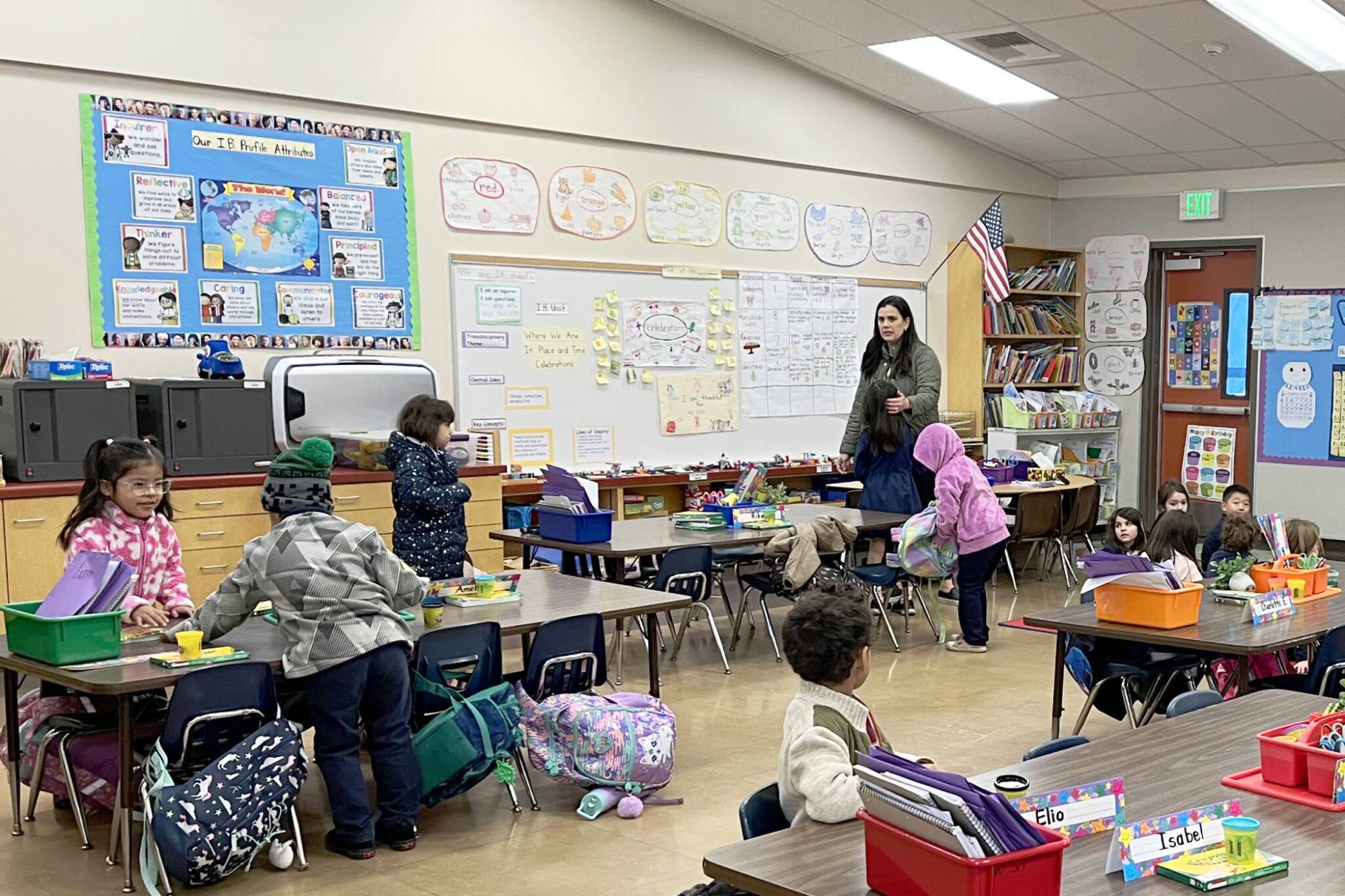
"caption": "Pasadena Unified School District students return to school after the Eaton fire.",
"credit": "Mallika Seshadri/EdSource",
"altTag": "A woman stands in front of several children in a classroom.",
"description": null,
"imgSizes": {
"medium": {
"file": "https://cdn.kqed.org/wp-content/uploads/sites/10/2025/06/IMG-0540-crop-2048x1365-1-2000x1333.jpg",
"width": 2000,
"height": 1333,
"mimeType": "image/jpeg"
},
"large": {
"file": "https://cdn.kqed.org/wp-content/uploads/sites/10/2025/06/IMG-0540-crop-2048x1365-1-2000x1333.jpg",
"width": 2000,
"height": 1333,
"mimeType": "image/jpeg"
},
"thumbnail": {
"file": "https://cdn.kqed.org/wp-content/uploads/sites/10/2025/06/IMG-0540-crop-2048x1365-1-160x107.jpg",
"width": 160,
"height": 107,
"mimeType": "image/jpeg"
},
"1536x1536": {
"file": "https://cdn.kqed.org/wp-content/uploads/sites/10/2025/06/IMG-0540-crop-2048x1365-1-1536x1024.jpg",
"width": 1536,
"height": 1024,
"mimeType": "image/jpeg"
},
"post-thumbnail": {
"file": "https://cdn.kqed.org/wp-content/uploads/sites/10/2025/06/IMG-0540-crop-2048x1365-1-672x372.jpg",
"width": 672,
"height": 372,
"mimeType": "image/jpeg"
},
"twentyfourteen-full-width": {
"file": "https://cdn.kqed.org/wp-content/uploads/sites/10/2025/06/IMG-0540-crop-2048x1365-1-1038x576.jpg",
"width": 1038,
"height": 576,
"mimeType": "image/jpeg"
},
"full-width": {
"file": "https://cdn.kqed.org/wp-content/uploads/sites/10/2025/06/IMG-0540-crop-2048x1365-1-2000x1333.jpg",
"width": 2000,
"height": 1333,
"mimeType": "image/jpeg"
},
"kqedFullSize": {
"file": "https://cdn.kqed.org/wp-content/uploads/sites/10/2025/06/IMG-0540-crop-2048x1365-1.jpg",
"width": 2048,
"height": 1365
}
},
"isLoading": false,
"fetchFailed": false
},
"news_12044015": {
"type": "attachments",
"id": "news_12044015",
"meta": {
"index": "attachments_1716263798",
"site": "news",
"id": "12044015",
"found": true
},
"title": "IMG_0822_Original 2",
"publishDate": 1749759469,
"status": "inherit",
"parent": 12044013,
"modified": 1749843874,
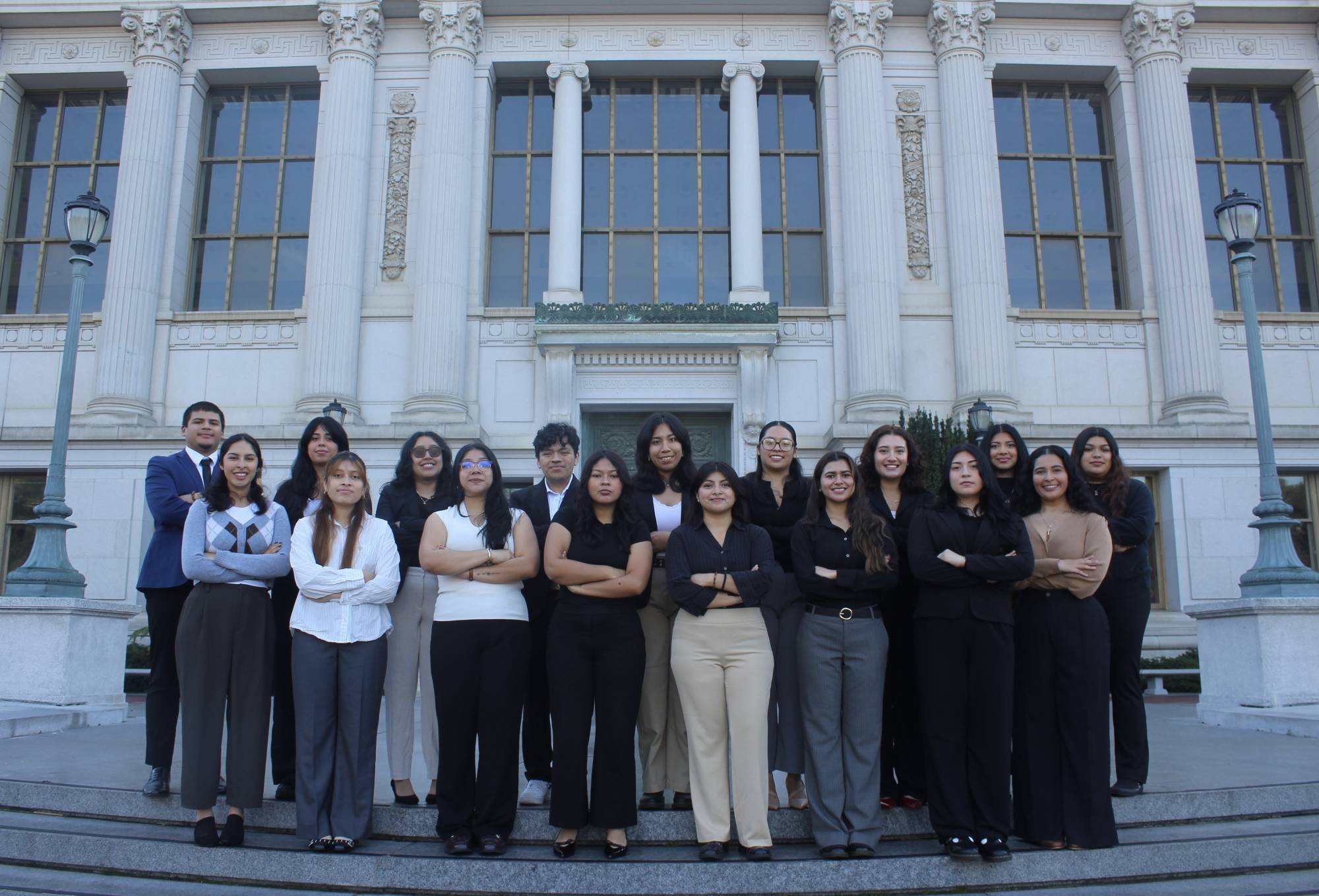
"caption": "UC Berkeley students from the organization, Central Americans for Empowerment (CAFE), pose in front of Doe Library.",
"credit": "Courtesy of Lesly Reyes Reyes",
"altTag": "Students from UC Berkeley in professional attire pose with their arms crossed in front of library with big white columns.",
"description": null,
"imgSizes": {
"medium": {
"file": "https://cdn.kqed.org/wp-content/uploads/sites/10/2025/06/IMG_0822_Original-2-2000x1359.jpg",
"width": 2000,
"height": 1359,
"mimeType": "image/jpeg"
},
"large": {
"file": "https://cdn.kqed.org/wp-content/uploads/sites/10/2025/06/IMG_0822_Original-2-2000x1359.jpg",
"width": 2000,
"height": 1359,
"mimeType": "image/jpeg"
},
"thumbnail": {
"file": "https://cdn.kqed.org/wp-content/uploads/sites/10/2025/06/IMG_0822_Original-2-160x109.jpg",
"width": 160,
"height": 109,
"mimeType": "image/jpeg"
},
"1536x1536": {
"file": "https://cdn.kqed.org/wp-content/uploads/sites/10/2025/06/IMG_0822_Original-2-1536x1044.jpg",
"width": 1536,
"height": 1044,
"mimeType": "image/jpeg"
},
"2048x2048": {
"file": "https://cdn.kqed.org/wp-content/uploads/sites/10/2025/06/IMG_0822_Original-2-2048x1392.jpg",
"width": 2048,
"height": 1392,
"mimeType": "image/jpeg"
},
"post-thumbnail": {
"file": "https://cdn.kqed.org/wp-content/uploads/sites/10/2025/06/IMG_0822_Original-2-672x372.jpg",
"width": 672,
"height": 372,
"mimeType": "image/jpeg"
},
"twentyfourteen-full-width": {
"file": "https://cdn.kqed.org/wp-content/uploads/sites/10/2025/06/IMG_0822_Original-2-1038x576.jpg",
"width": 1038,
"height": 576,
"mimeType": "image/jpeg"
},
"full-width": {
"file": "https://cdn.kqed.org/wp-content/uploads/sites/10/2025/06/IMG_0822_Original-2-2000x1359.jpg",
"width": 2000,
"height": 1359,
"mimeType": "image/jpeg"
},
"kqedFullSize": {
"file": "https://cdn.kqed.org/wp-content/uploads/sites/10/2025/06/IMG_0822_Original-2-scaled.jpg",
"width": 2560,
"height": 1740
}
},
"isLoading": false,
"fetchFailed": false
},
"news_12039588": {
"type": "attachments",
"id": "news_12039588",
"meta": {
"index": "attachments_1716263798",
"site": "news",
"id": "12039588",
"found": true
},
"title": "101023_AI-College-Toby-Reed_LA_CM_05 copy",
"publishDate": 1746821475,
"status": "inherit",
"parent": 12039585,
"modified": 1752708567,
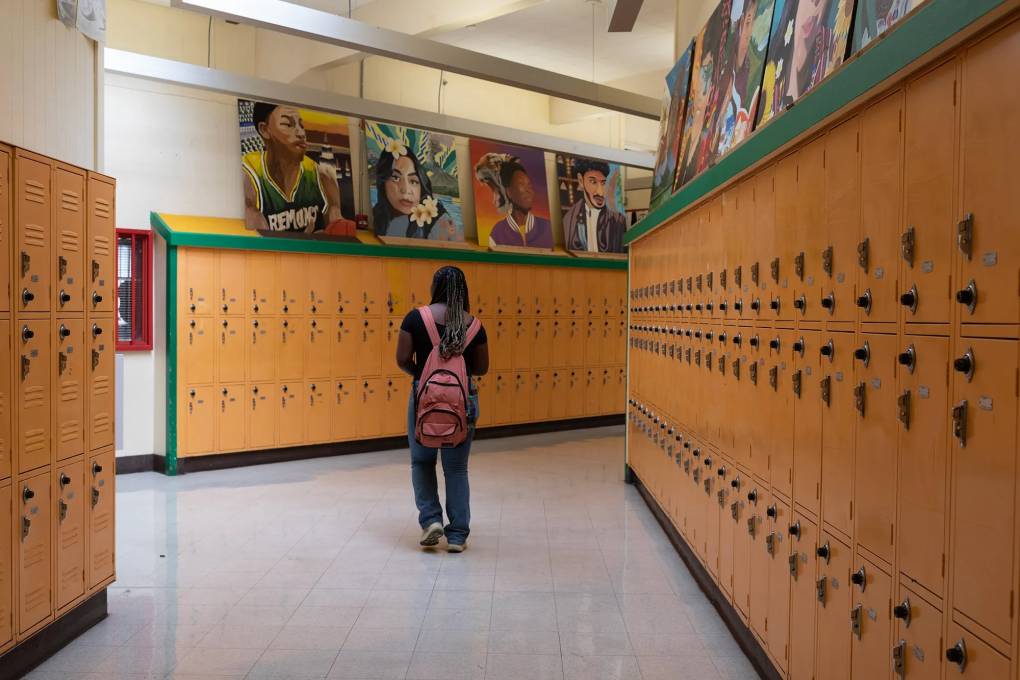
"caption": "A student walks down a hallway at Fremont High School in Oakland on Oct. 10, 2023. \n",
"credit": "Laure Andrillon for Cal Matters",
"altTag": null,
"description": null,
"imgSizes": {
"medium": {
"file": "https://cdn.kqed.org/wp-content/uploads/sites/10/2025/05/101023_AI-College-Toby-Reed_LA_CM_05-copy-800x533.jpg",
"width": 800,
"height": 533,
"mimeType": "image/jpeg"
},
"large": {
"file": "https://cdn.kqed.org/wp-content/uploads/sites/10/2025/05/101023_AI-College-Toby-Reed_LA_CM_05-copy-1020x680.jpg",
"width": 1020,
"height": 680,
"mimeType": "image/jpeg"
},
"thumbnail": {
"file": "https://cdn.kqed.org/wp-content/uploads/sites/10/2025/05/101023_AI-College-Toby-Reed_LA_CM_05-copy-160x107.jpg",
"width": 160,
"height": 107,
"mimeType": "image/jpeg"
},
"1536x1536": {
"file": "https://cdn.kqed.org/wp-content/uploads/sites/10/2025/05/101023_AI-College-Toby-Reed_LA_CM_05-copy-1536x1024.jpg",
"width": 1536,
"height": 1024,
"mimeType": "image/jpeg"
},
"post-thumbnail": {
"file": "https://cdn.kqed.org/wp-content/uploads/sites/10/2025/05/101023_AI-College-Toby-Reed_LA_CM_05-copy-672x372.jpg",
"width": 672,
"height": 372,
"mimeType": "image/jpeg"
},
"twentyfourteen-full-width": {
"file": "https://cdn.kqed.org/wp-content/uploads/sites/10/2025/05/101023_AI-College-Toby-Reed_LA_CM_05-copy-1038x576.jpg",
"width": 1038,
"height": 576,
"mimeType": "image/jpeg"
},
"full-width": {
"file": "https://cdn.kqed.org/wp-content/uploads/sites/10/2025/05/101023_AI-College-Toby-Reed_LA_CM_05-copy-1920x1280.jpg",
"width": 1920,
"height": 1280,
"mimeType": "image/jpeg"
},
"kqedFullSize": {
"file": "https://cdn.kqed.org/wp-content/uploads/sites/10/2025/05/101023_AI-College-Toby-Reed_LA_CM_05-copy.jpg",
"width": 2000,
"height": 1333
}
},
"isLoading": false,
"fetchFailed": false
},
"news_12037811": {
"type": "attachments",
"id": "news_12037811",
"meta": {
"index": "attachments_1716263798",
"site": "news",
"id": "12037811",
"found": true
},
"title": "250425-SFSUStudentHousing-10-BL_qed",
"publishDate": 1745630309,
"status": "inherit",
"parent": 0,
"modified": 1745688609,
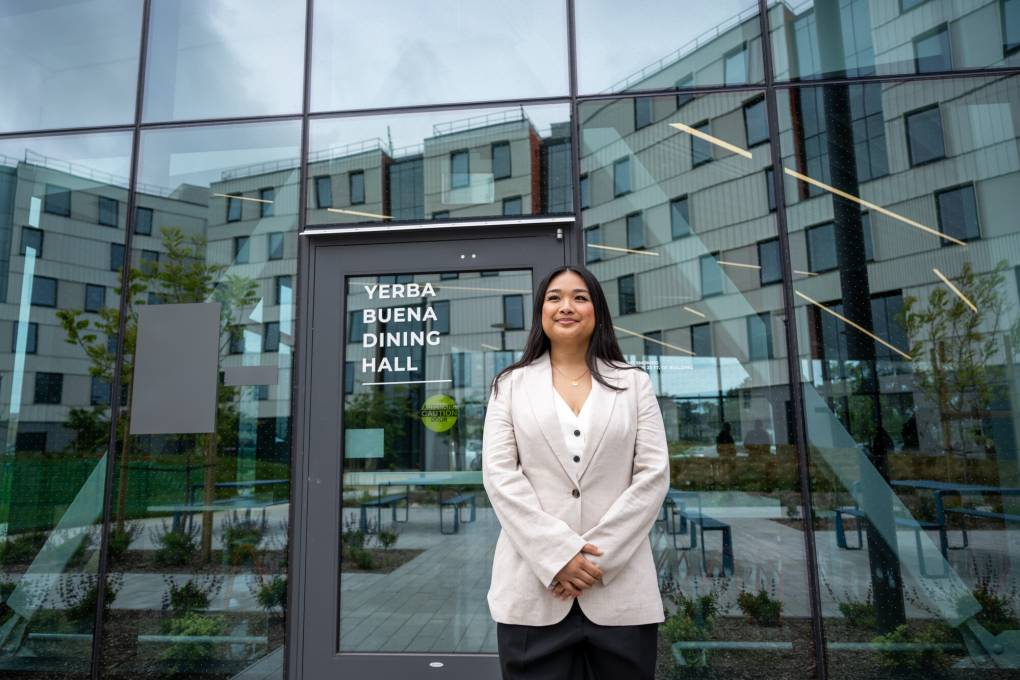
"caption": "Student Rylissa Aquino Javier stands outside the West Grove Commons, an on-campus residence hall that provides shared spaces, at the university in San Francisco on April 25, 2025. It’s the first project to be completed under a grant program aimed at easing the housing shortage at California’s public colleges and universities.",
"credit": "Beth LaBerge/KQED",
"altTag": null,
"description": null,
"imgSizes": {
"medium": {
"file": "https://cdn.kqed.org/wp-content/uploads/sites/10/2025/04/250425-SFSUStudentHousing-10-BL_qed-800x533.jpg",
"width": 800,
"height": 533,
"mimeType": "image/jpeg"
},
"large": {
"file": "https://cdn.kqed.org/wp-content/uploads/sites/10/2025/04/250425-SFSUStudentHousing-10-BL_qed-1020x680.jpg",
"width": 1020,
"height": 680,
"mimeType": "image/jpeg"
},
"thumbnail": {
"file": "https://cdn.kqed.org/wp-content/uploads/sites/10/2025/04/250425-SFSUStudentHousing-10-BL_qed-160x107.jpg",
"width": 160,
"height": 107,
"mimeType": "image/jpeg"
},
"1536x1536": {
"file": "https://cdn.kqed.org/wp-content/uploads/sites/10/2025/04/250425-SFSUStudentHousing-10-BL_qed-1536x1024.jpg",
"width": 1536,
"height": 1024,
"mimeType": "image/jpeg"
},
"post-thumbnail": {
"file": "https://cdn.kqed.org/wp-content/uploads/sites/10/2025/04/250425-SFSUStudentHousing-10-BL_qed-672x372.jpg",
"width": 672,
"height": 372,
"mimeType": "image/jpeg"
},
"twentyfourteen-full-width": {
"file": "https://cdn.kqed.org/wp-content/uploads/sites/10/2025/04/250425-SFSUStudentHousing-10-BL_qed-1038x576.jpg",
"width": 1038,
"height": 576,
"mimeType": "image/jpeg"
},
"full-width": {
"file": "https://cdn.kqed.org/wp-content/uploads/sites/10/2025/04/250425-SFSUStudentHousing-10-BL_qed-1920x1280.jpg",
"width": 1920,
"height": 1280,
"mimeType": "image/jpeg"
},
"kqedFullSize": {
"file": "https://cdn.kqed.org/wp-content/uploads/sites/10/2025/04/250425-SFSUStudentHousing-10-BL_qed.jpg",
"width": 2000,
"height": 1333
}
},
"isLoading": false,
"fetchFailed": false
},
"news_12034753": {
"type": "attachments",
"id": "news_12034753",
"meta": {
"index": "attachments_1716263798",
"site": "news",
"id": "12034753",
"found": true
},
"title": "20250129_UCBerkeleyRally_GC-72_qed",
"publishDate": 1744048834,
"status": "inherit",
"parent": 12034742,
"modified": 1744048856,
"caption": "Hundreds of students and supporters rally, in solidarity with their undocumented classmates as the Trump administration begins to carry out mass deportations, at Sproul Plaza at UC Berkeley on Jan. 29, 2025.",
"credit": "Gina Castro/KQED",
"altTag": null,
"description": null,
"imgSizes": {
"medium": {
"file": "https://cdn.kqed.org/wp-content/uploads/sites/10/2025/04/20250129_UCBerkeleyRally_GC-72_qed-800x533.jpg",
"width": 800,
"height": 533,
"mimeType": "image/jpeg"
},
"large": {
"file": "https://cdn.kqed.org/wp-content/uploads/sites/10/2025/04/20250129_UCBerkeleyRally_GC-72_qed-1020x680.jpg",
"width": 1020,
"height": 680,
"mimeType": "image/jpeg"
},
"thumbnail": {
"file": "https://cdn.kqed.org/wp-content/uploads/sites/10/2025/04/20250129_UCBerkeleyRally_GC-72_qed-160x107.jpg",
"width": 160,
"height": 107,
"mimeType": "image/jpeg"
},
"1536x1536": {
"file": "https://cdn.kqed.org/wp-content/uploads/sites/10/2025/04/20250129_UCBerkeleyRally_GC-72_qed-1536x1024.jpg",
"width": 1536,
"height": 1024,
"mimeType": "image/jpeg"
},
"post-thumbnail": {
"file": "https://cdn.kqed.org/wp-content/uploads/sites/10/2025/04/20250129_UCBerkeleyRally_GC-72_qed-672x372.jpg",
"width": 672,
"height": 372,
"mimeType": "image/jpeg"
},
"twentyfourteen-full-width": {
"file": "https://cdn.kqed.org/wp-content/uploads/sites/10/2025/04/20250129_UCBerkeleyRally_GC-72_qed-1038x576.jpg",
"width": 1038,
"height": 576,
"mimeType": "image/jpeg"
},
"full-width": {
"file": "https://cdn.kqed.org/wp-content/uploads/sites/10/2025/04/20250129_UCBerkeleyRally_GC-72_qed-1920x1280.jpg",
"width": 1920,
"height": 1280,
"mimeType": "image/jpeg"
},
"kqedFullSize": {
"file": "https://cdn.kqed.org/wp-content/uploads/sites/10/2025/04/20250129_UCBerkeleyRally_GC-72_qed.jpg",
"width": 2000,
"height": 1333
}
},
"isLoading": false,
"fetchFailed": false
},
"news_12034685": {
"type": "attachments",
"id": "news_12034685",
"meta": {
"index": "attachments_1716263798",
"site": "news",
"id": "12034685",
"found": true
},
"title": "OaklandInternationalHighSchool",
"publishDate": 1743968869,
"status": "inherit",
"parent": 12034679,
"modified": 1743968940,
"caption": "Teacher Katy Reese, center, works with students in a literacy class at Oakland International High School in Oakland on March 7, 2025. ",
"credit": "Florence Middleton/CalMatters",
"altTag": "A white woman wearing a green sweater sits down at a desk surrounded by four students in a classroom.",
"description": null,
"imgSizes": {
"medium": {
"file": "https://cdn.kqed.org/wp-content/uploads/sites/10/2025/04/030725_Literacy_FM_CM_11-800x534.jpg",
"width": 800,
"height": 534,
"mimeType": "image/jpeg"
},
"large": {
"file": "https://cdn.kqed.org/wp-content/uploads/sites/10/2025/04/030725_Literacy_FM_CM_11-1020x680.jpg",
"width": 1020,
"height": 680,
"mimeType": "image/jpeg"
},
"thumbnail": {
"file": "https://cdn.kqed.org/wp-content/uploads/sites/10/2025/04/030725_Literacy_FM_CM_11-160x107.jpg",
"width": 160,
"height": 107,
"mimeType": "image/jpeg"
},
"1536x1536": {
"file": "https://cdn.kqed.org/wp-content/uploads/sites/10/2025/04/030725_Literacy_FM_CM_11-1536x1025.jpg",
"width": 1536,
"height": 1025,
"mimeType": "image/jpeg"
},
"post-thumbnail": {
"file": "https://cdn.kqed.org/wp-content/uploads/sites/10/2025/04/030725_Literacy_FM_CM_11-672x372.jpg",
"width": 672,
"height": 372,
"mimeType": "image/jpeg"
},
"twentyfourteen-full-width": {
"file": "https://cdn.kqed.org/wp-content/uploads/sites/10/2025/04/030725_Literacy_FM_CM_11-1038x576.jpg",
"width": 1038,
"height": 576,
"mimeType": "image/jpeg"
},
"full-width": {
"file": "https://cdn.kqed.org/wp-content/uploads/sites/10/2025/04/030725_Literacy_FM_CM_11-1920x1281.jpg",
"width": 1920,
"height": 1281,
"mimeType": "image/jpeg"
},
"kqedFullSize": {
"file": "https://cdn.kqed.org/wp-content/uploads/sites/10/2025/04/030725_Literacy_FM_CM_11.jpg",
"width": 2000,
"height": 1334
}
},
"isLoading": false,
"fetchFailed": false
},
"news_11995875": {
"type": "attachments",
"id": "news_11995875",
"meta": {
"index": "attachments_1716263798",
"site": "news",
"id": "11995875",
"found": true
},
"title": "Chino Valley School Board Votes On Student Transgender Policy",
"publishDate": 1721159949,
"status": "inherit",
"parent": 11995853,
"modified": 1721162762,
"caption": "A person holds a sign in opposition to a policy that the Chino Valley school board is meeting to vote on, which would require school staff to 'out' students to their parents if they ask to be identified by a gender that is not listed on their birth certificate on July 20, 2023, in Chino, San Bernardino County. ",
"credit": "David McNew/Getty Images",
"altTag": null,
"description": null,
"imgSizes": {
"medium": {
"file": "https://cdn.kqed.org/wp-content/uploads/sites/10/2024/07/GettyImages-1545719242-800x534.jpg",
"width": 800,
"height": 534,
"mimeType": "image/jpeg"
},
"large": {
"file": "https://cdn.kqed.org/wp-content/uploads/sites/10/2024/07/GettyImages-1545719242-1020x680.jpg",
"width": 1020,
"height": 680,
"mimeType": "image/jpeg"
},
"thumbnail": {
"file": "https://cdn.kqed.org/wp-content/uploads/sites/10/2024/07/GettyImages-1545719242-160x107.jpg",
"width": 160,
"height": 107,
"mimeType": "image/jpeg"
},
"post-thumbnail": {
"file": "https://cdn.kqed.org/wp-content/uploads/sites/10/2024/07/GettyImages-1545719242-672x372.jpg",
"width": 672,
"height": 372,
"mimeType": "image/jpeg"
},
"twentyfourteen-full-width": {
"file": "https://cdn.kqed.org/wp-content/uploads/sites/10/2024/07/GettyImages-1545719242-1024x576.jpg",
"width": 1024,
"height": 576,
"mimeType": "image/jpeg"
},
"kqedFullSize": {
"file": "https://cdn.kqed.org/wp-content/uploads/sites/10/2024/07/GettyImages-1545719242.jpg",
"width": 1024,
"height": 683
}
},
"isLoading": false,
"fetchFailed": false
},
"news_12033775": {
"type": "attachments",
"id": "news_12033775",
"meta": {
"index": "attachments_1716263798",
"site": "news",
"id": "12033775",
"found": true
},
"title": "021220_WestClimateEmergency_09",
"publishDate": 1743377922,
"status": "inherit",
"parent": 12033771,
"modified": 1743377974,
"caption": "A student walks across campus at Chico State University on February 12, 2020. ",
"credit": "Anne Wernikoff/CalMatters",
"altTag": "A person wearing a dark shirt and grey pants walks toward a building on a campus.",
"description": null,
"imgSizes": {
"medium": {
"file": "https://cdn.kqed.org/wp-content/uploads/sites/10/2025/03/021220_WestClimateEmergency_09-800x540.jpg",
"width": 800,
"height": 540,
"mimeType": "image/jpeg"
},
"large": {
"file": "https://cdn.kqed.org/wp-content/uploads/sites/10/2025/03/021220_WestClimateEmergency_09-1020x688.jpg",
"width": 1020,
"height": 688,
"mimeType": "image/jpeg"
},
"thumbnail": {
"file": "https://cdn.kqed.org/wp-content/uploads/sites/10/2025/03/021220_WestClimateEmergency_09-160x108.jpg",
"width": 160,
"height": 108,
"mimeType": "image/jpeg"
},
"1536x1536": {
"file": "https://cdn.kqed.org/wp-content/uploads/sites/10/2025/03/021220_WestClimateEmergency_09-1536x1036.jpg",
"width": 1536,
"height": 1036,
"mimeType": "image/jpeg"
},
"post-thumbnail": {
"file": "https://cdn.kqed.org/wp-content/uploads/sites/10/2025/03/021220_WestClimateEmergency_09-672x372.jpg",
"width": 672,
"height": 372,
"mimeType": "image/jpeg"
},
"twentyfourteen-full-width": {
"file": "https://cdn.kqed.org/wp-content/uploads/sites/10/2025/03/021220_WestClimateEmergency_09-1038x576.jpg",
"width": 1038,
"height": 576,
"mimeType": "image/jpeg"
},
"full-width": {
"file": "https://cdn.kqed.org/wp-content/uploads/sites/10/2025/03/021220_WestClimateEmergency_09-1920x1295.jpg",
"width": 1920,
"height": 1295,
"mimeType": "image/jpeg"
},
"kqedFullSize": {
"file": "https://cdn.kqed.org/wp-content/uploads/sites/10/2025/03/021220_WestClimateEmergency_09.jpg",
"width": 2000,
"height": 1349
}
},
"isLoading": false,
"fetchFailed": false
},
"news_12033556": {
"type": "attachments",
"id": "news_12033556",
"meta": {
"index": "attachments_1716263798",
"site": "news",
"id": "12033556",
"found": true
},
"title": "npr.brightspotcdn-1 copy",
"publishDate": 1743189137,
"status": "inherit",
"parent": 12033555,
"modified": 1743189179,
"caption": "Secretary of State Marco Rubio speaks during his visit to the Yad Vashem Holocaust Memorial museum in Jerusalem on Feb. 16, 2025.",
"credit": "Evelyn Hockstein/AFP via Getty Images",
"altTag": null,
"description": null,
"imgSizes": {
"medium": {
"file": "https://cdn.kqed.org/wp-content/uploads/sites/10/2025/03/npr.brightspotcdn-1-copy-2-800x534.jpg",
"width": 800,
"height": 534,
"mimeType": "image/jpeg"
},
"large": {
"file": "https://cdn.kqed.org/wp-content/uploads/sites/10/2025/03/npr.brightspotcdn-1-copy-2-1020x680.jpg",
"width": 1020,
"height": 680,
"mimeType": "image/jpeg"
},
"thumbnail": {
"file": "https://cdn.kqed.org/wp-content/uploads/sites/10/2025/03/npr.brightspotcdn-1-copy-2-160x107.jpg",
"width": 160,
"height": 107,
"mimeType": "image/jpeg"
},
"1536x1536": {
"file": "https://cdn.kqed.org/wp-content/uploads/sites/10/2025/03/npr.brightspotcdn-1-copy-2-1536x1024.jpg",
"width": 1536,
"height": 1024,
"mimeType": "image/jpeg"
},
"post-thumbnail": {
"file": "https://cdn.kqed.org/wp-content/uploads/sites/10/2025/03/npr.brightspotcdn-1-copy-2-672x372.jpg",
"width": 672,
"height": 372,
"mimeType": "image/jpeg"
},
"twentyfourteen-full-width": {
"file": "https://cdn.kqed.org/wp-content/uploads/sites/10/2025/03/npr.brightspotcdn-1-copy-2-1038x576.jpg",
"width": 1038,
"height": 576,
"mimeType": "image/jpeg"
},
"kqedFullSize": {
"file": "https://cdn.kqed.org/wp-content/uploads/sites/10/2025/03/npr.brightspotcdn-1-copy-2.jpg",
"width": 1600,
"height": 1067
}
},
"isLoading": false,
"fetchFailed": false
},
"news_12028517": {
"type": "attachments",
"id": "news_12028517",
"meta": {
"index": "attachments_1716263798",
"site": "news",
"id": "12028517",
"found": true
},
"title": "230601-MindShift-33-BL_qed (1)",
"publishDate": 1740518063,
"status": "inherit",
"parent": 12028442,
"modified": 1740518151,
"caption": "Students complete an outdoor assignment activity in the schoolyard at an elementary school in San Leandro, California, on June 1, 2023. ",
"credit": "Beth LaBerge/KQED",
"altTag": null,
"description": null,
"imgSizes": {
"medium": {
"file": "https://cdn.kqed.org/wp-content/uploads/sites/10/2025/02/230601-MindShift-33-BL_qed-1-800x533.jpg",
"width": 800,
"height": 533,
"mimeType": "image/jpeg"
},
"large": {
"file": "https://cdn.kqed.org/wp-content/uploads/sites/10/2025/02/230601-MindShift-33-BL_qed-1-1020x680.jpg",
"width": 1020,
"height": 680,
"mimeType": "image/jpeg"
},
"thumbnail": {
"file": "https://cdn.kqed.org/wp-content/uploads/sites/10/2025/02/230601-MindShift-33-BL_qed-1-160x107.jpg",
"width": 160,
"height": 107,
"mimeType": "image/jpeg"
},
"1536x1536": {
"file": "https://cdn.kqed.org/wp-content/uploads/sites/10/2025/02/230601-MindShift-33-BL_qed-1-1536x1024.jpg",
"width": 1536,
"height": 1024,
"mimeType": "image/jpeg"
},
"post-thumbnail": {
"file": "https://cdn.kqed.org/wp-content/uploads/sites/10/2025/02/230601-MindShift-33-BL_qed-1-672x372.jpg",
"width": 672,
"height": 372,
"mimeType": "image/jpeg"
},
"twentyfourteen-full-width": {
"file": "https://cdn.kqed.org/wp-content/uploads/sites/10/2025/02/230601-MindShift-33-BL_qed-1-1038x576.jpg",
"width": 1038,
"height": 576,
"mimeType": "image/jpeg"
},
"full-width": {
"file": "https://cdn.kqed.org/wp-content/uploads/sites/10/2025/02/230601-MindShift-33-BL_qed-1-1920x1280.jpg",
"width": 1920,
"height": 1280,
"mimeType": "image/jpeg"
},
"kqedFullSize": {
"file": "https://cdn.kqed.org/wp-content/uploads/sites/10/2025/02/230601-MindShift-33-BL_qed-1.jpg",
"width": 2000,
"height": 1333
}
},
"isLoading": false,
"fetchFailed": false
},
"news_12027260": {
"type": "attachments",
"id": "news_12027260",
"meta": {
"index": "attachments_1716263798",
"site": "news",
"id": "12027260",
"found": true
},
"title": "250214-Dream Keeper Returns-01-KQED",
"publishDate": 1739574832,
"status": "inherit",
"parent": 0,
"modified": 1739898978,
"caption": "Volunteers serve food at All My Usos annual Family Day BBQ at Gilman Park in San Francisco on Aug. 17, 2024. All My Usos was a recipient of Dream Keeper Initiative funds before the program was frozen.",
"credit": "Courtesy of All My Usos",
"altTag": null,
"description": null,
"imgSizes": {
"medium": {
"file": "https://cdn.kqed.org/wp-content/uploads/sites/10/2025/02/250214-Dream-Keeper-Returns-01-KQED-800x533.jpg",
"width": 800,
"height": 533,
"mimeType": "image/jpeg"
},
"large": {
"file": "https://cdn.kqed.org/wp-content/uploads/sites/10/2025/02/250214-Dream-Keeper-Returns-01-KQED-1020x680.jpg",
"width": 1020,
"height": 680,
"mimeType": "image/jpeg"
},
"thumbnail": {
"file": "https://cdn.kqed.org/wp-content/uploads/sites/10/2025/02/250214-Dream-Keeper-Returns-01-KQED-160x107.jpg",
"width": 160,
"height": 107,
"mimeType": "image/jpeg"
},
"1536x1536": {
"file": "https://cdn.kqed.org/wp-content/uploads/sites/10/2025/02/250214-Dream-Keeper-Returns-01-KQED-1536x1024.jpg",
"width": 1536,
"height": 1024,
"mimeType": "image/jpeg"
},
"post-thumbnail": {
"file": "https://cdn.kqed.org/wp-content/uploads/sites/10/2025/02/250214-Dream-Keeper-Returns-01-KQED-672x372.jpg",
"width": 672,
"height": 372,
"mimeType": "image/jpeg"
},
"twentyfourteen-full-width": {
"file": "https://cdn.kqed.org/wp-content/uploads/sites/10/2025/02/250214-Dream-Keeper-Returns-01-KQED-1038x576.jpg",
"width": 1038,
"height": 576,
"mimeType": "image/jpeg"
},
"full-width": {
"file": "https://cdn.kqed.org/wp-content/uploads/sites/10/2025/02/250214-Dream-Keeper-Returns-01-KQED-1920x1280.jpg",
"width": 1920,
"height": 1280,
"mimeType": "image/jpeg"
},
"kqedFullSize": {
"file": "https://cdn.kqed.org/wp-content/uploads/sites/10/2025/02/250214-Dream-Keeper-Returns-01-KQED.jpg",
"width": 2000,
"height": 1333
}
},
"isLoading": false,
"fetchFailed": false
},
"news_12026475": {
"type": "attachments",
"id": "news_12026475",
"meta": {
"index": "attachments_1716263798",
"site": "news",
"id": "12026475",
"found": true
},
"title": "20250210_LIFE-CHIRO_DMB_00033-KQED",
"publishDate": 1739220140,
"status": "inherit",
"parent": 0,
"modified": 1739220349,
"caption": "Life Chiropractic College West in Hayward on Feb. 10, 2025.",
"credit": "David M. Barreda/KQED",
"altTag": null,
"description": null,
"imgSizes": {
"medium": {
"file": "https://cdn.kqed.org/wp-content/uploads/sites/10/2025/02/20250210_LIFE-CHIRO_DMB_00033-KQED-800x533.jpg",
"width": 800,
"height": 533,
"mimeType": "image/jpeg"
},
"large": {
"file": "https://cdn.kqed.org/wp-content/uploads/sites/10/2025/02/20250210_LIFE-CHIRO_DMB_00033-KQED-1020x680.jpg",
"width": 1020,
"height": 680,
"mimeType": "image/jpeg"
},
"thumbnail": {
"file": "https://cdn.kqed.org/wp-content/uploads/sites/10/2025/02/20250210_LIFE-CHIRO_DMB_00033-KQED-160x107.jpg",
"width": 160,
"height": 107,
"mimeType": "image/jpeg"
},
"1536x1536": {
"file": "https://cdn.kqed.org/wp-content/uploads/sites/10/2025/02/20250210_LIFE-CHIRO_DMB_00033-KQED-1536x1024.jpg",
"width": 1536,
"height": 1024,
"mimeType": "image/jpeg"
},
"post-thumbnail": {
"file": "https://cdn.kqed.org/wp-content/uploads/sites/10/2025/02/20250210_LIFE-CHIRO_DMB_00033-KQED-672x372.jpg",
"width": 672,
"height": 372,
"mimeType": "image/jpeg"
},
"twentyfourteen-full-width": {
"file": "https://cdn.kqed.org/wp-content/uploads/sites/10/2025/02/20250210_LIFE-CHIRO_DMB_00033-KQED-1038x576.jpg",
"width": 1038,
"height": 576,
"mimeType": "image/jpeg"
},
"full-width": {
"file": "https://cdn.kqed.org/wp-content/uploads/sites/10/2025/02/20250210_LIFE-CHIRO_DMB_00033-KQED-1920x1280.jpg",
"width": 1920,
"height": 1280,
"mimeType": "image/jpeg"
},
"kqedFullSize": {
"file": "https://cdn.kqed.org/wp-content/uploads/sites/10/2025/02/20250210_LIFE-CHIRO_DMB_00033-KQED.jpg",
"width": 2000,
"height": 1333
}
},
"isLoading": false,
"fetchFailed": false
}
},
"audioPlayerReducer": {
"postId": "stream_live",
"isPaused": true,
"isPlaying": false,
"pfsActive": false,
"pledgeModalIsOpen": true,
"playerDrawerIsOpen": false,
"liveAudioPlayStartedAt": 0,
"liveAudioPlayContext": ""
},
"authorsReducer": {
"byline_news_12044536": {
"type": "authors",
"id": "byline_news_12044536",
"meta": {
"override": true
},
"slug": "byline_news_12044536",
"name": "\u003ca href=\"https://edsource.org/author/mseshadri\">Mallika Seshadri\u003c/a>, EdSource",
"isLoading": false
},
"byline_news_12039585": {
"type": "authors",
"id": "byline_news_12039585",
"meta": {
"override": true
},
"slug": "byline_news_12039585",
"name": "\u003ca href=\"https://calmatters.org/author/anaibarra/\">Ana B. Ibarra\u003c/a>, CalMatters",
"isLoading": false
},
"byline_news_12034679": {
"type": "authors",
"id": "byline_news_12034679",
"meta": {
"override": true
},
"slug": "byline_news_12034679",
"name": "\u003ca href=\"https://calmatters.org/author/carolyn-jones/\">Carolyn Jones, \u003c/a>CalMatters",
"isLoading": false
},
"byline_news_12033563": {
"type": "authors",
"id": "byline_news_12033563",
"meta": {
"override": true
},
"slug": "byline_news_12033563",
"name": "Sophie Austin, Associated Press",
"isLoading": false
},
"byline_news_12033771": {
"type": "authors",
"id": "byline_news_12033771",
"meta": {
"override": true
},
"slug": "byline_news_12033771",
"name": "\u003ca href=\"https://calmatters.org/author/mikhailzinshteyn\">Mikhail Zinshteyn, \u003c/a>CalMatters",
"isLoading": false
},
"byline_news_12033555": {
"type": "authors",
"id": "byline_news_12033555",
"meta": {
"override": true
},
"slug": "byline_news_12033555",
"name": "\u003ca href=\"https://www.npr.org/people/831107342/alana-wise\">Alana Wise\u003c/a>, NPR",
"isLoading": false
},
"ecruzguevarra": {
"type": "authors",
"id": "8654",
"meta": {
"index": "authors_1716337520",
"id": "8654",
"found": true
},
"name": "Ericka Cruz Guevarra",
"firstName": "Ericka",
"lastName": "Cruz Guevarra",
"slug": "ecruzguevarra",
"email": "ecruzguevarra@kqed.org",
"display_author_email": true,
"staff_mastheads": [
"news"
],
"title": "Producer, The Bay Podcast",
"bio": "Ericka Cruz Guevarra is host of \u003ca href=\"https://www.kqed.org/podcasts/thebay\">\u003cem>The Bay\u003c/em>\u003c/a> podcast at KQED. Before host, she was the show’s producer. Her work in that capacity includes a three-part reported series on policing in Vallejo, which won a 2020 excellence in journalism award from the Society of Professional Journalists. Ericka has worked as a breaking news reporter at Oregon Public Broadcasting, helped produce the Code Switch podcast, and was KQED’s inaugural Raul Ramirez Diversity Fund intern. She’s also an alumna of NPR’s Next Generation Radio program. Send her an email if you have strong feelings about whether Fairfield and Suisun City are the Bay. Ericka is represented by SAG-AFTRA.",
"avatar": "https://secure.gravatar.com/avatar/accefc1de4bafc7e234b69bcb9b6f6536c130fd84709bc3069ef11a78787e1bb?s=600&d=blank&r=g",
"twitter": "NotoriousECG",
"bluesky": null,
"facebook": null,
"instagram": null,
"linkedin": null,
"sites": [
{
"site": "arts",
"roles": [
"subscriber"
]
},
{
"site": "news",
"roles": [
"editor",
"manage_categories"
]
},
{
"site": "futureofyou",
"roles": [
"subscriber"
]
},
{
"site": "stateofhealth",
"roles": [
"subscriber"
]
},
{
"site": "science",
"roles": [
"editor"
]
},
{
"site": "forum",
"roles": [
"subscriber"
]
}
],
"headData": {
"title": "Ericka Cruz Guevarra | KQED",
"description": "Producer, The Bay Podcast",
"ogImgSrc": "https://secure.gravatar.com/avatar/accefc1de4bafc7e234b69bcb9b6f6536c130fd84709bc3069ef11a78787e1bb?s=600&d=blank&r=g",
"twImgSrc": "https://secure.gravatar.com/avatar/accefc1de4bafc7e234b69bcb9b6f6536c130fd84709bc3069ef11a78787e1bb?s=600&d=blank&r=g"
},
"isLoading": false,
"link": "/author/ecruzguevarra"
},
"amontecillo": {
"type": "authors",
"id": "11649",
"meta": {
"index": "authors_1716337520",
"id": "11649",
"found": true
},
"name": "Alan Montecillo",
"firstName": "Alan",
"lastName": "Montecillo",
"slug": "amontecillo",
"email": "amontecillo@kqed.org",
"display_author_email": false,
"staff_mastheads": [
"news"
],
"title": "KQED Contributor",
"bio": "Alan Montecillo is the senior editor of \u003cem>\u003ca href=\"http://kqed.org/thebay\">The Bay\u003c/a>, \u003c/em> KQED's local news podcast. Before moving to the Bay Area, he worked as a senior talk show producer for WILL in Champaign-Urbana, Illinois and at Oregon Public Broadcasting in Portland, Oregon. He has won journalism awards from the Society of Professional Journalists Northern California, the Public Media Journalists Association, The Signal Awards, and has also received a regional Edward R. Murrow award. Alan is a Filipino American from Hong Kong and a graduate of Reed College.",
"avatar": "https://secure.gravatar.com/avatar/268f53a2066899ea9efdd8a5900218b17c822d9862cbc9326cccec53ef41d349?s=600&d=blank&r=g",
"twitter": "alanmontecillo",
"bluesky": null,
"facebook": null,
"instagram": null,
"linkedin": null,
"sites": [
{
"site": "",
"roles": [
"editor"
]
},
{
"site": "news",
"roles": [
"editor",
"manage_categories"
]
}
],
"headData": {
"title": "Alan Montecillo | KQED",
"description": "KQED Contributor",
"ogImgSrc": "https://secure.gravatar.com/avatar/268f53a2066899ea9efdd8a5900218b17c822d9862cbc9326cccec53ef41d349?s=600&d=blank&r=g",
"twImgSrc": "https://secure.gravatar.com/avatar/268f53a2066899ea9efdd8a5900218b17c822d9862cbc9326cccec53ef41d349?s=600&d=blank&r=g"
},
"isLoading": false,
"link": "/author/amontecillo"
},
"abandlamudi": {
"type": "authors",
"id": "11672",
"meta": {
"index": "authors_1716337520",
"id": "11672",
"found": true
},
"name": "Adhiti Bandlamudi",
"firstName": "Adhiti",
"lastName": "Bandlamudi",
"slug": "abandlamudi",
"email": "abandlamudi@kqed.org",
"display_author_email": false,
"staff_mastheads": [
"news"
],
"title": "KQED Housing Reporter",
"bio": "Adhiti Bandlamudi reports for KQED's Housing desk. She focuses on how housing gets built across the Bay Area. Before joining KQED in 2020, she reported for WUNC in Durham, North Carolina, WABE in Atlanta, Georgia and Capital Public Radio in Sacramento. In 2017, she was awarded a Kroc Fellowship at NPR where she reported on everything from sprinkles to the Golden State Killer's arrest. When she's not reporting, she's baking new recipes in her kitchen or watching movies with friends and family. She's originally from Georgia and has strong opinions about Great British Bake Off.",
"avatar": "https://secure.gravatar.com/avatar/868129c8b257bb99a3500e2c86a65400?s=600&d=mm&r=g",
"twitter": "oddity_adhiti",
"facebook": null,
"instagram": null,
"linkedin": null,
"sites": [
{
"site": "arts",
"roles": [
"author"
]
},
{
"site": "news",
"roles": [
"editor"
]
},
{
"site": "liveblog",
"roles": [
"author"
]
}
],
"headData": {
"title": "Adhiti Bandlamudi | KQED",
"description": "KQED Housing Reporter",
"ogImgSrc": "https://secure.gravatar.com/avatar/868129c8b257bb99a3500e2c86a65400?s=600&d=mm&r=g",
"twImgSrc": "https://secure.gravatar.com/avatar/868129c8b257bb99a3500e2c86a65400?s=600&d=mm&r=g"
},
"isLoading": false,
"link": "/author/abandlamudi"
},
"jessicakariisa": {
"type": "authors",
"id": "11831",
"meta": {
"index": "authors_1716337520",
"id": "11831",
"found": true
},
"name": "Jessica Kariisa",
"firstName": "Jessica",
"lastName": "Kariisa",
"slug": "jessicakariisa",
"email": "jkariisa@kqed.org",
"display_author_email": false,
"staff_mastheads": [],
"title": "Producer, The Bay",
"bio": "Jessica Kariisa is the producer of The Bay. She first joined KQED as an intern for The California Report Magazine, after which she became an on-call producer. She reported a Bay Curious episode on the use of rap lyrics in criminal trials which won a Society of Professional Journalists award in 2023 for Excellence in Features Journalism and the 2023 Signal Award for Best Conversation Starter. She’s worked on podcasts for Snap Judgment and American Public Media. Before embarking on her audio career, she was a music journalist.\r\n\r\nJessica Kariisa is represented by SAG-AFTRA.",
"avatar": "https://secure.gravatar.com/avatar/522e97b28ac0b3d411621c0fde8f3419c7b71ea2c5c262c57c4bb600963f328c?s=600&d=blank&r=g",
"twitter": null,
"bluesky": null,
"facebook": null,
"instagram": null,
"linkedin": null,
"sites": [
{
"site": "arts",
"roles": [
"author"
]
},
{
"site": "news",
"roles": [
"editor",
"manage_categories"
]
}
],
"headData": {
"title": "Jessica Kariisa | KQED",
"description": "Producer, The Bay",
"ogImgSrc": "https://secure.gravatar.com/avatar/522e97b28ac0b3d411621c0fde8f3419c7b71ea2c5c262c57c4bb600963f328c?s=600&d=blank&r=g",
"twImgSrc": "https://secure.gravatar.com/avatar/522e97b28ac0b3d411621c0fde8f3419c7b71ea2c5c262c57c4bb600963f328c?s=600&d=blank&r=g"
},
"isLoading": false,
"link": "/author/jessicakariisa"
},
"bsiavoshy": {
"type": "authors",
"id": "11890",
"meta": {
"index": "authors_1716337520",
"id": "11890",
"found": true
},
"name": "Bejan Siavoshy",
"firstName": "Bejan",
"lastName": "Siavoshy",
"slug": "bsiavoshy",
"email": "bsiavoshy@kqed.org",
"display_author_email": false,
"staff_mastheads": [],
"title": "KQED Contributor",
"bio": null,
"avatar": "https://secure.gravatar.com/avatar/ead3e7c509634b37a73b1f57677e49f9?s=600&d=blank&r=g",
"twitter": null,
"facebook": null,
"instagram": null,
"linkedin": null,
"sites": [
{
"site": "news",
"roles": [
"editor"
]
}
],
"headData": {
"title": "Bejan Siavoshy | KQED",
"description": "KQED Contributor",
"ogImgSrc": "https://secure.gravatar.com/avatar/ead3e7c509634b37a73b1f57677e49f9?s=600&d=blank&r=g",
"twImgSrc": "https://secure.gravatar.com/avatar/ead3e7c509634b37a73b1f57677e49f9?s=600&d=blank&r=g"
},
"isLoading": false,
"link": "/author/bsiavoshy"
},
"kdebenedetti": {
"type": "authors",
"id": "11913",
"meta": {
"index": "authors_1716337520",
"id": "11913",
"found": true
},
"name": "Katie DeBenedetti",
"firstName": "Katie",
"lastName": "DeBenedetti",
"slug": "kdebenedetti",
"email": "kdebenedetti@kqed.org",
"display_author_email": false,
"staff_mastheads": [
"news",
"science"
],
"title": "KQED Contributor",
"bio": "Katie DeBenedetti is a digital reporter covering daily news for the Express Desk. Prior to joining KQED as a culture reporting intern in January 2024, she covered education and city government for the Napa Valley Register.",
"avatar": "https://secure.gravatar.com/avatar/6e31073cb8f7e4214ab03f42771d0f45?s=600&d=blank&r=g",
"twitter": null,
"facebook": null,
"instagram": null,
"linkedin": null,
"sites": [
{
"site": "news",
"roles": [
"author"
]
},
{
"site": "science",
"roles": [
"author"
]
},
{
"site": "liveblog",
"roles": [
"author"
]
}
],
"headData": {
"title": "Katie DeBenedetti | KQED",
"description": "KQED Contributor",
"ogImgSrc": "https://secure.gravatar.com/avatar/6e31073cb8f7e4214ab03f42771d0f45?s=600&d=blank&r=g",
"twImgSrc": "https://secure.gravatar.com/avatar/6e31073cb8f7e4214ab03f42771d0f45?s=600&d=blank&r=g"
},
"isLoading": false,
"link": "/author/kdebenedetti"
},
"emanoukian": {
"type": "authors",
"id": "11925",
"meta": {
"index": "authors_1716337520",
"id": "11925",
"found": true
},
"name": "Elize Manoukian",
"firstName": "Elize",
"lastName": "Manoukian",
"slug": "emanoukian",
"email": "emanoukian@KQED.org",
"display_author_email": false,
"staff_mastheads": [
"news"
],
"title": "Digital News Editor",
"bio": "Elize Manoukian is an award-winning audio producer and Senior Editor on the Express Desk, KQED's digital news platform. Her work has appeared on KPFA, Interlochen Public Radio, Oregon Public Broadcast, the New York Daily News, LA Times and the San Diego Union-Tribune.",
"avatar": "https://secure.gravatar.com/avatar/4525f1a8e46ccb30933b32653d9772064cfefe3fa655eb45b3b3a80341f6bdad?s=600&d=blank&r=g",
"twitter": null,
"bluesky": null,
"facebook": null,
"instagram": null,
"linkedin": null,
"sites": [
{
"site": "arts",
"roles": [
"editor"
]
},
{
"site": "news",
"roles": [
"editor"
]
},
{
"site": "science",
"roles": [
"editor"
]
}
],
"headData": {
"title": "Elize Manoukian | KQED",
"description": "Digital News Editor",
"ogImgSrc": "https://secure.gravatar.com/avatar/4525f1a8e46ccb30933b32653d9772064cfefe3fa655eb45b3b3a80341f6bdad?s=600&d=blank&r=g",
"twImgSrc": "https://secure.gravatar.com/avatar/4525f1a8e46ccb30933b32653d9772064cfefe3fa655eb45b3b3a80341f6bdad?s=600&d=blank&r=g"
},
"isLoading": false,
"link": "/author/emanoukian"
},
"mvelasquez": {
"type": "authors",
"id": "11939",
"meta": {
"index": "authors_1716337520",
"id": "11939",
"found": true
},
"name": "Mel Velasquez",
"firstName": "Mel",
"lastName": "Velasquez",
"slug": "mvelasquez",
"email": "mvelasquez@kqed.org",
"display_author_email": false,
"staff_mastheads": [],
"title": "KQED Contributor",
"bio": null,
"avatar": "https://secure.gravatar.com/avatar/409094312d56fab09fef4251e949ffa6?s=600&d=blank&r=g",
"twitter": null,
"facebook": null,
"instagram": null,
"linkedin": "www.linkedin.com/in/melanievelasquezz",
"sites": [
{
"site": "news",
"roles": [
"editor"
]
}
],
"headData": {
"title": "Mel Velasquez | KQED",
"description": "KQED Contributor",
"ogImgSrc": "https://secure.gravatar.com/avatar/409094312d56fab09fef4251e949ffa6?s=600&d=blank&r=g",
"twImgSrc": "https://secure.gravatar.com/avatar/409094312d56fab09fef4251e949ffa6?s=600&d=blank&r=g"
},
"isLoading": false,
"link": "/author/mvelasquez"
}
},
"pagesReducer": {
"news_tag_students": {
"type": "terms",
"id": "news_3457",
"meta": {
"index": "terms_1716263798",
"site": "news",
"id": "3457",
"score": 8.557341
},
"name": "Students",
"slug": "students",
"taxonomy": "tag",
"description": null,
"featImg": null,
"headData": {
"title": "Students | KQED News",
"description": null,
"ogTitle": null,
"ogDescription": null,
"ogImgId": null,
"twTitle": null,
"twDescription": null,
"twImgId": null
},
"ttid": 3475,
"isLoading": false,
"title": "Students",
"pageMeta": {
"site": "news",
"WpPageTemplate": "page-topic-editorial",
"currentPage": 2
},
"blocks": [
{
"blockName": "kqed/post-list",
"attrs": {
"layout": "cardArticle2",
"query": "posts/news?tag=students",
"seeMore": false,
"paginated": true,
"page": 2
}
},
{
"blockName": "kqed/ad"
}
]
}
},
"pfsSessionReducer": {},
"postsReducer": {
"stream_live": {
"type": "live",
"id": "stream_live",
"audioUrl": "https://streams.kqed.org/kqedradio",
"title": "Live Stream",
"excerpt": "Live Stream information currently unavailable.",
"link": "/radio",
"featImg": "",
"label": {
"name": "KQED Live",
"link": "/"
}
},
"stream_kqedNewscast": {
"type": "posts",
"id": "stream_kqedNewscast",
"audioUrl": "https://www.kqed.org/.stream/anon/radio/RDnews/newscast.mp3?_=1",
"title": "KQED Newscast",
"featImg": "",
"label": {
"name": "88.5 FM",
"link": "/"
}
},
"news_12044536": {
"type": "posts",
"id": "news_12044536",
"meta": {
"index": "posts_1716263798",
"site": "news",
"id": "12044536",
"score": null,
"sort": [
1750026643000
]
},
"guestAuthors": [],
"slug": "students-showed-resilience-as-schools-recovered-from-l-a-fires",
"title": "Students Showed Resilience as Schools Recovered From LA Fires",
"publishDate": 1750026643,
"format": "standard",
"headTitle": "Students Showed Resilience as Schools Recovered From LA Fires | KQED",
"labelTerm": {
"term": 33681,
"site": "news"
},
"content": "\u003cp>Several weeks after students returned to Canyon Charter Elementary School following the Los Angeles fires in January, a second grade student at the school cried as his teacher packed up an absent friend’s belongings.\u003c/p>\n\u003cp>“What are you doing with this stuff?” the student asked, his grief ongoing, and mounting.\u003c/p>\n\u003cp>Katje Davis said it was difficult to explain that his friend was displaced by the Palisades fire and had to move to another school.\u003c/p>\n\u003cp>“This loss was hard,” Davis said. “But … we’re good teachers here. And we’ve figured out how to put the kids first.”\u003c/p>\n\u003cp>The second grader was one of hundreds who left the Los Angeles Unified School District, which lost two elementary schools to the fires, and the Pasadena Unified School District, which encompasses Altadena, and was the hardest hit.\u003c/p>\n\u003cp>[ad fullwidth]\u003c/p>\n\u003cp>And as the academic year comes to an end, teachers, administrators and experts have stressed that schools in areas affected by fires have remained a key source of stability, despite campuswide adjustments to a new normal and the ongoing grief expressed by students, many of whom lost their homes, pets and communities. Five months after the fires, students were back on track, making progress academically and emotionally.\u003c/p>\n\u003cp>“Schools provide a sense of continuity and safety for children,” said Pedro Noguera, the Emery Stoops and Joyce King Stoops Dean of USC’s Rossier School of Education. “And, that’s why it’s so important to be in school.”\u003c/p>\n\u003ch2>‘Nothing like COVID’: Returning to normalcy\u003c/h2>\n\u003cp>Despite losing some schools to the fire, \u003ca href=\"https://edsource.org/2025/los-angeles-schools-close-brace-for-more-fire-wind-and-ash/724794\">Los Angeles Unified and Pasadena Unified\u003c/a> were \u003ca href=\"https://edsource.org/2025/the-day-i-lost-my-house-school-communities-reel-from-eaton-palisades-fires/725439\">relatively quick to bring students back\u003c/a> and resume classes at their new locations. Many students returned by the end of January.\u003c/p>\n\u003cp>The schools that burned down were relocated to new campuses, so students could stay with the same campus community, classroom, classmates and teachers.\u003c/p>\n\u003cp>Parents at Canyon Charter Elementary were concerned about environmental risks, according to Davis, and many kept their kids home until the district completed a \u003ca class=\"external\" href=\"https://www.lausd.org/cms/lib/CA01000043/Centricity/Domain/135/Canyon%20Charter%20ES%20Fire%20Impact%20Assessment%20Report%20R1.pdf\" target=\"_blank\" rel=\"noopener\">Soil and Indoor Air Dust Report (PDF)\u003c/a> in late March.\u003c/p>\n\u003cp>In the months following the Eaton and Palisades fires, students who lived in impacted communities dealt with different circumstances and missed varying amounts of instruction. Some initially seemed happy to be back with their teacher and classmates; others struggled emotionally.\u003c/p>\n\u003cp>“This is nothing like Covid — because at Covid times, everybody was in the same boat,” Davis said. Her school was in a unique position — they were the closest to the burn zone but did not perish. They also didn’t have running water until mid-March.\u003c/p>\n\u003cp>Wendy Connor, a veteran first grade teacher at Marquez Charter Elementary School, which did burn down in Palisades, said the initial days and weeks after they resumed in January at Nora Sterry Elementary were geared toward students’ emotional well-being. [aside postID=\"news_12031140,news_12025436,news_12028438\" label=\"Related Stories\"]\u003c/p>\n\u003cp>Teachers started marking tardies in mid-February, she said, and she tried to cover only the essential parts of each lesson.\u003c/p>\n\u003cp>“We’re reading a story. We’re writing. We’re practicing spelling and writing sentences and things like that,” Connor said in an interview with EdSource in February. “But, we’re just not doing it for as long as we normally would. If there’s five questions for them to answer, maybe I’ll just have them do three.”\u003c/p>\n\u003cp>As the weeks rolled on and students started to settle into their new environments, Connor said she felt she had been able to steer her first graders back into a more normal school day.\u003c/p>\n\u003cp>By May, most of the kids at Marquez Charter Elementary had settled down and were happy at their new location, Connor told EdSource.\u003c/p>\n\u003cp>“There’s been some stories of a few different students from different classrooms whose parents wanted them to go to a different school … and the kids just refused to go. They wanted to stay at Marquez.”\u003c/p>\n\u003cp>The efforts at Pasadena Unified have yielded some surprising results, according to Julianne Reynoso, Pasadena Unified’s assistant superintendent of student wellness and support services.\u003c/p>\n\u003cp>Although 10,000 of the district’s 14,000 students were evacuated from the Eaton fire, the district’s diagnostic assessments show that the number of students performing at or above grade level in math and reading across elementary and middle school has increased between the August/September and March/April assessment periods.\u003c/p>\n\u003cp>Specifically, the number of elementary students who performed at mid- or above-grade level rose 15 percentage points in math and 14 percentage points in reading.\u003c/p>\n\u003cp>Among middle schoolers, math scores rose by 11 percentage points and 6 percentage points in reading.\u003c/p>\n\u003cp>An LAUSD spokesperson said in an email to EdSource that they do not have any data measuring the impacts of the Palisades fire on students at Palisades Charter Elementary and Marquez Charter Elementary.\u003c/p>\n\u003ch2>A changing landscape\u003c/h2>\n\u003cp>In the final weeks of the spring semester, the school day looked similar to what it was before the fires, with one notable exception. Connor’s class is a lot smaller. Only 12 of her 20 students came back, and she made the most of the smaller class size.\u003c/p>\n\u003cp>“When you have 20, you have to run around to like six different kids that need your help. When it’s only 12, it’s like two kids,” Connor said. “And then we end up with extra time in the afternoon, and we’re starting to do some more coding activities … [and] other enrichment-type activities.”\u003c/p>\n\u003cp>At least 89 students left Los Angeles Unified due to the fires, according to a district spokesperson, while Pasadena Unified lost roughly 420 students.\u003c/p>\n\u003cp>“We did have families that left us,” Reynoso said. Other families maintained long-distance commutes to keep their kids in the same district school. “But what’s interesting about it is that they said, ‘We’ll be back. This is just temporary for us,’ I hope that’s true.”\u003c/p>\n\u003cp>But the fires, coupled with fears around immigration enforcement, also led to an uptick in the district’s rate of chronic absenteeism.\u003c/p>\n\u003cp>At the same time, Reynoso said Los Angeles Unified unexpectedly gained 263 students. She speculates that this could be the result of a California executive order allowing students who were affected by the fires to attend schools in other districts.\u003c/p>\n\u003cp>But every fire is different.\u003c/p>\n\u003cp>According to Noguera from USC, many communities in \u003ca class=\"external\" href=\"https://en.wikipedia.org/wiki/Tubbs_Fire\" target=\"_blank\" rel=\"noopener\">Santa Rosa\u003c/a> and \u003ca href=\"https://edsource.org/2018/paradise-high-seniors-lost-almost-everything-in-camp-fire-but-are-determined-to-salvage-their-final-year/606170\">Paradise\u003c/a> that suffered losses after fires returned and rebuilt. However, he cautioned that a large-scale return of families might be less likely in Los Angeles.\u003c/p>\n\u003cp>“Not everybody who was there will come back or can afford to come back,” he said. “It’s a process that’s going to take time, and we will only know, with time, how it all comes together.”\u003c/p>\n\u003cp>\u003ca href=\"https://edsource.org/2025/students-return-fires-los-angeles/734370\">\u003cem>This story originally appeared in EdSource.\u003c/em>\u003c/a>\u003c/p>\n\u003cp>[ad floatright]\u003c/p>\n",
"blocks": [],
"excerpt": "The fires dislocated hundreds of families who transferred into and out of schools in LAUSD and Pasadena Unified.",
"status": "publish",
"parent": 0,
"modified": 1750091332,
"stats": {
"hasAudio": false,
"hasVideo": false,
"hasChartOrMap": false,
"iframeSrcs": [],
"hasGoogleForm": false,
"hasGallery": false,
"hasHearkenModule": false,
"hasPolis": false,
"paragraphCount": 35,
"wordCount": 1199
},
"headData": {
"title": "Students Showed Resilience as Schools Recovered From LA Fires | KQED",
"description": "The fires dislocated hundreds of families who transferred into and out of schools in LAUSD and Pasadena Unified.",
"ogTitle": "",
"ogDescription": "",
"ogImgId": "",
"twTitle": "",
"twDescription": "",
"twImgId": "",
"schema": {
"@context": "https://schema.org",
"@type": "NewsArticle",
"headline": "Students Showed Resilience as Schools Recovered From LA Fires",
"datePublished": "2025-06-15T15:30:43-07:00",
"dateModified": "2025-06-16T09:28:52-07:00",
"image": "https://cdn.kqed.org/wp-content/uploads/2020/02/KQED-OG-Image@1x.png",
"isAccessibleForFree": "True",
"publisher": {
"@type": "NewsMediaOrganization",
"@id": "https://www.kqed.org/#organization",
"name": "KQED",
"logo": "https://cdn.kqed.org/wp-content/uploads/2020/02/KQED-OG-Image@1x.png",
"url": "https://www.kqed.org",
"sameAs": [
"https://www.facebook.com/KQED",
"https://twitter.com/KQED",
"https://www.instagram.com/kqed/",
"https://www.tiktok.com/@kqedofficial",
"https://www.linkedin.com/company/kqed",
"https://www.youtube.com/channel/UCeC0IOo7i1P_61zVUWbJ4nw"
]
}
}
},
"sticky": false,
"nprByline": "\u003ca href=\"https://edsource.org/author/mseshadri\">Mallika Seshadri\u003c/a>, EdSource",
"nprStoryId": "kqed-12044536",
"templateType": "standard",
"featuredImageType": "standard",
"excludeFromSiteSearch": "Include",
"showOnAuthorArchivePages": "No",
"articleAge": "0",
"path": "/news/12044536/students-showed-resilience-as-schools-recovered-from-l-a-fires",
"audioTrackLength": null,
"parsedContent": [
{
"type": "contentString",
"content": "\u003cdiv class=\"post-body\">\u003cp>\u003cp>Several weeks after students returned to Canyon Charter Elementary School following the Los Angeles fires in January, a second grade student at the school cried as his teacher packed up an absent friend’s belongings.\u003c/p>\n\u003cp>“What are you doing with this stuff?” the student asked, his grief ongoing, and mounting.\u003c/p>\n\u003cp>Katje Davis said it was difficult to explain that his friend was displaced by the Palisades fire and had to move to another school.\u003c/p>\n\u003cp>“This loss was hard,” Davis said. “But … we’re good teachers here. And we’ve figured out how to put the kids first.”\u003c/p>\n\u003cp>The second grader was one of hundreds who left the Los Angeles Unified School District, which lost two elementary schools to the fires, and the Pasadena Unified School District, which encompasses Altadena, and was the hardest hit.\u003c/p>\n\u003cp>\u003c/p>\u003c/div>",
"attributes": {
"named": {},
"numeric": []
}
},
{
"type": "component",
"content": "",
"name": "ad",
"attributes": {
"named": {
"label": "fullwidth"
},
"numeric": [
"fullwidth"
]
}
},
{
"type": "contentString",
"content": "\u003cdiv class=\"post-body\">\u003cp>\u003c/p>\n\u003cp>And as the academic year comes to an end, teachers, administrators and experts have stressed that schools in areas affected by fires have remained a key source of stability, despite campuswide adjustments to a new normal and the ongoing grief expressed by students, many of whom lost their homes, pets and communities. Five months after the fires, students were back on track, making progress academically and emotionally.\u003c/p>\n\u003cp>“Schools provide a sense of continuity and safety for children,” said Pedro Noguera, the Emery Stoops and Joyce King Stoops Dean of USC’s Rossier School of Education. “And, that’s why it’s so important to be in school.”\u003c/p>\n\u003ch2>‘Nothing like COVID’: Returning to normalcy\u003c/h2>\n\u003cp>Despite losing some schools to the fire, \u003ca href=\"https://edsource.org/2025/los-angeles-schools-close-brace-for-more-fire-wind-and-ash/724794\">Los Angeles Unified and Pasadena Unified\u003c/a> were \u003ca href=\"https://edsource.org/2025/the-day-i-lost-my-house-school-communities-reel-from-eaton-palisades-fires/725439\">relatively quick to bring students back\u003c/a> and resume classes at their new locations. Many students returned by the end of January.\u003c/p>\n\u003cp>The schools that burned down were relocated to new campuses, so students could stay with the same campus community, classroom, classmates and teachers.\u003c/p>\n\u003cp>Parents at Canyon Charter Elementary were concerned about environmental risks, according to Davis, and many kept their kids home until the district completed a \u003ca class=\"external\" href=\"https://www.lausd.org/cms/lib/CA01000043/Centricity/Domain/135/Canyon%20Charter%20ES%20Fire%20Impact%20Assessment%20Report%20R1.pdf\" target=\"_blank\" rel=\"noopener\">Soil and Indoor Air Dust Report (PDF)\u003c/a> in late March.\u003c/p>\n\u003cp>In the months following the Eaton and Palisades fires, students who lived in impacted communities dealt with different circumstances and missed varying amounts of instruction. Some initially seemed happy to be back with their teacher and classmates; others struggled emotionally.\u003c/p>\n\u003cp>“This is nothing like Covid — because at Covid times, everybody was in the same boat,” Davis said. Her school was in a unique position — they were the closest to the burn zone but did not perish. They also didn’t have running water until mid-March.\u003c/p>\n\u003cp>Wendy Connor, a veteran first grade teacher at Marquez Charter Elementary School, which did burn down in Palisades, said the initial days and weeks after they resumed in January at Nora Sterry Elementary were geared toward students’ emotional well-being. \u003c/p>\u003c/div>",
"attributes": {
"named": {},
"numeric": []
}
},
{
"type": "component",
"content": "",
"name": "aside",
"attributes": {
"named": {
"postid": "news_12031140,news_12025436,news_12028438",
"label": "Related Stories "
},
"numeric": []
}
},
{
"type": "contentString",
"content": "\u003cdiv class=\"post-body\">\u003cp>\u003c/p>\n\u003cp>Teachers started marking tardies in mid-February, she said, and she tried to cover only the essential parts of each lesson.\u003c/p>\n\u003cp>“We’re reading a story. We’re writing. We’re practicing spelling and writing sentences and things like that,” Connor said in an interview with EdSource in February. “But, we’re just not doing it for as long as we normally would. If there’s five questions for them to answer, maybe I’ll just have them do three.”\u003c/p>\n\u003cp>As the weeks rolled on and students started to settle into their new environments, Connor said she felt she had been able to steer her first graders back into a more normal school day.\u003c/p>\n\u003cp>By May, most of the kids at Marquez Charter Elementary had settled down and were happy at their new location, Connor told EdSource.\u003c/p>\n\u003cp>“There’s been some stories of a few different students from different classrooms whose parents wanted them to go to a different school … and the kids just refused to go. They wanted to stay at Marquez.”\u003c/p>\n\u003cp>The efforts at Pasadena Unified have yielded some surprising results, according to Julianne Reynoso, Pasadena Unified’s assistant superintendent of student wellness and support services.\u003c/p>\n\u003cp>Although 10,000 of the district’s 14,000 students were evacuated from the Eaton fire, the district’s diagnostic assessments show that the number of students performing at or above grade level in math and reading across elementary and middle school has increased between the August/September and March/April assessment periods.\u003c/p>\n\u003cp>Specifically, the number of elementary students who performed at mid- or above-grade level rose 15 percentage points in math and 14 percentage points in reading.\u003c/p>\n\u003cp>Among middle schoolers, math scores rose by 11 percentage points and 6 percentage points in reading.\u003c/p>\n\u003cp>An LAUSD spokesperson said in an email to EdSource that they do not have any data measuring the impacts of the Palisades fire on students at Palisades Charter Elementary and Marquez Charter Elementary.\u003c/p>\n\u003ch2>A changing landscape\u003c/h2>\n\u003cp>In the final weeks of the spring semester, the school day looked similar to what it was before the fires, with one notable exception. Connor’s class is a lot smaller. Only 12 of her 20 students came back, and she made the most of the smaller class size.\u003c/p>\n\u003cp>“When you have 20, you have to run around to like six different kids that need your help. When it’s only 12, it’s like two kids,” Connor said. “And then we end up with extra time in the afternoon, and we’re starting to do some more coding activities … [and] other enrichment-type activities.”\u003c/p>\n\u003cp>At least 89 students left Los Angeles Unified due to the fires, according to a district spokesperson, while Pasadena Unified lost roughly 420 students.\u003c/p>\n\u003cp>“We did have families that left us,” Reynoso said. Other families maintained long-distance commutes to keep their kids in the same district school. “But what’s interesting about it is that they said, ‘We’ll be back. This is just temporary for us,’ I hope that’s true.”\u003c/p>\n\u003cp>But the fires, coupled with fears around immigration enforcement, also led to an uptick in the district’s rate of chronic absenteeism.\u003c/p>\n\u003cp>At the same time, Reynoso said Los Angeles Unified unexpectedly gained 263 students. She speculates that this could be the result of a California executive order allowing students who were affected by the fires to attend schools in other districts.\u003c/p>\n\u003cp>But every fire is different.\u003c/p>\n\u003cp>According to Noguera from USC, many communities in \u003ca class=\"external\" href=\"https://en.wikipedia.org/wiki/Tubbs_Fire\" target=\"_blank\" rel=\"noopener\">Santa Rosa\u003c/a> and \u003ca href=\"https://edsource.org/2018/paradise-high-seniors-lost-almost-everything-in-camp-fire-but-are-determined-to-salvage-their-final-year/606170\">Paradise\u003c/a> that suffered losses after fires returned and rebuilt. However, he cautioned that a large-scale return of families might be less likely in Los Angeles.\u003c/p>\n\u003cp>“Not everybody who was there will come back or can afford to come back,” he said. “It’s a process that’s going to take time, and we will only know, with time, how it all comes together.”\u003c/p>\n\u003cp>\u003ca href=\"https://edsource.org/2025/students-return-fires-los-angeles/734370\">\u003cem>This story originally appeared in EdSource.\u003c/em>\u003c/a>\u003c/p>\n\u003cp>\u003c/p>\u003c/div>",
"attributes": {
"named": {},
"numeric": []
}
},
{
"type": "component",
"content": "",
"name": "ad",
"attributes": {
"named": {
"label": "floatright"
},
"numeric": [
"floatright"
]
}
},
{
"type": "contentString",
"content": "\u003cdiv class=\"post-body\">\u003cp>\u003c/p>\n\u003c/div>\u003c/p>",
"attributes": {
"named": {},
"numeric": []
}
}
],
"link": "/news/12044536/students-showed-resilience-as-schools-recovered-from-l-a-fires",
"authors": [
"byline_news_12044536"
],
"categories": [
"news_18540",
"news_8"
],
"tags": [
"news_30911",
"news_34877",
"news_21238",
"news_18668",
"news_3457",
"news_2044"
],
"affiliates": [
"news_33681"
],
"featImg": "news_12044537",
"label": "news_33681"
},
"news_12044013": {
"type": "posts",
"id": "news_12044013",
"meta": {
"index": "posts_1716263798",
"site": "news",
"id": "12044013",
"score": null,
"sort": [
1749808838000
]
},
"guestAuthors": [],
"slug": "the-uc-berkeley-students-who-want-a-central-american-studies-department",
"title": "The UC Berkeley Students Who Want a Central American Studies Department",
"publishDate": 1749808838,
"format": "audio",
"headTitle": "The UC Berkeley Students Who Want a Central American Studies Department | KQED",
"labelTerm": {},
"content": "\u003cp>Since Donald Trump’s first term in office, a UC Berkeley student group called Central Americans for Empowerment (CAFE) has been pushing for a Central American Studies department. For them, it would help raise visibility of Central Americans whose specific stories often get lost in broader conversations about Latinos and immigration in the U.S.\u003c/p>\n\u003cp>\u003cem>\u003ci>Some members of the KQED podcast team are represented by The Screen Actors Guild, American Federation of Television and Radio Artists. San Francisco Northern California Local.\u003c/i>\u003c/em>\u003c/p>\n\u003cp>\u003c!-- iframe plugin v.4.3 wordpress.org/plugins/iframe/ -->\u003cbr>\n\u003ciframe loading=\"lazy\" frameborder=\"0\" height=\"200\" scrolling=\"no\" src=\"https://playlist.megaphone.fm?e=KQINC4135996503&light=true\" width=\"100%\" class=\"iframe-class\">\u003c/iframe>\u003c/p>\n\u003cp>\u003cem>This is a computer-generated transcript. While our team has reviewed it, there may be errors.\u003c/em>\u003c/p>\n\u003cp>\u003cstrong>Ericka Cruz Guevarra \u003c/strong>[00:01:09] Early in Donald Trump’s first term as president, caravans of Central Americans seeking asylum were arriving to Tijuana at the border with San Diego. Many groups here in the U.S. Made their way there to provide direct aid to the newly arrived migrants. One of them was a group of Central American students from UC Berkeley who’d started meeting as a way to build community and visibility around issues affecting Central Americans. On campus, they also had their own dreams of starting a Central American Studies Department at UC Berkeley.\u003c/p>\n\u003cp>[ad fullwidth]\u003c/p>\n\u003cp>\u003cstrong>Arlette Jacomé \u003c/strong>[00:01:54] There was just a lot around immigration and there was a lot around Central American migration and like the way Central Americans were being described in the public that really came to the forefront. And so I think it was very much perfect timing.\u003c/p>\n\u003cp>\u003cstrong>Ericka Cruz Guevarra \u003c/strong>[00:02:13] Cal students with roots in Honduras, Guatemala, Nicaragua, El Salvador, and Costa Rica wanted a closer study of their cultural backgrounds. For them, their specific stories often got lost in broader conversations about Latinos and even immigration in the U.S. And establishing a Central American Studies Department at UC Berkeley was one answer to that.\u003c/p>\n\u003cp>\u003cstrong>Lesly Reyes Reyes \u003c/strong>[00:02:42] Being Central American, we’re always seen as less than, just because our countries aren’t known as much. Being Salvadoran, everyone always assumed that, oh, you’re either affiliated with gang violence or they just assume a lot about the Civil War.\u003c/p>\n\u003cp>\u003cstrong>Ericka Cruz Guevarra \u003c/strong>[00:02:59] Today, the students fighting for a Central American Studies Department at UC Berkeley.\u003c/p>\n\u003cp>\u003cstrong>Mel Velasquez \u003c/strong>[00:03:18] According to the Census, the San Francisco-Oakland-Fremont metropolitan area has a population of around 145,000 immigrants from Central America. So that’s also like not including like first gens like me who were born here, but our parents are from Central America.\u003c/p>\n\u003cp>\u003cstrong>Ericka Cruz Guevarra \u003c/strong>[00:03:43] Mel Velasquez is the production intern for The Bay.\u003c/p>\n\u003cp>\u003cstrong>Mel Velasquez \u003c/strong>[00:03:48] Here in California, there’s a large population of Mexican Americans and Mexican immigrants. They make up a majority of the Latine community, which is natural, there are more people in Mexico than in Central America. But what these other sources I’ve talked to and other people I’ve talk to have spoken about is just how a lot of the conversations are very Mexico-centric. It’s very like common for people to just be like, oh yeah, okay, so you’re Latino, so, you’re Mexican. That’s something I’ve gotten like my entire life. I actually didn’t even know I was Central American until like kindergarten. I always thought I was Mexican because other kids would be like yeah. And I was like, yeah, that makes sense.\u003c/p>\n\u003cp>\u003cstrong>Ericka Cruz Guevarra \u003c/strong>[00:04:39] Yeah, but like, as you were saying, there’s many people from these countries have their own histories. And for, I guess, people who don’t know what are some big moments that led Central Americans to come here to the Bay Area.\u003c/p>\n\u003cp>\u003cstrong>Mel Velasquez \u003c/strong>[00:04:53] The second half of the 20th century, there were the civil wars in Central America, which led a lot of folks from these countries to flee here, into the Mission District in particular. In Honduras, there was the presidential coup in 2009 that also led a lot of people here. And also the civil wars that happened from around like the 60s to the 90s. They were Cold War fears from the United States that like, oh, we’re gonna have communist regime like in our backyard.\u003c/p>\n\u003cp>\u003cstrong>Ronald Reagan \u003c/strong>[00:05:34] Central America is America. It’s at our doorstep, and it’s become the stage for a bold attempt by the Soviet Union, Cuba, and Nicaragua to install communism by force throughout the hemisphere.\u003c/p>\n\u003cp>\u003cstrong>Ericka Cruz Guevarra \u003c/strong>[00:05:52] Well, I know you met someone whose family is from Central America to talk about some of these just sort of shared histories that you’re talking about. Tell me about Arlette Jacomé. Who is she and what’s her background?\u003c/p>\n\u003cp>\u003cstrong>Mel Velasquez \u003c/strong>[00:06:07] I spoke with Arlette Jacomé and she was a student at UC Berkeley from around 2012 to 2017 and she’s Guatemalan.\u003c/p>\n\u003cp>\u003cstrong>Arlette Jacomé \u003c/strong>[00:06:19] Specifically tried to take Spanish classes and Latin American studies classes.\u003c/p>\n\u003cp>\u003cstrong>Mel Velasquez \u003c/strong>[00:06:24] I wanted to talk to Arlette because she was the co-founder of CAFE, which is Central Americans for Empowerment.\u003c/p>\n\u003cp>\u003cstrong>Ericka Cruz Guevarra \u003c/strong>[00:06:34] How does Arlette describe her first years at Cal?\u003c/p>\n\u003cp>\u003cstrong>Mel Velasquez \u003c/strong>[00:06:38] So she felt like she was really alone.\u003c/p>\n\u003cp>\u003cstrong>Arlette Jacomé \u003c/strong>[00:06:42] I could spot Central Americans pretty easily and I was like you’re gonna be my friend but in terms of like structure or like organizationally or systemically speaking I was lonely.\u003c/p>\n\u003cp>\u003cstrong>Mel Velasquez \u003c/strong>[00:06:54] She was a first gen college student and she was looking for a group to be a part of that reflected her identity.\u003c/p>\n\u003cp>\u003cstrong>Arlette Jacomé \u003c/strong>[00:07:04] But I always wanted more. I always want more Central American community. And in my heart of hearts, since probably freshman year, I was like, if we had a Central American group, I would join and I wish I could do that.\u003c/p>\n\u003cp>\u003cstrong>Mel Velasquez \u003c/strong>[00:07:17] And there’s like other clubs, Latine affinity groups like MECHA, which is like a nationwide organization. And then there’s smaller clubs here and there that have specific needs for Latino students, but that she didn’t really identify with. And so she wanted to start CAFE, which is Central Americans for Empowerment.\u003c/p>\n\u003cp>\u003cstrong>Ericka Cruz Guevarra \u003c/strong>[00:07:42] I mean, this is 2016, 2017. What is the context around this time and what was happening in the news around immigration in particular as Arlette and other students were forming CAFE?\u003c/p>\n\u003cp>\u003cstrong>Mel Velasquez \u003c/strong>[00:07:56] Yeah, so around this time was the first Trump administration. So this was the beginning of the anti-immigration rhetoric about building a border wall and a lot of racist comments about Mexicans in general and also, like, Central Americans lumped in there as well. So, there was a lot of Central Americans coming into the United States during this time as well and more specifically the Honduran caravans that were coming here. And they were at the San Diego-Tijuana border, the U.S.-Mexico border.\u003c/p>\n\u003cp>\u003cstrong>CNN reporter \u003c/strong>[00:08:42] I want to show you exactly what’s happening behind me. You can see on this side, there are quite a few of people from the caravan that has arrived here to the US-Mexico border. They sort of have.\u003c/p>\n\u003cp>\u003cstrong>Mel Velasquez \u003c/strong>[00:08:55] So the cafe wasn’t built around that, those issues specifically, but it just happened to be that this was the political climate that CAFE was started in.\u003c/p>\n\u003cp>\u003cstrong>Arlette Jacomé \u003c/strong>[00:09:06] At the time, the media was just disparaging Central Americans and the caravans. There weren’t a lot of spaces for Central Americans in general to really like talk about that in a way that was like personal. Cause for us, it’s personal, right?\u003c/p>\n\u003cp>\u003cstrong>Mel Velasquez \u003c/strong>[00:09:25] They did a lot of direct aid for the Honduran caravan at the border. Some students collected like clothes and money and toiletries and things that anybody can need. They went down south to Tijuana and they were talking to the women of the caravan and just giving them grooming services and helping them just feel normal, feel like a person. Another big goal of theirs was to create a Central American Studies Department. It doesn’t exist at Berkeley. Actually, no university in the Bay Area has a Central American Studies department. They have classes, but the first program for Central American Studies was created at Cal State Northridge. In the beginning, it was just like an idea. It was a dream. They didn’t actually think like when they were there that it would happen because… It’s a long process to create a department at a university. Other ethnicities and races have their own departments as well. And they have like the faculty and staff to educate other folks about things like Chicanx studies, and which is a very popular and nationwide program and that a lot of different universities have. So these students are like, okay, well, this exists somewhere. It exists at Cal State Northridge. Why can’t we have it over here? They want academics to teach Central American history, which is what they feel is very intertwined with U.S. History. The folks I talked to, they told me that they didn’t learn any of this when they were in school, and they were very interested in it.\u003c/p>\n\u003cp>\u003cstrong>Arlette Jacomé \u003c/strong>[00:11:25] Central American studies is more than just students who are Central American, who wanna identify within this higher ed space. It’s about understanding a history that is very American because the U.S. Has done so much with their imperialistic endeavors that has impacted Central Americans to where we’re here and now we have this interconnected history.\u003c/p>\n\u003cp>\u003cstrong>Ericka Cruz Guevarra \u003c/strong>[00:11:52] Coming up, how CAFE students today are trying to move the needle on a Central American Studies Department. Stay with us.\u003c/p>\n\u003cp>\u003cstrong>Ericka Cruz Guevarra \u003c/strong>[00:13:09] So CAFE started around the beginning of President Trump’s first term. It’s now 2025. How has it grown? Or changed?\u003c/p>\n\u003cp>\u003cstrong>Mel Velasquez \u003c/strong>[00:13:18] So it’s definitely gone through some ebbs and flows throughout the years, and especially during COVID. But now, in 2025, there’s more students who are active in organizing around a Central American Studies department.\u003c/p>\n\u003cp>\u003cstrong>Lesly Reyes Reyes \u003c/strong>[00:13:35] We’re fighting for a department that’s just very important to us, but then also to the community.\u003c/p>\n\u003cp>\u003cstrong>Mel Velasquez \u003c/strong>[00:13:43] I talked to Lesly Reyes Reyes. She’s going to be a sophomore at Berkeley. She’s a pre-med major. She was really ambitious right at orientation.\u003c/p>\n\u003cp>\u003cstrong>Lesly Reyes Reyes \u003c/strong>[00:13:55] And I see that they posted, oh, we’re having a board application. So I was like, should I just go for it? I was, like, I might regret if I don’t. So I went ahead and like applied for board.\u003c/p>\n\u003cp>\u003cstrong>Mel Velasquez \u003c/strong>[00:14:06] Now, she is working on a class about Central American migration and identity.\u003c/p>\n\u003cp>\u003cstrong>Lesly Reyes Reyes \u003c/strong>[00:14:14] We’re going to start with a timeline from the 1930s all the way to the present. And then later on, we’re focusing on identifying the different murals that are related to Central American diaspora in the Mission District.\u003c/p>\n\u003cp>\u003cstrong>Mel Velasquez \u003c/strong>[00:14:27] There’s this thing at Berkeley called DeCal. So it’s basically a student-led class and there’s a faculty advisor, but it’s everything that a traditional class has, a syllabus, coursework, readings, lectures, and you can get units for them. She already made the syllabus. Now she’s working on the lectures and the homework and the readings. And so she told me that she wants this. Class to like encourage people of all backgrounds to join, not just Central American students.\u003c/p>\n\u003cp>\u003cstrong>Lesly Reyes Reyes \u003c/strong>[00:15:05] Someone that’s not Central American. I would just want them to feel more educated and kind of feel like, not pity that’s definitely not something I want someone to feel not pity for us, but kind of more like whoa like you guys are strong like you did that and like y’all are still fighting for your identities here in like the US\u003c/p>\n\u003cp>\u003cstrong>Ericka Cruz Guevarra \u003c/strong>[00:15:29] Why is doing this an important piece of the puzzle to eventually establishing a Central American Studies Department?\u003c/p>\n\u003cp>\u003cstrong>Mel Velasquez \u003c/strong>[00:15:38] I talked to Professor Enrique Lima. He is a continuing lecturer at Berkeley and he teaches two of the Central American classes at Berkeley. He was telling me that the university cares about enrollment.\u003c/p>\n\u003cp>\u003cstrong>Enrique Lima \u003c/strong>[00:15:55] My main concern for them was the university cares about numbers. The university is at some level an institution that cares about money.\u003c/p>\n\u003cp>\u003cstrong>Mel Velasquez \u003c/strong>[00:16:08] And if the students can prove that they have the numbers in this class, so if they’re consistent with teaching the DeCal, maybe if that has demand, there can be another one, and hopefully it’ll snowball into something like that.\u003c/p>\n\u003cp>\u003cstrong>Ericka Cruz Guevarra \u003c/strong>[00:16:28] What does Professor Lima think about CAFE’s goal of establishing a Central American Studies Department?\u003c/p>\n\u003cp>\u003cstrong>Mel Velasquez \u003c/strong>[00:16:37] Yeah, he’s excited about the idea, but he’s also a little skeptical about it as well.\u003c/p>\n\u003cp>\u003cstrong>Enrique Lima \u003c/strong>[00:16:45] It’s a lot of work. It’s not just where would it be housed, all the staff that would it would require.\u003c/p>\n\u003cp>\u003cstrong>Mel Velasquez \u003c/strong>[00:16:53] It’s really hard being a college student, first of all, and then a lot of them being first gen college students and also having to support their parents and their family.\u003c/p>\n\u003cp>\u003cstrong>Enrique Lima \u003c/strong>[00:17:05] It would require immense planning. So it would be a multi-year process, I would imagine, even after the approval.\u003c/p>\n\u003cp>\u003cstrong>Mel Velasquez \u003c/strong>[00:17:13] The new class he started teaching this past semester, he told me that it took a lot to just even make one class that’s like approved by the university. And from start to finish, it took over a year for him to get the syllabus approved and the coursework approved. So he’s like, this is not gonna happen for a few years at least.\u003c/p>\n\u003cp>\u003cstrong>Ericka Cruz Guevarra \u003c/strong>[00:17:40] And not to mention students graduating and moving on. And are people like Lesly feeling hopeful that they can actually make this happen?\u003c/p>\n\u003cp>\u003cstrong>Mel Velasquez \u003c/strong>[00:17:51] Lesly told me that she’s just really passionate about Central American history.\u003c/p>\n\u003cp>\u003cstrong>Lesly Reyes Reyes \u003c/strong>[00:17:57] For me as a student that’s teaching the class, I hope to feel like I did something more. We’re all like planting our seed to hopefully get the fruit, which is the Central American Studies Department.\u003c/p>\n\u003cp>\u003cstrong>Mel Velasquez \u003c/strong>[00:18:09] There’s no exact timeline for like, this department could be created. It’s more about proving to the university that there is a demand for a program and a department.\u003c/p>\n\u003cp>\u003cstrong>Ericka Cruz Guevarra \u003c/strong>[00:18:27] Well, Mel, this all started back in 2017, but what do the students you talk with say about how they’re thinking about the importance of CAFE and even the Central American Studies Department in this particular moment that we’re in now?\u003c/p>\n\u003cp>\u003cstrong>Mel Velasquez \u003c/strong>[00:18:44] The students that I spoke to and the former students as well, were telling me that it’s important to know the context, especially right now with the ICE raids that are happening. It’s important for people to be educated around why Central Americans are immigrating here anyways. The students I spoke too were telling me that there are conditions in Central America that are, they’re there because the United States had influence in it in a way, so that led them to immigrating over here so they could flee violence. They could flee political repression. So they want people to know that there’s a reason why Central Americans are here. And there’s also a reason why we should protect them.\u003c/p>\n\u003cp>\u003cstrong>Ericka Cruz Guevarra \u003c/strong>[00:19:38] Yeah, I mean, what’s your takeaway from your reporting, Mel? I know this came from a very personal place for you, and now that you’ve finished all your reporting. I mean what, what are you walking away with?\u003c/p>\n\u003cp>\u003cstrong>Mel Velasquez \u003c/strong>[00:19:51] Um, I’m feeling very proud of my community, actually. I hope that people can also see that we’re beyond just immigration and drug violence and crime that’s happening. Even here in the Bay Area, that rhetoric has been going on for a long time, especially when it comes to drug trafficking. We’re more than that.\u003c/p>\n\u003cp>\u003cstrong>Ericka Cruz Guevarra \u003c/strong>[00:20:23] Well, Mel Velasquez, The Bay’s intern, thank you so much for joining me.\u003c/p>\n\u003cp>\u003cstrong>Mel Velasquez \u003c/strong>[00:20:28] It’s always a pleasure, Ericka.\u003c/p>\n\u003cp>[ad floatright]\u003c/p>\n\u003cp>\u003cstrong>Ericka Cruz Guevarra \u003c/strong>[00:20:37] That was Mel Velasquez, The Bay’s beloved production intern. This 38-minute conversation with Mel was cut down and edited by Alan Montecillo. Mel produced this episode, scored it, and added all the tape. Extra production support by me and Jessica Kariisa.\u003c/p>\n\n",
"blocks": [],
"excerpt": "A UC Berkeley student group called Central Americans for Empowerment (CAFE) has been pushing for a Central American Studies department.",
"status": "publish",
"parent": 0,
"modified": 1749851117,
"stats": {
"hasAudio": true,
"hasVideo": false,
"hasChartOrMap": false,
"iframeSrcs": [],
"hasGoogleForm": false,
"hasGallery": false,
"hasHearkenModule": false,
"hasPolis": false,
"paragraphCount": 65,
"wordCount": 3036
},
"headData": {
"title": "The UC Berkeley Students Who Want a Central American Studies Department | KQED",
"description": "A UC Berkeley student group called Central Americans for Empowerment (CAFE) has been pushing for a Central American Studies department.",
"ogTitle": "",
"ogDescription": "",
"ogImgId": "",
"twTitle": "",
"twDescription": "",
"twImgId": "",
"schema": {
"@context": "https://schema.org",
"@type": "NewsArticle",
"headline": "The UC Berkeley Students Who Want a Central American Studies Department",
"datePublished": "2025-06-13T03:00:38-07:00",
"dateModified": "2025-06-13T14:45:17-07:00",
"image": "https://cdn.kqed.org/wp-content/uploads/2020/02/KQED-OG-Image@1x.png",
"isAccessibleForFree": "True",
"publisher": {
"@type": "NewsMediaOrganization",
"@id": "https://www.kqed.org/#organization",
"name": "KQED",
"logo": "https://cdn.kqed.org/wp-content/uploads/2020/02/KQED-OG-Image@1x.png",
"url": "https://www.kqed.org",
"sameAs": [
"https://www.facebook.com/KQED",
"https://twitter.com/KQED",
"https://www.instagram.com/kqed/",
"https://www.tiktok.com/@kqedofficial",
"https://www.linkedin.com/company/kqed",
"https://www.youtube.com/channel/UCeC0IOo7i1P_61zVUWbJ4nw"
]
}
}
},
"source": "The Bay",
"sourceUrl": "https://www.kqed.org/podcasts/thebay",
"audioUrl": "https://www.podtrac.com/pts/redirect.mp3/chrt.fm/track/G6C7C3/traffic.megaphone.fm/KQINC4135996503.mp3?updated=1749759862",
"sticky": false,
"nprStoryId": "kqed-12044013",
"templateType": "standard",
"featuredImageType": "standard",
"excludeFromSiteSearch": "Include",
"articleAge": "0",
"path": "/news/12044013/the-uc-berkeley-students-who-want-a-central-american-studies-department",
"audioTrackLength": null,
"parsedContent": [
{
"type": "contentString",
"content": "\u003cdiv class=\"post-body\">\u003cp>\u003cp>Since Donald Trump’s first term in office, a UC Berkeley student group called Central Americans for Empowerment (CAFE) has been pushing for a Central American Studies department. For them, it would help raise visibility of Central Americans whose specific stories often get lost in broader conversations about Latinos and immigration in the U.S.\u003c/p>\n\u003cp>\u003cem>\u003ci>Some members of the KQED podcast team are represented by The Screen Actors Guild, American Federation of Television and Radio Artists. San Francisco Northern California Local.\u003c/i>\u003c/em>\u003c/p>\n\u003cp>\u003c!-- iframe plugin v.4.3 wordpress.org/plugins/iframe/ -->\u003cbr>\n\u003ciframe loading=\"lazy\" frameborder=\"0\" height=\"200\" scrolling=\"no\" src=\"https://playlist.megaphone.fm?e=KQINC4135996503&light=true\" width=\"100%\" class=\"iframe-class\">\u003c/iframe>\u003c/p>\n\u003cp>\u003cem>This is a computer-generated transcript. While our team has reviewed it, there may be errors.\u003c/em>\u003c/p>\n\u003cp>\u003cstrong>Ericka Cruz Guevarra \u003c/strong>[00:01:09] Early in Donald Trump’s first term as president, caravans of Central Americans seeking asylum were arriving to Tijuana at the border with San Diego. Many groups here in the U.S. Made their way there to provide direct aid to the newly arrived migrants. One of them was a group of Central American students from UC Berkeley who’d started meeting as a way to build community and visibility around issues affecting Central Americans. On campus, they also had their own dreams of starting a Central American Studies Department at UC Berkeley.\u003c/p>\n\u003cp>\u003c/p>\u003c/div>",
"attributes": {
"named": {},
"numeric": []
}
},
{
"type": "component",
"content": "",
"name": "ad",
"attributes": {
"named": {
"label": "fullwidth"
},
"numeric": [
"fullwidth"
]
}
},
{
"type": "contentString",
"content": "\u003cdiv class=\"post-body\">\u003cp>\u003c/p>\n\u003cp>\u003cstrong>Arlette Jacomé \u003c/strong>[00:01:54] There was just a lot around immigration and there was a lot around Central American migration and like the way Central Americans were being described in the public that really came to the forefront. And so I think it was very much perfect timing.\u003c/p>\n\u003cp>\u003cstrong>Ericka Cruz Guevarra \u003c/strong>[00:02:13] Cal students with roots in Honduras, Guatemala, Nicaragua, El Salvador, and Costa Rica wanted a closer study of their cultural backgrounds. For them, their specific stories often got lost in broader conversations about Latinos and even immigration in the U.S. And establishing a Central American Studies Department at UC Berkeley was one answer to that.\u003c/p>\n\u003cp>\u003cstrong>Lesly Reyes Reyes \u003c/strong>[00:02:42] Being Central American, we’re always seen as less than, just because our countries aren’t known as much. Being Salvadoran, everyone always assumed that, oh, you’re either affiliated with gang violence or they just assume a lot about the Civil War.\u003c/p>\n\u003cp>\u003cstrong>Ericka Cruz Guevarra \u003c/strong>[00:02:59] Today, the students fighting for a Central American Studies Department at UC Berkeley.\u003c/p>\n\u003cp>\u003cstrong>Mel Velasquez \u003c/strong>[00:03:18] According to the Census, the San Francisco-Oakland-Fremont metropolitan area has a population of around 145,000 immigrants from Central America. So that’s also like not including like first gens like me who were born here, but our parents are from Central America.\u003c/p>\n\u003cp>\u003cstrong>Ericka Cruz Guevarra \u003c/strong>[00:03:43] Mel Velasquez is the production intern for The Bay.\u003c/p>\n\u003cp>\u003cstrong>Mel Velasquez \u003c/strong>[00:03:48] Here in California, there’s a large population of Mexican Americans and Mexican immigrants. They make up a majority of the Latine community, which is natural, there are more people in Mexico than in Central America. But what these other sources I’ve talked to and other people I’ve talk to have spoken about is just how a lot of the conversations are very Mexico-centric. It’s very like common for people to just be like, oh yeah, okay, so you’re Latino, so, you’re Mexican. That’s something I’ve gotten like my entire life. I actually didn’t even know I was Central American until like kindergarten. I always thought I was Mexican because other kids would be like yeah. And I was like, yeah, that makes sense.\u003c/p>\n\u003cp>\u003cstrong>Ericka Cruz Guevarra \u003c/strong>[00:04:39] Yeah, but like, as you were saying, there’s many people from these countries have their own histories. And for, I guess, people who don’t know what are some big moments that led Central Americans to come here to the Bay Area.\u003c/p>\n\u003cp>\u003cstrong>Mel Velasquez \u003c/strong>[00:04:53] The second half of the 20th century, there were the civil wars in Central America, which led a lot of folks from these countries to flee here, into the Mission District in particular. In Honduras, there was the presidential coup in 2009 that also led a lot of people here. And also the civil wars that happened from around like the 60s to the 90s. They were Cold War fears from the United States that like, oh, we’re gonna have communist regime like in our backyard.\u003c/p>\n\u003cp>\u003cstrong>Ronald Reagan \u003c/strong>[00:05:34] Central America is America. It’s at our doorstep, and it’s become the stage for a bold attempt by the Soviet Union, Cuba, and Nicaragua to install communism by force throughout the hemisphere.\u003c/p>\n\u003cp>\u003cstrong>Ericka Cruz Guevarra \u003c/strong>[00:05:52] Well, I know you met someone whose family is from Central America to talk about some of these just sort of shared histories that you’re talking about. Tell me about Arlette Jacomé. Who is she and what’s her background?\u003c/p>\n\u003cp>\u003cstrong>Mel Velasquez \u003c/strong>[00:06:07] I spoke with Arlette Jacomé and she was a student at UC Berkeley from around 2012 to 2017 and she’s Guatemalan.\u003c/p>\n\u003cp>\u003cstrong>Arlette Jacomé \u003c/strong>[00:06:19] Specifically tried to take Spanish classes and Latin American studies classes.\u003c/p>\n\u003cp>\u003cstrong>Mel Velasquez \u003c/strong>[00:06:24] I wanted to talk to Arlette because she was the co-founder of CAFE, which is Central Americans for Empowerment.\u003c/p>\n\u003cp>\u003cstrong>Ericka Cruz Guevarra \u003c/strong>[00:06:34] How does Arlette describe her first years at Cal?\u003c/p>\n\u003cp>\u003cstrong>Mel Velasquez \u003c/strong>[00:06:38] So she felt like she was really alone.\u003c/p>\n\u003cp>\u003cstrong>Arlette Jacomé \u003c/strong>[00:06:42] I could spot Central Americans pretty easily and I was like you’re gonna be my friend but in terms of like structure or like organizationally or systemically speaking I was lonely.\u003c/p>\n\u003cp>\u003cstrong>Mel Velasquez \u003c/strong>[00:06:54] She was a first gen college student and she was looking for a group to be a part of that reflected her identity.\u003c/p>\n\u003cp>\u003cstrong>Arlette Jacomé \u003c/strong>[00:07:04] But I always wanted more. I always want more Central American community. And in my heart of hearts, since probably freshman year, I was like, if we had a Central American group, I would join and I wish I could do that.\u003c/p>\n\u003cp>\u003cstrong>Mel Velasquez \u003c/strong>[00:07:17] And there’s like other clubs, Latine affinity groups like MECHA, which is like a nationwide organization. And then there’s smaller clubs here and there that have specific needs for Latino students, but that she didn’t really identify with. And so she wanted to start CAFE, which is Central Americans for Empowerment.\u003c/p>\n\u003cp>\u003cstrong>Ericka Cruz Guevarra \u003c/strong>[00:07:42] I mean, this is 2016, 2017. What is the context around this time and what was happening in the news around immigration in particular as Arlette and other students were forming CAFE?\u003c/p>\n\u003cp>\u003cstrong>Mel Velasquez \u003c/strong>[00:07:56] Yeah, so around this time was the first Trump administration. So this was the beginning of the anti-immigration rhetoric about building a border wall and a lot of racist comments about Mexicans in general and also, like, Central Americans lumped in there as well. So, there was a lot of Central Americans coming into the United States during this time as well and more specifically the Honduran caravans that were coming here. And they were at the San Diego-Tijuana border, the U.S.-Mexico border.\u003c/p>\n\u003cp>\u003cstrong>CNN reporter \u003c/strong>[00:08:42] I want to show you exactly what’s happening behind me. You can see on this side, there are quite a few of people from the caravan that has arrived here to the US-Mexico border. They sort of have.\u003c/p>\n\u003cp>\u003cstrong>Mel Velasquez \u003c/strong>[00:08:55] So the cafe wasn’t built around that, those issues specifically, but it just happened to be that this was the political climate that CAFE was started in.\u003c/p>\n\u003cp>\u003cstrong>Arlette Jacomé \u003c/strong>[00:09:06] At the time, the media was just disparaging Central Americans and the caravans. There weren’t a lot of spaces for Central Americans in general to really like talk about that in a way that was like personal. Cause for us, it’s personal, right?\u003c/p>\n\u003cp>\u003cstrong>Mel Velasquez \u003c/strong>[00:09:25] They did a lot of direct aid for the Honduran caravan at the border. Some students collected like clothes and money and toiletries and things that anybody can need. They went down south to Tijuana and they were talking to the women of the caravan and just giving them grooming services and helping them just feel normal, feel like a person. Another big goal of theirs was to create a Central American Studies Department. It doesn’t exist at Berkeley. Actually, no university in the Bay Area has a Central American Studies department. They have classes, but the first program for Central American Studies was created at Cal State Northridge. In the beginning, it was just like an idea. It was a dream. They didn’t actually think like when they were there that it would happen because… It’s a long process to create a department at a university. Other ethnicities and races have their own departments as well. And they have like the faculty and staff to educate other folks about things like Chicanx studies, and which is a very popular and nationwide program and that a lot of different universities have. So these students are like, okay, well, this exists somewhere. It exists at Cal State Northridge. Why can’t we have it over here? They want academics to teach Central American history, which is what they feel is very intertwined with U.S. History. The folks I talked to, they told me that they didn’t learn any of this when they were in school, and they were very interested in it.\u003c/p>\n\u003cp>\u003cstrong>Arlette Jacomé \u003c/strong>[00:11:25] Central American studies is more than just students who are Central American, who wanna identify within this higher ed space. It’s about understanding a history that is very American because the U.S. Has done so much with their imperialistic endeavors that has impacted Central Americans to where we’re here and now we have this interconnected history.\u003c/p>\n\u003cp>\u003cstrong>Ericka Cruz Guevarra \u003c/strong>[00:11:52] Coming up, how CAFE students today are trying to move the needle on a Central American Studies Department. Stay with us.\u003c/p>\n\u003cp>\u003cstrong>Ericka Cruz Guevarra \u003c/strong>[00:13:09] So CAFE started around the beginning of President Trump’s first term. It’s now 2025. How has it grown? Or changed?\u003c/p>\n\u003cp>\u003cstrong>Mel Velasquez \u003c/strong>[00:13:18] So it’s definitely gone through some ebbs and flows throughout the years, and especially during COVID. But now, in 2025, there’s more students who are active in organizing around a Central American Studies department.\u003c/p>\n\u003cp>\u003cstrong>Lesly Reyes Reyes \u003c/strong>[00:13:35] We’re fighting for a department that’s just very important to us, but then also to the community.\u003c/p>\n\u003cp>\u003cstrong>Mel Velasquez \u003c/strong>[00:13:43] I talked to Lesly Reyes Reyes. She’s going to be a sophomore at Berkeley. She’s a pre-med major. She was really ambitious right at orientation.\u003c/p>\n\u003cp>\u003cstrong>Lesly Reyes Reyes \u003c/strong>[00:13:55] And I see that they posted, oh, we’re having a board application. So I was like, should I just go for it? I was, like, I might regret if I don’t. So I went ahead and like applied for board.\u003c/p>\n\u003cp>\u003cstrong>Mel Velasquez \u003c/strong>[00:14:06] Now, she is working on a class about Central American migration and identity.\u003c/p>\n\u003cp>\u003cstrong>Lesly Reyes Reyes \u003c/strong>[00:14:14] We’re going to start with a timeline from the 1930s all the way to the present. And then later on, we’re focusing on identifying the different murals that are related to Central American diaspora in the Mission District.\u003c/p>\n\u003cp>\u003cstrong>Mel Velasquez \u003c/strong>[00:14:27] There’s this thing at Berkeley called DeCal. So it’s basically a student-led class and there’s a faculty advisor, but it’s everything that a traditional class has, a syllabus, coursework, readings, lectures, and you can get units for them. She already made the syllabus. Now she’s working on the lectures and the homework and the readings. And so she told me that she wants this. Class to like encourage people of all backgrounds to join, not just Central American students.\u003c/p>\n\u003cp>\u003cstrong>Lesly Reyes Reyes \u003c/strong>[00:15:05] Someone that’s not Central American. I would just want them to feel more educated and kind of feel like, not pity that’s definitely not something I want someone to feel not pity for us, but kind of more like whoa like you guys are strong like you did that and like y’all are still fighting for your identities here in like the US\u003c/p>\n\u003cp>\u003cstrong>Ericka Cruz Guevarra \u003c/strong>[00:15:29] Why is doing this an important piece of the puzzle to eventually establishing a Central American Studies Department?\u003c/p>\n\u003cp>\u003cstrong>Mel Velasquez \u003c/strong>[00:15:38] I talked to Professor Enrique Lima. He is a continuing lecturer at Berkeley and he teaches two of the Central American classes at Berkeley. He was telling me that the university cares about enrollment.\u003c/p>\n\u003cp>\u003cstrong>Enrique Lima \u003c/strong>[00:15:55] My main concern for them was the university cares about numbers. The university is at some level an institution that cares about money.\u003c/p>\n\u003cp>\u003cstrong>Mel Velasquez \u003c/strong>[00:16:08] And if the students can prove that they have the numbers in this class, so if they’re consistent with teaching the DeCal, maybe if that has demand, there can be another one, and hopefully it’ll snowball into something like that.\u003c/p>\n\u003cp>\u003cstrong>Ericka Cruz Guevarra \u003c/strong>[00:16:28] What does Professor Lima think about CAFE’s goal of establishing a Central American Studies Department?\u003c/p>\n\u003cp>\u003cstrong>Mel Velasquez \u003c/strong>[00:16:37] Yeah, he’s excited about the idea, but he’s also a little skeptical about it as well.\u003c/p>\n\u003cp>\u003cstrong>Enrique Lima \u003c/strong>[00:16:45] It’s a lot of work. It’s not just where would it be housed, all the staff that would it would require.\u003c/p>\n\u003cp>\u003cstrong>Mel Velasquez \u003c/strong>[00:16:53] It’s really hard being a college student, first of all, and then a lot of them being first gen college students and also having to support their parents and their family.\u003c/p>\n\u003cp>\u003cstrong>Enrique Lima \u003c/strong>[00:17:05] It would require immense planning. So it would be a multi-year process, I would imagine, even after the approval.\u003c/p>\n\u003cp>\u003cstrong>Mel Velasquez \u003c/strong>[00:17:13] The new class he started teaching this past semester, he told me that it took a lot to just even make one class that’s like approved by the university. And from start to finish, it took over a year for him to get the syllabus approved and the coursework approved. So he’s like, this is not gonna happen for a few years at least.\u003c/p>\n\u003cp>\u003cstrong>Ericka Cruz Guevarra \u003c/strong>[00:17:40] And not to mention students graduating and moving on. And are people like Lesly feeling hopeful that they can actually make this happen?\u003c/p>\n\u003cp>\u003cstrong>Mel Velasquez \u003c/strong>[00:17:51] Lesly told me that she’s just really passionate about Central American history.\u003c/p>\n\u003cp>\u003cstrong>Lesly Reyes Reyes \u003c/strong>[00:17:57] For me as a student that’s teaching the class, I hope to feel like I did something more. We’re all like planting our seed to hopefully get the fruit, which is the Central American Studies Department.\u003c/p>\n\u003cp>\u003cstrong>Mel Velasquez \u003c/strong>[00:18:09] There’s no exact timeline for like, this department could be created. It’s more about proving to the university that there is a demand for a program and a department.\u003c/p>\n\u003cp>\u003cstrong>Ericka Cruz Guevarra \u003c/strong>[00:18:27] Well, Mel, this all started back in 2017, but what do the students you talk with say about how they’re thinking about the importance of CAFE and even the Central American Studies Department in this particular moment that we’re in now?\u003c/p>\n\u003cp>\u003cstrong>Mel Velasquez \u003c/strong>[00:18:44] The students that I spoke to and the former students as well, were telling me that it’s important to know the context, especially right now with the ICE raids that are happening. It’s important for people to be educated around why Central Americans are immigrating here anyways. The students I spoke too were telling me that there are conditions in Central America that are, they’re there because the United States had influence in it in a way, so that led them to immigrating over here so they could flee violence. They could flee political repression. So they want people to know that there’s a reason why Central Americans are here. And there’s also a reason why we should protect them.\u003c/p>\n\u003cp>\u003cstrong>Ericka Cruz Guevarra \u003c/strong>[00:19:38] Yeah, I mean, what’s your takeaway from your reporting, Mel? I know this came from a very personal place for you, and now that you’ve finished all your reporting. I mean what, what are you walking away with?\u003c/p>\n\u003cp>\u003cstrong>Mel Velasquez \u003c/strong>[00:19:51] Um, I’m feeling very proud of my community, actually. I hope that people can also see that we’re beyond just immigration and drug violence and crime that’s happening. Even here in the Bay Area, that rhetoric has been going on for a long time, especially when it comes to drug trafficking. We’re more than that.\u003c/p>\n\u003cp>\u003cstrong>Ericka Cruz Guevarra \u003c/strong>[00:20:23] Well, Mel Velasquez, The Bay’s intern, thank you so much for joining me.\u003c/p>\n\u003cp>\u003cstrong>Mel Velasquez \u003c/strong>[00:20:28] It’s always a pleasure, Ericka.\u003c/p>\n\u003cp>\u003c/p>\u003c/div>",
"attributes": {
"named": {},
"numeric": []
}
},
{
"type": "component",
"content": "",
"name": "ad",
"attributes": {
"named": {
"label": "floatright"
},
"numeric": [
"floatright"
]
}
},
{
"type": "contentString",
"content": "\u003cdiv class=\"post-body\">\u003cp>\u003c/p>\n\u003cp>\u003cstrong>Ericka Cruz Guevarra \u003c/strong>[00:20:37] That was Mel Velasquez, The Bay’s beloved production intern. This 38-minute conversation with Mel was cut down and edited by Alan Montecillo. Mel produced this episode, scored it, and added all the tape. Extra production support by me and Jessica Kariisa.\u003c/p>\n\n\u003c/div>\u003c/p>",
"attributes": {
"named": {},
"numeric": []
}
}
],
"link": "/news/12044013/the-uc-berkeley-students-who-want-a-central-american-studies-department",
"authors": [
"8654",
"11939",
"11831",
"11649"
],
"programs": [
"news_28779"
],
"categories": [
"news_8",
"news_33520"
],
"tags": [
"news_35288",
"news_20575",
"news_4843",
"news_20202",
"news_33812",
"news_3457",
"news_22598",
"news_17597"
],
"featImg": "news_12044015",
"label": "source_news_12044013"
},
"news_12039585": {
"type": "posts",
"id": "news_12039585",
"meta": {
"index": "posts_1716263798",
"site": "news",
"id": "12039585",
"score": null,
"sort": [
1746898248000
]
},
"guestAuthors": [],
"slug": "california-promised-to-boost-mental-health-in-schools-why-1-key-program-is-behind-schedule",
"title": "California Promised to Boost Mental Health in Schools. Why a Key Program Is Behind Schedule ",
"publishDate": 1746898248,
"format": "standard",
"headTitle": "California Promised to Boost Mental Health in Schools. Why a Key Program Is Behind Schedule | KQED",
"labelTerm": {
"term": 18481,
"site": "news"
},
"content": "\u003cp>\u003cem>This story was originally published by \u003ca href=\"https://calmatters.org/\">CalMatters\u003c/a>. \u003ca href=\"https://calmatters.org/subscribe-to-calmatters/\">Sign up\u003c/a> for their newsletters.\u003c/em>\u003c/p>\n\u003cp>California made a huge \u003ca href=\"https://calmatters.org/health/2022/03/california-children-mental-health-crisis/\">one-time investment in youth mental health \u003c/a>during the COVID-19 pandemic as rates of depression, anxiety and eating disorders surged among children and teens. One piece of the state’s plan included a way to keep money flowing for schools that wanted to expand mental health services for students.\u003c/p>\n\u003cp>It involved allowing K–12 schools and colleges to charge \u003ca href=\"https://calmatters.org/tag/medi-cal/\">Medi-Cal\u003c/a> and private health insurance for behavioral health care provided on campus, a change that would allow them to provide more services and hire additional mental health staff.\u003c/p>\n\u003cp>But that effort — among the first of its kind in the country — is off to a slow start, delaying dollars and resources for schools to help students with \u003ca href=\"https://calmatters.org/tag/mental-health/\">mental health\u003c/a> challenges.\u003c/p>\n\u003cp>[ad fullwidth]\u003c/p>\n\u003cp>Only 14 school districts and county offices of education have begun billing for behavioral health services under the Children and Youth Behavioral Health Initiative Fee Schedule Program, according to state health officials. Forty six school districts and county offices of education started the implementation process in January 2024 and were supposed to start billing last July. A total of 494 school districts, county offices of education and colleges have signed up to participate in the new billing program.\u003c/p>\n\u003cp>Some school officials are frustrated over program delays. They say the state was slow to release guidance and necessary training to submit claims for mental health services provided. Officials at schools that hired mental health staff say they may soon have to lay off recent hires because payments for services provided are not coming in as expected. This means students could lose newly gained access to services.\u003c/p>\n\u003cp>“There are so many unknowns and the timelines just keep getting pushed,” said Trina Frazier, assistant superintendent of student services at the Fresno County Office of Education. “And that’s really sad because it has so much potential.”\u003c/p>\n\u003cp>The California Department of Health Care Services, which is overseeing implementation of the program, told CalMatters in an email that while the target was to begin billing in mid-2024, “the scale and complexity of implementation required adjustments to provide additional flexibilities to schools.”\u003c/p>\n\u003cp>“Major reforms of this kind require time, coordination, and phased implementation,” the department said in its email.\u003c/p>\n\u003cp>The department said it continues to work with schools to address any outstanding challenges. Its new goal is for that first group of 46 districts and education offices to start billing by the end of the current school year.\u003c/p>\n\u003ch2>A boost for mental health in schools\u003c/h2>\n\u003cp>California and the nation have seen a surge in mental health disorders among students. For example, about 284,000 California children and teens deal with major depression, and \u003ca href=\"https://www.gov.ca.gov/wp-content/uploads/2022/08/KidsMentalHealthMasterPlan_8.18.22.pdf\">two-thirds of them do not receive treatment\u003c/a>, according to state estimates.\u003c/p>\n\u003cp>Despite the slow start for the new school billing program, other mental health efforts are underway through other components of the state’s $4.7 billion \u003ca href=\"https://cybhi.chhs.ca.gov/\">Children and Youth Behavioral Health Initiative\u003c/a> that launched in 2021. That money has paid for mental health apps, education campaigns, and mental health workforce training programs, among a number of other efforts. About \u003ca href=\"https://cybhi.chhs.ca.gov/workstream/school-linked-partnership-and-capacity-grants/\">$400 million of that money\u003c/a> was allotted in the form of one-time grants to education institutions to hire providers and prepare for this new billing program.[aside postID=forum_2010101909165 hero='https://cdn.kqed.org/wp-content/uploads/sites/43/2025/03/002_SanFrancisco_ClarendonSchoolReopeningRally_02182021-1020x680.jpg']In response to delays in the billing program, a group of lawmakers recently sent Gov. Gavin Newsom \u003ca href=\"https://calmatters.org/wp-content/uploads/2025/05/4.29.25-letter.pdf\">a letter requesting bridge funding\u003c/a> that they say would allow schools to keep building mental health services while the program comes up to speed. The letter does not specify a dollar amount.\u003c/p>\n\u003cp>For the last 30 years and through a separate program, California schools have been able to get reimbursed by Medi-Cal, the state’s Medicaid program for low-income residents, \u003ca href=\"https://www.dhcs.ca.gov/provgovpart/Documents/ACLSS/LEA%20BOP/Program_Req_and_Info/LEAProgramOverview.pdf\">for certain physical and mental health services\u003c/a>. But there’s long been a gap for children with private insurance. This new billing program is supposed to address that, as well as allow schools to expand the types of mental health services they can provide and charge for.\u003c/p>\n\u003cp>Mental health experts regard school as an ideal setting for children to receive help. It’s where they spend most of their weekdays and generally feel safe. It’s also a “logistics problem solver” because schools resolve some potential barriers to care, like transportation to appointments, said Sarah Broome, a school Medicaid consultant. Also, teachers and staff see children every day and can notice when things are off.\u003c/p>\n\u003cp>Broome said that the challenges that the state and schools are facing in rolling out this new fee schedule program are somewhat predictable, partly because what California is doing is new. “So it’s not even like you can call your peer states and be like, ‘Hey, how did you guys figure out how to do this?’ You are creating a lot of this as you go. So there’s absolutely real pain there.”\u003c/p>\n\u003ch2>What’s behind the delays?\u003c/h2>\n\u003cp>State legislators are hearing from frustrated local officials about the billing delays. The Fresno County Office of Education filed its first claim for reimbursement on Feb. 28, but as of last week continued to face challenges, according to Frazier.\u003c/p>\n\u003cp>Frazier told lawmakers in a hearing last week that the program rollout “feels like building the plane while flying it.”\u003c/p>\n\u003cp>In Santa Clara County, the local office of education established 25 wellness centers across its schools and hired 50 new mental health workers, including clinicians and wellness coaches. But the delays prompted the office to notify its new staff about possible layoffs, Amanda Dickey, executive director of government relations for the Santa Clara County Office of Education, told lawmakers during the hearing.\u003c/p>\n\u003cp>“Because we didn’t receive reimbursement for a single claim until 15 months after (starting program implementation) … as of March we were forced to pink slip 27 of our staff. So 27 of the approximately 50 that we hired,” she said.\u003c/p>\n\u003cp>Dickey told legislators that the state and the third party administrator contracted to process claims, Carelon Behavioral Health, did not give schools access to or training for the billing software used to file claims until late last year.\u003c/p>\n\u003cfigure>\u003cimg decoding=\"async\" src=\"https://calmatters.org/wp-content/uploads/2025/05/031524_Wellness-Center_MO_CM_01-1024x682.jpg\" alt='A wide view of a room with students sitting on couches or chairs as they stare down at their phones or laptops. The room is decorated in light purple tones and includes several activities and resources. A digital monitor displayed a slide with \"student self-referral\" information on it.'>\u003cfigcaption>College Park High School students relax in the Wellness Center, which provides a quiet environment, peer support, social services and other resources in Pleasant Hill on March 15, 2024. \u003cem>Manuel Orbegozo for CalMatters\u003c/em>\u003c/figcaption>\u003c/figure>\n\u003cp>Meanwhile, the Los Angeles County Office of Education told CalMatters that one of the challenges has been \u003ca href=\"https://www.dhcs.ca.gov/CYBHI/Documents/CYBHI-Fee-Schedule-Program-Parent-and-Caregiver-Flyer.pdf\">collecting students’ health insurance information\u003c/a> — a new task for schools, and one that requires parents and caregivers to cooperate in sharing information about their health plan. (Mental health care provided at schools under this program should not result in any out-of-pocket costs for families, according to the state.)\u003c/p>\n\u003cp>Tanya Ward, a project director at the Los Angeles County Office of Education, said her office has yet to file mental health claims under this new program, but expects to do so later this month.\u003c/p>\n\u003cp>The California Department of Health Care Services attributes the delays to a “learning curve” for both the state and schools.\u003c/p>\n\u003cp>According to the department, a number of factors contributed to the delays, including the fact that some schools requested edits to the contractual documents to participate in the program and that others expressed confusion about the process and needed additional support.\u003c/p>\n\u003cp>The department said that districts are allowed to submit claims retroactively for dates of service back to July 1, 2024, as long as those claims are submitted by June 30.\u003c/p>\n\u003cp>The 14 districts and education offices that are now able to file claims are starting to do so in larger numbers, Autumn Boylan, deputy director of the Office of Strategic Partnerships at the state health department, told lawmakers in last week’s hearing.\u003c/p>\n\u003cp>“This is a significant change for the entire system, and changes of this magnitude take time,” Boylan told lawmakers.\u003c/p>\n\u003cp>“There is still work to be done, but I do think we are making progress,” she said.\u003c/p>\n\u003cp>Testifying next to each other at last week’s hearing, Boylan and Frazier from Fresno couldn’t agree on how much in claims had actually been paid out to the Fresno County Office of Education.\u003c/p>\n\u003cp>Of the first 40 claims that had been processed for Fresno, 21 were denied, Frazier said. Boylan said that some claims are being denied because they are incomplete or not properly filed. Lawmakers questioned whether schools are filing claims incorrectly because they have not been adequately taught how to do so.\u003c/p>\n\u003cp>“This is brand new for schools,” Sen. Caroline Menjivar, a Van Nuys Democrat, said during the hearing. “It is imperative on us, as government, to lead them in the right path if we want them to take on something that’s completely out of their scope.”\u003c/p>\n\u003cp>\u003cem>Supported by the California Health Care Foundation (CHCF), which works to ensure that people have access to the care they need, when they need it, at a price they can afford. Visit www.chcf.org to learn more.\u003c/em>\u003c/p>\n\u003cp>\u003cem>This article was \u003ca href=\"https://calmatters.org/health/mental-health/2025/05/youth-mental-health-insurance-billing/\">originally published on CalMatters\u003c/a> and was republished under the \u003ca href=\"https://creativecommons.org/licenses/by-nc-nd/4.0/\">Creative Commons Attribution-NonCommercial-NoDerivatives\u003c/a> license.\u003c/em>\u003c/p>\n\u003cp>[ad floatright]\u003c/p>\n",
"blocks": [],
"excerpt": "Only 14 school districts and county offices of education have begun billing for behavioral health services under the Children and Youth Behavioral Health Initiative Fee Schedule Program, according to state health officials.",
"status": "publish",
"parent": 0,
"modified": 1746842152,
"stats": {
"hasAudio": false,
"hasVideo": false,
"hasChartOrMap": false,
"iframeSrcs": [],
"hasGoogleForm": false,
"hasGallery": false,
"hasHearkenModule": false,
"hasPolis": false,
"paragraphCount": 35,
"wordCount": 1591
},
"headData": {
"title": "California Promised to Boost Mental Health in Schools. Why a Key Program Is Behind Schedule | KQED",
"description": "Only 14 school districts and county offices of education have begun billing for behavioral health services under the Children and Youth Behavioral Health Initiative Fee Schedule Program, according to state health officials.",
"ogTitle": "",
"ogDescription": "",
"ogImgId": "",
"twTitle": "",
"twDescription": "",
"twImgId": "",
"schema": {
"@context": "https://schema.org",
"@type": "NewsArticle",
"headline": "California Promised to Boost Mental Health in Schools. Why a Key Program Is Behind Schedule ",
"datePublished": "2025-05-10T10:30:48-07:00",
"dateModified": "2025-05-09T18:55:52-07:00",
"image": "https://cdn.kqed.org/wp-content/uploads/2020/02/KQED-OG-Image@1x.png",
"isAccessibleForFree": "True",
"publisher": {
"@type": "NewsMediaOrganization",
"@id": "https://www.kqed.org/#organization",
"name": "KQED",
"logo": "https://cdn.kqed.org/wp-content/uploads/2020/02/KQED-OG-Image@1x.png",
"url": "https://www.kqed.org",
"sameAs": [
"https://www.facebook.com/KQED",
"https://twitter.com/KQED",
"https://www.instagram.com/kqed/",
"https://www.tiktok.com/@kqedofficial",
"https://www.linkedin.com/company/kqed",
"https://www.youtube.com/channel/UCeC0IOo7i1P_61zVUWbJ4nw"
]
}
}
},
"sticky": false,
"nprByline": "\u003ca href=\"https://calmatters.org/author/anaibarra/\">Ana B. Ibarra\u003c/a>, CalMatters",
"templateType": "standard",
"featuredImageType": "standard",
"excludeFromSiteSearch": "Include",
"showOnAuthorArchivePages": "No",
"articleAge": "0",
"path": "/news/12039585/california-promised-to-boost-mental-health-in-schools-why-1-key-program-is-behind-schedule",
"audioTrackLength": null,
"parsedContent": [
{
"type": "contentString",
"content": "\u003cdiv class=\"post-body\">\u003cp>\u003cp>\u003cem>This story was originally published by \u003ca href=\"https://calmatters.org/\">CalMatters\u003c/a>. \u003ca href=\"https://calmatters.org/subscribe-to-calmatters/\">Sign up\u003c/a> for their newsletters.\u003c/em>\u003c/p>\n\u003cp>California made a huge \u003ca href=\"https://calmatters.org/health/2022/03/california-children-mental-health-crisis/\">one-time investment in youth mental health \u003c/a>during the COVID-19 pandemic as rates of depression, anxiety and eating disorders surged among children and teens. One piece of the state’s plan included a way to keep money flowing for schools that wanted to expand mental health services for students.\u003c/p>\n\u003cp>It involved allowing K–12 schools and colleges to charge \u003ca href=\"https://calmatters.org/tag/medi-cal/\">Medi-Cal\u003c/a> and private health insurance for behavioral health care provided on campus, a change that would allow them to provide more services and hire additional mental health staff.\u003c/p>\n\u003cp>But that effort — among the first of its kind in the country — is off to a slow start, delaying dollars and resources for schools to help students with \u003ca href=\"https://calmatters.org/tag/mental-health/\">mental health\u003c/a> challenges.\u003c/p>\n\u003cp>\u003c/p>\u003c/div>",
"attributes": {
"named": {},
"numeric": []
}
},
{
"type": "component",
"content": "",
"name": "ad",
"attributes": {
"named": {
"label": "fullwidth"
},
"numeric": [
"fullwidth"
]
}
},
{
"type": "contentString",
"content": "\u003cdiv class=\"post-body\">\u003cp>\u003c/p>\n\u003cp>Only 14 school districts and county offices of education have begun billing for behavioral health services under the Children and Youth Behavioral Health Initiative Fee Schedule Program, according to state health officials. Forty six school districts and county offices of education started the implementation process in January 2024 and were supposed to start billing last July. A total of 494 school districts, county offices of education and colleges have signed up to participate in the new billing program.\u003c/p>\n\u003cp>Some school officials are frustrated over program delays. They say the state was slow to release guidance and necessary training to submit claims for mental health services provided. Officials at schools that hired mental health staff say they may soon have to lay off recent hires because payments for services provided are not coming in as expected. This means students could lose newly gained access to services.\u003c/p>\n\u003cp>“There are so many unknowns and the timelines just keep getting pushed,” said Trina Frazier, assistant superintendent of student services at the Fresno County Office of Education. “And that’s really sad because it has so much potential.”\u003c/p>\n\u003cp>The California Department of Health Care Services, which is overseeing implementation of the program, told CalMatters in an email that while the target was to begin billing in mid-2024, “the scale and complexity of implementation required adjustments to provide additional flexibilities to schools.”\u003c/p>\n\u003cp>“Major reforms of this kind require time, coordination, and phased implementation,” the department said in its email.\u003c/p>\n\u003cp>The department said it continues to work with schools to address any outstanding challenges. Its new goal is for that first group of 46 districts and education offices to start billing by the end of the current school year.\u003c/p>\n\u003ch2>A boost for mental health in schools\u003c/h2>\n\u003cp>California and the nation have seen a surge in mental health disorders among students. For example, about 284,000 California children and teens deal with major depression, and \u003ca href=\"https://www.gov.ca.gov/wp-content/uploads/2022/08/KidsMentalHealthMasterPlan_8.18.22.pdf\">two-thirds of them do not receive treatment\u003c/a>, according to state estimates.\u003c/p>\n\u003cp>Despite the slow start for the new school billing program, other mental health efforts are underway through other components of the state’s $4.7 billion \u003ca href=\"https://cybhi.chhs.ca.gov/\">Children and Youth Behavioral Health Initiative\u003c/a> that launched in 2021. That money has paid for mental health apps, education campaigns, and mental health workforce training programs, among a number of other efforts. About \u003ca href=\"https://cybhi.chhs.ca.gov/workstream/school-linked-partnership-and-capacity-grants/\">$400 million of that money\u003c/a> was allotted in the form of one-time grants to education institutions to hire providers and prepare for this new billing program.\u003c/p>\u003c/div>",
"attributes": {
"named": {},
"numeric": []
}
},
{
"type": "component",
"content": "",
"name": "aside",
"attributes": {
"named": {
"postid": "forum_2010101909165",
"hero": "https://cdn.kqed.org/wp-content/uploads/sites/43/2025/03/002_SanFrancisco_ClarendonSchoolReopeningRally_02182021-1020x680.jpg",
"label": ""
},
"numeric": []
}
},
{
"type": "contentString",
"content": "\u003cdiv class=\"post-body\">\u003cp>In response to delays in the billing program, a group of lawmakers recently sent Gov. Gavin Newsom \u003ca href=\"https://calmatters.org/wp-content/uploads/2025/05/4.29.25-letter.pdf\">a letter requesting bridge funding\u003c/a> that they say would allow schools to keep building mental health services while the program comes up to speed. The letter does not specify a dollar amount.\u003c/p>\n\u003cp>For the last 30 years and through a separate program, California schools have been able to get reimbursed by Medi-Cal, the state’s Medicaid program for low-income residents, \u003ca href=\"https://www.dhcs.ca.gov/provgovpart/Documents/ACLSS/LEA%20BOP/Program_Req_and_Info/LEAProgramOverview.pdf\">for certain physical and mental health services\u003c/a>. But there’s long been a gap for children with private insurance. This new billing program is supposed to address that, as well as allow schools to expand the types of mental health services they can provide and charge for.\u003c/p>\n\u003cp>Mental health experts regard school as an ideal setting for children to receive help. It’s where they spend most of their weekdays and generally feel safe. It’s also a “logistics problem solver” because schools resolve some potential barriers to care, like transportation to appointments, said Sarah Broome, a school Medicaid consultant. Also, teachers and staff see children every day and can notice when things are off.\u003c/p>\n\u003cp>Broome said that the challenges that the state and schools are facing in rolling out this new fee schedule program are somewhat predictable, partly because what California is doing is new. “So it’s not even like you can call your peer states and be like, ‘Hey, how did you guys figure out how to do this?’ You are creating a lot of this as you go. So there’s absolutely real pain there.”\u003c/p>\n\u003ch2>What’s behind the delays?\u003c/h2>\n\u003cp>State legislators are hearing from frustrated local officials about the billing delays. The Fresno County Office of Education filed its first claim for reimbursement on Feb. 28, but as of last week continued to face challenges, according to Frazier.\u003c/p>\n\u003cp>Frazier told lawmakers in a hearing last week that the program rollout “feels like building the plane while flying it.”\u003c/p>\n\u003cp>In Santa Clara County, the local office of education established 25 wellness centers across its schools and hired 50 new mental health workers, including clinicians and wellness coaches. But the delays prompted the office to notify its new staff about possible layoffs, Amanda Dickey, executive director of government relations for the Santa Clara County Office of Education, told lawmakers during the hearing.\u003c/p>\n\u003cp>“Because we didn’t receive reimbursement for a single claim until 15 months after (starting program implementation) … as of March we were forced to pink slip 27 of our staff. So 27 of the approximately 50 that we hired,” she said.\u003c/p>\n\u003cp>Dickey told legislators that the state and the third party administrator contracted to process claims, Carelon Behavioral Health, did not give schools access to or training for the billing software used to file claims until late last year.\u003c/p>\n\u003cfigure>\u003cimg decoding=\"async\" src=\"https://calmatters.org/wp-content/uploads/2025/05/031524_Wellness-Center_MO_CM_01-1024x682.jpg\" alt='A wide view of a room with students sitting on couches or chairs as they stare down at their phones or laptops. The room is decorated in light purple tones and includes several activities and resources. A digital monitor displayed a slide with \"student self-referral\" information on it.'>\u003cfigcaption>College Park High School students relax in the Wellness Center, which provides a quiet environment, peer support, social services and other resources in Pleasant Hill on March 15, 2024. \u003cem>Manuel Orbegozo for CalMatters\u003c/em>\u003c/figcaption>\u003c/figure>\n\u003cp>Meanwhile, the Los Angeles County Office of Education told CalMatters that one of the challenges has been \u003ca href=\"https://www.dhcs.ca.gov/CYBHI/Documents/CYBHI-Fee-Schedule-Program-Parent-and-Caregiver-Flyer.pdf\">collecting students’ health insurance information\u003c/a> — a new task for schools, and one that requires parents and caregivers to cooperate in sharing information about their health plan. (Mental health care provided at schools under this program should not result in any out-of-pocket costs for families, according to the state.)\u003c/p>\n\u003cp>Tanya Ward, a project director at the Los Angeles County Office of Education, said her office has yet to file mental health claims under this new program, but expects to do so later this month.\u003c/p>\n\u003cp>The California Department of Health Care Services attributes the delays to a “learning curve” for both the state and schools.\u003c/p>\n\u003cp>According to the department, a number of factors contributed to the delays, including the fact that some schools requested edits to the contractual documents to participate in the program and that others expressed confusion about the process and needed additional support.\u003c/p>\n\u003cp>The department said that districts are allowed to submit claims retroactively for dates of service back to July 1, 2024, as long as those claims are submitted by June 30.\u003c/p>\n\u003cp>The 14 districts and education offices that are now able to file claims are starting to do so in larger numbers, Autumn Boylan, deputy director of the Office of Strategic Partnerships at the state health department, told lawmakers in last week’s hearing.\u003c/p>\n\u003cp>“This is a significant change for the entire system, and changes of this magnitude take time,” Boylan told lawmakers.\u003c/p>\n\u003cp>“There is still work to be done, but I do think we are making progress,” she said.\u003c/p>\n\u003cp>Testifying next to each other at last week’s hearing, Boylan and Frazier from Fresno couldn’t agree on how much in claims had actually been paid out to the Fresno County Office of Education.\u003c/p>\n\u003cp>Of the first 40 claims that had been processed for Fresno, 21 were denied, Frazier said. Boylan said that some claims are being denied because they are incomplete or not properly filed. Lawmakers questioned whether schools are filing claims incorrectly because they have not been adequately taught how to do so.\u003c/p>\n\u003cp>“This is brand new for schools,” Sen. Caroline Menjivar, a Van Nuys Democrat, said during the hearing. “It is imperative on us, as government, to lead them in the right path if we want them to take on something that’s completely out of their scope.”\u003c/p>\n\u003cp>\u003cem>Supported by the California Health Care Foundation (CHCF), which works to ensure that people have access to the care they need, when they need it, at a price they can afford. Visit www.chcf.org to learn more.\u003c/em>\u003c/p>\n\u003cp>\u003cem>This article was \u003ca href=\"https://calmatters.org/health/mental-health/2025/05/youth-mental-health-insurance-billing/\">originally published on CalMatters\u003c/a> and was republished under the \u003ca href=\"https://creativecommons.org/licenses/by-nc-nd/4.0/\">Creative Commons Attribution-NonCommercial-NoDerivatives\u003c/a> license.\u003c/em>\u003c/p>\n\u003cp>\u003c/p>\u003c/div>",
"attributes": {
"named": {},
"numeric": []
}
},
{
"type": "component",
"content": "",
"name": "ad",
"attributes": {
"named": {
"label": "floatright"
},
"numeric": [
"floatright"
]
}
},
{
"type": "contentString",
"content": "\u003cdiv class=\"post-body\">\u003cp>\u003c/p>\n\u003c/div>\u003c/p>",
"attributes": {
"named": {},
"numeric": []
}
}
],
"link": "/news/12039585/california-promised-to-boost-mental-health-in-schools-why-1-key-program-is-behind-schedule",
"authors": [
"byline_news_12039585"
],
"categories": [
"news_31795",
"news_18540",
"news_457",
"news_8"
],
"tags": [
"news_30911",
"news_30826",
"news_35401",
"news_2605",
"news_2109",
"news_3457"
],
"affiliates": [
"news_18481"
],
"featImg": "news_12039588",
"label": "news_18481"
},
"news_12037474": {
"type": "posts",
"id": "news_12037474",
"meta": {
"index": "posts_1716263798",
"site": "news",
"id": "12037474",
"score": null,
"sort": [
1745766028000
]
},
"guestAuthors": [],
"slug": "new-san-francisco-state-complex-includes-affordable-housing-more-than-700-students",
"title": "New San Francisco State Complex Includes Affordable Housing for More Than 700 Students",
"publishDate": 1745766028,
"format": "standard",
"headTitle": "New San Francisco State Complex Includes Affordable Housing for More Than 700 Students | KQED",
"labelTerm": {
"site": "news"
},
"content": "\u003cp>San Francisco State University has completed a new campus project featuring affordable housing for more than 700 students. It’s the first to be completed through a state grant program aimed at tackling the housing crunch for California college students.\u003c/p>\n\u003cp>The \u003ca href=\"https://cpdc.sfsu.edu/wcg\">West Grove Commons, located on the west side of campus,\u003c/a> also includes a health center and dining hall. California’s Higher Education Student Housing Grant program funded about 65% of the $170 million project.\u003c/p>\n\u003cp>“We couldn’t have done it otherwise,” said Lynn Mahoney, president of the university. “The state has not traditionally funded student housing, so this is a really historic first step to what California needs to do to make sure that its public higher education remains affordable.”\u003c/p>\n\u003cp>[ad fullwidth]\u003c/p>\n\u003cp>Last year, almost 4,000 people in the California State University system were on a \u003ca href=\"https://www.calstate.edu/impact-of-the-csu/government/Advocacy-and-State-Relations/legislativereports1/CSU%20Student%20Housing%20Data%20Collection%20%E2%80%93%20Annual%20Report%20-%202024.pdf\">waiting list for student housing\u003c/a>. A \u003ca href=\"https://transformschools.ucla.edu/research/state-of-crisis/\">2020 UCLA report\u003c/a> found that 1 out of 10 CSU students experience homelessness.\u003c/p>\n\u003cp>In 2021, lawmakers introduced a bill that established grants to fund affordable housing for students. Apart from the 750 beds at San Francisco State, \u003ca href=\"https://www.calstate.edu/impact-of-the-csu/government/Advocacy-and-State-Relations/legislativereports1/Higher%20Education%20Student%20Housing%20Grant%20Program%20-%202024.pdf\">almost 3,000\u003c/a> more are being added to the California State University system, according to a 2024 report.\u003c/p>\n\u003cfigure id=\"attachment_12037810\" class=\"wp-caption aligncenter\" style=\"max-width: 1999px\">\u003cimg loading=\"lazy\" decoding=\"async\" class=\"size-full wp-image-12037810\" src=\"https://cdn.kqed.org/wp-content/uploads/sites/10/2025/04/250425-SFSUStudentHousing-01-BL_qed.jpg\" alt=\"\" width=\"1999\" height=\"1333\" srcset=\"https://cdn.kqed.org/wp-content/uploads/sites/10/2025/04/250425-SFSUStudentHousing-01-BL_qed.jpg 1999w, https://cdn.kqed.org/wp-content/uploads/sites/10/2025/04/250425-SFSUStudentHousing-01-BL_qed-800x533.jpg 800w, https://cdn.kqed.org/wp-content/uploads/sites/10/2025/04/250425-SFSUStudentHousing-01-BL_qed-1020x680.jpg 1020w, https://cdn.kqed.org/wp-content/uploads/sites/10/2025/04/250425-SFSUStudentHousing-01-BL_qed-160x107.jpg 160w, https://cdn.kqed.org/wp-content/uploads/sites/10/2025/04/250425-SFSUStudentHousing-01-BL_qed-1536x1024.jpg 1536w, https://cdn.kqed.org/wp-content/uploads/sites/10/2025/04/250425-SFSUStudentHousing-01-BL_qed-1920x1280.jpg 1920w\" sizes=\"auto, (max-width: 1999px) 100vw, 1999px\">\u003cfigcaption class=\"wp-caption-text\">San Francisco State University President Lynn Mahoney speaks during a dedication ceremony for the West Grove Commons on April 25, 2025. \u003ccite>(Beth LaBerge/KQED)\u003c/cite>\u003c/figcaption>\u003c/figure>\n\u003cp>At the state’s community colleges, \u003ca href=\"https://www.cccco.edu/-/media/CCCCO-Website/docs/general/cccco-college-map-round-1-and-2.pdf\">almost 5,000 beds\u003c/a> for low-income students are set to become available in the coming years.\u003c/p>\n\u003cp>At the West Grove Commons, students have access to \u003ca href=\"https://housing.sfsu.edu/reduced-rate-student-housing-program\">reduced-rate housing\u003c/a>, meaning they can pay 25% less than the traditional rate.\u003c/p>\n\u003cp>Rylissa Aquino Javier, a senior at the university, served as a resident assistant in the new dorm this year. When she started at San Francisco State four years ago, she commuted almost two hours from Fairfield twice a week because she couldn’t afford to live on campus.[aside postID=news_11997949 hero='https://cdn.kqed.org/wp-content/uploads/sites/10/2024/07/240730-serramontedelrey-1-RETAIL-CROPPED-KQED-1020x680.jpg']“Even on campus, the housing is just really expensive and we do have to take out a good amount of loans to be able to afford to live here,” she said. “It’s kind of rare to find a good housing situation for an affordable price as a college student here.”\u003c/p>\n\u003cp>In her year living at the West Grove commons, she found it welcoming and filled with spaces for students to gather.\u003c/p>\n\u003cp>“We have a big living room downstairs with a communal kitchen and I’ve seen a lot of residents cooking with each other, cooking for each other,” she said. “There’s a lot of opportunities for them to study, relax and just hang out with one another.”\u003c/p>\n\u003cp>Lynne Riesselman, principal architect with EHDD Architecture, which designed the new buildings, said she wanted students to have easy access to the health center, a need that became clear after the pandemic.\u003c/p>\n\u003cfigure id=\"attachment_12037812\" class=\"wp-caption aligncenter\" style=\"max-width: 2000px\">\u003cimg loading=\"lazy\" decoding=\"async\" class=\"size-full wp-image-12037812\" src=\"https://cdn.kqed.org/wp-content/uploads/sites/10/2025/04/250425-SFSUStudentHousing-11-BL_qed.jpg\" alt=\"\" width=\"2000\" height=\"1333\" srcset=\"https://cdn.kqed.org/wp-content/uploads/sites/10/2025/04/250425-SFSUStudentHousing-11-BL_qed.jpg 2000w, https://cdn.kqed.org/wp-content/uploads/sites/10/2025/04/250425-SFSUStudentHousing-11-BL_qed-800x533.jpg 800w, https://cdn.kqed.org/wp-content/uploads/sites/10/2025/04/250425-SFSUStudentHousing-11-BL_qed-1020x680.jpg 1020w, https://cdn.kqed.org/wp-content/uploads/sites/10/2025/04/250425-SFSUStudentHousing-11-BL_qed-160x107.jpg 160w, https://cdn.kqed.org/wp-content/uploads/sites/10/2025/04/250425-SFSUStudentHousing-11-BL_qed-1536x1024.jpg 1536w, https://cdn.kqed.org/wp-content/uploads/sites/10/2025/04/250425-SFSUStudentHousing-11-BL_qed-1920x1280.jpg 1920w\" sizes=\"auto, (max-width: 2000px) 100vw, 2000px\">\u003cfigcaption class=\"wp-caption-text\">An exterior view of the West Grove Commons. \u003ccite>(Beth LaBerge/KQED)\u003c/cite>\u003c/figcaption>\u003c/figure>\n\u003cfigure id=\"attachment_12037836\" class=\"wp-caption aligncenter\" style=\"max-width: 2500px\">\u003cimg loading=\"lazy\" decoding=\"async\" class=\"size-full wp-image-12037836\" src=\"https://cdn.kqed.org/wp-content/uploads/sites/10/2025/04/Copy-of-KQED-side-by-side-downpage-image-16.jpg\" alt=\"\" width=\"2500\" height=\"833\" srcset=\"https://cdn.kqed.org/wp-content/uploads/sites/10/2025/04/Copy-of-KQED-side-by-side-downpage-image-16.jpg 2500w, https://cdn.kqed.org/wp-content/uploads/sites/10/2025/04/Copy-of-KQED-side-by-side-downpage-image-16-800x267.jpg 800w, https://cdn.kqed.org/wp-content/uploads/sites/10/2025/04/Copy-of-KQED-side-by-side-downpage-image-16-1020x340.jpg 1020w, https://cdn.kqed.org/wp-content/uploads/sites/10/2025/04/Copy-of-KQED-side-by-side-downpage-image-16-160x53.jpg 160w, https://cdn.kqed.org/wp-content/uploads/sites/10/2025/04/Copy-of-KQED-side-by-side-downpage-image-16-1536x512.jpg 1536w, https://cdn.kqed.org/wp-content/uploads/sites/10/2025/04/Copy-of-KQED-side-by-side-downpage-image-16-2048x682.jpg 2048w, https://cdn.kqed.org/wp-content/uploads/sites/10/2025/04/Copy-of-KQED-side-by-side-downpage-image-16-1920x640.jpg 1920w\" sizes=\"auto, (max-width: 2500px) 100vw, 2500px\">\u003cfigcaption class=\"wp-caption-text\">The on-campus residence hall provides shared spaces for more than 700 students. \u003ccite>(Beth LaBerge/KQED)\u003c/cite>\u003c/figcaption>\u003c/figure>\n\u003cp>“There’s sort of a raised awareness around the importance of mental and physical health,” she said. “And so combining those pieces into a prominent building where students are used to coming on a day-to-day basis where they’re really familiar with it, I think really elevates those services and increases student comfort with using them.”\u003c/p>\n\u003cp>The project was completed just 25 months after the state provided the grant, far less than the\u003ca href=\"https://www.rand.org/pubs/research_reports/RRA3743-1.html\"> four years\u003c/a> that housing projects often take to be permitted and completed in California.\u003c/p>\n\u003cp>“When the state allocated that funding, they didn’t want it to take 10 years — you had to have a shovel-ready project and commit to getting it done,” she said. “The state funding was there, our team in capital planning was ready. They literally had a project ready, if ever we could get the funding. And the architects and the construction company — everybody rode in the same direction as fast as they could.”\u003c/p>\n\u003cp>\u003c/p>\n",
"blocks": [],
"excerpt": "It’s the first project to be completed under a grant program aimed at easing the housing shortage at California’s public colleges and universities.",
"status": "publish",
"parent": 0,
"modified": 1745945382,
"stats": {
"hasAudio": false,
"hasVideo": false,
"hasChartOrMap": false,
"iframeSrcs": [],
"hasGoogleForm": false,
"hasGallery": false,
"hasHearkenModule": false,
"hasPolis": false,
"paragraphCount": 16,
"wordCount": 713
},
"headData": {
"title": "New San Francisco State Complex Includes Affordable Housing for More Than 700 Students | KQED",
"description": "It’s the first project to be completed under a grant program aimed at easing the housing shortage at California’s public colleges and universities.",
"ogTitle": "",
"ogDescription": "",
"ogImgId": "",
"twTitle": "",
"twDescription": "",
"twImgId": "",
"schema": {
"@context": "https://schema.org",
"@type": "NewsArticle",
"headline": "New San Francisco State Complex Includes Affordable Housing for More Than 700 Students",
"datePublished": "2025-04-27T08:00:28-07:00",
"dateModified": "2025-04-29T09:49:42-07:00",
"image": "https://cdn.kqed.org/wp-content/uploads/2020/02/KQED-OG-Image@1x.png",
"isAccessibleForFree": "True",
"publisher": {
"@type": "NewsMediaOrganization",
"@id": "https://www.kqed.org/#organization",
"name": "KQED",
"logo": "https://cdn.kqed.org/wp-content/uploads/2020/02/KQED-OG-Image@1x.png",
"url": "https://www.kqed.org",
"sameAs": [
"https://www.facebook.com/KQED",
"https://twitter.com/KQED",
"https://www.instagram.com/kqed/",
"https://www.tiktok.com/@kqedofficial",
"https://www.linkedin.com/company/kqed",
"https://www.youtube.com/channel/UCeC0IOo7i1P_61zVUWbJ4nw"
]
}
}
},
"audioUrl": "https://traffic.omny.fm/d/clips/0af137ef-751e-4b19-a055-aaef00d2d578/ffca7e9f-6831-41c5-bcaf-aaef00f5a073/3edf588a-65a6-4f56-baf9-b2ce010259e1/audio.mp3",
"sticky": false,
"nprStoryId": "kqed-12037474",
"templateType": "standard",
"featuredImageType": "standard",
"excludeFromSiteSearch": "Include",
"articleAge": "0",
"path": "/news/12037474/new-san-francisco-state-complex-includes-affordable-housing-more-than-700-students",
"audioTrackLength": null,
"parsedContent": [
{
"type": "contentString",
"content": "\u003cdiv class=\"post-body\">\u003cp>\u003cp>San Francisco State University has completed a new campus project featuring affordable housing for more than 700 students. It’s the first to be completed through a state grant program aimed at tackling the housing crunch for California college students.\u003c/p>\n\u003cp>The \u003ca href=\"https://cpdc.sfsu.edu/wcg\">West Grove Commons, located on the west side of campus,\u003c/a> also includes a health center and dining hall. California’s Higher Education Student Housing Grant program funded about 65% of the $170 million project.\u003c/p>\n\u003cp>“We couldn’t have done it otherwise,” said Lynn Mahoney, president of the university. “The state has not traditionally funded student housing, so this is a really historic first step to what California needs to do to make sure that its public higher education remains affordable.”\u003c/p>\n\u003cp>\u003c/p>\u003c/div>",
"attributes": {
"named": {},
"numeric": []
}
},
{
"type": "component",
"content": "",
"name": "ad",
"attributes": {
"named": {
"label": "fullwidth"
},
"numeric": [
"fullwidth"
]
}
},
{
"type": "contentString",
"content": "\u003cdiv class=\"post-body\">\u003cp>\u003c/p>\n\u003cp>Last year, almost 4,000 people in the California State University system were on a \u003ca href=\"https://www.calstate.edu/impact-of-the-csu/government/Advocacy-and-State-Relations/legislativereports1/CSU%20Student%20Housing%20Data%20Collection%20%E2%80%93%20Annual%20Report%20-%202024.pdf\">waiting list for student housing\u003c/a>. A \u003ca href=\"https://transformschools.ucla.edu/research/state-of-crisis/\">2020 UCLA report\u003c/a> found that 1 out of 10 CSU students experience homelessness.\u003c/p>\n\u003cp>In 2021, lawmakers introduced a bill that established grants to fund affordable housing for students. Apart from the 750 beds at San Francisco State, \u003ca href=\"https://www.calstate.edu/impact-of-the-csu/government/Advocacy-and-State-Relations/legislativereports1/Higher%20Education%20Student%20Housing%20Grant%20Program%20-%202024.pdf\">almost 3,000\u003c/a> more are being added to the California State University system, according to a 2024 report.\u003c/p>\n\u003cfigure id=\"attachment_12037810\" class=\"wp-caption aligncenter\" style=\"max-width: 1999px\">\u003cimg loading=\"lazy\" decoding=\"async\" class=\"size-full wp-image-12037810\" src=\"https://cdn.kqed.org/wp-content/uploads/sites/10/2025/04/250425-SFSUStudentHousing-01-BL_qed.jpg\" alt=\"\" width=\"1999\" height=\"1333\" srcset=\"https://cdn.kqed.org/wp-content/uploads/sites/10/2025/04/250425-SFSUStudentHousing-01-BL_qed.jpg 1999w, https://cdn.kqed.org/wp-content/uploads/sites/10/2025/04/250425-SFSUStudentHousing-01-BL_qed-800x533.jpg 800w, https://cdn.kqed.org/wp-content/uploads/sites/10/2025/04/250425-SFSUStudentHousing-01-BL_qed-1020x680.jpg 1020w, https://cdn.kqed.org/wp-content/uploads/sites/10/2025/04/250425-SFSUStudentHousing-01-BL_qed-160x107.jpg 160w, https://cdn.kqed.org/wp-content/uploads/sites/10/2025/04/250425-SFSUStudentHousing-01-BL_qed-1536x1024.jpg 1536w, https://cdn.kqed.org/wp-content/uploads/sites/10/2025/04/250425-SFSUStudentHousing-01-BL_qed-1920x1280.jpg 1920w\" sizes=\"auto, (max-width: 1999px) 100vw, 1999px\">\u003cfigcaption class=\"wp-caption-text\">San Francisco State University President Lynn Mahoney speaks during a dedication ceremony for the West Grove Commons on April 25, 2025. \u003ccite>(Beth LaBerge/KQED)\u003c/cite>\u003c/figcaption>\u003c/figure>\n\u003cp>At the state’s community colleges, \u003ca href=\"https://www.cccco.edu/-/media/CCCCO-Website/docs/general/cccco-college-map-round-1-and-2.pdf\">almost 5,000 beds\u003c/a> for low-income students are set to become available in the coming years.\u003c/p>\n\u003cp>At the West Grove Commons, students have access to \u003ca href=\"https://housing.sfsu.edu/reduced-rate-student-housing-program\">reduced-rate housing\u003c/a>, meaning they can pay 25% less than the traditional rate.\u003c/p>\n\u003cp>Rylissa Aquino Javier, a senior at the university, served as a resident assistant in the new dorm this year. When she started at San Francisco State four years ago, she commuted almost two hours from Fairfield twice a week because she couldn’t afford to live on campus.\u003c/p>\u003c/div>",
"attributes": {
"named": {},
"numeric": []
}
},
{
"type": "component",
"content": "",
"name": "aside",
"attributes": {
"named": {
"postid": "news_11997949",
"hero": "https://cdn.kqed.org/wp-content/uploads/sites/10/2024/07/240730-serramontedelrey-1-RETAIL-CROPPED-KQED-1020x680.jpg",
"label": ""
},
"numeric": []
}
},
{
"type": "contentString",
"content": "\u003cdiv class=\"post-body\">\u003cp>“Even on campus, the housing is just really expensive and we do have to take out a good amount of loans to be able to afford to live here,” she said. “It’s kind of rare to find a good housing situation for an affordable price as a college student here.”\u003c/p>\n\u003cp>In her year living at the West Grove commons, she found it welcoming and filled with spaces for students to gather.\u003c/p>\n\u003cp>“We have a big living room downstairs with a communal kitchen and I’ve seen a lot of residents cooking with each other, cooking for each other,” she said. “There’s a lot of opportunities for them to study, relax and just hang out with one another.”\u003c/p>\n\u003cp>Lynne Riesselman, principal architect with EHDD Architecture, which designed the new buildings, said she wanted students to have easy access to the health center, a need that became clear after the pandemic.\u003c/p>\n\u003cfigure id=\"attachment_12037812\" class=\"wp-caption aligncenter\" style=\"max-width: 2000px\">\u003cimg loading=\"lazy\" decoding=\"async\" class=\"size-full wp-image-12037812\" src=\"https://cdn.kqed.org/wp-content/uploads/sites/10/2025/04/250425-SFSUStudentHousing-11-BL_qed.jpg\" alt=\"\" width=\"2000\" height=\"1333\" srcset=\"https://cdn.kqed.org/wp-content/uploads/sites/10/2025/04/250425-SFSUStudentHousing-11-BL_qed.jpg 2000w, https://cdn.kqed.org/wp-content/uploads/sites/10/2025/04/250425-SFSUStudentHousing-11-BL_qed-800x533.jpg 800w, https://cdn.kqed.org/wp-content/uploads/sites/10/2025/04/250425-SFSUStudentHousing-11-BL_qed-1020x680.jpg 1020w, https://cdn.kqed.org/wp-content/uploads/sites/10/2025/04/250425-SFSUStudentHousing-11-BL_qed-160x107.jpg 160w, https://cdn.kqed.org/wp-content/uploads/sites/10/2025/04/250425-SFSUStudentHousing-11-BL_qed-1536x1024.jpg 1536w, https://cdn.kqed.org/wp-content/uploads/sites/10/2025/04/250425-SFSUStudentHousing-11-BL_qed-1920x1280.jpg 1920w\" sizes=\"auto, (max-width: 2000px) 100vw, 2000px\">\u003cfigcaption class=\"wp-caption-text\">An exterior view of the West Grove Commons. \u003ccite>(Beth LaBerge/KQED)\u003c/cite>\u003c/figcaption>\u003c/figure>\n\u003cfigure id=\"attachment_12037836\" class=\"wp-caption aligncenter\" style=\"max-width: 2500px\">\u003cimg loading=\"lazy\" decoding=\"async\" class=\"size-full wp-image-12037836\" src=\"https://cdn.kqed.org/wp-content/uploads/sites/10/2025/04/Copy-of-KQED-side-by-side-downpage-image-16.jpg\" alt=\"\" width=\"2500\" height=\"833\" srcset=\"https://cdn.kqed.org/wp-content/uploads/sites/10/2025/04/Copy-of-KQED-side-by-side-downpage-image-16.jpg 2500w, https://cdn.kqed.org/wp-content/uploads/sites/10/2025/04/Copy-of-KQED-side-by-side-downpage-image-16-800x267.jpg 800w, https://cdn.kqed.org/wp-content/uploads/sites/10/2025/04/Copy-of-KQED-side-by-side-downpage-image-16-1020x340.jpg 1020w, https://cdn.kqed.org/wp-content/uploads/sites/10/2025/04/Copy-of-KQED-side-by-side-downpage-image-16-160x53.jpg 160w, https://cdn.kqed.org/wp-content/uploads/sites/10/2025/04/Copy-of-KQED-side-by-side-downpage-image-16-1536x512.jpg 1536w, https://cdn.kqed.org/wp-content/uploads/sites/10/2025/04/Copy-of-KQED-side-by-side-downpage-image-16-2048x682.jpg 2048w, https://cdn.kqed.org/wp-content/uploads/sites/10/2025/04/Copy-of-KQED-side-by-side-downpage-image-16-1920x640.jpg 1920w\" sizes=\"auto, (max-width: 2500px) 100vw, 2500px\">\u003cfigcaption class=\"wp-caption-text\">The on-campus residence hall provides shared spaces for more than 700 students. \u003ccite>(Beth LaBerge/KQED)\u003c/cite>\u003c/figcaption>\u003c/figure>\n\u003cp>“There’s sort of a raised awareness around the importance of mental and physical health,” she said. “And so combining those pieces into a prominent building where students are used to coming on a day-to-day basis where they’re really familiar with it, I think really elevates those services and increases student comfort with using them.”\u003c/p>\n\u003cp>The project was completed just 25 months after the state provided the grant, far less than the\u003ca href=\"https://www.rand.org/pubs/research_reports/RRA3743-1.html\"> four years\u003c/a> that housing projects often take to be permitted and completed in California.\u003c/p>\n\u003cp>“When the state allocated that funding, they didn’t want it to take 10 years — you had to have a shovel-ready project and commit to getting it done,” she said. “The state funding was there, our team in capital planning was ready. They literally had a project ready, if ever we could get the funding. And the architects and the construction company — everybody rode in the same direction as fast as they could.”\u003c/p>\n\u003cp>\u003c/p>\n\u003c/div>\u003c/p>",
"attributes": {
"named": {},
"numeric": []
}
}
],
"link": "/news/12037474/new-san-francisco-state-complex-includes-affordable-housing-more-than-700-students",
"authors": [
"11672"
],
"categories": [
"news_31795",
"news_6266",
"news_8"
],
"tags": [
"news_3921",
"news_33638",
"news_20013",
"news_27626",
"news_1775",
"news_38",
"news_1260",
"news_2200",
"news_3457"
],
"featImg": "news_12037811",
"label": "news"
},
"news_12035610": {
"type": "posts",
"id": "news_12035610",
"meta": {
"index": "posts_1716263798",
"site": "news",
"id": "12035610",
"score": null,
"sort": [
1744393431000
]
},
"guestAuthors": [],
"slug": "as-trump-targets-schools-for-deportation-sweeps-undocumented-uc-berkeley-students-call-for-more-support",
"title": "As Trump Targets Schools for Deportation Sweeps, Undocumented UC Berkeley Students Call For More Support",
"publishDate": 1744393431,
"format": "audio",
"headTitle": "As Trump Targets Schools for Deportation Sweeps, Undocumented UC Berkeley Students Call For More Support | KQED",
"labelTerm": {},
"content": "\u003cp>\u003cstrong>Here are the top stories this morning for Friday, April 11th, 2025:\u003c/strong>\u003c/p>\n\u003cul>\n\u003cli>President Trump says he will not limit the scope of his deportation efforts, going so far as to say \u003ca href=\"https://apnews.com/article/trump-immigration-ice-raids-school-2d899678264f44fe1021847ee385fd15\">schools across the country will also be targeted\u003c/a> in sweeps and raids by Immigrations and Customs Enforcement agents. That looming threat has undocumented students attending UC Berkeley calling on the university to issue a strong statement of support for them.\u003c/li>\n\u003cli>Santa Clara County’s District Attorney is moving forward with pressing charges against a dozen students that took part in \u003ca href=\"https://www.kqed.org/news/11984203/pro-palestinian-protests-sweep-california-college-campuses-amid-israel-hamas-war\">last year’s on-campus pro-Palestinian protests,\u003c/a> where demonstrators occupied the office of the campus resident. The Santa Clara DA alleges that the students are responsible for thousands of dollars in damages, and are facing felony vandalism and trespassing related charges.\u003c/li>\n\u003cli>The Trump Administration’s trade war with China is heating up, and that may not bode well for California’s \u003ca href=\"https://www.theguardian.com/environment/2025/apr/11/trump-china-tariffs-california-farms\">agriculture businesses\u003c/a> in the Central Valley.\u003c/li>\n\u003c/ul>\n\u003cp>\u003cstrong>Undocumented UC Berkeley Students Want Same Support The School Showed in First Trump Term \u003c/strong>\u003c/p>\n\u003cp>When President Trump was expressing his aspirations to deport undocumented immigrants from the US en masse \u003ca href=\"https://www.kqed.org/news/11341338/how-trump-could-detain-more-immigrants-in-california\">during his first term\u003c/a>, UC Berkeley did not mince words about \u003ca href=\"https://news.berkeley.edu/2016/11/23/chancellors-message-support-for-undocumented-students/\">supporting its undocumented student\u003c/a>.\u003c/p>\n\u003cp>But the university has taken a \u003ca href=\"https://www.universityofcalifornia.edu/frequently-asked-questions-university-employees-about-possible-federal-immigration-enforcement\">less conspicuous approach\u003c/a> to voicing its concern for potential raids on its campus. This comes as the Trump Administration has threatened to pull funding from UC Berkeley and other California universities over any policies it deems promotes DEI, as well as claims that school officials allowed antisemitism to run rampant because of last year’s pro-Palestinian protests. The threats sparked \u003ca href=\"https://www.kqed.org/news/12032030/uc-berkeley-faculty-rally-to-defend-free-speech-and-protest-cuts\">faculty and student protests\u003c/a> against in February against the funding cuts.\u003c/p>\n\u003cp>Since the new administration aims to ramp up immigration sweeps and target spaces that were once deemed sanctuaries for the undocumented, those students at UC Berkeley are asking university officials to \u003ca href=\"https://www.kqed.org/news/12024593/uc-berkeley-students-march-for-undocumented-classmates-say-school-isnt-doing-enough\">match the same energy it had in 2017\u003c/a> and take a stronger stance against the Trump Administration’s deportation policies.\u003c/p>\n\u003cp>[ad fullwidth]\u003c/p>\n\u003cp>\u003cstrong>California’s Central Valley Could Become Collateral Damage in China-US Trade War Escalation\u003c/strong>\u003c/p>\n\u003cp>China has placed a \u003ca href=\"https://www.npr.org/2025/04/11/nx-s1-5361056/china-us-trade-war-tariffs-escalation\">125 percent tariff\u003c/a> on all US imports. It was a direct response to the Trump Administration calling for a 145 percent tariff to be placed on all Chinese imports.\u003c/p>\n\u003cp>\u003c/p>\n\u003cp>The tit-for-tat has already shaken up some of California’s biggest industries, like \u003ca href=\"https://www.kqed.org/news/12034730/trump-tariffs-shake-world-economy-rattling-silicon-valley\">Silicon Valley\u003c/a> and \u003ca href=\"https://www.reuters.com/business/media-telecom/beijing-bites-back-us-tariffs-by-curbing-hollywood-imports-2025-04-10/\">Hollywood\u003c/a>, but the state’s agriculture sector is in flux over the tariff battle. \u003ca href=\"https://ww2.kqed.org/news/wp-admin/post.php?post=12035610&action=edit&classic-editor\">Ag businesses in the Central Valley\u003c/a> are already lamenting how these tariffs will impact revenues.\u003c/p>\n\n",
"blocks": [],
"excerpt": null,
"status": "publish",
"parent": 0,
"modified": 1744393431,
"stats": {
"hasAudio": false,
"hasVideo": false,
"hasChartOrMap": false,
"iframeSrcs": [],
"hasGoogleForm": false,
"hasGallery": false,
"hasHearkenModule": false,
"hasPolis": false,
"paragraphCount": 10,
"wordCount": 440
},
"headData": {
"title": "As Trump Targets Schools for Deportation Sweeps, Undocumented UC Berkeley Students Call For More Support | KQED",
"description": "Here are the top stories this morning for Friday, April 11th, 2025: President Trump says he will not limit the scope of his deportation efforts, going so far as to say schools across the country will also be targeted in sweeps and raids by Immigrations and Customs Enforcement agents. That looming threat has undocumented students attending UC Berkeley calling on the university to issue a strong statement of support for them. Santa Clara County's District Attorney is moving forward with pressing charges against a dozen students that took part in last year's on-campus pro-Palestinian protests, where demonstrators occupied the office",
"ogTitle": "",
"ogDescription": "",
"ogImgId": "",
"twTitle": "",
"twDescription": "",
"twImgId": "",
"schema": {
"@context": "https://schema.org",
"@type": "NewsArticle",
"headline": "As Trump Targets Schools for Deportation Sweeps, Undocumented UC Berkeley Students Call For More Support",
"datePublished": "2025-04-11T10:43:51-07:00",
"dateModified": "2025-04-11T10:43:51-07:00",
"image": "https://cdn.kqed.org/wp-content/uploads/2020/02/KQED-OG-Image@1x.png",
"isAccessibleForFree": "True",
"publisher": {
"@type": "NewsMediaOrganization",
"@id": "https://www.kqed.org/#organization",
"name": "KQED",
"logo": "https://cdn.kqed.org/wp-content/uploads/2020/02/KQED-OG-Image@1x.png",
"url": "https://www.kqed.org",
"sameAs": [
"https://www.facebook.com/KQED",
"https://twitter.com/KQED",
"https://www.instagram.com/kqed/",
"https://www.tiktok.com/@kqedofficial",
"https://www.linkedin.com/company/kqed",
"https://www.youtube.com/channel/UCeC0IOo7i1P_61zVUWbJ4nw"
]
}
}
},
"source": "The California Report",
"sourceUrl": "https://www.kqed.org/news/tag/tcrarchive/",
"audioUrl": "https://www.podtrac.com/pts/redirect.mp3/chrt.fm/track/G6C7C3/traffic.megaphone.fm/KQINC7986858985.mp3?updated=1744393576",
"sticky": false,
"nprStoryId": "kqed-12035610",
"templateType": "standard",
"featuredImageType": "standard",
"excludeFromSiteSearch": "Include",
"episodeImage": "12034753",
"articleAge": "0",
"path": "/news/12035610/as-trump-targets-schools-for-deportation-sweeps-undocumented-uc-berkeley-students-call-for-more-support",
"audioTrackLength": null,
"parsedContent": [
{
"type": "contentString",
"content": "\u003cdiv class=\"post-body\">\u003cp>\u003cp>\u003cstrong>Here are the top stories this morning for Friday, April 11th, 2025:\u003c/strong>\u003c/p>\n\u003cul>\n\u003cli>President Trump says he will not limit the scope of his deportation efforts, going so far as to say \u003ca href=\"https://apnews.com/article/trump-immigration-ice-raids-school-2d899678264f44fe1021847ee385fd15\">schools across the country will also be targeted\u003c/a> in sweeps and raids by Immigrations and Customs Enforcement agents. That looming threat has undocumented students attending UC Berkeley calling on the university to issue a strong statement of support for them.\u003c/li>\n\u003cli>Santa Clara County’s District Attorney is moving forward with pressing charges against a dozen students that took part in \u003ca href=\"https://www.kqed.org/news/11984203/pro-palestinian-protests-sweep-california-college-campuses-amid-israel-hamas-war\">last year’s on-campus pro-Palestinian protests,\u003c/a> where demonstrators occupied the office of the campus resident. The Santa Clara DA alleges that the students are responsible for thousands of dollars in damages, and are facing felony vandalism and trespassing related charges.\u003c/li>\n\u003cli>The Trump Administration’s trade war with China is heating up, and that may not bode well for California’s \u003ca href=\"https://www.theguardian.com/environment/2025/apr/11/trump-china-tariffs-california-farms\">agriculture businesses\u003c/a> in the Central Valley.\u003c/li>\n\u003c/ul>\n\u003cp>\u003cstrong>Undocumented UC Berkeley Students Want Same Support The School Showed in First Trump Term \u003c/strong>\u003c/p>\n\u003cp>When President Trump was expressing his aspirations to deport undocumented immigrants from the US en masse \u003ca href=\"https://www.kqed.org/news/11341338/how-trump-could-detain-more-immigrants-in-california\">during his first term\u003c/a>, UC Berkeley did not mince words about \u003ca href=\"https://news.berkeley.edu/2016/11/23/chancellors-message-support-for-undocumented-students/\">supporting its undocumented student\u003c/a>.\u003c/p>\n\u003cp>But the university has taken a \u003ca href=\"https://www.universityofcalifornia.edu/frequently-asked-questions-university-employees-about-possible-federal-immigration-enforcement\">less conspicuous approach\u003c/a> to voicing its concern for potential raids on its campus. This comes as the Trump Administration has threatened to pull funding from UC Berkeley and other California universities over any policies it deems promotes DEI, as well as claims that school officials allowed antisemitism to run rampant because of last year’s pro-Palestinian protests. The threats sparked \u003ca href=\"https://www.kqed.org/news/12032030/uc-berkeley-faculty-rally-to-defend-free-speech-and-protest-cuts\">faculty and student protests\u003c/a> against in February against the funding cuts.\u003c/p>\n\u003cp>Since the new administration aims to ramp up immigration sweeps and target spaces that were once deemed sanctuaries for the undocumented, those students at UC Berkeley are asking university officials to \u003ca href=\"https://www.kqed.org/news/12024593/uc-berkeley-students-march-for-undocumented-classmates-say-school-isnt-doing-enough\">match the same energy it had in 2017\u003c/a> and take a stronger stance against the Trump Administration’s deportation policies.\u003c/p>\n\u003cp>\u003c/p>\u003c/div>",
"attributes": {
"named": {},
"numeric": []
}
},
{
"type": "component",
"content": "",
"name": "ad",
"attributes": {
"named": {
"label": "fullwidth"
},
"numeric": [
"fullwidth"
]
}
},
{
"type": "contentString",
"content": "\u003cdiv class=\"post-body\">\u003cp>\u003c/p>\n\u003cp>\u003cstrong>California’s Central Valley Could Become Collateral Damage in China-US Trade War Escalation\u003c/strong>\u003c/p>\n\u003cp>China has placed a \u003ca href=\"https://www.npr.org/2025/04/11/nx-s1-5361056/china-us-trade-war-tariffs-escalation\">125 percent tariff\u003c/a> on all US imports. It was a direct response to the Trump Administration calling for a 145 percent tariff to be placed on all Chinese imports.\u003c/p>\n\u003cp>\u003c/p>\n\u003cp>The tit-for-tat has already shaken up some of California’s biggest industries, like \u003ca href=\"https://www.kqed.org/news/12034730/trump-tariffs-shake-world-economy-rattling-silicon-valley\">Silicon Valley\u003c/a> and \u003ca href=\"https://www.reuters.com/business/media-telecom/beijing-bites-back-us-tariffs-by-curbing-hollywood-imports-2025-04-10/\">Hollywood\u003c/a>, but the state’s agriculture sector is in flux over the tariff battle. \u003ca href=\"https://ww2.kqed.org/news/wp-admin/post.php?post=12035610&action=edit&classic-editor\">Ag businesses in the Central Valley\u003c/a> are already lamenting how these tariffs will impact revenues.\u003c/p>\n\n\u003c/div>\u003c/p>",
"attributes": {
"named": {},
"numeric": []
}
}
],
"link": "/news/12035610/as-trump-targets-schools-for-deportation-sweeps-undocumented-uc-berkeley-students-call-for-more-support",
"authors": [
"11890"
],
"programs": [
"news_72"
],
"categories": [
"news_33520",
"news_34018"
],
"tags": [
"news_129",
"news_316",
"news_35287",
"news_35288",
"news_35289",
"news_35291",
"news_18123",
"news_1323",
"news_21027",
"news_20202",
"news_35292",
"news_35293",
"news_745",
"news_35108",
"news_3457",
"news_21998",
"news_21268",
"news_20851",
"news_20529",
"news_17597",
"news_35290",
"news_35286",
"news_25305",
"news_35285",
"news_33765",
"news_206"
],
"featImg": "news_12034753",
"label": "source_news_12035610"
},
"news_12034679": {
"type": "posts",
"id": "news_12034679",
"meta": {
"index": "posts_1716263798",
"site": "news",
"id": "12034679",
"score": null,
"sort": [
1743973211000
]
},
"guestAuthors": [],
"slug": "californias-proposed-education-bill-aims-to-boost-reading-skills-for-students",
"title": "California Legislators Propose Phonics-Based Approach to Improve Third-Grade Reading",
"publishDate": 1743973211,
"format": "standard",
"headTitle": "California Legislators Propose Phonics-Based Approach to Improve Third-Grade Reading | KQED",
"labelTerm": {
"term": 18481,
"site": "news"
},
"content": "\u003cp>Can you spell \u003cem>deja vu?\u003c/em>\u003c/p>\n\u003cp>The battle over the best way to teach children how to read has re-erupted in the California Legislature, as dueling factions haggle over a bill that would mandate a phonics-based style of reading curriculum.\u003c/p>\n\u003cp>The new bill, \u003ca href=\"https://calmatters.digitaldemocracy.org/bills/ca_202520260ab1121\">AB 1121\u003c/a>, would require all schools to use a method based on the so-called “science of reading,” which emphasizes phonics. Last year, an \u003ca href=\"https://calmatters.digitaldemocracy.org/bills/ca_202320240ab2222\">almost identical bill\u003c/a> died in the Assembly after pushback from the teachers union and English learner advocates, who argued that curriculum isn’t effective with students who aren’t fluent in English, and therefore shouldn’t be required.\u003c/p>\n\u003cp>The stakes are high, as California’s \u003ca href=\"https://calmatters.org/education/k-12-education/2024/10/test-scores/\">reading scores have stagnated\u003c/a> since the pandemic. Nearly 60% of third graders weren’t reading at grade level last year, with some student groups faring even worse. More than 70% of Black and low-income students, for example, failed to meet the state’s reading standard.\u003c/p>\n\u003cp>The bill would build on \u003ca href=\"https://leginfo.legislature.ca.gov/faces/billTextClient.xhtml?bill_id=202120220SB488\">existing legislation\u003c/a> that requires credential programs to teach phonics instruction to teachers-in-training. The proposed legislation would require existing teachers to undergo training in the topic.\u003c/p>\n\u003cp>[ad fullwidth]\u003c/p>\n\u003cp>Assemblywoman Blanca Rubio, a Democrat from West Covina, who sponsored both bills, hopes this year’s version will fare better than its predecessor, even though it only contains minor tweaks from its earlier version.\u003c/p>\n\u003cp>“At this point, it’s personal for me. I’m termed out in four years and I want to get this done,” Rubio said. “Reading is such a foundational skill. We need to create the best opportunities for all kids to read, not just for those who can afford after-school tutors.”\u003c/p>\n\u003ch2>Phonics vs. whole-language\u003c/h2>\n\u003cp>The science of reading refers to \u003ca href=\"https://pmc.ncbi.nlm.nih.gov/articles/PMC8128160/\">research\u003c/a> that shows reading isn’t a natural skill, like learning to speak. It must be explicitly taught, and the best method, primarily, is sounding words out rather than memorizing whole words by sight or trying to guess a word based on its context — an approach known as whole-language or balanced literacy instruction.\u003c/p>\n\u003cp>California schools use about half a dozen reading curricula, and some are more phonics-based than others. Typically, schools use a combination of programs and give teachers some leeway. Proponents of Rubio’s bill say that system makes it hard to track which reading curriculum works and can make it tough for students who switch schools, if the new school is using a different approach to literacy. That’s why the state needs a uniform reading curriculum, they said.\u003c/p>\n\u003cp>The California Reading Coalition, an advocacy group, surveyed 300 districts statewide in 2022 and found that \u003ca href=\"https://www.careads.org/curric-report\">80% were using older curriculum\u003c/a> that didn’t focus sufficiently on phonics. The report highlighted 10 districts that have large numbers of high-needs students but also had high reading scores — including Bonita Unified in Los Angeles County, Clovis Elementary near Fresno and Etiwanda Elementary in San Bernardino County. The districts use a variety of reading programs, but most have an emphasis on phonics.\u003c/p>\n\u003cp>Nearly 40 other states require phonics-based reading instruction.\u003c/p>\n\u003cp>“In other states, we’ve often seen governors and state education heads take the lead in driving these policies,” said Todd Collins, an organizer of the California Reading Coalition and former Palo Alto Unified school board member. “That would make a big difference for California — leadership from the top is crucial for getting good results. … We have a state-level reading crisis. State-level problems call for state-level action.”\u003c/p>\n\u003ch2>Opposition from teachers, English learner advocates\u003c/h2>\n\u003cp>The California Teachers Association, the union that represents 310,000 of the state’s K-12 educators, fought the previous literacy bill, arguing that teachers need flexibility in the classroom. So far the union has not taken a position on the new bill.\u003c/p>\n\u003cp>English learner advocates have fought both bills particularly hard. The California Association of Bilingual Education said the latest bill “fails to address the needs of English learners” and would cost too much money because it requires teachers to undergo training.\u003c/p>\n\u003cfigure id=\"attachment_12034684\" class=\"wp-caption aligncenter\" style=\"max-width: 2000px\">\u003ca href=\"https://cdn.kqed.org/wp-content/uploads/sites/10/2025/04/030725_Literacy_FM_CM_06.jpg\">\u003cimg loading=\"lazy\" decoding=\"async\" src=\"https://cdn.kqed.org/wp-content/uploads/sites/10/2025/04/030725_Literacy_FM_CM_06.jpg\" alt=\"Hands of teenagers place pink and orange sticky notes on a desk.\" width=\"2000\" height=\"1333\" class=\"size-full wp-image-12034684\" srcset=\"https://cdn.kqed.org/wp-content/uploads/sites/10/2025/04/030725_Literacy_FM_CM_06.jpg 2000w, https://cdn.kqed.org/wp-content/uploads/sites/10/2025/04/030725_Literacy_FM_CM_06-800x533.jpg 800w, https://cdn.kqed.org/wp-content/uploads/sites/10/2025/04/030725_Literacy_FM_CM_06-1020x680.jpg 1020w, https://cdn.kqed.org/wp-content/uploads/sites/10/2025/04/030725_Literacy_FM_CM_06-160x107.jpg 160w, https://cdn.kqed.org/wp-content/uploads/sites/10/2025/04/030725_Literacy_FM_CM_06-1536x1024.jpg 1536w, https://cdn.kqed.org/wp-content/uploads/sites/10/2025/04/030725_Literacy_FM_CM_06-1920x1280.jpg 1920w\" sizes=\"auto, (max-width: 2000px) 100vw, 2000px\">\u003c/a>\u003cfigcaption class=\"wp-caption-text\">Students in a literacy class at Oakland International High School in Oakland on March 7, 2025. The school primarily serves students who are newly arrived immigrants and offers foundational literacy and English language development for its multilingual learners. \u003ccite>(Florence Middleton/CalMatters)\u003c/cite>\u003c/figcaption>\u003c/figure>\n\u003cp>They also said that California already has a literacy framework and the state should do a better job of promoting that rather than introducing a new program altogether.\u003c/p>\n\u003cp>Students who aren’t native English speakers need a more flexible approach to reading, the group said. Reading programs that are heavily focused on phonics are too narrow and confusing for students who struggle with English, especially if they can’t understand what they’re reading, they said.\u003c/p>\n\u003cfigure id=\"attachment_12034682\" class=\"wp-caption aligncenter\" style=\"max-width: 2000px\">\u003ca href=\"https://cdn.kqed.org/wp-content/uploads/sites/10/2025/04/030725_Literacy_FM_CM_09.jpg\">\u003cimg loading=\"lazy\" decoding=\"async\" src=\"https://cdn.kqed.org/wp-content/uploads/sites/10/2025/04/030725_Literacy_FM_CM_09.jpg\" alt=\"Several students sit around desks in a classroom looking at a woman wearing glasses.\" width=\"2000\" height=\"1334\" class=\"size-full wp-image-12034682\" srcset=\"https://cdn.kqed.org/wp-content/uploads/sites/10/2025/04/030725_Literacy_FM_CM_09.jpg 2000w, https://cdn.kqed.org/wp-content/uploads/sites/10/2025/04/030725_Literacy_FM_CM_09-800x534.jpg 800w, https://cdn.kqed.org/wp-content/uploads/sites/10/2025/04/030725_Literacy_FM_CM_09-1020x680.jpg 1020w, https://cdn.kqed.org/wp-content/uploads/sites/10/2025/04/030725_Literacy_FM_CM_09-160x107.jpg 160w, https://cdn.kqed.org/wp-content/uploads/sites/10/2025/04/030725_Literacy_FM_CM_09-1536x1025.jpg 1536w, https://cdn.kqed.org/wp-content/uploads/sites/10/2025/04/030725_Literacy_FM_CM_09-1920x1281.jpg 1920w\" sizes=\"auto, (max-width: 2000px) 100vw, 2000px\">\u003c/a>\u003cfigcaption class=\"wp-caption-text\">Marcela Smith, center, an instructional assistant, works with students in a literacy class at Oakland International High School in Oakland on March 7, 2025. \u003ccite>(Florence Middleton/CalMatters)\u003c/cite>\u003c/figcaption>\u003c/figure>\n\u003cp>Martha Hernandez, executive director of the English learner advocacy group Californians Together, said the new bill is a “non-starter” unless it can include a broader approach to reading instruction, not one that focuses primarily on phonics.\u003c/p>\n\u003cfigure id=\"attachment_12034683\" class=\"wp-caption aligncenter\" style=\"max-width: 2000px\">\u003ca href=\"https://cdn.kqed.org/wp-content/uploads/sites/10/2025/04/030725_Literacy_FM_CM_18.jpg\">\u003cimg loading=\"lazy\" decoding=\"async\" src=\"https://cdn.kqed.org/wp-content/uploads/sites/10/2025/04/030725_Literacy_FM_CM_18.jpg\" alt='A classroom board with signs that read \"Present\" and \"Past.\"' width=\"2000\" height=\"1333\" class=\"size-full wp-image-12034683\" srcset=\"https://cdn.kqed.org/wp-content/uploads/sites/10/2025/04/030725_Literacy_FM_CM_18.jpg 2000w, https://cdn.kqed.org/wp-content/uploads/sites/10/2025/04/030725_Literacy_FM_CM_18-800x533.jpg 800w, https://cdn.kqed.org/wp-content/uploads/sites/10/2025/04/030725_Literacy_FM_CM_18-1020x680.jpg 1020w, https://cdn.kqed.org/wp-content/uploads/sites/10/2025/04/030725_Literacy_FM_CM_18-160x107.jpg 160w, https://cdn.kqed.org/wp-content/uploads/sites/10/2025/04/030725_Literacy_FM_CM_18-1536x1024.jpg 1536w, https://cdn.kqed.org/wp-content/uploads/sites/10/2025/04/030725_Literacy_FM_CM_18-1920x1280.jpg 1920w\" sizes=\"auto, (max-width: 2000px) 100vw, 2000px\">\u003c/a>\u003cfigcaption class=\"wp-caption-text\">A literacy classroom at Oakland International High School in Oakland on March 7, 2025. The school primarily serves students who are newly arrived immigrants and offers foundational literacy and English language development for its multilingual learners. \u003ccite>(Florence Middleton/CalMatters)\u003c/cite>\u003c/figcaption>\u003c/figure>\n\u003cp>English learners, she said, need schools to teach phonics hand-in-hand with oral language development and reading comprehension in a way that’s specifically suited to second-language acquisition. Prioritizing phonics gives short shrift to those other skills, she said.\u003c/p>\n\u003cp>“Literacy is multi-dimensional,” Hernandez said. “English learners need a more comprehensive approach.”\u003c/p>\n\u003cp>The bill has not yet been scheduled for a hearing, as both sides continue to work on a compromise.\u003c/p>\n\u003ch2 id=\"h-evidence-of-english-learner-success\" class=\"wp-block-heading\">Evidence of English learner success\u003c/h2>\n\u003cp>Some districts that use phonics-based programs have seen good results with English learners and low-income Latino students generally.\u003c/p>\n\u003cp>At Kings Canyon Joint Unified, for example, English learners scored almost twice as high on reading tests last year as their counterparts statewide, according to the \u003ca href=\"https://caaspp-elpac.ets.org/caaspp/DashViewReportSB?ps=true&lstTestYear=2024&lstTestType=B&lstGroup=4&lstSubGroup=160&lstGrade=13&lstSchoolType=A&lstCounty=00&lstDistrict=00000&lstSchool=0000000&lstFocus=a\">Smarter Balanced assessments\u003c/a>. Almost half of low-income Latino students met the state reading standard, compared to 33% statewide. Kings Canyon, located in Fresno County, uses a curriculum called Wit & Wisdom, which is phonics-based.\u003c/p>\n\u003cp>Last year at Bonita Unified, near Pomona in Los Angeles County, which uses a phonics-based program called Benchmark, English learners scored nearly three times higher than their peers statewide. Almost 60% of low-income Latino students met the state reading standard, nearly double the percentage of their peers statewide.\u003c/p>\n\u003cp>Rubio was an English learner in California schools, and feels strongly that phonics is the most effective way to teach students who aren’t fluent in English. It can help them learn English vocabulary at the same time they’re learning how to decode words, a useful skill in any language.\u003c/p>\n\u003cp>Yolie Flores, president of Families in Schools, an advocacy group that’s cosponsoring Rubio’s bill, was also an English learner in California schools. Literacy was a priority in her family, she said, in part because her father never learned to read. A laborer from Mexico who never attended school past third grade, he “worked his whole life, but couldn’t read a rental application, he couldn’t read basic instructions, he couldn’t read letters from our school,” Flores said. “He always told us, you must learn to read. It was very important to him — he knew that our ability to read would open our world.” [aside postID=\"news_11982920,mindshift_65279,mindshift_65184\" label=\"Related Stories\"]\u003c/p>\n\u003cp>Flores is frustrated by the state’s persistently dismal reading scores for English learners — a situation that she believes could be improved with a phonics-based program.\u003c/p>\n\u003cp>“It is mind-boggling and disappointing and frankly, I find it harmful that (the California Association of Bilingual Education) would oppose something that could help all kids, including bilingual students, succeed in school and life,” said Flores, a former Los Angeles Unified school board member. “There is a vast body of research from the most respected reading scientists in the world telling us one unequivocal truth: there is a specific, evidence-based approach to teaching children to read. I struggle to understand why they are fighting it.”\u003c/p>\n\u003cp>Gov. Gavin Newsom hasn’t taken a position on the bill, but has been a strong supporter of literacy generally. He championed a screening test for dyslexia, which will be given to all kindergarten-through-second-graders starting this fall; approved funding for 2,000 literacy coaches to work in high-needs schools; and fought for transitional kindergarten for all 4-year-olds, which is intended to boost students’ reading skills.\u003c/p>\n\u003cp>Over the past few years, the warring factions of the literacy battle have found common ground, publishing a \u003ca href=\"https://www.thereadingleague.org/wp-content/uploads/2024/04/Joint-Statement-on-the-Science-of-Reading-and-English-Learners_Emergent-Bilinguals-24.pdf\">pair\u003c/a> of \u003ca href=\"https://unbounded.org/resources/narrowing-down-to-find-common-ground/\">papers\u003c/a> that essentially call for a truce. In the papers, both sides agreed that English learners have unique needs when learning how to read, and any formal policy or curriculum should address those needs. They also agreed that both sides should dispense with labels and over-simplifying the various approaches to reading instruction, and look at the issue with more nuance.\u003c/p>\n\u003cp>The truce doesn’t seem to have reached the Legislature, though. So far, English learner groups remain opposed.\u003c/p>\n\u003ch2>‘Unlocking something’\u003c/h2>\n\u003cp>At Oakland International High School, a public school for recent immigrants, nearly all students are English learners and a majority read at a kindergarten level when they enroll. That’s because they’ve had little formal education in their home countries or their schooling has been disrupted, in some cases for years.\u003c/p>\n\u003cfigure id=\"attachment_12034681\" class=\"wp-caption aligncenter\" style=\"max-width: 1333px\">\u003ca href=\"https://cdn.kqed.org/wp-content/uploads/sites/10/2025/04/030725_Literacy_FM_CM_03.jpg\">\u003cimg loading=\"lazy\" decoding=\"async\" src=\"https://cdn.kqed.org/wp-content/uploads/sites/10/2025/04/030725_Literacy_FM_CM_03.jpg\" alt=\"International flags of multiple colors hang in a large room with the reflection of a courtyard in the window.\" width=\"1333\" height=\"2000\" class=\"size-full wp-image-12034681\" srcset=\"https://cdn.kqed.org/wp-content/uploads/sites/10/2025/04/030725_Literacy_FM_CM_03.jpg 1333w, https://cdn.kqed.org/wp-content/uploads/sites/10/2025/04/030725_Literacy_FM_CM_03-800x1200.jpg 800w, https://cdn.kqed.org/wp-content/uploads/sites/10/2025/04/030725_Literacy_FM_CM_03-1020x1530.jpg 1020w, https://cdn.kqed.org/wp-content/uploads/sites/10/2025/04/030725_Literacy_FM_CM_03-160x240.jpg 160w, https://cdn.kqed.org/wp-content/uploads/sites/10/2025/04/030725_Literacy_FM_CM_03-1024x1536.jpg 1024w\" sizes=\"auto, (max-width: 1333px) 100vw, 1333px\">\u003c/a>\u003cfigcaption class=\"wp-caption-text\">International flags hang in the cafeteria as the courtyard is reflected on a window at Oakland International High School in Oakland on March 7, 2025. The school primarily serves students who are newly arrived immigrants and offers foundational literacy and English language development for its multilingual learners. \u003ccite>(Florence Middleton/CalMatters)\u003c/cite>\u003c/figcaption>\u003c/figure>\n\u003cp>But teachers there use a phonics-based approach that’s tailored to English learners, with good results. A student will learn to sound out the word “hop,” for example, while seeing a picture of a person hopping, then spell “hop” and read “hop” in a passage. They learn to connect the sound of a word with its meaning.\u003c/p>\n\u003cp>“When they start to see the patterns and rules, it starts to make sense and they get excited,” said Aly Kronick, a literacy teacher at Oakland International High for the past 10 years. “It’s like they’re unlocking something. They feel successful.”\u003c/p>\n\u003cp>She said the process can be slow, but within two years students go from minimal literacy skills to reading whole passages with high levels of comprehension. Some students have even gone on to four-year colleges. One student went on to become a bilingual teacher. Others have returned to the school after they graduated to lead phonics instruction in the classroom.\u003c/p>\n\u003cp>Rachel Hunt, a parent in Los Angeles Unified who’s a former teacher and school principal, has been a proponent of phonics-based reading instruction. She noticed firsthand the importance of a good reading program when her family moved from Massachusetts to California about eight years ago. Her child, who uses they/them pronouns, was in second grade when the family enrolled them at an elementary school in Los Angeles County that was using a phonics-based curriculum. Although her child was reading at grade level, they struggled with the ability to identify sounds, which affected their spelling skills.\u003c/p>\n\u003cp>“They were so behind in that regard,” Hunt said. “They felt so self-conscious. Other kids would call them ‘stupid.’ They developed a lack of self-esteem which was really damaging.”\u003c/p>\n\u003cp>Her child eventually caught up and is now a sophomore at Eagle Rock High School near Glendale, where they’re an avid reader and doing well.\u003c/p>\n\u003cp>[ad floatright]\u003c/p>\n\u003cp>“If you see that a majority of kids aren’t reading at grade level, and we know that explicit (phonics) instruction works, it seems obvious that this is something we should be mandating,” Hunt said.\u003c/p>\n\n",
"blocks": [],
"excerpt": "Nearly 60% of third graders aren’t reading at grade level. A new bill would require schools to use a phonics-based approach to teach students.",
"status": "publish",
"parent": 0,
"modified": 1743970935,
"stats": {
"hasAudio": false,
"hasVideo": false,
"hasChartOrMap": false,
"iframeSrcs": [],
"hasGoogleForm": false,
"hasGallery": false,
"hasHearkenModule": false,
"hasPolis": false,
"paragraphCount": 40,
"wordCount": 2099
},
"headData": {
"title": "California Legislators Propose Phonics-Based Approach to Improve Third-Grade Reading | KQED",
"description": "Nearly 60% of third graders aren’t reading at grade level. A new bill would require schools to use a phonics-based approach to teach students.",
"ogTitle": "",
"ogDescription": "",
"ogImgId": "",
"twTitle": "",
"twDescription": "",
"twImgId": "",
"schema": {
"@context": "https://schema.org",
"@type": "NewsArticle",
"headline": "California Legislators Propose Phonics-Based Approach to Improve Third-Grade Reading",
"datePublished": "2025-04-06T14:00:11-07:00",
"dateModified": "2025-04-06T13:22:15-07:00",
"image": "https://cdn.kqed.org/wp-content/uploads/2020/02/KQED-OG-Image@1x.png",
"isAccessibleForFree": "True",
"publisher": {
"@type": "NewsMediaOrganization",
"@id": "https://www.kqed.org/#organization",
"name": "KQED",
"logo": "https://cdn.kqed.org/wp-content/uploads/2020/02/KQED-OG-Image@1x.png",
"url": "https://www.kqed.org",
"sameAs": [
"https://www.facebook.com/KQED",
"https://twitter.com/KQED",
"https://www.instagram.com/kqed/",
"https://www.tiktok.com/@kqedofficial",
"https://www.linkedin.com/company/kqed",
"https://www.youtube.com/channel/UCeC0IOo7i1P_61zVUWbJ4nw"
]
}
}
},
"sticky": false,
"nprByline": "\u003ca href=\"https://calmatters.org/author/carolyn-jones/\">Carolyn Jones, \u003c/a>CalMatters",
"templateType": "standard",
"featuredImageType": "standard",
"excludeFromSiteSearch": "Include",
"showOnAuthorArchivePages": "No",
"articleAge": "0",
"path": "/news/12034679/californias-proposed-education-bill-aims-to-boost-reading-skills-for-students",
"audioTrackLength": null,
"parsedContent": [
{
"type": "contentString",
"content": "\u003cdiv class=\"post-body\">\u003cp>\u003cp>Can you spell \u003cem>deja vu?\u003c/em>\u003c/p>\n\u003cp>The battle over the best way to teach children how to read has re-erupted in the California Legislature, as dueling factions haggle over a bill that would mandate a phonics-based style of reading curriculum.\u003c/p>\n\u003cp>The new bill, \u003ca href=\"https://calmatters.digitaldemocracy.org/bills/ca_202520260ab1121\">AB 1121\u003c/a>, would require all schools to use a method based on the so-called “science of reading,” which emphasizes phonics. Last year, an \u003ca href=\"https://calmatters.digitaldemocracy.org/bills/ca_202320240ab2222\">almost identical bill\u003c/a> died in the Assembly after pushback from the teachers union and English learner advocates, who argued that curriculum isn’t effective with students who aren’t fluent in English, and therefore shouldn’t be required.\u003c/p>\n\u003cp>The stakes are high, as California’s \u003ca href=\"https://calmatters.org/education/k-12-education/2024/10/test-scores/\">reading scores have stagnated\u003c/a> since the pandemic. Nearly 60% of third graders weren’t reading at grade level last year, with some student groups faring even worse. More than 70% of Black and low-income students, for example, failed to meet the state’s reading standard.\u003c/p>\n\u003cp>The bill would build on \u003ca href=\"https://leginfo.legislature.ca.gov/faces/billTextClient.xhtml?bill_id=202120220SB488\">existing legislation\u003c/a> that requires credential programs to teach phonics instruction to teachers-in-training. The proposed legislation would require existing teachers to undergo training in the topic.\u003c/p>\n\u003cp>\u003c/p>\u003c/div>",
"attributes": {
"named": {},
"numeric": []
}
},
{
"type": "component",
"content": "",
"name": "ad",
"attributes": {
"named": {
"label": "fullwidth"
},
"numeric": [
"fullwidth"
]
}
},
{
"type": "contentString",
"content": "\u003cdiv class=\"post-body\">\u003cp>\u003c/p>\n\u003cp>Assemblywoman Blanca Rubio, a Democrat from West Covina, who sponsored both bills, hopes this year’s version will fare better than its predecessor, even though it only contains minor tweaks from its earlier version.\u003c/p>\n\u003cp>“At this point, it’s personal for me. I’m termed out in four years and I want to get this done,” Rubio said. “Reading is such a foundational skill. We need to create the best opportunities for all kids to read, not just for those who can afford after-school tutors.”\u003c/p>\n\u003ch2>Phonics vs. whole-language\u003c/h2>\n\u003cp>The science of reading refers to \u003ca href=\"https://pmc.ncbi.nlm.nih.gov/articles/PMC8128160/\">research\u003c/a> that shows reading isn’t a natural skill, like learning to speak. It must be explicitly taught, and the best method, primarily, is sounding words out rather than memorizing whole words by sight or trying to guess a word based on its context — an approach known as whole-language or balanced literacy instruction.\u003c/p>\n\u003cp>California schools use about half a dozen reading curricula, and some are more phonics-based than others. Typically, schools use a combination of programs and give teachers some leeway. Proponents of Rubio’s bill say that system makes it hard to track which reading curriculum works and can make it tough for students who switch schools, if the new school is using a different approach to literacy. That’s why the state needs a uniform reading curriculum, they said.\u003c/p>\n\u003cp>The California Reading Coalition, an advocacy group, surveyed 300 districts statewide in 2022 and found that \u003ca href=\"https://www.careads.org/curric-report\">80% were using older curriculum\u003c/a> that didn’t focus sufficiently on phonics. The report highlighted 10 districts that have large numbers of high-needs students but also had high reading scores — including Bonita Unified in Los Angeles County, Clovis Elementary near Fresno and Etiwanda Elementary in San Bernardino County. The districts use a variety of reading programs, but most have an emphasis on phonics.\u003c/p>\n\u003cp>Nearly 40 other states require phonics-based reading instruction.\u003c/p>\n\u003cp>“In other states, we’ve often seen governors and state education heads take the lead in driving these policies,” said Todd Collins, an organizer of the California Reading Coalition and former Palo Alto Unified school board member. “That would make a big difference for California — leadership from the top is crucial for getting good results. … We have a state-level reading crisis. State-level problems call for state-level action.”\u003c/p>\n\u003ch2>Opposition from teachers, English learner advocates\u003c/h2>\n\u003cp>The California Teachers Association, the union that represents 310,000 of the state’s K-12 educators, fought the previous literacy bill, arguing that teachers need flexibility in the classroom. So far the union has not taken a position on the new bill.\u003c/p>\n\u003cp>English learner advocates have fought both bills particularly hard. The California Association of Bilingual Education said the latest bill “fails to address the needs of English learners” and would cost too much money because it requires teachers to undergo training.\u003c/p>\n\u003cfigure id=\"attachment_12034684\" class=\"wp-caption aligncenter\" style=\"max-width: 2000px\">\u003ca href=\"https://cdn.kqed.org/wp-content/uploads/sites/10/2025/04/030725_Literacy_FM_CM_06.jpg\">\u003cimg loading=\"lazy\" decoding=\"async\" src=\"https://cdn.kqed.org/wp-content/uploads/sites/10/2025/04/030725_Literacy_FM_CM_06.jpg\" alt=\"Hands of teenagers place pink and orange sticky notes on a desk.\" width=\"2000\" height=\"1333\" class=\"size-full wp-image-12034684\" srcset=\"https://cdn.kqed.org/wp-content/uploads/sites/10/2025/04/030725_Literacy_FM_CM_06.jpg 2000w, https://cdn.kqed.org/wp-content/uploads/sites/10/2025/04/030725_Literacy_FM_CM_06-800x533.jpg 800w, https://cdn.kqed.org/wp-content/uploads/sites/10/2025/04/030725_Literacy_FM_CM_06-1020x680.jpg 1020w, https://cdn.kqed.org/wp-content/uploads/sites/10/2025/04/030725_Literacy_FM_CM_06-160x107.jpg 160w, https://cdn.kqed.org/wp-content/uploads/sites/10/2025/04/030725_Literacy_FM_CM_06-1536x1024.jpg 1536w, https://cdn.kqed.org/wp-content/uploads/sites/10/2025/04/030725_Literacy_FM_CM_06-1920x1280.jpg 1920w\" sizes=\"auto, (max-width: 2000px) 100vw, 2000px\">\u003c/a>\u003cfigcaption class=\"wp-caption-text\">Students in a literacy class at Oakland International High School in Oakland on March 7, 2025. The school primarily serves students who are newly arrived immigrants and offers foundational literacy and English language development for its multilingual learners. \u003ccite>(Florence Middleton/CalMatters)\u003c/cite>\u003c/figcaption>\u003c/figure>\n\u003cp>They also said that California already has a literacy framework and the state should do a better job of promoting that rather than introducing a new program altogether.\u003c/p>\n\u003cp>Students who aren’t native English speakers need a more flexible approach to reading, the group said. Reading programs that are heavily focused on phonics are too narrow and confusing for students who struggle with English, especially if they can’t understand what they’re reading, they said.\u003c/p>\n\u003cfigure id=\"attachment_12034682\" class=\"wp-caption aligncenter\" style=\"max-width: 2000px\">\u003ca href=\"https://cdn.kqed.org/wp-content/uploads/sites/10/2025/04/030725_Literacy_FM_CM_09.jpg\">\u003cimg loading=\"lazy\" decoding=\"async\" src=\"https://cdn.kqed.org/wp-content/uploads/sites/10/2025/04/030725_Literacy_FM_CM_09.jpg\" alt=\"Several students sit around desks in a classroom looking at a woman wearing glasses.\" width=\"2000\" height=\"1334\" class=\"size-full wp-image-12034682\" srcset=\"https://cdn.kqed.org/wp-content/uploads/sites/10/2025/04/030725_Literacy_FM_CM_09.jpg 2000w, https://cdn.kqed.org/wp-content/uploads/sites/10/2025/04/030725_Literacy_FM_CM_09-800x534.jpg 800w, https://cdn.kqed.org/wp-content/uploads/sites/10/2025/04/030725_Literacy_FM_CM_09-1020x680.jpg 1020w, https://cdn.kqed.org/wp-content/uploads/sites/10/2025/04/030725_Literacy_FM_CM_09-160x107.jpg 160w, https://cdn.kqed.org/wp-content/uploads/sites/10/2025/04/030725_Literacy_FM_CM_09-1536x1025.jpg 1536w, https://cdn.kqed.org/wp-content/uploads/sites/10/2025/04/030725_Literacy_FM_CM_09-1920x1281.jpg 1920w\" sizes=\"auto, (max-width: 2000px) 100vw, 2000px\">\u003c/a>\u003cfigcaption class=\"wp-caption-text\">Marcela Smith, center, an instructional assistant, works with students in a literacy class at Oakland International High School in Oakland on March 7, 2025. \u003ccite>(Florence Middleton/CalMatters)\u003c/cite>\u003c/figcaption>\u003c/figure>\n\u003cp>Martha Hernandez, executive director of the English learner advocacy group Californians Together, said the new bill is a “non-starter” unless it can include a broader approach to reading instruction, not one that focuses primarily on phonics.\u003c/p>\n\u003cfigure id=\"attachment_12034683\" class=\"wp-caption aligncenter\" style=\"max-width: 2000px\">\u003ca href=\"https://cdn.kqed.org/wp-content/uploads/sites/10/2025/04/030725_Literacy_FM_CM_18.jpg\">\u003cimg loading=\"lazy\" decoding=\"async\" src=\"https://cdn.kqed.org/wp-content/uploads/sites/10/2025/04/030725_Literacy_FM_CM_18.jpg\" alt='A classroom board with signs that read \"Present\" and \"Past.\"' width=\"2000\" height=\"1333\" class=\"size-full wp-image-12034683\" srcset=\"https://cdn.kqed.org/wp-content/uploads/sites/10/2025/04/030725_Literacy_FM_CM_18.jpg 2000w, https://cdn.kqed.org/wp-content/uploads/sites/10/2025/04/030725_Literacy_FM_CM_18-800x533.jpg 800w, https://cdn.kqed.org/wp-content/uploads/sites/10/2025/04/030725_Literacy_FM_CM_18-1020x680.jpg 1020w, https://cdn.kqed.org/wp-content/uploads/sites/10/2025/04/030725_Literacy_FM_CM_18-160x107.jpg 160w, https://cdn.kqed.org/wp-content/uploads/sites/10/2025/04/030725_Literacy_FM_CM_18-1536x1024.jpg 1536w, https://cdn.kqed.org/wp-content/uploads/sites/10/2025/04/030725_Literacy_FM_CM_18-1920x1280.jpg 1920w\" sizes=\"auto, (max-width: 2000px) 100vw, 2000px\">\u003c/a>\u003cfigcaption class=\"wp-caption-text\">A literacy classroom at Oakland International High School in Oakland on March 7, 2025. The school primarily serves students who are newly arrived immigrants and offers foundational literacy and English language development for its multilingual learners. \u003ccite>(Florence Middleton/CalMatters)\u003c/cite>\u003c/figcaption>\u003c/figure>\n\u003cp>English learners, she said, need schools to teach phonics hand-in-hand with oral language development and reading comprehension in a way that’s specifically suited to second-language acquisition. Prioritizing phonics gives short shrift to those other skills, she said.\u003c/p>\n\u003cp>“Literacy is multi-dimensional,” Hernandez said. “English learners need a more comprehensive approach.”\u003c/p>\n\u003cp>The bill has not yet been scheduled for a hearing, as both sides continue to work on a compromise.\u003c/p>\n\u003ch2 id=\"h-evidence-of-english-learner-success\" class=\"wp-block-heading\">Evidence of English learner success\u003c/h2>\n\u003cp>Some districts that use phonics-based programs have seen good results with English learners and low-income Latino students generally.\u003c/p>\n\u003cp>At Kings Canyon Joint Unified, for example, English learners scored almost twice as high on reading tests last year as their counterparts statewide, according to the \u003ca href=\"https://caaspp-elpac.ets.org/caaspp/DashViewReportSB?ps=true&lstTestYear=2024&lstTestType=B&lstGroup=4&lstSubGroup=160&lstGrade=13&lstSchoolType=A&lstCounty=00&lstDistrict=00000&lstSchool=0000000&lstFocus=a\">Smarter Balanced assessments\u003c/a>. Almost half of low-income Latino students met the state reading standard, compared to 33% statewide. Kings Canyon, located in Fresno County, uses a curriculum called Wit & Wisdom, which is phonics-based.\u003c/p>\n\u003cp>Last year at Bonita Unified, near Pomona in Los Angeles County, which uses a phonics-based program called Benchmark, English learners scored nearly three times higher than their peers statewide. Almost 60% of low-income Latino students met the state reading standard, nearly double the percentage of their peers statewide.\u003c/p>\n\u003cp>Rubio was an English learner in California schools, and feels strongly that phonics is the most effective way to teach students who aren’t fluent in English. It can help them learn English vocabulary at the same time they’re learning how to decode words, a useful skill in any language.\u003c/p>\n\u003cp>Yolie Flores, president of Families in Schools, an advocacy group that’s cosponsoring Rubio’s bill, was also an English learner in California schools. Literacy was a priority in her family, she said, in part because her father never learned to read. A laborer from Mexico who never attended school past third grade, he “worked his whole life, but couldn’t read a rental application, he couldn’t read basic instructions, he couldn’t read letters from our school,” Flores said. “He always told us, you must learn to read. It was very important to him — he knew that our ability to read would open our world.” \u003c/p>\u003c/div>",
"attributes": {
"named": {},
"numeric": []
}
},
{
"type": "component",
"content": "",
"name": "aside",
"attributes": {
"named": {
"postid": "news_11982920,mindshift_65279,mindshift_65184",
"label": "Related Stories "
},
"numeric": []
}
},
{
"type": "contentString",
"content": "\u003cdiv class=\"post-body\">\u003cp>\u003c/p>\n\u003cp>Flores is frustrated by the state’s persistently dismal reading scores for English learners — a situation that she believes could be improved with a phonics-based program.\u003c/p>\n\u003cp>“It is mind-boggling and disappointing and frankly, I find it harmful that (the California Association of Bilingual Education) would oppose something that could help all kids, including bilingual students, succeed in school and life,” said Flores, a former Los Angeles Unified school board member. “There is a vast body of research from the most respected reading scientists in the world telling us one unequivocal truth: there is a specific, evidence-based approach to teaching children to read. I struggle to understand why they are fighting it.”\u003c/p>\n\u003cp>Gov. Gavin Newsom hasn’t taken a position on the bill, but has been a strong supporter of literacy generally. He championed a screening test for dyslexia, which will be given to all kindergarten-through-second-graders starting this fall; approved funding for 2,000 literacy coaches to work in high-needs schools; and fought for transitional kindergarten for all 4-year-olds, which is intended to boost students’ reading skills.\u003c/p>\n\u003cp>Over the past few years, the warring factions of the literacy battle have found common ground, publishing a \u003ca href=\"https://www.thereadingleague.org/wp-content/uploads/2024/04/Joint-Statement-on-the-Science-of-Reading-and-English-Learners_Emergent-Bilinguals-24.pdf\">pair\u003c/a> of \u003ca href=\"https://unbounded.org/resources/narrowing-down-to-find-common-ground/\">papers\u003c/a> that essentially call for a truce. In the papers, both sides agreed that English learners have unique needs when learning how to read, and any formal policy or curriculum should address those needs. They also agreed that both sides should dispense with labels and over-simplifying the various approaches to reading instruction, and look at the issue with more nuance.\u003c/p>\n\u003cp>The truce doesn’t seem to have reached the Legislature, though. So far, English learner groups remain opposed.\u003c/p>\n\u003ch2>‘Unlocking something’\u003c/h2>\n\u003cp>At Oakland International High School, a public school for recent immigrants, nearly all students are English learners and a majority read at a kindergarten level when they enroll. That’s because they’ve had little formal education in their home countries or their schooling has been disrupted, in some cases for years.\u003c/p>\n\u003cfigure id=\"attachment_12034681\" class=\"wp-caption aligncenter\" style=\"max-width: 1333px\">\u003ca href=\"https://cdn.kqed.org/wp-content/uploads/sites/10/2025/04/030725_Literacy_FM_CM_03.jpg\">\u003cimg loading=\"lazy\" decoding=\"async\" src=\"https://cdn.kqed.org/wp-content/uploads/sites/10/2025/04/030725_Literacy_FM_CM_03.jpg\" alt=\"International flags of multiple colors hang in a large room with the reflection of a courtyard in the window.\" width=\"1333\" height=\"2000\" class=\"size-full wp-image-12034681\" srcset=\"https://cdn.kqed.org/wp-content/uploads/sites/10/2025/04/030725_Literacy_FM_CM_03.jpg 1333w, https://cdn.kqed.org/wp-content/uploads/sites/10/2025/04/030725_Literacy_FM_CM_03-800x1200.jpg 800w, https://cdn.kqed.org/wp-content/uploads/sites/10/2025/04/030725_Literacy_FM_CM_03-1020x1530.jpg 1020w, https://cdn.kqed.org/wp-content/uploads/sites/10/2025/04/030725_Literacy_FM_CM_03-160x240.jpg 160w, https://cdn.kqed.org/wp-content/uploads/sites/10/2025/04/030725_Literacy_FM_CM_03-1024x1536.jpg 1024w\" sizes=\"auto, (max-width: 1333px) 100vw, 1333px\">\u003c/a>\u003cfigcaption class=\"wp-caption-text\">International flags hang in the cafeteria as the courtyard is reflected on a window at Oakland International High School in Oakland on March 7, 2025. The school primarily serves students who are newly arrived immigrants and offers foundational literacy and English language development for its multilingual learners. \u003ccite>(Florence Middleton/CalMatters)\u003c/cite>\u003c/figcaption>\u003c/figure>\n\u003cp>But teachers there use a phonics-based approach that’s tailored to English learners, with good results. A student will learn to sound out the word “hop,” for example, while seeing a picture of a person hopping, then spell “hop” and read “hop” in a passage. They learn to connect the sound of a word with its meaning.\u003c/p>\n\u003cp>“When they start to see the patterns and rules, it starts to make sense and they get excited,” said Aly Kronick, a literacy teacher at Oakland International High for the past 10 years. “It’s like they’re unlocking something. They feel successful.”\u003c/p>\n\u003cp>She said the process can be slow, but within two years students go from minimal literacy skills to reading whole passages with high levels of comprehension. Some students have even gone on to four-year colleges. One student went on to become a bilingual teacher. Others have returned to the school after they graduated to lead phonics instruction in the classroom.\u003c/p>\n\u003cp>Rachel Hunt, a parent in Los Angeles Unified who’s a former teacher and school principal, has been a proponent of phonics-based reading instruction. She noticed firsthand the importance of a good reading program when her family moved from Massachusetts to California about eight years ago. Her child, who uses they/them pronouns, was in second grade when the family enrolled them at an elementary school in Los Angeles County that was using a phonics-based curriculum. Although her child was reading at grade level, they struggled with the ability to identify sounds, which affected their spelling skills.\u003c/p>\n\u003cp>“They were so behind in that regard,” Hunt said. “They felt so self-conscious. Other kids would call them ‘stupid.’ They developed a lack of self-esteem which was really damaging.”\u003c/p>\n\u003cp>Her child eventually caught up and is now a sophomore at Eagle Rock High School near Glendale, where they’re an avid reader and doing well.\u003c/p>\n\u003cp>\u003c/p>\u003c/div>",
"attributes": {
"named": {},
"numeric": []
}
},
{
"type": "component",
"content": "",
"name": "ad",
"attributes": {
"named": {
"label": "floatright"
},
"numeric": [
"floatright"
]
}
},
{
"type": "contentString",
"content": "\u003cdiv class=\"post-body\">\u003cp>\u003c/p>\n\u003cp>“If you see that a majority of kids aren’t reading at grade level, and we know that explicit (phonics) instruction works, it seems obvious that this is something we should be mandating,” Hunt said.\u003c/p>\n\n\u003c/div>\u003c/p>",
"attributes": {
"named": {},
"numeric": []
}
}
],
"link": "/news/12034679/californias-proposed-education-bill-aims-to-boost-reading-skills-for-students",
"authors": [
"byline_news_12034679"
],
"categories": [
"news_18540",
"news_8"
],
"tags": [
"news_30911",
"news_17766",
"news_33603",
"news_3457"
],
"affiliates": [
"news_18481"
],
"featImg": "news_12034685",
"label": "news_18481"
},
"news_12033563": {
"type": "posts",
"id": "news_12033563",
"meta": {
"index": "posts_1716263798",
"site": "news",
"id": "12033563",
"score": null,
"sort": [
1743436840000
]
},
"guestAuthors": [],
"slug": "things-to-know-about-the-federal-investigation-into-californias-law-on-students-and-gender",
"title": "Things to Know About the Federal Investigation Into California's Law on Students and Gender",
"publishDate": 1743436840,
"format": "standard",
"headTitle": "Things to Know About the Federal Investigation Into California’s Law on Students and Gender | KQED",
"labelTerm": {
"site": "news"
},
"content": "\u003cp>The Trump administration launched an investigation Thursday into the California Department of Education over a law that says districts can’t force teachers and staff to notify parents if a student changes their gender identity at school.\u003c/p>\n\u003cp>The U.S. Department of Education said the policy may violate the Family Educational Rights and Privacy Act, a law allowing parents to access their child’s records.\u003c/p>\n\u003cp>“It is not only immoral but also potentially in contradiction with federal law for California schools to hide crucial information about a student’s wellbeing from parents and guardians,” Education Secretary Linda McMahon said in a statement.\u003c/p>\n\u003cp>[ad fullwidth]\u003c/p>\n\u003cp>Democratic Gov. Gavin Newsom’s office defended the law, saying parents still have the right to access their child’s education records.\u003c/p>\n\u003cp>“If the U.S. Department of Education still had staff, this would be a quick investigation — all they would need to do is read the law the Governor signed,” Newsom spokesperson Elana Ross said in a statement, referencing Trump’s \u003ca href=\"https://apnews.com/article/trump-education-department-shutdown-b1d25a2e1bdcd24cfde8ad8b655b9843\">plans to dismantle the agency\u003c/a>.\u003c/p>\n\u003cp>Now, the Education Department says it could take away funding if it determines California’s school gender-identity law violates federal rules.\u003c/p>\n\u003ch2 class=\"mb-0 pb-2 ap-font-bold\">What does the law do?\u003c/h2>\n\u003cp>It bans school districts from adopting or enforcing rules that require staff to disclose information about a student’s sexual orientation, gender identity, or gender expression to any other person without the child’s consent, unless otherwise required by law. That means if a student wants to use different pronouns, the school can’t force teachers to tell the students’ parents. It does not prohibit teachers and school staff from choosing to share that information with parents.\u003c/p>\n\u003cp>Newsom signed the law last year, making California the \u003ca href=\"https://apnews.com/article/gender-identity-schools-california-law-af387bef5c25c14f51d1cf05a7e422eb\">first state to enact such a policy\u003c/a>. It took effect Jan. 1.\u003c/p>\n\u003cp>The law also requires the state education department to develop resources to support LGBTQ+ students and their families.\u003c/p>\n\u003ch2 class=\"mb-0 pb-2 ap-font-bold\">Why was it passed?\u003c/h2>\n\u003cp>A nationwide battle is underway over transgender rights, with some states \u003ca href=\"https://apnews.com/article/politics-health-texas-state-government-tennessee-minnesota-878a9217fa434f3ecd83738a71e40572\">imposing bans on gender-affirming care\u003c/a>, \u003ca href=\"https://apnews.com/article/congress-transgender-women-sports-ban-athletes-1c58c20cac2b191e323e4376d7949a2d\">barring trans athletes\u003c/a> from girls and women’s sports, and requiring schools to share students’ gender identity with parents without the students’ consent.\u003c/p>\n\u003cp>[aside postID=news_12021521 hero='https://cdn.kqed.org/wp-content/uploads/sites/10/2025/01/GettyImages-1158696624-1020x681.jpg']\u003c/p>\n\u003cp>Republican Assemblymember Bill Essayli introduced a bill in 2023 that would have required schools to notify parents within three days of a school employee becoming aware of a child’s pronoun change.\u003c/p>\n\u003cp>Lawmakers in the Democratic-dominated Legislature blocked the bill from receiving a hearing, so school boards started to take up the issue and pass so-called parental notification policies of their own. The state \u003ca href=\"https://apnews.com/article/california-sues-chino-valley-parental-notification-transgender-students-03fd6e74c62054d9bb4ba85ee92e850d\">started a legal battle\u003c/a> with Chino Valley Unified School District, one of the first districts to enact such a rule, arguing the policy violated the rights of students and put the well-being of transgender children at risk.\u003c/p>\n\u003cp>The district later \u003ca href=\"https://apnews.com/article/california-chino-gender-pronouns-school-board-a8d3f17ec89b2ec8a2e946da37284e5c\">updated its rule\u003c/a> to remove any mention of gender identification and require staff broadly to notify parents of any request their child makes for a change to their records.\u003c/p>\n\u003cp>Democratic Assemblymember Chris Ward, chair of the legislative LGBTQ+ caucus, introduced the bill largely in response to the school district policies. It passed on party lines.\u003c/p>\n\u003ch2 class=\"mb-0 pb-2 ap-font-bold\">What do supporters say?\u003c/h2>\n\u003cp>The goal is to protect the privacy of students, some of whom may live in unaccepting households and are not ready to tell their parents, backers say. Teachers should not be required to get involved in family discussions about a student’s gender identity, they argue.[aside postID=forum_2010101908942 hero='https://cdn.kqed.org/wp-content/uploads/sites/43/2025/02/transrights-1020x574.jpg']“Requiring governmental school officials to expose them without their consent runs afoul of the US Constitution,” Ward said in a statement, calling such policies “immorally invasive.”\u003c/p>\n\u003cp>David Goldberg, president of the California Teachers Association, said the law helps ensure students have a safe and supportive learning environment.\u003c/p>\n\u003ch2 class=\"mb-0 pb-2 ap-font-bold\">What do opponents say?\u003c/h2>\n\u003cp>Critics of the law say parents should be able to know if their child changes their gender identification at school. Chino Valley Unified \u003ca href=\"https://apnews.com/article/california-gender-identity-pronouns-schools-parents-teachers-4b4079dbd5a121f25fa05ff38785505f\">sued the state\u003c/a> over the policy, arguing it violated parents’ rights under the U.S. Constitution.\u003c/p>\n\u003cp>“I would like to get very clear guidance to school districts that they absolutely should not have policies keeping secrets from parents,” said Jonathan Zachreson, a Roseville City School District board member.\u003c/p>\n\u003cp>The Trump administration said children are at risk of falling victim to “radical transgender ideology” and medical interventions.\u003c/p>\n\u003ch2 class=\"mb-0 pb-2 ap-font-bold\">Are other California policies at risk?\u003c/h2>\n\u003cp>Trump \u003ca href=\"https://apnews.com/article/trump-transgender-order-passports-prisons-military-3c14ecbdd10f61618384e81624d090fb\">set the tone\u003c/a> on his administration’s stance on issues affecting transgender and nonbinary people during his first days back in office. He signed executive orders to restrict gender-affirming care for minors and transgender athletes’ participation in girls sports.\u003c/p>\n\u003cp>Newsom has also been in the spotlight for his position on trans rights after he \u003ca href=\"https://apnews.com/article/gavin-newsom-transgender-athletes-e28abfe4d507086633e5f83b94b095e6\">said on his podcast\u003c/a> that transgender athletes’ participation in girls sports was unfair. California has a state law, signed in 2013 by then-Gov. Jerry Brown, allowing students to participate on a sex-segregated sports team that aligns with their gender identity, regardless of the gender listed on the student’s records. A Republican bill seeks to reverse it; Newsom hasn’t taken a position.\u003c/p>\n\u003cp>The Trump administration also sent a letter Thursday requesting the state to submit curricula and materials from a sexual health education program that receives federal funding. The U.S. Department of Health and Human Services will review whether the materials are “medically accurate” and “age-appropriate,” the letter said.\u003c/p>\n\u003cp>\u003cem>Austin is a corps member for The Associated Press/Report for America Statehouse News Initiative. \u003c/em>\u003c/p>\n\u003cp>\u003c/p>\n",
"blocks": [],
"excerpt": "The Trump administration is investigating California's education department over a law that bans school districts from requiring staff to notify parents of their child's pronoun change. ",
"status": "publish",
"parent": 0,
"modified": 1743190671,
"stats": {
"hasAudio": false,
"hasVideo": false,
"hasChartOrMap": false,
"iframeSrcs": [],
"hasGoogleForm": false,
"hasGallery": false,
"hasHearkenModule": false,
"hasPolis": false,
"paragraphCount": 26,
"wordCount": 993
},
"headData": {
"title": "Things to Know About the Federal Investigation Into California's Law on Students and Gender | KQED",
"description": "The Trump administration is investigating California's education department over a law that bans school districts from requiring staff to notify parents of their child's pronoun change. ",
"ogTitle": "",
"ogDescription": "",
"ogImgId": "",
"twTitle": "",
"twDescription": "",
"twImgId": "",
"schema": {
"@context": "https://schema.org",
"@type": "NewsArticle",
"headline": "Things to Know About the Federal Investigation Into California's Law on Students and Gender",
"datePublished": "2025-03-31T09:00:40-07:00",
"dateModified": "2025-03-28T12:37:51-07:00",
"image": "https://cdn.kqed.org/wp-content/uploads/2020/02/KQED-OG-Image@1x.png",
"isAccessibleForFree": "True",
"publisher": {
"@type": "NewsMediaOrganization",
"@id": "https://www.kqed.org/#organization",
"name": "KQED",
"logo": "https://cdn.kqed.org/wp-content/uploads/2020/02/KQED-OG-Image@1x.png",
"url": "https://www.kqed.org",
"sameAs": [
"https://www.facebook.com/KQED",
"https://twitter.com/KQED",
"https://www.instagram.com/kqed/",
"https://www.tiktok.com/@kqedofficial",
"https://www.linkedin.com/company/kqed",
"https://www.youtube.com/channel/UCeC0IOo7i1P_61zVUWbJ4nw"
]
}
}
},
"sticky": false,
"nprByline": "Sophie Austin, Associated Press",
"templateType": "standard",
"featuredImageType": "standard",
"excludeFromSiteSearch": "Include",
"showOnAuthorArchivePages": "No",
"articleAge": "0",
"path": "/news/12033563/things-to-know-about-the-federal-investigation-into-californias-law-on-students-and-gender",
"audioTrackLength": null,
"parsedContent": [
{
"type": "contentString",
"content": "\u003cdiv class=\"post-body\">\u003cp>\u003cp>The Trump administration launched an investigation Thursday into the California Department of Education over a law that says districts can’t force teachers and staff to notify parents if a student changes their gender identity at school.\u003c/p>\n\u003cp>The U.S. Department of Education said the policy may violate the Family Educational Rights and Privacy Act, a law allowing parents to access their child’s records.\u003c/p>\n\u003cp>“It is not only immoral but also potentially in contradiction with federal law for California schools to hide crucial information about a student’s wellbeing from parents and guardians,” Education Secretary Linda McMahon said in a statement.\u003c/p>\n\u003cp>\u003c/p>\u003c/div>",
"attributes": {
"named": {},
"numeric": []
}
},
{
"type": "component",
"content": "",
"name": "ad",
"attributes": {
"named": {
"label": "fullwidth"
},
"numeric": [
"fullwidth"
]
}
},
{
"type": "contentString",
"content": "\u003cdiv class=\"post-body\">\u003cp>\u003c/p>\n\u003cp>Democratic Gov. Gavin Newsom’s office defended the law, saying parents still have the right to access their child’s education records.\u003c/p>\n\u003cp>“If the U.S. Department of Education still had staff, this would be a quick investigation — all they would need to do is read the law the Governor signed,” Newsom spokesperson Elana Ross said in a statement, referencing Trump’s \u003ca href=\"https://apnews.com/article/trump-education-department-shutdown-b1d25a2e1bdcd24cfde8ad8b655b9843\">plans to dismantle the agency\u003c/a>.\u003c/p>\n\u003cp>Now, the Education Department says it could take away funding if it determines California’s school gender-identity law violates federal rules.\u003c/p>\n\u003ch2 class=\"mb-0 pb-2 ap-font-bold\">What does the law do?\u003c/h2>\n\u003cp>It bans school districts from adopting or enforcing rules that require staff to disclose information about a student’s sexual orientation, gender identity, or gender expression to any other person without the child’s consent, unless otherwise required by law. That means if a student wants to use different pronouns, the school can’t force teachers to tell the students’ parents. It does not prohibit teachers and school staff from choosing to share that information with parents.\u003c/p>\n\u003cp>Newsom signed the law last year, making California the \u003ca href=\"https://apnews.com/article/gender-identity-schools-california-law-af387bef5c25c14f51d1cf05a7e422eb\">first state to enact such a policy\u003c/a>. It took effect Jan. 1.\u003c/p>\n\u003cp>The law also requires the state education department to develop resources to support LGBTQ+ students and their families.\u003c/p>\n\u003ch2 class=\"mb-0 pb-2 ap-font-bold\">Why was it passed?\u003c/h2>\n\u003cp>A nationwide battle is underway over transgender rights, with some states \u003ca href=\"https://apnews.com/article/politics-health-texas-state-government-tennessee-minnesota-878a9217fa434f3ecd83738a71e40572\">imposing bans on gender-affirming care\u003c/a>, \u003ca href=\"https://apnews.com/article/congress-transgender-women-sports-ban-athletes-1c58c20cac2b191e323e4376d7949a2d\">barring trans athletes\u003c/a> from girls and women’s sports, and requiring schools to share students’ gender identity with parents without the students’ consent.\u003c/p>\n\u003cp>\u003c/p>\u003c/div>",
"attributes": {
"named": {},
"numeric": []
}
},
{
"type": "component",
"content": "",
"name": "aside",
"attributes": {
"named": {
"postid": "news_12021521",
"hero": "https://cdn.kqed.org/wp-content/uploads/sites/10/2025/01/GettyImages-1158696624-1020x681.jpg",
"label": ""
},
"numeric": []
}
},
{
"type": "contentString",
"content": "\u003cdiv class=\"post-body\">\u003cp>\u003c/p>\n\u003cp>Republican Assemblymember Bill Essayli introduced a bill in 2023 that would have required schools to notify parents within three days of a school employee becoming aware of a child’s pronoun change.\u003c/p>\n\u003cp>Lawmakers in the Democratic-dominated Legislature blocked the bill from receiving a hearing, so school boards started to take up the issue and pass so-called parental notification policies of their own. The state \u003ca href=\"https://apnews.com/article/california-sues-chino-valley-parental-notification-transgender-students-03fd6e74c62054d9bb4ba85ee92e850d\">started a legal battle\u003c/a> with Chino Valley Unified School District, one of the first districts to enact such a rule, arguing the policy violated the rights of students and put the well-being of transgender children at risk.\u003c/p>\n\u003cp>The district later \u003ca href=\"https://apnews.com/article/california-chino-gender-pronouns-school-board-a8d3f17ec89b2ec8a2e946da37284e5c\">updated its rule\u003c/a> to remove any mention of gender identification and require staff broadly to notify parents of any request their child makes for a change to their records.\u003c/p>\n\u003cp>Democratic Assemblymember Chris Ward, chair of the legislative LGBTQ+ caucus, introduced the bill largely in response to the school district policies. It passed on party lines.\u003c/p>\n\u003ch2 class=\"mb-0 pb-2 ap-font-bold\">What do supporters say?\u003c/h2>\n\u003cp>The goal is to protect the privacy of students, some of whom may live in unaccepting households and are not ready to tell their parents, backers say. Teachers should not be required to get involved in family discussions about a student’s gender identity, they argue.\u003c/p>\u003c/div>",
"attributes": {
"named": {},
"numeric": []
}
},
{
"type": "component",
"content": "",
"name": "aside",
"attributes": {
"named": {
"postid": "forum_2010101908942",
"hero": "https://cdn.kqed.org/wp-content/uploads/sites/43/2025/02/transrights-1020x574.jpg",
"label": ""
},
"numeric": []
}
},
{
"type": "contentString",
"content": "\u003cdiv class=\"post-body\">\u003cp>“Requiring governmental school officials to expose them without their consent runs afoul of the US Constitution,” Ward said in a statement, calling such policies “immorally invasive.”\u003c/p>\n\u003cp>David Goldberg, president of the California Teachers Association, said the law helps ensure students have a safe and supportive learning environment.\u003c/p>\n\u003ch2 class=\"mb-0 pb-2 ap-font-bold\">What do opponents say?\u003c/h2>\n\u003cp>Critics of the law say parents should be able to know if their child changes their gender identification at school. Chino Valley Unified \u003ca href=\"https://apnews.com/article/california-gender-identity-pronouns-schools-parents-teachers-4b4079dbd5a121f25fa05ff38785505f\">sued the state\u003c/a> over the policy, arguing it violated parents’ rights under the U.S. Constitution.\u003c/p>\n\u003cp>“I would like to get very clear guidance to school districts that they absolutely should not have policies keeping secrets from parents,” said Jonathan Zachreson, a Roseville City School District board member.\u003c/p>\n\u003cp>The Trump administration said children are at risk of falling victim to “radical transgender ideology” and medical interventions.\u003c/p>\n\u003ch2 class=\"mb-0 pb-2 ap-font-bold\">Are other California policies at risk?\u003c/h2>\n\u003cp>Trump \u003ca href=\"https://apnews.com/article/trump-transgender-order-passports-prisons-military-3c14ecbdd10f61618384e81624d090fb\">set the tone\u003c/a> on his administration’s stance on issues affecting transgender and nonbinary people during his first days back in office. He signed executive orders to restrict gender-affirming care for minors and transgender athletes’ participation in girls sports.\u003c/p>\n\u003cp>Newsom has also been in the spotlight for his position on trans rights after he \u003ca href=\"https://apnews.com/article/gavin-newsom-transgender-athletes-e28abfe4d507086633e5f83b94b095e6\">said on his podcast\u003c/a> that transgender athletes’ participation in girls sports was unfair. California has a state law, signed in 2013 by then-Gov. Jerry Brown, allowing students to participate on a sex-segregated sports team that aligns with their gender identity, regardless of the gender listed on the student’s records. A Republican bill seeks to reverse it; Newsom hasn’t taken a position.\u003c/p>\n\u003cp>The Trump administration also sent a letter Thursday requesting the state to submit curricula and materials from a sexual health education program that receives federal funding. The U.S. Department of Health and Human Services will review whether the materials are “medically accurate” and “age-appropriate,” the letter said.\u003c/p>\n\u003cp>\u003cem>Austin is a corps member for The Associated Press/Report for America Statehouse News Initiative. \u003c/em>\u003c/p>\n\u003cp>\u003c/p>\n\u003c/div>\u003c/p>",
"attributes": {
"named": {},
"numeric": []
}
}
],
"link": "/news/12033563/things-to-know-about-the-federal-investigation-into-californias-law-on-students-and-gender",
"authors": [
"byline_news_12033563"
],
"categories": [
"news_31795",
"news_18540",
"news_6188",
"news_8"
],
"tags": [
"news_4750",
"news_20013",
"news_34948",
"news_34905",
"news_4691",
"news_19345",
"news_3457",
"news_34934",
"news_2486"
],
"featImg": "news_11995875",
"label": "news"
},
"news_12033771": {
"type": "posts",
"id": "news_12033771",
"meta": {
"index": "posts_1716263798",
"site": "news",
"id": "12033771",
"score": null,
"sort": [
1743379221000
]
},
"guestAuthors": [],
"slug": "no-need-to-apply-cal-state-is-automatically-admitting-high-school-students-with-good-grades",
"title": "No Need to Apply: Cal State Is Automatically Admitting High School Students With Good Grades",
"publishDate": 1743379221,
"format": "standard",
"headTitle": "No Need to Apply: Cal State Is Automatically Admitting High School Students With Good Grades | KQED",
"labelTerm": {
"term": 18481,
"site": "news"
},
"content": "\u003cp>More than 17,400 high school seniors last fall got the sweetest news any anxious student can get: Congratulations, because of your high school GPA, you’re automatically admitted to one of 10 California State University campuses of your choice — and they’re all relatively affordable.\u003c/p>\n\u003cp>Even with less than a week to go before the campuses wrap their final decisions about whom to admit, \u003ca href=\"https://www.calstate.edu/impact-of-the-csu/community/Pages/riverside-county-office-of-education-partnership.aspx\">a pilot program focusing on Riverside County\u003c/a> is already showing that more students have been admitted from the county than last year, about 10,600 so far in 2025 compared to last year’s roughly 9,800.\u003c/p>\n\u003cp>The pilot builds on Cal State’s efforts to enroll more students and works like this: High school seniors receive a notice in the mail that they’re automatically admitted as long as they maintain their grades, finish the 15 mandatory courses necessary for admission to a Cal State, and complete an admissions form to claim their spot at a campus. Cal State was able to mail the notices because it signed an agreement with the Riverside County Office of Education that gave the university eligible students’ addresses.\u003c/p>\n\u003cp>Now in the program’s first year, Cal State joins other public universities across the country in a growing national movement to \u003ca href=\"https://www.washingtonpost.com/education/2025/03/06/state-colleges-direct-admissions-programs-high-school-students/\">automatically admit eligible students\u003c/a>. From November through January, Cal State informed students they were accepted to the 10 campuses. To claim a spot, students needed to go online and pick at least one campus.\u003c/p>\n\u003cp>If past admissions and enrollment trends hold, Cal State as a system will educate hundreds of more students, all from Riverside, than they would have without the pilot. That’d be a boon for a system that prides itself on its affordability and motto that it’s the people’s university; Cal State admits a far higher percentage of students than the University of California. It also could serve as a much-needed budget boost from the extra tuition revenue those students bring, especially at campuses with sinking enrollment.\u003c/p>\n\u003cp>[ad fullwidth]\u003c/p>\n\u003cp>Eight campuses — Channel Islands, Chico, East Bay, Humboldt, Maritime Academy, Monterey Bay, San Francisco, and Sonoma — are so under-enrolled that Cal State is pulling some of their state revenues to send \u003ca href=\"https://calmatters.org/wp-content/uploads/2025/03/B_2024-02_Final_Budget_Allocations_Attachments.pdf#page=2\">to campuses that are still growing (PDF)\u003c/a>. Cal Maritime is soon merging with another campus \u003ca href=\"https://calmatters.org/education/2024/11/cal-maritime-cal-poly-merger/\">because of its perilous finances\u003c/a>. The pilot also includes the two closest campuses to the county, San Bernardino and San Marcos.\u003c/p>\n\u003cp>The system chose Riverside County because all of its public high school students were already loaded onto a state data platform that \u003ca href=\"https://vimeo.com/902085427\">can directly transmit student grades to Cal State\u003c/a> — a key step in creating automatic admissions. Riverside is also “ethnically and economically representative of the diversity of California — many of the students the CSU is so proud to serve,” a spokesperson for the system, Amy Bentley Smith, wrote in an email.\u003c/p>\n\u003cp>At Heritage High School, a public school in Riverside County, the pilot encouraged students who previously didn’t even consider attending a public four-year university to submit the automatic admission forms to a Cal State.\u003c/p>\n\u003cp>Silvia Morales, a 17-year-old senior at Heritage, got an automatic admissions letter. “I was pretty set on going to community college and then transferring, because I felt like I wasn’t ready for the four-year commitment to a college,” she said.\u003c/p>\n\u003cp>Even with a 3.0 GPA, higher than \u003ca href=\"https://www.calstate.edu/apply/freshman/getting_into_the_csu/pages/admission-requirements.aspx\">the 2.5 GPA Cal State requires for admission\u003c/a>, she nearly didn’t submit the forms to secure her admission until early January. That’s well past the standard Nov. 30 admissions deadline.\u003c/p>\n\u003cp>It wasn’t until her counselor, Chris Tinajero, pulled her into a meeting that she decided to opt into the pilot. “I went through the sales pitch like, ‘Hey, you get this guaranteed admission, you’re an amazing student,’” he recounted. [aside postID=\"news_12012688,news_12033192,news_12033333\" label=\"Related Stories\"]\u003c/p>\n\u003cp>The pitch worked. Though Cal State sent a physical pamphlet and her high school also emailed her about the pilot, “I wasn’t really paying attention,” Morales said. She needed an adult she trusted at the school to persuade her that the applications were worth the effort, she said.\u003c/p>\n\u003cp>Morales applied to three Cal State campuses in the pilot plus two outside the program that were still accepting late applications — Chico, Humboldt, Los Angeles, Northridge and San Bernardino. She got into each one, she said.\u003c/p>\n\u003cp>Her parents are “proud of me because I want to go to college,” Morales said. Neither went to college, she added.\u003c/p>\n\u003cp>Final enrollment figures won’t be tallied until August, including how many of the students admitted through the pilot attended one of the 10 campuses. But the system’s chancellor’s office is already planning to replicate the pilot program in a Northern California county, which will be named sometime in April, Cal State officials said.\u003c/p>\n\u003cp>A \u003ca href=\"https://calmatters.digitaldemocracy.org/bills/ca_202520260sb640\">bill\u003c/a> by Christopher Cabaldon, a state senator and Democrat from Napa, would make automatic enrollment to Cal State for eligible students a state law. The bill hasn’t been heard in a committee yet.\u003c/p>\n\u003ch2>A boost in application numbers\u003c/h2>\n\u003cp>Of the 17,000 students who received an invitation to secure their automatic admissions, about 13,200 submitted the necessary forms. That’s about 3,000 more students who applied from the county than last year.\u003c/p>\n\u003cp>Those who otherwise wouldn’t have applied to a Cal State include students who were eyeing private colleges, said Melina Gonzalez, a counselor at Heritage who typically advises students who are already college-bound.\u003c/p>\n\u003cp>Nearby private colleges offer all students application fee waivers; at Cal State, typically only students with low income receive fee waivers. But the pilot provided each Cal State student one fee waiver worth $70, which was a draw to students and their parents who don’t qualify for the fee waiver but might struggle to pay.\u003c/p>\n\u003cp>Last year, 10 of the 100 senior students Gonzalez counseled didn’t apply to a Cal State. This application season, all her students submitted at least one Cal State application, she said.\u003c/p>\n\u003cp>“It was big, it was really cool, their eyes, they were so excited,” she said of the automatically admitted students. “They would come in and show me their letters.”\u003c/p>\n\u003cp>Parents called her asking if the pamphlet from Cal State was authentic. With guaranteed admission, some parents ultimately decided to pay for additional applications to campuses in the pilot, knowing it wasn’t in vain.\u003c/p>\n\u003cp>At Heritage, high school counselors reviewed Cal State’s provisional list of students eligible for the pilot to add more seniors, such as those who hadn’t yet completed the mandatory courses but were on track to do so.\u003c/p>\n\u003cp>Tinajero was also able to persuade some students who hadn’t completed all the required courses for Cal State entry to take those, including online classes. Still, others with qualifying grades didn’t apply because they weren’t persuaded that a four-year university was for them. Tinajero sees program growth in the coming years, assuming Cal State continues with the pilot. Younger high school students who witnessed the fanfare of automatic admissions may take more seriously the need to pass the 15 required courses to be eligible for a Cal State or University of California campus, he said.\u003c/p>\n\u003cp>That’s part of Cal State’s vision for this pilot, said April Grommo, the system’s assistant vice chancellor of strategic enrollment management: Begin encouraging students to take the required courses in ninth grade so that by 11th and 12th grade they’re more receptive to applying to Cal State.\u003c/p>\n\u003ch2>Pilot leads to more applications\u003c/h2>\n\u003cp>The automatic admissions pilot is likely what explains the jump in overall applicants, said Grommo. “If you look at the historical numbers of Riverside County students that have applied to the CSU, it’s very consistent at 10,000, so there’s no other accelerator or explanation for the significant increase in the applications,” she said.\u003c/p>\n\u003cp>Some campuses in the pilot are probably going to see more students from Riverside County than others. The eight under-enrolled Cal State campuses each enrolled fewer than than 100 Riverside students as freshmen, a CalMatters review of 2024 admissions data show. Two enrolled fewer than 10 Riverside students as freshmen.\u003c/p>\n\u003cp>Cal State isn’t solely relying on past trends to enroll more students. Grommo cited research that suggests direct admissions programs are associated with increases in student enrollment, but not among low-income students, who are less familiar with the college-going process or have additional economic and family demands, like work and child care.\u003c/p>\n\u003cfigure id=\"attachment_12033774\" class=\"wp-caption aligncenter\" style=\"max-width: 2000px\">\u003ca href=\"https://cdn.kqed.org/wp-content/uploads/sites/10/2025/03/070723_San-Francisco-State_SN_CM_02.jpg\">\u003cimg loading=\"lazy\" decoding=\"async\" class=\"size-full wp-image-12033774\" src=\"https://cdn.kqed.org/wp-content/uploads/sites/10/2025/03/070723_San-Francisco-State_SN_CM_02.jpg\" alt=\"People walking around a campus with buildings and trees.\" width=\"2000\" height=\"1333\" srcset=\"https://cdn.kqed.org/wp-content/uploads/sites/10/2025/03/070723_San-Francisco-State_SN_CM_02.jpg 2000w, https://cdn.kqed.org/wp-content/uploads/sites/10/2025/03/070723_San-Francisco-State_SN_CM_02-800x533.jpg 800w, https://cdn.kqed.org/wp-content/uploads/sites/10/2025/03/070723_San-Francisco-State_SN_CM_02-1020x680.jpg 1020w, https://cdn.kqed.org/wp-content/uploads/sites/10/2025/03/070723_San-Francisco-State_SN_CM_02-160x107.jpg 160w, https://cdn.kqed.org/wp-content/uploads/sites/10/2025/03/070723_San-Francisco-State_SN_CM_02-1536x1024.jpg 1536w, https://cdn.kqed.org/wp-content/uploads/sites/10/2025/03/070723_San-Francisco-State_SN_CM_02-1920x1280.jpg 1920w\" sizes=\"auto, (max-width: 2000px) 100vw, 2000px\">\u003c/a>\u003cfigcaption class=\"wp-caption-text\">The quad at San Francisco State University in San Francisco on July 7, 2023. \u003ccite>(Semantha Norris/Calmatters)\u003c/cite>\u003c/figcaption>\u003c/figure>\n\u003cp>Even after students are admitted, some don’t complete key steps in the enrollment process, such as maintaining their grades in the second semester, completing registration forms to enroll, and paying deposits. Others, especially low-income students, have a change of heart over summer about attending college, \u003ca href=\"https://educationnorthwest.org/resources/what-research-says-about-summer-melt\">which scholars call “summer melt\u003c/a>.” Then there are the students who got into typically more selective campuses, such as at elite private schools and the University of California, and choose instead to go to those.\u003c/p>\n\u003cp>To prompt more students to actually enroll, Cal State officials in early March hosted \u003ca href=\"https://app.smartsheet.com/b/form/ab897910675041c2aa0783b4687c3177\">two college fairs\u003c/a> in Riverside County for students admitted through the pilot. About 2,600 students signed up to be bussed from their high schools to large venues, including the Riverside Convention Center, where they met with staff, alumni and current students from all 10 Cal State campuses participating in the program. Those were followed by receptions with students and parents.\u003c/p>\n\u003cp>Grommo said they maxed out capacity at both venues for the student events. While it’s common for individual campuses to host events for admitted students, it was a first for Cal State’s central office.\u003c/p>\n\u003cp>The event costs, physical mailers to students about their admissions guarantee, invitation to the college fairs and another flyer about the relative affordability of a Cal State cost the system’s central office around $300,000, Grommo estimates. But if the event moves the needle on students agreeing to attend a Cal State, the tuition revenue at the largely under-enrolled campuses alone would be a huge return on investment.\u003c/p>\n\u003cp>The effort is a far more targeted approach than another admissions outreach effort Cal State rolled out last fall to inform students who started but didn’t finish their college applications that they’re provisionally accepted, as long as they complete and send their forms. The notification went to 106,000 students and was the result of a \u003ca href=\"https://www.calstate.edu/csu-system/news/Pages/CSU-Named-as-Winner-of-The-Great-Admissions-Redesign-Challenge.aspx\">$750,000 grant Cal State won from the Lumina Foundation\u003c/a>, a major higher education philanthropy. The system will know by fall if this notification resulted in more students attending a Cal State.\u003c/p>\n\u003cp>But that was aimed at students who already applied. The Riverside pilot brings in students, like Morales, who wouldn’t have applied without the mailers and entreaties from counselors. She’s leaning toward picking Cal State San Bernardino for next fall. It’s close to home and an older cousin recently graduated who had a good experience there, she said.\u003c/p>\n\u003cp>Her next task? Working with her parents to complete the federal application for financial aid by April 2, the deadline for guaranteed tuition waivers for low- and middle-income students.\u003c/p>\n\u003cp>[ad floatright]\u003c/p>\n\u003cp>It’s possible that Cal State may take the direct admissions pilot statewide. All counties are required by state law to join the state-funded data system that Riverside is already a part of to electronically transmit students’ high school grades to Cal States and UCs. Doing so removes the need for schools to send campuses paper transcripts. The deadline for all counties to join the state data system is summer of 2026.\u003c/p>\n\n",
"blocks": [],
"excerpt": "Riverside County high school students who meet requirements are guaranteed admission to one of 10 Cal State campuses.",
"status": "publish",
"parent": 0,
"modified": 1743527070,
"stats": {
"hasAudio": false,
"hasVideo": false,
"hasChartOrMap": false,
"iframeSrcs": [],
"hasGoogleForm": false,
"hasGallery": false,
"hasHearkenModule": false,
"hasPolis": false,
"paragraphCount": 38,
"wordCount": 2040
},
"headData": {
"title": "No Need to Apply: Cal State Is Automatically Admitting High School Students With Good Grades | KQED",
"description": "Riverside County high school students who meet requirements are guaranteed admission to one of 10 Cal State campuses.",
"ogTitle": "",
"ogDescription": "",
"ogImgId": "",
"twTitle": "",
"twDescription": "",
"twImgId": "",
"schema": {
"@context": "https://schema.org",
"@type": "NewsArticle",
"headline": "No Need to Apply: Cal State Is Automatically Admitting High School Students With Good Grades",
"datePublished": "2025-03-30T17:00:21-07:00",
"dateModified": "2025-04-01T10:04:30-07:00",
"image": "https://cdn.kqed.org/wp-content/uploads/2020/02/KQED-OG-Image@1x.png",
"isAccessibleForFree": "True",
"publisher": {
"@type": "NewsMediaOrganization",
"@id": "https://www.kqed.org/#organization",
"name": "KQED",
"logo": "https://cdn.kqed.org/wp-content/uploads/2020/02/KQED-OG-Image@1x.png",
"url": "https://www.kqed.org",
"sameAs": [
"https://www.facebook.com/KQED",
"https://twitter.com/KQED",
"https://www.instagram.com/kqed/",
"https://www.tiktok.com/@kqedofficial",
"https://www.linkedin.com/company/kqed",
"https://www.youtube.com/channel/UCeC0IOo7i1P_61zVUWbJ4nw"
]
}
}
},
"sticky": false,
"nprByline": "\u003ca href=\"https://calmatters.org/author/mikhailzinshteyn\">Mikhail Zinshteyn, \u003c/a>CalMatters",
"nprStoryId": "kqed-12033771",
"templateType": "standard",
"featuredImageType": "standard",
"excludeFromSiteSearch": "Include",
"showOnAuthorArchivePages": "No",
"articleAge": "0",
"path": "/news/12033771/no-need-to-apply-cal-state-is-automatically-admitting-high-school-students-with-good-grades",
"audioTrackLength": null,
"parsedContent": [
{
"type": "contentString",
"content": "\u003cdiv class=\"post-body\">\u003cp>\u003cp>More than 17,400 high school seniors last fall got the sweetest news any anxious student can get: Congratulations, because of your high school GPA, you’re automatically admitted to one of 10 California State University campuses of your choice — and they’re all relatively affordable.\u003c/p>\n\u003cp>Even with less than a week to go before the campuses wrap their final decisions about whom to admit, \u003ca href=\"https://www.calstate.edu/impact-of-the-csu/community/Pages/riverside-county-office-of-education-partnership.aspx\">a pilot program focusing on Riverside County\u003c/a> is already showing that more students have been admitted from the county than last year, about 10,600 so far in 2025 compared to last year’s roughly 9,800.\u003c/p>\n\u003cp>The pilot builds on Cal State’s efforts to enroll more students and works like this: High school seniors receive a notice in the mail that they’re automatically admitted as long as they maintain their grades, finish the 15 mandatory courses necessary for admission to a Cal State, and complete an admissions form to claim their spot at a campus. Cal State was able to mail the notices because it signed an agreement with the Riverside County Office of Education that gave the university eligible students’ addresses.\u003c/p>\n\u003cp>Now in the program’s first year, Cal State joins other public universities across the country in a growing national movement to \u003ca href=\"https://www.washingtonpost.com/education/2025/03/06/state-colleges-direct-admissions-programs-high-school-students/\">automatically admit eligible students\u003c/a>. From November through January, Cal State informed students they were accepted to the 10 campuses. To claim a spot, students needed to go online and pick at least one campus.\u003c/p>\n\u003cp>If past admissions and enrollment trends hold, Cal State as a system will educate hundreds of more students, all from Riverside, than they would have without the pilot. That’d be a boon for a system that prides itself on its affordability and motto that it’s the people’s university; Cal State admits a far higher percentage of students than the University of California. It also could serve as a much-needed budget boost from the extra tuition revenue those students bring, especially at campuses with sinking enrollment.\u003c/p>\n\u003cp>\u003c/p>\u003c/div>",
"attributes": {
"named": {},
"numeric": []
}
},
{
"type": "component",
"content": "",
"name": "ad",
"attributes": {
"named": {
"label": "fullwidth"
},
"numeric": [
"fullwidth"
]
}
},
{
"type": "contentString",
"content": "\u003cdiv class=\"post-body\">\u003cp>\u003c/p>\n\u003cp>Eight campuses — Channel Islands, Chico, East Bay, Humboldt, Maritime Academy, Monterey Bay, San Francisco, and Sonoma — are so under-enrolled that Cal State is pulling some of their state revenues to send \u003ca href=\"https://calmatters.org/wp-content/uploads/2025/03/B_2024-02_Final_Budget_Allocations_Attachments.pdf#page=2\">to campuses that are still growing (PDF)\u003c/a>. Cal Maritime is soon merging with another campus \u003ca href=\"https://calmatters.org/education/2024/11/cal-maritime-cal-poly-merger/\">because of its perilous finances\u003c/a>. The pilot also includes the two closest campuses to the county, San Bernardino and San Marcos.\u003c/p>\n\u003cp>The system chose Riverside County because all of its public high school students were already loaded onto a state data platform that \u003ca href=\"https://vimeo.com/902085427\">can directly transmit student grades to Cal State\u003c/a> — a key step in creating automatic admissions. Riverside is also “ethnically and economically representative of the diversity of California — many of the students the CSU is so proud to serve,” a spokesperson for the system, Amy Bentley Smith, wrote in an email.\u003c/p>\n\u003cp>At Heritage High School, a public school in Riverside County, the pilot encouraged students who previously didn’t even consider attending a public four-year university to submit the automatic admission forms to a Cal State.\u003c/p>\n\u003cp>Silvia Morales, a 17-year-old senior at Heritage, got an automatic admissions letter. “I was pretty set on going to community college and then transferring, because I felt like I wasn’t ready for the four-year commitment to a college,” she said.\u003c/p>\n\u003cp>Even with a 3.0 GPA, higher than \u003ca href=\"https://www.calstate.edu/apply/freshman/getting_into_the_csu/pages/admission-requirements.aspx\">the 2.5 GPA Cal State requires for admission\u003c/a>, she nearly didn’t submit the forms to secure her admission until early January. That’s well past the standard Nov. 30 admissions deadline.\u003c/p>\n\u003cp>It wasn’t until her counselor, Chris Tinajero, pulled her into a meeting that she decided to opt into the pilot. “I went through the sales pitch like, ‘Hey, you get this guaranteed admission, you’re an amazing student,’” he recounted. \u003c/p>\u003c/div>",
"attributes": {
"named": {},
"numeric": []
}
},
{
"type": "component",
"content": "",
"name": "aside",
"attributes": {
"named": {
"postid": "news_12012688,news_12033192,news_12033333",
"label": "Related Stories "
},
"numeric": []
}
},
{
"type": "contentString",
"content": "\u003cdiv class=\"post-body\">\u003cp>\u003c/p>\n\u003cp>The pitch worked. Though Cal State sent a physical pamphlet and her high school also emailed her about the pilot, “I wasn’t really paying attention,” Morales said. She needed an adult she trusted at the school to persuade her that the applications were worth the effort, she said.\u003c/p>\n\u003cp>Morales applied to three Cal State campuses in the pilot plus two outside the program that were still accepting late applications — Chico, Humboldt, Los Angeles, Northridge and San Bernardino. She got into each one, she said.\u003c/p>\n\u003cp>Her parents are “proud of me because I want to go to college,” Morales said. Neither went to college, she added.\u003c/p>\n\u003cp>Final enrollment figures won’t be tallied until August, including how many of the students admitted through the pilot attended one of the 10 campuses. But the system’s chancellor’s office is already planning to replicate the pilot program in a Northern California county, which will be named sometime in April, Cal State officials said.\u003c/p>\n\u003cp>A \u003ca href=\"https://calmatters.digitaldemocracy.org/bills/ca_202520260sb640\">bill\u003c/a> by Christopher Cabaldon, a state senator and Democrat from Napa, would make automatic enrollment to Cal State for eligible students a state law. The bill hasn’t been heard in a committee yet.\u003c/p>\n\u003ch2>A boost in application numbers\u003c/h2>\n\u003cp>Of the 17,000 students who received an invitation to secure their automatic admissions, about 13,200 submitted the necessary forms. That’s about 3,000 more students who applied from the county than last year.\u003c/p>\n\u003cp>Those who otherwise wouldn’t have applied to a Cal State include students who were eyeing private colleges, said Melina Gonzalez, a counselor at Heritage who typically advises students who are already college-bound.\u003c/p>\n\u003cp>Nearby private colleges offer all students application fee waivers; at Cal State, typically only students with low income receive fee waivers. But the pilot provided each Cal State student one fee waiver worth $70, which was a draw to students and their parents who don’t qualify for the fee waiver but might struggle to pay.\u003c/p>\n\u003cp>Last year, 10 of the 100 senior students Gonzalez counseled didn’t apply to a Cal State. This application season, all her students submitted at least one Cal State application, she said.\u003c/p>\n\u003cp>“It was big, it was really cool, their eyes, they were so excited,” she said of the automatically admitted students. “They would come in and show me their letters.”\u003c/p>\n\u003cp>Parents called her asking if the pamphlet from Cal State was authentic. With guaranteed admission, some parents ultimately decided to pay for additional applications to campuses in the pilot, knowing it wasn’t in vain.\u003c/p>\n\u003cp>At Heritage, high school counselors reviewed Cal State’s provisional list of students eligible for the pilot to add more seniors, such as those who hadn’t yet completed the mandatory courses but were on track to do so.\u003c/p>\n\u003cp>Tinajero was also able to persuade some students who hadn’t completed all the required courses for Cal State entry to take those, including online classes. Still, others with qualifying grades didn’t apply because they weren’t persuaded that a four-year university was for them. Tinajero sees program growth in the coming years, assuming Cal State continues with the pilot. Younger high school students who witnessed the fanfare of automatic admissions may take more seriously the need to pass the 15 required courses to be eligible for a Cal State or University of California campus, he said.\u003c/p>\n\u003cp>That’s part of Cal State’s vision for this pilot, said April Grommo, the system’s assistant vice chancellor of strategic enrollment management: Begin encouraging students to take the required courses in ninth grade so that by 11th and 12th grade they’re more receptive to applying to Cal State.\u003c/p>\n\u003ch2>Pilot leads to more applications\u003c/h2>\n\u003cp>The automatic admissions pilot is likely what explains the jump in overall applicants, said Grommo. “If you look at the historical numbers of Riverside County students that have applied to the CSU, it’s very consistent at 10,000, so there’s no other accelerator or explanation for the significant increase in the applications,” she said.\u003c/p>\n\u003cp>Some campuses in the pilot are probably going to see more students from Riverside County than others. The eight under-enrolled Cal State campuses each enrolled fewer than than 100 Riverside students as freshmen, a CalMatters review of 2024 admissions data show. Two enrolled fewer than 10 Riverside students as freshmen.\u003c/p>\n\u003cp>Cal State isn’t solely relying on past trends to enroll more students. Grommo cited research that suggests direct admissions programs are associated with increases in student enrollment, but not among low-income students, who are less familiar with the college-going process or have additional economic and family demands, like work and child care.\u003c/p>\n\u003cfigure id=\"attachment_12033774\" class=\"wp-caption aligncenter\" style=\"max-width: 2000px\">\u003ca href=\"https://cdn.kqed.org/wp-content/uploads/sites/10/2025/03/070723_San-Francisco-State_SN_CM_02.jpg\">\u003cimg loading=\"lazy\" decoding=\"async\" class=\"size-full wp-image-12033774\" src=\"https://cdn.kqed.org/wp-content/uploads/sites/10/2025/03/070723_San-Francisco-State_SN_CM_02.jpg\" alt=\"People walking around a campus with buildings and trees.\" width=\"2000\" height=\"1333\" srcset=\"https://cdn.kqed.org/wp-content/uploads/sites/10/2025/03/070723_San-Francisco-State_SN_CM_02.jpg 2000w, https://cdn.kqed.org/wp-content/uploads/sites/10/2025/03/070723_San-Francisco-State_SN_CM_02-800x533.jpg 800w, https://cdn.kqed.org/wp-content/uploads/sites/10/2025/03/070723_San-Francisco-State_SN_CM_02-1020x680.jpg 1020w, https://cdn.kqed.org/wp-content/uploads/sites/10/2025/03/070723_San-Francisco-State_SN_CM_02-160x107.jpg 160w, https://cdn.kqed.org/wp-content/uploads/sites/10/2025/03/070723_San-Francisco-State_SN_CM_02-1536x1024.jpg 1536w, https://cdn.kqed.org/wp-content/uploads/sites/10/2025/03/070723_San-Francisco-State_SN_CM_02-1920x1280.jpg 1920w\" sizes=\"auto, (max-width: 2000px) 100vw, 2000px\">\u003c/a>\u003cfigcaption class=\"wp-caption-text\">The quad at San Francisco State University in San Francisco on July 7, 2023. \u003ccite>(Semantha Norris/Calmatters)\u003c/cite>\u003c/figcaption>\u003c/figure>\n\u003cp>Even after students are admitted, some don’t complete key steps in the enrollment process, such as maintaining their grades in the second semester, completing registration forms to enroll, and paying deposits. Others, especially low-income students, have a change of heart over summer about attending college, \u003ca href=\"https://educationnorthwest.org/resources/what-research-says-about-summer-melt\">which scholars call “summer melt\u003c/a>.” Then there are the students who got into typically more selective campuses, such as at elite private schools and the University of California, and choose instead to go to those.\u003c/p>\n\u003cp>To prompt more students to actually enroll, Cal State officials in early March hosted \u003ca href=\"https://app.smartsheet.com/b/form/ab897910675041c2aa0783b4687c3177\">two college fairs\u003c/a> in Riverside County for students admitted through the pilot. About 2,600 students signed up to be bussed from their high schools to large venues, including the Riverside Convention Center, where they met with staff, alumni and current students from all 10 Cal State campuses participating in the program. Those were followed by receptions with students and parents.\u003c/p>\n\u003cp>Grommo said they maxed out capacity at both venues for the student events. While it’s common for individual campuses to host events for admitted students, it was a first for Cal State’s central office.\u003c/p>\n\u003cp>The event costs, physical mailers to students about their admissions guarantee, invitation to the college fairs and another flyer about the relative affordability of a Cal State cost the system’s central office around $300,000, Grommo estimates. But if the event moves the needle on students agreeing to attend a Cal State, the tuition revenue at the largely under-enrolled campuses alone would be a huge return on investment.\u003c/p>\n\u003cp>The effort is a far more targeted approach than another admissions outreach effort Cal State rolled out last fall to inform students who started but didn’t finish their college applications that they’re provisionally accepted, as long as they complete and send their forms. The notification went to 106,000 students and was the result of a \u003ca href=\"https://www.calstate.edu/csu-system/news/Pages/CSU-Named-as-Winner-of-The-Great-Admissions-Redesign-Challenge.aspx\">$750,000 grant Cal State won from the Lumina Foundation\u003c/a>, a major higher education philanthropy. The system will know by fall if this notification resulted in more students attending a Cal State.\u003c/p>\n\u003cp>But that was aimed at students who already applied. The Riverside pilot brings in students, like Morales, who wouldn’t have applied without the mailers and entreaties from counselors. She’s leaning toward picking Cal State San Bernardino for next fall. It’s close to home and an older cousin recently graduated who had a good experience there, she said.\u003c/p>\n\u003cp>Her next task? Working with her parents to complete the federal application for financial aid by April 2, the deadline for guaranteed tuition waivers for low- and middle-income students.\u003c/p>\n\u003cp>\u003c/p>\u003c/div>",
"attributes": {
"named": {},
"numeric": []
}
},
{
"type": "component",
"content": "",
"name": "ad",
"attributes": {
"named": {
"label": "floatright"
},
"numeric": [
"floatright"
]
}
},
{
"type": "contentString",
"content": "\u003cdiv class=\"post-body\">\u003cp>\u003c/p>\n\u003cp>It’s possible that Cal State may take the direct admissions pilot statewide. All counties are required by state law to join the state-funded data system that Riverside is already a part of to electronically transmit students’ high school grades to Cal States and UCs. Doing so removes the need for schools to send campuses paper transcripts. The deadline for all counties to join the state data system is summer of 2026.\u003c/p>\n\n\u003c/div>\u003c/p>",
"attributes": {
"named": {},
"numeric": []
}
}
],
"link": "/news/12033771/no-need-to-apply-cal-state-is-automatically-admitting-high-school-students-with-good-grades",
"authors": [
"byline_news_12033771"
],
"categories": [
"news_18540",
"news_8"
],
"tags": [
"news_2776",
"news_22809",
"news_20859",
"news_3457"
],
"affiliates": [
"news_18481"
],
"featImg": "news_12033775",
"label": "news_18481"
},
"news_12033555": {
"type": "posts",
"id": "news_12033555",
"meta": {
"index": "posts_1716263798",
"site": "news",
"id": "12033555",
"score": null,
"sort": [
1743199223000
]
},
"guestAuthors": [],
"slug": "trump-administration-advances-immigration-crackdown-on-foreign-student-protesters",
"title": "Trump Administration Advances Immigration Crackdown on Foreign Student Protesters",
"publishDate": 1743199223,
"format": "standard",
"headTitle": "Trump Administration Advances Immigration Crackdown on Foreign Student Protesters | KQED",
"labelTerm": {
"term": 253,
"site": "news"
},
"content": "\u003cp>The Trump administration is ramping up penalties against students who engaged in protests against the war in Gaza, revoking the visas of hundreds of alleged demonstrators.\u003c/p>\n\u003cp>“We gave you a visa to come and study and get a degree, not to become a social activist that tears up our university campuses,” Secretary of State Marco Rubio said in a Thursday press conference, estimating that more than 300 student visas have been revoked so far.\u003c/p>\n\u003cp>“If we’ve given you a visa and then you decide to do that, we’re going to take it away.”\u003c/p>\n\u003cp>Rubio’s comments come as several headlines have emerged regarding the detainment of foreign students in the United States due to their participation in pro-Palestine demonstrations.\u003c/p>\n\u003cp>[ad fullwidth]\u003c/p>\n\u003cp>This week, \u003ca href=\"https://www.youtube.com/watch?v=em2UbzC_hgI\" target=\"_blank\" rel=\"noopener\">surveillance video\u003c/a> emerged showing \u003ca href=\"https://apnews.com/article/tufts-student-detained-massachusetts-immigration-6c3978da98a8d0f39ab311e092ffd892\" target=\"_blank\" rel=\"noopener\">Tufts University graduate student Rumeysa Öztürk\u003c/a> being arrested near her off-campus apartment in Somerville, Mass., by federal agents.\u003c/p>\n\u003cp>Öztürk, who was heading to meet friends for an Iftar dinner to break her Ramadan fast, was quickly surrounded by masked, plainclothes officers and taken into custody.\u003c/p>\n\u003cp>The \u003ca href=\"https://x.com/tori_bedford/status/1904939116191441157?s=46&t=8ScBfxIpbdey-DgeSfKJDg\" target=\"_blank\" rel=\"noopener\">visibly frightened Turkish-born PhD student \u003c/a>raised her hands and let out a scream as the agents closed in on her and took her phone.\u003c/p>\n\u003cp>“I know this seems scary,” one agent said. “We’re the police.”\u003c/p>\n\u003cp>A bystander replied, “Well, you don’t look like it. Why are you hiding your faces?”\u003c/p>\n\u003cp>Öztürk, 30, is currently being held in a federal facility in Louisiana.\u003c/p>\n\u003cp>Last year, Öztürk \u003ca href=\"https://www.tuftsdaily.com/article/2024/03/4ftk27sm6jkj\" target=\"_blank\" rel=\"noopener\">\u003cu>co-authored an op-ed\u003c/u>\u003c/a> for the school’s newspaper criticizing the university’s response to the war in Gaza and demanding that the institution take steps to “hold Israel accountable for clear violations of international law.”\u003c/p>\n\u003cp>[aside postID=news_12030938 hero='https://cdn.kqed.org/wp-content/uploads/sites/10/2025/03/GettyImages-2149730456-1020x693.jpg']\u003c/p>\n\u003cp>Attorney Masha Khanbabai did not return an NPR request for comment.\u003c/p>\n\u003cp>In \u003ca href=\"https://www.tufts.edu/president/speeches-and-messages/03252025-Message-about-a-Tufts-student-taken-into-custody\" target=\"_blank\" rel=\"noopener\">\u003cu>a letter\u003c/u>\u003c/a> to the Tufts community on Tuesday, university President Sunil Kumar said the school had no warning that Öztürk would be targeted for detainment and had not provided authorities with any information about her before her arrest.\u003c/p>\n\u003cp>“We recognize how frightening and distressing this situation is for her, her loved ones, and the larger community here at Tufts, especially our international students, staff, and faculty who may be feeling vulnerable or unsettled by these events,” Kumar wrote in a \u003ca href=\"https://www.tufts.edu/president/speeches-and-messages/03262025-an-update-on-tufts-student-taken-into-custody\" target=\"_blank\" rel=\"noopener\">\u003cu>statement\u003c/u>\u003c/a>, describing the footage of Öztürk’s arrest as “disturbing.”\u003c/p>\n\u003cp>Hundreds of \u003ca href=\"https://www.wbur.org/news/2025/03/26/protesters-demand-tufts-students-release-following-arrest-by-immigration-officials\" target=\"_blank\" rel=\"noopener\">protesters demonstrated\u003c/a> in Somerville on Wednesday demanding Öztürk’s release and an end to what detractors have likened to state-sanctioned kidnapping.\u003c/p>\n\u003cp>Rubio pledged that more of these arrests would follow, saying student activists pose a threat to U.S. national security and, without providing evidence, accusing them of causing damage to university property.\u003c/p>\n\u003cp>“Every time I find one of these lunatics, I take away their visa,” he said on Thursday.\u003c/p>\n\u003cp>“We’re looking every day for these lunatics that are tearing things up.”\u003c/p>\n\u003cp>\u003c/p>\n",
"blocks": [],
"excerpt": "The Trump administration is penalizing students involved in protests against the war in Gaza, revoking the visas of hundreds of alleged demonstrators.",
"status": "publish",
"parent": 0,
"modified": 1743189574,
"stats": {
"hasAudio": false,
"hasVideo": false,
"hasChartOrMap": false,
"iframeSrcs": [],
"hasGoogleForm": false,
"hasGallery": false,
"hasHearkenModule": false,
"hasPolis": false,
"paragraphCount": 21,
"wordCount": 553
},
"headData": {
"title": "Trump Administration Advances Immigration Crackdown on Foreign Student Protesters | KQED",
"description": "The Trump administration is penalizing students involved in protests against the war in Gaza, revoking the visas of hundreds of alleged demonstrators.",
"ogTitle": "",
"ogDescription": "",
"ogImgId": "",
"twTitle": "",
"twDescription": "",
"twImgId": "",
"schema": {
"@context": "https://schema.org",
"@type": "NewsArticle",
"headline": "Trump Administration Advances Immigration Crackdown on Foreign Student Protesters",
"datePublished": "2025-03-28T15:00:23-07:00",
"dateModified": "2025-03-28T12:19:34-07:00",
"image": "https://cdn.kqed.org/wp-content/uploads/2020/02/KQED-OG-Image@1x.png",
"isAccessibleForFree": "True",
"publisher": {
"@type": "NewsMediaOrganization",
"@id": "https://www.kqed.org/#organization",
"name": "KQED",
"logo": "https://cdn.kqed.org/wp-content/uploads/2020/02/KQED-OG-Image@1x.png",
"url": "https://www.kqed.org",
"sameAs": [
"https://www.facebook.com/KQED",
"https://twitter.com/KQED",
"https://www.instagram.com/kqed/",
"https://www.tiktok.com/@kqedofficial",
"https://www.linkedin.com/company/kqed",
"https://www.youtube.com/channel/UCeC0IOo7i1P_61zVUWbJ4nw"
]
}
}
},
"sticky": false,
"nprByline": "\u003ca href=\"https://www.npr.org/people/831107342/alana-wise\">Alana Wise\u003c/a>, NPR",
"templateType": "standard",
"featuredImageType": "standard",
"excludeFromSiteSearch": "Include",
"showOnAuthorArchivePages": "No",
"articleAge": "0",
"path": "/news/12033555/trump-administration-advances-immigration-crackdown-on-foreign-student-protesters",
"audioTrackLength": null,
"parsedContent": [
{
"type": "contentString",
"content": "\u003cdiv class=\"post-body\">\u003cp>\u003cp>The Trump administration is ramping up penalties against students who engaged in protests against the war in Gaza, revoking the visas of hundreds of alleged demonstrators.\u003c/p>\n\u003cp>“We gave you a visa to come and study and get a degree, not to become a social activist that tears up our university campuses,” Secretary of State Marco Rubio said in a Thursday press conference, estimating that more than 300 student visas have been revoked so far.\u003c/p>\n\u003cp>“If we’ve given you a visa and then you decide to do that, we’re going to take it away.”\u003c/p>\n\u003cp>Rubio’s comments come as several headlines have emerged regarding the detainment of foreign students in the United States due to their participation in pro-Palestine demonstrations.\u003c/p>\n\u003cp>\u003c/p>\u003c/div>",
"attributes": {
"named": {},
"numeric": []
}
},
{
"type": "component",
"content": "",
"name": "ad",
"attributes": {
"named": {
"label": "fullwidth"
},
"numeric": [
"fullwidth"
]
}
},
{
"type": "contentString",
"content": "\u003cdiv class=\"post-body\">\u003cp>\u003c/p>\n\u003cp>This week, \u003ca href=\"https://www.youtube.com/watch?v=em2UbzC_hgI\" target=\"_blank\" rel=\"noopener\">surveillance video\u003c/a> emerged showing \u003ca href=\"https://apnews.com/article/tufts-student-detained-massachusetts-immigration-6c3978da98a8d0f39ab311e092ffd892\" target=\"_blank\" rel=\"noopener\">Tufts University graduate student Rumeysa Öztürk\u003c/a> being arrested near her off-campus apartment in Somerville, Mass., by federal agents.\u003c/p>\n\u003cp>Öztürk, who was heading to meet friends for an Iftar dinner to break her Ramadan fast, was quickly surrounded by masked, plainclothes officers and taken into custody.\u003c/p>\n\u003cp>The \u003ca href=\"https://x.com/tori_bedford/status/1904939116191441157?s=46&t=8ScBfxIpbdey-DgeSfKJDg\" target=\"_blank\" rel=\"noopener\">visibly frightened Turkish-born PhD student \u003c/a>raised her hands and let out a scream as the agents closed in on her and took her phone.\u003c/p>\n\u003cp>“I know this seems scary,” one agent said. “We’re the police.”\u003c/p>\n\u003cp>A bystander replied, “Well, you don’t look like it. Why are you hiding your faces?”\u003c/p>\n\u003cp>Öztürk, 30, is currently being held in a federal facility in Louisiana.\u003c/p>\n\u003cp>Last year, Öztürk \u003ca href=\"https://www.tuftsdaily.com/article/2024/03/4ftk27sm6jkj\" target=\"_blank\" rel=\"noopener\">\u003cu>co-authored an op-ed\u003c/u>\u003c/a> for the school’s newspaper criticizing the university’s response to the war in Gaza and demanding that the institution take steps to “hold Israel accountable for clear violations of international law.”\u003c/p>\n\u003cp>\u003c/p>\u003c/div>",
"attributes": {
"named": {},
"numeric": []
}
},
{
"type": "component",
"content": "",
"name": "aside",
"attributes": {
"named": {
"postid": "news_12030938",
"hero": "https://cdn.kqed.org/wp-content/uploads/sites/10/2025/03/GettyImages-2149730456-1020x693.jpg",
"label": ""
},
"numeric": []
}
},
{
"type": "contentString",
"content": "\u003cdiv class=\"post-body\">\u003cp>\u003c/p>\n\u003cp>Attorney Masha Khanbabai did not return an NPR request for comment.\u003c/p>\n\u003cp>In \u003ca href=\"https://www.tufts.edu/president/speeches-and-messages/03252025-Message-about-a-Tufts-student-taken-into-custody\" target=\"_blank\" rel=\"noopener\">\u003cu>a letter\u003c/u>\u003c/a> to the Tufts community on Tuesday, university President Sunil Kumar said the school had no warning that Öztürk would be targeted for detainment and had not provided authorities with any information about her before her arrest.\u003c/p>\n\u003cp>“We recognize how frightening and distressing this situation is for her, her loved ones, and the larger community here at Tufts, especially our international students, staff, and faculty who may be feeling vulnerable or unsettled by these events,” Kumar wrote in a \u003ca href=\"https://www.tufts.edu/president/speeches-and-messages/03262025-an-update-on-tufts-student-taken-into-custody\" target=\"_blank\" rel=\"noopener\">\u003cu>statement\u003c/u>\u003c/a>, describing the footage of Öztürk’s arrest as “disturbing.”\u003c/p>\n\u003cp>Hundreds of \u003ca href=\"https://www.wbur.org/news/2025/03/26/protesters-demand-tufts-students-release-following-arrest-by-immigration-officials\" target=\"_blank\" rel=\"noopener\">protesters demonstrated\u003c/a> in Somerville on Wednesday demanding Öztürk’s release and an end to what detractors have likened to state-sanctioned kidnapping.\u003c/p>\n\u003cp>Rubio pledged that more of these arrests would follow, saying student activists pose a threat to U.S. national security and, without providing evidence, accusing them of causing damage to university property.\u003c/p>\n\u003cp>“Every time I find one of these lunatics, I take away their visa,” he said on Thursday.\u003c/p>\n\u003cp>“We’re looking every day for these lunatics that are tearing things up.”\u003c/p>\n\u003cp>\u003c/p>\n\u003c/div>\u003c/p>",
"attributes": {
"named": {},
"numeric": []
}
}
],
"link": "/news/12033555/trump-administration-advances-immigration-crackdown-on-foreign-student-protesters",
"authors": [
"byline_news_12033555"
],
"categories": [
"news_18540",
"news_1169",
"news_8",
"news_13"
],
"tags": [
"news_34017",
"news_1323",
"news_20013",
"news_34007",
"news_27924",
"news_3457"
],
"affiliates": [
"news_253"
],
"featImg": "news_12033556",
"label": "news_253"
},
"news_12028442": {
"type": "posts",
"id": "news_12028442",
"meta": {
"index": "posts_1716263798",
"site": "news",
"id": "12028442",
"score": null,
"sort": [
1740524985000
]
},
"guestAuthors": [],
"slug": "san-leandro-schools-tried-uplift-black-boys-now-they-face-discrimination-complaint",
"title": "San Leandro Schools Tried to Uplift Black Boys. Now They Face a Discrimination Complaint",
"publishDate": 1740524985,
"format": "standard",
"headTitle": "San Leandro Schools Tried to Uplift Black Boys. Now They Face a Discrimination Complaint | KQED",
"labelTerm": {
"site": "news"
},
"content": "\u003cp>A conservative parents group is targeting new enrichment programming for Black boys at two \u003ca href=\"https://www.kqed.org/news/tag/san-leandro\">San Leandro\u003c/a> schools, alleging in a civil rights complaint that the initiative discriminates against other students.\u003c/p>\n\u003cp>In the complaint filed with the U.S. Department of Education on Monday, Parents Defending Education said the race-based affinity programs, which it said are only open to Black students and teachers, violate equal rights protections under the Civil Rights Act and 14th Amendment.\u003c/p>\n\u003cp>The programs come from \u003ca href=\"https://www.kqed.org/arts/13952712/kingmakers-of-oakland-black-history-month-film-festival-music-videos\">Kingmakers of Oakland\u003c/a>, a nonprofit that contracted with San Leandro’s Halkin Elementary School and John Muir Middle School at the start of this school year to roll out a curriculum taught by Black male teachers to Black boys that includes “Black history, cultural knowledge, positive self-identity, literacy and academic mentoring,” according to CEO Christopher Chatmon’s proposal.\u003c/p>\n\u003cp>[ad fullwidth]\u003c/p>\n\u003cp>Parents Defending Education said that the specialized course and additional services, with a combined budget of nearly $75,000, “confer a benefit that is not accessible to the entire student and educator body.” The complaint alleges that the San Leandro Unified School District is violating Title VI of the Civil Rights Act, which bars racial discrimination in programs and activities that receive federal funding.\u003c/p>\n\u003cp>Neither Kingmakers nor the San Leandro school district responded to requests for comment.\u003c/p>\n\u003cp>But Travis Bristol, a professor at UC Berkeley’s School of Education, said the district’s curriculum geared toward Black boys helps equalize the education system, which has historically failed marginalized groups.\u003c/p>\n\u003cfigure id=\"attachment_12016443\" class=\"wp-caption aligncenter\" style=\"max-width: 2000px\">\u003cimg loading=\"lazy\" decoding=\"async\" class=\"wp-image-12016443 size-full\" src=\"https://cdn.kqed.org/wp-content/uploads/sites/10/2024/12/ClassroomSanctuarySpace.jpg\" alt=\"\" width=\"2000\" height=\"1500\" srcset=\"https://cdn.kqed.org/wp-content/uploads/sites/10/2024/12/ClassroomSanctuarySpace.jpg 2000w, https://cdn.kqed.org/wp-content/uploads/sites/10/2024/12/ClassroomSanctuarySpace-800x600.jpg 800w, https://cdn.kqed.org/wp-content/uploads/sites/10/2024/12/ClassroomSanctuarySpace-1020x765.jpg 1020w, https://cdn.kqed.org/wp-content/uploads/sites/10/2024/12/ClassroomSanctuarySpace-160x120.jpg 160w, https://cdn.kqed.org/wp-content/uploads/sites/10/2024/12/ClassroomSanctuarySpace-1536x1152.jpg 1536w, https://cdn.kqed.org/wp-content/uploads/sites/10/2024/12/ClassroomSanctuarySpace-1920x1440.jpg 1920w\" sizes=\"auto, (max-width: 2000px) 100vw, 2000px\">\u003cfigcaption class=\"wp-caption-text\">Parents Defending Education has filed a civil rights complaint against a San Leandro school program that provides Black boys with cultural education and academic mentoring, arguing it discriminates against other students. \u003ccite>(Daisy Nguyen/ KQED)\u003c/cite>\u003c/figcaption>\u003c/figure>\n\u003cp>“What these programs do is they identify the groups that have been the most marginalized based on how they perform in school, based on their experiences outside of school,” Bristol told KQED. “And they say, ‘How do we identify the groups who are at the margins? And how do we help school districts include them to bring them to the center so that they can pursue happiness?’”\u003c/p>\n\u003cp>The curriculum — and Kingmakers organization — grew from the Oakland Unified School District’s first-of-its-kind African American Male Achievement Program, which started in 2010. The program led to a significant reduction in the number of Black students who dropped out of high schools in Oakland, especially in ninth grade, according to \u003ca href=\"https://news.stanford.edu/stories/2019/10/access-program-black-male-students-lowered-high-school-dropout-rates\">research by Stanford’s Center for Education Policy Analysis\u003c/a>. The graduation rate among Black boys in OUSD increased from 46% in 2010 to 69% in 2019.\u003c/p>\n\u003cp>In San Leandro, the contract with Kingmakers gives Halkin Elementary and John Muir Middle access to the classroom curriculum and funds a facilitator position to work with both schools, as well as some annual campus events and training for school staff.\u003c/p>\n\u003cp>“If the curriculum improved outcomes for Black boys, why wouldn’t you want Black boys to do better in school?” Bristol asked.\u003c/p>\n\u003cp>[aside postID=news_12028309 hero='https://cdn.kqed.org/wp-content/uploads/sites/10/2025/02/241023-SFUSDSuperintendent-12-BL_qed-1020x680.jpg']\u003c/p>\n\u003cp>In its complaint, Parents Defending Education calls itself “an interested third-party organization with members who are parents of school children throughout the country.” It is not clear whether any in the group have children in San Leandro schools.\u003c/p>\n\u003cp>The group cited a 2015 decision by the Department of Education finding that a Black Lives Matter assembly hosted “for African American students only” in the suburbs of Chicago violated Title VI and the Equal Protection Clause of the 14th Amendment.\u003c/p>\n\u003cp>The Department of Education’s Office for Civil Rights decided in that case that the district did not assess whether there were “race-neutral alternatives” to the event, and the district agreed to host programming open to all students regardless of race in the future.\u003c/p>\n\u003cp>Bristol said that there probably are some components of the Kingmakers’ curriculum in San Leandro that should be taught to all students.\u003c/p>\n\u003cp>“I believe that we owe it to white children to understand and not have a fairytale rendering of U.S. history that centers only white people and the accomplishments of white people,” he told KQED. “Such a fairytale rendering of history for white children does not set them up for success when they go to college, when they sit in my classroom at UC Berkeley, because such a rendering of history is inaccurate. And then when they [do] have to engage with an accurate telling of history, there becomes a great deal of cognitive dissonance.\u003c/p>\n\u003cp>“I think we see some of that playing out on the national stage.”\u003c/p>\n\u003cp>The complaint comes as the Trump administration’s Department of Education has called on school districts to \u003ca href=\"https://www.kqed.org/news/12027218/how-trumps-drastic-k-12-plans-will-and-wont-change-california-schools\">eliminate diversity, equity and inclusion programs\u003c/a> across the country. The department said it would begin assessing districts’ compliance with the demand on Feb. 28.\u003c/p>\n\u003cp>Craig Trainor, the department’s acting assistant secretary for civil rights, said that DEI programs have discriminated against white and Asian students and “indoctrinated students” with a “false premise” of structural racism.\u003c/p>\n\u003cp>The Department of Education has already dissolved two DEI-related councils, canceled trainings, placed employees in DEI roles on paid administrative leave and withdrawn an equity action plan.\u003c/p>\n\u003cp>Rolling back these programs — at both the school district and federal levels — makes schools more, not less, unequal, according to Bristol.\u003c/p>\n\u003cp>“The whole purpose of a democracy is to ensure that everyone is included, that we have diverse perspectives, that everyone feels like they have an equitable and equal opportunity to participate and that they are included,” Bristol said. “That’s what diversity, equity, and inclusion is.\u003c/p>\n\u003cp>“Schools are broken, and they haven’t served the unique needs of Black boys, and in order to fix it, we have to spend special attention and target it.”\u003c/p>\n\u003cp>\u003c/p>\n",
"blocks": [],
"excerpt": "The conservative parents group’s complaint with the U.S. Department of Education alleges that the program, taught by Black male educators to Black boys, violates equal rights protections.",
"status": "publish",
"parent": 0,
"modified": 1740612951,
"stats": {
"hasAudio": false,
"hasVideo": false,
"hasChartOrMap": false,
"iframeSrcs": [],
"hasGoogleForm": false,
"hasGallery": false,
"hasHearkenModule": false,
"hasPolis": false,
"paragraphCount": 25,
"wordCount": 1015
},
"headData": {
"title": "San Leandro Schools Tried to Uplift Black Boys. Now They Face a Discrimination Complaint | KQED",
"description": "The conservative parents group’s complaint with the U.S. Department of Education alleges that the program, taught by Black male educators to Black boys, violates equal rights protections.",
"ogTitle": "",
"ogDescription": "",
"ogImgId": "",
"twTitle": "",
"twDescription": "",
"twImgId": "",
"schema": {
"@context": "https://schema.org",
"@type": "NewsArticle",
"headline": "San Leandro Schools Tried to Uplift Black Boys. Now They Face a Discrimination Complaint",
"datePublished": "2025-02-25T15:09:45-08:00",
"dateModified": "2025-02-26T15:35:51-08:00",
"image": "https://cdn.kqed.org/wp-content/uploads/2020/02/KQED-OG-Image@1x.png",
"isAccessibleForFree": "True",
"publisher": {
"@type": "NewsMediaOrganization",
"@id": "https://www.kqed.org/#organization",
"name": "KQED",
"logo": "https://cdn.kqed.org/wp-content/uploads/2020/02/KQED-OG-Image@1x.png",
"url": "https://www.kqed.org",
"sameAs": [
"https://www.facebook.com/KQED",
"https://twitter.com/KQED",
"https://www.instagram.com/kqed/",
"https://www.tiktok.com/@kqedofficial",
"https://www.linkedin.com/company/kqed",
"https://www.youtube.com/channel/UCeC0IOo7i1P_61zVUWbJ4nw"
]
}
}
},
"sticky": false,
"nprStoryId": "kqed-12028442",
"excludeFromSiteSearch": "Include",
"articleAge": "0",
"path": "/news/12028442/san-leandro-schools-tried-uplift-black-boys-now-they-face-discrimination-complaint",
"audioTrackLength": null,
"parsedContent": [
{
"type": "contentString",
"content": "\u003cdiv class=\"post-body\">\u003cp>\u003cp>A conservative parents group is targeting new enrichment programming for Black boys at two \u003ca href=\"https://www.kqed.org/news/tag/san-leandro\">San Leandro\u003c/a> schools, alleging in a civil rights complaint that the initiative discriminates against other students.\u003c/p>\n\u003cp>In the complaint filed with the U.S. Department of Education on Monday, Parents Defending Education said the race-based affinity programs, which it said are only open to Black students and teachers, violate equal rights protections under the Civil Rights Act and 14th Amendment.\u003c/p>\n\u003cp>The programs come from \u003ca href=\"https://www.kqed.org/arts/13952712/kingmakers-of-oakland-black-history-month-film-festival-music-videos\">Kingmakers of Oakland\u003c/a>, a nonprofit that contracted with San Leandro’s Halkin Elementary School and John Muir Middle School at the start of this school year to roll out a curriculum taught by Black male teachers to Black boys that includes “Black history, cultural knowledge, positive self-identity, literacy and academic mentoring,” according to CEO Christopher Chatmon’s proposal.\u003c/p>\n\u003cp>\u003c/p>\u003c/div>",
"attributes": {
"named": {},
"numeric": []
}
},
{
"type": "component",
"content": "",
"name": "ad",
"attributes": {
"named": {
"label": "fullwidth"
},
"numeric": [
"fullwidth"
]
}
},
{
"type": "contentString",
"content": "\u003cdiv class=\"post-body\">\u003cp>\u003c/p>\n\u003cp>Parents Defending Education said that the specialized course and additional services, with a combined budget of nearly $75,000, “confer a benefit that is not accessible to the entire student and educator body.” The complaint alleges that the San Leandro Unified School District is violating Title VI of the Civil Rights Act, which bars racial discrimination in programs and activities that receive federal funding.\u003c/p>\n\u003cp>Neither Kingmakers nor the San Leandro school district responded to requests for comment.\u003c/p>\n\u003cp>But Travis Bristol, a professor at UC Berkeley’s School of Education, said the district’s curriculum geared toward Black boys helps equalize the education system, which has historically failed marginalized groups.\u003c/p>\n\u003cfigure id=\"attachment_12016443\" class=\"wp-caption aligncenter\" style=\"max-width: 2000px\">\u003cimg loading=\"lazy\" decoding=\"async\" class=\"wp-image-12016443 size-full\" src=\"https://cdn.kqed.org/wp-content/uploads/sites/10/2024/12/ClassroomSanctuarySpace.jpg\" alt=\"\" width=\"2000\" height=\"1500\" srcset=\"https://cdn.kqed.org/wp-content/uploads/sites/10/2024/12/ClassroomSanctuarySpace.jpg 2000w, https://cdn.kqed.org/wp-content/uploads/sites/10/2024/12/ClassroomSanctuarySpace-800x600.jpg 800w, https://cdn.kqed.org/wp-content/uploads/sites/10/2024/12/ClassroomSanctuarySpace-1020x765.jpg 1020w, https://cdn.kqed.org/wp-content/uploads/sites/10/2024/12/ClassroomSanctuarySpace-160x120.jpg 160w, https://cdn.kqed.org/wp-content/uploads/sites/10/2024/12/ClassroomSanctuarySpace-1536x1152.jpg 1536w, https://cdn.kqed.org/wp-content/uploads/sites/10/2024/12/ClassroomSanctuarySpace-1920x1440.jpg 1920w\" sizes=\"auto, (max-width: 2000px) 100vw, 2000px\">\u003cfigcaption class=\"wp-caption-text\">Parents Defending Education has filed a civil rights complaint against a San Leandro school program that provides Black boys with cultural education and academic mentoring, arguing it discriminates against other students. \u003ccite>(Daisy Nguyen/ KQED)\u003c/cite>\u003c/figcaption>\u003c/figure>\n\u003cp>“What these programs do is they identify the groups that have been the most marginalized based on how they perform in school, based on their experiences outside of school,” Bristol told KQED. “And they say, ‘How do we identify the groups who are at the margins? And how do we help school districts include them to bring them to the center so that they can pursue happiness?’”\u003c/p>\n\u003cp>The curriculum — and Kingmakers organization — grew from the Oakland Unified School District’s first-of-its-kind African American Male Achievement Program, which started in 2010. The program led to a significant reduction in the number of Black students who dropped out of high schools in Oakland, especially in ninth grade, according to \u003ca href=\"https://news.stanford.edu/stories/2019/10/access-program-black-male-students-lowered-high-school-dropout-rates\">research by Stanford’s Center for Education Policy Analysis\u003c/a>. The graduation rate among Black boys in OUSD increased from 46% in 2010 to 69% in 2019.\u003c/p>\n\u003cp>In San Leandro, the contract with Kingmakers gives Halkin Elementary and John Muir Middle access to the classroom curriculum and funds a facilitator position to work with both schools, as well as some annual campus events and training for school staff.\u003c/p>\n\u003cp>“If the curriculum improved outcomes for Black boys, why wouldn’t you want Black boys to do better in school?” Bristol asked.\u003c/p>\n\u003cp>\u003c/p>\u003c/div>",
"attributes": {
"named": {},
"numeric": []
}
},
{
"type": "component",
"content": "",
"name": "aside",
"attributes": {
"named": {
"postid": "news_12028309",
"hero": "https://cdn.kqed.org/wp-content/uploads/sites/10/2025/02/241023-SFUSDSuperintendent-12-BL_qed-1020x680.jpg",
"label": ""
},
"numeric": []
}
},
{
"type": "contentString",
"content": "\u003cdiv class=\"post-body\">\u003cp>\u003c/p>\n\u003cp>In its complaint, Parents Defending Education calls itself “an interested third-party organization with members who are parents of school children throughout the country.” It is not clear whether any in the group have children in San Leandro schools.\u003c/p>\n\u003cp>The group cited a 2015 decision by the Department of Education finding that a Black Lives Matter assembly hosted “for African American students only” in the suburbs of Chicago violated Title VI and the Equal Protection Clause of the 14th Amendment.\u003c/p>\n\u003cp>The Department of Education’s Office for Civil Rights decided in that case that the district did not assess whether there were “race-neutral alternatives” to the event, and the district agreed to host programming open to all students regardless of race in the future.\u003c/p>\n\u003cp>Bristol said that there probably are some components of the Kingmakers’ curriculum in San Leandro that should be taught to all students.\u003c/p>\n\u003cp>“I believe that we owe it to white children to understand and not have a fairytale rendering of U.S. history that centers only white people and the accomplishments of white people,” he told KQED. “Such a fairytale rendering of history for white children does not set them up for success when they go to college, when they sit in my classroom at UC Berkeley, because such a rendering of history is inaccurate. And then when they [do] have to engage with an accurate telling of history, there becomes a great deal of cognitive dissonance.\u003c/p>\n\u003cp>“I think we see some of that playing out on the national stage.”\u003c/p>\n\u003cp>The complaint comes as the Trump administration’s Department of Education has called on school districts to \u003ca href=\"https://www.kqed.org/news/12027218/how-trumps-drastic-k-12-plans-will-and-wont-change-california-schools\">eliminate diversity, equity and inclusion programs\u003c/a> across the country. The department said it would begin assessing districts’ compliance with the demand on Feb. 28.\u003c/p>\n\u003cp>Craig Trainor, the department’s acting assistant secretary for civil rights, said that DEI programs have discriminated against white and Asian students and “indoctrinated students” with a “false premise” of structural racism.\u003c/p>\n\u003cp>The Department of Education has already dissolved two DEI-related councils, canceled trainings, placed employees in DEI roles on paid administrative leave and withdrawn an equity action plan.\u003c/p>\n\u003cp>Rolling back these programs — at both the school district and federal levels — makes schools more, not less, unequal, according to Bristol.\u003c/p>\n\u003cp>“The whole purpose of a democracy is to ensure that everyone is included, that we have diverse perspectives, that everyone feels like they have an equitable and equal opportunity to participate and that they are included,” Bristol said. “That’s what diversity, equity, and inclusion is.\u003c/p>\n\u003cp>“Schools are broken, and they haven’t served the unique needs of Black boys, and in order to fix it, we have to spend special attention and target it.”\u003c/p>\n\u003cp>\u003c/p>\n\u003c/div>\u003c/p>",
"attributes": {
"named": {},
"numeric": []
}
}
],
"link": "/news/12028442/san-leandro-schools-tried-uplift-black-boys-now-they-face-discrimination-complaint",
"authors": [
"11913"
],
"categories": [
"news_31795",
"news_18540",
"news_8"
],
"tags": [
"news_1386",
"news_4750",
"news_20013",
"news_34054",
"news_23276",
"news_3457"
],
"featImg": "news_12028517",
"label": "news"
},
"news_12026600": {
"type": "posts",
"id": "news_12026600",
"meta": {
"index": "posts_1716263798",
"site": "news",
"id": "12026600",
"score": null,
"sort": [
1739899818000
]
},
"guestAuthors": [],
"slug": "sfs-black-social-equity-program-mired-in-scandal-being-revived-rebranded",
"title": "SF’s Black Social Equity Program, Mired in Scandal, Is Being Revived and Rebranded",
"publishDate": 1739899818,
"format": "standard",
"headTitle": "SF’s Black Social Equity Program, Mired in Scandal, Is Being Revived and Rebranded | KQED",
"labelTerm": {
"site": "news"
},
"content": "\u003cp>A book chronicling the lives of seniors in the Tenderloin. Job training in the cannabis industry with a focus on social equity. Backpacks for kids. Down payment assistance for families on the brink of being pushed out of San Francisco.\u003c/p>\n\u003cp>These were success stories of the Dream Keeper Initiative, \u003ca href=\"https://www.kqed.org/news/11862094/sf-mayor-breed-unveils-plan-for-reinvesting-120-million-from-police-into-black-communities\">a commitment made by San Francisco officials in 2021\u003c/a> to invest $120 million into the city’s Black community. But this dream was soon deferred — and \u003ca href=\"https://www.kqed.org/news/12004947/sf-mayor-breed-pushes-back-against-corruption-criticism-from-opponents\">overshadowed by allegations of corruption\u003c/a> and millions of misspent dollars.\u003c/p>\n\u003cp>Months after former Mayor London Breed froze the program’s funding amid that upheaval, incumbent \u003ca href=\"https://www.kqed.org/news/tag/daniel-lurie\">Daniel Lurie\u003c/a> announced last week at the city’s Black History Month celebration that the program would resume under a different name and with vastly more oversight.\u003c/p>\n\u003cp>[ad fullwidth]\u003c/p>\n\u003cp>“Investing in the Black community is a critical component of my administration,” Lurie \u003ca href=\"https://www.kqed.org/forum/2010101908873/san-francisco-mayor-daniel-lurie-takes-your-questions\">told KQED \u003cem>Forum’s\u003c/em> Alexis Madrigal\u003c/a> on Wednesday, adding that this work would continue with “accountability at its core.”\u003c/p>\n\u003cp>“We’re going to look at every group that has been part of the former Dream Keeper Initiative,” Lurie said. “And if there was malfeasance, they will not be getting funding.”\u003c/p>\n\u003cfigure id=\"attachment_12027266\" class=\"wp-caption aligncenter\" style=\"max-width: 2000px\">\u003cimg loading=\"lazy\" decoding=\"async\" class=\"size-full wp-image-12027266\" src=\"https://cdn.kqed.org/wp-content/uploads/sites/10/2025/02/250214-DREAMKEEPERRETURNS-03-BL-KQED.jpg\" alt=\"\" width=\"2000\" height=\"1333\" srcset=\"https://cdn.kqed.org/wp-content/uploads/sites/10/2025/02/250214-DREAMKEEPERRETURNS-03-BL-KQED.jpg 2000w, https://cdn.kqed.org/wp-content/uploads/sites/10/2025/02/250214-DREAMKEEPERRETURNS-03-BL-KQED-800x533.jpg 800w, https://cdn.kqed.org/wp-content/uploads/sites/10/2025/02/250214-DREAMKEEPERRETURNS-03-BL-KQED-1020x680.jpg 1020w, https://cdn.kqed.org/wp-content/uploads/sites/10/2025/02/250214-DREAMKEEPERRETURNS-03-BL-KQED-160x107.jpg 160w, https://cdn.kqed.org/wp-content/uploads/sites/10/2025/02/250214-DREAMKEEPERRETURNS-03-BL-KQED-1536x1024.jpg 1536w, https://cdn.kqed.org/wp-content/uploads/sites/10/2025/02/250214-DREAMKEEPERRETURNS-03-BL-KQED-1920x1280.jpg 1920w\" sizes=\"auto, (max-width: 2000px) 100vw, 2000px\">\u003cfigcaption class=\"wp-caption-text\">Coordinator Tina Sataraka-Faitala (left) speaks with program coordinator Jessica Ponce in the All My Usos offices in San Francisco on Feb. 14, 2025. All My Usos supports marginalized communities, especially Pacific Islander families in the Bay Area, through programs that build relationships and foster leadership. \u003ccite>(Beth LaBerge/KQED)\u003c/cite>\u003c/figcaption>\u003c/figure>\n\u003cp>On Thursday night, the agency that manages the Dream Keeper Initiative — the city’s Human Rights Commission — took its first steps toward restoring some of those funds for former recipients.\u003c/p>\n\u003cp>“I know that many organizations and community members have been negatively affected by the pause of contracts, and I want to say again that it is the mayor’s office who determines the release of funds and how those funds are spent,” acting executive director Mawuli Tugbenyoh said during the community meeting at City Hall. “We’ve been and continue to advocate for funding to be released.”\u003c/p>\n\u003cp>City officials and many prominent voices in San Francisco’s Black community have \u003ca href=\"https://www.kqed.org/news/12009818/sf-dream-keeper-scandal-supervisors-urgency-releasing-funds\">expressed widespread support for the program\u003c/a> and applauded the mayor’s decision to resume funding for nonprofits. Fred Blackwell, CEO of the San Francisco Foundation, a philanthropy that serves the Bay Area, noted the timing of the mayor’s decision amidst an ongoing backlash against DEI and affirmative action policies nationwide.\u003c/p>\n\u003cp>“Contrary to the narrative that is being put out right now, one community’s gain does not mean another community’s setback,” Blackwell said. “The way that we get to the kind of society and community that I think we aspire to sometimes means that we have to invest in the communities that have been left behind — and then sometimes kept behind — because we don’t win until we all win.”\u003c/p>\n\u003cfigure id=\"attachment_12027267\" class=\"wp-caption aligncenter\" style=\"max-width: 2000px\">\u003cimg loading=\"lazy\" decoding=\"async\" class=\"size-full wp-image-12027267\" src=\"https://cdn.kqed.org/wp-content/uploads/sites/10/2025/02/250214-DREAMKEEPERRETURNS-04-BL-KQED.jpg\" alt=\"\" width=\"2000\" height=\"1333\" srcset=\"https://cdn.kqed.org/wp-content/uploads/sites/10/2025/02/250214-DREAMKEEPERRETURNS-04-BL-KQED.jpg 2000w, https://cdn.kqed.org/wp-content/uploads/sites/10/2025/02/250214-DREAMKEEPERRETURNS-04-BL-KQED-800x533.jpg 800w, https://cdn.kqed.org/wp-content/uploads/sites/10/2025/02/250214-DREAMKEEPERRETURNS-04-BL-KQED-1020x680.jpg 1020w, https://cdn.kqed.org/wp-content/uploads/sites/10/2025/02/250214-DREAMKEEPERRETURNS-04-BL-KQED-160x107.jpg 160w, https://cdn.kqed.org/wp-content/uploads/sites/10/2025/02/250214-DREAMKEEPERRETURNS-04-BL-KQED-1536x1024.jpg 1536w, https://cdn.kqed.org/wp-content/uploads/sites/10/2025/02/250214-DREAMKEEPERRETURNS-04-BL-KQED-1920x1280.jpg 1920w\" sizes=\"auto, (max-width: 2000px) 100vw, 2000px\">\u003cfigcaption class=\"wp-caption-text\">Photos of community events hang in the offices of the organization All My Usos in San Francisco on Feb. 14, 2025. \u003ccite>(Beth LaBerge/KQED)\u003c/cite>\u003c/figcaption>\u003c/figure>\n\u003cp>But with more than a month before the city reopens requests for proposals, Dream Keeper’s former beneficiaries are tired of waiting.\u003c/p>\n\u003cp>“Where is our money?” asked Jessica Ponce, a program coordinator of All My Usos, an organization that serves Pacific Islanders across the city. At Thursday’s community meeting, Ponce described an annual event at Gilman Park that served more than 1,600 meals and provided access to critical resources last year.\u003c/p>\n\u003cp>“All of our work is at risk because of the lack of receiving our promised funds,” Ponce told the Human Rights Commission. “Our organization has not seen reimbursements for the last seven months. How do you expect us to continue providing care and support to our community when you limit our ability to help?”\u003c/p>\n\u003cp>[aside postID=news_12027158 hero='https://cdn.kqed.org/wp-content/uploads/sites/10/2024/10/241010-SFUSDClosures-11-BL_qed-1020x680.jpg']\u003c/p>\n\u003cp>Others, especially those who were involved with the early community conversations with Breed around the program, were frustrated to learn about Lurie’s plans to “rebrand” the program without grassroots input.\u003c/p>\n\u003cp>“What does rebranding look like? It was a community-led process from the gates,” Diane Gray of Youth Community Developers, whose 100% College Prep program received funding from Dream Keeper, told KQED. “We just want to make sure that that continues and that happens and that we have a voice in that.”\u003c/p>\n\u003cp>Inspired by the protests over the Minneapolis police killing of George Floyd, Breed and Supervisor Shamann Walton \u003ca href=\"https://www.kqed.org/news/11862094/sf-mayor-breed-unveils-plan-for-reinvesting-120-million-from-police-into-black-communities\">introduced the initiative in 2021\u003c/a>. Guided by public surveys and conversations with Black residents, Dream Keeper aimed to direct funding away from law enforcement and toward investment in the Black community.\u003c/p>\n\u003cp>At the time, the \u003ca href=\"https://www.sfchronicle.com/bayarea/article/San-Francisco-plans-to-redirect-120-million-from-15447811.php\">\u003cem>San Francisco\u003c/em> \u003cem>Chronicle\u003c/em> reported\u003c/a> that the reallocation of funds was intended to be “a gesture of reparations for decades of city policymaking that have created or exacerbated deep inequities for San Francisco’s African American residents.”\u003c/p>\n\u003cp>Black San Franciscans, who now make up just 3% of the city’s population, continue to face disproportionate challenges, including having the lowest household income and lowest rate of homeownership among all racial groups.\u003c/p>\n\u003cfigure id=\"attachment_12027265\" class=\"wp-caption aligncenter\" style=\"max-width: 2000px\">\u003cimg loading=\"lazy\" decoding=\"async\" class=\"size-full wp-image-12027265\" src=\"https://cdn.kqed.org/wp-content/uploads/sites/10/2025/02/250214-DREAMKEEPERRETURNS-01-BL-KQED.jpg\" alt=\"\" width=\"2000\" height=\"1333\" srcset=\"https://cdn.kqed.org/wp-content/uploads/sites/10/2025/02/250214-DREAMKEEPERRETURNS-01-BL-KQED.jpg 2000w, https://cdn.kqed.org/wp-content/uploads/sites/10/2025/02/250214-DREAMKEEPERRETURNS-01-BL-KQED-800x533.jpg 800w, https://cdn.kqed.org/wp-content/uploads/sites/10/2025/02/250214-DREAMKEEPERRETURNS-01-BL-KQED-1020x680.jpg 1020w, https://cdn.kqed.org/wp-content/uploads/sites/10/2025/02/250214-DREAMKEEPERRETURNS-01-BL-KQED-160x107.jpg 160w, https://cdn.kqed.org/wp-content/uploads/sites/10/2025/02/250214-DREAMKEEPERRETURNS-01-BL-KQED-1536x1024.jpg 1536w, https://cdn.kqed.org/wp-content/uploads/sites/10/2025/02/250214-DREAMKEEPERRETURNS-01-BL-KQED-1920x1280.jpg 1920w\" sizes=\"auto, (max-width: 2000px) 100vw, 2000px\">\u003cfigcaption class=\"wp-caption-text\">Program coordinator Jessica Ponce sits in the office of All My Usos in San Francisco on Feb. 14, 2025. Ponce keeps stuffed animals in her office to help create a welcoming space, especially for the children in the community. All My Usos supports marginalized communities, especially Pacific Islander families in the Bay Area, through programs that build relationships and foster leadership. \u003ccite>(Beth LaBerge/KQED)\u003c/cite>\u003c/figcaption>\u003c/figure>\n\u003cp>“We are in a state of emergency for the Black community in San Francisco,” said Dr. Jonathan Butler, president of San Francisco’s NAACP chapter, citing negative health outcomes for the Black residents and outmigration due to the city’s limited housing supply as primary reasons why programs such as Dream Keeper are necessary.\u003c/p>\n\u003cp>Between fiscal years 2022–25, the program disbursed $124 million, according to data provided by the HRC. Housing was a critical component of the Dream Keeper’s vision, including \u003ca href=\"https://static1.squarespace.com/static/60de9be61948f62b49a57ef5/t/6501fa3700873e1b5fd6daed/1694628408891/DKI+Progress+and+Impact+in+the+First+Two+Years+2023+%282%29.pdf\">down payment assistance\u003c/a>.\u003c/p>\n\u003cp>The program suffered a series of setbacks after problematic spending by the Human Rights Commission’s head, Sheryl Davis and several grant recipients were exposed in a series of investigations last summer.\u003c/p>\n\u003cp>Davis \u003ca href=\"https://www.kqed.org/news/12004687/mayor-breed-taps-new-sf-human-rights-director-as-misspending-scrutiny-intensifies\">resigned\u003c/a> amid reports that she misspent Dream Keeper funds, including up to $1.5 million in contracts for Collective Impact, a local nonprofit she ran until 2016, which is currently run by a man with whom she has a close relationship. Davis and James Spingola acknowledged their relationship to the \u003ca href=\"https://sfstandard.com/2024/09/12/san-francisco-dream-keeper-initiative-sheryl-davis-james-spingola-nonprofit/\">\u003cem>San Francisco Standard\u003c/em>\u003c/a>, but she did not formally disclose it to the city.\u003c/p>\n\u003cfigure id=\"attachment_12026935\" class=\"wp-caption alignleft\" style=\"max-width: 800px\">\u003cimg loading=\"lazy\" decoding=\"async\" class=\"size-medium wp-image-12026935\" src=\"https://cdn.kqed.org/wp-content/uploads/sites/10/2025/02/250213-DREAM-KEEPER-08-KQED-1-800x1066.jpg\" alt=\"\" width=\"800\" height=\"1066\" srcset=\"https://cdn.kqed.org/wp-content/uploads/sites/10/2025/02/250213-DREAM-KEEPER-08-KQED-1-800x1066.jpg 800w, https://cdn.kqed.org/wp-content/uploads/sites/10/2025/02/250213-DREAM-KEEPER-08-KQED-1-160x213.jpg 160w, https://cdn.kqed.org/wp-content/uploads/sites/10/2025/02/250213-DREAM-KEEPER-08-KQED-1.jpg 869w\" sizes=\"auto, (max-width: 800px) 100vw, 800px\">\u003cfigcaption class=\"wp-caption-text\">A portrait of Robert, a resident of the Curry Senior Center. The resident’s story appears in the book “My Life, My Stories: The Life Stories of Curry Senior Center Clients,” produced with Dream Keeper Initiative funding. \u003ccite>(Courtesy of The Curry Senior Center)\u003c/cite>\u003c/figcaption>\u003c/figure>\n\u003cp>Spingola appeared at the Thursday meeting to criticize the city’s decision to cancel various contracts with Collective Impact over what HRC officials described as “significant conflicts of interest” in a statement.\u003c/p>\n\u003cp>“They found me guilty — judge, jury and executioner — before they even had a conversation with me,” Spingola told KQED, adding that his organization is committed to its mission of serving hundreds of low-income and at-risk youth.\u003c/p>\n\u003cp>When asked about the nature of his relationship with Davis and whether it posed a conflict of interest, Spingola said, “At the end of the day, every contract we had went through the city attorney and the controller’s office. Sheryl Davis came from Collective Impact. Why didn’t the city attorney flag it then?”\u003c/p>\n\u003cp>The question remains about how Lurie’s iteration of Dream Keeper will look — and how the equity initiatives can avoid those same pitfalls. In an email, Tugbenyoh said the HRC will use a new procurement process, including a new scoring system for applicant organizations, and reorganize its departments to create more separation and compliance in finance.\u003c/p>\n\u003cp>“We are implementing stronger oversight measures to ensure funding reaches the communities it was intended to serve — especially those that have historically been kept out of access to critical resources,” he wrote. “This includes a sharper focus on funding impact and addressing gaps in services to ensure our investments create meaningful, lasting change.”\u003c/p>\n\u003cp>Liz Jackson-Simpson, the CEO of Success Centers, said that while cash flow and resources for the city’s legacy organizations are desperately needed, the city needs to take a closer look at how it builds out public-private partnerships.[aside postID=news_12026575 hero='https://cdn.kqed.org/wp-content/uploads/sites/10/2025/02/20250211_SFPOLICETRIAGE_GC-26-KQED-1020x680.jpg']“I truly believe in the ideals of the initiative, but there was very little investment in building out the infrastructure both internally (City) or externally (Organizations) to ensure the foundation was stable,” Jackson-Simpson said in an email.\u003c/p>\n\u003cp>Most of the $1.7 million Success Centers received, Jackson-Simpson said, was funneled to emerging organizations. The problem was that new organizations and their leaders lacked the knowledge required to comply with complex nonprofit regulations, Jackson-Simpson said.\u003c/p>\n\u003cp>“We anticipated that compliance would be a major challenge,” she said. “It was astonishing that the city did not recognize this need and ensure that these capacities were in place both internally and externally before launching this initiative.”\u003c/p>\n\u003cp>One challenge was that Dream Keeper funding was scattered across various city agencies, including the Department of Public Health, the Arts Commission and the Mayor’s Office of Housing and Community Development, among others. The HRC itself does not have the mechanism to manage procurement, contracts and negotiations, despite Breed consolidating much of the initiative’s funding under the department during her last budget cycle in office.\u003c/p>\n\u003cp>Some agencies routinely failed to pay the full costs of contracted services on time and did not honor their legal obligations of the contracts they signed, Jackson-Simpson said.\u003c/p>\n\u003cp>“Minimally, in any given year, [community-based organizations] are expected to float the city for three or four months before invoices are paid,” Jackson-Simpson said. “We don’t get reimbursed for bank fees if we are forced to take out loans.\u003c/p>\n\u003cp>[ad floatright]\u003c/p>\n",
"blocks": [],
"excerpt": "San Francisco Mayor Daniel Lurie said the Dream Keeper Initiative is resuming under a new name and with “accountability at its core” months after allegations of corruption and misspending.",
"status": "publish",
"parent": 0,
"modified": 1740612954,
"stats": {
"hasAudio": false,
"hasVideo": false,
"hasChartOrMap": false,
"iframeSrcs": [],
"hasGoogleForm": false,
"hasGallery": false,
"hasHearkenModule": false,
"hasPolis": false,
"paragraphCount": 35,
"wordCount": 1784
},
"headData": {
"title": "SF’s Black Social Equity Program, Mired in Scandal, Is Being Revived and Rebranded | KQED",
"description": "San Francisco Mayor Daniel Lurie said the Dream Keeper Initiative is resuming under a new name and with “accountability at its core” months after allegations of corruption and misspending.",
"ogTitle": "",
"ogDescription": "",
"ogImgId": "",
"twTitle": "",
"twDescription": "",
"twImgId": "",
"schema": {
"@context": "https://schema.org",
"@type": "NewsArticle",
"headline": "SF’s Black Social Equity Program, Mired in Scandal, Is Being Revived and Rebranded",
"datePublished": "2025-02-18T09:30:18-08:00",
"dateModified": "2025-02-26T15:35:54-08:00",
"image": "https://cdn.kqed.org/wp-content/uploads/2020/02/KQED-OG-Image@1x.png",
"isAccessibleForFree": "True",
"publisher": {
"@type": "NewsMediaOrganization",
"@id": "https://www.kqed.org/#organization",
"name": "KQED",
"logo": "https://cdn.kqed.org/wp-content/uploads/2020/02/KQED-OG-Image@1x.png",
"url": "https://www.kqed.org",
"sameAs": [
"https://www.facebook.com/KQED",
"https://twitter.com/KQED",
"https://www.instagram.com/kqed/",
"https://www.tiktok.com/@kqedofficial",
"https://www.linkedin.com/company/kqed",
"https://www.youtube.com/channel/UCeC0IOo7i1P_61zVUWbJ4nw"
]
}
}
},
"sticky": false,
"nprStoryId": "kqed-12026600",
"excludeFromSiteSearch": "Include",
"articleAge": "0",
"path": "/news/12026600/sfs-black-social-equity-program-mired-in-scandal-being-revived-rebranded",
"audioTrackLength": null,
"parsedContent": [
{
"type": "contentString",
"content": "\u003cdiv class=\"post-body\">\u003cp>\u003cp>A book chronicling the lives of seniors in the Tenderloin. Job training in the cannabis industry with a focus on social equity. Backpacks for kids. Down payment assistance for families on the brink of being pushed out of San Francisco.\u003c/p>\n\u003cp>These were success stories of the Dream Keeper Initiative, \u003ca href=\"https://www.kqed.org/news/11862094/sf-mayor-breed-unveils-plan-for-reinvesting-120-million-from-police-into-black-communities\">a commitment made by San Francisco officials in 2021\u003c/a> to invest $120 million into the city’s Black community. But this dream was soon deferred — and \u003ca href=\"https://www.kqed.org/news/12004947/sf-mayor-breed-pushes-back-against-corruption-criticism-from-opponents\">overshadowed by allegations of corruption\u003c/a> and millions of misspent dollars.\u003c/p>\n\u003cp>Months after former Mayor London Breed froze the program’s funding amid that upheaval, incumbent \u003ca href=\"https://www.kqed.org/news/tag/daniel-lurie\">Daniel Lurie\u003c/a> announced last week at the city’s Black History Month celebration that the program would resume under a different name and with vastly more oversight.\u003c/p>\n\u003cp>\u003c/p>\u003c/div>",
"attributes": {
"named": {},
"numeric": []
}
},
{
"type": "component",
"content": "",
"name": "ad",
"attributes": {
"named": {
"label": "fullwidth"
},
"numeric": [
"fullwidth"
]
}
},
{
"type": "contentString",
"content": "\u003cdiv class=\"post-body\">\u003cp>\u003c/p>\n\u003cp>“Investing in the Black community is a critical component of my administration,” Lurie \u003ca href=\"https://www.kqed.org/forum/2010101908873/san-francisco-mayor-daniel-lurie-takes-your-questions\">told KQED \u003cem>Forum’s\u003c/em> Alexis Madrigal\u003c/a> on Wednesday, adding that this work would continue with “accountability at its core.”\u003c/p>\n\u003cp>“We’re going to look at every group that has been part of the former Dream Keeper Initiative,” Lurie said. “And if there was malfeasance, they will not be getting funding.”\u003c/p>\n\u003cfigure id=\"attachment_12027266\" class=\"wp-caption aligncenter\" style=\"max-width: 2000px\">\u003cimg loading=\"lazy\" decoding=\"async\" class=\"size-full wp-image-12027266\" src=\"https://cdn.kqed.org/wp-content/uploads/sites/10/2025/02/250214-DREAMKEEPERRETURNS-03-BL-KQED.jpg\" alt=\"\" width=\"2000\" height=\"1333\" srcset=\"https://cdn.kqed.org/wp-content/uploads/sites/10/2025/02/250214-DREAMKEEPERRETURNS-03-BL-KQED.jpg 2000w, https://cdn.kqed.org/wp-content/uploads/sites/10/2025/02/250214-DREAMKEEPERRETURNS-03-BL-KQED-800x533.jpg 800w, https://cdn.kqed.org/wp-content/uploads/sites/10/2025/02/250214-DREAMKEEPERRETURNS-03-BL-KQED-1020x680.jpg 1020w, https://cdn.kqed.org/wp-content/uploads/sites/10/2025/02/250214-DREAMKEEPERRETURNS-03-BL-KQED-160x107.jpg 160w, https://cdn.kqed.org/wp-content/uploads/sites/10/2025/02/250214-DREAMKEEPERRETURNS-03-BL-KQED-1536x1024.jpg 1536w, https://cdn.kqed.org/wp-content/uploads/sites/10/2025/02/250214-DREAMKEEPERRETURNS-03-BL-KQED-1920x1280.jpg 1920w\" sizes=\"auto, (max-width: 2000px) 100vw, 2000px\">\u003cfigcaption class=\"wp-caption-text\">Coordinator Tina Sataraka-Faitala (left) speaks with program coordinator Jessica Ponce in the All My Usos offices in San Francisco on Feb. 14, 2025. All My Usos supports marginalized communities, especially Pacific Islander families in the Bay Area, through programs that build relationships and foster leadership. \u003ccite>(Beth LaBerge/KQED)\u003c/cite>\u003c/figcaption>\u003c/figure>\n\u003cp>On Thursday night, the agency that manages the Dream Keeper Initiative — the city’s Human Rights Commission — took its first steps toward restoring some of those funds for former recipients.\u003c/p>\n\u003cp>“I know that many organizations and community members have been negatively affected by the pause of contracts, and I want to say again that it is the mayor’s office who determines the release of funds and how those funds are spent,” acting executive director Mawuli Tugbenyoh said during the community meeting at City Hall. “We’ve been and continue to advocate for funding to be released.”\u003c/p>\n\u003cp>City officials and many prominent voices in San Francisco’s Black community have \u003ca href=\"https://www.kqed.org/news/12009818/sf-dream-keeper-scandal-supervisors-urgency-releasing-funds\">expressed widespread support for the program\u003c/a> and applauded the mayor’s decision to resume funding for nonprofits. Fred Blackwell, CEO of the San Francisco Foundation, a philanthropy that serves the Bay Area, noted the timing of the mayor’s decision amidst an ongoing backlash against DEI and affirmative action policies nationwide.\u003c/p>\n\u003cp>“Contrary to the narrative that is being put out right now, one community’s gain does not mean another community’s setback,” Blackwell said. “The way that we get to the kind of society and community that I think we aspire to sometimes means that we have to invest in the communities that have been left behind — and then sometimes kept behind — because we don’t win until we all win.”\u003c/p>\n\u003cfigure id=\"attachment_12027267\" class=\"wp-caption aligncenter\" style=\"max-width: 2000px\">\u003cimg loading=\"lazy\" decoding=\"async\" class=\"size-full wp-image-12027267\" src=\"https://cdn.kqed.org/wp-content/uploads/sites/10/2025/02/250214-DREAMKEEPERRETURNS-04-BL-KQED.jpg\" alt=\"\" width=\"2000\" height=\"1333\" srcset=\"https://cdn.kqed.org/wp-content/uploads/sites/10/2025/02/250214-DREAMKEEPERRETURNS-04-BL-KQED.jpg 2000w, https://cdn.kqed.org/wp-content/uploads/sites/10/2025/02/250214-DREAMKEEPERRETURNS-04-BL-KQED-800x533.jpg 800w, https://cdn.kqed.org/wp-content/uploads/sites/10/2025/02/250214-DREAMKEEPERRETURNS-04-BL-KQED-1020x680.jpg 1020w, https://cdn.kqed.org/wp-content/uploads/sites/10/2025/02/250214-DREAMKEEPERRETURNS-04-BL-KQED-160x107.jpg 160w, https://cdn.kqed.org/wp-content/uploads/sites/10/2025/02/250214-DREAMKEEPERRETURNS-04-BL-KQED-1536x1024.jpg 1536w, https://cdn.kqed.org/wp-content/uploads/sites/10/2025/02/250214-DREAMKEEPERRETURNS-04-BL-KQED-1920x1280.jpg 1920w\" sizes=\"auto, (max-width: 2000px) 100vw, 2000px\">\u003cfigcaption class=\"wp-caption-text\">Photos of community events hang in the offices of the organization All My Usos in San Francisco on Feb. 14, 2025. \u003ccite>(Beth LaBerge/KQED)\u003c/cite>\u003c/figcaption>\u003c/figure>\n\u003cp>But with more than a month before the city reopens requests for proposals, Dream Keeper’s former beneficiaries are tired of waiting.\u003c/p>\n\u003cp>“Where is our money?” asked Jessica Ponce, a program coordinator of All My Usos, an organization that serves Pacific Islanders across the city. At Thursday’s community meeting, Ponce described an annual event at Gilman Park that served more than 1,600 meals and provided access to critical resources last year.\u003c/p>\n\u003cp>“All of our work is at risk because of the lack of receiving our promised funds,” Ponce told the Human Rights Commission. “Our organization has not seen reimbursements for the last seven months. How do you expect us to continue providing care and support to our community when you limit our ability to help?”\u003c/p>\n\u003cp>\u003c/p>\u003c/div>",
"attributes": {
"named": {},
"numeric": []
}
},
{
"type": "component",
"content": "",
"name": "aside",
"attributes": {
"named": {
"postid": "news_12027158",
"hero": "https://cdn.kqed.org/wp-content/uploads/sites/10/2024/10/241010-SFUSDClosures-11-BL_qed-1020x680.jpg",
"label": ""
},
"numeric": []
}
},
{
"type": "contentString",
"content": "\u003cdiv class=\"post-body\">\u003cp>\u003c/p>\n\u003cp>Others, especially those who were involved with the early community conversations with Breed around the program, were frustrated to learn about Lurie’s plans to “rebrand” the program without grassroots input.\u003c/p>\n\u003cp>“What does rebranding look like? It was a community-led process from the gates,” Diane Gray of Youth Community Developers, whose 100% College Prep program received funding from Dream Keeper, told KQED. “We just want to make sure that that continues and that happens and that we have a voice in that.”\u003c/p>\n\u003cp>Inspired by the protests over the Minneapolis police killing of George Floyd, Breed and Supervisor Shamann Walton \u003ca href=\"https://www.kqed.org/news/11862094/sf-mayor-breed-unveils-plan-for-reinvesting-120-million-from-police-into-black-communities\">introduced the initiative in 2021\u003c/a>. Guided by public surveys and conversations with Black residents, Dream Keeper aimed to direct funding away from law enforcement and toward investment in the Black community.\u003c/p>\n\u003cp>At the time, the \u003ca href=\"https://www.sfchronicle.com/bayarea/article/San-Francisco-plans-to-redirect-120-million-from-15447811.php\">\u003cem>San Francisco\u003c/em> \u003cem>Chronicle\u003c/em> reported\u003c/a> that the reallocation of funds was intended to be “a gesture of reparations for decades of city policymaking that have created or exacerbated deep inequities for San Francisco’s African American residents.”\u003c/p>\n\u003cp>Black San Franciscans, who now make up just 3% of the city’s population, continue to face disproportionate challenges, including having the lowest household income and lowest rate of homeownership among all racial groups.\u003c/p>\n\u003cfigure id=\"attachment_12027265\" class=\"wp-caption aligncenter\" style=\"max-width: 2000px\">\u003cimg loading=\"lazy\" decoding=\"async\" class=\"size-full wp-image-12027265\" src=\"https://cdn.kqed.org/wp-content/uploads/sites/10/2025/02/250214-DREAMKEEPERRETURNS-01-BL-KQED.jpg\" alt=\"\" width=\"2000\" height=\"1333\" srcset=\"https://cdn.kqed.org/wp-content/uploads/sites/10/2025/02/250214-DREAMKEEPERRETURNS-01-BL-KQED.jpg 2000w, https://cdn.kqed.org/wp-content/uploads/sites/10/2025/02/250214-DREAMKEEPERRETURNS-01-BL-KQED-800x533.jpg 800w, https://cdn.kqed.org/wp-content/uploads/sites/10/2025/02/250214-DREAMKEEPERRETURNS-01-BL-KQED-1020x680.jpg 1020w, https://cdn.kqed.org/wp-content/uploads/sites/10/2025/02/250214-DREAMKEEPERRETURNS-01-BL-KQED-160x107.jpg 160w, https://cdn.kqed.org/wp-content/uploads/sites/10/2025/02/250214-DREAMKEEPERRETURNS-01-BL-KQED-1536x1024.jpg 1536w, https://cdn.kqed.org/wp-content/uploads/sites/10/2025/02/250214-DREAMKEEPERRETURNS-01-BL-KQED-1920x1280.jpg 1920w\" sizes=\"auto, (max-width: 2000px) 100vw, 2000px\">\u003cfigcaption class=\"wp-caption-text\">Program coordinator Jessica Ponce sits in the office of All My Usos in San Francisco on Feb. 14, 2025. Ponce keeps stuffed animals in her office to help create a welcoming space, especially for the children in the community. All My Usos supports marginalized communities, especially Pacific Islander families in the Bay Area, through programs that build relationships and foster leadership. \u003ccite>(Beth LaBerge/KQED)\u003c/cite>\u003c/figcaption>\u003c/figure>\n\u003cp>“We are in a state of emergency for the Black community in San Francisco,” said Dr. Jonathan Butler, president of San Francisco’s NAACP chapter, citing negative health outcomes for the Black residents and outmigration due to the city’s limited housing supply as primary reasons why programs such as Dream Keeper are necessary.\u003c/p>\n\u003cp>Between fiscal years 2022–25, the program disbursed $124 million, according to data provided by the HRC. Housing was a critical component of the Dream Keeper’s vision, including \u003ca href=\"https://static1.squarespace.com/static/60de9be61948f62b49a57ef5/t/6501fa3700873e1b5fd6daed/1694628408891/DKI+Progress+and+Impact+in+the+First+Two+Years+2023+%282%29.pdf\">down payment assistance\u003c/a>.\u003c/p>\n\u003cp>The program suffered a series of setbacks after problematic spending by the Human Rights Commission’s head, Sheryl Davis and several grant recipients were exposed in a series of investigations last summer.\u003c/p>\n\u003cp>Davis \u003ca href=\"https://www.kqed.org/news/12004687/mayor-breed-taps-new-sf-human-rights-director-as-misspending-scrutiny-intensifies\">resigned\u003c/a> amid reports that she misspent Dream Keeper funds, including up to $1.5 million in contracts for Collective Impact, a local nonprofit she ran until 2016, which is currently run by a man with whom she has a close relationship. Davis and James Spingola acknowledged their relationship to the \u003ca href=\"https://sfstandard.com/2024/09/12/san-francisco-dream-keeper-initiative-sheryl-davis-james-spingola-nonprofit/\">\u003cem>San Francisco Standard\u003c/em>\u003c/a>, but she did not formally disclose it to the city.\u003c/p>\n\u003cfigure id=\"attachment_12026935\" class=\"wp-caption alignleft\" style=\"max-width: 800px\">\u003cimg loading=\"lazy\" decoding=\"async\" class=\"size-medium wp-image-12026935\" src=\"https://cdn.kqed.org/wp-content/uploads/sites/10/2025/02/250213-DREAM-KEEPER-08-KQED-1-800x1066.jpg\" alt=\"\" width=\"800\" height=\"1066\" srcset=\"https://cdn.kqed.org/wp-content/uploads/sites/10/2025/02/250213-DREAM-KEEPER-08-KQED-1-800x1066.jpg 800w, https://cdn.kqed.org/wp-content/uploads/sites/10/2025/02/250213-DREAM-KEEPER-08-KQED-1-160x213.jpg 160w, https://cdn.kqed.org/wp-content/uploads/sites/10/2025/02/250213-DREAM-KEEPER-08-KQED-1.jpg 869w\" sizes=\"auto, (max-width: 800px) 100vw, 800px\">\u003cfigcaption class=\"wp-caption-text\">A portrait of Robert, a resident of the Curry Senior Center. The resident’s story appears in the book “My Life, My Stories: The Life Stories of Curry Senior Center Clients,” produced with Dream Keeper Initiative funding. \u003ccite>(Courtesy of The Curry Senior Center)\u003c/cite>\u003c/figcaption>\u003c/figure>\n\u003cp>Spingola appeared at the Thursday meeting to criticize the city’s decision to cancel various contracts with Collective Impact over what HRC officials described as “significant conflicts of interest” in a statement.\u003c/p>\n\u003cp>“They found me guilty — judge, jury and executioner — before they even had a conversation with me,” Spingola told KQED, adding that his organization is committed to its mission of serving hundreds of low-income and at-risk youth.\u003c/p>\n\u003cp>When asked about the nature of his relationship with Davis and whether it posed a conflict of interest, Spingola said, “At the end of the day, every contract we had went through the city attorney and the controller’s office. Sheryl Davis came from Collective Impact. Why didn’t the city attorney flag it then?”\u003c/p>\n\u003cp>The question remains about how Lurie’s iteration of Dream Keeper will look — and how the equity initiatives can avoid those same pitfalls. In an email, Tugbenyoh said the HRC will use a new procurement process, including a new scoring system for applicant organizations, and reorganize its departments to create more separation and compliance in finance.\u003c/p>\n\u003cp>“We are implementing stronger oversight measures to ensure funding reaches the communities it was intended to serve — especially those that have historically been kept out of access to critical resources,” he wrote. “This includes a sharper focus on funding impact and addressing gaps in services to ensure our investments create meaningful, lasting change.”\u003c/p>\n\u003cp>Liz Jackson-Simpson, the CEO of Success Centers, said that while cash flow and resources for the city’s legacy organizations are desperately needed, the city needs to take a closer look at how it builds out public-private partnerships.\u003c/p>\u003c/div>",
"attributes": {
"named": {},
"numeric": []
}
},
{
"type": "component",
"content": "",
"name": "aside",
"attributes": {
"named": {
"postid": "news_12026575",
"hero": "https://cdn.kqed.org/wp-content/uploads/sites/10/2025/02/20250211_SFPOLICETRIAGE_GC-26-KQED-1020x680.jpg",
"label": ""
},
"numeric": []
}
},
{
"type": "contentString",
"content": "\u003cdiv class=\"post-body\">\u003cp>“I truly believe in the ideals of the initiative, but there was very little investment in building out the infrastructure both internally (City) or externally (Organizations) to ensure the foundation was stable,” Jackson-Simpson said in an email.\u003c/p>\n\u003cp>Most of the $1.7 million Success Centers received, Jackson-Simpson said, was funneled to emerging organizations. The problem was that new organizations and their leaders lacked the knowledge required to comply with complex nonprofit regulations, Jackson-Simpson said.\u003c/p>\n\u003cp>“We anticipated that compliance would be a major challenge,” she said. “It was astonishing that the city did not recognize this need and ensure that these capacities were in place both internally and externally before launching this initiative.”\u003c/p>\n\u003cp>One challenge was that Dream Keeper funding was scattered across various city agencies, including the Department of Public Health, the Arts Commission and the Mayor’s Office of Housing and Community Development, among others. The HRC itself does not have the mechanism to manage procurement, contracts and negotiations, despite Breed consolidating much of the initiative’s funding under the department during her last budget cycle in office.\u003c/p>\n\u003cp>Some agencies routinely failed to pay the full costs of contracted services on time and did not honor their legal obligations of the contracts they signed, Jackson-Simpson said.\u003c/p>\n\u003cp>“Minimally, in any given year, [community-based organizations] are expected to float the city for three or four months before invoices are paid,” Jackson-Simpson said. “We don’t get reimbursed for bank fees if we are forced to take out loans.\u003c/p>\n\u003cp>\u003c/p>\u003c/div>",
"attributes": {
"named": {},
"numeric": []
}
},
{
"type": "component",
"content": "",
"name": "ad",
"attributes": {
"named": {
"label": "floatright"
},
"numeric": [
"floatright"
]
}
},
{
"type": "contentString",
"content": "\u003cdiv class=\"post-body\">\u003cp>\u003c/p>\n\u003c/div>\u003c/p>",
"attributes": {
"named": {},
"numeric": []
}
}
],
"link": "/news/12026600/sfs-black-social-equity-program-mired-in-scandal-being-revived-rebranded",
"authors": [
"11925"
],
"categories": [
"news_31795",
"news_8",
"news_13"
],
"tags": [
"news_28272",
"news_30652",
"news_34055",
"news_20013",
"news_33935",
"news_27626",
"news_34377",
"news_34512",
"news_6931",
"news_17968",
"news_2923",
"news_38",
"news_3457"
],
"featImg": "news_12027260",
"label": "news"
},
"news_12026435": {
"type": "posts",
"id": "news_12026435",
"meta": {
"index": "posts_1716263798",
"site": "news",
"id": "12026435",
"score": null,
"sort": [
1739225494000
]
},
"guestAuthors": [],
"slug": "bay-area-chiropractic-teacher-accused-of-preying-on-young-female-students",
"title": "Bay Area Chiropractic Teacher Accused of Preying on Young Female Students",
"publishDate": 1739225494,
"format": "standard",
"headTitle": "Bay Area Chiropractic Teacher Accused of Preying on Young Female Students | KQED",
"labelTerm": {
"site": "news"
},
"content": "\u003cp>After she was injured in a car accident, a student at an East Bay chiropractic college began seeing one of her teachers for treatment. About a month into their sessions, she says, he sexually assaulted her under the guise of care.\u003c/p>\n\u003cp>The woman is one of at least five who reported sexual misconduct or assault by Cedric Stewart, 35, to Life Chiropractic College West in early 2023, according to a lawsuit filed last week in \u003ca href=\"https://www.kqed.org/news/tag/alameda-county\">Alameda County\u003c/a> Superior Court.\u003c/p>\n\u003cp>One says the college’s dean told her there was nothing Life West could do. Two say they were assured that there would be an investigation, but they never heard from the school. All of them say they don’t believe any steps were taken to investigate or discipline Stewart, who represented Life West at a prospective students’ weekend and annual conference later in 2023 and appeared to teach there \u003ca href=\"https://www.linkedin.com/in/drcedricstewart/\">until last month\u003c/a>.\u003c/p>\n\u003cp>The women’s lawsuit against Stewart and Life West, one of the largest chiropractic schools on the West Coast, alleges that the college violated Title IX and other protective laws by allowing Stewart to remain on campus. Five accuse him of sexual misconduct at his Hayward office, and a sixth says he assaulted her in a Denver hotel room during a chiropractic conference.\u003c/p>\n\u003cp>[ad fullwidth]\u003c/p>\n\u003cp>“It’s illegal for colleges to ignore and sweep under the rug reports of sexual assault and harassment by professors,” says Wendy Musell, one of the attorneys representing the women, who have all chosen to remain anonymous. KQED does not identify victims of sexual assault.\u003c/p>\n\u003cp>“Safety is not a luxury; it’s a requirement, and we look forward to holding Life West accountable for its profound failures in keeping students safe,” Musell continued.\u003c/p>\n\u003cp>Neither Stewart nor Life West responded to requests for comment from KQED.\u003c/p>\n\u003cfigure id=\"attachment_12026491\" class=\"wp-caption aligncenter\" style=\"max-width: 2000px\">\u003cimg loading=\"lazy\" decoding=\"async\" class=\"size-full wp-image-12026491\" src=\"https://cdn.kqed.org/wp-content/uploads/sites/10/2025/02/20250210_Life-Chiro_DMB_00002_qed.jpg\" alt=\"\" width=\"2000\" height=\"1333\" srcset=\"https://cdn.kqed.org/wp-content/uploads/sites/10/2025/02/20250210_Life-Chiro_DMB_00002_qed.jpg 2000w, https://cdn.kqed.org/wp-content/uploads/sites/10/2025/02/20250210_Life-Chiro_DMB_00002_qed-800x533.jpg 800w, https://cdn.kqed.org/wp-content/uploads/sites/10/2025/02/20250210_Life-Chiro_DMB_00002_qed-1020x680.jpg 1020w, https://cdn.kqed.org/wp-content/uploads/sites/10/2025/02/20250210_Life-Chiro_DMB_00002_qed-160x107.jpg 160w, https://cdn.kqed.org/wp-content/uploads/sites/10/2025/02/20250210_Life-Chiro_DMB_00002_qed-1536x1024.jpg 1536w, https://cdn.kqed.org/wp-content/uploads/sites/10/2025/02/20250210_Life-Chiro_DMB_00002_qed-1920x1280.jpg 1920w\" sizes=\"auto, (max-width: 2000px) 100vw, 2000px\">\u003cfigcaption class=\"wp-caption-text\">Life Chiropractic College West, located at 25001 Industrial Blvd., on Monday, Feb. 10, 2025. \u003ccite>(David M. Barreda/KQED)\u003c/cite>\u003c/figcaption>\u003c/figure>\n\u003cp>The women allege that Stewart had a pattern of using his role as an instructor to isolate and take advantage of young female students. He often promoted his private chiropractic practice during class, they say and offered students discounted treatment. During those sessions, he would make off-color comments about his open marriage and the women’s appearances, pressure them to share about their personal lives and touch them inappropriately.\u003c/p>\n\u003cp>Before her car accident in the winter of 2021, the woman who was injured had taken two classes with Stewart during her first quarter at Life West. She says that she asked Stewart for a referral to another local chiropractor who specialized in personal injury recovery but was told he was the only practitioner in the area and had handled multiple similar cases.\u003c/p>\n\u003cp>When she wasn’t able to find another professional who would take her on as a patient, she started seeing Stewart for treatment.\u003c/p>\n\u003cp>Just a few weeks into their sessions, the woman says Stewart told her that “other stressors” in her life prevented her from healing and urged her to open up to him. She told him about her relationship with her boyfriend, and he told her about his marriage, adding that he was “here for anything she needed.” The woman alleges that during their sessions, Stewart would tell her he loved her.\u003c/p>\n\u003cp>About a month into treatment, while the woman was lying on her back, she says Stewart moved completely on top of her. He asked her what she would do if he tried to kiss her.\u003c/p>\n\u003cp>“[The woman] was trapped under Stewart’s body, and his face was inches from her own,” the lawsuit alleges. She “tensed and froze, recognizing that she was trapped under [Stewart’s] body.”\u003c/p>\n\u003cp>She told him it would frustrate her and her boyfriend, and he replied that he was kidding.\u003c/p>\n\u003cp>[aside postID=news_12022075 hero='https://cdn.kqed.org/wp-content/uploads/sites/10/2025/01/ChowchillaWomensPrisonGetty-1020x680.jpg']\u003c/p>\n\u003cp>In another session, Stewart led her into a back room for soft tissue manipulation, which he says would help his adjustments to hold better. As she laid face down, the lawsuit alleges that Stewart told the woman her boyfriend “was a lucky man” and “made a comment about how good of a view he had.”\u003c/p>\n\u003cp>As he rubbed lotion onto her legs, he moved his hand up her thigh and between her legs.\u003c/p>\n\u003cp>After that session, the woman says she avoided Stewart on campus and became increasingly uncomfortable at school. In February 2023, she confided in Jeana Edwards, a department chair and civil rights investigator on campus. She told Edwards about her sessions with Stewart and says she was fearful and uncomfortable around him.\u003c/p>\n\u003cp>Although the woman says Edwards indicated that others had complained about Stewart, she doesn’t believe any steps were taken to investigate him.\u003c/p>\n\u003cp>Edwards did not immediately respond to a request for comment.\u003c/p>\n\u003cp>Two of the other plaintiffs were among a group of four women who reported sexual misconduct together in February 2023. They say they spoke with the school’s dean and Title IX coordinator to provide details about their encounters with Stewart.\u003c/p>\n\u003cp>One of the women identified other victims who Stewart had been inappropriate toward but were afraid to come forward, and says that she doesn’t believe the school ever contacted any of those women. There are also multiple pending complaints against Stewart to the California Board of Chiropractic Examiners.\u003c/p>\n\u003cp>The complaint alleges that when one of the women reported harassment to the school, its Title IX coordinator told her that it would “violate [Stewart’s] rights” to report him to the chiropractic licensing board or remove him from campus. Another woman says that when she told the dean that she didn’t feel safe on campus, he “openly admitted to [multiple women] that Life West had no set procedures for sexual assaults or responding to Title IX complaints,” the suit says.\u003c/p>\n\u003cp>“The [women] had gone to the school and reported these issues, and as set forth in the complaint, there was a complete failure at every level for Life West to address their complaints,” Musell told KQED.\u003c/p>\n\u003cp>As a result of Stewart’s actions and the school’s failure to rectify them, one of the women was diagnosed with PTSD and forced to attend classes remotely in the spring of 2023, according to the lawsuit. Another has ongoing nightmares of Stewart chasing her, and multiple have reported developing panic attacks.\u003c/p>\n\u003cp>They believe that Life West violated its obligations under Title IX, the Civil Rights Act and California’s education code, all of which require that the school, which receives state funding, ensure all people have equal rights and opportunities to programs and activities on campus.\u003c/p>\n\u003cp>“Life West’s deliberate indifference caused [the women] to miss classes and practices, lose out on professional opportunities, suffer adverse physical and mental health impacts, and spend their days in fear as they encountered their assailant in a position of power and authority on campus,” the suit alleges.\u003c/p>\n\u003cp>The women are seeking damages and injunctive relief from the school and Stewart, who is accused of sexual battery, emotional distress and malpractice. The school has 30 days to file a response to the complaint.\u003c/p>\n\u003cp>[ad floatright]\u003c/p>\n",
"blocks": [],
"excerpt": "According to a new lawsuit, at least five women who reported Cedric Stewart to Life Chiropractic College West don’t believe the school took any steps to investigate or discipline him.",
"status": "publish",
"parent": 0,
"modified": 1740612785,
"stats": {
"hasAudio": false,
"hasVideo": false,
"hasChartOrMap": false,
"iframeSrcs": [],
"hasGoogleForm": false,
"hasGallery": false,
"hasHearkenModule": false,
"hasPolis": false,
"paragraphCount": 30,
"wordCount": 1239
},
"headData": {
"title": "Bay Area Chiropractic Teacher Accused of Preying on Young Female Students | KQED",
"description": "According to a new lawsuit, at least five women who reported Cedric Stewart to Life Chiropractic College West don’t believe the school took any steps to investigate or discipline him.",
"ogTitle": "",
"ogDescription": "",
"ogImgId": "",
"twTitle": "",
"twDescription": "",
"twImgId": "",
"schema": {
"@context": "https://schema.org",
"@type": "NewsArticle",
"headline": "Bay Area Chiropractic Teacher Accused of Preying on Young Female Students",
"datePublished": "2025-02-10T14:11:34-08:00",
"dateModified": "2025-02-26T15:33:05-08:00",
"image": "https://cdn.kqed.org/wp-content/uploads/2020/02/KQED-OG-Image@1x.png",
"isAccessibleForFree": "True",
"publisher": {
"@type": "NewsMediaOrganization",
"@id": "https://www.kqed.org/#organization",
"name": "KQED",
"logo": "https://cdn.kqed.org/wp-content/uploads/2020/02/KQED-OG-Image@1x.png",
"url": "https://www.kqed.org",
"sameAs": [
"https://www.facebook.com/KQED",
"https://twitter.com/KQED",
"https://www.instagram.com/kqed/",
"https://www.tiktok.com/@kqedofficial",
"https://www.linkedin.com/company/kqed",
"https://www.youtube.com/channel/UCeC0IOo7i1P_61zVUWbJ4nw"
]
}
}
},
"sticky": false,
"nprStoryId": "kqed-12026435",
"excludeFromSiteSearch": "Include",
"articleAge": "0",
"path": "/news/12026435/bay-area-chiropractic-teacher-accused-of-preying-on-young-female-students",
"audioTrackLength": null,
"parsedContent": [
{
"type": "contentString",
"content": "\u003cdiv class=\"post-body\">\u003cp>\u003cp>After she was injured in a car accident, a student at an East Bay chiropractic college began seeing one of her teachers for treatment. About a month into their sessions, she says, he sexually assaulted her under the guise of care.\u003c/p>\n\u003cp>The woman is one of at least five who reported sexual misconduct or assault by Cedric Stewart, 35, to Life Chiropractic College West in early 2023, according to a lawsuit filed last week in \u003ca href=\"https://www.kqed.org/news/tag/alameda-county\">Alameda County\u003c/a> Superior Court.\u003c/p>\n\u003cp>One says the college’s dean told her there was nothing Life West could do. Two say they were assured that there would be an investigation, but they never heard from the school. All of them say they don’t believe any steps were taken to investigate or discipline Stewart, who represented Life West at a prospective students’ weekend and annual conference later in 2023 and appeared to teach there \u003ca href=\"https://www.linkedin.com/in/drcedricstewart/\">until last month\u003c/a>.\u003c/p>\n\u003cp>The women’s lawsuit against Stewart and Life West, one of the largest chiropractic schools on the West Coast, alleges that the college violated Title IX and other protective laws by allowing Stewart to remain on campus. Five accuse him of sexual misconduct at his Hayward office, and a sixth says he assaulted her in a Denver hotel room during a chiropractic conference.\u003c/p>\n\u003cp>\u003c/p>\u003c/div>",
"attributes": {
"named": {},
"numeric": []
}
},
{
"type": "component",
"content": "",
"name": "ad",
"attributes": {
"named": {
"label": "fullwidth"
},
"numeric": [
"fullwidth"
]
}
},
{
"type": "contentString",
"content": "\u003cdiv class=\"post-body\">\u003cp>\u003c/p>\n\u003cp>“It’s illegal for colleges to ignore and sweep under the rug reports of sexual assault and harassment by professors,” says Wendy Musell, one of the attorneys representing the women, who have all chosen to remain anonymous. KQED does not identify victims of sexual assault.\u003c/p>\n\u003cp>“Safety is not a luxury; it’s a requirement, and we look forward to holding Life West accountable for its profound failures in keeping students safe,” Musell continued.\u003c/p>\n\u003cp>Neither Stewart nor Life West responded to requests for comment from KQED.\u003c/p>\n\u003cfigure id=\"attachment_12026491\" class=\"wp-caption aligncenter\" style=\"max-width: 2000px\">\u003cimg loading=\"lazy\" decoding=\"async\" class=\"size-full wp-image-12026491\" src=\"https://cdn.kqed.org/wp-content/uploads/sites/10/2025/02/20250210_Life-Chiro_DMB_00002_qed.jpg\" alt=\"\" width=\"2000\" height=\"1333\" srcset=\"https://cdn.kqed.org/wp-content/uploads/sites/10/2025/02/20250210_Life-Chiro_DMB_00002_qed.jpg 2000w, https://cdn.kqed.org/wp-content/uploads/sites/10/2025/02/20250210_Life-Chiro_DMB_00002_qed-800x533.jpg 800w, https://cdn.kqed.org/wp-content/uploads/sites/10/2025/02/20250210_Life-Chiro_DMB_00002_qed-1020x680.jpg 1020w, https://cdn.kqed.org/wp-content/uploads/sites/10/2025/02/20250210_Life-Chiro_DMB_00002_qed-160x107.jpg 160w, https://cdn.kqed.org/wp-content/uploads/sites/10/2025/02/20250210_Life-Chiro_DMB_00002_qed-1536x1024.jpg 1536w, https://cdn.kqed.org/wp-content/uploads/sites/10/2025/02/20250210_Life-Chiro_DMB_00002_qed-1920x1280.jpg 1920w\" sizes=\"auto, (max-width: 2000px) 100vw, 2000px\">\u003cfigcaption class=\"wp-caption-text\">Life Chiropractic College West, located at 25001 Industrial Blvd., on Monday, Feb. 10, 2025. \u003ccite>(David M. Barreda/KQED)\u003c/cite>\u003c/figcaption>\u003c/figure>\n\u003cp>The women allege that Stewart had a pattern of using his role as an instructor to isolate and take advantage of young female students. He often promoted his private chiropractic practice during class, they say and offered students discounted treatment. During those sessions, he would make off-color comments about his open marriage and the women’s appearances, pressure them to share about their personal lives and touch them inappropriately.\u003c/p>\n\u003cp>Before her car accident in the winter of 2021, the woman who was injured had taken two classes with Stewart during her first quarter at Life West. She says that she asked Stewart for a referral to another local chiropractor who specialized in personal injury recovery but was told he was the only practitioner in the area and had handled multiple similar cases.\u003c/p>\n\u003cp>When she wasn’t able to find another professional who would take her on as a patient, she started seeing Stewart for treatment.\u003c/p>\n\u003cp>Just a few weeks into their sessions, the woman says Stewart told her that “other stressors” in her life prevented her from healing and urged her to open up to him. She told him about her relationship with her boyfriend, and he told her about his marriage, adding that he was “here for anything she needed.” The woman alleges that during their sessions, Stewart would tell her he loved her.\u003c/p>\n\u003cp>About a month into treatment, while the woman was lying on her back, she says Stewart moved completely on top of her. He asked her what she would do if he tried to kiss her.\u003c/p>\n\u003cp>“[The woman] was trapped under Stewart’s body, and his face was inches from her own,” the lawsuit alleges. She “tensed and froze, recognizing that she was trapped under [Stewart’s] body.”\u003c/p>\n\u003cp>She told him it would frustrate her and her boyfriend, and he replied that he was kidding.\u003c/p>\n\u003cp>\u003c/p>\u003c/div>",
"attributes": {
"named": {},
"numeric": []
}
},
{
"type": "component",
"content": "",
"name": "aside",
"attributes": {
"named": {
"postid": "news_12022075",
"hero": "https://cdn.kqed.org/wp-content/uploads/sites/10/2025/01/ChowchillaWomensPrisonGetty-1020x680.jpg",
"label": ""
},
"numeric": []
}
},
{
"type": "contentString",
"content": "\u003cdiv class=\"post-body\">\u003cp>\u003c/p>\n\u003cp>In another session, Stewart led her into a back room for soft tissue manipulation, which he says would help his adjustments to hold better. As she laid face down, the lawsuit alleges that Stewart told the woman her boyfriend “was a lucky man” and “made a comment about how good of a view he had.”\u003c/p>\n\u003cp>As he rubbed lotion onto her legs, he moved his hand up her thigh and between her legs.\u003c/p>\n\u003cp>After that session, the woman says she avoided Stewart on campus and became increasingly uncomfortable at school. In February 2023, she confided in Jeana Edwards, a department chair and civil rights investigator on campus. She told Edwards about her sessions with Stewart and says she was fearful and uncomfortable around him.\u003c/p>\n\u003cp>Although the woman says Edwards indicated that others had complained about Stewart, she doesn’t believe any steps were taken to investigate him.\u003c/p>\n\u003cp>Edwards did not immediately respond to a request for comment.\u003c/p>\n\u003cp>Two of the other plaintiffs were among a group of four women who reported sexual misconduct together in February 2023. They say they spoke with the school’s dean and Title IX coordinator to provide details about their encounters with Stewart.\u003c/p>\n\u003cp>One of the women identified other victims who Stewart had been inappropriate toward but were afraid to come forward, and says that she doesn’t believe the school ever contacted any of those women. There are also multiple pending complaints against Stewart to the California Board of Chiropractic Examiners.\u003c/p>\n\u003cp>The complaint alleges that when one of the women reported harassment to the school, its Title IX coordinator told her that it would “violate [Stewart’s] rights” to report him to the chiropractic licensing board or remove him from campus. Another woman says that when she told the dean that she didn’t feel safe on campus, he “openly admitted to [multiple women] that Life West had no set procedures for sexual assaults or responding to Title IX complaints,” the suit says.\u003c/p>\n\u003cp>“The [women] had gone to the school and reported these issues, and as set forth in the complaint, there was a complete failure at every level for Life West to address their complaints,” Musell told KQED.\u003c/p>\n\u003cp>As a result of Stewart’s actions and the school’s failure to rectify them, one of the women was diagnosed with PTSD and forced to attend classes remotely in the spring of 2023, according to the lawsuit. Another has ongoing nightmares of Stewart chasing her, and multiple have reported developing panic attacks.\u003c/p>\n\u003cp>They believe that Life West violated its obligations under Title IX, the Civil Rights Act and California’s education code, all of which require that the school, which receives state funding, ensure all people have equal rights and opportunities to programs and activities on campus.\u003c/p>\n\u003cp>“Life West’s deliberate indifference caused [the women] to miss classes and practices, lose out on professional opportunities, suffer adverse physical and mental health impacts, and spend their days in fear as they encountered their assailant in a position of power and authority on campus,” the suit alleges.\u003c/p>\n\u003cp>The women are seeking damages and injunctive relief from the school and Stewart, who is accused of sexual battery, emotional distress and malpractice. The school has 30 days to file a response to the complaint.\u003c/p>\n\u003cp>\u003c/p>\u003c/div>",
"attributes": {
"named": {},
"numeric": []
}
},
{
"type": "component",
"content": "",
"name": "ad",
"attributes": {
"named": {
"label": "floatright"
},
"numeric": [
"floatright"
]
}
},
{
"type": "contentString",
"content": "\u003cdiv class=\"post-body\">\u003cp>\u003c/p>\n\u003c/div>\u003c/p>",
"attributes": {
"named": {},
"numeric": []
}
}
],
"link": "/news/12026435/bay-area-chiropractic-teacher-accused-of-preying-on-young-female-students",
"authors": [
"11913"
],
"categories": [
"news_31795",
"news_34167",
"news_8"
],
"tags": [
"news_18538",
"news_18352",
"news_20013",
"news_2700",
"news_3457",
"news_1917"
],
"featImg": "news_12026475",
"label": "news"
}
},
"podcastsReducer": {
"isFetching": false,
"fetchFailed": false,
"hasFetched": false,
"podcasts": {}
},
"radioProgramsReducer": {
"isFetching": false,
"fetchFailed": false,
"hasFetched": false,
"radioPrograms": {}
},
"radioSearchSegmentsReducer": {},
"programsReducer": {
"all-things-considered": {
"id": "all-things-considered",
"title": "All Things Considered",
"info": "Every weekday, \u003cem>All Things Considered\u003c/em> hosts Robert Siegel, Audie Cornish, Ari Shapiro, and Kelly McEvers present the program's trademark mix of news, interviews, commentaries, reviews, and offbeat features. Michel Martin hosts on the weekends.",
"airtime": "MON-FRI 1pm-2pm, 4:30pm-6:30pm\u003cbr />SAT-SUN 5pm-6pm",
"imageSrc": "https://cdn.kqed.org/wp-content/uploads/2024/04/All-Things-Considered-Podcast-Tile-360x360-1.jpg",
"officialWebsiteLink": "https://www.npr.org/programs/all-things-considered/",
"meta": {
"site": "news",
"source": "npr"
},
"link": "/radio/program/all-things-considered"
},
"american-suburb-podcast": {
"id": "american-suburb-podcast",
"title": "American Suburb: The Podcast",
"tagline": "The flip side of gentrification, told through one town",
"info": "Gentrification is changing cities across America, forcing people from neighborhoods they have long called home. Call them the displaced. Now those priced out of the Bay Area are looking for a better life in an unlikely place. American Suburb follows this migration to one California town along the Delta, 45 miles from San Francisco. But is this once sleepy suburb ready for them?",
"imageSrc": "https://cdn.kqed.org/wp-content/uploads/2024/04/American-Suburb-Podcast-Tile-703x703-1.jpg",
"officialWebsiteLink": "/news/series/american-suburb-podcast",
"meta": {
"site": "news",
"source": "kqed",
"order": 19
},
"link": "/news/series/american-suburb-podcast/",
"subscribe": {
"npr": "https://rpb3r.app.goo.gl/RBrW",
"apple": "https://itunes.apple.com/WebObjects/MZStore.woa/wa/viewPodcast?mt=2&id=1287748328",
"tuneIn": "https://tunein.com/radio/American-Suburb-p1086805/",
"rss": "https://ww2.kqed.org/news/series/american-suburb-podcast/feed/podcast",
"google": "https://podcasts.google.com/feed/aHR0cHM6Ly9mZWVkcy5tZWdhcGhvbmUuZm0vS1FJTkMzMDExODgxNjA5"
}
},
"baycurious": {
"id": "baycurious",
"title": "Bay Curious",
"tagline": "Exploring the Bay Area, one question at a time",
"info": "KQED’s new podcast, Bay Curious, gets to the bottom of the mysteries — both profound and peculiar — that give the Bay Area its unique identity. And we’ll do it with your help! You ask the questions. You decide what Bay Curious investigates. And you join us on the journey to find the answers.",
"imageSrc": "https://cdn.kqed.org/wp-content/uploads/2024/04/Bay-Curious-Podcast-Tile-703x703-1.jpg",
"imageAlt": "KQED Bay Curious",
"officialWebsiteLink": "/news/series/baycurious",
"meta": {
"site": "news",
"source": "kqed",
"order": 3
},
"link": "/podcasts/baycurious",
"subscribe": {
"apple": "https://podcasts.apple.com/us/podcast/bay-curious/id1172473406",
"npr": "https://www.npr.org/podcasts/500557090/bay-curious",
"rss": "https://ww2.kqed.org/news/category/bay-curious-podcast/feed/podcast",
"amazon": "https://music.amazon.com/podcasts/9a90d476-aa04-455d-9a4c-0871ed6216d4/bay-curious",
"stitcher": "https://www.stitcher.com/podcast/kqed/bay-curious",
"spotify": "https://open.spotify.com/show/6O76IdmhixfijmhTZLIJ8k"
}
},
"bbc-world-service": {
"id": "bbc-world-service",
"title": "BBC World Service",
"info": "The day's top stories from BBC News compiled twice daily in the week, once at weekends.",
"airtime": "MON-FRI 9pm-10pm, TUE-FRI 1am-2am",
"imageSrc": "https://cdn.kqed.org/wp-content/uploads/2024/04/BBC-World-Service-Podcast-Tile-360x360-1.jpg",
"officialWebsiteLink": "https://www.bbc.co.uk/sounds/play/live:bbc_world_service",
"meta": {
"site": "news",
"source": "BBC World Service"
},
"link": "/radio/program/bbc-world-service",
"subscribe": {
"apple": "https://itunes.apple.com/us/podcast/global-news-podcast/id135067274?mt=2",
"tuneIn": "https://tunein.com/radio/BBC-World-Service-p455581/",
"rss": "https://podcasts.files.bbci.co.uk/p02nq0gn.rss"
}
},
"californiareport": {
"id": "californiareport",
"title": "The California Report",
"tagline": "California, day by day",
"info": "KQED’s statewide radio news program providing daily coverage of issues, trends and public policy decisions.",
"imageSrc": "https://cdn.kqed.org/wp-content/uploads/2024/04/The-California-Report-Podcast-Tile-703x703-1.jpg",
"imageAlt": "KQED The California Report",
"officialWebsiteLink": "/californiareport",
"meta": {
"site": "news",
"source": "kqed",
"order": 8
},
"link": "/californiareport",
"subscribe": {
"apple": "https://podcasts.apple.com/us/podcast/kqeds-the-california-report/id79681292",
"amazon": "https://music.amazon.com/podcasts/26099305-72af-4542-9dde-ac1807fe36d5/kqed-s-the-california-report",
"npr": "https://www.npr.org/podcasts/432285393/the-california-report",
"stitcher": "https://www.stitcher.com/podcast/kqedfm-kqeds-the-california-report-podcast-8838",
"rss": "https://ww2.kqed.org/news/tag/tcram/feed/podcast"
}
},
"californiareportmagazine": {
"id": "californiareportmagazine",
"title": "The California Report Magazine",
"tagline": "Your state, your stories",
"info": "Every week, The California Report Magazine takes you on a road trip for the ears: to visit the places and meet the people who make California unique. The in-depth storytelling podcast from the California Report.",
"airtime": "FRI 4:30pm-5pm, 6:30pm-7pm, 11pm-11:30pm",
"imageSrc": "https://cdn.kqed.org/wp-content/uploads/2024/04/The-California-Report-Magazine-Podcast-Tile-703x703-1.jpg",
"imageAlt": "KQED The California Report Magazine",
"officialWebsiteLink": "/californiareportmagazine",
"meta": {
"site": "news",
"source": "kqed",
"order": 10
},
"link": "/californiareportmagazine",
"subscribe": {
"apple": "https://podcasts.apple.com/us/podcast/the-california-report-magazine/id1314750545",
"google": "https://podcasts.google.com/feed/aHR0cHM6Ly9mZWVkcy5tZWdhcGhvbmUuZm0vS1FJTkM3NjkwNjk1OTAz",
"npr": "https://www.npr.org/podcasts/564733126/the-california-report-magazine",
"stitcher": "https://www.stitcher.com/podcast/kqed/the-california-report-magazine",
"rss": "https://ww2.kqed.org/news/tag/tcrmag/feed/podcast"
}
},
"city-arts": {
"id": "city-arts",
"title": "City Arts & Lectures",
"info": "A one-hour radio program to hear celebrated writers, artists and thinkers address contemporary ideas and values, often discussing the creative process. Please note: tapes or transcripts are not available",
"imageSrc": "https://ww2.kqed.org/radio/wp-content/uploads/sites/50/2018/05/cityartsandlecture-300x300.jpg",
"officialWebsiteLink": "https://www.cityarts.net/",
"airtime": "SUN 1pm-2pm, TUE 10pm, WED 1am",
"meta": {
"site": "news",
"source": "City Arts & Lectures"
},
"link": "https://www.cityarts.net",
"subscribe": {
"tuneIn": "https://tunein.com/radio/City-Arts-and-Lectures-p692/",
"rss": "https://www.cityarts.net/feed/"
}
},
"closealltabs": {
"id": "closealltabs",
"title": "Close All Tabs",
"tagline": "Your irreverent guide to the trends redefining our world",
"info": "Close All Tabs breaks down how digital culture shapes our world through thoughtful insights and irreverent humor.",
"imageSrc": "https://cdn.kqed.org/wp-content/uploads/2025/02/CAT_2_Tile-scaled.jpg",
"imageAlt": "KQED Close All Tabs",
"officialWebsiteLink": "/podcasts/closealltabs",
"meta": {
"site": "news",
"source": "kqed",
"order": 1
},
"link": "/podcasts/closealltabs",
"subscribe": {
"apple": "https://podcasts.apple.com/us/podcast/close-all-tabs/id214663465",
"rss": "https://feeds.megaphone.fm/KQINC6993880386",
"amazon": "https://music.amazon.com/podcasts/92d9d4ac-67a3-4eed-b10a-fb45d45b1ef2/close-all-tabs",
"spotify": "https://open.spotify.com/show/6LAJFHnGK1pYXYzv6SIol6?si=deb0cae19813417c"
}
},
"code-switch-life-kit": {
"id": "code-switch-life-kit",
"title": "Code Switch / Life Kit",
"info": "\u003cem>Code Switch\u003c/em>, which listeners will hear in the first part of the hour, has fearless and much-needed conversations about race. Hosted by journalists of color, the show tackles the subject of race head-on, exploring how it impacts every part of society — from politics and pop culture to history, sports and more.\u003cbr />\u003cbr />\u003cem>Life Kit\u003c/em>, which will be in the second part of the hour, guides you through spaces and feelings no one prepares you for — from finances to mental health, from workplace microaggressions to imposter syndrome, from relationships to parenting. The show features experts with real world experience and shares their knowledge. Because everyone needs a little help being human.\u003cbr />\u003cbr />\u003ca href=\"https://www.npr.org/podcasts/510312/codeswitch\">\u003cem>Code Switch\u003c/em> offical site and podcast\u003c/a>\u003cbr />\u003ca href=\"https://www.npr.org/lifekit\">\u003cem>Life Kit\u003c/em> offical site and podcast\u003c/a>\u003cbr />",
"airtime": "SUN 9pm-10pm",
"imageSrc": "https://cdn.kqed.org/wp-content/uploads/2024/04/Code-Switch-Life-Kit-Podcast-Tile-360x360-1.jpg",
"meta": {
"site": "radio",
"source": "npr"
},
"link": "/radio/program/code-switch-life-kit",
"subscribe": {
"apple": "https://podcasts.apple.com/podcast/1112190608?mt=2&at=11l79Y&ct=nprdirectory",
"google": "https://podcasts.google.com/feed/aHR0cHM6Ly93d3cubnByLm9yZy9yc3MvcG9kY2FzdC5waHA_aWQ9NTEwMzEy",
"spotify": "https://open.spotify.com/show/3bExJ9JQpkwNhoHvaIIuyV",
"rss": "https://feeds.npr.org/510312/podcast.xml"
}
},
"commonwealth-club": {
"id": "commonwealth-club",
"title": "Commonwealth Club of California Podcast",
"info": "The Commonwealth Club of California is the nation's oldest and largest public affairs forum. As a non-partisan forum, The Club brings to the public airwaves diverse viewpoints on important topics. The Club's weekly radio broadcast - the oldest in the U.S., dating back to 1924 - is carried across the nation on public radio stations and is now podcasting. Our website archive features audio of our recent programs, as well as selected speeches from our long and distinguished history. This podcast feed is usually updated twice a week and is always un-edited.",
"airtime": "THU 10pm, FRI 1am",
"imageSrc": "https://cdn.kqed.org/wp-content/uploads/2024/04/Commonwealth-Club-Podcast-Tile-360x360-1.jpg",
"officialWebsiteLink": "https://www.commonwealthclub.org/podcasts",
"meta": {
"site": "news",
"source": "Commonwealth Club of California"
},
"link": "/radio/program/commonwealth-club",
"subscribe": {
"apple": "https://itunes.apple.com/us/podcast/commonwealth-club-of-california-podcast/id976334034?mt=2",
"google": "https://podcasts.google.com/feed/aHR0cDovL3d3dy5jb21tb253ZWFsdGhjbHViLm9yZy9hdWRpby9wb2RjYXN0L3dlZWtseS54bWw",
"tuneIn": "https://tunein.com/radio/Commonwealth-Club-of-California-p1060/"
}
},
"forum": {
"id": "forum",
"title": "Forum",
"tagline": "The conversation starts here",
"info": "KQED’s live call-in program discussing local, state, national and international issues, as well as in-depth interviews.",
"airtime": "MON-FRI 9am-11am, 10pm-11pm",
"imageSrc": "https://cdn.kqed.org/wp-content/uploads/2024/04/Forum-Podcast-Tile-703x703-1.jpg",
"imageAlt": "KQED Forum with Mina Kim and Alexis Madrigal",
"officialWebsiteLink": "/forum",
"meta": {
"site": "news",
"source": "kqed",
"order": 9
},
"link": "/forum",
"subscribe": {
"apple": "https://podcasts.apple.com/us/podcast/kqeds-forum/id73329719",
"google": "https://podcasts.google.com/feed/aHR0cHM6Ly9mZWVkcy5tZWdhcGhvbmUuZm0vS1FJTkM5NTU3MzgxNjMz",
"npr": "https://www.npr.org/podcasts/432307980/forum",
"stitcher": "https://www.stitcher.com/podcast/kqedfm-kqeds-forum-podcast",
"rss": "https://feeds.megaphone.fm/KQINC9557381633"
}
},
"freakonomics-radio": {
"id": "freakonomics-radio",
"title": "Freakonomics Radio",
"info": "Freakonomics Radio is a one-hour award-winning podcast and public-radio project hosted by Stephen Dubner, with co-author Steve Levitt as a regular guest. It is produced in partnership with WNYC.",
"imageSrc": "https://ww2.kqed.org/news/wp-content/uploads/sites/10/2018/05/freakonomicsRadio.png",
"officialWebsiteLink": "http://freakonomics.com/",
"airtime": "SUN 1am-2am, SAT 3pm-4pm",
"meta": {
"site": "radio",
"source": "WNYC"
},
"link": "/radio/program/freakonomics-radio",
"subscribe": {
"npr": "https://rpb3r.app.goo.gl/4s8b",
"apple": "https://itunes.apple.com/us/podcast/freakonomics-radio/id354668519",
"tuneIn": "https://tunein.com/podcasts/WNYC-Podcasts/Freakonomics-Radio-p272293/",
"rss": "https://feeds.feedburner.com/freakonomicsradio"
}
},
"fresh-air": {
"id": "fresh-air",
"title": "Fresh Air",
"info": "Hosted by Terry Gross, \u003cem>Fresh Air from WHYY\u003c/em> is the Peabody Award-winning weekday magazine of contemporary arts and issues. One of public radio's most popular programs, Fresh Air features intimate conversations with today's biggest luminaries.",
"airtime": "MON-FRI 7pm-8pm",
"imageSrc": "https://cdn.kqed.org/wp-content/uploads/2024/04/Fresh-Air-Podcast-Tile-360x360-1.jpg",
"officialWebsiteLink": "https://www.npr.org/programs/fresh-air/",
"meta": {
"site": "radio",
"source": "npr"
},
"link": "/radio/program/fresh-air",
"subscribe": {
"npr": "https://rpb3r.app.goo.gl/4s8b",
"apple": "https://itunes.apple.com/WebObjects/MZStore.woa/wa/viewPodcast?s=143441&mt=2&id=214089682&at=11l79Y&ct=nprdirectory",
"tuneIn": "https://tunein.com/radio/Fresh-Air-p17/",
"rss": "https://feeds.npr.org/381444908/podcast.xml"
}
},
"here-and-now": {
"id": "here-and-now",
"title": "Here & Now",
"info": "A live production of NPR and WBUR Boston, in collaboration with stations across the country, Here & Now reflects the fluid world of news as it's happening in the middle of the day, with timely, in-depth news, interviews and conversation. Hosted by Robin Young, Jeremy Hobson and Tonya Mosley.",
"airtime": "MON-THU 11am-12pm",
"imageSrc": "https://cdn.kqed.org/wp-content/uploads/2024/04/Here-And-Now-Podcast-Tile-360x360-1.jpg",
"officialWebsiteLink": "http://www.wbur.org/hereandnow",
"meta": {
"site": "news",
"source": "npr"
},
"link": "/radio/program/here-and-now",
"subsdcribe": {
"apple": "https://itunes.apple.com/WebObjects/MZStore.woa/wa/viewPodcast?mt=2&id=426698661",
"tuneIn": "https://tunein.com/radio/Here--Now-p211/",
"rss": "https://feeds.npr.org/510051/podcast.xml"
}
},
"hidden-brain": {
"id": "hidden-brain",
"title": "Hidden Brain",
"info": "Shankar Vedantam uses science and storytelling to reveal the unconscious patterns that drive human behavior, shape our choices and direct our relationships.",
"imageSrc": "https://ww2.kqed.org/radio/wp-content/uploads/sites/50/2018/05/hiddenbrain.jpg",
"officialWebsiteLink": "https://www.npr.org/series/423302056/hidden-brain",
"airtime": "SUN 7pm-8pm",
"meta": {
"site": "news",
"source": "NPR"
},
"link": "/radio/program/hidden-brain",
"subscribe": {
"apple": "https://itunes.apple.com/us/podcast/hidden-brain/id1028908750?mt=2",
"tuneIn": "https://tunein.com/podcasts/Science-Podcasts/Hidden-Brain-p787503/",
"rss": "https://feeds.npr.org/510308/podcast.xml"
}
},
"how-i-built-this": {
"id": "how-i-built-this",
"title": "How I Built This with Guy Raz",
"info": "Guy Raz dives into the stories behind some of the world's best known companies. How I Built This weaves a narrative journey about innovators, entrepreneurs and idealists—and the movements they built.",
"imageSrc": "https://ww2.kqed.org/news/wp-content/uploads/sites/10/2018/05/howIBuiltThis.png",
"officialWebsiteLink": "https://www.npr.org/podcasts/510313/how-i-built-this",
"airtime": "SUN 7:30pm-8pm",
"meta": {
"site": "news",
"source": "npr"
},
"link": "/radio/program/how-i-built-this",
"subscribe": {
"npr": "https://rpb3r.app.goo.gl/3zxy",
"apple": "https://itunes.apple.com/us/podcast/how-i-built-this-with-guy-raz/id1150510297?mt=2",
"tuneIn": "https://tunein.com/podcasts/Arts--Culture-Podcasts/How-I-Built-This-p910896/",
"rss": "https://feeds.npr.org/510313/podcast.xml"
}
},
"hyphenacion": {
"id": "hyphenacion",
"title": "Hyphenación",
"tagline": "Where conversation and cultura meet",
"info": "What kind of no sabo word is Hyphenación? For us, it’s about living within a hyphenation. Like being a third-gen Mexican-American from the Texas border now living that Bay Area Chicano life. Like Xorje! Each week we bring together a couple of hyphenated Latinos to talk all about personal life choices: family, careers, relationships, belonging … everything is on the table. ",
"imageSrc": "https://cdn.kqed.org/wp-content/uploads/2025/03/Hyphenacion_FinalAssets_PodcastTile.png",
"imageAlt": "KQED Hyphenación",
"officialWebsiteLink": "/podcasts/hyphenacion",
"meta": {
"site": "news",
"source": "kqed",
"order": 15
},
"link": "/podcasts/hyphenacion",
"subscribe": {
"apple": "https://podcasts.apple.com/us/podcast/hyphenaci%C3%B3n/id1191591838",
"spotify": "https://open.spotify.com/show/2p3Fifq96nw9BPcmFdIq0o?si=39209f7b25774f38",
"youtube": "https://www.youtube.com/c/kqedarts",
"amazon": "https://music.amazon.com/podcasts/6c3dd23c-93fb-4aab-97ba-1725fa6315f1/hyphenaci%C3%B3n",
"rss": "https://feeds.megaphone.fm/KQINC2275451163"
}
},
"jerrybrown": {
"id": "jerrybrown",
"title": "The Political Mind of Jerry Brown",
"tagline": "Lessons from a lifetime in politics",
"info": "The Political Mind of Jerry Brown brings listeners the wisdom of the former Governor, Mayor, and presidential candidate. Scott Shafer interviewed Brown for more than 40 hours, covering the former governor's life and half-century in the political game – and Brown has some lessons he'd like to share. ",
"imageSrc": "https://cdn.kqed.org/wp-content/uploads/2024/04/The-Political-Mind-of-Jerry-Brown-Podcast-Tile-703x703-1.jpg",
"imageAlt": "KQED The Political Mind of Jerry Brown",
"officialWebsiteLink": "/podcasts/jerrybrown",
"meta": {
"site": "news",
"source": "kqed",
"order": 18
},
"link": "/podcasts/jerrybrown",
"subscribe": {
"npr": "https://www.npr.org/podcasts/790253322/the-political-mind-of-jerry-brown",
"apple": "https://itunes.apple.com/us/podcast/id1492194549",
"rss": "https://ww2.kqed.org/news/series/jerrybrown/feed/podcast/",
"tuneIn": "http://tun.in/pjGcK",
"stitcher": "https://www.stitcher.com/podcast/kqed/the-political-mind-of-jerry-brown",
"spotify": "https://open.spotify.com/show/54C1dmuyFyKMFttY6X2j6r?si=K8SgRCoISNK6ZbjpXrX5-w",
"amazon": "https://music.amazon.com/podcasts/44420f75-3b0e-4301-ab3b-16da6b09e543/the-political-mind-of-jerry-brown"
}
},
"latino-usa": {
"id": "latino-usa",
"title": "Latino USA",
"airtime": "MON 1am-2am, SUN 6pm-7pm",
"info": "Latino USA, the radio journal of news and culture, is the only national, English-language radio program produced from a Latino perspective.",
"imageSrc": "https://ww2.kqed.org/radio/wp-content/uploads/sites/50/2018/04/latinoUsa.jpg",
"officialWebsiteLink": "http://latinousa.org/",
"meta": {
"site": "news",
"source": "npr"
},
"link": "/radio/program/latino-usa",
"subscribe": {
"npr": "https://rpb3r.app.goo.gl/xtTd",
"apple": "https://itunes.apple.com/WebObjects/MZStore.woa/wa/viewPodcast?s=143441&mt=2&id=79681317&at=11l79Y&ct=nprdirectory",
"tuneIn": "https://tunein.com/radio/Latino-USA-p621/",
"rss": "https://feeds.npr.org/510016/podcast.xml"
}
},
"marketplace": {
"id": "marketplace",
"title": "Marketplace",
"info": "Our flagship program, helmed by Kai Ryssdal, examines what the day in money delivered, through stories, conversations, newsworthy numbers and more. Updated Monday through Friday at about 3:30 p.m. PT.",
"airtime": "MON-FRI 4pm-4:30pm, MON-WED 6:30pm-7pm",
"imageSrc": "https://cdn.kqed.org/wp-content/uploads/2024/04/Marketplace-Podcast-Tile-360x360-1.jpg",
"officialWebsiteLink": "https://www.marketplace.org/",
"meta": {
"site": "news",
"source": "American Public Media"
},
"link": "/radio/program/marketplace",
"subscribe": {
"apple": "https://itunes.apple.com/WebObjects/MZStore.woa/wa/viewPodcast?s=143441&mt=2&id=201853034&at=11l79Y&ct=nprdirectory",
"tuneIn": "https://tunein.com/radio/APM-Marketplace-p88/",
"rss": "https://feeds.publicradio.org/public_feeds/marketplace-pm/rss/rss"
}
},
"masters-of-scale": {
"id": "masters-of-scale",
"title": "Masters of Scale",
"info": "Masters of Scale is an original podcast in which LinkedIn co-founder and Greylock Partner Reid Hoffman sets out to describe and prove theories that explain how great entrepreneurs take their companies from zero to a gazillion in ingenious fashion.",
"airtime": "Every other Wednesday June 12 through October 16 at 8pm (repeats Thursdays at 2am)",
"imageSrc": "https://cdn.kqed.org/wp-content/uploads/2024/04/Masters-of-Scale-Podcast-Tile-360x360-1.jpg",
"officialWebsiteLink": "https://mastersofscale.com/",
"meta": {
"site": "radio",
"source": "WaitWhat"
},
"link": "/radio/program/masters-of-scale",
"subscribe": {
"apple": "http://mastersofscale.app.link/",
"rss": "https://rss.art19.com/masters-of-scale"
}
},
"mindshift": {
"id": "mindshift",
"title": "MindShift",
"tagline": "A podcast about the future of learning and how we raise our kids",
"info": "The MindShift podcast explores the innovations in education that are shaping how kids learn. Hosts Ki Sung and Katrina Schwartz introduce listeners to educators, researchers, parents and students who are developing effective ways to improve how kids learn. We cover topics like how fed-up administrators are developing surprising tactics to deal with classroom disruptions; how listening to podcasts are helping kids develop reading skills; the consequences of overparenting; and why interdisciplinary learning can engage students on all ends of the traditional achievement spectrum. This podcast is part of the MindShift education site, a division of KQED News. KQED is an NPR/PBS member station based in San Francisco. You can also visit the MindShift website for episodes and supplemental blog posts or tweet us \u003ca href=\"https://twitter.com/MindShiftKQED\">@MindShiftKQED\u003c/a> or visit us at \u003ca href=\"/mindshift\">MindShift.KQED.org\u003c/a>",
"imageSrc": "https://cdn.kqed.org/wp-content/uploads/2024/04/Mindshift-Podcast-Tile-703x703-1.jpg",
"imageAlt": "KQED MindShift: How We Will Learn",
"officialWebsiteLink": "/mindshift/",
"meta": {
"site": "news",
"source": "kqed",
"order": 12
},
"link": "/podcasts/mindshift",
"subscribe": {
"apple": "https://podcasts.apple.com/us/podcast/mindshift-podcast/id1078765985",
"google": "https://podcasts.google.com/feed/aHR0cHM6Ly9mZWVkcy5tZWdhcGhvbmUuZm0vS1FJTkM1NzY0NjAwNDI5",
"npr": "https://www.npr.org/podcasts/464615685/mind-shift-podcast",
"stitcher": "https://www.stitcher.com/podcast/kqed/stories-teachers-share",
"spotify": "https://open.spotify.com/show/0MxSpNYZKNprFLCl7eEtyx"
}
},
"morning-edition": {
"id": "morning-edition",
"title": "Morning Edition",
"info": "\u003cem>Morning Edition\u003c/em> takes listeners around the country and the world with multi-faceted stories and commentaries every weekday. Hosts Steve Inskeep, David Greene and Rachel Martin bring you the latest breaking news and features to prepare you for the day.",
"airtime": "MON-FRI 3am-9am",
"imageSrc": "https://cdn.kqed.org/wp-content/uploads/2024/04/Morning-Edition-Podcast-Tile-360x360-1.jpg",
"officialWebsiteLink": "https://www.npr.org/programs/morning-edition/",
"meta": {
"site": "news",
"source": "npr"
},
"link": "/radio/program/morning-edition"
},
"onourwatch": {
"id": "onourwatch",
"title": "On Our Watch",
"tagline": "Deeply-reported investigative journalism",
"info": "For decades, the process for how police police themselves has been inconsistent – if not opaque. In some states, like California, these proceedings were completely hidden. After a new police transparency law unsealed scores of internal affairs files, our reporters set out to examine these cases and the shadow world of police discipline. On Our Watch brings listeners into the rooms where officers are questioned and witnesses are interrogated to find out who this system is really protecting. Is it the officers, or the public they've sworn to serve?",
"imageSrc": "https://cdn.kqed.org/wp-content/uploads/2024/04/On-Our-Watch-Podcast-Tile-703x703-1.jpg",
"imageAlt": "On Our Watch from NPR and KQED",
"officialWebsiteLink": "/podcasts/onourwatch",
"meta": {
"site": "news",
"source": "kqed",
"order": 11
},
"link": "/podcasts/onourwatch",
"subscribe": {
"apple": "https://podcasts.apple.com/podcast/id1567098962",
"google": "https://podcasts.google.com/feed/aHR0cHM6Ly9mZWVkcy5ucHIub3JnLzUxMDM2MC9wb2RjYXN0LnhtbD9zYz1nb29nbGVwb2RjYXN0cw",
"npr": "https://rpb3r.app.goo.gl/onourwatch",
"spotify": "https://open.spotify.com/show/0OLWoyizopu6tY1XiuX70x",
"tuneIn": "https://tunein.com/radio/On-Our-Watch-p1436229/",
"stitcher": "https://www.stitcher.com/show/on-our-watch",
"rss": "https://feeds.npr.org/510360/podcast.xml"
}
},
"on-the-media": {
"id": "on-the-media",
"title": "On The Media",
"info": "Our weekly podcast explores how the media 'sausage' is made, casts an incisive eye on fluctuations in the marketplace of ideas, and examines threats to the freedom of information and expression in America and abroad. For one hour a week, the show tries to lift the veil from the process of \"making media,\" especially news media, because it's through that lens that we see the world and the world sees us",
"airtime": "SUN 2pm-3pm, MON 12am-1am",
"imageSrc": "https://ww2.kqed.org/radio/wp-content/uploads/sites/50/2018/04/onTheMedia.png",
"officialWebsiteLink": "https://www.wnycstudios.org/shows/otm",
"meta": {
"site": "news",
"source": "wnyc"
},
"link": "/radio/program/on-the-media",
"subscribe": {
"apple": "https://itunes.apple.com/us/podcast/on-the-media/id73330715?mt=2",
"tuneIn": "https://tunein.com/radio/On-the-Media-p69/",
"rss": "http://feeds.wnyc.org/onthemedia"
}
},
"pbs-newshour": {
"id": "pbs-newshour",
"title": "PBS NewsHour",
"info": "Analysis, background reports and updates from the PBS NewsHour putting today's news in context.",
"airtime": "MON-FRI 3pm-4pm",
"imageSrc": "https://cdn.kqed.org/wp-content/uploads/2024/04/PBS-News-Hour-Podcast-Tile-360x360-1.jpg",
"officialWebsiteLink": "https://www.pbs.org/newshour/",
"meta": {
"site": "news",
"source": "pbs"
},
"link": "/radio/program/pbs-newshour",
"subscribe": {
"apple": "https://itunes.apple.com/us/podcast/pbs-newshour-full-show/id394432287?mt=2",
"tuneIn": "https://tunein.com/radio/PBS-NewsHour---Full-Show-p425698/",
"rss": "https://www.pbs.org/newshour/feeds/rss/podcasts/show"
}
},
"perspectives": {
"id": "perspectives",
"title": "Perspectives",
"tagline": "KQED's series of daily listener commentaries since 1991",
"info": "KQED's series of daily listener commentaries since 1991.",
"imageSrc": "https://cdn.kqed.org/wp-content/uploads/2025/01/Perspectives_Tile_Final.jpg",
"imageAlt": "KQED Perspectives",
"officialWebsiteLink": "/perspectives/",
"meta": {
"site": "radio",
"source": "kqed",
"order": 14
},
"link": "/perspectives",
"subscribe": {
"apple": "https://podcasts.apple.com/us/podcast/id73801135",
"npr": "https://www.npr.org/podcasts/432309616/perspectives",
"rss": "https://ww2.kqed.org/perspectives/category/perspectives/feed/",
"google": "https://podcasts.google.com/feed/aHR0cHM6Ly93dzIua3FlZC5vcmcvcGVyc3BlY3RpdmVzL2NhdGVnb3J5L3BlcnNwZWN0aXZlcy9mZWVkLw"
}
},
"planet-money": {
"id": "planet-money",
"title": "Planet Money",
"info": "The economy explained. Imagine you could call up a friend and say, Meet me at the bar and tell me what's going on with the economy. Now imagine that's actually a fun evening.",
"airtime": "SUN 3pm-4pm",
"imageSrc": "https://ww2.kqed.org/radio/wp-content/uploads/sites/50/2018/04/planetmoney.jpg",
"officialWebsiteLink": "https://www.npr.org/sections/money/",
"meta": {
"site": "news",
"source": "npr"
},
"link": "/radio/program/planet-money",
"subscribe": {
"npr": "https://rpb3r.app.goo.gl/M4f5",
"apple": "https://itunes.apple.com/us/podcast/planet-money/id290783428?mt=2",
"tuneIn": "https://tunein.com/podcasts/Business--Economics-Podcasts/Planet-Money-p164680/",
"rss": "https://feeds.npr.org/510289/podcast.xml"
}
},
"politicalbreakdown": {
"id": "politicalbreakdown",
"title": "Political Breakdown",
"tagline": "Politics from a personal perspective",
"info": "Political Breakdown is a new series that explores the political intersection of California and the nation. Each week hosts Scott Shafer and Marisa Lagos are joined with a new special guest to unpack politics -- with personality — and offer an insider’s glimpse at how politics happens.",
"airtime": "THU 6:30pm-7pm",
"imageSrc": "https://cdn.kqed.org/wp-content/uploads/2024/04/Political-Breakdown-2024-Podcast-Tile-703x703-1.jpg",
"imageAlt": "KQED Political Breakdown",
"officialWebsiteLink": "/podcasts/politicalbreakdown",
"meta": {
"site": "radio",
"source": "kqed",
"order": 5
},
"link": "/podcasts/politicalbreakdown",
"subscribe": {
"apple": "https://podcasts.apple.com/us/podcast/political-breakdown/id1327641087",
"amazon": "https://music.amazon.com/podcasts/e0c2d153-ad36-4c8d-901d-f1da6a724824/political-breakdown",
"npr": "https://www.npr.org/podcasts/572155894/political-breakdown",
"stitcher": "https://www.stitcher.com/podcast/kqed/political-breakdown",
"spotify": "https://open.spotify.com/show/07RVyIjIdk2WDuVehvBMoN",
"rss": "https://ww2.kqed.org/news/tag/political-breakdown/feed/podcast"
}
},
"possible": {
"id": "possible",
"title": "Possible",
"info": "Possible is hosted by entrepreneur Reid Hoffman and writer Aria Finger. Together in Possible, Hoffman and Finger lead enlightening discussions about building a brighter collective future. The show features interviews with visionary guests like Trevor Noah, Sam Altman and Janette Sadik-Khan. Possible paints an optimistic portrait of the world we can create through science, policy, business, art and our shared humanity. It asks: What if everything goes right for once? How can we get there? Each episode also includes a short fiction story generated by advanced AI GPT-4, serving as a thought-provoking springboard to speculate how humanity could leverage technology for good.",
"airtime": "SUN 2pm",
"imageSrc": "https://cdn.kqed.org/wp-content/uploads/2024/04/Possible-Podcast-Tile-360x360-1.jpg",
"officialWebsiteLink": "https://www.possible.fm/",
"meta": {
"site": "news",
"source": "Possible"
},
"link": "/radio/program/possible",
"subscribe": {
"apple": "https://podcasts.apple.com/us/podcast/possible/id1677184070",
"spotify": "https://open.spotify.com/show/730YpdUSNlMyPQwNnyjp4k"
}
},
"pri-the-world": {
"id": "pri-the-world",
"title": "PRI's The World: Latest Edition",
"info": "Each weekday, host Marco Werman and his team of producers bring you the world's most interesting stories in an hour of radio that reminds us just how small our planet really is.",
"airtime": "MON-FRI 2pm-3pm",
"imageSrc": "https://cdn.kqed.org/wp-content/uploads/2024/04/The-World-Podcast-Tile-360x360-1.jpg",
"officialWebsiteLink": "https://www.pri.org/programs/the-world",
"meta": {
"site": "news",
"source": "PRI"
},
"link": "/radio/program/pri-the-world",
"subscribe": {
"apple": "https://itunes.apple.com/us/podcast/pris-the-world-latest-edition/id278196007?mt=2",
"tuneIn": "https://tunein.com/podcasts/News--Politics-Podcasts/PRIs-The-World-p24/",
"rss": "http://feeds.feedburner.com/pri/theworld"
}
},
"radiolab": {
"id": "radiolab",
"title": "Radiolab",
"info": "A two-time Peabody Award-winner, Radiolab is an investigation told through sounds and stories, and centered around one big idea. In the Radiolab world, information sounds like music and science and culture collide. Hosted by Jad Abumrad and Robert Krulwich, the show is designed for listeners who demand skepticism, but appreciate wonder. WNYC Studios is the producer of other leading podcasts including Freakonomics Radio, Death, Sex & Money, On the Media and many more.",
"airtime": "SUN 12am-1am, SAT 2pm-3pm",
"imageSrc": "https://ww2.kqed.org/radio/wp-content/uploads/sites/50/2018/04/radiolab1400.png",
"officialWebsiteLink": "https://www.wnycstudios.org/shows/radiolab/",
"meta": {
"site": "science",
"source": "WNYC"
},
"link": "/radio/program/radiolab",
"subscribe": {
"apple": "https://itunes.apple.com/us/podcast/radiolab/id152249110?mt=2",
"tuneIn": "https://tunein.com/radio/RadioLab-p68032/",
"rss": "https://feeds.wnyc.org/radiolab"
}
},
"reveal": {
"id": "reveal",
"title": "Reveal",
"info": "Created by The Center for Investigative Reporting and PRX, Reveal is public radios first one-hour weekly radio show and podcast dedicated to investigative reporting. Credible, fact based and without a partisan agenda, Reveal combines the power and artistry of driveway moment storytelling with data-rich reporting on critically important issues. The result is stories that inform and inspire, arming our listeners with information to right injustices, hold the powerful accountable and improve lives.Reveal is hosted by Al Letson and showcases the award-winning work of CIR and newsrooms large and small across the nation. In a radio and podcast market crowded with choices, Reveal focuses on important and often surprising stories that illuminate the world for our listeners.",
"airtime": "SAT 4pm-5pm",
"imageSrc": "https://ww2.kqed.org/radio/wp-content/uploads/sites/50/2018/04/reveal300px.png",
"officialWebsiteLink": "https://www.revealnews.org/episodes/",
"meta": {
"site": "news",
"source": "npr"
},
"link": "/radio/program/reveal",
"subscribe": {
"apple": "https://itunes.apple.com/us/podcast/reveal/id886009669",
"tuneIn": "https://tunein.com/radio/Reveal-p679597/",
"rss": "http://feeds.revealradio.org/revealpodcast"
}
},
"rightnowish": {
"id": "rightnowish",
"title": "Rightnowish",
"tagline": "Art is where you find it",
"info": "Rightnowish digs into life in the Bay Area right now… ish. Journalist Pendarvis Harshaw takes us to galleries painted on the sides of liquor stores in West Oakland. We'll dance in warehouses in the Bayview, make smoothies with kids in South Berkeley, and listen to classical music in a 1984 Cutlass Supreme in Richmond. Every week, Pen talks to movers and shakers about how the Bay Area shapes what they create, and how they shape the place we call home.",
"imageSrc": "https://cdn.kqed.org/wp-content/uploads/2024/04/Rightnowish-Podcast-Tile-500x500-1.jpg",
"imageAlt": "KQED Rightnowish with Pendarvis Harshaw",
"officialWebsiteLink": "/podcasts/rightnowish",
"meta": {
"site": "arts",
"source": "kqed",
"order": 16
},
"link": "/podcasts/rightnowish",
"subscribe": {
"npr": "https://www.npr.org/podcasts/721590300/rightnowish",
"rss": "https://ww2.kqed.org/arts/programs/rightnowish/feed/podcast",
"apple": "https://podcasts.apple.com/us/podcast/rightnowish/id1482187648",
"stitcher": "https://www.stitcher.com/podcast/kqed/rightnowish",
"google": "https://podcasts.google.com/feed/aHR0cHM6Ly9mZWVkcy5tZWdhcGhvbmUuZm0vS1FJTkMxMjU5MTY3NDc4",
"spotify": "https://open.spotify.com/show/7kEJuafTzTVan7B78ttz1I"
}
},
"science-friday": {
"id": "science-friday",
"title": "Science Friday",
"info": "Science Friday is a weekly science talk show, broadcast live over public radio stations nationwide. Each week, the show focuses on science topics that are in the news and tries to bring an educated, balanced discussion to bear on the scientific issues at hand. Panels of expert guests join host Ira Flatow, a veteran science journalist, to discuss science and to take questions from listeners during the call-in portion of the program.",
"airtime": "FRI 11am-1pm",
"imageSrc": "https://cdn.kqed.org/wp-content/uploads/2024/04/Science-Friday-Podcast-Tile-360x360-1.jpg",
"officialWebsiteLink": "https://www.wnycstudios.org/shows/science-friday",
"meta": {
"site": "news",
"source": "npr"
},
"link": "/radio/program/science-friday",
"subscribe": {
"apple": "https://itunes.apple.com/WebObjects/MZStore.woa/wa/viewPodcast?s=143441&mt=2&id=73329284&at=11l79Y&ct=nprdirectory",
"tuneIn": "https://tunein.com/radio/Science-Friday-p394/",
"rss": "http://feeds.wnyc.org/science-friday"
}
},
"snap-judgment": {
"id": "snap-judgment",
"title": "Snap Judgment",
"tagline": "Real stories with killer beats",
"info": "The Snap Judgment radio show and podcast mixes real stories with killer beats to produce cinematic, dramatic radio. Snap's musical brand of storytelling dares listeners to see the world through the eyes of another. This is storytelling... with a BEAT!! Snap first aired on public radio stations nationwide in July 2010. Today, Snap Judgment airs on over 450 public radio stations and is brought to the airwaves by KQED & PRX.",
"airtime": "SAT 1pm-2pm, 9pm-10pm",
"imageSrc": "https://cdn.kqed.org/wp-content/uploads/2024/05/Snap-Judgment-Podcast-Tile-703x703-1.jpg",
"imageAlt": "KQED Snap Judgment",
"officialWebsiteLink": "https://snapjudgment.org",
"meta": {
"site": "arts",
"source": "kqed",
"order": 4
},
"link": "https://snapjudgment.org",
"subscribe": {
"apple": "https://podcasts.apple.com/us/podcast/snap-judgment/id283657561",
"npr": "https://www.npr.org/podcasts/449018144/snap-judgment",
"stitcher": "https://www.pandora.com/podcast/snap-judgment/PC:241?source=stitcher-sunset",
"spotify": "https://open.spotify.com/show/3Cct7ZWmxHNAtLgBTqjC5v",
"rss": "https://snap.feed.snapjudgment.org/"
}
},
"soldout": {
"id": "soldout",
"title": "SOLD OUT: Rethinking Housing in America",
"tagline": "A new future for housing",
"info": "Sold Out: Rethinking Housing in America",
"imageSrc": "https://cdn.kqed.org/wp-content/uploads/2024/04/Sold-Out-Podcast-Tile-703x703-1.jpg",
"imageAlt": "KQED Sold Out: Rethinking Housing in America",
"officialWebsiteLink": "/podcasts/soldout",
"meta": {
"site": "news",
"source": "kqed",
"order": 13
},
"link": "/podcasts/soldout",
"subscribe": {
"npr": "https://www.npr.org/podcasts/911586047/s-o-l-d-o-u-t-a-new-future-for-housing",
"apple": "https://podcasts.apple.com/us/podcast/introducing-sold-out-rethinking-housing-in-america/id1531354937",
"rss": "https://feeds.megaphone.fm/soldout",
"spotify": "https://open.spotify.com/show/38dTBSk2ISFoPiyYNoKn1X",
"stitcher": "https://www.stitcher.com/podcast/kqed/sold-out-rethinking-housing-in-america",
"tunein": "https://tunein.com/radio/SOLD-OUT-Rethinking-Housing-in-America-p1365871/"
}
},
"spooked": {
"id": "spooked",
"title": "Spooked",
"tagline": "True-life supernatural stories",
"info": "",
"imageSrc": "https://cdn.kqed.org/wp-content/uploads/2024/10/Spooked-Podcast-Tile-703x703-1.jpg",
"imageAlt": "KQED Spooked",
"officialWebsiteLink": "https://spookedpodcast.org/",
"meta": {
"site": "news",
"source": "kqed",
"order": 7
},
"link": "https://spookedpodcast.org/",
"subscribe": {
"apple": "https://podcasts.apple.com/us/podcast/spooked/id1279361017",
"npr": "https://www.npr.org/podcasts/549547848/snap-judgment-presents-spooked",
"spotify": "https://open.spotify.com/show/76571Rfl3m7PLJQZKQIGCT",
"rss": "https://feeds.simplecast.com/TBotaapn"
}
},
"tech-nation": {
"id": "tech-nation",
"title": "Tech Nation Radio Podcast",
"info": "Tech Nation is a weekly public radio program, hosted by Dr. Moira Gunn. Founded in 1993, it has grown from a simple interview show to a multi-faceted production, featuring conversations with noted technology and science leaders, and a weekly science and technology-related commentary.",
"airtime": "FRI 10pm",
"imageSrc": "https://cdn.kqed.org/wp-content/uploads/2024/04/Tech-Nation-Radio-Podcast-Tile-360x360-1.jpg",
"officialWebsiteLink": "http://technation.podomatic.com/",
"meta": {
"site": "science",
"source": "Tech Nation Media"
},
"link": "/radio/program/tech-nation",
"subscribe": {
"rss": "https://technation.podomatic.com/rss2.xml"
}
},
"ted-radio-hour": {
"id": "ted-radio-hour",
"title": "TED Radio Hour",
"info": "The TED Radio Hour is a journey through fascinating ideas, astonishing inventions, fresh approaches to old problems, and new ways to think and create.",
"airtime": "SUN 3pm-4pm, SAT 10pm-11pm",
"imageSrc": "https://ww2.kqed.org/radio/wp-content/uploads/sites/50/2018/04/tedRadioHour.jpg",
"officialWebsiteLink": "https://www.npr.org/programs/ted-radio-hour/?showDate=2018-06-22",
"meta": {
"site": "news",
"source": "npr"
},
"link": "/radio/program/ted-radio-hour",
"subscribe": {
"npr": "https://rpb3r.app.goo.gl/8vsS",
"apple": "https://itunes.apple.com/WebObjects/MZStore.woa/wa/viewPodcast?s=143441&mt=2&id=523121474&at=11l79Y&ct=nprdirectory",
"tuneIn": "https://tunein.com/radio/TED-Radio-Hour-p418021/",
"rss": "https://feeds.npr.org/510298/podcast.xml"
}
},
"thebay": {
"id": "thebay",
"title": "The Bay",
"tagline": "Local news to keep you rooted",
"info": "Host Devin Katayama walks you through the biggest story of the day with reporters and newsmakers.",
"imageSrc": "https://cdn.kqed.org/wp-content/uploads/2024/04/The-Bay-Podcast-Tile-703x703-1.jpg",
"imageAlt": "KQED The Bay",
"officialWebsiteLink": "/podcasts/thebay",
"meta": {
"site": "radio",
"source": "kqed",
"order": 2
},
"link": "/podcasts/thebay",
"subscribe": {
"apple": "https://podcasts.apple.com/us/podcast/the-bay/id1350043452",
"amazon": "https://music.amazon.com/podcasts/d800ea4c-7a2c-42f2-b861-edaf78a5db0b/the-bay",
"npr": "https://www.npr.org/podcasts/586725995/the-bay",
"stitcher": "https://www.stitcher.com/podcast/kqed/the-bay",
"spotify": "https://open.spotify.com/show/4BIKBKIujizLHlIlBNaAqQ",
"rss": "https://feeds.megaphone.fm/KQINC8259786327"
}
},
"thelatest": {
"id": "thelatest",
"title": "The Latest",
"tagline": "Trusted local news in real time",
"info": "",
"imageSrc": "https://cdn.kqed.org/wp-content/uploads/2025/05/The-Latest-2025-Podcast-Tile-703x703-1.jpg",
"imageAlt": "KQED The Latest",
"officialWebsiteLink": "/thelatest",
"meta": {
"site": "news",
"source": "kqed",
"order": 6
},
"link": "/thelatest",
"subscribe": {
"apple": "https://podcasts.apple.com/us/podcast/the-latest-from-kqed/id1197721799",
"npr": "https://www.npr.org/podcasts/1257949365/the-latest-from-k-q-e-d",
"spotify": "https://open.spotify.com/show/5KIIXMgM9GTi5AepwOYvIZ?si=bd3053fec7244dba",
"rss": "https://feeds.megaphone.fm/KQINC9137121918"
}
},
"theleap": {
"id": "theleap",
"title": "The Leap",
"tagline": "What if you closed your eyes, and jumped?",
"info": "Stories about people making dramatic, risky changes, told by award-winning public radio reporter Judy Campbell.",
"imageSrc": "https://cdn.kqed.org/wp-content/uploads/2024/04/The-Leap-Podcast-Tile-703x703-1.jpg",
"imageAlt": "KQED The Leap",
"officialWebsiteLink": "/podcasts/theleap",
"meta": {
"site": "news",
"source": "kqed",
"order": 17
},
"link": "/podcasts/theleap",
"subscribe": {
"apple": "https://podcasts.apple.com/us/podcast/the-leap/id1046668171",
"npr": "https://www.npr.org/podcasts/447248267/the-leap",
"stitcher": "https://www.stitcher.com/podcast/kqed/the-leap",
"spotify": "https://open.spotify.com/show/3sSlVHHzU0ytLwuGs1SD1U",
"rss": "https://ww2.kqed.org/news/programs/the-leap/feed/podcast"
}
},
"the-moth-radio-hour": {
"id": "the-moth-radio-hour",
"title": "The Moth Radio Hour",
"info": "Since its launch in 1997, The Moth has presented thousands of true stories, told live and without notes, to standing-room-only crowds worldwide. Moth storytellers stand alone, under a spotlight, with only a microphone and a roomful of strangers. The storyteller and the audience embark on a high-wire act of shared experience which is both terrifying and exhilarating. Since 2008, The Moth podcast has featured many of our favorite stories told live on Moth stages around the country. For information on all of our programs and live events, visit themoth.org.",
"airtime": "SAT 8pm-9pm and SUN 11am-12pm",
"imageSrc": "https://ww2.kqed.org/radio/wp-content/uploads/sites/50/2018/04/theMoth.jpg",
"officialWebsiteLink": "https://themoth.org/",
"meta": {
"site": "arts",
"source": "prx"
},
"link": "/radio/program/the-moth-radio-hour",
"subscribe": {
"apple": "https://itunes.apple.com/us/podcast/the-moth-podcast/id275699983?mt=2",
"tuneIn": "https://tunein.com/radio/The-Moth-p273888/",
"rss": "http://feeds.themoth.org/themothpodcast"
}
},
"the-new-yorker-radio-hour": {
"id": "the-new-yorker-radio-hour",
"title": "The New Yorker Radio Hour",
"info": "The New Yorker Radio Hour is a weekly program presented by the magazine's editor, David Remnick, and produced by WNYC Studios and The New Yorker. Each episode features a diverse mix of interviews, profiles, storytelling, and an occasional burst of humor inspired by the magazine, and shaped by its writers, artists, and editors. This isn't a radio version of a magazine, but something all its own, reflecting the rich possibilities of audio storytelling and conversation. Theme music for the show was composed and performed by Merrill Garbus of tUnE-YArDs.",
"airtime": "SAT 10am-11am",
"imageSrc": "https://cdn.kqed.org/wp-content/uploads/2024/04/The-New-Yorker-Podcast-Tile-360x360-1.jpg",
"officialWebsiteLink": "https://www.wnycstudios.org/shows/tnyradiohour",
"meta": {
"site": "arts",
"source": "WNYC"
},
"link": "/radio/program/the-new-yorker-radio-hour",
"subscribe": {
"apple": "https://itunes.apple.com/us/podcast/id1050430296",
"tuneIn": "https://tunein.com/podcasts/WNYC-Podcasts/New-Yorker-Radio-Hour-p803804/",
"rss": "https://feeds.feedburner.com/newyorkerradiohour"
}
},
"the-sam-sanders-show": {
"id": "the-sam-sanders-show",
"title": "The Sam Sanders Show",
"info": "One of public radio's most dynamic voices, Sam Sanders helped launch The NPR Politics Podcast and hosted NPR's hit show It's Been A Minute. Now, the award-winning host returns with something brand new, The Sam Sanders Show. Every week, Sam Sanders and friends dig into the culture that shapes our lives: what's driving the biggest trends, how artists really think, and even the memes you can't stop scrolling past. Sam is beloved for his way of unpacking the world and bringing you up close to fresh currents and engaging conversations. The Sam Sanders Show is smart, funny and always a good time.",
"airtime": "FRI 12-1pm AND SAT 11am-12pm",
"imageSrc": "https://cdn.kqed.org/wp-content/uploads/2025/11/The-Sam-Sanders-Show-Podcast-Tile-400x400-1.jpg",
"officialWebsiteLink": "https://www.kcrw.com/shows/the-sam-sanders-show/latest",
"meta": {
"site": "arts",
"source": "KCRW"
},
"link": "https://www.kcrw.com/shows/the-sam-sanders-show/latest",
"subscribe": {
"rss": "https://feed.cdnstream1.com/zjb/feed/download/ac/28/59/ac28594c-e1d0-4231-8728-61865cdc80e8.xml"
}
},
"the-splendid-table": {
"id": "the-splendid-table",
"title": "The Splendid Table",
"info": "\u003cem>The Splendid Table\u003c/em> hosts our nation's conversations about cooking, sustainability and food culture.",
"imageSrc": "https://cdn.kqed.org/wp-content/uploads/2024/04/The-Splendid-Table-Podcast-Tile-360x360-1.jpg",
"officialWebsiteLink": "https://www.splendidtable.org/",
"airtime": "SUN 10-11 pm",
"meta": {
"site": "radio",
"source": "npr"
},
"link": "/radio/program/the-splendid-table"
},
"this-american-life": {
"id": "this-american-life",
"title": "This American Life",
"info": "This American Life is a weekly public radio show, heard by 2.2 million people on more than 500 stations. Another 2.5 million people download the weekly podcast. It is hosted by Ira Glass, produced in collaboration with Chicago Public Media, delivered to stations by PRX The Public Radio Exchange, and has won all of the major broadcasting awards.",
"airtime": "SAT 12pm-1pm, 7pm-8pm",
"imageSrc": "https://ww2.kqed.org/radio/wp-content/uploads/sites/50/2018/04/thisAmericanLife.png",
"officialWebsiteLink": "https://www.thisamericanlife.org/",
"meta": {
"site": "news",
"source": "wbez"
},
"link": "/radio/program/this-american-life",
"subscribe": {
"apple": "https://itunes.apple.com/WebObjects/MZStore.woa/wa/viewPodcast?s=143441&mt=2&id=201671138&at=11l79Y&ct=nprdirectory",
"rss": "https://www.thisamericanlife.org/podcast/rss.xml"
}
},
"tinydeskradio": {
"id": "tinydeskradio",
"title": "Tiny Desk Radio",
"info": "We're bringing the best of Tiny Desk to the airwaves, only on public radio.",
"airtime": "SUN 8pm and SAT 9pm",
"imageSrc": "https://cdn.kqed.org/wp-content/uploads/2025/04/300x300-For-Member-Station-Logo-Tiny-Desk-Radio-@2x.png",
"officialWebsiteLink": "https://www.npr.org/series/g-s1-52030/tiny-desk-radio",
"meta": {
"site": "news",
"source": "npr"
},
"link": "/radio/program/tinydeskradio",
"subscribe": {
"rss": "https://feeds.npr.org/g-s1-52030/rss.xml"
}
},
"wait-wait-dont-tell-me": {
"id": "wait-wait-dont-tell-me",
"title": "Wait Wait... Don't Tell Me!",
"info": "Peter Sagal and Bill Kurtis host the weekly NPR News quiz show alongside some of the best and brightest news and entertainment personalities.",
"airtime": "SUN 10am-11am, SAT 11am-12pm, SAT 6pm-7pm",
"imageSrc": "https://cdn.kqed.org/wp-content/uploads/2024/04/Wait-Wait-Podcast-Tile-300x300-1.jpg",
"officialWebsiteLink": "https://www.npr.org/programs/wait-wait-dont-tell-me/",
"meta": {
"site": "news",
"source": "npr"
},
"link": "/radio/program/wait-wait-dont-tell-me",
"subscribe": {
"npr": "https://rpb3r.app.goo.gl/Xogv",
"apple": "https://itunes.apple.com/WebObjects/MZStore.woa/wa/viewPodcast?s=143441&mt=2&id=121493804&at=11l79Y&ct=nprdirectory",
"tuneIn": "https://tunein.com/radio/Wait-Wait-Dont-Tell-Me-p46/",
"rss": "https://feeds.npr.org/344098539/podcast.xml"
}
},
"weekend-edition-saturday": {
"id": "weekend-edition-saturday",
"title": "Weekend Edition Saturday",
"info": "Weekend Edition Saturday wraps up the week's news and offers a mix of analysis and features on a wide range of topics, including arts, sports, entertainment, and human interest stories. The two-hour program is hosted by NPR's Peabody Award-winning Scott Simon.",
"airtime": "SAT 5am-10am",
"imageSrc": "https://cdn.kqed.org/wp-content/uploads/2024/04/Weekend-Edition-Podcast-Tile-360x360-1.jpg",
"officialWebsiteLink": "https://www.npr.org/programs/weekend-edition-saturday/",
"meta": {
"site": "news",
"source": "npr"
},
"link": "/radio/program/weekend-edition-saturday"
},
"weekend-edition-sunday": {
"id": "weekend-edition-sunday",
"title": "Weekend Edition Sunday",
"info": "Weekend Edition Sunday features interviews with newsmakers, artists, scientists, politicians, musicians, writers, theologians and historians. The program has covered news events from Nelson Mandela's 1990 release from a South African prison to the capture of Saddam Hussein.",
"airtime": "SUN 5am-10am",
"imageSrc": "https://cdn.kqed.org/wp-content/uploads/2024/04/Weekend-Edition-Podcast-Tile-360x360-1.jpg",
"officialWebsiteLink": "https://www.npr.org/programs/weekend-edition-sunday/",
"meta": {
"site": "news",
"source": "npr"
},
"link": "/radio/program/weekend-edition-sunday"
}
},
"racesReducer": {},
"racesGenElectionReducer": {},
"racesGenElection2026Reducer": {},
"radioSchedulesReducer": {},
"listsReducer": {
"posts/news?tag=students": {
"isFetching": false,
"latestQuery": {
"from": 12,
"size": 12
},
"vitalsOnly": false,
"totalRequested": 12,
"isLoading": false,
"isLoadingMore": true,
"total": {
"value": 114,
"relation": "eq"
},
"items": [
"news_12044536",
"news_12044013",
"news_12039585",
"news_12037474",
"news_12035610",
"news_12034679",
"news_12033563",
"news_12033771",
"news_12033555",
"news_12028442",
"news_12026600",
"news_12026435"
],
"complete": true
}
},
"recallGuideReducer": {
"intros": {},
"policy": {},
"candidates": {}
},
"savedArticleReducer": {
"articles": [],
"status": {}
},
"newslettersReducer": {
"isFetching": false,
"fetchFailed": false,
"hasFetched": false,
"newsletters": {},
"isSubscribing": false,
"isUnsubscribing": false,
"subscribedNewsletters": {}
},
"termsReducer": {
"about": {
"name": "About",
"type": "terms",
"id": "about",
"slug": "about",
"link": "/about",
"taxonomy": "site"
},
"arts": {
"name": "Arts & Culture",
"grouping": [
"arts",
"pop",
"trulyca"
],
"description": "KQED Arts provides daily in-depth coverage of the Bay Area's music, art, film, performing arts, literature and arts news, as well as cultural commentary and criticism.",
"type": "terms",
"id": "arts",
"slug": "arts",
"link": "/arts",
"taxonomy": "site"
},
"artschool": {
"name": "Art School",
"parent": "arts",
"type": "terms",
"id": "artschool",
"slug": "artschool",
"link": "/artschool",
"taxonomy": "site"
},
"bayareabites": {
"name": "KQED food",
"grouping": [
"food",
"bayareabites",
"checkplease"
],
"parent": "food",
"type": "terms",
"id": "bayareabites",
"slug": "bayareabites",
"link": "/food",
"taxonomy": "site"
},
"bayareahiphop": {
"name": "Bay Area Hiphop",
"type": "terms",
"id": "bayareahiphop",
"slug": "bayareahiphop",
"link": "/bayareahiphop",
"taxonomy": "site"
},
"campaign21": {
"name": "Campaign 21",
"type": "terms",
"id": "campaign21",
"slug": "campaign21",
"link": "/campaign21",
"taxonomy": "site"
},
"careers": {
"name": "Careers",
"type": "terms",
"id": "careers",
"slug": "careers",
"link": "/careers",
"taxonomy": "site"
},
"checkplease": {
"name": "KQED food",
"grouping": [
"food",
"bayareabites",
"checkplease"
],
"parent": "food",
"type": "terms",
"id": "checkplease",
"slug": "checkplease",
"link": "/food",
"taxonomy": "site"
},
"education": {
"name": "Education",
"grouping": [
"education"
],
"type": "terms",
"id": "education",
"slug": "education",
"link": "/education",
"taxonomy": "site"
},
"elections": {
"name": "Elections",
"type": "terms",
"id": "elections",
"slug": "elections",
"link": "/elections",
"taxonomy": "site"
},
"events": {
"name": "Events",
"type": "terms",
"id": "events",
"slug": "events",
"link": "/events",
"taxonomy": "site"
},
"event": {
"name": "Event",
"alias": "events",
"type": "terms",
"id": "event",
"slug": "event",
"link": "/event",
"taxonomy": "site"
},
"filmschoolshorts": {
"name": "Film School Shorts",
"type": "terms",
"id": "filmschoolshorts",
"slug": "filmschoolshorts",
"link": "/filmschoolshorts",
"taxonomy": "site"
},
"food": {
"name": "KQED food",
"grouping": [
"food",
"bayareabites",
"checkplease"
],
"type": "terms",
"id": "food",
"slug": "food",
"link": "/food",
"taxonomy": "site"
},
"forum": {
"name": "Forum",
"relatedContentQuery": "posts/forum?",
"parent": "news",
"type": "terms",
"id": "forum",
"slug": "forum",
"link": "/forum",
"taxonomy": "site"
},
"futureofyou": {
"name": "Future of You",
"grouping": [
"science",
"futureofyou"
],
"parent": "science",
"type": "terms",
"id": "futureofyou",
"slug": "futureofyou",
"link": "/futureofyou",
"taxonomy": "site"
},
"jpepinheart": {
"name": "KQED food",
"relatedContentQuery": "posts/food,bayareabites,checkplease",
"parent": "food",
"type": "terms",
"id": "jpepinheart",
"slug": "jpepinheart",
"link": "/food",
"taxonomy": "site"
},
"liveblog": {
"name": "Live Blog",
"type": "terms",
"id": "liveblog",
"slug": "liveblog",
"link": "/liveblog",
"taxonomy": "site"
},
"livetv": {
"name": "Live TV",
"parent": "tv",
"type": "terms",
"id": "livetv",
"slug": "livetv",
"link": "/livetv",
"taxonomy": "site"
},
"lowdown": {
"name": "The Lowdown",
"relatedContentQuery": "posts/lowdown?",
"parent": "news",
"type": "terms",
"id": "lowdown",
"slug": "lowdown",
"link": "/lowdown",
"taxonomy": "site"
},
"mindshift": {
"name": "Mindshift",
"parent": "news",
"description": "MindShift explores the future of education by highlighting the innovative – and sometimes counterintuitive – ways educators and parents are helping all children succeed.",
"type": "terms",
"id": "mindshift",
"slug": "mindshift",
"link": "/mindshift",
"taxonomy": "site"
},
"news": {
"name": "News",
"grouping": [
"news",
"forum"
],
"type": "terms",
"id": "news",
"slug": "news",
"link": "/news",
"taxonomy": "site"
},
"newsletters": {
"name": "newsletters",
"type": "terms",
"id": "newsletters",
"slug": "newsletters",
"link": "/newsletters",
"taxonomy": "site"
},
"perspectives": {
"name": "Perspectives",
"parent": "radio",
"type": "terms",
"id": "perspectives",
"slug": "perspectives",
"link": "/perspectives",
"taxonomy": "site"
},
"podcasts": {
"name": "Podcasts",
"type": "terms",
"id": "podcasts",
"slug": "podcasts",
"link": "/podcasts",
"taxonomy": "site"
},
"pop": {
"name": "Pop",
"parent": "arts",
"type": "terms",
"id": "pop",
"slug": "pop",
"link": "/pop",
"taxonomy": "site"
},
"pressroom": {
"name": "Pressroom",
"type": "terms",
"id": "pressroom",
"slug": "pressroom",
"link": "/pressroom",
"taxonomy": "site"
},
"quest": {
"name": "Quest",
"parent": "science",
"type": "terms",
"id": "quest",
"slug": "quest",
"link": "/quest",
"taxonomy": "site"
},
"radio": {
"name": "Radio",
"grouping": [
"forum",
"perspectives"
],
"description": "Listen to KQED Public Radio – home of Forum and The California Report – on 88.5 FM in San Francisco, 89.3 FM in Sacramento, 88.3 FM in Santa Rosa and 88.1 FM in Martinez.",
"type": "terms",
"id": "radio",
"slug": "radio",
"link": "/radio",
"taxonomy": "site"
},
"root": {
"name": "KQED",
"image": "https://ww2.kqed.org/app/uploads/2020/02/KQED-OG-Image@1x.png",
"imageWidth": 1200,
"imageHeight": 630,
"headData": {
"title": "KQED | News, Radio, Podcasts, TV | Public Media for Northern California",
"description": "KQED provides public radio, television, and independent reporting on issues that matter to the Bay Area. We’re the NPR and PBS member station for Northern California."
},
"type": "terms",
"id": "root",
"slug": "root",
"link": "/root",
"taxonomy": "site"
},
"science": {
"name": "Science",
"grouping": [
"science",
"futureofyou"
],
"description": "KQED Science brings you award-winning science and environment coverage from the Bay Area and beyond.",
"type": "terms",
"id": "science",
"slug": "science",
"link": "/science",
"taxonomy": "site"
},
"stateofhealth": {
"name": "State of Health",
"parent": "science",
"type": "terms",
"id": "stateofhealth",
"slug": "stateofhealth",
"link": "/stateofhealth",
"taxonomy": "site"
},
"support": {
"name": "Support",
"type": "terms",
"id": "support",
"slug": "support",
"link": "/support",
"taxonomy": "site"
},
"thedolist": {
"name": "The Do List",
"parent": "arts",
"type": "terms",
"id": "thedolist",
"slug": "thedolist",
"link": "/thedolist",
"taxonomy": "site"
},
"trulyca": {
"name": "Truly CA",
"grouping": [
"arts",
"pop",
"trulyca"
],
"parent": "arts",
"type": "terms",
"id": "trulyca",
"slug": "trulyca",
"link": "/trulyca",
"taxonomy": "site"
},
"tv": {
"name": "TV",
"type": "terms",
"id": "tv",
"slug": "tv",
"link": "/tv",
"taxonomy": "site"
},
"voterguide": {
"name": "Voter Guide",
"parent": "elections",
"alias": "elections",
"type": "terms",
"id": "voterguide",
"slug": "voterguide",
"link": "/voterguide",
"taxonomy": "site"
},
"guiaelectoral": {
"name": "Guia Electoral",
"parent": "elections",
"alias": "elections",
"type": "terms",
"id": "guiaelectoral",
"slug": "guiaelectoral",
"link": "/guiaelectoral",
"taxonomy": "site"
},
"news_tag_students": {
"isLoading": true
},
"news_3457": {
"type": "terms",
"id": "news_3457",
"meta": {
"index": "terms_1716263798",
"site": "news",
"id": "3457",
"found": true
},
"relationships": {},
"name": "Students",
"slug": "students",
"taxonomy": "tag",
"description": null,
"featImg": null,
"headData": {
"title": "Students | KQED News",
"description": null,
"ogTitle": null,
"ogDescription": null,
"ogImgId": null,
"twTitle": null,
"twDescription": null,
"twImgId": null
},
"ttid": 3475,
"isLoading": false,
"link": "/news/tag/students"
},
"source_news_12044013": {
"type": "terms",
"id": "source_news_12044013",
"meta": {
"override": true
},
"name": "The Bay",
"link": "https://www.kqed.org/podcasts/thebay",
"isLoading": false
},
"source_news_12035610": {
"type": "terms",
"id": "source_news_12035610",
"meta": {
"override": true
},
"name": "The California Report",
"link": "https://www.kqed.org/news/tag/tcrarchive/",
"isLoading": false
},
"news_18540": {
"type": "terms",
"id": "news_18540",
"meta": {
"index": "terms_1716263798",
"site": "news",
"id": "18540",
"found": true
},
"relationships": {},
"featImg": null,
"name": "Education",
"description": null,
"taxonomy": "category",
"headData": {
"twImgId": null,
"twTitle": null,
"ogTitle": null,
"ogImgId": null,
"twDescription": null,
"description": null,
"title": "Education Archives | KQED News",
"ogDescription": null
},
"ttid": 2595,
"slug": "education",
"isLoading": false,
"link": "/news/category/education"
},
"news_8": {
"type": "terms",
"id": "news_8",
"meta": {
"index": "terms_1716263798",
"site": "news",
"id": "8",
"found": true
},
"relationships": {},
"featImg": null,
"name": "News",
"description": null,
"taxonomy": "category",
"headData": {
"twImgId": null,
"twTitle": null,
"ogTitle": null,
"ogImgId": null,
"twDescription": null,
"description": null,
"title": "News Archives | KQED News",
"ogDescription": null
},
"ttid": 8,
"slug": "news",
"isLoading": false,
"link": "/news/category/news"
},
"news_30911": {
"type": "terms",
"id": "news_30911",
"meta": {
"index": "terms_1716263798",
"site": "news",
"id": "30911",
"found": true
},
"relationships": {},
"featImg": null,
"name": "california schools",
"description": null,
"taxonomy": "tag",
"headData": {
"twImgId": null,
"twTitle": null,
"ogTitle": null,
"ogImgId": null,
"twDescription": null,
"description": null,
"title": "california schools Archives | KQED News",
"ogDescription": null
},
"ttid": 30928,
"slug": "california-schools",
"isLoading": false,
"link": "/news/tag/california-schools"
},
"news_34877": {
"type": "terms",
"id": "news_34877",
"meta": {
"index": "terms_1716263798",
"site": "news",
"id": "34877",
"found": true
},
"relationships": {},
"name": "LA Fires",
"slug": "la-fires",
"taxonomy": "tag",
"description": null,
"featImg": null,
"headData": {
"title": "LA Fires | KQED News",
"description": null,
"ogTitle": null,
"ogDescription": null,
"ogImgId": null,
"twTitle": null,
"twDescription": null,
"twImgId": null
},
"ttid": 34894,
"isLoading": false,
"link": "/news/tag/la-fires"
},
"news_21238": {
"type": "terms",
"id": "news_21238",
"meta": {
"index": "terms_1716263798",
"site": "news",
"id": "21238",
"found": true
},
"relationships": {},
"featImg": null,
"name": "Los Angeles County",
"description": null,
"taxonomy": "tag",
"headData": {
"twImgId": null,
"twTitle": null,
"ogTitle": null,
"ogImgId": null,
"twDescription": null,
"description": null,
"title": "Los Angeles County Archives | KQED News",
"ogDescription": null
},
"ttid": 21255,
"slug": "los-angeles-county",
"isLoading": false,
"link": "/news/tag/los-angeles-county"
},
"news_18668": {
"type": "terms",
"id": "news_18668",
"meta": {
"index": "terms_1716263798",
"site": "news",
"id": "18668",
"found": true
},
"relationships": {},
"featImg": null,
"name": "pasadena",
"description": null,
"taxonomy": "tag",
"headData": {
"twImgId": null,
"twTitle": null,
"ogTitle": null,
"ogImgId": null,
"twDescription": null,
"description": null,
"title": "pasadena Archives | KQED News",
"ogDescription": null
},
"ttid": 18685,
"slug": "pasadena",
"isLoading": false,
"link": "/news/tag/pasadena"
},
"news_2044": {
"type": "terms",
"id": "news_2044",
"meta": {
"index": "terms_1716263798",
"site": "news",
"id": "2044",
"found": true
},
"relationships": {},
"featImg": null,
"name": "teachers",
"description": null,
"taxonomy": "tag",
"headData": {
"twImgId": null,
"twTitle": null,
"ogTitle": null,
"ogImgId": null,
"twDescription": null,
"description": null,
"title": "teachers Archives | KQED News",
"ogDescription": null
},
"ttid": 2059,
"slug": "teachers",
"isLoading": false,
"link": "/news/tag/teachers"
},
"news_33681": {
"type": "terms",
"id": "news_33681",
"meta": {
"index": "terms_1716263798",
"site": "news",
"id": "33681",
"found": true
},
"relationships": {},
"featImg": null,
"name": "EdSource",
"description": null,
"taxonomy": "affiliate",
"headData": {
"twImgId": null,
"twTitle": null,
"ogTitle": null,
"ogImgId": null,
"twDescription": null,
"description": null,
"title": "EdSource Archives | KQED News",
"ogDescription": null
},
"ttid": 33698,
"slug": "edsource",
"isLoading": false,
"link": "/news/affiliate/edsource"
},
"news_33738": {
"type": "terms",
"id": "news_33738",
"meta": {
"index": "terms_1716263798",
"site": "news",
"id": "33738",
"found": true
},
"relationships": {},
"featImg": null,
"name": "California",
"description": null,
"taxonomy": "interest",
"headData": {
"twImgId": null,
"twTitle": null,
"ogTitle": null,
"ogImgId": null,
"twDescription": null,
"description": null,
"title": "California Archives | KQED News",
"ogDescription": null
},
"ttid": 33755,
"slug": "california",
"isLoading": false,
"link": "/news/interest/california"
},
"news_33746": {
"type": "terms",
"id": "news_33746",
"meta": {
"index": "terms_1716263798",
"site": "news",
"id": "33746",
"found": true
},
"relationships": {},
"featImg": null,
"name": "Education",
"description": null,
"taxonomy": "interest",
"headData": {
"twImgId": null,
"twTitle": null,
"ogTitle": null,
"ogImgId": null,
"twDescription": null,
"description": null,
"title": "Education Archives | KQED News",
"ogDescription": null
},
"ttid": 33763,
"slug": "education",
"isLoading": false,
"link": "/news/interest/education"
},
"news_28779": {
"type": "terms",
"id": "news_28779",
"meta": {
"index": "terms_1716263798",
"site": "news",
"id": "28779",
"found": true
},
"relationships": {},
"featImg": null,
"name": "The Bay",
"description": null,
"taxonomy": "program",
"headData": {
"twImgId": null,
"twTitle": null,
"ogTitle": null,
"ogImgId": null,
"twDescription": null,
"description": "The Bay is a daily news and culture program from KQED that covers the latest headlines, trends, and stories that matter to the Bay Area.",
"title": "The Bay Area Archives | KQED",
"ogDescription": null
},
"ttid": 28796,
"slug": "the-bay",
"isLoading": false,
"link": "/news/program/the-bay"
},
"news_33520": {
"type": "terms",
"id": "news_33520",
"meta": {
"index": "terms_1716263798",
"site": "news",
"id": "33520",
"found": true
},
"relationships": {},
"featImg": null,
"name": "Podcast",
"description": null,
"taxonomy": "category",
"headData": {
"twImgId": null,
"twTitle": null,
"ogTitle": null,
"ogImgId": null,
"twDescription": null,
"description": null,
"title": "Podcast Archives | KQED News",
"ogDescription": null
},
"ttid": 33537,
"slug": "podcast",
"isLoading": false,
"link": "/news/category/podcast"
},
"news_35288": {
"type": "terms",
"id": "news_35288",
"meta": {
"index": "terms_1716263798",
"site": "news",
"id": "35288",
"found": true
},
"relationships": {},
"name": "Cal students",
"slug": "cal-students",
"taxonomy": "tag",
"description": null,
"featImg": null,
"headData": {
"title": "Cal students | KQED News",
"description": null,
"ogTitle": null,
"ogDescription": null,
"ogImgId": null,
"twTitle": null,
"twDescription": null,
"twImgId": null
},
"ttid": 35305,
"isLoading": false,
"link": "/news/tag/cal-students"
},
"news_20575": {
"type": "terms",
"id": "news_20575",
"meta": {
"index": "terms_1716263798",
"site": "news",
"id": "20575",
"found": true
},
"relationships": {},
"featImg": null,
"name": "Central America",
"description": null,
"taxonomy": "tag",
"headData": {
"twImgId": null,
"twTitle": null,
"ogTitle": null,
"ogImgId": null,
"twDescription": null,
"description": null,
"title": "Central America Archives | KQED News",
"ogDescription": null
},
"ttid": 20592,
"slug": "central-america",
"isLoading": false,
"link": "/news/tag/central-america"
},
"news_4843": {
"type": "terms",
"id": "news_4843",
"meta": {
"index": "terms_1716263798",
"site": "news",
"id": "4843",
"found": true
},
"relationships": {},
"featImg": null,
"name": "higher education",
"description": null,
"taxonomy": "tag",
"headData": {
"twImgId": null,
"twTitle": null,
"ogTitle": null,
"ogImgId": null,
"twDescription": null,
"description": null,
"title": "higher education Archives | KQED News",
"ogDescription": null
},
"ttid": 4862,
"slug": "higher-education",
"isLoading": false,
"link": "/news/tag/higher-education"
},
"news_20202": {
"type": "terms",
"id": "news_20202",
"meta": {
"index": "terms_1716263798",
"site": "news",
"id": "20202",
"found": true
},
"relationships": {},
"featImg": null,
"name": "immigration",
"description": null,
"taxonomy": "tag",
"headData": {
"twImgId": null,
"twTitle": null,
"ogTitle": null,
"ogImgId": null,
"twDescription": null,
"description": null,
"title": "immigration Archives | KQED News",
"ogDescription": null
},
"ttid": 20219,
"slug": "immigration",
"isLoading": false,
"link": "/news/tag/immigration"
},
"news_33812": {
"type": "terms",
"id": "news_33812",
"meta": {
"index": "terms_1716263798",
"site": "news",
"id": "33812",
"found": true
},
"relationships": {},
"featImg": null,
"name": "Interests",
"description": null,
"taxonomy": "tag",
"headData": {
"twImgId": null,
"twTitle": null,
"ogTitle": null,
"ogImgId": null,
"twDescription": null,
"description": null,
"title": "Interests Archives | KQED News",
"ogDescription": null
},
"ttid": 33829,
"slug": "interests",
"isLoading": false,
"link": "/news/tag/interests"
},
"news_22598": {
"type": "terms",
"id": "news_22598",
"meta": {
"index": "terms_1716263798",
"site": "news",
"id": "22598",
"found": true
},
"relationships": {},
"featImg": null,
"name": "The Bay",
"description": "\u003cimg class=\"alignnone size-medium wp-image-11638190\" src=\"https://ww2.kqed.org/news/wp-content/uploads/sites/10/2018/02/TheBay_1200x6301.png\" alt=\"\" />\r\n\u003cbr/>\r\n\r\nEvery good story starts local. So that’s where we start. \u003ci>The Bay\u003c/i> is storytelling for daily news. KQED host Devin Katayama talks with reporters to help us make sense of what’s happening in the Bay Area. One story. One conversation. One idea.\r\n\r\n\u003cstrong>Subscribe to The Bay:\u003c/strong>\r\n\r\n\u003ca href=\"https://itunes.apple.com/us/podcast/the-bay/id1350043452?mt=2\">\u003cimg src=\"https://ww2.kqed.org/news/wp-content/uploads/sites/10/2018/01/Listen_on_Apple_Podcasts_sRGB_US-e1515635079510.png\" />\u003c/a>",
"taxonomy": "tag",
"headData": {
"twImgId": null,
"twTitle": null,
"ogTitle": null,
"ogImgId": null,
"twDescription": null,
"description": "Every good story starts local. So that’s where we start. The Bay is storytelling for daily news. KQED host Devin Katayama talks with reporters to help us make sense of what’s happening in the Bay Area. One story. One conversation. One idea. Subscribe to The Bay:",
"title": "The Bay Archives | KQED News",
"ogDescription": null
},
"ttid": 22615,
"slug": "the-bay",
"isLoading": false,
"link": "/news/tag/the-bay"
},
"news_17597": {
"type": "terms",
"id": "news_17597",
"meta": {
"index": "terms_1716263798",
"site": "news",
"id": "17597",
"found": true
},
"relationships": {},
"featImg": null,
"name": "UC Berkeley",
"description": null,
"taxonomy": "tag",
"headData": {
"twImgId": null,
"twTitle": null,
"ogTitle": null,
"ogImgId": null,
"twDescription": null,
"description": null,
"title": "UC Berkeley Archives | KQED News",
"ogDescription": null
},
"ttid": 17631,
"slug": "uc-berkeley",
"isLoading": false,
"link": "/news/tag/uc-berkeley"
},
"news_31795": {
"type": "terms",
"id": "news_31795",
"meta": {
"index": "terms_1716263798",
"site": "news",
"id": "31795",
"found": true
},
"relationships": {},
"featImg": null,
"name": "California",
"description": null,
"taxonomy": "category",
"headData": {
"twImgId": null,
"twTitle": null,
"ogTitle": null,
"ogImgId": null,
"twDescription": null,
"description": null,
"title": "California Archives | KQED News",
"ogDescription": null
},
"ttid": 31812,
"slug": "california",
"isLoading": false,
"link": "/news/category/california"
},
"news_457": {
"type": "terms",
"id": "news_457",
"meta": {
"index": "terms_1716263798",
"site": "news",
"id": "457",
"found": true
},
"relationships": {},
"featImg": null,
"name": "Health",
"description": null,
"taxonomy": "category",
"headData": {
"twImgId": null,
"twTitle": null,
"ogTitle": null,
"ogImgId": null,
"twDescription": null,
"description": null,
"title": "Health Archives | KQED News",
"ogDescription": null
},
"ttid": 16998,
"slug": "health",
"isLoading": false,
"link": "/news/category/health"
},
"news_30826": {
"type": "terms",
"id": "news_30826",
"meta": {
"index": "terms_1716263798",
"site": "news",
"id": "30826",
"found": true
},
"relationships": {},
"featImg": null,
"name": "children's mental health",
"description": null,
"taxonomy": "tag",
"headData": {
"twImgId": null,
"twTitle": null,
"ogTitle": null,
"ogImgId": null,
"twDescription": null,
"description": null,
"title": "children's mental health Archives | KQED News",
"ogDescription": null
},
"ttid": 30843,
"slug": "childrens-mental-health",
"isLoading": false,
"link": "/news/tag/childrens-mental-health"
},
"news_35401": {
"type": "terms",
"id": "news_35401",
"meta": {
"index": "terms_1716263798",
"site": "news",
"id": "35401",
"found": true
},
"relationships": {},
"name": "k-12",
"slug": "k-12",
"taxonomy": "tag",
"description": null,
"featImg": null,
"headData": {
"title": "k-12 | KQED News",
"description": null,
"ogTitle": null,
"ogDescription": null,
"ogImgId": null,
"twTitle": null,
"twDescription": null,
"twImgId": null
},
"ttid": 35418,
"isLoading": false,
"link": "/news/tag/k-12"
},
"news_2605": {
"type": "terms",
"id": "news_2605",
"meta": {
"index": "terms_1716263798",
"site": "news",
"id": "2605",
"found": true
},
"relationships": {},
"featImg": null,
"name": "Medi-Cal",
"description": null,
"taxonomy": "tag",
"headData": {
"twImgId": null,
"twTitle": null,
"ogTitle": null,
"ogImgId": null,
"twDescription": null,
"description": null,
"title": "Medi-Cal Archives | KQED News",
"ogDescription": null
},
"ttid": 2621,
"slug": "medi-cal",
"isLoading": false,
"link": "/news/tag/medi-cal"
},
"news_2109": {
"type": "terms",
"id": "news_2109",
"meta": {
"index": "terms_1716263798",
"site": "news",
"id": "2109",
"found": true
},
"relationships": {},
"featImg": null,
"name": "mental health",
"description": null,
"taxonomy": "tag",
"headData": {
"twImgId": null,
"twTitle": null,
"ogTitle": null,
"ogImgId": null,
"twDescription": null,
"description": null,
"title": "mental health Archives | KQED News",
"ogDescription": null
},
"ttid": 2124,
"slug": "mental-health",
"isLoading": false,
"link": "/news/tag/mental-health"
},
"news_18481": {
"type": "terms",
"id": "news_18481",
"meta": {
"index": "terms_1716263798",
"site": "news",
"id": "18481",
"found": true
},
"relationships": {},
"featImg": null,
"name": "CALmatters",
"description": null,
"taxonomy": "affiliate",
"headData": {
"twImgId": null,
"twTitle": null,
"ogTitle": null,
"ogImgId": null,
"twDescription": null,
"description": null,
"title": "CALmatters Archives | KQED Arts",
"ogDescription": null
},
"ttid": 18515,
"slug": "calmatters",
"isLoading": false,
"link": "/news/affiliate/calmatters"
},
"news_33747": {
"type": "terms",
"id": "news_33747",
"meta": {
"index": "terms_1716263798",
"site": "news",
"id": "33747",
"found": true
},
"relationships": {},
"featImg": null,
"name": "Health",
"description": null,
"taxonomy": "interest",
"headData": {
"twImgId": null,
"twTitle": null,
"ogTitle": null,
"ogImgId": null,
"twDescription": null,
"description": null,
"title": "Health Archives | KQED News",
"ogDescription": null
},
"ttid": 33764,
"slug": "health",
"isLoading": false,
"link": "/news/interest/health"
},
"news_33733": {
"type": "terms",
"id": "news_33733",
"meta": {
"index": "terms_1716263798",
"site": "news",
"id": "33733",
"found": true
},
"relationships": {},
"featImg": null,
"name": "News",
"description": null,
"taxonomy": "interest",
"headData": {
"twImgId": null,
"twTitle": null,
"ogTitle": null,
"ogImgId": null,
"twDescription": null,
"description": null,
"title": "News Archives | KQED News",
"ogDescription": null
},
"ttid": 33750,
"slug": "news",
"isLoading": false,
"link": "/news/interest/news"
},
"news_6266": {
"type": "terms",
"id": "news_6266",
"meta": {
"index": "terms_1716263798",
"site": "news",
"id": "6266",
"found": true
},
"relationships": {},
"featImg": null,
"name": "Housing",
"description": null,
"taxonomy": "category",
"headData": {
"twImgId": null,
"twTitle": null,
"ogTitle": null,
"ogImgId": null,
"twDescription": null,
"description": null,
"title": "Housing Archives | KQED News",
"ogDescription": null
},
"ttid": 6290,
"slug": "housing",
"isLoading": false,
"link": "/news/category/housing"
},
"news_3921": {
"type": "terms",
"id": "news_3921",
"meta": {
"index": "terms_1716263798",
"site": "news",
"id": "3921",
"found": true
},
"relationships": {},
"featImg": null,
"name": "affordable housing",
"description": null,
"taxonomy": "tag",
"headData": {
"twImgId": null,
"twTitle": null,
"ogTitle": null,
"ogImgId": null,
"twDescription": null,
"description": null,
"title": "affordable housing Archives | KQED News",
"ogDescription": null
},
"ttid": 3940,
"slug": "affordable-housing",
"isLoading": false,
"link": "/news/tag/affordable-housing"
},
"news_33638": {
"type": "terms",
"id": "news_33638",
"meta": {
"index": "terms_1716263798",
"site": "news",
"id": "33638",
"found": true
},
"relationships": {},
"featImg": null,
"name": "california colleges",
"description": null,
"taxonomy": "tag",
"headData": {
"twImgId": null,
"twTitle": null,
"ogTitle": null,
"ogImgId": null,
"twDescription": null,
"description": null,
"title": "california colleges Archives | KQED News",
"ogDescription": null
},
"ttid": 33655,
"slug": "california-colleges",
"isLoading": false,
"link": "/news/tag/california-colleges"
},
"news_20013": {
"type": "terms",
"id": "news_20013",
"meta": {
"index": "terms_1716263798",
"site": "news",
"id": "20013",
"found": true
},
"relationships": {},
"featImg": null,
"name": "education",
"description": null,
"taxonomy": "tag",
"headData": {
"twImgId": null,
"twTitle": null,
"ogTitle": null,
"ogImgId": null,
"twDescription": null,
"description": null,
"title": "education Archives | KQED News",
"ogDescription": null
},
"ttid": 20030,
"slug": "education",
"isLoading": false,
"link": "/news/tag/education"
},
"news_27626": {
"type": "terms",
"id": "news_27626",
"meta": {
"index": "terms_1716263798",
"site": "news",
"id": "27626",
"found": true
},
"relationships": {},
"featImg": null,
"name": "featured-news",
"description": null,
"taxonomy": "tag",
"headData": {
"twImgId": null,
"twTitle": null,
"ogTitle": null,
"ogImgId": null,
"twDescription": null,
"description": null,
"title": "featured-news Archives | KQED News",
"ogDescription": null
},
"ttid": 27643,
"slug": "featured-news",
"isLoading": false,
"link": "/news/tag/featured-news"
},
"news_1775": {
"type": "terms",
"id": "news_1775",
"meta": {
"index": "terms_1716263798",
"site": "news",
"id": "1775",
"found": true
},
"relationships": {},
"featImg": null,
"name": "housing",
"description": null,
"taxonomy": "tag",
"headData": {
"twImgId": null,
"twTitle": null,
"ogTitle": null,
"ogImgId": null,
"twDescription": null,
"description": null,
"title": "housing Archives | KQED News",
"ogDescription": null
},
"ttid": 1790,
"slug": "housing",
"isLoading": false,
"link": "/news/tag/housing"
},
"news_38": {
"type": "terms",
"id": "news_38",
"meta": {
"index": "terms_1716263798",
"site": "news",
"id": "38",
"found": true
},
"relationships": {},
"featImg": null,
"name": "San Francisco",
"description": null,
"taxonomy": "tag",
"headData": {
"twImgId": null,
"twTitle": null,
"ogTitle": null,
"ogImgId": null,
"twDescription": null,
"description": null,
"title": "San Francisco Archives | KQED News",
"ogDescription": null
},
"ttid": 58,
"slug": "san-francisco",
"isLoading": false,
"link": "/news/tag/san-francisco"
},
"news_1260": {
"type": "terms",
"id": "news_1260",
"meta": {
"index": "terms_1716263798",
"site": "news",
"id": "1260",
"found": true
},
"relationships": {},
"featImg": null,
"name": "San Francisco State",
"description": null,
"taxonomy": "tag",
"headData": {
"twImgId": null,
"twTitle": null,
"ogTitle": null,
"ogImgId": null,
"twDescription": null,
"description": null,
"title": "San Francisco State Archives | KQED News",
"ogDescription": null
},
"ttid": 1272,
"slug": "san-francisco-state",
"isLoading": false,
"link": "/news/tag/san-francisco-state"
},
"news_2200": {
"type": "terms",
"id": "news_2200",
"meta": {
"index": "terms_1716263798",
"site": "news",
"id": "2200",
"found": true
},
"relationships": {},
"featImg": null,
"name": "San Francisco State University",
"description": null,
"taxonomy": "tag",
"headData": {
"twImgId": null,
"twTitle": null,
"ogTitle": null,
"ogImgId": null,
"twDescription": null,
"description": null,
"title": "San Francisco State University Archives | KQED News",
"ogDescription": null
},
"ttid": 2215,
"slug": "san-francisco-state-university",
"isLoading": false,
"link": "/news/tag/san-francisco-state-university"
},
"news_33739": {
"type": "terms",
"id": "news_33739",
"meta": {
"index": "terms_1716263798",
"site": "news",
"id": "33739",
"found": true
},
"relationships": {},
"featImg": null,
"name": "Housing",
"description": null,
"taxonomy": "interest",
"headData": {
"twImgId": null,
"twTitle": null,
"ogTitle": null,
"ogImgId": null,
"twDescription": null,
"description": null,
"title": "Housing Archives | KQED News",
"ogDescription": null
},
"ttid": 33756,
"slug": "housing",
"isLoading": false,
"link": "/news/interest/housing"
},
"news_33729": {
"type": "terms",
"id": "news_33729",
"meta": {
"index": "terms_1716263798",
"site": "news",
"id": "33729",
"found": true
},
"relationships": {},
"featImg": null,
"name": "San Francisco",
"description": null,
"taxonomy": "interest",
"headData": {
"twImgId": null,
"twTitle": null,
"ogTitle": null,
"ogImgId": null,
"twDescription": null,
"description": null,
"title": "San Francisco Archives | KQED News",
"ogDescription": null
},
"ttid": 33746,
"slug": "san-francisco",
"isLoading": false,
"link": "/news/interest/san-francisco"
},
"news_72": {
"type": "terms",
"id": "news_72",
"meta": {
"index": "terms_1716263798",
"site": "news",
"id": "72",
"found": true
},
"relationships": {},
"featImg": "https://ww2.kqed.org/app/uploads/sites/10/2014/10/TCR-2-Logo-Web-Banners-03.png",
"name": "The California Report",
"description": null,
"taxonomy": "program",
"headData": {
"twImgId": null,
"twTitle": null,
"ogTitle": null,
"ogImgId": null,
"twDescription": null,
"description": null,
"title": "The California Report Archives | KQED News",
"ogDescription": null
},
"ttid": 6969,
"slug": "the-california-report",
"isLoading": false,
"link": "/news/program/the-california-report"
},
"news_34018": {
"type": "terms",
"id": "news_34018",
"meta": {
"index": "terms_1716263798",
"site": "news",
"id": "34018",
"found": true
},
"relationships": {},
"featImg": null,
"name": "tcr",
"description": null,
"taxonomy": "category",
"headData": {
"twImgId": null,
"twTitle": null,
"ogTitle": null,
"ogImgId": null,
"twDescription": null,
"description": null,
"title": "tcr Archives | KQED News",
"ogDescription": null
},
"ttid": 34035,
"slug": "tcr",
"isLoading": false,
"link": "/news/category/tcr"
},
"news_129": {
"type": "terms",
"id": "news_129",
"meta": {
"index": "terms_1716263798",
"site": "news",
"id": "129",
"found": true
},
"relationships": {},
"featImg": null,
"name": "Berkeley",
"description": null,
"taxonomy": "tag",
"headData": {
"twImgId": null,
"twTitle": null,
"ogTitle": null,
"ogImgId": null,
"twDescription": null,
"description": null,
"title": "Berkeley Archives | KQED News",
"ogDescription": null
},
"ttid": 133,
"slug": "berkeley",
"isLoading": false,
"link": "/news/tag/berkeley"
},
"news_316": {
"type": "terms",
"id": "news_316",
"meta": {
"index": "terms_1716263798",
"site": "news",
"id": "316",
"found": true
},
"relationships": {},
"featImg": null,
"name": "Cal",
"description": null,
"taxonomy": "tag",
"headData": {
"twImgId": null,
"twTitle": null,
"ogTitle": null,
"ogImgId": null,
"twDescription": null,
"description": null,
"title": "Cal Archives | KQED News",
"ogDescription": null
},
"ttid": 324,
"slug": "cal",
"isLoading": false,
"link": "/news/tag/cal"
},
"news_35287": {
"type": "terms",
"id": "news_35287",
"meta": {
"index": "terms_1716263798",
"site": "news",
"id": "35287",
"found": true
},
"relationships": {},
"name": "Cal Berkeley",
"slug": "cal-berkeley",
"taxonomy": "tag",
"description": null,
"featImg": null,
"headData": {
"title": "Cal Berkeley | KQED News",
"description": null,
"ogTitle": null,
"ogDescription": null,
"ogImgId": null,
"twTitle": null,
"twDescription": null,
"twImgId": null
},
"ttid": 35304,
"isLoading": false,
"link": "/news/tag/cal-berkeley"
},
"news_35289": {
"type": "terms",
"id": "news_35289",
"meta": {
"index": "terms_1716263798",
"site": "news",
"id": "35289",
"found": true
},
"relationships": {},
"name": "Cal undocumented students",
"slug": "cal-undocumented-students",
"taxonomy": "tag",
"description": null,
"featImg": null,
"headData": {
"title": "Cal undocumented students | KQED News",
"description": null,
"ogTitle": null,
"ogDescription": null,
"ogImgId": null,
"twTitle": null,
"twDescription": null,
"twImgId": null
},
"ttid": 35306,
"isLoading": false,
"link": "/news/tag/cal-undocumented-students"
},
"news_35291": {
"type": "terms",
"id": "news_35291",
"meta": {
"index": "terms_1716263798",
"site": "news",
"id": "35291",
"found": true
},
"relationships": {},
"name": "deport",
"slug": "deport",
"taxonomy": "tag",
"description": null,
"featImg": null,
"headData": {
"title": "deport | KQED News",
"description": null,
"ogTitle": null,
"ogDescription": null,
"ogImgId": null,
"twTitle": null,
"twDescription": null,
"twImgId": null
},
"ttid": 35308,
"isLoading": false,
"link": "/news/tag/deport"
},
"news_18123": {
"type": "terms",
"id": "news_18123",
"meta": {
"index": "terms_1716263798",
"site": "news",
"id": "18123",
"found": true
},
"relationships": {},
"featImg": null,
"name": "deportation",
"description": null,
"taxonomy": "tag",
"headData": {
"twImgId": null,
"twTitle": null,
"ogTitle": null,
"ogImgId": null,
"twDescription": null,
"description": null,
"title": "deportation Archives | KQED News",
"ogDescription": null
},
"ttid": 18157,
"slug": "deportation",
"isLoading": false,
"link": "/news/tag/deportation"
},
"news_1323": {
"type": "terms",
"id": "news_1323",
"meta": {
"index": "terms_1716263798",
"site": "news",
"id": "1323",
"found": true
},
"relationships": {},
"featImg": null,
"name": "Donald Trump",
"description": null,
"taxonomy": "tag",
"headData": {
"twImgId": null,
"twTitle": null,
"ogTitle": null,
"ogImgId": null,
"twDescription": null,
"description": null,
"title": "Donald Trump Archives | KQED News",
"ogDescription": null
},
"ttid": 1335,
"slug": "donald-trump",
"isLoading": false,
"link": "/news/tag/donald-trump"
},
"news_21027": {
"type": "terms",
"id": "news_21027",
"meta": {
"index": "terms_1716263798",
"site": "news",
"id": "21027",
"found": true
},
"relationships": {},
"featImg": null,
"name": "ICE",
"description": null,
"taxonomy": "tag",
"headData": {
"twImgId": null,
"twTitle": null,
"ogTitle": null,
"ogImgId": null,
"twDescription": null,
"description": null,
"title": "ICE Archives | KQED News",
"ogDescription": null
},
"ttid": 21044,
"slug": "ice",
"isLoading": false,
"link": "/news/tag/ice"
},
"news_35292": {
"type": "terms",
"id": "news_35292",
"meta": {
"index": "terms_1716263798",
"site": "news",
"id": "35292",
"found": true
},
"relationships": {},
"name": "immigration sweeps",
"slug": "immigration-sweeps",
"taxonomy": "tag",
"description": null,
"featImg": null,
"headData": {
"title": "immigration sweeps | KQED News",
"description": null,
"ogTitle": null,
"ogDescription": null,
"ogImgId": null,
"twTitle": null,
"twDescription": null,
"twImgId": null
},
"ttid": 35309,
"isLoading": false,
"link": "/news/tag/immigration-sweeps"
},
"news_35293": {
"type": "terms",
"id": "news_35293",
"meta": {
"index": "terms_1716263798",
"site": "news",
"id": "35293",
"found": true
},
"relationships": {},
"name": "immigrations raids",
"slug": "immigrations-raids",
"taxonomy": "tag",
"description": null,
"featImg": null,
"headData": {
"title": "immigrations raids | KQED News",
"description": null,
"ogTitle": null,
"ogDescription": null,
"ogImgId": null,
"twTitle": null,
"twDescription": null,
"twImgId": null
},
"ttid": 35310,
"isLoading": false,
"link": "/news/tag/immigrations-raids"
},
"news_745": {
"type": "terms",
"id": "news_745",
"meta": {
"index": "terms_1716263798",
"site": "news",
"id": "745",
"found": true
},
"relationships": {},
"featImg": null,
"name": "protests",
"description": null,
"taxonomy": "tag",
"headData": {
"twImgId": null,
"twTitle": null,
"ogTitle": null,
"ogImgId": null,
"twDescription": null,
"description": null,
"title": "protests Archives | KQED News",
"ogDescription": null
},
"ttid": 754,
"slug": "protests",
"isLoading": false,
"link": "/news/tag/protests"
},
"news_35108": {
"type": "terms",
"id": "news_35108",
"meta": {
"index": "terms_1716263798",
"site": "news",
"id": "35108",
"found": true
},
"relationships": {},
"name": "raids",
"slug": "raids",
"taxonomy": "tag",
"description": null,
"featImg": null,
"headData": {
"title": "raids | KQED News",
"description": null,
"ogTitle": null,
"ogDescription": null,
"ogImgId": null,
"twTitle": null,
"twDescription": null,
"twImgId": null
},
"ttid": 35125,
"isLoading": false,
"link": "/news/tag/raids"
},
"news_21998": {
"type": "terms",
"id": "news_21998",
"meta": {
"index": "terms_1716263798",
"site": "news",
"id": "21998",
"found": true
},
"relationships": {},
"featImg": null,
"name": "TCRAM",
"description": null,
"taxonomy": "tag",
"headData": {
"twImgId": null,
"twTitle": null,
"ogTitle": null,
"ogImgId": null,
"twDescription": null,
"description": null,
"title": "TCRAM Archives | KQED News",
"ogDescription": null
},
"ttid": 22015,
"slug": "tcram",
"isLoading": false,
"link": "/news/tag/tcram"
},
"news_21268": {
"type": "terms",
"id": "news_21268",
"meta": {
"index": "terms_1716263798",
"site": "news",
"id": "21268",
"found": true
},
"relationships": {},
"featImg": null,
"name": "tcrarchive",
"description": null,
"taxonomy": "tag",
"headData": {
"twImgId": null,
"twTitle": null,
"ogTitle": null,
"ogImgId": null,
"twDescription": null,
"description": null,
"title": "tcrarchive Archives | KQED News",
"ogDescription": null
},
"ttid": 21285,
"slug": "tcrarchive",
"isLoading": false,
"link": "/news/tag/tcrarchive"
},
"news_20851": {
"type": "terms",
"id": "news_20851",
"meta": {
"index": "terms_1716263798",
"site": "news",
"id": "20851",
"found": true
},
"relationships": {},
"featImg": null,
"name": "The California Report",
"description": null,
"taxonomy": "tag",
"headData": {
"twImgId": null,
"twTitle": null,
"ogTitle": null,
"ogImgId": null,
"twDescription": null,
"description": null,
"title": "The California Report Archives | KQED News",
"ogDescription": null
},
"ttid": 20868,
"slug": "the-california-report",
"isLoading": false,
"link": "/news/tag/the-california-report"
},
"news_20529": {
"type": "terms",
"id": "news_20529",
"meta": {
"index": "terms_1716263798",
"site": "news",
"id": "20529",
"found": true
},
"relationships": {},
"featImg": null,
"name": "U.S. Immigration and Customs Enforcement",
"description": null,
"taxonomy": "tag",
"headData": {
"twImgId": null,
"twTitle": null,
"ogTitle": null,
"ogImgId": null,
"twDescription": null,
"description": null,
"title": "U.S. Immigration and Customs Enforcement Archives | KQED News",
"ogDescription": null
},
"ttid": 20546,
"slug": "u-s-immigration-and-customs-enforcement",
"isLoading": false,
"link": "/news/tag/u-s-immigration-and-customs-enforcement"
},
"news_35290": {
"type": "terms",
"id": "news_35290",
"meta": {
"index": "terms_1716263798",
"site": "news",
"id": "35290",
"found": true
},
"relationships": {},
"name": "UC Berkeley undocumented students",
"slug": "uc-berkeley-undocumented-students",
"taxonomy": "tag",
"description": null,
"featImg": null,
"headData": {
"title": "UC Berkeley undocumented students | KQED News",
"description": null,
"ogTitle": null,
"ogDescription": null,
"ogImgId": null,
"twTitle": null,
"twDescription": null,
"twImgId": null
},
"ttid": 35307,
"isLoading": false,
"link": "/news/tag/uc-berkeley-undocumented-students"
},
"news_35286": {
"type": "terms",
"id": "news_35286",
"meta": {
"index": "terms_1716263798",
"site": "news",
"id": "35286",
"found": true
},
"relationships": {},
"name": "UCs",
"slug": "ucs",
"taxonomy": "tag",
"description": null,
"featImg": null,
"headData": {
"title": "UCs | KQED News",
"description": null,
"ogTitle": null,
"ogDescription": null,
"ogImgId": null,
"twTitle": null,
"twDescription": null,
"twImgId": null
},
"ttid": 35303,
"isLoading": false,
"link": "/news/tag/ucs"
},
"news_25305": {
"type": "terms",
"id": "news_25305",
"meta": {
"index": "terms_1716263798",
"site": "news",
"id": "25305",
"found": true
},
"relationships": {},
"featImg": null,
"name": "undocumented immigrant",
"description": null,
"taxonomy": "tag",
"headData": {
"twImgId": null,
"twTitle": null,
"ogTitle": null,
"ogImgId": null,
"twDescription": null,
"description": null,
"title": "undocumented immigrant Archives | KQED News",
"ogDescription": null
},
"ttid": 25322,
"slug": "undocumented-immigrant",
"isLoading": false,
"link": "/news/tag/undocumented-immigrant"
},
"news_35285": {
"type": "terms",
"id": "news_35285",
"meta": {
"index": "terms_1716263798",
"site": "news",
"id": "35285",
"found": true
},
"relationships": {},
"name": "undocumented students",
"slug": "undocumented-students",
"taxonomy": "tag",
"description": null,
"featImg": null,
"headData": {
"title": "undocumented students | KQED News",
"description": null,
"ogTitle": null,
"ogDescription": null,
"ogImgId": null,
"twTitle": null,
"twDescription": null,
"twImgId": null
},
"ttid": 35302,
"isLoading": false,
"link": "/news/tag/undocumented-students"
},
"news_33765": {
"type": "terms",
"id": "news_33765",
"meta": {
"index": "terms_1716263798",
"site": "news",
"id": "33765",
"found": true
},
"relationships": {},
"featImg": null,
"name": "universities",
"description": null,
"taxonomy": "tag",
"headData": {
"twImgId": null,
"twTitle": null,
"ogTitle": null,
"ogImgId": null,
"twDescription": null,
"description": null,
"title": "universities Archives | KQED News",
"ogDescription": null
},
"ttid": 33782,
"slug": "universities",
"isLoading": false,
"link": "/news/tag/universities"
},
"news_206": {
"type": "terms",
"id": "news_206",
"meta": {
"index": "terms_1716263798",
"site": "news",
"id": "206",
"found": true
},
"relationships": {},
"featImg": null,
"name": "University of California",
"description": null,
"taxonomy": "tag",
"headData": {
"twImgId": null,
"twTitle": null,
"ogTitle": null,
"ogImgId": null,
"twDescription": null,
"description": null,
"title": "University of California Archives | KQED News",
"ogDescription": null
},
"ttid": 214,
"slug": "university-of-california",
"isLoading": false,
"link": "/news/tag/university-of-california"
},
"news_17766": {
"type": "terms",
"id": "news_17766",
"meta": {
"index": "terms_1716263798",
"site": "news",
"id": "17766",
"found": true
},
"relationships": {},
"featImg": null,
"name": "English learners",
"description": null,
"taxonomy": "tag",
"headData": {
"twImgId": null,
"twTitle": null,
"ogTitle": null,
"ogImgId": null,
"twDescription": null,
"description": null,
"title": "English learners Archives | KQED News",
"ogDescription": null
},
"ttid": 17800,
"slug": "english-learners",
"isLoading": false,
"link": "/news/tag/english-learners"
},
"news_33603": {
"type": "terms",
"id": "news_33603",
"meta": {
"index": "terms_1716263798",
"site": "news",
"id": "33603",
"found": true
},
"relationships": {},
"featImg": null,
"name": "reading comprehension",
"description": null,
"taxonomy": "tag",
"headData": {
"twImgId": null,
"twTitle": null,
"ogTitle": null,
"ogImgId": null,
"twDescription": null,
"description": null,
"title": "reading comprehension Archives | KQED News",
"ogDescription": null
},
"ttid": 33620,
"slug": "reading-comprehension",
"isLoading": false,
"link": "/news/tag/reading-comprehension"
},
"news_6188": {
"type": "terms",
"id": "news_6188",
"meta": {
"index": "terms_1716263798",
"site": "news",
"id": "6188",
"found": true
},
"relationships": {},
"featImg": null,
"name": "Law and Justice",
"description": null,
"taxonomy": "category",
"headData": {
"twImgId": null,
"twTitle": null,
"ogTitle": null,
"ogImgId": null,
"twDescription": null,
"description": null,
"title": "Law and Justice Archives | KQED News",
"ogDescription": null
},
"ttid": 6212,
"slug": "law-and-justice",
"isLoading": false,
"link": "/news/category/law-and-justice"
},
"news_4750": {
"type": "terms",
"id": "news_4750",
"meta": {
"index": "terms_1716263798",
"site": "news",
"id": "4750",
"found": true
},
"relationships": {},
"featImg": null,
"name": "civil rights",
"description": null,
"taxonomy": "tag",
"headData": {
"twImgId": null,
"twTitle": null,
"ogTitle": null,
"ogImgId": null,
"twDescription": null,
"description": null,
"title": "civil rights Archives | KQED News",
"ogDescription": null
},
"ttid": 4769,
"slug": "civil-rights",
"isLoading": false,
"link": "/news/tag/civil-rights"
},
"news_34948": {
"type": "terms",
"id": "news_34948",
"meta": {
"index": "terms_1716263798",
"site": "news",
"id": "34948",
"found": true
},
"relationships": {},
"name": "gender",
"slug": "gender",
"taxonomy": "tag",
"description": null,
"featImg": null,
"headData": {
"title": "gender | KQED News",
"description": null,
"ogTitle": null,
"ogDescription": null,
"ogImgId": null,
"twTitle": null,
"twDescription": null,
"twImgId": null
},
"ttid": 34965,
"isLoading": false,
"link": "/news/tag/gender"
},
"news_34905": {
"type": "terms",
"id": "news_34905",
"meta": {
"index": "terms_1716263798",
"site": "news",
"id": "34905",
"found": true
},
"relationships": {},
"name": "gender identity",
"slug": "gender-identity",
"taxonomy": "tag",
"description": null,
"featImg": null,
"headData": {
"title": "gender identity | KQED News",
"description": null,
"ogTitle": null,
"ogDescription": null,
"ogImgId": null,
"twTitle": null,
"twDescription": null,
"twImgId": null
},
"ttid": 34922,
"isLoading": false,
"link": "/news/tag/gender-identity"
},
"news_4691": {
"type": "terms",
"id": "news_4691",
"meta": {
"index": "terms_1716263798",
"site": "news",
"id": "4691",
"found": true
},
"relationships": {},
"featImg": null,
"name": "human rights",
"description": null,
"taxonomy": "tag",
"headData": {
"twImgId": null,
"twTitle": null,
"ogTitle": null,
"ogImgId": null,
"twDescription": null,
"description": null,
"title": "human rights Archives | KQED News",
"ogDescription": null
},
"ttid": 4710,
"slug": "human-rights-2",
"isLoading": false,
"link": "/news/tag/human-rights-2"
},
"news_19345": {
"type": "terms",
"id": "news_19345",
"meta": {
"index": "terms_1716263798",
"site": "news",
"id": "19345",
"found": true
},
"relationships": {},
"featImg": null,
"name": "LGBTQ rights",
"description": null,
"taxonomy": "tag",
"headData": {
"twImgId": null,
"twTitle": null,
"ogTitle": null,
"ogImgId": null,
"twDescription": null,
"description": null,
"title": "LGBTQ rights Archives | KQED News",
"ogDescription": null
},
"ttid": 19362,
"slug": "lgbtq-rights",
"isLoading": false,
"link": "/news/tag/lgbtq-rights"
},
"news_34934": {
"type": "terms",
"id": "news_34934",
"meta": {
"index": "terms_1716263798",
"site": "news",
"id": "34934",
"found": true
},
"relationships": {},
"name": "trans rights",
"slug": "trans-rights",
"taxonomy": "tag",
"description": null,
"featImg": null,
"headData": {
"title": "trans rights | KQED News",
"description": null,
"ogTitle": null,
"ogDescription": null,
"ogImgId": null,
"twTitle": null,
"twDescription": null,
"twImgId": null
},
"ttid": 34951,
"isLoading": false,
"link": "/news/tag/trans-rights"
},
"news_2486": {
"type": "terms",
"id": "news_2486",
"meta": {
"index": "terms_1716263798",
"site": "news",
"id": "2486",
"found": true
},
"relationships": {},
"featImg": null,
"name": "transgender",
"description": null,
"taxonomy": "tag",
"headData": {
"twImgId": null,
"twTitle": null,
"ogTitle": null,
"ogImgId": null,
"twDescription": null,
"description": null,
"title": "transgender Archives | KQED News",
"ogDescription": null
},
"ttid": 2501,
"slug": "transgender",
"isLoading": false,
"link": "/news/tag/transgender"
},
"news_2776": {
"type": "terms",
"id": "news_2776",
"meta": {
"index": "terms_1716263798",
"site": "news",
"id": "2776",
"found": true
},
"relationships": {},
"featImg": null,
"name": "Cal State",
"description": null,
"taxonomy": "tag",
"headData": {
"twImgId": null,
"twTitle": null,
"ogTitle": null,
"ogImgId": null,
"twDescription": null,
"description": null,
"title": "Cal State Archives | KQED News",
"ogDescription": null
},
"ttid": 2794,
"slug": "cal-state",
"isLoading": false,
"link": "/news/tag/cal-state"
},
"news_22809": {
"type": "terms",
"id": "news_22809",
"meta": {
"index": "terms_1716263798",
"site": "news",
"id": "22809",
"found": true
},
"relationships": {},
"featImg": null,
"name": "college admissions",
"description": null,
"taxonomy": "tag",
"headData": {
"twImgId": null,
"twTitle": null,
"ogTitle": null,
"ogImgId": null,
"twDescription": null,
"description": null,
"title": "college admissions Archives | KQED News",
"ogDescription": null
},
"ttid": 22826,
"slug": "college-admissions",
"isLoading": false,
"link": "/news/tag/college-admissions"
},
"news_20859": {
"type": "terms",
"id": "news_20859",
"meta": {
"index": "terms_1716263798",
"site": "news",
"id": "20859",
"found": true
},
"relationships": {},
"featImg": null,
"name": "Riverside County",
"description": null,
"taxonomy": "tag",
"headData": {
"twImgId": null,
"twTitle": null,
"ogTitle": null,
"ogImgId": null,
"twDescription": null,
"description": null,
"title": "Riverside County Archives | KQED News",
"ogDescription": null
},
"ttid": 20876,
"slug": "riverside-county",
"isLoading": false,
"link": "/news/tag/riverside-county"
},
"news_1169": {
"type": "terms",
"id": "news_1169",
"meta": {
"index": "terms_1716263798",
"site": "news",
"id": "1169",
"found": true
},
"relationships": {},
"featImg": null,
"name": "Immigration",
"description": null,
"taxonomy": "category",
"headData": {
"twImgId": null,
"twTitle": null,
"ogTitle": null,
"ogImgId": null,
"twDescription": null,
"description": null,
"title": "Immigration Archives | KQED News",
"ogDescription": null
},
"ttid": 1180,
"slug": "immigration",
"isLoading": false,
"link": "/news/category/immigration"
},
"news_13": {
"type": "terms",
"id": "news_13",
"meta": {
"index": "terms_1716263798",
"site": "news",
"id": "13",
"found": true
},
"relationships": {},
"name": "Politics",
"slug": "politics",
"taxonomy": "category",
"description": null,
"featImg": null,
"headData": {
"title": "Politics | KQED News",
"description": null,
"ogTitle": null,
"ogDescription": null,
"ogImgId": null,
"twTitle": null,
"twDescription": null,
"twImgId": null
},
"ttid": 13,
"isLoading": false,
"link": "/news/category/politics"
},
"news_34017": {
"type": "terms",
"id": "news_34017",
"meta": {
"index": "terms_1716263798",
"site": "news",
"id": "34017",
"found": true
},
"relationships": {},
"featImg": null,
"name": "college protests",
"description": null,
"taxonomy": "tag",
"headData": {
"twImgId": null,
"twTitle": null,
"ogTitle": null,
"ogImgId": null,
"twDescription": null,
"description": null,
"title": "college protests Archives | KQED News",
"ogDescription": null
},
"ttid": 34034,
"slug": "college-protests",
"isLoading": false,
"link": "/news/tag/college-protests"
},
"news_34007": {
"type": "terms",
"id": "news_34007",
"meta": {
"index": "terms_1716263798",
"site": "news",
"id": "34007",
"found": true
},
"relationships": {},
"featImg": null,
"name": "Hamas-Israel war",
"description": null,
"taxonomy": "tag",
"headData": {
"twImgId": null,
"twTitle": null,
"ogTitle": null,
"ogImgId": null,
"twDescription": null,
"description": null,
"title": "Hamas-Israel war Archives | KQED News",
"ogDescription": null
},
"ttid": 34024,
"slug": "hamas-israel-war",
"isLoading": false,
"link": "/news/tag/hamas-israel-war"
},
"news_27924": {
"type": "terms",
"id": "news_27924",
"meta": {
"index": "terms_1716263798",
"site": "news",
"id": "27924",
"found": true
},
"relationships": {},
"featImg": null,
"name": "immigrant students",
"description": null,
"taxonomy": "tag",
"headData": {
"twImgId": null,
"twTitle": null,
"ogTitle": null,
"ogImgId": null,
"twDescription": null,
"description": null,
"title": "immigrant students Archives | KQED News",
"ogDescription": null
},
"ttid": 27941,
"slug": "immigrant-students",
"isLoading": false,
"link": "/news/tag/immigrant-students"
},
"news_253": {
"type": "terms",
"id": "news_253",
"meta": {
"index": "terms_1716263798",
"site": "news",
"id": "253",
"found": true
},
"relationships": {},
"featImg": null,
"name": "NPR",
"description": null,
"taxonomy": "affiliate",
"headData": {
"twImgId": null,
"twTitle": null,
"ogTitle": null,
"ogImgId": null,
"twDescription": null,
"description": "KQED is the NPR station for the Bay Area, providing award-winning news, programming, and community engagement.",
"title": "NPR Archives - Get the Latest News and Reports from California | KQED",
"ogDescription": null
},
"ttid": 7083,
"slug": "npr",
"isLoading": false,
"link": "/news/affiliate/npr"
},
"news_33748": {
"type": "terms",
"id": "news_33748",
"meta": {
"index": "terms_1716263798",
"site": "news",
"id": "33748",
"found": true
},
"relationships": {},
"featImg": null,
"name": "Immigration",
"description": null,
"taxonomy": "interest",
"headData": {
"twImgId": null,
"twTitle": null,
"ogTitle": null,
"ogImgId": null,
"twDescription": null,
"description": null,
"title": "Immigration Archives | KQED News",
"ogDescription": null
},
"ttid": 33765,
"slug": "immigration",
"isLoading": false,
"link": "/news/interest/immigration"
},
"news_1386": {
"type": "terms",
"id": "news_1386",
"meta": {
"index": "terms_1716263798",
"site": "news",
"id": "1386",
"found": true
},
"relationships": {},
"featImg": null,
"name": "Bay Area",
"description": null,
"taxonomy": "tag",
"headData": {
"twImgId": null,
"twTitle": null,
"ogTitle": null,
"ogImgId": null,
"twDescription": null,
"description": null,
"title": "Bay Area Archives | KQED News",
"ogDescription": null
},
"ttid": 1398,
"slug": "bay-area",
"isLoading": false,
"link": "/news/tag/bay-area"
},
"news_34054": {
"type": "terms",
"id": "news_34054",
"meta": {
"index": "terms_1716263798",
"site": "news",
"id": "34054",
"found": true
},
"relationships": {},
"featImg": null,
"name": "oakland",
"description": null,
"taxonomy": "tag",
"headData": {
"twImgId": null,
"twTitle": null,
"ogTitle": null,
"ogImgId": null,
"twDescription": null,
"description": null,
"title": "oakland Archives | KQED News",
"ogDescription": null
},
"ttid": 34071,
"slug": "oakland",
"isLoading": false,
"link": "/news/tag/oakland"
},
"news_23276": {
"type": "terms",
"id": "news_23276",
"meta": {
"index": "terms_1716263798",
"site": "news",
"id": "23276",
"found": true
},
"relationships": {},
"featImg": null,
"name": "San Leandro",
"description": null,
"taxonomy": "tag",
"headData": {
"twImgId": null,
"twTitle": null,
"ogTitle": null,
"ogImgId": null,
"twDescription": null,
"description": null,
"title": "San Leandro Archives | KQED News",
"ogDescription": null
},
"ttid": 23293,
"slug": "san-leandro",
"isLoading": false,
"link": "/news/tag/san-leandro"
},
"news_28272": {
"type": "terms",
"id": "news_28272",
"meta": {
"index": "terms_1716263798",
"site": "news",
"id": "28272",
"found": true
},
"relationships": {},
"featImg": null,
"name": "black californians",
"description": null,
"taxonomy": "tag",
"headData": {
"twImgId": null,
"twTitle": null,
"ogTitle": null,
"ogImgId": null,
"twDescription": null,
"description": null,
"title": "black californians Archives | KQED News",
"ogDescription": null
},
"ttid": 28289,
"slug": "black-californians",
"isLoading": false,
"link": "/news/tag/black-californians"
},
"news_30652": {
"type": "terms",
"id": "news_30652",
"meta": {
"index": "terms_1716263798",
"site": "news",
"id": "30652",
"found": true
},
"relationships": {},
"featImg": null,
"name": "california-reparations",
"description": null,
"taxonomy": "tag",
"headData": {
"twImgId": null,
"twTitle": null,
"ogTitle": null,
"ogImgId": null,
"twDescription": null,
"description": null,
"title": "california-reparations Archives | KQED News",
"ogDescription": null
},
"ttid": 30669,
"slug": "california-reparations",
"isLoading": false,
"link": "/news/tag/california-reparations"
},
"news_34055": {
"type": "terms",
"id": "news_34055",
"meta": {
"index": "terms_1716263798",
"site": "news",
"id": "34055",
"found": true
},
"relationships": {},
"name": "Daniel Lurie",
"slug": "daniel-lurie",
"taxonomy": "tag",
"description": null,
"featImg": null,
"headData": {
"title": "Daniel Lurie | KQED News",
"description": null,
"ogTitle": null,
"ogDescription": null,
"ogImgId": null,
"twTitle": null,
"twDescription": null,
"twImgId": null
},
"ttid": 34072,
"isLoading": false,
"link": "/news/tag/daniel-lurie"
},
"news_33935": {
"type": "terms",
"id": "news_33935",
"meta": {
"index": "terms_1716263798",
"site": "news",
"id": "33935",
"found": true
},
"relationships": {},
"featImg": null,
"name": "featured-california-reparations",
"description": null,
"taxonomy": "tag",
"headData": {
"twImgId": null,
"twTitle": null,
"ogTitle": null,
"ogImgId": null,
"twDescription": null,
"description": null,
"title": "featured-california-reparations Archives | KQED News",
"ogDescription": null
},
"ttid": 33952,
"slug": "featured-california-reparations",
"isLoading": false,
"link": "/news/tag/featured-california-reparations"
},
"news_34377": {
"type": "terms",
"id": "news_34377",
"meta": {
"index": "terms_1716263798",
"site": "news",
"id": "34377",
"found": true
},
"relationships": {},
"name": "featured-politics",
"slug": "featured-politics",
"taxonomy": "tag",
"description": null,
"featImg": null,
"headData": {
"title": "featured-politics Archives | KQED News",
"description": null,
"ogTitle": null,
"ogDescription": null,
"ogImgId": null,
"twTitle": null,
"twDescription": null,
"twImgId": null
},
"ttid": 34394,
"isLoading": false,
"link": "/news/tag/featured-politics"
},
"news_34512": {
"type": "terms",
"id": "news_34512",
"meta": {
"index": "terms_1716263798",
"site": "news",
"id": "34512",
"found": true
},
"relationships": {},
"name": "featured-reparations",
"slug": "featured-reparations",
"taxonomy": "tag",
"description": null,
"featImg": null,
"headData": {
"title": "featured-reparations | KQED News",
"description": null,
"ogTitle": null,
"ogDescription": null,
"ogImgId": null,
"twTitle": null,
"twDescription": null,
"twImgId": null
},
"ttid": 34529,
"isLoading": false,
"link": "/news/tag/featured-reparations"
},
"news_6931": {
"type": "terms",
"id": "news_6931",
"meta": {
"index": "terms_1716263798",
"site": "news",
"id": "6931",
"found": true
},
"relationships": {},
"featImg": null,
"name": "London Breed",
"description": null,
"taxonomy": "tag",
"headData": {
"twImgId": null,
"twTitle": null,
"ogTitle": null,
"ogImgId": null,
"twDescription": null,
"description": null,
"title": "London Breed Archives | KQED News",
"ogDescription": null
},
"ttid": 6955,
"slug": "london-breed",
"isLoading": false,
"link": "/news/tag/london-breed"
},
"news_17968": {
"type": "terms",
"id": "news_17968",
"meta": {
"index": "terms_1716263798",
"site": "news",
"id": "17968",
"found": true
},
"relationships": {},
"name": "Politics",
"slug": "politics",
"taxonomy": "tag",
"description": null,
"featImg": null,
"headData": {
"title": "Politics | KQED News",
"description": null,
"ogTitle": null,
"ogDescription": null,
"ogImgId": null,
"twTitle": null,
"twDescription": null,
"twImgId": null
},
"ttid": 18002,
"isLoading": false,
"link": "/news/tag/politics"
},
"news_2923": {
"type": "terms",
"id": "news_2923",
"meta": {
"index": "terms_1716263798",
"site": "news",
"id": "2923",
"found": true
},
"relationships": {},
"featImg": null,
"name": "reparations",
"description": null,
"taxonomy": "tag",
"headData": {
"twImgId": null,
"twTitle": null,
"ogTitle": null,
"ogImgId": null,
"twDescription": null,
"description": null,
"title": "reparations Archives | KQED News",
"ogDescription": null
},
"ttid": 2941,
"slug": "reparations",
"isLoading": false,
"link": "/news/tag/reparations"
},
"news_33734": {
"type": "terms",
"id": "news_33734",
"meta": {
"index": "terms_1716263798",
"site": "news",
"id": "33734",
"found": true
},
"relationships": {},
"featImg": null,
"name": "Local Politics",
"description": null,
"taxonomy": "interest",
"headData": {
"twImgId": null,
"twTitle": null,
"ogTitle": null,
"ogImgId": null,
"twDescription": null,
"description": null,
"title": "Local Politics Archives | KQED News",
"ogDescription": null
},
"ttid": 33751,
"slug": "local-politics",
"isLoading": false,
"link": "/news/interest/local-politics"
},
"news_34167": {
"type": "terms",
"id": "news_34167",
"meta": {
"index": "terms_1716263798",
"site": "news",
"id": "34167",
"found": true
},
"relationships": {},
"name": "Criminal Justice",
"slug": "criminal-justice",
"taxonomy": "category",
"description": null,
"featImg": null,
"headData": {
"title": "Criminal Justice Archives | KQED News",
"description": null,
"ogTitle": null,
"ogDescription": null,
"ogImgId": null,
"twTitle": null,
"twDescription": null,
"twImgId": null
},
"ttid": 34184,
"isLoading": false,
"link": "/news/category/criminal-justice"
},
"news_18538": {
"type": "terms",
"id": "news_18538",
"meta": {
"index": "terms_1716263798",
"site": "news",
"id": "18538",
"found": true
},
"relationships": {},
"featImg": null,
"name": "California",
"description": null,
"taxonomy": "tag",
"headData": {
"twImgId": null,
"twTitle": null,
"ogTitle": null,
"ogImgId": null,
"twDescription": null,
"description": null,
"title": "California Archives | KQED News",
"ogDescription": null
},
"ttid": 31,
"slug": "california",
"isLoading": false,
"link": "/news/tag/california"
},
"news_18352": {
"type": "terms",
"id": "news_18352",
"meta": {
"index": "terms_1716263798",
"site": "news",
"id": "18352",
"found": true
},
"relationships": {},
"featImg": null,
"name": "East Bay",
"description": null,
"taxonomy": "tag",
"headData": {
"twImgId": null,
"twTitle": null,
"ogTitle": null,
"ogImgId": null,
"twDescription": null,
"description": null,
"title": "East Bay Archives | KQED News",
"ogDescription": null
},
"ttid": 18386,
"slug": "east-bay",
"isLoading": false,
"link": "/news/tag/east-bay"
},
"news_2700": {
"type": "terms",
"id": "news_2700",
"meta": {
"index": "terms_1716263798",
"site": "news",
"id": "2700",
"found": true
},
"relationships": {},
"featImg": null,
"name": "sexual abuse",
"description": null,
"taxonomy": "tag",
"headData": {
"twImgId": null,
"twTitle": null,
"ogTitle": null,
"ogImgId": null,
"twDescription": null,
"description": null,
"title": "sexual abuse Archives | KQED News",
"ogDescription": null
},
"ttid": 2718,
"slug": "sexual-abuse",
"isLoading": false,
"link": "/news/tag/sexual-abuse"
},
"news_1917": {
"type": "terms",
"id": "news_1917",
"meta": {
"index": "terms_1716263798",
"site": "news",
"id": "1917",
"found": true
},
"relationships": {},
"featImg": null,
"name": "women's rights",
"description": null,
"taxonomy": "tag",
"headData": {
"twImgId": null,
"twTitle": null,
"ogTitle": null,
"ogImgId": null,
"twDescription": null,
"description": null,
"title": "women's rights Archives | KQED News",
"ogDescription": null
},
"ttid": 1932,
"slug": "womens-rights",
"isLoading": false,
"link": "/news/tag/womens-rights"
},
"news_33745": {
"type": "terms",
"id": "news_33745",
"meta": {
"index": "terms_1716263798",
"site": "news",
"id": "33745",
"found": true
},
"relationships": {},
"featImg": null,
"name": "Criminal Justice",
"description": null,
"taxonomy": "interest",
"headData": {
"twImgId": null,
"twTitle": null,
"ogTitle": null,
"ogImgId": null,
"twDescription": null,
"description": null,
"title": "Criminal Justice Archives | KQED News",
"ogDescription": null
},
"ttid": 33762,
"slug": "criminal-justice",
"isLoading": false,
"link": "/news/interest/criminal-justice"
},
"news_33741": {
"type": "terms",
"id": "news_33741",
"meta": {
"index": "terms_1716263798",
"site": "news",
"id": "33741",
"found": true
},
"relationships": {},
"featImg": null,
"name": "East Bay",
"description": null,
"taxonomy": "interest",
"headData": {
"twImgId": null,
"twTitle": null,
"ogTitle": null,
"ogImgId": null,
"twDescription": null,
"description": null,
"title": "East Bay Archives | KQED News",
"ogDescription": null
},
"ttid": 33758,
"slug": "east-bay",
"isLoading": false,
"link": "/news/interest/east-bay"
}
},
"userPermissionsReducer": {
"wpLoggedIn": false
},
"eventsReducer": {},
"fssReducer": {},
"tvDailyScheduleReducer": {},
"tvWeeklyScheduleReducer": {},
"tvPrimetimeScheduleReducer": {},
"tvMonthlyScheduleReducer": {},
"userAccountReducer": {
"user": {
"email": null,
"emailStatus": "EMAIL_UNVALIDATED",
"loggedStatus": "LOGGED_OUT",
"loggingChecked": false,
"articles": [],
"firstName": null,
"lastName": null,
"phoneNumber": null,
"fetchingMembership": false,
"membershipError": false,
"memberships": [
{
"id": null,
"startDate": null,
"firstName": null,
"lastName": null,
"familyNumber": null,
"memberNumber": null,
"memberSince": null,
"expirationDate": null,
"pfsEligible": false,
"isSustaining": false,
"membershipLevel": "Prospect",
"membershipStatus": "Non Member",
"lastGiftDate": null,
"renewalDate": null,
"lastDonationAmount": null
}
]
},
"authModal": {
"isOpen": false,
"view": "LANDING_VIEW"
},
"error": null
},
"youthMediaReducer": {},
"checkPleaseReducer": {
"filterData": {
"region": {
"key": "Restaurant Region",
"filters": [
"Any Region"
]
},
"cuisine": {
"key": "Restaurant Cuisine",
"filters": [
"Any Cuisine"
]
}
},
"restaurantDataById": {},
"restaurantIdsSorted": [],
"error": null
},
"userAgentReducer": {
"userAgent": "Mozilla/5.0 AppleWebKit/537.36 (KHTML, like Gecko; compatible; ClaudeBot/1.0; +claudebot@anthropic.com)",
"isBot": true
},
"requestOutcomesReducer": {
"notFound": []
}
}