window.__IS_SSR__=true
window.__INITIAL_STATE__={
"attachmentsReducer": {
"audio_0": {
"type": "attachments",
"id": "audio_0",
"imgSizes": {
"kqedFullSize": {
"file": "https://ww2.kqed.org/news/wp-content/themes/KQED-unified/img/audio_bgs/background0.jpg"
}
}
},
"audio_1": {
"type": "attachments",
"id": "audio_1",
"imgSizes": {
"kqedFullSize": {
"file": "https://ww2.kqed.org/news/wp-content/themes/KQED-unified/img/audio_bgs/background1.jpg"
}
}
},
"audio_2": {
"type": "attachments",
"id": "audio_2",
"imgSizes": {
"kqedFullSize": {
"file": "https://ww2.kqed.org/news/wp-content/themes/KQED-unified/img/audio_bgs/background2.jpg"
}
}
},
"audio_3": {
"type": "attachments",
"id": "audio_3",
"imgSizes": {
"kqedFullSize": {
"file": "https://ww2.kqed.org/news/wp-content/themes/KQED-unified/img/audio_bgs/background3.jpg"
}
}
},
"audio_4": {
"type": "attachments",
"id": "audio_4",
"imgSizes": {
"kqedFullSize": {
"file": "https://ww2.kqed.org/news/wp-content/themes/KQED-unified/img/audio_bgs/background4.jpg"
}
}
},
"placeholder": {
"type": "attachments",
"id": "placeholder",
"imgSizes": {
"thumbnail": {
"file": "https://cdn.kqed.org/wp-content/uploads/2024/12/KQED-Default-Image-816638274-2000x1333-1-160x107.jpg",
"width": 160,
"height": 107,
"mimeType": "image/jpeg"
},
"medium": {
"file": "https://cdn.kqed.org/wp-content/uploads/2024/12/KQED-Default-Image-816638274-2000x1333-1-800x533.jpg",
"width": 800,
"height": 533,
"mimeType": "image/jpeg"
},
"medium_large": {
"file": "https://cdn.kqed.org/wp-content/uploads/2024/12/KQED-Default-Image-816638274-2000x1333-1-768x512.jpg",
"width": 768,
"height": 512,
"mimeType": "image/jpeg"
},
"large": {
"file": "https://cdn.kqed.org/wp-content/uploads/2024/12/KQED-Default-Image-816638274-2000x1333-1-1020x680.jpg",
"width": 1020,
"height": 680,
"mimeType": "image/jpeg"
},
"1536x1536": {
"file": "https://cdn.kqed.org/wp-content/uploads/2024/12/KQED-Default-Image-816638274-2000x1333-1-1536x1024.jpg",
"width": 1536,
"height": 1024,
"mimeType": "image/jpeg"
},
"fd-lrg": {
"file": "https://cdn.kqed.org/wp-content/uploads/2024/12/KQED-Default-Image-816638274-2000x1333-1-1536x1024.jpg",
"width": 1536,
"height": 1024,
"mimeType": "image/jpeg"
},
"fd-med": {
"file": "https://cdn.kqed.org/wp-content/uploads/2024/12/KQED-Default-Image-816638274-2000x1333-1-1020x680.jpg",
"width": 1020,
"height": 680,
"mimeType": "image/jpeg"
},
"fd-sm": {
"file": "https://cdn.kqed.org/wp-content/uploads/2024/12/KQED-Default-Image-816638274-2000x1333-1-800x533.jpg",
"width": 800,
"height": 533,
"mimeType": "image/jpeg"
},
"post-thumbnail": {
"file": "https://cdn.kqed.org/wp-content/uploads/2024/12/KQED-Default-Image-816638274-2000x1333-1-672x372.jpg",
"width": 672,
"height": 372,
"mimeType": "image/jpeg"
},
"twentyfourteen-full-width": {
"file": "https://cdn.kqed.org/wp-content/uploads/2024/12/KQED-Default-Image-816638274-2000x1333-1-1038x576.jpg",
"width": 1038,
"height": 576,
"mimeType": "image/jpeg"
},
"xxsmall": {
"file": "https://cdn.kqed.org/wp-content/uploads/2024/12/KQED-Default-Image-816638274-2000x1333-1-160x107.jpg",
"width": 160,
"height": 107,
"mimeType": "image/jpeg"
},
"xsmall": {
"file": "https://cdn.kqed.org/wp-content/uploads/2024/12/KQED-Default-Image-816638274-2000x1333-1-672x372.jpg",
"width": 672,
"height": 372,
"mimeType": "image/jpeg"
},
"small": {
"file": "https://cdn.kqed.org/wp-content/uploads/2024/12/KQED-Default-Image-816638274-2000x1333-1-672x372.jpg",
"width": 672,
"height": 372,
"mimeType": "image/jpeg"
},
"xlarge": {
"file": "https://cdn.kqed.org/wp-content/uploads/2024/12/KQED-Default-Image-816638274-2000x1333-1-1020x680.jpg",
"width": 1020,
"height": 680,
"mimeType": "image/jpeg"
},
"full-width": {
"file": "https://cdn.kqed.org/wp-content/uploads/2024/12/KQED-Default-Image-816638274-2000x1333-1-1920x1280.jpg",
"width": 1920,
"height": 1280,
"mimeType": "image/jpeg"
},
"guest-author-32": {
"file": "https://cdn.kqed.org/wp-content/uploads/2025/01/KQED-Default-Image-816638274-1333x1333-1-160x160.jpg",
"width": 32,
"height": 32,
"mimeType": "image/jpeg"
},
"guest-author-50": {
"file": "https://cdn.kqed.org/wp-content/uploads/2025/01/KQED-Default-Image-816638274-1333x1333-1-160x160.jpg",
"width": 50,
"height": 50,
"mimeType": "image/jpeg"
},
"guest-author-64": {
"file": "https://cdn.kqed.org/wp-content/uploads/2025/01/KQED-Default-Image-816638274-1333x1333-1-160x160.jpg",
"width": 64,
"height": 64,
"mimeType": "image/jpeg"
},
"guest-author-96": {
"file": "https://cdn.kqed.org/wp-content/uploads/2025/01/KQED-Default-Image-816638274-1333x1333-1-160x160.jpg",
"width": 96,
"height": 96,
"mimeType": "image/jpeg"
},
"guest-author-128": {
"file": "https://cdn.kqed.org/wp-content/uploads/2025/01/KQED-Default-Image-816638274-1333x1333-1-160x160.jpg",
"width": 128,
"height": 128,
"mimeType": "image/jpeg"
},
"detail": {
"file": "https://cdn.kqed.org/wp-content/uploads/2025/01/KQED-Default-Image-816638274-1333x1333-1-160x160.jpg",
"width": 160,
"height": 160,
"mimeType": "image/jpeg"
},
"kqedFullSize": {
"file": "https://cdn.kqed.org/wp-content/uploads/2024/12/KQED-Default-Image-816638274-2000x1333-1.jpg",
"width": 2000,
"height": 1333
}
}
},
"news_12072766": {
"type": "attachments",
"id": "news_12072766",
"meta": {
"index": "attachments_1716263798",
"site": "news",
"id": "12072766",
"found": true
},
"title": "A79A2187-KQED-2",
"publishDate": 1770507428,
"status": "inherit",
"parent": 12072657,
"modified": 1770507441,
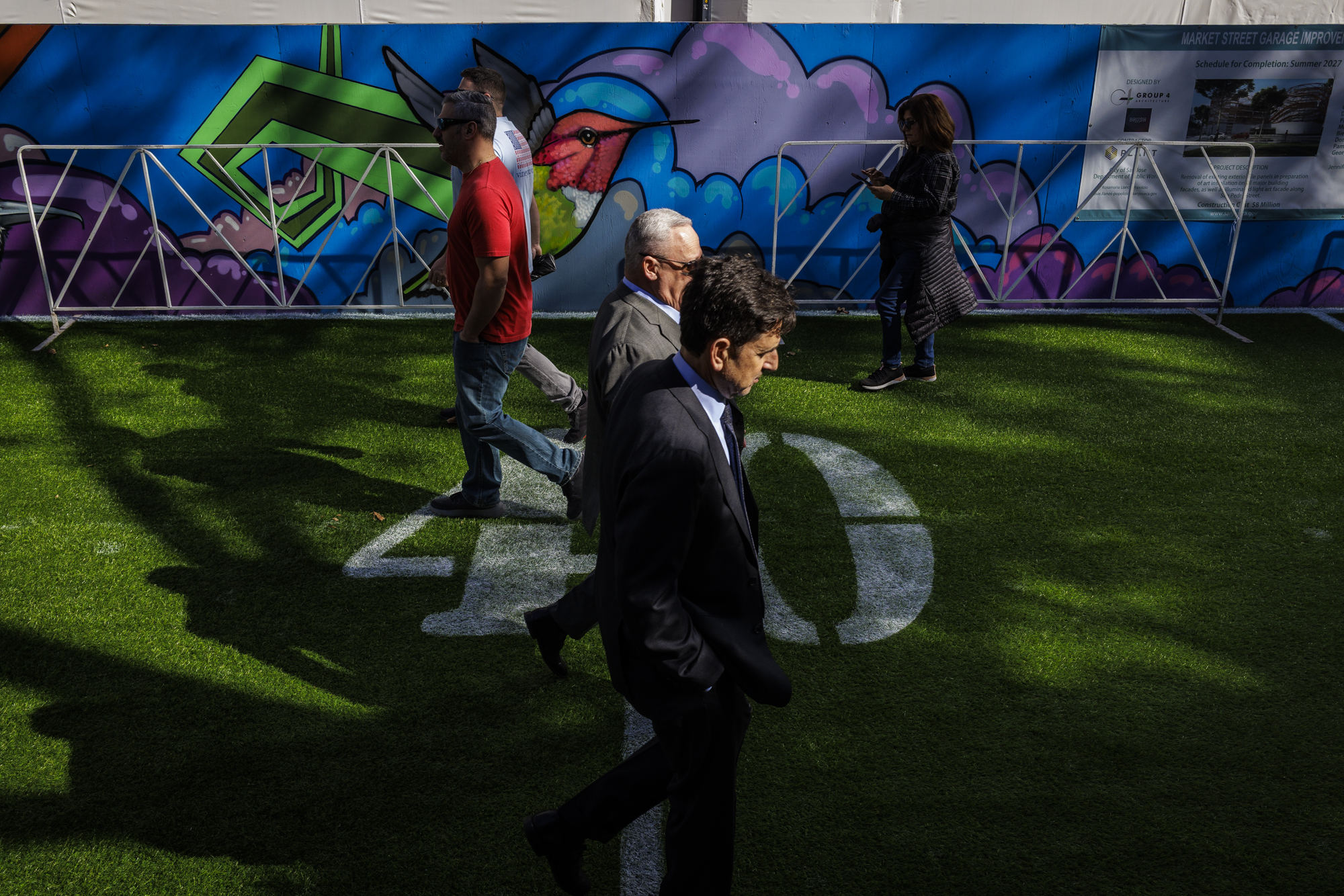
"caption": "Artificial grass made to look like a football field at San Pedro Square in San José on Feb. 6, 2026. For San José, the coming days are about more than just the big game; they’re a high-stakes test of downtown’s post-pandemic recovery.",
"credit": null,
"altTag": null,
"description": null,
"imgSizes": {
"thumbnail": {
"file": "https://cdn.kqed.org/wp-content/uploads/sites/10/2026/02/A79A2187-KQED-2-160x107.jpg",
"width": 160,
"height": 107,
"mimeType": "image/jpeg"
},
"1536x1536": {
"file": "https://cdn.kqed.org/wp-content/uploads/sites/10/2026/02/A79A2187-KQED-2-1536x1025.jpg",
"width": 1536,
"height": 1025,
"mimeType": "image/jpeg"
},
"post-thumbnail": {
"file": "https://cdn.kqed.org/wp-content/uploads/sites/10/2026/02/A79A2187-KQED-2-672x372.jpg",
"width": 672,
"height": 372,
"mimeType": "image/jpeg"
},
"twentyfourteen-full-width": {
"file": "https://cdn.kqed.org/wp-content/uploads/sites/10/2026/02/A79A2187-KQED-2-1038x576.jpg",
"width": 1038,
"height": 576,
"mimeType": "image/jpeg"
},
"npr-cds-wide": {
"file": "https://cdn.kqed.org/wp-content/uploads/sites/10/2026/02/A79A2187-KQED-2-1200x675.jpg",
"width": 1200,
"height": 675,
"mimeType": "image/jpeg"
},
"kqedFullSize": {
"file": "https://cdn.kqed.org/wp-content/uploads/sites/10/2026/02/A79A2187-KQED-2.jpg",
"width": 2000,
"height": 1334
}
},
"isLoading": false,
"fetchFailed": false
},
"news_12055163": {
"type": "attachments",
"id": "news_12055163",
"meta": {
"index": "attachments_1716263798",
"site": "news",
"id": "12055163",
"found": true
},
"title": "Golden Gate bridge as seen from Angel Island, California",
"publishDate": 1757360536,
"status": "inherit",
"parent": 12055137,
"modified": 1763407041,
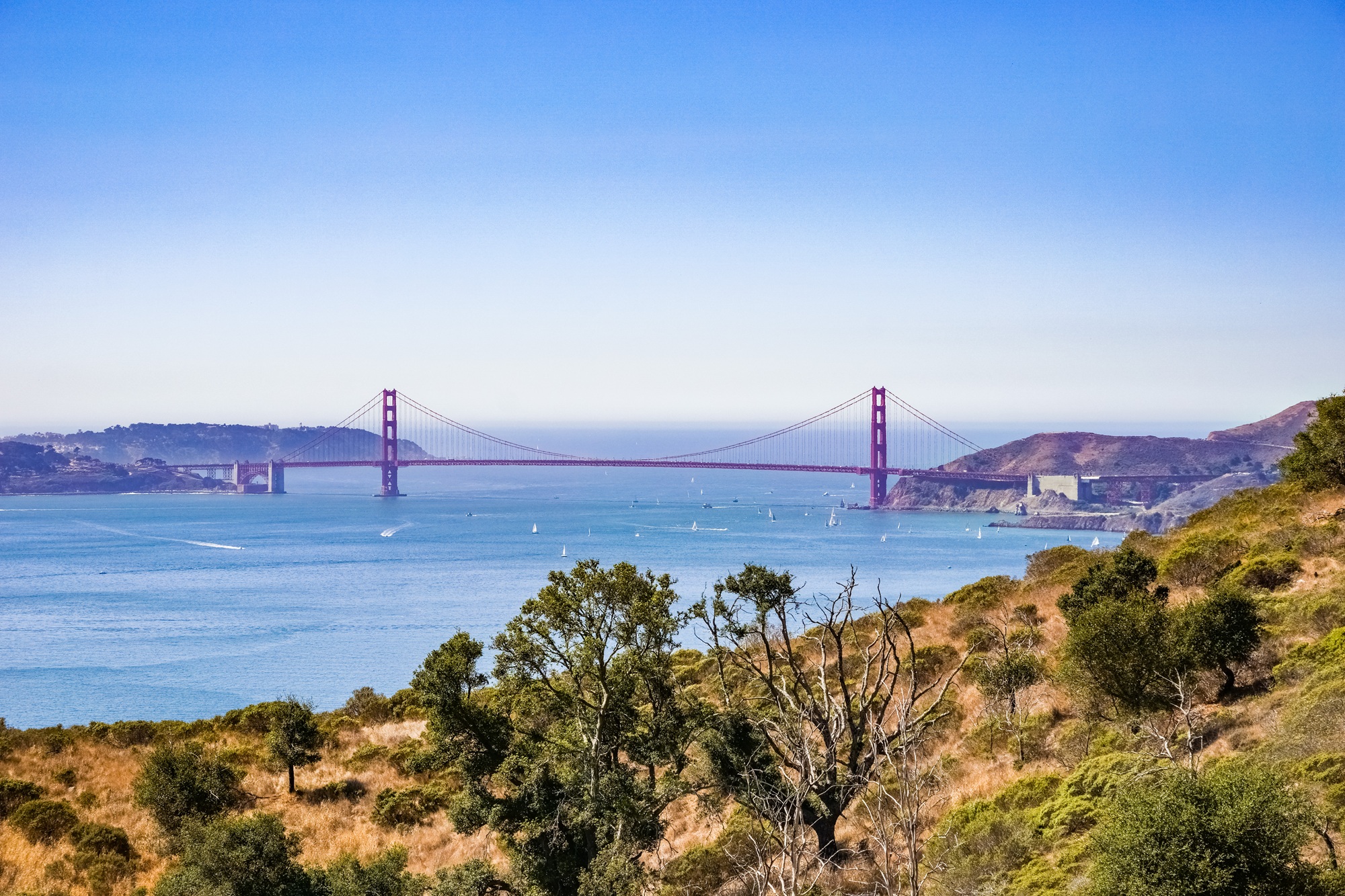
"caption": "The Golden Gate Bridge as seen from Angel Island, California, on March 8, 2019.",
"credit": "Sundry Photography/Getty Images",
"altTag": null,
"description": null,
"imgSizes": {
"thumbnail": {
"file": "https://cdn.kqed.org/wp-content/uploads/sites/10/2025/09/AngelIslandGGBridgeGetty-160x107.jpg",
"width": 160,
"height": 107,
"mimeType": "image/jpeg"
},
"1536x1536": {
"file": "https://cdn.kqed.org/wp-content/uploads/sites/10/2025/09/AngelIslandGGBridgeGetty-1536x1024.jpg",
"width": 1536,
"height": 1024,
"mimeType": "image/jpeg"
},
"post-thumbnail": {
"file": "https://cdn.kqed.org/wp-content/uploads/sites/10/2025/09/AngelIslandGGBridgeGetty-672x372.jpg",
"width": 672,
"height": 372,
"mimeType": "image/jpeg"
},
"twentyfourteen-full-width": {
"file": "https://cdn.kqed.org/wp-content/uploads/sites/10/2025/09/AngelIslandGGBridgeGetty-1038x576.jpg",
"width": 1038,
"height": 576,
"mimeType": "image/jpeg"
},
"kqedFullSize": {
"file": "https://cdn.kqed.org/wp-content/uploads/sites/10/2025/09/AngelIslandGGBridgeGetty.jpg",
"width": 2000,
"height": 1333
}
},
"isLoading": false,
"fetchFailed": false
},
"news_12071631": {
"type": "attachments",
"id": "news_12071631",
"meta": {
"index": "attachments_1716263798",
"site": "news",
"id": "12071631",
"found": true
},
"title": "260128-SUPERBOWLVENDORS00339_TV-KQED",
"publishDate": 1769730545,
"status": "inherit",
"parent": 0,
"modified": 1770232214,
"caption": "Israel García poses for a portrait at Antojitos Y Birria Estilo Jalisco in San José on Jan. 28, 2026. Vendors from the Berryessa Flea Market share their thoughts on balancing the economic opportunity the Super Bowl presents with fears about immigration enforcement.",
"credit": "Tâm Vũ/KQED",
"altTag": null,
"description": null,
"imgSizes": {
"thumbnail": {
"file": "https://cdn.kqed.org/wp-content/uploads/sites/10/2026/01/260128-SUPERBOWLVENDORS00339_TV-KQED-160x107.jpg",
"width": 160,
"height": 107,
"mimeType": "image/jpeg"
},
"1536x1536": {
"file": "https://cdn.kqed.org/wp-content/uploads/sites/10/2026/01/260128-SUPERBOWLVENDORS00339_TV-KQED-1536x1024.jpg",
"width": 1536,
"height": 1024,
"mimeType": "image/jpeg"
},
"post-thumbnail": {
"file": "https://cdn.kqed.org/wp-content/uploads/sites/10/2026/01/260128-SUPERBOWLVENDORS00339_TV-KQED-672x372.jpg",
"width": 672,
"height": 372,
"mimeType": "image/jpeg"
},
"twentyfourteen-full-width": {
"file": "https://cdn.kqed.org/wp-content/uploads/sites/10/2026/01/260128-SUPERBOWLVENDORS00339_TV-KQED-1038x576.jpg",
"width": 1038,
"height": 576,
"mimeType": "image/jpeg"
},
"npr-cds-wide": {
"file": "https://cdn.kqed.org/wp-content/uploads/sites/10/2026/01/260128-SUPERBOWLVENDORS00339_TV-KQED-1200x675.jpg",
"width": 1200,
"height": 675,
"mimeType": "image/jpeg"
},
"kqedFullSize": {
"file": "https://cdn.kqed.org/wp-content/uploads/sites/10/2026/01/260128-SUPERBOWLVENDORS00339_TV-KQED.jpg",
"width": 2000,
"height": 1333
}
},
"isLoading": false,
"fetchFailed": false
},
"news_12072293": {
"type": "attachments",
"id": "news_12072293",
"meta": {
"index": "attachments_1716263798",
"site": "news",
"id": "12072293",
"found": true
},
"title": "IMG_1350",
"publishDate": 1770236485,
"status": "inherit",
"parent": 12072253,
"modified": 1770236508,
"caption": "For years, outreach efforts related to human trafficking have coincided with the Super Bowl. Ahead of the big game this year at Levi's Stadium, Bay Area advocacy groups and law enforcement agencies have put a spotlight on the problem, given the platform that the NFL's biggest night provides.",
"credit": "Anna Vignet/KQED",
"altTag": null,
"description": null,
"imgSizes": {
"medium": {
"file": "https://cdn.kqed.org/wp-content/uploads/sites/10/2026/02/IMG_1350-2000x1500.jpg",
"width": 2000,
"height": 1500,
"mimeType": "image/jpeg"
},
"large": {
"file": "https://cdn.kqed.org/wp-content/uploads/sites/10/2026/02/IMG_1350-2000x1500.jpg",
"width": 2000,
"height": 1500,
"mimeType": "image/jpeg"
},
"thumbnail": {
"file": "https://cdn.kqed.org/wp-content/uploads/sites/10/2026/02/IMG_1350-160x120.jpg",
"width": 160,
"height": 120,
"mimeType": "image/jpeg"
},
"1536x1536": {
"file": "https://cdn.kqed.org/wp-content/uploads/sites/10/2026/02/IMG_1350-1536x1152.jpg",
"width": 1536,
"height": 1152,
"mimeType": "image/jpeg"
},
"2048x2048": {
"file": "https://cdn.kqed.org/wp-content/uploads/sites/10/2026/02/IMG_1350-2048x1536.jpg",
"width": 2048,
"height": 1536,
"mimeType": "image/jpeg"
},
"post-thumbnail": {
"file": "https://cdn.kqed.org/wp-content/uploads/sites/10/2026/02/IMG_1350-672x372.jpg",
"width": 672,
"height": 372,
"mimeType": "image/jpeg"
},
"twentyfourteen-full-width": {
"file": "https://cdn.kqed.org/wp-content/uploads/sites/10/2026/02/IMG_1350-1038x576.jpg",
"width": 1038,
"height": 576,
"mimeType": "image/jpeg"
},
"full-width": {
"file": "https://cdn.kqed.org/wp-content/uploads/sites/10/2026/02/IMG_1350-2000x1500.jpg",
"width": 2000,
"height": 1500,
"mimeType": "image/jpeg"
},
"npr-cds-wide": {
"file": "https://cdn.kqed.org/wp-content/uploads/sites/10/2026/02/IMG_1350-1200x675.jpg",
"width": 1200,
"height": 675,
"mimeType": "image/jpeg"
},
"kqedFullSize": {
"file": "https://cdn.kqed.org/wp-content/uploads/sites/10/2026/02/IMG_1350.jpg",
"width": 2560,
"height": 1920
}
},
"isLoading": false,
"fetchFailed": false
},
"news_12071720": {
"type": "attachments",
"id": "news_12071720",
"meta": {
"index": "attachments_1716263798",
"site": "news",
"id": "12071720",
"found": true
},
"title": "260128-superbowlfile00030_TV_qed",
"publishDate": 1769799523,
"status": "inherit",
"parent": 12071704,
"modified": 1769799543,
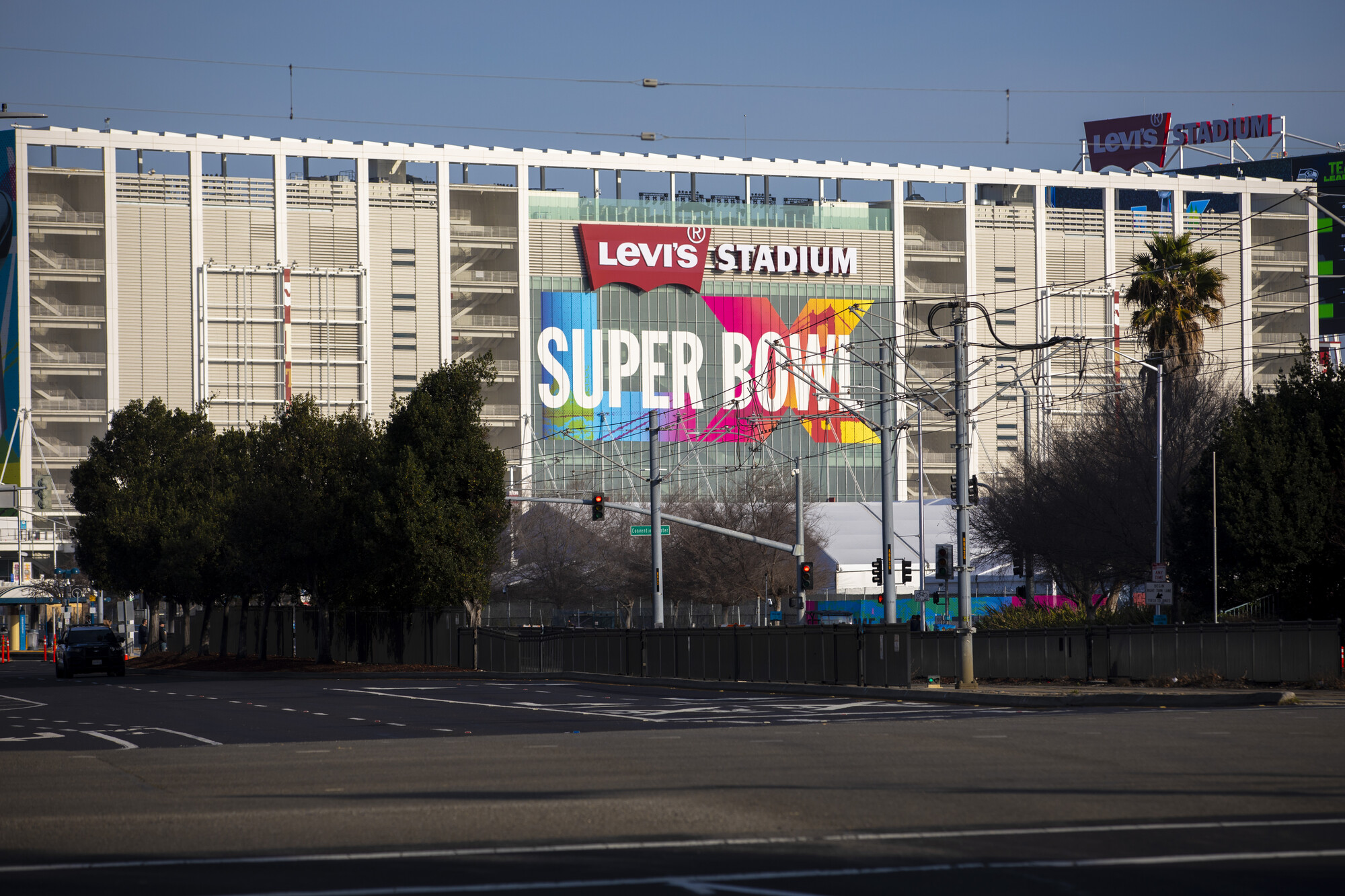
"caption": "A Super Bowl Banner decorates the exterior of Levi’s Stadium in San Jose on Jan. 28, 2026.",
"credit": "Tâm Vũ/KQED",
"altTag": null,
"description": null,
"imgSizes": {
"thumbnail": {
"file": "https://cdn.kqed.org/wp-content/uploads/sites/10/2026/01/260128-superbowlfile00030_TV_qed-160x107.jpg",
"width": 160,
"height": 107,
"mimeType": "image/jpeg"
},
"1536x1536": {
"file": "https://cdn.kqed.org/wp-content/uploads/sites/10/2026/01/260128-superbowlfile00030_TV_qed-1536x1024.jpg",
"width": 1536,
"height": 1024,
"mimeType": "image/jpeg"
},
"post-thumbnail": {
"file": "https://cdn.kqed.org/wp-content/uploads/sites/10/2026/01/260128-superbowlfile00030_TV_qed-672x372.jpg",
"width": 672,
"height": 372,
"mimeType": "image/jpeg"
},
"twentyfourteen-full-width": {
"file": "https://cdn.kqed.org/wp-content/uploads/sites/10/2026/01/260128-superbowlfile00030_TV_qed-1038x576.jpg",
"width": 1038,
"height": 576,
"mimeType": "image/jpeg"
},
"npr-cds-wide": {
"file": "https://cdn.kqed.org/wp-content/uploads/sites/10/2026/01/260128-superbowlfile00030_TV_qed-1200x675.jpg",
"width": 1200,
"height": 675,
"mimeType": "image/jpeg"
},
"kqedFullSize": {
"file": "https://cdn.kqed.org/wp-content/uploads/sites/10/2026/01/260128-superbowlfile00030_TV_qed.jpg",
"width": 2000,
"height": 1333
}
},
"isLoading": false,
"fetchFailed": false
},
"news_12072015": {
"type": "attachments",
"id": "news_12072015",
"meta": {
"index": "attachments_1716263798",
"site": "news",
"id": "12072015",
"found": true
},
"title": "260202-SUPERBOWLOPENINGNIGHT-36-BL-KQED",
"publishDate": 1770131335,
"status": "inherit",
"parent": 12071931,
"modified": 1770145947,
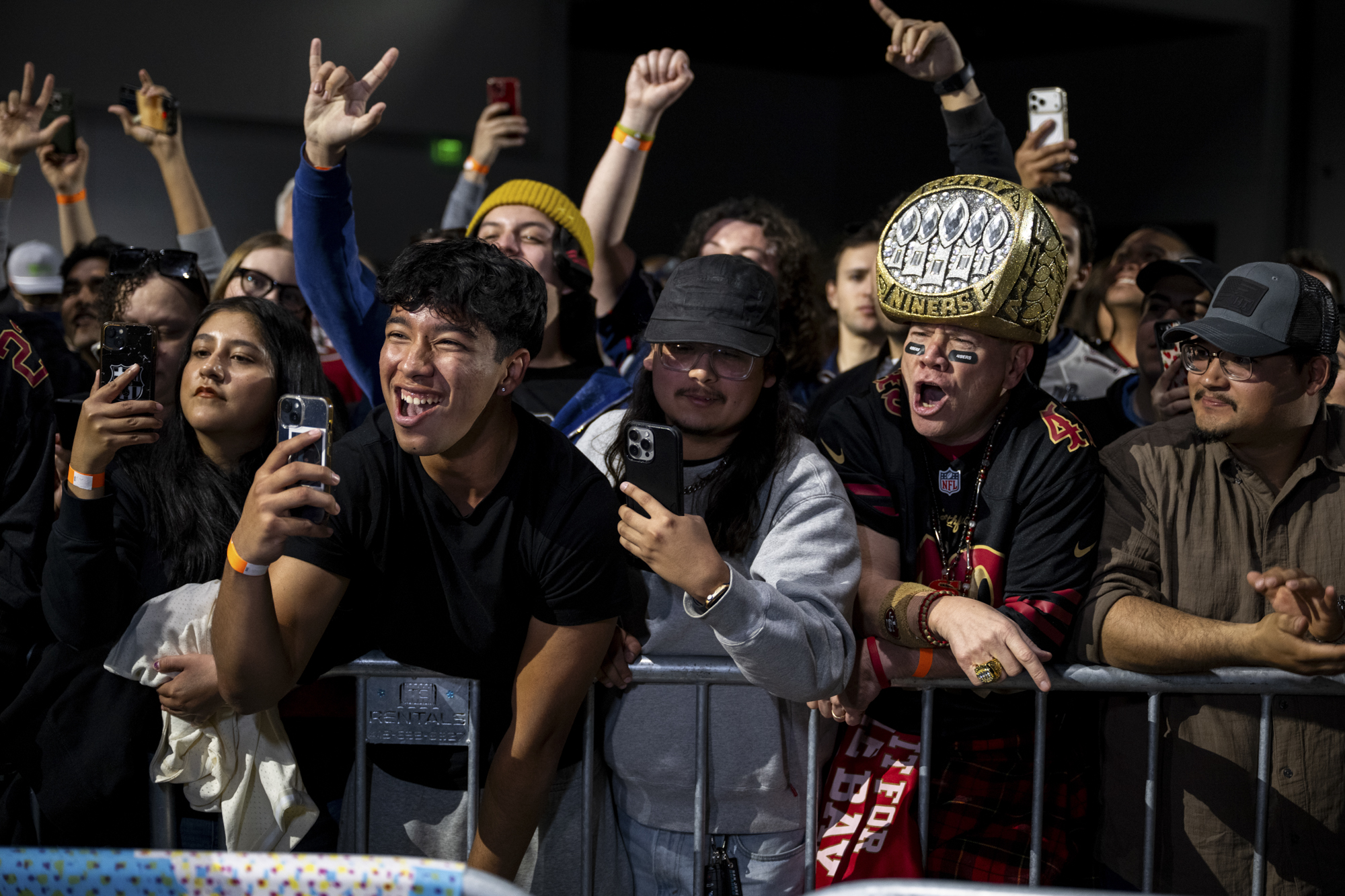
"caption": "Fans cheer during Super Bowl Opening Night at the San José Convention Center in San José on Feb. 2, 2026. ",
"credit": "Beth LaBerge/KQED",
"altTag": null,
"description": null,
"imgSizes": {
"thumbnail": {
"file": "https://cdn.kqed.org/wp-content/uploads/sites/10/2026/02/260202-SUPERBOWLOPENINGNIGHT-36-BL-KQED-160x107.jpg",
"width": 160,
"height": 107,
"mimeType": "image/jpeg"
},
"1536x1536": {
"file": "https://cdn.kqed.org/wp-content/uploads/sites/10/2026/02/260202-SUPERBOWLOPENINGNIGHT-36-BL-KQED-1536x1024.jpg",
"width": 1536,
"height": 1024,
"mimeType": "image/jpeg"
},
"post-thumbnail": {
"file": "https://cdn.kqed.org/wp-content/uploads/sites/10/2026/02/260202-SUPERBOWLOPENINGNIGHT-36-BL-KQED-672x372.jpg",
"width": 672,
"height": 372,
"mimeType": "image/jpeg"
},
"twentyfourteen-full-width": {
"file": "https://cdn.kqed.org/wp-content/uploads/sites/10/2026/02/260202-SUPERBOWLOPENINGNIGHT-36-BL-KQED-1038x576.jpg",
"width": 1038,
"height": 576,
"mimeType": "image/jpeg"
},
"npr-cds-wide": {
"file": "https://cdn.kqed.org/wp-content/uploads/sites/10/2026/02/260202-SUPERBOWLOPENINGNIGHT-36-BL-KQED-1200x675.jpg",
"width": 1200,
"height": 675,
"mimeType": "image/jpeg"
},
"kqedFullSize": {
"file": "https://cdn.kqed.org/wp-content/uploads/sites/10/2026/02/260202-SUPERBOWLOPENINGNIGHT-36-BL-KQED.jpg",
"width": 2000,
"height": 1333
}
},
"isLoading": false,
"fetchFailed": false
},
"news_12071967": {
"type": "attachments",
"id": "news_12071967",
"meta": {
"index": "attachments_1716263798",
"site": "news",
"id": "12071967",
"found": true
},
"title": "Seahawks 49ers Football",
"publishDate": 1770074724,
"status": "inherit",
"parent": 12071882,
"modified": 1770074791,
"caption": "San Francisco 49ers safety Ji'Ayir Brown (27) takes the field before an NFL football game against the Seattle Seahawks at Levi's Stadium in Santa Clara, California, on Jan. 3, 2026. ",
"credit": "Jed Jacobsohn/AP Photo",
"altTag": null,
"description": null,
"imgSizes": {
"medium": {
"file": "https://cdn.kqed.org/wp-content/uploads/sites/10/2026/02/AP26004044050006-2000x1334.jpg",
"width": 2000,
"height": 1334,
"mimeType": "image/jpeg"
},
"large": {
"file": "https://cdn.kqed.org/wp-content/uploads/sites/10/2026/02/AP26004044050006-2000x1334.jpg",
"width": 2000,
"height": 1334,
"mimeType": "image/jpeg"
},
"thumbnail": {
"file": "https://cdn.kqed.org/wp-content/uploads/sites/10/2026/02/AP26004044050006-160x107.jpg",
"width": 160,
"height": 107,
"mimeType": "image/jpeg"
},
"1536x1536": {
"file": "https://cdn.kqed.org/wp-content/uploads/sites/10/2026/02/AP26004044050006-1536x1024.jpg",
"width": 1536,
"height": 1024,
"mimeType": "image/jpeg"
},
"2048x2048": {
"file": "https://cdn.kqed.org/wp-content/uploads/sites/10/2026/02/AP26004044050006-2048x1366.jpg",
"width": 2048,
"height": 1366,
"mimeType": "image/jpeg"
},
"post-thumbnail": {
"file": "https://cdn.kqed.org/wp-content/uploads/sites/10/2026/02/AP26004044050006-672x372.jpg",
"width": 672,
"height": 372,
"mimeType": "image/jpeg"
},
"twentyfourteen-full-width": {
"file": "https://cdn.kqed.org/wp-content/uploads/sites/10/2026/02/AP26004044050006-1038x576.jpg",
"width": 1038,
"height": 576,
"mimeType": "image/jpeg"
},
"full-width": {
"file": "https://cdn.kqed.org/wp-content/uploads/sites/10/2026/02/AP26004044050006-2000x1334.jpg",
"width": 2000,
"height": 1334,
"mimeType": "image/jpeg"
},
"npr-cds-wide": {
"file": "https://cdn.kqed.org/wp-content/uploads/sites/10/2026/02/AP26004044050006-1200x675.jpg",
"width": 1200,
"height": 675,
"mimeType": "image/jpeg"
},
"kqedFullSize": {
"file": "https://cdn.kqed.org/wp-content/uploads/sites/10/2026/02/AP26004044050006-scaled.jpg",
"width": 2560,
"height": 1707
}
},
"isLoading": false,
"fetchFailed": false
},
"news_12071815": {
"type": "attachments",
"id": "news_12071815",
"meta": {
"index": "attachments_1716263798",
"site": "news",
"id": "12071815",
"found": true
},
"title": "250731-DEPORTBILL-JG-3_qed (1)",
"publishDate": 1769815990,
"status": "inherit",
"parent": 12071569,
"modified": 1769816024,
"caption": "San José Mayor Matt Mahan speaks about the need for deportation protections for immigrants who have been victims or witnesses of crimes, during a press conference outside City Hall on July 31, 2025.",
"credit": "Joseph Geha/KQED",
"altTag": null,
"description": null,
"imgSizes": {
"thumbnail": {
"file": "https://cdn.kqed.org/wp-content/uploads/sites/10/2026/01/250731-DEPORTBILL-JG-3_qed-1-160x107.jpg",
"width": 160,
"height": 107,
"mimeType": "image/jpeg"
},
"1536x1536": {
"file": "https://cdn.kqed.org/wp-content/uploads/sites/10/2026/01/250731-DEPORTBILL-JG-3_qed-1-1536x1024.jpg",
"width": 1536,
"height": 1024,
"mimeType": "image/jpeg"
},
"post-thumbnail": {
"file": "https://cdn.kqed.org/wp-content/uploads/sites/10/2026/01/250731-DEPORTBILL-JG-3_qed-1-672x372.jpg",
"width": 672,
"height": 372,
"mimeType": "image/jpeg"
},
"twentyfourteen-full-width": {
"file": "https://cdn.kqed.org/wp-content/uploads/sites/10/2026/01/250731-DEPORTBILL-JG-3_qed-1-1038x576.jpg",
"width": 1038,
"height": 576,
"mimeType": "image/jpeg"
},
"npr-cds-wide": {
"file": "https://cdn.kqed.org/wp-content/uploads/sites/10/2026/01/250731-DEPORTBILL-JG-3_qed-1-1200x675.jpg",
"width": 1200,
"height": 675,
"mimeType": "image/jpeg"
},
"kqedFullSize": {
"file": "https://cdn.kqed.org/wp-content/uploads/sites/10/2026/01/250731-DEPORTBILL-JG-3_qed-1.jpg",
"width": 2000,
"height": 1333
}
},
"isLoading": false,
"fetchFailed": false
},
"news_12071712": {
"type": "attachments",
"id": "news_12071712",
"meta": {
"index": "attachments_1716263798",
"site": "news",
"id": "12071712",
"found": true
},
"title": "US-IMMIGRATION-ICE-SHOOTING",
"publishDate": 1769798778,
"status": "inherit",
"parent": 12071704,
"modified": 1769806507,
"caption": "Sheriff's deputies keep an eye on protesters blocking the entrance to the Bishop Henry Whipple Federal Building in Minneapolis, Minnesota, on Jan. 30, 2026. Donald Trump's border chief said on Jan. 29, 2026, that some federal agents could be withdrawn from Minneapolis, the northern U.S. city that has become the flashpoint for the president's immigration crackdown. The Trump administration, facing a public backlash over the shooting deaths of two Americans by federal agents in Minneapolis, also eased immigration operations in the northeastern state of Maine. ",
"credit": "Roberto Schmidt/AFP via Getty Images",
"altTag": null,
"description": null,
"imgSizes": {
"thumbnail": {
"file": "https://cdn.kqed.org/wp-content/uploads/sites/10/2026/01/ICEAgentsMinnesotaGetty-160x107.jpg",
"width": 160,
"height": 107,
"mimeType": "image/jpeg"
},
"1536x1536": {
"file": "https://cdn.kqed.org/wp-content/uploads/sites/10/2026/01/ICEAgentsMinnesotaGetty-1536x1024.jpg",
"width": 1536,
"height": 1024,
"mimeType": "image/jpeg"
},
"post-thumbnail": {
"file": "https://cdn.kqed.org/wp-content/uploads/sites/10/2026/01/ICEAgentsMinnesotaGetty-672x372.jpg",
"width": 672,
"height": 372,
"mimeType": "image/jpeg"
},
"twentyfourteen-full-width": {
"file": "https://cdn.kqed.org/wp-content/uploads/sites/10/2026/01/ICEAgentsMinnesotaGetty-1038x576.jpg",
"width": 1038,
"height": 576,
"mimeType": "image/jpeg"
},
"npr-cds-wide": {
"file": "https://cdn.kqed.org/wp-content/uploads/sites/10/2026/01/ICEAgentsMinnesotaGetty-1200x675.jpg",
"width": 1200,
"height": 675,
"mimeType": "image/jpeg"
},
"kqedFullSize": {
"file": "https://cdn.kqed.org/wp-content/uploads/sites/10/2026/01/ICEAgentsMinnesotaGetty.jpg",
"width": 2000,
"height": 1333
}
},
"isLoading": false,
"fetchFailed": false
},
"news_12071492": {
"type": "attachments",
"id": "news_12071492",
"meta": {
"index": "attachments_1716263798",
"site": "news",
"id": "12071492",
"found": true
},
"title": "260128-SUPERBOWLFILE00037_TV-KQED",
"publishDate": 1769706969,
"status": "inherit",
"parent": 0,
"modified": 1769733356,
"caption": "A Super Bowl banner decorates the exterior of Levi’s Stadium in San Jose on Jan. 28, 2026.",
"credit": "Tâm Vũ/KQED",
"altTag": null,
"description": null,
"imgSizes": {
"thumbnail": {
"file": "https://cdn.kqed.org/wp-content/uploads/sites/10/2026/01/260128-SUPERBOWLFILE00037_TV-KQED-160x107.jpg",
"width": 160,
"height": 107,
"mimeType": "image/jpeg"
},
"1536x1536": {
"file": "https://cdn.kqed.org/wp-content/uploads/sites/10/2026/01/260128-SUPERBOWLFILE00037_TV-KQED-1536x1024.jpg",
"width": 1536,
"height": 1024,
"mimeType": "image/jpeg"
},
"post-thumbnail": {
"file": "https://cdn.kqed.org/wp-content/uploads/sites/10/2026/01/260128-SUPERBOWLFILE00037_TV-KQED-672x372.jpg",
"width": 672,
"height": 372,
"mimeType": "image/jpeg"
},
"twentyfourteen-full-width": {
"file": "https://cdn.kqed.org/wp-content/uploads/sites/10/2026/01/260128-SUPERBOWLFILE00037_TV-KQED-1038x576.jpg",
"width": 1038,
"height": 576,
"mimeType": "image/jpeg"
},
"npr-cds-wide": {
"file": "https://cdn.kqed.org/wp-content/uploads/sites/10/2026/01/260128-SUPERBOWLFILE00037_TV-KQED-1200x675.jpg",
"width": 1200,
"height": 675,
"mimeType": "image/jpeg"
},
"kqedFullSize": {
"file": "https://cdn.kqed.org/wp-content/uploads/sites/10/2026/01/260128-SUPERBOWLFILE00037_TV-KQED.jpg",
"width": 2000,
"height": 1333
}
},
"isLoading": false,
"fetchFailed": false
},
"news_12071574": {
"type": "attachments",
"id": "news_12071574",
"meta": {
"index": "attachments_1716263798",
"site": "news",
"id": "12071574",
"found": true
},
"title": "The Inauguration Of Donald J. Trump As The 47th President",
"publishDate": 1769720316,
"status": "inherit",
"parent": 12071559,
"modified": 1781212491,
"caption": "Google CEO Sundar Pichai (left) and Tesla and SpaceX CEO Elon Musk attend the inauguration of Donald Trump in the U.S. Capitol Rotunda on Jan. 20, 2025, in Washington, D.C. ",
"credit": "Saul Loeb-Pool/Getty Images",
"altTag": null,
"description": null,
"imgSizes": {
"thumbnail": {
"file": "https://cdn.kqed.org/wp-content/uploads/sites/10/2026/01/ElonMuskInaugurationTechGetty-160x107.jpg",
"width": 160,
"height": 107,
"mimeType": "image/jpeg"
},
"1536x1536": {
"file": "https://cdn.kqed.org/wp-content/uploads/sites/10/2026/01/ElonMuskInaugurationTechGetty-1536x1024.jpg",
"width": 1536,
"height": 1024,
"mimeType": "image/jpeg"
},
"post-thumbnail": {
"file": "https://cdn.kqed.org/wp-content/uploads/sites/10/2026/01/ElonMuskInaugurationTechGetty-672x372.jpg",
"width": 672,
"height": 372,
"mimeType": "image/jpeg"
},
"twentyfourteen-full-width": {
"file": "https://cdn.kqed.org/wp-content/uploads/sites/10/2026/01/ElonMuskInaugurationTechGetty-1038x576.jpg",
"width": 1038,
"height": 576,
"mimeType": "image/jpeg"
},
"npr-cds-wide": {
"file": "https://cdn.kqed.org/wp-content/uploads/sites/10/2026/01/ElonMuskInaugurationTechGetty-1200x675.jpg",
"width": 1200,
"height": 675,
"mimeType": "image/jpeg"
},
"kqedFullSize": {
"file": "https://cdn.kqed.org/wp-content/uploads/sites/10/2026/01/ElonMuskInaugurationTechGetty.jpg",
"width": 2000,
"height": 1333
}
},
"isLoading": false,
"fetchFailed": false
},
"news_12071482": {
"type": "attachments",
"id": "news_12071482",
"meta": {
"index": "attachments_1716263798",
"site": "news",
"id": "12071482",
"found": true
},
"title": "250312-MATT MAHAN ON PB-MD-02-KQED-1",
"publishDate": 1769706142,
"status": "inherit",
"parent": 12071306,
"modified": 1769706156,
"caption": "San José Mayor Matt Mahan at the KQED offices in San Francisco on March 13, 2025. Mahan jumped in the crowded race on Thursday, vowing to “fight for our values while also fixing our problems.”",
"credit": "Martin do Nascimento/KQED",
"altTag": null,
"description": null,
"imgSizes": {
"thumbnail": {
"file": "https://cdn.kqed.org/wp-content/uploads/sites/10/2026/01/250312-MATT-MAHAN-ON-PB-MD-02-KQED-1-160x107.jpg",
"width": 160,
"height": 107,
"mimeType": "image/jpeg"
},
"1536x1536": {
"file": "https://cdn.kqed.org/wp-content/uploads/sites/10/2026/01/250312-MATT-MAHAN-ON-PB-MD-02-KQED-1-1536x1024.jpg",
"width": 1536,
"height": 1024,
"mimeType": "image/jpeg"
},
"post-thumbnail": {
"file": "https://cdn.kqed.org/wp-content/uploads/sites/10/2026/01/250312-MATT-MAHAN-ON-PB-MD-02-KQED-1-672x372.jpg",
"width": 672,
"height": 372,
"mimeType": "image/jpeg"
},
"twentyfourteen-full-width": {
"file": "https://cdn.kqed.org/wp-content/uploads/sites/10/2026/01/250312-MATT-MAHAN-ON-PB-MD-02-KQED-1-1038x576.jpg",
"width": 1038,
"height": 576,
"mimeType": "image/jpeg"
},
"npr-cds-wide": {
"file": "https://cdn.kqed.org/wp-content/uploads/sites/10/2026/01/250312-MATT-MAHAN-ON-PB-MD-02-KQED-1-1200x675.jpg",
"width": 1200,
"height": 675,
"mimeType": "image/jpeg"
},
"kqedFullSize": {
"file": "https://cdn.kqed.org/wp-content/uploads/sites/10/2026/01/250312-MATT-MAHAN-ON-PB-MD-02-KQED-1.jpg",
"width": 2000,
"height": 1333
}
},
"isLoading": false,
"fetchFailed": false
}
},
"audioPlayerReducer": {
"postId": "stream_live",
"isPaused": true,
"isPlaying": false,
"pfsActive": false,
"pledgeModalIsOpen": true,
"playerDrawerIsOpen": false,
"liveAudioPlayStartedAt": 0,
"liveAudioPlayContext": ""
},
"authorsReducer": {
"gmarzorati": {
"type": "authors",
"id": "227",
"meta": {
"index": "authors_1716337520",
"id": "227",
"found": true
},
"name": "Guy Marzorati",
"firstName": "Guy",
"lastName": "Marzorati",
"slug": "gmarzorati",
"email": "gmarzorati@KQED.org",
"display_author_email": true,
"staff_mastheads": [
"news"
],
"title": "Correspondent",
"bio": "Guy Marzorati is a correspondent on KQED's California Politics and Government Desk, based in San Jose. A graduate of Santa Clara University, Guy joined KQED in 2013. He reports on state and local politics and produces KQED's digital voter guide.",
"avatar": "https://secure.gravatar.com/avatar/e7038b8dbfd55b104369b76b1cd0b9de?s=600&d=blank&r=g",
"twitter": "guymarzorati",
"facebook": null,
"instagram": null,
"linkedin": null,
"sites": [
{
"site": "",
"roles": [
"editor"
]
},
{
"site": "news",
"roles": [
"editor"
]
},
{
"site": "science",
"roles": [
"editor"
]
},
{
"site": "forum",
"roles": [
"editor"
]
},
{
"site": "elections",
"roles": [
"editor"
]
},
{
"site": "liveblog",
"roles": [
"editor"
]
}
],
"headData": {
"title": "Guy Marzorati | KQED",
"description": "Correspondent",
"ogImgSrc": "https://secure.gravatar.com/avatar/e7038b8dbfd55b104369b76b1cd0b9de?s=600&d=blank&r=g",
"twImgSrc": "https://secure.gravatar.com/avatar/e7038b8dbfd55b104369b76b1cd0b9de?s=600&d=blank&r=g"
},
"isLoading": false,
"link": "/author/gmarzorati"
},
"rachael-myrow": {
"type": "authors",
"id": "251",
"meta": {
"index": "authors_1716337520",
"id": "251",
"found": true
},
"name": "Rachael Myrow",
"firstName": "Rachael",
"lastName": "Myrow",
"slug": "rachael-myrow",
"email": "rmyrow@kqed.org",
"display_author_email": true,
"staff_mastheads": [
"news"
],
"title": "Senior Editor of KQED's Silicon Valley News Desk",
"bio": "• I write and edit stories about how Silicon Valley power and policies shape everyday life in California. I’m also passionate about making Bay Area history and culture more accessible to a broad public. • I’ve been a journalist for most of my life, starting in high school with The Franklin Press in Los Angeles, where I grew up. While earning my first degree in English at UC Berkeley, I got my start in public radio at KALX-FM. After completing a second degree in journalism at Cal, I landed my first professional job at Marketplace, then moved on to KPCC (now LAist), and then KQED, where I hosted The California Report for more than seven years. • My reporting has appeared on NPR, The World, WBUR’s \u003ci>Here & Now\u003c/i>, and the BBC. I also guest host for KQED’s \u003ci>Forum\u003c/i>, as well as the Commonwealth Club in San Francisco. • I speak periodically on media, democracy and technology issues, and do voiceover work for documentaries and educational video projects. • Outside of the studio, you'll find me hiking Bay Area trails and whipping up Insta-ready meals in my kitchen. • I do not accept gifts, money, or favors from anyone connected to my reporting, I don't pay people for information, and I do not support or donate to political causes. • I strive to treat the people I report on with fairness, honesty, and respect. I also recognize there are often multiple sides to a story and work to verify information through multiple sources and documentation. If I get something wrong, I correct it.",
"avatar": "https://secure.gravatar.com/avatar/3ed8a3c5f26025e4a805ba634cda8cd764906b97438a6d9ce216b044e340da4e?s=600&d=blank&r=g",
"twitter": "rachaelmyrow",
"bluesky": null,
"facebook": null,
"instagram": null,
"linkedin": "https://www.linkedin.com/in/rachaelmyrow/",
"sites": [
{
"site": "arts",
"roles": [
"administrator"
]
},
{
"site": "news",
"roles": [
"edit_others_posts",
"editor"
]
},
{
"site": "futureofyou",
"roles": [
"editor"
]
},
{
"site": "bayareabites",
"roles": [
"editor"
]
},
{
"site": "stateofhealth",
"roles": [
"editor"
]
},
{
"site": "science",
"roles": [
"editor"
]
},
{
"site": "food",
"roles": [
"editor"
]
},
{
"site": "forum",
"roles": [
"editor"
]
},
{
"site": "liveblog",
"roles": [
"author"
]
}
],
"headData": {
"title": "Rachael Myrow | KQED",
"description": "Senior Editor of KQED's Silicon Valley News Desk",
"ogImgSrc": "https://secure.gravatar.com/avatar/3ed8a3c5f26025e4a805ba634cda8cd764906b97438a6d9ce216b044e340da4e?s=600&d=blank&r=g",
"twImgSrc": "https://secure.gravatar.com/avatar/3ed8a3c5f26025e4a805ba634cda8cd764906b97438a6d9ce216b044e340da4e?s=600&d=blank&r=g"
},
"isLoading": false,
"link": "/author/rachael-myrow"
},
"shossaini": {
"type": "authors",
"id": "3214",
"meta": {
"index": "authors_1716337520",
"id": "3214",
"found": true
},
"name": "Sara Hossaini",
"firstName": "Sara",
"lastName": "Hossaini",
"slug": "shossaini",
"email": "shossaini@kqed.org",
"display_author_email": true,
"staff_mastheads": [
"news"
],
"title": "KQED Reporter",
"bio": "Sara Hossaini came to general assignment reporting at KQED in 2013 after two winters reporting at Wyoming Public Radio. She holds a bachelor's degree in broadcast journalism from the University of Nebraska-Lincoln. Her radio romance began after a bitter breakup with documentary film (Ok, maybe it's still complicated). Her first simultaneous jobs in San Francisco were as Associate Producer on a PBS film series through the Center for Asian American Media and as a butler. She likes to trot, plot and make things with her hands.",
"avatar": "https://secure.gravatar.com/avatar/060e9f56b9554e17942e89f413242774?s=600&d=blank&r=g",
"twitter": "mshossaini",
"facebook": null,
"instagram": null,
"linkedin": null,
"sites": [
{
"site": "news",
"roles": [
"author"
]
},
{
"site": "stateofhealth",
"roles": [
"author"
]
}
],
"headData": {
"title": "Sara Hossaini | KQED",
"description": "KQED Reporter",
"ogImgSrc": "https://secure.gravatar.com/avatar/060e9f56b9554e17942e89f413242774?s=600&d=blank&r=g",
"twImgSrc": "https://secure.gravatar.com/avatar/060e9f56b9554e17942e89f413242774?s=600&d=blank&r=g"
},
"isLoading": false,
"link": "/author/shossaini"
},
"carlysevern": {
"type": "authors",
"id": "3243",
"meta": {
"index": "authors_1716337520",
"id": "3243",
"found": true
},
"name": "Carly Severn",
"firstName": "Carly",
"lastName": "Severn",
"slug": "carlysevern",
"email": "csevern@kqed.org",
"display_author_email": false,
"staff_mastheads": [
"news"
],
"title": "Senior Editor, Audience News ",
"bio": "Carly is KQED's Senior Editor of Audience News on the Digital News team, and has reported for the California Report Magazine, Bay Curious and KQED Arts. She's formerly the host of \u003ca href=\"http://ww2.kqed.org/pop/category/the-cooler/\" rel=\"noopener noreferrer\">The Cooler\u003c/a> podcast.",
"avatar": "https://secure.gravatar.com/avatar/54037bf5c128fe678f0ef26cec97a93f2e7f220a22d7285703328f12c42c1b1d?s=600&d=blank&r=g",
"twitter": "teacupinthebay",
"bluesky": null,
"facebook": null,
"instagram": null,
"linkedin": null,
"sites": [
{
"site": "",
"roles": [
"editor"
]
},
{
"site": "arts",
"roles": [
"editor"
]
},
{
"site": "news",
"roles": [
"administrator"
]
},
{
"site": "pop",
"roles": [
"editor"
]
},
{
"site": "futureofyou",
"roles": [
"editor"
]
},
{
"site": "about",
"roles": [
"administrator"
]
},
{
"site": "mindshift",
"roles": [
"editor"
]
},
{
"site": "bayareabites",
"roles": [
"editor"
]
},
{
"site": "stateofhealth",
"roles": [
"editor"
]
},
{
"site": "science",
"roles": [
"editor"
]
},
{
"site": "food",
"roles": [
"contributor"
]
},
{
"site": "forum",
"roles": [
"editor"
]
},
{
"site": "perspectives",
"roles": [
"administrator"
]
},
{
"site": "liveblog",
"roles": [
"editor"
]
}
],
"headData": {
"title": "Carly Severn | KQED",
"description": "Senior Editor, Audience News ",
"ogImgSrc": "https://secure.gravatar.com/avatar/54037bf5c128fe678f0ef26cec97a93f2e7f220a22d7285703328f12c42c1b1d?s=600&d=blank&r=g",
"twImgSrc": "https://secure.gravatar.com/avatar/54037bf5c128fe678f0ef26cec97a93f2e7f220a22d7285703328f12c42c1b1d?s=600&d=blank&r=g"
},
"isLoading": false,
"link": "/author/carlysevern"
},
"ecruzguevarra": {
"type": "authors",
"id": "8654",
"meta": {
"index": "authors_1716337520",
"id": "8654",
"found": true
},
"name": "Ericka Cruz Guevarra",
"firstName": "Ericka",
"lastName": "Cruz Guevarra",
"slug": "ecruzguevarra",
"email": "ecruzguevarra@kqed.org",
"display_author_email": true,
"staff_mastheads": [
"news"
],
"title": "Producer, The Bay Podcast",
"bio": "Ericka Cruz Guevarra is host of \u003ca href=\"https://www.kqed.org/podcasts/thebay\">\u003cem>The Bay\u003c/em>\u003c/a> podcast at KQED. Before host, she was the show’s producer. Her work in that capacity includes a three-part reported series on policing in Vallejo, which won a 2020 excellence in journalism award from the Society of Professional Journalists. Ericka has worked as a breaking news reporter at Oregon Public Broadcasting, helped produce the Code Switch podcast, and was KQED’s inaugural Raul Ramirez Diversity Fund intern. She’s also an alumna of NPR’s Next Generation Radio program. Send her an email if you have strong feelings about whether Fairfield and Suisun City are the Bay. Ericka is represented by SAG-AFTRA.",
"avatar": "https://secure.gravatar.com/avatar/accefc1de4bafc7e234b69bcb9b6f6536c130fd84709bc3069ef11a78787e1bb?s=600&d=blank&r=g",
"twitter": "NotoriousECG",
"bluesky": null,
"facebook": null,
"instagram": null,
"linkedin": null,
"sites": [
{
"site": "arts",
"roles": [
"subscriber"
]
},
{
"site": "news",
"roles": [
"editor",
"manage_categories"
]
},
{
"site": "futureofyou",
"roles": [
"subscriber"
]
},
{
"site": "stateofhealth",
"roles": [
"subscriber"
]
},
{
"site": "science",
"roles": [
"editor"
]
},
{
"site": "forum",
"roles": [
"subscriber"
]
}
],
"headData": {
"title": "Ericka Cruz Guevarra | KQED",
"description": "Producer, The Bay Podcast",
"ogImgSrc": "https://secure.gravatar.com/avatar/accefc1de4bafc7e234b69bcb9b6f6536c130fd84709bc3069ef11a78787e1bb?s=600&d=blank&r=g",
"twImgSrc": "https://secure.gravatar.com/avatar/accefc1de4bafc7e234b69bcb9b6f6536c130fd84709bc3069ef11a78787e1bb?s=600&d=blank&r=g"
},
"isLoading": false,
"link": "/author/ecruzguevarra"
},
"amontecillo": {
"type": "authors",
"id": "11649",
"meta": {
"index": "authors_1716337520",
"id": "11649",
"found": true
},
"name": "Alan Montecillo",
"firstName": "Alan",
"lastName": "Montecillo",
"slug": "amontecillo",
"email": "amontecillo@kqed.org",
"display_author_email": false,
"staff_mastheads": [
"news"
],
"title": "KQED Contributor",
"bio": "Alan Montecillo is the senior editor of \u003cem>\u003ca href=\"http://kqed.org/thebay\">The Bay\u003c/a>, \u003c/em> KQED's local news podcast. Before moving to the Bay Area, he worked as a senior talk show producer for WILL in Champaign-Urbana, Illinois and at Oregon Public Broadcasting in Portland, Oregon. He has won journalism awards from the Society of Professional Journalists Northern California, the Public Media Journalists Association, The Signal Awards, and has also received a regional Edward R. Murrow award. Alan is a Filipino American from Hong Kong and a graduate of Reed College.",
"avatar": "https://secure.gravatar.com/avatar/268f53a2066899ea9efdd8a5900218b17c822d9862cbc9326cccec53ef41d349?s=600&d=blank&r=g",
"twitter": "alanmontecillo",
"bluesky": null,
"facebook": null,
"instagram": null,
"linkedin": null,
"sites": [
{
"site": "",
"roles": [
"editor"
]
},
{
"site": "news",
"roles": [
"editor",
"manage_categories"
]
}
],
"headData": {
"title": "Alan Montecillo | KQED",
"description": "KQED Contributor",
"ogImgSrc": "https://secure.gravatar.com/avatar/268f53a2066899ea9efdd8a5900218b17c822d9862cbc9326cccec53ef41d349?s=600&d=blank&r=g",
"twImgSrc": "https://secure.gravatar.com/avatar/268f53a2066899ea9efdd8a5900218b17c822d9862cbc9326cccec53ef41d349?s=600&d=blank&r=g"
},
"isLoading": false,
"link": "/author/amontecillo"
},
"ccabreralomeli": {
"type": "authors",
"id": "11708",
"meta": {
"index": "authors_1716337520",
"id": "11708",
"found": true
},
"name": "Carlos Cabrera-Lomelí",
"firstName": "Carlos",
"lastName": "Cabrera-Lomelí",
"slug": "ccabreralomeli",
"email": "ccabreralomeli@KQED.org",
"display_author_email": true,
"staff_mastheads": [
"news"
],
"title": "Community Reporter",
"bio": "Carlos Cabrera-Lomelí is a community reporter with KQED's digital engagement team. He also reports and co-produces for KQED's bilingual news hub KQED en Español. He grew up in San Francisco's Mission District and has previously worked with Univision, 48 Hills and REFORMA in Mexico City.",
"avatar": "https://secure.gravatar.com/avatar/c309be9665e484f887b818c89e273ecc673004f426f36b24d00a4d813a2e0518?s=600&d=blank&r=g",
"twitter": "@LomeliCabrera",
"bluesky": null,
"facebook": null,
"instagram": null,
"linkedin": null,
"sites": [
{
"site": "arts",
"roles": [
"editor"
]
},
{
"site": "news",
"roles": [
"editor"
]
},
{
"site": "about",
"roles": [
"editor"
]
},
{
"site": "science",
"roles": [
"editor"
]
},
{
"site": "perspectives",
"roles": [
"editor"
]
},
{
"site": "elections",
"roles": [
"editor"
]
},
{
"site": "liveblog",
"roles": [
"contributor"
]
}
],
"headData": {
"title": "Carlos Cabrera-Lomelí | KQED",
"description": "Community Reporter",
"ogImgSrc": "https://secure.gravatar.com/avatar/c309be9665e484f887b818c89e273ecc673004f426f36b24d00a4d813a2e0518?s=600&d=blank&r=g",
"twImgSrc": "https://secure.gravatar.com/avatar/c309be9665e484f887b818c89e273ecc673004f426f36b24d00a4d813a2e0518?s=600&d=blank&r=g"
},
"isLoading": false,
"link": "/author/ccabreralomeli"
},
"adahlstromeckman": {
"type": "authors",
"id": "11785",
"meta": {
"index": "authors_1716337520",
"id": "11785",
"found": true
},
"name": "Azul Dahlstrom-Eckman",
"firstName": "Azul",
"lastName": "Dahlstrom-Eckman",
"slug": "adahlstromeckman",
"email": "adahlstrom-eckman@kqed.org",
"display_author_email": true,
"staff_mastheads": [],
"title": "Reporter",
"bio": "Azul is a reporter for KQED focusing on transportation and features. He joined KQED in 2021 as an alumna of KALW's Audio Academy radio journalism training program.",
"avatar": "https://secure.gravatar.com/avatar/9cb750298435add7815a777f55bf1f46845c1386bb8452555c60a7b820b5aba3?s=600&d=blank&r=g",
"twitter": "@zuliemann",
"bluesky": "@azul415.bsky.social",
"facebook": null,
"instagram": null,
"linkedin": null,
"sites": [
{
"site": "arts",
"roles": [
"editor"
]
},
{
"site": "news",
"roles": [
"editor"
]
},
{
"site": "science",
"roles": [
"editor"
]
},
{
"site": "liveblog",
"roles": [
"author"
]
}
],
"headData": {
"title": "Azul Dahlstrom-Eckman | KQED",
"description": "Reporter",
"ogImgSrc": "https://secure.gravatar.com/avatar/9cb750298435add7815a777f55bf1f46845c1386bb8452555c60a7b820b5aba3?s=600&d=blank&r=g",
"twImgSrc": "https://secure.gravatar.com/avatar/9cb750298435add7815a777f55bf1f46845c1386bb8452555c60a7b820b5aba3?s=600&d=blank&r=g"
},
"isLoading": false,
"link": "/author/adahlstromeckman"
},
"jessicakariisa": {
"type": "authors",
"id": "11831",
"meta": {
"index": "authors_1716337520",
"id": "11831",
"found": true
},
"name": "Jessica Kariisa",
"firstName": "Jessica",
"lastName": "Kariisa",
"slug": "jessicakariisa",
"email": "jkariisa@kqed.org",
"display_author_email": false,
"staff_mastheads": [],
"title": "Producer, The Bay",
"bio": "Jessica Kariisa is the producer of The Bay. She first joined KQED as an intern for The California Report Magazine, after which she became an on-call producer. She reported a Bay Curious episode on the use of rap lyrics in criminal trials which won a Society of Professional Journalists award in 2023 for Excellence in Features Journalism and the 2023 Signal Award for Best Conversation Starter. She’s worked on podcasts for Snap Judgment and American Public Media. Before embarking on her audio career, she was a music journalist.\r\n\r\nJessica Kariisa is represented by SAG-AFTRA.",
"avatar": "https://secure.gravatar.com/avatar/522e97b28ac0b3d411621c0fde8f3419c7b71ea2c5c262c57c4bb600963f328c?s=600&d=blank&r=g",
"twitter": null,
"bluesky": null,
"facebook": null,
"instagram": null,
"linkedin": null,
"sites": [
{
"site": "arts",
"roles": [
"author"
]
},
{
"site": "news",
"roles": [
"editor",
"manage_categories"
]
}
],
"headData": {
"title": "Jessica Kariisa | KQED",
"description": "Producer, The Bay",
"ogImgSrc": "https://secure.gravatar.com/avatar/522e97b28ac0b3d411621c0fde8f3419c7b71ea2c5c262c57c4bb600963f328c?s=600&d=blank&r=g",
"twImgSrc": "https://secure.gravatar.com/avatar/522e97b28ac0b3d411621c0fde8f3419c7b71ea2c5c262c57c4bb600963f328c?s=600&d=blank&r=g"
},
"isLoading": false,
"link": "/author/jessicakariisa"
},
"jgeha": {
"type": "authors",
"id": "11906",
"meta": {
"index": "authors_1716337520",
"id": "11906",
"found": true
},
"name": "Joseph Geha",
"firstName": "Joseph",
"lastName": "Geha",
"slug": "jgeha",
"email": "jgeha@kqed.org",
"display_author_email": false,
"staff_mastheads": [
"news",
"science"
],
"title": "KQED Contributor",
"bio": null,
"avatar": "https://secure.gravatar.com/avatar/ea84d2b6dd93d6369d453edf19dd583f117cd1759d2d9c9c92f9de77017354fe?s=600&d=blank&r=g",
"twitter": null,
"bluesky": null,
"facebook": null,
"instagram": null,
"linkedin": null,
"sites": [
{
"site": "news",
"roles": [
"editor"
]
},
{
"site": "liveblog",
"roles": [
"author"
]
}
],
"headData": {
"title": "Joseph Geha | KQED",
"description": "KQED Contributor",
"ogImgSrc": "https://secure.gravatar.com/avatar/ea84d2b6dd93d6369d453edf19dd583f117cd1759d2d9c9c92f9de77017354fe?s=600&d=blank&r=g",
"twImgSrc": "https://secure.gravatar.com/avatar/ea84d2b6dd93d6369d453edf19dd583f117cd1759d2d9c9c92f9de77017354fe?s=600&d=blank&r=g"
},
"isLoading": false,
"link": "/author/jgeha"
},
"aaliahmad": {
"type": "authors",
"id": "11986",
"meta": {
"index": "authors_1716337520",
"id": "11986",
"found": true
},
"name": "Ayah Ali-Ahmad",
"firstName": "Ayah",
"lastName": "Ali-Ahmad",
"slug": "aaliahmad",
"email": "aaliahmad@KQED.org",
"display_author_email": false,
"staff_mastheads": [],
"title": "KQED Contributor",
"bio": null,
"avatar": "https://secure.gravatar.com/avatar/1cf54f187a5e1064b2cfef3f3d2f1e4f93e453395d56912aca6382a6071ec3ed?s=600&d=blank&r=g",
"twitter": "ayahaliahmad",
"bluesky": null,
"facebook": null,
"instagram": null,
"linkedin": null,
"sites": [
{
"site": "news",
"roles": [
"subscriber"
]
}
],
"headData": {
"title": "Ayah Ali-Ahmad | KQED",
"description": "KQED Contributor",
"ogImgSrc": "https://secure.gravatar.com/avatar/1cf54f187a5e1064b2cfef3f3d2f1e4f93e453395d56912aca6382a6071ec3ed?s=600&d=blank&r=g",
"twImgSrc": "https://secure.gravatar.com/avatar/1cf54f187a5e1064b2cfef3f3d2f1e4f93e453395d56912aca6382a6071ec3ed?s=600&d=blank&r=g"
},
"isLoading": false,
"link": "/author/aaliahmad"
}
},
"pagesReducer": {
"news_tag_south-bay": {
"type": "terms",
"id": "news_21285",
"meta": {
"index": "terms_1716263798",
"site": "news",
"id": "21285",
"score": 7.0833073
},
"featImg": null,
"name": "South Bay",
"description": null,
"taxonomy": "tag",
"headData": {
"twImgId": null,
"twTitle": null,
"ogTitle": null,
"ogImgId": null,
"twDescription": null,
"description": null,
"title": "South Bay Archives | KQED News",
"ogDescription": null
},
"ttid": 21302,
"slug": "south-bay",
"isLoading": false,
"title": "South Bay",
"pageMeta": {
"site": "news",
"WpPageTemplate": "page-topic-editorial",
"currentPage": 9
},
"blocks": [
{
"blockName": "kqed/post-list",
"attrs": {
"layout": "cardArticle2",
"query": "posts/news?tag=south-bay",
"seeMore": false,
"paginated": true,
"page": 9
}
},
{
"blockName": "kqed/ad"
}
]
}
},
"pfsSessionReducer": {},
"postsReducer": {
"stream_live": {
"type": "live",
"id": "stream_live",
"audioUrl": "https://streams.kqed.org/kqedradio",
"title": "Live Stream",
"excerpt": "Live Stream information currently unavailable.",
"link": "/radio",
"featImg": "",
"label": {
"name": "KQED Live",
"link": "/"
}
},
"stream_kqedNewscast": {
"type": "posts",
"id": "stream_kqedNewscast",
"audioUrl": "https://www.kqed.org/.stream/anon/radio/RDnews/newscast.mp3?_=1",
"title": "KQED Newscast",
"featImg": "",
"label": {
"name": "88.5 FM",
"link": "/"
}
},
"news_12072657": {
"type": "posts",
"id": "news_12072657",
"meta": {
"index": "posts_1716263798",
"site": "news",
"id": "12072657",
"score": null,
"sort": [
1770480056000
]
},
"guestAuthors": [],
"slug": "san-joses-downtown-has-had-a-strong-recovery-is-it-ready-for-the-super-bowl-surge",
"title": "San José’s Downtown Has Had a Strong Recovery. Is It Ready for the Super Bowl Surge?",
"publishDate": 1770480056,
"format": "standard",
"headTitle": "San José’s Downtown Has Had a Strong Recovery. Is It Ready for the Super Bowl Surge? | KQED",
"labelTerm": {
"site": "news"
},
"content": "\u003cp>In the narrow street of \u003ca href=\"https://www.kqed.org/news/tag/san-jose\">San José\u003c/a>’s San Pedro Square, the rhythmic thud of beer kegs hitting the pavement serves as the unofficial countdown to \u003ca href=\"https://www.kqed.org/news/tag/super-bowl\">Super Bowl\u003c/a> weekend.\u003c/p>\n\u003cp>For San José, the coming days are about more than just the \u003ca href=\"https://www.kqed.org/news/12071931/the-super-bowl-\">big game\u003c/a>; they’re a high-stakes test of downtown’s post-pandemic recovery — which outpaced San Francisco and Oakland — and its ability to host a national event.\u003c/p>\n\u003cp>From local kitchens to regional transit command centers, the South Bay is on an emergency operational footing to welcome a massive influx of out-of-town visitors.\u003c/p>\n\u003cp>[ad fullwidth]\u003c/p>\n\u003cp>The scale of preparation is visible across downtown, where security and barricades now mark \u003ca href=\"https://www.kqed.org/news/12072093/how-the-super-bowl-will-affect-the-south-bay\">street closures\u003c/a> and game-day decorations line bar windows.\u003c/p>\n\u003cp>One of \u003ca href=\"https://sj26.sanjose.org/the-big-game\">three major events\u003c/a> downtown will be the San Pedro Superfest, a three-day massive street activation for fans to enjoy music, vendors and drink throughout a designated “entertainment zone” that allows businesses to sell to-go alcoholic beverages.\u003c/p>\n\u003cp>For the dozens of eateries at the San Pedro Square Market, such as the Old Wagon Saloon and Grill, which has anchored a corner of San Pedro Street for nearly two decades, the weekend requires a doubling of resources. Sonny Walters, the saloon’s owner, said he is preparing for up to a thousand people to pass through his doors each day.\u003c/p>\n\u003cfigure id=\"attachment_12072764\" class=\"wp-caption aligncenter\" style=\"max-width: 2000px\">\u003cimg loading=\"lazy\" decoding=\"async\" class=\"wp-image-12072764 size-full\" src=\"https://cdn.kqed.org/wp-content/uploads/sites/10/2026/02/A79A2820-KQED-2.jpg\" alt=\"\" width=\"2000\" height=\"1334\" srcset=\"https://cdn.kqed.org/wp-content/uploads/sites/10/2026/02/A79A2820-KQED-2.jpg 2000w, https://cdn.kqed.org/wp-content/uploads/sites/10/2026/02/A79A2820-KQED-2-160x107.jpg 160w, https://cdn.kqed.org/wp-content/uploads/sites/10/2026/02/A79A2820-KQED-2-1536x1025.jpg 1536w\" sizes=\"auto, (max-width: 2000px) 100vw, 2000px\">\u003cfigcaption class=\"wp-caption-text\">The San Pedro Square Market in San José on Feb. 6, 2026. \u003ccite>(Martin do Nascimento/KQED)\u003c/cite>\u003c/figcaption>\u003c/figure>\n\u003cp>Walters noted that successful management of such a crowd starts in the kitchen, particularly when the menu relies on labor-intensive smoked meats. To keep up with demand for ribs, brisket and pulled pork, Walters plans to start ramping up his smokers early Saturday morning.\u003c/p>\n\u003cp>He has also increased his food and beverage orders to nearly three times his normal weekend volume, and his patio has already been booked for a private event by a massive Seahawks fan club.\u003c/p>\n\u003cp>“Honestly, the block party is pretty exciting,” Walters said. “It’s going to be foot traffic, a lot of out-of-towners, we get to showcase what we do. We’re hoping that San José is a hub and we get the traffic from Santa Clara to here.”[aside postID=news_12072256 hero='https://cdn.kqed.org/wp-content/uploads/sites/10/2026/01/260128-SUPERBOWLVENDORS00339_TV-KQED.jpg']A few doors down at Pizza Bocca Lupo, shift lead Charlotte Tavernise said that because the small pizzeria makes every pie to order, there is no way to pre-cook the inventory. Instead, the strategy involves filling every available storage container and ensuring the wood-fired ovens are at peak temperature from open to close.\u003c/p>\n\u003cp>The shop expected its heaviest crowds on Friday and Saturday as tourists explore the downtown core before heading toward Levi’s Stadium on Sunday.\u003c/p>\n\u003cp>“I was just telling one of my co-workers, let’s prep as though we’re going to get hit by a hurricane, and make sure we use all of the containers, fill everything. Expect it to be just busy, open to close,” Tavernise said.\u003c/p>\n\u003cp>She noted that the shop has doubled its typical staffing levels, even during the mid-afternoon hours that are usually quiet, to ensure a sudden wave of fans doesn’t catch them off guard.\u003c/p>\n\u003cp>John Burroughs, operations manager at San Pedro Square Market, said this is the first time the area has experimented with an entertainment zone.\u003c/p>\n\u003cp>“We’re excited for the potential for that, and allowing guests to go into the activation with their beverage,” Burroughs said.\u003c/p>\n\u003cfigure id=\"attachment_12072763\" class=\"wp-caption aligncenter\" style=\"max-width: 2000px\">\u003cimg loading=\"lazy\" decoding=\"async\" class=\"wp-image-12072763 size-full\" src=\"https://cdn.kqed.org/wp-content/uploads/sites/10/2026/02/A79A2670-KQED-2_1.jpg\" alt=\"\" width=\"2000\" height=\"1334\" srcset=\"https://cdn.kqed.org/wp-content/uploads/sites/10/2026/02/A79A2670-KQED-2_1.jpg 2000w, https://cdn.kqed.org/wp-content/uploads/sites/10/2026/02/A79A2670-KQED-2_1-160x107.jpg 160w, https://cdn.kqed.org/wp-content/uploads/sites/10/2026/02/A79A2670-KQED-2_1-1536x1025.jpg 1536w\" sizes=\"auto, (max-width: 2000px) 100vw, 2000px\">\u003cfigcaption class=\"wp-caption-text\">Jaxon Moreno prepares pizzas at Pizza Bocca Lupo in San Pedro Square Market in San José on Feb. 6, 2026. \u003ccite>(Martin do Nascimento/KQED)\u003c/cite>\u003c/figcaption>\u003c/figure>\n\u003cp>With over 20 screens dedicated to the game and many entry points to the market, Burroughs has hired extra security and staff. He noted that while the market is used to large crowds because of the nearby SAP Center, the Super Bowl brings a different level of logistical challenges.\u003c/p>\n\u003cp>“This is kind of where the market shines, and our merchants here are very, very adept at handling this kind of crowd flow,” Burroughs said.\u003c/p>\n\u003cp>The market will also be hosting several private corporate activations throughout the weekend. Burroughs, who has watched the downtown area change over the last 11 years, said the current trajectory of foot traffic suggests the neighborhood is finally reclaiming its pre-pandemic vibrancy.\u003c/p>\n\u003cfigure id=\"attachment_12072749\" class=\"wp-caption aligncenter\" style=\"max-width: 2000px\">\u003cimg loading=\"lazy\" decoding=\"async\" class=\"wp-image-12072749 size-full\" src=\"https://cdn.kqed.org/wp-content/uploads/sites/10/2026/02/260206-SOUTH-BAY-VENDORS-MD-04-KQED-1.jpg\" alt=\"\" width=\"2000\" height=\"1334\" srcset=\"https://cdn.kqed.org/wp-content/uploads/sites/10/2026/02/260206-SOUTH-BAY-VENDORS-MD-04-KQED-1.jpg 2000w, https://cdn.kqed.org/wp-content/uploads/sites/10/2026/02/260206-SOUTH-BAY-VENDORS-MD-04-KQED-1-160x107.jpg 160w, https://cdn.kqed.org/wp-content/uploads/sites/10/2026/02/260206-SOUTH-BAY-VENDORS-MD-04-KQED-1-1536x1025.jpg 1536w\" sizes=\"auto, (max-width: 2000px) 100vw, 2000px\">\u003cfigcaption class=\"wp-caption-text\">The San Pedro Square Market in San José on Feb. 6, 2026. \u003ccite>(Martin do Nascimento/KQED)\u003c/cite>\u003c/figcaption>\u003c/figure>\n\u003cp>“Our foot traffic is still increasing year over year,” Burroughs said. “Everything’s going in the right direction as we have seen.”\u003c/p>\n\u003cp>Managing the movement of these crowds falls largely on the Santa Clara Valley Transportation Authority. VTA spokesperson Stacey Hendler Ross said the agency expects to transport roughly 25,000 fans to and from the stadium on Sunday alone.\u003c/p>\n\u003cp>To meet that demand, VTA is adding 22 extra three-car trains to its regular service. Hendler Ross said this represents a significant increase from 2016, when the region hosted Super Bowl 50 and saw roughly half that number of riders.\u003c/p>\n\u003cfigure id=\"attachment_12072762\" class=\"wp-caption aligncenter\" style=\"max-width: 2000px\">\u003cimg loading=\"lazy\" decoding=\"async\" class=\"wp-image-12072762 size-full\" src=\"https://cdn.kqed.org/wp-content/uploads/sites/10/2026/02/260206-South-Bay-Vendors-MD-08-KQED-1-1.jpg\" alt=\"\" width=\"2000\" height=\"1334\" srcset=\"https://cdn.kqed.org/wp-content/uploads/sites/10/2026/02/260206-South-Bay-Vendors-MD-08-KQED-1-1.jpg 2000w, https://cdn.kqed.org/wp-content/uploads/sites/10/2026/02/260206-South-Bay-Vendors-MD-08-KQED-1-1-160x107.jpg 160w, https://cdn.kqed.org/wp-content/uploads/sites/10/2026/02/260206-South-Bay-Vendors-MD-08-KQED-1-1-1536x1025.jpg 1536w\" sizes=\"auto, (max-width: 2000px) 100vw, 2000px\">\u003cfigcaption class=\"wp-caption-text\">People in the patio at the San Pedro Square Market in San José on Feb. 6, 2026. \u003ccite>(Martin do Nascimento/KQED)\u003c/cite>\u003c/figcaption>\u003c/figure>\n\u003cp>“It’s going to be awesome. It’s going to be so much easier this time than it was 10 years ago,” Hendler Ross said.\u003c/p>\n\u003cp>While the stadium is the primary destination, Hendler Ross noted the plan is designed to support the entire system, especially those traveling to downtown events or connecting to other parts of the Bay Area. She added that the agency is also facilitating travel for fans heading up to San Francisco, as VTA connects with Caltrain in Mountain View.\u003c/p>\n\u003cp>VTA will also have 130 “game-day ambassadors” in blue vests stationed at strategic hubs to help out-of-towners navigate the Transit app and the Clipper card system.\u003c/p>\n\u003cp>“The one thing that we always remind people about when they’re going to big events anywhere in the city or to the stadium is to try and plan early,” she said.\u003c/p>\n\u003cp>Carlos Velazquez, a spokesperson for the city’s Office of Economic Development, noted that while there are over 108,000 public and private parking spots available in the downtown area, with some street closures, the city is encouraging use of public transit.\u003c/p>\n\u003cp>[ad floatright]\u003c/p>\n",
"blocks": [],
"excerpt": "For San José, the coming days are about more than just the big game; they’re a high-stakes test of downtown’s post-pandemic recovery.",
"status": "publish",
"parent": 0,
"modified": 1770507446,
"stats": {
"hasAudio": false,
"hasVideo": false,
"hasChartOrMap": false,
"iframeSrcs": [],
"hasGoogleForm": false,
"hasGallery": false,
"hasHearkenModule": false,
"hasPolis": false,
"paragraphCount": 27,
"wordCount": 1101
},
"headData": {
"title": "San José’s Downtown Has Had a Strong Recovery. Is It Ready for the Super Bowl Surge? | KQED",
"description": "For San José, the coming days are about more than just the big game; they’re a high-stakes test of downtown’s post-pandemic recovery.",
"ogTitle": "",
"ogDescription": "",
"ogImgId": "",
"twTitle": "",
"twDescription": "",
"twImgId": "",
"schema": {
"@context": "https://schema.org",
"@type": "NewsArticle",
"headline": "San José’s Downtown Has Had a Strong Recovery. Is It Ready for the Super Bowl Surge?",
"datePublished": "2026-02-07T08:00:56-08:00",
"dateModified": "2026-02-07T15:37:26-08:00",
"image": "https://cdn.kqed.org/wp-content/uploads/2020/02/KQED-OG-Image@1x.png",
"isAccessibleForFree": "True",
"publisher": {
"@type": "NewsMediaOrganization",
"@id": "https://www.kqed.org/#organization",
"name": "KQED",
"logo": "https://cdn.kqed.org/wp-content/uploads/2020/02/KQED-OG-Image@1x.png",
"url": "https://www.kqed.org",
"sameAs": [
"https://www.facebook.com/KQED",
"https://twitter.com/KQED",
"https://www.instagram.com/kqed/",
"https://www.tiktok.com/@kqedofficial",
"https://www.linkedin.com/company/kqed",
"https://www.youtube.com/channel/UCeC0IOo7i1P_61zVUWbJ4nw"
]
}
}
},
"primaryCategory": {
"termId": 1758,
"slug": "economy",
"name": "Economy"
},
"sticky": false,
"nprStoryId": "kqed-12072657",
"templateType": "standard",
"featuredImageType": "standard",
"excludeFromSiteSearch": "Include",
"articleAge": "0",
"path": "/news/12072657/san-joses-downtown-has-had-a-strong-recovery-is-it-ready-for-the-super-bowl-surge",
"audioTrackLength": null,
"parsedContent": [
{
"type": "contentString",
"content": "\u003cdiv class=\"post-body\">\u003cp>\u003cp>In the narrow street of \u003ca href=\"https://www.kqed.org/news/tag/san-jose\">San José\u003c/a>’s San Pedro Square, the rhythmic thud of beer kegs hitting the pavement serves as the unofficial countdown to \u003ca href=\"https://www.kqed.org/news/tag/super-bowl\">Super Bowl\u003c/a> weekend.\u003c/p>\n\u003cp>For San José, the coming days are about more than just the \u003ca href=\"https://www.kqed.org/news/12071931/the-super-bowl-\">big game\u003c/a>; they’re a high-stakes test of downtown’s post-pandemic recovery — which outpaced San Francisco and Oakland — and its ability to host a national event.\u003c/p>\n\u003cp>From local kitchens to regional transit command centers, the South Bay is on an emergency operational footing to welcome a massive influx of out-of-town visitors.\u003c/p>\n\u003cp>\u003c/p>\u003c/div>",
"attributes": {
"named": {},
"numeric": []
}
},
{
"type": "component",
"content": "",
"name": "ad",
"attributes": {
"named": {
"label": "fullwidth"
},
"numeric": [
"fullwidth"
]
}
},
{
"type": "contentString",
"content": "\u003cdiv class=\"post-body\">\u003cp>\u003c/p>\n\u003cp>The scale of preparation is visible across downtown, where security and barricades now mark \u003ca href=\"https://www.kqed.org/news/12072093/how-the-super-bowl-will-affect-the-south-bay\">street closures\u003c/a> and game-day decorations line bar windows.\u003c/p>\n\u003cp>One of \u003ca href=\"https://sj26.sanjose.org/the-big-game\">three major events\u003c/a> downtown will be the San Pedro Superfest, a three-day massive street activation for fans to enjoy music, vendors and drink throughout a designated “entertainment zone” that allows businesses to sell to-go alcoholic beverages.\u003c/p>\n\u003cp>For the dozens of eateries at the San Pedro Square Market, such as the Old Wagon Saloon and Grill, which has anchored a corner of San Pedro Street for nearly two decades, the weekend requires a doubling of resources. Sonny Walters, the saloon’s owner, said he is preparing for up to a thousand people to pass through his doors each day.\u003c/p>\n\u003cfigure id=\"attachment_12072764\" class=\"wp-caption aligncenter\" style=\"max-width: 2000px\">\u003cimg loading=\"lazy\" decoding=\"async\" class=\"wp-image-12072764 size-full\" src=\"https://cdn.kqed.org/wp-content/uploads/sites/10/2026/02/A79A2820-KQED-2.jpg\" alt=\"\" width=\"2000\" height=\"1334\" srcset=\"https://cdn.kqed.org/wp-content/uploads/sites/10/2026/02/A79A2820-KQED-2.jpg 2000w, https://cdn.kqed.org/wp-content/uploads/sites/10/2026/02/A79A2820-KQED-2-160x107.jpg 160w, https://cdn.kqed.org/wp-content/uploads/sites/10/2026/02/A79A2820-KQED-2-1536x1025.jpg 1536w\" sizes=\"auto, (max-width: 2000px) 100vw, 2000px\">\u003cfigcaption class=\"wp-caption-text\">The San Pedro Square Market in San José on Feb. 6, 2026. \u003ccite>(Martin do Nascimento/KQED)\u003c/cite>\u003c/figcaption>\u003c/figure>\n\u003cp>Walters noted that successful management of such a crowd starts in the kitchen, particularly when the menu relies on labor-intensive smoked meats. To keep up with demand for ribs, brisket and pulled pork, Walters plans to start ramping up his smokers early Saturday morning.\u003c/p>\n\u003cp>He has also increased his food and beverage orders to nearly three times his normal weekend volume, and his patio has already been booked for a private event by a massive Seahawks fan club.\u003c/p>\n\u003cp>“Honestly, the block party is pretty exciting,” Walters said. “It’s going to be foot traffic, a lot of out-of-towners, we get to showcase what we do. We’re hoping that San José is a hub and we get the traffic from Santa Clara to here.”\u003c/p>\u003c/div>",
"attributes": {
"named": {},
"numeric": []
}
},
{
"type": "component",
"content": "",
"name": "aside",
"attributes": {
"named": {
"postid": "news_12072256",
"hero": "https://cdn.kqed.org/wp-content/uploads/sites/10/2026/01/260128-SUPERBOWLVENDORS00339_TV-KQED.jpg",
"label": ""
},
"numeric": []
}
},
{
"type": "contentString",
"content": "\u003cdiv class=\"post-body\">\u003cp>A few doors down at Pizza Bocca Lupo, shift lead Charlotte Tavernise said that because the small pizzeria makes every pie to order, there is no way to pre-cook the inventory. Instead, the strategy involves filling every available storage container and ensuring the wood-fired ovens are at peak temperature from open to close.\u003c/p>\n\u003cp>The shop expected its heaviest crowds on Friday and Saturday as tourists explore the downtown core before heading toward Levi’s Stadium on Sunday.\u003c/p>\n\u003cp>“I was just telling one of my co-workers, let’s prep as though we’re going to get hit by a hurricane, and make sure we use all of the containers, fill everything. Expect it to be just busy, open to close,” Tavernise said.\u003c/p>\n\u003cp>She noted that the shop has doubled its typical staffing levels, even during the mid-afternoon hours that are usually quiet, to ensure a sudden wave of fans doesn’t catch them off guard.\u003c/p>\n\u003cp>John Burroughs, operations manager at San Pedro Square Market, said this is the first time the area has experimented with an entertainment zone.\u003c/p>\n\u003cp>“We’re excited for the potential for that, and allowing guests to go into the activation with their beverage,” Burroughs said.\u003c/p>\n\u003cfigure id=\"attachment_12072763\" class=\"wp-caption aligncenter\" style=\"max-width: 2000px\">\u003cimg loading=\"lazy\" decoding=\"async\" class=\"wp-image-12072763 size-full\" src=\"https://cdn.kqed.org/wp-content/uploads/sites/10/2026/02/A79A2670-KQED-2_1.jpg\" alt=\"\" width=\"2000\" height=\"1334\" srcset=\"https://cdn.kqed.org/wp-content/uploads/sites/10/2026/02/A79A2670-KQED-2_1.jpg 2000w, https://cdn.kqed.org/wp-content/uploads/sites/10/2026/02/A79A2670-KQED-2_1-160x107.jpg 160w, https://cdn.kqed.org/wp-content/uploads/sites/10/2026/02/A79A2670-KQED-2_1-1536x1025.jpg 1536w\" sizes=\"auto, (max-width: 2000px) 100vw, 2000px\">\u003cfigcaption class=\"wp-caption-text\">Jaxon Moreno prepares pizzas at Pizza Bocca Lupo in San Pedro Square Market in San José on Feb. 6, 2026. \u003ccite>(Martin do Nascimento/KQED)\u003c/cite>\u003c/figcaption>\u003c/figure>\n\u003cp>With over 20 screens dedicated to the game and many entry points to the market, Burroughs has hired extra security and staff. He noted that while the market is used to large crowds because of the nearby SAP Center, the Super Bowl brings a different level of logistical challenges.\u003c/p>\n\u003cp>“This is kind of where the market shines, and our merchants here are very, very adept at handling this kind of crowd flow,” Burroughs said.\u003c/p>\n\u003cp>The market will also be hosting several private corporate activations throughout the weekend. Burroughs, who has watched the downtown area change over the last 11 years, said the current trajectory of foot traffic suggests the neighborhood is finally reclaiming its pre-pandemic vibrancy.\u003c/p>\n\u003cfigure id=\"attachment_12072749\" class=\"wp-caption aligncenter\" style=\"max-width: 2000px\">\u003cimg loading=\"lazy\" decoding=\"async\" class=\"wp-image-12072749 size-full\" src=\"https://cdn.kqed.org/wp-content/uploads/sites/10/2026/02/260206-SOUTH-BAY-VENDORS-MD-04-KQED-1.jpg\" alt=\"\" width=\"2000\" height=\"1334\" srcset=\"https://cdn.kqed.org/wp-content/uploads/sites/10/2026/02/260206-SOUTH-BAY-VENDORS-MD-04-KQED-1.jpg 2000w, https://cdn.kqed.org/wp-content/uploads/sites/10/2026/02/260206-SOUTH-BAY-VENDORS-MD-04-KQED-1-160x107.jpg 160w, https://cdn.kqed.org/wp-content/uploads/sites/10/2026/02/260206-SOUTH-BAY-VENDORS-MD-04-KQED-1-1536x1025.jpg 1536w\" sizes=\"auto, (max-width: 2000px) 100vw, 2000px\">\u003cfigcaption class=\"wp-caption-text\">The San Pedro Square Market in San José on Feb. 6, 2026. \u003ccite>(Martin do Nascimento/KQED)\u003c/cite>\u003c/figcaption>\u003c/figure>\n\u003cp>“Our foot traffic is still increasing year over year,” Burroughs said. “Everything’s going in the right direction as we have seen.”\u003c/p>\n\u003cp>Managing the movement of these crowds falls largely on the Santa Clara Valley Transportation Authority. VTA spokesperson Stacey Hendler Ross said the agency expects to transport roughly 25,000 fans to and from the stadium on Sunday alone.\u003c/p>\n\u003cp>To meet that demand, VTA is adding 22 extra three-car trains to its regular service. Hendler Ross said this represents a significant increase from 2016, when the region hosted Super Bowl 50 and saw roughly half that number of riders.\u003c/p>\n\u003cfigure id=\"attachment_12072762\" class=\"wp-caption aligncenter\" style=\"max-width: 2000px\">\u003cimg loading=\"lazy\" decoding=\"async\" class=\"wp-image-12072762 size-full\" src=\"https://cdn.kqed.org/wp-content/uploads/sites/10/2026/02/260206-South-Bay-Vendors-MD-08-KQED-1-1.jpg\" alt=\"\" width=\"2000\" height=\"1334\" srcset=\"https://cdn.kqed.org/wp-content/uploads/sites/10/2026/02/260206-South-Bay-Vendors-MD-08-KQED-1-1.jpg 2000w, https://cdn.kqed.org/wp-content/uploads/sites/10/2026/02/260206-South-Bay-Vendors-MD-08-KQED-1-1-160x107.jpg 160w, https://cdn.kqed.org/wp-content/uploads/sites/10/2026/02/260206-South-Bay-Vendors-MD-08-KQED-1-1-1536x1025.jpg 1536w\" sizes=\"auto, (max-width: 2000px) 100vw, 2000px\">\u003cfigcaption class=\"wp-caption-text\">People in the patio at the San Pedro Square Market in San José on Feb. 6, 2026. \u003ccite>(Martin do Nascimento/KQED)\u003c/cite>\u003c/figcaption>\u003c/figure>\n\u003cp>“It’s going to be awesome. It’s going to be so much easier this time than it was 10 years ago,” Hendler Ross said.\u003c/p>\n\u003cp>While the stadium is the primary destination, Hendler Ross noted the plan is designed to support the entire system, especially those traveling to downtown events or connecting to other parts of the Bay Area. She added that the agency is also facilitating travel for fans heading up to San Francisco, as VTA connects with Caltrain in Mountain View.\u003c/p>\n\u003cp>VTA will also have 130 “game-day ambassadors” in blue vests stationed at strategic hubs to help out-of-towners navigate the Transit app and the Clipper card system.\u003c/p>\n\u003cp>“The one thing that we always remind people about when they’re going to big events anywhere in the city or to the stadium is to try and plan early,” she said.\u003c/p>\n\u003cp>Carlos Velazquez, a spokesperson for the city’s Office of Economic Development, noted that while there are over 108,000 public and private parking spots available in the downtown area, with some street closures, the city is encouraging use of public transit.\u003c/p>\n\u003cp>\u003c/p>\u003c/div>",
"attributes": {
"named": {},
"numeric": []
}
},
{
"type": "component",
"content": "",
"name": "ad",
"attributes": {
"named": {
"label": "floatright"
},
"numeric": [
"floatright"
]
}
},
{
"type": "contentString",
"content": "\u003cdiv class=\"post-body\">\u003cp>\u003c/p>\n\u003c/div>\u003c/p>",
"attributes": {
"named": {},
"numeric": []
}
}
],
"link": "/news/12072657/san-joses-downtown-has-had-a-strong-recovery-is-it-ready-for-the-super-bowl-surge",
"authors": [
"11986"
],
"categories": [
"news_1758",
"news_8",
"news_10"
],
"tags": [
"news_1386",
"news_3651",
"news_18545",
"news_27626",
"news_18541",
"news_27734",
"news_21285",
"news_783"
],
"featImg": "news_12072766",
"label": "news"
},
"news_12072458": {
"type": "posts",
"id": "news_12072458",
"meta": {
"index": "posts_1716263798",
"site": "news",
"id": "12072458",
"score": null,
"sort": [
1770325329000
]
},
"guestAuthors": [],
"slug": "super-bowl-2026-visiting-san-francisco-bay-area-santa-clara-levis-stadium-things-to-do-as-tourist",
"title": "10 Things to Know if You’re Visiting the San Francisco Bay Area for Super Bowl LX This Weekend",
"publishDate": 1770325329,
"format": "standard",
"headTitle": "10 Things to Know if You’re Visiting the San Francisco Bay Area for Super Bowl LX This Weekend | KQED",
"labelTerm": {
"site": "news"
},
"content": "\u003cp>Sunday’s \u003ca href=\"https://www.kqed.org/news/tag/super-bowl\">Super Bowl LX\u003c/a> at Levi’s Stadium in Santa Clara is projected to bring \u003ca href=\"https://www.gov.ca.gov/2026/02/02/california-hosts-super-bowl-lx-and-other-upcoming-events-setting-gold-standard-for-sports-and-bringing-18-billion-in-economic-benefits/\">almost one million visitors\u003c/a> to the Bay Area.\u003c/p>\n\u003cp>And if you’re one of those people visiting our region to watch the Seattle Seahawks face off against the New England, we’ve gathered a few tips for making the most of your trip — drawn from our recent coverage here at KQED, the Bay Area’s public media station.\u003c/p>\n\u003cp>Keep reading for what to know about visiting for the Big Game this weekend, from how to navigate the Bay Area like a local to things to do in San Francisco and beyond.\u003c/p>\n\u003cp>[ad fullwidth]\u003c/p>\n\u003ch2>You can tap on and off Bay Area public transit with a credit card\u003c/h2>\n\u003cp>As of late last year, all Bay Area transit systems — from BART and SFMUNI to Caltrain and the various ferry companies — \u003ca href=\"https://www.kqed.org/news/12065714/clipper-card-new-bart-caltrain-login-next-generation-discounts\">now accept chip-enabled credit or debit cards as a form of payment\u003c/a>.\u003c/p>\n\u003cp>This means that just as in other major cities like New York and London, you don’t need to buy a ticket or load a Clipper card to make your journey: you can just tap your card to the turnstile and your fare will be automatically calculated.\u003c/p>\n\u003cfigure id=\"attachment_12040954\" class=\"wp-caption aligncenter\" style=\"max-width: 1999px\">\u003cimg loading=\"lazy\" decoding=\"async\" class=\"size-full wp-image-12040954\" src=\"https://cdn.kqed.org/wp-content/uploads/sites/10/2025/05/20241204-BART-JY-028_qed.jpg\" alt=\"\" width=\"1999\" height=\"1333\" srcset=\"https://cdn.kqed.org/wp-content/uploads/sites/10/2025/05/20241204-BART-JY-028_qed.jpg 1999w, https://cdn.kqed.org/wp-content/uploads/sites/10/2025/05/20241204-BART-JY-028_qed-800x533.jpg 800w, https://cdn.kqed.org/wp-content/uploads/sites/10/2025/05/20241204-BART-JY-028_qed-1020x680.jpg 1020w, https://cdn.kqed.org/wp-content/uploads/sites/10/2025/05/20241204-BART-JY-028_qed-160x107.jpg 160w, https://cdn.kqed.org/wp-content/uploads/sites/10/2025/05/20241204-BART-JY-028_qed-1536x1024.jpg 1536w, https://cdn.kqed.org/wp-content/uploads/sites/10/2025/05/20241204-BART-JY-028_qed-1920x1280.jpg 1920w\" sizes=\"auto, (max-width: 1999px) 100vw, 1999px\">\u003cfigcaption class=\"wp-caption-text\">A passenger tags their Clipper card at Montgomery BART Station in San Francisco on Dec. 4, 2024. \u003ccite>(Juliana Yamada/KQED)\u003c/cite>\u003c/figcaption>\u003c/figure>\n\u003cp>A heads-up that you’ll have to tap on and off BART, but you only tap \u003cem>on \u003c/em>to SFMUNI buses and trains. If you’re uncertain, ask the driver or a member of transit staff at the station.\u003c/p>\n\u003cp>\u003ca href=\"https://www.kqed.org/news/12065714/clipper-card-new-bart-caltrain-login-next-generation-discounts\">Read more about using public transit in the Bay Area.\u003c/a>\u003c/p>\n\u003ch2>Renting a car for your visit? Be prepared for road closures …\u003c/h2>\n\u003cp>The Super Bowl will mean not just heavier traffic on our roads overall, but\u003ca href=\"https://www.kqed.org/news/12071347/super-bowl-2026-santa-clara-road-closures-traffic-san-francisco-bay-area-levis-stadium\"> a score of street closures and detours\u003c/a> in Santa Clara that have already begun ahead of Super Bowl LX.\u003c/p>\n\u003cfigure id=\"attachment_11929219\" class=\"wp-caption aligncenter\" style=\"max-width: 1920px\">\u003cimg loading=\"lazy\" decoding=\"async\" class=\"size-full wp-image-11929219\" src=\"https://cdn.kqed.org/wp-content/uploads/sites/10/2022/10/RS37097_IMG_3297-qut.jpg\" alt=\"Several cars are on the road along with people crossing the street.\" width=\"1920\" height=\"1149\" srcset=\"https://cdn.kqed.org/wp-content/uploads/sites/10/2022/10/RS37097_IMG_3297-qut.jpg 1920w, https://cdn.kqed.org/wp-content/uploads/sites/10/2022/10/RS37097_IMG_3297-qut-800x479.jpg 800w, https://cdn.kqed.org/wp-content/uploads/sites/10/2022/10/RS37097_IMG_3297-qut-1020x610.jpg 1020w, https://cdn.kqed.org/wp-content/uploads/sites/10/2022/10/RS37097_IMG_3297-qut-160x96.jpg 160w, https://cdn.kqed.org/wp-content/uploads/sites/10/2022/10/RS37097_IMG_3297-qut-1536x919.jpg 1536w\" sizes=\"auto, (max-width: 1920px) 100vw, 1920px\">\u003cfigcaption class=\"wp-caption-text\">Rush-hour traffic piles up between Bryant and Third streets in San Francisco on May 13, 2019. \u003ccite>(Sruti Mamidanna/KQED)\u003c/cite>\u003c/figcaption>\u003c/figure>\n\u003cp>And if you’re assuming the worst travel impacts will be restricted to the South Bay, you should know: there are several official Super Bowl events taking place in San Francisco and San José in the days approaching the Big Game that will mean street closures and traffic detours in those cities, too.\u003c/p>\n\u003cp>\u003ca href=\"https://www.kqed.org/news/12071347/super-bowl-2026-santa-clara-road-closures-traffic-san-francisco-bay-area-levis-stadium\">Read more about the various closures, diversions and anticipated traffic impacts around the Super Bowl.\u003c/a>\u003c/p>\n\u003ch2>… and don’t leave a thing in your rental car\u003c/h2>\n\u003cp>While car break-ins have \u003ca href=\"https://www.sfchronicle.com/projects/sf-car-breakins/\">gone down\u003c/a> in San Francisco in the last few years, \u003ca href=\"https://www.kqed.org/news/11959799/how-to-avoid-a-car-break-in-bay-area\">auto burglaries are still an issue \u003c/a>throughout the region. So to avoid experiencing this first-hand, you should leave absolutely nothing in your rental car when you’re not in it.\u003c/p>\n\u003cp>Be especially vigilant for break-ins around airports, when thieves know your rental car will be full of all your luggage. If you’re catching a flight, just be careful stopping off and leaving your car at coffee shops or fast food restaurants closest to the airport.\u003c/p>\n\u003cfigure id=\"attachment_11959817\" class=\"wp-caption aligncenter\" style=\"max-width: 2000px\">\u003cimg loading=\"lazy\" decoding=\"async\" class=\"wp-image-11959817 size-full\" src=\"https://cdn.kqed.org/wp-content/uploads/sites/10/2023/08/GettyImages-1258762861-1-1-scaled-e1770323218973.jpg\" alt=\"A car is parked next to a large park with a view of the San Francisco skyline. The rear window on the left side of the car has been shattered.\" width=\"2000\" height=\"1334\">\u003cfigcaption class=\"wp-caption-text\">A car with a broken window at San Francisco’s Alamo Square on June 16, 2023. \u003ccite>(Tayfun Coskun/Anadolu Agency via Getty Images)\u003c/cite>\u003c/figcaption>\u003c/figure>\n\u003cp>Keep your head on a swivel around tourist areas and local beauty spots like the Palace of Fine Arts and the Painted Ladies of Alamo Square, too. Unfortunately, many a tourist has fallen victim to car break-ins while they’ve briefly stopped off for one last photo opportunity at a scenic location.\u003c/p>\n\u003cp>\u003ca href=\"https://www.kqed.org/news/11959799/how-to-avoid-a-car-break-in-bay-area\">Read more about how to avoid having your car broken into\u003c/a>, and \u003ca href=\"https://www.kqed.org/news/11959477/car-break-ins-bay-area-glass-repair-what-to-do\">what to do if you are the victim of a break-in\u003c/a>.\u003c/p>\n\u003ch2>Be sure to see the sights while you’re here (and we have recommendations)\u003c/h2>\n\u003cp>Alcatraz Island, the view from Twin Peaks, Golden Gate Park, Mount Tamalpais: the Bay Area is famed for its sights, and there’s nothing wrong with hitting the classic spots during your visit.\u003c/p>\n\u003cfigure id=\"attachment_12058601\" class=\"wp-caption aligncenter\" style=\"max-width: 1999px\">\u003cimg loading=\"lazy\" decoding=\"async\" class=\"size-full wp-image-12058601\" src=\"https://cdn.kqed.org/wp-content/uploads/sites/10/2025/10/015_Alcatraz_IncarcerationExhibit_10282021_qed.jpg\" alt=\"\" width=\"1999\" height=\"1333\" srcset=\"https://cdn.kqed.org/wp-content/uploads/sites/10/2025/10/015_Alcatraz_IncarcerationExhibit_10282021_qed.jpg 1999w, https://cdn.kqed.org/wp-content/uploads/sites/10/2025/10/015_Alcatraz_IncarcerationExhibit_10282021_qed-160x107.jpg 160w, https://cdn.kqed.org/wp-content/uploads/sites/10/2025/10/015_Alcatraz_IncarcerationExhibit_10282021_qed-1536x1024.jpg 1536w\" sizes=\"auto, (max-width: 1999px) 100vw, 1999px\">\u003cfigcaption class=\"wp-caption-text\">A view of Alcatraz from a ferry in the San Francisco Bay on Oct. 28, 2021. \u003ccite>(Beth LaBerge/KQED)\u003c/cite>\u003c/figcaption>\u003c/figure>\n\u003cp>But if you’re looking for slightly more under-the-radar locations and trails that locals also love, \u003ca href=\"https://www.kqed.org/news/12064296/san-francisco-bay-area-holiday-hikes-things-to-do-thanksgiving-where-take-guests-holidays\">we’ve got recommendations for those, too\u003c/a>: from Angel Island, the Filbert Steps and Tennessee Valley to Lake Merritt, Indian Rock and Purisima Creek Redwoods.\u003c/p>\n\u003cp>\u003ca href=\"https://www.kqed.org/news/12064296/san-francisco-bay-area-holiday-hikes-things-to-do-thanksgiving-where-take-guests-holidays\">Read our roundup of Bay Area sights and trails that visitors love.\u003c/a>\u003c/p>\n\u003ch2>Don’t forget to explore by ferry\u003c/h2>\n\u003cp>The Bay Area is blessed with several ferry routes, offering \u003ca href=\"https://www.kqed.org/news/12065289/this-thanksgiving-weekend-why-not-hop-on-a-ferry\">a scenic way of traveling around the region\u003c/a> to locations including Sausalito, Richmond and Oakland’s Jack London Square — with truly unparalleled views of the waters along the way.\u003c/p>\n\u003cfigure id=\"attachment_12065297\" class=\"wp-caption aligncenter\" style=\"max-width: 1920px\">\u003cimg loading=\"lazy\" decoding=\"async\" class=\"wp-image-12065297 size-full\" src=\"https://cdn.kqed.org/wp-content/uploads/sites/10/2025/11/San-Francisco-Bay-Ferry-1.jpg\" alt=\"\" width=\"1920\" height=\"1280\" srcset=\"https://cdn.kqed.org/wp-content/uploads/sites/10/2025/11/San-Francisco-Bay-Ferry-1.jpg 1920w, https://cdn.kqed.org/wp-content/uploads/sites/10/2025/11/San-Francisco-Bay-Ferry-1-160x107.jpg 160w, https://cdn.kqed.org/wp-content/uploads/sites/10/2025/11/San-Francisco-Bay-Ferry-1-1536x1024.jpg 1536w\" sizes=\"auto, (max-width: 1920px) 100vw, 1920px\">\u003cfigcaption class=\"wp-caption-text\">The Bay Area has several scenic ferry routes, including Sausalito, Richmond and Oakland’s Jack London Square. \u003ccite>(Courtesy of San Francisco Bay Ferry)\u003c/cite>\u003c/figcaption>\u003c/figure>\n\u003cp>Remember: Local ferries also allow bikes on board and have food and alcoholic beverages.\u003c/p>\n\u003cp>\u003ca href=\"https://www.kqed.org/news/12065289/this-thanksgiving-weekend-why-not-hop-on-a-ferry\">Read more about day trips around the Bay Area to take on the ferry.\u003c/a>\u003c/p>\n\u003ch2>We have lots of free things to do in the Bay Area\u003c/h2>\n\u003cp>If your wallet is feeling the strain from Super Bowl celebrations and travel arrangements, there are many fun things to do in the Bay Area that are completely free.\u003c/p>\n\u003cfigure id=\"attachment_11748206\" class=\"wp-caption aligncenter\" style=\"max-width: 2000px\">\u003cimg loading=\"lazy\" decoding=\"async\" class=\"size-full wp-image-11748206\" src=\"https://cdn.kqed.org/wp-content/uploads/sites/10/2019/05/GettyImages-180658422-1-e1769017310150.jpg\" alt=\"You can see it from all over the Bay Area, but how many people who live here have actually been inside Coit Tower?\" width=\"2000\" height=\"1411\">\u003cfigcaption class=\"wp-caption-text\">You can see it from all over the Bay Area, but how many people who live here have actually been inside Coit Tower? \u003ccite>(Jamie Squire/Getty Images)\u003c/cite>\u003c/figcaption>\u003c/figure>\n\u003cp>From free galleries, museums and art walks to historic places and tours, \u003ca href=\"https://www.kqed.org/news/12070561/free-things-to-do-san-francisco-bay-area-kids-hikes-museums\">we’ve got a list of activities and sights in the Bay that won’t cost you a dime \u003c/a>— and many of them are kid-friendly, too.\u003c/p>\n\u003ch2>We’ve got many options for alcohol-free nightlife here\u003c/h2>\n\u003cp>While the Bay Area bar scene offers much to enjoy, if you don’t drink for whatever reason, rest assured, there are also many coffeehouses, dessert cafes, karaoke spaces and other nighttime venues where drinking \u003cem>isn’t \u003c/em>a prerequisite.\u003c/p>\n\u003cp>\u003ca href=\"https://www.kqed.org/news/12030278/things-to-do-bay-area-alcohol-free-evening\">Read our roundup of all the places to go at night in the Bay Area that don’t necessarily involve alcohol.\u003c/a>\u003c/p>\n\u003cfigure id=\"attachment_12030354\" class=\"wp-caption aligncenter\" style=\"max-width: 2120px\">\u003cimg loading=\"lazy\" decoding=\"async\" class=\"size-full wp-image-12030354\" src=\"https://cdn.kqed.org/wp-content/uploads/sites/10/2025/03/GettyImages-1357042436.jpg\" alt=\"\" width=\"2120\" height=\"1414\" srcset=\"https://cdn.kqed.org/wp-content/uploads/sites/10/2025/03/GettyImages-1357042436.jpg 2120w, https://cdn.kqed.org/wp-content/uploads/sites/10/2025/03/GettyImages-1357042436-800x534.jpg 800w, https://cdn.kqed.org/wp-content/uploads/sites/10/2025/03/GettyImages-1357042436-1020x680.jpg 1020w, https://cdn.kqed.org/wp-content/uploads/sites/10/2025/03/GettyImages-1357042436-160x107.jpg 160w, https://cdn.kqed.org/wp-content/uploads/sites/10/2025/03/GettyImages-1357042436-1536x1024.jpg 1536w, https://cdn.kqed.org/wp-content/uploads/sites/10/2025/03/GettyImages-1357042436-2048x1366.jpg 2048w, https://cdn.kqed.org/wp-content/uploads/sites/10/2025/03/GettyImages-1357042436-1920x1281.jpg 1920w\" sizes=\"auto, (max-width: 2120px) 100vw, 2120px\">\u003cfigcaption class=\"wp-caption-text\">From Yemeni cafes to karaoke and arcades, there are options galore across the Bay Area for an alcohol-free night out. \u003ccite>(Getty Images)\u003c/cite>\u003c/figcaption>\u003c/figure>\n\u003ch2>Tahoe is drivable from the Bay Area\u003c/h2>\n\u003cp>The Lake Tahoe region is one of the most beautiful places on earth, especially in winter — and depending on where you’re staying, it’s a 3- to 4-hour drive from the Bay Area. \u003ca href=\"https://www.kqed.org/news/12066608/lake-tahoe-things-to-do-that-arent-skiing-or-snowboarding-weather-snow-sierra\">And even if you don’t ski or snowboard, there’s still much to do up there\u003c/a>.\u003c/p>\n\u003cfigure id=\"attachment_12066647\" class=\"wp-caption aligncenter\" style=\"max-width: 2000px\">\u003cimg loading=\"lazy\" decoding=\"async\" class=\"size-full wp-image-12066647\" src=\"https://cdn.kqed.org/wp-content/uploads/sites/10/2025/12/251209-SNOWY-TAHOE-CS-KQED.jpg\" alt=\"\" width=\"2000\" height=\"1500\" srcset=\"https://cdn.kqed.org/wp-content/uploads/sites/10/2025/12/251209-SNOWY-TAHOE-CS-KQED.jpg 2000w, https://cdn.kqed.org/wp-content/uploads/sites/10/2025/12/251209-SNOWY-TAHOE-CS-KQED-160x120.jpg 160w, https://cdn.kqed.org/wp-content/uploads/sites/10/2025/12/251209-SNOWY-TAHOE-CS-KQED-1536x1152.jpg 1536w\" sizes=\"auto, (max-width: 2000px) 100vw, 2000px\">\u003cfigcaption class=\"wp-caption-text\">Kings Beach on the north shore of Lake Tahoe in 2022. \u003ccite>(Carly Severn/KQED)\u003c/cite>\u003c/figcaption>\u003c/figure>\n\u003cp>Just be sure to keep an eye on the weather, and make sure your rental car either has AWD/4WD with mud and snow tires or that the rental company will allow you to fit snow chains in the event of chain control (many companies don’t). \u003ca href=\"https://www.kqed.org/news/11937204/lake-tahoe-weather-forecast-road-conditions-snow-chains\">Read more about driving safely to Tahoe in the winter.\u003c/a>\u003c/p>\n\u003ch2>Make the most of a flight in or out of SFO …\u003c/h2>\n\u003cp>If your Super Bowl travel is taking you through San Francisco International Airport, there’s \u003ca href=\"https://www.kqed.org/news/12065518/where-to-eat-sfo-airport-restaurants-san-francisco-international\">a surprising wealth of places to eat in the terminals\u003c/a> — \u003ca href=\"https://www.kqed.org/news/12067167/sfo-airport-security-food-terminals-hacks-tips-san-francisco-international-service-animals\">which you can walk between after security\u003c/a> — including famous local restaurants with airport outposts.\u003c/p>\n\u003cfigure id=\"attachment_12067060\" class=\"wp-caption aligncenter\" style=\"max-width: 2000px\">\u003cimg loading=\"lazy\" decoding=\"async\" class=\"size-full wp-image-12067060\" src=\"https://cdn.kqed.org/wp-content/uploads/sites/10/2025/12/251210-SFOEATING-80-BL-KQED.jpg\" alt=\"\" width=\"2000\" height=\"1333\" srcset=\"https://cdn.kqed.org/wp-content/uploads/sites/10/2025/12/251210-SFOEATING-80-BL-KQED.jpg 2000w, https://cdn.kqed.org/wp-content/uploads/sites/10/2025/12/251210-SFOEATING-80-BL-KQED-160x107.jpg 160w, https://cdn.kqed.org/wp-content/uploads/sites/10/2025/12/251210-SFOEATING-80-BL-KQED-1536x1024.jpg 1536w\" sizes=\"auto, (max-width: 2000px) 100vw, 2000px\">\u003cfigcaption class=\"wp-caption-text\">Passengers walk through Terminal 2 at San Francisco International Airport on Dec. 10, 2025. \u003ccite>(Beth LaBerge/KQED)\u003c/cite>\u003c/figcaption>\u003c/figure>\n\u003ch2>… but remember the new $45 TSA fee for people without REAL ID\u003c/h2>\n\u003cp>As of Feb. 1, if you don’t have a REAL ID driver’s license — or another federally approved document like a passport — you’ll now need to pay a $45 fee at the airport to receive extra security screening and be able to get on your flight.\u003c/p>\n\u003cp>In addition to the cost, not bringing the right documents to the airport could cause delays and raise the risks of you missing your flight here — or home.\u003c/p>\n\u003cp>\u003ca href=\"https://www.kqed.org/news/12069729/no-real-id-tsa-fee-fine-feb-1-how-to-pay-requirements-passport-california-sfo-oak\">Read more about how the Transportation Security Administration’s new fee works and how to pay it.\u003c/a>\u003c/p>\n\u003cfigure id=\"attachment_12067062\" class=\"wp-caption aligncenter\" style=\"max-width: 2000px\">\u003cimg loading=\"lazy\" decoding=\"async\" class=\"size-full wp-image-12067062\" src=\"https://cdn.kqed.org/wp-content/uploads/sites/10/2025/12/251210-SFOEATING-87-BL-KQED.jpg\" alt=\"\" width=\"2000\" height=\"1333\" srcset=\"https://cdn.kqed.org/wp-content/uploads/sites/10/2025/12/251210-SFOEATING-87-BL-KQED.jpg 2000w, https://cdn.kqed.org/wp-content/uploads/sites/10/2025/12/251210-SFOEATING-87-BL-KQED-160x107.jpg 160w, https://cdn.kqed.org/wp-content/uploads/sites/10/2025/12/251210-SFOEATING-87-BL-KQED-1536x1024.jpg 1536w\" sizes=\"auto, (max-width: 2000px) 100vw, 2000px\">\u003cfigcaption class=\"wp-caption-text\">Passengers wait for their flight at San Francisco International Airport on Dec. 10, 2025. \u003ccite>(Beth LaBerge/KQED)\u003c/cite>\u003c/figcaption>\u003c/figure>\n\u003ch2>Finally: Don’t forget to tip well\u003c/h2>\n\u003cp>As our recent story found, \u003ca href=\"https://www.kqed.org/news/12064432/how-much-should-you-tip-for-a-drink-at-a-bar-in-the-bay-area\">20% has become more or less the standard tip \u003c/a>for drinks at a bar — dive bars mostly excepted — here in the Bay Area.\u003c/p>\n\u003cp>[ad floatright]\u003c/p>\n",
"blocks": [],
"excerpt": "How to navigate the Bay Area like a pro if you’re in town for the Big Game on Sunday.",
"status": "publish",
"parent": 0,
"modified": 1770329181,
"stats": {
"hasAudio": false,
"hasVideo": false,
"hasChartOrMap": false,
"iframeSrcs": [],
"hasGoogleForm": false,
"hasGallery": false,
"hasHearkenModule": false,
"hasPolis": false,
"paragraphCount": 33,
"wordCount": 1438
},
"headData": {
"title": "10 Things to Know if You’re Visiting the San Francisco Bay Area for Super Bowl LX This Weekend | KQED",
"description": "How to navigate the Bay Area like a pro if you’re in town for the Big Game on Sunday.",
"ogTitle": "",
"ogDescription": "",
"ogImgId": "",
"twTitle": "",
"twDescription": "",
"twImgId": "",
"schema": {
"@context": "https://schema.org",
"@type": "NewsArticle",
"headline": "10 Things to Know if You’re Visiting the San Francisco Bay Area for Super Bowl LX This Weekend",
"datePublished": "2026-02-05T13:02:09-08:00",
"dateModified": "2026-02-05T14:06:21-08:00",
"image": "https://cdn.kqed.org/wp-content/uploads/2020/02/KQED-OG-Image@1x.png",
"isAccessibleForFree": "True",
"publisher": {
"@type": "NewsMediaOrganization",
"@id": "https://www.kqed.org/#organization",
"name": "KQED",
"logo": "https://cdn.kqed.org/wp-content/uploads/2020/02/KQED-OG-Image@1x.png",
"url": "https://www.kqed.org",
"sameAs": [
"https://www.facebook.com/KQED",
"https://twitter.com/KQED",
"https://www.instagram.com/kqed/",
"https://www.tiktok.com/@kqedofficial",
"https://www.linkedin.com/company/kqed",
"https://www.youtube.com/channel/UCeC0IOo7i1P_61zVUWbJ4nw"
]
}
}
},
"primaryCategory": {
"termId": 34168,
"slug": "guides-and-explainers",
"name": "Guides and Explainers"
},
"sticky": false,
"nprStoryId": "kqed-12072458",
"templateType": "standard",
"featuredImageType": "standard",
"excludeFromSiteSearch": "Include",
"articleAge": "0",
"path": "/news/12072458/super-bowl-2026-visiting-san-francisco-bay-area-santa-clara-levis-stadium-things-to-do-as-tourist",
"audioTrackLength": null,
"parsedContent": [
{
"type": "contentString",
"content": "\u003cdiv class=\"post-body\">\u003cp>\u003cp>Sunday’s \u003ca href=\"https://www.kqed.org/news/tag/super-bowl\">Super Bowl LX\u003c/a> at Levi’s Stadium in Santa Clara is projected to bring \u003ca href=\"https://www.gov.ca.gov/2026/02/02/california-hosts-super-bowl-lx-and-other-upcoming-events-setting-gold-standard-for-sports-and-bringing-18-billion-in-economic-benefits/\">almost one million visitors\u003c/a> to the Bay Area.\u003c/p>\n\u003cp>And if you’re one of those people visiting our region to watch the Seattle Seahawks face off against the New England, we’ve gathered a few tips for making the most of your trip — drawn from our recent coverage here at KQED, the Bay Area’s public media station.\u003c/p>\n\u003cp>Keep reading for what to know about visiting for the Big Game this weekend, from how to navigate the Bay Area like a local to things to do in San Francisco and beyond.\u003c/p>\n\u003cp>\u003c/p>\u003c/div>",
"attributes": {
"named": {},
"numeric": []
}
},
{
"type": "component",
"content": "",
"name": "ad",
"attributes": {
"named": {
"label": "fullwidth"
},
"numeric": [
"fullwidth"
]
}
},
{
"type": "contentString",
"content": "\u003cdiv class=\"post-body\">\u003cp>\u003c/p>\n\u003ch2>You can tap on and off Bay Area public transit with a credit card\u003c/h2>\n\u003cp>As of late last year, all Bay Area transit systems — from BART and SFMUNI to Caltrain and the various ferry companies — \u003ca href=\"https://www.kqed.org/news/12065714/clipper-card-new-bart-caltrain-login-next-generation-discounts\">now accept chip-enabled credit or debit cards as a form of payment\u003c/a>.\u003c/p>\n\u003cp>This means that just as in other major cities like New York and London, you don’t need to buy a ticket or load a Clipper card to make your journey: you can just tap your card to the turnstile and your fare will be automatically calculated.\u003c/p>\n\u003cfigure id=\"attachment_12040954\" class=\"wp-caption aligncenter\" style=\"max-width: 1999px\">\u003cimg loading=\"lazy\" decoding=\"async\" class=\"size-full wp-image-12040954\" src=\"https://cdn.kqed.org/wp-content/uploads/sites/10/2025/05/20241204-BART-JY-028_qed.jpg\" alt=\"\" width=\"1999\" height=\"1333\" srcset=\"https://cdn.kqed.org/wp-content/uploads/sites/10/2025/05/20241204-BART-JY-028_qed.jpg 1999w, https://cdn.kqed.org/wp-content/uploads/sites/10/2025/05/20241204-BART-JY-028_qed-800x533.jpg 800w, https://cdn.kqed.org/wp-content/uploads/sites/10/2025/05/20241204-BART-JY-028_qed-1020x680.jpg 1020w, https://cdn.kqed.org/wp-content/uploads/sites/10/2025/05/20241204-BART-JY-028_qed-160x107.jpg 160w, https://cdn.kqed.org/wp-content/uploads/sites/10/2025/05/20241204-BART-JY-028_qed-1536x1024.jpg 1536w, https://cdn.kqed.org/wp-content/uploads/sites/10/2025/05/20241204-BART-JY-028_qed-1920x1280.jpg 1920w\" sizes=\"auto, (max-width: 1999px) 100vw, 1999px\">\u003cfigcaption class=\"wp-caption-text\">A passenger tags their Clipper card at Montgomery BART Station in San Francisco on Dec. 4, 2024. \u003ccite>(Juliana Yamada/KQED)\u003c/cite>\u003c/figcaption>\u003c/figure>\n\u003cp>A heads-up that you’ll have to tap on and off BART, but you only tap \u003cem>on \u003c/em>to SFMUNI buses and trains. If you’re uncertain, ask the driver or a member of transit staff at the station.\u003c/p>\n\u003cp>\u003ca href=\"https://www.kqed.org/news/12065714/clipper-card-new-bart-caltrain-login-next-generation-discounts\">Read more about using public transit in the Bay Area.\u003c/a>\u003c/p>\n\u003ch2>Renting a car for your visit? Be prepared for road closures …\u003c/h2>\n\u003cp>The Super Bowl will mean not just heavier traffic on our roads overall, but\u003ca href=\"https://www.kqed.org/news/12071347/super-bowl-2026-santa-clara-road-closures-traffic-san-francisco-bay-area-levis-stadium\"> a score of street closures and detours\u003c/a> in Santa Clara that have already begun ahead of Super Bowl LX.\u003c/p>\n\u003cfigure id=\"attachment_11929219\" class=\"wp-caption aligncenter\" style=\"max-width: 1920px\">\u003cimg loading=\"lazy\" decoding=\"async\" class=\"size-full wp-image-11929219\" src=\"https://cdn.kqed.org/wp-content/uploads/sites/10/2022/10/RS37097_IMG_3297-qut.jpg\" alt=\"Several cars are on the road along with people crossing the street.\" width=\"1920\" height=\"1149\" srcset=\"https://cdn.kqed.org/wp-content/uploads/sites/10/2022/10/RS37097_IMG_3297-qut.jpg 1920w, https://cdn.kqed.org/wp-content/uploads/sites/10/2022/10/RS37097_IMG_3297-qut-800x479.jpg 800w, https://cdn.kqed.org/wp-content/uploads/sites/10/2022/10/RS37097_IMG_3297-qut-1020x610.jpg 1020w, https://cdn.kqed.org/wp-content/uploads/sites/10/2022/10/RS37097_IMG_3297-qut-160x96.jpg 160w, https://cdn.kqed.org/wp-content/uploads/sites/10/2022/10/RS37097_IMG_3297-qut-1536x919.jpg 1536w\" sizes=\"auto, (max-width: 1920px) 100vw, 1920px\">\u003cfigcaption class=\"wp-caption-text\">Rush-hour traffic piles up between Bryant and Third streets in San Francisco on May 13, 2019. \u003ccite>(Sruti Mamidanna/KQED)\u003c/cite>\u003c/figcaption>\u003c/figure>\n\u003cp>And if you’re assuming the worst travel impacts will be restricted to the South Bay, you should know: there are several official Super Bowl events taking place in San Francisco and San José in the days approaching the Big Game that will mean street closures and traffic detours in those cities, too.\u003c/p>\n\u003cp>\u003ca href=\"https://www.kqed.org/news/12071347/super-bowl-2026-santa-clara-road-closures-traffic-san-francisco-bay-area-levis-stadium\">Read more about the various closures, diversions and anticipated traffic impacts around the Super Bowl.\u003c/a>\u003c/p>\n\u003ch2>… and don’t leave a thing in your rental car\u003c/h2>\n\u003cp>While car break-ins have \u003ca href=\"https://www.sfchronicle.com/projects/sf-car-breakins/\">gone down\u003c/a> in San Francisco in the last few years, \u003ca href=\"https://www.kqed.org/news/11959799/how-to-avoid-a-car-break-in-bay-area\">auto burglaries are still an issue \u003c/a>throughout the region. So to avoid experiencing this first-hand, you should leave absolutely nothing in your rental car when you’re not in it.\u003c/p>\n\u003cp>Be especially vigilant for break-ins around airports, when thieves know your rental car will be full of all your luggage. If you’re catching a flight, just be careful stopping off and leaving your car at coffee shops or fast food restaurants closest to the airport.\u003c/p>\n\u003cfigure id=\"attachment_11959817\" class=\"wp-caption aligncenter\" style=\"max-width: 2000px\">\u003cimg loading=\"lazy\" decoding=\"async\" class=\"wp-image-11959817 size-full\" src=\"https://cdn.kqed.org/wp-content/uploads/sites/10/2023/08/GettyImages-1258762861-1-1-scaled-e1770323218973.jpg\" alt=\"A car is parked next to a large park with a view of the San Francisco skyline. The rear window on the left side of the car has been shattered.\" width=\"2000\" height=\"1334\">\u003cfigcaption class=\"wp-caption-text\">A car with a broken window at San Francisco’s Alamo Square on June 16, 2023. \u003ccite>(Tayfun Coskun/Anadolu Agency via Getty Images)\u003c/cite>\u003c/figcaption>\u003c/figure>\n\u003cp>Keep your head on a swivel around tourist areas and local beauty spots like the Palace of Fine Arts and the Painted Ladies of Alamo Square, too. Unfortunately, many a tourist has fallen victim to car break-ins while they’ve briefly stopped off for one last photo opportunity at a scenic location.\u003c/p>\n\u003cp>\u003ca href=\"https://www.kqed.org/news/11959799/how-to-avoid-a-car-break-in-bay-area\">Read more about how to avoid having your car broken into\u003c/a>, and \u003ca href=\"https://www.kqed.org/news/11959477/car-break-ins-bay-area-glass-repair-what-to-do\">what to do if you are the victim of a break-in\u003c/a>.\u003c/p>\n\u003ch2>Be sure to see the sights while you’re here (and we have recommendations)\u003c/h2>\n\u003cp>Alcatraz Island, the view from Twin Peaks, Golden Gate Park, Mount Tamalpais: the Bay Area is famed for its sights, and there’s nothing wrong with hitting the classic spots during your visit.\u003c/p>\n\u003cfigure id=\"attachment_12058601\" class=\"wp-caption aligncenter\" style=\"max-width: 1999px\">\u003cimg loading=\"lazy\" decoding=\"async\" class=\"size-full wp-image-12058601\" src=\"https://cdn.kqed.org/wp-content/uploads/sites/10/2025/10/015_Alcatraz_IncarcerationExhibit_10282021_qed.jpg\" alt=\"\" width=\"1999\" height=\"1333\" srcset=\"https://cdn.kqed.org/wp-content/uploads/sites/10/2025/10/015_Alcatraz_IncarcerationExhibit_10282021_qed.jpg 1999w, https://cdn.kqed.org/wp-content/uploads/sites/10/2025/10/015_Alcatraz_IncarcerationExhibit_10282021_qed-160x107.jpg 160w, https://cdn.kqed.org/wp-content/uploads/sites/10/2025/10/015_Alcatraz_IncarcerationExhibit_10282021_qed-1536x1024.jpg 1536w\" sizes=\"auto, (max-width: 1999px) 100vw, 1999px\">\u003cfigcaption class=\"wp-caption-text\">A view of Alcatraz from a ferry in the San Francisco Bay on Oct. 28, 2021. \u003ccite>(Beth LaBerge/KQED)\u003c/cite>\u003c/figcaption>\u003c/figure>\n\u003cp>But if you’re looking for slightly more under-the-radar locations and trails that locals also love, \u003ca href=\"https://www.kqed.org/news/12064296/san-francisco-bay-area-holiday-hikes-things-to-do-thanksgiving-where-take-guests-holidays\">we’ve got recommendations for those, too\u003c/a>: from Angel Island, the Filbert Steps and Tennessee Valley to Lake Merritt, Indian Rock and Purisima Creek Redwoods.\u003c/p>\n\u003cp>\u003ca href=\"https://www.kqed.org/news/12064296/san-francisco-bay-area-holiday-hikes-things-to-do-thanksgiving-where-take-guests-holidays\">Read our roundup of Bay Area sights and trails that visitors love.\u003c/a>\u003c/p>\n\u003ch2>Don’t forget to explore by ferry\u003c/h2>\n\u003cp>The Bay Area is blessed with several ferry routes, offering \u003ca href=\"https://www.kqed.org/news/12065289/this-thanksgiving-weekend-why-not-hop-on-a-ferry\">a scenic way of traveling around the region\u003c/a> to locations including Sausalito, Richmond and Oakland’s Jack London Square — with truly unparalleled views of the waters along the way.\u003c/p>\n\u003cfigure id=\"attachment_12065297\" class=\"wp-caption aligncenter\" style=\"max-width: 1920px\">\u003cimg loading=\"lazy\" decoding=\"async\" class=\"wp-image-12065297 size-full\" src=\"https://cdn.kqed.org/wp-content/uploads/sites/10/2025/11/San-Francisco-Bay-Ferry-1.jpg\" alt=\"\" width=\"1920\" height=\"1280\" srcset=\"https://cdn.kqed.org/wp-content/uploads/sites/10/2025/11/San-Francisco-Bay-Ferry-1.jpg 1920w, https://cdn.kqed.org/wp-content/uploads/sites/10/2025/11/San-Francisco-Bay-Ferry-1-160x107.jpg 160w, https://cdn.kqed.org/wp-content/uploads/sites/10/2025/11/San-Francisco-Bay-Ferry-1-1536x1024.jpg 1536w\" sizes=\"auto, (max-width: 1920px) 100vw, 1920px\">\u003cfigcaption class=\"wp-caption-text\">The Bay Area has several scenic ferry routes, including Sausalito, Richmond and Oakland’s Jack London Square. \u003ccite>(Courtesy of San Francisco Bay Ferry)\u003c/cite>\u003c/figcaption>\u003c/figure>\n\u003cp>Remember: Local ferries also allow bikes on board and have food and alcoholic beverages.\u003c/p>\n\u003cp>\u003ca href=\"https://www.kqed.org/news/12065289/this-thanksgiving-weekend-why-not-hop-on-a-ferry\">Read more about day trips around the Bay Area to take on the ferry.\u003c/a>\u003c/p>\n\u003ch2>We have lots of free things to do in the Bay Area\u003c/h2>\n\u003cp>If your wallet is feeling the strain from Super Bowl celebrations and travel arrangements, there are many fun things to do in the Bay Area that are completely free.\u003c/p>\n\u003cfigure id=\"attachment_11748206\" class=\"wp-caption aligncenter\" style=\"max-width: 2000px\">\u003cimg loading=\"lazy\" decoding=\"async\" class=\"size-full wp-image-11748206\" src=\"https://cdn.kqed.org/wp-content/uploads/sites/10/2019/05/GettyImages-180658422-1-e1769017310150.jpg\" alt=\"You can see it from all over the Bay Area, but how many people who live here have actually been inside Coit Tower?\" width=\"2000\" height=\"1411\">\u003cfigcaption class=\"wp-caption-text\">You can see it from all over the Bay Area, but how many people who live here have actually been inside Coit Tower? \u003ccite>(Jamie Squire/Getty Images)\u003c/cite>\u003c/figcaption>\u003c/figure>\n\u003cp>From free galleries, museums and art walks to historic places and tours, \u003ca href=\"https://www.kqed.org/news/12070561/free-things-to-do-san-francisco-bay-area-kids-hikes-museums\">we’ve got a list of activities and sights in the Bay that won’t cost you a dime \u003c/a>— and many of them are kid-friendly, too.\u003c/p>\n\u003ch2>We’ve got many options for alcohol-free nightlife here\u003c/h2>\n\u003cp>While the Bay Area bar scene offers much to enjoy, if you don’t drink for whatever reason, rest assured, there are also many coffeehouses, dessert cafes, karaoke spaces and other nighttime venues where drinking \u003cem>isn’t \u003c/em>a prerequisite.\u003c/p>\n\u003cp>\u003ca href=\"https://www.kqed.org/news/12030278/things-to-do-bay-area-alcohol-free-evening\">Read our roundup of all the places to go at night in the Bay Area that don’t necessarily involve alcohol.\u003c/a>\u003c/p>\n\u003cfigure id=\"attachment_12030354\" class=\"wp-caption aligncenter\" style=\"max-width: 2120px\">\u003cimg loading=\"lazy\" decoding=\"async\" class=\"size-full wp-image-12030354\" src=\"https://cdn.kqed.org/wp-content/uploads/sites/10/2025/03/GettyImages-1357042436.jpg\" alt=\"\" width=\"2120\" height=\"1414\" srcset=\"https://cdn.kqed.org/wp-content/uploads/sites/10/2025/03/GettyImages-1357042436.jpg 2120w, https://cdn.kqed.org/wp-content/uploads/sites/10/2025/03/GettyImages-1357042436-800x534.jpg 800w, https://cdn.kqed.org/wp-content/uploads/sites/10/2025/03/GettyImages-1357042436-1020x680.jpg 1020w, https://cdn.kqed.org/wp-content/uploads/sites/10/2025/03/GettyImages-1357042436-160x107.jpg 160w, https://cdn.kqed.org/wp-content/uploads/sites/10/2025/03/GettyImages-1357042436-1536x1024.jpg 1536w, https://cdn.kqed.org/wp-content/uploads/sites/10/2025/03/GettyImages-1357042436-2048x1366.jpg 2048w, https://cdn.kqed.org/wp-content/uploads/sites/10/2025/03/GettyImages-1357042436-1920x1281.jpg 1920w\" sizes=\"auto, (max-width: 2120px) 100vw, 2120px\">\u003cfigcaption class=\"wp-caption-text\">From Yemeni cafes to karaoke and arcades, there are options galore across the Bay Area for an alcohol-free night out. \u003ccite>(Getty Images)\u003c/cite>\u003c/figcaption>\u003c/figure>\n\u003ch2>Tahoe is drivable from the Bay Area\u003c/h2>\n\u003cp>The Lake Tahoe region is one of the most beautiful places on earth, especially in winter — and depending on where you’re staying, it’s a 3- to 4-hour drive from the Bay Area. \u003ca href=\"https://www.kqed.org/news/12066608/lake-tahoe-things-to-do-that-arent-skiing-or-snowboarding-weather-snow-sierra\">And even if you don’t ski or snowboard, there’s still much to do up there\u003c/a>.\u003c/p>\n\u003cfigure id=\"attachment_12066647\" class=\"wp-caption aligncenter\" style=\"max-width: 2000px\">\u003cimg loading=\"lazy\" decoding=\"async\" class=\"size-full wp-image-12066647\" src=\"https://cdn.kqed.org/wp-content/uploads/sites/10/2025/12/251209-SNOWY-TAHOE-CS-KQED.jpg\" alt=\"\" width=\"2000\" height=\"1500\" srcset=\"https://cdn.kqed.org/wp-content/uploads/sites/10/2025/12/251209-SNOWY-TAHOE-CS-KQED.jpg 2000w, https://cdn.kqed.org/wp-content/uploads/sites/10/2025/12/251209-SNOWY-TAHOE-CS-KQED-160x120.jpg 160w, https://cdn.kqed.org/wp-content/uploads/sites/10/2025/12/251209-SNOWY-TAHOE-CS-KQED-1536x1152.jpg 1536w\" sizes=\"auto, (max-width: 2000px) 100vw, 2000px\">\u003cfigcaption class=\"wp-caption-text\">Kings Beach on the north shore of Lake Tahoe in 2022. \u003ccite>(Carly Severn/KQED)\u003c/cite>\u003c/figcaption>\u003c/figure>\n\u003cp>Just be sure to keep an eye on the weather, and make sure your rental car either has AWD/4WD with mud and snow tires or that the rental company will allow you to fit snow chains in the event of chain control (many companies don’t). \u003ca href=\"https://www.kqed.org/news/11937204/lake-tahoe-weather-forecast-road-conditions-snow-chains\">Read more about driving safely to Tahoe in the winter.\u003c/a>\u003c/p>\n\u003ch2>Make the most of a flight in or out of SFO …\u003c/h2>\n\u003cp>If your Super Bowl travel is taking you through San Francisco International Airport, there’s \u003ca href=\"https://www.kqed.org/news/12065518/where-to-eat-sfo-airport-restaurants-san-francisco-international\">a surprising wealth of places to eat in the terminals\u003c/a> — \u003ca href=\"https://www.kqed.org/news/12067167/sfo-airport-security-food-terminals-hacks-tips-san-francisco-international-service-animals\">which you can walk between after security\u003c/a> — including famous local restaurants with airport outposts.\u003c/p>\n\u003cfigure id=\"attachment_12067060\" class=\"wp-caption aligncenter\" style=\"max-width: 2000px\">\u003cimg loading=\"lazy\" decoding=\"async\" class=\"size-full wp-image-12067060\" src=\"https://cdn.kqed.org/wp-content/uploads/sites/10/2025/12/251210-SFOEATING-80-BL-KQED.jpg\" alt=\"\" width=\"2000\" height=\"1333\" srcset=\"https://cdn.kqed.org/wp-content/uploads/sites/10/2025/12/251210-SFOEATING-80-BL-KQED.jpg 2000w, https://cdn.kqed.org/wp-content/uploads/sites/10/2025/12/251210-SFOEATING-80-BL-KQED-160x107.jpg 160w, https://cdn.kqed.org/wp-content/uploads/sites/10/2025/12/251210-SFOEATING-80-BL-KQED-1536x1024.jpg 1536w\" sizes=\"auto, (max-width: 2000px) 100vw, 2000px\">\u003cfigcaption class=\"wp-caption-text\">Passengers walk through Terminal 2 at San Francisco International Airport on Dec. 10, 2025. \u003ccite>(Beth LaBerge/KQED)\u003c/cite>\u003c/figcaption>\u003c/figure>\n\u003ch2>… but remember the new $45 TSA fee for people without REAL ID\u003c/h2>\n\u003cp>As of Feb. 1, if you don’t have a REAL ID driver’s license — or another federally approved document like a passport — you’ll now need to pay a $45 fee at the airport to receive extra security screening and be able to get on your flight.\u003c/p>\n\u003cp>In addition to the cost, not bringing the right documents to the airport could cause delays and raise the risks of you missing your flight here — or home.\u003c/p>\n\u003cp>\u003ca href=\"https://www.kqed.org/news/12069729/no-real-id-tsa-fee-fine-feb-1-how-to-pay-requirements-passport-california-sfo-oak\">Read more about how the Transportation Security Administration’s new fee works and how to pay it.\u003c/a>\u003c/p>\n\u003cfigure id=\"attachment_12067062\" class=\"wp-caption aligncenter\" style=\"max-width: 2000px\">\u003cimg loading=\"lazy\" decoding=\"async\" class=\"size-full wp-image-12067062\" src=\"https://cdn.kqed.org/wp-content/uploads/sites/10/2025/12/251210-SFOEATING-87-BL-KQED.jpg\" alt=\"\" width=\"2000\" height=\"1333\" srcset=\"https://cdn.kqed.org/wp-content/uploads/sites/10/2025/12/251210-SFOEATING-87-BL-KQED.jpg 2000w, https://cdn.kqed.org/wp-content/uploads/sites/10/2025/12/251210-SFOEATING-87-BL-KQED-160x107.jpg 160w, https://cdn.kqed.org/wp-content/uploads/sites/10/2025/12/251210-SFOEATING-87-BL-KQED-1536x1024.jpg 1536w\" sizes=\"auto, (max-width: 2000px) 100vw, 2000px\">\u003cfigcaption class=\"wp-caption-text\">Passengers wait for their flight at San Francisco International Airport on Dec. 10, 2025. \u003ccite>(Beth LaBerge/KQED)\u003c/cite>\u003c/figcaption>\u003c/figure>\n\u003ch2>Finally: Don’t forget to tip well\u003c/h2>\n\u003cp>As our recent story found, \u003ca href=\"https://www.kqed.org/news/12064432/how-much-should-you-tip-for-a-drink-at-a-bar-in-the-bay-area\">20% has become more or less the standard tip \u003c/a>for drinks at a bar — dive bars mostly excepted — here in the Bay Area.\u003c/p>\n\u003cp>\u003c/p>\u003c/div>",
"attributes": {
"named": {},
"numeric": []
}
},
{
"type": "component",
"content": "",
"name": "ad",
"attributes": {
"named": {
"label": "floatright"
},
"numeric": [
"floatright"
]
}
},
{
"type": "contentString",
"content": "\u003cdiv class=\"post-body\">\u003cp>\u003c/p>\n\u003c/div>\u003c/p>",
"attributes": {
"named": {},
"numeric": []
}
}
],
"link": "/news/12072458/super-bowl-2026-visiting-san-francisco-bay-area-santa-clara-levis-stadium-things-to-do-as-tourist",
"authors": [
"3243"
],
"categories": [
"news_34168",
"news_8",
"news_10"
],
"tags": [
"news_32707",
"news_1386",
"news_34081",
"news_35888",
"news_2231",
"news_499",
"news_3012",
"news_1749",
"news_21285",
"news_783"
],
"featImg": "news_12055163",
"label": "news"
},
"news_12072256": {
"type": "posts",
"id": "news_12072256",
"meta": {
"index": "posts_1716263798",
"site": "news",
"id": "12072256",
"score": null,
"sort": [
1770314666000
]
},
"guestAuthors": [],
"slug": "immigration-fears-stilt-vendors-trying-to-make-money-during-super-bowl",
"title": "ICE Fears ‘Put a Damper’ on Super Bowl for San José Businesses",
"publishDate": 1770314666,
"format": "standard",
"headTitle": "ICE Fears ‘Put a Damper’ on Super Bowl for San José Businesses | KQED",
"labelTerm": {
"site": "news"
},
"content": "\u003cp>Businesses and entrepreneurs of all kinds are hoping to earn a piece of the \u003ca href=\"https://www.kqed.org/news/12071211/super-bowl-lx-promises-big-bucks-for-the-bay-area-cities-are-trying-to-cash-in\">financial pie\u003c/a> that \u003ca href=\"https://www.kqed.org/news/tag/super-bowl\">Super Bowl\u003c/a> organizers say the big game at Levi’s Stadium will deliver to the Bay Area this weekend.\u003c/p>\n\u003cp>But for some, the allure is clouded by constant concern over \u003ca href=\"https://www.kqed.org/news/12071704/ice-super-bowl-immigration-enforcement-santa-clara-san-francisco-bay-area-2026\">immigration enforcement threats\u003c/a> from President Donald Trump’s administration, adding a layer of fear and instability for those weighing whether to try to tap into the event to earn more income in pricey Silicon Valley.\u003c/p>\n\u003cp>“Maybe the Super Bowl could have helped bring in some business, but with all this fear-mongering, I definitely think it’s put a damper on things,” said Liz Hernandez, who runs a longstanding boot business, Zapatería La Mexicana, with her family at the San José Flea Market in the Berryessa neighborhood.\u003c/p>\n\u003cp>[ad fullwidth]\u003c/p>\n\u003cp>The huge East San José marketplace, home to hundreds of vendor stalls that have served locals and tourists alike for 65 years, is known affectionately as “La Pulga.” It’s long been a popular destination for shoppers and families looking for entertainment, toys, clothes and produce, along with snacks like churros, hot dogs or tacos, and games for children.\u003c/p>\n\u003cp>But Hernandez and other vendors said the market’s attendance has dropped significantly since Trump began his second term, as its biggest customer base, the large Latino community in the South Bay, has tried to navigate daily life while on the receiving end of an immigration campaign built on fear and intimidation.\u003c/p>\n\u003cp>“They are just trying to scare people more than anything and show their dominance. It’s just terrible to see what it’s done to the community, people’s spirits overall, the way that people are being attacked,” Hernandez said.\u003c/p>\n\u003cfigure id=\"attachment_12071632\" class=\"wp-caption aligncenter\" style=\"max-width: 2000px\">\u003cimg loading=\"lazy\" decoding=\"async\" class=\"size-full wp-image-12071632\" src=\"https://cdn.kqed.org/wp-content/uploads/sites/10/2026/01/260128-SUPERBOWLVENDORS00378_TV-KQED.jpg\" alt=\"\" width=\"2000\" height=\"1333\" srcset=\"https://cdn.kqed.org/wp-content/uploads/sites/10/2026/01/260128-SUPERBOWLVENDORS00378_TV-KQED.jpg 2000w, https://cdn.kqed.org/wp-content/uploads/sites/10/2026/01/260128-SUPERBOWLVENDORS00378_TV-KQED-160x107.jpg 160w, https://cdn.kqed.org/wp-content/uploads/sites/10/2026/01/260128-SUPERBOWLVENDORS00378_TV-KQED-1536x1024.jpg 1536w\" sizes=\"auto, (max-width: 2000px) 100vw, 2000px\">\u003cfigcaption class=\"wp-caption-text\">Customers shop at the Berryessa Flea Market in San José on Jan. 28, 2026. Vendors from the Berryessa Flea Market share their thoughts on balancing the economic opportunity the Super Bowl presents with fears about immigration enforcement. \u003ccite>(Tâm Vũ/KQED)\u003c/cite>\u003c/figcaption>\u003c/figure>\n\u003cp>While there was initially some hope the Super Bowl would bring a boom in business to the market, and to other diverse local business corridors in East San José, like Alum Rock, where her family also owns a brick-and-mortar store, Red Rock Western Wear, she said that optimism has faded in recent weeks.\u003c/p>\n\u003cp>“I don’t think the local community is going to show out,” Hernandez said, standing in front of stacks of boxed leather cowboy boots.\u003c/p>\n\u003cp>Even as NFL officials said at a press conference this week that there are no planned immigration enforcement actions at the game or during any related events, the threats from Trump to send a surge of federal agents into the Bay Area months ago, and vague statements from Department of Homeland Security officials more recently, have loomed over the festivities.\u003c/p>\n\u003cp>Jimmy Hernandez, a flea market vendor selling records, fashion accessories and art for 35 years, who is not related to Liz Hernandez, said he doesn’t oppose Trump’s stated goal of removing violent criminals, but that hasn’t been the reality.\u003c/p>\n\u003cfigure id=\"attachment_12071635\" class=\"wp-caption aligncenter\" style=\"max-width: 2000px\">\u003cimg loading=\"lazy\" decoding=\"async\" class=\"size-full wp-image-12071635\" src=\"https://cdn.kqed.org/wp-content/uploads/sites/10/2026/01/260128-SUPERBOWLVENDORS00438_TV-KQED.jpg\" alt=\"\" width=\"2000\" height=\"1333\" srcset=\"https://cdn.kqed.org/wp-content/uploads/sites/10/2026/01/260128-SUPERBOWLVENDORS00438_TV-KQED.jpg 2000w, https://cdn.kqed.org/wp-content/uploads/sites/10/2026/01/260128-SUPERBOWLVENDORS00438_TV-KQED-160x107.jpg 160w, https://cdn.kqed.org/wp-content/uploads/sites/10/2026/01/260128-SUPERBOWLVENDORS00438_TV-KQED-1536x1024.jpg 1536w\" sizes=\"auto, (max-width: 2000px) 100vw, 2000px\">\u003cfigcaption class=\"wp-caption-text\">Business owner of Time Warp, Jimmy Hernandez, poses for a portrait at the Berryessa Flea Market in San José on Jan. 28, 2026. Vendors from the Berryessa Flea Market share their thoughts on balancing the economic opportunity the Super Bowl presents with fears about immigration enforcement. \u003ccite>(Tâm Vũ/KQED)\u003c/cite>\u003c/figcaption>\u003c/figure>\n\u003cp>“You’re going after the working people that built this place. And ironically, that’s probably some of the people that shop here, too. Because this is a family tradition, coming to the flea market,” he said.\u003c/p>\n\u003cp>Roberto González, head of the San José Flea Market Vendors Association, said he’s disappointed San José, the NFL and the Bay Area Host Committee haven’t done more to creatively promote the market and its vendors to Super Bowl visitors from near and far.\u003c/p>\n\u003cp>He said a small number of vendors from the market were recruited by local influencer group Sanjosefoos, as they are known on Instagram, to take part in larger city events near downtown, but otherwise, there has been little outreach.\u003c/p>\n\u003cp>“How great would it be that the city and the Super Bowl work together to have vendors out there at the event?” he said.[aside postID=news_12038600 hero='https://cdn.kqed.org/wp-content/uploads/sites/10/2025/04/250424-DANGERDOGS-10-BL-KQED-1020x680.jpg']With the NFL enacting a four-mile “clean zone” around Levi’s Stadium in Santa Clara during the game and in the week leading up to it, many vendors who might have wanted to get close to the stadium to sell their wares will be unable to do so, with the restrictions even booting out longtime vendors who regularly sell there.\u003c/p>\n\u003cp>“It’s definitely a class war, where billionaires and these large corporations are able to set whatever they want to set up,” González said. “They have the golden road laid out for them.”\u003c/p>\n\u003cp>“And then it’s just dribbles for the rest of the folks. Or you have to put yourself, maybe in a compromising position, to even be able to try and make an extra buck,” he added, noting that some immigrants may choose to brave the area around the clean zone to sell merchandise or crafts even if they are worried.\u003c/p>\n\u003cp>San José has perhaps done more than any other South Bay city to ensure it is not shortchanged, as much of the money flowing through the region went to San Francisco when Levi’s hosted the big game a decade ago.\u003c/p>\n\u003cp>The city, with promotional help from Mayor Matt Mahan, has raised about $5 million from companies and sponsors to help put on a series of events the week of the game, including a concert series in front of City Hall and events at other popular outposts, like San Pedro Square and tony Santana Row.\u003c/p>\n\u003cp>González thinks there should be more of a balance, with the city promoting immigrant-rich shopping and cultural hubs that make San José special.\u003c/p>\n\u003cp>Besides the flea market, González noted the Willow Street corridor, known as Calle Willow, a hub of Latino businesses south of downtown, as well as Little Saigon, along Story Road, where many of the city’s most well-known and internet-famous Vietnamese American restaurants and cafes are located.\u003c/p>\n\u003cfigure id=\"attachment_12072430\" class=\"wp-caption aligncenter\" style=\"max-width: 2000px\">\u003cimg loading=\"lazy\" decoding=\"async\" class=\"size-full wp-image-12072430\" src=\"https://cdn.kqed.org/wp-content/uploads/sites/10/2026/02/251208-SJ2026BIZ-JG-1_qed.jpg\" alt=\"\" width=\"2000\" height=\"1333\" srcset=\"https://cdn.kqed.org/wp-content/uploads/sites/10/2026/02/251208-SJ2026BIZ-JG-1_qed.jpg 2000w, https://cdn.kqed.org/wp-content/uploads/sites/10/2026/02/251208-SJ2026BIZ-JG-1_qed-160x107.jpg 160w, https://cdn.kqed.org/wp-content/uploads/sites/10/2026/02/251208-SJ2026BIZ-JG-1_qed-1536x1024.jpg 1536w\" sizes=\"auto, (max-width: 2000px) 100vw, 2000px\">\u003cfigcaption class=\"wp-caption-text\">Jen Baker, the director of economic development for the city of San José, speaks during the SJ2026 Eastside Small Business Town Hall at Mexican Heritage Plaza on Dec. 8, 2025. \u003ccite>(Joseph Geha/KQED)\u003c/cite>\u003c/figcaption>\u003c/figure>\n\u003cp>Jen Baker, the director of economic development for San José, said the city has been using its social media channels to promote businesses around the city, including those planning Super Bowl-centric special menus and parties.\u003c/p>\n\u003cp>The city also held an information and panel discussion meeting for small businesses at Mexican Heritage Plaza in East San José in early December.\u003c/p>\n\u003cp>“Creating those avenues, building relationships for smaller businesses to get technical assistance with marketing and finance so that they can position themselves to be responsive to some of the vendor opportunities,” Baker said.\u003cstrong> \u003c/strong>\u003c/p>\n\u003cp>Zaileen Janmohamed, president and CEO of the Bay Area Host Committee, said the organization, in partnership with the NFL, launched a program called “Source LX,” that “ensures that contracts around this event go to small businesses and businesses that are based locally.”\u003c/p>\n\u003cp>She called the program, with over 1,000 applicants, a success.\u003c/p>\n\u003cfigure id=\"attachment_12071634\" class=\"wp-caption aligncenter\" style=\"max-width: 2000px\">\u003cimg loading=\"lazy\" decoding=\"async\" class=\"size-full wp-image-12071634\" src=\"https://cdn.kqed.org/wp-content/uploads/sites/10/2026/01/260128-SUPERBOWLVENDORS00415_TV-KQED.jpg\" alt=\"\" width=\"2000\" height=\"1333\" srcset=\"https://cdn.kqed.org/wp-content/uploads/sites/10/2026/01/260128-SUPERBOWLVENDORS00415_TV-KQED.jpg 2000w, https://cdn.kqed.org/wp-content/uploads/sites/10/2026/01/260128-SUPERBOWLVENDORS00415_TV-KQED-160x107.jpg 160w, https://cdn.kqed.org/wp-content/uploads/sites/10/2026/01/260128-SUPERBOWLVENDORS00415_TV-KQED-1536x1024.jpg 1536w\" sizes=\"auto, (max-width: 2000px) 100vw, 2000px\">\u003cfigcaption class=\"wp-caption-text\">Businesses remain mostly empty on a Wednesday at the Berryessa Flea Market in San José on Jan. 28, 2026. \u003ccite>(Tâm Vũ/KQED)\u003c/cite>\u003c/figcaption>\u003c/figure>\n\u003cp>However, applications were only accepted for a short time, and the program closed its application portal about a year ago.\u003c/p>\n\u003cp>Business owners and vendors interviewed for this story had not heard of Source LX.\u003c/p>\n\u003cp>For Israel García and Alma González, who run Antojitos y Birria Estilo Jalisco food truck in the Spartan Keyes neighborhood of San José, strict restrictions on where and how they can operate deterred them from trying to get involved with the big game.\u003c/p>\n\u003cp>The couple consulted a city councilmember about requirements and considered relocating their truck to Santa Clara for game day. But ultimately, the wide reach of the clean zone meant it wouldn’t be worth it to leave their normal spot, where regular customers come each week or even daily for lunch.\u003c/p>\n\u003cp>The couple gets up in the middle of the night six days a week to go to a commissary kitchen and prepare about 20 pounds of beef for their truck’s birria tacos and quesadillas, as well as a large quantity of their rich consomé, redolent of warm spices and topped with fresh cilantro and onion.\u003c/p>\n\u003cfigure id=\"attachment_12071629\" class=\"wp-caption aligncenter\" style=\"max-width: 2000px\">\u003cimg loading=\"lazy\" decoding=\"async\" class=\"wp-image-12071629 size-full\" src=\"https://cdn.kqed.org/wp-content/uploads/sites/10/2026/01/260128-SUPERBOWLVENDORS00214_TV-KQED.jpg\" alt=\"\" width=\"2000\" height=\"1333\" srcset=\"https://cdn.kqed.org/wp-content/uploads/sites/10/2026/01/260128-SUPERBOWLVENDORS00214_TV-KQED.jpg 2000w, https://cdn.kqed.org/wp-content/uploads/sites/10/2026/01/260128-SUPERBOWLVENDORS00214_TV-KQED-160x107.jpg 160w, https://cdn.kqed.org/wp-content/uploads/sites/10/2026/01/260128-SUPERBOWLVENDORS00214_TV-KQED-1536x1024.jpg 1536w\" sizes=\"auto, (max-width: 2000px) 100vw, 2000px\">\u003cfigcaption class=\"wp-caption-text\">The couple Alma González (left) and Israel García (right) operate their food truck Antojitos Y Birria Estilo Jalisco in San José on Jan. 28, 2026. \u003ccite>(Tâm Vũ/KQED)\u003c/cite>\u003c/figcaption>\u003c/figure>\n\u003cp>Alma’s father started the business 15 years ago, and now he does the grocery shopping for the business. The couple also runs a stand at the flea market, selling handmade and custom crafts, such as papier mache and crocheted items, often imprinted with pictures of customers’ family members or pets.\u003c/p>\n\u003cp>García, speaking Spanish translated by his wife, said the items they sell are all handcrafted, often made by his sister or mother, and they are proud to share pieces of their Mexican heritage with customers, who often become their friends.\u003c/p>\n\u003cp>González said business has slowed in recent weeks, as aggressive immigration agents wreak havoc in other parts of the country.\u003c/p>\n\u003cp>“Everybody right now is kind of nervous. Because of what they are doing in the other states, everybody is scared. Even if you are a citizen or a non-citizen, it doesn’t matter. I think everyone is nervous about it, and I think we are anxious,” she said. “Maybe they will come, maybe they won’t, but right now … everybody is like, what’s going on?”\u003c/p>\n\u003cp>Despite those fears, some advocates say the harshly expensive realities of the region mean the chance to boost business or sales during a major event is a necessity.\u003c/p>\n\u003cfigure id=\"attachment_12071636\" class=\"wp-caption aligncenter\" style=\"max-width: 2000px\">\u003cimg loading=\"lazy\" decoding=\"async\" class=\"size-full wp-image-12071636\" src=\"https://cdn.kqed.org/wp-content/uploads/sites/10/2026/01/260128-SUPERBOWLVENDORS00475_TV-KQED.jpg\" alt=\"\" width=\"2000\" height=\"1333\" srcset=\"https://cdn.kqed.org/wp-content/uploads/sites/10/2026/01/260128-SUPERBOWLVENDORS00475_TV-KQED.jpg 2000w, https://cdn.kqed.org/wp-content/uploads/sites/10/2026/01/260128-SUPERBOWLVENDORS00475_TV-KQED-160x107.jpg 160w, https://cdn.kqed.org/wp-content/uploads/sites/10/2026/01/260128-SUPERBOWLVENDORS00475_TV-KQED-1536x1024.jpg 1536w\" sizes=\"auto, (max-width: 2000px) 100vw, 2000px\">\u003cfigcaption class=\"wp-caption-text\">Businesses remain mostly empty on a Wednesday at the Berryessa Flea Market in San José on Jan. 28, 2026. \u003ccite>(Tâm Vũ/KQED)\u003c/cite>\u003c/figcaption>\u003c/figure>\n\u003cp>“The economic disparities between folks who can afford a home and folks who are stuck renting and barely able to afford rent, those disparities are really high,” said Socorro Montaño, the co-director and organizing coordinator for nonprofit Latinos United for a New America.\u003c/p>\n\u003cp>“Yet our immigrant community is so strong here, and part of that is a really, really strong work ethic and commitment to making their lives better for their families and future generations,” Montaño said.\u003c/p>\n\u003cblockquote>\u003cp>\u003cstrong>\u003cem>California is an expensive place to live. Are you feeling the pinch? \u003ca href=\"#Shareyourstory\">Share your story\u003c/a> with KQED by leaving us a voicemail at \u003ca href=\"tel:4155532115\">415-553-2115\u003c/a> or \u003ca href=\"https://docs.google.com/forms/d/e/1FAIpQLSe5v6Atf-zIWjJr8ZXgyOmDSRVu2kSdv4_RdPTIWLdBmnVoXg/viewform?usp=header\">clicking here\u003c/a>.\u003c/em>\u003c/strong>\u003c/p>\u003c/blockquote>\n\u003cp>Montaño hopes vendors are aware of the tools and groups working to protect immigrants, such as the Rapid Response Network of Santa Clara County, and other nonprofits like LUNA.\u003c/p>\n\u003cp>The Community Service Organization is working to put together an “Adopt a Vendor” program, in which volunteers trained by the Rapid Response Network would accompany vendors who are selling food, crafts or other items around the South Bay, as an extra layer of support and another pair of eyes.\u003c/p>\n\u003cfigure id=\"attachment_12071627\" class=\"wp-caption aligncenter\" style=\"max-width: 2000px\">\u003cimg loading=\"lazy\" decoding=\"async\" class=\"size-full wp-image-12071627\" src=\"https://cdn.kqed.org/wp-content/uploads/sites/10/2026/01/260128-SUPERBOWLVENDORS00050_TV-KQED.jpg\" alt=\"\" width=\"2000\" height=\"1333\" srcset=\"https://cdn.kqed.org/wp-content/uploads/sites/10/2026/01/260128-SUPERBOWLVENDORS00050_TV-KQED.jpg 2000w, https://cdn.kqed.org/wp-content/uploads/sites/10/2026/01/260128-SUPERBOWLVENDORS00050_TV-KQED-160x107.jpg 160w, https://cdn.kqed.org/wp-content/uploads/sites/10/2026/01/260128-SUPERBOWLVENDORS00050_TV-KQED-1536x1024.jpg 1536w\" sizes=\"auto, (max-width: 2000px) 100vw, 2000px\">\u003cfigcaption class=\"wp-caption-text\">Customers order from Antojitos Y Birria Estilo Jalisco, a food truck, in San José on Jan. 28, 2026. \u003ccite>(Tâm Vũ/KQED)\u003c/cite>\u003c/figcaption>\u003c/figure>\n\u003cp>“At these entertainment events, nobody, regardless of their immigration status, should have any fear … during this time, which shouldn’t have anything to do with discrimination or racist profiling,” said Uriel Magdaleno, a leader with CSO.\u003c/p>\n\u003cp>Magdaleno said the program is a necessary step as part of a broader resistance effort to what he described as “ICE brutalization” of immigrants.\u003c/p>\n\u003cp>Liz Hernandez, the flea market vendor, said even after the Super Bowl is long gone, the crackdown from federal agencies could continue to hurt immigrants and the San José community as a whole.\u003c/p>\n\u003cp>“They’re such a value to the community and just seeing everything that’s happening is so heartbreaking because they’re such an asset and they don’t deserve to be hindered this way or accused of being terrible people,” she said. They’ve shown up in ways that other people haven’t.”\u003c/p>\n\u003ch2>\u003ca id=\"Shareyourstory\">\u003c/a>California is expensive. Share your story of how you get by\u003c/h2>\n\u003cp>https://docs.google.com/forms/d/e/1FAIpQLSe5v6Atf-zIWjJr8ZXgyOmDSRVu2kSdv4_RdPTIWLdBmnVoXg/viewform?usp=header\u003c/p>\n\u003cp>[ad floatright]\u003c/p>\n",
"blocks": [],
"excerpt": "Vendors and business owners trying to earn extra money during the Super Bowl this week are balancing the opportunity against their fears of immigration crackdowns.",
"status": "publish",
"parent": 0,
"modified": 1770421075,
"stats": {
"hasAudio": false,
"hasVideo": false,
"hasChartOrMap": false,
"iframeSrcs": [],
"hasGoogleForm": true,
"hasGallery": false,
"hasHearkenModule": false,
"hasPolis": false,
"paragraphCount": 46,
"wordCount": 2210
},
"headData": {
"title": "ICE Fears ‘Put a Damper’ on Super Bowl for San José Businesses | KQED",
"description": "Vendors and business owners trying to earn extra money during the Super Bowl this week are balancing the opportunity against their fears of immigration crackdowns.",
"ogTitle": "",
"ogDescription": "",
"ogImgId": "",
"twTitle": "",
"twDescription": "",
"twImgId": "",
"schema": {
"@context": "https://schema.org",
"@type": "NewsArticle",
"headline": "ICE Fears ‘Put a Damper’ on Super Bowl for San José Businesses",
"datePublished": "2026-02-05T10:04:26-08:00",
"dateModified": "2026-02-06T15:37:55-08:00",
"image": "https://cdn.kqed.org/wp-content/uploads/2020/02/KQED-OG-Image@1x.png",
"isAccessibleForFree": "True",
"publisher": {
"@type": "NewsMediaOrganization",
"@id": "https://www.kqed.org/#organization",
"name": "KQED",
"logo": "https://cdn.kqed.org/wp-content/uploads/2020/02/KQED-OG-Image@1x.png",
"url": "https://www.kqed.org",
"sameAs": [
"https://www.facebook.com/KQED",
"https://twitter.com/KQED",
"https://www.instagram.com/kqed/",
"https://www.tiktok.com/@kqedofficial",
"https://www.linkedin.com/company/kqed",
"https://www.youtube.com/channel/UCeC0IOo7i1P_61zVUWbJ4nw"
]
}
}
},
"primaryCategory": {
"termId": 1169,
"slug": "immigration",
"name": "Immigration"
},
"sticky": false,
"nprStoryId": "kqed-12072256",
"templateType": "standard",
"featuredImageType": "standard",
"excludeFromSiteSearch": "Include",
"articleAge": "0",
"path": "/news/12072256/immigration-fears-stilt-vendors-trying-to-make-money-during-super-bowl",
"audioTrackLength": null,
"parsedContent": [
{
"type": "contentString",
"content": "\u003cdiv class=\"post-body\">\u003cp>\u003cp>Businesses and entrepreneurs of all kinds are hoping to earn a piece of the \u003ca href=\"https://www.kqed.org/news/12071211/super-bowl-lx-promises-big-bucks-for-the-bay-area-cities-are-trying-to-cash-in\">financial pie\u003c/a> that \u003ca href=\"https://www.kqed.org/news/tag/super-bowl\">Super Bowl\u003c/a> organizers say the big game at Levi’s Stadium will deliver to the Bay Area this weekend.\u003c/p>\n\u003cp>But for some, the allure is clouded by constant concern over \u003ca href=\"https://www.kqed.org/news/12071704/ice-super-bowl-immigration-enforcement-santa-clara-san-francisco-bay-area-2026\">immigration enforcement threats\u003c/a> from President Donald Trump’s administration, adding a layer of fear and instability for those weighing whether to try to tap into the event to earn more income in pricey Silicon Valley.\u003c/p>\n\u003cp>“Maybe the Super Bowl could have helped bring in some business, but with all this fear-mongering, I definitely think it’s put a damper on things,” said Liz Hernandez, who runs a longstanding boot business, Zapatería La Mexicana, with her family at the San José Flea Market in the Berryessa neighborhood.\u003c/p>\n\u003cp>\u003c/p>\u003c/div>",
"attributes": {
"named": {},
"numeric": []
}
},
{
"type": "component",
"content": "",
"name": "ad",
"attributes": {
"named": {
"label": "fullwidth"
},
"numeric": [
"fullwidth"
]
}
},
{
"type": "contentString",
"content": "\u003cdiv class=\"post-body\">\u003cp>\u003c/p>\n\u003cp>The huge East San José marketplace, home to hundreds of vendor stalls that have served locals and tourists alike for 65 years, is known affectionately as “La Pulga.” It’s long been a popular destination for shoppers and families looking for entertainment, toys, clothes and produce, along with snacks like churros, hot dogs or tacos, and games for children.\u003c/p>\n\u003cp>But Hernandez and other vendors said the market’s attendance has dropped significantly since Trump began his second term, as its biggest customer base, the large Latino community in the South Bay, has tried to navigate daily life while on the receiving end of an immigration campaign built on fear and intimidation.\u003c/p>\n\u003cp>“They are just trying to scare people more than anything and show their dominance. It’s just terrible to see what it’s done to the community, people’s spirits overall, the way that people are being attacked,” Hernandez said.\u003c/p>\n\u003cfigure id=\"attachment_12071632\" class=\"wp-caption aligncenter\" style=\"max-width: 2000px\">\u003cimg loading=\"lazy\" decoding=\"async\" class=\"size-full wp-image-12071632\" src=\"https://cdn.kqed.org/wp-content/uploads/sites/10/2026/01/260128-SUPERBOWLVENDORS00378_TV-KQED.jpg\" alt=\"\" width=\"2000\" height=\"1333\" srcset=\"https://cdn.kqed.org/wp-content/uploads/sites/10/2026/01/260128-SUPERBOWLVENDORS00378_TV-KQED.jpg 2000w, https://cdn.kqed.org/wp-content/uploads/sites/10/2026/01/260128-SUPERBOWLVENDORS00378_TV-KQED-160x107.jpg 160w, https://cdn.kqed.org/wp-content/uploads/sites/10/2026/01/260128-SUPERBOWLVENDORS00378_TV-KQED-1536x1024.jpg 1536w\" sizes=\"auto, (max-width: 2000px) 100vw, 2000px\">\u003cfigcaption class=\"wp-caption-text\">Customers shop at the Berryessa Flea Market in San José on Jan. 28, 2026. Vendors from the Berryessa Flea Market share their thoughts on balancing the economic opportunity the Super Bowl presents with fears about immigration enforcement. \u003ccite>(Tâm Vũ/KQED)\u003c/cite>\u003c/figcaption>\u003c/figure>\n\u003cp>While there was initially some hope the Super Bowl would bring a boom in business to the market, and to other diverse local business corridors in East San José, like Alum Rock, where her family also owns a brick-and-mortar store, Red Rock Western Wear, she said that optimism has faded in recent weeks.\u003c/p>\n\u003cp>“I don’t think the local community is going to show out,” Hernandez said, standing in front of stacks of boxed leather cowboy boots.\u003c/p>\n\u003cp>Even as NFL officials said at a press conference this week that there are no planned immigration enforcement actions at the game or during any related events, the threats from Trump to send a surge of federal agents into the Bay Area months ago, and vague statements from Department of Homeland Security officials more recently, have loomed over the festivities.\u003c/p>\n\u003cp>Jimmy Hernandez, a flea market vendor selling records, fashion accessories and art for 35 years, who is not related to Liz Hernandez, said he doesn’t oppose Trump’s stated goal of removing violent criminals, but that hasn’t been the reality.\u003c/p>\n\u003cfigure id=\"attachment_12071635\" class=\"wp-caption aligncenter\" style=\"max-width: 2000px\">\u003cimg loading=\"lazy\" decoding=\"async\" class=\"size-full wp-image-12071635\" src=\"https://cdn.kqed.org/wp-content/uploads/sites/10/2026/01/260128-SUPERBOWLVENDORS00438_TV-KQED.jpg\" alt=\"\" width=\"2000\" height=\"1333\" srcset=\"https://cdn.kqed.org/wp-content/uploads/sites/10/2026/01/260128-SUPERBOWLVENDORS00438_TV-KQED.jpg 2000w, https://cdn.kqed.org/wp-content/uploads/sites/10/2026/01/260128-SUPERBOWLVENDORS00438_TV-KQED-160x107.jpg 160w, https://cdn.kqed.org/wp-content/uploads/sites/10/2026/01/260128-SUPERBOWLVENDORS00438_TV-KQED-1536x1024.jpg 1536w\" sizes=\"auto, (max-width: 2000px) 100vw, 2000px\">\u003cfigcaption class=\"wp-caption-text\">Business owner of Time Warp, Jimmy Hernandez, poses for a portrait at the Berryessa Flea Market in San José on Jan. 28, 2026. Vendors from the Berryessa Flea Market share their thoughts on balancing the economic opportunity the Super Bowl presents with fears about immigration enforcement. \u003ccite>(Tâm Vũ/KQED)\u003c/cite>\u003c/figcaption>\u003c/figure>\n\u003cp>“You’re going after the working people that built this place. And ironically, that’s probably some of the people that shop here, too. Because this is a family tradition, coming to the flea market,” he said.\u003c/p>\n\u003cp>Roberto González, head of the San José Flea Market Vendors Association, said he’s disappointed San José, the NFL and the Bay Area Host Committee haven’t done more to creatively promote the market and its vendors to Super Bowl visitors from near and far.\u003c/p>\n\u003cp>He said a small number of vendors from the market were recruited by local influencer group Sanjosefoos, as they are known on Instagram, to take part in larger city events near downtown, but otherwise, there has been little outreach.\u003c/p>\n\u003cp>“How great would it be that the city and the Super Bowl work together to have vendors out there at the event?” he said.\u003c/p>\u003c/div>",
"attributes": {
"named": {},
"numeric": []
}
},
{
"type": "component",
"content": "",
"name": "aside",
"attributes": {
"named": {
"postid": "news_12038600",
"hero": "https://cdn.kqed.org/wp-content/uploads/sites/10/2025/04/250424-DANGERDOGS-10-BL-KQED-1020x680.jpg",
"label": ""
},
"numeric": []
}
},
{
"type": "contentString",
"content": "\u003cdiv class=\"post-body\">\u003cp>With the NFL enacting a four-mile “clean zone” around Levi’s Stadium in Santa Clara during the game and in the week leading up to it, many vendors who might have wanted to get close to the stadium to sell their wares will be unable to do so, with the restrictions even booting out longtime vendors who regularly sell there.\u003c/p>\n\u003cp>“It’s definitely a class war, where billionaires and these large corporations are able to set whatever they want to set up,” González said. “They have the golden road laid out for them.”\u003c/p>\n\u003cp>“And then it’s just dribbles for the rest of the folks. Or you have to put yourself, maybe in a compromising position, to even be able to try and make an extra buck,” he added, noting that some immigrants may choose to brave the area around the clean zone to sell merchandise or crafts even if they are worried.\u003c/p>\n\u003cp>San José has perhaps done more than any other South Bay city to ensure it is not shortchanged, as much of the money flowing through the region went to San Francisco when Levi’s hosted the big game a decade ago.\u003c/p>\n\u003cp>The city, with promotional help from Mayor Matt Mahan, has raised about $5 million from companies and sponsors to help put on a series of events the week of the game, including a concert series in front of City Hall and events at other popular outposts, like San Pedro Square and tony Santana Row.\u003c/p>\n\u003cp>González thinks there should be more of a balance, with the city promoting immigrant-rich shopping and cultural hubs that make San José special.\u003c/p>\n\u003cp>Besides the flea market, González noted the Willow Street corridor, known as Calle Willow, a hub of Latino businesses south of downtown, as well as Little Saigon, along Story Road, where many of the city’s most well-known and internet-famous Vietnamese American restaurants and cafes are located.\u003c/p>\n\u003cfigure id=\"attachment_12072430\" class=\"wp-caption aligncenter\" style=\"max-width: 2000px\">\u003cimg loading=\"lazy\" decoding=\"async\" class=\"size-full wp-image-12072430\" src=\"https://cdn.kqed.org/wp-content/uploads/sites/10/2026/02/251208-SJ2026BIZ-JG-1_qed.jpg\" alt=\"\" width=\"2000\" height=\"1333\" srcset=\"https://cdn.kqed.org/wp-content/uploads/sites/10/2026/02/251208-SJ2026BIZ-JG-1_qed.jpg 2000w, https://cdn.kqed.org/wp-content/uploads/sites/10/2026/02/251208-SJ2026BIZ-JG-1_qed-160x107.jpg 160w, https://cdn.kqed.org/wp-content/uploads/sites/10/2026/02/251208-SJ2026BIZ-JG-1_qed-1536x1024.jpg 1536w\" sizes=\"auto, (max-width: 2000px) 100vw, 2000px\">\u003cfigcaption class=\"wp-caption-text\">Jen Baker, the director of economic development for the city of San José, speaks during the SJ2026 Eastside Small Business Town Hall at Mexican Heritage Plaza on Dec. 8, 2025. \u003ccite>(Joseph Geha/KQED)\u003c/cite>\u003c/figcaption>\u003c/figure>\n\u003cp>Jen Baker, the director of economic development for San José, said the city has been using its social media channels to promote businesses around the city, including those planning Super Bowl-centric special menus and parties.\u003c/p>\n\u003cp>The city also held an information and panel discussion meeting for small businesses at Mexican Heritage Plaza in East San José in early December.\u003c/p>\n\u003cp>“Creating those avenues, building relationships for smaller businesses to get technical assistance with marketing and finance so that they can position themselves to be responsive to some of the vendor opportunities,” Baker said.\u003cstrong> \u003c/strong>\u003c/p>\n\u003cp>Zaileen Janmohamed, president and CEO of the Bay Area Host Committee, said the organization, in partnership with the NFL, launched a program called “Source LX,” that “ensures that contracts around this event go to small businesses and businesses that are based locally.”\u003c/p>\n\u003cp>She called the program, with over 1,000 applicants, a success.\u003c/p>\n\u003cfigure id=\"attachment_12071634\" class=\"wp-caption aligncenter\" style=\"max-width: 2000px\">\u003cimg loading=\"lazy\" decoding=\"async\" class=\"size-full wp-image-12071634\" src=\"https://cdn.kqed.org/wp-content/uploads/sites/10/2026/01/260128-SUPERBOWLVENDORS00415_TV-KQED.jpg\" alt=\"\" width=\"2000\" height=\"1333\" srcset=\"https://cdn.kqed.org/wp-content/uploads/sites/10/2026/01/260128-SUPERBOWLVENDORS00415_TV-KQED.jpg 2000w, https://cdn.kqed.org/wp-content/uploads/sites/10/2026/01/260128-SUPERBOWLVENDORS00415_TV-KQED-160x107.jpg 160w, https://cdn.kqed.org/wp-content/uploads/sites/10/2026/01/260128-SUPERBOWLVENDORS00415_TV-KQED-1536x1024.jpg 1536w\" sizes=\"auto, (max-width: 2000px) 100vw, 2000px\">\u003cfigcaption class=\"wp-caption-text\">Businesses remain mostly empty on a Wednesday at the Berryessa Flea Market in San José on Jan. 28, 2026. \u003ccite>(Tâm Vũ/KQED)\u003c/cite>\u003c/figcaption>\u003c/figure>\n\u003cp>However, applications were only accepted for a short time, and the program closed its application portal about a year ago.\u003c/p>\n\u003cp>Business owners and vendors interviewed for this story had not heard of Source LX.\u003c/p>\n\u003cp>For Israel García and Alma González, who run Antojitos y Birria Estilo Jalisco food truck in the Spartan Keyes neighborhood of San José, strict restrictions on where and how they can operate deterred them from trying to get involved with the big game.\u003c/p>\n\u003cp>The couple consulted a city councilmember about requirements and considered relocating their truck to Santa Clara for game day. But ultimately, the wide reach of the clean zone meant it wouldn’t be worth it to leave their normal spot, where regular customers come each week or even daily for lunch.\u003c/p>\n\u003cp>The couple gets up in the middle of the night six days a week to go to a commissary kitchen and prepare about 20 pounds of beef for their truck’s birria tacos and quesadillas, as well as a large quantity of their rich consomé, redolent of warm spices and topped with fresh cilantro and onion.\u003c/p>\n\u003cfigure id=\"attachment_12071629\" class=\"wp-caption aligncenter\" style=\"max-width: 2000px\">\u003cimg loading=\"lazy\" decoding=\"async\" class=\"wp-image-12071629 size-full\" src=\"https://cdn.kqed.org/wp-content/uploads/sites/10/2026/01/260128-SUPERBOWLVENDORS00214_TV-KQED.jpg\" alt=\"\" width=\"2000\" height=\"1333\" srcset=\"https://cdn.kqed.org/wp-content/uploads/sites/10/2026/01/260128-SUPERBOWLVENDORS00214_TV-KQED.jpg 2000w, https://cdn.kqed.org/wp-content/uploads/sites/10/2026/01/260128-SUPERBOWLVENDORS00214_TV-KQED-160x107.jpg 160w, https://cdn.kqed.org/wp-content/uploads/sites/10/2026/01/260128-SUPERBOWLVENDORS00214_TV-KQED-1536x1024.jpg 1536w\" sizes=\"auto, (max-width: 2000px) 100vw, 2000px\">\u003cfigcaption class=\"wp-caption-text\">The couple Alma González (left) and Israel García (right) operate their food truck Antojitos Y Birria Estilo Jalisco in San José on Jan. 28, 2026. \u003ccite>(Tâm Vũ/KQED)\u003c/cite>\u003c/figcaption>\u003c/figure>\n\u003cp>Alma’s father started the business 15 years ago, and now he does the grocery shopping for the business. The couple also runs a stand at the flea market, selling handmade and custom crafts, such as papier mache and crocheted items, often imprinted with pictures of customers’ family members or pets.\u003c/p>\n\u003cp>García, speaking Spanish translated by his wife, said the items they sell are all handcrafted, often made by his sister or mother, and they are proud to share pieces of their Mexican heritage with customers, who often become their friends.\u003c/p>\n\u003cp>González said business has slowed in recent weeks, as aggressive immigration agents wreak havoc in other parts of the country.\u003c/p>\n\u003cp>“Everybody right now is kind of nervous. Because of what they are doing in the other states, everybody is scared. Even if you are a citizen or a non-citizen, it doesn’t matter. I think everyone is nervous about it, and I think we are anxious,” she said. “Maybe they will come, maybe they won’t, but right now … everybody is like, what’s going on?”\u003c/p>\n\u003cp>Despite those fears, some advocates say the harshly expensive realities of the region mean the chance to boost business or sales during a major event is a necessity.\u003c/p>\n\u003cfigure id=\"attachment_12071636\" class=\"wp-caption aligncenter\" style=\"max-width: 2000px\">\u003cimg loading=\"lazy\" decoding=\"async\" class=\"size-full wp-image-12071636\" src=\"https://cdn.kqed.org/wp-content/uploads/sites/10/2026/01/260128-SUPERBOWLVENDORS00475_TV-KQED.jpg\" alt=\"\" width=\"2000\" height=\"1333\" srcset=\"https://cdn.kqed.org/wp-content/uploads/sites/10/2026/01/260128-SUPERBOWLVENDORS00475_TV-KQED.jpg 2000w, https://cdn.kqed.org/wp-content/uploads/sites/10/2026/01/260128-SUPERBOWLVENDORS00475_TV-KQED-160x107.jpg 160w, https://cdn.kqed.org/wp-content/uploads/sites/10/2026/01/260128-SUPERBOWLVENDORS00475_TV-KQED-1536x1024.jpg 1536w\" sizes=\"auto, (max-width: 2000px) 100vw, 2000px\">\u003cfigcaption class=\"wp-caption-text\">Businesses remain mostly empty on a Wednesday at the Berryessa Flea Market in San José on Jan. 28, 2026. \u003ccite>(Tâm Vũ/KQED)\u003c/cite>\u003c/figcaption>\u003c/figure>\n\u003cp>“The economic disparities between folks who can afford a home and folks who are stuck renting and barely able to afford rent, those disparities are really high,” said Socorro Montaño, the co-director and organizing coordinator for nonprofit Latinos United for a New America.\u003c/p>\n\u003cp>“Yet our immigrant community is so strong here, and part of that is a really, really strong work ethic and commitment to making their lives better for their families and future generations,” Montaño said.\u003c/p>\n\u003cblockquote>\u003cp>\u003cstrong>\u003cem>California is an expensive place to live. Are you feeling the pinch? \u003ca href=\"#Shareyourstory\">Share your story\u003c/a> with KQED by leaving us a voicemail at \u003ca href=\"tel:4155532115\">415-553-2115\u003c/a> or \u003ca href=\"https://docs.google.com/forms/d/e/1FAIpQLSe5v6Atf-zIWjJr8ZXgyOmDSRVu2kSdv4_RdPTIWLdBmnVoXg/viewform?usp=header\">clicking here\u003c/a>.\u003c/em>\u003c/strong>\u003c/p>\u003c/blockquote>\n\u003cp>Montaño hopes vendors are aware of the tools and groups working to protect immigrants, such as the Rapid Response Network of Santa Clara County, and other nonprofits like LUNA.\u003c/p>\n\u003cp>The Community Service Organization is working to put together an “Adopt a Vendor” program, in which volunteers trained by the Rapid Response Network would accompany vendors who are selling food, crafts or other items around the South Bay, as an extra layer of support and another pair of eyes.\u003c/p>\n\u003cfigure id=\"attachment_12071627\" class=\"wp-caption aligncenter\" style=\"max-width: 2000px\">\u003cimg loading=\"lazy\" decoding=\"async\" class=\"size-full wp-image-12071627\" src=\"https://cdn.kqed.org/wp-content/uploads/sites/10/2026/01/260128-SUPERBOWLVENDORS00050_TV-KQED.jpg\" alt=\"\" width=\"2000\" height=\"1333\" srcset=\"https://cdn.kqed.org/wp-content/uploads/sites/10/2026/01/260128-SUPERBOWLVENDORS00050_TV-KQED.jpg 2000w, https://cdn.kqed.org/wp-content/uploads/sites/10/2026/01/260128-SUPERBOWLVENDORS00050_TV-KQED-160x107.jpg 160w, https://cdn.kqed.org/wp-content/uploads/sites/10/2026/01/260128-SUPERBOWLVENDORS00050_TV-KQED-1536x1024.jpg 1536w\" sizes=\"auto, (max-width: 2000px) 100vw, 2000px\">\u003cfigcaption class=\"wp-caption-text\">Customers order from Antojitos Y Birria Estilo Jalisco, a food truck, in San José on Jan. 28, 2026. \u003ccite>(Tâm Vũ/KQED)\u003c/cite>\u003c/figcaption>\u003c/figure>\n\u003cp>“At these entertainment events, nobody, regardless of their immigration status, should have any fear … during this time, which shouldn’t have anything to do with discrimination or racist profiling,” said Uriel Magdaleno, a leader with CSO.\u003c/p>\n\u003cp>Magdaleno said the program is a necessary step as part of a broader resistance effort to what he described as “ICE brutalization” of immigrants.\u003c/p>\n\u003cp>Liz Hernandez, the flea market vendor, said even after the Super Bowl is long gone, the crackdown from federal agencies could continue to hurt immigrants and the San José community as a whole.\u003c/p>\n\u003cp>“They’re such a value to the community and just seeing everything that’s happening is so heartbreaking because they’re such an asset and they don’t deserve to be hindered this way or accused of being terrible people,” she said. They’ve shown up in ways that other people haven’t.”\u003c/p>\n\u003ch2>\u003ca id=\"Shareyourstory\">\u003c/a>California is expensive. Share your story of how you get by\u003c/h2>\u003c/p>\u003cp>\u003cdiv class='utils-parseShortcode-shortcodes-__shortcodes__shortcodeWrapper'>\n \u003ciframe\n src='https://docs.google.com/forms/d/e/1FAIpQLSe5v6Atf-zIWjJr8ZXgyOmDSRVu2kSdv4_RdPTIWLdBmnVoXg/viewform?usp=header?embedded=true'\n title='https://docs.google.com/forms/d/e/1FAIpQLSe5v6Atf-zIWjJr8ZXgyOmDSRVu2kSdv4_RdPTIWLdBmnVoXg/viewform?usp=header'\n width='760' height='500'\n frameborder='0'\n marginheight='0' marginwidth='0'>\u003c/iframe>\u003c/div>\u003c/p>\u003cp>\u003cp>\u003c/p>\u003c/div>",
"attributes": {
"named": {},
"numeric": []
}
},
{
"type": "component",
"content": "",
"name": "ad",
"attributes": {
"named": {
"label": "floatright"
},
"numeric": [
"floatright"
]
}
},
{
"type": "contentString",
"content": "\u003cdiv class=\"post-body\">\u003cp>\u003c/p>\n\u003c/div>\u003c/p>",
"attributes": {
"named": {},
"numeric": []
}
}
],
"link": "/news/12072256/immigration-fears-stilt-vendors-trying-to-make-money-during-super-bowl",
"authors": [
"11906"
],
"categories": [
"news_1758",
"news_24114",
"news_1169",
"news_8"
],
"tags": [
"news_3651",
"news_18545",
"news_35825",
"news_20202",
"news_27734",
"news_21285",
"news_34287",
"news_783"
],
"featImg": "news_12071631",
"label": "news"
},
"news_12072253": {
"type": "posts",
"id": "news_12072253",
"meta": {
"index": "posts_1716263798",
"site": "news",
"id": "12072253",
"score": null,
"sort": [
1770303618000
]
},
"guestAuthors": [],
"slug": "during-super-bowl-lx-bay-area-advocates-police-renew-focus-on-human-trafficking-awareness",
"title": "During Super Bowl LX, Bay Area Advocates and Police Renew Focus on Human Trafficking Awareness",
"publishDate": 1770303618,
"format": "standard",
"headTitle": "During Super Bowl LX, Bay Area Advocates and Police Renew Focus on Human Trafficking Awareness | KQED",
"labelTerm": {
"site": "news"
},
"content": "\u003cp>For those working to prevent human trafficking throughout the year, \u003ca href=\"https://www.kqed.org/news/tag/super-bowl\">Super Bowl LX\u003c/a> at Levi’s Stadium in Santa Clara provides high-profile visibility for their cause.\u003c/p>\n\u003cp>As security increases for the big game, advocates, local governments and law enforcement agencies are beefing up efforts to curb human coercion ahead of and during the Super Bowl, \u003ca href=\"https://www.kqed.org/news/12071931/the-super-bowl-\">which has already drawn massive crowds and money\u003c/a> to the Bay Area. In addition, the National Football League, in partnership with the Bay Area Host Committee, is offering its financial support.\u003c/p>\n\u003cp>\u003cstrong>“\u003c/strong>I don’t know if there’ll ever be a day that everyone’s going to talk about human trafficking happening, but I’m going to throw that shot in the dark and attempt to through this powerful platform,” said Cheryl Csiky, executive director of the Portland-based nonprofit In Our Backyard and herself a survivor of human trafficking.\u003c/p>\n\u003cp>[ad fullwidth]\u003c/p>\n\u003cp>Each year, Csiky travels to Super Bowl host cities for outreach. Around a week before Super Bowl LX, she helped hand out booklets of photos at Santa Clara University featuring three dozen missing kids registered with the National Center for Missing and Exploited Children who are believed to be at risk for exploitation.\u003c/p>\n\u003cp>“The point of our event is to have people visit a convenience store, their regular gas station, bring in these books and get convenience stores to realize they are the eyes and ears of our community,” she said.\u003c/p>\n\u003cfigure id=\"attachment_12072228\" class=\"wp-caption aligncenter\" style=\"max-width: 2000px\">\u003cimg loading=\"lazy\" decoding=\"async\" class=\"size-full wp-image-12072228\" src=\"https://cdn.kqed.org/wp-content/uploads/sites/10/2026/02/260203-SUPERBOWLTRAFFICKING00338_TV-KQED.jpg\" alt=\"\" width=\"2000\" height=\"1333\" srcset=\"https://cdn.kqed.org/wp-content/uploads/sites/10/2026/02/260203-SUPERBOWLTRAFFICKING00338_TV-KQED.jpg 2000w, https://cdn.kqed.org/wp-content/uploads/sites/10/2026/02/260203-SUPERBOWLTRAFFICKING00338_TV-KQED-160x107.jpg 160w, https://cdn.kqed.org/wp-content/uploads/sites/10/2026/02/260203-SUPERBOWLTRAFFICKING00338_TV-KQED-1536x1024.jpg 1536w\" sizes=\"auto, (max-width: 2000px) 100vw, 2000px\">\u003cfigcaption class=\"wp-caption-text\">Cheryl Csiky, executive director of In Our Backyard, poses for a portrait in Santa Clara on Feb. 3, 2026. \u003ccite>(Tâm Vũ/KQED)\u003c/cite>\u003c/figcaption>\u003c/figure>\n\u003cp>According to Csiky, last year, 15 out of 36 missing children were recovered within a week of the Super Bowl in New Orleans, the result of coordinated efforts with the Center and law enforcement.\u003c/p>\n\u003cp>“The amount of investment that is provided at the time of these large events is hard to replicate at other times,” said Sharan Dhanoa, director of the South Bay Coalition to End Human Trafficking, one of several local nonprofits that recently received grants to combat the issue from the NFL through the Bay Area Host Committee.\u003c/p>\n\u003cp>Last year, her group and its crisis intervention partners served 361 survivors who met the federal definition of trafficking — that is, forced, fraudulent or coercive labor. Out of 1,800 youth screened for potential signs of trafficking, more than 300 were identified as a possible or clear concern\u003cem>.\u003c/em>[aside postID=news_12071704 hero='https://cdn.kqed.org/wp-content/uploads/sites/10/2026/01/ICEAgentsMinnesotaGetty.jpg']The \u003ca href=\"https://www.kqed.org/news/10850616/super-bowl-week-puts-spotlight-on-increased-human-trafficking\">last time the Super Bowl\u003c/a> came to the Bay Area in 2016, more than a dozen pimps were arrested, and seven youth, as young as 14, several of whose parents had reported them missing, were reportedly \u003ca href=\"https://www.latimes.com/local/lanow/la-me-ln-super-bowl-prostitution-sweep-20160209-story.html\">rescued\u003c/a> from sexual exploitation in the week leading up to the game.\u003c/p>\n\u003cp>While \u003ca href=\"https://www.mccaininstitute.org/resources/reports/countering-human-trafficking-at-large-sporting-events/\">longstanding research \u003c/a>has not found a large surge in human trafficking during the Super Bowl — something experts posit could be associated with the temporarily heightened scrutiny and media attention — Dhanoa said the multi-jurisdictional cooperation and extra resources it attracts help combat the problem.\u003c/p>\n\u003cp>“You’ve got tens of thousands of people coming to the Bay Area from all over the United States and even other parts of the world,” said Jeff Rosen, district attorney for Santa Clara County. “You wouldn’t think that illegitimate businesses would also seek to profit from that?”\u003c/p>\n\u003cp>His office is leading an anti-trafficking task force comprised of more than 50 law enforcement officers, crime analysts and prosecutors across the region’s nine counties to intercept exploiters through undercover stings, online investigations and lots of overtime. Social workers, nonprofit service providers, the FBI and other \u003ca href=\"https://www.dhs.gov/sites/default/files/publications/19_0905_ops_sear-fact-sheet.pdf\">federal partners\u003c/a> support this effort, too, Rosen said.\u003c/p>\n\u003cp>He added that the task force will prosecute traffickers and \u003cem>not\u003c/em> people selling sex — whether they are exploited or acting independently, though he said he believes the latter represent just a small proportion of those involved in the sex trade.\u003c/p>\n\u003cfigure id=\"attachment_12072226\" class=\"wp-caption aligncenter\" style=\"max-width: 2000px\">\u003cimg loading=\"lazy\" decoding=\"async\" class=\"wp-image-12072226 size-full\" src=\"https://cdn.kqed.org/wp-content/uploads/sites/10/2026/02/260203-SUPERBOWLTRAFFICKING00067_TV-KQED.jpg\" alt=\"\" width=\"2000\" height=\"1333\" srcset=\"https://cdn.kqed.org/wp-content/uploads/sites/10/2026/02/260203-SUPERBOWLTRAFFICKING00067_TV-KQED.jpg 2000w, https://cdn.kqed.org/wp-content/uploads/sites/10/2026/02/260203-SUPERBOWLTRAFFICKING00067_TV-KQED-160x107.jpg 160w, https://cdn.kqed.org/wp-content/uploads/sites/10/2026/02/260203-SUPERBOWLTRAFFICKING00067_TV-KQED-1536x1024.jpg 1536w\" sizes=\"auto, (max-width: 2000px) 100vw, 2000px\">\u003cfigcaption class=\"wp-caption-text\">An umbrella reads, “ICE OUT, sex work in” during a rally to bring awareness about ICE and law enforcement wrongfully arresting consensual sex workers outside of San José McEnery Convention Center on the opening night of Super Bowl LX in San José on Feb. 2, 2026. \u003ccite>(Tâm Vũ/KQED)\u003c/cite>\u003c/figcaption>\u003c/figure>\n\u003cp>According to Dominique Roe-Sepowitz, director of Arizona State University’s Office of Sex Trafficking Intervention and Research, the number of “renegade” or independent sex workers — who have always operated without a pimp, for example — might be as low as 10%, with nine out of 10 people arrested on prostitution charges in Phoenix over a decade having been trafficked at some point.\u003c/p>\n\u003cp>Still, operations framed as anti-trafficking tend to expose people selling sex — particularly migrants — to serious legal and \u003ca href=\"https://www.kqed.org/news/12071370/as-bay-area-gears-up-to-host-super-bowl-lx-and-bad-bunny-halftime-show-fears-of-ice-loom\">immigration\u003c/a> risks, said Maxine Doogan, founder of the San Francisco-based Erotic Service Provider Legal, Education and Research Project, which aims to challenge stigmas about sex work and dismantle what the group considers harmful laws.\u003c/p>\n\u003cp>Doogan said she worried that ahead of Super Bowl LX, local police departments’ vice squads would continue to enforce anti-prostitution laws on the books.\u003c/p>\n\u003cfigure id=\"attachment_12072227\" class=\"wp-caption aligncenter\" style=\"max-width: 2000px\">\u003cimg loading=\"lazy\" decoding=\"async\" class=\"size-full wp-image-12072227\" src=\"https://cdn.kqed.org/wp-content/uploads/sites/10/2026/02/260203-SUPERBOWLTRAFFICKING00116_TV-KQED.jpg\" alt=\"\" width=\"2000\" height=\"1333\" srcset=\"https://cdn.kqed.org/wp-content/uploads/sites/10/2026/02/260203-SUPERBOWLTRAFFICKING00116_TV-KQED.jpg 2000w, https://cdn.kqed.org/wp-content/uploads/sites/10/2026/02/260203-SUPERBOWLTRAFFICKING00116_TV-KQED-160x107.jpg 160w, https://cdn.kqed.org/wp-content/uploads/sites/10/2026/02/260203-SUPERBOWLTRAFFICKING00116_TV-KQED-1536x1024.jpg 1536w\" sizes=\"auto, (max-width: 2000px) 100vw, 2000px\">\u003cfigcaption class=\"wp-caption-text\">Maxine Doogan (left), an organizer from Stop the Raids, Reagan (center) and Velveeta (right) from Equity Strippers, who go by pseudonyms to protect their identities, rally together to bring awareness about ICE and law enforcement wrongfully arresting consensual sex workers outside of San José McEnery Convention Center on the opening night of Super Bowl LX in San José on Feb. 2, 2026. \u003ccite>(Tâm Vũ/KQED)\u003c/cite>\u003c/figcaption>\u003c/figure>\n\u003cp>“You don’t need to arrest somebody for prostitution to rescue them from a situation,” she said. “The sex industry has been taking care of people who are involved in forced labor or in danger for decades. We’ve never had to arrest anybody.”\u003c/p>\n\u003cp>In a statement to KQED, the San José Police Department said its Special Victims Unit uses a “victim-centered, trauma-informed approach to human trafficking enforcement” where individuals involved in prostitution are “treated as potential victims first.”\u003c/p>\n\u003cp>SJPD did not respond to questions about overall prostitution arrest data and protocol for its Vice Unit, which the department’s website \u003ca href=\"https://www.sjpd.org/about-us/organization/office-of-the-chief-of-police/special-investigations-unit\">lists\u003c/a> as the contact for prostitution-related crimes.\u003c/p>\n\u003cp>Rosen said that deterrence and moral obligation matter more than statistics.\u003c/p>\n\u003cp>“If it turns out there were no trafficking victims freed and not a trafficker found during the Super Bowl,” he said, “money well spent.”\u003c/p>\n\u003cp>[ad floatright]\u003c/p>\n",
"blocks": [],
"excerpt": "Amid increased security during the big game in Santa Clara, advocates and law enforcement agencies have a major platform to address a persistent problem.",
"status": "publish",
"parent": 0,
"modified": 1770317047,
"stats": {
"hasAudio": false,
"hasVideo": false,
"hasChartOrMap": false,
"iframeSrcs": [],
"hasGoogleForm": false,
"hasGallery": false,
"hasHearkenModule": false,
"hasPolis": false,
"paragraphCount": 22,
"wordCount": 1118
},
"headData": {
"title": "During Super Bowl LX, Bay Area Advocates and Police Renew Focus on Human Trafficking Awareness | KQED",
"description": "Amid increased security during the big game in Santa Clara, advocates and law enforcement agencies have a major platform to address a persistent problem.",
"ogTitle": "",
"ogDescription": "",
"ogImgId": "",
"twTitle": "",
"twDescription": "",
"twImgId": "",
"schema": {
"@context": "https://schema.org",
"@type": "NewsArticle",
"headline": "During Super Bowl LX, Bay Area Advocates and Police Renew Focus on Human Trafficking Awareness",
"datePublished": "2026-02-05T07:00:18-08:00",
"dateModified": "2026-02-05T10:44:07-08:00",
"image": "https://cdn.kqed.org/wp-content/uploads/2020/02/KQED-OG-Image@1x.png",
"isAccessibleForFree": "True",
"publisher": {
"@type": "NewsMediaOrganization",
"@id": "https://www.kqed.org/#organization",
"name": "KQED",
"logo": "https://cdn.kqed.org/wp-content/uploads/2020/02/KQED-OG-Image@1x.png",
"url": "https://www.kqed.org",
"sameAs": [
"https://www.facebook.com/KQED",
"https://twitter.com/KQED",
"https://www.instagram.com/kqed/",
"https://www.tiktok.com/@kqedofficial",
"https://www.linkedin.com/company/kqed",
"https://www.youtube.com/channel/UCeC0IOo7i1P_61zVUWbJ4nw"
]
}
}
},
"primaryCategory": {
"termId": 34167,
"slug": "criminal-justice",
"name": "Criminal Justice"
},
"audioUrl": "https://traffic.omny.fm/d/clips/0af137ef-751e-4b19-a055-aaef00d2d578/ffca7e9f-6831-41c5-bcaf-aaef00f5a073/d8308187-00e2-4069-be50-b3e80122c986/audio.mp3",
"sticky": false,
"nprStoryId": "kqed-12072253",
"templateType": "standard",
"featuredImageType": "standard",
"excludeFromSiteSearch": "Include",
"articleAge": "0",
"path": "/news/12072253/during-super-bowl-lx-bay-area-advocates-police-renew-focus-on-human-trafficking-awareness",
"audioTrackLength": null,
"parsedContent": [
{
"type": "contentString",
"content": "\u003cdiv class=\"post-body\">\u003cp>\u003cp>For those working to prevent human trafficking throughout the year, \u003ca href=\"https://www.kqed.org/news/tag/super-bowl\">Super Bowl LX\u003c/a> at Levi’s Stadium in Santa Clara provides high-profile visibility for their cause.\u003c/p>\n\u003cp>As security increases for the big game, advocates, local governments and law enforcement agencies are beefing up efforts to curb human coercion ahead of and during the Super Bowl, \u003ca href=\"https://www.kqed.org/news/12071931/the-super-bowl-\">which has already drawn massive crowds and money\u003c/a> to the Bay Area. In addition, the National Football League, in partnership with the Bay Area Host Committee, is offering its financial support.\u003c/p>\n\u003cp>\u003cstrong>“\u003c/strong>I don’t know if there’ll ever be a day that everyone’s going to talk about human trafficking happening, but I’m going to throw that shot in the dark and attempt to through this powerful platform,” said Cheryl Csiky, executive director of the Portland-based nonprofit In Our Backyard and herself a survivor of human trafficking.\u003c/p>\n\u003cp>\u003c/p>\u003c/div>",
"attributes": {
"named": {},
"numeric": []
}
},
{
"type": "component",
"content": "",
"name": "ad",
"attributes": {
"named": {
"label": "fullwidth"
},
"numeric": [
"fullwidth"
]
}
},
{
"type": "contentString",
"content": "\u003cdiv class=\"post-body\">\u003cp>\u003c/p>\n\u003cp>Each year, Csiky travels to Super Bowl host cities for outreach. Around a week before Super Bowl LX, she helped hand out booklets of photos at Santa Clara University featuring three dozen missing kids registered with the National Center for Missing and Exploited Children who are believed to be at risk for exploitation.\u003c/p>\n\u003cp>“The point of our event is to have people visit a convenience store, their regular gas station, bring in these books and get convenience stores to realize they are the eyes and ears of our community,” she said.\u003c/p>\n\u003cfigure id=\"attachment_12072228\" class=\"wp-caption aligncenter\" style=\"max-width: 2000px\">\u003cimg loading=\"lazy\" decoding=\"async\" class=\"size-full wp-image-12072228\" src=\"https://cdn.kqed.org/wp-content/uploads/sites/10/2026/02/260203-SUPERBOWLTRAFFICKING00338_TV-KQED.jpg\" alt=\"\" width=\"2000\" height=\"1333\" srcset=\"https://cdn.kqed.org/wp-content/uploads/sites/10/2026/02/260203-SUPERBOWLTRAFFICKING00338_TV-KQED.jpg 2000w, https://cdn.kqed.org/wp-content/uploads/sites/10/2026/02/260203-SUPERBOWLTRAFFICKING00338_TV-KQED-160x107.jpg 160w, https://cdn.kqed.org/wp-content/uploads/sites/10/2026/02/260203-SUPERBOWLTRAFFICKING00338_TV-KQED-1536x1024.jpg 1536w\" sizes=\"auto, (max-width: 2000px) 100vw, 2000px\">\u003cfigcaption class=\"wp-caption-text\">Cheryl Csiky, executive director of In Our Backyard, poses for a portrait in Santa Clara on Feb. 3, 2026. \u003ccite>(Tâm Vũ/KQED)\u003c/cite>\u003c/figcaption>\u003c/figure>\n\u003cp>According to Csiky, last year, 15 out of 36 missing children were recovered within a week of the Super Bowl in New Orleans, the result of coordinated efforts with the Center and law enforcement.\u003c/p>\n\u003cp>“The amount of investment that is provided at the time of these large events is hard to replicate at other times,” said Sharan Dhanoa, director of the South Bay Coalition to End Human Trafficking, one of several local nonprofits that recently received grants to combat the issue from the NFL through the Bay Area Host Committee.\u003c/p>\n\u003cp>Last year, her group and its crisis intervention partners served 361 survivors who met the federal definition of trafficking — that is, forced, fraudulent or coercive labor. Out of 1,800 youth screened for potential signs of trafficking, more than 300 were identified as a possible or clear concern\u003cem>.\u003c/em>\u003c/p>\u003c/div>",
"attributes": {
"named": {},
"numeric": []
}
},
{
"type": "component",
"content": "",
"name": "aside",
"attributes": {
"named": {
"postid": "news_12071704",
"hero": "https://cdn.kqed.org/wp-content/uploads/sites/10/2026/01/ICEAgentsMinnesotaGetty.jpg",
"label": ""
},
"numeric": []
}
},
{
"type": "contentString",
"content": "\u003cdiv class=\"post-body\">\u003cp>The \u003ca href=\"https://www.kqed.org/news/10850616/super-bowl-week-puts-spotlight-on-increased-human-trafficking\">last time the Super Bowl\u003c/a> came to the Bay Area in 2016, more than a dozen pimps were arrested, and seven youth, as young as 14, several of whose parents had reported them missing, were reportedly \u003ca href=\"https://www.latimes.com/local/lanow/la-me-ln-super-bowl-prostitution-sweep-20160209-story.html\">rescued\u003c/a> from sexual exploitation in the week leading up to the game.\u003c/p>\n\u003cp>While \u003ca href=\"https://www.mccaininstitute.org/resources/reports/countering-human-trafficking-at-large-sporting-events/\">longstanding research \u003c/a>has not found a large surge in human trafficking during the Super Bowl — something experts posit could be associated with the temporarily heightened scrutiny and media attention — Dhanoa said the multi-jurisdictional cooperation and extra resources it attracts help combat the problem.\u003c/p>\n\u003cp>“You’ve got tens of thousands of people coming to the Bay Area from all over the United States and even other parts of the world,” said Jeff Rosen, district attorney for Santa Clara County. “You wouldn’t think that illegitimate businesses would also seek to profit from that?”\u003c/p>\n\u003cp>His office is leading an anti-trafficking task force comprised of more than 50 law enforcement officers, crime analysts and prosecutors across the region’s nine counties to intercept exploiters through undercover stings, online investigations and lots of overtime. Social workers, nonprofit service providers, the FBI and other \u003ca href=\"https://www.dhs.gov/sites/default/files/publications/19_0905_ops_sear-fact-sheet.pdf\">federal partners\u003c/a> support this effort, too, Rosen said.\u003c/p>\n\u003cp>He added that the task force will prosecute traffickers and \u003cem>not\u003c/em> people selling sex — whether they are exploited or acting independently, though he said he believes the latter represent just a small proportion of those involved in the sex trade.\u003c/p>\n\u003cfigure id=\"attachment_12072226\" class=\"wp-caption aligncenter\" style=\"max-width: 2000px\">\u003cimg loading=\"lazy\" decoding=\"async\" class=\"wp-image-12072226 size-full\" src=\"https://cdn.kqed.org/wp-content/uploads/sites/10/2026/02/260203-SUPERBOWLTRAFFICKING00067_TV-KQED.jpg\" alt=\"\" width=\"2000\" height=\"1333\" srcset=\"https://cdn.kqed.org/wp-content/uploads/sites/10/2026/02/260203-SUPERBOWLTRAFFICKING00067_TV-KQED.jpg 2000w, https://cdn.kqed.org/wp-content/uploads/sites/10/2026/02/260203-SUPERBOWLTRAFFICKING00067_TV-KQED-160x107.jpg 160w, https://cdn.kqed.org/wp-content/uploads/sites/10/2026/02/260203-SUPERBOWLTRAFFICKING00067_TV-KQED-1536x1024.jpg 1536w\" sizes=\"auto, (max-width: 2000px) 100vw, 2000px\">\u003cfigcaption class=\"wp-caption-text\">An umbrella reads, “ICE OUT, sex work in” during a rally to bring awareness about ICE and law enforcement wrongfully arresting consensual sex workers outside of San José McEnery Convention Center on the opening night of Super Bowl LX in San José on Feb. 2, 2026. \u003ccite>(Tâm Vũ/KQED)\u003c/cite>\u003c/figcaption>\u003c/figure>\n\u003cp>According to Dominique Roe-Sepowitz, director of Arizona State University’s Office of Sex Trafficking Intervention and Research, the number of “renegade” or independent sex workers — who have always operated without a pimp, for example — might be as low as 10%, with nine out of 10 people arrested on prostitution charges in Phoenix over a decade having been trafficked at some point.\u003c/p>\n\u003cp>Still, operations framed as anti-trafficking tend to expose people selling sex — particularly migrants — to serious legal and \u003ca href=\"https://www.kqed.org/news/12071370/as-bay-area-gears-up-to-host-super-bowl-lx-and-bad-bunny-halftime-show-fears-of-ice-loom\">immigration\u003c/a> risks, said Maxine Doogan, founder of the San Francisco-based Erotic Service Provider Legal, Education and Research Project, which aims to challenge stigmas about sex work and dismantle what the group considers harmful laws.\u003c/p>\n\u003cp>Doogan said she worried that ahead of Super Bowl LX, local police departments’ vice squads would continue to enforce anti-prostitution laws on the books.\u003c/p>\n\u003cfigure id=\"attachment_12072227\" class=\"wp-caption aligncenter\" style=\"max-width: 2000px\">\u003cimg loading=\"lazy\" decoding=\"async\" class=\"size-full wp-image-12072227\" src=\"https://cdn.kqed.org/wp-content/uploads/sites/10/2026/02/260203-SUPERBOWLTRAFFICKING00116_TV-KQED.jpg\" alt=\"\" width=\"2000\" height=\"1333\" srcset=\"https://cdn.kqed.org/wp-content/uploads/sites/10/2026/02/260203-SUPERBOWLTRAFFICKING00116_TV-KQED.jpg 2000w, https://cdn.kqed.org/wp-content/uploads/sites/10/2026/02/260203-SUPERBOWLTRAFFICKING00116_TV-KQED-160x107.jpg 160w, https://cdn.kqed.org/wp-content/uploads/sites/10/2026/02/260203-SUPERBOWLTRAFFICKING00116_TV-KQED-1536x1024.jpg 1536w\" sizes=\"auto, (max-width: 2000px) 100vw, 2000px\">\u003cfigcaption class=\"wp-caption-text\">Maxine Doogan (left), an organizer from Stop the Raids, Reagan (center) and Velveeta (right) from Equity Strippers, who go by pseudonyms to protect their identities, rally together to bring awareness about ICE and law enforcement wrongfully arresting consensual sex workers outside of San José McEnery Convention Center on the opening night of Super Bowl LX in San José on Feb. 2, 2026. \u003ccite>(Tâm Vũ/KQED)\u003c/cite>\u003c/figcaption>\u003c/figure>\n\u003cp>“You don’t need to arrest somebody for prostitution to rescue them from a situation,” she said. “The sex industry has been taking care of people who are involved in forced labor or in danger for decades. We’ve never had to arrest anybody.”\u003c/p>\n\u003cp>In a statement to KQED, the San José Police Department said its Special Victims Unit uses a “victim-centered, trauma-informed approach to human trafficking enforcement” where individuals involved in prostitution are “treated as potential victims first.”\u003c/p>\n\u003cp>SJPD did not respond to questions about overall prostitution arrest data and protocol for its Vice Unit, which the department’s website \u003ca href=\"https://www.sjpd.org/about-us/organization/office-of-the-chief-of-police/special-investigations-unit\">lists\u003c/a> as the contact for prostitution-related crimes.\u003c/p>\n\u003cp>Rosen said that deterrence and moral obligation matter more than statistics.\u003c/p>\n\u003cp>“If it turns out there were no trafficking victims freed and not a trafficker found during the Super Bowl,” he said, “money well spent.”\u003c/p>\n\u003cp>\u003c/p>\u003c/div>",
"attributes": {
"named": {},
"numeric": []
}
},
{
"type": "component",
"content": "",
"name": "ad",
"attributes": {
"named": {
"label": "floatright"
},
"numeric": [
"floatright"
]
}
},
{
"type": "contentString",
"content": "\u003cdiv class=\"post-body\">\u003cp>\u003c/p>\n\u003c/div>\u003c/p>",
"attributes": {
"named": {},
"numeric": []
}
}
],
"link": "/news/12072253/during-super-bowl-lx-bay-area-advocates-police-renew-focus-on-human-trafficking-awareness",
"authors": [
"3214"
],
"categories": [
"news_34167",
"news_8"
],
"tags": [
"news_1386",
"news_17626",
"news_17725",
"news_27626",
"news_685",
"news_19954",
"news_5379",
"news_1749",
"news_18188",
"news_390",
"news_21285",
"news_783"
],
"featImg": "news_12072293",
"label": "news"
},
"news_12072093": {
"type": "posts",
"id": "news_12072093",
"meta": {
"index": "posts_1716263798",
"site": "news",
"id": "12072093",
"score": null,
"sort": [
1770202803000
]
},
"guestAuthors": [],
"slug": "how-the-super-bowl-will-affect-the-south-bay",
"title": "How the Super Bowl Will Affect the South Bay",
"publishDate": 1770202803,
"format": "audio",
"headTitle": "How the Super Bowl Will Affect the South Bay | KQED",
"labelTerm": {},
"content": "\u003cp class=\"e-91036-text encore-text-body-medium\" data-encore-id=\"text\" data-slate-node=\"element\">\u003cspan data-slate-node=\"text\">\u003cspan class=\"sc-bpUBKd itmOnH\" data-slate-leaf=\"true\">On Sunday, the New England Patriots and Seattle Seahawks will play in the Super Bowl at Levi’s Stadium in Santa Clara. Super Bowl LX is projected to draw 90,000 visitors to the Bay Area, and up to $630 million in economic benefits for the entire region. But it’s the South Bay that will feel the most disruptions to daily life.\u003c/span>\u003c/span>\u003c/p>\n\u003cp data-encore-id=\"text\" data-slate-node=\"element\">\n\u003c!-- iframe plugin v.4.3 wordpress.org/plugins/iframe/ -->\u003cbr>\n\u003ciframe loading=\"lazy\" frameborder=\"0\" height=\"200\" scrolling=\"no\" src=\"https://playlist.megaphone.fm?e=KQINC9766718772&light=true\" width=\"100%\" class=\"iframe-class\">\u003c/iframe>\n\u003c/p>\n\u003cp class=\"e-91036-text encore-text-body-medium\" data-encore-id=\"text\" data-slate-node=\"element\">\u003cspan data-slate-node=\"text\">\u003cspan class=\"sc-bpUBKd itmOnH\" data-slate-leaf=\"true\">\u003cstrong>Links:\u003c/strong>\u003c/span>\u003c/span>\u003c/p>\n\u003cul class=\"sc-kYxDKI gGqGON\" data-slate-node=\"element\" data-slate-fragment=\"JTVCJTdCJTIydHlwZSUyMiUzQSUyMnBhcmFncmFwaCUyMiUyQyUyMmNoaWxkcmVuJTIyJTNBJTVCJTdCJTIydGV4dCUyMiUzQSUyMk9uJTIwU3VuZGF5JTJDJTIwdGhlJTIwTmV3JTIwRW5nbGFuZCUyMFBhdHJpb3RzJTIwYW5kJTIwU2VhdHRsZSUyMFNlYWhhd2tzJTIwd2lsbCUyMHBsYXklMjBpbiUyMHRoZSUyMFN1cGVyJTIwQm93bCUyMGF0JTIwTGV2aSVFMiU4MCU5OXMlMjBTdGFkaXVtJTIwaW4lMjBTYW50YSUyMENsYXJhLiUyMFN1cGVyJTIwQm93bCUyMExYJTIwaXMlMjBwcm9qZWN0ZWQlMjB0byUyMGRyYXclMjA5MCUyQzAwMCUyMHZpc2l0b3JzJTIwdG8lMjB0aGUlMjBCYXklMjBBcmVhJTJDJTIwYW5kJTIwdXAlMjB0byUyMCUyNDYzMCUyMG1pbGxpb24lMjBpbiUyMGVjb25vbWljJTIwYmVuZWZpdHMlMjBmb3IlMjB0aGUlMjBlbnRpcmUlMjByZWdpb24uJTIwQnV0JTIwaXQncyUyMHRoZSUyMFNvdXRoJTIwQmF5JTIwdGhhdCUyMHdpbGwlMjBmZWVsJTIwdGhlJTIwbW9zdCUyMGRpc3J1cHRpb25zJTIwdG8lMjBkYWlseSUyMGxpZmUuJTIyJTdEJTVEJTdEJTJDJTdCJTIydHlwZSUyMiUzQSUyMnBhcmFncmFwaCUyMiUyQyUyMmNoaWxkcmVuJTIyJTNBJTVCJTdCJTIydGV4dCUyMiUzQSUyMkxpbmtzJTNBJTIyJTJDJTIyYm9sZCUyMiUzQXRydWUlN0QlNUQlN0QlMkMlN0IlMjJ0eXBlJTIyJTNBJTIyYnVsbGV0ZWQtbGlzdCUyMiUyQyUyMmNoaWxkcmVuJTIyJTNBJTVCJTdCJTIydHlwZSUyMiUzQSUyMmxpc3QtaXRlbSUyMiUyQyUyMmNoaWxkcmVuJTIyJTNBJTVCJTdCJTIydHlwZSUyMiUzQSUyMnBhcmFncmFwaCUyMiUyQyUyMmNoaWxkcmVuJTIyJTNBJTVCJTdCJTIydHlwZSUyMiUzQSUyMmxpbmslMjIlMkMlMjJ1cmwlMjIlM0ElMjJodHRwcyUzQSUyRiUyRnd3dy5rcWVkLm9yZyUyRm5ld3MlMkYxMjA3MTkzMSUyRnRoZS1zdXBlci1ib3dsLXBhcnR5LWlzLWhlcmUtZmFucy1hcmUtZXhjaXRlZC1ldmVuLWlmLWl0cy1zZWFoYXdrcy12ZXJzdXMtcGF0cmlvdHMlMjIlMkMlMjJ0YXJnZXQlMjIlM0FudWxsJTJDJTIycmVsJTIyJTNBbnVsbCUyQyUyMmNoaWxkcmVuJTIyJTNBJTVCJTdCJTIydGV4dCUyMiUzQSUyMlRoZSUyMFN1cGVyJTIwQm93bCUyMFBhcnR5JTIwSXMlMjBIZXJlLiUyMEZhbnMlMjBBcmUlMjBFeGNpdGVkJTJDJTIwRXZlbiUyMGlmJTIwSXQlRTIlODAlOTlzJTIwU2VhaGF3a3MlMjB2cyUyMFBhdHJpb3RzJTIyJTJDJTIydW5kZXJsaW5lJTIyJTNBdHJ1ZSU3RCU1RCU3RCU1RCU3RCU1RCU3RCUyQyU3QiUyMnR5cGUlMjIlM0ElMjJsaXN0LWl0ZW0lMjIlMkMlMjJjaGlsZHJlbiUyMiUzQSU1QiU3QiUyMnR5cGUlMjIlM0ElMjJwYXJhZ3JhcGglMjIlMkMlMjJjaGlsZHJlbiUyMiUzQSU1QiU3QiUyMnR5cGUlMjIlM0ElMjJsaW5rJTIyJTJDJTIydXJsJTIyJTNBJTIyaHR0cHMlM0ElMkYlMkZ3d3cua3FlZC5vcmclMkZuZXdzJTJGMTIwNzE5MjglMkZzdXBlci1ib3dsLXRpY2tldHMtc2FudGEtY2xhcmEtMjAyNi1zY2FtLWZyYXVkLXdhcm5pbmclMjIlMkMlMjJ0YXJnZXQlMjIlM0FudWxsJTJDJTIycmVsJTIyJTNBbnVsbCUyQyUyMmNoaWxkcmVuJTIyJTNBJTVCJTdCJTIydGV4dCUyMiUzQSUyMlN1cGVyJTIwQm93bCUyMExYJTIwVGlja2V0cyUzQSUyMERvbiVFMiU4MCU5OXQlMjBGYWxsJTIwZm9yJTIwYW4lMjAoRXhwZW5zaXZlKSUyMFNjYW0lMjIlMkMlMjJ1bmRlcmxpbmUlMjIlM0F0cnVlJTdEJTVEJTdEJTVEJTdEJTVEJTdEJTJDJTdCJTIydHlwZSUyMiUzQSUyMmxpc3QtaXRlbSUyMiUyQyUyMmNoaWxkcmVuJTIyJTNBJTVCJTdCJTIydHlwZSUyMiUzQSUyMnBhcmFncmFwaCUyMiUyQyUyMmNoaWxkcmVuJTIyJTNBJTVCJTdCJTIydHlwZSUyMiUzQSUyMmxpbmslMjIlMkMlMjJ1cmwlMjIlM0ElMjJodHRwcyUzQSUyRiUyRnd3dy5rcWVkLm9yZyUyRm5ld3MlMkYxMjA3MTcwNCUyRmljZS1zdXBlci1ib3dsLWltbWlncmF0aW9uLWVuZm9yY2VtZW50LXNhbnRhLWNsYXJhLXNhbi1mcmFuY2lzY28tYmF5LWFyZWEtMjAyNiUyMiUyQyUyMnRhcmdldCUyMiUzQW51bGwlMkMlMjJyZWwlMjIlM0FudWxsJTJDJTIyY2hpbGRyZW4lMjIlM0ElNUIlN0IlMjJ0ZXh0JTIyJTNBJTIySUNFJTIwYXQlMjB0aGUlMjBTdXBlciUyMEJvd2wlM0ElMjBXaGF0JTIwV2UlMjBLbm93JTIwUmlnaHQlMjBOb3clMjIlMkMlMjJ1bmRlcmxpbmUlMjIlM0F0cnVlJTdEJTVEJTdEJTVEJTdEJTVEJTdEJTJDJTdCJTIydHlwZSUyMiUzQSUyMmxpc3QtaXRlbSUyMiUyQyUyMmNoaWxkcmVuJTIyJTNBJTVCJTdCJTIydHlwZSUyMiUzQSUyMnBhcmFncmFwaCUyMiUyQyUyMmNoaWxkcmVuJTIyJTNBJTVCJTdCJTIydHlwZSUyMiUzQSUyMmxpbmslMjIlMkMlMjJ1cmwlMjIlM0ElMjJodHRwcyUzQSUyRiUyRnd3dy5rcWVkLm9yZyUyRm5ld3MlMkYxMjA3MTg4MiUyRjctdGhpbmdzLXRvLWtub3ctYWJvdXQtdGhlLWNvbXBsaWNhdGVkLXJlbGF0aW9uc2hpcC1iZXR3ZWVuLXNhbnRhLWNsYXJhLWFuZC10aGUtNDllcnMlMjIlMkMlMjJ0YXJnZXQlMjIlM0FudWxsJTJDJTIycmVsJTIyJTNBbnVsbCUyQyUyMmNoaWxkcmVuJTIyJTNBJTVCJTdCJTIydGV4dCUyMiUzQSUyMjclMjBUaGluZ3MlMjB0byUyMEtub3clMjBBYm91dCUyMHRoZSUyMENvbXBsaWNhdGVkJTIwUmVsYXRpb25zaGlwJTIwQmV0d2VlbiUyMFNhbnRhJTIwQ2xhcmElMjBhbmQlMjB0aGUlMjA0OWVycyUyMiUyQyUyMnVuZGVybGluZSUyMiUzQXRydWUlN0QlNUQlN0QlNUQlN0QlNUQlN0QlNUQlN0QlNUQ=\">\n\u003cli data-slate-node=\"element\">\n\u003cp class=\"e-91036-text encore-text-body-medium\" data-encore-id=\"text\" data-slate-node=\"element\">\u003ca class=\"e-91036-text-link e-91036-baseline e-91036-overflow-wrap-anywhere encore-internal-color-text-announcement e-91036-text-link--use-focus sc-sLsrZ bQHpIT\" href=\"https://www.kqed.org/news/12071931/the-super-bowl-party-is-here-fans-are-excited-even-if-its-seahawks-versus-patriots\" data-encore-id=\"textLink\" data-slate-node=\"element\" data-slate-inline=\"true\">\u003cspan data-slate-node=\"text\">\u003cspan class=\"sc-bpUBKd itmOnH\" data-slate-leaf=\"true\">\u003cu>The Super Bowl Party Is Here. Fans Are Excited, Even if It’s Seahawks vs Patriots\u003c/u>\u003c/span>\u003c/span>\u003c/a>\u003c/p>\n\u003c/li>\n\u003cli data-slate-node=\"element\">\n\u003cp class=\"e-91036-text encore-text-body-medium\" data-encore-id=\"text\" data-slate-node=\"element\">\u003ca class=\"e-91036-text-link e-91036-baseline e-91036-overflow-wrap-anywhere encore-internal-color-text-announcement e-91036-text-link--use-focus sc-sLsrZ bQHpIT\" href=\"https://www.kqed.org/news/12071928/super-bowl-tickets-santa-clara-2026-scam-fraud-warning\" data-encore-id=\"textLink\" data-slate-node=\"element\" data-slate-inline=\"true\">\u003cspan data-slate-node=\"text\">\u003cspan class=\"sc-bpUBKd itmOnH\" data-slate-leaf=\"true\">\u003cu>Super Bowl LX Tickets: Don’t Fall for an (Expensive) Scam\u003c/u>\u003c/span>\u003c/span>\u003c/a>\u003c/p>\n\u003c/li>\n\u003cli data-slate-node=\"element\">\n\u003cp class=\"e-91036-text encore-text-body-medium\" data-encore-id=\"text\" data-slate-node=\"element\">\u003ca class=\"e-91036-text-link e-91036-baseline e-91036-overflow-wrap-anywhere encore-internal-color-text-announcement e-91036-text-link--use-focus sc-sLsrZ bQHpIT\" href=\"https://www.kqed.org/news/12071704/ice-super-bowl-immigration-enforcement-santa-clara-san-francisco-bay-area-2026\" data-encore-id=\"textLink\" data-slate-node=\"element\" data-slate-inline=\"true\">\u003cspan data-slate-node=\"text\">\u003cspan class=\"sc-bpUBKd itmOnH\" data-slate-leaf=\"true\">\u003cu>ICE at the Super Bowl: What We Know Right Now\u003c/u>\u003c/span>\u003c/span>\u003c/a>\u003c/p>\n\u003c/li>\n\u003cli data-slate-node=\"element\">\n\u003cp class=\"e-91036-text encore-text-body-medium\" data-encore-id=\"text\" data-slate-node=\"element\">\u003ca class=\"e-91036-text-link e-91036-baseline e-91036-overflow-wrap-anywhere encore-internal-color-text-announcement e-91036-text-link--use-focus sc-sLsrZ bQHpIT\" href=\"https://www.kqed.org/news/12071882/7-things-to-know-about-the-complicated-relationship-between-santa-clara-and-the-49ers\" data-encore-id=\"textLink\" data-slate-node=\"element\" data-slate-inline=\"true\">\u003cspan data-slate-node=\"text\">\u003cspan class=\"sc-bpUBKd itmOnH\" data-slate-leaf=\"true\">\u003cu>7 Things to Know About the Complicated Relationship Between Santa Clara and the 49ers\u003c/u>\u003c/span>\u003c/span>\u003c/a>\u003c/p>\n\u003c/li>\n\u003c/ul>\n\u003cp>\u003ci>This is a computer-generated transcript. While our team has reviewed it, there may be errors.\u003c/i>\u003c/p>\n\u003cp>\u003cb>Ericka Cruz Guevarra: \u003c/b>\u003cem>[00:01:11] \u003c/em>Last week on my commute home, there were already signs of the Bay Area getting ready for Super Bowl 60, with trucks placing all kinds of signage around the San Francisco Ferry Building. The Bay Area is hosting Super Bowl Sixty with Bad Bunny playing the halftime show at Levi’s Stadium in Santa Clara. 90,000 visitors are expected to come here. Bringing with them up to an estimated $630 million in potential revenue for the region. And while cities across the Bay are hoping to get in on the action, it’s really the South Bay that will experience the most disruption to daily life.\u003c/p>\n\u003cp>[ad fullwidth]\u003c/p>\n\u003cp>\u003cb>Joseph Geha: \u003c/b>\u003cem>[00:01:57] \u003c/em>So even if you’re just a person like taking VTA and has no interest in the Super Bowl, you’re gonna be exposed to it. And folks, you know, walking on the streets are gonna see it.\u003c/p>\n\u003cp>\u003cb>Ericka Cruz Guevarra: \u003c/b>\u003cem>[00:02:07] \u003c/em>So today, we’re gonna sit down with KQED’s South Bay digital editor and reporter, Joseph Jeha, to talk about how Super Bowl 60 will affect daily life in the South Bay.\u003c/p>\n\u003cp>\u003cb>Ericka Cruz Guevarra: \u003c/b>\u003cem>[00:02:58] \u003c/em>You live in the South Bay, Joseph. Are you already starting to feel and see the presence of the Super Bowl where you live?\u003c/p>\n\u003cp>\u003cb>Joseph Geha: \u003c/b>\u003cem>[00:03:07] \u003c/em>Absolutely. It was a big day a couple weeks ago when they actually hung the Super Bowl sign on Levi’s Stadium, right? It’s a massive banner, essentially. The City Hall Rotunda in San Jose has an SJ-26 logo on it and that’s kind of celebrating the Super Bowl, the World Cup. So yeah, so that has been a big part of it, just like the visuals are changing. And even the VTA trains and busses have extensive, you know, wraps, especially in the Santa Clara area that say, like, take VTA to the game and have these very, like you know detailed NFL graphics in a lot of different colors kind of grabbing the eye. Even if the 49ers are not in the Super Bowl, you’ve got locals in San Jose and the South Bay who want to see what this is all going to be like.\u003c/p>\n\u003cp>\u003cb>Ericka Cruz Guevarra: \u003c/b>\u003cem>[00:04:01] \u003c/em>Yeah, lots of hyping up for the main event on Sunday, it feels like, and I guess like being in the center sort of of all of the action, Joseph, what’s your sense so far of how people are feeling? Like, what is the vibe? It seems sort of like a lot of people really wanna get in on the action.\u003c/p>\n\u003cp>\u003cb>Joseph Geha: \u003c/b>\u003cem>[00:04:20] \u003c/em>It’s something that can’t be ignored, right? If you run a city, if you run to a tourism bureau, if you are trying to be in the business of making sure your city is well promoted and well seen during this week, this is the event to take advantage of.\u003c/p>\n\u003cp>\u003cb>Christine Lawson: \u003c/b>\u003cem>[00:04:35] \u003c/em>This is a historic moment for us in Santa Clara, being first to host the Super Bowl and FIFA in the same year.\u003c/p>\n\u003cp>\u003cb>Joseph Geha: \u003c/b>\u003cem>[00:04:43] \u003c/em>My colleague Sydney Johnson spoke with Christine Lawson. She’s the CEO of Discover Santa Clara. And that’s basically the city’s marketing organization. And she told us about their efforts.\u003c/p>\n\u003cp>\u003cb>Christine Lawson: \u003c/b>\u003cem>[00:04:54] \u003c/em>We want a bigger slice of the pie. There’s so much to do before the game and after the game. Most people are coming in on Friday and not leaving till Monday after the games. So we really wanna make sure that we get them in and out of the stadium to explore.\u003c/p>\n\u003cp>\u003cb>Joseph Geha: \u003c/b>\u003cem>[00:05:14] \u003c/em>San Francisco garners a lot of the attention, but I think South Bay cities and maybe other cities in the region have done a more intentional job this time around of hoping to make themselves kind of a more of a centerpiece of the action.\u003c/p>\n\u003cp>\u003cb>Ericka Cruz Guevarra: \u003c/b>\u003cem>[00:05:33] \u003c/em>Joseph, one of the reasons why we wanted to talk to you about the Super Bowl is because there’s going to be just a lot of impacts in the South Bay if you live there, whether or not you care about the super bowl and whether or you plan to watch the game itself. What are the different ways that the Superbowl is going to impact daily life for people in the south bay?\u003c/p>\n\u003cp>\u003cb>Joseph Geha: \u003c/b>\u003cem>[00:05:58] \u003c/em>Certainly you’re going to see more people in the urban core areas. Even though San Francisco might have many more hotels and bigger convention spaces than the South Bay, certainly all of downtown San Jose is gonna be booked up. We’re also seeing musical events coming to the South Bay, obviously San Jose has made a big deal of promoting Kehlani as its headlining performer, a local Grammy award-winning artist, expected to bring thousands to downtown San Jose, with the convention center activated, you might see more traffic. And more delays just kind of getting around into the core business areas where people might work or need to go after school or need to go shopping. Increased transit ridership is expected. So if you’re a person who normally takes a VTA bus or train, like a light rail train or even a Cal train, right, to and from San Francisco and the peninsula spots, you’re probably going to see more people. You might even start seeing some folks wearing some NFL badges walking around your city.\u003c/p>\n\u003cp>\u003cb>Ericka Cruz Guevarra: \u003c/b>\u003cem>[00:07:02] \u003c/em>And definitely more security and police presence, I imagine.\u003c/p>\n\u003cp>\u003cb>Joseph Geha: \u003c/b>\u003cem>[00:07:07] \u003c/em>Yeah, certainly you would see more law enforcement, especially in Santa Clara. We saw the Santa Clara County Sheriff’s Office putting out video clips and media, kind of doing the promotional work on their own and saying, like, look out for more people in uniform. Look out for bomb-sniffing dogs. Look out, all of our officers are gonna be out there. They’re gonna be clearly identified and we’re doing this work for the people of the South Bay and the Bay Area to make sure that this event goes off without a hitch.\u003c/p>\n\u003cp>\u003cb>Ericka Cruz Guevarra: \u003c/b>\u003cem>[00:07:36] \u003c/em>I do want to zoom in to some of these impacts to the local community, especially around tourism and these financial opportunities that a lot of locals see in the Super Bowl. Are there any efforts, Joseph, to help local businesses really tap into the potential benefits of the Super Bowl’s presence here.\u003c/p>\n\u003cp>\u003cb>Joseph Geha: \u003c/b>\u003cem>[00:08:00] \u003c/em>I think yes and no. Around Levi’s Stadium, there’s this like four-mile radius clean zone. That’s what the NFL calls it. They put it into place the last time there was a Super Bowl there. And that is affecting, you know, vendors and business owners, quote unquote, unauthorized. Vendors and businesses can’t sell there. Even if they have permits from the cities and they’re like totally like vetted normally, They’re not going to be allowed for the NFL So even people’s community in Santa Clara is changing, especially if you’re in that area closest to the stadium. I have attended business meetings put on by the city of San Jose, get your questions answered type of event, but I also heard some frustration at that meeting. We heard frustrations from people who speak English as a second language, folks who are older, who say they don’t really know how to use some of these internet signups as well.\u003c/p>\n\u003cp>\u003cb>Alma Gonzales: \u003c/b>\u003cem>[00:08:52] \u003c/em>It’s a family business. My dad started 15 years ago.\u003c/p>\n\u003cp>\u003cb>Joseph Geha: \u003c/b>\u003cem>[00:08:58] \u003c/em>I spoke with Israel Garcia and Alma Gonzalez and they run a food truck in San Jose’s Spartan Keys neighborhood. What’s some of your most popular items?\u003c/p>\n\u003cp>\u003cb>Israel Garcia: \u003c/b>\u003cem>[00:09:09] \u003c/em>Tacos de birria, el consomé y las quesavirias que también se hicieron muy populares\u003c/p>\n\u003cp>\u003cb>Joseph Geha: \u003c/b>\u003cem>[00:09:15] \u003c/em>They’ve been running it for almost 15 years. They’re very well-liked in their neighborhood. They had considered maybe moving their truck or getting closer to Santa Clara to the stadium to sell their food on the day of. But because of that clean zone I mentioned, because of the four-mile radius, they had told me, well, we actually think we’d be so far from the stadium it probably wouldn’t actually be an economic benefit for us to go there.\u003c/p>\n\u003cp>\u003cb>Alma Gonzales: \u003c/b>\u003cem>[00:09:40] \u003c/em>No, we are not moving. We went to a meeting with City Hall and everything and they are asking for a lot of requirements and it’s going to be kind of far from the place of the Super Bowl. So I think for us it won’t be any change.\u003c/p>\n\u003cp>\u003cb>Ericka Cruz Guevarra: \u003c/b>\u003cem>[00:10:03] \u003c/em>It seems like from the conversations you’ve had with local business owners, immigrant business owners in the South Bay, it doesn’t totally feel like they have been given a ton of opportunity to really tap into and participate in all of the action, at least easily.\u003c/p>\n\u003cp>\u003cb>Joseph Geha: \u003c/b>\u003cem>[00:10:23] \u003c/em>Yeah, I think you’re kind of hitting on a really important, I think, like storyline and maybe a sensitive nerve here in the South Bay, which is just the San Jose apparatus is working hard to bring a lot of activity and engagement. And then of course, they want to draw people to their well established entertainment zones like San Pedro Square, which has also in downtown just down the street from City Hall. But we’ve heard from some folks that, you know, this benefit that the city is working so hard for in San Jose, for example, they’re not seeing an effort to spread that goodwill and that attention and that promotion kind of beyond the confines of downtown.\u003c/p>\n\u003cp>\u003cb>Ericka Cruz Guevarra: \u003c/b>\u003cem>[00:11:08] \u003c/em>I want to also talk, Joseph, of course, about security and the potential of a federal law enforcement presence. Obviously, we know the South Bay is a huge immigrant community. ICE is very much on people’s minds, given what’s been going on in Minnesota. What do we know about federal immigration enforcement at the Super Bowl?\u003c/p>\n\u003cp>\u003cb>Joseph Geha: \u003c/b>\u003cem>[00:11:31] \u003c/em>All kinds of officials who we’ve all been asking the same questions, they’re telling us that as far as they know, they don’t expect there to be a big surge or any kind of over-the-top presence of these federal agents. But they’re making it clear that federal agents like ICE, like Customs and Border Patrol, they are generally and usually a part of the security plan for an event like the Super Bowl.\u003c/p>\n\u003cp>\u003cb>Cory Morgan: \u003c/b>\u003cem>[00:11:58] \u003c/em>I dont expect an ice enforcement at the game.\u003c/p>\n\u003cp>\u003cb>Joseph Geha: \u003c/b>\u003cem>[00:12:01] \u003c/em>My colleague Brian Watt, you know, spoke directly with Cory Morgan, who’s the police chief in the city of Santa Clara.\u003c/p>\n\u003cp>\u003cb>Cory Morgan: \u003c/b>\u003cem>[00:12:09] \u003c/em>So my expectation is we will see the standard deployment for public safety that we see every year at every Super Bowl. And we’re going to do it this year with tremendous federal partnerships.\u003c/p>\n\u003cp>\u003cb>Joseph Geha: \u003c/b>\u003cem>[00:12:21] \u003c/em>I think it’s important to note though, federal agencies like DHS, they do not share, typically, their operation plans with local police, local county sheriffs, et cetera. So I don’t want to be spreading any kind of fear or anything like that or making things up. It’s just, it’s clear that when these operations have happened elsewhere, even when there’s not a Super Bowl, locals are not really getting like a significant heads up.\u003c/p>\n\u003cp>\u003cb>Ericka Cruz Guevarra: \u003c/b>\u003cem>[00:12:47] \u003c/em>So the Super Bowl is on Sunday, what will you be watching till then, especially in the South Bay?\u003c/p>\n\u003cp>\u003cb>Joseph Geha: \u003c/b>\u003cem>[00:12:55] \u003c/em>I am very interested to see what the South Bay community wants to say to Donald Trump and to the federal administration. In the ramp up to this week, there’s also been a series of events to protest his aggressive immigration and customs enforcement pushes in cities around the country, of course, most notably in Minneapolis. Locals here are trying to use this event to bring attention to what they believe is a horrendous, inhumane approach to immigration enforcement and one that is causing havoc across the country. So, I am interested to see what local response is organized and how that is received. Separately, when I’m out and about in downtown San Jose, when I am near the stadium on the day of, when I’ll be around the stadium area and talking to folks that day, I am looking to see how well this all goes off. Will it go off without a hitch in terms of moving thousands of people around? Will it off as an event that just goes smoothly?\u003c/p>\n\u003cp>\u003cb>Ericka Cruz Guevarra: \u003c/b>\u003cem>[00:14:03] \u003c/em>I know, Joseph, you grew up as an Oakland Raiders fan, but do you have any stake at all in who wins, New England or Seattle?\u003c/p>\n\u003cp>\u003cb>Joseph Geha: \u003c/b>\u003cem>[00:14:12] \u003c/em>Yeah, I did grow up as an Oakland Raiders fan, and that means I’m contractually obligated to not root for the Patriots. So I’ll kind of be pulling for the Seahawks, but yeah, I don’t have a dog in this fight. But certainly I’m not rooting for the patriots.\u003c/p>\n\u003cp>\u003cb>Ericka Cruz Guevarra: \u003c/b>\u003cem>[00:14:31] \u003c/em>Thank you so much, Joseph, for breaking this all down for us. Yeah, hope things go smoothly for you all in the South Bay this weekend.\u003c/p>\n\u003cp>\u003cb>Joseph Geha: \u003c/b>\u003cem>[00:14:39] \u003c/em>Thanks Ericka, it’s been fun talking to you about it.\u003c/p>\n\u003cp>[ad floatright]\u003c/p>\n\u003cp>\u003ci>Some members of the KQED podcast team are represented by The Screen Actors Guild, American Federation of Television and Radio Artists, San Francisco-Northern California Local.\u003c/i>\u003c/p>\n\n",
"blocks": [],
"excerpt": "Super Bowl LX is projected to draw 90,000 visitors to the Bay Area, and up to $630 million in economic benefits for the entire region. But it's the South Bay that will feel the most disruptions to daily life.",
"status": "publish",
"parent": 0,
"modified": 1770399269,
"stats": {
"hasAudio": true,
"hasVideo": false,
"hasChartOrMap": false,
"iframeSrcs": [],
"hasGoogleForm": false,
"hasGallery": false,
"hasHearkenModule": false,
"hasPolis": false,
"paragraphCount": 40,
"wordCount": 2596
},
"headData": {
"title": "How the Super Bowl Will Affect the South Bay | KQED",
"description": "Super Bowl LX is projected to draw 90,000 visitors to the Bay Area, and up to $630 million in economic benefits for the entire region. But it's the South Bay that will feel the most disruptions to daily life.",
"ogTitle": "",
"ogDescription": "",
"ogImgId": "",
"twTitle": "",
"twDescription": "",
"twImgId": "",
"schema": {
"@context": "https://schema.org",
"@type": "NewsArticle",
"headline": "How the Super Bowl Will Affect the South Bay",
"datePublished": "2026-02-04T03:00:03-08:00",
"dateModified": "2026-02-06T09:34:29-08:00",
"image": "https://cdn.kqed.org/wp-content/uploads/2020/02/KQED-OG-Image@1x.png",
"isAccessibleForFree": "True",
"publisher": {
"@type": "NewsMediaOrganization",
"@id": "https://www.kqed.org/#organization",
"name": "KQED",
"logo": "https://cdn.kqed.org/wp-content/uploads/2020/02/KQED-OG-Image@1x.png",
"url": "https://www.kqed.org",
"sameAs": [
"https://www.facebook.com/KQED",
"https://twitter.com/KQED",
"https://www.instagram.com/kqed/",
"https://www.tiktok.com/@kqedofficial",
"https://www.linkedin.com/company/kqed",
"https://www.youtube.com/channel/UCeC0IOo7i1P_61zVUWbJ4nw"
]
}
}
},
"primaryCategory": {
"termId": 8,
"slug": "news",
"name": "News"
},
"source": "The Bay",
"sourceUrl": "https://www.kqed.org/podcasts/thebay",
"audioUrl": "https://www.podtrac.com/pts/redirect.mp3/traffic.megaphone.fm/KQINC9766718772.mp3",
"sticky": false,
"nprStoryId": "kqed-12072093",
"templateType": "standard",
"featuredImageType": "standard",
"excludeFromSiteSearch": "Include",
"articleAge": "0",
"path": "/news/12072093/how-the-super-bowl-will-affect-the-south-bay",
"audioTrackLength": null,
"parsedContent": [
{
"type": "contentString",
"content": "\u003cdiv class=\"post-body\">\u003cp>\u003cp class=\"e-91036-text encore-text-body-medium\" data-encore-id=\"text\" data-slate-node=\"element\">\u003cspan data-slate-node=\"text\">\u003cspan class=\"sc-bpUBKd itmOnH\" data-slate-leaf=\"true\">On Sunday, the New England Patriots and Seattle Seahawks will play in the Super Bowl at Levi’s Stadium in Santa Clara. Super Bowl LX is projected to draw 90,000 visitors to the Bay Area, and up to $630 million in economic benefits for the entire region. But it’s the South Bay that will feel the most disruptions to daily life.\u003c/span>\u003c/span>\u003c/p>\n\u003cp data-encore-id=\"text\" data-slate-node=\"element\">\n\u003c!-- iframe plugin v.4.3 wordpress.org/plugins/iframe/ -->\u003cbr>\n\u003ciframe loading=\"lazy\" frameborder=\"0\" height=\"200\" scrolling=\"no\" src=\"https://playlist.megaphone.fm?e=KQINC9766718772&light=true\" width=\"100%\" class=\"iframe-class\">\u003c/iframe>\n\u003c/p>\n\u003cp class=\"e-91036-text encore-text-body-medium\" data-encore-id=\"text\" data-slate-node=\"element\">\u003cspan data-slate-node=\"text\">\u003cspan class=\"sc-bpUBKd itmOnH\" data-slate-leaf=\"true\">\u003cstrong>Links:\u003c/strong>\u003c/span>\u003c/span>\u003c/p>\n\u003cul class=\"sc-kYxDKI gGqGON\" data-slate-node=\"element\" data-slate-fragment=\"JTVCJTdCJTIydHlwZSUyMiUzQSUyMnBhcmFncmFwaCUyMiUyQyUyMmNoaWxkcmVuJTIyJTNBJTVCJTdCJTIydGV4dCUyMiUzQSUyMk9uJTIwU3VuZGF5JTJDJTIwdGhlJTIwTmV3JTIwRW5nbGFuZCUyMFBhdHJpb3RzJTIwYW5kJTIwU2VhdHRsZSUyMFNlYWhhd2tzJTIwd2lsbCUyMHBsYXklMjBpbiUyMHRoZSUyMFN1cGVyJTIwQm93bCUyMGF0JTIwTGV2aSVFMiU4MCU5OXMlMjBTdGFkaXVtJTIwaW4lMjBTYW50YSUyMENsYXJhLiUyMFN1cGVyJTIwQm93bCUyMExYJTIwaXMlMjBwcm9qZWN0ZWQlMjB0byUyMGRyYXclMjA5MCUyQzAwMCUyMHZpc2l0b3JzJTIwdG8lMjB0aGUlMjBCYXklMjBBcmVhJTJDJTIwYW5kJTIwdXAlMjB0byUyMCUyNDYzMCUyMG1pbGxpb24lMjBpbiUyMGVjb25vbWljJTIwYmVuZWZpdHMlMjBmb3IlMjB0aGUlMjBlbnRpcmUlMjByZWdpb24uJTIwQnV0JTIwaXQncyUyMHRoZSUyMFNvdXRoJTIwQmF5JTIwdGhhdCUyMHdpbGwlMjBmZWVsJTIwdGhlJTIwbW9zdCUyMGRpc3J1cHRpb25zJTIwdG8lMjBkYWlseSUyMGxpZmUuJTIyJTdEJTVEJTdEJTJDJTdCJTIydHlwZSUyMiUzQSUyMnBhcmFncmFwaCUyMiUyQyUyMmNoaWxkcmVuJTIyJTNBJTVCJTdCJTIydGV4dCUyMiUzQSUyMkxpbmtzJTNBJTIyJTJDJTIyYm9sZCUyMiUzQXRydWUlN0QlNUQlN0QlMkMlN0IlMjJ0eXBlJTIyJTNBJTIyYnVsbGV0ZWQtbGlzdCUyMiUyQyUyMmNoaWxkcmVuJTIyJTNBJTVCJTdCJTIydHlwZSUyMiUzQSUyMmxpc3QtaXRlbSUyMiUyQyUyMmNoaWxkcmVuJTIyJTNBJTVCJTdCJTIydHlwZSUyMiUzQSUyMnBhcmFncmFwaCUyMiUyQyUyMmNoaWxkcmVuJTIyJTNBJTVCJTdCJTIydHlwZSUyMiUzQSUyMmxpbmslMjIlMkMlMjJ1cmwlMjIlM0ElMjJodHRwcyUzQSUyRiUyRnd3dy5rcWVkLm9yZyUyRm5ld3MlMkYxMjA3MTkzMSUyRnRoZS1zdXBlci1ib3dsLXBhcnR5LWlzLWhlcmUtZmFucy1hcmUtZXhjaXRlZC1ldmVuLWlmLWl0cy1zZWFoYXdrcy12ZXJzdXMtcGF0cmlvdHMlMjIlMkMlMjJ0YXJnZXQlMjIlM0FudWxsJTJDJTIycmVsJTIyJTNBbnVsbCUyQyUyMmNoaWxkcmVuJTIyJTNBJTVCJTdCJTIydGV4dCUyMiUzQSUyMlRoZSUyMFN1cGVyJTIwQm93bCUyMFBhcnR5JTIwSXMlMjBIZXJlLiUyMEZhbnMlMjBBcmUlMjBFeGNpdGVkJTJDJTIwRXZlbiUyMGlmJTIwSXQlRTIlODAlOTlzJTIwU2VhaGF3a3MlMjB2cyUyMFBhdHJpb3RzJTIyJTJDJTIydW5kZXJsaW5lJTIyJTNBdHJ1ZSU3RCU1RCU3RCU1RCU3RCU1RCU3RCUyQyU3QiUyMnR5cGUlMjIlM0ElMjJsaXN0LWl0ZW0lMjIlMkMlMjJjaGlsZHJlbiUyMiUzQSU1QiU3QiUyMnR5cGUlMjIlM0ElMjJwYXJhZ3JhcGglMjIlMkMlMjJjaGlsZHJlbiUyMiUzQSU1QiU3QiUyMnR5cGUlMjIlM0ElMjJsaW5rJTIyJTJDJTIydXJsJTIyJTNBJTIyaHR0cHMlM0ElMkYlMkZ3d3cua3FlZC5vcmclMkZuZXdzJTJGMTIwNzE5MjglMkZzdXBlci1ib3dsLXRpY2tldHMtc2FudGEtY2xhcmEtMjAyNi1zY2FtLWZyYXVkLXdhcm5pbmclMjIlMkMlMjJ0YXJnZXQlMjIlM0FudWxsJTJDJTIycmVsJTIyJTNBbnVsbCUyQyUyMmNoaWxkcmVuJTIyJTNBJTVCJTdCJTIydGV4dCUyMiUzQSUyMlN1cGVyJTIwQm93bCUyMExYJTIwVGlja2V0cyUzQSUyMERvbiVFMiU4MCU5OXQlMjBGYWxsJTIwZm9yJTIwYW4lMjAoRXhwZW5zaXZlKSUyMFNjYW0lMjIlMkMlMjJ1bmRlcmxpbmUlMjIlM0F0cnVlJTdEJTVEJTdEJTVEJTdEJTVEJTdEJTJDJTdCJTIydHlwZSUyMiUzQSUyMmxpc3QtaXRlbSUyMiUyQyUyMmNoaWxkcmVuJTIyJTNBJTVCJTdCJTIydHlwZSUyMiUzQSUyMnBhcmFncmFwaCUyMiUyQyUyMmNoaWxkcmVuJTIyJTNBJTVCJTdCJTIydHlwZSUyMiUzQSUyMmxpbmslMjIlMkMlMjJ1cmwlMjIlM0ElMjJodHRwcyUzQSUyRiUyRnd3dy5rcWVkLm9yZyUyRm5ld3MlMkYxMjA3MTcwNCUyRmljZS1zdXBlci1ib3dsLWltbWlncmF0aW9uLWVuZm9yY2VtZW50LXNhbnRhLWNsYXJhLXNhbi1mcmFuY2lzY28tYmF5LWFyZWEtMjAyNiUyMiUyQyUyMnRhcmdldCUyMiUzQW51bGwlMkMlMjJyZWwlMjIlM0FudWxsJTJDJTIyY2hpbGRyZW4lMjIlM0ElNUIlN0IlMjJ0ZXh0JTIyJTNBJTIySUNFJTIwYXQlMjB0aGUlMjBTdXBlciUyMEJvd2wlM0ElMjBXaGF0JTIwV2UlMjBLbm93JTIwUmlnaHQlMjBOb3clMjIlMkMlMjJ1bmRlcmxpbmUlMjIlM0F0cnVlJTdEJTVEJTdEJTVEJTdEJTVEJTdEJTJDJTdCJTIydHlwZSUyMiUzQSUyMmxpc3QtaXRlbSUyMiUyQyUyMmNoaWxkcmVuJTIyJTNBJTVCJTdCJTIydHlwZSUyMiUzQSUyMnBhcmFncmFwaCUyMiUyQyUyMmNoaWxkcmVuJTIyJTNBJTVCJTdCJTIydHlwZSUyMiUzQSUyMmxpbmslMjIlMkMlMjJ1cmwlMjIlM0ElMjJodHRwcyUzQSUyRiUyRnd3dy5rcWVkLm9yZyUyRm5ld3MlMkYxMjA3MTg4MiUyRjctdGhpbmdzLXRvLWtub3ctYWJvdXQtdGhlLWNvbXBsaWNhdGVkLXJlbGF0aW9uc2hpcC1iZXR3ZWVuLXNhbnRhLWNsYXJhLWFuZC10aGUtNDllcnMlMjIlMkMlMjJ0YXJnZXQlMjIlM0FudWxsJTJDJTIycmVsJTIyJTNBbnVsbCUyQyUyMmNoaWxkcmVuJTIyJTNBJTVCJTdCJTIydGV4dCUyMiUzQSUyMjclMjBUaGluZ3MlMjB0byUyMEtub3clMjBBYm91dCUyMHRoZSUyMENvbXBsaWNhdGVkJTIwUmVsYXRpb25zaGlwJTIwQmV0d2VlbiUyMFNhbnRhJTIwQ2xhcmElMjBhbmQlMjB0aGUlMjA0OWVycyUyMiUyQyUyMnVuZGVybGluZSUyMiUzQXRydWUlN0QlNUQlN0QlNUQlN0QlNUQlN0QlNUQlN0QlNUQ=\">\n\u003cli data-slate-node=\"element\">\n\u003cp class=\"e-91036-text encore-text-body-medium\" data-encore-id=\"text\" data-slate-node=\"element\">\u003ca class=\"e-91036-text-link e-91036-baseline e-91036-overflow-wrap-anywhere encore-internal-color-text-announcement e-91036-text-link--use-focus sc-sLsrZ bQHpIT\" href=\"https://www.kqed.org/news/12071931/the-super-bowl-party-is-here-fans-are-excited-even-if-its-seahawks-versus-patriots\" data-encore-id=\"textLink\" data-slate-node=\"element\" data-slate-inline=\"true\">\u003cspan data-slate-node=\"text\">\u003cspan class=\"sc-bpUBKd itmOnH\" data-slate-leaf=\"true\">\u003cu>The Super Bowl Party Is Here. Fans Are Excited, Even if It’s Seahawks vs Patriots\u003c/u>\u003c/span>\u003c/span>\u003c/a>\u003c/p>\n\u003c/li>\n\u003cli data-slate-node=\"element\">\n\u003cp class=\"e-91036-text encore-text-body-medium\" data-encore-id=\"text\" data-slate-node=\"element\">\u003ca class=\"e-91036-text-link e-91036-baseline e-91036-overflow-wrap-anywhere encore-internal-color-text-announcement e-91036-text-link--use-focus sc-sLsrZ bQHpIT\" href=\"https://www.kqed.org/news/12071928/super-bowl-tickets-santa-clara-2026-scam-fraud-warning\" data-encore-id=\"textLink\" data-slate-node=\"element\" data-slate-inline=\"true\">\u003cspan data-slate-node=\"text\">\u003cspan class=\"sc-bpUBKd itmOnH\" data-slate-leaf=\"true\">\u003cu>Super Bowl LX Tickets: Don’t Fall for an (Expensive) Scam\u003c/u>\u003c/span>\u003c/span>\u003c/a>\u003c/p>\n\u003c/li>\n\u003cli data-slate-node=\"element\">\n\u003cp class=\"e-91036-text encore-text-body-medium\" data-encore-id=\"text\" data-slate-node=\"element\">\u003ca class=\"e-91036-text-link e-91036-baseline e-91036-overflow-wrap-anywhere encore-internal-color-text-announcement e-91036-text-link--use-focus sc-sLsrZ bQHpIT\" href=\"https://www.kqed.org/news/12071704/ice-super-bowl-immigration-enforcement-santa-clara-san-francisco-bay-area-2026\" data-encore-id=\"textLink\" data-slate-node=\"element\" data-slate-inline=\"true\">\u003cspan data-slate-node=\"text\">\u003cspan class=\"sc-bpUBKd itmOnH\" data-slate-leaf=\"true\">\u003cu>ICE at the Super Bowl: What We Know Right Now\u003c/u>\u003c/span>\u003c/span>\u003c/a>\u003c/p>\n\u003c/li>\n\u003cli data-slate-node=\"element\">\n\u003cp class=\"e-91036-text encore-text-body-medium\" data-encore-id=\"text\" data-slate-node=\"element\">\u003ca class=\"e-91036-text-link e-91036-baseline e-91036-overflow-wrap-anywhere encore-internal-color-text-announcement e-91036-text-link--use-focus sc-sLsrZ bQHpIT\" href=\"https://www.kqed.org/news/12071882/7-things-to-know-about-the-complicated-relationship-between-santa-clara-and-the-49ers\" data-encore-id=\"textLink\" data-slate-node=\"element\" data-slate-inline=\"true\">\u003cspan data-slate-node=\"text\">\u003cspan class=\"sc-bpUBKd itmOnH\" data-slate-leaf=\"true\">\u003cu>7 Things to Know About the Complicated Relationship Between Santa Clara and the 49ers\u003c/u>\u003c/span>\u003c/span>\u003c/a>\u003c/p>\n\u003c/li>\n\u003c/ul>\n\u003cp>\u003ci>This is a computer-generated transcript. While our team has reviewed it, there may be errors.\u003c/i>\u003c/p>\n\u003cp>\u003cb>Ericka Cruz Guevarra: \u003c/b>\u003cem>[00:01:11] \u003c/em>Last week on my commute home, there were already signs of the Bay Area getting ready for Super Bowl 60, with trucks placing all kinds of signage around the San Francisco Ferry Building. The Bay Area is hosting Super Bowl Sixty with Bad Bunny playing the halftime show at Levi’s Stadium in Santa Clara. 90,000 visitors are expected to come here. Bringing with them up to an estimated $630 million in potential revenue for the region. And while cities across the Bay are hoping to get in on the action, it’s really the South Bay that will experience the most disruption to daily life.\u003c/p>\n\u003cp>\u003c/p>\u003c/div>",
"attributes": {
"named": {},
"numeric": []
}
},
{
"type": "component",
"content": "",
"name": "ad",
"attributes": {
"named": {
"label": "fullwidth"
},
"numeric": [
"fullwidth"
]
}
},
{
"type": "contentString",
"content": "\u003cdiv class=\"post-body\">\u003cp>\u003c/p>\n\u003cp>\u003cb>Joseph Geha: \u003c/b>\u003cem>[00:01:57] \u003c/em>So even if you’re just a person like taking VTA and has no interest in the Super Bowl, you’re gonna be exposed to it. And folks, you know, walking on the streets are gonna see it.\u003c/p>\n\u003cp>\u003cb>Ericka Cruz Guevarra: \u003c/b>\u003cem>[00:02:07] \u003c/em>So today, we’re gonna sit down with KQED’s South Bay digital editor and reporter, Joseph Jeha, to talk about how Super Bowl 60 will affect daily life in the South Bay.\u003c/p>\n\u003cp>\u003cb>Ericka Cruz Guevarra: \u003c/b>\u003cem>[00:02:58] \u003c/em>You live in the South Bay, Joseph. Are you already starting to feel and see the presence of the Super Bowl where you live?\u003c/p>\n\u003cp>\u003cb>Joseph Geha: \u003c/b>\u003cem>[00:03:07] \u003c/em>Absolutely. It was a big day a couple weeks ago when they actually hung the Super Bowl sign on Levi’s Stadium, right? It’s a massive banner, essentially. The City Hall Rotunda in San Jose has an SJ-26 logo on it and that’s kind of celebrating the Super Bowl, the World Cup. So yeah, so that has been a big part of it, just like the visuals are changing. And even the VTA trains and busses have extensive, you know, wraps, especially in the Santa Clara area that say, like, take VTA to the game and have these very, like you know detailed NFL graphics in a lot of different colors kind of grabbing the eye. Even if the 49ers are not in the Super Bowl, you’ve got locals in San Jose and the South Bay who want to see what this is all going to be like.\u003c/p>\n\u003cp>\u003cb>Ericka Cruz Guevarra: \u003c/b>\u003cem>[00:04:01] \u003c/em>Yeah, lots of hyping up for the main event on Sunday, it feels like, and I guess like being in the center sort of of all of the action, Joseph, what’s your sense so far of how people are feeling? Like, what is the vibe? It seems sort of like a lot of people really wanna get in on the action.\u003c/p>\n\u003cp>\u003cb>Joseph Geha: \u003c/b>\u003cem>[00:04:20] \u003c/em>It’s something that can’t be ignored, right? If you run a city, if you run to a tourism bureau, if you are trying to be in the business of making sure your city is well promoted and well seen during this week, this is the event to take advantage of.\u003c/p>\n\u003cp>\u003cb>Christine Lawson: \u003c/b>\u003cem>[00:04:35] \u003c/em>This is a historic moment for us in Santa Clara, being first to host the Super Bowl and FIFA in the same year.\u003c/p>\n\u003cp>\u003cb>Joseph Geha: \u003c/b>\u003cem>[00:04:43] \u003c/em>My colleague Sydney Johnson spoke with Christine Lawson. She’s the CEO of Discover Santa Clara. And that’s basically the city’s marketing organization. And she told us about their efforts.\u003c/p>\n\u003cp>\u003cb>Christine Lawson: \u003c/b>\u003cem>[00:04:54] \u003c/em>We want a bigger slice of the pie. There’s so much to do before the game and after the game. Most people are coming in on Friday and not leaving till Monday after the games. So we really wanna make sure that we get them in and out of the stadium to explore.\u003c/p>\n\u003cp>\u003cb>Joseph Geha: \u003c/b>\u003cem>[00:05:14] \u003c/em>San Francisco garners a lot of the attention, but I think South Bay cities and maybe other cities in the region have done a more intentional job this time around of hoping to make themselves kind of a more of a centerpiece of the action.\u003c/p>\n\u003cp>\u003cb>Ericka Cruz Guevarra: \u003c/b>\u003cem>[00:05:33] \u003c/em>Joseph, one of the reasons why we wanted to talk to you about the Super Bowl is because there’s going to be just a lot of impacts in the South Bay if you live there, whether or not you care about the super bowl and whether or you plan to watch the game itself. What are the different ways that the Superbowl is going to impact daily life for people in the south bay?\u003c/p>\n\u003cp>\u003cb>Joseph Geha: \u003c/b>\u003cem>[00:05:58] \u003c/em>Certainly you’re going to see more people in the urban core areas. Even though San Francisco might have many more hotels and bigger convention spaces than the South Bay, certainly all of downtown San Jose is gonna be booked up. We’re also seeing musical events coming to the South Bay, obviously San Jose has made a big deal of promoting Kehlani as its headlining performer, a local Grammy award-winning artist, expected to bring thousands to downtown San Jose, with the convention center activated, you might see more traffic. And more delays just kind of getting around into the core business areas where people might work or need to go after school or need to go shopping. Increased transit ridership is expected. So if you’re a person who normally takes a VTA bus or train, like a light rail train or even a Cal train, right, to and from San Francisco and the peninsula spots, you’re probably going to see more people. You might even start seeing some folks wearing some NFL badges walking around your city.\u003c/p>\n\u003cp>\u003cb>Ericka Cruz Guevarra: \u003c/b>\u003cem>[00:07:02] \u003c/em>And definitely more security and police presence, I imagine.\u003c/p>\n\u003cp>\u003cb>Joseph Geha: \u003c/b>\u003cem>[00:07:07] \u003c/em>Yeah, certainly you would see more law enforcement, especially in Santa Clara. We saw the Santa Clara County Sheriff’s Office putting out video clips and media, kind of doing the promotional work on their own and saying, like, look out for more people in uniform. Look out for bomb-sniffing dogs. Look out, all of our officers are gonna be out there. They’re gonna be clearly identified and we’re doing this work for the people of the South Bay and the Bay Area to make sure that this event goes off without a hitch.\u003c/p>\n\u003cp>\u003cb>Ericka Cruz Guevarra: \u003c/b>\u003cem>[00:07:36] \u003c/em>I do want to zoom in to some of these impacts to the local community, especially around tourism and these financial opportunities that a lot of locals see in the Super Bowl. Are there any efforts, Joseph, to help local businesses really tap into the potential benefits of the Super Bowl’s presence here.\u003c/p>\n\u003cp>\u003cb>Joseph Geha: \u003c/b>\u003cem>[00:08:00] \u003c/em>I think yes and no. Around Levi’s Stadium, there’s this like four-mile radius clean zone. That’s what the NFL calls it. They put it into place the last time there was a Super Bowl there. And that is affecting, you know, vendors and business owners, quote unquote, unauthorized. Vendors and businesses can’t sell there. Even if they have permits from the cities and they’re like totally like vetted normally, They’re not going to be allowed for the NFL So even people’s community in Santa Clara is changing, especially if you’re in that area closest to the stadium. I have attended business meetings put on by the city of San Jose, get your questions answered type of event, but I also heard some frustration at that meeting. We heard frustrations from people who speak English as a second language, folks who are older, who say they don’t really know how to use some of these internet signups as well.\u003c/p>\n\u003cp>\u003cb>Alma Gonzales: \u003c/b>\u003cem>[00:08:52] \u003c/em>It’s a family business. My dad started 15 years ago.\u003c/p>\n\u003cp>\u003cb>Joseph Geha: \u003c/b>\u003cem>[00:08:58] \u003c/em>I spoke with Israel Garcia and Alma Gonzalez and they run a food truck in San Jose’s Spartan Keys neighborhood. What’s some of your most popular items?\u003c/p>\n\u003cp>\u003cb>Israel Garcia: \u003c/b>\u003cem>[00:09:09] \u003c/em>Tacos de birria, el consomé y las quesavirias que también se hicieron muy populares\u003c/p>\n\u003cp>\u003cb>Joseph Geha: \u003c/b>\u003cem>[00:09:15] \u003c/em>They’ve been running it for almost 15 years. They’re very well-liked in their neighborhood. They had considered maybe moving their truck or getting closer to Santa Clara to the stadium to sell their food on the day of. But because of that clean zone I mentioned, because of the four-mile radius, they had told me, well, we actually think we’d be so far from the stadium it probably wouldn’t actually be an economic benefit for us to go there.\u003c/p>\n\u003cp>\u003cb>Alma Gonzales: \u003c/b>\u003cem>[00:09:40] \u003c/em>No, we are not moving. We went to a meeting with City Hall and everything and they are asking for a lot of requirements and it’s going to be kind of far from the place of the Super Bowl. So I think for us it won’t be any change.\u003c/p>\n\u003cp>\u003cb>Ericka Cruz Guevarra: \u003c/b>\u003cem>[00:10:03] \u003c/em>It seems like from the conversations you’ve had with local business owners, immigrant business owners in the South Bay, it doesn’t totally feel like they have been given a ton of opportunity to really tap into and participate in all of the action, at least easily.\u003c/p>\n\u003cp>\u003cb>Joseph Geha: \u003c/b>\u003cem>[00:10:23] \u003c/em>Yeah, I think you’re kind of hitting on a really important, I think, like storyline and maybe a sensitive nerve here in the South Bay, which is just the San Jose apparatus is working hard to bring a lot of activity and engagement. And then of course, they want to draw people to their well established entertainment zones like San Pedro Square, which has also in downtown just down the street from City Hall. But we’ve heard from some folks that, you know, this benefit that the city is working so hard for in San Jose, for example, they’re not seeing an effort to spread that goodwill and that attention and that promotion kind of beyond the confines of downtown.\u003c/p>\n\u003cp>\u003cb>Ericka Cruz Guevarra: \u003c/b>\u003cem>[00:11:08] \u003c/em>I want to also talk, Joseph, of course, about security and the potential of a federal law enforcement presence. Obviously, we know the South Bay is a huge immigrant community. ICE is very much on people’s minds, given what’s been going on in Minnesota. What do we know about federal immigration enforcement at the Super Bowl?\u003c/p>\n\u003cp>\u003cb>Joseph Geha: \u003c/b>\u003cem>[00:11:31] \u003c/em>All kinds of officials who we’ve all been asking the same questions, they’re telling us that as far as they know, they don’t expect there to be a big surge or any kind of over-the-top presence of these federal agents. But they’re making it clear that federal agents like ICE, like Customs and Border Patrol, they are generally and usually a part of the security plan for an event like the Super Bowl.\u003c/p>\n\u003cp>\u003cb>Cory Morgan: \u003c/b>\u003cem>[00:11:58] \u003c/em>I dont expect an ice enforcement at the game.\u003c/p>\n\u003cp>\u003cb>Joseph Geha: \u003c/b>\u003cem>[00:12:01] \u003c/em>My colleague Brian Watt, you know, spoke directly with Cory Morgan, who’s the police chief in the city of Santa Clara.\u003c/p>\n\u003cp>\u003cb>Cory Morgan: \u003c/b>\u003cem>[00:12:09] \u003c/em>So my expectation is we will see the standard deployment for public safety that we see every year at every Super Bowl. And we’re going to do it this year with tremendous federal partnerships.\u003c/p>\n\u003cp>\u003cb>Joseph Geha: \u003c/b>\u003cem>[00:12:21] \u003c/em>I think it’s important to note though, federal agencies like DHS, they do not share, typically, their operation plans with local police, local county sheriffs, et cetera. So I don’t want to be spreading any kind of fear or anything like that or making things up. It’s just, it’s clear that when these operations have happened elsewhere, even when there’s not a Super Bowl, locals are not really getting like a significant heads up.\u003c/p>\n\u003cp>\u003cb>Ericka Cruz Guevarra: \u003c/b>\u003cem>[00:12:47] \u003c/em>So the Super Bowl is on Sunday, what will you be watching till then, especially in the South Bay?\u003c/p>\n\u003cp>\u003cb>Joseph Geha: \u003c/b>\u003cem>[00:12:55] \u003c/em>I am very interested to see what the South Bay community wants to say to Donald Trump and to the federal administration. In the ramp up to this week, there’s also been a series of events to protest his aggressive immigration and customs enforcement pushes in cities around the country, of course, most notably in Minneapolis. Locals here are trying to use this event to bring attention to what they believe is a horrendous, inhumane approach to immigration enforcement and one that is causing havoc across the country. So, I am interested to see what local response is organized and how that is received. Separately, when I’m out and about in downtown San Jose, when I am near the stadium on the day of, when I’ll be around the stadium area and talking to folks that day, I am looking to see how well this all goes off. Will it go off without a hitch in terms of moving thousands of people around? Will it off as an event that just goes smoothly?\u003c/p>\n\u003cp>\u003cb>Ericka Cruz Guevarra: \u003c/b>\u003cem>[00:14:03] \u003c/em>I know, Joseph, you grew up as an Oakland Raiders fan, but do you have any stake at all in who wins, New England or Seattle?\u003c/p>\n\u003cp>\u003cb>Joseph Geha: \u003c/b>\u003cem>[00:14:12] \u003c/em>Yeah, I did grow up as an Oakland Raiders fan, and that means I’m contractually obligated to not root for the Patriots. So I’ll kind of be pulling for the Seahawks, but yeah, I don’t have a dog in this fight. But certainly I’m not rooting for the patriots.\u003c/p>\n\u003cp>\u003cb>Ericka Cruz Guevarra: \u003c/b>\u003cem>[00:14:31] \u003c/em>Thank you so much, Joseph, for breaking this all down for us. Yeah, hope things go smoothly for you all in the South Bay this weekend.\u003c/p>\n\u003cp>\u003cb>Joseph Geha: \u003c/b>\u003cem>[00:14:39] \u003c/em>Thanks Ericka, it’s been fun talking to you about it.\u003c/p>\n\u003cp>\u003c/p>\u003c/div>",
"attributes": {
"named": {},
"numeric": []
}
},
{
"type": "component",
"content": "",
"name": "ad",
"attributes": {
"named": {
"label": "floatright"
},
"numeric": [
"floatright"
]
}
},
{
"type": "contentString",
"content": "\u003cdiv class=\"post-body\">\u003cp>\u003c/p>\n\u003cp>\u003ci>Some members of the KQED podcast team are represented by The Screen Actors Guild, American Federation of Television and Radio Artists, San Francisco-Northern California Local.\u003c/i>\u003c/p>\n\n\u003c/div>\u003c/p>",
"attributes": {
"named": {},
"numeric": []
}
}
],
"link": "/news/12072093/how-the-super-bowl-will-affect-the-south-bay",
"authors": [
"8654",
"11906",
"11831",
"11649"
],
"categories": [
"news_8"
],
"tags": [
"news_2231",
"news_33812",
"news_5379",
"news_18541",
"news_1749",
"news_21285",
"news_34078",
"news_783",
"news_22598"
],
"featImg": "news_12071720",
"label": "source_news_12072093"
},
"news_12071931": {
"type": "posts",
"id": "news_12071931",
"meta": {
"index": "posts_1716263798",
"site": "news",
"id": "12071931",
"score": null,
"sort": [
1770145174000
]
},
"guestAuthors": [],
"slug": "the-super-bowl-party-is-here-fans-are-excited-even-if-its-seahawks-versus-patriots",
"title": "The Super Bowl Party Is Here. Fans Are Excited, Even if It’s Seahawks vs Patriots",
"publishDate": 1770145174,
"format": "standard",
"headTitle": "The Super Bowl Party Is Here. Fans Are Excited, Even if It’s Seahawks vs Patriots | KQED",
"labelTerm": {
"site": "news"
},
"content": "\u003cp>It’s called \u003ca href=\"https://www.kqed.org/news/tag/super-bowl\">Super Bowl\u003c/a> Sunday, but for the Bay Area, the celebration stretches out over a week.\u003c/p>\n\u003cp>As Santa Clara gears up for Super Bowl LX at Levi’s Stadium, visitors and football fans from across the region flocked to the San José McEnery Convention Center on Monday for the official kickoff to several days of events before the New England Patriots and the Seattle Seahawks battle it out for the Vince Lombardi Trophy on Sunday.\u003c/p>\n\u003cp>Super Bowl Opening Night, emceed by \u003cem>NFL RedZone\u003c/em> host Scott Hanson, brought both teams out on stage with a small contingent of fans in attendance. Cheerleaders from both teams hyped the crowd. Famous streamers like \u003ca href=\"https://www.twitch.tv/thesketchreal\">Sketch\u003c/a>, who gained popularity by posting videos of himself playing the video game \u003cem>Madden NFL 24, \u003c/em>worked the crowd and took selfies with fans.\u003c/p>\n\u003cp>[ad fullwidth]\u003c/p>\n\u003cp>San José Mayor Matt Mahan, \u003ca href=\"https://www.kqed.org/news/12071306/san-jose-mayor-matt-mahan-announces-run-for-california-governor\">who recently announced his candidacy in the race for California’s next governor\u003c/a>, was part of the welcome party.\u003c/p>\n\u003cp>“This week we’re uniting the Bay for Super Bowl 60,” Mahan said. “ We have been preparing for this big day, so we’ve been working hard to make sure we’re safe, clean and activated.”\u003c/p>\n\u003cp>Players from both teams agreed on one thing: They looked forward to playing in the sunshine.\u003c/p>\n\u003cfigure id=\"attachment_12072008\" class=\"wp-caption aligncenter\" style=\"max-width: 2000px\">\u003cimg loading=\"lazy\" decoding=\"async\" class=\"wp-image-12072008 size-full\" src=\"https://cdn.kqed.org/wp-content/uploads/sites/10/2026/02/260202-SUPERBOWLOPENINGNIGHT-12-BL-KQED.jpg\" alt=\"\" width=\"2000\" height=\"1333\" srcset=\"https://cdn.kqed.org/wp-content/uploads/sites/10/2026/02/260202-SUPERBOWLOPENINGNIGHT-12-BL-KQED.jpg 2000w, https://cdn.kqed.org/wp-content/uploads/sites/10/2026/02/260202-SUPERBOWLOPENINGNIGHT-12-BL-KQED-160x107.jpg 160w, https://cdn.kqed.org/wp-content/uploads/sites/10/2026/02/260202-SUPERBOWLOPENINGNIGHT-12-BL-KQED-1536x1024.jpg 1536w\" sizes=\"auto, (max-width: 2000px) 100vw, 2000px\">\u003cfigcaption class=\"wp-caption-text\">Mayor Matt Mahan gives remarks during Super Bowl Opening Night at the San José Convention Center in San José on Feb. 2, 2026. \u003ccite>(Beth LaBerge/KQED)\u003c/cite>\u003c/figcaption>\u003c/figure>\n\u003cp>“We were out at practice today, just enjoying the sun. People were ripping their long sleeves off,” Patriots linebacker Robert Spillane said.\u003c/p>\n\u003cp>Grey Zabel, Seahawks offensive lineman, reflected on the significance of making it to the Super Bowl.\u003c/p>\n\u003cp>“ I think this is one of the coolest things ever, let alone just to be in the NFL. Going to a Super Bowl and playing on a stage like this is just … what a dream come true,” he said.\u003c/p>\n\u003cp>Among the crowds of excited fans, the line to get into the convention center was awash with jerseys emblazoned with the logos of the Las Vegas Raiders, the Philadelphia Eagles, the Dallas Cowboys and others.\u003c/p>\n\u003cblockquote>\u003cp>\u003cstrong>\u003cem>California is an expensive place to live. Are you feeling the pinch? \u003ca href=\"#Shareyourstory\">Share your story\u003c/a> with KQED by leaving us a voicemail at \u003ca href=\"tel:4155532115\">415-553-2115\u003c/a> or \u003ca href=\"https://docs.google.com/forms/d/e/1FAIpQLSe5v6Atf-zIWjJr8ZXgyOmDSRVu2kSdv4_RdPTIWLdBmnVoXg/viewform?usp=header\">clicking here\u003c/a>.\u003c/em>\u003c/strong>\u003c/p>\u003c/blockquote>\n\u003cp>“ We’re getting ready to welcome everybody. This is exciting, and tonight’s where it all begins,” said David Burghgraef, who grew up a Green Bay Packers fan in Redwood City. “I think it’s a really big highlight, especially in a time where we could use something to celebrate.”\u003c/p>\n\u003cp>Standing just ahead of Burghgraef in line was Ayi Carter, a lifelong Raiders fan who grew up in San Francisco, formerly lived in Oakland, and now resides in Sacramento.\u003c/p>\n\u003cp>She brought her 13-year-old grandson, Eric Henderson, a Kansas City Chiefs fan, to this week’s Super Bowl festivities as a reward for making the honor roll at school.\u003c/p>\n\u003cfigure id=\"attachment_12072014\" class=\"wp-caption aligncenter\" style=\"max-width: 2000px\">\u003cimg loading=\"lazy\" decoding=\"async\" class=\"size-full wp-image-12072014\" src=\"https://cdn.kqed.org/wp-content/uploads/sites/10/2026/02/260202-SUPERBOWLOPENINGNIGHT-32-BL-KQED.jpg\" alt=\"\" width=\"2000\" height=\"1333\" srcset=\"https://cdn.kqed.org/wp-content/uploads/sites/10/2026/02/260202-SUPERBOWLOPENINGNIGHT-32-BL-KQED.jpg 2000w, https://cdn.kqed.org/wp-content/uploads/sites/10/2026/02/260202-SUPERBOWLOPENINGNIGHT-32-BL-KQED-160x107.jpg 160w, https://cdn.kqed.org/wp-content/uploads/sites/10/2026/02/260202-SUPERBOWLOPENINGNIGHT-32-BL-KQED-1536x1024.jpg 1536w\" sizes=\"auto, (max-width: 2000px) 100vw, 2000px\">\u003cfigcaption class=\"wp-caption-text\">Guillermo Rodriguez cheers with fans during Super Bowl Opening Night at the San José Convention Center in San José on Feb. 2, 2026. \u003ccite>(Beth LaBerge/KQED)\u003c/cite>\u003c/figcaption>\u003c/figure>\n\u003cp>“I’m just excited to watch him, because he’s a football player, and I want him to see what’s going on behind the scenes, and hopefully meet someone from the Kansas City Chiefs,” Carter said.\u003c/p>\n\u003cp>She also carried with her a picture of her best friend — a diehard Seahawks fan. Carter said she died two years ago.\u003c/p>\n\u003cp>“ I feel like the Seahawks are going to take it home, and so my sis will be looking down from the sky, cheering them on, and I’ll be cheering them on for her down here,” Carter said.\u003c/p>\n\u003cfigure id=\"attachment_12072017\" class=\"wp-caption aligncenter\" style=\"max-width: 2000px\">\u003cimg loading=\"lazy\" decoding=\"async\" class=\"wp-image-12072017 size-full\" src=\"https://cdn.kqed.org/wp-content/uploads/sites/10/2026/02/260202-SUPERBOWLOPENINGNIGHT-43-BL-KQED.jpg\" alt=\"\" width=\"2000\" height=\"1333\" srcset=\"https://cdn.kqed.org/wp-content/uploads/sites/10/2026/02/260202-SUPERBOWLOPENINGNIGHT-43-BL-KQED.jpg 2000w, https://cdn.kqed.org/wp-content/uploads/sites/10/2026/02/260202-SUPERBOWLOPENINGNIGHT-43-BL-KQED-160x107.jpg 160w, https://cdn.kqed.org/wp-content/uploads/sites/10/2026/02/260202-SUPERBOWLOPENINGNIGHT-43-BL-KQED-1536x1024.jpg 1536w\" sizes=\"auto, (max-width: 2000px) 100vw, 2000px\">\u003cfigcaption class=\"wp-caption-text\">The Seattle Seahawks cheerleaders perform during Super Bowl Opening Night at the San José Convention Center in San José on Feb. 2, 2026. \u003ccite>(Beth LaBerge/KQED)\u003c/cite>\u003c/figcaption>\u003c/figure>\n\u003cp>Dylan Lucas, a San Francisco 49ers fan from Los Gatos, came with his friend Landin Summerlan, a Seahawks fan who grew up in Seattle but now lives in San José.\u003c/p>\n\u003cp>“ This is one of my best friends, and you can tell he’s a Seahawks fan,” Lucas said. “ I can’t let him be too happy while he’s here, so I gotta knock him down a little bit throughout the day.”\u003c/p>\n\u003cp>Lucas said that despite his team being knocked out of the playoffs — badly — by the Seahawks, he was still going to enjoy having the Super Bowl on home turf.\u003c/p>\n\u003cp>“ Who knows if the Super Bowl is going to come back here again, at least anytime soon, right? So it’s just cool to soak it all in,” he said.\u003c/p>\n\u003ch2>\u003ca id=\"Shareyourstory\">\u003c/a>California is expensive. Share your story of how you get by\u003c/h2>\n\u003cp>https://docs.google.com/forms/d/e/1FAIpQLSe5v6Atf-zIWjJr8ZXgyOmDSRVu2kSdv4_RdPTIWLdBmnVoXg/viewform?usp=header\u003c/p>\n\u003cp>\u003c/p>\n",
"blocks": [],
"excerpt": "A kickoff event on Monday in downtown San José marks the start of the Bay Area’s weeklong celebrations ahead of Super Bowl LX at Levi’s Stadium.",
"status": "publish",
"parent": 0,
"modified": 1770319667,
"stats": {
"hasAudio": false,
"hasVideo": false,
"hasChartOrMap": false,
"iframeSrcs": [],
"hasGoogleForm": true,
"hasGallery": false,
"hasHearkenModule": false,
"hasPolis": false,
"paragraphCount": 23,
"wordCount": 853
},
"headData": {
"title": "The Super Bowl Party Is Here. Fans Are Excited, Even if It’s Seahawks vs Patriots | KQED",
"description": "A kickoff event on Monday in downtown San José marks the start of the Bay Area’s weeklong celebrations ahead of Super Bowl LX at Levi’s Stadium.",
"ogTitle": "",
"ogDescription": "",
"ogImgId": "",
"twTitle": "",
"twDescription": "",
"twImgId": "",
"schema": {
"@context": "https://schema.org",
"@type": "NewsArticle",
"headline": "The Super Bowl Party Is Here. Fans Are Excited, Even if It’s Seahawks vs Patriots",
"datePublished": "2026-02-03T10:59:34-08:00",
"dateModified": "2026-02-05T11:27:47-08:00",
"image": "https://cdn.kqed.org/wp-content/uploads/2020/02/KQED-OG-Image@1x.png",
"isAccessibleForFree": "True",
"publisher": {
"@type": "NewsMediaOrganization",
"@id": "https://www.kqed.org/#organization",
"name": "KQED",
"logo": "https://cdn.kqed.org/wp-content/uploads/2020/02/KQED-OG-Image@1x.png",
"url": "https://www.kqed.org",
"sameAs": [
"https://www.facebook.com/KQED",
"https://twitter.com/KQED",
"https://www.instagram.com/kqed/",
"https://www.tiktok.com/@kqedofficial",
"https://www.linkedin.com/company/kqed",
"https://www.youtube.com/channel/UCeC0IOo7i1P_61zVUWbJ4nw"
]
}
}
},
"primaryCategory": {
"termId": 10,
"slug": "sports",
"name": "Sports"
},
"sticky": false,
"nprStoryId": "kqed-12071931",
"templateType": "standard",
"featuredImageType": "standard",
"excludeFromSiteSearch": "Include",
"articleAge": "0",
"path": "/news/12071931/the-super-bowl-party-is-here-fans-are-excited-even-if-its-seahawks-versus-patriots",
"audioTrackLength": null,
"parsedContent": [
{
"type": "contentString",
"content": "\u003cdiv class=\"post-body\">\u003cp>\u003cp>It’s called \u003ca href=\"https://www.kqed.org/news/tag/super-bowl\">Super Bowl\u003c/a> Sunday, but for the Bay Area, the celebration stretches out over a week.\u003c/p>\n\u003cp>As Santa Clara gears up for Super Bowl LX at Levi’s Stadium, visitors and football fans from across the region flocked to the San José McEnery Convention Center on Monday for the official kickoff to several days of events before the New England Patriots and the Seattle Seahawks battle it out for the Vince Lombardi Trophy on Sunday.\u003c/p>\n\u003cp>Super Bowl Opening Night, emceed by \u003cem>NFL RedZone\u003c/em> host Scott Hanson, brought both teams out on stage with a small contingent of fans in attendance. Cheerleaders from both teams hyped the crowd. Famous streamers like \u003ca href=\"https://www.twitch.tv/thesketchreal\">Sketch\u003c/a>, who gained popularity by posting videos of himself playing the video game \u003cem>Madden NFL 24, \u003c/em>worked the crowd and took selfies with fans.\u003c/p>\n\u003cp>\u003c/p>\u003c/div>",
"attributes": {
"named": {},
"numeric": []
}
},
{
"type": "component",
"content": "",
"name": "ad",
"attributes": {
"named": {
"label": "fullwidth"
},
"numeric": [
"fullwidth"
]
}
},
{
"type": "contentString",
"content": "\u003cdiv class=\"post-body\">\u003cp>\u003c/p>\n\u003cp>San José Mayor Matt Mahan, \u003ca href=\"https://www.kqed.org/news/12071306/san-jose-mayor-matt-mahan-announces-run-for-california-governor\">who recently announced his candidacy in the race for California’s next governor\u003c/a>, was part of the welcome party.\u003c/p>\n\u003cp>“This week we’re uniting the Bay for Super Bowl 60,” Mahan said. “ We have been preparing for this big day, so we’ve been working hard to make sure we’re safe, clean and activated.”\u003c/p>\n\u003cp>Players from both teams agreed on one thing: They looked forward to playing in the sunshine.\u003c/p>\n\u003cfigure id=\"attachment_12072008\" class=\"wp-caption aligncenter\" style=\"max-width: 2000px\">\u003cimg loading=\"lazy\" decoding=\"async\" class=\"wp-image-12072008 size-full\" src=\"https://cdn.kqed.org/wp-content/uploads/sites/10/2026/02/260202-SUPERBOWLOPENINGNIGHT-12-BL-KQED.jpg\" alt=\"\" width=\"2000\" height=\"1333\" srcset=\"https://cdn.kqed.org/wp-content/uploads/sites/10/2026/02/260202-SUPERBOWLOPENINGNIGHT-12-BL-KQED.jpg 2000w, https://cdn.kqed.org/wp-content/uploads/sites/10/2026/02/260202-SUPERBOWLOPENINGNIGHT-12-BL-KQED-160x107.jpg 160w, https://cdn.kqed.org/wp-content/uploads/sites/10/2026/02/260202-SUPERBOWLOPENINGNIGHT-12-BL-KQED-1536x1024.jpg 1536w\" sizes=\"auto, (max-width: 2000px) 100vw, 2000px\">\u003cfigcaption class=\"wp-caption-text\">Mayor Matt Mahan gives remarks during Super Bowl Opening Night at the San José Convention Center in San José on Feb. 2, 2026. \u003ccite>(Beth LaBerge/KQED)\u003c/cite>\u003c/figcaption>\u003c/figure>\n\u003cp>“We were out at practice today, just enjoying the sun. People were ripping their long sleeves off,” Patriots linebacker Robert Spillane said.\u003c/p>\n\u003cp>Grey Zabel, Seahawks offensive lineman, reflected on the significance of making it to the Super Bowl.\u003c/p>\n\u003cp>“ I think this is one of the coolest things ever, let alone just to be in the NFL. Going to a Super Bowl and playing on a stage like this is just … what a dream come true,” he said.\u003c/p>\n\u003cp>Among the crowds of excited fans, the line to get into the convention center was awash with jerseys emblazoned with the logos of the Las Vegas Raiders, the Philadelphia Eagles, the Dallas Cowboys and others.\u003c/p>\n\u003cblockquote>\u003cp>\u003cstrong>\u003cem>California is an expensive place to live. Are you feeling the pinch? \u003ca href=\"#Shareyourstory\">Share your story\u003c/a> with KQED by leaving us a voicemail at \u003ca href=\"tel:4155532115\">415-553-2115\u003c/a> or \u003ca href=\"https://docs.google.com/forms/d/e/1FAIpQLSe5v6Atf-zIWjJr8ZXgyOmDSRVu2kSdv4_RdPTIWLdBmnVoXg/viewform?usp=header\">clicking here\u003c/a>.\u003c/em>\u003c/strong>\u003c/p>\u003c/blockquote>\n\u003cp>“ We’re getting ready to welcome everybody. This is exciting, and tonight’s where it all begins,” said David Burghgraef, who grew up a Green Bay Packers fan in Redwood City. “I think it’s a really big highlight, especially in a time where we could use something to celebrate.”\u003c/p>\n\u003cp>Standing just ahead of Burghgraef in line was Ayi Carter, a lifelong Raiders fan who grew up in San Francisco, formerly lived in Oakland, and now resides in Sacramento.\u003c/p>\n\u003cp>She brought her 13-year-old grandson, Eric Henderson, a Kansas City Chiefs fan, to this week’s Super Bowl festivities as a reward for making the honor roll at school.\u003c/p>\n\u003cfigure id=\"attachment_12072014\" class=\"wp-caption aligncenter\" style=\"max-width: 2000px\">\u003cimg loading=\"lazy\" decoding=\"async\" class=\"size-full wp-image-12072014\" src=\"https://cdn.kqed.org/wp-content/uploads/sites/10/2026/02/260202-SUPERBOWLOPENINGNIGHT-32-BL-KQED.jpg\" alt=\"\" width=\"2000\" height=\"1333\" srcset=\"https://cdn.kqed.org/wp-content/uploads/sites/10/2026/02/260202-SUPERBOWLOPENINGNIGHT-32-BL-KQED.jpg 2000w, https://cdn.kqed.org/wp-content/uploads/sites/10/2026/02/260202-SUPERBOWLOPENINGNIGHT-32-BL-KQED-160x107.jpg 160w, https://cdn.kqed.org/wp-content/uploads/sites/10/2026/02/260202-SUPERBOWLOPENINGNIGHT-32-BL-KQED-1536x1024.jpg 1536w\" sizes=\"auto, (max-width: 2000px) 100vw, 2000px\">\u003cfigcaption class=\"wp-caption-text\">Guillermo Rodriguez cheers with fans during Super Bowl Opening Night at the San José Convention Center in San José on Feb. 2, 2026. \u003ccite>(Beth LaBerge/KQED)\u003c/cite>\u003c/figcaption>\u003c/figure>\n\u003cp>“I’m just excited to watch him, because he’s a football player, and I want him to see what’s going on behind the scenes, and hopefully meet someone from the Kansas City Chiefs,” Carter said.\u003c/p>\n\u003cp>She also carried with her a picture of her best friend — a diehard Seahawks fan. Carter said she died two years ago.\u003c/p>\n\u003cp>“ I feel like the Seahawks are going to take it home, and so my sis will be looking down from the sky, cheering them on, and I’ll be cheering them on for her down here,” Carter said.\u003c/p>\n\u003cfigure id=\"attachment_12072017\" class=\"wp-caption aligncenter\" style=\"max-width: 2000px\">\u003cimg loading=\"lazy\" decoding=\"async\" class=\"wp-image-12072017 size-full\" src=\"https://cdn.kqed.org/wp-content/uploads/sites/10/2026/02/260202-SUPERBOWLOPENINGNIGHT-43-BL-KQED.jpg\" alt=\"\" width=\"2000\" height=\"1333\" srcset=\"https://cdn.kqed.org/wp-content/uploads/sites/10/2026/02/260202-SUPERBOWLOPENINGNIGHT-43-BL-KQED.jpg 2000w, https://cdn.kqed.org/wp-content/uploads/sites/10/2026/02/260202-SUPERBOWLOPENINGNIGHT-43-BL-KQED-160x107.jpg 160w, https://cdn.kqed.org/wp-content/uploads/sites/10/2026/02/260202-SUPERBOWLOPENINGNIGHT-43-BL-KQED-1536x1024.jpg 1536w\" sizes=\"auto, (max-width: 2000px) 100vw, 2000px\">\u003cfigcaption class=\"wp-caption-text\">The Seattle Seahawks cheerleaders perform during Super Bowl Opening Night at the San José Convention Center in San José on Feb. 2, 2026. \u003ccite>(Beth LaBerge/KQED)\u003c/cite>\u003c/figcaption>\u003c/figure>\n\u003cp>Dylan Lucas, a San Francisco 49ers fan from Los Gatos, came with his friend Landin Summerlan, a Seahawks fan who grew up in Seattle but now lives in San José.\u003c/p>\n\u003cp>“ This is one of my best friends, and you can tell he’s a Seahawks fan,” Lucas said. “ I can’t let him be too happy while he’s here, so I gotta knock him down a little bit throughout the day.”\u003c/p>\n\u003cp>Lucas said that despite his team being knocked out of the playoffs — badly — by the Seahawks, he was still going to enjoy having the Super Bowl on home turf.\u003c/p>\n\u003cp>“ Who knows if the Super Bowl is going to come back here again, at least anytime soon, right? So it’s just cool to soak it all in,” he said.\u003c/p>\n\u003ch2>\u003ca id=\"Shareyourstory\">\u003c/a>California is expensive. Share your story of how you get by\u003c/h2>\u003c/p>\u003cp>\u003cdiv class='utils-parseShortcode-shortcodes-__shortcodes__shortcodeWrapper'>\n \u003ciframe\n src='https://docs.google.com/forms/d/e/1FAIpQLSe5v6Atf-zIWjJr8ZXgyOmDSRVu2kSdv4_RdPTIWLdBmnVoXg/viewform?usp=header?embedded=true'\n title='https://docs.google.com/forms/d/e/1FAIpQLSe5v6Atf-zIWjJr8ZXgyOmDSRVu2kSdv4_RdPTIWLdBmnVoXg/viewform?usp=header'\n width='760' height='500'\n frameborder='0'\n marginheight='0' marginwidth='0'>\u003c/iframe>\u003c/div>\u003c/p>\u003cp>\u003cp>\u003c/p>\n\u003c/div>\u003c/p>",
"attributes": {
"named": {},
"numeric": []
}
}
],
"link": "/news/12071931/the-super-bowl-party-is-here-fans-are-excited-even-if-its-seahawks-versus-patriots",
"authors": [
"11785"
],
"categories": [
"news_1758",
"news_28250",
"news_8",
"news_10"
],
"tags": [
"news_1386",
"news_34081",
"news_27626",
"news_2231",
"news_5379",
"news_31197",
"news_499",
"news_38",
"news_1749",
"news_21285",
"news_34078",
"news_783"
],
"featImg": "news_12072015",
"label": "news"
},
"news_12071882": {
"type": "posts",
"id": "news_12071882",
"meta": {
"index": "posts_1716263798",
"site": "news",
"id": "12071882",
"score": null,
"sort": [
1770120057000
]
},
"guestAuthors": [],
"slug": "7-things-to-know-about-the-complicated-relationship-between-santa-clara-and-the-49ers",
"title": "7 Things to Know About the Complicated Relationship Between Santa Clara and the 49ers",
"publishDate": 1770120057,
"format": "standard",
"headTitle": "7 Things to Know About the Complicated Relationship Between Santa Clara and the 49ers | KQED",
"labelTerm": {
"site": "news"
},
"content": "\u003cp>\u003ca href=\"https://www.kqed.org/news/tag/super-bowl\">Super Bowl\u003c/a> LX is dominating headlines this week, and with the event comes national attention on Levi’s Stadium and the city of \u003ca href=\"https://www.kqed.org/news/tag/santa-clara\">Santa Clara\u003c/a>, which are hosting the big game this year.\u003c/p>\n\u003cp>But you might not know that the large sports venue, which serves as home field for the San Francisco 49ers (yes, it can be confusing), has been at the center of a host of controversies and battles between the team’s owners and Santa Clara’s leadership since it opened its doors in 2014.\u003c/p>\n\u003cp>In just over a decade, the team and the city’s relationship has become so contentious that it has already spurred multiple lawsuits, two different critical reports from Santa Clara County’s civil grand jury, a criminal perjury conviction for a sitting council member and wave after wave of big money pouring into local elections.\u003c/p>\n\u003cp>We’ve put together a quick digest of seven of the major points in the messy relationship between Santa Clara and the 49ers.\u003c/p>\n\u003cp>[ad fullwidth]\u003c/p>\n\u003ch2>1) Mayor Lisa Gillmor\u003c/h2>\n\u003cp>Gillmor, who has served on the city council for more than 20 years, has been at the forefront of just about everything to do with the team and the stadium coming to the midsize city, home to around 130,000 residents.\u003c/p>\n\u003cp>She led a campaign to approve a ballot measure paving the way for Levi’s Stadium to be built, and to be funded in part by nearly $80 million in city money, along with hundreds of millions of dollars in bonds issued by Santa Clara.\u003c/p>\n\u003cp>While initially in favor of bringing the San Francisco team to her hometown, Gillmor’s disputes with the team started quickly and publicly, due to the team’s multiple attempts to take over adjacent youth soccer fields for a parking lot. Gillmor’s husband has coached youth soccer, and her children have played the sport.\u003c/p>\n\u003cfigure id=\"attachment_12071622\" class=\"wp-caption aligncenter\" style=\"max-width: 2000px\">\u003cimg loading=\"lazy\" decoding=\"async\" class=\"wp-image-12071622 size-full\" src=\"https://cdn.kqed.org/wp-content/uploads/sites/10/2026/01/251211-MAYORSBREAKFAST-JG-2-KQED.jpg\" alt=\"\" width=\"2000\" height=\"1333\" srcset=\"https://cdn.kqed.org/wp-content/uploads/sites/10/2026/01/251211-MAYORSBREAKFAST-JG-2-KQED.jpg 2000w, https://cdn.kqed.org/wp-content/uploads/sites/10/2026/01/251211-MAYORSBREAKFAST-JG-2-KQED-160x107.jpg 160w, https://cdn.kqed.org/wp-content/uploads/sites/10/2026/01/251211-MAYORSBREAKFAST-JG-2-KQED-1536x1024.jpg 1536w\" sizes=\"auto, (max-width: 2000px) 100vw, 2000px\">\u003cfigcaption class=\"wp-caption-text\">Santa Clara Mayor Lisa Gillmor speaks during a panel discussion about the Super Bowl and other major sporting events coming to Levi’s Stadium in 2026 during the Silicon Valley Chamber of Commerce’s Mayor’s Breakfast on Dec. 11, 2025, in Santa Clara. \u003ccite>(Joseph Geha/KQED)\u003c/cite>\u003c/figcaption>\u003c/figure>\n\u003cp>Gillmor didn’t respond to interview requests for this story.\u003c/p>\n\u003cp>Since the soccer field debate, Gillmor has led the fight against what she has described as the team’s overreaches and its shortchanging of the city on revenue from events like concerts and parties.\u003c/p>\n\u003cp>While the team collects profits from NFL games, the city’s general fund is typically entitled to half of the profit from non-NFL events held at the stadium, such as concerts and corporate parties. The other half goes to the Stadium Authority, a city-run agency that operates the stadium.\u003c/p>\n\u003cp>“We were supposed to get a huge benefit from the stadium,” Gillmor said in 2023. “They’re using our police force, our fire department, our city staff, we’re all working so hard to get zero non-NFL revenue? That’s unacceptable.”\u003c/p>\n\u003cp>The team has defended its management of the stadium and commissioned a 2023 report by a sports economics consulting firm that claims Levi’s has generated $2 billion of total economic impact for the broader region. A team spokesperson said team officials were unavailable for a phone interview and didn’t respond to emailed questions for this story.\u003c/p>\n\u003ch2>2) Election spending\u003c/h2>\n\u003cp>49ers owner Jed York, apparently unhappy with the resistance the organization started to receive from Gillmor and her city council allies, began in 2020 an unprecedented run of spending huge sums of money trying to engineer a council that would be friendlier to the team.\u003c/p>\n\u003cp>Across the last three city council election cycles, political action committees funded by York and the team have spent more than $10 million to support preferred candidates and to oppose Gillmor and others.\u003c/p>\n\u003cp>The avalanche of money largely \u003ca href=\"https://www.kqed.org/news/11844213/why-are-the-49ers-spending-millions-on-a-city-council-race-ask-jed-york\">overwhelmed\u003c/a> any other special interest group’s money in a city with roughly 60,000 registered voters, allowing several of the team’s preferred candidates to get council seats and retain them. However, Gillmor was able to keep her mayor’s seat with support from developers and police unions.\u003c/p>\n\u003ch2>3) Company town\u003c/h2>\n\u003cp>Roger Noll, a professor emeritus of economics at Stanford University, said the downside of a large sports team coming to a suburban community is that it isn’t too difficult for the team’s owners to “get control of the local politics,” comparing Santa Clara to the “company towns” of the old west.[aside postID=news_12071211 hero='https://cdn.kqed.org/wp-content/uploads/sites/10/2026/01/013026_SUPERBOWLECONOMICDEV_GH_010_QED-KQED.jpg']The 49ers “would never be able to do it if it were a major city,” Noll said. “There’s no way that the Sharks were ever going to control San José like the 49ers control Santa Clara.\u003c/p>\n\u003cp>Likewise, there’s no chance the Rams are going to control the city of Los Angeles, because if you have a big enough city, there are other economic sources of welfare for the city available and that can counteract this,” he said.\u003c/p>\n\u003cp>“But in a small town,” he said, “they’re going to win. They’re gonna be the only people who want to contribute that amount of money to a political campaign, and they’re extremely likely to win.”\u003c/p>\n\u003cp>The team has supported an array of candidates over the past six years, including former Vice Mayor Anthony Becker, current Vice Mayor Albert Gonzalez, and current Councilmembers Raj Chahal, Karen Hardy, Kevin Park and Sudhansu “Suds” Jain.\u003c/p>\n\u003ch2>4) Santa Clara County civil grand jury reports\u003c/h2>\n\u003cp>By 2021, the “49er Five” — as the five team-backed members of the seven-person Santa Clara City Council were known — controlled the council. A county civil grand jury — made up of volunteers selected by the Superior Court’s judicial officers to examine issues of public concern — issued a report heavily critical of the group.\u003c/p>\n\u003cp>The 2022 report, titled “Unsportsmanlike Conduct,” accused Becker and four other council members of engaging in unethical and inappropriately close relationships with top lobbyists and officials from the 49ers. The team’s spokesperson at the time called the report a “political hatchet job” and accused the grand jury of corruption.\u003c/p>\n\u003cfigure id=\"attachment_11799614\" class=\"wp-caption aligncenter\" style=\"max-width: 1920px\">\u003cimg loading=\"lazy\" decoding=\"async\" class=\"wp-image-11799614 size-full\" src=\"https://cdn.kqed.org/wp-content/uploads/sites/10/2020/02/GettyImages-1203032743-1.jpg\" alt=\"\" width=\"1920\" height=\"1280\" srcset=\"https://cdn.kqed.org/wp-content/uploads/sites/10/2020/02/GettyImages-1203032743-1.jpg 1920w, https://cdn.kqed.org/wp-content/uploads/sites/10/2020/02/GettyImages-1203032743-1-160x107.jpg 160w, https://cdn.kqed.org/wp-content/uploads/sites/10/2020/02/GettyImages-1203032743-1-800x533.jpg 800w, https://cdn.kqed.org/wp-content/uploads/sites/10/2020/02/GettyImages-1203032743-1-1020x680.jpg 1020w\" sizes=\"auto, (max-width: 1920px) 100vw, 1920px\">\u003cfigcaption class=\"wp-caption-text\">The San Francisco 49ers stretch during practice for Super Bowl LIV at the Greentree Practice Fields on the campus of the University of Miami on Jan. 30, 2020, in Coral Gables, Florida. \u003ccite>(Michael Reaves/Getty Images)\u003c/cite>\u003c/figcaption>\u003c/figure>\n\u003cp>Undeterred, the grand jury followed up with another pair of reports in 2024 called “Outplayed” and “Irreconcilable Differences.” In “Outplayed,” the grand jury asserted the city of Santa Clara had signed itself up for an unbalanced and inequitable deal with the 49ers when it agreed to the ballot measure that brought the team and Levi’s Stadium to the city. “Irreconcilable Differences” lambasted the council itself for consistent dysfunction and tumult.\u003c/p>\n\u003cp>“The broken relationships among the members of the council and the inability of council members to work together as a cohesive group have undermined the effective governance of the city,” the report said.\u003c/p>\n\u003ch2>5) ‘Three-card monte’\u003c/h2>\n\u003cp>Noll, the economics professor, said sports venues are more often than not a losing game for communities, but football stadiums are the worst of the bunch, because they are too big to fill for most musical artists and other events, which makes it harder for a city running the stadium to collect revenue on a consistent basis.\u003c/p>\n\u003cp>Noll agreed the team outplayed the city in the agreement structures, and much of the divisiveness is rooted in the city not seeing the level of returns forecasted before the stadium was a reality, but he said Santa Clara should have seen that coming.\u003c/p>\n\u003cfigure id=\"attachment_12051703\" class=\"wp-caption aligncenter\" style=\"max-width: 2000px\">\u003cimg loading=\"lazy\" decoding=\"async\" class=\"size-full wp-image-12051703\" src=\"https://cdn.kqed.org/wp-content/uploads/sites/10/2025/08/250808-SANTACLARACITYHALLFILE_01515_TV-KQED.jpg\" alt=\"\" width=\"2000\" height=\"1333\" srcset=\"https://cdn.kqed.org/wp-content/uploads/sites/10/2025/08/250808-SANTACLARACITYHALLFILE_01515_TV-KQED.jpg 2000w, https://cdn.kqed.org/wp-content/uploads/sites/10/2025/08/250808-SANTACLARACITYHALLFILE_01515_TV-KQED-160x107.jpg 160w, https://cdn.kqed.org/wp-content/uploads/sites/10/2025/08/250808-SANTACLARACITYHALLFILE_01515_TV-KQED-1536x1024.jpg 1536w\" sizes=\"auto, (max-width: 2000px) 100vw, 2000px\">\u003cfigcaption class=\"wp-caption-text\">A sign introduces passersby to Santa Clara City Hall at 1500 Warburton Avenue in Santa Clara on Aug. 8, 2025. \u003ccite>(Tâm Vũ/KQED)\u003c/cite>\u003c/figcaption>\u003c/figure>\n\u003cp>“It was just overly optimistic, and it was obvious it was. But on the other hand, this is Hollywood coming to town, coming to a small town, and they got taken away by it,” Noll said.\u003c/p>\n\u003cp>“It’s on Santa Clara for not doing their homework because if they had just looked at the previous five football stadiums that were built and saw what happened after the fact versus what happened before the fact, they would have known the same thing was going to happen to them,” Noll said. “So, yes, it’s true the 49ers played some three-card monte on them. It’s their fault for falling for it. They should have known.”\u003c/p>\n\u003ch2>6) Legal fights\u003c/h2>\n\u003cp>The city and the team have traded legal blows for years, fighting several lawsuits related to parking, rent payments to the city, and chiefly, how the 49ers manage the stadium through their management company.\u003c/p>\n\u003cp>The team also managed to cut its property tax bill by half, to $6 million, greatly reducing the money expected to flow to local schools.\u003c/p>\n\u003cfigure id=\"attachment_12070880\" class=\"wp-caption aligncenter\" style=\"max-width: 2000px\">\u003cimg loading=\"lazy\" decoding=\"async\" class=\"size-full wp-image-12070880\" src=\"https://cdn.kqed.org/wp-content/uploads/sites/10/2026/01/GettyImages-2255009703-scaled-e1769191193398.jpg\" alt=\"\" width=\"2000\" height=\"1334\">\u003cfigcaption class=\"wp-caption-text\">An aerial view of Levi’s Stadium on Dec.3, 2025, in Santa Clara, California. \u003ccite>(Kirby Lee/Getty Images)\u003c/cite>\u003c/figcaption>\u003c/figure>\n\u003cp>Many of the disagreements were put to bed in two different settlements, one in 2022 and another in 2024. While the team and even the city’s own press release held up the most recent settlement as a fair shake for the city, Gillmor disagreed, calling it a “loan-shark type deal” in a reply to the city’s own X social media account.\u003c/p>\n\u003cp>Noll said it’s “unique” to see how quickly the bad blood emerged in the relationship between the city and the team. “Nothing has gone as badly” elsewhere, he said.\u003c/p>\n\u003ch2>7) Anthony Becker perjury conviction\u003c/h2>\n\u003cp>One of the most notable outcomes tied to the influence of the 49ers on local politics in Santa Clara was the \u003ca href=\"https://www.kqed.org/news/12014279/ex-49ers-lobbyist-admits-he-lied-about-leak-to-protect-santa-clara-council-member\">perjury trial\u003c/a> and conviction of former Vice Mayor Anthony Becker.\u003c/p>\n\u003cp>After a two-week trial in late 2024, Becker was found guilty of a misdemeanor for leaking an early, confidential version of the “Unsportsmanlike Conduct” grand jury report to the 49ers, and of felony perjury for subsequently lying about his actions to a grand jury as it investigated the leak.\u003c/p>\n\u003cfigure id=\"attachment_12071956\" class=\"wp-caption aligncenter\" style=\"max-width: 2000px\">\u003cimg loading=\"lazy\" decoding=\"async\" class=\"size-full wp-image-12071956\" src=\"https://cdn.kqed.org/wp-content/uploads/sites/10/2026/02/2025.04.04_Middleton_AnthonyBecker_018_qed.jpg\" alt=\"\" width=\"2000\" height=\"1333\" srcset=\"https://cdn.kqed.org/wp-content/uploads/sites/10/2026/02/2025.04.04_Middleton_AnthonyBecker_018_qed.jpg 2000w, https://cdn.kqed.org/wp-content/uploads/sites/10/2026/02/2025.04.04_Middleton_AnthonyBecker_018_qed-160x107.jpg 160w, https://cdn.kqed.org/wp-content/uploads/sites/10/2026/02/2025.04.04_Middleton_AnthonyBecker_018_qed-1536x1024.jpg 1536w\" sizes=\"auto, (max-width: 2000px) 100vw, 2000px\">\u003cfigcaption class=\"wp-caption-text\">Santa Clara City Councilmember Anthony Becker, right, and Deputy Public Defender Christopher Montoya during Becker’s sentencing hearing at the South County Morgan Hill Courthouse on Apr. 4, 2025. \u003ccite>(Florence Middleton for KQED)\u003c/cite>\u003c/figcaption>\u003c/figure>\n\u003cp>The early access to the report allowed the 49ers to orchestrate a response to the allegations.\u003c/p>\n\u003cp>Becker resigned shortly after the conviction. He was \u003ca href=\"https://www.kqed.org/news/12034219/former-santa-clara-official-sentenced-to-probation-after-perjury-conviction\">sentenced in 2025\u003c/a> to two years’ probation and a 40-day jail sentence that could be served through community service. His attorneys filed an appeal that is still pending.\u003c/p>\n\u003ch2>What comes next?\u003c/h2>\n\u003cp>Though the current city council includes five council members supported by the 49ers, two of those spots are up for grabs during the November 2026 elections, along with the mayor’s seat, as Gillmor terms out.\u003c/p>\n\u003cp>A shift in the makeup of the council could affect Santa Clara’s relationship with the team. Gillmor, the most vocal critic of the team’s treatment of the city, will be gone.\u003c/p>\n\u003cp>But it’s unclear if much would change, said Ann Skeet, the senior director of leadership ethics at the Markkula Center for Applied Ethics at Santa Clara University.\u003c/p>\n\u003cfigure id=\"attachment_11973891\" class=\"wp-caption aligncenter\" style=\"max-width: 2000px\">\u003cimg loading=\"lazy\" decoding=\"async\" class=\"wp-image-11973891 size-full\" src=\"https://cdn.kqed.org/wp-content/uploads/sites/10/2024/01/GettyImages-1954210828-scaled-e1770075676703.jpg\" alt=\"A man geared up in football uniform runs down a large football field, holding a football with his right hand.\" width=\"2000\" height=\"1334\">\u003cfigcaption class=\"wp-caption-text\">49ers running back Christian McCaffrey rushes for a 39-yard touchdown during the NFC playoff game against the Green Bay Packers at Levi’s Stadium on Jan. 20, 2024, in Santa Clara, California. \u003ccite>(Michael Zagaris/San Francisco 49ers/Getty Images)\u003c/cite>\u003c/figcaption>\u003c/figure>\n\u003cp>“I think the issues that have plagued this relationship are still going to be there. One is the political money and corporate money in politics,” Skeet said.\u003c/p>\n\u003cp>The other issue is the underlying design of the stadium authority, which is a city board that oversees the management of Levi’s Stadium. The board members are the city council members, who Skeet said have likely contributed to some of the many conflicts.\u003c/p>\n\u003cp>“Publicly elected officials are supposed to put the public’s interest first and think largely about what their city’s needs are, the city of Santa Clara,” Skeet said. “But they sit on this stadium authority board, and then they have to think about what’s in the best interest of the stadium, and sometimes those things conflict.”\u003c/p>\n\u003cp>[ad floatright]\u003c/p>\n",
"blocks": [],
"excerpt": "The management of the Super Bowl LX venue has been a point of contention between Santa Clara and the 49ers for nearly a decade.",
"status": "publish",
"parent": 0,
"modified": 1770229048,
"stats": {
"hasAudio": false,
"hasVideo": false,
"hasChartOrMap": false,
"iframeSrcs": [],
"hasGoogleForm": false,
"hasGallery": false,
"hasHearkenModule": false,
"hasPolis": false,
"paragraphCount": 43,
"wordCount": 2147
},
"headData": {
"title": "7 Things to Know About the Complicated Relationship Between Santa Clara and the 49ers | KQED",
"description": "The management of the Super Bowl LX venue has been a point of contention between Santa Clara and the 49ers for nearly a decade.",
"ogTitle": "",
"ogDescription": "",
"ogImgId": "",
"twTitle": "",
"twDescription": "",
"twImgId": "",
"schema": {
"@context": "https://schema.org",
"@type": "NewsArticle",
"headline": "7 Things to Know About the Complicated Relationship Between Santa Clara and the 49ers",
"datePublished": "2026-02-03T04:00:57-08:00",
"dateModified": "2026-02-04T10:17:28-08:00",
"image": "https://cdn.kqed.org/wp-content/uploads/2020/02/KQED-OG-Image@1x.png",
"isAccessibleForFree": "True",
"publisher": {
"@type": "NewsMediaOrganization",
"@id": "https://www.kqed.org/#organization",
"name": "KQED",
"logo": "https://cdn.kqed.org/wp-content/uploads/2020/02/KQED-OG-Image@1x.png",
"url": "https://www.kqed.org",
"sameAs": [
"https://www.facebook.com/KQED",
"https://twitter.com/KQED",
"https://www.instagram.com/kqed/",
"https://www.tiktok.com/@kqedofficial",
"https://www.linkedin.com/company/kqed",
"https://www.youtube.com/channel/UCeC0IOo7i1P_61zVUWbJ4nw"
]
}
}
},
"primaryCategory": {
"termId": 13,
"slug": "politics",
"name": "Politics"
},
"audioUrl": "https://traffic.omny.fm/d/clips/0af137ef-751e-4b19-a055-aaef00d2d578/ffca7e9f-6831-41c5-bcaf-aaef00f5a073/3852909c-0046-43c7-adfb-b3e7011f396d/audio.mp3",
"sticky": false,
"nprStoryId": "kqed-12071882",
"templateType": "standard",
"featuredImageType": "standard",
"excludeFromSiteSearch": "Include",
"articleAge": "0",
"path": "/news/12071882/7-things-to-know-about-the-complicated-relationship-between-santa-clara-and-the-49ers",
"audioTrackLength": null,
"parsedContent": [
{
"type": "contentString",
"content": "\u003cdiv class=\"post-body\">\u003cp>\u003cp>\u003ca href=\"https://www.kqed.org/news/tag/super-bowl\">Super Bowl\u003c/a> LX is dominating headlines this week, and with the event comes national attention on Levi’s Stadium and the city of \u003ca href=\"https://www.kqed.org/news/tag/santa-clara\">Santa Clara\u003c/a>, which are hosting the big game this year.\u003c/p>\n\u003cp>But you might not know that the large sports venue, which serves as home field for the San Francisco 49ers (yes, it can be confusing), has been at the center of a host of controversies and battles between the team’s owners and Santa Clara’s leadership since it opened its doors in 2014.\u003c/p>\n\u003cp>In just over a decade, the team and the city’s relationship has become so contentious that it has already spurred multiple lawsuits, two different critical reports from Santa Clara County’s civil grand jury, a criminal perjury conviction for a sitting council member and wave after wave of big money pouring into local elections.\u003c/p>\n\u003cp>We’ve put together a quick digest of seven of the major points in the messy relationship between Santa Clara and the 49ers.\u003c/p>\n\u003cp>\u003c/p>\u003c/div>",
"attributes": {
"named": {},
"numeric": []
}
},
{
"type": "component",
"content": "",
"name": "ad",
"attributes": {
"named": {
"label": "fullwidth"
},
"numeric": [
"fullwidth"
]
}
},
{
"type": "contentString",
"content": "\u003cdiv class=\"post-body\">\u003cp>\u003c/p>\n\u003ch2>1) Mayor Lisa Gillmor\u003c/h2>\n\u003cp>Gillmor, who has served on the city council for more than 20 years, has been at the forefront of just about everything to do with the team and the stadium coming to the midsize city, home to around 130,000 residents.\u003c/p>\n\u003cp>She led a campaign to approve a ballot measure paving the way for Levi’s Stadium to be built, and to be funded in part by nearly $80 million in city money, along with hundreds of millions of dollars in bonds issued by Santa Clara.\u003c/p>\n\u003cp>While initially in favor of bringing the San Francisco team to her hometown, Gillmor’s disputes with the team started quickly and publicly, due to the team’s multiple attempts to take over adjacent youth soccer fields for a parking lot. Gillmor’s husband has coached youth soccer, and her children have played the sport.\u003c/p>\n\u003cfigure id=\"attachment_12071622\" class=\"wp-caption aligncenter\" style=\"max-width: 2000px\">\u003cimg loading=\"lazy\" decoding=\"async\" class=\"wp-image-12071622 size-full\" src=\"https://cdn.kqed.org/wp-content/uploads/sites/10/2026/01/251211-MAYORSBREAKFAST-JG-2-KQED.jpg\" alt=\"\" width=\"2000\" height=\"1333\" srcset=\"https://cdn.kqed.org/wp-content/uploads/sites/10/2026/01/251211-MAYORSBREAKFAST-JG-2-KQED.jpg 2000w, https://cdn.kqed.org/wp-content/uploads/sites/10/2026/01/251211-MAYORSBREAKFAST-JG-2-KQED-160x107.jpg 160w, https://cdn.kqed.org/wp-content/uploads/sites/10/2026/01/251211-MAYORSBREAKFAST-JG-2-KQED-1536x1024.jpg 1536w\" sizes=\"auto, (max-width: 2000px) 100vw, 2000px\">\u003cfigcaption class=\"wp-caption-text\">Santa Clara Mayor Lisa Gillmor speaks during a panel discussion about the Super Bowl and other major sporting events coming to Levi’s Stadium in 2026 during the Silicon Valley Chamber of Commerce’s Mayor’s Breakfast on Dec. 11, 2025, in Santa Clara. \u003ccite>(Joseph Geha/KQED)\u003c/cite>\u003c/figcaption>\u003c/figure>\n\u003cp>Gillmor didn’t respond to interview requests for this story.\u003c/p>\n\u003cp>Since the soccer field debate, Gillmor has led the fight against what she has described as the team’s overreaches and its shortchanging of the city on revenue from events like concerts and parties.\u003c/p>\n\u003cp>While the team collects profits from NFL games, the city’s general fund is typically entitled to half of the profit from non-NFL events held at the stadium, such as concerts and corporate parties. The other half goes to the Stadium Authority, a city-run agency that operates the stadium.\u003c/p>\n\u003cp>“We were supposed to get a huge benefit from the stadium,” Gillmor said in 2023. “They’re using our police force, our fire department, our city staff, we’re all working so hard to get zero non-NFL revenue? That’s unacceptable.”\u003c/p>\n\u003cp>The team has defended its management of the stadium and commissioned a 2023 report by a sports economics consulting firm that claims Levi’s has generated $2 billion of total economic impact for the broader region. A team spokesperson said team officials were unavailable for a phone interview and didn’t respond to emailed questions for this story.\u003c/p>\n\u003ch2>2) Election spending\u003c/h2>\n\u003cp>49ers owner Jed York, apparently unhappy with the resistance the organization started to receive from Gillmor and her city council allies, began in 2020 an unprecedented run of spending huge sums of money trying to engineer a council that would be friendlier to the team.\u003c/p>\n\u003cp>Across the last three city council election cycles, political action committees funded by York and the team have spent more than $10 million to support preferred candidates and to oppose Gillmor and others.\u003c/p>\n\u003cp>The avalanche of money largely \u003ca href=\"https://www.kqed.org/news/11844213/why-are-the-49ers-spending-millions-on-a-city-council-race-ask-jed-york\">overwhelmed\u003c/a> any other special interest group’s money in a city with roughly 60,000 registered voters, allowing several of the team’s preferred candidates to get council seats and retain them. However, Gillmor was able to keep her mayor’s seat with support from developers and police unions.\u003c/p>\n\u003ch2>3) Company town\u003c/h2>\n\u003cp>Roger Noll, a professor emeritus of economics at Stanford University, said the downside of a large sports team coming to a suburban community is that it isn’t too difficult for the team’s owners to “get control of the local politics,” comparing Santa Clara to the “company towns” of the old west.\u003c/p>\u003c/div>",
"attributes": {
"named": {},
"numeric": []
}
},
{
"type": "component",
"content": "",
"name": "aside",
"attributes": {
"named": {
"postid": "news_12071211",
"hero": "https://cdn.kqed.org/wp-content/uploads/sites/10/2026/01/013026_SUPERBOWLECONOMICDEV_GH_010_QED-KQED.jpg",
"label": ""
},
"numeric": []
}
},
{
"type": "contentString",
"content": "\u003cdiv class=\"post-body\">\u003cp>The 49ers “would never be able to do it if it were a major city,” Noll said. “There’s no way that the Sharks were ever going to control San José like the 49ers control Santa Clara.\u003c/p>\n\u003cp>Likewise, there’s no chance the Rams are going to control the city of Los Angeles, because if you have a big enough city, there are other economic sources of welfare for the city available and that can counteract this,” he said.\u003c/p>\n\u003cp>“But in a small town,” he said, “they’re going to win. They’re gonna be the only people who want to contribute that amount of money to a political campaign, and they’re extremely likely to win.”\u003c/p>\n\u003cp>The team has supported an array of candidates over the past six years, including former Vice Mayor Anthony Becker, current Vice Mayor Albert Gonzalez, and current Councilmembers Raj Chahal, Karen Hardy, Kevin Park and Sudhansu “Suds” Jain.\u003c/p>\n\u003ch2>4) Santa Clara County civil grand jury reports\u003c/h2>\n\u003cp>By 2021, the “49er Five” — as the five team-backed members of the seven-person Santa Clara City Council were known — controlled the council. A county civil grand jury — made up of volunteers selected by the Superior Court’s judicial officers to examine issues of public concern — issued a report heavily critical of the group.\u003c/p>\n\u003cp>The 2022 report, titled “Unsportsmanlike Conduct,” accused Becker and four other council members of engaging in unethical and inappropriately close relationships with top lobbyists and officials from the 49ers. The team’s spokesperson at the time called the report a “political hatchet job” and accused the grand jury of corruption.\u003c/p>\n\u003cfigure id=\"attachment_11799614\" class=\"wp-caption aligncenter\" style=\"max-width: 1920px\">\u003cimg loading=\"lazy\" decoding=\"async\" class=\"wp-image-11799614 size-full\" src=\"https://cdn.kqed.org/wp-content/uploads/sites/10/2020/02/GettyImages-1203032743-1.jpg\" alt=\"\" width=\"1920\" height=\"1280\" srcset=\"https://cdn.kqed.org/wp-content/uploads/sites/10/2020/02/GettyImages-1203032743-1.jpg 1920w, https://cdn.kqed.org/wp-content/uploads/sites/10/2020/02/GettyImages-1203032743-1-160x107.jpg 160w, https://cdn.kqed.org/wp-content/uploads/sites/10/2020/02/GettyImages-1203032743-1-800x533.jpg 800w, https://cdn.kqed.org/wp-content/uploads/sites/10/2020/02/GettyImages-1203032743-1-1020x680.jpg 1020w\" sizes=\"auto, (max-width: 1920px) 100vw, 1920px\">\u003cfigcaption class=\"wp-caption-text\">The San Francisco 49ers stretch during practice for Super Bowl LIV at the Greentree Practice Fields on the campus of the University of Miami on Jan. 30, 2020, in Coral Gables, Florida. \u003ccite>(Michael Reaves/Getty Images)\u003c/cite>\u003c/figcaption>\u003c/figure>\n\u003cp>Undeterred, the grand jury followed up with another pair of reports in 2024 called “Outplayed” and “Irreconcilable Differences.” In “Outplayed,” the grand jury asserted the city of Santa Clara had signed itself up for an unbalanced and inequitable deal with the 49ers when it agreed to the ballot measure that brought the team and Levi’s Stadium to the city. “Irreconcilable Differences” lambasted the council itself for consistent dysfunction and tumult.\u003c/p>\n\u003cp>“The broken relationships among the members of the council and the inability of council members to work together as a cohesive group have undermined the effective governance of the city,” the report said.\u003c/p>\n\u003ch2>5) ‘Three-card monte’\u003c/h2>\n\u003cp>Noll, the economics professor, said sports venues are more often than not a losing game for communities, but football stadiums are the worst of the bunch, because they are too big to fill for most musical artists and other events, which makes it harder for a city running the stadium to collect revenue on a consistent basis.\u003c/p>\n\u003cp>Noll agreed the team outplayed the city in the agreement structures, and much of the divisiveness is rooted in the city not seeing the level of returns forecasted before the stadium was a reality, but he said Santa Clara should have seen that coming.\u003c/p>\n\u003cfigure id=\"attachment_12051703\" class=\"wp-caption aligncenter\" style=\"max-width: 2000px\">\u003cimg loading=\"lazy\" decoding=\"async\" class=\"size-full wp-image-12051703\" src=\"https://cdn.kqed.org/wp-content/uploads/sites/10/2025/08/250808-SANTACLARACITYHALLFILE_01515_TV-KQED.jpg\" alt=\"\" width=\"2000\" height=\"1333\" srcset=\"https://cdn.kqed.org/wp-content/uploads/sites/10/2025/08/250808-SANTACLARACITYHALLFILE_01515_TV-KQED.jpg 2000w, https://cdn.kqed.org/wp-content/uploads/sites/10/2025/08/250808-SANTACLARACITYHALLFILE_01515_TV-KQED-160x107.jpg 160w, https://cdn.kqed.org/wp-content/uploads/sites/10/2025/08/250808-SANTACLARACITYHALLFILE_01515_TV-KQED-1536x1024.jpg 1536w\" sizes=\"auto, (max-width: 2000px) 100vw, 2000px\">\u003cfigcaption class=\"wp-caption-text\">A sign introduces passersby to Santa Clara City Hall at 1500 Warburton Avenue in Santa Clara on Aug. 8, 2025. \u003ccite>(Tâm Vũ/KQED)\u003c/cite>\u003c/figcaption>\u003c/figure>\n\u003cp>“It was just overly optimistic, and it was obvious it was. But on the other hand, this is Hollywood coming to town, coming to a small town, and they got taken away by it,” Noll said.\u003c/p>\n\u003cp>“It’s on Santa Clara for not doing their homework because if they had just looked at the previous five football stadiums that were built and saw what happened after the fact versus what happened before the fact, they would have known the same thing was going to happen to them,” Noll said. “So, yes, it’s true the 49ers played some three-card monte on them. It’s their fault for falling for it. They should have known.”\u003c/p>\n\u003ch2>6) Legal fights\u003c/h2>\n\u003cp>The city and the team have traded legal blows for years, fighting several lawsuits related to parking, rent payments to the city, and chiefly, how the 49ers manage the stadium through their management company.\u003c/p>\n\u003cp>The team also managed to cut its property tax bill by half, to $6 million, greatly reducing the money expected to flow to local schools.\u003c/p>\n\u003cfigure id=\"attachment_12070880\" class=\"wp-caption aligncenter\" style=\"max-width: 2000px\">\u003cimg loading=\"lazy\" decoding=\"async\" class=\"size-full wp-image-12070880\" src=\"https://cdn.kqed.org/wp-content/uploads/sites/10/2026/01/GettyImages-2255009703-scaled-e1769191193398.jpg\" alt=\"\" width=\"2000\" height=\"1334\">\u003cfigcaption class=\"wp-caption-text\">An aerial view of Levi’s Stadium on Dec.3, 2025, in Santa Clara, California. \u003ccite>(Kirby Lee/Getty Images)\u003c/cite>\u003c/figcaption>\u003c/figure>\n\u003cp>Many of the disagreements were put to bed in two different settlements, one in 2022 and another in 2024. While the team and even the city’s own press release held up the most recent settlement as a fair shake for the city, Gillmor disagreed, calling it a “loan-shark type deal” in a reply to the city’s own X social media account.\u003c/p>\n\u003cp>Noll said it’s “unique” to see how quickly the bad blood emerged in the relationship between the city and the team. “Nothing has gone as badly” elsewhere, he said.\u003c/p>\n\u003ch2>7) Anthony Becker perjury conviction\u003c/h2>\n\u003cp>One of the most notable outcomes tied to the influence of the 49ers on local politics in Santa Clara was the \u003ca href=\"https://www.kqed.org/news/12014279/ex-49ers-lobbyist-admits-he-lied-about-leak-to-protect-santa-clara-council-member\">perjury trial\u003c/a> and conviction of former Vice Mayor Anthony Becker.\u003c/p>\n\u003cp>After a two-week trial in late 2024, Becker was found guilty of a misdemeanor for leaking an early, confidential version of the “Unsportsmanlike Conduct” grand jury report to the 49ers, and of felony perjury for subsequently lying about his actions to a grand jury as it investigated the leak.\u003c/p>\n\u003cfigure id=\"attachment_12071956\" class=\"wp-caption aligncenter\" style=\"max-width: 2000px\">\u003cimg loading=\"lazy\" decoding=\"async\" class=\"size-full wp-image-12071956\" src=\"https://cdn.kqed.org/wp-content/uploads/sites/10/2026/02/2025.04.04_Middleton_AnthonyBecker_018_qed.jpg\" alt=\"\" width=\"2000\" height=\"1333\" srcset=\"https://cdn.kqed.org/wp-content/uploads/sites/10/2026/02/2025.04.04_Middleton_AnthonyBecker_018_qed.jpg 2000w, https://cdn.kqed.org/wp-content/uploads/sites/10/2026/02/2025.04.04_Middleton_AnthonyBecker_018_qed-160x107.jpg 160w, https://cdn.kqed.org/wp-content/uploads/sites/10/2026/02/2025.04.04_Middleton_AnthonyBecker_018_qed-1536x1024.jpg 1536w\" sizes=\"auto, (max-width: 2000px) 100vw, 2000px\">\u003cfigcaption class=\"wp-caption-text\">Santa Clara City Councilmember Anthony Becker, right, and Deputy Public Defender Christopher Montoya during Becker’s sentencing hearing at the South County Morgan Hill Courthouse on Apr. 4, 2025. \u003ccite>(Florence Middleton for KQED)\u003c/cite>\u003c/figcaption>\u003c/figure>\n\u003cp>The early access to the report allowed the 49ers to orchestrate a response to the allegations.\u003c/p>\n\u003cp>Becker resigned shortly after the conviction. He was \u003ca href=\"https://www.kqed.org/news/12034219/former-santa-clara-official-sentenced-to-probation-after-perjury-conviction\">sentenced in 2025\u003c/a> to two years’ probation and a 40-day jail sentence that could be served through community service. His attorneys filed an appeal that is still pending.\u003c/p>\n\u003ch2>What comes next?\u003c/h2>\n\u003cp>Though the current city council includes five council members supported by the 49ers, two of those spots are up for grabs during the November 2026 elections, along with the mayor’s seat, as Gillmor terms out.\u003c/p>\n\u003cp>A shift in the makeup of the council could affect Santa Clara’s relationship with the team. Gillmor, the most vocal critic of the team’s treatment of the city, will be gone.\u003c/p>\n\u003cp>But it’s unclear if much would change, said Ann Skeet, the senior director of leadership ethics at the Markkula Center for Applied Ethics at Santa Clara University.\u003c/p>\n\u003cfigure id=\"attachment_11973891\" class=\"wp-caption aligncenter\" style=\"max-width: 2000px\">\u003cimg loading=\"lazy\" decoding=\"async\" class=\"wp-image-11973891 size-full\" src=\"https://cdn.kqed.org/wp-content/uploads/sites/10/2024/01/GettyImages-1954210828-scaled-e1770075676703.jpg\" alt=\"A man geared up in football uniform runs down a large football field, holding a football with his right hand.\" width=\"2000\" height=\"1334\">\u003cfigcaption class=\"wp-caption-text\">49ers running back Christian McCaffrey rushes for a 39-yard touchdown during the NFC playoff game against the Green Bay Packers at Levi’s Stadium on Jan. 20, 2024, in Santa Clara, California. \u003ccite>(Michael Zagaris/San Francisco 49ers/Getty Images)\u003c/cite>\u003c/figcaption>\u003c/figure>\n\u003cp>“I think the issues that have plagued this relationship are still going to be there. One is the political money and corporate money in politics,” Skeet said.\u003c/p>\n\u003cp>The other issue is the underlying design of the stadium authority, which is a city board that oversees the management of Levi’s Stadium. The board members are the city council members, who Skeet said have likely contributed to some of the many conflicts.\u003c/p>\n\u003cp>“Publicly elected officials are supposed to put the public’s interest first and think largely about what their city’s needs are, the city of Santa Clara,” Skeet said. “But they sit on this stadium authority board, and then they have to think about what’s in the best interest of the stadium, and sometimes those things conflict.”\u003c/p>\n\u003cp>\u003c/p>\u003c/div>",
"attributes": {
"named": {},
"numeric": []
}
},
{
"type": "component",
"content": "",
"name": "ad",
"attributes": {
"named": {
"label": "floatright"
},
"numeric": [
"floatright"
]
}
},
{
"type": "contentString",
"content": "\u003cdiv class=\"post-body\">\u003cp>\u003c/p>\n\u003c/div>\u003c/p>",
"attributes": {
"named": {},
"numeric": []
}
}
],
"link": "/news/12071882/7-things-to-know-about-the-complicated-relationship-between-santa-clara-and-the-49ers",
"authors": [
"11906"
],
"categories": [
"news_8",
"news_13",
"news_10"
],
"tags": [
"news_17681",
"news_34790",
"news_27626",
"news_2231",
"news_5379",
"news_499",
"news_505",
"news_1749",
"news_18188",
"news_21285",
"news_34078",
"news_783"
],
"featImg": "news_12071967",
"label": "news"
},
"news_12071569": {
"type": "posts",
"id": "news_12071569",
"meta": {
"index": "posts_1716263798",
"site": "news",
"id": "12071569",
"score": null,
"sort": [
1769816624000
]
},
"guestAuthors": [],
"slug": "matt-mahan-is-running-for-governor-what-does-that-mean-for-san-jose",
"title": "Matt Mahan Is Running for Governor. What Does That Mean for San José?",
"publishDate": 1769816624,
"format": "standard",
"headTitle": "Matt Mahan Is Running for Governor. What Does That Mean for San José? | KQED",
"labelTerm": {
"site": "news"
},
"content": "\u003cp>San José Mayor Matt Mahan \u003ca href=\"https://www.kqed.org/news/12071306/san-jose-mayor-matt-mahan-announces-run-for-california-governor\">launched his campaign for governor\u003c/a> this week, touting his record in office as a potential blueprint for California.\u003c/p>\n\u003cp>But as Mahan begins a four-month sprint to the June 2 primary amid a crowded Democratic field, he still has a day job to worry about: leading the state’s third-largest city in the face of fiscal headwinds.\u003c/p>\n\u003cp>Mahan’s allies and critics on the council are split over whether \u003ca href=\"https://www.kqed.org/news/12070167/governors-race-takes-shape-as-bonta-opts-out-mahan-weighs-run\">his run for higher office\u003c/a> is a distraction or an opportunity for San José. The campaign overlaps with the busiest time of year at city hall, when the mayor and council negotiate a budget.\u003c/p>\n\u003cp>[ad fullwidth]\u003c/p>\n\u003cp>That task could be complicated by a $55 million to $65 million budget shortfall facing the city, according to an \u003ca href=\"https://www.sanjoseca.gov/home/showpublisheddocument/127403/639019929003530000\">early estimate\u003c/a> by the city manager’s office released in December.\u003c/p>\n\u003cp>While that deficit represents a much smaller share of San José’s general fund than shortfalls in San Francisco and Oakland, it still sets up difficult choices for Mahan and the council.\u003c/p>\n\u003cp>Asked how he plans to balance leading the city while reaching for the brass ring of state politics, Mahan replied: “I still wake up every day thinking about my primary job, which is being mayor.”\u003c/p>\n\u003cfigure id=\"attachment_12044175\" class=\"wp-caption aligncenter\" style=\"max-width: 2000px\">\u003cimg loading=\"lazy\" decoding=\"async\" class=\"size-full wp-image-12044175\" src=\"https://cdn.kqed.org/wp-content/uploads/sites/10/2025/06/241002-EllenandRosemaryKamei-24-BL_qed.jpg\" alt=\"\" width=\"2000\" height=\"1333\" srcset=\"https://cdn.kqed.org/wp-content/uploads/sites/10/2025/06/241002-EllenandRosemaryKamei-24-BL_qed.jpg 2000w, https://cdn.kqed.org/wp-content/uploads/sites/10/2025/06/241002-EllenandRosemaryKamei-24-BL_qed-160x107.jpg 160w, https://cdn.kqed.org/wp-content/uploads/sites/10/2025/06/241002-EllenandRosemaryKamei-24-BL_qed-1536x1024.jpg 1536w\" sizes=\"auto, (max-width: 2000px) 100vw, 2000px\">\u003cfigcaption class=\"wp-caption-text\">A view of San José from San José City Hall on Oct. 2, 2024. \u003ccite>(Beth LaBerge/KQED)\u003c/cite>\u003c/figcaption>\u003c/figure>\n\u003cp>Mahan’s campaign is likely to lean heavily on his mayoral resume.\u003c/p>\n\u003cp>Since taking office in 2023, Mahan has \u003ca href=\"https://www.kqed.org/news/11989926/san-jose-council-approves-budget-with-historic-shift-in-unhoused-spending\">led a major change\u003c/a> in the city’s strategy for reducing homelessness. In \u003ca href=\"https://www.kqed.org/news/12043418/san-jose-council-approves-mahans-shelter-enforcement-plan\">consecutive budgets\u003c/a>, he has won support for shifting money from Measure E, a voter-approved real estate tax, away from funding affordable apartments and toward building interim housing and shelter.\u003c/p>\n\u003cp>Mahan has touted a 10% decline in unsheltered homelessness during his time in office. And he has vowed that if elected governor, he would give cities such as San José more money to keep people off the streets.\u003c/p>\n\u003cp>“I think there’s a story to tell about how we can bring that same spirit of pragmatism and spirit of problem solving to the entire state of California,” he said.\u003c/p>\n\u003cp>But to Mahan’s critics at city hall, his run for governor is a confirmation of their view that he has used his job as mayor as a political stepping stone.[aside postID=news_12071306 hero='https://cdn.kqed.org/wp-content/uploads/sites/10/2026/01/250312-MATT-MAHAN-ON-PB-MD-02-KQED-1.jpg']“This mayor has demonstrated to us that he leverages the communications of this city to his political benefit,” Councilmember Pamela Campos said. “And too often when we see decisions that are driven by what sounds good or what looks good in the moment, it doesn’t always mean it’s what is best for our community.”\u003c/p>\n\u003cp>Other aspects of Mahan’s tenure could be appealing targets for the Democrats running against him. Mahan has sparred with organized labor throughout his time as mayor, most notably in 2023, when he was the lone vote on the city council \u003ca href=\"https://www.kqed.org/news/11958290/san-jose-city-council-approves-agreements-with-unions-to-avoid-strike\">against giving city workers\u003c/a> a 6% raise.\u003c/p>\n\u003cp>Campos said Mahan’s signature move on homelessness embodies what she sees as the mayor’s prioritization of quick wins over lasting impact, by diverting city spending on permanent affordable housing.\u003c/p>\n\u003cp>“Redirecting Measure E funds is a reflection of short-term thinking, rather than long-term housing stability for San José,” she said.\u003c/p>\n\u003cp>While Mahan leads weekly council meetings and spearheads the budget process, the city manager runs the day-to-day operations of city departments. That “weak mayor” system could make it easier for Mahan to hit the campaign trail and introduce himself to voters across the state.\u003c/p>\n\u003cp>“If we can produce a governor from the city of San José, I think it would be a boon for the South Bay and San José specifically,” Councilmember Michael Mulcahy said.\u003c/p>\n\u003cp>“Matt Mahan has more energy than any person I think I’ve ever met, and I think he will do the right thing for the city of San José by making sure he’s paying the attention he needs to in this very critical budget cycle,” Mulcahy said.\u003c/p>\n\u003cfigure id=\"attachment_12035111\" class=\"wp-caption aligncenter\" style=\"max-width: 2000px\">\u003cimg loading=\"lazy\" decoding=\"async\" class=\"size-full wp-image-12035111\" src=\"https://cdn.kqed.org/wp-content/uploads/sites/10/2025/04/250408-SanJoseSpecialElection-17-BL.jpg\" alt=\"\" width=\"2000\" height=\"1333\" srcset=\"https://cdn.kqed.org/wp-content/uploads/sites/10/2025/04/250408-SanJoseSpecialElection-17-BL.jpg 2000w, https://cdn.kqed.org/wp-content/uploads/sites/10/2025/04/250408-SanJoseSpecialElection-17-BL-800x533.jpg 800w, https://cdn.kqed.org/wp-content/uploads/sites/10/2025/04/250408-SanJoseSpecialElection-17-BL-1020x680.jpg 1020w, https://cdn.kqed.org/wp-content/uploads/sites/10/2025/04/250408-SanJoseSpecialElection-17-BL-160x107.jpg 160w, https://cdn.kqed.org/wp-content/uploads/sites/10/2025/04/250408-SanJoseSpecialElection-17-BL-1536x1024.jpg 1536w, https://cdn.kqed.org/wp-content/uploads/sites/10/2025/04/250408-SanJoseSpecialElection-17-BL-1920x1280.jpg 1920w\" sizes=\"auto, (max-width: 2000px) 100vw, 2000px\">\u003cfigcaption class=\"wp-caption-text\">Mayor Matt Mahan speaks with a reporter during an election night party for Matthew Quevedo, San José Council District 3 candidate, in San José on April 8, 2025. \u003ccite>(Beth LaBerge/KQED)\u003c/cite>\u003c/figcaption>\u003c/figure>\n\u003cp>The city manager’s budget report highlighted slow growth in property and sales tax revenue, combined with higher-than-expected costs for retiree benefits.\u003c/p>\n\u003cp>“The local economy continues to be relatively weak, with stagnant job growth and a suppressed real estate market,” City Manager Jennifer Maguire wrote. “Unfortunately, several major General Fund revenue categories have weakened further since prior forecasts or continue at the previously forecasted low levels.”\u003c/p>\n\u003cp>Mahan is expected to unveil his initial spending plan in early March. After months of hearings and negotiations, the council will vote on a final budget on June 9.\u003c/p>\n\u003cp>By that point, Mahan could be on his way to Sacramento — or back on the 18th floor of city hall, licking his political wounds.\u003c/p>\n\u003cp>\u003c/p>\n",
"blocks": [],
"excerpt": "San José’s mayor launched a campaign for California governor — just as city leaders prepare to craft a new spending plan. ",
"status": "publish",
"parent": 0,
"modified": 1769819125,
"stats": {
"hasAudio": false,
"hasVideo": false,
"hasChartOrMap": false,
"iframeSrcs": [],
"hasGoogleForm": false,
"hasGallery": false,
"hasHearkenModule": false,
"hasPolis": false,
"paragraphCount": 23,
"wordCount": 896
},
"headData": {
"title": "Matt Mahan Is Running for Governor. What Does That Mean for San José? | KQED",
"description": "San José’s mayor launched a campaign for California governor — just as city leaders prepare to craft a new spending plan. ",
"ogTitle": "",
"ogDescription": "",
"ogImgId": "",
"twTitle": "",
"twDescription": "",
"twImgId": "",
"schema": {
"@context": "https://schema.org",
"@type": "NewsArticle",
"headline": "Matt Mahan Is Running for Governor. What Does That Mean for San José?",
"datePublished": "2026-01-30T15:43:44-08:00",
"dateModified": "2026-01-30T16:25:25-08:00",
"image": "https://cdn.kqed.org/wp-content/uploads/2020/02/KQED-OG-Image@1x.png",
"isAccessibleForFree": "True",
"publisher": {
"@type": "NewsMediaOrganization",
"@id": "https://www.kqed.org/#organization",
"name": "KQED",
"logo": "https://cdn.kqed.org/wp-content/uploads/2020/02/KQED-OG-Image@1x.png",
"url": "https://www.kqed.org",
"sameAs": [
"https://www.facebook.com/KQED",
"https://twitter.com/KQED",
"https://www.instagram.com/kqed/",
"https://www.tiktok.com/@kqedofficial",
"https://www.linkedin.com/company/kqed",
"https://www.youtube.com/channel/UCeC0IOo7i1P_61zVUWbJ4nw"
]
}
}
},
"primaryCategory": {
"termId": 13,
"slug": "politics",
"name": "Politics"
},
"sticky": false,
"nprStoryId": "kqed-12071569",
"templateType": "standard",
"featuredImageType": "standard",
"excludeFromSiteSearch": "Include",
"articleAge": "0",
"path": "/news/12071569/matt-mahan-is-running-for-governor-what-does-that-mean-for-san-jose",
"audioTrackLength": null,
"parsedContent": [
{
"type": "contentString",
"content": "\u003cdiv class=\"post-body\">\u003cp>\u003cp>San José Mayor Matt Mahan \u003ca href=\"https://www.kqed.org/news/12071306/san-jose-mayor-matt-mahan-announces-run-for-california-governor\">launched his campaign for governor\u003c/a> this week, touting his record in office as a potential blueprint for California.\u003c/p>\n\u003cp>But as Mahan begins a four-month sprint to the June 2 primary amid a crowded Democratic field, he still has a day job to worry about: leading the state’s third-largest city in the face of fiscal headwinds.\u003c/p>\n\u003cp>Mahan’s allies and critics on the council are split over whether \u003ca href=\"https://www.kqed.org/news/12070167/governors-race-takes-shape-as-bonta-opts-out-mahan-weighs-run\">his run for higher office\u003c/a> is a distraction or an opportunity for San José. The campaign overlaps with the busiest time of year at city hall, when the mayor and council negotiate a budget.\u003c/p>\n\u003cp>\u003c/p>\u003c/div>",
"attributes": {
"named": {},
"numeric": []
}
},
{
"type": "component",
"content": "",
"name": "ad",
"attributes": {
"named": {
"label": "fullwidth"
},
"numeric": [
"fullwidth"
]
}
},
{
"type": "contentString",
"content": "\u003cdiv class=\"post-body\">\u003cp>\u003c/p>\n\u003cp>That task could be complicated by a $55 million to $65 million budget shortfall facing the city, according to an \u003ca href=\"https://www.sanjoseca.gov/home/showpublisheddocument/127403/639019929003530000\">early estimate\u003c/a> by the city manager’s office released in December.\u003c/p>\n\u003cp>While that deficit represents a much smaller share of San José’s general fund than shortfalls in San Francisco and Oakland, it still sets up difficult choices for Mahan and the council.\u003c/p>\n\u003cp>Asked how he plans to balance leading the city while reaching for the brass ring of state politics, Mahan replied: “I still wake up every day thinking about my primary job, which is being mayor.”\u003c/p>\n\u003cfigure id=\"attachment_12044175\" class=\"wp-caption aligncenter\" style=\"max-width: 2000px\">\u003cimg loading=\"lazy\" decoding=\"async\" class=\"size-full wp-image-12044175\" src=\"https://cdn.kqed.org/wp-content/uploads/sites/10/2025/06/241002-EllenandRosemaryKamei-24-BL_qed.jpg\" alt=\"\" width=\"2000\" height=\"1333\" srcset=\"https://cdn.kqed.org/wp-content/uploads/sites/10/2025/06/241002-EllenandRosemaryKamei-24-BL_qed.jpg 2000w, https://cdn.kqed.org/wp-content/uploads/sites/10/2025/06/241002-EllenandRosemaryKamei-24-BL_qed-160x107.jpg 160w, https://cdn.kqed.org/wp-content/uploads/sites/10/2025/06/241002-EllenandRosemaryKamei-24-BL_qed-1536x1024.jpg 1536w\" sizes=\"auto, (max-width: 2000px) 100vw, 2000px\">\u003cfigcaption class=\"wp-caption-text\">A view of San José from San José City Hall on Oct. 2, 2024. \u003ccite>(Beth LaBerge/KQED)\u003c/cite>\u003c/figcaption>\u003c/figure>\n\u003cp>Mahan’s campaign is likely to lean heavily on his mayoral resume.\u003c/p>\n\u003cp>Since taking office in 2023, Mahan has \u003ca href=\"https://www.kqed.org/news/11989926/san-jose-council-approves-budget-with-historic-shift-in-unhoused-spending\">led a major change\u003c/a> in the city’s strategy for reducing homelessness. In \u003ca href=\"https://www.kqed.org/news/12043418/san-jose-council-approves-mahans-shelter-enforcement-plan\">consecutive budgets\u003c/a>, he has won support for shifting money from Measure E, a voter-approved real estate tax, away from funding affordable apartments and toward building interim housing and shelter.\u003c/p>\n\u003cp>Mahan has touted a 10% decline in unsheltered homelessness during his time in office. And he has vowed that if elected governor, he would give cities such as San José more money to keep people off the streets.\u003c/p>\n\u003cp>“I think there’s a story to tell about how we can bring that same spirit of pragmatism and spirit of problem solving to the entire state of California,” he said.\u003c/p>\n\u003cp>But to Mahan’s critics at city hall, his run for governor is a confirmation of their view that he has used his job as mayor as a political stepping stone.\u003c/p>\u003c/div>",
"attributes": {
"named": {},
"numeric": []
}
},
{
"type": "component",
"content": "",
"name": "aside",
"attributes": {
"named": {
"postid": "news_12071306",
"hero": "https://cdn.kqed.org/wp-content/uploads/sites/10/2026/01/250312-MATT-MAHAN-ON-PB-MD-02-KQED-1.jpg",
"label": ""
},
"numeric": []
}
},
{
"type": "contentString",
"content": "\u003cdiv class=\"post-body\">\u003cp>“This mayor has demonstrated to us that he leverages the communications of this city to his political benefit,” Councilmember Pamela Campos said. “And too often when we see decisions that are driven by what sounds good or what looks good in the moment, it doesn’t always mean it’s what is best for our community.”\u003c/p>\n\u003cp>Other aspects of Mahan’s tenure could be appealing targets for the Democrats running against him. Mahan has sparred with organized labor throughout his time as mayor, most notably in 2023, when he was the lone vote on the city council \u003ca href=\"https://www.kqed.org/news/11958290/san-jose-city-council-approves-agreements-with-unions-to-avoid-strike\">against giving city workers\u003c/a> a 6% raise.\u003c/p>\n\u003cp>Campos said Mahan’s signature move on homelessness embodies what she sees as the mayor’s prioritization of quick wins over lasting impact, by diverting city spending on permanent affordable housing.\u003c/p>\n\u003cp>“Redirecting Measure E funds is a reflection of short-term thinking, rather than long-term housing stability for San José,” she said.\u003c/p>\n\u003cp>While Mahan leads weekly council meetings and spearheads the budget process, the city manager runs the day-to-day operations of city departments. That “weak mayor” system could make it easier for Mahan to hit the campaign trail and introduce himself to voters across the state.\u003c/p>\n\u003cp>“If we can produce a governor from the city of San José, I think it would be a boon for the South Bay and San José specifically,” Councilmember Michael Mulcahy said.\u003c/p>\n\u003cp>“Matt Mahan has more energy than any person I think I’ve ever met, and I think he will do the right thing for the city of San José by making sure he’s paying the attention he needs to in this very critical budget cycle,” Mulcahy said.\u003c/p>\n\u003cfigure id=\"attachment_12035111\" class=\"wp-caption aligncenter\" style=\"max-width: 2000px\">\u003cimg loading=\"lazy\" decoding=\"async\" class=\"size-full wp-image-12035111\" src=\"https://cdn.kqed.org/wp-content/uploads/sites/10/2025/04/250408-SanJoseSpecialElection-17-BL.jpg\" alt=\"\" width=\"2000\" height=\"1333\" srcset=\"https://cdn.kqed.org/wp-content/uploads/sites/10/2025/04/250408-SanJoseSpecialElection-17-BL.jpg 2000w, https://cdn.kqed.org/wp-content/uploads/sites/10/2025/04/250408-SanJoseSpecialElection-17-BL-800x533.jpg 800w, https://cdn.kqed.org/wp-content/uploads/sites/10/2025/04/250408-SanJoseSpecialElection-17-BL-1020x680.jpg 1020w, https://cdn.kqed.org/wp-content/uploads/sites/10/2025/04/250408-SanJoseSpecialElection-17-BL-160x107.jpg 160w, https://cdn.kqed.org/wp-content/uploads/sites/10/2025/04/250408-SanJoseSpecialElection-17-BL-1536x1024.jpg 1536w, https://cdn.kqed.org/wp-content/uploads/sites/10/2025/04/250408-SanJoseSpecialElection-17-BL-1920x1280.jpg 1920w\" sizes=\"auto, (max-width: 2000px) 100vw, 2000px\">\u003cfigcaption class=\"wp-caption-text\">Mayor Matt Mahan speaks with a reporter during an election night party for Matthew Quevedo, San José Council District 3 candidate, in San José on April 8, 2025. \u003ccite>(Beth LaBerge/KQED)\u003c/cite>\u003c/figcaption>\u003c/figure>\n\u003cp>The city manager’s budget report highlighted slow growth in property and sales tax revenue, combined with higher-than-expected costs for retiree benefits.\u003c/p>\n\u003cp>“The local economy continues to be relatively weak, with stagnant job growth and a suppressed real estate market,” City Manager Jennifer Maguire wrote. “Unfortunately, several major General Fund revenue categories have weakened further since prior forecasts or continue at the previously forecasted low levels.”\u003c/p>\n\u003cp>Mahan is expected to unveil his initial spending plan in early March. After months of hearings and negotiations, the council will vote on a final budget on June 9.\u003c/p>\n\u003cp>By that point, Mahan could be on his way to Sacramento — or back on the 18th floor of city hall, licking his political wounds.\u003c/p>\n\u003cp>\u003c/p>\n\u003c/div>\u003c/p>",
"attributes": {
"named": {},
"numeric": []
}
}
],
"link": "/news/12071569/matt-mahan-is-running-for-governor-what-does-that-mean-for-san-jose",
"authors": [
"227"
],
"categories": [
"news_31795",
"news_8",
"news_13"
],
"tags": [
"news_35700",
"news_18538",
"news_29125",
"news_35699",
"news_34377",
"news_31197",
"news_17968",
"news_18541",
"news_21285"
],
"featImg": "news_12071815",
"label": "news"
},
"news_12071704": {
"type": "posts",
"id": "news_12071704",
"meta": {
"index": "posts_1716263798",
"site": "news",
"id": "12071704",
"score": null,
"sort": [
1769801597000
]
},
"guestAuthors": [],
"slug": "ice-super-bowl-immigration-enforcement-santa-clara-san-francisco-bay-area-2026",
"title": "ICE at the Super Bowl: What We Know Right Now",
"publishDate": 1769801597,
"format": "standard",
"headTitle": "ICE at the Super Bowl: What We Know Right Now | KQED",
"labelTerm": {
"site": "news"
},
"content": "\u003cp>\u003ca href=\"https://www.kqed.org/news/12071997/ice-en-el-super-bowl-santa-clara-area-de-la-bahia\">\u003cem>Leer en español\u003c/em>\u003c/a>\u003c/p>\n\u003cp>On Sunday, Feb. 8, \u003ca href=\"https://www.kqed.org/news/12071370/as-bay-area-gears-up-to-host-super-bowl-lx-and-bad-bunny-halftime-show-fears-of-ice-loom\">the Bay Area will host Super Bowl LX \u003c/a>at Levi’s Stadium in Santa Clara.\u003c/p>\n\u003cp>And after widespread violence from Immigration and Customs Enforcement agents against Minnesota residents, including \u003ca href=\"https://www.pbs.org/newshour/nation/a-look-at-shootings-by-federal-immigration-officers\">two fatal shootings \u003c/a>these last weeks, \u003ca href=\"https://www.kqed.org/news/12060893/south-bay-leaders-aim-to-create-ice-free-zones\">longstanding anxieties about potential ICE presence in the South Bay\u003c/a> have only grown, stoked by public comments late last year from members of President Donald Trump’s administration.\u003c/p>\n\u003cp>But as the Super Bowl draws closer, what do we actually know about potential plans to send ICE to the Bay Area?\u003c/p>\n\u003cp>[ad fullwidth]\u003c/p>\n\u003cp>The latest update to know: In a \u003ca href=\"https://www.youtube.com/live/JWSMxTeFLkk\">Tuesday\u003c/a> press conference, the National Football League’s head of security said there were no planned ICE or immigration enforcement operations scheduled around the Super Bowl or any events related to the game.\u003c/p>\n\u003cp>Keep reading for what we know about ICE and the Super Bowl right now, including how you can avoid accidentally spreading misinformation about immigration enforcement sightings in the region.\u003c/p>\n\u003cp>\u003cstrong>Jump straight to:\u003c/strong>\u003c/p>\n\u003cul>\n\u003cli>\u003cstrong>\u003ca href=\"#WillPresidentDonaldTrumpbeattheSuperBowl\">Will President Donald Trump be at the Super Bowl?\u003c/a>\u003c/strong>\u003c/li>\n\u003cli>\u003cstrong>\u003ca href=\"#HowdoIknowwhenrumorsofICEintheBayAreaarereal\">How do I know when rumors of ICE in the Bay Area are real?\u003c/a>\u003c/strong>\u003c/li>\n\u003cli>\u003cstrong>\u003ca href=\"#IfIseeICEagentscanIfilmthem\">If I see ICE agents, can I film them?\u003c/a>\u003c/strong>\u003c/li>\n\u003c/ul>\n\u003ch2>What do we know about possible ICE presence at the Super Bowl?\u003c/h2>\n\u003cp>The Trump administration has sent mixed messages on whether ICE will be part of this year’s Super Bowl safety strategy — following initial strong statements of intent last year to deploy agents to the game.\u003c/p>\n\u003cp>When asked by right-wing podcaster Benny Johnson \u003ca href=\"https://x.com/bennyjohnson/status/1974212740807078303\">in October\u003c/a> if there would be ICE enforcement at the game, U.S. Department of Homeland Security Secretary Kristi Noem said, “There will be, because the Department of Homeland Security is responsible for keeping it safe.” She added in the same interview that “people should not be coming to the Super Bowl unless they’re law-abiding Americans who love this country.”\u003c/p>\n\u003cfigure id=\"attachment_12069309\" class=\"wp-caption aligncenter\" style=\"max-width: 2000px\">\u003cimg loading=\"lazy\" decoding=\"async\" class=\"wp-image-12069309 size-full\" src=\"https://cdn.kqed.org/wp-content/uploads/sites/10/2026/01/KristiNoemGetty.jpg\" alt=\"\" width=\"2000\" height=\"1333\" srcset=\"https://cdn.kqed.org/wp-content/uploads/sites/10/2026/01/KristiNoemGetty.jpg 2000w, https://cdn.kqed.org/wp-content/uploads/sites/10/2026/01/KristiNoemGetty-160x107.jpg 160w, https://cdn.kqed.org/wp-content/uploads/sites/10/2026/01/KristiNoemGetty-1536x1024.jpg 1536w\" sizes=\"auto, (max-width: 2000px) 100vw, 2000px\">\u003cfigcaption class=\"wp-caption-text\">Secretary of Homeland Security Kristi Noem speaks at a news conference on Jan. 7, 2026, in Brownsville, Texas. Noem announced that the federal government would be deploying 500 miles of water barriers in the Rio Grande River. \u003ccite>(Michael Gonzalez/Getty Images)\u003c/cite>\u003c/figcaption>\u003c/figure>\n\u003cp>On another episode of Johnson’s \u003ca href=\"https://www.youtube.com/watch?v=EY4Zdsm3Zp8\">podcast\u003c/a> later that month, DHS adviser Corey Lewandowski echoed the administration’s plan to send ICE to the event, calling the enforcement a “directive from the president.”\u003c/p>\n\u003cp>But when KQED sought confirmation from DHS last week, agency officials were much vaguer.\u003c/p>\n\u003cp>“We will not disclose future operations or discuss personnel,” Assistant Secretary Tricia McLaughlin said in an email to KQED. “Super Bowl security will entail a whole-of-government response conducted in line with the U.S. Constitution. Those who are here legally and are not breaking other laws have nothing to fear.” On Wednesday, KQED requested an updated comment from DHS.[aside postID=news_12071370 hero='https://cdn.kqed.org/wp-content/uploads/sites/10/2026/01/260128-BAD-BUNNY-FANS-MD-04-KQED-1-1536x1025.jpg']In a \u003ca href=\"http://%5Baside%20postID=news_12071370%20hero='https://cdn.kqed.org/wp-content/uploads/sites/10/2026/01/260128-BAD-BUNNY-FANS-MD-04-KQED-1-1536x1025.jpg'%5D\">Tuesday\u003c/a> press conference, the National Football League chief security officer Cathy Lanier said: “There are no planned ICE or immigration enforcement operations that are scheduled around the Super Bowl or any of the Super Bowl related events.”\u003c/p>\n\u003cp>Lanier also appeared to downplay suggestions that the Trump administration could potentially deploy ICE agents to the Super Bowl without giving advance warning, telling reporters that the NFL had “a great relationship with our federal partners” and had met with DHS leadership “in the last week.”\u003c/p>\n\u003cp>“I’m confident that this partnership is strong and that we’re here for that public safety mission, and that’s what everybody that’s here is focused on,” said Lanier.\u003c/p>\n\u003cp>Last week, Gov. Gavin Newsom’s office told \u003cem>\u003ca href=\"https://www.sfgate.com/bayarea/article/super-bowl-ice-trump-21321255.php\">SFGATE \u003c/a>\u003c/em>that “we don’t anticipate unusual ICE activity” at the Super Bowl, and that the state would “work with state and local officials to ensure everyone’s safety.”\u003c/p>\n\u003cp>“We expect our federal partners to uphold safety, transparency and trust,” Newsom spokesperson Diana Crofts-Pelayo said.\u003c/p>\n\u003ch2>What are South Bay elected officials saying about ICE at the Super Bowl?\u003c/h2>\n\u003cp>Since the killing of \u003ca href=\"https://www.mprnews.org/story/2026/01/09/renee-goods-wife-releases-statement-about-ice-shooting\">Renée Macklin Good\u003c/a> and \u003ca href=\"https://www.npr.org/2026/01/26/nx-s1-5688898/alex-pretti-remembered-as-friend-nurse-and-dog-dad\">Alex Pretti\u003c/a> by immigration enforcement agents in Minneapolis, state and local officials in California have ramped up their criticism of DHS leadership. Gov. Gavin Newsom, along with Sens. Alex Padilla and Adam Schiff, \u003ca href=\"https://x.com/gavinnewsom/status/2015240929465307474\">has called\u003c/a> for Noem’s resignation.\u003c/p>\n\u003cp>In the Bay Area, local leaders have acknowledged the panic among residents caused by the lack of clear information on whether ICE or CBP will be in the region.\u003c/p>\n\u003cp>In a Tuesday statement, Santa Clara Mayor Lisa Gillmor echoed the NFL’s assurances, saying, “There are no planned ICE immigration enforcement operations associated with Super Bowl events in Santa Clara” and that “any federal presence that visitors or residents may see during Super Bowl week is standard event security.”\u003c/p>\n\u003cp>On Friday, San José Mayor Matt Mahan acknowledged the “rumors swirling for months about heightened immigration enforcement” at the Super Bowl, stating that in a conversation with NFL representatives, “We have been told those rumors are false.”\u003c/p>\n\u003cp>https://twitter.com/MattMahanSJ/status/2017329892707447136\u003c/p>\n\u003cp>In an earlier \u003ca href=\"https://x.com/MattMahanSJ/status/2015642306540609688\">statement on Jan. 25\u003c/a>, Mahan said his city’s police officers “cannot and will not interrupt or assist with legal immigration enforcement — but they will protect you, your freedoms and our city.”\u003c/p>\n\u003cp>But officials also acknowledge that for the Bay Area to host major sporting events, such as the Super Bowl and the FIFA World Cup later this year, they must cooperate at some level with the Trump administration. (Jump to: \u003ca href=\"#WhathasICEspresenceattheSuperBowllookedlikeinpreviousyears\">What has ICE’s presence at the Super Bowl looked like in previous years?\u003c/a>)\u003c/p>\n\u003cfigure id=\"attachment_12071720\" class=\"wp-caption aligncenter\" style=\"max-width: 2000px\">\u003cimg loading=\"lazy\" decoding=\"async\" class=\"size-full wp-image-12071720\" src=\"https://cdn.kqed.org/wp-content/uploads/sites/10/2026/01/260128-superbowlfile00030_TV_qed.jpg\" alt=\"\" width=\"2000\" height=\"1333\" srcset=\"https://cdn.kqed.org/wp-content/uploads/sites/10/2026/01/260128-superbowlfile00030_TV_qed.jpg 2000w, https://cdn.kqed.org/wp-content/uploads/sites/10/2026/01/260128-superbowlfile00030_TV_qed-160x107.jpg 160w, https://cdn.kqed.org/wp-content/uploads/sites/10/2026/01/260128-superbowlfile00030_TV_qed-1536x1024.jpg 1536w\" sizes=\"auto, (max-width: 2000px) 100vw, 2000px\">\u003cfigcaption class=\"wp-caption-text\">A Super Bowl banner decorates the exterior of Levi’s Stadium in San José on Jan. 28, 2026. \u003ccite>(Tâm Vũ/KQED)\u003c/cite>\u003c/figcaption>\u003c/figure>\n\u003cp>That doesn’t mean there aren’t limits to what federal agents can do, Santa Clara County Supervisor Otto Lee said last week. “No one is above the law. There is no absolute immunity, and there is no license to kill,” he said of ICE officers.\u003c/p>\n\u003cp>“If anyone comes into our County masked, spreading terror, breaking laws and threatening our residents,” he said, “they will be arrested by our Sheriff’s deputies and police officers and held accountable under the full force of federal and state law.”\u003c/p>\n\u003cp>Last week, Santa Clara County Sheriff Robert Jonsen reminded residents that his own department’s deputies do not cover their faces while on duty.\u003c/p>\n\u003cp>“If they’re masked and they’re trying to hide their identity, then somebody hasn’t communicated with us,” he said, “because we’ve made it very clear to our officers, our workforce is to be open, transparent and engaged with this community.”\u003c/p>\n\u003ch2>ICE and the Super Bowl: What are advocates in the South Bay saying?\u003c/h2>\n\u003cp>Amidst this uncertainty about the true scale of possible ICE activity at the Super Bowl, the \u003ca href=\"https://www.instagram.com/scc_rapidresponsenetwork/\">Rapid Response Network in Santa Clara County\u003c/a> — a coalition of hundreds of volunteers working \u003ca href=\"https://www.kqed.org/news/12050993/a-day-in-the-life-of-san-joses-rapid-response-network-built-to-resist-ice-fear\">around the clock\u003c/a> to verify possible ICE sightings — have recommended that vulnerable families do not let their guard down.\u003c/p>\n\u003cp>“We’re not sure if ICE is coming and when they’ll be here and how many agents they’ll be sharing,” said Socorro Montaño, a member of the network, at a press conference on Thursday. “What we do know is that ICE is always present in our community.”\u003c/p>\n\u003cfigure id=\"attachment_12049160\" class=\"wp-caption aligncenter\" style=\"max-width: 2000px\">\u003cimg loading=\"lazy\" decoding=\"async\" class=\"size-full wp-image-12049160\" src=\"https://cdn.kqed.org/wp-content/uploads/sites/10/2025/07/250718-RIDEALONGRAPIDRESPONSE-08-BL-KQED.jpg\" alt=\"\" width=\"2000\" height=\"1333\" srcset=\"https://cdn.kqed.org/wp-content/uploads/sites/10/2025/07/250718-RIDEALONGRAPIDRESPONSE-08-BL-KQED.jpg 2000w, https://cdn.kqed.org/wp-content/uploads/sites/10/2025/07/250718-RIDEALONGRAPIDRESPONSE-08-BL-KQED-160x107.jpg 160w, https://cdn.kqed.org/wp-content/uploads/sites/10/2025/07/250718-RIDEALONGRAPIDRESPONSE-08-BL-KQED-1536x1024.jpg 1536w\" sizes=\"auto, (max-width: 2000px) 100vw, 2000px\">\u003cfigcaption class=\"wp-caption-text\">Socorro Montaño, lead dispatcher for the Rapid Response Network, speaks with a business owner about how to report ICE activity and the network’s efforts to verify sightings in San José on July 21, 2025. \u003ccite>(Beth LaBerge/KQED)\u003c/cite>\u003c/figcaption>\u003c/figure>\n\u003cp>“This threat is not new, so we don’t need to reinvent the wheel,” they said. “What we know is we need to stay ready so we don’t have to get ready to protect our community.”\u003c/p>\n\u003cp>On Super Bowl Sunday, the coalition will mobilize near Levi’s Stadium teams of legal observers trained to identify federal immigration agents and who can also send out alerts to the community if ICE or CBP agents are spotted. Montaño also confirmed that the network has been in communication with the unions representing stadium workers.\u003c/p>\n\u003cp>Advocates are also recommending that residents \u003ca href=\"https://www.ilrc.org/redcards\">inform themselves\u003c/a> of \u003ca href=\"https://www.kqed.org/news/12025647/what-to-do-if-you-encounter-ice\">their rights when crossing paths with a federal officer \u003c/a>and also save the contact information of \u003ca href=\"https://www.ccijustice.org/carrn\">their county’s rapid response network\u003c/a> to their phone.\u003c/p>\n\u003cp>Jump to more information \u003ca href=\"#HowdoIknowwhenrumorsofICEintheBayAreaarereal\">about verifying ICE rumors in the Bay Area\u003c/a>.\u003c/p>\n\u003ch2>\u003ca id=\"WillPresidentDonaldTrumpbeattheSuperBowl\">\u003c/a>Will President Donald Trump be at the Super Bowl?\u003c/h2>\n\u003cp>According to the president’s own statements, no. In an interview on Saturday with \u003ca href=\"https://nypost.com/2026/01/24/us-news/trump-tells-the-post-hes-skipping-the-super-bowl-slams-halftime-performers-bad-bunny-and-green-day/\">the \u003cem>New York Post\u003c/em>\u003c/a>, Trump said the Santa Clara game was “just too far away.”\u003c/p>\n\u003cp>He also criticized the choice of Bad Bunny and Green Day as the event’s musical acts, calling their booking “a terrible choice.” Both acts have been critical of Trump and his administration.\u003c/p>\n\u003ch2>\u003ca id=\"WhathasICEspresenceattheSuperBowllookedlikeinpreviousyears\">\u003c/a>What has ICE’s presence at the Super Bowl looked like in previous years?\u003c/h2>\n\u003cp>The presence itself of the Department of Homeland Security at the Super Bowl is not new or unprecedented.\u003c/p>\n\u003cp>At last year’s Super Bowl, agents from Homeland Security Investigations — a \u003ca href=\"https://www.ice.gov/about-ice/hsi\">directive\u003c/a> within ICE — were \u003ca href=\"https://www.ice.gov/about-ice/hsi/news/hsi-insider/strategic-safety-operations/super-bowl-lix\">deployed\u003c/a> to New Orleans, in a decision the federal government described as a partnership “with the NFL and federal, state and local law enforcement agencies to ensure the sports arena, workers, volunteers, athletes and spectators are safe and secure.”\u003c/p>\n\u003cp>In both previous Democratic and Republican administrations, \u003ca href=\"https://www.dhs.gov/archive/news/2023/02/07/dhs-teams-state-and-local-officials-secure-super-bowl-lvii\">DHS has been involved\u003c/a> in some capacity with Super Bowl security, \u003ca href=\"https://www.dhs.gov/archive/news/2024/02/07/dhs-works-nfl-nevada-and-las-vegas-partners-secure-super-bowl-lviii\">previously stating\u003c/a> that the game has “significant national and/or international importance.” Including immigration enforcement as part of the event’s security strategy, however, would be a development unique to Trump’s time in the White House.\u003c/p>\n\u003ch2>\u003ca id=\"HowdoIknowwhenrumorsofICEintheBayAreaarereal\">\u003c/a>How do I know when rumors of ICE presence in the Bay Area \u003cem>are\u003c/em> real?\u003c/h2>\n\u003cp>It’s normal to feel scared about ICE showing up in your community, Huy Tran — executive director of Services, Immigrant Rights and Education Network (SIREN) — told KQED in 2025.\u003c/p>\n\u003cp>“I understand the desire to want to do something, to share information right away,” said Tran, whose organization’s San José and Fresno offices offer legal aid, training and leadership development to immigrant communities.[aside postID=news_12071347 hero='https://cdn.kqed.org/wp-content/uploads/sites/10/2026/01/Moscone_Super_Bowl_closures.jpg']But fear also makes it hard for people to sort bad information from good, and panic can lead folks to quickly share online posts without verifying them.\u003c/p>\n\u003cp>“Anxiety, fear, it spreads incredibly quickly,” Tran said. “When people send information out to these huge networks, it spreads far, wide and fast.”\u003c/p>\n\u003cp>So if you think you see ICE in your neighborhood or see ICE reported nearby on social media, advocates advise that you call them instead of circulating anything online.\u003c/p>\n\u003cp>Tran recommends you should first reach out to \u003ca href=\"https://www.ccijustice.org/find-your-local-rr-hotline\">your local rapid response network\u003c/a> — a coalition of volunteers, organizations and attorneys that work together to confirm ICE sightings and connect people who ICE has detained to legal representation. \u003ca href=\"https://pactsj.org/\">Santa Clara County’s own Rapid Response Network hotline \u003c/a>can be reached at 408-290-1144.\u003c/p>\n\u003cp>\u003ca href=\"https://www.kqed.org/news/12024332/ice-raids-in-california-how-to-sort-fact-from-rumor-online\">Read more about verifying ICE rumors online — and how to not accidentally spread misinformation.\u003c/a>\u003c/p>\n\u003ch2>\u003ca id=\"IfIseeICEagentscanIfilmthem\">\u003c/a>If I do see ICE in the Bay Area, can I film them?\u003c/h2>\n\u003cp>“Taking photographs and video of things that are plainly visible in public spaces is \u003ca href=\"https://www.aclu.org/issues/free-speech/photographers-rights/filming-and-photographing-police\">a constitutional right\u003c/a> — and that includes police and other government officials carrying out their duties,” the ACLU said.\u003c/p>\n\u003cp>And while there’s no Supreme Court ruling on an unambiguous First Amendment right to film law enforcement officers, “all of the seven U.S. Federal Circuit Courts that have considered the issue have\u003ca href=\"https://www.kqed.org/news/12069590/are-you-allowed-to-record-ice\"> pretty much said there is a First Amendment right\u003c/a> to record the police and observe the police,” criminal justice reporter \u003ca href=\"https://reason.com/people/cj-ciaramella/\">C.J. Ciaramella\u003c/a> at Reason told KQED’s Close All Tabs podcast this month.\u003c/p>\n\u003cfigure id=\"attachment_12069591\" class=\"wp-caption aligncenter\" style=\"max-width: 1920px\">\u003cimg loading=\"lazy\" decoding=\"async\" class=\"wp-image-12069591 size-full\" src=\"https://cdn.kqed.org/wp-content/uploads/sites/10/2026/01/Recording-ICE_webimg.png\" alt=\"A line of U.S. Border Patrol agents wearing helmets, tactical vests, and face coverings stand shoulder to shoulder behind a metal crowd-control barrier, obscuring their identities, as they block a street during a law enforcement operation.\" width=\"1920\" height=\"1080\" srcset=\"https://cdn.kqed.org/wp-content/uploads/sites/10/2026/01/Recording-ICE_webimg.png 1920w, https://cdn.kqed.org/wp-content/uploads/sites/10/2026/01/Recording-ICE_webimg-160x90.png 160w, https://cdn.kqed.org/wp-content/uploads/sites/10/2026/01/Recording-ICE_webimg-1536x864.png 1536w, https://cdn.kqed.org/wp-content/uploads/sites/10/2026/01/Recording-ICE_webimg-1200x675.png 1200w\" sizes=\"auto, (max-width: 1920px) 100vw, 1920px\">\u003cfigcaption class=\"wp-caption-text\">U.S. Border Patrol agents stand guard at the Bishop Henry Whipple Federal Building in Minneapolis, Minnesota, on Jan. 8, 2026. A U.S. Immigration and Customs Enforcement (ICE) agent shot and killed an American woman, Renée Nicole Good, on the streets of Minneapolis on Jan. 7. \u003ccite>(Charly Triballeau/AFP via Getty Images)\u003c/cite>\u003c/figcaption>\u003c/figure>\n\u003cp>\u003ca href=\"https://www.kqed.org/news/11871364/recording-the-police-what-to-know-and-how-to-stay-safe-doing-it\">Bystander videos also provide important counternarratives\u003c/a> to official law enforcement accounts. After the fatal shooting of Alex Pretti by ICE officers, Trump administration officials immediately claimed Pretti was a “domestic terrorist” intending to “massacre” officers —\u003ca href=\"https://www.npr.org/2026/01/25/nx-s1-5687875/minneapolis-shooting-minnesota-ice-alex-pretti-dhs-investigation\"> claims contradicted by the multiple eyewitness videos\u003c/a> taken of the killing.\u003c/p>\n\u003cp>Officials with the Trump administration have, however,\u003ca href=\"https://abc3340.com/news/nation-world/secretary-kristi-noem-addresses-surge-in-attacks-on-ice-agents-in-tampa-dhs-us-immigration-and-customs-enforcement-agents-florida-department-of-homeland-security-july-13-2025\"> characterized filming ICE as “violence”\u003c/a> and \u003ca href=\"https://prospect.org/2025/09/09/2025-09-09-dhs-claims-videotaping-ice-raids-is-violence/\">“doxing,”\u003c/a> and \u003ca href=\"https://www.kqed.org/news/12069590/are-you-allowed-to-record-ice\">Americans have faced detention\u003c/a> from ICE \u003ca href=\"https://www.fox9.com/news/ice-detains-woodbury-man-filming-agents\">after filming them.\u003c/a>\u003c/p>\n\u003cp>So while recording ICE might be your constitutional right, it also brings increasing risks.\u003c/p>\n\u003cp>\u003ca href=\"https://www.kqed.org/news/11871364/recording-the-police-what-to-know-and-how-to-stay-safe-doing-it\">Read more about the logistics — and risks — of recording law enforcement officers like ICE agents.\u003c/a>\u003c/p>\n\u003cp>[ad floatright]\u003c/p>\n",
"blocks": [],
"excerpt": "As Santa Clara prepares to host Super Bowl LX, anxieties about possible ICE presence in the Bay Area have grown. What do we actually know?",
"status": "publish",
"parent": 0,
"modified": 1770226993,
"stats": {
"hasAudio": false,
"hasVideo": false,
"hasChartOrMap": false,
"iframeSrcs": [],
"hasGoogleForm": false,
"hasGallery": false,
"hasHearkenModule": false,
"hasPolis": false,
"paragraphCount": 51,
"wordCount": 2269
},
"headData": {
"title": "ICE at the Super Bowl: What We Know Right Now | KQED",
"description": "As Santa Clara prepares to host Super Bowl LX, anxieties about possible ICE presence in the Bay Area have grown. What do we actually know?",
"ogTitle": "",
"ogDescription": "",
"ogImgId": "",
"twTitle": "",
"twDescription": "",
"twImgId": "",
"translatedArticles": [
{
"path": "/news/12071997/ice-en-el-super-bowl-santa-clara-area-de-la-bahia",
"lang": "es"
},
{
"path": "/news/12071704/ice-super-bowl-immigration-enforcement-santa-clara-san-francisco-bay-area-2026",
"lang": "en"
}
],
"schema": {
"@context": "https://schema.org",
"@type": "NewsArticle",
"headline": "ICE at the Super Bowl: What We Know Right Now",
"datePublished": "2026-01-30T11:33:17-08:00",
"dateModified": "2026-02-04T09:43:13-08:00",
"image": "https://cdn.kqed.org/wp-content/uploads/2020/02/KQED-OG-Image@1x.png",
"isAccessibleForFree": "True",
"publisher": {
"@type": "NewsMediaOrganization",
"@id": "https://www.kqed.org/#organization",
"name": "KQED",
"logo": "https://cdn.kqed.org/wp-content/uploads/2020/02/KQED-OG-Image@1x.png",
"url": "https://www.kqed.org",
"sameAs": [
"https://www.facebook.com/KQED",
"https://twitter.com/KQED",
"https://www.instagram.com/kqed/",
"https://www.tiktok.com/@kqedofficial",
"https://www.linkedin.com/company/kqed",
"https://www.youtube.com/channel/UCeC0IOo7i1P_61zVUWbJ4nw"
]
}
}
},
"primaryCategory": {
"termId": 1169,
"slug": "immigration",
"name": "Immigration"
},
"sticky": false,
"nprStoryId": "kqed-12071704",
"templateType": "standard",
"featuredImageType": "standard",
"excludeFromSiteSearch": "Include",
"articleAge": "0",
"path": "/news/12071704/ice-super-bowl-immigration-enforcement-santa-clara-san-francisco-bay-area-2026",
"audioTrackLength": null,
"parsedContent": [
{
"type": "contentString",
"content": "\u003cdiv class=\"post-body\">\u003cp>\u003cp>\u003ca href=\"https://www.kqed.org/news/12071997/ice-en-el-super-bowl-santa-clara-area-de-la-bahia\">\u003cem>Leer en español\u003c/em>\u003c/a>\u003c/p>\n\u003cp>On Sunday, Feb. 8, \u003ca href=\"https://www.kqed.org/news/12071370/as-bay-area-gears-up-to-host-super-bowl-lx-and-bad-bunny-halftime-show-fears-of-ice-loom\">the Bay Area will host Super Bowl LX \u003c/a>at Levi’s Stadium in Santa Clara.\u003c/p>\n\u003cp>And after widespread violence from Immigration and Customs Enforcement agents against Minnesota residents, including \u003ca href=\"https://www.pbs.org/newshour/nation/a-look-at-shootings-by-federal-immigration-officers\">two fatal shootings \u003c/a>these last weeks, \u003ca href=\"https://www.kqed.org/news/12060893/south-bay-leaders-aim-to-create-ice-free-zones\">longstanding anxieties about potential ICE presence in the South Bay\u003c/a> have only grown, stoked by public comments late last year from members of President Donald Trump’s administration.\u003c/p>\n\u003cp>But as the Super Bowl draws closer, what do we actually know about potential plans to send ICE to the Bay Area?\u003c/p>\n\u003cp>\u003c/p>\u003c/div>",
"attributes": {
"named": {},
"numeric": []
}
},
{
"type": "component",
"content": "",
"name": "ad",
"attributes": {
"named": {
"label": "fullwidth"
},
"numeric": [
"fullwidth"
]
}
},
{
"type": "contentString",
"content": "\u003cdiv class=\"post-body\">\u003cp>\u003c/p>\n\u003cp>The latest update to know: In a \u003ca href=\"https://www.youtube.com/live/JWSMxTeFLkk\">Tuesday\u003c/a> press conference, the National Football League’s head of security said there were no planned ICE or immigration enforcement operations scheduled around the Super Bowl or any events related to the game.\u003c/p>\n\u003cp>Keep reading for what we know about ICE and the Super Bowl right now, including how you can avoid accidentally spreading misinformation about immigration enforcement sightings in the region.\u003c/p>\n\u003cp>\u003cstrong>Jump straight to:\u003c/strong>\u003c/p>\n\u003cul>\n\u003cli>\u003cstrong>\u003ca href=\"#WillPresidentDonaldTrumpbeattheSuperBowl\">Will President Donald Trump be at the Super Bowl?\u003c/a>\u003c/strong>\u003c/li>\n\u003cli>\u003cstrong>\u003ca href=\"#HowdoIknowwhenrumorsofICEintheBayAreaarereal\">How do I know when rumors of ICE in the Bay Area are real?\u003c/a>\u003c/strong>\u003c/li>\n\u003cli>\u003cstrong>\u003ca href=\"#IfIseeICEagentscanIfilmthem\">If I see ICE agents, can I film them?\u003c/a>\u003c/strong>\u003c/li>\n\u003c/ul>\n\u003ch2>What do we know about possible ICE presence at the Super Bowl?\u003c/h2>\n\u003cp>The Trump administration has sent mixed messages on whether ICE will be part of this year’s Super Bowl safety strategy — following initial strong statements of intent last year to deploy agents to the game.\u003c/p>\n\u003cp>When asked by right-wing podcaster Benny Johnson \u003ca href=\"https://x.com/bennyjohnson/status/1974212740807078303\">in October\u003c/a> if there would be ICE enforcement at the game, U.S. Department of Homeland Security Secretary Kristi Noem said, “There will be, because the Department of Homeland Security is responsible for keeping it safe.” She added in the same interview that “people should not be coming to the Super Bowl unless they’re law-abiding Americans who love this country.”\u003c/p>\n\u003cfigure id=\"attachment_12069309\" class=\"wp-caption aligncenter\" style=\"max-width: 2000px\">\u003cimg loading=\"lazy\" decoding=\"async\" class=\"wp-image-12069309 size-full\" src=\"https://cdn.kqed.org/wp-content/uploads/sites/10/2026/01/KristiNoemGetty.jpg\" alt=\"\" width=\"2000\" height=\"1333\" srcset=\"https://cdn.kqed.org/wp-content/uploads/sites/10/2026/01/KristiNoemGetty.jpg 2000w, https://cdn.kqed.org/wp-content/uploads/sites/10/2026/01/KristiNoemGetty-160x107.jpg 160w, https://cdn.kqed.org/wp-content/uploads/sites/10/2026/01/KristiNoemGetty-1536x1024.jpg 1536w\" sizes=\"auto, (max-width: 2000px) 100vw, 2000px\">\u003cfigcaption class=\"wp-caption-text\">Secretary of Homeland Security Kristi Noem speaks at a news conference on Jan. 7, 2026, in Brownsville, Texas. Noem announced that the federal government would be deploying 500 miles of water barriers in the Rio Grande River. \u003ccite>(Michael Gonzalez/Getty Images)\u003c/cite>\u003c/figcaption>\u003c/figure>\n\u003cp>On another episode of Johnson’s \u003ca href=\"https://www.youtube.com/watch?v=EY4Zdsm3Zp8\">podcast\u003c/a> later that month, DHS adviser Corey Lewandowski echoed the administration’s plan to send ICE to the event, calling the enforcement a “directive from the president.”\u003c/p>\n\u003cp>But when KQED sought confirmation from DHS last week, agency officials were much vaguer.\u003c/p>\n\u003cp>“We will not disclose future operations or discuss personnel,” Assistant Secretary Tricia McLaughlin said in an email to KQED. “Super Bowl security will entail a whole-of-government response conducted in line with the U.S. Constitution. Those who are here legally and are not breaking other laws have nothing to fear.” On Wednesday, KQED requested an updated comment from DHS.\u003c/p>\u003c/div>",
"attributes": {
"named": {},
"numeric": []
}
},
{
"type": "component",
"content": "",
"name": "aside",
"attributes": {
"named": {
"postid": "news_12071370",
"hero": "https://cdn.kqed.org/wp-content/uploads/sites/10/2026/01/260128-BAD-BUNNY-FANS-MD-04-KQED-1-1536x1025.jpg",
"label": ""
},
"numeric": []
}
},
{
"type": "contentString",
"content": "\u003cdiv class=\"post-body\">\u003cp>In a \u003ca href=\"http://%5Baside%20postID=news_12071370%20hero='https://cdn.kqed.org/wp-content/uploads/sites/10/2026/01/260128-BAD-BUNNY-FANS-MD-04-KQED-1-1536x1025.jpg'%5D\">Tuesday\u003c/a> press conference, the National Football League chief security officer Cathy Lanier said: “There are no planned ICE or immigration enforcement operations that are scheduled around the Super Bowl or any of the Super Bowl related events.”\u003c/p>\n\u003cp>Lanier also appeared to downplay suggestions that the Trump administration could potentially deploy ICE agents to the Super Bowl without giving advance warning, telling reporters that the NFL had “a great relationship with our federal partners” and had met with DHS leadership “in the last week.”\u003c/p>\n\u003cp>“I’m confident that this partnership is strong and that we’re here for that public safety mission, and that’s what everybody that’s here is focused on,” said Lanier.\u003c/p>\n\u003cp>Last week, Gov. Gavin Newsom’s office told \u003cem>\u003ca href=\"https://www.sfgate.com/bayarea/article/super-bowl-ice-trump-21321255.php\">SFGATE \u003c/a>\u003c/em>that “we don’t anticipate unusual ICE activity” at the Super Bowl, and that the state would “work with state and local officials to ensure everyone’s safety.”\u003c/p>\n\u003cp>“We expect our federal partners to uphold safety, transparency and trust,” Newsom spokesperson Diana Crofts-Pelayo said.\u003c/p>\n\u003ch2>What are South Bay elected officials saying about ICE at the Super Bowl?\u003c/h2>\n\u003cp>Since the killing of \u003ca href=\"https://www.mprnews.org/story/2026/01/09/renee-goods-wife-releases-statement-about-ice-shooting\">Renée Macklin Good\u003c/a> and \u003ca href=\"https://www.npr.org/2026/01/26/nx-s1-5688898/alex-pretti-remembered-as-friend-nurse-and-dog-dad\">Alex Pretti\u003c/a> by immigration enforcement agents in Minneapolis, state and local officials in California have ramped up their criticism of DHS leadership. Gov. Gavin Newsom, along with Sens. Alex Padilla and Adam Schiff, \u003ca href=\"https://x.com/gavinnewsom/status/2015240929465307474\">has called\u003c/a> for Noem’s resignation.\u003c/p>\n\u003cp>In the Bay Area, local leaders have acknowledged the panic among residents caused by the lack of clear information on whether ICE or CBP will be in the region.\u003c/p>\n\u003cp>In a Tuesday statement, Santa Clara Mayor Lisa Gillmor echoed the NFL’s assurances, saying, “There are no planned ICE immigration enforcement operations associated with Super Bowl events in Santa Clara” and that “any federal presence that visitors or residents may see during Super Bowl week is standard event security.”\u003c/p>\n\u003cp>On Friday, San José Mayor Matt Mahan acknowledged the “rumors swirling for months about heightened immigration enforcement” at the Super Bowl, stating that in a conversation with NFL representatives, “We have been told those rumors are false.”\u003c/p>\u003c/p>\u003c/div>",
"attributes": {
"named": {},
"numeric": []
}
},
{
"type": "component",
"content": "",
"name": "singleTwitterStatus",
"attributes": {
"named": {
"id": "2017329892707447136"
},
"numeric": []
}
},
{
"type": "contentString",
"content": "\u003cdiv class=\"post-body\">\u003cp>\n\u003cp>In an earlier \u003ca href=\"https://x.com/MattMahanSJ/status/2015642306540609688\">statement on Jan. 25\u003c/a>, Mahan said his city’s police officers “cannot and will not interrupt or assist with legal immigration enforcement — but they will protect you, your freedoms and our city.”\u003c/p>\n\u003cp>But officials also acknowledge that for the Bay Area to host major sporting events, such as the Super Bowl and the FIFA World Cup later this year, they must cooperate at some level with the Trump administration. (Jump to: \u003ca href=\"#WhathasICEspresenceattheSuperBowllookedlikeinpreviousyears\">What has ICE’s presence at the Super Bowl looked like in previous years?\u003c/a>)\u003c/p>\n\u003cfigure id=\"attachment_12071720\" class=\"wp-caption aligncenter\" style=\"max-width: 2000px\">\u003cimg loading=\"lazy\" decoding=\"async\" class=\"size-full wp-image-12071720\" src=\"https://cdn.kqed.org/wp-content/uploads/sites/10/2026/01/260128-superbowlfile00030_TV_qed.jpg\" alt=\"\" width=\"2000\" height=\"1333\" srcset=\"https://cdn.kqed.org/wp-content/uploads/sites/10/2026/01/260128-superbowlfile00030_TV_qed.jpg 2000w, https://cdn.kqed.org/wp-content/uploads/sites/10/2026/01/260128-superbowlfile00030_TV_qed-160x107.jpg 160w, https://cdn.kqed.org/wp-content/uploads/sites/10/2026/01/260128-superbowlfile00030_TV_qed-1536x1024.jpg 1536w\" sizes=\"auto, (max-width: 2000px) 100vw, 2000px\">\u003cfigcaption class=\"wp-caption-text\">A Super Bowl banner decorates the exterior of Levi’s Stadium in San José on Jan. 28, 2026. \u003ccite>(Tâm Vũ/KQED)\u003c/cite>\u003c/figcaption>\u003c/figure>\n\u003cp>That doesn’t mean there aren’t limits to what federal agents can do, Santa Clara County Supervisor Otto Lee said last week. “No one is above the law. There is no absolute immunity, and there is no license to kill,” he said of ICE officers.\u003c/p>\n\u003cp>“If anyone comes into our County masked, spreading terror, breaking laws and threatening our residents,” he said, “they will be arrested by our Sheriff’s deputies and police officers and held accountable under the full force of federal and state law.”\u003c/p>\n\u003cp>Last week, Santa Clara County Sheriff Robert Jonsen reminded residents that his own department’s deputies do not cover their faces while on duty.\u003c/p>\n\u003cp>“If they’re masked and they’re trying to hide their identity, then somebody hasn’t communicated with us,” he said, “because we’ve made it very clear to our officers, our workforce is to be open, transparent and engaged with this community.”\u003c/p>\n\u003ch2>ICE and the Super Bowl: What are advocates in the South Bay saying?\u003c/h2>\n\u003cp>Amidst this uncertainty about the true scale of possible ICE activity at the Super Bowl, the \u003ca href=\"https://www.instagram.com/scc_rapidresponsenetwork/\">Rapid Response Network in Santa Clara County\u003c/a> — a coalition of hundreds of volunteers working \u003ca href=\"https://www.kqed.org/news/12050993/a-day-in-the-life-of-san-joses-rapid-response-network-built-to-resist-ice-fear\">around the clock\u003c/a> to verify possible ICE sightings — have recommended that vulnerable families do not let their guard down.\u003c/p>\n\u003cp>“We’re not sure if ICE is coming and when they’ll be here and how many agents they’ll be sharing,” said Socorro Montaño, a member of the network, at a press conference on Thursday. “What we do know is that ICE is always present in our community.”\u003c/p>\n\u003cfigure id=\"attachment_12049160\" class=\"wp-caption aligncenter\" style=\"max-width: 2000px\">\u003cimg loading=\"lazy\" decoding=\"async\" class=\"size-full wp-image-12049160\" src=\"https://cdn.kqed.org/wp-content/uploads/sites/10/2025/07/250718-RIDEALONGRAPIDRESPONSE-08-BL-KQED.jpg\" alt=\"\" width=\"2000\" height=\"1333\" srcset=\"https://cdn.kqed.org/wp-content/uploads/sites/10/2025/07/250718-RIDEALONGRAPIDRESPONSE-08-BL-KQED.jpg 2000w, https://cdn.kqed.org/wp-content/uploads/sites/10/2025/07/250718-RIDEALONGRAPIDRESPONSE-08-BL-KQED-160x107.jpg 160w, https://cdn.kqed.org/wp-content/uploads/sites/10/2025/07/250718-RIDEALONGRAPIDRESPONSE-08-BL-KQED-1536x1024.jpg 1536w\" sizes=\"auto, (max-width: 2000px) 100vw, 2000px\">\u003cfigcaption class=\"wp-caption-text\">Socorro Montaño, lead dispatcher for the Rapid Response Network, speaks with a business owner about how to report ICE activity and the network’s efforts to verify sightings in San José on July 21, 2025. \u003ccite>(Beth LaBerge/KQED)\u003c/cite>\u003c/figcaption>\u003c/figure>\n\u003cp>“This threat is not new, so we don’t need to reinvent the wheel,” they said. “What we know is we need to stay ready so we don’t have to get ready to protect our community.”\u003c/p>\n\u003cp>On Super Bowl Sunday, the coalition will mobilize near Levi’s Stadium teams of legal observers trained to identify federal immigration agents and who can also send out alerts to the community if ICE or CBP agents are spotted. Montaño also confirmed that the network has been in communication with the unions representing stadium workers.\u003c/p>\n\u003cp>Advocates are also recommending that residents \u003ca href=\"https://www.ilrc.org/redcards\">inform themselves\u003c/a> of \u003ca href=\"https://www.kqed.org/news/12025647/what-to-do-if-you-encounter-ice\">their rights when crossing paths with a federal officer \u003c/a>and also save the contact information of \u003ca href=\"https://www.ccijustice.org/carrn\">their county’s rapid response network\u003c/a> to their phone.\u003c/p>\n\u003cp>Jump to more information \u003ca href=\"#HowdoIknowwhenrumorsofICEintheBayAreaarereal\">about verifying ICE rumors in the Bay Area\u003c/a>.\u003c/p>\n\u003ch2>\u003ca id=\"WillPresidentDonaldTrumpbeattheSuperBowl\">\u003c/a>Will President Donald Trump be at the Super Bowl?\u003c/h2>\n\u003cp>According to the president’s own statements, no. In an interview on Saturday with \u003ca href=\"https://nypost.com/2026/01/24/us-news/trump-tells-the-post-hes-skipping-the-super-bowl-slams-halftime-performers-bad-bunny-and-green-day/\">the \u003cem>New York Post\u003c/em>\u003c/a>, Trump said the Santa Clara game was “just too far away.”\u003c/p>\n\u003cp>He also criticized the choice of Bad Bunny and Green Day as the event’s musical acts, calling their booking “a terrible choice.” Both acts have been critical of Trump and his administration.\u003c/p>\n\u003ch2>\u003ca id=\"WhathasICEspresenceattheSuperBowllookedlikeinpreviousyears\">\u003c/a>What has ICE’s presence at the Super Bowl looked like in previous years?\u003c/h2>\n\u003cp>The presence itself of the Department of Homeland Security at the Super Bowl is not new or unprecedented.\u003c/p>\n\u003cp>At last year’s Super Bowl, agents from Homeland Security Investigations — a \u003ca href=\"https://www.ice.gov/about-ice/hsi\">directive\u003c/a> within ICE — were \u003ca href=\"https://www.ice.gov/about-ice/hsi/news/hsi-insider/strategic-safety-operations/super-bowl-lix\">deployed\u003c/a> to New Orleans, in a decision the federal government described as a partnership “with the NFL and federal, state and local law enforcement agencies to ensure the sports arena, workers, volunteers, athletes and spectators are safe and secure.”\u003c/p>\n\u003cp>In both previous Democratic and Republican administrations, \u003ca href=\"https://www.dhs.gov/archive/news/2023/02/07/dhs-teams-state-and-local-officials-secure-super-bowl-lvii\">DHS has been involved\u003c/a> in some capacity with Super Bowl security, \u003ca href=\"https://www.dhs.gov/archive/news/2024/02/07/dhs-works-nfl-nevada-and-las-vegas-partners-secure-super-bowl-lviii\">previously stating\u003c/a> that the game has “significant national and/or international importance.” Including immigration enforcement as part of the event’s security strategy, however, would be a development unique to Trump’s time in the White House.\u003c/p>\n\u003ch2>\u003ca id=\"HowdoIknowwhenrumorsofICEintheBayAreaarereal\">\u003c/a>How do I know when rumors of ICE presence in the Bay Area \u003cem>are\u003c/em> real?\u003c/h2>\n\u003cp>It’s normal to feel scared about ICE showing up in your community, Huy Tran — executive director of Services, Immigrant Rights and Education Network (SIREN) — told KQED in 2025.\u003c/p>\n\u003cp>“I understand the desire to want to do something, to share information right away,” said Tran, whose organization’s San José and Fresno offices offer legal aid, training and leadership development to immigrant communities.\u003c/p>\u003c/div>",
"attributes": {
"named": {},
"numeric": []
}
},
{
"type": "component",
"content": "",
"name": "aside",
"attributes": {
"named": {
"postid": "news_12071347",
"hero": "https://cdn.kqed.org/wp-content/uploads/sites/10/2026/01/Moscone_Super_Bowl_closures.jpg",
"label": ""
},
"numeric": []
}
},
{
"type": "contentString",
"content": "\u003cdiv class=\"post-body\">\u003cp>But fear also makes it hard for people to sort bad information from good, and panic can lead folks to quickly share online posts without verifying them.\u003c/p>\n\u003cp>“Anxiety, fear, it spreads incredibly quickly,” Tran said. “When people send information out to these huge networks, it spreads far, wide and fast.”\u003c/p>\n\u003cp>So if you think you see ICE in your neighborhood or see ICE reported nearby on social media, advocates advise that you call them instead of circulating anything online.\u003c/p>\n\u003cp>Tran recommends you should first reach out to \u003ca href=\"https://www.ccijustice.org/find-your-local-rr-hotline\">your local rapid response network\u003c/a> — a coalition of volunteers, organizations and attorneys that work together to confirm ICE sightings and connect people who ICE has detained to legal representation. \u003ca href=\"https://pactsj.org/\">Santa Clara County’s own Rapid Response Network hotline \u003c/a>can be reached at 408-290-1144.\u003c/p>\n\u003cp>\u003ca href=\"https://www.kqed.org/news/12024332/ice-raids-in-california-how-to-sort-fact-from-rumor-online\">Read more about verifying ICE rumors online — and how to not accidentally spread misinformation.\u003c/a>\u003c/p>\n\u003ch2>\u003ca id=\"IfIseeICEagentscanIfilmthem\">\u003c/a>If I do see ICE in the Bay Area, can I film them?\u003c/h2>\n\u003cp>“Taking photographs and video of things that are plainly visible in public spaces is \u003ca href=\"https://www.aclu.org/issues/free-speech/photographers-rights/filming-and-photographing-police\">a constitutional right\u003c/a> — and that includes police and other government officials carrying out their duties,” the ACLU said.\u003c/p>\n\u003cp>And while there’s no Supreme Court ruling on an unambiguous First Amendment right to film law enforcement officers, “all of the seven U.S. Federal Circuit Courts that have considered the issue have\u003ca href=\"https://www.kqed.org/news/12069590/are-you-allowed-to-record-ice\"> pretty much said there is a First Amendment right\u003c/a> to record the police and observe the police,” criminal justice reporter \u003ca href=\"https://reason.com/people/cj-ciaramella/\">C.J. Ciaramella\u003c/a> at Reason told KQED’s Close All Tabs podcast this month.\u003c/p>\n\u003cfigure id=\"attachment_12069591\" class=\"wp-caption aligncenter\" style=\"max-width: 1920px\">\u003cimg loading=\"lazy\" decoding=\"async\" class=\"wp-image-12069591 size-full\" src=\"https://cdn.kqed.org/wp-content/uploads/sites/10/2026/01/Recording-ICE_webimg.png\" alt=\"A line of U.S. Border Patrol agents wearing helmets, tactical vests, and face coverings stand shoulder to shoulder behind a metal crowd-control barrier, obscuring their identities, as they block a street during a law enforcement operation.\" width=\"1920\" height=\"1080\" srcset=\"https://cdn.kqed.org/wp-content/uploads/sites/10/2026/01/Recording-ICE_webimg.png 1920w, https://cdn.kqed.org/wp-content/uploads/sites/10/2026/01/Recording-ICE_webimg-160x90.png 160w, https://cdn.kqed.org/wp-content/uploads/sites/10/2026/01/Recording-ICE_webimg-1536x864.png 1536w, https://cdn.kqed.org/wp-content/uploads/sites/10/2026/01/Recording-ICE_webimg-1200x675.png 1200w\" sizes=\"auto, (max-width: 1920px) 100vw, 1920px\">\u003cfigcaption class=\"wp-caption-text\">U.S. Border Patrol agents stand guard at the Bishop Henry Whipple Federal Building in Minneapolis, Minnesota, on Jan. 8, 2026. A U.S. Immigration and Customs Enforcement (ICE) agent shot and killed an American woman, Renée Nicole Good, on the streets of Minneapolis on Jan. 7. \u003ccite>(Charly Triballeau/AFP via Getty Images)\u003c/cite>\u003c/figcaption>\u003c/figure>\n\u003cp>\u003ca href=\"https://www.kqed.org/news/11871364/recording-the-police-what-to-know-and-how-to-stay-safe-doing-it\">Bystander videos also provide important counternarratives\u003c/a> to official law enforcement accounts. After the fatal shooting of Alex Pretti by ICE officers, Trump administration officials immediately claimed Pretti was a “domestic terrorist” intending to “massacre” officers —\u003ca href=\"https://www.npr.org/2026/01/25/nx-s1-5687875/minneapolis-shooting-minnesota-ice-alex-pretti-dhs-investigation\"> claims contradicted by the multiple eyewitness videos\u003c/a> taken of the killing.\u003c/p>\n\u003cp>Officials with the Trump administration have, however,\u003ca href=\"https://abc3340.com/news/nation-world/secretary-kristi-noem-addresses-surge-in-attacks-on-ice-agents-in-tampa-dhs-us-immigration-and-customs-enforcement-agents-florida-department-of-homeland-security-july-13-2025\"> characterized filming ICE as “violence”\u003c/a> and \u003ca href=\"https://prospect.org/2025/09/09/2025-09-09-dhs-claims-videotaping-ice-raids-is-violence/\">“doxing,”\u003c/a> and \u003ca href=\"https://www.kqed.org/news/12069590/are-you-allowed-to-record-ice\">Americans have faced detention\u003c/a> from ICE \u003ca href=\"https://www.fox9.com/news/ice-detains-woodbury-man-filming-agents\">after filming them.\u003c/a>\u003c/p>\n\u003cp>So while recording ICE might be your constitutional right, it also brings increasing risks.\u003c/p>\n\u003cp>\u003ca href=\"https://www.kqed.org/news/11871364/recording-the-police-what-to-know-and-how-to-stay-safe-doing-it\">Read more about the logistics — and risks — of recording law enforcement officers like ICE agents.\u003c/a>\u003c/p>\n\u003cp>\u003c/p>\u003c/div>",
"attributes": {
"named": {},
"numeric": []
}
},
{
"type": "component",
"content": "",
"name": "ad",
"attributes": {
"named": {
"label": "floatright"
},
"numeric": [
"floatright"
]
}
},
{
"type": "contentString",
"content": "\u003cdiv class=\"post-body\">\u003cp>\u003c/p>\n\u003c/div>\u003c/p>",
"attributes": {
"named": {},
"numeric": []
}
}
],
"link": "/news/12071704/ice-super-bowl-immigration-enforcement-santa-clara-san-francisco-bay-area-2026",
"authors": [
"11708",
"3243"
],
"categories": [
"news_1169",
"news_8",
"news_10"
],
"tags": [
"news_32707",
"news_1386",
"news_4750",
"news_2231",
"news_35957",
"news_20202",
"news_5379",
"news_499",
"news_21285",
"news_34078",
"news_783",
"news_20529"
],
"featImg": "news_12071712",
"label": "news"
},
"news_12071370": {
"type": "posts",
"id": "news_12071370",
"meta": {
"index": "posts_1716263798",
"site": "news",
"id": "12071370",
"score": null,
"sort": [
1769785231000
]
},
"guestAuthors": [],
"slug": "as-bay-area-gears-up-to-host-super-bowl-lx-and-bad-bunny-halftime-show-fears-of-ice-loom",
"title": "As Bay Area Gears Up to Host Super Bowl LX and Bad Bunny Halftime Show, Fears of ICE Loom",
"publishDate": 1769785231,
"format": "standard",
"headTitle": "As Bay Area Gears Up to Host Super Bowl LX and Bad Bunny Halftime Show, Fears of ICE Loom | KQED",
"labelTerm": {
"site": "news"
},
"content": "\u003cp>Diego Jiménez said he listens to Bad Bunny’s music almost every day. So when he heard that the Puerto Rican star would be performing at \u003ca href=\"https://www.kqed.org/news/tag/super-bowl\">this year’s Super Bowl\u003c/a> halftime show at Levi’s Stadium in Santa Clara, he was hyped.\u003c/p>\n\u003cp>Jiménez lives in San José, only a short drive from the stadium, and started to make plans with friends to hear the performance from outside. The 29-year-old, among many young Latinos in the Bay Area, looked forward to celebrating reggaeton taking center stage during the most-watched event on American television.\u003c/p>\n\u003cp>But for Jiménez and others in his community, this excitement has been overshadowed by the threat of federal immigration enforcement, similar to the violent operations carried out in Minneapolis by U.S. Immigration and Customs Enforcement, along with Customs and Border Protection, in recent weeks.\u003c/p>\n\u003cp>[ad fullwidth]\u003c/p>\n\u003cp>“Because of how things are now, I feel like I run the risk of being interrogated or detained, regardless of my status,” Jiménez said.\u003c/p>\n\u003cp>More than 40% of San José’s population \u003ca href=\"https://data.census.gov/profile/San_Jose_CCD,_Santa_Clara_County,_California?g=060XX00US0608592830\">is foreign-born\u003c/a>, a percentage higher than both San Francisco and New York City, and the city is home to thousands of Asian and Latino families.\u003c/p>\n\u003cp>Since the Trump administration launched a nationwide mass deportation campaign last year, social media has filled up with videos of ICE agents using force to pull parents away from their children, and most recently, the footage capturing \u003ca href=\"https://www.npr.org/2026/01/26/nx-s1-5686473/senate-democrats-to-vote-against-dhs-funding-setting-up-potential-partial-shutdown\">the deadly shootings\u003c/a> of Renée Macklin Good and Alex Pretti in Minneapolis.\u003c/p>\n\u003cfigure id=\"attachment_12071468\" class=\"wp-caption aligncenter\" style=\"max-width: 2000px\">\u003cimg loading=\"lazy\" decoding=\"async\" class=\"size-full wp-image-12071468\" src=\"https://cdn.kqed.org/wp-content/uploads/sites/10/2026/01/260128-BAD-BUNNY-FANS-MD-04-KQED-1.jpg\" alt=\"\" width=\"2000\" height=\"1334\" srcset=\"https://cdn.kqed.org/wp-content/uploads/sites/10/2026/01/260128-BAD-BUNNY-FANS-MD-04-KQED-1.jpg 2000w, https://cdn.kqed.org/wp-content/uploads/sites/10/2026/01/260128-BAD-BUNNY-FANS-MD-04-KQED-1-160x107.jpg 160w, https://cdn.kqed.org/wp-content/uploads/sites/10/2026/01/260128-BAD-BUNNY-FANS-MD-04-KQED-1-1536x1025.jpg 1536w\" sizes=\"auto, (max-width: 2000px) 100vw, 2000px\">\u003cfigcaption class=\"wp-caption-text\">UC Berkeley student Vanessa Arriaga-Rodríguez on campus in Berkeley on Jan. 28, 2026. \u003ccite>(Martin do Nascimento/KQED)\u003c/cite>\u003c/figcaption>\u003c/figure>\n\u003cp>“I think what ICE has come to is insane,” said Vanessa Arriaga-Rodríguez, a student at UC Berkeley, who grew up in Half Moon Bay and has helped lead \u003ca href=\"https://www.instagram.com/p/DFvxMi2z2P9/\">anti-deportation protests\u003c/a> in San Mateo County. “You have all of these tax dollars that are funding all of this hatred and violence, and it’s really scary.”\u003c/p>\n\u003cp>In a September interview \u003ca href=\"https://i-d.co/article/bad-bunny-puerto-rico-residency-issue-375-cover/\">with \u003cem>i-D Magazine\u003c/em>\u003c/a>, Bad Bunny shared that he’s performing less in the U.S. because of his team’s concerns about potential ICE activity outside his concerts. A few weeks later, the NFL announced that he would headline the Super Bowl halftime show — a decision that President Donald Trump \u003ca href=\"https://www.politico.com/news/2025/10/07/donald-trump-bad-bunny-super-bowl-halftime-show-crazy-00595886\">blasted as “ridiculous.”\u003c/a>\u003c/p>\n\u003cp>The administration has not been clear on what role ICE will have in Super Bowl security. In October, when conservative podcaster Benny Johnson \u003ca href=\"https://x.com/bennyjohnson/status/1974212740807078303\">interviewed\u003c/a> Secretary of Homeland Security Kristi Noem, she said, “There will be, because the Department of Homeland Security is responsible for keeping it safe,” before adding: “People should not be coming to the Super Bowl unless they’re law-abiding Americans who love this country.”\u003c/p>\n\u003cp>But earlier this week, DHS said in a statement to KQED that it “will not disclose future operations or discuss personnel,” and that “Super Bowl security will entail a whole of government response conducted in line with the U.S. Constitution. Those who are here legally and are not breaking other laws have nothing to fear.”[aside postID=\"news_12050993\" hero=\"https://ww2.kqed.org/app/uploads/sites/10/2025/07/250718-RIDEALONGRAPIDRESPONSE-10-BL-KQED.jpg\"]Democrats have strongly criticized the Trump administration’s aggressive immigration enforcement in Minneapolis. Gov. Gavin Newsom has called\u003ca href=\"https://www.kqed.org/news/12071074/heres-what-california-leaders-said-about-latest-minneapolis-killing\"> for Noem’s resignation\u003c/a>, and San José Mayor Matt Mahan on Sunday \u003ca href=\"https://x.com/MattMahanSJ/status/2015642306540609688\">acknowledged\u003c/a> the possibility of ICE operating during the Super Bowl. On social media, he affirmed that his city’s police officers “cannot and will not interrupt or assist with legal immigration enforcement — but they will protect you, your freedoms and our city.”\u003c/p>\n\u003cp>Local officials, however, have also acknowledged that for the Bay Area to host major sporting events, such as the Super Bowl and the FIFA World Cup later this year, they must cooperate at some level with the federal government.\u003c/p>\n\u003cp>“But let me be clear — no one is above the law,” Santa Clara County Supervisor Otto Lee said Tuesday. “If anyone comes into our County masked, spreading terror, breaking laws, and threatening our residents, they will be arrested by our Sheriff’s deputies and police officers.”\u003c/p>\n\u003cp>In response to this uncertainty, the region’s immigrant defense groups have been ramping up their efforts. The \u003ca href=\"https://www.instagram.com/scc_rapidresponsenetwork/\">Rapid Response Network \u003c/a>in Santa Clara County — a coalition of hundreds of volunteers \u003ca href=\"https://www.kqed.org/news/12050993/a-day-in-the-life-of-san-joses-rapid-response-network-built-to-resist-ice-fear\">working around the clock\u003c/a> to verify possible ICE sightings — confirmed Thursday that it will have legal observers near the stadium to quickly spot any deportation efforts.\u003c/p>\n\u003cp>“We don’t know or have any confirmation that ICE will be present,” said Mariam Arif, an organizer with Services, Immigrant Rights and Education Network, a group that’s part of the county’s Rapid Response Network. “But there’s no harm in contingency planning because what we saw in Los Angeles and what we’re seeing in Minneapolis give us all a reason to prepare for the worst-case scenario.”\u003c/p>\n\u003cp>Rapid Response Network members are training immigrant families on their constitutional rights, protected under the Fourth Amendment, which limits when government officials can detain someone or enter their home. Legal scholars have expressed concern that ICE leadership has previously \u003ca href=\"https://www.cbsnews.com/minnesota/news/legal-scholars-concerns-ice-policy-homes-warrants/\">directed\u003c/a> officers to enter a home without a warrant signed by a judge — which could be a violation of the Fourth Amendment.\u003c/p>\n\u003cfigure id=\"attachment_12049160\" class=\"wp-caption aligncenter\" style=\"max-width: 2000px\">\u003cimg loading=\"lazy\" decoding=\"async\" class=\"wp-image-12049160 size-full\" src=\"https://cdn.kqed.org/wp-content/uploads/sites/10/2025/07/250718-RIDEALONGRAPIDRESPONSE-08-BL-KQED.jpg\" alt=\"\" width=\"2000\" height=\"1333\" srcset=\"https://cdn.kqed.org/wp-content/uploads/sites/10/2025/07/250718-RIDEALONGRAPIDRESPONSE-08-BL-KQED.jpg 2000w, https://cdn.kqed.org/wp-content/uploads/sites/10/2025/07/250718-RIDEALONGRAPIDRESPONSE-08-BL-KQED-160x107.jpg 160w, https://cdn.kqed.org/wp-content/uploads/sites/10/2025/07/250718-RIDEALONGRAPIDRESPONSE-08-BL-KQED-1536x1024.jpg 1536w\" sizes=\"auto, (max-width: 2000px) 100vw, 2000px\">\u003cfigcaption class=\"wp-caption-text\">A lead dispatcher for the Rapid Response Network speaks with a business owner about how to report ICE activity and the network’s efforts to verify sightings in San José on July 21, 2025. \u003ccite>(Beth LaBerge/KQED)\u003c/cite>\u003c/figcaption>\u003c/figure>\n\u003cp>“Anywhere that you are approached, it’s important to ask for that warrant,” Arif said.\u003c/p>\n\u003cp>If ICE \u003cem>does\u003c/em> mobilize during the Super Bowl, Arif said residents can alert the region’s \u003ca href=\"https://www.ccijustice.org/carrn\">many \u003c/a>rapid response networks, so trained volunteers can verify if federal agents are actually present, and that way, also prevent the spread of misinformation on social media.\u003c/p>\n\u003cp>“We don’t want ICE in our community during the Super Bowl or at any time for that matter,” Arif said.\u003c/p>\n\u003cp>In San Francisco, almost 50 miles north of Levi’s Stadium, organizers of Super Bowl-related events say they’re taking extra steps to protect guests, which include offering cards that list people’s rights during encounters with federal immigration agents.\u003c/p>\n\u003cp>“I know that a lot of places offer these cards, but it’s better to have more than less,” said Óscar Delgado, who’s helping organize a Bad Bunny-themed dance party in the city’s Mission District. “Let’s make sure they’re everywhere, and if you haven’t read them, take time to know your rights, especially now.”\u003c/p>\n\u003cp>Jiménez, the Bad Bunny fan in San José, said he now plans to stay home to watch the big game.\u003c/p>\n\u003cp>“I’m creating a plan with family members in case the worst happens,” he said. “Before, we didn’t have to do that. And I don’t think that we ever should.”\u003c/p>\n\u003cp>[ad floatright]\u003c/p>\n",
"blocks": [],
"excerpt": "With no clear confirmation on what role federal immigration agents will play during the game, immigrants and allies in the South Bay are preparing for the worst-case scenario.",
"status": "publish",
"parent": 0,
"modified": 1769735751,
"stats": {
"hasAudio": false,
"hasVideo": false,
"hasChartOrMap": false,
"iframeSrcs": [],
"hasGoogleForm": false,
"hasGallery": false,
"hasHearkenModule": false,
"hasPolis": false,
"paragraphCount": 24,
"wordCount": 1244
},
"headData": {
"title": "As Bay Area Gears Up to Host Super Bowl LX and Bad Bunny Halftime Show, Fears of ICE Loom | KQED",
"description": "With no clear confirmation on what role federal immigration agents will play during the game, immigrants and allies in the South Bay are preparing for the worst-case scenario.",
"ogTitle": "",
"ogDescription": "",
"ogImgId": "",
"twTitle": "",
"twDescription": "",
"twImgId": "",
"schema": {
"@context": "https://schema.org",
"@type": "NewsArticle",
"headline": "As Bay Area Gears Up to Host Super Bowl LX and Bad Bunny Halftime Show, Fears of ICE Loom",
"datePublished": "2026-01-30T07:00:31-08:00",
"dateModified": "2026-01-29T17:15:51-08:00",
"image": "https://cdn.kqed.org/wp-content/uploads/2020/02/KQED-OG-Image@1x.png",
"isAccessibleForFree": "True",
"publisher": {
"@type": "NewsMediaOrganization",
"@id": "https://www.kqed.org/#organization",
"name": "KQED",
"logo": "https://cdn.kqed.org/wp-content/uploads/2020/02/KQED-OG-Image@1x.png",
"url": "https://www.kqed.org",
"sameAs": [
"https://www.facebook.com/KQED",
"https://twitter.com/KQED",
"https://www.instagram.com/kqed/",
"https://www.tiktok.com/@kqedofficial",
"https://www.linkedin.com/company/kqed",
"https://www.youtube.com/channel/UCeC0IOo7i1P_61zVUWbJ4nw"
]
}
}
},
"primaryCategory": {
"termId": 1169,
"slug": "immigration",
"name": "Immigration"
},
"sticky": false,
"templateType": "standard",
"featuredImageType": "standard",
"excludeFromSiteSearch": "Include",
"articleAge": "0",
"path": "/news/12071370/as-bay-area-gears-up-to-host-super-bowl-lx-and-bad-bunny-halftime-show-fears-of-ice-loom",
"audioTrackLength": null,
"parsedContent": [
{
"type": "contentString",
"content": "\u003cdiv class=\"post-body\">\u003cp>\u003cp>Diego Jiménez said he listens to Bad Bunny’s music almost every day. So when he heard that the Puerto Rican star would be performing at \u003ca href=\"https://www.kqed.org/news/tag/super-bowl\">this year’s Super Bowl\u003c/a> halftime show at Levi’s Stadium in Santa Clara, he was hyped.\u003c/p>\n\u003cp>Jiménez lives in San José, only a short drive from the stadium, and started to make plans with friends to hear the performance from outside. The 29-year-old, among many young Latinos in the Bay Area, looked forward to celebrating reggaeton taking center stage during the most-watched event on American television.\u003c/p>\n\u003cp>But for Jiménez and others in his community, this excitement has been overshadowed by the threat of federal immigration enforcement, similar to the violent operations carried out in Minneapolis by U.S. Immigration and Customs Enforcement, along with Customs and Border Protection, in recent weeks.\u003c/p>\n\u003cp>\u003c/p>\u003c/div>",
"attributes": {
"named": {},
"numeric": []
}
},
{
"type": "component",
"content": "",
"name": "ad",
"attributes": {
"named": {
"label": "fullwidth"
},
"numeric": [
"fullwidth"
]
}
},
{
"type": "contentString",
"content": "\u003cdiv class=\"post-body\">\u003cp>\u003c/p>\n\u003cp>“Because of how things are now, I feel like I run the risk of being interrogated or detained, regardless of my status,” Jiménez said.\u003c/p>\n\u003cp>More than 40% of San José’s population \u003ca href=\"https://data.census.gov/profile/San_Jose_CCD,_Santa_Clara_County,_California?g=060XX00US0608592830\">is foreign-born\u003c/a>, a percentage higher than both San Francisco and New York City, and the city is home to thousands of Asian and Latino families.\u003c/p>\n\u003cp>Since the Trump administration launched a nationwide mass deportation campaign last year, social media has filled up with videos of ICE agents using force to pull parents away from their children, and most recently, the footage capturing \u003ca href=\"https://www.npr.org/2026/01/26/nx-s1-5686473/senate-democrats-to-vote-against-dhs-funding-setting-up-potential-partial-shutdown\">the deadly shootings\u003c/a> of Renée Macklin Good and Alex Pretti in Minneapolis.\u003c/p>\n\u003cfigure id=\"attachment_12071468\" class=\"wp-caption aligncenter\" style=\"max-width: 2000px\">\u003cimg loading=\"lazy\" decoding=\"async\" class=\"size-full wp-image-12071468\" src=\"https://cdn.kqed.org/wp-content/uploads/sites/10/2026/01/260128-BAD-BUNNY-FANS-MD-04-KQED-1.jpg\" alt=\"\" width=\"2000\" height=\"1334\" srcset=\"https://cdn.kqed.org/wp-content/uploads/sites/10/2026/01/260128-BAD-BUNNY-FANS-MD-04-KQED-1.jpg 2000w, https://cdn.kqed.org/wp-content/uploads/sites/10/2026/01/260128-BAD-BUNNY-FANS-MD-04-KQED-1-160x107.jpg 160w, https://cdn.kqed.org/wp-content/uploads/sites/10/2026/01/260128-BAD-BUNNY-FANS-MD-04-KQED-1-1536x1025.jpg 1536w\" sizes=\"auto, (max-width: 2000px) 100vw, 2000px\">\u003cfigcaption class=\"wp-caption-text\">UC Berkeley student Vanessa Arriaga-Rodríguez on campus in Berkeley on Jan. 28, 2026. \u003ccite>(Martin do Nascimento/KQED)\u003c/cite>\u003c/figcaption>\u003c/figure>\n\u003cp>“I think what ICE has come to is insane,” said Vanessa Arriaga-Rodríguez, a student at UC Berkeley, who grew up in Half Moon Bay and has helped lead \u003ca href=\"https://www.instagram.com/p/DFvxMi2z2P9/\">anti-deportation protests\u003c/a> in San Mateo County. “You have all of these tax dollars that are funding all of this hatred and violence, and it’s really scary.”\u003c/p>\n\u003cp>In a September interview \u003ca href=\"https://i-d.co/article/bad-bunny-puerto-rico-residency-issue-375-cover/\">with \u003cem>i-D Magazine\u003c/em>\u003c/a>, Bad Bunny shared that he’s performing less in the U.S. because of his team’s concerns about potential ICE activity outside his concerts. A few weeks later, the NFL announced that he would headline the Super Bowl halftime show — a decision that President Donald Trump \u003ca href=\"https://www.politico.com/news/2025/10/07/donald-trump-bad-bunny-super-bowl-halftime-show-crazy-00595886\">blasted as “ridiculous.”\u003c/a>\u003c/p>\n\u003cp>The administration has not been clear on what role ICE will have in Super Bowl security. In October, when conservative podcaster Benny Johnson \u003ca href=\"https://x.com/bennyjohnson/status/1974212740807078303\">interviewed\u003c/a> Secretary of Homeland Security Kristi Noem, she said, “There will be, because the Department of Homeland Security is responsible for keeping it safe,” before adding: “People should not be coming to the Super Bowl unless they’re law-abiding Americans who love this country.”\u003c/p>\n\u003cp>But earlier this week, DHS said in a statement to KQED that it “will not disclose future operations or discuss personnel,” and that “Super Bowl security will entail a whole of government response conducted in line with the U.S. Constitution. Those who are here legally and are not breaking other laws have nothing to fear.”\u003c/p>\u003c/div>",
"attributes": {
"named": {},
"numeric": []
}
},
{
"type": "component",
"content": "",
"name": "aside",
"attributes": {
"named": {
"postid": "news_12050993",
"hero": "https://ww2.kqed.org/app/uploads/sites/10/2025/07/250718-RIDEALONGRAPIDRESPONSE-10-BL-KQED.jpg",
"label": ""
},
"numeric": []
}
},
{
"type": "contentString",
"content": "\u003cdiv class=\"post-body\">\u003cp>Democrats have strongly criticized the Trump administration’s aggressive immigration enforcement in Minneapolis. Gov. Gavin Newsom has called\u003ca href=\"https://www.kqed.org/news/12071074/heres-what-california-leaders-said-about-latest-minneapolis-killing\"> for Noem’s resignation\u003c/a>, and San José Mayor Matt Mahan on Sunday \u003ca href=\"https://x.com/MattMahanSJ/status/2015642306540609688\">acknowledged\u003c/a> the possibility of ICE operating during the Super Bowl. On social media, he affirmed that his city’s police officers “cannot and will not interrupt or assist with legal immigration enforcement — but they will protect you, your freedoms and our city.”\u003c/p>\n\u003cp>Local officials, however, have also acknowledged that for the Bay Area to host major sporting events, such as the Super Bowl and the FIFA World Cup later this year, they must cooperate at some level with the federal government.\u003c/p>\n\u003cp>“But let me be clear — no one is above the law,” Santa Clara County Supervisor Otto Lee said Tuesday. “If anyone comes into our County masked, spreading terror, breaking laws, and threatening our residents, they will be arrested by our Sheriff’s deputies and police officers.”\u003c/p>\n\u003cp>In response to this uncertainty, the region’s immigrant defense groups have been ramping up their efforts. The \u003ca href=\"https://www.instagram.com/scc_rapidresponsenetwork/\">Rapid Response Network \u003c/a>in Santa Clara County — a coalition of hundreds of volunteers \u003ca href=\"https://www.kqed.org/news/12050993/a-day-in-the-life-of-san-joses-rapid-response-network-built-to-resist-ice-fear\">working around the clock\u003c/a> to verify possible ICE sightings — confirmed Thursday that it will have legal observers near the stadium to quickly spot any deportation efforts.\u003c/p>\n\u003cp>“We don’t know or have any confirmation that ICE will be present,” said Mariam Arif, an organizer with Services, Immigrant Rights and Education Network, a group that’s part of the county’s Rapid Response Network. “But there’s no harm in contingency planning because what we saw in Los Angeles and what we’re seeing in Minneapolis give us all a reason to prepare for the worst-case scenario.”\u003c/p>\n\u003cp>Rapid Response Network members are training immigrant families on their constitutional rights, protected under the Fourth Amendment, which limits when government officials can detain someone or enter their home. Legal scholars have expressed concern that ICE leadership has previously \u003ca href=\"https://www.cbsnews.com/minnesota/news/legal-scholars-concerns-ice-policy-homes-warrants/\">directed\u003c/a> officers to enter a home without a warrant signed by a judge — which could be a violation of the Fourth Amendment.\u003c/p>\n\u003cfigure id=\"attachment_12049160\" class=\"wp-caption aligncenter\" style=\"max-width: 2000px\">\u003cimg loading=\"lazy\" decoding=\"async\" class=\"wp-image-12049160 size-full\" src=\"https://cdn.kqed.org/wp-content/uploads/sites/10/2025/07/250718-RIDEALONGRAPIDRESPONSE-08-BL-KQED.jpg\" alt=\"\" width=\"2000\" height=\"1333\" srcset=\"https://cdn.kqed.org/wp-content/uploads/sites/10/2025/07/250718-RIDEALONGRAPIDRESPONSE-08-BL-KQED.jpg 2000w, https://cdn.kqed.org/wp-content/uploads/sites/10/2025/07/250718-RIDEALONGRAPIDRESPONSE-08-BL-KQED-160x107.jpg 160w, https://cdn.kqed.org/wp-content/uploads/sites/10/2025/07/250718-RIDEALONGRAPIDRESPONSE-08-BL-KQED-1536x1024.jpg 1536w\" sizes=\"auto, (max-width: 2000px) 100vw, 2000px\">\u003cfigcaption class=\"wp-caption-text\">A lead dispatcher for the Rapid Response Network speaks with a business owner about how to report ICE activity and the network’s efforts to verify sightings in San José on July 21, 2025. \u003ccite>(Beth LaBerge/KQED)\u003c/cite>\u003c/figcaption>\u003c/figure>\n\u003cp>“Anywhere that you are approached, it’s important to ask for that warrant,” Arif said.\u003c/p>\n\u003cp>If ICE \u003cem>does\u003c/em> mobilize during the Super Bowl, Arif said residents can alert the region’s \u003ca href=\"https://www.ccijustice.org/carrn\">many \u003c/a>rapid response networks, so trained volunteers can verify if federal agents are actually present, and that way, also prevent the spread of misinformation on social media.\u003c/p>\n\u003cp>“We don’t want ICE in our community during the Super Bowl or at any time for that matter,” Arif said.\u003c/p>\n\u003cp>In San Francisco, almost 50 miles north of Levi’s Stadium, organizers of Super Bowl-related events say they’re taking extra steps to protect guests, which include offering cards that list people’s rights during encounters with federal immigration agents.\u003c/p>\n\u003cp>“I know that a lot of places offer these cards, but it’s better to have more than less,” said Óscar Delgado, who’s helping organize a Bad Bunny-themed dance party in the city’s Mission District. “Let’s make sure they’re everywhere, and if you haven’t read them, take time to know your rights, especially now.”\u003c/p>\n\u003cp>Jiménez, the Bad Bunny fan in San José, said he now plans to stay home to watch the big game.\u003c/p>\n\u003cp>“I’m creating a plan with family members in case the worst happens,” he said. “Before, we didn’t have to do that. And I don’t think that we ever should.”\u003c/p>\n\u003cp>\u003c/p>\u003c/div>",
"attributes": {
"named": {},
"numeric": []
}
},
{
"type": "component",
"content": "",
"name": "ad",
"attributes": {
"named": {
"label": "floatright"
},
"numeric": [
"floatright"
]
}
},
{
"type": "contentString",
"content": "\u003cdiv class=\"post-body\">\u003cp>\u003c/p>\n\u003c/div>\u003c/p>",
"attributes": {
"named": {},
"numeric": []
}
}
],
"link": "/news/12071370/as-bay-area-gears-up-to-host-super-bowl-lx-and-bad-bunny-halftime-show-fears-of-ice-loom",
"authors": [
"11708"
],
"categories": [
"news_1169",
"news_8",
"news_10"
],
"tags": [
"news_32707",
"news_1323",
"news_27626",
"news_2231",
"news_35957",
"news_35606",
"news_20202",
"news_5379",
"news_499",
"news_21285",
"news_34078",
"news_783",
"news_20529"
],
"featImg": "news_12071492",
"label": "news"
},
"news_12071559": {
"type": "posts",
"id": "news_12071559",
"meta": {
"index": "posts_1716263798",
"site": "news",
"id": "12071559",
"score": null,
"sort": [
1769721315000
]
},
"guestAuthors": [],
"slug": "growing-wave-of-silicon-valley-workers-condemns-ice-as-c-suites-split-over-fear-of-trump",
"title": "Growing Wave of Silicon Valley Workers Condemns ICE as C-Suites Split Over Fear of Trump",
"publishDate": 1769721315,
"format": "audio",
"headTitle": "Growing Wave of Silicon Valley Workers Condemns ICE as C-Suites Split Over Fear of Trump | KQED",
"labelTerm": {
"site": "news"
},
"content": "\u003cp>After \u003ca href=\"https://www.kqed.org/news/12071074/heres-what-california-leaders-said-about-latest-minneapolis-killing\">two killings in Minneapolis\u003c/a>, a group of employees at Google’s parent company added their voices this week to a growing wave of tech workers speaking out and demanding their industry condemn \u003ca href=\"https://www.kqed.org/forum/2010101912777/whats-the-endgame-in-dhs-brutality\">violence by federal immigration officers\u003c/a>, even as many executives who spent the past year cozying up to President Donald Trump remain silent.\u003c/p>\n\u003cp>The Alphabet Workers Union, which represents roughly 1,400 North American employees, said in a statement on Wednesday that it stands in solidarity with immigrant communities and working people “\u003ca href=\"https://www.alphabetworkersunion.org/press/alphabet-workers-union-statement-condemning-ice\">standing up to ICE terror across the country\u003c/a>.”\u003c/p>\n\u003cp>“While President Donald Trump and parts of his administration have attempted to smear [Renee] Good and [Alex] Pretti as ‘terrorists,’ we all have seen the footage and know the truth: these citizens were executed in broad daylight while protesting mass deportation, an activity protected under the First Amendment,” the statement said.\u003c/p>\n\u003cp>[ad fullwidth]\u003c/p>\n\u003cp>For much of the second Trump administration, however, such political speech among more progressive rank-and-file tech workers has been chilled as many Silicon Valley leaders have publicly drawn closer to the White House — and as their companies sign lucrative contracts with agencies like Immigration and Customs Enforcement.\u003c/p>\n\u003cp>“Even though I don’t directly work on the things that power things like ICE, I feel like I have to stand up and represent and be a force of good where I can,” Alphabet software engineer and AWU member Daniel Freedman said.\u003c/p>\n\u003cp>He added that many of his colleagues fear Google might fire them for speaking out publicly as the union has. Some employees who protested Google’s \u003ca href=\"https://www.kqed.org/news/11969898/protesters-outside-google-in-san-francisco-call-for-immediate-end-to-project-nimbus\">$1.2 billion contract\u003c/a> with the Israeli government and military have since been let go.\u003c/p>\n\u003cfigure id=\"attachment_12055857\" class=\"wp-caption aligncenter\" style=\"max-width: 2000px\">\u003cimg loading=\"lazy\" decoding=\"async\" class=\"wp-image-12055857 size-full\" src=\"https://cdn.kqed.org/wp-content/uploads/sites/10/2025/09/111215_Google-Campus_AP_CM_01.jpg\" alt=\"\" width=\"2000\" height=\"1333\" srcset=\"https://cdn.kqed.org/wp-content/uploads/sites/10/2025/09/111215_Google-Campus_AP_CM_01.jpg 2000w, https://cdn.kqed.org/wp-content/uploads/sites/10/2025/09/111215_Google-Campus_AP_CM_01-160x107.jpg 160w, https://cdn.kqed.org/wp-content/uploads/sites/10/2025/09/111215_Google-Campus_AP_CM_01-1536x1024.jpg 1536w\" sizes=\"auto, (max-width: 2000px) 100vw, 2000px\">\u003cfigcaption class=\"wp-caption-text\">Many more progressive rank-and-file tech workers stopped speaking out after the 2024 election as executives cozied up to Trump. For some, the recent killings in Minneapolis by federal agents mark a turning point. \u003ccite>(Jeff Chiu/AP Photo)\u003c/cite>\u003c/figcaption>\u003c/figure>\n\u003cp>Google did not respond to KQED’s request for comment about the AWU statement. According to Freedman and reporting from Wired, Chief Executive Officer Sundar Pichai and other senior leaders have remained silent, even internally, about the killings in Minneapolis.\u003c/p>\n\u003cp>That’s not true for every Silicon Valley c-suiter. In contrast to Pichai, for instance, Apple CEO Tim Cook wrote a \u003ca href=\"https://www.bloomberg.com/news/articles/2026-01-28/apple-s-cook-calls-for-deescalation-after-latest-ice-shooting\">memo\u003c/a> to employees saying he’s “heartbroken” by the events in Minneapolis, but then said he “had a good conversation with the president” and spoke about a need for “deescalation,” mirroring language used by Trump.\u003c/p>\n\u003cp>Other leaders were never friendly with Trump and don’t appear likely to start being so. Vinod Khosla, one of Silicon Valley’s most prominent venture capitalists, \u003ca href=\"https://x.com/vkhosla/status/2015647215642186008\">wrote on the social media platform X\u003c/a>, “The video was sickening to watch and the storytelling without facts or with invented fictitious facts by authorities almost unimaginable in a civilized society.”[aside postID=news_12070405 hero='https://cdn.kqed.org/wp-content/uploads/sites/10/2026/01/CloseAllTabsDataPrivacy.jpg']Former Block executive Mike Brock, who now writes the Substack \u003ca href=\"https://www.notesfromthecircus.com/?utm_source=beehiiv&utm_medium=email&utm_campaign=newsletter-in-the-loop\">Notes from the Circus\u003c/a>, wrote that many tech workers stopped speaking out after the 2024 presidential election because “they understand they’ll lose their job.”\u003c/p>\n\u003cp>In the wake of the killings in Minnesota, that wary discretion is evaporating in favor of open rage and upset.\u003c/p>\n\u003cp>Last week, more than 200 Silicon Valley staffers \u003ca href=\"https://iceout.tech\">published an open letter\u003c/a> urging tech leaders to use their platforms to call for ICE’s removal from U.S. cities. As of this story’s publication, the letter has roughly 1,000 signatories, including employees from Google, Amazon and TikTok — although many declined to list more than their job titles.\u003c/p>\n\u003cp>“The killings of Renee Good and Alex Pretti were a breaking point,” wrote tech executive Lisa Conn, a signatory of the \u003ca href=\"https://url.us.m.mimecastprotect.com/s/rdbGCmZEBgFk1OMyCGfwHRw-kk?domain=iceout.tech\" target=\"_blank\" rel=\"noopener noreferrer\">ICEout.tech\u003c/a> letter. “And, this isn’t one corner of the industry. Signers include engineers, VPs, startup founders, and people at AI labs — many who’ve never been politically active before.”\u003c/p>\n\u003cp>Industry watchers say there are two key factors reflected in this new agitation among Silicon Valley workers.\u003c/p>\n\u003cp>“Workers know that many of them and their coworkers could be targets and/or be affected by dramatic changes to the immigration system — including the implementation of new fees and restrictions \u003ca href=\"https://www.kqed.org/news/12058586/silicon-valley-dreams-at-risk-current-h-1bs-sidestep-trumps-100k-fee-for-now\">associated with H1B visas\u003c/a>,” UC Irvine law professor Veena Dubal wrote to KQED.\u003c/p>\n\u003cfigure id=\"attachment_11932363\" class=\"wp-caption aligncenter\" style=\"max-width: 2000px\">\u003cimg loading=\"lazy\" decoding=\"async\" class=\"wp-image-11932363 size-full\" src=\"https://cdn.kqed.org/wp-content/uploads/sites/10/2022/11/ap22234766150296-38718ea7ac763e322f50108cf25682a33d4e9fcd-scaled-e1769721170277.jpg\" alt=\"the outside of an Amazon building\" width=\"2000\" height=\"1500\">\u003cfigcaption class=\"wp-caption-text\">Last week, more than 200 Silicon Valley workers published an open letter urging tech leaders to use their platforms to call for ICE’s removal from U.S. cities. By publication, the letter had drawn roughly 1,000 signatures, including from employees at Google, Amazon and TikTok, though many signatories listed only their job titles. \u003ccite>(Michel Spingler/AP)\u003c/cite>\u003c/figcaption>\u003c/figure>\n\u003cp>“Perhaps more importantly, it is a collective moral recognition about how their own labor may be contributing to the horrors of family separation, detention, deportation, and recent assaults on protestors,” Dubal said. “The reality is that ICE could not engage in their operations without technologies supplied to them through contracts with Palantir, Amazon, and Microsoft.”\u003c/p>\n\u003cp>For all the energizing impact of organizing among rank-and-file employees, ICEOut.Tech and the Alphabet Workers Union both call for Silicon Valley leaders to use their political leverage, too.\u003c/p>\n\u003cp>“When CEOs called the White House in October over the National Guard threat to SF, Trump backed down,” Conn wrote. “We’re asking them to use that access to do the right thing now.”\u003c/p>\n\u003cp>And it’s not just the groups making those calls.\u003c/p>\n\u003cp>James Dyett, an executive at OpenAI, chided his peers on X over the weekend. “There is far more outrage from tech leaders over a wealth tax than masked ICE agents terrorizing communities and executing civilians in the streets,” he\u003ca href=\"https://x.com/dyett/status/2015193525273743447\"> wrote\u003c/a>, referring to California’s \u003ca href=\"https://www.kqed.org/news/12070052/proposal-to-tax-billionaires-ignites-a-political-fight-in-california\">proposed tax on billionaires\u003c/a> that’s prompted some Silicon Valley tech moguls to publicly warn they’d rather leave the state than pay the tax. “Tells you what you need to know about the values of our industry.”\u003c/p>\n\u003cp>\u003c/p>\n",
"blocks": [],
"excerpt": "Many more progressive rank-and-file tech workers stopped speaking out after the 2024 election as executives cozied up to Trump. For some, the recent killings in Minneapolis by federal agents mark a turning point.",
"status": "publish",
"parent": 0,
"modified": 1769796125,
"stats": {
"hasAudio": false,
"hasVideo": false,
"hasChartOrMap": false,
"iframeSrcs": [],
"hasGoogleForm": false,
"hasGallery": false,
"hasHearkenModule": false,
"hasPolis": false,
"paragraphCount": 21,
"wordCount": 1045
},
"headData": {
"title": "Growing Wave of Silicon Valley Workers Condemns ICE as C-Suites Split Over Fear of Trump | KQED",
"description": "Many more progressive rank-and-file tech workers stopped speaking out after the 2024 election as executives cozied up to Trump. For some, the recent killings in Minneapolis by federal agents mark a turning point.",
"ogTitle": "",
"ogDescription": "",
"ogImgId": "",
"twTitle": "",
"twDescription": "",
"twImgId": "",
"schema": {
"@context": "https://schema.org",
"@type": "NewsArticle",
"headline": "Growing Wave of Silicon Valley Workers Condemns ICE as C-Suites Split Over Fear of Trump",
"datePublished": "2026-01-29T13:15:15-08:00",
"dateModified": "2026-01-30T10:02:05-08:00",
"image": "https://cdn.kqed.org/wp-content/uploads/2020/02/KQED-OG-Image@1x.png",
"isAccessibleForFree": "True",
"publisher": {
"@type": "NewsMediaOrganization",
"@id": "https://www.kqed.org/#organization",
"name": "KQED",
"logo": "https://cdn.kqed.org/wp-content/uploads/2020/02/KQED-OG-Image@1x.png",
"url": "https://www.kqed.org",
"sameAs": [
"https://www.facebook.com/KQED",
"https://twitter.com/KQED",
"https://www.instagram.com/kqed/",
"https://www.tiktok.com/@kqedofficial",
"https://www.linkedin.com/company/kqed",
"https://www.youtube.com/channel/UCeC0IOo7i1P_61zVUWbJ4nw"
]
}
}
},
"primaryCategory": {
"termId": 1169,
"slug": "immigration",
"name": "Immigration"
},
"audioUrl": "https://traffic.omny.fm/d/clips/0af137ef-751e-4b19-a055-aaef00d2d578/ffca7e9f-6831-4[…]f-aaef00f5a073/6b832052-e10e-49f2-a9e5-b3e2011ed4fa/audio.mp3",
"sticky": false,
"nprStoryId": "kqed-12071559",
"templateType": "standard",
"featuredImageType": "standard",
"excludeFromSiteSearch": "Include",
"articleAge": "0",
"path": "/news/12071559/growing-wave-of-silicon-valley-workers-condemns-ice-as-c-suites-split-over-fear-of-trump",
"audioTrackLength": null,
"parsedContent": [
{
"type": "contentString",
"content": "\u003cdiv class=\"post-body\">\u003cp>\u003cp>After \u003ca href=\"https://www.kqed.org/news/12071074/heres-what-california-leaders-said-about-latest-minneapolis-killing\">two killings in Minneapolis\u003c/a>, a group of employees at Google’s parent company added their voices this week to a growing wave of tech workers speaking out and demanding their industry condemn \u003ca href=\"https://www.kqed.org/forum/2010101912777/whats-the-endgame-in-dhs-brutality\">violence by federal immigration officers\u003c/a>, even as many executives who spent the past year cozying up to President Donald Trump remain silent.\u003c/p>\n\u003cp>The Alphabet Workers Union, which represents roughly 1,400 North American employees, said in a statement on Wednesday that it stands in solidarity with immigrant communities and working people “\u003ca href=\"https://www.alphabetworkersunion.org/press/alphabet-workers-union-statement-condemning-ice\">standing up to ICE terror across the country\u003c/a>.”\u003c/p>\n\u003cp>“While President Donald Trump and parts of his administration have attempted to smear [Renee] Good and [Alex] Pretti as ‘terrorists,’ we all have seen the footage and know the truth: these citizens were executed in broad daylight while protesting mass deportation, an activity protected under the First Amendment,” the statement said.\u003c/p>\n\u003cp>\u003c/p>\u003c/div>",
"attributes": {
"named": {},
"numeric": []
}
},
{
"type": "component",
"content": "",
"name": "ad",
"attributes": {
"named": {
"label": "fullwidth"
},
"numeric": [
"fullwidth"
]
}
},
{
"type": "contentString",
"content": "\u003cdiv class=\"post-body\">\u003cp>\u003c/p>\n\u003cp>For much of the second Trump administration, however, such political speech among more progressive rank-and-file tech workers has been chilled as many Silicon Valley leaders have publicly drawn closer to the White House — and as their companies sign lucrative contracts with agencies like Immigration and Customs Enforcement.\u003c/p>\n\u003cp>“Even though I don’t directly work on the things that power things like ICE, I feel like I have to stand up and represent and be a force of good where I can,” Alphabet software engineer and AWU member Daniel Freedman said.\u003c/p>\n\u003cp>He added that many of his colleagues fear Google might fire them for speaking out publicly as the union has. Some employees who protested Google’s \u003ca href=\"https://www.kqed.org/news/11969898/protesters-outside-google-in-san-francisco-call-for-immediate-end-to-project-nimbus\">$1.2 billion contract\u003c/a> with the Israeli government and military have since been let go.\u003c/p>\n\u003cfigure id=\"attachment_12055857\" class=\"wp-caption aligncenter\" style=\"max-width: 2000px\">\u003cimg loading=\"lazy\" decoding=\"async\" class=\"wp-image-12055857 size-full\" src=\"https://cdn.kqed.org/wp-content/uploads/sites/10/2025/09/111215_Google-Campus_AP_CM_01.jpg\" alt=\"\" width=\"2000\" height=\"1333\" srcset=\"https://cdn.kqed.org/wp-content/uploads/sites/10/2025/09/111215_Google-Campus_AP_CM_01.jpg 2000w, https://cdn.kqed.org/wp-content/uploads/sites/10/2025/09/111215_Google-Campus_AP_CM_01-160x107.jpg 160w, https://cdn.kqed.org/wp-content/uploads/sites/10/2025/09/111215_Google-Campus_AP_CM_01-1536x1024.jpg 1536w\" sizes=\"auto, (max-width: 2000px) 100vw, 2000px\">\u003cfigcaption class=\"wp-caption-text\">Many more progressive rank-and-file tech workers stopped speaking out after the 2024 election as executives cozied up to Trump. For some, the recent killings in Minneapolis by federal agents mark a turning point. \u003ccite>(Jeff Chiu/AP Photo)\u003c/cite>\u003c/figcaption>\u003c/figure>\n\u003cp>Google did not respond to KQED’s request for comment about the AWU statement. According to Freedman and reporting from Wired, Chief Executive Officer Sundar Pichai and other senior leaders have remained silent, even internally, about the killings in Minneapolis.\u003c/p>\n\u003cp>That’s not true for every Silicon Valley c-suiter. In contrast to Pichai, for instance, Apple CEO Tim Cook wrote a \u003ca href=\"https://www.bloomberg.com/news/articles/2026-01-28/apple-s-cook-calls-for-deescalation-after-latest-ice-shooting\">memo\u003c/a> to employees saying he’s “heartbroken” by the events in Minneapolis, but then said he “had a good conversation with the president” and spoke about a need for “deescalation,” mirroring language used by Trump.\u003c/p>\n\u003cp>Other leaders were never friendly with Trump and don’t appear likely to start being so. Vinod Khosla, one of Silicon Valley’s most prominent venture capitalists, \u003ca href=\"https://x.com/vkhosla/status/2015647215642186008\">wrote on the social media platform X\u003c/a>, “The video was sickening to watch and the storytelling without facts or with invented fictitious facts by authorities almost unimaginable in a civilized society.”\u003c/p>\u003c/div>",
"attributes": {
"named": {},
"numeric": []
}
},
{
"type": "component",
"content": "",
"name": "aside",
"attributes": {
"named": {
"postid": "news_12070405",
"hero": "https://cdn.kqed.org/wp-content/uploads/sites/10/2026/01/CloseAllTabsDataPrivacy.jpg",
"label": ""
},
"numeric": []
}
},
{
"type": "contentString",
"content": "\u003cdiv class=\"post-body\">\u003cp>Former Block executive Mike Brock, who now writes the Substack \u003ca href=\"https://www.notesfromthecircus.com/?utm_source=beehiiv&utm_medium=email&utm_campaign=newsletter-in-the-loop\">Notes from the Circus\u003c/a>, wrote that many tech workers stopped speaking out after the 2024 presidential election because “they understand they’ll lose their job.”\u003c/p>\n\u003cp>In the wake of the killings in Minnesota, that wary discretion is evaporating in favor of open rage and upset.\u003c/p>\n\u003cp>Last week, more than 200 Silicon Valley staffers \u003ca href=\"https://iceout.tech\">published an open letter\u003c/a> urging tech leaders to use their platforms to call for ICE’s removal from U.S. cities. As of this story’s publication, the letter has roughly 1,000 signatories, including employees from Google, Amazon and TikTok — although many declined to list more than their job titles.\u003c/p>\n\u003cp>“The killings of Renee Good and Alex Pretti were a breaking point,” wrote tech executive Lisa Conn, a signatory of the \u003ca href=\"https://url.us.m.mimecastprotect.com/s/rdbGCmZEBgFk1OMyCGfwHRw-kk?domain=iceout.tech\" target=\"_blank\" rel=\"noopener noreferrer\">ICEout.tech\u003c/a> letter. “And, this isn’t one corner of the industry. Signers include engineers, VPs, startup founders, and people at AI labs — many who’ve never been politically active before.”\u003c/p>\n\u003cp>Industry watchers say there are two key factors reflected in this new agitation among Silicon Valley workers.\u003c/p>\n\u003cp>“Workers know that many of them and their coworkers could be targets and/or be affected by dramatic changes to the immigration system — including the implementation of new fees and restrictions \u003ca href=\"https://www.kqed.org/news/12058586/silicon-valley-dreams-at-risk-current-h-1bs-sidestep-trumps-100k-fee-for-now\">associated with H1B visas\u003c/a>,” UC Irvine law professor Veena Dubal wrote to KQED.\u003c/p>\n\u003cfigure id=\"attachment_11932363\" class=\"wp-caption aligncenter\" style=\"max-width: 2000px\">\u003cimg loading=\"lazy\" decoding=\"async\" class=\"wp-image-11932363 size-full\" src=\"https://cdn.kqed.org/wp-content/uploads/sites/10/2022/11/ap22234766150296-38718ea7ac763e322f50108cf25682a33d4e9fcd-scaled-e1769721170277.jpg\" alt=\"the outside of an Amazon building\" width=\"2000\" height=\"1500\">\u003cfigcaption class=\"wp-caption-text\">Last week, more than 200 Silicon Valley workers published an open letter urging tech leaders to use their platforms to call for ICE’s removal from U.S. cities. By publication, the letter had drawn roughly 1,000 signatures, including from employees at Google, Amazon and TikTok, though many signatories listed only their job titles. \u003ccite>(Michel Spingler/AP)\u003c/cite>\u003c/figcaption>\u003c/figure>\n\u003cp>“Perhaps more importantly, it is a collective moral recognition about how their own labor may be contributing to the horrors of family separation, detention, deportation, and recent assaults on protestors,” Dubal said. “The reality is that ICE could not engage in their operations without technologies supplied to them through contracts with Palantir, Amazon, and Microsoft.”\u003c/p>\n\u003cp>For all the energizing impact of organizing among rank-and-file employees, ICEOut.Tech and the Alphabet Workers Union both call for Silicon Valley leaders to use their political leverage, too.\u003c/p>\n\u003cp>“When CEOs called the White House in October over the National Guard threat to SF, Trump backed down,” Conn wrote. “We’re asking them to use that access to do the right thing now.”\u003c/p>\n\u003cp>And it’s not just the groups making those calls.\u003c/p>\n\u003cp>James Dyett, an executive at OpenAI, chided his peers on X over the weekend. “There is far more outrage from tech leaders over a wealth tax than masked ICE agents terrorizing communities and executing civilians in the streets,” he\u003ca href=\"https://x.com/dyett/status/2015193525273743447\"> wrote\u003c/a>, referring to California’s \u003ca href=\"https://www.kqed.org/news/12070052/proposal-to-tax-billionaires-ignites-a-political-fight-in-california\">proposed tax on billionaires\u003c/a> that’s prompted some Silicon Valley tech moguls to publicly warn they’d rather leave the state than pay the tax. “Tells you what you need to know about the values of our industry.”\u003c/p>\n\u003cp>\u003c/p>\n\u003c/div>\u003c/p>",
"attributes": {
"named": {},
"numeric": []
}
}
],
"link": "/news/12071559/growing-wave-of-silicon-valley-workers-condemns-ice-as-c-suites-split-over-fear-of-trump",
"authors": [
"251"
],
"categories": [
"news_1169",
"news_8",
"news_248"
],
"tags": [
"news_93",
"news_36298",
"news_20202",
"news_34586",
"news_21285",
"news_1631"
],
"featImg": "news_12071574",
"label": "news"
},
"news_12071306": {
"type": "posts",
"id": "news_12071306",
"meta": {
"index": "posts_1716263798",
"site": "news",
"id": "12071306",
"score": null,
"sort": [
1769695212000
]
},
"guestAuthors": [],
"slug": "san-jose-mayor-matt-mahan-announces-run-for-california-governor",
"title": "San José Mayor Matt Mahan Announces Run for California Governor",
"publishDate": 1769695212,
"format": "standard",
"headTitle": "San José Mayor Matt Mahan Announces Run for California Governor | KQED",
"labelTerm": {
"site": "news"
},
"content": "\u003cp>Matt Mahan, the \u003ca href=\"https://www.kqed.org/news/12070167/governors-race-takes-shape-as-bonta-opts-out-mahan-weighs-run\">centrist mayor\u003c/a> of San José who has frequently \u003ca href=\"https://www.kqed.org/news/12000513/new-california-laws-aim-to-crack-down-on-retail-theft-voters-could-decide-to-go-further\">sparred with fellow Democrats\u003c/a> over his stances on homelessness and public safety, jumped into the crowded race for California governor on Thursday.\u003c/p>\n\u003cp>As mayor of the state’s third-largest city, Mahan has engineered a sea change in homelessness policy. He \u003ca href=\"https://www.kqed.org/news/11989926/san-jose-council-approves-budget-with-historic-shift-in-unhoused-spending\">spearheaded a shift of funding\u003c/a> from permanent housing toward temporary shelter and has presided over a decrease in unsheltered homelessness during his tenure.\u003c/p>\n\u003cp>“I’m very optimistic that California’s best days are ahead of it,” Mahan said in an interview with KQED. “I know that we can solve the big challenges facing our communities because we’re proving that in San José.”\u003c/p>\n\u003cp>[ad fullwidth]\u003c/p>\n\u003cp>Mahan has positioned himself outside of the state’s political establishment, which could allow him to run as a “change” candidate in a crowded field of Democratic hopefuls.\u003c/p>\n\u003cp>He has clashed repeatedly with local Democrats and \u003ca href=\"https://www.kqed.org/news/11958290/san-jose-city-council-approves-agreements-with-unions-to-avoid-strike\">organized labor\u003c/a>. And he emerged as a leading supporter of \u003ca href=\"https://www.kqed.org/news/12005230/california-voters-strongly-back-prop-36-to-increase-penalties-for-low-level-crimes\">Proposition 36\u003c/a>, a voter-approved, tough-on-crime 2024 ballot measure that put him at odds with Gov. Gavin Newsom.\u003c/p>\n\u003cp>“I think that what I can most add to the campaign is that as the only current mayor of a large city, I’m closest to the problems and solutions that we need,” Mahan said.\u003c/p>\n\u003cfigure id=\"attachment_12055396\" class=\"wp-caption aligncenter\" style=\"max-width: 2000px\">\u003cimg loading=\"lazy\" decoding=\"async\" class=\"size-full wp-image-12055396\" src=\"https://cdn.kqed.org/wp-content/uploads/sites/10/2025/09/MahanNewsom1.jpg\" alt=\"\" width=\"2000\" height=\"1333\" srcset=\"https://cdn.kqed.org/wp-content/uploads/sites/10/2025/09/MahanNewsom1.jpg 2000w, https://cdn.kqed.org/wp-content/uploads/sites/10/2025/09/MahanNewsom1-160x107.jpg 160w, https://cdn.kqed.org/wp-content/uploads/sites/10/2025/09/MahanNewsom1-1536x1024.jpg 1536w\" sizes=\"auto, (max-width: 2000px) 100vw, 2000px\">\u003cfigcaption class=\"wp-caption-text\">Gov. Gavin Newsom’s popularity has surged as he has battled with President Donald Trump. But San José Mayor Matt Mahan (left) says “trolling Trump” won’t be key to success for Democrats. \u003ccite>(Joseph Geha/KQED; Rich Pedroncelli/AP Photo)\u003c/cite>\u003c/figcaption>\u003c/figure>\n\u003cp>A former tech executive, Mahan enters the race with less statewide recognition than Rep. \u003ca href=\"https://www.kqed.org/news/12064922/eric-swalwell-california-governor-race\">Eric Swalwell\u003c/a> and former Rep. \u003ca href=\"https://www.kqed.org/news/12057638/gubernatorial-candidate-katie-porter-on-kimmel-ice-and-prop-50\">Katie Porter\u003c/a>. And San José’s “weak mayor” system of governance (in which the city manager oversees day-to-day operations of departments) could hamper Mahan’s ability to tout executive government experience akin to \u003ca href=\"https://www.kqed.org/news/11989201/health-secretary-becerra-on-running-for-governor-immigration-and-cannabis\">Xavier Becerra\u003c/a>, who served as California’s Attorney General or Chad Bianco, the sheriff of Riverside County.\u003c/p>\n\u003cp>Another hurdle to Mahan’s candidacy could be the desire among Democratic voters in deep blue California for leaders who mount a fight against President Donald Trump.\u003c/p>\n\u003cp>Newsom’s approval ratings have risen as he has clashed repeatedly with Trump — using a pugilistic social media strategy \u003ca href=\"https://www.kqed.org/news/12055284/fight-or-fix-mahan-gives-rare-rebuke-of-newsoms-combative-tactics\">which Mahan dismissed\u003c/a> as a “sugar high” for voters. By contrast, Mahan has rarely criticized Trump, preferring to focus on local issues such as homelessness and public safety.[aside postID=news_12071206 hero='https://cdn.kqed.org/wp-content/uploads/sites/10/2026/01/260122-STEVE-HILTON-ON-PB-MD-04-KQED-1.jpg']As governor, Mahan said he would “fight for our values while also fixing our problems.”\u003c/p>\n\u003cp>“I will not be shy about standing up to this administration for the sake of our people and our democracy,” he said. “I also think it’s important to remember that the best resistance is delivering results.”\u003c/p>\n\u003cp>Mahan has been an underdog before. He was a little-known city council member less than a year into his first elected position when he launched a campaign for mayor — \u003ca href=\"https://www.kqed.org/news/11932432/cindy-chavez-concedes-race-for-san-jose-mayor-to-matt-mahan\">eventually upsetting\u003c/a> Cindy Chavez, a county supervisor and local political heavyweight, in the 2022 general election.\u003c/p>\n\u003cp>After an uneven first year in office, when Mahan was \u003ca href=\"https://www.kqed.org/news/11952913/san-jose-council-approves-modest-shift-toward-temporary-homeless-housing\">bucked by a council majority\u003c/a> on homeless spending and \u003ca href=\"https://www.kqed.org/news/11960949/san-jose-city-council-approves-budget-trims-to-fund-worker-raises\">city worker raises\u003c/a>, he has won the \u003ca href=\"https://www.kqed.org/news/12043418/san-jose-council-approves-mahans-shelter-enforcement-plan\">passage of successive city budgets\u003c/a> that have funded the buildout of an interim shelter system and \u003ca href=\"https://www.kqed.org/news/12042370/in-san-jose-a-controversial-choice-for-unhoused-shelter-or-arrest\">added new penalties\u003c/a> on people experiencing homelessness who refuse to come indoors.\u003c/p>\n\u003cp>Last year’s point-in-time \u003ca href=\"https://osh.santaclaracounty.gov/data-and-reports/point-time-count\">homeless count\u003c/a> found a 10% drop in unsheltered homelessness in San José since Mahan took office.\u003c/p>\n\u003cp>For months, Mahan denied interest in a run for governor. He proposed that leaders of the state’s largest cities collaborate on a shared “Back to Basics Agenda” that could serve as a policy blueprint for the next governor.\u003c/p>\n\u003cfigure id=\"attachment_11979494\" class=\"wp-caption aligncenter\" style=\"max-width: 1920px\">\u003cimg loading=\"lazy\" decoding=\"async\" class=\"size-full wp-image-11979494\" src=\"https://cdn.kqed.org/wp-content/uploads/sites/10/2024/03/231219-Homeless-Deaths-Data-MD-11_qut.jpg\" alt=\"A white middle-aged man stands in a moment of silence with mural behind him outdoors under a tent.\" width=\"1920\" height=\"1280\" srcset=\"https://cdn.kqed.org/wp-content/uploads/sites/10/2024/03/231219-Homeless-Deaths-Data-MD-11_qut.jpg 1920w, https://cdn.kqed.org/wp-content/uploads/sites/10/2024/03/231219-Homeless-Deaths-Data-MD-11_qut-800x533.jpg 800w, https://cdn.kqed.org/wp-content/uploads/sites/10/2024/03/231219-Homeless-Deaths-Data-MD-11_qut-1020x680.jpg 1020w, https://cdn.kqed.org/wp-content/uploads/sites/10/2024/03/231219-Homeless-Deaths-Data-MD-11_qut-160x107.jpg 160w, https://cdn.kqed.org/wp-content/uploads/sites/10/2024/03/231219-Homeless-Deaths-Data-MD-11_qut-1536x1024.jpg 1536w\" sizes=\"auto, (max-width: 1920px) 100vw, 1920px\">\u003cfigcaption class=\"wp-caption-text\">San José Mayor Matt Mahan attends a memorial at the Home First offices in San José commemorating the 201 unhoused people who died in Santa Clara County in 2023 on Dec. 19, 2023. \u003ccite>(Martin do Nascimento/KQED)\u003c/cite>\u003c/figcaption>\u003c/figure>\n\u003cp>In December, he \u003ca href=\"https://www.kqed.org/news/12066235/tom-steyer-makes-his-campaign-debut-at-a-governors-forum\">hosted a handful of gubernatorial candidates\u003c/a> at an interim housing site in South San José to tout the city’s progress in developing tiny home communities for people experiencing homelessness.\u003c/p>\n\u003cp>“I got home from a Valley Transit Authority meeting a few weeks ago, my wife looked at me and said, ‘I think you need to reconsider jumping in this race,’” Mahan said.\u003c/p>\n\u003cp>“She and I are both worried about the direction of the country on the one hand — particularly what we’re seeing out of Minneapolis right now — but also the issues we face locally that we’re starting to get traction on in San José but are going to require a different kind of leadership and partnership from our state government,” he said.\u003c/p>\n\u003cp>Mahan \u003ca href=\"https://www.kqed.org/news/12014282/bay-area-voters-embrace-political-outsiders-in-historic-mayoral-shake-ups\">sailed to reelection in 2024\u003c/a> after San José voters \u003ca href=\"https://www.kqed.org/news/11967395/san-jose-labor-groups-dont-like-mayor-matt-mahan-so-why-does-his-re-election-seem-assured\">moved the mayoral election\u003c/a> to align with presidential election years. That change will allow Mahan to run for governor without having to give up his post — and then potentially run for another term as mayor in 2028 if this campaign is unsuccessful.\u003c/p>\n\u003cp>\u003c/p>\n",
"blocks": [],
"excerpt": "Mahan jumped into the crowded race on Thursday, vowing to “fight for our values while also fixing our problems.”",
"status": "publish",
"parent": 0,
"modified": 1769711422,
"stats": {
"hasAudio": false,
"hasVideo": false,
"hasChartOrMap": false,
"iframeSrcs": [],
"hasGoogleForm": false,
"hasGallery": false,
"hasHearkenModule": false,
"hasPolis": false,
"paragraphCount": 20,
"wordCount": 919
},
"headData": {
"title": "San José Mayor Matt Mahan Announces Run for California Governor | KQED",
"description": "Mahan jumped into the crowded race on Thursday, vowing to “fight for our values while also fixing our problems.”",
"ogTitle": "",
"ogDescription": "",
"ogImgId": "",
"twTitle": "",
"twDescription": "",
"twImgId": "",
"schema": {
"@context": "https://schema.org",
"@type": "NewsArticle",
"headline": "San José Mayor Matt Mahan Announces Run for California Governor",
"datePublished": "2026-01-29T06:00:12-08:00",
"dateModified": "2026-01-29T10:30:22-08:00",
"image": "https://cdn.kqed.org/wp-content/uploads/2020/02/KQED-OG-Image@1x.png",
"isAccessibleForFree": "True",
"publisher": {
"@type": "NewsMediaOrganization",
"@id": "https://www.kqed.org/#organization",
"name": "KQED",
"logo": "https://cdn.kqed.org/wp-content/uploads/2020/02/KQED-OG-Image@1x.png",
"url": "https://www.kqed.org",
"sameAs": [
"https://www.facebook.com/KQED",
"https://twitter.com/KQED",
"https://www.instagram.com/kqed/",
"https://www.tiktok.com/@kqedofficial",
"https://www.linkedin.com/company/kqed",
"https://www.youtube.com/channel/UCeC0IOo7i1P_61zVUWbJ4nw"
]
}
}
},
"primaryCategory": {
"termId": 13,
"slug": "politics",
"name": "Politics"
},
"audioUrl": "https://traffic.omny.fm/d/clips/0af137ef-751e-4b19-a055-aaef00d2d578/ffca7e9f-6831-4[%E2%80%A6]f-aaef00f5a073/6979c415-e868-42e8-b702-b3e1011a49c9/audio.mp3",
"sticky": false,
"nprStoryId": "kqed-12071306",
"templateType": "standard",
"featuredImageType": "standard",
"excludeFromSiteSearch": "Include",
"articleAge": "0",
"path": "/news/12071306/san-jose-mayor-matt-mahan-announces-run-for-california-governor",
"audioTrackLength": null,
"parsedContent": [
{
"type": "contentString",
"content": "\u003cdiv class=\"post-body\">\u003cp>\u003cp>Matt Mahan, the \u003ca href=\"https://www.kqed.org/news/12070167/governors-race-takes-shape-as-bonta-opts-out-mahan-weighs-run\">centrist mayor\u003c/a> of San José who has frequently \u003ca href=\"https://www.kqed.org/news/12000513/new-california-laws-aim-to-crack-down-on-retail-theft-voters-could-decide-to-go-further\">sparred with fellow Democrats\u003c/a> over his stances on homelessness and public safety, jumped into the crowded race for California governor on Thursday.\u003c/p>\n\u003cp>As mayor of the state’s third-largest city, Mahan has engineered a sea change in homelessness policy. He \u003ca href=\"https://www.kqed.org/news/11989926/san-jose-council-approves-budget-with-historic-shift-in-unhoused-spending\">spearheaded a shift of funding\u003c/a> from permanent housing toward temporary shelter and has presided over a decrease in unsheltered homelessness during his tenure.\u003c/p>\n\u003cp>“I’m very optimistic that California’s best days are ahead of it,” Mahan said in an interview with KQED. “I know that we can solve the big challenges facing our communities because we’re proving that in San José.”\u003c/p>\n\u003cp>\u003c/p>\u003c/div>",
"attributes": {
"named": {},
"numeric": []
}
},
{
"type": "component",
"content": "",
"name": "ad",
"attributes": {
"named": {
"label": "fullwidth"
},
"numeric": [
"fullwidth"
]
}
},
{
"type": "contentString",
"content": "\u003cdiv class=\"post-body\">\u003cp>\u003c/p>\n\u003cp>Mahan has positioned himself outside of the state’s political establishment, which could allow him to run as a “change” candidate in a crowded field of Democratic hopefuls.\u003c/p>\n\u003cp>He has clashed repeatedly with local Democrats and \u003ca href=\"https://www.kqed.org/news/11958290/san-jose-city-council-approves-agreements-with-unions-to-avoid-strike\">organized labor\u003c/a>. And he emerged as a leading supporter of \u003ca href=\"https://www.kqed.org/news/12005230/california-voters-strongly-back-prop-36-to-increase-penalties-for-low-level-crimes\">Proposition 36\u003c/a>, a voter-approved, tough-on-crime 2024 ballot measure that put him at odds with Gov. Gavin Newsom.\u003c/p>\n\u003cp>“I think that what I can most add to the campaign is that as the only current mayor of a large city, I’m closest to the problems and solutions that we need,” Mahan said.\u003c/p>\n\u003cfigure id=\"attachment_12055396\" class=\"wp-caption aligncenter\" style=\"max-width: 2000px\">\u003cimg loading=\"lazy\" decoding=\"async\" class=\"size-full wp-image-12055396\" src=\"https://cdn.kqed.org/wp-content/uploads/sites/10/2025/09/MahanNewsom1.jpg\" alt=\"\" width=\"2000\" height=\"1333\" srcset=\"https://cdn.kqed.org/wp-content/uploads/sites/10/2025/09/MahanNewsom1.jpg 2000w, https://cdn.kqed.org/wp-content/uploads/sites/10/2025/09/MahanNewsom1-160x107.jpg 160w, https://cdn.kqed.org/wp-content/uploads/sites/10/2025/09/MahanNewsom1-1536x1024.jpg 1536w\" sizes=\"auto, (max-width: 2000px) 100vw, 2000px\">\u003cfigcaption class=\"wp-caption-text\">Gov. Gavin Newsom’s popularity has surged as he has battled with President Donald Trump. But San José Mayor Matt Mahan (left) says “trolling Trump” won’t be key to success for Democrats. \u003ccite>(Joseph Geha/KQED; Rich Pedroncelli/AP Photo)\u003c/cite>\u003c/figcaption>\u003c/figure>\n\u003cp>A former tech executive, Mahan enters the race with less statewide recognition than Rep. \u003ca href=\"https://www.kqed.org/news/12064922/eric-swalwell-california-governor-race\">Eric Swalwell\u003c/a> and former Rep. \u003ca href=\"https://www.kqed.org/news/12057638/gubernatorial-candidate-katie-porter-on-kimmel-ice-and-prop-50\">Katie Porter\u003c/a>. And San José’s “weak mayor” system of governance (in which the city manager oversees day-to-day operations of departments) could hamper Mahan’s ability to tout executive government experience akin to \u003ca href=\"https://www.kqed.org/news/11989201/health-secretary-becerra-on-running-for-governor-immigration-and-cannabis\">Xavier Becerra\u003c/a>, who served as California’s Attorney General or Chad Bianco, the sheriff of Riverside County.\u003c/p>\n\u003cp>Another hurdle to Mahan’s candidacy could be the desire among Democratic voters in deep blue California for leaders who mount a fight against President Donald Trump.\u003c/p>\n\u003cp>Newsom’s approval ratings have risen as he has clashed repeatedly with Trump — using a pugilistic social media strategy \u003ca href=\"https://www.kqed.org/news/12055284/fight-or-fix-mahan-gives-rare-rebuke-of-newsoms-combative-tactics\">which Mahan dismissed\u003c/a> as a “sugar high” for voters. By contrast, Mahan has rarely criticized Trump, preferring to focus on local issues such as homelessness and public safety.\u003c/p>\u003c/div>",
"attributes": {
"named": {},
"numeric": []
}
},
{
"type": "component",
"content": "",
"name": "aside",
"attributes": {
"named": {
"postid": "news_12071206",
"hero": "https://cdn.kqed.org/wp-content/uploads/sites/10/2026/01/260122-STEVE-HILTON-ON-PB-MD-04-KQED-1.jpg",
"label": ""
},
"numeric": []
}
},
{
"type": "contentString",
"content": "\u003cdiv class=\"post-body\">\u003cp>As governor, Mahan said he would “fight for our values while also fixing our problems.”\u003c/p>\n\u003cp>“I will not be shy about standing up to this administration for the sake of our people and our democracy,” he said. “I also think it’s important to remember that the best resistance is delivering results.”\u003c/p>\n\u003cp>Mahan has been an underdog before. He was a little-known city council member less than a year into his first elected position when he launched a campaign for mayor — \u003ca href=\"https://www.kqed.org/news/11932432/cindy-chavez-concedes-race-for-san-jose-mayor-to-matt-mahan\">eventually upsetting\u003c/a> Cindy Chavez, a county supervisor and local political heavyweight, in the 2022 general election.\u003c/p>\n\u003cp>After an uneven first year in office, when Mahan was \u003ca href=\"https://www.kqed.org/news/11952913/san-jose-council-approves-modest-shift-toward-temporary-homeless-housing\">bucked by a council majority\u003c/a> on homeless spending and \u003ca href=\"https://www.kqed.org/news/11960949/san-jose-city-council-approves-budget-trims-to-fund-worker-raises\">city worker raises\u003c/a>, he has won the \u003ca href=\"https://www.kqed.org/news/12043418/san-jose-council-approves-mahans-shelter-enforcement-plan\">passage of successive city budgets\u003c/a> that have funded the buildout of an interim shelter system and \u003ca href=\"https://www.kqed.org/news/12042370/in-san-jose-a-controversial-choice-for-unhoused-shelter-or-arrest\">added new penalties\u003c/a> on people experiencing homelessness who refuse to come indoors.\u003c/p>\n\u003cp>Last year’s point-in-time \u003ca href=\"https://osh.santaclaracounty.gov/data-and-reports/point-time-count\">homeless count\u003c/a> found a 10% drop in unsheltered homelessness in San José since Mahan took office.\u003c/p>\n\u003cp>For months, Mahan denied interest in a run for governor. He proposed that leaders of the state’s largest cities collaborate on a shared “Back to Basics Agenda” that could serve as a policy blueprint for the next governor.\u003c/p>\n\u003cfigure id=\"attachment_11979494\" class=\"wp-caption aligncenter\" style=\"max-width: 1920px\">\u003cimg loading=\"lazy\" decoding=\"async\" class=\"size-full wp-image-11979494\" src=\"https://cdn.kqed.org/wp-content/uploads/sites/10/2024/03/231219-Homeless-Deaths-Data-MD-11_qut.jpg\" alt=\"A white middle-aged man stands in a moment of silence with mural behind him outdoors under a tent.\" width=\"1920\" height=\"1280\" srcset=\"https://cdn.kqed.org/wp-content/uploads/sites/10/2024/03/231219-Homeless-Deaths-Data-MD-11_qut.jpg 1920w, https://cdn.kqed.org/wp-content/uploads/sites/10/2024/03/231219-Homeless-Deaths-Data-MD-11_qut-800x533.jpg 800w, https://cdn.kqed.org/wp-content/uploads/sites/10/2024/03/231219-Homeless-Deaths-Data-MD-11_qut-1020x680.jpg 1020w, https://cdn.kqed.org/wp-content/uploads/sites/10/2024/03/231219-Homeless-Deaths-Data-MD-11_qut-160x107.jpg 160w, https://cdn.kqed.org/wp-content/uploads/sites/10/2024/03/231219-Homeless-Deaths-Data-MD-11_qut-1536x1024.jpg 1536w\" sizes=\"auto, (max-width: 1920px) 100vw, 1920px\">\u003cfigcaption class=\"wp-caption-text\">San José Mayor Matt Mahan attends a memorial at the Home First offices in San José commemorating the 201 unhoused people who died in Santa Clara County in 2023 on Dec. 19, 2023. \u003ccite>(Martin do Nascimento/KQED)\u003c/cite>\u003c/figcaption>\u003c/figure>\n\u003cp>In December, he \u003ca href=\"https://www.kqed.org/news/12066235/tom-steyer-makes-his-campaign-debut-at-a-governors-forum\">hosted a handful of gubernatorial candidates\u003c/a> at an interim housing site in South San José to tout the city’s progress in developing tiny home communities for people experiencing homelessness.\u003c/p>\n\u003cp>“I got home from a Valley Transit Authority meeting a few weeks ago, my wife looked at me and said, ‘I think you need to reconsider jumping in this race,’” Mahan said.\u003c/p>\n\u003cp>“She and I are both worried about the direction of the country on the one hand — particularly what we’re seeing out of Minneapolis right now — but also the issues we face locally that we’re starting to get traction on in San José but are going to require a different kind of leadership and partnership from our state government,” he said.\u003c/p>\n\u003cp>Mahan \u003ca href=\"https://www.kqed.org/news/12014282/bay-area-voters-embrace-political-outsiders-in-historic-mayoral-shake-ups\">sailed to reelection in 2024\u003c/a> after San José voters \u003ca href=\"https://www.kqed.org/news/11967395/san-jose-labor-groups-dont-like-mayor-matt-mahan-so-why-does-his-re-election-seem-assured\">moved the mayoral election\u003c/a> to align with presidential election years. That change will allow Mahan to run for governor without having to give up his post — and then potentially run for another term as mayor in 2028 if this campaign is unsuccessful.\u003c/p>\n\u003cp>\u003c/p>\n\u003c/div>\u003c/p>",
"attributes": {
"named": {},
"numeric": []
}
}
],
"link": "/news/12071306/san-jose-mayor-matt-mahan-announces-run-for-california-governor",
"authors": [
"227"
],
"categories": [
"news_31795",
"news_8",
"news_13"
],
"tags": [
"news_18538",
"news_29125",
"news_35699",
"news_27626",
"news_34377",
"news_31197",
"news_17968",
"news_18541",
"news_21285"
],
"featImg": "news_12071482",
"label": "news"
}
},
"podcastsReducer": {
"isFetching": false,
"fetchFailed": false,
"hasFetched": false,
"podcasts": {}
},
"radioProgramsReducer": {
"isFetching": false,
"fetchFailed": false,
"hasFetched": false,
"radioPrograms": {}
},
"radioSearchSegmentsReducer": {},
"programsReducer": {
"all-things-considered": {
"id": "all-things-considered",
"title": "All Things Considered",
"info": "Every weekday, \u003cem>All Things Considered\u003c/em> hosts Robert Siegel, Audie Cornish, Ari Shapiro, and Kelly McEvers present the program's trademark mix of news, interviews, commentaries, reviews, and offbeat features. Michel Martin hosts on the weekends.",
"airtime": "MON-FRI 1pm-2pm, 4:30pm-6:30pm\u003cbr />SAT-SUN 5pm-6pm",
"imageSrc": "https://cdn.kqed.org/wp-content/uploads/2024/04/All-Things-Considered-Podcast-Tile-360x360-1.jpg",
"officialWebsiteLink": "https://www.npr.org/programs/all-things-considered/",
"meta": {
"site": "news",
"source": "npr"
},
"link": "/radio/program/all-things-considered"
},
"american-suburb-podcast": {
"id": "american-suburb-podcast",
"title": "American Suburb: The Podcast",
"tagline": "The flip side of gentrification, told through one town",
"info": "Gentrification is changing cities across America, forcing people from neighborhoods they have long called home. Call them the displaced. Now those priced out of the Bay Area are looking for a better life in an unlikely place. American Suburb follows this migration to one California town along the Delta, 45 miles from San Francisco. But is this once sleepy suburb ready for them?",
"imageSrc": "https://cdn.kqed.org/wp-content/uploads/2024/04/American-Suburb-Podcast-Tile-703x703-1.jpg",
"officialWebsiteLink": "/news/series/american-suburb-podcast",
"meta": {
"site": "news",
"source": "kqed",
"order": 19
},
"link": "/news/series/american-suburb-podcast/",
"subscribe": {
"npr": "https://rpb3r.app.goo.gl/RBrW",
"apple": "https://itunes.apple.com/WebObjects/MZStore.woa/wa/viewPodcast?mt=2&id=1287748328",
"tuneIn": "https://tunein.com/radio/American-Suburb-p1086805/",
"rss": "https://ww2.kqed.org/news/series/american-suburb-podcast/feed/podcast",
"google": "https://podcasts.google.com/feed/aHR0cHM6Ly9mZWVkcy5tZWdhcGhvbmUuZm0vS1FJTkMzMDExODgxNjA5"
}
},
"baycurious": {
"id": "baycurious",
"title": "Bay Curious",
"tagline": "Exploring the Bay Area, one question at a time",
"info": "KQED’s new podcast, Bay Curious, gets to the bottom of the mysteries — both profound and peculiar — that give the Bay Area its unique identity. And we’ll do it with your help! You ask the questions. You decide what Bay Curious investigates. And you join us on the journey to find the answers.",
"imageSrc": "https://cdn.kqed.org/wp-content/uploads/2024/04/Bay-Curious-Podcast-Tile-703x703-1.jpg",
"imageAlt": "KQED Bay Curious",
"officialWebsiteLink": "/news/series/baycurious",
"meta": {
"site": "news",
"source": "kqed",
"order": 3
},
"link": "/podcasts/baycurious",
"subscribe": {
"apple": "https://podcasts.apple.com/us/podcast/bay-curious/id1172473406",
"npr": "https://www.npr.org/podcasts/500557090/bay-curious",
"rss": "https://ww2.kqed.org/news/category/bay-curious-podcast/feed/podcast",
"amazon": "https://music.amazon.com/podcasts/9a90d476-aa04-455d-9a4c-0871ed6216d4/bay-curious",
"stitcher": "https://www.stitcher.com/podcast/kqed/bay-curious",
"spotify": "https://open.spotify.com/show/6O76IdmhixfijmhTZLIJ8k"
}
},
"bbc-world-service": {
"id": "bbc-world-service",
"title": "BBC World Service",
"info": "The day's top stories from BBC News compiled twice daily in the week, once at weekends.",
"airtime": "MON-FRI 9pm-10pm, TUE-FRI 1am-2am",
"imageSrc": "https://cdn.kqed.org/wp-content/uploads/2024/04/BBC-World-Service-Podcast-Tile-360x360-1.jpg",
"officialWebsiteLink": "https://www.bbc.co.uk/sounds/play/live:bbc_world_service",
"meta": {
"site": "news",
"source": "BBC World Service"
},
"link": "/radio/program/bbc-world-service",
"subscribe": {
"apple": "https://itunes.apple.com/us/podcast/global-news-podcast/id135067274?mt=2",
"tuneIn": "https://tunein.com/radio/BBC-World-Service-p455581/",
"rss": "https://podcasts.files.bbci.co.uk/p02nq0gn.rss"
}
},
"californiareport": {
"id": "californiareport",
"title": "The California Report",
"tagline": "California, day by day",
"info": "KQED’s statewide radio news program providing daily coverage of issues, trends and public policy decisions.",
"imageSrc": "https://cdn.kqed.org/wp-content/uploads/2024/04/The-California-Report-Podcast-Tile-703x703-1.jpg",
"imageAlt": "KQED The California Report",
"officialWebsiteLink": "/californiareport",
"meta": {
"site": "news",
"source": "kqed",
"order": 8
},
"link": "/californiareport",
"subscribe": {
"apple": "https://podcasts.apple.com/us/podcast/kqeds-the-california-report/id79681292",
"amazon": "https://music.amazon.com/podcasts/26099305-72af-4542-9dde-ac1807fe36d5/kqed-s-the-california-report",
"npr": "https://www.npr.org/podcasts/432285393/the-california-report",
"stitcher": "https://www.stitcher.com/podcast/kqedfm-kqeds-the-california-report-podcast-8838",
"rss": "https://ww2.kqed.org/news/tag/tcram/feed/podcast"
}
},
"californiareportmagazine": {
"id": "californiareportmagazine",
"title": "The California Report Magazine",
"tagline": "Your state, your stories",
"info": "Every week, The California Report Magazine takes you on a road trip for the ears: to visit the places and meet the people who make California unique. The in-depth storytelling podcast from the California Report.",
"airtime": "FRI 4:30pm-5pm, 6:30pm-7pm, 11pm-11:30pm",
"imageSrc": "https://cdn.kqed.org/wp-content/uploads/2024/04/The-California-Report-Magazine-Podcast-Tile-703x703-1.jpg",
"imageAlt": "KQED The California Report Magazine",
"officialWebsiteLink": "/californiareportmagazine",
"meta": {
"site": "news",
"source": "kqed",
"order": 10
},
"link": "/californiareportmagazine",
"subscribe": {
"apple": "https://podcasts.apple.com/us/podcast/the-california-report-magazine/id1314750545",
"google": "https://podcasts.google.com/feed/aHR0cHM6Ly9mZWVkcy5tZWdhcGhvbmUuZm0vS1FJTkM3NjkwNjk1OTAz",
"npr": "https://www.npr.org/podcasts/564733126/the-california-report-magazine",
"stitcher": "https://www.stitcher.com/podcast/kqed/the-california-report-magazine",
"rss": "https://ww2.kqed.org/news/tag/tcrmag/feed/podcast"
}
},
"city-arts": {
"id": "city-arts",
"title": "City Arts & Lectures",
"info": "A one-hour radio program to hear celebrated writers, artists and thinkers address contemporary ideas and values, often discussing the creative process. Please note: tapes or transcripts are not available",
"imageSrc": "https://ww2.kqed.org/radio/wp-content/uploads/sites/50/2018/05/cityartsandlecture-300x300.jpg",
"officialWebsiteLink": "https://www.cityarts.net/",
"airtime": "SUN 1pm-2pm, TUE 10pm, WED 1am",
"meta": {
"site": "news",
"source": "City Arts & Lectures"
},
"link": "https://www.cityarts.net",
"subscribe": {
"tuneIn": "https://tunein.com/radio/City-Arts-and-Lectures-p692/",
"rss": "https://www.cityarts.net/feed/"
}
},
"closealltabs": {
"id": "closealltabs",
"title": "Close All Tabs",
"tagline": "Your irreverent guide to the trends redefining our world",
"info": "Close All Tabs breaks down how digital culture shapes our world through thoughtful insights and irreverent humor.",
"imageSrc": "https://cdn.kqed.org/wp-content/uploads/2025/02/CAT_2_Tile-scaled.jpg",
"imageAlt": "KQED Close All Tabs",
"officialWebsiteLink": "/podcasts/closealltabs",
"meta": {
"site": "news",
"source": "kqed",
"order": 1
},
"link": "/podcasts/closealltabs",
"subscribe": {
"apple": "https://podcasts.apple.com/us/podcast/close-all-tabs/id214663465",
"rss": "https://feeds.megaphone.fm/KQINC6993880386",
"amazon": "https://music.amazon.com/podcasts/92d9d4ac-67a3-4eed-b10a-fb45d45b1ef2/close-all-tabs",
"spotify": "https://open.spotify.com/show/6LAJFHnGK1pYXYzv6SIol6?si=deb0cae19813417c"
}
},
"code-switch-life-kit": {
"id": "code-switch-life-kit",
"title": "Code Switch / Life Kit",
"info": "\u003cem>Code Switch\u003c/em>, which listeners will hear in the first part of the hour, has fearless and much-needed conversations about race. Hosted by journalists of color, the show tackles the subject of race head-on, exploring how it impacts every part of society — from politics and pop culture to history, sports and more.\u003cbr />\u003cbr />\u003cem>Life Kit\u003c/em>, which will be in the second part of the hour, guides you through spaces and feelings no one prepares you for — from finances to mental health, from workplace microaggressions to imposter syndrome, from relationships to parenting. The show features experts with real world experience and shares their knowledge. Because everyone needs a little help being human.\u003cbr />\u003cbr />\u003ca href=\"https://www.npr.org/podcasts/510312/codeswitch\">\u003cem>Code Switch\u003c/em> offical site and podcast\u003c/a>\u003cbr />\u003ca href=\"https://www.npr.org/lifekit\">\u003cem>Life Kit\u003c/em> offical site and podcast\u003c/a>\u003cbr />",
"airtime": "SUN 9pm-10pm",
"imageSrc": "https://cdn.kqed.org/wp-content/uploads/2024/04/Code-Switch-Life-Kit-Podcast-Tile-360x360-1.jpg",
"meta": {
"site": "radio",
"source": "npr"
},
"link": "/radio/program/code-switch-life-kit",
"subscribe": {
"apple": "https://podcasts.apple.com/podcast/1112190608?mt=2&at=11l79Y&ct=nprdirectory",
"google": "https://podcasts.google.com/feed/aHR0cHM6Ly93d3cubnByLm9yZy9yc3MvcG9kY2FzdC5waHA_aWQ9NTEwMzEy",
"spotify": "https://open.spotify.com/show/3bExJ9JQpkwNhoHvaIIuyV",
"rss": "https://feeds.npr.org/510312/podcast.xml"
}
},
"commonwealth-club": {
"id": "commonwealth-club",
"title": "Commonwealth Club of California Podcast",
"info": "The Commonwealth Club of California is the nation's oldest and largest public affairs forum. As a non-partisan forum, The Club brings to the public airwaves diverse viewpoints on important topics. The Club's weekly radio broadcast - the oldest in the U.S., dating back to 1924 - is carried across the nation on public radio stations and is now podcasting. Our website archive features audio of our recent programs, as well as selected speeches from our long and distinguished history. This podcast feed is usually updated twice a week and is always un-edited.",
"airtime": "THU 10pm, FRI 1am",
"imageSrc": "https://cdn.kqed.org/wp-content/uploads/2024/04/Commonwealth-Club-Podcast-Tile-360x360-1.jpg",
"officialWebsiteLink": "https://www.commonwealthclub.org/podcasts",
"meta": {
"site": "news",
"source": "Commonwealth Club of California"
},
"link": "/radio/program/commonwealth-club",
"subscribe": {
"apple": "https://itunes.apple.com/us/podcast/commonwealth-club-of-california-podcast/id976334034?mt=2",
"google": "https://podcasts.google.com/feed/aHR0cDovL3d3dy5jb21tb253ZWFsdGhjbHViLm9yZy9hdWRpby9wb2RjYXN0L3dlZWtseS54bWw",
"tuneIn": "https://tunein.com/radio/Commonwealth-Club-of-California-p1060/"
}
},
"forum": {
"id": "forum",
"title": "Forum",
"tagline": "The conversation starts here",
"info": "KQED’s live call-in program discussing local, state, national and international issues, as well as in-depth interviews.",
"airtime": "MON-FRI 9am-11am, 10pm-11pm",
"imageSrc": "https://cdn.kqed.org/wp-content/uploads/2024/04/Forum-Podcast-Tile-703x703-1.jpg",
"imageAlt": "KQED Forum with Mina Kim and Alexis Madrigal",
"officialWebsiteLink": "/forum",
"meta": {
"site": "news",
"source": "kqed",
"order": 9
},
"link": "/forum",
"subscribe": {
"apple": "https://podcasts.apple.com/us/podcast/kqeds-forum/id73329719",
"google": "https://podcasts.google.com/feed/aHR0cHM6Ly9mZWVkcy5tZWdhcGhvbmUuZm0vS1FJTkM5NTU3MzgxNjMz",
"npr": "https://www.npr.org/podcasts/432307980/forum",
"stitcher": "https://www.stitcher.com/podcast/kqedfm-kqeds-forum-podcast",
"rss": "https://feeds.megaphone.fm/KQINC9557381633"
}
},
"freakonomics-radio": {
"id": "freakonomics-radio",
"title": "Freakonomics Radio",
"info": "Freakonomics Radio is a one-hour award-winning podcast and public-radio project hosted by Stephen Dubner, with co-author Steve Levitt as a regular guest. It is produced in partnership with WNYC.",
"imageSrc": "https://ww2.kqed.org/news/wp-content/uploads/sites/10/2018/05/freakonomicsRadio.png",
"officialWebsiteLink": "http://freakonomics.com/",
"airtime": "SUN 1am-2am, SAT 3pm-4pm",
"meta": {
"site": "radio",
"source": "WNYC"
},
"link": "/radio/program/freakonomics-radio",
"subscribe": {
"npr": "https://rpb3r.app.goo.gl/4s8b",
"apple": "https://itunes.apple.com/us/podcast/freakonomics-radio/id354668519",
"tuneIn": "https://tunein.com/podcasts/WNYC-Podcasts/Freakonomics-Radio-p272293/",
"rss": "https://feeds.feedburner.com/freakonomicsradio"
}
},
"fresh-air": {
"id": "fresh-air",
"title": "Fresh Air",
"info": "Hosted by Terry Gross, \u003cem>Fresh Air from WHYY\u003c/em> is the Peabody Award-winning weekday magazine of contemporary arts and issues. One of public radio's most popular programs, Fresh Air features intimate conversations with today's biggest luminaries.",
"airtime": "MON-FRI 7pm-8pm",
"imageSrc": "https://cdn.kqed.org/wp-content/uploads/2024/04/Fresh-Air-Podcast-Tile-360x360-1.jpg",
"officialWebsiteLink": "https://www.npr.org/programs/fresh-air/",
"meta": {
"site": "radio",
"source": "npr"
},
"link": "/radio/program/fresh-air",
"subscribe": {
"npr": "https://rpb3r.app.goo.gl/4s8b",
"apple": "https://itunes.apple.com/WebObjects/MZStore.woa/wa/viewPodcast?s=143441&mt=2&id=214089682&at=11l79Y&ct=nprdirectory",
"tuneIn": "https://tunein.com/radio/Fresh-Air-p17/",
"rss": "https://feeds.npr.org/381444908/podcast.xml"
}
},
"here-and-now": {
"id": "here-and-now",
"title": "Here & Now",
"info": "A live production of NPR and WBUR Boston, in collaboration with stations across the country, Here & Now reflects the fluid world of news as it's happening in the middle of the day, with timely, in-depth news, interviews and conversation. Hosted by Robin Young, Jeremy Hobson and Tonya Mosley.",
"airtime": "MON-THU 11am-12pm",
"imageSrc": "https://cdn.kqed.org/wp-content/uploads/2024/04/Here-And-Now-Podcast-Tile-360x360-1.jpg",
"officialWebsiteLink": "http://www.wbur.org/hereandnow",
"meta": {
"site": "news",
"source": "npr"
},
"link": "/radio/program/here-and-now",
"subsdcribe": {
"apple": "https://itunes.apple.com/WebObjects/MZStore.woa/wa/viewPodcast?mt=2&id=426698661",
"tuneIn": "https://tunein.com/radio/Here--Now-p211/",
"rss": "https://feeds.npr.org/510051/podcast.xml"
}
},
"hidden-brain": {
"id": "hidden-brain",
"title": "Hidden Brain",
"info": "Shankar Vedantam uses science and storytelling to reveal the unconscious patterns that drive human behavior, shape our choices and direct our relationships.",
"imageSrc": "https://ww2.kqed.org/radio/wp-content/uploads/sites/50/2018/05/hiddenbrain.jpg",
"officialWebsiteLink": "https://www.npr.org/series/423302056/hidden-brain",
"airtime": "SUN 7pm-8pm",
"meta": {
"site": "news",
"source": "NPR"
},
"link": "/radio/program/hidden-brain",
"subscribe": {
"apple": "https://itunes.apple.com/us/podcast/hidden-brain/id1028908750?mt=2",
"tuneIn": "https://tunein.com/podcasts/Science-Podcasts/Hidden-Brain-p787503/",
"rss": "https://feeds.npr.org/510308/podcast.xml"
}
},
"how-i-built-this": {
"id": "how-i-built-this",
"title": "How I Built This with Guy Raz",
"info": "Guy Raz dives into the stories behind some of the world's best known companies. How I Built This weaves a narrative journey about innovators, entrepreneurs and idealists—and the movements they built.",
"imageSrc": "https://ww2.kqed.org/news/wp-content/uploads/sites/10/2018/05/howIBuiltThis.png",
"officialWebsiteLink": "https://www.npr.org/podcasts/510313/how-i-built-this",
"airtime": "SUN 7:30pm-8pm",
"meta": {
"site": "news",
"source": "npr"
},
"link": "/radio/program/how-i-built-this",
"subscribe": {
"npr": "https://rpb3r.app.goo.gl/3zxy",
"apple": "https://itunes.apple.com/us/podcast/how-i-built-this-with-guy-raz/id1150510297?mt=2",
"tuneIn": "https://tunein.com/podcasts/Arts--Culture-Podcasts/How-I-Built-This-p910896/",
"rss": "https://feeds.npr.org/510313/podcast.xml"
}
},
"hyphenacion": {
"id": "hyphenacion",
"title": "Hyphenación",
"tagline": "Where conversation and cultura meet",
"info": "What kind of no sabo word is Hyphenación? For us, it’s about living within a hyphenation. Like being a third-gen Mexican-American from the Texas border now living that Bay Area Chicano life. Like Xorje! Each week we bring together a couple of hyphenated Latinos to talk all about personal life choices: family, careers, relationships, belonging … everything is on the table. ",
"imageSrc": "https://cdn.kqed.org/wp-content/uploads/2025/03/Hyphenacion_FinalAssets_PodcastTile.png",
"imageAlt": "KQED Hyphenación",
"officialWebsiteLink": "/podcasts/hyphenacion",
"meta": {
"site": "news",
"source": "kqed",
"order": 15
},
"link": "/podcasts/hyphenacion",
"subscribe": {
"apple": "https://podcasts.apple.com/us/podcast/hyphenaci%C3%B3n/id1191591838",
"spotify": "https://open.spotify.com/show/2p3Fifq96nw9BPcmFdIq0o?si=39209f7b25774f38",
"youtube": "https://www.youtube.com/c/kqedarts",
"amazon": "https://music.amazon.com/podcasts/6c3dd23c-93fb-4aab-97ba-1725fa6315f1/hyphenaci%C3%B3n",
"rss": "https://feeds.megaphone.fm/KQINC2275451163"
}
},
"jerrybrown": {
"id": "jerrybrown",
"title": "The Political Mind of Jerry Brown",
"tagline": "Lessons from a lifetime in politics",
"info": "The Political Mind of Jerry Brown brings listeners the wisdom of the former Governor, Mayor, and presidential candidate. Scott Shafer interviewed Brown for more than 40 hours, covering the former governor's life and half-century in the political game – and Brown has some lessons he'd like to share. ",
"imageSrc": "https://cdn.kqed.org/wp-content/uploads/2024/04/The-Political-Mind-of-Jerry-Brown-Podcast-Tile-703x703-1.jpg",
"imageAlt": "KQED The Political Mind of Jerry Brown",
"officialWebsiteLink": "/podcasts/jerrybrown",
"meta": {
"site": "news",
"source": "kqed",
"order": 18
},
"link": "/podcasts/jerrybrown",
"subscribe": {
"npr": "https://www.npr.org/podcasts/790253322/the-political-mind-of-jerry-brown",
"apple": "https://itunes.apple.com/us/podcast/id1492194549",
"rss": "https://ww2.kqed.org/news/series/jerrybrown/feed/podcast/",
"tuneIn": "http://tun.in/pjGcK",
"stitcher": "https://www.stitcher.com/podcast/kqed/the-political-mind-of-jerry-brown",
"spotify": "https://open.spotify.com/show/54C1dmuyFyKMFttY6X2j6r?si=K8SgRCoISNK6ZbjpXrX5-w",
"amazon": "https://music.amazon.com/podcasts/44420f75-3b0e-4301-ab3b-16da6b09e543/the-political-mind-of-jerry-brown"
}
},
"latino-usa": {
"id": "latino-usa",
"title": "Latino USA",
"airtime": "MON 1am-2am, SUN 6pm-7pm",
"info": "Latino USA, the radio journal of news and culture, is the only national, English-language radio program produced from a Latino perspective.",
"imageSrc": "https://ww2.kqed.org/radio/wp-content/uploads/sites/50/2018/04/latinoUsa.jpg",
"officialWebsiteLink": "http://latinousa.org/",
"meta": {
"site": "news",
"source": "npr"
},
"link": "/radio/program/latino-usa",
"subscribe": {
"npr": "https://rpb3r.app.goo.gl/xtTd",
"apple": "https://itunes.apple.com/WebObjects/MZStore.woa/wa/viewPodcast?s=143441&mt=2&id=79681317&at=11l79Y&ct=nprdirectory",
"tuneIn": "https://tunein.com/radio/Latino-USA-p621/",
"rss": "https://feeds.npr.org/510016/podcast.xml"
}
},
"marketplace": {
"id": "marketplace",
"title": "Marketplace",
"info": "Our flagship program, helmed by Kai Ryssdal, examines what the day in money delivered, through stories, conversations, newsworthy numbers and more. Updated Monday through Friday at about 3:30 p.m. PT.",
"airtime": "MON-FRI 4pm-4:30pm, MON-WED 6:30pm-7pm",
"imageSrc": "https://cdn.kqed.org/wp-content/uploads/2024/04/Marketplace-Podcast-Tile-360x360-1.jpg",
"officialWebsiteLink": "https://www.marketplace.org/",
"meta": {
"site": "news",
"source": "American Public Media"
},
"link": "/radio/program/marketplace",
"subscribe": {
"apple": "https://itunes.apple.com/WebObjects/MZStore.woa/wa/viewPodcast?s=143441&mt=2&id=201853034&at=11l79Y&ct=nprdirectory",
"tuneIn": "https://tunein.com/radio/APM-Marketplace-p88/",
"rss": "https://feeds.publicradio.org/public_feeds/marketplace-pm/rss/rss"
}
},
"masters-of-scale": {
"id": "masters-of-scale",
"title": "Masters of Scale",
"info": "Masters of Scale is an original podcast in which LinkedIn co-founder and Greylock Partner Reid Hoffman sets out to describe and prove theories that explain how great entrepreneurs take their companies from zero to a gazillion in ingenious fashion.",
"airtime": "Every other Wednesday June 12 through October 16 at 8pm (repeats Thursdays at 2am)",
"imageSrc": "https://cdn.kqed.org/wp-content/uploads/2024/04/Masters-of-Scale-Podcast-Tile-360x360-1.jpg",
"officialWebsiteLink": "https://mastersofscale.com/",
"meta": {
"site": "radio",
"source": "WaitWhat"
},
"link": "/radio/program/masters-of-scale",
"subscribe": {
"apple": "http://mastersofscale.app.link/",
"rss": "https://rss.art19.com/masters-of-scale"
}
},
"mindshift": {
"id": "mindshift",
"title": "MindShift",
"tagline": "A podcast about the future of learning and how we raise our kids",
"info": "The MindShift podcast explores the innovations in education that are shaping how kids learn. Hosts Ki Sung and Katrina Schwartz introduce listeners to educators, researchers, parents and students who are developing effective ways to improve how kids learn. We cover topics like how fed-up administrators are developing surprising tactics to deal with classroom disruptions; how listening to podcasts are helping kids develop reading skills; the consequences of overparenting; and why interdisciplinary learning can engage students on all ends of the traditional achievement spectrum. This podcast is part of the MindShift education site, a division of KQED News. KQED is an NPR/PBS member station based in San Francisco. You can also visit the MindShift website for episodes and supplemental blog posts or tweet us \u003ca href=\"https://twitter.com/MindShiftKQED\">@MindShiftKQED\u003c/a> or visit us at \u003ca href=\"/mindshift\">MindShift.KQED.org\u003c/a>",
"imageSrc": "https://cdn.kqed.org/wp-content/uploads/2024/04/Mindshift-Podcast-Tile-703x703-1.jpg",
"imageAlt": "KQED MindShift: How We Will Learn",
"officialWebsiteLink": "/mindshift/",
"meta": {
"site": "news",
"source": "kqed",
"order": 12
},
"link": "/podcasts/mindshift",
"subscribe": {
"apple": "https://podcasts.apple.com/us/podcast/mindshift-podcast/id1078765985",
"google": "https://podcasts.google.com/feed/aHR0cHM6Ly9mZWVkcy5tZWdhcGhvbmUuZm0vS1FJTkM1NzY0NjAwNDI5",
"npr": "https://www.npr.org/podcasts/464615685/mind-shift-podcast",
"stitcher": "https://www.stitcher.com/podcast/kqed/stories-teachers-share",
"spotify": "https://open.spotify.com/show/0MxSpNYZKNprFLCl7eEtyx"
}
},
"morning-edition": {
"id": "morning-edition",
"title": "Morning Edition",
"info": "\u003cem>Morning Edition\u003c/em> takes listeners around the country and the world with multi-faceted stories and commentaries every weekday. Hosts Steve Inskeep, David Greene and Rachel Martin bring you the latest breaking news and features to prepare you for the day.",
"airtime": "MON-FRI 3am-9am",
"imageSrc": "https://cdn.kqed.org/wp-content/uploads/2024/04/Morning-Edition-Podcast-Tile-360x360-1.jpg",
"officialWebsiteLink": "https://www.npr.org/programs/morning-edition/",
"meta": {
"site": "news",
"source": "npr"
},
"link": "/radio/program/morning-edition"
},
"onourwatch": {
"id": "onourwatch",
"title": "On Our Watch",
"tagline": "Deeply-reported investigative journalism",
"info": "For decades, the process for how police police themselves has been inconsistent – if not opaque. In some states, like California, these proceedings were completely hidden. After a new police transparency law unsealed scores of internal affairs files, our reporters set out to examine these cases and the shadow world of police discipline. On Our Watch brings listeners into the rooms where officers are questioned and witnesses are interrogated to find out who this system is really protecting. Is it the officers, or the public they've sworn to serve?",
"imageSrc": "https://cdn.kqed.org/wp-content/uploads/2024/04/On-Our-Watch-Podcast-Tile-703x703-1.jpg",
"imageAlt": "On Our Watch from NPR and KQED",
"officialWebsiteLink": "/podcasts/onourwatch",
"meta": {
"site": "news",
"source": "kqed",
"order": 11
},
"link": "/podcasts/onourwatch",
"subscribe": {
"apple": "https://podcasts.apple.com/podcast/id1567098962",
"google": "https://podcasts.google.com/feed/aHR0cHM6Ly9mZWVkcy5ucHIub3JnLzUxMDM2MC9wb2RjYXN0LnhtbD9zYz1nb29nbGVwb2RjYXN0cw",
"npr": "https://rpb3r.app.goo.gl/onourwatch",
"spotify": "https://open.spotify.com/show/0OLWoyizopu6tY1XiuX70x",
"tuneIn": "https://tunein.com/radio/On-Our-Watch-p1436229/",
"stitcher": "https://www.stitcher.com/show/on-our-watch",
"rss": "https://feeds.npr.org/510360/podcast.xml"
}
},
"on-the-media": {
"id": "on-the-media",
"title": "On The Media",
"info": "Our weekly podcast explores how the media 'sausage' is made, casts an incisive eye on fluctuations in the marketplace of ideas, and examines threats to the freedom of information and expression in America and abroad. For one hour a week, the show tries to lift the veil from the process of \"making media,\" especially news media, because it's through that lens that we see the world and the world sees us",
"airtime": "SUN 2pm-3pm, MON 12am-1am",
"imageSrc": "https://ww2.kqed.org/radio/wp-content/uploads/sites/50/2018/04/onTheMedia.png",
"officialWebsiteLink": "https://www.wnycstudios.org/shows/otm",
"meta": {
"site": "news",
"source": "wnyc"
},
"link": "/radio/program/on-the-media",
"subscribe": {
"apple": "https://itunes.apple.com/us/podcast/on-the-media/id73330715?mt=2",
"tuneIn": "https://tunein.com/radio/On-the-Media-p69/",
"rss": "http://feeds.wnyc.org/onthemedia"
}
},
"pbs-newshour": {
"id": "pbs-newshour",
"title": "PBS NewsHour",
"info": "Analysis, background reports and updates from the PBS NewsHour putting today's news in context.",
"airtime": "MON-FRI 3pm-4pm",
"imageSrc": "https://cdn.kqed.org/wp-content/uploads/2024/04/PBS-News-Hour-Podcast-Tile-360x360-1.jpg",
"officialWebsiteLink": "https://www.pbs.org/newshour/",
"meta": {
"site": "news",
"source": "pbs"
},
"link": "/radio/program/pbs-newshour",
"subscribe": {
"apple": "https://itunes.apple.com/us/podcast/pbs-newshour-full-show/id394432287?mt=2",
"tuneIn": "https://tunein.com/radio/PBS-NewsHour---Full-Show-p425698/",
"rss": "https://www.pbs.org/newshour/feeds/rss/podcasts/show"
}
},
"perspectives": {
"id": "perspectives",
"title": "Perspectives",
"tagline": "KQED's series of daily listener commentaries since 1991",
"info": "KQED's series of daily listener commentaries since 1991.",
"imageSrc": "https://cdn.kqed.org/wp-content/uploads/2025/01/Perspectives_Tile_Final.jpg",
"imageAlt": "KQED Perspectives",
"officialWebsiteLink": "/perspectives/",
"meta": {
"site": "radio",
"source": "kqed",
"order": 14
},
"link": "/perspectives",
"subscribe": {
"apple": "https://podcasts.apple.com/us/podcast/id73801135",
"npr": "https://www.npr.org/podcasts/432309616/perspectives",
"rss": "https://ww2.kqed.org/perspectives/category/perspectives/feed/",
"google": "https://podcasts.google.com/feed/aHR0cHM6Ly93dzIua3FlZC5vcmcvcGVyc3BlY3RpdmVzL2NhdGVnb3J5L3BlcnNwZWN0aXZlcy9mZWVkLw"
}
},
"planet-money": {
"id": "planet-money",
"title": "Planet Money",
"info": "The economy explained. Imagine you could call up a friend and say, Meet me at the bar and tell me what's going on with the economy. Now imagine that's actually a fun evening.",
"airtime": "SUN 3pm-4pm",
"imageSrc": "https://ww2.kqed.org/radio/wp-content/uploads/sites/50/2018/04/planetmoney.jpg",
"officialWebsiteLink": "https://www.npr.org/sections/money/",
"meta": {
"site": "news",
"source": "npr"
},
"link": "/radio/program/planet-money",
"subscribe": {
"npr": "https://rpb3r.app.goo.gl/M4f5",
"apple": "https://itunes.apple.com/us/podcast/planet-money/id290783428?mt=2",
"tuneIn": "https://tunein.com/podcasts/Business--Economics-Podcasts/Planet-Money-p164680/",
"rss": "https://feeds.npr.org/510289/podcast.xml"
}
},
"politicalbreakdown": {
"id": "politicalbreakdown",
"title": "Political Breakdown",
"tagline": "Politics from a personal perspective",
"info": "Political Breakdown is a new series that explores the political intersection of California and the nation. Each week hosts Scott Shafer and Marisa Lagos are joined with a new special guest to unpack politics -- with personality — and offer an insider’s glimpse at how politics happens.",
"airtime": "THU 6:30pm-7pm",
"imageSrc": "https://cdn.kqed.org/wp-content/uploads/2024/04/Political-Breakdown-2024-Podcast-Tile-703x703-1.jpg",
"imageAlt": "KQED Political Breakdown",
"officialWebsiteLink": "/podcasts/politicalbreakdown",
"meta": {
"site": "radio",
"source": "kqed",
"order": 5
},
"link": "/podcasts/politicalbreakdown",
"subscribe": {
"apple": "https://podcasts.apple.com/us/podcast/political-breakdown/id1327641087",
"amazon": "https://music.amazon.com/podcasts/e0c2d153-ad36-4c8d-901d-f1da6a724824/political-breakdown",
"npr": "https://www.npr.org/podcasts/572155894/political-breakdown",
"stitcher": "https://www.stitcher.com/podcast/kqed/political-breakdown",
"spotify": "https://open.spotify.com/show/07RVyIjIdk2WDuVehvBMoN",
"rss": "https://ww2.kqed.org/news/tag/political-breakdown/feed/podcast"
}
},
"possible": {
"id": "possible",
"title": "Possible",
"info": "Possible is hosted by entrepreneur Reid Hoffman and writer Aria Finger. Together in Possible, Hoffman and Finger lead enlightening discussions about building a brighter collective future. The show features interviews with visionary guests like Trevor Noah, Sam Altman and Janette Sadik-Khan. Possible paints an optimistic portrait of the world we can create through science, policy, business, art and our shared humanity. It asks: What if everything goes right for once? How can we get there? Each episode also includes a short fiction story generated by advanced AI GPT-4, serving as a thought-provoking springboard to speculate how humanity could leverage technology for good.",
"airtime": "SUN 2pm",
"imageSrc": "https://cdn.kqed.org/wp-content/uploads/2024/04/Possible-Podcast-Tile-360x360-1.jpg",
"officialWebsiteLink": "https://www.possible.fm/",
"meta": {
"site": "news",
"source": "Possible"
},
"link": "/radio/program/possible",
"subscribe": {
"apple": "https://podcasts.apple.com/us/podcast/possible/id1677184070",
"spotify": "https://open.spotify.com/show/730YpdUSNlMyPQwNnyjp4k"
}
},
"pri-the-world": {
"id": "pri-the-world",
"title": "PRI's The World: Latest Edition",
"info": "Each weekday, host Marco Werman and his team of producers bring you the world's most interesting stories in an hour of radio that reminds us just how small our planet really is.",
"airtime": "MON-FRI 2pm-3pm",
"imageSrc": "https://cdn.kqed.org/wp-content/uploads/2024/04/The-World-Podcast-Tile-360x360-1.jpg",
"officialWebsiteLink": "https://www.pri.org/programs/the-world",
"meta": {
"site": "news",
"source": "PRI"
},
"link": "/radio/program/pri-the-world",
"subscribe": {
"apple": "https://itunes.apple.com/us/podcast/pris-the-world-latest-edition/id278196007?mt=2",
"tuneIn": "https://tunein.com/podcasts/News--Politics-Podcasts/PRIs-The-World-p24/",
"rss": "http://feeds.feedburner.com/pri/theworld"
}
},
"radiolab": {
"id": "radiolab",
"title": "Radiolab",
"info": "A two-time Peabody Award-winner, Radiolab is an investigation told through sounds and stories, and centered around one big idea. In the Radiolab world, information sounds like music and science and culture collide. Hosted by Jad Abumrad and Robert Krulwich, the show is designed for listeners who demand skepticism, but appreciate wonder. WNYC Studios is the producer of other leading podcasts including Freakonomics Radio, Death, Sex & Money, On the Media and many more.",
"airtime": "SUN 12am-1am, SAT 2pm-3pm",
"imageSrc": "https://ww2.kqed.org/radio/wp-content/uploads/sites/50/2018/04/radiolab1400.png",
"officialWebsiteLink": "https://www.wnycstudios.org/shows/radiolab/",
"meta": {
"site": "science",
"source": "WNYC"
},
"link": "/radio/program/radiolab",
"subscribe": {
"apple": "https://itunes.apple.com/us/podcast/radiolab/id152249110?mt=2",
"tuneIn": "https://tunein.com/radio/RadioLab-p68032/",
"rss": "https://feeds.wnyc.org/radiolab"
}
},
"reveal": {
"id": "reveal",
"title": "Reveal",
"info": "Created by The Center for Investigative Reporting and PRX, Reveal is public radios first one-hour weekly radio show and podcast dedicated to investigative reporting. Credible, fact based and without a partisan agenda, Reveal combines the power and artistry of driveway moment storytelling with data-rich reporting on critically important issues. The result is stories that inform and inspire, arming our listeners with information to right injustices, hold the powerful accountable and improve lives.Reveal is hosted by Al Letson and showcases the award-winning work of CIR and newsrooms large and small across the nation. In a radio and podcast market crowded with choices, Reveal focuses on important and often surprising stories that illuminate the world for our listeners.",
"airtime": "SAT 4pm-5pm",
"imageSrc": "https://ww2.kqed.org/radio/wp-content/uploads/sites/50/2018/04/reveal300px.png",
"officialWebsiteLink": "https://www.revealnews.org/episodes/",
"meta": {
"site": "news",
"source": "npr"
},
"link": "/radio/program/reveal",
"subscribe": {
"apple": "https://itunes.apple.com/us/podcast/reveal/id886009669",
"tuneIn": "https://tunein.com/radio/Reveal-p679597/",
"rss": "http://feeds.revealradio.org/revealpodcast"
}
},
"rightnowish": {
"id": "rightnowish",
"title": "Rightnowish",
"tagline": "Art is where you find it",
"info": "Rightnowish digs into life in the Bay Area right now… ish. Journalist Pendarvis Harshaw takes us to galleries painted on the sides of liquor stores in West Oakland. We'll dance in warehouses in the Bayview, make smoothies with kids in South Berkeley, and listen to classical music in a 1984 Cutlass Supreme in Richmond. Every week, Pen talks to movers and shakers about how the Bay Area shapes what they create, and how they shape the place we call home.",
"imageSrc": "https://cdn.kqed.org/wp-content/uploads/2024/04/Rightnowish-Podcast-Tile-500x500-1.jpg",
"imageAlt": "KQED Rightnowish with Pendarvis Harshaw",
"officialWebsiteLink": "/podcasts/rightnowish",
"meta": {
"site": "arts",
"source": "kqed",
"order": 16
},
"link": "/podcasts/rightnowish",
"subscribe": {
"npr": "https://www.npr.org/podcasts/721590300/rightnowish",
"rss": "https://ww2.kqed.org/arts/programs/rightnowish/feed/podcast",
"apple": "https://podcasts.apple.com/us/podcast/rightnowish/id1482187648",
"stitcher": "https://www.stitcher.com/podcast/kqed/rightnowish",
"google": "https://podcasts.google.com/feed/aHR0cHM6Ly9mZWVkcy5tZWdhcGhvbmUuZm0vS1FJTkMxMjU5MTY3NDc4",
"spotify": "https://open.spotify.com/show/7kEJuafTzTVan7B78ttz1I"
}
},
"science-friday": {
"id": "science-friday",
"title": "Science Friday",
"info": "Science Friday is a weekly science talk show, broadcast live over public radio stations nationwide. Each week, the show focuses on science topics that are in the news and tries to bring an educated, balanced discussion to bear on the scientific issues at hand. Panels of expert guests join host Ira Flatow, a veteran science journalist, to discuss science and to take questions from listeners during the call-in portion of the program.",
"airtime": "FRI 11am-1pm",
"imageSrc": "https://cdn.kqed.org/wp-content/uploads/2024/04/Science-Friday-Podcast-Tile-360x360-1.jpg",
"officialWebsiteLink": "https://www.wnycstudios.org/shows/science-friday",
"meta": {
"site": "news",
"source": "npr"
},
"link": "/radio/program/science-friday",
"subscribe": {
"apple": "https://itunes.apple.com/WebObjects/MZStore.woa/wa/viewPodcast?s=143441&mt=2&id=73329284&at=11l79Y&ct=nprdirectory",
"tuneIn": "https://tunein.com/radio/Science-Friday-p394/",
"rss": "http://feeds.wnyc.org/science-friday"
}
},
"snap-judgment": {
"id": "snap-judgment",
"title": "Snap Judgment",
"tagline": "Real stories with killer beats",
"info": "The Snap Judgment radio show and podcast mixes real stories with killer beats to produce cinematic, dramatic radio. Snap's musical brand of storytelling dares listeners to see the world through the eyes of another. This is storytelling... with a BEAT!! Snap first aired on public radio stations nationwide in July 2010. Today, Snap Judgment airs on over 450 public radio stations and is brought to the airwaves by KQED & PRX.",
"airtime": "SAT 1pm-2pm, 9pm-10pm",
"imageSrc": "https://cdn.kqed.org/wp-content/uploads/2024/05/Snap-Judgment-Podcast-Tile-703x703-1.jpg",
"imageAlt": "KQED Snap Judgment",
"officialWebsiteLink": "https://snapjudgment.org",
"meta": {
"site": "arts",
"source": "kqed",
"order": 4
},
"link": "https://snapjudgment.org",
"subscribe": {
"apple": "https://podcasts.apple.com/us/podcast/snap-judgment/id283657561",
"npr": "https://www.npr.org/podcasts/449018144/snap-judgment",
"stitcher": "https://www.pandora.com/podcast/snap-judgment/PC:241?source=stitcher-sunset",
"spotify": "https://open.spotify.com/show/3Cct7ZWmxHNAtLgBTqjC5v",
"rss": "https://snap.feed.snapjudgment.org/"
}
},
"soldout": {
"id": "soldout",
"title": "SOLD OUT: Rethinking Housing in America",
"tagline": "A new future for housing",
"info": "Sold Out: Rethinking Housing in America",
"imageSrc": "https://cdn.kqed.org/wp-content/uploads/2024/04/Sold-Out-Podcast-Tile-703x703-1.jpg",
"imageAlt": "KQED Sold Out: Rethinking Housing in America",
"officialWebsiteLink": "/podcasts/soldout",
"meta": {
"site": "news",
"source": "kqed",
"order": 13
},
"link": "/podcasts/soldout",
"subscribe": {
"npr": "https://www.npr.org/podcasts/911586047/s-o-l-d-o-u-t-a-new-future-for-housing",
"apple": "https://podcasts.apple.com/us/podcast/introducing-sold-out-rethinking-housing-in-america/id1531354937",
"rss": "https://feeds.megaphone.fm/soldout",
"spotify": "https://open.spotify.com/show/38dTBSk2ISFoPiyYNoKn1X",
"stitcher": "https://www.stitcher.com/podcast/kqed/sold-out-rethinking-housing-in-america",
"tunein": "https://tunein.com/radio/SOLD-OUT-Rethinking-Housing-in-America-p1365871/"
}
},
"spooked": {
"id": "spooked",
"title": "Spooked",
"tagline": "True-life supernatural stories",
"info": "",
"imageSrc": "https://cdn.kqed.org/wp-content/uploads/2024/10/Spooked-Podcast-Tile-703x703-1.jpg",
"imageAlt": "KQED Spooked",
"officialWebsiteLink": "https://spookedpodcast.org/",
"meta": {
"site": "news",
"source": "kqed",
"order": 7
},
"link": "https://spookedpodcast.org/",
"subscribe": {
"apple": "https://podcasts.apple.com/us/podcast/spooked/id1279361017",
"npr": "https://www.npr.org/podcasts/549547848/snap-judgment-presents-spooked",
"spotify": "https://open.spotify.com/show/76571Rfl3m7PLJQZKQIGCT",
"rss": "https://feeds.simplecast.com/TBotaapn"
}
},
"tech-nation": {
"id": "tech-nation",
"title": "Tech Nation Radio Podcast",
"info": "Tech Nation is a weekly public radio program, hosted by Dr. Moira Gunn. Founded in 1993, it has grown from a simple interview show to a multi-faceted production, featuring conversations with noted technology and science leaders, and a weekly science and technology-related commentary.",
"airtime": "FRI 10pm",
"imageSrc": "https://cdn.kqed.org/wp-content/uploads/2024/04/Tech-Nation-Radio-Podcast-Tile-360x360-1.jpg",
"officialWebsiteLink": "http://technation.podomatic.com/",
"meta": {
"site": "science",
"source": "Tech Nation Media"
},
"link": "/radio/program/tech-nation",
"subscribe": {
"rss": "https://technation.podomatic.com/rss2.xml"
}
},
"ted-radio-hour": {
"id": "ted-radio-hour",
"title": "TED Radio Hour",
"info": "The TED Radio Hour is a journey through fascinating ideas, astonishing inventions, fresh approaches to old problems, and new ways to think and create.",
"airtime": "SUN 3pm-4pm, SAT 10pm-11pm",
"imageSrc": "https://ww2.kqed.org/radio/wp-content/uploads/sites/50/2018/04/tedRadioHour.jpg",
"officialWebsiteLink": "https://www.npr.org/programs/ted-radio-hour/?showDate=2018-06-22",
"meta": {
"site": "news",
"source": "npr"
},
"link": "/radio/program/ted-radio-hour",
"subscribe": {
"npr": "https://rpb3r.app.goo.gl/8vsS",
"apple": "https://itunes.apple.com/WebObjects/MZStore.woa/wa/viewPodcast?s=143441&mt=2&id=523121474&at=11l79Y&ct=nprdirectory",
"tuneIn": "https://tunein.com/radio/TED-Radio-Hour-p418021/",
"rss": "https://feeds.npr.org/510298/podcast.xml"
}
},
"thebay": {
"id": "thebay",
"title": "The Bay",
"tagline": "Local news to keep you rooted",
"info": "Host Devin Katayama walks you through the biggest story of the day with reporters and newsmakers.",
"imageSrc": "https://cdn.kqed.org/wp-content/uploads/2024/04/The-Bay-Podcast-Tile-703x703-1.jpg",
"imageAlt": "KQED The Bay",
"officialWebsiteLink": "/podcasts/thebay",
"meta": {
"site": "radio",
"source": "kqed",
"order": 2
},
"link": "/podcasts/thebay",
"subscribe": {
"apple": "https://podcasts.apple.com/us/podcast/the-bay/id1350043452",
"amazon": "https://music.amazon.com/podcasts/d800ea4c-7a2c-42f2-b861-edaf78a5db0b/the-bay",
"npr": "https://www.npr.org/podcasts/586725995/the-bay",
"stitcher": "https://www.stitcher.com/podcast/kqed/the-bay",
"spotify": "https://open.spotify.com/show/4BIKBKIujizLHlIlBNaAqQ",
"rss": "https://feeds.megaphone.fm/KQINC8259786327"
}
},
"thelatest": {
"id": "thelatest",
"title": "The Latest",
"tagline": "Trusted local news in real time",
"info": "",
"imageSrc": "https://cdn.kqed.org/wp-content/uploads/2025/05/The-Latest-2025-Podcast-Tile-703x703-1.jpg",
"imageAlt": "KQED The Latest",
"officialWebsiteLink": "/thelatest",
"meta": {
"site": "news",
"source": "kqed",
"order": 6
},
"link": "/thelatest",
"subscribe": {
"apple": "https://podcasts.apple.com/us/podcast/the-latest-from-kqed/id1197721799",
"npr": "https://www.npr.org/podcasts/1257949365/the-latest-from-k-q-e-d",
"spotify": "https://open.spotify.com/show/5KIIXMgM9GTi5AepwOYvIZ?si=bd3053fec7244dba",
"rss": "https://feeds.megaphone.fm/KQINC9137121918"
}
},
"theleap": {
"id": "theleap",
"title": "The Leap",
"tagline": "What if you closed your eyes, and jumped?",
"info": "Stories about people making dramatic, risky changes, told by award-winning public radio reporter Judy Campbell.",
"imageSrc": "https://cdn.kqed.org/wp-content/uploads/2024/04/The-Leap-Podcast-Tile-703x703-1.jpg",
"imageAlt": "KQED The Leap",
"officialWebsiteLink": "/podcasts/theleap",
"meta": {
"site": "news",
"source": "kqed",
"order": 17
},
"link": "/podcasts/theleap",
"subscribe": {
"apple": "https://podcasts.apple.com/us/podcast/the-leap/id1046668171",
"npr": "https://www.npr.org/podcasts/447248267/the-leap",
"stitcher": "https://www.stitcher.com/podcast/kqed/the-leap",
"spotify": "https://open.spotify.com/show/3sSlVHHzU0ytLwuGs1SD1U",
"rss": "https://ww2.kqed.org/news/programs/the-leap/feed/podcast"
}
},
"the-moth-radio-hour": {
"id": "the-moth-radio-hour",
"title": "The Moth Radio Hour",
"info": "Since its launch in 1997, The Moth has presented thousands of true stories, told live and without notes, to standing-room-only crowds worldwide. Moth storytellers stand alone, under a spotlight, with only a microphone and a roomful of strangers. The storyteller and the audience embark on a high-wire act of shared experience which is both terrifying and exhilarating. Since 2008, The Moth podcast has featured many of our favorite stories told live on Moth stages around the country. For information on all of our programs and live events, visit themoth.org.",
"airtime": "SAT 8pm-9pm and SUN 11am-12pm",
"imageSrc": "https://ww2.kqed.org/radio/wp-content/uploads/sites/50/2018/04/theMoth.jpg",
"officialWebsiteLink": "https://themoth.org/",
"meta": {
"site": "arts",
"source": "prx"
},
"link": "/radio/program/the-moth-radio-hour",
"subscribe": {
"apple": "https://itunes.apple.com/us/podcast/the-moth-podcast/id275699983?mt=2",
"tuneIn": "https://tunein.com/radio/The-Moth-p273888/",
"rss": "http://feeds.themoth.org/themothpodcast"
}
},
"the-new-yorker-radio-hour": {
"id": "the-new-yorker-radio-hour",
"title": "The New Yorker Radio Hour",
"info": "The New Yorker Radio Hour is a weekly program presented by the magazine's editor, David Remnick, and produced by WNYC Studios and The New Yorker. Each episode features a diverse mix of interviews, profiles, storytelling, and an occasional burst of humor inspired by the magazine, and shaped by its writers, artists, and editors. This isn't a radio version of a magazine, but something all its own, reflecting the rich possibilities of audio storytelling and conversation. Theme music for the show was composed and performed by Merrill Garbus of tUnE-YArDs.",
"airtime": "SAT 10am-11am",
"imageSrc": "https://cdn.kqed.org/wp-content/uploads/2024/04/The-New-Yorker-Podcast-Tile-360x360-1.jpg",
"officialWebsiteLink": "https://www.wnycstudios.org/shows/tnyradiohour",
"meta": {
"site": "arts",
"source": "WNYC"
},
"link": "/radio/program/the-new-yorker-radio-hour",
"subscribe": {
"apple": "https://itunes.apple.com/us/podcast/id1050430296",
"tuneIn": "https://tunein.com/podcasts/WNYC-Podcasts/New-Yorker-Radio-Hour-p803804/",
"rss": "https://feeds.feedburner.com/newyorkerradiohour"
}
},
"the-sam-sanders-show": {
"id": "the-sam-sanders-show",
"title": "The Sam Sanders Show",
"info": "One of public radio's most dynamic voices, Sam Sanders helped launch The NPR Politics Podcast and hosted NPR's hit show It's Been A Minute. Now, the award-winning host returns with something brand new, The Sam Sanders Show. Every week, Sam Sanders and friends dig into the culture that shapes our lives: what's driving the biggest trends, how artists really think, and even the memes you can't stop scrolling past. Sam is beloved for his way of unpacking the world and bringing you up close to fresh currents and engaging conversations. The Sam Sanders Show is smart, funny and always a good time.",
"airtime": "FRI 12-1pm AND SAT 11am-12pm",
"imageSrc": "https://cdn.kqed.org/wp-content/uploads/2025/11/The-Sam-Sanders-Show-Podcast-Tile-400x400-1.jpg",
"officialWebsiteLink": "https://www.kcrw.com/shows/the-sam-sanders-show/latest",
"meta": {
"site": "arts",
"source": "KCRW"
},
"link": "https://www.kcrw.com/shows/the-sam-sanders-show/latest",
"subscribe": {
"rss": "https://feed.cdnstream1.com/zjb/feed/download/ac/28/59/ac28594c-e1d0-4231-8728-61865cdc80e8.xml"
}
},
"the-splendid-table": {
"id": "the-splendid-table",
"title": "The Splendid Table",
"info": "\u003cem>The Splendid Table\u003c/em> hosts our nation's conversations about cooking, sustainability and food culture.",
"imageSrc": "https://cdn.kqed.org/wp-content/uploads/2024/04/The-Splendid-Table-Podcast-Tile-360x360-1.jpg",
"officialWebsiteLink": "https://www.splendidtable.org/",
"airtime": "SUN 10-11 pm",
"meta": {
"site": "radio",
"source": "npr"
},
"link": "/radio/program/the-splendid-table"
},
"this-american-life": {
"id": "this-american-life",
"title": "This American Life",
"info": "This American Life is a weekly public radio show, heard by 2.2 million people on more than 500 stations. Another 2.5 million people download the weekly podcast. It is hosted by Ira Glass, produced in collaboration with Chicago Public Media, delivered to stations by PRX The Public Radio Exchange, and has won all of the major broadcasting awards.",
"airtime": "SAT 12pm-1pm, 7pm-8pm",
"imageSrc": "https://ww2.kqed.org/radio/wp-content/uploads/sites/50/2018/04/thisAmericanLife.png",
"officialWebsiteLink": "https://www.thisamericanlife.org/",
"meta": {
"site": "news",
"source": "wbez"
},
"link": "/radio/program/this-american-life",
"subscribe": {
"apple": "https://itunes.apple.com/WebObjects/MZStore.woa/wa/viewPodcast?s=143441&mt=2&id=201671138&at=11l79Y&ct=nprdirectory",
"rss": "https://www.thisamericanlife.org/podcast/rss.xml"
}
},
"tinydeskradio": {
"id": "tinydeskradio",
"title": "Tiny Desk Radio",
"info": "We're bringing the best of Tiny Desk to the airwaves, only on public radio.",
"airtime": "SUN 8pm and SAT 9pm",
"imageSrc": "https://cdn.kqed.org/wp-content/uploads/2025/04/300x300-For-Member-Station-Logo-Tiny-Desk-Radio-@2x.png",
"officialWebsiteLink": "https://www.npr.org/series/g-s1-52030/tiny-desk-radio",
"meta": {
"site": "news",
"source": "npr"
},
"link": "/radio/program/tinydeskradio",
"subscribe": {
"rss": "https://feeds.npr.org/g-s1-52030/rss.xml"
}
},
"wait-wait-dont-tell-me": {
"id": "wait-wait-dont-tell-me",
"title": "Wait Wait... Don't Tell Me!",
"info": "Peter Sagal and Bill Kurtis host the weekly NPR News quiz show alongside some of the best and brightest news and entertainment personalities.",
"airtime": "SUN 10am-11am, SAT 11am-12pm, SAT 6pm-7pm",
"imageSrc": "https://cdn.kqed.org/wp-content/uploads/2024/04/Wait-Wait-Podcast-Tile-300x300-1.jpg",
"officialWebsiteLink": "https://www.npr.org/programs/wait-wait-dont-tell-me/",
"meta": {
"site": "news",
"source": "npr"
},
"link": "/radio/program/wait-wait-dont-tell-me",
"subscribe": {
"npr": "https://rpb3r.app.goo.gl/Xogv",
"apple": "https://itunes.apple.com/WebObjects/MZStore.woa/wa/viewPodcast?s=143441&mt=2&id=121493804&at=11l79Y&ct=nprdirectory",
"tuneIn": "https://tunein.com/radio/Wait-Wait-Dont-Tell-Me-p46/",
"rss": "https://feeds.npr.org/344098539/podcast.xml"
}
},
"weekend-edition-saturday": {
"id": "weekend-edition-saturday",
"title": "Weekend Edition Saturday",
"info": "Weekend Edition Saturday wraps up the week's news and offers a mix of analysis and features on a wide range of topics, including arts, sports, entertainment, and human interest stories. The two-hour program is hosted by NPR's Peabody Award-winning Scott Simon.",
"airtime": "SAT 5am-10am",
"imageSrc": "https://cdn.kqed.org/wp-content/uploads/2024/04/Weekend-Edition-Podcast-Tile-360x360-1.jpg",
"officialWebsiteLink": "https://www.npr.org/programs/weekend-edition-saturday/",
"meta": {
"site": "news",
"source": "npr"
},
"link": "/radio/program/weekend-edition-saturday"
},
"weekend-edition-sunday": {
"id": "weekend-edition-sunday",
"title": "Weekend Edition Sunday",
"info": "Weekend Edition Sunday features interviews with newsmakers, artists, scientists, politicians, musicians, writers, theologians and historians. The program has covered news events from Nelson Mandela's 1990 release from a South African prison to the capture of Saddam Hussein.",
"airtime": "SUN 5am-10am",
"imageSrc": "https://cdn.kqed.org/wp-content/uploads/2024/04/Weekend-Edition-Podcast-Tile-360x360-1.jpg",
"officialWebsiteLink": "https://www.npr.org/programs/weekend-edition-sunday/",
"meta": {
"site": "news",
"source": "npr"
},
"link": "/radio/program/weekend-edition-sunday"
}
},
"racesReducer": {},
"racesGenElectionReducer": {},
"racesGenElection2026Reducer": {},
"radioSchedulesReducer": {},
"listsReducer": {
"posts/news?tag=south-bay": {
"isFetching": false,
"latestQuery": {
"from": 96,
"size": 12
},
"vitalsOnly": false,
"totalRequested": 12,
"isLoading": false,
"isLoadingMore": true,
"total": {
"value": 319,
"relation": "eq"
},
"items": [
"news_12072657",
"news_12072458",
"news_12072256",
"news_12072253",
"news_12072093",
"news_12071931",
"news_12071882",
"news_12071569",
"news_12071704",
"news_12071370",
"news_12071559",
"news_12071306"
],
"complete": true
}
},
"recallGuideReducer": {
"intros": {},
"policy": {},
"candidates": {}
},
"savedArticleReducer": {
"articles": [],
"status": {}
},
"newslettersReducer": {
"isFetching": false,
"fetchFailed": false,
"hasFetched": false,
"newsletters": {},
"isSubscribing": false,
"isUnsubscribing": false,
"subscribedNewsletters": {}
},
"termsReducer": {
"about": {
"name": "About",
"type": "terms",
"id": "about",
"slug": "about",
"link": "/about",
"taxonomy": "site"
},
"arts": {
"name": "Arts & Culture",
"grouping": [
"arts",
"pop",
"trulyca"
],
"description": "KQED Arts provides daily in-depth coverage of the Bay Area's music, art, film, performing arts, literature and arts news, as well as cultural commentary and criticism.",
"type": "terms",
"id": "arts",
"slug": "arts",
"link": "/arts",
"taxonomy": "site"
},
"artschool": {
"name": "Art School",
"parent": "arts",
"type": "terms",
"id": "artschool",
"slug": "artschool",
"link": "/artschool",
"taxonomy": "site"
},
"bayareabites": {
"name": "KQED food",
"grouping": [
"food",
"bayareabites",
"checkplease"
],
"parent": "food",
"type": "terms",
"id": "bayareabites",
"slug": "bayareabites",
"link": "/food",
"taxonomy": "site"
},
"bayareahiphop": {
"name": "Bay Area Hiphop",
"type": "terms",
"id": "bayareahiphop",
"slug": "bayareahiphop",
"link": "/bayareahiphop",
"taxonomy": "site"
},
"campaign21": {
"name": "Campaign 21",
"type": "terms",
"id": "campaign21",
"slug": "campaign21",
"link": "/campaign21",
"taxonomy": "site"
},
"careers": {
"name": "Careers",
"type": "terms",
"id": "careers",
"slug": "careers",
"link": "/careers",
"taxonomy": "site"
},
"checkplease": {
"name": "KQED food",
"grouping": [
"food",
"bayareabites",
"checkplease"
],
"parent": "food",
"type": "terms",
"id": "checkplease",
"slug": "checkplease",
"link": "/food",
"taxonomy": "site"
},
"education": {
"name": "Education",
"grouping": [
"education"
],
"type": "terms",
"id": "education",
"slug": "education",
"link": "/education",
"taxonomy": "site"
},
"elections": {
"name": "Elections",
"type": "terms",
"id": "elections",
"slug": "elections",
"link": "/elections",
"taxonomy": "site"
},
"events": {
"name": "Events",
"type": "terms",
"id": "events",
"slug": "events",
"link": "/events",
"taxonomy": "site"
},
"event": {
"name": "Event",
"alias": "events",
"type": "terms",
"id": "event",
"slug": "event",
"link": "/event",
"taxonomy": "site"
},
"filmschoolshorts": {
"name": "Film School Shorts",
"type": "terms",
"id": "filmschoolshorts",
"slug": "filmschoolshorts",
"link": "/filmschoolshorts",
"taxonomy": "site"
},
"food": {
"name": "KQED food",
"grouping": [
"food",
"bayareabites",
"checkplease"
],
"type": "terms",
"id": "food",
"slug": "food",
"link": "/food",
"taxonomy": "site"
},
"forum": {
"name": "Forum",
"relatedContentQuery": "posts/forum?",
"parent": "news",
"type": "terms",
"id": "forum",
"slug": "forum",
"link": "/forum",
"taxonomy": "site"
},
"futureofyou": {
"name": "Future of You",
"grouping": [
"science",
"futureofyou"
],
"parent": "science",
"type": "terms",
"id": "futureofyou",
"slug": "futureofyou",
"link": "/futureofyou",
"taxonomy": "site"
},
"jpepinheart": {
"name": "KQED food",
"relatedContentQuery": "posts/food,bayareabites,checkplease",
"parent": "food",
"type": "terms",
"id": "jpepinheart",
"slug": "jpepinheart",
"link": "/food",
"taxonomy": "site"
},
"liveblog": {
"name": "Live Blog",
"type": "terms",
"id": "liveblog",
"slug": "liveblog",
"link": "/liveblog",
"taxonomy": "site"
},
"livetv": {
"name": "Live TV",
"parent": "tv",
"type": "terms",
"id": "livetv",
"slug": "livetv",
"link": "/livetv",
"taxonomy": "site"
},
"lowdown": {
"name": "The Lowdown",
"relatedContentQuery": "posts/lowdown?",
"parent": "news",
"type": "terms",
"id": "lowdown",
"slug": "lowdown",
"link": "/lowdown",
"taxonomy": "site"
},
"mindshift": {
"name": "Mindshift",
"parent": "news",
"description": "MindShift explores the future of education by highlighting the innovative – and sometimes counterintuitive – ways educators and parents are helping all children succeed.",
"type": "terms",
"id": "mindshift",
"slug": "mindshift",
"link": "/mindshift",
"taxonomy": "site"
},
"news": {
"name": "News",
"grouping": [
"news",
"forum"
],
"type": "terms",
"id": "news",
"slug": "news",
"link": "/news",
"taxonomy": "site"
},
"newsletters": {
"name": "newsletters",
"type": "terms",
"id": "newsletters",
"slug": "newsletters",
"link": "/newsletters",
"taxonomy": "site"
},
"perspectives": {
"name": "Perspectives",
"parent": "radio",
"type": "terms",
"id": "perspectives",
"slug": "perspectives",
"link": "/perspectives",
"taxonomy": "site"
},
"podcasts": {
"name": "Podcasts",
"type": "terms",
"id": "podcasts",
"slug": "podcasts",
"link": "/podcasts",
"taxonomy": "site"
},
"pop": {
"name": "Pop",
"parent": "arts",
"type": "terms",
"id": "pop",
"slug": "pop",
"link": "/pop",
"taxonomy": "site"
},
"pressroom": {
"name": "Pressroom",
"type": "terms",
"id": "pressroom",
"slug": "pressroom",
"link": "/pressroom",
"taxonomy": "site"
},
"quest": {
"name": "Quest",
"parent": "science",
"type": "terms",
"id": "quest",
"slug": "quest",
"link": "/quest",
"taxonomy": "site"
},
"radio": {
"name": "Radio",
"grouping": [
"forum",
"perspectives"
],
"description": "Listen to KQED Public Radio – home of Forum and The California Report – on 88.5 FM in San Francisco, 89.3 FM in Sacramento, 88.3 FM in Santa Rosa and 88.1 FM in Martinez.",
"type": "terms",
"id": "radio",
"slug": "radio",
"link": "/radio",
"taxonomy": "site"
},
"root": {
"name": "KQED",
"image": "https://ww2.kqed.org/app/uploads/2020/02/KQED-OG-Image@1x.png",
"imageWidth": 1200,
"imageHeight": 630,
"headData": {
"title": "KQED | News, Radio, Podcasts, TV | Public Media for Northern California",
"description": "KQED provides public radio, television, and independent reporting on issues that matter to the Bay Area. We’re the NPR and PBS member station for Northern California."
},
"type": "terms",
"id": "root",
"slug": "root",
"link": "/root",
"taxonomy": "site"
},
"science": {
"name": "Science",
"grouping": [
"science",
"futureofyou"
],
"description": "KQED Science brings you award-winning science and environment coverage from the Bay Area and beyond.",
"type": "terms",
"id": "science",
"slug": "science",
"link": "/science",
"taxonomy": "site"
},
"stateofhealth": {
"name": "State of Health",
"parent": "science",
"type": "terms",
"id": "stateofhealth",
"slug": "stateofhealth",
"link": "/stateofhealth",
"taxonomy": "site"
},
"support": {
"name": "Support",
"type": "terms",
"id": "support",
"slug": "support",
"link": "/support",
"taxonomy": "site"
},
"thedolist": {
"name": "The Do List",
"parent": "arts",
"type": "terms",
"id": "thedolist",
"slug": "thedolist",
"link": "/thedolist",
"taxonomy": "site"
},
"trulyca": {
"name": "Truly CA",
"grouping": [
"arts",
"pop",
"trulyca"
],
"parent": "arts",
"type": "terms",
"id": "trulyca",
"slug": "trulyca",
"link": "/trulyca",
"taxonomy": "site"
},
"tv": {
"name": "TV",
"type": "terms",
"id": "tv",
"slug": "tv",
"link": "/tv",
"taxonomy": "site"
},
"voterguide": {
"name": "Voter Guide",
"parent": "elections",
"alias": "elections",
"type": "terms",
"id": "voterguide",
"slug": "voterguide",
"link": "/voterguide",
"taxonomy": "site"
},
"guiaelectoral": {
"name": "Guia Electoral",
"parent": "elections",
"alias": "elections",
"type": "terms",
"id": "guiaelectoral",
"slug": "guiaelectoral",
"link": "/guiaelectoral",
"taxonomy": "site"
},
"news_tag_south-bay": {
"isLoading": true
},
"news_21285": {
"type": "terms",
"id": "news_21285",
"meta": {
"index": "terms_1716263798",
"site": "news",
"id": "21285",
"found": true
},
"relationships": {},
"featImg": null,
"name": "South Bay",
"description": null,
"taxonomy": "tag",
"headData": {
"twImgId": null,
"twTitle": null,
"ogTitle": null,
"ogImgId": null,
"twDescription": null,
"description": null,
"title": "South Bay Archives | KQED News",
"ogDescription": null
},
"ttid": 21302,
"slug": "south-bay",
"isLoading": false,
"link": "/news/tag/south-bay"
},
"source_news_12072093": {
"type": "terms",
"id": "source_news_12072093",
"meta": {
"override": true
},
"name": "The Bay",
"link": "https://www.kqed.org/podcasts/thebay",
"isLoading": false
},
"news_1758": {
"type": "terms",
"id": "news_1758",
"meta": {
"index": "terms_1716263798",
"site": "news",
"id": "1758",
"found": true
},
"relationships": {},
"featImg": null,
"name": "Economy",
"description": null,
"taxonomy": "category",
"headData": {
"twImgId": null,
"twTitle": null,
"ogTitle": null,
"ogImgId": null,
"twDescription": null,
"description": "Full coverage of the economy",
"title": "Economy Archives | KQED News",
"ogDescription": null
},
"ttid": 2648,
"slug": "economy",
"isLoading": false,
"link": "/news/category/economy"
},
"news_8": {
"type": "terms",
"id": "news_8",
"meta": {
"index": "terms_1716263798",
"site": "news",
"id": "8",
"found": true
},
"relationships": {},
"featImg": null,
"name": "News",
"description": null,
"taxonomy": "category",
"headData": {
"twImgId": null,
"twTitle": null,
"ogTitle": null,
"ogImgId": null,
"twDescription": null,
"description": null,
"title": "News Archives | KQED News",
"ogDescription": null
},
"ttid": 8,
"slug": "news",
"isLoading": false,
"link": "/news/category/news"
},
"news_10": {
"type": "terms",
"id": "news_10",
"meta": {
"index": "terms_1716263798",
"site": "news",
"id": "10",
"found": true
},
"relationships": {},
"featImg": null,
"name": "Sports",
"description": null,
"taxonomy": "category",
"headData": {
"twImgId": null,
"twTitle": null,
"ogTitle": null,
"ogImgId": null,
"twDescription": null,
"description": null,
"title": "Sports Archives | KQED News",
"ogDescription": null
},
"ttid": 10,
"slug": "sports",
"isLoading": false,
"link": "/news/category/sports"
},
"news_1386": {
"type": "terms",
"id": "news_1386",
"meta": {
"index": "terms_1716263798",
"site": "news",
"id": "1386",
"found": true
},
"relationships": {},
"featImg": null,
"name": "Bay Area",
"description": null,
"taxonomy": "tag",
"headData": {
"twImgId": null,
"twTitle": null,
"ogTitle": null,
"ogImgId": null,
"twDescription": null,
"description": null,
"title": "Bay Area Archives | KQED News",
"ogDescription": null
},
"ttid": 1398,
"slug": "bay-area",
"isLoading": false,
"link": "/news/tag/bay-area"
},
"news_3651": {
"type": "terms",
"id": "news_3651",
"meta": {
"index": "terms_1716263798",
"site": "news",
"id": "3651",
"found": true
},
"relationships": {},
"featImg": null,
"name": "California economy",
"description": null,
"taxonomy": "tag",
"headData": {
"twImgId": null,
"twTitle": null,
"ogTitle": null,
"ogImgId": null,
"twDescription": null,
"description": null,
"title": "California economy Archives | KQED News",
"ogDescription": null
},
"ttid": 3669,
"slug": "california-economy",
"isLoading": false,
"link": "/news/tag/california-economy"
},
"news_18545": {
"type": "terms",
"id": "news_18545",
"meta": {
"index": "terms_1716263798",
"site": "news",
"id": "18545",
"found": true
},
"relationships": {},
"featImg": null,
"name": "Economy",
"description": null,
"taxonomy": "tag",
"headData": {
"twImgId": null,
"twTitle": null,
"ogTitle": null,
"ogImgId": null,
"twDescription": null,
"description": null,
"title": "Economy Archives | KQED News",
"ogDescription": null
},
"ttid": 1771,
"slug": "economy",
"isLoading": false,
"link": "/news/tag/economy"
},
"news_27626": {
"type": "terms",
"id": "news_27626",
"meta": {
"index": "terms_1716263798",
"site": "news",
"id": "27626",
"found": true
},
"relationships": {},
"featImg": null,
"name": "featured-news",
"description": null,
"taxonomy": "tag",
"headData": {
"twImgId": null,
"twTitle": null,
"ogTitle": null,
"ogImgId": null,
"twDescription": null,
"description": null,
"title": "featured-news Archives | KQED News",
"ogDescription": null
},
"ttid": 27643,
"slug": "featured-news",
"isLoading": false,
"link": "/news/tag/featured-news"
},
"news_18541": {
"type": "terms",
"id": "news_18541",
"meta": {
"index": "terms_1716263798",
"site": "news",
"id": "18541",
"found": true
},
"relationships": {},
"featImg": null,
"name": "San Jose",
"description": null,
"taxonomy": "tag",
"headData": {
"twImgId": null,
"twTitle": null,
"ogTitle": null,
"ogImgId": null,
"twDescription": null,
"description": null,
"title": "San Jose Archives | KQED News",
"ogDescription": null
},
"ttid": 91,
"slug": "san-jose",
"isLoading": false,
"link": "/news/tag/san-jose"
},
"news_27734": {
"type": "terms",
"id": "news_27734",
"meta": {
"index": "terms_1716263798",
"site": "news",
"id": "27734",
"found": true
},
"relationships": {},
"featImg": null,
"name": "small businesses",
"description": null,
"taxonomy": "tag",
"headData": {
"twImgId": null,
"twTitle": null,
"ogTitle": null,
"ogImgId": null,
"twDescription": null,
"description": null,
"title": "small businesses Archives | KQED News",
"ogDescription": null
},
"ttid": 27751,
"slug": "small-businesses",
"isLoading": false,
"link": "/news/tag/small-businesses"
},
"news_783": {
"type": "terms",
"id": "news_783",
"meta": {
"index": "terms_1716263798",
"site": "news",
"id": "783",
"found": true
},
"relationships": {},
"featImg": null,
"name": "Super Bowl",
"description": null,
"taxonomy": "tag",
"headData": {
"twImgId": null,
"twTitle": null,
"ogTitle": null,
"ogImgId": null,
"twDescription": null,
"description": null,
"title": "Super Bowl Archives | KQED News",
"ogDescription": null
},
"ttid": 792,
"slug": "super-bowl",
"isLoading": false,
"link": "/news/tag/super-bowl"
},
"news_33740": {
"type": "terms",
"id": "news_33740",
"meta": {
"index": "terms_1716263798",
"site": "news",
"id": "33740",
"found": true
},
"relationships": {},
"featImg": null,
"name": "Events",
"description": null,
"taxonomy": "interest",
"headData": {
"twImgId": null,
"twTitle": null,
"ogTitle": null,
"ogImgId": null,
"twDescription": null,
"description": null,
"title": "Events Archives | KQED News",
"ogDescription": null
},
"ttid": 33757,
"slug": "events",
"isLoading": false,
"link": "/news/interest/events"
},
"news_33733": {
"type": "terms",
"id": "news_33733",
"meta": {
"index": "terms_1716263798",
"site": "news",
"id": "33733",
"found": true
},
"relationships": {},
"featImg": null,
"name": "News",
"description": null,
"taxonomy": "interest",
"headData": {
"twImgId": null,
"twTitle": null,
"ogTitle": null,
"ogImgId": null,
"twDescription": null,
"description": null,
"title": "News Archives | KQED News",
"ogDescription": null
},
"ttid": 33750,
"slug": "news",
"isLoading": false,
"link": "/news/interest/news"
},
"news_33731": {
"type": "terms",
"id": "news_33731",
"meta": {
"index": "terms_1716263798",
"site": "news",
"id": "33731",
"found": true
},
"relationships": {},
"featImg": null,
"name": "South Bay",
"description": null,
"taxonomy": "interest",
"headData": {
"twImgId": null,
"twTitle": null,
"ogTitle": null,
"ogImgId": null,
"twDescription": null,
"description": null,
"title": "South Bay Archives | KQED News",
"ogDescription": null
},
"ttid": 33748,
"slug": "south-bay",
"isLoading": false,
"link": "/news/interest/south-bay"
},
"news_34168": {
"type": "terms",
"id": "news_34168",
"meta": {
"index": "terms_1716263798",
"site": "news",
"id": "34168",
"found": true
},
"relationships": {},
"name": "Guides and Explainers",
"slug": "guides-and-explainers",
"taxonomy": "category",
"description": null,
"featImg": null,
"headData": {
"title": "Guides and Explainers Archives | KQED News",
"description": null,
"ogTitle": null,
"ogDescription": null,
"ogImgId": null,
"twTitle": null,
"twDescription": null,
"twImgId": null
},
"ttid": 34185,
"isLoading": false,
"link": "/news/category/guides-and-explainers"
},
"news_32707": {
"type": "terms",
"id": "news_32707",
"meta": {
"index": "terms_1716263798",
"site": "news",
"id": "32707",
"found": true
},
"relationships": {},
"featImg": null,
"name": "audience-news",
"description": null,
"taxonomy": "tag",
"headData": {
"twImgId": null,
"twTitle": null,
"ogTitle": null,
"ogImgId": null,
"twDescription": null,
"description": null,
"title": "audience-news Archives | KQED News",
"ogDescription": null
},
"ttid": 32724,
"slug": "audience-news",
"isLoading": false,
"link": "/news/tag/audience-news"
},
"news_34081": {
"type": "terms",
"id": "news_34081",
"meta": {
"index": "terms_1716263798",
"site": "news",
"id": "34081",
"found": true
},
"relationships": {},
"featImg": null,
"name": "events",
"description": null,
"taxonomy": "tag",
"headData": {
"twImgId": null,
"twTitle": null,
"ogTitle": null,
"ogImgId": null,
"twDescription": null,
"description": null,
"title": "events Archives | KQED News",
"ogDescription": null
},
"ttid": 34098,
"slug": "events",
"isLoading": false,
"link": "/news/tag/events"
},
"news_35888": {
"type": "terms",
"id": "news_35888",
"meta": {
"index": "terms_1716263798",
"site": "news",
"id": "35888",
"found": true
},
"relationships": {},
"name": "featured-audience-news",
"slug": "featured-audience-news",
"taxonomy": "tag",
"description": null,
"featImg": null,
"headData": {
"title": "featured-audience-news | KQED News",
"description": null,
"ogTitle": null,
"ogDescription": null,
"ogImgId": null,
"twTitle": null,
"twDescription": null,
"twImgId": null
},
"ttid": 35905,
"isLoading": false,
"link": "/news/tag/featured-audience-news"
},
"news_2231": {
"type": "terms",
"id": "news_2231",
"meta": {
"index": "terms_1716263798",
"site": "news",
"id": "2231",
"found": true
},
"relationships": {},
"featImg": null,
"name": "Football",
"description": null,
"taxonomy": "tag",
"headData": {
"twImgId": null,
"twTitle": null,
"ogTitle": null,
"ogImgId": null,
"twDescription": null,
"description": null,
"title": "Football Archives | KQED News",
"ogDescription": null
},
"ttid": 2246,
"slug": "football",
"isLoading": false,
"link": "/news/tag/football"
},
"news_499": {
"type": "terms",
"id": "news_499",
"meta": {
"index": "terms_1716263798",
"site": "news",
"id": "499",
"found": true
},
"relationships": {},
"featImg": null,
"name": "NFL",
"description": null,
"taxonomy": "tag",
"headData": {
"twImgId": null,
"twTitle": null,
"ogTitle": null,
"ogImgId": null,
"twDescription": null,
"description": null,
"title": "NFL Archives | KQED News",
"ogDescription": null
},
"ttid": 508,
"slug": "nfl",
"isLoading": false,
"link": "/news/tag/nfl"
},
"news_3012": {
"type": "terms",
"id": "news_3012",
"meta": {
"index": "terms_1716263798",
"site": "news",
"id": "3012",
"found": true
},
"relationships": {},
"name": "San Francsico",
"slug": "san-francsico",
"taxonomy": "tag",
"description": null,
"featImg": null,
"headData": {
"title": "San Francsico | KQED News",
"description": null,
"ogTitle": null,
"ogDescription": null,
"ogImgId": null,
"twTitle": null,
"twDescription": null,
"twImgId": null,
"metaRobotsNoIndex": "noindex"
},
"ttid": 3030,
"isLoading": false,
"link": "/news/tag/san-francsico"
},
"news_1749": {
"type": "terms",
"id": "news_1749",
"meta": {
"index": "terms_1716263798",
"site": "news",
"id": "1749",
"found": true
},
"relationships": {},
"featImg": null,
"name": "Santa Clara",
"description": null,
"taxonomy": "tag",
"headData": {
"twImgId": null,
"twTitle": null,
"ogTitle": null,
"ogImgId": null,
"twDescription": null,
"description": null,
"title": "Santa Clara Archives | KQED News",
"ogDescription": null
},
"ttid": 1761,
"slug": "santa-clara",
"isLoading": false,
"link": "/news/tag/santa-clara"
},
"news_33749": {
"type": "terms",
"id": "news_33749",
"meta": {
"index": "terms_1716263798",
"site": "news",
"id": "33749",
"found": true
},
"relationships": {},
"featImg": null,
"name": "Entertainment",
"description": null,
"taxonomy": "interest",
"headData": {
"twImgId": null,
"twTitle": null,
"ogTitle": null,
"ogImgId": null,
"twDescription": null,
"description": null,
"title": "Entertainment Archives | KQED News",
"ogDescription": null
},
"ttid": 33766,
"slug": "entertainment",
"isLoading": false,
"link": "/news/interest/entertainment"
},
"news_24114": {
"type": "terms",
"id": "news_24114",
"meta": {
"index": "terms_1716263798",
"site": "news",
"id": "24114",
"found": true
},
"relationships": {},
"featImg": null,
"name": "Food",
"description": null,
"taxonomy": "category",
"headData": {
"twImgId": null,
"twTitle": null,
"ogTitle": null,
"ogImgId": null,
"twDescription": null,
"description": null,
"title": "Food Archives | KQED News",
"ogDescription": null
},
"ttid": 24131,
"slug": "food",
"isLoading": false,
"link": "/news/category/food"
},
"news_1169": {
"type": "terms",
"id": "news_1169",
"meta": {
"index": "terms_1716263798",
"site": "news",
"id": "1169",
"found": true
},
"relationships": {},
"featImg": null,
"name": "Immigration",
"description": null,
"taxonomy": "category",
"headData": {
"twImgId": null,
"twTitle": null,
"ogTitle": null,
"ogImgId": null,
"twDescription": null,
"description": null,
"title": "Immigration Archives | KQED News",
"ogDescription": null
},
"ttid": 1180,
"slug": "immigration",
"isLoading": false,
"link": "/news/category/immigration"
},
"news_35825": {
"type": "terms",
"id": "news_35825",
"meta": {
"index": "terms_1716263798",
"site": "news",
"id": "35825",
"found": true
},
"relationships": {},
"name": "immigrant workers",
"slug": "immigrant-workers",
"taxonomy": "tag",
"description": null,
"featImg": null,
"headData": {
"title": "immigrant workers | KQED News",
"description": null,
"ogTitle": null,
"ogDescription": null,
"ogImgId": null,
"twTitle": null,
"twDescription": null,
"twImgId": null
},
"ttid": 35842,
"isLoading": false,
"link": "/news/tag/immigrant-workers"
},
"news_20202": {
"type": "terms",
"id": "news_20202",
"meta": {
"index": "terms_1716263798",
"site": "news",
"id": "20202",
"found": true
},
"relationships": {},
"featImg": null,
"name": "immigration",
"description": null,
"taxonomy": "tag",
"headData": {
"twImgId": null,
"twTitle": null,
"ogTitle": null,
"ogImgId": null,
"twDescription": null,
"description": null,
"title": "immigration Archives | KQED News",
"ogDescription": null
},
"ttid": 20219,
"slug": "immigration",
"isLoading": false,
"link": "/news/tag/immigration"
},
"news_34287": {
"type": "terms",
"id": "news_34287",
"meta": {
"index": "terms_1716263798",
"site": "news",
"id": "34287",
"found": true
},
"relationships": {},
"name": "street vendors",
"slug": "street-vendors",
"taxonomy": "tag",
"description": null,
"featImg": null,
"headData": {
"title": "street vendors Archives | KQED News",
"description": null,
"ogTitle": null,
"ogDescription": null,
"ogImgId": null,
"twTitle": null,
"twDescription": null,
"twImgId": null
},
"ttid": 34304,
"isLoading": false,
"link": "/news/tag/street-vendors"
},
"news_33748": {
"type": "terms",
"id": "news_33748",
"meta": {
"index": "terms_1716263798",
"site": "news",
"id": "33748",
"found": true
},
"relationships": {},
"featImg": null,
"name": "Immigration",
"description": null,
"taxonomy": "interest",
"headData": {
"twImgId": null,
"twTitle": null,
"ogTitle": null,
"ogImgId": null,
"twDescription": null,
"description": null,
"title": "Immigration Archives | KQED News",
"ogDescription": null
},
"ttid": 33765,
"slug": "immigration",
"isLoading": false,
"link": "/news/interest/immigration"
},
"news_34167": {
"type": "terms",
"id": "news_34167",
"meta": {
"index": "terms_1716263798",
"site": "news",
"id": "34167",
"found": true
},
"relationships": {},
"name": "Criminal Justice",
"slug": "criminal-justice",
"taxonomy": "category",
"description": null,
"featImg": null,
"headData": {
"title": "Criminal Justice Archives | KQED News",
"description": null,
"ogTitle": null,
"ogDescription": null,
"ogImgId": null,
"twTitle": null,
"twDescription": null,
"twImgId": null
},
"ttid": 34184,
"isLoading": false,
"link": "/news/category/criminal-justice"
},
"news_17626": {
"type": "terms",
"id": "news_17626",
"meta": {
"index": "terms_1716263798",
"site": "news",
"id": "17626",
"found": true
},
"relationships": {},
"featImg": null,
"name": "crime",
"description": null,
"taxonomy": "tag",
"headData": {
"twImgId": null,
"twTitle": null,
"ogTitle": null,
"ogImgId": null,
"twDescription": null,
"description": null,
"title": "crime Archives | KQED News",
"ogDescription": null
},
"ttid": 17660,
"slug": "crime",
"isLoading": false,
"link": "/news/tag/crime"
},
"news_17725": {
"type": "terms",
"id": "news_17725",
"meta": {
"index": "terms_1716263798",
"site": "news",
"id": "17725",
"found": true
},
"relationships": {},
"featImg": null,
"name": "criminal justice",
"description": null,
"taxonomy": "tag",
"headData": {
"twImgId": null,
"twTitle": null,
"ogTitle": null,
"ogImgId": null,
"twDescription": null,
"description": null,
"title": "criminal justice Archives | KQED News",
"ogDescription": null
},
"ttid": 17759,
"slug": "criminal-justice",
"isLoading": false,
"link": "/news/tag/criminal-justice"
},
"news_685": {
"type": "terms",
"id": "news_685",
"meta": {
"index": "terms_1716263798",
"site": "news",
"id": "685",
"found": true
},
"relationships": {},
"featImg": null,
"name": "human trafficking",
"description": null,
"taxonomy": "tag",
"headData": {
"twImgId": null,
"twTitle": null,
"ogTitle": null,
"ogImgId": null,
"twDescription": null,
"description": null,
"title": "human trafficking Archives | KQED News",
"ogDescription": null
},
"ttid": 694,
"slug": "human-trafficking",
"isLoading": false,
"link": "/news/tag/human-trafficking"
},
"news_19954": {
"type": "terms",
"id": "news_19954",
"meta": {
"index": "terms_1716263798",
"site": "news",
"id": "19954",
"found": true
},
"relationships": {},
"featImg": null,
"name": "Law and Justice",
"description": null,
"taxonomy": "tag",
"headData": {
"twImgId": null,
"twTitle": null,
"ogTitle": null,
"ogImgId": null,
"twDescription": null,
"description": null,
"title": "Law and Justice Archives | KQED News",
"ogDescription": null
},
"ttid": 19971,
"slug": "law-and-justice",
"isLoading": false,
"link": "/news/tag/law-and-justice"
},
"news_5379": {
"type": "terms",
"id": "news_5379",
"meta": {
"index": "terms_1716263798",
"site": "news",
"id": "5379",
"found": true
},
"relationships": {},
"featImg": null,
"name": "Levi's Stadium",
"description": null,
"taxonomy": "tag",
"headData": {
"twImgId": null,
"twTitle": null,
"ogTitle": null,
"ogImgId": null,
"twDescription": null,
"description": null,
"title": "Levi's Stadium Archives | KQED News",
"ogDescription": null
},
"ttid": 5402,
"slug": "levis-stadium",
"isLoading": false,
"link": "/news/tag/levis-stadium"
},
"news_18188": {
"type": "terms",
"id": "news_18188",
"meta": {
"index": "terms_1716263798",
"site": "news",
"id": "18188",
"found": true
},
"relationships": {},
"featImg": null,
"name": "Santa Clara County",
"description": null,
"taxonomy": "tag",
"headData": {
"twImgId": null,
"twTitle": null,
"ogTitle": null,
"ogImgId": null,
"twDescription": null,
"description": null,
"title": "Santa Clara County Archives | KQED News",
"ogDescription": null
},
"ttid": 18222,
"slug": "santa-clara-county",
"isLoading": false,
"link": "/news/tag/santa-clara-county"
},
"news_390": {
"type": "terms",
"id": "news_390",
"meta": {
"index": "terms_1716263798",
"site": "news",
"id": "390",
"found": true
},
"relationships": {},
"featImg": null,
"name": "sex trafficking",
"description": null,
"taxonomy": "tag",
"headData": {
"twImgId": null,
"twTitle": null,
"ogTitle": null,
"ogImgId": null,
"twDescription": null,
"description": null,
"title": "sex trafficking Archives | KQED News",
"ogDescription": null
},
"ttid": 398,
"slug": "sex-trafficking",
"isLoading": false,
"link": "/news/tag/sex-trafficking"
},
"news_33745": {
"type": "terms",
"id": "news_33745",
"meta": {
"index": "terms_1716263798",
"site": "news",
"id": "33745",
"found": true
},
"relationships": {},
"featImg": null,
"name": "Criminal Justice",
"description": null,
"taxonomy": "interest",
"headData": {
"twImgId": null,
"twTitle": null,
"ogTitle": null,
"ogImgId": null,
"twDescription": null,
"description": null,
"title": "Criminal Justice Archives | KQED News",
"ogDescription": null
},
"ttid": 33762,
"slug": "criminal-justice",
"isLoading": false,
"link": "/news/interest/criminal-justice"
},
"news_33812": {
"type": "terms",
"id": "news_33812",
"meta": {
"index": "terms_1716263798",
"site": "news",
"id": "33812",
"found": true
},
"relationships": {},
"featImg": null,
"name": "Interests",
"description": null,
"taxonomy": "tag",
"headData": {
"twImgId": null,
"twTitle": null,
"ogTitle": null,
"ogImgId": null,
"twDescription": null,
"description": null,
"title": "Interests Archives | KQED News",
"ogDescription": null
},
"ttid": 33829,
"slug": "interests",
"isLoading": false,
"link": "/news/tag/interests"
},
"news_34078": {
"type": "terms",
"id": "news_34078",
"meta": {
"index": "terms_1716263798",
"site": "news",
"id": "34078",
"found": true
},
"relationships": {},
"featImg": null,
"name": "sports",
"description": null,
"taxonomy": "tag",
"headData": {
"twImgId": null,
"twTitle": null,
"ogTitle": null,
"ogImgId": null,
"twDescription": null,
"description": null,
"title": "sports Archives | KQED News",
"ogDescription": null
},
"ttid": 34095,
"slug": "sports",
"isLoading": false,
"link": "/news/tag/sports"
},
"news_22598": {
"type": "terms",
"id": "news_22598",
"meta": {
"index": "terms_1716263798",
"site": "news",
"id": "22598",
"found": true
},
"relationships": {},
"featImg": null,
"name": "The Bay",
"description": "\u003cimg class=\"alignnone size-medium wp-image-11638190\" src=\"https://ww2.kqed.org/news/wp-content/uploads/sites/10/2018/02/TheBay_1200x6301.png\" alt=\"\" />\r\n\u003cbr/>\r\n\r\nEvery good story starts local. So that’s where we start. \u003ci>The Bay\u003c/i> is storytelling for daily news. KQED host Devin Katayama talks with reporters to help us make sense of what’s happening in the Bay Area. One story. One conversation. One idea.\r\n\r\n\u003cstrong>Subscribe to The Bay:\u003c/strong>\r\n\r\n\u003ca href=\"https://itunes.apple.com/us/podcast/the-bay/id1350043452?mt=2\">\u003cimg src=\"https://ww2.kqed.org/news/wp-content/uploads/sites/10/2018/01/Listen_on_Apple_Podcasts_sRGB_US-e1515635079510.png\" />\u003c/a>",
"taxonomy": "tag",
"headData": {
"twImgId": null,
"twTitle": null,
"ogTitle": null,
"ogImgId": null,
"twDescription": null,
"description": "Every good story starts local. So that’s where we start. The Bay is storytelling for daily news. KQED host Devin Katayama talks with reporters to help us make sense of what’s happening in the Bay Area. One story. One conversation. One idea. Subscribe to The Bay:",
"title": "The Bay Archives | KQED News",
"ogDescription": null
},
"ttid": 22615,
"slug": "the-bay",
"isLoading": false,
"link": "/news/tag/the-bay"
},
"news_28250": {
"type": "terms",
"id": "news_28250",
"meta": {
"index": "terms_1716263798",
"site": "news",
"id": "28250",
"found": true
},
"relationships": {},
"featImg": null,
"name": "Local",
"description": null,
"taxonomy": "category",
"headData": {
"twImgId": null,
"twTitle": null,
"ogTitle": null,
"ogImgId": null,
"twDescription": null,
"description": null,
"title": "Local Archives | KQED News",
"ogDescription": null
},
"ttid": 28267,
"slug": "local",
"isLoading": false,
"link": "/news/category/local"
},
"news_31197": {
"type": "terms",
"id": "news_31197",
"meta": {
"index": "terms_1716263798",
"site": "news",
"id": "31197",
"found": true
},
"relationships": {},
"name": "Matt Mahan",
"slug": "matt-mahan",
"taxonomy": "tag",
"description": null,
"featImg": null,
"headData": {
"title": "Matt Mahan | KQED News",
"description": null,
"ogTitle": null,
"ogDescription": null,
"ogImgId": null,
"twTitle": null,
"twDescription": null,
"twImgId": null
},
"ttid": 31214,
"isLoading": false,
"link": "/news/tag/matt-mahan"
},
"news_38": {
"type": "terms",
"id": "news_38",
"meta": {
"index": "terms_1716263798",
"site": "news",
"id": "38",
"found": true
},
"relationships": {},
"featImg": null,
"name": "San Francisco",
"description": null,
"taxonomy": "tag",
"headData": {
"twImgId": null,
"twTitle": null,
"ogTitle": null,
"ogImgId": null,
"twDescription": null,
"description": null,
"title": "San Francisco Archives | KQED News",
"ogDescription": null
},
"ttid": 58,
"slug": "san-francisco",
"isLoading": false,
"link": "/news/tag/san-francisco"
},
"news_13": {
"type": "terms",
"id": "news_13",
"meta": {
"index": "terms_1716263798",
"site": "news",
"id": "13",
"found": true
},
"relationships": {},
"name": "Politics",
"slug": "politics",
"taxonomy": "category",
"description": null,
"featImg": null,
"headData": {
"title": "Politics | KQED News",
"description": null,
"ogTitle": null,
"ogDescription": null,
"ogImgId": null,
"twTitle": null,
"twDescription": null,
"twImgId": null
},
"ttid": 13,
"isLoading": false,
"link": "/news/category/politics"
},
"news_17681": {
"type": "terms",
"id": "news_17681",
"meta": {
"index": "terms_1716263798",
"site": "news",
"id": "17681",
"found": true
},
"relationships": {},
"name": "49ers",
"slug": "49ers",
"taxonomy": "tag",
"description": null,
"featImg": null,
"headData": {
"title": "49ers | KQED News",
"description": null,
"ogTitle": null,
"ogDescription": null,
"ogImgId": null,
"twTitle": null,
"twDescription": null,
"twImgId": null
},
"ttid": 17715,
"isLoading": false,
"link": "/news/tag/49ers"
},
"news_34790": {
"type": "terms",
"id": "news_34790",
"meta": {
"index": "terms_1716263798",
"site": "news",
"id": "34790",
"found": true
},
"relationships": {},
"name": "anthony becker",
"slug": "anthony-becker",
"taxonomy": "tag",
"description": null,
"featImg": null,
"headData": {
"title": "anthony becker | KQED News",
"description": null,
"ogTitle": null,
"ogDescription": null,
"ogImgId": null,
"twTitle": null,
"twDescription": null,
"twImgId": null
},
"ttid": 34807,
"isLoading": false,
"link": "/news/tag/anthony-becker"
},
"news_505": {
"type": "terms",
"id": "news_505",
"meta": {
"index": "terms_1716263798",
"site": "news",
"id": "505",
"found": true
},
"relationships": {},
"featImg": null,
"name": "San Francisco 49ers",
"description": null,
"taxonomy": "tag",
"headData": {
"twImgId": null,
"twTitle": null,
"ogTitle": null,
"ogImgId": null,
"twDescription": null,
"description": null,
"title": "San Francisco 49ers Archives | KQED News",
"ogDescription": null
},
"ttid": 514,
"slug": "san-francisco-49ers",
"isLoading": false,
"link": "/news/tag/san-francisco-49ers"
},
"news_33734": {
"type": "terms",
"id": "news_33734",
"meta": {
"index": "terms_1716263798",
"site": "news",
"id": "33734",
"found": true
},
"relationships": {},
"featImg": null,
"name": "Local Politics",
"description": null,
"taxonomy": "interest",
"headData": {
"twImgId": null,
"twTitle": null,
"ogTitle": null,
"ogImgId": null,
"twDescription": null,
"description": null,
"title": "Local Politics Archives | KQED News",
"ogDescription": null
},
"ttid": 33751,
"slug": "local-politics",
"isLoading": false,
"link": "/news/interest/local-politics"
},
"news_31795": {
"type": "terms",
"id": "news_31795",
"meta": {
"index": "terms_1716263798",
"site": "news",
"id": "31795",
"found": true
},
"relationships": {},
"featImg": null,
"name": "California",
"description": null,
"taxonomy": "category",
"headData": {
"twImgId": null,
"twTitle": null,
"ogTitle": null,
"ogImgId": null,
"twDescription": null,
"description": null,
"title": "California Archives | KQED News",
"ogDescription": null
},
"ttid": 31812,
"slug": "california",
"isLoading": false,
"link": "/news/category/california"
},
"news_35700": {
"type": "terms",
"id": "news_35700",
"meta": {
"index": "terms_1716263798",
"site": "news",
"id": "35700",
"found": true
},
"relationships": {},
"name": "2026 governor's race",
"slug": "2026-governors-race",
"taxonomy": "tag",
"description": null,
"featImg": null,
"headData": {
"title": "2026 governor's race | KQED News",
"description": null,
"ogTitle": null,
"ogDescription": null,
"ogImgId": null,
"twTitle": null,
"twDescription": null,
"twImgId": null
},
"ttid": 35717,
"isLoading": false,
"link": "/news/tag/2026-governors-race"
},
"news_18538": {
"type": "terms",
"id": "news_18538",
"meta": {
"index": "terms_1716263798",
"site": "news",
"id": "18538",
"found": true
},
"relationships": {},
"featImg": null,
"name": "California",
"description": null,
"taxonomy": "tag",
"headData": {
"twImgId": null,
"twTitle": null,
"ogTitle": null,
"ogImgId": null,
"twDescription": null,
"description": null,
"title": "California Archives | KQED News",
"ogDescription": null
},
"ttid": 31,
"slug": "california",
"isLoading": false,
"link": "/news/tag/california"
},
"news_29125": {
"type": "terms",
"id": "news_29125",
"meta": {
"index": "terms_1716263798",
"site": "news",
"id": "29125",
"found": true
},
"relationships": {},
"featImg": null,
"name": "california governor",
"description": null,
"taxonomy": "tag",
"headData": {
"twImgId": null,
"twTitle": null,
"ogTitle": null,
"ogImgId": null,
"twDescription": null,
"description": null,
"title": "california governor Archives | KQED News",
"ogDescription": null
},
"ttid": 29142,
"slug": "california-governor",
"isLoading": false,
"link": "/news/tag/california-governor"
},
"news_35699": {
"type": "terms",
"id": "news_35699",
"meta": {
"index": "terms_1716263798",
"site": "news",
"id": "35699",
"found": true
},
"relationships": {},
"name": "california governor's race",
"slug": "california-governors-race",
"taxonomy": "tag",
"description": null,
"featImg": null,
"headData": {
"title": "california governor's race | KQED News",
"description": null,
"ogTitle": null,
"ogDescription": null,
"ogImgId": null,
"twTitle": null,
"twDescription": null,
"twImgId": null
},
"ttid": 35716,
"isLoading": false,
"link": "/news/tag/california-governors-race"
},
"news_34377": {
"type": "terms",
"id": "news_34377",
"meta": {
"index": "terms_1716263798",
"site": "news",
"id": "34377",
"found": true
},
"relationships": {},
"name": "featured-politics",
"slug": "featured-politics",
"taxonomy": "tag",
"description": null,
"featImg": null,
"headData": {
"title": "featured-politics Archives | KQED News",
"description": null,
"ogTitle": null,
"ogDescription": null,
"ogImgId": null,
"twTitle": null,
"twDescription": null,
"twImgId": null
},
"ttid": 34394,
"isLoading": false,
"link": "/news/tag/featured-politics"
},
"news_17968": {
"type": "terms",
"id": "news_17968",
"meta": {
"index": "terms_1716263798",
"site": "news",
"id": "17968",
"found": true
},
"relationships": {},
"name": "Politics",
"slug": "politics",
"taxonomy": "tag",
"description": null,
"featImg": null,
"headData": {
"title": "Politics | KQED News",
"description": null,
"ogTitle": null,
"ogDescription": null,
"ogImgId": null,
"twTitle": null,
"twDescription": null,
"twImgId": null
},
"ttid": 18002,
"isLoading": false,
"link": "/news/tag/politics"
},
"news_33738": {
"type": "terms",
"id": "news_33738",
"meta": {
"index": "terms_1716263798",
"site": "news",
"id": "33738",
"found": true
},
"relationships": {},
"featImg": null,
"name": "California",
"description": null,
"taxonomy": "interest",
"headData": {
"twImgId": null,
"twTitle": null,
"ogTitle": null,
"ogImgId": null,
"twDescription": null,
"description": null,
"title": "California Archives | KQED News",
"ogDescription": null
},
"ttid": 33755,
"slug": "california",
"isLoading": false,
"link": "/news/interest/california"
},
"news_4750": {
"type": "terms",
"id": "news_4750",
"meta": {
"index": "terms_1716263798",
"site": "news",
"id": "4750",
"found": true
},
"relationships": {},
"featImg": null,
"name": "civil rights",
"description": null,
"taxonomy": "tag",
"headData": {
"twImgId": null,
"twTitle": null,
"ogTitle": null,
"ogImgId": null,
"twDescription": null,
"description": null,
"title": "civil rights Archives | KQED News",
"ogDescription": null
},
"ttid": 4769,
"slug": "civil-rights",
"isLoading": false,
"link": "/news/tag/civil-rights"
},
"news_35957": {
"type": "terms",
"id": "news_35957",
"meta": {
"index": "terms_1716263798",
"site": "news",
"id": "35957",
"found": true
},
"relationships": {},
"name": "ICE agents",
"slug": "ice-agents",
"taxonomy": "tag",
"description": null,
"featImg": null,
"headData": {
"title": "ICE agents | KQED News",
"description": null,
"ogTitle": null,
"ogDescription": null,
"ogImgId": null,
"twTitle": null,
"twDescription": null,
"twImgId": null
},
"ttid": 35974,
"isLoading": false,
"link": "/news/tag/ice-agents"
},
"news_20529": {
"type": "terms",
"id": "news_20529",
"meta": {
"index": "terms_1716263798",
"site": "news",
"id": "20529",
"found": true
},
"relationships": {},
"featImg": null,
"name": "U.S. Immigration and Customs Enforcement",
"description": null,
"taxonomy": "tag",
"headData": {
"twImgId": null,
"twTitle": null,
"ogTitle": null,
"ogImgId": null,
"twDescription": null,
"description": null,
"title": "U.S. Immigration and Customs Enforcement Archives | KQED News",
"ogDescription": null
},
"ttid": 20546,
"slug": "u-s-immigration-and-customs-enforcement",
"isLoading": false,
"link": "/news/tag/u-s-immigration-and-customs-enforcement"
},
"news_1323": {
"type": "terms",
"id": "news_1323",
"meta": {
"index": "terms_1716263798",
"site": "news",
"id": "1323",
"found": true
},
"relationships": {},
"featImg": null,
"name": "Donald Trump",
"description": null,
"taxonomy": "tag",
"headData": {
"twImgId": null,
"twTitle": null,
"ogTitle": null,
"ogImgId": null,
"twDescription": null,
"description": null,
"title": "Donald Trump Archives | KQED News",
"ogDescription": null
},
"ttid": 1335,
"slug": "donald-trump",
"isLoading": false,
"link": "/news/tag/donald-trump"
},
"news_35606": {
"type": "terms",
"id": "news_35606",
"meta": {
"index": "terms_1716263798",
"site": "news",
"id": "35606",
"found": true
},
"relationships": {},
"name": "ICE raids",
"slug": "ice-raids",
"taxonomy": "tag",
"description": null,
"featImg": null,
"headData": {
"title": "ICE raids | KQED News",
"description": null,
"ogTitle": null,
"ogDescription": null,
"ogImgId": null,
"twTitle": null,
"twDescription": null,
"twImgId": null
},
"ttid": 35623,
"isLoading": false,
"link": "/news/tag/ice-raids"
},
"news_248": {
"type": "terms",
"id": "news_248",
"meta": {
"index": "terms_1716263798",
"site": "news",
"id": "248",
"found": true
},
"relationships": {},
"featImg": null,
"name": "Technology",
"description": null,
"taxonomy": "category",
"headData": {
"twImgId": null,
"twTitle": null,
"ogTitle": null,
"ogImgId": null,
"twDescription": null,
"description": null,
"title": "Technology Archives | KQED News",
"ogDescription": null
},
"ttid": 256,
"slug": "technology",
"isLoading": false,
"link": "/news/category/technology"
},
"news_93": {
"type": "terms",
"id": "news_93",
"meta": {
"index": "terms_1716263798",
"site": "news",
"id": "93",
"found": true
},
"relationships": {},
"featImg": null,
"name": "Google",
"description": null,
"taxonomy": "tag",
"headData": {
"twImgId": null,
"twTitle": null,
"ogTitle": null,
"ogImgId": null,
"twDescription": null,
"description": null,
"title": "Google Archives | KQED News",
"ogDescription": null
},
"ttid": 96,
"slug": "google",
"isLoading": false,
"link": "/news/tag/google"
},
"news_36298": {
"type": "terms",
"id": "news_36298",
"meta": {
"index": "terms_1716263798",
"site": "news",
"id": "36298",
"found": true
},
"relationships": {},
"name": "ICE arrests",
"slug": "ice-arrests",
"taxonomy": "tag",
"description": null,
"featImg": null,
"headData": {
"title": "ICE arrests | KQED News",
"description": null,
"ogTitle": null,
"ogDescription": null,
"ogImgId": null,
"twTitle": null,
"twDescription": null,
"twImgId": null
},
"ttid": 36315,
"isLoading": false,
"link": "/news/tag/ice-arrests"
},
"news_34586": {
"type": "terms",
"id": "news_34586",
"meta": {
"index": "terms_1716263798",
"site": "news",
"id": "34586",
"found": true
},
"relationships": {},
"name": "Silicon Valley",
"slug": "silicon-valley",
"taxonomy": "tag",
"description": null,
"featImg": null,
"headData": {
"title": "Silicon Valley | KQED News",
"description": null,
"ogTitle": null,
"ogDescription": null,
"ogImgId": null,
"twTitle": null,
"twDescription": null,
"twImgId": null
},
"ttid": 34603,
"isLoading": false,
"link": "/news/tag/silicon-valley"
},
"news_1631": {
"type": "terms",
"id": "news_1631",
"meta": {
"index": "terms_1716263798",
"site": "news",
"id": "1631",
"found": true
},
"relationships": {},
"name": "Technology",
"slug": "technology",
"taxonomy": "tag",
"description": null,
"featImg": null,
"headData": {
"title": "Technology | KQED News",
"description": null,
"ogTitle": null,
"ogDescription": null,
"ogImgId": null,
"twTitle": null,
"twDescription": null,
"twImgId": null
},
"ttid": 1643,
"isLoading": false,
"link": "/news/tag/technology"
}
},
"userPermissionsReducer": {
"wpLoggedIn": false
},
"eventsReducer": {},
"fssReducer": {},
"tvDailyScheduleReducer": {},
"tvWeeklyScheduleReducer": {},
"tvPrimetimeScheduleReducer": {},
"tvMonthlyScheduleReducer": {},
"userAccountReducer": {
"user": {
"email": null,
"emailStatus": "EMAIL_UNVALIDATED",
"loggedStatus": "LOGGED_OUT",
"loggingChecked": false,
"articles": [],
"firstName": null,
"lastName": null,
"phoneNumber": null,
"fetchingMembership": false,
"membershipError": false,
"memberships": [
{
"id": null,
"startDate": null,
"firstName": null,
"lastName": null,
"familyNumber": null,
"memberNumber": null,
"memberSince": null,
"expirationDate": null,
"pfsEligible": false,
"isSustaining": false,
"membershipLevel": "Prospect",
"membershipStatus": "Non Member",
"lastGiftDate": null,
"renewalDate": null,
"lastDonationAmount": null
}
]
},
"authModal": {
"isOpen": false,
"view": "LANDING_VIEW"
},
"error": null
},
"youthMediaReducer": {},
"checkPleaseReducer": {
"filterData": {
"region": {
"key": "Restaurant Region",
"filters": [
"Any Region"
]
},
"cuisine": {
"key": "Restaurant Cuisine",
"filters": [
"Any Cuisine"
]
}
},
"restaurantDataById": {},
"restaurantIdsSorted": [],
"error": null
},
"userAgentReducer": {
"userAgent": "Mozilla/5.0 AppleWebKit/537.36 (KHTML, like Gecko; compatible; ClaudeBot/1.0; +claudebot@anthropic.com)",
"isBot": true
},
"requestOutcomesReducer": {
"notFound": []
}
}