window.__IS_SSR__=true
window.__INITIAL_STATE__={
"attachmentsReducer": {
"audio_0": {
"type": "attachments",
"id": "audio_0",
"imgSizes": {
"kqedFullSize": {
"file": "https://ww2.kqed.org/news/wp-content/themes/KQED-unified/img/audio_bgs/background0.jpg"
}
}
},
"audio_1": {
"type": "attachments",
"id": "audio_1",
"imgSizes": {
"kqedFullSize": {
"file": "https://ww2.kqed.org/news/wp-content/themes/KQED-unified/img/audio_bgs/background1.jpg"
}
}
},
"audio_2": {
"type": "attachments",
"id": "audio_2",
"imgSizes": {
"kqedFullSize": {
"file": "https://ww2.kqed.org/news/wp-content/themes/KQED-unified/img/audio_bgs/background2.jpg"
}
}
},
"audio_3": {
"type": "attachments",
"id": "audio_3",
"imgSizes": {
"kqedFullSize": {
"file": "https://ww2.kqed.org/news/wp-content/themes/KQED-unified/img/audio_bgs/background3.jpg"
}
}
},
"audio_4": {
"type": "attachments",
"id": "audio_4",
"imgSizes": {
"kqedFullSize": {
"file": "https://ww2.kqed.org/news/wp-content/themes/KQED-unified/img/audio_bgs/background4.jpg"
}
}
},
"placeholder": {
"type": "attachments",
"id": "placeholder",
"imgSizes": {
"thumbnail": {
"file": "https://cdn.kqed.org/wp-content/uploads/2024/12/KQED-Default-Image-816638274-2000x1333-1-160x107.jpg",
"width": 160,
"height": 107,
"mimeType": "image/jpeg"
},
"medium": {
"file": "https://cdn.kqed.org/wp-content/uploads/2024/12/KQED-Default-Image-816638274-2000x1333-1-800x533.jpg",
"width": 800,
"height": 533,
"mimeType": "image/jpeg"
},
"medium_large": {
"file": "https://cdn.kqed.org/wp-content/uploads/2024/12/KQED-Default-Image-816638274-2000x1333-1-768x512.jpg",
"width": 768,
"height": 512,
"mimeType": "image/jpeg"
},
"large": {
"file": "https://cdn.kqed.org/wp-content/uploads/2024/12/KQED-Default-Image-816638274-2000x1333-1-1020x680.jpg",
"width": 1020,
"height": 680,
"mimeType": "image/jpeg"
},
"1536x1536": {
"file": "https://cdn.kqed.org/wp-content/uploads/2024/12/KQED-Default-Image-816638274-2000x1333-1-1536x1024.jpg",
"width": 1536,
"height": 1024,
"mimeType": "image/jpeg"
},
"fd-lrg": {
"file": "https://cdn.kqed.org/wp-content/uploads/2024/12/KQED-Default-Image-816638274-2000x1333-1-1536x1024.jpg",
"width": 1536,
"height": 1024,
"mimeType": "image/jpeg"
},
"fd-med": {
"file": "https://cdn.kqed.org/wp-content/uploads/2024/12/KQED-Default-Image-816638274-2000x1333-1-1020x680.jpg",
"width": 1020,
"height": 680,
"mimeType": "image/jpeg"
},
"fd-sm": {
"file": "https://cdn.kqed.org/wp-content/uploads/2024/12/KQED-Default-Image-816638274-2000x1333-1-800x533.jpg",
"width": 800,
"height": 533,
"mimeType": "image/jpeg"
},
"post-thumbnail": {
"file": "https://cdn.kqed.org/wp-content/uploads/2024/12/KQED-Default-Image-816638274-2000x1333-1-672x372.jpg",
"width": 672,
"height": 372,
"mimeType": "image/jpeg"
},
"twentyfourteen-full-width": {
"file": "https://cdn.kqed.org/wp-content/uploads/2024/12/KQED-Default-Image-816638274-2000x1333-1-1038x576.jpg",
"width": 1038,
"height": 576,
"mimeType": "image/jpeg"
},
"xxsmall": {
"file": "https://cdn.kqed.org/wp-content/uploads/2024/12/KQED-Default-Image-816638274-2000x1333-1-160x107.jpg",
"width": 160,
"height": 107,
"mimeType": "image/jpeg"
},
"xsmall": {
"file": "https://cdn.kqed.org/wp-content/uploads/2024/12/KQED-Default-Image-816638274-2000x1333-1-672x372.jpg",
"width": 672,
"height": 372,
"mimeType": "image/jpeg"
},
"small": {
"file": "https://cdn.kqed.org/wp-content/uploads/2024/12/KQED-Default-Image-816638274-2000x1333-1-672x372.jpg",
"width": 672,
"height": 372,
"mimeType": "image/jpeg"
},
"xlarge": {
"file": "https://cdn.kqed.org/wp-content/uploads/2024/12/KQED-Default-Image-816638274-2000x1333-1-1020x680.jpg",
"width": 1020,
"height": 680,
"mimeType": "image/jpeg"
},
"full-width": {
"file": "https://cdn.kqed.org/wp-content/uploads/2024/12/KQED-Default-Image-816638274-2000x1333-1-1920x1280.jpg",
"width": 1920,
"height": 1280,
"mimeType": "image/jpeg"
},
"guest-author-32": {
"file": "https://cdn.kqed.org/wp-content/uploads/2025/01/KQED-Default-Image-816638274-1333x1333-1-160x160.jpg",
"width": 32,
"height": 32,
"mimeType": "image/jpeg"
},
"guest-author-50": {
"file": "https://cdn.kqed.org/wp-content/uploads/2025/01/KQED-Default-Image-816638274-1333x1333-1-160x160.jpg",
"width": 50,
"height": 50,
"mimeType": "image/jpeg"
},
"guest-author-64": {
"file": "https://cdn.kqed.org/wp-content/uploads/2025/01/KQED-Default-Image-816638274-1333x1333-1-160x160.jpg",
"width": 64,
"height": 64,
"mimeType": "image/jpeg"
},
"guest-author-96": {
"file": "https://cdn.kqed.org/wp-content/uploads/2025/01/KQED-Default-Image-816638274-1333x1333-1-160x160.jpg",
"width": 96,
"height": 96,
"mimeType": "image/jpeg"
},
"guest-author-128": {
"file": "https://cdn.kqed.org/wp-content/uploads/2025/01/KQED-Default-Image-816638274-1333x1333-1-160x160.jpg",
"width": 128,
"height": 128,
"mimeType": "image/jpeg"
},
"detail": {
"file": "https://cdn.kqed.org/wp-content/uploads/2025/01/KQED-Default-Image-816638274-1333x1333-1-160x160.jpg",
"width": 160,
"height": 160,
"mimeType": "image/jpeg"
},
"kqedFullSize": {
"file": "https://cdn.kqed.org/wp-content/uploads/2024/12/KQED-Default-Image-816638274-2000x1333-1.jpg",
"width": 2000,
"height": 1333
}
}
},
"news_12036476": {
"type": "attachments",
"id": "news_12036476",
"meta": {
"index": "attachments_1716263798",
"site": "news",
"id": "12036476",
"found": true
},
"title": "Google Launches New Products At \"Made By Google\" Event",
"publishDate": 1744926888,
"status": "inherit",
"parent": 12036411,
"modified": 1744926924,
"caption": "The Google logo is displayed in front of company headquarters in Mountain View. A federal judge ruled Thursday that Google is operating an illegal monopoly in online advertising technology.",
"credit": "Justin Sullivan/Getty Images",
"altTag": null,
"description": null,
"imgSizes": {
"medium": {
"file": "https://cdn.kqed.org/wp-content/uploads/sites/10/2025/04/GettyImages-2166671481-800x552.jpg",
"width": 800,
"height": 552,
"mimeType": "image/jpeg"
},
"large": {
"file": "https://cdn.kqed.org/wp-content/uploads/sites/10/2025/04/GettyImages-2166671481-1020x703.jpg",
"width": 1020,
"height": 703,
"mimeType": "image/jpeg"
},
"thumbnail": {
"file": "https://cdn.kqed.org/wp-content/uploads/sites/10/2025/04/GettyImages-2166671481-160x110.jpg",
"width": 160,
"height": 110,
"mimeType": "image/jpeg"
},
"post-thumbnail": {
"file": "https://cdn.kqed.org/wp-content/uploads/sites/10/2025/04/GettyImages-2166671481-672x372.jpg",
"width": 672,
"height": 372,
"mimeType": "image/jpeg"
},
"twentyfourteen-full-width": {
"file": "https://cdn.kqed.org/wp-content/uploads/sites/10/2025/04/GettyImages-2166671481-1024x576.jpg",
"width": 1024,
"height": 576,
"mimeType": "image/jpeg"
},
"kqedFullSize": {
"file": "https://cdn.kqed.org/wp-content/uploads/sites/10/2025/04/GettyImages-2166671481.jpg",
"width": 1024,
"height": 706
}
},
"isLoading": false,
"fetchFailed": false
},
"news_12032758": {
"type": "attachments",
"id": "news_12032758",
"meta": {
"index": "attachments_1716263798",
"site": "news",
"id": "12032758",
"found": true
},
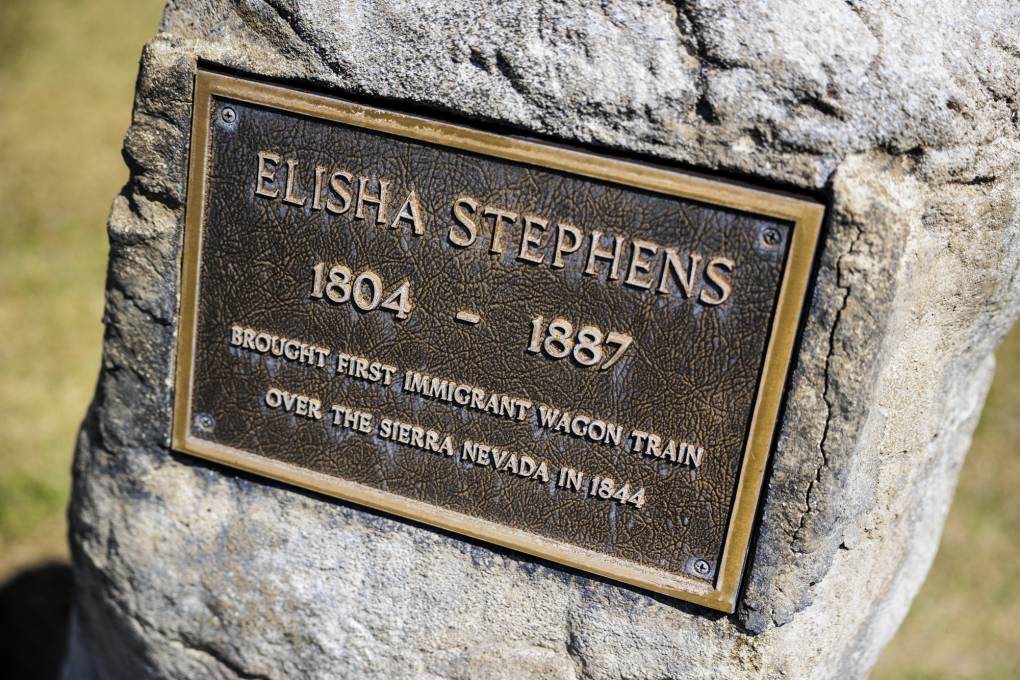
"title": "250324-ELISHA STEPHENS-MD-03-KQED",
"publishDate": 1742839927,
"status": "inherit",
"parent": 0,
"modified": 1742840016,
"caption": "The gravestone for Elisha Stephens in the Historic Union Cemetary in Bakersfield on March 23, 2025.",
"credit": "Martin do Nascimento/KQED",
"altTag": null,
"description": null,
"imgSizes": {
"medium": {
"file": "https://cdn.kqed.org/wp-content/uploads/sites/10/2025/03/250324-ELISHA-STEPHENS-MD-03-KQED-800x533.jpg",
"width": 800,
"height": 533,
"mimeType": "image/jpeg"
},
"large": {
"file": "https://cdn.kqed.org/wp-content/uploads/sites/10/2025/03/250324-ELISHA-STEPHENS-MD-03-KQED-1020x680.jpg",
"width": 1020,
"height": 680,
"mimeType": "image/jpeg"
},
"thumbnail": {
"file": "https://cdn.kqed.org/wp-content/uploads/sites/10/2025/03/250324-ELISHA-STEPHENS-MD-03-KQED-160x107.jpg",
"width": 160,
"height": 107,
"mimeType": "image/jpeg"
},
"1536x1536": {
"file": "https://cdn.kqed.org/wp-content/uploads/sites/10/2025/03/250324-ELISHA-STEPHENS-MD-03-KQED-1536x1024.jpg",
"width": 1536,
"height": 1024,
"mimeType": "image/jpeg"
},
"post-thumbnail": {
"file": "https://cdn.kqed.org/wp-content/uploads/sites/10/2025/03/250324-ELISHA-STEPHENS-MD-03-KQED-672x372.jpg",
"width": 672,
"height": 372,
"mimeType": "image/jpeg"
},
"twentyfourteen-full-width": {
"file": "https://cdn.kqed.org/wp-content/uploads/sites/10/2025/03/250324-ELISHA-STEPHENS-MD-03-KQED-1038x576.jpg",
"width": 1038,
"height": 576,
"mimeType": "image/jpeg"
},
"full-width": {
"file": "https://cdn.kqed.org/wp-content/uploads/sites/10/2025/03/250324-ELISHA-STEPHENS-MD-03-KQED-1920x1280.jpg",
"width": 1920,
"height": 1280,
"mimeType": "image/jpeg"
},
"kqedFullSize": {
"file": "https://cdn.kqed.org/wp-content/uploads/sites/10/2025/03/250324-ELISHA-STEPHENS-MD-03-KQED.jpg",
"width": 2000,
"height": 1333
}
},
"isLoading": false,
"fetchFailed": false
},
"news_12035097": {
"type": "attachments",
"id": "news_12035097",
"meta": {
"index": "attachments_1716263798",
"site": "news",
"id": "12035097",
"found": true
},
"title": "250408-SanJoseSpecialElection-15-BL",
"publishDate": 1744170442,
"status": "inherit",
"parent": 0,
"modified": 1744174110,
"caption": "Gabby Chavez-Lopez, San José Council District 3 candidate, cheers alongside supporters as the first results come in during an election night party in San José on April 8, 2025.",
"credit": "Beth LaBerge/KQED",
"altTag": null,
"description": null,
"imgSizes": {
"medium": {
"file": "https://cdn.kqed.org/wp-content/uploads/sites/10/2025/04/250408-SanJoseSpecialElection-15-BL-800x533.jpg",
"width": 800,
"height": 533,
"mimeType": "image/jpeg"
},
"large": {
"file": "https://cdn.kqed.org/wp-content/uploads/sites/10/2025/04/250408-SanJoseSpecialElection-15-BL-1020x680.jpg",
"width": 1020,
"height": 680,
"mimeType": "image/jpeg"
},
"thumbnail": {
"file": "https://cdn.kqed.org/wp-content/uploads/sites/10/2025/04/250408-SanJoseSpecialElection-15-BL-160x107.jpg",
"width": 160,
"height": 107,
"mimeType": "image/jpeg"
},
"1536x1536": {
"file": "https://cdn.kqed.org/wp-content/uploads/sites/10/2025/04/250408-SanJoseSpecialElection-15-BL-1536x1024.jpg",
"width": 1536,
"height": 1024,
"mimeType": "image/jpeg"
},
"post-thumbnail": {
"file": "https://cdn.kqed.org/wp-content/uploads/sites/10/2025/04/250408-SanJoseSpecialElection-15-BL-672x372.jpg",
"width": 672,
"height": 372,
"mimeType": "image/jpeg"
},
"twentyfourteen-full-width": {
"file": "https://cdn.kqed.org/wp-content/uploads/sites/10/2025/04/250408-SanJoseSpecialElection-15-BL-1038x576.jpg",
"width": 1038,
"height": 576,
"mimeType": "image/jpeg"
},
"full-width": {
"file": "https://cdn.kqed.org/wp-content/uploads/sites/10/2025/04/250408-SanJoseSpecialElection-15-BL-1920x1280.jpg",
"width": 1920,
"height": 1280,
"mimeType": "image/jpeg"
},
"kqedFullSize": {
"file": "https://cdn.kqed.org/wp-content/uploads/sites/10/2025/04/250408-SanJoseSpecialElection-15-BL.jpg",
"width": 2000,
"height": 1333
}
},
"isLoading": false,
"fetchFailed": false
},
"news_11976118": {
"type": "attachments",
"id": "news_11976118",
"meta": {
"index": "attachments_1716263798",
"site": "news",
"id": "11976118",
"found": true
},
"title": "OpenAI CEO Samuel Altman Testifies To Senate Committee On Rules For Artificial Intelligence",
"publishDate": 1708040236,
"status": "inherit",
"parent": 11976097,
"modified": 1761950561,
"caption": "Sam Altman, CEO of OpenAI, testifies before the Senate Judiciary Subcommittee on Privacy, Technology, and the Law on May 16, 2023, in Washington, D.C. The committee held an oversight hearing to examine AI, focusing on rules for artificial intelligence. ",
"credit": "Win McNamee/Getty Images",
"altTag": "A white man in a blue suit and tie gestures as he speaks in a congressional room surrounded by people.",
"description": "A white man in a blue suit and tie gestures as he speaks in a congressional room surrounded by people.",
"imgSizes": {
"medium": {
"file": "https://cdn.kqed.org/wp-content/uploads/sites/10/2024/02/GettyImages-1490690177-800x534.jpg",
"width": 800,
"height": 534,
"mimeType": "image/jpeg"
},
"large": {
"file": "https://cdn.kqed.org/wp-content/uploads/sites/10/2024/02/GettyImages-1490690177-1020x680.jpg",
"width": 1020,
"height": 680,
"mimeType": "image/jpeg"
},
"thumbnail": {
"file": "https://cdn.kqed.org/wp-content/uploads/sites/10/2024/02/GettyImages-1490690177-160x107.jpg",
"width": 160,
"height": 107,
"mimeType": "image/jpeg"
},
"post-thumbnail": {
"file": "https://cdn.kqed.org/wp-content/uploads/sites/10/2024/02/GettyImages-1490690177-672x372.jpg",
"width": 672,
"height": 372,
"mimeType": "image/jpeg"
},
"twentyfourteen-full-width": {
"file": "https://cdn.kqed.org/wp-content/uploads/sites/10/2024/02/GettyImages-1490690177-1024x576.jpg",
"width": 1024,
"height": 576,
"mimeType": "image/jpeg"
},
"kqedFullSize": {
"file": "https://cdn.kqed.org/wp-content/uploads/sites/10/2024/02/GettyImages-1490690177.jpg",
"width": 1024,
"height": 683
}
},
"isLoading": false,
"fetchFailed": false
},
"news_12034864": {
"type": "attachments",
"id": "news_12034864",
"meta": {
"index": "attachments_1716263798",
"site": "news",
"id": "12034864",
"found": true
},
"title": "250407-SONOFOUSTEDMYANMARLEADER-07-BL-KQED",
"publishDate": 1744131268,
"status": "inherit",
"parent": 0,
"modified": 1744135648,
"caption": "Kim Aris, the youngest son of Burmese pro-democracy leader Aung San Suu Kyi, speaks during a fireside chat at Stanford University on April 7, 2025. Aris has increasingly spoken out on behalf of his mother, who remains imprisoned by Myanmar's military junta.",
"credit": "Beth LaBerge/KQED",
"altTag": null,
"description": null,
"imgSizes": {
"medium": {
"file": "https://cdn.kqed.org/wp-content/uploads/sites/10/2025/04/250407-SONOFOUSTEDMYANMARLEADER-07-BL-KQED-800x533.jpg",
"width": 800,
"height": 533,
"mimeType": "image/jpeg"
},
"large": {
"file": "https://cdn.kqed.org/wp-content/uploads/sites/10/2025/04/250407-SONOFOUSTEDMYANMARLEADER-07-BL-KQED-1020x680.jpg",
"width": 1020,
"height": 680,
"mimeType": "image/jpeg"
},
"thumbnail": {
"file": "https://cdn.kqed.org/wp-content/uploads/sites/10/2025/04/250407-SONOFOUSTEDMYANMARLEADER-07-BL-KQED-160x107.jpg",
"width": 160,
"height": 107,
"mimeType": "image/jpeg"
},
"1536x1536": {
"file": "https://cdn.kqed.org/wp-content/uploads/sites/10/2025/04/250407-SONOFOUSTEDMYANMARLEADER-07-BL-KQED-1536x1024.jpg",
"width": 1536,
"height": 1024,
"mimeType": "image/jpeg"
},
"post-thumbnail": {
"file": "https://cdn.kqed.org/wp-content/uploads/sites/10/2025/04/250407-SONOFOUSTEDMYANMARLEADER-07-BL-KQED-672x372.jpg",
"width": 672,
"height": 372,
"mimeType": "image/jpeg"
},
"twentyfourteen-full-width": {
"file": "https://cdn.kqed.org/wp-content/uploads/sites/10/2025/04/250407-SONOFOUSTEDMYANMARLEADER-07-BL-KQED-1038x576.jpg",
"width": 1038,
"height": 576,
"mimeType": "image/jpeg"
},
"full-width": {
"file": "https://cdn.kqed.org/wp-content/uploads/sites/10/2025/04/250407-SONOFOUSTEDMYANMARLEADER-07-BL-KQED-1920x1280.jpg",
"width": 1920,
"height": 1280,
"mimeType": "image/jpeg"
},
"kqedFullSize": {
"file": "https://cdn.kqed.org/wp-content/uploads/sites/10/2025/04/250407-SONOFOUSTEDMYANMARLEADER-07-BL-KQED.jpg",
"width": 2000,
"height": 1333
}
},
"isLoading": false,
"fetchFailed": false
},
"news_12034595": {
"type": "attachments",
"id": "news_12034595",
"meta": {
"index": "attachments_1716263798",
"site": "news",
"id": "12034595",
"found": true
},
"title": "AnthonyBecker",
"publishDate": 1743800522,
"status": "inherit",
"parent": 0,
"modified": 1743803225,
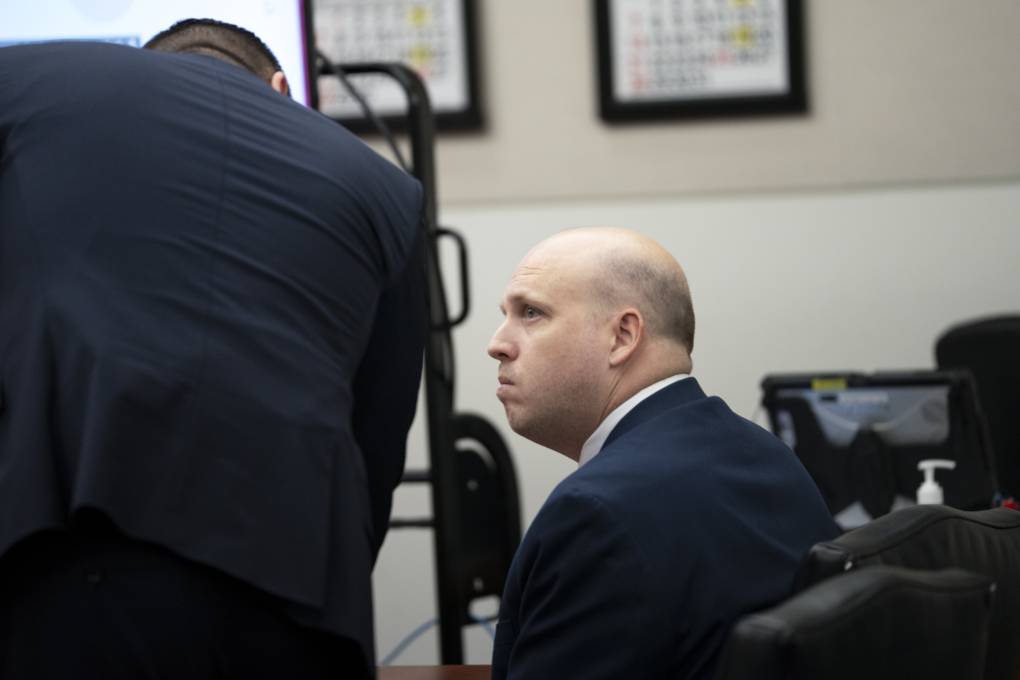
"caption": "Santa Clara City Councilmember Anthony Becker during his sentencing hearing at the South County Morgan Hill Courthouse on April 4, 2025.",
"credit": "Florence Middleton for KQED",
"altTag": null,
"description": null,
"imgSizes": {
"medium": {
"file": "https://cdn.kqed.org/wp-content/uploads/sites/10/2025/04/2025.04.04_MIDDLETON_ANTHONYBECKER_015-KQED-800x533.jpg",
"width": 800,
"height": 533,
"mimeType": "image/jpeg"
},
"large": {
"file": "https://cdn.kqed.org/wp-content/uploads/sites/10/2025/04/2025.04.04_MIDDLETON_ANTHONYBECKER_015-KQED-1020x680.jpg",
"width": 1020,
"height": 680,
"mimeType": "image/jpeg"
},
"thumbnail": {
"file": "https://cdn.kqed.org/wp-content/uploads/sites/10/2025/04/2025.04.04_MIDDLETON_ANTHONYBECKER_015-KQED-160x107.jpg",
"width": 160,
"height": 107,
"mimeType": "image/jpeg"
},
"1536x1536": {
"file": "https://cdn.kqed.org/wp-content/uploads/sites/10/2025/04/2025.04.04_MIDDLETON_ANTHONYBECKER_015-KQED-1536x1024.jpg",
"width": 1536,
"height": 1024,
"mimeType": "image/jpeg"
},
"post-thumbnail": {
"file": "https://cdn.kqed.org/wp-content/uploads/sites/10/2025/04/2025.04.04_MIDDLETON_ANTHONYBECKER_015-KQED-672x372.jpg",
"width": 672,
"height": 372,
"mimeType": "image/jpeg"
},
"twentyfourteen-full-width": {
"file": "https://cdn.kqed.org/wp-content/uploads/sites/10/2025/04/2025.04.04_MIDDLETON_ANTHONYBECKER_015-KQED-1038x576.jpg",
"width": 1038,
"height": 576,
"mimeType": "image/jpeg"
},
"full-width": {
"file": "https://cdn.kqed.org/wp-content/uploads/sites/10/2025/04/2025.04.04_MIDDLETON_ANTHONYBECKER_015-KQED-1920x1280.jpg",
"width": 1920,
"height": 1280,
"mimeType": "image/jpeg"
},
"kqedFullSize": {
"file": "https://cdn.kqed.org/wp-content/uploads/sites/10/2025/04/2025.04.04_MIDDLETON_ANTHONYBECKER_015-KQED.jpg",
"width": 2000,
"height": 1333
}
},
"isLoading": false,
"fetchFailed": false
},
"news_12034334": {
"type": "attachments",
"id": "news_12034334",
"meta": {
"index": "attachments_1716263798",
"site": "news",
"id": "12034334",
"found": true
},
"title": "20250306_SanJoseDistrict3_GC-21_qed",
"publishDate": 1743630804,
"status": "inherit",
"parent": 12033826,
"modified": 1745000262,
"caption": "From left, candidates running for District 3 City Council, Gabby Chavez-Lopez, Philip Dolan, Adam Duran, Irene Smith, Anthony Tordillos and Matthew Quevedo speak at a candidates forum at the San José Women’s Club in San José on March 6, 2025.",
"credit": "Gina Castro/KQED",
"altTag": null,
"description": null,
"imgSizes": {
"medium": {
"file": "https://cdn.kqed.org/wp-content/uploads/sites/10/2025/04/20250306_SanJoseDistrict3_GC-21_qed-800x533.jpg",
"width": 800,
"height": 533,
"mimeType": "image/jpeg"
},
"large": {
"file": "https://cdn.kqed.org/wp-content/uploads/sites/10/2025/04/20250306_SanJoseDistrict3_GC-21_qed-1020x680.jpg",
"width": 1020,
"height": 680,
"mimeType": "image/jpeg"
},
"thumbnail": {
"file": "https://cdn.kqed.org/wp-content/uploads/sites/10/2025/04/20250306_SanJoseDistrict3_GC-21_qed-160x107.jpg",
"width": 160,
"height": 107,
"mimeType": "image/jpeg"
},
"1536x1536": {
"file": "https://cdn.kqed.org/wp-content/uploads/sites/10/2025/04/20250306_SanJoseDistrict3_GC-21_qed-1536x1024.jpg",
"width": 1536,
"height": 1024,
"mimeType": "image/jpeg"
},
"post-thumbnail": {
"file": "https://cdn.kqed.org/wp-content/uploads/sites/10/2025/04/20250306_SanJoseDistrict3_GC-21_qed-672x372.jpg",
"width": 672,
"height": 372,
"mimeType": "image/jpeg"
},
"twentyfourteen-full-width": {
"file": "https://cdn.kqed.org/wp-content/uploads/sites/10/2025/04/20250306_SanJoseDistrict3_GC-21_qed-1038x576.jpg",
"width": 1038,
"height": 576,
"mimeType": "image/jpeg"
},
"full-width": {
"file": "https://cdn.kqed.org/wp-content/uploads/sites/10/2025/04/20250306_SanJoseDistrict3_GC-21_qed-1920x1280.jpg",
"width": 1920,
"height": 1280,
"mimeType": "image/jpeg"
},
"kqedFullSize": {
"file": "https://cdn.kqed.org/wp-content/uploads/sites/10/2025/04/20250306_SanJoseDistrict3_GC-21_qed.jpg",
"width": 2000,
"height": 1333
}
},
"isLoading": false,
"fetchFailed": false
},
"news_12034075": {
"type": "attachments",
"id": "news_12034075",
"meta": {
"index": "attachments_1716263798",
"site": "news",
"id": "12034075",
"found": true
},
"title": "250401-REGIONALMED-JG-1_qed",
"publishDate": 1743538503,
"status": "inherit",
"parent": 12033787,
"modified": 1743538516,
"caption": null,
"credit": "Joseph Geha/KQED",
"altTag": null,
"description": null,
"imgSizes": {
"medium": {
"file": "https://cdn.kqed.org/wp-content/uploads/sites/10/2025/04/250401-REGIONALMED-JG-1_qed-800x533.jpg",
"width": 800,
"height": 533,
"mimeType": "image/jpeg"
},
"large": {
"file": "https://cdn.kqed.org/wp-content/uploads/sites/10/2025/04/250401-REGIONALMED-JG-1_qed-1020x680.jpg",
"width": 1020,
"height": 680,
"mimeType": "image/jpeg"
},
"thumbnail": {
"file": "https://cdn.kqed.org/wp-content/uploads/sites/10/2025/04/250401-REGIONALMED-JG-1_qed-160x107.jpg",
"width": 160,
"height": 107,
"mimeType": "image/jpeg"
},
"1536x1536": {
"file": "https://cdn.kqed.org/wp-content/uploads/sites/10/2025/04/250401-REGIONALMED-JG-1_qed-1536x1024.jpg",
"width": 1536,
"height": 1024,
"mimeType": "image/jpeg"
},
"post-thumbnail": {
"file": "https://cdn.kqed.org/wp-content/uploads/sites/10/2025/04/250401-REGIONALMED-JG-1_qed-672x372.jpg",
"width": 672,
"height": 372,
"mimeType": "image/jpeg"
},
"twentyfourteen-full-width": {
"file": "https://cdn.kqed.org/wp-content/uploads/sites/10/2025/04/250401-REGIONALMED-JG-1_qed-1038x576.jpg",
"width": 1038,
"height": 576,
"mimeType": "image/jpeg"
},
"full-width": {
"file": "https://cdn.kqed.org/wp-content/uploads/sites/10/2025/04/250401-REGIONALMED-JG-1_qed-1920x1280.jpg",
"width": 1920,
"height": 1280,
"mimeType": "image/jpeg"
},
"kqedFullSize": {
"file": "https://cdn.kqed.org/wp-content/uploads/sites/10/2025/04/250401-REGIONALMED-JG-1_qed.jpg",
"width": 1999,
"height": 1333
}
},
"isLoading": false,
"fetchFailed": false
},
"news_11981484": {
"type": "attachments",
"id": "news_11981484",
"meta": {
"index": "attachments_1716263798",
"site": "news",
"id": "11981484",
"found": true
},
"title": "240328-BAYWOODHISTORICDISTRICT-JY-001-KQED",
"publishDate": 1711975132,
"status": "inherit",
"parent": 0,
"modified": 1743209248,
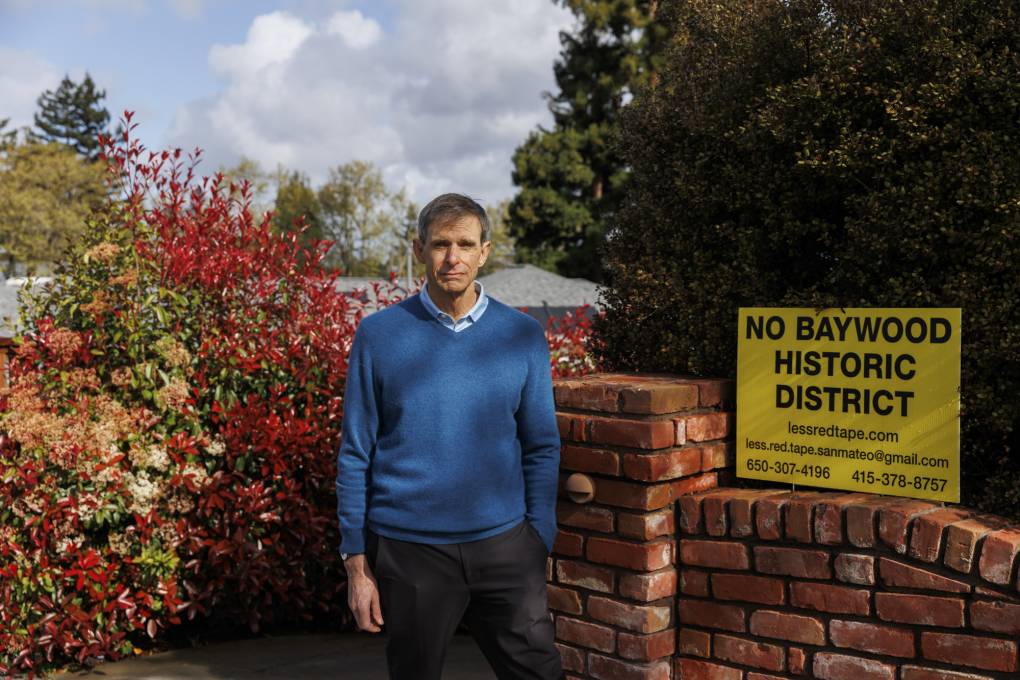
"caption": "Lead organizer of Less Red Tape, Frank Elliott, stands for a portrait outside his home in San Mateo, California, on Thursday, March 28, 2024. Elliott, who has lived in his home in the Baywood neighborhood of San Mateo since 1997, founded Less Red Tape to protest the designation of Baywood as a historic district.",
"credit": "Juliana Yamada/KQED",
"altTag": null,
"description": null,
"imgSizes": {
"medium": {
"file": "https://cdn.kqed.org/wp-content/uploads/sites/10/2024/04/240328-BAYWOODHISTORICDISTRICT-JY-001-KQED-800x533.jpg",
"width": 800,
"height": 533,
"mimeType": "image/jpeg"
},
"large": {
"file": "https://cdn.kqed.org/wp-content/uploads/sites/10/2024/04/240328-BAYWOODHISTORICDISTRICT-JY-001-KQED-1020x680.jpg",
"width": 1020,
"height": 680,
"mimeType": "image/jpeg"
},
"thumbnail": {
"file": "https://cdn.kqed.org/wp-content/uploads/sites/10/2024/04/240328-BAYWOODHISTORICDISTRICT-JY-001-KQED-160x107.jpg",
"width": 160,
"height": 107,
"mimeType": "image/jpeg"
},
"1536x1536": {
"file": "https://cdn.kqed.org/wp-content/uploads/sites/10/2024/04/240328-BAYWOODHISTORICDISTRICT-JY-001-KQED-1536x1024.jpg",
"width": 1536,
"height": 1024,
"mimeType": "image/jpeg"
},
"post-thumbnail": {
"file": "https://cdn.kqed.org/wp-content/uploads/sites/10/2024/04/240328-BAYWOODHISTORICDISTRICT-JY-001-KQED-672x372.jpg",
"width": 672,
"height": 372,
"mimeType": "image/jpeg"
},
"twentyfourteen-full-width": {
"file": "https://cdn.kqed.org/wp-content/uploads/sites/10/2024/04/240328-BAYWOODHISTORICDISTRICT-JY-001-KQED-1038x576.jpg",
"width": 1038,
"height": 576,
"mimeType": "image/jpeg"
},
"full-width": {
"file": "https://cdn.kqed.org/wp-content/uploads/sites/10/2024/04/240328-BAYWOODHISTORICDISTRICT-JY-001-KQED-1920x1280.jpg",
"width": 1920,
"height": 1280,
"mimeType": "image/jpeg"
},
"kqedFullSize": {
"file": "https://cdn.kqed.org/wp-content/uploads/sites/10/2024/04/240328-BAYWOODHISTORICDISTRICT-JY-001-KQED.jpg",
"width": 2000,
"height": 1333
}
},
"isLoading": false,
"fetchFailed": false
},
"news_12032770": {
"type": "attachments",
"id": "news_12032770",
"meta": {
"index": "attachments_1716263798",
"site": "news",
"id": "12032770",
"found": true
},
"title": "20240324_SANTACLARAMEDICALSTRIKE_GC-9-KQED",
"publishDate": 1742842164,
"status": "inherit",
"parent": 0,
"modified": 1742850154,
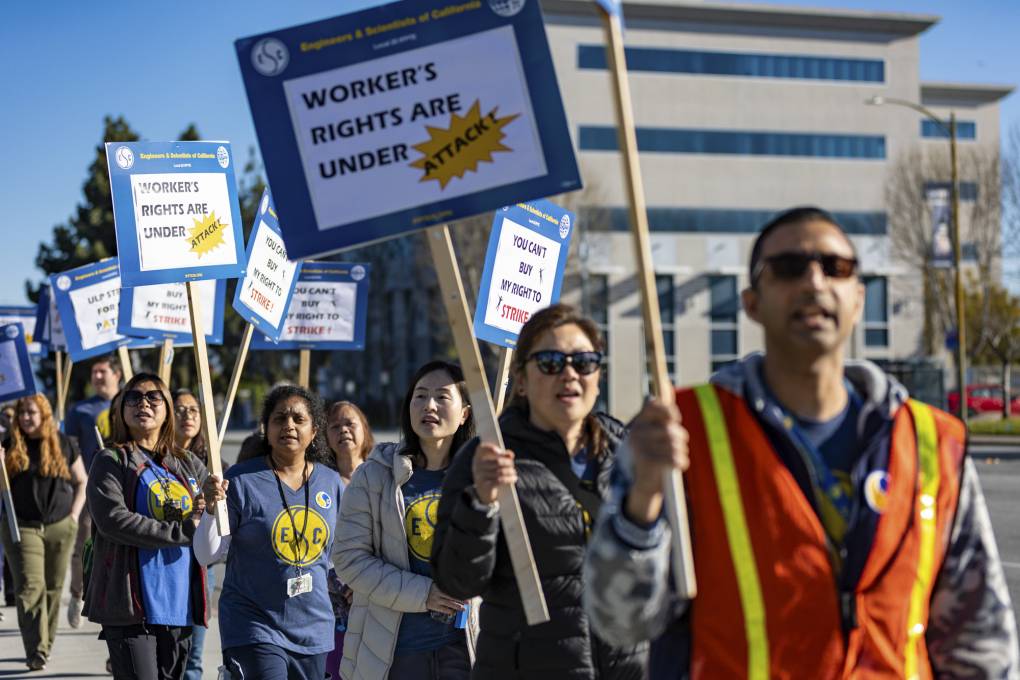
"caption": "Dozens of Santa Clara County medical workers, represented by the Engineers and Scientists California Local 20, join a strike over what they call “bad faith” negotiating by the county during contract talks at the Santa Clara Valley Medical Center in San José on March 24, 2025.",
"credit": "Gina Castro/KQED",
"altTag": null,
"description": null,
"imgSizes": {
"medium": {
"file": "https://cdn.kqed.org/wp-content/uploads/sites/10/2025/03/20240324_SANTACLARAMEDICALSTRIKE_GC-9-KQED-800x533.jpg",
"width": 800,
"height": 533,
"mimeType": "image/jpeg"
},
"large": {
"file": "https://cdn.kqed.org/wp-content/uploads/sites/10/2025/03/20240324_SANTACLARAMEDICALSTRIKE_GC-9-KQED-1020x680.jpg",
"width": 1020,
"height": 680,
"mimeType": "image/jpeg"
},
"thumbnail": {
"file": "https://cdn.kqed.org/wp-content/uploads/sites/10/2025/03/20240324_SANTACLARAMEDICALSTRIKE_GC-9-KQED-160x107.jpg",
"width": 160,
"height": 107,
"mimeType": "image/jpeg"
},
"1536x1536": {
"file": "https://cdn.kqed.org/wp-content/uploads/sites/10/2025/03/20240324_SANTACLARAMEDICALSTRIKE_GC-9-KQED-1536x1024.jpg",
"width": 1536,
"height": 1024,
"mimeType": "image/jpeg"
},
"post-thumbnail": {
"file": "https://cdn.kqed.org/wp-content/uploads/sites/10/2025/03/20240324_SANTACLARAMEDICALSTRIKE_GC-9-KQED-672x372.jpg",
"width": 672,
"height": 372,
"mimeType": "image/jpeg"
},
"twentyfourteen-full-width": {
"file": "https://cdn.kqed.org/wp-content/uploads/sites/10/2025/03/20240324_SANTACLARAMEDICALSTRIKE_GC-9-KQED-1038x576.jpg",
"width": 1038,
"height": 576,
"mimeType": "image/jpeg"
},
"full-width": {
"file": "https://cdn.kqed.org/wp-content/uploads/sites/10/2025/03/20240324_SANTACLARAMEDICALSTRIKE_GC-9-KQED-1920x1280.jpg",
"width": 1920,
"height": 1280,
"mimeType": "image/jpeg"
},
"kqedFullSize": {
"file": "https://cdn.kqed.org/wp-content/uploads/sites/10/2025/03/20240324_SANTACLARAMEDICALSTRIKE_GC-9-KQED.jpg",
"width": 2000,
"height": 1333
}
},
"isLoading": false,
"fetchFailed": false
},
"news_12032413": {
"type": "attachments",
"id": "news_12032413",
"meta": {
"index": "attachments_1716263798",
"site": "news",
"id": "12032413",
"found": true
},
"title": "20250311_VTAStrikeDay2_GC-7_qed",
"publishDate": 1742573433,
"status": "inherit",
"parent": 12031623,
"modified": 1742592774,
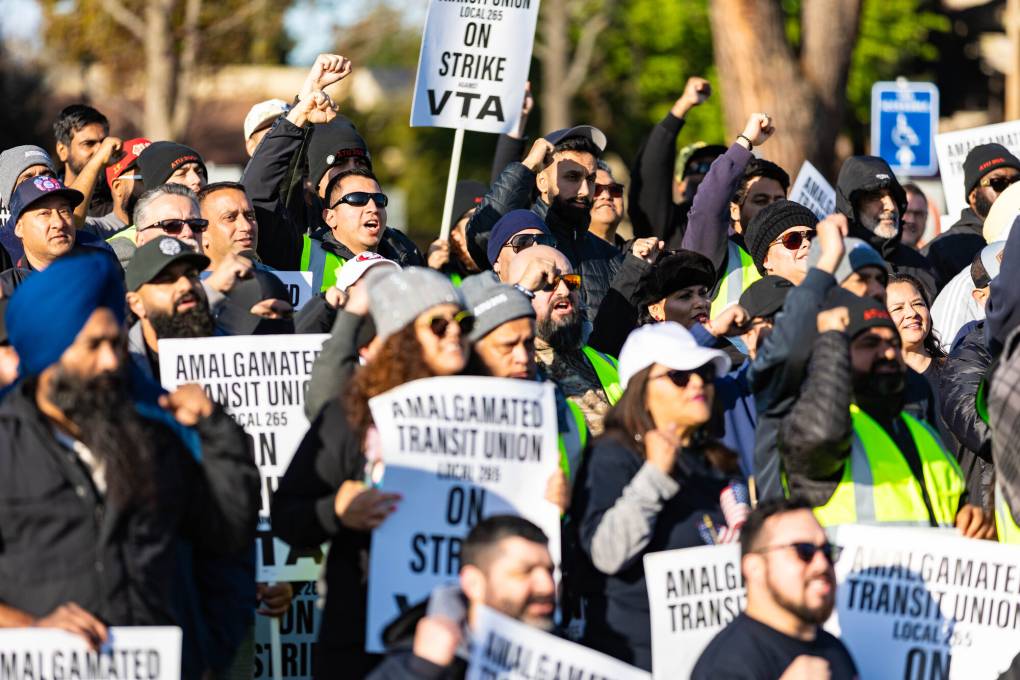
"caption": "Hundreds of Santa Clara Valley Transportation Authority workers and represented by the Amalgamated Transit Union Local 265, raise fists during a second-day strike in front of the VTA headquarters on North First Street in San José, demanding a better contract and an increase in wages on March 11, 2025.",
"credit": "Gina Castro/KQED",
"altTag": null,
"description": null,
"imgSizes": {
"medium": {
"file": "https://cdn.kqed.org/wp-content/uploads/sites/10/2025/03/20250311_VTAStrikeDay2_GC-7_qed-800x533.jpg",
"width": 800,
"height": 533,
"mimeType": "image/jpeg"
},
"large": {
"file": "https://cdn.kqed.org/wp-content/uploads/sites/10/2025/03/20250311_VTAStrikeDay2_GC-7_qed-1020x680.jpg",
"width": 1020,
"height": 680,
"mimeType": "image/jpeg"
},
"thumbnail": {
"file": "https://cdn.kqed.org/wp-content/uploads/sites/10/2025/03/20250311_VTAStrikeDay2_GC-7_qed-160x107.jpg",
"width": 160,
"height": 107,
"mimeType": "image/jpeg"
},
"1536x1536": {
"file": "https://cdn.kqed.org/wp-content/uploads/sites/10/2025/03/20250311_VTAStrikeDay2_GC-7_qed-1536x1024.jpg",
"width": 1536,
"height": 1024,
"mimeType": "image/jpeg"
},
"post-thumbnail": {
"file": "https://cdn.kqed.org/wp-content/uploads/sites/10/2025/03/20250311_VTAStrikeDay2_GC-7_qed-672x372.jpg",
"width": 672,
"height": 372,
"mimeType": "image/jpeg"
},
"twentyfourteen-full-width": {
"file": "https://cdn.kqed.org/wp-content/uploads/sites/10/2025/03/20250311_VTAStrikeDay2_GC-7_qed-1038x576.jpg",
"width": 1038,
"height": 576,
"mimeType": "image/jpeg"
},
"full-width": {
"file": "https://cdn.kqed.org/wp-content/uploads/sites/10/2025/03/20250311_VTAStrikeDay2_GC-7_qed-1920x1280.jpg",
"width": 1920,
"height": 1280,
"mimeType": "image/jpeg"
},
"kqedFullSize": {
"file": "https://cdn.kqed.org/wp-content/uploads/sites/10/2025/03/20250311_VTAStrikeDay2_GC-7_qed.jpg",
"width": 2000,
"height": 1333
}
},
"isLoading": false,
"fetchFailed": false
},
"news_12031817": {
"type": "attachments",
"id": "news_12031817",
"meta": {
"index": "attachments_1716263798",
"site": "news",
"id": "12031817",
"found": true
},
"title": "A tent sits in St. James Park in San José on April 9, 2024.",
"publishDate": 1742316428,
"status": "inherit",
"parent": 12031813,
"modified": 1742316439,
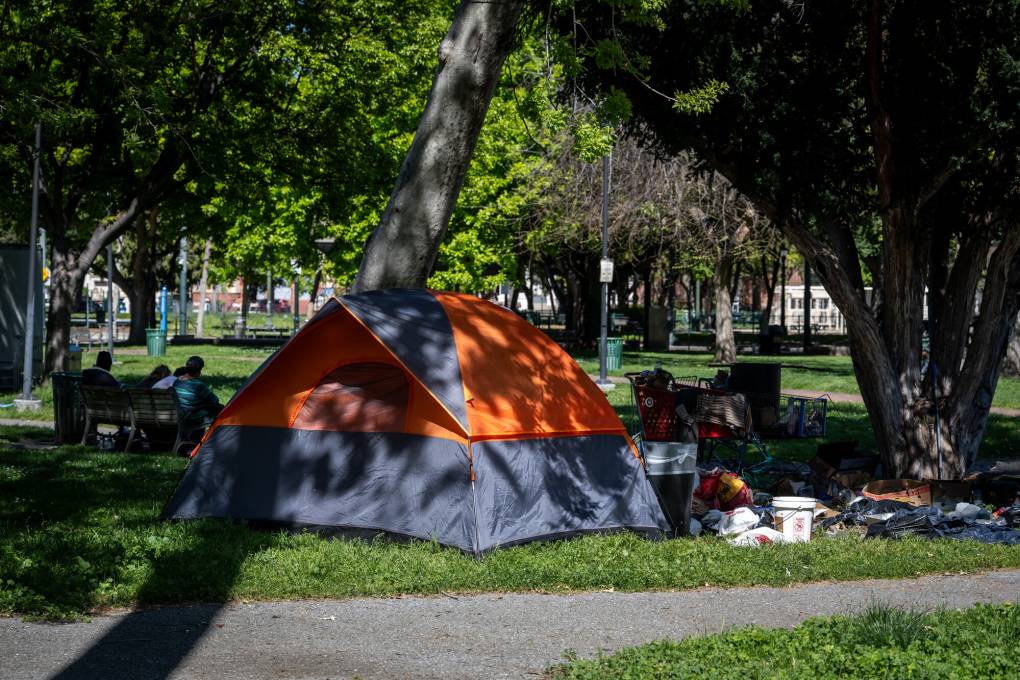
"caption": "A tent sits in St. James Park in San José on April 9, 2024.",
"credit": "Beth LaBerge/KQED",
"altTag": null,
"description": null,
"imgSizes": {
"medium": {
"file": "https://cdn.kqed.org/wp-content/uploads/sites/10/2025/03/240409-SJEncampmentBan-045-BL_qed-800x533.jpg",
"width": 800,
"height": 533,
"mimeType": "image/jpeg"
},
"large": {
"file": "https://cdn.kqed.org/wp-content/uploads/sites/10/2025/03/240409-SJEncampmentBan-045-BL_qed-1020x680.jpg",
"width": 1020,
"height": 680,
"mimeType": "image/jpeg"
},
"thumbnail": {
"file": "https://cdn.kqed.org/wp-content/uploads/sites/10/2025/03/240409-SJEncampmentBan-045-BL_qed-160x107.jpg",
"width": 160,
"height": 107,
"mimeType": "image/jpeg"
},
"1536x1536": {
"file": "https://cdn.kqed.org/wp-content/uploads/sites/10/2025/03/240409-SJEncampmentBan-045-BL_qed-1536x1024.jpg",
"width": 1536,
"height": 1024,
"mimeType": "image/jpeg"
},
"post-thumbnail": {
"file": "https://cdn.kqed.org/wp-content/uploads/sites/10/2025/03/240409-SJEncampmentBan-045-BL_qed-672x372.jpg",
"width": 672,
"height": 372,
"mimeType": "image/jpeg"
},
"twentyfourteen-full-width": {
"file": "https://cdn.kqed.org/wp-content/uploads/sites/10/2025/03/240409-SJEncampmentBan-045-BL_qed-1038x576.jpg",
"width": 1038,
"height": 576,
"mimeType": "image/jpeg"
},
"full-width": {
"file": "https://cdn.kqed.org/wp-content/uploads/sites/10/2025/03/240409-SJEncampmentBan-045-BL_qed-1920x1280.jpg",
"width": 1920,
"height": 1280,
"mimeType": "image/jpeg"
},
"kqedFullSize": {
"file": "https://cdn.kqed.org/wp-content/uploads/sites/10/2025/03/240409-SJEncampmentBan-045-BL_qed.jpg",
"width": 1999,
"height": 1333
}
},
"isLoading": false,
"fetchFailed": false
}
},
"audioPlayerReducer": {
"postId": "stream_live",
"isPaused": true,
"isPlaying": false,
"pfsActive": false,
"pledgeModalIsOpen": true,
"playerDrawerIsOpen": false,
"liveAudioPlayStartedAt": 0,
"liveAudioPlayContext": ""
},
"authorsReducer": {
"gmarzorati": {
"type": "authors",
"id": "227",
"meta": {
"index": "authors_1716337520",
"id": "227",
"found": true
},
"name": "Guy Marzorati",
"firstName": "Guy",
"lastName": "Marzorati",
"slug": "gmarzorati",
"email": "gmarzorati@KQED.org",
"display_author_email": true,
"staff_mastheads": [
"news"
],
"title": "Correspondent",
"bio": "Guy Marzorati is a correspondent on KQED's California Politics and Government Desk, based in San Jose. A graduate of Santa Clara University, Guy joined KQED in 2013. He reports on state and local politics and produces KQED's digital voter guide.",
"avatar": "https://secure.gravatar.com/avatar/e7038b8dbfd55b104369b76b1cd0b9de?s=600&d=blank&r=g",
"twitter": "guymarzorati",
"facebook": null,
"instagram": null,
"linkedin": null,
"sites": [
{
"site": "",
"roles": [
"editor"
]
},
{
"site": "news",
"roles": [
"editor"
]
},
{
"site": "science",
"roles": [
"editor"
]
},
{
"site": "forum",
"roles": [
"editor"
]
},
{
"site": "elections",
"roles": [
"editor"
]
},
{
"site": "liveblog",
"roles": [
"editor"
]
}
],
"headData": {
"title": "Guy Marzorati | KQED",
"description": "Correspondent",
"ogImgSrc": "https://secure.gravatar.com/avatar/e7038b8dbfd55b104369b76b1cd0b9de?s=600&d=blank&r=g",
"twImgSrc": "https://secure.gravatar.com/avatar/e7038b8dbfd55b104369b76b1cd0b9de?s=600&d=blank&r=g"
},
"isLoading": false,
"link": "/author/gmarzorati"
},
"rachael-myrow": {
"type": "authors",
"id": "251",
"meta": {
"index": "authors_1716337520",
"id": "251",
"found": true
},
"name": "Rachael Myrow",
"firstName": "Rachael",
"lastName": "Myrow",
"slug": "rachael-myrow",
"email": "rmyrow@kqed.org",
"display_author_email": true,
"staff_mastheads": [
"news"
],
"title": "Senior Editor of KQED's Silicon Valley News Desk",
"bio": "• I write and edit stories about how Silicon Valley power and policies shape everyday life in California. I’m also passionate about making Bay Area history and culture more accessible to a broad public. • I’ve been a journalist for most of my life, starting in high school with The Franklin Press in Los Angeles, where I grew up. While earning my first degree in English at UC Berkeley, I got my start in public radio at KALX-FM. After completing a second degree in journalism at Cal, I landed my first professional job at Marketplace, then moved on to KPCC (now LAist), and then KQED, where I hosted The California Report for more than seven years. • My reporting has appeared on NPR, The World, WBUR’s \u003ci>Here & Now\u003c/i>, and the BBC. I also guest host for KQED’s \u003ci>Forum\u003c/i>, as well as the Commonwealth Club in San Francisco. • I speak periodically on media, democracy and technology issues, and do voiceover work for documentaries and educational video projects. • Outside of the studio, you'll find me hiking Bay Area trails and whipping up Insta-ready meals in my kitchen. • I do not accept gifts, money, or favors from anyone connected to my reporting, I don't pay people for information, and I do not support or donate to political causes. • I strive to treat the people I report on with fairness, honesty, and respect. I also recognize there are often multiple sides to a story and work to verify information through multiple sources and documentation. If I get something wrong, I correct it.",
"avatar": "https://secure.gravatar.com/avatar/3ed8a3c5f26025e4a805ba634cda8cd764906b97438a6d9ce216b044e340da4e?s=600&d=blank&r=g",
"twitter": "rachaelmyrow",
"bluesky": null,
"facebook": null,
"instagram": null,
"linkedin": "https://www.linkedin.com/in/rachaelmyrow/",
"sites": [
{
"site": "arts",
"roles": [
"administrator"
]
},
{
"site": "news",
"roles": [
"edit_others_posts",
"editor"
]
},
{
"site": "futureofyou",
"roles": [
"editor"
]
},
{
"site": "bayareabites",
"roles": [
"editor"
]
},
{
"site": "stateofhealth",
"roles": [
"editor"
]
},
{
"site": "science",
"roles": [
"editor"
]
},
{
"site": "food",
"roles": [
"editor"
]
},
{
"site": "forum",
"roles": [
"editor"
]
},
{
"site": "liveblog",
"roles": [
"author"
]
}
],
"headData": {
"title": "Rachael Myrow | KQED",
"description": "Senior Editor of KQED's Silicon Valley News Desk",
"ogImgSrc": "https://secure.gravatar.com/avatar/3ed8a3c5f26025e4a805ba634cda8cd764906b97438a6d9ce216b044e340da4e?s=600&d=blank&r=g",
"twImgSrc": "https://secure.gravatar.com/avatar/3ed8a3c5f26025e4a805ba634cda8cd764906b97438a6d9ce216b044e340da4e?s=600&d=blank&r=g"
},
"isLoading": false,
"link": "/author/rachael-myrow"
},
"lsarah": {
"type": "authors",
"id": "11626",
"meta": {
"index": "authors_1716337520",
"id": "11626",
"found": true
},
"name": "Lakshmi Sarah",
"firstName": "Lakshmi",
"lastName": "Sarah",
"slug": "lsarah",
"email": "lsarah@kqed.org",
"display_author_email": false,
"staff_mastheads": [],
"title": "Digital Producer",
"bio": "Lakshmi Sarah is an educator, author and journalist with a focus on innovative storytelling. She has worked with newspapers, radio and magazines from Ahmedabad, India to Los Angeles, California. She has written and produced for Die Zeit, Global Voices, AJ+, KQED, Fusion Media Group and the New York Times.",
"avatar": "https://secure.gravatar.com/avatar/652dcaecd8b28826fc17a8b2d6bb4e93?s=600&d=blank&r=g",
"twitter": "lakitalki",
"facebook": null,
"instagram": "https://www.instagram.com/laki.talki/",
"linkedin": "https://www.linkedin.com/in/lakisarah/",
"sites": [
{
"site": "arts",
"roles": []
},
{
"site": "news",
"roles": []
},
{
"site": "bayareabites",
"roles": []
},
{
"site": "science",
"roles": []
}
],
"headData": {
"title": "Lakshmi Sarah | KQED",
"description": "Digital Producer",
"ogImgSrc": "https://secure.gravatar.com/avatar/652dcaecd8b28826fc17a8b2d6bb4e93?s=600&d=blank&r=g",
"twImgSrc": "https://secure.gravatar.com/avatar/652dcaecd8b28826fc17a8b2d6bb4e93?s=600&d=blank&r=g"
},
"isLoading": false,
"link": "/author/lsarah"
},
"jgeha": {
"type": "authors",
"id": "11906",
"meta": {
"index": "authors_1716337520",
"id": "11906",
"found": true
},
"name": "Joseph Geha",
"firstName": "Joseph",
"lastName": "Geha",
"slug": "jgeha",
"email": "jgeha@kqed.org",
"display_author_email": false,
"staff_mastheads": [
"news",
"science"
],
"title": "KQED Contributor",
"bio": null,
"avatar": "https://secure.gravatar.com/avatar/ea84d2b6dd93d6369d453edf19dd583f117cd1759d2d9c9c92f9de77017354fe?s=600&d=blank&r=g",
"twitter": null,
"bluesky": null,
"facebook": null,
"instagram": null,
"linkedin": null,
"sites": [
{
"site": "news",
"roles": [
"editor"
]
},
{
"site": "liveblog",
"roles": [
"author"
]
}
],
"headData": {
"title": "Joseph Geha | KQED",
"description": "KQED Contributor",
"ogImgSrc": "https://secure.gravatar.com/avatar/ea84d2b6dd93d6369d453edf19dd583f117cd1759d2d9c9c92f9de77017354fe?s=600&d=blank&r=g",
"twImgSrc": "https://secure.gravatar.com/avatar/ea84d2b6dd93d6369d453edf19dd583f117cd1759d2d9c9c92f9de77017354fe?s=600&d=blank&r=g"
},
"isLoading": false,
"link": "/author/jgeha"
},
"kdebenedetti": {
"type": "authors",
"id": "11913",
"meta": {
"index": "authors_1716337520",
"id": "11913",
"found": true
},
"name": "Katie DeBenedetti",
"firstName": "Katie",
"lastName": "DeBenedetti",
"slug": "kdebenedetti",
"email": "kdebenedetti@kqed.org",
"display_author_email": false,
"staff_mastheads": [
"news",
"science"
],
"title": "KQED Contributor",
"bio": "Katie DeBenedetti is a digital reporter covering daily news for the Express Desk. Prior to joining KQED as a culture reporting intern in January 2024, she covered education and city government for the Napa Valley Register.",
"avatar": "https://secure.gravatar.com/avatar/6e31073cb8f7e4214ab03f42771d0f45?s=600&d=blank&r=g",
"twitter": null,
"facebook": null,
"instagram": null,
"linkedin": null,
"sites": [
{
"site": "news",
"roles": [
"author"
]
},
{
"site": "science",
"roles": [
"author"
]
},
{
"site": "liveblog",
"roles": [
"author"
]
}
],
"headData": {
"title": "Katie DeBenedetti | KQED",
"description": "KQED Contributor",
"ogImgSrc": "https://secure.gravatar.com/avatar/6e31073cb8f7e4214ab03f42771d0f45?s=600&d=blank&r=g",
"twImgSrc": "https://secure.gravatar.com/avatar/6e31073cb8f7e4214ab03f42771d0f45?s=600&d=blank&r=g"
},
"isLoading": false,
"link": "/author/kdebenedetti"
}
},
"pagesReducer": {
"news_tag_south-bay": {
"type": "terms",
"id": "news_21285",
"meta": {
"index": "terms_1716263798",
"site": "news",
"id": "21285",
"score": 7.0833073
},
"featImg": null,
"name": "South Bay",
"description": null,
"taxonomy": "tag",
"headData": {
"twImgId": null,
"twTitle": null,
"ogTitle": null,
"ogImgId": null,
"twDescription": null,
"description": null,
"title": "South Bay Archives | KQED News",
"ogDescription": null
},
"ttid": 21302,
"slug": "south-bay",
"isLoading": false,
"title": "South Bay",
"pageMeta": {
"site": "news",
"WpPageTemplate": "page-topic-editorial",
"currentPage": 18
},
"blocks": [
{
"blockName": "kqed/post-list",
"attrs": {
"layout": "cardArticle2",
"query": "posts/news?tag=south-bay",
"seeMore": false,
"paginated": true,
"page": 18
}
},
{
"blockName": "kqed/ad"
}
]
}
},
"pfsSessionReducer": {},
"postsReducer": {
"stream_live": {
"type": "live",
"id": "stream_live",
"audioUrl": "https://streams.kqed.org/kqedradio",
"title": "Live Stream",
"excerpt": "Live Stream information currently unavailable.",
"link": "/radio",
"featImg": "",
"label": {
"name": "KQED Live",
"link": "/"
}
},
"stream_kqedNewscast": {
"type": "posts",
"id": "stream_kqedNewscast",
"audioUrl": "https://www.kqed.org/.stream/anon/radio/RDnews/newscast.mp3?_=1",
"title": "KQED Newscast",
"featImg": "",
"label": {
"name": "88.5 FM",
"link": "/"
}
},
"news_12036411": {
"type": "posts",
"id": "news_12036411",
"meta": {
"index": "posts_1716263798",
"site": "news",
"id": "12036411",
"score": null,
"sort": [
1744927238000
]
},
"guestAuthors": [],
"slug": "googles-ad-dominance-is-illegal-federal-judge-rules",
"title": "Google’s Ad Dominance Is Illegal, Federal Judge Rules",
"publishDate": 1744927238,
"format": "audio",
"headTitle": "Google’s Ad Dominance Is Illegal, Federal Judge Rules | KQED",
"labelTerm": {
"site": "news"
},
"content": "\u003cp>Google has illegally built “monopoly power” with its \u003ca href=\"https://www.npr.org/2024/09/10/nx-s1-5106389/google-is-back-in-court-this-time-over-its-digital-advertising-technology\">web advertising business\u003c/a>, a federal judge in Virginia \u003ca href=\"https://oag.ca.gov/system/files/attachments/press-docs/Google%20AdTech%20decision.pdf\" target=\"_blank\" rel=\"noopener\">ruled (PDF)\u003c/a> on Thursday, siding with the Department of Justice in a landmark case against the tech giant that could reshape the basic economics of running a modern website.\u003c/p>\n\u003cp>In her ruling in the case, brought by the DOJ, the District of Columbia and 17 states including California, Judge Leonie Brinkema of the U.S. District Court for the Eastern District of Virginia mostly agreed with the argument that Google’s monopoly in online advertising allowed it to charge higher prices and take a bigger cut of each ad sale. The Mountain View-based giant now faces the prospect of being forced to sell off some of its ad business, which brings in the lion’s share of its profits.\u003c/p>\n\u003cp>Judge Brinkema’s ruling addresses the technology “stack” that determines what banner ads appear on countless sites across the web. She found that Google’s monopoly in ad exchanges and server markets violated the Sherman Antitrust Act, harming advertisers and consumers, and conditioning access to one product on paying for another.\u003c/p>\n\u003cp>[ad fullwidth]\u003c/p>\n\u003cp>“In addition to depriving rivals of the ability to compete,” the judge wrote, “this exclusionary conduct substantially harmed Google’s publisher customers, the competitive process, and, ultimately, consumers of information on the open web.”\u003c/p>\n\u003cp>The ruling is the latest in a series of antitrust challenges against Google, which together could force the company to undergo drastic restructuring.\u003c/p>\n\u003cp>\u003ca href=\"https://www.kqed.org/news/11999009/landmark-google-antitrust-case-could-shake-up-silicon-valley-heres-what-to-know\">Another case\u003c/a> might force it to sell off part of its search business, including its Chrome browser. A third antitrust case threatens yet another part of its empire: the Google Play Store. Filed by a coalition of state attorneys general and led by Epic Games, that case alleges Google engaged in exclusionary practices to maintain its dominance over Android app distribution and in-app payments.\u003c/p>\n\u003cp>Taken together, the three lawsuits represent the most sweeping antitrust challenge Google has faced since its founding in 1998.\u003c/p>\n\u003cp>In this latest lawsuit, the Justice Department didn’t win on all of its legal claims. The judge rejected the government’s position that Google unlawfully monopolized a third market within the ad tech industry: the market for networks that help advertisers buy display ads across the open web.\u003c/p>\n\u003cp>[aside postID=news_11999009 hero='https://cdn.kqed.org/wp-content/uploads/sites/10/2024/08/GoogleAntitrustGetty-1020x680.jpg']\u003c/p>\n\u003cp>Nonetheless, California Attorney General Bonta declared victory.\u003cstrong> \u003c/strong>\u003c/p>\n\u003cp>“Advertising is key to a business’s success, and Google has been playing unfairly in the advertising space,” he wrote in a statement. “As the fifth largest economy in the world, California has an outsized role in protecting competition and a vibrant economy where business can thrive on merits, not on illegal business practices — today, we’ve done just that.”\u003c/p>\n\u003cp>Google’s parent company, Alphabet’s shares fell in Thursday morning trading, but company lawyers are declaring the ruling a partial win.\u003c/p>\n\u003cp>“We won half of this case and we will appeal the other half,” Lee-Anne Mulholland, Google’s Vice President of Regulatory Affairs, \u003ca href=\"https://x.com/NewsFromGoogle/status/1912892999047971152\">wrote on X\u003c/a>. “The Court found that our advertiser tools and our acquisitions, such as DoubleClick, don’t harm competition. We disagree with the Court’s decision regarding our publisher tools. Publishers have many options, and they choose Google because our ad tech tools are simple, affordable and effective.”\u003c/p>\n\u003cp>The Silicon Valley giant’s hope for salvation may ultimately lie with the conservative-leaning U.S. Supreme Court. However, even though Republican appointees now control the Justice Department and Federal Trade Commission, they have signaled an intent to continue pursuing Big Tech in the courts.\u003c/p>\n\u003cp>For example, this week, Meta’s trial got \u003ca href=\"https://www.kqed.org/news/12035855/metas-purchased-dominance-social-media-ftc-trial\">underway\u003c/a> with CEO Mark Zuckerberg taking the stand to defend the company against claims it bought its competition to maintain dominance in social media. The Justice Department has also sued Apple, arguing that the company made it difficult for consumers to leave its tightly knit universe of devices and software. Meanwhile, the Federal Trade Commission is investigating \u003ca href=\"https://www.kqed.org/news/11925651/california-sues-amazon-alleging-antitrust-and-unfair-competition-law-violations\">Amazon\u003c/a>‘s $3.9 billion acquisition of the primary health organization One Medical as well as the sign-up and cancellation practices of Amazon Prime, the company’s paid subscription service.\u003c/p>\n\u003cp>Consumer advocates say this is a long time coming.\u003c/p>\n\u003cp>“We’re excited to see such enthusiasm,” said Alison Rice with \u003ca href=\"https://accountabletech.org/about/\">Accountable Tech\u003c/a>, which targets the industry’s \u003ca href=\"https://www.youtube.com/watch?v=BjDyqZoVwMA\">surveillance advertising business model\u003c/a>. “The mechanism and the model that Big Tech has been using is taking advantage of the power that they have over this entire ecosystem to leverage nefarious designs and \u003ca href=\"https://www.kqed.org/news/12028137/california-lawmakers-take-on-predatory-surveillance-pricing\">weaponize\u003c/a> them in order to drive profits.”\u003c/p>\n\u003cp>\u003c/p>\n",
"blocks": [],
"excerpt": "A federal judge ruled Thursday that Google is operating an illegal monopoly in online advertising technology.",
"status": "publish",
"parent": 0,
"modified": 1745264944,
"stats": {
"hasAudio": false,
"hasVideo": false,
"hasChartOrMap": false,
"iframeSrcs": [],
"hasGoogleForm": false,
"hasGallery": false,
"hasHearkenModule": false,
"hasPolis": false,
"paragraphCount": 19,
"wordCount": 809
},
"headData": {
"title": "Google’s Ad Dominance Is Illegal, Federal Judge Rules | KQED",
"description": "A federal judge ruled Thursday that Google is operating an illegal monopoly in online advertising technology.",
"ogTitle": "",
"ogDescription": "",
"ogImgId": "",
"twTitle": "",
"twDescription": "",
"twImgId": "",
"schema": {
"@context": "https://schema.org",
"@type": "NewsArticle",
"headline": "Google’s Ad Dominance Is Illegal, Federal Judge Rules",
"datePublished": "2025-04-17T15:00:38-07:00",
"dateModified": "2025-04-21T12:49:04-07:00",
"image": "https://cdn.kqed.org/wp-content/uploads/2020/02/KQED-OG-Image@1x.png",
"isAccessibleForFree": "True",
"publisher": {
"@type": "NewsMediaOrganization",
"@id": "https://www.kqed.org/#organization",
"name": "KQED",
"logo": "https://cdn.kqed.org/wp-content/uploads/2020/02/KQED-OG-Image@1x.png",
"url": "https://www.kqed.org",
"sameAs": [
"https://www.facebook.com/KQED",
"https://twitter.com/KQED",
"https://www.instagram.com/kqed/",
"https://www.tiktok.com/@kqedofficial",
"https://www.linkedin.com/company/kqed",
"https://www.youtube.com/channel/UCeC0IOo7i1P_61zVUWbJ4nw"
]
}
}
},
"sourceUrl": "https://traffic.omny.fm/d/clips/0af137ef-751e-4b19-a055-aaef00d2d578/ffca7e9f-6831-4[…]f-aaef00f5a073/3b70497b-e965-48fc-ab49-b2c300fe7453/audio.mp3",
"audioUrl": "https://traffic.omny.fm/d/clips/0af137ef-751e-4b19-a055-aaef00d2d578/ffca7e9f-6831-4[…]f-aaef00f5a073/3b70497b-e965-48fc-ab49-b2c300fe7453/audio.mp3",
"sticky": false,
"nprStoryId": "kqed-12036411",
"templateType": "standard",
"featuredImageType": "standard",
"excludeFromSiteSearch": "Include",
"articleAge": "0",
"path": "/news/12036411/googles-ad-dominance-is-illegal-federal-judge-rules",
"audioTrackLength": null,
"parsedContent": [
{
"type": "contentString",
"content": "\u003cdiv class=\"post-body\">\u003cp>\u003cp>Google has illegally built “monopoly power” with its \u003ca href=\"https://www.npr.org/2024/09/10/nx-s1-5106389/google-is-back-in-court-this-time-over-its-digital-advertising-technology\">web advertising business\u003c/a>, a federal judge in Virginia \u003ca href=\"https://oag.ca.gov/system/files/attachments/press-docs/Google%20AdTech%20decision.pdf\" target=\"_blank\" rel=\"noopener\">ruled (PDF)\u003c/a> on Thursday, siding with the Department of Justice in a landmark case against the tech giant that could reshape the basic economics of running a modern website.\u003c/p>\n\u003cp>In her ruling in the case, brought by the DOJ, the District of Columbia and 17 states including California, Judge Leonie Brinkema of the U.S. District Court for the Eastern District of Virginia mostly agreed with the argument that Google’s monopoly in online advertising allowed it to charge higher prices and take a bigger cut of each ad sale. The Mountain View-based giant now faces the prospect of being forced to sell off some of its ad business, which brings in the lion’s share of its profits.\u003c/p>\n\u003cp>Judge Brinkema’s ruling addresses the technology “stack” that determines what banner ads appear on countless sites across the web. She found that Google’s monopoly in ad exchanges and server markets violated the Sherman Antitrust Act, harming advertisers and consumers, and conditioning access to one product on paying for another.\u003c/p>\n\u003cp>\u003c/p>\u003c/div>",
"attributes": {
"named": {},
"numeric": []
}
},
{
"type": "component",
"content": "",
"name": "ad",
"attributes": {
"named": {
"label": "fullwidth"
},
"numeric": [
"fullwidth"
]
}
},
{
"type": "contentString",
"content": "\u003cdiv class=\"post-body\">\u003cp>\u003c/p>\n\u003cp>“In addition to depriving rivals of the ability to compete,” the judge wrote, “this exclusionary conduct substantially harmed Google’s publisher customers, the competitive process, and, ultimately, consumers of information on the open web.”\u003c/p>\n\u003cp>The ruling is the latest in a series of antitrust challenges against Google, which together could force the company to undergo drastic restructuring.\u003c/p>\n\u003cp>\u003ca href=\"https://www.kqed.org/news/11999009/landmark-google-antitrust-case-could-shake-up-silicon-valley-heres-what-to-know\">Another case\u003c/a> might force it to sell off part of its search business, including its Chrome browser. A third antitrust case threatens yet another part of its empire: the Google Play Store. Filed by a coalition of state attorneys general and led by Epic Games, that case alleges Google engaged in exclusionary practices to maintain its dominance over Android app distribution and in-app payments.\u003c/p>\n\u003cp>Taken together, the three lawsuits represent the most sweeping antitrust challenge Google has faced since its founding in 1998.\u003c/p>\n\u003cp>In this latest lawsuit, the Justice Department didn’t win on all of its legal claims. The judge rejected the government’s position that Google unlawfully monopolized a third market within the ad tech industry: the market for networks that help advertisers buy display ads across the open web.\u003c/p>\n\u003cp>\u003c/p>\u003c/div>",
"attributes": {
"named": {},
"numeric": []
}
},
{
"type": "component",
"content": "",
"name": "aside",
"attributes": {
"named": {
"postid": "news_11999009",
"hero": "https://cdn.kqed.org/wp-content/uploads/sites/10/2024/08/GoogleAntitrustGetty-1020x680.jpg",
"label": ""
},
"numeric": []
}
},
{
"type": "contentString",
"content": "\u003cdiv class=\"post-body\">\u003cp>\u003c/p>\n\u003cp>Nonetheless, California Attorney General Bonta declared victory.\u003cstrong> \u003c/strong>\u003c/p>\n\u003cp>“Advertising is key to a business’s success, and Google has been playing unfairly in the advertising space,” he wrote in a statement. “As the fifth largest economy in the world, California has an outsized role in protecting competition and a vibrant economy where business can thrive on merits, not on illegal business practices — today, we’ve done just that.”\u003c/p>\n\u003cp>Google’s parent company, Alphabet’s shares fell in Thursday morning trading, but company lawyers are declaring the ruling a partial win.\u003c/p>\n\u003cp>“We won half of this case and we will appeal the other half,” Lee-Anne Mulholland, Google’s Vice President of Regulatory Affairs, \u003ca href=\"https://x.com/NewsFromGoogle/status/1912892999047971152\">wrote on X\u003c/a>. “The Court found that our advertiser tools and our acquisitions, such as DoubleClick, don’t harm competition. We disagree with the Court’s decision regarding our publisher tools. Publishers have many options, and they choose Google because our ad tech tools are simple, affordable and effective.”\u003c/p>\n\u003cp>The Silicon Valley giant’s hope for salvation may ultimately lie with the conservative-leaning U.S. Supreme Court. However, even though Republican appointees now control the Justice Department and Federal Trade Commission, they have signaled an intent to continue pursuing Big Tech in the courts.\u003c/p>\n\u003cp>For example, this week, Meta’s trial got \u003ca href=\"https://www.kqed.org/news/12035855/metas-purchased-dominance-social-media-ftc-trial\">underway\u003c/a> with CEO Mark Zuckerberg taking the stand to defend the company against claims it bought its competition to maintain dominance in social media. The Justice Department has also sued Apple, arguing that the company made it difficult for consumers to leave its tightly knit universe of devices and software. Meanwhile, the Federal Trade Commission is investigating \u003ca href=\"https://www.kqed.org/news/11925651/california-sues-amazon-alleging-antitrust-and-unfair-competition-law-violations\">Amazon\u003c/a>‘s $3.9 billion acquisition of the primary health organization One Medical as well as the sign-up and cancellation practices of Amazon Prime, the company’s paid subscription service.\u003c/p>\n\u003cp>Consumer advocates say this is a long time coming.\u003c/p>\n\u003cp>“We’re excited to see such enthusiasm,” said Alison Rice with \u003ca href=\"https://accountabletech.org/about/\">Accountable Tech\u003c/a>, which targets the industry’s \u003ca href=\"https://www.youtube.com/watch?v=BjDyqZoVwMA\">surveillance advertising business model\u003c/a>. “The mechanism and the model that Big Tech has been using is taking advantage of the power that they have over this entire ecosystem to leverage nefarious designs and \u003ca href=\"https://www.kqed.org/news/12028137/california-lawmakers-take-on-predatory-surveillance-pricing\">weaponize\u003c/a> them in order to drive profits.”\u003c/p>\n\u003cp>\u003c/p>\n\u003c/div>\u003c/p>",
"attributes": {
"named": {},
"numeric": []
}
}
],
"link": "/news/12036411/googles-ad-dominance-is-illegal-federal-judge-rules",
"authors": [
"251"
],
"categories": [
"news_31795",
"news_8",
"news_248"
],
"tags": [
"news_21267",
"news_18538",
"news_93",
"news_34586",
"news_21285",
"news_1631",
"news_20058"
],
"featImg": "news_12036476",
"label": "news"
},
"news_12035207": {
"type": "posts",
"id": "news_12035207",
"meta": {
"index": "posts_1716263798",
"site": "news",
"id": "12035207",
"score": null,
"sort": [
1744884012000
]
},
"guestAuthors": [],
"slug": "the-south-bay-is-all-stevens-creek-this-and-stevens-creek-that-so-who-is-this-stevens-anyway",
"title": "The South Bay Is All 'Stevens Creek' This and 'Stevens Creek' That. So Who Is This Stevens Anyway?",
"publishDate": 1744884012,
"format": "standard",
"headTitle": "The South Bay Is All ‘Stevens Creek’ This and ‘Stevens Creek’ That. So Who Is This Stevens Anyway? | KQED",
"labelTerm": {
"term": 34552,
"site": "news"
},
"content": "\u003cp>\u003cem>\u003ca href=\"#A\">View the full episode transcript.\u003c/a>\u003c/em>\u003c/p>\n\u003cp>Pete Smoot’s driven along Stevens Creek Boulevard. He’s hiked in the \u003ca href=\"https://mghydro.com/watersheds/shared/2F3905.html\">Stevens Creek watershed\u003c/a>, which tumbles down from the Santa Cruz Mountains to the San Francisco Bay. Smoot used to ride his bike around the Stevens Creek Reservoir. And he couldn’t help but notice a lot of things in the South Bay named after somebody named \u003cem>Stevens\u003c/em>.\u003c/p>\n\u003cp>[baycuriousbug]\u003c/p>\n\u003cp>“Who is Stevens, and why is Stevens Creek Boulevard in San José and in Cupertino named after him or her?” he asked Bay Curious. “The whole reason to name something after someone is to memorialize them, and we’re failing.”\u003c/p>\n\u003ch2>\u003cstrong>The man behind the name\u003c/strong>\u003c/h2>\n\u003cp>To start with, the Stevens of Stevens Creek et al, spelled his name thusly: “Elisha Stephens\u003cem>,\u003c/em> spelled E-L-I-S-H-A, last name Stephens, S-T-E-P-H-E-N-S,” said Dan White, whose book \u003ca href=\"https://www.amazon.com/Cactus-Eaters-Almost-Myself-Pacific/dp/0061376930/ref=sr_1_1?dib=eyJ2IjoiMSJ9.wrqoBTLcmOIKou_MuTbqEn6TBcBxgx4WyhiI5olXcUA.ceIYpRu8lYS1_frb3-X8DlVzP90YD1QD5ClCfdjoy9c&dib_tag=se&keywords=the+cactus+eaters+dan+white&qid=1743802935&sr=8-1\">\u003cem>The Cactus Eaters\u003c/em>\u003c/a> includes a passage on Stephens.\u003c/p>\n\u003cp>“He’s commemorated, but misspelled egregiously, in so many landmarks around Silicon Valley,” White told me while walking through Stevens Creek County Park in Cupertino, along with Smoot, our question asker.\u003c/p>\n\u003cfigure id=\"attachment_12035351\" class=\"wp-caption aligncenter\" style=\"max-width: 2000px\">\u003cimg loading=\"lazy\" decoding=\"async\" class=\"size-full wp-image-12035351\" src=\"https://cdn.kqed.org/wp-content/uploads/sites/10/2025/04/250410-ELISHA-STEPHENS-01-KQED.jpg\" alt=\"\" width=\"2000\" height=\"1333\" srcset=\"https://cdn.kqed.org/wp-content/uploads/sites/10/2025/04/250410-ELISHA-STEPHENS-01-KQED.jpg 2000w, https://cdn.kqed.org/wp-content/uploads/sites/10/2025/04/250410-ELISHA-STEPHENS-01-KQED-800x533.jpg 800w, https://cdn.kqed.org/wp-content/uploads/sites/10/2025/04/250410-ELISHA-STEPHENS-01-KQED-1020x680.jpg 1020w, https://cdn.kqed.org/wp-content/uploads/sites/10/2025/04/250410-ELISHA-STEPHENS-01-KQED-160x107.jpg 160w, https://cdn.kqed.org/wp-content/uploads/sites/10/2025/04/250410-ELISHA-STEPHENS-01-KQED-1536x1024.jpg 1536w, https://cdn.kqed.org/wp-content/uploads/sites/10/2025/04/250410-ELISHA-STEPHENS-01-KQED-1920x1280.jpg 1920w\" sizes=\"auto, (max-width: 2000px) 100vw, 2000px\">\u003cfigcaption class=\"wp-caption-text\">Longtime Bay Curious fan Pete Smoot — pictured here at the Stevens Creek County Park in Cupertino — grew up in Massachusetts but has lived in South San José for over 30 years, working as a software developer. \u003ccite>(Rachael Myrow/KQED)\u003c/cite>\u003c/figcaption>\u003c/figure>\n\u003cp>So who was Elisha Stephens, and what was his proudest accomplishment, the one that got so many local place names named after him?\u003c/p>\n\u003cp>He was captain of a party of pioneers that opened up what is now known as Donner Pass. Yes, \u003ca href=\"https://www.kqed.org/news/11940118/the-real-story-of-the-donner-party\">THAT Donner Pass\u003c/a>, nine miles west of Truckee, where desperate pioneers ATE each other.\u003c/p>\n\u003cp>The Donner Party, it turns out, was not the first group in a wagon train to cross this particular mountain pass. The \u003ca href=\"https://www.youtube.com/watch?v=u4yztTzfLpE\">Stephens-Townsend-Murphy Party was\u003c/a>. They started with 50 people in eleven wagons and arrived in California with two more people, thanks to childbirths along the way.\u003c/p>\n\u003cp>“This entire overland party did not lose a single man, woman or child at all,” White said. “In fact, it increased by two because of procreation. They came down from the mountain with more people than they started out with, and yet, who is the pass named after? The Donners, who made a colossal mess of it.”\u003c/p>\n\u003cp>That’s not to say the Stephens Party had an easy time of it when they crossed the pass in 1844. Enough beaver trappers and such had made the journey to California that people back East knew going in that \u003ca href=\"https://www.nps.gov/articles/000/young-man-alone-snowbound-in-the-sierra-nevada-1844.htm\">the hardest part\u003c/a> of the journey would be at the end of it.\u003c/p>\n\u003cp>A Northern Paiute tribal leader who helped thousands of white people in the 1840s and ’50s cross the barren Great Basin of Nevada suggested the party follow a river up to its source in the Sierra Nevada mountains. (The guide would often shout, “Tro-kay!” meaning “Everything is alright!” and that’s how a number of things, including the river, were later named “Truckee.”)\u003c/p>\n\u003cfigure id=\"attachment_12035352\" class=\"wp-caption aligncenter\" style=\"max-width: 2000px\">\u003cimg loading=\"lazy\" decoding=\"async\" class=\"size-full wp-image-12035352\" src=\"https://cdn.kqed.org/wp-content/uploads/sites/10/2025/04/250410-ELISHA-STEPHENS-02-KQED.jpg\" alt=\"\" width=\"2000\" height=\"1333\" srcset=\"https://cdn.kqed.org/wp-content/uploads/sites/10/2025/04/250410-ELISHA-STEPHENS-02-KQED.jpg 2000w, https://cdn.kqed.org/wp-content/uploads/sites/10/2025/04/250410-ELISHA-STEPHENS-02-KQED-800x533.jpg 800w, https://cdn.kqed.org/wp-content/uploads/sites/10/2025/04/250410-ELISHA-STEPHENS-02-KQED-1020x680.jpg 1020w, https://cdn.kqed.org/wp-content/uploads/sites/10/2025/04/250410-ELISHA-STEPHENS-02-KQED-160x107.jpg 160w, https://cdn.kqed.org/wp-content/uploads/sites/10/2025/04/250410-ELISHA-STEPHENS-02-KQED-1536x1024.jpg 1536w, https://cdn.kqed.org/wp-content/uploads/sites/10/2025/04/250410-ELISHA-STEPHENS-02-KQED-1920x1280.jpg 1920w\" sizes=\"auto, (max-width: 2000px) 100vw, 2000px\">\u003cfigcaption class=\"wp-caption-text\">Author and amateur historian Dan White — pictured here at the Stevens Creek County Park in Cupertino — has written about Elisha Stephens. \u003ccite>(Rachael Myrow/KQED)\u003c/cite>\u003c/figcaption>\u003c/figure>\n\u003cp>In any case, it was a \u003ca href=\"https://www.youtube.com/watch?v=QodvJY8hC-c\">miserable, hard slog\u003c/a>, especially for the pregnant women and the oxen.\u003c/p>\n\u003cp>“At one point, there was a granite ledge, a 10-foot rocky barrier blocking the way. Instead of giving up, they unpacked everything from the wagons, and they hoisted each one up that ledge, and they used a rope pulley chained to the backs of the oxen,” White said.\u003c/p>\n\u003cp>According to the most detailed account — the party was careful about sticking together in one big group until mid-November, when they were knee-deep in snow in the mountains. The leadership of the party — so presumably, Stephens — decided to split up the group. This would leave three young men behind and have them guard the wagons in the same rough location where the Donner Party met their fateful end. The rest of the group, including all the women and children, continued westward.\u003c/p>\n\u003cp>No diaries of the Stephens Party journey west are known to survive, but a couple of participants dictated their memories of what happened decades later, including one account published in 1888, \u003cem>The Diary of Moses Schallenberger. \u003c/em>Schallenberger was among the men that stayed behind. He was 17 at the time, and he barely survived that winter in a cabin he helped build himself.\u003c/p>\n\u003cp>[ad fullwidth]\u003c/p>\n\u003cp>At first, “We thought the snow would soon melt, but we were doomed to disappointment. A week passed, and instead of any snow going off, more came. At last, we were compelled to kill our cows, for the snow was so deep that they could not get around to eat. They were nothing but skin and bones, but we killed the poor things to keep them from starving to death.”\u003c/p>\n\u003cp>Schallenberger nearly starved to death. When a member of the advance party was sent back on snowshoes with provisions, Schallenberger was found trying to eat boiled leather.\u003c/p>\n\u003ch2>\u003cstrong>The promised land of California\u003c/strong>\u003c/h2>\n\u003cp>Once Stephens and the rest of the party made it down to the promised land of California, easy living lay ahead. As a young man, Stephens was a blacksmith and trapper. Now in his 40s, he settled in what we call Cupertino, buying 160 acres of land originally part of the Spanish/Mexican land grant known as Rancho San Antonio. Stephens named his patch of paradise Blackberry Farm. A decade later, he essentially doubled his land holdings with more acres in Mountain View.\u003c/p>\n\u003cfigure id=\"attachment_12035361\" class=\"wp-caption aligncenter\" style=\"max-width: 1587px\">\u003cimg loading=\"lazy\" decoding=\"async\" class=\"size-full wp-image-12035361\" src=\"https://cdn.kqed.org/wp-content/uploads/sites/10/2025/04/250410-ELISHA-STEPHENS-05-KQED-2.jpg\" alt=\"\" width=\"1587\" height=\"2000\" srcset=\"https://cdn.kqed.org/wp-content/uploads/sites/10/2025/04/250410-ELISHA-STEPHENS-05-KQED-2.jpg 1587w, https://cdn.kqed.org/wp-content/uploads/sites/10/2025/04/250410-ELISHA-STEPHENS-05-KQED-2-800x1008.jpg 800w, https://cdn.kqed.org/wp-content/uploads/sites/10/2025/04/250410-ELISHA-STEPHENS-05-KQED-2-1020x1285.jpg 1020w, https://cdn.kqed.org/wp-content/uploads/sites/10/2025/04/250410-ELISHA-STEPHENS-05-KQED-2-160x202.jpg 160w, https://cdn.kqed.org/wp-content/uploads/sites/10/2025/04/250410-ELISHA-STEPHENS-05-KQED-2-1219x1536.jpg 1219w\" sizes=\"auto, (max-width: 1587px) 100vw, 1587px\">\u003cfigcaption class=\"wp-caption-text\">This is the only known photo of Elisha Stephens, believed to have been taken in San José in 1860. \u003ccite>(Source unknown)\u003c/cite>\u003c/figcaption>\u003c/figure>\n\u003cp>He bought the land through legal means, but the broader context of land ownership in California during the mid-19th century is complicated, given that Americans took California from Mexico, which took it from indigenous peoples.\u003c/p>\n\u003cp>Possibly because nobody in the Stephens party died, White surmises, major newspapers of the day didn’t cover its arrival. Which might explain why Stephens felt he had to toot his own horn to South Bay neighbors, often with a fair bit of bitterness involved. So, locals did know of his exploits but largely tried to steer clear of a dinner invite from Stephens.\u003c/p>\n\u003cp>“He was well-known for making an exceptional ragout that was made out of the fat and juicy rattlesnakes that he caught in the brush around Cupertino. And some people avoided his house because they knew that if we went to see him, \u003ca href=\"https://www.youtube.com/watch?v=t3umO6_D8cg\">rattlesnake was on the menu\u003c/a>,” White said.\u003c/p>\n\u003cp>Elisha Stephens became a beekeeper and a chicken farmer, and also “a real grump,” White said. Never married. Never had any kids that we know about. In 1862, he moved to Bakersfield, complaining that the South Bay had become “too durn civilized” — and this was before the sun-baked suburbia we’re all familiar with today.\u003c/p>\n\u003cp>“Very tellingly, in the late 1860s, after the Central Pacific Railroad route across the mountain pass was finished, I think it would have been classy for somebody to invite him to the ribbon cutting ceremony, but they didn’t. Nobody thought to invite him,” said White.\u003c/p>\n\u003cp>It gets worse.\u003c/p>\n\u003cp>“One day he ends up with a stroke. He’s paralyzed in the local hospital. This is when he’s living in Kern County. Then he drops dead. He was initially in a potter’s field in Bakersfield,” said White. A potter’s field is a burial ground for poor, unidentified or unclaimed individuals.\u003c/p>\n\u003cfigure id=\"attachment_12035353\" class=\"wp-caption aligncenter\" style=\"max-width: 1334px\">\u003cimg loading=\"lazy\" decoding=\"async\" class=\"size-full wp-image-12035353\" src=\"https://cdn.kqed.org/wp-content/uploads/sites/10/2025/04/250410-ELISHA-STEPHENS-03-KQED.jpg\" alt=\"\" width=\"1334\" height=\"2000\" srcset=\"https://cdn.kqed.org/wp-content/uploads/sites/10/2025/04/250410-ELISHA-STEPHENS-03-KQED.jpg 1334w, https://cdn.kqed.org/wp-content/uploads/sites/10/2025/04/250410-ELISHA-STEPHENS-03-KQED-800x1199.jpg 800w, https://cdn.kqed.org/wp-content/uploads/sites/10/2025/04/250410-ELISHA-STEPHENS-03-KQED-1020x1529.jpg 1020w, https://cdn.kqed.org/wp-content/uploads/sites/10/2025/04/250410-ELISHA-STEPHENS-03-KQED-160x240.jpg 160w, https://cdn.kqed.org/wp-content/uploads/sites/10/2025/04/250410-ELISHA-STEPHENS-03-KQED-1025x1536.jpg 1025w\" sizes=\"auto, (max-width: 1334px) 100vw, 1334px\">\u003cfigcaption class=\"wp-caption-text\">This plaque dedicated to Elisha Stevens by the California-Nevada chapter of the Oregon California Trail Association, Cupertino Historical Society, City of Cupertino, and the Mountain Charlie Chapter 1850 E Clampus Vitus, sits embedded in an unassuming concrete and stone pedestal located in the parking lot of the Blackberry Farm golf course. \u003ccite>(Rachael Myrow/KQED)\u003c/cite>\u003c/figcaption>\u003c/figure>\n\u003cp>“The \u003ca href=\"https://www.unioncemeterybakersfield.com/services/elisha-stevens-blazed-the-trail-to-california/\">cemetery\u003c/a> even lost his internment records,” White continued. “But in 2009, somehow, some historical minded people found his grave. So at least they found his grave. But I mean that’s a lot of forgetting, and a lot of obscurity, even during one’s lifetime, let alone afterwards.”\u003c/p>\n\u003ch2>\u003cstrong>And what accounts for\u003c/strong>\u003cstrong> the \u003c/strong>\u003cstrong>misspelling of ‘Stevens Creek’? \u003c/strong>\u003c/h2>\n\u003cp>“This is just my pet theory, okay?” White said. “Now, there is an author named George R. Stewart, who wrote some really popular books about the Donners, about Donner Summit, about all those explorers, and over and over again, he misspelled Stephens’ last name S-T-E-V-E-N-S. I mean, this stings me on a personal level because I can also tell you from first-hand experience that a one-time bureaucratic error can be sustained over time in the most egregious ways. For example, my name — my byline — is Dan White, W-H-I-T-E, which is a horrific misspelling.”\u003c/p>\n\u003cp>Because many people, especially locally, would think of the \u003ca href=\"https://www.kqed.org/news/11706248/40-years-after-assassinations-assessing-the-legacies-of-harvey-milk-and-george-moscone\">Dan White infamous for killing\u003c/a> San Francisco Supervisor Harvey Milk and Mayor George Moscone in 1978.\u003c/p>\n\u003cfigure id=\"attachment_12035354\" class=\"wp-caption aligncenter\" style=\"max-width: 2000px\">\u003cimg loading=\"lazy\" decoding=\"async\" class=\"size-full wp-image-12035354\" src=\"https://cdn.kqed.org/wp-content/uploads/sites/10/2025/04/250410-ELISHA-STEPHENS-04-KQED.jpg\" alt=\"\" width=\"2000\" height=\"1333\" srcset=\"https://cdn.kqed.org/wp-content/uploads/sites/10/2025/04/250410-ELISHA-STEPHENS-04-KQED.jpg 2000w, https://cdn.kqed.org/wp-content/uploads/sites/10/2025/04/250410-ELISHA-STEPHENS-04-KQED-800x533.jpg 800w, https://cdn.kqed.org/wp-content/uploads/sites/10/2025/04/250410-ELISHA-STEPHENS-04-KQED-1020x680.jpg 1020w, https://cdn.kqed.org/wp-content/uploads/sites/10/2025/04/250410-ELISHA-STEPHENS-04-KQED-160x107.jpg 160w, https://cdn.kqed.org/wp-content/uploads/sites/10/2025/04/250410-ELISHA-STEPHENS-04-KQED-1536x1024.jpg 1536w, https://cdn.kqed.org/wp-content/uploads/sites/10/2025/04/250410-ELISHA-STEPHENS-04-KQED-1920x1280.jpg 1920w\" sizes=\"auto, (max-width: 2000px) 100vw, 2000px\">\u003cfigcaption class=\"wp-caption-text\">The Stevens Creek Dam and Reservoir, located about 2 miles southwest of Cupertino. \u003ccite>(Rachael Myrow/KQED)\u003c/cite>\u003c/figcaption>\u003c/figure>\n\u003cp>“I descend from Ukrainian and Russian and German Jews, and the last name should be spelled as it was spelled for hundreds and hundreds of years, W-E-I-T. It’s a mistake on my father’s birth certificate that was never corrected. So I’ve got that in common with Stephens. Our last names are butchered, and also with consequences, right? I think what people often say is say whatever you want about me, but spell my name right,” White said.\u003c/p>\n\u003cp>That got a rise out of our question-asker, Pete Smoot. “My family name was a misspelling from about 400 years ago. It gave us a very unique last name. So now, when I see someone with the same name, I can assume that they’re related to me. But yeah, I’m with Dan. Call me anything you want, but at least get my name right,” Smoot said.\u003c/p>\n\u003cp>Much of the terrain that attracted Stephens to settle here during the 1840s is still parkland, full of oak trees, wild turkeys, bobcats, burrowing owls — and in the springtime, dotted with periwinkle and Indian paintbrush flowers.\u003c/p>\n\u003cp>“The valley floor itself is all suburbia and companies. Yeah, but get up into the hills, and the hills are beautiful. They’re filled with trees and wildlife and babbling brooks,” said Smoot.\u003c/p>\n\u003cfigure id=\"attachment_12032757\" class=\"wp-caption aligncenter\" style=\"max-width: 2000px\">\u003cimg loading=\"lazy\" decoding=\"async\" class=\"size-full wp-image-12032757\" src=\"https://cdn.kqed.org/wp-content/uploads/sites/10/2025/03/250324-ELISHA-STEPHENS-MD-02-KQED.jpg\" alt=\"\" width=\"2000\" height=\"1333\" srcset=\"https://cdn.kqed.org/wp-content/uploads/sites/10/2025/03/250324-ELISHA-STEPHENS-MD-02-KQED.jpg 2000w, https://cdn.kqed.org/wp-content/uploads/sites/10/2025/03/250324-ELISHA-STEPHENS-MD-02-KQED-800x533.jpg 800w, https://cdn.kqed.org/wp-content/uploads/sites/10/2025/03/250324-ELISHA-STEPHENS-MD-02-KQED-1020x680.jpg 1020w, https://cdn.kqed.org/wp-content/uploads/sites/10/2025/03/250324-ELISHA-STEPHENS-MD-02-KQED-160x107.jpg 160w, https://cdn.kqed.org/wp-content/uploads/sites/10/2025/03/250324-ELISHA-STEPHENS-MD-02-KQED-1536x1024.jpg 1536w, https://cdn.kqed.org/wp-content/uploads/sites/10/2025/03/250324-ELISHA-STEPHENS-MD-02-KQED-1920x1280.jpg 1920w\" sizes=\"auto, (max-width: 2000px) 100vw, 2000px\">\u003cfigcaption class=\"wp-caption-text\">The gravestone for Elisha Stephens in the Historic Union Cemetery in Bakersfield on March 23, 2025. \u003ccite>(Martin do Nascimento/KQED)\u003c/cite>\u003c/figcaption>\u003c/figure>\n\u003cp>Was Smoot surprised to learn of the real man behind all things named “Stevens Creek” in the South Bay? Not really. “This area was filled with people who migrated from the East Coast. I’m one of them. When there was a land rush in the 1840s, people would have grabbed chunks of land. Some people would have risen to prominence, and they get a bunch of stuff named after them,” Smoot said.\u003c/p>\n\u003cp>Not to get too philosophical on you, but it does seem like Elisha Stephens’ story is emblematic of so much of California history writ large. There are these layers and layers of human stories of travail and triumph that just get paved over as new generations come through and forge their own paths in the Golden State.\u003c/p>\n\u003cp>[baycuriousquestion]\u003c/p>\n\u003ch2>\u003ca id=\"A\">\u003c/a>Episode Transcript\u003c/h2>\n\u003cp>\u003cem>This is a computer-generated transcript. While our team has reviewed it, there may be errors.\u003c/em>\u003c/p>\n\u003cp>\u003cstrong>Olivia Allen-Price: \u003c/strong>The naming of things is a serious matter, something we’ve all been paying a bit more attention to in recent years. Who do we memorialize and why? If the honorees don’t merit a mention in school books, who even remembers them after the last living person to know them dies? I’ve been thinking about this a lot ever since we got this question from longtime listener Pete Smoot.\u003c/p>\n\u003cp>\u003cstrong>Pete Smoot: \u003c/strong>Who is Stevens, and why is Stevens Creek Boulevard in San José and in Cupertino named after him or her? \u003cstrong>\u003cbr>\n\u003c/strong>\u003cbr>\n\u003cstrong>Olivia Allen-Price: \u003c/strong>Pete’s driven along Stevens Creek Boulevard. He’s hiked in the Stevens Creek watershed, which tumbles down from the Santa Cruz Mountains to the San Francisco Bay. He used to ride his bike around the Stevens Creek Reservoir. And he couldn’t help but notice a lot of things in the South Bay named after somebody named Stevens.\u003c/p>\n\u003cp>\u003cstrong>Pete Smoot: \u003c/strong>The whole reason to name something after someone is to memorialize them. And we’re failing.\u003c/p>\n\u003cp>\u003cstrong>Olivia Allen-Price: \u003c/strong>This week, we’re digging into the all-but-forgotten history of Elisha Stephens. It’s a tale full of adventure that will take us over the high Sierra a few years before gold was found in this state. I’m Olivia Allen-Price. This is Bay Curious. Stay with us.\u003c/p>\n\u003cp>\u003cem>Sponsor message\u003c/em>\u003c/p>\n\u003cp>\u003cstrong>Olivia Allen-Price: \u003c/strong>OK, so Pete wants to know why so many things in Cupertino, Mountain View and Sunnyvale are called “Stevens Creek.” KQED’s Rachael Myrow did some digging, and here’s what she found …\u003c/p>\n\u003cp>\u003cstrong>Rachael Myrow: \u003c/strong>You know how most searches start on the Internet? Well, the first thing I realized upon looking for Elisha Stephens was there are a lot of different spellings of his name. And the right one is not the one that’s on all the place names and street signs. Author Dan White — whose book “The Cactus Eaters” includes a passage on Stephens — explains.\u003c/p>\n\u003cp>\u003cstrong>Dan White: \u003c/strong>Elisha Stephens\u003cem>,\u003c/em> spelled E-L-I-S-H-A, last name Stephens, S-T-E-P-H-E-N-S. He’s commemorated, but misspelled egregiously, in so many landmarks around Silicon Valley, which is kind of bizarre.\u003c/p>\n\u003cp>\u003cstrong>Rachael Myrow: \u003c/strong>I met Dan, along with Pete, our question asker, at Stevens Creek County Park in Cupertino to discuss the story of a South Carolina born man who was, by his own account, under-appreciated during his lifetime — and also, by a lot of other accounts, deserved to be remembered better than he has been.\u003c/p>\n\u003cp>\u003cem>Music\u003c/em>\u003cstrong>\u003cbr>\n\u003c/strong>\u003cbr>\n\u003cstrong>Dan White:\u003c/strong> Essentially, he was a part of an immigrant party that opened up what is now known as Donner Pass.\u003c/p>\n\u003cp>\u003cstrong>Rachael Myrow: \u003c/strong>That Donner Pass? The one 9 miles west of Truckee, where desperate pioneers ate each other? Yes. Fun fact: The Donner Party was not the first wagon train to cross this particular mountain pass. The Stephens-Townsend-Murphy Party was! They began in what was then the Iowa Territory. Stephens joined when they stopped in St. Joseph, Missouri. Reflecting their collective respect for his leadership skills, the 50 people in eleven wagons elected him captain.\u003c/p>\n\u003cp>\u003cstrong>Dan White:\u003c/strong> The rub is that this entire overland party did not lose a single man, woman or child at all. In fact, it increased by two because of procreation. They came down from the mountain with more people than they started out with, and and yet, who is the pass named after? The Donners, who made a colossal mess of it.\u003c/p>\n\u003cp>\u003cstrong>Rachael Myrow: \u003c/strong>Which is not to say that the Stephens Party had an easy time of it when they crossed the pass in 1844. Enough beaver trappers and such had made the journey to California that people back East knew going in the hardest part of the journey would be at the end of it.\u003c/p>\n\u003cp>\u003cem>Music\u003c/em>\u003c/p>\n\u003cp>\u003cstrong>Rachael Myrow: \u003c/strong>A Northern Paiute tribal leader who helped thousands of white people in the 1840s and ’50s cross the barren Great Basin of Nevada suggested the party follow a river up to its source in the Sierra Nevada mountains. The guide would often shout, “Tro-kay!” meaning “Everything is alright!” and that’s how a number of things, including the river, were later named “Truckee.” In any case, it was a miserable, hard slog, especially for the pregnant women and the oxen.\u003c/p>\n\u003cp>\u003cstrong>Dan White:\u003c/strong> At one point, there was a granite ledge that they got towards, and there was a 10-foot rocky barrier blocking the way. And instead of giving up, what they did was they unpacked everything from the wagons, and they hoisted each one up that ledge, and they used a rope pulley chained to the backs of the oxen.\u003c/p>\n\u003cp>\u003cem>Music\u003c/em>\u003c/p>\n\u003cp>\u003cstrong>Rachael Myrow: \u003c/strong>Once Stephens and the rest of the party made it down to the promised land of California, easy living lay ahead. As a young man, Stephens was a blacksmith and trapper. Now in his 40s, he settled in what we call Cupertino, buying 160 acres of land originally part of the Spanish/Mexican land grant known as Rancho San Antonio. Stephens named his patch of paradise Blackberry Farm. And a decade later, he essentially doubled his land holdings with more acres in Mountain View.\u003c/p>\n\u003cp>Through legal means at the time, but the broader context of land ownership in California during the mid-19th century is … complicated, given that Americans took California from Mexico, which took it from indigenous peoples.\u003c/p>\n\u003cp>But back to opening that mountain path to the Pacific …\u003c/p>\n\u003cp>\u003cstrong>Dan White:\u003c/strong> It became a huge, big deal. It was part of the incursion into California. The 49ers used it, other immigrants used it, and a railroad and a freeway would both breach that same pass. Millions more people going from that same mountain notch.\u003c/p>\n\u003cp>\u003cstrong>Rachael Myrow: \u003c/strong>Possibly because nobody in the Stephens party died, White surmises major newspapers of the day didn’t cover its arrival. That might explain why Stephens felt he had to toot his own horn to South Bay neighbors. They knew about his most famous exploit. But at the time, he was most famous or infamous, for his favorite dish.\u003c/p>\n\u003cp>\u003cstrong>Dan White:\u003c/strong> He was well-known for making an exceptional ragout that was made out of the fat and juicy rattlesnakes that he caught in the brush around Cupertino. And some people avoided his house because they knew that if we went to see him, rattlesnake was on the menu.\u003c/p>\n\u003cp>\u003cstrong>Rachael Myrow: \u003c/strong>Elisha Stephens became a beekeeper and a chicken farmer. There’s only one known photo of him, and he looks like what you’d expect a 19th-century pioneer to look like: from his hat to his utility knife hanging from his big, big belt. He was tall and skinny, with deep, sunken eyes and cheekbones, a scraggly, snow white beard that extended down to his rough and ready Western cravat, and a piercing, direct stare that was common in studio photos of the time, because if you smiled the whole thing was likely to come out blurry.\u003c/p>\n\u003cp>\u003cstrong>Dan White: \u003c/strong>He became a real grump.\u003c/p>\n\u003cp>\u003cstrong>Rachael Myrow: \u003c/strong>Never married. Never had any kids that we know about. In 1862, he moved to Bakersfield, complaining that the South Bay had become “too durn civilized.” And this was before the sun-baked suburbia we’re all familiar with today.\u003c/p>\n\u003cp>\u003cem>Music\u003c/em>\u003c/p>\n\u003cp>\u003cstrong>Dan White:\u003c/strong> Very tellingly, in the late 1860s, after the Central Pacific Railroad uh route across the mountain pass was finished, I think it would have been classy for somebody to invite him to the ribbon cutting ceremony, but they didn’t. Nobody thought to invite him.\u003c/p>\n\u003cp>\u003cstrong>Rachael Myrow: \u003c/strong>Awwww. It gets worse.\u003c/p>\n\u003cp>\u003cstrong>Dan White:\u003c/strong> One day, he ends up with a stroke. He’s paralyzed in the local hospital. This is when he’s living in Kern County. Then he drops dead. He was initially in a potter’s field in Bakersfield.\u003c/p>\n\u003cp>\u003cstrong>Rachael Myrow: \u003c/strong>A potter’s field is a burial ground for poor, unidentified or unclaimed individuals.\u003c/p>\n\u003cp>\u003cstrong>Dan White:\u003c/strong> The cemetery even lost his internment records. But in 2009, somehow, some historical-minded people found his grave. So at least they found his grave. But I mean, that’s a lot of forgetting and a lot of obscurity, even during one’s lifetime, let alone afterwards.\u003c/p>\n\u003cp>\u003cstrong>Rachael Myrow: \u003c/strong>So how did a guy most everyone forgot get so many South Bay place names named after him? We’ll never know for sure, but Stephens wouldn’t be the only faded-glory pioneer with big land holdings to get memorialized in this particular way in California. What is unusual is the misspelling.\u003c/p>\n\u003cp>\u003cstrong>Dan White:\u003c/strong> This is just my pet theory, okay? Now, there is an author named George R. Stewart, who wrote some really popular books about the Donners, about Donner Summit, about all those explorers, and over and over again, he misspelled Stephens’ last name S-T-E-V-E-N-S. I mean, this stings me on a personal level because I can also tell you from first-hand experience, that a one-time bureaucratic error, can be sustained over time in the most egregious ways. For example, my name — my byline — is Dan White, W-H-I-T-E, which is a horrific misspelling.\u003c/p>\n\u003cp>\u003cstrong>Rachael Myrow: \u003c/strong>Because many people, especially locally, would think of the Dan White infamous for killing San Francisco Supervisor Harvey Milk and Mayor George Moscone in 1978.\u003c/p>\n\u003cp>\u003cstrong>Dan White:\u003c/strong> I descend from Ukrainian and Russian and German Jews, and the last name should be spelled as it was spelled for hundreds and hundreds of years, W-E-I-T. It’s a mistake on my father’s birth certificate that was never corrected. So I’ve got that in common with Stephens. Our last names are butchered, and also with consequences, right? I think what people often say is say whatever you want about me, but spell my name right.\u003c/p>\n\u003cp>\u003cstrong>Rachael Myrow: \u003c/strong>That gets a rise out of our question asker, Pete Smoot.\u003c/p>\n\u003cp>\u003cstrong>Pete Smoot:\u003c/strong> My family name was a misspelling from about 400 years ago. It gave us a very unique last name. So now, when I see someone with the same name, I can assume that they’re related to me. But yeah, I’m with Dan. Call me anything you want, but at least get my name right.\u003c/p>\n\u003cp>\u003cstrong>Rachael Myrow: \u003c/strong>Much of the terrain that attracted Stephens to settle here during the 1840s is still parkland, full of oak trees, wild turkeys, bobcats, burrowing owls — and in the springtime, dotted with periwinkle and Indian paintbrush flowers.\u003c/p>\n\u003cp>\u003cstrong>Pete Smoot:\u003c/strong> The valley floor itself is all suburbia and companies. Yeah, but get up into the hills, and the hills are beautiful. They’re filled with trees and wildlife and babbling brooks.\u003c/p>\n\u003cp>\u003cstrong>Rachael Myrow: \u003c/strong>Is this story that you’re hearing, is it what you expected to hear? Are there surprises in it for you?\u003c/p>\n\u003cp>\u003cstrong>Pete Smoot:\u003c/strong> I didn’t really have an expectation. It makes perfect sense, and I’m not surprised to hear it. I mean, this area was filled with people who migrated from the East Coast. I’m one of them. When there was a land rush in the 1840s, people would have grabbed chunks of land. Some people would have risen to prominence, and they get a bunch of stuff named after them.\u003c/p>\n\u003cp>\u003cstrong>Rachael Myrow: \u003c/strong>Not to get too philosophical on you, but it does seem like Elisha Stephens’ story is emblematic of so much of California history writ large. There are these layers and layers of human stories of travail and triumph that just get paved over, as new generations come through and forge their own paths in the Golden State.\u003c/p>\n\u003cp>\u003cstrong>Olivia Allen-Price: \u003c/strong>That was Rachael Myrow, Senior Editor of KQED’s Silicon Valley Desk.\u003c/p>\n\u003cp>Thanks to Pete Smoot for asking the question this week. It was chosen by you in a public voting round at BayCuriuos.org. There’s a new voting round up now, and we’re asking you to consider questions about tree frogs, metal music in the Bay Area, and “the San Francisco Twins” … a well-known pair of actresses. Head to BayCurious.org and cast your vote for which story you’d like to hear on this podcast next.\u003c/p>\n\u003cp>Bay Curious is made in San Francisco at member-supported KQED. As you may have heard, funding for public media is at risk right now. You can help KQED continue to offer high-quality, fact-checked news and information by becoming a member today. Learn more at \u003ca href=\"http://kqed.org/donate\">KQED.org/donate\u003c/a>. And thanks!\u003c/p>\n\u003cp>Bay Curious is made by Katrina Schwartz, Christopher Beale and me, Olivia Allen-Price.\u003c/p>\n\u003cp>Extra support from Katie Sprenger, Jen Chien, Alana Walker, Maha Sanad, Holly Kernan and everyone on Team KQED.\u003c/p>\n\u003cp>I’m Olivia Allen-Price. Have a great week!\u003c/p>\n\u003cp>[ad floatright]\u003c/p>\n",
"blocks": [],
"excerpt": "A lot of things in the South Bay are named after somebody called Stevens. There’s Stevens Creek Boulevard, the Stevens Creek watershed, and Stevens Creek Reservoir, to name a few. Who exactly was Stevens, anyway?",
"status": "publish",
"parent": 0,
"modified": 1744325078,
"stats": {
"hasAudio": false,
"hasVideo": false,
"hasChartOrMap": false,
"iframeSrcs": [],
"hasGoogleForm": false,
"hasGallery": false,
"hasHearkenModule": true,
"hasPolis": false,
"paragraphCount": 88,
"wordCount": 4214
},
"headData": {
"title": "The South Bay Is All 'Stevens Creek' This and 'Stevens Creek' That. So Who Is This Stevens Anyway? | KQED",
"description": "A lot of things in the South Bay are named after somebody called Stevens. There’s Stevens Creek Boulevard, the Stevens Creek watershed, and Stevens Creek Reservoir, to name a few. Who exactly was Stevens, anyway?",
"ogTitle": "",
"ogDescription": "",
"ogImgId": "",
"twTitle": "",
"twDescription": "",
"twImgId": "",
"schema": {
"@context": "https://schema.org",
"@type": "NewsArticle",
"headline": "The South Bay Is All 'Stevens Creek' This and 'Stevens Creek' That. So Who Is This Stevens Anyway?",
"datePublished": "2025-04-17T03:00:12-07:00",
"dateModified": "2025-04-10T15:44:38-07:00",
"image": "https://cdn.kqed.org/wp-content/uploads/2020/02/KQED-OG-Image@1x.png",
"isAccessibleForFree": "True",
"publisher": {
"@type": "NewsMediaOrganization",
"@id": "https://www.kqed.org/#organization",
"name": "KQED",
"logo": "https://cdn.kqed.org/wp-content/uploads/2020/02/KQED-OG-Image@1x.png",
"url": "https://www.kqed.org",
"sameAs": [
"https://www.facebook.com/KQED",
"https://twitter.com/KQED",
"https://www.instagram.com/kqed/",
"https://www.tiktok.com/@kqedofficial",
"https://www.linkedin.com/company/kqed",
"https://www.youtube.com/channel/UCeC0IOo7i1P_61zVUWbJ4nw"
]
}
}
},
"audioUrl": "https://cdn.kqed.org/wp-content/uploads/sites/10/2025/04/KQINC1318966714.mp3",
"sticky": false,
"templateType": "standard",
"featuredImageType": "standard",
"excludeFromSiteSearch": "Include",
"articleAge": "0",
"path": "/news/12035207/the-south-bay-is-all-stevens-creek-this-and-stevens-creek-that-so-who-is-this-stevens-anyway",
"audioTrackLength": null,
"parsedContent": [
{
"type": "contentString",
"content": "\u003cdiv class=\"post-body\">\u003cp>\u003cp>\u003cem>\u003ca href=\"#A\">View the full episode transcript.\u003c/a>\u003c/em>\u003c/p>\n\u003cp>Pete Smoot’s driven along Stevens Creek Boulevard. He’s hiked in the \u003ca href=\"https://mghydro.com/watersheds/shared/2F3905.html\">Stevens Creek watershed\u003c/a>, which tumbles down from the Santa Cruz Mountains to the San Francisco Bay. Smoot used to ride his bike around the Stevens Creek Reservoir. And he couldn’t help but notice a lot of things in the South Bay named after somebody named \u003cem>Stevens\u003c/em>.\u003c/p>\n\u003cp>\u003c/p>\u003cp>\u003caside class=\"alignleft utils-parseShortcode-shortcodes-__bayCuriousPodcastShortcode__bayCurious\">\u003cimg src=https://cdn.kqed.org/wp-content/uploads/2023/02/bayCuriousLogo.png alt=\"Bay Curious Podcast\" loading=\"lazy\" />\n What do you wonder about the Bay Area, its culture or people that you want KQED to investigate?\n \u003ca href=\"/news/series/baycurious\">Ask Bay Curious.\u003c/a>\u003c/aside>\u003c/p>\u003cp>\u003c/p>\n\u003cp>“Who is Stevens, and why is Stevens Creek Boulevard in San José and in Cupertino named after him or her?” he asked Bay Curious. “The whole reason to name something after someone is to memorialize them, and we’re failing.”\u003c/p>\n\u003ch2>\u003cstrong>The man behind the name\u003c/strong>\u003c/h2>\n\u003cp>To start with, the Stevens of Stevens Creek et al, spelled his name thusly: “Elisha Stephens\u003cem>,\u003c/em> spelled E-L-I-S-H-A, last name Stephens, S-T-E-P-H-E-N-S,” said Dan White, whose book \u003ca href=\"https://www.amazon.com/Cactus-Eaters-Almost-Myself-Pacific/dp/0061376930/ref=sr_1_1?dib=eyJ2IjoiMSJ9.wrqoBTLcmOIKou_MuTbqEn6TBcBxgx4WyhiI5olXcUA.ceIYpRu8lYS1_frb3-X8DlVzP90YD1QD5ClCfdjoy9c&dib_tag=se&keywords=the+cactus+eaters+dan+white&qid=1743802935&sr=8-1\">\u003cem>The Cactus Eaters\u003c/em>\u003c/a> includes a passage on Stephens.\u003c/p>\n\u003cp>“He’s commemorated, but misspelled egregiously, in so many landmarks around Silicon Valley,” White told me while walking through Stevens Creek County Park in Cupertino, along with Smoot, our question asker.\u003c/p>\n\u003cfigure id=\"attachment_12035351\" class=\"wp-caption aligncenter\" style=\"max-width: 2000px\">\u003cimg loading=\"lazy\" decoding=\"async\" class=\"size-full wp-image-12035351\" src=\"https://cdn.kqed.org/wp-content/uploads/sites/10/2025/04/250410-ELISHA-STEPHENS-01-KQED.jpg\" alt=\"\" width=\"2000\" height=\"1333\" srcset=\"https://cdn.kqed.org/wp-content/uploads/sites/10/2025/04/250410-ELISHA-STEPHENS-01-KQED.jpg 2000w, https://cdn.kqed.org/wp-content/uploads/sites/10/2025/04/250410-ELISHA-STEPHENS-01-KQED-800x533.jpg 800w, https://cdn.kqed.org/wp-content/uploads/sites/10/2025/04/250410-ELISHA-STEPHENS-01-KQED-1020x680.jpg 1020w, https://cdn.kqed.org/wp-content/uploads/sites/10/2025/04/250410-ELISHA-STEPHENS-01-KQED-160x107.jpg 160w, https://cdn.kqed.org/wp-content/uploads/sites/10/2025/04/250410-ELISHA-STEPHENS-01-KQED-1536x1024.jpg 1536w, https://cdn.kqed.org/wp-content/uploads/sites/10/2025/04/250410-ELISHA-STEPHENS-01-KQED-1920x1280.jpg 1920w\" sizes=\"auto, (max-width: 2000px) 100vw, 2000px\">\u003cfigcaption class=\"wp-caption-text\">Longtime Bay Curious fan Pete Smoot — pictured here at the Stevens Creek County Park in Cupertino — grew up in Massachusetts but has lived in South San José for over 30 years, working as a software developer. \u003ccite>(Rachael Myrow/KQED)\u003c/cite>\u003c/figcaption>\u003c/figure>\n\u003cp>So who was Elisha Stephens, and what was his proudest accomplishment, the one that got so many local place names named after him?\u003c/p>\n\u003cp>He was captain of a party of pioneers that opened up what is now known as Donner Pass. Yes, \u003ca href=\"https://www.kqed.org/news/11940118/the-real-story-of-the-donner-party\">THAT Donner Pass\u003c/a>, nine miles west of Truckee, where desperate pioneers ATE each other.\u003c/p>\n\u003cp>The Donner Party, it turns out, was not the first group in a wagon train to cross this particular mountain pass. The \u003ca href=\"https://www.youtube.com/watch?v=u4yztTzfLpE\">Stephens-Townsend-Murphy Party was\u003c/a>. They started with 50 people in eleven wagons and arrived in California with two more people, thanks to childbirths along the way.\u003c/p>\n\u003cp>“This entire overland party did not lose a single man, woman or child at all,” White said. “In fact, it increased by two because of procreation. They came down from the mountain with more people than they started out with, and yet, who is the pass named after? The Donners, who made a colossal mess of it.”\u003c/p>\n\u003cp>That’s not to say the Stephens Party had an easy time of it when they crossed the pass in 1844. Enough beaver trappers and such had made the journey to California that people back East knew going in that \u003ca href=\"https://www.nps.gov/articles/000/young-man-alone-snowbound-in-the-sierra-nevada-1844.htm\">the hardest part\u003c/a> of the journey would be at the end of it.\u003c/p>\n\u003cp>A Northern Paiute tribal leader who helped thousands of white people in the 1840s and ’50s cross the barren Great Basin of Nevada suggested the party follow a river up to its source in the Sierra Nevada mountains. (The guide would often shout, “Tro-kay!” meaning “Everything is alright!” and that’s how a number of things, including the river, were later named “Truckee.”)\u003c/p>\n\u003cfigure id=\"attachment_12035352\" class=\"wp-caption aligncenter\" style=\"max-width: 2000px\">\u003cimg loading=\"lazy\" decoding=\"async\" class=\"size-full wp-image-12035352\" src=\"https://cdn.kqed.org/wp-content/uploads/sites/10/2025/04/250410-ELISHA-STEPHENS-02-KQED.jpg\" alt=\"\" width=\"2000\" height=\"1333\" srcset=\"https://cdn.kqed.org/wp-content/uploads/sites/10/2025/04/250410-ELISHA-STEPHENS-02-KQED.jpg 2000w, https://cdn.kqed.org/wp-content/uploads/sites/10/2025/04/250410-ELISHA-STEPHENS-02-KQED-800x533.jpg 800w, https://cdn.kqed.org/wp-content/uploads/sites/10/2025/04/250410-ELISHA-STEPHENS-02-KQED-1020x680.jpg 1020w, https://cdn.kqed.org/wp-content/uploads/sites/10/2025/04/250410-ELISHA-STEPHENS-02-KQED-160x107.jpg 160w, https://cdn.kqed.org/wp-content/uploads/sites/10/2025/04/250410-ELISHA-STEPHENS-02-KQED-1536x1024.jpg 1536w, https://cdn.kqed.org/wp-content/uploads/sites/10/2025/04/250410-ELISHA-STEPHENS-02-KQED-1920x1280.jpg 1920w\" sizes=\"auto, (max-width: 2000px) 100vw, 2000px\">\u003cfigcaption class=\"wp-caption-text\">Author and amateur historian Dan White — pictured here at the Stevens Creek County Park in Cupertino — has written about Elisha Stephens. \u003ccite>(Rachael Myrow/KQED)\u003c/cite>\u003c/figcaption>\u003c/figure>\n\u003cp>In any case, it was a \u003ca href=\"https://www.youtube.com/watch?v=QodvJY8hC-c\">miserable, hard slog\u003c/a>, especially for the pregnant women and the oxen.\u003c/p>\n\u003cp>“At one point, there was a granite ledge, a 10-foot rocky barrier blocking the way. Instead of giving up, they unpacked everything from the wagons, and they hoisted each one up that ledge, and they used a rope pulley chained to the backs of the oxen,” White said.\u003c/p>\n\u003cp>According to the most detailed account — the party was careful about sticking together in one big group until mid-November, when they were knee-deep in snow in the mountains. The leadership of the party — so presumably, Stephens — decided to split up the group. This would leave three young men behind and have them guard the wagons in the same rough location where the Donner Party met their fateful end. The rest of the group, including all the women and children, continued westward.\u003c/p>\n\u003cp>No diaries of the Stephens Party journey west are known to survive, but a couple of participants dictated their memories of what happened decades later, including one account published in 1888, \u003cem>The Diary of Moses Schallenberger. \u003c/em>Schallenberger was among the men that stayed behind. He was 17 at the time, and he barely survived that winter in a cabin he helped build himself.\u003c/p>\n\u003cp>\u003c/p>\u003c/div>",
"attributes": {
"named": {},
"numeric": []
}
},
{
"type": "component",
"content": "",
"name": "ad",
"attributes": {
"named": {
"label": "fullwidth"
},
"numeric": [
"fullwidth"
]
}
},
{
"type": "contentString",
"content": "\u003cdiv class=\"post-body\">\u003cp>\u003c/p>\n\u003cp>At first, “We thought the snow would soon melt, but we were doomed to disappointment. A week passed, and instead of any snow going off, more came. At last, we were compelled to kill our cows, for the snow was so deep that they could not get around to eat. They were nothing but skin and bones, but we killed the poor things to keep them from starving to death.”\u003c/p>\n\u003cp>Schallenberger nearly starved to death. When a member of the advance party was sent back on snowshoes with provisions, Schallenberger was found trying to eat boiled leather.\u003c/p>\n\u003ch2>\u003cstrong>The promised land of California\u003c/strong>\u003c/h2>\n\u003cp>Once Stephens and the rest of the party made it down to the promised land of California, easy living lay ahead. As a young man, Stephens was a blacksmith and trapper. Now in his 40s, he settled in what we call Cupertino, buying 160 acres of land originally part of the Spanish/Mexican land grant known as Rancho San Antonio. Stephens named his patch of paradise Blackberry Farm. A decade later, he essentially doubled his land holdings with more acres in Mountain View.\u003c/p>\n\u003cfigure id=\"attachment_12035361\" class=\"wp-caption aligncenter\" style=\"max-width: 1587px\">\u003cimg loading=\"lazy\" decoding=\"async\" class=\"size-full wp-image-12035361\" src=\"https://cdn.kqed.org/wp-content/uploads/sites/10/2025/04/250410-ELISHA-STEPHENS-05-KQED-2.jpg\" alt=\"\" width=\"1587\" height=\"2000\" srcset=\"https://cdn.kqed.org/wp-content/uploads/sites/10/2025/04/250410-ELISHA-STEPHENS-05-KQED-2.jpg 1587w, https://cdn.kqed.org/wp-content/uploads/sites/10/2025/04/250410-ELISHA-STEPHENS-05-KQED-2-800x1008.jpg 800w, https://cdn.kqed.org/wp-content/uploads/sites/10/2025/04/250410-ELISHA-STEPHENS-05-KQED-2-1020x1285.jpg 1020w, https://cdn.kqed.org/wp-content/uploads/sites/10/2025/04/250410-ELISHA-STEPHENS-05-KQED-2-160x202.jpg 160w, https://cdn.kqed.org/wp-content/uploads/sites/10/2025/04/250410-ELISHA-STEPHENS-05-KQED-2-1219x1536.jpg 1219w\" sizes=\"auto, (max-width: 1587px) 100vw, 1587px\">\u003cfigcaption class=\"wp-caption-text\">This is the only known photo of Elisha Stephens, believed to have been taken in San José in 1860. \u003ccite>(Source unknown)\u003c/cite>\u003c/figcaption>\u003c/figure>\n\u003cp>He bought the land through legal means, but the broader context of land ownership in California during the mid-19th century is complicated, given that Americans took California from Mexico, which took it from indigenous peoples.\u003c/p>\n\u003cp>Possibly because nobody in the Stephens party died, White surmises, major newspapers of the day didn’t cover its arrival. Which might explain why Stephens felt he had to toot his own horn to South Bay neighbors, often with a fair bit of bitterness involved. So, locals did know of his exploits but largely tried to steer clear of a dinner invite from Stephens.\u003c/p>\n\u003cp>“He was well-known for making an exceptional ragout that was made out of the fat and juicy rattlesnakes that he caught in the brush around Cupertino. And some people avoided his house because they knew that if we went to see him, \u003ca href=\"https://www.youtube.com/watch?v=t3umO6_D8cg\">rattlesnake was on the menu\u003c/a>,” White said.\u003c/p>\n\u003cp>Elisha Stephens became a beekeeper and a chicken farmer, and also “a real grump,” White said. Never married. Never had any kids that we know about. In 1862, he moved to Bakersfield, complaining that the South Bay had become “too durn civilized” — and this was before the sun-baked suburbia we’re all familiar with today.\u003c/p>\n\u003cp>“Very tellingly, in the late 1860s, after the Central Pacific Railroad route across the mountain pass was finished, I think it would have been classy for somebody to invite him to the ribbon cutting ceremony, but they didn’t. Nobody thought to invite him,” said White.\u003c/p>\n\u003cp>It gets worse.\u003c/p>\n\u003cp>“One day he ends up with a stroke. He’s paralyzed in the local hospital. This is when he’s living in Kern County. Then he drops dead. He was initially in a potter’s field in Bakersfield,” said White. A potter’s field is a burial ground for poor, unidentified or unclaimed individuals.\u003c/p>\n\u003cfigure id=\"attachment_12035353\" class=\"wp-caption aligncenter\" style=\"max-width: 1334px\">\u003cimg loading=\"lazy\" decoding=\"async\" class=\"size-full wp-image-12035353\" src=\"https://cdn.kqed.org/wp-content/uploads/sites/10/2025/04/250410-ELISHA-STEPHENS-03-KQED.jpg\" alt=\"\" width=\"1334\" height=\"2000\" srcset=\"https://cdn.kqed.org/wp-content/uploads/sites/10/2025/04/250410-ELISHA-STEPHENS-03-KQED.jpg 1334w, https://cdn.kqed.org/wp-content/uploads/sites/10/2025/04/250410-ELISHA-STEPHENS-03-KQED-800x1199.jpg 800w, https://cdn.kqed.org/wp-content/uploads/sites/10/2025/04/250410-ELISHA-STEPHENS-03-KQED-1020x1529.jpg 1020w, https://cdn.kqed.org/wp-content/uploads/sites/10/2025/04/250410-ELISHA-STEPHENS-03-KQED-160x240.jpg 160w, https://cdn.kqed.org/wp-content/uploads/sites/10/2025/04/250410-ELISHA-STEPHENS-03-KQED-1025x1536.jpg 1025w\" sizes=\"auto, (max-width: 1334px) 100vw, 1334px\">\u003cfigcaption class=\"wp-caption-text\">This plaque dedicated to Elisha Stevens by the California-Nevada chapter of the Oregon California Trail Association, Cupertino Historical Society, City of Cupertino, and the Mountain Charlie Chapter 1850 E Clampus Vitus, sits embedded in an unassuming concrete and stone pedestal located in the parking lot of the Blackberry Farm golf course. \u003ccite>(Rachael Myrow/KQED)\u003c/cite>\u003c/figcaption>\u003c/figure>\n\u003cp>“The \u003ca href=\"https://www.unioncemeterybakersfield.com/services/elisha-stevens-blazed-the-trail-to-california/\">cemetery\u003c/a> even lost his internment records,” White continued. “But in 2009, somehow, some historical minded people found his grave. So at least they found his grave. But I mean that’s a lot of forgetting, and a lot of obscurity, even during one’s lifetime, let alone afterwards.”\u003c/p>\n\u003ch2>\u003cstrong>And what accounts for\u003c/strong>\u003cstrong> the \u003c/strong>\u003cstrong>misspelling of ‘Stevens Creek’? \u003c/strong>\u003c/h2>\n\u003cp>“This is just my pet theory, okay?” White said. “Now, there is an author named George R. Stewart, who wrote some really popular books about the Donners, about Donner Summit, about all those explorers, and over and over again, he misspelled Stephens’ last name S-T-E-V-E-N-S. I mean, this stings me on a personal level because I can also tell you from first-hand experience that a one-time bureaucratic error can be sustained over time in the most egregious ways. For example, my name — my byline — is Dan White, W-H-I-T-E, which is a horrific misspelling.”\u003c/p>\n\u003cp>Because many people, especially locally, would think of the \u003ca href=\"https://www.kqed.org/news/11706248/40-years-after-assassinations-assessing-the-legacies-of-harvey-milk-and-george-moscone\">Dan White infamous for killing\u003c/a> San Francisco Supervisor Harvey Milk and Mayor George Moscone in 1978.\u003c/p>\n\u003cfigure id=\"attachment_12035354\" class=\"wp-caption aligncenter\" style=\"max-width: 2000px\">\u003cimg loading=\"lazy\" decoding=\"async\" class=\"size-full wp-image-12035354\" src=\"https://cdn.kqed.org/wp-content/uploads/sites/10/2025/04/250410-ELISHA-STEPHENS-04-KQED.jpg\" alt=\"\" width=\"2000\" height=\"1333\" srcset=\"https://cdn.kqed.org/wp-content/uploads/sites/10/2025/04/250410-ELISHA-STEPHENS-04-KQED.jpg 2000w, https://cdn.kqed.org/wp-content/uploads/sites/10/2025/04/250410-ELISHA-STEPHENS-04-KQED-800x533.jpg 800w, https://cdn.kqed.org/wp-content/uploads/sites/10/2025/04/250410-ELISHA-STEPHENS-04-KQED-1020x680.jpg 1020w, https://cdn.kqed.org/wp-content/uploads/sites/10/2025/04/250410-ELISHA-STEPHENS-04-KQED-160x107.jpg 160w, https://cdn.kqed.org/wp-content/uploads/sites/10/2025/04/250410-ELISHA-STEPHENS-04-KQED-1536x1024.jpg 1536w, https://cdn.kqed.org/wp-content/uploads/sites/10/2025/04/250410-ELISHA-STEPHENS-04-KQED-1920x1280.jpg 1920w\" sizes=\"auto, (max-width: 2000px) 100vw, 2000px\">\u003cfigcaption class=\"wp-caption-text\">The Stevens Creek Dam and Reservoir, located about 2 miles southwest of Cupertino. \u003ccite>(Rachael Myrow/KQED)\u003c/cite>\u003c/figcaption>\u003c/figure>\n\u003cp>“I descend from Ukrainian and Russian and German Jews, and the last name should be spelled as it was spelled for hundreds and hundreds of years, W-E-I-T. It’s a mistake on my father’s birth certificate that was never corrected. So I’ve got that in common with Stephens. Our last names are butchered, and also with consequences, right? I think what people often say is say whatever you want about me, but spell my name right,” White said.\u003c/p>\n\u003cp>That got a rise out of our question-asker, Pete Smoot. “My family name was a misspelling from about 400 years ago. It gave us a very unique last name. So now, when I see someone with the same name, I can assume that they’re related to me. But yeah, I’m with Dan. Call me anything you want, but at least get my name right,” Smoot said.\u003c/p>\n\u003cp>Much of the terrain that attracted Stephens to settle here during the 1840s is still parkland, full of oak trees, wild turkeys, bobcats, burrowing owls — and in the springtime, dotted with periwinkle and Indian paintbrush flowers.\u003c/p>\n\u003cp>“The valley floor itself is all suburbia and companies. Yeah, but get up into the hills, and the hills are beautiful. They’re filled with trees and wildlife and babbling brooks,” said Smoot.\u003c/p>\n\u003cfigure id=\"attachment_12032757\" class=\"wp-caption aligncenter\" style=\"max-width: 2000px\">\u003cimg loading=\"lazy\" decoding=\"async\" class=\"size-full wp-image-12032757\" src=\"https://cdn.kqed.org/wp-content/uploads/sites/10/2025/03/250324-ELISHA-STEPHENS-MD-02-KQED.jpg\" alt=\"\" width=\"2000\" height=\"1333\" srcset=\"https://cdn.kqed.org/wp-content/uploads/sites/10/2025/03/250324-ELISHA-STEPHENS-MD-02-KQED.jpg 2000w, https://cdn.kqed.org/wp-content/uploads/sites/10/2025/03/250324-ELISHA-STEPHENS-MD-02-KQED-800x533.jpg 800w, https://cdn.kqed.org/wp-content/uploads/sites/10/2025/03/250324-ELISHA-STEPHENS-MD-02-KQED-1020x680.jpg 1020w, https://cdn.kqed.org/wp-content/uploads/sites/10/2025/03/250324-ELISHA-STEPHENS-MD-02-KQED-160x107.jpg 160w, https://cdn.kqed.org/wp-content/uploads/sites/10/2025/03/250324-ELISHA-STEPHENS-MD-02-KQED-1536x1024.jpg 1536w, https://cdn.kqed.org/wp-content/uploads/sites/10/2025/03/250324-ELISHA-STEPHENS-MD-02-KQED-1920x1280.jpg 1920w\" sizes=\"auto, (max-width: 2000px) 100vw, 2000px\">\u003cfigcaption class=\"wp-caption-text\">The gravestone for Elisha Stephens in the Historic Union Cemetery in Bakersfield on March 23, 2025. \u003ccite>(Martin do Nascimento/KQED)\u003c/cite>\u003c/figcaption>\u003c/figure>\n\u003cp>Was Smoot surprised to learn of the real man behind all things named “Stevens Creek” in the South Bay? Not really. “This area was filled with people who migrated from the East Coast. I’m one of them. When there was a land rush in the 1840s, people would have grabbed chunks of land. Some people would have risen to prominence, and they get a bunch of stuff named after them,” Smoot said.\u003c/p>\n\u003cp>Not to get too philosophical on you, but it does seem like Elisha Stephens’ story is emblematic of so much of California history writ large. There are these layers and layers of human stories of travail and triumph that just get paved over as new generations come through and forge their own paths in the Golden State.\u003c/p>\n\u003cp>\u003c/p>\u003c/div>",
"attributes": {
"named": {},
"numeric": []
}
},
{
"type": "component",
"content": "",
"name": "baycuriousquestion",
"attributes": {
"named": {
"label": ""
},
"numeric": []
}
},
{
"type": "contentString",
"content": "\u003cdiv class=\"post-body\">\u003cp>\u003c/p>\n\u003ch2>\u003ca id=\"A\">\u003c/a>Episode Transcript\u003c/h2>\n\u003cp>\u003cem>This is a computer-generated transcript. While our team has reviewed it, there may be errors.\u003c/em>\u003c/p>\n\u003cp>\u003cstrong>Olivia Allen-Price: \u003c/strong>The naming of things is a serious matter, something we’ve all been paying a bit more attention to in recent years. Who do we memorialize and why? If the honorees don’t merit a mention in school books, who even remembers them after the last living person to know them dies? I’ve been thinking about this a lot ever since we got this question from longtime listener Pete Smoot.\u003c/p>\n\u003cp>\u003cstrong>Pete Smoot: \u003c/strong>Who is Stevens, and why is Stevens Creek Boulevard in San José and in Cupertino named after him or her? \u003cstrong>\u003cbr>\n\u003c/strong>\u003cbr>\n\u003cstrong>Olivia Allen-Price: \u003c/strong>Pete’s driven along Stevens Creek Boulevard. He’s hiked in the Stevens Creek watershed, which tumbles down from the Santa Cruz Mountains to the San Francisco Bay. He used to ride his bike around the Stevens Creek Reservoir. And he couldn’t help but notice a lot of things in the South Bay named after somebody named Stevens.\u003c/p>\n\u003cp>\u003cstrong>Pete Smoot: \u003c/strong>The whole reason to name something after someone is to memorialize them. And we’re failing.\u003c/p>\n\u003cp>\u003cstrong>Olivia Allen-Price: \u003c/strong>This week, we’re digging into the all-but-forgotten history of Elisha Stephens. It’s a tale full of adventure that will take us over the high Sierra a few years before gold was found in this state. I’m Olivia Allen-Price. This is Bay Curious. Stay with us.\u003c/p>\n\u003cp>\u003cem>Sponsor message\u003c/em>\u003c/p>\n\u003cp>\u003cstrong>Olivia Allen-Price: \u003c/strong>OK, so Pete wants to know why so many things in Cupertino, Mountain View and Sunnyvale are called “Stevens Creek.” KQED’s Rachael Myrow did some digging, and here’s what she found …\u003c/p>\n\u003cp>\u003cstrong>Rachael Myrow: \u003c/strong>You know how most searches start on the Internet? Well, the first thing I realized upon looking for Elisha Stephens was there are a lot of different spellings of his name. And the right one is not the one that’s on all the place names and street signs. Author Dan White — whose book “The Cactus Eaters” includes a passage on Stephens — explains.\u003c/p>\n\u003cp>\u003cstrong>Dan White: \u003c/strong>Elisha Stephens\u003cem>,\u003c/em> spelled E-L-I-S-H-A, last name Stephens, S-T-E-P-H-E-N-S. He’s commemorated, but misspelled egregiously, in so many landmarks around Silicon Valley, which is kind of bizarre.\u003c/p>\n\u003cp>\u003cstrong>Rachael Myrow: \u003c/strong>I met Dan, along with Pete, our question asker, at Stevens Creek County Park in Cupertino to discuss the story of a South Carolina born man who was, by his own account, under-appreciated during his lifetime — and also, by a lot of other accounts, deserved to be remembered better than he has been.\u003c/p>\n\u003cp>\u003cem>Music\u003c/em>\u003cstrong>\u003cbr>\n\u003c/strong>\u003cbr>\n\u003cstrong>Dan White:\u003c/strong> Essentially, he was a part of an immigrant party that opened up what is now known as Donner Pass.\u003c/p>\n\u003cp>\u003cstrong>Rachael Myrow: \u003c/strong>That Donner Pass? The one 9 miles west of Truckee, where desperate pioneers ate each other? Yes. Fun fact: The Donner Party was not the first wagon train to cross this particular mountain pass. The Stephens-Townsend-Murphy Party was! They began in what was then the Iowa Territory. Stephens joined when they stopped in St. Joseph, Missouri. Reflecting their collective respect for his leadership skills, the 50 people in eleven wagons elected him captain.\u003c/p>\n\u003cp>\u003cstrong>Dan White:\u003c/strong> The rub is that this entire overland party did not lose a single man, woman or child at all. In fact, it increased by two because of procreation. They came down from the mountain with more people than they started out with, and and yet, who is the pass named after? The Donners, who made a colossal mess of it.\u003c/p>\n\u003cp>\u003cstrong>Rachael Myrow: \u003c/strong>Which is not to say that the Stephens Party had an easy time of it when they crossed the pass in 1844. Enough beaver trappers and such had made the journey to California that people back East knew going in the hardest part of the journey would be at the end of it.\u003c/p>\n\u003cp>\u003cem>Music\u003c/em>\u003c/p>\n\u003cp>\u003cstrong>Rachael Myrow: \u003c/strong>A Northern Paiute tribal leader who helped thousands of white people in the 1840s and ’50s cross the barren Great Basin of Nevada suggested the party follow a river up to its source in the Sierra Nevada mountains. The guide would often shout, “Tro-kay!” meaning “Everything is alright!” and that’s how a number of things, including the river, were later named “Truckee.” In any case, it was a miserable, hard slog, especially for the pregnant women and the oxen.\u003c/p>\n\u003cp>\u003cstrong>Dan White:\u003c/strong> At one point, there was a granite ledge that they got towards, and there was a 10-foot rocky barrier blocking the way. And instead of giving up, what they did was they unpacked everything from the wagons, and they hoisted each one up that ledge, and they used a rope pulley chained to the backs of the oxen.\u003c/p>\n\u003cp>\u003cem>Music\u003c/em>\u003c/p>\n\u003cp>\u003cstrong>Rachael Myrow: \u003c/strong>Once Stephens and the rest of the party made it down to the promised land of California, easy living lay ahead. As a young man, Stephens was a blacksmith and trapper. Now in his 40s, he settled in what we call Cupertino, buying 160 acres of land originally part of the Spanish/Mexican land grant known as Rancho San Antonio. Stephens named his patch of paradise Blackberry Farm. And a decade later, he essentially doubled his land holdings with more acres in Mountain View.\u003c/p>\n\u003cp>Through legal means at the time, but the broader context of land ownership in California during the mid-19th century is … complicated, given that Americans took California from Mexico, which took it from indigenous peoples.\u003c/p>\n\u003cp>But back to opening that mountain path to the Pacific …\u003c/p>\n\u003cp>\u003cstrong>Dan White:\u003c/strong> It became a huge, big deal. It was part of the incursion into California. The 49ers used it, other immigrants used it, and a railroad and a freeway would both breach that same pass. Millions more people going from that same mountain notch.\u003c/p>\n\u003cp>\u003cstrong>Rachael Myrow: \u003c/strong>Possibly because nobody in the Stephens party died, White surmises major newspapers of the day didn’t cover its arrival. That might explain why Stephens felt he had to toot his own horn to South Bay neighbors. They knew about his most famous exploit. But at the time, he was most famous or infamous, for his favorite dish.\u003c/p>\n\u003cp>\u003cstrong>Dan White:\u003c/strong> He was well-known for making an exceptional ragout that was made out of the fat and juicy rattlesnakes that he caught in the brush around Cupertino. And some people avoided his house because they knew that if we went to see him, rattlesnake was on the menu.\u003c/p>\n\u003cp>\u003cstrong>Rachael Myrow: \u003c/strong>Elisha Stephens became a beekeeper and a chicken farmer. There’s only one known photo of him, and he looks like what you’d expect a 19th-century pioneer to look like: from his hat to his utility knife hanging from his big, big belt. He was tall and skinny, with deep, sunken eyes and cheekbones, a scraggly, snow white beard that extended down to his rough and ready Western cravat, and a piercing, direct stare that was common in studio photos of the time, because if you smiled the whole thing was likely to come out blurry.\u003c/p>\n\u003cp>\u003cstrong>Dan White: \u003c/strong>He became a real grump.\u003c/p>\n\u003cp>\u003cstrong>Rachael Myrow: \u003c/strong>Never married. Never had any kids that we know about. In 1862, he moved to Bakersfield, complaining that the South Bay had become “too durn civilized.” And this was before the sun-baked suburbia we’re all familiar with today.\u003c/p>\n\u003cp>\u003cem>Music\u003c/em>\u003c/p>\n\u003cp>\u003cstrong>Dan White:\u003c/strong> Very tellingly, in the late 1860s, after the Central Pacific Railroad uh route across the mountain pass was finished, I think it would have been classy for somebody to invite him to the ribbon cutting ceremony, but they didn’t. Nobody thought to invite him.\u003c/p>\n\u003cp>\u003cstrong>Rachael Myrow: \u003c/strong>Awwww. It gets worse.\u003c/p>\n\u003cp>\u003cstrong>Dan White:\u003c/strong> One day, he ends up with a stroke. He’s paralyzed in the local hospital. This is when he’s living in Kern County. Then he drops dead. He was initially in a potter’s field in Bakersfield.\u003c/p>\n\u003cp>\u003cstrong>Rachael Myrow: \u003c/strong>A potter’s field is a burial ground for poor, unidentified or unclaimed individuals.\u003c/p>\n\u003cp>\u003cstrong>Dan White:\u003c/strong> The cemetery even lost his internment records. But in 2009, somehow, some historical-minded people found his grave. So at least they found his grave. But I mean, that’s a lot of forgetting and a lot of obscurity, even during one’s lifetime, let alone afterwards.\u003c/p>\n\u003cp>\u003cstrong>Rachael Myrow: \u003c/strong>So how did a guy most everyone forgot get so many South Bay place names named after him? We’ll never know for sure, but Stephens wouldn’t be the only faded-glory pioneer with big land holdings to get memorialized in this particular way in California. What is unusual is the misspelling.\u003c/p>\n\u003cp>\u003cstrong>Dan White:\u003c/strong> This is just my pet theory, okay? Now, there is an author named George R. Stewart, who wrote some really popular books about the Donners, about Donner Summit, about all those explorers, and over and over again, he misspelled Stephens’ last name S-T-E-V-E-N-S. I mean, this stings me on a personal level because I can also tell you from first-hand experience, that a one-time bureaucratic error, can be sustained over time in the most egregious ways. For example, my name — my byline — is Dan White, W-H-I-T-E, which is a horrific misspelling.\u003c/p>\n\u003cp>\u003cstrong>Rachael Myrow: \u003c/strong>Because many people, especially locally, would think of the Dan White infamous for killing San Francisco Supervisor Harvey Milk and Mayor George Moscone in 1978.\u003c/p>\n\u003cp>\u003cstrong>Dan White:\u003c/strong> I descend from Ukrainian and Russian and German Jews, and the last name should be spelled as it was spelled for hundreds and hundreds of years, W-E-I-T. It’s a mistake on my father’s birth certificate that was never corrected. So I’ve got that in common with Stephens. Our last names are butchered, and also with consequences, right? I think what people often say is say whatever you want about me, but spell my name right.\u003c/p>\n\u003cp>\u003cstrong>Rachael Myrow: \u003c/strong>That gets a rise out of our question asker, Pete Smoot.\u003c/p>\n\u003cp>\u003cstrong>Pete Smoot:\u003c/strong> My family name was a misspelling from about 400 years ago. It gave us a very unique last name. So now, when I see someone with the same name, I can assume that they’re related to me. But yeah, I’m with Dan. Call me anything you want, but at least get my name right.\u003c/p>\n\u003cp>\u003cstrong>Rachael Myrow: \u003c/strong>Much of the terrain that attracted Stephens to settle here during the 1840s is still parkland, full of oak trees, wild turkeys, bobcats, burrowing owls — and in the springtime, dotted with periwinkle and Indian paintbrush flowers.\u003c/p>\n\u003cp>\u003cstrong>Pete Smoot:\u003c/strong> The valley floor itself is all suburbia and companies. Yeah, but get up into the hills, and the hills are beautiful. They’re filled with trees and wildlife and babbling brooks.\u003c/p>\n\u003cp>\u003cstrong>Rachael Myrow: \u003c/strong>Is this story that you’re hearing, is it what you expected to hear? Are there surprises in it for you?\u003c/p>\n\u003cp>\u003cstrong>Pete Smoot:\u003c/strong> I didn’t really have an expectation. It makes perfect sense, and I’m not surprised to hear it. I mean, this area was filled with people who migrated from the East Coast. I’m one of them. When there was a land rush in the 1840s, people would have grabbed chunks of land. Some people would have risen to prominence, and they get a bunch of stuff named after them.\u003c/p>\n\u003cp>\u003cstrong>Rachael Myrow: \u003c/strong>Not to get too philosophical on you, but it does seem like Elisha Stephens’ story is emblematic of so much of California history writ large. There are these layers and layers of human stories of travail and triumph that just get paved over, as new generations come through and forge their own paths in the Golden State.\u003c/p>\n\u003cp>\u003cstrong>Olivia Allen-Price: \u003c/strong>That was Rachael Myrow, Senior Editor of KQED’s Silicon Valley Desk.\u003c/p>\n\u003cp>Thanks to Pete Smoot for asking the question this week. It was chosen by you in a public voting round at BayCuriuos.org. There’s a new voting round up now, and we’re asking you to consider questions about tree frogs, metal music in the Bay Area, and “the San Francisco Twins” … a well-known pair of actresses. Head to BayCurious.org and cast your vote for which story you’d like to hear on this podcast next.\u003c/p>\n\u003cp>Bay Curious is made in San Francisco at member-supported KQED. As you may have heard, funding for public media is at risk right now. You can help KQED continue to offer high-quality, fact-checked news and information by becoming a member today. Learn more at \u003ca href=\"http://kqed.org/donate\">KQED.org/donate\u003c/a>. And thanks!\u003c/p>\n\u003cp>Bay Curious is made by Katrina Schwartz, Christopher Beale and me, Olivia Allen-Price.\u003c/p>\n\u003cp>Extra support from Katie Sprenger, Jen Chien, Alana Walker, Maha Sanad, Holly Kernan and everyone on Team KQED.\u003c/p>\n\u003cp>I’m Olivia Allen-Price. Have a great week!\u003c/p>\n\u003cp>\u003c/p>\u003c/div>",
"attributes": {
"named": {},
"numeric": []
}
},
{
"type": "component",
"content": "",
"name": "ad",
"attributes": {
"named": {
"label": "floatright"
},
"numeric": [
"floatright"
]
}
},
{
"type": "contentString",
"content": "\u003cdiv class=\"post-body\">\u003cp>\u003c/p>\n\u003c/div>\u003c/p>",
"attributes": {
"named": {},
"numeric": []
}
}
],
"link": "/news/12035207/the-south-bay-is-all-stevens-creek-this-and-stevens-creek-that-so-who-is-this-stevens-anyway",
"authors": [
"251"
],
"programs": [
"news_33523",
"news_34552"
],
"series": [
"news_17986"
],
"categories": [
"news_223",
"news_8"
],
"tags": [
"news_18426",
"news_160",
"news_21285"
],
"featImg": "news_12032758",
"label": "news_34552"
},
"news_12034920": {
"type": "posts",
"id": "news_12034920",
"meta": {
"index": "posts_1716263798",
"site": "news",
"id": "12034920",
"score": null,
"sort": [
1744220091000
]
},
"guestAuthors": [],
"slug": "san-jose-city-council-election-headed-to-runoff-chavez-lopez-leads",
"title": "San José Council Election Headed to Runoff, Chavez-Lopez Leads",
"publishDate": 1744220091,
"format": "standard",
"headTitle": "San José Council Election Headed to Runoff, Chavez-Lopez Leads | KQED",
"labelTerm": {
"site": "news"
},
"content": "\u003cp>\u003cem>Updated 10:30 a.m. Wednesday\u003c/em>\u003c/p>\n\u003cp>A hard-fought campaign for \u003ca href=\"https://www.kqed.org/news/12030375/san-jose-district-3-special-election-whos-running-and-how-to-vote\">San José City Council\u003c/a> will continue into the summer, after voters in Tuesday’s special election appeared to propel Gabby Chavez-Lopez into a June 24 runoff for the \u003ca href=\"https://www.kqed.org/news/12031808/homelessness-trust-center-san-jose-district-3-special-election\">District 3 seat\u003c/a>.\u003c/p>\n\u003cp>Chavez-Lopez leads the seven-candidate field with 30% of the vote — short of the majority needed to win the election outright. The second spot in the runoff remains up for grabs: Matthew Quevedo has captured 23% of the vote, holding a narrow 159-vote lead over Anthony Tordillos, who has received 20%.\u003c/p>\n\u003cp>“I’m super encouraged by the results,” Chavez-Lopez told KQED. “Just having such a wide lead really speaks to just the voters’ confidence in a lot that we’ve shared, the plans for our district, the plans for the future, wanting to just start a new chapter for our district.”\u003c/p>\n\u003cp>[ad fullwidth]\u003c/p>\n\u003cp>The election was scheduled after former Councilmember Omar Torres \u003ca href=\"https://www.kqed.org/news/12013122/san-jose-councilmember-omar-torres-resigns-arrested\">resigned in November\u003c/a>. He was arrested on the same day and charged with child molestation.\u003c/p>\n\u003cp>On Tuesday, Torres pleaded no contest to three child sexual abuse charges, the Santa Clara County District Attorney’s Office said.\u003c/p>\n\u003cp>With the \u003ca href=\"https://www.kqed.org/news/12031953/san-joses-district-3-is-picking-a-new-city-councilmember-and-the-stakes-are-high\">balance of power\u003c/a> at City Hall at stake, the campaign has \u003ca href=\"https://www.kqed.org/news/12033826/low-turnout-high-stakes-district-3-election-could-shift-power-san-jose\">become a referendum\u003c/a> on Mayor Matt Mahan’s policy agenda, particularly on homelessness.\u003c/p>\n\u003cfigure id=\"attachment_12035111\" class=\"wp-caption aligncenter\" style=\"max-width: 2000px\">\u003cimg loading=\"lazy\" decoding=\"async\" class=\"size-full wp-image-12035111\" src=\"https://cdn.kqed.org/wp-content/uploads/sites/10/2025/04/250408-SanJoseSpecialElection-17-BL.jpg\" alt=\"\" width=\"2000\" height=\"1333\" srcset=\"https://cdn.kqed.org/wp-content/uploads/sites/10/2025/04/250408-SanJoseSpecialElection-17-BL.jpg 2000w, https://cdn.kqed.org/wp-content/uploads/sites/10/2025/04/250408-SanJoseSpecialElection-17-BL-800x533.jpg 800w, https://cdn.kqed.org/wp-content/uploads/sites/10/2025/04/250408-SanJoseSpecialElection-17-BL-1020x680.jpg 1020w, https://cdn.kqed.org/wp-content/uploads/sites/10/2025/04/250408-SanJoseSpecialElection-17-BL-160x107.jpg 160w, https://cdn.kqed.org/wp-content/uploads/sites/10/2025/04/250408-SanJoseSpecialElection-17-BL-1536x1024.jpg 1536w, https://cdn.kqed.org/wp-content/uploads/sites/10/2025/04/250408-SanJoseSpecialElection-17-BL-1920x1280.jpg 1920w\" sizes=\"auto, (max-width: 2000px) 100vw, 2000px\">\u003cfigcaption class=\"wp-caption-text\">Mayor Matt Mahan speaks with a reporter during an election night party for Matthew Quevedo, San José Council District 3 candidate, in San José on April 8, 2025. \u003ccite>(Beth LaBerge/KQED)\u003c/cite>\u003c/figcaption>\u003c/figure>\n\u003cp>Mahan wants to \u003ca href=\"https://www.kqed.org/news/12026437/san-jose-mayor-proposes-permanent-shift-homeless-funding-from-housing-shelter\">earmark city dollars\u003c/a> for short-term housing and use the \u003ca href=\"https://www.kqed.org/news/12029843/san-jose-mayor-pushes-to-arrest-unhoused-who-refuse-shelter\">threat of arrest\u003c/a> to compel people experiencing homelessness to accept shelter offers. Mahan needs the support of five council members to enact his agenda — a majority he could either maintain or lose in the District 3 race.\u003c/p>\n\u003cp>Chavez-Lopez is the executive director of the nonprofit Latina Coalition of Silicon Valley. She ran on a platform of restoring downtown vibrancy through police foot patrols and converting office buildings into new housing.\u003c/p>\n\u003cp>Chavez-Lopez was critical of Mahan’s plans throughout the campaign and is backed by political groups, most notably the South Bay Labor Council, which is often at odds with the mayor’s agenda.\u003c/p>\n\u003cp>On Tuesday night, dozens of Chavez-Lopez’s supporters crowded into a dentist office on Santa Clara Street that has served as the campaign’s headquarters. Raucous cheers and chants of “Gabby, Gabby” broke out after the initial results were projected onto a screen.\u003c/p>\n\u003cfigure id=\"attachment_12035113\" class=\"wp-caption aligncenter\" style=\"max-width: 2000px\">\u003cimg loading=\"lazy\" decoding=\"async\" class=\"size-full wp-image-12035113\" src=\"https://cdn.kqed.org/wp-content/uploads/sites/10/2025/04/250408-SanJoseSpecialElection-16-BL.jpg\" alt=\"\" width=\"2000\" height=\"1333\" srcset=\"https://cdn.kqed.org/wp-content/uploads/sites/10/2025/04/250408-SanJoseSpecialElection-16-BL.jpg 2000w, https://cdn.kqed.org/wp-content/uploads/sites/10/2025/04/250408-SanJoseSpecialElection-16-BL-800x533.jpg 800w, https://cdn.kqed.org/wp-content/uploads/sites/10/2025/04/250408-SanJoseSpecialElection-16-BL-1020x680.jpg 1020w, https://cdn.kqed.org/wp-content/uploads/sites/10/2025/04/250408-SanJoseSpecialElection-16-BL-160x107.jpg 160w, https://cdn.kqed.org/wp-content/uploads/sites/10/2025/04/250408-SanJoseSpecialElection-16-BL-1536x1024.jpg 1536w, https://cdn.kqed.org/wp-content/uploads/sites/10/2025/04/250408-SanJoseSpecialElection-16-BL-1920x1280.jpg 1920w\" sizes=\"auto, (max-width: 2000px) 100vw, 2000px\">\u003cfigcaption class=\"wp-caption-text\">Supporters of Matthew Quevedo, San José Council District 3 candidate, watch as election results come in during an election night party in San José on April 8, 2025. \u003ccite>(Beth LaBerge/KQED)\u003c/cite>\u003c/figcaption>\u003c/figure>\n\u003cp>“I’ve spoken to thousands of voters, and I’ve walked every inch of this district,” Chavez-Lopez said. “I feel a lot more confident that I know what the needs are and that I know what the pulse is in the community because I’ve done the work.”\u003c/p>\n\u003cp>The scene was more subdued at Quevedo’s election night gathering, held blocks away in San Pedro Square. Quevedo is a staunch ally of Mahan and has worked as the mayor’s campaign manager and deputy chief of staff. He said he felt hopeful of securing a spot in the runoff as additional votes are counted.\u003c/p>\n\u003cp>“We’ll, of course, keep an eye on it,” Quevedo said. “We know the voters that we contacted in the last couple of days are turning out those last-minute ballots, which are so crucial.”\u003c/p>\n\u003cp>Quevedo distinguished himself in the race through his strong support of Mahan’s agenda, including plans for prioritizing investments in temporary units over permanent housing and arresting unhoused people who have refused three offers of shelter.\u003c/p>\n\u003cfigure id=\"attachment_12035112\" class=\"wp-caption aligncenter\" style=\"max-width: 2000px\">\u003cimg loading=\"lazy\" decoding=\"async\" class=\"size-full wp-image-12035112\" src=\"https://cdn.kqed.org/wp-content/uploads/sites/10/2025/04/250408-SanJoseSpecialElection-22-BL.jpg\" alt=\"\" width=\"2000\" height=\"1333\" srcset=\"https://cdn.kqed.org/wp-content/uploads/sites/10/2025/04/250408-SanJoseSpecialElection-22-BL.jpg 2000w, https://cdn.kqed.org/wp-content/uploads/sites/10/2025/04/250408-SanJoseSpecialElection-22-BL-800x533.jpg 800w, https://cdn.kqed.org/wp-content/uploads/sites/10/2025/04/250408-SanJoseSpecialElection-22-BL-1020x680.jpg 1020w, https://cdn.kqed.org/wp-content/uploads/sites/10/2025/04/250408-SanJoseSpecialElection-22-BL-160x107.jpg 160w, https://cdn.kqed.org/wp-content/uploads/sites/10/2025/04/250408-SanJoseSpecialElection-22-BL-1536x1024.jpg 1536w, https://cdn.kqed.org/wp-content/uploads/sites/10/2025/04/250408-SanJoseSpecialElection-22-BL-1920x1280.jpg 1920w\" sizes=\"auto, (max-width: 2000px) 100vw, 2000px\">\u003cfigcaption class=\"wp-caption-text\">Matthew Quevedo, San José Council District 3 candidate, speaks to a reporter during an election night party in San José on April 8, 2025. \u003ccite>(Beth LaBerge/KQED)\u003c/cite>\u003c/figcaption>\u003c/figure>\n\u003cp>“I think voters like the direction the mayor is going in, in terms of focusing on the basics and the essentials,” Quevedo said. “But of course, representing [voters’] interests is first and foremost. So if there are issues where I’m going to be in disagreement with the mayor, making sure I’m representing the community, I’m of course going to take that purely to heart.”\u003c/p>\n\u003cp>Big money also poured into the race. Quevedo’s campaign spent $250,110, Tordillos spent $156,642, and Chavez-Lopez spent $117,306.\u003c/p>\n\u003cp>That spending, however, was dwarfed by the activity of political groups operating independently from the campaigns. Chavez-Lopez was bolstered by over $450,000 from the Labor Council and a separate business-aligned super PAC. Quevedo benefited from over $250,000 in spending from committees funded by business and real estate interests.\u003c/p>\n\u003cfigure id=\"attachment_12035114\" class=\"wp-caption aligncenter\" style=\"max-width: 2000px\">\u003cimg loading=\"lazy\" decoding=\"async\" class=\"size-full wp-image-12035114\" src=\"https://cdn.kqed.org/wp-content/uploads/sites/10/2025/04/250408-SanJoseSpecialElection-26-BL.jpg\" alt=\"\" width=\"2000\" height=\"1333\" srcset=\"https://cdn.kqed.org/wp-content/uploads/sites/10/2025/04/250408-SanJoseSpecialElection-26-BL.jpg 2000w, https://cdn.kqed.org/wp-content/uploads/sites/10/2025/04/250408-SanJoseSpecialElection-26-BL-800x533.jpg 800w, https://cdn.kqed.org/wp-content/uploads/sites/10/2025/04/250408-SanJoseSpecialElection-26-BL-1020x680.jpg 1020w, https://cdn.kqed.org/wp-content/uploads/sites/10/2025/04/250408-SanJoseSpecialElection-26-BL-160x107.jpg 160w, https://cdn.kqed.org/wp-content/uploads/sites/10/2025/04/250408-SanJoseSpecialElection-26-BL-1536x1024.jpg 1536w, https://cdn.kqed.org/wp-content/uploads/sites/10/2025/04/250408-SanJoseSpecialElection-26-BL-1920x1280.jpg 1920w\" sizes=\"auto, (max-width: 2000px) 100vw, 2000px\">\u003cfigcaption class=\"wp-caption-text\">Anthony Tordillos, San José Council District 3 candidate, speaks with supporters during an election night party in San José on April 8, 2025. \u003ccite>(Beth LaBerge/KQED)\u003c/cite>\u003c/figcaption>\u003c/figure>\n\u003cp>That spending, much of which was used for negative advertisements and mailers, may have given an unexpected boost to Tordillos, chair of the San José Planning Commission. Tordillos lacked the support of big-dollar groups who aligned with Chavez-Lopez and Quevedo and instead ran on a pledge to reject corporate contributions.\u003c/p>\n\u003cp>“I definitely heard out at the doors [from] voters who feel like there’s too much of an influence from corporations and other special interests,” Tordillos said. “So I think my message of having a corporate-free campaign and being the only corporate-free candidate in this race really resonated with a lot of folks.”[aside postID=news_12035071 hero='https://cdn.kqed.org/wp-content/uploads/sites/10/2024/10/241016-OMAR-TORRES-GH-1-KQED-1020x680.jpg']Even some of Tordillos’ supporters, who gathered on the terrace of an apartment building on First Street, sounded surprised that he was within reach of a top-two finish. The results, Tordillos said, “very much surpassed all of the expectations from the pundits and a lot of the special interest groups.”\u003c/p>\n\u003cp>“So feeling good about where we are and looking forward to seeing the rest of the vote counted,” he added.\u003c/p>\n\u003cp>Santa Clara County’s Registrar of Voters office will release an update Wednesday afternoon with the results of ballots cast or received on Tuesday.\u003c/p>\n\u003cp>The candidates spent the condensed campaign barnstorming around the city’s downtown and surrounding neighborhoods, such as Northside and Guadalupe-Washington. However, voter interest was muted, with turnout at just 15% of registered voters in the district.\u003c/p>\n\u003cp>The seven-candidate field included Irene Smith, a financial analyst and neighborhood activist, with 17% of the vote. Smith, who lost to Torres in the 2022 general election, centered her campaign on fiscal conservatism and increasing neighborhood input on development.\u003c/p>\n\u003cp>Smith was followed by Adam Duran, a former sheriff’s lieutenant, with 8%. Tyrone Wade, a family counselor, had 2%, and Philip Dolan, a knife sharpener salesman, received 1%.\u003c/p>\n\u003cp>[ad floatright]\u003c/p>\n",
"blocks": [],
"excerpt": "The District 3 race could shift the balance of power at San José City Hall. ",
"status": "publish",
"parent": 0,
"modified": 1744224405,
"stats": {
"hasAudio": false,
"hasVideo": false,
"hasChartOrMap": false,
"iframeSrcs": [],
"hasGoogleForm": false,
"hasGallery": false,
"hasHearkenModule": false,
"hasPolis": false,
"paragraphCount": 27,
"wordCount": 1213
},
"headData": {
"title": "San José Council Election Headed to Runoff, Chavez-Lopez Leads | KQED",
"description": "The District 3 race could shift the balance of power at San José City Hall. ",
"ogTitle": "",
"ogDescription": "",
"ogImgId": "",
"twTitle": "",
"twDescription": "",
"twImgId": "",
"schema": {
"@context": "https://schema.org",
"@type": "NewsArticle",
"headline": "San José Council Election Headed to Runoff, Chavez-Lopez Leads",
"datePublished": "2025-04-09T10:34:51-07:00",
"dateModified": "2025-04-09T11:46:45-07:00",
"image": "https://cdn.kqed.org/wp-content/uploads/2020/02/KQED-OG-Image@1x.png",
"isAccessibleForFree": "True",
"publisher": {
"@type": "NewsMediaOrganization",
"@id": "https://www.kqed.org/#organization",
"name": "KQED",
"logo": "https://cdn.kqed.org/wp-content/uploads/2020/02/KQED-OG-Image@1x.png",
"url": "https://www.kqed.org",
"sameAs": [
"https://www.facebook.com/KQED",
"https://twitter.com/KQED",
"https://www.instagram.com/kqed/",
"https://www.tiktok.com/@kqedofficial",
"https://www.linkedin.com/company/kqed",
"https://www.youtube.com/channel/UCeC0IOo7i1P_61zVUWbJ4nw"
]
}
}
},
"sticky": false,
"nprStoryId": "kqed-12034920",
"templateType": "standard",
"featuredImageType": "standard",
"excludeFromSiteSearch": "Include",
"articleAge": "0",
"path": "/news/12034920/san-jose-city-council-election-headed-to-runoff-chavez-lopez-leads",
"audioTrackLength": null,
"parsedContent": [
{
"type": "contentString",
"content": "\u003cdiv class=\"post-body\">\u003cp>\u003cp>\u003cem>Updated 10:30 a.m. Wednesday\u003c/em>\u003c/p>\n\u003cp>A hard-fought campaign for \u003ca href=\"https://www.kqed.org/news/12030375/san-jose-district-3-special-election-whos-running-and-how-to-vote\">San José City Council\u003c/a> will continue into the summer, after voters in Tuesday’s special election appeared to propel Gabby Chavez-Lopez into a June 24 runoff for the \u003ca href=\"https://www.kqed.org/news/12031808/homelessness-trust-center-san-jose-district-3-special-election\">District 3 seat\u003c/a>.\u003c/p>\n\u003cp>Chavez-Lopez leads the seven-candidate field with 30% of the vote — short of the majority needed to win the election outright. The second spot in the runoff remains up for grabs: Matthew Quevedo has captured 23% of the vote, holding a narrow 159-vote lead over Anthony Tordillos, who has received 20%.\u003c/p>\n\u003cp>“I’m super encouraged by the results,” Chavez-Lopez told KQED. “Just having such a wide lead really speaks to just the voters’ confidence in a lot that we’ve shared, the plans for our district, the plans for the future, wanting to just start a new chapter for our district.”\u003c/p>\n\u003cp>\u003c/p>\u003c/div>",
"attributes": {
"named": {},
"numeric": []
}
},
{
"type": "component",
"content": "",
"name": "ad",
"attributes": {
"named": {
"label": "fullwidth"
},
"numeric": [
"fullwidth"
]
}
},
{
"type": "contentString",
"content": "\u003cdiv class=\"post-body\">\u003cp>\u003c/p>\n\u003cp>The election was scheduled after former Councilmember Omar Torres \u003ca href=\"https://www.kqed.org/news/12013122/san-jose-councilmember-omar-torres-resigns-arrested\">resigned in November\u003c/a>. He was arrested on the same day and charged with child molestation.\u003c/p>\n\u003cp>On Tuesday, Torres pleaded no contest to three child sexual abuse charges, the Santa Clara County District Attorney’s Office said.\u003c/p>\n\u003cp>With the \u003ca href=\"https://www.kqed.org/news/12031953/san-joses-district-3-is-picking-a-new-city-councilmember-and-the-stakes-are-high\">balance of power\u003c/a> at City Hall at stake, the campaign has \u003ca href=\"https://www.kqed.org/news/12033826/low-turnout-high-stakes-district-3-election-could-shift-power-san-jose\">become a referendum\u003c/a> on Mayor Matt Mahan’s policy agenda, particularly on homelessness.\u003c/p>\n\u003cfigure id=\"attachment_12035111\" class=\"wp-caption aligncenter\" style=\"max-width: 2000px\">\u003cimg loading=\"lazy\" decoding=\"async\" class=\"size-full wp-image-12035111\" src=\"https://cdn.kqed.org/wp-content/uploads/sites/10/2025/04/250408-SanJoseSpecialElection-17-BL.jpg\" alt=\"\" width=\"2000\" height=\"1333\" srcset=\"https://cdn.kqed.org/wp-content/uploads/sites/10/2025/04/250408-SanJoseSpecialElection-17-BL.jpg 2000w, https://cdn.kqed.org/wp-content/uploads/sites/10/2025/04/250408-SanJoseSpecialElection-17-BL-800x533.jpg 800w, https://cdn.kqed.org/wp-content/uploads/sites/10/2025/04/250408-SanJoseSpecialElection-17-BL-1020x680.jpg 1020w, https://cdn.kqed.org/wp-content/uploads/sites/10/2025/04/250408-SanJoseSpecialElection-17-BL-160x107.jpg 160w, https://cdn.kqed.org/wp-content/uploads/sites/10/2025/04/250408-SanJoseSpecialElection-17-BL-1536x1024.jpg 1536w, https://cdn.kqed.org/wp-content/uploads/sites/10/2025/04/250408-SanJoseSpecialElection-17-BL-1920x1280.jpg 1920w\" sizes=\"auto, (max-width: 2000px) 100vw, 2000px\">\u003cfigcaption class=\"wp-caption-text\">Mayor Matt Mahan speaks with a reporter during an election night party for Matthew Quevedo, San José Council District 3 candidate, in San José on April 8, 2025. \u003ccite>(Beth LaBerge/KQED)\u003c/cite>\u003c/figcaption>\u003c/figure>\n\u003cp>Mahan wants to \u003ca href=\"https://www.kqed.org/news/12026437/san-jose-mayor-proposes-permanent-shift-homeless-funding-from-housing-shelter\">earmark city dollars\u003c/a> for short-term housing and use the \u003ca href=\"https://www.kqed.org/news/12029843/san-jose-mayor-pushes-to-arrest-unhoused-who-refuse-shelter\">threat of arrest\u003c/a> to compel people experiencing homelessness to accept shelter offers. Mahan needs the support of five council members to enact his agenda — a majority he could either maintain or lose in the District 3 race.\u003c/p>\n\u003cp>Chavez-Lopez is the executive director of the nonprofit Latina Coalition of Silicon Valley. She ran on a platform of restoring downtown vibrancy through police foot patrols and converting office buildings into new housing.\u003c/p>\n\u003cp>Chavez-Lopez was critical of Mahan’s plans throughout the campaign and is backed by political groups, most notably the South Bay Labor Council, which is often at odds with the mayor’s agenda.\u003c/p>\n\u003cp>On Tuesday night, dozens of Chavez-Lopez’s supporters crowded into a dentist office on Santa Clara Street that has served as the campaign’s headquarters. Raucous cheers and chants of “Gabby, Gabby” broke out after the initial results were projected onto a screen.\u003c/p>\n\u003cfigure id=\"attachment_12035113\" class=\"wp-caption aligncenter\" style=\"max-width: 2000px\">\u003cimg loading=\"lazy\" decoding=\"async\" class=\"size-full wp-image-12035113\" src=\"https://cdn.kqed.org/wp-content/uploads/sites/10/2025/04/250408-SanJoseSpecialElection-16-BL.jpg\" alt=\"\" width=\"2000\" height=\"1333\" srcset=\"https://cdn.kqed.org/wp-content/uploads/sites/10/2025/04/250408-SanJoseSpecialElection-16-BL.jpg 2000w, https://cdn.kqed.org/wp-content/uploads/sites/10/2025/04/250408-SanJoseSpecialElection-16-BL-800x533.jpg 800w, https://cdn.kqed.org/wp-content/uploads/sites/10/2025/04/250408-SanJoseSpecialElection-16-BL-1020x680.jpg 1020w, https://cdn.kqed.org/wp-content/uploads/sites/10/2025/04/250408-SanJoseSpecialElection-16-BL-160x107.jpg 160w, https://cdn.kqed.org/wp-content/uploads/sites/10/2025/04/250408-SanJoseSpecialElection-16-BL-1536x1024.jpg 1536w, https://cdn.kqed.org/wp-content/uploads/sites/10/2025/04/250408-SanJoseSpecialElection-16-BL-1920x1280.jpg 1920w\" sizes=\"auto, (max-width: 2000px) 100vw, 2000px\">\u003cfigcaption class=\"wp-caption-text\">Supporters of Matthew Quevedo, San José Council District 3 candidate, watch as election results come in during an election night party in San José on April 8, 2025. \u003ccite>(Beth LaBerge/KQED)\u003c/cite>\u003c/figcaption>\u003c/figure>\n\u003cp>“I’ve spoken to thousands of voters, and I’ve walked every inch of this district,” Chavez-Lopez said. “I feel a lot more confident that I know what the needs are and that I know what the pulse is in the community because I’ve done the work.”\u003c/p>\n\u003cp>The scene was more subdued at Quevedo’s election night gathering, held blocks away in San Pedro Square. Quevedo is a staunch ally of Mahan and has worked as the mayor’s campaign manager and deputy chief of staff. He said he felt hopeful of securing a spot in the runoff as additional votes are counted.\u003c/p>\n\u003cp>“We’ll, of course, keep an eye on it,” Quevedo said. “We know the voters that we contacted in the last couple of days are turning out those last-minute ballots, which are so crucial.”\u003c/p>\n\u003cp>Quevedo distinguished himself in the race through his strong support of Mahan’s agenda, including plans for prioritizing investments in temporary units over permanent housing and arresting unhoused people who have refused three offers of shelter.\u003c/p>\n\u003cfigure id=\"attachment_12035112\" class=\"wp-caption aligncenter\" style=\"max-width: 2000px\">\u003cimg loading=\"lazy\" decoding=\"async\" class=\"size-full wp-image-12035112\" src=\"https://cdn.kqed.org/wp-content/uploads/sites/10/2025/04/250408-SanJoseSpecialElection-22-BL.jpg\" alt=\"\" width=\"2000\" height=\"1333\" srcset=\"https://cdn.kqed.org/wp-content/uploads/sites/10/2025/04/250408-SanJoseSpecialElection-22-BL.jpg 2000w, https://cdn.kqed.org/wp-content/uploads/sites/10/2025/04/250408-SanJoseSpecialElection-22-BL-800x533.jpg 800w, https://cdn.kqed.org/wp-content/uploads/sites/10/2025/04/250408-SanJoseSpecialElection-22-BL-1020x680.jpg 1020w, https://cdn.kqed.org/wp-content/uploads/sites/10/2025/04/250408-SanJoseSpecialElection-22-BL-160x107.jpg 160w, https://cdn.kqed.org/wp-content/uploads/sites/10/2025/04/250408-SanJoseSpecialElection-22-BL-1536x1024.jpg 1536w, https://cdn.kqed.org/wp-content/uploads/sites/10/2025/04/250408-SanJoseSpecialElection-22-BL-1920x1280.jpg 1920w\" sizes=\"auto, (max-width: 2000px) 100vw, 2000px\">\u003cfigcaption class=\"wp-caption-text\">Matthew Quevedo, San José Council District 3 candidate, speaks to a reporter during an election night party in San José on April 8, 2025. \u003ccite>(Beth LaBerge/KQED)\u003c/cite>\u003c/figcaption>\u003c/figure>\n\u003cp>“I think voters like the direction the mayor is going in, in terms of focusing on the basics and the essentials,” Quevedo said. “But of course, representing [voters’] interests is first and foremost. So if there are issues where I’m going to be in disagreement with the mayor, making sure I’m representing the community, I’m of course going to take that purely to heart.”\u003c/p>\n\u003cp>Big money also poured into the race. Quevedo’s campaign spent $250,110, Tordillos spent $156,642, and Chavez-Lopez spent $117,306.\u003c/p>\n\u003cp>That spending, however, was dwarfed by the activity of political groups operating independently from the campaigns. Chavez-Lopez was bolstered by over $450,000 from the Labor Council and a separate business-aligned super PAC. Quevedo benefited from over $250,000 in spending from committees funded by business and real estate interests.\u003c/p>\n\u003cfigure id=\"attachment_12035114\" class=\"wp-caption aligncenter\" style=\"max-width: 2000px\">\u003cimg loading=\"lazy\" decoding=\"async\" class=\"size-full wp-image-12035114\" src=\"https://cdn.kqed.org/wp-content/uploads/sites/10/2025/04/250408-SanJoseSpecialElection-26-BL.jpg\" alt=\"\" width=\"2000\" height=\"1333\" srcset=\"https://cdn.kqed.org/wp-content/uploads/sites/10/2025/04/250408-SanJoseSpecialElection-26-BL.jpg 2000w, https://cdn.kqed.org/wp-content/uploads/sites/10/2025/04/250408-SanJoseSpecialElection-26-BL-800x533.jpg 800w, https://cdn.kqed.org/wp-content/uploads/sites/10/2025/04/250408-SanJoseSpecialElection-26-BL-1020x680.jpg 1020w, https://cdn.kqed.org/wp-content/uploads/sites/10/2025/04/250408-SanJoseSpecialElection-26-BL-160x107.jpg 160w, https://cdn.kqed.org/wp-content/uploads/sites/10/2025/04/250408-SanJoseSpecialElection-26-BL-1536x1024.jpg 1536w, https://cdn.kqed.org/wp-content/uploads/sites/10/2025/04/250408-SanJoseSpecialElection-26-BL-1920x1280.jpg 1920w\" sizes=\"auto, (max-width: 2000px) 100vw, 2000px\">\u003cfigcaption class=\"wp-caption-text\">Anthony Tordillos, San José Council District 3 candidate, speaks with supporters during an election night party in San José on April 8, 2025. \u003ccite>(Beth LaBerge/KQED)\u003c/cite>\u003c/figcaption>\u003c/figure>\n\u003cp>That spending, much of which was used for negative advertisements and mailers, may have given an unexpected boost to Tordillos, chair of the San José Planning Commission. Tordillos lacked the support of big-dollar groups who aligned with Chavez-Lopez and Quevedo and instead ran on a pledge to reject corporate contributions.\u003c/p>\n\u003cp>“I definitely heard out at the doors [from] voters who feel like there’s too much of an influence from corporations and other special interests,” Tordillos said. “So I think my message of having a corporate-free campaign and being the only corporate-free candidate in this race really resonated with a lot of folks.”\u003c/p>\u003c/div>",
"attributes": {
"named": {},
"numeric": []
}
},
{
"type": "component",
"content": "",
"name": "aside",
"attributes": {
"named": {
"postid": "news_12035071",
"hero": "https://cdn.kqed.org/wp-content/uploads/sites/10/2024/10/241016-OMAR-TORRES-GH-1-KQED-1020x680.jpg",
"label": ""
},
"numeric": []
}
},
{
"type": "contentString",
"content": "\u003cdiv class=\"post-body\">\u003cp>Even some of Tordillos’ supporters, who gathered on the terrace of an apartment building on First Street, sounded surprised that he was within reach of a top-two finish. The results, Tordillos said, “very much surpassed all of the expectations from the pundits and a lot of the special interest groups.”\u003c/p>\n\u003cp>“So feeling good about where we are and looking forward to seeing the rest of the vote counted,” he added.\u003c/p>\n\u003cp>Santa Clara County’s Registrar of Voters office will release an update Wednesday afternoon with the results of ballots cast or received on Tuesday.\u003c/p>\n\u003cp>The candidates spent the condensed campaign barnstorming around the city’s downtown and surrounding neighborhoods, such as Northside and Guadalupe-Washington. However, voter interest was muted, with turnout at just 15% of registered voters in the district.\u003c/p>\n\u003cp>The seven-candidate field included Irene Smith, a financial analyst and neighborhood activist, with 17% of the vote. Smith, who lost to Torres in the 2022 general election, centered her campaign on fiscal conservatism and increasing neighborhood input on development.\u003c/p>\n\u003cp>Smith was followed by Adam Duran, a former sheriff’s lieutenant, with 8%. Tyrone Wade, a family counselor, had 2%, and Philip Dolan, a knife sharpener salesman, received 1%.\u003c/p>\n\u003cp>\u003c/p>\u003c/div>",
"attributes": {
"named": {},
"numeric": []
}
},
{
"type": "component",
"content": "",
"name": "ad",
"attributes": {
"named": {
"label": "floatright"
},
"numeric": [
"floatright"
]
}
},
{
"type": "contentString",
"content": "\u003cdiv class=\"post-body\">\u003cp>\u003c/p>\n\u003c/div>\u003c/p>",
"attributes": {
"named": {},
"numeric": []
}
}
],
"link": "/news/12034920/san-jose-city-council-election-headed-to-runoff-chavez-lopez-leads",
"authors": [
"227"
],
"categories": [
"news_31795",
"news_8",
"news_13"
],
"tags": [
"news_23394",
"news_34377",
"news_31197",
"news_17968",
"news_18541",
"news_21285"
],
"featImg": "news_12035097",
"label": "news"
},
"news_12034916": {
"type": "posts",
"id": "news_12034916",
"meta": {
"index": "posts_1716263798",
"site": "news",
"id": "12034916",
"score": null,
"sort": [
1744214458000
]
},
"guestAuthors": [],
"slug": "about-benefiting-humanity-calls-grow-for-openai-to-make-good-on-its-promises",
"title": "Calls Grow for OpenAI to Make Good on Its Promises to Serve Public Good",
"publishDate": 1744214458,
"format": "audio",
"headTitle": "Calls Grow for OpenAI to Make Good on Its Promises to Serve Public Good | KQED",
"labelTerm": {
"site": "news"
},
"content": "\u003cp>More than 50 California labor and nonprofit organizations are asking Attorney General Rob Bonta to make sure OpenAI properly accounts for the public good as it seeks to transition from a nonprofit to a for-profit company.\u003c/p>\n\u003cp>“Artificial intelligence institution OpenAI, Inc. is a nonprofit entity that has failed to protect its charitable assets, allowing these charitable assets to be diverted for private profit and subverting its charitable mission to advance safe artificial intelligence,” reads the letter, released on Wednesday. “Petitioners request that the Attorney General act now in the instant case to again protect billions of dollars that are under threat as profit-driven hunger for power yields conflicts of interest.”\u003c/p>\n\u003cp>[ad fullwidth]\u003c/p>\n\u003cp>OpenAI’s conversion bid was launched to cash in on tens of billions of dollars promised by the \u003ca href=\"https://www.theguardian.com/technology/2025/apr/01/openai-raises-up-to-us40bn-in-deal-with-softbank\">SoftBank Group\u003c/a>, contingent on OpenAI transforming itself into a for-profit corporation.\u003c/p>\n\u003cp>“As we enter 2025, we will have to become more than a lab and a startup — we have to become an enduring company,” the company wrote in a \u003ca href=\"https://openai.com/index/why-our-structure-must-evolve-to-advance-our-mission/?utm_source=chatgpt.com\">blog post\u003c/a> last December. “Our plan is to transform our existing for-profit into a Delaware Public Benefit Corporation (PBC) with ordinary shares of stock and the OpenAI mission as its public benefit interest. The PBC is a \u003ca href=\"https://www.theinformation.com/articles/musks-xai-incorporates-as-benefit-corporation-with-positive-impact-goal\">structure\u003c/a> \u003ca href=\"https://openai.com/index/elon-musk-wanted-an-openai-for-profit/\">used\u003c/a> \u003ca href=\"https://en.wikipedia.org/wiki/Inflection_AI\">by\u003c/a> \u003ca href=\"https://www.anthropic.com/company\">many\u003c/a> \u003ca href=\"https://corpgov.law.harvard.edu/2022/02/18/converting-to-a-delaware-public-benefit-corporation-lessons-from-experience/\">others\u003c/a> that requires the company to balance shareholder interests, stakeholder interests, and a public benefit interest in its decision-making. It will enable us to raise the necessary capital with conventional terms like others in this space.”\u003c/p>\n\u003cp>It’s a controversial deal, and the subject of at least one lawsuit, \u003ca href=\"https://www.nytimes.com/2025/03/05/technology/elon-musk-openai-profit-lawsuit.html\">from Elon Musk\u003c/a>.\u003c/p>\n\u003cp>But Fred Blackwell, CEO of the San Francisco Foundation, said he just wants OpenAI to follow through on its original promise to benefit humanity. “We are not opposed to any conversion of nonprofit to for-profit. Nor are we wagging our fingers around the good or bad of AI,” said Blackwell, who heads one of the largest community foundations in the country. “We really just want to make sure that the assets are properly accounted for in this conversion. And that it’s an independent entity that comes out the other end.”\u003c/p>\n\u003cp>[aside postID=news_12034490 hero='https://cdn.kqed.org/wp-content/uploads/sites/10/2025/04/PadillaMentalHealthCaucus-1020x680.jpg']\u003c/p>\n\u003cp>In response to the letter, an Open AI spokesman wrote, “Our Board has been very clear that we intend to strengthen the non-profit so that it can deliver on its mission for the long term. We’re not selling it, we’re doubling down on its work. We look forward to the input and advice from leaders who have experience in community-based organizations on how we can help them achieve their missions, \u003ca href=\"https://url.us.m.mimecastprotect.com/s/RGZyCJ6PLru1rWp2TVfjcy1U6u?domain=openai.com\">as recently announced\u003c/a> by the creation of our advisory Commission.”\u003c/p>\n\u003cp>The AG’s office is already investigating. \u003ca href=\"https://oag.ca.gov/system/files/attachments/press-docs/Letter%20to%20OpenAI%20Inc%20.pdf\">In a letter sent to the ChatGPT maker\u003c/a> last December, Deputy Attorney General Christopher Lamerdin cited clauses in OpenAI’s articles of incorporation under which “OpenAI’s assets are irrevocably dedicated to its charitable purpose.”\u003c/p>\n\u003cp>Samuel Altman, CEO of OpenAI, testified during a Senate Judiciary Subcommittee on Privacy, Technology, and the Law oversight hearing on AI in 2023.\u003c/p>\n\u003cp>At the time, Altman urged U.S. senators to \u003ca href=\"https://www.npr.org/2024/02/21/1233024001/as-congress-lags-california-lawmakers-take-on-ai-regulations\">pass laws\u003c/a> to force accountability from the big players like Amazon, Google and OpenAI investor Microsoft. “There needs to be incredible scrutiny on us and our competitors,” Altman said. More recently, OpenAI has increased spending on \u003ca href=\"https://www.technologyreview.com/2025/01/21/1110260/openai-ups-its-lobbying-efforts-nearly-seven-fold/\">lobbying Congress sevenfold \u003c/a>and, for the \u003ca href=\"https://calmatters.org/economy/technology/2024/09/california-ai-safety-regulations-bills/\">first time, hired lobbyists\u003c/a> to oppose bills to regulate AI in Sacramento.\u003c/p>\n\u003cp>A state bill (\u003ca href=\"https://leginfo.legislature.ca.gov/faces/billNavClient.xhtml?bill_id=202520260AB501\">AB 501\u003c/a>) that would have blocked the conversion has been amended to focus on aircraft liens instead. “In the process of developing the legislation and doing the due diligence, it was determined that due to the complexity of the policy, additional time and resources to vet it and gather input were necessary,” David Burruto, district director for Assemblymember Diane Papan (D-San Mateo), wrote KQED.\u003c/p>\n\u003cp>“You have to smell lobbyists behind the scene trying to cut it down in some way or another,” said Gary Marcus, a leading AI expert, who testified to the Senate sitting next to Altman. He’s also written a blog post \u003ca href=\"https://garymarcus.substack.com/p/breaking-bill-that-would-have-blocked?r=8tdk6&utm_campaign=post&utm_medium=web&triedRedirect=true\">objecting\u003c/a> to the \u003ca href=\"https://www.sfexaminer.com/news/technology/california-bill-barring-openai-for-profit-transition-dead/article_27250d39-7577-47cc-a414-a7b13e5f6ce0.html\">gut-and-amend\u003c/a> of AB 501. “He said he was for regulation. And then, OpenAI has been lobbying behind the scenes against many regulations. So there’s a long history of this company making promises that I don’t think really have anything to do with reality. I’m not sure they ever meant them.”\u003c/p>\n\u003cp>\u003c/p>\n",
"blocks": [],
"excerpt": "As OpenAI converts from a nonprofit to a for-profit model, labor and nonprofit organizations are raising concerns and calling on Attorney General Rob Bonta to hold OpenAI accountable to its promise to benefit humanity.",
"status": "publish",
"parent": 0,
"modified": 1744311254,
"stats": {
"hasAudio": false,
"hasVideo": false,
"hasChartOrMap": false,
"iframeSrcs": [],
"hasGoogleForm": false,
"hasGallery": false,
"hasHearkenModule": false,
"hasPolis": false,
"paragraphCount": 15,
"wordCount": 800
},
"headData": {
"title": "Calls Grow for OpenAI to Make Good on Its Promises to Serve Public Good | KQED",
"description": "As OpenAI converts from a nonprofit to a for-profit model, labor and nonprofit organizations are raising concerns and calling on Attorney General Rob Bonta to hold OpenAI accountable to its promise to benefit humanity.",
"ogTitle": "",
"ogDescription": "",
"ogImgId": "",
"twTitle": "",
"twDescription": "",
"twImgId": "",
"schema": {
"@context": "https://schema.org",
"@type": "NewsArticle",
"headline": "Calls Grow for OpenAI to Make Good on Its Promises to Serve Public Good",
"datePublished": "2025-04-09T09:00:58-07:00",
"dateModified": "2025-04-10T11:54:14-07:00",
"image": "https://cdn.kqed.org/wp-content/uploads/2020/02/KQED-OG-Image@1x.png",
"isAccessibleForFree": "True",
"publisher": {
"@type": "NewsMediaOrganization",
"@id": "https://www.kqed.org/#organization",
"name": "KQED",
"logo": "https://cdn.kqed.org/wp-content/uploads/2020/02/KQED-OG-Image@1x.png",
"url": "https://www.kqed.org",
"sameAs": [
"https://www.facebook.com/KQED",
"https://twitter.com/KQED",
"https://www.instagram.com/kqed/",
"https://www.tiktok.com/@kqedofficial",
"https://www.linkedin.com/company/kqed",
"https://www.youtube.com/channel/UCeC0IOo7i1P_61zVUWbJ4nw"
]
}
}
},
"sourceUrl": "https://traffic.omny.fm/d/clips/0af137ef-751e-4b19-a055-aaef00d2d578/ffca7e9f-6831-4[…]f-aaef00f5a073/912cd12b-b28a-4933-ba05-b2bb011b000b/audio.mp3",
"audioUrl": "https://traffic.omny.fm/d/clips/0af137ef-751e-4b19-a055-aaef00d2d578/ffca7e9f-6831-4[…]f-aaef00f5a073/912cd12b-b28a-4933-ba05-b2bb011b000b/audio.mp3",
"sticky": false,
"nprStoryId": "kqed-12034916",
"templateType": "standard",
"featuredImageType": "standard",
"excludeFromSiteSearch": "Include",
"articleAge": "0",
"path": "/news/12034916/about-benefiting-humanity-calls-grow-for-openai-to-make-good-on-its-promises",
"audioTrackLength": null,
"parsedContent": [
{
"type": "contentString",
"content": "\u003cdiv class=\"post-body\">\u003cp>\u003cp>More than 50 California labor and nonprofit organizations are asking Attorney General Rob Bonta to make sure OpenAI properly accounts for the public good as it seeks to transition from a nonprofit to a for-profit company.\u003c/p>\n\u003cp>“Artificial intelligence institution OpenAI, Inc. is a nonprofit entity that has failed to protect its charitable assets, allowing these charitable assets to be diverted for private profit and subverting its charitable mission to advance safe artificial intelligence,” reads the letter, released on Wednesday. “Petitioners request that the Attorney General act now in the instant case to again protect billions of dollars that are under threat as profit-driven hunger for power yields conflicts of interest.”\u003c/p>\n\u003cp>\u003c/p>\u003c/div>",
"attributes": {
"named": {},
"numeric": []
}
},
{
"type": "component",
"content": "",
"name": "ad",
"attributes": {
"named": {
"label": "fullwidth"
},
"numeric": [
"fullwidth"
]
}
},
{
"type": "contentString",
"content": "\u003cdiv class=\"post-body\">\u003cp>\u003c/p>\n\u003cp>OpenAI’s conversion bid was launched to cash in on tens of billions of dollars promised by the \u003ca href=\"https://www.theguardian.com/technology/2025/apr/01/openai-raises-up-to-us40bn-in-deal-with-softbank\">SoftBank Group\u003c/a>, contingent on OpenAI transforming itself into a for-profit corporation.\u003c/p>\n\u003cp>“As we enter 2025, we will have to become more than a lab and a startup — we have to become an enduring company,” the company wrote in a \u003ca href=\"https://openai.com/index/why-our-structure-must-evolve-to-advance-our-mission/?utm_source=chatgpt.com\">blog post\u003c/a> last December. “Our plan is to transform our existing for-profit into a Delaware Public Benefit Corporation (PBC) with ordinary shares of stock and the OpenAI mission as its public benefit interest. The PBC is a \u003ca href=\"https://www.theinformation.com/articles/musks-xai-incorporates-as-benefit-corporation-with-positive-impact-goal\">structure\u003c/a> \u003ca href=\"https://openai.com/index/elon-musk-wanted-an-openai-for-profit/\">used\u003c/a> \u003ca href=\"https://en.wikipedia.org/wiki/Inflection_AI\">by\u003c/a> \u003ca href=\"https://www.anthropic.com/company\">many\u003c/a> \u003ca href=\"https://corpgov.law.harvard.edu/2022/02/18/converting-to-a-delaware-public-benefit-corporation-lessons-from-experience/\">others\u003c/a> that requires the company to balance shareholder interests, stakeholder interests, and a public benefit interest in its decision-making. It will enable us to raise the necessary capital with conventional terms like others in this space.”\u003c/p>\n\u003cp>It’s a controversial deal, and the subject of at least one lawsuit, \u003ca href=\"https://www.nytimes.com/2025/03/05/technology/elon-musk-openai-profit-lawsuit.html\">from Elon Musk\u003c/a>.\u003c/p>\n\u003cp>But Fred Blackwell, CEO of the San Francisco Foundation, said he just wants OpenAI to follow through on its original promise to benefit humanity. “We are not opposed to any conversion of nonprofit to for-profit. Nor are we wagging our fingers around the good or bad of AI,” said Blackwell, who heads one of the largest community foundations in the country. “We really just want to make sure that the assets are properly accounted for in this conversion. And that it’s an independent entity that comes out the other end.”\u003c/p>\n\u003cp>\u003c/p>\u003c/div>",
"attributes": {
"named": {},
"numeric": []
}
},
{
"type": "component",
"content": "",
"name": "aside",
"attributes": {
"named": {
"postid": "news_12034490",
"hero": "https://cdn.kqed.org/wp-content/uploads/sites/10/2025/04/PadillaMentalHealthCaucus-1020x680.jpg",
"label": ""
},
"numeric": []
}
},
{
"type": "contentString",
"content": "\u003cdiv class=\"post-body\">\u003cp>\u003c/p>\n\u003cp>In response to the letter, an Open AI spokesman wrote, “Our Board has been very clear that we intend to strengthen the non-profit so that it can deliver on its mission for the long term. We’re not selling it, we’re doubling down on its work. We look forward to the input and advice from leaders who have experience in community-based organizations on how we can help them achieve their missions, \u003ca href=\"https://url.us.m.mimecastprotect.com/s/RGZyCJ6PLru1rWp2TVfjcy1U6u?domain=openai.com\">as recently announced\u003c/a> by the creation of our advisory Commission.”\u003c/p>\n\u003cp>The AG’s office is already investigating. \u003ca href=\"https://oag.ca.gov/system/files/attachments/press-docs/Letter%20to%20OpenAI%20Inc%20.pdf\">In a letter sent to the ChatGPT maker\u003c/a> last December, Deputy Attorney General Christopher Lamerdin cited clauses in OpenAI’s articles of incorporation under which “OpenAI’s assets are irrevocably dedicated to its charitable purpose.”\u003c/p>\n\u003cp>Samuel Altman, CEO of OpenAI, testified during a Senate Judiciary Subcommittee on Privacy, Technology, and the Law oversight hearing on AI in 2023.\u003c/p>\n\u003cp>At the time, Altman urged U.S. senators to \u003ca href=\"https://www.npr.org/2024/02/21/1233024001/as-congress-lags-california-lawmakers-take-on-ai-regulations\">pass laws\u003c/a> to force accountability from the big players like Amazon, Google and OpenAI investor Microsoft. “There needs to be incredible scrutiny on us and our competitors,” Altman said. More recently, OpenAI has increased spending on \u003ca href=\"https://www.technologyreview.com/2025/01/21/1110260/openai-ups-its-lobbying-efforts-nearly-seven-fold/\">lobbying Congress sevenfold \u003c/a>and, for the \u003ca href=\"https://calmatters.org/economy/technology/2024/09/california-ai-safety-regulations-bills/\">first time, hired lobbyists\u003c/a> to oppose bills to regulate AI in Sacramento.\u003c/p>\n\u003cp>A state bill (\u003ca href=\"https://leginfo.legislature.ca.gov/faces/billNavClient.xhtml?bill_id=202520260AB501\">AB 501\u003c/a>) that would have blocked the conversion has been amended to focus on aircraft liens instead. “In the process of developing the legislation and doing the due diligence, it was determined that due to the complexity of the policy, additional time and resources to vet it and gather input were necessary,” David Burruto, district director for Assemblymember Diane Papan (D-San Mateo), wrote KQED.\u003c/p>\n\u003cp>“You have to smell lobbyists behind the scene trying to cut it down in some way or another,” said Gary Marcus, a leading AI expert, who testified to the Senate sitting next to Altman. He’s also written a blog post \u003ca href=\"https://garymarcus.substack.com/p/breaking-bill-that-would-have-blocked?r=8tdk6&utm_campaign=post&utm_medium=web&triedRedirect=true\">objecting\u003c/a> to the \u003ca href=\"https://www.sfexaminer.com/news/technology/california-bill-barring-openai-for-profit-transition-dead/article_27250d39-7577-47cc-a414-a7b13e5f6ce0.html\">gut-and-amend\u003c/a> of AB 501. “He said he was for regulation. And then, OpenAI has been lobbying behind the scenes against many regulations. So there’s a long history of this company making promises that I don’t think really have anything to do with reality. I’m not sure they ever meant them.”\u003c/p>\n\u003cp>\u003c/p>\n\u003c/div>\u003c/p>",
"attributes": {
"named": {},
"numeric": []
}
}
],
"link": "/news/12034916/about-benefiting-humanity-calls-grow-for-openai-to-make-good-on-its-promises",
"authors": [
"251"
],
"categories": [
"news_31795",
"news_8",
"news_248"
],
"tags": [
"news_32664",
"news_1386",
"news_3424",
"news_33542",
"news_34586",
"news_21285",
"news_1631"
],
"featImg": "news_11976118",
"label": "news"
},
"news_12034728": {
"type": "posts",
"id": "news_12034728",
"meta": {
"index": "posts_1716263798",
"site": "news",
"id": "12034728",
"score": null,
"sort": [
1744150736000
]
},
"guestAuthors": [],
"slug": "bay-area-visit-son-myanmars-ousted-leader-calls-aid-after-earthquake",
"title": "In Bay Area Visit, Son of Myanmar’s Ousted Leader Calls for Aid After Earthquake",
"publishDate": 1744150736,
"format": "standard",
"headTitle": "In Bay Area Visit, Son of Myanmar’s Ousted Leader Calls for Aid After Earthquake | KQED",
"labelTerm": {
"site": "news"
},
"content": "\u003cp>As fighting continues in Myanmar’s yearslong civil war even after last month’s devastating earthquake, Kim Aris, the son of the country’s ousted democratic leader, visited the Bay Area to call for humanitarian aid, his mother’s release and freedom for the Burmese people.\u003c/p>\n\u003cp>Aris, a U.K. citizen who is quick to clarify he is not a politician and has no political ambitions, was greeted at the Oakland airport on Sunday by a group of 20 people who had waited for hours with large banners and several bouquets of flowers.\u003c/p>\n\u003cp>His mother, Aung San Suu Kyi, was arrested in February 2021 after the military seized power from her democratically elected government, sparking \u003ca href=\"https://www.kqed.org/news/11860391/we-need-help-myanmar-solidarity-protesters-in-sf-hope-rallies-will-spur-us-officials-to-act\">mass protests\u003c/a> and eventually an armed resistance in Myanmar.\u003c/p>\n\u003cp>[ad fullwidth]\u003c/p>\n\u003cp>Since then, Aris has only received \u003ca href=\"https://www.voanews.com/a/in-letter-from-prison-former-myanmar-leader-writes-of-suffering/7482036.html\">one letter\u003c/a> from his mother, through the British Foreign Office. She will be 80 in June.\u003c/p>\n\u003cp>“I know very little except she’s getting old, she’s got ongoing health care issues, and she’s in prison where the conditions are diabolical,” he said. “Even though I don’t get involved with politics, I’ve had to step up over the last four years to try and do what I can to help her.\u003c/p>\n\u003cfigure id=\"attachment_12034862\" class=\"wp-caption aligncenter\" style=\"max-width: 2000px\">\u003cimg loading=\"lazy\" decoding=\"async\" class=\"size-full wp-image-12034862\" src=\"https://cdn.kqed.org/wp-content/uploads/sites/10/2025/04/250407-SONOFOUSTEDMYANMARLEADER-04-BL-KQED.jpg\" alt=\"\" width=\"2000\" height=\"1333\" srcset=\"https://cdn.kqed.org/wp-content/uploads/sites/10/2025/04/250407-SONOFOUSTEDMYANMARLEADER-04-BL-KQED.jpg 2000w, https://cdn.kqed.org/wp-content/uploads/sites/10/2025/04/250407-SONOFOUSTEDMYANMARLEADER-04-BL-KQED-800x533.jpg 800w, https://cdn.kqed.org/wp-content/uploads/sites/10/2025/04/250407-SONOFOUSTEDMYANMARLEADER-04-BL-KQED-1020x680.jpg 1020w, https://cdn.kqed.org/wp-content/uploads/sites/10/2025/04/250407-SONOFOUSTEDMYANMARLEADER-04-BL-KQED-160x107.jpg 160w, https://cdn.kqed.org/wp-content/uploads/sites/10/2025/04/250407-SONOFOUSTEDMYANMARLEADER-04-BL-KQED-1536x1024.jpg 1536w, https://cdn.kqed.org/wp-content/uploads/sites/10/2025/04/250407-SONOFOUSTEDMYANMARLEADER-04-BL-KQED-1920x1280.jpg 1920w\" sizes=\"auto, (max-width: 2000px) 100vw, 2000px\">\u003cfigcaption class=\"wp-caption-text\">Kim Aris (left), the youngest son of Burmese pro-democracy leader Aung San Suu Kyi, speaks during a fireside chat with moderator David Cohen at Stanford University on April 7, 2025. \u003ccite>(Beth LaBerge/KQED)\u003c/cite>\u003c/figcaption>\u003c/figure>\n\u003cp>“We just want her free. She wants all the political prisoners free as well, and she wouldn’t accept her freedom before their freedom,” he added.\u003c/p>\n\u003cp>Aris \u003ca href=\"https://www.npr.org/2025/04/01/nx-s1-5341751/son-of-ousted-myanmar-leader-speaks-to-npr-about-her-imprisonment\">told NPR\u003c/a> last week that he believes his mother is in a prison in Myanmar’s capital of Naypyidaw, which was hit by the magnitude 7.7 earthquake on March 28 that has \u003ca href=\"https://apnews.com/article/myanmar-ceasefire-military-resistance-earthquake-disaster-05329d5a2448d0afd9d7c09e55a1c759\">killed 3,600 people\u003c/a> and counting.\u003c/p>\n\u003cp>“So, we’re very concerned about her well-being, obviously,” he told NPR. “It’s very hard to confirm anything.”\u003c/p>\n\u003cp>Joseph Ong, who is from Myanmar and has lived in San Francisco for the last 50 years, helped greet Aris at the airport and said he has extended family members who are worried about aftershocks and “were sleeping out in the soccer fields at night and afraid to go back home.”[aside postID=news_12025604 hero='https://cdn.kqed.org/wp-content/uploads/sites/10/2025/01/250105-BalajiDeathOpenAI-08-1020x680.jpg']Khin Thiri Nandar Soe of Pinole, one of the co-organizers for Aris’ visit, was born and raised in Mandalay, Myanmar’s second-largest city and closest to the epicenter of the quake.\u003c/p>\n\u003cp>“It’s extremely difficult for people to have even basic water and necessary medical supplies,” she said. Though she has been in touch with some family, she has yet to reach everyone.\u003c/p>\n\u003cp>Meanwhile, reports of continued fighting are widespread despite a temporary ceasefire declared by the military government and its armed opponents. The army has been heavily criticized for continuing aerial bombing, according to independent Myanmar media and eyewitnesses, the \u003ca href=\"https://apnews.com/article/myanmar-ceasefire-military-resistance-earthquake-disaster-05329d5a2448d0afd9d7c09e55a1c759\">Associated Press reported\u003c/a>.\u003c/p>\n\u003cp>Khin Thiri Nandar Soe said she’s hoping Aris’ visit will put pressure on Myanmar’s military junta to “stop the bombing of innocent civilians while people are facing a crisis.”\u003c/p>\n\u003cp>On Monday, a day after speaking to hundreds of Burmese community members in Newark, Aris was in conversation with \u003ca href=\"https://aparc.fsi.stanford.edu/people/david-cohen\">David Cohen\u003c/a>, an expert in human rights at \u003ca href=\"https://aparc.fsi.stanford.edu/events/her-myanmar-fireside-chat-kim-aris\">Stanford’s Shorenstein Asia-Pacific Research Center\u003c/a>.\u003c/p>\n\u003cfigure id=\"attachment_12034865\" class=\"wp-caption aligncenter\" style=\"max-width: 2000px\">\u003cimg loading=\"lazy\" decoding=\"async\" class=\"size-full wp-image-12034865\" src=\"https://cdn.kqed.org/wp-content/uploads/sites/10/2025/04/250407-SONOFOUSTEDMYANMARLEADER-10-BL-KQED.jpg\" alt=\"\" width=\"2000\" height=\"1333\" srcset=\"https://cdn.kqed.org/wp-content/uploads/sites/10/2025/04/250407-SONOFOUSTEDMYANMARLEADER-10-BL-KQED.jpg 2000w, https://cdn.kqed.org/wp-content/uploads/sites/10/2025/04/250407-SONOFOUSTEDMYANMARLEADER-10-BL-KQED-800x533.jpg 800w, https://cdn.kqed.org/wp-content/uploads/sites/10/2025/04/250407-SONOFOUSTEDMYANMARLEADER-10-BL-KQED-1020x680.jpg 1020w, https://cdn.kqed.org/wp-content/uploads/sites/10/2025/04/250407-SONOFOUSTEDMYANMARLEADER-10-BL-KQED-160x107.jpg 160w, https://cdn.kqed.org/wp-content/uploads/sites/10/2025/04/250407-SONOFOUSTEDMYANMARLEADER-10-BL-KQED-1536x1024.jpg 1536w, https://cdn.kqed.org/wp-content/uploads/sites/10/2025/04/250407-SONOFOUSTEDMYANMARLEADER-10-BL-KQED-1920x1280.jpg 1920w\" sizes=\"auto, (max-width: 2000px) 100vw, 2000px\">\u003cfigcaption class=\"wp-caption-text\">Donald Emmerson, former director of the Southeast Asia Program, asks Kim Aris, the youngest son of Burmese pro-democracy leader Aung San Suu Kyi, a question during a fireside chat at Stanford University on April 7, 2025. \u003ccite>(Beth LaBerge/KQED)\u003c/cite>\u003c/figcaption>\u003c/figure>\n\u003cp>He took several questions from audience members, including a few critiquing his mother’s response to \u003ca href=\"https://www.nytimes.com/2019/12/11/world/asia/aung-san-suu-kyi-rohingya-myanmar-genocide-hague.html\">accusations of genocide\u003c/a> against Rohingya Muslims, whom the Myanmar military massacred by the thousands in what the United Nations called “\u003ca href=\"https://www.kqed.org/forum/2010101861574/textbook-ethnic-cleansing-occurring-in-myanmar-u-n-says\">textbook ethnic cleansing\u003c/a>.”\u003c/p>\n\u003cp>“She was trying to make sure that everybody in Burma had a place, not just the Rohingya,” Aris said.\u003c/p>\n\u003cp>His discussion at Stanford ranged from regional politics to how it was being on house arrest with his mother (“boring” but somewhat enjoyable to cook together).\u003c/p>\n\u003cp>Audience members included Bay Area Burmese such as Wai Yan, a student at the College of San Mateo who leads a Burmese Student Association. He asked Aris for advice on how to unify and uplift students here to ensure they do not lose hope.\u003c/p>\n\u003cp>“I know it seems like Burma has been abandoned by the world now. If you look at the news, often there’s nothing about them, people don’t seem to care,” Aris said. “Just because you don’t see the work they’re doing doesn’t mean it’s not happening.”\u003c/p>\n\u003cp>Lastly, he added, “Please don’t feel like you’re alone.”\u003c/p>\n\u003cp>\u003c/p>\n",
"blocks": [],
"excerpt": "Kim Aris, the son of deposed former leader Aung San Suu Kyi, called for his mother’s release and freedom for the Burmese people as a civil war continued even after the massive earthquake.",
"status": "publish",
"parent": 0,
"modified": 1744166885,
"stats": {
"hasAudio": false,
"hasVideo": false,
"hasChartOrMap": false,
"iframeSrcs": [],
"hasGoogleForm": false,
"hasGallery": false,
"hasHearkenModule": false,
"hasPolis": false,
"paragraphCount": 21,
"wordCount": 854
},
"headData": {
"title": "In Bay Area Visit, Son of Myanmar’s Ousted Leader Calls for Aid After Earthquake | KQED",
"description": "Kim Aris, the son of deposed former leader Aung San Suu Kyi, called for his mother’s release and freedom for the Burmese people as a civil war continued even after the massive earthquake.",
"ogTitle": "",
"ogDescription": "",
"ogImgId": "",
"twTitle": "",
"twDescription": "",
"twImgId": "",
"schema": {
"@context": "https://schema.org",
"@type": "NewsArticle",
"headline": "In Bay Area Visit, Son of Myanmar’s Ousted Leader Calls for Aid After Earthquake",
"datePublished": "2025-04-08T15:18:56-07:00",
"dateModified": "2025-04-08T19:48:05-07:00",
"image": "https://cdn.kqed.org/wp-content/uploads/2020/02/KQED-OG-Image@1x.png",
"isAccessibleForFree": "True",
"publisher": {
"@type": "NewsMediaOrganization",
"@id": "https://www.kqed.org/#organization",
"name": "KQED",
"logo": "https://cdn.kqed.org/wp-content/uploads/2020/02/KQED-OG-Image@1x.png",
"url": "https://www.kqed.org",
"sameAs": [
"https://www.facebook.com/KQED",
"https://twitter.com/KQED",
"https://www.instagram.com/kqed/",
"https://www.tiktok.com/@kqedofficial",
"https://www.linkedin.com/company/kqed",
"https://www.youtube.com/channel/UCeC0IOo7i1P_61zVUWbJ4nw"
]
}
}
},
"sticky": false,
"nprStoryId": "kqed-12034728",
"templateType": "standard",
"featuredImageType": "standard",
"excludeFromSiteSearch": "Include",
"articleAge": "0",
"path": "/news/12034728/bay-area-visit-son-myanmars-ousted-leader-calls-aid-after-earthquake",
"audioTrackLength": null,
"parsedContent": [
{
"type": "contentString",
"content": "\u003cdiv class=\"post-body\">\u003cp>\u003cp>As fighting continues in Myanmar’s yearslong civil war even after last month’s devastating earthquake, Kim Aris, the son of the country’s ousted democratic leader, visited the Bay Area to call for humanitarian aid, his mother’s release and freedom for the Burmese people.\u003c/p>\n\u003cp>Aris, a U.K. citizen who is quick to clarify he is not a politician and has no political ambitions, was greeted at the Oakland airport on Sunday by a group of 20 people who had waited for hours with large banners and several bouquets of flowers.\u003c/p>\n\u003cp>His mother, Aung San Suu Kyi, was arrested in February 2021 after the military seized power from her democratically elected government, sparking \u003ca href=\"https://www.kqed.org/news/11860391/we-need-help-myanmar-solidarity-protesters-in-sf-hope-rallies-will-spur-us-officials-to-act\">mass protests\u003c/a> and eventually an armed resistance in Myanmar.\u003c/p>\n\u003cp>\u003c/p>\u003c/div>",
"attributes": {
"named": {},
"numeric": []
}
},
{
"type": "component",
"content": "",
"name": "ad",
"attributes": {
"named": {
"label": "fullwidth"
},
"numeric": [
"fullwidth"
]
}
},
{
"type": "contentString",
"content": "\u003cdiv class=\"post-body\">\u003cp>\u003c/p>\n\u003cp>Since then, Aris has only received \u003ca href=\"https://www.voanews.com/a/in-letter-from-prison-former-myanmar-leader-writes-of-suffering/7482036.html\">one letter\u003c/a> from his mother, through the British Foreign Office. She will be 80 in June.\u003c/p>\n\u003cp>“I know very little except she’s getting old, she’s got ongoing health care issues, and she’s in prison where the conditions are diabolical,” he said. “Even though I don’t get involved with politics, I’ve had to step up over the last four years to try and do what I can to help her.\u003c/p>\n\u003cfigure id=\"attachment_12034862\" class=\"wp-caption aligncenter\" style=\"max-width: 2000px\">\u003cimg loading=\"lazy\" decoding=\"async\" class=\"size-full wp-image-12034862\" src=\"https://cdn.kqed.org/wp-content/uploads/sites/10/2025/04/250407-SONOFOUSTEDMYANMARLEADER-04-BL-KQED.jpg\" alt=\"\" width=\"2000\" height=\"1333\" srcset=\"https://cdn.kqed.org/wp-content/uploads/sites/10/2025/04/250407-SONOFOUSTEDMYANMARLEADER-04-BL-KQED.jpg 2000w, https://cdn.kqed.org/wp-content/uploads/sites/10/2025/04/250407-SONOFOUSTEDMYANMARLEADER-04-BL-KQED-800x533.jpg 800w, https://cdn.kqed.org/wp-content/uploads/sites/10/2025/04/250407-SONOFOUSTEDMYANMARLEADER-04-BL-KQED-1020x680.jpg 1020w, https://cdn.kqed.org/wp-content/uploads/sites/10/2025/04/250407-SONOFOUSTEDMYANMARLEADER-04-BL-KQED-160x107.jpg 160w, https://cdn.kqed.org/wp-content/uploads/sites/10/2025/04/250407-SONOFOUSTEDMYANMARLEADER-04-BL-KQED-1536x1024.jpg 1536w, https://cdn.kqed.org/wp-content/uploads/sites/10/2025/04/250407-SONOFOUSTEDMYANMARLEADER-04-BL-KQED-1920x1280.jpg 1920w\" sizes=\"auto, (max-width: 2000px) 100vw, 2000px\">\u003cfigcaption class=\"wp-caption-text\">Kim Aris (left), the youngest son of Burmese pro-democracy leader Aung San Suu Kyi, speaks during a fireside chat with moderator David Cohen at Stanford University on April 7, 2025. \u003ccite>(Beth LaBerge/KQED)\u003c/cite>\u003c/figcaption>\u003c/figure>\n\u003cp>“We just want her free. She wants all the political prisoners free as well, and she wouldn’t accept her freedom before their freedom,” he added.\u003c/p>\n\u003cp>Aris \u003ca href=\"https://www.npr.org/2025/04/01/nx-s1-5341751/son-of-ousted-myanmar-leader-speaks-to-npr-about-her-imprisonment\">told NPR\u003c/a> last week that he believes his mother is in a prison in Myanmar’s capital of Naypyidaw, which was hit by the magnitude 7.7 earthquake on March 28 that has \u003ca href=\"https://apnews.com/article/myanmar-ceasefire-military-resistance-earthquake-disaster-05329d5a2448d0afd9d7c09e55a1c759\">killed 3,600 people\u003c/a> and counting.\u003c/p>\n\u003cp>“So, we’re very concerned about her well-being, obviously,” he told NPR. “It’s very hard to confirm anything.”\u003c/p>\n\u003cp>Joseph Ong, who is from Myanmar and has lived in San Francisco for the last 50 years, helped greet Aris at the airport and said he has extended family members who are worried about aftershocks and “were sleeping out in the soccer fields at night and afraid to go back home.”\u003c/p>\u003c/div>",
"attributes": {
"named": {},
"numeric": []
}
},
{
"type": "component",
"content": "",
"name": "aside",
"attributes": {
"named": {
"postid": "news_12025604",
"hero": "https://cdn.kqed.org/wp-content/uploads/sites/10/2025/01/250105-BalajiDeathOpenAI-08-1020x680.jpg",
"label": ""
},
"numeric": []
}
},
{
"type": "contentString",
"content": "\u003cdiv class=\"post-body\">\u003cp>Khin Thiri Nandar Soe of Pinole, one of the co-organizers for Aris’ visit, was born and raised in Mandalay, Myanmar’s second-largest city and closest to the epicenter of the quake.\u003c/p>\n\u003cp>“It’s extremely difficult for people to have even basic water and necessary medical supplies,” she said. Though she has been in touch with some family, she has yet to reach everyone.\u003c/p>\n\u003cp>Meanwhile, reports of continued fighting are widespread despite a temporary ceasefire declared by the military government and its armed opponents. The army has been heavily criticized for continuing aerial bombing, according to independent Myanmar media and eyewitnesses, the \u003ca href=\"https://apnews.com/article/myanmar-ceasefire-military-resistance-earthquake-disaster-05329d5a2448d0afd9d7c09e55a1c759\">Associated Press reported\u003c/a>.\u003c/p>\n\u003cp>Khin Thiri Nandar Soe said she’s hoping Aris’ visit will put pressure on Myanmar’s military junta to “stop the bombing of innocent civilians while people are facing a crisis.”\u003c/p>\n\u003cp>On Monday, a day after speaking to hundreds of Burmese community members in Newark, Aris was in conversation with \u003ca href=\"https://aparc.fsi.stanford.edu/people/david-cohen\">David Cohen\u003c/a>, an expert in human rights at \u003ca href=\"https://aparc.fsi.stanford.edu/events/her-myanmar-fireside-chat-kim-aris\">Stanford’s Shorenstein Asia-Pacific Research Center\u003c/a>.\u003c/p>\n\u003cfigure id=\"attachment_12034865\" class=\"wp-caption aligncenter\" style=\"max-width: 2000px\">\u003cimg loading=\"lazy\" decoding=\"async\" class=\"size-full wp-image-12034865\" src=\"https://cdn.kqed.org/wp-content/uploads/sites/10/2025/04/250407-SONOFOUSTEDMYANMARLEADER-10-BL-KQED.jpg\" alt=\"\" width=\"2000\" height=\"1333\" srcset=\"https://cdn.kqed.org/wp-content/uploads/sites/10/2025/04/250407-SONOFOUSTEDMYANMARLEADER-10-BL-KQED.jpg 2000w, https://cdn.kqed.org/wp-content/uploads/sites/10/2025/04/250407-SONOFOUSTEDMYANMARLEADER-10-BL-KQED-800x533.jpg 800w, https://cdn.kqed.org/wp-content/uploads/sites/10/2025/04/250407-SONOFOUSTEDMYANMARLEADER-10-BL-KQED-1020x680.jpg 1020w, https://cdn.kqed.org/wp-content/uploads/sites/10/2025/04/250407-SONOFOUSTEDMYANMARLEADER-10-BL-KQED-160x107.jpg 160w, https://cdn.kqed.org/wp-content/uploads/sites/10/2025/04/250407-SONOFOUSTEDMYANMARLEADER-10-BL-KQED-1536x1024.jpg 1536w, https://cdn.kqed.org/wp-content/uploads/sites/10/2025/04/250407-SONOFOUSTEDMYANMARLEADER-10-BL-KQED-1920x1280.jpg 1920w\" sizes=\"auto, (max-width: 2000px) 100vw, 2000px\">\u003cfigcaption class=\"wp-caption-text\">Donald Emmerson, former director of the Southeast Asia Program, asks Kim Aris, the youngest son of Burmese pro-democracy leader Aung San Suu Kyi, a question during a fireside chat at Stanford University on April 7, 2025. \u003ccite>(Beth LaBerge/KQED)\u003c/cite>\u003c/figcaption>\u003c/figure>\n\u003cp>He took several questions from audience members, including a few critiquing his mother’s response to \u003ca href=\"https://www.nytimes.com/2019/12/11/world/asia/aung-san-suu-kyi-rohingya-myanmar-genocide-hague.html\">accusations of genocide\u003c/a> against Rohingya Muslims, whom the Myanmar military massacred by the thousands in what the United Nations called “\u003ca href=\"https://www.kqed.org/forum/2010101861574/textbook-ethnic-cleansing-occurring-in-myanmar-u-n-says\">textbook ethnic cleansing\u003c/a>.”\u003c/p>\n\u003cp>“She was trying to make sure that everybody in Burma had a place, not just the Rohingya,” Aris said.\u003c/p>\n\u003cp>His discussion at Stanford ranged from regional politics to how it was being on house arrest with his mother (“boring” but somewhat enjoyable to cook together).\u003c/p>\n\u003cp>Audience members included Bay Area Burmese such as Wai Yan, a student at the College of San Mateo who leads a Burmese Student Association. He asked Aris for advice on how to unify and uplift students here to ensure they do not lose hope.\u003c/p>\n\u003cp>“I know it seems like Burma has been abandoned by the world now. If you look at the news, often there’s nothing about them, people don’t seem to care,” Aris said. “Just because you don’t see the work they’re doing doesn’t mean it’s not happening.”\u003c/p>\n\u003cp>Lastly, he added, “Please don’t feel like you’re alone.”\u003c/p>\n\u003cp>\u003c/p>\n\u003c/div>\u003c/p>",
"attributes": {
"named": {},
"numeric": []
}
}
],
"link": "/news/12034728/bay-area-visit-son-myanmars-ousted-leader-calls-aid-after-earthquake",
"authors": [
"11626"
],
"categories": [
"news_31795",
"news_8",
"news_13"
],
"tags": [
"news_1386",
"news_3221",
"news_17968",
"news_21285",
"news_178",
"news_1928"
],
"featImg": "news_12034864",
"label": "news"
},
"news_12034219": {
"type": "posts",
"id": "news_12034219",
"meta": {
"index": "posts_1716263798",
"site": "news",
"id": "12034219",
"score": null,
"sort": [
1743796856000
]
},
"guestAuthors": [],
"slug": "former-santa-clara-official-sentenced-to-probation-after-perjury-conviction",
"title": "Former Santa Clara Official Sentenced to Probation, Public Service for Perjury Conviction",
"publishDate": 1743796856,
"format": "standard",
"headTitle": "Former Santa Clara Official Sentenced to Probation, Public Service for Perjury Conviction | KQED",
"labelTerm": {
"site": "news"
},
"content": "\u003cp>Former Santa Clara City Councilmember Anthony Becker will not face any time behind bars after being \u003ca href=\"https://www.kqed.org/news/12016866/santa-clara-vice-mayor-anthony-becker-convicted-of-perjury\">convicted of perjury\u003c/a> in December.\u003c/p>\n\u003cp>Santa Clara County Superior Court Judge Javier Alcala sentenced Becker to two years of probation and 40 days of jail time, but allowed Becker to serve that time through a work service program.\u003c/p>\n\u003cp>The sentence appeared to be a midway point between the polarized requests from prosecutors — who asked that Becker face a “significant” jail sentence — and Becker’s attorneys, who asked that he only be sentenced to probation, with no additional punishment.\u003c/p>\n\u003cp>“There has to be some kind of punishment, otherwise people in the community are not going to think that their elected officials are going to be held accountable,” Alcala said in the court.\u003c/p>\n\u003cp>[ad fullwidth]\u003c/p>\n\u003cp>Becker and his lead attorney, Deputy Public Defender Christopher Montoya, declined to comment after the sentencing, other than to say they would appeal the decision.\u003c/p>\n\u003cp>Santa Clara County District Attorney Jeff Rosen said he thought the sentence was “appropriate” in comments he made outside the courthouse.\u003c/p>\n\u003cp>“What we were asking for was a significant jail sentence. The judge gave a jail sentence and allowed Mr. Becker to serve it on weekend work, and that’s within the discretion of the court,” Rosen said.\u003c/p>\n\u003cfigure id=\"attachment_12034592\" class=\"wp-caption aligncenter\" style=\"max-width: 2000px\">\u003cimg loading=\"lazy\" decoding=\"async\" class=\"size-full wp-image-12034592\" src=\"https://cdn.kqed.org/wp-content/uploads/sites/10/2025/04/2025.04.04_MIDDLETON_ANTHONYBECKER_009-KQED.jpg\" alt=\"\" width=\"2000\" height=\"1334\" srcset=\"https://cdn.kqed.org/wp-content/uploads/sites/10/2025/04/2025.04.04_MIDDLETON_ANTHONYBECKER_009-KQED.jpg 2000w, https://cdn.kqed.org/wp-content/uploads/sites/10/2025/04/2025.04.04_MIDDLETON_ANTHONYBECKER_009-KQED-800x534.jpg 800w, https://cdn.kqed.org/wp-content/uploads/sites/10/2025/04/2025.04.04_MIDDLETON_ANTHONYBECKER_009-KQED-1020x680.jpg 1020w, https://cdn.kqed.org/wp-content/uploads/sites/10/2025/04/2025.04.04_MIDDLETON_ANTHONYBECKER_009-KQED-160x107.jpg 160w, https://cdn.kqed.org/wp-content/uploads/sites/10/2025/04/2025.04.04_MIDDLETON_ANTHONYBECKER_009-KQED-1536x1025.jpg 1536w, https://cdn.kqed.org/wp-content/uploads/sites/10/2025/04/2025.04.04_MIDDLETON_ANTHONYBECKER_009-KQED-1920x1281.jpg 1920w\" sizes=\"auto, (max-width: 2000px) 100vw, 2000px\">\u003cfigcaption class=\"wp-caption-text\">Santa Clara County District Attorney Jeffrey F. Rosen makes a statement following former Santa Clara City Councilmember Anthony Becker’s sentencing hearing at the South County Morgan Hill Courthouse on Apr. 4, 2025. \u003ccite>(Florence Middleton for KQED)\u003c/cite>\u003c/figcaption>\u003c/figure>\n\u003cp>Becker was convicted of a misdemeanor for violating his duty as an elected official to keep a \u003ca href=\"https://santaclara.courts.ca.gov/system/files/unsportsmanlike-conduct-santa-clara-city-council_0.pdf\">civil grand jury report confidential (PDF)\u003c/a> until its public release and with felony perjury for lying to a grand jury about his actions.\u003c/p>\n\u003cp>Becker \u003ca href=\"https://www.kqed.org/news/12016866/santa-clara-vice-mayor-anthony-becker-convicted-of-perjury\">announced his resignation\u003c/a> one day after his conviction in a Morgan Hill courtroom, just weeks before his first term in office was set to expire. He did not win a second term in the \u003ca href=\"https://www.kqed.org/voterguide/santaclara/santaclara\">2024 election\u003c/a>.\u003c/p>\n\u003cp>The 2022 civil grand jury report at the center of the case, titled Unsportsmanlike Conduct, accused Becker and four other council members of having unethical and inappropriately close relationships with top lobbyists and officials from the San Francisco 49ers.\u003c/p>\n\u003cp>[aside postID=news_12016866 hero='https://cdn.kqed.org/wp-content/uploads/sites/10/2024/12/241205-VERDICT-JG-1020x680.jpg']\u003c/p>\n\u003cp>The team’s ownership has spent millions of dollars over the past three election cycles to support some candidates, including Becker, and oppose others, including Mayor Lisa Gillmor, who has butted heads with the team over a host of issues related to the management of publicly owned Levi’s Stadium, where the 49ers play their home games.\u003c/p>\n\u003cp>Deputy District Attorney Jason Malinsky, the lead prosecutor on the case, wrote in a pre-sentencing memo in January that Becker deserves “a significant jail sentence that reflects the seriousness of his crimes.”\u003c/p>\n\u003cp>Malinsky based his recommendation on what he called the “aggravated” and “self-serving” nature of Becker’s crimes, which he said eroded public trust in government and elected officials. He also disagreed with a recommendation from the county’s probation department that suggested no jail time should be levied and stated Becker’s level of remorse was “unknown.”\u003c/p>\n\u003cfigure id=\"attachment_12034589\" class=\"wp-caption aligncenter\" style=\"max-width: 2000px\">\u003cimg loading=\"lazy\" decoding=\"async\" class=\"size-full wp-image-12034589\" src=\"https://cdn.kqed.org/wp-content/uploads/sites/10/2025/04/2025.04.04_MIDDLETON_ANTHONYBECKER_002-KQED.jpg\" alt=\"\" width=\"2000\" height=\"1333\" srcset=\"https://cdn.kqed.org/wp-content/uploads/sites/10/2025/04/2025.04.04_MIDDLETON_ANTHONYBECKER_002-KQED.jpg 2000w, https://cdn.kqed.org/wp-content/uploads/sites/10/2025/04/2025.04.04_MIDDLETON_ANTHONYBECKER_002-KQED-800x533.jpg 800w, https://cdn.kqed.org/wp-content/uploads/sites/10/2025/04/2025.04.04_MIDDLETON_ANTHONYBECKER_002-KQED-1020x680.jpg 1020w, https://cdn.kqed.org/wp-content/uploads/sites/10/2025/04/2025.04.04_MIDDLETON_ANTHONYBECKER_002-KQED-160x107.jpg 160w, https://cdn.kqed.org/wp-content/uploads/sites/10/2025/04/2025.04.04_MIDDLETON_ANTHONYBECKER_002-KQED-1536x1024.jpg 1536w, https://cdn.kqed.org/wp-content/uploads/sites/10/2025/04/2025.04.04_MIDDLETON_ANTHONYBECKER_002-KQED-1920x1280.jpg 1920w\" sizes=\"auto, (max-width: 2000px) 100vw, 2000px\">\u003cfigcaption class=\"wp-caption-text\">Deputy District Attorney Jason Malinsky during the sentencing hearing following the perjury trial of former Santa Clara City Councilmember Anthony Becker at the South County Morgan Hill Courthouse on Apr. 4, 2025. \u003ccite>(Florence Middleton for KQED)\u003c/cite>\u003c/figcaption>\u003c/figure>\n\u003cp>“Becker has shown no remorse for his crimes despite ample opportunity and a public forum to do so,” Malinsky wrote, noting that Becker said the verdict was politically motivated and felt that justice was not served.\u003c/p>\n\u003cp>“These are not the words of a remorseful man who has learned the lesson from his actions and intends to put himself on a path of reconciliation and reform,” Malinsky wrote.\u003c/p>\n\u003cp>During the sentencing hearing on Friday, Becker made a statement to the court in which he apologized to the residents of Santa Clara for the “ordeal.”\u003c/p>\n\u003cp>“I want to first apologize to the people of Santa Clara for this long ordeal. And additionally, I want to respect what the jury’s decision was, despite my other disagreements. I respect the jury’s decision. I respect this court. And I just want that to be known,” Becker said.\u003c/p>\n\u003cp>Alcala said Becker’s statement helped guide his decision on the sentence.\u003c/p>\n\u003cp>“I was hoping to hear an apology, which I did hear. I am going to let you serve that sentence in an alternative way other than sitting in a jail. If you hadn’t apologized, you would have been remanded today,” Alcala said.\u003c/p>\n\u003cfigure id=\"attachment_12034600\" class=\"wp-caption aligncenter\" style=\"max-width: 2000px\">\u003cimg loading=\"lazy\" decoding=\"async\" class=\"size-full wp-image-12034600\" src=\"https://cdn.kqed.org/wp-content/uploads/sites/10/2025/04/2025.04.04_Middleton_AnthonyBecker_024_qed.jpg\" alt=\"\" width=\"2000\" height=\"1333\" srcset=\"https://cdn.kqed.org/wp-content/uploads/sites/10/2025/04/2025.04.04_Middleton_AnthonyBecker_024_qed.jpg 2000w, https://cdn.kqed.org/wp-content/uploads/sites/10/2025/04/2025.04.04_Middleton_AnthonyBecker_024_qed-800x533.jpg 800w, https://cdn.kqed.org/wp-content/uploads/sites/10/2025/04/2025.04.04_Middleton_AnthonyBecker_024_qed-1020x680.jpg 1020w, https://cdn.kqed.org/wp-content/uploads/sites/10/2025/04/2025.04.04_Middleton_AnthonyBecker_024_qed-160x107.jpg 160w, https://cdn.kqed.org/wp-content/uploads/sites/10/2025/04/2025.04.04_Middleton_AnthonyBecker_024_qed-1536x1024.jpg 1536w, https://cdn.kqed.org/wp-content/uploads/sites/10/2025/04/2025.04.04_Middleton_AnthonyBecker_024_qed-1920x1280.jpg 1920w\" sizes=\"auto, (max-width: 2000px) 100vw, 2000px\">\u003cfigcaption class=\"wp-caption-text\">Superior Court Judge Javier Alcala during the sentencing hearing following the perjury trial of former Santa Clara City Councilmember Anthony Becker at the South County Morgan Hill Courthouse on Apr. 4, 2025. \u003ccite>(Florence Middleton for KQED)\u003c/cite>\u003c/figcaption>\u003c/figure>\n\u003cp>Deputy Public Defender Christopher Montoya, one of Becker’s attorneys, noted in his pre-sentencing memo that the court could meet its objectives of “protecting society, punishing the defendant, and deterring others from criminal conduct by demonstrating its consequences” by sentencing Becker to probation only.\u003c/p>\n\u003cp>“Mr. Becker is now a convicted felon. Society garners no further protection by imposing\u003c/p>\n\u003cp>a jail sentence on Mr. Becker,” Montoya wrote. “Becker’s conduct did not subject anyone to physical violence, deprive anyone of a loved one, deprive anyone of their property, or deprive anyone of large amounts of money.”\u003c/p>\n\u003cp>He also took issue with what he characterized as the prosecution’s unwillingness to “make an offer to resolve the matter” ahead of the trial through a plea deal.\u003c/p>\n\u003cfigure id=\"attachment_12034601\" class=\"wp-caption aligncenter\" style=\"max-width: 2000px\">\u003cimg loading=\"lazy\" decoding=\"async\" class=\"size-full wp-image-12034601\" src=\"https://cdn.kqed.org/wp-content/uploads/sites/10/2025/04/2025.04.04_Middleton_AnthonyBecker_025_qed.jpg\" alt=\"\" width=\"2000\" height=\"1333\" srcset=\"https://cdn.kqed.org/wp-content/uploads/sites/10/2025/04/2025.04.04_Middleton_AnthonyBecker_025_qed.jpg 2000w, https://cdn.kqed.org/wp-content/uploads/sites/10/2025/04/2025.04.04_Middleton_AnthonyBecker_025_qed-800x533.jpg 800w, https://cdn.kqed.org/wp-content/uploads/sites/10/2025/04/2025.04.04_Middleton_AnthonyBecker_025_qed-1020x680.jpg 1020w, https://cdn.kqed.org/wp-content/uploads/sites/10/2025/04/2025.04.04_Middleton_AnthonyBecker_025_qed-160x107.jpg 160w, https://cdn.kqed.org/wp-content/uploads/sites/10/2025/04/2025.04.04_Middleton_AnthonyBecker_025_qed-1536x1024.jpg 1536w, https://cdn.kqed.org/wp-content/uploads/sites/10/2025/04/2025.04.04_Middleton_AnthonyBecker_025_qed-1920x1280.jpg 1920w\" sizes=\"auto, (max-width: 2000px) 100vw, 2000px\">\u003cfigcaption class=\"wp-caption-text\">Deputy Public Defender Christopher Montoya during the sentencing hearing following the perjury trial of former Santa Clara City Councilmember Anthony Becker at the South County Morgan Hill Courthouse on Apr. 4, 2025. \u003ccite>(Florence Middleton for KQED)\u003c/cite>\u003c/figcaption>\u003c/figure>\n\u003cp>Montoya emphasized that Becker had no prior record and was allowed to be under his own supervision while the trial proceeded because he was not a danger to anyone else. The memo also highlighted Becker’s personal struggles, some due to the “collateral consequences” of his conviction, including permanent damage to his reputation, the loss of his political career and the loss of his income.\u003c/p>\n\u003cp>“Additional punitive punishment of time in jail is not warranted or necessary, is disproportionate to the underlying conduct, and is a departure from efforts to achieve uniformity in sentencing,” Montoya wrote. “A jail sentence will only serve to set Mr. Becker back and, more significantly, deprive him of caring for his mother who is currently very sick and undergoing treatment for a stage 3 cancer diagnosis.”\u003c/p>\n\u003cfigure id=\"attachment_12034615\" class=\"wp-caption aligncenter\" style=\"max-width: 2500px\">\u003cimg loading=\"lazy\" decoding=\"async\" class=\"size-full wp-image-12034615\" src=\"https://cdn.kqed.org/wp-content/uploads/sites/10/2025/04/Copy-of-KQED-side-by-side-downpage-image-1-1.jpg\" alt=\"\" width=\"2500\" height=\"833\" srcset=\"https://cdn.kqed.org/wp-content/uploads/sites/10/2025/04/Copy-of-KQED-side-by-side-downpage-image-1-1.jpg 2500w, https://cdn.kqed.org/wp-content/uploads/sites/10/2025/04/Copy-of-KQED-side-by-side-downpage-image-1-1-800x267.jpg 800w, https://cdn.kqed.org/wp-content/uploads/sites/10/2025/04/Copy-of-KQED-side-by-side-downpage-image-1-1-1020x340.jpg 1020w, https://cdn.kqed.org/wp-content/uploads/sites/10/2025/04/Copy-of-KQED-side-by-side-downpage-image-1-1-160x53.jpg 160w, https://cdn.kqed.org/wp-content/uploads/sites/10/2025/04/Copy-of-KQED-side-by-side-downpage-image-1-1-1536x512.jpg 1536w, https://cdn.kqed.org/wp-content/uploads/sites/10/2025/04/Copy-of-KQED-side-by-side-downpage-image-1-1-2048x682.jpg 2048w, https://cdn.kqed.org/wp-content/uploads/sites/10/2025/04/Copy-of-KQED-side-by-side-downpage-image-1-1-1920x640.jpg 1920w\" sizes=\"auto, (max-width: 2500px) 100vw, 2500px\">\u003cfigcaption class=\"wp-caption-text\">Santa Clara City Councilmembers Sudhanshu ‘Suds’ Jain (left) and Kevin Park make statements during the sentencing hearing following the perjury trial of former Santa Clara City Councilmember Anthony Becker at the South County Morgan Hill Courthouse on Apr. 4, 2025. \u003ccite>(Florence Middleton for KQED)\u003c/cite>\u003c/figcaption>\u003c/figure>\n\u003cp>Several family members, friends and former colleagues of Becker’s wrote letters to Alcala asserting that they know Becker to be “of high moral character,” as well as an “honest and very kind and caring person” and a “good person who made a bad decision.”\u003c/p>\n\u003cp>During the court hearing, Santa Clara Councilmembers Suds Jain and Kevin Park spoke in support of leniency for Becker.\u003c/p>\n\u003cp>Jain called Becker, his friend, and said he admired his commitment to the job of being a council member who worked hard to stay well-informed.\u003c/p>\n\u003cp>“I consider him to be a very dedicated public servant,” Jain said.\u003c/p>\n\u003cp>Without naming any specific people, Park claimed Becker has been “under attack” for a long time and has faced a lot of harassment ever since running for office in Santa Clara.\u003c/p>\n\u003cfigure id=\"attachment_12034591\" class=\"wp-caption aligncenter\" style=\"max-width: 2000px\">\u003cimg loading=\"lazy\" decoding=\"async\" class=\"size-full wp-image-12034591\" src=\"https://cdn.kqed.org/wp-content/uploads/sites/10/2025/04/2025.04.04_MIDDLETON_ANTHONYBECKER_008-KQED.jpg\" alt=\"\" width=\"2000\" height=\"1333\" srcset=\"https://cdn.kqed.org/wp-content/uploads/sites/10/2025/04/2025.04.04_MIDDLETON_ANTHONYBECKER_008-KQED.jpg 2000w, https://cdn.kqed.org/wp-content/uploads/sites/10/2025/04/2025.04.04_MIDDLETON_ANTHONYBECKER_008-KQED-800x533.jpg 800w, https://cdn.kqed.org/wp-content/uploads/sites/10/2025/04/2025.04.04_MIDDLETON_ANTHONYBECKER_008-KQED-1020x680.jpg 1020w, https://cdn.kqed.org/wp-content/uploads/sites/10/2025/04/2025.04.04_MIDDLETON_ANTHONYBECKER_008-KQED-160x107.jpg 160w, https://cdn.kqed.org/wp-content/uploads/sites/10/2025/04/2025.04.04_MIDDLETON_ANTHONYBECKER_008-KQED-1536x1024.jpg 1536w, https://cdn.kqed.org/wp-content/uploads/sites/10/2025/04/2025.04.04_MIDDLETON_ANTHONYBECKER_008-KQED-1920x1280.jpg 1920w\" sizes=\"auto, (max-width: 2000px) 100vw, 2000px\">\u003cfigcaption class=\"wp-caption-text\">Former Santa Clara City Councilmember Anthony Becker leaves the courtroom after receiving his sentence at the South County Morgan Hill Courthouse on Apr. 4, 2025. \u003ccite>(Florence Middleton for KQED)\u003c/cite>\u003c/figcaption>\u003c/figure>\n\u003cp>“He is one of the hardest working people I know. He wanted to do this job, he wanted to do this as legitimately as possible,” Park said.\u003c/p>\n\u003cp>After the hearing on Friday, Rosen said the case boiled down to what people should and do expect from their elected officials and said that those who take oaths of office and then abuse that power “mock” their communities.\u003c/p>\n\u003cp>“Government officials should be role models for all citizens to respect and follow the law,” he said. “If public officials do not respect and follow the law, who will?”\u003c/p>\n\u003cp>[ad floatright]\u003c/p>\n",
"blocks": [],
"excerpt": "Anthony Becker, the former Santa Clara Vice Mayor, was sentenced to probation on Friday, months after he was convicted of felony perjury.",
"status": "publish",
"parent": 0,
"modified": 1743808175,
"stats": {
"hasAudio": false,
"hasVideo": false,
"hasChartOrMap": false,
"iframeSrcs": [],
"hasGoogleForm": false,
"hasGallery": false,
"hasHearkenModule": false,
"hasPolis": false,
"paragraphCount": 36,
"wordCount": 1478
},
"headData": {
"title": "Former Santa Clara Official Sentenced to Probation, Public Service for Perjury Conviction | KQED",
"description": "Anthony Becker, the former Santa Clara Vice Mayor, was sentenced to probation on Friday, months after he was convicted of felony perjury.",
"ogTitle": "",
"ogDescription": "",
"ogImgId": "",
"twTitle": "",
"twDescription": "",
"twImgId": "",
"schema": {
"@context": "https://schema.org",
"@type": "NewsArticle",
"headline": "Former Santa Clara Official Sentenced to Probation, Public Service for Perjury Conviction",
"datePublished": "2025-04-04T13:00:56-07:00",
"dateModified": "2025-04-04T16:09:35-07:00",
"image": "https://cdn.kqed.org/wp-content/uploads/2020/02/KQED-OG-Image@1x.png",
"isAccessibleForFree": "True",
"publisher": {
"@type": "NewsMediaOrganization",
"@id": "https://www.kqed.org/#organization",
"name": "KQED",
"logo": "https://cdn.kqed.org/wp-content/uploads/2020/02/KQED-OG-Image@1x.png",
"url": "https://www.kqed.org",
"sameAs": [
"https://www.facebook.com/KQED",
"https://twitter.com/KQED",
"https://www.instagram.com/kqed/",
"https://www.tiktok.com/@kqedofficial",
"https://www.linkedin.com/company/kqed",
"https://www.youtube.com/channel/UCeC0IOo7i1P_61zVUWbJ4nw"
]
}
}
},
"sticky": false,
"nprStoryId": "kqed-12034219",
"templateType": "standard",
"featuredImageType": "standard",
"excludeFromSiteSearch": "Include",
"articleAge": "0",
"path": "/news/12034219/former-santa-clara-official-sentenced-to-probation-after-perjury-conviction",
"audioTrackLength": null,
"parsedContent": [
{
"type": "contentString",
"content": "\u003cdiv class=\"post-body\">\u003cp>\u003cp>Former Santa Clara City Councilmember Anthony Becker will not face any time behind bars after being \u003ca href=\"https://www.kqed.org/news/12016866/santa-clara-vice-mayor-anthony-becker-convicted-of-perjury\">convicted of perjury\u003c/a> in December.\u003c/p>\n\u003cp>Santa Clara County Superior Court Judge Javier Alcala sentenced Becker to two years of probation and 40 days of jail time, but allowed Becker to serve that time through a work service program.\u003c/p>\n\u003cp>The sentence appeared to be a midway point between the polarized requests from prosecutors — who asked that Becker face a “significant” jail sentence — and Becker’s attorneys, who asked that he only be sentenced to probation, with no additional punishment.\u003c/p>\n\u003cp>“There has to be some kind of punishment, otherwise people in the community are not going to think that their elected officials are going to be held accountable,” Alcala said in the court.\u003c/p>\n\u003cp>\u003c/p>\u003c/div>",
"attributes": {
"named": {},
"numeric": []
}
},
{
"type": "component",
"content": "",
"name": "ad",
"attributes": {
"named": {
"label": "fullwidth"
},
"numeric": [
"fullwidth"
]
}
},
{
"type": "contentString",
"content": "\u003cdiv class=\"post-body\">\u003cp>\u003c/p>\n\u003cp>Becker and his lead attorney, Deputy Public Defender Christopher Montoya, declined to comment after the sentencing, other than to say they would appeal the decision.\u003c/p>\n\u003cp>Santa Clara County District Attorney Jeff Rosen said he thought the sentence was “appropriate” in comments he made outside the courthouse.\u003c/p>\n\u003cp>“What we were asking for was a significant jail sentence. The judge gave a jail sentence and allowed Mr. Becker to serve it on weekend work, and that’s within the discretion of the court,” Rosen said.\u003c/p>\n\u003cfigure id=\"attachment_12034592\" class=\"wp-caption aligncenter\" style=\"max-width: 2000px\">\u003cimg loading=\"lazy\" decoding=\"async\" class=\"size-full wp-image-12034592\" src=\"https://cdn.kqed.org/wp-content/uploads/sites/10/2025/04/2025.04.04_MIDDLETON_ANTHONYBECKER_009-KQED.jpg\" alt=\"\" width=\"2000\" height=\"1334\" srcset=\"https://cdn.kqed.org/wp-content/uploads/sites/10/2025/04/2025.04.04_MIDDLETON_ANTHONYBECKER_009-KQED.jpg 2000w, https://cdn.kqed.org/wp-content/uploads/sites/10/2025/04/2025.04.04_MIDDLETON_ANTHONYBECKER_009-KQED-800x534.jpg 800w, https://cdn.kqed.org/wp-content/uploads/sites/10/2025/04/2025.04.04_MIDDLETON_ANTHONYBECKER_009-KQED-1020x680.jpg 1020w, https://cdn.kqed.org/wp-content/uploads/sites/10/2025/04/2025.04.04_MIDDLETON_ANTHONYBECKER_009-KQED-160x107.jpg 160w, https://cdn.kqed.org/wp-content/uploads/sites/10/2025/04/2025.04.04_MIDDLETON_ANTHONYBECKER_009-KQED-1536x1025.jpg 1536w, https://cdn.kqed.org/wp-content/uploads/sites/10/2025/04/2025.04.04_MIDDLETON_ANTHONYBECKER_009-KQED-1920x1281.jpg 1920w\" sizes=\"auto, (max-width: 2000px) 100vw, 2000px\">\u003cfigcaption class=\"wp-caption-text\">Santa Clara County District Attorney Jeffrey F. Rosen makes a statement following former Santa Clara City Councilmember Anthony Becker’s sentencing hearing at the South County Morgan Hill Courthouse on Apr. 4, 2025. \u003ccite>(Florence Middleton for KQED)\u003c/cite>\u003c/figcaption>\u003c/figure>\n\u003cp>Becker was convicted of a misdemeanor for violating his duty as an elected official to keep a \u003ca href=\"https://santaclara.courts.ca.gov/system/files/unsportsmanlike-conduct-santa-clara-city-council_0.pdf\">civil grand jury report confidential (PDF)\u003c/a> until its public release and with felony perjury for lying to a grand jury about his actions.\u003c/p>\n\u003cp>Becker \u003ca href=\"https://www.kqed.org/news/12016866/santa-clara-vice-mayor-anthony-becker-convicted-of-perjury\">announced his resignation\u003c/a> one day after his conviction in a Morgan Hill courtroom, just weeks before his first term in office was set to expire. He did not win a second term in the \u003ca href=\"https://www.kqed.org/voterguide/santaclara/santaclara\">2024 election\u003c/a>.\u003c/p>\n\u003cp>The 2022 civil grand jury report at the center of the case, titled Unsportsmanlike Conduct, accused Becker and four other council members of having unethical and inappropriately close relationships with top lobbyists and officials from the San Francisco 49ers.\u003c/p>\n\u003cp>\u003c/p>\u003c/div>",
"attributes": {
"named": {},
"numeric": []
}
},
{
"type": "component",
"content": "",
"name": "aside",
"attributes": {
"named": {
"postid": "news_12016866",
"hero": "https://cdn.kqed.org/wp-content/uploads/sites/10/2024/12/241205-VERDICT-JG-1020x680.jpg",
"label": ""
},
"numeric": []
}
},
{
"type": "contentString",
"content": "\u003cdiv class=\"post-body\">\u003cp>\u003c/p>\n\u003cp>The team’s ownership has spent millions of dollars over the past three election cycles to support some candidates, including Becker, and oppose others, including Mayor Lisa Gillmor, who has butted heads with the team over a host of issues related to the management of publicly owned Levi’s Stadium, where the 49ers play their home games.\u003c/p>\n\u003cp>Deputy District Attorney Jason Malinsky, the lead prosecutor on the case, wrote in a pre-sentencing memo in January that Becker deserves “a significant jail sentence that reflects the seriousness of his crimes.”\u003c/p>\n\u003cp>Malinsky based his recommendation on what he called the “aggravated” and “self-serving” nature of Becker’s crimes, which he said eroded public trust in government and elected officials. He also disagreed with a recommendation from the county’s probation department that suggested no jail time should be levied and stated Becker’s level of remorse was “unknown.”\u003c/p>\n\u003cfigure id=\"attachment_12034589\" class=\"wp-caption aligncenter\" style=\"max-width: 2000px\">\u003cimg loading=\"lazy\" decoding=\"async\" class=\"size-full wp-image-12034589\" src=\"https://cdn.kqed.org/wp-content/uploads/sites/10/2025/04/2025.04.04_MIDDLETON_ANTHONYBECKER_002-KQED.jpg\" alt=\"\" width=\"2000\" height=\"1333\" srcset=\"https://cdn.kqed.org/wp-content/uploads/sites/10/2025/04/2025.04.04_MIDDLETON_ANTHONYBECKER_002-KQED.jpg 2000w, https://cdn.kqed.org/wp-content/uploads/sites/10/2025/04/2025.04.04_MIDDLETON_ANTHONYBECKER_002-KQED-800x533.jpg 800w, https://cdn.kqed.org/wp-content/uploads/sites/10/2025/04/2025.04.04_MIDDLETON_ANTHONYBECKER_002-KQED-1020x680.jpg 1020w, https://cdn.kqed.org/wp-content/uploads/sites/10/2025/04/2025.04.04_MIDDLETON_ANTHONYBECKER_002-KQED-160x107.jpg 160w, https://cdn.kqed.org/wp-content/uploads/sites/10/2025/04/2025.04.04_MIDDLETON_ANTHONYBECKER_002-KQED-1536x1024.jpg 1536w, https://cdn.kqed.org/wp-content/uploads/sites/10/2025/04/2025.04.04_MIDDLETON_ANTHONYBECKER_002-KQED-1920x1280.jpg 1920w\" sizes=\"auto, (max-width: 2000px) 100vw, 2000px\">\u003cfigcaption class=\"wp-caption-text\">Deputy District Attorney Jason Malinsky during the sentencing hearing following the perjury trial of former Santa Clara City Councilmember Anthony Becker at the South County Morgan Hill Courthouse on Apr. 4, 2025. \u003ccite>(Florence Middleton for KQED)\u003c/cite>\u003c/figcaption>\u003c/figure>\n\u003cp>“Becker has shown no remorse for his crimes despite ample opportunity and a public forum to do so,” Malinsky wrote, noting that Becker said the verdict was politically motivated and felt that justice was not served.\u003c/p>\n\u003cp>“These are not the words of a remorseful man who has learned the lesson from his actions and intends to put himself on a path of reconciliation and reform,” Malinsky wrote.\u003c/p>\n\u003cp>During the sentencing hearing on Friday, Becker made a statement to the court in which he apologized to the residents of Santa Clara for the “ordeal.”\u003c/p>\n\u003cp>“I want to first apologize to the people of Santa Clara for this long ordeal. And additionally, I want to respect what the jury’s decision was, despite my other disagreements. I respect the jury’s decision. I respect this court. And I just want that to be known,” Becker said.\u003c/p>\n\u003cp>Alcala said Becker’s statement helped guide his decision on the sentence.\u003c/p>\n\u003cp>“I was hoping to hear an apology, which I did hear. I am going to let you serve that sentence in an alternative way other than sitting in a jail. If you hadn’t apologized, you would have been remanded today,” Alcala said.\u003c/p>\n\u003cfigure id=\"attachment_12034600\" class=\"wp-caption aligncenter\" style=\"max-width: 2000px\">\u003cimg loading=\"lazy\" decoding=\"async\" class=\"size-full wp-image-12034600\" src=\"https://cdn.kqed.org/wp-content/uploads/sites/10/2025/04/2025.04.04_Middleton_AnthonyBecker_024_qed.jpg\" alt=\"\" width=\"2000\" height=\"1333\" srcset=\"https://cdn.kqed.org/wp-content/uploads/sites/10/2025/04/2025.04.04_Middleton_AnthonyBecker_024_qed.jpg 2000w, https://cdn.kqed.org/wp-content/uploads/sites/10/2025/04/2025.04.04_Middleton_AnthonyBecker_024_qed-800x533.jpg 800w, https://cdn.kqed.org/wp-content/uploads/sites/10/2025/04/2025.04.04_Middleton_AnthonyBecker_024_qed-1020x680.jpg 1020w, https://cdn.kqed.org/wp-content/uploads/sites/10/2025/04/2025.04.04_Middleton_AnthonyBecker_024_qed-160x107.jpg 160w, https://cdn.kqed.org/wp-content/uploads/sites/10/2025/04/2025.04.04_Middleton_AnthonyBecker_024_qed-1536x1024.jpg 1536w, https://cdn.kqed.org/wp-content/uploads/sites/10/2025/04/2025.04.04_Middleton_AnthonyBecker_024_qed-1920x1280.jpg 1920w\" sizes=\"auto, (max-width: 2000px) 100vw, 2000px\">\u003cfigcaption class=\"wp-caption-text\">Superior Court Judge Javier Alcala during the sentencing hearing following the perjury trial of former Santa Clara City Councilmember Anthony Becker at the South County Morgan Hill Courthouse on Apr. 4, 2025. \u003ccite>(Florence Middleton for KQED)\u003c/cite>\u003c/figcaption>\u003c/figure>\n\u003cp>Deputy Public Defender Christopher Montoya, one of Becker’s attorneys, noted in his pre-sentencing memo that the court could meet its objectives of “protecting society, punishing the defendant, and deterring others from criminal conduct by demonstrating its consequences” by sentencing Becker to probation only.\u003c/p>\n\u003cp>“Mr. Becker is now a convicted felon. Society garners no further protection by imposing\u003c/p>\n\u003cp>a jail sentence on Mr. Becker,” Montoya wrote. “Becker’s conduct did not subject anyone to physical violence, deprive anyone of a loved one, deprive anyone of their property, or deprive anyone of large amounts of money.”\u003c/p>\n\u003cp>He also took issue with what he characterized as the prosecution’s unwillingness to “make an offer to resolve the matter” ahead of the trial through a plea deal.\u003c/p>\n\u003cfigure id=\"attachment_12034601\" class=\"wp-caption aligncenter\" style=\"max-width: 2000px\">\u003cimg loading=\"lazy\" decoding=\"async\" class=\"size-full wp-image-12034601\" src=\"https://cdn.kqed.org/wp-content/uploads/sites/10/2025/04/2025.04.04_Middleton_AnthonyBecker_025_qed.jpg\" alt=\"\" width=\"2000\" height=\"1333\" srcset=\"https://cdn.kqed.org/wp-content/uploads/sites/10/2025/04/2025.04.04_Middleton_AnthonyBecker_025_qed.jpg 2000w, https://cdn.kqed.org/wp-content/uploads/sites/10/2025/04/2025.04.04_Middleton_AnthonyBecker_025_qed-800x533.jpg 800w, https://cdn.kqed.org/wp-content/uploads/sites/10/2025/04/2025.04.04_Middleton_AnthonyBecker_025_qed-1020x680.jpg 1020w, https://cdn.kqed.org/wp-content/uploads/sites/10/2025/04/2025.04.04_Middleton_AnthonyBecker_025_qed-160x107.jpg 160w, https://cdn.kqed.org/wp-content/uploads/sites/10/2025/04/2025.04.04_Middleton_AnthonyBecker_025_qed-1536x1024.jpg 1536w, https://cdn.kqed.org/wp-content/uploads/sites/10/2025/04/2025.04.04_Middleton_AnthonyBecker_025_qed-1920x1280.jpg 1920w\" sizes=\"auto, (max-width: 2000px) 100vw, 2000px\">\u003cfigcaption class=\"wp-caption-text\">Deputy Public Defender Christopher Montoya during the sentencing hearing following the perjury trial of former Santa Clara City Councilmember Anthony Becker at the South County Morgan Hill Courthouse on Apr. 4, 2025. \u003ccite>(Florence Middleton for KQED)\u003c/cite>\u003c/figcaption>\u003c/figure>\n\u003cp>Montoya emphasized that Becker had no prior record and was allowed to be under his own supervision while the trial proceeded because he was not a danger to anyone else. The memo also highlighted Becker’s personal struggles, some due to the “collateral consequences” of his conviction, including permanent damage to his reputation, the loss of his political career and the loss of his income.\u003c/p>\n\u003cp>“Additional punitive punishment of time in jail is not warranted or necessary, is disproportionate to the underlying conduct, and is a departure from efforts to achieve uniformity in sentencing,” Montoya wrote. “A jail sentence will only serve to set Mr. Becker back and, more significantly, deprive him of caring for his mother who is currently very sick and undergoing treatment for a stage 3 cancer diagnosis.”\u003c/p>\n\u003cfigure id=\"attachment_12034615\" class=\"wp-caption aligncenter\" style=\"max-width: 2500px\">\u003cimg loading=\"lazy\" decoding=\"async\" class=\"size-full wp-image-12034615\" src=\"https://cdn.kqed.org/wp-content/uploads/sites/10/2025/04/Copy-of-KQED-side-by-side-downpage-image-1-1.jpg\" alt=\"\" width=\"2500\" height=\"833\" srcset=\"https://cdn.kqed.org/wp-content/uploads/sites/10/2025/04/Copy-of-KQED-side-by-side-downpage-image-1-1.jpg 2500w, https://cdn.kqed.org/wp-content/uploads/sites/10/2025/04/Copy-of-KQED-side-by-side-downpage-image-1-1-800x267.jpg 800w, https://cdn.kqed.org/wp-content/uploads/sites/10/2025/04/Copy-of-KQED-side-by-side-downpage-image-1-1-1020x340.jpg 1020w, https://cdn.kqed.org/wp-content/uploads/sites/10/2025/04/Copy-of-KQED-side-by-side-downpage-image-1-1-160x53.jpg 160w, https://cdn.kqed.org/wp-content/uploads/sites/10/2025/04/Copy-of-KQED-side-by-side-downpage-image-1-1-1536x512.jpg 1536w, https://cdn.kqed.org/wp-content/uploads/sites/10/2025/04/Copy-of-KQED-side-by-side-downpage-image-1-1-2048x682.jpg 2048w, https://cdn.kqed.org/wp-content/uploads/sites/10/2025/04/Copy-of-KQED-side-by-side-downpage-image-1-1-1920x640.jpg 1920w\" sizes=\"auto, (max-width: 2500px) 100vw, 2500px\">\u003cfigcaption class=\"wp-caption-text\">Santa Clara City Councilmembers Sudhanshu ‘Suds’ Jain (left) and Kevin Park make statements during the sentencing hearing following the perjury trial of former Santa Clara City Councilmember Anthony Becker at the South County Morgan Hill Courthouse on Apr. 4, 2025. \u003ccite>(Florence Middleton for KQED)\u003c/cite>\u003c/figcaption>\u003c/figure>\n\u003cp>Several family members, friends and former colleagues of Becker’s wrote letters to Alcala asserting that they know Becker to be “of high moral character,” as well as an “honest and very kind and caring person” and a “good person who made a bad decision.”\u003c/p>\n\u003cp>During the court hearing, Santa Clara Councilmembers Suds Jain and Kevin Park spoke in support of leniency for Becker.\u003c/p>\n\u003cp>Jain called Becker, his friend, and said he admired his commitment to the job of being a council member who worked hard to stay well-informed.\u003c/p>\n\u003cp>“I consider him to be a very dedicated public servant,” Jain said.\u003c/p>\n\u003cp>Without naming any specific people, Park claimed Becker has been “under attack” for a long time and has faced a lot of harassment ever since running for office in Santa Clara.\u003c/p>\n\u003cfigure id=\"attachment_12034591\" class=\"wp-caption aligncenter\" style=\"max-width: 2000px\">\u003cimg loading=\"lazy\" decoding=\"async\" class=\"size-full wp-image-12034591\" src=\"https://cdn.kqed.org/wp-content/uploads/sites/10/2025/04/2025.04.04_MIDDLETON_ANTHONYBECKER_008-KQED.jpg\" alt=\"\" width=\"2000\" height=\"1333\" srcset=\"https://cdn.kqed.org/wp-content/uploads/sites/10/2025/04/2025.04.04_MIDDLETON_ANTHONYBECKER_008-KQED.jpg 2000w, https://cdn.kqed.org/wp-content/uploads/sites/10/2025/04/2025.04.04_MIDDLETON_ANTHONYBECKER_008-KQED-800x533.jpg 800w, https://cdn.kqed.org/wp-content/uploads/sites/10/2025/04/2025.04.04_MIDDLETON_ANTHONYBECKER_008-KQED-1020x680.jpg 1020w, https://cdn.kqed.org/wp-content/uploads/sites/10/2025/04/2025.04.04_MIDDLETON_ANTHONYBECKER_008-KQED-160x107.jpg 160w, https://cdn.kqed.org/wp-content/uploads/sites/10/2025/04/2025.04.04_MIDDLETON_ANTHONYBECKER_008-KQED-1536x1024.jpg 1536w, https://cdn.kqed.org/wp-content/uploads/sites/10/2025/04/2025.04.04_MIDDLETON_ANTHONYBECKER_008-KQED-1920x1280.jpg 1920w\" sizes=\"auto, (max-width: 2000px) 100vw, 2000px\">\u003cfigcaption class=\"wp-caption-text\">Former Santa Clara City Councilmember Anthony Becker leaves the courtroom after receiving his sentence at the South County Morgan Hill Courthouse on Apr. 4, 2025. \u003ccite>(Florence Middleton for KQED)\u003c/cite>\u003c/figcaption>\u003c/figure>\n\u003cp>“He is one of the hardest working people I know. He wanted to do this job, he wanted to do this as legitimately as possible,” Park said.\u003c/p>\n\u003cp>After the hearing on Friday, Rosen said the case boiled down to what people should and do expect from their elected officials and said that those who take oaths of office and then abuse that power “mock” their communities.\u003c/p>\n\u003cp>“Government officials should be role models for all citizens to respect and follow the law,” he said. “If public officials do not respect and follow the law, who will?”\u003c/p>\n\u003cp>\u003c/p>\u003c/div>",
"attributes": {
"named": {},
"numeric": []
}
},
{
"type": "component",
"content": "",
"name": "ad",
"attributes": {
"named": {
"label": "floatright"
},
"numeric": [
"floatright"
]
}
},
{
"type": "contentString",
"content": "\u003cdiv class=\"post-body\">\u003cp>\u003c/p>\n\u003c/div>\u003c/p>",
"attributes": {
"named": {},
"numeric": []
}
}
],
"link": "/news/12034219/former-santa-clara-official-sentenced-to-probation-after-perjury-conviction",
"authors": [
"11906"
],
"categories": [
"news_31795",
"news_8",
"news_13"
],
"tags": [
"news_34790",
"news_1386",
"news_17626",
"news_2538",
"news_1749",
"news_18188",
"news_21285"
],
"featImg": "news_12034595",
"label": "news"
},
"news_12033826": {
"type": "posts",
"id": "news_12033826",
"meta": {
"index": "posts_1716263798",
"site": "news",
"id": "12033826",
"score": null,
"sort": [
1743688834000
]
},
"guestAuthors": [],
"slug": "low-turnout-high-stakes-district-3-election-could-shift-power-san-jose",
"title": "Low Turnout, High Stakes: District 3 Election Could Shift Power in San José",
"publishDate": 1743688834,
"format": "standard",
"headTitle": "Low Turnout, High Stakes: District 3 Election Could Shift Power in San José | KQED",
"labelTerm": {
"site": "news"
},
"content": "\u003cp>Next week’s \u003ca href=\"https://www.kqed.org/news/12030375/san-jose-district-3-special-election-whos-running-and-how-to-vote\">special election\u003c/a> for the District 3 seat on the San José City Council could help shape the balance of power at City Hall — and the future of Mayor Matt Mahan’s ambitious policy agenda.\u003c/p>\n\u003cp>\u003ca href=\"https://www.kqed.org/news/12031808/homelessness-trust-center-san-jose-district-3-special-election\">Seven candidates are on the ballot\u003c/a> in Tuesday’s election, which was scheduled after former Councilmember Omar Torres \u003ca href=\"https://www.kqed.org/news/12013122/san-jose-councilmember-omar-torres-resigns-arrested\">resigned in November\u003c/a>. He was arrested on the same day and charged with child molestation. If no candidate receives a majority of the vote, a runoff between the top two finishers will be held on June 24.\u003c/p>\n\u003cp>\u003c!-- iframe plugin v.4.3 wordpress.org/plugins/iframe/ -->\u003cbr>\n\u003ciframe loading=\"lazy\" frameborder=\"0\" height=\"200\" scrolling=\"no\" src=\"https://playlist.megaphone.fm?e=KQINC5602068054&light=true\" width=\"100%\" class=\"iframe-class\">\u003c/iframe>\u003c/p>\n\u003cp> \u003c/p>\n\u003cp>Carl Salas, an engineering executive, \u003ca href=\"https://www.kqed.org/news/12024327/san-jose-council-taps-engineering-executive-carl-salas-vacant-seat\">was appointed\u003c/a> to fill the seat until a new council member was elected, giving Mahan a clear majority of allies on the council. On the campaign trail and in interviews with KQED, the candidates expressed stark differences in their opinions of Mahan’s most controversial proposals, specifically his plans to prioritize city homelessness dollars for short-term housing and \u003ca href=\"https://www.kqed.org/news/12029843/san-jose-mayor-pushes-to-arrest-unhoused-who-refuse-shelter\">arrest unhoused people\u003c/a> who refuse multiple offers of shelter.\u003c/p>\n\u003cp>[ad fullwidth]\u003c/p>\n\u003cp>“It’s really turning into a referendum on the mayor’s agenda,” said Bob Staedler, a land-use consultant and finalist for District 3’s interim appointment.\u003c/p>\n\u003cp>Under San José’s system of governance, the mayor does not have the power to sign or veto legislation but must instead find five other votes to build a majority coalition on the council.\u003c/p>\n\u003cp>Currently, Mahan has at least five Council members who appear aligned with his plans, particularly on homelessness, in Salas, Michael Mulcahy, Bien Doan, Pam Foley and George Casey.\u003c/p>\n\u003cfigure id=\"attachment_12024544\" class=\"wp-caption aligncenter\" style=\"max-width: 2000px\">\u003cimg loading=\"lazy\" decoding=\"async\" class=\"size-full wp-image-12024544\" src=\"https://cdn.kqed.org/wp-content/uploads/sites/10/2025/01/SanJoseCityCouncil.jpg\" alt=\"\" width=\"2000\" height=\"1231\" srcset=\"https://cdn.kqed.org/wp-content/uploads/sites/10/2025/01/SanJoseCityCouncil.jpg 2000w, https://cdn.kqed.org/wp-content/uploads/sites/10/2025/01/SanJoseCityCouncil-800x492.jpg 800w, https://cdn.kqed.org/wp-content/uploads/sites/10/2025/01/SanJoseCityCouncil-1020x628.jpg 1020w, https://cdn.kqed.org/wp-content/uploads/sites/10/2025/01/SanJoseCityCouncil-160x98.jpg 160w, https://cdn.kqed.org/wp-content/uploads/sites/10/2025/01/SanJoseCityCouncil-1536x945.jpg 1536w, https://cdn.kqed.org/wp-content/uploads/sites/10/2025/01/SanJoseCityCouncil-1920x1182.jpg 1920w\" sizes=\"auto, (max-width: 2000px) 100vw, 2000px\">\u003cfigcaption class=\"wp-caption-text\">New San José Councilmember Carl Salas, right, speaks to reporters with Mayor Matt Mahan after the council voted 6-4 to appoint Salas to the vacant District 3 seat. \u003ccite>(Guy Marzorati/KQED)\u003c/cite>\u003c/figcaption>\u003c/figure>\n\u003cp>If Salas is succeeded by a candidate who opposes some or all of Mahan’s platform, more power could shift to council members seen as swing votes, particularly District 1 representative Rosemary Kamei. Last month, Kamei voted to give Mahan’s budget, which included his plans on homelessness, initial approval.\u003c/p>\n\u003cp>The candidate in the District 3 race most closely aligned with the mayor’s agenda is Matthew Quevedo, who has worked as Mahan’s deputy chief of staff and received his endorsement. Quevedo is the only candidate who has voiced clear support for Mahan’s plan to have people experiencing homelessness face arrest if they refuse three offers of shelter within 18 months.\u003c/p>\n\u003cp>Unless a candidate wins the District 3 election outright in April, the new council member will take office after the council is expected to take a final vote on the shelter-or-arrest plan in June. Debates over the city’s strategy to reduce homelessness are likely to be an annual point of contention for the foreseeable future.[aside postID=news_12030375 hero='https://cdn.kqed.org/wp-content/uploads/sites/10/2025/03/20250306_SANJOSEDISTRICT3_GC-1-KQED-1-1020x680.jpg']Quevedo has campaigned on being a reliable sixth vote for Mahan’s long-term vision of redirecting transfer tax dollars raised through Measure E away from permanent affordable housing and toward short-term housing and shelter.\u003c/p>\n\u003cp>“Building six votes for that and getting people off the streets is of utmost importance,” Quevedo said. “On solutions like interim housing and getting people off the streets more immediately, I would be a proud vote and a proud majority vote on making that happen faster.”\u003c/p>\n\u003cp>Quevedo said he would not agree with Mahan on every vote. He pointed to the council’s unanimous approval in February of digital billboards in downtown, which Quevedo and the rest of the District 3 candidates opposed.\u003c/p>\n\u003cp>The sharpest critiques of Mahan’s plans have come from Gabby Chavez-Lopez, the executive director of the Latina Coalition of Silicon Valley, who called the mayor’s homelessness enforcement proposal jarring at a candidate forum sponsored by \u003cem>San José Spotlight\u003c/em> in March and said it made her “question what city I live in.”\u003c/p>\n\u003cp>Chavez-Lopez said she campaigned in 2020 to pass Measure E, which taxes property sales of $2 million or more and raises around $50 million annually. In his budget plan, Mahan wants to \u003ca href=\"https://www.kqed.org/news/12026437/san-jose-mayor-proposes-permanent-shift-homeless-funding-from-housing-shelter\">permanently direct\u003c/a> nearly all of the Measure E revenue to pay for temporary housing.\u003c/p>\n\u003cfigure id=\"attachment_12034347\" class=\"wp-caption aligncenter\" style=\"max-width: 2000px\">\u003cimg loading=\"lazy\" decoding=\"async\" class=\"wp-image-12034347 size-full\" src=\"https://cdn.kqed.org/wp-content/uploads/sites/10/2025/04/20250306_SanJoseDistrict3_GC-3_qed.jpg\" alt=\"\" width=\"2000\" height=\"1292\" srcset=\"https://cdn.kqed.org/wp-content/uploads/sites/10/2025/04/20250306_SanJoseDistrict3_GC-3_qed.jpg 2000w, https://cdn.kqed.org/wp-content/uploads/sites/10/2025/04/20250306_SanJoseDistrict3_GC-3_qed-800x517.jpg 800w, https://cdn.kqed.org/wp-content/uploads/sites/10/2025/04/20250306_SanJoseDistrict3_GC-3_qed-1020x659.jpg 1020w, https://cdn.kqed.org/wp-content/uploads/sites/10/2025/04/20250306_SanJoseDistrict3_GC-3_qed-160x103.jpg 160w, https://cdn.kqed.org/wp-content/uploads/sites/10/2025/04/20250306_SanJoseDistrict3_GC-3_qed-1536x992.jpg 1536w, https://cdn.kqed.org/wp-content/uploads/sites/10/2025/04/20250306_SanJoseDistrict3_GC-3_qed-1920x1240.jpg 1920w\" sizes=\"auto, (max-width: 2000px) 100vw, 2000px\">\u003cfigcaption class=\"wp-caption-text\">San José City Council District 3 candidate, Gabby Chavez-Lopez, speaks at a candidates forum at the San José Women’s Club in San José on March 6, 2025. \u003ccite>(Gina Castro/KQED)\u003c/cite>\u003c/figcaption>\u003c/figure>\n\u003cp>“We were telling [voters] that it was for permanent supportive housing and prevention,” Chavez-Lopez said. “So for me, in a time when trust is at an all-time low, why are we going back on that commitment to voters?”\u003c/p>\n\u003cp>Anthony Tordillos, chair of the San José Planning Commission, said he could support spending more Measure E dollars in the short term to fulfill the council’s commitment to building out tiny home villages and parking lots for people living in their cars.\u003c/p>\n\u003cp>He opposes a permanent funding shift.\u003c/p>\n\u003cp>“Over time, we need to make sure that we’re getting back to a balanced allocation of Measure E dollars between both shelter spending as well as affordable housing,” he said.\u003c/p>\n\u003cp>Both Tordillos and Chavez-Lopez are endorsed by the Santa Clara County Democratic Party, which has typically lined up on opposite sides of Mahan in city elections.\u003c/p>\n\u003cfigure id=\"attachment_12034350\" class=\"wp-caption aligncenter\" style=\"max-width: 2000px\">\u003cimg loading=\"lazy\" decoding=\"async\" class=\"size-full wp-image-12034350\" src=\"https://cdn.kqed.org/wp-content/uploads/sites/10/2025/04/20250306_SanJoseDistrict3_GC-30_qed.jpg\" alt=\"\" width=\"2000\" height=\"1333\" srcset=\"https://cdn.kqed.org/wp-content/uploads/sites/10/2025/04/20250306_SanJoseDistrict3_GC-30_qed.jpg 2000w, https://cdn.kqed.org/wp-content/uploads/sites/10/2025/04/20250306_SanJoseDistrict3_GC-30_qed-800x533.jpg 800w, https://cdn.kqed.org/wp-content/uploads/sites/10/2025/04/20250306_SanJoseDistrict3_GC-30_qed-1020x680.jpg 1020w, https://cdn.kqed.org/wp-content/uploads/sites/10/2025/04/20250306_SanJoseDistrict3_GC-30_qed-160x107.jpg 160w, https://cdn.kqed.org/wp-content/uploads/sites/10/2025/04/20250306_SanJoseDistrict3_GC-30_qed-1536x1024.jpg 1536w, https://cdn.kqed.org/wp-content/uploads/sites/10/2025/04/20250306_SanJoseDistrict3_GC-30_qed-1920x1280.jpg 1920w\" sizes=\"auto, (max-width: 2000px) 100vw, 2000px\">\u003cfigcaption class=\"wp-caption-text\">San José City Council District 3 candidate, Irene Smith, speaks to voters, following a candidates forum, at the San José Women’s Club in San José on March 6, 2025. \u003ccite>(Gina Castro/KQED)\u003c/cite>\u003c/figcaption>\u003c/figure>\n\u003cp>Irene Smith, a financial analyst and neighborhood activist, said she would push to fund larger congregate shelter developments instead of the tiny home models preferred by Mahan.\u003c/p>\n\u003cp>“While we’re waiting for the housing to be built, whatever it is — tiny homes, permanent supportive housing, group homes — let’s offer [unhoused] people an incrementally better way of living right now,” Smith said.\u003c/p>\n\u003cp>Adam Duran, a former lieutenant with the Santa Clara County Sheriff’s Office, said his focus would be on opening mental health and drug treatment facilities.\u003c/p>\n\u003cp>While City Hall insiders will be closely monitoring the outcome of Tuesday’s election, the expected low voter turnout could make it difficult to draw any clear conclusions on how the electorate is viewing the policies advanced by Mahan and the council.\u003c/p>\n\u003cp>As of Wednesday, just 8% of registered voters in the district had cast a ballot. Staedler said such low turnout adds a new level of volatility to the race.\u003c/p>\n\u003cp>“I think this is going to be one of the more unpredictable votes that you’re going to see in a while,” Staedler said.\u003c/p>\n\u003cp>[ad floatright]\u003c/p>\n",
"blocks": [],
"excerpt": "Candidates running in District 3 disagree on San José Mayor Matt Mahan’s most controversial proposals on homelessness.",
"status": "publish",
"parent": 0,
"modified": 1743699812,
"stats": {
"hasAudio": true,
"hasVideo": false,
"hasChartOrMap": false,
"iframeSrcs": [],
"hasGoogleForm": false,
"hasGallery": false,
"hasHearkenModule": false,
"hasPolis": false,
"paragraphCount": 27,
"wordCount": 1157
},
"headData": {
"title": "Low Turnout, High Stakes: District 3 Election Could Shift Power in San José | KQED",
"description": "Candidates running in District 3 disagree on San José Mayor Matt Mahan’s most controversial proposals on homelessness.",
"ogTitle": "",
"ogDescription": "",
"ogImgId": "",
"twTitle": "",
"twDescription": "",
"twImgId": "",
"schema": {
"@context": "https://schema.org",
"@type": "NewsArticle",
"headline": "Low Turnout, High Stakes: District 3 Election Could Shift Power in San José",
"datePublished": "2025-04-03T07:00:34-07:00",
"dateModified": "2025-04-03T10:03:32-07:00",
"image": "https://cdn.kqed.org/wp-content/uploads/2020/02/KQED-OG-Image@1x.png",
"isAccessibleForFree": "True",
"publisher": {
"@type": "NewsMediaOrganization",
"@id": "https://www.kqed.org/#organization",
"name": "KQED",
"logo": "https://cdn.kqed.org/wp-content/uploads/2020/02/KQED-OG-Image@1x.png",
"url": "https://www.kqed.org",
"sameAs": [
"https://www.facebook.com/KQED",
"https://twitter.com/KQED",
"https://www.instagram.com/kqed/",
"https://www.tiktok.com/@kqedofficial",
"https://www.linkedin.com/company/kqed",
"https://www.youtube.com/channel/UCeC0IOo7i1P_61zVUWbJ4nw"
]
}
}
},
"audioUrl": "https://www.podtrac.com/pts/redirect.mp3/chrt.fm/track/G6C7C3/traffic.megaphone.fm/KQINC5602068054.mp3?updated=1742346043",
"sticky": false,
"nprStoryId": "kqed-12033826",
"templateType": "standard",
"featuredImageType": "standard",
"excludeFromSiteSearch": "Include",
"articleAge": "0",
"path": "/news/12033826/low-turnout-high-stakes-district-3-election-could-shift-power-san-jose",
"audioTrackLength": null,
"parsedContent": [
{
"type": "contentString",
"content": "\u003cdiv class=\"post-body\">\u003cp>\u003cp>Next week’s \u003ca href=\"https://www.kqed.org/news/12030375/san-jose-district-3-special-election-whos-running-and-how-to-vote\">special election\u003c/a> for the District 3 seat on the San José City Council could help shape the balance of power at City Hall — and the future of Mayor Matt Mahan’s ambitious policy agenda.\u003c/p>\n\u003cp>\u003ca href=\"https://www.kqed.org/news/12031808/homelessness-trust-center-san-jose-district-3-special-election\">Seven candidates are on the ballot\u003c/a> in Tuesday’s election, which was scheduled after former Councilmember Omar Torres \u003ca href=\"https://www.kqed.org/news/12013122/san-jose-councilmember-omar-torres-resigns-arrested\">resigned in November\u003c/a>. He was arrested on the same day and charged with child molestation. If no candidate receives a majority of the vote, a runoff between the top two finishers will be held on June 24.\u003c/p>\n\u003cp>\u003c!-- iframe plugin v.4.3 wordpress.org/plugins/iframe/ -->\u003cbr>\n\u003ciframe loading=\"lazy\" frameborder=\"0\" height=\"200\" scrolling=\"no\" src=\"https://playlist.megaphone.fm?e=KQINC5602068054&light=true\" width=\"100%\" class=\"iframe-class\">\u003c/iframe>\u003c/p>\n\u003cp> \u003c/p>\n\u003cp>Carl Salas, an engineering executive, \u003ca href=\"https://www.kqed.org/news/12024327/san-jose-council-taps-engineering-executive-carl-salas-vacant-seat\">was appointed\u003c/a> to fill the seat until a new council member was elected, giving Mahan a clear majority of allies on the council. On the campaign trail and in interviews with KQED, the candidates expressed stark differences in their opinions of Mahan’s most controversial proposals, specifically his plans to prioritize city homelessness dollars for short-term housing and \u003ca href=\"https://www.kqed.org/news/12029843/san-jose-mayor-pushes-to-arrest-unhoused-who-refuse-shelter\">arrest unhoused people\u003c/a> who refuse multiple offers of shelter.\u003c/p>\n\u003cp>\u003c/p>\u003c/div>",
"attributes": {
"named": {},
"numeric": []
}
},
{
"type": "component",
"content": "",
"name": "ad",
"attributes": {
"named": {
"label": "fullwidth"
},
"numeric": [
"fullwidth"
]
}
},
{
"type": "contentString",
"content": "\u003cdiv class=\"post-body\">\u003cp>\u003c/p>\n\u003cp>“It’s really turning into a referendum on the mayor’s agenda,” said Bob Staedler, a land-use consultant and finalist for District 3’s interim appointment.\u003c/p>\n\u003cp>Under San José’s system of governance, the mayor does not have the power to sign or veto legislation but must instead find five other votes to build a majority coalition on the council.\u003c/p>\n\u003cp>Currently, Mahan has at least five Council members who appear aligned with his plans, particularly on homelessness, in Salas, Michael Mulcahy, Bien Doan, Pam Foley and George Casey.\u003c/p>\n\u003cfigure id=\"attachment_12024544\" class=\"wp-caption aligncenter\" style=\"max-width: 2000px\">\u003cimg loading=\"lazy\" decoding=\"async\" class=\"size-full wp-image-12024544\" src=\"https://cdn.kqed.org/wp-content/uploads/sites/10/2025/01/SanJoseCityCouncil.jpg\" alt=\"\" width=\"2000\" height=\"1231\" srcset=\"https://cdn.kqed.org/wp-content/uploads/sites/10/2025/01/SanJoseCityCouncil.jpg 2000w, https://cdn.kqed.org/wp-content/uploads/sites/10/2025/01/SanJoseCityCouncil-800x492.jpg 800w, https://cdn.kqed.org/wp-content/uploads/sites/10/2025/01/SanJoseCityCouncil-1020x628.jpg 1020w, https://cdn.kqed.org/wp-content/uploads/sites/10/2025/01/SanJoseCityCouncil-160x98.jpg 160w, https://cdn.kqed.org/wp-content/uploads/sites/10/2025/01/SanJoseCityCouncil-1536x945.jpg 1536w, https://cdn.kqed.org/wp-content/uploads/sites/10/2025/01/SanJoseCityCouncil-1920x1182.jpg 1920w\" sizes=\"auto, (max-width: 2000px) 100vw, 2000px\">\u003cfigcaption class=\"wp-caption-text\">New San José Councilmember Carl Salas, right, speaks to reporters with Mayor Matt Mahan after the council voted 6-4 to appoint Salas to the vacant District 3 seat. \u003ccite>(Guy Marzorati/KQED)\u003c/cite>\u003c/figcaption>\u003c/figure>\n\u003cp>If Salas is succeeded by a candidate who opposes some or all of Mahan’s platform, more power could shift to council members seen as swing votes, particularly District 1 representative Rosemary Kamei. Last month, Kamei voted to give Mahan’s budget, which included his plans on homelessness, initial approval.\u003c/p>\n\u003cp>The candidate in the District 3 race most closely aligned with the mayor’s agenda is Matthew Quevedo, who has worked as Mahan’s deputy chief of staff and received his endorsement. Quevedo is the only candidate who has voiced clear support for Mahan’s plan to have people experiencing homelessness face arrest if they refuse three offers of shelter within 18 months.\u003c/p>\n\u003cp>Unless a candidate wins the District 3 election outright in April, the new council member will take office after the council is expected to take a final vote on the shelter-or-arrest plan in June. Debates over the city’s strategy to reduce homelessness are likely to be an annual point of contention for the foreseeable future.\u003c/p>\u003c/div>",
"attributes": {
"named": {},
"numeric": []
}
},
{
"type": "component",
"content": "",
"name": "aside",
"attributes": {
"named": {
"postid": "news_12030375",
"hero": "https://cdn.kqed.org/wp-content/uploads/sites/10/2025/03/20250306_SANJOSEDISTRICT3_GC-1-KQED-1-1020x680.jpg",
"label": ""
},
"numeric": []
}
},
{
"type": "contentString",
"content": "\u003cdiv class=\"post-body\">\u003cp>Quevedo has campaigned on being a reliable sixth vote for Mahan’s long-term vision of redirecting transfer tax dollars raised through Measure E away from permanent affordable housing and toward short-term housing and shelter.\u003c/p>\n\u003cp>“Building six votes for that and getting people off the streets is of utmost importance,” Quevedo said. “On solutions like interim housing and getting people off the streets more immediately, I would be a proud vote and a proud majority vote on making that happen faster.”\u003c/p>\n\u003cp>Quevedo said he would not agree with Mahan on every vote. He pointed to the council’s unanimous approval in February of digital billboards in downtown, which Quevedo and the rest of the District 3 candidates opposed.\u003c/p>\n\u003cp>The sharpest critiques of Mahan’s plans have come from Gabby Chavez-Lopez, the executive director of the Latina Coalition of Silicon Valley, who called the mayor’s homelessness enforcement proposal jarring at a candidate forum sponsored by \u003cem>San José Spotlight\u003c/em> in March and said it made her “question what city I live in.”\u003c/p>\n\u003cp>Chavez-Lopez said she campaigned in 2020 to pass Measure E, which taxes property sales of $2 million or more and raises around $50 million annually. In his budget plan, Mahan wants to \u003ca href=\"https://www.kqed.org/news/12026437/san-jose-mayor-proposes-permanent-shift-homeless-funding-from-housing-shelter\">permanently direct\u003c/a> nearly all of the Measure E revenue to pay for temporary housing.\u003c/p>\n\u003cfigure id=\"attachment_12034347\" class=\"wp-caption aligncenter\" style=\"max-width: 2000px\">\u003cimg loading=\"lazy\" decoding=\"async\" class=\"wp-image-12034347 size-full\" src=\"https://cdn.kqed.org/wp-content/uploads/sites/10/2025/04/20250306_SanJoseDistrict3_GC-3_qed.jpg\" alt=\"\" width=\"2000\" height=\"1292\" srcset=\"https://cdn.kqed.org/wp-content/uploads/sites/10/2025/04/20250306_SanJoseDistrict3_GC-3_qed.jpg 2000w, https://cdn.kqed.org/wp-content/uploads/sites/10/2025/04/20250306_SanJoseDistrict3_GC-3_qed-800x517.jpg 800w, https://cdn.kqed.org/wp-content/uploads/sites/10/2025/04/20250306_SanJoseDistrict3_GC-3_qed-1020x659.jpg 1020w, https://cdn.kqed.org/wp-content/uploads/sites/10/2025/04/20250306_SanJoseDistrict3_GC-3_qed-160x103.jpg 160w, https://cdn.kqed.org/wp-content/uploads/sites/10/2025/04/20250306_SanJoseDistrict3_GC-3_qed-1536x992.jpg 1536w, https://cdn.kqed.org/wp-content/uploads/sites/10/2025/04/20250306_SanJoseDistrict3_GC-3_qed-1920x1240.jpg 1920w\" sizes=\"auto, (max-width: 2000px) 100vw, 2000px\">\u003cfigcaption class=\"wp-caption-text\">San José City Council District 3 candidate, Gabby Chavez-Lopez, speaks at a candidates forum at the San José Women’s Club in San José on March 6, 2025. \u003ccite>(Gina Castro/KQED)\u003c/cite>\u003c/figcaption>\u003c/figure>\n\u003cp>“We were telling [voters] that it was for permanent supportive housing and prevention,” Chavez-Lopez said. “So for me, in a time when trust is at an all-time low, why are we going back on that commitment to voters?”\u003c/p>\n\u003cp>Anthony Tordillos, chair of the San José Planning Commission, said he could support spending more Measure E dollars in the short term to fulfill the council’s commitment to building out tiny home villages and parking lots for people living in their cars.\u003c/p>\n\u003cp>He opposes a permanent funding shift.\u003c/p>\n\u003cp>“Over time, we need to make sure that we’re getting back to a balanced allocation of Measure E dollars between both shelter spending as well as affordable housing,” he said.\u003c/p>\n\u003cp>Both Tordillos and Chavez-Lopez are endorsed by the Santa Clara County Democratic Party, which has typically lined up on opposite sides of Mahan in city elections.\u003c/p>\n\u003cfigure id=\"attachment_12034350\" class=\"wp-caption aligncenter\" style=\"max-width: 2000px\">\u003cimg loading=\"lazy\" decoding=\"async\" class=\"size-full wp-image-12034350\" src=\"https://cdn.kqed.org/wp-content/uploads/sites/10/2025/04/20250306_SanJoseDistrict3_GC-30_qed.jpg\" alt=\"\" width=\"2000\" height=\"1333\" srcset=\"https://cdn.kqed.org/wp-content/uploads/sites/10/2025/04/20250306_SanJoseDistrict3_GC-30_qed.jpg 2000w, https://cdn.kqed.org/wp-content/uploads/sites/10/2025/04/20250306_SanJoseDistrict3_GC-30_qed-800x533.jpg 800w, https://cdn.kqed.org/wp-content/uploads/sites/10/2025/04/20250306_SanJoseDistrict3_GC-30_qed-1020x680.jpg 1020w, https://cdn.kqed.org/wp-content/uploads/sites/10/2025/04/20250306_SanJoseDistrict3_GC-30_qed-160x107.jpg 160w, https://cdn.kqed.org/wp-content/uploads/sites/10/2025/04/20250306_SanJoseDistrict3_GC-30_qed-1536x1024.jpg 1536w, https://cdn.kqed.org/wp-content/uploads/sites/10/2025/04/20250306_SanJoseDistrict3_GC-30_qed-1920x1280.jpg 1920w\" sizes=\"auto, (max-width: 2000px) 100vw, 2000px\">\u003cfigcaption class=\"wp-caption-text\">San José City Council District 3 candidate, Irene Smith, speaks to voters, following a candidates forum, at the San José Women’s Club in San José on March 6, 2025. \u003ccite>(Gina Castro/KQED)\u003c/cite>\u003c/figcaption>\u003c/figure>\n\u003cp>Irene Smith, a financial analyst and neighborhood activist, said she would push to fund larger congregate shelter developments instead of the tiny home models preferred by Mahan.\u003c/p>\n\u003cp>“While we’re waiting for the housing to be built, whatever it is — tiny homes, permanent supportive housing, group homes — let’s offer [unhoused] people an incrementally better way of living right now,” Smith said.\u003c/p>\n\u003cp>Adam Duran, a former lieutenant with the Santa Clara County Sheriff’s Office, said his focus would be on opening mental health and drug treatment facilities.\u003c/p>\n\u003cp>While City Hall insiders will be closely monitoring the outcome of Tuesday’s election, the expected low voter turnout could make it difficult to draw any clear conclusions on how the electorate is viewing the policies advanced by Mahan and the council.\u003c/p>\n\u003cp>As of Wednesday, just 8% of registered voters in the district had cast a ballot. Staedler said such low turnout adds a new level of volatility to the race.\u003c/p>\n\u003cp>“I think this is going to be one of the more unpredictable votes that you’re going to see in a while,” Staedler said.\u003c/p>\n\u003cp>\u003c/p>\u003c/div>",
"attributes": {
"named": {},
"numeric": []
}
},
{
"type": "component",
"content": "",
"name": "ad",
"attributes": {
"named": {
"label": "floatright"
},
"numeric": [
"floatright"
]
}
},
{
"type": "contentString",
"content": "\u003cdiv class=\"post-body\">\u003cp>\u003c/p>\n\u003c/div>\u003c/p>",
"attributes": {
"named": {},
"numeric": []
}
}
],
"link": "/news/12033826/low-turnout-high-stakes-district-3-election-could-shift-power-san-jose",
"authors": [
"227"
],
"categories": [
"news_31795",
"news_8",
"news_13"
],
"tags": [
"news_27626",
"news_34377",
"news_31197",
"news_17968",
"news_18541",
"news_21285"
],
"featImg": "news_12034334",
"label": "news"
},
"news_12033787": {
"type": "posts",
"id": "news_12033787",
"meta": {
"index": "posts_1716263798",
"site": "news",
"id": "12033787",
"score": null,
"sort": [
1743540428000
]
},
"guestAuthors": [],
"slug": "east-san-jose-hospital-trauma-center-restored-first-day-public-ownership",
"title": "East San José Hospital Trauma Center Restored on First Day of Public Ownership",
"publishDate": 1743540428,
"format": "standard",
"headTitle": "East San José Hospital Trauma Center Restored on First Day of Public Ownership | KQED",
"labelTerm": {
"site": "news"
},
"content": "\u003cp>Santa Clara County has officially \u003ca href=\"https://www.kqed.org/news/12021981/santa-clara-county-reaches-definitive-deal-to-buy-east-san-jose-hospital-for-150-million\">brought a crucial regional hospital into public ownership\u003c/a>, following more than a year of turmoil that was touched off when a national health care corporation announced it would shutter the East San José facility’s trauma center and downgrade services.\u003c/p>\n\u003cp>Tuesday marked the first day that Regional Medical Center is operating under the umbrella of Santa Clara Valley Healthcare — the county’s public hospital and clinic system — joining Valley Medical Center and O’Connor Hospital in San José, as well as St. Louise Regional Hospital in Gilroy.\u003c/p>\n\u003cp>The county announced Tuesday that the facility’s Level II trauma center, which was downgraded by the hospital’s previous owner, HCA Healthcare, in August, has been restored and is fully operational again, along with other service reinstatements.\u003c/p>\n\u003cp>[ad fullwidth]\u003c/p>\n\u003cp>“This is about a commitment to excellence in service. This is about a commitment to ensuring access to health care. This is about providing opportunity to families who otherwise would go without,” James R. Williams, the county executive, said Tuesday during a ceremony at the facility,\u003c/p>\n\u003cp>Williams said the county board and other leaders have shown great leadership to ensure every resident in the county has access to quality health care.\u003c/p>\n\u003cfigure id=\"attachment_12034081\" class=\"wp-caption aligncenter\" style=\"max-width: 2000px\">\u003cimg loading=\"lazy\" decoding=\"async\" class=\"wp-image-12034081 size-full\" src=\"https://cdn.kqed.org/wp-content/uploads/sites/10/2025/04/250401-REGIONALMED-JG-3_qed.jpg\" alt=\"\" width=\"2000\" height=\"1333\" srcset=\"https://cdn.kqed.org/wp-content/uploads/sites/10/2025/04/250401-REGIONALMED-JG-3_qed.jpg 2000w, https://cdn.kqed.org/wp-content/uploads/sites/10/2025/04/250401-REGIONALMED-JG-3_qed-800x533.jpg 800w, https://cdn.kqed.org/wp-content/uploads/sites/10/2025/04/250401-REGIONALMED-JG-3_qed-1020x680.jpg 1020w, https://cdn.kqed.org/wp-content/uploads/sites/10/2025/04/250401-REGIONALMED-JG-3_qed-160x107.jpg 160w, https://cdn.kqed.org/wp-content/uploads/sites/10/2025/04/250401-REGIONALMED-JG-3_qed-1536x1024.jpg 1536w, https://cdn.kqed.org/wp-content/uploads/sites/10/2025/04/250401-REGIONALMED-JG-3_qed-1920x1280.jpg 1920w\" sizes=\"auto, (max-width: 2000px) 100vw, 2000px\">\u003cfigcaption class=\"wp-caption-text\">Santa Clara County executive James R. Williams speaks during a ceremony at Regional Medical Center in East San José to mark the county’s first day of ownership of the facility on April 1, 2025. \u003ccite>(Joseph Geha/KQED)\u003c/cite>\u003c/figcaption>\u003c/figure>\n\u003cp>“Even in the face of extraordinary challenges at the federal level, we are making that investment because we know what is possible, we know what is necessary,” Williams said. “We know what it means for the people who live here.”\u003c/p>\n\u003cp>The county’s takeover of Regional Medical Center follows months of negotiations with HCA over a purchase agreement. The county \u003ca href=\"https://www.kqed.org/news/12001214/santa-clara-county-plans-to-buy-east-san-jose-hospital-to-reverse-cuts-to-care\">initially announced its plan to buy the hospital in August\u003c/a> at roughly $175 million, which was \u003ca href=\"https://www.kqed.org/news/12021981/santa-clara-county-reaches-definitive-deal-to-buy-east-san-jose-hospital-for-150-million\">reduced to $150 million\u003c/a> in a January update from the county about the finalization of the deal.[aside postID=news_12021981 hero='https://cdn.kqed.org/wp-content/uploads/sites/10/2024/06/240613-REGIONALMED-JG-1-1020x680.jpg']The 258-bed hospital is the main emergency facility for East San José and much of the eastern portion of Santa Clara County. Nashville-based HCA sent shockwaves into the region when it announced in February 2024 that it planned to close the trauma center and completely eliminate severe heart attack services and downgrade stroke services in August.\u003c/p>\n\u003cp>Following months of public outcry, including \u003ca href=\"https://www.kqed.org/news/11990284/doctors-community-leaders-ramp-up-efforts-to-halt-closure-of-east-san-jose-trauma-center\">protests and demonstrations\u003c/a> by health care workers and local and regional elected officials, HCA partially backed off those plans in mid-July, though it still made several reductions in levels of service and care.\u003c/p>\n\u003cp>County officials warned the closures and reductions would significantly impact people living in the surrounding areas, \u003ca href=\"https://www.kqed.org/news/11987665/advocates-urge-state-to-intervene-in-closure-of-san-jose-trauma-center\">including some of the most diverse and socioeconomically disadvantaged\u003c/a> portions of the county.\u003c/p>\n\u003cp>More than half of the residents in the area are Latino, about a third are Asian American, roughly 11% are white, and just under 2.5% are African American. People living there face higher rates of chronic disease, trauma and poverty — and they are twice as likely to lack health insurance, the county said.\u003c/p>\n\u003cp>“Today is a great day for the county of Santa Clara and for the residents of East San José, and for our entire county community,” said Betty Duong, the District 2 supervisor for Santa Clara County, who represents the area where the Regional Medical Center operates.\u003c/p>\n\u003cfigure id=\"attachment_12034077\" class=\"wp-caption aligncenter\" style=\"max-width: 2000px\">\u003cimg loading=\"lazy\" decoding=\"async\" class=\"wp-image-12034077 size-full\" src=\"https://cdn.kqed.org/wp-content/uploads/sites/10/2025/04/250401-REGIONALMED-JG-7_qed.jpg\" alt=\"\" width=\"2000\" height=\"1333\" srcset=\"https://cdn.kqed.org/wp-content/uploads/sites/10/2025/04/250401-REGIONALMED-JG-7_qed.jpg 2000w, https://cdn.kqed.org/wp-content/uploads/sites/10/2025/04/250401-REGIONALMED-JG-7_qed-800x533.jpg 800w, https://cdn.kqed.org/wp-content/uploads/sites/10/2025/04/250401-REGIONALMED-JG-7_qed-1020x680.jpg 1020w, https://cdn.kqed.org/wp-content/uploads/sites/10/2025/04/250401-REGIONALMED-JG-7_qed-160x107.jpg 160w, https://cdn.kqed.org/wp-content/uploads/sites/10/2025/04/250401-REGIONALMED-JG-7_qed-1536x1024.jpg 1536w, https://cdn.kqed.org/wp-content/uploads/sites/10/2025/04/250401-REGIONALMED-JG-7_qed-1920x1280.jpg 1920w\" sizes=\"auto, (max-width: 2000px) 100vw, 2000px\">\u003cfigcaption class=\"wp-caption-text\">Betty Duong, the District 2 supervisor for Santa Clara County, speaks during a ceremony at Regional Medical Center in East San José on April 1, 2025. \u003ccite>(Joseph Geha/KQED)\u003c/cite>\u003c/figcaption>\u003c/figure>\n\u003cp>Duong said her father was treated at the hospital when he was hit by a car, and her mother was treated there when she had a stroke, and she expressed gratitude to the roughly 1,000 staff members of the facility.\u003c/p>\n\u003cp>“For years, the Regional Medical Center staff has been part of our family. And now I am so proud to be able to say that I’m part of yours,” she said.\u003c/p>\n\u003cp>In addition to the trauma center, the county has brought back vital stroke and severe heart attack services, also known as the ST-elevation myocardial infarction (STEMI) program. Labor and delivery care, which was eliminated by HCA in 2020, will also eventually be offered again at the hospital under the county’s stewardship, officials said.\u003c/p>\n\u003cp>“We are restoring critical, life-saving services to our community through this important acquisition,” said Supervisor Otto Lee, president of the Santa Clara County Board of Supervisors.\u003c/p>\n\u003cfigure id=\"attachment_12034078\" class=\"wp-caption aligncenter\" style=\"max-width: 2000px\">\u003cimg loading=\"lazy\" decoding=\"async\" class=\"wp-image-12034078 size-full\" src=\"https://cdn.kqed.org/wp-content/uploads/sites/10/2025/04/250401-REGIONALMED-JG-6_qed.jpg\" alt=\"\" width=\"2000\" height=\"1333\" srcset=\"https://cdn.kqed.org/wp-content/uploads/sites/10/2025/04/250401-REGIONALMED-JG-6_qed.jpg 2000w, https://cdn.kqed.org/wp-content/uploads/sites/10/2025/04/250401-REGIONALMED-JG-6_qed-800x533.jpg 800w, https://cdn.kqed.org/wp-content/uploads/sites/10/2025/04/250401-REGIONALMED-JG-6_qed-1020x680.jpg 1020w, https://cdn.kqed.org/wp-content/uploads/sites/10/2025/04/250401-REGIONALMED-JG-6_qed-160x107.jpg 160w, https://cdn.kqed.org/wp-content/uploads/sites/10/2025/04/250401-REGIONALMED-JG-6_qed-1536x1024.jpg 1536w, https://cdn.kqed.org/wp-content/uploads/sites/10/2025/04/250401-REGIONALMED-JG-6_qed-1920x1280.jpg 1920w\" sizes=\"auto, (max-width: 2000px) 100vw, 2000px\">\u003cfigcaption class=\"wp-caption-text\">Sylvia Arenas, the District 1 supervisor for Santa Clara County, speaks during a ceremony at Regional Medical Center in East San José to mark the county’s first day of ownership of the facility, on April 1, 2025. \u003ccite>(Joseph Geha/KQED)\u003c/cite>\u003c/figcaption>\u003c/figure>\n\u003cp>Dr. Gloria Jiménez, a trauma surgeon who previously worked at Regional Medical Center before it was shuttered in August, asked to return to the staff and work the first shift at the reopened trauma center.\u003c/p>\n\u003cp>“I contacted the leadership, and I said, ‘I’ve been there, that’s my family. I want to go back home, and I want to be there the first day,’” Jiménez said. “Walking through the hallways this morning, it was like coming home.”[aside postID=news_12032727 hero='https://cdn.kqed.org/wp-content/uploads/sites/10/2025/03/20240324_SANTACLARAMEDICALSTRIKE_GC-9-KQED-1020x680.jpg']She said having the facility owned in perpetuity by the county will offer residents not only life-saving services closer to home but confidence they will always have access to care.\u003c/p>\n\u003cp>The county is paying for the purchase of the hospital almost entirely through reimbursements the county received from the Federal Emergency Management Agency last year for its pandemic-related expenditures.\u003c/p>\n\u003cp>Not purchasing the hospital would have also resulted in significant costs to the county, officials said, as the service cuts at Regional Medical Center would require an increase in staffing and facility space at Valley Medical Center — which houses the only other trauma center within 15 miles — to serve additional patients.\u003c/p>\n\u003cp>In the first month after services were cut at Regional Medical Center in August, Valley Medical Center’s trauma center saw a 50% increase in patients compared to the same period from the prior year.\u003c/p>\n\u003cfigure id=\"attachment_12034092\" class=\"wp-caption aligncenter\" style=\"max-width: 1999px\">\u003cimg loading=\"lazy\" decoding=\"async\" class=\"size-full wp-image-12034092\" src=\"https://cdn.kqed.org/wp-content/uploads/sites/10/2025/04/250401-REGIONALMED-JG-5_qed.jpg\" alt=\"\" width=\"1999\" height=\"1333\" srcset=\"https://cdn.kqed.org/wp-content/uploads/sites/10/2025/04/250401-REGIONALMED-JG-5_qed.jpg 1999w, https://cdn.kqed.org/wp-content/uploads/sites/10/2025/04/250401-REGIONALMED-JG-5_qed-800x533.jpg 800w, https://cdn.kqed.org/wp-content/uploads/sites/10/2025/04/250401-REGIONALMED-JG-5_qed-1020x680.jpg 1020w, https://cdn.kqed.org/wp-content/uploads/sites/10/2025/04/250401-REGIONALMED-JG-5_qed-160x107.jpg 160w, https://cdn.kqed.org/wp-content/uploads/sites/10/2025/04/250401-REGIONALMED-JG-5_qed-1536x1024.jpg 1536w, https://cdn.kqed.org/wp-content/uploads/sites/10/2025/04/250401-REGIONALMED-JG-5_qed-1920x1280.jpg 1920w\" sizes=\"auto, (max-width: 1999px) 100vw, 1999px\">\u003cfigcaption class=\"wp-caption-text\">Susan Ellenberg, the District 4 supervisor for Santa Clara County, speaks during a ceremony at Regional Medical Center in East San José on April 1, 2025. \u003ccite>(Joseph Geha/KQED)\u003c/cite>\u003c/figcaption>\u003c/figure>\n\u003cp>Supervisor Susan Ellenberg, who was the board president at the time the purchase agreement talks began, said Regional Medical Center not only plays a vital role in the eastern portion of the county but helps balance the loads at the other county facilities.\u003c/p>\n\u003cp>“Our emergency departments are near capacity most days, and ensuring a healthy RMC means that patients in this area can get service close to home, leading to better outcomes for them and to less pressure and other E.R. locations, enabling everyone who needs emergency care to receive it in a timely manner,” Ellenberg said.\u003c/p>\n\u003cp>HCA faced significant criticism for its decision to cut services at Regional Medical Center and was accused by advocates and officials of putting profits over people’s health, as it estimated it would rake in $6 billion in profit for 2024 across its privately owned hospital portfolio.\u003c/p>\n\u003cp>The company’s proposal to overhaul and expand Good Samaritan Hospital in San José’s West Valley area also faced opposition from residents and community advocates, in large part due to its cuts in East San José. However, the San José City Council ultimately approved the major development plan in November.\u003c/p>\n\u003cp>[ad floatright]\u003c/p>\n",
"blocks": [],
"excerpt": "A trauma center at Regional Medical Center in East San José that had been downgraded is back in operation on the first day under county ownership. ",
"status": "publish",
"parent": 0,
"modified": 1743582184,
"stats": {
"hasAudio": false,
"hasVideo": false,
"hasChartOrMap": false,
"iframeSrcs": [],
"hasGoogleForm": false,
"hasGallery": false,
"hasHearkenModule": false,
"hasPolis": false,
"paragraphCount": 26,
"wordCount": 1335
},
"headData": {
"title": "East San José Hospital Trauma Center Restored on First Day of Public Ownership | KQED",
"description": "A trauma center at Regional Medical Center in East San José that had been downgraded is back in operation on the first day under county ownership. ",
"ogTitle": "",
"ogDescription": "",
"ogImgId": "",
"twTitle": "",
"twDescription": "",
"twImgId": "",
"schema": {
"@context": "https://schema.org",
"@type": "NewsArticle",
"headline": "East San José Hospital Trauma Center Restored on First Day of Public Ownership",
"datePublished": "2025-04-01T13:47:08-07:00",
"dateModified": "2025-04-02T01:23:04-07:00",
"image": "https://cdn.kqed.org/wp-content/uploads/2020/02/KQED-OG-Image@1x.png",
"isAccessibleForFree": "True",
"publisher": {
"@type": "NewsMediaOrganization",
"@id": "https://www.kqed.org/#organization",
"name": "KQED",
"logo": "https://cdn.kqed.org/wp-content/uploads/2020/02/KQED-OG-Image@1x.png",
"url": "https://www.kqed.org",
"sameAs": [
"https://www.facebook.com/KQED",
"https://twitter.com/KQED",
"https://www.instagram.com/kqed/",
"https://www.tiktok.com/@kqedofficial",
"https://www.linkedin.com/company/kqed",
"https://www.youtube.com/channel/UCeC0IOo7i1P_61zVUWbJ4nw"
]
}
}
},
"sticky": false,
"nprStoryId": "kqed-12033787",
"templateType": "standard",
"featuredImageType": "standard",
"excludeFromSiteSearch": "Include",
"articleAge": "0",
"path": "/news/12033787/east-san-jose-hospital-trauma-center-restored-first-day-public-ownership",
"audioTrackLength": null,
"parsedContent": [
{
"type": "contentString",
"content": "\u003cdiv class=\"post-body\">\u003cp>\u003cp>Santa Clara County has officially \u003ca href=\"https://www.kqed.org/news/12021981/santa-clara-county-reaches-definitive-deal-to-buy-east-san-jose-hospital-for-150-million\">brought a crucial regional hospital into public ownership\u003c/a>, following more than a year of turmoil that was touched off when a national health care corporation announced it would shutter the East San José facility’s trauma center and downgrade services.\u003c/p>\n\u003cp>Tuesday marked the first day that Regional Medical Center is operating under the umbrella of Santa Clara Valley Healthcare — the county’s public hospital and clinic system — joining Valley Medical Center and O’Connor Hospital in San José, as well as St. Louise Regional Hospital in Gilroy.\u003c/p>\n\u003cp>The county announced Tuesday that the facility’s Level II trauma center, which was downgraded by the hospital’s previous owner, HCA Healthcare, in August, has been restored and is fully operational again, along with other service reinstatements.\u003c/p>\n\u003cp>\u003c/p>\u003c/div>",
"attributes": {
"named": {},
"numeric": []
}
},
{
"type": "component",
"content": "",
"name": "ad",
"attributes": {
"named": {
"label": "fullwidth"
},
"numeric": [
"fullwidth"
]
}
},
{
"type": "contentString",
"content": "\u003cdiv class=\"post-body\">\u003cp>\u003c/p>\n\u003cp>“This is about a commitment to excellence in service. This is about a commitment to ensuring access to health care. This is about providing opportunity to families who otherwise would go without,” James R. Williams, the county executive, said Tuesday during a ceremony at the facility,\u003c/p>\n\u003cp>Williams said the county board and other leaders have shown great leadership to ensure every resident in the county has access to quality health care.\u003c/p>\n\u003cfigure id=\"attachment_12034081\" class=\"wp-caption aligncenter\" style=\"max-width: 2000px\">\u003cimg loading=\"lazy\" decoding=\"async\" class=\"wp-image-12034081 size-full\" src=\"https://cdn.kqed.org/wp-content/uploads/sites/10/2025/04/250401-REGIONALMED-JG-3_qed.jpg\" alt=\"\" width=\"2000\" height=\"1333\" srcset=\"https://cdn.kqed.org/wp-content/uploads/sites/10/2025/04/250401-REGIONALMED-JG-3_qed.jpg 2000w, https://cdn.kqed.org/wp-content/uploads/sites/10/2025/04/250401-REGIONALMED-JG-3_qed-800x533.jpg 800w, https://cdn.kqed.org/wp-content/uploads/sites/10/2025/04/250401-REGIONALMED-JG-3_qed-1020x680.jpg 1020w, https://cdn.kqed.org/wp-content/uploads/sites/10/2025/04/250401-REGIONALMED-JG-3_qed-160x107.jpg 160w, https://cdn.kqed.org/wp-content/uploads/sites/10/2025/04/250401-REGIONALMED-JG-3_qed-1536x1024.jpg 1536w, https://cdn.kqed.org/wp-content/uploads/sites/10/2025/04/250401-REGIONALMED-JG-3_qed-1920x1280.jpg 1920w\" sizes=\"auto, (max-width: 2000px) 100vw, 2000px\">\u003cfigcaption class=\"wp-caption-text\">Santa Clara County executive James R. Williams speaks during a ceremony at Regional Medical Center in East San José to mark the county’s first day of ownership of the facility on April 1, 2025. \u003ccite>(Joseph Geha/KQED)\u003c/cite>\u003c/figcaption>\u003c/figure>\n\u003cp>“Even in the face of extraordinary challenges at the federal level, we are making that investment because we know what is possible, we know what is necessary,” Williams said. “We know what it means for the people who live here.”\u003c/p>\n\u003cp>The county’s takeover of Regional Medical Center follows months of negotiations with HCA over a purchase agreement. The county \u003ca href=\"https://www.kqed.org/news/12001214/santa-clara-county-plans-to-buy-east-san-jose-hospital-to-reverse-cuts-to-care\">initially announced its plan to buy the hospital in August\u003c/a> at roughly $175 million, which was \u003ca href=\"https://www.kqed.org/news/12021981/santa-clara-county-reaches-definitive-deal-to-buy-east-san-jose-hospital-for-150-million\">reduced to $150 million\u003c/a> in a January update from the county about the finalization of the deal.\u003c/p>\u003c/div>",
"attributes": {
"named": {},
"numeric": []
}
},
{
"type": "component",
"content": "",
"name": "aside",
"attributes": {
"named": {
"postid": "news_12021981",
"hero": "https://cdn.kqed.org/wp-content/uploads/sites/10/2024/06/240613-REGIONALMED-JG-1-1020x680.jpg",
"label": ""
},
"numeric": []
}
},
{
"type": "contentString",
"content": "\u003cdiv class=\"post-body\">\u003cp>The 258-bed hospital is the main emergency facility for East San José and much of the eastern portion of Santa Clara County. Nashville-based HCA sent shockwaves into the region when it announced in February 2024 that it planned to close the trauma center and completely eliminate severe heart attack services and downgrade stroke services in August.\u003c/p>\n\u003cp>Following months of public outcry, including \u003ca href=\"https://www.kqed.org/news/11990284/doctors-community-leaders-ramp-up-efforts-to-halt-closure-of-east-san-jose-trauma-center\">protests and demonstrations\u003c/a> by health care workers and local and regional elected officials, HCA partially backed off those plans in mid-July, though it still made several reductions in levels of service and care.\u003c/p>\n\u003cp>County officials warned the closures and reductions would significantly impact people living in the surrounding areas, \u003ca href=\"https://www.kqed.org/news/11987665/advocates-urge-state-to-intervene-in-closure-of-san-jose-trauma-center\">including some of the most diverse and socioeconomically disadvantaged\u003c/a> portions of the county.\u003c/p>\n\u003cp>More than half of the residents in the area are Latino, about a third are Asian American, roughly 11% are white, and just under 2.5% are African American. People living there face higher rates of chronic disease, trauma and poverty — and they are twice as likely to lack health insurance, the county said.\u003c/p>\n\u003cp>“Today is a great day for the county of Santa Clara and for the residents of East San José, and for our entire county community,” said Betty Duong, the District 2 supervisor for Santa Clara County, who represents the area where the Regional Medical Center operates.\u003c/p>\n\u003cfigure id=\"attachment_12034077\" class=\"wp-caption aligncenter\" style=\"max-width: 2000px\">\u003cimg loading=\"lazy\" decoding=\"async\" class=\"wp-image-12034077 size-full\" src=\"https://cdn.kqed.org/wp-content/uploads/sites/10/2025/04/250401-REGIONALMED-JG-7_qed.jpg\" alt=\"\" width=\"2000\" height=\"1333\" srcset=\"https://cdn.kqed.org/wp-content/uploads/sites/10/2025/04/250401-REGIONALMED-JG-7_qed.jpg 2000w, https://cdn.kqed.org/wp-content/uploads/sites/10/2025/04/250401-REGIONALMED-JG-7_qed-800x533.jpg 800w, https://cdn.kqed.org/wp-content/uploads/sites/10/2025/04/250401-REGIONALMED-JG-7_qed-1020x680.jpg 1020w, https://cdn.kqed.org/wp-content/uploads/sites/10/2025/04/250401-REGIONALMED-JG-7_qed-160x107.jpg 160w, https://cdn.kqed.org/wp-content/uploads/sites/10/2025/04/250401-REGIONALMED-JG-7_qed-1536x1024.jpg 1536w, https://cdn.kqed.org/wp-content/uploads/sites/10/2025/04/250401-REGIONALMED-JG-7_qed-1920x1280.jpg 1920w\" sizes=\"auto, (max-width: 2000px) 100vw, 2000px\">\u003cfigcaption class=\"wp-caption-text\">Betty Duong, the District 2 supervisor for Santa Clara County, speaks during a ceremony at Regional Medical Center in East San José on April 1, 2025. \u003ccite>(Joseph Geha/KQED)\u003c/cite>\u003c/figcaption>\u003c/figure>\n\u003cp>Duong said her father was treated at the hospital when he was hit by a car, and her mother was treated there when she had a stroke, and she expressed gratitude to the roughly 1,000 staff members of the facility.\u003c/p>\n\u003cp>“For years, the Regional Medical Center staff has been part of our family. And now I am so proud to be able to say that I’m part of yours,” she said.\u003c/p>\n\u003cp>In addition to the trauma center, the county has brought back vital stroke and severe heart attack services, also known as the ST-elevation myocardial infarction (STEMI) program. Labor and delivery care, which was eliminated by HCA in 2020, will also eventually be offered again at the hospital under the county’s stewardship, officials said.\u003c/p>\n\u003cp>“We are restoring critical, life-saving services to our community through this important acquisition,” said Supervisor Otto Lee, president of the Santa Clara County Board of Supervisors.\u003c/p>\n\u003cfigure id=\"attachment_12034078\" class=\"wp-caption aligncenter\" style=\"max-width: 2000px\">\u003cimg loading=\"lazy\" decoding=\"async\" class=\"wp-image-12034078 size-full\" src=\"https://cdn.kqed.org/wp-content/uploads/sites/10/2025/04/250401-REGIONALMED-JG-6_qed.jpg\" alt=\"\" width=\"2000\" height=\"1333\" srcset=\"https://cdn.kqed.org/wp-content/uploads/sites/10/2025/04/250401-REGIONALMED-JG-6_qed.jpg 2000w, https://cdn.kqed.org/wp-content/uploads/sites/10/2025/04/250401-REGIONALMED-JG-6_qed-800x533.jpg 800w, https://cdn.kqed.org/wp-content/uploads/sites/10/2025/04/250401-REGIONALMED-JG-6_qed-1020x680.jpg 1020w, https://cdn.kqed.org/wp-content/uploads/sites/10/2025/04/250401-REGIONALMED-JG-6_qed-160x107.jpg 160w, https://cdn.kqed.org/wp-content/uploads/sites/10/2025/04/250401-REGIONALMED-JG-6_qed-1536x1024.jpg 1536w, https://cdn.kqed.org/wp-content/uploads/sites/10/2025/04/250401-REGIONALMED-JG-6_qed-1920x1280.jpg 1920w\" sizes=\"auto, (max-width: 2000px) 100vw, 2000px\">\u003cfigcaption class=\"wp-caption-text\">Sylvia Arenas, the District 1 supervisor for Santa Clara County, speaks during a ceremony at Regional Medical Center in East San José to mark the county’s first day of ownership of the facility, on April 1, 2025. \u003ccite>(Joseph Geha/KQED)\u003c/cite>\u003c/figcaption>\u003c/figure>\n\u003cp>Dr. Gloria Jiménez, a trauma surgeon who previously worked at Regional Medical Center before it was shuttered in August, asked to return to the staff and work the first shift at the reopened trauma center.\u003c/p>\n\u003cp>“I contacted the leadership, and I said, ‘I’ve been there, that’s my family. I want to go back home, and I want to be there the first day,’” Jiménez said. “Walking through the hallways this morning, it was like coming home.”\u003c/p>\u003c/div>",
"attributes": {
"named": {},
"numeric": []
}
},
{
"type": "component",
"content": "",
"name": "aside",
"attributes": {
"named": {
"postid": "news_12032727",
"hero": "https://cdn.kqed.org/wp-content/uploads/sites/10/2025/03/20240324_SANTACLARAMEDICALSTRIKE_GC-9-KQED-1020x680.jpg",
"label": ""
},
"numeric": []
}
},
{
"type": "contentString",
"content": "\u003cdiv class=\"post-body\">\u003cp>She said having the facility owned in perpetuity by the county will offer residents not only life-saving services closer to home but confidence they will always have access to care.\u003c/p>\n\u003cp>The county is paying for the purchase of the hospital almost entirely through reimbursements the county received from the Federal Emergency Management Agency last year for its pandemic-related expenditures.\u003c/p>\n\u003cp>Not purchasing the hospital would have also resulted in significant costs to the county, officials said, as the service cuts at Regional Medical Center would require an increase in staffing and facility space at Valley Medical Center — which houses the only other trauma center within 15 miles — to serve additional patients.\u003c/p>\n\u003cp>In the first month after services were cut at Regional Medical Center in August, Valley Medical Center’s trauma center saw a 50% increase in patients compared to the same period from the prior year.\u003c/p>\n\u003cfigure id=\"attachment_12034092\" class=\"wp-caption aligncenter\" style=\"max-width: 1999px\">\u003cimg loading=\"lazy\" decoding=\"async\" class=\"size-full wp-image-12034092\" src=\"https://cdn.kqed.org/wp-content/uploads/sites/10/2025/04/250401-REGIONALMED-JG-5_qed.jpg\" alt=\"\" width=\"1999\" height=\"1333\" srcset=\"https://cdn.kqed.org/wp-content/uploads/sites/10/2025/04/250401-REGIONALMED-JG-5_qed.jpg 1999w, https://cdn.kqed.org/wp-content/uploads/sites/10/2025/04/250401-REGIONALMED-JG-5_qed-800x533.jpg 800w, https://cdn.kqed.org/wp-content/uploads/sites/10/2025/04/250401-REGIONALMED-JG-5_qed-1020x680.jpg 1020w, https://cdn.kqed.org/wp-content/uploads/sites/10/2025/04/250401-REGIONALMED-JG-5_qed-160x107.jpg 160w, https://cdn.kqed.org/wp-content/uploads/sites/10/2025/04/250401-REGIONALMED-JG-5_qed-1536x1024.jpg 1536w, https://cdn.kqed.org/wp-content/uploads/sites/10/2025/04/250401-REGIONALMED-JG-5_qed-1920x1280.jpg 1920w\" sizes=\"auto, (max-width: 1999px) 100vw, 1999px\">\u003cfigcaption class=\"wp-caption-text\">Susan Ellenberg, the District 4 supervisor for Santa Clara County, speaks during a ceremony at Regional Medical Center in East San José on April 1, 2025. \u003ccite>(Joseph Geha/KQED)\u003c/cite>\u003c/figcaption>\u003c/figure>\n\u003cp>Supervisor Susan Ellenberg, who was the board president at the time the purchase agreement talks began, said Regional Medical Center not only plays a vital role in the eastern portion of the county but helps balance the loads at the other county facilities.\u003c/p>\n\u003cp>“Our emergency departments are near capacity most days, and ensuring a healthy RMC means that patients in this area can get service close to home, leading to better outcomes for them and to less pressure and other E.R. locations, enabling everyone who needs emergency care to receive it in a timely manner,” Ellenberg said.\u003c/p>\n\u003cp>HCA faced significant criticism for its decision to cut services at Regional Medical Center and was accused by advocates and officials of putting profits over people’s health, as it estimated it would rake in $6 billion in profit for 2024 across its privately owned hospital portfolio.\u003c/p>\n\u003cp>The company’s proposal to overhaul and expand Good Samaritan Hospital in San José’s West Valley area also faced opposition from residents and community advocates, in large part due to its cuts in East San José. However, the San José City Council ultimately approved the major development plan in November.\u003c/p>\n\u003cp>\u003c/p>\u003c/div>",
"attributes": {
"named": {},
"numeric": []
}
},
{
"type": "component",
"content": "",
"name": "ad",
"attributes": {
"named": {
"label": "floatright"
},
"numeric": [
"floatright"
]
}
},
{
"type": "contentString",
"content": "\u003cdiv class=\"post-body\">\u003cp>\u003c/p>\n\u003c/div>\u003c/p>",
"attributes": {
"named": {},
"numeric": []
}
}
],
"link": "/news/12033787/east-san-jose-hospital-trauma-center-restored-first-day-public-ownership",
"authors": [
"11906"
],
"categories": [
"news_31795",
"news_457",
"news_8"
],
"tags": [
"news_27626",
"news_18543",
"news_35118",
"news_18659",
"news_19960",
"news_18541",
"news_1749",
"news_18188",
"news_21285"
],
"featImg": "news_12034075",
"label": "news"
},
"news_12033491": {
"type": "posts",
"id": "news_12033491",
"meta": {
"index": "posts_1716263798",
"site": "news",
"id": "12033491",
"score": null,
"sort": [
1743332455000
]
},
"guestAuthors": [],
"slug": "wealthy-bay-area-enclave-battle-historic-homes-hits-boiling-point",
"title": "In Wealthy Bay Area Enclave, a Battle Over ‘Historic’ Homes Hits Boiling Point",
"publishDate": 1743332455,
"format": "standard",
"headTitle": "In Wealthy Bay Area Enclave, a Battle Over ‘Historic’ Homes Hits Boiling Point | KQED",
"labelTerm": {},
"content": "\u003cp>A yearslong, drag-out fight in a wealthy Bay Area enclave over \u003ca href=\"https://www.kqed.org/news/12024770/north-beach-a-historic-district-not-yet-sf-mayor-lurie-says\">what should be considered “historic”\u003c/a> has reached a breaking point.\u003c/p>\n\u003cp>Last week, the San Mateo City Council sent a letter pleading with California’s historic preservation board to delay a decision on whether to deem Baywood, one of its most coveted neighborhoods, eligible for the National Register of Historic Places. The coalition of homeowners who launched the effort shot back, accusing the city of defamation.\u003c/p>\n\u003cp>For four years, a contentious battle has raged between the group, which said it wants to “protect historic resources” in San Mateo, and other homeowners who don’t see their 20th-century homes as particularly extraordinary. It all began when a few homeowners along Fairfax Avenue decided to renovate.\u003c/p>\n\u003cp>[ad fullwidth]\u003c/p>\n\u003cp>One of them was Gene Alston. He and his wife bought their home in 2021 and were drawn to Baywood’s wide, quiet streets, quick commute to their daughters’ school and strong community feel.\u003c/p>\n\u003cp>However, their excitement was quickly tainted. As Alston began preparing to renovate their new home — which included shifting the house forward on the lot, changing the architecture style and building an accessory dwelling unit for his mother-in-law in the backyard — neighbors got wind. They weren’t happy.\u003c/p>\n\u003cp>Flyers stuck in mailboxes warned that the new homeowners were going to destroy a historic property. When Alston hosted a meeting to discuss the remodel with neighbors who live within 500 feet, per city policy, he said a “flash mob” of people who live outside the radius joined the video call.\u003c/p>\n\u003cfigure id=\"attachment_11981486\" class=\"wp-caption aligncenter\" style=\"max-width: 2000px\">\u003cimg loading=\"lazy\" decoding=\"async\" class=\"size-full wp-image-11981486\" src=\"https://cdn.kqed.org/wp-content/uploads/sites/10/2024/04/240328-BAYWOODHISTORICDISTRICT-JY-017-KQED.jpg\" alt=\"\" width=\"2000\" height=\"1333\" srcset=\"https://cdn.kqed.org/wp-content/uploads/sites/10/2024/04/240328-BAYWOODHISTORICDISTRICT-JY-017-KQED.jpg 2000w, https://cdn.kqed.org/wp-content/uploads/sites/10/2024/04/240328-BAYWOODHISTORICDISTRICT-JY-017-KQED-800x533.jpg 800w, https://cdn.kqed.org/wp-content/uploads/sites/10/2024/04/240328-BAYWOODHISTORICDISTRICT-JY-017-KQED-1020x680.jpg 1020w, https://cdn.kqed.org/wp-content/uploads/sites/10/2024/04/240328-BAYWOODHISTORICDISTRICT-JY-017-KQED-160x107.jpg 160w, https://cdn.kqed.org/wp-content/uploads/sites/10/2024/04/240328-BAYWOODHISTORICDISTRICT-JY-017-KQED-1536x1024.jpg 1536w, https://cdn.kqed.org/wp-content/uploads/sites/10/2024/04/240328-BAYWOODHISTORICDISTRICT-JY-017-KQED-1920x1280.jpg 1920w\" sizes=\"auto, (max-width: 2000px) 100vw, 2000px\">\u003cfigcaption class=\"wp-caption-text\">A Less Red Tape yard sign is placed in the yard of a home in the Baywood neighborhood in San Mateo, California, on Thursday, March 28, 2024. Less Red Tape is a neighborhood grassroots organization that aims to stop the designation of Baywood as a historic district, which would prevent homeowners from easily making renovations, as well as drive up the cost. \u003ccite>(Juliana Yamada/KQED)\u003c/cite>\u003c/figcaption>\u003c/figure>\n\u003cp>Leaders of the Baywood Neighborhood Association hired a historic preservation architect who deemed Alston’s home historic and retained attorneys to oppose the remodel. At the time, that included Mike Nash, whose property abuts the Alstons’ and who is married to San Mateo Councilmember Lisa Diaz Nash.\u003c/p>\n\u003cp>Alston, who is Black and Korean, said the effort felt hostile and made his family feel unwelcome.\u003c/p>\n\u003cp>Diaz Nash told KQED at the time that opposition to Alston’s renovation had nothing to do with proximity to her home.\u003c/p>\n\u003cp>“Is it because we are not established residents in Baywood, even though we’re established in San Mateo?” asked Alston, who has lived on the San Francisco Peninsula for decades.\u003c/p>\n\u003cp>The city approved his planning proposal in 2022, but it spurred a larger movement against development in Baywood.\u003c/p>\n\u003ch2>‘It was a catalyst’\u003c/h2>\n\u003cp>A few neighbors who had opposed the renovation of Alston’s home and two others nearby that year formed the San Mateo Heritage Alliance.\u003c/p>\n\u003cp>Under the organization, they applied to have Baywood added to the National Register of Historic Places as a historic district, which requires approval from California’s state historic resources commission. President Laurie Hietter said they wanted to preserve San Mateo’s architecture and history.\u003c/p>\n\u003cfigure id=\"attachment_11981487\" class=\"wp-caption aligncenter\" style=\"max-width: 2000px\">\u003cimg loading=\"lazy\" decoding=\"async\" class=\"size-full wp-image-11981487\" src=\"https://cdn.kqed.org/wp-content/uploads/sites/10/2024/04/240328-BAYWOODHISTORICDISTRICT-JY-023-KQED.jpg\" alt=\"\" width=\"2000\" height=\"1333\" srcset=\"https://cdn.kqed.org/wp-content/uploads/sites/10/2024/04/240328-BAYWOODHISTORICDISTRICT-JY-023-KQED.jpg 2000w, https://cdn.kqed.org/wp-content/uploads/sites/10/2024/04/240328-BAYWOODHISTORICDISTRICT-JY-023-KQED-800x533.jpg 800w, https://cdn.kqed.org/wp-content/uploads/sites/10/2024/04/240328-BAYWOODHISTORICDISTRICT-JY-023-KQED-1020x680.jpg 1020w, https://cdn.kqed.org/wp-content/uploads/sites/10/2024/04/240328-BAYWOODHISTORICDISTRICT-JY-023-KQED-160x107.jpg 160w, https://cdn.kqed.org/wp-content/uploads/sites/10/2024/04/240328-BAYWOODHISTORICDISTRICT-JY-023-KQED-1536x1024.jpg 1536w, https://cdn.kqed.org/wp-content/uploads/sites/10/2024/04/240328-BAYWOODHISTORICDISTRICT-JY-023-KQED-1920x1280.jpg 1920w\" sizes=\"auto, (max-width: 2000px) 100vw, 2000px\">\u003cfigcaption class=\"wp-caption-text\">Houses in the Baywood neighborhood are seen in San Mateo, California, on Thursday, March 28, 2024. The San Mateo Heritage Alliance (SMHA) wants to designate Baywood as a historic district, which would prevent homeowners from making changes to their homes as they would have to adhere to specific guidelines. \u003ccite>(Juliana Yamada/KQED)\u003c/cite>\u003c/figcaption>\u003c/figure>\n\u003cp>Critics of the group stuck yellow signs in their lawns and formed their own organization, Less Red Tape, to inform Baywood residents — most of whom were entirely removed from this debate at the time — about the potential drawbacks of the historic designation, which they said would include stricter environmental impact scrutiny and parameters on how they can renovate the exteriors of their homes in the future.\u003c/p>\n\u003cp>Since then, talk of the looming decision by the state has been continuous, at least at City Hall. Residents of Baywood and nearby neighborhoods have attended City Council meetings and signed petitions — some set on preserving the look of the neighborhood they moved into decades ago, and others arguing that new restrictions would make renovating their homes nearly impossible.\u003c/p>\n\u003cp>In June 2024, the council tried to broker an agreement between SMHA and Less Red Tape, proposing to create its own updated local historic resources program. In the meantime, council members hoped that SMHA would pause its appeal to the state.\u003c/p>\n\u003cp>The deal fell apart, but Hietter said SMHA still pulled back for about six months. In December, she announced that the group would resume its push for state recognition, citing slow movement on the part of the city.\u003c/p>\n\u003cp>In the council’s letter urging the historic resources board not to vote on Baywood’s status during its May meeting, officials said San Mateo had “recently allocated funds to develop a local process for evaluating and designating historic resources, including updates to related ordinances,” which it said would increase community engagement and “build consensus around our historic preservation efforts.”\u003c/p>\n\u003cp>“Should the nomination advance at the state level before our local process is fully developed, it could inadvertently undermine these efforts — not only in Baywood but across the entire City of San Mateo,” the council said.\u003c/p>\n\u003ch2>What makes a neighborhood historic?\u003c/h2>\n\u003cp>According to SMHA’s application to the state board, Baywood became a commuter suburb of San Francisco as the city emerged as an industrial hub in the 1920s and ’30s. Upper and middle-class businesspeople who wanted to get out of the dense cityscape after much of it was destroyed in the 1906 earthquake moved a 20- to 30-minute streetcar ride down the peninsula and built homes in the hills.\u003c/p>\n\u003cp>Hietter said the mix of French, Spanish revival and Tudor style homes are signatories of the time period and important to preserve. But not all Baywood neighbors agree.\u003c/p>\n\u003cfigure id=\"attachment_12033671\" class=\"wp-caption aligncenter\" style=\"max-width: 2000px\">\u003cimg loading=\"lazy\" decoding=\"async\" class=\"size-full wp-image-12033671\" src=\"https://cdn.kqed.org/wp-content/uploads/sites/10/2025/03/240328-BaywoodHistoricDistrict-JY-008_qed.jpg\" alt=\"\" width=\"2000\" height=\"1333\" srcset=\"https://cdn.kqed.org/wp-content/uploads/sites/10/2025/03/240328-BaywoodHistoricDistrict-JY-008_qed.jpg 2000w, https://cdn.kqed.org/wp-content/uploads/sites/10/2025/03/240328-BaywoodHistoricDistrict-JY-008_qed-800x533.jpg 800w, https://cdn.kqed.org/wp-content/uploads/sites/10/2025/03/240328-BaywoodHistoricDistrict-JY-008_qed-1020x680.jpg 1020w, https://cdn.kqed.org/wp-content/uploads/sites/10/2025/03/240328-BaywoodHistoricDistrict-JY-008_qed-160x107.jpg 160w, https://cdn.kqed.org/wp-content/uploads/sites/10/2025/03/240328-BaywoodHistoricDistrict-JY-008_qed-1536x1024.jpg 1536w, https://cdn.kqed.org/wp-content/uploads/sites/10/2025/03/240328-BaywoodHistoricDistrict-JY-008_qed-1920x1280.jpg 1920w\" sizes=\"auto, (max-width: 2000px) 100vw, 2000px\">\u003cfigcaption class=\"wp-caption-text\">Lead organizer of Less Red Tape Frank Elliott stands for a portrait in the Baywood neighborhood in San Mateo, California, on Thursday, March 28, 2024. Elliott, who has lived in his home since 1997, founded Less Red Tape to protest the designation of Baywood as a historic district. \u003ccite>(Juliana Yamada/KQED)\u003c/cite>\u003c/figcaption>\u003c/figure>\n\u003cp>“It’s an invented history,” said Frank Elliott, a fellow resident and founder of Less Red Tape. “The architecture is only distinct because the homes represent styles of houses that were built at the time they were built.”\u003c/p>\n\u003cp>The area that would be covered by the historic designation, which includes about 440 homes, is a mix of over 40 styles designed by more than 20 architects, he argues. Almost 100 have been renovated significantly enough that they no longer qualify as historic on their own, according to SMHA’s application.\u003c/p>\n\u003cp>The city has three existing historic districts, two of which have been recognized at the local level since the early 1990s.\u003c/p>\n\u003cp>Glazenwood — a neighborhood that spans one U-shaped road and a short offshoot just south of the city’s downtown — is the only residential zone considered historic. Most of the 70 single-story homes within the restored white pillars that stand at its three entrances are 1920s-style Spanish colonial structures.\u003c/p>\n\u003cp>The neighborhood was originally part of the estate of Alvinza Hayward, a San Francisco businessman in the late 1800s. When Hayward died, his mansion was turned into the ritzy Peninsula Hotel, which operated until the property burned down in 1920. After the fire, the land was divided into single-family homes, most of which were built between 1922 and 1925 by one company.\u003c/p>\n\u003ch2>Exacerbating patterns of segregation\u003c/h2>\n\u003cp>Just one additional property, the Yoshiko Yamanouchi House, has been deemed historic in San Mateo since the ’90s. However, across California, the number of applications from neighborhoods requesting historic status has been increasing over the last decade, according to Annie Fryman, the director of special projects at the housing advocacy group SPUR.\u003c/p>\n\u003cp>Although no searchable database of historic district nominations exists, according to the state parks department, six neighborhoods in California — including St. Francis Wood in southwest San Francisco — were granted historic status between October 2020 and March 2024 based on applications with the same loose outline as Baywood’s.[aside postID=news_12024770 hero='https://cdn.kqed.org/wp-content/uploads/sites/10/2025/01/20250113_North-Beach_DMB_00193-1020x680.jpg']The increase in historic district applications could be a reaction to new state housing legislation being implemented at the same time, much of which is meant to ease development and help cities meet lofty requirements for building new housing, Fryman said.\u003c/p>\n\u003cp>Many of these laws, which aim to rectify years of housing discrimination, expedite permitting and allow more single-family lots to be subdivided into duplexes. They also carve out exemptions for historic places.\u003c/p>\n\u003cp>“One of the challenges with historic districts is that they’re often exacerbating existing patterns of segregation by saying, ‘This is already a segregated place and nothing here can ever change,’” Fryman said.\u003c/p>\n\u003cp>Disproportionately, neighborhoods that get these designations are in wealthier, more segregated areas.\u003c/p>\n\u003cp>“So many state housing laws are basically attempts on the edges to address existing patterns of segregation,” Fryman told KQED. “And establishing historic districts squarely takes us backwards in that journey. That’s something that hasn’t been reconciled in the field yet.”\u003c/p>\n\u003cp>When Baywood was developed in the 1920s and ’30s, it had housing covenants that blocked Black and Asian people from purchasing homes.\u003c/p>\n\u003cp>Today, it remains one of San Mateo’s most prestigious — and wealthiest — neighborhoods. It’s 70% white, and the median sale price for three-bedroom properties like the one Alston purchased was $3.03 million from 2021 to 2024, according to Zillow, an online real estate marketplace.\u003c/p>\n\u003ch2>More ‘Red Tape’\u003c/h2>\n\u003cp>Elliott and Alston believe the SMHA is motivated by a desire to “control the neighborhood.”\u003c/p>\n\u003cp>A historic designation could force homeowners to hire historic consultants, go through additional California Environmental Quality Act reviews or face lawsuits, making renovations more expensive and resource-intensive, Elliott said. CEQA litigation adds an average of two years to a housing project’s timeline, according to a report from the state’s Little Hoover Commission, an independent oversight agency that investigates state government operations and policy.\u003c/p>\n\u003cfigure id=\"attachment_12033668\" class=\"wp-caption aligncenter\" style=\"max-width: 2000px\">\u003cimg loading=\"lazy\" decoding=\"async\" class=\"size-full wp-image-12033668\" src=\"https://cdn.kqed.org/wp-content/uploads/sites/10/2025/03/240328-BaywoodHistoricDistrict-JY-022_qed.jpg\" alt=\"\" width=\"2000\" height=\"1333\" srcset=\"https://cdn.kqed.org/wp-content/uploads/sites/10/2025/03/240328-BaywoodHistoricDistrict-JY-022_qed.jpg 2000w, https://cdn.kqed.org/wp-content/uploads/sites/10/2025/03/240328-BaywoodHistoricDistrict-JY-022_qed-800x533.jpg 800w, https://cdn.kqed.org/wp-content/uploads/sites/10/2025/03/240328-BaywoodHistoricDistrict-JY-022_qed-1020x680.jpg 1020w, https://cdn.kqed.org/wp-content/uploads/sites/10/2025/03/240328-BaywoodHistoricDistrict-JY-022_qed-160x107.jpg 160w, https://cdn.kqed.org/wp-content/uploads/sites/10/2025/03/240328-BaywoodHistoricDistrict-JY-022_qed-1536x1024.jpg 1536w, https://cdn.kqed.org/wp-content/uploads/sites/10/2025/03/240328-BaywoodHistoricDistrict-JY-022_qed-1920x1280.jpg 1920w\" sizes=\"auto, (max-width: 2000px) 100vw, 2000px\">\u003cfigcaption class=\"wp-caption-text\">Houses in the Baywood neighborhood are seen in San Mateo, California, on Thursday, March 28, 2024. \u003ccite>(Juliana Yamada/KQED)\u003c/cite>\u003c/figcaption>\u003c/figure>\n\u003cp>“In the face of such lengthy delays, financing can vanish, stopping a project even if it would eventually have survived the CEQA process and been approved,” the report said.\u003c/p>\n\u003cp>Hietter argues that a historic designation’s effect on homeowners would be minimal and maintains that the designation is symbolic.\u003c/p>\n\u003cp>Historic resource regulations are enforced at the local level, and it would be up to San Mateo to add Baywood to its historic resource ordinance, Hietter said. San Mateo is considering updating its ordinance, and SMHA would advocate for Baywood to be added, she told KQED.\u003c/p>\n\u003cp>“We’re not looking to have an extremely restrictive ordinance. The ordinance would only apply if you’re doing something that’s visible from the street,” she said.\u003c/p>\n\u003cp>“The gain for us is to raise awareness about historic resources, to have a sign that says, ‘This is a historic district,’ so that if people want to come in here and mow down a house, they’re going to think twice,” Hietter told KQED.\u003c/p>\n\u003ch2>A time-consuming, costly process\u003c/h2>\n\u003cp>The Alstons bought their first home in San Mateo 25 years ago and have built successful careers working for various Silicon Valley tech giants since.\u003c/p>\n\u003cp>After having two daughters and outgrowing that home, they moved around Burlingame and San Mateo several times, finally planning to settle in Baywood. Alston said the neighborhood finally met his wife’s top priority — a strong community feel similar to that of their first home, where young families were always hosting backyard barbecues and birthday celebrations or inviting the kids to shoot hoops and ride bikes.\u003c/p>\n\u003cfigure id=\"attachment_11981485\" class=\"wp-caption aligncenter\" style=\"max-width: 2000px\">\u003cimg loading=\"lazy\" decoding=\"async\" class=\"wp-image-11981485 size-full\" src=\"https://cdn.kqed.org/wp-content/uploads/sites/10/2024/04/240328-BAYWOODHISTORICDISTRICT-JY-016-KQED.jpg\" alt=\"\" width=\"2000\" height=\"1333\" srcset=\"https://cdn.kqed.org/wp-content/uploads/sites/10/2024/04/240328-BAYWOODHISTORICDISTRICT-JY-016-KQED.jpg 2000w, https://cdn.kqed.org/wp-content/uploads/sites/10/2024/04/240328-BAYWOODHISTORICDISTRICT-JY-016-KQED-800x533.jpg 800w, https://cdn.kqed.org/wp-content/uploads/sites/10/2024/04/240328-BAYWOODHISTORICDISTRICT-JY-016-KQED-1020x680.jpg 1020w, https://cdn.kqed.org/wp-content/uploads/sites/10/2024/04/240328-BAYWOODHISTORICDISTRICT-JY-016-KQED-160x107.jpg 160w, https://cdn.kqed.org/wp-content/uploads/sites/10/2024/04/240328-BAYWOODHISTORICDISTRICT-JY-016-KQED-1536x1024.jpg 1536w, https://cdn.kqed.org/wp-content/uploads/sites/10/2024/04/240328-BAYWOODHISTORICDISTRICT-JY-016-KQED-1920x1280.jpg 1920w\" sizes=\"auto, (max-width: 2000px) 100vw, 2000px\">\u003cfigcaption class=\"wp-caption-text\">A Less Red Tape yard sign is placed in the yard of a home in the Baywood neighborhood in San Mateo on March 28, 2024. Less Red Tape is a neighborhood grassroots organization that aims to stop the designation of Baywood as a historic district, which would prevent homeowners from easily making renovations, as well as drive up the cost. \u003ccite>(Juliana Yamada/KQED)\u003c/cite>\u003c/figcaption>\u003c/figure>\n\u003cp>The renovation, though, has been discouraging.\u003c/p>\n\u003cp>After Alston’s project plans were originally approved, neighbors submitted a historic evaluation of his house and a letter from an attorney, asking the city to apply historic preservation restrictions. Alston commissioned his own historic assessment, racked up thousands of dollars in city fees, and fielded multiple nuisance complaints in the following years.\u003c/p>\n\u003cp>His whole family, including his mother-in-law, presented the renovation project to the city’s planning commission in July 2022, anticipating appeals. It was unanimously approved.\u003c/p>\n\u003cp>Alston hoped to complete the renovation last year, but he said that additional pushback — and changes he made to the renovated design to try to nullify some of the controversy — slowed progress. He now believes the time-consuming and costly process will be over in May.\u003c/p>\n\u003cp>Alston said he thinks his project ultimately gained approval because it includes an ADU. California legislation passed in 2021 requires that cities limit project-by-project discretionary reviews of renovations that subdivide single-family lots into duplexes or add junior units.\u003c/p>\n\u003cp>The law, Senate Bill 9, has a carve-out for homes in historic districts.\u003c/p>\n\u003cp>Alston believes that if Baywood had been historic when he started the renovation process four years ago, “you wouldn’t be able to do it. If they for some reason wanted to pick on your project, you couldn’t do it.”\u003c/p>\n\u003cp>[ad floatright]\u003c/p>\n",
"blocks": [],
"excerpt": "For four years, a contentious battle has raged over whether San Mateo’s Baywood neighborhood should be a historic district. The City Council is urging California not to take action.",
"status": "publish",
"parent": 0,
"modified": 1748619129,
"stats": {
"hasAudio": false,
"hasVideo": false,
"hasChartOrMap": false,
"iframeSrcs": [],
"hasGoogleForm": false,
"hasGallery": false,
"hasHearkenModule": false,
"hasPolis": false,
"paragraphCount": 52,
"wordCount": 2375
},
"headData": {
"title": "In Wealthy Bay Area Enclave, a Battle Over ‘Historic’ Homes Hits Boiling Point | KQED",
"description": "For four years, a contentious battle has raged over whether San Mateo’s Baywood neighborhood should be a historic district. The City Council is urging California not to take action.",
"ogTitle": "",
"ogDescription": "",
"ogImgId": "",
"twTitle": "",
"twDescription": "",
"twImgId": "",
"schema": {
"@context": "https://schema.org",
"@type": "NewsArticle",
"headline": "In Wealthy Bay Area Enclave, a Battle Over ‘Historic’ Homes Hits Boiling Point",
"datePublished": "2025-03-30T04:00:55-07:00",
"dateModified": "2025-05-30T08:32:09-07:00",
"image": "https://cdn.kqed.org/wp-content/uploads/2020/02/KQED-OG-Image@1x.png",
"isAccessibleForFree": "True",
"publisher": {
"@type": "NewsMediaOrganization",
"@id": "https://www.kqed.org/#organization",
"name": "KQED",
"logo": "https://cdn.kqed.org/wp-content/uploads/2020/02/KQED-OG-Image@1x.png",
"url": "https://www.kqed.org",
"sameAs": [
"https://www.facebook.com/KQED",
"https://twitter.com/KQED",
"https://www.instagram.com/kqed/",
"https://www.tiktok.com/@kqedofficial",
"https://www.linkedin.com/company/kqed",
"https://www.youtube.com/channel/UCeC0IOo7i1P_61zVUWbJ4nw"
]
}
}
},
"source": "News",
"audioUrl": "https://traffic.omny.fm/d/clips/0af137ef-751e-4b19-a055-aaef00d2d578/ffca7e9f-6831-41c5-bcaf-aaef00f5a073/56ab62f7-af04-4461-8bfd-b2ec0101ae88/audio.mp3",
"sticky": false,
"nprStoryId": "kqed-12033491",
"templateType": "standard",
"featuredImageType": "standard",
"excludeFromSiteSearch": "Include",
"articleAge": "0",
"path": "/news/12033491/wealthy-bay-area-enclave-battle-historic-homes-hits-boiling-point",
"audioTrackLength": null,
"parsedContent": [
{
"type": "contentString",
"content": "\u003cdiv class=\"post-body\">\u003cp>\u003cp>A yearslong, drag-out fight in a wealthy Bay Area enclave over \u003ca href=\"https://www.kqed.org/news/12024770/north-beach-a-historic-district-not-yet-sf-mayor-lurie-says\">what should be considered “historic”\u003c/a> has reached a breaking point.\u003c/p>\n\u003cp>Last week, the San Mateo City Council sent a letter pleading with California’s historic preservation board to delay a decision on whether to deem Baywood, one of its most coveted neighborhoods, eligible for the National Register of Historic Places. The coalition of homeowners who launched the effort shot back, accusing the city of defamation.\u003c/p>\n\u003cp>For four years, a contentious battle has raged between the group, which said it wants to “protect historic resources” in San Mateo, and other homeowners who don’t see their 20th-century homes as particularly extraordinary. It all began when a few homeowners along Fairfax Avenue decided to renovate.\u003c/p>\n\u003cp>\u003c/p>\u003c/div>",
"attributes": {
"named": {},
"numeric": []
}
},
{
"type": "component",
"content": "",
"name": "ad",
"attributes": {
"named": {
"label": "fullwidth"
},
"numeric": [
"fullwidth"
]
}
},
{
"type": "contentString",
"content": "\u003cdiv class=\"post-body\">\u003cp>\u003c/p>\n\u003cp>One of them was Gene Alston. He and his wife bought their home in 2021 and were drawn to Baywood’s wide, quiet streets, quick commute to their daughters’ school and strong community feel.\u003c/p>\n\u003cp>However, their excitement was quickly tainted. As Alston began preparing to renovate their new home — which included shifting the house forward on the lot, changing the architecture style and building an accessory dwelling unit for his mother-in-law in the backyard — neighbors got wind. They weren’t happy.\u003c/p>\n\u003cp>Flyers stuck in mailboxes warned that the new homeowners were going to destroy a historic property. When Alston hosted a meeting to discuss the remodel with neighbors who live within 500 feet, per city policy, he said a “flash mob” of people who live outside the radius joined the video call.\u003c/p>\n\u003cfigure id=\"attachment_11981486\" class=\"wp-caption aligncenter\" style=\"max-width: 2000px\">\u003cimg loading=\"lazy\" decoding=\"async\" class=\"size-full wp-image-11981486\" src=\"https://cdn.kqed.org/wp-content/uploads/sites/10/2024/04/240328-BAYWOODHISTORICDISTRICT-JY-017-KQED.jpg\" alt=\"\" width=\"2000\" height=\"1333\" srcset=\"https://cdn.kqed.org/wp-content/uploads/sites/10/2024/04/240328-BAYWOODHISTORICDISTRICT-JY-017-KQED.jpg 2000w, https://cdn.kqed.org/wp-content/uploads/sites/10/2024/04/240328-BAYWOODHISTORICDISTRICT-JY-017-KQED-800x533.jpg 800w, https://cdn.kqed.org/wp-content/uploads/sites/10/2024/04/240328-BAYWOODHISTORICDISTRICT-JY-017-KQED-1020x680.jpg 1020w, https://cdn.kqed.org/wp-content/uploads/sites/10/2024/04/240328-BAYWOODHISTORICDISTRICT-JY-017-KQED-160x107.jpg 160w, https://cdn.kqed.org/wp-content/uploads/sites/10/2024/04/240328-BAYWOODHISTORICDISTRICT-JY-017-KQED-1536x1024.jpg 1536w, https://cdn.kqed.org/wp-content/uploads/sites/10/2024/04/240328-BAYWOODHISTORICDISTRICT-JY-017-KQED-1920x1280.jpg 1920w\" sizes=\"auto, (max-width: 2000px) 100vw, 2000px\">\u003cfigcaption class=\"wp-caption-text\">A Less Red Tape yard sign is placed in the yard of a home in the Baywood neighborhood in San Mateo, California, on Thursday, March 28, 2024. Less Red Tape is a neighborhood grassroots organization that aims to stop the designation of Baywood as a historic district, which would prevent homeowners from easily making renovations, as well as drive up the cost. \u003ccite>(Juliana Yamada/KQED)\u003c/cite>\u003c/figcaption>\u003c/figure>\n\u003cp>Leaders of the Baywood Neighborhood Association hired a historic preservation architect who deemed Alston’s home historic and retained attorneys to oppose the remodel. At the time, that included Mike Nash, whose property abuts the Alstons’ and who is married to San Mateo Councilmember Lisa Diaz Nash.\u003c/p>\n\u003cp>Alston, who is Black and Korean, said the effort felt hostile and made his family feel unwelcome.\u003c/p>\n\u003cp>Diaz Nash told KQED at the time that opposition to Alston’s renovation had nothing to do with proximity to her home.\u003c/p>\n\u003cp>“Is it because we are not established residents in Baywood, even though we’re established in San Mateo?” asked Alston, who has lived on the San Francisco Peninsula for decades.\u003c/p>\n\u003cp>The city approved his planning proposal in 2022, but it spurred a larger movement against development in Baywood.\u003c/p>\n\u003ch2>‘It was a catalyst’\u003c/h2>\n\u003cp>A few neighbors who had opposed the renovation of Alston’s home and two others nearby that year formed the San Mateo Heritage Alliance.\u003c/p>\n\u003cp>Under the organization, they applied to have Baywood added to the National Register of Historic Places as a historic district, which requires approval from California’s state historic resources commission. President Laurie Hietter said they wanted to preserve San Mateo’s architecture and history.\u003c/p>\n\u003cfigure id=\"attachment_11981487\" class=\"wp-caption aligncenter\" style=\"max-width: 2000px\">\u003cimg loading=\"lazy\" decoding=\"async\" class=\"size-full wp-image-11981487\" src=\"https://cdn.kqed.org/wp-content/uploads/sites/10/2024/04/240328-BAYWOODHISTORICDISTRICT-JY-023-KQED.jpg\" alt=\"\" width=\"2000\" height=\"1333\" srcset=\"https://cdn.kqed.org/wp-content/uploads/sites/10/2024/04/240328-BAYWOODHISTORICDISTRICT-JY-023-KQED.jpg 2000w, https://cdn.kqed.org/wp-content/uploads/sites/10/2024/04/240328-BAYWOODHISTORICDISTRICT-JY-023-KQED-800x533.jpg 800w, https://cdn.kqed.org/wp-content/uploads/sites/10/2024/04/240328-BAYWOODHISTORICDISTRICT-JY-023-KQED-1020x680.jpg 1020w, https://cdn.kqed.org/wp-content/uploads/sites/10/2024/04/240328-BAYWOODHISTORICDISTRICT-JY-023-KQED-160x107.jpg 160w, https://cdn.kqed.org/wp-content/uploads/sites/10/2024/04/240328-BAYWOODHISTORICDISTRICT-JY-023-KQED-1536x1024.jpg 1536w, https://cdn.kqed.org/wp-content/uploads/sites/10/2024/04/240328-BAYWOODHISTORICDISTRICT-JY-023-KQED-1920x1280.jpg 1920w\" sizes=\"auto, (max-width: 2000px) 100vw, 2000px\">\u003cfigcaption class=\"wp-caption-text\">Houses in the Baywood neighborhood are seen in San Mateo, California, on Thursday, March 28, 2024. The San Mateo Heritage Alliance (SMHA) wants to designate Baywood as a historic district, which would prevent homeowners from making changes to their homes as they would have to adhere to specific guidelines. \u003ccite>(Juliana Yamada/KQED)\u003c/cite>\u003c/figcaption>\u003c/figure>\n\u003cp>Critics of the group stuck yellow signs in their lawns and formed their own organization, Less Red Tape, to inform Baywood residents — most of whom were entirely removed from this debate at the time — about the potential drawbacks of the historic designation, which they said would include stricter environmental impact scrutiny and parameters on how they can renovate the exteriors of their homes in the future.\u003c/p>\n\u003cp>Since then, talk of the looming decision by the state has been continuous, at least at City Hall. Residents of Baywood and nearby neighborhoods have attended City Council meetings and signed petitions — some set on preserving the look of the neighborhood they moved into decades ago, and others arguing that new restrictions would make renovating their homes nearly impossible.\u003c/p>\n\u003cp>In June 2024, the council tried to broker an agreement between SMHA and Less Red Tape, proposing to create its own updated local historic resources program. In the meantime, council members hoped that SMHA would pause its appeal to the state.\u003c/p>\n\u003cp>The deal fell apart, but Hietter said SMHA still pulled back for about six months. In December, she announced that the group would resume its push for state recognition, citing slow movement on the part of the city.\u003c/p>\n\u003cp>In the council’s letter urging the historic resources board not to vote on Baywood’s status during its May meeting, officials said San Mateo had “recently allocated funds to develop a local process for evaluating and designating historic resources, including updates to related ordinances,” which it said would increase community engagement and “build consensus around our historic preservation efforts.”\u003c/p>\n\u003cp>“Should the nomination advance at the state level before our local process is fully developed, it could inadvertently undermine these efforts — not only in Baywood but across the entire City of San Mateo,” the council said.\u003c/p>\n\u003ch2>What makes a neighborhood historic?\u003c/h2>\n\u003cp>According to SMHA’s application to the state board, Baywood became a commuter suburb of San Francisco as the city emerged as an industrial hub in the 1920s and ’30s. Upper and middle-class businesspeople who wanted to get out of the dense cityscape after much of it was destroyed in the 1906 earthquake moved a 20- to 30-minute streetcar ride down the peninsula and built homes in the hills.\u003c/p>\n\u003cp>Hietter said the mix of French, Spanish revival and Tudor style homes are signatories of the time period and important to preserve. But not all Baywood neighbors agree.\u003c/p>\n\u003cfigure id=\"attachment_12033671\" class=\"wp-caption aligncenter\" style=\"max-width: 2000px\">\u003cimg loading=\"lazy\" decoding=\"async\" class=\"size-full wp-image-12033671\" src=\"https://cdn.kqed.org/wp-content/uploads/sites/10/2025/03/240328-BaywoodHistoricDistrict-JY-008_qed.jpg\" alt=\"\" width=\"2000\" height=\"1333\" srcset=\"https://cdn.kqed.org/wp-content/uploads/sites/10/2025/03/240328-BaywoodHistoricDistrict-JY-008_qed.jpg 2000w, https://cdn.kqed.org/wp-content/uploads/sites/10/2025/03/240328-BaywoodHistoricDistrict-JY-008_qed-800x533.jpg 800w, https://cdn.kqed.org/wp-content/uploads/sites/10/2025/03/240328-BaywoodHistoricDistrict-JY-008_qed-1020x680.jpg 1020w, https://cdn.kqed.org/wp-content/uploads/sites/10/2025/03/240328-BaywoodHistoricDistrict-JY-008_qed-160x107.jpg 160w, https://cdn.kqed.org/wp-content/uploads/sites/10/2025/03/240328-BaywoodHistoricDistrict-JY-008_qed-1536x1024.jpg 1536w, https://cdn.kqed.org/wp-content/uploads/sites/10/2025/03/240328-BaywoodHistoricDistrict-JY-008_qed-1920x1280.jpg 1920w\" sizes=\"auto, (max-width: 2000px) 100vw, 2000px\">\u003cfigcaption class=\"wp-caption-text\">Lead organizer of Less Red Tape Frank Elliott stands for a portrait in the Baywood neighborhood in San Mateo, California, on Thursday, March 28, 2024. Elliott, who has lived in his home since 1997, founded Less Red Tape to protest the designation of Baywood as a historic district. \u003ccite>(Juliana Yamada/KQED)\u003c/cite>\u003c/figcaption>\u003c/figure>\n\u003cp>“It’s an invented history,” said Frank Elliott, a fellow resident and founder of Less Red Tape. “The architecture is only distinct because the homes represent styles of houses that were built at the time they were built.”\u003c/p>\n\u003cp>The area that would be covered by the historic designation, which includes about 440 homes, is a mix of over 40 styles designed by more than 20 architects, he argues. Almost 100 have been renovated significantly enough that they no longer qualify as historic on their own, according to SMHA’s application.\u003c/p>\n\u003cp>The city has three existing historic districts, two of which have been recognized at the local level since the early 1990s.\u003c/p>\n\u003cp>Glazenwood — a neighborhood that spans one U-shaped road and a short offshoot just south of the city’s downtown — is the only residential zone considered historic. Most of the 70 single-story homes within the restored white pillars that stand at its three entrances are 1920s-style Spanish colonial structures.\u003c/p>\n\u003cp>The neighborhood was originally part of the estate of Alvinza Hayward, a San Francisco businessman in the late 1800s. When Hayward died, his mansion was turned into the ritzy Peninsula Hotel, which operated until the property burned down in 1920. After the fire, the land was divided into single-family homes, most of which were built between 1922 and 1925 by one company.\u003c/p>\n\u003ch2>Exacerbating patterns of segregation\u003c/h2>\n\u003cp>Just one additional property, the Yoshiko Yamanouchi House, has been deemed historic in San Mateo since the ’90s. However, across California, the number of applications from neighborhoods requesting historic status has been increasing over the last decade, according to Annie Fryman, the director of special projects at the housing advocacy group SPUR.\u003c/p>\n\u003cp>Although no searchable database of historic district nominations exists, according to the state parks department, six neighborhoods in California — including St. Francis Wood in southwest San Francisco — were granted historic status between October 2020 and March 2024 based on applications with the same loose outline as Baywood’s.\u003c/p>\u003c/div>",
"attributes": {
"named": {},
"numeric": []
}
},
{
"type": "component",
"content": "",
"name": "aside",
"attributes": {
"named": {
"postid": "news_12024770",
"hero": "https://cdn.kqed.org/wp-content/uploads/sites/10/2025/01/20250113_North-Beach_DMB_00193-1020x680.jpg",
"label": ""
},
"numeric": []
}
},
{
"type": "contentString",
"content": "\u003cdiv class=\"post-body\">\u003cp>The increase in historic district applications could be a reaction to new state housing legislation being implemented at the same time, much of which is meant to ease development and help cities meet lofty requirements for building new housing, Fryman said.\u003c/p>\n\u003cp>Many of these laws, which aim to rectify years of housing discrimination, expedite permitting and allow more single-family lots to be subdivided into duplexes. They also carve out exemptions for historic places.\u003c/p>\n\u003cp>“One of the challenges with historic districts is that they’re often exacerbating existing patterns of segregation by saying, ‘This is already a segregated place and nothing here can ever change,’” Fryman said.\u003c/p>\n\u003cp>Disproportionately, neighborhoods that get these designations are in wealthier, more segregated areas.\u003c/p>\n\u003cp>“So many state housing laws are basically attempts on the edges to address existing patterns of segregation,” Fryman told KQED. “And establishing historic districts squarely takes us backwards in that journey. That’s something that hasn’t been reconciled in the field yet.”\u003c/p>\n\u003cp>When Baywood was developed in the 1920s and ’30s, it had housing covenants that blocked Black and Asian people from purchasing homes.\u003c/p>\n\u003cp>Today, it remains one of San Mateo’s most prestigious — and wealthiest — neighborhoods. It’s 70% white, and the median sale price for three-bedroom properties like the one Alston purchased was $3.03 million from 2021 to 2024, according to Zillow, an online real estate marketplace.\u003c/p>\n\u003ch2>More ‘Red Tape’\u003c/h2>\n\u003cp>Elliott and Alston believe the SMHA is motivated by a desire to “control the neighborhood.”\u003c/p>\n\u003cp>A historic designation could force homeowners to hire historic consultants, go through additional California Environmental Quality Act reviews or face lawsuits, making renovations more expensive and resource-intensive, Elliott said. CEQA litigation adds an average of two years to a housing project’s timeline, according to a report from the state’s Little Hoover Commission, an independent oversight agency that investigates state government operations and policy.\u003c/p>\n\u003cfigure id=\"attachment_12033668\" class=\"wp-caption aligncenter\" style=\"max-width: 2000px\">\u003cimg loading=\"lazy\" decoding=\"async\" class=\"size-full wp-image-12033668\" src=\"https://cdn.kqed.org/wp-content/uploads/sites/10/2025/03/240328-BaywoodHistoricDistrict-JY-022_qed.jpg\" alt=\"\" width=\"2000\" height=\"1333\" srcset=\"https://cdn.kqed.org/wp-content/uploads/sites/10/2025/03/240328-BaywoodHistoricDistrict-JY-022_qed.jpg 2000w, https://cdn.kqed.org/wp-content/uploads/sites/10/2025/03/240328-BaywoodHistoricDistrict-JY-022_qed-800x533.jpg 800w, https://cdn.kqed.org/wp-content/uploads/sites/10/2025/03/240328-BaywoodHistoricDistrict-JY-022_qed-1020x680.jpg 1020w, https://cdn.kqed.org/wp-content/uploads/sites/10/2025/03/240328-BaywoodHistoricDistrict-JY-022_qed-160x107.jpg 160w, https://cdn.kqed.org/wp-content/uploads/sites/10/2025/03/240328-BaywoodHistoricDistrict-JY-022_qed-1536x1024.jpg 1536w, https://cdn.kqed.org/wp-content/uploads/sites/10/2025/03/240328-BaywoodHistoricDistrict-JY-022_qed-1920x1280.jpg 1920w\" sizes=\"auto, (max-width: 2000px) 100vw, 2000px\">\u003cfigcaption class=\"wp-caption-text\">Houses in the Baywood neighborhood are seen in San Mateo, California, on Thursday, March 28, 2024. \u003ccite>(Juliana Yamada/KQED)\u003c/cite>\u003c/figcaption>\u003c/figure>\n\u003cp>“In the face of such lengthy delays, financing can vanish, stopping a project even if it would eventually have survived the CEQA process and been approved,” the report said.\u003c/p>\n\u003cp>Hietter argues that a historic designation’s effect on homeowners would be minimal and maintains that the designation is symbolic.\u003c/p>\n\u003cp>Historic resource regulations are enforced at the local level, and it would be up to San Mateo to add Baywood to its historic resource ordinance, Hietter said. San Mateo is considering updating its ordinance, and SMHA would advocate for Baywood to be added, she told KQED.\u003c/p>\n\u003cp>“We’re not looking to have an extremely restrictive ordinance. The ordinance would only apply if you’re doing something that’s visible from the street,” she said.\u003c/p>\n\u003cp>“The gain for us is to raise awareness about historic resources, to have a sign that says, ‘This is a historic district,’ so that if people want to come in here and mow down a house, they’re going to think twice,” Hietter told KQED.\u003c/p>\n\u003ch2>A time-consuming, costly process\u003c/h2>\n\u003cp>The Alstons bought their first home in San Mateo 25 years ago and have built successful careers working for various Silicon Valley tech giants since.\u003c/p>\n\u003cp>After having two daughters and outgrowing that home, they moved around Burlingame and San Mateo several times, finally planning to settle in Baywood. Alston said the neighborhood finally met his wife’s top priority — a strong community feel similar to that of their first home, where young families were always hosting backyard barbecues and birthday celebrations or inviting the kids to shoot hoops and ride bikes.\u003c/p>\n\u003cfigure id=\"attachment_11981485\" class=\"wp-caption aligncenter\" style=\"max-width: 2000px\">\u003cimg loading=\"lazy\" decoding=\"async\" class=\"wp-image-11981485 size-full\" src=\"https://cdn.kqed.org/wp-content/uploads/sites/10/2024/04/240328-BAYWOODHISTORICDISTRICT-JY-016-KQED.jpg\" alt=\"\" width=\"2000\" height=\"1333\" srcset=\"https://cdn.kqed.org/wp-content/uploads/sites/10/2024/04/240328-BAYWOODHISTORICDISTRICT-JY-016-KQED.jpg 2000w, https://cdn.kqed.org/wp-content/uploads/sites/10/2024/04/240328-BAYWOODHISTORICDISTRICT-JY-016-KQED-800x533.jpg 800w, https://cdn.kqed.org/wp-content/uploads/sites/10/2024/04/240328-BAYWOODHISTORICDISTRICT-JY-016-KQED-1020x680.jpg 1020w, https://cdn.kqed.org/wp-content/uploads/sites/10/2024/04/240328-BAYWOODHISTORICDISTRICT-JY-016-KQED-160x107.jpg 160w, https://cdn.kqed.org/wp-content/uploads/sites/10/2024/04/240328-BAYWOODHISTORICDISTRICT-JY-016-KQED-1536x1024.jpg 1536w, https://cdn.kqed.org/wp-content/uploads/sites/10/2024/04/240328-BAYWOODHISTORICDISTRICT-JY-016-KQED-1920x1280.jpg 1920w\" sizes=\"auto, (max-width: 2000px) 100vw, 2000px\">\u003cfigcaption class=\"wp-caption-text\">A Less Red Tape yard sign is placed in the yard of a home in the Baywood neighborhood in San Mateo on March 28, 2024. Less Red Tape is a neighborhood grassroots organization that aims to stop the designation of Baywood as a historic district, which would prevent homeowners from easily making renovations, as well as drive up the cost. \u003ccite>(Juliana Yamada/KQED)\u003c/cite>\u003c/figcaption>\u003c/figure>\n\u003cp>The renovation, though, has been discouraging.\u003c/p>\n\u003cp>After Alston’s project plans were originally approved, neighbors submitted a historic evaluation of his house and a letter from an attorney, asking the city to apply historic preservation restrictions. Alston commissioned his own historic assessment, racked up thousands of dollars in city fees, and fielded multiple nuisance complaints in the following years.\u003c/p>\n\u003cp>His whole family, including his mother-in-law, presented the renovation project to the city’s planning commission in July 2022, anticipating appeals. It was unanimously approved.\u003c/p>\n\u003cp>Alston hoped to complete the renovation last year, but he said that additional pushback — and changes he made to the renovated design to try to nullify some of the controversy — slowed progress. He now believes the time-consuming and costly process will be over in May.\u003c/p>\n\u003cp>Alston said he thinks his project ultimately gained approval because it includes an ADU. California legislation passed in 2021 requires that cities limit project-by-project discretionary reviews of renovations that subdivide single-family lots into duplexes or add junior units.\u003c/p>\n\u003cp>The law, Senate Bill 9, has a carve-out for homes in historic districts.\u003c/p>\n\u003cp>Alston believes that if Baywood had been historic when he started the renovation process four years ago, “you wouldn’t be able to do it. If they for some reason wanted to pick on your project, you couldn’t do it.”\u003c/p>\n\u003cp>\u003c/p>\u003c/div>",
"attributes": {
"named": {},
"numeric": []
}
},
{
"type": "component",
"content": "",
"name": "ad",
"attributes": {
"named": {
"label": "floatright"
},
"numeric": [
"floatright"
]
}
},
{
"type": "contentString",
"content": "\u003cdiv class=\"post-body\">\u003cp>\u003c/p>\n\u003c/div>\u003c/p>",
"attributes": {
"named": {},
"numeric": []
}
}
],
"link": "/news/12033491/wealthy-bay-area-enclave-battle-historic-homes-hits-boiling-point",
"authors": [
"11913"
],
"series": [
"news_34369"
],
"categories": [
"news_31795",
"news_6266",
"news_8"
],
"tags": [
"news_3921",
"news_18538",
"news_30652",
"news_33935",
"news_27626",
"news_34512",
"news_1775",
"news_34502",
"news_1259",
"news_2923",
"news_19192",
"news_551",
"news_21285"
],
"featImg": "news_11981484",
"label": "source_news_12033491"
},
"news_12032727": {
"type": "posts",
"id": "news_12032727",
"meta": {
"index": "posts_1716263798",
"site": "news",
"id": "12032727",
"score": null,
"sort": [
1742850009000
]
},
"guestAuthors": [],
"slug": "santa-clara-county-medical-workers-begin-3-day-strike",
"title": "Santa Clara County Medical Workers Begin 3-Day Strike",
"publishDate": 1742850009,
"format": "standard",
"headTitle": "Santa Clara County Medical Workers Begin 3-Day Strike | KQED",
"labelTerm": {
"site": "news"
},
"content": "\u003cp>After months of negotiations over a new contract \u003ca href=\"https://www.kqed.org/news/12031392/south-bay-public-medical-workers-planning-strike-over-contract-talks\">failed to produce a deal\u003c/a>, a group of Santa Clara County medical workers began a three-day strike on Monday.\u003c/p>\n\u003cp>Dozens of employees of the county’s hospital and public health system started picketing outside of Valley Medical Center in San José early Monday morning, chanting and waving signs as traffic whizzed by on Bascom Avenue, with some drivers offering up honks of support.\u003c/p>\n\u003cp>The workers are part of a group of roughly 200 striking clinical lab scientists, microbiologists and medical lab technicians represented by the Engineers and Scientists of California Local 20. The union’s members work at the Santa Clara County-run Valley Medical Center and O’Connor Hospital in San José, as well as St. Louise Regional Hospital in Gilroy and county public health labs.\u003c/p>\n\u003cp>[ad fullwidth]\u003c/p>\n\u003cp>“I’m proud that we’ve come together to fight for our rights,” Jenny Gargarita, a clinical laboratory scientist, said Monday while picketing outside the hospital. She said her group doesn’t feel seen or heard and is disappointed negotiations have reached this point.\u003c/p>\n\u003cp>“I was really hoping that our union and the county could come to a fair agreement,” she said.\u003c/p>\n\u003cfigure id=\"attachment_12032772\" class=\"wp-caption aligncenter\" style=\"max-width: 2000px\">\u003cimg loading=\"lazy\" decoding=\"async\" class=\"size-full wp-image-12032772\" src=\"https://cdn.kqed.org/wp-content/uploads/sites/10/2025/03/20240324_SANTACLARAMEDICALSTRIKE_GC-17-KQED.jpg\" alt=\"\" width=\"2000\" height=\"1333\" srcset=\"https://cdn.kqed.org/wp-content/uploads/sites/10/2025/03/20240324_SANTACLARAMEDICALSTRIKE_GC-17-KQED.jpg 2000w, https://cdn.kqed.org/wp-content/uploads/sites/10/2025/03/20240324_SANTACLARAMEDICALSTRIKE_GC-17-KQED-800x533.jpg 800w, https://cdn.kqed.org/wp-content/uploads/sites/10/2025/03/20240324_SANTACLARAMEDICALSTRIKE_GC-17-KQED-1020x680.jpg 1020w, https://cdn.kqed.org/wp-content/uploads/sites/10/2025/03/20240324_SANTACLARAMEDICALSTRIKE_GC-17-KQED-160x107.jpg 160w, https://cdn.kqed.org/wp-content/uploads/sites/10/2025/03/20240324_SANTACLARAMEDICALSTRIKE_GC-17-KQED-1536x1024.jpg 1536w, https://cdn.kqed.org/wp-content/uploads/sites/10/2025/03/20240324_SANTACLARAMEDICALSTRIKE_GC-17-KQED-1920x1280.jpg 1920w\" sizes=\"auto, (max-width: 2000px) 100vw, 2000px\">\u003cfigcaption class=\"wp-caption-text\">Jenny Gargarita, a clinical lab scientist, poses for a photo at the Santa Clara Valley Medical Center in San José on March 24, 2025. \u003ccite>(Gina Castro/KQED)\u003c/cite>\u003c/figcaption>\u003c/figure>\n\u003cp>Union leaders said they are holding the unfair labor practice strike because the county is negotiating in “bad faith” during months-long talks that began in July. Their previous contract expired in September.\u003c/p>\n\u003cp>“These are dedicated public servants who provide critical, laboratory-related services primarily for our hospital system. And we look forward to being able to reach an agreement with them,” County Executive James Williams said Monday.\u003c/p>\n\u003cp>The county and union have agreed to many items of the contract so far, but the two parties are divided over two key issues, including whether the union will be allowed to hold any future “sympathy strikes” in solidarity with other unions that might go on strike.\u003c/p>\n\u003cp>Union officials said the county wants to strip that right from them and has proposed a broader array of “management rights” that workers are worried would allow the county to shift workers from one location to another without their input.\u003c/p>\n\u003cfigure id=\"attachment_12032774\" class=\"wp-caption aligncenter\" style=\"max-width: 2000px\">\u003cimg loading=\"lazy\" decoding=\"async\" class=\"wp-image-12032774 size-full\" src=\"https://cdn.kqed.org/wp-content/uploads/sites/10/2025/03/20240324_SANTACLARAMEDICALSTRIKE_GC-35-KQED.jpg\" alt=\"\" width=\"2000\" height=\"1333\" srcset=\"https://cdn.kqed.org/wp-content/uploads/sites/10/2025/03/20240324_SANTACLARAMEDICALSTRIKE_GC-35-KQED.jpg 2000w, https://cdn.kqed.org/wp-content/uploads/sites/10/2025/03/20240324_SANTACLARAMEDICALSTRIKE_GC-35-KQED-800x533.jpg 800w, https://cdn.kqed.org/wp-content/uploads/sites/10/2025/03/20240324_SANTACLARAMEDICALSTRIKE_GC-35-KQED-1020x680.jpg 1020w, https://cdn.kqed.org/wp-content/uploads/sites/10/2025/03/20240324_SANTACLARAMEDICALSTRIKE_GC-35-KQED-160x107.jpg 160w, https://cdn.kqed.org/wp-content/uploads/sites/10/2025/03/20240324_SANTACLARAMEDICALSTRIKE_GC-35-KQED-1536x1024.jpg 1536w, https://cdn.kqed.org/wp-content/uploads/sites/10/2025/03/20240324_SANTACLARAMEDICALSTRIKE_GC-35-KQED-1920x1280.jpg 1920w\" sizes=\"auto, (max-width: 2000px) 100vw, 2000px\">\u003cfigcaption class=\"wp-caption-text\">Roughly 200 lab techs and other medical workers in the South Bay began a three-day strike over stalled contract negotiations at the Santa Clara Valley Medical Center in San José on March 24, 2025. \u003ccite>(Gina Castro/KQED)\u003c/cite>\u003c/figcaption>\u003c/figure>\n\u003cp>“The county has not been clear about what their intentions are with management rights,” Loan Yumul, a nuclear medicine technologist, said Monday. “And our concern is being transferred from one facility to the next and not having proper training or different equipment … So if we’re unfamiliar with it, it could be a detriment to our patients.”\u003c/p>\n\u003cp>Williams said the county has “not made a proposal to float or shift staff from one facility to another” and that his team welcomes the union’s engagement on any specific concerns they have over the language being proposed.\u003c/p>\n\u003cp>“All we’re seeking is very routine standard management rights and no-strikes language that ESC itself has agreed to with many, many, other public and private hospital systems,” Williams said Monday.[aside postID=news_12032652 hero='https://cdn.kqed.org/wp-content/uploads/sites/10/2025/03/20250311_VTAStrikeDay2_GC-6_qed-1020x680.jpg']“Our hospitals provide essential life-saving services and it’s vital that we have assurance that when entering into a contract with our labor partner that we know that there’s going to be labor peace for the duration of that contract,” Williams said.\u003c/p>\n\u003cp>The latest public offer from the county is from December, which was rejected by the union. It included a total 15.85% wage increase for the union members over a four-year contract term, with 5% in the first year, followed by 4% in the second year, and 3% in each of the last two years.\u003c/p>\n\u003cp>Jay Sandhu, a clinical laboratory scientist and a part of the union’s negotiating team, said the county has tied its current wage increase proposals to the proposed changes about strikes and management rights, pushing the union into its first strike.\u003c/p>\n\u003cp>“We’ve been going back and forth, back and forth with the county. And we just want to have a fair negotiation,” Sandhu said.\u003c/p>\n\u003cp>The union and the county have, as recently as last week, been in confidential mediation for the ongoing negotiations, but both Williams and union representatives said Monday they are waiting for the other side to restart negotiations.\u003c/p>\n\u003cfigure id=\"attachment_12032773\" class=\"wp-caption aligncenter\" style=\"max-width: 2000px\">\u003cimg loading=\"lazy\" decoding=\"async\" class=\"size-full wp-image-12032773\" src=\"https://cdn.kqed.org/wp-content/uploads/sites/10/2025/03/20240324_SANTACLARAMEDICALSTRIKE_GC-20-KQED.jpg\" alt=\"\" width=\"2000\" height=\"1333\" srcset=\"https://cdn.kqed.org/wp-content/uploads/sites/10/2025/03/20240324_SANTACLARAMEDICALSTRIKE_GC-20-KQED.jpg 2000w, https://cdn.kqed.org/wp-content/uploads/sites/10/2025/03/20240324_SANTACLARAMEDICALSTRIKE_GC-20-KQED-800x533.jpg 800w, https://cdn.kqed.org/wp-content/uploads/sites/10/2025/03/20240324_SANTACLARAMEDICALSTRIKE_GC-20-KQED-1020x680.jpg 1020w, https://cdn.kqed.org/wp-content/uploads/sites/10/2025/03/20240324_SANTACLARAMEDICALSTRIKE_GC-20-KQED-160x107.jpg 160w, https://cdn.kqed.org/wp-content/uploads/sites/10/2025/03/20240324_SANTACLARAMEDICALSTRIKE_GC-20-KQED-1536x1024.jpg 1536w, https://cdn.kqed.org/wp-content/uploads/sites/10/2025/03/20240324_SANTACLARAMEDICALSTRIKE_GC-20-KQED-1920x1280.jpg 1920w\" sizes=\"auto, (max-width: 2000px) 100vw, 2000px\">\u003cfigcaption class=\"wp-caption-text\">The Santa Clara Valley Medical Center campus in San José on March 24, 2025. \u003ccite>(Gina Castro/KQED)\u003c/cite>\u003c/figcaption>\u003c/figure>\n\u003cp>The first day of the strike for county medical workers also marked the beginning of the \u003ca href=\"https://www.kqed.org/news/12030951/vta-strike-underscores-silicon-valleys-widening-income-inequality\">third straight week of a strike by transit workers\u003c/a> employed by the Santa Clara Valley Transportation Authority over stalled contract negotiations.\u003c/p>\n\u003cp>Williams declined to comment on whether the VTA strike has affected the way his team is handling negotiations with the medical workers group, noting that union and labor negotiation situations are unique.\u003c/p>\n\u003cp>Sandhu said he hopes the strike his union is holding right now will help the county see how crucial employees like him are to the overall health care system.\u003c/p>\n\u003cp>“We may be a small group,” Sandhu said, “but what we do touches every aspect of patient care.”\u003c/p>\n\u003cp>\u003c/p>\n",
"blocks": [],
"excerpt": "Roughly 200 lab techs and other medical workers in the South Bay began a three-day strike on Monday morning over stalled contract negotiations. ",
"status": "publish",
"parent": 0,
"modified": 1742851367,
"stats": {
"hasAudio": false,
"hasVideo": false,
"hasChartOrMap": false,
"iframeSrcs": [],
"hasGoogleForm": false,
"hasGallery": false,
"hasHearkenModule": false,
"hasPolis": false,
"paragraphCount": 22,
"wordCount": 949
},
"headData": {
"title": "Santa Clara County Medical Workers Begin 3-Day Strike | KQED",
"description": "Roughly 200 lab techs and other medical workers in the South Bay began a three-day strike on Monday morning over stalled contract negotiations. ",
"ogTitle": "",
"ogDescription": "",
"ogImgId": "",
"twTitle": "",
"twDescription": "",
"twImgId": "",
"schema": {
"@context": "https://schema.org",
"@type": "NewsArticle",
"headline": "Santa Clara County Medical Workers Begin 3-Day Strike",
"datePublished": "2025-03-24T14:00:09-07:00",
"dateModified": "2025-03-24T14:22:47-07:00",
"image": "https://cdn.kqed.org/wp-content/uploads/2020/02/KQED-OG-Image@1x.png",
"isAccessibleForFree": "True",
"publisher": {
"@type": "NewsMediaOrganization",
"@id": "https://www.kqed.org/#organization",
"name": "KQED",
"logo": "https://cdn.kqed.org/wp-content/uploads/2020/02/KQED-OG-Image@1x.png",
"url": "https://www.kqed.org",
"sameAs": [
"https://www.facebook.com/KQED",
"https://twitter.com/KQED",
"https://www.instagram.com/kqed/",
"https://www.tiktok.com/@kqedofficial",
"https://www.linkedin.com/company/kqed",
"https://www.youtube.com/channel/UCeC0IOo7i1P_61zVUWbJ4nw"
]
}
}
},
"sticky": false,
"nprStoryId": "kqed-12032727",
"templateType": "standard",
"featuredImageType": "standard",
"excludeFromSiteSearch": "Include",
"articleAge": "0",
"path": "/news/12032727/santa-clara-county-medical-workers-begin-3-day-strike",
"audioTrackLength": null,
"parsedContent": [
{
"type": "contentString",
"content": "\u003cdiv class=\"post-body\">\u003cp>\u003cp>After months of negotiations over a new contract \u003ca href=\"https://www.kqed.org/news/12031392/south-bay-public-medical-workers-planning-strike-over-contract-talks\">failed to produce a deal\u003c/a>, a group of Santa Clara County medical workers began a three-day strike on Monday.\u003c/p>\n\u003cp>Dozens of employees of the county’s hospital and public health system started picketing outside of Valley Medical Center in San José early Monday morning, chanting and waving signs as traffic whizzed by on Bascom Avenue, with some drivers offering up honks of support.\u003c/p>\n\u003cp>The workers are part of a group of roughly 200 striking clinical lab scientists, microbiologists and medical lab technicians represented by the Engineers and Scientists of California Local 20. The union’s members work at the Santa Clara County-run Valley Medical Center and O’Connor Hospital in San José, as well as St. Louise Regional Hospital in Gilroy and county public health labs.\u003c/p>\n\u003cp>\u003c/p>\u003c/div>",
"attributes": {
"named": {},
"numeric": []
}
},
{
"type": "component",
"content": "",
"name": "ad",
"attributes": {
"named": {
"label": "fullwidth"
},
"numeric": [
"fullwidth"
]
}
},
{
"type": "contentString",
"content": "\u003cdiv class=\"post-body\">\u003cp>\u003c/p>\n\u003cp>“I’m proud that we’ve come together to fight for our rights,” Jenny Gargarita, a clinical laboratory scientist, said Monday while picketing outside the hospital. She said her group doesn’t feel seen or heard and is disappointed negotiations have reached this point.\u003c/p>\n\u003cp>“I was really hoping that our union and the county could come to a fair agreement,” she said.\u003c/p>\n\u003cfigure id=\"attachment_12032772\" class=\"wp-caption aligncenter\" style=\"max-width: 2000px\">\u003cimg loading=\"lazy\" decoding=\"async\" class=\"size-full wp-image-12032772\" src=\"https://cdn.kqed.org/wp-content/uploads/sites/10/2025/03/20240324_SANTACLARAMEDICALSTRIKE_GC-17-KQED.jpg\" alt=\"\" width=\"2000\" height=\"1333\" srcset=\"https://cdn.kqed.org/wp-content/uploads/sites/10/2025/03/20240324_SANTACLARAMEDICALSTRIKE_GC-17-KQED.jpg 2000w, https://cdn.kqed.org/wp-content/uploads/sites/10/2025/03/20240324_SANTACLARAMEDICALSTRIKE_GC-17-KQED-800x533.jpg 800w, https://cdn.kqed.org/wp-content/uploads/sites/10/2025/03/20240324_SANTACLARAMEDICALSTRIKE_GC-17-KQED-1020x680.jpg 1020w, https://cdn.kqed.org/wp-content/uploads/sites/10/2025/03/20240324_SANTACLARAMEDICALSTRIKE_GC-17-KQED-160x107.jpg 160w, https://cdn.kqed.org/wp-content/uploads/sites/10/2025/03/20240324_SANTACLARAMEDICALSTRIKE_GC-17-KQED-1536x1024.jpg 1536w, https://cdn.kqed.org/wp-content/uploads/sites/10/2025/03/20240324_SANTACLARAMEDICALSTRIKE_GC-17-KQED-1920x1280.jpg 1920w\" sizes=\"auto, (max-width: 2000px) 100vw, 2000px\">\u003cfigcaption class=\"wp-caption-text\">Jenny Gargarita, a clinical lab scientist, poses for a photo at the Santa Clara Valley Medical Center in San José on March 24, 2025. \u003ccite>(Gina Castro/KQED)\u003c/cite>\u003c/figcaption>\u003c/figure>\n\u003cp>Union leaders said they are holding the unfair labor practice strike because the county is negotiating in “bad faith” during months-long talks that began in July. Their previous contract expired in September.\u003c/p>\n\u003cp>“These are dedicated public servants who provide critical, laboratory-related services primarily for our hospital system. And we look forward to being able to reach an agreement with them,” County Executive James Williams said Monday.\u003c/p>\n\u003cp>The county and union have agreed to many items of the contract so far, but the two parties are divided over two key issues, including whether the union will be allowed to hold any future “sympathy strikes” in solidarity with other unions that might go on strike.\u003c/p>\n\u003cp>Union officials said the county wants to strip that right from them and has proposed a broader array of “management rights” that workers are worried would allow the county to shift workers from one location to another without their input.\u003c/p>\n\u003cfigure id=\"attachment_12032774\" class=\"wp-caption aligncenter\" style=\"max-width: 2000px\">\u003cimg loading=\"lazy\" decoding=\"async\" class=\"wp-image-12032774 size-full\" src=\"https://cdn.kqed.org/wp-content/uploads/sites/10/2025/03/20240324_SANTACLARAMEDICALSTRIKE_GC-35-KQED.jpg\" alt=\"\" width=\"2000\" height=\"1333\" srcset=\"https://cdn.kqed.org/wp-content/uploads/sites/10/2025/03/20240324_SANTACLARAMEDICALSTRIKE_GC-35-KQED.jpg 2000w, https://cdn.kqed.org/wp-content/uploads/sites/10/2025/03/20240324_SANTACLARAMEDICALSTRIKE_GC-35-KQED-800x533.jpg 800w, https://cdn.kqed.org/wp-content/uploads/sites/10/2025/03/20240324_SANTACLARAMEDICALSTRIKE_GC-35-KQED-1020x680.jpg 1020w, https://cdn.kqed.org/wp-content/uploads/sites/10/2025/03/20240324_SANTACLARAMEDICALSTRIKE_GC-35-KQED-160x107.jpg 160w, https://cdn.kqed.org/wp-content/uploads/sites/10/2025/03/20240324_SANTACLARAMEDICALSTRIKE_GC-35-KQED-1536x1024.jpg 1536w, https://cdn.kqed.org/wp-content/uploads/sites/10/2025/03/20240324_SANTACLARAMEDICALSTRIKE_GC-35-KQED-1920x1280.jpg 1920w\" sizes=\"auto, (max-width: 2000px) 100vw, 2000px\">\u003cfigcaption class=\"wp-caption-text\">Roughly 200 lab techs and other medical workers in the South Bay began a three-day strike over stalled contract negotiations at the Santa Clara Valley Medical Center in San José on March 24, 2025. \u003ccite>(Gina Castro/KQED)\u003c/cite>\u003c/figcaption>\u003c/figure>\n\u003cp>“The county has not been clear about what their intentions are with management rights,” Loan Yumul, a nuclear medicine technologist, said Monday. “And our concern is being transferred from one facility to the next and not having proper training or different equipment … So if we’re unfamiliar with it, it could be a detriment to our patients.”\u003c/p>\n\u003cp>Williams said the county has “not made a proposal to float or shift staff from one facility to another” and that his team welcomes the union’s engagement on any specific concerns they have over the language being proposed.\u003c/p>\n\u003cp>“All we’re seeking is very routine standard management rights and no-strikes language that ESC itself has agreed to with many, many, other public and private hospital systems,” Williams said Monday.\u003c/p>\u003c/div>",
"attributes": {
"named": {},
"numeric": []
}
},
{
"type": "component",
"content": "",
"name": "aside",
"attributes": {
"named": {
"postid": "news_12032652",
"hero": "https://cdn.kqed.org/wp-content/uploads/sites/10/2025/03/20250311_VTAStrikeDay2_GC-6_qed-1020x680.jpg",
"label": ""
},
"numeric": []
}
},
{
"type": "contentString",
"content": "\u003cdiv class=\"post-body\">\u003cp>“Our hospitals provide essential life-saving services and it’s vital that we have assurance that when entering into a contract with our labor partner that we know that there’s going to be labor peace for the duration of that contract,” Williams said.\u003c/p>\n\u003cp>The latest public offer from the county is from December, which was rejected by the union. It included a total 15.85% wage increase for the union members over a four-year contract term, with 5% in the first year, followed by 4% in the second year, and 3% in each of the last two years.\u003c/p>\n\u003cp>Jay Sandhu, a clinical laboratory scientist and a part of the union’s negotiating team, said the county has tied its current wage increase proposals to the proposed changes about strikes and management rights, pushing the union into its first strike.\u003c/p>\n\u003cp>“We’ve been going back and forth, back and forth with the county. And we just want to have a fair negotiation,” Sandhu said.\u003c/p>\n\u003cp>The union and the county have, as recently as last week, been in confidential mediation for the ongoing negotiations, but both Williams and union representatives said Monday they are waiting for the other side to restart negotiations.\u003c/p>\n\u003cfigure id=\"attachment_12032773\" class=\"wp-caption aligncenter\" style=\"max-width: 2000px\">\u003cimg loading=\"lazy\" decoding=\"async\" class=\"size-full wp-image-12032773\" src=\"https://cdn.kqed.org/wp-content/uploads/sites/10/2025/03/20240324_SANTACLARAMEDICALSTRIKE_GC-20-KQED.jpg\" alt=\"\" width=\"2000\" height=\"1333\" srcset=\"https://cdn.kqed.org/wp-content/uploads/sites/10/2025/03/20240324_SANTACLARAMEDICALSTRIKE_GC-20-KQED.jpg 2000w, https://cdn.kqed.org/wp-content/uploads/sites/10/2025/03/20240324_SANTACLARAMEDICALSTRIKE_GC-20-KQED-800x533.jpg 800w, https://cdn.kqed.org/wp-content/uploads/sites/10/2025/03/20240324_SANTACLARAMEDICALSTRIKE_GC-20-KQED-1020x680.jpg 1020w, https://cdn.kqed.org/wp-content/uploads/sites/10/2025/03/20240324_SANTACLARAMEDICALSTRIKE_GC-20-KQED-160x107.jpg 160w, https://cdn.kqed.org/wp-content/uploads/sites/10/2025/03/20240324_SANTACLARAMEDICALSTRIKE_GC-20-KQED-1536x1024.jpg 1536w, https://cdn.kqed.org/wp-content/uploads/sites/10/2025/03/20240324_SANTACLARAMEDICALSTRIKE_GC-20-KQED-1920x1280.jpg 1920w\" sizes=\"auto, (max-width: 2000px) 100vw, 2000px\">\u003cfigcaption class=\"wp-caption-text\">The Santa Clara Valley Medical Center campus in San José on March 24, 2025. \u003ccite>(Gina Castro/KQED)\u003c/cite>\u003c/figcaption>\u003c/figure>\n\u003cp>The first day of the strike for county medical workers also marked the beginning of the \u003ca href=\"https://www.kqed.org/news/12030951/vta-strike-underscores-silicon-valleys-widening-income-inequality\">third straight week of a strike by transit workers\u003c/a> employed by the Santa Clara Valley Transportation Authority over stalled contract negotiations.\u003c/p>\n\u003cp>Williams declined to comment on whether the VTA strike has affected the way his team is handling negotiations with the medical workers group, noting that union and labor negotiation situations are unique.\u003c/p>\n\u003cp>Sandhu said he hopes the strike his union is holding right now will help the county see how crucial employees like him are to the overall health care system.\u003c/p>\n\u003cp>“We may be a small group,” Sandhu said, “but what we do touches every aspect of patient care.”\u003c/p>\n\u003cp>\u003c/p>\n\u003c/div>\u003c/p>",
"attributes": {
"named": {},
"numeric": []
}
}
],
"link": "/news/12032727/santa-clara-county-medical-workers-begin-3-day-strike",
"authors": [
"11906"
],
"categories": [
"news_31795",
"news_34551",
"news_8"
],
"tags": [
"news_18538",
"news_28199",
"news_19904",
"news_24590",
"news_20482",
"news_18188",
"news_3187",
"news_21285"
],
"featImg": "news_12032770",
"label": "news"
},
"news_12031623": {
"type": "posts",
"id": "news_12031623",
"meta": {
"index": "posts_1716263798",
"site": "news",
"id": "12031623",
"score": null,
"sort": [
1742606453000
]
},
"guestAuthors": [],
"slug": "vta-strike-nears-two-weeks-new-contract-offer-on-table",
"title": "VTA’s Striking Workers Postpone Contract Vote as Agency Plans Sunday Meeting",
"publishDate": 1742606453,
"format": "standard",
"headTitle": "VTA’s Striking Workers Postpone Contract Vote as Agency Plans Sunday Meeting | KQED",
"labelTerm": {
"site": "news"
},
"content": "\u003cp>\u003cem>Updated 6:20 p.m. Friday\u003c/em>\u003c/p>\n\u003cp>Striking transit workers in the South Bay will postpone a planned Saturday vote on a new contract offer from the Santa Clara Valley Transportation Authority, after the agency asked union leaders to hold off until a special closed-session meeting could be held Sunday, according to union officials.\u003c/p>\n\u003cp>The VTA Board of Directors will meet Sunday at 10 a.m. to further discuss the ongoing negotiations with Amalgamated Transit Union Local 265, according to the union’s president, Raj Singh. The meeting was announced after ATU leaders encouraged their members to vote against the latest contract offer from VTA negotiators. It could signal an 11th-hour attempt from VTA leaders to avoid allowing \u003ca href=\"https://www.kqed.org/news/12030951/vta-strike-underscores-silicon-valleys-widening-income-inequality\">the historic strike\u003c/a> by more than 1,500 bus drivers, train operators and maintenance workers to extend into a third week.\u003c/p>\n\u003cp>“The first two weeks now, essentially, the agency showed no urgency in trying to resolve the matter,” Singh said. “And so the fact that they’re [calling a special meeting] now, I hope it’s a step in the right direction.”\u003c/p>\n\u003cp>[ad fullwidth]\u003c/p>\n\u003cp>A spokesperson for the VTA confirmed the planned meeting late Friday.\u003c/p>\n\u003cp>Earlier Friday, the VTA said that it had revised its previous offer to ATU, whose members have been off the job since March 10 over stalled contract negotiations, affecting tens of thousands of people who rely daily on transit in the South Bay.\u003c/p>\n\u003cp>The VTA’s current offer to the union is a contract proposal that includes 10.5% raises over three years, with 4% in the first year, followed by 3%, and 3.5% in the subsequent years.\u003c/p>\n\u003cp>That proposal represents a 1.5% increase from the VTA’s previous offer of 9%, and comes a day after the VTA \u003ca href=\"https://www.kqed.org/news/12032271/vta-strike-stretches-into-11th-day-agency-says-progress-being-made-in-talks\">told KQED\u003c/a> progress was made in negotiations on Wednesday regarding other key sticking points, including tentative changes to arbitration when employees file grievances.\u003c/p>\n\u003cfigure id=\"attachment_12030671\" class=\"wp-caption aligncenter\" style=\"max-width: 2000px\">\u003ca href=\"https://cdn.kqed.org/wp-content/uploads/sites/10/2025/03/250220-VTASTRIKED1.-JG-3.jpg\">\u003cimg loading=\"lazy\" decoding=\"async\" class=\"size-full wp-image-12030671\" src=\"https://cdn.kqed.org/wp-content/uploads/sites/10/2025/03/250220-VTASTRIKED1.-JG-3.jpg\" alt=\"\" width=\"2000\" height=\"1333\" srcset=\"https://cdn.kqed.org/wp-content/uploads/sites/10/2025/03/250220-VTASTRIKED1.-JG-3.jpg 2000w, https://cdn.kqed.org/wp-content/uploads/sites/10/2025/03/250220-VTASTRIKED1.-JG-3-800x533.jpg 800w, https://cdn.kqed.org/wp-content/uploads/sites/10/2025/03/250220-VTASTRIKED1.-JG-3-1020x680.jpg 1020w, https://cdn.kqed.org/wp-content/uploads/sites/10/2025/03/250220-VTASTRIKED1.-JG-3-160x107.jpg 160w, https://cdn.kqed.org/wp-content/uploads/sites/10/2025/03/250220-VTASTRIKED1.-JG-3-1536x1024.jpg 1536w, https://cdn.kqed.org/wp-content/uploads/sites/10/2025/03/250220-VTASTRIKED1.-JG-3-1920x1280.jpg 1920w\" sizes=\"auto, (max-width: 2000px) 100vw, 2000px\">\u003c/a>\u003cfigcaption class=\"wp-caption-text\">The Baypointe light rail platform in San José is vacant on Monday, March 10, 2025, the first day of a strike by the union representing VTA’s bus drivers and light rail train operators. \u003ccite>(Joseph Geha/KQED)\u003c/cite>\u003c/figcaption>\u003c/figure>\n\u003cp>For several weeks, the union’s ask has been for an 18% raise over three years.\u003c/p>\n\u003cp>On Friday afternoon, Singh said the union agreed to a compromise on arbitration, and feels the agency’s wage offer isn’t a fair one, pointing to the 4% annual raise that VTA General Manager Carolyn Gonot received in January. Singh indicated a 12% raise over three years would be something the union might accept.\u003c/p>\n\u003cp>“I think it would be fair to give us essentially what they gave the general manager at least,” Singh said. “So at least seeing fours across the board would be fair.”\u003c/p>\n\u003cp>Singh said the union has also asked the VTA to guarantee that no union workers or leaders will face discipline or civil charges for their participation in the strike, and asked that all workers in the union be immediately reinstated when the strike ends, including those on probation or in training. Singh said the VTA in its previous offer rejected those asks.\u003c/p>\n\u003cp>It’s unclear what specifics the board members will discuss Sunday, or what revised offer, if any, they will make to the union.\u003c/p>\n\u003cp>[aside postID=news_12031387 hero='https://cdn.kqed.org/wp-content/uploads/sites/10/2025/01/01062023-Newsom-Inauguration-RL-CM-03-copy-1536x1024.jpg']\u003c/p>\n\u003cp>Earlier Friday, the agency said its latest offer “is highly competitive and fair,” and reiterated that VTA operators are the second-highest paid among Bay Area transit workers, and said its mechanics are the highest paid in the country.\u003c/p>\n\u003cp>“Throughout lengthy negotiations, VTA has gone above and beyond to accommodate union demands, including agreeing to the union’s proposed arbitration language and significantly enhancing dental coverage at the union’s request,” the agency said.\u003c/p>\n\u003cp>In a letter posted on its website earlier Friday, ATU’s leadership had notified members of the previously planned special membership meeting on Saturday, with voting also scheduled to take place.\u003c/p>\n\u003cp>The union leadership said it held two meetings with VTA officials on Thursday, and recommended that its members vote against the current contract.\u003c/p>\n\u003cp>“Management made it clear they would not offer more than a total 10.5% increase, justifying their position by citing reasons such as ATU’s highest offer in the past decade, claims that we are ‘uneducated workers,’ budget constraints, and the potential need to cut services,” the letter said.\u003c/p>\n\u003cp>“Since we have once again hit a deadlock and the agency refuses to budge, we are putting the offer to a membership vote. However, let there be no misunderstanding – your leadership has NOT agreed to this proposal. Your Negotiations Team is strongly recommending a UNANIMOUS NO VOTE,” the letter concluded.\u003c/p>\n\u003cp>Tens of thousands of people use VTA buses and light rail trains every day, according to the agency, with roughly 100,000 riders on weekdays, including large proportions of students and low-income earners.\u003c/p>\n\u003cp>The union has said in previous statements that its members were on strike due to what it perceived as the agency wasting time in six months of negotiations that began in August, as well as concerns over arbitration, extended leave for injury or illness, and respect and fairness for its members’ work.\u003c/p>\n\u003cp>Stacey Hendler Ross, a spokesperson for VTA, said earlier on Friday that the agency hopes union members will approve the new offer and choose to end the strike.\u003c/p>\n\u003cp>“VTA is trying to make incremental movement over the wage proposal just to get people back to work even though the agency is headed into a $40 million deficit for next year,” Hendler Ross said.\u003c/p>\n\u003cp>“We can only hope that workers will see this as the fair and competitive offer that it is and come back to work so we can get our passengers back on the road,” she said.\u003c/p>\n\u003cp>Singh, on Friday afternoon, seemed unconvinced about the agency’s inability to up its offer. “There is plenty of cushion in the budget for them to offer something more,” he said.\u003c/p>\n\u003cfigure id=\"attachment_12030673\" class=\"wp-caption aligncenter\" style=\"max-width: 2000px\">\u003ca href=\"https://cdn.kqed.org/wp-content/uploads/sites/10/2025/03/250220-VTASTRIKED1.-JG-8.jpg\">\u003cimg loading=\"lazy\" decoding=\"async\" class=\"size-full wp-image-12030673\" src=\"https://cdn.kqed.org/wp-content/uploads/sites/10/2025/03/250220-VTASTRIKED1.-JG-8.jpg\" alt=\"\" width=\"2000\" height=\"1333\" srcset=\"https://cdn.kqed.org/wp-content/uploads/sites/10/2025/03/250220-VTASTRIKED1.-JG-8.jpg 2000w, https://cdn.kqed.org/wp-content/uploads/sites/10/2025/03/250220-VTASTRIKED1.-JG-8-800x533.jpg 800w, https://cdn.kqed.org/wp-content/uploads/sites/10/2025/03/250220-VTASTRIKED1.-JG-8-1020x680.jpg 1020w, https://cdn.kqed.org/wp-content/uploads/sites/10/2025/03/250220-VTASTRIKED1.-JG-8-160x107.jpg 160w, https://cdn.kqed.org/wp-content/uploads/sites/10/2025/03/250220-VTASTRIKED1.-JG-8-1536x1024.jpg 1536w, https://cdn.kqed.org/wp-content/uploads/sites/10/2025/03/250220-VTASTRIKED1.-JG-8-1920x1280.jpg 1920w\" sizes=\"auto, (max-width: 2000px) 100vw, 2000px\">\u003c/a>\u003cfigcaption class=\"wp-caption-text\">Striking VTA workers picket acknowledge a passing honking car outside the agency’s headquarters on North First Street in San José on March 10, 2025. \u003ccite>(Joseph Geha/KQED)\u003c/cite>\u003c/figcaption>\u003c/figure>\n\u003cp>The agency and the union have traded sharp rhetoric during the now 12-day strike, including blaming one another for the work stoppage.\u003c/p>\n\u003cp>“ATU leadership has held its members and the riders who depend on public transportation for their livelihood hostage for two weeks,” the VTA said in its statement.\u003c/p>\n\u003cp>The union can choose to end the strike and allow employees back to work at any time, including before a new contract is made official.\u003c/p>\n\u003cp>[ad floatright]\u003c/p>\n",
"blocks": [],
"excerpt": "An expected Saturday vote by striking South Bay transit workers on a new contract offer is now postponed while the VTA’s leaders plan to hold a special meeting Sunday.",
"status": "publish",
"parent": 0,
"modified": 1742610394,
"stats": {
"hasAudio": false,
"hasVideo": false,
"hasChartOrMap": false,
"iframeSrcs": [],
"hasGoogleForm": false,
"hasGallery": false,
"hasHearkenModule": false,
"hasPolis": false,
"paragraphCount": 31,
"wordCount": 1160
},
"headData": {
"title": "VTA’s Striking Workers Postpone Contract Vote as Agency Plans Sunday Meeting | KQED",
"description": "An expected Saturday vote by striking South Bay transit workers on a new contract offer is now postponed while the VTA’s leaders plan to hold a special meeting Sunday.",
"ogTitle": "",
"ogDescription": "",
"ogImgId": "",
"twTitle": "",
"twDescription": "",
"twImgId": "",
"schema": {
"@context": "https://schema.org",
"@type": "NewsArticle",
"headline": "VTA’s Striking Workers Postpone Contract Vote as Agency Plans Sunday Meeting",
"datePublished": "2025-03-21T18:20:53-07:00",
"dateModified": "2025-03-21T19:26:34-07:00",
"image": "https://cdn.kqed.org/wp-content/uploads/2020/02/KQED-OG-Image@1x.png",
"isAccessibleForFree": "True",
"publisher": {
"@type": "NewsMediaOrganization",
"@id": "https://www.kqed.org/#organization",
"name": "KQED",
"logo": "https://cdn.kqed.org/wp-content/uploads/2020/02/KQED-OG-Image@1x.png",
"url": "https://www.kqed.org",
"sameAs": [
"https://www.facebook.com/KQED",
"https://twitter.com/KQED",
"https://www.instagram.com/kqed/",
"https://www.tiktok.com/@kqedofficial",
"https://www.linkedin.com/company/kqed",
"https://www.youtube.com/channel/UCeC0IOo7i1P_61zVUWbJ4nw"
]
}
}
},
"sticky": false,
"nprStoryId": "kqed-12031623",
"templateType": "standard",
"featuredImageType": "standard",
"excludeFromSiteSearch": "Include",
"articleAge": "0",
"path": "/news/12031623/vta-strike-nears-two-weeks-new-contract-offer-on-table",
"audioTrackLength": null,
"parsedContent": [
{
"type": "contentString",
"content": "\u003cdiv class=\"post-body\">\u003cp>\u003cp>\u003cem>Updated 6:20 p.m. Friday\u003c/em>\u003c/p>\n\u003cp>Striking transit workers in the South Bay will postpone a planned Saturday vote on a new contract offer from the Santa Clara Valley Transportation Authority, after the agency asked union leaders to hold off until a special closed-session meeting could be held Sunday, according to union officials.\u003c/p>\n\u003cp>The VTA Board of Directors will meet Sunday at 10 a.m. to further discuss the ongoing negotiations with Amalgamated Transit Union Local 265, according to the union’s president, Raj Singh. The meeting was announced after ATU leaders encouraged their members to vote against the latest contract offer from VTA negotiators. It could signal an 11th-hour attempt from VTA leaders to avoid allowing \u003ca href=\"https://www.kqed.org/news/12030951/vta-strike-underscores-silicon-valleys-widening-income-inequality\">the historic strike\u003c/a> by more than 1,500 bus drivers, train operators and maintenance workers to extend into a third week.\u003c/p>\n\u003cp>“The first two weeks now, essentially, the agency showed no urgency in trying to resolve the matter,” Singh said. “And so the fact that they’re [calling a special meeting] now, I hope it’s a step in the right direction.”\u003c/p>\n\u003cp>\u003c/p>\u003c/div>",
"attributes": {
"named": {},
"numeric": []
}
},
{
"type": "component",
"content": "",
"name": "ad",
"attributes": {
"named": {
"label": "fullwidth"
},
"numeric": [
"fullwidth"
]
}
},
{
"type": "contentString",
"content": "\u003cdiv class=\"post-body\">\u003cp>\u003c/p>\n\u003cp>A spokesperson for the VTA confirmed the planned meeting late Friday.\u003c/p>\n\u003cp>Earlier Friday, the VTA said that it had revised its previous offer to ATU, whose members have been off the job since March 10 over stalled contract negotiations, affecting tens of thousands of people who rely daily on transit in the South Bay.\u003c/p>\n\u003cp>The VTA’s current offer to the union is a contract proposal that includes 10.5% raises over three years, with 4% in the first year, followed by 3%, and 3.5% in the subsequent years.\u003c/p>\n\u003cp>That proposal represents a 1.5% increase from the VTA’s previous offer of 9%, and comes a day after the VTA \u003ca href=\"https://www.kqed.org/news/12032271/vta-strike-stretches-into-11th-day-agency-says-progress-being-made-in-talks\">told KQED\u003c/a> progress was made in negotiations on Wednesday regarding other key sticking points, including tentative changes to arbitration when employees file grievances.\u003c/p>\n\u003cfigure id=\"attachment_12030671\" class=\"wp-caption aligncenter\" style=\"max-width: 2000px\">\u003ca href=\"https://cdn.kqed.org/wp-content/uploads/sites/10/2025/03/250220-VTASTRIKED1.-JG-3.jpg\">\u003cimg loading=\"lazy\" decoding=\"async\" class=\"size-full wp-image-12030671\" src=\"https://cdn.kqed.org/wp-content/uploads/sites/10/2025/03/250220-VTASTRIKED1.-JG-3.jpg\" alt=\"\" width=\"2000\" height=\"1333\" srcset=\"https://cdn.kqed.org/wp-content/uploads/sites/10/2025/03/250220-VTASTRIKED1.-JG-3.jpg 2000w, https://cdn.kqed.org/wp-content/uploads/sites/10/2025/03/250220-VTASTRIKED1.-JG-3-800x533.jpg 800w, https://cdn.kqed.org/wp-content/uploads/sites/10/2025/03/250220-VTASTRIKED1.-JG-3-1020x680.jpg 1020w, https://cdn.kqed.org/wp-content/uploads/sites/10/2025/03/250220-VTASTRIKED1.-JG-3-160x107.jpg 160w, https://cdn.kqed.org/wp-content/uploads/sites/10/2025/03/250220-VTASTRIKED1.-JG-3-1536x1024.jpg 1536w, https://cdn.kqed.org/wp-content/uploads/sites/10/2025/03/250220-VTASTRIKED1.-JG-3-1920x1280.jpg 1920w\" sizes=\"auto, (max-width: 2000px) 100vw, 2000px\">\u003c/a>\u003cfigcaption class=\"wp-caption-text\">The Baypointe light rail platform in San José is vacant on Monday, March 10, 2025, the first day of a strike by the union representing VTA’s bus drivers and light rail train operators. \u003ccite>(Joseph Geha/KQED)\u003c/cite>\u003c/figcaption>\u003c/figure>\n\u003cp>For several weeks, the union’s ask has been for an 18% raise over three years.\u003c/p>\n\u003cp>On Friday afternoon, Singh said the union agreed to a compromise on arbitration, and feels the agency’s wage offer isn’t a fair one, pointing to the 4% annual raise that VTA General Manager Carolyn Gonot received in January. Singh indicated a 12% raise over three years would be something the union might accept.\u003c/p>\n\u003cp>“I think it would be fair to give us essentially what they gave the general manager at least,” Singh said. “So at least seeing fours across the board would be fair.”\u003c/p>\n\u003cp>Singh said the union has also asked the VTA to guarantee that no union workers or leaders will face discipline or civil charges for their participation in the strike, and asked that all workers in the union be immediately reinstated when the strike ends, including those on probation or in training. Singh said the VTA in its previous offer rejected those asks.\u003c/p>\n\u003cp>It’s unclear what specifics the board members will discuss Sunday, or what revised offer, if any, they will make to the union.\u003c/p>\n\u003cp>\u003c/p>\u003c/div>",
"attributes": {
"named": {},
"numeric": []
}
},
{
"type": "component",
"content": "",
"name": "aside",
"attributes": {
"named": {
"postid": "news_12031387",
"hero": "https://cdn.kqed.org/wp-content/uploads/sites/10/2025/01/01062023-Newsom-Inauguration-RL-CM-03-copy-1536x1024.jpg",
"label": ""
},
"numeric": []
}
},
{
"type": "contentString",
"content": "\u003cdiv class=\"post-body\">\u003cp>\u003c/p>\n\u003cp>Earlier Friday, the agency said its latest offer “is highly competitive and fair,” and reiterated that VTA operators are the second-highest paid among Bay Area transit workers, and said its mechanics are the highest paid in the country.\u003c/p>\n\u003cp>“Throughout lengthy negotiations, VTA has gone above and beyond to accommodate union demands, including agreeing to the union’s proposed arbitration language and significantly enhancing dental coverage at the union’s request,” the agency said.\u003c/p>\n\u003cp>In a letter posted on its website earlier Friday, ATU’s leadership had notified members of the previously planned special membership meeting on Saturday, with voting also scheduled to take place.\u003c/p>\n\u003cp>The union leadership said it held two meetings with VTA officials on Thursday, and recommended that its members vote against the current contract.\u003c/p>\n\u003cp>“Management made it clear they would not offer more than a total 10.5% increase, justifying their position by citing reasons such as ATU’s highest offer in the past decade, claims that we are ‘uneducated workers,’ budget constraints, and the potential need to cut services,” the letter said.\u003c/p>\n\u003cp>“Since we have once again hit a deadlock and the agency refuses to budge, we are putting the offer to a membership vote. However, let there be no misunderstanding – your leadership has NOT agreed to this proposal. Your Negotiations Team is strongly recommending a UNANIMOUS NO VOTE,” the letter concluded.\u003c/p>\n\u003cp>Tens of thousands of people use VTA buses and light rail trains every day, according to the agency, with roughly 100,000 riders on weekdays, including large proportions of students and low-income earners.\u003c/p>\n\u003cp>The union has said in previous statements that its members were on strike due to what it perceived as the agency wasting time in six months of negotiations that began in August, as well as concerns over arbitration, extended leave for injury or illness, and respect and fairness for its members’ work.\u003c/p>\n\u003cp>Stacey Hendler Ross, a spokesperson for VTA, said earlier on Friday that the agency hopes union members will approve the new offer and choose to end the strike.\u003c/p>\n\u003cp>“VTA is trying to make incremental movement over the wage proposal just to get people back to work even though the agency is headed into a $40 million deficit for next year,” Hendler Ross said.\u003c/p>\n\u003cp>“We can only hope that workers will see this as the fair and competitive offer that it is and come back to work so we can get our passengers back on the road,” she said.\u003c/p>\n\u003cp>Singh, on Friday afternoon, seemed unconvinced about the agency’s inability to up its offer. “There is plenty of cushion in the budget for them to offer something more,” he said.\u003c/p>\n\u003cfigure id=\"attachment_12030673\" class=\"wp-caption aligncenter\" style=\"max-width: 2000px\">\u003ca href=\"https://cdn.kqed.org/wp-content/uploads/sites/10/2025/03/250220-VTASTRIKED1.-JG-8.jpg\">\u003cimg loading=\"lazy\" decoding=\"async\" class=\"size-full wp-image-12030673\" src=\"https://cdn.kqed.org/wp-content/uploads/sites/10/2025/03/250220-VTASTRIKED1.-JG-8.jpg\" alt=\"\" width=\"2000\" height=\"1333\" srcset=\"https://cdn.kqed.org/wp-content/uploads/sites/10/2025/03/250220-VTASTRIKED1.-JG-8.jpg 2000w, https://cdn.kqed.org/wp-content/uploads/sites/10/2025/03/250220-VTASTRIKED1.-JG-8-800x533.jpg 800w, https://cdn.kqed.org/wp-content/uploads/sites/10/2025/03/250220-VTASTRIKED1.-JG-8-1020x680.jpg 1020w, https://cdn.kqed.org/wp-content/uploads/sites/10/2025/03/250220-VTASTRIKED1.-JG-8-160x107.jpg 160w, https://cdn.kqed.org/wp-content/uploads/sites/10/2025/03/250220-VTASTRIKED1.-JG-8-1536x1024.jpg 1536w, https://cdn.kqed.org/wp-content/uploads/sites/10/2025/03/250220-VTASTRIKED1.-JG-8-1920x1280.jpg 1920w\" sizes=\"auto, (max-width: 2000px) 100vw, 2000px\">\u003c/a>\u003cfigcaption class=\"wp-caption-text\">Striking VTA workers picket acknowledge a passing honking car outside the agency’s headquarters on North First Street in San José on March 10, 2025. \u003ccite>(Joseph Geha/KQED)\u003c/cite>\u003c/figcaption>\u003c/figure>\n\u003cp>The agency and the union have traded sharp rhetoric during the now 12-day strike, including blaming one another for the work stoppage.\u003c/p>\n\u003cp>“ATU leadership has held its members and the riders who depend on public transportation for their livelihood hostage for two weeks,” the VTA said in its statement.\u003c/p>\n\u003cp>The union can choose to end the strike and allow employees back to work at any time, including before a new contract is made official.\u003c/p>\n\u003cp>\u003c/p>\u003c/div>",
"attributes": {
"named": {},
"numeric": []
}
},
{
"type": "component",
"content": "",
"name": "ad",
"attributes": {
"named": {
"label": "floatright"
},
"numeric": [
"floatright"
]
}
},
{
"type": "contentString",
"content": "\u003cdiv class=\"post-body\">\u003cp>\u003c/p>\n\u003c/div>\u003c/p>",
"attributes": {
"named": {},
"numeric": []
}
}
],
"link": "/news/12031623/vta-strike-nears-two-weeks-new-contract-offer-on-table",
"authors": [
"11906"
],
"categories": [
"news_34551",
"news_8",
"news_1397"
],
"tags": [
"news_27626",
"news_19904",
"news_24590",
"news_1764",
"news_1533",
"news_1749",
"news_18188",
"news_29087",
"news_21285",
"news_20675"
],
"featImg": "news_12032413",
"label": "news"
},
"news_12031813": {
"type": "posts",
"id": "news_12031813",
"meta": {
"index": "posts_1716263798",
"site": "news",
"id": "12031813",
"score": null,
"sort": [
1742407207000
]
},
"guestAuthors": [],
"slug": "san-jose-council-gives-initial-approval-mayors-controversial-homelessness-pay-plans",
"title": "San José Council Gives Initial Approval to Mayor’s Controversial Homelessness and Pay Plans",
"publishDate": 1742407207,
"format": "standard",
"headTitle": "San José Council Gives Initial Approval to Mayor’s Controversial Homelessness and Pay Plans | KQED",
"labelTerm": {
"site": "news"
},
"content": "\u003cp>San José Mayor Matt Mahan’s \u003ca href=\"https://www.kqed.org/news/12029843/san-jose-mayor-pushes-to-arrest-unhoused-who-refuse-shelter\">controversial plans on homelessness\u003c/a> and City Hall pay won initial approval from the city council on Tuesday night after a long and tense meeting.\u003c/p>\n\u003cp>The council approved Mahan’s preliminary budget for the \u003ca href=\"https://www.kqed.org/news/12026772/san-jose-faces-60-million-budget-shortfall-as-negotiations-begin\">upcoming fiscal year\u003c/a>, which includes his proposal to arrest people experiencing homelessness who refuse three offers of shelter. The idea set off hours of heated discussion among residents and council members, suggesting the proposal will continue to stir debate before the council takes a final vote in June.\u003c/p>\n\u003cp>With a working six-vote majority on the council — at least until a \u003ca href=\"https://www.kqed.org/news/12030375/san-jose-district-3-special-election-whos-running-and-how-to-vote\">special election\u003c/a> next month — Mahan is pursuing his most ambitious spending plan since taking office in 2023.\u003c/p>\n\u003cp>[ad fullwidth]\u003c/p>\n\u003cp>Beyond the idea he has dubbed “Responsibility to Shelter,” Mahan is proposing a 2026 ballot measure to tie council and mayoral pay raises to performance metrics. His budget also includes a \u003ca href=\"https://www.kqed.org/news/12026437/san-jose-mayor-proposes-permanent-shift-homeless-funding-from-housing-shelter\">shift in funding\u003c/a> away from affordable housing toward interim housing and shelter.\u003c/p>\n\u003cp>“We will not be able to maintain the trust of our community and continue to spend tens of millions of dollars a year to invest in interim housing … if we cannot prove to [residents] that it allows us to resolve the homeless encampments that have caused so much harm to the broader community,” Mahan said.\u003c/p>\n\u003cfigure id=\"attachment_12031248\" class=\"wp-caption aligncenter\" style=\"max-width: 2000px\">\u003cimg loading=\"lazy\" decoding=\"async\" class=\"size-full wp-image-12031248\" src=\"https://cdn.kqed.org/wp-content/uploads/sites/10/2025/03/250312-MATT-MAHAN-ON-PB-MD-04-KQED.jpg\" alt=\"\" width=\"2000\" height=\"1333\" srcset=\"https://cdn.kqed.org/wp-content/uploads/sites/10/2025/03/250312-MATT-MAHAN-ON-PB-MD-04-KQED.jpg 2000w, https://cdn.kqed.org/wp-content/uploads/sites/10/2025/03/250312-MATT-MAHAN-ON-PB-MD-04-KQED-800x533.jpg 800w, https://cdn.kqed.org/wp-content/uploads/sites/10/2025/03/250312-MATT-MAHAN-ON-PB-MD-04-KQED-1020x680.jpg 1020w, https://cdn.kqed.org/wp-content/uploads/sites/10/2025/03/250312-MATT-MAHAN-ON-PB-MD-04-KQED-160x107.jpg 160w, https://cdn.kqed.org/wp-content/uploads/sites/10/2025/03/250312-MATT-MAHAN-ON-PB-MD-04-KQED-1536x1024.jpg 1536w, https://cdn.kqed.org/wp-content/uploads/sites/10/2025/03/250312-MATT-MAHAN-ON-PB-MD-04-KQED-1920x1280.jpg 1920w\" sizes=\"auto, (max-width: 2000px) 100vw, 2000px\">\u003cfigcaption class=\"wp-caption-text\">San José Mayor Matt Mahan is interviewed for Political Breakdown at the KQED offices in San Francisco on March 13, 2025. \u003ccite>(Martin do Nascimento/KQED)\u003c/cite>\u003c/figcaption>\u003c/figure>\n\u003cp>The budget framework, known as the March Budget Message, was approved on a 7-4 vote, with Councilmembers Rosemary Kamei, Bien Doan, Pam Foley, Michael Mulcahy, George Casey and Carl Salas joining Mahan in support. Councilmembers David Cohen, Peter Ortiz, Domingo Candelas and Pamela Campos voted against the plan.\u003c/p>\n\u003cp>Mahan’s plan to impose penalties for refusing shelter has ignited a firestorm in South Bay politics, \u003ca href=\"https://x.com/alex_lee/status/1898122536560603485\">drawing criticism\u003c/a> from state Assemblymembers Alex Lee and Ash Kalra, as well as members of the Santa Clara County Board of Supervisors. Opponents argue that it will leave unhoused people with damaging criminal records and sap city resources.\u003c/p>\n\u003cp>“In the short term, I worry about the impact this will have on emergency services who are already overburdened,” Ortiz said. “Officers are constantly forced to prioritize, to triage emergencies in the field. I’m just nervous about adding another responsibility to the police force.”[aside postID=news_12029843 hero='https://cdn.kqed.org/wp-content/uploads/sites/10/2025/03/240620-AffordableHousingPresser-10-BL_qed-1-1020x680.jpg']The city operates more than 1,000 shelter spaces, including tiny homes and converted motels, and hundreds more units are expected to open this year. The facilities are in high demand.\u003c/p>\n\u003cp>A recent report from city staff found that just 541 people out of the estimated 5,477 who are living without shelter in the city are “program-resistant.”\u003c/p>\n\u003cp>But crucially, the mayor and council have pledged to maintain no-encampment zones around new interim housing sites, which Mahan described as a key carrot for gaining neighborhood support.\u003c/p>\n\u003cp>Mahan said his proposal on pay raises is part of his vision to “deliver the outcomes our residents are demanding and to build trust in government.” If approved by voters, the Salary Setting Commission would align raises (beyond the cost of living) to the city’s progress on council-approved goals, such as reducing homelessness and crime.\u003c/p>\n\u003cp>Cohen said the program could lead future councils to prioritize short-term benchmarks or manipulate goals to ensure higher pay.\u003c/p>\n\u003cfigure id=\"attachment_12015960\" class=\"wp-caption aligncenter\" style=\"max-width: 2000px\">\u003cimg loading=\"lazy\" decoding=\"async\" class=\"size-full wp-image-12015960\" src=\"https://cdn.kqed.org/wp-content/uploads/sites/10/2024/11/SantaClaraCountyHomelessnessGetty1.jpg\" alt=\"\" width=\"2000\" height=\"1333\" srcset=\"https://cdn.kqed.org/wp-content/uploads/sites/10/2024/11/SantaClaraCountyHomelessnessGetty1.jpg 2000w, https://cdn.kqed.org/wp-content/uploads/sites/10/2024/11/SantaClaraCountyHomelessnessGetty1-800x533.jpg 800w, https://cdn.kqed.org/wp-content/uploads/sites/10/2024/11/SantaClaraCountyHomelessnessGetty1-1020x680.jpg 1020w, https://cdn.kqed.org/wp-content/uploads/sites/10/2024/11/SantaClaraCountyHomelessnessGetty1-160x107.jpg 160w, https://cdn.kqed.org/wp-content/uploads/sites/10/2024/11/SantaClaraCountyHomelessnessGetty1-1536x1024.jpg 1536w, https://cdn.kqed.org/wp-content/uploads/sites/10/2024/11/SantaClaraCountyHomelessnessGetty1-1920x1280.jpg 1920w\" sizes=\"auto, (max-width: 2000px) 100vw, 2000px\">\u003cfigcaption class=\"wp-caption-text\">Clusters of tents belonging to unhoused residents line the banks of Coyote Creek near Tully Road on Jan. 4, 2023, in San José, California. \u003ccite>(Dai Sugano/MediaNews Group/The Mercury News via Getty Images)\u003c/cite>\u003c/figcaption>\u003c/figure>\n\u003cp>“We might say our current council wouldn’t do that, but going to the voters and changing it is a permanent change,” he added.\u003c/p>\n\u003cp>Both the homeless enforcement and council pay measures will be voted on separately from the rest of the budget in June.\u003c/p>\n\u003cp>The city faces an estimated $45.6 million shortfall in the fiscal year beginning July 1. Mahan is proposing to largely close the gap by shifting dedicated homeless funding away from building permanent affordable housing to cover the city’s interim housing costs.\u003c/p>\n\u003cp>The fate of funding created by Measure E, a 2020 real estate transfer tax, has been central to \u003ca href=\"https://www.kqed.org/news/11989926/san-jose-council-approves-budget-with-historic-shift-in-unhoused-spending\">budget debates\u003c/a> for the past two years. Now, Mahan is pushing to permanently allocate up to 90% for interim housing and shelter, with 10% going to homeless prevention programs like rental assistance.\u003c/p>\n\u003cp>More than a hundred residents lined up to speak at Tuesday’s meeting, with most focused on the more than 5,000 people experiencing homelessness in San José. Deborah Brown urged the council and Mahan to put aside their differences and work with urgency.\u003c/p>\n\u003cp>“Tonight, someone will be out there, freezing to death or sick and helpless, and my hope is that you as a unit, who the city has given you the permission to run this city, that you will take those funds that you have and get this problem solved,” Brown said. “I know you can do it.”\u003c/p>\n\u003cp>\u003c/p>\n",
"blocks": [],
"excerpt": "San José Mayor Matt Mahan’s preliminary budget plan includes a 2026 ballot measure to tie council and mayoral pay raises to performance metrics.",
"status": "publish",
"parent": 0,
"modified": 1742410807,
"stats": {
"hasAudio": false,
"hasVideo": false,
"hasChartOrMap": false,
"iframeSrcs": [],
"hasGoogleForm": false,
"hasGallery": false,
"hasHearkenModule": false,
"hasPolis": false,
"paragraphCount": 20,
"wordCount": 883
},
"headData": {
"title": "San José Council Gives Initial Approval to Mayor’s Controversial Homelessness and Pay Plans | KQED",
"description": "San José Mayor Matt Mahan’s preliminary budget plan includes a 2026 ballot measure to tie council and mayoral pay raises to performance metrics.",
"ogTitle": "",
"ogDescription": "",
"ogImgId": "",
"twTitle": "",
"twDescription": "",
"twImgId": "",
"schema": {
"@context": "https://schema.org",
"@type": "NewsArticle",
"headline": "San José Council Gives Initial Approval to Mayor’s Controversial Homelessness and Pay Plans",
"datePublished": "2025-03-19T11:00:07-07:00",
"dateModified": "2025-03-19T12:00:07-07:00",
"image": "https://cdn.kqed.org/wp-content/uploads/2020/02/KQED-OG-Image@1x.png",
"isAccessibleForFree": "True",
"publisher": {
"@type": "NewsMediaOrganization",
"@id": "https://www.kqed.org/#organization",
"name": "KQED",
"logo": "https://cdn.kqed.org/wp-content/uploads/2020/02/KQED-OG-Image@1x.png",
"url": "https://www.kqed.org",
"sameAs": [
"https://www.facebook.com/KQED",
"https://twitter.com/KQED",
"https://www.instagram.com/kqed/",
"https://www.tiktok.com/@kqedofficial",
"https://www.linkedin.com/company/kqed",
"https://www.youtube.com/channel/UCeC0IOo7i1P_61zVUWbJ4nw"
]
}
}
},
"sticky": false,
"nprStoryId": "kqed-12031813",
"templateType": "standard",
"featuredImageType": "standard",
"excludeFromSiteSearch": "Include",
"articleAge": "0",
"path": "/news/12031813/san-jose-council-gives-initial-approval-mayors-controversial-homelessness-pay-plans",
"audioTrackLength": null,
"parsedContent": [
{
"type": "contentString",
"content": "\u003cdiv class=\"post-body\">\u003cp>\u003cp>San José Mayor Matt Mahan’s \u003ca href=\"https://www.kqed.org/news/12029843/san-jose-mayor-pushes-to-arrest-unhoused-who-refuse-shelter\">controversial plans on homelessness\u003c/a> and City Hall pay won initial approval from the city council on Tuesday night after a long and tense meeting.\u003c/p>\n\u003cp>The council approved Mahan’s preliminary budget for the \u003ca href=\"https://www.kqed.org/news/12026772/san-jose-faces-60-million-budget-shortfall-as-negotiations-begin\">upcoming fiscal year\u003c/a>, which includes his proposal to arrest people experiencing homelessness who refuse three offers of shelter. The idea set off hours of heated discussion among residents and council members, suggesting the proposal will continue to stir debate before the council takes a final vote in June.\u003c/p>\n\u003cp>With a working six-vote majority on the council — at least until a \u003ca href=\"https://www.kqed.org/news/12030375/san-jose-district-3-special-election-whos-running-and-how-to-vote\">special election\u003c/a> next month — Mahan is pursuing his most ambitious spending plan since taking office in 2023.\u003c/p>\n\u003cp>\u003c/p>\u003c/div>",
"attributes": {
"named": {},
"numeric": []
}
},
{
"type": "component",
"content": "",
"name": "ad",
"attributes": {
"named": {
"label": "fullwidth"
},
"numeric": [
"fullwidth"
]
}
},
{
"type": "contentString",
"content": "\u003cdiv class=\"post-body\">\u003cp>\u003c/p>\n\u003cp>Beyond the idea he has dubbed “Responsibility to Shelter,” Mahan is proposing a 2026 ballot measure to tie council and mayoral pay raises to performance metrics. His budget also includes a \u003ca href=\"https://www.kqed.org/news/12026437/san-jose-mayor-proposes-permanent-shift-homeless-funding-from-housing-shelter\">shift in funding\u003c/a> away from affordable housing toward interim housing and shelter.\u003c/p>\n\u003cp>“We will not be able to maintain the trust of our community and continue to spend tens of millions of dollars a year to invest in interim housing … if we cannot prove to [residents] that it allows us to resolve the homeless encampments that have caused so much harm to the broader community,” Mahan said.\u003c/p>\n\u003cfigure id=\"attachment_12031248\" class=\"wp-caption aligncenter\" style=\"max-width: 2000px\">\u003cimg loading=\"lazy\" decoding=\"async\" class=\"size-full wp-image-12031248\" src=\"https://cdn.kqed.org/wp-content/uploads/sites/10/2025/03/250312-MATT-MAHAN-ON-PB-MD-04-KQED.jpg\" alt=\"\" width=\"2000\" height=\"1333\" srcset=\"https://cdn.kqed.org/wp-content/uploads/sites/10/2025/03/250312-MATT-MAHAN-ON-PB-MD-04-KQED.jpg 2000w, https://cdn.kqed.org/wp-content/uploads/sites/10/2025/03/250312-MATT-MAHAN-ON-PB-MD-04-KQED-800x533.jpg 800w, https://cdn.kqed.org/wp-content/uploads/sites/10/2025/03/250312-MATT-MAHAN-ON-PB-MD-04-KQED-1020x680.jpg 1020w, https://cdn.kqed.org/wp-content/uploads/sites/10/2025/03/250312-MATT-MAHAN-ON-PB-MD-04-KQED-160x107.jpg 160w, https://cdn.kqed.org/wp-content/uploads/sites/10/2025/03/250312-MATT-MAHAN-ON-PB-MD-04-KQED-1536x1024.jpg 1536w, https://cdn.kqed.org/wp-content/uploads/sites/10/2025/03/250312-MATT-MAHAN-ON-PB-MD-04-KQED-1920x1280.jpg 1920w\" sizes=\"auto, (max-width: 2000px) 100vw, 2000px\">\u003cfigcaption class=\"wp-caption-text\">San José Mayor Matt Mahan is interviewed for Political Breakdown at the KQED offices in San Francisco on March 13, 2025. \u003ccite>(Martin do Nascimento/KQED)\u003c/cite>\u003c/figcaption>\u003c/figure>\n\u003cp>The budget framework, known as the March Budget Message, was approved on a 7-4 vote, with Councilmembers Rosemary Kamei, Bien Doan, Pam Foley, Michael Mulcahy, George Casey and Carl Salas joining Mahan in support. Councilmembers David Cohen, Peter Ortiz, Domingo Candelas and Pamela Campos voted against the plan.\u003c/p>\n\u003cp>Mahan’s plan to impose penalties for refusing shelter has ignited a firestorm in South Bay politics, \u003ca href=\"https://x.com/alex_lee/status/1898122536560603485\">drawing criticism\u003c/a> from state Assemblymembers Alex Lee and Ash Kalra, as well as members of the Santa Clara County Board of Supervisors. Opponents argue that it will leave unhoused people with damaging criminal records and sap city resources.\u003c/p>\n\u003cp>“In the short term, I worry about the impact this will have on emergency services who are already overburdened,” Ortiz said. “Officers are constantly forced to prioritize, to triage emergencies in the field. I’m just nervous about adding another responsibility to the police force.”\u003c/p>\u003c/div>",
"attributes": {
"named": {},
"numeric": []
}
},
{
"type": "component",
"content": "",
"name": "aside",
"attributes": {
"named": {
"postid": "news_12029843",
"hero": "https://cdn.kqed.org/wp-content/uploads/sites/10/2025/03/240620-AffordableHousingPresser-10-BL_qed-1-1020x680.jpg",
"label": ""
},
"numeric": []
}
},
{
"type": "contentString",
"content": "\u003cdiv class=\"post-body\">\u003cp>The city operates more than 1,000 shelter spaces, including tiny homes and converted motels, and hundreds more units are expected to open this year. The facilities are in high demand.\u003c/p>\n\u003cp>A recent report from city staff found that just 541 people out of the estimated 5,477 who are living without shelter in the city are “program-resistant.”\u003c/p>\n\u003cp>But crucially, the mayor and council have pledged to maintain no-encampment zones around new interim housing sites, which Mahan described as a key carrot for gaining neighborhood support.\u003c/p>\n\u003cp>Mahan said his proposal on pay raises is part of his vision to “deliver the outcomes our residents are demanding and to build trust in government.” If approved by voters, the Salary Setting Commission would align raises (beyond the cost of living) to the city’s progress on council-approved goals, such as reducing homelessness and crime.\u003c/p>\n\u003cp>Cohen said the program could lead future councils to prioritize short-term benchmarks or manipulate goals to ensure higher pay.\u003c/p>\n\u003cfigure id=\"attachment_12015960\" class=\"wp-caption aligncenter\" style=\"max-width: 2000px\">\u003cimg loading=\"lazy\" decoding=\"async\" class=\"size-full wp-image-12015960\" src=\"https://cdn.kqed.org/wp-content/uploads/sites/10/2024/11/SantaClaraCountyHomelessnessGetty1.jpg\" alt=\"\" width=\"2000\" height=\"1333\" srcset=\"https://cdn.kqed.org/wp-content/uploads/sites/10/2024/11/SantaClaraCountyHomelessnessGetty1.jpg 2000w, https://cdn.kqed.org/wp-content/uploads/sites/10/2024/11/SantaClaraCountyHomelessnessGetty1-800x533.jpg 800w, https://cdn.kqed.org/wp-content/uploads/sites/10/2024/11/SantaClaraCountyHomelessnessGetty1-1020x680.jpg 1020w, https://cdn.kqed.org/wp-content/uploads/sites/10/2024/11/SantaClaraCountyHomelessnessGetty1-160x107.jpg 160w, https://cdn.kqed.org/wp-content/uploads/sites/10/2024/11/SantaClaraCountyHomelessnessGetty1-1536x1024.jpg 1536w, https://cdn.kqed.org/wp-content/uploads/sites/10/2024/11/SantaClaraCountyHomelessnessGetty1-1920x1280.jpg 1920w\" sizes=\"auto, (max-width: 2000px) 100vw, 2000px\">\u003cfigcaption class=\"wp-caption-text\">Clusters of tents belonging to unhoused residents line the banks of Coyote Creek near Tully Road on Jan. 4, 2023, in San José, California. \u003ccite>(Dai Sugano/MediaNews Group/The Mercury News via Getty Images)\u003c/cite>\u003c/figcaption>\u003c/figure>\n\u003cp>“We might say our current council wouldn’t do that, but going to the voters and changing it is a permanent change,” he added.\u003c/p>\n\u003cp>Both the homeless enforcement and council pay measures will be voted on separately from the rest of the budget in June.\u003c/p>\n\u003cp>The city faces an estimated $45.6 million shortfall in the fiscal year beginning July 1. Mahan is proposing to largely close the gap by shifting dedicated homeless funding away from building permanent affordable housing to cover the city’s interim housing costs.\u003c/p>\n\u003cp>The fate of funding created by Measure E, a 2020 real estate transfer tax, has been central to \u003ca href=\"https://www.kqed.org/news/11989926/san-jose-council-approves-budget-with-historic-shift-in-unhoused-spending\">budget debates\u003c/a> for the past two years. Now, Mahan is pushing to permanently allocate up to 90% for interim housing and shelter, with 10% going to homeless prevention programs like rental assistance.\u003c/p>\n\u003cp>More than a hundred residents lined up to speak at Tuesday’s meeting, with most focused on the more than 5,000 people experiencing homelessness in San José. Deborah Brown urged the council and Mahan to put aside their differences and work with urgency.\u003c/p>\n\u003cp>“Tonight, someone will be out there, freezing to death or sick and helpless, and my hope is that you as a unit, who the city has given you the permission to run this city, that you will take those funds that you have and get this problem solved,” Brown said. “I know you can do it.”\u003c/p>\n\u003cp>\u003c/p>\n\u003c/div>\u003c/p>",
"attributes": {
"named": {},
"numeric": []
}
}
],
"link": "/news/12031813/san-jose-council-gives-initial-approval-mayors-controversial-homelessness-pay-plans",
"authors": [
"227"
],
"categories": [
"news_6266",
"news_8",
"news_13"
],
"tags": [
"news_3921",
"news_34377",
"news_4020",
"news_1775",
"news_31197",
"news_17968",
"news_18541",
"news_3327",
"news_21285"
],
"featImg": "news_12031817",
"label": "news"
}
},
"podcastsReducer": {
"isFetching": false,
"fetchFailed": false,
"hasFetched": false,
"podcasts": {}
},
"radioProgramsReducer": {
"isFetching": false,
"fetchFailed": false,
"hasFetched": false,
"radioPrograms": {}
},
"radioSearchSegmentsReducer": {},
"programsReducer": {
"all-things-considered": {
"id": "all-things-considered",
"title": "All Things Considered",
"info": "Every weekday, \u003cem>All Things Considered\u003c/em> hosts Robert Siegel, Audie Cornish, Ari Shapiro, and Kelly McEvers present the program's trademark mix of news, interviews, commentaries, reviews, and offbeat features. Michel Martin hosts on the weekends.",
"airtime": "MON-FRI 1pm-2pm, 4:30pm-6:30pm\u003cbr />SAT-SUN 5pm-6pm",
"imageSrc": "https://cdn.kqed.org/wp-content/uploads/2024/04/All-Things-Considered-Podcast-Tile-360x360-1.jpg",
"officialWebsiteLink": "https://www.npr.org/programs/all-things-considered/",
"meta": {
"site": "news",
"source": "npr"
},
"link": "/radio/program/all-things-considered"
},
"american-suburb-podcast": {
"id": "american-suburb-podcast",
"title": "American Suburb: The Podcast",
"tagline": "The flip side of gentrification, told through one town",
"info": "Gentrification is changing cities across America, forcing people from neighborhoods they have long called home. Call them the displaced. Now those priced out of the Bay Area are looking for a better life in an unlikely place. American Suburb follows this migration to one California town along the Delta, 45 miles from San Francisco. But is this once sleepy suburb ready for them?",
"imageSrc": "https://cdn.kqed.org/wp-content/uploads/2024/04/American-Suburb-Podcast-Tile-703x703-1.jpg",
"officialWebsiteLink": "/news/series/american-suburb-podcast",
"meta": {
"site": "news",
"source": "kqed",
"order": 19
},
"link": "/news/series/american-suburb-podcast/",
"subscribe": {
"npr": "https://rpb3r.app.goo.gl/RBrW",
"apple": "https://itunes.apple.com/WebObjects/MZStore.woa/wa/viewPodcast?mt=2&id=1287748328",
"tuneIn": "https://tunein.com/radio/American-Suburb-p1086805/",
"rss": "https://ww2.kqed.org/news/series/american-suburb-podcast/feed/podcast",
"google": "https://podcasts.google.com/feed/aHR0cHM6Ly9mZWVkcy5tZWdhcGhvbmUuZm0vS1FJTkMzMDExODgxNjA5"
}
},
"baycurious": {
"id": "baycurious",
"title": "Bay Curious",
"tagline": "Exploring the Bay Area, one question at a time",
"info": "KQED’s new podcast, Bay Curious, gets to the bottom of the mysteries — both profound and peculiar — that give the Bay Area its unique identity. And we’ll do it with your help! You ask the questions. You decide what Bay Curious investigates. And you join us on the journey to find the answers.",
"imageSrc": "https://cdn.kqed.org/wp-content/uploads/2024/04/Bay-Curious-Podcast-Tile-703x703-1.jpg",
"imageAlt": "KQED Bay Curious",
"officialWebsiteLink": "/news/series/baycurious",
"meta": {
"site": "news",
"source": "kqed",
"order": 3
},
"link": "/podcasts/baycurious",
"subscribe": {
"apple": "https://podcasts.apple.com/us/podcast/bay-curious/id1172473406",
"npr": "https://www.npr.org/podcasts/500557090/bay-curious",
"rss": "https://ww2.kqed.org/news/category/bay-curious-podcast/feed/podcast",
"amazon": "https://music.amazon.com/podcasts/9a90d476-aa04-455d-9a4c-0871ed6216d4/bay-curious",
"stitcher": "https://www.stitcher.com/podcast/kqed/bay-curious",
"spotify": "https://open.spotify.com/show/6O76IdmhixfijmhTZLIJ8k"
}
},
"bbc-world-service": {
"id": "bbc-world-service",
"title": "BBC World Service",
"info": "The day's top stories from BBC News compiled twice daily in the week, once at weekends.",
"airtime": "MON-FRI 9pm-10pm, TUE-FRI 1am-2am",
"imageSrc": "https://cdn.kqed.org/wp-content/uploads/2024/04/BBC-World-Service-Podcast-Tile-360x360-1.jpg",
"officialWebsiteLink": "https://www.bbc.co.uk/sounds/play/live:bbc_world_service",
"meta": {
"site": "news",
"source": "BBC World Service"
},
"link": "/radio/program/bbc-world-service",
"subscribe": {
"apple": "https://itunes.apple.com/us/podcast/global-news-podcast/id135067274?mt=2",
"tuneIn": "https://tunein.com/radio/BBC-World-Service-p455581/",
"rss": "https://podcasts.files.bbci.co.uk/p02nq0gn.rss"
}
},
"californiareport": {
"id": "californiareport",
"title": "The California Report",
"tagline": "California, day by day",
"info": "KQED’s statewide radio news program providing daily coverage of issues, trends and public policy decisions.",
"imageSrc": "https://cdn.kqed.org/wp-content/uploads/2024/04/The-California-Report-Podcast-Tile-703x703-1.jpg",
"imageAlt": "KQED The California Report",
"officialWebsiteLink": "/californiareport",
"meta": {
"site": "news",
"source": "kqed",
"order": 8
},
"link": "/californiareport",
"subscribe": {
"apple": "https://podcasts.apple.com/us/podcast/kqeds-the-california-report/id79681292",
"amazon": "https://music.amazon.com/podcasts/26099305-72af-4542-9dde-ac1807fe36d5/kqed-s-the-california-report",
"npr": "https://www.npr.org/podcasts/432285393/the-california-report",
"stitcher": "https://www.stitcher.com/podcast/kqedfm-kqeds-the-california-report-podcast-8838",
"rss": "https://ww2.kqed.org/news/tag/tcram/feed/podcast"
}
},
"californiareportmagazine": {
"id": "californiareportmagazine",
"title": "The California Report Magazine",
"tagline": "Your state, your stories",
"info": "Every week, The California Report Magazine takes you on a road trip for the ears: to visit the places and meet the people who make California unique. The in-depth storytelling podcast from the California Report.",
"airtime": "FRI 4:30pm-5pm, 6:30pm-7pm, 11pm-11:30pm",
"imageSrc": "https://cdn.kqed.org/wp-content/uploads/2024/04/The-California-Report-Magazine-Podcast-Tile-703x703-1.jpg",
"imageAlt": "KQED The California Report Magazine",
"officialWebsiteLink": "/californiareportmagazine",
"meta": {
"site": "news",
"source": "kqed",
"order": 10
},
"link": "/californiareportmagazine",
"subscribe": {
"apple": "https://podcasts.apple.com/us/podcast/the-california-report-magazine/id1314750545",
"google": "https://podcasts.google.com/feed/aHR0cHM6Ly9mZWVkcy5tZWdhcGhvbmUuZm0vS1FJTkM3NjkwNjk1OTAz",
"npr": "https://www.npr.org/podcasts/564733126/the-california-report-magazine",
"stitcher": "https://www.stitcher.com/podcast/kqed/the-california-report-magazine",
"rss": "https://ww2.kqed.org/news/tag/tcrmag/feed/podcast"
}
},
"city-arts": {
"id": "city-arts",
"title": "City Arts & Lectures",
"info": "A one-hour radio program to hear celebrated writers, artists and thinkers address contemporary ideas and values, often discussing the creative process. Please note: tapes or transcripts are not available",
"imageSrc": "https://ww2.kqed.org/radio/wp-content/uploads/sites/50/2018/05/cityartsandlecture-300x300.jpg",
"officialWebsiteLink": "https://www.cityarts.net/",
"airtime": "SUN 1pm-2pm, TUE 10pm, WED 1am",
"meta": {
"site": "news",
"source": "City Arts & Lectures"
},
"link": "https://www.cityarts.net",
"subscribe": {
"tuneIn": "https://tunein.com/radio/City-Arts-and-Lectures-p692/",
"rss": "https://www.cityarts.net/feed/"
}
},
"closealltabs": {
"id": "closealltabs",
"title": "Close All Tabs",
"tagline": "Your irreverent guide to the trends redefining our world",
"info": "Close All Tabs breaks down how digital culture shapes our world through thoughtful insights and irreverent humor.",
"imageSrc": "https://cdn.kqed.org/wp-content/uploads/2025/02/CAT_2_Tile-scaled.jpg",
"imageAlt": "KQED Close All Tabs",
"officialWebsiteLink": "/podcasts/closealltabs",
"meta": {
"site": "news",
"source": "kqed",
"order": 1
},
"link": "/podcasts/closealltabs",
"subscribe": {
"apple": "https://podcasts.apple.com/us/podcast/close-all-tabs/id214663465",
"rss": "https://feeds.megaphone.fm/KQINC6993880386",
"amazon": "https://music.amazon.com/podcasts/92d9d4ac-67a3-4eed-b10a-fb45d45b1ef2/close-all-tabs",
"spotify": "https://open.spotify.com/show/6LAJFHnGK1pYXYzv6SIol6?si=deb0cae19813417c"
}
},
"code-switch-life-kit": {
"id": "code-switch-life-kit",
"title": "Code Switch / Life Kit",
"info": "\u003cem>Code Switch\u003c/em>, which listeners will hear in the first part of the hour, has fearless and much-needed conversations about race. Hosted by journalists of color, the show tackles the subject of race head-on, exploring how it impacts every part of society — from politics and pop culture to history, sports and more.\u003cbr />\u003cbr />\u003cem>Life Kit\u003c/em>, which will be in the second part of the hour, guides you through spaces and feelings no one prepares you for — from finances to mental health, from workplace microaggressions to imposter syndrome, from relationships to parenting. The show features experts with real world experience and shares their knowledge. Because everyone needs a little help being human.\u003cbr />\u003cbr />\u003ca href=\"https://www.npr.org/podcasts/510312/codeswitch\">\u003cem>Code Switch\u003c/em> offical site and podcast\u003c/a>\u003cbr />\u003ca href=\"https://www.npr.org/lifekit\">\u003cem>Life Kit\u003c/em> offical site and podcast\u003c/a>\u003cbr />",
"airtime": "SUN 9pm-10pm",
"imageSrc": "https://cdn.kqed.org/wp-content/uploads/2024/04/Code-Switch-Life-Kit-Podcast-Tile-360x360-1.jpg",
"meta": {
"site": "radio",
"source": "npr"
},
"link": "/radio/program/code-switch-life-kit",
"subscribe": {
"apple": "https://podcasts.apple.com/podcast/1112190608?mt=2&at=11l79Y&ct=nprdirectory",
"google": "https://podcasts.google.com/feed/aHR0cHM6Ly93d3cubnByLm9yZy9yc3MvcG9kY2FzdC5waHA_aWQ9NTEwMzEy",
"spotify": "https://open.spotify.com/show/3bExJ9JQpkwNhoHvaIIuyV",
"rss": "https://feeds.npr.org/510312/podcast.xml"
}
},
"commonwealth-club": {
"id": "commonwealth-club",
"title": "Commonwealth Club of California Podcast",
"info": "The Commonwealth Club of California is the nation's oldest and largest public affairs forum. As a non-partisan forum, The Club brings to the public airwaves diverse viewpoints on important topics. The Club's weekly radio broadcast - the oldest in the U.S., dating back to 1924 - is carried across the nation on public radio stations and is now podcasting. Our website archive features audio of our recent programs, as well as selected speeches from our long and distinguished history. This podcast feed is usually updated twice a week and is always un-edited.",
"airtime": "THU 10pm, FRI 1am",
"imageSrc": "https://cdn.kqed.org/wp-content/uploads/2024/04/Commonwealth-Club-Podcast-Tile-360x360-1.jpg",
"officialWebsiteLink": "https://www.commonwealthclub.org/podcasts",
"meta": {
"site": "news",
"source": "Commonwealth Club of California"
},
"link": "/radio/program/commonwealth-club",
"subscribe": {
"apple": "https://itunes.apple.com/us/podcast/commonwealth-club-of-california-podcast/id976334034?mt=2",
"google": "https://podcasts.google.com/feed/aHR0cDovL3d3dy5jb21tb253ZWFsdGhjbHViLm9yZy9hdWRpby9wb2RjYXN0L3dlZWtseS54bWw",
"tuneIn": "https://tunein.com/radio/Commonwealth-Club-of-California-p1060/"
}
},
"forum": {
"id": "forum",
"title": "Forum",
"tagline": "The conversation starts here",
"info": "KQED’s live call-in program discussing local, state, national and international issues, as well as in-depth interviews.",
"airtime": "MON-FRI 9am-11am, 10pm-11pm",
"imageSrc": "https://cdn.kqed.org/wp-content/uploads/2024/04/Forum-Podcast-Tile-703x703-1.jpg",
"imageAlt": "KQED Forum with Mina Kim and Alexis Madrigal",
"officialWebsiteLink": "/forum",
"meta": {
"site": "news",
"source": "kqed",
"order": 9
},
"link": "/forum",
"subscribe": {
"apple": "https://podcasts.apple.com/us/podcast/kqeds-forum/id73329719",
"google": "https://podcasts.google.com/feed/aHR0cHM6Ly9mZWVkcy5tZWdhcGhvbmUuZm0vS1FJTkM5NTU3MzgxNjMz",
"npr": "https://www.npr.org/podcasts/432307980/forum",
"stitcher": "https://www.stitcher.com/podcast/kqedfm-kqeds-forum-podcast",
"rss": "https://feeds.megaphone.fm/KQINC9557381633"
}
},
"freakonomics-radio": {
"id": "freakonomics-radio",
"title": "Freakonomics Radio",
"info": "Freakonomics Radio is a one-hour award-winning podcast and public-radio project hosted by Stephen Dubner, with co-author Steve Levitt as a regular guest. It is produced in partnership with WNYC.",
"imageSrc": "https://ww2.kqed.org/news/wp-content/uploads/sites/10/2018/05/freakonomicsRadio.png",
"officialWebsiteLink": "http://freakonomics.com/",
"airtime": "SUN 1am-2am, SAT 3pm-4pm",
"meta": {
"site": "radio",
"source": "WNYC"
},
"link": "/radio/program/freakonomics-radio",
"subscribe": {
"npr": "https://rpb3r.app.goo.gl/4s8b",
"apple": "https://itunes.apple.com/us/podcast/freakonomics-radio/id354668519",
"tuneIn": "https://tunein.com/podcasts/WNYC-Podcasts/Freakonomics-Radio-p272293/",
"rss": "https://feeds.feedburner.com/freakonomicsradio"
}
},
"fresh-air": {
"id": "fresh-air",
"title": "Fresh Air",
"info": "Hosted by Terry Gross, \u003cem>Fresh Air from WHYY\u003c/em> is the Peabody Award-winning weekday magazine of contemporary arts and issues. One of public radio's most popular programs, Fresh Air features intimate conversations with today's biggest luminaries.",
"airtime": "MON-FRI 7pm-8pm",
"imageSrc": "https://cdn.kqed.org/wp-content/uploads/2024/04/Fresh-Air-Podcast-Tile-360x360-1.jpg",
"officialWebsiteLink": "https://www.npr.org/programs/fresh-air/",
"meta": {
"site": "radio",
"source": "npr"
},
"link": "/radio/program/fresh-air",
"subscribe": {
"npr": "https://rpb3r.app.goo.gl/4s8b",
"apple": "https://itunes.apple.com/WebObjects/MZStore.woa/wa/viewPodcast?s=143441&mt=2&id=214089682&at=11l79Y&ct=nprdirectory",
"tuneIn": "https://tunein.com/radio/Fresh-Air-p17/",
"rss": "https://feeds.npr.org/381444908/podcast.xml"
}
},
"here-and-now": {
"id": "here-and-now",
"title": "Here & Now",
"info": "A live production of NPR and WBUR Boston, in collaboration with stations across the country, Here & Now reflects the fluid world of news as it's happening in the middle of the day, with timely, in-depth news, interviews and conversation. Hosted by Robin Young, Jeremy Hobson and Tonya Mosley.",
"airtime": "MON-THU 11am-12pm",
"imageSrc": "https://cdn.kqed.org/wp-content/uploads/2024/04/Here-And-Now-Podcast-Tile-360x360-1.jpg",
"officialWebsiteLink": "http://www.wbur.org/hereandnow",
"meta": {
"site": "news",
"source": "npr"
},
"link": "/radio/program/here-and-now",
"subsdcribe": {
"apple": "https://itunes.apple.com/WebObjects/MZStore.woa/wa/viewPodcast?mt=2&id=426698661",
"tuneIn": "https://tunein.com/radio/Here--Now-p211/",
"rss": "https://feeds.npr.org/510051/podcast.xml"
}
},
"hidden-brain": {
"id": "hidden-brain",
"title": "Hidden Brain",
"info": "Shankar Vedantam uses science and storytelling to reveal the unconscious patterns that drive human behavior, shape our choices and direct our relationships.",
"imageSrc": "https://ww2.kqed.org/radio/wp-content/uploads/sites/50/2018/05/hiddenbrain.jpg",
"officialWebsiteLink": "https://www.npr.org/series/423302056/hidden-brain",
"airtime": "SUN 7pm-8pm",
"meta": {
"site": "news",
"source": "NPR"
},
"link": "/radio/program/hidden-brain",
"subscribe": {
"apple": "https://itunes.apple.com/us/podcast/hidden-brain/id1028908750?mt=2",
"tuneIn": "https://tunein.com/podcasts/Science-Podcasts/Hidden-Brain-p787503/",
"rss": "https://feeds.npr.org/510308/podcast.xml"
}
},
"how-i-built-this": {
"id": "how-i-built-this",
"title": "How I Built This with Guy Raz",
"info": "Guy Raz dives into the stories behind some of the world's best known companies. How I Built This weaves a narrative journey about innovators, entrepreneurs and idealists—and the movements they built.",
"imageSrc": "https://ww2.kqed.org/news/wp-content/uploads/sites/10/2018/05/howIBuiltThis.png",
"officialWebsiteLink": "https://www.npr.org/podcasts/510313/how-i-built-this",
"airtime": "SUN 7:30pm-8pm",
"meta": {
"site": "news",
"source": "npr"
},
"link": "/radio/program/how-i-built-this",
"subscribe": {
"npr": "https://rpb3r.app.goo.gl/3zxy",
"apple": "https://itunes.apple.com/us/podcast/how-i-built-this-with-guy-raz/id1150510297?mt=2",
"tuneIn": "https://tunein.com/podcasts/Arts--Culture-Podcasts/How-I-Built-This-p910896/",
"rss": "https://feeds.npr.org/510313/podcast.xml"
}
},
"hyphenacion": {
"id": "hyphenacion",
"title": "Hyphenación",
"tagline": "Where conversation and cultura meet",
"info": "What kind of no sabo word is Hyphenación? For us, it’s about living within a hyphenation. Like being a third-gen Mexican-American from the Texas border now living that Bay Area Chicano life. Like Xorje! Each week we bring together a couple of hyphenated Latinos to talk all about personal life choices: family, careers, relationships, belonging … everything is on the table. ",
"imageSrc": "https://cdn.kqed.org/wp-content/uploads/2025/03/Hyphenacion_FinalAssets_PodcastTile.png",
"imageAlt": "KQED Hyphenación",
"officialWebsiteLink": "/podcasts/hyphenacion",
"meta": {
"site": "news",
"source": "kqed",
"order": 15
},
"link": "/podcasts/hyphenacion",
"subscribe": {
"apple": "https://podcasts.apple.com/us/podcast/hyphenaci%C3%B3n/id1191591838",
"spotify": "https://open.spotify.com/show/2p3Fifq96nw9BPcmFdIq0o?si=39209f7b25774f38",
"youtube": "https://www.youtube.com/c/kqedarts",
"amazon": "https://music.amazon.com/podcasts/6c3dd23c-93fb-4aab-97ba-1725fa6315f1/hyphenaci%C3%B3n",
"rss": "https://feeds.megaphone.fm/KQINC2275451163"
}
},
"jerrybrown": {
"id": "jerrybrown",
"title": "The Political Mind of Jerry Brown",
"tagline": "Lessons from a lifetime in politics",
"info": "The Political Mind of Jerry Brown brings listeners the wisdom of the former Governor, Mayor, and presidential candidate. Scott Shafer interviewed Brown for more than 40 hours, covering the former governor's life and half-century in the political game – and Brown has some lessons he'd like to share. ",
"imageSrc": "https://cdn.kqed.org/wp-content/uploads/2024/04/The-Political-Mind-of-Jerry-Brown-Podcast-Tile-703x703-1.jpg",
"imageAlt": "KQED The Political Mind of Jerry Brown",
"officialWebsiteLink": "/podcasts/jerrybrown",
"meta": {
"site": "news",
"source": "kqed",
"order": 18
},
"link": "/podcasts/jerrybrown",
"subscribe": {
"npr": "https://www.npr.org/podcasts/790253322/the-political-mind-of-jerry-brown",
"apple": "https://itunes.apple.com/us/podcast/id1492194549",
"rss": "https://ww2.kqed.org/news/series/jerrybrown/feed/podcast/",
"tuneIn": "http://tun.in/pjGcK",
"stitcher": "https://www.stitcher.com/podcast/kqed/the-political-mind-of-jerry-brown",
"spotify": "https://open.spotify.com/show/54C1dmuyFyKMFttY6X2j6r?si=K8SgRCoISNK6ZbjpXrX5-w",
"amazon": "https://music.amazon.com/podcasts/44420f75-3b0e-4301-ab3b-16da6b09e543/the-political-mind-of-jerry-brown"
}
},
"latino-usa": {
"id": "latino-usa",
"title": "Latino USA",
"airtime": "MON 1am-2am, SUN 6pm-7pm",
"info": "Latino USA, the radio journal of news and culture, is the only national, English-language radio program produced from a Latino perspective.",
"imageSrc": "https://ww2.kqed.org/radio/wp-content/uploads/sites/50/2018/04/latinoUsa.jpg",
"officialWebsiteLink": "http://latinousa.org/",
"meta": {
"site": "news",
"source": "npr"
},
"link": "/radio/program/latino-usa",
"subscribe": {
"npr": "https://rpb3r.app.goo.gl/xtTd",
"apple": "https://itunes.apple.com/WebObjects/MZStore.woa/wa/viewPodcast?s=143441&mt=2&id=79681317&at=11l79Y&ct=nprdirectory",
"tuneIn": "https://tunein.com/radio/Latino-USA-p621/",
"rss": "https://feeds.npr.org/510016/podcast.xml"
}
},
"marketplace": {
"id": "marketplace",
"title": "Marketplace",
"info": "Our flagship program, helmed by Kai Ryssdal, examines what the day in money delivered, through stories, conversations, newsworthy numbers and more. Updated Monday through Friday at about 3:30 p.m. PT.",
"airtime": "MON-FRI 4pm-4:30pm, MON-WED 6:30pm-7pm",
"imageSrc": "https://cdn.kqed.org/wp-content/uploads/2024/04/Marketplace-Podcast-Tile-360x360-1.jpg",
"officialWebsiteLink": "https://www.marketplace.org/",
"meta": {
"site": "news",
"source": "American Public Media"
},
"link": "/radio/program/marketplace",
"subscribe": {
"apple": "https://itunes.apple.com/WebObjects/MZStore.woa/wa/viewPodcast?s=143441&mt=2&id=201853034&at=11l79Y&ct=nprdirectory",
"tuneIn": "https://tunein.com/radio/APM-Marketplace-p88/",
"rss": "https://feeds.publicradio.org/public_feeds/marketplace-pm/rss/rss"
}
},
"masters-of-scale": {
"id": "masters-of-scale",
"title": "Masters of Scale",
"info": "Masters of Scale is an original podcast in which LinkedIn co-founder and Greylock Partner Reid Hoffman sets out to describe and prove theories that explain how great entrepreneurs take their companies from zero to a gazillion in ingenious fashion.",
"airtime": "Every other Wednesday June 12 through October 16 at 8pm (repeats Thursdays at 2am)",
"imageSrc": "https://cdn.kqed.org/wp-content/uploads/2024/04/Masters-of-Scale-Podcast-Tile-360x360-1.jpg",
"officialWebsiteLink": "https://mastersofscale.com/",
"meta": {
"site": "radio",
"source": "WaitWhat"
},
"link": "/radio/program/masters-of-scale",
"subscribe": {
"apple": "http://mastersofscale.app.link/",
"rss": "https://rss.art19.com/masters-of-scale"
}
},
"mindshift": {
"id": "mindshift",
"title": "MindShift",
"tagline": "A podcast about the future of learning and how we raise our kids",
"info": "The MindShift podcast explores the innovations in education that are shaping how kids learn. Hosts Ki Sung and Katrina Schwartz introduce listeners to educators, researchers, parents and students who are developing effective ways to improve how kids learn. We cover topics like how fed-up administrators are developing surprising tactics to deal with classroom disruptions; how listening to podcasts are helping kids develop reading skills; the consequences of overparenting; and why interdisciplinary learning can engage students on all ends of the traditional achievement spectrum. This podcast is part of the MindShift education site, a division of KQED News. KQED is an NPR/PBS member station based in San Francisco. You can also visit the MindShift website for episodes and supplemental blog posts or tweet us \u003ca href=\"https://twitter.com/MindShiftKQED\">@MindShiftKQED\u003c/a> or visit us at \u003ca href=\"/mindshift\">MindShift.KQED.org\u003c/a>",
"imageSrc": "https://cdn.kqed.org/wp-content/uploads/2024/04/Mindshift-Podcast-Tile-703x703-1.jpg",
"imageAlt": "KQED MindShift: How We Will Learn",
"officialWebsiteLink": "/mindshift/",
"meta": {
"site": "news",
"source": "kqed",
"order": 12
},
"link": "/podcasts/mindshift",
"subscribe": {
"apple": "https://podcasts.apple.com/us/podcast/mindshift-podcast/id1078765985",
"google": "https://podcasts.google.com/feed/aHR0cHM6Ly9mZWVkcy5tZWdhcGhvbmUuZm0vS1FJTkM1NzY0NjAwNDI5",
"npr": "https://www.npr.org/podcasts/464615685/mind-shift-podcast",
"stitcher": "https://www.stitcher.com/podcast/kqed/stories-teachers-share",
"spotify": "https://open.spotify.com/show/0MxSpNYZKNprFLCl7eEtyx"
}
},
"morning-edition": {
"id": "morning-edition",
"title": "Morning Edition",
"info": "\u003cem>Morning Edition\u003c/em> takes listeners around the country and the world with multi-faceted stories and commentaries every weekday. Hosts Steve Inskeep, David Greene and Rachel Martin bring you the latest breaking news and features to prepare you for the day.",
"airtime": "MON-FRI 3am-9am",
"imageSrc": "https://cdn.kqed.org/wp-content/uploads/2024/04/Morning-Edition-Podcast-Tile-360x360-1.jpg",
"officialWebsiteLink": "https://www.npr.org/programs/morning-edition/",
"meta": {
"site": "news",
"source": "npr"
},
"link": "/radio/program/morning-edition"
},
"onourwatch": {
"id": "onourwatch",
"title": "On Our Watch",
"tagline": "Deeply-reported investigative journalism",
"info": "For decades, the process for how police police themselves has been inconsistent – if not opaque. In some states, like California, these proceedings were completely hidden. After a new police transparency law unsealed scores of internal affairs files, our reporters set out to examine these cases and the shadow world of police discipline. On Our Watch brings listeners into the rooms where officers are questioned and witnesses are interrogated to find out who this system is really protecting. Is it the officers, or the public they've sworn to serve?",
"imageSrc": "https://cdn.kqed.org/wp-content/uploads/2024/04/On-Our-Watch-Podcast-Tile-703x703-1.jpg",
"imageAlt": "On Our Watch from NPR and KQED",
"officialWebsiteLink": "/podcasts/onourwatch",
"meta": {
"site": "news",
"source": "kqed",
"order": 11
},
"link": "/podcasts/onourwatch",
"subscribe": {
"apple": "https://podcasts.apple.com/podcast/id1567098962",
"google": "https://podcasts.google.com/feed/aHR0cHM6Ly9mZWVkcy5ucHIub3JnLzUxMDM2MC9wb2RjYXN0LnhtbD9zYz1nb29nbGVwb2RjYXN0cw",
"npr": "https://rpb3r.app.goo.gl/onourwatch",
"spotify": "https://open.spotify.com/show/0OLWoyizopu6tY1XiuX70x",
"tuneIn": "https://tunein.com/radio/On-Our-Watch-p1436229/",
"stitcher": "https://www.stitcher.com/show/on-our-watch",
"rss": "https://feeds.npr.org/510360/podcast.xml"
}
},
"on-the-media": {
"id": "on-the-media",
"title": "On The Media",
"info": "Our weekly podcast explores how the media 'sausage' is made, casts an incisive eye on fluctuations in the marketplace of ideas, and examines threats to the freedom of information and expression in America and abroad. For one hour a week, the show tries to lift the veil from the process of \"making media,\" especially news media, because it's through that lens that we see the world and the world sees us",
"airtime": "SUN 2pm-3pm, MON 12am-1am",
"imageSrc": "https://ww2.kqed.org/radio/wp-content/uploads/sites/50/2018/04/onTheMedia.png",
"officialWebsiteLink": "https://www.wnycstudios.org/shows/otm",
"meta": {
"site": "news",
"source": "wnyc"
},
"link": "/radio/program/on-the-media",
"subscribe": {
"apple": "https://itunes.apple.com/us/podcast/on-the-media/id73330715?mt=2",
"tuneIn": "https://tunein.com/radio/On-the-Media-p69/",
"rss": "http://feeds.wnyc.org/onthemedia"
}
},
"pbs-newshour": {
"id": "pbs-newshour",
"title": "PBS NewsHour",
"info": "Analysis, background reports and updates from the PBS NewsHour putting today's news in context.",
"airtime": "MON-FRI 3pm-4pm",
"imageSrc": "https://cdn.kqed.org/wp-content/uploads/2024/04/PBS-News-Hour-Podcast-Tile-360x360-1.jpg",
"officialWebsiteLink": "https://www.pbs.org/newshour/",
"meta": {
"site": "news",
"source": "pbs"
},
"link": "/radio/program/pbs-newshour",
"subscribe": {
"apple": "https://itunes.apple.com/us/podcast/pbs-newshour-full-show/id394432287?mt=2",
"tuneIn": "https://tunein.com/radio/PBS-NewsHour---Full-Show-p425698/",
"rss": "https://www.pbs.org/newshour/feeds/rss/podcasts/show"
}
},
"perspectives": {
"id": "perspectives",
"title": "Perspectives",
"tagline": "KQED's series of daily listener commentaries since 1991",
"info": "KQED's series of daily listener commentaries since 1991.",
"imageSrc": "https://cdn.kqed.org/wp-content/uploads/2025/01/Perspectives_Tile_Final.jpg",
"imageAlt": "KQED Perspectives",
"officialWebsiteLink": "/perspectives/",
"meta": {
"site": "radio",
"source": "kqed",
"order": 14
},
"link": "/perspectives",
"subscribe": {
"apple": "https://podcasts.apple.com/us/podcast/id73801135",
"npr": "https://www.npr.org/podcasts/432309616/perspectives",
"rss": "https://ww2.kqed.org/perspectives/category/perspectives/feed/",
"google": "https://podcasts.google.com/feed/aHR0cHM6Ly93dzIua3FlZC5vcmcvcGVyc3BlY3RpdmVzL2NhdGVnb3J5L3BlcnNwZWN0aXZlcy9mZWVkLw"
}
},
"planet-money": {
"id": "planet-money",
"title": "Planet Money",
"info": "The economy explained. Imagine you could call up a friend and say, Meet me at the bar and tell me what's going on with the economy. Now imagine that's actually a fun evening.",
"airtime": "SUN 3pm-4pm",
"imageSrc": "https://ww2.kqed.org/radio/wp-content/uploads/sites/50/2018/04/planetmoney.jpg",
"officialWebsiteLink": "https://www.npr.org/sections/money/",
"meta": {
"site": "news",
"source": "npr"
},
"link": "/radio/program/planet-money",
"subscribe": {
"npr": "https://rpb3r.app.goo.gl/M4f5",
"apple": "https://itunes.apple.com/us/podcast/planet-money/id290783428?mt=2",
"tuneIn": "https://tunein.com/podcasts/Business--Economics-Podcasts/Planet-Money-p164680/",
"rss": "https://feeds.npr.org/510289/podcast.xml"
}
},
"politicalbreakdown": {
"id": "politicalbreakdown",
"title": "Political Breakdown",
"tagline": "Politics from a personal perspective",
"info": "Political Breakdown is a new series that explores the political intersection of California and the nation. Each week hosts Scott Shafer and Marisa Lagos are joined with a new special guest to unpack politics -- with personality — and offer an insider’s glimpse at how politics happens.",
"airtime": "THU 6:30pm-7pm",
"imageSrc": "https://cdn.kqed.org/wp-content/uploads/2024/04/Political-Breakdown-2024-Podcast-Tile-703x703-1.jpg",
"imageAlt": "KQED Political Breakdown",
"officialWebsiteLink": "/podcasts/politicalbreakdown",
"meta": {
"site": "radio",
"source": "kqed",
"order": 5
},
"link": "/podcasts/politicalbreakdown",
"subscribe": {
"apple": "https://podcasts.apple.com/us/podcast/political-breakdown/id1327641087",
"amazon": "https://music.amazon.com/podcasts/e0c2d153-ad36-4c8d-901d-f1da6a724824/political-breakdown",
"npr": "https://www.npr.org/podcasts/572155894/political-breakdown",
"stitcher": "https://www.stitcher.com/podcast/kqed/political-breakdown",
"spotify": "https://open.spotify.com/show/07RVyIjIdk2WDuVehvBMoN",
"rss": "https://ww2.kqed.org/news/tag/political-breakdown/feed/podcast"
}
},
"possible": {
"id": "possible",
"title": "Possible",
"info": "Possible is hosted by entrepreneur Reid Hoffman and writer Aria Finger. Together in Possible, Hoffman and Finger lead enlightening discussions about building a brighter collective future. The show features interviews with visionary guests like Trevor Noah, Sam Altman and Janette Sadik-Khan. Possible paints an optimistic portrait of the world we can create through science, policy, business, art and our shared humanity. It asks: What if everything goes right for once? How can we get there? Each episode also includes a short fiction story generated by advanced AI GPT-4, serving as a thought-provoking springboard to speculate how humanity could leverage technology for good.",
"airtime": "SUN 2pm",
"imageSrc": "https://cdn.kqed.org/wp-content/uploads/2024/04/Possible-Podcast-Tile-360x360-1.jpg",
"officialWebsiteLink": "https://www.possible.fm/",
"meta": {
"site": "news",
"source": "Possible"
},
"link": "/radio/program/possible",
"subscribe": {
"apple": "https://podcasts.apple.com/us/podcast/possible/id1677184070",
"spotify": "https://open.spotify.com/show/730YpdUSNlMyPQwNnyjp4k"
}
},
"pri-the-world": {
"id": "pri-the-world",
"title": "PRI's The World: Latest Edition",
"info": "Each weekday, host Marco Werman and his team of producers bring you the world's most interesting stories in an hour of radio that reminds us just how small our planet really is.",
"airtime": "MON-FRI 2pm-3pm",
"imageSrc": "https://cdn.kqed.org/wp-content/uploads/2024/04/The-World-Podcast-Tile-360x360-1.jpg",
"officialWebsiteLink": "https://www.pri.org/programs/the-world",
"meta": {
"site": "news",
"source": "PRI"
},
"link": "/radio/program/pri-the-world",
"subscribe": {
"apple": "https://itunes.apple.com/us/podcast/pris-the-world-latest-edition/id278196007?mt=2",
"tuneIn": "https://tunein.com/podcasts/News--Politics-Podcasts/PRIs-The-World-p24/",
"rss": "http://feeds.feedburner.com/pri/theworld"
}
},
"radiolab": {
"id": "radiolab",
"title": "Radiolab",
"info": "A two-time Peabody Award-winner, Radiolab is an investigation told through sounds and stories, and centered around one big idea. In the Radiolab world, information sounds like music and science and culture collide. Hosted by Jad Abumrad and Robert Krulwich, the show is designed for listeners who demand skepticism, but appreciate wonder. WNYC Studios is the producer of other leading podcasts including Freakonomics Radio, Death, Sex & Money, On the Media and many more.",
"airtime": "SUN 12am-1am, SAT 2pm-3pm",
"imageSrc": "https://ww2.kqed.org/radio/wp-content/uploads/sites/50/2018/04/radiolab1400.png",
"officialWebsiteLink": "https://www.wnycstudios.org/shows/radiolab/",
"meta": {
"site": "science",
"source": "WNYC"
},
"link": "/radio/program/radiolab",
"subscribe": {
"apple": "https://itunes.apple.com/us/podcast/radiolab/id152249110?mt=2",
"tuneIn": "https://tunein.com/radio/RadioLab-p68032/",
"rss": "https://feeds.wnyc.org/radiolab"
}
},
"reveal": {
"id": "reveal",
"title": "Reveal",
"info": "Created by The Center for Investigative Reporting and PRX, Reveal is public radios first one-hour weekly radio show and podcast dedicated to investigative reporting. Credible, fact based and without a partisan agenda, Reveal combines the power and artistry of driveway moment storytelling with data-rich reporting on critically important issues. The result is stories that inform and inspire, arming our listeners with information to right injustices, hold the powerful accountable and improve lives.Reveal is hosted by Al Letson and showcases the award-winning work of CIR and newsrooms large and small across the nation. In a radio and podcast market crowded with choices, Reveal focuses on important and often surprising stories that illuminate the world for our listeners.",
"airtime": "SAT 4pm-5pm",
"imageSrc": "https://ww2.kqed.org/radio/wp-content/uploads/sites/50/2018/04/reveal300px.png",
"officialWebsiteLink": "https://www.revealnews.org/episodes/",
"meta": {
"site": "news",
"source": "npr"
},
"link": "/radio/program/reveal",
"subscribe": {
"apple": "https://itunes.apple.com/us/podcast/reveal/id886009669",
"tuneIn": "https://tunein.com/radio/Reveal-p679597/",
"rss": "http://feeds.revealradio.org/revealpodcast"
}
},
"rightnowish": {
"id": "rightnowish",
"title": "Rightnowish",
"tagline": "Art is where you find it",
"info": "Rightnowish digs into life in the Bay Area right now… ish. Journalist Pendarvis Harshaw takes us to galleries painted on the sides of liquor stores in West Oakland. We'll dance in warehouses in the Bayview, make smoothies with kids in South Berkeley, and listen to classical music in a 1984 Cutlass Supreme in Richmond. Every week, Pen talks to movers and shakers about how the Bay Area shapes what they create, and how they shape the place we call home.",
"imageSrc": "https://cdn.kqed.org/wp-content/uploads/2024/04/Rightnowish-Podcast-Tile-500x500-1.jpg",
"imageAlt": "KQED Rightnowish with Pendarvis Harshaw",
"officialWebsiteLink": "/podcasts/rightnowish",
"meta": {
"site": "arts",
"source": "kqed",
"order": 16
},
"link": "/podcasts/rightnowish",
"subscribe": {
"npr": "https://www.npr.org/podcasts/721590300/rightnowish",
"rss": "https://ww2.kqed.org/arts/programs/rightnowish/feed/podcast",
"apple": "https://podcasts.apple.com/us/podcast/rightnowish/id1482187648",
"stitcher": "https://www.stitcher.com/podcast/kqed/rightnowish",
"google": "https://podcasts.google.com/feed/aHR0cHM6Ly9mZWVkcy5tZWdhcGhvbmUuZm0vS1FJTkMxMjU5MTY3NDc4",
"spotify": "https://open.spotify.com/show/7kEJuafTzTVan7B78ttz1I"
}
},
"science-friday": {
"id": "science-friday",
"title": "Science Friday",
"info": "Science Friday is a weekly science talk show, broadcast live over public radio stations nationwide. Each week, the show focuses on science topics that are in the news and tries to bring an educated, balanced discussion to bear on the scientific issues at hand. Panels of expert guests join host Ira Flatow, a veteran science journalist, to discuss science and to take questions from listeners during the call-in portion of the program.",
"airtime": "FRI 11am-1pm",
"imageSrc": "https://cdn.kqed.org/wp-content/uploads/2024/04/Science-Friday-Podcast-Tile-360x360-1.jpg",
"officialWebsiteLink": "https://www.wnycstudios.org/shows/science-friday",
"meta": {
"site": "news",
"source": "npr"
},
"link": "/radio/program/science-friday",
"subscribe": {
"apple": "https://itunes.apple.com/WebObjects/MZStore.woa/wa/viewPodcast?s=143441&mt=2&id=73329284&at=11l79Y&ct=nprdirectory",
"tuneIn": "https://tunein.com/radio/Science-Friday-p394/",
"rss": "http://feeds.wnyc.org/science-friday"
}
},
"snap-judgment": {
"id": "snap-judgment",
"title": "Snap Judgment",
"tagline": "Real stories with killer beats",
"info": "The Snap Judgment radio show and podcast mixes real stories with killer beats to produce cinematic, dramatic radio. Snap's musical brand of storytelling dares listeners to see the world through the eyes of another. This is storytelling... with a BEAT!! Snap first aired on public radio stations nationwide in July 2010. Today, Snap Judgment airs on over 450 public radio stations and is brought to the airwaves by KQED & PRX.",
"airtime": "SAT 1pm-2pm, 9pm-10pm",
"imageSrc": "https://cdn.kqed.org/wp-content/uploads/2024/05/Snap-Judgment-Podcast-Tile-703x703-1.jpg",
"imageAlt": "KQED Snap Judgment",
"officialWebsiteLink": "https://snapjudgment.org",
"meta": {
"site": "arts",
"source": "kqed",
"order": 4
},
"link": "https://snapjudgment.org",
"subscribe": {
"apple": "https://podcasts.apple.com/us/podcast/snap-judgment/id283657561",
"npr": "https://www.npr.org/podcasts/449018144/snap-judgment",
"stitcher": "https://www.pandora.com/podcast/snap-judgment/PC:241?source=stitcher-sunset",
"spotify": "https://open.spotify.com/show/3Cct7ZWmxHNAtLgBTqjC5v",
"rss": "https://snap.feed.snapjudgment.org/"
}
},
"soldout": {
"id": "soldout",
"title": "SOLD OUT: Rethinking Housing in America",
"tagline": "A new future for housing",
"info": "Sold Out: Rethinking Housing in America",
"imageSrc": "https://cdn.kqed.org/wp-content/uploads/2024/04/Sold-Out-Podcast-Tile-703x703-1.jpg",
"imageAlt": "KQED Sold Out: Rethinking Housing in America",
"officialWebsiteLink": "/podcasts/soldout",
"meta": {
"site": "news",
"source": "kqed",
"order": 13
},
"link": "/podcasts/soldout",
"subscribe": {
"npr": "https://www.npr.org/podcasts/911586047/s-o-l-d-o-u-t-a-new-future-for-housing",
"apple": "https://podcasts.apple.com/us/podcast/introducing-sold-out-rethinking-housing-in-america/id1531354937",
"rss": "https://feeds.megaphone.fm/soldout",
"spotify": "https://open.spotify.com/show/38dTBSk2ISFoPiyYNoKn1X",
"stitcher": "https://www.stitcher.com/podcast/kqed/sold-out-rethinking-housing-in-america",
"tunein": "https://tunein.com/radio/SOLD-OUT-Rethinking-Housing-in-America-p1365871/"
}
},
"spooked": {
"id": "spooked",
"title": "Spooked",
"tagline": "True-life supernatural stories",
"info": "",
"imageSrc": "https://cdn.kqed.org/wp-content/uploads/2024/10/Spooked-Podcast-Tile-703x703-1.jpg",
"imageAlt": "KQED Spooked",
"officialWebsiteLink": "https://spookedpodcast.org/",
"meta": {
"site": "news",
"source": "kqed",
"order": 7
},
"link": "https://spookedpodcast.org/",
"subscribe": {
"apple": "https://podcasts.apple.com/us/podcast/spooked/id1279361017",
"npr": "https://www.npr.org/podcasts/549547848/snap-judgment-presents-spooked",
"spotify": "https://open.spotify.com/show/76571Rfl3m7PLJQZKQIGCT",
"rss": "https://feeds.simplecast.com/TBotaapn"
}
},
"tech-nation": {
"id": "tech-nation",
"title": "Tech Nation Radio Podcast",
"info": "Tech Nation is a weekly public radio program, hosted by Dr. Moira Gunn. Founded in 1993, it has grown from a simple interview show to a multi-faceted production, featuring conversations with noted technology and science leaders, and a weekly science and technology-related commentary.",
"airtime": "FRI 10pm",
"imageSrc": "https://cdn.kqed.org/wp-content/uploads/2024/04/Tech-Nation-Radio-Podcast-Tile-360x360-1.jpg",
"officialWebsiteLink": "http://technation.podomatic.com/",
"meta": {
"site": "science",
"source": "Tech Nation Media"
},
"link": "/radio/program/tech-nation",
"subscribe": {
"rss": "https://technation.podomatic.com/rss2.xml"
}
},
"ted-radio-hour": {
"id": "ted-radio-hour",
"title": "TED Radio Hour",
"info": "The TED Radio Hour is a journey through fascinating ideas, astonishing inventions, fresh approaches to old problems, and new ways to think and create.",
"airtime": "SUN 3pm-4pm, SAT 10pm-11pm",
"imageSrc": "https://ww2.kqed.org/radio/wp-content/uploads/sites/50/2018/04/tedRadioHour.jpg",
"officialWebsiteLink": "https://www.npr.org/programs/ted-radio-hour/?showDate=2018-06-22",
"meta": {
"site": "news",
"source": "npr"
},
"link": "/radio/program/ted-radio-hour",
"subscribe": {
"npr": "https://rpb3r.app.goo.gl/8vsS",
"apple": "https://itunes.apple.com/WebObjects/MZStore.woa/wa/viewPodcast?s=143441&mt=2&id=523121474&at=11l79Y&ct=nprdirectory",
"tuneIn": "https://tunein.com/radio/TED-Radio-Hour-p418021/",
"rss": "https://feeds.npr.org/510298/podcast.xml"
}
},
"thebay": {
"id": "thebay",
"title": "The Bay",
"tagline": "Local news to keep you rooted",
"info": "Host Devin Katayama walks you through the biggest story of the day with reporters and newsmakers.",
"imageSrc": "https://cdn.kqed.org/wp-content/uploads/2024/04/The-Bay-Podcast-Tile-703x703-1.jpg",
"imageAlt": "KQED The Bay",
"officialWebsiteLink": "/podcasts/thebay",
"meta": {
"site": "radio",
"source": "kqed",
"order": 2
},
"link": "/podcasts/thebay",
"subscribe": {
"apple": "https://podcasts.apple.com/us/podcast/the-bay/id1350043452",
"amazon": "https://music.amazon.com/podcasts/d800ea4c-7a2c-42f2-b861-edaf78a5db0b/the-bay",
"npr": "https://www.npr.org/podcasts/586725995/the-bay",
"stitcher": "https://www.stitcher.com/podcast/kqed/the-bay",
"spotify": "https://open.spotify.com/show/4BIKBKIujizLHlIlBNaAqQ",
"rss": "https://feeds.megaphone.fm/KQINC8259786327"
}
},
"thelatest": {
"id": "thelatest",
"title": "The Latest",
"tagline": "Trusted local news in real time",
"info": "",
"imageSrc": "https://cdn.kqed.org/wp-content/uploads/2025/05/The-Latest-2025-Podcast-Tile-703x703-1.jpg",
"imageAlt": "KQED The Latest",
"officialWebsiteLink": "/thelatest",
"meta": {
"site": "news",
"source": "kqed",
"order": 6
},
"link": "/thelatest",
"subscribe": {
"apple": "https://podcasts.apple.com/us/podcast/the-latest-from-kqed/id1197721799",
"npr": "https://www.npr.org/podcasts/1257949365/the-latest-from-k-q-e-d",
"spotify": "https://open.spotify.com/show/5KIIXMgM9GTi5AepwOYvIZ?si=bd3053fec7244dba",
"rss": "https://feeds.megaphone.fm/KQINC9137121918"
}
},
"theleap": {
"id": "theleap",
"title": "The Leap",
"tagline": "What if you closed your eyes, and jumped?",
"info": "Stories about people making dramatic, risky changes, told by award-winning public radio reporter Judy Campbell.",
"imageSrc": "https://cdn.kqed.org/wp-content/uploads/2024/04/The-Leap-Podcast-Tile-703x703-1.jpg",
"imageAlt": "KQED The Leap",
"officialWebsiteLink": "/podcasts/theleap",
"meta": {
"site": "news",
"source": "kqed",
"order": 17
},
"link": "/podcasts/theleap",
"subscribe": {
"apple": "https://podcasts.apple.com/us/podcast/the-leap/id1046668171",
"npr": "https://www.npr.org/podcasts/447248267/the-leap",
"stitcher": "https://www.stitcher.com/podcast/kqed/the-leap",
"spotify": "https://open.spotify.com/show/3sSlVHHzU0ytLwuGs1SD1U",
"rss": "https://ww2.kqed.org/news/programs/the-leap/feed/podcast"
}
},
"the-moth-radio-hour": {
"id": "the-moth-radio-hour",
"title": "The Moth Radio Hour",
"info": "Since its launch in 1997, The Moth has presented thousands of true stories, told live and without notes, to standing-room-only crowds worldwide. Moth storytellers stand alone, under a spotlight, with only a microphone and a roomful of strangers. The storyteller and the audience embark on a high-wire act of shared experience which is both terrifying and exhilarating. Since 2008, The Moth podcast has featured many of our favorite stories told live on Moth stages around the country. For information on all of our programs and live events, visit themoth.org.",
"airtime": "SAT 8pm-9pm and SUN 11am-12pm",
"imageSrc": "https://ww2.kqed.org/radio/wp-content/uploads/sites/50/2018/04/theMoth.jpg",
"officialWebsiteLink": "https://themoth.org/",
"meta": {
"site": "arts",
"source": "prx"
},
"link": "/radio/program/the-moth-radio-hour",
"subscribe": {
"apple": "https://itunes.apple.com/us/podcast/the-moth-podcast/id275699983?mt=2",
"tuneIn": "https://tunein.com/radio/The-Moth-p273888/",
"rss": "http://feeds.themoth.org/themothpodcast"
}
},
"the-new-yorker-radio-hour": {
"id": "the-new-yorker-radio-hour",
"title": "The New Yorker Radio Hour",
"info": "The New Yorker Radio Hour is a weekly program presented by the magazine's editor, David Remnick, and produced by WNYC Studios and The New Yorker. Each episode features a diverse mix of interviews, profiles, storytelling, and an occasional burst of humor inspired by the magazine, and shaped by its writers, artists, and editors. This isn't a radio version of a magazine, but something all its own, reflecting the rich possibilities of audio storytelling and conversation. Theme music for the show was composed and performed by Merrill Garbus of tUnE-YArDs.",
"airtime": "SAT 10am-11am",
"imageSrc": "https://cdn.kqed.org/wp-content/uploads/2024/04/The-New-Yorker-Podcast-Tile-360x360-1.jpg",
"officialWebsiteLink": "https://www.wnycstudios.org/shows/tnyradiohour",
"meta": {
"site": "arts",
"source": "WNYC"
},
"link": "/radio/program/the-new-yorker-radio-hour",
"subscribe": {
"apple": "https://itunes.apple.com/us/podcast/id1050430296",
"tuneIn": "https://tunein.com/podcasts/WNYC-Podcasts/New-Yorker-Radio-Hour-p803804/",
"rss": "https://feeds.feedburner.com/newyorkerradiohour"
}
},
"the-sam-sanders-show": {
"id": "the-sam-sanders-show",
"title": "The Sam Sanders Show",
"info": "One of public radio's most dynamic voices, Sam Sanders helped launch The NPR Politics Podcast and hosted NPR's hit show It's Been A Minute. Now, the award-winning host returns with something brand new, The Sam Sanders Show. Every week, Sam Sanders and friends dig into the culture that shapes our lives: what's driving the biggest trends, how artists really think, and even the memes you can't stop scrolling past. Sam is beloved for his way of unpacking the world and bringing you up close to fresh currents and engaging conversations. The Sam Sanders Show is smart, funny and always a good time.",
"airtime": "FRI 12-1pm AND SAT 11am-12pm",
"imageSrc": "https://cdn.kqed.org/wp-content/uploads/2025/11/The-Sam-Sanders-Show-Podcast-Tile-400x400-1.jpg",
"officialWebsiteLink": "https://www.kcrw.com/shows/the-sam-sanders-show/latest",
"meta": {
"site": "arts",
"source": "KCRW"
},
"link": "https://www.kcrw.com/shows/the-sam-sanders-show/latest",
"subscribe": {
"rss": "https://feed.cdnstream1.com/zjb/feed/download/ac/28/59/ac28594c-e1d0-4231-8728-61865cdc80e8.xml"
}
},
"the-splendid-table": {
"id": "the-splendid-table",
"title": "The Splendid Table",
"info": "\u003cem>The Splendid Table\u003c/em> hosts our nation's conversations about cooking, sustainability and food culture.",
"imageSrc": "https://cdn.kqed.org/wp-content/uploads/2024/04/The-Splendid-Table-Podcast-Tile-360x360-1.jpg",
"officialWebsiteLink": "https://www.splendidtable.org/",
"airtime": "SUN 10-11 pm",
"meta": {
"site": "radio",
"source": "npr"
},
"link": "/radio/program/the-splendid-table"
},
"this-american-life": {
"id": "this-american-life",
"title": "This American Life",
"info": "This American Life is a weekly public radio show, heard by 2.2 million people on more than 500 stations. Another 2.5 million people download the weekly podcast. It is hosted by Ira Glass, produced in collaboration with Chicago Public Media, delivered to stations by PRX The Public Radio Exchange, and has won all of the major broadcasting awards.",
"airtime": "SAT 12pm-1pm, 7pm-8pm",
"imageSrc": "https://ww2.kqed.org/radio/wp-content/uploads/sites/50/2018/04/thisAmericanLife.png",
"officialWebsiteLink": "https://www.thisamericanlife.org/",
"meta": {
"site": "news",
"source": "wbez"
},
"link": "/radio/program/this-american-life",
"subscribe": {
"apple": "https://itunes.apple.com/WebObjects/MZStore.woa/wa/viewPodcast?s=143441&mt=2&id=201671138&at=11l79Y&ct=nprdirectory",
"rss": "https://www.thisamericanlife.org/podcast/rss.xml"
}
},
"tinydeskradio": {
"id": "tinydeskradio",
"title": "Tiny Desk Radio",
"info": "We're bringing the best of Tiny Desk to the airwaves, only on public radio.",
"airtime": "SUN 8pm and SAT 9pm",
"imageSrc": "https://cdn.kqed.org/wp-content/uploads/2025/04/300x300-For-Member-Station-Logo-Tiny-Desk-Radio-@2x.png",
"officialWebsiteLink": "https://www.npr.org/series/g-s1-52030/tiny-desk-radio",
"meta": {
"site": "news",
"source": "npr"
},
"link": "/radio/program/tinydeskradio",
"subscribe": {
"rss": "https://feeds.npr.org/g-s1-52030/rss.xml"
}
},
"wait-wait-dont-tell-me": {
"id": "wait-wait-dont-tell-me",
"title": "Wait Wait... Don't Tell Me!",
"info": "Peter Sagal and Bill Kurtis host the weekly NPR News quiz show alongside some of the best and brightest news and entertainment personalities.",
"airtime": "SUN 10am-11am, SAT 11am-12pm, SAT 6pm-7pm",
"imageSrc": "https://cdn.kqed.org/wp-content/uploads/2024/04/Wait-Wait-Podcast-Tile-300x300-1.jpg",
"officialWebsiteLink": "https://www.npr.org/programs/wait-wait-dont-tell-me/",
"meta": {
"site": "news",
"source": "npr"
},
"link": "/radio/program/wait-wait-dont-tell-me",
"subscribe": {
"npr": "https://rpb3r.app.goo.gl/Xogv",
"apple": "https://itunes.apple.com/WebObjects/MZStore.woa/wa/viewPodcast?s=143441&mt=2&id=121493804&at=11l79Y&ct=nprdirectory",
"tuneIn": "https://tunein.com/radio/Wait-Wait-Dont-Tell-Me-p46/",
"rss": "https://feeds.npr.org/344098539/podcast.xml"
}
},
"weekend-edition-saturday": {
"id": "weekend-edition-saturday",
"title": "Weekend Edition Saturday",
"info": "Weekend Edition Saturday wraps up the week's news and offers a mix of analysis and features on a wide range of topics, including arts, sports, entertainment, and human interest stories. The two-hour program is hosted by NPR's Peabody Award-winning Scott Simon.",
"airtime": "SAT 5am-10am",
"imageSrc": "https://cdn.kqed.org/wp-content/uploads/2024/04/Weekend-Edition-Podcast-Tile-360x360-1.jpg",
"officialWebsiteLink": "https://www.npr.org/programs/weekend-edition-saturday/",
"meta": {
"site": "news",
"source": "npr"
},
"link": "/radio/program/weekend-edition-saturday"
},
"weekend-edition-sunday": {
"id": "weekend-edition-sunday",
"title": "Weekend Edition Sunday",
"info": "Weekend Edition Sunday features interviews with newsmakers, artists, scientists, politicians, musicians, writers, theologians and historians. The program has covered news events from Nelson Mandela's 1990 release from a South African prison to the capture of Saddam Hussein.",
"airtime": "SUN 5am-10am",
"imageSrc": "https://cdn.kqed.org/wp-content/uploads/2024/04/Weekend-Edition-Podcast-Tile-360x360-1.jpg",
"officialWebsiteLink": "https://www.npr.org/programs/weekend-edition-sunday/",
"meta": {
"site": "news",
"source": "npr"
},
"link": "/radio/program/weekend-edition-sunday"
}
},
"racesReducer": {},
"racesGenElectionReducer": {},
"racesGenElection2026Reducer": {},
"radioSchedulesReducer": {},
"listsReducer": {
"posts/news?tag=south-bay": {
"isFetching": false,
"latestQuery": {
"from": 204,
"size": 12
},
"vitalsOnly": false,
"totalRequested": 12,
"isLoading": false,
"isLoadingMore": true,
"total": {
"value": 319,
"relation": "eq"
},
"items": [
"news_12036411",
"news_12035207",
"news_12034920",
"news_12034916",
"news_12034728",
"news_12034219",
"news_12033826",
"news_12033787",
"news_12033491",
"news_12032727",
"news_12031623",
"news_12031813"
],
"complete": true
}
},
"recallGuideReducer": {
"intros": {},
"policy": {},
"candidates": {}
},
"savedArticleReducer": {
"articles": [],
"status": {}
},
"newslettersReducer": {
"isFetching": false,
"fetchFailed": false,
"hasFetched": false,
"newsletters": {},
"isSubscribing": false,
"isUnsubscribing": false,
"subscribedNewsletters": {}
},
"termsReducer": {
"about": {
"name": "About",
"type": "terms",
"id": "about",
"slug": "about",
"link": "/about",
"taxonomy": "site"
},
"arts": {
"name": "Arts & Culture",
"grouping": [
"arts",
"pop",
"trulyca"
],
"description": "KQED Arts provides daily in-depth coverage of the Bay Area's music, art, film, performing arts, literature and arts news, as well as cultural commentary and criticism.",
"type": "terms",
"id": "arts",
"slug": "arts",
"link": "/arts",
"taxonomy": "site"
},
"artschool": {
"name": "Art School",
"parent": "arts",
"type": "terms",
"id": "artschool",
"slug": "artschool",
"link": "/artschool",
"taxonomy": "site"
},
"bayareabites": {
"name": "KQED food",
"grouping": [
"food",
"bayareabites",
"checkplease"
],
"parent": "food",
"type": "terms",
"id": "bayareabites",
"slug": "bayareabites",
"link": "/food",
"taxonomy": "site"
},
"bayareahiphop": {
"name": "Bay Area Hiphop",
"type": "terms",
"id": "bayareahiphop",
"slug": "bayareahiphop",
"link": "/bayareahiphop",
"taxonomy": "site"
},
"campaign21": {
"name": "Campaign 21",
"type": "terms",
"id": "campaign21",
"slug": "campaign21",
"link": "/campaign21",
"taxonomy": "site"
},
"careers": {
"name": "Careers",
"type": "terms",
"id": "careers",
"slug": "careers",
"link": "/careers",
"taxonomy": "site"
},
"checkplease": {
"name": "KQED food",
"grouping": [
"food",
"bayareabites",
"checkplease"
],
"parent": "food",
"type": "terms",
"id": "checkplease",
"slug": "checkplease",
"link": "/food",
"taxonomy": "site"
},
"education": {
"name": "Education",
"grouping": [
"education"
],
"type": "terms",
"id": "education",
"slug": "education",
"link": "/education",
"taxonomy": "site"
},
"elections": {
"name": "Elections",
"type": "terms",
"id": "elections",
"slug": "elections",
"link": "/elections",
"taxonomy": "site"
},
"events": {
"name": "Events",
"type": "terms",
"id": "events",
"slug": "events",
"link": "/events",
"taxonomy": "site"
},
"event": {
"name": "Event",
"alias": "events",
"type": "terms",
"id": "event",
"slug": "event",
"link": "/event",
"taxonomy": "site"
},
"filmschoolshorts": {
"name": "Film School Shorts",
"type": "terms",
"id": "filmschoolshorts",
"slug": "filmschoolshorts",
"link": "/filmschoolshorts",
"taxonomy": "site"
},
"food": {
"name": "KQED food",
"grouping": [
"food",
"bayareabites",
"checkplease"
],
"type": "terms",
"id": "food",
"slug": "food",
"link": "/food",
"taxonomy": "site"
},
"forum": {
"name": "Forum",
"relatedContentQuery": "posts/forum?",
"parent": "news",
"type": "terms",
"id": "forum",
"slug": "forum",
"link": "/forum",
"taxonomy": "site"
},
"futureofyou": {
"name": "Future of You",
"grouping": [
"science",
"futureofyou"
],
"parent": "science",
"type": "terms",
"id": "futureofyou",
"slug": "futureofyou",
"link": "/futureofyou",
"taxonomy": "site"
},
"jpepinheart": {
"name": "KQED food",
"relatedContentQuery": "posts/food,bayareabites,checkplease",
"parent": "food",
"type": "terms",
"id": "jpepinheart",
"slug": "jpepinheart",
"link": "/food",
"taxonomy": "site"
},
"liveblog": {
"name": "Live Blog",
"type": "terms",
"id": "liveblog",
"slug": "liveblog",
"link": "/liveblog",
"taxonomy": "site"
},
"livetv": {
"name": "Live TV",
"parent": "tv",
"type": "terms",
"id": "livetv",
"slug": "livetv",
"link": "/livetv",
"taxonomy": "site"
},
"lowdown": {
"name": "The Lowdown",
"relatedContentQuery": "posts/lowdown?",
"parent": "news",
"type": "terms",
"id": "lowdown",
"slug": "lowdown",
"link": "/lowdown",
"taxonomy": "site"
},
"mindshift": {
"name": "Mindshift",
"parent": "news",
"description": "MindShift explores the future of education by highlighting the innovative – and sometimes counterintuitive – ways educators and parents are helping all children succeed.",
"type": "terms",
"id": "mindshift",
"slug": "mindshift",
"link": "/mindshift",
"taxonomy": "site"
},
"news": {
"name": "News",
"grouping": [
"news",
"forum"
],
"type": "terms",
"id": "news",
"slug": "news",
"link": "/news",
"taxonomy": "site"
},
"newsletters": {
"name": "newsletters",
"type": "terms",
"id": "newsletters",
"slug": "newsletters",
"link": "/newsletters",
"taxonomy": "site"
},
"perspectives": {
"name": "Perspectives",
"parent": "radio",
"type": "terms",
"id": "perspectives",
"slug": "perspectives",
"link": "/perspectives",
"taxonomy": "site"
},
"podcasts": {
"name": "Podcasts",
"type": "terms",
"id": "podcasts",
"slug": "podcasts",
"link": "/podcasts",
"taxonomy": "site"
},
"pop": {
"name": "Pop",
"parent": "arts",
"type": "terms",
"id": "pop",
"slug": "pop",
"link": "/pop",
"taxonomy": "site"
},
"pressroom": {
"name": "Pressroom",
"type": "terms",
"id": "pressroom",
"slug": "pressroom",
"link": "/pressroom",
"taxonomy": "site"
},
"quest": {
"name": "Quest",
"parent": "science",
"type": "terms",
"id": "quest",
"slug": "quest",
"link": "/quest",
"taxonomy": "site"
},
"radio": {
"name": "Radio",
"grouping": [
"forum",
"perspectives"
],
"description": "Listen to KQED Public Radio – home of Forum and The California Report – on 88.5 FM in San Francisco, 89.3 FM in Sacramento, 88.3 FM in Santa Rosa and 88.1 FM in Martinez.",
"type": "terms",
"id": "radio",
"slug": "radio",
"link": "/radio",
"taxonomy": "site"
},
"root": {
"name": "KQED",
"image": "https://ww2.kqed.org/app/uploads/2020/02/KQED-OG-Image@1x.png",
"imageWidth": 1200,
"imageHeight": 630,
"headData": {
"title": "KQED | News, Radio, Podcasts, TV | Public Media for Northern California",
"description": "KQED provides public radio, television, and independent reporting on issues that matter to the Bay Area. We’re the NPR and PBS member station for Northern California."
},
"type": "terms",
"id": "root",
"slug": "root",
"link": "/root",
"taxonomy": "site"
},
"science": {
"name": "Science",
"grouping": [
"science",
"futureofyou"
],
"description": "KQED Science brings you award-winning science and environment coverage from the Bay Area and beyond.",
"type": "terms",
"id": "science",
"slug": "science",
"link": "/science",
"taxonomy": "site"
},
"stateofhealth": {
"name": "State of Health",
"parent": "science",
"type": "terms",
"id": "stateofhealth",
"slug": "stateofhealth",
"link": "/stateofhealth",
"taxonomy": "site"
},
"support": {
"name": "Support",
"type": "terms",
"id": "support",
"slug": "support",
"link": "/support",
"taxonomy": "site"
},
"thedolist": {
"name": "The Do List",
"parent": "arts",
"type": "terms",
"id": "thedolist",
"slug": "thedolist",
"link": "/thedolist",
"taxonomy": "site"
},
"trulyca": {
"name": "Truly CA",
"grouping": [
"arts",
"pop",
"trulyca"
],
"parent": "arts",
"type": "terms",
"id": "trulyca",
"slug": "trulyca",
"link": "/trulyca",
"taxonomy": "site"
},
"tv": {
"name": "TV",
"type": "terms",
"id": "tv",
"slug": "tv",
"link": "/tv",
"taxonomy": "site"
},
"voterguide": {
"name": "Voter Guide",
"parent": "elections",
"alias": "elections",
"type": "terms",
"id": "voterguide",
"slug": "voterguide",
"link": "/voterguide",
"taxonomy": "site"
},
"guiaelectoral": {
"name": "Guia Electoral",
"parent": "elections",
"alias": "elections",
"type": "terms",
"id": "guiaelectoral",
"slug": "guiaelectoral",
"link": "/guiaelectoral",
"taxonomy": "site"
},
"news_tag_south-bay": {
"isLoading": true
},
"news_21285": {
"type": "terms",
"id": "news_21285",
"meta": {
"index": "terms_1716263798",
"site": "news",
"id": "21285",
"found": true
},
"relationships": {},
"featImg": null,
"name": "South Bay",
"description": null,
"taxonomy": "tag",
"headData": {
"twImgId": null,
"twTitle": null,
"ogTitle": null,
"ogImgId": null,
"twDescription": null,
"description": null,
"title": "South Bay Archives | KQED News",
"ogDescription": null
},
"ttid": 21302,
"slug": "south-bay",
"isLoading": false,
"link": "/news/tag/south-bay"
},
"source_news_12033491": {
"type": "terms",
"id": "source_news_12033491",
"meta": {
"override": true
},
"name": "News",
"isLoading": false
},
"news_31795": {
"type": "terms",
"id": "news_31795",
"meta": {
"index": "terms_1716263798",
"site": "news",
"id": "31795",
"found": true
},
"relationships": {},
"featImg": null,
"name": "California",
"description": null,
"taxonomy": "category",
"headData": {
"twImgId": null,
"twTitle": null,
"ogTitle": null,
"ogImgId": null,
"twDescription": null,
"description": null,
"title": "California Archives | KQED News",
"ogDescription": null
},
"ttid": 31812,
"slug": "california",
"isLoading": false,
"link": "/news/category/california"
},
"news_8": {
"type": "terms",
"id": "news_8",
"meta": {
"index": "terms_1716263798",
"site": "news",
"id": "8",
"found": true
},
"relationships": {},
"featImg": null,
"name": "News",
"description": null,
"taxonomy": "category",
"headData": {
"twImgId": null,
"twTitle": null,
"ogTitle": null,
"ogImgId": null,
"twDescription": null,
"description": null,
"title": "News Archives | KQED News",
"ogDescription": null
},
"ttid": 8,
"slug": "news",
"isLoading": false,
"link": "/news/category/news"
},
"news_248": {
"type": "terms",
"id": "news_248",
"meta": {
"index": "terms_1716263798",
"site": "news",
"id": "248",
"found": true
},
"relationships": {},
"featImg": null,
"name": "Technology",
"description": null,
"taxonomy": "category",
"headData": {
"twImgId": null,
"twTitle": null,
"ogTitle": null,
"ogImgId": null,
"twDescription": null,
"description": null,
"title": "Technology Archives | KQED News",
"ogDescription": null
},
"ttid": 256,
"slug": "technology",
"isLoading": false,
"link": "/news/category/technology"
},
"news_21267": {
"type": "terms",
"id": "news_21267",
"meta": {
"index": "terms_1716263798",
"site": "news",
"id": "21267",
"found": true
},
"relationships": {},
"featImg": null,
"name": "Advertising",
"description": null,
"taxonomy": "tag",
"headData": {
"twImgId": null,
"twTitle": null,
"ogTitle": null,
"ogImgId": null,
"twDescription": null,
"description": null,
"title": "Advertising Archives | KQED News",
"ogDescription": null
},
"ttid": 21284,
"slug": "advertising",
"isLoading": false,
"link": "/news/tag/advertising"
},
"news_18538": {
"type": "terms",
"id": "news_18538",
"meta": {
"index": "terms_1716263798",
"site": "news",
"id": "18538",
"found": true
},
"relationships": {},
"featImg": null,
"name": "California",
"description": null,
"taxonomy": "tag",
"headData": {
"twImgId": null,
"twTitle": null,
"ogTitle": null,
"ogImgId": null,
"twDescription": null,
"description": null,
"title": "California Archives | KQED News",
"ogDescription": null
},
"ttid": 31,
"slug": "california",
"isLoading": false,
"link": "/news/tag/california"
},
"news_93": {
"type": "terms",
"id": "news_93",
"meta": {
"index": "terms_1716263798",
"site": "news",
"id": "93",
"found": true
},
"relationships": {},
"featImg": null,
"name": "Google",
"description": null,
"taxonomy": "tag",
"headData": {
"twImgId": null,
"twTitle": null,
"ogTitle": null,
"ogImgId": null,
"twDescription": null,
"description": null,
"title": "Google Archives | KQED News",
"ogDescription": null
},
"ttid": 96,
"slug": "google",
"isLoading": false,
"link": "/news/tag/google"
},
"news_34586": {
"type": "terms",
"id": "news_34586",
"meta": {
"index": "terms_1716263798",
"site": "news",
"id": "34586",
"found": true
},
"relationships": {},
"name": "Silicon Valley",
"slug": "silicon-valley",
"taxonomy": "tag",
"description": null,
"featImg": null,
"headData": {
"title": "Silicon Valley | KQED News",
"description": null,
"ogTitle": null,
"ogDescription": null,
"ogImgId": null,
"twTitle": null,
"twDescription": null,
"twImgId": null
},
"ttid": 34603,
"isLoading": false,
"link": "/news/tag/silicon-valley"
},
"news_1631": {
"type": "terms",
"id": "news_1631",
"meta": {
"index": "terms_1716263798",
"site": "news",
"id": "1631",
"found": true
},
"relationships": {},
"name": "Technology",
"slug": "technology",
"taxonomy": "tag",
"description": null,
"featImg": null,
"headData": {
"title": "Technology | KQED News",
"description": null,
"ogTitle": null,
"ogDescription": null,
"ogImgId": null,
"twTitle": null,
"twDescription": null,
"twImgId": null
},
"ttid": 1643,
"isLoading": false,
"link": "/news/tag/technology"
},
"news_20058": {
"type": "terms",
"id": "news_20058",
"meta": {
"index": "terms_1716263798",
"site": "news",
"id": "20058",
"found": true
},
"relationships": {},
"featImg": null,
"name": "U.S. Department of Justice",
"description": null,
"taxonomy": "tag",
"headData": {
"twImgId": null,
"twTitle": null,
"ogTitle": null,
"ogImgId": null,
"twDescription": null,
"description": null,
"title": "U.S. Department of Justice Archives | KQED News",
"ogDescription": null
},
"ttid": 20075,
"slug": "u-s-department-of-justice",
"isLoading": false,
"link": "/news/tag/u-s-department-of-justice"
},
"news_33733": {
"type": "terms",
"id": "news_33733",
"meta": {
"index": "terms_1716263798",
"site": "news",
"id": "33733",
"found": true
},
"relationships": {},
"featImg": null,
"name": "News",
"description": null,
"taxonomy": "interest",
"headData": {
"twImgId": null,
"twTitle": null,
"ogTitle": null,
"ogImgId": null,
"twDescription": null,
"description": null,
"title": "News Archives | KQED News",
"ogDescription": null
},
"ttid": 33750,
"slug": "news",
"isLoading": false,
"link": "/news/interest/news"
},
"news_33731": {
"type": "terms",
"id": "news_33731",
"meta": {
"index": "terms_1716263798",
"site": "news",
"id": "33731",
"found": true
},
"relationships": {},
"featImg": null,
"name": "South Bay",
"description": null,
"taxonomy": "interest",
"headData": {
"twImgId": null,
"twTitle": null,
"ogTitle": null,
"ogImgId": null,
"twDescription": null,
"description": null,
"title": "South Bay Archives | KQED News",
"ogDescription": null
},
"ttid": 33748,
"slug": "south-bay",
"isLoading": false,
"link": "/news/interest/south-bay"
},
"news_33732": {
"type": "terms",
"id": "news_33732",
"meta": {
"index": "terms_1716263798",
"site": "news",
"id": "33732",
"found": true
},
"relationships": {},
"featImg": null,
"name": "Technology",
"description": null,
"taxonomy": "interest",
"headData": {
"twImgId": null,
"twTitle": null,
"ogTitle": null,
"ogImgId": null,
"twDescription": null,
"description": null,
"title": "Technology Archives | KQED News",
"ogDescription": null
},
"ttid": 33749,
"slug": "technology",
"isLoading": false,
"link": "/news/interest/technology"
},
"news_33523": {
"type": "terms",
"id": "news_33523",
"meta": {
"index": "terms_1716263798",
"site": "news",
"id": "33523",
"found": true
},
"relationships": {},
"featImg": null,
"name": "Bay Curious",
"description": null,
"taxonomy": "program",
"headData": {
"twImgId": null,
"twTitle": null,
"ogTitle": null,
"ogImgId": null,
"twDescription": null,
"description": null,
"title": "Bay Curious Archives | KQED News",
"ogDescription": null
},
"ttid": 33540,
"slug": "bay-curious",
"isLoading": false,
"link": "/news/program/bay-curious"
},
"news_34552": {
"type": "terms",
"id": "news_34552",
"meta": {
"index": "terms_1716263798",
"site": "news",
"id": "34552",
"found": true
},
"relationships": {},
"name": "baycurious",
"slug": "baycurious",
"taxonomy": "program",
"description": null,
"featImg": null,
"headData": {
"title": "baycurious | KQED News",
"description": null,
"ogTitle": null,
"ogDescription": null,
"ogImgId": null,
"twTitle": null,
"twDescription": null,
"twImgId": null
},
"ttid": 34569,
"isLoading": false,
"link": "/news/program/baycurious"
},
"news_17986": {
"type": "terms",
"id": "news_17986",
"meta": {
"index": "terms_1716263798",
"site": "news",
"id": "17986",
"found": true
},
"relationships": {},
"featImg": "https://ww2.kqed.org/app/uploads/sites/10/2016/11/BayCuriousLogoFinal01-e1493662037229.png",
"name": "Bay Curious",
"description": "\u003ch2>A podcast exploring the Bay Area one question at a time\u003c/h2>\r\n\r\n\u003caside>\r\n\u003cdiv style=\"width: 100%; padding-right: 20px;\">\r\n\r\nKQED’s \u003cstrong>Bay Curious\u003c/strong> gets to the bottom of the mysteries — both profound and peculiar — that give the Bay Area its unique identity. And we’ll do it with your help! You ask the questions. You decide what Bay Curious investigates. And you join us on the journey to find the answers.\r\n\u003cbr />\r\n\u003cspan class=\"alignleft\">\u003ca href=\"https://itunes.apple.com/us/podcast/id1172473406\">\u003cimg width=\"75px\" src=\"https://ww2.kqed.org/news/wp-content/uploads/sites/10/2016/11/DownloadOniTunes_100x100.png\">\u003c/a> \u003ca href=\"https://goo.gl/app/playmusic?ibi=com.google.PlayMusic&isi=691797987&ius=googleplaymusic&link=https://play.google.com/music/m/Ipi2mc5aqfen4nr2daayiziiyuy?t%3DBay_Curious\">\u003cimg width=\"75px\" src=\"https://ww2.kqed.org/news/wp-content/uploads/sites/10/2016/11/Google_Play_100x100.png\">\u003c/a>\u003c/span>\u003c/div>\r\n\u003c/aside> \r\n\u003ch2>What's your question?\u003c/h2>\r\n\u003cdiv id=\"huxq6\" class=\"curiosity-module\" data-pym-src=\"//modules.wearehearken.com/kqed/curiosity_modules/133\">\u003c/div>\r\n\u003cscript src=\"//assets.wearehearken.com/production/thirdparty/p.m.js\">\u003c/script>\r\n\u003ch2>Bay Curious monthly newsletter\u003c/h2>\r\nWe're launching it soon! \u003ca href=\"https://docs.google.com/forms/d/e/1FAIpQLSdEtzbyNbSQkRHCCAkKhoGiAl3Bd0zWxhk0ZseJ1KH_o_ZDjQ/viewform\" target=\"_blank\">Sign up\u003c/a> so you don't miss it when it drops.\r\n",
"taxonomy": "series",
"headData": {
"twImgId": null,
"twTitle": null,
"ogTitle": null,
"ogImgId": null,
"twDescription": null,
"description": "A podcast exploring the Bay Area one question at a time KQED’s Bay Curious gets to the bottom of the mysteries — both profound and peculiar — that give the Bay Area its unique identity. And we’ll do it with your help! You ask the questions. You decide what Bay Curious investigates. And you join us on the journey to find the answers. What's your question? Bay Curious monthly newsletter We're launching it soon! Sign up so you don't miss it when it drops.",
"title": "Bay Curious Archives | KQED News",
"ogDescription": null
},
"ttid": 18020,
"slug": "baycurious",
"isLoading": false,
"link": "/news/series/baycurious"
},
"news_223": {
"type": "terms",
"id": "news_223",
"meta": {
"index": "terms_1716263798",
"site": "news",
"id": "223",
"found": true
},
"relationships": {},
"featImg": null,
"name": "Arts and Culture",
"description": null,
"taxonomy": "category",
"headData": {
"twImgId": null,
"twTitle": null,
"ogTitle": null,
"ogImgId": null,
"twDescription": null,
"description": null,
"title": "Arts and Culture Archives | KQED News",
"ogDescription": null
},
"ttid": 231,
"slug": "arts-and-culture",
"isLoading": false,
"link": "/news/category/arts-and-culture"
},
"news_18426": {
"type": "terms",
"id": "news_18426",
"meta": {
"index": "terms_1716263798",
"site": "news",
"id": "18426",
"found": true
},
"relationships": {},
"featImg": null,
"name": "Bay Curious",
"description": null,
"taxonomy": "tag",
"headData": {
"twImgId": null,
"twTitle": null,
"ogTitle": null,
"ogImgId": null,
"twDescription": null,
"description": null,
"title": "Bay Curious Archives | KQED News",
"ogDescription": null
},
"ttid": 18460,
"slug": "bay-curious",
"isLoading": false,
"link": "/news/tag/bay-curious"
},
"news_160": {
"type": "terms",
"id": "news_160",
"meta": {
"index": "terms_1716263798",
"site": "news",
"id": "160",
"found": true
},
"relationships": {},
"featImg": null,
"name": "history",
"description": null,
"taxonomy": "tag",
"headData": {
"twImgId": null,
"twTitle": null,
"ogTitle": null,
"ogImgId": null,
"twDescription": null,
"description": null,
"title": "history Archives | KQED News",
"ogDescription": null
},
"ttid": 167,
"slug": "history",
"isLoading": false,
"link": "/news/tag/history"
},
"news_33736": {
"type": "terms",
"id": "news_33736",
"meta": {
"index": "terms_1716263798",
"site": "news",
"id": "33736",
"found": true
},
"relationships": {},
"featImg": null,
"name": "Arts and Culture",
"description": null,
"taxonomy": "interest",
"headData": {
"twImgId": null,
"twTitle": null,
"ogTitle": null,
"ogImgId": null,
"twDescription": null,
"description": null,
"title": "Arts and Culture Archives | KQED News",
"ogDescription": null
},
"ttid": 33753,
"slug": "arts-and-culture",
"isLoading": false,
"link": "/news/interest/arts-and-culture"
},
"news_13": {
"type": "terms",
"id": "news_13",
"meta": {
"index": "terms_1716263798",
"site": "news",
"id": "13",
"found": true
},
"relationships": {},
"name": "Politics",
"slug": "politics",
"taxonomy": "category",
"description": null,
"featImg": null,
"headData": {
"title": "Politics | KQED News",
"description": null,
"ogTitle": null,
"ogDescription": null,
"ogImgId": null,
"twTitle": null,
"twDescription": null,
"twImgId": null
},
"ttid": 13,
"isLoading": false,
"link": "/news/category/politics"
},
"news_23394": {
"type": "terms",
"id": "news_23394",
"meta": {
"index": "terms_1716263798",
"site": "news",
"id": "23394",
"found": true
},
"relationships": {},
"featImg": null,
"name": "elections",
"description": null,
"taxonomy": "tag",
"headData": {
"twImgId": null,
"twTitle": null,
"ogTitle": null,
"ogImgId": null,
"twDescription": null,
"description": null,
"title": "elections Archives | KQED News",
"ogDescription": null
},
"ttid": 23411,
"slug": "elections",
"isLoading": false,
"link": "/news/tag/elections"
},
"news_34377": {
"type": "terms",
"id": "news_34377",
"meta": {
"index": "terms_1716263798",
"site": "news",
"id": "34377",
"found": true
},
"relationships": {},
"name": "featured-politics",
"slug": "featured-politics",
"taxonomy": "tag",
"description": null,
"featImg": null,
"headData": {
"title": "featured-politics Archives | KQED News",
"description": null,
"ogTitle": null,
"ogDescription": null,
"ogImgId": null,
"twTitle": null,
"twDescription": null,
"twImgId": null
},
"ttid": 34394,
"isLoading": false,
"link": "/news/tag/featured-politics"
},
"news_31197": {
"type": "terms",
"id": "news_31197",
"meta": {
"index": "terms_1716263798",
"site": "news",
"id": "31197",
"found": true
},
"relationships": {},
"name": "Matt Mahan",
"slug": "matt-mahan",
"taxonomy": "tag",
"description": null,
"featImg": null,
"headData": {
"title": "Matt Mahan | KQED News",
"description": null,
"ogTitle": null,
"ogDescription": null,
"ogImgId": null,
"twTitle": null,
"twDescription": null,
"twImgId": null
},
"ttid": 31214,
"isLoading": false,
"link": "/news/tag/matt-mahan"
},
"news_17968": {
"type": "terms",
"id": "news_17968",
"meta": {
"index": "terms_1716263798",
"site": "news",
"id": "17968",
"found": true
},
"relationships": {},
"name": "Politics",
"slug": "politics",
"taxonomy": "tag",
"description": null,
"featImg": null,
"headData": {
"title": "Politics | KQED News",
"description": null,
"ogTitle": null,
"ogDescription": null,
"ogImgId": null,
"twTitle": null,
"twDescription": null,
"twImgId": null
},
"ttid": 18002,
"isLoading": false,
"link": "/news/tag/politics"
},
"news_18541": {
"type": "terms",
"id": "news_18541",
"meta": {
"index": "terms_1716263798",
"site": "news",
"id": "18541",
"found": true
},
"relationships": {},
"featImg": null,
"name": "San Jose",
"description": null,
"taxonomy": "tag",
"headData": {
"twImgId": null,
"twTitle": null,
"ogTitle": null,
"ogImgId": null,
"twDescription": null,
"description": null,
"title": "San Jose Archives | KQED News",
"ogDescription": null
},
"ttid": 91,
"slug": "san-jose",
"isLoading": false,
"link": "/news/tag/san-jose"
},
"news_33734": {
"type": "terms",
"id": "news_33734",
"meta": {
"index": "terms_1716263798",
"site": "news",
"id": "33734",
"found": true
},
"relationships": {},
"featImg": null,
"name": "Local Politics",
"description": null,
"taxonomy": "interest",
"headData": {
"twImgId": null,
"twTitle": null,
"ogTitle": null,
"ogImgId": null,
"twDescription": null,
"description": null,
"title": "Local Politics Archives | KQED News",
"ogDescription": null
},
"ttid": 33751,
"slug": "local-politics",
"isLoading": false,
"link": "/news/interest/local-politics"
},
"news_32664": {
"type": "terms",
"id": "news_32664",
"meta": {
"index": "terms_1716263798",
"site": "news",
"id": "32664",
"found": true
},
"relationships": {},
"name": "AI software",
"slug": "ai-software",
"taxonomy": "tag",
"description": null,
"featImg": null,
"headData": {
"title": "AI software | KQED News",
"description": null,
"ogTitle": null,
"ogDescription": null,
"ogImgId": null,
"twTitle": null,
"twDescription": null,
"twImgId": null
},
"ttid": 32681,
"isLoading": false,
"link": "/news/tag/ai-software"
},
"news_1386": {
"type": "terms",
"id": "news_1386",
"meta": {
"index": "terms_1716263798",
"site": "news",
"id": "1386",
"found": true
},
"relationships": {},
"featImg": null,
"name": "Bay Area",
"description": null,
"taxonomy": "tag",
"headData": {
"twImgId": null,
"twTitle": null,
"ogTitle": null,
"ogImgId": null,
"twDescription": null,
"description": null,
"title": "Bay Area Archives | KQED News",
"ogDescription": null
},
"ttid": 1398,
"slug": "bay-area",
"isLoading": false,
"link": "/news/tag/bay-area"
},
"news_3424": {
"type": "terms",
"id": "news_3424",
"meta": {
"index": "terms_1716263798",
"site": "news",
"id": "3424",
"found": true
},
"relationships": {},
"featImg": null,
"name": "nonprofits",
"description": null,
"taxonomy": "tag",
"headData": {
"twImgId": null,
"twTitle": null,
"ogTitle": null,
"ogImgId": null,
"twDescription": null,
"description": null,
"title": "nonprofits Archives | KQED News",
"ogDescription": null
},
"ttid": 3442,
"slug": "nonprofits",
"isLoading": false,
"link": "/news/tag/nonprofits"
},
"news_33542": {
"type": "terms",
"id": "news_33542",
"meta": {
"index": "terms_1716263798",
"site": "news",
"id": "33542",
"found": true
},
"relationships": {},
"featImg": null,
"name": "OpenAI",
"description": null,
"taxonomy": "tag",
"headData": {
"twImgId": null,
"twTitle": null,
"ogTitle": null,
"ogImgId": null,
"twDescription": null,
"description": null,
"title": "OpenAI Archives | KQED News",
"ogDescription": null
},
"ttid": 33559,
"slug": "openai",
"isLoading": false,
"link": "/news/tag/openai"
},
"news_3221": {
"type": "terms",
"id": "news_3221",
"meta": {
"index": "terms_1716263798",
"site": "news",
"id": "3221",
"found": true
},
"relationships": {},
"featImg": null,
"name": "Myanmar leader",
"description": null,
"taxonomy": "tag",
"headData": {
"twImgId": null,
"twTitle": null,
"ogTitle": null,
"ogImgId": null,
"twDescription": null,
"description": null,
"title": "Myanmar leader Archives | KQED News",
"ogDescription": null
},
"ttid": 3239,
"slug": "myanmar-leader",
"isLoading": false,
"link": "/news/tag/myanmar-leader"
},
"news_178": {
"type": "terms",
"id": "news_178",
"meta": {
"index": "terms_1716263798",
"site": "news",
"id": "178",
"found": true
},
"relationships": {},
"featImg": null,
"name": "Stanford",
"description": null,
"taxonomy": "tag",
"headData": {
"twImgId": null,
"twTitle": null,
"ogTitle": null,
"ogImgId": null,
"twDescription": null,
"description": null,
"title": "Stanford Archives | KQED News",
"ogDescription": null
},
"ttid": 185,
"slug": "stanford",
"isLoading": false,
"link": "/news/tag/stanford"
},
"news_1928": {
"type": "terms",
"id": "news_1928",
"meta": {
"index": "terms_1716263798",
"site": "news",
"id": "1928",
"found": true
},
"relationships": {},
"featImg": null,
"name": "Stanford University",
"description": null,
"taxonomy": "tag",
"headData": {
"twImgId": null,
"twTitle": null,
"ogTitle": null,
"ogImgId": null,
"twDescription": null,
"description": null,
"title": "Stanford University Archives | KQED News",
"ogDescription": null
},
"ttid": 1943,
"slug": "stanford-university",
"isLoading": false,
"link": "/news/tag/stanford-university"
},
"news_33738": {
"type": "terms",
"id": "news_33738",
"meta": {
"index": "terms_1716263798",
"site": "news",
"id": "33738",
"found": true
},
"relationships": {},
"featImg": null,
"name": "California",
"description": null,
"taxonomy": "interest",
"headData": {
"twImgId": null,
"twTitle": null,
"ogTitle": null,
"ogImgId": null,
"twDescription": null,
"description": null,
"title": "California Archives | KQED News",
"ogDescription": null
},
"ttid": 33755,
"slug": "california",
"isLoading": false,
"link": "/news/interest/california"
},
"news_34790": {
"type": "terms",
"id": "news_34790",
"meta": {
"index": "terms_1716263798",
"site": "news",
"id": "34790",
"found": true
},
"relationships": {},
"name": "anthony becker",
"slug": "anthony-becker",
"taxonomy": "tag",
"description": null,
"featImg": null,
"headData": {
"title": "anthony becker | KQED News",
"description": null,
"ogTitle": null,
"ogDescription": null,
"ogImgId": null,
"twTitle": null,
"twDescription": null,
"twImgId": null
},
"ttid": 34807,
"isLoading": false,
"link": "/news/tag/anthony-becker"
},
"news_17626": {
"type": "terms",
"id": "news_17626",
"meta": {
"index": "terms_1716263798",
"site": "news",
"id": "17626",
"found": true
},
"relationships": {},
"featImg": null,
"name": "crime",
"description": null,
"taxonomy": "tag",
"headData": {
"twImgId": null,
"twTitle": null,
"ogTitle": null,
"ogImgId": null,
"twDescription": null,
"description": null,
"title": "crime Archives | KQED News",
"ogDescription": null
},
"ttid": 17660,
"slug": "crime",
"isLoading": false,
"link": "/news/tag/crime"
},
"news_2538": {
"type": "terms",
"id": "news_2538",
"meta": {
"index": "terms_1716263798",
"site": "news",
"id": "2538",
"found": true
},
"relationships": {},
"featImg": null,
"name": "morgan hill",
"description": null,
"taxonomy": "tag",
"headData": {
"twImgId": null,
"twTitle": null,
"ogTitle": null,
"ogImgId": null,
"twDescription": null,
"description": null,
"title": "morgan hill Archives | KQED News",
"ogDescription": null
},
"ttid": 2553,
"slug": "morgan-hill",
"isLoading": false,
"link": "/news/tag/morgan-hill"
},
"news_1749": {
"type": "terms",
"id": "news_1749",
"meta": {
"index": "terms_1716263798",
"site": "news",
"id": "1749",
"found": true
},
"relationships": {},
"featImg": null,
"name": "Santa Clara",
"description": null,
"taxonomy": "tag",
"headData": {
"twImgId": null,
"twTitle": null,
"ogTitle": null,
"ogImgId": null,
"twDescription": null,
"description": null,
"title": "Santa Clara Archives | KQED News",
"ogDescription": null
},
"ttid": 1761,
"slug": "santa-clara",
"isLoading": false,
"link": "/news/tag/santa-clara"
},
"news_18188": {
"type": "terms",
"id": "news_18188",
"meta": {
"index": "terms_1716263798",
"site": "news",
"id": "18188",
"found": true
},
"relationships": {},
"featImg": null,
"name": "Santa Clara County",
"description": null,
"taxonomy": "tag",
"headData": {
"twImgId": null,
"twTitle": null,
"ogTitle": null,
"ogImgId": null,
"twDescription": null,
"description": null,
"title": "Santa Clara County Archives | KQED News",
"ogDescription": null
},
"ttid": 18222,
"slug": "santa-clara-county",
"isLoading": false,
"link": "/news/tag/santa-clara-county"
},
"news_27626": {
"type": "terms",
"id": "news_27626",
"meta": {
"index": "terms_1716263798",
"site": "news",
"id": "27626",
"found": true
},
"relationships": {},
"featImg": null,
"name": "featured-news",
"description": null,
"taxonomy": "tag",
"headData": {
"twImgId": null,
"twTitle": null,
"ogTitle": null,
"ogImgId": null,
"twDescription": null,
"description": null,
"title": "featured-news Archives | KQED News",
"ogDescription": null
},
"ttid": 27643,
"slug": "featured-news",
"isLoading": false,
"link": "/news/tag/featured-news"
},
"news_457": {
"type": "terms",
"id": "news_457",
"meta": {
"index": "terms_1716263798",
"site": "news",
"id": "457",
"found": true
},
"relationships": {},
"featImg": null,
"name": "Health",
"description": null,
"taxonomy": "category",
"headData": {
"twImgId": null,
"twTitle": null,
"ogTitle": null,
"ogImgId": null,
"twDescription": null,
"description": null,
"title": "Health Archives | KQED News",
"ogDescription": null
},
"ttid": 16998,
"slug": "health",
"isLoading": false,
"link": "/news/category/health"
},
"news_18543": {
"type": "terms",
"id": "news_18543",
"meta": {
"index": "terms_1716263798",
"site": "news",
"id": "18543",
"found": true
},
"relationships": {},
"featImg": null,
"name": "Health",
"description": null,
"taxonomy": "tag",
"headData": {
"twImgId": null,
"twTitle": null,
"ogTitle": null,
"ogImgId": null,
"twDescription": null,
"description": null,
"title": "Health Archives | KQED News",
"ogDescription": null
},
"ttid": 466,
"slug": "health",
"isLoading": false,
"link": "/news/tag/health"
},
"news_35118": {
"type": "terms",
"id": "news_35118",
"meta": {
"index": "terms_1716263798",
"site": "news",
"id": "35118",
"found": true
},
"relationships": {},
"name": "health care",
"slug": "health-care",
"taxonomy": "tag",
"description": null,
"featImg": null,
"headData": {
"title": "health care | KQED News",
"description": null,
"ogTitle": null,
"ogDescription": null,
"ogImgId": null,
"twTitle": null,
"twDescription": null,
"twImgId": null
},
"ttid": 35135,
"isLoading": false,
"link": "/news/tag/health-care"
},
"news_18659": {
"type": "terms",
"id": "news_18659",
"meta": {
"index": "terms_1716263798",
"site": "news",
"id": "18659",
"found": true
},
"relationships": {},
"featImg": null,
"name": "hospitals",
"description": null,
"taxonomy": "tag",
"headData": {
"twImgId": null,
"twTitle": null,
"ogTitle": null,
"ogImgId": null,
"twDescription": null,
"description": null,
"title": "hospitals Archives | KQED News",
"ogDescription": null
},
"ttid": 18676,
"slug": "hospitals",
"isLoading": false,
"link": "/news/tag/hospitals"
},
"news_19960": {
"type": "terms",
"id": "news_19960",
"meta": {
"index": "terms_1716263798",
"site": "news",
"id": "19960",
"found": true
},
"relationships": {},
"featImg": null,
"name": "public health",
"description": null,
"taxonomy": "tag",
"headData": {
"twImgId": null,
"twTitle": null,
"ogTitle": null,
"ogImgId": null,
"twDescription": null,
"description": null,
"title": "public health Archives | KQED News",
"ogDescription": null
},
"ttid": 19977,
"slug": "public-health",
"isLoading": false,
"link": "/news/tag/public-health"
},
"news_33747": {
"type": "terms",
"id": "news_33747",
"meta": {
"index": "terms_1716263798",
"site": "news",
"id": "33747",
"found": true
},
"relationships": {},
"featImg": null,
"name": "Health",
"description": null,
"taxonomy": "interest",
"headData": {
"twImgId": null,
"twTitle": null,
"ogTitle": null,
"ogImgId": null,
"twDescription": null,
"description": null,
"title": "Health Archives | KQED News",
"ogDescription": null
},
"ttid": 33764,
"slug": "health",
"isLoading": false,
"link": "/news/interest/health"
},
"news_34369": {
"type": "terms",
"id": "news_34369",
"meta": {
"index": "terms_1716263798",
"site": "news",
"id": "34369",
"found": true
},
"relationships": {},
"name": "Reparations",
"slug": "reparations",
"taxonomy": "series",
"description": null,
"featImg": null,
"headData": {
"title": "Reparations Archives | KQED News",
"description": null,
"ogTitle": null,
"ogDescription": null,
"ogImgId": null,
"twTitle": null,
"twDescription": null,
"twImgId": null
},
"ttid": 34386,
"isLoading": false,
"link": "/news/series/reparations"
},
"news_6266": {
"type": "terms",
"id": "news_6266",
"meta": {
"index": "terms_1716263798",
"site": "news",
"id": "6266",
"found": true
},
"relationships": {},
"featImg": null,
"name": "Housing",
"description": null,
"taxonomy": "category",
"headData": {
"twImgId": null,
"twTitle": null,
"ogTitle": null,
"ogImgId": null,
"twDescription": null,
"description": null,
"title": "Housing Archives | KQED News",
"ogDescription": null
},
"ttid": 6290,
"slug": "housing",
"isLoading": false,
"link": "/news/category/housing"
},
"news_3921": {
"type": "terms",
"id": "news_3921",
"meta": {
"index": "terms_1716263798",
"site": "news",
"id": "3921",
"found": true
},
"relationships": {},
"featImg": null,
"name": "affordable housing",
"description": null,
"taxonomy": "tag",
"headData": {
"twImgId": null,
"twTitle": null,
"ogTitle": null,
"ogImgId": null,
"twDescription": null,
"description": null,
"title": "affordable housing Archives | KQED News",
"ogDescription": null
},
"ttid": 3940,
"slug": "affordable-housing",
"isLoading": false,
"link": "/news/tag/affordable-housing"
},
"news_30652": {
"type": "terms",
"id": "news_30652",
"meta": {
"index": "terms_1716263798",
"site": "news",
"id": "30652",
"found": true
},
"relationships": {},
"featImg": null,
"name": "california-reparations",
"description": null,
"taxonomy": "tag",
"headData": {
"twImgId": null,
"twTitle": null,
"ogTitle": null,
"ogImgId": null,
"twDescription": null,
"description": null,
"title": "california-reparations Archives | KQED News",
"ogDescription": null
},
"ttid": 30669,
"slug": "california-reparations",
"isLoading": false,
"link": "/news/tag/california-reparations"
},
"news_33935": {
"type": "terms",
"id": "news_33935",
"meta": {
"index": "terms_1716263798",
"site": "news",
"id": "33935",
"found": true
},
"relationships": {},
"featImg": null,
"name": "featured-california-reparations",
"description": null,
"taxonomy": "tag",
"headData": {
"twImgId": null,
"twTitle": null,
"ogTitle": null,
"ogImgId": null,
"twDescription": null,
"description": null,
"title": "featured-california-reparations Archives | KQED News",
"ogDescription": null
},
"ttid": 33952,
"slug": "featured-california-reparations",
"isLoading": false,
"link": "/news/tag/featured-california-reparations"
},
"news_34512": {
"type": "terms",
"id": "news_34512",
"meta": {
"index": "terms_1716263798",
"site": "news",
"id": "34512",
"found": true
},
"relationships": {},
"name": "featured-reparations",
"slug": "featured-reparations",
"taxonomy": "tag",
"description": null,
"featImg": null,
"headData": {
"title": "featured-reparations | KQED News",
"description": null,
"ogTitle": null,
"ogDescription": null,
"ogImgId": null,
"twTitle": null,
"twDescription": null,
"twImgId": null
},
"ttid": 34529,
"isLoading": false,
"link": "/news/tag/featured-reparations"
},
"news_1775": {
"type": "terms",
"id": "news_1775",
"meta": {
"index": "terms_1716263798",
"site": "news",
"id": "1775",
"found": true
},
"relationships": {},
"featImg": null,
"name": "housing",
"description": null,
"taxonomy": "tag",
"headData": {
"twImgId": null,
"twTitle": null,
"ogTitle": null,
"ogImgId": null,
"twDescription": null,
"description": null,
"title": "housing Archives | KQED News",
"ogDescription": null
},
"ttid": 1790,
"slug": "housing",
"isLoading": false,
"link": "/news/tag/housing"
},
"news_34502": {
"type": "terms",
"id": "news_34502",
"meta": {
"index": "terms_1716263798",
"site": "news",
"id": "34502",
"found": true
},
"relationships": {},
"name": "housing laws",
"slug": "housing-laws",
"taxonomy": "tag",
"description": null,
"featImg": null,
"headData": {
"title": "housing laws | KQED News",
"description": null,
"ogTitle": null,
"ogDescription": null,
"ogImgId": null,
"twTitle": null,
"twDescription": null,
"twImgId": null
},
"ttid": 34519,
"isLoading": false,
"link": "/news/tag/housing-laws"
},
"news_1259": {
"type": "terms",
"id": "news_1259",
"meta": {
"index": "terms_1716263798",
"site": "news",
"id": "1259",
"found": true
},
"relationships": {},
"featImg": null,
"name": "Peninsula",
"description": null,
"taxonomy": "tag",
"headData": {
"twImgId": null,
"twTitle": null,
"ogTitle": null,
"ogImgId": null,
"twDescription": null,
"description": null,
"title": "Peninsula Archives | KQED News",
"ogDescription": null
},
"ttid": 1271,
"slug": "peninsula",
"isLoading": false,
"link": "/news/tag/peninsula"
},
"news_2923": {
"type": "terms",
"id": "news_2923",
"meta": {
"index": "terms_1716263798",
"site": "news",
"id": "2923",
"found": true
},
"relationships": {},
"featImg": null,
"name": "reparations",
"description": null,
"taxonomy": "tag",
"headData": {
"twImgId": null,
"twTitle": null,
"ogTitle": null,
"ogImgId": null,
"twDescription": null,
"description": null,
"title": "reparations Archives | KQED News",
"ogDescription": null
},
"ttid": 2941,
"slug": "reparations",
"isLoading": false,
"link": "/news/tag/reparations"
},
"news_19192": {
"type": "terms",
"id": "news_19192",
"meta": {
"index": "terms_1716263798",
"site": "news",
"id": "19192",
"found": true
},
"relationships": {},
"featImg": null,
"name": "San Mateo",
"description": null,
"taxonomy": "tag",
"headData": {
"twImgId": null,
"twTitle": null,
"ogTitle": null,
"ogImgId": null,
"twDescription": null,
"description": null,
"title": "San Mateo Archives | KQED News",
"ogDescription": null
},
"ttid": 19209,
"slug": "san-mateo",
"isLoading": false,
"link": "/news/tag/san-mateo"
},
"news_551": {
"type": "terms",
"id": "news_551",
"meta": {
"index": "terms_1716263798",
"site": "news",
"id": "551",
"found": true
},
"relationships": {},
"featImg": null,
"name": "San Mateo County",
"description": null,
"taxonomy": "tag",
"headData": {
"twImgId": null,
"twTitle": null,
"ogTitle": null,
"ogImgId": null,
"twDescription": null,
"description": null,
"title": "San Mateo County Archives | KQED News",
"ogDescription": null
},
"ttid": 560,
"slug": "san-mateo-county",
"isLoading": false,
"link": "/news/tag/san-mateo-county"
},
"news_33739": {
"type": "terms",
"id": "news_33739",
"meta": {
"index": "terms_1716263798",
"site": "news",
"id": "33739",
"found": true
},
"relationships": {},
"featImg": null,
"name": "Housing",
"description": null,
"taxonomy": "interest",
"headData": {
"twImgId": null,
"twTitle": null,
"ogTitle": null,
"ogImgId": null,
"twDescription": null,
"description": null,
"title": "Housing Archives | KQED News",
"ogDescription": null
},
"ttid": 33756,
"slug": "housing",
"isLoading": false,
"link": "/news/interest/housing"
},
"news_33744": {
"type": "terms",
"id": "news_33744",
"meta": {
"index": "terms_1716263798",
"site": "news",
"id": "33744",
"found": true
},
"relationships": {},
"featImg": null,
"name": "Peninsula",
"description": null,
"taxonomy": "interest",
"headData": {
"twImgId": null,
"twTitle": null,
"ogTitle": null,
"ogImgId": null,
"twDescription": null,
"description": null,
"title": "Peninsula Archives | KQED News",
"ogDescription": null
},
"ttid": 33761,
"slug": "peninsula",
"isLoading": false,
"link": "/news/interest/peninsula"
},
"news_34551": {
"type": "terms",
"id": "news_34551",
"meta": {
"index": "terms_1716263798",
"site": "news",
"id": "34551",
"found": true
},
"relationships": {},
"name": "Labor",
"slug": "labor",
"taxonomy": "category",
"description": "We examine worker safety, workplace regulation, employment trends and union organizing.",
"featImg": null,
"headData": {
"title": "Labor | KQED News",
"description": "We examine worker safety, workplace regulation, employment trends and union organizing.",
"ogTitle": null,
"ogDescription": null,
"ogImgId": null,
"twTitle": null,
"twDescription": null,
"twImgId": null
},
"ttid": 34568,
"isLoading": false,
"link": "/news/category/labor"
},
"news_28199": {
"type": "terms",
"id": "news_28199",
"meta": {
"index": "terms_1716263798",
"site": "news",
"id": "28199",
"found": true
},
"relationships": {},
"featImg": null,
"name": "featured-science",
"description": null,
"taxonomy": "tag",
"headData": {
"twImgId": null,
"twTitle": null,
"ogTitle": null,
"ogImgId": null,
"twDescription": null,
"description": null,
"title": "featured-science Archives | KQED News",
"ogDescription": null
},
"ttid": 28216,
"slug": "featured-science",
"isLoading": false,
"link": "/news/tag/featured-science"
},
"news_19904": {
"type": "terms",
"id": "news_19904",
"meta": {
"index": "terms_1716263798",
"site": "news",
"id": "19904",
"found": true
},
"relationships": {},
"name": "Labor",
"slug": "labor",
"taxonomy": "tag",
"description": null,
"featImg": null,
"headData": {
"title": "Labor | KQED News",
"description": null,
"ogTitle": null,
"ogDescription": null,
"ogImgId": null,
"twTitle": null,
"twDescription": null,
"twImgId": null
},
"ttid": 19921,
"isLoading": false,
"link": "/news/tag/labor"
},
"news_24590": {
"type": "terms",
"id": "news_24590",
"meta": {
"index": "terms_1716263798",
"site": "news",
"id": "24590",
"found": true
},
"relationships": {},
"featImg": null,
"name": "labor strikes",
"description": null,
"taxonomy": "tag",
"headData": {
"twImgId": null,
"twTitle": null,
"ogTitle": null,
"ogImgId": null,
"twDescription": null,
"description": null,
"title": "labor strikes Archives | KQED News",
"ogDescription": null
},
"ttid": 24607,
"slug": "labor-strikes",
"isLoading": false,
"link": "/news/tag/labor-strikes"
},
"news_20482": {
"type": "terms",
"id": "news_20482",
"meta": {
"index": "terms_1716263798",
"site": "news",
"id": "20482",
"found": true
},
"relationships": {},
"featImg": null,
"name": "labor unions",
"description": null,
"taxonomy": "tag",
"headData": {
"twImgId": null,
"twTitle": null,
"ogTitle": null,
"ogImgId": null,
"twDescription": null,
"description": null,
"title": "labor unions Archives | KQED News",
"ogDescription": null
},
"ttid": 20499,
"slug": "labor-unions",
"isLoading": false,
"link": "/news/tag/labor-unions"
},
"news_3187": {
"type": "terms",
"id": "news_3187",
"meta": {
"index": "terms_1716263798",
"site": "news",
"id": "3187",
"found": true
},
"relationships": {},
"featImg": null,
"name": "science",
"description": null,
"taxonomy": "tag",
"headData": {
"twImgId": null,
"twTitle": null,
"ogTitle": null,
"ogImgId": null,
"twDescription": null,
"description": null,
"title": "science Archives | KQED News",
"ogDescription": null
},
"ttid": 3205,
"slug": "science-2",
"isLoading": false,
"link": "/news/tag/science-2"
},
"news_33737": {
"type": "terms",
"id": "news_33737",
"meta": {
"index": "terms_1716263798",
"site": "news",
"id": "33737",
"found": true
},
"relationships": {},
"featImg": null,
"name": "Science",
"description": null,
"taxonomy": "interest",
"headData": {
"twImgId": null,
"twTitle": null,
"ogTitle": null,
"ogImgId": null,
"twDescription": null,
"description": null,
"title": "Science Archives | KQED News",
"ogDescription": null
},
"ttid": 33754,
"slug": "science",
"isLoading": false,
"link": "/news/interest/science"
},
"news_1397": {
"type": "terms",
"id": "news_1397",
"meta": {
"index": "terms_1716263798",
"site": "news",
"id": "1397",
"found": true
},
"relationships": {},
"featImg": null,
"name": "Transportation",
"description": null,
"taxonomy": "category",
"headData": {
"twImgId": null,
"twTitle": null,
"ogTitle": null,
"ogImgId": null,
"twDescription": null,
"description": null,
"title": "Transportation Archives | KQED News",
"ogDescription": null
},
"ttid": 1409,
"slug": "transportation",
"isLoading": false,
"link": "/news/category/transportation"
},
"news_1764": {
"type": "terms",
"id": "news_1764",
"meta": {
"index": "terms_1716263798",
"site": "news",
"id": "1764",
"found": true
},
"relationships": {},
"featImg": null,
"name": "public transit",
"description": null,
"taxonomy": "tag",
"headData": {
"twImgId": null,
"twTitle": null,
"ogTitle": null,
"ogImgId": null,
"twDescription": null,
"description": null,
"title": "public transit Archives | KQED News",
"ogDescription": null
},
"ttid": 1777,
"slug": "public-transit",
"isLoading": false,
"link": "/news/tag/public-transit"
},
"news_1533": {
"type": "terms",
"id": "news_1533",
"meta": {
"index": "terms_1716263798",
"site": "news",
"id": "1533",
"found": true
},
"relationships": {},
"featImg": null,
"name": "public transportation",
"description": null,
"taxonomy": "tag",
"headData": {
"twImgId": null,
"twTitle": null,
"ogTitle": null,
"ogImgId": null,
"twDescription": null,
"description": null,
"title": "public transportation Archives | KQED News",
"ogDescription": null
},
"ttid": 1545,
"slug": "public-transportation",
"isLoading": false,
"link": "/news/tag/public-transportation"
},
"news_29087": {
"type": "terms",
"id": "news_29087",
"meta": {
"index": "terms_1716263798",
"site": "news",
"id": "29087",
"found": true
},
"relationships": {},
"featImg": null,
"name": "Santa Clara Valley Transportation Authority",
"description": null,
"taxonomy": "tag",
"headData": {
"twImgId": null,
"twTitle": null,
"ogTitle": null,
"ogImgId": null,
"twDescription": null,
"description": null,
"title": "Santa Clara Valley Transportation Authority Archives | KQED News",
"ogDescription": null
},
"ttid": 29104,
"slug": "santa-clara-valley-transportation-authority",
"isLoading": false,
"link": "/news/tag/santa-clara-valley-transportation-authority"
},
"news_20675": {
"type": "terms",
"id": "news_20675",
"meta": {
"index": "terms_1716263798",
"site": "news",
"id": "20675",
"found": true
},
"relationships": {},
"featImg": null,
"name": "VTA",
"description": null,
"taxonomy": "tag",
"headData": {
"twImgId": null,
"twTitle": null,
"ogTitle": null,
"ogImgId": null,
"twDescription": null,
"description": null,
"title": "VTA Archives | KQED News",
"ogDescription": null
},
"ttid": 20692,
"slug": "vta",
"isLoading": false,
"link": "/news/tag/vta"
},
"news_4020": {
"type": "terms",
"id": "news_4020",
"meta": {
"index": "terms_1716263798",
"site": "news",
"id": "4020",
"found": true
},
"relationships": {},
"name": "Homelessness",
"slug": "homelessness",
"taxonomy": "tag",
"description": null,
"featImg": null,
"headData": {
"title": "Homelessness | KQED News",
"description": null,
"ogTitle": null,
"ogDescription": null,
"ogImgId": null,
"twTitle": null,
"twDescription": null,
"twImgId": null,
"metaRobotsNoIndex": "index"
},
"ttid": 4039,
"isLoading": false,
"link": "/news/tag/homelessness"
},
"news_3327": {
"type": "terms",
"id": "news_3327",
"meta": {
"index": "terms_1716263798",
"site": "news",
"id": "3327",
"found": true
},
"relationships": {},
"featImg": null,
"name": "shelter",
"description": null,
"taxonomy": "tag",
"headData": {
"twImgId": null,
"twTitle": null,
"ogTitle": null,
"ogImgId": null,
"twDescription": null,
"description": null,
"title": "shelter Archives | KQED News",
"ogDescription": null
},
"ttid": 3345,
"slug": "shelter",
"isLoading": false,
"link": "/news/tag/shelter"
}
},
"userPermissionsReducer": {
"wpLoggedIn": false
},
"eventsReducer": {},
"fssReducer": {},
"tvDailyScheduleReducer": {},
"tvWeeklyScheduleReducer": {},
"tvPrimetimeScheduleReducer": {},
"tvMonthlyScheduleReducer": {},
"userAccountReducer": {
"user": {
"email": null,
"emailStatus": "EMAIL_UNVALIDATED",
"loggedStatus": "LOGGED_OUT",
"loggingChecked": false,
"articles": [],
"firstName": null,
"lastName": null,
"phoneNumber": null,
"fetchingMembership": false,
"membershipError": false,
"memberships": [
{
"id": null,
"startDate": null,
"firstName": null,
"lastName": null,
"familyNumber": null,
"memberNumber": null,
"memberSince": null,
"expirationDate": null,
"pfsEligible": false,
"isSustaining": false,
"membershipLevel": "Prospect",
"membershipStatus": "Non Member",
"lastGiftDate": null,
"renewalDate": null,
"lastDonationAmount": null
}
]
},
"authModal": {
"isOpen": false,
"view": "LANDING_VIEW"
},
"error": null
},
"youthMediaReducer": {},
"checkPleaseReducer": {
"filterData": {
"region": {
"key": "Restaurant Region",
"filters": [
"Any Region"
]
},
"cuisine": {
"key": "Restaurant Cuisine",
"filters": [
"Any Cuisine"
]
}
},
"restaurantDataById": {},
"restaurantIdsSorted": [],
"error": null
},
"userAgentReducer": {
"userAgent": "Mozilla/5.0 AppleWebKit/537.36 (KHTML, like Gecko; compatible; ClaudeBot/1.0; +claudebot@anthropic.com)",
"isBot": true
},
"requestOutcomesReducer": {
"notFound": []
}
}