window.__IS_SSR__=true
window.__INITIAL_STATE__={
"attachmentsReducer": {
"audio_0": {
"type": "attachments",
"id": "audio_0",
"imgSizes": {
"kqedFullSize": {
"file": "https://ww2.kqed.org/news/wp-content/themes/KQED-unified/img/audio_bgs/background0.jpg"
}
}
},
"audio_1": {
"type": "attachments",
"id": "audio_1",
"imgSizes": {
"kqedFullSize": {
"file": "https://ww2.kqed.org/news/wp-content/themes/KQED-unified/img/audio_bgs/background1.jpg"
}
}
},
"audio_2": {
"type": "attachments",
"id": "audio_2",
"imgSizes": {
"kqedFullSize": {
"file": "https://ww2.kqed.org/news/wp-content/themes/KQED-unified/img/audio_bgs/background2.jpg"
}
}
},
"audio_3": {
"type": "attachments",
"id": "audio_3",
"imgSizes": {
"kqedFullSize": {
"file": "https://ww2.kqed.org/news/wp-content/themes/KQED-unified/img/audio_bgs/background3.jpg"
}
}
},
"audio_4": {
"type": "attachments",
"id": "audio_4",
"imgSizes": {
"kqedFullSize": {
"file": "https://ww2.kqed.org/news/wp-content/themes/KQED-unified/img/audio_bgs/background4.jpg"
}
}
},
"placeholder": {
"type": "attachments",
"id": "placeholder",
"imgSizes": {
"thumbnail": {
"file": "https://cdn.kqed.org/wp-content/uploads/2024/12/KQED-Default-Image-816638274-2000x1333-1-160x107.jpg",
"width": 160,
"height": 107,
"mimeType": "image/jpeg"
},
"medium": {
"file": "https://cdn.kqed.org/wp-content/uploads/2024/12/KQED-Default-Image-816638274-2000x1333-1-800x533.jpg",
"width": 800,
"height": 533,
"mimeType": "image/jpeg"
},
"medium_large": {
"file": "https://cdn.kqed.org/wp-content/uploads/2024/12/KQED-Default-Image-816638274-2000x1333-1-768x512.jpg",
"width": 768,
"height": 512,
"mimeType": "image/jpeg"
},
"large": {
"file": "https://cdn.kqed.org/wp-content/uploads/2024/12/KQED-Default-Image-816638274-2000x1333-1-1020x680.jpg",
"width": 1020,
"height": 680,
"mimeType": "image/jpeg"
},
"1536x1536": {
"file": "https://cdn.kqed.org/wp-content/uploads/2024/12/KQED-Default-Image-816638274-2000x1333-1-1536x1024.jpg",
"width": 1536,
"height": 1024,
"mimeType": "image/jpeg"
},
"fd-lrg": {
"file": "https://cdn.kqed.org/wp-content/uploads/2024/12/KQED-Default-Image-816638274-2000x1333-1-1536x1024.jpg",
"width": 1536,
"height": 1024,
"mimeType": "image/jpeg"
},
"fd-med": {
"file": "https://cdn.kqed.org/wp-content/uploads/2024/12/KQED-Default-Image-816638274-2000x1333-1-1020x680.jpg",
"width": 1020,
"height": 680,
"mimeType": "image/jpeg"
},
"fd-sm": {
"file": "https://cdn.kqed.org/wp-content/uploads/2024/12/KQED-Default-Image-816638274-2000x1333-1-800x533.jpg",
"width": 800,
"height": 533,
"mimeType": "image/jpeg"
},
"post-thumbnail": {
"file": "https://cdn.kqed.org/wp-content/uploads/2024/12/KQED-Default-Image-816638274-2000x1333-1-672x372.jpg",
"width": 672,
"height": 372,
"mimeType": "image/jpeg"
},
"twentyfourteen-full-width": {
"file": "https://cdn.kqed.org/wp-content/uploads/2024/12/KQED-Default-Image-816638274-2000x1333-1-1038x576.jpg",
"width": 1038,
"height": 576,
"mimeType": "image/jpeg"
},
"xxsmall": {
"file": "https://cdn.kqed.org/wp-content/uploads/2024/12/KQED-Default-Image-816638274-2000x1333-1-160x107.jpg",
"width": 160,
"height": 107,
"mimeType": "image/jpeg"
},
"xsmall": {
"file": "https://cdn.kqed.org/wp-content/uploads/2024/12/KQED-Default-Image-816638274-2000x1333-1-672x372.jpg",
"width": 672,
"height": 372,
"mimeType": "image/jpeg"
},
"small": {
"file": "https://cdn.kqed.org/wp-content/uploads/2024/12/KQED-Default-Image-816638274-2000x1333-1-672x372.jpg",
"width": 672,
"height": 372,
"mimeType": "image/jpeg"
},
"xlarge": {
"file": "https://cdn.kqed.org/wp-content/uploads/2024/12/KQED-Default-Image-816638274-2000x1333-1-1020x680.jpg",
"width": 1020,
"height": 680,
"mimeType": "image/jpeg"
},
"full-width": {
"file": "https://cdn.kqed.org/wp-content/uploads/2024/12/KQED-Default-Image-816638274-2000x1333-1-1920x1280.jpg",
"width": 1920,
"height": 1280,
"mimeType": "image/jpeg"
},
"guest-author-32": {
"file": "https://cdn.kqed.org/wp-content/uploads/2025/01/KQED-Default-Image-816638274-1333x1333-1-160x160.jpg",
"width": 32,
"height": 32,
"mimeType": "image/jpeg"
},
"guest-author-50": {
"file": "https://cdn.kqed.org/wp-content/uploads/2025/01/KQED-Default-Image-816638274-1333x1333-1-160x160.jpg",
"width": 50,
"height": 50,
"mimeType": "image/jpeg"
},
"guest-author-64": {
"file": "https://cdn.kqed.org/wp-content/uploads/2025/01/KQED-Default-Image-816638274-1333x1333-1-160x160.jpg",
"width": 64,
"height": 64,
"mimeType": "image/jpeg"
},
"guest-author-96": {
"file": "https://cdn.kqed.org/wp-content/uploads/2025/01/KQED-Default-Image-816638274-1333x1333-1-160x160.jpg",
"width": 96,
"height": 96,
"mimeType": "image/jpeg"
},
"guest-author-128": {
"file": "https://cdn.kqed.org/wp-content/uploads/2025/01/KQED-Default-Image-816638274-1333x1333-1-160x160.jpg",
"width": 128,
"height": 128,
"mimeType": "image/jpeg"
},
"detail": {
"file": "https://cdn.kqed.org/wp-content/uploads/2025/01/KQED-Default-Image-816638274-1333x1333-1-160x160.jpg",
"width": 160,
"height": 160,
"mimeType": "image/jpeg"
},
"kqedFullSize": {
"file": "https://cdn.kqed.org/wp-content/uploads/2024/12/KQED-Default-Image-816638274-2000x1333-1.jpg",
"width": 2000,
"height": 1333
}
}
},
"news_12042396": {
"type": "attachments",
"id": "news_12042396",
"meta": {
"index": "attachments_1716263798",
"site": "news",
"id": "12042396",
"found": true
},
"title": "TOPSHOT-US-ATTACK-ISRAEL-DEMONSTRATION-PALESTINIANS-CONFLICT-POLITICS-POLICE",
"publishDate": 1748885221,
"status": "inherit",
"parent": 12042393,
"modified": 1748885359,
"caption": "An Israeli flag is fixed to a street sign as police stand by off Pearl Street on the scene of an attack on demonstrators calling for the release of Israeli hostages held in Gaza, in Boulder, Colorado, on June 1, 2025. The attack in Boulder, which has reverberated through Jewish communities nationwide, targeted a group with roots in the Bay Area.\r\n",
"credit": "Eli Imadali/AFP via Getty Images",
"altTag": null,
"description": null,
"imgSizes": {
"medium": {
"file": "https://cdn.kqed.org/wp-content/uploads/sites/10/2025/06/BoulderColoradoAttackGetty-800x533.jpg",
"width": 800,
"height": 533,
"mimeType": "image/jpeg"
},
"large": {
"file": "https://cdn.kqed.org/wp-content/uploads/sites/10/2025/06/BoulderColoradoAttackGetty-1020x680.jpg",
"width": 1020,
"height": 680,
"mimeType": "image/jpeg"
},
"thumbnail": {
"file": "https://cdn.kqed.org/wp-content/uploads/sites/10/2025/06/BoulderColoradoAttackGetty-160x107.jpg",
"width": 160,
"height": 107,
"mimeType": "image/jpeg"
},
"1536x1536": {
"file": "https://cdn.kqed.org/wp-content/uploads/sites/10/2025/06/BoulderColoradoAttackGetty-1536x1024.jpg",
"width": 1536,
"height": 1024,
"mimeType": "image/jpeg"
},
"post-thumbnail": {
"file": "https://cdn.kqed.org/wp-content/uploads/sites/10/2025/06/BoulderColoradoAttackGetty-672x372.jpg",
"width": 672,
"height": 372,
"mimeType": "image/jpeg"
},
"twentyfourteen-full-width": {
"file": "https://cdn.kqed.org/wp-content/uploads/sites/10/2025/06/BoulderColoradoAttackGetty-1038x576.jpg",
"width": 1038,
"height": 576,
"mimeType": "image/jpeg"
},
"full-width": {
"file": "https://cdn.kqed.org/wp-content/uploads/sites/10/2025/06/BoulderColoradoAttackGetty-1920x1280.jpg",
"width": 1920,
"height": 1280,
"mimeType": "image/jpeg"
},
"kqedFullSize": {
"file": "https://cdn.kqed.org/wp-content/uploads/sites/10/2025/06/BoulderColoradoAttackGetty.jpg",
"width": 2000,
"height": 1333
}
},
"isLoading": false,
"fetchFailed": false
},
"news_12042429": {
"type": "attachments",
"id": "news_12042429",
"meta": {
"index": "attachments_1716263798",
"site": "news",
"id": "12042429",
"found": true
},
"title": "240409-VTAfile-02-BL_qed (1)",
"publishDate": 1748901974,
"status": "inherit",
"parent": 12042427,
"modified": 1748903172,
"caption": "A Santa Clara Valley Transportation Authority light rail train stops in downtown San José on June 17, 2024.",
"credit": "Beth LaBerge/KQED",
"altTag": null,
"description": null,
"imgSizes": {
"medium": {
"file": "https://cdn.kqed.org/wp-content/uploads/sites/10/2025/06/240409-VTAfile-02-BL_qed-1-800x533.jpg",
"width": 800,
"height": 533,
"mimeType": "image/jpeg"
},
"large": {
"file": "https://cdn.kqed.org/wp-content/uploads/sites/10/2025/06/240409-VTAfile-02-BL_qed-1-1020x680.jpg",
"width": 1020,
"height": 680,
"mimeType": "image/jpeg"
},
"thumbnail": {
"file": "https://cdn.kqed.org/wp-content/uploads/sites/10/2025/06/240409-VTAfile-02-BL_qed-1-160x107.jpg",
"width": 160,
"height": 107,
"mimeType": "image/jpeg"
},
"1536x1536": {
"file": "https://cdn.kqed.org/wp-content/uploads/sites/10/2025/06/240409-VTAfile-02-BL_qed-1-1536x1024.jpg",
"width": 1536,
"height": 1024,
"mimeType": "image/jpeg"
},
"post-thumbnail": {
"file": "https://cdn.kqed.org/wp-content/uploads/sites/10/2025/06/240409-VTAfile-02-BL_qed-1-672x372.jpg",
"width": 672,
"height": 372,
"mimeType": "image/jpeg"
},
"twentyfourteen-full-width": {
"file": "https://cdn.kqed.org/wp-content/uploads/sites/10/2025/06/240409-VTAfile-02-BL_qed-1-1038x576.jpg",
"width": 1038,
"height": 576,
"mimeType": "image/jpeg"
},
"full-width": {
"file": "https://cdn.kqed.org/wp-content/uploads/sites/10/2025/06/240409-VTAfile-02-BL_qed-1-1920x1280.jpg",
"width": 1920,
"height": 1280,
"mimeType": "image/jpeg"
},
"kqedFullSize": {
"file": "https://cdn.kqed.org/wp-content/uploads/sites/10/2025/06/240409-VTAfile-02-BL_qed-1.jpg",
"width": 1999,
"height": 1333
}
},
"isLoading": false,
"fetchFailed": false
},
"news_12041943": {
"type": "attachments",
"id": "news_12041943",
"meta": {
"index": "attachments_1716263798",
"site": "news",
"id": "12041943",
"found": true
},
"title": "250528-SJSMOKESHOPS-JG-5-KQED",
"publishDate": 1748538909,
"status": "inherit",
"parent": 0,
"modified": 1748539459,
"caption": "Houdini’s Smoke Shop in downtown San José is seen on May 28, 2025. City Councilmember Peter Ortiz is pushing for a temporary ban on all new smoke shop businesses in the city over health equity concerns.",
"credit": "Joseph Geha/KQED",
"altTag": null,
"description": null,
"imgSizes": {
"medium": {
"file": "https://cdn.kqed.org/wp-content/uploads/sites/10/2025/05/250528-SJSMOKESHOPS-JG-5-KQED-800x533.jpg",
"width": 800,
"height": 533,
"mimeType": "image/jpeg"
},
"large": {
"file": "https://cdn.kqed.org/wp-content/uploads/sites/10/2025/05/250528-SJSMOKESHOPS-JG-5-KQED-1020x680.jpg",
"width": 1020,
"height": 680,
"mimeType": "image/jpeg"
},
"thumbnail": {
"file": "https://cdn.kqed.org/wp-content/uploads/sites/10/2025/05/250528-SJSMOKESHOPS-JG-5-KQED-160x107.jpg",
"width": 160,
"height": 107,
"mimeType": "image/jpeg"
},
"1536x1536": {
"file": "https://cdn.kqed.org/wp-content/uploads/sites/10/2025/05/250528-SJSMOKESHOPS-JG-5-KQED-1536x1024.jpg",
"width": 1536,
"height": 1024,
"mimeType": "image/jpeg"
},
"post-thumbnail": {
"file": "https://cdn.kqed.org/wp-content/uploads/sites/10/2025/05/250528-SJSMOKESHOPS-JG-5-KQED-672x372.jpg",
"width": 672,
"height": 372,
"mimeType": "image/jpeg"
},
"twentyfourteen-full-width": {
"file": "https://cdn.kqed.org/wp-content/uploads/sites/10/2025/05/250528-SJSMOKESHOPS-JG-5-KQED-1038x576.jpg",
"width": 1038,
"height": 576,
"mimeType": "image/jpeg"
},
"full-width": {
"file": "https://cdn.kqed.org/wp-content/uploads/sites/10/2025/05/250528-SJSMOKESHOPS-JG-5-KQED-1920x1280.jpg",
"width": 1920,
"height": 1280,
"mimeType": "image/jpeg"
},
"kqedFullSize": {
"file": "https://cdn.kqed.org/wp-content/uploads/sites/10/2025/05/250528-SJSMOKESHOPS-JG-5-KQED.jpg",
"width": 2000,
"height": 1333
}
},
"isLoading": false,
"fetchFailed": false
},
"news_12041468": {
"type": "attachments",
"id": "news_12041468",
"meta": {
"index": "attachments_1716263798",
"site": "news",
"id": "12041468",
"found": true
},
"title": "SFChronicleVirusDaily",
"publishDate": 1748020132,
"status": "inherit",
"parent": 12041463,
"modified": 1748027960,
"caption": "A father helps his son build a sandcastle while enjoying Ocean Beach in San Francisco, California, on Monday, May 25, 2020. ",
"credit": "Jessica Christian/The San Francisco Chronicle via Getty Images",
"altTag": null,
"description": null,
"imgSizes": {
"medium": {
"file": "https://cdn.kqed.org/wp-content/uploads/sites/10/2025/05/MemorialDayWeekendGetty-800x533.jpg",
"width": 800,
"height": 533,
"mimeType": "image/jpeg"
},
"large": {
"file": "https://cdn.kqed.org/wp-content/uploads/sites/10/2025/05/MemorialDayWeekendGetty-1020x680.jpg",
"width": 1020,
"height": 680,
"mimeType": "image/jpeg"
},
"thumbnail": {
"file": "https://cdn.kqed.org/wp-content/uploads/sites/10/2025/05/MemorialDayWeekendGetty-160x107.jpg",
"width": 160,
"height": 107,
"mimeType": "image/jpeg"
},
"1536x1536": {
"file": "https://cdn.kqed.org/wp-content/uploads/sites/10/2025/05/MemorialDayWeekendGetty-1536x1024.jpg",
"width": 1536,
"height": 1024,
"mimeType": "image/jpeg"
},
"post-thumbnail": {
"file": "https://cdn.kqed.org/wp-content/uploads/sites/10/2025/05/MemorialDayWeekendGetty-672x372.jpg",
"width": 672,
"height": 372,
"mimeType": "image/jpeg"
},
"twentyfourteen-full-width": {
"file": "https://cdn.kqed.org/wp-content/uploads/sites/10/2025/05/MemorialDayWeekendGetty-1038x576.jpg",
"width": 1038,
"height": 576,
"mimeType": "image/jpeg"
},
"full-width": {
"file": "https://cdn.kqed.org/wp-content/uploads/sites/10/2025/05/MemorialDayWeekendGetty-1920x1280.jpg",
"width": 1920,
"height": 1280,
"mimeType": "image/jpeg"
},
"kqedFullSize": {
"file": "https://cdn.kqed.org/wp-content/uploads/sites/10/2025/05/MemorialDayWeekendGetty.jpg",
"width": 2000,
"height": 1333
}
},
"isLoading": false,
"fetchFailed": false
},
"news_12040902": {
"type": "attachments",
"id": "news_12040902",
"meta": {
"index": "attachments_1716263798",
"site": "news",
"id": "12040902",
"found": true
},
"title": "US-AUTOMOBILE-LIFESTYLE-WAYMO",
"publishDate": 1747762015,
"status": "inherit",
"parent": 12074861,
"modified": 1772219111,
"caption": "A Waymo autonomous vehicle on Steiner Street in San Francisco on Nov. 17, 2023. ",
"credit": "Jason Henry/AFP via Getty Images",
"altTag": null,
"description": null,
"imgSizes": {
"medium": {
"file": "https://cdn.kqed.org/wp-content/uploads/sites/10/2025/05/GETTYIMAGES-1788126569-KQED-800x533.jpg",
"width": 800,
"height": 533,
"mimeType": "image/jpeg"
},
"large": {
"file": "https://cdn.kqed.org/wp-content/uploads/sites/10/2025/05/GETTYIMAGES-1788126569-KQED-1020x680.jpg",
"width": 1020,
"height": 680,
"mimeType": "image/jpeg"
},
"thumbnail": {
"file": "https://cdn.kqed.org/wp-content/uploads/sites/10/2025/05/GETTYIMAGES-1788126569-KQED-160x107.jpg",
"width": 160,
"height": 107,
"mimeType": "image/jpeg"
},
"1536x1536": {
"file": "https://cdn.kqed.org/wp-content/uploads/sites/10/2025/05/GETTYIMAGES-1788126569-KQED-1536x1024.jpg",
"width": 1536,
"height": 1024,
"mimeType": "image/jpeg"
},
"post-thumbnail": {
"file": "https://cdn.kqed.org/wp-content/uploads/sites/10/2025/05/GETTYIMAGES-1788126569-KQED-672x372.jpg",
"width": 672,
"height": 372,
"mimeType": "image/jpeg"
},
"twentyfourteen-full-width": {
"file": "https://cdn.kqed.org/wp-content/uploads/sites/10/2025/05/GETTYIMAGES-1788126569-KQED-1038x576.jpg",
"width": 1038,
"height": 576,
"mimeType": "image/jpeg"
},
"full-width": {
"file": "https://cdn.kqed.org/wp-content/uploads/sites/10/2025/05/GETTYIMAGES-1788126569-KQED-1920x1280.jpg",
"width": 1920,
"height": 1280,
"mimeType": "image/jpeg"
},
"kqedFullSize": {
"file": "https://cdn.kqed.org/wp-content/uploads/sites/10/2025/05/GETTYIMAGES-1788126569-KQED.jpg",
"width": 2000,
"height": 1333
}
},
"isLoading": false,
"fetchFailed": false
},
"news_12040621": {
"type": "attachments",
"id": "news_12040621",
"meta": {
"index": "attachments_1716263798",
"site": "news",
"id": "12040621",
"found": true
},
"title": "02172023_ksuzuki_tkprogress 010_qed (1)",
"publishDate": 1747435252,
"status": "inherit",
"parent": 12040597,
"modified": 1747437174,
"caption": "About 100 teachers and staff at Santa Clara County’s first charter school received layoff notices in late April, as the school prepares to shutter its three remaining schools at the end of the school year due to financial strain and declining enrollment.",
"credit": "Kori Suzuki/KQED",
"altTag": null,
"description": null,
"imgSizes": {
"medium": {
"file": "https://cdn.kqed.org/wp-content/uploads/sites/10/2025/05/02172023_ksuzuki_tkprogress-010_qed-1-800x532.jpg",
"width": 800,
"height": 532,
"mimeType": "image/jpeg"
},
"large": {
"file": "https://cdn.kqed.org/wp-content/uploads/sites/10/2025/05/02172023_ksuzuki_tkprogress-010_qed-1-1020x679.jpg",
"width": 1020,
"height": 679,
"mimeType": "image/jpeg"
},
"thumbnail": {
"file": "https://cdn.kqed.org/wp-content/uploads/sites/10/2025/05/02172023_ksuzuki_tkprogress-010_qed-1-160x106.jpg",
"width": 160,
"height": 106,
"mimeType": "image/jpeg"
},
"1536x1536": {
"file": "https://cdn.kqed.org/wp-content/uploads/sites/10/2025/05/02172023_ksuzuki_tkprogress-010_qed-1-1536x1022.jpg",
"width": 1536,
"height": 1022,
"mimeType": "image/jpeg"
},
"post-thumbnail": {
"file": "https://cdn.kqed.org/wp-content/uploads/sites/10/2025/05/02172023_ksuzuki_tkprogress-010_qed-1-672x372.jpg",
"width": 672,
"height": 372,
"mimeType": "image/jpeg"
},
"twentyfourteen-full-width": {
"file": "https://cdn.kqed.org/wp-content/uploads/sites/10/2025/05/02172023_ksuzuki_tkprogress-010_qed-1-1038x576.jpg",
"width": 1038,
"height": 576,
"mimeType": "image/jpeg"
},
"full-width": {
"file": "https://cdn.kqed.org/wp-content/uploads/sites/10/2025/05/02172023_ksuzuki_tkprogress-010_qed-1-1920x1278.jpg",
"width": 1920,
"height": 1278,
"mimeType": "image/jpeg"
},
"kqedFullSize": {
"file": "https://cdn.kqed.org/wp-content/uploads/sites/10/2025/05/02172023_ksuzuki_tkprogress-010_qed-1.jpg",
"width": 2000,
"height": 1331
}
},
"isLoading": false,
"fetchFailed": false
},
"news_12034771": {
"type": "attachments",
"id": "news_12034771",
"meta": {
"index": "attachments_1716263798",
"site": "news",
"id": "12034771",
"found": true
},
"title": "20240403_BETTYDUONG_GC-12-KQED",
"publishDate": 1744051873,
"status": "inherit",
"parent": 0,
"modified": 1745623201,
"caption": "Betty Duong, Santa Clara County supervisor, poses for a photo at the Santa Clara County Administration Building in San José on April 3, 2025.",
"credit": "Gina Castro/KQED",
"altTag": null,
"description": null,
"imgSizes": {
"medium": {
"file": "https://cdn.kqed.org/wp-content/uploads/sites/10/2025/04/20240403_BETTYDUONG_GC-12-KQED-800x533.jpg",
"width": 800,
"height": 533,
"mimeType": "image/jpeg"
},
"large": {
"file": "https://cdn.kqed.org/wp-content/uploads/sites/10/2025/04/20240403_BETTYDUONG_GC-12-KQED-1020x680.jpg",
"width": 1020,
"height": 680,
"mimeType": "image/jpeg"
},
"thumbnail": {
"file": "https://cdn.kqed.org/wp-content/uploads/sites/10/2025/04/20240403_BETTYDUONG_GC-12-KQED-160x107.jpg",
"width": 160,
"height": 107,
"mimeType": "image/jpeg"
},
"1536x1536": {
"file": "https://cdn.kqed.org/wp-content/uploads/sites/10/2025/04/20240403_BETTYDUONG_GC-12-KQED-1536x1024.jpg",
"width": 1536,
"height": 1024,
"mimeType": "image/jpeg"
},
"post-thumbnail": {
"file": "https://cdn.kqed.org/wp-content/uploads/sites/10/2025/04/20240403_BETTYDUONG_GC-12-KQED-672x372.jpg",
"width": 672,
"height": 372,
"mimeType": "image/jpeg"
},
"twentyfourteen-full-width": {
"file": "https://cdn.kqed.org/wp-content/uploads/sites/10/2025/04/20240403_BETTYDUONG_GC-12-KQED-1038x576.jpg",
"width": 1038,
"height": 576,
"mimeType": "image/jpeg"
},
"full-width": {
"file": "https://cdn.kqed.org/wp-content/uploads/sites/10/2025/04/20240403_BETTYDUONG_GC-12-KQED-1920x1280.jpg",
"width": 1920,
"height": 1280,
"mimeType": "image/jpeg"
},
"kqedFullSize": {
"file": "https://cdn.kqed.org/wp-content/uploads/sites/10/2025/04/20240403_BETTYDUONG_GC-12-KQED.jpg",
"width": 2000,
"height": 1333
}
},
"isLoading": false,
"fetchFailed": false
},
"news_12035114": {
"type": "attachments",
"id": "news_12035114",
"meta": {
"index": "attachments_1716263798",
"site": "news",
"id": "12035114",
"found": true
},
"title": "250408-SanJoseSpecialElection-26-BL",
"publishDate": 1744174818,
"status": "inherit",
"parent": 12034920,
"modified": 1744219756,
"caption": "Anthony Tordillos, San José Council District 3 candidate, speaks with supporters during an election night party in San José on April 8, 2025.",
"credit": "Beth LaBerge/KQED",
"altTag": null,
"description": null,
"imgSizes": {
"medium": {
"file": "https://cdn.kqed.org/wp-content/uploads/sites/10/2025/04/250408-SanJoseSpecialElection-26-BL-800x533.jpg",
"width": 800,
"height": 533,
"mimeType": "image/jpeg"
},
"large": {
"file": "https://cdn.kqed.org/wp-content/uploads/sites/10/2025/04/250408-SanJoseSpecialElection-26-BL-1020x680.jpg",
"width": 1020,
"height": 680,
"mimeType": "image/jpeg"
},
"thumbnail": {
"file": "https://cdn.kqed.org/wp-content/uploads/sites/10/2025/04/250408-SanJoseSpecialElection-26-BL-160x107.jpg",
"width": 160,
"height": 107,
"mimeType": "image/jpeg"
},
"1536x1536": {
"file": "https://cdn.kqed.org/wp-content/uploads/sites/10/2025/04/250408-SanJoseSpecialElection-26-BL-1536x1024.jpg",
"width": 1536,
"height": 1024,
"mimeType": "image/jpeg"
},
"post-thumbnail": {
"file": "https://cdn.kqed.org/wp-content/uploads/sites/10/2025/04/250408-SanJoseSpecialElection-26-BL-672x372.jpg",
"width": 672,
"height": 372,
"mimeType": "image/jpeg"
},
"twentyfourteen-full-width": {
"file": "https://cdn.kqed.org/wp-content/uploads/sites/10/2025/04/250408-SanJoseSpecialElection-26-BL-1038x576.jpg",
"width": 1038,
"height": 576,
"mimeType": "image/jpeg"
},
"full-width": {
"file": "https://cdn.kqed.org/wp-content/uploads/sites/10/2025/04/250408-SanJoseSpecialElection-26-BL-1920x1280.jpg",
"width": 1920,
"height": 1280,
"mimeType": "image/jpeg"
},
"kqedFullSize": {
"file": "https://cdn.kqed.org/wp-content/uploads/sites/10/2025/04/250408-SanJoseSpecialElection-26-BL.jpg",
"width": 2000,
"height": 1333
}
},
"isLoading": false,
"fetchFailed": false
},
"news_12037113": {
"type": "attachments",
"id": "news_12037113",
"meta": {
"index": "attachments_1716263798",
"site": "news",
"id": "12037113",
"found": true
},
"title": "$500 Million Donation For Kempner Institute",
"publishDate": 1745347391,
"status": "inherit",
"parent": 12037106,
"modified": 1745347556,
"caption": "Mark Zuckerberg and Priscilla Chan leave the stage after announcing a $500 million gift from the Chan Zuckerberg Initiative to Harvard, all to fund a new institute called the Kempner Institute to study natural and artificial intelligence.",
"credit": "Lane Turner/The Boston Globe via Getty Images",
"altTag": null,
"description": null,
"imgSizes": {
"medium": {
"file": "https://cdn.kqed.org/wp-content/uploads/sites/10/2025/04/ZuckerbergChanGetty-800x533.jpg",
"width": 800,
"height": 533,
"mimeType": "image/jpeg"
},
"large": {
"file": "https://cdn.kqed.org/wp-content/uploads/sites/10/2025/04/ZuckerbergChanGetty-1020x680.jpg",
"width": 1020,
"height": 680,
"mimeType": "image/jpeg"
},
"thumbnail": {
"file": "https://cdn.kqed.org/wp-content/uploads/sites/10/2025/04/ZuckerbergChanGetty-160x107.jpg",
"width": 160,
"height": 107,
"mimeType": "image/jpeg"
},
"1536x1536": {
"file": "https://cdn.kqed.org/wp-content/uploads/sites/10/2025/04/ZuckerbergChanGetty-1536x1024.jpg",
"width": 1536,
"height": 1024,
"mimeType": "image/jpeg"
},
"post-thumbnail": {
"file": "https://cdn.kqed.org/wp-content/uploads/sites/10/2025/04/ZuckerbergChanGetty-672x372.jpg",
"width": 672,
"height": 372,
"mimeType": "image/jpeg"
},
"twentyfourteen-full-width": {
"file": "https://cdn.kqed.org/wp-content/uploads/sites/10/2025/04/ZuckerbergChanGetty-1038x576.jpg",
"width": 1038,
"height": 576,
"mimeType": "image/jpeg"
},
"full-width": {
"file": "https://cdn.kqed.org/wp-content/uploads/sites/10/2025/04/ZuckerbergChanGetty-1920x1280.jpg",
"width": 1920,
"height": 1280,
"mimeType": "image/jpeg"
},
"kqedFullSize": {
"file": "https://cdn.kqed.org/wp-content/uploads/sites/10/2025/04/ZuckerbergChanGetty.jpg",
"width": 2000,
"height": 1333
}
},
"isLoading": false,
"fetchFailed": false
},
"news_12037309": {
"type": "attachments",
"id": "news_12037309",
"meta": {
"index": "attachments_1716263798",
"site": "news",
"id": "12037309",
"found": true
},
"title": "240204-Storm-19-BL_qed",
"publishDate": 1745437127,
"status": "inherit",
"parent": 12037304,
"modified": 1745439383,
"caption": "A group of tourists walks through Alamo Square Park during a storm in San Francisco on Feb. 4, 2024.",
"credit": "Beth LaBerge/KQED",
"altTag": null,
"description": null,
"imgSizes": {
"medium": {
"file": "https://cdn.kqed.org/wp-content/uploads/sites/10/2025/04/240204-Storm-19-BL_qed-800x533.jpg",
"width": 800,
"height": 533,
"mimeType": "image/jpeg"
},
"large": {
"file": "https://cdn.kqed.org/wp-content/uploads/sites/10/2025/04/240204-Storm-19-BL_qed-1020x680.jpg",
"width": 1020,
"height": 680,
"mimeType": "image/jpeg"
},
"thumbnail": {
"file": "https://cdn.kqed.org/wp-content/uploads/sites/10/2025/04/240204-Storm-19-BL_qed-160x107.jpg",
"width": 160,
"height": 107,
"mimeType": "image/jpeg"
},
"1536x1536": {
"file": "https://cdn.kqed.org/wp-content/uploads/sites/10/2025/04/240204-Storm-19-BL_qed-1536x1024.jpg",
"width": 1536,
"height": 1024,
"mimeType": "image/jpeg"
},
"post-thumbnail": {
"file": "https://cdn.kqed.org/wp-content/uploads/sites/10/2025/04/240204-Storm-19-BL_qed-672x372.jpg",
"width": 672,
"height": 372,
"mimeType": "image/jpeg"
},
"twentyfourteen-full-width": {
"file": "https://cdn.kqed.org/wp-content/uploads/sites/10/2025/04/240204-Storm-19-BL_qed-1038x576.jpg",
"width": 1038,
"height": 576,
"mimeType": "image/jpeg"
},
"full-width": {
"file": "https://cdn.kqed.org/wp-content/uploads/sites/10/2025/04/240204-Storm-19-BL_qed-1920x1280.jpg",
"width": 1920,
"height": 1280,
"mimeType": "image/jpeg"
},
"kqedFullSize": {
"file": "https://cdn.kqed.org/wp-content/uploads/sites/10/2025/04/240204-Storm-19-BL_qed.jpg",
"width": 2000,
"height": 1333
}
},
"isLoading": false,
"fetchFailed": false
},
"news_12036976": {
"type": "attachments",
"id": "news_12036976",
"meta": {
"index": "attachments_1716263798",
"site": "news",
"id": "12036976",
"found": true
},
"title": "Internet Market Considers MIcrosoft Bid for Yahoo",
"publishDate": 1745269392,
"status": "inherit",
"parent": 12036593,
"modified": 1745270950,
"caption": "The Google logo is reflected in the eye of a girl on Feb. 3, 2008, in London, England. ",
"credit": "Chris Jackson/Getty Images",
"altTag": null,
"description": null,
"imgSizes": {
"medium": {
"file": "https://cdn.kqed.org/wp-content/uploads/sites/10/2025/04/GoogleGetty-800x588.jpg",
"width": 800,
"height": 588,
"mimeType": "image/jpeg"
},
"large": {
"file": "https://cdn.kqed.org/wp-content/uploads/sites/10/2025/04/GoogleGetty-1020x750.jpg",
"width": 1020,
"height": 750,
"mimeType": "image/jpeg"
},
"thumbnail": {
"file": "https://cdn.kqed.org/wp-content/uploads/sites/10/2025/04/GoogleGetty-160x118.jpg",
"width": 160,
"height": 118,
"mimeType": "image/jpeg"
},
"1536x1536": {
"file": "https://cdn.kqed.org/wp-content/uploads/sites/10/2025/04/GoogleGetty-1536x1129.jpg",
"width": 1536,
"height": 1129,
"mimeType": "image/jpeg"
},
"post-thumbnail": {
"file": "https://cdn.kqed.org/wp-content/uploads/sites/10/2025/04/GoogleGetty-672x372.jpg",
"width": 672,
"height": 372,
"mimeType": "image/jpeg"
},
"twentyfourteen-full-width": {
"file": "https://cdn.kqed.org/wp-content/uploads/sites/10/2025/04/GoogleGetty-1038x576.jpg",
"width": 1038,
"height": 576,
"mimeType": "image/jpeg"
},
"full-width": {
"file": "https://cdn.kqed.org/wp-content/uploads/sites/10/2025/04/GoogleGetty-1920x1411.jpg",
"width": 1920,
"height": 1411,
"mimeType": "image/jpeg"
},
"kqedFullSize": {
"file": "https://cdn.kqed.org/wp-content/uploads/sites/10/2025/04/GoogleGetty.jpg",
"width": 2000,
"height": 1470
}
},
"isLoading": false,
"fetchFailed": false
},
"news_12036681": {
"type": "attachments",
"id": "news_12036681",
"meta": {
"index": "attachments_1716263798",
"site": "news",
"id": "12036681",
"found": true
},
"title": "250408-SanJoseSpecialElection-24-BL_qed",
"publishDate": 1745008152,
"status": "inherit",
"parent": 12036612,
"modified": 1745008167,
"caption": "Anthony Tordillos, San José Council District 3 candidate, speaks with a supporter during an election night party in San José on April 8, 2025.",
"credit": "Beth LaBerge/KQED",
"altTag": null,
"description": null,
"imgSizes": {
"medium": {
"file": "https://cdn.kqed.org/wp-content/uploads/sites/10/2025/04/250408-SanJoseSpecialElection-24-BL_qed-800x533.jpg",
"width": 800,
"height": 533,
"mimeType": "image/jpeg"
},
"large": {
"file": "https://cdn.kqed.org/wp-content/uploads/sites/10/2025/04/250408-SanJoseSpecialElection-24-BL_qed-1020x680.jpg",
"width": 1020,
"height": 680,
"mimeType": "image/jpeg"
},
"thumbnail": {
"file": "https://cdn.kqed.org/wp-content/uploads/sites/10/2025/04/250408-SanJoseSpecialElection-24-BL_qed-160x107.jpg",
"width": 160,
"height": 107,
"mimeType": "image/jpeg"
},
"1536x1536": {
"file": "https://cdn.kqed.org/wp-content/uploads/sites/10/2025/04/250408-SanJoseSpecialElection-24-BL_qed-1536x1024.jpg",
"width": 1536,
"height": 1024,
"mimeType": "image/jpeg"
},
"post-thumbnail": {
"file": "https://cdn.kqed.org/wp-content/uploads/sites/10/2025/04/250408-SanJoseSpecialElection-24-BL_qed-672x372.jpg",
"width": 672,
"height": 372,
"mimeType": "image/jpeg"
},
"twentyfourteen-full-width": {
"file": "https://cdn.kqed.org/wp-content/uploads/sites/10/2025/04/250408-SanJoseSpecialElection-24-BL_qed-1038x576.jpg",
"width": 1038,
"height": 576,
"mimeType": "image/jpeg"
},
"full-width": {
"file": "https://cdn.kqed.org/wp-content/uploads/sites/10/2025/04/250408-SanJoseSpecialElection-24-BL_qed-1920x1280.jpg",
"width": 1920,
"height": 1280,
"mimeType": "image/jpeg"
},
"kqedFullSize": {
"file": "https://cdn.kqed.org/wp-content/uploads/sites/10/2025/04/250408-SanJoseSpecialElection-24-BL_qed.jpg",
"width": 2000,
"height": 1333
}
},
"isLoading": false,
"fetchFailed": false
}
},
"audioPlayerReducer": {
"postId": "stream_live",
"isPaused": true,
"isPlaying": false,
"pfsActive": false,
"pledgeModalIsOpen": true,
"playerDrawerIsOpen": false,
"liveAudioPlayStartedAt": 0,
"liveAudioPlayContext": ""
},
"authorsReducer": {
"byline_news_12037106": {
"type": "authors",
"id": "byline_news_12037106",
"meta": {
"override": true
},
"slug": "byline_news_12037106",
"name": "Cami Dominguez",
"isLoading": false
},
"gmarzorati": {
"type": "authors",
"id": "227",
"meta": {
"index": "authors_1716337520",
"id": "227",
"found": true
},
"name": "Guy Marzorati",
"firstName": "Guy",
"lastName": "Marzorati",
"slug": "gmarzorati",
"email": "gmarzorati@KQED.org",
"display_author_email": true,
"staff_mastheads": [
"news"
],
"title": "Correspondent",
"bio": "Guy Marzorati is a correspondent on KQED's California Politics and Government Desk, based in San Jose. A graduate of Santa Clara University, Guy joined KQED in 2013. He reports on state and local politics and produces KQED's digital voter guide.",
"avatar": "https://secure.gravatar.com/avatar/e7038b8dbfd55b104369b76b1cd0b9de?s=600&d=blank&r=g",
"twitter": "guymarzorati",
"facebook": null,
"instagram": null,
"linkedin": null,
"sites": [
{
"site": "",
"roles": [
"editor"
]
},
{
"site": "news",
"roles": [
"editor"
]
},
{
"site": "science",
"roles": [
"editor"
]
},
{
"site": "forum",
"roles": [
"editor"
]
},
{
"site": "elections",
"roles": [
"editor"
]
},
{
"site": "liveblog",
"roles": [
"editor"
]
}
],
"headData": {
"title": "Guy Marzorati | KQED",
"description": "Correspondent",
"ogImgSrc": "https://secure.gravatar.com/avatar/e7038b8dbfd55b104369b76b1cd0b9de?s=600&d=blank&r=g",
"twImgSrc": "https://secure.gravatar.com/avatar/e7038b8dbfd55b104369b76b1cd0b9de?s=600&d=blank&r=g"
},
"isLoading": false,
"link": "/author/gmarzorati"
},
"rachael-myrow": {
"type": "authors",
"id": "251",
"meta": {
"index": "authors_1716337520",
"id": "251",
"found": true
},
"name": "Rachael Myrow",
"firstName": "Rachael",
"lastName": "Myrow",
"slug": "rachael-myrow",
"email": "rmyrow@kqed.org",
"display_author_email": true,
"staff_mastheads": [
"news"
],
"title": "Senior Editor of KQED's Silicon Valley News Desk",
"bio": "• I write and edit stories about how Silicon Valley power and policies shape everyday life in California. I’m also passionate about making Bay Area history and culture more accessible to a broad public. • I’ve been a journalist for most of my life, starting in high school with The Franklin Press in Los Angeles, where I grew up. While earning my first degree in English at UC Berkeley, I got my start in public radio at KALX-FM. After completing a second degree in journalism at Cal, I landed my first professional job at Marketplace, then moved on to KPCC (now LAist), and then KQED, where I hosted The California Report for more than seven years. • My reporting has appeared on NPR, The World, WBUR’s \u003ci>Here & Now\u003c/i>, and the BBC. I also guest host for KQED’s \u003ci>Forum\u003c/i>, as well as the Commonwealth Club in San Francisco. • I speak periodically on media, democracy and technology issues, and do voiceover work for documentaries and educational video projects. • Outside of the studio, you'll find me hiking Bay Area trails and whipping up Insta-ready meals in my kitchen. • I do not accept gifts, money, or favors from anyone connected to my reporting, I don't pay people for information, and I do not support or donate to political causes. • I strive to treat the people I report on with fairness, honesty, and respect. I also recognize there are often multiple sides to a story and work to verify information through multiple sources and documentation. If I get something wrong, I correct it.",
"avatar": "https://secure.gravatar.com/avatar/3ed8a3c5f26025e4a805ba634cda8cd764906b97438a6d9ce216b044e340da4e?s=600&d=blank&r=g",
"twitter": "rachaelmyrow",
"bluesky": null,
"facebook": null,
"instagram": null,
"linkedin": "https://www.linkedin.com/in/rachaelmyrow/",
"sites": [
{
"site": "arts",
"roles": [
"administrator"
]
},
{
"site": "news",
"roles": [
"edit_others_posts",
"editor"
]
},
{
"site": "futureofyou",
"roles": [
"editor"
]
},
{
"site": "bayareabites",
"roles": [
"editor"
]
},
{
"site": "stateofhealth",
"roles": [
"editor"
]
},
{
"site": "science",
"roles": [
"editor"
]
},
{
"site": "food",
"roles": [
"editor"
]
},
{
"site": "forum",
"roles": [
"editor"
]
},
{
"site": "liveblog",
"roles": [
"author"
]
}
],
"headData": {
"title": "Rachael Myrow | KQED",
"description": "Senior Editor of KQED's Silicon Valley News Desk",
"ogImgSrc": "https://secure.gravatar.com/avatar/3ed8a3c5f26025e4a805ba634cda8cd764906b97438a6d9ce216b044e340da4e?s=600&d=blank&r=g",
"twImgSrc": "https://secure.gravatar.com/avatar/3ed8a3c5f26025e4a805ba634cda8cd764906b97438a6d9ce216b044e340da4e?s=600&d=blank&r=g"
},
"isLoading": false,
"link": "/author/rachael-myrow"
},
"shossaini": {
"type": "authors",
"id": "3214",
"meta": {
"index": "authors_1716337520",
"id": "3214",
"found": true
},
"name": "Sara Hossaini",
"firstName": "Sara",
"lastName": "Hossaini",
"slug": "shossaini",
"email": "shossaini@kqed.org",
"display_author_email": true,
"staff_mastheads": [
"news"
],
"title": "KQED Reporter",
"bio": "Sara Hossaini came to general assignment reporting at KQED in 2013 after two winters reporting at Wyoming Public Radio. She holds a bachelor's degree in broadcast journalism from the University of Nebraska-Lincoln. Her radio romance began after a bitter breakup with documentary film (Ok, maybe it's still complicated). Her first simultaneous jobs in San Francisco were as Associate Producer on a PBS film series through the Center for Asian American Media and as a butler. She likes to trot, plot and make things with her hands.",
"avatar": "https://secure.gravatar.com/avatar/060e9f56b9554e17942e89f413242774?s=600&d=blank&r=g",
"twitter": "mshossaini",
"facebook": null,
"instagram": null,
"linkedin": null,
"sites": [
{
"site": "news",
"roles": [
"author"
]
},
{
"site": "stateofhealth",
"roles": [
"author"
]
}
],
"headData": {
"title": "Sara Hossaini | KQED",
"description": "KQED Reporter",
"ogImgSrc": "https://secure.gravatar.com/avatar/060e9f56b9554e17942e89f413242774?s=600&d=blank&r=g",
"twImgSrc": "https://secure.gravatar.com/avatar/060e9f56b9554e17942e89f413242774?s=600&d=blank&r=g"
},
"isLoading": false,
"link": "/author/shossaini"
},
"jgeha": {
"type": "authors",
"id": "11906",
"meta": {
"index": "authors_1716337520",
"id": "11906",
"found": true
},
"name": "Joseph Geha",
"firstName": "Joseph",
"lastName": "Geha",
"slug": "jgeha",
"email": "jgeha@kqed.org",
"display_author_email": false,
"staff_mastheads": [
"news",
"science"
],
"title": "KQED Contributor",
"bio": null,
"avatar": "https://secure.gravatar.com/avatar/ea84d2b6dd93d6369d453edf19dd583f117cd1759d2d9c9c92f9de77017354fe?s=600&d=blank&r=g",
"twitter": null,
"bluesky": null,
"facebook": null,
"instagram": null,
"linkedin": null,
"sites": [
{
"site": "news",
"roles": [
"editor"
]
},
{
"site": "liveblog",
"roles": [
"author"
]
}
],
"headData": {
"title": "Joseph Geha | KQED",
"description": "KQED Contributor",
"ogImgSrc": "https://secure.gravatar.com/avatar/ea84d2b6dd93d6369d453edf19dd583f117cd1759d2d9c9c92f9de77017354fe?s=600&d=blank&r=g",
"twImgSrc": "https://secure.gravatar.com/avatar/ea84d2b6dd93d6369d453edf19dd583f117cd1759d2d9c9c92f9de77017354fe?s=600&d=blank&r=g"
},
"isLoading": false,
"link": "/author/jgeha"
},
"kdebenedetti": {
"type": "authors",
"id": "11913",
"meta": {
"index": "authors_1716337520",
"id": "11913",
"found": true
},
"name": "Katie DeBenedetti",
"firstName": "Katie",
"lastName": "DeBenedetti",
"slug": "kdebenedetti",
"email": "kdebenedetti@kqed.org",
"display_author_email": false,
"staff_mastheads": [
"news",
"science"
],
"title": "KQED Contributor",
"bio": "Katie DeBenedetti is a digital reporter covering daily news for the Express Desk. Prior to joining KQED as a culture reporting intern in January 2024, she covered education and city government for the Napa Valley Register.",
"avatar": "https://secure.gravatar.com/avatar/6e31073cb8f7e4214ab03f42771d0f45?s=600&d=blank&r=g",
"twitter": null,
"facebook": null,
"instagram": null,
"linkedin": null,
"sites": [
{
"site": "news",
"roles": [
"author"
]
},
{
"site": "science",
"roles": [
"author"
]
},
{
"site": "liveblog",
"roles": [
"author"
]
}
],
"headData": {
"title": "Katie DeBenedetti | KQED",
"description": "KQED Contributor",
"ogImgSrc": "https://secure.gravatar.com/avatar/6e31073cb8f7e4214ab03f42771d0f45?s=600&d=blank&r=g",
"twImgSrc": "https://secure.gravatar.com/avatar/6e31073cb8f7e4214ab03f42771d0f45?s=600&d=blank&r=g"
},
"isLoading": false,
"link": "/author/kdebenedetti"
}
},
"pagesReducer": {
"news_tag_south-bay": {
"type": "terms",
"id": "news_21285",
"meta": {
"index": "terms_1716263798",
"site": "news",
"id": "21285",
"score": 7.0833073
},
"featImg": null,
"name": "South Bay",
"description": null,
"taxonomy": "tag",
"headData": {
"twImgId": null,
"twTitle": null,
"ogTitle": null,
"ogImgId": null,
"twDescription": null,
"description": null,
"title": "South Bay Archives | KQED News",
"ogDescription": null
},
"ttid": 21302,
"slug": "south-bay",
"isLoading": false,
"title": "South Bay",
"pageMeta": {
"site": "news",
"WpPageTemplate": "page-topic-editorial",
"currentPage": 17
},
"blocks": [
{
"blockName": "kqed/post-list",
"attrs": {
"layout": "cardArticle2",
"query": "posts/news?tag=south-bay",
"seeMore": false,
"paginated": true,
"page": 17
}
},
{
"blockName": "kqed/ad"
}
]
}
},
"pfsSessionReducer": {},
"postsReducer": {
"stream_live": {
"type": "live",
"id": "stream_live",
"audioUrl": "https://streams.kqed.org/kqedradio",
"title": "Live Stream",
"excerpt": "Live Stream information currently unavailable.",
"link": "/radio",
"featImg": "",
"label": {
"name": "KQED Live",
"link": "/"
}
},
"stream_kqedNewscast": {
"type": "posts",
"id": "stream_kqedNewscast",
"audioUrl": "https://www.kqed.org/.stream/anon/radio/RDnews/newscast.mp3?_=1",
"title": "KQED Newscast",
"featImg": "",
"label": {
"name": "88.5 FM",
"link": "/"
}
},
"news_12042393": {
"type": "posts",
"id": "news_12042393",
"meta": {
"index": "posts_1716263798",
"site": "news",
"id": "12042393",
"score": null,
"sort": [
1748908501000
]
},
"guestAuthors": [],
"slug": "in-the-wake-of-colorado-attack-bay-area-jewish-community-fears-a-rise-in-violence",
"title": "In the Wake of Colorado Attack, Bay Area Jewish Community Fears a Rise in Violence",
"publishDate": 1748908501,
"format": "standard",
"headTitle": "In the Wake of Colorado Attack, Bay Area Jewish Community Fears a Rise in Violence | KQED",
"labelTerm": {
"site": "news"
},
"content": "\u003cp>A grassroots movement born in the Bay Area is at the center of national headlines after a violent attack at one of its events in Boulder, Colorado, on Sunday.\u003c/p>\n\u003cp>The group, \u003ca href=\"https://run4lives.org/\">Run for Their Lives\u003c/a>, was founded in 2023 by San José attorney \u003ca href=\"https://www.youtube.com/watch?v=xK7JSkED-2o\">Shany Klein\u003c/a> after Hamas fighters in Israel killed around 1,200 people and took 251 hostages. Now, participants in 230 chapters around the world march weekly to demand the release of the remaining hostages in Gaza.\u003c/p>\n\u003cp>Authorities say Egyptian national Mohamed Sabry Soliman, 45, used a makeshift flamethrower and yelled “Free Palestine” before throwing Molotov cocktails into the crowd at Boulder’s Pearl Street Mall, injuring eight people.\u003c/p>\n\u003cp>[ad fullwidth]\u003c/p>\n\u003cp>Among them was a relative of a Jewish Community Relations Council Bay Area staff member, who was badly burned, according to a statement from the organization.\u003c/p>\n\u003cp>“This rise in extremist violence is deeply dangerous,” wrote JCRC Bay Area CEO Tyler Gregory, “and it is now more critical than ever that we speak with one voice against antisemitism and hateful rhetoric.”\u003c/p>\n\u003cp>Rabbi Jacqueline Mates-Muchin of Temple Sinai in Oakland fears the attack is part of a disturbing trend, citing the fatal shooting outside a Jewish Museum in Washington, D.C. last month, also involving an attacker shouting “Free Palestine.”\u003c/p>\n\u003cp>“It’s very clear that people are using it,” said Mates-Muchin, “whether it’s as an excuse or at least they are inspired by that slogan in order to physically assault and hurt and kill Jews here in the United States who have nothing to do with the state of Israel.”[aside postID=news_12040753 hero='https://cdn.kqed.org/wp-content/uploads/sites/10/2025/05/05192025_STANFORDHUNGERSTRIKE_EG044-KQED-1020x680.jpg']Rabbi Sydney Mintz, of Congregation Emanu-El in San Francisco, said she also worried that while “nothing good” has come from the aftermath of Oct. 7, those who support Israel’s existence are being blamed.\u003c/p>\n\u003cp>“It’s a very, obviously very challenging time for Palestinian people, for the Jewish people,” Mintz said, “but it’s like this conflation — of kind of holding American Jews responsible for what’s happening in Gaza — it’s come to a head.”\u003c/p>\n\u003cp>Run for Their Lives, which has no formal political affiliation, has focused solely on advocating for the release of the 58 remaining hostages in Gaza, a third of whom are believed to be alive.\u003c/p>\n\u003cp>In a statement, Run for Their Lives said the group “remains committed to our mission until ALL the HOSTAGES are returned back home,” calling their plight a “humanitarian crisis.”\u003c/p>\n\u003cp>From San Francisco to Sao Paulo, the group’s weekly demonstrations continue as war in Gaza rages with no end in sight. The Gaza Health Ministry has reported more than 54,000 deaths — mostly women and children — amidst Israel’s siege. The United Nations last week \u003ca href=\"https://news.un.org/en/story/2025/05/1163861\">described\u003c/a> Gaza as “the hungriest place on Earth,” as Israeli authorities limit relief to a starving Palestinian population.\u003c/p>\n\u003cp>Rabbi Cat Zavis, of Oakland, condemned the violence in Boulder while also calling for an end to the broader conflict.\u003c/p>\n\u003cp>“People have been on the streets for over 600 days and nothing’s stopping it,” Zavis said. “People are feeling desperate and enraged … the vast majority are engaging in nonviolent civil disobedience and struggle. Unfortunately, horrifically, unethically, immorally and illegally — wrongly, if you will — some people are starting to respond in violent ways.”\u003c/p>\n\u003cp>\u003c/p>\n",
"blocks": [],
"excerpt": "The attack in Boulder, which has reverberated through Jewish communities nationwide, targeted a group with roots in the Bay Area.\r\n",
"status": "publish",
"parent": 0,
"modified": 1748911847,
"stats": {
"hasAudio": false,
"hasVideo": false,
"hasChartOrMap": false,
"iframeSrcs": [],
"hasGoogleForm": false,
"hasGallery": false,
"hasHearkenModule": false,
"hasPolis": false,
"paragraphCount": 15,
"wordCount": 608
},
"headData": {
"title": "In the Wake of Colorado Attack, Bay Area Jewish Community Fears a Rise in Violence | KQED",
"description": "The attack in Boulder, which has reverberated through Jewish communities nationwide, targeted a group with roots in the Bay Area.\r\n",
"ogTitle": "",
"ogDescription": "",
"ogImgId": "",
"twTitle": "",
"twDescription": "",
"twImgId": "",
"schema": {
"@context": "https://schema.org",
"@type": "NewsArticle",
"headline": "In the Wake of Colorado Attack, Bay Area Jewish Community Fears a Rise in Violence",
"datePublished": "2025-06-02T16:55:01-07:00",
"dateModified": "2025-06-02T17:50:47-07:00",
"image": "https://cdn.kqed.org/wp-content/uploads/2020/02/KQED-OG-Image@1x.png",
"isAccessibleForFree": "True",
"publisher": {
"@type": "NewsMediaOrganization",
"@id": "https://www.kqed.org/#organization",
"name": "KQED",
"logo": "https://cdn.kqed.org/wp-content/uploads/2020/02/KQED-OG-Image@1x.png",
"url": "https://www.kqed.org",
"sameAs": [
"https://www.facebook.com/KQED",
"https://twitter.com/KQED",
"https://www.instagram.com/kqed/",
"https://www.tiktok.com/@kqedofficial",
"https://www.linkedin.com/company/kqed",
"https://www.youtube.com/channel/UCeC0IOo7i1P_61zVUWbJ4nw"
]
}
}
},
"sticky": false,
"nprStoryId": "kqed-12042393",
"templateType": "standard",
"featuredImageType": "standard",
"excludeFromSiteSearch": "Include",
"articleAge": "0",
"path": "/news/12042393/in-the-wake-of-colorado-attack-bay-area-jewish-community-fears-a-rise-in-violence",
"audioTrackLength": null,
"parsedContent": [
{
"type": "contentString",
"content": "\u003cdiv class=\"post-body\">\u003cp>\u003cp>A grassroots movement born in the Bay Area is at the center of national headlines after a violent attack at one of its events in Boulder, Colorado, on Sunday.\u003c/p>\n\u003cp>The group, \u003ca href=\"https://run4lives.org/\">Run for Their Lives\u003c/a>, was founded in 2023 by San José attorney \u003ca href=\"https://www.youtube.com/watch?v=xK7JSkED-2o\">Shany Klein\u003c/a> after Hamas fighters in Israel killed around 1,200 people and took 251 hostages. Now, participants in 230 chapters around the world march weekly to demand the release of the remaining hostages in Gaza.\u003c/p>\n\u003cp>Authorities say Egyptian national Mohamed Sabry Soliman, 45, used a makeshift flamethrower and yelled “Free Palestine” before throwing Molotov cocktails into the crowd at Boulder’s Pearl Street Mall, injuring eight people.\u003c/p>\n\u003cp>\u003c/p>\u003c/div>",
"attributes": {
"named": {},
"numeric": []
}
},
{
"type": "component",
"content": "",
"name": "ad",
"attributes": {
"named": {
"label": "fullwidth"
},
"numeric": [
"fullwidth"
]
}
},
{
"type": "contentString",
"content": "\u003cdiv class=\"post-body\">\u003cp>\u003c/p>\n\u003cp>Among them was a relative of a Jewish Community Relations Council Bay Area staff member, who was badly burned, according to a statement from the organization.\u003c/p>\n\u003cp>“This rise in extremist violence is deeply dangerous,” wrote JCRC Bay Area CEO Tyler Gregory, “and it is now more critical than ever that we speak with one voice against antisemitism and hateful rhetoric.”\u003c/p>\n\u003cp>Rabbi Jacqueline Mates-Muchin of Temple Sinai in Oakland fears the attack is part of a disturbing trend, citing the fatal shooting outside a Jewish Museum in Washington, D.C. last month, also involving an attacker shouting “Free Palestine.”\u003c/p>\n\u003cp>“It’s very clear that people are using it,” said Mates-Muchin, “whether it’s as an excuse or at least they are inspired by that slogan in order to physically assault and hurt and kill Jews here in the United States who have nothing to do with the state of Israel.”\u003c/p>\u003c/div>",
"attributes": {
"named": {},
"numeric": []
}
},
{
"type": "component",
"content": "",
"name": "aside",
"attributes": {
"named": {
"postid": "news_12040753",
"hero": "https://cdn.kqed.org/wp-content/uploads/sites/10/2025/05/05192025_STANFORDHUNGERSTRIKE_EG044-KQED-1020x680.jpg",
"label": ""
},
"numeric": []
}
},
{
"type": "contentString",
"content": "\u003cdiv class=\"post-body\">\u003cp>Rabbi Sydney Mintz, of Congregation Emanu-El in San Francisco, said she also worried that while “nothing good” has come from the aftermath of Oct. 7, those who support Israel’s existence are being blamed.\u003c/p>\n\u003cp>“It’s a very, obviously very challenging time for Palestinian people, for the Jewish people,” Mintz said, “but it’s like this conflation — of kind of holding American Jews responsible for what’s happening in Gaza — it’s come to a head.”\u003c/p>\n\u003cp>Run for Their Lives, which has no formal political affiliation, has focused solely on advocating for the release of the 58 remaining hostages in Gaza, a third of whom are believed to be alive.\u003c/p>\n\u003cp>In a statement, Run for Their Lives said the group “remains committed to our mission until ALL the HOSTAGES are returned back home,” calling their plight a “humanitarian crisis.”\u003c/p>\n\u003cp>From San Francisco to Sao Paulo, the group’s weekly demonstrations continue as war in Gaza rages with no end in sight. The Gaza Health Ministry has reported more than 54,000 deaths — mostly women and children — amidst Israel’s siege. The United Nations last week \u003ca href=\"https://news.un.org/en/story/2025/05/1163861\">described\u003c/a> Gaza as “the hungriest place on Earth,” as Israeli authorities limit relief to a starving Palestinian population.\u003c/p>\n\u003cp>Rabbi Cat Zavis, of Oakland, condemned the violence in Boulder while also calling for an end to the broader conflict.\u003c/p>\n\u003cp>“People have been on the streets for over 600 days and nothing’s stopping it,” Zavis said. “People are feeling desperate and enraged … the vast majority are engaging in nonviolent civil disobedience and struggle. Unfortunately, horrifically, unethically, immorally and illegally — wrongly, if you will — some people are starting to respond in violent ways.”\u003c/p>\n\u003cp>\u003c/p>\n\u003c/div>\u003c/p>",
"attributes": {
"named": {},
"numeric": []
}
}
],
"link": "/news/12042393/in-the-wake-of-colorado-attack-bay-area-jewish-community-fears-a-rise-in-violence",
"authors": [
"3214"
],
"categories": [
"news_28250",
"news_8",
"news_13"
],
"tags": [
"news_24276",
"news_1386",
"news_34377",
"news_6631",
"news_33333",
"news_17968",
"news_18541",
"news_21285"
],
"featImg": "news_12042396",
"label": "news"
},
"news_12042427": {
"type": "posts",
"id": "news_12042427",
"meta": {
"index": "posts_1716263798",
"site": "news",
"id": "12042427",
"score": null,
"sort": [
1748908025000
]
},
"guestAuthors": [],
"slug": "south-bay-transit-workers-to-vote-on-new-vta-contract-offer-after-historic-strike",
"title": "South Bay Transit Workers to Vote on New VTA Contract Offer After Historic Strike",
"publishDate": 1748908025,
"format": "standard",
"headTitle": "South Bay Transit Workers to Vote on New VTA Contract Offer After Historic Strike | KQED",
"labelTerm": {
"site": "news"
},
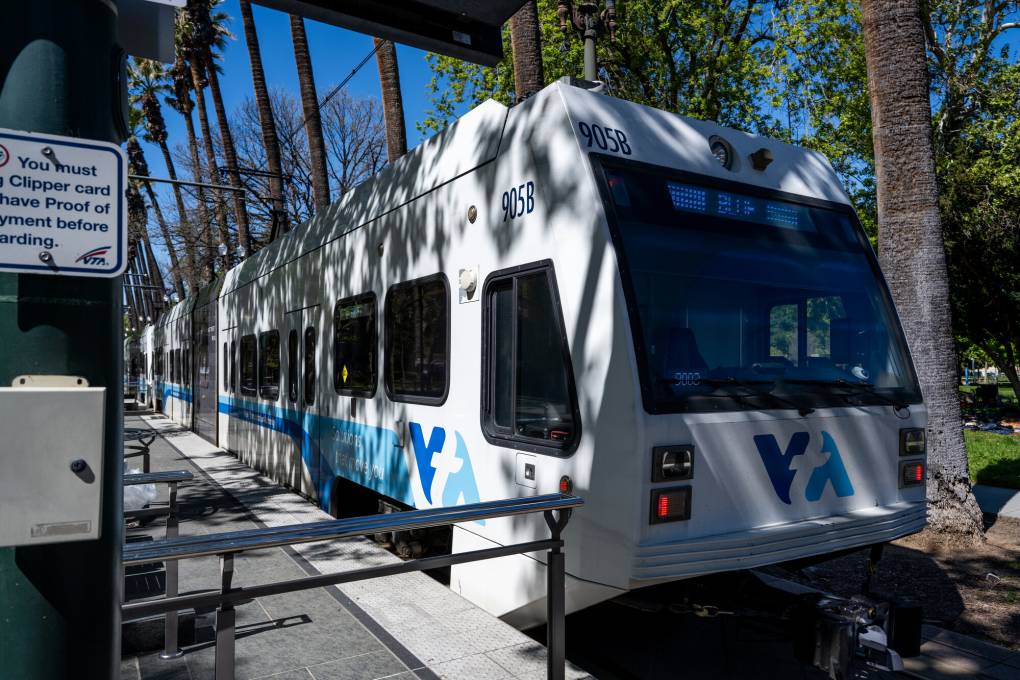
"content": "\u003cp>More than 1,500 transit workers in the \u003ca href=\"https://www.kqed.org/news/tag/south-bay\">South Bay\u003c/a> — who staged a historic 17-day strike in March over wages and benefits negotiations with the Valley Transportation Authority — are set to vote on a new contract offer from the agency on Tuesday.\u003c/p>\n\u003cp>The Amalgamated Transit Union Local 265, which represents bus drivers, light rail operators, maintenance workers and dispatchers, confirmed its members will vote on the latest offer from the VTA, which includes a 14.5% wage increase over a period of four years.\u003c/p>\n\u003cp>“I couldn’t even tell you confidently which way the vote’s going to go,” Raj Singh, the president of ATU Local 265, said Monday afternoon. “I think it’s going to be a very divided vote.”\u003c/p>\n\u003cp>[ad fullwidth]\u003c/p>\n\u003cp>The vote comes more than two months after Santa Clara County Superior Court Judge Daniel T. Nishigaya issued a preliminary injunction to \u003ca href=\"https://www.kqed.org/news/12033248/vta-strike-will-end-after-judges-order\">end the union’s strike\u003c/a>. The VTA had sought the injunction, claiming the union breached the “no-strike” clause of their contract by walking off the job.\u003c/p>\n\u003cp>The ruling brought an abrupt end to a grueling work stoppage that left tens of thousands of daily riders in the region without transportation and was marked by bitter exchanges between the union and the agency, which often blamed each other for the dispute.\u003c/p>\n\u003cfigure id=\"attachment_12032416\" class=\"wp-caption aligncenter\" style=\"max-width: 2000px\">\u003ca href=\"https://cdn.kqed.org/wp-content/uploads/sites/10/2025/03/20250311_VTAStrikeDay2_GC-6_qed.jpg\">\u003cimg loading=\"lazy\" decoding=\"async\" class=\"size-full wp-image-12032416\" src=\"https://cdn.kqed.org/wp-content/uploads/sites/10/2025/03/20250311_VTAStrikeDay2_GC-6_qed.jpg\" alt=\"\" width=\"2000\" height=\"1333\" srcset=\"https://cdn.kqed.org/wp-content/uploads/sites/10/2025/03/20250311_VTAStrikeDay2_GC-6_qed.jpg 2000w, https://cdn.kqed.org/wp-content/uploads/sites/10/2025/03/20250311_VTAStrikeDay2_GC-6_qed-800x533.jpg 800w, https://cdn.kqed.org/wp-content/uploads/sites/10/2025/03/20250311_VTAStrikeDay2_GC-6_qed-1020x680.jpg 1020w, https://cdn.kqed.org/wp-content/uploads/sites/10/2025/03/20250311_VTAStrikeDay2_GC-6_qed-160x107.jpg 160w, https://cdn.kqed.org/wp-content/uploads/sites/10/2025/03/20250311_VTAStrikeDay2_GC-6_qed-1536x1024.jpg 1536w, https://cdn.kqed.org/wp-content/uploads/sites/10/2025/03/20250311_VTAStrikeDay2_GC-6_qed-1920x1280.jpg 1920w\" sizes=\"auto, (max-width: 2000px) 100vw, 2000px\">\u003c/a>\u003cfigcaption class=\"wp-caption-text\">Hundreds of Santa Clara Valley Transportation Authority workers and represented by the Amalgamated Transit Union Local 265 raise fists during their historic 17-day strike in early March, in front of the VTA headquarters, on N First St, in San José, to demand a better contract and an increase in wages, on March 11, 2025. \u003ccite>(Gina Castro/KQED)\u003c/cite>\u003c/figcaption>\u003c/figure>\n\u003cp>Workers were \u003ca href=\"https://www.kqed.org/news/12033549/all-vta-bus-routes-rolling-after-strike-some-light-rail-returns-monday\">forced back to their jobs on March 27\u003c/a>. Singh said the agency and the union leadership had met three times since early April to continue contract negotiations.\u003c/p>\n\u003cp>Stacey Hendler Ross, a spokesperson for VTA, said Monday the agency is hopeful for a positive vote.\u003c/p>\n\u003cp>“It’s been several months now that employees have gone without a contract. We are eager to get this settled and have people move on and get the raises they deserve and kind of put this behind us,” she said.\u003c/p>\n\u003cp>She added that the contract offer is based on the agency’s “financial realities,” as the VTA, which is primarily funded by sales taxes, is facing a potential $14 million budget deficit in 2027.\u003c/p>\n\u003cp>“These financial constraints have made it essential for all labor agreements, not just ATUs, to remain within sustainable budget limits,” she said. “We want to be able to pay employees a fair, competitive contract and, at the same time, we need to be able to continue to serve our customers.”\u003c/p>\n\u003cp>[aside postID=news_12033248 hero='https://cdn.kqed.org/wp-content/uploads/sites/10/2025/03/250326-VTACOURT.-JG-05-KQED-1020x680.jpg']\u003c/p>\n\u003cp>Prior to the court ruling, union members overwhelmingly rejected the agency’s previous contract offer, which included an 11% raise over a period of three years. The current offer adds a fourth year onto the deal, which matches the contract lengths of other VTA labor groups.\u003c/p>\n\u003cp>Singh said the agency and union also negotiated terms ensuring the agency won’t seek punishments or retaliation against the union members for their strike actions, which the prior offer didn’t include.\u003c/p>\n\u003cp>While it includes some positive changes, Singh said he doesn’t feel the wage proposal is a fair deal for the union, but felt compelled to bring the latest offer to a vote so members can voice their opinion.\u003c/p>\n\u003cp>He accused VTA of “politely threatening” the union by noting there might not be another chance to get a deal approved by the agency’s board of directors for a month or more because of the Fourth of July holiday.\u003c/p>\n\u003cp>“We are at the point where we’ve been negotiating over eight months, and the agency is using the time and the injunction against us at this point,” Singh said. “They want to continue dragging their feet, and we owe it to our members to put this offer in front of them and let them decide if they are acceptable to the terms.”\u003c/p>\n\u003cp>Hendler Ross said the agency has “been eager and open” to negotiating the entire length of the contract dispute.\u003c/p>\n\u003cp>“There is nothing that VTA has done or would do to drag its feet or to draw this out. It’s not to anyone’s benefit to do that,” she said.\u003c/p>\n\u003cp>Singh said voting will likely take place all day Tuesday to give members on different shifts a chance to cast their vote, and results could be ready by early Wednesday.\u003c/p>\n\u003cp>\u003c/p>\n",
"blocks": [],
"excerpt": "Amalgamated Transit Union Local 265 members will vote on a new contract proposal from the Valley Transportation Authority. ",
"status": "publish",
"parent": 0,
"modified": 1748910601,
"stats": {
"hasAudio": false,
"hasVideo": false,
"hasChartOrMap": false,
"iframeSrcs": [],
"hasGoogleForm": false,
"hasGallery": false,
"hasHearkenModule": false,
"hasPolis": false,
"paragraphCount": 21,
"wordCount": 809
},
"headData": {
"title": "South Bay Transit Workers to Vote on New VTA Contract Offer After Historic Strike | KQED",
"description": "Amalgamated Transit Union Local 265 members will vote on a new contract proposal from the Valley Transportation Authority. ",
"ogTitle": "",
"ogDescription": "",
"ogImgId": "",
"twTitle": "",
"twDescription": "",
"twImgId": "",
"schema": {
"@context": "https://schema.org",
"@type": "NewsArticle",
"headline": "South Bay Transit Workers to Vote on New VTA Contract Offer After Historic Strike",
"datePublished": "2025-06-02T16:47:05-07:00",
"dateModified": "2025-06-02T17:30:01-07:00",
"image": "https://cdn.kqed.org/wp-content/uploads/2020/02/KQED-OG-Image@1x.png",
"isAccessibleForFree": "True",
"publisher": {
"@type": "NewsMediaOrganization",
"@id": "https://www.kqed.org/#organization",
"name": "KQED",
"logo": "https://cdn.kqed.org/wp-content/uploads/2020/02/KQED-OG-Image@1x.png",
"url": "https://www.kqed.org",
"sameAs": [
"https://www.facebook.com/KQED",
"https://twitter.com/KQED",
"https://www.instagram.com/kqed/",
"https://www.tiktok.com/@kqedofficial",
"https://www.linkedin.com/company/kqed",
"https://www.youtube.com/channel/UCeC0IOo7i1P_61zVUWbJ4nw"
]
}
}
},
"sticky": false,
"nprStoryId": "kqed-12042427",
"templateType": "standard",
"featuredImageType": "standard",
"excludeFromSiteSearch": "Include",
"articleAge": "0",
"path": "/news/12042427/south-bay-transit-workers-to-vote-on-new-vta-contract-offer-after-historic-strike",
"audioTrackLength": null,
"parsedContent": [
{
"type": "contentString",
"content": "\u003cdiv class=\"post-body\">\u003cp>\u003cp>More than 1,500 transit workers in the \u003ca href=\"https://www.kqed.org/news/tag/south-bay\">South Bay\u003c/a> — who staged a historic 17-day strike in March over wages and benefits negotiations with the Valley Transportation Authority — are set to vote on a new contract offer from the agency on Tuesday.\u003c/p>\n\u003cp>The Amalgamated Transit Union Local 265, which represents bus drivers, light rail operators, maintenance workers and dispatchers, confirmed its members will vote on the latest offer from the VTA, which includes a 14.5% wage increase over a period of four years.\u003c/p>\n\u003cp>“I couldn’t even tell you confidently which way the vote’s going to go,” Raj Singh, the president of ATU Local 265, said Monday afternoon. “I think it’s going to be a very divided vote.”\u003c/p>\n\u003cp>\u003c/p>\u003c/div>",
"attributes": {
"named": {},
"numeric": []
}
},
{
"type": "component",
"content": "",
"name": "ad",
"attributes": {
"named": {
"label": "fullwidth"
},
"numeric": [
"fullwidth"
]
}
},
{
"type": "contentString",
"content": "\u003cdiv class=\"post-body\">\u003cp>\u003c/p>\n\u003cp>The vote comes more than two months after Santa Clara County Superior Court Judge Daniel T. Nishigaya issued a preliminary injunction to \u003ca href=\"https://www.kqed.org/news/12033248/vta-strike-will-end-after-judges-order\">end the union’s strike\u003c/a>. The VTA had sought the injunction, claiming the union breached the “no-strike” clause of their contract by walking off the job.\u003c/p>\n\u003cp>The ruling brought an abrupt end to a grueling work stoppage that left tens of thousands of daily riders in the region without transportation and was marked by bitter exchanges between the union and the agency, which often blamed each other for the dispute.\u003c/p>\n\u003cfigure id=\"attachment_12032416\" class=\"wp-caption aligncenter\" style=\"max-width: 2000px\">\u003ca href=\"https://cdn.kqed.org/wp-content/uploads/sites/10/2025/03/20250311_VTAStrikeDay2_GC-6_qed.jpg\">\u003cimg loading=\"lazy\" decoding=\"async\" class=\"size-full wp-image-12032416\" src=\"https://cdn.kqed.org/wp-content/uploads/sites/10/2025/03/20250311_VTAStrikeDay2_GC-6_qed.jpg\" alt=\"\" width=\"2000\" height=\"1333\" srcset=\"https://cdn.kqed.org/wp-content/uploads/sites/10/2025/03/20250311_VTAStrikeDay2_GC-6_qed.jpg 2000w, https://cdn.kqed.org/wp-content/uploads/sites/10/2025/03/20250311_VTAStrikeDay2_GC-6_qed-800x533.jpg 800w, https://cdn.kqed.org/wp-content/uploads/sites/10/2025/03/20250311_VTAStrikeDay2_GC-6_qed-1020x680.jpg 1020w, https://cdn.kqed.org/wp-content/uploads/sites/10/2025/03/20250311_VTAStrikeDay2_GC-6_qed-160x107.jpg 160w, https://cdn.kqed.org/wp-content/uploads/sites/10/2025/03/20250311_VTAStrikeDay2_GC-6_qed-1536x1024.jpg 1536w, https://cdn.kqed.org/wp-content/uploads/sites/10/2025/03/20250311_VTAStrikeDay2_GC-6_qed-1920x1280.jpg 1920w\" sizes=\"auto, (max-width: 2000px) 100vw, 2000px\">\u003c/a>\u003cfigcaption class=\"wp-caption-text\">Hundreds of Santa Clara Valley Transportation Authority workers and represented by the Amalgamated Transit Union Local 265 raise fists during their historic 17-day strike in early March, in front of the VTA headquarters, on N First St, in San José, to demand a better contract and an increase in wages, on March 11, 2025. \u003ccite>(Gina Castro/KQED)\u003c/cite>\u003c/figcaption>\u003c/figure>\n\u003cp>Workers were \u003ca href=\"https://www.kqed.org/news/12033549/all-vta-bus-routes-rolling-after-strike-some-light-rail-returns-monday\">forced back to their jobs on March 27\u003c/a>. Singh said the agency and the union leadership had met three times since early April to continue contract negotiations.\u003c/p>\n\u003cp>Stacey Hendler Ross, a spokesperson for VTA, said Monday the agency is hopeful for a positive vote.\u003c/p>\n\u003cp>“It’s been several months now that employees have gone without a contract. We are eager to get this settled and have people move on and get the raises they deserve and kind of put this behind us,” she said.\u003c/p>\n\u003cp>She added that the contract offer is based on the agency’s “financial realities,” as the VTA, which is primarily funded by sales taxes, is facing a potential $14 million budget deficit in 2027.\u003c/p>\n\u003cp>“These financial constraints have made it essential for all labor agreements, not just ATUs, to remain within sustainable budget limits,” she said. “We want to be able to pay employees a fair, competitive contract and, at the same time, we need to be able to continue to serve our customers.”\u003c/p>\n\u003cp>\u003c/p>\u003c/div>",
"attributes": {
"named": {},
"numeric": []
}
},
{
"type": "component",
"content": "",
"name": "aside",
"attributes": {
"named": {
"postid": "news_12033248",
"hero": "https://cdn.kqed.org/wp-content/uploads/sites/10/2025/03/250326-VTACOURT.-JG-05-KQED-1020x680.jpg",
"label": ""
},
"numeric": []
}
},
{
"type": "contentString",
"content": "\u003cdiv class=\"post-body\">\u003cp>\u003c/p>\n\u003cp>Prior to the court ruling, union members overwhelmingly rejected the agency’s previous contract offer, which included an 11% raise over a period of three years. The current offer adds a fourth year onto the deal, which matches the contract lengths of other VTA labor groups.\u003c/p>\n\u003cp>Singh said the agency and union also negotiated terms ensuring the agency won’t seek punishments or retaliation against the union members for their strike actions, which the prior offer didn’t include.\u003c/p>\n\u003cp>While it includes some positive changes, Singh said he doesn’t feel the wage proposal is a fair deal for the union, but felt compelled to bring the latest offer to a vote so members can voice their opinion.\u003c/p>\n\u003cp>He accused VTA of “politely threatening” the union by noting there might not be another chance to get a deal approved by the agency’s board of directors for a month or more because of the Fourth of July holiday.\u003c/p>\n\u003cp>“We are at the point where we’ve been negotiating over eight months, and the agency is using the time and the injunction against us at this point,” Singh said. “They want to continue dragging their feet, and we owe it to our members to put this offer in front of them and let them decide if they are acceptable to the terms.”\u003c/p>\n\u003cp>Hendler Ross said the agency has “been eager and open” to negotiating the entire length of the contract dispute.\u003c/p>\n\u003cp>“There is nothing that VTA has done or would do to drag its feet or to draw this out. It’s not to anyone’s benefit to do that,” she said.\u003c/p>\n\u003cp>Singh said voting will likely take place all day Tuesday to give members on different shifts a chance to cast their vote, and results could be ready by early Wednesday.\u003c/p>\n\u003cp>\u003c/p>\n\u003c/div>\u003c/p>",
"attributes": {
"named": {},
"numeric": []
}
}
],
"link": "/news/12042427/south-bay-transit-workers-to-vote-on-new-vta-contract-offer-after-historic-strike",
"authors": [
"11906"
],
"categories": [
"news_31795",
"news_8",
"news_1397"
],
"tags": [
"news_27626",
"news_19904",
"news_29087",
"news_21285",
"news_20517",
"news_794",
"news_20675"
],
"featImg": "news_12042429",
"label": "news"
},
"news_12041847": {
"type": "posts",
"id": "news_12041847",
"meta": {
"index": "posts_1716263798",
"site": "news",
"id": "12041847",
"score": null,
"sort": [
1748523646000
]
},
"guestAuthors": [],
"slug": "san-jose-could-temporarily-ban-smoke-shops-citing-health-inequities",
"title": "San José Could Temporarily Ban Smoke Shops, Citing Health Inequities",
"publishDate": 1748523646,
"format": "standard",
"headTitle": "San José Could Temporarily Ban Smoke Shops, Citing Health Inequities | KQED",
"labelTerm": {
"site": "news"
},
"content": "\u003cp>San José is taking an initial step toward temporarily banning all new smoke shops, as city leaders hope to redistribute the concentration of such businesses across the city.\u003c/p>\n\u003cp>District 5 Councilmember Peter Ortiz proposed a temporary moratorium on smoke shops to the City Council’s rules committee on Wednesday. Ortiz championed the idea in response to a new county report showing that predominantly Latino areas of the city are heavily saturated with the businesses.\u003c/p>\n\u003cp>“People have been waiting long enough for health justice, and so we’re taking action now,” Ortiz said Wednesday outside City Hall.\u003c/p>\n\u003cp>[ad fullwidth]\u003c/p>\n\u003cp>While Latinos make up about one in every four residents across Santa Clara County, in the southern portions of the county and in East San José, Latinos account for nearly half of the population.\u003c/p>\n\u003cp>Santa Clara County’s recently released 2025 \u003ca href=\"https://files.santaclaracounty.gov/exjcpb1751/2025-05/lhareport-5-05-2025.pdf?VersionId=x29kOMOkTjA3JoztYS5K8tbKUKkgFQrs\">Latino Health Assessment\u003c/a> — the first comprehensive county analysis of Latino living conditions and outcomes in more than a decade — found that tobacco retailers are more than twice as common in East San José, with nearly seven retailers per square mile, compared to three in the county overall.\u003c/p>\n\u003cfigure id=\"attachment_12041917\" class=\"wp-caption aligncenter\" style=\"max-width: 2000px\">\u003cimg loading=\"lazy\" decoding=\"async\" class=\"size-full wp-image-12041917\" src=\"https://cdn.kqed.org/wp-content/uploads/sites/10/2025/05/SmokeShopsJG4.jpg\" alt=\"\" width=\"2000\" height=\"1333\" srcset=\"https://cdn.kqed.org/wp-content/uploads/sites/10/2025/05/SmokeShopsJG4.jpg 2000w, https://cdn.kqed.org/wp-content/uploads/sites/10/2025/05/SmokeShopsJG4-800x533.jpg 800w, https://cdn.kqed.org/wp-content/uploads/sites/10/2025/05/SmokeShopsJG4-1020x680.jpg 1020w, https://cdn.kqed.org/wp-content/uploads/sites/10/2025/05/SmokeShopsJG4-160x107.jpg 160w, https://cdn.kqed.org/wp-content/uploads/sites/10/2025/05/SmokeShopsJG4-1536x1024.jpg 1536w, https://cdn.kqed.org/wp-content/uploads/sites/10/2025/05/SmokeShopsJG4-1920x1280.jpg 1920w\" sizes=\"auto, (max-width: 2000px) 100vw, 2000px\">\u003cfigcaption class=\"wp-caption-text\">San José District 5 City Councilmember Peter Ortiz, right, listens as Santa Clara County Supervisor Sylvia Arenas speaks during a press conference in support of a temporary ban on new smoke shops in San José outside City Hall on May 28, 2025. \u003ccite>(Joseph Geha/KQED)\u003c/cite>\u003c/figcaption>\u003c/figure>\n\u003cp>“Studies have shown that tobacco and alcohol retailers cluster in low-income neighborhoods and neighborhoods that predominantly house residents of color,” the assessment report said. “Living near a large number of alcohol and tobacco retailers increases the risk of drinking and smoking and makes it harder to quit these behaviors.”\u003c/p>\n\u003cp>The assessment also said that neighborhoods with a higher density of alcohol and tobacco retailers have higher rates of assault, injuries and collisions between cars and pedestrians.\u003c/p>\n\u003cp>“These businesses are making it easier for children to access tobacco and vaping products before they even understand the risk,” Pastor Danny Sanchez said Wednesday during a press conference outside City Hall. “In East San José, it’s not uncommon to find two or three smoke shops within a few blocks of a school, but if you go to Los Gatos or Almaden Valley, it is not the same pattern.”\u003c/p>\n\u003cp>[aside postID=news_11983224 hero='https://cdn.kqed.org/wp-content/uploads/sites/10/2024/04/GettyImages-1486127435-1020x680.jpg']Ortiz, who represents a portion of East San José, told KQED he is “pro-business,” and expects any such moratorium wouldn’t need to be in place for more than a year, while the city works to formulate new regulations and programs around how and where tobacco or smoke shops are allowed to open.\u003c/p>\n\u003cp>“There’s not a lack of smoke shops on the East Side or throughout the city of San José,” Ortiz said. “You’re advertising and selling products that will result in health problems to our community, and you’re making money off that. And so we need to have leaders that are willing to stand up to greed and advocate for the health outcomes of our community.”\u003c/p>\n\u003cp>The rules committee asked city staff Wednesday to create an estimate of how much work it would take to craft such a moratorium and other policies to control smoke shops, which the committee will consider on June 11. At that meeting, the committee could also make more specific policy recommendations regarding the moratorium to be reviewed later by the full city council.\u003c/p>\n\u003cfigure id=\"attachment_12041913\" class=\"wp-caption aligncenter\" style=\"max-width: 2000px\">\u003cimg loading=\"lazy\" decoding=\"async\" class=\"size-full wp-image-12041913\" src=\"https://cdn.kqed.org/wp-content/uploads/sites/10/2025/05/SmokeShopsJG1.jpg\" alt=\"\" width=\"2000\" height=\"1333\" srcset=\"https://cdn.kqed.org/wp-content/uploads/sites/10/2025/05/SmokeShopsJG1.jpg 2000w, https://cdn.kqed.org/wp-content/uploads/sites/10/2025/05/SmokeShopsJG1-800x533.jpg 800w, https://cdn.kqed.org/wp-content/uploads/sites/10/2025/05/SmokeShopsJG1-1020x680.jpg 1020w, https://cdn.kqed.org/wp-content/uploads/sites/10/2025/05/SmokeShopsJG1-160x107.jpg 160w, https://cdn.kqed.org/wp-content/uploads/sites/10/2025/05/SmokeShopsJG1-1536x1024.jpg 1536w, https://cdn.kqed.org/wp-content/uploads/sites/10/2025/05/SmokeShopsJG1-1920x1280.jpg 1920w\" sizes=\"auto, (max-width: 2000px) 100vw, 2000px\">\u003cfigcaption class=\"wp-caption-text\">Darcie Green, executive director of health nonprofit Latinas Contra Cancer, speaks in support of a temporary ban on new smoke shops in San José outside City Hall on May 28, 2025. \u003ccite>(Joseph Geha/KQED)\u003c/cite>\u003c/figcaption>\u003c/figure>\n\u003cp>Darcie Green, executive director of health nonprofit Latinas Contra Cancer, was on the steering committee for the county’s report, which she said affirmed much of what Latinos in East San José already knew anecdotally about health, education and opportunities for communities of color and immigrants.\u003c/p>\n\u003cp>She said the call for the moratorium isn’t just about opposing smoke shops, but advocating in favor of healthier environments for everyone.\u003c/p>\n\u003cp>“This moratorium gives us the breathing room to reimagine East San José, not as a place saturated with harm, but as a model of health, justice and care,” she said Wednesday at City Hall.\u003c/p>\n\u003cp>“We deserve to regularly assess the health and quality of life of places where we live, work and play, and to reclaim the right to design our surroundings based on what we know, what we value, and what we envision for our own future,” Green added.\u003c/p>\n\u003cp>The city already has regulations in place for where cannabis dispensaries can operate and how many of them are allowed in a given area — rules which the council softened in 2023. San José also requires retailers to obtain a retail license from the city to sell tobacco products and bans the sale of flavored tobacco and vapes.\u003c/p>\n\u003cfigure id=\"attachment_12041935\" class=\"wp-caption aligncenter\" style=\"max-width: 1999px\">\u003cimg loading=\"lazy\" decoding=\"async\" class=\"size-full wp-image-12041935\" src=\"https://cdn.kqed.org/wp-content/uploads/sites/10/2025/05/250528-SJSMOKESHOPS-JG-3_qed.jpg\" alt=\"\" width=\"1999\" height=\"1333\" srcset=\"https://cdn.kqed.org/wp-content/uploads/sites/10/2025/05/250528-SJSMOKESHOPS-JG-3_qed.jpg 1999w, https://cdn.kqed.org/wp-content/uploads/sites/10/2025/05/250528-SJSMOKESHOPS-JG-3_qed-800x533.jpg 800w, https://cdn.kqed.org/wp-content/uploads/sites/10/2025/05/250528-SJSMOKESHOPS-JG-3_qed-1020x680.jpg 1020w, https://cdn.kqed.org/wp-content/uploads/sites/10/2025/05/250528-SJSMOKESHOPS-JG-3_qed-160x107.jpg 160w, https://cdn.kqed.org/wp-content/uploads/sites/10/2025/05/250528-SJSMOKESHOPS-JG-3_qed-1536x1024.jpg 1536w, https://cdn.kqed.org/wp-content/uploads/sites/10/2025/05/250528-SJSMOKESHOPS-JG-3_qed-1920x1280.jpg 1920w\" sizes=\"auto, (max-width: 1999px) 100vw, 1999px\">\u003cfigcaption class=\"wp-caption-text\">Grizzlys Smoke Shop in the Sunol-Midtown neighborhood of San José on May 28, 2025. San José officials are considering a temporary ban on all new smoke shop businesses in the city after a county report showed they are oversaturated in predominantly Latino areas.\u003c/figcaption>\u003c/figure>\n\u003cp>But some businesses, Ortiz contended, set up as “smoke shops” that don’t sell tobacco, and therefore don’t need a license.\u003c/p>\n\u003cp>“And they’re not necessarily selling tobacco, but they’re selling paraphernalia. And then they’re sending cannabis and mushrooms under the table,” Ortiz said, adding that these loopholes circumvent city efforts to reduce clustering of such shops and to combat illegal sales of drugs.\u003c/p>\n\u003cp>“So we need to make sure that there is an analysis by city staff and then a response through policy,” Ortiz said.\u003c/p>\n\u003cp>The Latino Health Assessment also shows that the community is disproportionately hindered by violence, access to healthcare, social determinants of health such as lower incomes, housing stability and faces increased mental health challenges and systematic barriers, disproportionately hinders the community when compared to the general population.\u003c/p>\n\u003cp>\u003c/p>\n",
"blocks": [],
"excerpt": "San José leaders are advocating for a temporary halt on new smoke shops across the city, following a recent report showing these businesses are overrepresented in predominantly Latino areas of the city. ",
"status": "publish",
"parent": 0,
"modified": 1748539947,
"stats": {
"hasAudio": false,
"hasVideo": false,
"hasChartOrMap": false,
"iframeSrcs": [],
"hasGoogleForm": false,
"hasGallery": false,
"hasHearkenModule": false,
"hasPolis": false,
"paragraphCount": 22,
"wordCount": 1057
},
"headData": {
"title": "San José Could Temporarily Ban Smoke Shops, Citing Health Inequities | KQED",
"description": "San José leaders are advocating for a temporary halt on new smoke shops across the city, following a recent report showing these businesses are overrepresented in predominantly Latino areas of the city. ",
"ogTitle": "",
"ogDescription": "",
"ogImgId": "",
"twTitle": "",
"twDescription": "",
"twImgId": "",
"schema": {
"@context": "https://schema.org",
"@type": "NewsArticle",
"headline": "San José Could Temporarily Ban Smoke Shops, Citing Health Inequities",
"datePublished": "2025-05-29T06:00:46-07:00",
"dateModified": "2025-05-29T10:32:27-07:00",
"image": "https://cdn.kqed.org/wp-content/uploads/2020/02/KQED-OG-Image@1x.png",
"isAccessibleForFree": "True",
"publisher": {
"@type": "NewsMediaOrganization",
"@id": "https://www.kqed.org/#organization",
"name": "KQED",
"logo": "https://cdn.kqed.org/wp-content/uploads/2020/02/KQED-OG-Image@1x.png",
"url": "https://www.kqed.org",
"sameAs": [
"https://www.facebook.com/KQED",
"https://twitter.com/KQED",
"https://www.instagram.com/kqed/",
"https://www.tiktok.com/@kqedofficial",
"https://www.linkedin.com/company/kqed",
"https://www.youtube.com/channel/UCeC0IOo7i1P_61zVUWbJ4nw"
]
}
}
},
"sticky": false,
"nprStoryId": "kqed-12041847",
"templateType": "standard",
"featuredImageType": "standard",
"excludeFromSiteSearch": "Include",
"articleAge": "0",
"path": "/news/12041847/san-jose-could-temporarily-ban-smoke-shops-citing-health-inequities",
"audioTrackLength": null,
"parsedContent": [
{
"type": "contentString",
"content": "\u003cdiv class=\"post-body\">\u003cp>\u003cp>San José is taking an initial step toward temporarily banning all new smoke shops, as city leaders hope to redistribute the concentration of such businesses across the city.\u003c/p>\n\u003cp>District 5 Councilmember Peter Ortiz proposed a temporary moratorium on smoke shops to the City Council’s rules committee on Wednesday. Ortiz championed the idea in response to a new county report showing that predominantly Latino areas of the city are heavily saturated with the businesses.\u003c/p>\n\u003cp>“People have been waiting long enough for health justice, and so we’re taking action now,” Ortiz said Wednesday outside City Hall.\u003c/p>\n\u003cp>\u003c/p>\u003c/div>",
"attributes": {
"named": {},
"numeric": []
}
},
{
"type": "component",
"content": "",
"name": "ad",
"attributes": {
"named": {
"label": "fullwidth"
},
"numeric": [
"fullwidth"
]
}
},
{
"type": "contentString",
"content": "\u003cdiv class=\"post-body\">\u003cp>\u003c/p>\n\u003cp>While Latinos make up about one in every four residents across Santa Clara County, in the southern portions of the county and in East San José, Latinos account for nearly half of the population.\u003c/p>\n\u003cp>Santa Clara County’s recently released 2025 \u003ca href=\"https://files.santaclaracounty.gov/exjcpb1751/2025-05/lhareport-5-05-2025.pdf?VersionId=x29kOMOkTjA3JoztYS5K8tbKUKkgFQrs\">Latino Health Assessment\u003c/a> — the first comprehensive county analysis of Latino living conditions and outcomes in more than a decade — found that tobacco retailers are more than twice as common in East San José, with nearly seven retailers per square mile, compared to three in the county overall.\u003c/p>\n\u003cfigure id=\"attachment_12041917\" class=\"wp-caption aligncenter\" style=\"max-width: 2000px\">\u003cimg loading=\"lazy\" decoding=\"async\" class=\"size-full wp-image-12041917\" src=\"https://cdn.kqed.org/wp-content/uploads/sites/10/2025/05/SmokeShopsJG4.jpg\" alt=\"\" width=\"2000\" height=\"1333\" srcset=\"https://cdn.kqed.org/wp-content/uploads/sites/10/2025/05/SmokeShopsJG4.jpg 2000w, https://cdn.kqed.org/wp-content/uploads/sites/10/2025/05/SmokeShopsJG4-800x533.jpg 800w, https://cdn.kqed.org/wp-content/uploads/sites/10/2025/05/SmokeShopsJG4-1020x680.jpg 1020w, https://cdn.kqed.org/wp-content/uploads/sites/10/2025/05/SmokeShopsJG4-160x107.jpg 160w, https://cdn.kqed.org/wp-content/uploads/sites/10/2025/05/SmokeShopsJG4-1536x1024.jpg 1536w, https://cdn.kqed.org/wp-content/uploads/sites/10/2025/05/SmokeShopsJG4-1920x1280.jpg 1920w\" sizes=\"auto, (max-width: 2000px) 100vw, 2000px\">\u003cfigcaption class=\"wp-caption-text\">San José District 5 City Councilmember Peter Ortiz, right, listens as Santa Clara County Supervisor Sylvia Arenas speaks during a press conference in support of a temporary ban on new smoke shops in San José outside City Hall on May 28, 2025. \u003ccite>(Joseph Geha/KQED)\u003c/cite>\u003c/figcaption>\u003c/figure>\n\u003cp>“Studies have shown that tobacco and alcohol retailers cluster in low-income neighborhoods and neighborhoods that predominantly house residents of color,” the assessment report said. “Living near a large number of alcohol and tobacco retailers increases the risk of drinking and smoking and makes it harder to quit these behaviors.”\u003c/p>\n\u003cp>The assessment also said that neighborhoods with a higher density of alcohol and tobacco retailers have higher rates of assault, injuries and collisions between cars and pedestrians.\u003c/p>\n\u003cp>“These businesses are making it easier for children to access tobacco and vaping products before they even understand the risk,” Pastor Danny Sanchez said Wednesday during a press conference outside City Hall. “In East San José, it’s not uncommon to find two or three smoke shops within a few blocks of a school, but if you go to Los Gatos or Almaden Valley, it is not the same pattern.”\u003c/p>\n\u003cp>\u003c/p>\u003c/div>",
"attributes": {
"named": {},
"numeric": []
}
},
{
"type": "component",
"content": "",
"name": "aside",
"attributes": {
"named": {
"postid": "news_11983224",
"hero": "https://cdn.kqed.org/wp-content/uploads/sites/10/2024/04/GettyImages-1486127435-1020x680.jpg",
"label": ""
},
"numeric": []
}
},
{
"type": "contentString",
"content": "\u003cdiv class=\"post-body\">\u003cp>Ortiz, who represents a portion of East San José, told KQED he is “pro-business,” and expects any such moratorium wouldn’t need to be in place for more than a year, while the city works to formulate new regulations and programs around how and where tobacco or smoke shops are allowed to open.\u003c/p>\n\u003cp>“There’s not a lack of smoke shops on the East Side or throughout the city of San José,” Ortiz said. “You’re advertising and selling products that will result in health problems to our community, and you’re making money off that. And so we need to have leaders that are willing to stand up to greed and advocate for the health outcomes of our community.”\u003c/p>\n\u003cp>The rules committee asked city staff Wednesday to create an estimate of how much work it would take to craft such a moratorium and other policies to control smoke shops, which the committee will consider on June 11. At that meeting, the committee could also make more specific policy recommendations regarding the moratorium to be reviewed later by the full city council.\u003c/p>\n\u003cfigure id=\"attachment_12041913\" class=\"wp-caption aligncenter\" style=\"max-width: 2000px\">\u003cimg loading=\"lazy\" decoding=\"async\" class=\"size-full wp-image-12041913\" src=\"https://cdn.kqed.org/wp-content/uploads/sites/10/2025/05/SmokeShopsJG1.jpg\" alt=\"\" width=\"2000\" height=\"1333\" srcset=\"https://cdn.kqed.org/wp-content/uploads/sites/10/2025/05/SmokeShopsJG1.jpg 2000w, https://cdn.kqed.org/wp-content/uploads/sites/10/2025/05/SmokeShopsJG1-800x533.jpg 800w, https://cdn.kqed.org/wp-content/uploads/sites/10/2025/05/SmokeShopsJG1-1020x680.jpg 1020w, https://cdn.kqed.org/wp-content/uploads/sites/10/2025/05/SmokeShopsJG1-160x107.jpg 160w, https://cdn.kqed.org/wp-content/uploads/sites/10/2025/05/SmokeShopsJG1-1536x1024.jpg 1536w, https://cdn.kqed.org/wp-content/uploads/sites/10/2025/05/SmokeShopsJG1-1920x1280.jpg 1920w\" sizes=\"auto, (max-width: 2000px) 100vw, 2000px\">\u003cfigcaption class=\"wp-caption-text\">Darcie Green, executive director of health nonprofit Latinas Contra Cancer, speaks in support of a temporary ban on new smoke shops in San José outside City Hall on May 28, 2025. \u003ccite>(Joseph Geha/KQED)\u003c/cite>\u003c/figcaption>\u003c/figure>\n\u003cp>Darcie Green, executive director of health nonprofit Latinas Contra Cancer, was on the steering committee for the county’s report, which she said affirmed much of what Latinos in East San José already knew anecdotally about health, education and opportunities for communities of color and immigrants.\u003c/p>\n\u003cp>She said the call for the moratorium isn’t just about opposing smoke shops, but advocating in favor of healthier environments for everyone.\u003c/p>\n\u003cp>“This moratorium gives us the breathing room to reimagine East San José, not as a place saturated with harm, but as a model of health, justice and care,” she said Wednesday at City Hall.\u003c/p>\n\u003cp>“We deserve to regularly assess the health and quality of life of places where we live, work and play, and to reclaim the right to design our surroundings based on what we know, what we value, and what we envision for our own future,” Green added.\u003c/p>\n\u003cp>The city already has regulations in place for where cannabis dispensaries can operate and how many of them are allowed in a given area — rules which the council softened in 2023. San José also requires retailers to obtain a retail license from the city to sell tobacco products and bans the sale of flavored tobacco and vapes.\u003c/p>\n\u003cfigure id=\"attachment_12041935\" class=\"wp-caption aligncenter\" style=\"max-width: 1999px\">\u003cimg loading=\"lazy\" decoding=\"async\" class=\"size-full wp-image-12041935\" src=\"https://cdn.kqed.org/wp-content/uploads/sites/10/2025/05/250528-SJSMOKESHOPS-JG-3_qed.jpg\" alt=\"\" width=\"1999\" height=\"1333\" srcset=\"https://cdn.kqed.org/wp-content/uploads/sites/10/2025/05/250528-SJSMOKESHOPS-JG-3_qed.jpg 1999w, https://cdn.kqed.org/wp-content/uploads/sites/10/2025/05/250528-SJSMOKESHOPS-JG-3_qed-800x533.jpg 800w, https://cdn.kqed.org/wp-content/uploads/sites/10/2025/05/250528-SJSMOKESHOPS-JG-3_qed-1020x680.jpg 1020w, https://cdn.kqed.org/wp-content/uploads/sites/10/2025/05/250528-SJSMOKESHOPS-JG-3_qed-160x107.jpg 160w, https://cdn.kqed.org/wp-content/uploads/sites/10/2025/05/250528-SJSMOKESHOPS-JG-3_qed-1536x1024.jpg 1536w, https://cdn.kqed.org/wp-content/uploads/sites/10/2025/05/250528-SJSMOKESHOPS-JG-3_qed-1920x1280.jpg 1920w\" sizes=\"auto, (max-width: 1999px) 100vw, 1999px\">\u003cfigcaption class=\"wp-caption-text\">Grizzlys Smoke Shop in the Sunol-Midtown neighborhood of San José on May 28, 2025. San José officials are considering a temporary ban on all new smoke shop businesses in the city after a county report showed they are oversaturated in predominantly Latino areas.\u003c/figcaption>\u003c/figure>\n\u003cp>But some businesses, Ortiz contended, set up as “smoke shops” that don’t sell tobacco, and therefore don’t need a license.\u003c/p>\n\u003cp>“And they’re not necessarily selling tobacco, but they’re selling paraphernalia. And then they’re sending cannabis and mushrooms under the table,” Ortiz said, adding that these loopholes circumvent city efforts to reduce clustering of such shops and to combat illegal sales of drugs.\u003c/p>\n\u003cp>“So we need to make sure that there is an analysis by city staff and then a response through policy,” Ortiz said.\u003c/p>\n\u003cp>The Latino Health Assessment also shows that the community is disproportionately hindered by violence, access to healthcare, social determinants of health such as lower incomes, housing stability and faces increased mental health challenges and systematic barriers, disproportionately hinders the community when compared to the general population.\u003c/p>\n\u003cp>\u003c/p>\n\u003c/div>\u003c/p>",
"attributes": {
"named": {},
"numeric": []
}
}
],
"link": "/news/12041847/san-jose-could-temporarily-ban-smoke-shops-citing-health-inequities",
"authors": [
"11906"
],
"categories": [
"news_31795",
"news_457",
"news_8"
],
"tags": [
"news_18538",
"news_27626",
"news_23477",
"news_31420",
"news_18142",
"news_17968",
"news_19960",
"news_18541",
"news_21285",
"news_2629",
"news_22857"
],
"featImg": "news_12041943",
"label": "news"
},
"news_12041463": {
"type": "posts",
"id": "news_12041463",
"meta": {
"index": "posts_1716263798",
"site": "news",
"id": "12041463",
"score": null,
"sort": [
1748024276000
]
},
"guestAuthors": [],
"slug": "memorial-day-weekend-weather-wont-feel-summer-much-bay-area",
"title": "Memorial Day Weekend Weather Won’t Quite Feel Like Summer for Much of Bay Area",
"publishDate": 1748024276,
"format": "standard",
"headTitle": "Memorial Day Weekend Weather Won’t Quite Feel Like Summer for Much of Bay Area | KQED",
"labelTerm": {
"site": "news"
},
"content": "\u003cp>\u003ca href=\"https://www.kqed.org/news/12040892/5-best-bay-area-hikes-things-to-do-memorial-day-weekend\">Memorial Day weekend\u003c/a> will usher in the summer season with mild \u003ca href=\"https://www.kqed.org/news/tag/weather\">weather\u003c/a> as Bay Area temperatures lull between warm-ups.\u003c/p>\n\u003cp>If you’re looking to get some sun or a tan, you might need to head to the outer edges of the Bay, according to the National Weather Service. Temperatures in the inland parts of Sonoma and Santa Clara counties could reach into the 80s on Saturday, but San Francisco and its surrounding counties will likely linger in the 60s throughout the holiday weekend.\u003c/p>\n\u003cp>Friday temperatures will be cooler than earlier in the week, settling around the high 60s and low 70s in most Bay Area counties.\u003c/p>\n\u003cp>[ad fullwidth]\u003c/p>\n\u003cp>While Monterey County and parts of Sonoma could hit the 80s, Brayden Murdock, a meteorologist with the weather service’s Bay Area office, warned that people trying to beat the heat with a trip to the beach won’t find a sunny coastline.\u003c/p>\n\u003cp>“The marine environment is going to be a bit on the rougher side,” he said. “Windy conditions, that can mean some sea breeze and sea spray, and then on top of that, the water is still pretty cold.”\u003c/p>\n\u003cfigure id=\"attachment_12028751\" class=\"wp-caption aligncenter\" style=\"max-width: 2000px\">\u003cimg loading=\"lazy\" decoding=\"async\" class=\"size-full wp-image-12028751\" src=\"https://cdn.kqed.org/wp-content/uploads/sites/10/2025/02/SuperPod.jpg\" alt=\"\" width=\"2000\" height=\"1097\" srcset=\"https://cdn.kqed.org/wp-content/uploads/sites/10/2025/02/SuperPod.jpg 2000w, https://cdn.kqed.org/wp-content/uploads/sites/10/2025/02/SuperPod-800x439.jpg 800w, https://cdn.kqed.org/wp-content/uploads/sites/10/2025/02/SuperPod-1020x559.jpg 1020w, https://cdn.kqed.org/wp-content/uploads/sites/10/2025/02/SuperPod-160x88.jpg 160w, https://cdn.kqed.org/wp-content/uploads/sites/10/2025/02/SuperPod-1536x842.jpg 1536w, https://cdn.kqed.org/wp-content/uploads/sites/10/2025/02/SuperPod-1920x1053.jpg 1920w\" sizes=\"auto, (max-width: 2000px) 100vw, 2000px\">\u003cfigcaption class=\"wp-caption-text\">Thousands of dolphins swim in the waters off Monterey in a still image from a video captured by boat captain Evan Brodsky on Feb. 21. \u003ccite>(Evan Brodsky/Monterey Bay Whale Watch)\u003c/cite>\u003c/figcaption>\u003c/figure>\n\u003cp>Since the sea surface temperature in the Pacific Ocean is about 50 degrees, Murdock said that unsuspecting swimmers could risk cold water shock. Boating is also going to be somewhat hazardous due to winds, he said. There will be small craft advisories and gale warnings, which indicate high winds, spanning the Bay Area’s coastline for much of the weekend.\u003c/p>\n\u003cp>Unfortunately for Memorial Day beachgoers, “I want to keep people kind of aware that as they go through the weekend that maybe the marine environment is \u003ca href=\"https://www.kqed.org/news/12041127/dont-go-into-the-water-at-ocean-beach-sf-officials-urge-ahead-of-memorial-day-weekend\">not so much your friend\u003c/a>,” Murdock said.\u003c/p>\n\u003cp>The valley, on the other hand, will be in top form for \u003ca href=\"https://www.kqed.org/arts/13970127/green-day-justin-timberlake-noah-kahan-to-headline-bottlerock\">BottleRock\u003c/a> this weekend, with warm but mild temperatures for the Napa area.[aside postID=news_12041127 hero='https://cdn.kqed.org/wp-content/uploads/sites/10/2025/05/250210-SurferSewage-16-BL_qed-1020x680.jpg']Throughout the music festival, Napa is looking at low to mid-70s weather throughout the day, and slightly breezy, cool nights – perfect for dancing, drinking wine and bundling up after the sun goes down.\u003c/p>\n\u003cp>The weekend’s weather will also be right for barbecues, so long as people take proper fire precautions. Murdock said that on Thursday, the weather service recorded a fair number of fires as the Bay Area enters its \u003ca href=\"https://www.kqed.org/science/1996980/californias-snowpack-shrinks-igniting-concerns-of-early-wildfires\">dry summer season\u003c/a>.\u003c/p>\n\u003cp>“On Memorial Day weekend, a lot of people get out and about, [and] unfortunately, sometimes that comes with some increased wildfire risk,” he told KQED. “We’re not going to be seeing the winds that hit the criteria for fire weather watch or even a red flag warning, but we still want people to be aware it is dry out there.”\u003c/p>\n\u003cp>He said grillers should keep an eye out for any sparks or coals that jump into the grass, and anyone out four-wheeling or dirt biking should stay on well-groomed paths, since the exhaust pipes on their bikes can easily spark a fire.\u003c/p>\n\u003cp>Next week, temperatures will rise to about the same highs as earlier this week, ushering in June with beautiful, sunny skies.\u003c/p>\n\u003cp>\u003c/p>\n",
"blocks": [],
"excerpt": "Temperatures are forecast to lull between warm-ups earlier this week and next, but Monterey County and parts of Sonoma could hit the 80s.",
"status": "publish",
"parent": 0,
"modified": 1748029291,
"stats": {
"hasAudio": false,
"hasVideo": false,
"hasChartOrMap": false,
"iframeSrcs": [],
"hasGoogleForm": false,
"hasGallery": false,
"hasHearkenModule": false,
"hasPolis": false,
"paragraphCount": 14,
"wordCount": 577
},
"headData": {
"title": "Memorial Day Weekend Weather Won’t Quite Feel Like Summer for Much of Bay Area | KQED",
"description": "Temperatures are forecast to lull between warm-ups earlier this week and next, but Monterey County and parts of Sonoma could hit the 80s.",
"ogTitle": "",
"ogDescription": "",
"ogImgId": "",
"twTitle": "",
"twDescription": "",
"twImgId": "",
"schema": {
"@context": "https://schema.org",
"@type": "NewsArticle",
"headline": "Memorial Day Weekend Weather Won’t Quite Feel Like Summer for Much of Bay Area",
"datePublished": "2025-05-23T11:17:56-07:00",
"dateModified": "2025-05-23T12:41:31-07:00",
"image": "https://cdn.kqed.org/wp-content/uploads/2020/02/KQED-OG-Image@1x.png",
"isAccessibleForFree": "True",
"publisher": {
"@type": "NewsMediaOrganization",
"@id": "https://www.kqed.org/#organization",
"name": "KQED",
"logo": "https://cdn.kqed.org/wp-content/uploads/2020/02/KQED-OG-Image@1x.png",
"url": "https://www.kqed.org",
"sameAs": [
"https://www.facebook.com/KQED",
"https://twitter.com/KQED",
"https://www.instagram.com/kqed/",
"https://www.tiktok.com/@kqedofficial",
"https://www.linkedin.com/company/kqed",
"https://www.youtube.com/channel/UCeC0IOo7i1P_61zVUWbJ4nw"
]
}
}
},
"sticky": false,
"nprStoryId": "kqed-12041463",
"templateType": "standard",
"featuredImageType": "standard",
"excludeFromSiteSearch": "Include",
"articleAge": "0",
"path": "/news/12041463/memorial-day-weekend-weather-wont-feel-summer-much-bay-area",
"audioTrackLength": null,
"parsedContent": [
{
"type": "contentString",
"content": "\u003cdiv class=\"post-body\">\u003cp>\u003cp>\u003ca href=\"https://www.kqed.org/news/12040892/5-best-bay-area-hikes-things-to-do-memorial-day-weekend\">Memorial Day weekend\u003c/a> will usher in the summer season with mild \u003ca href=\"https://www.kqed.org/news/tag/weather\">weather\u003c/a> as Bay Area temperatures lull between warm-ups.\u003c/p>\n\u003cp>If you’re looking to get some sun or a tan, you might need to head to the outer edges of the Bay, according to the National Weather Service. Temperatures in the inland parts of Sonoma and Santa Clara counties could reach into the 80s on Saturday, but San Francisco and its surrounding counties will likely linger in the 60s throughout the holiday weekend.\u003c/p>\n\u003cp>Friday temperatures will be cooler than earlier in the week, settling around the high 60s and low 70s in most Bay Area counties.\u003c/p>\n\u003cp>\u003c/p>\u003c/div>",
"attributes": {
"named": {},
"numeric": []
}
},
{
"type": "component",
"content": "",
"name": "ad",
"attributes": {
"named": {
"label": "fullwidth"
},
"numeric": [
"fullwidth"
]
}
},
{
"type": "contentString",
"content": "\u003cdiv class=\"post-body\">\u003cp>\u003c/p>\n\u003cp>While Monterey County and parts of Sonoma could hit the 80s, Brayden Murdock, a meteorologist with the weather service’s Bay Area office, warned that people trying to beat the heat with a trip to the beach won’t find a sunny coastline.\u003c/p>\n\u003cp>“The marine environment is going to be a bit on the rougher side,” he said. “Windy conditions, that can mean some sea breeze and sea spray, and then on top of that, the water is still pretty cold.”\u003c/p>\n\u003cfigure id=\"attachment_12028751\" class=\"wp-caption aligncenter\" style=\"max-width: 2000px\">\u003cimg loading=\"lazy\" decoding=\"async\" class=\"size-full wp-image-12028751\" src=\"https://cdn.kqed.org/wp-content/uploads/sites/10/2025/02/SuperPod.jpg\" alt=\"\" width=\"2000\" height=\"1097\" srcset=\"https://cdn.kqed.org/wp-content/uploads/sites/10/2025/02/SuperPod.jpg 2000w, https://cdn.kqed.org/wp-content/uploads/sites/10/2025/02/SuperPod-800x439.jpg 800w, https://cdn.kqed.org/wp-content/uploads/sites/10/2025/02/SuperPod-1020x559.jpg 1020w, https://cdn.kqed.org/wp-content/uploads/sites/10/2025/02/SuperPod-160x88.jpg 160w, https://cdn.kqed.org/wp-content/uploads/sites/10/2025/02/SuperPod-1536x842.jpg 1536w, https://cdn.kqed.org/wp-content/uploads/sites/10/2025/02/SuperPod-1920x1053.jpg 1920w\" sizes=\"auto, (max-width: 2000px) 100vw, 2000px\">\u003cfigcaption class=\"wp-caption-text\">Thousands of dolphins swim in the waters off Monterey in a still image from a video captured by boat captain Evan Brodsky on Feb. 21. \u003ccite>(Evan Brodsky/Monterey Bay Whale Watch)\u003c/cite>\u003c/figcaption>\u003c/figure>\n\u003cp>Since the sea surface temperature in the Pacific Ocean is about 50 degrees, Murdock said that unsuspecting swimmers could risk cold water shock. Boating is also going to be somewhat hazardous due to winds, he said. There will be small craft advisories and gale warnings, which indicate high winds, spanning the Bay Area’s coastline for much of the weekend.\u003c/p>\n\u003cp>Unfortunately for Memorial Day beachgoers, “I want to keep people kind of aware that as they go through the weekend that maybe the marine environment is \u003ca href=\"https://www.kqed.org/news/12041127/dont-go-into-the-water-at-ocean-beach-sf-officials-urge-ahead-of-memorial-day-weekend\">not so much your friend\u003c/a>,” Murdock said.\u003c/p>\n\u003cp>The valley, on the other hand, will be in top form for \u003ca href=\"https://www.kqed.org/arts/13970127/green-day-justin-timberlake-noah-kahan-to-headline-bottlerock\">BottleRock\u003c/a> this weekend, with warm but mild temperatures for the Napa area.\u003c/p>\u003c/div>",
"attributes": {
"named": {},
"numeric": []
}
},
{
"type": "component",
"content": "",
"name": "aside",
"attributes": {
"named": {
"postid": "news_12041127",
"hero": "https://cdn.kqed.org/wp-content/uploads/sites/10/2025/05/250210-SurferSewage-16-BL_qed-1020x680.jpg",
"label": ""
},
"numeric": []
}
},
{
"type": "contentString",
"content": "\u003cdiv class=\"post-body\">\u003cp>Throughout the music festival, Napa is looking at low to mid-70s weather throughout the day, and slightly breezy, cool nights – perfect for dancing, drinking wine and bundling up after the sun goes down.\u003c/p>\n\u003cp>The weekend’s weather will also be right for barbecues, so long as people take proper fire precautions. Murdock said that on Thursday, the weather service recorded a fair number of fires as the Bay Area enters its \u003ca href=\"https://www.kqed.org/science/1996980/californias-snowpack-shrinks-igniting-concerns-of-early-wildfires\">dry summer season\u003c/a>.\u003c/p>\n\u003cp>“On Memorial Day weekend, a lot of people get out and about, [and] unfortunately, sometimes that comes with some increased wildfire risk,” he told KQED. “We’re not going to be seeing the winds that hit the criteria for fire weather watch or even a red flag warning, but we still want people to be aware it is dry out there.”\u003c/p>\n\u003cp>He said grillers should keep an eye out for any sparks or coals that jump into the grass, and anyone out four-wheeling or dirt biking should stay on well-groomed paths, since the exhaust pipes on their bikes can easily spark a fire.\u003c/p>\n\u003cp>Next week, temperatures will rise to about the same highs as earlier this week, ushering in June with beautiful, sunny skies.\u003c/p>\n\u003cp>\u003c/p>\n\u003c/div>\u003c/p>",
"attributes": {
"named": {},
"numeric": []
}
}
],
"link": "/news/12041463/memorial-day-weekend-weather-wont-feel-summer-much-bay-area",
"authors": [
"11913"
],
"categories": [
"news_34165",
"news_28250",
"news_8"
],
"tags": [
"news_1386",
"news_34945",
"news_19204",
"news_18352",
"news_18146",
"news_6615",
"news_34054",
"news_22531",
"news_38",
"news_21285",
"news_3"
],
"featImg": "news_12041468",
"label": "news"
},
"news_12040828": {
"type": "posts",
"id": "news_12040828",
"meta": {
"index": "posts_1716263798",
"site": "news",
"id": "12040828",
"score": null,
"sort": [
1747701278000
]
},
"guestAuthors": [],
"slug": "waymo-gets-green-light-for-driverless-taxis-in-san-jose",
"title": "Waymo Gets Green Light for Driverless Taxis in San José",
"publishDate": 1747701278,
"format": "standard",
"headTitle": "Waymo Gets Green Light for Driverless Taxis in San José | KQED",
"labelTerm": {
"site": "news"
},
"content": "\u003cp>They’re coming.\u003c/p>\n\u003cp>Waymo, the driverless taxi company owned by Google, has received approvals from a state regulator allowing its autonomous vehicles to begin operating in \u003ca href=\"https://www.kqed.org/news/tag/san-jose\">San José\u003c/a> and other nearby cities.\u003c/p>\n\u003cp>The California Public Utilities Commission, which regulates power, telecommunication and transportation industries, gave the green light for the robotaxis that have \u003ca href=\"https://www.kqed.org/news/12035725/waymo-robotaxis-are-everywhere-how-do-we-feel-about-that\">flooded San Francisco’s streets\u003c/a> to begin rolling in the South Bay, according to a letter from the state to the company.\u003c/p>\n\u003cp>[ad fullwidth]\u003c/p>\n\u003cp>Mayor Matt Mahan, in a statement, said it’s about time robotaxis came to San José.\u003c/p>\n\u003cp>“For decades, our region has shaped the future — and now, the ride to work is as forward-thinking as the breakthroughs happening at the office,” Mahan said.\u003c/p>\n\u003cfigure id=\"attachment_12040834\" class=\"wp-caption aligncenter\" style=\"max-width: 1593px\">\u003ca href=\"https://cdn.kqed.org/wp-content/uploads/sites/10/2025/05/Waymo-map-2025-.jpeg\">\u003cimg loading=\"lazy\" decoding=\"async\" class=\"size-full wp-image-12040834\" src=\"https://cdn.kqed.org/wp-content/uploads/sites/10/2025/05/Waymo-map-2025-.jpeg\" alt=\"\" width=\"1593\" height=\"1427\" srcset=\"https://cdn.kqed.org/wp-content/uploads/sites/10/2025/05/Waymo-map-2025-.jpeg 1593w, https://cdn.kqed.org/wp-content/uploads/sites/10/2025/05/Waymo-map-2025--800x717.jpeg 800w, https://cdn.kqed.org/wp-content/uploads/sites/10/2025/05/Waymo-map-2025--1020x914.jpeg 1020w, https://cdn.kqed.org/wp-content/uploads/sites/10/2025/05/Waymo-map-2025--160x143.jpeg 160w, https://cdn.kqed.org/wp-content/uploads/sites/10/2025/05/Waymo-map-2025--1536x1376.jpeg 1536w\" sizes=\"auto, (max-width: 1593px) 100vw, 1593px\">\u003c/a>\u003cfigcaption class=\"wp-caption-text\">This map shows an expansion area where Waymo is now cleared to operate its autonomous taxis in more of the Bay Area, including nearly all of San José. \u003ccite>(Courtesy of Waymo/CPUC)\u003c/cite>\u003c/figcaption>\u003c/figure>\n\u003cp>Mahan also posted on the social media platform \u003ca href=\"https://x.com/MattMahanSJ/status/1901815502571466825\">X\u003c/a> that Waymo will “fit right in” as the company “embodies our region’s spirit of innovation.” However, it’s unclear when the driverless taxis will arrive in the South Bay.\u003c/p>\n\u003cp>“While this won’t change our operations in the near-term, we’re looking forward to bringing the benefits of Waymo One to more of the Bay Area in the future,” Waymo said on \u003ca href=\"https://x.com/Waymo/status/1924595146089496654\">X\u003c/a> on Monday afternoon.\u003c/p>\n\u003cp>A company spokesperson told KQED in an email on Monday that there is no timeline to share.\u003c/p>\n\u003cp>“Any expansion of our service will happen methodically over time, and as we grow, we’ll work with local communities, officials, and first responders every step of the way,” the statement said.\u003c/p>\n\u003cp>[aside postID=news_12035348 hero='https://cdn.kqed.org/wp-content/uploads/sites/10/2023/11/230921-TaxiDriver-10-BL-1020x680.jpg']\u003c/p>\n\u003cp>The company received approval for the South Bay expansion from the DMV, which regulates the operation of autonomous vehicles on public roads, on March 17.\u003c/p>\n\u003cp>Waymo applied for an amendment to its current CPUC permit in late March, including an updated passenger safety plan, to gain approval to sell rides to passengers. Waymo is providing “more than one million driverless rides each quarter across the San Francisco Peninsula and in the greater Los Angeles area,” the company said in its application letter.\u003c/p>\n\u003cp>Waymo’s Bay Area service boundary previously extended from San Francisco south to parts of Sunnyvale. With Monday’s approval, the company will be allowed to operate in nearly all of San José, as well as Los Gatos, Milpitas and larger portions of the Peninsula.\u003c/p>\n\u003cp>The company’s application to the CPUC for a permit amendment was supported by 23 individuals and organizations, including Rep. Sam Liccardo, D-Santa Clara, the San José Sharks, the Hispanic Foundation of Silicon Valley and the San José Downtown Association.\u003c/p>\n\u003cp>\u003c/p>\n",
"blocks": [],
"excerpt": "Waymo’s driverless taxis will soon be able to operate in San José and other South Bay cities after a state regulator approved the expansion.\r\n",
"status": "publish",
"parent": 0,
"modified": 1747762142,
"stats": {
"hasAudio": false,
"hasVideo": false,
"hasChartOrMap": false,
"iframeSrcs": [],
"hasGoogleForm": false,
"hasGallery": false,
"hasHearkenModule": false,
"hasPolis": false,
"paragraphCount": 16,
"wordCount": 497
},
"headData": {
"title": "Waymo Gets Green Light for Driverless Taxis in San José | KQED",
"description": "Waymo’s driverless taxis will soon be able to operate in San José and other South Bay cities after a state regulator approved the expansion.\r\n",
"ogTitle": "",
"ogDescription": "",
"ogImgId": "",
"twTitle": "",
"twDescription": "",
"twImgId": "",
"schema": {
"@context": "https://schema.org",
"@type": "NewsArticle",
"headline": "Waymo Gets Green Light for Driverless Taxis in San José",
"datePublished": "2025-05-19T17:34:38-07:00",
"dateModified": "2025-05-20T10:29:02-07:00",
"image": "https://cdn.kqed.org/wp-content/uploads/2020/02/KQED-OG-Image@1x.png",
"isAccessibleForFree": "True",
"publisher": {
"@type": "NewsMediaOrganization",
"@id": "https://www.kqed.org/#organization",
"name": "KQED",
"logo": "https://cdn.kqed.org/wp-content/uploads/2020/02/KQED-OG-Image@1x.png",
"url": "https://www.kqed.org",
"sameAs": [
"https://www.facebook.com/KQED",
"https://twitter.com/KQED",
"https://www.instagram.com/kqed/",
"https://www.tiktok.com/@kqedofficial",
"https://www.linkedin.com/company/kqed",
"https://www.youtube.com/channel/UCeC0IOo7i1P_61zVUWbJ4nw"
]
}
}
},
"sticky": false,
"nprStoryId": "kqed-12040828",
"templateType": "standard",
"featuredImageType": "standard",
"excludeFromSiteSearch": "Include",
"articleAge": "0",
"path": "/news/12040828/waymo-gets-green-light-for-driverless-taxis-in-san-jose",
"audioTrackLength": null,
"parsedContent": [
{
"type": "contentString",
"content": "\u003cdiv class=\"post-body\">\u003cp>\u003cp>They’re coming.\u003c/p>\n\u003cp>Waymo, the driverless taxi company owned by Google, has received approvals from a state regulator allowing its autonomous vehicles to begin operating in \u003ca href=\"https://www.kqed.org/news/tag/san-jose\">San José\u003c/a> and other nearby cities.\u003c/p>\n\u003cp>The California Public Utilities Commission, which regulates power, telecommunication and transportation industries, gave the green light for the robotaxis that have \u003ca href=\"https://www.kqed.org/news/12035725/waymo-robotaxis-are-everywhere-how-do-we-feel-about-that\">flooded San Francisco’s streets\u003c/a> to begin rolling in the South Bay, according to a letter from the state to the company.\u003c/p>\n\u003cp>\u003c/p>\u003c/div>",
"attributes": {
"named": {},
"numeric": []
}
},
{
"type": "component",
"content": "",
"name": "ad",
"attributes": {
"named": {
"label": "fullwidth"
},
"numeric": [
"fullwidth"
]
}
},
{
"type": "contentString",
"content": "\u003cdiv class=\"post-body\">\u003cp>\u003c/p>\n\u003cp>Mayor Matt Mahan, in a statement, said it’s about time robotaxis came to San José.\u003c/p>\n\u003cp>“For decades, our region has shaped the future — and now, the ride to work is as forward-thinking as the breakthroughs happening at the office,” Mahan said.\u003c/p>\n\u003cfigure id=\"attachment_12040834\" class=\"wp-caption aligncenter\" style=\"max-width: 1593px\">\u003ca href=\"https://cdn.kqed.org/wp-content/uploads/sites/10/2025/05/Waymo-map-2025-.jpeg\">\u003cimg loading=\"lazy\" decoding=\"async\" class=\"size-full wp-image-12040834\" src=\"https://cdn.kqed.org/wp-content/uploads/sites/10/2025/05/Waymo-map-2025-.jpeg\" alt=\"\" width=\"1593\" height=\"1427\" srcset=\"https://cdn.kqed.org/wp-content/uploads/sites/10/2025/05/Waymo-map-2025-.jpeg 1593w, https://cdn.kqed.org/wp-content/uploads/sites/10/2025/05/Waymo-map-2025--800x717.jpeg 800w, https://cdn.kqed.org/wp-content/uploads/sites/10/2025/05/Waymo-map-2025--1020x914.jpeg 1020w, https://cdn.kqed.org/wp-content/uploads/sites/10/2025/05/Waymo-map-2025--160x143.jpeg 160w, https://cdn.kqed.org/wp-content/uploads/sites/10/2025/05/Waymo-map-2025--1536x1376.jpeg 1536w\" sizes=\"auto, (max-width: 1593px) 100vw, 1593px\">\u003c/a>\u003cfigcaption class=\"wp-caption-text\">This map shows an expansion area where Waymo is now cleared to operate its autonomous taxis in more of the Bay Area, including nearly all of San José. \u003ccite>(Courtesy of Waymo/CPUC)\u003c/cite>\u003c/figcaption>\u003c/figure>\n\u003cp>Mahan also posted on the social media platform \u003ca href=\"https://x.com/MattMahanSJ/status/1901815502571466825\">X\u003c/a> that Waymo will “fit right in” as the company “embodies our region’s spirit of innovation.” However, it’s unclear when the driverless taxis will arrive in the South Bay.\u003c/p>\n\u003cp>“While this won’t change our operations in the near-term, we’re looking forward to bringing the benefits of Waymo One to more of the Bay Area in the future,” Waymo said on \u003ca href=\"https://x.com/Waymo/status/1924595146089496654\">X\u003c/a> on Monday afternoon.\u003c/p>\n\u003cp>A company spokesperson told KQED in an email on Monday that there is no timeline to share.\u003c/p>\n\u003cp>“Any expansion of our service will happen methodically over time, and as we grow, we’ll work with local communities, officials, and first responders every step of the way,” the statement said.\u003c/p>\n\u003cp>\u003c/p>\u003c/div>",
"attributes": {
"named": {},
"numeric": []
}
},
{
"type": "component",
"content": "",
"name": "aside",
"attributes": {
"named": {
"postid": "news_12035348",
"hero": "https://cdn.kqed.org/wp-content/uploads/sites/10/2023/11/230921-TaxiDriver-10-BL-1020x680.jpg",
"label": ""
},
"numeric": []
}
},
{
"type": "contentString",
"content": "\u003cdiv class=\"post-body\">\u003cp>\u003c/p>\n\u003cp>The company received approval for the South Bay expansion from the DMV, which regulates the operation of autonomous vehicles on public roads, on March 17.\u003c/p>\n\u003cp>Waymo applied for an amendment to its current CPUC permit in late March, including an updated passenger safety plan, to gain approval to sell rides to passengers. Waymo is providing “more than one million driverless rides each quarter across the San Francisco Peninsula and in the greater Los Angeles area,” the company said in its application letter.\u003c/p>\n\u003cp>Waymo’s Bay Area service boundary previously extended from San Francisco south to parts of Sunnyvale. With Monday’s approval, the company will be allowed to operate in nearly all of San José, as well as Los Gatos, Milpitas and larger portions of the Peninsula.\u003c/p>\n\u003cp>The company’s application to the CPUC for a permit amendment was supported by 23 individuals and organizations, including Rep. Sam Liccardo, D-Santa Clara, the San José Sharks, the Hispanic Foundation of Silicon Valley and the San José Downtown Association.\u003c/p>\n\u003cp>\u003c/p>\n\u003c/div>\u003c/p>",
"attributes": {
"named": {},
"numeric": []
}
}
],
"link": "/news/12040828/waymo-gets-green-light-for-driverless-taxis-in-san-jose",
"authors": [
"11906"
],
"categories": [
"news_28250",
"news_8",
"news_1397"
],
"tags": [
"news_34043",
"news_1386",
"news_33010",
"news_27626",
"news_18541",
"news_34586",
"news_21285",
"news_1631",
"news_20517",
"news_20576"
],
"featImg": "news_12040902",
"label": "news"
},
"news_12040597": {
"type": "posts",
"id": "news_12040597",
"meta": {
"index": "posts_1716263798",
"site": "news",
"id": "12040597",
"score": null,
"sort": [
1747684929000
]
},
"guestAuthors": [],
"slug": "santa-clara-countys-first-charter-school-close-all-campuses-laying-off-100-staff",
"title": "Santa Clara County’s First Charter School to Close All Campuses, Laying Off 100 Staff",
"publishDate": 1747684929,
"format": "standard",
"headTitle": "Santa Clara County’s First Charter School to Close All Campuses, Laying Off 100 Staff | KQED",
"labelTerm": {
"site": "news"
},
"content": "\u003cp>\u003cem>Updated 1:02 p.m. Monday\u003c/em>\u003c/p>\n\u003cp>About 100 teachers and staff at \u003ca href=\"https://www.kqed.org/news/tag/santa-clara-county\">Santa Clara County’s\u003c/a> first charter school received layoff notices in late April, as the school prepares to shutter its three remaining schools at the end of the school year due to financial strain and declining enrollment.\u003c/p>\n\u003cp>Sal Williams, an English teacher at Downtown College Preparatory’s El Primero Middle School, one of the three schools, said that while the educators are likely to find other jobs, the closure of the schools after nearly 25 years is heartbreaking for the Alum Rock and Downtown San José communities.\u003c/p>\n\u003cp>“DCP has been such a wonderful gift to both this side of San José, as well as the Alum Rock community. It’s offered a lot of underrepresented students a chance to thrive,” he told KQED. “It’s been really great both to see how it helps the immediate community, but also the larger community of teachers as well as students, and I think it’s just going to be a huge, huge loss.”\u003c/p>\n\u003cp>[ad fullwidth]\u003c/p>\n\u003cp>Downtown College Prep announced in January that it would close its two middle schools and one high school in June due to decreasing enrollment at its campuses and in San José’s public schools. The decision came less than a year after DCP abruptly closed its Alum Rock High School last spring, giving families just a few months’ notice.\u003c/p>\n\u003cp>“DCP is a fantastic organization and was the original charter school in San José, and it is with great sadness that we’re in this position,” Valerie Royaltey-Quandt, DCP’s interim executive director, said Monday. “And we know that there are a lot of other schools in this situation in our area.”\u003c/p>\n\u003cp>DCP has a budget deficit of $4.5 million, according to public documents.\u003c/p>\n\u003cp>“The organization has taken significant steps to mitigate the situation over the last 12–18 months, including the closure of one high school, staff reductions and discussions with debt holders,” the school’s board wrote in a message shared with the school community in January.\u003c/p>\n\u003cfigure id=\"attachment_12007683\" class=\"wp-caption aligncenter\" style=\"max-width: 2000px\">\u003cimg loading=\"lazy\" decoding=\"async\" class=\"wp-image-12007683 size-full\" src=\"https://cdn.kqed.org/wp-content/uploads/sites/10/2024/10/GettyImages-1792528853.jpg\" alt=\"\" width=\"2000\" height=\"1334\" srcset=\"https://cdn.kqed.org/wp-content/uploads/sites/10/2024/10/GettyImages-1792528853.jpg 2000w, https://cdn.kqed.org/wp-content/uploads/sites/10/2024/10/GettyImages-1792528853-800x534.jpg 800w, https://cdn.kqed.org/wp-content/uploads/sites/10/2024/10/GettyImages-1792528853-1020x680.jpg 1020w, https://cdn.kqed.org/wp-content/uploads/sites/10/2024/10/GettyImages-1792528853-160x107.jpg 160w, https://cdn.kqed.org/wp-content/uploads/sites/10/2024/10/GettyImages-1792528853-1536x1025.jpg 1536w, https://cdn.kqed.org/wp-content/uploads/sites/10/2024/10/GettyImages-1792528853-1920x1281.jpg 1920w\" sizes=\"auto, (max-width: 2000px) 100vw, 2000px\">\u003cfigcaption class=\"wp-caption-text\">Downtown College Prep will close its two middle schools and one high school in June, citing declining enrollment and a $4.5 million budget deficit — less than a year after abruptly shutting its Alum Rock campus. \u003ccite>(Getty Images)\u003c/cite>\u003c/figcaption>\u003c/figure>\n\u003cp>“Unfortunately, with the current limited financial resources and considering the overall trend of lower enrollment in San José, the board made the extremely difficult decision to close all three schools at the end of the 2024–2025 school year,” the message continued.\u003c/p>\n\u003cp>The three schools serve about 950 students in grades 5 through 12. More than 90% of each campus identify as Hispanic or Latino and more than 80% of students qualify as low-income. At its peak, DCP had about 1,600 students, Royaltey-Quandt said.\u003c/p>\n\u003cp>Williams, who also serves as the president of the school’s teachers union, said DCP was unique in San José, offering students who don’t traditionally have access to small learning environments the chance to foster closer relationships with classmates and teachers.[aside postID=news_12033787 hero='https://cdn.kqed.org/wp-content/uploads/sites/10/2025/04/250401-REGIONALMED-JG-1_qed-1020x680.jpg']“It just helps to personalize education,” he said. “Being in such a small setting, you really get to see these students as people and connect with them that way. That’s just how I like to be as an educator, but I think students really respond to it that their teachers and educators and staff members and admin — everyone knows them as people first.”\u003c/p>\n\u003cp>It’s especially devastating, Williams said, for teachers and students who transferred into El Primero High School from Alum Rock High this year.\u003c/p>\n\u003cp>“We were able to absorb some of the teachers and some of the students and for them to have to go through this again… I teach juniors and seniors, so I have some students who have lost two schools in the span of their high school career,” he said.\u003c/p>\n\u003cp>About 850 students will need to find new schools, which Royaltey-Quandt said the school has been supporting heavily.\u003c/p>\n\u003cp>“We started having planning meetings with parents, with students through our curriculum advisory program. We had a very large high school and middle school fair and invited all of our local charter schools and private schools, and we had a good turnout for that,” she said.\u003c/p>\n\u003cp>DCP officials have also been working with local public school districts to verify that transfers of student records are going smoothly, and sending families surveys as well as checking in with parents directly about every two weeks to offer support.\u003c/p>\n\u003cp>The schools struggled financially since at least the COVID-19 pandemic. Shortly after employees unionized in 2020 — a rare feat for charter staff — they began to raise concerns about some of DCP’s funding.\u003c/p>\n\u003cp>As members began trying to track DCP’s finances, Williams said they started to think more and more that, “It doesn’t seem like we’re operating in the green.”\u003c/p>\n\u003cfigure id=\"attachment_12009621\" class=\"wp-caption aligncenter\" style=\"max-width: 2000px\">\u003cimg loading=\"lazy\" decoding=\"async\" class=\"wp-image-12009621 size-full\" src=\"https://cdn.kqed.org/wp-content/uploads/sites/10/2024/10/SchoolLockers.jpg\" alt=\"\" width=\"2000\" height=\"1251\" srcset=\"https://cdn.kqed.org/wp-content/uploads/sites/10/2024/10/SchoolLockers.jpg 2000w, https://cdn.kqed.org/wp-content/uploads/sites/10/2024/10/SchoolLockers-800x500.jpg 800w, https://cdn.kqed.org/wp-content/uploads/sites/10/2024/10/SchoolLockers-1020x638.jpg 1020w, https://cdn.kqed.org/wp-content/uploads/sites/10/2024/10/SchoolLockers-160x100.jpg 160w, https://cdn.kqed.org/wp-content/uploads/sites/10/2024/10/SchoolLockers-1536x961.jpg 1536w, https://cdn.kqed.org/wp-content/uploads/sites/10/2024/10/SchoolLockers-1920x1201.jpg 1920w\" sizes=\"auto, (max-width: 2000px) 100vw, 2000px\">\u003cfigcaption class=\"wp-caption-text\">The closure of Downtown College Preparatory’s El Primero Middle School marks a heartbreaking loss for the Alum Rock and Downtown San José communities, especially for students and staff who recently transferred from Alum Rock High. \u003ccite>(Getty Images)\u003c/cite>\u003c/figcaption>\u003c/figure>\n\u003cp>“It kind of came to a head last year … that the organization had a huge fiscal deficit,” he told KQED.\u003c/p>\n\u003cp>Last March, the union passed a vote of no confidence in Pete Settelmeyer, the CEO at the time, citing fiscal mismanagement and the abrupt Alum Rock High closure. Settelmeyer resigned months later, and Royaltey-Quandt later took his place.\u003c/p>\n\u003cp>In addition to dwindling enrollment-based funding, DCP has struggled to make up for its reliance on one-time COVID-19 relief funding and the $30 million it owes on bonds used for major construction the school began in 2015.[aside postID=news_12037680 hero='https://cdn.kqed.org/wp-content/uploads/sites/10/2025/04/20240403_BETTYDUONG_GC-12-KQED-1020x680.jpg']“What really sank our organization are these crazy bonds they took out in order to move two schools, including the one I’m working at, into the old Southern Lumber site… and then renovate what we’ve called the ‘Super Gym,’ a gymnasium over at the Alum Rock site,” Williams said.\u003c/p>\n\u003cp>DCP made a deal with the San José Unified School District 10 years ago to lease a 3.4-acre property on Monterey Road, which now houses its administrative offices along with El Camino Middle School and El Primero High School, for just $1 per year.\u003c/p>\n\u003cp>The school was issued $34 million in bonds to significantly renovate the property, according to board documents.\u003c/p>\n\u003cp>“The expectation and the budgeting forecasting at that time was that DCP would continue to stabilize and even increase in enrollment,” Royaltey-Quandt said. “And of course, we know in this area, especially post-COVID, our school-age students have been in decline. So all of those factors really contributed to us not being able to pay what we needed to on the debt owed regarding the bond.”\u003c/p>\n\u003cp>She said that with the coming closures of all DCP schools, the organization will be in default on its bonds, and the bondholders will likely sell the property to cover the remaining debt.\u003c/p>\n\u003cp>“Taking out huge bonds on buildings that we can’t pay for, I mean, I’m not a real estate person, but it’s not a business move I would ever make,” Williams said.\u003c/p>\n\u003cp>Williams told KQED the closures signal a need to reevaluate the charter system.\u003c/p>\n\u003cp>“We need to take a little bit of a closer look at how charter schools are run, because this is something that you just don’t see in the traditional public school,” he said.\u003c/p>\n\u003cp>\u003cem>KQED’s \u003c/em>\u003ca href=\"https://www.kqed.org/author/jgeha\">\u003cem>Joseph Geha\u003c/em>\u003c/a>\u003cem> contributed to this report.\u003c/em>\u003c/p>\n\u003cp>[ad floatright]\u003c/p>\n",
"blocks": [],
"excerpt": "After nearly 25 Years, Downtown College Preparatory is set to close, leaving 950 students in limbo.\r\n",
"status": "publish",
"parent": 0,
"modified": 1747684985,
"stats": {
"hasAudio": false,
"hasVideo": false,
"hasChartOrMap": false,
"iframeSrcs": [],
"hasGoogleForm": false,
"hasGallery": false,
"hasHearkenModule": false,
"hasPolis": false,
"paragraphCount": 31,
"wordCount": 1380
},
"headData": {
"title": "Santa Clara County’s First Charter School to Close All Campuses, Laying Off 100 Staff | KQED",
"description": "After nearly 25 Years, Downtown College Preparatory is set to close, leaving 950 students in limbo.\r\n",
"ogTitle": "",
"ogDescription": "",
"ogImgId": "",
"twTitle": "",
"twDescription": "",
"twImgId": "",
"schema": {
"@context": "https://schema.org",
"@type": "NewsArticle",
"headline": "Santa Clara County’s First Charter School to Close All Campuses, Laying Off 100 Staff",
"datePublished": "2025-05-19T13:02:09-07:00",
"dateModified": "2025-05-19T13:03:05-07:00",
"image": "https://cdn.kqed.org/wp-content/uploads/2020/02/KQED-OG-Image@1x.png",
"isAccessibleForFree": "True",
"publisher": {
"@type": "NewsMediaOrganization",
"@id": "https://www.kqed.org/#organization",
"name": "KQED",
"logo": "https://cdn.kqed.org/wp-content/uploads/2020/02/KQED-OG-Image@1x.png",
"url": "https://www.kqed.org",
"sameAs": [
"https://www.facebook.com/KQED",
"https://twitter.com/KQED",
"https://www.instagram.com/kqed/",
"https://www.tiktok.com/@kqedofficial",
"https://www.linkedin.com/company/kqed",
"https://www.youtube.com/channel/UCeC0IOo7i1P_61zVUWbJ4nw"
]
}
}
},
"sticky": false,
"nprStoryId": "kqed-12040597",
"templateType": "standard",
"featuredImageType": "standard",
"excludeFromSiteSearch": "Include",
"articleAge": "0",
"path": "/news/12040597/santa-clara-countys-first-charter-school-close-all-campuses-laying-off-100-staff",
"audioTrackLength": null,
"parsedContent": [
{
"type": "contentString",
"content": "\u003cdiv class=\"post-body\">\u003cp>\u003cp>\u003cem>Updated 1:02 p.m. Monday\u003c/em>\u003c/p>\n\u003cp>About 100 teachers and staff at \u003ca href=\"https://www.kqed.org/news/tag/santa-clara-county\">Santa Clara County’s\u003c/a> first charter school received layoff notices in late April, as the school prepares to shutter its three remaining schools at the end of the school year due to financial strain and declining enrollment.\u003c/p>\n\u003cp>Sal Williams, an English teacher at Downtown College Preparatory’s El Primero Middle School, one of the three schools, said that while the educators are likely to find other jobs, the closure of the schools after nearly 25 years is heartbreaking for the Alum Rock and Downtown San José communities.\u003c/p>\n\u003cp>“DCP has been such a wonderful gift to both this side of San José, as well as the Alum Rock community. It’s offered a lot of underrepresented students a chance to thrive,” he told KQED. “It’s been really great both to see how it helps the immediate community, but also the larger community of teachers as well as students, and I think it’s just going to be a huge, huge loss.”\u003c/p>\n\u003cp>\u003c/p>\u003c/div>",
"attributes": {
"named": {},
"numeric": []
}
},
{
"type": "component",
"content": "",
"name": "ad",
"attributes": {
"named": {
"label": "fullwidth"
},
"numeric": [
"fullwidth"
]
}
},
{
"type": "contentString",
"content": "\u003cdiv class=\"post-body\">\u003cp>\u003c/p>\n\u003cp>Downtown College Prep announced in January that it would close its two middle schools and one high school in June due to decreasing enrollment at its campuses and in San José’s public schools. The decision came less than a year after DCP abruptly closed its Alum Rock High School last spring, giving families just a few months’ notice.\u003c/p>\n\u003cp>“DCP is a fantastic organization and was the original charter school in San José, and it is with great sadness that we’re in this position,” Valerie Royaltey-Quandt, DCP’s interim executive director, said Monday. “And we know that there are a lot of other schools in this situation in our area.”\u003c/p>\n\u003cp>DCP has a budget deficit of $4.5 million, according to public documents.\u003c/p>\n\u003cp>“The organization has taken significant steps to mitigate the situation over the last 12–18 months, including the closure of one high school, staff reductions and discussions with debt holders,” the school’s board wrote in a message shared with the school community in January.\u003c/p>\n\u003cfigure id=\"attachment_12007683\" class=\"wp-caption aligncenter\" style=\"max-width: 2000px\">\u003cimg loading=\"lazy\" decoding=\"async\" class=\"wp-image-12007683 size-full\" src=\"https://cdn.kqed.org/wp-content/uploads/sites/10/2024/10/GettyImages-1792528853.jpg\" alt=\"\" width=\"2000\" height=\"1334\" srcset=\"https://cdn.kqed.org/wp-content/uploads/sites/10/2024/10/GettyImages-1792528853.jpg 2000w, https://cdn.kqed.org/wp-content/uploads/sites/10/2024/10/GettyImages-1792528853-800x534.jpg 800w, https://cdn.kqed.org/wp-content/uploads/sites/10/2024/10/GettyImages-1792528853-1020x680.jpg 1020w, https://cdn.kqed.org/wp-content/uploads/sites/10/2024/10/GettyImages-1792528853-160x107.jpg 160w, https://cdn.kqed.org/wp-content/uploads/sites/10/2024/10/GettyImages-1792528853-1536x1025.jpg 1536w, https://cdn.kqed.org/wp-content/uploads/sites/10/2024/10/GettyImages-1792528853-1920x1281.jpg 1920w\" sizes=\"auto, (max-width: 2000px) 100vw, 2000px\">\u003cfigcaption class=\"wp-caption-text\">Downtown College Prep will close its two middle schools and one high school in June, citing declining enrollment and a $4.5 million budget deficit — less than a year after abruptly shutting its Alum Rock campus. \u003ccite>(Getty Images)\u003c/cite>\u003c/figcaption>\u003c/figure>\n\u003cp>“Unfortunately, with the current limited financial resources and considering the overall trend of lower enrollment in San José, the board made the extremely difficult decision to close all three schools at the end of the 2024–2025 school year,” the message continued.\u003c/p>\n\u003cp>The three schools serve about 950 students in grades 5 through 12. More than 90% of each campus identify as Hispanic or Latino and more than 80% of students qualify as low-income. At its peak, DCP had about 1,600 students, Royaltey-Quandt said.\u003c/p>\n\u003cp>Williams, who also serves as the president of the school’s teachers union, said DCP was unique in San José, offering students who don’t traditionally have access to small learning environments the chance to foster closer relationships with classmates and teachers.\u003c/p>\u003c/div>",
"attributes": {
"named": {},
"numeric": []
}
},
{
"type": "component",
"content": "",
"name": "aside",
"attributes": {
"named": {
"postid": "news_12033787",
"hero": "https://cdn.kqed.org/wp-content/uploads/sites/10/2025/04/250401-REGIONALMED-JG-1_qed-1020x680.jpg",
"label": ""
},
"numeric": []
}
},
{
"type": "contentString",
"content": "\u003cdiv class=\"post-body\">\u003cp>“It just helps to personalize education,” he said. “Being in such a small setting, you really get to see these students as people and connect with them that way. That’s just how I like to be as an educator, but I think students really respond to it that their teachers and educators and staff members and admin — everyone knows them as people first.”\u003c/p>\n\u003cp>It’s especially devastating, Williams said, for teachers and students who transferred into El Primero High School from Alum Rock High this year.\u003c/p>\n\u003cp>“We were able to absorb some of the teachers and some of the students and for them to have to go through this again… I teach juniors and seniors, so I have some students who have lost two schools in the span of their high school career,” he said.\u003c/p>\n\u003cp>About 850 students will need to find new schools, which Royaltey-Quandt said the school has been supporting heavily.\u003c/p>\n\u003cp>“We started having planning meetings with parents, with students through our curriculum advisory program. We had a very large high school and middle school fair and invited all of our local charter schools and private schools, and we had a good turnout for that,” she said.\u003c/p>\n\u003cp>DCP officials have also been working with local public school districts to verify that transfers of student records are going smoothly, and sending families surveys as well as checking in with parents directly about every two weeks to offer support.\u003c/p>\n\u003cp>The schools struggled financially since at least the COVID-19 pandemic. Shortly after employees unionized in 2020 — a rare feat for charter staff — they began to raise concerns about some of DCP’s funding.\u003c/p>\n\u003cp>As members began trying to track DCP’s finances, Williams said they started to think more and more that, “It doesn’t seem like we’re operating in the green.”\u003c/p>\n\u003cfigure id=\"attachment_12009621\" class=\"wp-caption aligncenter\" style=\"max-width: 2000px\">\u003cimg loading=\"lazy\" decoding=\"async\" class=\"wp-image-12009621 size-full\" src=\"https://cdn.kqed.org/wp-content/uploads/sites/10/2024/10/SchoolLockers.jpg\" alt=\"\" width=\"2000\" height=\"1251\" srcset=\"https://cdn.kqed.org/wp-content/uploads/sites/10/2024/10/SchoolLockers.jpg 2000w, https://cdn.kqed.org/wp-content/uploads/sites/10/2024/10/SchoolLockers-800x500.jpg 800w, https://cdn.kqed.org/wp-content/uploads/sites/10/2024/10/SchoolLockers-1020x638.jpg 1020w, https://cdn.kqed.org/wp-content/uploads/sites/10/2024/10/SchoolLockers-160x100.jpg 160w, https://cdn.kqed.org/wp-content/uploads/sites/10/2024/10/SchoolLockers-1536x961.jpg 1536w, https://cdn.kqed.org/wp-content/uploads/sites/10/2024/10/SchoolLockers-1920x1201.jpg 1920w\" sizes=\"auto, (max-width: 2000px) 100vw, 2000px\">\u003cfigcaption class=\"wp-caption-text\">The closure of Downtown College Preparatory’s El Primero Middle School marks a heartbreaking loss for the Alum Rock and Downtown San José communities, especially for students and staff who recently transferred from Alum Rock High. \u003ccite>(Getty Images)\u003c/cite>\u003c/figcaption>\u003c/figure>\n\u003cp>“It kind of came to a head last year … that the organization had a huge fiscal deficit,” he told KQED.\u003c/p>\n\u003cp>Last March, the union passed a vote of no confidence in Pete Settelmeyer, the CEO at the time, citing fiscal mismanagement and the abrupt Alum Rock High closure. Settelmeyer resigned months later, and Royaltey-Quandt later took his place.\u003c/p>\n\u003cp>In addition to dwindling enrollment-based funding, DCP has struggled to make up for its reliance on one-time COVID-19 relief funding and the $30 million it owes on bonds used for major construction the school began in 2015.\u003c/p>\u003c/div>",
"attributes": {
"named": {},
"numeric": []
}
},
{
"type": "component",
"content": "",
"name": "aside",
"attributes": {
"named": {
"postid": "news_12037680",
"hero": "https://cdn.kqed.org/wp-content/uploads/sites/10/2025/04/20240403_BETTYDUONG_GC-12-KQED-1020x680.jpg",
"label": ""
},
"numeric": []
}
},
{
"type": "contentString",
"content": "\u003cdiv class=\"post-body\">\u003cp>“What really sank our organization are these crazy bonds they took out in order to move two schools, including the one I’m working at, into the old Southern Lumber site… and then renovate what we’ve called the ‘Super Gym,’ a gymnasium over at the Alum Rock site,” Williams said.\u003c/p>\n\u003cp>DCP made a deal with the San José Unified School District 10 years ago to lease a 3.4-acre property on Monterey Road, which now houses its administrative offices along with El Camino Middle School and El Primero High School, for just $1 per year.\u003c/p>\n\u003cp>The school was issued $34 million in bonds to significantly renovate the property, according to board documents.\u003c/p>\n\u003cp>“The expectation and the budgeting forecasting at that time was that DCP would continue to stabilize and even increase in enrollment,” Royaltey-Quandt said. “And of course, we know in this area, especially post-COVID, our school-age students have been in decline. So all of those factors really contributed to us not being able to pay what we needed to on the debt owed regarding the bond.”\u003c/p>\n\u003cp>She said that with the coming closures of all DCP schools, the organization will be in default on its bonds, and the bondholders will likely sell the property to cover the remaining debt.\u003c/p>\n\u003cp>“Taking out huge bonds on buildings that we can’t pay for, I mean, I’m not a real estate person, but it’s not a business move I would ever make,” Williams said.\u003c/p>\n\u003cp>Williams told KQED the closures signal a need to reevaluate the charter system.\u003c/p>\n\u003cp>“We need to take a little bit of a closer look at how charter schools are run, because this is something that you just don’t see in the traditional public school,” he said.\u003c/p>\n\u003cp>\u003cem>KQED’s \u003c/em>\u003ca href=\"https://www.kqed.org/author/jgeha\">\u003cem>Joseph Geha\u003c/em>\u003c/a>\u003cem> contributed to this report.\u003c/em>\u003c/p>\n\u003cp>\u003c/p>\u003c/div>",
"attributes": {
"named": {},
"numeric": []
}
},
{
"type": "component",
"content": "",
"name": "ad",
"attributes": {
"named": {
"label": "floatright"
},
"numeric": [
"floatright"
]
}
},
{
"type": "contentString",
"content": "\u003cdiv class=\"post-body\">\u003cp>\u003c/p>\n\u003c/div>\u003c/p>",
"attributes": {
"named": {},
"numeric": []
}
}
],
"link": "/news/12040597/santa-clara-countys-first-charter-school-close-all-campuses-laying-off-100-staff",
"authors": [
"11913"
],
"categories": [
"news_18540",
"news_34551",
"news_28250",
"news_8"
],
"tags": [
"news_1386",
"news_19655",
"news_20013",
"news_27626",
"news_4922",
"news_19904",
"news_5841",
"news_18541",
"news_24524",
"news_21285",
"news_2044"
],
"featImg": "news_12040621",
"label": "news"
},
"news_12037680": {
"type": "posts",
"id": "news_12037680",
"meta": {
"index": "posts_1716263798",
"site": "news",
"id": "12037680",
"score": null,
"sort": [
1745848847000
]
},
"guestAuthors": [],
"slug": "san-jose-became-home-betty-duong-vietnamese-americans",
"title": "‘Beginning of Our Identity’: How San José Became Home for Betty Duong and Vietnamese Americans",
"publishDate": 1745848847,
"format": "standard",
"headTitle": "‘Beginning of Our Identity’: How San José Became Home for Betty Duong and Vietnamese Americans | KQED",
"labelTerm": {
"site": "news"
},
"content": "\u003cp>\u003ca href=\"https://www.kqed.org/news/12017754/meet-betty-duong-santa-clara-countys-first-vietnamese-american-supervisor\">Betty Duong\u003c/a> said that everyone she speaks with in her Vietnamese American community has a different feeling about April 30, 1975, when American soldiers pulled out of South Vietnam and the war officially ended. But they all agree on its significance.\u003c/p>\n\u003cp>Just two years after that day, Duong’s recently married mother fled Vietnam in the middle of the night with her husband on a fishing boat packed with people. She watched helplessly as her brother, who was on board a different vessel, was captured by pirates. Their survival was uncertain.\u003c/p>\n\u003cp>“It’s still a very painful part of time in their lives, that I don’t know if they’ve completely gotten past or processed fully,” Duong, 44, said of her family.\u003c/p>\n\u003cp>[ad fullwidth]\u003c/p>\n\u003cp>For her parents’ generation, that day marks the loss of their home country and a day of mourning. Duong’s peers see it somewhat differently.\u003c/p>\n\u003cp>“When I talk to my second-generation colleagues and counterparts, they say it was the beginning of our identity as a diaspora,” she said. “It’s how we end up here in America.”\u003c/p>\n\u003cp>Today, Duong stands as an example of the growth and influence of the Vietnamese American diaspora in San José. Beginning with the arrival of tens of thousands of refugees in the years after the war, the community has grown, along with its political power, spurred by a need for cultural understanding and by critical events, like the police killing of a Vietnamese American mother.\u003c/p>\n\u003cfigure id=\"attachment_12034774\" class=\"wp-caption aligncenter\" style=\"max-width: 2000px\">\u003cimg loading=\"lazy\" decoding=\"async\" class=\"wp-image-12034774 size-full\" src=\"https://cdn.kqed.org/wp-content/uploads/sites/10/2025/04/20240403_BETTYDUONG_GC-20-KQED.jpg\" alt=\"\" width=\"2000\" height=\"1333\" srcset=\"https://cdn.kqed.org/wp-content/uploads/sites/10/2025/04/20240403_BETTYDUONG_GC-20-KQED.jpg 2000w, https://cdn.kqed.org/wp-content/uploads/sites/10/2025/04/20240403_BETTYDUONG_GC-20-KQED-800x533.jpg 800w, https://cdn.kqed.org/wp-content/uploads/sites/10/2025/04/20240403_BETTYDUONG_GC-20-KQED-1020x680.jpg 1020w, https://cdn.kqed.org/wp-content/uploads/sites/10/2025/04/20240403_BETTYDUONG_GC-20-KQED-160x107.jpg 160w, https://cdn.kqed.org/wp-content/uploads/sites/10/2025/04/20240403_BETTYDUONG_GC-20-KQED-1536x1024.jpg 1536w, https://cdn.kqed.org/wp-content/uploads/sites/10/2025/04/20240403_BETTYDUONG_GC-20-KQED-1920x1280.jpg 1920w\" sizes=\"auto, (max-width: 2000px) 100vw, 2000px\">\u003cfigcaption class=\"wp-caption-text\">From left, Betty Duong holding her daughter, Harper, and her marriage photo with her husband, Khai, are displayed in her office at the Santa Clara County Administration Building in San José on April 3, 2025. \u003ccite>(Gina Castro/KQED)\u003c/cite>\u003c/figcaption>\u003c/figure>\n\u003cp>Duong grew up in the city and attended local schools before going on to UC Berkeley and Davis. After graduating, she became an attorney and then began work in the public sector for the county.\u003c/p>\n\u003cp>Last November, she became the first Vietnamese American elected to the office of Santa Clara County Supervisor. Her success, some say, is rooted in her ability to connect with varied voting groups, developed through her own upbringing in the community and her reliance on public services.\u003c/p>\n\u003cp>Duong was born in San José after her parents arrived here with the help of Santa Clara County’s refugee resettlement program; her uncle, after escaping from the pirates, eventually ended up in Australia.\u003c/p>\n\u003cp>She learned English in school, picking it up faster than her parents, and she often found herself translating for them at parent-teacher conferences, medical appointments and the DMV, an experience children of many immigrants and refugees are familiar with.\u003c/p>\n\u003cfigure id=\"attachment_12037737\" class=\"wp-caption alignright\" style=\"max-width: 400px\">\u003cimg loading=\"lazy\" decoding=\"async\" class=\"wp-image-12037737 size-full\" src=\"https://cdn.kqed.org/wp-content/uploads/sites/10/2025/04/ECEFCE9F-8AED-48FC-8C07-64265BE40EB9_KQED-1.jpg\" alt=\"\" width=\"400\" height=\"508\" srcset=\"https://cdn.kqed.org/wp-content/uploads/sites/10/2025/04/ECEFCE9F-8AED-48FC-8C07-64265BE40EB9_KQED-1.jpg 400w, https://cdn.kqed.org/wp-content/uploads/sites/10/2025/04/ECEFCE9F-8AED-48FC-8C07-64265BE40EB9_KQED-1-160x203.jpg 160w\" sizes=\"auto, (max-width: 400px) 100vw, 400px\">\u003cfigcaption class=\"wp-caption-text\">Betty Duong as a baby, being held by her father, Thông Dương, and her sister, Kathy, being held by her mother, Ngọc Từ, outside of San José State University. \u003ccite>(Courtesy of Betty Duong)\u003c/cite>\u003c/figcaption>\u003c/figure>\n\u003cp>“This was also during the time when police officers and first responders didn’t have a language line or language access, so when 911 was called, I was also volunteered to help translate these very serious situations,” Duong said, something she feels a child should never have to do.\u003c/p>\n\u003cp>Growing up in Section 8 housing in downtown San José, Duong thought the whole world looked like the five-block radius around her, made up largely of Vietnamese and Latino families, with doors left open all day in the warmer months for lack of air conditioning. Many families were reliant on county services to help make ends meet, put food on the table and access medical care.\u003c/p>\n\u003cp>Duong sings the praises of the county for welcoming Vietnamese refugees with open arms and offering support to her family at a critical time.\u003c/p>\n\u003cp>However, her work in public service has been shaped by her family’s experience with poorly implemented or culturally insensitive safety net programs that didn’t consider the different ways people might need assistance.\u003c/p>\n\u003cp>“It always kind of fell short, and it always added a sense of chaos to the world,” she said of the services she received. “It was always somebody else’s call what we were going to eat, how we were going to eat, where we were going to live, how are we going to live and what that entailed.”\u003c/p>\n\u003cp>Today, Vietnamese American culture helps define San José and the region, and politicians have understood for many years the value of the group as a coveted voting bloc. About 122,000 residents identify as Vietnamese American, representing more than 10% of the city’s population, according to the U.S. Census Bureau.\u003c/p>\n\u003cp>But Vietnamese Americans had to make major strides to overcome ignorance, racism, systemic exclusion and cultural and language access barriers along the way.\u003c/p>\n\u003ch2>“We weren’t wanted”\u003c/h2>\n\u003cp>When Duong was growing up, her family experienced blunt racism and bigotry, with people directing slurs at her parents, or telling her father to learn English or go back to his country.\u003c/p>\n\u003cp>Vietnamese refugees arrived in America at a fraught time. The country was in an economic recession, and the war itself was causing division, according to Hien Duc Do, a professor of sociology and Asian American studies at San José State University.\u003c/p>\n\u003cfigure id=\"attachment_12037728\" class=\"wp-caption aligncenter\" style=\"max-width: 1600px\">\u003cimg loading=\"lazy\" decoding=\"async\" class=\"wp-image-12037728 size-full\" src=\"https://cdn.kqed.org/wp-content/uploads/sites/10/2025/04/Photo_2025-03-19_151258-2.jpeg\" alt=\"\" width=\"1600\" height=\"1072\" srcset=\"https://cdn.kqed.org/wp-content/uploads/sites/10/2025/04/Photo_2025-03-19_151258-2.jpeg 1600w, https://cdn.kqed.org/wp-content/uploads/sites/10/2025/04/Photo_2025-03-19_151258-2-800x536.jpeg 800w, https://cdn.kqed.org/wp-content/uploads/sites/10/2025/04/Photo_2025-03-19_151258-2-1020x683.jpeg 1020w, https://cdn.kqed.org/wp-content/uploads/sites/10/2025/04/Photo_2025-03-19_151258-2-160x107.jpeg 160w, https://cdn.kqed.org/wp-content/uploads/sites/10/2025/04/Photo_2025-03-19_151258-2-1536x1029.jpeg 1536w\" sizes=\"auto, (max-width: 1600px) 100vw, 1600px\">\u003cfigcaption class=\"wp-caption-text\">Betty Duong as a toddler with her mom, Ngọc Từ, standing outside an apartment complex on South Fifth Street where they lived at the time, across from San José State University. \u003ccite>(Courtesy of Betty Duong)\u003c/cite>\u003c/figcaption>\u003c/figure>\n\u003cp>“There were people who were happy with the refugees. There were people who weren’t happy with refugees,” said Do, who has written extensively about Vietnamese Americans. “ You have about 100,000 people or so coming from a war-torn country and a lot of them came literally without anything but the clothes on their backs. So for them, it was a very traumatic experience.”\u003c/p>\n\u003cp>President Gerald Ford, in his attempt to avoid “ghettoism,” ordered the initial waves of refugees from Vietnam to be dispersed into different areas in the U.S.\u003c/p>\n\u003cp>Do said that broke apart networks of extended families and people who had come to know each other in refugee camps, making it harder for them to find stability. Ford’s plan didn’t last long, as groups of refugees eventually coalesced around warm weather areas such as Orange County, the Bay Area, and Texas, according to the Immigration Policy Center.\u003c/p>\n\u003cp>“There are all these laws that were passed against people like us when we first came, because we weren’t wanted, in the same way that every community had gone through that,” Do said. “And sometimes people tend to forget that. Sometimes, success breeds this idea that America is this land of meritocracy, it’s this open society, when in fact it is not. It could be, but it’s not quite there yet.”\u003c/p>\n\u003ch2>Government cheese\u003c/h2>\n\u003cp>Duong recalls how she and other low-income families received so-called “government cheese” from food banks. “But for a population that’s like 90% lactose intolerant, that was just not a viable option,” Duong said of her family and other Vietnamese Americans.\u003c/p>\n\u003cp>It’s just one example of the sometimes ham-fisted approaches to public welfare that she experienced growing up. She learned that building effective safety net programs requires collective input and designing empathetically for the unique needs of people with different backgrounds and experiences.\u003c/p>\n\u003cfigure id=\"attachment_12037745\" class=\"wp-caption aligncenter\" style=\"max-width: 2184px\">\u003cimg loading=\"lazy\" decoding=\"async\" class=\"wp-image-12037745 size-full\" src=\"https://cdn.kqed.org/wp-content/uploads/sites/10/2025/04/Photo_2024-11-02_190608_Original-2.jpg\" alt=\"\" width=\"2184\" height=\"1536\" srcset=\"https://cdn.kqed.org/wp-content/uploads/sites/10/2025/04/Photo_2024-11-02_190608_Original-2.jpg 2184w, https://cdn.kqed.org/wp-content/uploads/sites/10/2025/04/Photo_2024-11-02_190608_Original-2-800x563.jpg 800w, https://cdn.kqed.org/wp-content/uploads/sites/10/2025/04/Photo_2024-11-02_190608_Original-2-1020x717.jpg 1020w, https://cdn.kqed.org/wp-content/uploads/sites/10/2025/04/Photo_2024-11-02_190608_Original-2-160x113.jpg 160w, https://cdn.kqed.org/wp-content/uploads/sites/10/2025/04/Photo_2024-11-02_190608_Original-2-1536x1080.jpg 1536w, https://cdn.kqed.org/wp-content/uploads/sites/10/2025/04/Photo_2024-11-02_190608_Original-2-2048x1440.jpg 2048w, https://cdn.kqed.org/wp-content/uploads/sites/10/2025/04/Photo_2024-11-02_190608_Original-2-1920x1350.jpg 1920w\" sizes=\"auto, (max-width: 2184px) 100vw, 2184px\">\u003cfigcaption class=\"wp-caption-text\">Betty Duong’s parents, Thông Dương and Ngọc Từ, seen in front of the old Hammer Theater in San José. \u003ccite>(Courtesy of Betty Duong)\u003c/cite>\u003c/figcaption>\u003c/figure>\n\u003cp>To receive health care, her mother often had to make elaborate public transit plans, seeing a primary doctor in one area of San José and then being sent to see a specialist across the city.\u003c/p>\n\u003cp>She wasn’t alone. Decades later, a 2012 county study showed that Vietnamese Americans still faced physical and mental health challenges, as well as intergenerational conflict and difficulty in navigating county services, according to the county.[aside postID=news_12017754 hero='https://cdn.kqed.org/wp-content/uploads/sites/10/2024/12/Betty-and-Community-Member-1020x680.jpg']To help address those needs, former Santa Clara County Supervisors Dave Cortese and Cindy Chavez, for whom Duong served as chief of staff, helped spearhead the opening of the Vietnamese American Services Center in 2021 on Senter Road, close to Vietnamese American neighborhoods and businesses.\u003c/p>\n\u003cp>The center is meant to be a one-stop shop, with culturally competent services for mental and behavioral health, a general health center, dental clinic, pharmacy, social services and nutrition programs for older adults. Duong was the project’s lead for the county.\u003c/p>\n\u003cp>“Why does it take this long for us to have this?” Duong said of equitable services and centers.\u003c/p>\n\u003cp>“There needs to be more Vietnamese representation. There needs to be more Latino representation. There needs to be more South Asian representation. Our elected bodies don’t look like our communities yet, quite yet,” she said.\u003c/p>\n\u003cp>For Duong and so much of the Vietnamese American community, the need for that representation became more urgent about two decades ago.\u003c/p>\n\u003ch2>Police killing of Bich Cau Thi Tran\u003c/h2>\n\u003cp>In the summer of 2003, Duong was attending De Anza College when she, like many others in the community, was shaken by the fatal police shooting of a Vietnamese American woman who was experiencing a mental health crisis in her San José home.\u003c/p>\n\u003cp>Bich Cau Thi Tran was a small woman weighing less than 100 pounds, and a mother of two young boys who struggled with her mental health. She was killed by San José Police Officer Chad Marshall when he responded to a call about a domestic concern at Tran’s apartment in the Northside neighborhood.\u003c/p>\n\u003cp>Tran was holding a Vietnamese-style vegetable peeler, known as a dao bào. Marshall said later he thought it was a knife, and he thought she was going to kill him. Seconds after confronting Tran, he shot her in the chest, and she died on her kitchen floor.\u003c/p>\n\u003cfigure id=\"attachment_12034770\" class=\"wp-caption aligncenter\" style=\"max-width: 2000px\">\u003cimg loading=\"lazy\" decoding=\"async\" class=\"wp-image-12034770 size-full\" src=\"https://cdn.kqed.org/wp-content/uploads/sites/10/2025/04/20240403_BETTYDUONG_GC-4-KQED.jpg\" alt=\"\" width=\"2000\" height=\"1333\" srcset=\"https://cdn.kqed.org/wp-content/uploads/sites/10/2025/04/20240403_BETTYDUONG_GC-4-KQED.jpg 2000w, https://cdn.kqed.org/wp-content/uploads/sites/10/2025/04/20240403_BETTYDUONG_GC-4-KQED-800x533.jpg 800w, https://cdn.kqed.org/wp-content/uploads/sites/10/2025/04/20240403_BETTYDUONG_GC-4-KQED-1020x680.jpg 1020w, https://cdn.kqed.org/wp-content/uploads/sites/10/2025/04/20240403_BETTYDUONG_GC-4-KQED-160x107.jpg 160w, https://cdn.kqed.org/wp-content/uploads/sites/10/2025/04/20240403_BETTYDUONG_GC-4-KQED-1536x1024.jpg 1536w, https://cdn.kqed.org/wp-content/uploads/sites/10/2025/04/20240403_BETTYDUONG_GC-4-KQED-1920x1280.jpg 1920w\" sizes=\"auto, (max-width: 2000px) 100vw, 2000px\">\u003cfigcaption class=\"wp-caption-text\">Betty Duong, Santa Clara County Supervisor, speaks to KQED reporter Joseph Geha for an interview at the Santa Clara County Administration Building in San José on April 3, 2025. \u003ccite>(Gina Castro/KQED)\u003c/cite>\u003c/figcaption>\u003c/figure>\n\u003cp>“When the story first broke, we were hearing on TV that this woman attacked the officer with a butcher knife,” Duong said. It was only through testimony in a rare open grand jury proceeding that more details were revealed.\u003c/p>\n\u003cp>“And then, when we saw that it was the same vegetable peeler that’s in every single Asian household … it was just really heartbreaking,” Duong said.\u003c/p>\n\u003cp>The killing touched off protests, marches and a reckoning within the community about how police treat residents in American communities. It helped propel Madison Nguyen into a San José City Council seat in 2005, becoming the first Vietnamese American person elected in the city.\u003c/p>\n\u003cp>Tam Nguyen, a 45-year resident of San José, attorney and former council member, said before Tran’s killing, the Vietnamese American community was less engaged in local politics, and often treated as an afterthought by power brokers and the establishment in City Hall.\u003c/p>\n\u003cp>“Because we were poor, we were busy earning a living, we didn’t know about politics or civic engagement. So out of ignorance, out of economic and cultural disadvantage, and also because of the system and how it was designed, to keep Asian people quiet,” Nguyen said. “That was the mentality, and how things were going during the 80s and 90s.”\u003c/p>\n\u003cfigure id=\"attachment_12037760\" class=\"wp-caption aligncenter\" style=\"max-width: 1804px\">\u003cimg loading=\"lazy\" decoding=\"async\" class=\"wp-image-12037760 size-full\" src=\"https://cdn.kqed.org/wp-content/uploads/sites/10/2025/04/GettyImages-1408373497.jpg\" alt=\"\" width=\"1804\" height=\"1145\" srcset=\"https://cdn.kqed.org/wp-content/uploads/sites/10/2025/04/GettyImages-1408373497.jpg 1804w, https://cdn.kqed.org/wp-content/uploads/sites/10/2025/04/GettyImages-1408373497-800x508.jpg 800w, https://cdn.kqed.org/wp-content/uploads/sites/10/2025/04/GettyImages-1408373497-1020x647.jpg 1020w, https://cdn.kqed.org/wp-content/uploads/sites/10/2025/04/GettyImages-1408373497-160x102.jpg 160w, https://cdn.kqed.org/wp-content/uploads/sites/10/2025/04/GettyImages-1408373497-1536x975.jpg 1536w\" sizes=\"auto, (max-width: 1804px) 100vw, 1804px\">\u003cfigcaption class=\"wp-caption-text\">Protesters marched to the civic center about a mile away from Bich Cau Thi Tran’s home. The Vietnamese community and others from around the Santa Clara Valley turned out in force for a vigil and march on City Hall on July 16, 2003, in San José to denounce the fatal police shooting of the single mother. \u003ccite>(Paul Chinn/The San Francisco Chronicle via Getty Images)\u003c/cite>\u003c/figcaption>\u003c/figure>\n\u003cp>He recalls being on Mayor Tom McEnery’s Advisory Group on Minority Affairs, which amounted to monthly meetings where the mayor told the group things were going well, but didn’t seek their input.\u003c/p>\n\u003cp>In the 1990s, Nguyen said the community began clamoring about the lack of Vietnamese American representation on the city council and in city staffing ranks, and the lack of a clear path to apply for city contracts or grants. In response, a city hall emissary was sent to tell the community they were being heard, but not to “burden yourself” by putting up a Vietnamese American candidate for office, and not to confuse “equal rights for equal representation,” Nguyen said.\u003c/p>\n\u003cp>“It’s always been that things don’t change until people speak out, get together and act with their votes,” he said. Tran’s killing “woke people up, that we need to stand up, we need to raise our voice, we need to get our act together, get our votes together.”\u003c/p>\n\u003cp>Richard Konda, the executive director of the Asian Law Alliance, also helped form the Coalition for Justice and Accountability in the wake of Tran’s killing, calling for greater cultural sensitivity in San José’s policing.\u003c/p>\n\u003cp>Konda said the shooting shifted the sole focus of many in the Vietnamese American community in San José away from the issues in their home country, which were still looming large in the collective consciousness.\u003c/p>\n\u003cfigure id=\"attachment_12037773\" class=\"wp-caption aligncenter\" style=\"max-width: 1999px\">\u003cimg loading=\"lazy\" decoding=\"async\" class=\"size-full wp-image-12037773\" src=\"https://cdn.kqed.org/wp-content/uploads/sites/10/2025/04/20230801-SJCityHall-04-JY_qed.jpg\" alt=\"\" width=\"1999\" height=\"1333\" srcset=\"https://cdn.kqed.org/wp-content/uploads/sites/10/2025/04/20230801-SJCityHall-04-JY_qed.jpg 1999w, https://cdn.kqed.org/wp-content/uploads/sites/10/2025/04/20230801-SJCityHall-04-JY_qed-800x533.jpg 800w, https://cdn.kqed.org/wp-content/uploads/sites/10/2025/04/20230801-SJCityHall-04-JY_qed-1020x680.jpg 1020w, https://cdn.kqed.org/wp-content/uploads/sites/10/2025/04/20230801-SJCityHall-04-JY_qed-160x107.jpg 160w, https://cdn.kqed.org/wp-content/uploads/sites/10/2025/04/20230801-SJCityHall-04-JY_qed-1536x1024.jpg 1536w, https://cdn.kqed.org/wp-content/uploads/sites/10/2025/04/20230801-SJCityHall-04-JY_qed-1920x1280.jpg 1920w\" sizes=\"auto, (max-width: 1999px) 100vw, 1999px\">\u003cfigcaption class=\"wp-caption-text\">Flags at City Hall in San José, California, on Aug. 1, 2023. \u003ccite>(Juliana Yamada/KQED)\u003c/cite>\u003c/figcaption>\u003c/figure>\n\u003cp>“For many of them, they weren’t really looking inward in terms of the politics of local or state government,” Konda said. “This may have been, I don’t know if you want to call it a triggering point, but something that maybe caused some people to kind of think about, ‘Hey, we need to maybe get more involved locally.’”\u003c/p>\n\u003cp>Duong called Tran’s death a “defining moment” for herself and her community, and she still becomes emotional when speaking about her.\u003c/p>\n\u003cp>“Ms. Tran’s killing — that was the first time that we were faced with this reality that, as a whole, as a community, it was really undeniable at that point that there is a problem, a challenge. There is a rift between police and community in this country,” she said.\u003c/p>\n\u003cp>Duong, who translated for her community in police interactions as a child, said those experiences inspired her to help develop language access policies in 2014. The county built on that, establishing a dedicated language access unit in 2020.\u003c/p>\n\u003cp>She said it was a rare moment that she and her father saw eye to eye on law enforcement during that time.\u003c/p>\n\u003cp>“My dad has been very, very, very pro-police, very pro-law and order,” Duong said. However, as more details emerged about the killing, “he and I really agreed that significant missteps, inherent biases, camouflaged racism — these were all at play.”\u003c/p>\n\u003ch2>More representation\u003c/h2>\n\u003cp>Since then, the community has grown in power and influence, and for decades now, politicians and city and county officials have courted Vietnamese American voters. They often show up to celebrations or events near the Grand Century Mall and the Vietnam Town shopping center in Little Saigon to talk with residents. Some wear traditional Vietnamese clothing known as an ao dai, or carry the flag of South Vietnam, and learn short phrases in Vietnamese to show solidarity.\u003c/p>\n\u003cp>But having a seat at the table is a recent accomplishment.\u003c/p>\n\u003cp>Only five Vietnamese Americans have been elected to the San José City Council in 50 years, and Duong is the first to become a county supervisor.\u003c/p>\n\u003cfigure id=\"attachment_12037727\" class=\"wp-caption aligncenter\" style=\"max-width: 1024px\">\u003cimg loading=\"lazy\" decoding=\"async\" class=\"wp-image-12037727 size-full\" src=\"https://cdn.kqed.org/wp-content/uploads/sites/10/2025/04/IMG_9346.jpg\" alt=\"\" width=\"1024\" height=\"768\" srcset=\"https://cdn.kqed.org/wp-content/uploads/sites/10/2025/04/IMG_9346.jpg 1024w, https://cdn.kqed.org/wp-content/uploads/sites/10/2025/04/IMG_9346-800x600.jpg 800w, https://cdn.kqed.org/wp-content/uploads/sites/10/2025/04/IMG_9346-1020x765.jpg 1020w, https://cdn.kqed.org/wp-content/uploads/sites/10/2025/04/IMG_9346-160x120.jpg 160w\" sizes=\"auto, (max-width: 1024px) 100vw, 1024px\">\u003cfigcaption class=\"wp-caption-text\">The Duong family at Betty Duong’s Santa Clara County Supervisor swearing-in ceremony in January 2025. \u003ccite>(Courtesy of Betty Duong)\u003c/cite>\u003c/figcaption>\u003c/figure>\n\u003cp>Do, the San José State professor, credits Duong’s election victory to her ability to appeal to the common humanity across many different constituencies, not just Vietnamese Americans, which he said represents a maturation for politicians from the community.\u003c/p>\n\u003cp>“She was able to build this coalition that she’s not only seen as this great, amazing, young politician, but one that really understands how to work the system to benefit all of us, not just her own Vietnamese American community, because that would not have been enough to elect her,” he said. “She really can bridge a lot of these amazing stories from different communities.”\u003c/p>\n\u003ch2>Looking forward, looking back\u003c/h2>\n\u003cp>This year marks half a century as a Vietnamese American community for so many in San José. As the culture continues to change, newer generations keep the memories and feelings of their elders close at heart, but also hold different concerns, like how to best honor the past.\u003c/p>\n\u003cp>Duong, like so many Vietnamese Americans, said she faces a “constant negotiation” about how to share her Vietnamese American identity with her young, third-generation daughter, and what to reinforce and what to let go.\u003c/p>\n\u003cfigure id=\"attachment_12017798\" class=\"wp-caption aligncenter\" style=\"max-width: 2000px\">\u003cimg loading=\"lazy\" decoding=\"async\" class=\"size-full wp-image-12017798\" src=\"https://cdn.kqed.org/wp-content/uploads/sites/10/2024/12/Betty-and-Community-Member-scaled-e1745619585830.jpg\" alt=\"\" width=\"2000\" height=\"1334\">\u003cfigcaption class=\"wp-caption-text\">Betty Duong won the election to represent Santa Clara County’s District 2, which includes San José, Alum Rock and the East Foothills. \u003ccite>(Photo courtesy of Betty Duong)\u003c/cite>\u003c/figcaption>\u003c/figure>\n\u003cp>“Our ancestors, our heritage, why we eat certain foods, why we do certain things, our cultural traditions and ceremonies — that originated in a country called Vietnam,” she said, as she tells her daughter.\u003c/p>\n\u003cp>“I hope that my daughter will learn as much as possible, know as much as I do about her grandparents’ journey to America and how that translates to why we need to take care of each other in community,” Duong said.\u003c/p>\n\u003cp>Do noted that over the decades, as groups hold annual remembrances for the Fall of Saigon, there has at times been tension between the generations, or a disconnect about what they experienced. He attributed that to a lack of education in American schools about the war, and that elders may sometimes be hesitant to share details about their trauma, guilt and memories because they want to protect youth from it.\u003c/p>\n\u003cp>So many Vietnamese refugees who ended up in San José were forced to start over professionally, facing major setbacks. Even if they were business professionals, educators or high-ranking military officers in Vietnam, in America, some had to learn new skills to become engineers or assembly line workers, others became janitors and dishwashers, while some opened restaurants and grocery stores, some of which proliferated widely, like Lee’s Sandwiches.\u003c/p>\n\u003cp>The remembrances are important, especially for older generations, “to renew their friendship, to be in community together, to eat together, to cry together, to just to be in a space where they don’t have to explain to people how and why they feel the way that they feel,” Do said.\u003c/p>\n\u003cfigure id=\"attachment_11299999\" class=\"wp-caption aligncenter\" style=\"max-width: 1920px\">\u003cimg loading=\"lazy\" decoding=\"async\" class=\"size-full wp-image-11299999\" src=\"https://cdn.kqed.org/wp-content/uploads/sites/10/2017/02/Viet-Thanh-Nguyen-1.jpg\" alt=\"\" width=\"1920\" height=\"1280\" srcset=\"https://cdn.kqed.org/wp-content/uploads/sites/10/2017/02/Viet-Thanh-Nguyen-1.jpg 1920w, https://cdn.kqed.org/wp-content/uploads/sites/10/2017/02/Viet-Thanh-Nguyen-1-160x107.jpg 160w, https://cdn.kqed.org/wp-content/uploads/sites/10/2017/02/Viet-Thanh-Nguyen-1-800x533.jpg 800w, https://cdn.kqed.org/wp-content/uploads/sites/10/2017/02/Viet-Thanh-Nguyen-1-1020x680.jpg 1020w, https://cdn.kqed.org/wp-content/uploads/sites/10/2017/02/Viet-Thanh-Nguyen-1-1180x787.jpg 1180w, https://cdn.kqed.org/wp-content/uploads/sites/10/2017/02/Viet-Thanh-Nguyen-1-960x640.jpg 960w, https://cdn.kqed.org/wp-content/uploads/sites/10/2017/02/Viet-Thanh-Nguyen-1-240x160.jpg 240w, https://cdn.kqed.org/wp-content/uploads/sites/10/2017/02/Viet-Thanh-Nguyen-1-375x250.jpg 375w, https://cdn.kqed.org/wp-content/uploads/sites/10/2017/02/Viet-Thanh-Nguyen-1-520x347.jpg 520w\" sizes=\"auto, (max-width: 1920px) 100vw, 1920px\">\u003cfigcaption class=\"wp-caption-text\">Pulitzer Prize-winning author Viet Thanh Nguyen signs copies of his new collection of short stories, “The Refugees.” Nguyen came to the United States with his family as a refugee from Vietnam after the end of the Vietnam War in 1975. \u003ccite>(Sasha Khokha/KQED)\u003c/cite>\u003c/figcaption>\u003c/figure>\n\u003cp>Viet Thanh Nguyen, a Pulitzer Prize-winning author and professor who grew up in San José after fleeing Vietnam with his parents at a young age, also spoke of the difficulties Vietnamese Americans face in trying to ensure younger generations know the history of their elders and the war, while allowing them enough freedom from horrific experiences to create their own paths.\u003c/p>\n\u003cp>He drew inspiration from the conclusion of Toni Morrison’s novel about slavery, Beloved, in which she wrote, “This is not a story to pass on.”\u003c/p>\n\u003cp>“This is not a story that we should avoid, but it’s also not a story that we should pass on to another generation. These two things are contradictory, but they exist simultaneously because we haven’t escaped from history yet,” Nguyen said. “And I think that’s true for the Vietnam War. It’s something that we should remember, but it’s also something that we shouldn’t pass on. How do we do that?” he said. “That’s a balancing act that I think is part of our challenge.”\u003c/p>\n\u003cp>What is undeniable is the growth of the Vietnamese American community in Santa Clara County in political and cultural prominence, which may have been tough to see in the beginning years after the Fall of Saigon.\u003c/p>\n\u003cp>“From my childhood to my adulthood, something shifted at some point where now we were welcomed,” Duong said.\u003c/p>\n\u003cp>“It’s night and day. I wish I could go back and tell my younger self that this world gets better, it changes. This life becomes more integrated and surrounded with joy and you would be proud to be Vietnamese American,” she said.\u003c/p>\n\u003cp>[ad floatright]\u003c/p>\n",
"blocks": [],
"excerpt": "Half a century removed from the Fall of Saigon, Vietnamese American culture is woven into the fabric of San José. However, the group faced a rocky path in the South Bay as it grew in influence and political power. ",
"status": "publish",
"parent": 0,
"modified": 1745625791,
"stats": {
"hasAudio": false,
"hasVideo": false,
"hasChartOrMap": false,
"iframeSrcs": [],
"hasGoogleForm": false,
"hasGallery": false,
"hasHearkenModule": false,
"hasPolis": false,
"paragraphCount": 70,
"wordCount": 3576
},
"headData": {
"title": "‘Beginning of Our Identity’: How San José Became Home for Betty Duong and Vietnamese Americans | KQED",
"description": "Half a century removed from the Fall of Saigon, Vietnamese American culture is woven into the fabric of San José. However, the group faced a rocky path in the South Bay as it grew in influence and political power. ",
"ogTitle": "",
"ogDescription": "",
"ogImgId": "",
"twTitle": "",
"twDescription": "",
"twImgId": "",
"schema": {
"@context": "https://schema.org",
"@type": "NewsArticle",
"headline": "‘Beginning of Our Identity’: How San José Became Home for Betty Duong and Vietnamese Americans",
"datePublished": "2025-04-28T07:00:47-07:00",
"dateModified": "2025-04-25T17:03:11-07:00",
"image": "https://cdn.kqed.org/wp-content/uploads/2020/02/KQED-OG-Image@1x.png",
"isAccessibleForFree": "True",
"publisher": {
"@type": "NewsMediaOrganization",
"@id": "https://www.kqed.org/#organization",
"name": "KQED",
"logo": "https://cdn.kqed.org/wp-content/uploads/2020/02/KQED-OG-Image@1x.png",
"url": "https://www.kqed.org",
"sameAs": [
"https://www.facebook.com/KQED",
"https://twitter.com/KQED",
"https://www.instagram.com/kqed/",
"https://www.tiktok.com/@kqedofficial",
"https://www.linkedin.com/company/kqed",
"https://www.youtube.com/channel/UCeC0IOo7i1P_61zVUWbJ4nw"
]
}
}
},
"sticky": false,
"templateType": "standard",
"featuredImageType": "standard",
"excludeFromSiteSearch": "Include",
"articleAge": "0",
"path": "/news/12037680/san-jose-became-home-betty-duong-vietnamese-americans",
"audioTrackLength": null,
"parsedContent": [
{
"type": "contentString",
"content": "\u003cdiv class=\"post-body\">\u003cp>\u003cp>\u003ca href=\"https://www.kqed.org/news/12017754/meet-betty-duong-santa-clara-countys-first-vietnamese-american-supervisor\">Betty Duong\u003c/a> said that everyone she speaks with in her Vietnamese American community has a different feeling about April 30, 1975, when American soldiers pulled out of South Vietnam and the war officially ended. But they all agree on its significance.\u003c/p>\n\u003cp>Just two years after that day, Duong’s recently married mother fled Vietnam in the middle of the night with her husband on a fishing boat packed with people. She watched helplessly as her brother, who was on board a different vessel, was captured by pirates. Their survival was uncertain.\u003c/p>\n\u003cp>“It’s still a very painful part of time in their lives, that I don’t know if they’ve completely gotten past or processed fully,” Duong, 44, said of her family.\u003c/p>\n\u003cp>\u003c/p>\u003c/div>",
"attributes": {
"named": {},
"numeric": []
}
},
{
"type": "component",
"content": "",
"name": "ad",
"attributes": {
"named": {
"label": "fullwidth"
},
"numeric": [
"fullwidth"
]
}
},
{
"type": "contentString",
"content": "\u003cdiv class=\"post-body\">\u003cp>\u003c/p>\n\u003cp>For her parents’ generation, that day marks the loss of their home country and a day of mourning. Duong’s peers see it somewhat differently.\u003c/p>\n\u003cp>“When I talk to my second-generation colleagues and counterparts, they say it was the beginning of our identity as a diaspora,” she said. “It’s how we end up here in America.”\u003c/p>\n\u003cp>Today, Duong stands as an example of the growth and influence of the Vietnamese American diaspora in San José. Beginning with the arrival of tens of thousands of refugees in the years after the war, the community has grown, along with its political power, spurred by a need for cultural understanding and by critical events, like the police killing of a Vietnamese American mother.\u003c/p>\n\u003cfigure id=\"attachment_12034774\" class=\"wp-caption aligncenter\" style=\"max-width: 2000px\">\u003cimg loading=\"lazy\" decoding=\"async\" class=\"wp-image-12034774 size-full\" src=\"https://cdn.kqed.org/wp-content/uploads/sites/10/2025/04/20240403_BETTYDUONG_GC-20-KQED.jpg\" alt=\"\" width=\"2000\" height=\"1333\" srcset=\"https://cdn.kqed.org/wp-content/uploads/sites/10/2025/04/20240403_BETTYDUONG_GC-20-KQED.jpg 2000w, https://cdn.kqed.org/wp-content/uploads/sites/10/2025/04/20240403_BETTYDUONG_GC-20-KQED-800x533.jpg 800w, https://cdn.kqed.org/wp-content/uploads/sites/10/2025/04/20240403_BETTYDUONG_GC-20-KQED-1020x680.jpg 1020w, https://cdn.kqed.org/wp-content/uploads/sites/10/2025/04/20240403_BETTYDUONG_GC-20-KQED-160x107.jpg 160w, https://cdn.kqed.org/wp-content/uploads/sites/10/2025/04/20240403_BETTYDUONG_GC-20-KQED-1536x1024.jpg 1536w, https://cdn.kqed.org/wp-content/uploads/sites/10/2025/04/20240403_BETTYDUONG_GC-20-KQED-1920x1280.jpg 1920w\" sizes=\"auto, (max-width: 2000px) 100vw, 2000px\">\u003cfigcaption class=\"wp-caption-text\">From left, Betty Duong holding her daughter, Harper, and her marriage photo with her husband, Khai, are displayed in her office at the Santa Clara County Administration Building in San José on April 3, 2025. \u003ccite>(Gina Castro/KQED)\u003c/cite>\u003c/figcaption>\u003c/figure>\n\u003cp>Duong grew up in the city and attended local schools before going on to UC Berkeley and Davis. After graduating, she became an attorney and then began work in the public sector for the county.\u003c/p>\n\u003cp>Last November, she became the first Vietnamese American elected to the office of Santa Clara County Supervisor. Her success, some say, is rooted in her ability to connect with varied voting groups, developed through her own upbringing in the community and her reliance on public services.\u003c/p>\n\u003cp>Duong was born in San José after her parents arrived here with the help of Santa Clara County’s refugee resettlement program; her uncle, after escaping from the pirates, eventually ended up in Australia.\u003c/p>\n\u003cp>She learned English in school, picking it up faster than her parents, and she often found herself translating for them at parent-teacher conferences, medical appointments and the DMV, an experience children of many immigrants and refugees are familiar with.\u003c/p>\n\u003cfigure id=\"attachment_12037737\" class=\"wp-caption alignright\" style=\"max-width: 400px\">\u003cimg loading=\"lazy\" decoding=\"async\" class=\"wp-image-12037737 size-full\" src=\"https://cdn.kqed.org/wp-content/uploads/sites/10/2025/04/ECEFCE9F-8AED-48FC-8C07-64265BE40EB9_KQED-1.jpg\" alt=\"\" width=\"400\" height=\"508\" srcset=\"https://cdn.kqed.org/wp-content/uploads/sites/10/2025/04/ECEFCE9F-8AED-48FC-8C07-64265BE40EB9_KQED-1.jpg 400w, https://cdn.kqed.org/wp-content/uploads/sites/10/2025/04/ECEFCE9F-8AED-48FC-8C07-64265BE40EB9_KQED-1-160x203.jpg 160w\" sizes=\"auto, (max-width: 400px) 100vw, 400px\">\u003cfigcaption class=\"wp-caption-text\">Betty Duong as a baby, being held by her father, Thông Dương, and her sister, Kathy, being held by her mother, Ngọc Từ, outside of San José State University. \u003ccite>(Courtesy of Betty Duong)\u003c/cite>\u003c/figcaption>\u003c/figure>\n\u003cp>“This was also during the time when police officers and first responders didn’t have a language line or language access, so when 911 was called, I was also volunteered to help translate these very serious situations,” Duong said, something she feels a child should never have to do.\u003c/p>\n\u003cp>Growing up in Section 8 housing in downtown San José, Duong thought the whole world looked like the five-block radius around her, made up largely of Vietnamese and Latino families, with doors left open all day in the warmer months for lack of air conditioning. Many families were reliant on county services to help make ends meet, put food on the table and access medical care.\u003c/p>\n\u003cp>Duong sings the praises of the county for welcoming Vietnamese refugees with open arms and offering support to her family at a critical time.\u003c/p>\n\u003cp>However, her work in public service has been shaped by her family’s experience with poorly implemented or culturally insensitive safety net programs that didn’t consider the different ways people might need assistance.\u003c/p>\n\u003cp>“It always kind of fell short, and it always added a sense of chaos to the world,” she said of the services she received. “It was always somebody else’s call what we were going to eat, how we were going to eat, where we were going to live, how are we going to live and what that entailed.”\u003c/p>\n\u003cp>Today, Vietnamese American culture helps define San José and the region, and politicians have understood for many years the value of the group as a coveted voting bloc. About 122,000 residents identify as Vietnamese American, representing more than 10% of the city’s population, according to the U.S. Census Bureau.\u003c/p>\n\u003cp>But Vietnamese Americans had to make major strides to overcome ignorance, racism, systemic exclusion and cultural and language access barriers along the way.\u003c/p>\n\u003ch2>“We weren’t wanted”\u003c/h2>\n\u003cp>When Duong was growing up, her family experienced blunt racism and bigotry, with people directing slurs at her parents, or telling her father to learn English or go back to his country.\u003c/p>\n\u003cp>Vietnamese refugees arrived in America at a fraught time. The country was in an economic recession, and the war itself was causing division, according to Hien Duc Do, a professor of sociology and Asian American studies at San José State University.\u003c/p>\n\u003cfigure id=\"attachment_12037728\" class=\"wp-caption aligncenter\" style=\"max-width: 1600px\">\u003cimg loading=\"lazy\" decoding=\"async\" class=\"wp-image-12037728 size-full\" src=\"https://cdn.kqed.org/wp-content/uploads/sites/10/2025/04/Photo_2025-03-19_151258-2.jpeg\" alt=\"\" width=\"1600\" height=\"1072\" srcset=\"https://cdn.kqed.org/wp-content/uploads/sites/10/2025/04/Photo_2025-03-19_151258-2.jpeg 1600w, https://cdn.kqed.org/wp-content/uploads/sites/10/2025/04/Photo_2025-03-19_151258-2-800x536.jpeg 800w, https://cdn.kqed.org/wp-content/uploads/sites/10/2025/04/Photo_2025-03-19_151258-2-1020x683.jpeg 1020w, https://cdn.kqed.org/wp-content/uploads/sites/10/2025/04/Photo_2025-03-19_151258-2-160x107.jpeg 160w, https://cdn.kqed.org/wp-content/uploads/sites/10/2025/04/Photo_2025-03-19_151258-2-1536x1029.jpeg 1536w\" sizes=\"auto, (max-width: 1600px) 100vw, 1600px\">\u003cfigcaption class=\"wp-caption-text\">Betty Duong as a toddler with her mom, Ngọc Từ, standing outside an apartment complex on South Fifth Street where they lived at the time, across from San José State University. \u003ccite>(Courtesy of Betty Duong)\u003c/cite>\u003c/figcaption>\u003c/figure>\n\u003cp>“There were people who were happy with the refugees. There were people who weren’t happy with refugees,” said Do, who has written extensively about Vietnamese Americans. “ You have about 100,000 people or so coming from a war-torn country and a lot of them came literally without anything but the clothes on their backs. So for them, it was a very traumatic experience.”\u003c/p>\n\u003cp>President Gerald Ford, in his attempt to avoid “ghettoism,” ordered the initial waves of refugees from Vietnam to be dispersed into different areas in the U.S.\u003c/p>\n\u003cp>Do said that broke apart networks of extended families and people who had come to know each other in refugee camps, making it harder for them to find stability. Ford’s plan didn’t last long, as groups of refugees eventually coalesced around warm weather areas such as Orange County, the Bay Area, and Texas, according to the Immigration Policy Center.\u003c/p>\n\u003cp>“There are all these laws that were passed against people like us when we first came, because we weren’t wanted, in the same way that every community had gone through that,” Do said. “And sometimes people tend to forget that. Sometimes, success breeds this idea that America is this land of meritocracy, it’s this open society, when in fact it is not. It could be, but it’s not quite there yet.”\u003c/p>\n\u003ch2>Government cheese\u003c/h2>\n\u003cp>Duong recalls how she and other low-income families received so-called “government cheese” from food banks. “But for a population that’s like 90% lactose intolerant, that was just not a viable option,” Duong said of her family and other Vietnamese Americans.\u003c/p>\n\u003cp>It’s just one example of the sometimes ham-fisted approaches to public welfare that she experienced growing up. She learned that building effective safety net programs requires collective input and designing empathetically for the unique needs of people with different backgrounds and experiences.\u003c/p>\n\u003cfigure id=\"attachment_12037745\" class=\"wp-caption aligncenter\" style=\"max-width: 2184px\">\u003cimg loading=\"lazy\" decoding=\"async\" class=\"wp-image-12037745 size-full\" src=\"https://cdn.kqed.org/wp-content/uploads/sites/10/2025/04/Photo_2024-11-02_190608_Original-2.jpg\" alt=\"\" width=\"2184\" height=\"1536\" srcset=\"https://cdn.kqed.org/wp-content/uploads/sites/10/2025/04/Photo_2024-11-02_190608_Original-2.jpg 2184w, https://cdn.kqed.org/wp-content/uploads/sites/10/2025/04/Photo_2024-11-02_190608_Original-2-800x563.jpg 800w, https://cdn.kqed.org/wp-content/uploads/sites/10/2025/04/Photo_2024-11-02_190608_Original-2-1020x717.jpg 1020w, https://cdn.kqed.org/wp-content/uploads/sites/10/2025/04/Photo_2024-11-02_190608_Original-2-160x113.jpg 160w, https://cdn.kqed.org/wp-content/uploads/sites/10/2025/04/Photo_2024-11-02_190608_Original-2-1536x1080.jpg 1536w, https://cdn.kqed.org/wp-content/uploads/sites/10/2025/04/Photo_2024-11-02_190608_Original-2-2048x1440.jpg 2048w, https://cdn.kqed.org/wp-content/uploads/sites/10/2025/04/Photo_2024-11-02_190608_Original-2-1920x1350.jpg 1920w\" sizes=\"auto, (max-width: 2184px) 100vw, 2184px\">\u003cfigcaption class=\"wp-caption-text\">Betty Duong’s parents, Thông Dương and Ngọc Từ, seen in front of the old Hammer Theater in San José. \u003ccite>(Courtesy of Betty Duong)\u003c/cite>\u003c/figcaption>\u003c/figure>\n\u003cp>To receive health care, her mother often had to make elaborate public transit plans, seeing a primary doctor in one area of San José and then being sent to see a specialist across the city.\u003c/p>\n\u003cp>She wasn’t alone. Decades later, a 2012 county study showed that Vietnamese Americans still faced physical and mental health challenges, as well as intergenerational conflict and difficulty in navigating county services, according to the county.\u003c/p>\u003c/div>",
"attributes": {
"named": {},
"numeric": []
}
},
{
"type": "component",
"content": "",
"name": "aside",
"attributes": {
"named": {
"postid": "news_12017754",
"hero": "https://cdn.kqed.org/wp-content/uploads/sites/10/2024/12/Betty-and-Community-Member-1020x680.jpg",
"label": ""
},
"numeric": []
}
},
{
"type": "contentString",
"content": "\u003cdiv class=\"post-body\">\u003cp>To help address those needs, former Santa Clara County Supervisors Dave Cortese and Cindy Chavez, for whom Duong served as chief of staff, helped spearhead the opening of the Vietnamese American Services Center in 2021 on Senter Road, close to Vietnamese American neighborhoods and businesses.\u003c/p>\n\u003cp>The center is meant to be a one-stop shop, with culturally competent services for mental and behavioral health, a general health center, dental clinic, pharmacy, social services and nutrition programs for older adults. Duong was the project’s lead for the county.\u003c/p>\n\u003cp>“Why does it take this long for us to have this?” Duong said of equitable services and centers.\u003c/p>\n\u003cp>“There needs to be more Vietnamese representation. There needs to be more Latino representation. There needs to be more South Asian representation. Our elected bodies don’t look like our communities yet, quite yet,” she said.\u003c/p>\n\u003cp>For Duong and so much of the Vietnamese American community, the need for that representation became more urgent about two decades ago.\u003c/p>\n\u003ch2>Police killing of Bich Cau Thi Tran\u003c/h2>\n\u003cp>In the summer of 2003, Duong was attending De Anza College when she, like many others in the community, was shaken by the fatal police shooting of a Vietnamese American woman who was experiencing a mental health crisis in her San José home.\u003c/p>\n\u003cp>Bich Cau Thi Tran was a small woman weighing less than 100 pounds, and a mother of two young boys who struggled with her mental health. She was killed by San José Police Officer Chad Marshall when he responded to a call about a domestic concern at Tran’s apartment in the Northside neighborhood.\u003c/p>\n\u003cp>Tran was holding a Vietnamese-style vegetable peeler, known as a dao bào. Marshall said later he thought it was a knife, and he thought she was going to kill him. Seconds after confronting Tran, he shot her in the chest, and she died on her kitchen floor.\u003c/p>\n\u003cfigure id=\"attachment_12034770\" class=\"wp-caption aligncenter\" style=\"max-width: 2000px\">\u003cimg loading=\"lazy\" decoding=\"async\" class=\"wp-image-12034770 size-full\" src=\"https://cdn.kqed.org/wp-content/uploads/sites/10/2025/04/20240403_BETTYDUONG_GC-4-KQED.jpg\" alt=\"\" width=\"2000\" height=\"1333\" srcset=\"https://cdn.kqed.org/wp-content/uploads/sites/10/2025/04/20240403_BETTYDUONG_GC-4-KQED.jpg 2000w, https://cdn.kqed.org/wp-content/uploads/sites/10/2025/04/20240403_BETTYDUONG_GC-4-KQED-800x533.jpg 800w, https://cdn.kqed.org/wp-content/uploads/sites/10/2025/04/20240403_BETTYDUONG_GC-4-KQED-1020x680.jpg 1020w, https://cdn.kqed.org/wp-content/uploads/sites/10/2025/04/20240403_BETTYDUONG_GC-4-KQED-160x107.jpg 160w, https://cdn.kqed.org/wp-content/uploads/sites/10/2025/04/20240403_BETTYDUONG_GC-4-KQED-1536x1024.jpg 1536w, https://cdn.kqed.org/wp-content/uploads/sites/10/2025/04/20240403_BETTYDUONG_GC-4-KQED-1920x1280.jpg 1920w\" sizes=\"auto, (max-width: 2000px) 100vw, 2000px\">\u003cfigcaption class=\"wp-caption-text\">Betty Duong, Santa Clara County Supervisor, speaks to KQED reporter Joseph Geha for an interview at the Santa Clara County Administration Building in San José on April 3, 2025. \u003ccite>(Gina Castro/KQED)\u003c/cite>\u003c/figcaption>\u003c/figure>\n\u003cp>“When the story first broke, we were hearing on TV that this woman attacked the officer with a butcher knife,” Duong said. It was only through testimony in a rare open grand jury proceeding that more details were revealed.\u003c/p>\n\u003cp>“And then, when we saw that it was the same vegetable peeler that’s in every single Asian household … it was just really heartbreaking,” Duong said.\u003c/p>\n\u003cp>The killing touched off protests, marches and a reckoning within the community about how police treat residents in American communities. It helped propel Madison Nguyen into a San José City Council seat in 2005, becoming the first Vietnamese American person elected in the city.\u003c/p>\n\u003cp>Tam Nguyen, a 45-year resident of San José, attorney and former council member, said before Tran’s killing, the Vietnamese American community was less engaged in local politics, and often treated as an afterthought by power brokers and the establishment in City Hall.\u003c/p>\n\u003cp>“Because we were poor, we were busy earning a living, we didn’t know about politics or civic engagement. So out of ignorance, out of economic and cultural disadvantage, and also because of the system and how it was designed, to keep Asian people quiet,” Nguyen said. “That was the mentality, and how things were going during the 80s and 90s.”\u003c/p>\n\u003cfigure id=\"attachment_12037760\" class=\"wp-caption aligncenter\" style=\"max-width: 1804px\">\u003cimg loading=\"lazy\" decoding=\"async\" class=\"wp-image-12037760 size-full\" src=\"https://cdn.kqed.org/wp-content/uploads/sites/10/2025/04/GettyImages-1408373497.jpg\" alt=\"\" width=\"1804\" height=\"1145\" srcset=\"https://cdn.kqed.org/wp-content/uploads/sites/10/2025/04/GettyImages-1408373497.jpg 1804w, https://cdn.kqed.org/wp-content/uploads/sites/10/2025/04/GettyImages-1408373497-800x508.jpg 800w, https://cdn.kqed.org/wp-content/uploads/sites/10/2025/04/GettyImages-1408373497-1020x647.jpg 1020w, https://cdn.kqed.org/wp-content/uploads/sites/10/2025/04/GettyImages-1408373497-160x102.jpg 160w, https://cdn.kqed.org/wp-content/uploads/sites/10/2025/04/GettyImages-1408373497-1536x975.jpg 1536w\" sizes=\"auto, (max-width: 1804px) 100vw, 1804px\">\u003cfigcaption class=\"wp-caption-text\">Protesters marched to the civic center about a mile away from Bich Cau Thi Tran’s home. The Vietnamese community and others from around the Santa Clara Valley turned out in force for a vigil and march on City Hall on July 16, 2003, in San José to denounce the fatal police shooting of the single mother. \u003ccite>(Paul Chinn/The San Francisco Chronicle via Getty Images)\u003c/cite>\u003c/figcaption>\u003c/figure>\n\u003cp>He recalls being on Mayor Tom McEnery’s Advisory Group on Minority Affairs, which amounted to monthly meetings where the mayor told the group things were going well, but didn’t seek their input.\u003c/p>\n\u003cp>In the 1990s, Nguyen said the community began clamoring about the lack of Vietnamese American representation on the city council and in city staffing ranks, and the lack of a clear path to apply for city contracts or grants. In response, a city hall emissary was sent to tell the community they were being heard, but not to “burden yourself” by putting up a Vietnamese American candidate for office, and not to confuse “equal rights for equal representation,” Nguyen said.\u003c/p>\n\u003cp>“It’s always been that things don’t change until people speak out, get together and act with their votes,” he said. Tran’s killing “woke people up, that we need to stand up, we need to raise our voice, we need to get our act together, get our votes together.”\u003c/p>\n\u003cp>Richard Konda, the executive director of the Asian Law Alliance, also helped form the Coalition for Justice and Accountability in the wake of Tran’s killing, calling for greater cultural sensitivity in San José’s policing.\u003c/p>\n\u003cp>Konda said the shooting shifted the sole focus of many in the Vietnamese American community in San José away from the issues in their home country, which were still looming large in the collective consciousness.\u003c/p>\n\u003cfigure id=\"attachment_12037773\" class=\"wp-caption aligncenter\" style=\"max-width: 1999px\">\u003cimg loading=\"lazy\" decoding=\"async\" class=\"size-full wp-image-12037773\" src=\"https://cdn.kqed.org/wp-content/uploads/sites/10/2025/04/20230801-SJCityHall-04-JY_qed.jpg\" alt=\"\" width=\"1999\" height=\"1333\" srcset=\"https://cdn.kqed.org/wp-content/uploads/sites/10/2025/04/20230801-SJCityHall-04-JY_qed.jpg 1999w, https://cdn.kqed.org/wp-content/uploads/sites/10/2025/04/20230801-SJCityHall-04-JY_qed-800x533.jpg 800w, https://cdn.kqed.org/wp-content/uploads/sites/10/2025/04/20230801-SJCityHall-04-JY_qed-1020x680.jpg 1020w, https://cdn.kqed.org/wp-content/uploads/sites/10/2025/04/20230801-SJCityHall-04-JY_qed-160x107.jpg 160w, https://cdn.kqed.org/wp-content/uploads/sites/10/2025/04/20230801-SJCityHall-04-JY_qed-1536x1024.jpg 1536w, https://cdn.kqed.org/wp-content/uploads/sites/10/2025/04/20230801-SJCityHall-04-JY_qed-1920x1280.jpg 1920w\" sizes=\"auto, (max-width: 1999px) 100vw, 1999px\">\u003cfigcaption class=\"wp-caption-text\">Flags at City Hall in San José, California, on Aug. 1, 2023. \u003ccite>(Juliana Yamada/KQED)\u003c/cite>\u003c/figcaption>\u003c/figure>\n\u003cp>“For many of them, they weren’t really looking inward in terms of the politics of local or state government,” Konda said. “This may have been, I don’t know if you want to call it a triggering point, but something that maybe caused some people to kind of think about, ‘Hey, we need to maybe get more involved locally.’”\u003c/p>\n\u003cp>Duong called Tran’s death a “defining moment” for herself and her community, and she still becomes emotional when speaking about her.\u003c/p>\n\u003cp>“Ms. Tran’s killing — that was the first time that we were faced with this reality that, as a whole, as a community, it was really undeniable at that point that there is a problem, a challenge. There is a rift between police and community in this country,” she said.\u003c/p>\n\u003cp>Duong, who translated for her community in police interactions as a child, said those experiences inspired her to help develop language access policies in 2014. The county built on that, establishing a dedicated language access unit in 2020.\u003c/p>\n\u003cp>She said it was a rare moment that she and her father saw eye to eye on law enforcement during that time.\u003c/p>\n\u003cp>“My dad has been very, very, very pro-police, very pro-law and order,” Duong said. However, as more details emerged about the killing, “he and I really agreed that significant missteps, inherent biases, camouflaged racism — these were all at play.”\u003c/p>\n\u003ch2>More representation\u003c/h2>\n\u003cp>Since then, the community has grown in power and influence, and for decades now, politicians and city and county officials have courted Vietnamese American voters. They often show up to celebrations or events near the Grand Century Mall and the Vietnam Town shopping center in Little Saigon to talk with residents. Some wear traditional Vietnamese clothing known as an ao dai, or carry the flag of South Vietnam, and learn short phrases in Vietnamese to show solidarity.\u003c/p>\n\u003cp>But having a seat at the table is a recent accomplishment.\u003c/p>\n\u003cp>Only five Vietnamese Americans have been elected to the San José City Council in 50 years, and Duong is the first to become a county supervisor.\u003c/p>\n\u003cfigure id=\"attachment_12037727\" class=\"wp-caption aligncenter\" style=\"max-width: 1024px\">\u003cimg loading=\"lazy\" decoding=\"async\" class=\"wp-image-12037727 size-full\" src=\"https://cdn.kqed.org/wp-content/uploads/sites/10/2025/04/IMG_9346.jpg\" alt=\"\" width=\"1024\" height=\"768\" srcset=\"https://cdn.kqed.org/wp-content/uploads/sites/10/2025/04/IMG_9346.jpg 1024w, https://cdn.kqed.org/wp-content/uploads/sites/10/2025/04/IMG_9346-800x600.jpg 800w, https://cdn.kqed.org/wp-content/uploads/sites/10/2025/04/IMG_9346-1020x765.jpg 1020w, https://cdn.kqed.org/wp-content/uploads/sites/10/2025/04/IMG_9346-160x120.jpg 160w\" sizes=\"auto, (max-width: 1024px) 100vw, 1024px\">\u003cfigcaption class=\"wp-caption-text\">The Duong family at Betty Duong’s Santa Clara County Supervisor swearing-in ceremony in January 2025. \u003ccite>(Courtesy of Betty Duong)\u003c/cite>\u003c/figcaption>\u003c/figure>\n\u003cp>Do, the San José State professor, credits Duong’s election victory to her ability to appeal to the common humanity across many different constituencies, not just Vietnamese Americans, which he said represents a maturation for politicians from the community.\u003c/p>\n\u003cp>“She was able to build this coalition that she’s not only seen as this great, amazing, young politician, but one that really understands how to work the system to benefit all of us, not just her own Vietnamese American community, because that would not have been enough to elect her,” he said. “She really can bridge a lot of these amazing stories from different communities.”\u003c/p>\n\u003ch2>Looking forward, looking back\u003c/h2>\n\u003cp>This year marks half a century as a Vietnamese American community for so many in San José. As the culture continues to change, newer generations keep the memories and feelings of their elders close at heart, but also hold different concerns, like how to best honor the past.\u003c/p>\n\u003cp>Duong, like so many Vietnamese Americans, said she faces a “constant negotiation” about how to share her Vietnamese American identity with her young, third-generation daughter, and what to reinforce and what to let go.\u003c/p>\n\u003cfigure id=\"attachment_12017798\" class=\"wp-caption aligncenter\" style=\"max-width: 2000px\">\u003cimg loading=\"lazy\" decoding=\"async\" class=\"size-full wp-image-12017798\" src=\"https://cdn.kqed.org/wp-content/uploads/sites/10/2024/12/Betty-and-Community-Member-scaled-e1745619585830.jpg\" alt=\"\" width=\"2000\" height=\"1334\">\u003cfigcaption class=\"wp-caption-text\">Betty Duong won the election to represent Santa Clara County’s District 2, which includes San José, Alum Rock and the East Foothills. \u003ccite>(Photo courtesy of Betty Duong)\u003c/cite>\u003c/figcaption>\u003c/figure>\n\u003cp>“Our ancestors, our heritage, why we eat certain foods, why we do certain things, our cultural traditions and ceremonies — that originated in a country called Vietnam,” she said, as she tells her daughter.\u003c/p>\n\u003cp>“I hope that my daughter will learn as much as possible, know as much as I do about her grandparents’ journey to America and how that translates to why we need to take care of each other in community,” Duong said.\u003c/p>\n\u003cp>Do noted that over the decades, as groups hold annual remembrances for the Fall of Saigon, there has at times been tension between the generations, or a disconnect about what they experienced. He attributed that to a lack of education in American schools about the war, and that elders may sometimes be hesitant to share details about their trauma, guilt and memories because they want to protect youth from it.\u003c/p>\n\u003cp>So many Vietnamese refugees who ended up in San José were forced to start over professionally, facing major setbacks. Even if they were business professionals, educators or high-ranking military officers in Vietnam, in America, some had to learn new skills to become engineers or assembly line workers, others became janitors and dishwashers, while some opened restaurants and grocery stores, some of which proliferated widely, like Lee’s Sandwiches.\u003c/p>\n\u003cp>The remembrances are important, especially for older generations, “to renew their friendship, to be in community together, to eat together, to cry together, to just to be in a space where they don’t have to explain to people how and why they feel the way that they feel,” Do said.\u003c/p>\n\u003cfigure id=\"attachment_11299999\" class=\"wp-caption aligncenter\" style=\"max-width: 1920px\">\u003cimg loading=\"lazy\" decoding=\"async\" class=\"size-full wp-image-11299999\" src=\"https://cdn.kqed.org/wp-content/uploads/sites/10/2017/02/Viet-Thanh-Nguyen-1.jpg\" alt=\"\" width=\"1920\" height=\"1280\" srcset=\"https://cdn.kqed.org/wp-content/uploads/sites/10/2017/02/Viet-Thanh-Nguyen-1.jpg 1920w, https://cdn.kqed.org/wp-content/uploads/sites/10/2017/02/Viet-Thanh-Nguyen-1-160x107.jpg 160w, https://cdn.kqed.org/wp-content/uploads/sites/10/2017/02/Viet-Thanh-Nguyen-1-800x533.jpg 800w, https://cdn.kqed.org/wp-content/uploads/sites/10/2017/02/Viet-Thanh-Nguyen-1-1020x680.jpg 1020w, https://cdn.kqed.org/wp-content/uploads/sites/10/2017/02/Viet-Thanh-Nguyen-1-1180x787.jpg 1180w, https://cdn.kqed.org/wp-content/uploads/sites/10/2017/02/Viet-Thanh-Nguyen-1-960x640.jpg 960w, https://cdn.kqed.org/wp-content/uploads/sites/10/2017/02/Viet-Thanh-Nguyen-1-240x160.jpg 240w, https://cdn.kqed.org/wp-content/uploads/sites/10/2017/02/Viet-Thanh-Nguyen-1-375x250.jpg 375w, https://cdn.kqed.org/wp-content/uploads/sites/10/2017/02/Viet-Thanh-Nguyen-1-520x347.jpg 520w\" sizes=\"auto, (max-width: 1920px) 100vw, 1920px\">\u003cfigcaption class=\"wp-caption-text\">Pulitzer Prize-winning author Viet Thanh Nguyen signs copies of his new collection of short stories, “The Refugees.” Nguyen came to the United States with his family as a refugee from Vietnam after the end of the Vietnam War in 1975. \u003ccite>(Sasha Khokha/KQED)\u003c/cite>\u003c/figcaption>\u003c/figure>\n\u003cp>Viet Thanh Nguyen, a Pulitzer Prize-winning author and professor who grew up in San José after fleeing Vietnam with his parents at a young age, also spoke of the difficulties Vietnamese Americans face in trying to ensure younger generations know the history of their elders and the war, while allowing them enough freedom from horrific experiences to create their own paths.\u003c/p>\n\u003cp>He drew inspiration from the conclusion of Toni Morrison’s novel about slavery, Beloved, in which she wrote, “This is not a story to pass on.”\u003c/p>\n\u003cp>“This is not a story that we should avoid, but it’s also not a story that we should pass on to another generation. These two things are contradictory, but they exist simultaneously because we haven’t escaped from history yet,” Nguyen said. “And I think that’s true for the Vietnam War. It’s something that we should remember, but it’s also something that we shouldn’t pass on. How do we do that?” he said. “That’s a balancing act that I think is part of our challenge.”\u003c/p>\n\u003cp>What is undeniable is the growth of the Vietnamese American community in Santa Clara County in political and cultural prominence, which may have been tough to see in the beginning years after the Fall of Saigon.\u003c/p>\n\u003cp>“From my childhood to my adulthood, something shifted at some point where now we were welcomed,” Duong said.\u003c/p>\n\u003cp>“It’s night and day. I wish I could go back and tell my younger self that this world gets better, it changes. This life becomes more integrated and surrounded with joy and you would be proud to be Vietnamese American,” she said.\u003c/p>\n\u003cp>\u003c/p>\u003c/div>",
"attributes": {
"named": {},
"numeric": []
}
},
{
"type": "component",
"content": "",
"name": "ad",
"attributes": {
"named": {
"label": "floatright"
},
"numeric": [
"floatright"
]
}
},
{
"type": "contentString",
"content": "\u003cdiv class=\"post-body\">\u003cp>\u003c/p>\n\u003c/div>\u003c/p>",
"attributes": {
"named": {},
"numeric": []
}
}
],
"link": "/news/12037680/san-jose-became-home-betty-duong-vietnamese-americans",
"authors": [
"11906"
],
"categories": [
"news_31795",
"news_28250",
"news_8",
"news_13"
],
"tags": [
"news_18538",
"news_27626",
"news_34377",
"news_17968",
"news_18541",
"news_18188",
"news_25766",
"news_21285",
"news_235",
"news_21633",
"news_5067",
"news_20043"
],
"featImg": "news_12034771",
"label": "news"
},
"news_12037469": {
"type": "posts",
"id": "news_12037469",
"meta": {
"index": "posts_1716263798",
"site": "news",
"id": "12037469",
"score": null,
"sort": [
1745713804000
]
},
"guestAuthors": [],
"slug": "after-recount-tordillos-advances-to-runoff-election-for-san-jose-council-seat",
"title": "After Recount, Tordillos Advances to Runoff Election for San José Council Seat",
"publishDate": 1745713804,
"format": "standard",
"headTitle": "After Recount, Tordillos Advances to Runoff Election for San José Council Seat | KQED",
"labelTerm": {
"site": "news"
},
"content": "\u003cp>San José Planning Commission Chair Anthony Tordillos secured the second spot in a June 24 \u003ca href=\"https://www.kqed.org/news/12034920/san-jose-city-council-election-headed-to-runoff-chavez-lopez-leads\">runoff election\u003c/a> for the \u003ca href=\"https://www.kqed.org/news/12031808/homelessness-trust-center-san-jose-district-3-special-election\">District 3 seat\u003c/a> on the city council, election officials announced on Saturday.\u003c/p>\n\u003cp>Weeks of vote counting led to a recount — automatically triggered under Santa Clara County election rules — that confirmed Tordillos’ six-vote margin over third-place finisher Matthew Quevedo, deputy chief of staff to San José Mayor Matt Mahan. Tordillos will now face nonprofit executive Gabby Chavez-Lopez, who was the leading vote-getter in a special election with significant implications for the \u003ca href=\"https://www.kqed.org/news/12031953/san-joses-district-3-is-picking-a-new-city-councilmember-and-the-stakes-are-high\">balance of power\u003c/a> at City Hall.\u003c/p>\n\u003cp>[ad fullwidth]\u003c/p>\n\u003cp>Tordillos said he is “very excited by the results.” And that he’s looking forward to the runoff election in June to “being able to get out there and talk to voters about our plan to address our housing affordability and homelessness crises and make real progress on quality of life issues like public safety.”\u003c/p>\n\u003cp>Tordillos ran without the outside financial support enjoyed by Chavez-Lopez and Quevedo. Led by labor unions, outside groups spent more than $450,000 to support Chavez-Lopez, while committees funded by business and real estate interests spent over $250,000 to back Quevedo.\u003c/p>\n\u003cp>This funding fueled an avalanche of mailers and ads, but fewer than 20% of registered voters in the district cast a ballot. The election was called after former Councilmember Omar Torres \u003ca href=\"https://www.kqed.org/news/12013122/san-jose-councilmember-omar-torres-resigns-arrested\">resigned in November\u003c/a> and later \u003ca href=\"https://www.kqed.org/news/12035071/former-san-jose-council-member-pleads-no-contest-to-child-sexual-abuse\">pleaded\u003c/a> no contest to three charges of child sex abuse.\u003c/p>\n\u003cp>Chavez-Lopez led the field of seven candidates in the April 8 election with 30% of the vote, but fell short of the majority needed to avoid a runoff.\u003c/p>\n\u003cp>[aside postID=news_12031808 hero='https://cdn.kqed.org/wp-content/uploads/sites/10/2025/03/20250306_SANJOSEDISTRICT3_GC-26-KQED-1020x680.jpg']\u003c/p>\n\u003cp>In addition to her endorsement by the South Bay Labor Council, Chavez-Lopez shared an endorsement from the Santa Clara County Democratic Party with Tordillos.\u003c/p>\n\u003cp>“We are moving full steam ahead into the runoff, and I am more determined than ever to deliver the leadership our community deserves,” Chavez-Lopez said in a statement on Sunday.\u003c/p>\n\u003cp>The result represents a political setback for Mahan, who endorsed Quevedo as he looked to solidify a six-vote majority of support on the council. Unlike Quevedo, both Chavez-Lopez and Tordillos opposed a key plank of Mahan’s budget proposal: \u003ca href=\"https://www.kqed.org/news/12029843/san-jose-mayor-pushes-to-arrest-unhoused-who-refuse-shelter\">arresting unhoused people\u003c/a> who refuse multiple offers of shelter.\u003c/p>\n\u003cp>Mahan now faces increased pressure to win approval for his agenda while the District 3 seat is held by interim Councilmember Carl Salas, a Mahan ally. The council will vote on Mahan’s final budget plan in early June, and the winner of the District 3 election will take office in July.\u003c/p>\n\u003cp>Thursday’s recount took place at the Santa Clara County Registrar of Voters office in San José, where election workers manually reviewed more than 9,000 ballots from neighborhoods including downtown, Japantown, Northside and Guadalupe-Washington.\u003c/p>\n\u003cp>Santa Clara County election law requires a recount if the margin of victory between two candidates is less than 0.25% or 25 votes.\u003c/p>\n\u003cp>The registrar’s office will mail a ballot to every voter in the district in late May for the runoff election.\u003c/p>\n\u003cp>\u003cem>Correction: An earlier version of this story said Anthony Tordillos opposed Mayor Matt Mahan’s plans to link elected officials’ pay raises to benchmarks such as reductions in homelessness and crime. A campaign spokesman said Tordillos is “generally supportive” of the idea.\u003c/em>\u003c/p>\n\u003cp>\u003c/p>\n",
"blocks": [],
"excerpt": "The recount was triggered by a close finish for second place between Anthony Tordillos and Matthew Quevedo in San José’s special election.",
"status": "publish",
"parent": 0,
"modified": 1746124974,
"stats": {
"hasAudio": false,
"hasVideo": false,
"hasChartOrMap": false,
"iframeSrcs": [],
"hasGoogleForm": false,
"hasGallery": false,
"hasHearkenModule": false,
"hasPolis": false,
"paragraphCount": 17,
"wordCount": 596
},
"headData": {
"title": "After Recount, Tordillos Advances to Runoff Election for San José Council Seat | KQED",
"description": "The recount was triggered by a close finish for second place between Anthony Tordillos and Matthew Quevedo in San José’s special election.",
"ogTitle": "",
"ogDescription": "",
"ogImgId": "",
"twTitle": "",
"twDescription": "",
"twImgId": "",
"schema": {
"@context": "https://schema.org",
"@type": "NewsArticle",
"headline": "After Recount, Tordillos Advances to Runoff Election for San José Council Seat",
"datePublished": "2025-04-26T17:30:04-07:00",
"dateModified": "2025-05-01T11:42:54-07:00",
"image": "https://cdn.kqed.org/wp-content/uploads/2020/02/KQED-OG-Image@1x.png",
"isAccessibleForFree": "True",
"publisher": {
"@type": "NewsMediaOrganization",
"@id": "https://www.kqed.org/#organization",
"name": "KQED",
"logo": "https://cdn.kqed.org/wp-content/uploads/2020/02/KQED-OG-Image@1x.png",
"url": "https://www.kqed.org",
"sameAs": [
"https://www.facebook.com/KQED",
"https://twitter.com/KQED",
"https://www.instagram.com/kqed/",
"https://www.tiktok.com/@kqedofficial",
"https://www.linkedin.com/company/kqed",
"https://www.youtube.com/channel/UCeC0IOo7i1P_61zVUWbJ4nw"
]
}
}
},
"audioUrl": "https://traffic.omny.fm/d/clips/0af137ef-751e-4b19-a055-aaef00d2d578/ffca7e9f-6831-41c5-bcaf-aaef00f5a073/a491f780-60e2-4c5d-becf-b2d00100c253/audio.mp3",
"sticky": false,
"nprStoryId": "kqed-12037469",
"templateType": "standard",
"featuredImageType": "standard",
"excludeFromSiteSearch": "Include",
"articleAge": "0",
"path": "/news/12037469/after-recount-tordillos-advances-to-runoff-election-for-san-jose-council-seat",
"audioTrackLength": null,
"parsedContent": [
{
"type": "contentString",
"content": "\u003cdiv class=\"post-body\">\u003cp>\u003cp>San José Planning Commission Chair Anthony Tordillos secured the second spot in a June 24 \u003ca href=\"https://www.kqed.org/news/12034920/san-jose-city-council-election-headed-to-runoff-chavez-lopez-leads\">runoff election\u003c/a> for the \u003ca href=\"https://www.kqed.org/news/12031808/homelessness-trust-center-san-jose-district-3-special-election\">District 3 seat\u003c/a> on the city council, election officials announced on Saturday.\u003c/p>\n\u003cp>Weeks of vote counting led to a recount — automatically triggered under Santa Clara County election rules — that confirmed Tordillos’ six-vote margin over third-place finisher Matthew Quevedo, deputy chief of staff to San José Mayor Matt Mahan. Tordillos will now face nonprofit executive Gabby Chavez-Lopez, who was the leading vote-getter in a special election with significant implications for the \u003ca href=\"https://www.kqed.org/news/12031953/san-joses-district-3-is-picking-a-new-city-councilmember-and-the-stakes-are-high\">balance of power\u003c/a> at City Hall.\u003c/p>\n\u003cp>\u003c/p>\u003c/div>",
"attributes": {
"named": {},
"numeric": []
}
},
{
"type": "component",
"content": "",
"name": "ad",
"attributes": {
"named": {
"label": "fullwidth"
},
"numeric": [
"fullwidth"
]
}
},
{
"type": "contentString",
"content": "\u003cdiv class=\"post-body\">\u003cp>\u003c/p>\n\u003cp>Tordillos said he is “very excited by the results.” And that he’s looking forward to the runoff election in June to “being able to get out there and talk to voters about our plan to address our housing affordability and homelessness crises and make real progress on quality of life issues like public safety.”\u003c/p>\n\u003cp>Tordillos ran without the outside financial support enjoyed by Chavez-Lopez and Quevedo. Led by labor unions, outside groups spent more than $450,000 to support Chavez-Lopez, while committees funded by business and real estate interests spent over $250,000 to back Quevedo.\u003c/p>\n\u003cp>This funding fueled an avalanche of mailers and ads, but fewer than 20% of registered voters in the district cast a ballot. The election was called after former Councilmember Omar Torres \u003ca href=\"https://www.kqed.org/news/12013122/san-jose-councilmember-omar-torres-resigns-arrested\">resigned in November\u003c/a> and later \u003ca href=\"https://www.kqed.org/news/12035071/former-san-jose-council-member-pleads-no-contest-to-child-sexual-abuse\">pleaded\u003c/a> no contest to three charges of child sex abuse.\u003c/p>\n\u003cp>Chavez-Lopez led the field of seven candidates in the April 8 election with 30% of the vote, but fell short of the majority needed to avoid a runoff.\u003c/p>\n\u003cp>\u003c/p>\u003c/div>",
"attributes": {
"named": {},
"numeric": []
}
},
{
"type": "component",
"content": "",
"name": "aside",
"attributes": {
"named": {
"postid": "news_12031808",
"hero": "https://cdn.kqed.org/wp-content/uploads/sites/10/2025/03/20250306_SANJOSEDISTRICT3_GC-26-KQED-1020x680.jpg",
"label": ""
},
"numeric": []
}
},
{
"type": "contentString",
"content": "\u003cdiv class=\"post-body\">\u003cp>\u003c/p>\n\u003cp>In addition to her endorsement by the South Bay Labor Council, Chavez-Lopez shared an endorsement from the Santa Clara County Democratic Party with Tordillos.\u003c/p>\n\u003cp>“We are moving full steam ahead into the runoff, and I am more determined than ever to deliver the leadership our community deserves,” Chavez-Lopez said in a statement on Sunday.\u003c/p>\n\u003cp>The result represents a political setback for Mahan, who endorsed Quevedo as he looked to solidify a six-vote majority of support on the council. Unlike Quevedo, both Chavez-Lopez and Tordillos opposed a key plank of Mahan’s budget proposal: \u003ca href=\"https://www.kqed.org/news/12029843/san-jose-mayor-pushes-to-arrest-unhoused-who-refuse-shelter\">arresting unhoused people\u003c/a> who refuse multiple offers of shelter.\u003c/p>\n\u003cp>Mahan now faces increased pressure to win approval for his agenda while the District 3 seat is held by interim Councilmember Carl Salas, a Mahan ally. The council will vote on Mahan’s final budget plan in early June, and the winner of the District 3 election will take office in July.\u003c/p>\n\u003cp>Thursday’s recount took place at the Santa Clara County Registrar of Voters office in San José, where election workers manually reviewed more than 9,000 ballots from neighborhoods including downtown, Japantown, Northside and Guadalupe-Washington.\u003c/p>\n\u003cp>Santa Clara County election law requires a recount if the margin of victory between two candidates is less than 0.25% or 25 votes.\u003c/p>\n\u003cp>The registrar’s office will mail a ballot to every voter in the district in late May for the runoff election.\u003c/p>\n\u003cp>\u003cem>Correction: An earlier version of this story said Anthony Tordillos opposed Mayor Matt Mahan’s plans to link elected officials’ pay raises to benchmarks such as reductions in homelessness and crime. A campaign spokesman said Tordillos is “generally supportive” of the idea.\u003c/em>\u003c/p>\n\u003cp>\u003c/p>\n\u003c/div>\u003c/p>",
"attributes": {
"named": {},
"numeric": []
}
}
],
"link": "/news/12037469/after-recount-tordillos-advances-to-runoff-election-for-san-jose-council-seat",
"authors": [
"227"
],
"categories": [
"news_28250",
"news_8",
"news_13"
],
"tags": [
"news_34377",
"news_17968",
"news_18541",
"news_21285"
],
"featImg": "news_12035114",
"label": "news"
},
"news_12037106": {
"type": "posts",
"id": "news_12037106",
"meta": {
"index": "posts_1716263798",
"site": "news",
"id": "12037106",
"score": null,
"sort": [
1745449093000
]
},
"guestAuthors": [],
"slug": "looming-closure-zuckerberg-funded-school-raises-concerns-east-palo-alto",
"title": "Looming Closure of Zuckerberg-Funded School Raises Concerns in East Palo Alto",
"publishDate": 1745449093,
"format": "standard",
"headTitle": "Looming Closure of Zuckerberg-Funded School Raises Concerns in East Palo Alto | KQED",
"labelTerm": {
"site": "news"
},
"content": "\u003cp>Local officials are raising concerns about students and families after a tuition-free Bay Area private school, backed by Meta CEO \u003ca href=\"https://www.kqed.org/news/tag/mark-zuckerberg\">Mark Zuckerberg\u003c/a> and his wife, Priscilla Chan, announced that it is shutting its doors at the end of next year.\u003c/p>\n\u003cp>The Primary School, with locations in East Palo Alto and the East Bay, sought to offer an education to low-income communities that included supportive services for the whole family, integrating health care, education and family support.\u003c/p>\n\u003cp>Currently, the East Palo Alto school has over 400 children, with 58% receiving specialized educational services. In a statement on Tuesday, the school said the Ravenswood City School District has agreed to help relocate students.\u003c/p>\n\u003cp>[ad fullwidth]\u003c/p>\n\u003cp>Still, East Palo Alto Vice Mayor Mark Dinan said the closure will be disruptive for students and families.\u003c/p>\n\u003cp>“I think we have component people in the Ravenswood School District — smart, competent, talented people who will be taking this on right now. However, this is a huge curveball, both for the district and for the kids and the parents and the families. It’s not something that was at all expected,” Dinan said.\u003c/p>\n\u003cfigure id=\"attachment_11593719\" class=\"wp-caption aligncenter\" style=\"max-width: 1920px\">\u003cimg loading=\"lazy\" decoding=\"async\" class=\"size-full wp-image-11593719\" src=\"https://cdn.kqed.org/wp-content/uploads/sites/10/2017/07/primary-school-edut.jpg\" alt=\"\" width=\"1920\" height=\"1088\" srcset=\"https://cdn.kqed.org/wp-content/uploads/sites/10/2017/07/primary-school-edut.jpg 1920w, https://cdn.kqed.org/wp-content/uploads/sites/10/2017/07/primary-school-edut-160x91.jpg 160w, https://cdn.kqed.org/wp-content/uploads/sites/10/2017/07/primary-school-edut-800x453.jpg 800w, https://cdn.kqed.org/wp-content/uploads/sites/10/2017/07/primary-school-edut-1020x578.jpg 1020w, https://cdn.kqed.org/wp-content/uploads/sites/10/2017/07/primary-school-edut-1180x669.jpg 1180w, https://cdn.kqed.org/wp-content/uploads/sites/10/2017/07/primary-school-edut-960x544.jpg 960w, https://cdn.kqed.org/wp-content/uploads/sites/10/2017/07/primary-school-edut-240x136.jpg 240w, https://cdn.kqed.org/wp-content/uploads/sites/10/2017/07/primary-school-edut-375x213.jpg 375w, https://cdn.kqed.org/wp-content/uploads/sites/10/2017/07/primary-school-edut-520x295.jpg 520w\" sizes=\"auto, (max-width: 1920px) 100vw, 1920px\">\u003cfigcaption class=\"wp-caption-text\">Rendering of the proposed 76,000-square-foot expansion site of The Primary School. The school will have the capacity for 511 students (K–8). \u003ccite>(Tonya Mosley/KQED)\u003c/cite>\u003c/figcaption>\u003c/figure>\n\u003cp>The Primary School did not give a specific reason for its closure, and representatives declined to comment to KQED.\u003c/p>\n\u003cp>“This was a very difficult decision, and we are committed to ensuring a thoughtful and supportive transition for students and families over the next year,” the school said in a statement.[aside postID=news_12035855 hero='https://cdn.kqed.org/wp-content/uploads/sites/10/2025/04/MetaGetty-1020x680.jpg']The nonprofit Chan Zuckerberg Initiative, which funded the school, has said it will spend $50 million over the next five years to help the affected families with the educational transition.\u003c/p>\n\u003cp>The Primary School said that, while more details are imminent, there will be investments in 529 education savings plans for all of their students, to “help support their future learning.”\u003c/p>\n\u003cp>Despite the looming closure, Carson Cook, senior manager of strategy and advancement at the Primary School, said the school remains committed to the quality of education for students.\u003c/p>\n\u003cp>“We have one more year with our families and with our students, and it really invigorates us and motivates us to provide them with the best year of school and programming that we possibly can,” Cook said. “Help them [children and their caregivers] lay the foundations that they can build on wherever the next step in their journey is going to take them.”\u003c/p>\n\u003cp>\u003c/p>\n",
"blocks": [],
"excerpt": "The tuition-free Primary School, which sought to serve low-income communities with locations in East Palo Alto and the East Bay, is closing at the end of next year.",
"status": "publish",
"parent": 0,
"modified": 1745454983,
"stats": {
"hasAudio": false,
"hasVideo": false,
"hasChartOrMap": false,
"iframeSrcs": [],
"hasGoogleForm": false,
"hasGallery": false,
"hasHearkenModule": false,
"hasPolis": false,
"paragraphCount": 12,
"wordCount": 447
},
"headData": {
"title": "Looming Closure of Zuckerberg-Funded School Raises Concerns in East Palo Alto | KQED",
"description": "The tuition-free Primary School, which sought to serve low-income communities with locations in East Palo Alto and the East Bay, is closing at the end of next year.",
"ogTitle": "",
"ogDescription": "",
"ogImgId": "",
"twTitle": "",
"twDescription": "",
"twImgId": "",
"schema": {
"@context": "https://schema.org",
"@type": "NewsArticle",
"headline": "Looming Closure of Zuckerberg-Funded School Raises Concerns in East Palo Alto",
"datePublished": "2025-04-23T15:58:13-07:00",
"dateModified": "2025-04-23T17:36:23-07:00",
"image": "https://cdn.kqed.org/wp-content/uploads/2020/02/KQED-OG-Image@1x.png",
"isAccessibleForFree": "True",
"publisher": {
"@type": "NewsMediaOrganization",
"@id": "https://www.kqed.org/#organization",
"name": "KQED",
"logo": "https://cdn.kqed.org/wp-content/uploads/2020/02/KQED-OG-Image@1x.png",
"url": "https://www.kqed.org",
"sameAs": [
"https://www.facebook.com/KQED",
"https://twitter.com/KQED",
"https://www.instagram.com/kqed/",
"https://www.tiktok.com/@kqedofficial",
"https://www.linkedin.com/company/kqed",
"https://www.youtube.com/channel/UCeC0IOo7i1P_61zVUWbJ4nw"
]
}
}
},
"sticky": false,
"nprByline": "Cami Dominguez",
"nprStoryId": "kqed-12037106",
"templateType": "standard",
"featuredImageType": "standard",
"excludeFromSiteSearch": "Include",
"showOnAuthorArchivePages": "No",
"articleAge": "0",
"path": "/news/12037106/looming-closure-zuckerberg-funded-school-raises-concerns-east-palo-alto",
"audioTrackLength": null,
"parsedContent": [
{
"type": "contentString",
"content": "\u003cdiv class=\"post-body\">\u003cp>\u003cp>Local officials are raising concerns about students and families after a tuition-free Bay Area private school, backed by Meta CEO \u003ca href=\"https://www.kqed.org/news/tag/mark-zuckerberg\">Mark Zuckerberg\u003c/a> and his wife, Priscilla Chan, announced that it is shutting its doors at the end of next year.\u003c/p>\n\u003cp>The Primary School, with locations in East Palo Alto and the East Bay, sought to offer an education to low-income communities that included supportive services for the whole family, integrating health care, education and family support.\u003c/p>\n\u003cp>Currently, the East Palo Alto school has over 400 children, with 58% receiving specialized educational services. In a statement on Tuesday, the school said the Ravenswood City School District has agreed to help relocate students.\u003c/p>\n\u003cp>\u003c/p>\u003c/div>",
"attributes": {
"named": {},
"numeric": []
}
},
{
"type": "component",
"content": "",
"name": "ad",
"attributes": {
"named": {
"label": "fullwidth"
},
"numeric": [
"fullwidth"
]
}
},
{
"type": "contentString",
"content": "\u003cdiv class=\"post-body\">\u003cp>\u003c/p>\n\u003cp>Still, East Palo Alto Vice Mayor Mark Dinan said the closure will be disruptive for students and families.\u003c/p>\n\u003cp>“I think we have component people in the Ravenswood School District — smart, competent, talented people who will be taking this on right now. However, this is a huge curveball, both for the district and for the kids and the parents and the families. It’s not something that was at all expected,” Dinan said.\u003c/p>\n\u003cfigure id=\"attachment_11593719\" class=\"wp-caption aligncenter\" style=\"max-width: 1920px\">\u003cimg loading=\"lazy\" decoding=\"async\" class=\"size-full wp-image-11593719\" src=\"https://cdn.kqed.org/wp-content/uploads/sites/10/2017/07/primary-school-edut.jpg\" alt=\"\" width=\"1920\" height=\"1088\" srcset=\"https://cdn.kqed.org/wp-content/uploads/sites/10/2017/07/primary-school-edut.jpg 1920w, https://cdn.kqed.org/wp-content/uploads/sites/10/2017/07/primary-school-edut-160x91.jpg 160w, https://cdn.kqed.org/wp-content/uploads/sites/10/2017/07/primary-school-edut-800x453.jpg 800w, https://cdn.kqed.org/wp-content/uploads/sites/10/2017/07/primary-school-edut-1020x578.jpg 1020w, https://cdn.kqed.org/wp-content/uploads/sites/10/2017/07/primary-school-edut-1180x669.jpg 1180w, https://cdn.kqed.org/wp-content/uploads/sites/10/2017/07/primary-school-edut-960x544.jpg 960w, https://cdn.kqed.org/wp-content/uploads/sites/10/2017/07/primary-school-edut-240x136.jpg 240w, https://cdn.kqed.org/wp-content/uploads/sites/10/2017/07/primary-school-edut-375x213.jpg 375w, https://cdn.kqed.org/wp-content/uploads/sites/10/2017/07/primary-school-edut-520x295.jpg 520w\" sizes=\"auto, (max-width: 1920px) 100vw, 1920px\">\u003cfigcaption class=\"wp-caption-text\">Rendering of the proposed 76,000-square-foot expansion site of The Primary School. The school will have the capacity for 511 students (K–8). \u003ccite>(Tonya Mosley/KQED)\u003c/cite>\u003c/figcaption>\u003c/figure>\n\u003cp>The Primary School did not give a specific reason for its closure, and representatives declined to comment to KQED.\u003c/p>\n\u003cp>“This was a very difficult decision, and we are committed to ensuring a thoughtful and supportive transition for students and families over the next year,” the school said in a statement.\u003c/p>\u003c/div>",
"attributes": {
"named": {},
"numeric": []
}
},
{
"type": "component",
"content": "",
"name": "aside",
"attributes": {
"named": {
"postid": "news_12035855",
"hero": "https://cdn.kqed.org/wp-content/uploads/sites/10/2025/04/MetaGetty-1020x680.jpg",
"label": ""
},
"numeric": []
}
},
{
"type": "contentString",
"content": "\u003cdiv class=\"post-body\">\u003cp>The nonprofit Chan Zuckerberg Initiative, which funded the school, has said it will spend $50 million over the next five years to help the affected families with the educational transition.\u003c/p>\n\u003cp>The Primary School said that, while more details are imminent, there will be investments in 529 education savings plans for all of their students, to “help support their future learning.”\u003c/p>\n\u003cp>Despite the looming closure, Carson Cook, senior manager of strategy and advancement at the Primary School, said the school remains committed to the quality of education for students.\u003c/p>\n\u003cp>“We have one more year with our families and with our students, and it really invigorates us and motivates us to provide them with the best year of school and programming that we possibly can,” Cook said. “Help them [children and their caregivers] lay the foundations that they can build on wherever the next step in their journey is going to take them.”\u003c/p>\n\u003cp>\u003c/p>\n\u003c/div>\u003c/p>",
"attributes": {
"named": {},
"numeric": []
}
}
],
"link": "/news/12037106/looming-closure-zuckerberg-funded-school-raises-concerns-east-palo-alto",
"authors": [
"byline_news_12037106"
],
"categories": [
"news_31795",
"news_18540",
"news_8"
],
"tags": [
"news_1386",
"news_30911",
"news_4612",
"news_20013",
"news_21308",
"news_250",
"news_3424",
"news_34586",
"news_21285"
],
"featImg": "news_12037113",
"label": "news"
},
"news_12037304": {
"type": "posts",
"id": "news_12037304",
"meta": {
"index": "posts_1716263798",
"site": "news",
"id": "12037304",
"score": null,
"sort": [
1745437393000
]
},
"guestAuthors": [],
"slug": "rain-bay-areas-dry-april-storms-back-forecast",
"title": "Where’s the Rain? After Bay Area’s Dry April, Storms Are Back in the Forecast",
"publishDate": 1745437393,
"format": "standard",
"headTitle": "Where’s the Rain? After Bay Area’s Dry April, Storms Are Back in the Forecast | KQED",
"labelTerm": {
"site": "news"
},
"content": "\u003cp>After an unusually \u003ca href=\"https://www.kqed.org/news/12033807/bay-area-forecast-changes-2-days-rain-beautiful-weekend\">dry April\u003c/a>, Northern California could get its first significant rainfall of the month — and last of the season — this weekend.\u003c/p>\n\u003cp>The National Weather Service is forecasting cool temperatures and light showers late this week, after much of the month has teased summertime temperatures.\u003c/p>\n\u003cp>“This will bring a bit of moisture to the area,” said Rachel Kennedy, a meteorologist with the weather service’s Bay Area office. “Not a whole lot of rain, but a little bit of rain as we’re starting to move into the end of our rainy season.”\u003c/p>\n\u003cp>[ad fullwidth]\u003c/p>\n\u003cp>The Bay Area has seen \u003ca href=\"https://www.kqed.org/news/12035963/april-showers-drop-rain-snow-possible-thunderstorms-bay-area\">only three days of rainfall\u003c/a>, totaling less than half an inch, in most places so far this month. Rainfall on Friday and Saturday could add up to a quarter-inch to April’s total, especially around the Santa Lucia and Santa Cruz mountains in the South Bay, Kennedy said.\u003c/p>\n\u003cp>Temperatures will start to slide down to the mid-60s inland and the high 50s closer to the coast on Tuesday, thanks to low cloud cover developing over Point Reyes and moving south through the Bay Area.\u003c/p>\n\u003cfigure id=\"attachment_12035965\" class=\"wp-caption aligncenter\" style=\"max-width: 1999px\">\u003cimg loading=\"lazy\" decoding=\"async\" class=\"size-full wp-image-12035965\" src=\"https://cdn.kqed.org/wp-content/uploads/sites/10/2025/04/241122-StormHitsBayArea-27-BL_qed.jpg\" alt=\"\" width=\"1999\" height=\"1333\" srcset=\"https://cdn.kqed.org/wp-content/uploads/sites/10/2025/04/241122-StormHitsBayArea-27-BL_qed.jpg 1999w, https://cdn.kqed.org/wp-content/uploads/sites/10/2025/04/241122-StormHitsBayArea-27-BL_qed-800x533.jpg 800w, https://cdn.kqed.org/wp-content/uploads/sites/10/2025/04/241122-StormHitsBayArea-27-BL_qed-1020x680.jpg 1020w, https://cdn.kqed.org/wp-content/uploads/sites/10/2025/04/241122-StormHitsBayArea-27-BL_qed-160x107.jpg 160w, https://cdn.kqed.org/wp-content/uploads/sites/10/2025/04/241122-StormHitsBayArea-27-BL_qed-1536x1024.jpg 1536w, https://cdn.kqed.org/wp-content/uploads/sites/10/2025/04/241122-StormHitsBayArea-27-BL_qed-1920x1280.jpg 1920w\" sizes=\"auto, (max-width: 1999px) 100vw, 1999px\">\u003cfigcaption class=\"wp-caption-text\">A person walks on Haight Street in the rain in San Francisco on Nov. 22, 2024, during a storm bringing heavy rain and strong winds to the Bay Area. \u003ccite>(Beth LaBerge/KQED)\u003c/cite>\u003c/figcaption>\u003c/figure>\n\u003cp>On Friday, chances for rain begin, with the weather service forecasting about a 45% likelihood of precipitation. Beginning Friday evening and extending through the end of rainfall on Saturday, there will be slim chances for thunderstorms.\u003c/p>\n\u003cp>After a dreary weekend, the clouds could part on the Bay Area’s \u003ca href=\"https://www.kqed.org/news/12033983/late-storms-boost-californias-snowpack-hitting-a-3-year-streak-not-seen-in-decades\">rainy season\u003c/a> for good, according to Kennedy, who said the region is headed for a big shift in the weather pattern at the start of next week.\u003c/p>\n\u003cp>“If this isn’t our full-on last hurrah, it’s going to be one of the last ones,” Kennedy said. “We may see a storm or two in early May, but we are not currently expecting that.”[aside postID=news_12036237 hero='https://cdn.kqed.org/wp-content/uploads/sites/10/2025/04/JupiterGetty-1020x673.jpg']The weather service expects a prolonged ridge to develop over the West Coast next Monday and Tuesday and extend through much of May, reducing the chance of any more rainfall this spring, Kennedy said.\u003c/p>\n\u003cp>The relatively dry April topped off a mixed bag of a rainy season across the region, she said.\u003c/p>\n\u003cp>“We were in a La Niña winter, and in a La Niña winter, we do tend to see a very north and south split between areas that are above normal precipitation and areas that are below,” she said. “That’s pretty well represented in our area since we fall pretty much on the border of that split.”\u003c/p>\n\u003cp>The North Bay saw rainfall totals up to 130% of their annual average, while San Francisco and the East Bay fell slightly short of their typical amounts. Some outliers in the South Bay hills, including the Santa Lucias and Santa Cruz mountains, got significant rainfall, but Kennedy said there’s a drop-off moving south into inland Monterey and San Benito counties.\u003c/p>\n\u003cp>“Our precipitation totals are much, much lower. We have sites that are 43% of normal, 50%, 57%,” she told KQED.\u003c/p>\n\u003cp>With the return of summer weather comes an increased risk, since California’s traditional fire season is around the corner.\u003c/p>\n\u003cp>“The long-term forecasts in the Climate Prediction Center do show us trending warmer and then drier throughout our summer months, which generally is just something that we’re a little concerned with and keeping an eye on for fire season,” Kennedy said. “Especially in those areas in the interior of the Central Coast, which did not see a lot of rain this winter.”\u003c/p>\n\u003cp>\u003c/p>\n",
"blocks": [],
"excerpt": "Northern California is forecast to get its first significant rainfall of the month — and last of the season — this weekend.",
"status": "publish",
"parent": 0,
"modified": 1745440560,
"stats": {
"hasAudio": false,
"hasVideo": false,
"hasChartOrMap": false,
"iframeSrcs": [],
"hasGoogleForm": false,
"hasGallery": false,
"hasHearkenModule": false,
"hasPolis": false,
"paragraphCount": 16,
"wordCount": 660
},
"headData": {
"title": "Where’s the Rain? After Bay Area’s Dry April, Storms Are Back in the Forecast | KQED",
"description": "Northern California is forecast to get its first significant rainfall of the month — and last of the season — this weekend.",
"ogTitle": "",
"ogDescription": "",
"ogImgId": "",
"twTitle": "",
"twDescription": "",
"twImgId": "",
"schema": {
"@context": "https://schema.org",
"@type": "NewsArticle",
"headline": "Where’s the Rain? After Bay Area’s Dry April, Storms Are Back in the Forecast",
"datePublished": "2025-04-23T12:43:13-07:00",
"dateModified": "2025-04-23T13:36:00-07:00",
"image": "https://cdn.kqed.org/wp-content/uploads/2020/02/KQED-OG-Image@1x.png",
"isAccessibleForFree": "True",
"publisher": {
"@type": "NewsMediaOrganization",
"@id": "https://www.kqed.org/#organization",
"name": "KQED",
"logo": "https://cdn.kqed.org/wp-content/uploads/2020/02/KQED-OG-Image@1x.png",
"url": "https://www.kqed.org",
"sameAs": [
"https://www.facebook.com/KQED",
"https://twitter.com/KQED",
"https://www.instagram.com/kqed/",
"https://www.tiktok.com/@kqedofficial",
"https://www.linkedin.com/company/kqed",
"https://www.youtube.com/channel/UCeC0IOo7i1P_61zVUWbJ4nw"
]
}
}
},
"sticky": false,
"nprStoryId": "kqed-12037304",
"templateType": "standard",
"featuredImageType": "standard",
"excludeFromSiteSearch": "Include",
"articleAge": "0",
"path": "/news/12037304/rain-bay-areas-dry-april-storms-back-forecast",
"audioTrackLength": null,
"parsedContent": [
{
"type": "contentString",
"content": "\u003cdiv class=\"post-body\">\u003cp>\u003cp>After an unusually \u003ca href=\"https://www.kqed.org/news/12033807/bay-area-forecast-changes-2-days-rain-beautiful-weekend\">dry April\u003c/a>, Northern California could get its first significant rainfall of the month — and last of the season — this weekend.\u003c/p>\n\u003cp>The National Weather Service is forecasting cool temperatures and light showers late this week, after much of the month has teased summertime temperatures.\u003c/p>\n\u003cp>“This will bring a bit of moisture to the area,” said Rachel Kennedy, a meteorologist with the weather service’s Bay Area office. “Not a whole lot of rain, but a little bit of rain as we’re starting to move into the end of our rainy season.”\u003c/p>\n\u003cp>\u003c/p>\u003c/div>",
"attributes": {
"named": {},
"numeric": []
}
},
{
"type": "component",
"content": "",
"name": "ad",
"attributes": {
"named": {
"label": "fullwidth"
},
"numeric": [
"fullwidth"
]
}
},
{
"type": "contentString",
"content": "\u003cdiv class=\"post-body\">\u003cp>\u003c/p>\n\u003cp>The Bay Area has seen \u003ca href=\"https://www.kqed.org/news/12035963/april-showers-drop-rain-snow-possible-thunderstorms-bay-area\">only three days of rainfall\u003c/a>, totaling less than half an inch, in most places so far this month. Rainfall on Friday and Saturday could add up to a quarter-inch to April’s total, especially around the Santa Lucia and Santa Cruz mountains in the South Bay, Kennedy said.\u003c/p>\n\u003cp>Temperatures will start to slide down to the mid-60s inland and the high 50s closer to the coast on Tuesday, thanks to low cloud cover developing over Point Reyes and moving south through the Bay Area.\u003c/p>\n\u003cfigure id=\"attachment_12035965\" class=\"wp-caption aligncenter\" style=\"max-width: 1999px\">\u003cimg loading=\"lazy\" decoding=\"async\" class=\"size-full wp-image-12035965\" src=\"https://cdn.kqed.org/wp-content/uploads/sites/10/2025/04/241122-StormHitsBayArea-27-BL_qed.jpg\" alt=\"\" width=\"1999\" height=\"1333\" srcset=\"https://cdn.kqed.org/wp-content/uploads/sites/10/2025/04/241122-StormHitsBayArea-27-BL_qed.jpg 1999w, https://cdn.kqed.org/wp-content/uploads/sites/10/2025/04/241122-StormHitsBayArea-27-BL_qed-800x533.jpg 800w, https://cdn.kqed.org/wp-content/uploads/sites/10/2025/04/241122-StormHitsBayArea-27-BL_qed-1020x680.jpg 1020w, https://cdn.kqed.org/wp-content/uploads/sites/10/2025/04/241122-StormHitsBayArea-27-BL_qed-160x107.jpg 160w, https://cdn.kqed.org/wp-content/uploads/sites/10/2025/04/241122-StormHitsBayArea-27-BL_qed-1536x1024.jpg 1536w, https://cdn.kqed.org/wp-content/uploads/sites/10/2025/04/241122-StormHitsBayArea-27-BL_qed-1920x1280.jpg 1920w\" sizes=\"auto, (max-width: 1999px) 100vw, 1999px\">\u003cfigcaption class=\"wp-caption-text\">A person walks on Haight Street in the rain in San Francisco on Nov. 22, 2024, during a storm bringing heavy rain and strong winds to the Bay Area. \u003ccite>(Beth LaBerge/KQED)\u003c/cite>\u003c/figcaption>\u003c/figure>\n\u003cp>On Friday, chances for rain begin, with the weather service forecasting about a 45% likelihood of precipitation. Beginning Friday evening and extending through the end of rainfall on Saturday, there will be slim chances for thunderstorms.\u003c/p>\n\u003cp>After a dreary weekend, the clouds could part on the Bay Area’s \u003ca href=\"https://www.kqed.org/news/12033983/late-storms-boost-californias-snowpack-hitting-a-3-year-streak-not-seen-in-decades\">rainy season\u003c/a> for good, according to Kennedy, who said the region is headed for a big shift in the weather pattern at the start of next week.\u003c/p>\n\u003cp>“If this isn’t our full-on last hurrah, it’s going to be one of the last ones,” Kennedy said. “We may see a storm or two in early May, but we are not currently expecting that.”\u003c/p>\u003c/div>",
"attributes": {
"named": {},
"numeric": []
}
},
{
"type": "component",
"content": "",
"name": "aside",
"attributes": {
"named": {
"postid": "news_12036237",
"hero": "https://cdn.kqed.org/wp-content/uploads/sites/10/2025/04/JupiterGetty-1020x673.jpg",
"label": ""
},
"numeric": []
}
},
{
"type": "contentString",
"content": "\u003cdiv class=\"post-body\">\u003cp>The weather service expects a prolonged ridge to develop over the West Coast next Monday and Tuesday and extend through much of May, reducing the chance of any more rainfall this spring, Kennedy said.\u003c/p>\n\u003cp>The relatively dry April topped off a mixed bag of a rainy season across the region, she said.\u003c/p>\n\u003cp>“We were in a La Niña winter, and in a La Niña winter, we do tend to see a very north and south split between areas that are above normal precipitation and areas that are below,” she said. “That’s pretty well represented in our area since we fall pretty much on the border of that split.”\u003c/p>\n\u003cp>The North Bay saw rainfall totals up to 130% of their annual average, while San Francisco and the East Bay fell slightly short of their typical amounts. Some outliers in the South Bay hills, including the Santa Lucias and Santa Cruz mountains, got significant rainfall, but Kennedy said there’s a drop-off moving south into inland Monterey and San Benito counties.\u003c/p>\n\u003cp>“Our precipitation totals are much, much lower. We have sites that are 43% of normal, 50%, 57%,” she told KQED.\u003c/p>\n\u003cp>With the return of summer weather comes an increased risk, since California’s traditional fire season is around the corner.\u003c/p>\n\u003cp>“The long-term forecasts in the Climate Prediction Center do show us trending warmer and then drier throughout our summer months, which generally is just something that we’re a little concerned with and keeping an eye on for fire season,” Kennedy said. “Especially in those areas in the interior of the Central Coast, which did not see a lot of rain this winter.”\u003c/p>\n\u003cp>\u003c/p>\n\u003c/div>\u003c/p>",
"attributes": {
"named": {},
"numeric": []
}
}
],
"link": "/news/12037304/rain-bay-areas-dry-april-storms-back-forecast",
"authors": [
"11913"
],
"categories": [
"news_34165",
"news_28250",
"news_8"
],
"tags": [
"news_1386",
"news_34945",
"news_18538",
"news_29278",
"news_19204",
"news_18352",
"news_6615",
"news_5930",
"news_3286",
"news_465",
"news_3958",
"news_38",
"news_721",
"news_21285",
"news_3"
],
"featImg": "news_12037309",
"label": "news"
},
"news_12036593": {
"type": "posts",
"id": "news_12036593",
"meta": {
"index": "posts_1716263798",
"site": "news",
"id": "12036593",
"score": null,
"sort": [
1745269758000
]
},
"guestAuthors": [],
"slug": "the-most-important-case-about-the-internet-since-the-internet-was-invented-enters-its-final-phase",
"title": "The ‘Most Important Case About the Internet Since the Internet was Invented’ Enters Its Final Phase",
"publishDate": 1745269758,
"format": "standard",
"headTitle": "The ‘Most Important Case About the Internet Since the Internet was Invented’ Enters Its Final Phase | KQED",
"labelTerm": {
"site": "news"
},
"content": "\u003cp>For many people, \u003ca href=\"https://www.kqed.org/news/tag/google\" target=\"_blank\" rel=\"noopener\">Google\u003c/a> search is the default, as obvious and unremarkable as water is to fish. That could soon change.\u003c/p>\n\u003cp>In 2020, the U.S. Department of Justice and a group of states,\u003ca href=\"https://oag.ca.gov/news/press-releases/attorney-general-becerra-moves-join-federal-lawsuit-against-google\" target=\"_blank\" rel=\"noopener\"> later joined by California\u003c/a>, \u003ca href=\"https://www.justice.gov/archives/opa/press-release/file/1328941/dl\" target=\"_blank\" rel=\"noopener\">accused Google\u003c/a> of illegally stifling competition by paying to have its search engine as the default on web browsers and phones.\u003c/p>\n\u003cp>In the complaint, the DOJ argued, “Largely as a result of Google’s exclusionary agreements and anticompetitive conduct, Google in recent years has accounted for nearly 90 percent of all general-search-engine queries in the United States, and almost 95 percent of queries on mobile devices.” Google’s monopoly in general search services thus provided the company “extraordinary power as the gateway to the internet, which it uses to promote its own web content and increase its profits.”\u003c/p>\n\u003cp>[ad fullwidth]\u003c/p>\n\u003cp>Last summer, U.S. District Judge Amit Mehta \u003ca href=\"https://www.kqed.org/forum/2010101906758/will-the-government-break-up-google\" target=\"_blank\" rel=\"noopener\">agreed\u003c/a>, ruling after a 10-week trial that “Google is a monopolist, and it has acted as one to maintain its monopoly.”\u003c/p>\n\u003cp>Now, during a remedies phase expected to stretch over several weeks, attorneys for the Justice Department and Google will present competing visions of how to remedy the company’s monopolistic behavior.\u003c/p>\n\u003cp>“The Google search case, in my opinion, is the most important case about the Internet since the Internet was invented,” said Doha Mekki, \u003ca href=\"https://www.justice.gov/archives/atr/staff-profile/doha-mekki-acting-assistant-attorney-general\" target=\"_blank\" rel=\"noopener\">formerly a top antitrust official at the DOJ\u003c/a>, and currently a senior fellow at UC Berkeley’s Center for Consumer Law and Economic Justice. “The idea that we have to trust all of our innovation and ingenuity to this small set of companies is actually deeply un-American.”\u003c/p>\n\u003cfigure id=\"attachment_11999023\" class=\"wp-caption aligncenter\" style=\"max-width: 2000px\">\u003cimg loading=\"lazy\" decoding=\"async\" class=\"size-full wp-image-11999023\" src=\"https://cdn.kqed.org/wp-content/uploads/sites/10/2024/08/GoogleAntitrustGetty.jpg\" alt=\"\" width=\"2000\" height=\"1333\" srcset=\"https://cdn.kqed.org/wp-content/uploads/sites/10/2024/08/GoogleAntitrustGetty.jpg 2000w, https://cdn.kqed.org/wp-content/uploads/sites/10/2024/08/GoogleAntitrustGetty-800x533.jpg 800w, https://cdn.kqed.org/wp-content/uploads/sites/10/2024/08/GoogleAntitrustGetty-1020x680.jpg 1020w, https://cdn.kqed.org/wp-content/uploads/sites/10/2024/08/GoogleAntitrustGetty-160x107.jpg 160w, https://cdn.kqed.org/wp-content/uploads/sites/10/2024/08/GoogleAntitrustGetty-1536x1024.jpg 1536w, https://cdn.kqed.org/wp-content/uploads/sites/10/2024/08/GoogleAntitrustGetty-1920x1280.jpg 1920w\" sizes=\"auto, (max-width: 2000px) 100vw, 2000px\">\u003cfigcaption class=\"wp-caption-text\">After a judge ruled that Google held an illegal monopoly on search, legal analysts are split on whether the case will break up the company or influence other antitrust lawsuits. \u003ccite>(Drew Angerer/Getty Images)\u003c/cite>\u003c/figcaption>\u003c/figure>\n\u003cp>During her decade-long tenure at the Justice Department, Mekki had a front-row seat to a series of major antitrust cases the agency has pursued since the first Trump Administration, including cases against \u003ca href=\"https://www.kqed.org/news/12036411/googles-ad-dominance-is-illegal-federal-judge-rules\">Google over its advertising technology\u003c/a> and \u003ca href=\"https://www.kqed.org/news/12035855/metas-purchased-dominance-social-media-ftc-trial\">Facebook\u003c/a> over its purchases of WhatsApp and Instagram.\u003c/p>\n\u003cp>Mekki argues this Google antitrust case comes at a pivotal moment when large tech companies are jostling for a lead position in the development of generative artificial intelligence. “AI has done nothing to disturb the Internet search monopoly. ChatGPT has not displaced Google search,” Mekki said.\u003c/p>\n\u003cp>The Silicon Valley giant has already said it will appeal. “The U.S. Department of Justice’s 2020 search distribution lawsuit is a backwards-looking case at a time of intense \u003ca href=\"https://storage.googleapis.com/gweb-uniblog-publish-prod/documents/AI_has_Transformed_the_Tech_Industry_-_Google_Docs.pdf\">competition\u003c/a> and unprecedented innovation. With new services like ChatGPT (and foreign competitors like DeepSeek) thriving, DOJ’s sweeping remedy proposals are both unnecessary and harmful,” Lee-Anne Mulholland, Google’s Vice President for Regulatory Affairs, \u003ca href=\"https://blog.google/outreach-initiatives/public-policy/doj-search-remedies-apr-2025/\">wrote\u003c/a> in a blog post.[aside postID=news_12036411 hero='https://cdn.kqed.org/wp-content/uploads/sites/10/2025/04/GettyImages-2166671481-1020x703.jpg']In the company’s early days, Google’s search service was widely praised for its credibility. But over time, the company began to prioritize ad revenue, and its highly profitable advertising business has been powered by data harvested from user activity on Google Search and Chrome.\u003c/p>\n\u003cp>In the nearly three decades since Larry Page and Sergey Brin launched Google as a research project at Stanford University, the company has drawn criticism because of its practice of topping search results with paid product placements and even \u003ca href=\"https://www.malwarebytes.com/blog/scams/2024/04/google-ad-for-facebook-redirects-to-scam\">scam links\u003c/a>. “We heard throughout the investigation and trial of this case that Internet search is not what it used to be, that the Google search page is now more littered with ads, and there’s more routing to Google’s products and services,” Mekki said.\u003c/p>\n\u003cp>The DOJ is seeking strong remedies to address Google’s unlawful monopoly in the online search market, including proposing that Google be required to sell its Chrome browser and barring Google from entering into agreements that set its search engine as the default on devices and browsers, such as those it has with Apple. \u003c/p>\n\u003cp>“It seems like a bad idea to have people paying tens of billions of dollars to buy placement of their search engines,” said Mark Lemley, who teaches intellectual property, antitrust and internet law at Stanford Law School. “We’d probably be better off in a world in which Apple couldn’t just auction off to the highest bidder what search engine you were going to use. But Apple’s not the defendant in this case. Google is.”\u003c/p>\n\u003cp>Lemley added that Judge Mehta’s challenge is to respond to a search market where there aren’t many viable alternatives to Google search.\u003c/p>\n\u003cp>Lemley argues that the court might consider giving consumers a choice screen from which they can select Google or one of its rivals, like Bing. “My guess is most people choose Google, and so it’s not obvious that the Google monopoly in search is much diminished if that happens, but at least we’re giving [consumers] an option up front.”\u003c/p>\n\u003cp>\u003c/p>\n",
"blocks": [],
"excerpt": "Google faces a possible breakup in another landmark antitrust case. The decision could shake up internet search and send shockwaves through the tech world.",
"status": "publish",
"parent": 0,
"modified": 1745271402,
"stats": {
"hasAudio": false,
"hasVideo": false,
"hasChartOrMap": false,
"iframeSrcs": [],
"hasGoogleForm": false,
"hasGallery": false,
"hasHearkenModule": false,
"hasPolis": false,
"paragraphCount": 16,
"wordCount": 879
},
"headData": {
"title": "The ‘Most Important Case About the Internet Since the Internet was Invented’ Enters Its Final Phase | KQED",
"description": "Google faces a possible breakup in another landmark antitrust case. The decision could shake up internet search and send shockwaves through the tech world.",
"ogTitle": "",
"ogDescription": "",
"ogImgId": "",
"twTitle": "",
"twDescription": "",
"twImgId": "",
"schema": {
"@context": "https://schema.org",
"@type": "NewsArticle",
"headline": "The ‘Most Important Case About the Internet Since the Internet was Invented’ Enters Its Final Phase",
"datePublished": "2025-04-21T14:09:18-07:00",
"dateModified": "2025-04-21T14:36:42-07:00",
"image": "https://cdn.kqed.org/wp-content/uploads/2020/02/KQED-OG-Image@1x.png",
"isAccessibleForFree": "True",
"publisher": {
"@type": "NewsMediaOrganization",
"@id": "https://www.kqed.org/#organization",
"name": "KQED",
"logo": "https://cdn.kqed.org/wp-content/uploads/2020/02/KQED-OG-Image@1x.png",
"url": "https://www.kqed.org",
"sameAs": [
"https://www.facebook.com/KQED",
"https://twitter.com/KQED",
"https://www.instagram.com/kqed/",
"https://www.tiktok.com/@kqedofficial",
"https://www.linkedin.com/company/kqed",
"https://www.youtube.com/channel/UCeC0IOo7i1P_61zVUWbJ4nw"
]
}
}
},
"sticky": false,
"nprStoryId": "kqed-12036593",
"templateType": "standard",
"featuredImageType": "standard",
"excludeFromSiteSearch": "Include",
"articleAge": "0",
"path": "/news/12036593/the-most-important-case-about-the-internet-since-the-internet-was-invented-enters-its-final-phase",
"audioTrackLength": null,
"parsedContent": [
{
"type": "contentString",
"content": "\u003cdiv class=\"post-body\">\u003cp>\u003cp>For many people, \u003ca href=\"https://www.kqed.org/news/tag/google\" target=\"_blank\" rel=\"noopener\">Google\u003c/a> search is the default, as obvious and unremarkable as water is to fish. That could soon change.\u003c/p>\n\u003cp>In 2020, the U.S. Department of Justice and a group of states,\u003ca href=\"https://oag.ca.gov/news/press-releases/attorney-general-becerra-moves-join-federal-lawsuit-against-google\" target=\"_blank\" rel=\"noopener\"> later joined by California\u003c/a>, \u003ca href=\"https://www.justice.gov/archives/opa/press-release/file/1328941/dl\" target=\"_blank\" rel=\"noopener\">accused Google\u003c/a> of illegally stifling competition by paying to have its search engine as the default on web browsers and phones.\u003c/p>\n\u003cp>In the complaint, the DOJ argued, “Largely as a result of Google’s exclusionary agreements and anticompetitive conduct, Google in recent years has accounted for nearly 90 percent of all general-search-engine queries in the United States, and almost 95 percent of queries on mobile devices.” Google’s monopoly in general search services thus provided the company “extraordinary power as the gateway to the internet, which it uses to promote its own web content and increase its profits.”\u003c/p>\n\u003cp>\u003c/p>\u003c/div>",
"attributes": {
"named": {},
"numeric": []
}
},
{
"type": "component",
"content": "",
"name": "ad",
"attributes": {
"named": {
"label": "fullwidth"
},
"numeric": [
"fullwidth"
]
}
},
{
"type": "contentString",
"content": "\u003cdiv class=\"post-body\">\u003cp>\u003c/p>\n\u003cp>Last summer, U.S. District Judge Amit Mehta \u003ca href=\"https://www.kqed.org/forum/2010101906758/will-the-government-break-up-google\" target=\"_blank\" rel=\"noopener\">agreed\u003c/a>, ruling after a 10-week trial that “Google is a monopolist, and it has acted as one to maintain its monopoly.”\u003c/p>\n\u003cp>Now, during a remedies phase expected to stretch over several weeks, attorneys for the Justice Department and Google will present competing visions of how to remedy the company’s monopolistic behavior.\u003c/p>\n\u003cp>“The Google search case, in my opinion, is the most important case about the Internet since the Internet was invented,” said Doha Mekki, \u003ca href=\"https://www.justice.gov/archives/atr/staff-profile/doha-mekki-acting-assistant-attorney-general\" target=\"_blank\" rel=\"noopener\">formerly a top antitrust official at the DOJ\u003c/a>, and currently a senior fellow at UC Berkeley’s Center for Consumer Law and Economic Justice. “The idea that we have to trust all of our innovation and ingenuity to this small set of companies is actually deeply un-American.”\u003c/p>\n\u003cfigure id=\"attachment_11999023\" class=\"wp-caption aligncenter\" style=\"max-width: 2000px\">\u003cimg loading=\"lazy\" decoding=\"async\" class=\"size-full wp-image-11999023\" src=\"https://cdn.kqed.org/wp-content/uploads/sites/10/2024/08/GoogleAntitrustGetty.jpg\" alt=\"\" width=\"2000\" height=\"1333\" srcset=\"https://cdn.kqed.org/wp-content/uploads/sites/10/2024/08/GoogleAntitrustGetty.jpg 2000w, https://cdn.kqed.org/wp-content/uploads/sites/10/2024/08/GoogleAntitrustGetty-800x533.jpg 800w, https://cdn.kqed.org/wp-content/uploads/sites/10/2024/08/GoogleAntitrustGetty-1020x680.jpg 1020w, https://cdn.kqed.org/wp-content/uploads/sites/10/2024/08/GoogleAntitrustGetty-160x107.jpg 160w, https://cdn.kqed.org/wp-content/uploads/sites/10/2024/08/GoogleAntitrustGetty-1536x1024.jpg 1536w, https://cdn.kqed.org/wp-content/uploads/sites/10/2024/08/GoogleAntitrustGetty-1920x1280.jpg 1920w\" sizes=\"auto, (max-width: 2000px) 100vw, 2000px\">\u003cfigcaption class=\"wp-caption-text\">After a judge ruled that Google held an illegal monopoly on search, legal analysts are split on whether the case will break up the company or influence other antitrust lawsuits. \u003ccite>(Drew Angerer/Getty Images)\u003c/cite>\u003c/figcaption>\u003c/figure>\n\u003cp>During her decade-long tenure at the Justice Department, Mekki had a front-row seat to a series of major antitrust cases the agency has pursued since the first Trump Administration, including cases against \u003ca href=\"https://www.kqed.org/news/12036411/googles-ad-dominance-is-illegal-federal-judge-rules\">Google over its advertising technology\u003c/a> and \u003ca href=\"https://www.kqed.org/news/12035855/metas-purchased-dominance-social-media-ftc-trial\">Facebook\u003c/a> over its purchases of WhatsApp and Instagram.\u003c/p>\n\u003cp>Mekki argues this Google antitrust case comes at a pivotal moment when large tech companies are jostling for a lead position in the development of generative artificial intelligence. “AI has done nothing to disturb the Internet search monopoly. ChatGPT has not displaced Google search,” Mekki said.\u003c/p>\n\u003cp>The Silicon Valley giant has already said it will appeal. “The U.S. Department of Justice’s 2020 search distribution lawsuit is a backwards-looking case at a time of intense \u003ca href=\"https://storage.googleapis.com/gweb-uniblog-publish-prod/documents/AI_has_Transformed_the_Tech_Industry_-_Google_Docs.pdf\">competition\u003c/a> and unprecedented innovation. With new services like ChatGPT (and foreign competitors like DeepSeek) thriving, DOJ’s sweeping remedy proposals are both unnecessary and harmful,” Lee-Anne Mulholland, Google’s Vice President for Regulatory Affairs, \u003ca href=\"https://blog.google/outreach-initiatives/public-policy/doj-search-remedies-apr-2025/\">wrote\u003c/a> in a blog post.\u003c/p>\u003c/div>",
"attributes": {
"named": {},
"numeric": []
}
},
{
"type": "component",
"content": "",
"name": "aside",
"attributes": {
"named": {
"postid": "news_12036411",
"hero": "https://cdn.kqed.org/wp-content/uploads/sites/10/2025/04/GettyImages-2166671481-1020x703.jpg",
"label": ""
},
"numeric": []
}
},
{
"type": "contentString",
"content": "\u003cdiv class=\"post-body\">\u003cp>In the company’s early days, Google’s search service was widely praised for its credibility. But over time, the company began to prioritize ad revenue, and its highly profitable advertising business has been powered by data harvested from user activity on Google Search and Chrome.\u003c/p>\n\u003cp>In the nearly three decades since Larry Page and Sergey Brin launched Google as a research project at Stanford University, the company has drawn criticism because of its practice of topping search results with paid product placements and even \u003ca href=\"https://www.malwarebytes.com/blog/scams/2024/04/google-ad-for-facebook-redirects-to-scam\">scam links\u003c/a>. “We heard throughout the investigation and trial of this case that Internet search is not what it used to be, that the Google search page is now more littered with ads, and there’s more routing to Google’s products and services,” Mekki said.\u003c/p>\n\u003cp>The DOJ is seeking strong remedies to address Google’s unlawful monopoly in the online search market, including proposing that Google be required to sell its Chrome browser and barring Google from entering into agreements that set its search engine as the default on devices and browsers, such as those it has with Apple. \u003c/p>\n\u003cp>“It seems like a bad idea to have people paying tens of billions of dollars to buy placement of their search engines,” said Mark Lemley, who teaches intellectual property, antitrust and internet law at Stanford Law School. “We’d probably be better off in a world in which Apple couldn’t just auction off to the highest bidder what search engine you were going to use. But Apple’s not the defendant in this case. Google is.”\u003c/p>\n\u003cp>Lemley added that Judge Mehta’s challenge is to respond to a search market where there aren’t many viable alternatives to Google search.\u003c/p>\n\u003cp>Lemley argues that the court might consider giving consumers a choice screen from which they can select Google or one of its rivals, like Bing. “My guess is most people choose Google, and so it’s not obvious that the Google monopoly in search is much diminished if that happens, but at least we’re giving [consumers] an option up front.”\u003c/p>\n\u003cp>\u003c/p>\n\u003c/div>\u003c/p>",
"attributes": {
"named": {},
"numeric": []
}
}
],
"link": "/news/12036593/the-most-important-case-about-the-internet-since-the-internet-was-invented-enters-its-final-phase",
"authors": [
"251"
],
"categories": [
"news_31795",
"news_8",
"news_248"
],
"tags": [
"news_23736",
"news_18538",
"news_93",
"news_30214",
"news_34586",
"news_21285",
"news_1631"
],
"featImg": "news_12036976",
"label": "news"
},
"news_12036612": {
"type": "posts",
"id": "news_12036612",
"meta": {
"index": "posts_1716263798",
"site": "news",
"id": "12036612",
"score": null,
"sort": [
1745008603000
]
},
"guestAuthors": [],
"slug": "recount-decide-spot-san-jose-council-election-runoff",
"title": "Recount to Decide Spot in San José Council Election Runoff",
"publishDate": 1745008603,
"format": "standard",
"headTitle": "Recount to Decide Spot in San José Council Election Runoff | KQED",
"labelTerm": {
"site": "news"
},
"content": "\u003cp>A recount will determine the second spot in a June \u003ca href=\"https://www.kqed.org/news/12034920/san-jose-city-council-election-headed-to-runoff-chavez-lopez-leads\">runoff election\u003c/a> for a closely-watched San José City Council seat, Santa Clara County election officials announced on Friday.\u003c/p>\n\u003cp>The results of the District 3 race could determine the balance of power at City Hall. Gabby Chavez-Lopez, a nonprofit executive, finished first in the April 8 special election, but she fell short of the majority vote needed to avoid a June 24 runoff between the top two finishers.\u003c/p>\n\u003cp>After weeks of counting, Anthony Tordillos leads Matthew Quevedo for second place by just five votes, triggering an automatic recount under county election rules.\u003c/p>\n\u003cp>[ad fullwidth]\u003c/p>\n\u003cp>The recount will begin on Thursday, April 24, at the Santa Clara County Registrar of Voters’ office.\u003c/p>\n\u003cp>“We estimate the recount to last about a day or two,” said Michael Borja, associate communications officer with the registrar’s office. “We will have our staff counting manually, probably in different teams. They’ll be tallying by hand.”\u003c/p>\n\u003cp>Final election results will be certified on April 28.\u003c/p>\n\u003cfigure id=\"attachment_12036621\" class=\"wp-caption aligncenter\" style=\"max-width: 2500px\">\u003cimg loading=\"lazy\" decoding=\"async\" class=\"size-full wp-image-12036621\" src=\"https://cdn.kqed.org/wp-content/uploads/sites/10/2025/04/Copy-of-KQED-side-by-side-downpage-image-14.jpg\" alt=\"\" width=\"2500\" height=\"833\" srcset=\"https://cdn.kqed.org/wp-content/uploads/sites/10/2025/04/Copy-of-KQED-side-by-side-downpage-image-14.jpg 2500w, https://cdn.kqed.org/wp-content/uploads/sites/10/2025/04/Copy-of-KQED-side-by-side-downpage-image-14-800x267.jpg 800w, https://cdn.kqed.org/wp-content/uploads/sites/10/2025/04/Copy-of-KQED-side-by-side-downpage-image-14-1020x340.jpg 1020w, https://cdn.kqed.org/wp-content/uploads/sites/10/2025/04/Copy-of-KQED-side-by-side-downpage-image-14-160x53.jpg 160w, https://cdn.kqed.org/wp-content/uploads/sites/10/2025/04/Copy-of-KQED-side-by-side-downpage-image-14-1536x512.jpg 1536w, https://cdn.kqed.org/wp-content/uploads/sites/10/2025/04/Copy-of-KQED-side-by-side-downpage-image-14-2048x682.jpg 2048w, https://cdn.kqed.org/wp-content/uploads/sites/10/2025/04/Copy-of-KQED-side-by-side-downpage-image-14-1920x640.jpg 1920w\" sizes=\"auto, (max-width: 2500px) 100vw, 2500px\">\u003cfigcaption class=\"wp-caption-text\">San José City Council District 3 candidates Anthony Tordillos (left) and Matthew Quevedo speak at a candidates forum at the San José Women’s Club in San José on March 6, 2025. \u003ccite>(Gina Castro/KQED)\u003c/cite>\u003c/figcaption>\u003c/figure>\n\u003cp>As of Friday morning, 18 voters had their ballots flagged because of issues with their ballot signatures. Borja said those voters have been contacted and will have until April 26 to “cure” their signature issue, so that their vote can be counted.\u003c/p>\n\u003cp>The result of the election could have major implications for Mayor Matt Mahan’s ability to win support for his agenda at City Hall. Quevedo, Mahan’s former deputy chief of staff, was the only leading candidate to support the mayor’s vision for prioritizing city homelessness dollars for short-term housing and shelter, instead of permanent affordable housing.[aside postID=news_12036247 hero='https://cdn.kqed.org/wp-content/uploads/sites/10/2025/04/250415-OAKLAND-MAYORAL-RESULTS-AC-01-KQED-1020x680.jpg']“We appreciate the diligent work from everyone working to ensure a fast and accurate count, and we appreciate everyone who voted and made their voice heard in this election, whether it was for our campaign for common sense or not,” Quevedo said in a statement. “We are seeing in real time how important it is that every vote is counted!”\u003c/p>\n\u003cp>In the short term, Mahan appears to have enough support on the council to pass his budget plan, which will be voted on in June before the runoff.\u003c/p>\n\u003cp>Tordillos, chair of the San José Planning Commission, said he supported a balance of spending between short-term and permanent housing over time. He was critical of Mahan’s proposal to pursue trespassing charges against people experiencing homelessness who refuse three offers of shelter.\u003c/p>\n\u003cp>A Tordillos campaign spokesperson referred KQED to a previous statement in which Tordillos said he was “glad our substantive message resonated with District 3 voters.”\u003c/p>\n\u003cp>“We must make sure every vote is counted,” Tordillos said.\u003c/p>\n\u003cp>\u003c/p>\n",
"blocks": [],
"excerpt": "The recount will determine whether Anthony Tordillos or Matthew Quevedo advances to the June 24 runoff in the District 3 race.",
"status": "publish",
"parent": 0,
"modified": 1745012700,
"stats": {
"hasAudio": false,
"hasVideo": false,
"hasChartOrMap": false,
"iframeSrcs": [],
"hasGoogleForm": false,
"hasGallery": false,
"hasHearkenModule": false,
"hasPolis": false,
"paragraphCount": 14,
"wordCount": 524
},
"headData": {
"title": "Recount to Decide Spot in San José Council Election Runoff | KQED",
"description": "The recount will determine whether Anthony Tordillos or Matthew Quevedo advances to the June 24 runoff in the District 3 race.",
"ogTitle": "",
"ogDescription": "",
"ogImgId": "",
"twTitle": "",
"twDescription": "",
"twImgId": "",
"schema": {
"@context": "https://schema.org",
"@type": "NewsArticle",
"headline": "Recount to Decide Spot in San José Council Election Runoff",
"datePublished": "2025-04-18T13:36:43-07:00",
"dateModified": "2025-04-18T14:45:00-07:00",
"image": "https://cdn.kqed.org/wp-content/uploads/2020/02/KQED-OG-Image@1x.png",
"isAccessibleForFree": "True",
"publisher": {
"@type": "NewsMediaOrganization",
"@id": "https://www.kqed.org/#organization",
"name": "KQED",
"logo": "https://cdn.kqed.org/wp-content/uploads/2020/02/KQED-OG-Image@1x.png",
"url": "https://www.kqed.org",
"sameAs": [
"https://www.facebook.com/KQED",
"https://twitter.com/KQED",
"https://www.instagram.com/kqed/",
"https://www.tiktok.com/@kqedofficial",
"https://www.linkedin.com/company/kqed",
"https://www.youtube.com/channel/UCeC0IOo7i1P_61zVUWbJ4nw"
]
}
}
},
"sticky": false,
"nprStoryId": "kqed-12036612",
"templateType": "standard",
"featuredImageType": "standard",
"excludeFromSiteSearch": "Include",
"articleAge": "0",
"path": "/news/12036612/recount-decide-spot-san-jose-council-election-runoff",
"audioTrackLength": null,
"parsedContent": [
{
"type": "contentString",
"content": "\u003cdiv class=\"post-body\">\u003cp>\u003cp>A recount will determine the second spot in a June \u003ca href=\"https://www.kqed.org/news/12034920/san-jose-city-council-election-headed-to-runoff-chavez-lopez-leads\">runoff election\u003c/a> for a closely-watched San José City Council seat, Santa Clara County election officials announced on Friday.\u003c/p>\n\u003cp>The results of the District 3 race could determine the balance of power at City Hall. Gabby Chavez-Lopez, a nonprofit executive, finished first in the April 8 special election, but she fell short of the majority vote needed to avoid a June 24 runoff between the top two finishers.\u003c/p>\n\u003cp>After weeks of counting, Anthony Tordillos leads Matthew Quevedo for second place by just five votes, triggering an automatic recount under county election rules.\u003c/p>\n\u003cp>\u003c/p>\u003c/div>",
"attributes": {
"named": {},
"numeric": []
}
},
{
"type": "component",
"content": "",
"name": "ad",
"attributes": {
"named": {
"label": "fullwidth"
},
"numeric": [
"fullwidth"
]
}
},
{
"type": "contentString",
"content": "\u003cdiv class=\"post-body\">\u003cp>\u003c/p>\n\u003cp>The recount will begin on Thursday, April 24, at the Santa Clara County Registrar of Voters’ office.\u003c/p>\n\u003cp>“We estimate the recount to last about a day or two,” said Michael Borja, associate communications officer with the registrar’s office. “We will have our staff counting manually, probably in different teams. They’ll be tallying by hand.”\u003c/p>\n\u003cp>Final election results will be certified on April 28.\u003c/p>\n\u003cfigure id=\"attachment_12036621\" class=\"wp-caption aligncenter\" style=\"max-width: 2500px\">\u003cimg loading=\"lazy\" decoding=\"async\" class=\"size-full wp-image-12036621\" src=\"https://cdn.kqed.org/wp-content/uploads/sites/10/2025/04/Copy-of-KQED-side-by-side-downpage-image-14.jpg\" alt=\"\" width=\"2500\" height=\"833\" srcset=\"https://cdn.kqed.org/wp-content/uploads/sites/10/2025/04/Copy-of-KQED-side-by-side-downpage-image-14.jpg 2500w, https://cdn.kqed.org/wp-content/uploads/sites/10/2025/04/Copy-of-KQED-side-by-side-downpage-image-14-800x267.jpg 800w, https://cdn.kqed.org/wp-content/uploads/sites/10/2025/04/Copy-of-KQED-side-by-side-downpage-image-14-1020x340.jpg 1020w, https://cdn.kqed.org/wp-content/uploads/sites/10/2025/04/Copy-of-KQED-side-by-side-downpage-image-14-160x53.jpg 160w, https://cdn.kqed.org/wp-content/uploads/sites/10/2025/04/Copy-of-KQED-side-by-side-downpage-image-14-1536x512.jpg 1536w, https://cdn.kqed.org/wp-content/uploads/sites/10/2025/04/Copy-of-KQED-side-by-side-downpage-image-14-2048x682.jpg 2048w, https://cdn.kqed.org/wp-content/uploads/sites/10/2025/04/Copy-of-KQED-side-by-side-downpage-image-14-1920x640.jpg 1920w\" sizes=\"auto, (max-width: 2500px) 100vw, 2500px\">\u003cfigcaption class=\"wp-caption-text\">San José City Council District 3 candidates Anthony Tordillos (left) and Matthew Quevedo speak at a candidates forum at the San José Women’s Club in San José on March 6, 2025. \u003ccite>(Gina Castro/KQED)\u003c/cite>\u003c/figcaption>\u003c/figure>\n\u003cp>As of Friday morning, 18 voters had their ballots flagged because of issues with their ballot signatures. Borja said those voters have been contacted and will have until April 26 to “cure” their signature issue, so that their vote can be counted.\u003c/p>\n\u003cp>The result of the election could have major implications for Mayor Matt Mahan’s ability to win support for his agenda at City Hall. Quevedo, Mahan’s former deputy chief of staff, was the only leading candidate to support the mayor’s vision for prioritizing city homelessness dollars for short-term housing and shelter, instead of permanent affordable housing.\u003c/p>\u003c/div>",
"attributes": {
"named": {},
"numeric": []
}
},
{
"type": "component",
"content": "",
"name": "aside",
"attributes": {
"named": {
"postid": "news_12036247",
"hero": "https://cdn.kqed.org/wp-content/uploads/sites/10/2025/04/250415-OAKLAND-MAYORAL-RESULTS-AC-01-KQED-1020x680.jpg",
"label": ""
},
"numeric": []
}
},
{
"type": "contentString",
"content": "\u003cdiv class=\"post-body\">\u003cp>“We appreciate the diligent work from everyone working to ensure a fast and accurate count, and we appreciate everyone who voted and made their voice heard in this election, whether it was for our campaign for common sense or not,” Quevedo said in a statement. “We are seeing in real time how important it is that every vote is counted!”\u003c/p>\n\u003cp>In the short term, Mahan appears to have enough support on the council to pass his budget plan, which will be voted on in June before the runoff.\u003c/p>\n\u003cp>Tordillos, chair of the San José Planning Commission, said he supported a balance of spending between short-term and permanent housing over time. He was critical of Mahan’s proposal to pursue trespassing charges against people experiencing homelessness who refuse three offers of shelter.\u003c/p>\n\u003cp>A Tordillos campaign spokesperson referred KQED to a previous statement in which Tordillos said he was “glad our substantive message resonated with District 3 voters.”\u003c/p>\n\u003cp>“We must make sure every vote is counted,” Tordillos said.\u003c/p>\n\u003cp>\u003c/p>\n\u003c/div>\u003c/p>",
"attributes": {
"named": {},
"numeric": []
}
}
],
"link": "/news/12036612/recount-decide-spot-san-jose-council-election-runoff",
"authors": [
"227"
],
"categories": [
"news_28250",
"news_8",
"news_13"
],
"tags": [
"news_23394",
"news_34377",
"news_17968",
"news_33982",
"news_18541",
"news_21285"
],
"featImg": "news_12036681",
"label": "news"
}
},
"podcastsReducer": {
"isFetching": false,
"fetchFailed": false,
"hasFetched": false,
"podcasts": {}
},
"radioProgramsReducer": {
"isFetching": false,
"fetchFailed": false,
"hasFetched": false,
"radioPrograms": {}
},
"radioSearchSegmentsReducer": {},
"programsReducer": {
"all-things-considered": {
"id": "all-things-considered",
"title": "All Things Considered",
"info": "Every weekday, \u003cem>All Things Considered\u003c/em> hosts Robert Siegel, Audie Cornish, Ari Shapiro, and Kelly McEvers present the program's trademark mix of news, interviews, commentaries, reviews, and offbeat features. Michel Martin hosts on the weekends.",
"airtime": "MON-FRI 1pm-2pm, 4:30pm-6:30pm\u003cbr />SAT-SUN 5pm-6pm",
"imageSrc": "https://cdn.kqed.org/wp-content/uploads/2024/04/All-Things-Considered-Podcast-Tile-360x360-1.jpg",
"officialWebsiteLink": "https://www.npr.org/programs/all-things-considered/",
"meta": {
"site": "news",
"source": "npr"
},
"link": "/radio/program/all-things-considered"
},
"american-suburb-podcast": {
"id": "american-suburb-podcast",
"title": "American Suburb: The Podcast",
"tagline": "The flip side of gentrification, told through one town",
"info": "Gentrification is changing cities across America, forcing people from neighborhoods they have long called home. Call them the displaced. Now those priced out of the Bay Area are looking for a better life in an unlikely place. American Suburb follows this migration to one California town along the Delta, 45 miles from San Francisco. But is this once sleepy suburb ready for them?",
"imageSrc": "https://cdn.kqed.org/wp-content/uploads/2024/04/American-Suburb-Podcast-Tile-703x703-1.jpg",
"officialWebsiteLink": "/news/series/american-suburb-podcast",
"meta": {
"site": "news",
"source": "kqed",
"order": 19
},
"link": "/news/series/american-suburb-podcast/",
"subscribe": {
"npr": "https://rpb3r.app.goo.gl/RBrW",
"apple": "https://itunes.apple.com/WebObjects/MZStore.woa/wa/viewPodcast?mt=2&id=1287748328",
"tuneIn": "https://tunein.com/radio/American-Suburb-p1086805/",
"rss": "https://ww2.kqed.org/news/series/american-suburb-podcast/feed/podcast",
"google": "https://podcasts.google.com/feed/aHR0cHM6Ly9mZWVkcy5tZWdhcGhvbmUuZm0vS1FJTkMzMDExODgxNjA5"
}
},
"baycurious": {
"id": "baycurious",
"title": "Bay Curious",
"tagline": "Exploring the Bay Area, one question at a time",
"info": "KQED’s new podcast, Bay Curious, gets to the bottom of the mysteries — both profound and peculiar — that give the Bay Area its unique identity. And we’ll do it with your help! You ask the questions. You decide what Bay Curious investigates. And you join us on the journey to find the answers.",
"imageSrc": "https://cdn.kqed.org/wp-content/uploads/2024/04/Bay-Curious-Podcast-Tile-703x703-1.jpg",
"imageAlt": "KQED Bay Curious",
"officialWebsiteLink": "/news/series/baycurious",
"meta": {
"site": "news",
"source": "kqed",
"order": 3
},
"link": "/podcasts/baycurious",
"subscribe": {
"apple": "https://podcasts.apple.com/us/podcast/bay-curious/id1172473406",
"npr": "https://www.npr.org/podcasts/500557090/bay-curious",
"rss": "https://ww2.kqed.org/news/category/bay-curious-podcast/feed/podcast",
"amazon": "https://music.amazon.com/podcasts/9a90d476-aa04-455d-9a4c-0871ed6216d4/bay-curious",
"stitcher": "https://www.stitcher.com/podcast/kqed/bay-curious",
"spotify": "https://open.spotify.com/show/6O76IdmhixfijmhTZLIJ8k"
}
},
"bbc-world-service": {
"id": "bbc-world-service",
"title": "BBC World Service",
"info": "The day's top stories from BBC News compiled twice daily in the week, once at weekends.",
"airtime": "MON-FRI 9pm-10pm, TUE-FRI 1am-2am",
"imageSrc": "https://cdn.kqed.org/wp-content/uploads/2024/04/BBC-World-Service-Podcast-Tile-360x360-1.jpg",
"officialWebsiteLink": "https://www.bbc.co.uk/sounds/play/live:bbc_world_service",
"meta": {
"site": "news",
"source": "BBC World Service"
},
"link": "/radio/program/bbc-world-service",
"subscribe": {
"apple": "https://itunes.apple.com/us/podcast/global-news-podcast/id135067274?mt=2",
"tuneIn": "https://tunein.com/radio/BBC-World-Service-p455581/",
"rss": "https://podcasts.files.bbci.co.uk/p02nq0gn.rss"
}
},
"californiareport": {
"id": "californiareport",
"title": "The California Report",
"tagline": "California, day by day",
"info": "KQED’s statewide radio news program providing daily coverage of issues, trends and public policy decisions.",
"imageSrc": "https://cdn.kqed.org/wp-content/uploads/2024/04/The-California-Report-Podcast-Tile-703x703-1.jpg",
"imageAlt": "KQED The California Report",
"officialWebsiteLink": "/californiareport",
"meta": {
"site": "news",
"source": "kqed",
"order": 8
},
"link": "/californiareport",
"subscribe": {
"apple": "https://podcasts.apple.com/us/podcast/kqeds-the-california-report/id79681292",
"amazon": "https://music.amazon.com/podcasts/26099305-72af-4542-9dde-ac1807fe36d5/kqed-s-the-california-report",
"npr": "https://www.npr.org/podcasts/432285393/the-california-report",
"stitcher": "https://www.stitcher.com/podcast/kqedfm-kqeds-the-california-report-podcast-8838",
"rss": "https://ww2.kqed.org/news/tag/tcram/feed/podcast"
}
},
"californiareportmagazine": {
"id": "californiareportmagazine",
"title": "The California Report Magazine",
"tagline": "Your state, your stories",
"info": "Every week, The California Report Magazine takes you on a road trip for the ears: to visit the places and meet the people who make California unique. The in-depth storytelling podcast from the California Report.",
"airtime": "FRI 4:30pm-5pm, 6:30pm-7pm, 11pm-11:30pm",
"imageSrc": "https://cdn.kqed.org/wp-content/uploads/2024/04/The-California-Report-Magazine-Podcast-Tile-703x703-1.jpg",
"imageAlt": "KQED The California Report Magazine",
"officialWebsiteLink": "/californiareportmagazine",
"meta": {
"site": "news",
"source": "kqed",
"order": 10
},
"link": "/californiareportmagazine",
"subscribe": {
"apple": "https://podcasts.apple.com/us/podcast/the-california-report-magazine/id1314750545",
"google": "https://podcasts.google.com/feed/aHR0cHM6Ly9mZWVkcy5tZWdhcGhvbmUuZm0vS1FJTkM3NjkwNjk1OTAz",
"npr": "https://www.npr.org/podcasts/564733126/the-california-report-magazine",
"stitcher": "https://www.stitcher.com/podcast/kqed/the-california-report-magazine",
"rss": "https://ww2.kqed.org/news/tag/tcrmag/feed/podcast"
}
},
"city-arts": {
"id": "city-arts",
"title": "City Arts & Lectures",
"info": "A one-hour radio program to hear celebrated writers, artists and thinkers address contemporary ideas and values, often discussing the creative process. Please note: tapes or transcripts are not available",
"imageSrc": "https://ww2.kqed.org/radio/wp-content/uploads/sites/50/2018/05/cityartsandlecture-300x300.jpg",
"officialWebsiteLink": "https://www.cityarts.net/",
"airtime": "SUN 1pm-2pm, TUE 10pm, WED 1am",
"meta": {
"site": "news",
"source": "City Arts & Lectures"
},
"link": "https://www.cityarts.net",
"subscribe": {
"tuneIn": "https://tunein.com/radio/City-Arts-and-Lectures-p692/",
"rss": "https://www.cityarts.net/feed/"
}
},
"closealltabs": {
"id": "closealltabs",
"title": "Close All Tabs",
"tagline": "Your irreverent guide to the trends redefining our world",
"info": "Close All Tabs breaks down how digital culture shapes our world through thoughtful insights and irreverent humor.",
"imageSrc": "https://cdn.kqed.org/wp-content/uploads/2025/02/CAT_2_Tile-scaled.jpg",
"imageAlt": "KQED Close All Tabs",
"officialWebsiteLink": "/podcasts/closealltabs",
"meta": {
"site": "news",
"source": "kqed",
"order": 1
},
"link": "/podcasts/closealltabs",
"subscribe": {
"apple": "https://podcasts.apple.com/us/podcast/close-all-tabs/id214663465",
"rss": "https://feeds.megaphone.fm/KQINC6993880386",
"amazon": "https://music.amazon.com/podcasts/92d9d4ac-67a3-4eed-b10a-fb45d45b1ef2/close-all-tabs",
"spotify": "https://open.spotify.com/show/6LAJFHnGK1pYXYzv6SIol6?si=deb0cae19813417c"
}
},
"code-switch-life-kit": {
"id": "code-switch-life-kit",
"title": "Code Switch / Life Kit",
"info": "\u003cem>Code Switch\u003c/em>, which listeners will hear in the first part of the hour, has fearless and much-needed conversations about race. Hosted by journalists of color, the show tackles the subject of race head-on, exploring how it impacts every part of society — from politics and pop culture to history, sports and more.\u003cbr />\u003cbr />\u003cem>Life Kit\u003c/em>, which will be in the second part of the hour, guides you through spaces and feelings no one prepares you for — from finances to mental health, from workplace microaggressions to imposter syndrome, from relationships to parenting. The show features experts with real world experience and shares their knowledge. Because everyone needs a little help being human.\u003cbr />\u003cbr />\u003ca href=\"https://www.npr.org/podcasts/510312/codeswitch\">\u003cem>Code Switch\u003c/em> offical site and podcast\u003c/a>\u003cbr />\u003ca href=\"https://www.npr.org/lifekit\">\u003cem>Life Kit\u003c/em> offical site and podcast\u003c/a>\u003cbr />",
"airtime": "SUN 9pm-10pm",
"imageSrc": "https://cdn.kqed.org/wp-content/uploads/2024/04/Code-Switch-Life-Kit-Podcast-Tile-360x360-1.jpg",
"meta": {
"site": "radio",
"source": "npr"
},
"link": "/radio/program/code-switch-life-kit",
"subscribe": {
"apple": "https://podcasts.apple.com/podcast/1112190608?mt=2&at=11l79Y&ct=nprdirectory",
"google": "https://podcasts.google.com/feed/aHR0cHM6Ly93d3cubnByLm9yZy9yc3MvcG9kY2FzdC5waHA_aWQ9NTEwMzEy",
"spotify": "https://open.spotify.com/show/3bExJ9JQpkwNhoHvaIIuyV",
"rss": "https://feeds.npr.org/510312/podcast.xml"
}
},
"commonwealth-club": {
"id": "commonwealth-club",
"title": "Commonwealth Club of California Podcast",
"info": "The Commonwealth Club of California is the nation's oldest and largest public affairs forum. As a non-partisan forum, The Club brings to the public airwaves diverse viewpoints on important topics. The Club's weekly radio broadcast - the oldest in the U.S., dating back to 1924 - is carried across the nation on public radio stations and is now podcasting. Our website archive features audio of our recent programs, as well as selected speeches from our long and distinguished history. This podcast feed is usually updated twice a week and is always un-edited.",
"airtime": "THU 10pm, FRI 1am",
"imageSrc": "https://cdn.kqed.org/wp-content/uploads/2024/04/Commonwealth-Club-Podcast-Tile-360x360-1.jpg",
"officialWebsiteLink": "https://www.commonwealthclub.org/podcasts",
"meta": {
"site": "news",
"source": "Commonwealth Club of California"
},
"link": "/radio/program/commonwealth-club",
"subscribe": {
"apple": "https://itunes.apple.com/us/podcast/commonwealth-club-of-california-podcast/id976334034?mt=2",
"google": "https://podcasts.google.com/feed/aHR0cDovL3d3dy5jb21tb253ZWFsdGhjbHViLm9yZy9hdWRpby9wb2RjYXN0L3dlZWtseS54bWw",
"tuneIn": "https://tunein.com/radio/Commonwealth-Club-of-California-p1060/"
}
},
"forum": {
"id": "forum",
"title": "Forum",
"tagline": "The conversation starts here",
"info": "KQED’s live call-in program discussing local, state, national and international issues, as well as in-depth interviews.",
"airtime": "MON-FRI 9am-11am, 10pm-11pm",
"imageSrc": "https://cdn.kqed.org/wp-content/uploads/2024/04/Forum-Podcast-Tile-703x703-1.jpg",
"imageAlt": "KQED Forum with Mina Kim and Alexis Madrigal",
"officialWebsiteLink": "/forum",
"meta": {
"site": "news",
"source": "kqed",
"order": 9
},
"link": "/forum",
"subscribe": {
"apple": "https://podcasts.apple.com/us/podcast/kqeds-forum/id73329719",
"google": "https://podcasts.google.com/feed/aHR0cHM6Ly9mZWVkcy5tZWdhcGhvbmUuZm0vS1FJTkM5NTU3MzgxNjMz",
"npr": "https://www.npr.org/podcasts/432307980/forum",
"stitcher": "https://www.stitcher.com/podcast/kqedfm-kqeds-forum-podcast",
"rss": "https://feeds.megaphone.fm/KQINC9557381633"
}
},
"freakonomics-radio": {
"id": "freakonomics-radio",
"title": "Freakonomics Radio",
"info": "Freakonomics Radio is a one-hour award-winning podcast and public-radio project hosted by Stephen Dubner, with co-author Steve Levitt as a regular guest. It is produced in partnership with WNYC.",
"imageSrc": "https://ww2.kqed.org/news/wp-content/uploads/sites/10/2018/05/freakonomicsRadio.png",
"officialWebsiteLink": "http://freakonomics.com/",
"airtime": "SUN 1am-2am, SAT 3pm-4pm",
"meta": {
"site": "radio",
"source": "WNYC"
},
"link": "/radio/program/freakonomics-radio",
"subscribe": {
"npr": "https://rpb3r.app.goo.gl/4s8b",
"apple": "https://itunes.apple.com/us/podcast/freakonomics-radio/id354668519",
"tuneIn": "https://tunein.com/podcasts/WNYC-Podcasts/Freakonomics-Radio-p272293/",
"rss": "https://feeds.feedburner.com/freakonomicsradio"
}
},
"fresh-air": {
"id": "fresh-air",
"title": "Fresh Air",
"info": "Hosted by Terry Gross, \u003cem>Fresh Air from WHYY\u003c/em> is the Peabody Award-winning weekday magazine of contemporary arts and issues. One of public radio's most popular programs, Fresh Air features intimate conversations with today's biggest luminaries.",
"airtime": "MON-FRI 7pm-8pm",
"imageSrc": "https://cdn.kqed.org/wp-content/uploads/2024/04/Fresh-Air-Podcast-Tile-360x360-1.jpg",
"officialWebsiteLink": "https://www.npr.org/programs/fresh-air/",
"meta": {
"site": "radio",
"source": "npr"
},
"link": "/radio/program/fresh-air",
"subscribe": {
"npr": "https://rpb3r.app.goo.gl/4s8b",
"apple": "https://itunes.apple.com/WebObjects/MZStore.woa/wa/viewPodcast?s=143441&mt=2&id=214089682&at=11l79Y&ct=nprdirectory",
"tuneIn": "https://tunein.com/radio/Fresh-Air-p17/",
"rss": "https://feeds.npr.org/381444908/podcast.xml"
}
},
"here-and-now": {
"id": "here-and-now",
"title": "Here & Now",
"info": "A live production of NPR and WBUR Boston, in collaboration with stations across the country, Here & Now reflects the fluid world of news as it's happening in the middle of the day, with timely, in-depth news, interviews and conversation. Hosted by Robin Young, Jeremy Hobson and Tonya Mosley.",
"airtime": "MON-THU 11am-12pm",
"imageSrc": "https://cdn.kqed.org/wp-content/uploads/2024/04/Here-And-Now-Podcast-Tile-360x360-1.jpg",
"officialWebsiteLink": "http://www.wbur.org/hereandnow",
"meta": {
"site": "news",
"source": "npr"
},
"link": "/radio/program/here-and-now",
"subsdcribe": {
"apple": "https://itunes.apple.com/WebObjects/MZStore.woa/wa/viewPodcast?mt=2&id=426698661",
"tuneIn": "https://tunein.com/radio/Here--Now-p211/",
"rss": "https://feeds.npr.org/510051/podcast.xml"
}
},
"hidden-brain": {
"id": "hidden-brain",
"title": "Hidden Brain",
"info": "Shankar Vedantam uses science and storytelling to reveal the unconscious patterns that drive human behavior, shape our choices and direct our relationships.",
"imageSrc": "https://ww2.kqed.org/radio/wp-content/uploads/sites/50/2018/05/hiddenbrain.jpg",
"officialWebsiteLink": "https://www.npr.org/series/423302056/hidden-brain",
"airtime": "SUN 7pm-8pm",
"meta": {
"site": "news",
"source": "NPR"
},
"link": "/radio/program/hidden-brain",
"subscribe": {
"apple": "https://itunes.apple.com/us/podcast/hidden-brain/id1028908750?mt=2",
"tuneIn": "https://tunein.com/podcasts/Science-Podcasts/Hidden-Brain-p787503/",
"rss": "https://feeds.npr.org/510308/podcast.xml"
}
},
"how-i-built-this": {
"id": "how-i-built-this",
"title": "How I Built This with Guy Raz",
"info": "Guy Raz dives into the stories behind some of the world's best known companies. How I Built This weaves a narrative journey about innovators, entrepreneurs and idealists—and the movements they built.",
"imageSrc": "https://ww2.kqed.org/news/wp-content/uploads/sites/10/2018/05/howIBuiltThis.png",
"officialWebsiteLink": "https://www.npr.org/podcasts/510313/how-i-built-this",
"airtime": "SUN 7:30pm-8pm",
"meta": {
"site": "news",
"source": "npr"
},
"link": "/radio/program/how-i-built-this",
"subscribe": {
"npr": "https://rpb3r.app.goo.gl/3zxy",
"apple": "https://itunes.apple.com/us/podcast/how-i-built-this-with-guy-raz/id1150510297?mt=2",
"tuneIn": "https://tunein.com/podcasts/Arts--Culture-Podcasts/How-I-Built-This-p910896/",
"rss": "https://feeds.npr.org/510313/podcast.xml"
}
},
"hyphenacion": {
"id": "hyphenacion",
"title": "Hyphenación",
"tagline": "Where conversation and cultura meet",
"info": "What kind of no sabo word is Hyphenación? For us, it’s about living within a hyphenation. Like being a third-gen Mexican-American from the Texas border now living that Bay Area Chicano life. Like Xorje! Each week we bring together a couple of hyphenated Latinos to talk all about personal life choices: family, careers, relationships, belonging … everything is on the table. ",
"imageSrc": "https://cdn.kqed.org/wp-content/uploads/2025/03/Hyphenacion_FinalAssets_PodcastTile.png",
"imageAlt": "KQED Hyphenación",
"officialWebsiteLink": "/podcasts/hyphenacion",
"meta": {
"site": "news",
"source": "kqed",
"order": 15
},
"link": "/podcasts/hyphenacion",
"subscribe": {
"apple": "https://podcasts.apple.com/us/podcast/hyphenaci%C3%B3n/id1191591838",
"spotify": "https://open.spotify.com/show/2p3Fifq96nw9BPcmFdIq0o?si=39209f7b25774f38",
"youtube": "https://www.youtube.com/c/kqedarts",
"amazon": "https://music.amazon.com/podcasts/6c3dd23c-93fb-4aab-97ba-1725fa6315f1/hyphenaci%C3%B3n",
"rss": "https://feeds.megaphone.fm/KQINC2275451163"
}
},
"jerrybrown": {
"id": "jerrybrown",
"title": "The Political Mind of Jerry Brown",
"tagline": "Lessons from a lifetime in politics",
"info": "The Political Mind of Jerry Brown brings listeners the wisdom of the former Governor, Mayor, and presidential candidate. Scott Shafer interviewed Brown for more than 40 hours, covering the former governor's life and half-century in the political game – and Brown has some lessons he'd like to share. ",
"imageSrc": "https://cdn.kqed.org/wp-content/uploads/2024/04/The-Political-Mind-of-Jerry-Brown-Podcast-Tile-703x703-1.jpg",
"imageAlt": "KQED The Political Mind of Jerry Brown",
"officialWebsiteLink": "/podcasts/jerrybrown",
"meta": {
"site": "news",
"source": "kqed",
"order": 18
},
"link": "/podcasts/jerrybrown",
"subscribe": {
"npr": "https://www.npr.org/podcasts/790253322/the-political-mind-of-jerry-brown",
"apple": "https://itunes.apple.com/us/podcast/id1492194549",
"rss": "https://ww2.kqed.org/news/series/jerrybrown/feed/podcast/",
"tuneIn": "http://tun.in/pjGcK",
"stitcher": "https://www.stitcher.com/podcast/kqed/the-political-mind-of-jerry-brown",
"spotify": "https://open.spotify.com/show/54C1dmuyFyKMFttY6X2j6r?si=K8SgRCoISNK6ZbjpXrX5-w",
"amazon": "https://music.amazon.com/podcasts/44420f75-3b0e-4301-ab3b-16da6b09e543/the-political-mind-of-jerry-brown"
}
},
"latino-usa": {
"id": "latino-usa",
"title": "Latino USA",
"airtime": "MON 1am-2am, SUN 6pm-7pm",
"info": "Latino USA, the radio journal of news and culture, is the only national, English-language radio program produced from a Latino perspective.",
"imageSrc": "https://ww2.kqed.org/radio/wp-content/uploads/sites/50/2018/04/latinoUsa.jpg",
"officialWebsiteLink": "http://latinousa.org/",
"meta": {
"site": "news",
"source": "npr"
},
"link": "/radio/program/latino-usa",
"subscribe": {
"npr": "https://rpb3r.app.goo.gl/xtTd",
"apple": "https://itunes.apple.com/WebObjects/MZStore.woa/wa/viewPodcast?s=143441&mt=2&id=79681317&at=11l79Y&ct=nprdirectory",
"tuneIn": "https://tunein.com/radio/Latino-USA-p621/",
"rss": "https://feeds.npr.org/510016/podcast.xml"
}
},
"marketplace": {
"id": "marketplace",
"title": "Marketplace",
"info": "Our flagship program, helmed by Kai Ryssdal, examines what the day in money delivered, through stories, conversations, newsworthy numbers and more. Updated Monday through Friday at about 3:30 p.m. PT.",
"airtime": "MON-FRI 4pm-4:30pm, MON-WED 6:30pm-7pm",
"imageSrc": "https://cdn.kqed.org/wp-content/uploads/2024/04/Marketplace-Podcast-Tile-360x360-1.jpg",
"officialWebsiteLink": "https://www.marketplace.org/",
"meta": {
"site": "news",
"source": "American Public Media"
},
"link": "/radio/program/marketplace",
"subscribe": {
"apple": "https://itunes.apple.com/WebObjects/MZStore.woa/wa/viewPodcast?s=143441&mt=2&id=201853034&at=11l79Y&ct=nprdirectory",
"tuneIn": "https://tunein.com/radio/APM-Marketplace-p88/",
"rss": "https://feeds.publicradio.org/public_feeds/marketplace-pm/rss/rss"
}
},
"masters-of-scale": {
"id": "masters-of-scale",
"title": "Masters of Scale",
"info": "Masters of Scale is an original podcast in which LinkedIn co-founder and Greylock Partner Reid Hoffman sets out to describe and prove theories that explain how great entrepreneurs take their companies from zero to a gazillion in ingenious fashion.",
"airtime": "Every other Wednesday June 12 through October 16 at 8pm (repeats Thursdays at 2am)",
"imageSrc": "https://cdn.kqed.org/wp-content/uploads/2024/04/Masters-of-Scale-Podcast-Tile-360x360-1.jpg",
"officialWebsiteLink": "https://mastersofscale.com/",
"meta": {
"site": "radio",
"source": "WaitWhat"
},
"link": "/radio/program/masters-of-scale",
"subscribe": {
"apple": "http://mastersofscale.app.link/",
"rss": "https://rss.art19.com/masters-of-scale"
}
},
"mindshift": {
"id": "mindshift",
"title": "MindShift",
"tagline": "A podcast about the future of learning and how we raise our kids",
"info": "The MindShift podcast explores the innovations in education that are shaping how kids learn. Hosts Ki Sung and Katrina Schwartz introduce listeners to educators, researchers, parents and students who are developing effective ways to improve how kids learn. We cover topics like how fed-up administrators are developing surprising tactics to deal with classroom disruptions; how listening to podcasts are helping kids develop reading skills; the consequences of overparenting; and why interdisciplinary learning can engage students on all ends of the traditional achievement spectrum. This podcast is part of the MindShift education site, a division of KQED News. KQED is an NPR/PBS member station based in San Francisco. You can also visit the MindShift website for episodes and supplemental blog posts or tweet us \u003ca href=\"https://twitter.com/MindShiftKQED\">@MindShiftKQED\u003c/a> or visit us at \u003ca href=\"/mindshift\">MindShift.KQED.org\u003c/a>",
"imageSrc": "https://cdn.kqed.org/wp-content/uploads/2024/04/Mindshift-Podcast-Tile-703x703-1.jpg",
"imageAlt": "KQED MindShift: How We Will Learn",
"officialWebsiteLink": "/mindshift/",
"meta": {
"site": "news",
"source": "kqed",
"order": 12
},
"link": "/podcasts/mindshift",
"subscribe": {
"apple": "https://podcasts.apple.com/us/podcast/mindshift-podcast/id1078765985",
"google": "https://podcasts.google.com/feed/aHR0cHM6Ly9mZWVkcy5tZWdhcGhvbmUuZm0vS1FJTkM1NzY0NjAwNDI5",
"npr": "https://www.npr.org/podcasts/464615685/mind-shift-podcast",
"stitcher": "https://www.stitcher.com/podcast/kqed/stories-teachers-share",
"spotify": "https://open.spotify.com/show/0MxSpNYZKNprFLCl7eEtyx"
}
},
"morning-edition": {
"id": "morning-edition",
"title": "Morning Edition",
"info": "\u003cem>Morning Edition\u003c/em> takes listeners around the country and the world with multi-faceted stories and commentaries every weekday. Hosts Steve Inskeep, David Greene and Rachel Martin bring you the latest breaking news and features to prepare you for the day.",
"airtime": "MON-FRI 3am-9am",
"imageSrc": "https://cdn.kqed.org/wp-content/uploads/2024/04/Morning-Edition-Podcast-Tile-360x360-1.jpg",
"officialWebsiteLink": "https://www.npr.org/programs/morning-edition/",
"meta": {
"site": "news",
"source": "npr"
},
"link": "/radio/program/morning-edition"
},
"onourwatch": {
"id": "onourwatch",
"title": "On Our Watch",
"tagline": "Deeply-reported investigative journalism",
"info": "For decades, the process for how police police themselves has been inconsistent – if not opaque. In some states, like California, these proceedings were completely hidden. After a new police transparency law unsealed scores of internal affairs files, our reporters set out to examine these cases and the shadow world of police discipline. On Our Watch brings listeners into the rooms where officers are questioned and witnesses are interrogated to find out who this system is really protecting. Is it the officers, or the public they've sworn to serve?",
"imageSrc": "https://cdn.kqed.org/wp-content/uploads/2024/04/On-Our-Watch-Podcast-Tile-703x703-1.jpg",
"imageAlt": "On Our Watch from NPR and KQED",
"officialWebsiteLink": "/podcasts/onourwatch",
"meta": {
"site": "news",
"source": "kqed",
"order": 11
},
"link": "/podcasts/onourwatch",
"subscribe": {
"apple": "https://podcasts.apple.com/podcast/id1567098962",
"google": "https://podcasts.google.com/feed/aHR0cHM6Ly9mZWVkcy5ucHIub3JnLzUxMDM2MC9wb2RjYXN0LnhtbD9zYz1nb29nbGVwb2RjYXN0cw",
"npr": "https://rpb3r.app.goo.gl/onourwatch",
"spotify": "https://open.spotify.com/show/0OLWoyizopu6tY1XiuX70x",
"tuneIn": "https://tunein.com/radio/On-Our-Watch-p1436229/",
"stitcher": "https://www.stitcher.com/show/on-our-watch",
"rss": "https://feeds.npr.org/510360/podcast.xml"
}
},
"on-the-media": {
"id": "on-the-media",
"title": "On The Media",
"info": "Our weekly podcast explores how the media 'sausage' is made, casts an incisive eye on fluctuations in the marketplace of ideas, and examines threats to the freedom of information and expression in America and abroad. For one hour a week, the show tries to lift the veil from the process of \"making media,\" especially news media, because it's through that lens that we see the world and the world sees us",
"airtime": "SUN 2pm-3pm, MON 12am-1am",
"imageSrc": "https://ww2.kqed.org/radio/wp-content/uploads/sites/50/2018/04/onTheMedia.png",
"officialWebsiteLink": "https://www.wnycstudios.org/shows/otm",
"meta": {
"site": "news",
"source": "wnyc"
},
"link": "/radio/program/on-the-media",
"subscribe": {
"apple": "https://itunes.apple.com/us/podcast/on-the-media/id73330715?mt=2",
"tuneIn": "https://tunein.com/radio/On-the-Media-p69/",
"rss": "http://feeds.wnyc.org/onthemedia"
}
},
"pbs-newshour": {
"id": "pbs-newshour",
"title": "PBS NewsHour",
"info": "Analysis, background reports and updates from the PBS NewsHour putting today's news in context.",
"airtime": "MON-FRI 3pm-4pm",
"imageSrc": "https://cdn.kqed.org/wp-content/uploads/2024/04/PBS-News-Hour-Podcast-Tile-360x360-1.jpg",
"officialWebsiteLink": "https://www.pbs.org/newshour/",
"meta": {
"site": "news",
"source": "pbs"
},
"link": "/radio/program/pbs-newshour",
"subscribe": {
"apple": "https://itunes.apple.com/us/podcast/pbs-newshour-full-show/id394432287?mt=2",
"tuneIn": "https://tunein.com/radio/PBS-NewsHour---Full-Show-p425698/",
"rss": "https://www.pbs.org/newshour/feeds/rss/podcasts/show"
}
},
"perspectives": {
"id": "perspectives",
"title": "Perspectives",
"tagline": "KQED's series of daily listener commentaries since 1991",
"info": "KQED's series of daily listener commentaries since 1991.",
"imageSrc": "https://cdn.kqed.org/wp-content/uploads/2025/01/Perspectives_Tile_Final.jpg",
"imageAlt": "KQED Perspectives",
"officialWebsiteLink": "/perspectives/",
"meta": {
"site": "radio",
"source": "kqed",
"order": 14
},
"link": "/perspectives",
"subscribe": {
"apple": "https://podcasts.apple.com/us/podcast/id73801135",
"npr": "https://www.npr.org/podcasts/432309616/perspectives",
"rss": "https://ww2.kqed.org/perspectives/category/perspectives/feed/",
"google": "https://podcasts.google.com/feed/aHR0cHM6Ly93dzIua3FlZC5vcmcvcGVyc3BlY3RpdmVzL2NhdGVnb3J5L3BlcnNwZWN0aXZlcy9mZWVkLw"
}
},
"planet-money": {
"id": "planet-money",
"title": "Planet Money",
"info": "The economy explained. Imagine you could call up a friend and say, Meet me at the bar and tell me what's going on with the economy. Now imagine that's actually a fun evening.",
"airtime": "SUN 3pm-4pm",
"imageSrc": "https://ww2.kqed.org/radio/wp-content/uploads/sites/50/2018/04/planetmoney.jpg",
"officialWebsiteLink": "https://www.npr.org/sections/money/",
"meta": {
"site": "news",
"source": "npr"
},
"link": "/radio/program/planet-money",
"subscribe": {
"npr": "https://rpb3r.app.goo.gl/M4f5",
"apple": "https://itunes.apple.com/us/podcast/planet-money/id290783428?mt=2",
"tuneIn": "https://tunein.com/podcasts/Business--Economics-Podcasts/Planet-Money-p164680/",
"rss": "https://feeds.npr.org/510289/podcast.xml"
}
},
"politicalbreakdown": {
"id": "politicalbreakdown",
"title": "Political Breakdown",
"tagline": "Politics from a personal perspective",
"info": "Political Breakdown is a new series that explores the political intersection of California and the nation. Each week hosts Scott Shafer and Marisa Lagos are joined with a new special guest to unpack politics -- with personality — and offer an insider’s glimpse at how politics happens.",
"airtime": "THU 6:30pm-7pm",
"imageSrc": "https://cdn.kqed.org/wp-content/uploads/2024/04/Political-Breakdown-2024-Podcast-Tile-703x703-1.jpg",
"imageAlt": "KQED Political Breakdown",
"officialWebsiteLink": "/podcasts/politicalbreakdown",
"meta": {
"site": "radio",
"source": "kqed",
"order": 5
},
"link": "/podcasts/politicalbreakdown",
"subscribe": {
"apple": "https://podcasts.apple.com/us/podcast/political-breakdown/id1327641087",
"amazon": "https://music.amazon.com/podcasts/e0c2d153-ad36-4c8d-901d-f1da6a724824/political-breakdown",
"npr": "https://www.npr.org/podcasts/572155894/political-breakdown",
"stitcher": "https://www.stitcher.com/podcast/kqed/political-breakdown",
"spotify": "https://open.spotify.com/show/07RVyIjIdk2WDuVehvBMoN",
"rss": "https://ww2.kqed.org/news/tag/political-breakdown/feed/podcast"
}
},
"possible": {
"id": "possible",
"title": "Possible",
"info": "Possible is hosted by entrepreneur Reid Hoffman and writer Aria Finger. Together in Possible, Hoffman and Finger lead enlightening discussions about building a brighter collective future. The show features interviews with visionary guests like Trevor Noah, Sam Altman and Janette Sadik-Khan. Possible paints an optimistic portrait of the world we can create through science, policy, business, art and our shared humanity. It asks: What if everything goes right for once? How can we get there? Each episode also includes a short fiction story generated by advanced AI GPT-4, serving as a thought-provoking springboard to speculate how humanity could leverage technology for good.",
"airtime": "SUN 2pm",
"imageSrc": "https://cdn.kqed.org/wp-content/uploads/2024/04/Possible-Podcast-Tile-360x360-1.jpg",
"officialWebsiteLink": "https://www.possible.fm/",
"meta": {
"site": "news",
"source": "Possible"
},
"link": "/radio/program/possible",
"subscribe": {
"apple": "https://podcasts.apple.com/us/podcast/possible/id1677184070",
"spotify": "https://open.spotify.com/show/730YpdUSNlMyPQwNnyjp4k"
}
},
"pri-the-world": {
"id": "pri-the-world",
"title": "PRI's The World: Latest Edition",
"info": "Each weekday, host Marco Werman and his team of producers bring you the world's most interesting stories in an hour of radio that reminds us just how small our planet really is.",
"airtime": "MON-FRI 2pm-3pm",
"imageSrc": "https://cdn.kqed.org/wp-content/uploads/2024/04/The-World-Podcast-Tile-360x360-1.jpg",
"officialWebsiteLink": "https://www.pri.org/programs/the-world",
"meta": {
"site": "news",
"source": "PRI"
},
"link": "/radio/program/pri-the-world",
"subscribe": {
"apple": "https://itunes.apple.com/us/podcast/pris-the-world-latest-edition/id278196007?mt=2",
"tuneIn": "https://tunein.com/podcasts/News--Politics-Podcasts/PRIs-The-World-p24/",
"rss": "http://feeds.feedburner.com/pri/theworld"
}
},
"radiolab": {
"id": "radiolab",
"title": "Radiolab",
"info": "A two-time Peabody Award-winner, Radiolab is an investigation told through sounds and stories, and centered around one big idea. In the Radiolab world, information sounds like music and science and culture collide. Hosted by Jad Abumrad and Robert Krulwich, the show is designed for listeners who demand skepticism, but appreciate wonder. WNYC Studios is the producer of other leading podcasts including Freakonomics Radio, Death, Sex & Money, On the Media and many more.",
"airtime": "SUN 12am-1am, SAT 2pm-3pm",
"imageSrc": "https://ww2.kqed.org/radio/wp-content/uploads/sites/50/2018/04/radiolab1400.png",
"officialWebsiteLink": "https://www.wnycstudios.org/shows/radiolab/",
"meta": {
"site": "science",
"source": "WNYC"
},
"link": "/radio/program/radiolab",
"subscribe": {
"apple": "https://itunes.apple.com/us/podcast/radiolab/id152249110?mt=2",
"tuneIn": "https://tunein.com/radio/RadioLab-p68032/",
"rss": "https://feeds.wnyc.org/radiolab"
}
},
"reveal": {
"id": "reveal",
"title": "Reveal",
"info": "Created by The Center for Investigative Reporting and PRX, Reveal is public radios first one-hour weekly radio show and podcast dedicated to investigative reporting. Credible, fact based and without a partisan agenda, Reveal combines the power and artistry of driveway moment storytelling with data-rich reporting on critically important issues. The result is stories that inform and inspire, arming our listeners with information to right injustices, hold the powerful accountable and improve lives.Reveal is hosted by Al Letson and showcases the award-winning work of CIR and newsrooms large and small across the nation. In a radio and podcast market crowded with choices, Reveal focuses on important and often surprising stories that illuminate the world for our listeners.",
"airtime": "SAT 4pm-5pm",
"imageSrc": "https://ww2.kqed.org/radio/wp-content/uploads/sites/50/2018/04/reveal300px.png",
"officialWebsiteLink": "https://www.revealnews.org/episodes/",
"meta": {
"site": "news",
"source": "npr"
},
"link": "/radio/program/reveal",
"subscribe": {
"apple": "https://itunes.apple.com/us/podcast/reveal/id886009669",
"tuneIn": "https://tunein.com/radio/Reveal-p679597/",
"rss": "http://feeds.revealradio.org/revealpodcast"
}
},
"rightnowish": {
"id": "rightnowish",
"title": "Rightnowish",
"tagline": "Art is where you find it",
"info": "Rightnowish digs into life in the Bay Area right now… ish. Journalist Pendarvis Harshaw takes us to galleries painted on the sides of liquor stores in West Oakland. We'll dance in warehouses in the Bayview, make smoothies with kids in South Berkeley, and listen to classical music in a 1984 Cutlass Supreme in Richmond. Every week, Pen talks to movers and shakers about how the Bay Area shapes what they create, and how they shape the place we call home.",
"imageSrc": "https://cdn.kqed.org/wp-content/uploads/2024/04/Rightnowish-Podcast-Tile-500x500-1.jpg",
"imageAlt": "KQED Rightnowish with Pendarvis Harshaw",
"officialWebsiteLink": "/podcasts/rightnowish",
"meta": {
"site": "arts",
"source": "kqed",
"order": 16
},
"link": "/podcasts/rightnowish",
"subscribe": {
"npr": "https://www.npr.org/podcasts/721590300/rightnowish",
"rss": "https://ww2.kqed.org/arts/programs/rightnowish/feed/podcast",
"apple": "https://podcasts.apple.com/us/podcast/rightnowish/id1482187648",
"stitcher": "https://www.stitcher.com/podcast/kqed/rightnowish",
"google": "https://podcasts.google.com/feed/aHR0cHM6Ly9mZWVkcy5tZWdhcGhvbmUuZm0vS1FJTkMxMjU5MTY3NDc4",
"spotify": "https://open.spotify.com/show/7kEJuafTzTVan7B78ttz1I"
}
},
"science-friday": {
"id": "science-friday",
"title": "Science Friday",
"info": "Science Friday is a weekly science talk show, broadcast live over public radio stations nationwide. Each week, the show focuses on science topics that are in the news and tries to bring an educated, balanced discussion to bear on the scientific issues at hand. Panels of expert guests join host Ira Flatow, a veteran science journalist, to discuss science and to take questions from listeners during the call-in portion of the program.",
"airtime": "FRI 11am-1pm",
"imageSrc": "https://cdn.kqed.org/wp-content/uploads/2024/04/Science-Friday-Podcast-Tile-360x360-1.jpg",
"officialWebsiteLink": "https://www.wnycstudios.org/shows/science-friday",
"meta": {
"site": "news",
"source": "npr"
},
"link": "/radio/program/science-friday",
"subscribe": {
"apple": "https://itunes.apple.com/WebObjects/MZStore.woa/wa/viewPodcast?s=143441&mt=2&id=73329284&at=11l79Y&ct=nprdirectory",
"tuneIn": "https://tunein.com/radio/Science-Friday-p394/",
"rss": "http://feeds.wnyc.org/science-friday"
}
},
"snap-judgment": {
"id": "snap-judgment",
"title": "Snap Judgment",
"tagline": "Real stories with killer beats",
"info": "The Snap Judgment radio show and podcast mixes real stories with killer beats to produce cinematic, dramatic radio. Snap's musical brand of storytelling dares listeners to see the world through the eyes of another. This is storytelling... with a BEAT!! Snap first aired on public radio stations nationwide in July 2010. Today, Snap Judgment airs on over 450 public radio stations and is brought to the airwaves by KQED & PRX.",
"airtime": "SAT 1pm-2pm, 9pm-10pm",
"imageSrc": "https://cdn.kqed.org/wp-content/uploads/2024/05/Snap-Judgment-Podcast-Tile-703x703-1.jpg",
"imageAlt": "KQED Snap Judgment",
"officialWebsiteLink": "https://snapjudgment.org",
"meta": {
"site": "arts",
"source": "kqed",
"order": 4
},
"link": "https://snapjudgment.org",
"subscribe": {
"apple": "https://podcasts.apple.com/us/podcast/snap-judgment/id283657561",
"npr": "https://www.npr.org/podcasts/449018144/snap-judgment",
"stitcher": "https://www.pandora.com/podcast/snap-judgment/PC:241?source=stitcher-sunset",
"spotify": "https://open.spotify.com/show/3Cct7ZWmxHNAtLgBTqjC5v",
"rss": "https://snap.feed.snapjudgment.org/"
}
},
"soldout": {
"id": "soldout",
"title": "SOLD OUT: Rethinking Housing in America",
"tagline": "A new future for housing",
"info": "Sold Out: Rethinking Housing in America",
"imageSrc": "https://cdn.kqed.org/wp-content/uploads/2024/04/Sold-Out-Podcast-Tile-703x703-1.jpg",
"imageAlt": "KQED Sold Out: Rethinking Housing in America",
"officialWebsiteLink": "/podcasts/soldout",
"meta": {
"site": "news",
"source": "kqed",
"order": 13
},
"link": "/podcasts/soldout",
"subscribe": {
"npr": "https://www.npr.org/podcasts/911586047/s-o-l-d-o-u-t-a-new-future-for-housing",
"apple": "https://podcasts.apple.com/us/podcast/introducing-sold-out-rethinking-housing-in-america/id1531354937",
"rss": "https://feeds.megaphone.fm/soldout",
"spotify": "https://open.spotify.com/show/38dTBSk2ISFoPiyYNoKn1X",
"stitcher": "https://www.stitcher.com/podcast/kqed/sold-out-rethinking-housing-in-america",
"tunein": "https://tunein.com/radio/SOLD-OUT-Rethinking-Housing-in-America-p1365871/"
}
},
"spooked": {
"id": "spooked",
"title": "Spooked",
"tagline": "True-life supernatural stories",
"info": "",
"imageSrc": "https://cdn.kqed.org/wp-content/uploads/2024/10/Spooked-Podcast-Tile-703x703-1.jpg",
"imageAlt": "KQED Spooked",
"officialWebsiteLink": "https://spookedpodcast.org/",
"meta": {
"site": "news",
"source": "kqed",
"order": 7
},
"link": "https://spookedpodcast.org/",
"subscribe": {
"apple": "https://podcasts.apple.com/us/podcast/spooked/id1279361017",
"npr": "https://www.npr.org/podcasts/549547848/snap-judgment-presents-spooked",
"spotify": "https://open.spotify.com/show/76571Rfl3m7PLJQZKQIGCT",
"rss": "https://feeds.simplecast.com/TBotaapn"
}
},
"tech-nation": {
"id": "tech-nation",
"title": "Tech Nation Radio Podcast",
"info": "Tech Nation is a weekly public radio program, hosted by Dr. Moira Gunn. Founded in 1993, it has grown from a simple interview show to a multi-faceted production, featuring conversations with noted technology and science leaders, and a weekly science and technology-related commentary.",
"airtime": "FRI 10pm",
"imageSrc": "https://cdn.kqed.org/wp-content/uploads/2024/04/Tech-Nation-Radio-Podcast-Tile-360x360-1.jpg",
"officialWebsiteLink": "http://technation.podomatic.com/",
"meta": {
"site": "science",
"source": "Tech Nation Media"
},
"link": "/radio/program/tech-nation",
"subscribe": {
"rss": "https://technation.podomatic.com/rss2.xml"
}
},
"ted-radio-hour": {
"id": "ted-radio-hour",
"title": "TED Radio Hour",
"info": "The TED Radio Hour is a journey through fascinating ideas, astonishing inventions, fresh approaches to old problems, and new ways to think and create.",
"airtime": "SUN 3pm-4pm, SAT 10pm-11pm",
"imageSrc": "https://ww2.kqed.org/radio/wp-content/uploads/sites/50/2018/04/tedRadioHour.jpg",
"officialWebsiteLink": "https://www.npr.org/programs/ted-radio-hour/?showDate=2018-06-22",
"meta": {
"site": "news",
"source": "npr"
},
"link": "/radio/program/ted-radio-hour",
"subscribe": {
"npr": "https://rpb3r.app.goo.gl/8vsS",
"apple": "https://itunes.apple.com/WebObjects/MZStore.woa/wa/viewPodcast?s=143441&mt=2&id=523121474&at=11l79Y&ct=nprdirectory",
"tuneIn": "https://tunein.com/radio/TED-Radio-Hour-p418021/",
"rss": "https://feeds.npr.org/510298/podcast.xml"
}
},
"thebay": {
"id": "thebay",
"title": "The Bay",
"tagline": "Local news to keep you rooted",
"info": "Host Devin Katayama walks you through the biggest story of the day with reporters and newsmakers.",
"imageSrc": "https://cdn.kqed.org/wp-content/uploads/2024/04/The-Bay-Podcast-Tile-703x703-1.jpg",
"imageAlt": "KQED The Bay",
"officialWebsiteLink": "/podcasts/thebay",
"meta": {
"site": "radio",
"source": "kqed",
"order": 2
},
"link": "/podcasts/thebay",
"subscribe": {
"apple": "https://podcasts.apple.com/us/podcast/the-bay/id1350043452",
"amazon": "https://music.amazon.com/podcasts/d800ea4c-7a2c-42f2-b861-edaf78a5db0b/the-bay",
"npr": "https://www.npr.org/podcasts/586725995/the-bay",
"stitcher": "https://www.stitcher.com/podcast/kqed/the-bay",
"spotify": "https://open.spotify.com/show/4BIKBKIujizLHlIlBNaAqQ",
"rss": "https://feeds.megaphone.fm/KQINC8259786327"
}
},
"thelatest": {
"id": "thelatest",
"title": "The Latest",
"tagline": "Trusted local news in real time",
"info": "",
"imageSrc": "https://cdn.kqed.org/wp-content/uploads/2025/05/The-Latest-2025-Podcast-Tile-703x703-1.jpg",
"imageAlt": "KQED The Latest",
"officialWebsiteLink": "/thelatest",
"meta": {
"site": "news",
"source": "kqed",
"order": 6
},
"link": "/thelatest",
"subscribe": {
"apple": "https://podcasts.apple.com/us/podcast/the-latest-from-kqed/id1197721799",
"npr": "https://www.npr.org/podcasts/1257949365/the-latest-from-k-q-e-d",
"spotify": "https://open.spotify.com/show/5KIIXMgM9GTi5AepwOYvIZ?si=bd3053fec7244dba",
"rss": "https://feeds.megaphone.fm/KQINC9137121918"
}
},
"theleap": {
"id": "theleap",
"title": "The Leap",
"tagline": "What if you closed your eyes, and jumped?",
"info": "Stories about people making dramatic, risky changes, told by award-winning public radio reporter Judy Campbell.",
"imageSrc": "https://cdn.kqed.org/wp-content/uploads/2024/04/The-Leap-Podcast-Tile-703x703-1.jpg",
"imageAlt": "KQED The Leap",
"officialWebsiteLink": "/podcasts/theleap",
"meta": {
"site": "news",
"source": "kqed",
"order": 17
},
"link": "/podcasts/theleap",
"subscribe": {
"apple": "https://podcasts.apple.com/us/podcast/the-leap/id1046668171",
"npr": "https://www.npr.org/podcasts/447248267/the-leap",
"stitcher": "https://www.stitcher.com/podcast/kqed/the-leap",
"spotify": "https://open.spotify.com/show/3sSlVHHzU0ytLwuGs1SD1U",
"rss": "https://ww2.kqed.org/news/programs/the-leap/feed/podcast"
}
},
"the-moth-radio-hour": {
"id": "the-moth-radio-hour",
"title": "The Moth Radio Hour",
"info": "Since its launch in 1997, The Moth has presented thousands of true stories, told live and without notes, to standing-room-only crowds worldwide. Moth storytellers stand alone, under a spotlight, with only a microphone and a roomful of strangers. The storyteller and the audience embark on a high-wire act of shared experience which is both terrifying and exhilarating. Since 2008, The Moth podcast has featured many of our favorite stories told live on Moth stages around the country. For information on all of our programs and live events, visit themoth.org.",
"airtime": "SAT 8pm-9pm and SUN 11am-12pm",
"imageSrc": "https://ww2.kqed.org/radio/wp-content/uploads/sites/50/2018/04/theMoth.jpg",
"officialWebsiteLink": "https://themoth.org/",
"meta": {
"site": "arts",
"source": "prx"
},
"link": "/radio/program/the-moth-radio-hour",
"subscribe": {
"apple": "https://itunes.apple.com/us/podcast/the-moth-podcast/id275699983?mt=2",
"tuneIn": "https://tunein.com/radio/The-Moth-p273888/",
"rss": "http://feeds.themoth.org/themothpodcast"
}
},
"the-new-yorker-radio-hour": {
"id": "the-new-yorker-radio-hour",
"title": "The New Yorker Radio Hour",
"info": "The New Yorker Radio Hour is a weekly program presented by the magazine's editor, David Remnick, and produced by WNYC Studios and The New Yorker. Each episode features a diverse mix of interviews, profiles, storytelling, and an occasional burst of humor inspired by the magazine, and shaped by its writers, artists, and editors. This isn't a radio version of a magazine, but something all its own, reflecting the rich possibilities of audio storytelling and conversation. Theme music for the show was composed and performed by Merrill Garbus of tUnE-YArDs.",
"airtime": "SAT 10am-11am",
"imageSrc": "https://cdn.kqed.org/wp-content/uploads/2024/04/The-New-Yorker-Podcast-Tile-360x360-1.jpg",
"officialWebsiteLink": "https://www.wnycstudios.org/shows/tnyradiohour",
"meta": {
"site": "arts",
"source": "WNYC"
},
"link": "/radio/program/the-new-yorker-radio-hour",
"subscribe": {
"apple": "https://itunes.apple.com/us/podcast/id1050430296",
"tuneIn": "https://tunein.com/podcasts/WNYC-Podcasts/New-Yorker-Radio-Hour-p803804/",
"rss": "https://feeds.feedburner.com/newyorkerradiohour"
}
},
"the-sam-sanders-show": {
"id": "the-sam-sanders-show",
"title": "The Sam Sanders Show",
"info": "One of public radio's most dynamic voices, Sam Sanders helped launch The NPR Politics Podcast and hosted NPR's hit show It's Been A Minute. Now, the award-winning host returns with something brand new, The Sam Sanders Show. Every week, Sam Sanders and friends dig into the culture that shapes our lives: what's driving the biggest trends, how artists really think, and even the memes you can't stop scrolling past. Sam is beloved for his way of unpacking the world and bringing you up close to fresh currents and engaging conversations. The Sam Sanders Show is smart, funny and always a good time.",
"airtime": "FRI 12-1pm AND SAT 11am-12pm",
"imageSrc": "https://cdn.kqed.org/wp-content/uploads/2025/11/The-Sam-Sanders-Show-Podcast-Tile-400x400-1.jpg",
"officialWebsiteLink": "https://www.kcrw.com/shows/the-sam-sanders-show/latest",
"meta": {
"site": "arts",
"source": "KCRW"
},
"link": "https://www.kcrw.com/shows/the-sam-sanders-show/latest",
"subscribe": {
"rss": "https://feed.cdnstream1.com/zjb/feed/download/ac/28/59/ac28594c-e1d0-4231-8728-61865cdc80e8.xml"
}
},
"the-splendid-table": {
"id": "the-splendid-table",
"title": "The Splendid Table",
"info": "\u003cem>The Splendid Table\u003c/em> hosts our nation's conversations about cooking, sustainability and food culture.",
"imageSrc": "https://cdn.kqed.org/wp-content/uploads/2024/04/The-Splendid-Table-Podcast-Tile-360x360-1.jpg",
"officialWebsiteLink": "https://www.splendidtable.org/",
"airtime": "SUN 10-11 pm",
"meta": {
"site": "radio",
"source": "npr"
},
"link": "/radio/program/the-splendid-table"
},
"this-american-life": {
"id": "this-american-life",
"title": "This American Life",
"info": "This American Life is a weekly public radio show, heard by 2.2 million people on more than 500 stations. Another 2.5 million people download the weekly podcast. It is hosted by Ira Glass, produced in collaboration with Chicago Public Media, delivered to stations by PRX The Public Radio Exchange, and has won all of the major broadcasting awards.",
"airtime": "SAT 12pm-1pm, 7pm-8pm",
"imageSrc": "https://ww2.kqed.org/radio/wp-content/uploads/sites/50/2018/04/thisAmericanLife.png",
"officialWebsiteLink": "https://www.thisamericanlife.org/",
"meta": {
"site": "news",
"source": "wbez"
},
"link": "/radio/program/this-american-life",
"subscribe": {
"apple": "https://itunes.apple.com/WebObjects/MZStore.woa/wa/viewPodcast?s=143441&mt=2&id=201671138&at=11l79Y&ct=nprdirectory",
"rss": "https://www.thisamericanlife.org/podcast/rss.xml"
}
},
"tinydeskradio": {
"id": "tinydeskradio",
"title": "Tiny Desk Radio",
"info": "We're bringing the best of Tiny Desk to the airwaves, only on public radio.",
"airtime": "SUN 8pm and SAT 9pm",
"imageSrc": "https://cdn.kqed.org/wp-content/uploads/2025/04/300x300-For-Member-Station-Logo-Tiny-Desk-Radio-@2x.png",
"officialWebsiteLink": "https://www.npr.org/series/g-s1-52030/tiny-desk-radio",
"meta": {
"site": "news",
"source": "npr"
},
"link": "/radio/program/tinydeskradio",
"subscribe": {
"rss": "https://feeds.npr.org/g-s1-52030/rss.xml"
}
},
"wait-wait-dont-tell-me": {
"id": "wait-wait-dont-tell-me",
"title": "Wait Wait... Don't Tell Me!",
"info": "Peter Sagal and Bill Kurtis host the weekly NPR News quiz show alongside some of the best and brightest news and entertainment personalities.",
"airtime": "SUN 10am-11am, SAT 11am-12pm, SAT 6pm-7pm",
"imageSrc": "https://cdn.kqed.org/wp-content/uploads/2024/04/Wait-Wait-Podcast-Tile-300x300-1.jpg",
"officialWebsiteLink": "https://www.npr.org/programs/wait-wait-dont-tell-me/",
"meta": {
"site": "news",
"source": "npr"
},
"link": "/radio/program/wait-wait-dont-tell-me",
"subscribe": {
"npr": "https://rpb3r.app.goo.gl/Xogv",
"apple": "https://itunes.apple.com/WebObjects/MZStore.woa/wa/viewPodcast?s=143441&mt=2&id=121493804&at=11l79Y&ct=nprdirectory",
"tuneIn": "https://tunein.com/radio/Wait-Wait-Dont-Tell-Me-p46/",
"rss": "https://feeds.npr.org/344098539/podcast.xml"
}
},
"weekend-edition-saturday": {
"id": "weekend-edition-saturday",
"title": "Weekend Edition Saturday",
"info": "Weekend Edition Saturday wraps up the week's news and offers a mix of analysis and features on a wide range of topics, including arts, sports, entertainment, and human interest stories. The two-hour program is hosted by NPR's Peabody Award-winning Scott Simon.",
"airtime": "SAT 5am-10am",
"imageSrc": "https://cdn.kqed.org/wp-content/uploads/2024/04/Weekend-Edition-Podcast-Tile-360x360-1.jpg",
"officialWebsiteLink": "https://www.npr.org/programs/weekend-edition-saturday/",
"meta": {
"site": "news",
"source": "npr"
},
"link": "/radio/program/weekend-edition-saturday"
},
"weekend-edition-sunday": {
"id": "weekend-edition-sunday",
"title": "Weekend Edition Sunday",
"info": "Weekend Edition Sunday features interviews with newsmakers, artists, scientists, politicians, musicians, writers, theologians and historians. The program has covered news events from Nelson Mandela's 1990 release from a South African prison to the capture of Saddam Hussein.",
"airtime": "SUN 5am-10am",
"imageSrc": "https://cdn.kqed.org/wp-content/uploads/2024/04/Weekend-Edition-Podcast-Tile-360x360-1.jpg",
"officialWebsiteLink": "https://www.npr.org/programs/weekend-edition-sunday/",
"meta": {
"site": "news",
"source": "npr"
},
"link": "/radio/program/weekend-edition-sunday"
}
},
"racesReducer": {},
"racesGenElectionReducer": {},
"racesGenElection2026Reducer": {},
"radioSchedulesReducer": {},
"listsReducer": {
"posts/news?tag=south-bay": {
"isFetching": false,
"latestQuery": {
"from": 192,
"size": 12
},
"vitalsOnly": false,
"totalRequested": 12,
"isLoading": false,
"isLoadingMore": true,
"total": {
"value": 319,
"relation": "eq"
},
"items": [
"news_12042393",
"news_12042427",
"news_12041847",
"news_12041463",
"news_12040828",
"news_12040597",
"news_12037680",
"news_12037469",
"news_12037106",
"news_12037304",
"news_12036593",
"news_12036612"
],
"complete": true
}
},
"recallGuideReducer": {
"intros": {},
"policy": {},
"candidates": {}
},
"savedArticleReducer": {
"articles": [],
"status": {}
},
"newslettersReducer": {
"isFetching": false,
"fetchFailed": false,
"hasFetched": false,
"newsletters": {},
"isSubscribing": false,
"isUnsubscribing": false,
"subscribedNewsletters": {}
},
"termsReducer": {
"about": {
"name": "About",
"type": "terms",
"id": "about",
"slug": "about",
"link": "/about",
"taxonomy": "site"
},
"arts": {
"name": "Arts & Culture",
"grouping": [
"arts",
"pop",
"trulyca"
],
"description": "KQED Arts provides daily in-depth coverage of the Bay Area's music, art, film, performing arts, literature and arts news, as well as cultural commentary and criticism.",
"type": "terms",
"id": "arts",
"slug": "arts",
"link": "/arts",
"taxonomy": "site"
},
"artschool": {
"name": "Art School",
"parent": "arts",
"type": "terms",
"id": "artschool",
"slug": "artschool",
"link": "/artschool",
"taxonomy": "site"
},
"bayareabites": {
"name": "KQED food",
"grouping": [
"food",
"bayareabites",
"checkplease"
],
"parent": "food",
"type": "terms",
"id": "bayareabites",
"slug": "bayareabites",
"link": "/food",
"taxonomy": "site"
},
"bayareahiphop": {
"name": "Bay Area Hiphop",
"type": "terms",
"id": "bayareahiphop",
"slug": "bayareahiphop",
"link": "/bayareahiphop",
"taxonomy": "site"
},
"campaign21": {
"name": "Campaign 21",
"type": "terms",
"id": "campaign21",
"slug": "campaign21",
"link": "/campaign21",
"taxonomy": "site"
},
"careers": {
"name": "Careers",
"type": "terms",
"id": "careers",
"slug": "careers",
"link": "/careers",
"taxonomy": "site"
},
"checkplease": {
"name": "KQED food",
"grouping": [
"food",
"bayareabites",
"checkplease"
],
"parent": "food",
"type": "terms",
"id": "checkplease",
"slug": "checkplease",
"link": "/food",
"taxonomy": "site"
},
"education": {
"name": "Education",
"grouping": [
"education"
],
"type": "terms",
"id": "education",
"slug": "education",
"link": "/education",
"taxonomy": "site"
},
"elections": {
"name": "Elections",
"type": "terms",
"id": "elections",
"slug": "elections",
"link": "/elections",
"taxonomy": "site"
},
"events": {
"name": "Events",
"type": "terms",
"id": "events",
"slug": "events",
"link": "/events",
"taxonomy": "site"
},
"event": {
"name": "Event",
"alias": "events",
"type": "terms",
"id": "event",
"slug": "event",
"link": "/event",
"taxonomy": "site"
},
"filmschoolshorts": {
"name": "Film School Shorts",
"type": "terms",
"id": "filmschoolshorts",
"slug": "filmschoolshorts",
"link": "/filmschoolshorts",
"taxonomy": "site"
},
"food": {
"name": "KQED food",
"grouping": [
"food",
"bayareabites",
"checkplease"
],
"type": "terms",
"id": "food",
"slug": "food",
"link": "/food",
"taxonomy": "site"
},
"forum": {
"name": "Forum",
"relatedContentQuery": "posts/forum?",
"parent": "news",
"type": "terms",
"id": "forum",
"slug": "forum",
"link": "/forum",
"taxonomy": "site"
},
"futureofyou": {
"name": "Future of You",
"grouping": [
"science",
"futureofyou"
],
"parent": "science",
"type": "terms",
"id": "futureofyou",
"slug": "futureofyou",
"link": "/futureofyou",
"taxonomy": "site"
},
"jpepinheart": {
"name": "KQED food",
"relatedContentQuery": "posts/food,bayareabites,checkplease",
"parent": "food",
"type": "terms",
"id": "jpepinheart",
"slug": "jpepinheart",
"link": "/food",
"taxonomy": "site"
},
"liveblog": {
"name": "Live Blog",
"type": "terms",
"id": "liveblog",
"slug": "liveblog",
"link": "/liveblog",
"taxonomy": "site"
},
"livetv": {
"name": "Live TV",
"parent": "tv",
"type": "terms",
"id": "livetv",
"slug": "livetv",
"link": "/livetv",
"taxonomy": "site"
},
"lowdown": {
"name": "The Lowdown",
"relatedContentQuery": "posts/lowdown?",
"parent": "news",
"type": "terms",
"id": "lowdown",
"slug": "lowdown",
"link": "/lowdown",
"taxonomy": "site"
},
"mindshift": {
"name": "Mindshift",
"parent": "news",
"description": "MindShift explores the future of education by highlighting the innovative – and sometimes counterintuitive – ways educators and parents are helping all children succeed.",
"type": "terms",
"id": "mindshift",
"slug": "mindshift",
"link": "/mindshift",
"taxonomy": "site"
},
"news": {
"name": "News",
"grouping": [
"news",
"forum"
],
"type": "terms",
"id": "news",
"slug": "news",
"link": "/news",
"taxonomy": "site"
},
"newsletters": {
"name": "newsletters",
"type": "terms",
"id": "newsletters",
"slug": "newsletters",
"link": "/newsletters",
"taxonomy": "site"
},
"perspectives": {
"name": "Perspectives",
"parent": "radio",
"type": "terms",
"id": "perspectives",
"slug": "perspectives",
"link": "/perspectives",
"taxonomy": "site"
},
"podcasts": {
"name": "Podcasts",
"type": "terms",
"id": "podcasts",
"slug": "podcasts",
"link": "/podcasts",
"taxonomy": "site"
},
"pop": {
"name": "Pop",
"parent": "arts",
"type": "terms",
"id": "pop",
"slug": "pop",
"link": "/pop",
"taxonomy": "site"
},
"pressroom": {
"name": "Pressroom",
"type": "terms",
"id": "pressroom",
"slug": "pressroom",
"link": "/pressroom",
"taxonomy": "site"
},
"quest": {
"name": "Quest",
"parent": "science",
"type": "terms",
"id": "quest",
"slug": "quest",
"link": "/quest",
"taxonomy": "site"
},
"radio": {
"name": "Radio",
"grouping": [
"forum",
"perspectives"
],
"description": "Listen to KQED Public Radio – home of Forum and The California Report – on 88.5 FM in San Francisco, 89.3 FM in Sacramento, 88.3 FM in Santa Rosa and 88.1 FM in Martinez.",
"type": "terms",
"id": "radio",
"slug": "radio",
"link": "/radio",
"taxonomy": "site"
},
"root": {
"name": "KQED",
"image": "https://ww2.kqed.org/app/uploads/2020/02/KQED-OG-Image@1x.png",
"imageWidth": 1200,
"imageHeight": 630,
"headData": {
"title": "KQED | News, Radio, Podcasts, TV | Public Media for Northern California",
"description": "KQED provides public radio, television, and independent reporting on issues that matter to the Bay Area. We’re the NPR and PBS member station for Northern California."
},
"type": "terms",
"id": "root",
"slug": "root",
"link": "/root",
"taxonomy": "site"
},
"science": {
"name": "Science",
"grouping": [
"science",
"futureofyou"
],
"description": "KQED Science brings you award-winning science and environment coverage from the Bay Area and beyond.",
"type": "terms",
"id": "science",
"slug": "science",
"link": "/science",
"taxonomy": "site"
},
"stateofhealth": {
"name": "State of Health",
"parent": "science",
"type": "terms",
"id": "stateofhealth",
"slug": "stateofhealth",
"link": "/stateofhealth",
"taxonomy": "site"
},
"support": {
"name": "Support",
"type": "terms",
"id": "support",
"slug": "support",
"link": "/support",
"taxonomy": "site"
},
"thedolist": {
"name": "The Do List",
"parent": "arts",
"type": "terms",
"id": "thedolist",
"slug": "thedolist",
"link": "/thedolist",
"taxonomy": "site"
},
"trulyca": {
"name": "Truly CA",
"grouping": [
"arts",
"pop",
"trulyca"
],
"parent": "arts",
"type": "terms",
"id": "trulyca",
"slug": "trulyca",
"link": "/trulyca",
"taxonomy": "site"
},
"tv": {
"name": "TV",
"type": "terms",
"id": "tv",
"slug": "tv",
"link": "/tv",
"taxonomy": "site"
},
"voterguide": {
"name": "Voter Guide",
"parent": "elections",
"alias": "elections",
"type": "terms",
"id": "voterguide",
"slug": "voterguide",
"link": "/voterguide",
"taxonomy": "site"
},
"guiaelectoral": {
"name": "Guia Electoral",
"parent": "elections",
"alias": "elections",
"type": "terms",
"id": "guiaelectoral",
"slug": "guiaelectoral",
"link": "/guiaelectoral",
"taxonomy": "site"
},
"news_tag_south-bay": {
"isLoading": true
},
"news_21285": {
"type": "terms",
"id": "news_21285",
"meta": {
"index": "terms_1716263798",
"site": "news",
"id": "21285",
"found": true
},
"relationships": {},
"featImg": null,
"name": "South Bay",
"description": null,
"taxonomy": "tag",
"headData": {
"twImgId": null,
"twTitle": null,
"ogTitle": null,
"ogImgId": null,
"twDescription": null,
"description": null,
"title": "South Bay Archives | KQED News",
"ogDescription": null
},
"ttid": 21302,
"slug": "south-bay",
"isLoading": false,
"link": "/news/tag/south-bay"
},
"news_28250": {
"type": "terms",
"id": "news_28250",
"meta": {
"index": "terms_1716263798",
"site": "news",
"id": "28250",
"found": true
},
"relationships": {},
"featImg": null,
"name": "Local",
"description": null,
"taxonomy": "category",
"headData": {
"twImgId": null,
"twTitle": null,
"ogTitle": null,
"ogImgId": null,
"twDescription": null,
"description": null,
"title": "Local Archives | KQED News",
"ogDescription": null
},
"ttid": 28267,
"slug": "local",
"isLoading": false,
"link": "/news/category/local"
},
"news_8": {
"type": "terms",
"id": "news_8",
"meta": {
"index": "terms_1716263798",
"site": "news",
"id": "8",
"found": true
},
"relationships": {},
"featImg": null,
"name": "News",
"description": null,
"taxonomy": "category",
"headData": {
"twImgId": null,
"twTitle": null,
"ogTitle": null,
"ogImgId": null,
"twDescription": null,
"description": null,
"title": "News Archives | KQED News",
"ogDescription": null
},
"ttid": 8,
"slug": "news",
"isLoading": false,
"link": "/news/category/news"
},
"news_13": {
"type": "terms",
"id": "news_13",
"meta": {
"index": "terms_1716263798",
"site": "news",
"id": "13",
"found": true
},
"relationships": {},
"name": "Politics",
"slug": "politics",
"taxonomy": "category",
"description": null,
"featImg": null,
"headData": {
"title": "Politics | KQED News",
"description": null,
"ogTitle": null,
"ogDescription": null,
"ogImgId": null,
"twTitle": null,
"twDescription": null,
"twImgId": null
},
"ttid": 13,
"isLoading": false,
"link": "/news/category/politics"
},
"news_24276": {
"type": "terms",
"id": "news_24276",
"meta": {
"index": "terms_1716263798",
"site": "news",
"id": "24276",
"found": true
},
"relationships": {},
"featImg": null,
"name": "Anti-Semitism",
"description": null,
"taxonomy": "tag",
"headData": {
"twImgId": null,
"twTitle": null,
"ogTitle": null,
"ogImgId": null,
"twDescription": null,
"description": null,
"title": "Anti-Semitism Archives | KQED News",
"ogDescription": null
},
"ttid": 24293,
"slug": "anti-semitism",
"isLoading": false,
"link": "/news/tag/anti-semitism"
},
"news_1386": {
"type": "terms",
"id": "news_1386",
"meta": {
"index": "terms_1716263798",
"site": "news",
"id": "1386",
"found": true
},
"relationships": {},
"featImg": null,
"name": "Bay Area",
"description": null,
"taxonomy": "tag",
"headData": {
"twImgId": null,
"twTitle": null,
"ogTitle": null,
"ogImgId": null,
"twDescription": null,
"description": null,
"title": "Bay Area Archives | KQED News",
"ogDescription": null
},
"ttid": 1398,
"slug": "bay-area",
"isLoading": false,
"link": "/news/tag/bay-area"
},
"news_34377": {
"type": "terms",
"id": "news_34377",
"meta": {
"index": "terms_1716263798",
"site": "news",
"id": "34377",
"found": true
},
"relationships": {},
"name": "featured-politics",
"slug": "featured-politics",
"taxonomy": "tag",
"description": null,
"featImg": null,
"headData": {
"title": "featured-politics Archives | KQED News",
"description": null,
"ogTitle": null,
"ogDescription": null,
"ogImgId": null,
"twTitle": null,
"twDescription": null,
"twImgId": null
},
"ttid": 34394,
"isLoading": false,
"link": "/news/tag/featured-politics"
},
"news_6631": {
"type": "terms",
"id": "news_6631",
"meta": {
"index": "terms_1716263798",
"site": "news",
"id": "6631",
"found": true
},
"relationships": {},
"featImg": null,
"name": "Gaza",
"description": null,
"taxonomy": "tag",
"headData": {
"twImgId": null,
"twTitle": null,
"ogTitle": null,
"ogImgId": null,
"twDescription": null,
"description": null,
"title": "Gaza Archives | KQED News",
"ogDescription": null
},
"ttid": 6655,
"slug": "gaza",
"isLoading": false,
"link": "/news/tag/gaza"
},
"news_33333": {
"type": "terms",
"id": "news_33333",
"meta": {
"index": "terms_1716263798",
"site": "news",
"id": "33333",
"found": true
},
"relationships": {},
"featImg": null,
"name": "Israel-Hamas War",
"description": null,
"taxonomy": "tag",
"headData": {
"twImgId": null,
"twTitle": null,
"ogTitle": null,
"ogImgId": null,
"twDescription": null,
"description": null,
"title": "Israel-Hamas War Archives | KQED News",
"ogDescription": null
},
"ttid": 33350,
"slug": "israel-hamas-war",
"isLoading": false,
"link": "/news/tag/israel-hamas-war"
},
"news_17968": {
"type": "terms",
"id": "news_17968",
"meta": {
"index": "terms_1716263798",
"site": "news",
"id": "17968",
"found": true
},
"relationships": {},
"name": "Politics",
"slug": "politics",
"taxonomy": "tag",
"description": null,
"featImg": null,
"headData": {
"title": "Politics | KQED News",
"description": null,
"ogTitle": null,
"ogDescription": null,
"ogImgId": null,
"twTitle": null,
"twDescription": null,
"twImgId": null
},
"ttid": 18002,
"isLoading": false,
"link": "/news/tag/politics"
},
"news_18541": {
"type": "terms",
"id": "news_18541",
"meta": {
"index": "terms_1716263798",
"site": "news",
"id": "18541",
"found": true
},
"relationships": {},
"featImg": null,
"name": "San Jose",
"description": null,
"taxonomy": "tag",
"headData": {
"twImgId": null,
"twTitle": null,
"ogTitle": null,
"ogImgId": null,
"twDescription": null,
"description": null,
"title": "San Jose Archives | KQED News",
"ogDescription": null
},
"ttid": 91,
"slug": "san-jose",
"isLoading": false,
"link": "/news/tag/san-jose"
},
"news_33738": {
"type": "terms",
"id": "news_33738",
"meta": {
"index": "terms_1716263798",
"site": "news",
"id": "33738",
"found": true
},
"relationships": {},
"featImg": null,
"name": "California",
"description": null,
"taxonomy": "interest",
"headData": {
"twImgId": null,
"twTitle": null,
"ogTitle": null,
"ogImgId": null,
"twDescription": null,
"description": null,
"title": "California Archives | KQED News",
"ogDescription": null
},
"ttid": 33755,
"slug": "california",
"isLoading": false,
"link": "/news/interest/california"
},
"news_33734": {
"type": "terms",
"id": "news_33734",
"meta": {
"index": "terms_1716263798",
"site": "news",
"id": "33734",
"found": true
},
"relationships": {},
"featImg": null,
"name": "Local Politics",
"description": null,
"taxonomy": "interest",
"headData": {
"twImgId": null,
"twTitle": null,
"ogTitle": null,
"ogImgId": null,
"twDescription": null,
"description": null,
"title": "Local Politics Archives | KQED News",
"ogDescription": null
},
"ttid": 33751,
"slug": "local-politics",
"isLoading": false,
"link": "/news/interest/local-politics"
},
"news_33733": {
"type": "terms",
"id": "news_33733",
"meta": {
"index": "terms_1716263798",
"site": "news",
"id": "33733",
"found": true
},
"relationships": {},
"featImg": null,
"name": "News",
"description": null,
"taxonomy": "interest",
"headData": {
"twImgId": null,
"twTitle": null,
"ogTitle": null,
"ogImgId": null,
"twDescription": null,
"description": null,
"title": "News Archives | KQED News",
"ogDescription": null
},
"ttid": 33750,
"slug": "news",
"isLoading": false,
"link": "/news/interest/news"
},
"news_31795": {
"type": "terms",
"id": "news_31795",
"meta": {
"index": "terms_1716263798",
"site": "news",
"id": "31795",
"found": true
},
"relationships": {},
"featImg": null,
"name": "California",
"description": null,
"taxonomy": "category",
"headData": {
"twImgId": null,
"twTitle": null,
"ogTitle": null,
"ogImgId": null,
"twDescription": null,
"description": null,
"title": "California Archives | KQED News",
"ogDescription": null
},
"ttid": 31812,
"slug": "california",
"isLoading": false,
"link": "/news/category/california"
},
"news_1397": {
"type": "terms",
"id": "news_1397",
"meta": {
"index": "terms_1716263798",
"site": "news",
"id": "1397",
"found": true
},
"relationships": {},
"featImg": null,
"name": "Transportation",
"description": null,
"taxonomy": "category",
"headData": {
"twImgId": null,
"twTitle": null,
"ogTitle": null,
"ogImgId": null,
"twDescription": null,
"description": null,
"title": "Transportation Archives | KQED News",
"ogDescription": null
},
"ttid": 1409,
"slug": "transportation",
"isLoading": false,
"link": "/news/category/transportation"
},
"news_27626": {
"type": "terms",
"id": "news_27626",
"meta": {
"index": "terms_1716263798",
"site": "news",
"id": "27626",
"found": true
},
"relationships": {},
"featImg": null,
"name": "featured-news",
"description": null,
"taxonomy": "tag",
"headData": {
"twImgId": null,
"twTitle": null,
"ogTitle": null,
"ogImgId": null,
"twDescription": null,
"description": null,
"title": "featured-news Archives | KQED News",
"ogDescription": null
},
"ttid": 27643,
"slug": "featured-news",
"isLoading": false,
"link": "/news/tag/featured-news"
},
"news_19904": {
"type": "terms",
"id": "news_19904",
"meta": {
"index": "terms_1716263798",
"site": "news",
"id": "19904",
"found": true
},
"relationships": {},
"name": "Labor",
"slug": "labor",
"taxonomy": "tag",
"description": null,
"featImg": null,
"headData": {
"title": "Labor | KQED News",
"description": null,
"ogTitle": null,
"ogDescription": null,
"ogImgId": null,
"twTitle": null,
"twDescription": null,
"twImgId": null
},
"ttid": 19921,
"isLoading": false,
"link": "/news/tag/labor"
},
"news_29087": {
"type": "terms",
"id": "news_29087",
"meta": {
"index": "terms_1716263798",
"site": "news",
"id": "29087",
"found": true
},
"relationships": {},
"featImg": null,
"name": "Santa Clara Valley Transportation Authority",
"description": null,
"taxonomy": "tag",
"headData": {
"twImgId": null,
"twTitle": null,
"ogTitle": null,
"ogImgId": null,
"twDescription": null,
"description": null,
"title": "Santa Clara Valley Transportation Authority Archives | KQED News",
"ogDescription": null
},
"ttid": 29104,
"slug": "santa-clara-valley-transportation-authority",
"isLoading": false,
"link": "/news/tag/santa-clara-valley-transportation-authority"
},
"news_20517": {
"type": "terms",
"id": "news_20517",
"meta": {
"index": "terms_1716263798",
"site": "news",
"id": "20517",
"found": true
},
"relationships": {},
"featImg": null,
"name": "transportation",
"description": null,
"taxonomy": "tag",
"headData": {
"twImgId": null,
"twTitle": null,
"ogTitle": null,
"ogImgId": null,
"twDescription": null,
"description": null,
"title": "transportation Archives | KQED News",
"ogDescription": null
},
"ttid": 20534,
"slug": "transportation",
"isLoading": false,
"link": "/news/tag/transportation"
},
"news_794": {
"type": "terms",
"id": "news_794",
"meta": {
"index": "terms_1716263798",
"site": "news",
"id": "794",
"found": true
},
"relationships": {},
"name": "Unions",
"slug": "unions",
"taxonomy": "tag",
"description": null,
"featImg": null,
"headData": {
"title": "Unions | KQED News",
"description": null,
"ogTitle": null,
"ogDescription": null,
"ogImgId": null,
"twTitle": null,
"twDescription": null,
"twImgId": null
},
"ttid": 804,
"isLoading": false,
"link": "/news/tag/unions"
},
"news_20675": {
"type": "terms",
"id": "news_20675",
"meta": {
"index": "terms_1716263798",
"site": "news",
"id": "20675",
"found": true
},
"relationships": {},
"featImg": null,
"name": "VTA",
"description": null,
"taxonomy": "tag",
"headData": {
"twImgId": null,
"twTitle": null,
"ogTitle": null,
"ogImgId": null,
"twDescription": null,
"description": null,
"title": "VTA Archives | KQED News",
"ogDescription": null
},
"ttid": 20692,
"slug": "vta",
"isLoading": false,
"link": "/news/tag/vta"
},
"news_33731": {
"type": "terms",
"id": "news_33731",
"meta": {
"index": "terms_1716263798",
"site": "news",
"id": "33731",
"found": true
},
"relationships": {},
"featImg": null,
"name": "South Bay",
"description": null,
"taxonomy": "interest",
"headData": {
"twImgId": null,
"twTitle": null,
"ogTitle": null,
"ogImgId": null,
"twDescription": null,
"description": null,
"title": "South Bay Archives | KQED News",
"ogDescription": null
},
"ttid": 33748,
"slug": "south-bay",
"isLoading": false,
"link": "/news/interest/south-bay"
},
"news_457": {
"type": "terms",
"id": "news_457",
"meta": {
"index": "terms_1716263798",
"site": "news",
"id": "457",
"found": true
},
"relationships": {},
"featImg": null,
"name": "Health",
"description": null,
"taxonomy": "category",
"headData": {
"twImgId": null,
"twTitle": null,
"ogTitle": null,
"ogImgId": null,
"twDescription": null,
"description": null,
"title": "Health Archives | KQED News",
"ogDescription": null
},
"ttid": 16998,
"slug": "health",
"isLoading": false,
"link": "/news/category/health"
},
"news_18538": {
"type": "terms",
"id": "news_18538",
"meta": {
"index": "terms_1716263798",
"site": "news",
"id": "18538",
"found": true
},
"relationships": {},
"featImg": null,
"name": "California",
"description": null,
"taxonomy": "tag",
"headData": {
"twImgId": null,
"twTitle": null,
"ogTitle": null,
"ogImgId": null,
"twDescription": null,
"description": null,
"title": "California Archives | KQED News",
"ogDescription": null
},
"ttid": 31,
"slug": "california",
"isLoading": false,
"link": "/news/tag/california"
},
"news_23477": {
"type": "terms",
"id": "news_23477",
"meta": {
"index": "terms_1716263798",
"site": "news",
"id": "23477",
"found": true
},
"relationships": {},
"featImg": null,
"name": "flavored tobacco",
"description": null,
"taxonomy": "tag",
"headData": {
"twImgId": null,
"twTitle": null,
"ogTitle": null,
"ogImgId": null,
"twDescription": null,
"description": null,
"title": "flavored tobacco Archives | KQED News",
"ogDescription": null
},
"ttid": 23494,
"slug": "flavored-tobacco",
"isLoading": false,
"link": "/news/tag/flavored-tobacco"
},
"news_31420": {
"type": "terms",
"id": "news_31420",
"meta": {
"index": "terms_1716263798",
"site": "news",
"id": "31420",
"found": true
},
"relationships": {},
"featImg": null,
"name": "latino community",
"description": null,
"taxonomy": "tag",
"headData": {
"twImgId": null,
"twTitle": null,
"ogTitle": null,
"ogImgId": null,
"twDescription": null,
"description": null,
"title": "latino community Archives | KQED News",
"ogDescription": null
},
"ttid": 31437,
"slug": "latino-community",
"isLoading": false,
"link": "/news/tag/latino-community"
},
"news_18142": {
"type": "terms",
"id": "news_18142",
"meta": {
"index": "terms_1716263798",
"site": "news",
"id": "18142",
"found": true
},
"relationships": {},
"featImg": null,
"name": "Latinos",
"description": null,
"taxonomy": "tag",
"headData": {
"twImgId": null,
"twTitle": null,
"ogTitle": null,
"ogImgId": null,
"twDescription": null,
"description": null,
"title": "Latinos Archives | KQED News",
"ogDescription": null
},
"ttid": 18176,
"slug": "latinos",
"isLoading": false,
"link": "/news/tag/latinos"
},
"news_19960": {
"type": "terms",
"id": "news_19960",
"meta": {
"index": "terms_1716263798",
"site": "news",
"id": "19960",
"found": true
},
"relationships": {},
"featImg": null,
"name": "public health",
"description": null,
"taxonomy": "tag",
"headData": {
"twImgId": null,
"twTitle": null,
"ogTitle": null,
"ogImgId": null,
"twDescription": null,
"description": null,
"title": "public health Archives | KQED News",
"ogDescription": null
},
"ttid": 19977,
"slug": "public-health",
"isLoading": false,
"link": "/news/tag/public-health"
},
"news_2629": {
"type": "terms",
"id": "news_2629",
"meta": {
"index": "terms_1716263798",
"site": "news",
"id": "2629",
"found": true
},
"relationships": {},
"featImg": null,
"name": "tobacco",
"description": null,
"taxonomy": "tag",
"headData": {
"twImgId": null,
"twTitle": null,
"ogTitle": null,
"ogImgId": null,
"twDescription": null,
"description": null,
"title": "tobacco Archives | KQED News",
"ogDescription": null
},
"ttid": 2645,
"slug": "tobacco",
"isLoading": false,
"link": "/news/tag/tobacco"
},
"news_22857": {
"type": "terms",
"id": "news_22857",
"meta": {
"index": "terms_1716263798",
"site": "news",
"id": "22857",
"found": true
},
"relationships": {},
"featImg": null,
"name": "vaping",
"description": null,
"taxonomy": "tag",
"headData": {
"twImgId": null,
"twTitle": null,
"ogTitle": null,
"ogImgId": null,
"twDescription": null,
"description": null,
"title": "vaping Archives | KQED News",
"ogDescription": null
},
"ttid": 22874,
"slug": "vaping",
"isLoading": false,
"link": "/news/tag/vaping"
},
"news_33747": {
"type": "terms",
"id": "news_33747",
"meta": {
"index": "terms_1716263798",
"site": "news",
"id": "33747",
"found": true
},
"relationships": {},
"featImg": null,
"name": "Health",
"description": null,
"taxonomy": "interest",
"headData": {
"twImgId": null,
"twTitle": null,
"ogTitle": null,
"ogImgId": null,
"twDescription": null,
"description": null,
"title": "Health Archives | KQED News",
"ogDescription": null
},
"ttid": 33764,
"slug": "health",
"isLoading": false,
"link": "/news/interest/health"
},
"news_34165": {
"type": "terms",
"id": "news_34165",
"meta": {
"index": "terms_1716263798",
"site": "news",
"id": "34165",
"found": true
},
"relationships": {},
"name": "Climate",
"slug": "climate",
"taxonomy": "category",
"description": null,
"featImg": null,
"headData": {
"title": "Climate Archives | KQED News",
"description": null,
"ogTitle": null,
"ogDescription": null,
"ogImgId": null,
"twTitle": null,
"twDescription": null,
"twImgId": null
},
"ttid": 34182,
"isLoading": false,
"link": "/news/category/climate"
},
"news_34945": {
"type": "terms",
"id": "news_34945",
"meta": {
"index": "terms_1716263798",
"site": "news",
"id": "34945",
"found": true
},
"relationships": {},
"name": "bay area weather",
"slug": "bay-area-weather",
"taxonomy": "tag",
"description": null,
"featImg": null,
"headData": {
"title": "bay area weather | KQED News",
"description": null,
"ogTitle": null,
"ogDescription": null,
"ogImgId": null,
"twTitle": null,
"twDescription": null,
"twImgId": null
},
"ttid": 34962,
"isLoading": false,
"link": "/news/tag/bay-area-weather"
},
"news_19204": {
"type": "terms",
"id": "news_19204",
"meta": {
"index": "terms_1716263798",
"site": "news",
"id": "19204",
"found": true
},
"relationships": {},
"featImg": null,
"name": "climate",
"description": null,
"taxonomy": "tag",
"headData": {
"twImgId": null,
"twTitle": null,
"ogTitle": null,
"ogImgId": null,
"twDescription": null,
"description": null,
"title": "climate Archives | KQED News",
"ogDescription": null
},
"ttid": 19221,
"slug": "climate",
"isLoading": false,
"link": "/news/tag/climate"
},
"news_18352": {
"type": "terms",
"id": "news_18352",
"meta": {
"index": "terms_1716263798",
"site": "news",
"id": "18352",
"found": true
},
"relationships": {},
"featImg": null,
"name": "East Bay",
"description": null,
"taxonomy": "tag",
"headData": {
"twImgId": null,
"twTitle": null,
"ogTitle": null,
"ogImgId": null,
"twDescription": null,
"description": null,
"title": "East Bay Archives | KQED News",
"ogDescription": null
},
"ttid": 18386,
"slug": "east-bay",
"isLoading": false,
"link": "/news/tag/east-bay"
},
"news_18146": {
"type": "terms",
"id": "news_18146",
"meta": {
"index": "terms_1716263798",
"site": "news",
"id": "18146",
"found": true
},
"relationships": {},
"featImg": null,
"name": "Memorial Day",
"description": null,
"taxonomy": "tag",
"headData": {
"twImgId": null,
"twTitle": null,
"ogTitle": null,
"ogImgId": null,
"twDescription": null,
"description": null,
"title": "Memorial Day Archives | KQED News",
"ogDescription": null
},
"ttid": 18180,
"slug": "memorial-day",
"isLoading": false,
"link": "/news/tag/memorial-day"
},
"news_6615": {
"type": "terms",
"id": "news_6615",
"meta": {
"index": "terms_1716263798",
"site": "news",
"id": "6615",
"found": true
},
"relationships": {},
"featImg": null,
"name": "North Bay",
"description": null,
"taxonomy": "tag",
"headData": {
"twImgId": null,
"twTitle": null,
"ogTitle": null,
"ogImgId": null,
"twDescription": null,
"description": null,
"title": "North Bay Archives | KQED News",
"ogDescription": null
},
"ttid": 6639,
"slug": "north-bay",
"isLoading": false,
"link": "/news/tag/north-bay"
},
"news_34054": {
"type": "terms",
"id": "news_34054",
"meta": {
"index": "terms_1716263798",
"site": "news",
"id": "34054",
"found": true
},
"relationships": {},
"featImg": null,
"name": "oakland",
"description": null,
"taxonomy": "tag",
"headData": {
"twImgId": null,
"twTitle": null,
"ogTitle": null,
"ogImgId": null,
"twDescription": null,
"description": null,
"title": "oakland Archives | KQED News",
"ogDescription": null
},
"ttid": 34071,
"slug": "oakland",
"isLoading": false,
"link": "/news/tag/oakland"
},
"news_22531": {
"type": "terms",
"id": "news_22531",
"meta": {
"index": "terms_1716263798",
"site": "news",
"id": "22531",
"found": true
},
"relationships": {},
"featImg": null,
"name": "oceans",
"description": null,
"taxonomy": "tag",
"headData": {
"twImgId": null,
"twTitle": null,
"ogTitle": null,
"ogImgId": null,
"twDescription": null,
"description": null,
"title": "oceans Archives | KQED News",
"ogDescription": null
},
"ttid": 22548,
"slug": "oceans",
"isLoading": false,
"link": "/news/tag/oceans"
},
"news_38": {
"type": "terms",
"id": "news_38",
"meta": {
"index": "terms_1716263798",
"site": "news",
"id": "38",
"found": true
},
"relationships": {},
"featImg": null,
"name": "San Francisco",
"description": null,
"taxonomy": "tag",
"headData": {
"twImgId": null,
"twTitle": null,
"ogTitle": null,
"ogImgId": null,
"twDescription": null,
"description": null,
"title": "San Francisco Archives | KQED News",
"ogDescription": null
},
"ttid": 58,
"slug": "san-francisco",
"isLoading": false,
"link": "/news/tag/san-francisco"
},
"news_3": {
"type": "terms",
"id": "news_3",
"meta": {
"index": "terms_1716263798",
"site": "news",
"id": "3",
"found": true
},
"relationships": {},
"featImg": null,
"name": "weather",
"description": null,
"taxonomy": "tag",
"headData": {
"twImgId": null,
"twTitle": null,
"ogTitle": null,
"ogImgId": null,
"twDescription": null,
"description": null,
"title": "weather Archives | KQED News",
"ogDescription": null
},
"ttid": 3,
"slug": "weather",
"isLoading": false,
"link": "/news/tag/weather"
},
"news_33750": {
"type": "terms",
"id": "news_33750",
"meta": {
"index": "terms_1716263798",
"site": "news",
"id": "33750",
"found": true
},
"relationships": {},
"featImg": null,
"name": "Climate",
"description": null,
"taxonomy": "interest",
"headData": {
"twImgId": null,
"twTitle": null,
"ogTitle": null,
"ogImgId": null,
"twDescription": null,
"description": null,
"title": "Climate Archives | KQED News",
"ogDescription": null
},
"ttid": 33767,
"slug": "climate",
"isLoading": false,
"link": "/news/interest/climate"
},
"news_34043": {
"type": "terms",
"id": "news_34043",
"meta": {
"index": "terms_1716263798",
"site": "news",
"id": "34043",
"found": true
},
"relationships": {},
"featImg": null,
"name": "autonomous vehicles",
"description": null,
"taxonomy": "tag",
"headData": {
"twImgId": null,
"twTitle": null,
"ogTitle": null,
"ogImgId": null,
"twDescription": null,
"description": null,
"title": "autonomous vehicles Archives | KQED News",
"ogDescription": null
},
"ttid": 34060,
"slug": "autonomous-vehicles",
"isLoading": false,
"link": "/news/tag/autonomous-vehicles"
},
"news_33010": {
"type": "terms",
"id": "news_33010",
"meta": {
"index": "terms_1716263798",
"site": "news",
"id": "33010",
"found": true
},
"relationships": {},
"featImg": null,
"name": "driverless taxis",
"description": null,
"taxonomy": "tag",
"headData": {
"twImgId": null,
"twTitle": null,
"ogTitle": null,
"ogImgId": null,
"twDescription": null,
"description": null,
"title": "driverless taxis Archives | KQED News",
"ogDescription": null
},
"ttid": 33027,
"slug": "driverless-taxis",
"isLoading": false,
"link": "/news/tag/driverless-taxis"
},
"news_34586": {
"type": "terms",
"id": "news_34586",
"meta": {
"index": "terms_1716263798",
"site": "news",
"id": "34586",
"found": true
},
"relationships": {},
"name": "Silicon Valley",
"slug": "silicon-valley",
"taxonomy": "tag",
"description": null,
"featImg": null,
"headData": {
"title": "Silicon Valley | KQED News",
"description": null,
"ogTitle": null,
"ogDescription": null,
"ogImgId": null,
"twTitle": null,
"twDescription": null,
"twImgId": null
},
"ttid": 34603,
"isLoading": false,
"link": "/news/tag/silicon-valley"
},
"news_1631": {
"type": "terms",
"id": "news_1631",
"meta": {
"index": "terms_1716263798",
"site": "news",
"id": "1631",
"found": true
},
"relationships": {},
"name": "Technology",
"slug": "technology",
"taxonomy": "tag",
"description": null,
"featImg": null,
"headData": {
"title": "Technology | KQED News",
"description": null,
"ogTitle": null,
"ogDescription": null,
"ogImgId": null,
"twTitle": null,
"twDescription": null,
"twImgId": null
},
"ttid": 1643,
"isLoading": false,
"link": "/news/tag/technology"
},
"news_20576": {
"type": "terms",
"id": "news_20576",
"meta": {
"index": "terms_1716263798",
"site": "news",
"id": "20576",
"found": true
},
"relationships": {},
"featImg": null,
"name": "Waymo",
"description": null,
"taxonomy": "tag",
"headData": {
"twImgId": null,
"twTitle": null,
"ogTitle": null,
"ogImgId": null,
"twDescription": null,
"description": null,
"title": "Waymo Archives | KQED News",
"ogDescription": null
},
"ttid": 20593,
"slug": "waymo",
"isLoading": false,
"link": "/news/tag/waymo"
},
"news_33732": {
"type": "terms",
"id": "news_33732",
"meta": {
"index": "terms_1716263798",
"site": "news",
"id": "33732",
"found": true
},
"relationships": {},
"featImg": null,
"name": "Technology",
"description": null,
"taxonomy": "interest",
"headData": {
"twImgId": null,
"twTitle": null,
"ogTitle": null,
"ogImgId": null,
"twDescription": null,
"description": null,
"title": "Technology Archives | KQED News",
"ogDescription": null
},
"ttid": 33749,
"slug": "technology",
"isLoading": false,
"link": "/news/interest/technology"
},
"news_18540": {
"type": "terms",
"id": "news_18540",
"meta": {
"index": "terms_1716263798",
"site": "news",
"id": "18540",
"found": true
},
"relationships": {},
"featImg": null,
"name": "Education",
"description": null,
"taxonomy": "category",
"headData": {
"twImgId": null,
"twTitle": null,
"ogTitle": null,
"ogImgId": null,
"twDescription": null,
"description": null,
"title": "Education Archives | KQED News",
"ogDescription": null
},
"ttid": 2595,
"slug": "education",
"isLoading": false,
"link": "/news/category/education"
},
"news_34551": {
"type": "terms",
"id": "news_34551",
"meta": {
"index": "terms_1716263798",
"site": "news",
"id": "34551",
"found": true
},
"relationships": {},
"name": "Labor",
"slug": "labor",
"taxonomy": "category",
"description": "We examine worker safety, workplace regulation, employment trends and union organizing.",
"featImg": null,
"headData": {
"title": "Labor | KQED News",
"description": "We examine worker safety, workplace regulation, employment trends and union organizing.",
"ogTitle": null,
"ogDescription": null,
"ogImgId": null,
"twTitle": null,
"twDescription": null,
"twImgId": null
},
"ttid": 34568,
"isLoading": false,
"link": "/news/category/labor"
},
"news_19655": {
"type": "terms",
"id": "news_19655",
"meta": {
"index": "terms_1716263798",
"site": "news",
"id": "19655",
"found": true
},
"relationships": {},
"featImg": null,
"name": "charter schools",
"description": null,
"taxonomy": "tag",
"headData": {
"twImgId": null,
"twTitle": null,
"ogTitle": null,
"ogImgId": null,
"twDescription": null,
"description": null,
"title": "charter schools Archives | KQED News",
"ogDescription": null
},
"ttid": 19672,
"slug": "charter-schools",
"isLoading": false,
"link": "/news/tag/charter-schools"
},
"news_20013": {
"type": "terms",
"id": "news_20013",
"meta": {
"index": "terms_1716263798",
"site": "news",
"id": "20013",
"found": true
},
"relationships": {},
"featImg": null,
"name": "education",
"description": null,
"taxonomy": "tag",
"headData": {
"twImgId": null,
"twTitle": null,
"ogTitle": null,
"ogImgId": null,
"twDescription": null,
"description": null,
"title": "education Archives | KQED News",
"ogDescription": null
},
"ttid": 20030,
"slug": "education",
"isLoading": false,
"link": "/news/tag/education"
},
"news_4922": {
"type": "terms",
"id": "news_4922",
"meta": {
"index": "terms_1716263798",
"site": "news",
"id": "4922",
"found": true
},
"relationships": {},
"featImg": null,
"name": "high school",
"description": null,
"taxonomy": "tag",
"headData": {
"twImgId": null,
"twTitle": null,
"ogTitle": null,
"ogImgId": null,
"twDescription": null,
"description": null,
"title": "high school Archives | KQED News",
"ogDescription": null
},
"ttid": 4941,
"slug": "high-school",
"isLoading": false,
"link": "/news/tag/high-school"
},
"news_5841": {
"type": "terms",
"id": "news_5841",
"meta": {
"index": "terms_1716263798",
"site": "news",
"id": "5841",
"found": true
},
"relationships": {},
"featImg": null,
"name": "middle schools",
"description": null,
"taxonomy": "tag",
"headData": {
"twImgId": null,
"twTitle": null,
"ogTitle": null,
"ogImgId": null,
"twDescription": null,
"description": null,
"title": "middle schools Archives | KQED News",
"ogDescription": null
},
"ttid": 5865,
"slug": "middle-schools",
"isLoading": false,
"link": "/news/tag/middle-schools"
},
"news_24524": {
"type": "terms",
"id": "news_24524",
"meta": {
"index": "terms_1716263798",
"site": "news",
"id": "24524",
"found": true
},
"relationships": {},
"featImg": null,
"name": "school closures",
"description": null,
"taxonomy": "tag",
"headData": {
"twImgId": null,
"twTitle": null,
"ogTitle": null,
"ogImgId": null,
"twDescription": null,
"description": null,
"title": "school closures Archives | KQED News",
"ogDescription": null
},
"ttid": 24541,
"slug": "school-closures",
"isLoading": false,
"link": "/news/tag/school-closures"
},
"news_2044": {
"type": "terms",
"id": "news_2044",
"meta": {
"index": "terms_1716263798",
"site": "news",
"id": "2044",
"found": true
},
"relationships": {},
"featImg": null,
"name": "teachers",
"description": null,
"taxonomy": "tag",
"headData": {
"twImgId": null,
"twTitle": null,
"ogTitle": null,
"ogImgId": null,
"twDescription": null,
"description": null,
"title": "teachers Archives | KQED News",
"ogDescription": null
},
"ttid": 2059,
"slug": "teachers",
"isLoading": false,
"link": "/news/tag/teachers"
},
"news_33746": {
"type": "terms",
"id": "news_33746",
"meta": {
"index": "terms_1716263798",
"site": "news",
"id": "33746",
"found": true
},
"relationships": {},
"featImg": null,
"name": "Education",
"description": null,
"taxonomy": "interest",
"headData": {
"twImgId": null,
"twTitle": null,
"ogTitle": null,
"ogImgId": null,
"twDescription": null,
"description": null,
"title": "Education Archives | KQED News",
"ogDescription": null
},
"ttid": 33763,
"slug": "education",
"isLoading": false,
"link": "/news/interest/education"
},
"news_18188": {
"type": "terms",
"id": "news_18188",
"meta": {
"index": "terms_1716263798",
"site": "news",
"id": "18188",
"found": true
},
"relationships": {},
"featImg": null,
"name": "Santa Clara County",
"description": null,
"taxonomy": "tag",
"headData": {
"twImgId": null,
"twTitle": null,
"ogTitle": null,
"ogImgId": null,
"twDescription": null,
"description": null,
"title": "Santa Clara County Archives | KQED News",
"ogDescription": null
},
"ttid": 18222,
"slug": "santa-clara-county",
"isLoading": false,
"link": "/news/tag/santa-clara-county"
},
"news_25766": {
"type": "terms",
"id": "news_25766",
"meta": {
"index": "terms_1716263798",
"site": "news",
"id": "25766",
"found": true
},
"relationships": {},
"featImg": null,
"name": "Santa Clara County Board of Supervisors",
"description": null,
"taxonomy": "tag",
"headData": {
"twImgId": null,
"twTitle": null,
"ogTitle": null,
"ogImgId": null,
"twDescription": null,
"description": null,
"title": "Santa Clara County Board of Supervisors Archives | KQED News",
"ogDescription": null
},
"ttid": 25783,
"slug": "santa-clara-county-board-of-supervisors",
"isLoading": false,
"link": "/news/tag/santa-clara-county-board-of-supervisors"
},
"news_235": {
"type": "terms",
"id": "news_235",
"meta": {
"index": "terms_1716263798",
"site": "news",
"id": "235",
"found": true
},
"relationships": {},
"featImg": null,
"name": "Vietnam",
"description": null,
"taxonomy": "tag",
"headData": {
"twImgId": null,
"twTitle": null,
"ogTitle": null,
"ogImgId": null,
"twDescription": null,
"description": null,
"title": "Vietnam Archives | KQED News",
"ogDescription": null
},
"ttid": 243,
"slug": "vietnam",
"isLoading": false,
"link": "/news/tag/vietnam"
},
"news_21633": {
"type": "terms",
"id": "news_21633",
"meta": {
"index": "terms_1716263798",
"site": "news",
"id": "21633",
"found": true
},
"relationships": {},
"featImg": null,
"name": "Vietnam stories",
"description": null,
"taxonomy": "tag",
"headData": {
"twImgId": null,
"twTitle": null,
"ogTitle": null,
"ogImgId": null,
"twDescription": null,
"description": null,
"title": "Vietnam stories Archives | KQED News",
"ogDescription": null
},
"ttid": 21650,
"slug": "vietnam-stories",
"isLoading": false,
"link": "/news/tag/vietnam-stories"
},
"news_5067": {
"type": "terms",
"id": "news_5067",
"meta": {
"index": "terms_1716263798",
"site": "news",
"id": "5067",
"found": true
},
"relationships": {},
"featImg": null,
"name": "Vietnam War",
"description": null,
"taxonomy": "tag",
"headData": {
"twImgId": null,
"twTitle": null,
"ogTitle": null,
"ogImgId": null,
"twDescription": null,
"description": null,
"title": "Vietnam War Archives | KQED News",
"ogDescription": null
},
"ttid": 5088,
"slug": "vietnam-war",
"isLoading": false,
"link": "/news/tag/vietnam-war"
},
"news_20043": {
"type": "terms",
"id": "news_20043",
"meta": {
"index": "terms_1716263798",
"site": "news",
"id": "20043",
"found": true
},
"relationships": {},
"featImg": null,
"name": "Vietnamese-Americans",
"description": null,
"taxonomy": "tag",
"headData": {
"twImgId": null,
"twTitle": null,
"ogTitle": null,
"ogImgId": null,
"twDescription": null,
"description": null,
"title": "Vietnamese-Americans Archives | KQED News",
"ogDescription": null
},
"ttid": 20060,
"slug": "vietnamese-americans",
"isLoading": false,
"link": "/news/tag/vietnamese-americans"
},
"news_30911": {
"type": "terms",
"id": "news_30911",
"meta": {
"index": "terms_1716263798",
"site": "news",
"id": "30911",
"found": true
},
"relationships": {},
"featImg": null,
"name": "california schools",
"description": null,
"taxonomy": "tag",
"headData": {
"twImgId": null,
"twTitle": null,
"ogTitle": null,
"ogImgId": null,
"twDescription": null,
"description": null,
"title": "california schools Archives | KQED News",
"ogDescription": null
},
"ttid": 30928,
"slug": "california-schools",
"isLoading": false,
"link": "/news/tag/california-schools"
},
"news_4612": {
"type": "terms",
"id": "news_4612",
"meta": {
"index": "terms_1716263798",
"site": "news",
"id": "4612",
"found": true
},
"relationships": {},
"featImg": null,
"name": "East Palo Alto",
"description": null,
"taxonomy": "tag",
"headData": {
"twImgId": null,
"twTitle": null,
"ogTitle": null,
"ogImgId": null,
"twDescription": null,
"description": null,
"title": "East Palo Alto Archives | KQED News",
"ogDescription": null
},
"ttid": 4631,
"slug": "east-palo-alto",
"isLoading": false,
"link": "/news/tag/east-palo-alto"
},
"news_21308": {
"type": "terms",
"id": "news_21308",
"meta": {
"index": "terms_1716263798",
"site": "news",
"id": "21308",
"found": true
},
"relationships": {},
"featImg": null,
"name": "low-income",
"description": null,
"taxonomy": "tag",
"headData": {
"twImgId": null,
"twTitle": null,
"ogTitle": null,
"ogImgId": null,
"twDescription": null,
"description": null,
"title": "low-income Archives | KQED News",
"ogDescription": null
},
"ttid": 21325,
"slug": "low-income",
"isLoading": false,
"link": "/news/tag/low-income"
},
"news_250": {
"type": "terms",
"id": "news_250",
"meta": {
"index": "terms_1716263798",
"site": "news",
"id": "250",
"found": true
},
"relationships": {},
"featImg": null,
"name": "Mark Zuckerberg",
"description": null,
"taxonomy": "tag",
"headData": {
"twImgId": null,
"twTitle": null,
"ogTitle": null,
"ogImgId": null,
"twDescription": null,
"description": null,
"title": "Mark Zuckerberg Archives | KQED News",
"ogDescription": null
},
"ttid": 258,
"slug": "mark-zuckerberg",
"isLoading": false,
"link": "/news/tag/mark-zuckerberg"
},
"news_3424": {
"type": "terms",
"id": "news_3424",
"meta": {
"index": "terms_1716263798",
"site": "news",
"id": "3424",
"found": true
},
"relationships": {},
"featImg": null,
"name": "nonprofits",
"description": null,
"taxonomy": "tag",
"headData": {
"twImgId": null,
"twTitle": null,
"ogTitle": null,
"ogImgId": null,
"twDescription": null,
"description": null,
"title": "nonprofits Archives | KQED News",
"ogDescription": null
},
"ttid": 3442,
"slug": "nonprofits",
"isLoading": false,
"link": "/news/tag/nonprofits"
},
"news_29278": {
"type": "terms",
"id": "news_29278",
"meta": {
"index": "terms_1716263798",
"site": "news",
"id": "29278",
"found": true
},
"relationships": {},
"featImg": null,
"name": "Central Coast",
"description": null,
"taxonomy": "tag",
"headData": {
"twImgId": null,
"twTitle": null,
"ogTitle": null,
"ogImgId": null,
"twDescription": null,
"description": null,
"title": "Central Coast Archives | KQED News",
"ogDescription": null
},
"ttid": 29295,
"slug": "central-coast",
"isLoading": false,
"link": "/news/tag/central-coast"
},
"news_5930": {
"type": "terms",
"id": "news_5930",
"meta": {
"index": "terms_1716263798",
"site": "news",
"id": "5930",
"found": true
},
"relationships": {},
"featImg": null,
"name": "Northern California",
"description": null,
"taxonomy": "tag",
"headData": {
"twImgId": null,
"twTitle": null,
"ogTitle": null,
"ogImgId": null,
"twDescription": null,
"description": null,
"title": "Northern California Archives | KQED News",
"ogDescription": null
},
"ttid": 5954,
"slug": "northern-california",
"isLoading": false,
"link": "/news/tag/northern-california"
},
"news_3286": {
"type": "terms",
"id": "news_3286",
"meta": {
"index": "terms_1716263798",
"site": "news",
"id": "3286",
"found": true
},
"relationships": {},
"featImg": null,
"name": "Point Reyes",
"description": null,
"taxonomy": "tag",
"headData": {
"twImgId": null,
"twTitle": null,
"ogTitle": null,
"ogImgId": null,
"twDescription": null,
"description": null,
"title": "Point Reyes Archives | KQED News",
"ogDescription": null
},
"ttid": 3304,
"slug": "point-reyes",
"isLoading": false,
"link": "/news/tag/point-reyes"
},
"news_465": {
"type": "terms",
"id": "news_465",
"meta": {
"index": "terms_1716263798",
"site": "news",
"id": "465",
"found": true
},
"relationships": {},
"featImg": null,
"name": "rain",
"description": null,
"taxonomy": "tag",
"headData": {
"twImgId": null,
"twTitle": null,
"ogTitle": null,
"ogImgId": null,
"twDescription": null,
"description": null,
"title": "rain Archives | KQED News",
"ogDescription": null
},
"ttid": 474,
"slug": "rain",
"isLoading": false,
"link": "/news/tag/rain"
},
"news_3958": {
"type": "terms",
"id": "news_3958",
"meta": {
"index": "terms_1716263798",
"site": "news",
"id": "3958",
"found": true
},
"relationships": {},
"featImg": null,
"name": "rainfall",
"description": null,
"taxonomy": "tag",
"headData": {
"twImgId": null,
"twTitle": null,
"ogTitle": null,
"ogImgId": null,
"twDescription": null,
"description": null,
"title": "rainfall Archives | KQED News",
"ogDescription": null
},
"ttid": 3977,
"slug": "rainfall",
"isLoading": false,
"link": "/news/tag/rainfall"
},
"news_721": {
"type": "terms",
"id": "news_721",
"meta": {
"index": "terms_1716263798",
"site": "news",
"id": "721",
"found": true
},
"relationships": {},
"featImg": null,
"name": "Santa Cruz",
"description": null,
"taxonomy": "tag",
"headData": {
"twImgId": null,
"twTitle": null,
"ogTitle": null,
"ogImgId": null,
"twDescription": null,
"description": null,
"title": "Santa Cruz Archives | KQED News",
"ogDescription": null
},
"ttid": 730,
"slug": "santa-cruz",
"isLoading": false,
"link": "/news/tag/santa-cruz"
},
"news_248": {
"type": "terms",
"id": "news_248",
"meta": {
"index": "terms_1716263798",
"site": "news",
"id": "248",
"found": true
},
"relationships": {},
"featImg": null,
"name": "Technology",
"description": null,
"taxonomy": "category",
"headData": {
"twImgId": null,
"twTitle": null,
"ogTitle": null,
"ogImgId": null,
"twDescription": null,
"description": null,
"title": "Technology Archives | KQED News",
"ogDescription": null
},
"ttid": 256,
"slug": "technology",
"isLoading": false,
"link": "/news/category/technology"
},
"news_23736": {
"type": "terms",
"id": "news_23736",
"meta": {
"index": "terms_1716263798",
"site": "news",
"id": "23736",
"found": true
},
"relationships": {},
"featImg": null,
"name": "antitrust",
"description": null,
"taxonomy": "tag",
"headData": {
"twImgId": null,
"twTitle": null,
"ogTitle": null,
"ogImgId": null,
"twDescription": null,
"description": null,
"title": "antitrust Archives | KQED News",
"ogDescription": null
},
"ttid": 23753,
"slug": "antitrust",
"isLoading": false,
"link": "/news/tag/antitrust"
},
"news_93": {
"type": "terms",
"id": "news_93",
"meta": {
"index": "terms_1716263798",
"site": "news",
"id": "93",
"found": true
},
"relationships": {},
"featImg": null,
"name": "Google",
"description": null,
"taxonomy": "tag",
"headData": {
"twImgId": null,
"twTitle": null,
"ogTitle": null,
"ogImgId": null,
"twDescription": null,
"description": null,
"title": "Google Archives | KQED News",
"ogDescription": null
},
"ttid": 96,
"slug": "google",
"isLoading": false,
"link": "/news/tag/google"
},
"news_30214": {
"type": "terms",
"id": "news_30214",
"meta": {
"index": "terms_1716263798",
"site": "news",
"id": "30214",
"found": true
},
"relationships": {},
"featImg": null,
"name": "Meta",
"description": null,
"taxonomy": "tag",
"headData": {
"twImgId": null,
"twTitle": null,
"ogTitle": null,
"ogImgId": null,
"twDescription": null,
"description": null,
"title": "Meta Archives | KQED News",
"ogDescription": null
},
"ttid": 30231,
"slug": "meta",
"isLoading": false,
"link": "/news/tag/meta"
},
"news_23394": {
"type": "terms",
"id": "news_23394",
"meta": {
"index": "terms_1716263798",
"site": "news",
"id": "23394",
"found": true
},
"relationships": {},
"featImg": null,
"name": "elections",
"description": null,
"taxonomy": "tag",
"headData": {
"twImgId": null,
"twTitle": null,
"ogTitle": null,
"ogImgId": null,
"twDescription": null,
"description": null,
"title": "elections Archives | KQED News",
"ogDescription": null
},
"ttid": 23411,
"slug": "elections",
"isLoading": false,
"link": "/news/tag/elections"
},
"news_33982": {
"type": "terms",
"id": "news_33982",
"meta": {
"index": "terms_1716263798",
"site": "news",
"id": "33982",
"found": true
},
"relationships": {},
"featImg": null,
"name": "recount",
"description": null,
"taxonomy": "tag",
"headData": {
"twImgId": null,
"twTitle": null,
"ogTitle": null,
"ogImgId": null,
"twDescription": null,
"description": null,
"title": "recount Archives | KQED News",
"ogDescription": null
},
"ttid": 33999,
"slug": "recount",
"isLoading": false,
"link": "/news/tag/recount"
}
},
"userPermissionsReducer": {
"wpLoggedIn": false
},
"eventsReducer": {},
"fssReducer": {},
"tvDailyScheduleReducer": {},
"tvWeeklyScheduleReducer": {},
"tvPrimetimeScheduleReducer": {},
"tvMonthlyScheduleReducer": {},
"userAccountReducer": {
"user": {
"email": null,
"emailStatus": "EMAIL_UNVALIDATED",
"loggedStatus": "LOGGED_OUT",
"loggingChecked": false,
"articles": [],
"firstName": null,
"lastName": null,
"phoneNumber": null,
"fetchingMembership": false,
"membershipError": false,
"memberships": [
{
"id": null,
"startDate": null,
"firstName": null,
"lastName": null,
"familyNumber": null,
"memberNumber": null,
"memberSince": null,
"expirationDate": null,
"pfsEligible": false,
"isSustaining": false,
"membershipLevel": "Prospect",
"membershipStatus": "Non Member",
"lastGiftDate": null,
"renewalDate": null,
"lastDonationAmount": null
}
]
},
"authModal": {
"isOpen": false,
"view": "LANDING_VIEW"
},
"error": null
},
"youthMediaReducer": {},
"checkPleaseReducer": {
"filterData": {
"region": {
"key": "Restaurant Region",
"filters": [
"Any Region"
]
},
"cuisine": {
"key": "Restaurant Cuisine",
"filters": [
"Any Cuisine"
]
}
},
"restaurantDataById": {},
"restaurantIdsSorted": [],
"error": null
},
"userAgentReducer": {
"userAgent": "Mozilla/5.0 AppleWebKit/537.36 (KHTML, like Gecko; compatible; ClaudeBot/1.0; +claudebot@anthropic.com)",
"isBot": true
},
"requestOutcomesReducer": {
"notFound": []
}
}