window.__IS_SSR__=true
window.__INITIAL_STATE__={
"attachmentsReducer": {
"audio_0": {
"type": "attachments",
"id": "audio_0",
"imgSizes": {
"kqedFullSize": {
"file": "https://ww2.kqed.org/news/wp-content/themes/KQED-unified/img/audio_bgs/background0.jpg"
}
}
},
"audio_1": {
"type": "attachments",
"id": "audio_1",
"imgSizes": {
"kqedFullSize": {
"file": "https://ww2.kqed.org/news/wp-content/themes/KQED-unified/img/audio_bgs/background1.jpg"
}
}
},
"audio_2": {
"type": "attachments",
"id": "audio_2",
"imgSizes": {
"kqedFullSize": {
"file": "https://ww2.kqed.org/news/wp-content/themes/KQED-unified/img/audio_bgs/background2.jpg"
}
}
},
"audio_3": {
"type": "attachments",
"id": "audio_3",
"imgSizes": {
"kqedFullSize": {
"file": "https://ww2.kqed.org/news/wp-content/themes/KQED-unified/img/audio_bgs/background3.jpg"
}
}
},
"audio_4": {
"type": "attachments",
"id": "audio_4",
"imgSizes": {
"kqedFullSize": {
"file": "https://ww2.kqed.org/news/wp-content/themes/KQED-unified/img/audio_bgs/background4.jpg"
}
}
},
"placeholder": {
"type": "attachments",
"id": "placeholder",
"imgSizes": {
"thumbnail": {
"file": "https://cdn.kqed.org/wp-content/uploads/2024/12/KQED-Default-Image-816638274-2000x1333-1-160x107.jpg",
"width": 160,
"height": 107,
"mimeType": "image/jpeg"
},
"medium": {
"file": "https://cdn.kqed.org/wp-content/uploads/2024/12/KQED-Default-Image-816638274-2000x1333-1-800x533.jpg",
"width": 800,
"height": 533,
"mimeType": "image/jpeg"
},
"medium_large": {
"file": "https://cdn.kqed.org/wp-content/uploads/2024/12/KQED-Default-Image-816638274-2000x1333-1-768x512.jpg",
"width": 768,
"height": 512,
"mimeType": "image/jpeg"
},
"large": {
"file": "https://cdn.kqed.org/wp-content/uploads/2024/12/KQED-Default-Image-816638274-2000x1333-1-1020x680.jpg",
"width": 1020,
"height": 680,
"mimeType": "image/jpeg"
},
"1536x1536": {
"file": "https://cdn.kqed.org/wp-content/uploads/2024/12/KQED-Default-Image-816638274-2000x1333-1-1536x1024.jpg",
"width": 1536,
"height": 1024,
"mimeType": "image/jpeg"
},
"fd-lrg": {
"file": "https://cdn.kqed.org/wp-content/uploads/2024/12/KQED-Default-Image-816638274-2000x1333-1-1536x1024.jpg",
"width": 1536,
"height": 1024,
"mimeType": "image/jpeg"
},
"fd-med": {
"file": "https://cdn.kqed.org/wp-content/uploads/2024/12/KQED-Default-Image-816638274-2000x1333-1-1020x680.jpg",
"width": 1020,
"height": 680,
"mimeType": "image/jpeg"
},
"fd-sm": {
"file": "https://cdn.kqed.org/wp-content/uploads/2024/12/KQED-Default-Image-816638274-2000x1333-1-800x533.jpg",
"width": 800,
"height": 533,
"mimeType": "image/jpeg"
},
"post-thumbnail": {
"file": "https://cdn.kqed.org/wp-content/uploads/2024/12/KQED-Default-Image-816638274-2000x1333-1-672x372.jpg",
"width": 672,
"height": 372,
"mimeType": "image/jpeg"
},
"twentyfourteen-full-width": {
"file": "https://cdn.kqed.org/wp-content/uploads/2024/12/KQED-Default-Image-816638274-2000x1333-1-1038x576.jpg",
"width": 1038,
"height": 576,
"mimeType": "image/jpeg"
},
"xxsmall": {
"file": "https://cdn.kqed.org/wp-content/uploads/2024/12/KQED-Default-Image-816638274-2000x1333-1-160x107.jpg",
"width": 160,
"height": 107,
"mimeType": "image/jpeg"
},
"xsmall": {
"file": "https://cdn.kqed.org/wp-content/uploads/2024/12/KQED-Default-Image-816638274-2000x1333-1-672x372.jpg",
"width": 672,
"height": 372,
"mimeType": "image/jpeg"
},
"small": {
"file": "https://cdn.kqed.org/wp-content/uploads/2024/12/KQED-Default-Image-816638274-2000x1333-1-672x372.jpg",
"width": 672,
"height": 372,
"mimeType": "image/jpeg"
},
"xlarge": {
"file": "https://cdn.kqed.org/wp-content/uploads/2024/12/KQED-Default-Image-816638274-2000x1333-1-1020x680.jpg",
"width": 1020,
"height": 680,
"mimeType": "image/jpeg"
},
"full-width": {
"file": "https://cdn.kqed.org/wp-content/uploads/2024/12/KQED-Default-Image-816638274-2000x1333-1-1920x1280.jpg",
"width": 1920,
"height": 1280,
"mimeType": "image/jpeg"
},
"guest-author-32": {
"file": "https://cdn.kqed.org/wp-content/uploads/2025/01/KQED-Default-Image-816638274-1333x1333-1-160x160.jpg",
"width": 32,
"height": 32,
"mimeType": "image/jpeg"
},
"guest-author-50": {
"file": "https://cdn.kqed.org/wp-content/uploads/2025/01/KQED-Default-Image-816638274-1333x1333-1-160x160.jpg",
"width": 50,
"height": 50,
"mimeType": "image/jpeg"
},
"guest-author-64": {
"file": "https://cdn.kqed.org/wp-content/uploads/2025/01/KQED-Default-Image-816638274-1333x1333-1-160x160.jpg",
"width": 64,
"height": 64,
"mimeType": "image/jpeg"
},
"guest-author-96": {
"file": "https://cdn.kqed.org/wp-content/uploads/2025/01/KQED-Default-Image-816638274-1333x1333-1-160x160.jpg",
"width": 96,
"height": 96,
"mimeType": "image/jpeg"
},
"guest-author-128": {
"file": "https://cdn.kqed.org/wp-content/uploads/2025/01/KQED-Default-Image-816638274-1333x1333-1-160x160.jpg",
"width": 128,
"height": 128,
"mimeType": "image/jpeg"
},
"detail": {
"file": "https://cdn.kqed.org/wp-content/uploads/2025/01/KQED-Default-Image-816638274-1333x1333-1-160x160.jpg",
"width": 160,
"height": 160,
"mimeType": "image/jpeg"
},
"kqedFullSize": {
"file": "https://cdn.kqed.org/wp-content/uploads/2024/12/KQED-Default-Image-816638274-2000x1333-1.jpg",
"width": 2000,
"height": 1333
}
}
},
"news_11865915": {
"type": "attachments",
"id": "news_11865915",
"meta": {
"index": "attachments_1716263798",
"site": "news",
"id": "11865915",
"found": true
},
"parent": 11864769,
"imgSizes": {
"twentyfourteen-full-width": {
"file": "https://ww2.kqed.org/app/uploads/sites/10/2021/03/RS47690_001_Berkeley_AnonymousFormerStudent_03122021-qut-1038x576.jpg",
"width": 1038,
"mimeType": "image/jpeg",
"height": 576
},
"thumbnail": {
"file": "https://ww2.kqed.org/app/uploads/sites/10/2021/03/RS47690_001_Berkeley_AnonymousFormerStudent_03122021-qut-160x107.jpg",
"width": 160,
"mimeType": "image/jpeg",
"height": 107
},
"post-thumbnail": {
"file": "https://ww2.kqed.org/app/uploads/sites/10/2021/03/RS47690_001_Berkeley_AnonymousFormerStudent_03122021-qut-672x372.jpg",
"width": 672,
"mimeType": "image/jpeg",
"height": 372
},
"kqedFullSize": {
"file": "https://ww2.kqed.org/app/uploads/sites/10/2021/03/RS47690_001_Berkeley_AnonymousFormerStudent_03122021-qut.jpg",
"width": 1920,
"height": 1280
},
"large": {
"file": "https://ww2.kqed.org/app/uploads/sites/10/2021/03/RS47690_001_Berkeley_AnonymousFormerStudent_03122021-qut-1020x680.jpg",
"width": 1020,
"mimeType": "image/jpeg",
"height": 680
},
"1536x1536": {
"file": "https://ww2.kqed.org/app/uploads/sites/10/2021/03/RS47690_001_Berkeley_AnonymousFormerStudent_03122021-qut-1536x1024.jpg",
"width": 1536,
"mimeType": "image/jpeg",
"height": 1024
},
"medium": {
"file": "https://ww2.kqed.org/app/uploads/sites/10/2021/03/RS47690_001_Berkeley_AnonymousFormerStudent_03122021-qut-800x533.jpg",
"width": 800,
"mimeType": "image/jpeg",
"height": 533
}
},
"publishDate": 1616452962,
"modified": 1616627651,
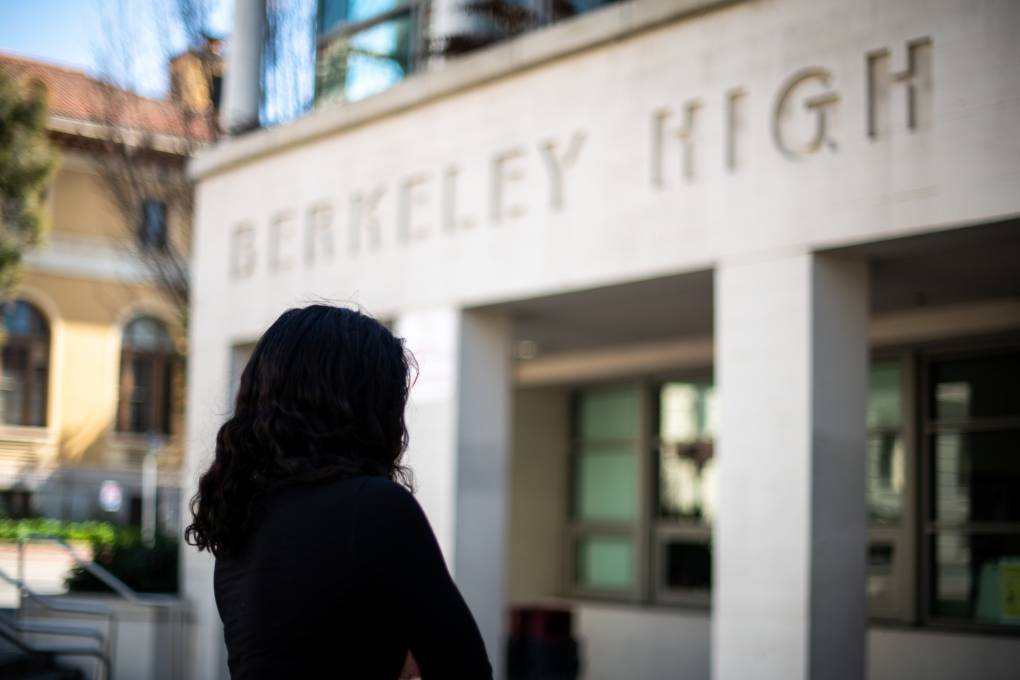
"caption": "A former Berkeley High student sued the district in January 2020, alleging she was sexually assaulted by another student during school hours in an unlocked classroom, and that the district failed to take steps to adequately ensure her safety. A student-led walkout followed.",
"description": "A former Berkeley High student sued the district in Jan. 2020, alleging she was sexually assaulted by another student during school hours in an unlocked classroom, and that the district failed to take steps to adequately ensure her safety. A student-led walkout followed.",
"title": "Former Berkeley High School student at the school on March 12, 2021.",
"credit": "Beth LaBerge/KQED",
"status": "inherit",
"altTag": "Anonymous Berkeley High student known as 'Faith' standing in front of the high school, back turned",
"isLoading": false,
"fetchFailed": false
},
"news_11781959": {
"type": "attachments",
"id": "news_11781959",
"meta": {
"index": "attachments_1716263798",
"site": "news",
"id": "11781959",
"found": true
},
"parent": 11781717,
"imgSizes": {
"apple_news_ca_landscape_5_5": {
"file": "https://ww2.kqed.org/app/uploads/sites/10/2019/10/Alleged-victim-hands-2-1044x783.jpg",
"width": 1044,
"mimeType": "image/jpeg",
"height": 783
},
"apple_news_ca_square_4_0": {
"file": "https://ww2.kqed.org/app/uploads/sites/10/2019/10/Alleged-victim-hands-2-470x470.jpg",
"width": 470,
"mimeType": "image/jpeg",
"height": 470
},
"twentyfourteen-full-width": {
"file": "https://ww2.kqed.org/app/uploads/sites/10/2019/10/Alleged-victim-hands-2-1038x576.jpg",
"width": 1038,
"mimeType": "image/jpeg",
"height": 576
},
"thumbnail": {
"file": "https://ww2.kqed.org/app/uploads/sites/10/2019/10/Alleged-victim-hands-2-160x95.jpg",
"width": 160,
"mimeType": "image/jpeg",
"height": 95
},
"post-thumbnail": {
"file": "https://ww2.kqed.org/app/uploads/sites/10/2019/10/Alleged-victim-hands-2-672x372.jpg",
"width": 672,
"mimeType": "image/jpeg",
"height": 372
},
"kqedFullSize": {
"file": "https://ww2.kqed.org/app/uploads/sites/10/2019/10/Alleged-victim-hands-2.jpg",
"width": 1746,
"height": 1034
},
"apple_news_ca_landscape_4_7": {
"file": "https://ww2.kqed.org/app/uploads/sites/10/2019/10/Alleged-victim-hands-2-632x474.jpg",
"width": 632,
"mimeType": "image/jpeg",
"height": 474
},
"large": {
"file": "https://ww2.kqed.org/app/uploads/sites/10/2019/10/Alleged-victim-hands-2-1020x604.jpg",
"width": 1020,
"mimeType": "image/jpeg",
"height": 604
},
"complete_open_graph": {
"file": "https://ww2.kqed.org/app/uploads/sites/10/2019/10/Alleged-victim-hands-2-1200x711.jpg",
"width": 1200,
"mimeType": "image/jpeg",
"height": 711
},
"apple_news_ca_landscape_4_0": {
"file": "https://ww2.kqed.org/app/uploads/sites/10/2019/10/Alleged-victim-hands-2-536x402.jpg",
"width": 536,
"mimeType": "image/jpeg",
"height": 402
},
"apple_news_ca_portrait_12_9": {
"file": "https://ww2.kqed.org/app/uploads/sites/10/2019/10/Alleged-victim-hands-2-1122x1034.jpg",
"width": 1122,
"mimeType": "image/jpeg",
"height": 1034
},
"medium": {
"file": "https://ww2.kqed.org/app/uploads/sites/10/2019/10/Alleged-victim-hands-2-800x474.jpg",
"width": 800,
"mimeType": "image/jpeg",
"height": 474
},
"apple_news_ca_portrait_4_0": {
"file": "https://ww2.kqed.org/app/uploads/sites/10/2019/10/Alleged-victim-hands-2-354x472.jpg",
"width": 354,
"mimeType": "image/jpeg",
"height": 472
},
"apple_news_ca_portrait_9_7": {
"file": "https://ww2.kqed.org/app/uploads/sites/10/2019/10/Alleged-victim-hands-2-840x1034.jpg",
"width": 840,
"mimeType": "image/jpeg",
"height": 1034
},
"apple_news_ca_square_9_7": {
"file": "https://ww2.kqed.org/app/uploads/sites/10/2019/10/Alleged-victim-hands-2-1104x1034.jpg",
"width": 1104,
"mimeType": "image/jpeg",
"height": 1034
},
"apple_news_ca_portrait_4_7": {
"file": "https://ww2.kqed.org/app/uploads/sites/10/2019/10/Alleged-victim-hands-2-414x552.jpg",
"width": 414,
"mimeType": "image/jpeg",
"height": 552
},
"apple_news_ca_square_12_9": {
"file": "https://ww2.kqed.org/app/uploads/sites/10/2019/10/Alleged-victim-hands-2-1472x1034.jpg",
"width": 1472,
"mimeType": "image/jpeg",
"height": 1034
},
"apple_news_ca_portrait_5_5": {
"file": "https://ww2.kqed.org/app/uploads/sites/10/2019/10/Alleged-victim-hands-2-687x916.jpg",
"width": 687,
"mimeType": "image/jpeg",
"height": 916
},
"apple_news_ca_square_4_7": {
"file": "https://ww2.kqed.org/app/uploads/sites/10/2019/10/Alleged-victim-hands-2-550x550.jpg",
"width": 550,
"mimeType": "image/jpeg",
"height": 550
},
"apple_news_ca_landscape_9_7": {
"file": "https://ww2.kqed.org/app/uploads/sites/10/2019/10/Alleged-victim-hands-2-1376x1032.jpg",
"width": 1376,
"mimeType": "image/jpeg",
"height": 1032
},
"apple_news_ca_square_5_5": {
"file": "https://ww2.kqed.org/app/uploads/sites/10/2019/10/Alleged-victim-hands-2-912x912.jpg",
"width": 912,
"mimeType": "image/jpeg",
"height": 912
}
},
"publishDate": 1571800631,
"modified": 1571862389,
"caption": "One of the alleged victims in the Castañeda case holds a rosary after talking with a KQED reporter at his home in Fresno. Nine former parishioners - eight men and one woman - have accused the priest of sexual abuse.",
"description": "One of the alleged victims in the Castañeda case holds a rosary after talking with a KQED reporter at his home in Fresno, California. Nine former parishioners - eight men and one woman - have accused the priest of sexual abuse.",
"title": "Alleged victim hands 2",
"credit": "Alexandra Hall/KQED",
"status": "inherit",
"isLoading": false,
"fetchFailed": false
},
"news_11748397": {
"type": "attachments",
"id": "news_11748397",
"meta": {
"index": "attachments_1716263798",
"site": "news",
"id": "11748397",
"found": true
},
"parent": 11748301,
"imgSizes": {
"apple_news_ca_landscape_5_5": {
"file": "https://ww2.kqed.org/app/uploads/sites/10/2019/05/RS37187_GettyImages-489795578-qut-1044x783.jpg",
"width": 1044,
"mimeType": "image/jpeg",
"height": 783
},
"apple_news_ca_square_4_0": {
"file": "https://ww2.kqed.org/app/uploads/sites/10/2019/05/RS37187_GettyImages-489795578-qut-470x470.jpg",
"width": 470,
"mimeType": "image/jpeg",
"height": 470
},
"twentyfourteen-full-width": {
"file": "https://ww2.kqed.org/app/uploads/sites/10/2019/05/RS37187_GettyImages-489795578-qut-1038x576.jpg",
"width": 1038,
"mimeType": "image/jpeg",
"height": 576
},
"thumbnail": {
"file": "https://ww2.kqed.org/app/uploads/sites/10/2019/05/RS37187_GettyImages-489795578-qut-160x107.jpg",
"width": 160,
"mimeType": "image/jpeg",
"height": 107
},
"post-thumbnail": {
"file": "https://ww2.kqed.org/app/uploads/sites/10/2019/05/RS37187_GettyImages-489795578-qut-672x372.jpg",
"width": 672,
"mimeType": "image/jpeg",
"height": 372
},
"kqedFullSize": {
"file": "https://ww2.kqed.org/app/uploads/sites/10/2019/05/RS37187_GettyImages-489795578-qut.jpg",
"width": 1920,
"height": 1280
},
"apple_news_ca_landscape_4_7": {
"file": "https://ww2.kqed.org/app/uploads/sites/10/2019/05/RS37187_GettyImages-489795578-qut-632x474.jpg",
"width": 632,
"mimeType": "image/jpeg",
"height": 474
},
"large": {
"file": "https://ww2.kqed.org/app/uploads/sites/10/2019/05/RS37187_GettyImages-489795578-qut-1020x680.jpg",
"width": 1020,
"mimeType": "image/jpeg",
"height": 680
},
"complete_open_graph": {
"file": "https://ww2.kqed.org/app/uploads/sites/10/2019/05/RS37187_GettyImages-489795578-qut-1200x800.jpg",
"width": 1200,
"mimeType": "image/jpeg",
"height": 800
},
"apple_news_ca_landscape_4_0": {
"file": "https://ww2.kqed.org/app/uploads/sites/10/2019/05/RS37187_GettyImages-489795578-qut-536x402.jpg",
"width": 536,
"mimeType": "image/jpeg",
"height": 402
},
"apple_news_ca_portrait_12_9": {
"file": "https://ww2.kqed.org/app/uploads/sites/10/2019/05/RS37187_GettyImages-489795578-qut-1122x1280.jpg",
"width": 1122,
"mimeType": "image/jpeg",
"height": 1280
},
"medium": {
"file": "https://ww2.kqed.org/app/uploads/sites/10/2019/05/RS37187_GettyImages-489795578-qut-800x533.jpg",
"width": 800,
"mimeType": "image/jpeg",
"height": 533
},
"apple_news_ca_portrait_4_0": {
"file": "https://ww2.kqed.org/app/uploads/sites/10/2019/05/RS37187_GettyImages-489795578-qut-354x472.jpg",
"width": 354,
"mimeType": "image/jpeg",
"height": 472
},
"apple_news_ca_portrait_9_7": {
"file": "https://ww2.kqed.org/app/uploads/sites/10/2019/05/RS37187_GettyImages-489795578-qut-840x1120.jpg",
"width": 840,
"mimeType": "image/jpeg",
"height": 1120
},
"apple_news_ca_landscape_12_9": {
"file": "https://ww2.kqed.org/app/uploads/sites/10/2019/05/RS37187_GettyImages-489795578-qut-1832x1280.jpg",
"width": 1832,
"mimeType": "image/jpeg",
"height": 1280
},
"apple_news_ca_square_9_7": {
"file": "https://ww2.kqed.org/app/uploads/sites/10/2019/05/RS37187_GettyImages-489795578-qut-1104x1104.jpg",
"width": 1104,
"mimeType": "image/jpeg",
"height": 1104
},
"apple_news_ca_portrait_4_7": {
"file": "https://ww2.kqed.org/app/uploads/sites/10/2019/05/RS37187_GettyImages-489795578-qut-414x552.jpg",
"width": 414,
"mimeType": "image/jpeg",
"height": 552
},
"apple_news_ca_square_12_9": {
"file": "https://ww2.kqed.org/app/uploads/sites/10/2019/05/RS37187_GettyImages-489795578-qut-1472x1280.jpg",
"width": 1472,
"mimeType": "image/jpeg",
"height": 1280
},
"apple_news_ca_portrait_5_5": {
"file": "https://ww2.kqed.org/app/uploads/sites/10/2019/05/RS37187_GettyImages-489795578-qut-687x916.jpg",
"width": 687,
"mimeType": "image/jpeg",
"height": 916
},
"full-width": {
"file": "https://ww2.kqed.org/app/uploads/sites/10/2019/05/RS37187_GettyImages-489795578-qut-1920x1280.jpg",
"width": 1920,
"mimeType": "image/jpeg",
"height": 1280
},
"apple_news_ca_square_4_7": {
"file": "https://ww2.kqed.org/app/uploads/sites/10/2019/05/RS37187_GettyImages-489795578-qut-550x550.jpg",
"width": 550,
"mimeType": "image/jpeg",
"height": 550
},
"apple_news_ca_landscape_9_7": {
"file": "https://ww2.kqed.org/app/uploads/sites/10/2019/05/RS37187_GettyImages-489795578-qut-1376x1032.jpg",
"width": 1376,
"mimeType": "image/jpeg",
"height": 1032
},
"apple_news_ca_square_5_5": {
"file": "https://ww2.kqed.org/app/uploads/sites/10/2019/05/RS37187_GettyImages-489795578-qut-912x912.jpg",
"width": 912,
"mimeType": "image/jpeg",
"height": 912
}
},
"publishDate": 1558251346,
"modified": 1558251429,
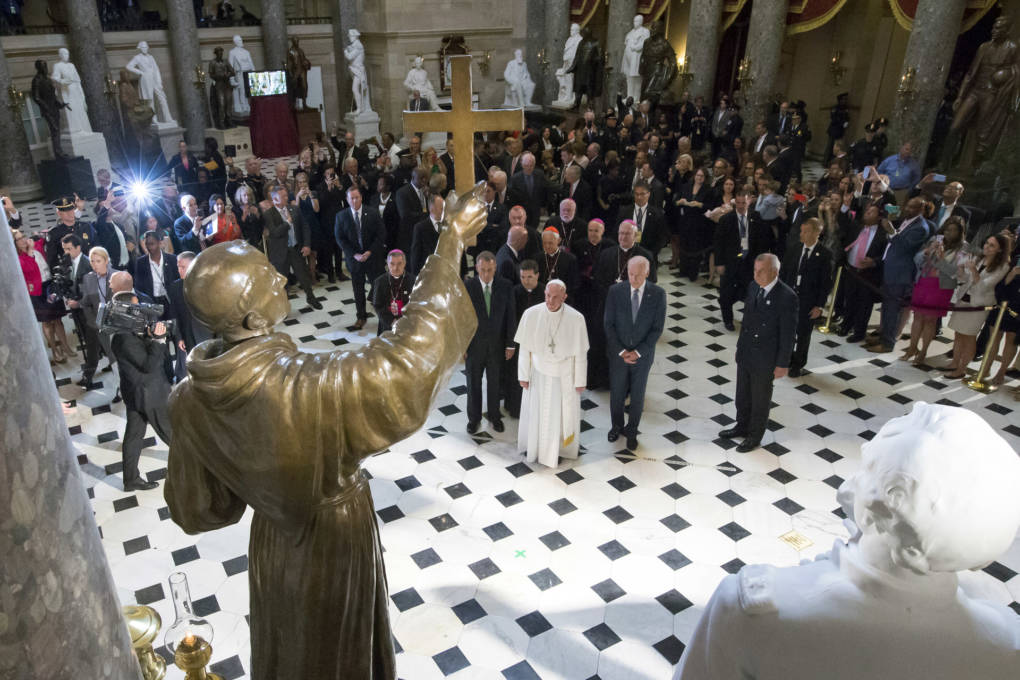
"caption": "Pope Francis pauses in front of a sculpture of Spanish-born Junipero Serra, the Franciscan Friar known for starting missions in California, in Statuary Hall at the U.S. Capitol on September 24, 2015 in Washington, DC.",
"description": "Pope Francis pauses in front of a sculpture of Spanish-born Junipero Serra, the Franciscan Friar known for starting missions in California, in Statuary Hall at the U.S. Capitol on September 24, 2015 in Washington, DC.",
"title": "Pope Francis Visits St. Patrick's In Washington, D.C.",
"credit": "Michael Reynolds-Pool/Getty Images",
"status": "inherit",
"isLoading": false,
"fetchFailed": false
},
"news_11744542": {
"type": "attachments",
"id": "news_11744542",
"meta": {
"index": "attachments_1716263798",
"site": "news",
"id": "11744542",
"found": true
},
"parent": 11744513,
"imgSizes": {
"twentyfourteen-full-width": {
"file": "https://ww2.kqed.org/app/uploads/sites/10/2019/05/05022019_sexual-assault_military_Pentagon_sexual-assault-in-the-military-qut-1038x576.jpg",
"width": 1038,
"mimeType": "image/jpeg",
"height": 576
},
"thumbnail": {
"file": "https://ww2.kqed.org/app/uploads/sites/10/2019/05/05022019_sexual-assault_military_Pentagon_sexual-assault-in-the-military-qut-160x107.jpg",
"width": 160,
"mimeType": "image/jpeg",
"height": 107
},
"post-thumbnail": {
"file": "https://ww2.kqed.org/app/uploads/sites/10/2019/05/05022019_sexual-assault_military_Pentagon_sexual-assault-in-the-military-qut-672x372.jpg",
"width": 672,
"mimeType": "image/jpeg",
"height": 372
},
"kqedFullSize": {
"file": "https://ww2.kqed.org/app/uploads/sites/10/2019/05/05022019_sexual-assault_military_Pentagon_sexual-assault-in-the-military-qut.jpg",
"width": 1920,
"height": 1280
},
"large": {
"file": "https://ww2.kqed.org/app/uploads/sites/10/2019/05/05022019_sexual-assault_military_Pentagon_sexual-assault-in-the-military-qut-1020x680.jpg",
"width": 1020,
"mimeType": "image/jpeg",
"height": 680
},
"complete_open_graph": {
"file": "https://ww2.kqed.org/app/uploads/sites/10/2019/05/05022019_sexual-assault_military_Pentagon_sexual-assault-in-the-military-qut-1200x800.jpg",
"width": 1200,
"mimeType": "image/jpeg",
"height": 800
},
"full-width": {
"file": "https://ww2.kqed.org/app/uploads/sites/10/2019/05/05022019_sexual-assault_military_Pentagon_sexual-assault-in-the-military-qut-1920x1280.jpg",
"width": 1920,
"mimeType": "image/jpeg",
"height": 1280
},
"medium": {
"file": "https://ww2.kqed.org/app/uploads/sites/10/2019/05/05022019_sexual-assault_military_Pentagon_sexual-assault-in-the-military-qut-800x533.jpg",
"width": 800,
"mimeType": "image/jpeg",
"height": 533
}
},
"publishDate": 1556824084,
"modified": 1556824146,
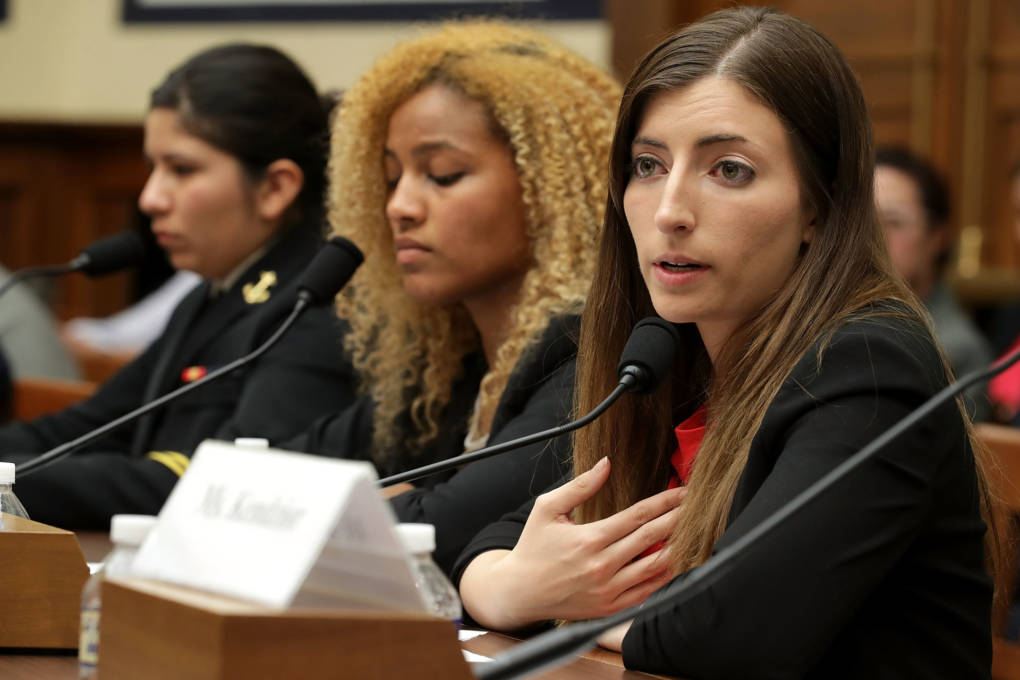
"caption": "Former U.S. Military Academy Cadet Stephanie Gross (R), a survivor of sexual assault, testifies before the House Armed Services Committee's Subcommittee on Military Personnel with Naval Academy Midshipman Second Class Shiela Craine (L) and Ariana Bullard in the Rayburn House Office Building on Capitol Hill May 2, 2017 in Washington, DC. Gross was twice raped during after enrolling at the military academy in 2013. \"My chain of command had given up on me,\" she said.",
"description": "Former U.S. Military Academy Cadet Stephanie Gross (R), a survivor of sexual assault, testifies before the House Armed Services Committee's Subcommittee on Military Personnel with Naval Academy Midshipman Second Class Shiela Craine (L) and Ariana Bullard in the Rayburn House Office Building on Capitol Hill May 2, 2017 in Washington, DC. Gross was twice raped during after enrolling at the military academy in 2013. \"My chain of command had given up on me,\" she said. ",
"title": "House Armed Services Committee Holds Hearing On Annual Sexual Harassment Report At Military Academies",
"credit": "Chip Somodevilla/Getty Images",
"status": "inherit",
"isLoading": false,
"fetchFailed": false
},
"news_11744393": {
"type": "attachments",
"id": "news_11744393",
"meta": {
"index": "attachments_1716263798",
"site": "news",
"id": "11744393",
"found": true
},
"parent": 11744376,
"imgSizes": {
"twentyfourteen-full-width": {
"file": "https://ww2.kqed.org/app/uploads/sites/10/2019/05/img_4828-1038x576.jpg",
"width": 1038,
"mimeType": "image/jpeg",
"height": 576
},
"thumbnail": {
"file": "https://ww2.kqed.org/app/uploads/sites/10/2019/05/img_4828-160x107.jpg",
"width": 160,
"mimeType": "image/jpeg",
"height": 107
},
"post-thumbnail": {
"file": "https://ww2.kqed.org/app/uploads/sites/10/2019/05/img_4828-672x372.jpg",
"width": 672,
"mimeType": "image/jpeg",
"height": 372
},
"kqedFullSize": {
"file": "https://ww2.kqed.org/app/uploads/sites/10/2019/05/img_4828.jpg",
"width": 2048,
"height": 1365
},
"large": {
"file": "https://ww2.kqed.org/app/uploads/sites/10/2019/05/img_4828-1020x680.jpg",
"width": 1020,
"mimeType": "image/jpeg",
"height": 680
},
"complete_open_graph": {
"file": "https://ww2.kqed.org/app/uploads/sites/10/2019/05/img_4828-1200x800.jpg",
"width": 1200,
"mimeType": "image/jpeg",
"height": 800
},
"full-width": {
"file": "https://ww2.kqed.org/app/uploads/sites/10/2019/05/img_4828-1920x1280.jpg",
"width": 1920,
"mimeType": "image/jpeg",
"height": 1280
},
"medium": {
"file": "https://ww2.kqed.org/app/uploads/sites/10/2019/05/img_4828-800x533.jpg",
"width": 800,
"mimeType": "image/jpeg",
"height": 533
}
},
"publishDate": 1556755435,
"modified": 1556755506,
"caption": "The Catholic Diocese of Fresno announced in February 2019 it would conduct an independent review of clergy files dating back to 1922 and release a list of priests accused of sexual misconduct.",
"description": "The Catholic Diocese of Fresno announced in February 2019 it would conduct an independent review of clergy files dating back to 1922 and release a list of priests accused of sexual misconduct\n",
"title": "Catholic-Diocese-Fresno-Sexual-Abuse-Allegation",
"credit": "Alex Hall/KQED",
"status": "inherit",
"isLoading": false,
"fetchFailed": false
},
"news_11738781": {
"type": "attachments",
"id": "news_11738781",
"meta": {
"index": "attachments_1716263798",
"site": "news",
"id": "11738781",
"found": true
},
"parent": 11738739,
"imgSizes": {
"post-thumbnail": {
"file": "https://ww2.kqed.org/app/uploads/sites/10/2019/04/yoga_folo_final03-qut-1-672x372.jpg",
"width": 672,
"mimeType": "image/jpeg",
"height": 372
},
"kqedFullSize": {
"file": "https://ww2.kqed.org/app/uploads/sites/10/2019/04/yoga_folo_final03-qut-1.jpg",
"width": 1920,
"height": 1027
},
"guest-author-50": {
"file": "https://ww2.kqed.org/app/uploads/sites/10/2019/04/yoga_folo_final03-qut-1-50x50.jpg",
"width": 50,
"mimeType": "image/jpeg",
"height": 50
},
"guest-author-96": {
"file": "https://ww2.kqed.org/app/uploads/sites/10/2019/04/yoga_folo_final03-qut-1-96x96.jpg",
"width": 96,
"mimeType": "image/jpeg",
"height": 96
},
"apple_news_ca_portrait_12_9": {
"file": "https://ww2.kqed.org/app/uploads/sites/10/2019/04/yoga_folo_final03-qut-1-1122x1027.jpg",
"width": 1122,
"mimeType": "image/jpeg",
"height": 1027
},
"medium": {
"file": "https://ww2.kqed.org/app/uploads/sites/10/2019/04/yoga_folo_final03-qut-1-800x428.jpg",
"width": 800,
"mimeType": "image/jpeg",
"height": 428
},
"guest-author-32": {
"file": "https://ww2.kqed.org/app/uploads/sites/10/2019/04/yoga_folo_final03-qut-1-32x32.jpg",
"width": 32,
"mimeType": "image/jpeg",
"height": 32
},
"apple_news_ca_portrait_9_7": {
"file": "https://ww2.kqed.org/app/uploads/sites/10/2019/04/yoga_folo_final03-qut-1-840x1027.jpg",
"width": 840,
"mimeType": "image/jpeg",
"height": 1027
},
"apple_news_ca_square_9_7": {
"file": "https://ww2.kqed.org/app/uploads/sites/10/2019/04/yoga_folo_final03-qut-1-1104x1027.jpg",
"width": 1104,
"mimeType": "image/jpeg",
"height": 1027
},
"apple_news_ca_portrait_4_7": {
"file": "https://ww2.kqed.org/app/uploads/sites/10/2019/04/yoga_folo_final03-qut-1-414x552.jpg",
"width": 414,
"mimeType": "image/jpeg",
"height": 552
},
"apple_news_ca_square_12_9": {
"file": "https://ww2.kqed.org/app/uploads/sites/10/2019/04/yoga_folo_final03-qut-1-1472x1027.jpg",
"width": 1472,
"mimeType": "image/jpeg",
"height": 1027
},
"apple_news_ca_portrait_5_5": {
"file": "https://ww2.kqed.org/app/uploads/sites/10/2019/04/yoga_folo_final03-qut-1-687x916.jpg",
"width": 687,
"mimeType": "image/jpeg",
"height": 916
},
"apple_news_ca_square_4_7": {
"file": "https://ww2.kqed.org/app/uploads/sites/10/2019/04/yoga_folo_final03-qut-1-550x550.jpg",
"width": 550,
"mimeType": "image/jpeg",
"height": 550
},
"apple_news_ca_square_5_5": {
"file": "https://ww2.kqed.org/app/uploads/sites/10/2019/04/yoga_folo_final03-qut-1-912x912.jpg",
"width": 912,
"mimeType": "image/jpeg",
"height": 912
},
"apple_news_ca_landscape_5_5": {
"file": "https://ww2.kqed.org/app/uploads/sites/10/2019/04/yoga_folo_final03-qut-1-1044x783.jpg",
"width": 1044,
"mimeType": "image/jpeg",
"height": 783
},
"apple_news_ca_square_4_0": {
"file": "https://ww2.kqed.org/app/uploads/sites/10/2019/04/yoga_folo_final03-qut-1-470x470.jpg",
"width": 470,
"mimeType": "image/jpeg",
"height": 470
},
"twentyfourteen-full-width": {
"file": "https://ww2.kqed.org/app/uploads/sites/10/2019/04/yoga_folo_final03-qut-1-1038x576.jpg",
"width": 1038,
"mimeType": "image/jpeg",
"height": 576
},
"thumbnail": {
"file": "https://ww2.kqed.org/app/uploads/sites/10/2019/04/yoga_folo_final03-qut-1-160x86.jpg",
"width": 160,
"mimeType": "image/jpeg",
"height": 86
},
"apple_news_ca_landscape_4_7": {
"file": "https://ww2.kqed.org/app/uploads/sites/10/2019/04/yoga_folo_final03-qut-1-632x474.jpg",
"width": 632,
"mimeType": "image/jpeg",
"height": 474
},
"large": {
"file": "https://ww2.kqed.org/app/uploads/sites/10/2019/04/yoga_folo_final03-qut-1-1020x546.jpg",
"width": 1020,
"mimeType": "image/jpeg",
"height": 546
},
"complete_open_graph": {
"file": "https://ww2.kqed.org/app/uploads/sites/10/2019/04/yoga_folo_final03-qut-1-1200x642.jpg",
"width": 1200,
"mimeType": "image/jpeg",
"height": 642
},
"apple_news_ca_landscape_4_0": {
"file": "https://ww2.kqed.org/app/uploads/sites/10/2019/04/yoga_folo_final03-qut-1-536x402.jpg",
"width": 536,
"mimeType": "image/jpeg",
"height": 402
},
"guest-author-64": {
"file": "https://ww2.kqed.org/app/uploads/sites/10/2019/04/yoga_folo_final03-qut-1-64x64.jpg",
"width": 64,
"mimeType": "image/jpeg",
"height": 64
},
"apple_news_ca_portrait_4_0": {
"file": "https://ww2.kqed.org/app/uploads/sites/10/2019/04/yoga_folo_final03-qut-1-354x472.jpg",
"width": 354,
"mimeType": "image/jpeg",
"height": 472
},
"apple_news_ca_landscape_12_9": {
"file": "https://ww2.kqed.org/app/uploads/sites/10/2019/04/yoga_folo_final03-qut-1-1832x1027.jpg",
"width": 1832,
"mimeType": "image/jpeg",
"height": 1027
},
"full-width": {
"file": "https://ww2.kqed.org/app/uploads/sites/10/2019/04/yoga_folo_final03-qut-1-1920x1027.jpg",
"width": 1920,
"mimeType": "image/jpeg",
"height": 1027
},
"guest-author-128": {
"file": "https://ww2.kqed.org/app/uploads/sites/10/2019/04/yoga_folo_final03-qut-1-128x128.jpg",
"width": 128,
"mimeType": "image/jpeg",
"height": 128
},
"apple_news_ca_landscape_9_7": {
"file": "https://ww2.kqed.org/app/uploads/sites/10/2019/04/yoga_folo_final03-qut-1-1376x1027.jpg",
"width": 1376,
"mimeType": "image/jpeg",
"height": 1027
}
},
"publishDate": 1554831457,
"modified": 1554849037,
"caption": "Six women came forward with allegations dating from 2005 on, as well as a number of bystanders who observed sexual assault by Manouso Manos. But allegations against him date decades back, as KQED has previously reported: Four women contacted an investigator about their accusations from incidents in the 1980s.",
"description": "Six women came forward with allegations dating from 2005 on, as well as a number of bystanders who observed sexual assault by Manos. But allegations against him date decades back, as KQED has previously reported: Four women contacted Sargeant about their accusations from incidents in the 1980s.",
"title": "yoga_folo_final03-qut",
"credit": "Mark Fiore/KQED",
"status": "inherit",
"isLoading": false,
"fetchFailed": false
},
"news_11732184": {
"type": "attachments",
"id": "news_11732184",
"meta": {
"index": "attachments_1716263798",
"site": "news",
"id": "11732184",
"found": true
},
"parent": 11732183,
"imgSizes": {
"twentyfourteen-full-width": {
"file": "https://ww2.kqed.org/app/uploads/sites/10/2019/03/Yoga_Manos-4-qut-1038x576.jpg",
"width": 1038,
"mimeType": "image/jpeg",
"height": 576
},
"thumbnail": {
"file": "https://ww2.kqed.org/app/uploads/sites/10/2019/03/Yoga_Manos-4-qut-160x107.jpg",
"width": 160,
"mimeType": "image/jpeg",
"height": 107
},
"post-thumbnail": {
"file": "https://ww2.kqed.org/app/uploads/sites/10/2019/03/Yoga_Manos-4-qut-672x372.jpg",
"width": 672,
"mimeType": "image/jpeg",
"height": 372
},
"kqedFullSize": {
"file": "https://ww2.kqed.org/app/uploads/sites/10/2019/03/Yoga_Manos-4-qut.jpg",
"width": 1920,
"height": 1280
},
"large": {
"file": "https://ww2.kqed.org/app/uploads/sites/10/2019/03/Yoga_Manos-4-qut-1020x680.jpg",
"width": 1020,
"mimeType": "image/jpeg",
"height": 680
},
"complete_open_graph": {
"file": "https://ww2.kqed.org/app/uploads/sites/10/2019/03/Yoga_Manos-4-qut-1200x800.jpg",
"width": 1200,
"mimeType": "image/jpeg",
"height": 800
},
"guest-author-50": {
"file": "https://ww2.kqed.org/app/uploads/sites/10/2019/03/Yoga_Manos-4-qut-50x50.jpg",
"width": 50,
"mimeType": "image/jpeg",
"height": 50
},
"guest-author-96": {
"file": "https://ww2.kqed.org/app/uploads/sites/10/2019/03/Yoga_Manos-4-qut-96x96.jpg",
"width": 96,
"mimeType": "image/jpeg",
"height": 96
},
"medium": {
"file": "https://ww2.kqed.org/app/uploads/sites/10/2019/03/Yoga_Manos-4-qut-800x533.jpg",
"width": 800,
"mimeType": "image/jpeg",
"height": 533
},
"guest-author-64": {
"file": "https://ww2.kqed.org/app/uploads/sites/10/2019/03/Yoga_Manos-4-qut-64x64.jpg",
"width": 64,
"mimeType": "image/jpeg",
"height": 64
},
"guest-author-32": {
"file": "https://ww2.kqed.org/app/uploads/sites/10/2019/03/Yoga_Manos-4-qut-32x32.jpg",
"width": 32,
"mimeType": "image/jpeg",
"height": 32
},
"full-width": {
"file": "https://ww2.kqed.org/app/uploads/sites/10/2019/03/Yoga_Manos-4-qut-1920x1280.jpg",
"width": 1920,
"mimeType": "image/jpeg",
"height": 1280
},
"guest-author-128": {
"file": "https://ww2.kqed.org/app/uploads/sites/10/2019/03/Yoga_Manos-4-qut-128x128.jpg",
"width": 128,
"mimeType": "image/jpeg",
"height": 128
}
},
"publishDate": 1552325791,
"modified": 1552325863,
"caption": "Manouso Manos speaks with KQED reporter Miranda Leitsinger after exiting a workshop he taught at The Abode of Iyengar Yoga in San Francisco on March 7, 2019.",
"description": null,
"title": "Yoga_Manos-4-qut",
"credit": "Adam Grossberg/KQED",
"status": "inherit",
"isLoading": false,
"fetchFailed": false
},
"news_11727876": {
"type": "attachments",
"id": "news_11727876",
"meta": {
"index": "attachments_1716263798",
"site": "news",
"id": "11727876",
"found": true
},
"parent": 11727543,
"imgSizes": {
"twentyfourteen-full-width": {
"file": "https://ww2.kqed.org/app/uploads/sites/10/2019/02/VaticanSummit-1038x576.jpg",
"width": 1038,
"mimeType": "image/jpeg",
"height": 576
},
"thumbnail": {
"file": "https://ww2.kqed.org/app/uploads/sites/10/2019/02/VaticanSummit-160x101.jpg",
"width": 160,
"mimeType": "image/jpeg",
"height": 101
},
"post-thumbnail": {
"file": "https://ww2.kqed.org/app/uploads/sites/10/2019/02/VaticanSummit-672x372.jpg",
"width": 672,
"mimeType": "image/jpeg",
"height": 372
},
"kqedFullSize": {
"file": "https://ww2.kqed.org/app/uploads/sites/10/2019/02/VaticanSummit.jpg",
"width": 1920,
"height": 1212
},
"large": {
"file": "https://ww2.kqed.org/app/uploads/sites/10/2019/02/VaticanSummit-1020x644.jpg",
"width": 1020,
"mimeType": "image/jpeg",
"height": 644
},
"complete_open_graph": {
"file": "https://ww2.kqed.org/app/uploads/sites/10/2019/02/VaticanSummit-1200x758.jpg",
"width": 1200,
"mimeType": "image/jpeg",
"height": 758
},
"guest-author-50": {
"file": "https://ww2.kqed.org/app/uploads/sites/10/2019/02/VaticanSummit-50x50.jpg",
"width": 50,
"mimeType": "image/jpeg",
"height": 50
},
"guest-author-96": {
"file": "https://ww2.kqed.org/app/uploads/sites/10/2019/02/VaticanSummit-96x96.jpg",
"width": 96,
"mimeType": "image/jpeg",
"height": 96
},
"medium": {
"file": "https://ww2.kqed.org/app/uploads/sites/10/2019/02/VaticanSummit-800x505.jpg",
"width": 800,
"mimeType": "image/jpeg",
"height": 505
},
"guest-author-64": {
"file": "https://ww2.kqed.org/app/uploads/sites/10/2019/02/VaticanSummit-64x64.jpg",
"width": 64,
"mimeType": "image/jpeg",
"height": 64
},
"guest-author-32": {
"file": "https://ww2.kqed.org/app/uploads/sites/10/2019/02/VaticanSummit-32x32.jpg",
"width": 32,
"mimeType": "image/jpeg",
"height": 32
},
"full-width": {
"file": "https://ww2.kqed.org/app/uploads/sites/10/2019/02/VaticanSummit-1920x1212.jpg",
"width": 1920,
"mimeType": "image/jpeg",
"height": 1212
},
"detail": {
"file": "https://ww2.kqed.org/app/uploads/sites/10/2019/02/VaticanSummit-150x150.jpg",
"width": 150,
"mimeType": "image/jpeg",
"height": 150
},
"guest-author-128": {
"file": "https://ww2.kqed.org/app/uploads/sites/10/2019/02/VaticanSummit-128x128.jpg",
"width": 128,
"mimeType": "image/jpeg",
"height": 128
}
},
"publishDate": 1550784047,
"modified": 1550792145,
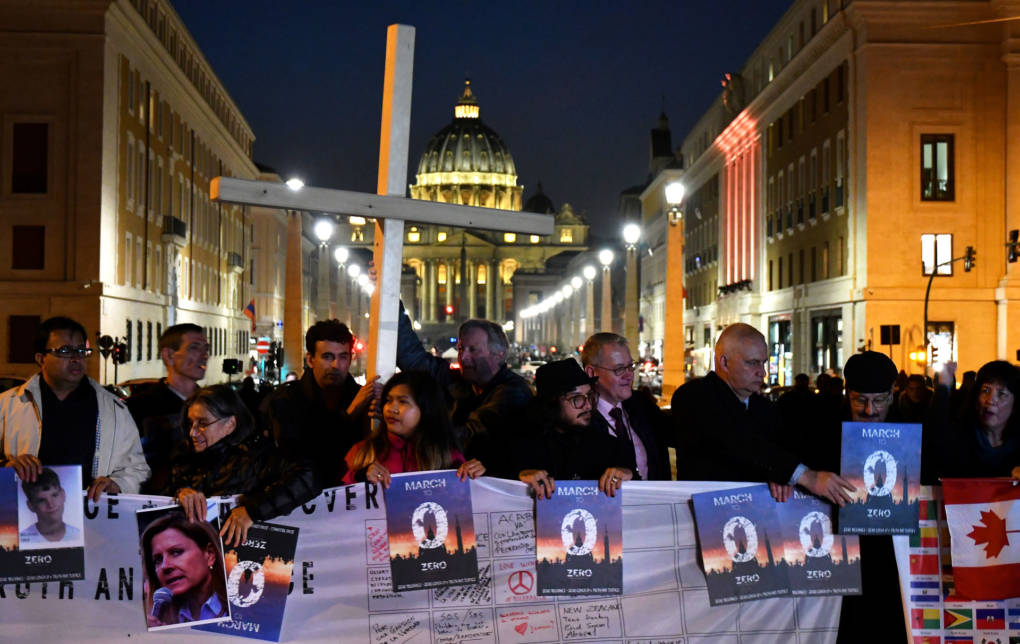
"caption": "Members of Ending Clergy Abuse (ECA), a global organization of survivors and activists who are in Rome for this week's papal summit on the sex abuse crisis within the Catholic Church, hold a protest gathering on Feb. 21, 2019, in Rome. Their placards read 'Zero Tolerance + Zero Cover Up = Truth and Justice.'",
"description": "Members of Ending Clergy Abuse (ECA), a global organization of survivors and activists who are in Rome for this week's papal summit on the sex abuse crisis within the Catholic Church, hold a protest gathering on Feb. 21, 2019 in Rome. Their placards read 'Zero Tolerance + Zero Cover Up = Truth and Justice.'",
"title": "VaticanSummit",
"credit": "ALBERTO PIZZOLI/AFP/Getty Images",
"status": "inherit",
"isLoading": false,
"fetchFailed": false
},
"news_11710785": {
"type": "attachments",
"id": "news_11710785",
"meta": {
"index": "attachments_1716263798",
"site": "news",
"id": "11710785",
"found": true
},
"parent": 11710781,
"imgSizes": {
"twentyfourteen-full-width": {
"file": "https://ww2.kqed.org/app/uploads/sites/10/2018/12/GettyImages-160488429-e1544210347530-1038x576.jpg",
"width": 1038,
"mimeType": "image/jpeg",
"height": 576
},
"thumbnail": {
"file": "https://ww2.kqed.org/app/uploads/sites/10/2018/12/GettyImages-160488429-e1544210347530-160x93.jpg",
"width": 160,
"mimeType": "image/jpeg",
"height": 93
},
"post-thumbnail": {
"file": "https://ww2.kqed.org/app/uploads/sites/10/2018/12/GettyImages-160488429-e1544210347530-672x372.jpg",
"width": 672,
"mimeType": "image/jpeg",
"height": 372
},
"kqedFullSize": {
"file": "https://ww2.kqed.org/app/uploads/sites/10/2018/12/GettyImages-160488429-e1544210347530.jpg",
"width": 1920,
"height": 1121
},
"large": {
"file": "https://ww2.kqed.org/app/uploads/sites/10/2018/12/GettyImages-160488429-e1544210347530-1020x596.jpg",
"width": 1020,
"mimeType": "image/jpeg",
"height": 596
},
"complete_open_graph": {
"file": "https://ww2.kqed.org/app/uploads/sites/10/2018/12/GettyImages-160488429-e1544210347530-1200x701.jpg",
"width": 1200,
"mimeType": "image/jpeg",
"height": 701
},
"guest-author-50": {
"file": "https://ww2.kqed.org/app/uploads/sites/10/2018/12/GettyImages-160488429-e1544210347530-50x50.jpg",
"width": 50,
"mimeType": "image/jpeg",
"height": 50
},
"guest-author-96": {
"file": "https://ww2.kqed.org/app/uploads/sites/10/2018/12/GettyImages-160488429-e1544210347530-96x96.jpg",
"width": 96,
"mimeType": "image/jpeg",
"height": 96
},
"medium": {
"file": "https://ww2.kqed.org/app/uploads/sites/10/2018/12/GettyImages-160488429-e1544210347530-800x467.jpg",
"width": 800,
"mimeType": "image/jpeg",
"height": 467
},
"guest-author-64": {
"file": "https://ww2.kqed.org/app/uploads/sites/10/2018/12/GettyImages-160488429-e1544210347530-64x64.jpg",
"width": 64,
"mimeType": "image/jpeg",
"height": 64
},
"guest-author-32": {
"file": "https://ww2.kqed.org/app/uploads/sites/10/2018/12/GettyImages-160488429-e1544210347530-32x32.jpg",
"width": 32,
"mimeType": "image/jpeg",
"height": 32
},
"full-width": {
"file": "https://ww2.kqed.org/app/uploads/sites/10/2018/12/GettyImages-160488429-e1544210347530-1920x1121.jpg",
"width": 1920,
"mimeType": "image/jpeg",
"height": 1121
},
"detail": {
"file": "https://ww2.kqed.org/app/uploads/sites/10/2018/12/GettyImages-160488429-e1544210347530-150x150.jpg",
"width": 150,
"mimeType": "image/jpeg",
"height": 150
},
"guest-author-128": {
"file": "https://ww2.kqed.org/app/uploads/sites/10/2018/12/GettyImages-160488429-e1544210347530-128x128.jpg",
"width": 128,
"mimeType": "image/jpeg",
"height": 128
}
},
"publishDate": 1544210286,
"modified": 1544217276,
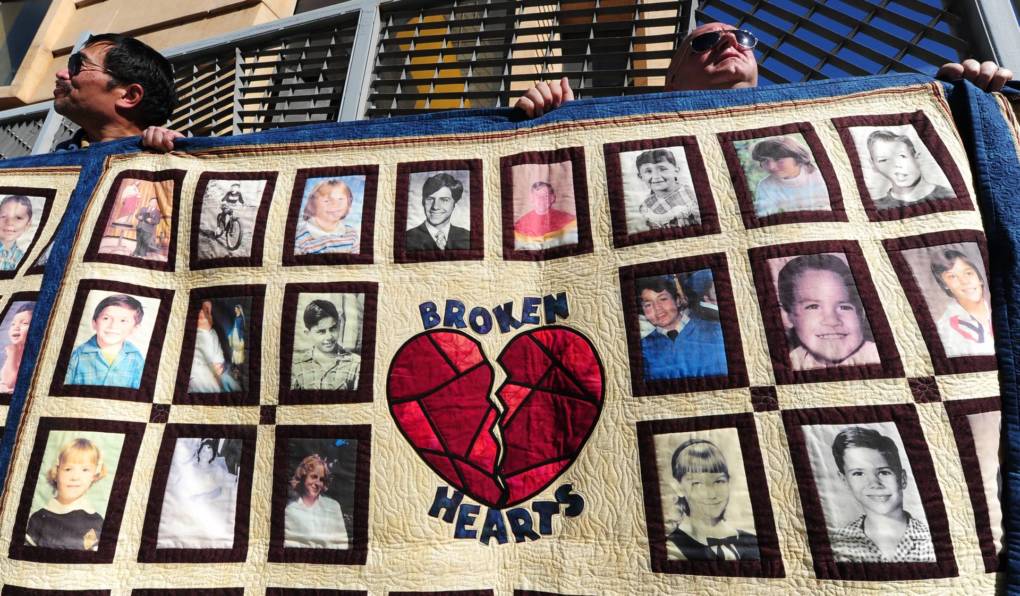
"caption": "Abuse victim Jorgen Olsen (R) and supporter Glenn Gorospa (L) hold quilts bearing portraits of abused children while gathered outside the Cathedral of Our Lady of the Angels in Los Angeles on February 1, 2013. The Archdiocese of Los Angeles updated its tally of accused priests for the first time in a decade on Dec. 6, 2018.",
"description": "Abuse victim Jorgen Olsen (R) and supporter Glenn Gorospa (L) hold quilts bearing portraits of abused children while gathered outside the Cathedral of Our Lady of the Angels in Los Angeles on February 1, 2013. The Archdiocese of Los Angeles updated its tally of accused priests for the first time in a decade on Dec. 6, 2018.",
"title": "US-RELIGION-CATHOLIC-ABUSE",
"credit": "Frederic J. Brown/AFP/Getty Images",
"status": "inherit",
"isLoading": false,
"fetchFailed": false
},
"news_11700100": {
"type": "attachments",
"id": "news_11700100",
"meta": {
"index": "attachments_1716263798",
"site": "news",
"id": "11700100",
"found": true
},
"parent": 11699763,
"imgSizes": {
"small": {
"file": "https://ww2.kqed.org/app/uploads/sites/10/2018/10/5DCC2BBD-509D-4155-B63A-3087640D406C-e1540005227822-520x379.jpeg",
"width": 520,
"mimeType": "image/jpeg",
"height": 379
},
"twentyfourteen-full-width": {
"file": "https://ww2.kqed.org/app/uploads/sites/10/2018/10/5DCC2BBD-509D-4155-B63A-3087640D406C-628x576.jpeg",
"width": 628,
"mimeType": "image/jpeg",
"height": 576
},
"thumbnail": {
"file": "https://ww2.kqed.org/app/uploads/sites/10/2018/10/5DCC2BBD-509D-4155-B63A-3087640D406C-e1540005227822-160x117.jpeg",
"width": 160,
"mimeType": "image/jpeg",
"height": 117
},
"post-thumbnail": {
"file": "https://ww2.kqed.org/app/uploads/sites/10/2018/10/5DCC2BBD-509D-4155-B63A-3087640D406C-e1540005227822-621x372.jpeg",
"width": 621,
"mimeType": "image/jpeg",
"height": 372
},
"xsmall": {
"file": "https://ww2.kqed.org/app/uploads/sites/10/2018/10/5DCC2BBD-509D-4155-B63A-3087640D406C-e1540005227822-375x274.jpeg",
"width": 375,
"mimeType": "image/jpeg",
"height": 274
},
"kqedFullSize": {
"file": "https://ww2.kqed.org/app/uploads/sites/10/2018/10/5DCC2BBD-509D-4155-B63A-3087640D406C-e1540005227822.jpeg",
"width": 621,
"height": 453
},
"guest-author-50": {
"file": "https://ww2.kqed.org/app/uploads/sites/10/2018/10/5DCC2BBD-509D-4155-B63A-3087640D406C-e1540005227822-50x50.jpeg",
"width": 50,
"mimeType": "image/jpeg",
"height": 50
},
"guest-author-96": {
"file": "https://ww2.kqed.org/app/uploads/sites/10/2018/10/5DCC2BBD-509D-4155-B63A-3087640D406C-e1540005227822-96x96.jpeg",
"width": 96,
"mimeType": "image/jpeg",
"height": 96
},
"guest-author-64": {
"file": "https://ww2.kqed.org/app/uploads/sites/10/2018/10/5DCC2BBD-509D-4155-B63A-3087640D406C-e1540005227822-64x64.jpeg",
"width": 64,
"mimeType": "image/jpeg",
"height": 64
},
"guest-author-32": {
"file": "https://ww2.kqed.org/app/uploads/sites/10/2018/10/5DCC2BBD-509D-4155-B63A-3087640D406C-e1540005227822-32x32.jpeg",
"width": 32,
"mimeType": "image/jpeg",
"height": 32
},
"detail": {
"file": "https://ww2.kqed.org/app/uploads/sites/10/2018/10/5DCC2BBD-509D-4155-B63A-3087640D406C-e1540005227822-150x150.jpeg",
"width": 150,
"mimeType": "image/jpeg",
"height": 150
},
"guest-author-128": {
"file": "https://ww2.kqed.org/app/uploads/sites/10/2018/10/5DCC2BBD-509D-4155-B63A-3087640D406C-e1540005227822-128x128.jpeg",
"width": 128,
"mimeType": "image/jpeg",
"height": 128
},
"xxsmall": {
"file": "https://ww2.kqed.org/app/uploads/sites/10/2018/10/5DCC2BBD-509D-4155-B63A-3087640D406C-e1540005227822-240x175.jpeg",
"width": 240,
"mimeType": "image/jpeg",
"height": 175
}
},
"publishDate": 1539996254,
"modified": 1540004885,
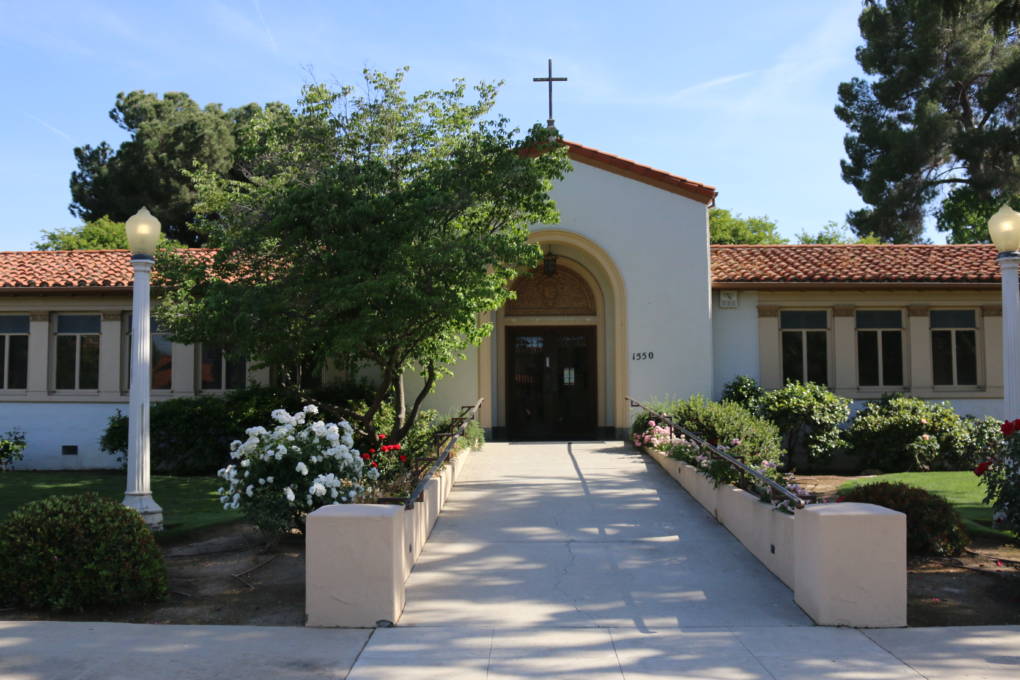
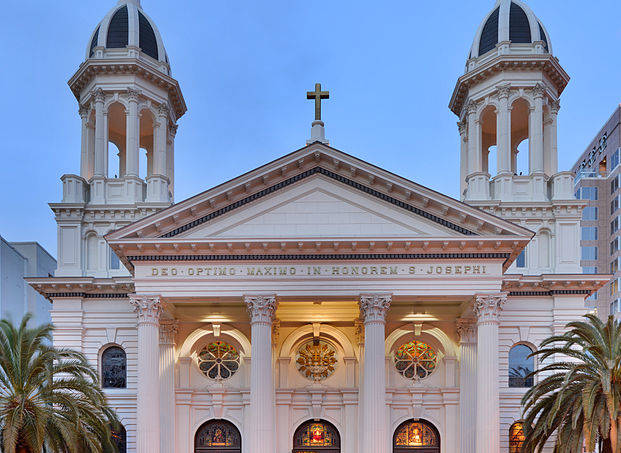
"caption": "Cathedral Basilica of St. Joseph in San Jose.",
"description": null,
"title": "5DCC2BBD-509D-4155-B63A-3087640D406C",
"credit": "\u003ca href=\"https://en.wikipedia.org/wiki/Cathedral_Basilica_of_St._Joseph_(San_Jose)#/media/File:StJosephDusk.jpg\" target=\"_blank\">David Leigh Ellis/Wikipedia\u003c/a>",
"status": "inherit",
"isLoading": false,
"fetchFailed": false
},
"news_11696415": {
"type": "attachments",
"id": "news_11696415",
"meta": {
"index": "attachments_1716263798",
"site": "news",
"id": "11696415",
"found": true
},
"parent": 11696384,
"imgSizes": {
"small": {
"file": "https://ww2.kqed.org/app/uploads/sites/10/2018/10/EmensSpeaks-520x324.jpg",
"width": 520,
"mimeType": "image/jpeg",
"height": 324
},
"twentyfourteen-full-width": {
"file": "https://ww2.kqed.org/app/uploads/sites/10/2018/10/EmensSpeaks-1038x576.jpg",
"width": 1038,
"mimeType": "image/jpeg",
"height": 576
},
"thumbnail": {
"file": "https://ww2.kqed.org/app/uploads/sites/10/2018/10/EmensSpeaks-160x100.jpg",
"width": 160,
"mimeType": "image/jpeg",
"height": 100
},
"fd-sm": {
"file": "https://ww2.kqed.org/app/uploads/sites/10/2018/10/EmensSpeaks-960x599.jpg",
"width": 960,
"mimeType": "image/jpeg",
"height": 599
},
"post-thumbnail": {
"file": "https://ww2.kqed.org/app/uploads/sites/10/2018/10/EmensSpeaks-672x372.jpg",
"width": 672,
"mimeType": "image/jpeg",
"height": 372
},
"xsmall": {
"file": "https://ww2.kqed.org/app/uploads/sites/10/2018/10/EmensSpeaks-375x234.jpg",
"width": 375,
"mimeType": "image/jpeg",
"height": 234
},
"kqedFullSize": {
"file": "https://ww2.kqed.org/app/uploads/sites/10/2018/10/EmensSpeaks.jpg",
"width": 1920,
"height": 1197
},
"large": {
"file": "https://ww2.kqed.org/app/uploads/sites/10/2018/10/EmensSpeaks-1020x636.jpg",
"width": 1020,
"mimeType": "image/jpeg",
"height": 636
},
"xlarge": {
"file": "https://ww2.kqed.org/app/uploads/sites/10/2018/10/EmensSpeaks-1180x736.jpg",
"width": 1180,
"mimeType": "image/jpeg",
"height": 736
},
"complete_open_graph": {
"file": "https://ww2.kqed.org/app/uploads/sites/10/2018/10/EmensSpeaks-1200x748.jpg",
"width": 1200,
"mimeType": "image/jpeg",
"height": 748
},
"guest-author-50": {
"file": "https://ww2.kqed.org/app/uploads/sites/10/2018/10/EmensSpeaks-50x50.jpg",
"width": 50,
"mimeType": "image/jpeg",
"height": 50
},
"guest-author-96": {
"file": "https://ww2.kqed.org/app/uploads/sites/10/2018/10/EmensSpeaks-96x96.jpg",
"width": 96,
"mimeType": "image/jpeg",
"height": 96
},
"medium": {
"file": "https://ww2.kqed.org/app/uploads/sites/10/2018/10/EmensSpeaks-800x499.jpg",
"width": 800,
"mimeType": "image/jpeg",
"height": 499
},
"guest-author-64": {
"file": "https://ww2.kqed.org/app/uploads/sites/10/2018/10/EmensSpeaks-64x64.jpg",
"width": 64,
"mimeType": "image/jpeg",
"height": 64
},
"guest-author-32": {
"file": "https://ww2.kqed.org/app/uploads/sites/10/2018/10/EmensSpeaks-32x32.jpg",
"width": 32,
"mimeType": "image/jpeg",
"height": 32
},
"fd-lrg": {
"file": "https://ww2.kqed.org/app/uploads/sites/10/2018/10/EmensSpeaks-1920x1197.jpg",
"width": 1920,
"mimeType": "image/jpeg",
"height": 1197
},
"fd-med": {
"file": "https://ww2.kqed.org/app/uploads/sites/10/2018/10/EmensSpeaks-1180x736.jpg",
"width": 1180,
"mimeType": "image/jpeg",
"height": 736
},
"full-width": {
"file": "https://ww2.kqed.org/app/uploads/sites/10/2018/10/EmensSpeaks-1920x1197.jpg",
"width": 1920,
"mimeType": "image/jpeg",
"height": 1197
},
"detail": {
"file": "https://ww2.kqed.org/app/uploads/sites/10/2018/10/EmensSpeaks-150x150.jpg",
"width": 150,
"mimeType": "image/jpeg",
"height": 150
},
"guest-author-128": {
"file": "https://ww2.kqed.org/app/uploads/sites/10/2018/10/EmensSpeaks-128x128.jpg",
"width": 128,
"mimeType": "image/jpeg",
"height": 128
},
"xxsmall": {
"file": "https://ww2.kqed.org/app/uploads/sites/10/2018/10/EmensSpeaks-240x150.jpg",
"width": 240,
"mimeType": "image/jpeg",
"height": 150
}
},
"publishDate": 1538601350,
"modified": 1538601476,
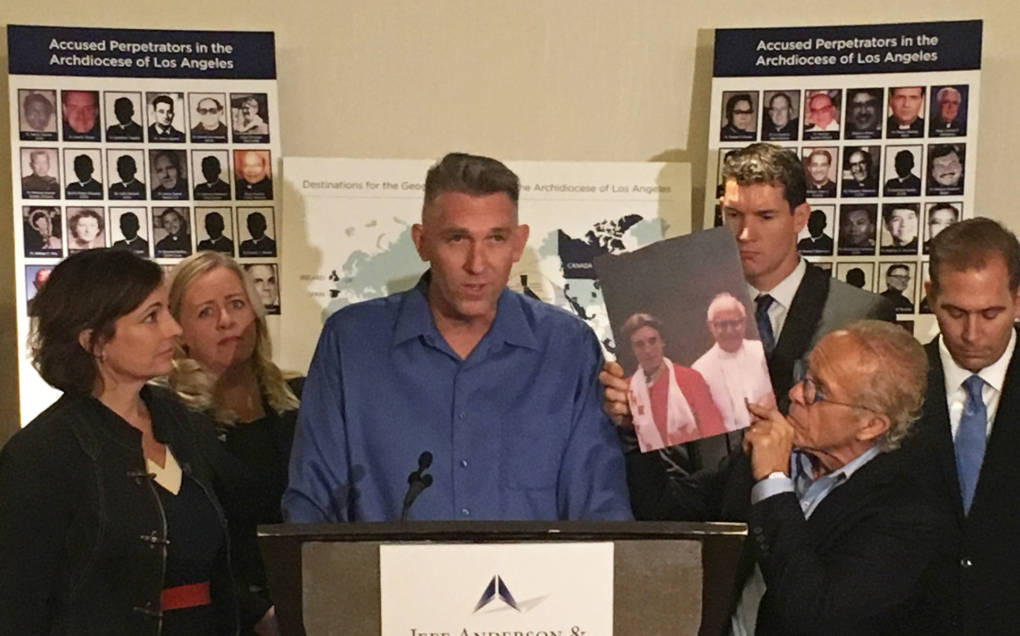
"caption": "Thomas Emens, who was sexually abused by a priest, speaks at a press conference in Los Angeles on Tuesday. Emens is suing all Catholic bishops in California and the Archdiocese of Chicago.",
"description": "Thomas Emens, who was sexually abused by a priest, speaks at a press conference in Los Angeles on Tuesday. Emens is suing all Catholic bishops in California and the Archdiocese of Chicago.",
"title": "EmensSpeaks",
"credit": "Paulina Velasco/KCRW",
"status": "inherit",
"isLoading": false,
"fetchFailed": false
},
"news_11696617": {
"type": "attachments",
"id": "news_11696617",
"meta": {
"index": "attachments_1716263798",
"site": "news",
"id": "11696617",
"found": true
},
"parent": 11696615,
"imgSizes": {
"small": {
"file": "https://ww2.kqed.org/app/uploads/sites/10/2018/10/Miko-Fogarty-by-Oliver-Endahl-@balletzaida-e1538685676254-520x293.jpg",
"width": 520,
"mimeType": "image/jpeg",
"height": 293
},
"twentyfourteen-full-width": {
"file": "https://ww2.kqed.org/app/uploads/sites/10/2018/10/Miko-Fogarty-by-Oliver-Endahl-@balletzaida-e1538685676254-1038x576.jpg",
"width": 1038,
"mimeType": "image/jpeg",
"height": 576
},
"thumbnail": {
"file": "https://ww2.kqed.org/app/uploads/sites/10/2018/10/Miko-Fogarty-by-Oliver-Endahl-@balletzaida-e1538685676254-160x90.jpg",
"width": 160,
"mimeType": "image/jpeg",
"height": 90
},
"fd-sm": {
"file": "https://ww2.kqed.org/app/uploads/sites/10/2018/10/Miko-Fogarty-by-Oliver-Endahl-@balletzaida-e1538685676254-960x541.jpg",
"width": 960,
"mimeType": "image/jpeg",
"height": 541
},
"post-thumbnail": {
"file": "https://ww2.kqed.org/app/uploads/sites/10/2018/10/Miko-Fogarty-by-Oliver-Endahl-@balletzaida-e1538685676254-672x372.jpg",
"width": 672,
"mimeType": "image/jpeg",
"height": 372
},
"xsmall": {
"file": "https://ww2.kqed.org/app/uploads/sites/10/2018/10/Miko-Fogarty-by-Oliver-Endahl-@balletzaida-e1538685676254-375x211.jpg",
"width": 375,
"mimeType": "image/jpeg",
"height": 211
},
"kqedFullSize": {
"file": "https://ww2.kqed.org/app/uploads/sites/10/2018/10/Miko-Fogarty-by-Oliver-Endahl-@balletzaida-e1538694652441.jpg",
"width": 1920,
"height": 1082
},
"large": {
"file": "https://ww2.kqed.org/app/uploads/sites/10/2018/10/Miko-Fogarty-by-Oliver-Endahl-@balletzaida-e1538685676254-1020x575.jpg",
"width": 1020,
"mimeType": "image/jpeg",
"height": 575
},
"xlarge": {
"file": "https://ww2.kqed.org/app/uploads/sites/10/2018/10/Miko-Fogarty-by-Oliver-Endahl-@balletzaida-e1538685676254-1180x665.jpg",
"width": 1180,
"mimeType": "image/jpeg",
"height": 665
},
"complete_open_graph": {
"file": "https://ww2.kqed.org/app/uploads/sites/10/2018/10/Miko-Fogarty-by-Oliver-Endahl-@balletzaida-e1538685676254-1200x676.jpg",
"width": 1200,
"mimeType": "image/jpeg",
"height": 676
},
"guest-author-50": {
"file": "https://ww2.kqed.org/app/uploads/sites/10/2018/10/Miko-Fogarty-by-Oliver-Endahl-@balletzaida-e1538685676254-50x50.jpg",
"width": 50,
"mimeType": "image/jpeg",
"height": 50
},
"guest-author-96": {
"file": "https://ww2.kqed.org/app/uploads/sites/10/2018/10/Miko-Fogarty-by-Oliver-Endahl-@balletzaida-e1538685676254-96x96.jpg",
"width": 96,
"mimeType": "image/jpeg",
"height": 96
},
"medium": {
"file": "https://ww2.kqed.org/app/uploads/sites/10/2018/10/Miko-Fogarty-by-Oliver-Endahl-@balletzaida-e1538685676254-800x451.jpg",
"width": 800,
"mimeType": "image/jpeg",
"height": 451
},
"guest-author-64": {
"file": "https://ww2.kqed.org/app/uploads/sites/10/2018/10/Miko-Fogarty-by-Oliver-Endahl-@balletzaida-e1538685676254-64x64.jpg",
"width": 64,
"mimeType": "image/jpeg",
"height": 64
},
"guest-author-32": {
"file": "https://ww2.kqed.org/app/uploads/sites/10/2018/10/Miko-Fogarty-by-Oliver-Endahl-@balletzaida-e1538685676254-32x32.jpg",
"width": 32,
"mimeType": "image/jpeg",
"height": 32
},
"fd-lrg": {
"file": "https://ww2.kqed.org/app/uploads/sites/10/2018/10/Miko-Fogarty-by-Oliver-Endahl-@balletzaida-e1538685676254-1920x1082.jpg",
"width": 1920,
"mimeType": "image/jpeg",
"height": 1082
},
"fd-med": {
"file": "https://ww2.kqed.org/app/uploads/sites/10/2018/10/Miko-Fogarty-by-Oliver-Endahl-@balletzaida-e1538685676254-1180x665.jpg",
"width": 1180,
"mimeType": "image/jpeg",
"height": 665
},
"full-width": {
"file": "https://ww2.kqed.org/app/uploads/sites/10/2018/10/Miko-Fogarty-by-Oliver-Endahl-@balletzaida-e1538685676254-1920x1082.jpg",
"width": 1920,
"mimeType": "image/jpeg",
"height": 1082
},
"detail": {
"file": "https://ww2.kqed.org/app/uploads/sites/10/2018/10/Miko-Fogarty-by-Oliver-Endahl-@balletzaida-e1538685676254-150x150.jpg",
"width": 150,
"mimeType": "image/jpeg",
"height": 150
},
"guest-author-128": {
"file": "https://ww2.kqed.org/app/uploads/sites/10/2018/10/Miko-Fogarty-by-Oliver-Endahl-@balletzaida-e1538685676254-128x128.jpg",
"width": 128,
"mimeType": "image/jpeg",
"height": 128
},
"xxsmall": {
"file": "https://ww2.kqed.org/app/uploads/sites/10/2018/10/Miko-Fogarty-by-Oliver-Endahl-@balletzaida-e1538685676254-240x135.jpg",
"width": 240,
"mimeType": "image/jpeg",
"height": 135
}
},
"publishDate": 1538685440,
"modified": 1538694663,
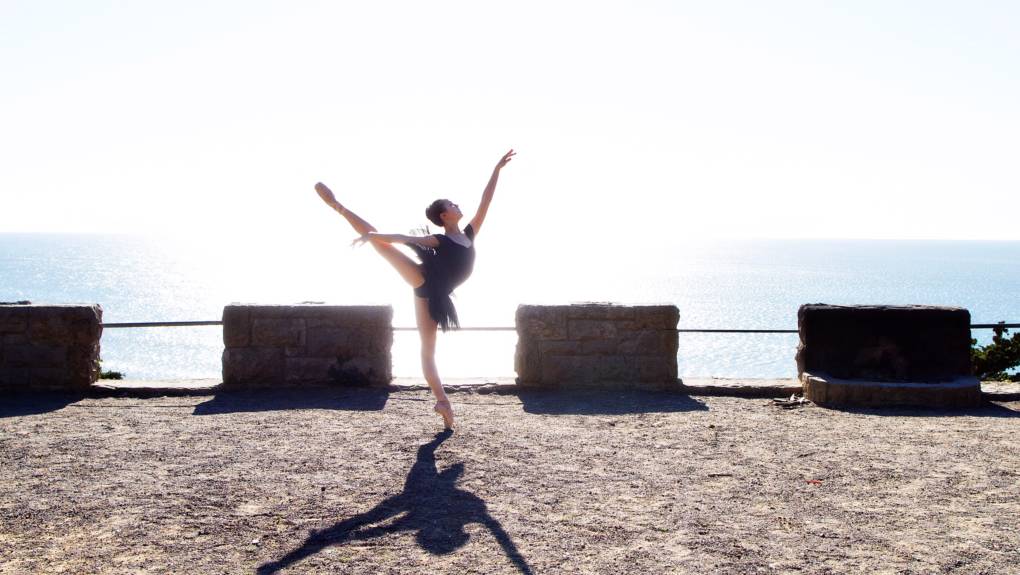
"caption": "California ballerina Miko Fogarty, a star of the award-winning \"First Position\" dance documentary, performs an arabesque. ",
"description": "California ballerina Miko Fogarty, a star of the award-winning \"First Position\" ballet documentary, performs an arabesque. ",
"title": "Miko Fogarty - by Oliver Endahl @balletzaida",
"credit": "Courtesy Oliver Endahl",
"status": "inherit",
"isLoading": false,
"fetchFailed": false
}
},
"audioPlayerReducer": {
"postId": "stream_live",
"isPaused": true,
"isPlaying": false,
"pfsActive": false,
"pledgeModalIsOpen": true,
"playerDrawerIsOpen": false,
"liveAudioPlayStartedAt": 0,
"liveAudioPlayContext": ""
},
"authorsReducer": {
"byline_news_11744513": {
"type": "authors",
"id": "byline_news_11744513",
"meta": {
"override": true
},
"slug": "byline_news_11744513",
"name": "\u003cstrong>Associated Press\u003c/strong>",
"isLoading": false
},
"byline_news_11710781": {
"type": "authors",
"id": "byline_news_11710781",
"meta": {
"override": true
},
"slug": "byline_news_11710781",
"name": "Associated Press",
"isLoading": false
},
"byline_news_11696384": {
"type": "authors",
"id": "byline_news_11696384",
"meta": {
"override": true
},
"slug": "byline_news_11696384",
"name": "Polly Stryker, KQED News\u003c/br>Associated Press",
"isLoading": false
},
"matthewgreen": {
"type": "authors",
"id": "1263",
"meta": {
"index": "authors_1716337520",
"id": "1263",
"found": true
},
"name": "Matthew Green",
"firstName": "Matthew",
"lastName": "Green",
"slug": "matthewgreen",
"email": "mgreen@kqed.org",
"display_author_email": false,
"staff_mastheads": [],
"title": "KQED Editor/Reporter",
"bio": "Matthew Green is a digital media producer for KQED News. He previously produced \u003ca href=\"http://www.kqed.org/lowdown\">The Lowdown\u003c/a>, KQED’s multimedia news education blog. Matthew's written for numerous Bay Area publications, including the Oakland Tribune and San Francisco Chronicle. He also taught journalism classes at Fremont High School in East Oakland.\r\n\r\nEmail: mgreen@kqed.org; Twitter: @MGreenKQED",
"avatar": "https://secure.gravatar.com/avatar/3bf498d1267ca02c8494f33d8cfc575e?s=600&d=blank&r=g",
"twitter": "MGreenKQED",
"facebook": null,
"instagram": null,
"linkedin": null,
"sites": [
{
"site": "news",
"roles": []
},
{
"site": "lowdown",
"roles": []
},
{
"site": "science",
"roles": []
},
{
"site": "education",
"roles": []
},
{
"site": "quest",
"roles": []
},
{
"site": "liveblog",
"roles": []
}
],
"headData": {
"title": "Matthew Green | KQED",
"description": "KQED Editor/Reporter",
"ogImgSrc": "https://secure.gravatar.com/avatar/3bf498d1267ca02c8494f33d8cfc575e?s=600&d=blank&r=g",
"twImgSrc": "https://secure.gravatar.com/avatar/3bf498d1267ca02c8494f33d8cfc575e?s=600&d=blank&r=g"
},
"isLoading": false,
"link": "/author/matthewgreen"
},
"cveltman": {
"type": "authors",
"id": "8608",
"meta": {
"index": "authors_1716337520",
"id": "8608",
"found": true
},
"name": "Chloe Veltman",
"firstName": "Chloe",
"lastName": "Veltman",
"slug": "cveltman",
"email": "cveltman@kqed.org",
"display_author_email": true,
"staff_mastheads": [],
"title": "Arts and Culture Reporter",
"bio": "Chloe Veltman is a former arts and culture reporter for KQED. Prior to joining the organization, she launched and led the arts bureau at Colorado Public Radio, served as the Bay Area's culture columnist for the New York Times, and was the founder, host and executive producer of VoiceBox, a national award-winning weekly podcast/radio show and live events series all about the human voice. Chloe is the recipient of numerous prizes, grants and fellowships including a Webby Award for her work on interactive storytelling, both the John S Knight Journalism Fellowship and Humanities Center Fellowship at Stanford University, the Sundance Arts Writing Fellowship and a Library of Congress Research Fellowship. She is the author of the book \"On Acting\" and has appeared as a guest lecturer at Yale University and the San Francisco Conservatory of Music among other institutions. She holds a BA in english literature from King's College, Cambridge, and a Masters in Dramaturgy from the Central School of Speech and Drama/Harvard Institute for Advanced Theater Training.\r\n\u003ca href=\"https://www.chloeveltman.com\">www.chloeveltman.com\u003c/a>",
"avatar": "https://secure.gravatar.com/avatar/55403394b00a1ddab683952c2eb2cf85?s=600&d=blank&r=g",
"twitter": "chloeveltman",
"facebook": null,
"instagram": null,
"linkedin": null,
"sites": [
{
"site": "arts",
"roles": []
},
{
"site": "news",
"roles": [
"author"
]
},
{
"site": "pop",
"roles": [
"editor"
]
},
{
"site": "science",
"roles": []
}
],
"headData": {
"title": "Chloe Veltman | KQED",
"description": "Arts and Culture Reporter",
"ogImgSrc": "https://secure.gravatar.com/avatar/55403394b00a1ddab683952c2eb2cf85?s=600&d=blank&r=g",
"twImgSrc": "https://secure.gravatar.com/avatar/55403394b00a1ddab683952c2eb2cf85?s=600&d=blank&r=g"
},
"isLoading": false,
"link": "/author/cveltman"
},
"mleitsinger": {
"type": "authors",
"id": "11310",
"meta": {
"index": "authors_1716337520",
"id": "11310",
"found": true
},
"name": "Miranda Leitsinger",
"firstName": "Miranda",
"lastName": "Leitsinger",
"slug": "mleitsinger",
"email": "mleitsinger@KQED.org",
"display_author_email": false,
"staff_mastheads": [
"news"
],
"title": "KQED Contributor",
"bio": "Miranda Leitsinger has worked in journalism as a reporter and editor since 2000, including seven years at The Associated Press in locales such as Cambodia and Puerto Rico, four years at NBC News Digital in New York and 2.5 years at CNN.com International in Hong Kong. Major stories she has covered included sexual abuse in the yoga community, the rise of women in local politics post-2016 election, the struggle over LGBTQ inclusion in the Boy Scouts, aftermath of the 2004 and 2011 tsunamis, the Aurora movie theater attack, the Newtown school shooting, Superstorm Sandy and the Boston Marathon bombing.",
"avatar": "https://secure.gravatar.com/avatar/cdd00de7be92aab3b7fd3d915e02033d?s=600&d=blank&r=g",
"twitter": "mimileitsinger",
"facebook": null,
"instagram": null,
"linkedin": null,
"sites": [
{
"site": "arts",
"roles": [
"author"
]
},
{
"site": "news",
"roles": [
"subscriber"
]
},
{
"site": "futureofyou",
"roles": [
"editor"
]
},
{
"site": "stateofhealth",
"roles": [
"editor"
]
}
],
"headData": {
"title": "Miranda Leitsinger | KQED",
"description": "KQED Contributor",
"ogImgSrc": "https://secure.gravatar.com/avatar/cdd00de7be92aab3b7fd3d915e02033d?s=600&d=blank&r=g",
"twImgSrc": "https://secure.gravatar.com/avatar/cdd00de7be92aab3b7fd3d915e02033d?s=600&d=blank&r=g"
},
"isLoading": false,
"link": "/author/mleitsinger"
},
"ahall": {
"type": "authors",
"id": "11490",
"meta": {
"index": "authors_1716337520",
"id": "11490",
"found": true
},
"name": "Alex Hall",
"firstName": "Alex",
"lastName": "Hall",
"slug": "ahall",
"email": "ahall@kqed.org",
"display_author_email": false,
"staff_mastheads": [
"news"
],
"title": "KQED Enterprise & Accountability Reporter",
"bio": "Alex Hall is KQED's Enterprise and Accountability Reporter. She previously covered the Central Valley for five years from KQED's bureau in Fresno. Before joining KQED, Alex was an investigative reporting fellow at Wisconsin Public Radio and the Wisconsin Center for Investigative Journalism. She has also worked as a bilingual producer for NPR's investigative unit and freelance video producer for Reuters TV on the Latin America desk. She got her start in journalism in South America, where she worked as a radio producer and Spanish-English translator for CNN Chile. Her documentary and investigation into the series of deadly COVID-19 outbreaks at Foster Farms won a national Edward R. Murrow award and was named an Investigative Reporters & Editors award finalist. Alex's reporting for Reveal on the Wisconsin dairy industry's reliance on undocumented immigrant labor was made into a film, Los Lecheros, which won a regional Edward R. Murrow award for best news documentary.",
"avatar": "https://secure.gravatar.com/avatar/defcbeb88b0bf591ff9af41f22644051?s=600&d=blank&r=g",
"twitter": "@chalexhall",
"facebook": null,
"instagram": null,
"linkedin": null,
"sites": [
{
"site": "news",
"roles": [
"editor"
]
},
{
"site": "liveblog",
"roles": [
"author"
]
}
],
"headData": {
"title": "Alex Hall | KQED",
"description": "KQED Enterprise & Accountability Reporter",
"ogImgSrc": "https://secure.gravatar.com/avatar/defcbeb88b0bf591ff9af41f22644051?s=600&d=blank&r=g",
"twImgSrc": "https://secure.gravatar.com/avatar/defcbeb88b0bf591ff9af41f22644051?s=600&d=blank&r=g"
},
"isLoading": false,
"link": "/author/ahall"
},
"hmcdede": {
"type": "authors",
"id": "11635",
"meta": {
"index": "authors_1716337520",
"id": "11635",
"found": true
},
"name": "Holly McDede",
"firstName": "Holly",
"lastName": "McDede",
"slug": "hmcdede",
"email": "hmcdede@KQED.org",
"display_author_email": false,
"staff_mastheads": [],
"title": "KQED Contributor",
"bio": null,
"avatar": "https://secure.gravatar.com/avatar/999d9bf31bb3a2f0511932d99526cb3e?s=600&d=blank&r=g",
"twitter": null,
"facebook": null,
"instagram": null,
"linkedin": null,
"sites": [
{
"site": "arts",
"roles": [
"editor"
]
},
{
"site": "news",
"roles": [
"edit_others_posts",
"editor"
]
},
{
"site": "science",
"roles": [
"editor"
]
},
{
"site": "forum",
"roles": [
"editor"
]
},
{
"site": "perspectives",
"roles": [
"administrator"
]
}
],
"headData": {
"title": "Holly McDede | KQED",
"description": "KQED Contributor",
"ogImgSrc": "https://secure.gravatar.com/avatar/999d9bf31bb3a2f0511932d99526cb3e?s=600&d=blank&r=g",
"twImgSrc": "https://secure.gravatar.com/avatar/999d9bf31bb3a2f0511932d99526cb3e?s=600&d=blank&r=g"
},
"isLoading": false,
"link": "/author/hmcdede"
}
},
"pagesReducer": {
"news_tag_sexual-abuse": {
"type": "terms",
"id": "news_2700",
"meta": {
"index": "terms_1716263798",
"site": "news",
"id": "2700",
"score": 9.892343
},
"featImg": null,
"name": "sexual abuse",
"description": null,
"taxonomy": "tag",
"headData": {
"twImgId": null,
"twTitle": null,
"ogTitle": null,
"ogImgId": null,
"twDescription": null,
"description": null,
"title": "sexual abuse Archives | KQED News",
"ogDescription": null
},
"ttid": 2718,
"slug": "sexual-abuse",
"isLoading": false,
"title": "sexual abuse",
"pageMeta": {
"site": "news",
"WpPageTemplate": "page-topic-editorial",
"currentPage": 6
},
"blocks": [
{
"blockName": "kqed/post-list",
"attrs": {
"layout": "cardArticle2",
"query": "posts/news?tag=sexual-abuse",
"seeMore": false,
"paginated": true,
"page": 6
}
},
{
"blockName": "kqed/ad"
}
]
}
},
"pfsSessionReducer": {},
"postsReducer": {
"stream_live": {
"type": "live",
"id": "stream_live",
"audioUrl": "https://streams.kqed.org/kqedradio",
"title": "Live Stream",
"excerpt": "Live Stream information currently unavailable.",
"link": "/radio",
"featImg": "",
"label": {
"name": "KQED Live",
"link": "/"
}
},
"stream_kqedNewscast": {
"type": "posts",
"id": "stream_kqedNewscast",
"audioUrl": "https://www.kqed.org/.stream/anon/radio/RDnews/newscast.mp3?_=1",
"title": "KQED Newscast",
"featImg": "",
"label": {
"name": "88.5 FM",
"link": "/"
}
},
"news_11864769": {
"type": "posts",
"id": "news_11864769",
"meta": {
"index": "posts_1716263798",
"site": "news",
"id": "11864769",
"score": null,
"sort": [
1616615134000
]
},
"guestAuthors": [],
"slug": "how-generations-of-berkeley-high-students-forced-a-reckoning-about-sexual-abuse",
"title": "How Generations of Berkeley High Students Forced a Reckoning About Sexual Abuse",
"publishDate": 1616615134,
"format": "audio",
"headTitle": "How Generations of Berkeley High Students Forced a Reckoning About Sexual Abuse | KQED",
"labelTerm": {
"site": "news"
},
"content": "\u003cp>The Women’s Student Union at Berkeley High School \u003ca href=\"https://www.berkeleyside.com/2021/03/11/womens-student-union-at-berkeley-high-sues-dept-of-ed-to-overturn-trump-era-sexual-misconduct-rules\">sued the U.S. Department of Education earlier this month\u003c/a> over Title IX rules adopted during the Trump administration that govern how schools respond to cases of sexual harassment and assault.\u003c/p>\n\u003cp>Those rules, \u003ca href=\"https://www.npr.org/2020/05/06/851733630/federal-rules-give-more-protection-to-students-accused-of-sexual-assault\">announced last May and implemented in August under former Secretary of Education Betsy DeVos \u003c/a>, offer more protections for students who are accused of sexual misconduct. They apply to colleges as well as K-12 schools. The Women’s Student Union – a student-founded and student-led group that advocates for policies to reduce sexual harassment on Berkeley High’s campus – argued in its \u003ca href=\"https://www.documentcloud.org/documents/20517245-20210308-doc-1-complaint\">lawsuit\u003c/a> that the policy discourages students from reporting harassment and schools from investigating complaints.\u003c/p>\n\u003cp>This latest action by students comes more than a year after victims and advocates at Berkeley High organized a \u003ca href=\"https://www.kqed.org/news/11801840/reckoning-with-sexual-assault-at-berkeley-high-school\">walkout\u003c/a> in February 2020 to demand changes over how misconduct was handled on their own campus.\u003c/p>\n\u003cp>[pullquote size=\"medium\" align=\"right\" citation=\"Ayisha Friedman, Berkeley High alum\"]‘I was always seeing somebody who had done something or experienced something or a hallway where something had been done. It’s always on your mind and it’s always breaking your heart.’[/pullquote]“We were realizing that a lot of the issues that students at Berkeley High were facing stemmed from national policies,” said Ava, a junior at Berkeley High and one of the students who filed the lawsuit. “And if we could change national policies, we could help people at every school in the United States, not just Berkeley High.” KQED is identifying Ava by only her first name over fears she could face harassment.\u003c/p>\n\u003cp>In the year since the walkout, the Berkeley Unified School District has adopted some changes in response to students’ demands. In December, the district \u003ca href=\"https://berkeleyhighjacket.com/2020/features/busd-implements-title-ix-reform-demanded-by-students/\">announced\u003c/a> they had hired a full-time Title IX coordinator and investigator, and set up a committee of mostly Berkeley High School students to lead some of the changes around consent education.\u003c/p>\n\u003cp>It’s not the first time the district’s students and adult advocates have demanded changes in how their schools handle misconduct complaints.\u003c/p>\n\u003cp>[ad fullwidth]\u003c/p>\n\u003ch3>A History of Activism at Berkeley High\u003c/h3>\n\u003cp>In 2014, Berkeley High alum Liana Thomason and her classmates \u003ca href=\"https://www.kqed.org/news/10392296/berkeley-high-students-trying-to-change-schools-sexual-harassment-policy\">started the group BHS Stop Harassing\u003c/a>. She said they founded the group after comments made during a school assembly seemed to blame harassment on the ways students dressed. But Thomason said the need was about more than just those comments.\u003c/p>\n\u003cp>“The unofficial story is that there had just been this culture of harassment in Berkeley High and middle school. There was Slap Ass Friday where boys would slap the girls’ asses on Friday,” Thomason said. “And it was just like, ‘This is what the world is like. That’s fine.’ ”\u003c/p>\n\u003cp>After the assembly, Thomason invited a group of female friends to her house to talk about what they saw as a culture of unchecked harassment.\u003c/p>\n\u003cp>“We realized that we had to say something. We had to let the school know that it was not OK,” she said.\u003c/p>\n\u003cp>[pullquote size=\"medium\" align=\"right\" citation=\"Maha Ibrahim, attorney with Equal Rights Advocates\"]‘Not only was there an assumption that students wouldn’t face these issues at school, but there was a resistance to admit it could possibly be a problem. It was sort of like, ‘Well, this can’t be us. We’re Berkeley.”[/pullquote]Berkeley High students had also \u003ca href=\"https://www.dailycal.org/2015/10/02/berkeley-unified-school-district-inadequately-handles-sexual-harassment/\">created\u003c/a> an Instagram account on which some female students were referred to as “sluts” alongside degrading photos of them. Thomason was also motivated to address these issues after her sister was sexually assaulted at a middle school bike cage in 2014. She said the school responded by setting up a restorative justice circle that traumatized her sister even more.\u003c/p>\n\u003cp>Thomason’s mother, Heidi Goldstein, became an adviser for BHS Stop Harassing and is still working on these issues today.\u003c/p>\n\u003cp>“I started researching Title IX and school district policies,” Goldstein said. “And that’s where I came to the conclusion that the whole system was just in disarray. There was no system and there really was no process.”\u003c/p>\n\u003cfigure id=\"attachment_11865854\" class=\"wp-caption aligncenter\" style=\"max-width: 1920px\">\u003cimg loading=\"lazy\" decoding=\"async\" class=\"size-full wp-image-11865854\" src=\"https://ww2.kqed.org/app/uploads/sites/10/2021/03/RS47860_015_Berkeley_LianaThomason_03162021.jpg\" alt=\"\" width=\"1920\" height=\"1280\" srcset=\"https://cdn.kqed.org/wp-content/uploads/sites/10/2021/03/RS47860_015_Berkeley_LianaThomason_03162021.jpg 1920w, https://cdn.kqed.org/wp-content/uploads/sites/10/2021/03/RS47860_015_Berkeley_LianaThomason_03162021-800x533.jpg 800w, https://cdn.kqed.org/wp-content/uploads/sites/10/2021/03/RS47860_015_Berkeley_LianaThomason_03162021-1020x680.jpg 1020w, https://cdn.kqed.org/wp-content/uploads/sites/10/2021/03/RS47860_015_Berkeley_LianaThomason_03162021-160x107.jpg 160w, https://cdn.kqed.org/wp-content/uploads/sites/10/2021/03/RS47860_015_Berkeley_LianaThomason_03162021-1536x1024.jpg 1536w\" sizes=\"(max-width: 1920px) 100vw, 1920px\">\u003cfigcaption class=\"wp-caption-text\">Liana Thomason, right, a Berkeley High alum, founded the group BHS Stop Harassing. Her mother Heidi Goldstein continues to be an adult adviser for the group. \u003ccite>(Beth LaBerge/KQED)\u003c/cite>\u003c/figcaption>\u003c/figure>\n\u003cp>Goldstein filed a \u003ca href=\"https://www.berkeleyside.com/wp-content/uploads/2015/02/OCR-Letter-1-14-2015.pdf\">complaint\u003c/a> with the U.S Department of Education’s Office for Civil Rights about how the school handled misconduct complaints, prompting an investigation.\u003c/p>\n\u003cp>Members of BHS Stop Harassing began showing up at school board meetings to demand better policies around sexual harassment and more training for teachers as well as education for students.\u003c/p>\n\u003cp>“The Berkeley Public School District places an immense value on student safety and well-being,” former BUSD Superintendent Donald Evans and BUSD Board President Judy Appel wrote in a \u003ca href=\"https://www.berkeleyside.com/wp-content/uploads/2015/02/Sexual-Harrassment-Letter-v4c-1-7-.pdf\">letter\u003c/a> to district families at the time. “Based on student, teacher, and community feedback about this and other related issues, we have come to realize that there is an urgent need to work on developing a culture focused on prevention of sexual harassment, not simply reacting to it.”\u003c/p>\n\u003ch3>The Wild West of Title IX Regulations\u003c/h3>\n\u003cp>Maha Ibrahim, an attorney with Equal Rights Advocates, a nonprofit that advocates for gender equity in schools, has worked with Berkeley High students. She said few schools do a sufficient job responding to sexual harassment or assault claims.\u003c/p>\n\u003cp>“The federal rules and regulations for Title IX have been written for universities – and schools K-12 were an afterthought,” Ibrahim said. “It’s like the Wild West. It’s a lot of individual adults who are shooting from the hip when approached with difficult or traumatic experiences of their students.”\u003c/p>\n\u003cp>[aside postID=news_11859164 hero='https://ww2.kqed.org/app/uploads/sites/10/2021/02/RS46527_003_SanFrancisco_LowellHS_01092021-qut-1038x576.jpg']According to a new \u003ca href=\"https://www.knowyourix.org/wp-content/uploads/2021/03/Know-Your-IX-2021-Report-Final-Copy.pdf\">report\u003c/a> from the advocacy group Know Your IX, a survey of more than 100 students found that 20% of students who reported sexual violence to their school transferred schools, and nearly 10% dropped out entirely.\u003c/p>\n\u003cp>But she said Berkeley’s progressive image also made it difficult for some to acknowledge that some students felt unsafe.\u003c/p>\n\u003cp>“Not only was there an assumption that students wouldn’t face these issues at school, but there was a resistance to admit it could possibly be a problem,” Ibrahim said. “It was sort of like, ‘Well, this can’t be us. We’re Berkeley.’ ”\u003c/p>\n\u003cp>In response to demands from students made in 2014, the district \u003ca href=\"https://www.berkeleyschools.net/wp-content/uploads/2015/03/ActionStepstoAddressSexualHarassment3.8.17.docx-1.pdf\">said\u003c/a> it expanded an advisory committee to create a comprehensive sexual harassment policy, held restorative justice circles for students who were targeted by sexual harassment and established a Title IX coordinator and compliance officer position.\u003c/p>\n\u003ch3>A Lawsuit and a Sexual Assault Reported on Campus\u003c/h3>\n\u003cp>But students say the problems continued. The district was sued by a student over its handling of a sexual assault allegation last year.\u003c/p>\n\u003cp>The lawsuit alleges a student was sexually assaulted by another student during school hours in an unlocked classroom at Berkeley High in 2019. It claims the district failed to take steps to adequately ensure the victim’s safety. KQED is identifying the student as “Faith” to protect her identity over concerns for her safety. In the lawsuit, she is identified as “Jane Doe.”\u003c/p>\n\u003cp>Faith said she kept seeing her assailant on campus after the assault, and that he continued to sexually harass her. She said she had meltdowns for months.\u003c/p>\n\u003cp>“Usually, I’m a happy, goofy person. My teachers were just worried, and they would always just look at me and they’re like, ‘You look so sad,’ ” Faith said. “They would try to help me get back to how I used to be. And it was just hard.”\u003c/p>\n\u003cfigure id=\"attachment_11865919\" class=\"wp-caption aligncenter\" style=\"max-width: 1920px\">\u003cimg loading=\"lazy\" decoding=\"async\" class=\"size-full wp-image-11865919\" src=\"https://ww2.kqed.org/app/uploads/sites/10/2021/03/RS47697_008_Berkeley_AnonymousFormerStudent_03122021-qut.jpg\" alt=\"Faith sits with hands on knees, only legs and shoes visible\" width=\"1920\" height=\"1280\" srcset=\"https://cdn.kqed.org/wp-content/uploads/sites/10/2021/03/RS47697_008_Berkeley_AnonymousFormerStudent_03122021-qut.jpg 1920w, https://cdn.kqed.org/wp-content/uploads/sites/10/2021/03/RS47697_008_Berkeley_AnonymousFormerStudent_03122021-qut-800x533.jpg 800w, https://cdn.kqed.org/wp-content/uploads/sites/10/2021/03/RS47697_008_Berkeley_AnonymousFormerStudent_03122021-qut-1020x680.jpg 1020w, https://cdn.kqed.org/wp-content/uploads/sites/10/2021/03/RS47697_008_Berkeley_AnonymousFormerStudent_03122021-qut-160x107.jpg 160w, https://cdn.kqed.org/wp-content/uploads/sites/10/2021/03/RS47697_008_Berkeley_AnonymousFormerStudent_03122021-qut-1536x1024.jpg 1536w\" sizes=\"(max-width: 1920px) 100vw, 1920px\">\u003cfigcaption class=\"wp-caption-text\">Faith, a former Berkeley High student, sued the district in January 2020 over its handling of her sexual assault allegations against a fellow student. \u003ccite>(Beth LaBerge/KQED)\u003c/cite>\u003c/figcaption>\u003c/figure>\n\u003cp>Eventually, Faith and her parents decided it was too much, and she transferred into an independent studies program. Attorneys for the district argued in a court filing that administrators worked with Faith to make sure she was safe, and they tried to limit the potential for contact between the two students. They said district personnel were responsive to Faith’s complaints.\u003c/p>\n\u003cp>Faith \u003ca href=\"https://www.berkeleyside.com/wp-content/uploads/2020/02/RG20052743-Doe-VS-Berkeley-Unified-School-District.pdf\">sued the district\u003c/a> in January 2020 before she left Berkeley High the next month, and she said students at the school began talking about the case, trying to guess the identity of Jane Doe. She said it was scary, but that she also felt resilient knowing she had helped spark a larger conversation about safety on campus.\u003c/p>\n\u003cp>“I just want there to be a change, especially being a person of color. I became a person of color who was also assaulted,” Faith said. “It was just something I had to speak up on, because my voice is not heard by a lot of people.”\u003c/p>\n\u003ch3>The Names on the Bathroom Stall\u003c/h3>\n\u003cp>Some Berkeley High students had already thought the school had a culture where sexual misconduct was swept under the rug, but the lawsuit Faith filed seemed to break something open.\u003c/p>\n\u003cp>Days after the lawsuit was filed, a group of Berkeley High students began writing the names of alleged perpetrators on a bathroom stall. In black ink, they wrote “Boys To Watch Out 4,” followed by several names and the words “rapist” and “abuser.”\u003c/p>\n\u003cfigure id=\"attachment_11864779\" class=\"wp-caption aligncenter\" style=\"max-width: 1920px\">\u003cimg loading=\"lazy\" decoding=\"async\" class=\"size-full wp-image-11864779\" src=\"https://ww2.kqed.org/app/uploads/sites/10/2021/03/IMG_0893-e1616451221449.jpg\" alt=\"Ayisha Friedman sitting outside, arms crossed\" width=\"1920\" height=\"1440\">\u003cfigcaption class=\"wp-caption-text\">Ayisha Friedman organized a walkout over sexual harassment and assault at Berkeley High in February 2020. \u003ccite>(Courtesy of Ayisha Friedman)\u003c/cite>\u003c/figcaption>\u003c/figure>\n\u003cp>Ayisha Friedman, a senior at Berkeley High during this time, said she saw the list during first or second period. Reading the list, Friedman thought about her friends who’d been harassed or assaulted.\u003c/p>\n\u003cp>“I was always seeing somebody who had done something or experienced something or a hallway where something had been done. It’s always on your mind and it’s always breaking your heart,” Friedman said.\u003c/p>\n\u003cp>Friedman said a lot of the boys were popular and known for inappropriate behavior around young women. She said the list was impossible to ignore. By the end of the school day, a picture of the stall had been shared on Instagram, and it felt like everyone in the school had seen it and had something to say.\u003c/p>\n\u003cp>“And that goes both ways. That goes people who were defending these women and who are saying, ‘I believe you, I am here for you,’ ” Friedman said. “And then people on the other side who were like, ‘Anybody could have written this. And this is a lie.’ ”\u003c/p>\n\u003ch3>A Walkout Gets the District’s Attention\u003c/h3>\n\u003cp>Several students who spoke to KQED described a climate at the high school where victims who reported their assaults to administrators were questioned or doubted by their peers. Students wanted the school district to do more to support victims and keep them safe on campus. Friedman and others began organizing a walkout.\u003c/p>\n\u003cp>Mia Redmond, one of the organizers, reported her own sexual assault about a week before the walkout in February 2020.\u003c/p>\n\u003cp>“This was in the midst of a really hard situation. But we were all coming together and working on something that we really cared about,” Redmond said.\u003c/p>\n\u003cp>She said she found a supportive community during a time when others were gossiping about her experience.\u003c/p>\n\u003cp>“It was so tense,” said Sophia Kerievsky, another organizer and friend of Redmond. “I remember people were pointing at me in the courtyard, and just really attacking my character, and especially her character. It was this strange energy. It was a lot of girls who were standing up for her, and then a huge group of boys standing by his side.”\u003c/p>\n\u003cfigure id=\"attachment_11864969\" class=\"wp-caption aligncenter\" style=\"max-width: 1920px\">\u003cimg loading=\"lazy\" decoding=\"async\" class=\"size-full wp-image-11864969\" src=\"https://ww2.kqed.org/app/uploads/sites/10/2021/03/BHS_Rape_Walkout-17-1-1-scaled-e1616451482414.jpg\" alt=\"BHS students behind podium during walkout\" width=\"1920\" height=\"1353\">\u003cfigcaption class=\"wp-caption-text\">Berkeley High School students organized a walkout in February 2020 to address sexual harassment and assault on campus. \u003ccite>(Courtesy Mia Redmond)\u003c/cite>\u003c/figcaption>\u003c/figure>\n\u003cp>The day of the walkout, Redmond wasn’t sure how many people would show up. So when she looked out at the courtyard, she was stunned by the support, and said the entire courtyard was filled with students, staff and administration.\u003c/p>\n\u003cp>“It made me feel like I wasn’t alone in it. At the time I was feeling a lot of lack of understanding,” Redmond said. “And it definitely gave me a group of people who I was like, ‘I can trust these people. These people support me, and I want to support these people.’ ”\u003c/p>\n\u003ch3>A Practical and Philosophical Set of Demands\u003c/h3>\n\u003cp>The students drafted up specific demands, such as more resources for the Title IX office handling misconduct complaints, expanded consent education and policies stating that perpetrators found to be guilty by the school would be suspended from school-sanctioned events. They wanted to create a culture where victims could heal, and for the school to continue the conversation long after they had graduated.\u003c/p>\n\u003cp>Superintendent Brent Stephens had begun working for the district less than a year before the walkout, and he said many of the students’ requests were practical, and that change felt necessary. There had also been high turnover in the district’s Title IX coordinator role, with at least six different people working in that position from 2015 to 2020.\u003c/p>\n\u003cp>The students, he said, had done their homework, and met with teachers, staff and adult advocates.\u003c/p>\n\u003cp>“And so when they came with a set of demands, they were sort of philosophical in nature, but they were very pragmatic as well,” Stephens said. “It was … a political moment, but it resonated with what I and many others saw as legitimate needs of the district.”\u003c/p>\n\u003ch3>The Conversation Continues Online\u003c/h3>\n\u003cp>Just weeks after the walkout, schools shut down because of COVID-19. And as everyone focused on the pandemic, the momentum began to fade.\u003c/p>\n\u003cp>Then, Annette Kwon, a former Berkeley High student now at Branham High School in San Jose, decided to find another way to restart the conversation. Over the summer, she made a TikTok video showing the faces of alleged perpetrators at Berkeley High and Lowell High School in San Francisco.\u003c/p>\n\u003cfigure id=\"attachment_11865849\" class=\"wp-caption aligncenter\" style=\"max-width: 800px\">\u003cimg loading=\"lazy\" decoding=\"async\" class=\"size-full wp-image-11865849\" src=\"https://ww2.kqed.org/app/uploads/sites/10/2021/03/IMG_6669.jpg\" alt=\"\" width=\"800\" height=\"537\" srcset=\"https://cdn.kqed.org/wp-content/uploads/sites/10/2021/03/IMG_6669.jpg 800w, https://cdn.kqed.org/wp-content/uploads/sites/10/2021/03/IMG_6669-160x107.jpg 160w\" sizes=\"(max-width: 800px) 100vw, 800px\">\u003cfigcaption class=\"wp-caption-text\">Annette Kwon, a former Berkeley High student, created a TikTok video to continue a public conversation around sexual harassment and assault in high school. \u003ccite>(Courtesy Annette Kwon)\u003c/cite>\u003c/figcaption>\u003c/figure>\n\u003cp>“When the quarantine started, everything died down,” she said. “And I just felt like it was necessary that the topic stays relevant, because if it had faded out once again, nothing would change.”\u003c/p>\n\u003cp>The video received over 100,000 views, and soon students throughout the Bay Area launched Instagram accounts for people to post their experiences of harassment and assault anonymously.\u003c/p>\n\u003cp>Mia Redmond remembered seeing dozens of stories of harassment and assault posted on an Instagram account called BHS Protectors.\u003c/p>\n\u003cp>“It just felt like everyone was coming together again, and addressing the issue again that we had done in February,” Redmond said. “It was powerful to see not only so many people at Berkeley High being able to tell their stories, that they couldn’t talk about before, but also other schools following that, too.”\u003c/p>\n\u003cp>[aside label='Education Coverage' tag='education']But for others, the account was also overwhelming, especially during a pandemic that left so many people isolated.\u003c/p>\n\u003cp>“A lot of people were like, ‘I’m in a pandemic, I’m in my room 24/7. This is already messing with my mental health. And everyday I open my Instagram and I’m reminded of my own trauma,’ ” said Ayisha Friedman, another walkout organizer, of people she knew who had seen the account. “Where does the conversation go? You’re stuck in your room with no support.”\u003c/p>\n\u003cp>Trish McDermott, a spokesperson for the Berkeley Unified School District, said in a statement that administrators reached out to those who posted about incidents of sexual harm, discrimination or racism, and those who were named in the posts. She said administrators also informed police and Child Protective Services about the account and specific allegations that could be traced to any students.\u003c/p>\n\u003cp>The account has since been removed, and now students who participated in the walkout are hoping some of the cultural shifts inspired by their organizing will last when the pandemic is over.\u003c/p>\n\u003ch3>District Announces Changes, and the Culture Begins to Shift\u003c/h3>\n\u003cp>Ultraviolet Schneider-Dwyer, a senior at Berkeley High, said that before the walkout a lot of the incidents of harassment and assault occurred during parties where young people were too intoxicated to consent. She’s hopeful her peers will no longer tolerate that culture after so many students shared their experiences of abuse.\u003c/p>\n\u003cp>“There will be more social consequences than there are administrative or academically,” she said. “At the same time, I’m just making sure that they’re not doing it out of fear of not being accepted, but they’re doing it because it’s the right thing to do.”\u003c/p>\n\u003cp>Now, Mia Redmond is a part of a committee to give students a chance to provide the school with input on issues like harassment and consent education. She feels like the district is taking students’ demands seriously. She’s graduating this year and plans to continue her advocacy after high school. And she said it will be up to future generations of Berkeley High students as well as administrators to make sure the changes she and others started will last.\u003c/p>\n\u003cp>“I can’t say for certain whether [the walkout] changed the culture at Berkeley High, but it definitely brought up a conversation that wasn’t being had before,” Redmond said. “It was such a monumental thing in Berkeley High history that everyone who experienced it, they’re not going to forget about it.”\u003c/p>\n\u003cp>\u003cem>\u003ca href=\"https://revealnews.org/podcast/protecting-kids-from-abuse/\">This story\u003c/a> was reported in collaboration with Reveal from The Center for Investigative Reporting and PRX. It was produced as a project for the USC Annenberg Center for Health Journalism Impact Fund.\u003c/em>\u003c/p>\n\u003cp>[ad floatright]\u003c/p>\n",
"blocks": [],
"excerpt": "The latest action by students — a lawsuit against the federal government — comes over a year after a walkout to demand changes over how sexual misconduct is handled at Berkeley High.",
"status": "publish",
"parent": 0,
"modified": 1721128796,
"stats": {
"hasAudio": false,
"hasVideo": false,
"hasChartOrMap": false,
"iframeSrcs": [],
"hasGoogleForm": false,
"hasGallery": false,
"hasHearkenModule": false,
"hasPolis": false,
"paragraphCount": 63,
"wordCount": 3103
},
"headData": {
"title": "How Generations of Berkeley High Students Forced a Reckoning About Sexual Abuse | KQED",
"description": "The latest action by students — a lawsuit against the federal government — comes over a year after a walkout to demand changes over how sexual misconduct is handled at Berkeley High.",
"ogTitle": "",
"ogDescription": "",
"ogImgId": "",
"twTitle": "",
"twDescription": "",
"twImgId": "",
"schema": {
"@context": "https://schema.org",
"@type": "NewsArticle",
"headline": "How Generations of Berkeley High Students Forced a Reckoning About Sexual Abuse",
"datePublished": "2021-03-24T12:45:34-07:00",
"dateModified": "2024-07-16T04:19:56-07:00",
"image": "https://cdn.kqed.org/wp-content/uploads/2020/02/KQED-OG-Image@1x.png",
"isAccessibleForFree": "True",
"publisher": {
"@type": "NewsMediaOrganization",
"@id": "https://www.kqed.org/#organization",
"name": "KQED",
"logo": "https://cdn.kqed.org/wp-content/uploads/2020/02/KQED-OG-Image@1x.png",
"url": "https://www.kqed.org",
"sameAs": [
"https://www.facebook.com/KQED",
"https://twitter.com/KQED",
"https://www.instagram.com/kqed/",
"https://www.tiktok.com/@kqedofficial",
"https://www.linkedin.com/company/kqed",
"https://www.youtube.com/channel/UCeC0IOo7i1P_61zVUWbJ4nw"
]
}
}
},
"audioUrl": "https://traffic.omny.fm/d/clips/0af137ef-751e-4b19-a055-aaef00d2d578/ffca7e9f-6831-41c5-bcaf-aaef00f5a073/cc6e7102-ab8c-4ef9-ba5a-ace8012a5e0f/audio.mp3",
"sticky": false,
"path": "/news/11864769/how-generations-of-berkeley-high-students-forced-a-reckoning-about-sexual-abuse",
"audioDuration": 430000,
"audioTrackLength": null,
"parsedContent": [
{
"type": "contentString",
"content": "\u003cdiv class=\"post-body\">\u003cp>\u003cp>The Women’s Student Union at Berkeley High School \u003ca href=\"https://www.berkeleyside.com/2021/03/11/womens-student-union-at-berkeley-high-sues-dept-of-ed-to-overturn-trump-era-sexual-misconduct-rules\">sued the U.S. Department of Education earlier this month\u003c/a> over Title IX rules adopted during the Trump administration that govern how schools respond to cases of sexual harassment and assault.\u003c/p>\n\u003cp>Those rules, \u003ca href=\"https://www.npr.org/2020/05/06/851733630/federal-rules-give-more-protection-to-students-accused-of-sexual-assault\">announced last May and implemented in August under former Secretary of Education Betsy DeVos \u003c/a>, offer more protections for students who are accused of sexual misconduct. They apply to colleges as well as K-12 schools. The Women’s Student Union – a student-founded and student-led group that advocates for policies to reduce sexual harassment on Berkeley High’s campus – argued in its \u003ca href=\"https://www.documentcloud.org/documents/20517245-20210308-doc-1-complaint\">lawsuit\u003c/a> that the policy discourages students from reporting harassment and schools from investigating complaints.\u003c/p>\n\u003cp>This latest action by students comes more than a year after victims and advocates at Berkeley High organized a \u003ca href=\"https://www.kqed.org/news/11801840/reckoning-with-sexual-assault-at-berkeley-high-school\">walkout\u003c/a> in February 2020 to demand changes over how misconduct was handled on their own campus.\u003c/p>\n\u003cp>\u003c/p>\u003c/div>",
"attributes": {
"named": {},
"numeric": []
}
},
{
"type": "component",
"content": "‘I was always seeing somebody who had done something or experienced something or a hallway where something had been done. It’s always on your mind and it’s always breaking your heart.’",
"name": "pullquote",
"attributes": {
"named": {
"size": "medium",
"align": "right",
"citation": "Ayisha Friedman, Berkeley High alum",
"label": ""
},
"numeric": []
}
},
{
"type": "contentString",
"content": "\u003cdiv class=\"post-body\">\u003cp>“We were realizing that a lot of the issues that students at Berkeley High were facing stemmed from national policies,” said Ava, a junior at Berkeley High and one of the students who filed the lawsuit. “And if we could change national policies, we could help people at every school in the United States, not just Berkeley High.” KQED is identifying Ava by only her first name over fears she could face harassment.\u003c/p>\n\u003cp>In the year since the walkout, the Berkeley Unified School District has adopted some changes in response to students’ demands. In December, the district \u003ca href=\"https://berkeleyhighjacket.com/2020/features/busd-implements-title-ix-reform-demanded-by-students/\">announced\u003c/a> they had hired a full-time Title IX coordinator and investigator, and set up a committee of mostly Berkeley High School students to lead some of the changes around consent education.\u003c/p>\n\u003cp>It’s not the first time the district’s students and adult advocates have demanded changes in how their schools handle misconduct complaints.\u003c/p>\n\u003cp>\u003c/p>\u003c/div>",
"attributes": {
"named": {},
"numeric": []
}
},
{
"type": "component",
"content": "",
"name": "ad",
"attributes": {
"named": {
"label": "fullwidth"
},
"numeric": [
"fullwidth"
]
}
},
{
"type": "contentString",
"content": "\u003cdiv class=\"post-body\">\u003cp>\u003c/p>\n\u003ch3>A History of Activism at Berkeley High\u003c/h3>\n\u003cp>In 2014, Berkeley High alum Liana Thomason and her classmates \u003ca href=\"https://www.kqed.org/news/10392296/berkeley-high-students-trying-to-change-schools-sexual-harassment-policy\">started the group BHS Stop Harassing\u003c/a>. She said they founded the group after comments made during a school assembly seemed to blame harassment on the ways students dressed. But Thomason said the need was about more than just those comments.\u003c/p>\n\u003cp>“The unofficial story is that there had just been this culture of harassment in Berkeley High and middle school. There was Slap Ass Friday where boys would slap the girls’ asses on Friday,” Thomason said. “And it was just like, ‘This is what the world is like. That’s fine.’ ”\u003c/p>\n\u003cp>After the assembly, Thomason invited a group of female friends to her house to talk about what they saw as a culture of unchecked harassment.\u003c/p>\n\u003cp>“We realized that we had to say something. We had to let the school know that it was not OK,” she said.\u003c/p>\n\u003cp>\u003c/p>\u003c/div>",
"attributes": {
"named": {},
"numeric": []
}
},
{
"type": "component",
"content": "‘Not only was there an assumption that students wouldn’t face these issues at school, but there was a resistance to admit it could possibly be a problem. It was sort of like, ‘Well, this can’t be us. We’re Berkeley.”",
"name": "pullquote",
"attributes": {
"named": {
"size": "medium",
"align": "right",
"citation": "Maha Ibrahim, attorney with Equal Rights Advocates",
"label": ""
},
"numeric": []
}
},
{
"type": "contentString",
"content": "\u003cdiv class=\"post-body\">\u003cp>Berkeley High students had also \u003ca href=\"https://www.dailycal.org/2015/10/02/berkeley-unified-school-district-inadequately-handles-sexual-harassment/\">created\u003c/a> an Instagram account on which some female students were referred to as “sluts” alongside degrading photos of them. Thomason was also motivated to address these issues after her sister was sexually assaulted at a middle school bike cage in 2014. She said the school responded by setting up a restorative justice circle that traumatized her sister even more.\u003c/p>\n\u003cp>Thomason’s mother, Heidi Goldstein, became an adviser for BHS Stop Harassing and is still working on these issues today.\u003c/p>\n\u003cp>“I started researching Title IX and school district policies,” Goldstein said. “And that’s where I came to the conclusion that the whole system was just in disarray. There was no system and there really was no process.”\u003c/p>\n\u003cfigure id=\"attachment_11865854\" class=\"wp-caption aligncenter\" style=\"max-width: 1920px\">\u003cimg loading=\"lazy\" decoding=\"async\" class=\"size-full wp-image-11865854\" src=\"https://ww2.kqed.org/app/uploads/sites/10/2021/03/RS47860_015_Berkeley_LianaThomason_03162021.jpg\" alt=\"\" width=\"1920\" height=\"1280\" srcset=\"https://cdn.kqed.org/wp-content/uploads/sites/10/2021/03/RS47860_015_Berkeley_LianaThomason_03162021.jpg 1920w, https://cdn.kqed.org/wp-content/uploads/sites/10/2021/03/RS47860_015_Berkeley_LianaThomason_03162021-800x533.jpg 800w, https://cdn.kqed.org/wp-content/uploads/sites/10/2021/03/RS47860_015_Berkeley_LianaThomason_03162021-1020x680.jpg 1020w, https://cdn.kqed.org/wp-content/uploads/sites/10/2021/03/RS47860_015_Berkeley_LianaThomason_03162021-160x107.jpg 160w, https://cdn.kqed.org/wp-content/uploads/sites/10/2021/03/RS47860_015_Berkeley_LianaThomason_03162021-1536x1024.jpg 1536w\" sizes=\"(max-width: 1920px) 100vw, 1920px\">\u003cfigcaption class=\"wp-caption-text\">Liana Thomason, right, a Berkeley High alum, founded the group BHS Stop Harassing. Her mother Heidi Goldstein continues to be an adult adviser for the group. \u003ccite>(Beth LaBerge/KQED)\u003c/cite>\u003c/figcaption>\u003c/figure>\n\u003cp>Goldstein filed a \u003ca href=\"https://www.berkeleyside.com/wp-content/uploads/2015/02/OCR-Letter-1-14-2015.pdf\">complaint\u003c/a> with the U.S Department of Education’s Office for Civil Rights about how the school handled misconduct complaints, prompting an investigation.\u003c/p>\n\u003cp>Members of BHS Stop Harassing began showing up at school board meetings to demand better policies around sexual harassment and more training for teachers as well as education for students.\u003c/p>\n\u003cp>“The Berkeley Public School District places an immense value on student safety and well-being,” former BUSD Superintendent Donald Evans and BUSD Board President Judy Appel wrote in a \u003ca href=\"https://www.berkeleyside.com/wp-content/uploads/2015/02/Sexual-Harrassment-Letter-v4c-1-7-.pdf\">letter\u003c/a> to district families at the time. “Based on student, teacher, and community feedback about this and other related issues, we have come to realize that there is an urgent need to work on developing a culture focused on prevention of sexual harassment, not simply reacting to it.”\u003c/p>\n\u003ch3>The Wild West of Title IX Regulations\u003c/h3>\n\u003cp>Maha Ibrahim, an attorney with Equal Rights Advocates, a nonprofit that advocates for gender equity in schools, has worked with Berkeley High students. She said few schools do a sufficient job responding to sexual harassment or assault claims.\u003c/p>\n\u003cp>“The federal rules and regulations for Title IX have been written for universities – and schools K-12 were an afterthought,” Ibrahim said. “It’s like the Wild West. It’s a lot of individual adults who are shooting from the hip when approached with difficult or traumatic experiences of their students.”\u003c/p>\n\u003cp>\u003c/p>\u003c/div>",
"attributes": {
"named": {},
"numeric": []
}
},
{
"type": "component",
"content": "",
"name": "aside",
"attributes": {
"named": {
"postid": "news_11859164",
"hero": "https://ww2.kqed.org/app/uploads/sites/10/2021/02/RS46527_003_SanFrancisco_LowellHS_01092021-qut-1038x576.jpg",
"label": ""
},
"numeric": []
}
},
{
"type": "contentString",
"content": "\u003cdiv class=\"post-body\">\u003cp>According to a new \u003ca href=\"https://www.knowyourix.org/wp-content/uploads/2021/03/Know-Your-IX-2021-Report-Final-Copy.pdf\">report\u003c/a> from the advocacy group Know Your IX, a survey of more than 100 students found that 20% of students who reported sexual violence to their school transferred schools, and nearly 10% dropped out entirely.\u003c/p>\n\u003cp>But she said Berkeley’s progressive image also made it difficult for some to acknowledge that some students felt unsafe.\u003c/p>\n\u003cp>“Not only was there an assumption that students wouldn’t face these issues at school, but there was a resistance to admit it could possibly be a problem,” Ibrahim said. “It was sort of like, ‘Well, this can’t be us. We’re Berkeley.’ ”\u003c/p>\n\u003cp>In response to demands from students made in 2014, the district \u003ca href=\"https://www.berkeleyschools.net/wp-content/uploads/2015/03/ActionStepstoAddressSexualHarassment3.8.17.docx-1.pdf\">said\u003c/a> it expanded an advisory committee to create a comprehensive sexual harassment policy, held restorative justice circles for students who were targeted by sexual harassment and established a Title IX coordinator and compliance officer position.\u003c/p>\n\u003ch3>A Lawsuit and a Sexual Assault Reported on Campus\u003c/h3>\n\u003cp>But students say the problems continued. The district was sued by a student over its handling of a sexual assault allegation last year.\u003c/p>\n\u003cp>The lawsuit alleges a student was sexually assaulted by another student during school hours in an unlocked classroom at Berkeley High in 2019. It claims the district failed to take steps to adequately ensure the victim’s safety. KQED is identifying the student as “Faith” to protect her identity over concerns for her safety. In the lawsuit, she is identified as “Jane Doe.”\u003c/p>\n\u003cp>Faith said she kept seeing her assailant on campus after the assault, and that he continued to sexually harass her. She said she had meltdowns for months.\u003c/p>\n\u003cp>“Usually, I’m a happy, goofy person. My teachers were just worried, and they would always just look at me and they’re like, ‘You look so sad,’ ” Faith said. “They would try to help me get back to how I used to be. And it was just hard.”\u003c/p>\n\u003cfigure id=\"attachment_11865919\" class=\"wp-caption aligncenter\" style=\"max-width: 1920px\">\u003cimg loading=\"lazy\" decoding=\"async\" class=\"size-full wp-image-11865919\" src=\"https://ww2.kqed.org/app/uploads/sites/10/2021/03/RS47697_008_Berkeley_AnonymousFormerStudent_03122021-qut.jpg\" alt=\"Faith sits with hands on knees, only legs and shoes visible\" width=\"1920\" height=\"1280\" srcset=\"https://cdn.kqed.org/wp-content/uploads/sites/10/2021/03/RS47697_008_Berkeley_AnonymousFormerStudent_03122021-qut.jpg 1920w, https://cdn.kqed.org/wp-content/uploads/sites/10/2021/03/RS47697_008_Berkeley_AnonymousFormerStudent_03122021-qut-800x533.jpg 800w, https://cdn.kqed.org/wp-content/uploads/sites/10/2021/03/RS47697_008_Berkeley_AnonymousFormerStudent_03122021-qut-1020x680.jpg 1020w, https://cdn.kqed.org/wp-content/uploads/sites/10/2021/03/RS47697_008_Berkeley_AnonymousFormerStudent_03122021-qut-160x107.jpg 160w, https://cdn.kqed.org/wp-content/uploads/sites/10/2021/03/RS47697_008_Berkeley_AnonymousFormerStudent_03122021-qut-1536x1024.jpg 1536w\" sizes=\"(max-width: 1920px) 100vw, 1920px\">\u003cfigcaption class=\"wp-caption-text\">Faith, a former Berkeley High student, sued the district in January 2020 over its handling of her sexual assault allegations against a fellow student. \u003ccite>(Beth LaBerge/KQED)\u003c/cite>\u003c/figcaption>\u003c/figure>\n\u003cp>Eventually, Faith and her parents decided it was too much, and she transferred into an independent studies program. Attorneys for the district argued in a court filing that administrators worked with Faith to make sure she was safe, and they tried to limit the potential for contact between the two students. They said district personnel were responsive to Faith’s complaints.\u003c/p>\n\u003cp>Faith \u003ca href=\"https://www.berkeleyside.com/wp-content/uploads/2020/02/RG20052743-Doe-VS-Berkeley-Unified-School-District.pdf\">sued the district\u003c/a> in January 2020 before she left Berkeley High the next month, and she said students at the school began talking about the case, trying to guess the identity of Jane Doe. She said it was scary, but that she also felt resilient knowing she had helped spark a larger conversation about safety on campus.\u003c/p>\n\u003cp>“I just want there to be a change, especially being a person of color. I became a person of color who was also assaulted,” Faith said. “It was just something I had to speak up on, because my voice is not heard by a lot of people.”\u003c/p>\n\u003ch3>The Names on the Bathroom Stall\u003c/h3>\n\u003cp>Some Berkeley High students had already thought the school had a culture where sexual misconduct was swept under the rug, but the lawsuit Faith filed seemed to break something open.\u003c/p>\n\u003cp>Days after the lawsuit was filed, a group of Berkeley High students began writing the names of alleged perpetrators on a bathroom stall. In black ink, they wrote “Boys To Watch Out 4,” followed by several names and the words “rapist” and “abuser.”\u003c/p>\n\u003cfigure id=\"attachment_11864779\" class=\"wp-caption aligncenter\" style=\"max-width: 1920px\">\u003cimg loading=\"lazy\" decoding=\"async\" class=\"size-full wp-image-11864779\" src=\"https://ww2.kqed.org/app/uploads/sites/10/2021/03/IMG_0893-e1616451221449.jpg\" alt=\"Ayisha Friedman sitting outside, arms crossed\" width=\"1920\" height=\"1440\">\u003cfigcaption class=\"wp-caption-text\">Ayisha Friedman organized a walkout over sexual harassment and assault at Berkeley High in February 2020. \u003ccite>(Courtesy of Ayisha Friedman)\u003c/cite>\u003c/figcaption>\u003c/figure>\n\u003cp>Ayisha Friedman, a senior at Berkeley High during this time, said she saw the list during first or second period. Reading the list, Friedman thought about her friends who’d been harassed or assaulted.\u003c/p>\n\u003cp>“I was always seeing somebody who had done something or experienced something or a hallway where something had been done. It’s always on your mind and it’s always breaking your heart,” Friedman said.\u003c/p>\n\u003cp>Friedman said a lot of the boys were popular and known for inappropriate behavior around young women. She said the list was impossible to ignore. By the end of the school day, a picture of the stall had been shared on Instagram, and it felt like everyone in the school had seen it and had something to say.\u003c/p>\n\u003cp>“And that goes both ways. That goes people who were defending these women and who are saying, ‘I believe you, I am here for you,’ ” Friedman said. “And then people on the other side who were like, ‘Anybody could have written this. And this is a lie.’ ”\u003c/p>\n\u003ch3>A Walkout Gets the District’s Attention\u003c/h3>\n\u003cp>Several students who spoke to KQED described a climate at the high school where victims who reported their assaults to administrators were questioned or doubted by their peers. Students wanted the school district to do more to support victims and keep them safe on campus. Friedman and others began organizing a walkout.\u003c/p>\n\u003cp>Mia Redmond, one of the organizers, reported her own sexual assault about a week before the walkout in February 2020.\u003c/p>\n\u003cp>“This was in the midst of a really hard situation. But we were all coming together and working on something that we really cared about,” Redmond said.\u003c/p>\n\u003cp>She said she found a supportive community during a time when others were gossiping about her experience.\u003c/p>\n\u003cp>“It was so tense,” said Sophia Kerievsky, another organizer and friend of Redmond. “I remember people were pointing at me in the courtyard, and just really attacking my character, and especially her character. It was this strange energy. It was a lot of girls who were standing up for her, and then a huge group of boys standing by his side.”\u003c/p>\n\u003cfigure id=\"attachment_11864969\" class=\"wp-caption aligncenter\" style=\"max-width: 1920px\">\u003cimg loading=\"lazy\" decoding=\"async\" class=\"size-full wp-image-11864969\" src=\"https://ww2.kqed.org/app/uploads/sites/10/2021/03/BHS_Rape_Walkout-17-1-1-scaled-e1616451482414.jpg\" alt=\"BHS students behind podium during walkout\" width=\"1920\" height=\"1353\">\u003cfigcaption class=\"wp-caption-text\">Berkeley High School students organized a walkout in February 2020 to address sexual harassment and assault on campus. \u003ccite>(Courtesy Mia Redmond)\u003c/cite>\u003c/figcaption>\u003c/figure>\n\u003cp>The day of the walkout, Redmond wasn’t sure how many people would show up. So when she looked out at the courtyard, she was stunned by the support, and said the entire courtyard was filled with students, staff and administration.\u003c/p>\n\u003cp>“It made me feel like I wasn’t alone in it. At the time I was feeling a lot of lack of understanding,” Redmond said. “And it definitely gave me a group of people who I was like, ‘I can trust these people. These people support me, and I want to support these people.’ ”\u003c/p>\n\u003ch3>A Practical and Philosophical Set of Demands\u003c/h3>\n\u003cp>The students drafted up specific demands, such as more resources for the Title IX office handling misconduct complaints, expanded consent education and policies stating that perpetrators found to be guilty by the school would be suspended from school-sanctioned events. They wanted to create a culture where victims could heal, and for the school to continue the conversation long after they had graduated.\u003c/p>\n\u003cp>Superintendent Brent Stephens had begun working for the district less than a year before the walkout, and he said many of the students’ requests were practical, and that change felt necessary. There had also been high turnover in the district’s Title IX coordinator role, with at least six different people working in that position from 2015 to 2020.\u003c/p>\n\u003cp>The students, he said, had done their homework, and met with teachers, staff and adult advocates.\u003c/p>\n\u003cp>“And so when they came with a set of demands, they were sort of philosophical in nature, but they were very pragmatic as well,” Stephens said. “It was … a political moment, but it resonated with what I and many others saw as legitimate needs of the district.”\u003c/p>\n\u003ch3>The Conversation Continues Online\u003c/h3>\n\u003cp>Just weeks after the walkout, schools shut down because of COVID-19. And as everyone focused on the pandemic, the momentum began to fade.\u003c/p>\n\u003cp>Then, Annette Kwon, a former Berkeley High student now at Branham High School in San Jose, decided to find another way to restart the conversation. Over the summer, she made a TikTok video showing the faces of alleged perpetrators at Berkeley High and Lowell High School in San Francisco.\u003c/p>\n\u003cfigure id=\"attachment_11865849\" class=\"wp-caption aligncenter\" style=\"max-width: 800px\">\u003cimg loading=\"lazy\" decoding=\"async\" class=\"size-full wp-image-11865849\" src=\"https://ww2.kqed.org/app/uploads/sites/10/2021/03/IMG_6669.jpg\" alt=\"\" width=\"800\" height=\"537\" srcset=\"https://cdn.kqed.org/wp-content/uploads/sites/10/2021/03/IMG_6669.jpg 800w, https://cdn.kqed.org/wp-content/uploads/sites/10/2021/03/IMG_6669-160x107.jpg 160w\" sizes=\"(max-width: 800px) 100vw, 800px\">\u003cfigcaption class=\"wp-caption-text\">Annette Kwon, a former Berkeley High student, created a TikTok video to continue a public conversation around sexual harassment and assault in high school. \u003ccite>(Courtesy Annette Kwon)\u003c/cite>\u003c/figcaption>\u003c/figure>\n\u003cp>“When the quarantine started, everything died down,” she said. “And I just felt like it was necessary that the topic stays relevant, because if it had faded out once again, nothing would change.”\u003c/p>\n\u003cp>The video received over 100,000 views, and soon students throughout the Bay Area launched Instagram accounts for people to post their experiences of harassment and assault anonymously.\u003c/p>\n\u003cp>Mia Redmond remembered seeing dozens of stories of harassment and assault posted on an Instagram account called BHS Protectors.\u003c/p>\n\u003cp>“It just felt like everyone was coming together again, and addressing the issue again that we had done in February,” Redmond said. “It was powerful to see not only so many people at Berkeley High being able to tell their stories, that they couldn’t talk about before, but also other schools following that, too.”\u003c/p>\n\u003cp>\u003c/p>\u003c/div>",
"attributes": {
"named": {},
"numeric": []
}
},
{
"type": "component",
"content": "",
"name": "aside",
"attributes": {
"named": {
"label": "Education Coverage ",
"tag": "education"
},
"numeric": []
}
},
{
"type": "contentString",
"content": "\u003cdiv class=\"post-body\">\u003cp>But for others, the account was also overwhelming, especially during a pandemic that left so many people isolated.\u003c/p>\n\u003cp>“A lot of people were like, ‘I’m in a pandemic, I’m in my room 24/7. This is already messing with my mental health. And everyday I open my Instagram and I’m reminded of my own trauma,’ ” said Ayisha Friedman, another walkout organizer, of people she knew who had seen the account. “Where does the conversation go? You’re stuck in your room with no support.”\u003c/p>\n\u003cp>Trish McDermott, a spokesperson for the Berkeley Unified School District, said in a statement that administrators reached out to those who posted about incidents of sexual harm, discrimination or racism, and those who were named in the posts. She said administrators also informed police and Child Protective Services about the account and specific allegations that could be traced to any students.\u003c/p>\n\u003cp>The account has since been removed, and now students who participated in the walkout are hoping some of the cultural shifts inspired by their organizing will last when the pandemic is over.\u003c/p>\n\u003ch3>District Announces Changes, and the Culture Begins to Shift\u003c/h3>\n\u003cp>Ultraviolet Schneider-Dwyer, a senior at Berkeley High, said that before the walkout a lot of the incidents of harassment and assault occurred during parties where young people were too intoxicated to consent. She’s hopeful her peers will no longer tolerate that culture after so many students shared their experiences of abuse.\u003c/p>\n\u003cp>“There will be more social consequences than there are administrative or academically,” she said. “At the same time, I’m just making sure that they’re not doing it out of fear of not being accepted, but they’re doing it because it’s the right thing to do.”\u003c/p>\n\u003cp>Now, Mia Redmond is a part of a committee to give students a chance to provide the school with input on issues like harassment and consent education. She feels like the district is taking students’ demands seriously. She’s graduating this year and plans to continue her advocacy after high school. And she said it will be up to future generations of Berkeley High students as well as administrators to make sure the changes she and others started will last.\u003c/p>\n\u003cp>“I can’t say for certain whether [the walkout] changed the culture at Berkeley High, but it definitely brought up a conversation that wasn’t being had before,” Redmond said. “It was such a monumental thing in Berkeley High history that everyone who experienced it, they’re not going to forget about it.”\u003c/p>\n\u003cp>\u003cem>\u003ca href=\"https://revealnews.org/podcast/protecting-kids-from-abuse/\">This story\u003c/a> was reported in collaboration with Reveal from The Center for Investigative Reporting and PRX. It was produced as a project for the USC Annenberg Center for Health Journalism Impact Fund.\u003c/em>\u003c/p>\n\u003cp>\u003c/p>\u003c/div>",
"attributes": {
"named": {},
"numeric": []
}
},
{
"type": "component",
"content": "",
"name": "ad",
"attributes": {
"named": {
"label": "floatright"
},
"numeric": [
"floatright"
]
}
},
{
"type": "contentString",
"content": "\u003cdiv class=\"post-body\">\u003cp>\u003c/p>\n\u003c/div>\u003c/p>",
"attributes": {
"named": {},
"numeric": []
}
}
],
"link": "/news/11864769/how-generations-of-berkeley-high-students-forced-a-reckoning-about-sexual-abuse",
"authors": [
"11635"
],
"categories": [
"news_18540",
"news_6188",
"news_8"
],
"tags": [
"news_129",
"news_1101",
"news_26942",
"news_20013",
"news_2700",
"news_1527",
"news_2838",
"news_20618"
],
"featImg": "news_11865915",
"label": "news"
},
"news_11781717": {
"type": "posts",
"id": "news_11781717",
"meta": {
"index": "posts_1716263798",
"site": "news",
"id": "11781717",
"score": null,
"sort": [
1571862188000
]
},
"parent": 0,
"labelTerm": {
"site": "news",
"term": 72
},
"blocks": [],
"publishDate": 1571862188,
"format": "standard",
"disqusTitle": "Fresno Priest Accused of Sexual Abuse of Immigrant Parishioners to Stand Trial",
"title": "Fresno Priest Accused of Sexual Abuse of Immigrant Parishioners to Stand Trial",
"headTitle": "The California Report | KQED News",
"content": "\u003cp>A former Anglican priest accused of sexually abusing some of his adult immigrant parishioners in Fresno, under the guise of a supposed spiritual healing ritual, will stand trial, a judge ruled Wednesday.\u003c/p>\n\u003cp>Jesús Antonio Castañeda Serna walked out of the courtroom flanked by his supporters, who hugged him in the hallway as he left. Fresno County Superior Court Judge Jane A. Cardoza ruled the case will go to trial on all charges. Castañeda has been charged with 22 counts of battery, sexual battery, attempted sexual battery and attempt to dissuade a witness from prosecuting.\u003c/p>\n\u003cp>[pullquote size='medium' align='right' citation='A man who accused Jesús Antonio Castañeda Serna of sexual abuse']'You start confusing God and a human being and you have trouble making the distinction between what’s good and what’s bad.'[/pullquote]Cardoza’s ruling came after nine days of testimony by nine alleged victims, most of them adult men who said the priest massaged their genitals under the pretext of a “prayer” or “healing” ritual.\u003c/p>\n\u003cp>\"The court finds that the witnesses were authentic and credible,\" said Cardoza. \"Indeed, I was taken by the tone of their testimony, being humbled, quite baffled by the defendant's actions and ultimately disillusioned by him.\"\u003c/p>\n\u003cp>Castañeda, through his attorney, has maintained his innocence. Defense attorney Ralph Torres said the alleged sexual abuse never happened and he thought they would prevail at trial.\u003c/p>\n\u003cp>[ad fullwidth]\u003c/p>\n\u003cp>\"This type of healing massage happens all over Latin America, Mexico and in the United States. Nothing unusual about that,\" he said after Cardoza's ruling.\u003c/p>\n\u003cp>The alleged victims described visiting Castañeda’s office to receive healing for physical ailments and personal issues such as drug or alcohol abuse, separation from a spouse, or the death of a child. Most said they were referred by other congregants who claimed the priest possessed spiritual gifts and the ability to heal.\u003c/p>\n\u003cp>According to the eight men and one woman who testified, Castañeda told them that they had been cursed by previous wives or girlfriends, or were possessed by a demon and needed spiritual healing. (The witnesses were named in court, but KQED is not disclosing their identities because they are alleged victims of sexual abuse.)\u003c/p>\n\u003cp>The witnesses said Castañeda instructed them to strip down to their underwear, lay on a bench or massage table, and receive “healing” or “prayer” massages that they described as very painful. One man reported he had visible bruises for days after the massages. Prosecutor Kelly Smith presented photos showing the man’s neck with red marks, which the witness said a family member took after one of the prayer massages.\u003c/p>\n\u003cp>The massages often ended in the priest touching parishioners’ genitals, the witnesses testified. In some cases, they described a grazing that could have been accidental. In others, they said, Castañeda grabbed their penis or testicles through their underwear or attempted to masturbate them. Sometimes the priest claimed to have removed a black or yellow substance from their penis, the men said. The woman said Castañeda touched her breasts while making the sign of the cross on her chest.\u003c/p>\n\u003cfigure id=\"attachment_11782043\" class=\"wp-caption alignnone\" style=\"max-width: 800px\">\u003cimg class=\"size-medium wp-image-11782043\" src=\"https://ww2.kqed.org/news/wp-content/uploads/sites/10/2019/10/10232019_Castaneda3_crop-qut-800x581.jpg\" alt=\"Jesús Antonio Castañeda Serna preaches to parishioners of his new church, Iglesia del Espíritu Santo, or Holy Spirit Church. Castañeda has been charged with 22 counts of battery, sexual battery, attempted sexual battery and attempt to prevent a witness/victim from prosecuting.\" width=\"800\" height=\"581\" srcset=\"https://ww2.kqed.org/app/uploads/sites/10/2019/10/10232019_Castaneda3_crop-qut-800x581.jpg 800w, https://ww2.kqed.org/app/uploads/sites/10/2019/10/10232019_Castaneda3_crop-qut-160x116.jpg 160w, https://ww2.kqed.org/app/uploads/sites/10/2019/10/10232019_Castaneda3_crop-qut-1020x741.jpg 1020w, https://ww2.kqed.org/app/uploads/sites/10/2019/10/10232019_Castaneda3_crop-qut-1200x871.jpg 1200w, https://ww2.kqed.org/app/uploads/sites/10/2019/10/10232019_Castaneda3_crop-qut.jpg 1920w\" sizes=\"(max-width: 800px) 100vw, 800px\">\u003cfigcaption class=\"wp-caption-text\">Jesús Antonio Castañeda Serna preaches to parishioners of his new church, Iglesia del Espíritu Santo, or Holy Spirit Church. Castañeda has been charged with 22 counts of battery, sexual battery, attempted sexual battery and attempt to prevent a witness/victim from prosecuting. \u003ccite>(Alexandra Hall/KQED)\u003c/cite>\u003c/figcaption>\u003c/figure>\n\u003cp>The alleged victims described leaving the meetings shocked, ashamed and confused. Some said the events forever altered their trust in priests. The witnesses said the meetings took place at different times in recent years: The first accounts of the abuse date back to 2014 and the most recent to 2017.\u003c/p>\n\u003cp>[pullquote size='medium' align='right' citation='Bruce Taylor, U.S.-based archbishop of the World Communion of Christian Celtic Convergence Churches']'This is not some banana republic. This is the United States of America. We have due process. And everyone is presumed innocent until proven guilty.'[/pullquote]One man alleged Castañeda told him the priest needed to see his semen to determine how he should be treated. Another man said Castañeda yanked on his penis so abruptly that he heard a popping noise and urinated blood for two to three days.\u003c/p>\n\u003cp>Another witness said one prayer massage ended with Castañeda masturbating him and telling him that he was in love with him. The man, who was a parishioner and church volunteer, said the experience led him to attempt suicide.\u003c/p>\n\u003cp>“You start confusing God and a human being and you have trouble making the distinction between what’s good and what’s bad,” the man testified in Spanish through an interpreter. “And you realize that what’s happening to you isn’t right.”\u003c/p>\n\u003cp>When defense attorney Torres asked the same man whether he reported the alleged sexual touching to the priest's superiors at the church, the witness replied: “This isn’t something you can just talk about. Because there’s going to be some people who believe you, there’s going to be some people who do not believe you, and I couldn’t talk about it at the time.”\u003c/p>\n\u003cfigure id=\"attachment_11782022\" class=\"wp-caption alignnone\" style=\"max-width: 800px\">\u003cimg class=\"size-medium wp-image-11782022\" src=\"https://ww2.kqed.org/news/wp-content/uploads/sites/10/2019/10/RS39697_Shaw-office-qut-800x533.jpg\" alt=\"\" width=\"800\" height=\"533\" srcset=\"https://ww2.kqed.org/app/uploads/sites/10/2019/10/RS39697_Shaw-office-qut-800x533.jpg 800w, https://ww2.kqed.org/app/uploads/sites/10/2019/10/RS39697_Shaw-office-qut-160x107.jpg 160w, https://ww2.kqed.org/app/uploads/sites/10/2019/10/RS39697_Shaw-office-qut-1020x680.jpg 1020w, https://ww2.kqed.org/app/uploads/sites/10/2019/10/RS39697_Shaw-office-qut-1200x800.jpg 1200w, https://ww2.kqed.org/app/uploads/sites/10/2019/10/RS39697_Shaw-office-qut.jpg 1920w\" sizes=\"(max-width: 800px) 100vw, 800px\">\u003cfigcaption class=\"wp-caption-text\">The offices of Our Lady of Guadalupe Parish in Fresno, where witnesses testified in court that some of the healing massages took place. \u003ccite>(Alexandra Hall)\u003c/cite>\u003c/figcaption>\u003c/figure>\n\u003cp>Another witness testified that following an incident in which he said Castañeda attempted to masturbate him, he saw the priest at church. The witness said Castañeda patted him on the back and warned, “You better not tell anyone. You know the consequences.” The witness said he took the comment to be a threat that the priest could report his parents to immigration officials if he spoke up.\u003c/p>\n\u003cp>The witnesses faced Castañeda in court, along with his many supporters, all churchgoers who followed the priest after he was removed from the Anglican Diocese of San Joaquin because of the allegations, to his new congregation — Iglesia del Espíritu Santo, or Holy Spirit Church in Fresno.\u003c/p>\n\u003cp>At different points during the testimony, the priest’s supporters scoffed and chuckled, or glared at witnesses when they exited the courtroom. Others talked under their breath, and smirked or laughed in response to the witness testimony.\u003c/p>\n\u003cp>In an interview at Castañeda's new church before the preliminary hearing began, a supporter of the priest said: \"What they have said is not believable.\"\u003c/p>\n\u003cp>\"If the father asked me to touch myself ... as an adult I would say, you know what father, this isn't normal,\" said Carolina Perea. \"You can't do this, I won't do it. Because we're not talking about kids here. These are adults.\"\u003c/p>\n\u003cp>At one point, Judge Cardoza stopped the hearing to chide members of the audience who were making audible noises, telling them they could not interrupt the proceedings. “I can hear you,” she said.\u003c/p>\n\u003cp>[pullquote size='medium' align='right' citation='Bishop Eric Menees of the Anglican Diocese of San Joaquin']'I essentially let him know that the allegations had been made. I did not say who the allegations were from. And his immediate response was to say ‘Yes, I learned this healing ministry in India.''[/pullquote]Defense attorney Torres questioned the alleged victims, asking them if they had applied for U visa, a visa for victims of crimes who cooperate with law enforcement in investigating or prosecuting a criminal case. Defenders of the priest have argued Castañeda's alleged victims are making accusations in an attempt to obtain legal status in the United States. The immigration status of the witnesses isn't clear, but one man said he got help applying for a U visa. Others said they didn’t know about the visa or had not applied.\u003c/p>\n\u003cp>Castañeda led Latino parishioners in Fresno for nearly a decade before allegations surfaced that he had sexually abused parishioners. At the time, Castañeda was pastor of Our Lady of Guadalupe, a Spanish-language congregation of the Anglican Diocese of San Joaquin.\u003c/p>\n\u003cp>In 2017, Bishop Eric Menees of the Anglican Diocese of San Joaquin said three men reported to him that Castañeda had a healing ministry where he told parishioners if he anointed their genitals, he could heal them of their sexual sins. The bishop, who said he considered the allegations to be credible, confronted Castañeda.\u003c/p>\n\u003cp>“I essentially let him know that the allegations had been made. I did not say who the allegations were from. And his immediate response was to say ‘Yes, I learned this healing ministry in India,’ ” Menees said.\u003c/p>\n\u003cp>“And I just said, ‘No you didn’t. ... that’s just a lie. It certainly wasn’t a Christian healing ministry,' \" Menees told KQED at his office in Fresno.\u003c/p>\n\u003cp>Bishop Menees contacted Fresno police in October 2017 and removed Castañeda from his post at the Anglican church the next month. Fresno police began investigating the priest and arrested Castañeda in February 2019.\u003c/p>\n\u003cp>To date, nine alleged victims have joined the criminal case. Over 40 people told church officials that they or a family member or friend were abused, Menees said.\u003c/p>\n\u003cfigure id=\"attachment_11781960\" class=\"wp-caption alignnone\" style=\"max-width: 800px\">\u003cimg class=\"wp-image-11781960 size-medium\" src=\"https://ww2.kqed.org/news/wp-content/uploads/sites/10/2019/10/Cowiche-800x533.jpg\" alt=\"\" width=\"800\" height=\"533\" srcset=\"https://ww2.kqed.org/app/uploads/sites/10/2019/10/Cowiche-800x533.jpg 800w, https://ww2.kqed.org/app/uploads/sites/10/2019/10/Cowiche-160x107.jpg 160w, https://ww2.kqed.org/app/uploads/sites/10/2019/10/Cowiche-1020x680.jpg 1020w, https://ww2.kqed.org/app/uploads/sites/10/2019/10/Cowiche-1200x800.jpg 1200w, https://ww2.kqed.org/app/uploads/sites/10/2019/10/Cowiche.jpg 1920w\" sizes=\"(max-width: 800px) 100vw, 800px\">\u003cfigcaption class=\"wp-caption-text\">St. Juan Diego Parish in Cowiche, Washington. Castañeda was the pastor of the church in 2005, when an unidentified man has alleged the priest touched him inappropriately. \u003ccite>(Alexandra Hall/KQED)\u003c/cite>\u003c/figcaption>\u003c/figure>\n\u003ch3>An Earlier Allegation\u003c/h3>\n\u003cp>[pullquote size='medium' align='right' citation='Carolina Perea, a supporter of Jesús Antonio Castañeda Serna']'If the father asked me to touch myself ... as an adult I would say, you know what father, this isn't normal. You can't do this, I won't do it. Because we're not talking about kids here. These are adults.'[/pullquote]The allegations in Fresno are not the first to have been lodged against the priest.\u003c/p>\n\u003cp>From 1997-2005, Castañeda was a priest with the Catholic Diocese of Yakima in Washington. In December 2005, he was suspended from the ministry due to allegations he violated the seal of confession, Yakima Diocese Chancellor Msgr. Robert Siler told KQED.\u003c/p>\n\u003cp>At Castañeda’s request, Siler said, he was laicized in December 2007.\u003c/p>\n\u003cp>Records show that in 2009, the Yakima Diocese notified the Anglican Diocese in Fresno that the priest had allegedly touched the genitals of a young adult man under his care several years earlier.\u003c/p>\n\u003cp>When asked whether the Anglican Diocese of San Joaquin, or the bishop at the time, notified parishioners of Our Lady of Guadalupe of the Yakima allegation, Bishop Menees said Tuesday that, due to the pending criminal and civil proceedings, counsel had advised him not to make any additional comment.\u003c/p>\n\u003cp>Menees became the bishop in 2011. The previous head of the diocese, Bishop John-David Schofield, said in a September 2009 letter to the Yakima Diocese that “it appears to me Fr. Antonio has been wrongly accused.”\u003c/p>\n\u003cp>[aside tag='sexual-assault' label='Related Coverage']Court documents show the man, who said he made the allegation in 2005, was interviewed by a Fresno police detective but did not want to come forward as a victim. In an in-person interview with KQED, the man said he hoped and prayed there would be justice for the alleged victims in Fresno.\u003c/p>\n\u003cp>“It is quite similar, what happened to me, what they are describing,” the man said.\u003c/p>\n\u003cp>“It’s a tragedy … that he was able to abuse his power in ministry for 10 years,” Msgr. Siler said. “How do we stop that? I don’t know. I can’t imagine the Diocese of Yakima having the resources to follow him around with a sign, for example, saying, ‘Don’t go near this man.’ ”\u003c/p>\n\u003cp>Since his removal from the Anglican church, Castañeda has been re-ordained by the \u003ca href=\"http://www.celticconvergencechurch.org/\">World Communion of Christian Celtic Convergence Churches\u003c/a>, headquartered in the United Kingdom. The U.S.-based archbishop of the church, Bruce Taylor, said he believes Castañeda is innocent.\u003c/p>\n\u003cp>“This is not some banana republic. This is the United States of America,” Taylor said. “We have due process. And everyone is presumed innocent until proven guilty.”\u003c/p>\n\u003cp>When asked about the allegations stemming from Castañeda’s time in Yakima, Taylor said he was unaware of them. Defense attorney Torres said the Yakima allegation has no relevance to the Fresno case.\u003c/p>\n\u003cp>[ad floatright]\u003c/p>\n\u003cp>If convicted, Castañeda faces up to 23½ years in prison.\u003c/p>\n\n",
"disqusIdentifier": "11781717 https://ww2.kqed.org/news/?p=11781717",
"disqusUrl": "https://ww2.kqed.org/news/2019/10/23/fresno-priest-accused-of-sexual-abuse-of-immigrant-parishioners-to-stand-trial/",
"stats": {
"hasVideo": false,
"hasChartOrMap": false,
"hasAudio": false,
"hasPolis": false,
"wordCount": 2168,
"hasGoogleForm": false,
"hasGallery": false,
"hasHearkenModule": false,
"iframeSrcs": [],
"paragraphCount": 43
},
"modified": 1593122746,
"excerpt": "A former Anglican priest is accused of sexually abusing some of his adult immigrant parishioners in Fresno, under the guise of a supposed spiritual healing ritual.",
"headData": {
"twImgId": "",
"twTitle": "",
"ogTitle": "",
"ogImgId": "",
"twDescription": "",
"description": "A former Anglican priest is accused of sexually abusing some of his adult immigrant parishioners in Fresno, under the guise of a supposed spiritual healing ritual.",
"title": "Fresno Priest Accused of Sexual Abuse of Immigrant Parishioners to Stand Trial | KQED",
"ogDescription": "",
"schema": {
"@context": "https://schema.org",
"@type": "NewsArticle",
"headline": "Fresno Priest Accused of Sexual Abuse of Immigrant Parishioners to Stand Trial",
"datePublished": "2019-10-23T13:23:08-07:00",
"dateModified": "2020-06-25T15:05:46-07:00",
"image": "https://cdn.kqed.org/wp-content/uploads/2020/02/KQED-OG-Image@1x.png",
"isAccessibleForFree": "True",
"publisher": {
"@type": "NewsMediaOrganization",
"@id": "https://www.kqed.org/#organization",
"name": "KQED",
"logo": "https://cdn.kqed.org/wp-content/uploads/2020/02/KQED-OG-Image@1x.png",
"url": "https://www.kqed.org",
"sameAs": [
"https://www.facebook.com/KQED",
"https://twitter.com/KQED",
"https://www.instagram.com/kqed/",
"https://www.tiktok.com/@kqedofficial",
"https://www.linkedin.com/company/kqed",
"https://www.youtube.com/channel/UCeC0IOo7i1P_61zVUWbJ4nw"
]
}
}
},
"guestAuthors": [],
"slug": "fresno-priest-accused-of-sexual-abuse-of-immigrant-parishioners-to-stand-trial",
"status": "publish",
"path": "/news/11781717/fresno-priest-accused-of-sexual-abuse-of-immigrant-parishioners-to-stand-trial",
"audioTrackLength": null,
"parsedContent": [
{
"type": "contentString",
"content": "\u003cdiv class=\"post-body\">\u003cp>\u003cp>A former Anglican priest accused of sexually abusing some of his adult immigrant parishioners in Fresno, under the guise of a supposed spiritual healing ritual, will stand trial, a judge ruled Wednesday.\u003c/p>\n\u003cp>Jesús Antonio Castañeda Serna walked out of the courtroom flanked by his supporters, who hugged him in the hallway as he left. Fresno County Superior Court Judge Jane A. Cardoza ruled the case will go to trial on all charges. Castañeda has been charged with 22 counts of battery, sexual battery, attempted sexual battery and attempt to dissuade a witness from prosecuting.\u003c/p>\n\u003cp>\u003c/p>\u003c/div>",
"attributes": {
"named": {},
"numeric": []
}
},
{
"type": "component",
"content": "'You start confusing God and a human being and you have trouble making the distinction between what’s good and what’s bad.'",
"name": "pullquote",
"attributes": {
"named": {
"size": "medium",
"align": "right",
"citation": "A man who accused Jesús Antonio Castañeda Serna of sexual abuse",
"label": ""
},
"numeric": []
}
},
{
"type": "contentString",
"content": "\u003cdiv class=\"post-body\">\u003cp>Cardoza’s ruling came after nine days of testimony by nine alleged victims, most of them adult men who said the priest massaged their genitals under the pretext of a “prayer” or “healing” ritual.\u003c/p>\n\u003cp>\"The court finds that the witnesses were authentic and credible,\" said Cardoza. \"Indeed, I was taken by the tone of their testimony, being humbled, quite baffled by the defendant's actions and ultimately disillusioned by him.\"\u003c/p>\n\u003cp>Castañeda, through his attorney, has maintained his innocence. Defense attorney Ralph Torres said the alleged sexual abuse never happened and he thought they would prevail at trial.\u003c/p>\n\u003cp>\u003c/p>\u003c/div>",
"attributes": {
"named": {},
"numeric": []
}
},
{
"type": "component",
"content": "",
"name": "ad",
"attributes": {
"named": {
"label": "fullwidth"
},
"numeric": [
"fullwidth"
]
}
},
{
"type": "contentString",
"content": "\u003cdiv class=\"post-body\">\u003cp>\u003c/p>\n\u003cp>\"This type of healing massage happens all over Latin America, Mexico and in the United States. Nothing unusual about that,\" he said after Cardoza's ruling.\u003c/p>\n\u003cp>The alleged victims described visiting Castañeda’s office to receive healing for physical ailments and personal issues such as drug or alcohol abuse, separation from a spouse, or the death of a child. Most said they were referred by other congregants who claimed the priest possessed spiritual gifts and the ability to heal.\u003c/p>\n\u003cp>According to the eight men and one woman who testified, Castañeda told them that they had been cursed by previous wives or girlfriends, or were possessed by a demon and needed spiritual healing. (The witnesses were named in court, but KQED is not disclosing their identities because they are alleged victims of sexual abuse.)\u003c/p>\n\u003cp>The witnesses said Castañeda instructed them to strip down to their underwear, lay on a bench or massage table, and receive “healing” or “prayer” massages that they described as very painful. One man reported he had visible bruises for days after the massages. Prosecutor Kelly Smith presented photos showing the man’s neck with red marks, which the witness said a family member took after one of the prayer massages.\u003c/p>\n\u003cp>The massages often ended in the priest touching parishioners’ genitals, the witnesses testified. In some cases, they described a grazing that could have been accidental. In others, they said, Castañeda grabbed their penis or testicles through their underwear or attempted to masturbate them. Sometimes the priest claimed to have removed a black or yellow substance from their penis, the men said. The woman said Castañeda touched her breasts while making the sign of the cross on her chest.\u003c/p>\n\u003cfigure id=\"attachment_11782043\" class=\"wp-caption alignnone\" style=\"max-width: 800px\">\u003cimg class=\"size-medium wp-image-11782043\" src=\"https://ww2.kqed.org/news/wp-content/uploads/sites/10/2019/10/10232019_Castaneda3_crop-qut-800x581.jpg\" alt=\"Jesús Antonio Castañeda Serna preaches to parishioners of his new church, Iglesia del Espíritu Santo, or Holy Spirit Church. Castañeda has been charged with 22 counts of battery, sexual battery, attempted sexual battery and attempt to prevent a witness/victim from prosecuting.\" width=\"800\" height=\"581\" srcset=\"https://ww2.kqed.org/app/uploads/sites/10/2019/10/10232019_Castaneda3_crop-qut-800x581.jpg 800w, https://ww2.kqed.org/app/uploads/sites/10/2019/10/10232019_Castaneda3_crop-qut-160x116.jpg 160w, https://ww2.kqed.org/app/uploads/sites/10/2019/10/10232019_Castaneda3_crop-qut-1020x741.jpg 1020w, https://ww2.kqed.org/app/uploads/sites/10/2019/10/10232019_Castaneda3_crop-qut-1200x871.jpg 1200w, https://ww2.kqed.org/app/uploads/sites/10/2019/10/10232019_Castaneda3_crop-qut.jpg 1920w\" sizes=\"(max-width: 800px) 100vw, 800px\">\u003cfigcaption class=\"wp-caption-text\">Jesús Antonio Castañeda Serna preaches to parishioners of his new church, Iglesia del Espíritu Santo, or Holy Spirit Church. Castañeda has been charged with 22 counts of battery, sexual battery, attempted sexual battery and attempt to prevent a witness/victim from prosecuting. \u003ccite>(Alexandra Hall/KQED)\u003c/cite>\u003c/figcaption>\u003c/figure>\n\u003cp>The alleged victims described leaving the meetings shocked, ashamed and confused. Some said the events forever altered their trust in priests. The witnesses said the meetings took place at different times in recent years: The first accounts of the abuse date back to 2014 and the most recent to 2017.\u003c/p>\n\u003cp>\u003c/p>\u003c/div>",
"attributes": {
"named": {},
"numeric": []
}
},
{
"type": "component",
"content": "'This is not some banana republic. This is the United States of America. We have due process. And everyone is presumed innocent until proven guilty.'",
"name": "pullquote",
"attributes": {
"named": {
"size": "medium",
"align": "right",
"citation": "Bruce Taylor, U.S.-based archbishop of the World Communion of Christian Celtic Convergence Churches",
"label": ""
},
"numeric": []
}
},
{
"type": "contentString",
"content": "\u003cdiv class=\"post-body\">\u003cp>One man alleged Castañeda told him the priest needed to see his semen to determine how he should be treated. Another man said Castañeda yanked on his penis so abruptly that he heard a popping noise and urinated blood for two to three days.\u003c/p>\n\u003cp>Another witness said one prayer massage ended with Castañeda masturbating him and telling him that he was in love with him. The man, who was a parishioner and church volunteer, said the experience led him to attempt suicide.\u003c/p>\n\u003cp>“You start confusing God and a human being and you have trouble making the distinction between what’s good and what’s bad,” the man testified in Spanish through an interpreter. “And you realize that what’s happening to you isn’t right.”\u003c/p>\n\u003cp>When defense attorney Torres asked the same man whether he reported the alleged sexual touching to the priest's superiors at the church, the witness replied: “This isn’t something you can just talk about. Because there’s going to be some people who believe you, there’s going to be some people who do not believe you, and I couldn’t talk about it at the time.”\u003c/p>\n\u003cfigure id=\"attachment_11782022\" class=\"wp-caption alignnone\" style=\"max-width: 800px\">\u003cimg class=\"size-medium wp-image-11782022\" src=\"https://ww2.kqed.org/news/wp-content/uploads/sites/10/2019/10/RS39697_Shaw-office-qut-800x533.jpg\" alt=\"\" width=\"800\" height=\"533\" srcset=\"https://ww2.kqed.org/app/uploads/sites/10/2019/10/RS39697_Shaw-office-qut-800x533.jpg 800w, https://ww2.kqed.org/app/uploads/sites/10/2019/10/RS39697_Shaw-office-qut-160x107.jpg 160w, https://ww2.kqed.org/app/uploads/sites/10/2019/10/RS39697_Shaw-office-qut-1020x680.jpg 1020w, https://ww2.kqed.org/app/uploads/sites/10/2019/10/RS39697_Shaw-office-qut-1200x800.jpg 1200w, https://ww2.kqed.org/app/uploads/sites/10/2019/10/RS39697_Shaw-office-qut.jpg 1920w\" sizes=\"(max-width: 800px) 100vw, 800px\">\u003cfigcaption class=\"wp-caption-text\">The offices of Our Lady of Guadalupe Parish in Fresno, where witnesses testified in court that some of the healing massages took place. \u003ccite>(Alexandra Hall)\u003c/cite>\u003c/figcaption>\u003c/figure>\n\u003cp>Another witness testified that following an incident in which he said Castañeda attempted to masturbate him, he saw the priest at church. The witness said Castañeda patted him on the back and warned, “You better not tell anyone. You know the consequences.” The witness said he took the comment to be a threat that the priest could report his parents to immigration officials if he spoke up.\u003c/p>\n\u003cp>The witnesses faced Castañeda in court, along with his many supporters, all churchgoers who followed the priest after he was removed from the Anglican Diocese of San Joaquin because of the allegations, to his new congregation — Iglesia del Espíritu Santo, or Holy Spirit Church in Fresno.\u003c/p>\n\u003cp>At different points during the testimony, the priest’s supporters scoffed and chuckled, or glared at witnesses when they exited the courtroom. Others talked under their breath, and smirked or laughed in response to the witness testimony.\u003c/p>\n\u003cp>In an interview at Castañeda's new church before the preliminary hearing began, a supporter of the priest said: \"What they have said is not believable.\"\u003c/p>\n\u003cp>\"If the father asked me to touch myself ... as an adult I would say, you know what father, this isn't normal,\" said Carolina Perea. \"You can't do this, I won't do it. Because we're not talking about kids here. These are adults.\"\u003c/p>\n\u003cp>At one point, Judge Cardoza stopped the hearing to chide members of the audience who were making audible noises, telling them they could not interrupt the proceedings. “I can hear you,” she said.\u003c/p>\n\u003cp>\u003c/p>\u003c/div>",
"attributes": {
"named": {},
"numeric": []
}
},
{
"type": "component",
"content": "'I essentially let him know that the allegations had been made. I did not say who the allegations were from. And his immediate response was to say ‘Yes, I learned this healing ministry in India.''",
"name": "pullquote",
"attributes": {
"named": {
"size": "medium",
"align": "right",
"citation": "Bishop Eric Menees of the Anglican Diocese of San Joaquin",
"label": ""
},
"numeric": []
}
},
{
"type": "contentString",
"content": "\u003cdiv class=\"post-body\">\u003cp>Defense attorney Torres questioned the alleged victims, asking them if they had applied for U visa, a visa for victims of crimes who cooperate with law enforcement in investigating or prosecuting a criminal case. Defenders of the priest have argued Castañeda's alleged victims are making accusations in an attempt to obtain legal status in the United States. The immigration status of the witnesses isn't clear, but one man said he got help applying for a U visa. Others said they didn’t know about the visa or had not applied.\u003c/p>\n\u003cp>Castañeda led Latino parishioners in Fresno for nearly a decade before allegations surfaced that he had sexually abused parishioners. At the time, Castañeda was pastor of Our Lady of Guadalupe, a Spanish-language congregation of the Anglican Diocese of San Joaquin.\u003c/p>\n\u003cp>In 2017, Bishop Eric Menees of the Anglican Diocese of San Joaquin said three men reported to him that Castañeda had a healing ministry where he told parishioners if he anointed their genitals, he could heal them of their sexual sins. The bishop, who said he considered the allegations to be credible, confronted Castañeda.\u003c/p>\n\u003cp>“I essentially let him know that the allegations had been made. I did not say who the allegations were from. And his immediate response was to say ‘Yes, I learned this healing ministry in India,’ ” Menees said.\u003c/p>\n\u003cp>“And I just said, ‘No you didn’t. ... that’s just a lie. It certainly wasn’t a Christian healing ministry,' \" Menees told KQED at his office in Fresno.\u003c/p>\n\u003cp>Bishop Menees contacted Fresno police in October 2017 and removed Castañeda from his post at the Anglican church the next month. Fresno police began investigating the priest and arrested Castañeda in February 2019.\u003c/p>\n\u003cp>To date, nine alleged victims have joined the criminal case. Over 40 people told church officials that they or a family member or friend were abused, Menees said.\u003c/p>\n\u003cfigure id=\"attachment_11781960\" class=\"wp-caption alignnone\" style=\"max-width: 800px\">\u003cimg class=\"wp-image-11781960 size-medium\" src=\"https://ww2.kqed.org/news/wp-content/uploads/sites/10/2019/10/Cowiche-800x533.jpg\" alt=\"\" width=\"800\" height=\"533\" srcset=\"https://ww2.kqed.org/app/uploads/sites/10/2019/10/Cowiche-800x533.jpg 800w, https://ww2.kqed.org/app/uploads/sites/10/2019/10/Cowiche-160x107.jpg 160w, https://ww2.kqed.org/app/uploads/sites/10/2019/10/Cowiche-1020x680.jpg 1020w, https://ww2.kqed.org/app/uploads/sites/10/2019/10/Cowiche-1200x800.jpg 1200w, https://ww2.kqed.org/app/uploads/sites/10/2019/10/Cowiche.jpg 1920w\" sizes=\"(max-width: 800px) 100vw, 800px\">\u003cfigcaption class=\"wp-caption-text\">St. Juan Diego Parish in Cowiche, Washington. Castañeda was the pastor of the church in 2005, when an unidentified man has alleged the priest touched him inappropriately. \u003ccite>(Alexandra Hall/KQED)\u003c/cite>\u003c/figcaption>\u003c/figure>\n\u003ch3>An Earlier Allegation\u003c/h3>\n\u003cp>\u003c/p>\u003c/div>",
"attributes": {
"named": {},
"numeric": []
}
},
{
"type": "component",
"content": "'If the father asked me to touch myself ... as an adult I would say, you know what father, this isn't normal. You can't do this, I won't do it. Because we're not talking about kids here. These are adults.'",
"name": "pullquote",
"attributes": {
"named": {
"size": "medium",
"align": "right",
"citation": "Carolina Perea, a supporter of Jesús Antonio Castañeda Serna",
"label": ""
},
"numeric": []
}
},
{
"type": "contentString",
"content": "\u003cdiv class=\"post-body\">\u003cp>The allegations in Fresno are not the first to have been lodged against the priest.\u003c/p>\n\u003cp>From 1997-2005, Castañeda was a priest with the Catholic Diocese of Yakima in Washington. In December 2005, he was suspended from the ministry due to allegations he violated the seal of confession, Yakima Diocese Chancellor Msgr. Robert Siler told KQED.\u003c/p>\n\u003cp>At Castañeda’s request, Siler said, he was laicized in December 2007.\u003c/p>\n\u003cp>Records show that in 2009, the Yakima Diocese notified the Anglican Diocese in Fresno that the priest had allegedly touched the genitals of a young adult man under his care several years earlier.\u003c/p>\n\u003cp>When asked whether the Anglican Diocese of San Joaquin, or the bishop at the time, notified parishioners of Our Lady of Guadalupe of the Yakima allegation, Bishop Menees said Tuesday that, due to the pending criminal and civil proceedings, counsel had advised him not to make any additional comment.\u003c/p>\n\u003cp>Menees became the bishop in 2011. The previous head of the diocese, Bishop John-David Schofield, said in a September 2009 letter to the Yakima Diocese that “it appears to me Fr. Antonio has been wrongly accused.”\u003c/p>\n\u003cp>\u003c/p>\u003c/div>",
"attributes": {
"named": {},
"numeric": []
}
},
{
"type": "component",
"content": "",
"name": "aside",
"attributes": {
"named": {
"tag": "sexual-assault",
"label": "Related Coverage "
},
"numeric": []
}
},
{
"type": "contentString",
"content": "\u003cdiv class=\"post-body\">\u003cp>Court documents show the man, who said he made the allegation in 2005, was interviewed by a Fresno police detective but did not want to come forward as a victim. In an in-person interview with KQED, the man said he hoped and prayed there would be justice for the alleged victims in Fresno.\u003c/p>\n\u003cp>“It is quite similar, what happened to me, what they are describing,” the man said.\u003c/p>\n\u003cp>“It’s a tragedy … that he was able to abuse his power in ministry for 10 years,” Msgr. Siler said. “How do we stop that? I don’t know. I can’t imagine the Diocese of Yakima having the resources to follow him around with a sign, for example, saying, ‘Don’t go near this man.’ ”\u003c/p>\n\u003cp>Since his removal from the Anglican church, Castañeda has been re-ordained by the \u003ca href=\"http://www.celticconvergencechurch.org/\">World Communion of Christian Celtic Convergence Churches\u003c/a>, headquartered in the United Kingdom. The U.S.-based archbishop of the church, Bruce Taylor, said he believes Castañeda is innocent.\u003c/p>\n\u003cp>“This is not some banana republic. This is the United States of America,” Taylor said. “We have due process. And everyone is presumed innocent until proven guilty.”\u003c/p>\n\u003cp>When asked about the allegations stemming from Castañeda’s time in Yakima, Taylor said he was unaware of them. Defense attorney Torres said the Yakima allegation has no relevance to the Fresno case.\u003c/p>\n\u003cp>\u003c/p>\u003c/div>",
"attributes": {
"named": {},
"numeric": []
}
},
{
"type": "component",
"content": "",
"name": "ad",
"attributes": {
"named": {
"label": "floatright"
},
"numeric": [
"floatright"
]
}
},
{
"type": "contentString",
"content": "\u003cdiv class=\"post-body\">\u003cp>\u003c/p>\n\u003cp>If convicted, Castañeda faces up to 23½ years in prison.\u003c/p>\n\n\u003c/div>\u003c/p>",
"attributes": {
"named": {},
"numeric": []
}
}
],
"link": "/news/11781717/fresno-priest-accused-of-sexual-abuse-of-immigrant-parishioners-to-stand-trial",
"authors": [
"11490"
],
"programs": [
"news_72"
],
"categories": [
"news_1169",
"news_6188",
"news_8"
],
"tags": [
"news_25609",
"news_37",
"news_17708",
"news_2700",
"news_24079"
],
"featImg": "news_11781959",
"label": "news_72"
},
"news_11748301": {
"type": "posts",
"id": "news_11748301",
"meta": {
"index": "posts_1716263798",
"site": "news",
"id": "11748301",
"score": null,
"sort": [
1558263601000
]
},
"guestAuthors": [],
"slug": "fresno-diocese-to-reconsider-previously-dismissed-sex-abuse-allegation-against-bakersfield-priest",
"title": "Allegation Against Bakersfield Priest Previously Deemed 'Unsubstantiated' Now Under Review By Fresno Diocese",
"publishDate": 1558263601,
"format": "standard",
"headTitle": "Allegation Against Bakersfield Priest Previously Deemed ‘Unsubstantiated’ Now Under Review By Fresno Diocese | KQED",
"labelTerm": {
"term": 72,
"site": "news"
},
"content": "\u003cp>More than 20 years after a man first reported he was abused by a Central Valley priest, the Catholic Diocese of Fresno is revisiting the allegation after several other individuals have come forward accusing the same priest. The diocese and Fresno County law enforcement officials had previously said the claim, first raised in 1998, was unsubstantiated.\u003c/p>\n\u003cp>The man, who has chosen not to disclose his identity, says that Bakersfield priest Monsignor Craig Harrison — who is currently on leave while under investigation for alleged sexual misconduct — inappropriately touched him when he was a teenager in Firebaugh. Harrison denies the allegations, his attorney said.\u003c/p>\n\u003cp>According to the man’s attorney, Joseph George, the alleged abuse happened over the course of a year from 1992 to 1993 while the man was living at the rectory of St. Joseph Catholic Church in Firebaugh.[aside tag='sexual-abuse-by-priests' label='The Catholic Church in California'] Harrison worked as a priest at St. Joseph from 1992 to 1999.\u003c/p>\n\u003cp>The man said that Harrison would inspect his genitals each night when he returned home under the pretext of checking to see if the teen had used drugs. He was 16 and 17 years old at the time.\u003c/p>\n\u003cp>In 1998, the man filed a report about the alleged abuse with the Firebaugh Police Department and the case was referred to the Fresno County Sheriff’s Office, George said.\u003c/p>\n\u003cp>A spokesman for the Fresno County Sheriff’s Office said Harrison was questioned but not arrested. The sheriff’s office ultimately declared the allegation “unsubstantiated.”\u003c/p>\n\u003cp>A case against Craig Harrison was submitted to the Fresno County District Attorney’s Office’s sexual assault unit that same year, according to a spokesperson, but no charges were filed.\u003c/p>\n\u003cp>Four years later, the man went to the Fresno Diocese to again report the alleged abuse. Diocesan administrative officials interviewed him at the time.\u003c/p>\n\u003cp>“The interview is curious to say the least,” George said, referring to a transcript he said his client received from diocesan staff when they recently met with him in his home. “It’s biased.”\u003c/p>\n\u003cp>During the interview, George said, the former director of human resources and former chancellor of the Fresno Diocese questioned the man and described his allegations as “harassment.”\u003c/p>\n\u003cp>They also pointed out that the man’s parents had given their son permission to live in the rectory and that Harrison had spoken to the man’s parents. According to the transcript, the man replied that his parents only spoke Spanish, George said.\u003c/p>\n\u003cp>“He felt put off,” George said, “and said, ‘at some point I think I’m gonna read about this in The Fresno Bee when other people come forward. […] This happened to others. I’m sure I’m not alone.’”\u003c/p>\n\u003cp>California law requires that clergy and church records custodians report suspected abuse or neglect of children to law enforcement.\u003c/p>\n\u003cp>“There’s no way that the information that was conveyed to the diocese in 2002 would not create a reasonable suspicion of child abuse,” George said.\u003cbr>\n[ad fullwidth]\u003cbr>\nGeorge said the man also provided diocesan personnel with the names of other potential victims.\u003c/p>\n\u003cp>“He said he never — capital ‘N’ — heard back from the diocese until this current flurry of reported allegations,” George said.\u003c/p>\n\u003cp>Since mid-April, \u003ca href=\"https://www.kqed.org/news/11744376/prosecutors-to-audit-fresno-catholic-diocese-files-for-potential-sex-abuse-cases\" target=\"_blank\" rel=\"noopener noreferrer\">three other men\u003c/a> have come forward alleging Harrison touched them inappropriately or engaged in other sexual misconduct with them as teenagers. Two allege Harrison inspected their genitals under similar circumstances. Another alleges Harrison pinned him against a wall and rubbed his erect penis against his body through clothing.\u003c/p>\n\u003cp>All of the allegations were reported to have occurred in Firebaugh, Merced and Bakersfield, cities where Harrison worked as a priest at different points in time since the late 1980s.\u003c/p>\n\u003cp>Most of the victims came from low-income, Latino families, according to George.\u003c/p>\n\u003ch3>‘I believe him’\u003c/h3>\n\u003cp>The diocesan review board is now reconsidering the allegation first reported in 1998 and again in 2002, along with an unknown number of \u003ca href=\"https://dioceseoffresno.org/stories/diocese-of-fresno-moves-forward-with-first-phase-of-independent-review/\" target=\"_blank\" rel=\"noopener noreferrer\">other claims\u003c/a> of sexual abuse by Fresno Diocese clergy dating back to 1922.\u003c/p>\n\u003cp>Fresno Diocese chancellor and spokeswoman Teresa Dominguez said she recently visited the man at his home to apologize.\u003c/p>\n\u003cp>“I personally expressed my concern for him; told him that I believe him, and apologized for the pain this matter has caused him. I told him that I will support him and be an advocate for him in any way that I can,” said Dominguez in an email.[pullquote size='medium' align='right' citation='Fresno Diocese chancellor Teresa Dominguez']‘[I] told him that I believe him, and apologized for the pain this matter has caused him. I told him that I will support him and be an advocate in any way that I can.’[/pullquote]Dominguez said current diocesan administrative staff only recently became aware of the man’s allegation from 2002. She said that she was working in a different capacity at a church in Hanford and had no knowledge of the allegation at the time.\u003c/p>\n\u003cp>Harrison’s attorney, Kyle Humphrey, questioned the credibility of the man who alleged the abuse.\u003c/p>\n\u003cp>“This allegation, if it is the one that was previously reported to Firebaugh, was unfounded by the Firebaugh Police Department originally and afterwards,” Humphrey said. “And if it is the same person, we believe we are in possession of interviews that, again, if it is the same person, we believe will establish a complete lack of credibility.”\u003c/p>\n\u003cp>Humphrey also criticized the Fresno Diocese for talking publicly about the report.\u003c/p>\n\u003cp>“The fact that a member of the diocese would come out and place my client in a false light, and essentially accuse my client of sexual offense, just shows me how little regard this diocese has for priests. Somebody has to stand up for the priest,” Humphrey said.\u003c/p>\n\u003ch3>Charges Never Filed\u003c/h3>\n\u003cp>It’s unclear what made the Fresno County Sheriff’s Office and prosecutors conclude the allegations made in 1998 were unsubstantiated.\u003c/p>\n\u003cp>[aside tag='catholic-church-sexual-abuse' label='a Sexual abuse epidemic']“I can’t say why the claim was unsubstantiated because I simply don’t know,” sheriff’s spokesman Tony Botti said, pointing to an absence of information in the report made two decades ago.\u003c/p>\n\u003cp>“Maybe the evidence didn’t support the claim? There is always a chance that the victim chose to withdraw their claim or refused to testify. But again, all of these theories would be speculation at best,” Botti said.\u003c/p>\n\u003cp>A spokesperson for the Fresno County District Attorney’s Office declined to comment on the earlier investigation, saying it could still be used as evidence in future cases.\u003c/p>\n\u003cp>The Fresno County Sheriff’s Office has not moved to reinvestigate the case.\u003c/p>\n\u003cp>[ad floatright]\u003c/p>\n",
"blocks": [],
"excerpt": "The man says that Bakersfield priest Craig Harrison — who is currently under investigation for alleged sexual misconduct — inappropriately touched him when he was a teenager in the early 1990s.",
"status": "publish",
"parent": 0,
"modified": 1721119844,
"stats": {
"hasAudio": false,
"hasVideo": false,
"hasChartOrMap": false,
"iframeSrcs": [],
"hasGoogleForm": false,
"hasGallery": false,
"hasHearkenModule": false,
"hasPolis": false,
"paragraphCount": 31,
"wordCount": 1172
},
"headData": {
"title": "Allegation Against Bakersfield Priest Previously Deemed 'Unsubstantiated' Now Under Review By Fresno Diocese | KQED",
"description": "The man says that Bakersfield priest Craig Harrison — who is currently under investigation for alleged sexual misconduct — inappropriately touched him when he was a teenager in the early 1990s.",
"ogTitle": "",
"ogDescription": "",
"ogImgId": "",
"twTitle": "",
"twDescription": "",
"twImgId": "",
"schema": {
"@context": "https://schema.org",
"@type": "NewsArticle",
"headline": "Allegation Against Bakersfield Priest Previously Deemed 'Unsubstantiated' Now Under Review By Fresno Diocese",
"datePublished": "2019-05-19T04:00:01-07:00",
"dateModified": "2024-07-16T01:50:44-07:00",
"image": "https://cdn.kqed.org/wp-content/uploads/2020/02/KQED-OG-Image@1x.png",
"isAccessibleForFree": "True",
"publisher": {
"@type": "NewsMediaOrganization",
"@id": "https://www.kqed.org/#organization",
"name": "KQED",
"logo": "https://cdn.kqed.org/wp-content/uploads/2020/02/KQED-OG-Image@1x.png",
"url": "https://www.kqed.org",
"sameAs": [
"https://www.facebook.com/KQED",
"https://twitter.com/KQED",
"https://www.instagram.com/kqed/",
"https://www.tiktok.com/@kqedofficial",
"https://www.linkedin.com/company/kqed",
"https://www.youtube.com/channel/UCeC0IOo7i1P_61zVUWbJ4nw"
]
}
}
},
"sticky": false,
"path": "/news/11748301/fresno-diocese-to-reconsider-previously-dismissed-sex-abuse-allegation-against-bakersfield-priest",
"audioTrackLength": null,
"parsedContent": [
{
"type": "contentString",
"content": "\u003cdiv class=\"post-body\">\u003cp>\u003cp>More than 20 years after a man first reported he was abused by a Central Valley priest, the Catholic Diocese of Fresno is revisiting the allegation after several other individuals have come forward accusing the same priest. The diocese and Fresno County law enforcement officials had previously said the claim, first raised in 1998, was unsubstantiated.\u003c/p>\n\u003cp>The man, who has chosen not to disclose his identity, says that Bakersfield priest Monsignor Craig Harrison — who is currently on leave while under investigation for alleged sexual misconduct — inappropriately touched him when he was a teenager in Firebaugh. Harrison denies the allegations, his attorney said.\u003c/p>\n\u003cp>According to the man’s attorney, Joseph George, the alleged abuse happened over the course of a year from 1992 to 1993 while the man was living at the rectory of St. Joseph Catholic Church in Firebaugh.\u003c/p>\u003c/div>",
"attributes": {
"named": {},
"numeric": []
}
},
{
"type": "component",
"content": "",
"name": "aside",
"attributes": {
"named": {
"tag": "sexual-abuse-by-priests",
"label": "The Catholic Church in California "
},
"numeric": []
}
},
{
"type": "contentString",
"content": "\u003cdiv class=\"post-body\">\u003cp> Harrison worked as a priest at St. Joseph from 1992 to 1999.\u003c/p>\n\u003cp>The man said that Harrison would inspect his genitals each night when he returned home under the pretext of checking to see if the teen had used drugs. He was 16 and 17 years old at the time.\u003c/p>\n\u003cp>In 1998, the man filed a report about the alleged abuse with the Firebaugh Police Department and the case was referred to the Fresno County Sheriff’s Office, George said.\u003c/p>\n\u003cp>A spokesman for the Fresno County Sheriff’s Office said Harrison was questioned but not arrested. The sheriff’s office ultimately declared the allegation “unsubstantiated.”\u003c/p>\n\u003cp>A case against Craig Harrison was submitted to the Fresno County District Attorney’s Office’s sexual assault unit that same year, according to a spokesperson, but no charges were filed.\u003c/p>\n\u003cp>Four years later, the man went to the Fresno Diocese to again report the alleged abuse. Diocesan administrative officials interviewed him at the time.\u003c/p>\n\u003cp>“The interview is curious to say the least,” George said, referring to a transcript he said his client received from diocesan staff when they recently met with him in his home. “It’s biased.”\u003c/p>\n\u003cp>During the interview, George said, the former director of human resources and former chancellor of the Fresno Diocese questioned the man and described his allegations as “harassment.”\u003c/p>\n\u003cp>They also pointed out that the man’s parents had given their son permission to live in the rectory and that Harrison had spoken to the man’s parents. According to the transcript, the man replied that his parents only spoke Spanish, George said.\u003c/p>\n\u003cp>“He felt put off,” George said, “and said, ‘at some point I think I’m gonna read about this in The Fresno Bee when other people come forward. […] This happened to others. I’m sure I’m not alone.’”\u003c/p>\n\u003cp>California law requires that clergy and church records custodians report suspected abuse or neglect of children to law enforcement.\u003c/p>\n\u003cp>“There’s no way that the information that was conveyed to the diocese in 2002 would not create a reasonable suspicion of child abuse,” George said.\u003cbr>\n\u003c/p>\u003c/div>",
"attributes": {
"named": {},
"numeric": []
}
},
{
"type": "component",
"content": "",
"name": "ad",
"attributes": {
"named": {
"label": "fullwidth"
},
"numeric": [
"fullwidth"
]
}
},
{
"type": "contentString",
"content": "\u003cdiv class=\"post-body\">\u003cp>\u003cbr>\nGeorge said the man also provided diocesan personnel with the names of other potential victims.\u003c/p>\n\u003cp>“He said he never — capital ‘N’ — heard back from the diocese until this current flurry of reported allegations,” George said.\u003c/p>\n\u003cp>Since mid-April, \u003ca href=\"https://www.kqed.org/news/11744376/prosecutors-to-audit-fresno-catholic-diocese-files-for-potential-sex-abuse-cases\" target=\"_blank\" rel=\"noopener noreferrer\">three other men\u003c/a> have come forward alleging Harrison touched them inappropriately or engaged in other sexual misconduct with them as teenagers. Two allege Harrison inspected their genitals under similar circumstances. Another alleges Harrison pinned him against a wall and rubbed his erect penis against his body through clothing.\u003c/p>\n\u003cp>All of the allegations were reported to have occurred in Firebaugh, Merced and Bakersfield, cities where Harrison worked as a priest at different points in time since the late 1980s.\u003c/p>\n\u003cp>Most of the victims came from low-income, Latino families, according to George.\u003c/p>\n\u003ch3>‘I believe him’\u003c/h3>\n\u003cp>The diocesan review board is now reconsidering the allegation first reported in 1998 and again in 2002, along with an unknown number of \u003ca href=\"https://dioceseoffresno.org/stories/diocese-of-fresno-moves-forward-with-first-phase-of-independent-review/\" target=\"_blank\" rel=\"noopener noreferrer\">other claims\u003c/a> of sexual abuse by Fresno Diocese clergy dating back to 1922.\u003c/p>\n\u003cp>Fresno Diocese chancellor and spokeswoman Teresa Dominguez said she recently visited the man at his home to apologize.\u003c/p>\n\u003cp>“I personally expressed my concern for him; told him that I believe him, and apologized for the pain this matter has caused him. I told him that I will support him and be an advocate for him in any way that I can,” said Dominguez in an email.\u003c/p>\u003c/div>",
"attributes": {
"named": {},
"numeric": []
}
},
{
"type": "component",
"content": "‘[I] told him that I believe him, and apologized for the pain this matter has caused him. I told him that I will support him and be an advocate in any way that I can.’",
"name": "pullquote",
"attributes": {
"named": {
"size": "medium",
"align": "right",
"citation": "Fresno Diocese chancellor Teresa Dominguez",
"label": ""
},
"numeric": []
}
},
{
"type": "contentString",
"content": "\u003cdiv class=\"post-body\">\u003cp>Dominguez said current diocesan administrative staff only recently became aware of the man’s allegation from 2002. She said that she was working in a different capacity at a church in Hanford and had no knowledge of the allegation at the time.\u003c/p>\n\u003cp>Harrison’s attorney, Kyle Humphrey, questioned the credibility of the man who alleged the abuse.\u003c/p>\n\u003cp>“This allegation, if it is the one that was previously reported to Firebaugh, was unfounded by the Firebaugh Police Department originally and afterwards,” Humphrey said. “And if it is the same person, we believe we are in possession of interviews that, again, if it is the same person, we believe will establish a complete lack of credibility.”\u003c/p>\n\u003cp>Humphrey also criticized the Fresno Diocese for talking publicly about the report.\u003c/p>\n\u003cp>“The fact that a member of the diocese would come out and place my client in a false light, and essentially accuse my client of sexual offense, just shows me how little regard this diocese has for priests. Somebody has to stand up for the priest,” Humphrey said.\u003c/p>\n\u003ch3>Charges Never Filed\u003c/h3>\n\u003cp>It’s unclear what made the Fresno County Sheriff’s Office and prosecutors conclude the allegations made in 1998 were unsubstantiated.\u003c/p>\n\u003cp>\u003c/p>\u003c/div>",
"attributes": {
"named": {},
"numeric": []
}
},
{
"type": "component",
"content": "",
"name": "aside",
"attributes": {
"named": {
"tag": "catholic-church-sexual-abuse",
"label": "a Sexual abuse epidemic "
},
"numeric": []
}
},
{
"type": "contentString",
"content": "\u003cdiv class=\"post-body\">\u003cp>“I can’t say why the claim was unsubstantiated because I simply don’t know,” sheriff’s spokesman Tony Botti said, pointing to an absence of information in the report made two decades ago.\u003c/p>\n\u003cp>“Maybe the evidence didn’t support the claim? There is always a chance that the victim chose to withdraw their claim or refused to testify. But again, all of these theories would be speculation at best,” Botti said.\u003c/p>\n\u003cp>A spokesperson for the Fresno County District Attorney’s Office declined to comment on the earlier investigation, saying it could still be used as evidence in future cases.\u003c/p>\n\u003cp>The Fresno County Sheriff’s Office has not moved to reinvestigate the case.\u003c/p>\n\u003cp>\u003c/p>\u003c/div>",
"attributes": {
"named": {},
"numeric": []
}
},
{
"type": "component",
"content": "",
"name": "ad",
"attributes": {
"named": {
"label": "floatright"
},
"numeric": [
"floatright"
]
}
},
{
"type": "contentString",
"content": "\u003cdiv class=\"post-body\">\u003cp>\u003c/p>\n\u003c/div>\u003c/p>",
"attributes": {
"named": {},
"numeric": []
}
}
],
"link": "/news/11748301/fresno-diocese-to-reconsider-previously-dismissed-sex-abuse-allegation-against-bakersfield-priest",
"authors": [
"11490"
],
"programs": [
"news_72"
],
"categories": [
"news_8",
"news_13"
],
"tags": [
"news_5563",
"news_25609",
"news_19542",
"news_37",
"news_21216",
"news_856",
"news_2700",
"news_24079",
"news_17041"
],
"featImg": "news_11748397",
"label": "news_72"
},
"news_11744513": {
"type": "posts",
"id": "news_11744513",
"meta": {
"index": "posts_1716263798",
"site": "news",
"id": "11744513",
"score": null,
"sort": [
1556826543000
]
},
"guestAuthors": [],
"slug": "sexual-assault-reports-in-military-surge-despite-efforts-to-stem-abuse",
"title": "Sexual Assault Reports in Military Surge Despite Efforts to Stem Abuse",
"publishDate": 1556826543,
"format": "standard",
"headTitle": "Sexual Assault Reports in Military Surge Despite Efforts to Stem Abuse | KQED",
"labelTerm": {
"term": 72,
"site": "news"
},
"content": "\u003cp>Reports of military sexual assaults jumped by 13% last year, but an anonymous survey of service members released Thursday suggests the problem is vastly larger.\u003c/p>\n\u003cp>The \u003ca href=\"https://documentcloud.adobe.com/link/track?uri=urn%3Aaaid%3Ascds%3AUS%3A1ecb7f1c-caad-4b1e-a8ae-0997899059d6\" rel=\"noopener\" target=\"_blank\">survey results\u003c/a> found that more than 20,000 service members said they experienced some type of sexual assault, but only a third of those filed a formal report.\u003c/p>\n\u003cp>The survey number is about 37% higher than two years ago, when one was last done, fueling frustration within the department and outrage on Capitol Hill.\u003c/p>\n\u003cp>“I am tired of the statement I get over and over from the chain of command: ‘We got this, madam, we got this.’ You don’t have it!” Sen. Kirsten Gillibrand, a New York Democrat, shouted during a Senate Armed Services Committee confirmation hearing Thursday for Army Gen. James McConville. “You’re failing us.”\u003c/p>\n\u003cp>McConville has been nominated to be the next chief of staff of the Army, and that service saw a spike of more than 18% in the number of sexual assault reports filed last year. The Marine Corps had the largest jump, at 23%, while the Navy saw a 7% increase and the Air Force was up by about 4%.\u003c/p>\n\u003cp>[ad fullwidth]\u003c/p>\n\u003cp>The Pentagon releases a report every year on the number of sexual assaults reported by troops. But because sexual assault is a highly underreported crime, the department sends out an anonymous survey every two years to get a clearer picture of the problem.\u003c/p>\n\u003cp>[pullquote size='small' align='right' citation='Sen. Kirsten Gillibrand, a New York Democrat']‘I am tired of the statement I get over and over from the chain of command: ‘We got this, madam, we got this.’ You don’t have it!’[/pullquote]\u003c/p>\n\u003cp>The increase in assaults has triggered another round of new Pentagon programs and initiatives to try to reduce misconduct.\u003c/p>\n\u003cp>Nate Galbreath, deputy director of the Pentagon’s Sexual Assault Prevention and Response Office, told reporters Thursday that the latest numbers are “disheartening and it personally makes me angry,” but he said he was “not without hope.”\u003c/p>\n\u003cp>The survey found that young and junior enlisted women between 17 and 20 were most likely to experience sexual assault. In the vast majority of the cases the alleged perpetrator was a military man, often near the same rank as the victim and usually someone she knows. The report also found that nearly two-thirds of all incidents involved alcohol use by the victim and/or the offender.\u003c/p>\n\u003cp>“The Department must accept that current programs are simply not working. Congress must lead the way in forcing the Department to take more aggressive approaches to fighting this scourge,” Bay Area congresswoman Jackie Speier said in a statement.\u003c/p>\n\u003cp>[aside tag='sexual-assault' label='More Coverage of Sexual Assault']\u003c/p>\n\u003cp>She said she was also troubled by the report’s “disingenuous and misleading implication that Congressional concern should in any way be mitigated by the fact that 18- to 24-year-old women experienced the largest jump in assaults.”\u003c/p>\n\u003cp>“That group has always experienced the largest share of assaults and has the largest share of women in the military,” she added. “If anyone is surprised that a significant jump would come from that group, they weren’t paying attention.”\u003c/p>\n\u003cp>Galbreath said the department has to reassess why prevention programs are not working as well with younger troops and adjust those efforts to better reach them. Programs that worked a few years ago, he said, are no longer effective.\u003c/p>\n\u003cp>The studies also found that there are often more problems in military units that have poor command climates or low levels of unit cohesion.\u003c/p>\n\u003cp>Last year, when the Pentagon announced that assaults in 2017 had increased by 10% over 2016, then-Defense Secretary Jim Mattis called the problem a cancer in the ranks and ordered the Department to re-double its efforts to prevent and respond to sexual assaults across the military.\u003c/p>\n\u003cp>[pullquote size='small' align='right' citation='Jackie Speier, Bay Area congresswoman']‘Congress must lead the way in forcing the Department to take more aggressive approaches to fighting this scourge.’[/pullquote]\u003c/p>\n\u003cp>On Thursday, Acting Defense Secretary Patrick Shanahan called this year’s increase unacceptable and directed the military to enact new programs to identify serial offenders and beef up scrutiny of new recruits to ensure they have the right character for military service.\u003c/p>\n\u003cp>“Sexual assault and sexual harassment are persistent challenges,” Shanahan said in a memo to military service leaders. “We cannot shrink from facing the challenge head on. We must, and will, do better.”\u003c/p>\n\u003cp>Galbreath said one change expected to begin later this summer will have the military begin comparing information on offenders from victims who file so-called “restricted” reports. Filing a restricted report allows victims to seek treatment but they avoid any criminal complaint or prosecution. Many victims choose that route to skirt any potential retribution or stigma of a public trial.\u003c/p>\n\u003cp>Under the new plan, Galbreath said the military would put information on alleged attackers into a database so repeat offenders can be identified. Galbreath said if officials find a possible repeat offender, they would go back to the victims to see if they might change their minds and agree to prosecute.\u003c/p>\n\u003cp>[pullquote size='small' align='right' citation='Acting Defense Secretary Patrick Shanahan']‘We cannot shrink from facing the challenge head on. We must, and will, do better.’[/pullquote]\u003c/p>\n\u003cp>According to the survey, 21% of the women who said they reported a sexual assault believed that they suffered some type of retaliation aimed at stopping them from making a complaint.\u003c/p>\n\u003cp>Separately, 133 service members filed retaliation complaints. Of those, two-thirds were investigated by department inspectors general and ultimately 13 received some type of punishment, ranging from counseling to a court-martial.\u003c/p>\n\u003cp>\u003c/p>\n\u003cp>\u003cem>KQED’s Miranda Leitsinger contributed to this report. If you are a survivor of sexual assault in the military and want to share your story, you can email Leitsinger at mleitsinger@kqed.org or reach her on the encrypted app, Signal: 650-888-2765\u003c/em>\u003c/p>\n\n",
"blocks": [],
"excerpt": "The survey number is about 37% higher than two years ago, when one was last done, fueling frustration within the department and outrage on Capitol Hill.",
"status": "publish",
"parent": 0,
"modified": 1721151506,
"stats": {
"hasAudio": false,
"hasVideo": false,
"hasChartOrMap": false,
"iframeSrcs": [],
"hasGoogleForm": false,
"hasGallery": false,
"hasHearkenModule": false,
"hasPolis": false,
"paragraphCount": 28,
"wordCount": 1031
},
"headData": {
"title": "Sexual Assault Reports in Military Surge Despite Efforts to Stem Abuse | KQED",
"description": "The survey number is about 37% higher than two years ago, when one was last done, fueling frustration within the department and outrage on Capitol Hill.",
"ogTitle": "",
"ogDescription": "",
"ogImgId": "",
"twTitle": "",
"twDescription": "",
"twImgId": "",
"schema": {
"@context": "https://schema.org",
"@type": "NewsArticle",
"headline": "Sexual Assault Reports in Military Surge Despite Efforts to Stem Abuse",
"datePublished": "2019-05-02T12:49:03-07:00",
"dateModified": "2024-07-16T10:38:26-07:00",
"image": "https://cdn.kqed.org/wp-content/uploads/2020/02/KQED-OG-Image@1x.png",
"isAccessibleForFree": "True",
"publisher": {
"@type": "NewsMediaOrganization",
"@id": "https://www.kqed.org/#organization",
"name": "KQED",
"logo": "https://cdn.kqed.org/wp-content/uploads/2020/02/KQED-OG-Image@1x.png",
"url": "https://www.kqed.org",
"sameAs": [
"https://www.facebook.com/KQED",
"https://twitter.com/KQED",
"https://www.instagram.com/kqed/",
"https://www.tiktok.com/@kqedofficial",
"https://www.linkedin.com/company/kqed",
"https://www.youtube.com/channel/UCeC0IOo7i1P_61zVUWbJ4nw"
]
}
}
},
"sticky": false,
"nprByline": "\u003cstrong>Associated Press\u003c/strong>",
"path": "/news/11744513/sexual-assault-reports-in-military-surge-despite-efforts-to-stem-abuse",
"audioTrackLength": null,
"parsedContent": [
{
"type": "contentString",
"content": "\u003cdiv class=\"post-body\">\u003cp>\u003cp>Reports of military sexual assaults jumped by 13% last year, but an anonymous survey of service members released Thursday suggests the problem is vastly larger.\u003c/p>\n\u003cp>The \u003ca href=\"https://documentcloud.adobe.com/link/track?uri=urn%3Aaaid%3Ascds%3AUS%3A1ecb7f1c-caad-4b1e-a8ae-0997899059d6\" rel=\"noopener\" target=\"_blank\">survey results\u003c/a> found that more than 20,000 service members said they experienced some type of sexual assault, but only a third of those filed a formal report.\u003c/p>\n\u003cp>The survey number is about 37% higher than two years ago, when one was last done, fueling frustration within the department and outrage on Capitol Hill.\u003c/p>\n\u003cp>“I am tired of the statement I get over and over from the chain of command: ‘We got this, madam, we got this.’ You don’t have it!” Sen. Kirsten Gillibrand, a New York Democrat, shouted during a Senate Armed Services Committee confirmation hearing Thursday for Army Gen. James McConville. “You’re failing us.”\u003c/p>\n\u003cp>McConville has been nominated to be the next chief of staff of the Army, and that service saw a spike of more than 18% in the number of sexual assault reports filed last year. The Marine Corps had the largest jump, at 23%, while the Navy saw a 7% increase and the Air Force was up by about 4%.\u003c/p>\n\u003cp>\u003c/p>\u003c/div>",
"attributes": {
"named": {},
"numeric": []
}
},
{
"type": "component",
"content": "",
"name": "ad",
"attributes": {
"named": {
"label": "fullwidth"
},
"numeric": [
"fullwidth"
]
}
},
{
"type": "contentString",
"content": "\u003cdiv class=\"post-body\">\u003cp>\u003c/p>\n\u003cp>The Pentagon releases a report every year on the number of sexual assaults reported by troops. But because sexual assault is a highly underreported crime, the department sends out an anonymous survey every two years to get a clearer picture of the problem.\u003c/p>\n\u003cp>\u003c/p>\u003c/div>",
"attributes": {
"named": {},
"numeric": []
}
},
{
"type": "component",
"content": "‘I am tired of the statement I get over and over from the chain of command: ‘We got this, madam, we got this.’ You don’t have it!’",
"name": "pullquote",
"attributes": {
"named": {
"size": "small",
"align": "right",
"citation": "Sen. Kirsten Gillibrand, a New York Democrat",
"label": ""
},
"numeric": []
}
},
{
"type": "contentString",
"content": "\u003cdiv class=\"post-body\">\u003cp>\u003c/p>\n\u003cp>The increase in assaults has triggered another round of new Pentagon programs and initiatives to try to reduce misconduct.\u003c/p>\n\u003cp>Nate Galbreath, deputy director of the Pentagon’s Sexual Assault Prevention and Response Office, told reporters Thursday that the latest numbers are “disheartening and it personally makes me angry,” but he said he was “not without hope.”\u003c/p>\n\u003cp>The survey found that young and junior enlisted women between 17 and 20 were most likely to experience sexual assault. In the vast majority of the cases the alleged perpetrator was a military man, often near the same rank as the victim and usually someone she knows. The report also found that nearly two-thirds of all incidents involved alcohol use by the victim and/or the offender.\u003c/p>\n\u003cp>“The Department must accept that current programs are simply not working. Congress must lead the way in forcing the Department to take more aggressive approaches to fighting this scourge,” Bay Area congresswoman Jackie Speier said in a statement.\u003c/p>\n\u003cp>\u003c/p>\u003c/div>",
"attributes": {
"named": {},
"numeric": []
}
},
{
"type": "component",
"content": "",
"name": "aside",
"attributes": {
"named": {
"tag": "sexual-assault",
"label": "More Coverage of Sexual Assault "
},
"numeric": []
}
},
{
"type": "contentString",
"content": "\u003cdiv class=\"post-body\">\u003cp>\u003c/p>\n\u003cp>She said she was also troubled by the report’s “disingenuous and misleading implication that Congressional concern should in any way be mitigated by the fact that 18- to 24-year-old women experienced the largest jump in assaults.”\u003c/p>\n\u003cp>“That group has always experienced the largest share of assaults and has the largest share of women in the military,” she added. “If anyone is surprised that a significant jump would come from that group, they weren’t paying attention.”\u003c/p>\n\u003cp>Galbreath said the department has to reassess why prevention programs are not working as well with younger troops and adjust those efforts to better reach them. Programs that worked a few years ago, he said, are no longer effective.\u003c/p>\n\u003cp>The studies also found that there are often more problems in military units that have poor command climates or low levels of unit cohesion.\u003c/p>\n\u003cp>Last year, when the Pentagon announced that assaults in 2017 had increased by 10% over 2016, then-Defense Secretary Jim Mattis called the problem a cancer in the ranks and ordered the Department to re-double its efforts to prevent and respond to sexual assaults across the military.\u003c/p>\n\u003cp>\u003c/p>\u003c/div>",
"attributes": {
"named": {},
"numeric": []
}
},
{
"type": "component",
"content": "‘Congress must lead the way in forcing the Department to take more aggressive approaches to fighting this scourge.’",
"name": "pullquote",
"attributes": {
"named": {
"size": "small",
"align": "right",
"citation": "Jackie Speier, Bay Area congresswoman",
"label": ""
},
"numeric": []
}
},
{
"type": "contentString",
"content": "\u003cdiv class=\"post-body\">\u003cp>\u003c/p>\n\u003cp>On Thursday, Acting Defense Secretary Patrick Shanahan called this year’s increase unacceptable and directed the military to enact new programs to identify serial offenders and beef up scrutiny of new recruits to ensure they have the right character for military service.\u003c/p>\n\u003cp>“Sexual assault and sexual harassment are persistent challenges,” Shanahan said in a memo to military service leaders. “We cannot shrink from facing the challenge head on. We must, and will, do better.”\u003c/p>\n\u003cp>Galbreath said one change expected to begin later this summer will have the military begin comparing information on offenders from victims who file so-called “restricted” reports. Filing a restricted report allows victims to seek treatment but they avoid any criminal complaint or prosecution. Many victims choose that route to skirt any potential retribution or stigma of a public trial.\u003c/p>\n\u003cp>Under the new plan, Galbreath said the military would put information on alleged attackers into a database so repeat offenders can be identified. Galbreath said if officials find a possible repeat offender, they would go back to the victims to see if they might change their minds and agree to prosecute.\u003c/p>\n\u003cp>\u003c/p>\u003c/div>",
"attributes": {
"named": {},
"numeric": []
}
},
{
"type": "component",
"content": "‘We cannot shrink from facing the challenge head on. We must, and will, do better.’",
"name": "pullquote",
"attributes": {
"named": {
"size": "small",
"align": "right",
"citation": "Acting Defense Secretary Patrick Shanahan",
"label": ""
},
"numeric": []
}
},
{
"type": "contentString",
"content": "\u003cdiv class=\"post-body\">\u003cp>\u003c/p>\n\u003cp>According to the survey, 21% of the women who said they reported a sexual assault believed that they suffered some type of retaliation aimed at stopping them from making a complaint.\u003c/p>\n\u003cp>Separately, 133 service members filed retaliation complaints. Of those, two-thirds were investigated by department inspectors general and ultimately 13 received some type of punishment, ranging from counseling to a court-martial.\u003c/p>\n\u003cp>\u003c/p>\n\u003cp>\u003cem>KQED’s Miranda Leitsinger contributed to this report. If you are a survivor of sexual assault in the military and want to share your story, you can email Leitsinger at mleitsinger@kqed.org or reach her on the encrypted app, Signal: 650-888-2765\u003c/em>\u003c/p>\n\n\u003c/div>\u003c/p>",
"attributes": {
"named": {},
"numeric": []
}
}
],
"link": "/news/11744513/sexual-assault-reports-in-military-surge-despite-efforts-to-stem-abuse",
"authors": [
"byline_news_11744513"
],
"programs": [
"news_72"
],
"categories": [
"news_6188",
"news_8"
],
"tags": [
"news_5568",
"news_80",
"news_20100",
"news_2700",
"news_1527"
],
"featImg": "news_11744542",
"label": "news_72"
},
"news_11744376": {
"type": "posts",
"id": "news_11744376",
"meta": {
"index": "posts_1716263798",
"site": "news",
"id": "11744376",
"score": null,
"sort": [
1556757042000
]
},
"parent": 0,
"labelTerm": {
"site": "news",
"term": 72
},
"blocks": [],
"publishDate": 1556757042,
"format": "standard",
"disqusTitle": "Prosecutors to Audit Fresno Catholic Diocese Files for Potential Sex Abuse Cases",
"title": "Prosecutors to Audit Fresno Catholic Diocese Files for Potential Sex Abuse Cases",
"headTitle": "The California Report | KQED News",
"content": "\u003cp>\u003cspan style=\"font-weight: 400\">District attorney offices throughout the Central Valley are banding together to audit the Catholic Diocese of Fresno’s review of its own records for cases of possible sexual abuse, according to Madera County District Attorney Sally Moreno. \u003c/span>\u003c/p>\n\u003cp>At least seven counties, including Fresno and Kern, have agreed to review files or receive cases for prosecution in their jurisdictions. Moreno told KQED about the prosecutors' plan late Tuesday.\u003c/p>\n\u003cp>Earlier this year the Fresno Diocese announced it would conduct an \u003ca href=\"https://dioceseoffresno.org/stories/diocese-of-fresno-moves-forward-with-first-phase-of-independent-review/\">independent review\u003c/a> of clergy files dating back to 1922 and release a list of priests accused of sexual misconduct, an effort that other Catholic dioceses around the country have made in recent months.\u003c/p>\n\u003cp>The diocese hired former FBI Executive Assistant Director Kathleen McChesney, of Kinsale Management Consulting, to go through the diocesan records.\u003c/p>\n\u003cp>Moreno said she aims to make her own determination about whether the review is handled properly. Prosecutors from her office will identify records that could be handed over to law enforcement and cases that can still be prosecuted under the state’s statute of limitations. Those that involve priests who are currently active in the community will be a high priority, Moreno said.\u003c/p>\n\u003cp>[ad fullwidth]\u003c/p>\n\u003cp>“The Catholic Church as a whole, they don’t have — at this point — credibility to carry forward this kind of an investigation on their own,” Moreno said. “I think they understand that they need help demonstrating that they’re being transparent. And if they’re not being transparent, then we’re there to expose that.”\u003c/p>\n\u003cp>[aside tag=\"catholic-church-sexual-abuse\" label=\"Related Coverage\"]\u003c/p>\n\u003cp>So far, district attorneys’ offices in Merced and Mariposa counties have also agreed to participate, Moreno said. The Catholic Diocese of Fresno covers eight counties and extends to the Nevada state line.\u003c/p>\n\u003cp>“(Moreno) asked me if I’d be interested and I said definitely. I’m definitely interested,” said Mariposa County District Attorney Walter Wall. “\u003cspan style=\"font-weight: 400\">The church as an entity has not been the best watchdog of itself. I think it's important the elected officials who are accountable to the public look at those records and draw their own conclusions for the benefit of the public.\" \u003c/span>\u003c/p>\n\u003cp>District attorneys from Kern, Tulare and Inyo counties said they would not personally review files but would assist in investigating and prosecuting cases that might surface during the course of the audit, which will be led by Moreno’s office.\u003c/p>\n\u003ch2>Recent accusations against Bakersfield priest added urgency\u003c/h2>\n\u003cp>Moreno, who is Catholic, said she had the idea for the audit soon after taking office in January. She accelerated plans to begin the review this summer because of allegations made recently against a longtime Bakersfield priest, Monsignor Craig Harrison.\u003c/p>\n\u003cp>In April, \u003ca href=\"https://www.fresnobee.com/news/local/article229812029.html\">two men accused\u003c/a> Harrison of sexual misconduct when they were teenagers in the 1980s and ‘90s.\u003c/p>\n\u003cp>Harrison has served as pastor at St. Francis of Assisi Catholic Church in Bakersfield for nearly two decades. He is also the chaplain for the Bakersfield Police Department and Kern County Sheriff’s Office.\u003c/p>\n\u003cp>According to a diocese press release, one man told diocese staff that Harrison had inappropriately touched him when he was between 14 and 16 years old. \u003ca href=\"https://ewscripps.brightspotcdn.com/53/ff/38eede904c468a0bab9d713de3ee/press-release-19-0003160-1.pdf\">According to police\u003c/a>, the abuse allegedly occurred in Firebaugh, where Harrison worked as a priest from 1992-1999.\u003c/p>\n\u003cp>The allegations were first reported to church officials on April 12. The diocese waited until April 15 to report the allegations to the Firebaugh Police Department. The Survivors Network of Those Abused by Priests (\u003ca href=\"http://www.snapnetwork.org/\">SNAP\u003c/a>) criticized the diocese for \u003ca href=\"http://www.snapnetwork.org/snap_extremely_troubled_by_reporting_delay_in_the_diocese_of_fresno_apr19\">waiting three days\u003c/a> to contact law enforcement.\u003c/p>\n\u003cp>“The police stations are open 24/7 and the phones always work,” Dan McNevin of SNAP California said. “All it required was for the bishop to pick the phone up and call police and say, ‘We’ve got a report, it just came in. We are discharging our mandatory duty to report.’ He didn’t do that. It took three days.”\u003c/p>\n\u003cp>McNevin said SNAP would call on the Fresno County District Attorney’s Office to investigate why the diocese waited an entire weekend to contact law enforcement.\u003c/p>\n\u003cp>“The trouble with these reports going to the bishop before reporting to police,” McNevin said, “is that the time that it takes to do that reporting is time when evidence can be destroyed, when witnesses can be tampered with.”\u003c/p>\n\u003cp>Several days later, a second man came forward with allegations against Harrison. This time, diocese staff directed the alleged victim to make a report to police directly. A lieutenant with the Merced Police Department, the agency currently investigating the case, confirmed that a 46-year-old man accused Harrison of engaging in sexual misconduct when the man was a teenager in Merced in the late 1980s.\u003c/p>\n\u003cp>Harrison worked as a priest in Merced from 1987 to 1989 at Our Lady of Mercy, St. Patrick’s and Sacred Heart Catholic churches, according to the Fresno Diocese.\u003c/p>\n\u003cp>The Fresno Sheriff’s Office said Harrison was questioned about other cases in 1997 and 1998, but they were not sexually related and were found to be unsubstantiated, a spokesman said.\u003c/p>\n\u003cp>The Diocese of Fresno said it is cooperating with law enforcement and notifying other churches where Harrison has worked. According to the diocese, Harrison also worked in Mojave from 1991 to 1992 and in Bakersfield again from 1989 to 1991.\u003c/p>\n\u003cp>“When something like this happens, people ask: What’s being done?” Moreno said. “I just know that if the Diocese of Fresno comes out and says, ‘Hey we audited, and everything’s cool!’ people are gonna say, ‘Oh, no way. You can’t audit yourself.’ So we’re here to say we’re here and we’re checking it over.”\u003c/p>\n\u003cp>Harrison’s attorney, Kyle J. Humphrey, said his client was innocent, and that the diocese has kept him in the dark about the allegations and the investigation.\u003c/p>\n\u003cp>“What is there to investigate?” Humphrey asked. “Someone comes forward 25 or 30 years in time and says something happened, but we don’t know that it did.\u003c/p>\n\u003cp>“It's possible people misremember things,” Humphrey said. “And it’s also possible that people need attention, that they have mental challenges, that they have addiction issues, that they’ve just had horrible lives and they have an opportunity to damage others and they get some satisfaction from it.”\u003c/p>\n\u003cp>When asked if Harrison has ever been accused of sexual misconduct, aside from the most recent allegations, Humphrey said he hadn’t heard of any allegations that would require him to have any involvement.\u003c/p>\n\u003cp>A group of Bakersfield parishioners organized a prayer vigil to show support for Harrison after the most recent allegations were made public.\u003c/p>\n\u003cp>\u003ca href=\"https://www.fresnobee.com/news/local/article229812029.html\">The Fresno Bee\u003c/a> reported that Harrison is the fifth priest in the Fresno Catholic Diocese to be investigated and placed on paid leave due to allegations of sexual and other misconduct in recent months.\u003c/p>\n\u003cp>“I can’t think of another diocese the size of Fresno that has five men being investigated simultaneously in 2019,” McNevin said. “Oakland right now has two. Santa Rosa doesn’t have any. L.A. has a couple. L.A. is five times the size of Fresno. So there’s something very abnormal about the numbers in Fresno.”\u003c/p>\n\u003cp>McNevin said he was encouraged by news of the Central Valley prosecutors’ audit.\u003c/p>\n\u003cp>“Bishops have been hiding those who did the abuse,” said McNevin. “You can’t get to the root until you get into the files.”\u003c/p>\n\u003cp>[ad floatright]\u003c/p>\n\u003cp>“I worked for several years as a sexual assault prosecutor. I know what we can prove and I know what we can’t,” McNevin added. “If it’s there and we can prove it, we’re gonna prove it. And if it’s not, then we’re gonna say, ‘It’s not there, and we’ve looked.’ ”\u003c/p>\n\n",
"disqusIdentifier": "11744376 https://ww2.kqed.org/news/?p=11744376",
"disqusUrl": "https://ww2.kqed.org/news/2019/05/01/prosecutors-to-audit-fresno-catholic-diocese-files-for-potential-sex-abuse-cases/",
"stats": {
"hasVideo": false,
"hasChartOrMap": false,
"hasAudio": false,
"hasPolis": false,
"wordCount": 1376,
"hasGoogleForm": false,
"hasGallery": false,
"hasHearkenModule": false,
"iframeSrcs": [],
"paragraphCount": 35
},
"modified": 1593122752,
"excerpt": "Amid recent allegations against a longtime Bakersfield priest, Central Valley district attorneys will audit Catholic diocese records. ",
"headData": {
"twImgId": "",
"twTitle": "",
"ogTitle": "",
"ogImgId": "",
"twDescription": "",
"description": "Amid recent allegations against a longtime Bakersfield priest, Central Valley district attorneys will audit Catholic diocese records. ",
"title": "Prosecutors to Audit Fresno Catholic Diocese Files for Potential Sex Abuse Cases | KQED",
"ogDescription": "",
"schema": {
"@context": "https://schema.org",
"@type": "NewsArticle",
"headline": "Prosecutors to Audit Fresno Catholic Diocese Files for Potential Sex Abuse Cases",
"datePublished": "2019-05-01T17:30:42-07:00",
"dateModified": "2020-06-25T15:05:52-07:00",
"image": "https://cdn.kqed.org/wp-content/uploads/2020/02/KQED-OG-Image@1x.png",
"isAccessibleForFree": "True",
"publisher": {
"@type": "NewsMediaOrganization",
"@id": "https://www.kqed.org/#organization",
"name": "KQED",
"logo": "https://cdn.kqed.org/wp-content/uploads/2020/02/KQED-OG-Image@1x.png",
"url": "https://www.kqed.org",
"sameAs": [
"https://www.facebook.com/KQED",
"https://twitter.com/KQED",
"https://www.instagram.com/kqed/",
"https://www.tiktok.com/@kqedofficial",
"https://www.linkedin.com/company/kqed",
"https://www.youtube.com/channel/UCeC0IOo7i1P_61zVUWbJ4nw"
]
}
}
},
"guestAuthors": [],
"slug": "prosecutors-to-audit-fresno-catholic-diocese-files-for-potential-sex-abuse-cases",
"status": "publish",
"templateType": "standard",
"featuredImageType": "standard",
"path": "/news/11744376/prosecutors-to-audit-fresno-catholic-diocese-files-for-potential-sex-abuse-cases",
"audioTrackLength": null,
"parsedContent": [
{
"type": "contentString",
"content": "\u003cdiv class=\"post-body\">\u003cp>\u003cp>\u003cspan style=\"font-weight: 400\">District attorney offices throughout the Central Valley are banding together to audit the Catholic Diocese of Fresno’s review of its own records for cases of possible sexual abuse, according to Madera County District Attorney Sally Moreno. \u003c/span>\u003c/p>\n\u003cp>At least seven counties, including Fresno and Kern, have agreed to review files or receive cases for prosecution in their jurisdictions. Moreno told KQED about the prosecutors' plan late Tuesday.\u003c/p>\n\u003cp>Earlier this year the Fresno Diocese announced it would conduct an \u003ca href=\"https://dioceseoffresno.org/stories/diocese-of-fresno-moves-forward-with-first-phase-of-independent-review/\">independent review\u003c/a> of clergy files dating back to 1922 and release a list of priests accused of sexual misconduct, an effort that other Catholic dioceses around the country have made in recent months.\u003c/p>\n\u003cp>The diocese hired former FBI Executive Assistant Director Kathleen McChesney, of Kinsale Management Consulting, to go through the diocesan records.\u003c/p>\n\u003cp>Moreno said she aims to make her own determination about whether the review is handled properly. Prosecutors from her office will identify records that could be handed over to law enforcement and cases that can still be prosecuted under the state’s statute of limitations. Those that involve priests who are currently active in the community will be a high priority, Moreno said.\u003c/p>\n\u003cp>\u003c/p>\u003c/div>",
"attributes": {
"named": {},
"numeric": []
}
},
{
"type": "component",
"content": "",
"name": "ad",
"attributes": {
"named": {
"label": "fullwidth"
},
"numeric": [
"fullwidth"
]
}
},
{
"type": "contentString",
"content": "\u003cdiv class=\"post-body\">\u003cp>\u003c/p>\n\u003cp>“The Catholic Church as a whole, they don’t have — at this point — credibility to carry forward this kind of an investigation on their own,” Moreno said. “I think they understand that they need help demonstrating that they’re being transparent. And if they’re not being transparent, then we’re there to expose that.”\u003c/p>\n\u003cp>\u003c/p>\u003c/div>",
"attributes": {
"named": {},
"numeric": []
}
},
{
"type": "component",
"content": "",
"name": "aside",
"attributes": {
"named": {
"tag": "catholic-church-sexual-abuse",
"label": "Related Coverage "
},
"numeric": []
}
},
{
"type": "contentString",
"content": "\u003cdiv class=\"post-body\">\u003cp>\u003c/p>\n\u003cp>So far, district attorneys’ offices in Merced and Mariposa counties have also agreed to participate, Moreno said. The Catholic Diocese of Fresno covers eight counties and extends to the Nevada state line.\u003c/p>\n\u003cp>“(Moreno) asked me if I’d be interested and I said definitely. I’m definitely interested,” said Mariposa County District Attorney Walter Wall. “\u003cspan style=\"font-weight: 400\">The church as an entity has not been the best watchdog of itself. I think it's important the elected officials who are accountable to the public look at those records and draw their own conclusions for the benefit of the public.\" \u003c/span>\u003c/p>\n\u003cp>District attorneys from Kern, Tulare and Inyo counties said they would not personally review files but would assist in investigating and prosecuting cases that might surface during the course of the audit, which will be led by Moreno’s office.\u003c/p>\n\u003ch2>Recent accusations against Bakersfield priest added urgency\u003c/h2>\n\u003cp>Moreno, who is Catholic, said she had the idea for the audit soon after taking office in January. She accelerated plans to begin the review this summer because of allegations made recently against a longtime Bakersfield priest, Monsignor Craig Harrison.\u003c/p>\n\u003cp>In April, \u003ca href=\"https://www.fresnobee.com/news/local/article229812029.html\">two men accused\u003c/a> Harrison of sexual misconduct when they were teenagers in the 1980s and ‘90s.\u003c/p>\n\u003cp>Harrison has served as pastor at St. Francis of Assisi Catholic Church in Bakersfield for nearly two decades. He is also the chaplain for the Bakersfield Police Department and Kern County Sheriff’s Office.\u003c/p>\n\u003cp>According to a diocese press release, one man told diocese staff that Harrison had inappropriately touched him when he was between 14 and 16 years old. \u003ca href=\"https://ewscripps.brightspotcdn.com/53/ff/38eede904c468a0bab9d713de3ee/press-release-19-0003160-1.pdf\">According to police\u003c/a>, the abuse allegedly occurred in Firebaugh, where Harrison worked as a priest from 1992-1999.\u003c/p>\n\u003cp>The allegations were first reported to church officials on April 12. The diocese waited until April 15 to report the allegations to the Firebaugh Police Department. The Survivors Network of Those Abused by Priests (\u003ca href=\"http://www.snapnetwork.org/\">SNAP\u003c/a>) criticized the diocese for \u003ca href=\"http://www.snapnetwork.org/snap_extremely_troubled_by_reporting_delay_in_the_diocese_of_fresno_apr19\">waiting three days\u003c/a> to contact law enforcement.\u003c/p>\n\u003cp>“The police stations are open 24/7 and the phones always work,” Dan McNevin of SNAP California said. “All it required was for the bishop to pick the phone up and call police and say, ‘We’ve got a report, it just came in. We are discharging our mandatory duty to report.’ He didn’t do that. It took three days.”\u003c/p>\n\u003cp>McNevin said SNAP would call on the Fresno County District Attorney’s Office to investigate why the diocese waited an entire weekend to contact law enforcement.\u003c/p>\n\u003cp>“The trouble with these reports going to the bishop before reporting to police,” McNevin said, “is that the time that it takes to do that reporting is time when evidence can be destroyed, when witnesses can be tampered with.”\u003c/p>\n\u003cp>Several days later, a second man came forward with allegations against Harrison. This time, diocese staff directed the alleged victim to make a report to police directly. A lieutenant with the Merced Police Department, the agency currently investigating the case, confirmed that a 46-year-old man accused Harrison of engaging in sexual misconduct when the man was a teenager in Merced in the late 1980s.\u003c/p>\n\u003cp>Harrison worked as a priest in Merced from 1987 to 1989 at Our Lady of Mercy, St. Patrick’s and Sacred Heart Catholic churches, according to the Fresno Diocese.\u003c/p>\n\u003cp>The Fresno Sheriff’s Office said Harrison was questioned about other cases in 1997 and 1998, but they were not sexually related and were found to be unsubstantiated, a spokesman said.\u003c/p>\n\u003cp>The Diocese of Fresno said it is cooperating with law enforcement and notifying other churches where Harrison has worked. According to the diocese, Harrison also worked in Mojave from 1991 to 1992 and in Bakersfield again from 1989 to 1991.\u003c/p>\n\u003cp>“When something like this happens, people ask: What’s being done?” Moreno said. “I just know that if the Diocese of Fresno comes out and says, ‘Hey we audited, and everything’s cool!’ people are gonna say, ‘Oh, no way. You can’t audit yourself.’ So we’re here to say we’re here and we’re checking it over.”\u003c/p>\n\u003cp>Harrison’s attorney, Kyle J. Humphrey, said his client was innocent, and that the diocese has kept him in the dark about the allegations and the investigation.\u003c/p>\n\u003cp>“What is there to investigate?” Humphrey asked. “Someone comes forward 25 or 30 years in time and says something happened, but we don’t know that it did.\u003c/p>\n\u003cp>“It's possible people misremember things,” Humphrey said. “And it’s also possible that people need attention, that they have mental challenges, that they have addiction issues, that they’ve just had horrible lives and they have an opportunity to damage others and they get some satisfaction from it.”\u003c/p>\n\u003cp>When asked if Harrison has ever been accused of sexual misconduct, aside from the most recent allegations, Humphrey said he hadn’t heard of any allegations that would require him to have any involvement.\u003c/p>\n\u003cp>A group of Bakersfield parishioners organized a prayer vigil to show support for Harrison after the most recent allegations were made public.\u003c/p>\n\u003cp>\u003ca href=\"https://www.fresnobee.com/news/local/article229812029.html\">The Fresno Bee\u003c/a> reported that Harrison is the fifth priest in the Fresno Catholic Diocese to be investigated and placed on paid leave due to allegations of sexual and other misconduct in recent months.\u003c/p>\n\u003cp>“I can’t think of another diocese the size of Fresno that has five men being investigated simultaneously in 2019,” McNevin said. “Oakland right now has two. Santa Rosa doesn’t have any. L.A. has a couple. L.A. is five times the size of Fresno. So there’s something very abnormal about the numbers in Fresno.”\u003c/p>\n\u003cp>McNevin said he was encouraged by news of the Central Valley prosecutors’ audit.\u003c/p>\n\u003cp>“Bishops have been hiding those who did the abuse,” said McNevin. “You can’t get to the root until you get into the files.”\u003c/p>\n\u003cp>\u003c/p>\u003c/div>",
"attributes": {
"named": {},
"numeric": []
}
},
{
"type": "component",
"content": "",
"name": "ad",
"attributes": {
"named": {
"label": "floatright"
},
"numeric": [
"floatright"
]
}
},
{
"type": "contentString",
"content": "\u003cdiv class=\"post-body\">\u003cp>\u003c/p>\n\u003cp>“I worked for several years as a sexual assault prosecutor. I know what we can prove and I know what we can’t,” McNevin added. “If it’s there and we can prove it, we’re gonna prove it. And if it’s not, then we’re gonna say, ‘It’s not there, and we’ve looked.’ ”\u003c/p>\n\n\u003c/div>\u003c/p>",
"attributes": {
"named": {},
"numeric": []
}
}
],
"link": "/news/11744376/prosecutors-to-audit-fresno-catholic-diocese-files-for-potential-sex-abuse-cases",
"authors": [
"11490"
],
"programs": [
"news_72"
],
"categories": [
"news_6188",
"news_8"
],
"tags": [
"news_1177",
"news_25609",
"news_2700",
"news_24079"
],
"featImg": "news_11744393",
"label": "news_72"
},
"news_11738739": {
"type": "posts",
"id": "news_11738739",
"meta": {
"index": "posts_1716263798",
"site": "news",
"id": "11738739",
"score": null,
"sort": [
1554855005000
]
},
"guestAuthors": [],
"slug": "sexual-assault-allegations-proven-to-be-true-against-famed-s-f-yoga-teacher",
"title": "Sexual Assault Allegations 'Proven to Be True' Against Famed S.F. Yoga Teacher",
"publishDate": 1554855005,
"format": "standard",
"headTitle": "Sexual Assault Allegations ‘Proven to Be True’ Against Famed S.F. Yoga Teacher | KQED",
"labelTerm": {
"term": 72,
"site": "news"
},
"content": "\u003cp>\u003cem>Updated April 11, 2:30 p.m. with comments from survivors and experts. Reader advisory: Some accounts of sexual abuse in this story contain explicit details and strong language that some may find upsetting or objectionable.\u003c/em>\u003c/p>\n\u003cp>One woman said her yoga teacher, Manouso Manos, stuck his toe into her vagina through her tights while she was in a seated pose. Another woman said he stroked her genitals while she was performing a standing yoga pose. And yet another said he put his finger in her anus through her clothing while she was in a standing pose, bent over with her head toward the ground.\u003c/p>\n\u003cp>An investigation into Manos, a prominent international yoga teacher based in San Francisco, has found that several allegations of “inappropriate sexual touching” during classroom instruction have “\u003ca href=\"https://documentcloud.adobe.com/link/track?uri=urn%3Aaaid%3Ascds%3AUS%3A762b3cec-5538-4c66-b347-ee866e25eab1\" target=\"_blank\" rel=\"noopener\">proven to be true\u003c/a>,” according to \u003ca href=\"https://documentcloud.adobe.com/link/track?uri=urn%3Aaaid%3Ascds%3AUS%3Aef7034d1-4042-4064-80e0-5dc5577f15c3\" target=\"_blank\" rel=\"noopener\">a report released\u003c/a> April 5 by the national body overseeing the Iyengar tradition in the United States.\u003c/p>\n\u003cp>Manos, a disciple of and right-hand man to the founder of Iyengar, B.K.S. Iyengar, used adjustments of yoga poses as a cover to sexually abuse students and to groom them for such acts, wrote Bernadette Sargeant, an independent investigator and Washington, D.C., lawyer hired by the Iyengar Yoga National Association of the United States (IYNAUS) to conduct the probe.\u003c/p>\n\u003cp>Manos, through a spokesman, said last fall that he denied all allegations — past and present. “Manos emphatically denies any wrongdoing,” the spokesman said in a statement on Friday.\u003c/p>\n\u003cp>[ad fullwidth]\u003c/p>\n\u003cp>Six women came forward to Sargeant with allegations dating from 2005 on, as well as a number of bystanders who observed sexual assault by Manos. But allegations against him date decades back, as KQED has previously reported: Four women contacted Sargeant with accusations from incidents in the 1980s.\u003c/p>\n\u003cp>[pullquote size=\"medium\" align=”right” citation=\"An unidentified female student who accused Manouso Manos of stroking her genitals during a pose\"]‘That touch was not okay with me. I do not know of any officially recognized genitalia adjustments in yoga.’[/pullquote]\u003c/p>\n\u003cp>As a result of the report’s findings, Manos can no longer use the Iyengar Yoga name or certification mark in the name of his studio or in connection with his teaching, the Iyengar family in India said in an \u003ca href=\"https://documentcloud.adobe.com/link/track?uri=urn%3Aaaid%3Ascds%3AUS%3A97502424-0233-4f76-b197-b09f718facd8\" target=\"_blank\" rel=\"noopener\">April 3 email\u003c/a> that was shared by the IYNAUS board. Manos, who holds workshops across the globe and said he has taught thousands of teachers over the decades, was \u003ca href=\"https://www.manouso.com/60th-birthday-message-from-guruji\" target=\"_blank\" rel=\"noopener\">previously acknowledged by B.K.S. Iyengar\u003c/a> as one of his “elder students,” who helped to make yoga “a household subject in all of America.”\u003c/p>\n\u003cp>[aside postID=news_11690316 label=\"Original KQED #MeToo and Yoga investigation\"]\u003c/p>\n\u003cp>More women accused Manos of sexual assault after \u003ca href=\"https://www.kqed.org/news/11690316/metoo-unmasks-the-open-secret-of-sexual-abuse-in-yoga\" target=\"_blank\" rel=\"noopener\">KQED published an investigation\u003c/a> in September 2018 in which three women accused him of groping their breasts — in 1986, 1988 and 2013 — while they were performing poses in class. He was also the subject of a \u003ca href=\"https://files.acrobat.com/a/preview/ad65794f-8422-4f28-9a69-2259a6f5ad3c\" target=\"_blank\" rel=\"noopener\">1991 expose\u003c/a> in West, a now-defunct magazine then published by the San Jose Mercury News, over alleged sexual misconduct.\u003c/p>\n\u003cp>“The allegations in the report are false and the conclusions are wrong,” said the spokesman for Manos, who did not want to be named. “He has never engaged in any sexually inappropriate adjustments or conduct toward students. The report demonstrates that the ‘investigation’ was anything but fair and impartial.”\u003c/p>\n\u003cp>\u003cstrong>A Beloved Teacher or Sexual Predator?\u003c/strong>\u003c/p>\n\u003cp>An unsettling portrait of one of the world’s most famous yoga masters emerged, after years of secrecy, in the investigator’s 36-page report: For some he was a beloved teacher and a guide to enlightenment, while others alleged he was a sexual predator and a schoolyard bully.\u003c/p>\n\u003cp>The report includes the stories of women who accused Manos of abusing them while they were in vulnerable yoga poses in class — either on their heads, balancing or straining in a stretch. All of the accusations from 2005 on were substantiated by Sargeant (IYNAUS was investigating allegations from 1992 on, when the organization formed; B.K.S. Iyengar had weighed in on earlier allegations from the 1980s).\u003c/p>\n\u003cp>Some of the allegations include:\u003c/p>\n\u003cul>\n\u003cli>Manos penetrated a female student’s anus with his finger through her clothing.\u003c/li>\n\u003cli>Manos “repeatedly molested” a female student in various ways: stroking her breasts and putting his toe into her vagina through her yoga tights.\u003c/li>\n\u003cli>Manos touched a female student’s genitals by using his hand to stroke her from her tailbone, across her vulva and toward her pubic bone.\u003c/li>\n\u003c/ul>\n\u003cp>“I only became capable of describing it this year,” the student wrote to Sargeant about the last incident, which allegedly happened in chair pose during a 2005 or 2006 workshop. “… I am telling you now because even though it happened years ago, I find my body worthy of respect. That touch was not okay with me. I do not know of any officially recognized genitalia adjustments in yoga.”\u003c/p>\n\u003cp>Another four people came forward accusing Manos of sexual assault in class during the 1980s, including genital contact and groping of breasts, but Sargeant didn’t make any findings about the alleged incidents since they occurred before 1992. And four people said they witnessed \u003ca href=\"https://leginfo.legislature.ca.gov/faces/codes_displaySection.xhtml?sectionNum=243.4.&lawCode=PEN\" target=\"_blank\" rel=\"noopener\">sexual assault\u003c/a> by Manos, such as fondling a female student’s buttock under the guise of a yoga adjustment, putting his hand on a female student’s crotch during a demonstration and putting his toe in a female student’s anal area.\u003c/p>\n\u003cp>“That was the end of me ever taking classes from him. I would not feel safe in his classes,” the witness, a woman identified as Person 100, said of the last incident, which occurred at the Ann Arbor YMCA in approximately 2015.\u003c/p>\n\u003cp>“All these events are unspeakably sad and tragic,” IYNAUS said Friday in an email to its membership. “Our sincere hope is that something positive also results from them: that we will assure the highest ethical standards of our (teachers) and the complete safety of Iyengar Yoga students. We hope the wounds in our community can now heal and that we can be reunited in our devotion to the brilliant teachings of BKS Iyengar.”\u003c/p>\n\u003cp>Matthew Remski, a yoga teacher, trainer and culture critic who has written about sexual abuse in the community, said: “The results of the investigation are completely horrible and demoralizing, and as bad as everybody who gave their testimony to it probably suspected it was.\u003c/p>\n\u003cp>“The story is one of serial criminality over decades that was overlooked, enabled and denied,” he added.\u003c/p>\n\u003cp>The statute of limitations in California for filing charges in cases of inappropriate touch, like what West said happened to her, is one year. In \u003ca href=\"https://www.paloaltoonline.com/news/2018/10/02/new-law-extends-statute-of-limitations-for-sexual-assault-victims\" target=\"_blank\" rel=\"noopener\">2018\u003c/a>, a \u003ca href=\"https://leginfo.legislature.ca.gov/faces/billTextClient.xhtml?bill_id=201720180AB1619\" target=\"_blank\" rel=\"noopener\">new state law\u003c/a> extended the deadline for sexual assault survivors to file civil suits — from three years to a decade.\u003c/p>\n\u003cfigure id=\"attachment_11732184\" class=\"wp-caption alignnone\" style=\"max-width: 800px\">\u003cimg loading=\"lazy\" decoding=\"async\" class=\"size-medium wp-image-11732184\" src=\"https://ww2.kqed.org/news/wp-content/uploads/sites/10/2019/03/Yoga_Manos-4-qut-800x533.jpg\" alt=\"\" width=\"800\" height=\"533\" srcset=\"https://cdn.kqed.org/wp-content/uploads/sites/10/2019/03/Yoga_Manos-4-qut-800x533.jpg 800w, https://cdn.kqed.org/wp-content/uploads/sites/10/2019/03/Yoga_Manos-4-qut-160x107.jpg 160w, https://cdn.kqed.org/wp-content/uploads/sites/10/2019/03/Yoga_Manos-4-qut-1020x680.jpg 1020w, https://cdn.kqed.org/wp-content/uploads/sites/10/2019/03/Yoga_Manos-4-qut-1200x800.jpg 1200w, https://cdn.kqed.org/wp-content/uploads/sites/10/2019/03/Yoga_Manos-4-qut.jpg 1920w\" sizes=\"(max-width: 800px) 100vw, 800px\">\u003cfigcaption class=\"wp-caption-text\">Manouso Manos speaks with KQED reporter Miranda Leitsinger after exiting a workshop he taught at The Abode of Iyengar Yoga in San Francisco on March 7, 2019. He resigned from IYNAUS the next day. \u003ccite>(Adam Grossberg/KQED)\u003c/cite>\u003c/figcaption>\u003c/figure>\n\u003cp>\u003cstrong>A Student’s Allegation First Denied, Then Substantiated\u003c/strong>\u003c/p>\n\u003cp>IYNAUS launched the independent probe into Manos after KQED published its investigation.\u003c/p>\n\u003cp>Last September, IYNAUS’ ethics committee said in its review of a \u003ca href=\"https://www.documentcloud.org/documents/4834889-West-IYNAUS-Complaint.html\" target=\"_blank\" rel=\"noopener\">2013 allegation\u003c/a> by Ann West (who accused Manos of caressing her breasts during an advanced backbend pose at a San Diego workshop; her account was included in the KQED story) that it “did not find sufficient information to determine that a violation took place.”\u003c/p>\n\u003cp>However, in October, the IYNAUS board of directors \u003ca href=\"https://drive.google.com/file/d/1Jcym1zO4N45MZvyitMCPQKwl-V_jGvYf/view?fbclid=IwAR2QOusB_d5DhWq3Sb1zlrF-C7yWbyRecN9AVqUcRbXSeBsAowdgEpGewpY\" target=\"_blank\" rel=\"noopener\">launched an investigation\u003c/a> into West’s accusations against Manos — and inviting others to come forward — saying because of his “seniority and influence” in their community, “there is an appearance that the members of this committee are biased” in his favor and “cannot decide complaints against him impartially.”\u003c/p>\n\u003cp>On Friday, Sargeant said West’s allegations had been substantiated, which included that Manos had stared at her breasts during a demonstration in a 2012 weekend workshop and told her while she was in a pose that she should not wear a bra to the next day’s session, as well as groping her breasts in 2013.\u003c/p>\n\u003cp>[pullquote size=\"medium\" align=”right” citation=\"Manouso Manos spokesman\"]‘The allegations in the report are false and the conclusions are wrong. … The report demonstrates that the ‘investigation’ was anything but fair and impartial.’[/pullquote]\u003c/p>\n\u003cp>“Manos’ actions in connection with these incidents in the November 2013 workshop were deliberate not incidental and were not legitimate adjustments. They were done with the intent to sexually abuse and or arouse West or Manos himself without West’s consent,” Sargeant wrote.\u003c/p>\n\u003cp>West on Sunday said she was “jubilant” over the report’s findings but grappling with what she had been through.\u003c/p>\n\u003cp>“As for me, I am left trying to make sense of all that has transpired in this past year. I have been disbelieved, ostracized, vilified, trolled, isolated, gaslighted and denounced. I was told I must have ‘misperceived’ touch to my own body. I had intimate, private details of my personal life publicly shared. I have lost my privacy and anonymity. I have lost my community of peers. I feel angry and isolated, and have been left feeling deeply cynical,” said West in a \u003ca href=\"https://www.facebook.com/ann.tapsellwest/posts/10218529606612500\">Facebook post\u003c/a>. A longtime teacher, she has removed herself to the outskirts of the Iyengar community.\u003c/p>\n\u003cp>“People were trying to squash my voice. Other women, other fellow students, were trying to quiet me and to shut me up and to shame me,” she told KQED on Wednesday. “But I kept going because I knew what I was saying was the truth.”\u003c/p>\n\u003cp>Since the report published, West, 52, said she has received emails of support, including from a former supporter of Manos. She called for others to join her in building a “wish list of reparations” that the Iyengar leaders can make so “we can move forward together as a community in healing,” she wrote \u003ca href=\"https://www.facebook.com/photo.php?fbid=10218540267439014&set=a.3994673906339&type=3&theater\">later on Facebook\u003c/a>.\u003c/p>\n\u003cp>“As a victim … I’ve definitely found my voice and I’m not going away until I see that they’re starting to make some of these changes,” she said.\u003c/p>\n\u003cp>\u003c!-- iframe plugin v.4.3 wordpress.org/plugins/iframe/ -->\u003cbr>\n\u003ciframe loading=\"lazy\" src=\"https://www.facebook.com/plugins/post.php?href=https%3A%2F%2Fwww.facebook.com%2Fann.tapsellwest%2Fposts%2F10218540191117106&width=500\" width=\"500\" height=\"584\" style=\"border:none;overflow:hidden\" scrolling=\"no\" frameborder=\"0\" allowtransparency=\"true\" allow=\"encrypted-media\" class=\"iframe-class\">\u003c/iframe>\u003c/p>\n\u003cp>After IYNAUS opened the investigation to other allegations against Manos — covering the time period from Jan. 1, 1992, to the present — the board said it received more than 150 reports from the Iyengar community between Sept. 12 (five days after the KQED investigation published) and Oct. 30. Many were supportive of Manos, while “many others made credible allegations that he has abused his position by making sexually inappropriate adjustments,” it said in a \u003ca href=\"https://documentcloud.adobe.com/link/track?uri=urn%3Aaaid%3Ascds%3AUS%3A881029fe-c8d6-4263-a5c2-8fc2bcf7361c\" target=\"_blank\" rel=\"noopener\">Nov. 27, 2018, letter\u003c/a> to the Iyengar family.\u003c/p>\n\u003cp>“Based on these and other reports, we believed that there were many other individuals who would come forward if given an opportunity to do so safely and that some would allow their identities to be revealed. Finally, we also learned that rumors of such sexual misconduct by Manouso have been circulating in our community for many years,” the board wrote in the letter.\u003c/p>\n\u003cp>\u003cstrong>Investigation Establishes a Pattern of ‘Sexual Grooming’ \u003c/strong>\u003c/p>\n\u003cp>When Melissa Hitt was thinking of taking a class with Manos as she was working toward a 500-hour-level certificate of teacher training, her teacher warned her to be careful because of what she called his history of inappropriate sexual behavior. Hitt told Sargeant she did not share what her teacher had told her with other students, treating it “as a shameful secret of our beloved community.”\u003c/p>\n\u003cp>[aside postID='news_11691888,news_11691888' label='More Coverage of #MeToo and Yoga']\u003c/p>\n\u003cp>Hitt, 35, of Long Beach, attended between six and 12 classes taught by Manos at his San Francisco studio, \u003ca href=\"https://businesssearch.sos.ca.gov/Document/RetrievePDF?Id=01508591-25788564\" target=\"_blank\" rel=\"noopener\">The Abode of Iyengar Yoga\u003c/a>. She told Sargeant he “is a brilliant man” and that some of his instruction informed her own teaching powerfully in a positive way. (Hitt’s name was redacted in the report but she’d spoken with KQED about her story and agreed to have her name shared).\u003c/p>\n\u003cp>But Hitt never felt comfortable in his classes, partly due to his “very dominating personality” but also because of his adjustments, which included “lingering touches on her torso in a way she had not experienced with other teachers.” Then, during a class in either 2011 or 2012, Manos slapped her butt while she was in the balancing pose known as half moon, standing on one foot and using one hand for support on the ground, according to the report.\u003c/p>\n\u003cp>“My finding is that, even if those actions do not rise to the level of touching intended to sexually abuse or arouse based on a clear and convincing standard, they were not legitimate adjustments and were part of the sexual grooming that this investigation has established is a pattern for Manos,” Sargeant wrote.\u003c/p>\n\u003cp>It was a similar experience for a woman identified as Person 76, who said “the entire time she and others have been in workshops with Manos there has always been a lot of discussion about this sort of thing concerning him,” the report said.\u003c/p>\n\u003cp>[pullquote size=\"medium\" align=”right” citation=\"Ann West, whose complaint that Manouso Manos groped her breasts during a 2013 workshop triggered the independent investigation\"]‘I have been disbelieved, ostracized, vilified, trolled, isolated, gaslighted and denounced. I was told I must have ‘misperceived’ touch to my own body.’[/pullquote]\u003c/p>\n\u003cp>Person 76 told Sargeant that Manos assaulted her during a class in the early 2000s while she was in a standing pose (Prasarita Padottanasana), where the practitioner has their legs open wide and their torso folded over, with their hands and possibly head touching the ground.\u003c/p>\n\u003cp>“She said during her interview that he ‘put his finger right into me,’ penetrating her anus,” Sargeant wrote. “He did not say anything before he put his finger inside her.”\u003c/p>\n\u003cp>“She said that she ‘stared him down and then finally’ he said sorry” — twice, Sargeant wrote.\u003c/p>\n\u003cp>Person 76, who considered Manos her primary teacher since 1992 and has been a certified Iyengar yoga teacher since 1999, wrote to Sargeant that she felt “shocked and infuriated” by the incident and had “never spoken about it until now.” She said she debated about whether to write in because she was certain many letters like hers would be submitted to the IYNAUS investigation.\u003c/p>\n\u003cp>Others, like West, were unaware of these rumors until after an alleged incident occurred.\u003c/p>\n\u003cp>Several people spoke to Sargeant in support of Manos, who declined to be interviewed by her. His lawyers alleged that the investigation was unfair, claiming Sargeant had made up her mind against him and didn’t understand the practice of Iyengar yoga, and that IYNAUS was using the “lowest standard of proof,” persuaded by the evidence and not beyond a reasonable doubt.\u003c/p>\n\u003cp>“The investigator was predisposed to reach a conclusion of wrongdoing and then set out to prove it. It is telling that there is not a single incident corroborated by an eyewitness to any of the six complaints, despite the fact that the alleged conduct occurred in a class of 30-50 students all in close proximity,” Manos’ spokesman said on Friday.\u003c/p>\n\u003cp>IYNAUS has said that Sargeant, while not a Iyengar yoga practitioner, had interviewed or been provided the views of many expert witnesses in the community, had conducted dozens of sex abuse investigations, and had worked to ensure Manos was treated fairly in the process.\u003c/p>\n\u003cp>[aside postID=news_11691086 label=\"'No Longer a Safe Space: Sexual Abuse in Yoga\"]\u003c/p>\n\u003cp>In her report, \u003ca href=\"https://www.stinson.com/BernadetteSargeant/\" target=\"_blank\" rel=\"noopener\">Sargeant\u003c/a> said she built a system where, once allegations were substantiated, she could use them to corroborate other accusations. She also noted that though her standard was “clear and convincing evidence,” for each allegation she substantiated, she “would have made the same finding had the standard been beyond a reasonable doubt.”\u003c/p>\n\u003cp>Corroborating sexual abuse allegations in yoga can be tough because other students are often in the same positions as the victim, like a backbend or forward fold with the head down, which might block their ability to see what is happening, experts say.\u003c/p>\n\u003cp>“Someone might be surprised and wonder how this can happen in a packed workshop. An experienced teacher might easily see the times in class when others are not looking as you might be able to observe in my example,” said an unidentified woman in the report, who accused Manos of stroking her genitals at a 2005 or 2006 workshop during chair pose, when a practitioner’s head can be titled down and their arms held up straight alongside their face. “Also the hierarchical power structure of learning environments in Iyengar yoga can contribute to what people allow their selves to see.”\u003c/p>\n\u003cp>\u003cstrong>‘Not an Accidental Touch’ \u003c/strong>\u003c/p>\n\u003cp>The yoga industry has experienced dramatic growth in the U.S.: Over 36 million people practiced nationwide in 2016, skyrocketing from 16.5 million in 2004, according to a \u003ca href=\"https://www.yogaalliance.org/Portals/0/2016%20Yoga%20in%20America%20Study%20RESULTS.pdf\" target=\"_blank\" rel=\"noopener\">Yoga in America Study\u003c/a>. Yoga was a $16 billion industry in 2016, shooting up from $10 billion in 2012.\u003c/p>\n\u003cp>The KQED investigation found that the yoga community was struggling to rein in sexual misconduct and abuse in its ranks. Some experts believe the lack of oversight of teachers and schools — yoga instructors aren’t licensed in the U.S.; no state agency, such as a medical board, oversees, disciplines or investigates them — is adding to the problems of an industry experiencing explosive growth, where touch and trust are a fundamental part of the practice.\u003c/p>\n\u003cp>Students look to teachers to guide them on their yoga path, and teachers will help them do so by adjusting their poses so they can learn the correct form. Some instructors say words can go only so far in teaching, and students learn best by feeling the adjustment that gets them into the correct pose.\u003c/p>\n\u003cp>[pullquote size=\"small\" align=”right” citation=\"Donna Farhi, who has professionally been involved with the Manos case since the late 1980s and early 1990s\"]‘What is implicit from this (IYNAUS) report is the systemic complicity within an entire yoga community and organization that up until now has seen the abuse suffered by these women as unfortunate, but permissible collateral damage.’[/pullquote]\u003c/p>\n\u003cp>Sargeant said Manos used the implicit consent given for a teacher to touch students to stroke women’s genitals and breasts. Those students who reported he groped them said it was done under the guise of a pose adjustment. “He’s acting as if he’s teaching,” said an unidentified woman who told Sargeant that he touched her genitals while she was in a seated pose.\u003c/p>\n\u003cp>A woman identified only as Person 12, a longtime student of Manos and of Iyengar yoga, said Manos stroked her breasts multiple times as he sat behind her in the seated pose of Janu Sirsasana.\u003c/p>\n\u003cp>“She said that when Manos crosses the line, he often has some supposed justification for what he has done,” Sargeant wrote. “There is an adjustment involving turning the student’s abdomen or ribs but each time Manos was supposedly adjusting her he would run his hand over her breasts. Person 12 said that it was clearly not an accidental touch.”\u003c/p>\n\u003cp>Person 12 also said that in another seated pose (Maha Mudra), Manos put his foot between her bottom and the floor from behind and then put his toe into her vagina through her yoga tights. Sargeant said the woman told her: “‘I remember the shock of feeling his toe’ inside her vaginal opening.”\u003c/p>\n\u003cp>Another student, a man identified as Person 25, said Manos pulled on his testicles when he asked for clarification on a standing pose during a Aug. 15-17, 2014, workshop.\u003c/p>\n\u003cp>“Manos had Person 25 get into the pose in front of the other students ‘then reached between [Person 25’s] legs from behind and up into the crotch of [his loose] yoga shorts and gently pulled down on [his] testicles,’” Sargeant wrote.\u003c/p>\n\u003cp>He recalled Manos indicating he should not misunderstand his touch but “wasn’t clear about what he was going to do.” Person 25 thought that Manos was going to touch his sacrum or his tailbone, and said he was floored that Manos touched his testicles, noting that in all of the decades that he has studied yoga he had never had anything “remotely like that” done as a demonstration or adjustment on him, Sargeant wrote.\u003c/p>\n\u003cp>Person 25 said he didn’t consider himself to be making an allegation of sex abuse against Manos, Sargeant said. She noted the act didn’t sufficiently support an inference of sexual intent and deferred to IYNAUS regarding whether Manos’ demonstration on this man was appropriate under its guidelines — which it is not.\u003c/p>\n\u003cp>Until recently, just being in a yoga studio — especially an Iyengar one — meant practitioners had given consent to be touched, said Donna Farhi, a New Zealand-based yoga instructor who has authored five books, including one on ethics for teachers.\u003c/p>\n\u003cp>That lack of clarity around consent with touch “has led to a real blurring of boundaries,” she added. Reading the report, “in one second Manouso appears to be giving a legitimate adjustment and the next second he’s sexually molesting students. And you can see how easily that sleight of hand could create a real confusion in the mind of the student who one moment ago was being given something that appeared to be completely legitimate and in the next moment she’s having her breast groped.”\u003c/p>\n\u003cp>“People from outside the community might look at these women and criticize them for not immediately responding,” Farhi said Tuesday. “But in the context of normalized, nonconsensual touch ‘adjustments,’ it’s a perfect environment for that to occur.”\u003c/p>\n\u003cp>\u003cstrong>If Manos Does Not Stop Sexual Misconduct, ‘He Is Closed for Me Forever’: B.K.S. Iyengar\u003c/strong>\u003c/p>\n\u003cp>Sexual misconduct allegations first surfaced against Manos in the 1980s and took two forms: sexual relationships with female students outside class, and inappropriate touching of students in class, according to \u003ca href=\"http://www.imiya.org/IYNAUS_letter.htm\" target=\"_blank\" rel=\"noopener\">IYNAUS president David Carpenter\u003c/a>.\u003c/p>\n\u003cp>These allegations were made before the formation of IYNAUS, Carpenter said, noting a committee was created to investigate them: “Manos admitted to sexual relationships with his students, but denied the allegations of inappropriate and non-consensual touching in his classes and workshops.”\u003c/p>\n\u003cp>[pullquote size=\"medium\" align=”right” citation=\"Person 76 told Sargeant that Manouso Manos assaulted her during a class in the early 2000s\"]‘She said during her interview that he ‘put his finger right into me,’ penetrating her anus. He did not say anything before he put his finger inside her.’[/pullquote]\u003c/p>\n\u003cp>In 1990, B.K.S. Iyengar decided not to remove Manos from the system, IYNAUS said.\u003c/p>\n\u003cp>“No doubt Manouso went wrong … He promised me he would change and I have given him a chance,” B.K.S. Iyengar wrote in \u003ca href=\"https://files.acrobat.com/a/preview/263a106c-e0f6-404d-8e41-ba0862ec07be\" target=\"_blank\" rel=\"noopener\">April 1990\u003c/a>. “… If I hear again that he did not improve, he is closed for me forever.”\u003c/p>\n\u003cp>A senior Iyengar leader in California, Bonnie Anthony, wrote in a \u003ca href=\"https://files.acrobat.com/a/preview/263a106c-e0f6-404d-8e41-ba0862ec07be\" target=\"_blank\" rel=\"noopener\">May 7, 1990, letter\u003c/a>, that she was “willing to give him this one more chance.”\u003c/p>\n\u003cp>“Manouso has a problem, much like alcoholism. He has openly admitted it to Mr. Iyengar and to others and is in therapy, along with his wife, Rita,” Anthony wrote. (Rita Lewis-Manos teaches with Manos today at their San Francisco studio.)\u003c/p>\n\u003cfigure id=\"attachment_11738894\" class=\"wp-caption alignnone\" style=\"max-width: 800px\">\u003cimg loading=\"lazy\" decoding=\"async\" class=\"size-medium wp-image-11738894\" src=\"https://ww2.kqed.org/news/wp-content/uploads/sites/10/2019/04/04092019_Yoga_Manos-3-qut-800x533.jpg\" alt=\"Manouso Manos and his wife Rita Lewis-Manos exit a workshop he taught at The Abode of Iyengar Yoga in San Francisco on March 7, 2015.\" width=\"800\" height=\"533\" srcset=\"https://cdn.kqed.org/wp-content/uploads/sites/10/2019/04/04092019_Yoga_Manos-3-qut-800x533.jpg 800w, https://cdn.kqed.org/wp-content/uploads/sites/10/2019/04/04092019_Yoga_Manos-3-qut-160x107.jpg 160w, https://cdn.kqed.org/wp-content/uploads/sites/10/2019/04/04092019_Yoga_Manos-3-qut-1020x680.jpg 1020w, https://cdn.kqed.org/wp-content/uploads/sites/10/2019/04/04092019_Yoga_Manos-3-qut-1200x800.jpg 1200w, https://cdn.kqed.org/wp-content/uploads/sites/10/2019/04/04092019_Yoga_Manos-3-qut.jpg 1920w\" sizes=\"(max-width: 800px) 100vw, 800px\">\u003cfigcaption class=\"wp-caption-text\">Manouso Manos exits a workshop he taught at The Abode of Iyengar Yoga in San Francisco on March 7, 2015. \u003ccite>(Adam Grossberg/KQED)\u003c/cite>\u003c/figcaption>\u003c/figure>\n\u003cp>West said the IYNAUS president and members, and the Iyengar family, “need to wake up …. stand up and take responsibility. They have acted as Manos’ enablers for decades.”\u003c/p>\n\u003cp>“Without them Manos would not have been able to continue on as he did over many years, victimizing and sexually assaulting numerous women. I don’t doubt that the women who were brave enough to step forward are just the tip of the iceberg from his reign of abuse,” she wrote on Facebook.\u003c/p>\n\u003cp>\u003cstrong>‘If You Are Against Manos, Others Might Decline to Recommend You’\u003c/strong>\u003c/p>\n\u003cp>Most victims don’t report, or hold off doing so, for a variety of reasons. But they “all fall under the large umbrella of: They don’t trust the rest of us to respond appropriately,” said Kristen Houser, a spokeswoman at the National Sexual Violence Resource Center.\u003c/p>\n\u003cp>Those reasons, she said, include fear of being disbelieved, blamed or having their privacy violated through gossip. Some people fear repercussions in their home life or their social circles, which often include the assailant.\u003c/p>\n\u003cp>“People often keep it to themselves, not to mention it’s a very confusing thing when somebody that you know and trust violates that trust,” Houser told KQED for the original investigation.\u003c/p>\n\u003cp>[pullquote size=\"medium\" align=”right” citation=\"B.K.S. Iyengar, quoted in a May 1990 letter\"]‘No doubt Manouso went wrong … He promised me he would change and I have given him a chance. … If I hear again that he did not improve, he is closed for me forever.’[/pullquote]\u003c/p>\n\u003cp>That was the case for Cassie Jackson, 41, who said Manos put his foot on her genitals while she was in a pose lying on the ground with one foot extended out. He had been her teacher since 2012, and she had also worked at The Abode of Iyengar Yoga until March 2018.\u003c/p>\n\u003cp>“For years she had been trying to rationalize the incident in October 2015 when Manos put his foot on her genitals,” Sargeant wrote. But articles on the alleged abuse “made her accept that what had happened could not be rationalized away; she accepted the fact that Manos had sexually assaulted her.”\u003c/p>\n\u003cp>Going against a famous and powerful teacher can be tough, with students fearing retaliation, people not believing them and losing their community, experts say.\u003c/p>\n\u003cp>Person 12 said Manos sexually assaulted her several times, including when he performed a simulated sex act on her while she was in the standing pose of Prasarita Padottanasana.\u003c/p>\n\u003cp>“ … he came up behind her, stood with his legs apart, put a mat between them and pressed his pelvis, thighs and genitals up against her hips several times. He then removed the mat so there was nothing but clothing between her crotch and his genitals and thighs. After he removed the mat, he pulled her pelvis back against him and moved it back and forth repeatedly pressing himself against her as if in a simulated sex act,” Sargeant wrote.\u003c/p>\n\u003cp>When she later confided in a more senior student in the Iyengar community about what Manos had done, “the person told her not to complain; that if she complained, Manos would never adjust her again,” Sargeant wrote, noting Person 12 said that at that time she did not know anything about Manos’ history of sexually inappropriate behavior with students.\u003c/p>\n\u003cp>Person 12 described Manos as a gifted teacher and said “he in some ways changed [her] life for the better.” She also said he can often be “kind and generous,” as well as a charismatic teacher whose classes are fun and challenging, according to the investigator’s report.\u003c/p>\n\u003cp>“These attributes along with his seniority, popularity and strong personality enable him to take liberties with some students,” she told Sargeant. “Only a subset of Manos’ students have to deal with his sexual misconduct and the fact that he lies about it.”\u003c/p>\n\u003cp>A male teacher echoed what makes it hard for students to come forward. He said that at a workshop in 2017, he saw Manos put a woman’s leg between his legs — “under his genitals” — while she was doing a modified pose because she had a knee injury.\u003c/p>\n\u003cp>He “said that as a male teacher ‘this is not the way’ and noted that B.K.S. Iyengar would never have done anything of that sort,” Sargeant wrote. He “said that it is difficult to go to a teacher whose teaching does not align with morality but their system is such that you are dependent on the recommendations of others. If they know you are against Manos, others might decline to recommend you.”\u003c/p>\n\u003cp>[pullquote size=\"medium\" align=”right” citation=\"Melissa Hitt on coming forward with her allegation that Manouso Manos slapped her butt in class at his studio\"]‘I never ended up sending (to IYNAUS) for all of the obvious reasons. However, now I see that we all must speak up about this painful topic.’[/pullquote]\u003c/p>\n\u003cp>When asked for the original KQED investigation what was holding people back from reporting abuse in yoga, Rachel Brathen, also known as Yoga Girl, said: “I think the biggest piece is fear of being alienated from this community that means so much to us.” That community built through yoga, she said, is “sacred” and such an “important part of the practice.”\u003c/p>\n\u003cp>Some of the students interviewed by Sargeant shared those feelings — or knew people who did.\u003c/p>\n\u003cp>Person 12 had initially told Sargeant she knew of other people who had sexual abuse allegations against Manos to share but later told her most people had decided not to participate in the investigation for at least one of these reasons: “They are too afraid or too traumatized; they still want to or have to have contact with Manos; or they have removed themselves and do not want anything to do with the community anymore,” Sargeant wrote.\u003c/p>\n\u003cp>But others like Hitt, today a management consultant for health care companies, decided they had to come forward. In sharing a January 2018 email with Sargeant that she wrote to a former teacher about her experience with Manos, Hitt wrote: “I never ended up sending (to IYNAUS) for all of the obvious reasons” — until after the KQED story published. “However, now I see that we all must speak up about this painful topic.”\u003c/p>\n\u003cfigure id=\"attachment_11732371\" class=\"wp-caption alignnone\" style=\"max-width: 800px\">\u003cimg loading=\"lazy\" decoding=\"async\" class=\"size-medium wp-image-11732371\" src=\"https://ww2.kqed.org/news/wp-content/uploads/sites/10/2019/03/Yoga_Manos-7-qut-800x533.jpg\" alt=\"\" width=\"800\" height=\"533\" srcset=\"https://cdn.kqed.org/wp-content/uploads/sites/10/2019/03/Yoga_Manos-7-qut-800x533.jpg 800w, https://cdn.kqed.org/wp-content/uploads/sites/10/2019/03/Yoga_Manos-7-qut-160x107.jpg 160w, https://cdn.kqed.org/wp-content/uploads/sites/10/2019/03/Yoga_Manos-7-qut-1020x680.jpg 1020w, https://cdn.kqed.org/wp-content/uploads/sites/10/2019/03/Yoga_Manos-7-qut-1200x800.jpg 1200w, https://cdn.kqed.org/wp-content/uploads/sites/10/2019/03/Yoga_Manos-7-qut.jpg 1920w\" sizes=\"(max-width: 800px) 100vw, 800px\">\u003cfigcaption class=\"wp-caption-text\">The Abode of Iyengar yoga studio in San Francisco’s Glen Park neighborhood on Thursday, March 7, 2019. \u003ccite>(Adam Grossberg/KQED)\u003c/cite>\u003c/figcaption>\u003c/figure>\n\u003cp>\u003cstrong>‘All I Asked Is That They Stop the Investigation,’ and Then a Resignation\u003c/strong>\u003c/p>\n\u003cp>Manos previously said he had offered to resign from IYNAUS if it would stop its investigation. IYNAUS rejected Manos’ resignation.\u003c/p>\n\u003cp>“All I asked is that they stop the investigation,” Manos wrote in a letter on Nov. 13, 2018, to Iyengar’s children, Geeta and Prashant Iyengar, according to correspondence shared by his lawyers. “They have refused my offer and did not tell me why they refused it. They have given me no indication of any further complaints anonymous or otherwise.”\u003c/p>\n\u003cp>On March 7, outside The Abode of Iyengar Studio in San Francisco’s Glen Park neighborhood, Manos, 67, briefly spoke with KQED. When asked if he had confidence in the independent inquiry led by Sargeant, he mouthed the word: “No.” Then he added, “I was cleared by a unanimous committee of females and I don’t know what anybody else wants,” in a reference to the initial ethics committee investigation.\u003c/p>\n\u003cp>As KQED began to ask Manos about new allegations of sexual misconduct that it had received, he got into his gray Tesla and closed the door.\u003c/p>\n\u003cp>Manos\u003ca href=\"https://www.kqed.org/news/11732183/amid-inquiry-into-sexual-misconduct-allegations-top-s-f-yoga-teacher-quits-national-iyengar-body\" target=\"_blank\" rel=\"noopener\"> resigned from IYNAUS the next day\u003c/a>, Friday, March 8. His resignation was posted to The Abode of Iyengar website, saying he was quitting IYNAUS, where he had been a member of its senior advisory council until it was abolished in October 2018.\u003c/p>\n\u003cp>“I am leaving though I only adjust students who give their consent. I am leaving though I do not touch inappropriately. I am leaving because I cannot prove my innocence,” said Manos, who began his studies with B.K.S. Iyengar in 1976 and holds one of two advanced senior certificates granted worldwide by the founder, who died in 2014.\u003c/p>\n\u003cp>On Friday, his spokesman said, “Manos voluntarily resigned from IYNAUS not because of any wrongdoing, but to try to prevent the fracturing of the organization. It is his sincere hope that despite the Board’s actions toward against him, IYNAUS can continue to thrive in the future.”\u003c/p>\n\u003cp>IYNAUS said on Friday that Manos will not be permitted to apply for membership with the organization in the future.\u003c/p>\n\u003cp>\u003cstrong>‘Conditions that Fostered, Supported and Perpetuated This Abuse Remain’\u003c/strong>\u003c/p>\n\u003cp>Farhi said she has professionally been involved with the Manos case since the late 1980s and early 1990s when — as a member of the board that ran Yoga Journal magazine — they received several credible allegations from women who did not know each other relating “strikingly similar reports of having their breasts fondled while in deep relaxation, or fingers inserted into vaginal and anal orifices.”\u003c/p>\n\u003cp>“What is implicit from this (IYNAUS) report is the systemic complicity within an entire yoga community and organization that up until now has seen the abuse suffered by these women as unfortunate, but permissible collateral damage,” she said\u003ca href=\"https://www.facebook.com/yogadonnafarhi/posts/400603180769858\"> in a statement\u003c/a>.\u003c/p>\n\u003cp>Though Manos will no longer be a member of IYNAUS, he can continue to teach yoga — no certification or license is required for instructors in the U.S. The most that yoga organizations, like the Ramamani Iyengar Memorial Yoga Institute (RIMYI) in Pune, India — the mother institute of Iyengar Yoga worldwide — can do in such cases is revoke their certificates.\u003c/p>\n\u003cp>“But as it stands, Manos can continue teaching in San Francisco under the newly abridged banner of his school ‘The Abode of Yoga’ (formerly The Abode of Iyengar Yoga). He can continue to teach through independent hosts and in countries where he can rely on the naivety of foreign students eager to receive some of his supposed brilliance,” Farhi wrote. “Which calls into question whether we can, as we’ve been saying for years, uphold and police the standards of our own profession or whether it is long since past due for government licensing.”\u003c/p>\n\u003cp>Remski said it was: While IYNAUS’ investigation marked a “significant moment” in the yoga world and provided a model for other organizations to aspire to, “it’s also shown how some broader-based regulatory oversight is probably going to be a necessity because — even with the good intent and the resources that IYNAUS had — it really struggled to come to the conclusion it’s come to.”\u003c/p>\n\u003cp>“They did the best they could and it’s just not good enough,” he said. “How then does the IYNAUS decision or the Iyengar family’s decision, how does it actually protect anybody else?”\u003c/p>\n\u003cp>He noted, too, that, “had there been a license for teaching yoga in the state of California in 1990 Manouso Manos would have lost it, and he would have lost it in a way that probably would have marked him or prevented him from gaining a license in another state.”\u003c/p>\n\u003cp>A precedent has been set with the IYNAUS investigation that “these behaviors can result in a serious consequence,” said Farhi. “But the truth is, this is a hollow victory. The soil, the climate and the conditions that fostered, supported and perpetuated this abuse remain. The question now is how we collectively turn the corner and create a wholesome yoga culture in which all may feel safe and respected.”\u003c/p>\n\u003cp>Farhi noted that after B.K.S. Iyengar gave Manos a second chance in 1990 following the first wave of allegations, Manos “continued his meteoric rise to fame as the senior most representative of the method.”\u003c/p>\n\u003cp>“Yoga culture needs to take a good, hard look at itself,” she said Tuesday.\u003c/p>\n\u003cp>Of the report’s findings, survivor Cassie Jackson said her reaction was twofold: She found it “monumental” and a “sign of solidarity” but also overdue.\u003c/p>\n\u003cp>“They’re doing what they should have been doing 30 years ago,” said Jackson, whose\u003cspan style=\"font-weight: 400\"> name was redacted in the report but she’d spoken with KQED about her story and agreed to have her name shared.\u003c/span>\u003c/p>\n\u003cp>“And what is to come of the last 30 years of women … who as Donna (Farhi) said have been collateral damage? But this is a step, this is a step in the right direction,” she added.\u003c/p>\n\u003cp>As for herself, she is grappling with leaving a world behind, one she once considered home — The Abode of Iyengar Yoga — and having her story publicly shared.\u003c/p>\n\u003cp>[pullquote size=\"medium\" align=”right” citation=\"Matthew Remski, a yoga teacher, trainer and culture critic who has written about sexual abuse in the community\"]‘The results of the investigation are completely horrible and demoralizing, and as bad as everybody who gave their testimony to it probably suspected it was.’[/pullquote]\u003c/p>\n\u003cp>Charlotte Bell, who told KQED last fall that Manos groped her breasts while she was in a pose during a workshop in February 1988 at the Iyengar Yoga Institute of San Francisco, said she felt vindicated by the report’s findings but the substantiation “of so many students’ claims of inappropriate touch by Manouso Manos is bittersweet.”\u003c/p>\n\u003cp>“My hope is that the rest of the yoga world will take notice. Manos is not an isolated case. He’s a symptom of a larger pattern. Yoga is unregulated,” Bell said in an email. “Anyone can teach, no matter their actual qualifications. And known abusers are allowed to continue to teach even after their errant behavior has been discovered.”\u003c/p>\n\u003cp>In the wake of the KQED investigation, IYNAUS has overhauled its policies and procedures regarding sexual misconduct. It will now publicly say if a teacher has been suspended due to ethical violations, and will require all teachers and some others to take courses designed to prevent sexual misconduct.\u003c/p>\n\u003cp>IYNAUS \u003ca href=\"https://documentcloud.adobe.com/link/track?uri=urn%3Aaaid%3Ascds%3AUS%3A8aadbf5d-9a97-408e-99b4-767071295275\" target=\"_blank\" rel=\"noopener\">also suspended another teacher named\u003c/a> in the KQED investigation, Allan Nett, from teaching for three years. Eka Ekong said he put his hands near her genitals in a lunge pose (Warrior 2) and then abruptly pushed out — causing injuries to both of her legs. The ethics committee said in its findings that “there was sufficient information to support the allegations” of Ekong.\u003c/p>\n\u003cp>Nett had previously been reprimanded and punished by B.K.S. Iyengar and IYNAUS in 2012-2013 “following a determination that he had violated ethical guidelines by teaching abroad in a manner that did not reflect safety or correct Iyengar method. The proof of those allegations was in the pictorial representation of putting pregnant women in unsafe positions as well as inappropriate adjustment by having a male student sit on his crotch in (the pose of) chatoosh padasana,” the ethics committee said.\u003c/p>\n\u003cp>One of his requirements then: attend class at the Abode of Iyengar Yoga in San Francisco with Rita Lewis-Manos and/or Manouso Manos. His “focus was to learn appropriate adjusting techniques,” the ethics committee said.\u003c/p>\n\u003cp>Nett declined to comment when KQED asked for his response to the IYNAUS findings and its decision to suspend him.\u003c/p>\n\u003cp>[ad floatright]\u003c/p>\n\u003cp>\u003cstrong>\u003cem>Got a news tip or comment? Email the reporter: mleitsinger@kqed.org. You can also reach her on the encrypted communications app, Signal: 650-888-2765.\u003c/em>\u003c/strong>\u003c/p>\n\n",
"blocks": [],
"excerpt": "San Francisco-based Manouso Manos, a right-hand man to yoga master B.K.S. Iyengar, used pose adjustments as a cover to sexually abuse students and groom them for such acts, a new report has determined.",
"status": "publish",
"parent": 0,
"modified": 1721153978,
"stats": {
"hasAudio": false,
"hasVideo": false,
"hasChartOrMap": false,
"iframeSrcs": [],
"hasGoogleForm": false,
"hasGallery": false,
"hasHearkenModule": false,
"hasPolis": false,
"paragraphCount": 138,
"wordCount": 6778
},
"headData": {
"title": "Sexual Assault Allegations 'Proven to Be True' Against Famed S.F. Yoga Teacher | KQED",
"description": "San Francisco-based Manouso Manos, a right-hand man to yoga master B.K.S. Iyengar, used pose adjustments as a cover to sexually abuse students and groom them for such acts, a new report has determined.",
"ogTitle": "",
"ogDescription": "",
"ogImgId": "",
"twTitle": "",
"twDescription": "",
"twImgId": "",
"schema": {
"@context": "https://schema.org",
"@type": "NewsArticle",
"headline": "Sexual Assault Allegations 'Proven to Be True' Against Famed S.F. Yoga Teacher",
"datePublished": "2019-04-09T17:10:05-07:00",
"dateModified": "2024-07-16T11:19:38-07:00",
"image": "https://cdn.kqed.org/wp-content/uploads/2020/02/KQED-OG-Image@1x.png",
"isAccessibleForFree": "True",
"publisher": {
"@type": "NewsMediaOrganization",
"@id": "https://www.kqed.org/#organization",
"name": "KQED",
"logo": "https://cdn.kqed.org/wp-content/uploads/2020/02/KQED-OG-Image@1x.png",
"url": "https://www.kqed.org",
"sameAs": [
"https://www.facebook.com/KQED",
"https://twitter.com/KQED",
"https://www.instagram.com/kqed/",
"https://www.tiktok.com/@kqedofficial",
"https://www.linkedin.com/company/kqed",
"https://www.youtube.com/channel/UCeC0IOo7i1P_61zVUWbJ4nw"
]
}
}
},
"audioUrl": "https://www.kqed.org/.stream/anon/radio/thebay/2019/04/YogoEdit5MIXMASTER1.mp3",
"sticky": false,
"audioTrackLength": 799,
"path": "/news/11738739/sexual-assault-allegations-proven-to-be-true-against-famed-s-f-yoga-teacher",
"parsedContent": [
{
"type": "contentString",
"content": "\u003cdiv class=\"post-body\">\u003cp>\u003cp>\u003cem>Updated April 11, 2:30 p.m. with comments from survivors and experts. Reader advisory: Some accounts of sexual abuse in this story contain explicit details and strong language that some may find upsetting or objectionable.\u003c/em>\u003c/p>\n\u003cp>One woman said her yoga teacher, Manouso Manos, stuck his toe into her vagina through her tights while she was in a seated pose. Another woman said he stroked her genitals while she was performing a standing yoga pose. And yet another said he put his finger in her anus through her clothing while she was in a standing pose, bent over with her head toward the ground.\u003c/p>\n\u003cp>An investigation into Manos, a prominent international yoga teacher based in San Francisco, has found that several allegations of “inappropriate sexual touching” during classroom instruction have “\u003ca href=\"https://documentcloud.adobe.com/link/track?uri=urn%3Aaaid%3Ascds%3AUS%3A762b3cec-5538-4c66-b347-ee866e25eab1\" target=\"_blank\" rel=\"noopener\">proven to be true\u003c/a>,” according to \u003ca href=\"https://documentcloud.adobe.com/link/track?uri=urn%3Aaaid%3Ascds%3AUS%3Aef7034d1-4042-4064-80e0-5dc5577f15c3\" target=\"_blank\" rel=\"noopener\">a report released\u003c/a> April 5 by the national body overseeing the Iyengar tradition in the United States.\u003c/p>\n\u003cp>Manos, a disciple of and right-hand man to the founder of Iyengar, B.K.S. Iyengar, used adjustments of yoga poses as a cover to sexually abuse students and to groom them for such acts, wrote Bernadette Sargeant, an independent investigator and Washington, D.C., lawyer hired by the Iyengar Yoga National Association of the United States (IYNAUS) to conduct the probe.\u003c/p>\n\u003cp>Manos, through a spokesman, said last fall that he denied all allegations — past and present. “Manos emphatically denies any wrongdoing,” the spokesman said in a statement on Friday.\u003c/p>\n\u003cp>\u003c/p>\u003c/div>",
"attributes": {
"named": {},
"numeric": []
}
},
{
"type": "component",
"content": "",
"name": "ad",
"attributes": {
"named": {
"label": "fullwidth"
},
"numeric": [
"fullwidth"
]
}
},
{
"type": "contentString",
"content": "\u003cdiv class=\"post-body\">\u003cp>\u003c/p>\n\u003cp>Six women came forward to Sargeant with allegations dating from 2005 on, as well as a number of bystanders who observed sexual assault by Manos. But allegations against him date decades back, as KQED has previously reported: Four women contacted Sargeant with accusations from incidents in the 1980s.\u003c/p>\n\u003cp>\u003c/p>\u003c/div>",
"attributes": {
"named": {},
"numeric": []
}
},
{
"type": "component",
"content": "‘That touch was not okay with me. I do not know of any officially recognized genitalia adjustments in yoga.’",
"name": "pullquote",
"attributes": {
"named": {
"size": "medium",
"align": "”right”",
"citation": "An unidentified female student who accused Manouso Manos of stroking her genitals during a pose",
"label": ""
},
"numeric": []
}
},
{
"type": "contentString",
"content": "\u003cdiv class=\"post-body\">\u003cp>\u003c/p>\n\u003cp>As a result of the report’s findings, Manos can no longer use the Iyengar Yoga name or certification mark in the name of his studio or in connection with his teaching, the Iyengar family in India said in an \u003ca href=\"https://documentcloud.adobe.com/link/track?uri=urn%3Aaaid%3Ascds%3AUS%3A97502424-0233-4f76-b197-b09f718facd8\" target=\"_blank\" rel=\"noopener\">April 3 email\u003c/a> that was shared by the IYNAUS board. Manos, who holds workshops across the globe and said he has taught thousands of teachers over the decades, was \u003ca href=\"https://www.manouso.com/60th-birthday-message-from-guruji\" target=\"_blank\" rel=\"noopener\">previously acknowledged by B.K.S. Iyengar\u003c/a> as one of his “elder students,” who helped to make yoga “a household subject in all of America.”\u003c/p>\n\u003cp>\u003c/p>\u003c/div>",
"attributes": {
"named": {},
"numeric": []
}
},
{
"type": "component",
"content": "",
"name": "aside",
"attributes": {
"named": {
"postid": "news_11690316",
"label": "Original KQED #MeToo and Yoga investigation "
},
"numeric": []
}
},
{
"type": "contentString",
"content": "\u003cdiv class=\"post-body\">\u003cp>\u003c/p>\n\u003cp>More women accused Manos of sexual assault after \u003ca href=\"https://www.kqed.org/news/11690316/metoo-unmasks-the-open-secret-of-sexual-abuse-in-yoga\" target=\"_blank\" rel=\"noopener\">KQED published an investigation\u003c/a> in September 2018 in which three women accused him of groping their breasts — in 1986, 1988 and 2013 — while they were performing poses in class. He was also the subject of a \u003ca href=\"https://files.acrobat.com/a/preview/ad65794f-8422-4f28-9a69-2259a6f5ad3c\" target=\"_blank\" rel=\"noopener\">1991 expose\u003c/a> in West, a now-defunct magazine then published by the San Jose Mercury News, over alleged sexual misconduct.\u003c/p>\n\u003cp>“The allegations in the report are false and the conclusions are wrong,” said the spokesman for Manos, who did not want to be named. “He has never engaged in any sexually inappropriate adjustments or conduct toward students. The report demonstrates that the ‘investigation’ was anything but fair and impartial.”\u003c/p>\n\u003cp>\u003cstrong>A Beloved Teacher or Sexual Predator?\u003c/strong>\u003c/p>\n\u003cp>An unsettling portrait of one of the world’s most famous yoga masters emerged, after years of secrecy, in the investigator’s 36-page report: For some he was a beloved teacher and a guide to enlightenment, while others alleged he was a sexual predator and a schoolyard bully.\u003c/p>\n\u003cp>The report includes the stories of women who accused Manos of abusing them while they were in vulnerable yoga poses in class — either on their heads, balancing or straining in a stretch. All of the accusations from 2005 on were substantiated by Sargeant (IYNAUS was investigating allegations from 1992 on, when the organization formed; B.K.S. Iyengar had weighed in on earlier allegations from the 1980s).\u003c/p>\n\u003cp>Some of the allegations include:\u003c/p>\n\u003cul>\n\u003cli>Manos penetrated a female student’s anus with his finger through her clothing.\u003c/li>\n\u003cli>Manos “repeatedly molested” a female student in various ways: stroking her breasts and putting his toe into her vagina through her yoga tights.\u003c/li>\n\u003cli>Manos touched a female student’s genitals by using his hand to stroke her from her tailbone, across her vulva and toward her pubic bone.\u003c/li>\n\u003c/ul>\n\u003cp>“I only became capable of describing it this year,” the student wrote to Sargeant about the last incident, which allegedly happened in chair pose during a 2005 or 2006 workshop. “… I am telling you now because even though it happened years ago, I find my body worthy of respect. That touch was not okay with me. I do not know of any officially recognized genitalia adjustments in yoga.”\u003c/p>\n\u003cp>Another four people came forward accusing Manos of sexual assault in class during the 1980s, including genital contact and groping of breasts, but Sargeant didn’t make any findings about the alleged incidents since they occurred before 1992. And four people said they witnessed \u003ca href=\"https://leginfo.legislature.ca.gov/faces/codes_displaySection.xhtml?sectionNum=243.4.&lawCode=PEN\" target=\"_blank\" rel=\"noopener\">sexual assault\u003c/a> by Manos, such as fondling a female student’s buttock under the guise of a yoga adjustment, putting his hand on a female student’s crotch during a demonstration and putting his toe in a female student’s anal area.\u003c/p>\n\u003cp>“That was the end of me ever taking classes from him. I would not feel safe in his classes,” the witness, a woman identified as Person 100, said of the last incident, which occurred at the Ann Arbor YMCA in approximately 2015.\u003c/p>\n\u003cp>“All these events are unspeakably sad and tragic,” IYNAUS said Friday in an email to its membership. “Our sincere hope is that something positive also results from them: that we will assure the highest ethical standards of our (teachers) and the complete safety of Iyengar Yoga students. We hope the wounds in our community can now heal and that we can be reunited in our devotion to the brilliant teachings of BKS Iyengar.”\u003c/p>\n\u003cp>Matthew Remski, a yoga teacher, trainer and culture critic who has written about sexual abuse in the community, said: “The results of the investigation are completely horrible and demoralizing, and as bad as everybody who gave their testimony to it probably suspected it was.\u003c/p>\n\u003cp>“The story is one of serial criminality over decades that was overlooked, enabled and denied,” he added.\u003c/p>\n\u003cp>The statute of limitations in California for filing charges in cases of inappropriate touch, like what West said happened to her, is one year. In \u003ca href=\"https://www.paloaltoonline.com/news/2018/10/02/new-law-extends-statute-of-limitations-for-sexual-assault-victims\" target=\"_blank\" rel=\"noopener\">2018\u003c/a>, a \u003ca href=\"https://leginfo.legislature.ca.gov/faces/billTextClient.xhtml?bill_id=201720180AB1619\" target=\"_blank\" rel=\"noopener\">new state law\u003c/a> extended the deadline for sexual assault survivors to file civil suits — from three years to a decade.\u003c/p>\n\u003cfigure id=\"attachment_11732184\" class=\"wp-caption alignnone\" style=\"max-width: 800px\">\u003cimg loading=\"lazy\" decoding=\"async\" class=\"size-medium wp-image-11732184\" src=\"https://ww2.kqed.org/news/wp-content/uploads/sites/10/2019/03/Yoga_Manos-4-qut-800x533.jpg\" alt=\"\" width=\"800\" height=\"533\" srcset=\"https://cdn.kqed.org/wp-content/uploads/sites/10/2019/03/Yoga_Manos-4-qut-800x533.jpg 800w, https://cdn.kqed.org/wp-content/uploads/sites/10/2019/03/Yoga_Manos-4-qut-160x107.jpg 160w, https://cdn.kqed.org/wp-content/uploads/sites/10/2019/03/Yoga_Manos-4-qut-1020x680.jpg 1020w, https://cdn.kqed.org/wp-content/uploads/sites/10/2019/03/Yoga_Manos-4-qut-1200x800.jpg 1200w, https://cdn.kqed.org/wp-content/uploads/sites/10/2019/03/Yoga_Manos-4-qut.jpg 1920w\" sizes=\"(max-width: 800px) 100vw, 800px\">\u003cfigcaption class=\"wp-caption-text\">Manouso Manos speaks with KQED reporter Miranda Leitsinger after exiting a workshop he taught at The Abode of Iyengar Yoga in San Francisco on March 7, 2019. He resigned from IYNAUS the next day. \u003ccite>(Adam Grossberg/KQED)\u003c/cite>\u003c/figcaption>\u003c/figure>\n\u003cp>\u003cstrong>A Student’s Allegation First Denied, Then Substantiated\u003c/strong>\u003c/p>\n\u003cp>IYNAUS launched the independent probe into Manos after KQED published its investigation.\u003c/p>\n\u003cp>Last September, IYNAUS’ ethics committee said in its review of a \u003ca href=\"https://www.documentcloud.org/documents/4834889-West-IYNAUS-Complaint.html\" target=\"_blank\" rel=\"noopener\">2013 allegation\u003c/a> by Ann West (who accused Manos of caressing her breasts during an advanced backbend pose at a San Diego workshop; her account was included in the KQED story) that it “did not find sufficient information to determine that a violation took place.”\u003c/p>\n\u003cp>However, in October, the IYNAUS board of directors \u003ca href=\"https://drive.google.com/file/d/1Jcym1zO4N45MZvyitMCPQKwl-V_jGvYf/view?fbclid=IwAR2QOusB_d5DhWq3Sb1zlrF-C7yWbyRecN9AVqUcRbXSeBsAowdgEpGewpY\" target=\"_blank\" rel=\"noopener\">launched an investigation\u003c/a> into West’s accusations against Manos — and inviting others to come forward — saying because of his “seniority and influence” in their community, “there is an appearance that the members of this committee are biased” in his favor and “cannot decide complaints against him impartially.”\u003c/p>\n\u003cp>On Friday, Sargeant said West’s allegations had been substantiated, which included that Manos had stared at her breasts during a demonstration in a 2012 weekend workshop and told her while she was in a pose that she should not wear a bra to the next day’s session, as well as groping her breasts in 2013.\u003c/p>\n\u003cp>\u003c/p>\u003c/div>",
"attributes": {
"named": {},
"numeric": []
}
},
{
"type": "component",
"content": "‘The allegations in the report are false and the conclusions are wrong. … The report demonstrates that the ‘investigation’ was anything but fair and impartial.’",
"name": "pullquote",
"attributes": {
"named": {
"size": "medium",
"align": "”right”",
"citation": "Manouso Manos spokesman",
"label": ""
},
"numeric": []
}
},
{
"type": "contentString",
"content": "\u003cdiv class=\"post-body\">\u003cp>\u003c/p>\n\u003cp>“Manos’ actions in connection with these incidents in the November 2013 workshop were deliberate not incidental and were not legitimate adjustments. They were done with the intent to sexually abuse and or arouse West or Manos himself without West’s consent,” Sargeant wrote.\u003c/p>\n\u003cp>West on Sunday said she was “jubilant” over the report’s findings but grappling with what she had been through.\u003c/p>\n\u003cp>“As for me, I am left trying to make sense of all that has transpired in this past year. I have been disbelieved, ostracized, vilified, trolled, isolated, gaslighted and denounced. I was told I must have ‘misperceived’ touch to my own body. I had intimate, private details of my personal life publicly shared. I have lost my privacy and anonymity. I have lost my community of peers. I feel angry and isolated, and have been left feeling deeply cynical,” said West in a \u003ca href=\"https://www.facebook.com/ann.tapsellwest/posts/10218529606612500\">Facebook post\u003c/a>. A longtime teacher, she has removed herself to the outskirts of the Iyengar community.\u003c/p>\n\u003cp>“People were trying to squash my voice. Other women, other fellow students, were trying to quiet me and to shut me up and to shame me,” she told KQED on Wednesday. “But I kept going because I knew what I was saying was the truth.”\u003c/p>\n\u003cp>Since the report published, West, 52, said she has received emails of support, including from a former supporter of Manos. She called for others to join her in building a “wish list of reparations” that the Iyengar leaders can make so “we can move forward together as a community in healing,” she wrote \u003ca href=\"https://www.facebook.com/photo.php?fbid=10218540267439014&set=a.3994673906339&type=3&theater\">later on Facebook\u003c/a>.\u003c/p>\n\u003cp>“As a victim … I’ve definitely found my voice and I’m not going away until I see that they’re starting to make some of these changes,” she said.\u003c/p>\n\u003cp>\u003c!-- iframe plugin v.4.3 wordpress.org/plugins/iframe/ -->\u003cbr>\n\u003ciframe loading=\"lazy\" src=\"https://www.facebook.com/plugins/post.php?href=https%3A%2F%2Fwww.facebook.com%2Fann.tapsellwest%2Fposts%2F10218540191117106&width=500\" width=\"500\" height=\"584\" style=\"border:none;overflow:hidden\" scrolling=\"no\" frameborder=\"0\" allowtransparency=\"true\" allow=\"encrypted-media\" class=\"iframe-class\">\u003c/iframe>\u003c/p>\n\u003cp>After IYNAUS opened the investigation to other allegations against Manos — covering the time period from Jan. 1, 1992, to the present — the board said it received more than 150 reports from the Iyengar community between Sept. 12 (five days after the KQED investigation published) and Oct. 30. Many were supportive of Manos, while “many others made credible allegations that he has abused his position by making sexually inappropriate adjustments,” it said in a \u003ca href=\"https://documentcloud.adobe.com/link/track?uri=urn%3Aaaid%3Ascds%3AUS%3A881029fe-c8d6-4263-a5c2-8fc2bcf7361c\" target=\"_blank\" rel=\"noopener\">Nov. 27, 2018, letter\u003c/a> to the Iyengar family.\u003c/p>\n\u003cp>“Based on these and other reports, we believed that there were many other individuals who would come forward if given an opportunity to do so safely and that some would allow their identities to be revealed. Finally, we also learned that rumors of such sexual misconduct by Manouso have been circulating in our community for many years,” the board wrote in the letter.\u003c/p>\n\u003cp>\u003cstrong>Investigation Establishes a Pattern of ‘Sexual Grooming’ \u003c/strong>\u003c/p>\n\u003cp>When Melissa Hitt was thinking of taking a class with Manos as she was working toward a 500-hour-level certificate of teacher training, her teacher warned her to be careful because of what she called his history of inappropriate sexual behavior. Hitt told Sargeant she did not share what her teacher had told her with other students, treating it “as a shameful secret of our beloved community.”\u003c/p>\n\u003cp>\u003c/p>\u003c/div>",
"attributes": {
"named": {},
"numeric": []
}
},
{
"type": "component",
"content": "",
"name": "aside",
"attributes": {
"named": {
"postid": "news_11691888,news_11691888",
"label": "More Coverage of #MeToo and Yoga "
},
"numeric": []
}
},
{
"type": "contentString",
"content": "\u003cdiv class=\"post-body\">\u003cp>\u003c/p>\n\u003cp>Hitt, 35, of Long Beach, attended between six and 12 classes taught by Manos at his San Francisco studio, \u003ca href=\"https://businesssearch.sos.ca.gov/Document/RetrievePDF?Id=01508591-25788564\" target=\"_blank\" rel=\"noopener\">The Abode of Iyengar Yoga\u003c/a>. She told Sargeant he “is a brilliant man” and that some of his instruction informed her own teaching powerfully in a positive way. (Hitt’s name was redacted in the report but she’d spoken with KQED about her story and agreed to have her name shared).\u003c/p>\n\u003cp>But Hitt never felt comfortable in his classes, partly due to his “very dominating personality” but also because of his adjustments, which included “lingering touches on her torso in a way she had not experienced with other teachers.” Then, during a class in either 2011 or 2012, Manos slapped her butt while she was in the balancing pose known as half moon, standing on one foot and using one hand for support on the ground, according to the report.\u003c/p>\n\u003cp>“My finding is that, even if those actions do not rise to the level of touching intended to sexually abuse or arouse based on a clear and convincing standard, they were not legitimate adjustments and were part of the sexual grooming that this investigation has established is a pattern for Manos,” Sargeant wrote.\u003c/p>\n\u003cp>It was a similar experience for a woman identified as Person 76, who said “the entire time she and others have been in workshops with Manos there has always been a lot of discussion about this sort of thing concerning him,” the report said.\u003c/p>\n\u003cp>\u003c/p>\u003c/div>",
"attributes": {
"named": {},
"numeric": []
}
},
{
"type": "component",
"content": "‘I have been disbelieved, ostracized, vilified, trolled, isolated, gaslighted and denounced. I was told I must have ‘misperceived’ touch to my own body.’",
"name": "pullquote",
"attributes": {
"named": {
"size": "medium",
"align": "”right”",
"citation": "Ann West, whose complaint that Manouso Manos groped her breasts during a 2013 workshop triggered the independent investigation",
"label": ""
},
"numeric": []
}
},
{
"type": "contentString",
"content": "\u003cdiv class=\"post-body\">\u003cp>\u003c/p>\n\u003cp>Person 76 told Sargeant that Manos assaulted her during a class in the early 2000s while she was in a standing pose (Prasarita Padottanasana), where the practitioner has their legs open wide and their torso folded over, with their hands and possibly head touching the ground.\u003c/p>\n\u003cp>“She said during her interview that he ‘put his finger right into me,’ penetrating her anus,” Sargeant wrote. “He did not say anything before he put his finger inside her.”\u003c/p>\n\u003cp>“She said that she ‘stared him down and then finally’ he said sorry” — twice, Sargeant wrote.\u003c/p>\n\u003cp>Person 76, who considered Manos her primary teacher since 1992 and has been a certified Iyengar yoga teacher since 1999, wrote to Sargeant that she felt “shocked and infuriated” by the incident and had “never spoken about it until now.” She said she debated about whether to write in because she was certain many letters like hers would be submitted to the IYNAUS investigation.\u003c/p>\n\u003cp>Others, like West, were unaware of these rumors until after an alleged incident occurred.\u003c/p>\n\u003cp>Several people spoke to Sargeant in support of Manos, who declined to be interviewed by her. His lawyers alleged that the investigation was unfair, claiming Sargeant had made up her mind against him and didn’t understand the practice of Iyengar yoga, and that IYNAUS was using the “lowest standard of proof,” persuaded by the evidence and not beyond a reasonable doubt.\u003c/p>\n\u003cp>“The investigator was predisposed to reach a conclusion of wrongdoing and then set out to prove it. It is telling that there is not a single incident corroborated by an eyewitness to any of the six complaints, despite the fact that the alleged conduct occurred in a class of 30-50 students all in close proximity,” Manos’ spokesman said on Friday.\u003c/p>\n\u003cp>IYNAUS has said that Sargeant, while not a Iyengar yoga practitioner, had interviewed or been provided the views of many expert witnesses in the community, had conducted dozens of sex abuse investigations, and had worked to ensure Manos was treated fairly in the process.\u003c/p>\n\u003cp>\u003c/p>\u003c/div>",
"attributes": {
"named": {},
"numeric": []
}
},
{
"type": "component",
"content": "",
"name": "aside",
"attributes": {
"named": {
"postid": "news_11691086",
"label": "'No Longer a Safe Space: Sexual Abuse in Yoga "
},
"numeric": []
}
},
{
"type": "contentString",
"content": "\u003cdiv class=\"post-body\">\u003cp>\u003c/p>\n\u003cp>In her report, \u003ca href=\"https://www.stinson.com/BernadetteSargeant/\" target=\"_blank\" rel=\"noopener\">Sargeant\u003c/a> said she built a system where, once allegations were substantiated, she could use them to corroborate other accusations. She also noted that though her standard was “clear and convincing evidence,” for each allegation she substantiated, she “would have made the same finding had the standard been beyond a reasonable doubt.”\u003c/p>\n\u003cp>Corroborating sexual abuse allegations in yoga can be tough because other students are often in the same positions as the victim, like a backbend or forward fold with the head down, which might block their ability to see what is happening, experts say.\u003c/p>\n\u003cp>“Someone might be surprised and wonder how this can happen in a packed workshop. An experienced teacher might easily see the times in class when others are not looking as you might be able to observe in my example,” said an unidentified woman in the report, who accused Manos of stroking her genitals at a 2005 or 2006 workshop during chair pose, when a practitioner’s head can be titled down and their arms held up straight alongside their face. “Also the hierarchical power structure of learning environments in Iyengar yoga can contribute to what people allow their selves to see.”\u003c/p>\n\u003cp>\u003cstrong>‘Not an Accidental Touch’ \u003c/strong>\u003c/p>\n\u003cp>The yoga industry has experienced dramatic growth in the U.S.: Over 36 million people practiced nationwide in 2016, skyrocketing from 16.5 million in 2004, according to a \u003ca href=\"https://www.yogaalliance.org/Portals/0/2016%20Yoga%20in%20America%20Study%20RESULTS.pdf\" target=\"_blank\" rel=\"noopener\">Yoga in America Study\u003c/a>. Yoga was a $16 billion industry in 2016, shooting up from $10 billion in 2012.\u003c/p>\n\u003cp>The KQED investigation found that the yoga community was struggling to rein in sexual misconduct and abuse in its ranks. Some experts believe the lack of oversight of teachers and schools — yoga instructors aren’t licensed in the U.S.; no state agency, such as a medical board, oversees, disciplines or investigates them — is adding to the problems of an industry experiencing explosive growth, where touch and trust are a fundamental part of the practice.\u003c/p>\n\u003cp>Students look to teachers to guide them on their yoga path, and teachers will help them do so by adjusting their poses so they can learn the correct form. Some instructors say words can go only so far in teaching, and students learn best by feeling the adjustment that gets them into the correct pose.\u003c/p>\n\u003cp>\u003c/p>\u003c/div>",
"attributes": {
"named": {},
"numeric": []
}
},
{
"type": "component",
"content": "‘What is implicit from this (IYNAUS) report is the systemic complicity within an entire yoga community and organization that up until now has seen the abuse suffered by these women as unfortunate, but permissible collateral damage.’",
"name": "pullquote",
"attributes": {
"named": {
"size": "small",
"align": "”right”",
"citation": "Donna Farhi, who has professionally been involved with the Manos case since the late 1980s and early 1990s",
"label": ""
},
"numeric": []
}
},
{
"type": "contentString",
"content": "\u003cdiv class=\"post-body\">\u003cp>\u003c/p>\n\u003cp>Sargeant said Manos used the implicit consent given for a teacher to touch students to stroke women’s genitals and breasts. Those students who reported he groped them said it was done under the guise of a pose adjustment. “He’s acting as if he’s teaching,” said an unidentified woman who told Sargeant that he touched her genitals while she was in a seated pose.\u003c/p>\n\u003cp>A woman identified only as Person 12, a longtime student of Manos and of Iyengar yoga, said Manos stroked her breasts multiple times as he sat behind her in the seated pose of Janu Sirsasana.\u003c/p>\n\u003cp>“She said that when Manos crosses the line, he often has some supposed justification for what he has done,” Sargeant wrote. “There is an adjustment involving turning the student’s abdomen or ribs but each time Manos was supposedly adjusting her he would run his hand over her breasts. Person 12 said that it was clearly not an accidental touch.”\u003c/p>\n\u003cp>Person 12 also said that in another seated pose (Maha Mudra), Manos put his foot between her bottom and the floor from behind and then put his toe into her vagina through her yoga tights. Sargeant said the woman told her: “‘I remember the shock of feeling his toe’ inside her vaginal opening.”\u003c/p>\n\u003cp>Another student, a man identified as Person 25, said Manos pulled on his testicles when he asked for clarification on a standing pose during a Aug. 15-17, 2014, workshop.\u003c/p>\n\u003cp>“Manos had Person 25 get into the pose in front of the other students ‘then reached between [Person 25’s] legs from behind and up into the crotch of [his loose] yoga shorts and gently pulled down on [his] testicles,’” Sargeant wrote.\u003c/p>\n\u003cp>He recalled Manos indicating he should not misunderstand his touch but “wasn’t clear about what he was going to do.” Person 25 thought that Manos was going to touch his sacrum or his tailbone, and said he was floored that Manos touched his testicles, noting that in all of the decades that he has studied yoga he had never had anything “remotely like that” done as a demonstration or adjustment on him, Sargeant wrote.\u003c/p>\n\u003cp>Person 25 said he didn’t consider himself to be making an allegation of sex abuse against Manos, Sargeant said. She noted the act didn’t sufficiently support an inference of sexual intent and deferred to IYNAUS regarding whether Manos’ demonstration on this man was appropriate under its guidelines — which it is not.\u003c/p>\n\u003cp>Until recently, just being in a yoga studio — especially an Iyengar one — meant practitioners had given consent to be touched, said Donna Farhi, a New Zealand-based yoga instructor who has authored five books, including one on ethics for teachers.\u003c/p>\n\u003cp>That lack of clarity around consent with touch “has led to a real blurring of boundaries,” she added. Reading the report, “in one second Manouso appears to be giving a legitimate adjustment and the next second he’s sexually molesting students. And you can see how easily that sleight of hand could create a real confusion in the mind of the student who one moment ago was being given something that appeared to be completely legitimate and in the next moment she’s having her breast groped.”\u003c/p>\n\u003cp>“People from outside the community might look at these women and criticize them for not immediately responding,” Farhi said Tuesday. “But in the context of normalized, nonconsensual touch ‘adjustments,’ it’s a perfect environment for that to occur.”\u003c/p>\n\u003cp>\u003cstrong>If Manos Does Not Stop Sexual Misconduct, ‘He Is Closed for Me Forever’: B.K.S. Iyengar\u003c/strong>\u003c/p>\n\u003cp>Sexual misconduct allegations first surfaced against Manos in the 1980s and took two forms: sexual relationships with female students outside class, and inappropriate touching of students in class, according to \u003ca href=\"http://www.imiya.org/IYNAUS_letter.htm\" target=\"_blank\" rel=\"noopener\">IYNAUS president David Carpenter\u003c/a>.\u003c/p>\n\u003cp>These allegations were made before the formation of IYNAUS, Carpenter said, noting a committee was created to investigate them: “Manos admitted to sexual relationships with his students, but denied the allegations of inappropriate and non-consensual touching in his classes and workshops.”\u003c/p>\n\u003cp>\u003c/p>\u003c/div>",
"attributes": {
"named": {},
"numeric": []
}
},
{
"type": "component",
"content": "‘She said during her interview that he ‘put his finger right into me,’ penetrating her anus. He did not say anything before he put his finger inside her.’",
"name": "pullquote",
"attributes": {
"named": {
"size": "medium",
"align": "”right”",
"citation": "Person 76 told Sargeant that Manouso Manos assaulted her during a class in the early 2000s",
"label": ""
},
"numeric": []
}
},
{
"type": "contentString",
"content": "\u003cdiv class=\"post-body\">\u003cp>\u003c/p>\n\u003cp>In 1990, B.K.S. Iyengar decided not to remove Manos from the system, IYNAUS said.\u003c/p>\n\u003cp>“No doubt Manouso went wrong … He promised me he would change and I have given him a chance,” B.K.S. Iyengar wrote in \u003ca href=\"https://files.acrobat.com/a/preview/263a106c-e0f6-404d-8e41-ba0862ec07be\" target=\"_blank\" rel=\"noopener\">April 1990\u003c/a>. “… If I hear again that he did not improve, he is closed for me forever.”\u003c/p>\n\u003cp>A senior Iyengar leader in California, Bonnie Anthony, wrote in a \u003ca href=\"https://files.acrobat.com/a/preview/263a106c-e0f6-404d-8e41-ba0862ec07be\" target=\"_blank\" rel=\"noopener\">May 7, 1990, letter\u003c/a>, that she was “willing to give him this one more chance.”\u003c/p>\n\u003cp>“Manouso has a problem, much like alcoholism. He has openly admitted it to Mr. Iyengar and to others and is in therapy, along with his wife, Rita,” Anthony wrote. (Rita Lewis-Manos teaches with Manos today at their San Francisco studio.)\u003c/p>\n\u003cfigure id=\"attachment_11738894\" class=\"wp-caption alignnone\" style=\"max-width: 800px\">\u003cimg loading=\"lazy\" decoding=\"async\" class=\"size-medium wp-image-11738894\" src=\"https://ww2.kqed.org/news/wp-content/uploads/sites/10/2019/04/04092019_Yoga_Manos-3-qut-800x533.jpg\" alt=\"Manouso Manos and his wife Rita Lewis-Manos exit a workshop he taught at The Abode of Iyengar Yoga in San Francisco on March 7, 2015.\" width=\"800\" height=\"533\" srcset=\"https://cdn.kqed.org/wp-content/uploads/sites/10/2019/04/04092019_Yoga_Manos-3-qut-800x533.jpg 800w, https://cdn.kqed.org/wp-content/uploads/sites/10/2019/04/04092019_Yoga_Manos-3-qut-160x107.jpg 160w, https://cdn.kqed.org/wp-content/uploads/sites/10/2019/04/04092019_Yoga_Manos-3-qut-1020x680.jpg 1020w, https://cdn.kqed.org/wp-content/uploads/sites/10/2019/04/04092019_Yoga_Manos-3-qut-1200x800.jpg 1200w, https://cdn.kqed.org/wp-content/uploads/sites/10/2019/04/04092019_Yoga_Manos-3-qut.jpg 1920w\" sizes=\"(max-width: 800px) 100vw, 800px\">\u003cfigcaption class=\"wp-caption-text\">Manouso Manos exits a workshop he taught at The Abode of Iyengar Yoga in San Francisco on March 7, 2015. \u003ccite>(Adam Grossberg/KQED)\u003c/cite>\u003c/figcaption>\u003c/figure>\n\u003cp>West said the IYNAUS president and members, and the Iyengar family, “need to wake up …. stand up and take responsibility. They have acted as Manos’ enablers for decades.”\u003c/p>\n\u003cp>“Without them Manos would not have been able to continue on as he did over many years, victimizing and sexually assaulting numerous women. I don’t doubt that the women who were brave enough to step forward are just the tip of the iceberg from his reign of abuse,” she wrote on Facebook.\u003c/p>\n\u003cp>\u003cstrong>‘If You Are Against Manos, Others Might Decline to Recommend You’\u003c/strong>\u003c/p>\n\u003cp>Most victims don’t report, or hold off doing so, for a variety of reasons. But they “all fall under the large umbrella of: They don’t trust the rest of us to respond appropriately,” said Kristen Houser, a spokeswoman at the National Sexual Violence Resource Center.\u003c/p>\n\u003cp>Those reasons, she said, include fear of being disbelieved, blamed or having their privacy violated through gossip. Some people fear repercussions in their home life or their social circles, which often include the assailant.\u003c/p>\n\u003cp>“People often keep it to themselves, not to mention it’s a very confusing thing when somebody that you know and trust violates that trust,” Houser told KQED for the original investigation.\u003c/p>\n\u003cp>\u003c/p>\u003c/div>",
"attributes": {
"named": {},
"numeric": []
}
},
{
"type": "component",
"content": "‘No doubt Manouso went wrong … He promised me he would change and I have given him a chance. … If I hear again that he did not improve, he is closed for me forever.’",
"name": "pullquote",
"attributes": {
"named": {
"size": "medium",
"align": "”right”",
"citation": "B.K.S. Iyengar, quoted in a May 1990 letter",
"label": ""
},
"numeric": []
}
},
{
"type": "contentString",
"content": "\u003cdiv class=\"post-body\">\u003cp>\u003c/p>\n\u003cp>That was the case for Cassie Jackson, 41, who said Manos put his foot on her genitals while she was in a pose lying on the ground with one foot extended out. He had been her teacher since 2012, and she had also worked at The Abode of Iyengar Yoga until March 2018.\u003c/p>\n\u003cp>“For years she had been trying to rationalize the incident in October 2015 when Manos put his foot on her genitals,” Sargeant wrote. But articles on the alleged abuse “made her accept that what had happened could not be rationalized away; she accepted the fact that Manos had sexually assaulted her.”\u003c/p>\n\u003cp>Going against a famous and powerful teacher can be tough, with students fearing retaliation, people not believing them and losing their community, experts say.\u003c/p>\n\u003cp>Person 12 said Manos sexually assaulted her several times, including when he performed a simulated sex act on her while she was in the standing pose of Prasarita Padottanasana.\u003c/p>\n\u003cp>“ … he came up behind her, stood with his legs apart, put a mat between them and pressed his pelvis, thighs and genitals up against her hips several times. He then removed the mat so there was nothing but clothing between her crotch and his genitals and thighs. After he removed the mat, he pulled her pelvis back against him and moved it back and forth repeatedly pressing himself against her as if in a simulated sex act,” Sargeant wrote.\u003c/p>\n\u003cp>When she later confided in a more senior student in the Iyengar community about what Manos had done, “the person told her not to complain; that if she complained, Manos would never adjust her again,” Sargeant wrote, noting Person 12 said that at that time she did not know anything about Manos’ history of sexually inappropriate behavior with students.\u003c/p>\n\u003cp>Person 12 described Manos as a gifted teacher and said “he in some ways changed [her] life for the better.” She also said he can often be “kind and generous,” as well as a charismatic teacher whose classes are fun and challenging, according to the investigator’s report.\u003c/p>\n\u003cp>“These attributes along with his seniority, popularity and strong personality enable him to take liberties with some students,” she told Sargeant. “Only a subset of Manos’ students have to deal with his sexual misconduct and the fact that he lies about it.”\u003c/p>\n\u003cp>A male teacher echoed what makes it hard for students to come forward. He said that at a workshop in 2017, he saw Manos put a woman’s leg between his legs — “under his genitals” — while she was doing a modified pose because she had a knee injury.\u003c/p>\n\u003cp>He “said that as a male teacher ‘this is not the way’ and noted that B.K.S. Iyengar would never have done anything of that sort,” Sargeant wrote. He “said that it is difficult to go to a teacher whose teaching does not align with morality but their system is such that you are dependent on the recommendations of others. If they know you are against Manos, others might decline to recommend you.”\u003c/p>\n\u003cp>\u003c/p>\u003c/div>",
"attributes": {
"named": {},
"numeric": []
}
},
{
"type": "component",
"content": "‘I never ended up sending (to IYNAUS) for all of the obvious reasons. However, now I see that we all must speak up about this painful topic.’",
"name": "pullquote",
"attributes": {
"named": {
"size": "medium",
"align": "”right”",
"citation": "Melissa Hitt on coming forward with her allegation that Manouso Manos slapped her butt in class at his studio",
"label": ""
},
"numeric": []
}
},
{
"type": "contentString",
"content": "\u003cdiv class=\"post-body\">\u003cp>\u003c/p>\n\u003cp>When asked for the original KQED investigation what was holding people back from reporting abuse in yoga, Rachel Brathen, also known as Yoga Girl, said: “I think the biggest piece is fear of being alienated from this community that means so much to us.” That community built through yoga, she said, is “sacred” and such an “important part of the practice.”\u003c/p>\n\u003cp>Some of the students interviewed by Sargeant shared those feelings — or knew people who did.\u003c/p>\n\u003cp>Person 12 had initially told Sargeant she knew of other people who had sexual abuse allegations against Manos to share but later told her most people had decided not to participate in the investigation for at least one of these reasons: “They are too afraid or too traumatized; they still want to or have to have contact with Manos; or they have removed themselves and do not want anything to do with the community anymore,” Sargeant wrote.\u003c/p>\n\u003cp>But others like Hitt, today a management consultant for health care companies, decided they had to come forward. In sharing a January 2018 email with Sargeant that she wrote to a former teacher about her experience with Manos, Hitt wrote: “I never ended up sending (to IYNAUS) for all of the obvious reasons” — until after the KQED story published. “However, now I see that we all must speak up about this painful topic.”\u003c/p>\n\u003cfigure id=\"attachment_11732371\" class=\"wp-caption alignnone\" style=\"max-width: 800px\">\u003cimg loading=\"lazy\" decoding=\"async\" class=\"size-medium wp-image-11732371\" src=\"https://ww2.kqed.org/news/wp-content/uploads/sites/10/2019/03/Yoga_Manos-7-qut-800x533.jpg\" alt=\"\" width=\"800\" height=\"533\" srcset=\"https://cdn.kqed.org/wp-content/uploads/sites/10/2019/03/Yoga_Manos-7-qut-800x533.jpg 800w, https://cdn.kqed.org/wp-content/uploads/sites/10/2019/03/Yoga_Manos-7-qut-160x107.jpg 160w, https://cdn.kqed.org/wp-content/uploads/sites/10/2019/03/Yoga_Manos-7-qut-1020x680.jpg 1020w, https://cdn.kqed.org/wp-content/uploads/sites/10/2019/03/Yoga_Manos-7-qut-1200x800.jpg 1200w, https://cdn.kqed.org/wp-content/uploads/sites/10/2019/03/Yoga_Manos-7-qut.jpg 1920w\" sizes=\"(max-width: 800px) 100vw, 800px\">\u003cfigcaption class=\"wp-caption-text\">The Abode of Iyengar yoga studio in San Francisco’s Glen Park neighborhood on Thursday, March 7, 2019. \u003ccite>(Adam Grossberg/KQED)\u003c/cite>\u003c/figcaption>\u003c/figure>\n\u003cp>\u003cstrong>‘All I Asked Is That They Stop the Investigation,’ and Then a Resignation\u003c/strong>\u003c/p>\n\u003cp>Manos previously said he had offered to resign from IYNAUS if it would stop its investigation. IYNAUS rejected Manos’ resignation.\u003c/p>\n\u003cp>“All I asked is that they stop the investigation,” Manos wrote in a letter on Nov. 13, 2018, to Iyengar’s children, Geeta and Prashant Iyengar, according to correspondence shared by his lawyers. “They have refused my offer and did not tell me why they refused it. They have given me no indication of any further complaints anonymous or otherwise.”\u003c/p>\n\u003cp>On March 7, outside The Abode of Iyengar Studio in San Francisco’s Glen Park neighborhood, Manos, 67, briefly spoke with KQED. When asked if he had confidence in the independent inquiry led by Sargeant, he mouthed the word: “No.” Then he added, “I was cleared by a unanimous committee of females and I don’t know what anybody else wants,” in a reference to the initial ethics committee investigation.\u003c/p>\n\u003cp>As KQED began to ask Manos about new allegations of sexual misconduct that it had received, he got into his gray Tesla and closed the door.\u003c/p>\n\u003cp>Manos\u003ca href=\"https://www.kqed.org/news/11732183/amid-inquiry-into-sexual-misconduct-allegations-top-s-f-yoga-teacher-quits-national-iyengar-body\" target=\"_blank\" rel=\"noopener\"> resigned from IYNAUS the next day\u003c/a>, Friday, March 8. His resignation was posted to The Abode of Iyengar website, saying he was quitting IYNAUS, where he had been a member of its senior advisory council until it was abolished in October 2018.\u003c/p>\n\u003cp>“I am leaving though I only adjust students who give their consent. I am leaving though I do not touch inappropriately. I am leaving because I cannot prove my innocence,” said Manos, who began his studies with B.K.S. Iyengar in 1976 and holds one of two advanced senior certificates granted worldwide by the founder, who died in 2014.\u003c/p>\n\u003cp>On Friday, his spokesman said, “Manos voluntarily resigned from IYNAUS not because of any wrongdoing, but to try to prevent the fracturing of the organization. It is his sincere hope that despite the Board’s actions toward against him, IYNAUS can continue to thrive in the future.”\u003c/p>\n\u003cp>IYNAUS said on Friday that Manos will not be permitted to apply for membership with the organization in the future.\u003c/p>\n\u003cp>\u003cstrong>‘Conditions that Fostered, Supported and Perpetuated This Abuse Remain’\u003c/strong>\u003c/p>\n\u003cp>Farhi said she has professionally been involved with the Manos case since the late 1980s and early 1990s when — as a member of the board that ran Yoga Journal magazine — they received several credible allegations from women who did not know each other relating “strikingly similar reports of having their breasts fondled while in deep relaxation, or fingers inserted into vaginal and anal orifices.”\u003c/p>\n\u003cp>“What is implicit from this (IYNAUS) report is the systemic complicity within an entire yoga community and organization that up until now has seen the abuse suffered by these women as unfortunate, but permissible collateral damage,” she said\u003ca href=\"https://www.facebook.com/yogadonnafarhi/posts/400603180769858\"> in a statement\u003c/a>.\u003c/p>\n\u003cp>Though Manos will no longer be a member of IYNAUS, he can continue to teach yoga — no certification or license is required for instructors in the U.S. The most that yoga organizations, like the Ramamani Iyengar Memorial Yoga Institute (RIMYI) in Pune, India — the mother institute of Iyengar Yoga worldwide — can do in such cases is revoke their certificates.\u003c/p>\n\u003cp>“But as it stands, Manos can continue teaching in San Francisco under the newly abridged banner of his school ‘The Abode of Yoga’ (formerly The Abode of Iyengar Yoga). He can continue to teach through independent hosts and in countries where he can rely on the naivety of foreign students eager to receive some of his supposed brilliance,” Farhi wrote. “Which calls into question whether we can, as we’ve been saying for years, uphold and police the standards of our own profession or whether it is long since past due for government licensing.”\u003c/p>\n\u003cp>Remski said it was: While IYNAUS’ investigation marked a “significant moment” in the yoga world and provided a model for other organizations to aspire to, “it’s also shown how some broader-based regulatory oversight is probably going to be a necessity because — even with the good intent and the resources that IYNAUS had — it really struggled to come to the conclusion it’s come to.”\u003c/p>\n\u003cp>“They did the best they could and it’s just not good enough,” he said. “How then does the IYNAUS decision or the Iyengar family’s decision, how does it actually protect anybody else?”\u003c/p>\n\u003cp>He noted, too, that, “had there been a license for teaching yoga in the state of California in 1990 Manouso Manos would have lost it, and he would have lost it in a way that probably would have marked him or prevented him from gaining a license in another state.”\u003c/p>\n\u003cp>A precedent has been set with the IYNAUS investigation that “these behaviors can result in a serious consequence,” said Farhi. “But the truth is, this is a hollow victory. The soil, the climate and the conditions that fostered, supported and perpetuated this abuse remain. The question now is how we collectively turn the corner and create a wholesome yoga culture in which all may feel safe and respected.”\u003c/p>\n\u003cp>Farhi noted that after B.K.S. Iyengar gave Manos a second chance in 1990 following the first wave of allegations, Manos “continued his meteoric rise to fame as the senior most representative of the method.”\u003c/p>\n\u003cp>“Yoga culture needs to take a good, hard look at itself,” she said Tuesday.\u003c/p>\n\u003cp>Of the report’s findings, survivor Cassie Jackson said her reaction was twofold: She found it “monumental” and a “sign of solidarity” but also overdue.\u003c/p>\n\u003cp>“They’re doing what they should have been doing 30 years ago,” said Jackson, whose\u003cspan style=\"font-weight: 400\"> name was redacted in the report but she’d spoken with KQED about her story and agreed to have her name shared.\u003c/span>\u003c/p>\n\u003cp>“And what is to come of the last 30 years of women … who as Donna (Farhi) said have been collateral damage? But this is a step, this is a step in the right direction,” she added.\u003c/p>\n\u003cp>As for herself, she is grappling with leaving a world behind, one she once considered home — The Abode of Iyengar Yoga — and having her story publicly shared.\u003c/p>\n\u003cp>\u003c/p>\u003c/div>",
"attributes": {
"named": {},
"numeric": []
}
},
{
"type": "component",
"content": "‘The results of the investigation are completely horrible and demoralizing, and as bad as everybody who gave their testimony to it probably suspected it was.’",
"name": "pullquote",
"attributes": {
"named": {
"size": "medium",
"align": "”right”",
"citation": "Matthew Remski, a yoga teacher, trainer and culture critic who has written about sexual abuse in the community",
"label": ""
},
"numeric": []
}
},
{
"type": "contentString",
"content": "\u003cdiv class=\"post-body\">\u003cp>\u003c/p>\n\u003cp>Charlotte Bell, who told KQED last fall that Manos groped her breasts while she was in a pose during a workshop in February 1988 at the Iyengar Yoga Institute of San Francisco, said she felt vindicated by the report’s findings but the substantiation “of so many students’ claims of inappropriate touch by Manouso Manos is bittersweet.”\u003c/p>\n\u003cp>“My hope is that the rest of the yoga world will take notice. Manos is not an isolated case. He’s a symptom of a larger pattern. Yoga is unregulated,” Bell said in an email. “Anyone can teach, no matter their actual qualifications. And known abusers are allowed to continue to teach even after their errant behavior has been discovered.”\u003c/p>\n\u003cp>In the wake of the KQED investigation, IYNAUS has overhauled its policies and procedures regarding sexual misconduct. It will now publicly say if a teacher has been suspended due to ethical violations, and will require all teachers and some others to take courses designed to prevent sexual misconduct.\u003c/p>\n\u003cp>IYNAUS \u003ca href=\"https://documentcloud.adobe.com/link/track?uri=urn%3Aaaid%3Ascds%3AUS%3A8aadbf5d-9a97-408e-99b4-767071295275\" target=\"_blank\" rel=\"noopener\">also suspended another teacher named\u003c/a> in the KQED investigation, Allan Nett, from teaching for three years. Eka Ekong said he put his hands near her genitals in a lunge pose (Warrior 2) and then abruptly pushed out — causing injuries to both of her legs. The ethics committee said in its findings that “there was sufficient information to support the allegations” of Ekong.\u003c/p>\n\u003cp>Nett had previously been reprimanded and punished by B.K.S. Iyengar and IYNAUS in 2012-2013 “following a determination that he had violated ethical guidelines by teaching abroad in a manner that did not reflect safety or correct Iyengar method. The proof of those allegations was in the pictorial representation of putting pregnant women in unsafe positions as well as inappropriate adjustment by having a male student sit on his crotch in (the pose of) chatoosh padasana,” the ethics committee said.\u003c/p>\n\u003cp>One of his requirements then: attend class at the Abode of Iyengar Yoga in San Francisco with Rita Lewis-Manos and/or Manouso Manos. His “focus was to learn appropriate adjusting techniques,” the ethics committee said.\u003c/p>\n\u003cp>Nett declined to comment when KQED asked for his response to the IYNAUS findings and its decision to suspend him.\u003c/p>\n\u003cp>\u003c/p>\u003c/div>",
"attributes": {
"named": {},
"numeric": []
}
},
{
"type": "component",
"content": "",
"name": "ad",
"attributes": {
"named": {
"label": "floatright"
},
"numeric": [
"floatright"
]
}
},
{
"type": "contentString",
"content": "\u003cdiv class=\"post-body\">\u003cp>\u003c/p>\n\u003cp>\u003cstrong>\u003cem>Got a news tip or comment? Email the reporter: mleitsinger@kqed.org. You can also reach her on the encrypted communications app, Signal: 650-888-2765.\u003c/em>\u003c/strong>\u003c/p>\n\n\u003c/div>\u003c/p>",
"attributes": {
"named": {},
"numeric": []
}
}
],
"link": "/news/11738739/sexual-assault-allegations-proven-to-be-true-against-famed-s-f-yoga-teacher",
"authors": [
"11310"
],
"programs": [
"news_72"
],
"categories": [
"news_6188",
"news_8"
],
"tags": [
"news_19542",
"news_5568",
"news_21804",
"news_2700",
"news_1527",
"news_2838",
"news_20618",
"news_21362"
],
"featImg": "news_11738781",
"label": "news_72"
},
"news_11732183": {
"type": "posts",
"id": "news_11732183",
"meta": {
"index": "posts_1716263798",
"site": "news",
"id": "11732183",
"score": null,
"sort": [
1553123122000
]
},
"guestAuthors": [],
"slug": "amid-inquiry-into-sexual-misconduct-allegations-top-s-f-yoga-teacher-quits-national-iyengar-body",
"title": "Investigation of Famed S.F. Yoga Teacher Carries On, Despite Resignation Amid Sexual Misconduct Allegations",
"publishDate": 1553123122,
"format": "standard",
"headTitle": "Investigation of Famed S.F. Yoga Teacher Carries On, Despite Resignation Amid Sexual Misconduct Allegations | KQED",
"labelTerm": {
"site": "news"
},
"content": "\u003cp>\u003cem>UPDATED March 20, 4 p.m.: This story has been updated from the original on March 11 with comment from the Iyengar Yoga National Association of the U.S.\u003c/em>\u003c/p>\n\u003cp>A prominent international yoga teacher based in San Francisco resigned on March 8 from the national body overseeing the Iyengar tradition in the United States, insisting that an independent investigation that the group launched — after KQED reported on sexual misconduct accusations against him — was unfair and unwarranted. However, that organization is now strongly defending its ongoing probe.\u003c/p>\n\u003cp>In a \u003ca href=\"https://www.kqed.org/news/11690316/metoo-unmasks-the-open-secret-of-sexual-abuse-in-yoga\" target=\"_blank\" rel=\"noopener\">KQED investigation\u003c/a> published in September 2018, three women accused Manouso Manos, a yoga teacher for decades in the Iyengar tradition founded by B.K.S. Iyengar, of sexual misconduct in class. Manos was accused of groping the women’s breasts while they were in yoga poses — allegedly in 1986, 1988 and 2013. He was also the subject of a 1991 expose in \u003ca href=\"https://files.acrobat.com/a/preview/ad65794f-8422-4f28-9a69-2259a6f5ad3c\" target=\"_blank\" rel=\"noopener\">West\u003c/a>, a now-defunct magazine then published by the San Jose Mercury News, over alleged sexual misconduct.\u003c/p>\n\u003cp>Manos, through a spokesman, told KQED last fall that he denied all allegations — past and present.\u003c/p>\n\u003cp>[aside postID=news_11690316 label=\"More Coverage of #MeToo and Yoga\"]\u003c/p>\n\u003cp>Last September, the ethics committee of the Iyengar Yoga National Association of the U.S. (IYNAUS) said in its review of the \u003ca href=\"https://www.documentcloud.org/documents/4834889-West-IYNAUS-Complaint.html\" target=\"_blank\" rel=\"noopener\">2013 allegation\u003c/a> by San Diego teacher Ann West (who accused Manos of caressing her breasts during an advanced backbend pose at a San Diego workshop) that it “did not find sufficient information to determine that a violation took place.”\u003c/p>\n\u003cp>[ad fullwidth]\u003c/p>\n\u003cp>However, in October, the IYNAUS board of directors \u003ca href=\"https://drive.google.com/file/d/1Jcym1zO4N45MZvyitMCPQKwl-V_jGvYf/view?fbclid=IwAR2QOusB_d5DhWq3Sb1zlrF-C7yWbyRecN9AVqUcRbXSeBsAowdgEpGewpY\" target=\"_blank\" rel=\"noopener\">announced\u003c/a> an independent investigation into West’s accusations against Manos, saying because of his “seniority and influence” in their community, “we are persuaded that there is an appearance that the members of this committee are biased in Mr. Manos’s favor and cannot decide complaints against him impartially.”\u003c/p>\n\u003cp>“We have concluded that IYNAUS cannot afford not to incur the costs of an independent investigation. It is the only way to assure public confidence in Iyengar Yoga in the U.S., and without public confidence, nothing else matters,” the board of directors said in a 10-page letter to IYNAUS members.\u003c/p>\n\u003cp>IYNAUS \u003ca href=\"http://www.imiya.org/IYNAUS_letter.htm\">opened the investigation \u003c/a> to other allegations against Manos, covering the time period from Jan. 1, 1992, to the present. It said that, after the KQED article was published, “many individuals submitted emails to us supporting Mr. Manos and others submitted emails making allegations against him.”\u003c/p>\n\u003cp>[pullquote size=\"small\" align=”right” citation=\"Matthew Remski, a yoga teacher, trainer and culture critic who has written about sexual abuse in the community\"]‘I think the Manos story is a brilliant shining example of the utter failure of private yoga institutions to regulate themselves. … at the end of the day, the guy simply can resign and duck out and hang out a shingle somewhere else.’[/pullquote]\u003c/p>\n\u003cp>On March 7, outside \u003ca href=\"https://businesssearch.sos.ca.gov/Document/RetrievePDF?Id=01508591-25788564\">The Abode of Iyengar Studio\u003c/a> in San Francisco’s Glen Park neighborhood, Manos, 67, briefly spoke with KQED. When asked if he had confidence in the independent inquiry led by a Washington, D.C., lawyer, \u003ca href=\"https://www.stinson.com/BernadetteSargeant/\" target=\"_blank\" rel=\"noopener\">Bernadette Sargeant\u003c/a>, he mouthed the word: “No.” Then he added, “I was cleared by a unanimous committee of females and I don’t know what anybody else wants,” in a reference to the initial ethics committee investigation.\u003c/p>\n\u003cp>As KQED began to ask Manos about new allegations of sexual misconduct that it had received, he got into his gray Tesla and closed the door.\u003c/p>\n\u003cfigure id=\"attachment_11732371\" class=\"wp-caption alignnone\" style=\"max-width: 800px\">\u003cimg loading=\"lazy\" decoding=\"async\" class=\"size-medium wp-image-11732371\" src=\"https://ww2.kqed.org/news/wp-content/uploads/sites/10/2019/03/Yoga_Manos-7-qut-800x533.jpg\" alt=\"\" width=\"800\" height=\"533\" srcset=\"https://cdn.kqed.org/wp-content/uploads/sites/10/2019/03/Yoga_Manos-7-qut-800x533.jpg 800w, https://cdn.kqed.org/wp-content/uploads/sites/10/2019/03/Yoga_Manos-7-qut-160x107.jpg 160w, https://cdn.kqed.org/wp-content/uploads/sites/10/2019/03/Yoga_Manos-7-qut-1020x680.jpg 1020w, https://cdn.kqed.org/wp-content/uploads/sites/10/2019/03/Yoga_Manos-7-qut-1200x800.jpg 1200w, https://cdn.kqed.org/wp-content/uploads/sites/10/2019/03/Yoga_Manos-7-qut.jpg 1920w\" sizes=\"(max-width: 800px) 100vw, 800px\">\u003cfigcaption class=\"wp-caption-text\">The Abode of Iyengar Yoga studio in San Francisco’s Glen Park neighborhood on Thursday, March 7, 2019. \u003ccite>(Adam Grossberg/KQED)\u003c/cite>\u003c/figcaption>\u003c/figure>\n\u003cp>\u003ca href=\"https://www.manouso.com/announcement-from-manouso\" target=\"_blank\" rel=\"noopener\">Manos resigned\u003c/a> from IYNAUS the next day, Friday, March 8. His resignation was posted to The Abode of Iyengar website, saying he was quitting IYNAUS, where he had been a member of its senior advisory council until it was abolished in October 2018.\u003c/p>\n\u003cp>“It is with a heavy heart that I am submitting my resignation from IYNAUS. I am leaving though I am innocent. I am leaving though I only adjust students who give their consent. I am leaving though I do not touch inappropriately. I am leaving because I cannot prove my innocence,” said Manos, who began his studies with B.K.S. Iyengar in 1976 and holds one of two advanced senior certificates granted worldwide by the founder, who died in 2014.\u003c/p>\n\u003cp>[pullquote size=\"small\" align=”right” citation=\"Manouso Manos, in a Nov. 13, 2018, letter to Iyengar’s children, Geeta and Prashant Iyengar, about his offer to resign\"]‘All I asked is that they stop the investigation. They have refused my offer and did not tell me why they refused it.’[/pullquote]\u003c/p>\n\u003cp>Manos said he has taught thousands of teachers over the years, and holds workshops across the globe. He is seen as the top Iyengar teacher in the U.S., and the founder has acknowledged him as one of his “elder students” who helped to make “ ‘yoga’ become a household subject in all of America,” B.K.S. Iyengar said in a “\u003ca href=\"https://www.manouso.com/60th-birthday-message-from-guruji\">birthday message\u003c/a>” to Manos posted to The Abode of Iyengar website.\u003c/p>\n\u003cp>B.K.S. Iyengar, who is “universally acknowledged as the modern master of yoga,” according to IYNAUS, brought some of the most recognizable aspects of the practice — props such as mats and blocks, and the emphasis on pose alignment — to practitioners worldwide. Though few people might study to become an Iyengar teacher, his work has been “massively influential,” said Matthew Remski, a yoga teacher, trainer and culture critic who has written about sexual abuse in the community.\u003c/p>\n\u003cp>“Nobody would be walking into a yoga studio in North America if it weren’t for Mr. Iyengar,” Remski said. “He’s massively responsible for the globalization of modern yoga.”\u003c/p>\n\u003cp>[aside label=\"#MeToo\" tag=\"me-too\"]\u003c/p>\n\u003cp>\u003ca href=\"https://www.manouso.com/s/March-8-2019-letter.pdf\" target=\"_blank\" rel=\"noopener\">In a separate 21-page letter dated March 8\u003c/a>, Manos’ lawyers detailed two telephone calls with Sargeant, the lawyer leading the investigation. They said Manos had previously offered to resign on Nov. 7, 2018.\u003c/p>\n\u003cp>IYNAUS, the lawyers said, rejected Manos’ resignation.\u003c/p>\n\u003cp>“All I asked is that they stop the investigation,” Manos wrote in a letter on Nov. 13, 2018, to Iyengar’s children, Geeta and Prashant Iyengar, about his offer to resign, according to correspondence shared by his lawyers. “They have refused my offer and did not tell me why they refused it. They have given me no indication of any further complaints anonymous or otherwise.”\u003c/p>\n\u003cp>Manos declined to be interviewed by Sargeant, and in the letter, his lawyers alleged that:\u003c/p>\n\u003cp>— Manos was denied due process in the investigation, saying he wouldn’t be told the names of those accusers who had requested anonymity, that Sargeant would use anonymous and confidential complaints to make her findings and conclusions and that the standard of proof — persuaded by the evidence and not beyond a reasonable doubt — was “the lowest standard of proof.”\u003c/p>\n\u003cp>— Sargeant had “already made up her mind and her impressions and decisions are adverse to Manos.”\u003c/p>\n\u003cp>— The Iyengar family was not informed or consulted by IYNAUS of the changes and actions announced to its members on Oct. 10, 2018.\u003c/p>\n\u003cp>— Sargeant “does not understand the practice of Iyengar yoga, including the poses and intrinsic value of touch and adjustments to enable her to properly consider and evaluate the information and make any findings and conclusions.”\u003c/p>\n\u003cp>[pullquote size=\"small\" align=”right” citation=\"B.K.S. Iyengar, quoted in a May 1990 letter\"]‘No doubt Manouso went wrong … He promised me he would change and I have given him a chance. If he improves, he gains affection. If not, he looses (sic) the affection of his well-wishers as well as mine like dry leaf … It is wrong to rake up and damage the one who wants to improve. If I hear again that he did not improve, he is closed for me forever.’[/pullquote]\u003c/p>\n\u003cp>IYNAUS President David Carpenter did not initially respond to a phone call and two emails by KQED seeking comment about Manos’ resignation and how it would impact the investigation, or the allegations made by his lawyers.\u003c/p>\n\u003cp>But on Friday, March 15, the IYNAUS board of directors sent an email to the membership and \u003ca href=\"https://iynaus.org/clarifiying-statement-response-manouso-manos-and-his-lawyers\" target=\"_blank\" rel=\"noopener\">posted a longer statement on its website\u003c/a> aimed at rebutting many of Manos’ claims and providing more details about the investigation, saying it “has been nearly complete for some time.” Sargeant had interviewed 38 people so far, the board said, and had been trying to schedule time with Manos since Dec. 11.\u003c/p>\n\u003cp>The IYNAUS board also said Sargeant, while not a Iyengar yoga practitioner, had interviewed or been provided the views of many expert witnesses in the community, had conducted dozens of sex abuse investigations, and had worked to ensure Manos was treated fairly in the process — including allowing him to take breaks and consult with his lawyers before responding to any question.\u003c/p>\n\u003cp>The board also said it had gotten more than 150 reports from the Iyengar community between Sept. 12 and Oct. 30: many were supportive of Manos while “many others made credible allegations that he has abused his position by making sexually inappropriate adjustments,” it said in a Nov. 27, 2018, letter to the Iyengar family.\u003c/p>\n\u003cp>“Based on these and other reports, we believed that there were many other individuals who would come forward if given an opportunity to do so safely and that some would allow their identities to be revealed. Finally, we also learned that rumors of such sexual misconduct by Manouso have been circulating in our community for many years,” the board wrote in the letter.\u003c/p>\n\u003cp>Manos denies any misconduct, his spokesman said, adding that the statements by IYNAUS indicate they have predetermined the credibility and merits of any allegations. He also said the only complaint Manos is aware of is the one by Ann West, and he has never been provided the 150 reports or any information concerning any other alleged complaints.\u003c/p>\n\u003cp>The initial investigation into West’s allegations, by the IYNAUS ethics committee, also “had serious deficiencies,” the IYNAUS board said in its online posting. The committee didn’t interview either West or Manos — contrary to its prior practices in other complaints — and didn’t contact eyewitnesses who identified themselves. (The committee gave no special consideration to Manos because of his status and allowed both parties an opportunity to be heard, his spokesman said).\u003c/p>\n\u003cp>The IYNAUS board of directors also said Manos’ lawyers sent \u003ca href=\"https://iynaus.org/sites/default/files/march_12_2019_from_mm_lawyers.pdf\" target=\"_blank\" rel=\"noopener\">each member a letter\u003c/a>, reserving the right to bring litigation against IYNAUS and individual board members if any part of Sargeant’s report or the underlying information was either sent to the Iyengars or made public.\u003c/p>\n\u003cp>The lawyers did not respond to a KQED phone call and emails seeking comment about the letter. A spokesman for Manos confirmed they sent the letter to each IYNAUS board member.\u003c/p>\n\u003cp>“Any such releases or communications would be done by IYNAUS only to retaliate against Manos and intentionally cause him further harm,” the lawyers wrote.\u003c/p>\n\u003cp>The yoga industry has experienced dramatic growth in the U.S.: Over 36 million people practiced nationwide in 2016, skyrocketing from 16.5 million in 2004, according to a \u003ca href=\"https://www.yogaalliance.org/Portals/0/2016%20Yoga%20in%20America%20Study%20RESULTS.pdf\">Yoga in America Study\u003c/a>. Yoga was a $16 billion industry in 2016, shooting up from $10 billion in 2012.\u003c/p>\n\u003cp>The KQED investigation found that the yoga community was struggling to rein in sexual misconduct and abuse in its ranks. Some experts believe the lack of oversight of teachers and schools — yoga instructors aren’t licensed in the U.S.; no state agency, such as a medical board, oversees, disciplines or investigates them — is adding to the problems of an industry experiencing explosive growth, where touch and trust are a fundamental part of the practice.\u003c/p>\n\u003cp>Though Manos will no longer be a member of IYNAUS, he can continue to teach yoga — no certification or license is required for instructors in the U.S. But only certified Iyengar yoga teachers in good standing are permitted to use “Iyengar Yoga” trademark and service marks, IYNAUS said.\u003c/p>\n\u003cp>The Ramamani Iyengar Memorial Yoga Institute (RIMYI) in Pune, India — the mother institute of Iyengar Yoga worldwide — issues teaching certificates, not IYNAUS. When teachers leave IYNAUS, RIMYI allows teachers to keep their certificates, and it isn’t a violation of the Iyengar Yoga trademark for them to say they previously were granted their certificates and studied at RIMYI or with certified Iyengar teachers, IYNAUS said in October.\u003c/p>\n\u003cp>Though Manos offered to resign, he did not say he would stop using the Iyengar name — unless the family told him to stop, the IYNAUS board said in its statement and a spokesman for Manos confirmed.\u003c/p>\n\u003cp>Remski, the yoga culture critic, said he was concerned that Manos’ resigning would render the IYNAUS investigation “moot” and wondered if the organization would make the results public (the IYNAUS board said Friday it will complete its investigation and would then decide what to do with the report and findings).\u003c/p>\n\u003cp>“I think the Manos story is a brilliant shining example of the utter failure of private yoga institutions to regulate themselves,” he said. Despite having the will, tools and money to conduct an investigation, “at the end of the day, the guy simply can resign and duck out and hang out a shingle somewhere else,” he added.\u003c/p>\n\u003cp>It’s not clear what the consequences of the resignation will mean for Manos. His lawyers said IYNAUS’ actions had “negatively and severely impacted Manos on both a professional and personal level,” and the investigation “carries with it the potential of loss of students and employment prospects and emotional, reputational, family and psychological harm to Manos and potential exposure to civil and criminal actions.”\u003c/p>\n\u003cp>Remski said that Manos, like other teachers who have faced sexual misconduct allegations in the U.S., might focus more on teaching abroad.\u003c/p>\n\u003cp>“It might mean that his sponsorship or his events that are hosted in the States, that they decline. But his traveling schedule shows that he is adept at finding hosts in countries that have no affiliation with IYNAUS whatsoever,” said Remski. “Often what happens with abuse scandals in the yoga world, especially with top-shelf teachers who traveled internationally, is their popularity or their social power remains strong — or it can even gain in strength in countries where the media penetration of this story has been low.”\u003c/p>\n\u003cp>[pullquote size=\"small\" align=”right” citation=\"IYNAUS board of directors in an Oct. 10, 2018, letter\"]‘We have concluded that IYNAUS cannot afford not to incur the costs of an independent investigation. It is the only way to assure public confidence in Iyengar Yoga in the U.S., and without public confidence, nothing else matters.’[/pullquote]\u003c/p>\n\u003cp>In the late 1980s, when sexual misconduct allegations first surfaced against Manos, the woman who accused him of groping her in 1986 wrote California Iyengar yoga leaders after she learned he would attend an upcoming 1990 convention in San Diego.\u003c/p>\n\u003cp>Bonnie Anthony, chair of the convention’s coordinating committee, replied in a \u003ca href=\"https://files.acrobat.com/a/preview/263a106c-e0f6-404d-8e41-ba0862ec07be\" target=\"_blank\" rel=\"noopener\">May 7, 1990, letter\u003c/a>, saying she was “willing to give him this one more chance.”\u003c/p>\n\u003cp>Anthony also noted that B.K.S. Iyengar wrote her in an April 14 letter that: “No doubt Manouso went wrong … He promised me he would change and I have given him a chance. If he improves, he gains affection. If not, he looses (sic) the affection of his well-wishers as well as mine like dry leaf … It is wrong to rake up and damage the one who wants to improve. If I hear again that he did not improve, he is closed for me forever.”\u003c/p>\n\u003cp>IYNAUS \u003ca href=\"http://www.imiya.org/IYNAUS_letter.htm\" target=\"_blank\" rel=\"noopener\">said in September\u003c/a> no complaints of alleged improper touching of students by Manos (or allegations that he had sexual relations with students) had been filed against him from Jan. 1, 1992 through Jan. 1, 2018. (West filed her complaint against Manos in March 2018). The ethics committee separately said a complaint was filed against him in 2014 for “using inappropriate language with sexual connotations during a class,” and B.K.S. Iyengar asked him to apologize for using “inappropriate and offensive language.”\u003c/p>\n\u003cp>The accusations against Manos that B.K.S. Iyengar had received — about sexual misconduct that began in the 1980s — took two forms: sexual relationships with female students outside class, and inappropriate touching of students in class, according to IYNAUS president Carpenter, \u003ca href=\"http://www.imiya.org/IYNAUS_letter.htm\">in a letter dated Sept. 12, 2018, to the membership\u003c/a>.\u003c/p>\n\u003cp>These allegations were made before the formation of IYNAUS, Carpenter said, noting a committee was formed to investigate them: “Manos admitted to sexual relationships with his students, but denied the allegations of inappropriate and non-consensual touching in his classes and workshops.”\u003c/p>\n\u003cp>In the wake of the KQED story last September, IYNAUS has also overhauled its policies and procedures regarding sexual misconduct and will now publicly say if a teacher has been suspended due to ethical violations, and will require all teachers and some others to take courses designed to prevent sexual misconduct.\u003c/p>\n\u003cp>[ad floatright]\u003c/p>\n\u003cp>\u003cem>This story has been updated throughout to add comment from statements issued by the IYNAUS board of directors one week after the resignation of Manos from the organization, as well as new comment from Manos responding to the board.\u003c/em>\u003c/p>\n\n",
"blocks": [],
"excerpt": "B.K.S. Iyengar forgave Manouso Manos, a prominent international yoga teacher, after sexual misconduct allegations surfaced in the late 1980s. Now, new accusers have come forward in the #MeToo era.",
"status": "publish",
"parent": 0,
"modified": 1721153983,
"stats": {
"hasAudio": false,
"hasVideo": false,
"hasChartOrMap": false,
"iframeSrcs": [],
"hasGoogleForm": false,
"hasGallery": false,
"hasHearkenModule": false,
"hasPolis": false,
"paragraphCount": 59,
"wordCount": 3000
},
"headData": {
"title": "Investigation of Famed S.F. Yoga Teacher Carries On, Despite Resignation Amid Sexual Misconduct Allegations | KQED",
"description": "B.K.S. Iyengar forgave Manouso Manos, a prominent international yoga teacher, after sexual misconduct allegations surfaced in the late 1980s. Now, new accusers have come forward in the #MeToo era.",
"ogTitle": "",
"ogDescription": "",
"ogImgId": "",
"twTitle": "",
"twDescription": "",
"twImgId": "",
"schema": {
"@context": "https://schema.org",
"@type": "NewsArticle",
"headline": "Investigation of Famed S.F. Yoga Teacher Carries On, Despite Resignation Amid Sexual Misconduct Allegations",
"datePublished": "2019-03-20T16:05:22-07:00",
"dateModified": "2024-07-16T11:19:43-07:00",
"image": "https://cdn.kqed.org/wp-content/uploads/2020/02/KQED-OG-Image@1x.png",
"isAccessibleForFree": "True",
"publisher": {
"@type": "NewsMediaOrganization",
"@id": "https://www.kqed.org/#organization",
"name": "KQED",
"logo": "https://cdn.kqed.org/wp-content/uploads/2020/02/KQED-OG-Image@1x.png",
"url": "https://www.kqed.org",
"sameAs": [
"https://www.facebook.com/KQED",
"https://twitter.com/KQED",
"https://www.instagram.com/kqed/",
"https://www.tiktok.com/@kqedofficial",
"https://www.linkedin.com/company/kqed",
"https://www.youtube.com/channel/UCeC0IOo7i1P_61zVUWbJ4nw"
]
}
}
},
"sticky": false,
"path": "/news/11732183/amid-inquiry-into-sexual-misconduct-allegations-top-s-f-yoga-teacher-quits-national-iyengar-body",
"audioTrackLength": null,
"parsedContent": [
{
"type": "contentString",
"content": "\u003cdiv class=\"post-body\">\u003cp>\u003cp>\u003cem>UPDATED March 20, 4 p.m.: This story has been updated from the original on March 11 with comment from the Iyengar Yoga National Association of the U.S.\u003c/em>\u003c/p>\n\u003cp>A prominent international yoga teacher based in San Francisco resigned on March 8 from the national body overseeing the Iyengar tradition in the United States, insisting that an independent investigation that the group launched — after KQED reported on sexual misconduct accusations against him — was unfair and unwarranted. However, that organization is now strongly defending its ongoing probe.\u003c/p>\n\u003cp>In a \u003ca href=\"https://www.kqed.org/news/11690316/metoo-unmasks-the-open-secret-of-sexual-abuse-in-yoga\" target=\"_blank\" rel=\"noopener\">KQED investigation\u003c/a> published in September 2018, three women accused Manouso Manos, a yoga teacher for decades in the Iyengar tradition founded by B.K.S. Iyengar, of sexual misconduct in class. Manos was accused of groping the women’s breasts while they were in yoga poses — allegedly in 1986, 1988 and 2013. He was also the subject of a 1991 expose in \u003ca href=\"https://files.acrobat.com/a/preview/ad65794f-8422-4f28-9a69-2259a6f5ad3c\" target=\"_blank\" rel=\"noopener\">West\u003c/a>, a now-defunct magazine then published by the San Jose Mercury News, over alleged sexual misconduct.\u003c/p>\n\u003cp>Manos, through a spokesman, told KQED last fall that he denied all allegations — past and present.\u003c/p>\n\u003cp>\u003c/p>\u003c/div>",
"attributes": {
"named": {},
"numeric": []
}
},
{
"type": "component",
"content": "",
"name": "aside",
"attributes": {
"named": {
"postid": "news_11690316",
"label": "More Coverage of #MeToo and Yoga "
},
"numeric": []
}
},
{
"type": "contentString",
"content": "\u003cdiv class=\"post-body\">\u003cp>\u003c/p>\n\u003cp>Last September, the ethics committee of the Iyengar Yoga National Association of the U.S. (IYNAUS) said in its review of the \u003ca href=\"https://www.documentcloud.org/documents/4834889-West-IYNAUS-Complaint.html\" target=\"_blank\" rel=\"noopener\">2013 allegation\u003c/a> by San Diego teacher Ann West (who accused Manos of caressing her breasts during an advanced backbend pose at a San Diego workshop) that it “did not find sufficient information to determine that a violation took place.”\u003c/p>\n\u003cp>\u003c/p>\u003c/div>",
"attributes": {
"named": {},
"numeric": []
}
},
{
"type": "component",
"content": "",
"name": "ad",
"attributes": {
"named": {
"label": "fullwidth"
},
"numeric": [
"fullwidth"
]
}
},
{
"type": "contentString",
"content": "\u003cdiv class=\"post-body\">\u003cp>\u003c/p>\n\u003cp>However, in October, the IYNAUS board of directors \u003ca href=\"https://drive.google.com/file/d/1Jcym1zO4N45MZvyitMCPQKwl-V_jGvYf/view?fbclid=IwAR2QOusB_d5DhWq3Sb1zlrF-C7yWbyRecN9AVqUcRbXSeBsAowdgEpGewpY\" target=\"_blank\" rel=\"noopener\">announced\u003c/a> an independent investigation into West’s accusations against Manos, saying because of his “seniority and influence” in their community, “we are persuaded that there is an appearance that the members of this committee are biased in Mr. Manos’s favor and cannot decide complaints against him impartially.”\u003c/p>\n\u003cp>“We have concluded that IYNAUS cannot afford not to incur the costs of an independent investigation. It is the only way to assure public confidence in Iyengar Yoga in the U.S., and without public confidence, nothing else matters,” the board of directors said in a 10-page letter to IYNAUS members.\u003c/p>\n\u003cp>IYNAUS \u003ca href=\"http://www.imiya.org/IYNAUS_letter.htm\">opened the investigation \u003c/a> to other allegations against Manos, covering the time period from Jan. 1, 1992, to the present. It said that, after the KQED article was published, “many individuals submitted emails to us supporting Mr. Manos and others submitted emails making allegations against him.”\u003c/p>\n\u003cp>\u003c/p>\u003c/div>",
"attributes": {
"named": {},
"numeric": []
}
},
{
"type": "component",
"content": "‘I think the Manos story is a brilliant shining example of the utter failure of private yoga institutions to regulate themselves. … at the end of the day, the guy simply can resign and duck out and hang out a shingle somewhere else.’",
"name": "pullquote",
"attributes": {
"named": {
"size": "small",
"align": "”right”",
"citation": "Matthew Remski, a yoga teacher, trainer and culture critic who has written about sexual abuse in the community",
"label": ""
},
"numeric": []
}
},
{
"type": "contentString",
"content": "\u003cdiv class=\"post-body\">\u003cp>\u003c/p>\n\u003cp>On March 7, outside \u003ca href=\"https://businesssearch.sos.ca.gov/Document/RetrievePDF?Id=01508591-25788564\">The Abode of Iyengar Studio\u003c/a> in San Francisco’s Glen Park neighborhood, Manos, 67, briefly spoke with KQED. When asked if he had confidence in the independent inquiry led by a Washington, D.C., lawyer, \u003ca href=\"https://www.stinson.com/BernadetteSargeant/\" target=\"_blank\" rel=\"noopener\">Bernadette Sargeant\u003c/a>, he mouthed the word: “No.” Then he added, “I was cleared by a unanimous committee of females and I don’t know what anybody else wants,” in a reference to the initial ethics committee investigation.\u003c/p>\n\u003cp>As KQED began to ask Manos about new allegations of sexual misconduct that it had received, he got into his gray Tesla and closed the door.\u003c/p>\n\u003cfigure id=\"attachment_11732371\" class=\"wp-caption alignnone\" style=\"max-width: 800px\">\u003cimg loading=\"lazy\" decoding=\"async\" class=\"size-medium wp-image-11732371\" src=\"https://ww2.kqed.org/news/wp-content/uploads/sites/10/2019/03/Yoga_Manos-7-qut-800x533.jpg\" alt=\"\" width=\"800\" height=\"533\" srcset=\"https://cdn.kqed.org/wp-content/uploads/sites/10/2019/03/Yoga_Manos-7-qut-800x533.jpg 800w, https://cdn.kqed.org/wp-content/uploads/sites/10/2019/03/Yoga_Manos-7-qut-160x107.jpg 160w, https://cdn.kqed.org/wp-content/uploads/sites/10/2019/03/Yoga_Manos-7-qut-1020x680.jpg 1020w, https://cdn.kqed.org/wp-content/uploads/sites/10/2019/03/Yoga_Manos-7-qut-1200x800.jpg 1200w, https://cdn.kqed.org/wp-content/uploads/sites/10/2019/03/Yoga_Manos-7-qut.jpg 1920w\" sizes=\"(max-width: 800px) 100vw, 800px\">\u003cfigcaption class=\"wp-caption-text\">The Abode of Iyengar Yoga studio in San Francisco’s Glen Park neighborhood on Thursday, March 7, 2019. \u003ccite>(Adam Grossberg/KQED)\u003c/cite>\u003c/figcaption>\u003c/figure>\n\u003cp>\u003ca href=\"https://www.manouso.com/announcement-from-manouso\" target=\"_blank\" rel=\"noopener\">Manos resigned\u003c/a> from IYNAUS the next day, Friday, March 8. His resignation was posted to The Abode of Iyengar website, saying he was quitting IYNAUS, where he had been a member of its senior advisory council until it was abolished in October 2018.\u003c/p>\n\u003cp>“It is with a heavy heart that I am submitting my resignation from IYNAUS. I am leaving though I am innocent. I am leaving though I only adjust students who give their consent. I am leaving though I do not touch inappropriately. I am leaving because I cannot prove my innocence,” said Manos, who began his studies with B.K.S. Iyengar in 1976 and holds one of two advanced senior certificates granted worldwide by the founder, who died in 2014.\u003c/p>\n\u003cp>\u003c/p>\u003c/div>",
"attributes": {
"named": {},
"numeric": []
}
},
{
"type": "component",
"content": "‘All I asked is that they stop the investigation. They have refused my offer and did not tell me why they refused it.’",
"name": "pullquote",
"attributes": {
"named": {
"size": "small",
"align": "”right”",
"citation": "Manouso Manos, in a Nov. 13, 2018, letter to Iyengar’s children, Geeta and Prashant Iyengar, about his offer to resign",
"label": ""
},
"numeric": []
}
},
{
"type": "contentString",
"content": "\u003cdiv class=\"post-body\">\u003cp>\u003c/p>\n\u003cp>Manos said he has taught thousands of teachers over the years, and holds workshops across the globe. He is seen as the top Iyengar teacher in the U.S., and the founder has acknowledged him as one of his “elder students” who helped to make “ ‘yoga’ become a household subject in all of America,” B.K.S. Iyengar said in a “\u003ca href=\"https://www.manouso.com/60th-birthday-message-from-guruji\">birthday message\u003c/a>” to Manos posted to The Abode of Iyengar website.\u003c/p>\n\u003cp>B.K.S. Iyengar, who is “universally acknowledged as the modern master of yoga,” according to IYNAUS, brought some of the most recognizable aspects of the practice — props such as mats and blocks, and the emphasis on pose alignment — to practitioners worldwide. Though few people might study to become an Iyengar teacher, his work has been “massively influential,” said Matthew Remski, a yoga teacher, trainer and culture critic who has written about sexual abuse in the community.\u003c/p>\n\u003cp>“Nobody would be walking into a yoga studio in North America if it weren’t for Mr. Iyengar,” Remski said. “He’s massively responsible for the globalization of modern yoga.”\u003c/p>\n\u003cp>\u003c/p>\u003c/div>",
"attributes": {
"named": {},
"numeric": []
}
},
{
"type": "component",
"content": "",
"name": "aside",
"attributes": {
"named": {
"label": "#MeToo ",
"tag": "me-too"
},
"numeric": []
}
},
{
"type": "contentString",
"content": "\u003cdiv class=\"post-body\">\u003cp>\u003c/p>\n\u003cp>\u003ca href=\"https://www.manouso.com/s/March-8-2019-letter.pdf\" target=\"_blank\" rel=\"noopener\">In a separate 21-page letter dated March 8\u003c/a>, Manos’ lawyers detailed two telephone calls with Sargeant, the lawyer leading the investigation. They said Manos had previously offered to resign on Nov. 7, 2018.\u003c/p>\n\u003cp>IYNAUS, the lawyers said, rejected Manos’ resignation.\u003c/p>\n\u003cp>“All I asked is that they stop the investigation,” Manos wrote in a letter on Nov. 13, 2018, to Iyengar’s children, Geeta and Prashant Iyengar, about his offer to resign, according to correspondence shared by his lawyers. “They have refused my offer and did not tell me why they refused it. They have given me no indication of any further complaints anonymous or otherwise.”\u003c/p>\n\u003cp>Manos declined to be interviewed by Sargeant, and in the letter, his lawyers alleged that:\u003c/p>\n\u003cp>— Manos was denied due process in the investigation, saying he wouldn’t be told the names of those accusers who had requested anonymity, that Sargeant would use anonymous and confidential complaints to make her findings and conclusions and that the standard of proof — persuaded by the evidence and not beyond a reasonable doubt — was “the lowest standard of proof.”\u003c/p>\n\u003cp>— Sargeant had “already made up her mind and her impressions and decisions are adverse to Manos.”\u003c/p>\n\u003cp>— The Iyengar family was not informed or consulted by IYNAUS of the changes and actions announced to its members on Oct. 10, 2018.\u003c/p>\n\u003cp>— Sargeant “does not understand the practice of Iyengar yoga, including the poses and intrinsic value of touch and adjustments to enable her to properly consider and evaluate the information and make any findings and conclusions.”\u003c/p>\n\u003cp>\u003c/p>\u003c/div>",
"attributes": {
"named": {},
"numeric": []
}
},
{
"type": "component",
"content": "‘No doubt Manouso went wrong … He promised me he would change and I have given him a chance. If he improves, he gains affection. If not, he looses (sic) the affection of his well-wishers as well as mine like dry leaf … It is wrong to rake up and damage the one who wants to improve. If I hear again that he did not improve, he is closed for me forever.’",
"name": "pullquote",
"attributes": {
"named": {
"size": "small",
"align": "”right”",
"citation": "B.K.S. Iyengar, quoted in a May 1990 letter",
"label": ""
},
"numeric": []
}
},
{
"type": "contentString",
"content": "\u003cdiv class=\"post-body\">\u003cp>\u003c/p>\n\u003cp>IYNAUS President David Carpenter did not initially respond to a phone call and two emails by KQED seeking comment about Manos’ resignation and how it would impact the investigation, or the allegations made by his lawyers.\u003c/p>\n\u003cp>But on Friday, March 15, the IYNAUS board of directors sent an email to the membership and \u003ca href=\"https://iynaus.org/clarifiying-statement-response-manouso-manos-and-his-lawyers\" target=\"_blank\" rel=\"noopener\">posted a longer statement on its website\u003c/a> aimed at rebutting many of Manos’ claims and providing more details about the investigation, saying it “has been nearly complete for some time.” Sargeant had interviewed 38 people so far, the board said, and had been trying to schedule time with Manos since Dec. 11.\u003c/p>\n\u003cp>The IYNAUS board also said Sargeant, while not a Iyengar yoga practitioner, had interviewed or been provided the views of many expert witnesses in the community, had conducted dozens of sex abuse investigations, and had worked to ensure Manos was treated fairly in the process — including allowing him to take breaks and consult with his lawyers before responding to any question.\u003c/p>\n\u003cp>The board also said it had gotten more than 150 reports from the Iyengar community between Sept. 12 and Oct. 30: many were supportive of Manos while “many others made credible allegations that he has abused his position by making sexually inappropriate adjustments,” it said in a Nov. 27, 2018, letter to the Iyengar family.\u003c/p>\n\u003cp>“Based on these and other reports, we believed that there were many other individuals who would come forward if given an opportunity to do so safely and that some would allow their identities to be revealed. Finally, we also learned that rumors of such sexual misconduct by Manouso have been circulating in our community for many years,” the board wrote in the letter.\u003c/p>\n\u003cp>Manos denies any misconduct, his spokesman said, adding that the statements by IYNAUS indicate they have predetermined the credibility and merits of any allegations. He also said the only complaint Manos is aware of is the one by Ann West, and he has never been provided the 150 reports or any information concerning any other alleged complaints.\u003c/p>\n\u003cp>The initial investigation into West’s allegations, by the IYNAUS ethics committee, also “had serious deficiencies,” the IYNAUS board said in its online posting. The committee didn’t interview either West or Manos — contrary to its prior practices in other complaints — and didn’t contact eyewitnesses who identified themselves. (The committee gave no special consideration to Manos because of his status and allowed both parties an opportunity to be heard, his spokesman said).\u003c/p>\n\u003cp>The IYNAUS board of directors also said Manos’ lawyers sent \u003ca href=\"https://iynaus.org/sites/default/files/march_12_2019_from_mm_lawyers.pdf\" target=\"_blank\" rel=\"noopener\">each member a letter\u003c/a>, reserving the right to bring litigation against IYNAUS and individual board members if any part of Sargeant’s report or the underlying information was either sent to the Iyengars or made public.\u003c/p>\n\u003cp>The lawyers did not respond to a KQED phone call and emails seeking comment about the letter. A spokesman for Manos confirmed they sent the letter to each IYNAUS board member.\u003c/p>\n\u003cp>“Any such releases or communications would be done by IYNAUS only to retaliate against Manos and intentionally cause him further harm,” the lawyers wrote.\u003c/p>\n\u003cp>The yoga industry has experienced dramatic growth in the U.S.: Over 36 million people practiced nationwide in 2016, skyrocketing from 16.5 million in 2004, according to a \u003ca href=\"https://www.yogaalliance.org/Portals/0/2016%20Yoga%20in%20America%20Study%20RESULTS.pdf\">Yoga in America Study\u003c/a>. Yoga was a $16 billion industry in 2016, shooting up from $10 billion in 2012.\u003c/p>\n\u003cp>The KQED investigation found that the yoga community was struggling to rein in sexual misconduct and abuse in its ranks. Some experts believe the lack of oversight of teachers and schools — yoga instructors aren’t licensed in the U.S.; no state agency, such as a medical board, oversees, disciplines or investigates them — is adding to the problems of an industry experiencing explosive growth, where touch and trust are a fundamental part of the practice.\u003c/p>\n\u003cp>Though Manos will no longer be a member of IYNAUS, he can continue to teach yoga — no certification or license is required for instructors in the U.S. But only certified Iyengar yoga teachers in good standing are permitted to use “Iyengar Yoga” trademark and service marks, IYNAUS said.\u003c/p>\n\u003cp>The Ramamani Iyengar Memorial Yoga Institute (RIMYI) in Pune, India — the mother institute of Iyengar Yoga worldwide — issues teaching certificates, not IYNAUS. When teachers leave IYNAUS, RIMYI allows teachers to keep their certificates, and it isn’t a violation of the Iyengar Yoga trademark for them to say they previously were granted their certificates and studied at RIMYI or with certified Iyengar teachers, IYNAUS said in October.\u003c/p>\n\u003cp>Though Manos offered to resign, he did not say he would stop using the Iyengar name — unless the family told him to stop, the IYNAUS board said in its statement and a spokesman for Manos confirmed.\u003c/p>\n\u003cp>Remski, the yoga culture critic, said he was concerned that Manos’ resigning would render the IYNAUS investigation “moot” and wondered if the organization would make the results public (the IYNAUS board said Friday it will complete its investigation and would then decide what to do with the report and findings).\u003c/p>\n\u003cp>“I think the Manos story is a brilliant shining example of the utter failure of private yoga institutions to regulate themselves,” he said. Despite having the will, tools and money to conduct an investigation, “at the end of the day, the guy simply can resign and duck out and hang out a shingle somewhere else,” he added.\u003c/p>\n\u003cp>It’s not clear what the consequences of the resignation will mean for Manos. His lawyers said IYNAUS’ actions had “negatively and severely impacted Manos on both a professional and personal level,” and the investigation “carries with it the potential of loss of students and employment prospects and emotional, reputational, family and psychological harm to Manos and potential exposure to civil and criminal actions.”\u003c/p>\n\u003cp>Remski said that Manos, like other teachers who have faced sexual misconduct allegations in the U.S., might focus more on teaching abroad.\u003c/p>\n\u003cp>“It might mean that his sponsorship or his events that are hosted in the States, that they decline. But his traveling schedule shows that he is adept at finding hosts in countries that have no affiliation with IYNAUS whatsoever,” said Remski. “Often what happens with abuse scandals in the yoga world, especially with top-shelf teachers who traveled internationally, is their popularity or their social power remains strong — or it can even gain in strength in countries where the media penetration of this story has been low.”\u003c/p>\n\u003cp>\u003c/p>\u003c/div>",
"attributes": {
"named": {},
"numeric": []
}
},
{
"type": "component",
"content": "‘We have concluded that IYNAUS cannot afford not to incur the costs of an independent investigation. It is the only way to assure public confidence in Iyengar Yoga in the U.S., and without public confidence, nothing else matters.’",
"name": "pullquote",
"attributes": {
"named": {
"size": "small",
"align": "”right”",
"citation": "IYNAUS board of directors in an Oct. 10, 2018, letter",
"label": ""
},
"numeric": []
}
},
{
"type": "contentString",
"content": "\u003cdiv class=\"post-body\">\u003cp>\u003c/p>\n\u003cp>In the late 1980s, when sexual misconduct allegations first surfaced against Manos, the woman who accused him of groping her in 1986 wrote California Iyengar yoga leaders after she learned he would attend an upcoming 1990 convention in San Diego.\u003c/p>\n\u003cp>Bonnie Anthony, chair of the convention’s coordinating committee, replied in a \u003ca href=\"https://files.acrobat.com/a/preview/263a106c-e0f6-404d-8e41-ba0862ec07be\" target=\"_blank\" rel=\"noopener\">May 7, 1990, letter\u003c/a>, saying she was “willing to give him this one more chance.”\u003c/p>\n\u003cp>Anthony also noted that B.K.S. Iyengar wrote her in an April 14 letter that: “No doubt Manouso went wrong … He promised me he would change and I have given him a chance. If he improves, he gains affection. If not, he looses (sic) the affection of his well-wishers as well as mine like dry leaf … It is wrong to rake up and damage the one who wants to improve. If I hear again that he did not improve, he is closed for me forever.”\u003c/p>\n\u003cp>IYNAUS \u003ca href=\"http://www.imiya.org/IYNAUS_letter.htm\" target=\"_blank\" rel=\"noopener\">said in September\u003c/a> no complaints of alleged improper touching of students by Manos (or allegations that he had sexual relations with students) had been filed against him from Jan. 1, 1992 through Jan. 1, 2018. (West filed her complaint against Manos in March 2018). The ethics committee separately said a complaint was filed against him in 2014 for “using inappropriate language with sexual connotations during a class,” and B.K.S. Iyengar asked him to apologize for using “inappropriate and offensive language.”\u003c/p>\n\u003cp>The accusations against Manos that B.K.S. Iyengar had received — about sexual misconduct that began in the 1980s — took two forms: sexual relationships with female students outside class, and inappropriate touching of students in class, according to IYNAUS president Carpenter, \u003ca href=\"http://www.imiya.org/IYNAUS_letter.htm\">in a letter dated Sept. 12, 2018, to the membership\u003c/a>.\u003c/p>\n\u003cp>These allegations were made before the formation of IYNAUS, Carpenter said, noting a committee was formed to investigate them: “Manos admitted to sexual relationships with his students, but denied the allegations of inappropriate and non-consensual touching in his classes and workshops.”\u003c/p>\n\u003cp>In the wake of the KQED story last September, IYNAUS has also overhauled its policies and procedures regarding sexual misconduct and will now publicly say if a teacher has been suspended due to ethical violations, and will require all teachers and some others to take courses designed to prevent sexual misconduct.\u003c/p>\n\u003cp>\u003c/p>\u003c/div>",
"attributes": {
"named": {},
"numeric": []
}
},
{
"type": "component",
"content": "",
"name": "ad",
"attributes": {
"named": {
"label": "floatright"
},
"numeric": [
"floatright"
]
}
},
{
"type": "contentString",
"content": "\u003cdiv class=\"post-body\">\u003cp>\u003c/p>\n\u003cp>\u003cem>This story has been updated throughout to add comment from statements issued by the IYNAUS board of directors one week after the resignation of Manos from the organization, as well as new comment from Manos responding to the board.\u003c/em>\u003c/p>\n\n\u003c/div>\u003c/p>",
"attributes": {
"named": {},
"numeric": []
}
}
],
"link": "/news/11732183/amid-inquiry-into-sexual-misconduct-allegations-top-s-f-yoga-teacher-quits-national-iyengar-body",
"authors": [
"11310"
],
"categories": [
"news_6188",
"news_8"
],
"tags": [
"news_21804",
"news_38",
"news_2700",
"news_1527",
"news_2838",
"news_20618",
"news_21362"
],
"featImg": "news_11732184",
"label": "news"
},
"news_11727543": {
"type": "posts",
"id": "news_11727543",
"meta": {
"index": "posts_1716263798",
"site": "news",
"id": "11727543",
"score": null,
"sort": [
1550784714000
]
},
"guestAuthors": [],
"slug": "california-clergy-call-for-bishop-accountability-in-sex-abuse-of-minors",
"title": "California Clergy Call for Bishop Accountability in Sex Abuse of Minors",
"publishDate": 1550784714,
"format": "image",
"headTitle": "California Clergy Call for Bishop Accountability in Sex Abuse of Minors | KQED",
"labelTerm": {
"term": 72,
"site": "news"
},
"content": "\u003cp>More than 100 Catholic leaders from around the globe are gathering in Rome this week for a \u003ca href=\"http://www.pbc2019.org/home\" target=\"_blank\" rel=\"noopener\">major summit\u003c/a> addressing sexual abuse of children in the church.\u003c/p>\n\u003cp>In California, clerics and scholars hope the summit will lead to changing a church law that currently exempts higher-ups — like bishops and cardinals — from holding each other accountable in cases of abuse.\u003c/p>\n\u003caside class=\"alignright\">\n\u003ch3>\u003ca href=\"https://www.kqed.org/news/11727132/oakland-diocese-names-45-accused-of-sexual-abuse\">Oakland Diocese Names 45 Accused of Sexual Abuse, Victim Advocates Say List is Incomplete\u003c/a>\u003c/h3>\n\u003cfigure>\u003ca href=\"https://www.kqed.org/news/11727132/oakland-diocese-names-45-accused-of-sexual-abuse\">\u003cimg decoding=\"async\" src=\"https://ww2.kqed.org/news/wp-content/uploads/sites/10/2019/02/Oakland-Diocese-2-1020x765.jpg\" alt=\"\">\u003c/a>\u003c/figure>\n\u003c/aside>\n\u003cp>“I hope we will see clear protocols for accountability of bishops,” said Oscar Cantú, Bishop of San Jose, speaking after a panel discussion about global attitudes towards sex abuse in the Catholic Church at the \u003ca href=\"https://www.scu.edu/jst/\" target=\"_blank\" rel=\"noopener\">Jesuit School of Theology of Santa Clara University\u003c/a> in Berkeley on Wednesday. “So when a bishop is accused of direct abuse or of mismanagement, it is dealt with in a way that is swift, transparent and accountable.”\u003c/p>\n\u003cp>“There is a lack of clarity on what procedures and policies exist in the church,” said panelist Beena Kallely, a Catholic nun and Jesuit School of Theology doctoral student who wrote her graduate degree thesis on child sexual abuse in India. “Who is responsible when such abuse occurs?”\u003c/p>\n\u003cp>Dioceses across the country have recently started releasing lists of clergy members credibly accused of sexual abuse of minors.\u003c/p>\n\u003cp>The Diocese of Oakland \u003ca href=\"https://www.kqed.org/news/11727132/oakland-diocese-names-45-accused-of-sexual-abuse\" target=\"_blank\" rel=\"noopener\">published its list\u003c/a> earlier this week. But these lists do not typically include the names of the heads of dioceses, those in even higher office, or lay people working in the dioceses.\u003c/p>\n\u003cfigure id=\"attachment_11727862\" class=\"wp-caption aligncenter\" style=\"max-width: 800px\">\u003cimg loading=\"lazy\" decoding=\"async\" class=\"wp-image-11727862 size-medium\" src=\"https://ww2.kqed.org/news/wp-content/uploads/sites/10/2019/02/JesuitSummit-800x632.jpg\" alt=\"Bishop of San Jose, Oscar Cantu (L) and Santa Clara University Jesuit School of Theology graduate Beena Kallely speak on a panel about sex abuse in the Catholic church in Berkeley on Feb. 19, 2019.\" width=\"800\" height=\"632\" srcset=\"https://cdn.kqed.org/wp-content/uploads/sites/10/2019/02/JesuitSummit-800x632.jpg 800w, https://cdn.kqed.org/wp-content/uploads/sites/10/2019/02/JesuitSummit-160x126.jpg 160w, https://cdn.kqed.org/wp-content/uploads/sites/10/2019/02/JesuitSummit-1020x806.jpg 1020w, https://cdn.kqed.org/wp-content/uploads/sites/10/2019/02/JesuitSummit-1200x948.jpg 1200w, https://cdn.kqed.org/wp-content/uploads/sites/10/2019/02/JesuitSummit.jpg 1276w\" sizes=\"(max-width: 800px) 100vw, 800px\">\u003cfigcaption class=\"wp-caption-text\">Bishop of San Jose Oscar Cantu (L) and Santa Clara University Jesuit School of Theology graduate Beena Kallely speak on a panel about sex abuse in the Catholic Church in Berkeley on Feb. 19, 2019. \u003ccite>(Chloe Veltman/KQED)\u003c/cite>\u003c/figcaption>\u003c/figure>\n\u003cp>That’s because of a loophole in the \u003ca href=\"http://www.usccb.org/issues-and-action/child-and-youth-protection/charter.cfm\" target=\"_blank\" rel=\"noopener\">Dallas Charter\u003c/a> (the Charter for the Protection of Children and Young People) — a set of procedures established by the United States Conference of Catholic Bishops in 2002 aimed at addressing allegations of sexual abuse of minors by Catholic clergy.\u003c/p>\n\u003cp>“The Dallas Charter put in place a zero tolerance policy for child abuse,” said Cantú. “So any cleric who commits child abuse, that’s it; they’re out.”\u003c/p>\n\u003cp>However, the rules in the charter were written so that they don’t apply to the people in charge.\u003c/p>\n\u003cp>“One bishop does not have authority over another bishop. Only the pope does,” said Cantú. “So how would that be handled?”\u003c/p>\n\u003cp>The rules the 2002 Conference of Bishops wrote applied to priests and deacons, as seen in the companion document to the Dallas Charter, the \u003ca href=\"http://www.bishop-accountability.org/resources/resource-files/churchdocs/2005RevisedEssentialNormsComparison.pdf\">Essential Norms\u003c/a> for Diocesan/Eparchial Policies Dealing With Allegations of Sexual Abuse of Minors by Priests and Deacons.”\u003c/p>\n\u003cp>[ad fullwidth]\u003c/p>\n\u003cp>Cantú applauded \u003ca href=\"https://www.nytimes.com/2019/02/16/us/mccarrick-defrocked-vatican.html\" target=\"_blank\" rel=\"noopener\">Pope Francis’ move last week to defrock a cardinal\u003c/a> for the very first time.\u003c/p>\n\u003cp>“I think that the Holy Father wanted to make an example that he means business with his case,” Cantú said of the expulsion of Washington ex-cardinal and archbishop Theodore McCarrick, who was found guilty on multiple counts of sexual abuse against minors and adult seminarians.\u003c/p>\n\u003cp>Cantú said he wants to see the loophole protecting higher-ups closed, so they can no longer get away with the common practice of moving pedophile priests around to other parishes rather than reporting them to the police, expelling them from the Church, or committing acts of abuse themselves.\u003c/p>\n\u003cp>“These cases unfortunately help to discredit the church,” Cantú said. “So we have to find a way and a protocol that’s appropriate to bring accountability.”\u003c/p>\n\u003cp>\u003c/p>\n",
"blocks": [],
"excerpt": "The call comes as Catholic leaders from around the globe gather in Rome for a major summit addressing sexual abuse in the church.",
"status": "publish",
"parent": 0,
"modified": 1721112204,
"stats": {
"hasAudio": false,
"hasVideo": false,
"hasChartOrMap": false,
"iframeSrcs": [],
"hasGoogleForm": false,
"hasGallery": false,
"hasHearkenModule": false,
"hasPolis": false,
"paragraphCount": 17,
"wordCount": 629
},
"headData": {
"title": "California Clergy Call for Bishop Accountability in Sex Abuse of Minors | KQED",
"description": "The call comes as Catholic leaders from around the globe gather in Rome for a major summit addressing sexual abuse in the church.",
"ogTitle": "",
"ogDescription": "",
"ogImgId": "",
"twTitle": "",
"twDescription": "",
"twImgId": "",
"schema": {
"@context": "https://schema.org",
"@type": "NewsArticle",
"headline": "California Clergy Call for Bishop Accountability in Sex Abuse of Minors",
"datePublished": "2019-02-21T13:31:54-08:00",
"dateModified": "2024-07-15T23:43:24-07:00",
"image": "https://cdn.kqed.org/wp-content/uploads/2020/02/KQED-OG-Image@1x.png",
"isAccessibleForFree": "True",
"publisher": {
"@type": "NewsMediaOrganization",
"@id": "https://www.kqed.org/#organization",
"name": "KQED",
"logo": "https://cdn.kqed.org/wp-content/uploads/2020/02/KQED-OG-Image@1x.png",
"url": "https://www.kqed.org",
"sameAs": [
"https://www.facebook.com/KQED",
"https://twitter.com/KQED",
"https://www.instagram.com/kqed/",
"https://www.tiktok.com/@kqedofficial",
"https://www.linkedin.com/company/kqed",
"https://www.youtube.com/channel/UCeC0IOo7i1P_61zVUWbJ4nw"
]
}
}
},
"audioUrl": "https://www.kqed.org/.stream/anon/radio/tcr/2019/02/BishopAccountabilityVeltmantcram190221.mp3",
"sticky": false,
"audioTrackLength": 97,
"path": "/news/11727543/california-clergy-call-for-bishop-accountability-in-sex-abuse-of-minors",
"parsedContent": [
{
"type": "contentString",
"content": "\u003cdiv class=\"post-body\">\u003cp>\u003cp>More than 100 Catholic leaders from around the globe are gathering in Rome this week for a \u003ca href=\"http://www.pbc2019.org/home\" target=\"_blank\" rel=\"noopener\">major summit\u003c/a> addressing sexual abuse of children in the church.\u003c/p>\n\u003cp>In California, clerics and scholars hope the summit will lead to changing a church law that currently exempts higher-ups — like bishops and cardinals — from holding each other accountable in cases of abuse.\u003c/p>\n\u003caside class=\"alignright\">\n\u003ch3>\u003ca href=\"https://www.kqed.org/news/11727132/oakland-diocese-names-45-accused-of-sexual-abuse\">Oakland Diocese Names 45 Accused of Sexual Abuse, Victim Advocates Say List is Incomplete\u003c/a>\u003c/h3>\n\u003cfigure>\u003ca href=\"https://www.kqed.org/news/11727132/oakland-diocese-names-45-accused-of-sexual-abuse\">\u003cimg decoding=\"async\" src=\"https://ww2.kqed.org/news/wp-content/uploads/sites/10/2019/02/Oakland-Diocese-2-1020x765.jpg\" alt=\"\">\u003c/a>\u003c/figure>\n\u003c/aside>\n\u003cp>“I hope we will see clear protocols for accountability of bishops,” said Oscar Cantú, Bishop of San Jose, speaking after a panel discussion about global attitudes towards sex abuse in the Catholic Church at the \u003ca href=\"https://www.scu.edu/jst/\" target=\"_blank\" rel=\"noopener\">Jesuit School of Theology of Santa Clara University\u003c/a> in Berkeley on Wednesday. “So when a bishop is accused of direct abuse or of mismanagement, it is dealt with in a way that is swift, transparent and accountable.”\u003c/p>\n\u003cp>“There is a lack of clarity on what procedures and policies exist in the church,” said panelist Beena Kallely, a Catholic nun and Jesuit School of Theology doctoral student who wrote her graduate degree thesis on child sexual abuse in India. “Who is responsible when such abuse occurs?”\u003c/p>\n\u003cp>Dioceses across the country have recently started releasing lists of clergy members credibly accused of sexual abuse of minors.\u003c/p>\n\u003cp>The Diocese of Oakland \u003ca href=\"https://www.kqed.org/news/11727132/oakland-diocese-names-45-accused-of-sexual-abuse\" target=\"_blank\" rel=\"noopener\">published its list\u003c/a> earlier this week. But these lists do not typically include the names of the heads of dioceses, those in even higher office, or lay people working in the dioceses.\u003c/p>\n\u003cfigure id=\"attachment_11727862\" class=\"wp-caption aligncenter\" style=\"max-width: 800px\">\u003cimg loading=\"lazy\" decoding=\"async\" class=\"wp-image-11727862 size-medium\" src=\"https://ww2.kqed.org/news/wp-content/uploads/sites/10/2019/02/JesuitSummit-800x632.jpg\" alt=\"Bishop of San Jose, Oscar Cantu (L) and Santa Clara University Jesuit School of Theology graduate Beena Kallely speak on a panel about sex abuse in the Catholic church in Berkeley on Feb. 19, 2019.\" width=\"800\" height=\"632\" srcset=\"https://cdn.kqed.org/wp-content/uploads/sites/10/2019/02/JesuitSummit-800x632.jpg 800w, https://cdn.kqed.org/wp-content/uploads/sites/10/2019/02/JesuitSummit-160x126.jpg 160w, https://cdn.kqed.org/wp-content/uploads/sites/10/2019/02/JesuitSummit-1020x806.jpg 1020w, https://cdn.kqed.org/wp-content/uploads/sites/10/2019/02/JesuitSummit-1200x948.jpg 1200w, https://cdn.kqed.org/wp-content/uploads/sites/10/2019/02/JesuitSummit.jpg 1276w\" sizes=\"(max-width: 800px) 100vw, 800px\">\u003cfigcaption class=\"wp-caption-text\">Bishop of San Jose Oscar Cantu (L) and Santa Clara University Jesuit School of Theology graduate Beena Kallely speak on a panel about sex abuse in the Catholic Church in Berkeley on Feb. 19, 2019. \u003ccite>(Chloe Veltman/KQED)\u003c/cite>\u003c/figcaption>\u003c/figure>\n\u003cp>That’s because of a loophole in the \u003ca href=\"http://www.usccb.org/issues-and-action/child-and-youth-protection/charter.cfm\" target=\"_blank\" rel=\"noopener\">Dallas Charter\u003c/a> (the Charter for the Protection of Children and Young People) — a set of procedures established by the United States Conference of Catholic Bishops in 2002 aimed at addressing allegations of sexual abuse of minors by Catholic clergy.\u003c/p>\n\u003cp>“The Dallas Charter put in place a zero tolerance policy for child abuse,” said Cantú. “So any cleric who commits child abuse, that’s it; they’re out.”\u003c/p>\n\u003cp>However, the rules in the charter were written so that they don’t apply to the people in charge.\u003c/p>\n\u003cp>“One bishop does not have authority over another bishop. Only the pope does,” said Cantú. “So how would that be handled?”\u003c/p>\n\u003cp>The rules the 2002 Conference of Bishops wrote applied to priests and deacons, as seen in the companion document to the Dallas Charter, the \u003ca href=\"http://www.bishop-accountability.org/resources/resource-files/churchdocs/2005RevisedEssentialNormsComparison.pdf\">Essential Norms\u003c/a> for Diocesan/Eparchial Policies Dealing With Allegations of Sexual Abuse of Minors by Priests and Deacons.”\u003c/p>\n\u003cp>\u003c/p>\u003c/div>",
"attributes": {
"named": {},
"numeric": []
}
},
{
"type": "component",
"content": "",
"name": "ad",
"attributes": {
"named": {
"label": "fullwidth"
},
"numeric": [
"fullwidth"
]
}
},
{
"type": "contentString",
"content": "\u003cdiv class=\"post-body\">\u003cp>\u003c/p>\n\u003cp>Cantú applauded \u003ca href=\"https://www.nytimes.com/2019/02/16/us/mccarrick-defrocked-vatican.html\" target=\"_blank\" rel=\"noopener\">Pope Francis’ move last week to defrock a cardinal\u003c/a> for the very first time.\u003c/p>\n\u003cp>“I think that the Holy Father wanted to make an example that he means business with his case,” Cantú said of the expulsion of Washington ex-cardinal and archbishop Theodore McCarrick, who was found guilty on multiple counts of sexual abuse against minors and adult seminarians.\u003c/p>\n\u003cp>Cantú said he wants to see the loophole protecting higher-ups closed, so they can no longer get away with the common practice of moving pedophile priests around to other parishes rather than reporting them to the police, expelling them from the Church, or committing acts of abuse themselves.\u003c/p>\n\u003cp>“These cases unfortunately help to discredit the church,” Cantú said. “So we have to find a way and a protocol that’s appropriate to bring accountability.”\u003c/p>\n\u003cp>\u003c/p>\n\u003c/div>\u003c/p>",
"attributes": {
"named": {},
"numeric": []
}
}
],
"link": "/news/11727543/california-clergy-call-for-bishop-accountability-in-sex-abuse-of-minors",
"authors": [
"8608"
],
"programs": [
"news_72"
],
"categories": [
"news_6188",
"news_8"
],
"tags": [
"news_856",
"news_2700",
"news_24079"
],
"featImg": "news_11727876",
"label": "news_72"
},
"news_11710781": {
"type": "posts",
"id": "news_11710781",
"meta": {
"index": "posts_1716263798",
"site": "news",
"id": "11710781",
"score": null,
"sort": [
1544217523000
]
},
"guestAuthors": [],
"slug": "dozens-more-california-priests-accused-of-child-sex-abuse",
"title": "Dozens More California Priests Accused of Child Sex Abuse",
"publishDate": 1544217523,
"format": "audio",
"headTitle": "Dozens More California Priests Accused of Child Sex Abuse | KQED",
"labelTerm": {
"term": 72,
"site": "news"
},
"content": "\u003cp>Dozens more Catholic priests who served in Southern California have been accused of sexually abusing children, including one incident that happened last year, according to two reports issued Thursday.\u003c/p>\n\u003cp>Advocates for survivors of child sex abuse compiled a list of 72 priests they say served in the Diocese of Orange and have been accused of abuse. That’s many more than the 14 such clerics listed by the diocese in 2016.\u003c/p>\n\u003caside class=\"alignright\">\n\u003ch3>\u003ca href=\"https://www.kqed.org/news/11696384/problem-priests-were-moved-around-including-to-the-bay-area\">Problem Priests Were Moved Around, Including to the Bay Area\u003c/a>\u003c/h3>\n\u003cfigure>\u003ca href=\"https://www.kqed.org/news/11696384/problem-priests-were-moved-around-including-to-the-bay-area\">\u003cimg decoding=\"async\" src=\"https://ww2.kqed.org/news/wp-content/uploads/sites/10/2018/10/EmensSpeaks-1180x736.jpg\" alt=\"\">\u003c/a>\u003c/figure>\n\u003c/aside>\n\u003cp>The Archdiocese of Los Angeles on Thursday updated its tally of accused priests for the first time in a decade, adding 54 more for a total of 323 clerics accused in such incidents.\u003c/p>\n\u003cp>The moves come as advocates demand more transparency and push to hold church officials accountable for child sex abuse cases in counties in California and elsewhere — even when the incidents are too old to bring criminal charges or to sue.\u003c/p>\n\u003cp>Mike Reck, an attorney for Jeff Anderson & Associates, said the law firm compiled its list using publicly available information, including criminal cases, lawsuits and press statements. He said the firm doesn’t know the whereabouts of nearly half of these priests, who may or may not still be alive.\u003c/p>\n\u003cp>[ad fullwidth]\u003c/p>\n\u003cp>“We implore the diocese to do better and to do more, because the survivors deserve more and deserve better,” Reck told reporters. His law firm is suing 11 of California’s 12 dioceses to release the names of all accused priests.\u003c/p>\n\u003cp>The Diocese of Orange said in a statement that the firm was trying to relitigate old claims and the church takes any accusations of abuse “extraordinarily seriously.” The diocese issued a report in 2016 saying 14 clergy accused of abuse were removed from ministry.\u003c/p>\n\u003cp>“Files are being examined and as appropriate the diocese will update the list as warranted,” the statement said.\u003c/p>\n\u003caside class=\"alignright\">\n\u003ch3>\u003ca href=\"https://www.kqed.org/news/11693177/san-diego-diocese-kept-writing-letters-of-recommendation-for-priest-accused-of-abuse\">San Diego Diocese Kept Writing Letters of Recommendation for Priest Accused of Abuse\u003c/a>\u003c/h3>\n\u003cfigure>\u003ca href=\"https://www.kqed.org/news/11693177/san-diego-diocese-kept-writing-letters-of-recommendation-for-priest-accused-of-abuse\">\u003cimg decoding=\"async\" src=\"https://ww2.kqed.org/news/wp-content/uploads/sites/10/2018/09/AbuseProtestSanDiego-1180x787.jpg\" alt=\"\">\u003c/a>\u003c/figure>\n\u003c/aside>\n\u003cp>The Archdiocese of Los Angeles covers the counties of Los Angeles, Ventura and Santa Barbara. Most of the priests added to its list were accused in incidents that date back more than a decade; three are accused of incidents occurring since then, said Adrian Marquez Alarcon, a spokeswoman for the archdiocese.\u003c/p>\n\u003cp>The archdiocese said it will be updating its list of accused priests regularly going forward.\u003c/p>\n\u003cp>Many of the priests are now dead, and some of the alleged incidents took place in the 1950s and 1960s. Some clerics came to the Los Angeles area from other countries, including Mexico and the Philippines, and later left.\u003c/p>\n\u003cp>\u003c/p>\n",
"blocks": [],
"excerpt": "The Archdiocese of Los Angeles updated its tally of accused priests for the first time in a decade, adding 54 more names for a total of 323 clerics accused.",
"status": "publish",
"parent": 0,
"modified": 1721112127,
"stats": {
"hasAudio": false,
"hasVideo": false,
"hasChartOrMap": false,
"iframeSrcs": [],
"hasGoogleForm": false,
"hasGallery": false,
"hasHearkenModule": false,
"hasPolis": false,
"paragraphCount": 13,
"wordCount": 438
},
"headData": {
"title": "Dozens More California Priests Accused of Child Sex Abuse | KQED",
"description": "The Archdiocese of Los Angeles updated its tally of accused priests for the first time in a decade, adding 54 more names for a total of 323 clerics accused.",
"ogTitle": "",
"ogDescription": "",
"ogImgId": "",
"twTitle": "",
"twDescription": "",
"twImgId": "",
"schema": {
"@context": "https://schema.org",
"@type": "NewsArticle",
"headline": "Dozens More California Priests Accused of Child Sex Abuse",
"datePublished": "2018-12-07T13:18:43-08:00",
"dateModified": "2024-07-15T23:42:07-07:00",
"image": "https://cdn.kqed.org/wp-content/uploads/2020/02/KQED-OG-Image@1x.png",
"isAccessibleForFree": "True",
"publisher": {
"@type": "NewsMediaOrganization",
"@id": "https://www.kqed.org/#organization",
"name": "KQED",
"logo": "https://cdn.kqed.org/wp-content/uploads/2020/02/KQED-OG-Image@1x.png",
"url": "https://www.kqed.org",
"sameAs": [
"https://www.facebook.com/KQED",
"https://twitter.com/KQED",
"https://www.instagram.com/kqed/",
"https://www.tiktok.com/@kqedofficial",
"https://www.linkedin.com/company/kqed",
"https://www.youtube.com/channel/UCeC0IOo7i1P_61zVUWbJ4nw"
]
}
}
},
"audioUrl": "https://www.kqed.org/.stream/anon/radio/tcr/2018/12/Archdiocese.mp3",
"sticky": false,
"nprByline": "Associated Press",
"audioTrackLength": 124,
"path": "/news/11710781/dozens-more-california-priests-accused-of-child-sex-abuse",
"audioDuration": 127000,
"parsedContent": [
{
"type": "contentString",
"content": "\u003cdiv class=\"post-body\">\u003cp>\u003cp>Dozens more Catholic priests who served in Southern California have been accused of sexually abusing children, including one incident that happened last year, according to two reports issued Thursday.\u003c/p>\n\u003cp>Advocates for survivors of child sex abuse compiled a list of 72 priests they say served in the Diocese of Orange and have been accused of abuse. That’s many more than the 14 such clerics listed by the diocese in 2016.\u003c/p>\n\u003caside class=\"alignright\">\n\u003ch3>\u003ca href=\"https://www.kqed.org/news/11696384/problem-priests-were-moved-around-including-to-the-bay-area\">Problem Priests Were Moved Around, Including to the Bay Area\u003c/a>\u003c/h3>\n\u003cfigure>\u003ca href=\"https://www.kqed.org/news/11696384/problem-priests-were-moved-around-including-to-the-bay-area\">\u003cimg decoding=\"async\" src=\"https://ww2.kqed.org/news/wp-content/uploads/sites/10/2018/10/EmensSpeaks-1180x736.jpg\" alt=\"\">\u003c/a>\u003c/figure>\n\u003c/aside>\n\u003cp>The Archdiocese of Los Angeles on Thursday updated its tally of accused priests for the first time in a decade, adding 54 more for a total of 323 clerics accused in such incidents.\u003c/p>\n\u003cp>The moves come as advocates demand more transparency and push to hold church officials accountable for child sex abuse cases in counties in California and elsewhere — even when the incidents are too old to bring criminal charges or to sue.\u003c/p>\n\u003cp>Mike Reck, an attorney for Jeff Anderson & Associates, said the law firm compiled its list using publicly available information, including criminal cases, lawsuits and press statements. He said the firm doesn’t know the whereabouts of nearly half of these priests, who may or may not still be alive.\u003c/p>\n\u003cp>\u003c/p>\u003c/div>",
"attributes": {
"named": {},
"numeric": []
}
},
{
"type": "component",
"content": "",
"name": "ad",
"attributes": {
"named": {
"label": "fullwidth"
},
"numeric": [
"fullwidth"
]
}
},
{
"type": "contentString",
"content": "\u003cdiv class=\"post-body\">\u003cp>\u003c/p>\n\u003cp>“We implore the diocese to do better and to do more, because the survivors deserve more and deserve better,” Reck told reporters. His law firm is suing 11 of California’s 12 dioceses to release the names of all accused priests.\u003c/p>\n\u003cp>The Diocese of Orange said in a statement that the firm was trying to relitigate old claims and the church takes any accusations of abuse “extraordinarily seriously.” The diocese issued a report in 2016 saying 14 clergy accused of abuse were removed from ministry.\u003c/p>\n\u003cp>“Files are being examined and as appropriate the diocese will update the list as warranted,” the statement said.\u003c/p>\n\u003caside class=\"alignright\">\n\u003ch3>\u003ca href=\"https://www.kqed.org/news/11693177/san-diego-diocese-kept-writing-letters-of-recommendation-for-priest-accused-of-abuse\">San Diego Diocese Kept Writing Letters of Recommendation for Priest Accused of Abuse\u003c/a>\u003c/h3>\n\u003cfigure>\u003ca href=\"https://www.kqed.org/news/11693177/san-diego-diocese-kept-writing-letters-of-recommendation-for-priest-accused-of-abuse\">\u003cimg decoding=\"async\" src=\"https://ww2.kqed.org/news/wp-content/uploads/sites/10/2018/09/AbuseProtestSanDiego-1180x787.jpg\" alt=\"\">\u003c/a>\u003c/figure>\n\u003c/aside>\n\u003cp>The Archdiocese of Los Angeles covers the counties of Los Angeles, Ventura and Santa Barbara. Most of the priests added to its list were accused in incidents that date back more than a decade; three are accused of incidents occurring since then, said Adrian Marquez Alarcon, a spokeswoman for the archdiocese.\u003c/p>\n\u003cp>The archdiocese said it will be updating its list of accused priests regularly going forward.\u003c/p>\n\u003cp>Many of the priests are now dead, and some of the alleged incidents took place in the 1950s and 1960s. Some clerics came to the Los Angeles area from other countries, including Mexico and the Philippines, and later left.\u003c/p>\n\u003cp>\u003c/p>\n\u003c/div>\u003c/p>",
"attributes": {
"named": {},
"numeric": []
}
}
],
"link": "/news/11710781/dozens-more-california-priests-accused-of-child-sex-abuse",
"authors": [
"byline_news_11710781"
],
"programs": [
"news_72"
],
"categories": [
"news_6188",
"news_8"
],
"tags": [
"news_1177",
"news_25609",
"news_856",
"news_2700",
"news_24079"
],
"featImg": "news_11710785",
"label": "news_72"
},
"news_11699763": {
"type": "posts",
"id": "news_11699763",
"meta": {
"index": "posts_1716263798",
"site": "news",
"id": "11699763",
"score": null,
"sort": [
1539911536000
]
},
"parent": 0,
"labelTerm": {
"site": "news",
"term": 72
},
"blocks": [],
"publishDate": 1539911536,
"format": "standard",
"disqusTitle": "San Jose Diocese Names 15 Clergy Accused of Child Sexual Abuse, But Critics Say the List Falls Short",
"title": "San Jose Diocese Names 15 Clergy Accused of Child Sexual Abuse, But Critics Say the List Falls Short",
"headTitle": "The California Report | KQED News",
"content": "\u003cp>The Diocese of San Jose \u003ca href=\"https://www.dsj.org/wp-content/uploads/2018/10/List-Final-Format-English.pdf\" target=\"_blank\" rel=\"noopener\">released the names\u003c/a> Thursday of 15 clergy who have been credibly accused of sexually abusing children.\u003c/p>\n\u003cp>“I express my deepest apologies for the actions of those who were in positions of authority and who violated that sacred trust by abusing children,” the San Jose Bishop Patrick McGrath said in \u003ca href=\"https://www.dsj.org/ministries/protecting-gods-children/clergy-disclosure-list/\" target=\"_blank\" rel=\"noopener\">a statement\u003c/a> Thursday. “The sexual abuse of children and young people is an appalling crime and a sin.”\u003c/p>\n\u003cp>Ten of the clergy on the list are deceased. The remaining five have been permanently banned from the ministry, according to the diocese.\u003c/p>\n\u003cp>The release of names comes amid renewed scrutiny of the Roman Catholic Church's long-running sexual abuse scandals sparked by a recent \u003ca href=\"http://www2.philly.com/philly/news/catholic-church-clergy-sex-abuse-read-the-full-grand-jury-report-20180814.html\">Pennsylvania grand jury report\u003c/a>.\u003c/p>\n\u003cp>\u003ca href=\"https://www.nytimes.com/2018/08/14/us/catholic-church-sex-abuse-pennsylvania.html\">The report was released in August\u003c/a> and is considered to be one of the most comprehensive investigations of church sexual abuse in the U.S. The Pennsylvania grand jury found that allegations went back some 70 years and called out more than 300 priests, some of whom are now at the highest levels of leadership.\u003c/p>\n\u003cp>[ad fullwidth]\u003c/p>\n\u003cp>\u003c!-- iframe plugin v.4.3 wordpress.org/plugins/iframe/ -->\u003cbr>\n\u003ciframe src=\"https://www.documentcloud.org/documents/5011653-List-Final-Format-English.html\" width=\"100%\" height=\"500\" scrolling=\"yes\" class=\"iframe-class\" frameborder=\"0\">\u003c/iframe>\u003c/p>\n\u003cp>In response, dioceses across California have made an effort to reassure parishioners that the church is taking proactive measures. Earlier this month, the \u003ca href=\"https://www.sbdiocese.org/documents/latestnews/Priest-List.pdf\">Diocese of San Bernardino\u003c/a>, which is east of Los Angeles, released the names of 34 priests who have been credibly accused of child sexual abuse. The bishop of the Diocese of Oakland, Michael C. Barber, \u003ca href=\"https://www.catholicvoiceoakland.org/2018/10-08/frontpage1.htm\">wrote in a blog post\u003c/a> he will follow suit within about 45 days.\u003c/p>\n\u003cp>McGrath had announced his plans to disclose the names in August. The release of those names followed four \u003ca href=\"https://www.mercurynews.com/2018/09/22/horrified-parishioners-blast-san-jose-diocese-catholic-church-over-sexual-abuse-allegations/\" target=\"_blank\" rel=\"noopener\">listening sessions\u003c/a> McGrath held with parishioners throughout the diocese.\u003c/p>\n\u003cp>Published in English, Spanish and Vietnamese, the list includes where each priest worked, the allegations made against them and when the claims were reported to the diocese. The dates on the reports range from 1976 to 2018. For several of the priests listed, there were multiple allegations over extended periods of time.\u003c/p>\n\u003cp>\"We have attempted to make this list as accurate and complete as possible,\" McGrath said in the statement. An independent audit of priest personnel files will start next month, he added.\u003c/p>\n\u003cp>\"Should additional credible allegations surface during the investigation, those names will be added to the list that I am providing today,\" McGrath said.\u003c/p>\n\u003cp>The release is a clear sign of the diocese's effort to reassure its parishioners that it is taking proactive measures.\u003c/p>\n\u003cp>In San Francisco, Archbishop Salvatore Cordileone has also recently held listening sessions at parishes and is leaning towards releasing a list, too, said communications director Mike Brown.\u003c/p>\n\u003cp>\"Our vigilance, training and prevention efforts are ongoing and we continually seek to improve them,\" Brown \u003ca href=\"https://www.mercurynews.com/2018/10/18/san-jose-diocese-to-name-accused-priests-today/\">told the San Jose Mercury News\u003c/a>. \"There can no longer be a culture of secrecy in the church, but one of transparency and accountability.\"\u003c/p>\n\u003cp>Among victims' support groups, however, reactions to the disclosure were mixed.\u003c/p>\n\u003cp>\"I applaud the list and like the fact it includes the places where the accused priests worked,\" said Tim Stier, a former priest and longtime activist pushing for church reform. He noted that the San Jose diocese has responded more proactively than others.\u003c/p>\n\u003cp>\"That will help victims who have never come forward to remember and possibly come forward,\" Stier added.\u003c/p>\n\u003cp>But he expressed doubt that much would change unless the church addressed the root of the problem, in what he described as the current \"all-male, pseudo-celibate, secretive, hierarchical culture.\"\u003c/p>\n\u003cp>\"As long as that system remains in place, abuse will continue,\" Stier said.\u003c/p>\n\u003cp>Joey Piscitelli, who heads the regional Survivors Network of those Abused by Priests (SNAP), called the diocese's decision a \"calculated first step.\" Releasing the names, he said, is an attempt to \"show they're being good and upfront and forthright, when in fact I think they're trying to beat investigations by the state to the punch.\"\u003c/p>\n\u003cp>He also said the list falls blatantly short, noting that it leaves out a number of well-known offenders, including Jesuit priests in San Jose who have been accused or sued.\u003c/p>\n\u003cp>\"Just off the top of my head, I can think of four names that they left off the list,\" Piscitelli said, referring to one of the overlooked priests as a \"notorious pedophile.\"\u003c/p>\n\u003cp>He called the release \"the tip of the iceberg.\"\u003c/p>\n\u003cp>\u003c/p>\n\u003cp>\"It is some kind of attempt to give names, but they do leave names out, and I think that's intentional and I think if they were more forthright, they would list all the names,\" Piscitelli said.\u003c/p>\n\n",
"disqusIdentifier": "11699763 https://ww2.kqed.org/news/?p=11699763",
"disqusUrl": "https://ww2.kqed.org/news/2018/10/18/san-jose-diocese-names-15-priests-accused-of-child-sexual-abuse-but-critics-say-the-list-falls-short/",
"stats": {
"hasVideo": false,
"hasChartOrMap": false,
"hasAudio": false,
"hasPolis": false,
"wordCount": 768,
"hasGoogleForm": false,
"hasGallery": false,
"hasHearkenModule": false,
"iframeSrcs": [],
"paragraphCount": 26
},
"modified": 1556913201,
"excerpt": "The release comes amid renewed scrutiny of sex scandals in the Roman Catholic Church.",
"headData": {
"twImgId": "",
"twTitle": "",
"ogTitle": "",
"ogImgId": "",
"twDescription": "",
"description": "The release comes amid renewed scrutiny of sex scandals in the Roman Catholic Church.",
"title": "San Jose Diocese Names 15 Clergy Accused of Child Sexual Abuse, But Critics Say the List Falls Short | KQED",
"ogDescription": "",
"schema": {
"@context": "https://schema.org",
"@type": "NewsArticle",
"headline": "San Jose Diocese Names 15 Clergy Accused of Child Sexual Abuse, But Critics Say the List Falls Short",
"datePublished": "2018-10-18T18:12:16-07:00",
"dateModified": "2019-05-03T12:53:21-07:00",
"image": "https://cdn.kqed.org/wp-content/uploads/2020/02/KQED-OG-Image@1x.png",
"isAccessibleForFree": "True",
"publisher": {
"@type": "NewsMediaOrganization",
"@id": "https://www.kqed.org/#organization",
"name": "KQED",
"logo": "https://cdn.kqed.org/wp-content/uploads/2020/02/KQED-OG-Image@1x.png",
"url": "https://www.kqed.org",
"sameAs": [
"https://www.facebook.com/KQED",
"https://twitter.com/KQED",
"https://www.instagram.com/kqed/",
"https://www.tiktok.com/@kqedofficial",
"https://www.linkedin.com/company/kqed",
"https://www.youtube.com/channel/UCeC0IOo7i1P_61zVUWbJ4nw"
]
}
}
},
"guestAuthors": [],
"slug": "san-jose-diocese-names-15-priests-accused-of-child-sexual-abuse-but-critics-say-the-list-falls-short",
"status": "publish",
"path": "/news/11699763/san-jose-diocese-names-15-priests-accused-of-child-sexual-abuse-but-critics-say-the-list-falls-short",
"audioTrackLength": null,
"parsedContent": [
{
"type": "contentString",
"content": "\u003cdiv class=\"post-body\">\u003cp>\u003cp>The Diocese of San Jose \u003ca href=\"https://www.dsj.org/wp-content/uploads/2018/10/List-Final-Format-English.pdf\" target=\"_blank\" rel=\"noopener\">released the names\u003c/a> Thursday of 15 clergy who have been credibly accused of sexually abusing children.\u003c/p>\n\u003cp>“I express my deepest apologies for the actions of those who were in positions of authority and who violated that sacred trust by abusing children,” the San Jose Bishop Patrick McGrath said in \u003ca href=\"https://www.dsj.org/ministries/protecting-gods-children/clergy-disclosure-list/\" target=\"_blank\" rel=\"noopener\">a statement\u003c/a> Thursday. “The sexual abuse of children and young people is an appalling crime and a sin.”\u003c/p>\n\u003cp>Ten of the clergy on the list are deceased. The remaining five have been permanently banned from the ministry, according to the diocese.\u003c/p>\n\u003cp>The release of names comes amid renewed scrutiny of the Roman Catholic Church's long-running sexual abuse scandals sparked by a recent \u003ca href=\"http://www2.philly.com/philly/news/catholic-church-clergy-sex-abuse-read-the-full-grand-jury-report-20180814.html\">Pennsylvania grand jury report\u003c/a>.\u003c/p>\n\u003cp>\u003ca href=\"https://www.nytimes.com/2018/08/14/us/catholic-church-sex-abuse-pennsylvania.html\">The report was released in August\u003c/a> and is considered to be one of the most comprehensive investigations of church sexual abuse in the U.S. The Pennsylvania grand jury found that allegations went back some 70 years and called out more than 300 priests, some of whom are now at the highest levels of leadership.\u003c/p>\n\u003cp>\u003c/p>\u003c/div>",
"attributes": {
"named": {},
"numeric": []
}
},
{
"type": "component",
"content": "",
"name": "ad",
"attributes": {
"named": {
"label": "fullwidth"
},
"numeric": [
"fullwidth"
]
}
},
{
"type": "contentString",
"content": "\u003cdiv class=\"post-body\">\u003cp>\u003c/p>\n\u003cp>\u003c!-- iframe plugin v.4.3 wordpress.org/plugins/iframe/ -->\u003cbr>\n\u003ciframe src=\"https://www.documentcloud.org/documents/5011653-List-Final-Format-English.html\" width=\"100%\" height=\"500\" scrolling=\"yes\" class=\"iframe-class\" frameborder=\"0\">\u003c/iframe>\u003c/p>\n\u003cp>In response, dioceses across California have made an effort to reassure parishioners that the church is taking proactive measures. Earlier this month, the \u003ca href=\"https://www.sbdiocese.org/documents/latestnews/Priest-List.pdf\">Diocese of San Bernardino\u003c/a>, which is east of Los Angeles, released the names of 34 priests who have been credibly accused of child sexual abuse. The bishop of the Diocese of Oakland, Michael C. Barber, \u003ca href=\"https://www.catholicvoiceoakland.org/2018/10-08/frontpage1.htm\">wrote in a blog post\u003c/a> he will follow suit within about 45 days.\u003c/p>\n\u003cp>McGrath had announced his plans to disclose the names in August. The release of those names followed four \u003ca href=\"https://www.mercurynews.com/2018/09/22/horrified-parishioners-blast-san-jose-diocese-catholic-church-over-sexual-abuse-allegations/\" target=\"_blank\" rel=\"noopener\">listening sessions\u003c/a> McGrath held with parishioners throughout the diocese.\u003c/p>\n\u003cp>Published in English, Spanish and Vietnamese, the list includes where each priest worked, the allegations made against them and when the claims were reported to the diocese. The dates on the reports range from 1976 to 2018. For several of the priests listed, there were multiple allegations over extended periods of time.\u003c/p>\n\u003cp>\"We have attempted to make this list as accurate and complete as possible,\" McGrath said in the statement. An independent audit of priest personnel files will start next month, he added.\u003c/p>\n\u003cp>\"Should additional credible allegations surface during the investigation, those names will be added to the list that I am providing today,\" McGrath said.\u003c/p>\n\u003cp>The release is a clear sign of the diocese's effort to reassure its parishioners that it is taking proactive measures.\u003c/p>\n\u003cp>In San Francisco, Archbishop Salvatore Cordileone has also recently held listening sessions at parishes and is leaning towards releasing a list, too, said communications director Mike Brown.\u003c/p>\n\u003cp>\"Our vigilance, training and prevention efforts are ongoing and we continually seek to improve them,\" Brown \u003ca href=\"https://www.mercurynews.com/2018/10/18/san-jose-diocese-to-name-accused-priests-today/\">told the San Jose Mercury News\u003c/a>. \"There can no longer be a culture of secrecy in the church, but one of transparency and accountability.\"\u003c/p>\n\u003cp>Among victims' support groups, however, reactions to the disclosure were mixed.\u003c/p>\n\u003cp>\"I applaud the list and like the fact it includes the places where the accused priests worked,\" said Tim Stier, a former priest and longtime activist pushing for church reform. He noted that the San Jose diocese has responded more proactively than others.\u003c/p>\n\u003cp>\"That will help victims who have never come forward to remember and possibly come forward,\" Stier added.\u003c/p>\n\u003cp>But he expressed doubt that much would change unless the church addressed the root of the problem, in what he described as the current \"all-male, pseudo-celibate, secretive, hierarchical culture.\"\u003c/p>\n\u003cp>\"As long as that system remains in place, abuse will continue,\" Stier said.\u003c/p>\n\u003cp>Joey Piscitelli, who heads the regional Survivors Network of those Abused by Priests (SNAP), called the diocese's decision a \"calculated first step.\" Releasing the names, he said, is an attempt to \"show they're being good and upfront and forthright, when in fact I think they're trying to beat investigations by the state to the punch.\"\u003c/p>\n\u003cp>He also said the list falls blatantly short, noting that it leaves out a number of well-known offenders, including Jesuit priests in San Jose who have been accused or sued.\u003c/p>\n\u003cp>\"Just off the top of my head, I can think of four names that they left off the list,\" Piscitelli said, referring to one of the overlooked priests as a \"notorious pedophile.\"\u003c/p>\n\u003cp>He called the release \"the tip of the iceberg.\"\u003c/p>\n\u003cp>\u003c/p>\n\u003cp>\"It is some kind of attempt to give names, but they do leave names out, and I think that's intentional and I think if they were more forthright, they would list all the names,\" Piscitelli said.\u003c/p>\n\n\u003c/div>\u003c/p>",
"attributes": {
"named": {},
"numeric": []
}
}
],
"link": "/news/11699763/san-jose-diocese-names-15-priests-accused-of-child-sexual-abuse-but-critics-say-the-list-falls-short",
"authors": [
"1263"
],
"programs": [
"news_72"
],
"categories": [
"news_8"
],
"tags": [
"news_1177",
"news_25609",
"news_5559",
"news_2700"
],
"featImg": "news_11700100",
"label": "news_72"
},
"news_11696384": {
"type": "posts",
"id": "news_11696384",
"meta": {
"index": "posts_1716263798",
"site": "news",
"id": "11696384",
"score": null,
"sort": [
1539414067000
]
},
"guestAuthors": [],
"slug": "problem-priests-were-moved-around-including-to-the-bay-area",
"title": "Problem Priests Were Moved Around, Including to the Bay Area",
"publishDate": 1539414067,
"format": "audio",
"headTitle": "Problem Priests Were Moved Around, Including to the Bay Area | KQED",
"labelTerm": {
"term": 72,
"site": "news"
},
"content": "\u003cp>\u003cem>Updated on Oct. 15, 7:00 p.m.\u003c/em>\u003c/p>\n\u003cp>At least three Catholic priests who have been credibly accused of sexually abusing minors are residing in the Bay Area and Northern California, an investigation by KQED has found.\u003c/p>\n\u003cp>Two of the three priests — Stephen Kain and Joseph Prochnow — were named in civil lawsuits against the Franciscan Order in Santa Barbara, \u003ca href=\"http://articles.latimes.com/2006/mar/14/local/me-franciscan14\">which was settled in 2006 for more than $28 million\u003c/a>.\u003c/p>\n\u003cp>The California Catholic Conference of Bishops, which oversees the state’s 12 dioceses, said in a \u003ca href=\"https://www.cacatholic.org/ccc-responds-lawsuit-jeff-anderson-associates\">statement\u003c/a> that it began implementing reforms “to protect children and young people from abuse” in 2003.\u003c/p>\n\u003cp>“Every diocese has adopted a ‘zero tolerance’ standard to make sure no one with a credible accusation of abusing children is allowed to function as a priest,” the statement said.\u003c/p>\n\u003cp>[ad fullwidth]\u003c/p>\n\u003cp>But a lawsuit filed last week against nearly all of the 12 Catholic bishops and dioceses in California claims that the church continues to conceal information about priests who have credible accusations of sexual misconduct against minors.\u003c/p>\n\u003cp>The \u003ca href=\"https://www.apnews.com/4e92285dc9354d4783b0280bd2c0cc0b/California's-Catholic-bishops-targeted-in-sex-abuse-lawsuit\">lawsuit\u003c/a> was filed in Los Angeles County Superior Court by Thomas Emens, a sexual assault survivor. He claims that the bishops continue to engage in a practice advocates call the “geographic solution.” This involves moving problem priests out of one diocese and into another, including those in the Bay Area and Northern California, and not informing the local community.\u003c/p>\n\u003cp>The Conference of Bishops didn’t respond directly to the lawsuit, but in a statement said, “Allegations of abuse have been rare since 2003, responded to and uniformly reported, but we know we can never be complacent. The twelve dioceses of California will never waver in their commitment to protect young people.”\u003c/p>\n\u003cp>Emens’ lawsuit comes on the heels of the \u003ca href=\"http://www2.philly.com/philly/news/catholic-church-clergy-sex-abuse-read-the-full-grand-jury-report-20180814.html\">Pennsylvania grand jury report\u003c/a>, which raised anew questions of accountability within the church hierarchy. \u003ca href=\"https://www.nytimes.com/2018/08/14/us/catholic-church-sex-abuse-pennsylvania.html\">The report was released in August\u003c/a> and is considered to be one of the most comprehensive investigations of church sex abuse in the U.S. The Pennsylvania grand jury found that allegations went back some 70 years and called out more than 300 priests, some of whom are now at the highest levels of leadership.\u003c/p>\n\u003cp>All the victims “were brushed aside, in every part of the state, by church leaders who preferred to protect the abusers and their institution above all,” the grand jury report said.\u003c/p>\n\u003cp>In the wake of the Pennsylvania grand jury report, survivors and advocates in California have renewed calls for transparency and accountability.\u003c/p>\n\u003cp>On Monday, the \u003ca href=\"https://www.sbdiocese.org/documents/latestnews/Priest-List.pdf\">Diocese of San Bernardino\u003c/a>, which is east of Los Angeles, released the names of 34 priests who have been credibly accused of child sexual abuse. And in the Bay Area on Monday, the bishop of the Diocese of Oakland, Michael C. Barber, wrote in a blog post he will follow suit within about 45 days.\u003c/p>\n\u003cp>“I have decided the Diocese of Oakland will release the names of all clergy — diocesan, religious order and extern priests — who have been credibly accused of sexually abusing a minor,” Barber wrote on \u003ca href=\"https://www.catholicvoiceoakland.org/2018/10-08/frontpage1.htm\">The Catholic Voice\u003c/a>, a website published by the Oakland diocese.\u003c/p>\n\u003cp>But the Survivors Network of Those Abused By Priests, or SNAP, claims that the Oakland diocese continues to protect clergy credibly accused of sexually abusing minors.\u003c/p>\n\u003cp>At a protest in front of the Oakland diocese Thursday, Joey Piscitelli of SNAP said the priest who abused him is working at Don Bosco Hall in Berkeley, which is run by the local Salesian order.\u003c/p>\n\u003cp>Piscitelli filed a civil lawsuit in 2003 and won after claiming that Father Stephen Whelan abused him when he was a student at Salesian High School in Richmond.\u003c/p>\n\u003cp>“I would like to see this priest kicked out of ministry, like he should have been when he was found liable for child abuse,” Piscitelli said. “According to their own ‘zero tolerance’ policy, a priest who’s found by a jury trial to be a molester should have been removed and they never did. Instead, they’ve enabled him all these years.”\u003c/p>\n\u003cp>The Oakland diocese said the bishop has no authority to kick Whelan out of the diocese, since he’s not a priest, but working in the school’s back office. The Salesians did not respond to requests for comment.\u003c/p>\n\u003cp>\u003cstrong>Problem Priests Moved to Northern California\u003c/strong>\u003c/p>\n\u003cp>In addition to the lawsuit, Emens’ lawyers \u003ca href=\"https://www.andersonadvocates.com/\">Jeff Anderson & Associates\u003c/a> released a report containing names of more than 300 clergy it claims were associated with the Archdiocese of Los Angeles who have been accused of sexual misconduct.\u003c/p>\n\u003cp>Allegations against the priests named in the report are historical, some dating back decades. The names were culled from public records and have been available on sites like \u003ca href=\"http://bishop-accountability.org/\">Bishop-Accountability.org\u003c/a>. Many of the priests were named in the 2007 lawsuit against the Archdiocese of Los Angeles, which was \u003ca href=\"http://articles.latimes.com/2007/jul/15/local/me-priests15\">settled for $660 million\u003c/a>, but the priests weren’t criminally convicted. Some of the clergy named in the report were subject to other civil lawsuits brought by survivors.\u003c/p>\n\u003cp>KQED found one priest named in the report — Ernest Martinez — living in retirement at \u003ca href=\"http://salesiansspp.org/\">Saints Peter and Paul Church\u003c/a> in the North Beach neighborhood of San Francisco. He was named in a civil lawsuit alleging child sexual abuse in the 1960s.\u003c/p>\n\u003cp>Saints Peter and Paul Church is adjoined by \u003ca href=\"https://sspeterpaulsf.org/\">Saints Peter and Paul School\u003c/a>, a K-8 school.\u003c/p>\n\u003cp>“There was an accusation against Brother Martinez in 2003. The Salesian Review Board reviewed it and did not determine the accusation to be credible,” said Sam Singer, a spokesman for the Salesian Order of California, in an email to KQED. “Brother Martinez is retired, and lives at St. Peter and Paul Church.” KQED has requested information on how the allegations were determined to be unsubstantiated by the Salesian Review Board.\u003c/p>\n\u003cp>Br. Ernest Martinez was included on the list of accused priests in the 2004 “Report to the People of God,” a look at more than 70 years of the history of sexual abuse in the LA Archdiocese, issued by Cardinal Roger Mahoney. Br. Martinez is also in the LA Times database of accused priests, having been named in a civil lawsuit.\u003c/p>\n\u003cp>Two priests named in the report — Kain and Prochnow — were listed as living at the \u003ca href=\"https://sandamiano.org/\">San Damiano Retreat\u003c/a> in Danville, according to the Official Catholic Directory in 2015. The directory lists Stephen Kain and “Josef Prochnow” in residence. Prochnow’s first name appears to be different in the directory than in the lawsuits.\u003c/p>\n\u003cfigure id=\"attachment_11698257\" class=\"wp-caption aligncenter\" style=\"max-width: 800px\">\u003cimg loading=\"lazy\" decoding=\"async\" class=\"wp-image-11698257 size-medium\" title=\"San Damiano Retreat\" src=\"https://ww2.kqed.org/news/wp-content/uploads/sites/10/2018/10/San-Daminao-Retreet-800x600.jpg\" alt='The Official Catholic Directory from 2015. lists \"in residence\" Stephen Kain and Fr. Josef Prochnow at the San Daminao Retreat.' width=\"800\" height=\"600\" srcset=\"https://cdn.kqed.org/wp-content/uploads/sites/10/2018/10/San-Daminao-Retreet-800x600.jpg 800w, https://cdn.kqed.org/wp-content/uploads/sites/10/2018/10/San-Daminao-Retreet-160x120.jpg 160w, https://cdn.kqed.org/wp-content/uploads/sites/10/2018/10/San-Daminao-Retreet-1020x765.jpg 1020w, https://cdn.kqed.org/wp-content/uploads/sites/10/2018/10/San-Daminao-Retreet-1200x900.jpg 1200w, https://cdn.kqed.org/wp-content/uploads/sites/10/2018/10/San-Daminao-Retreet-1920x1440.jpg 1920w, https://cdn.kqed.org/wp-content/uploads/sites/10/2018/10/San-Daminao-Retreet-1180x885.jpg 1180w, https://cdn.kqed.org/wp-content/uploads/sites/10/2018/10/San-Daminao-Retreet-960x720.jpg 960w, https://cdn.kqed.org/wp-content/uploads/sites/10/2018/10/San-Daminao-Retreet-240x180.jpg 240w, https://cdn.kqed.org/wp-content/uploads/sites/10/2018/10/San-Daminao-Retreet-375x281.jpg 375w, https://cdn.kqed.org/wp-content/uploads/sites/10/2018/10/San-Daminao-Retreet-520x390.jpg 520w\" sizes=\"(max-width: 800px) 100vw, 800px\">\u003cfigcaption class=\"wp-caption-text\">The Official Catholic Directory from 2015. lists “in residence” Stephen Kain and Fr. Josef Prochnow at the San Daminao Retreat. \u003ccite>(Polly Styker/KQED)\u003c/cite>\u003c/figcaption>\u003c/figure>\n\u003cp>Established in 1961, the bucolic campus sits atop a hill in the East Bay suburb and is run by Franciscan Friars of the order of Saint Barbara. The retreat’s director, Peter Wise, wrote in an email that the two priests have never “reported to me or been part of the staff during my time at San Damiano Retreat.” Wise began “helping out” at the retreat in 2017, he said in an email.\u003c/p>\n\u003cp>But when a reporter called the retreat and asked to speak to one of the priests by name, an operator said, “sure” and patched her through without question. The call went to voicemail. The voice on the message didn’t give his name.\u003c/p>\n\u003cp>\u003ca href=\"https://sandamiano.org/fr-david-gaa-ofm-is-the-new-provincial-minister-for-the-saint-barbara-province/\">Father David Gaa\u003c/a>, the provincial minister of the Province of Saint Barbara, said that Prochnow and Kain lived in Northern California but wouldn’t confirm their location. Gaa said that they are in their 70s, are constantly monitored and don’t work with children.\u003c/p>\n\u003cp>That response appears to get to the heart of the claims made in Emen’s lawsuit, which alleged that church officials don’t disclose the locations of clergy known to have had credible accusations of sexual misconduct against minors. KQED sent email requests for comment to the Prochnow, Kain and Martinez through their orders but didn’t receive a response from them.\u003c/p>\n\u003cp>In the lawsuit, Emens is asking for the church to open its archives and make public the names of all priests accused of sexually assaulting children. Many survivors of sexual abuse by priests claim that church officials have never revealed all the priests accused of wrongdoing as recorded in church archives.\u003c/p>\n\u003cp>\u003cstrong>Emens’ Personal Story\u003c/strong>\u003c/p>\n\u003cp>Emens said at a news conference last week that he was abused for two years starting in 1978 when he was a 10-year-old by Monsignor Thomas Joseph Mohan. The priest, who is deceased, arrived at St. Anthony Claret Catholic Church in Anaheim in the early 1970s from Chicago, according to the lawsuit.\u003c/p>\n\u003cp>“This lawsuit is to find justice — to get the clerics at the top to come clean and tell the truth,” Emens said.\u003c/p>\n\u003cp>The abuse he suffered continues to impact Emens’ life, even now, 40 years after it began.\u003c/p>\n\u003cp>“I struggle with it every day simply because I lost my faith, I lost my virginity, I lost the trust that I had in people that I should have trusted,” Emens said. “And that damaged not only myself, but my family.”\u003c/p>\n\u003cp>Emens said Mohan “would visit us a lot, and he would stay for hours. We had him over for dinner. I have photos of him at birthday parties and picnics. So, he was as much a part of our life as say an uncle would be a part of your life.”\u003c/p>\n\u003cp>Emens says his parents trusted Mohan “like I trusted him.” Emens left the church at 18 years old, something that he says distanced him from his community of family and friends.\u003c/p>\n\u003cp>Attorney Jeff Anderson said the goal of the lawsuit is to force the church to reveal the names of all priests accused of child molestation. He said church documents would reveal a strategy among bishops and other officials to protect offending clergy by keeping files under wraps and moving the priests across the country and, in some cases, out of the U.S.\u003c/p>\n\u003cp>The lawsuit asks a judge “to abate the continuing nuisance” of abuse by ordering each diocese to name all accused priests, detail their history of alleged assault and identify their last known addresses.\u003c/p>\n\u003cp>The California Catholic Conference of Bishops didn’t directly address the lawsuit. But when asked for a response, in a statement it noted the “positive steps taken by California dioceses over the past 15 years to protect children and young people from abuse.”\u003c/p>\n\u003cp>Reforms implemented in 2003 include “fingerprinting and background checks for priests, staff and any volunteers working around children and young people,” the statement said.\u003c/p>\n\u003cp>Every diocese has also instituted programs to train students and staff in identifying and preventing abuse, the group said.\u003c/p>\n\u003cp>The court filing invokes both public and private statutes of nuisance law in California. Such laws generally involve behavior that negatively affects a community or interferes with the use and enjoyment of private property, said John Nockleby, a professor at Loyola Law School in Los Angeles.\u003c/p>\n\u003cp>Alleging nuisance violations in relation to past sexual abuse by a single priest is a “creative approach” by Emens’ lawyers, said Nockleby, adding that it will be very difficult to prove in court.\u003c/p>\n\u003cp>Criminal charges are not feasible in this case because they would fall outside California’s statute of limitations.\u003c/p>\n\u003cp>\u003cem>This story has been updated to include a comment from the Salesian Order of California regarding Ernest Martinez.\u003c/em>\u003c/p>\n\u003cp>[ad floatright]\u003c/p>\n\u003cp>\u003cem>Reporting from The Associated Press was used in this story.\u003c/em>\u003c/p>\n\n",
"blocks": [],
"excerpt": "At least three Catholic priests who have been credibly accused of sexually abusing minors are residing in the Bay Area and Northern California, an investigation by KQED has found.",
"status": "publish",
"parent": 0,
"modified": 1721118234,
"stats": {
"hasAudio": false,
"hasVideo": false,
"hasChartOrMap": false,
"iframeSrcs": [],
"hasGoogleForm": false,
"hasGallery": false,
"hasHearkenModule": false,
"hasPolis": false,
"paragraphCount": 50,
"wordCount": 1976
},
"headData": {
"title": "Problem Priests Were Moved Around, Including to the Bay Area | KQED",
"description": "At least three Catholic priests who have been credibly accused of sexually abusing minors are residing in the Bay Area and Northern California, an investigation by KQED has found.",
"ogTitle": "",
"ogDescription": "",
"ogImgId": "",
"twTitle": "",
"twDescription": "",
"twImgId": "",
"schema": {
"@context": "https://schema.org",
"@type": "NewsArticle",
"headline": "Problem Priests Were Moved Around, Including to the Bay Area",
"datePublished": "2018-10-13T00:01:07-07:00",
"dateModified": "2024-07-16T01:23:54-07:00",
"image": "https://cdn.kqed.org/wp-content/uploads/2020/02/KQED-OG-Image@1x.png",
"isAccessibleForFree": "True",
"publisher": {
"@type": "NewsMediaOrganization",
"@id": "https://www.kqed.org/#organization",
"name": "KQED",
"logo": "https://cdn.kqed.org/wp-content/uploads/2020/02/KQED-OG-Image@1x.png",
"url": "https://www.kqed.org",
"sameAs": [
"https://www.facebook.com/KQED",
"https://twitter.com/KQED",
"https://www.instagram.com/kqed/",
"https://www.tiktok.com/@kqedofficial",
"https://www.linkedin.com/company/kqed",
"https://www.youtube.com/channel/UCeC0IOo7i1P_61zVUWbJ4nw"
]
}
}
},
"audioUrl": "https://www.kqed.org/.stream/anon/radio/tcr/2018/10/TCRAM20181003StrykerCatholicChurch2way.mp3",
"sticky": false,
"nprByline": "Polly Stryker, KQED News\u003c/br>Associated Press",
"audioTrackLength": 82,
"path": "/news/11696384/problem-priests-were-moved-around-including-to-the-bay-area",
"parsedContent": [
{
"type": "contentString",
"content": "\u003cdiv class=\"post-body\">\u003cp>\u003cp>\u003cem>Updated on Oct. 15, 7:00 p.m.\u003c/em>\u003c/p>\n\u003cp>At least three Catholic priests who have been credibly accused of sexually abusing minors are residing in the Bay Area and Northern California, an investigation by KQED has found.\u003c/p>\n\u003cp>Two of the three priests — Stephen Kain and Joseph Prochnow — were named in civil lawsuits against the Franciscan Order in Santa Barbara, \u003ca href=\"http://articles.latimes.com/2006/mar/14/local/me-franciscan14\">which was settled in 2006 for more than $28 million\u003c/a>.\u003c/p>\n\u003cp>The California Catholic Conference of Bishops, which oversees the state’s 12 dioceses, said in a \u003ca href=\"https://www.cacatholic.org/ccc-responds-lawsuit-jeff-anderson-associates\">statement\u003c/a> that it began implementing reforms “to protect children and young people from abuse” in 2003.\u003c/p>\n\u003cp>“Every diocese has adopted a ‘zero tolerance’ standard to make sure no one with a credible accusation of abusing children is allowed to function as a priest,” the statement said.\u003c/p>\n\u003cp>\u003c/p>\u003c/div>",
"attributes": {
"named": {},
"numeric": []
}
},
{
"type": "component",
"content": "",
"name": "ad",
"attributes": {
"named": {
"label": "fullwidth"
},
"numeric": [
"fullwidth"
]
}
},
{
"type": "contentString",
"content": "\u003cdiv class=\"post-body\">\u003cp>\u003c/p>\n\u003cp>But a lawsuit filed last week against nearly all of the 12 Catholic bishops and dioceses in California claims that the church continues to conceal information about priests who have credible accusations of sexual misconduct against minors.\u003c/p>\n\u003cp>The \u003ca href=\"https://www.apnews.com/4e92285dc9354d4783b0280bd2c0cc0b/California's-Catholic-bishops-targeted-in-sex-abuse-lawsuit\">lawsuit\u003c/a> was filed in Los Angeles County Superior Court by Thomas Emens, a sexual assault survivor. He claims that the bishops continue to engage in a practice advocates call the “geographic solution.” This involves moving problem priests out of one diocese and into another, including those in the Bay Area and Northern California, and not informing the local community.\u003c/p>\n\u003cp>The Conference of Bishops didn’t respond directly to the lawsuit, but in a statement said, “Allegations of abuse have been rare since 2003, responded to and uniformly reported, but we know we can never be complacent. The twelve dioceses of California will never waver in their commitment to protect young people.”\u003c/p>\n\u003cp>Emens’ lawsuit comes on the heels of the \u003ca href=\"http://www2.philly.com/philly/news/catholic-church-clergy-sex-abuse-read-the-full-grand-jury-report-20180814.html\">Pennsylvania grand jury report\u003c/a>, which raised anew questions of accountability within the church hierarchy. \u003ca href=\"https://www.nytimes.com/2018/08/14/us/catholic-church-sex-abuse-pennsylvania.html\">The report was released in August\u003c/a> and is considered to be one of the most comprehensive investigations of church sex abuse in the U.S. The Pennsylvania grand jury found that allegations went back some 70 years and called out more than 300 priests, some of whom are now at the highest levels of leadership.\u003c/p>\n\u003cp>All the victims “were brushed aside, in every part of the state, by church leaders who preferred to protect the abusers and their institution above all,” the grand jury report said.\u003c/p>\n\u003cp>In the wake of the Pennsylvania grand jury report, survivors and advocates in California have renewed calls for transparency and accountability.\u003c/p>\n\u003cp>On Monday, the \u003ca href=\"https://www.sbdiocese.org/documents/latestnews/Priest-List.pdf\">Diocese of San Bernardino\u003c/a>, which is east of Los Angeles, released the names of 34 priests who have been credibly accused of child sexual abuse. And in the Bay Area on Monday, the bishop of the Diocese of Oakland, Michael C. Barber, wrote in a blog post he will follow suit within about 45 days.\u003c/p>\n\u003cp>“I have decided the Diocese of Oakland will release the names of all clergy — diocesan, religious order and extern priests — who have been credibly accused of sexually abusing a minor,” Barber wrote on \u003ca href=\"https://www.catholicvoiceoakland.org/2018/10-08/frontpage1.htm\">The Catholic Voice\u003c/a>, a website published by the Oakland diocese.\u003c/p>\n\u003cp>But the Survivors Network of Those Abused By Priests, or SNAP, claims that the Oakland diocese continues to protect clergy credibly accused of sexually abusing minors.\u003c/p>\n\u003cp>At a protest in front of the Oakland diocese Thursday, Joey Piscitelli of SNAP said the priest who abused him is working at Don Bosco Hall in Berkeley, which is run by the local Salesian order.\u003c/p>\n\u003cp>Piscitelli filed a civil lawsuit in 2003 and won after claiming that Father Stephen Whelan abused him when he was a student at Salesian High School in Richmond.\u003c/p>\n\u003cp>“I would like to see this priest kicked out of ministry, like he should have been when he was found liable for child abuse,” Piscitelli said. “According to their own ‘zero tolerance’ policy, a priest who’s found by a jury trial to be a molester should have been removed and they never did. Instead, they’ve enabled him all these years.”\u003c/p>\n\u003cp>The Oakland diocese said the bishop has no authority to kick Whelan out of the diocese, since he’s not a priest, but working in the school’s back office. The Salesians did not respond to requests for comment.\u003c/p>\n\u003cp>\u003cstrong>Problem Priests Moved to Northern California\u003c/strong>\u003c/p>\n\u003cp>In addition to the lawsuit, Emens’ lawyers \u003ca href=\"https://www.andersonadvocates.com/\">Jeff Anderson & Associates\u003c/a> released a report containing names of more than 300 clergy it claims were associated with the Archdiocese of Los Angeles who have been accused of sexual misconduct.\u003c/p>\n\u003cp>Allegations against the priests named in the report are historical, some dating back decades. The names were culled from public records and have been available on sites like \u003ca href=\"http://bishop-accountability.org/\">Bishop-Accountability.org\u003c/a>. Many of the priests were named in the 2007 lawsuit against the Archdiocese of Los Angeles, which was \u003ca href=\"http://articles.latimes.com/2007/jul/15/local/me-priests15\">settled for $660 million\u003c/a>, but the priests weren’t criminally convicted. Some of the clergy named in the report were subject to other civil lawsuits brought by survivors.\u003c/p>\n\u003cp>KQED found one priest named in the report — Ernest Martinez — living in retirement at \u003ca href=\"http://salesiansspp.org/\">Saints Peter and Paul Church\u003c/a> in the North Beach neighborhood of San Francisco. He was named in a civil lawsuit alleging child sexual abuse in the 1960s.\u003c/p>\n\u003cp>Saints Peter and Paul Church is adjoined by \u003ca href=\"https://sspeterpaulsf.org/\">Saints Peter and Paul School\u003c/a>, a K-8 school.\u003c/p>\n\u003cp>“There was an accusation against Brother Martinez in 2003. The Salesian Review Board reviewed it and did not determine the accusation to be credible,” said Sam Singer, a spokesman for the Salesian Order of California, in an email to KQED. “Brother Martinez is retired, and lives at St. Peter and Paul Church.” KQED has requested information on how the allegations were determined to be unsubstantiated by the Salesian Review Board.\u003c/p>\n\u003cp>Br. Ernest Martinez was included on the list of accused priests in the 2004 “Report to the People of God,” a look at more than 70 years of the history of sexual abuse in the LA Archdiocese, issued by Cardinal Roger Mahoney. Br. Martinez is also in the LA Times database of accused priests, having been named in a civil lawsuit.\u003c/p>\n\u003cp>Two priests named in the report — Kain and Prochnow — were listed as living at the \u003ca href=\"https://sandamiano.org/\">San Damiano Retreat\u003c/a> in Danville, according to the Official Catholic Directory in 2015. The directory lists Stephen Kain and “Josef Prochnow” in residence. Prochnow’s first name appears to be different in the directory than in the lawsuits.\u003c/p>\n\u003cfigure id=\"attachment_11698257\" class=\"wp-caption aligncenter\" style=\"max-width: 800px\">\u003cimg loading=\"lazy\" decoding=\"async\" class=\"wp-image-11698257 size-medium\" title=\"San Damiano Retreat\" src=\"https://ww2.kqed.org/news/wp-content/uploads/sites/10/2018/10/San-Daminao-Retreet-800x600.jpg\" alt='The Official Catholic Directory from 2015. lists \"in residence\" Stephen Kain and Fr. Josef Prochnow at the San Daminao Retreat.' width=\"800\" height=\"600\" srcset=\"https://cdn.kqed.org/wp-content/uploads/sites/10/2018/10/San-Daminao-Retreet-800x600.jpg 800w, https://cdn.kqed.org/wp-content/uploads/sites/10/2018/10/San-Daminao-Retreet-160x120.jpg 160w, https://cdn.kqed.org/wp-content/uploads/sites/10/2018/10/San-Daminao-Retreet-1020x765.jpg 1020w, https://cdn.kqed.org/wp-content/uploads/sites/10/2018/10/San-Daminao-Retreet-1200x900.jpg 1200w, https://cdn.kqed.org/wp-content/uploads/sites/10/2018/10/San-Daminao-Retreet-1920x1440.jpg 1920w, https://cdn.kqed.org/wp-content/uploads/sites/10/2018/10/San-Daminao-Retreet-1180x885.jpg 1180w, https://cdn.kqed.org/wp-content/uploads/sites/10/2018/10/San-Daminao-Retreet-960x720.jpg 960w, https://cdn.kqed.org/wp-content/uploads/sites/10/2018/10/San-Daminao-Retreet-240x180.jpg 240w, https://cdn.kqed.org/wp-content/uploads/sites/10/2018/10/San-Daminao-Retreet-375x281.jpg 375w, https://cdn.kqed.org/wp-content/uploads/sites/10/2018/10/San-Daminao-Retreet-520x390.jpg 520w\" sizes=\"(max-width: 800px) 100vw, 800px\">\u003cfigcaption class=\"wp-caption-text\">The Official Catholic Directory from 2015. lists “in residence” Stephen Kain and Fr. Josef Prochnow at the San Daminao Retreat. \u003ccite>(Polly Styker/KQED)\u003c/cite>\u003c/figcaption>\u003c/figure>\n\u003cp>Established in 1961, the bucolic campus sits atop a hill in the East Bay suburb and is run by Franciscan Friars of the order of Saint Barbara. The retreat’s director, Peter Wise, wrote in an email that the two priests have never “reported to me or been part of the staff during my time at San Damiano Retreat.” Wise began “helping out” at the retreat in 2017, he said in an email.\u003c/p>\n\u003cp>But when a reporter called the retreat and asked to speak to one of the priests by name, an operator said, “sure” and patched her through without question. The call went to voicemail. The voice on the message didn’t give his name.\u003c/p>\n\u003cp>\u003ca href=\"https://sandamiano.org/fr-david-gaa-ofm-is-the-new-provincial-minister-for-the-saint-barbara-province/\">Father David Gaa\u003c/a>, the provincial minister of the Province of Saint Barbara, said that Prochnow and Kain lived in Northern California but wouldn’t confirm their location. Gaa said that they are in their 70s, are constantly monitored and don’t work with children.\u003c/p>\n\u003cp>That response appears to get to the heart of the claims made in Emen’s lawsuit, which alleged that church officials don’t disclose the locations of clergy known to have had credible accusations of sexual misconduct against minors. KQED sent email requests for comment to the Prochnow, Kain and Martinez through their orders but didn’t receive a response from them.\u003c/p>\n\u003cp>In the lawsuit, Emens is asking for the church to open its archives and make public the names of all priests accused of sexually assaulting children. Many survivors of sexual abuse by priests claim that church officials have never revealed all the priests accused of wrongdoing as recorded in church archives.\u003c/p>\n\u003cp>\u003cstrong>Emens’ Personal Story\u003c/strong>\u003c/p>\n\u003cp>Emens said at a news conference last week that he was abused for two years starting in 1978 when he was a 10-year-old by Monsignor Thomas Joseph Mohan. The priest, who is deceased, arrived at St. Anthony Claret Catholic Church in Anaheim in the early 1970s from Chicago, according to the lawsuit.\u003c/p>\n\u003cp>“This lawsuit is to find justice — to get the clerics at the top to come clean and tell the truth,” Emens said.\u003c/p>\n\u003cp>The abuse he suffered continues to impact Emens’ life, even now, 40 years after it began.\u003c/p>\n\u003cp>“I struggle with it every day simply because I lost my faith, I lost my virginity, I lost the trust that I had in people that I should have trusted,” Emens said. “And that damaged not only myself, but my family.”\u003c/p>\n\u003cp>Emens said Mohan “would visit us a lot, and he would stay for hours. We had him over for dinner. I have photos of him at birthday parties and picnics. So, he was as much a part of our life as say an uncle would be a part of your life.”\u003c/p>\n\u003cp>Emens says his parents trusted Mohan “like I trusted him.” Emens left the church at 18 years old, something that he says distanced him from his community of family and friends.\u003c/p>\n\u003cp>Attorney Jeff Anderson said the goal of the lawsuit is to force the church to reveal the names of all priests accused of child molestation. He said church documents would reveal a strategy among bishops and other officials to protect offending clergy by keeping files under wraps and moving the priests across the country and, in some cases, out of the U.S.\u003c/p>\n\u003cp>The lawsuit asks a judge “to abate the continuing nuisance” of abuse by ordering each diocese to name all accused priests, detail their history of alleged assault and identify their last known addresses.\u003c/p>\n\u003cp>The California Catholic Conference of Bishops didn’t directly address the lawsuit. But when asked for a response, in a statement it noted the “positive steps taken by California dioceses over the past 15 years to protect children and young people from abuse.”\u003c/p>\n\u003cp>Reforms implemented in 2003 include “fingerprinting and background checks for priests, staff and any volunteers working around children and young people,” the statement said.\u003c/p>\n\u003cp>Every diocese has also instituted programs to train students and staff in identifying and preventing abuse, the group said.\u003c/p>\n\u003cp>The court filing invokes both public and private statutes of nuisance law in California. Such laws generally involve behavior that negatively affects a community or interferes with the use and enjoyment of private property, said John Nockleby, a professor at Loyola Law School in Los Angeles.\u003c/p>\n\u003cp>Alleging nuisance violations in relation to past sexual abuse by a single priest is a “creative approach” by Emens’ lawyers, said Nockleby, adding that it will be very difficult to prove in court.\u003c/p>\n\u003cp>Criminal charges are not feasible in this case because they would fall outside California’s statute of limitations.\u003c/p>\n\u003cp>\u003cem>This story has been updated to include a comment from the Salesian Order of California regarding Ernest Martinez.\u003c/em>\u003c/p>\n\u003cp>\u003c/p>\u003c/div>",
"attributes": {
"named": {},
"numeric": []
}
},
{
"type": "component",
"content": "",
"name": "ad",
"attributes": {
"named": {
"label": "floatright"
},
"numeric": [
"floatright"
]
}
},
{
"type": "contentString",
"content": "\u003cdiv class=\"post-body\">\u003cp>\u003c/p>\n\u003cp>\u003cem>Reporting from The Associated Press was used in this story.\u003c/em>\u003c/p>\n\n\u003c/div>\u003c/p>",
"attributes": {
"named": {},
"numeric": []
}
}
],
"link": "/news/11696384/problem-priests-were-moved-around-including-to-the-bay-area",
"authors": [
"byline_news_11696384"
],
"programs": [
"news_72"
],
"categories": [
"news_6188",
"news_8"
],
"tags": [
"news_19542",
"news_856",
"news_2700",
"news_24079",
"news_1527",
"news_17041"
],
"featImg": "news_11696415",
"label": "news_72"
},
"news_11696615": {
"type": "posts",
"id": "news_11696615",
"meta": {
"index": "posts_1716263798",
"site": "news",
"id": "11696615",
"score": null,
"sort": [
1538782577000
]
},
"guestAuthors": [],
"slug": "ballet-star-moves-past-pain-for-a-new-stage-science",
"title": "Ballet Star Moves Past Pain for a New Stage: Science",
"publishDate": 1538782577,
"format": "image",
"headTitle": "Ballet Star Moves Past Pain for a New Stage: Science | KQED",
"labelTerm": {
"term": 72,
"site": "news"
},
"content": "\u003cp>\u003cem>Listen to the full, 30-minute audio documentary by clicking the play button above, or by \u003ca href=\"http://itunes.apple.com/us/podcast/the-california-report-magazine/id1314750545?mt=2\" rel=\"noopener\" target=\"_blank\">subscribing to The California Report Magazine podcast\u003c/a>\u003c/em>.\u003c/p>\n\u003cp>During her teenage years, Miko Fogarty was a rising star in the ballet world — a slender rod of lightning in a tutu and a bun.\u003c/p>\n\u003cp>KQED profiled Miko in 2015, right before the young dancer, then 18, was leaving Northern California for the U.K., where she’d landed her dream job with the \u003ca href=\"https://www.brb.org.uk/\" target=\"_blank\" rel=\"noopener\">Birmingham Royal Ballet\u003c/a>.\u003c/p>\n\u003cp>https://www.youtube.com/watch?v=qdSSzJl-PUM\u003c/p>\n\u003cp>The dancer had by that point earned a massive social media following, thanks to her starring role in the award-winning, 2012 ballet documentary “\u003ca href=\"https://www.imdb.com/title/tt2008513/\" target=\"_blank\" rel=\"noopener\">First Position\u003c/a>.” And she’d won top honors at important international competitions.\u003c/p>\n\u003cp>She was headed for greatness.\u003c/p>\n\u003cp>https://www.youtube.com/watch?v=SmiBXdBNIXE\u003c/p>\n\u003cp>But within just one year of joining the Birmingham Royal Ballet, Miko left the company and no longer appeared on stage.\u003c/p>\n\u003cp>This summer, KQED found Miko, now 21, in an unexpected place: working part-time as a cancer research assistant at UCSF’s Mission Bay Campus.\u003c/p>\n\u003cp>This fall, Miko enrolled in UC Berkeley. She’s majoring in biology and plans to become a doctor.\u003c/p>\n\u003cp>Miko still coaches dance privately in the Bay Area on occasional weekends. But she’s otherwise said goodbye to ballet.\u003c/p>\n\u003cfigure id=\"attachment_11696704\" class=\"wp-caption aligncenter\" style=\"max-width: 800px\">\u003cimg loading=\"lazy\" decoding=\"async\" class=\"size-medium wp-image-11696704\" src=\"https://ww2.kqed.org/news/wp-content/uploads/sites/10/2018/10/IMG-0785-800x600.jpg\" alt=\"Miko Fogarty working in a cancer research lab at the University of California San Francisco.\" width=\"800\" height=\"600\" srcset=\"https://cdn.kqed.org/wp-content/uploads/sites/10/2018/10/IMG-0785-800x600.jpg 800w, https://cdn.kqed.org/wp-content/uploads/sites/10/2018/10/IMG-0785-160x120.jpg 160w, https://cdn.kqed.org/wp-content/uploads/sites/10/2018/10/IMG-0785-1020x765.jpg 1020w, https://cdn.kqed.org/wp-content/uploads/sites/10/2018/10/IMG-0785-1200x900.jpg 1200w, https://cdn.kqed.org/wp-content/uploads/sites/10/2018/10/IMG-0785-1920x1440.jpg 1920w, https://cdn.kqed.org/wp-content/uploads/sites/10/2018/10/IMG-0785-1180x885.jpg 1180w, https://cdn.kqed.org/wp-content/uploads/sites/10/2018/10/IMG-0785-960x720.jpg 960w, https://cdn.kqed.org/wp-content/uploads/sites/10/2018/10/IMG-0785-240x180.jpg 240w, https://cdn.kqed.org/wp-content/uploads/sites/10/2018/10/IMG-0785-375x281.jpg 375w, https://cdn.kqed.org/wp-content/uploads/sites/10/2018/10/IMG-0785-520x390.jpg 520w\" sizes=\"(max-width: 800px) 100vw, 800px\">\u003cfigcaption class=\"wp-caption-text\">Miko Fogarty working in a cancer research lab at the University of California San Francisco. \u003ccite>(Chloe Veltman/KQED)\u003c/cite>\u003c/figcaption>\u003c/figure>\n\u003cp>“I’m really happy and really content with how everything is going so far,” she said in one of the many interviews she gave KQED over the past few months. “I feel like I’ve found my true calling in the academic world and in science.”\u003c/p>\n\u003cp>It’s been two years since Miko quit performing. Yet she’s been hesitant to open up to her many fans on social media about the change.\u003c/p>\n\u003cp>Gradually, over the summer, she started to share her thoughts about what it’s been like to pursue a passion with single-minded persistence, and then to drop it and change direction completely.\u003c/p>\n\u003cp>“I was always kind of waiting for the moment where I got off stage, or it was after the performance,” Miko said. “I couldn’t wait for that moment after.”\u003c/p>\n\u003cfigure id=\"attachment_11696622\" class=\"wp-caption aligncenter\" style=\"max-width: 800px\">\u003cimg loading=\"lazy\" decoding=\"async\" class=\"size-medium wp-image-11696622\" src=\"https://ww2.kqed.org/news/wp-content/uploads/sites/10/2018/10/10032018_AW_Miko_07-800x533.jpg\" alt=\"Miko Fogarty. October 3, 2018.\" width=\"800\" height=\"533\" srcset=\"https://cdn.kqed.org/wp-content/uploads/sites/10/2018/10/10032018_AW_Miko_07-800x533.jpg 800w, https://cdn.kqed.org/wp-content/uploads/sites/10/2018/10/10032018_AW_Miko_07-160x107.jpg 160w, https://cdn.kqed.org/wp-content/uploads/sites/10/2018/10/10032018_AW_Miko_07-1020x680.jpg 1020w, https://cdn.kqed.org/wp-content/uploads/sites/10/2018/10/10032018_AW_Miko_07-1200x800.jpg 1200w, https://cdn.kqed.org/wp-content/uploads/sites/10/2018/10/10032018_AW_Miko_07-1920x1280.jpg 1920w, https://cdn.kqed.org/wp-content/uploads/sites/10/2018/10/10032018_AW_Miko_07-1180x787.jpg 1180w, https://cdn.kqed.org/wp-content/uploads/sites/10/2018/10/10032018_AW_Miko_07-960x640.jpg 960w, https://cdn.kqed.org/wp-content/uploads/sites/10/2018/10/10032018_AW_Miko_07-240x160.jpg 240w, https://cdn.kqed.org/wp-content/uploads/sites/10/2018/10/10032018_AW_Miko_07-375x250.jpg 375w, https://cdn.kqed.org/wp-content/uploads/sites/10/2018/10/10032018_AW_Miko_07-520x347.jpg 520w\" sizes=\"(max-width: 800px) 100vw, 800px\">\u003cfigcaption class=\"wp-caption-text\">Miko Fogarty. October 3, 2018. \u003ccite>(Anne Wernikoff/KQED)\u003c/cite>\u003c/figcaption>\u003c/figure>\n\u003cp>The reasons for Miko’s huge life change are complex and various. \u003c/p>\n\u003cp>Body image issues, depression, self-destructive behaviors and the culture of pain and suppression entrenched in the ballet world are all part of Miko’s narrative.\u003c/p>\n\u003cp>And then there’s the story of what happened one day in 2011 with one of her former coaches — a man by the name of Viktor Kabaniaev. Miko studied with him for five years from the age of 10 to 15. He was a widely respected dance teacher with a reputation for launching careers.\u003c/p>\n\u003cp>Kabaniaev has been in jail in Contra Costa County since January, after a former student — not Miko — accused him of repeatedly raping and molesting her. The former student told authorities the dance coach first attacked her when she was 12. He was denied bail. And the police put the word out asking for other victims to step forward.\u003c/p>\n\u003cp>On Friday, a judge \u003ca href=\"https://www.kqed.org/news/11696873/rape-case-against-revered-bay-area-dance-coach-moves-forward\" rel=\"noopener\" target=\"_blank\">ruled there is sufficient evidence for Kabaniaev to face trial\u003c/a>.\u003c/p>\n\u003cp>When Miko heard the news about her former coach, she said she was shocked but not surprised. She said he assaulted her when she was 13. \u003c/p>\n\u003cfigure id=\"attachment_11696706\" class=\"wp-caption aligncenter\" style=\"max-width: 800px\">\u003cimg loading=\"lazy\" decoding=\"async\" class=\"size-medium wp-image-11696706\" src=\"https://ww2.kqed.org/news/wp-content/uploads/sites/10/2018/10/Screen-Shot-2018-10-03-at-18.36.35-e1538703351264-800x450.png\" alt='Viktor Kabaniaev in a still from the 2012 dance documentary \"First Position.\"' width=\"800\" height=\"450\" srcset=\"https://cdn.kqed.org/wp-content/uploads/sites/10/2018/10/Screen-Shot-2018-10-03-at-18.36.35-e1538703351264-800x450.png 800w, https://cdn.kqed.org/wp-content/uploads/sites/10/2018/10/Screen-Shot-2018-10-03-at-18.36.35-e1538703351264-160x90.png 160w, https://cdn.kqed.org/wp-content/uploads/sites/10/2018/10/Screen-Shot-2018-10-03-at-18.36.35-e1538703351264-1020x573.png 1020w, https://cdn.kqed.org/wp-content/uploads/sites/10/2018/10/Screen-Shot-2018-10-03-at-18.36.35-e1538703351264-1200x674.png 1200w, https://cdn.kqed.org/wp-content/uploads/sites/10/2018/10/Screen-Shot-2018-10-03-at-18.36.35-e1538703351264-1180x663.png 1180w, https://cdn.kqed.org/wp-content/uploads/sites/10/2018/10/Screen-Shot-2018-10-03-at-18.36.35-e1538703351264-960x539.png 960w, https://cdn.kqed.org/wp-content/uploads/sites/10/2018/10/Screen-Shot-2018-10-03-at-18.36.35-e1538703351264-240x135.png 240w, https://cdn.kqed.org/wp-content/uploads/sites/10/2018/10/Screen-Shot-2018-10-03-at-18.36.35-e1538703351264-375x211.png 375w, https://cdn.kqed.org/wp-content/uploads/sites/10/2018/10/Screen-Shot-2018-10-03-at-18.36.35-e1538703351264-520x292.png 520w, https://cdn.kqed.org/wp-content/uploads/sites/10/2018/10/Screen-Shot-2018-10-03-at-18.36.35-e1538703351264.png 1906w\" sizes=\"(max-width: 800px) 100vw, 800px\">\u003cfigcaption class=\"wp-caption-text\">Viktor Kabaniaev in a still from the 2012 dance documentary “First Position.” \u003ccite>(Courtesy Bess Kargman)\u003c/cite>\u003c/figcaption>\u003c/figure>\n\u003cp>It was an isolated incident at his apartment south of San Francisco involving unwanted advances and sexually explicit touching. Miko suppressed the memory for years. It only resurfaced when the headlines about Kabaniaev’s arrest came out. \u003c/p>\n\u003cp>Miko said it had nothing to do with her decision to quit ballet.\u003c/p>\n\u003cp>But the resurfacing of the memory after all this time caused her to share her story with police. She said she did it because she wanted to add strength and credibility to the other victim’s charges against her former coach.\u003c/p>\n\u003cp>“If it’s just one person that reports something about someone, it’s hard for people to believe,” Miko said.\u003c/p>\n\u003cfigure id=\"attachment_11696644\" class=\"wp-caption aligncenter\" style=\"max-width: 4875px\">\u003cimg loading=\"lazy\" decoding=\"async\" class=\"size-full wp-image-11696644\" src=\"https://ww2.kqed.org/news/wp-content/uploads/sites/10/2018/10/10032018_AW_Miko_09.jpg\" alt=\"Miko Fogarty. October 3, 2018.\" width=\"4875\" height=\"3172\" srcset=\"https://cdn.kqed.org/wp-content/uploads/sites/10/2018/10/10032018_AW_Miko_09.jpg 4875w, https://cdn.kqed.org/wp-content/uploads/sites/10/2018/10/10032018_AW_Miko_09-160x104.jpg 160w, https://cdn.kqed.org/wp-content/uploads/sites/10/2018/10/10032018_AW_Miko_09-800x521.jpg 800w, https://cdn.kqed.org/wp-content/uploads/sites/10/2018/10/10032018_AW_Miko_09-1020x664.jpg 1020w, https://cdn.kqed.org/wp-content/uploads/sites/10/2018/10/10032018_AW_Miko_09-1200x781.jpg 1200w, https://cdn.kqed.org/wp-content/uploads/sites/10/2018/10/10032018_AW_Miko_09-1920x1249.jpg 1920w, https://cdn.kqed.org/wp-content/uploads/sites/10/2018/10/10032018_AW_Miko_09-1180x768.jpg 1180w, https://cdn.kqed.org/wp-content/uploads/sites/10/2018/10/10032018_AW_Miko_09-960x625.jpg 960w, https://cdn.kqed.org/wp-content/uploads/sites/10/2018/10/10032018_AW_Miko_09-240x156.jpg 240w, https://cdn.kqed.org/wp-content/uploads/sites/10/2018/10/10032018_AW_Miko_09-375x244.jpg 375w, https://cdn.kqed.org/wp-content/uploads/sites/10/2018/10/10032018_AW_Miko_09-520x338.jpg 520w\" sizes=\"(max-width: 4875px) 100vw, 4875px\">\u003cfigcaption class=\"wp-caption-text\">Miko Fogarty. October 3, 2018. \u003ccite>(Anne Wernikoff/KQED)\u003c/cite>\u003c/figcaption>\u003c/figure>\n\u003cp>The ballet world has long been long rife with abuses of power.\u003c/p>\n\u003cp>With the \u003ca href=\"https://www.nycballet.com/\">New York City Ballet\u003c/a> announcing this week \u003ca href=\"https://www.nytimes.com/2018/10/03/arts/dance/new-york-city-ballet-metoo.html\">the implementation of corporate culture-style safeguards\u003c/a> in the wake of multiple sexual misconduct scandals, Miko Fogarty’s story touches on the many nuances and complexities of the #MeToo movement.\u003c/p>\n\u003cp>\u003cem>Listen to the full, 30-minute audio documentary by clicking the play button above, or by \u003ca href=\"http://itunes.apple.com/us/podcast/the-california-report-magazine/id1314750545?mt=2\" rel=\"noopener\" target=\"_blank\">subscribing to The California Report Magazine podcast\u003c/a>\u003c/em>.\u003c/p>\n\u003cp>[ad fullwidth]\u003c/p>\n\u003cp>\u003c/p>\n",
"blocks": [],
"excerpt": "Miko Fogarty left her dream dance job with a top company after just one year. Two years later, she’s on her way to becoming a doctor - and overcoming alleged sexual abuse at the hands of her former coach.",
"status": "publish",
"parent": 0,
"modified": 1721118327,
"stats": {
"hasAudio": false,
"hasVideo": true,
"hasChartOrMap": false,
"iframeSrcs": [],
"hasGoogleForm": false,
"hasGallery": false,
"hasHearkenModule": false,
"hasPolis": false,
"paragraphCount": 28,
"wordCount": 822
},
"headData": {
"title": "Ballet Star Moves Past Pain for a New Stage: Science | KQED",
"description": "Miko Fogarty left her dream dance job with a top company after just one year. Two years later, she’s on her way to becoming a doctor - and overcoming alleged sexual abuse at the hands of her former coach.",
"ogTitle": "",
"ogDescription": "",
"ogImgId": "",
"twTitle": "",
"twDescription": "",
"twImgId": "",
"schema": {
"@context": "https://schema.org",
"@type": "NewsArticle",
"headline": "Ballet Star Moves Past Pain for a New Stage: Science",
"datePublished": "2018-10-05T16:36:17-07:00",
"dateModified": "2024-07-16T01:25:27-07:00",
"image": "https://cdn.kqed.org/wp-content/uploads/2020/02/KQED-OG-Image@1x.png",
"isAccessibleForFree": "True",
"publisher": {
"@type": "NewsMediaOrganization",
"@id": "https://www.kqed.org/#organization",
"name": "KQED",
"logo": "https://cdn.kqed.org/wp-content/uploads/2020/02/KQED-OG-Image@1x.png",
"url": "https://www.kqed.org",
"sameAs": [
"https://www.facebook.com/KQED",
"https://twitter.com/KQED",
"https://www.instagram.com/kqed/",
"https://www.tiktok.com/@kqedofficial",
"https://www.linkedin.com/company/kqed",
"https://www.youtube.com/channel/UCeC0IOo7i1P_61zVUWbJ4nw"
]
}
}
},
"audioUrl": "https://www.kqed.org/.stream/anon/radio/tcrmag/2018/10/TCRMAG20181005.mp3",
"sticky": false,
"audioTrackLength": 1715,
"path": "/news/11696615/ballet-star-moves-past-pain-for-a-new-stage-science",
"parsedContent": [
{
"type": "contentString",
"content": "\u003cdiv class=\"post-body\">\u003cp>\u003cp>\u003cem>Listen to the full, 30-minute audio documentary by clicking the play button above, or by \u003ca href=\"http://itunes.apple.com/us/podcast/the-california-report-magazine/id1314750545?mt=2\" rel=\"noopener\" target=\"_blank\">subscribing to The California Report Magazine podcast\u003c/a>\u003c/em>.\u003c/p>\n\u003cp>During her teenage years, Miko Fogarty was a rising star in the ballet world — a slender rod of lightning in a tutu and a bun.\u003c/p>\n\u003cp>KQED profiled Miko in 2015, right before the young dancer, then 18, was leaving Northern California for the U.K., where she’d landed her dream job with the \u003ca href=\"https://www.brb.org.uk/\" target=\"_blank\" rel=\"noopener\">Birmingham Royal Ballet\u003c/a>.\u003c/p>\u003c/p>\u003cp>\u003cspan class='utils-parseShortcode-shortcodes-__youtubeShortcode__embedYoutube'>\n \u003cspan class='utils-parseShortcode-shortcodes-__youtubeShortcode__embedYoutubeInside'>\n \u003ciframe\n loading='lazy'\n class='utils-parseShortcode-shortcodes-__youtubeShortcode__youtubePlayer'\n type='text/html'\n src='//www.youtube.com/embed/qdSSzJl-PUM'\n title='//www.youtube.com/embed/qdSSzJl-PUM'\n allowfullscreen='true'\n style='border:0;'>\u003c/iframe>\n \u003c/span>\n \u003c/span>\u003c/p>\u003cp>\u003cp>The dancer had by that point earned a massive social media following, thanks to her starring role in the award-winning, 2012 ballet documentary “\u003ca href=\"https://www.imdb.com/title/tt2008513/\" target=\"_blank\" rel=\"noopener\">First Position\u003c/a>.” And she’d won top honors at important international competitions.\u003c/p>\n\u003cp>She was headed for greatness.\u003c/p>\u003c/p>\u003cp>\u003cspan class='utils-parseShortcode-shortcodes-__youtubeShortcode__embedYoutube'>\n \u003cspan class='utils-parseShortcode-shortcodes-__youtubeShortcode__embedYoutubeInside'>\n \u003ciframe\n loading='lazy'\n class='utils-parseShortcode-shortcodes-__youtubeShortcode__youtubePlayer'\n type='text/html'\n src='//www.youtube.com/embed/SmiBXdBNIXE'\n title='//www.youtube.com/embed/SmiBXdBNIXE'\n allowfullscreen='true'\n style='border:0;'>\u003c/iframe>\n \u003c/span>\n \u003c/span>\u003c/p>\u003cp>\u003cp>But within just one year of joining the Birmingham Royal Ballet, Miko left the company and no longer appeared on stage.\u003c/p>\n\u003cp>This summer, KQED found Miko, now 21, in an unexpected place: working part-time as a cancer research assistant at UCSF’s Mission Bay Campus.\u003c/p>\n\u003cp>This fall, Miko enrolled in UC Berkeley. She’s majoring in biology and plans to become a doctor.\u003c/p>\n\u003cp>Miko still coaches dance privately in the Bay Area on occasional weekends. But she’s otherwise said goodbye to ballet.\u003c/p>\n\u003cfigure id=\"attachment_11696704\" class=\"wp-caption aligncenter\" style=\"max-width: 800px\">\u003cimg loading=\"lazy\" decoding=\"async\" class=\"size-medium wp-image-11696704\" src=\"https://ww2.kqed.org/news/wp-content/uploads/sites/10/2018/10/IMG-0785-800x600.jpg\" alt=\"Miko Fogarty working in a cancer research lab at the University of California San Francisco.\" width=\"800\" height=\"600\" srcset=\"https://cdn.kqed.org/wp-content/uploads/sites/10/2018/10/IMG-0785-800x600.jpg 800w, https://cdn.kqed.org/wp-content/uploads/sites/10/2018/10/IMG-0785-160x120.jpg 160w, https://cdn.kqed.org/wp-content/uploads/sites/10/2018/10/IMG-0785-1020x765.jpg 1020w, https://cdn.kqed.org/wp-content/uploads/sites/10/2018/10/IMG-0785-1200x900.jpg 1200w, https://cdn.kqed.org/wp-content/uploads/sites/10/2018/10/IMG-0785-1920x1440.jpg 1920w, https://cdn.kqed.org/wp-content/uploads/sites/10/2018/10/IMG-0785-1180x885.jpg 1180w, https://cdn.kqed.org/wp-content/uploads/sites/10/2018/10/IMG-0785-960x720.jpg 960w, https://cdn.kqed.org/wp-content/uploads/sites/10/2018/10/IMG-0785-240x180.jpg 240w, https://cdn.kqed.org/wp-content/uploads/sites/10/2018/10/IMG-0785-375x281.jpg 375w, https://cdn.kqed.org/wp-content/uploads/sites/10/2018/10/IMG-0785-520x390.jpg 520w\" sizes=\"(max-width: 800px) 100vw, 800px\">\u003cfigcaption class=\"wp-caption-text\">Miko Fogarty working in a cancer research lab at the University of California San Francisco. \u003ccite>(Chloe Veltman/KQED)\u003c/cite>\u003c/figcaption>\u003c/figure>\n\u003cp>“I’m really happy and really content with how everything is going so far,” she said in one of the many interviews she gave KQED over the past few months. “I feel like I’ve found my true calling in the academic world and in science.”\u003c/p>\n\u003cp>It’s been two years since Miko quit performing. Yet she’s been hesitant to open up to her many fans on social media about the change.\u003c/p>\n\u003cp>Gradually, over the summer, she started to share her thoughts about what it’s been like to pursue a passion with single-minded persistence, and then to drop it and change direction completely.\u003c/p>\n\u003cp>“I was always kind of waiting for the moment where I got off stage, or it was after the performance,” Miko said. “I couldn’t wait for that moment after.”\u003c/p>\n\u003cfigure id=\"attachment_11696622\" class=\"wp-caption aligncenter\" style=\"max-width: 800px\">\u003cimg loading=\"lazy\" decoding=\"async\" class=\"size-medium wp-image-11696622\" src=\"https://ww2.kqed.org/news/wp-content/uploads/sites/10/2018/10/10032018_AW_Miko_07-800x533.jpg\" alt=\"Miko Fogarty. October 3, 2018.\" width=\"800\" height=\"533\" srcset=\"https://cdn.kqed.org/wp-content/uploads/sites/10/2018/10/10032018_AW_Miko_07-800x533.jpg 800w, https://cdn.kqed.org/wp-content/uploads/sites/10/2018/10/10032018_AW_Miko_07-160x107.jpg 160w, https://cdn.kqed.org/wp-content/uploads/sites/10/2018/10/10032018_AW_Miko_07-1020x680.jpg 1020w, https://cdn.kqed.org/wp-content/uploads/sites/10/2018/10/10032018_AW_Miko_07-1200x800.jpg 1200w, https://cdn.kqed.org/wp-content/uploads/sites/10/2018/10/10032018_AW_Miko_07-1920x1280.jpg 1920w, https://cdn.kqed.org/wp-content/uploads/sites/10/2018/10/10032018_AW_Miko_07-1180x787.jpg 1180w, https://cdn.kqed.org/wp-content/uploads/sites/10/2018/10/10032018_AW_Miko_07-960x640.jpg 960w, https://cdn.kqed.org/wp-content/uploads/sites/10/2018/10/10032018_AW_Miko_07-240x160.jpg 240w, https://cdn.kqed.org/wp-content/uploads/sites/10/2018/10/10032018_AW_Miko_07-375x250.jpg 375w, https://cdn.kqed.org/wp-content/uploads/sites/10/2018/10/10032018_AW_Miko_07-520x347.jpg 520w\" sizes=\"(max-width: 800px) 100vw, 800px\">\u003cfigcaption class=\"wp-caption-text\">Miko Fogarty. October 3, 2018. \u003ccite>(Anne Wernikoff/KQED)\u003c/cite>\u003c/figcaption>\u003c/figure>\n\u003cp>The reasons for Miko’s huge life change are complex and various. \u003c/p>\n\u003cp>Body image issues, depression, self-destructive behaviors and the culture of pain and suppression entrenched in the ballet world are all part of Miko’s narrative.\u003c/p>\n\u003cp>And then there’s the story of what happened one day in 2011 with one of her former coaches — a man by the name of Viktor Kabaniaev. Miko studied with him for five years from the age of 10 to 15. He was a widely respected dance teacher with a reputation for launching careers.\u003c/p>\n\u003cp>Kabaniaev has been in jail in Contra Costa County since January, after a former student — not Miko — accused him of repeatedly raping and molesting her. The former student told authorities the dance coach first attacked her when she was 12. He was denied bail. And the police put the word out asking for other victims to step forward.\u003c/p>\n\u003cp>On Friday, a judge \u003ca href=\"https://www.kqed.org/news/11696873/rape-case-against-revered-bay-area-dance-coach-moves-forward\" rel=\"noopener\" target=\"_blank\">ruled there is sufficient evidence for Kabaniaev to face trial\u003c/a>.\u003c/p>\n\u003cp>When Miko heard the news about her former coach, she said she was shocked but not surprised. She said he assaulted her when she was 13. \u003c/p>\n\u003cfigure id=\"attachment_11696706\" class=\"wp-caption aligncenter\" style=\"max-width: 800px\">\u003cimg loading=\"lazy\" decoding=\"async\" class=\"size-medium wp-image-11696706\" src=\"https://ww2.kqed.org/news/wp-content/uploads/sites/10/2018/10/Screen-Shot-2018-10-03-at-18.36.35-e1538703351264-800x450.png\" alt='Viktor Kabaniaev in a still from the 2012 dance documentary \"First Position.\"' width=\"800\" height=\"450\" srcset=\"https://cdn.kqed.org/wp-content/uploads/sites/10/2018/10/Screen-Shot-2018-10-03-at-18.36.35-e1538703351264-800x450.png 800w, https://cdn.kqed.org/wp-content/uploads/sites/10/2018/10/Screen-Shot-2018-10-03-at-18.36.35-e1538703351264-160x90.png 160w, https://cdn.kqed.org/wp-content/uploads/sites/10/2018/10/Screen-Shot-2018-10-03-at-18.36.35-e1538703351264-1020x573.png 1020w, https://cdn.kqed.org/wp-content/uploads/sites/10/2018/10/Screen-Shot-2018-10-03-at-18.36.35-e1538703351264-1200x674.png 1200w, https://cdn.kqed.org/wp-content/uploads/sites/10/2018/10/Screen-Shot-2018-10-03-at-18.36.35-e1538703351264-1180x663.png 1180w, https://cdn.kqed.org/wp-content/uploads/sites/10/2018/10/Screen-Shot-2018-10-03-at-18.36.35-e1538703351264-960x539.png 960w, https://cdn.kqed.org/wp-content/uploads/sites/10/2018/10/Screen-Shot-2018-10-03-at-18.36.35-e1538703351264-240x135.png 240w, https://cdn.kqed.org/wp-content/uploads/sites/10/2018/10/Screen-Shot-2018-10-03-at-18.36.35-e1538703351264-375x211.png 375w, https://cdn.kqed.org/wp-content/uploads/sites/10/2018/10/Screen-Shot-2018-10-03-at-18.36.35-e1538703351264-520x292.png 520w, https://cdn.kqed.org/wp-content/uploads/sites/10/2018/10/Screen-Shot-2018-10-03-at-18.36.35-e1538703351264.png 1906w\" sizes=\"(max-width: 800px) 100vw, 800px\">\u003cfigcaption class=\"wp-caption-text\">Viktor Kabaniaev in a still from the 2012 dance documentary “First Position.” \u003ccite>(Courtesy Bess Kargman)\u003c/cite>\u003c/figcaption>\u003c/figure>\n\u003cp>It was an isolated incident at his apartment south of San Francisco involving unwanted advances and sexually explicit touching. Miko suppressed the memory for years. It only resurfaced when the headlines about Kabaniaev’s arrest came out. \u003c/p>\n\u003cp>Miko said it had nothing to do with her decision to quit ballet.\u003c/p>\n\u003cp>But the resurfacing of the memory after all this time caused her to share her story with police. She said she did it because she wanted to add strength and credibility to the other victim’s charges against her former coach.\u003c/p>\n\u003cp>“If it’s just one person that reports something about someone, it’s hard for people to believe,” Miko said.\u003c/p>\n\u003cfigure id=\"attachment_11696644\" class=\"wp-caption aligncenter\" style=\"max-width: 4875px\">\u003cimg loading=\"lazy\" decoding=\"async\" class=\"size-full wp-image-11696644\" src=\"https://ww2.kqed.org/news/wp-content/uploads/sites/10/2018/10/10032018_AW_Miko_09.jpg\" alt=\"Miko Fogarty. October 3, 2018.\" width=\"4875\" height=\"3172\" srcset=\"https://cdn.kqed.org/wp-content/uploads/sites/10/2018/10/10032018_AW_Miko_09.jpg 4875w, https://cdn.kqed.org/wp-content/uploads/sites/10/2018/10/10032018_AW_Miko_09-160x104.jpg 160w, https://cdn.kqed.org/wp-content/uploads/sites/10/2018/10/10032018_AW_Miko_09-800x521.jpg 800w, https://cdn.kqed.org/wp-content/uploads/sites/10/2018/10/10032018_AW_Miko_09-1020x664.jpg 1020w, https://cdn.kqed.org/wp-content/uploads/sites/10/2018/10/10032018_AW_Miko_09-1200x781.jpg 1200w, https://cdn.kqed.org/wp-content/uploads/sites/10/2018/10/10032018_AW_Miko_09-1920x1249.jpg 1920w, https://cdn.kqed.org/wp-content/uploads/sites/10/2018/10/10032018_AW_Miko_09-1180x768.jpg 1180w, https://cdn.kqed.org/wp-content/uploads/sites/10/2018/10/10032018_AW_Miko_09-960x625.jpg 960w, https://cdn.kqed.org/wp-content/uploads/sites/10/2018/10/10032018_AW_Miko_09-240x156.jpg 240w, https://cdn.kqed.org/wp-content/uploads/sites/10/2018/10/10032018_AW_Miko_09-375x244.jpg 375w, https://cdn.kqed.org/wp-content/uploads/sites/10/2018/10/10032018_AW_Miko_09-520x338.jpg 520w\" sizes=\"(max-width: 4875px) 100vw, 4875px\">\u003cfigcaption class=\"wp-caption-text\">Miko Fogarty. October 3, 2018. \u003ccite>(Anne Wernikoff/KQED)\u003c/cite>\u003c/figcaption>\u003c/figure>\n\u003cp>The ballet world has long been long rife with abuses of power.\u003c/p>\n\u003cp>With the \u003ca href=\"https://www.nycballet.com/\">New York City Ballet\u003c/a> announcing this week \u003ca href=\"https://www.nytimes.com/2018/10/03/arts/dance/new-york-city-ballet-metoo.html\">the implementation of corporate culture-style safeguards\u003c/a> in the wake of multiple sexual misconduct scandals, Miko Fogarty’s story touches on the many nuances and complexities of the #MeToo movement.\u003c/p>\n\u003cp>\u003cem>Listen to the full, 30-minute audio documentary by clicking the play button above, or by \u003ca href=\"http://itunes.apple.com/us/podcast/the-california-report-magazine/id1314750545?mt=2\" rel=\"noopener\" target=\"_blank\">subscribing to The California Report Magazine podcast\u003c/a>\u003c/em>.\u003c/p>\n\u003cp>\u003c/p>\u003c/div>",
"attributes": {
"named": {},
"numeric": []
}
},
{
"type": "component",
"content": "",
"name": "ad",
"attributes": {
"named": {
"label": "fullwidth"
},
"numeric": [
"fullwidth"
]
}
},
{
"type": "contentString",
"content": "\u003cdiv class=\"post-body\">\u003cp>\u003c/p>\n\u003cp>\u003c/p>\n\u003c/div>\u003c/p>",
"attributes": {
"named": {},
"numeric": []
}
}
],
"link": "/news/11696615/ballet-star-moves-past-pain-for-a-new-stage-science",
"authors": [
"8608"
],
"programs": [
"news_72"
],
"categories": [
"news_223",
"news_6188",
"news_8"
],
"tags": [
"news_19133",
"news_21804",
"news_2700",
"news_1527",
"news_17041"
],
"featImg": "news_11696617",
"label": "news_72"
}
},
"podcastsReducer": {
"isFetching": false,
"fetchFailed": false,
"hasFetched": false,
"podcasts": {}
},
"radioProgramsReducer": {
"isFetching": false,
"fetchFailed": false,
"hasFetched": false,
"radioPrograms": {}
},
"radioSearchSegmentsReducer": {},
"programsReducer": {
"all-things-considered": {
"id": "all-things-considered",
"title": "All Things Considered",
"info": "Every weekday, \u003cem>All Things Considered\u003c/em> hosts Robert Siegel, Audie Cornish, Ari Shapiro, and Kelly McEvers present the program's trademark mix of news, interviews, commentaries, reviews, and offbeat features. Michel Martin hosts on the weekends.",
"airtime": "MON-FRI 1pm-2pm, 4:30pm-6:30pm\u003cbr />SAT-SUN 5pm-6pm",
"imageSrc": "https://cdn.kqed.org/wp-content/uploads/2024/04/All-Things-Considered-Podcast-Tile-360x360-1.jpg",
"officialWebsiteLink": "https://www.npr.org/programs/all-things-considered/",
"meta": {
"site": "news",
"source": "npr"
},
"link": "/radio/program/all-things-considered"
},
"american-suburb-podcast": {
"id": "american-suburb-podcast",
"title": "American Suburb: The Podcast",
"tagline": "The flip side of gentrification, told through one town",
"info": "Gentrification is changing cities across America, forcing people from neighborhoods they have long called home. Call them the displaced. Now those priced out of the Bay Area are looking for a better life in an unlikely place. American Suburb follows this migration to one California town along the Delta, 45 miles from San Francisco. But is this once sleepy suburb ready for them?",
"imageSrc": "https://cdn.kqed.org/wp-content/uploads/2024/04/American-Suburb-Podcast-Tile-703x703-1.jpg",
"officialWebsiteLink": "/news/series/american-suburb-podcast",
"meta": {
"site": "news",
"source": "kqed",
"order": 19
},
"link": "/news/series/american-suburb-podcast/",
"subscribe": {
"npr": "https://rpb3r.app.goo.gl/RBrW",
"apple": "https://itunes.apple.com/WebObjects/MZStore.woa/wa/viewPodcast?mt=2&id=1287748328",
"tuneIn": "https://tunein.com/radio/American-Suburb-p1086805/",
"rss": "https://ww2.kqed.org/news/series/american-suburb-podcast/feed/podcast",
"google": "https://podcasts.google.com/feed/aHR0cHM6Ly9mZWVkcy5tZWdhcGhvbmUuZm0vS1FJTkMzMDExODgxNjA5"
}
},
"baycurious": {
"id": "baycurious",
"title": "Bay Curious",
"tagline": "Exploring the Bay Area, one question at a time",
"info": "KQED’s new podcast, Bay Curious, gets to the bottom of the mysteries — both profound and peculiar — that give the Bay Area its unique identity. And we’ll do it with your help! You ask the questions. You decide what Bay Curious investigates. And you join us on the journey to find the answers.",
"imageSrc": "https://cdn.kqed.org/wp-content/uploads/2024/04/Bay-Curious-Podcast-Tile-703x703-1.jpg",
"imageAlt": "KQED Bay Curious",
"officialWebsiteLink": "/news/series/baycurious",
"meta": {
"site": "news",
"source": "kqed",
"order": 3
},
"link": "/podcasts/baycurious",
"subscribe": {
"apple": "https://podcasts.apple.com/us/podcast/bay-curious/id1172473406",
"npr": "https://www.npr.org/podcasts/500557090/bay-curious",
"rss": "https://ww2.kqed.org/news/category/bay-curious-podcast/feed/podcast",
"amazon": "https://music.amazon.com/podcasts/9a90d476-aa04-455d-9a4c-0871ed6216d4/bay-curious",
"stitcher": "https://www.stitcher.com/podcast/kqed/bay-curious",
"spotify": "https://open.spotify.com/show/6O76IdmhixfijmhTZLIJ8k"
}
},
"bbc-world-service": {
"id": "bbc-world-service",
"title": "BBC World Service",
"info": "The day's top stories from BBC News compiled twice daily in the week, once at weekends.",
"airtime": "MON-FRI 9pm-10pm, TUE-FRI 1am-2am",
"imageSrc": "https://cdn.kqed.org/wp-content/uploads/2024/04/BBC-World-Service-Podcast-Tile-360x360-1.jpg",
"officialWebsiteLink": "https://www.bbc.co.uk/sounds/play/live:bbc_world_service",
"meta": {
"site": "news",
"source": "BBC World Service"
},
"link": "/radio/program/bbc-world-service",
"subscribe": {
"apple": "https://itunes.apple.com/us/podcast/global-news-podcast/id135067274?mt=2",
"tuneIn": "https://tunein.com/radio/BBC-World-Service-p455581/",
"rss": "https://podcasts.files.bbci.co.uk/p02nq0gn.rss"
}
},
"californiareport": {
"id": "californiareport",
"title": "The California Report",
"tagline": "California, day by day",
"info": "KQED’s statewide radio news program providing daily coverage of issues, trends and public policy decisions.",
"imageSrc": "https://cdn.kqed.org/wp-content/uploads/2024/04/The-California-Report-Podcast-Tile-703x703-1.jpg",
"imageAlt": "KQED The California Report",
"officialWebsiteLink": "/californiareport",
"meta": {
"site": "news",
"source": "kqed",
"order": 8
},
"link": "/californiareport",
"subscribe": {
"apple": "https://podcasts.apple.com/us/podcast/kqeds-the-california-report/id79681292",
"amazon": "https://music.amazon.com/podcasts/26099305-72af-4542-9dde-ac1807fe36d5/kqed-s-the-california-report",
"npr": "https://www.npr.org/podcasts/432285393/the-california-report",
"stitcher": "https://www.stitcher.com/podcast/kqedfm-kqeds-the-california-report-podcast-8838",
"rss": "https://ww2.kqed.org/news/tag/tcram/feed/podcast"
}
},
"californiareportmagazine": {
"id": "californiareportmagazine",
"title": "The California Report Magazine",
"tagline": "Your state, your stories",
"info": "Every week, The California Report Magazine takes you on a road trip for the ears: to visit the places and meet the people who make California unique. The in-depth storytelling podcast from the California Report.",
"airtime": "FRI 4:30pm-5pm, 6:30pm-7pm, 11pm-11:30pm",
"imageSrc": "https://cdn.kqed.org/wp-content/uploads/2024/04/The-California-Report-Magazine-Podcast-Tile-703x703-1.jpg",
"imageAlt": "KQED The California Report Magazine",
"officialWebsiteLink": "/californiareportmagazine",
"meta": {
"site": "news",
"source": "kqed",
"order": 10
},
"link": "/californiareportmagazine",
"subscribe": {
"apple": "https://podcasts.apple.com/us/podcast/the-california-report-magazine/id1314750545",
"google": "https://podcasts.google.com/feed/aHR0cHM6Ly9mZWVkcy5tZWdhcGhvbmUuZm0vS1FJTkM3NjkwNjk1OTAz",
"npr": "https://www.npr.org/podcasts/564733126/the-california-report-magazine",
"stitcher": "https://www.stitcher.com/podcast/kqed/the-california-report-magazine",
"rss": "https://ww2.kqed.org/news/tag/tcrmag/feed/podcast"
}
},
"city-arts": {
"id": "city-arts",
"title": "City Arts & Lectures",
"info": "A one-hour radio program to hear celebrated writers, artists and thinkers address contemporary ideas and values, often discussing the creative process. Please note: tapes or transcripts are not available",
"imageSrc": "https://ww2.kqed.org/radio/wp-content/uploads/sites/50/2018/05/cityartsandlecture-300x300.jpg",
"officialWebsiteLink": "https://www.cityarts.net/",
"airtime": "SUN 1pm-2pm, TUE 10pm, WED 1am",
"meta": {
"site": "news",
"source": "City Arts & Lectures"
},
"link": "https://www.cityarts.net",
"subscribe": {
"tuneIn": "https://tunein.com/radio/City-Arts-and-Lectures-p692/",
"rss": "https://www.cityarts.net/feed/"
}
},
"closealltabs": {
"id": "closealltabs",
"title": "Close All Tabs",
"tagline": "Your irreverent guide to the trends redefining our world",
"info": "Close All Tabs breaks down how digital culture shapes our world through thoughtful insights and irreverent humor.",
"imageSrc": "https://cdn.kqed.org/wp-content/uploads/2025/02/CAT_2_Tile-scaled.jpg",
"imageAlt": "KQED Close All Tabs",
"officialWebsiteLink": "/podcasts/closealltabs",
"meta": {
"site": "news",
"source": "kqed",
"order": 1
},
"link": "/podcasts/closealltabs",
"subscribe": {
"apple": "https://podcasts.apple.com/us/podcast/close-all-tabs/id214663465",
"rss": "https://feeds.megaphone.fm/KQINC6993880386",
"amazon": "https://music.amazon.com/podcasts/92d9d4ac-67a3-4eed-b10a-fb45d45b1ef2/close-all-tabs",
"spotify": "https://open.spotify.com/show/6LAJFHnGK1pYXYzv6SIol6?si=deb0cae19813417c"
}
},
"code-switch-life-kit": {
"id": "code-switch-life-kit",
"title": "Code Switch / Life Kit",
"info": "\u003cem>Code Switch\u003c/em>, which listeners will hear in the first part of the hour, has fearless and much-needed conversations about race. Hosted by journalists of color, the show tackles the subject of race head-on, exploring how it impacts every part of society — from politics and pop culture to history, sports and more.\u003cbr />\u003cbr />\u003cem>Life Kit\u003c/em>, which will be in the second part of the hour, guides you through spaces and feelings no one prepares you for — from finances to mental health, from workplace microaggressions to imposter syndrome, from relationships to parenting. The show features experts with real world experience and shares their knowledge. Because everyone needs a little help being human.\u003cbr />\u003cbr />\u003ca href=\"https://www.npr.org/podcasts/510312/codeswitch\">\u003cem>Code Switch\u003c/em> offical site and podcast\u003c/a>\u003cbr />\u003ca href=\"https://www.npr.org/lifekit\">\u003cem>Life Kit\u003c/em> offical site and podcast\u003c/a>\u003cbr />",
"airtime": "SUN 9pm-10pm",
"imageSrc": "https://cdn.kqed.org/wp-content/uploads/2024/04/Code-Switch-Life-Kit-Podcast-Tile-360x360-1.jpg",
"meta": {
"site": "radio",
"source": "npr"
},
"link": "/radio/program/code-switch-life-kit",
"subscribe": {
"apple": "https://podcasts.apple.com/podcast/1112190608?mt=2&at=11l79Y&ct=nprdirectory",
"google": "https://podcasts.google.com/feed/aHR0cHM6Ly93d3cubnByLm9yZy9yc3MvcG9kY2FzdC5waHA_aWQ9NTEwMzEy",
"spotify": "https://open.spotify.com/show/3bExJ9JQpkwNhoHvaIIuyV",
"rss": "https://feeds.npr.org/510312/podcast.xml"
}
},
"commonwealth-club": {
"id": "commonwealth-club",
"title": "Commonwealth Club of California Podcast",
"info": "The Commonwealth Club of California is the nation's oldest and largest public affairs forum. As a non-partisan forum, The Club brings to the public airwaves diverse viewpoints on important topics. The Club's weekly radio broadcast - the oldest in the U.S., dating back to 1924 - is carried across the nation on public radio stations and is now podcasting. Our website archive features audio of our recent programs, as well as selected speeches from our long and distinguished history. This podcast feed is usually updated twice a week and is always un-edited.",
"airtime": "THU 10pm, FRI 1am",
"imageSrc": "https://cdn.kqed.org/wp-content/uploads/2024/04/Commonwealth-Club-Podcast-Tile-360x360-1.jpg",
"officialWebsiteLink": "https://www.commonwealthclub.org/podcasts",
"meta": {
"site": "news",
"source": "Commonwealth Club of California"
},
"link": "/radio/program/commonwealth-club",
"subscribe": {
"apple": "https://itunes.apple.com/us/podcast/commonwealth-club-of-california-podcast/id976334034?mt=2",
"google": "https://podcasts.google.com/feed/aHR0cDovL3d3dy5jb21tb253ZWFsdGhjbHViLm9yZy9hdWRpby9wb2RjYXN0L3dlZWtseS54bWw",
"tuneIn": "https://tunein.com/radio/Commonwealth-Club-of-California-p1060/"
}
},
"forum": {
"id": "forum",
"title": "Forum",
"tagline": "The conversation starts here",
"info": "KQED’s live call-in program discussing local, state, national and international issues, as well as in-depth interviews.",
"airtime": "MON-FRI 9am-11am, 10pm-11pm",
"imageSrc": "https://cdn.kqed.org/wp-content/uploads/2024/04/Forum-Podcast-Tile-703x703-1.jpg",
"imageAlt": "KQED Forum with Mina Kim and Alexis Madrigal",
"officialWebsiteLink": "/forum",
"meta": {
"site": "news",
"source": "kqed",
"order": 9
},
"link": "/forum",
"subscribe": {
"apple": "https://podcasts.apple.com/us/podcast/kqeds-forum/id73329719",
"google": "https://podcasts.google.com/feed/aHR0cHM6Ly9mZWVkcy5tZWdhcGhvbmUuZm0vS1FJTkM5NTU3MzgxNjMz",
"npr": "https://www.npr.org/podcasts/432307980/forum",
"stitcher": "https://www.stitcher.com/podcast/kqedfm-kqeds-forum-podcast",
"rss": "https://feeds.megaphone.fm/KQINC9557381633"
}
},
"freakonomics-radio": {
"id": "freakonomics-radio",
"title": "Freakonomics Radio",
"info": "Freakonomics Radio is a one-hour award-winning podcast and public-radio project hosted by Stephen Dubner, with co-author Steve Levitt as a regular guest. It is produced in partnership with WNYC.",
"imageSrc": "https://ww2.kqed.org/news/wp-content/uploads/sites/10/2018/05/freakonomicsRadio.png",
"officialWebsiteLink": "http://freakonomics.com/",
"airtime": "SUN 1am-2am, SAT 3pm-4pm",
"meta": {
"site": "radio",
"source": "WNYC"
},
"link": "/radio/program/freakonomics-radio",
"subscribe": {
"npr": "https://rpb3r.app.goo.gl/4s8b",
"apple": "https://itunes.apple.com/us/podcast/freakonomics-radio/id354668519",
"tuneIn": "https://tunein.com/podcasts/WNYC-Podcasts/Freakonomics-Radio-p272293/",
"rss": "https://feeds.feedburner.com/freakonomicsradio"
}
},
"fresh-air": {
"id": "fresh-air",
"title": "Fresh Air",
"info": "Hosted by Terry Gross, \u003cem>Fresh Air from WHYY\u003c/em> is the Peabody Award-winning weekday magazine of contemporary arts and issues. One of public radio's most popular programs, Fresh Air features intimate conversations with today's biggest luminaries.",
"airtime": "MON-FRI 7pm-8pm",
"imageSrc": "https://cdn.kqed.org/wp-content/uploads/2024/04/Fresh-Air-Podcast-Tile-360x360-1.jpg",
"officialWebsiteLink": "https://www.npr.org/programs/fresh-air/",
"meta": {
"site": "radio",
"source": "npr"
},
"link": "/radio/program/fresh-air",
"subscribe": {
"npr": "https://rpb3r.app.goo.gl/4s8b",
"apple": "https://itunes.apple.com/WebObjects/MZStore.woa/wa/viewPodcast?s=143441&mt=2&id=214089682&at=11l79Y&ct=nprdirectory",
"tuneIn": "https://tunein.com/radio/Fresh-Air-p17/",
"rss": "https://feeds.npr.org/381444908/podcast.xml"
}
},
"here-and-now": {
"id": "here-and-now",
"title": "Here & Now",
"info": "A live production of NPR and WBUR Boston, in collaboration with stations across the country, Here & Now reflects the fluid world of news as it's happening in the middle of the day, with timely, in-depth news, interviews and conversation. Hosted by Robin Young, Jeremy Hobson and Tonya Mosley.",
"airtime": "MON-THU 11am-12pm",
"imageSrc": "https://cdn.kqed.org/wp-content/uploads/2024/04/Here-And-Now-Podcast-Tile-360x360-1.jpg",
"officialWebsiteLink": "http://www.wbur.org/hereandnow",
"meta": {
"site": "news",
"source": "npr"
},
"link": "/radio/program/here-and-now",
"subsdcribe": {
"apple": "https://itunes.apple.com/WebObjects/MZStore.woa/wa/viewPodcast?mt=2&id=426698661",
"tuneIn": "https://tunein.com/radio/Here--Now-p211/",
"rss": "https://feeds.npr.org/510051/podcast.xml"
}
},
"hidden-brain": {
"id": "hidden-brain",
"title": "Hidden Brain",
"info": "Shankar Vedantam uses science and storytelling to reveal the unconscious patterns that drive human behavior, shape our choices and direct our relationships.",
"imageSrc": "https://ww2.kqed.org/radio/wp-content/uploads/sites/50/2018/05/hiddenbrain.jpg",
"officialWebsiteLink": "https://www.npr.org/series/423302056/hidden-brain",
"airtime": "SUN 7pm-8pm",
"meta": {
"site": "news",
"source": "NPR"
},
"link": "/radio/program/hidden-brain",
"subscribe": {
"apple": "https://itunes.apple.com/us/podcast/hidden-brain/id1028908750?mt=2",
"tuneIn": "https://tunein.com/podcasts/Science-Podcasts/Hidden-Brain-p787503/",
"rss": "https://feeds.npr.org/510308/podcast.xml"
}
},
"how-i-built-this": {
"id": "how-i-built-this",
"title": "How I Built This with Guy Raz",
"info": "Guy Raz dives into the stories behind some of the world's best known companies. How I Built This weaves a narrative journey about innovators, entrepreneurs and idealists—and the movements they built.",
"imageSrc": "https://ww2.kqed.org/news/wp-content/uploads/sites/10/2018/05/howIBuiltThis.png",
"officialWebsiteLink": "https://www.npr.org/podcasts/510313/how-i-built-this",
"airtime": "SUN 7:30pm-8pm",
"meta": {
"site": "news",
"source": "npr"
},
"link": "/radio/program/how-i-built-this",
"subscribe": {
"npr": "https://rpb3r.app.goo.gl/3zxy",
"apple": "https://itunes.apple.com/us/podcast/how-i-built-this-with-guy-raz/id1150510297?mt=2",
"tuneIn": "https://tunein.com/podcasts/Arts--Culture-Podcasts/How-I-Built-This-p910896/",
"rss": "https://feeds.npr.org/510313/podcast.xml"
}
},
"hyphenacion": {
"id": "hyphenacion",
"title": "Hyphenación",
"tagline": "Where conversation and cultura meet",
"info": "What kind of no sabo word is Hyphenación? For us, it’s about living within a hyphenation. Like being a third-gen Mexican-American from the Texas border now living that Bay Area Chicano life. Like Xorje! Each week we bring together a couple of hyphenated Latinos to talk all about personal life choices: family, careers, relationships, belonging … everything is on the table. ",
"imageSrc": "https://cdn.kqed.org/wp-content/uploads/2025/03/Hyphenacion_FinalAssets_PodcastTile.png",
"imageAlt": "KQED Hyphenación",
"officialWebsiteLink": "/podcasts/hyphenacion",
"meta": {
"site": "news",
"source": "kqed",
"order": 15
},
"link": "/podcasts/hyphenacion",
"subscribe": {
"apple": "https://podcasts.apple.com/us/podcast/hyphenaci%C3%B3n/id1191591838",
"spotify": "https://open.spotify.com/show/2p3Fifq96nw9BPcmFdIq0o?si=39209f7b25774f38",
"youtube": "https://www.youtube.com/c/kqedarts",
"amazon": "https://music.amazon.com/podcasts/6c3dd23c-93fb-4aab-97ba-1725fa6315f1/hyphenaci%C3%B3n",
"rss": "https://feeds.megaphone.fm/KQINC2275451163"
}
},
"jerrybrown": {
"id": "jerrybrown",
"title": "The Political Mind of Jerry Brown",
"tagline": "Lessons from a lifetime in politics",
"info": "The Political Mind of Jerry Brown brings listeners the wisdom of the former Governor, Mayor, and presidential candidate. Scott Shafer interviewed Brown for more than 40 hours, covering the former governor's life and half-century in the political game – and Brown has some lessons he'd like to share. ",
"imageSrc": "https://cdn.kqed.org/wp-content/uploads/2024/04/The-Political-Mind-of-Jerry-Brown-Podcast-Tile-703x703-1.jpg",
"imageAlt": "KQED The Political Mind of Jerry Brown",
"officialWebsiteLink": "/podcasts/jerrybrown",
"meta": {
"site": "news",
"source": "kqed",
"order": 18
},
"link": "/podcasts/jerrybrown",
"subscribe": {
"npr": "https://www.npr.org/podcasts/790253322/the-political-mind-of-jerry-brown",
"apple": "https://itunes.apple.com/us/podcast/id1492194549",
"rss": "https://ww2.kqed.org/news/series/jerrybrown/feed/podcast/",
"tuneIn": "http://tun.in/pjGcK",
"stitcher": "https://www.stitcher.com/podcast/kqed/the-political-mind-of-jerry-brown",
"spotify": "https://open.spotify.com/show/54C1dmuyFyKMFttY6X2j6r?si=K8SgRCoISNK6ZbjpXrX5-w",
"amazon": "https://music.amazon.com/podcasts/44420f75-3b0e-4301-ab3b-16da6b09e543/the-political-mind-of-jerry-brown"
}
},
"latino-usa": {
"id": "latino-usa",
"title": "Latino USA",
"airtime": "MON 1am-2am, SUN 6pm-7pm",
"info": "Latino USA, the radio journal of news and culture, is the only national, English-language radio program produced from a Latino perspective.",
"imageSrc": "https://ww2.kqed.org/radio/wp-content/uploads/sites/50/2018/04/latinoUsa.jpg",
"officialWebsiteLink": "http://latinousa.org/",
"meta": {
"site": "news",
"source": "npr"
},
"link": "/radio/program/latino-usa",
"subscribe": {
"npr": "https://rpb3r.app.goo.gl/xtTd",
"apple": "https://itunes.apple.com/WebObjects/MZStore.woa/wa/viewPodcast?s=143441&mt=2&id=79681317&at=11l79Y&ct=nprdirectory",
"tuneIn": "https://tunein.com/radio/Latino-USA-p621/",
"rss": "https://feeds.npr.org/510016/podcast.xml"
}
},
"marketplace": {
"id": "marketplace",
"title": "Marketplace",
"info": "Our flagship program, helmed by Kai Ryssdal, examines what the day in money delivered, through stories, conversations, newsworthy numbers and more. Updated Monday through Friday at about 3:30 p.m. PT.",
"airtime": "MON-FRI 4pm-4:30pm, MON-WED 6:30pm-7pm",
"imageSrc": "https://cdn.kqed.org/wp-content/uploads/2024/04/Marketplace-Podcast-Tile-360x360-1.jpg",
"officialWebsiteLink": "https://www.marketplace.org/",
"meta": {
"site": "news",
"source": "American Public Media"
},
"link": "/radio/program/marketplace",
"subscribe": {
"apple": "https://itunes.apple.com/WebObjects/MZStore.woa/wa/viewPodcast?s=143441&mt=2&id=201853034&at=11l79Y&ct=nprdirectory",
"tuneIn": "https://tunein.com/radio/APM-Marketplace-p88/",
"rss": "https://feeds.publicradio.org/public_feeds/marketplace-pm/rss/rss"
}
},
"masters-of-scale": {
"id": "masters-of-scale",
"title": "Masters of Scale",
"info": "Masters of Scale is an original podcast in which LinkedIn co-founder and Greylock Partner Reid Hoffman sets out to describe and prove theories that explain how great entrepreneurs take their companies from zero to a gazillion in ingenious fashion.",
"airtime": "Every other Wednesday June 12 through October 16 at 8pm (repeats Thursdays at 2am)",
"imageSrc": "https://cdn.kqed.org/wp-content/uploads/2024/04/Masters-of-Scale-Podcast-Tile-360x360-1.jpg",
"officialWebsiteLink": "https://mastersofscale.com/",
"meta": {
"site": "radio",
"source": "WaitWhat"
},
"link": "/radio/program/masters-of-scale",
"subscribe": {
"apple": "http://mastersofscale.app.link/",
"rss": "https://rss.art19.com/masters-of-scale"
}
},
"mindshift": {
"id": "mindshift",
"title": "MindShift",
"tagline": "A podcast about the future of learning and how we raise our kids",
"info": "The MindShift podcast explores the innovations in education that are shaping how kids learn. Hosts Ki Sung and Katrina Schwartz introduce listeners to educators, researchers, parents and students who are developing effective ways to improve how kids learn. We cover topics like how fed-up administrators are developing surprising tactics to deal with classroom disruptions; how listening to podcasts are helping kids develop reading skills; the consequences of overparenting; and why interdisciplinary learning can engage students on all ends of the traditional achievement spectrum. This podcast is part of the MindShift education site, a division of KQED News. KQED is an NPR/PBS member station based in San Francisco. You can also visit the MindShift website for episodes and supplemental blog posts or tweet us \u003ca href=\"https://twitter.com/MindShiftKQED\">@MindShiftKQED\u003c/a> or visit us at \u003ca href=\"/mindshift\">MindShift.KQED.org\u003c/a>",
"imageSrc": "https://cdn.kqed.org/wp-content/uploads/2024/04/Mindshift-Podcast-Tile-703x703-1.jpg",
"imageAlt": "KQED MindShift: How We Will Learn",
"officialWebsiteLink": "/mindshift/",
"meta": {
"site": "news",
"source": "kqed",
"order": 12
},
"link": "/podcasts/mindshift",
"subscribe": {
"apple": "https://podcasts.apple.com/us/podcast/mindshift-podcast/id1078765985",
"google": "https://podcasts.google.com/feed/aHR0cHM6Ly9mZWVkcy5tZWdhcGhvbmUuZm0vS1FJTkM1NzY0NjAwNDI5",
"npr": "https://www.npr.org/podcasts/464615685/mind-shift-podcast",
"stitcher": "https://www.stitcher.com/podcast/kqed/stories-teachers-share",
"spotify": "https://open.spotify.com/show/0MxSpNYZKNprFLCl7eEtyx"
}
},
"morning-edition": {
"id": "morning-edition",
"title": "Morning Edition",
"info": "\u003cem>Morning Edition\u003c/em> takes listeners around the country and the world with multi-faceted stories and commentaries every weekday. Hosts Steve Inskeep, David Greene and Rachel Martin bring you the latest breaking news and features to prepare you for the day.",
"airtime": "MON-FRI 3am-9am",
"imageSrc": "https://cdn.kqed.org/wp-content/uploads/2024/04/Morning-Edition-Podcast-Tile-360x360-1.jpg",
"officialWebsiteLink": "https://www.npr.org/programs/morning-edition/",
"meta": {
"site": "news",
"source": "npr"
},
"link": "/radio/program/morning-edition"
},
"onourwatch": {
"id": "onourwatch",
"title": "On Our Watch",
"tagline": "Deeply-reported investigative journalism",
"info": "For decades, the process for how police police themselves has been inconsistent – if not opaque. In some states, like California, these proceedings were completely hidden. After a new police transparency law unsealed scores of internal affairs files, our reporters set out to examine these cases and the shadow world of police discipline. On Our Watch brings listeners into the rooms where officers are questioned and witnesses are interrogated to find out who this system is really protecting. Is it the officers, or the public they've sworn to serve?",
"imageSrc": "https://cdn.kqed.org/wp-content/uploads/2024/04/On-Our-Watch-Podcast-Tile-703x703-1.jpg",
"imageAlt": "On Our Watch from NPR and KQED",
"officialWebsiteLink": "/podcasts/onourwatch",
"meta": {
"site": "news",
"source": "kqed",
"order": 11
},
"link": "/podcasts/onourwatch",
"subscribe": {
"apple": "https://podcasts.apple.com/podcast/id1567098962",
"google": "https://podcasts.google.com/feed/aHR0cHM6Ly9mZWVkcy5ucHIub3JnLzUxMDM2MC9wb2RjYXN0LnhtbD9zYz1nb29nbGVwb2RjYXN0cw",
"npr": "https://rpb3r.app.goo.gl/onourwatch",
"spotify": "https://open.spotify.com/show/0OLWoyizopu6tY1XiuX70x",
"tuneIn": "https://tunein.com/radio/On-Our-Watch-p1436229/",
"stitcher": "https://www.stitcher.com/show/on-our-watch",
"rss": "https://feeds.npr.org/510360/podcast.xml"
}
},
"on-the-media": {
"id": "on-the-media",
"title": "On The Media",
"info": "Our weekly podcast explores how the media 'sausage' is made, casts an incisive eye on fluctuations in the marketplace of ideas, and examines threats to the freedom of information and expression in America and abroad. For one hour a week, the show tries to lift the veil from the process of \"making media,\" especially news media, because it's through that lens that we see the world and the world sees us",
"airtime": "SUN 2pm-3pm, MON 12am-1am",
"imageSrc": "https://ww2.kqed.org/radio/wp-content/uploads/sites/50/2018/04/onTheMedia.png",
"officialWebsiteLink": "https://www.wnycstudios.org/shows/otm",
"meta": {
"site": "news",
"source": "wnyc"
},
"link": "/radio/program/on-the-media",
"subscribe": {
"apple": "https://itunes.apple.com/us/podcast/on-the-media/id73330715?mt=2",
"tuneIn": "https://tunein.com/radio/On-the-Media-p69/",
"rss": "http://feeds.wnyc.org/onthemedia"
}
},
"pbs-newshour": {
"id": "pbs-newshour",
"title": "PBS NewsHour",
"info": "Analysis, background reports and updates from the PBS NewsHour putting today's news in context.",
"airtime": "MON-FRI 3pm-4pm",
"imageSrc": "https://cdn.kqed.org/wp-content/uploads/2024/04/PBS-News-Hour-Podcast-Tile-360x360-1.jpg",
"officialWebsiteLink": "https://www.pbs.org/newshour/",
"meta": {
"site": "news",
"source": "pbs"
},
"link": "/radio/program/pbs-newshour",
"subscribe": {
"apple": "https://itunes.apple.com/us/podcast/pbs-newshour-full-show/id394432287?mt=2",
"tuneIn": "https://tunein.com/radio/PBS-NewsHour---Full-Show-p425698/",
"rss": "https://www.pbs.org/newshour/feeds/rss/podcasts/show"
}
},
"perspectives": {
"id": "perspectives",
"title": "Perspectives",
"tagline": "KQED's series of daily listener commentaries since 1991",
"info": "KQED's series of daily listener commentaries since 1991.",
"imageSrc": "https://cdn.kqed.org/wp-content/uploads/2025/01/Perspectives_Tile_Final.jpg",
"imageAlt": "KQED Perspectives",
"officialWebsiteLink": "/perspectives/",
"meta": {
"site": "radio",
"source": "kqed",
"order": 14
},
"link": "/perspectives",
"subscribe": {
"apple": "https://podcasts.apple.com/us/podcast/id73801135",
"npr": "https://www.npr.org/podcasts/432309616/perspectives",
"rss": "https://ww2.kqed.org/perspectives/category/perspectives/feed/",
"google": "https://podcasts.google.com/feed/aHR0cHM6Ly93dzIua3FlZC5vcmcvcGVyc3BlY3RpdmVzL2NhdGVnb3J5L3BlcnNwZWN0aXZlcy9mZWVkLw"
}
},
"planet-money": {
"id": "planet-money",
"title": "Planet Money",
"info": "The economy explained. Imagine you could call up a friend and say, Meet me at the bar and tell me what's going on with the economy. Now imagine that's actually a fun evening.",
"airtime": "SUN 3pm-4pm",
"imageSrc": "https://ww2.kqed.org/radio/wp-content/uploads/sites/50/2018/04/planetmoney.jpg",
"officialWebsiteLink": "https://www.npr.org/sections/money/",
"meta": {
"site": "news",
"source": "npr"
},
"link": "/radio/program/planet-money",
"subscribe": {
"npr": "https://rpb3r.app.goo.gl/M4f5",
"apple": "https://itunes.apple.com/us/podcast/planet-money/id290783428?mt=2",
"tuneIn": "https://tunein.com/podcasts/Business--Economics-Podcasts/Planet-Money-p164680/",
"rss": "https://feeds.npr.org/510289/podcast.xml"
}
},
"politicalbreakdown": {
"id": "politicalbreakdown",
"title": "Political Breakdown",
"tagline": "Politics from a personal perspective",
"info": "Political Breakdown is a new series that explores the political intersection of California and the nation. Each week hosts Scott Shafer and Marisa Lagos are joined with a new special guest to unpack politics -- with personality — and offer an insider’s glimpse at how politics happens.",
"airtime": "THU 6:30pm-7pm",
"imageSrc": "https://cdn.kqed.org/wp-content/uploads/2024/04/Political-Breakdown-2024-Podcast-Tile-703x703-1.jpg",
"imageAlt": "KQED Political Breakdown",
"officialWebsiteLink": "/podcasts/politicalbreakdown",
"meta": {
"site": "radio",
"source": "kqed",
"order": 5
},
"link": "/podcasts/politicalbreakdown",
"subscribe": {
"apple": "https://podcasts.apple.com/us/podcast/political-breakdown/id1327641087",
"amazon": "https://music.amazon.com/podcasts/e0c2d153-ad36-4c8d-901d-f1da6a724824/political-breakdown",
"npr": "https://www.npr.org/podcasts/572155894/political-breakdown",
"stitcher": "https://www.stitcher.com/podcast/kqed/political-breakdown",
"spotify": "https://open.spotify.com/show/07RVyIjIdk2WDuVehvBMoN",
"rss": "https://ww2.kqed.org/news/tag/political-breakdown/feed/podcast"
}
},
"possible": {
"id": "possible",
"title": "Possible",
"info": "Possible is hosted by entrepreneur Reid Hoffman and writer Aria Finger. Together in Possible, Hoffman and Finger lead enlightening discussions about building a brighter collective future. The show features interviews with visionary guests like Trevor Noah, Sam Altman and Janette Sadik-Khan. Possible paints an optimistic portrait of the world we can create through science, policy, business, art and our shared humanity. It asks: What if everything goes right for once? How can we get there? Each episode also includes a short fiction story generated by advanced AI GPT-4, serving as a thought-provoking springboard to speculate how humanity could leverage technology for good.",
"airtime": "SUN 2pm",
"imageSrc": "https://cdn.kqed.org/wp-content/uploads/2024/04/Possible-Podcast-Tile-360x360-1.jpg",
"officialWebsiteLink": "https://www.possible.fm/",
"meta": {
"site": "news",
"source": "Possible"
},
"link": "/radio/program/possible",
"subscribe": {
"apple": "https://podcasts.apple.com/us/podcast/possible/id1677184070",
"spotify": "https://open.spotify.com/show/730YpdUSNlMyPQwNnyjp4k"
}
},
"pri-the-world": {
"id": "pri-the-world",
"title": "PRI's The World: Latest Edition",
"info": "Each weekday, host Marco Werman and his team of producers bring you the world's most interesting stories in an hour of radio that reminds us just how small our planet really is.",
"airtime": "MON-FRI 2pm-3pm",
"imageSrc": "https://cdn.kqed.org/wp-content/uploads/2024/04/The-World-Podcast-Tile-360x360-1.jpg",
"officialWebsiteLink": "https://www.pri.org/programs/the-world",
"meta": {
"site": "news",
"source": "PRI"
},
"link": "/radio/program/pri-the-world",
"subscribe": {
"apple": "https://itunes.apple.com/us/podcast/pris-the-world-latest-edition/id278196007?mt=2",
"tuneIn": "https://tunein.com/podcasts/News--Politics-Podcasts/PRIs-The-World-p24/",
"rss": "http://feeds.feedburner.com/pri/theworld"
}
},
"radiolab": {
"id": "radiolab",
"title": "Radiolab",
"info": "A two-time Peabody Award-winner, Radiolab is an investigation told through sounds and stories, and centered around one big idea. In the Radiolab world, information sounds like music and science and culture collide. Hosted by Jad Abumrad and Robert Krulwich, the show is designed for listeners who demand skepticism, but appreciate wonder. WNYC Studios is the producer of other leading podcasts including Freakonomics Radio, Death, Sex & Money, On the Media and many more.",
"airtime": "SUN 12am-1am, SAT 2pm-3pm",
"imageSrc": "https://ww2.kqed.org/radio/wp-content/uploads/sites/50/2018/04/radiolab1400.png",
"officialWebsiteLink": "https://www.wnycstudios.org/shows/radiolab/",
"meta": {
"site": "science",
"source": "WNYC"
},
"link": "/radio/program/radiolab",
"subscribe": {
"apple": "https://itunes.apple.com/us/podcast/radiolab/id152249110?mt=2",
"tuneIn": "https://tunein.com/radio/RadioLab-p68032/",
"rss": "https://feeds.wnyc.org/radiolab"
}
},
"reveal": {
"id": "reveal",
"title": "Reveal",
"info": "Created by The Center for Investigative Reporting and PRX, Reveal is public radios first one-hour weekly radio show and podcast dedicated to investigative reporting. Credible, fact based and without a partisan agenda, Reveal combines the power and artistry of driveway moment storytelling with data-rich reporting on critically important issues. The result is stories that inform and inspire, arming our listeners with information to right injustices, hold the powerful accountable and improve lives.Reveal is hosted by Al Letson and showcases the award-winning work of CIR and newsrooms large and small across the nation. In a radio and podcast market crowded with choices, Reveal focuses on important and often surprising stories that illuminate the world for our listeners.",
"airtime": "SAT 4pm-5pm",
"imageSrc": "https://ww2.kqed.org/radio/wp-content/uploads/sites/50/2018/04/reveal300px.png",
"officialWebsiteLink": "https://www.revealnews.org/episodes/",
"meta": {
"site": "news",
"source": "npr"
},
"link": "/radio/program/reveal",
"subscribe": {
"apple": "https://itunes.apple.com/us/podcast/reveal/id886009669",
"tuneIn": "https://tunein.com/radio/Reveal-p679597/",
"rss": "http://feeds.revealradio.org/revealpodcast"
}
},
"rightnowish": {
"id": "rightnowish",
"title": "Rightnowish",
"tagline": "Art is where you find it",
"info": "Rightnowish digs into life in the Bay Area right now… ish. Journalist Pendarvis Harshaw takes us to galleries painted on the sides of liquor stores in West Oakland. We'll dance in warehouses in the Bayview, make smoothies with kids in South Berkeley, and listen to classical music in a 1984 Cutlass Supreme in Richmond. Every week, Pen talks to movers and shakers about how the Bay Area shapes what they create, and how they shape the place we call home.",
"imageSrc": "https://cdn.kqed.org/wp-content/uploads/2024/04/Rightnowish-Podcast-Tile-500x500-1.jpg",
"imageAlt": "KQED Rightnowish with Pendarvis Harshaw",
"officialWebsiteLink": "/podcasts/rightnowish",
"meta": {
"site": "arts",
"source": "kqed",
"order": 16
},
"link": "/podcasts/rightnowish",
"subscribe": {
"npr": "https://www.npr.org/podcasts/721590300/rightnowish",
"rss": "https://ww2.kqed.org/arts/programs/rightnowish/feed/podcast",
"apple": "https://podcasts.apple.com/us/podcast/rightnowish/id1482187648",
"stitcher": "https://www.stitcher.com/podcast/kqed/rightnowish",
"google": "https://podcasts.google.com/feed/aHR0cHM6Ly9mZWVkcy5tZWdhcGhvbmUuZm0vS1FJTkMxMjU5MTY3NDc4",
"spotify": "https://open.spotify.com/show/7kEJuafTzTVan7B78ttz1I"
}
},
"science-friday": {
"id": "science-friday",
"title": "Science Friday",
"info": "Science Friday is a weekly science talk show, broadcast live over public radio stations nationwide. Each week, the show focuses on science topics that are in the news and tries to bring an educated, balanced discussion to bear on the scientific issues at hand. Panels of expert guests join host Ira Flatow, a veteran science journalist, to discuss science and to take questions from listeners during the call-in portion of the program.",
"airtime": "FRI 11am-1pm",
"imageSrc": "https://cdn.kqed.org/wp-content/uploads/2024/04/Science-Friday-Podcast-Tile-360x360-1.jpg",
"officialWebsiteLink": "https://www.wnycstudios.org/shows/science-friday",
"meta": {
"site": "news",
"source": "npr"
},
"link": "/radio/program/science-friday",
"subscribe": {
"apple": "https://itunes.apple.com/WebObjects/MZStore.woa/wa/viewPodcast?s=143441&mt=2&id=73329284&at=11l79Y&ct=nprdirectory",
"tuneIn": "https://tunein.com/radio/Science-Friday-p394/",
"rss": "http://feeds.wnyc.org/science-friday"
}
},
"snap-judgment": {
"id": "snap-judgment",
"title": "Snap Judgment",
"tagline": "Real stories with killer beats",
"info": "The Snap Judgment radio show and podcast mixes real stories with killer beats to produce cinematic, dramatic radio. Snap's musical brand of storytelling dares listeners to see the world through the eyes of another. This is storytelling... with a BEAT!! Snap first aired on public radio stations nationwide in July 2010. Today, Snap Judgment airs on over 450 public radio stations and is brought to the airwaves by KQED & PRX.",
"airtime": "SAT 1pm-2pm, 9pm-10pm",
"imageSrc": "https://cdn.kqed.org/wp-content/uploads/2024/05/Snap-Judgment-Podcast-Tile-703x703-1.jpg",
"imageAlt": "KQED Snap Judgment",
"officialWebsiteLink": "https://snapjudgment.org",
"meta": {
"site": "arts",
"source": "kqed",
"order": 4
},
"link": "https://snapjudgment.org",
"subscribe": {
"apple": "https://podcasts.apple.com/us/podcast/snap-judgment/id283657561",
"npr": "https://www.npr.org/podcasts/449018144/snap-judgment",
"stitcher": "https://www.pandora.com/podcast/snap-judgment/PC:241?source=stitcher-sunset",
"spotify": "https://open.spotify.com/show/3Cct7ZWmxHNAtLgBTqjC5v",
"rss": "https://snap.feed.snapjudgment.org/"
}
},
"soldout": {
"id": "soldout",
"title": "SOLD OUT: Rethinking Housing in America",
"tagline": "A new future for housing",
"info": "Sold Out: Rethinking Housing in America",
"imageSrc": "https://cdn.kqed.org/wp-content/uploads/2024/04/Sold-Out-Podcast-Tile-703x703-1.jpg",
"imageAlt": "KQED Sold Out: Rethinking Housing in America",
"officialWebsiteLink": "/podcasts/soldout",
"meta": {
"site": "news",
"source": "kqed",
"order": 13
},
"link": "/podcasts/soldout",
"subscribe": {
"npr": "https://www.npr.org/podcasts/911586047/s-o-l-d-o-u-t-a-new-future-for-housing",
"apple": "https://podcasts.apple.com/us/podcast/introducing-sold-out-rethinking-housing-in-america/id1531354937",
"rss": "https://feeds.megaphone.fm/soldout",
"spotify": "https://open.spotify.com/show/38dTBSk2ISFoPiyYNoKn1X",
"stitcher": "https://www.stitcher.com/podcast/kqed/sold-out-rethinking-housing-in-america",
"tunein": "https://tunein.com/radio/SOLD-OUT-Rethinking-Housing-in-America-p1365871/"
}
},
"spooked": {
"id": "spooked",
"title": "Spooked",
"tagline": "True-life supernatural stories",
"info": "",
"imageSrc": "https://cdn.kqed.org/wp-content/uploads/2024/10/Spooked-Podcast-Tile-703x703-1.jpg",
"imageAlt": "KQED Spooked",
"officialWebsiteLink": "https://spookedpodcast.org/",
"meta": {
"site": "news",
"source": "kqed",
"order": 7
},
"link": "https://spookedpodcast.org/",
"subscribe": {
"apple": "https://podcasts.apple.com/us/podcast/spooked/id1279361017",
"npr": "https://www.npr.org/podcasts/549547848/snap-judgment-presents-spooked",
"spotify": "https://open.spotify.com/show/76571Rfl3m7PLJQZKQIGCT",
"rss": "https://feeds.simplecast.com/TBotaapn"
}
},
"tech-nation": {
"id": "tech-nation",
"title": "Tech Nation Radio Podcast",
"info": "Tech Nation is a weekly public radio program, hosted by Dr. Moira Gunn. Founded in 1993, it has grown from a simple interview show to a multi-faceted production, featuring conversations with noted technology and science leaders, and a weekly science and technology-related commentary.",
"airtime": "FRI 10pm",
"imageSrc": "https://cdn.kqed.org/wp-content/uploads/2024/04/Tech-Nation-Radio-Podcast-Tile-360x360-1.jpg",
"officialWebsiteLink": "http://technation.podomatic.com/",
"meta": {
"site": "science",
"source": "Tech Nation Media"
},
"link": "/radio/program/tech-nation",
"subscribe": {
"rss": "https://technation.podomatic.com/rss2.xml"
}
},
"ted-radio-hour": {
"id": "ted-radio-hour",
"title": "TED Radio Hour",
"info": "The TED Radio Hour is a journey through fascinating ideas, astonishing inventions, fresh approaches to old problems, and new ways to think and create.",
"airtime": "SUN 3pm-4pm, SAT 10pm-11pm",
"imageSrc": "https://ww2.kqed.org/radio/wp-content/uploads/sites/50/2018/04/tedRadioHour.jpg",
"officialWebsiteLink": "https://www.npr.org/programs/ted-radio-hour/?showDate=2018-06-22",
"meta": {
"site": "news",
"source": "npr"
},
"link": "/radio/program/ted-radio-hour",
"subscribe": {
"npr": "https://rpb3r.app.goo.gl/8vsS",
"apple": "https://itunes.apple.com/WebObjects/MZStore.woa/wa/viewPodcast?s=143441&mt=2&id=523121474&at=11l79Y&ct=nprdirectory",
"tuneIn": "https://tunein.com/radio/TED-Radio-Hour-p418021/",
"rss": "https://feeds.npr.org/510298/podcast.xml"
}
},
"thebay": {
"id": "thebay",
"title": "The Bay",
"tagline": "Local news to keep you rooted",
"info": "Host Devin Katayama walks you through the biggest story of the day with reporters and newsmakers.",
"imageSrc": "https://cdn.kqed.org/wp-content/uploads/2024/04/The-Bay-Podcast-Tile-703x703-1.jpg",
"imageAlt": "KQED The Bay",
"officialWebsiteLink": "/podcasts/thebay",
"meta": {
"site": "radio",
"source": "kqed",
"order": 2
},
"link": "/podcasts/thebay",
"subscribe": {
"apple": "https://podcasts.apple.com/us/podcast/the-bay/id1350043452",
"amazon": "https://music.amazon.com/podcasts/d800ea4c-7a2c-42f2-b861-edaf78a5db0b/the-bay",
"npr": "https://www.npr.org/podcasts/586725995/the-bay",
"stitcher": "https://www.stitcher.com/podcast/kqed/the-bay",
"spotify": "https://open.spotify.com/show/4BIKBKIujizLHlIlBNaAqQ",
"rss": "https://feeds.megaphone.fm/KQINC8259786327"
}
},
"thelatest": {
"id": "thelatest",
"title": "The Latest",
"tagline": "Trusted local news in real time",
"info": "",
"imageSrc": "https://cdn.kqed.org/wp-content/uploads/2025/05/The-Latest-2025-Podcast-Tile-703x703-1.jpg",
"imageAlt": "KQED The Latest",
"officialWebsiteLink": "/thelatest",
"meta": {
"site": "news",
"source": "kqed",
"order": 6
},
"link": "/thelatest",
"subscribe": {
"apple": "https://podcasts.apple.com/us/podcast/the-latest-from-kqed/id1197721799",
"npr": "https://www.npr.org/podcasts/1257949365/the-latest-from-k-q-e-d",
"spotify": "https://open.spotify.com/show/5KIIXMgM9GTi5AepwOYvIZ?si=bd3053fec7244dba",
"rss": "https://feeds.megaphone.fm/KQINC9137121918"
}
},
"theleap": {
"id": "theleap",
"title": "The Leap",
"tagline": "What if you closed your eyes, and jumped?",
"info": "Stories about people making dramatic, risky changes, told by award-winning public radio reporter Judy Campbell.",
"imageSrc": "https://cdn.kqed.org/wp-content/uploads/2024/04/The-Leap-Podcast-Tile-703x703-1.jpg",
"imageAlt": "KQED The Leap",
"officialWebsiteLink": "/podcasts/theleap",
"meta": {
"site": "news",
"source": "kqed",
"order": 17
},
"link": "/podcasts/theleap",
"subscribe": {
"apple": "https://podcasts.apple.com/us/podcast/the-leap/id1046668171",
"npr": "https://www.npr.org/podcasts/447248267/the-leap",
"stitcher": "https://www.stitcher.com/podcast/kqed/the-leap",
"spotify": "https://open.spotify.com/show/3sSlVHHzU0ytLwuGs1SD1U",
"rss": "https://ww2.kqed.org/news/programs/the-leap/feed/podcast"
}
},
"the-moth-radio-hour": {
"id": "the-moth-radio-hour",
"title": "The Moth Radio Hour",
"info": "Since its launch in 1997, The Moth has presented thousands of true stories, told live and without notes, to standing-room-only crowds worldwide. Moth storytellers stand alone, under a spotlight, with only a microphone and a roomful of strangers. The storyteller and the audience embark on a high-wire act of shared experience which is both terrifying and exhilarating. Since 2008, The Moth podcast has featured many of our favorite stories told live on Moth stages around the country. For information on all of our programs and live events, visit themoth.org.",
"airtime": "SAT 8pm-9pm and SUN 11am-12pm",
"imageSrc": "https://ww2.kqed.org/radio/wp-content/uploads/sites/50/2018/04/theMoth.jpg",
"officialWebsiteLink": "https://themoth.org/",
"meta": {
"site": "arts",
"source": "prx"
},
"link": "/radio/program/the-moth-radio-hour",
"subscribe": {
"apple": "https://itunes.apple.com/us/podcast/the-moth-podcast/id275699983?mt=2",
"tuneIn": "https://tunein.com/radio/The-Moth-p273888/",
"rss": "http://feeds.themoth.org/themothpodcast"
}
},
"the-new-yorker-radio-hour": {
"id": "the-new-yorker-radio-hour",
"title": "The New Yorker Radio Hour",
"info": "The New Yorker Radio Hour is a weekly program presented by the magazine's editor, David Remnick, and produced by WNYC Studios and The New Yorker. Each episode features a diverse mix of interviews, profiles, storytelling, and an occasional burst of humor inspired by the magazine, and shaped by its writers, artists, and editors. This isn't a radio version of a magazine, but something all its own, reflecting the rich possibilities of audio storytelling and conversation. Theme music for the show was composed and performed by Merrill Garbus of tUnE-YArDs.",
"airtime": "SAT 10am-11am",
"imageSrc": "https://cdn.kqed.org/wp-content/uploads/2024/04/The-New-Yorker-Podcast-Tile-360x360-1.jpg",
"officialWebsiteLink": "https://www.wnycstudios.org/shows/tnyradiohour",
"meta": {
"site": "arts",
"source": "WNYC"
},
"link": "/radio/program/the-new-yorker-radio-hour",
"subscribe": {
"apple": "https://itunes.apple.com/us/podcast/id1050430296",
"tuneIn": "https://tunein.com/podcasts/WNYC-Podcasts/New-Yorker-Radio-Hour-p803804/",
"rss": "https://feeds.feedburner.com/newyorkerradiohour"
}
},
"the-sam-sanders-show": {
"id": "the-sam-sanders-show",
"title": "The Sam Sanders Show",
"info": "One of public radio's most dynamic voices, Sam Sanders helped launch The NPR Politics Podcast and hosted NPR's hit show It's Been A Minute. Now, the award-winning host returns with something brand new, The Sam Sanders Show. Every week, Sam Sanders and friends dig into the culture that shapes our lives: what's driving the biggest trends, how artists really think, and even the memes you can't stop scrolling past. Sam is beloved for his way of unpacking the world and bringing you up close to fresh currents and engaging conversations. The Sam Sanders Show is smart, funny and always a good time.",
"airtime": "FRI 12-1pm AND SAT 11am-12pm",
"imageSrc": "https://cdn.kqed.org/wp-content/uploads/2025/11/The-Sam-Sanders-Show-Podcast-Tile-400x400-1.jpg",
"officialWebsiteLink": "https://www.kcrw.com/shows/the-sam-sanders-show/latest",
"meta": {
"site": "arts",
"source": "KCRW"
},
"link": "https://www.kcrw.com/shows/the-sam-sanders-show/latest",
"subscribe": {
"rss": "https://feed.cdnstream1.com/zjb/feed/download/ac/28/59/ac28594c-e1d0-4231-8728-61865cdc80e8.xml"
}
},
"the-splendid-table": {
"id": "the-splendid-table",
"title": "The Splendid Table",
"info": "\u003cem>The Splendid Table\u003c/em> hosts our nation's conversations about cooking, sustainability and food culture.",
"imageSrc": "https://cdn.kqed.org/wp-content/uploads/2024/04/The-Splendid-Table-Podcast-Tile-360x360-1.jpg",
"officialWebsiteLink": "https://www.splendidtable.org/",
"airtime": "SUN 10-11 pm",
"meta": {
"site": "radio",
"source": "npr"
},
"link": "/radio/program/the-splendid-table"
},
"this-american-life": {
"id": "this-american-life",
"title": "This American Life",
"info": "This American Life is a weekly public radio show, heard by 2.2 million people on more than 500 stations. Another 2.5 million people download the weekly podcast. It is hosted by Ira Glass, produced in collaboration with Chicago Public Media, delivered to stations by PRX The Public Radio Exchange, and has won all of the major broadcasting awards.",
"airtime": "SAT 12pm-1pm, 7pm-8pm",
"imageSrc": "https://ww2.kqed.org/radio/wp-content/uploads/sites/50/2018/04/thisAmericanLife.png",
"officialWebsiteLink": "https://www.thisamericanlife.org/",
"meta": {
"site": "news",
"source": "wbez"
},
"link": "/radio/program/this-american-life",
"subscribe": {
"apple": "https://itunes.apple.com/WebObjects/MZStore.woa/wa/viewPodcast?s=143441&mt=2&id=201671138&at=11l79Y&ct=nprdirectory",
"rss": "https://www.thisamericanlife.org/podcast/rss.xml"
}
},
"tinydeskradio": {
"id": "tinydeskradio",
"title": "Tiny Desk Radio",
"info": "We're bringing the best of Tiny Desk to the airwaves, only on public radio.",
"airtime": "SUN 8pm and SAT 9pm",
"imageSrc": "https://cdn.kqed.org/wp-content/uploads/2025/04/300x300-For-Member-Station-Logo-Tiny-Desk-Radio-@2x.png",
"officialWebsiteLink": "https://www.npr.org/series/g-s1-52030/tiny-desk-radio",
"meta": {
"site": "news",
"source": "npr"
},
"link": "/radio/program/tinydeskradio",
"subscribe": {
"rss": "https://feeds.npr.org/g-s1-52030/rss.xml"
}
},
"wait-wait-dont-tell-me": {
"id": "wait-wait-dont-tell-me",
"title": "Wait Wait... Don't Tell Me!",
"info": "Peter Sagal and Bill Kurtis host the weekly NPR News quiz show alongside some of the best and brightest news and entertainment personalities.",
"airtime": "SUN 10am-11am, SAT 11am-12pm, SAT 6pm-7pm",
"imageSrc": "https://cdn.kqed.org/wp-content/uploads/2024/04/Wait-Wait-Podcast-Tile-300x300-1.jpg",
"officialWebsiteLink": "https://www.npr.org/programs/wait-wait-dont-tell-me/",
"meta": {
"site": "news",
"source": "npr"
},
"link": "/radio/program/wait-wait-dont-tell-me",
"subscribe": {
"npr": "https://rpb3r.app.goo.gl/Xogv",
"apple": "https://itunes.apple.com/WebObjects/MZStore.woa/wa/viewPodcast?s=143441&mt=2&id=121493804&at=11l79Y&ct=nprdirectory",
"tuneIn": "https://tunein.com/radio/Wait-Wait-Dont-Tell-Me-p46/",
"rss": "https://feeds.npr.org/344098539/podcast.xml"
}
},
"weekend-edition-saturday": {
"id": "weekend-edition-saturday",
"title": "Weekend Edition Saturday",
"info": "Weekend Edition Saturday wraps up the week's news and offers a mix of analysis and features on a wide range of topics, including arts, sports, entertainment, and human interest stories. The two-hour program is hosted by NPR's Peabody Award-winning Scott Simon.",
"airtime": "SAT 5am-10am",
"imageSrc": "https://cdn.kqed.org/wp-content/uploads/2024/04/Weekend-Edition-Podcast-Tile-360x360-1.jpg",
"officialWebsiteLink": "https://www.npr.org/programs/weekend-edition-saturday/",
"meta": {
"site": "news",
"source": "npr"
},
"link": "/radio/program/weekend-edition-saturday"
},
"weekend-edition-sunday": {
"id": "weekend-edition-sunday",
"title": "Weekend Edition Sunday",
"info": "Weekend Edition Sunday features interviews with newsmakers, artists, scientists, politicians, musicians, writers, theologians and historians. The program has covered news events from Nelson Mandela's 1990 release from a South African prison to the capture of Saddam Hussein.",
"airtime": "SUN 5am-10am",
"imageSrc": "https://cdn.kqed.org/wp-content/uploads/2024/04/Weekend-Edition-Podcast-Tile-360x360-1.jpg",
"officialWebsiteLink": "https://www.npr.org/programs/weekend-edition-sunday/",
"meta": {
"site": "news",
"source": "npr"
},
"link": "/radio/program/weekend-edition-sunday"
}
},
"racesReducer": {},
"racesGenElectionReducer": {},
"racesGenElection2026Reducer": {},
"radioSchedulesReducer": {},
"listsReducer": {
"posts/news?tag=sexual-abuse": {
"isFetching": false,
"latestQuery": {
"from": 60,
"size": 12
},
"vitalsOnly": false,
"totalRequested": 12,
"isLoading": false,
"isLoadingMore": true,
"total": {
"value": 85,
"relation": "eq"
},
"items": [
"news_11864769",
"news_11781717",
"news_11748301",
"news_11744513",
"news_11744376",
"news_11738739",
"news_11732183",
"news_11727543",
"news_11710781",
"news_11699763",
"news_11696384",
"news_11696615"
],
"complete": true
}
},
"recallGuideReducer": {
"intros": {},
"policy": {},
"candidates": {}
},
"savedArticleReducer": {
"articles": [],
"status": {}
},
"newslettersReducer": {
"isFetching": false,
"fetchFailed": false,
"hasFetched": false,
"newsletters": {},
"isSubscribing": false,
"isUnsubscribing": false,
"subscribedNewsletters": {}
},
"termsReducer": {
"about": {
"name": "About",
"type": "terms",
"id": "about",
"slug": "about",
"link": "/about",
"taxonomy": "site"
},
"arts": {
"name": "Arts & Culture",
"grouping": [
"arts",
"pop",
"trulyca"
],
"description": "KQED Arts provides daily in-depth coverage of the Bay Area's music, art, film, performing arts, literature and arts news, as well as cultural commentary and criticism.",
"type": "terms",
"id": "arts",
"slug": "arts",
"link": "/arts",
"taxonomy": "site"
},
"artschool": {
"name": "Art School",
"parent": "arts",
"type": "terms",
"id": "artschool",
"slug": "artschool",
"link": "/artschool",
"taxonomy": "site"
},
"bayareabites": {
"name": "KQED food",
"grouping": [
"food",
"bayareabites",
"checkplease"
],
"parent": "food",
"type": "terms",
"id": "bayareabites",
"slug": "bayareabites",
"link": "/food",
"taxonomy": "site"
},
"bayareahiphop": {
"name": "Bay Area Hiphop",
"type": "terms",
"id": "bayareahiphop",
"slug": "bayareahiphop",
"link": "/bayareahiphop",
"taxonomy": "site"
},
"campaign21": {
"name": "Campaign 21",
"type": "terms",
"id": "campaign21",
"slug": "campaign21",
"link": "/campaign21",
"taxonomy": "site"
},
"careers": {
"name": "Careers",
"type": "terms",
"id": "careers",
"slug": "careers",
"link": "/careers",
"taxonomy": "site"
},
"checkplease": {
"name": "KQED food",
"grouping": [
"food",
"bayareabites",
"checkplease"
],
"parent": "food",
"type": "terms",
"id": "checkplease",
"slug": "checkplease",
"link": "/food",
"taxonomy": "site"
},
"education": {
"name": "Education",
"grouping": [
"education"
],
"type": "terms",
"id": "education",
"slug": "education",
"link": "/education",
"taxonomy": "site"
},
"elections": {
"name": "Elections",
"type": "terms",
"id": "elections",
"slug": "elections",
"link": "/elections",
"taxonomy": "site"
},
"events": {
"name": "Events",
"type": "terms",
"id": "events",
"slug": "events",
"link": "/events",
"taxonomy": "site"
},
"event": {
"name": "Event",
"alias": "events",
"type": "terms",
"id": "event",
"slug": "event",
"link": "/event",
"taxonomy": "site"
},
"filmschoolshorts": {
"name": "Film School Shorts",
"type": "terms",
"id": "filmschoolshorts",
"slug": "filmschoolshorts",
"link": "/filmschoolshorts",
"taxonomy": "site"
},
"food": {
"name": "KQED food",
"grouping": [
"food",
"bayareabites",
"checkplease"
],
"type": "terms",
"id": "food",
"slug": "food",
"link": "/food",
"taxonomy": "site"
},
"forum": {
"name": "Forum",
"relatedContentQuery": "posts/forum?",
"parent": "news",
"type": "terms",
"id": "forum",
"slug": "forum",
"link": "/forum",
"taxonomy": "site"
},
"futureofyou": {
"name": "Future of You",
"grouping": [
"science",
"futureofyou"
],
"parent": "science",
"type": "terms",
"id": "futureofyou",
"slug": "futureofyou",
"link": "/futureofyou",
"taxonomy": "site"
},
"jpepinheart": {
"name": "KQED food",
"relatedContentQuery": "posts/food,bayareabites,checkplease",
"parent": "food",
"type": "terms",
"id": "jpepinheart",
"slug": "jpepinheart",
"link": "/food",
"taxonomy": "site"
},
"liveblog": {
"name": "Live Blog",
"type": "terms",
"id": "liveblog",
"slug": "liveblog",
"link": "/liveblog",
"taxonomy": "site"
},
"livetv": {
"name": "Live TV",
"parent": "tv",
"type": "terms",
"id": "livetv",
"slug": "livetv",
"link": "/livetv",
"taxonomy": "site"
},
"lowdown": {
"name": "The Lowdown",
"relatedContentQuery": "posts/lowdown?",
"parent": "news",
"type": "terms",
"id": "lowdown",
"slug": "lowdown",
"link": "/lowdown",
"taxonomy": "site"
},
"mindshift": {
"name": "Mindshift",
"parent": "news",
"description": "MindShift explores the future of education by highlighting the innovative – and sometimes counterintuitive – ways educators and parents are helping all children succeed.",
"type": "terms",
"id": "mindshift",
"slug": "mindshift",
"link": "/mindshift",
"taxonomy": "site"
},
"news": {
"name": "News",
"grouping": [
"news",
"forum"
],
"type": "terms",
"id": "news",
"slug": "news",
"link": "/news",
"taxonomy": "site"
},
"newsletters": {
"name": "newsletters",
"type": "terms",
"id": "newsletters",
"slug": "newsletters",
"link": "/newsletters",
"taxonomy": "site"
},
"perspectives": {
"name": "Perspectives",
"parent": "radio",
"type": "terms",
"id": "perspectives",
"slug": "perspectives",
"link": "/perspectives",
"taxonomy": "site"
},
"podcasts": {
"name": "Podcasts",
"type": "terms",
"id": "podcasts",
"slug": "podcasts",
"link": "/podcasts",
"taxonomy": "site"
},
"pop": {
"name": "Pop",
"parent": "arts",
"type": "terms",
"id": "pop",
"slug": "pop",
"link": "/pop",
"taxonomy": "site"
},
"pressroom": {
"name": "Pressroom",
"type": "terms",
"id": "pressroom",
"slug": "pressroom",
"link": "/pressroom",
"taxonomy": "site"
},
"quest": {
"name": "Quest",
"parent": "science",
"type": "terms",
"id": "quest",
"slug": "quest",
"link": "/quest",
"taxonomy": "site"
},
"radio": {
"name": "Radio",
"grouping": [
"forum",
"perspectives"
],
"description": "Listen to KQED Public Radio – home of Forum and The California Report – on 88.5 FM in San Francisco, 89.3 FM in Sacramento, 88.3 FM in Santa Rosa and 88.1 FM in Martinez.",
"type": "terms",
"id": "radio",
"slug": "radio",
"link": "/radio",
"taxonomy": "site"
},
"root": {
"name": "KQED",
"image": "https://ww2.kqed.org/app/uploads/2020/02/KQED-OG-Image@1x.png",
"imageWidth": 1200,
"imageHeight": 630,
"headData": {
"title": "KQED | News, Radio, Podcasts, TV | Public Media for Northern California",
"description": "KQED provides public radio, television, and independent reporting on issues that matter to the Bay Area. We’re the NPR and PBS member station for Northern California."
},
"type": "terms",
"id": "root",
"slug": "root",
"link": "/root",
"taxonomy": "site"
},
"science": {
"name": "Science",
"grouping": [
"science",
"futureofyou"
],
"description": "KQED Science brings you award-winning science and environment coverage from the Bay Area and beyond.",
"type": "terms",
"id": "science",
"slug": "science",
"link": "/science",
"taxonomy": "site"
},
"stateofhealth": {
"name": "State of Health",
"parent": "science",
"type": "terms",
"id": "stateofhealth",
"slug": "stateofhealth",
"link": "/stateofhealth",
"taxonomy": "site"
},
"support": {
"name": "Support",
"type": "terms",
"id": "support",
"slug": "support",
"link": "/support",
"taxonomy": "site"
},
"thedolist": {
"name": "The Do List",
"parent": "arts",
"type": "terms",
"id": "thedolist",
"slug": "thedolist",
"link": "/thedolist",
"taxonomy": "site"
},
"trulyca": {
"name": "Truly CA",
"grouping": [
"arts",
"pop",
"trulyca"
],
"parent": "arts",
"type": "terms",
"id": "trulyca",
"slug": "trulyca",
"link": "/trulyca",
"taxonomy": "site"
},
"tv": {
"name": "TV",
"type": "terms",
"id": "tv",
"slug": "tv",
"link": "/tv",
"taxonomy": "site"
},
"voterguide": {
"name": "Voter Guide",
"parent": "elections",
"alias": "elections",
"type": "terms",
"id": "voterguide",
"slug": "voterguide",
"link": "/voterguide",
"taxonomy": "site"
},
"guiaelectoral": {
"name": "Guia Electoral",
"parent": "elections",
"alias": "elections",
"type": "terms",
"id": "guiaelectoral",
"slug": "guiaelectoral",
"link": "/guiaelectoral",
"taxonomy": "site"
},
"news_tag_sexual-abuse": {
"isLoading": true
},
"news_2700": {
"type": "terms",
"id": "news_2700",
"meta": {
"index": "terms_1716263798",
"site": "news",
"id": "2700",
"found": true
},
"relationships": {},
"featImg": null,
"name": "sexual abuse",
"description": null,
"taxonomy": "tag",
"headData": {
"twImgId": null,
"twTitle": null,
"ogTitle": null,
"ogImgId": null,
"twDescription": null,
"description": null,
"title": "sexual abuse Archives | KQED News",
"ogDescription": null
},
"ttid": 2718,
"slug": "sexual-abuse",
"isLoading": false,
"link": "/news/tag/sexual-abuse"
},
"news_18540": {
"type": "terms",
"id": "news_18540",
"meta": {
"index": "terms_1716263798",
"site": "news",
"id": "18540",
"found": true
},
"relationships": {},
"featImg": null,
"name": "Education",
"description": null,
"taxonomy": "category",
"headData": {
"twImgId": null,
"twTitle": null,
"ogTitle": null,
"ogImgId": null,
"twDescription": null,
"description": null,
"title": "Education Archives | KQED News",
"ogDescription": null
},
"ttid": 2595,
"slug": "education",
"isLoading": false,
"link": "/news/category/education"
},
"news_6188": {
"type": "terms",
"id": "news_6188",
"meta": {
"index": "terms_1716263798",
"site": "news",
"id": "6188",
"found": true
},
"relationships": {},
"featImg": null,
"name": "Law and Justice",
"description": null,
"taxonomy": "category",
"headData": {
"twImgId": null,
"twTitle": null,
"ogTitle": null,
"ogImgId": null,
"twDescription": null,
"description": null,
"title": "Law and Justice Archives | KQED News",
"ogDescription": null
},
"ttid": 6212,
"slug": "law-and-justice",
"isLoading": false,
"link": "/news/category/law-and-justice"
},
"news_8": {
"type": "terms",
"id": "news_8",
"meta": {
"index": "terms_1716263798",
"site": "news",
"id": "8",
"found": true
},
"relationships": {},
"featImg": null,
"name": "News",
"description": null,
"taxonomy": "category",
"headData": {
"twImgId": null,
"twTitle": null,
"ogTitle": null,
"ogImgId": null,
"twDescription": null,
"description": null,
"title": "News Archives | KQED News",
"ogDescription": null
},
"ttid": 8,
"slug": "news",
"isLoading": false,
"link": "/news/category/news"
},
"news_129": {
"type": "terms",
"id": "news_129",
"meta": {
"index": "terms_1716263798",
"site": "news",
"id": "129",
"found": true
},
"relationships": {},
"featImg": null,
"name": "Berkeley",
"description": null,
"taxonomy": "tag",
"headData": {
"twImgId": null,
"twTitle": null,
"ogTitle": null,
"ogImgId": null,
"twDescription": null,
"description": null,
"title": "Berkeley Archives | KQED News",
"ogDescription": null
},
"ttid": 133,
"slug": "berkeley",
"isLoading": false,
"link": "/news/tag/berkeley"
},
"news_1101": {
"type": "terms",
"id": "news_1101",
"meta": {
"index": "terms_1716263798",
"site": "news",
"id": "1101",
"found": true
},
"relationships": {},
"featImg": null,
"name": "Berkeley High School",
"description": null,
"taxonomy": "tag",
"headData": {
"twImgId": null,
"twTitle": null,
"ogTitle": null,
"ogImgId": null,
"twDescription": null,
"description": null,
"title": "Berkeley High School Archives | KQED News",
"ogDescription": null
},
"ttid": 1112,
"slug": "berkeley-high-school",
"isLoading": false,
"link": "/news/tag/berkeley-high-school"
},
"news_26942": {
"type": "terms",
"id": "news_26942",
"meta": {
"index": "terms_1716263798",
"site": "news",
"id": "26942",
"found": true
},
"relationships": {},
"featImg": null,
"name": "Berkeley Unified School District",
"description": null,
"taxonomy": "tag",
"headData": {
"twImgId": null,
"twTitle": null,
"ogTitle": null,
"ogImgId": null,
"twDescription": null,
"description": null,
"title": "Berkeley Unified School District Archives | KQED News",
"ogDescription": null
},
"ttid": 26959,
"slug": "berkeley-unified-school-district",
"isLoading": false,
"link": "/news/tag/berkeley-unified-school-district"
},
"news_20013": {
"type": "terms",
"id": "news_20013",
"meta": {
"index": "terms_1716263798",
"site": "news",
"id": "20013",
"found": true
},
"relationships": {},
"featImg": null,
"name": "education",
"description": null,
"taxonomy": "tag",
"headData": {
"twImgId": null,
"twTitle": null,
"ogTitle": null,
"ogImgId": null,
"twDescription": null,
"description": null,
"title": "education Archives | KQED News",
"ogDescription": null
},
"ttid": 20030,
"slug": "education",
"isLoading": false,
"link": "/news/tag/education"
},
"news_1527": {
"type": "terms",
"id": "news_1527",
"meta": {
"index": "terms_1716263798",
"site": "news",
"id": "1527",
"found": true
},
"relationships": {},
"featImg": null,
"name": "sexual assault",
"description": null,
"taxonomy": "tag",
"headData": {
"twImgId": null,
"twTitle": null,
"ogTitle": null,
"ogImgId": null,
"twDescription": null,
"description": null,
"title": "sexual assault Archives | KQED News",
"ogDescription": null
},
"ttid": 1539,
"slug": "sexual-assault",
"isLoading": false,
"link": "/news/tag/sexual-assault"
},
"news_2838": {
"type": "terms",
"id": "news_2838",
"meta": {
"index": "terms_1716263798",
"site": "news",
"id": "2838",
"found": true
},
"relationships": {},
"featImg": null,
"name": "sexual harassment",
"description": null,
"taxonomy": "tag",
"headData": {
"twImgId": null,
"twTitle": null,
"ogTitle": null,
"ogImgId": null,
"twDescription": null,
"description": null,
"title": "sexual harassment Archives | KQED News",
"ogDescription": null
},
"ttid": 2856,
"slug": "sexual-harassment",
"isLoading": false,
"link": "/news/tag/sexual-harassment"
},
"news_20618": {
"type": "terms",
"id": "news_20618",
"meta": {
"index": "terms_1716263798",
"site": "news",
"id": "20618",
"found": true
},
"relationships": {},
"featImg": null,
"name": "sexual misconduct",
"description": null,
"taxonomy": "tag",
"headData": {
"twImgId": null,
"twTitle": null,
"ogTitle": null,
"ogImgId": null,
"twDescription": null,
"description": null,
"title": "sexual misconduct Archives | KQED News",
"ogDescription": null
},
"ttid": 20635,
"slug": "sexual-misconduct",
"isLoading": false,
"link": "/news/tag/sexual-misconduct"
},
"news_72": {
"type": "terms",
"id": "news_72",
"meta": {
"index": "terms_1716263798",
"site": "news",
"id": "72",
"found": true
},
"relationships": {},
"featImg": "https://ww2.kqed.org/app/uploads/sites/10/2014/10/TCR-2-Logo-Web-Banners-03.png",
"name": "The California Report",
"description": null,
"taxonomy": "program",
"headData": {
"twImgId": null,
"twTitle": null,
"ogTitle": null,
"ogImgId": null,
"twDescription": null,
"description": null,
"title": "The California Report Archives | KQED News",
"ogDescription": null
},
"ttid": 6969,
"slug": "the-california-report",
"isLoading": false,
"link": "/news/program/the-california-report"
},
"news_1169": {
"type": "terms",
"id": "news_1169",
"meta": {
"index": "terms_1716263798",
"site": "news",
"id": "1169",
"found": true
},
"relationships": {},
"featImg": null,
"name": "Immigration",
"description": null,
"taxonomy": "category",
"headData": {
"twImgId": null,
"twTitle": null,
"ogTitle": null,
"ogImgId": null,
"twDescription": null,
"description": null,
"title": "Immigration Archives | KQED News",
"ogDescription": null
},
"ttid": 1180,
"slug": "immigration",
"isLoading": false,
"link": "/news/category/immigration"
},
"news_25609": {
"type": "terms",
"id": "news_25609",
"meta": {
"index": "terms_1716263798",
"site": "news",
"id": "25609",
"found": true
},
"relationships": {},
"featImg": null,
"name": "Catholic Church sexual abuse",
"description": null,
"taxonomy": "tag",
"headData": {
"twImgId": null,
"twTitle": null,
"ogTitle": null,
"ogImgId": null,
"twDescription": null,
"description": null,
"title": "Catholic Church sexual abuse Archives | KQED News",
"ogDescription": null
},
"ttid": 25626,
"slug": "catholic-church-sexual-abuse",
"isLoading": false,
"link": "/news/tag/catholic-church-sexual-abuse"
},
"news_37": {
"type": "terms",
"id": "news_37",
"meta": {
"index": "terms_1716263798",
"site": "news",
"id": "37",
"found": true
},
"relationships": {},
"featImg": null,
"name": "Fresno",
"description": null,
"taxonomy": "tag",
"headData": {
"twImgId": null,
"twTitle": null,
"ogTitle": null,
"ogImgId": null,
"twDescription": null,
"description": null,
"title": "Fresno Archives | KQED News",
"ogDescription": null
},
"ttid": 37,
"slug": "fresno",
"isLoading": false,
"link": "/news/tag/fresno"
},
"news_17708": {
"type": "terms",
"id": "news_17708",
"meta": {
"index": "terms_1716263798",
"site": "news",
"id": "17708",
"found": true
},
"relationships": {},
"featImg": null,
"name": "immigrants",
"description": null,
"taxonomy": "tag",
"headData": {
"twImgId": null,
"twTitle": null,
"ogTitle": null,
"ogImgId": null,
"twDescription": null,
"description": null,
"title": "immigrants Archives | KQED News",
"ogDescription": null
},
"ttid": 17742,
"slug": "immigrants",
"isLoading": false,
"link": "/news/tag/immigrants"
},
"news_24079": {
"type": "terms",
"id": "news_24079",
"meta": {
"index": "terms_1716263798",
"site": "news",
"id": "24079",
"found": true
},
"relationships": {},
"featImg": null,
"name": "sexual abuse by priests",
"description": null,
"taxonomy": "tag",
"headData": {
"twImgId": null,
"twTitle": null,
"ogTitle": null,
"ogImgId": null,
"twDescription": null,
"description": null,
"title": "sexual abuse by priests Archives | KQED News",
"ogDescription": null
},
"ttid": 24096,
"slug": "sexual-abuse-by-priests",
"isLoading": false,
"link": "/news/tag/sexual-abuse-by-priests"
},
"news_13": {
"type": "terms",
"id": "news_13",
"meta": {
"index": "terms_1716263798",
"site": "news",
"id": "13",
"found": true
},
"relationships": {},
"name": "Politics",
"slug": "politics",
"taxonomy": "category",
"description": null,
"featImg": null,
"headData": {
"title": "Politics | KQED News",
"description": null,
"ogTitle": null,
"ogDescription": null,
"ogImgId": null,
"twTitle": null,
"twDescription": null,
"twImgId": null
},
"ttid": 13,
"isLoading": false,
"link": "/news/category/politics"
},
"news_5563": {
"type": "terms",
"id": "news_5563",
"meta": {
"index": "terms_1716263798",
"site": "news",
"id": "5563",
"found": true
},
"relationships": {},
"featImg": null,
"name": "Bakersfield",
"description": null,
"taxonomy": "tag",
"headData": {
"twImgId": null,
"twTitle": null,
"ogTitle": null,
"ogImgId": null,
"twDescription": null,
"description": null,
"title": "Bakersfield Archives | KQED News",
"ogDescription": null
},
"ttid": 5587,
"slug": "bakersfield",
"isLoading": false,
"link": "/news/tag/bakersfield"
},
"news_19542": {
"type": "terms",
"id": "news_19542",
"meta": {
"index": "terms_1716263798",
"site": "news",
"id": "19542",
"found": true
},
"relationships": {},
"featImg": null,
"name": "featured",
"description": null,
"taxonomy": "tag",
"headData": {
"twImgId": null,
"twTitle": null,
"ogTitle": null,
"ogImgId": null,
"twDescription": null,
"description": null,
"title": "featured Archives | KQED News",
"ogDescription": null
},
"ttid": 19559,
"slug": "featured",
"isLoading": false,
"link": "/news/tag/featured"
},
"news_21216": {
"type": "terms",
"id": "news_21216",
"meta": {
"index": "terms_1716263798",
"site": "news",
"id": "21216",
"found": true
},
"relationships": {},
"featImg": null,
"name": "Fresno County",
"description": null,
"taxonomy": "tag",
"headData": {
"twImgId": null,
"twTitle": null,
"ogTitle": null,
"ogImgId": null,
"twDescription": null,
"description": null,
"title": "Fresno County Archives | KQED News",
"ogDescription": null
},
"ttid": 21233,
"slug": "fresno-county",
"isLoading": false,
"link": "/news/tag/fresno-county"
},
"news_856": {
"type": "terms",
"id": "news_856",
"meta": {
"index": "terms_1716263798",
"site": "news",
"id": "856",
"found": true
},
"relationships": {},
"featImg": null,
"name": "Religion",
"description": null,
"taxonomy": "tag",
"headData": {
"twImgId": null,
"twTitle": null,
"ogTitle": null,
"ogImgId": null,
"twDescription": null,
"description": null,
"title": "Religion Archives | KQED News",
"ogDescription": null
},
"ttid": 866,
"slug": "religion",
"isLoading": false,
"link": "/news/tag/religion"
},
"news_17041": {
"type": "terms",
"id": "news_17041",
"meta": {
"index": "terms_1716263798",
"site": "news",
"id": "17041",
"found": true
},
"relationships": {},
"featImg": null,
"name": "the-california-report-featured",
"description": null,
"taxonomy": "tag",
"headData": {
"twImgId": null,
"twTitle": null,
"ogTitle": null,
"ogImgId": null,
"twDescription": null,
"description": null,
"title": "the-california-report-featured Archives | KQED News",
"ogDescription": null
},
"ttid": 17067,
"slug": "the-california-report-featured",
"isLoading": false,
"link": "/news/tag/the-california-report-featured"
},
"news_5568": {
"type": "terms",
"id": "news_5568",
"meta": {
"index": "terms_1716263798",
"site": "news",
"id": "5568",
"found": true
},
"relationships": {},
"featImg": null,
"name": "isanyoneup",
"description": null,
"taxonomy": "tag",
"headData": {
"twImgId": null,
"twTitle": null,
"ogTitle": null,
"ogImgId": null,
"twDescription": null,
"description": null,
"title": "isanyoneup Archives | KQED News",
"ogDescription": null
},
"ttid": 5592,
"slug": "isanyoneup",
"isLoading": false,
"link": "/news/tag/isanyoneup"
},
"news_80": {
"type": "terms",
"id": "news_80",
"meta": {
"index": "terms_1716263798",
"site": "news",
"id": "80",
"found": true
},
"relationships": {},
"featImg": null,
"name": "Military",
"description": null,
"taxonomy": "tag",
"headData": {
"twImgId": null,
"twTitle": null,
"ogTitle": null,
"ogImgId": null,
"twDescription": null,
"description": null,
"title": "Military Archives | KQED News",
"ogDescription": null
},
"ttid": 81,
"slug": "military",
"isLoading": false,
"link": "/news/tag/military"
},
"news_20100": {
"type": "terms",
"id": "news_20100",
"meta": {
"index": "terms_1716263798",
"site": "news",
"id": "20100",
"found": true
},
"relationships": {},
"featImg": null,
"name": "Pentagon",
"description": null,
"taxonomy": "tag",
"headData": {
"twImgId": null,
"twTitle": null,
"ogTitle": null,
"ogImgId": null,
"twDescription": null,
"description": null,
"title": "Pentagon Archives | KQED News",
"ogDescription": null
},
"ttid": 20117,
"slug": "pentagon",
"isLoading": false,
"link": "/news/tag/pentagon"
},
"news_1177": {
"type": "terms",
"id": "news_1177",
"meta": {
"index": "terms_1716263798",
"site": "news",
"id": "1177",
"found": true
},
"relationships": {},
"featImg": null,
"name": "Catholic Church",
"description": null,
"taxonomy": "tag",
"headData": {
"twImgId": null,
"twTitle": null,
"ogTitle": null,
"ogImgId": null,
"twDescription": null,
"description": null,
"title": "Catholic Church Archives | KQED News",
"ogDescription": null
},
"ttid": 1188,
"slug": "catholic-church",
"isLoading": false,
"link": "/news/tag/catholic-church"
},
"news_21804": {
"type": "terms",
"id": "news_21804",
"meta": {
"index": "terms_1716263798",
"site": "news",
"id": "21804",
"found": true
},
"relationships": {},
"featImg": null,
"name": "MeToo",
"description": null,
"taxonomy": "tag",
"headData": {
"twImgId": null,
"twTitle": null,
"ogTitle": null,
"ogImgId": null,
"twDescription": null,
"description": null,
"title": "MeToo Archives | KQED News",
"ogDescription": null
},
"ttid": 21821,
"slug": "metoo",
"isLoading": false,
"link": "/news/tag/metoo"
},
"news_21362": {
"type": "terms",
"id": "news_21362",
"meta": {
"index": "terms_1716263798",
"site": "news",
"id": "21362",
"found": true
},
"relationships": {},
"featImg": null,
"name": "yoga",
"description": null,
"taxonomy": "tag",
"headData": {
"twImgId": null,
"twTitle": null,
"ogTitle": null,
"ogImgId": null,
"twDescription": null,
"description": null,
"title": "yoga Archives | KQED News",
"ogDescription": null
},
"ttid": 21379,
"slug": "yoga",
"isLoading": false,
"link": "/news/tag/yoga"
},
"news_38": {
"type": "terms",
"id": "news_38",
"meta": {
"index": "terms_1716263798",
"site": "news",
"id": "38",
"found": true
},
"relationships": {},
"featImg": null,
"name": "San Francisco",
"description": null,
"taxonomy": "tag",
"headData": {
"twImgId": null,
"twTitle": null,
"ogTitle": null,
"ogImgId": null,
"twDescription": null,
"description": null,
"title": "San Francisco Archives | KQED News",
"ogDescription": null
},
"ttid": 58,
"slug": "san-francisco",
"isLoading": false,
"link": "/news/tag/san-francisco"
},
"news_5559": {
"type": "terms",
"id": "news_5559",
"meta": {
"index": "terms_1716263798",
"site": "news",
"id": "5559",
"found": true
},
"relationships": {},
"featImg": null,
"name": "child abuse",
"description": null,
"taxonomy": "tag",
"headData": {
"twImgId": null,
"twTitle": null,
"ogTitle": null,
"ogImgId": null,
"twDescription": null,
"description": null,
"title": "child abuse Archives | KQED News",
"ogDescription": null
},
"ttid": 5582,
"slug": "child-abuse",
"isLoading": false,
"link": "/news/tag/child-abuse"
},
"news_223": {
"type": "terms",
"id": "news_223",
"meta": {
"index": "terms_1716263798",
"site": "news",
"id": "223",
"found": true
},
"relationships": {},
"featImg": null,
"name": "Arts and Culture",
"description": null,
"taxonomy": "category",
"headData": {
"twImgId": null,
"twTitle": null,
"ogTitle": null,
"ogImgId": null,
"twDescription": null,
"description": null,
"title": "Arts and Culture Archives | KQED News",
"ogDescription": null
},
"ttid": 231,
"slug": "arts-and-culture",
"isLoading": false,
"link": "/news/category/arts-and-culture"
},
"news_19133": {
"type": "terms",
"id": "news_19133",
"meta": {
"index": "terms_1716263798",
"site": "news",
"id": "19133",
"found": true
},
"relationships": {},
"featImg": null,
"name": "Arts",
"description": null,
"taxonomy": "tag",
"headData": {
"twImgId": null,
"twTitle": null,
"ogTitle": null,
"ogImgId": null,
"twDescription": null,
"description": null,
"title": "Arts Archives | KQED News",
"ogDescription": null
},
"ttid": 19150,
"slug": "arts",
"isLoading": false,
"link": "/news/tag/arts"
}
},
"userPermissionsReducer": {
"wpLoggedIn": false
},
"eventsReducer": {},
"fssReducer": {},
"tvDailyScheduleReducer": {},
"tvWeeklyScheduleReducer": {},
"tvPrimetimeScheduleReducer": {},
"tvMonthlyScheduleReducer": {},
"userAccountReducer": {
"user": {
"email": null,
"emailStatus": "EMAIL_UNVALIDATED",
"loggedStatus": "LOGGED_OUT",
"loggingChecked": false,
"articles": [],
"firstName": null,
"lastName": null,
"phoneNumber": null,
"fetchingMembership": false,
"membershipError": false,
"memberships": [
{
"id": null,
"startDate": null,
"firstName": null,
"lastName": null,
"familyNumber": null,
"memberNumber": null,
"memberSince": null,
"expirationDate": null,
"pfsEligible": false,
"isSustaining": false,
"membershipLevel": "Prospect",
"membershipStatus": "Non Member",
"lastGiftDate": null,
"renewalDate": null,
"lastDonationAmount": null
}
]
},
"authModal": {
"isOpen": false,
"view": "LANDING_VIEW"
},
"error": null
},
"youthMediaReducer": {},
"checkPleaseReducer": {
"filterData": {
"region": {
"key": "Restaurant Region",
"filters": [
"Any Region"
]
},
"cuisine": {
"key": "Restaurant Cuisine",
"filters": [
"Any Cuisine"
]
}
},
"restaurantDataById": {},
"restaurantIdsSorted": [],
"error": null
},
"userAgentReducer": {
"userAgent": "Mozilla/5.0 AppleWebKit/537.36 (KHTML, like Gecko; compatible; ClaudeBot/1.0; +claudebot@anthropic.com)",
"isBot": true
},
"requestOutcomesReducer": {
"notFound": []
}
}