window.__IS_SSR__=true
window.__INITIAL_STATE__={
"attachmentsReducer": {
"audio_0": {
"type": "attachments",
"id": "audio_0",
"imgSizes": {
"kqedFullSize": {
"file": "https://ww2.kqed.org/news/wp-content/themes/KQED-unified/img/audio_bgs/background0.jpg"
}
}
},
"audio_1": {
"type": "attachments",
"id": "audio_1",
"imgSizes": {
"kqedFullSize": {
"file": "https://ww2.kqed.org/news/wp-content/themes/KQED-unified/img/audio_bgs/background1.jpg"
}
}
},
"audio_2": {
"type": "attachments",
"id": "audio_2",
"imgSizes": {
"kqedFullSize": {
"file": "https://ww2.kqed.org/news/wp-content/themes/KQED-unified/img/audio_bgs/background2.jpg"
}
}
},
"audio_3": {
"type": "attachments",
"id": "audio_3",
"imgSizes": {
"kqedFullSize": {
"file": "https://ww2.kqed.org/news/wp-content/themes/KQED-unified/img/audio_bgs/background3.jpg"
}
}
},
"audio_4": {
"type": "attachments",
"id": "audio_4",
"imgSizes": {
"kqedFullSize": {
"file": "https://ww2.kqed.org/news/wp-content/themes/KQED-unified/img/audio_bgs/background4.jpg"
}
}
},
"placeholder": {
"type": "attachments",
"id": "placeholder",
"imgSizes": {
"thumbnail": {
"file": "https://cdn.kqed.org/wp-content/uploads/2024/12/KQED-Default-Image-816638274-2000x1333-1-160x107.jpg",
"width": 160,
"height": 107,
"mimeType": "image/jpeg"
},
"medium": {
"file": "https://cdn.kqed.org/wp-content/uploads/2024/12/KQED-Default-Image-816638274-2000x1333-1-800x533.jpg",
"width": 800,
"height": 533,
"mimeType": "image/jpeg"
},
"medium_large": {
"file": "https://cdn.kqed.org/wp-content/uploads/2024/12/KQED-Default-Image-816638274-2000x1333-1-768x512.jpg",
"width": 768,
"height": 512,
"mimeType": "image/jpeg"
},
"large": {
"file": "https://cdn.kqed.org/wp-content/uploads/2024/12/KQED-Default-Image-816638274-2000x1333-1-1020x680.jpg",
"width": 1020,
"height": 680,
"mimeType": "image/jpeg"
},
"1536x1536": {
"file": "https://cdn.kqed.org/wp-content/uploads/2024/12/KQED-Default-Image-816638274-2000x1333-1-1536x1024.jpg",
"width": 1536,
"height": 1024,
"mimeType": "image/jpeg"
},
"fd-lrg": {
"file": "https://cdn.kqed.org/wp-content/uploads/2024/12/KQED-Default-Image-816638274-2000x1333-1-1536x1024.jpg",
"width": 1536,
"height": 1024,
"mimeType": "image/jpeg"
},
"fd-med": {
"file": "https://cdn.kqed.org/wp-content/uploads/2024/12/KQED-Default-Image-816638274-2000x1333-1-1020x680.jpg",
"width": 1020,
"height": 680,
"mimeType": "image/jpeg"
},
"fd-sm": {
"file": "https://cdn.kqed.org/wp-content/uploads/2024/12/KQED-Default-Image-816638274-2000x1333-1-800x533.jpg",
"width": 800,
"height": 533,
"mimeType": "image/jpeg"
},
"post-thumbnail": {
"file": "https://cdn.kqed.org/wp-content/uploads/2024/12/KQED-Default-Image-816638274-2000x1333-1-672x372.jpg",
"width": 672,
"height": 372,
"mimeType": "image/jpeg"
},
"twentyfourteen-full-width": {
"file": "https://cdn.kqed.org/wp-content/uploads/2024/12/KQED-Default-Image-816638274-2000x1333-1-1038x576.jpg",
"width": 1038,
"height": 576,
"mimeType": "image/jpeg"
},
"xxsmall": {
"file": "https://cdn.kqed.org/wp-content/uploads/2024/12/KQED-Default-Image-816638274-2000x1333-1-160x107.jpg",
"width": 160,
"height": 107,
"mimeType": "image/jpeg"
},
"xsmall": {
"file": "https://cdn.kqed.org/wp-content/uploads/2024/12/KQED-Default-Image-816638274-2000x1333-1-672x372.jpg",
"width": 672,
"height": 372,
"mimeType": "image/jpeg"
},
"small": {
"file": "https://cdn.kqed.org/wp-content/uploads/2024/12/KQED-Default-Image-816638274-2000x1333-1-672x372.jpg",
"width": 672,
"height": 372,
"mimeType": "image/jpeg"
},
"xlarge": {
"file": "https://cdn.kqed.org/wp-content/uploads/2024/12/KQED-Default-Image-816638274-2000x1333-1-1020x680.jpg",
"width": 1020,
"height": 680,
"mimeType": "image/jpeg"
},
"full-width": {
"file": "https://cdn.kqed.org/wp-content/uploads/2024/12/KQED-Default-Image-816638274-2000x1333-1-1920x1280.jpg",
"width": 1920,
"height": 1280,
"mimeType": "image/jpeg"
},
"guest-author-32": {
"file": "https://cdn.kqed.org/wp-content/uploads/2025/01/KQED-Default-Image-816638274-1333x1333-1-160x160.jpg",
"width": 32,
"height": 32,
"mimeType": "image/jpeg"
},
"guest-author-50": {
"file": "https://cdn.kqed.org/wp-content/uploads/2025/01/KQED-Default-Image-816638274-1333x1333-1-160x160.jpg",
"width": 50,
"height": 50,
"mimeType": "image/jpeg"
},
"guest-author-64": {
"file": "https://cdn.kqed.org/wp-content/uploads/2025/01/KQED-Default-Image-816638274-1333x1333-1-160x160.jpg",
"width": 64,
"height": 64,
"mimeType": "image/jpeg"
},
"guest-author-96": {
"file": "https://cdn.kqed.org/wp-content/uploads/2025/01/KQED-Default-Image-816638274-1333x1333-1-160x160.jpg",
"width": 96,
"height": 96,
"mimeType": "image/jpeg"
},
"guest-author-128": {
"file": "https://cdn.kqed.org/wp-content/uploads/2025/01/KQED-Default-Image-816638274-1333x1333-1-160x160.jpg",
"width": 128,
"height": 128,
"mimeType": "image/jpeg"
},
"detail": {
"file": "https://cdn.kqed.org/wp-content/uploads/2025/01/KQED-Default-Image-816638274-1333x1333-1-160x160.jpg",
"width": 160,
"height": 160,
"mimeType": "image/jpeg"
},
"kqedFullSize": {
"file": "https://cdn.kqed.org/wp-content/uploads/2024/12/KQED-Default-Image-816638274-2000x1333-1.jpg",
"width": 2000,
"height": 1333
}
}
},
"news_11696936": {
"type": "attachments",
"id": "news_11696936",
"meta": {
"index": "attachments_1716263798",
"site": "news",
"id": "11696936",
"found": true
},
"parent": 11696873,
"imgSizes": {
"small": {
"file": "https://ww2.kqed.org/app/uploads/sites/10/2018/10/Kabaniaev-520x307.jpg",
"width": 520,
"mimeType": "image/jpeg",
"height": 307
},
"twentyfourteen-full-width": {
"file": "https://ww2.kqed.org/app/uploads/sites/10/2018/10/Kabaniaev-1038x576.jpg",
"width": 1038,
"mimeType": "image/jpeg",
"height": 576
},
"thumbnail": {
"file": "https://ww2.kqed.org/app/uploads/sites/10/2018/10/Kabaniaev-160x94.jpg",
"width": 160,
"mimeType": "image/jpeg",
"height": 94
},
"fd-sm": {
"file": "https://ww2.kqed.org/app/uploads/sites/10/2018/10/Kabaniaev-960x566.jpg",
"width": 960,
"mimeType": "image/jpeg",
"height": 566
},
"post-thumbnail": {
"file": "https://ww2.kqed.org/app/uploads/sites/10/2018/10/Kabaniaev-672x372.jpg",
"width": 672,
"mimeType": "image/jpeg",
"height": 372
},
"xsmall": {
"file": "https://ww2.kqed.org/app/uploads/sites/10/2018/10/Kabaniaev-375x221.jpg",
"width": 375,
"mimeType": "image/jpeg",
"height": 221
},
"kqedFullSize": {
"file": "https://ww2.kqed.org/app/uploads/sites/10/2018/10/Kabaniaev.jpg",
"width": 1817,
"height": 1071
},
"large": {
"file": "https://ww2.kqed.org/app/uploads/sites/10/2018/10/Kabaniaev-1020x601.jpg",
"width": 1020,
"mimeType": "image/jpeg",
"height": 601
},
"xlarge": {
"file": "https://ww2.kqed.org/app/uploads/sites/10/2018/10/Kabaniaev-1180x696.jpg",
"width": 1180,
"mimeType": "image/jpeg",
"height": 696
},
"complete_open_graph": {
"file": "https://ww2.kqed.org/app/uploads/sites/10/2018/10/Kabaniaev-1200x707.jpg",
"width": 1200,
"mimeType": "image/jpeg",
"height": 707
},
"guest-author-50": {
"file": "https://ww2.kqed.org/app/uploads/sites/10/2018/10/Kabaniaev-50x50.jpg",
"width": 50,
"mimeType": "image/jpeg",
"height": 50
},
"guest-author-96": {
"file": "https://ww2.kqed.org/app/uploads/sites/10/2018/10/Kabaniaev-96x96.jpg",
"width": 96,
"mimeType": "image/jpeg",
"height": 96
},
"medium": {
"file": "https://ww2.kqed.org/app/uploads/sites/10/2018/10/Kabaniaev-800x472.jpg",
"width": 800,
"mimeType": "image/jpeg",
"height": 472
},
"guest-author-64": {
"file": "https://ww2.kqed.org/app/uploads/sites/10/2018/10/Kabaniaev-64x64.jpg",
"width": 64,
"mimeType": "image/jpeg",
"height": 64
},
"guest-author-32": {
"file": "https://ww2.kqed.org/app/uploads/sites/10/2018/10/Kabaniaev-32x32.jpg",
"width": 32,
"mimeType": "image/jpeg",
"height": 32
},
"fd-med": {
"file": "https://ww2.kqed.org/app/uploads/sites/10/2018/10/Kabaniaev-1180x696.jpg",
"width": 1180,
"mimeType": "image/jpeg",
"height": 696
},
"detail": {
"file": "https://ww2.kqed.org/app/uploads/sites/10/2018/10/Kabaniaev-150x150.jpg",
"width": 150,
"mimeType": "image/jpeg",
"height": 150
},
"guest-author-128": {
"file": "https://ww2.kqed.org/app/uploads/sites/10/2018/10/Kabaniaev-128x128.jpg",
"width": 128,
"mimeType": "image/jpeg",
"height": 128
},
"xxsmall": {
"file": "https://ww2.kqed.org/app/uploads/sites/10/2018/10/Kabaniaev-240x141.jpg",
"width": 240,
"mimeType": "image/jpeg",
"height": 141
}
},
"publishDate": 1538779159,
"modified": 1538779325,
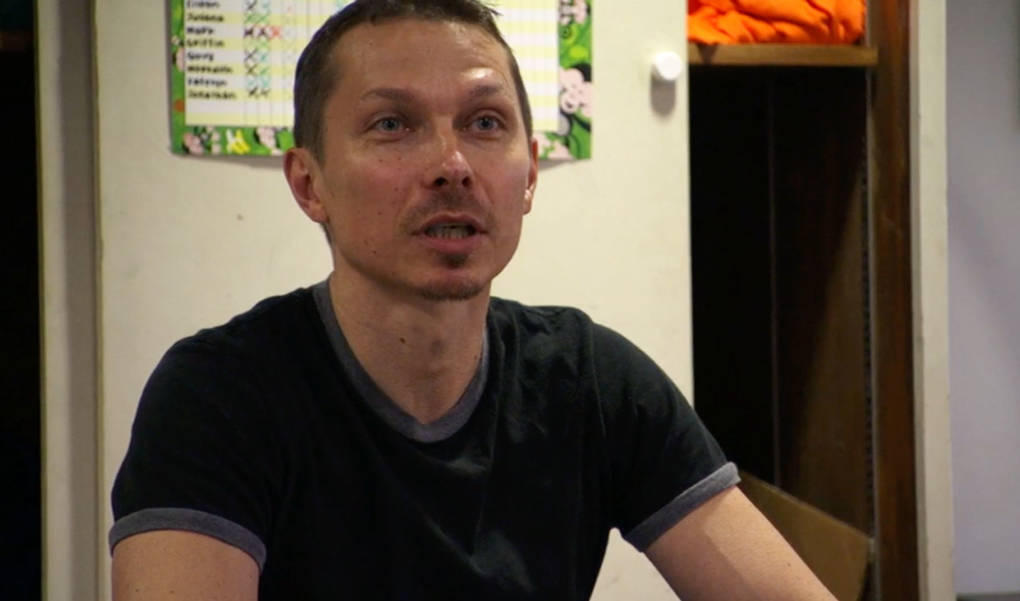
"caption": "Viktor Kabaniaev, pictured in a still from from the 2012 dance documentary \"First Position.\" He was arrested in January at his San Mateo County home under suspicion of 16 counts of sexual assault against minors, involving two former ballet students.",
"description": "Viktor Kabaniaev, pictured in a still from from the 2012 dance documentary \"First Position.\" He was arrested in January at his San Mateo County home under suspicion of 16 counts of sexual assault against minors, involving two former ballet students.",
"title": "Kabaniaev",
"credit": "Courtesy Bess Kargman",
"status": "inherit",
"isLoading": false,
"fetchFailed": false
},
"news_11696518": {
"type": "attachments",
"id": "news_11696518",
"meta": {
"index": "attachments_1716263798",
"site": "news",
"id": "11696518",
"found": true
},
"parent": 11696492,
"imgSizes": {
"small": {
"file": "https://ww2.kqed.org/app/uploads/sites/10/2018/10/ComfortWomenStatueMain-520x347.jpg",
"width": 520,
"mimeType": "image/jpeg",
"height": 347
},
"twentyfourteen-full-width": {
"file": "https://ww2.kqed.org/app/uploads/sites/10/2018/10/ComfortWomenStatueMain-1038x576.jpg",
"width": 1038,
"mimeType": "image/jpeg",
"height": 576
},
"thumbnail": {
"file": "https://ww2.kqed.org/app/uploads/sites/10/2018/10/ComfortWomenStatueMain-160x107.jpg",
"width": 160,
"mimeType": "image/jpeg",
"height": 107
},
"fd-sm": {
"file": "https://ww2.kqed.org/app/uploads/sites/10/2018/10/ComfortWomenStatueMain-960x640.jpg",
"width": 960,
"mimeType": "image/jpeg",
"height": 640
},
"post-thumbnail": {
"file": "https://ww2.kqed.org/app/uploads/sites/10/2018/10/ComfortWomenStatueMain-672x372.jpg",
"width": 672,
"mimeType": "image/jpeg",
"height": 372
},
"xsmall": {
"file": "https://ww2.kqed.org/app/uploads/sites/10/2018/10/ComfortWomenStatueMain-375x250.jpg",
"width": 375,
"mimeType": "image/jpeg",
"height": 250
},
"kqedFullSize": {
"file": "https://ww2.kqed.org/app/uploads/sites/10/2018/10/ComfortWomenStatueMain.jpg",
"width": 1920,
"height": 1280
},
"large": {
"file": "https://ww2.kqed.org/app/uploads/sites/10/2018/10/ComfortWomenStatueMain-1020x680.jpg",
"width": 1020,
"mimeType": "image/jpeg",
"height": 680
},
"xlarge": {
"file": "https://ww2.kqed.org/app/uploads/sites/10/2018/10/ComfortWomenStatueMain-1180x787.jpg",
"width": 1180,
"mimeType": "image/jpeg",
"height": 787
},
"complete_open_graph": {
"file": "https://ww2.kqed.org/app/uploads/sites/10/2018/10/ComfortWomenStatueMain-1200x800.jpg",
"width": 1200,
"mimeType": "image/jpeg",
"height": 800
},
"guest-author-50": {
"file": "https://ww2.kqed.org/app/uploads/sites/10/2018/10/ComfortWomenStatueMain-50x50.jpg",
"width": 50,
"mimeType": "image/jpeg",
"height": 50
},
"guest-author-96": {
"file": "https://ww2.kqed.org/app/uploads/sites/10/2018/10/ComfortWomenStatueMain-96x96.jpg",
"width": 96,
"mimeType": "image/jpeg",
"height": 96
},
"medium": {
"file": "https://ww2.kqed.org/app/uploads/sites/10/2018/10/ComfortWomenStatueMain-800x533.jpg",
"width": 800,
"mimeType": "image/jpeg",
"height": 533
},
"guest-author-64": {
"file": "https://ww2.kqed.org/app/uploads/sites/10/2018/10/ComfortWomenStatueMain-64x64.jpg",
"width": 64,
"mimeType": "image/jpeg",
"height": 64
},
"guest-author-32": {
"file": "https://ww2.kqed.org/app/uploads/sites/10/2018/10/ComfortWomenStatueMain-32x32.jpg",
"width": 32,
"mimeType": "image/jpeg",
"height": 32
},
"fd-lrg": {
"file": "https://ww2.kqed.org/app/uploads/sites/10/2018/10/ComfortWomenStatueMain-1920x1280.jpg",
"width": 1920,
"mimeType": "image/jpeg",
"height": 1280
},
"fd-med": {
"file": "https://ww2.kqed.org/app/uploads/sites/10/2018/10/ComfortWomenStatueMain-1180x787.jpg",
"width": 1180,
"mimeType": "image/jpeg",
"height": 787
},
"full-width": {
"file": "https://ww2.kqed.org/app/uploads/sites/10/2018/10/ComfortWomenStatueMain-1920x1280.jpg",
"width": 1920,
"mimeType": "image/jpeg",
"height": 1280
},
"detail": {
"file": "https://ww2.kqed.org/app/uploads/sites/10/2018/10/ComfortWomenStatueMain-150x150.jpg",
"width": 150,
"mimeType": "image/jpeg",
"height": 150
},
"guest-author-128": {
"file": "https://ww2.kqed.org/app/uploads/sites/10/2018/10/ComfortWomenStatueMain-128x128.jpg",
"width": 128,
"mimeType": "image/jpeg",
"height": 128
},
"xxsmall": {
"file": "https://ww2.kqed.org/app/uploads/sites/10/2018/10/ComfortWomenStatueMain-240x160.jpg",
"width": 240,
"mimeType": "image/jpeg",
"height": 160
}
},
"publishDate": 1538614525,
"modified": 1538614895,
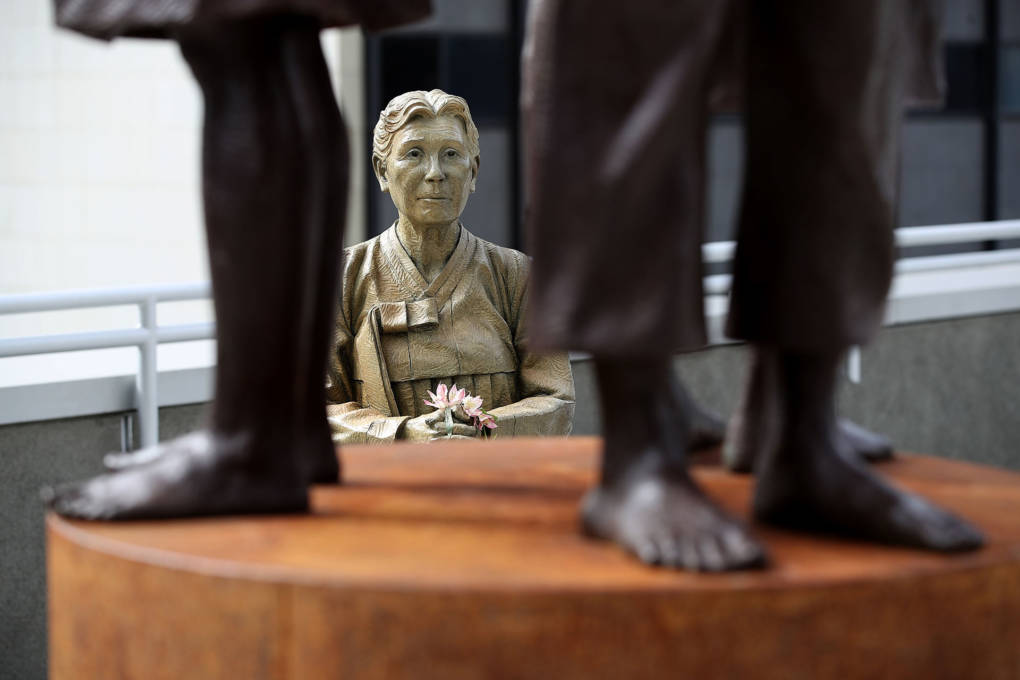
"caption": "The 'Column of Strength' statue in San Francisco's Chinatown memorializes the hundreds of thousands of so-called comfort women who were sex-trafficked by the Japanese Imperial Army during World War II.",
"description": "The 'Column of Strength' statue in San Francisco's Chinatown memorializes the hundreds of thousands of so-called comfort women who were sex-trafficked by the Japanese Imperial Army during World War II.",
"title": "ComfortWomenStatueMain",
"credit": "Justin Sullivan/Getty Images",
"status": "inherit",
"isLoading": false,
"fetchFailed": false
},
"news_11694918": {
"type": "attachments",
"id": "news_11694918",
"meta": {
"index": "attachments_1716263798",
"site": "news",
"id": "11694918",
"found": true
},
"parent": 11694913,
"imgSizes": {
"small": {
"file": "https://ww2.kqed.org/app/uploads/sites/10/2018/09/San-Damiano_St.-Francis-520x390.jpg",
"width": 520,
"mimeType": "image/jpeg",
"height": 390
},
"twentyfourteen-full-width": {
"file": "https://ww2.kqed.org/app/uploads/sites/10/2018/09/San-Damiano_St.-Francis-1038x576.jpg",
"width": 1038,
"mimeType": "image/jpeg",
"height": 576
},
"thumbnail": {
"file": "https://ww2.kqed.org/app/uploads/sites/10/2018/09/San-Damiano_St.-Francis-160x120.jpg",
"width": 160,
"mimeType": "image/jpeg",
"height": 120
},
"fd-sm": {
"file": "https://ww2.kqed.org/app/uploads/sites/10/2018/09/San-Damiano_St.-Francis-960x720.jpg",
"width": 960,
"mimeType": "image/jpeg",
"height": 720
},
"post-thumbnail": {
"file": "https://ww2.kqed.org/app/uploads/sites/10/2018/09/San-Damiano_St.-Francis-672x372.jpg",
"width": 672,
"mimeType": "image/jpeg",
"height": 372
},
"xsmall": {
"file": "https://ww2.kqed.org/app/uploads/sites/10/2018/09/San-Damiano_St.-Francis-375x281.jpg",
"width": 375,
"mimeType": "image/jpeg",
"height": 281
},
"kqedFullSize": {
"file": "https://ww2.kqed.org/app/uploads/sites/10/2018/09/San-Damiano_St.-Francis-e1538017635791.jpg",
"width": 1200,
"height": 900
},
"large": {
"file": "https://ww2.kqed.org/app/uploads/sites/10/2018/09/San-Damiano_St.-Francis-1020x765.jpg",
"width": 1020,
"mimeType": "image/jpeg",
"height": 765
},
"xlarge": {
"file": "https://ww2.kqed.org/app/uploads/sites/10/2018/09/San-Damiano_St.-Francis-1180x885.jpg",
"width": 1180,
"mimeType": "image/jpeg",
"height": 885
},
"complete_open_graph": {
"file": "https://ww2.kqed.org/app/uploads/sites/10/2018/09/San-Damiano_St.-Francis-1200x900.jpg",
"width": 1200,
"mimeType": "image/jpeg",
"height": 900
},
"guest-author-50": {
"file": "https://ww2.kqed.org/app/uploads/sites/10/2018/09/San-Damiano_St.-Francis-50x50.jpg",
"width": 50,
"mimeType": "image/jpeg",
"height": 50
},
"guest-author-96": {
"file": "https://ww2.kqed.org/app/uploads/sites/10/2018/09/San-Damiano_St.-Francis-96x96.jpg",
"width": 96,
"mimeType": "image/jpeg",
"height": 96
},
"medium": {
"file": "https://ww2.kqed.org/app/uploads/sites/10/2018/09/San-Damiano_St.-Francis-800x600.jpg",
"width": 800,
"mimeType": "image/jpeg",
"height": 600
},
"guest-author-64": {
"file": "https://ww2.kqed.org/app/uploads/sites/10/2018/09/San-Damiano_St.-Francis-64x64.jpg",
"width": 64,
"mimeType": "image/jpeg",
"height": 64
},
"guest-author-32": {
"file": "https://ww2.kqed.org/app/uploads/sites/10/2018/09/San-Damiano_St.-Francis-32x32.jpg",
"width": 32,
"mimeType": "image/jpeg",
"height": 32
},
"fd-lrg": {
"file": "https://ww2.kqed.org/app/uploads/sites/10/2018/09/San-Damiano_St.-Francis-1920x1440.jpg",
"width": 1920,
"mimeType": "image/jpeg",
"height": 1440
},
"fd-med": {
"file": "https://ww2.kqed.org/app/uploads/sites/10/2018/09/San-Damiano_St.-Francis-1180x885.jpg",
"width": 1180,
"mimeType": "image/jpeg",
"height": 885
},
"full-width": {
"file": "https://ww2.kqed.org/app/uploads/sites/10/2018/09/San-Damiano_St.-Francis-1920x1440.jpg",
"width": 1920,
"mimeType": "image/jpeg",
"height": 1440
},
"detail": {
"file": "https://ww2.kqed.org/app/uploads/sites/10/2018/09/San-Damiano_St.-Francis-150x150.jpg",
"width": 150,
"mimeType": "image/jpeg",
"height": 150
},
"guest-author-128": {
"file": "https://ww2.kqed.org/app/uploads/sites/10/2018/09/San-Damiano_St.-Francis-128x128.jpg",
"width": 128,
"mimeType": "image/jpeg",
"height": 128
},
"xxsmall": {
"file": "https://ww2.kqed.org/app/uploads/sites/10/2018/09/San-Damiano_St.-Francis-240x180.jpg",
"width": 240,
"mimeType": "image/jpeg",
"height": 180
}
},
"publishDate": 1538017604,
"modified": 1538160672,
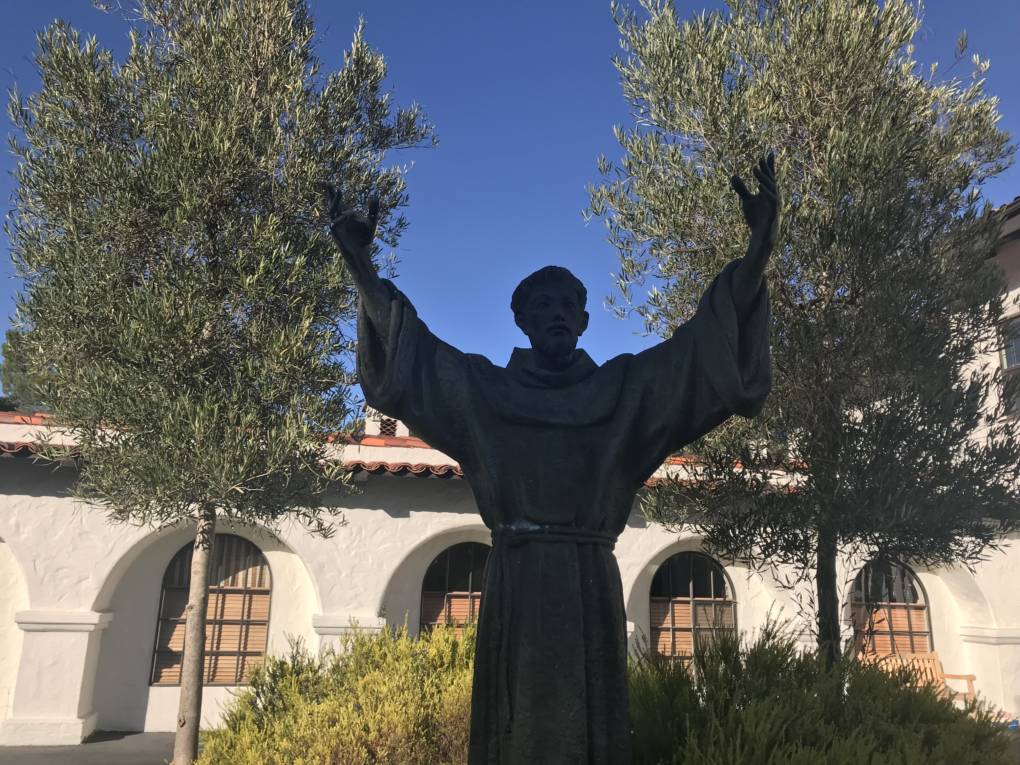
"caption": "A statue of St. Francis in front of the San Damiano Retreat in Danville. Rev. James Patrick Foley was the featured speaker at the Retreat July 27-29. Foley faces accusations of abusing children. ",
"description": "A statue of St. Francis in front of the San Damiano Retreat in Danville. Rev. James Patrick Foley was the featured speaker at the Retreat July 27-29. Foley faces accusations of abusing children. ",
"title": "San Damiano_St. Francis",
"credit": "Polly Stryker/KQED",
"status": "inherit",
"isLoading": false,
"fetchFailed": false
},
"news_11693236": {
"type": "attachments",
"id": "news_11693236",
"meta": {
"index": "attachments_1716263798",
"site": "news",
"id": "11693236",
"found": true
},
"parent": 11693177,
"imgSizes": {
"small": {
"file": "https://ww2.kqed.org/app/uploads/sites/10/2018/09/AbuseProtestSanDiego-520x347.jpg",
"width": 520,
"mimeType": "image/jpeg",
"height": 347
},
"twentyfourteen-full-width": {
"file": "https://ww2.kqed.org/app/uploads/sites/10/2018/09/AbuseProtestSanDiego-1038x576.jpg",
"width": 1038,
"mimeType": "image/jpeg",
"height": 576
},
"thumbnail": {
"file": "https://ww2.kqed.org/app/uploads/sites/10/2018/09/AbuseProtestSanDiego-160x107.jpg",
"width": 160,
"mimeType": "image/jpeg",
"height": 107
},
"fd-sm": {
"file": "https://ww2.kqed.org/app/uploads/sites/10/2018/09/AbuseProtestSanDiego-960x640.jpg",
"width": 960,
"mimeType": "image/jpeg",
"height": 640
},
"post-thumbnail": {
"file": "https://ww2.kqed.org/app/uploads/sites/10/2018/09/AbuseProtestSanDiego-672x372.jpg",
"width": 672,
"mimeType": "image/jpeg",
"height": 372
},
"xsmall": {
"file": "https://ww2.kqed.org/app/uploads/sites/10/2018/09/AbuseProtestSanDiego-375x250.jpg",
"width": 375,
"mimeType": "image/jpeg",
"height": 250
},
"kqedFullSize": {
"file": "https://ww2.kqed.org/app/uploads/sites/10/2018/09/AbuseProtestSanDiego.jpg",
"width": 1920,
"height": 1280
},
"large": {
"file": "https://ww2.kqed.org/app/uploads/sites/10/2018/09/AbuseProtestSanDiego-1020x680.jpg",
"width": 1020,
"mimeType": "image/jpeg",
"height": 680
},
"xlarge": {
"file": "https://ww2.kqed.org/app/uploads/sites/10/2018/09/AbuseProtestSanDiego-1180x787.jpg",
"width": 1180,
"mimeType": "image/jpeg",
"height": 787
},
"complete_open_graph": {
"file": "https://ww2.kqed.org/app/uploads/sites/10/2018/09/AbuseProtestSanDiego-1200x800.jpg",
"width": 1200,
"mimeType": "image/jpeg",
"height": 800
},
"guest-author-50": {
"file": "https://ww2.kqed.org/app/uploads/sites/10/2018/09/AbuseProtestSanDiego-50x50.jpg",
"width": 50,
"mimeType": "image/jpeg",
"height": 50
},
"guest-author-96": {
"file": "https://ww2.kqed.org/app/uploads/sites/10/2018/09/AbuseProtestSanDiego-96x96.jpg",
"width": 96,
"mimeType": "image/jpeg",
"height": 96
},
"medium": {
"file": "https://ww2.kqed.org/app/uploads/sites/10/2018/09/AbuseProtestSanDiego-800x533.jpg",
"width": 800,
"mimeType": "image/jpeg",
"height": 533
},
"guest-author-64": {
"file": "https://ww2.kqed.org/app/uploads/sites/10/2018/09/AbuseProtestSanDiego-64x64.jpg",
"width": 64,
"mimeType": "image/jpeg",
"height": 64
},
"guest-author-32": {
"file": "https://ww2.kqed.org/app/uploads/sites/10/2018/09/AbuseProtestSanDiego-32x32.jpg",
"width": 32,
"mimeType": "image/jpeg",
"height": 32
},
"fd-lrg": {
"file": "https://ww2.kqed.org/app/uploads/sites/10/2018/09/AbuseProtestSanDiego-1920x1280.jpg",
"width": 1920,
"mimeType": "image/jpeg",
"height": 1280
},
"fd-med": {
"file": "https://ww2.kqed.org/app/uploads/sites/10/2018/09/AbuseProtestSanDiego-1180x787.jpg",
"width": 1180,
"mimeType": "image/jpeg",
"height": 787
},
"full-width": {
"file": "https://ww2.kqed.org/app/uploads/sites/10/2018/09/AbuseProtestSanDiego-1920x1280.jpg",
"width": 1920,
"mimeType": "image/jpeg",
"height": 1280
},
"detail": {
"file": "https://ww2.kqed.org/app/uploads/sites/10/2018/09/AbuseProtestSanDiego-150x150.jpg",
"width": 150,
"mimeType": "image/jpeg",
"height": 150
},
"guest-author-128": {
"file": "https://ww2.kqed.org/app/uploads/sites/10/2018/09/AbuseProtestSanDiego-128x128.jpg",
"width": 128,
"mimeType": "image/jpeg",
"height": 128
},
"xxsmall": {
"file": "https://ww2.kqed.org/app/uploads/sites/10/2018/09/AbuseProtestSanDiego-240x160.jpg",
"width": 240,
"mimeType": "image/jpeg",
"height": 160
}
},
"publishDate": 1537302716,
"modified": 1537311909,
"caption": "Alleged sexual abuse victims hold a vigil to bring attention to victims of sexual abuse by leaders within the Catholic Church on March 1, 2007, in San Diego. The Diocese of San Diego recently added eight priests to a list of predator priests established by a legal case that was concluded 11 years ago. On Sept. 7, 2007, the diocese settled 144 claims of child sexual abuse by 48 priests and one lay employee.",
"description": "Alleged sexual abuse victims hold a vigil to bring attention to victims of sexual abuse by leaders within the Catholic church on March 1, 2007 in San Diego. The Diocese of San Diego has added eight priests to a list predator priests established by a legal case that was concluded 11 years ago. On Sept. 7, 2007, the diocese settled 144 claims of child sexual abuse by 48 priests and one lay employee.",
"title": "AbuseProtestSanDiego",
"credit": "Sandy Huffaker/Getty Images",
"status": "inherit",
"isLoading": false,
"fetchFailed": false
},
"news_11692245": {
"type": "attachments",
"id": "news_11692245",
"meta": {
"index": "attachments_1716263798",
"site": "news",
"id": "11692245",
"found": true
},
"parent": 11692232,
"imgSizes": {
"small": {
"file": "https://ww2.kqed.org/app/uploads/sites/10/2018/09/RS32795_Ya-basta-sign-qut-1-520x347.jpg",
"width": 520,
"mimeType": "image/jpeg",
"height": 347
},
"twentyfourteen-full-width": {
"file": "https://ww2.kqed.org/app/uploads/sites/10/2018/09/RS32795_Ya-basta-sign-qut-1-1038x576.jpg",
"width": 1038,
"mimeType": "image/jpeg",
"height": 576
},
"thumbnail": {
"file": "https://ww2.kqed.org/app/uploads/sites/10/2018/09/RS32795_Ya-basta-sign-qut-1-160x107.jpg",
"width": 160,
"mimeType": "image/jpeg",
"height": 107
},
"fd-sm": {
"file": "https://ww2.kqed.org/app/uploads/sites/10/2018/09/RS32795_Ya-basta-sign-qut-1-960x640.jpg",
"width": 960,
"mimeType": "image/jpeg",
"height": 640
},
"post-thumbnail": {
"file": "https://ww2.kqed.org/app/uploads/sites/10/2018/09/RS32795_Ya-basta-sign-qut-1-672x372.jpg",
"width": 672,
"mimeType": "image/jpeg",
"height": 372
},
"xsmall": {
"file": "https://ww2.kqed.org/app/uploads/sites/10/2018/09/RS32795_Ya-basta-sign-qut-1-375x250.jpg",
"width": 375,
"mimeType": "image/jpeg",
"height": 250
},
"kqedFullSize": {
"file": "https://ww2.kqed.org/app/uploads/sites/10/2018/09/RS32795_Ya-basta-sign-qut-1.jpg",
"width": 1920,
"height": 1280
},
"large": {
"file": "https://ww2.kqed.org/app/uploads/sites/10/2018/09/RS32795_Ya-basta-sign-qut-1-1020x680.jpg",
"width": 1020,
"mimeType": "image/jpeg",
"height": 680
},
"xlarge": {
"file": "https://ww2.kqed.org/app/uploads/sites/10/2018/09/RS32795_Ya-basta-sign-qut-1-1180x787.jpg",
"width": 1180,
"mimeType": "image/jpeg",
"height": 787
},
"complete_open_graph": {
"file": "https://ww2.kqed.org/app/uploads/sites/10/2018/09/RS32795_Ya-basta-sign-qut-1-1200x800.jpg",
"width": 1200,
"mimeType": "image/jpeg",
"height": 800
},
"guest-author-50": {
"file": "https://ww2.kqed.org/app/uploads/sites/10/2018/09/RS32795_Ya-basta-sign-qut-1-50x50.jpg",
"width": 50,
"mimeType": "image/jpeg",
"height": 50
},
"guest-author-96": {
"file": "https://ww2.kqed.org/app/uploads/sites/10/2018/09/RS32795_Ya-basta-sign-qut-1-96x96.jpg",
"width": 96,
"mimeType": "image/jpeg",
"height": 96
},
"medium": {
"file": "https://ww2.kqed.org/app/uploads/sites/10/2018/09/RS32795_Ya-basta-sign-qut-1-800x533.jpg",
"width": 800,
"mimeType": "image/jpeg",
"height": 533
},
"guest-author-64": {
"file": "https://ww2.kqed.org/app/uploads/sites/10/2018/09/RS32795_Ya-basta-sign-qut-1-64x64.jpg",
"width": 64,
"mimeType": "image/jpeg",
"height": 64
},
"guest-author-32": {
"file": "https://ww2.kqed.org/app/uploads/sites/10/2018/09/RS32795_Ya-basta-sign-qut-1-32x32.jpg",
"width": 32,
"mimeType": "image/jpeg",
"height": 32
},
"fd-lrg": {
"file": "https://ww2.kqed.org/app/uploads/sites/10/2018/09/RS32795_Ya-basta-sign-qut-1-1920x1280.jpg",
"width": 1920,
"mimeType": "image/jpeg",
"height": 1280
},
"fd-med": {
"file": "https://ww2.kqed.org/app/uploads/sites/10/2018/09/RS32795_Ya-basta-sign-qut-1-1180x787.jpg",
"width": 1180,
"mimeType": "image/jpeg",
"height": 787
},
"full-width": {
"file": "https://ww2.kqed.org/app/uploads/sites/10/2018/09/RS32795_Ya-basta-sign-qut-1-1920x1280.jpg",
"width": 1920,
"mimeType": "image/jpeg",
"height": 1280
},
"detail": {
"file": "https://ww2.kqed.org/app/uploads/sites/10/2018/09/RS32795_Ya-basta-sign-qut-1-150x150.jpg",
"width": 150,
"mimeType": "image/jpeg",
"height": 150
},
"guest-author-128": {
"file": "https://ww2.kqed.org/app/uploads/sites/10/2018/09/RS32795_Ya-basta-sign-qut-1-128x128.jpg",
"width": 128,
"mimeType": "image/jpeg",
"height": 128
},
"xxsmall": {
"file": "https://ww2.kqed.org/app/uploads/sites/10/2018/09/RS32795_Ya-basta-sign-qut-1-240x160.jpg",
"width": 240,
"mimeType": "image/jpeg",
"height": 160
}
},
"publishDate": 1536872571,
"modified": 1536876054,
"caption": "A poster of janitor Marta Mejia, one of the 100 janitors marching to Sacramento in support of AB 2079. Many of them have been harassed, groped, even raped in the buildings they clean, often by supervisors who take advantage of their isolated working conditions.",
"description": null,
"title": "RS32795_Ya basta sign-qut (1)",
"credit": "Courtesy John Navales ",
"status": "inherit",
"isLoading": false,
"fetchFailed": false
},
"news_11690331": {
"type": "attachments",
"id": "news_11690331",
"meta": {
"index": "attachments_1716263798",
"site": "news",
"id": "11690331",
"found": true
},
"parent": 11690316,
"imgSizes": {
"small": {
"file": "https://ww2.kqed.org/app/uploads/sites/10/2018/09/yogaharassment_final001-qut-520x278.jpg",
"width": 520,
"mimeType": "image/jpeg",
"height": 278
},
"twentyfourteen-full-width": {
"file": "https://ww2.kqed.org/app/uploads/sites/10/2018/09/yogaharassment_final001-qut-1038x576.jpg",
"width": 1038,
"mimeType": "image/jpeg",
"height": 576
},
"thumbnail": {
"file": "https://ww2.kqed.org/app/uploads/sites/10/2018/09/yogaharassment_final001-qut-160x86.jpg",
"width": 160,
"mimeType": "image/jpeg",
"height": 86
},
"fd-sm": {
"file": "https://ww2.kqed.org/app/uploads/sites/10/2018/09/yogaharassment_final001-qut-960x514.jpg",
"width": 960,
"mimeType": "image/jpeg",
"height": 514
},
"post-thumbnail": {
"file": "https://ww2.kqed.org/app/uploads/sites/10/2018/09/yogaharassment_final001-qut-672x372.jpg",
"width": 672,
"mimeType": "image/jpeg",
"height": 372
},
"xsmall": {
"file": "https://ww2.kqed.org/app/uploads/sites/10/2018/09/yogaharassment_final001-qut-375x201.jpg",
"width": 375,
"mimeType": "image/jpeg",
"height": 201
},
"kqedFullSize": {
"file": "https://ww2.kqed.org/app/uploads/sites/10/2018/09/yogaharassment_final001-qut.jpg",
"width": 1920,
"height": 1028
},
"large": {
"file": "https://ww2.kqed.org/app/uploads/sites/10/2018/09/yogaharassment_final001-qut-1020x546.jpg",
"width": 1020,
"mimeType": "image/jpeg",
"height": 546
},
"xlarge": {
"file": "https://ww2.kqed.org/app/uploads/sites/10/2018/09/yogaharassment_final001-qut-1180x632.jpg",
"width": 1180,
"mimeType": "image/jpeg",
"height": 632
},
"complete_open_graph": {
"file": "https://ww2.kqed.org/app/uploads/sites/10/2018/09/yogaharassment_final001-qut-1200x643.jpg",
"width": 1200,
"mimeType": "image/jpeg",
"height": 643
},
"guest-author-50": {
"file": "https://ww2.kqed.org/app/uploads/sites/10/2018/09/yogaharassment_final001-qut-50x50.jpg",
"width": 50,
"mimeType": "image/jpeg",
"height": 50
},
"guest-author-96": {
"file": "https://ww2.kqed.org/app/uploads/sites/10/2018/09/yogaharassment_final001-qut-96x96.jpg",
"width": 96,
"mimeType": "image/jpeg",
"height": 96
},
"medium": {
"file": "https://ww2.kqed.org/app/uploads/sites/10/2018/09/yogaharassment_final001-qut-800x428.jpg",
"width": 800,
"mimeType": "image/jpeg",
"height": 428
},
"guest-author-64": {
"file": "https://ww2.kqed.org/app/uploads/sites/10/2018/09/yogaharassment_final001-qut-64x64.jpg",
"width": 64,
"mimeType": "image/jpeg",
"height": 64
},
"guest-author-32": {
"file": "https://ww2.kqed.org/app/uploads/sites/10/2018/09/yogaharassment_final001-qut-32x32.jpg",
"width": 32,
"mimeType": "image/jpeg",
"height": 32
},
"fd-lrg": {
"file": "https://ww2.kqed.org/app/uploads/sites/10/2018/09/yogaharassment_final001-qut-1920x1028.jpg",
"width": 1920,
"mimeType": "image/jpeg",
"height": 1028
},
"fd-med": {
"file": "https://ww2.kqed.org/app/uploads/sites/10/2018/09/yogaharassment_final001-qut-1180x632.jpg",
"width": 1180,
"mimeType": "image/jpeg",
"height": 632
},
"full-width": {
"file": "https://ww2.kqed.org/app/uploads/sites/10/2018/09/yogaharassment_final001-qut-1920x1028.jpg",
"width": 1920,
"mimeType": "image/jpeg",
"height": 1028
},
"detail": {
"file": "https://ww2.kqed.org/app/uploads/sites/10/2018/09/yogaharassment_final001-qut-150x150.jpg",
"width": 150,
"mimeType": "image/jpeg",
"height": 150
},
"guest-author-128": {
"file": "https://ww2.kqed.org/app/uploads/sites/10/2018/09/yogaharassment_final001-qut-128x128.jpg",
"width": 128,
"mimeType": "image/jpeg",
"height": 128
},
"xxsmall": {
"file": "https://ww2.kqed.org/app/uploads/sites/10/2018/09/yogaharassment_final001-qut-240x129.jpg",
"width": 240,
"mimeType": "image/jpeg",
"height": 129
}
},
"publishDate": 1536086322,
"modified": 1536102871,
"caption": "A KQED investigation found that the yoga community is struggling to rein in sexual misconduct and abuse in its ranks.",
"description": null,
"title": "yogaharassment_final001-qut",
"credit": "Mark Fiore/KQED",
"status": "inherit",
"isLoading": false,
"fetchFailed": false
},
"news_11653238": {
"type": "attachments",
"id": "news_11653238",
"meta": {
"index": "attachments_1716263798",
"site": "news",
"id": "11653238",
"found": true
},
"parent": 11653145,
"imgSizes": {
"small": {
"file": "https://ww2.kqed.org/app/uploads/sites/10/2018/03/hw-effigy-520x347.jpg",
"width": 520,
"mimeType": "image/jpeg",
"height": 347
},
"twentyfourteen-full-width": {
"file": "https://ww2.kqed.org/app/uploads/sites/10/2018/03/hw-effigy-1038x576.jpg",
"width": 1038,
"mimeType": "image/jpeg",
"height": 576
},
"thumbnail": {
"file": "https://ww2.kqed.org/app/uploads/sites/10/2018/03/hw-effigy-160x107.jpg",
"width": 160,
"mimeType": "image/jpeg",
"height": 107
},
"fd-sm": {
"file": "https://ww2.kqed.org/app/uploads/sites/10/2018/03/hw-effigy-960x640.jpg",
"width": 960,
"mimeType": "image/jpeg",
"height": 640
},
"post-thumbnail": {
"file": "https://ww2.kqed.org/app/uploads/sites/10/2018/03/hw-effigy-672x372.jpg",
"width": 672,
"mimeType": "image/jpeg",
"height": 372
},
"xsmall": {
"file": "https://ww2.kqed.org/app/uploads/sites/10/2018/03/hw-effigy-375x250.jpg",
"width": 375,
"mimeType": "image/jpeg",
"height": 250
},
"kqedFullSize": {
"file": "https://ww2.kqed.org/app/uploads/sites/10/2018/03/hw-effigy.jpg",
"width": 1920,
"height": 1280
},
"large": {
"file": "https://ww2.kqed.org/app/uploads/sites/10/2018/03/hw-effigy-1020x680.jpg",
"width": 1020,
"mimeType": "image/jpeg",
"height": 680
},
"xlarge": {
"file": "https://ww2.kqed.org/app/uploads/sites/10/2018/03/hw-effigy-1180x787.jpg",
"width": 1180,
"mimeType": "image/jpeg",
"height": 787
},
"guest-author-50": {
"file": "https://ww2.kqed.org/app/uploads/sites/10/2018/03/hw-effigy-50x50.jpg",
"width": 50,
"mimeType": "image/jpeg",
"height": 50
},
"guest-author-96": {
"file": "https://ww2.kqed.org/app/uploads/sites/10/2018/03/hw-effigy-96x96.jpg",
"width": 96,
"mimeType": "image/jpeg",
"height": 96
},
"medium": {
"file": "https://ww2.kqed.org/app/uploads/sites/10/2018/03/hw-effigy-800x533.jpg",
"width": 800,
"mimeType": "image/jpeg",
"height": 533
},
"guest-author-64": {
"file": "https://ww2.kqed.org/app/uploads/sites/10/2018/03/hw-effigy-64x64.jpg",
"width": 64,
"mimeType": "image/jpeg",
"height": 64
},
"guest-author-32": {
"file": "https://ww2.kqed.org/app/uploads/sites/10/2018/03/hw-effigy-32x32.jpg",
"width": 32,
"mimeType": "image/jpeg",
"height": 32
},
"fd-lrg": {
"file": "https://ww2.kqed.org/app/uploads/sites/10/2018/03/hw-effigy-1920x1280.jpg",
"width": 1920,
"mimeType": "image/jpeg",
"height": 1280
},
"fd-med": {
"file": "https://ww2.kqed.org/app/uploads/sites/10/2018/03/hw-effigy-1180x787.jpg",
"width": 1180,
"mimeType": "image/jpeg",
"height": 787
},
"full-width": {
"file": "https://ww2.kqed.org/app/uploads/sites/10/2018/03/hw-effigy-1920x1280.jpg",
"width": 1920,
"mimeType": "image/jpeg",
"height": 1280
},
"detail": {
"file": "https://ww2.kqed.org/app/uploads/sites/10/2018/03/hw-effigy-150x150.jpg",
"width": 150,
"mimeType": "image/jpeg",
"height": 150
},
"guest-author-128": {
"file": "https://ww2.kqed.org/app/uploads/sites/10/2018/03/hw-effigy-128x128.jpg",
"width": 128,
"mimeType": "image/jpeg",
"height": 128
},
"xxsmall": {
"file": "https://ww2.kqed.org/app/uploads/sites/10/2018/03/hw-effigy-240x160.jpg",
"width": 240,
"mimeType": "image/jpeg",
"height": 160
}
},
"publishDate": 1519951140,
"modified": 1520040903,
"caption": "An effigy of film producer Harvey Weinstein is burned during a fireworks display at Edenbridge Bonfire Night on November 4, 2017 in Edenbridge, England. Each year the Edenbridge Bonfire Society creates a 'Celebrity Guy' effigy of an infamous public figure which is burnt during the annual bonfire night celebrations. ",
"description": null,
"title": "Disgraced Movie Mogul Effigy Is Burnt At Edenbridge Bonfire Night",
"credit": "Jack Taylor/Getty Images",
"status": "inherit",
"isLoading": false,
"fetchFailed": false
},
"news_11641919": {
"type": "attachments",
"id": "news_11641919",
"meta": {
"index": "attachments_1716263798",
"site": "news",
"id": "11641919",
"found": true
},
"parent": 11641415,
"imgSizes": {
"small": {
"file": "https://ww2.kqed.org/app/uploads/sites/10/2018/01/me-too-high-res-520x343.png",
"width": 520,
"mimeType": "image/png",
"height": 343
},
"twentyfourteen-full-width": {
"file": "https://ww2.kqed.org/app/uploads/sites/10/2018/01/me-too-high-res-1038x576.png",
"width": 1038,
"mimeType": "image/png",
"height": 576
},
"thumbnail": {
"file": "https://ww2.kqed.org/app/uploads/sites/10/2018/01/me-too-high-res-160x106.png",
"width": 160,
"mimeType": "image/png",
"height": 106
},
"fd-sm": {
"file": "https://ww2.kqed.org/app/uploads/sites/10/2018/01/me-too-high-res-960x633.png",
"width": 960,
"mimeType": "image/png",
"height": 633
},
"post-thumbnail": {
"file": "https://ww2.kqed.org/app/uploads/sites/10/2018/01/me-too-high-res-672x372.png",
"width": 672,
"mimeType": "image/png",
"height": 372
},
"xsmall": {
"file": "https://ww2.kqed.org/app/uploads/sites/10/2018/01/me-too-high-res-375x247.png",
"width": 375,
"mimeType": "image/png",
"height": 247
},
"kqedFullSize": {
"file": "https://ww2.kqed.org/app/uploads/sites/10/2018/01/me-too-high-res.png",
"width": 1911,
"height": 1261
},
"large": {
"file": "https://ww2.kqed.org/app/uploads/sites/10/2018/01/me-too-high-res-1020x673.png",
"width": 1020,
"mimeType": "image/png",
"height": 673
},
"xlarge": {
"file": "https://ww2.kqed.org/app/uploads/sites/10/2018/01/me-too-high-res-1180x779.png",
"width": 1180,
"mimeType": "image/png",
"height": 779
},
"guest-author-50": {
"file": "https://ww2.kqed.org/app/uploads/sites/10/2018/01/me-too-high-res-50x50.png",
"width": 50,
"mimeType": "image/png",
"height": 50
},
"guest-author-96": {
"file": "https://ww2.kqed.org/app/uploads/sites/10/2018/01/me-too-high-res-96x96.png",
"width": 96,
"mimeType": "image/png",
"height": 96
},
"medium": {
"file": "https://ww2.kqed.org/app/uploads/sites/10/2018/01/me-too-high-res-800x528.png",
"width": 800,
"mimeType": "image/png",
"height": 528
},
"guest-author-64": {
"file": "https://ww2.kqed.org/app/uploads/sites/10/2018/01/me-too-high-res-64x64.png",
"width": 64,
"mimeType": "image/png",
"height": 64
},
"guest-author-32": {
"file": "https://ww2.kqed.org/app/uploads/sites/10/2018/01/me-too-high-res-32x32.png",
"width": 32,
"mimeType": "image/png",
"height": 32
},
"fd-med": {
"file": "https://ww2.kqed.org/app/uploads/sites/10/2018/01/me-too-high-res-1180x779.png",
"width": 1180,
"mimeType": "image/png",
"height": 779
},
"detail": {
"file": "https://ww2.kqed.org/app/uploads/sites/10/2018/01/me-too-high-res-150x150.png",
"width": 150,
"mimeType": "image/png",
"height": 150
},
"guest-author-128": {
"file": "https://ww2.kqed.org/app/uploads/sites/10/2018/01/me-too-high-res-128x128.png",
"width": 128,
"mimeType": "image/png",
"height": 128
},
"xxsmall": {
"file": "https://ww2.kqed.org/app/uploads/sites/10/2018/01/me-too-high-res-240x158.png",
"width": 240,
"mimeType": "image/png",
"height": 158
}
},
"publishDate": 1515876297,
"modified": 1515876455,
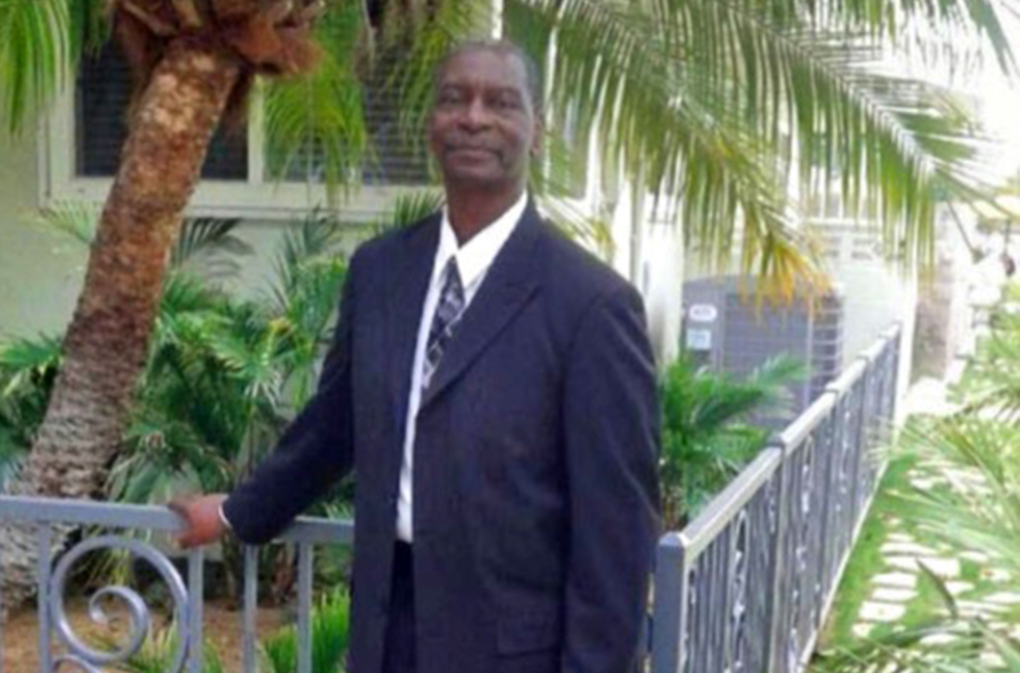
"caption": "Sixty-two-year-old Steve McMaryion of Los Angeles says it's now time for abusive men to acknowledge the harm they've done.",
"description": "Sixty-two-year-old Steve McMaryion of Los Angeles says it's now time for abusive men to acknowledge the harm they've done.",
"title": "Steve Photo",
"credit": "Courtesy Steve McMaryion",
"status": "inherit",
"isLoading": false,
"fetchFailed": false
},
"news_11642848": {
"type": "attachments",
"id": "news_11642848",
"meta": {
"index": "attachments_1716263798",
"site": "news",
"id": "11642848",
"found": true
},
"parent": 11642818,
"imgSizes": {
"small": {
"file": "https://ww2.kqed.org/app/uploads/sites/10/2018/01/RS28922_Yoga_Getty2-qut-520x347.jpg",
"width": 520,
"mimeType": "image/jpeg",
"height": 347
},
"twentyfourteen-full-width": {
"file": "https://ww2.kqed.org/app/uploads/sites/10/2018/01/RS28922_Yoga_Getty2-qut-1038x576.jpg",
"width": 1038,
"mimeType": "image/jpeg",
"height": 576
},
"thumbnail": {
"file": "https://ww2.kqed.org/app/uploads/sites/10/2018/01/RS28922_Yoga_Getty2-qut-160x107.jpg",
"width": 160,
"mimeType": "image/jpeg",
"height": 107
},
"fd-sm": {
"file": "https://ww2.kqed.org/app/uploads/sites/10/2018/01/RS28922_Yoga_Getty2-qut-960x640.jpg",
"width": 960,
"mimeType": "image/jpeg",
"height": 640
},
"post-thumbnail": {
"file": "https://ww2.kqed.org/app/uploads/sites/10/2018/01/RS28922_Yoga_Getty2-qut-672x372.jpg",
"width": 672,
"mimeType": "image/jpeg",
"height": 372
},
"xsmall": {
"file": "https://ww2.kqed.org/app/uploads/sites/10/2018/01/RS28922_Yoga_Getty2-qut-375x250.jpg",
"width": 375,
"mimeType": "image/jpeg",
"height": 250
},
"kqedFullSize": {
"file": "https://ww2.kqed.org/app/uploads/sites/10/2018/01/RS28922_Yoga_Getty2-qut.jpg",
"width": 1920,
"height": 1280
},
"large": {
"file": "https://ww2.kqed.org/app/uploads/sites/10/2018/01/RS28922_Yoga_Getty2-qut-1020x680.jpg",
"width": 1020,
"mimeType": "image/jpeg",
"height": 680
},
"xlarge": {
"file": "https://ww2.kqed.org/app/uploads/sites/10/2018/01/RS28922_Yoga_Getty2-qut-1180x787.jpg",
"width": 1180,
"mimeType": "image/jpeg",
"height": 787
},
"guest-author-50": {
"file": "https://ww2.kqed.org/app/uploads/sites/10/2018/01/RS28922_Yoga_Getty2-qut-50x50.jpg",
"width": 50,
"mimeType": "image/jpeg",
"height": 50
},
"guest-author-96": {
"file": "https://ww2.kqed.org/app/uploads/sites/10/2018/01/RS28922_Yoga_Getty2-qut-96x96.jpg",
"width": 96,
"mimeType": "image/jpeg",
"height": 96
},
"medium": {
"file": "https://ww2.kqed.org/app/uploads/sites/10/2018/01/RS28922_Yoga_Getty2-qut-800x533.jpg",
"width": 800,
"mimeType": "image/jpeg",
"height": 533
},
"guest-author-64": {
"file": "https://ww2.kqed.org/app/uploads/sites/10/2018/01/RS28922_Yoga_Getty2-qut-64x64.jpg",
"width": 64,
"mimeType": "image/jpeg",
"height": 64
},
"guest-author-32": {
"file": "https://ww2.kqed.org/app/uploads/sites/10/2018/01/RS28922_Yoga_Getty2-qut-32x32.jpg",
"width": 32,
"mimeType": "image/jpeg",
"height": 32
},
"fd-lrg": {
"file": "https://ww2.kqed.org/app/uploads/sites/10/2018/01/RS28922_Yoga_Getty2-qut-1920x1280.jpg",
"width": 1920,
"mimeType": "image/jpeg",
"height": 1280
},
"fd-med": {
"file": "https://ww2.kqed.org/app/uploads/sites/10/2018/01/RS28922_Yoga_Getty2-qut-1180x787.jpg",
"width": 1180,
"mimeType": "image/jpeg",
"height": 787
},
"full-width": {
"file": "https://ww2.kqed.org/app/uploads/sites/10/2018/01/RS28922_Yoga_Getty2-qut-1920x1280.jpg",
"width": 1920,
"mimeType": "image/jpeg",
"height": 1280
},
"detail": {
"file": "https://ww2.kqed.org/app/uploads/sites/10/2018/01/RS28922_Yoga_Getty2-qut-150x150.jpg",
"width": 150,
"mimeType": "image/jpeg",
"height": 150
},
"guest-author-128": {
"file": "https://ww2.kqed.org/app/uploads/sites/10/2018/01/RS28922_Yoga_Getty2-qut-128x128.jpg",
"width": 128,
"mimeType": "image/jpeg",
"height": 128
},
"xxsmall": {
"file": "https://ww2.kqed.org/app/uploads/sites/10/2018/01/RS28922_Yoga_Getty2-qut-240x160.jpg",
"width": 240,
"mimeType": "image/jpeg",
"height": 160
}
},
"publishDate": 1516314530,
"modified": 1516322025,
"caption": "People practice yoga on the top of the Montparnasse Tower on July 4, 2017, in Paris.",
"description": null,
"title": "FRANCE-HEALTH-YOGA",
"credit": "GEOFFROY VAN DER HASSELT/AFP/Getty Images",
"status": "inherit",
"isLoading": false,
"fetchFailed": false
},
"news_11642249": {
"type": "attachments",
"id": "news_11642249",
"meta": {
"index": "attachments_1716263798",
"site": "news",
"id": "11642249",
"found": true
},
"parent": 11642239,
"imgSizes": {
"small": {
"file": "https://ww2.kqed.org/app/uploads/sites/10/2018/01/janitors_011618_final-520x520.jpg",
"width": 520,
"mimeType": "image/jpeg",
"height": 520
},
"twentyfourteen-full-width": {
"file": "https://ww2.kqed.org/app/uploads/sites/10/2018/01/janitors_011618_final-1038x576.jpg",
"width": 1038,
"mimeType": "image/jpeg",
"height": 576
},
"thumbnail": {
"file": "https://ww2.kqed.org/app/uploads/sites/10/2018/01/janitors_011618_final-160x160.jpg",
"width": 160,
"mimeType": "image/jpeg",
"height": 160
},
"fd-sm": {
"file": "https://ww2.kqed.org/app/uploads/sites/10/2018/01/janitors_011618_final-960x960.jpg",
"width": 960,
"mimeType": "image/jpeg",
"height": 960
},
"post-thumbnail": {
"file": "https://ww2.kqed.org/app/uploads/sites/10/2018/01/janitors_011618_final-672x372.jpg",
"width": 672,
"mimeType": "image/jpeg",
"height": 372
},
"xsmall": {
"file": "https://ww2.kqed.org/app/uploads/sites/10/2018/01/janitors_011618_final-375x375.jpg",
"width": 375,
"mimeType": "image/jpeg",
"height": 375
},
"kqedFullSize": {
"file": "https://ww2.kqed.org/app/uploads/sites/10/2018/01/janitors_011618_final.jpg",
"width": 1920,
"height": 1920
},
"large": {
"file": "https://ww2.kqed.org/app/uploads/sites/10/2018/01/janitors_011618_final-1020x1020.jpg",
"width": 1020,
"mimeType": "image/jpeg",
"height": 1020
},
"xlarge": {
"file": "https://ww2.kqed.org/app/uploads/sites/10/2018/01/janitors_011618_final-1180x1180.jpg",
"width": 1180,
"mimeType": "image/jpeg",
"height": 1180
},
"guest-author-50": {
"file": "https://ww2.kqed.org/app/uploads/sites/10/2018/01/janitors_011618_final-50x50.jpg",
"width": 50,
"mimeType": "image/jpeg",
"height": 50
},
"guest-author-96": {
"file": "https://ww2.kqed.org/app/uploads/sites/10/2018/01/janitors_011618_final-96x96.jpg",
"width": 96,
"mimeType": "image/jpeg",
"height": 96
},
"medium": {
"file": "https://ww2.kqed.org/app/uploads/sites/10/2018/01/janitors_011618_final-800x800.jpg",
"width": 800,
"mimeType": "image/jpeg",
"height": 800
},
"guest-author-64": {
"file": "https://ww2.kqed.org/app/uploads/sites/10/2018/01/janitors_011618_final-64x64.jpg",
"width": 64,
"mimeType": "image/jpeg",
"height": 64
},
"guest-author-32": {
"file": "https://ww2.kqed.org/app/uploads/sites/10/2018/01/janitors_011618_final-32x32.jpg",
"width": 32,
"mimeType": "image/jpeg",
"height": 32
},
"fd-lrg": {
"file": "https://ww2.kqed.org/app/uploads/sites/10/2018/01/janitors_011618_final-1920x1920.jpg",
"width": 1920,
"mimeType": "image/jpeg",
"height": 1920
},
"fd-med": {
"file": "https://ww2.kqed.org/app/uploads/sites/10/2018/01/janitors_011618_final-1180x1180.jpg",
"width": 1180,
"mimeType": "image/jpeg",
"height": 1180
},
"full-width": {
"file": "https://ww2.kqed.org/app/uploads/sites/10/2018/01/janitors_011618_final-1920x1920.jpg",
"width": 1920,
"mimeType": "image/jpeg",
"height": 1920
},
"detail": {
"file": "https://ww2.kqed.org/app/uploads/sites/10/2018/01/janitors_011618_final-150x150.jpg",
"width": 150,
"mimeType": "image/jpeg",
"height": 150
},
"guest-author-128": {
"file": "https://ww2.kqed.org/app/uploads/sites/10/2018/01/janitors_011618_final-128x128.jpg",
"width": 128,
"mimeType": "image/jpeg",
"height": 128
},
"xxsmall": {
"file": "https://ww2.kqed.org/app/uploads/sites/10/2018/01/janitors_011618_final-240x240.jpg",
"width": 240,
"mimeType": "image/jpeg",
"height": 240
}
},
"publishDate": 1516141461,
"modified": 1516141483,
"caption": null,
"description": null,
"title": "janitors_011618_final",
"credit": null,
"status": "inherit",
"isLoading": false,
"fetchFailed": false
},
"news_11403895": {
"type": "attachments",
"id": "news_11403895",
"meta": {
"index": "attachments_1716263798",
"site": "news",
"id": "11403895",
"found": true
},
"parent": 11403828,
"imgSizes": {
"small": {
"file": "https://ww2.kqed.org/app/uploads/sites/10/2017/04/AdelantoDetention-520x347.jpg",
"width": 520,
"mimeType": "image/jpeg",
"height": 347
},
"twentyfourteen-full-width": {
"file": "https://ww2.kqed.org/app/uploads/sites/10/2017/04/AdelantoDetention-1038x576.jpg",
"width": 1038,
"mimeType": "image/jpeg",
"height": 576
},
"thumbnail": {
"file": "https://ww2.kqed.org/app/uploads/sites/10/2017/04/AdelantoDetention-160x107.jpg",
"width": 160,
"mimeType": "image/jpeg",
"height": 107
},
"fd-sm": {
"file": "https://ww2.kqed.org/app/uploads/sites/10/2017/04/AdelantoDetention-960x640.jpg",
"width": 960,
"mimeType": "image/jpeg",
"height": 640
},
"post-thumbnail": {
"file": "https://ww2.kqed.org/app/uploads/sites/10/2017/04/AdelantoDetention-672x372.jpg",
"width": 672,
"mimeType": "image/jpeg",
"height": 372
},
"xsmall": {
"file": "https://ww2.kqed.org/app/uploads/sites/10/2017/04/AdelantoDetention-375x250.jpg",
"width": 375,
"mimeType": "image/jpeg",
"height": 250
},
"kqedFullSize": {
"file": "https://ww2.kqed.org/app/uploads/sites/10/2017/04/AdelantoDetention.jpg",
"width": 1920,
"height": 1280
},
"large": {
"file": "https://ww2.kqed.org/app/uploads/sites/10/2017/04/AdelantoDetention-1020x680.jpg",
"width": 1020,
"mimeType": "image/jpeg",
"height": 680
},
"xlarge": {
"file": "https://ww2.kqed.org/app/uploads/sites/10/2017/04/AdelantoDetention-1180x787.jpg",
"width": 1180,
"mimeType": "image/jpeg",
"height": 787
},
"guest-author-50": {
"file": "https://ww2.kqed.org/app/uploads/sites/10/2017/04/AdelantoDetention-50x50.jpg",
"width": 50,
"mimeType": "image/jpeg",
"height": 50
},
"guest-author-96": {
"file": "https://ww2.kqed.org/app/uploads/sites/10/2017/04/AdelantoDetention-96x96.jpg",
"width": 96,
"mimeType": "image/jpeg",
"height": 96
},
"medium": {
"file": "https://ww2.kqed.org/app/uploads/sites/10/2017/04/AdelantoDetention-800x533.jpg",
"width": 800,
"mimeType": "image/jpeg",
"height": 533
},
"guest-author-64": {
"file": "https://ww2.kqed.org/app/uploads/sites/10/2017/04/AdelantoDetention-64x64.jpg",
"width": 64,
"mimeType": "image/jpeg",
"height": 64
},
"guest-author-32": {
"file": "https://ww2.kqed.org/app/uploads/sites/10/2017/04/AdelantoDetention-32x32.jpg",
"width": 32,
"mimeType": "image/jpeg",
"height": 32
},
"fd-lrg": {
"file": "https://ww2.kqed.org/app/uploads/sites/10/2017/04/AdelantoDetention-1920x1280.jpg",
"width": 1920,
"mimeType": "image/jpeg",
"height": 1280
},
"fd-med": {
"file": "https://ww2.kqed.org/app/uploads/sites/10/2017/04/AdelantoDetention-1180x787.jpg",
"width": 1180,
"mimeType": "image/jpeg",
"height": 787
},
"full-width": {
"file": "https://ww2.kqed.org/app/uploads/sites/10/2017/04/AdelantoDetention-1920x1280.jpg",
"width": 1920,
"mimeType": "image/jpeg",
"height": 1280
},
"detail": {
"file": "https://ww2.kqed.org/app/uploads/sites/10/2017/04/AdelantoDetention-150x150.jpg",
"width": 150,
"mimeType": "image/jpeg",
"height": 150
},
"guest-author-128": {
"file": "https://ww2.kqed.org/app/uploads/sites/10/2017/04/AdelantoDetention-128x128.jpg",
"width": 128,
"mimeType": "image/jpeg",
"height": 128
},
"xxsmall": {
"file": "https://ww2.kqed.org/app/uploads/sites/10/2017/04/AdelantoDetention-240x160.jpg",
"width": 240,
"mimeType": "image/jpeg",
"height": 160
}
},
"publishDate": 1491951479,
"modified": 1513383351,
"caption": "Immigrants stand in shackles at California's Adelanto Detention Facility. Adelanto was not one of the five detention facilities inspected by the Inspector General's Office of the Department of Homeland Security.",
"description": "Immigrants stand in shackles at California's Adelanto Detention Facility. Adelanto was not one of the five detention facilities inspected by the Inspector General's Office of the Department of Homeland Security.",
"title": "AdelantoDetention",
"credit": "John Moore/Getty Images",
"status": "inherit",
"isLoading": false,
"fetchFailed": false
},
"news_10957966": {
"type": "attachments",
"id": "news_10957966",
"meta": {
"index": "attachments_1716263798",
"site": "news",
"id": "10957966",
"found": true
},
"parent": 10957965,
"imgSizes": {
"twentyfourteen-full-width": {
"file": "https://ww2.kqed.org/app/uploads/sites/10/2016/05/GettyImages-501589476-1038x576.jpg",
"width": 1038,
"mimeType": "image/jpeg",
"height": 576
},
"thumbnail": {
"file": "https://ww2.kqed.org/app/uploads/sites/10/2016/05/GettyImages-501589476-400x229.jpg",
"width": 400,
"mimeType": "image/jpeg",
"height": 229
},
"fd-sm": {
"file": "https://ww2.kqed.org/app/uploads/sites/10/2016/05/GettyImages-501589476-960x550.jpg",
"width": 960,
"mimeType": "image/jpeg",
"height": 550
},
"post-thumbnail": {
"file": "https://ww2.kqed.org/app/uploads/sites/10/2016/05/GettyImages-501589476-672x372.jpg",
"width": 672,
"mimeType": "image/jpeg",
"height": 372
},
"kqedFullSize": {
"file": "https://ww2.kqed.org/app/uploads/sites/10/2016/05/GettyImages-501589476-e1463458315226.jpg",
"width": 1920,
"height": 1099
},
"large": {
"file": "https://ww2.kqed.org/app/uploads/sites/10/2016/05/GettyImages-501589476-1920x1099.jpg",
"width": 1920,
"mimeType": "image/jpeg",
"height": 1099
},
"guest-author-50": {
"file": "https://ww2.kqed.org/app/uploads/sites/10/2016/05/GettyImages-501589476-50x50.jpg",
"width": 50,
"mimeType": "image/jpeg",
"height": 50
},
"guest-author-96": {
"file": "https://ww2.kqed.org/app/uploads/sites/10/2016/05/GettyImages-501589476-96x96.jpg",
"width": 96,
"mimeType": "image/jpeg",
"height": 96
},
"medium": {
"file": "https://ww2.kqed.org/app/uploads/sites/10/2016/05/GettyImages-501589476-800x458.jpg",
"width": 800,
"mimeType": "image/jpeg",
"height": 458
},
"guest-author-64": {
"file": "https://ww2.kqed.org/app/uploads/sites/10/2016/05/GettyImages-501589476-64x64.jpg",
"width": 64,
"mimeType": "image/jpeg",
"height": 64
},
"guest-author-32": {
"file": "https://ww2.kqed.org/app/uploads/sites/10/2016/05/GettyImages-501589476-32x32.jpg",
"width": 32,
"mimeType": "image/jpeg",
"height": 32
},
"jmtc-small-thumb": {
"file": "https://ww2.kqed.org/app/uploads/sites/10/2016/05/GettyImages-501589476-280x150.jpg",
"width": 280,
"mimeType": "image/jpeg",
"height": 150
},
"fd-lrg": {
"file": "https://ww2.kqed.org/app/uploads/sites/10/2016/05/GettyImages-501589476-1920x1099.jpg",
"width": 1920,
"mimeType": "image/jpeg",
"height": 1099
},
"fd-med": {
"file": "https://ww2.kqed.org/app/uploads/sites/10/2016/05/GettyImages-501589476-1180x676.jpg",
"width": 1180,
"mimeType": "image/jpeg",
"height": 676
},
"detail": {
"file": "https://ww2.kqed.org/app/uploads/sites/10/2016/05/GettyImages-501589476-150x150.jpg",
"width": 150,
"mimeType": "image/jpeg",
"height": 150
},
"guest-author-128": {
"file": "https://ww2.kqed.org/app/uploads/sites/10/2016/05/GettyImages-501589476-128x128.jpg",
"width": 128,
"mimeType": "image/jpeg",
"height": 128
}
},
"publishDate": 1463458211,
"modified": 1463458302,
"caption": "A school bus arrives at a school in Los Angeles on December 16, 2015. ",
"description": null,
"title": "Los Angeles Unified School District",
"credit": "Ringo Chiu/Getty Images",
"status": "inherit",
"isLoading": false,
"fetchFailed": false
}
},
"audioPlayerReducer": {
"postId": "stream_live",
"isPaused": true,
"isPlaying": false,
"pfsActive": false,
"pledgeModalIsOpen": true,
"playerDrawerIsOpen": false,
"liveAudioPlayStartedAt": 0,
"liveAudioPlayContext": ""
},
"authorsReducer": {
"byline_news_11403828": {
"type": "authors",
"id": "byline_news_11403828",
"meta": {
"override": true
},
"slug": "byline_news_11403828",
"name": "Elliot Spagat \u003cbr> Associated Press ",
"isLoading": false
},
"byline_news_10957965": {
"type": "authors",
"id": "byline_news_10957965",
"meta": {
"override": true
},
"slug": "byline_news_10957965",
"name": "\u003cstrong>Associated Press\u003c/strong>",
"isLoading": false
},
"pollystryker": {
"type": "authors",
"id": "250",
"meta": {
"index": "authors_1716337520",
"id": "250",
"found": true
},
"name": "Polly Stryker",
"firstName": "Polly",
"lastName": "Stryker",
"slug": "pollystryker",
"email": "pstryker@kqed.org",
"display_author_email": false,
"staff_mastheads": [
"science"
],
"title": "Editor",
"bio": "Polly Stryker is a former editor for KQED's Science desk. She and reporter/host Rachael Myrow produced the KQED podcast, \u003ca href=\"http://www.npr.org/podcasts/448072249/love-in-the-digital-age\">Love in the Digital Age\u003c/a>.\r\n\r\nPolly has worked for a variety of news and public affairs programs, including most recently as editor of \u003cem>The California Report\u003c/em>. She also edited \u003ca href=\"https://ww2.kqed.org/news/programs/the-california-report\" target=\"_blank\" rel=\"noopener noreferrer\">\u003cem>The California Report'\u003c/em>s\u003c/a> \u003ca href=\"http://www.californiareport.org/healthdialogues/\" target=\"_blank\" rel=\"noopener noreferrer\">“Health Dialogues.”\u003c/a> Before that, she was a producer on \u003cem>\u003ca href=\"http://www.scpr.org/programs/airtalk/\" target=\"_blank\" rel=\"noopener noreferrer\">AirTalk\u003c/a>\u003c/em> with Larry Mantle on \u003ca href=\"http://www.scpr.org/\" target=\"_blank\" rel=\"noopener noreferrer\">KPCC\u003c/a> radio, and \u003cem>\u003ca href=\"http://www.kpbs.org/news/midday-edition/\">These Days\u003c/a>\u003c/em> on KPBS. Polly’s work has won awards from the Radio and Television News Directors Association of Northern California, the Society of Professional Journalists (Southern California and Northern California chapters), the Radio and Television News Association. She's also won a Taste Award.\r\n\r\nShe considers herself to be a citizen of the world, having grown up in Cairo before coming to the United States. Polly speaks Arabic and can say, \"I’d like a martini, please\" in Swahili.",
"avatar": "https://secure.gravatar.com/avatar/5012854a99868cb15a517a876d88f736?s=600&d=blank&r=g",
"twitter": null,
"facebook": null,
"instagram": null,
"linkedin": null,
"sites": [
{
"site": "",
"roles": [
"editor"
]
},
{
"site": "arts",
"roles": [
"administrator"
]
},
{
"site": "news",
"roles": [
"subscriber"
]
},
{
"site": "stateofhealth",
"roles": [
"author"
]
},
{
"site": "science",
"roles": [
"editor"
]
},
{
"site": "forum",
"roles": [
"editor"
]
}
],
"headData": {
"title": "Polly Stryker | KQED",
"description": "Editor",
"ogImgSrc": "https://secure.gravatar.com/avatar/5012854a99868cb15a517a876d88f736?s=600&d=blank&r=g",
"twImgSrc": "https://secure.gravatar.com/avatar/5012854a99868cb15a517a876d88f736?s=600&d=blank&r=g"
},
"isLoading": false,
"link": "/author/pollystryker"
},
"sasha-khokha": {
"type": "authors",
"id": "254",
"meta": {
"index": "authors_1716337520",
"id": "254",
"found": true
},
"name": "Sasha Khokha",
"firstName": "Sasha",
"lastName": "Khokha",
"slug": "sasha-khokha",
"email": "skhokha@kqed.org",
"display_author_email": true,
"staff_mastheads": [
"news"
],
"title": "Host, The California Report Magazine",
"bio": "Sasha Khokha is the host of \u003cem>The California Report's \u003c/em> weekly magazine program, which takes listeners on sound-rich excursions to meet the people that make the Golden State unique -- through audio documentaries and long-form stories. As \u003cem>The California Report's\u003c/em> Central Valley Bureau Chief based in Fresno for nearly a dozen years, Sasha brought the lives and concerns of rural Californians to listeners around the state. Her reporting helped expose the hidden price immigrant women janitors and farmworkers may pay to keep their jobs: sexual assault at work. It inspired two new California laws to protect them from sexual harassment. She was a key member of the reporting team for the Frontline film \u003cem>Rape on the Night Shift, \u003c/em>which was nominated for two national Emmys. Sasha has also won a national Edward R. Murrow and a national PRNDI award for investigative reporting, as well as multiple prizes from the Society for Professional Journalists. Sasha is a proud alum of the UC Berkeley Graduate School of Journalism and Brown University and a member of the South Asian Journalists Association.",
"avatar": "https://secure.gravatar.com/avatar/e4b5e1541aaeea2aa356aa1fb2a68950?s=600&d=blank&r=g",
"twitter": "KQEDSashaKhokha",
"facebook": null,
"instagram": null,
"linkedin": null,
"sites": [
{
"site": "news",
"roles": [
"editor"
]
},
{
"site": "stateofhealth",
"roles": [
"author"
]
},
{
"site": "science",
"roles": [
"author"
]
},
{
"site": "quest",
"roles": [
"subscriber"
]
}
],
"headData": {
"title": "Sasha Khokha | KQED",
"description": "Host, The California Report Magazine",
"ogImgSrc": "https://secure.gravatar.com/avatar/e4b5e1541aaeea2aa356aa1fb2a68950?s=600&d=blank&r=g",
"twImgSrc": "https://secure.gravatar.com/avatar/e4b5e1541aaeea2aa356aa1fb2a68950?s=600&d=blank&r=g"
},
"isLoading": false,
"link": "/author/sasha-khokha"
},
"scuevas": {
"type": "authors",
"id": "2600",
"meta": {
"index": "authors_1716337520",
"id": "2600",
"found": true
},
"name": "Steven Cuevas",
"firstName": "Steven",
"lastName": "Cuevas",
"slug": "scuevas",
"email": "scuevas@kqed.org",
"display_author_email": false,
"staff_mastheads": [],
"title": "KQED Contributor",
"bio": "Steven is a former Los Angeles bureau chief for The California Report.\r\n\r\nHe reports on an array of issues across the Southland, from immigration and regional politics to religion, the performing arts and pop culture.\r\n\r\nPrior to joining KQED in 2012, Steven covered Inland southern California for KPCC in Pasadena. He also helped establish the first newsroom at \u003ca href=\"http://kut.org/\">KUT\u003c/a> in Austin, Texas where he was a general assignment reporter.\r\n\r\nSteven has received numerous awards for his reporting including an RTNDA Edward R. Murrow Award for investigative reporting in addition to awards from the LA Press Club, the Associated Press and the Society for Professional Journalists.\r\n\r\nSteven grew up in and around San Francisco and now lives in Pasadena just a short jog from the foot of the San Gabriel Mountains.",
"avatar": "https://secure.gravatar.com/avatar/2d253580794f8e026100fae05cfabbbd4889b4fe15146146cacb82a01974c538?s=600&d=blank&r=g",
"twitter": null,
"bluesky": null,
"facebook": null,
"instagram": null,
"linkedin": null,
"sites": [
{
"site": "news",
"roles": [
"subscriber"
]
}
],
"headData": {
"title": "Steven Cuevas | KQED",
"description": "KQED Contributor",
"ogImgSrc": "https://secure.gravatar.com/avatar/2d253580794f8e026100fae05cfabbbd4889b4fe15146146cacb82a01974c538?s=600&d=blank&r=g",
"twImgSrc": "https://secure.gravatar.com/avatar/2d253580794f8e026100fae05cfabbbd4889b4fe15146146cacb82a01974c538?s=600&d=blank&r=g"
},
"isLoading": false,
"link": "/author/scuevas"
},
"markfiore": {
"type": "authors",
"id": "3236",
"meta": {
"index": "authors_1716337520",
"id": "3236",
"found": true
},
"name": "Mark Fiore",
"firstName": "Mark",
"lastName": "Fiore",
"slug": "markfiore",
"email": "mark@markfiore.com",
"display_author_email": false,
"staff_mastheads": [
"news"
],
"title": "KQED News Cartoonist",
"bio": "\u003ca href=\"http://www.MarkFiore.com\">MarkFiore.com\u003c/a> | \u003ca href=\"https://twitter.com/markfiore\">Follow on Twitter\u003c/a> | \u003ca href=\"https://www.facebook.com/pages/Mark-Fiore-Animated-Political-Cartoons/94451707396?ref=bookmarks\">Facebook\u003c/a> | \u003ca href=\"mailto:mark@markfiore.com\">email\u003c/a>\r\n\r\nPulitzer Prize-winner, Mark Fiore, who the Wall Street Journal has called “the undisputed guru of the form,” creates animated political cartoons in San Francisco, where his work has been featured regularly on the San Francisco Chronicle’s web site, SFGate.com. His work has appeared on Newsweek.com, Slate.com, CBSNews.com, MotherJones.com, DailyKos.com and NPR’s web site. Fiore’s political animation has appeared on CNN, Frontline, Bill Moyers Journal, Salon.com and cable and broadcast outlets across the globe.\r\n\r\nBeginning his professional life by drawing traditional political cartoons for newspapers, Fiore’s work appeared in publications ranging from the Washington Post to the Los Angeles Times. In the late 1990s, he began to experiment with animating political cartoons and, after a short stint at the San Jose Mercury News as their staff cartoonist, Fiore devoted all his energies to animation.\r\nGrowing up in California, Fiore also spent a good portion of his life in the backwoods of Idaho. It was this combination that shaped him politically. Mark majored in political science at Colorado College, where, in a perfect send-off for a cartoonist, he received his diploma in 1991 as commencement speaker Dick Cheney smiled approvingly.\r\nMark Fiore was awarded the Pulitzer Prize for political cartooning in 2010, a Robert F. Kennedy Journalism Award in 2004 and has twice received an Online Journalism Award for commentary from the Online News Association (2002, 2008). Fiore has received two awards for his work in new media from the National Cartoonists Society (2001, 2002), and in 2006 received The James Madison Freedom of Information Award from The Society of Professional Journalists.",
"avatar": "https://secure.gravatar.com/avatar/fc4e2a612b15b67bad0c6f0e1db4ca9b?s=600&d=blank&r=g",
"twitter": "MarkFiore",
"facebook": null,
"instagram": "https://www.instagram.com/markfiore/?hl=en",
"linkedin": null,
"sites": [
{
"site": "arts",
"roles": [
"contributor"
]
},
{
"site": "news",
"roles": [
"editor"
]
},
{
"site": "futureofyou",
"roles": [
"editor"
]
},
{
"site": "science",
"roles": [
"editor"
]
}
],
"headData": {
"title": "Mark Fiore | KQED",
"description": "KQED News Cartoonist",
"ogImgSrc": "https://secure.gravatar.com/avatar/fc4e2a612b15b67bad0c6f0e1db4ca9b?s=600&d=blank&r=g",
"twImgSrc": "https://secure.gravatar.com/avatar/fc4e2a612b15b67bad0c6f0e1db4ca9b?s=600&d=blank&r=g"
},
"isLoading": false,
"link": "/author/markfiore"
},
"cveltman": {
"type": "authors",
"id": "8608",
"meta": {
"index": "authors_1716337520",
"id": "8608",
"found": true
},
"name": "Chloe Veltman",
"firstName": "Chloe",
"lastName": "Veltman",
"slug": "cveltman",
"email": "cveltman@kqed.org",
"display_author_email": true,
"staff_mastheads": [],
"title": "Arts and Culture Reporter",
"bio": "Chloe Veltman is a former arts and culture reporter for KQED. Prior to joining the organization, she launched and led the arts bureau at Colorado Public Radio, served as the Bay Area's culture columnist for the New York Times, and was the founder, host and executive producer of VoiceBox, a national award-winning weekly podcast/radio show and live events series all about the human voice. Chloe is the recipient of numerous prizes, grants and fellowships including a Webby Award for her work on interactive storytelling, both the John S Knight Journalism Fellowship and Humanities Center Fellowship at Stanford University, the Sundance Arts Writing Fellowship and a Library of Congress Research Fellowship. She is the author of the book \"On Acting\" and has appeared as a guest lecturer at Yale University and the San Francisco Conservatory of Music among other institutions. She holds a BA in english literature from King's College, Cambridge, and a Masters in Dramaturgy from the Central School of Speech and Drama/Harvard Institute for Advanced Theater Training.\r\n\u003ca href=\"https://www.chloeveltman.com\">www.chloeveltman.com\u003c/a>",
"avatar": "https://secure.gravatar.com/avatar/55403394b00a1ddab683952c2eb2cf85?s=600&d=blank&r=g",
"twitter": "chloeveltman",
"facebook": null,
"instagram": null,
"linkedin": null,
"sites": [
{
"site": "arts",
"roles": []
},
{
"site": "news",
"roles": [
"author"
]
},
{
"site": "pop",
"roles": [
"editor"
]
},
{
"site": "science",
"roles": []
}
],
"headData": {
"title": "Chloe Veltman | KQED",
"description": "Arts and Culture Reporter",
"ogImgSrc": "https://secure.gravatar.com/avatar/55403394b00a1ddab683952c2eb2cf85?s=600&d=blank&r=g",
"twImgSrc": "https://secure.gravatar.com/avatar/55403394b00a1ddab683952c2eb2cf85?s=600&d=blank&r=g"
},
"isLoading": false,
"link": "/author/cveltman"
},
"mleitsinger": {
"type": "authors",
"id": "11310",
"meta": {
"index": "authors_1716337520",
"id": "11310",
"found": true
},
"name": "Miranda Leitsinger",
"firstName": "Miranda",
"lastName": "Leitsinger",
"slug": "mleitsinger",
"email": "mleitsinger@KQED.org",
"display_author_email": false,
"staff_mastheads": [
"news"
],
"title": "KQED Contributor",
"bio": "Miranda Leitsinger has worked in journalism as a reporter and editor since 2000, including seven years at The Associated Press in locales such as Cambodia and Puerto Rico, four years at NBC News Digital in New York and 2.5 years at CNN.com International in Hong Kong. Major stories she has covered included sexual abuse in the yoga community, the rise of women in local politics post-2016 election, the struggle over LGBTQ inclusion in the Boy Scouts, aftermath of the 2004 and 2011 tsunamis, the Aurora movie theater attack, the Newtown school shooting, Superstorm Sandy and the Boston Marathon bombing.",
"avatar": "https://secure.gravatar.com/avatar/cdd00de7be92aab3b7fd3d915e02033d?s=600&d=blank&r=g",
"twitter": "mimileitsinger",
"facebook": null,
"instagram": null,
"linkedin": null,
"sites": [
{
"site": "arts",
"roles": [
"author"
]
},
{
"site": "news",
"roles": [
"subscriber"
]
},
{
"site": "futureofyou",
"roles": [
"editor"
]
},
{
"site": "stateofhealth",
"roles": [
"editor"
]
}
],
"headData": {
"title": "Miranda Leitsinger | KQED",
"description": "KQED Contributor",
"ogImgSrc": "https://secure.gravatar.com/avatar/cdd00de7be92aab3b7fd3d915e02033d?s=600&d=blank&r=g",
"twImgSrc": "https://secure.gravatar.com/avatar/cdd00de7be92aab3b7fd3d915e02033d?s=600&d=blank&r=g"
},
"isLoading": false,
"link": "/author/mleitsinger"
},
"akusmer": {
"type": "authors",
"id": "11361",
"meta": {
"index": "authors_1716337520",
"id": "11361",
"found": true
},
"name": "Anna Kusmer",
"firstName": "Anna",
"lastName": "Kusmer",
"slug": "akusmer",
"email": "akusmer@kqed.org",
"display_author_email": false,
"staff_mastheads": [],
"title": "News Intern",
"bio": "Anna Kusmer was a 2018 KQED News intern. She has worked as an ecologist and a hamburger flipper. She is also a freelance writer with stories appearing in NPR and PBS.",
"avatar": "https://secure.gravatar.com/avatar/307ee2fc39d2a9dffeaad0482e616c80?s=600&d=blank&r=g",
"twitter": "askusmer",
"facebook": null,
"instagram": null,
"linkedin": null,
"sites": [
{
"site": "news",
"roles": [
"subscriber"
]
},
{
"site": "futureofyou",
"roles": [
"editor"
]
},
{
"site": "science",
"roles": []
}
],
"headData": {
"title": "Anna Kusmer | KQED",
"description": "News Intern",
"ogImgSrc": "https://secure.gravatar.com/avatar/307ee2fc39d2a9dffeaad0482e616c80?s=600&d=blank&r=g",
"twImgSrc": "https://secure.gravatar.com/avatar/307ee2fc39d2a9dffeaad0482e616c80?s=600&d=blank&r=g"
},
"isLoading": false,
"link": "/author/akusmer"
}
},
"pagesReducer": {
"news_tag_sexual-abuse": {
"type": "terms",
"id": "news_2700",
"meta": {
"index": "terms_1716263798",
"site": "news",
"id": "2700",
"score": 9.892343
},
"featImg": null,
"name": "sexual abuse",
"description": null,
"taxonomy": "tag",
"headData": {
"twImgId": null,
"twTitle": null,
"ogTitle": null,
"ogImgId": null,
"twDescription": null,
"description": null,
"title": "sexual abuse Archives | KQED News",
"ogDescription": null
},
"ttid": 2718,
"slug": "sexual-abuse",
"isLoading": false,
"title": "sexual abuse",
"pageMeta": {
"site": "news",
"WpPageTemplate": "page-topic-editorial",
"currentPage": 7
},
"blocks": [
{
"blockName": "kqed/post-list",
"attrs": {
"layout": "cardArticle2",
"query": "posts/news?tag=sexual-abuse",
"seeMore": false,
"paginated": true,
"page": 7
}
},
{
"blockName": "kqed/ad"
}
]
}
},
"pfsSessionReducer": {},
"postsReducer": {
"stream_live": {
"type": "live",
"id": "stream_live",
"audioUrl": "https://streams.kqed.org/kqedradio",
"title": "Live Stream",
"excerpt": "Live Stream information currently unavailable.",
"link": "/radio",
"featImg": "",
"label": {
"name": "KQED Live",
"link": "/"
}
},
"stream_kqedNewscast": {
"type": "posts",
"id": "stream_kqedNewscast",
"audioUrl": "https://www.kqed.org/.stream/anon/radio/RDnews/newscast.mp3?_=1",
"title": "KQED Newscast",
"featImg": "",
"label": {
"name": "88.5 FM",
"link": "/"
}
},
"news_11696873": {
"type": "posts",
"id": "news_11696873",
"meta": {
"index": "posts_1716263798",
"site": "news",
"id": "11696873",
"score": null,
"sort": [
1538779818000
]
},
"guestAuthors": [],
"slug": "rape-case-against-revered-bay-area-dance-coach-moves-forward",
"title": "Rape Case Against Revered Bay Area Dance Coach Moves Forward",
"publishDate": 1538779818,
"format": "audio",
"headTitle": "Rape Case Against Revered Bay Area Dance Coach Moves Forward | KQED",
"labelTerm": {
"term": 72,
"site": "news"
},
"content": "\u003cp>The case against a renowned Bay Area ballet coach accused of sexually assaulting at least two of his young students is moving forward after a Contra Costa County judge ruled on Friday that there is sufficient evidence for Viktor Kabaniaev to face trial.\u003c/p>\n\u003cp>Kabaniaev was arrested in January at his home in San Mateo County under suspicion of 16 counts of sexual assault against minors. He was 54 at the time of his arrest.\u003c/p>\n\u003cp>At the preliminary hearing Friday morning in Martinez, Judge Nancy Stark heard evidence from Detective Gabe Mauro of the Walnut Creek Police Department. Mauro testified that one of Kabaniaev’s former students called police late last year to report alleged assaults from over a decade ago.\u003c/p>\n\u003cp>The former ballet student accused the dance coach of repeatedly raping and molesting her from 2000 to 2003. She was 12 years old when she alleged he first assaulted her.\u003c/p>\n\u003cp>Evidence in the case includes a conversation between the woman and Kabaniaev in which “he was not aware he was being recorded,” Deputy District Attorney Devon Bell said.\u003c/p>\n\u003cfigure id=\"attachment_11696941\" class=\"wp-caption aligncenter\" style=\"max-width: 800px\">\u003cimg loading=\"lazy\" decoding=\"async\" src=\"https://ww2.kqed.org/news/wp-content/uploads/sites/10/2018/10/DevonBell-800x606.jpg\" alt=\"Deputy District Attorney Devon Bell speaks to reporters outside the Contra Costa County Courthouse shortly after a preliminary hearing in the case against dance coach Viktor Kabaniaev on Oct. 5, 2018.\" width=\"800\" height=\"606\" class=\"size-medium wp-image-11696941\" srcset=\"https://cdn.kqed.org/wp-content/uploads/sites/10/2018/10/DevonBell-800x606.jpg 800w, https://cdn.kqed.org/wp-content/uploads/sites/10/2018/10/DevonBell-160x121.jpg 160w, https://cdn.kqed.org/wp-content/uploads/sites/10/2018/10/DevonBell-1020x773.jpg 1020w, https://cdn.kqed.org/wp-content/uploads/sites/10/2018/10/DevonBell-1200x909.jpg 1200w, https://cdn.kqed.org/wp-content/uploads/sites/10/2018/10/DevonBell.jpg 1920w, https://cdn.kqed.org/wp-content/uploads/sites/10/2018/10/DevonBell-1180x894.jpg 1180w, https://cdn.kqed.org/wp-content/uploads/sites/10/2018/10/DevonBell-960x728.jpg 960w, https://cdn.kqed.org/wp-content/uploads/sites/10/2018/10/DevonBell-240x182.jpg 240w, https://cdn.kqed.org/wp-content/uploads/sites/10/2018/10/DevonBell-375x284.jpg 375w, https://cdn.kqed.org/wp-content/uploads/sites/10/2018/10/DevonBell-520x394.jpg 520w\" sizes=\"(max-width: 800px) 100vw, 800px\">\u003cfigcaption class=\"wp-caption-text\">Deputy District Attorney Devon Bell speaks to reporters outside the Contra Costa County Courthouse shortly after a preliminary hearing in the case against dance coach Viktor Kabaniaev on Oct. 5, 2018. \u003ccite>(Chloe Veltman/KQED)\u003c/cite>\u003c/figcaption>\u003c/figure>\n\u003cp>A few weeks later, another former student — \u003ca href=\"https://www.kqed.org/news/11696615/ballet-star-moves-past-pain-for-a-new-stage-science\" rel=\"noopener\" target=\"_blank\">former ballet dancer Miko Fogarty\u003c/a> — came forward alleging Kabaniaev touched her inappropriately when she was 13. That was reported as a one-time incident.\u003c/p>\n\u003cp>[ad fullwidth]\u003c/p>\n\u003cp>The judge found that there was sufficient evidence to support all the counts against Kabaniaev and ordered the case to proceed to trial.\u003c/p>\n\u003cp>“There’s a very low standard in these preliminary hearings,” Kabaniaev’s lawyer Kenneth Wine said after Friday’s hearing. “We intend to defend him vigorously.”\u003c/p>\n\u003caside class=\"alignright\">\n\u003ch3>\u003ca href=\"https://www.kqed.org/news/11696615/ballet-star-moves-past-pain-for-a-new-stage-science\">Ballet Star Moves Past Pain for a New Stage: Science\u003c/a>\u003c/h3>\n\u003cfigure>\u003ca href=\"https://www.kqed.org/news/11696615/ballet-star-moves-past-pain-for-a-new-stage-science\">\u003cimg decoding=\"async\" src=\"https://ww2.kqed.org/news/wp-content/uploads/sites/10/2018/10/Miko-Fogarty-by-Oliver-Endahl-@balletzaida-e1538685676254-1038x576.jpg\" alt=\"\">\u003c/a>\u003c/figure>\n\u003c/aside>\n\u003cp>Bell said investigation in the case is ongoing.\u003c/p>\n\u003cp>“Based on our investigation so far, we do think there [are] more victims who might not feel ready or willing to come forward at this time,” she said. “And we really hope they do for their own healing.”\u003c/p>\n\u003cp>The prosecution and defense could still strike a plea deal. If not, the case could take up to a year to reach trial, Bell said.\u003c/p>\n\u003cp>Kabaniaev was long held in high regard by the dance community as a top-tier coach. He helped to launch the careers of several high-profile dancers. Many of his former students and their parents, as well as family members and colleagues have written letters of support in his defense.\u003c/p>\n\u003cp>The coach has been in jail since January. Bail was originally set at more than $10 million, and then completely denied.\u003c/p>\n\u003cp>\u003c/p>\n\u003cp>Kabaniaev faces up to a life sentence if found guilty.\u003c/p>\n\n",
"blocks": [],
"excerpt": "Viktor Kabaniaev was arrested in January at his San Mateo County home under suspicion of 16 counts of sexual assault against minors, involving two former ballet students.",
"status": "publish",
"parent": 0,
"modified": 1721118332,
"stats": {
"hasAudio": false,
"hasVideo": false,
"hasChartOrMap": false,
"iframeSrcs": [],
"hasGoogleForm": false,
"hasGallery": false,
"hasHearkenModule": false,
"hasPolis": false,
"paragraphCount": 16,
"wordCount": 472
},
"headData": {
"title": "Rape Case Against Revered Bay Area Dance Coach Moves Forward | KQED",
"description": "Viktor Kabaniaev was arrested in January at his San Mateo County home under suspicion of 16 counts of sexual assault against minors, involving two former ballet students.",
"ogTitle": "",
"ogDescription": "",
"ogImgId": "",
"twTitle": "",
"twDescription": "",
"twImgId": "",
"schema": {
"@context": "https://schema.org",
"@type": "NewsArticle",
"headline": "Rape Case Against Revered Bay Area Dance Coach Moves Forward",
"datePublished": "2018-10-05T15:50:18-07:00",
"dateModified": "2024-07-16T01:25:32-07:00",
"image": "https://cdn.kqed.org/wp-content/uploads/2020/02/KQED-OG-Image@1x.png",
"isAccessibleForFree": "True",
"publisher": {
"@type": "NewsMediaOrganization",
"@id": "https://www.kqed.org/#organization",
"name": "KQED",
"logo": "https://cdn.kqed.org/wp-content/uploads/2020/02/KQED-OG-Image@1x.png",
"url": "https://www.kqed.org",
"sameAs": [
"https://www.facebook.com/KQED",
"https://twitter.com/KQED",
"https://www.instagram.com/kqed/",
"https://www.tiktok.com/@kqedofficial",
"https://www.linkedin.com/company/kqed",
"https://www.youtube.com/channel/UCeC0IOo7i1P_61zVUWbJ4nw"
]
}
}
},
"audioUrl": "https://www.kqed.org/.stream/anon/radio/RDnews/2018/10/ChloeBayAreaDance.mp3",
"sticky": false,
"path": "/news/11696873/rape-case-against-revered-bay-area-dance-coach-moves-forward",
"audioTrackLength": null,
"parsedContent": [
{
"type": "contentString",
"content": "\u003cdiv class=\"post-body\">\u003cp>\u003cp>The case against a renowned Bay Area ballet coach accused of sexually assaulting at least two of his young students is moving forward after a Contra Costa County judge ruled on Friday that there is sufficient evidence for Viktor Kabaniaev to face trial.\u003c/p>\n\u003cp>Kabaniaev was arrested in January at his home in San Mateo County under suspicion of 16 counts of sexual assault against minors. He was 54 at the time of his arrest.\u003c/p>\n\u003cp>At the preliminary hearing Friday morning in Martinez, Judge Nancy Stark heard evidence from Detective Gabe Mauro of the Walnut Creek Police Department. Mauro testified that one of Kabaniaev’s former students called police late last year to report alleged assaults from over a decade ago.\u003c/p>\n\u003cp>The former ballet student accused the dance coach of repeatedly raping and molesting her from 2000 to 2003. She was 12 years old when she alleged he first assaulted her.\u003c/p>\n\u003cp>Evidence in the case includes a conversation between the woman and Kabaniaev in which “he was not aware he was being recorded,” Deputy District Attorney Devon Bell said.\u003c/p>\n\u003cfigure id=\"attachment_11696941\" class=\"wp-caption aligncenter\" style=\"max-width: 800px\">\u003cimg loading=\"lazy\" decoding=\"async\" src=\"https://ww2.kqed.org/news/wp-content/uploads/sites/10/2018/10/DevonBell-800x606.jpg\" alt=\"Deputy District Attorney Devon Bell speaks to reporters outside the Contra Costa County Courthouse shortly after a preliminary hearing in the case against dance coach Viktor Kabaniaev on Oct. 5, 2018.\" width=\"800\" height=\"606\" class=\"size-medium wp-image-11696941\" srcset=\"https://cdn.kqed.org/wp-content/uploads/sites/10/2018/10/DevonBell-800x606.jpg 800w, https://cdn.kqed.org/wp-content/uploads/sites/10/2018/10/DevonBell-160x121.jpg 160w, https://cdn.kqed.org/wp-content/uploads/sites/10/2018/10/DevonBell-1020x773.jpg 1020w, https://cdn.kqed.org/wp-content/uploads/sites/10/2018/10/DevonBell-1200x909.jpg 1200w, https://cdn.kqed.org/wp-content/uploads/sites/10/2018/10/DevonBell.jpg 1920w, https://cdn.kqed.org/wp-content/uploads/sites/10/2018/10/DevonBell-1180x894.jpg 1180w, https://cdn.kqed.org/wp-content/uploads/sites/10/2018/10/DevonBell-960x728.jpg 960w, https://cdn.kqed.org/wp-content/uploads/sites/10/2018/10/DevonBell-240x182.jpg 240w, https://cdn.kqed.org/wp-content/uploads/sites/10/2018/10/DevonBell-375x284.jpg 375w, https://cdn.kqed.org/wp-content/uploads/sites/10/2018/10/DevonBell-520x394.jpg 520w\" sizes=\"(max-width: 800px) 100vw, 800px\">\u003cfigcaption class=\"wp-caption-text\">Deputy District Attorney Devon Bell speaks to reporters outside the Contra Costa County Courthouse shortly after a preliminary hearing in the case against dance coach Viktor Kabaniaev on Oct. 5, 2018. \u003ccite>(Chloe Veltman/KQED)\u003c/cite>\u003c/figcaption>\u003c/figure>\n\u003cp>A few weeks later, another former student — \u003ca href=\"https://www.kqed.org/news/11696615/ballet-star-moves-past-pain-for-a-new-stage-science\" rel=\"noopener\" target=\"_blank\">former ballet dancer Miko Fogarty\u003c/a> — came forward alleging Kabaniaev touched her inappropriately when she was 13. That was reported as a one-time incident.\u003c/p>\n\u003cp>\u003c/p>\u003c/div>",
"attributes": {
"named": {},
"numeric": []
}
},
{
"type": "component",
"content": "",
"name": "ad",
"attributes": {
"named": {
"label": "fullwidth"
},
"numeric": [
"fullwidth"
]
}
},
{
"type": "contentString",
"content": "\u003cdiv class=\"post-body\">\u003cp>\u003c/p>\n\u003cp>The judge found that there was sufficient evidence to support all the counts against Kabaniaev and ordered the case to proceed to trial.\u003c/p>\n\u003cp>“There’s a very low standard in these preliminary hearings,” Kabaniaev’s lawyer Kenneth Wine said after Friday’s hearing. “We intend to defend him vigorously.”\u003c/p>\n\u003caside class=\"alignright\">\n\u003ch3>\u003ca href=\"https://www.kqed.org/news/11696615/ballet-star-moves-past-pain-for-a-new-stage-science\">Ballet Star Moves Past Pain for a New Stage: Science\u003c/a>\u003c/h3>\n\u003cfigure>\u003ca href=\"https://www.kqed.org/news/11696615/ballet-star-moves-past-pain-for-a-new-stage-science\">\u003cimg decoding=\"async\" src=\"https://ww2.kqed.org/news/wp-content/uploads/sites/10/2018/10/Miko-Fogarty-by-Oliver-Endahl-@balletzaida-e1538685676254-1038x576.jpg\" alt=\"\">\u003c/a>\u003c/figure>\n\u003c/aside>\n\u003cp>Bell said investigation in the case is ongoing.\u003c/p>\n\u003cp>“Based on our investigation so far, we do think there [are] more victims who might not feel ready or willing to come forward at this time,” she said. “And we really hope they do for their own healing.”\u003c/p>\n\u003cp>The prosecution and defense could still strike a plea deal. If not, the case could take up to a year to reach trial, Bell said.\u003c/p>\n\u003cp>Kabaniaev was long held in high regard by the dance community as a top-tier coach. He helped to launch the careers of several high-profile dancers. Many of his former students and their parents, as well as family members and colleagues have written letters of support in his defense.\u003c/p>\n\u003cp>The coach has been in jail since January. Bail was originally set at more than $10 million, and then completely denied.\u003c/p>\n\u003cp>\u003c/p>\n\u003cp>Kabaniaev faces up to a life sentence if found guilty.\u003c/p>\n\n\u003c/div>\u003c/p>",
"attributes": {
"named": {},
"numeric": []
}
}
],
"link": "/news/11696873/rape-case-against-revered-bay-area-dance-coach-moves-forward",
"authors": [
"8608"
],
"programs": [
"news_72"
],
"categories": [
"news_6188",
"news_8",
"news_10"
],
"tags": [
"news_19133",
"news_2700",
"news_1527"
],
"featImg": "news_11696936",
"label": "news_72"
},
"news_11696492": {
"type": "posts",
"id": "news_11696492",
"meta": {
"index": "posts_1716263798",
"site": "news",
"id": "11696492",
"score": null,
"sort": [
1538616793000
]
},
"guestAuthors": [],
"slug": "osaka-mayor-severs-sister-city-ties-with-san-francisco-over-comfort-women-memorial",
"title": "Osaka Mayor Severs Sister-City Ties With San Francisco Over 'Comfort Women' Memorial",
"publishDate": 1538616793,
"format": "image",
"headTitle": "Osaka Mayor Severs Sister-City Ties With San Francisco Over ‘Comfort Women’ Memorial | KQED",
"labelTerm": {
"term": 72,
"site": "news"
},
"content": "\u003cp>The Japanese city of Osaka is ending its sister-city relationship of 61 years with San Francisco to protest a memorial to “comfort women.”\u003c/p>\n\u003cp>The memorial, called “Column of Strength,” is located in St. Mary’s Square in San Francisco’s Chinatown. Three young girls stand on a pedestal in a circle, holding hands. Their expressions are steadfast. An older woman looks on from the side.\u003c/p>\n\u003cp>The girls in the memorial, which was \u003ca href=\"https://www.kqed.org/arts/13809651/comfort-women-statue-strains-60-year-san-francisco-osaka-alliance\">unveiled just over a year ago,\u003c/a> represent the hundreds of thousands of women and girls from 13 countries who were sex-trafficked by the Japanese Imperial Army during World War II, many of them Korean and Chinese.\u003c/p>\n\u003cp>When the memorial was erected in 2017, Osaka Mayor Hirofumi Yoshimura said the statue was “Japan bashing.” On Tuesday, he sent a 10-page letter to Mayor London Breed withdrawing from the sister-city partnership.\u003c/p>\n\u003cp>“Why is the mayor of Osaka so afraid of this memorial?” asked Lillian Sing, co-chair of \u003ca href=\"https://remembercomfortwomen.org/\">the Comfort Women Justice Coalition\u003c/a> at a press conference on Wednesday.\u003c/p>\n\u003cp>“He’s afraid of truth. Instead of facing history and recognizing what this memorial stands for, he’s like a coward escaping from reality.”\u003c/p>\n\u003cfigure id=\"attachment_11696516\" class=\"wp-caption aligncenter\" style=\"max-width: 800px\">\u003cimg loading=\"lazy\" decoding=\"async\" class=\"wp-image-11696516 size-medium\" src=\"https://ww2.kqed.org/news/wp-content/uploads/sites/10/2018/10/SingAndTang-800x538.jpg\" alt=\"Retired judges Julie Tang (L) and Lillian Sing (R), co-charis of the Comfort Women Justice Coalition, speak during a news conference next to the 'Column of Strength' statue on Oct. 3, 2018.\" width=\"800\" height=\"538\" srcset=\"https://cdn.kqed.org/wp-content/uploads/sites/10/2018/10/SingAndTang-800x538.jpg 800w, https://cdn.kqed.org/wp-content/uploads/sites/10/2018/10/SingAndTang-160x108.jpg 160w, https://cdn.kqed.org/wp-content/uploads/sites/10/2018/10/SingAndTang-1020x686.jpg 1020w, https://cdn.kqed.org/wp-content/uploads/sites/10/2018/10/SingAndTang-1200x808.jpg 1200w, https://cdn.kqed.org/wp-content/uploads/sites/10/2018/10/SingAndTang.jpg 1920w, https://cdn.kqed.org/wp-content/uploads/sites/10/2018/10/SingAndTang-1180x794.jpg 1180w, https://cdn.kqed.org/wp-content/uploads/sites/10/2018/10/SingAndTang-960x646.jpg 960w, https://cdn.kqed.org/wp-content/uploads/sites/10/2018/10/SingAndTang-240x162.jpg 240w, https://cdn.kqed.org/wp-content/uploads/sites/10/2018/10/SingAndTang-375x252.jpg 375w, https://cdn.kqed.org/wp-content/uploads/sites/10/2018/10/SingAndTang-520x350.jpg 520w\" sizes=\"(max-width: 800px) 100vw, 800px\">\u003cfigcaption class=\"wp-caption-text\">Retired judges Julie Tang (L) and Lillian Sing (R), co-chairs of the Comfort Women Justice Coalition, speak during a news conference next to the ‘Column of Strength’ statue on Oct. 3, 2018. \u003ccite>(Justin Sullivan/Getty Images)\u003c/cite>\u003c/figcaption>\u003c/figure>\n\u003cp>Sing, who is Chinese-American, is a former judge who has dedicated her retirement to educating the public about comfort women. She says Yoshimura’s letter is a blessing in disguise because it sheds light on how important it is to tell this disturbing piece of Japanese history.\u003c/p>\n\u003cp>“Osaka’s mayor has helped us by bringing this [story] to an international level,” she said. “I hope this starts a conversation on what the comfort women history is all about, and why Japan needs to apologize.”\u003c/p>\n\u003cp>The majority of comfort women were forced into sexual slavery for Japanese soldiers at government-run “comfort stations.” Some were recruited by false advertisements for work as maids, factory workers and nurses. They were held as prostitutes and subjected to horrific conditions.\u003c/p>\n\u003cfigure id=\"attachment_11696535\" class=\"wp-caption aligncenter\" style=\"max-width: 800px\">\u003cimg loading=\"lazy\" decoding=\"async\" class=\"size-medium wp-image-11696535\" src=\"https://ww2.kqed.org/news/wp-content/uploads/sites/10/2018/10/StatueHands-800x571.jpg\" alt=\"Efforts to educate the public about the sexual enslavement of comfort women are particularly resonant in the #MeToo era.\" width=\"800\" height=\"571\" srcset=\"https://cdn.kqed.org/wp-content/uploads/sites/10/2018/10/StatueHands-800x571.jpg 800w, https://cdn.kqed.org/wp-content/uploads/sites/10/2018/10/StatueHands-160x114.jpg 160w, https://cdn.kqed.org/wp-content/uploads/sites/10/2018/10/StatueHands-1020x728.jpg 1020w, https://cdn.kqed.org/wp-content/uploads/sites/10/2018/10/StatueHands-1200x856.jpg 1200w, https://cdn.kqed.org/wp-content/uploads/sites/10/2018/10/StatueHands.jpg 1920w, https://cdn.kqed.org/wp-content/uploads/sites/10/2018/10/StatueHands-1180x842.jpg 1180w, https://cdn.kqed.org/wp-content/uploads/sites/10/2018/10/StatueHands-960x685.jpg 960w, https://cdn.kqed.org/wp-content/uploads/sites/10/2018/10/StatueHands-240x171.jpg 240w, https://cdn.kqed.org/wp-content/uploads/sites/10/2018/10/StatueHands-375x268.jpg 375w, https://cdn.kqed.org/wp-content/uploads/sites/10/2018/10/StatueHands-520x371.jpg 520w\" sizes=\"(max-width: 800px) 100vw, 800px\">\u003cfigcaption class=\"wp-caption-text\">Efforts to educate the public about the sexual enslavement of comfort women are particularly resonant in the #MeToo era. \u003ccite>(Anna Kusmer/KQED)\u003c/cite>\u003c/figcaption>\u003c/figure>\n\u003cp>In 2013, Osaka’s former mayor, Toru Hashimoto, \u003ca href=\"https://blogs.wsj.com/japanrealtime/2013/05/14/osaka-mayor-stirs-anger-by-calling-comfort-women-necessary-evil/\">sparked international outrage\u003c/a> when he said comfort women were part of a “necessary system to maintain military discipline.”\u003c/p>\n\u003cp>After his statements, the San Francisco Board of Supervisors adopted a \u003ca href=\"https://www.nichibei.org/2013/06/s-f-board-of-supervisors-condemns-hashimotos-remarks-about-wwii-brothels/\">resolution\u003c/a> condemning Hashimoto.\u003c/p>\n\u003cp>“Unfortunately, Yoshimura has followed in the footsteps of his predecessor,” said Julie Tang, the other co-chair of the Comfort Women Justice Coalition.\u003c/p>\n\u003cp>Tang said their coalition contains diverse Americans of Asian descent, including Korean, Chinese and Filipino — as well as many Japanese-Americans who want the Japanese government to admit its wrongdoing and history of colonial aggression.\u003c/p>\n\u003cfigure id=\"attachment_11696529\" class=\"wp-caption alignright\" style=\"max-width: 800px\">\u003cimg loading=\"lazy\" decoding=\"async\" class=\"size-medium wp-image-11696529\" src=\"https://ww2.kqed.org/news/wp-content/uploads/sites/10/2018/10/OlderWomanStatue-800x1040.jpg\" alt=\"The older woman facing the three younger girls in the memorial is an homage to Kim Hak-sun, the first woman to speak out about her experiences as a sexual slave for the Japanese Army.\" width=\"800\" height=\"1040\" srcset=\"https://cdn.kqed.org/wp-content/uploads/sites/10/2018/10/OlderWomanStatue-800x1040.jpg 800w, https://cdn.kqed.org/wp-content/uploads/sites/10/2018/10/OlderWomanStatue-160x208.jpg 160w, https://cdn.kqed.org/wp-content/uploads/sites/10/2018/10/OlderWomanStatue-1020x1325.jpg 1020w, https://cdn.kqed.org/wp-content/uploads/sites/10/2018/10/OlderWomanStatue-923x1200.jpg 923w, https://cdn.kqed.org/wp-content/uploads/sites/10/2018/10/OlderWomanStatue.jpg 1920w, https://cdn.kqed.org/wp-content/uploads/sites/10/2018/10/OlderWomanStatue-1180x1533.jpg 1180w, https://cdn.kqed.org/wp-content/uploads/sites/10/2018/10/OlderWomanStatue-960x1248.jpg 960w, https://cdn.kqed.org/wp-content/uploads/sites/10/2018/10/OlderWomanStatue-240x312.jpg 240w, https://cdn.kqed.org/wp-content/uploads/sites/10/2018/10/OlderWomanStatue-375x487.jpg 375w, https://cdn.kqed.org/wp-content/uploads/sites/10/2018/10/OlderWomanStatue-520x676.jpg 520w\" sizes=\"(max-width: 800px) 100vw, 800px\">\u003cfigcaption class=\"wp-caption-text\">The older woman facing the three younger girls in the memorial is an homage to Kim Hak-sun, the first woman to speak out about her experiences as a sexual slave for the Japanese Army. \u003ccite>(Anna Kusmer/KQED)\u003c/cite>\u003c/figcaption>\u003c/figure>\n\u003cp>The Japanese government’s apparent lack of remorse for the treatment of comfort women draws attention to the many ways in which powerful institutions respond to allegations of sexual violence — an issue that has taken American culture by storm in the #MeToo era.\u003c/p>\n\u003cp>The old woman looking up at the three younger girls in the Chinatown memorial represents \u003ca href=\"https://www.newyorker.com/culture/culture-desk/an-important-statue-for-comfort-women-in-san-francisco\">Kim Hak-sun\u003c/a>, a Korean woman who was the first to publicly speak out in 1991 about what happened to her while she was held captive as a sexual slave by the Imperial Japanese Army.\u003c/p>\n\u003cp>“Her testimony and the testimony of hundreds of comfort women actually changed history,” said Judith Mirkinson, president of the Comfort Women Justice Coalition.\u003c/p>\n\u003cp>“That’s what’s happening today, too. Sexual violence, sexual harassment and rape doesn’t go away. It lives forever. And that’s why there has to be justice.”\u003c/p>\n\u003cp>[ad fullwidth]\u003c/p>\n\u003cp>\u003c/p>\n",
"blocks": [],
"excerpt": "The statue in Chinatown commemorates the hundreds of thousands of women and girls who were sex-trafficked by the Japanese Army during World War II.",
"status": "publish",
"parent": 0,
"modified": 1721106270,
"stats": {
"hasAudio": false,
"hasVideo": false,
"hasChartOrMap": false,
"iframeSrcs": [],
"hasGoogleForm": false,
"hasGallery": false,
"hasHearkenModule": false,
"hasPolis": false,
"paragraphCount": 19,
"wordCount": 708
},
"headData": {
"title": "Osaka Mayor Severs Sister-City Ties With San Francisco Over 'Comfort Women' Memorial | KQED",
"description": "The statue in Chinatown commemorates the hundreds of thousands of women and girls who were sex-trafficked by the Japanese Army during World War II.",
"ogTitle": "",
"ogDescription": "",
"ogImgId": "",
"twTitle": "",
"twDescription": "",
"twImgId": "",
"schema": {
"@context": "https://schema.org",
"@type": "NewsArticle",
"headline": "Osaka Mayor Severs Sister-City Ties With San Francisco Over 'Comfort Women' Memorial",
"datePublished": "2018-10-03T18:33:13-07:00",
"dateModified": "2024-07-15T22:04:30-07:00",
"image": "https://cdn.kqed.org/wp-content/uploads/2020/02/KQED-OG-Image@1x.png",
"isAccessibleForFree": "True",
"publisher": {
"@type": "NewsMediaOrganization",
"@id": "https://www.kqed.org/#organization",
"name": "KQED",
"logo": "https://cdn.kqed.org/wp-content/uploads/2020/02/KQED-OG-Image@1x.png",
"url": "https://www.kqed.org",
"sameAs": [
"https://www.facebook.com/KQED",
"https://twitter.com/KQED",
"https://www.instagram.com/kqed/",
"https://www.tiktok.com/@kqedofficial",
"https://www.linkedin.com/company/kqed",
"https://www.youtube.com/channel/UCeC0IOo7i1P_61zVUWbJ4nw"
]
}
}
},
"audioUrl": "https://www.kqed.org/.stream/anon/radio/RDnews/2018/10/KusmerOsakaSFFolo.mp3",
"sticky": false,
"audioTrackLength": 73,
"path": "/news/11696492/osaka-mayor-severs-sister-city-ties-with-san-francisco-over-comfort-women-memorial",
"audioDuration": 80000,
"parsedContent": [
{
"type": "contentString",
"content": "\u003cdiv class=\"post-body\">\u003cp>\u003cp>The Japanese city of Osaka is ending its sister-city relationship of 61 years with San Francisco to protest a memorial to “comfort women.”\u003c/p>\n\u003cp>The memorial, called “Column of Strength,” is located in St. Mary’s Square in San Francisco’s Chinatown. Three young girls stand on a pedestal in a circle, holding hands. Their expressions are steadfast. An older woman looks on from the side.\u003c/p>\n\u003cp>The girls in the memorial, which was \u003ca href=\"https://www.kqed.org/arts/13809651/comfort-women-statue-strains-60-year-san-francisco-osaka-alliance\">unveiled just over a year ago,\u003c/a> represent the hundreds of thousands of women and girls from 13 countries who were sex-trafficked by the Japanese Imperial Army during World War II, many of them Korean and Chinese.\u003c/p>\n\u003cp>When the memorial was erected in 2017, Osaka Mayor Hirofumi Yoshimura said the statue was “Japan bashing.” On Tuesday, he sent a 10-page letter to Mayor London Breed withdrawing from the sister-city partnership.\u003c/p>\n\u003cp>“Why is the mayor of Osaka so afraid of this memorial?” asked Lillian Sing, co-chair of \u003ca href=\"https://remembercomfortwomen.org/\">the Comfort Women Justice Coalition\u003c/a> at a press conference on Wednesday.\u003c/p>\n\u003cp>“He’s afraid of truth. Instead of facing history and recognizing what this memorial stands for, he’s like a coward escaping from reality.”\u003c/p>\n\u003cfigure id=\"attachment_11696516\" class=\"wp-caption aligncenter\" style=\"max-width: 800px\">\u003cimg loading=\"lazy\" decoding=\"async\" class=\"wp-image-11696516 size-medium\" src=\"https://ww2.kqed.org/news/wp-content/uploads/sites/10/2018/10/SingAndTang-800x538.jpg\" alt=\"Retired judges Julie Tang (L) and Lillian Sing (R), co-charis of the Comfort Women Justice Coalition, speak during a news conference next to the 'Column of Strength' statue on Oct. 3, 2018.\" width=\"800\" height=\"538\" srcset=\"https://cdn.kqed.org/wp-content/uploads/sites/10/2018/10/SingAndTang-800x538.jpg 800w, https://cdn.kqed.org/wp-content/uploads/sites/10/2018/10/SingAndTang-160x108.jpg 160w, https://cdn.kqed.org/wp-content/uploads/sites/10/2018/10/SingAndTang-1020x686.jpg 1020w, https://cdn.kqed.org/wp-content/uploads/sites/10/2018/10/SingAndTang-1200x808.jpg 1200w, https://cdn.kqed.org/wp-content/uploads/sites/10/2018/10/SingAndTang.jpg 1920w, https://cdn.kqed.org/wp-content/uploads/sites/10/2018/10/SingAndTang-1180x794.jpg 1180w, https://cdn.kqed.org/wp-content/uploads/sites/10/2018/10/SingAndTang-960x646.jpg 960w, https://cdn.kqed.org/wp-content/uploads/sites/10/2018/10/SingAndTang-240x162.jpg 240w, https://cdn.kqed.org/wp-content/uploads/sites/10/2018/10/SingAndTang-375x252.jpg 375w, https://cdn.kqed.org/wp-content/uploads/sites/10/2018/10/SingAndTang-520x350.jpg 520w\" sizes=\"(max-width: 800px) 100vw, 800px\">\u003cfigcaption class=\"wp-caption-text\">Retired judges Julie Tang (L) and Lillian Sing (R), co-chairs of the Comfort Women Justice Coalition, speak during a news conference next to the ‘Column of Strength’ statue on Oct. 3, 2018. \u003ccite>(Justin Sullivan/Getty Images)\u003c/cite>\u003c/figcaption>\u003c/figure>\n\u003cp>Sing, who is Chinese-American, is a former judge who has dedicated her retirement to educating the public about comfort women. She says Yoshimura’s letter is a blessing in disguise because it sheds light on how important it is to tell this disturbing piece of Japanese history.\u003c/p>\n\u003cp>“Osaka’s mayor has helped us by bringing this [story] to an international level,” she said. “I hope this starts a conversation on what the comfort women history is all about, and why Japan needs to apologize.”\u003c/p>\n\u003cp>The majority of comfort women were forced into sexual slavery for Japanese soldiers at government-run “comfort stations.” Some were recruited by false advertisements for work as maids, factory workers and nurses. They were held as prostitutes and subjected to horrific conditions.\u003c/p>\n\u003cfigure id=\"attachment_11696535\" class=\"wp-caption aligncenter\" style=\"max-width: 800px\">\u003cimg loading=\"lazy\" decoding=\"async\" class=\"size-medium wp-image-11696535\" src=\"https://ww2.kqed.org/news/wp-content/uploads/sites/10/2018/10/StatueHands-800x571.jpg\" alt=\"Efforts to educate the public about the sexual enslavement of comfort women are particularly resonant in the #MeToo era.\" width=\"800\" height=\"571\" srcset=\"https://cdn.kqed.org/wp-content/uploads/sites/10/2018/10/StatueHands-800x571.jpg 800w, https://cdn.kqed.org/wp-content/uploads/sites/10/2018/10/StatueHands-160x114.jpg 160w, https://cdn.kqed.org/wp-content/uploads/sites/10/2018/10/StatueHands-1020x728.jpg 1020w, https://cdn.kqed.org/wp-content/uploads/sites/10/2018/10/StatueHands-1200x856.jpg 1200w, https://cdn.kqed.org/wp-content/uploads/sites/10/2018/10/StatueHands.jpg 1920w, https://cdn.kqed.org/wp-content/uploads/sites/10/2018/10/StatueHands-1180x842.jpg 1180w, https://cdn.kqed.org/wp-content/uploads/sites/10/2018/10/StatueHands-960x685.jpg 960w, https://cdn.kqed.org/wp-content/uploads/sites/10/2018/10/StatueHands-240x171.jpg 240w, https://cdn.kqed.org/wp-content/uploads/sites/10/2018/10/StatueHands-375x268.jpg 375w, https://cdn.kqed.org/wp-content/uploads/sites/10/2018/10/StatueHands-520x371.jpg 520w\" sizes=\"(max-width: 800px) 100vw, 800px\">\u003cfigcaption class=\"wp-caption-text\">Efforts to educate the public about the sexual enslavement of comfort women are particularly resonant in the #MeToo era. \u003ccite>(Anna Kusmer/KQED)\u003c/cite>\u003c/figcaption>\u003c/figure>\n\u003cp>In 2013, Osaka’s former mayor, Toru Hashimoto, \u003ca href=\"https://blogs.wsj.com/japanrealtime/2013/05/14/osaka-mayor-stirs-anger-by-calling-comfort-women-necessary-evil/\">sparked international outrage\u003c/a> when he said comfort women were part of a “necessary system to maintain military discipline.”\u003c/p>\n\u003cp>After his statements, the San Francisco Board of Supervisors adopted a \u003ca href=\"https://www.nichibei.org/2013/06/s-f-board-of-supervisors-condemns-hashimotos-remarks-about-wwii-brothels/\">resolution\u003c/a> condemning Hashimoto.\u003c/p>\n\u003cp>“Unfortunately, Yoshimura has followed in the footsteps of his predecessor,” said Julie Tang, the other co-chair of the Comfort Women Justice Coalition.\u003c/p>\n\u003cp>Tang said their coalition contains diverse Americans of Asian descent, including Korean, Chinese and Filipino — as well as many Japanese-Americans who want the Japanese government to admit its wrongdoing and history of colonial aggression.\u003c/p>\n\u003cfigure id=\"attachment_11696529\" class=\"wp-caption alignright\" style=\"max-width: 800px\">\u003cimg loading=\"lazy\" decoding=\"async\" class=\"size-medium wp-image-11696529\" src=\"https://ww2.kqed.org/news/wp-content/uploads/sites/10/2018/10/OlderWomanStatue-800x1040.jpg\" alt=\"The older woman facing the three younger girls in the memorial is an homage to Kim Hak-sun, the first woman to speak out about her experiences as a sexual slave for the Japanese Army.\" width=\"800\" height=\"1040\" srcset=\"https://cdn.kqed.org/wp-content/uploads/sites/10/2018/10/OlderWomanStatue-800x1040.jpg 800w, https://cdn.kqed.org/wp-content/uploads/sites/10/2018/10/OlderWomanStatue-160x208.jpg 160w, https://cdn.kqed.org/wp-content/uploads/sites/10/2018/10/OlderWomanStatue-1020x1325.jpg 1020w, https://cdn.kqed.org/wp-content/uploads/sites/10/2018/10/OlderWomanStatue-923x1200.jpg 923w, https://cdn.kqed.org/wp-content/uploads/sites/10/2018/10/OlderWomanStatue.jpg 1920w, https://cdn.kqed.org/wp-content/uploads/sites/10/2018/10/OlderWomanStatue-1180x1533.jpg 1180w, https://cdn.kqed.org/wp-content/uploads/sites/10/2018/10/OlderWomanStatue-960x1248.jpg 960w, https://cdn.kqed.org/wp-content/uploads/sites/10/2018/10/OlderWomanStatue-240x312.jpg 240w, https://cdn.kqed.org/wp-content/uploads/sites/10/2018/10/OlderWomanStatue-375x487.jpg 375w, https://cdn.kqed.org/wp-content/uploads/sites/10/2018/10/OlderWomanStatue-520x676.jpg 520w\" sizes=\"(max-width: 800px) 100vw, 800px\">\u003cfigcaption class=\"wp-caption-text\">The older woman facing the three younger girls in the memorial is an homage to Kim Hak-sun, the first woman to speak out about her experiences as a sexual slave for the Japanese Army. \u003ccite>(Anna Kusmer/KQED)\u003c/cite>\u003c/figcaption>\u003c/figure>\n\u003cp>The Japanese government’s apparent lack of remorse for the treatment of comfort women draws attention to the many ways in which powerful institutions respond to allegations of sexual violence — an issue that has taken American culture by storm in the #MeToo era.\u003c/p>\n\u003cp>The old woman looking up at the three younger girls in the Chinatown memorial represents \u003ca href=\"https://www.newyorker.com/culture/culture-desk/an-important-statue-for-comfort-women-in-san-francisco\">Kim Hak-sun\u003c/a>, a Korean woman who was the first to publicly speak out in 1991 about what happened to her while she was held captive as a sexual slave by the Imperial Japanese Army.\u003c/p>\n\u003cp>“Her testimony and the testimony of hundreds of comfort women actually changed history,” said Judith Mirkinson, president of the Comfort Women Justice Coalition.\u003c/p>\n\u003cp>“That’s what’s happening today, too. Sexual violence, sexual harassment and rape doesn’t go away. It lives forever. And that’s why there has to be justice.”\u003c/p>\n\u003cp>\u003c/p>\u003c/div>",
"attributes": {
"named": {},
"numeric": []
}
},
{
"type": "component",
"content": "",
"name": "ad",
"attributes": {
"named": {
"label": "fullwidth"
},
"numeric": [
"fullwidth"
]
}
},
{
"type": "contentString",
"content": "\u003cdiv class=\"post-body\">\u003cp>\u003c/p>\n\u003cp>\u003c/p>\n\u003c/div>\u003c/p>",
"attributes": {
"named": {},
"numeric": []
}
}
],
"link": "/news/11696492/osaka-mayor-severs-sister-city-ties-with-san-francisco-over-comfort-women-memorial",
"authors": [
"11361"
],
"programs": [
"news_72"
],
"categories": [
"news_223",
"news_8"
],
"tags": [
"news_17725",
"news_19542",
"news_1011",
"news_21804",
"news_38",
"news_2700",
"news_2833"
],
"featImg": "news_11696518",
"label": "news_72"
},
"news_11694913": {
"type": "posts",
"id": "news_11694913",
"meta": {
"index": "posts_1716263798",
"site": "news",
"id": "11694913",
"score": null,
"sort": [
1538161505000
]
},
"guestAuthors": [],
"slug": "east-bay-pastor-put-on-leave-after-disgraced-priest-allowed-to-preach-in-parish",
"title": "East Bay Pastor Put on Leave After Disgraced Priest Allowed to Preach in Parish",
"publishDate": 1538161505,
"format": "standard",
"headTitle": "East Bay Pastor Put on Leave After Disgraced Priest Allowed to Preach in Parish | KQED",
"labelTerm": {
"term": 72,
"site": "news"
},
"content": "\u003cp>A Contra Costa County parish priest has been placed on administrative leave after his Roman Catholic diocese learned that another priest, who faces accusations of abusing children, was allowed to celebrate mass in the parish after he had been removed from ministry.\u003c/p>\n\u003cp>Rev. Gerard Moran, the pastor of \u003ca href=\"https://sichurch.com\" target=\"_blank\" rel=\"noopener\">St. Isidore Parish\u003c/a> in Danville, was put on leave and will not reside in the rectory while the \u003ca href=\"https://www.oakdiocese.org\" target=\"_blank\" rel=\"noopener\">Roman Catholic Diocese of Oakland\u003c/a> conducts an investigation, according to Bishop Michael C. Barber, who sent a recent \u003ca href=\"https://sichurch.com/documents/2018/9/Bishop%20Barbers%20letter.pdf\" target=\"_blank\" rel=\"noopener\">letter\u003c/a> to parishioners explaining the move.\u003c/p>\n\u003cp>In his letter, Barber said he learned this month that Rev. \u003ca href=\"http://www.itinerantpapistpreacher.com/WhoAmI/WhoAmI.cfm\" target=\"_blank\" rel=\"noopener\">James Patrick Foley\u003c/a> had celebrated mass and other sacraments at St. Isidore, but appeared to lack the required “\u003ca href=\"https://www.oakdiocese.org/offices/chancellor/forms-for-parish-use\" target=\"_blank\" rel=\"noopener\">letter of suitability\u003c/a>” confirming his good moral character and fitness to work with children.\u003c/p>\n\u003cp>“I have ordered an investigation of how this violation could have taken place, so that measures can be taken to prevent it in the future,” Barber wrote.\u003c/p>\n\u003cp>Foley is one of \u003ca href=\"http://www.latimes.com/local/lanow/la-me-san-diego-priest-abuse-scandal-20180914-story.html\" target=\"_blank\" rel=\"noopener\">eight priests\u003c/a> whose names were made public this month by the \u003ca href=\"https://www.diocese-sdiego.org\" target=\"_blank\" rel=\"noopener\">Roman Catholic Diocese of San Diego\u003c/a>, which said the priests are the subject of credible accusations of sexual misconduct with children.\u003c/p>\n\u003cp>[ad fullwidth]\u003c/p>\n\u003cp>A police report was filed with the Sacramento Police Department against Foley in 2010, accusing him of sexual misconduct years earlier with two boys under 18 in the Sacramento area, according to a department spokeswoman.\u003c/p>\n\u003cp>\u003ca href=\"https://www.kqed.org/news/11693177/san-diego-diocese-kept-writing-letters-of-recommendation-for-priest-accused-of-abuse\" target=\"_blank\" rel=\"noopener\">As reported by KQED\u003c/a>, the San Diego diocese continued writing letters of suitability for Foley until 2015, when it stopped recommending him as a priest. These letters are required for priests who want to work in a diocese other than their home diocese, under the Catholic Church’s national protocols for protecting minors.\u003c/p>\n\u003cp>Helen Osman, a spokeswoman for the Oakland diocese, confirmed to KQED that Foley celebrated the sacraments at St. Isidore this year, possibly as recently as this month. She said the diocese office can find no record of a letter of suitability for him in its files.\u003c/p>\n\u003caside class=\"alignright\">\n\u003ch3>\u003ca href=\"https://www.kqed.org/news/11693177/san-diego-diocese-kept-writing-letters-of-recommendation-for-priest-accused-of-abuse\" target=\"_blank\" rel=\"noopener\">San Diego Diocese Kept Writing Letters of Recommendation for Priest Accused of Abuse\u003c/a>\u003c/h3>\n\u003cfigure>\u003ca href=\"https://www.kqed.org/news/11693177/san-diego-diocese-kept-writing-letters-of-recommendation-for-priest-accused-of-abuse\" target=\"_blank\" rel=\"noopener\">\u003cimg decoding=\"async\" src=\"https://ww2.kqed.org/news/wp-content/uploads/sites/10/2018/09/AbuseProtestSanDiego-1180x787.jpg\" alt=\"\">\u003c/a>\u003c/figure>\n\u003c/aside>\n\u003cp>In addition, Foley was the featured speaker at \u003ca href=\"https://sandamiano.org\" target=\"_blank\" rel=\"noopener\">San Damiano Retreat\u003c/a> July 27-29. San Damiano is a sprawling Franciscan retreat on a hill overlooking Danville, with gardens, guest rooms and a large main building with a gift shop.\u003c/p>\n\u003cp>The event was billed as a silent weekend retreat, called “The Beatitudes: Jesus’ 8-Step Program for Happiness.” Forty-four adults attended, including 34 women, 10 men and no children, according to retreat director, Peter Wise.\u003c/p>\n\u003cp>Wise told KQED that no research was done on Foley prior to the retreat, “because of his reputation as (a) well-respected teacher and presenter.” Wise wrote in an email that, “the understanding here was that Fr. Foley was in good standing and able to work in this diocese.”\u003c/p>\n\u003cp>To date, the Oakland diocese is “not aware of any children or vulnerable adults being harmed in any way by Father Foley,” Bishop Barber wrote in his letter to St. Isidore parishioners. This was confirmed to KQED more recently by the Oakland diocese spokeswoman Helen Osman. However, Osman said it would be a “reasonable assumption” that children had been around Foley while he was officiating in the parish. The diocese has hired an outside firm to conduct the investigation, she said.\u003c/p>\n\u003cp>Barber urged anyone with allegations or information about sexual misconduct involving Foley to contact police.\u003c/p>\n\u003cp>Kevin Eckery, spokesman for the San Diego diocese, confirmed that Foley remains attached to the diocese there, and is technically still a priest. But, he said the San Diego diocese removed Foley’s “faculties” in 2015, stripping him of the authority to work as a priest, to conduct mass, or to perform other sacraments. In addition, Foley is not supposed to wear a priest’s collar or refer to himself as “Father Foley.” While Foley has not been laicized, or “defrocked,” Eckery said that could not be ruled out in the future.\u003c/p>\n\u003cp>\u003c/p>\n\u003cp>In recent email and text correspondence, Foley told KQED the allegations are “false” and said he has not ministered to children since 1995.\u003c/p>\n\n",
"blocks": [],
"excerpt": "A priest named by San Diego diocese as facing credible allegations of sexual misconduct with minors celebrated mass in Danville.",
"status": "publish",
"parent": 0,
"modified": 1721118239,
"stats": {
"hasAudio": false,
"hasVideo": false,
"hasChartOrMap": false,
"iframeSrcs": [],
"hasGoogleForm": false,
"hasGallery": false,
"hasHearkenModule": false,
"hasPolis": false,
"paragraphCount": 17,
"wordCount": 715
},
"headData": {
"title": "East Bay Pastor Put on Leave After Disgraced Priest Allowed to Preach in Parish | KQED",
"description": "A priest named by San Diego diocese as facing credible allegations of sexual misconduct with minors celebrated mass in Danville.",
"ogTitle": "",
"ogDescription": "",
"ogImgId": "",
"twTitle": "",
"twDescription": "",
"twImgId": "",
"schema": {
"@context": "https://schema.org",
"@type": "NewsArticle",
"headline": "East Bay Pastor Put on Leave After Disgraced Priest Allowed to Preach in Parish",
"datePublished": "2018-09-28T12:05:05-07:00",
"dateModified": "2024-07-16T01:23:59-07:00",
"image": "https://cdn.kqed.org/wp-content/uploads/2020/02/KQED-OG-Image@1x.png",
"isAccessibleForFree": "True",
"publisher": {
"@type": "NewsMediaOrganization",
"@id": "https://www.kqed.org/#organization",
"name": "KQED",
"logo": "https://cdn.kqed.org/wp-content/uploads/2020/02/KQED-OG-Image@1x.png",
"url": "https://www.kqed.org",
"sameAs": [
"https://www.facebook.com/KQED",
"https://twitter.com/KQED",
"https://www.instagram.com/kqed/",
"https://www.tiktok.com/@kqedofficial",
"https://www.linkedin.com/company/kqed",
"https://www.youtube.com/channel/UCeC0IOo7i1P_61zVUWbJ4nw"
]
}
}
},
"sticky": false,
"path": "/news/11694913/east-bay-pastor-put-on-leave-after-disgraced-priest-allowed-to-preach-in-parish",
"audioTrackLength": null,
"parsedContent": [
{
"type": "contentString",
"content": "\u003cdiv class=\"post-body\">\u003cp>\u003cp>A Contra Costa County parish priest has been placed on administrative leave after his Roman Catholic diocese learned that another priest, who faces accusations of abusing children, was allowed to celebrate mass in the parish after he had been removed from ministry.\u003c/p>\n\u003cp>Rev. Gerard Moran, the pastor of \u003ca href=\"https://sichurch.com\" target=\"_blank\" rel=\"noopener\">St. Isidore Parish\u003c/a> in Danville, was put on leave and will not reside in the rectory while the \u003ca href=\"https://www.oakdiocese.org\" target=\"_blank\" rel=\"noopener\">Roman Catholic Diocese of Oakland\u003c/a> conducts an investigation, according to Bishop Michael C. Barber, who sent a recent \u003ca href=\"https://sichurch.com/documents/2018/9/Bishop%20Barbers%20letter.pdf\" target=\"_blank\" rel=\"noopener\">letter\u003c/a> to parishioners explaining the move.\u003c/p>\n\u003cp>In his letter, Barber said he learned this month that Rev. \u003ca href=\"http://www.itinerantpapistpreacher.com/WhoAmI/WhoAmI.cfm\" target=\"_blank\" rel=\"noopener\">James Patrick Foley\u003c/a> had celebrated mass and other sacraments at St. Isidore, but appeared to lack the required “\u003ca href=\"https://www.oakdiocese.org/offices/chancellor/forms-for-parish-use\" target=\"_blank\" rel=\"noopener\">letter of suitability\u003c/a>” confirming his good moral character and fitness to work with children.\u003c/p>\n\u003cp>“I have ordered an investigation of how this violation could have taken place, so that measures can be taken to prevent it in the future,” Barber wrote.\u003c/p>\n\u003cp>Foley is one of \u003ca href=\"http://www.latimes.com/local/lanow/la-me-san-diego-priest-abuse-scandal-20180914-story.html\" target=\"_blank\" rel=\"noopener\">eight priests\u003c/a> whose names were made public this month by the \u003ca href=\"https://www.diocese-sdiego.org\" target=\"_blank\" rel=\"noopener\">Roman Catholic Diocese of San Diego\u003c/a>, which said the priests are the subject of credible accusations of sexual misconduct with children.\u003c/p>\n\u003cp>\u003c/p>\u003c/div>",
"attributes": {
"named": {},
"numeric": []
}
},
{
"type": "component",
"content": "",
"name": "ad",
"attributes": {
"named": {
"label": "fullwidth"
},
"numeric": [
"fullwidth"
]
}
},
{
"type": "contentString",
"content": "\u003cdiv class=\"post-body\">\u003cp>\u003c/p>\n\u003cp>A police report was filed with the Sacramento Police Department against Foley in 2010, accusing him of sexual misconduct years earlier with two boys under 18 in the Sacramento area, according to a department spokeswoman.\u003c/p>\n\u003cp>\u003ca href=\"https://www.kqed.org/news/11693177/san-diego-diocese-kept-writing-letters-of-recommendation-for-priest-accused-of-abuse\" target=\"_blank\" rel=\"noopener\">As reported by KQED\u003c/a>, the San Diego diocese continued writing letters of suitability for Foley until 2015, when it stopped recommending him as a priest. These letters are required for priests who want to work in a diocese other than their home diocese, under the Catholic Church’s national protocols for protecting minors.\u003c/p>\n\u003cp>Helen Osman, a spokeswoman for the Oakland diocese, confirmed to KQED that Foley celebrated the sacraments at St. Isidore this year, possibly as recently as this month. She said the diocese office can find no record of a letter of suitability for him in its files.\u003c/p>\n\u003caside class=\"alignright\">\n\u003ch3>\u003ca href=\"https://www.kqed.org/news/11693177/san-diego-diocese-kept-writing-letters-of-recommendation-for-priest-accused-of-abuse\" target=\"_blank\" rel=\"noopener\">San Diego Diocese Kept Writing Letters of Recommendation for Priest Accused of Abuse\u003c/a>\u003c/h3>\n\u003cfigure>\u003ca href=\"https://www.kqed.org/news/11693177/san-diego-diocese-kept-writing-letters-of-recommendation-for-priest-accused-of-abuse\" target=\"_blank\" rel=\"noopener\">\u003cimg decoding=\"async\" src=\"https://ww2.kqed.org/news/wp-content/uploads/sites/10/2018/09/AbuseProtestSanDiego-1180x787.jpg\" alt=\"\">\u003c/a>\u003c/figure>\n\u003c/aside>\n\u003cp>In addition, Foley was the featured speaker at \u003ca href=\"https://sandamiano.org\" target=\"_blank\" rel=\"noopener\">San Damiano Retreat\u003c/a> July 27-29. San Damiano is a sprawling Franciscan retreat on a hill overlooking Danville, with gardens, guest rooms and a large main building with a gift shop.\u003c/p>\n\u003cp>The event was billed as a silent weekend retreat, called “The Beatitudes: Jesus’ 8-Step Program for Happiness.” Forty-four adults attended, including 34 women, 10 men and no children, according to retreat director, Peter Wise.\u003c/p>\n\u003cp>Wise told KQED that no research was done on Foley prior to the retreat, “because of his reputation as (a) well-respected teacher and presenter.” Wise wrote in an email that, “the understanding here was that Fr. Foley was in good standing and able to work in this diocese.”\u003c/p>\n\u003cp>To date, the Oakland diocese is “not aware of any children or vulnerable adults being harmed in any way by Father Foley,” Bishop Barber wrote in his letter to St. Isidore parishioners. This was confirmed to KQED more recently by the Oakland diocese spokeswoman Helen Osman. However, Osman said it would be a “reasonable assumption” that children had been around Foley while he was officiating in the parish. The diocese has hired an outside firm to conduct the investigation, she said.\u003c/p>\n\u003cp>Barber urged anyone with allegations or information about sexual misconduct involving Foley to contact police.\u003c/p>\n\u003cp>Kevin Eckery, spokesman for the San Diego diocese, confirmed that Foley remains attached to the diocese there, and is technically still a priest. But, he said the San Diego diocese removed Foley’s “faculties” in 2015, stripping him of the authority to work as a priest, to conduct mass, or to perform other sacraments. In addition, Foley is not supposed to wear a priest’s collar or refer to himself as “Father Foley.” While Foley has not been laicized, or “defrocked,” Eckery said that could not be ruled out in the future.\u003c/p>\n\u003cp>\u003c/p>\n\u003cp>In recent email and text correspondence, Foley told KQED the allegations are “false” and said he has not ministered to children since 1995.\u003c/p>\n\n\u003c/div>\u003c/p>",
"attributes": {
"named": {},
"numeric": []
}
}
],
"link": "/news/11694913/east-bay-pastor-put-on-leave-after-disgraced-priest-allowed-to-preach-in-parish",
"authors": [
"250"
],
"programs": [
"news_72"
],
"categories": [
"news_6188",
"news_8"
],
"tags": [
"news_5559",
"news_4361",
"news_856",
"news_4486",
"news_2700",
"news_1527"
],
"featImg": "news_11694918",
"label": "news_72"
},
"news_11693177": {
"type": "posts",
"id": "news_11693177",
"meta": {
"index": "posts_1716263798",
"site": "news",
"id": "11693177",
"score": null,
"sort": [
1537305375000
]
},
"parent": 0,
"labelTerm": {
"site": "news",
"term": 72
},
"blocks": [],
"publishDate": 1537305375,
"format": "audio",
"disqusTitle": "San Diego Diocese Kept Writing Letters of Recommendation for Priest Accused of Abuse",
"title": "San Diego Diocese Kept Writing Letters of Recommendation for Priest Accused of Abuse",
"headTitle": "The California Report | KQED News",
"content": "\u003cp>Six years ago, the \u003ca href=\"https://www.sdcatholic.org/\">San Diego Diocese\u003c/a> recommended a priest — who faced credible accusations of sexual abuse — to continue ministering, including to children.\u003c/p>\n\u003cp>The Rev. J. Patrick Foley told KQED that the sexual abuse accusations against him are “false and libelous,\" and that he has not held retreats or ministered to children since 1995.\u003c/p>\n\u003cp>But officials with the San Diego Diocese said the claims against Foley are \"credible.” That’s according to a report the diocese released last week that \u003ca href=\"http://www.latimes.com/local/lanow/la-me-san-diego-priest-abuse-scandal-20180914-story.html\">names Foley and seven other priests\u003c/a> as facing credible accusations of sexual misconduct with minors.\u003c/p>\n\u003cp>Five of those priests are believed to be deceased, one may have fled to Mexico, and two are living in California.\u003c/p>\n\u003cp>Despite knowing about those credible accusations of sexual abuse against Foley, the Catholic Church not only kept those accusations secret but also actively recommended him to work with minors.\u003c/p>\n\u003cp>[ad fullwidth]\u003c/p>\n\u003cp>In a \u003ca href=\"https://ww2.kqed.org/news/wp-content/uploads/sites/10/2018/09/Catholic-letter-of-recommendation.pdf\">recommendation letter\u003c/a> dated February 2012, San Diego's Monsignor Steven Callahan wrote that \"[Foley] is a person of good moral character and reputation ... I am unaware of anything in his background that would render him unsuitable to work with children.\"\u003c/p>\n\u003cp>But in 2012, church officials had known for two years that Foley was accused of sexually abusing two boys in the Sacramento area during the 1990s.\u003c/p>\n\u003cp>Those accusations are confirmed in a Sacramento Police Department report from 2010. The San Diego Diocese has confirmed that the two boys were family friends of Foley's.\u003c/p>\n\u003cp>A canonical trial was held but it was inconclusive, said Kevin Eckery, a spokesman for the diocese.\u003c/p>\n\u003cp>“It didn't say anybody was innocent, but it also couldn't say Father Foley was guilty,” Eckery said.\u003c/p>\n\u003cp>Between 2012 and 2015, Foley kept getting letters of recommendation, said Eckery.\u003c/p>\n\u003cp>“I know that it sounds awkward, but at the same time [after the inconclusive church trial findings], I know that some of the people in San Diego just felt they were between a rock and a hard place. What were they going to do, what were they supposed to do?”\u003c/p>\n\u003cp>Ultimately, the current bishop of San Diego, Robert McElroy, would strip Foley of his permission to minister in 2015, some five years after the diocese was made aware of what it describes as a credible accusation.\u003c/p>\n\u003cp>The San Diego Diocese did not contact other parts of the church in California to notify them of its decision.\u003c/p>\n\u003cp>\u003c/p>\n\u003cp>A watchdog website, \u003ca href=\"http://bishop-accountability.org/\">Bishop-Accountability.org,\u003c/a> serves as an online resource, but there is no statewide registry for the 12 California Catholic dioceses to use to notify each other of problem priests.\u003c/p>\n\n",
"disqusIdentifier": "11693177 https://ww2.kqed.org/news/?p=11693177",
"disqusUrl": "https://ww2.kqed.org/news/2018/09/18/san-diego-diocese-kept-writing-letters-of-recommendation-for-priest-accused-of-abuse/",
"stats": {
"hasVideo": false,
"hasChartOrMap": false,
"hasAudio": false,
"hasPolis": false,
"wordCount": 440,
"hasGoogleForm": false,
"hasGallery": false,
"hasHearkenModule": false,
"iframeSrcs": [],
"paragraphCount": 17
},
"modified": 1537312677,
"excerpt": "In 2012, church officials had known for two years that the Rev. J. Patrick Foley was accused of sexually abusing two boys. That didn’t stop them from recommending he continue ministering, including to children.",
"headData": {
"twImgId": "",
"twTitle": "",
"ogTitle": "",
"ogImgId": "",
"twDescription": "",
"description": "In 2012, church officials had known for two years that the Rev. J. Patrick Foley was accused of sexually abusing two boys. That didn’t stop them from recommending he continue ministering, including to children.",
"title": "San Diego Diocese Kept Writing Letters of Recommendation for Priest Accused of Abuse | KQED",
"ogDescription": "",
"schema": {
"@context": "https://schema.org",
"@type": "NewsArticle",
"headline": "San Diego Diocese Kept Writing Letters of Recommendation for Priest Accused of Abuse",
"datePublished": "2018-09-18T14:16:15-07:00",
"dateModified": "2018-09-18T16:17:57-07:00",
"image": "https://cdn.kqed.org/wp-content/uploads/2020/02/KQED-OG-Image@1x.png",
"isAccessibleForFree": "True",
"publisher": {
"@type": "NewsMediaOrganization",
"@id": "https://www.kqed.org/#organization",
"name": "KQED",
"logo": "https://cdn.kqed.org/wp-content/uploads/2020/02/KQED-OG-Image@1x.png",
"url": "https://www.kqed.org",
"sameAs": [
"https://www.facebook.com/KQED",
"https://twitter.com/KQED",
"https://www.instagram.com/kqed/",
"https://www.tiktok.com/@kqedofficial",
"https://www.linkedin.com/company/kqed",
"https://www.youtube.com/channel/UCeC0IOo7i1P_61zVUWbJ4nw"
]
}
}
},
"guestAuthors": [],
"slug": "san-diego-diocese-kept-writing-letters-of-recommendation-for-priest-accused-of-abuse",
"status": "publish",
"audioUrl": "https://www.kqed.org/.stream/anon/radio/tcr/2018/09/TCRAM20180918StrykerFatherFoley.mp3",
"audioTrackLength": 136,
"path": "/news/11693177/san-diego-diocese-kept-writing-letters-of-recommendation-for-priest-accused-of-abuse",
"audioDuration": 150000,
"parsedContent": [
{
"type": "contentString",
"content": "\u003cdiv class=\"post-body\">\u003cp>\u003cp>Six years ago, the \u003ca href=\"https://www.sdcatholic.org/\">San Diego Diocese\u003c/a> recommended a priest — who faced credible accusations of sexual abuse — to continue ministering, including to children.\u003c/p>\n\u003cp>The Rev. J. Patrick Foley told KQED that the sexual abuse accusations against him are “false and libelous,\" and that he has not held retreats or ministered to children since 1995.\u003c/p>\n\u003cp>But officials with the San Diego Diocese said the claims against Foley are \"credible.” That’s according to a report the diocese released last week that \u003ca href=\"http://www.latimes.com/local/lanow/la-me-san-diego-priest-abuse-scandal-20180914-story.html\">names Foley and seven other priests\u003c/a> as facing credible accusations of sexual misconduct with minors.\u003c/p>\n\u003cp>Five of those priests are believed to be deceased, one may have fled to Mexico, and two are living in California.\u003c/p>\n\u003cp>Despite knowing about those credible accusations of sexual abuse against Foley, the Catholic Church not only kept those accusations secret but also actively recommended him to work with minors.\u003c/p>\n\u003cp>\u003c/p>\u003c/div>",
"attributes": {
"named": {},
"numeric": []
}
},
{
"type": "component",
"content": "",
"name": "ad",
"attributes": {
"named": {
"label": "fullwidth"
},
"numeric": [
"fullwidth"
]
}
},
{
"type": "contentString",
"content": "\u003cdiv class=\"post-body\">\u003cp>\u003c/p>\n\u003cp>In a \u003ca href=\"https://ww2.kqed.org/news/wp-content/uploads/sites/10/2018/09/Catholic-letter-of-recommendation.pdf\">recommendation letter\u003c/a> dated February 2012, San Diego's Monsignor Steven Callahan wrote that \"[Foley] is a person of good moral character and reputation ... I am unaware of anything in his background that would render him unsuitable to work with children.\"\u003c/p>\n\u003cp>But in 2012, church officials had known for two years that Foley was accused of sexually abusing two boys in the Sacramento area during the 1990s.\u003c/p>\n\u003cp>Those accusations are confirmed in a Sacramento Police Department report from 2010. The San Diego Diocese has confirmed that the two boys were family friends of Foley's.\u003c/p>\n\u003cp>A canonical trial was held but it was inconclusive, said Kevin Eckery, a spokesman for the diocese.\u003c/p>\n\u003cp>“It didn't say anybody was innocent, but it also couldn't say Father Foley was guilty,” Eckery said.\u003c/p>\n\u003cp>Between 2012 and 2015, Foley kept getting letters of recommendation, said Eckery.\u003c/p>\n\u003cp>“I know that it sounds awkward, but at the same time [after the inconclusive church trial findings], I know that some of the people in San Diego just felt they were between a rock and a hard place. What were they going to do, what were they supposed to do?”\u003c/p>\n\u003cp>Ultimately, the current bishop of San Diego, Robert McElroy, would strip Foley of his permission to minister in 2015, some five years after the diocese was made aware of what it describes as a credible accusation.\u003c/p>\n\u003cp>The San Diego Diocese did not contact other parts of the church in California to notify them of its decision.\u003c/p>\n\u003cp>\u003c/p>\n\u003cp>A watchdog website, \u003ca href=\"http://bishop-accountability.org/\">Bishop-Accountability.org,\u003c/a> serves as an online resource, but there is no statewide registry for the 12 California Catholic dioceses to use to notify each other of problem priests.\u003c/p>\n\n\u003c/div>\u003c/p>",
"attributes": {
"named": {},
"numeric": []
}
}
],
"link": "/news/11693177/san-diego-diocese-kept-writing-letters-of-recommendation-for-priest-accused-of-abuse",
"authors": [
"250"
],
"programs": [
"news_72"
],
"categories": [
"news_6188",
"news_8"
],
"tags": [
"news_856",
"news_95",
"news_4486",
"news_2700",
"news_24079",
"news_17041"
],
"featImg": "news_11693236",
"label": "news_72"
},
"news_11692232": {
"type": "posts",
"id": "news_11692232",
"meta": {
"index": "posts_1716263798",
"site": "news",
"id": "11692232",
"score": null,
"sort": [
1536877230000
]
},
"parent": 0,
"labelTerm": {
"site": "news",
"term": 72
},
"blocks": [],
"publishDate": 1536877230,
"format": "audio",
"disqusTitle": "100 Janitors March 100 Miles to Stop Rape on the Night Shift",
"title": "100 Janitors March 100 Miles to Stop Rape on the Night Shift",
"headTitle": "The California Report | KQED News",
"content": "\u003cp>It’s the last thing you might expect to see on a suburban street corner in a Northern California town like Lafayette or Martinez: a caravan of women janitors wearing bright red bandannas, carrying giant posters reading “Ya Basta!” (\u003cem>Enough is enough!\u003c/em>) and chanting “Who owns my body? I do!”\u003c/p>\n\u003cfigure id=\"attachment_11692248\" class=\"wp-caption alignnone\" style=\"max-width: 800px\">\u003cimg class=\"size-medium wp-image-11692248\" src=\"https://ww2.kqed.org/news/wp-content/uploads/sites/10/2018/09/RS32789_IMG_9851-3-qut-800x614.jpg\" alt=\"\" width=\"800\" height=\"614\" srcset=\"https://ww2.kqed.org/app/uploads/sites/10/2018/09/RS32789_IMG_9851-3-qut-800x614.jpg 800w, https://ww2.kqed.org/app/uploads/sites/10/2018/09/RS32789_IMG_9851-3-qut-160x123.jpg 160w, https://ww2.kqed.org/app/uploads/sites/10/2018/09/RS32789_IMG_9851-3-qut-1020x783.jpg 1020w, https://ww2.kqed.org/app/uploads/sites/10/2018/09/RS32789_IMG_9851-3-qut-960x737.jpg 960w, https://ww2.kqed.org/app/uploads/sites/10/2018/09/RS32789_IMG_9851-3-qut-240x184.jpg 240w, https://ww2.kqed.org/app/uploads/sites/10/2018/09/RS32789_IMG_9851-3-qut-375x288.jpg 375w, https://ww2.kqed.org/app/uploads/sites/10/2018/09/RS32789_IMG_9851-3-qut-520x399.jpg 520w, https://ww2.kqed.org/app/uploads/sites/10/2018/09/RS32789_IMG_9851-3-qut.jpg 1117w\" sizes=\"(max-width: 800px) 100vw, 800px\">\u003cfigcaption class=\"wp-caption-text\">100 women, mostly janitors and rape survivors, began their march at the Golden Gate Bridge. They're walking to Sacramento to ask Gov. Jerry Brown to sign AB 2079. \u003ccite>(Courtesy John Navales)\u003c/cite>\u003c/figcaption>\u003c/figure>\n\u003cp>The janitors, who come from across California, began their march on Monday at the Golden Gate Bridge. They're expected to arrive in Sacramento Friday for a rally and protest on the Capitol steps. They're asking Gov. Jerry Brown to sign a bill, AB 2079, they say would go a long way to preventing sexual abuse on the night shift. Many of them have been harassed, groped, even raped in the buildings they clean, often by supervisors who take advantage of their isolated working conditions.\u003c/p>\n\u003cfigure id=\"attachment_11692246\" class=\"wp-caption alignnone\" style=\"max-width: 800px\">\u003cimg class=\"size-medium wp-image-11692246\" src=\"https://ww2.kqed.org/news/wp-content/uploads/sites/10/2018/09/RS32792_img_3492-qut-800x533.jpg\" alt=\"\" width=\"800\" height=\"533\" srcset=\"https://ww2.kqed.org/app/uploads/sites/10/2018/09/RS32792_img_3492-qut-800x533.jpg 800w, https://ww2.kqed.org/app/uploads/sites/10/2018/09/RS32792_img_3492-qut-160x107.jpg 160w, https://ww2.kqed.org/app/uploads/sites/10/2018/09/RS32792_img_3492-qut-1020x680.jpg 1020w, https://ww2.kqed.org/app/uploads/sites/10/2018/09/RS32792_img_3492-qut-1200x800.jpg 1200w, https://ww2.kqed.org/app/uploads/sites/10/2018/09/RS32792_img_3492-qut.jpg 1920w, https://ww2.kqed.org/app/uploads/sites/10/2018/09/RS32792_img_3492-qut-1180x787.jpg 1180w, https://ww2.kqed.org/app/uploads/sites/10/2018/09/RS32792_img_3492-qut-960x640.jpg 960w, https://ww2.kqed.org/app/uploads/sites/10/2018/09/RS32792_img_3492-qut-240x160.jpg 240w, https://ww2.kqed.org/app/uploads/sites/10/2018/09/RS32792_img_3492-qut-375x250.jpg 375w, https://ww2.kqed.org/app/uploads/sites/10/2018/09/RS32792_img_3492-qut-520x347.jpg 520w\" sizes=\"(max-width: 800px) 100vw, 800px\">\u003cfigcaption class=\"wp-caption-text\">Janitors took off their T-shirts Monday at San Francisco City Hall to show pride in their bodies and to demand an end to a culture where male supervisors and co-workers sexualize them on the job. \u003ccite>(Courtesy John Navales )\u003c/cite>\u003c/figcaption>\u003c/figure>\n\u003cp>The janitors' campaign was launched after KQED, Reveal, the Investigative Reporting Program at UC Berkeley, Univision and Frontline produced a series called \u003ca href=\"https://www.kqed.org/news/tag/night-shift\" target=\"_blank\" rel=\"noopener\">“Rape on the Night Shift.”\u003c/a>\u003c/p>\n\u003cp>That reporting inspired a \u003ca href=\"https://www.kqed.org/news/11090957/rape-on-the-night-shift-investigation-helps-change-california-law\">law passed last year\u003c/a>, requiring janitorial companies to provide sexual harassment training for all employees. It was sponsored by Assemblywoman Lorena Gonzalez Fletcher of San Diego. She has now pushed through a \u003ca href=\"https://leginfo.legislature.ca.gov/faces/billTextClient.xhtml?bill_id=201720180AB2079\" target=\"_blank\" rel=\"noopener\">second bill\u003c/a>, which would require janitorial companies to allow workers to give that training to each other.\u003c/p>\n\u003cp>“We don’t want human resources or some lawyer to gives us the classes,” says Marta Mejia, a janitor from Los Angeles on the march. “The harassment and violence will just continue at work. It won’t change anything.”\u003c/p>\n\u003cp>[ad fullwidth]\u003c/p>\n\u003cp>Mejia has been training as a promotora, or peer educator, to learn how to talk to other janitors about preventing sexual violence. She and other building cleaners have even been taking \u003ca href=\"https://www.kqed.org/news/11642186/meet-female-janitors-learning-to-fight-back-literally-against-sexual-abuse\" target=\"_blank\" rel=\"noopener\">self-defense classes\u003c/a> to learn how to prevent a supervisor from attacking them if they’re alone at night cleaning an office.\u003c/p>\n\u003cfigure id=\"attachment_11642715\" class=\"wp-caption alignnone\" style=\"max-width: 800px\">\u003cimg class=\"wp-image-11642715 size-medium\" src=\"https://ww2.kqed.org/news/wp-content/uploads/sites/10/2018/01/RS28909_Georgina-Self-Defense-qut-800x450.jpg\" alt=\"Georgina Hernandez attacks a dummy at a self-defense class hosted specifically for janitors by The Maintenance Cooperation Trust Fund. The organization plans to take this training to the buildings where the janitors work at night.\" width=\"800\" height=\"450\" srcset=\"https://ww2.kqed.org/app/uploads/sites/10/2018/01/RS28909_Georgina-Self-Defense-qut-800x450.jpg 800w, https://ww2.kqed.org/app/uploads/sites/10/2018/01/RS28909_Georgina-Self-Defense-qut-160x90.jpg 160w, https://ww2.kqed.org/app/uploads/sites/10/2018/01/RS28909_Georgina-Self-Defense-qut-1020x574.jpg 1020w, https://ww2.kqed.org/app/uploads/sites/10/2018/01/RS28909_Georgina-Self-Defense-qut.jpg 1920w, https://ww2.kqed.org/app/uploads/sites/10/2018/01/RS28909_Georgina-Self-Defense-qut-1180x664.jpg 1180w, https://ww2.kqed.org/app/uploads/sites/10/2018/01/RS28909_Georgina-Self-Defense-qut-960x540.jpg 960w, https://ww2.kqed.org/app/uploads/sites/10/2018/01/RS28909_Georgina-Self-Defense-qut-240x135.jpg 240w, https://ww2.kqed.org/app/uploads/sites/10/2018/01/RS28909_Georgina-Self-Defense-qut-375x211.jpg 375w, https://ww2.kqed.org/app/uploads/sites/10/2018/01/RS28909_Georgina-Self-Defense-qut-520x293.jpg 520w\" sizes=\"(max-width: 800px) 100vw, 800px\">\u003cfigcaption class=\"wp-caption-text\">Georgina Hernandez attacks a dummy at a self-defense class hosted specifically for janitors by the Maintenance Cooperation Trust Fund. The organization plans to take this training to the buildings where the janitors work at night. \u003ccite>(Claudio Rocha/FRONTLINE)\u003c/cite>\u003c/figcaption>\u003c/figure>\n\u003cp>But the union behind the march, Service Employees International Union/United Service Workers West, worries that with a slew of #MeToo bills on his desk, Brown won’t see a reason for a special bill regarding janitors.\u003c/p>\n\u003cp>But the union’s secretary treasurer, Alejandra Valles, says that since Donald Trump was elected, there’s a heightened fear of deportation in the immigrant community, and she thinks women are more likely to confide in another janitor.\u003c/p>\n\u003cfigure id=\"attachment_11692249\" class=\"wp-caption alignnone\" style=\"max-width: 800px\">\u003cimg class=\"size-medium wp-image-11692249\" src=\"https://ww2.kqed.org/news/wp-content/uploads/sites/10/2018/09/RS32794_dsc09386-2-copy-3-qut-800x1200.jpg\" alt=\"\" width=\"800\" height=\"1200\" srcset=\"https://ww2.kqed.org/app/uploads/sites/10/2018/09/RS32794_dsc09386-2-copy-3-qut-800x1200.jpg 800w, https://ww2.kqed.org/app/uploads/sites/10/2018/09/RS32794_dsc09386-2-copy-3-qut-160x240.jpg 160w, https://ww2.kqed.org/app/uploads/sites/10/2018/09/RS32794_dsc09386-2-copy-3-qut-1020x1530.jpg 1020w, https://ww2.kqed.org/app/uploads/sites/10/2018/09/RS32794_dsc09386-2-copy-3-qut.jpg 1920w, https://ww2.kqed.org/app/uploads/sites/10/2018/09/RS32794_dsc09386-2-copy-3-qut-1180x1770.jpg 1180w, https://ww2.kqed.org/app/uploads/sites/10/2018/09/RS32794_dsc09386-2-copy-3-qut-960x1440.jpg 960w, https://ww2.kqed.org/app/uploads/sites/10/2018/09/RS32794_dsc09386-2-copy-3-qut-240x360.jpg 240w, https://ww2.kqed.org/app/uploads/sites/10/2018/09/RS32794_dsc09386-2-copy-3-qut-375x563.jpg 375w, https://ww2.kqed.org/app/uploads/sites/10/2018/09/RS32794_dsc09386-2-copy-3-qut-520x780.jpg 520w\" sizes=\"(max-width: 800px) 100vw, 800px\">\u003cfigcaption class=\"wp-caption-text\">Janitors rally Monday outside San Francisco City Hall. \u003ccite>(Courtesy John Navales)\u003c/cite>\u003c/figcaption>\u003c/figure>\n\u003cp>“Is it going to be somebody in a suit and tie or someone who looks like them?” Valles asks. “It makes the difference between whether that woman is going to live in silence or whether that woman’s going to actually report it.\"\u003c/p>\n\u003cp>“Often times we deal with immigration status and sanctuary state on its own, or sexual violence in a silo, but that is not what's happening,” Valles adds. “This is a moment where California can lead on the intersection of immigration and sexual violence prevention.”\u003c/p>\n\u003cp>The California Chamber of Commerce argues that businesses should be able to decide who gives their HR training and how much to pay them. (The bill would mandate that janitor peer trainers be paid at least twice the state minimum wage.) You can read their opposition letter \u003ca href=\"http://blob.capitoltrack.com/17blobs/296a06e9-93d3-476e-ad77-d82c45016476\">here.\u003c/a>\u003c/p>\n\u003cp>\u003c/p>\n\u003cp>The janitors on the march are planning civil disobedience and a protest at the Capitol Friday. Brown has until Sept. 30 to sign or veto the bill.\u003c/p>\n\n",
"disqusIdentifier": "11692232 https://ww2.kqed.org/news/?p=11692232",
"disqusUrl": "https://ww2.kqed.org/news/2018/09/13/100-janitors-march-100-miles-to-stop-rape-on-the-night-shift/",
"stats": {
"hasVideo": false,
"hasChartOrMap": false,
"hasAudio": false,
"hasPolis": false,
"wordCount": 695,
"hasGoogleForm": false,
"hasGallery": false,
"hasHearkenModule": false,
"iframeSrcs": [],
"paragraphCount": 14
},
"modified": 1536953282,
"excerpt": "The janitors are marching from the Golden Gate Bridge to Sacramento to back a California bill they say will add teeth to sexual harassment training.",
"headData": {
"twImgId": "",
"twTitle": "",
"ogTitle": "",
"ogImgId": "",
"twDescription": "",
"description": "The janitors are marching from the Golden Gate Bridge to Sacramento to back a California bill they say will add teeth to sexual harassment training.",
"title": "100 Janitors March 100 Miles to Stop Rape on the Night Shift | KQED",
"ogDescription": "",
"schema": {
"@context": "https://schema.org",
"@type": "NewsArticle",
"headline": "100 Janitors March 100 Miles to Stop Rape on the Night Shift",
"datePublished": "2018-09-13T15:20:30-07:00",
"dateModified": "2018-09-14T12:28:02-07:00",
"image": "https://cdn.kqed.org/wp-content/uploads/2020/02/KQED-OG-Image@1x.png",
"isAccessibleForFree": "True",
"publisher": {
"@type": "NewsMediaOrganization",
"@id": "https://www.kqed.org/#organization",
"name": "KQED",
"logo": "https://cdn.kqed.org/wp-content/uploads/2020/02/KQED-OG-Image@1x.png",
"url": "https://www.kqed.org",
"sameAs": [
"https://www.facebook.com/KQED",
"https://twitter.com/KQED",
"https://www.instagram.com/kqed/",
"https://www.tiktok.com/@kqedofficial",
"https://www.linkedin.com/company/kqed",
"https://www.youtube.com/channel/UCeC0IOo7i1P_61zVUWbJ4nw"
]
}
}
},
"guestAuthors": [],
"slug": "100-janitors-march-100-miles-to-stop-rape-on-the-night-shift",
"status": "publish",
"audioUrl": "https://www.kqed.org/.stream/anon/radio//2018/09/JanitorsMarchKhokaTCRAM180914.mp3",
"audioTrackLength": 93,
"path": "/news/11692232/100-janitors-march-100-miles-to-stop-rape-on-the-night-shift",
"audioDuration": 93000,
"parsedContent": [
{
"type": "contentString",
"content": "\u003cdiv class=\"post-body\">\u003cp>\u003cp>It’s the last thing you might expect to see on a suburban street corner in a Northern California town like Lafayette or Martinez: a caravan of women janitors wearing bright red bandannas, carrying giant posters reading “Ya Basta!” (\u003cem>Enough is enough!\u003c/em>) and chanting “Who owns my body? I do!”\u003c/p>\n\u003cfigure id=\"attachment_11692248\" class=\"wp-caption alignnone\" style=\"max-width: 800px\">\u003cimg class=\"size-medium wp-image-11692248\" src=\"https://ww2.kqed.org/news/wp-content/uploads/sites/10/2018/09/RS32789_IMG_9851-3-qut-800x614.jpg\" alt=\"\" width=\"800\" height=\"614\" srcset=\"https://ww2.kqed.org/app/uploads/sites/10/2018/09/RS32789_IMG_9851-3-qut-800x614.jpg 800w, https://ww2.kqed.org/app/uploads/sites/10/2018/09/RS32789_IMG_9851-3-qut-160x123.jpg 160w, https://ww2.kqed.org/app/uploads/sites/10/2018/09/RS32789_IMG_9851-3-qut-1020x783.jpg 1020w, https://ww2.kqed.org/app/uploads/sites/10/2018/09/RS32789_IMG_9851-3-qut-960x737.jpg 960w, https://ww2.kqed.org/app/uploads/sites/10/2018/09/RS32789_IMG_9851-3-qut-240x184.jpg 240w, https://ww2.kqed.org/app/uploads/sites/10/2018/09/RS32789_IMG_9851-3-qut-375x288.jpg 375w, https://ww2.kqed.org/app/uploads/sites/10/2018/09/RS32789_IMG_9851-3-qut-520x399.jpg 520w, https://ww2.kqed.org/app/uploads/sites/10/2018/09/RS32789_IMG_9851-3-qut.jpg 1117w\" sizes=\"(max-width: 800px) 100vw, 800px\">\u003cfigcaption class=\"wp-caption-text\">100 women, mostly janitors and rape survivors, began their march at the Golden Gate Bridge. They're walking to Sacramento to ask Gov. Jerry Brown to sign AB 2079. \u003ccite>(Courtesy John Navales)\u003c/cite>\u003c/figcaption>\u003c/figure>\n\u003cp>The janitors, who come from across California, began their march on Monday at the Golden Gate Bridge. They're expected to arrive in Sacramento Friday for a rally and protest on the Capitol steps. They're asking Gov. Jerry Brown to sign a bill, AB 2079, they say would go a long way to preventing sexual abuse on the night shift. Many of them have been harassed, groped, even raped in the buildings they clean, often by supervisors who take advantage of their isolated working conditions.\u003c/p>\n\u003cfigure id=\"attachment_11692246\" class=\"wp-caption alignnone\" style=\"max-width: 800px\">\u003cimg class=\"size-medium wp-image-11692246\" src=\"https://ww2.kqed.org/news/wp-content/uploads/sites/10/2018/09/RS32792_img_3492-qut-800x533.jpg\" alt=\"\" width=\"800\" height=\"533\" srcset=\"https://ww2.kqed.org/app/uploads/sites/10/2018/09/RS32792_img_3492-qut-800x533.jpg 800w, https://ww2.kqed.org/app/uploads/sites/10/2018/09/RS32792_img_3492-qut-160x107.jpg 160w, https://ww2.kqed.org/app/uploads/sites/10/2018/09/RS32792_img_3492-qut-1020x680.jpg 1020w, https://ww2.kqed.org/app/uploads/sites/10/2018/09/RS32792_img_3492-qut-1200x800.jpg 1200w, https://ww2.kqed.org/app/uploads/sites/10/2018/09/RS32792_img_3492-qut.jpg 1920w, https://ww2.kqed.org/app/uploads/sites/10/2018/09/RS32792_img_3492-qut-1180x787.jpg 1180w, https://ww2.kqed.org/app/uploads/sites/10/2018/09/RS32792_img_3492-qut-960x640.jpg 960w, https://ww2.kqed.org/app/uploads/sites/10/2018/09/RS32792_img_3492-qut-240x160.jpg 240w, https://ww2.kqed.org/app/uploads/sites/10/2018/09/RS32792_img_3492-qut-375x250.jpg 375w, https://ww2.kqed.org/app/uploads/sites/10/2018/09/RS32792_img_3492-qut-520x347.jpg 520w\" sizes=\"(max-width: 800px) 100vw, 800px\">\u003cfigcaption class=\"wp-caption-text\">Janitors took off their T-shirts Monday at San Francisco City Hall to show pride in their bodies and to demand an end to a culture where male supervisors and co-workers sexualize them on the job. \u003ccite>(Courtesy John Navales )\u003c/cite>\u003c/figcaption>\u003c/figure>\n\u003cp>The janitors' campaign was launched after KQED, Reveal, the Investigative Reporting Program at UC Berkeley, Univision and Frontline produced a series called \u003ca href=\"https://www.kqed.org/news/tag/night-shift\" target=\"_blank\" rel=\"noopener\">“Rape on the Night Shift.”\u003c/a>\u003c/p>\n\u003cp>That reporting inspired a \u003ca href=\"https://www.kqed.org/news/11090957/rape-on-the-night-shift-investigation-helps-change-california-law\">law passed last year\u003c/a>, requiring janitorial companies to provide sexual harassment training for all employees. It was sponsored by Assemblywoman Lorena Gonzalez Fletcher of San Diego. She has now pushed through a \u003ca href=\"https://leginfo.legislature.ca.gov/faces/billTextClient.xhtml?bill_id=201720180AB2079\" target=\"_blank\" rel=\"noopener\">second bill\u003c/a>, which would require janitorial companies to allow workers to give that training to each other.\u003c/p>\n\u003cp>“We don’t want human resources or some lawyer to gives us the classes,” says Marta Mejia, a janitor from Los Angeles on the march. “The harassment and violence will just continue at work. It won’t change anything.”\u003c/p>\n\u003cp>\u003c/p>\u003c/div>",
"attributes": {
"named": {},
"numeric": []
}
},
{
"type": "component",
"content": "",
"name": "ad",
"attributes": {
"named": {
"label": "fullwidth"
},
"numeric": [
"fullwidth"
]
}
},
{
"type": "contentString",
"content": "\u003cdiv class=\"post-body\">\u003cp>\u003c/p>\n\u003cp>Mejia has been training as a promotora, or peer educator, to learn how to talk to other janitors about preventing sexual violence. She and other building cleaners have even been taking \u003ca href=\"https://www.kqed.org/news/11642186/meet-female-janitors-learning-to-fight-back-literally-against-sexual-abuse\" target=\"_blank\" rel=\"noopener\">self-defense classes\u003c/a> to learn how to prevent a supervisor from attacking them if they’re alone at night cleaning an office.\u003c/p>\n\u003cfigure id=\"attachment_11642715\" class=\"wp-caption alignnone\" style=\"max-width: 800px\">\u003cimg class=\"wp-image-11642715 size-medium\" src=\"https://ww2.kqed.org/news/wp-content/uploads/sites/10/2018/01/RS28909_Georgina-Self-Defense-qut-800x450.jpg\" alt=\"Georgina Hernandez attacks a dummy at a self-defense class hosted specifically for janitors by The Maintenance Cooperation Trust Fund. The organization plans to take this training to the buildings where the janitors work at night.\" width=\"800\" height=\"450\" srcset=\"https://ww2.kqed.org/app/uploads/sites/10/2018/01/RS28909_Georgina-Self-Defense-qut-800x450.jpg 800w, https://ww2.kqed.org/app/uploads/sites/10/2018/01/RS28909_Georgina-Self-Defense-qut-160x90.jpg 160w, https://ww2.kqed.org/app/uploads/sites/10/2018/01/RS28909_Georgina-Self-Defense-qut-1020x574.jpg 1020w, https://ww2.kqed.org/app/uploads/sites/10/2018/01/RS28909_Georgina-Self-Defense-qut.jpg 1920w, https://ww2.kqed.org/app/uploads/sites/10/2018/01/RS28909_Georgina-Self-Defense-qut-1180x664.jpg 1180w, https://ww2.kqed.org/app/uploads/sites/10/2018/01/RS28909_Georgina-Self-Defense-qut-960x540.jpg 960w, https://ww2.kqed.org/app/uploads/sites/10/2018/01/RS28909_Georgina-Self-Defense-qut-240x135.jpg 240w, https://ww2.kqed.org/app/uploads/sites/10/2018/01/RS28909_Georgina-Self-Defense-qut-375x211.jpg 375w, https://ww2.kqed.org/app/uploads/sites/10/2018/01/RS28909_Georgina-Self-Defense-qut-520x293.jpg 520w\" sizes=\"(max-width: 800px) 100vw, 800px\">\u003cfigcaption class=\"wp-caption-text\">Georgina Hernandez attacks a dummy at a self-defense class hosted specifically for janitors by the Maintenance Cooperation Trust Fund. The organization plans to take this training to the buildings where the janitors work at night. \u003ccite>(Claudio Rocha/FRONTLINE)\u003c/cite>\u003c/figcaption>\u003c/figure>\n\u003cp>But the union behind the march, Service Employees International Union/United Service Workers West, worries that with a slew of #MeToo bills on his desk, Brown won’t see a reason for a special bill regarding janitors.\u003c/p>\n\u003cp>But the union’s secretary treasurer, Alejandra Valles, says that since Donald Trump was elected, there’s a heightened fear of deportation in the immigrant community, and she thinks women are more likely to confide in another janitor.\u003c/p>\n\u003cfigure id=\"attachment_11692249\" class=\"wp-caption alignnone\" style=\"max-width: 800px\">\u003cimg class=\"size-medium wp-image-11692249\" src=\"https://ww2.kqed.org/news/wp-content/uploads/sites/10/2018/09/RS32794_dsc09386-2-copy-3-qut-800x1200.jpg\" alt=\"\" width=\"800\" height=\"1200\" srcset=\"https://ww2.kqed.org/app/uploads/sites/10/2018/09/RS32794_dsc09386-2-copy-3-qut-800x1200.jpg 800w, https://ww2.kqed.org/app/uploads/sites/10/2018/09/RS32794_dsc09386-2-copy-3-qut-160x240.jpg 160w, https://ww2.kqed.org/app/uploads/sites/10/2018/09/RS32794_dsc09386-2-copy-3-qut-1020x1530.jpg 1020w, https://ww2.kqed.org/app/uploads/sites/10/2018/09/RS32794_dsc09386-2-copy-3-qut.jpg 1920w, https://ww2.kqed.org/app/uploads/sites/10/2018/09/RS32794_dsc09386-2-copy-3-qut-1180x1770.jpg 1180w, https://ww2.kqed.org/app/uploads/sites/10/2018/09/RS32794_dsc09386-2-copy-3-qut-960x1440.jpg 960w, https://ww2.kqed.org/app/uploads/sites/10/2018/09/RS32794_dsc09386-2-copy-3-qut-240x360.jpg 240w, https://ww2.kqed.org/app/uploads/sites/10/2018/09/RS32794_dsc09386-2-copy-3-qut-375x563.jpg 375w, https://ww2.kqed.org/app/uploads/sites/10/2018/09/RS32794_dsc09386-2-copy-3-qut-520x780.jpg 520w\" sizes=\"(max-width: 800px) 100vw, 800px\">\u003cfigcaption class=\"wp-caption-text\">Janitors rally Monday outside San Francisco City Hall. \u003ccite>(Courtesy John Navales)\u003c/cite>\u003c/figcaption>\u003c/figure>\n\u003cp>“Is it going to be somebody in a suit and tie or someone who looks like them?” Valles asks. “It makes the difference between whether that woman is going to live in silence or whether that woman’s going to actually report it.\"\u003c/p>\n\u003cp>“Often times we deal with immigration status and sanctuary state on its own, or sexual violence in a silo, but that is not what's happening,” Valles adds. “This is a moment where California can lead on the intersection of immigration and sexual violence prevention.”\u003c/p>\n\u003cp>The California Chamber of Commerce argues that businesses should be able to decide who gives their HR training and how much to pay them. (The bill would mandate that janitor peer trainers be paid at least twice the state minimum wage.) You can read their opposition letter \u003ca href=\"http://blob.capitoltrack.com/17blobs/296a06e9-93d3-476e-ad77-d82c45016476\">here.\u003c/a>\u003c/p>\n\u003cp>\u003c/p>\n\u003cp>The janitors on the march are planning civil disobedience and a protest at the Capitol Friday. Brown has until Sept. 30 to sign or veto the bill.\u003c/p>\n\n\u003c/div>\u003c/p>",
"attributes": {
"named": {},
"numeric": []
}
}
],
"link": "/news/11692232/100-janitors-march-100-miles-to-stop-rape-on-the-night-shift",
"authors": [
"254"
],
"programs": [
"news_72"
],
"categories": [
"news_1169",
"news_6188",
"news_8",
"news_13"
],
"tags": [
"news_19948",
"news_18239",
"news_18262",
"news_2700",
"news_20618"
],
"featImg": "news_11692245",
"label": "news_72"
},
"news_11690316": {
"type": "posts",
"id": "news_11690316",
"meta": {
"index": "posts_1716263798",
"site": "news",
"id": "11690316",
"score": null,
"sort": [
1536351199000
]
},
"guestAuthors": [],
"slug": "metoo-unmasks-the-open-secret-of-sexual-abuse-in-yoga",
"title": "#MeToo Unmasks the Open Secret of Sexual Abuse in Yoga",
"publishDate": 1536351199,
"format": "image",
"headTitle": "#MeToo Unmasks the Open Secret of Sexual Abuse in Yoga | KQED",
"labelTerm": {
"term": 72,
"site": "news"
},
"content": "\u003cp>\u003cem>Reader advisory: Some accounts of sexual abuse in this story contain explicit details and strong language that some may find upsetting or objectionable.\u003c/em>\u003c/p>\n\u003cp>[dropcap]A[/dropcap]nn West was performing an advanced backbend at a yoga workshop when her teacher came over and stroked her breasts and nipples, she said. He did it, she said, in a way “that could only be described as a caress.”\u003c/p>\n\u003caside class=\"pullquote alignright\">\u003cstrong>‘We are, I believe, just beginning to see the impact on the yoga community of this #MeToo moment. \u003c/strong>There is a long history of sexual misconduct and of abuse-of-power situations in the yoga community.’\u003ccite> Shannon Roche, chief operating officer of Yoga Alliance\u003c/cite>\u003c/aside>\n\u003cp>Her classmates were rolling back and forth — no one could have seen the alleged groping by the teacher, West said. “I was amazed, shocked,” she added. “I came out of the pose. He quickly got up and walked away and then didn’t bother me for the rest of the class.”\u003c/p>\n\u003cp>West shared her story in response to a KQED callout for #MeToo accounts in the Bay Area yoga world. An ensuing investigation revealed a range of allegations by seven women against five teachers: from inappropriate massage to a violating touch in class, from drugging to unlawful sex with a minor. KQED found that the yoga community is struggling to rein in this sexual misconduct and abuse in its ranks. Some experts believe the lack of oversight of teachers and schools is adding to the problems of an industry experiencing explosive growth, where touch and trust are a fundamental part of the practice.\u003c/p>\n\u003cp>The women are telling their stories amid a global outcry and reckoning over sexual misconduct and abuse — the #MeToo movement — at the highest levels of political office and in many industries, such as film, media and food. The growing number of accounts has forced many businesses and sectors to examine their codes of conduct, reporting processes and handling of bad actors.\u003c/p>\n\u003cp>[ad fullwidth]\u003c/p>\n\u003cp>In yoga, experts and leaders say, that soul-searching is only beginning.\u003c/p>\n\u003caside class=\"alignright\">\u003ca href=\"https://www.kqed.org/news/11634433/i-dont-feel-safe-at-work-your-metoo-stories\" target=\"_blank\" rel=\"noopener\">‘I Don’t Feel Safe At Work’: Your #MeToo Stories\u003c/a>\u003c/aside>\n\u003cp>West, 50, said initially she was in denial about the November 2013 incident in San Diego — she felt “psychologically shackled” to Iyengar yoga and kept attending classes with San Francisco-based Manouso Manos. Later, she was afraid to come forward with the allegation: afraid she’d be shunned by the Iyengar community for accusing a famous instructor and afraid it would hurt her livelihood as a yoga teacher of nearly two decades.\u003c/p>\n\u003cp>But that changed in 2015, when West alleged she saw Manos verbally abuse two students in class (which he denied through a spokesman). Though it wasn’t sexual abuse, seeing the experience of the other students was a wake-up call for her to finally distance herself from that world, she said. Then, in 2016, she read a 1991 news article that compelled her to go public: It said Manos had groped students in the 1980s.\u003c/p>\n\u003ch3>A Flood of #MeToo Stories in Yoga\u003c/h3>\n\u003cp>[dropcap]“W[/dropcap]e are, I believe, just beginning to see the impact on the yoga community of this #MeToo moment,” said Shannon Roche, chief operating officer of Yoga Alliance, \u003ca href=\"https://www.yogaalliance.org/About_Us/Our_History\" target=\"_blank\" rel=\"noopener\">a voluntary registry\u003c/a> believed to be the industry’s largest credentialing body. “There is a long history of sexual misconduct and of abuse-of-power situations in the yoga community. We also know that, like many other communities, yoga has many times tried to keep those stories in the family.”\u003c/p>\n\u003caside class=\"alignright\">\n\u003ch3>\u003ca href=\"https://www.documentcloud.org/search/projectid:40564-Yoga-and-MeToo\">Read More Documents in KQED’s Investigation\u003c/a>\u003c/h3>\n\u003c/aside>\n\u003cp>Some of those stories became public in December 2017 when a well-known yoga teacher and activist, Rachel Brathen, also known as Yoga Girl, released \u003ca href=\"http://rachelbrathen.com/metoo-yoga-stories/\" target=\"_blank\" rel=\"noopener\">more than 300 accounts\u003c/a> she received in response to a callout for #MeToo incidents. They included rape, groping, inappropriate touching, assault and harassment.\u003c/p>\n\u003cp>“Everybody knows that there are all these allegations out there. Why are these men still gracing the covers of yoga magazines? Why are they still headlining festivals? Why are they still out there leading teacher trainings, telling young women how to enter this practice?” Brathen told KQED. “It’s very, very infuriating.”\u003c/p>\n\u003cp>To date, Brathen has received between 500 and 1,000 #MeToo stories worldwide. The most stories she got from the U.S. were about incidents that happened in California, while New York was second.\u003c/p>\n\u003cp>In nearly half of the accounts, an attacker wasn’t named; but in those that did, some named the same teacher, said Brathen. Following legal advice, she removed details that could ID the accused.\u003c/p>\n\u003cp>https://www.instagram.com/p/BcXH1GXFrfr/\u003c/p>\n\u003cp>The #MeToo stories “shattered the yoga world,” \u003ca href=\"https://www.yogajournal.com/lifestyle/yoga-girl-rachel-brathen-collects-more-than-300-metoo-yoga-stories-the-community-responds?utm_source=newsletter&utm_medium=email&utm_content=story1&utm_campaign=myyj_12192017\" target=\"_blank\" rel=\"noopener\">wrote\u003c/a> Yoga Journal. Roche said the accounts were “heartbreaking.”\u003c/p>\n\u003cp>A thread through many of them was “that teachers would take advantage of the inherent power dynamic in the teacher-student relationship,” she said, leaving students feeling “exploited and taken advantage of.”\u003c/p>\n\u003cp>Some cases of sexual abuse involving high-profile yoga teachers have gone public, such as that of \u003ca href=\"https://30for30podcasts.com/bikram/\" target=\"_blank\" rel=\"noopener\">Bikram Choudhury\u003c/a>, founder of the California-based Bikram Yoga empire who was accused by multiple women of rape (he was never charged), according to \u003ca href=\"http://www.latimes.com/local/lanow/la-me-ln-bikram-yoga-warrant-20170524-story.html\" target=\"_blank\" rel=\"noopener\">The Associated Press\u003c/a>, and that of the now-deceased \u003ca href=\"https://thewalrus.ca/yogas-culture-of-sexual-abuse-nine-women-tell-their-stories/\" target=\"_blank\" rel=\"noopener\">Krishna Pattabhi Jois\u003c/a>, who popularized Ashtanga yoga and was accused by nine women of sexual assault. Many others remain shrouded in secrecy and so-called whisper networks.\u003c/p>\n\u003caside class=\"pullquote alignright\">\u003cstrong>‘[Yoga’s] been a bit\u003c/strong> of a hunting ground.’\u003ccite> Matthew Remski, a yoga teacher, trainer and culture critic\u003c/cite>\u003c/aside>\n\u003cp>Yoga Alliance, formed in the late 1990s, issued a new sexual misconduct policy and procedures for handling these cases earlier this year, but the group declined to share the number of such complaints it had previously received.\u003c/p>\n\u003cp>“It’s (yoga) been a bit of a hunting ground,” said Matthew Remski, a yoga teacher, trainer and culture critic who has written about sexual abuse in the community. “Because of the dominance hierarchies, the pedagogy, the implied consent — the general sense that the practitioner is there to have their body perfected or to perfect their body and that they are going to submit or surrender to the instructions so that can be so.\u003c/p>\n\u003cp>“Those have been dominant themes,” he added. “And you know, sexual assault is about power — it’s not about sex.”\u003c/p>\n\u003ch3>‘Anyone Can Be a Teacher’\u003c/h3>\n\u003cp>[dropcap]T[/dropcap]he yoga industry has experienced dramatic growth in the U.S.: Over 36 million people practiced nationwide in 2016, skyrocketing from 16.5 million in 2004, according to the \u003ca href=\"https://www.yogaalliance.org/Portals/0/2016%20Yoga%20in%20America%20Study%20RESULTS.pdf\" target=\"_blank\" rel=\"noopener\">Yoga in America Study\u003c/a>. Yoga was a $16 billion industry in 2016, shooting up from $10 billion in 2012.\u003c/p>\n\u003cp>Yoga Alliance said as of Aug. 31, it had nearly 92,000 registered yoga teachers — surging from 9,700 in 2004 — and 6,355 registered yoga schools, jumping from 280 that same year.\u003c/p>\n\u003cfigure id=\"attachment_11690327\" class=\"wp-caption aligncenter\" style=\"max-width: 597px\">\u003cimg loading=\"lazy\" decoding=\"async\" class=\"size-full wp-image-11690327\" src=\"https://ww2.kqed.org/news/wp-content/uploads/sites/10/2018/09/Screen-Shot-2018-09-04-at-11.15.29-AM-qut.jpg\" alt=\"\" width=\"597\" height=\"441\" srcset=\"https://cdn.kqed.org/wp-content/uploads/sites/10/2018/09/Screen-Shot-2018-09-04-at-11.15.29-AM-qut.jpg 597w, https://cdn.kqed.org/wp-content/uploads/sites/10/2018/09/Screen-Shot-2018-09-04-at-11.15.29-AM-qut-160x118.jpg 160w, https://cdn.kqed.org/wp-content/uploads/sites/10/2018/09/Screen-Shot-2018-09-04-at-11.15.29-AM-qut-240x177.jpg 240w, https://cdn.kqed.org/wp-content/uploads/sites/10/2018/09/Screen-Shot-2018-09-04-at-11.15.29-AM-qut-375x277.jpg 375w, https://cdn.kqed.org/wp-content/uploads/sites/10/2018/09/Screen-Shot-2018-09-04-at-11.15.29-AM-qut-520x384.jpg 520w\" sizes=\"(max-width: 597px) 100vw, 597px\">\u003cfigcaption class=\"wp-caption-text\">Screenshot from Yoga Alliance’s social credentialing web page. \u003ccite>(Yoga Alliance)\u003c/cite>\u003c/figcaption>\u003c/figure>\n\u003cp>But that growth has not been accompanied by much oversight.\u003c/p>\n\u003cp>Yoga teachers aren’t licensed in the U.S. (In some states like Oklahoma, instructors of teacher training programs have their qualifications approved as part of a school’s licensure). No state agency, such as a \u003ca href=\"http://www.mbc.ca.gov/CONSUMERS/COMPLAINTS/\" target=\"_blank\" rel=\"noopener\">medical board\u003c/a>, oversees instructors, disciplines or investigates them, or defines their practice.\u003c/p>\n\u003cp>Roche said that, to her knowledge, there is no federal regulation of yoga.\u003c/p>\n\u003cp>“Anyone can be a yoga teacher. Anybody could just open a studio and start teaching yoga. They don’t have to have any credentials whatsoever. They could have read a book on yoga,” said Judith Hanson Lasater, Ph.D. and physical therapist, who has been teaching yoga in the Bay Area since 1972.\u003c/p>\n\u003cp>“There is no accountability, professional accountability of yoga teachers in the United States,” she added. “All you need to be a yoga teacher in the United States of America is students.”\u003c/p>\n\u003cfigure id=\"attachment_11690328\" class=\"wp-caption alignright\" style=\"max-width: 350px\">\u003cimg loading=\"lazy\" decoding=\"async\" class=\"wp-image-11690328\" src=\"https://ww2.kqed.org/news/wp-content/uploads/sites/10/2018/09/Screen-Shot-2018-09-04-at-11.15.38-AM-qut.jpg\" alt=\"\" width=\"350\" height=\"257\" srcset=\"https://cdn.kqed.org/wp-content/uploads/sites/10/2018/09/Screen-Shot-2018-09-04-at-11.15.38-AM-qut.jpg 594w, https://cdn.kqed.org/wp-content/uploads/sites/10/2018/09/Screen-Shot-2018-09-04-at-11.15.38-AM-qut-160x118.jpg 160w, https://cdn.kqed.org/wp-content/uploads/sites/10/2018/09/Screen-Shot-2018-09-04-at-11.15.38-AM-qut-240x177.jpg 240w, https://cdn.kqed.org/wp-content/uploads/sites/10/2018/09/Screen-Shot-2018-09-04-at-11.15.38-AM-qut-375x276.jpg 375w, https://cdn.kqed.org/wp-content/uploads/sites/10/2018/09/Screen-Shot-2018-09-04-at-11.15.38-AM-qut-520x383.jpg 520w\" sizes=\"(max-width: 350px) 100vw, 350px\">\u003cfigcaption class=\"wp-caption-text\">Screenshot from Yoga Alliance’s social credentialing web page. Yoga teacher training programs help studios turn a profit, said Gary Kissiah, a lawyer, yoga philosophy teacher and author. “Many studios have teacher training programs now and it’s almost essential for their economic survival. A lot of studios break even and it’s the yoga teacher training programs that really put them over the line into profitability so that’s hugely important,” he said. \u003ccite>(Yoga Alliance)\u003c/cite>\u003c/figcaption>\u003c/figure>\n\u003cp>Laura Camp, owner of Flying Studios in Oakland, said the yoga industry was in its adolescence.\u003c/p>\n\u003cp>“It’s almost like, I’m going to say, snake-oil salesmen — you know, before medicine was codified in the Old West — and people could just put a shingle up and say I do this,” Camp said. “The seminal crisis of this industry right now is sexual abuse and that has to stop.”\u003c/p>\n\u003cp>Oversight does exist in a few states. Minnesota, Oklahoma, Washington and Wisconsin actively regulate yoga teacher training programs, according to Yoga Alliance and a KQED analysis. California typically regulates schools that offer such programs as part of a broader portfolio of study — currently, that number stands at about 15, according to the state’s \u003ca href=\"https://app.dca.ca.gov/bppe/view-voc-names.asp?program_keyword=yoga+&city=&Submit=Search\" target=\"_blank\" rel=\"noopener\">Bureau for Private Postsecondary Education\u003c/a>.\u003c/p>\n\u003cp>Earlier Yoga Alliance leadership \u003ca href=\"https://www.yogaalliance.org/Learn/Article_Archive\" target=\"_blank\" rel=\"noopener\">fought state regulatory efforts\u003c/a>, persevering in at least 11 states. The group said in 2016 that it \u003ca href=\"https://www.yogaalliance.org/Portals/0/YA%20Position%20Paper%20on%20Govt%20Regulation_Board%20Approved%20June%203%202016.pdf\" target=\"_blank\" rel=\"noopener\">opposed\u003c/a> licensing.\u003c/p>\n\u003cp>Potential harms of government oversight include the burden of fees and rules on the industry’s many small businesses, Yoga Alliance said. And though licensing may serve “as a form of quality assurance,” defining what a yoga teacher must teach would exclude some practices and “stifle creativity,” the group said.\u003c/p>\n\u003cp>When asked if this stance reflected the position of the new Yoga Alliance leadership, which came onboard in May 2017, the group said it was refining its stance but generally opposed regulation specifically targeting the practice or teaching of yoga.\u003c/p>\n\u003cp>Leading yoga experts were split on government oversight.\u003c/p>\n\u003cp>“Regulation and oversight would have consequences for people who have been truly doing not just unethical behavior but what is actually illegal behavior with their student,” said Lasater, whose credentials include C-IAYT (IAYT certified yoga therapist) and E-RYT-500 (experienced registered yoga teacher, 500 hours of training). “A lack of credentialing creates an arena where almost anything goes, from dangerous adjustments, to teachers with little or no training, to the possibility of major boundary crossings — sexual, physical and emotional.”\u003c/p>\n\u003caside class=\"pullquote alignright\">\u003cstrong>‘It doesn’t matter\u003c/strong> if you have a certificate to teach yoga if … you cannot be prevented from teaching.’\u003ccite> Judith Hanson Lasater, Ph.D., physical therapist and yoga teacher\u003c/cite>\u003c/aside>\n\u003cp>Roche said she didn’t think a lack of government oversight had left the door open to sexual misconduct, but thought Yoga Alliance not having a scope of practice and an updated code of conduct in place — it’s working on both now — did.\u003c/p>\n\u003cp>“In its earlier years, Yoga Alliance maybe did fall a little bit short,” she said. “I don’t think anybody envisioned that it would become … in lieu of government regulation, the self-regulating body for the industry.”\u003c/p>\n\u003cp>Some dispute that it is: Adhering to any Yoga Alliance standards, codes, \u003ca href=\"https://www.yogaalliance.org/Become_a_Member/Member_Overview/Standards\" target=\"_blank\" rel=\"noopener\">guidelines\u003c/a> for teacher training programs — even registering with the group — is voluntary.\u003c/p>\n\u003cp>“It doesn’t matter if you have a certificate to teach yoga if … you cannot be prevented from teaching,” Lasater said. “You see what a mess it is? It’s a mess.”\u003c/p>\n\u003cp>Many studios and teachers elect to opt out of the Yoga Alliance world, said \u003ca href=\"http://garykissiah.com/\" target=\"_blank\" rel=\"noopener\">Gary Kissiah\u003c/a>, a lawyer, yoga philosophy teacher and author. “Teachers can certainly open yoga studios and teachers can teach without having any association with Yoga Alliance.”\u003c/p>\n\u003cp>Kissiah, who in January \u003ca href=\"http://garykissiah.com/general/lets-clean-up-our-yoga-community-now-take-a-stand-stop-the-crap/\" target=\"_blank\" rel=\"noopener\">published a guide\u003c/a> for studios on dealing with sexual misconduct, said he was skeptical that government regulation could solve the problem and felt effective change would come from the ground up. A first step: educating students about what is proper conduct by teachers.\u003c/p>\n\u003cp>“These teachers basically conned them into thinking it’s part of their spiritual development, a part of the spiritual practice, a part of the tradition — all these sorts of things,” he said.\u003c/p>\n\u003cp>Kissiah wrote in his guide that yoga could be lost if “we allow it to collapse into ethical and sexual scandals, watered-down physical education classes and commercial exploitation.”\u003c/p>\n\u003cp>“If this fire just keeps burning out of control, at some point, the states are going to say we need to step in here and do something,” he told KQED.\u003c/p>\n\u003ch3>‘I Wish I Had Come Forward. … He’s Still Doing This’\u003c/h3>\n\u003cp>[dropcap]C[/dropcap]harlotte Bell attended a yoga workshop for back pain in San Francisco in February 1988 at the Iyengar Yoga Institute. She said it included a who’s who of teachers, Manos among them.\u003c/p>\n\u003cp>Bell, then 32, was doing a variation of downward dog: In the pose, a practitioner’s chest is parallel to the floor — with their legs shooting straight down from their hips — and their hands on the wall.\u003c/p>\n\u003cp>That’s when, Bell said, Manos groped her.\u003c/p>\n\u003cp>“He came up to me from behind, put his hands on my collarbone and swept his hands over my whole front body right over my breasts,” she said. “I was stunned at first. It was like, ‘What? Did he really just do that?’ And then immediately — because I was this starry-eyed newer student and he’s this well-known and well-respected teacher — immediately I started doubting it.”\u003c/p>\n\u003cp>Manos did not recognize nor was he familiar with Bell, his spokesman said. No complaint was ever filed, he said, and Manos denied that any adjustment he may have made was inappropriate.\u003c/p>\n\u003cfigure id=\"attachment_11690359\" class=\"wp-caption alignnone\" style=\"max-width: 800px\">\u003cimg loading=\"lazy\" decoding=\"async\" class=\"size-medium wp-image-11690359\" src=\"https://ww2.kqed.org/news/wp-content/uploads/sites/10/2018/09/bell-qut-800x531.jpg\" alt=\"\" width=\"800\" height=\"531\" srcset=\"https://cdn.kqed.org/wp-content/uploads/sites/10/2018/09/bell-qut-800x531.jpg 800w, https://cdn.kqed.org/wp-content/uploads/sites/10/2018/09/bell-qut-160x106.jpg 160w, https://cdn.kqed.org/wp-content/uploads/sites/10/2018/09/bell-qut-1020x677.jpg 1020w, https://cdn.kqed.org/wp-content/uploads/sites/10/2018/09/bell-qut-1200x797.jpg 1200w, https://cdn.kqed.org/wp-content/uploads/sites/10/2018/09/bell-qut-1180x784.jpg 1180w, https://cdn.kqed.org/wp-content/uploads/sites/10/2018/09/bell-qut-960x638.jpg 960w, https://cdn.kqed.org/wp-content/uploads/sites/10/2018/09/bell-qut-240x159.jpg 240w, https://cdn.kqed.org/wp-content/uploads/sites/10/2018/09/bell-qut-375x249.jpg 375w, https://cdn.kqed.org/wp-content/uploads/sites/10/2018/09/bell-qut-520x345.jpg 520w, https://cdn.kqed.org/wp-content/uploads/sites/10/2018/09/bell-qut.jpg 1429w\" sizes=\"(max-width: 800px) 100vw, 800px\">\u003cfigcaption class=\"wp-caption-text\">Charlotte Bell demonstrating downward dog pose at the wall. \u003ccite>(Courtesy of Charlotte Bell)\u003c/cite>\u003c/figcaption>\u003c/figure>\n\u003cp>Bell said she buried the incident, but in fall 1989 she heard rumors about other sexual misconduct allegations against Manos — some that became the subject of a 1991 \u003ca href=\"https://files.acrobat.com/a/preview/ad65794f-8422-4f28-9a69-2259a6f5ad3c\" target=\"_blank\" rel=\"noopener\">expose in West\u003c/a>, a now-defunct magazine then published by the (San Jose) Mercury News.\u003c/p>\n\u003cp>Allegations had first surfaced against Manos in 1987. He told a representative of the \u003ca href=\"https://iyisf.org/\" target=\"_blank\" rel=\"noopener\">Iyengar Yoga Institute of San Francisco\u003c/a> that it wouldn’t happen again, wrote reporter Bob Frost.\u003c/p>\n\u003cp>More allegations were reported in 1989 and the institute suspended him from teaching in October of that year, Frost wrote. (Frost said there were no corrections to the article in which he quoted Manos as saying: “Though there are inaccuracies in the statements made in this article I do recognize the gravity of the subject matter.”) No criminal charges were filed against Manos, Frost wrote. KQED didn’t find any civil or criminal charges either.\u003c/p>\n\u003cp>B.K.S. Iyengar, who is “universally acknowledged as the modern master of yoga,” according to the \u003ca href=\"https://iynaus.org/\" target=\"_blank\" rel=\"noopener\">Iyengar Yoga National Association of the United States\u003c/a> (IYNAUS), asked the community to forgive Manos, Frost wrote. In October 1990, the S.F. institute’s board of directors voted to reinstate him, Frost wrote.\u003c/p>\n\u003cp>A spokesman for Manos said the West article was inaccurate, saying Manos wasn’t suspended but voluntarily left (he said he didn’t know the reason for his departure) and didn’t seek reinstatement but was invited to return. He also said Manos denied past and current allegations of sexual misconduct. He didn’t know why Manos hadn’t sought a correction to Frost’s article if he believed there were inaccuracies.\u003c/p>\n\u003cp>Lasater, who said she was on the board of directors at the time, told KQED she resigned from it after the vote. She said she personally knew of up to five allegations against Manos — and that she was in a room where he admitted to the sexual misconduct.\u003c/p>\n\u003cp>“I had a board member’s responsibility to keep our students safe,” she said. “I wasn’t convinced … that this wasn’t going to happen again.”\u003c/p>\n\u003caside class=\"alignright\">\u003ca href=\"https://www.kqed.org/news/11667323/in-california-trying-to-end-the-silence-in-the-wake-of-metoo\" target=\"_blank\" rel=\"noopener\">In California, Trying to End the Silence in the Wake of #MeToo\u003c/a>\u003c/aside>\n\u003cp>West filed a police report in March 2018; the San Diego Police Department said it determined the incident to be a misdemeanor. The case was not forwarded to the city attorney for prosecution because it fell outside the statute of limitations, police said.\u003c/p>\n\u003cp>West also filed a complaint against Manos with IYNAUS, in which she included corroborating statements from four people who she’d told over the years about the alleged incident. When KQED asked Manos for comment about West’s allegations, his representative shared his May 15 statement to IYNAUS.\u003c/p>\n\u003cp>“I have devoted 42 years of my life to teaching and educating tens of thousands of students in a professional and ethical manner,” he wrote. “I categorically deny Ms. West’s allegations, but still feel horrible that a student of mine has these feelings.”\u003c/p>\n\u003cp>Manos said West was a student over many years: “It does not make sense to me why she would continue to take my classes if she supposedly felt uncomfortable.”\u003c/p>\n\u003cp>“I am shocked that any adjustment I may have provided to Ms. West in a classroom filled with 50 students has been characterized by her as an ‘assault’ of a sexual nature,” he said, noting that he asks students if he can touch them before making any hands-on adjustments. “That is a very serious accusation and one I do not take lightly.”\u003c/p>\n\u003caside class=\"pullquote alignright\">\u003cstrong>‘I am shocked \u003c/strong>that any adjustment I may have provided…in a classroom filled with 50 students has been characterized by her as an ‘assault’ of a sexual nature.’\u003ccite> Manouso Manos, yoga teacher accused of assault\u003c/cite>\u003c/aside>\n\u003cp>Bell, 63, a yoga teacher and writer/editor who lives in Salt Lake City, said she wrote about the alleged groping in \u003ca href=\"https://www.huggermugger.com/blog/2013/teacher-student-relationship-2/\" target=\"_blank\" rel=\"noopener\">2013\u003c/a> and \u003ca href=\"https://catalystmagazine.net/yoga-teacher-student-relationship/\" target=\"_blank\" rel=\"noopener\">2017\u003c/a>. But she never named Manos, thinking he’d taken responsibility and wasn’t doing it anymore, nor did she file a police report or complaint with a yoga body.\u003c/p>\n\u003cp>“I didn’t come forward until now — until I found out that indeed he was still doing this and the incident was strikingly similar to what happened to me,” she said.\u003c/p>\n\u003cp>Bell said another person in the yoga community connected her to West.\u003c/p>\n\u003cp>“Damn, I wish I had come forward” sooner, she said. “When I heard her story, I felt like, wow, he’s still doing this, and maybe I could have helped. So I felt bad … that I didn’t say anything all those years.”\u003c/p>\n\u003cp>West wasn’t upset with Bell for not saying anything — but she was upset with the national Iyengar yoga association (IYNAUS).\u003c/p>\n\u003cp>“They knew that he’d been at this” for decades, West said. “We weren’t forewarned that essentially this predator was in our midst and we weren’t able to make an informed decision as to whether or not we were even going to walk into his class. … Why didn’t we all know about this?”\u003c/p>\n\u003cp>A third woman told KQED Manos slipped his hands inside her bra and massaged her breasts while she was in a resting pose during a 1986 class in New York – an account shared in the Frost article. She wrote California Iyengar yoga leaders in 1990 after she learned Manos would attend an upcoming convention in San Diego despite the sexual misconduct allegations.\u003c/p>\n\u003cp>Bonnie Anthony, chair of the convention’s coordinating committee, replied in a \u003ca href=\"https://files.acrobat.com/a/preview/263a106c-e0f6-404d-8e41-ba0862ec07be\">May 7, 1990, letter\u003c/a>, saying she was “willing to give him this one more chance.”\u003c/p>\n\u003cp>“It was our recommendation to Mr. Iyengar (and he agreed) to keep Manouso in a low profile at the Convention,” Anthony wrote. “Manouso has a problem, much like alcoholism. He has openly admitted it to Mr. Iyengar and to others and is in therapy, along with his wife, Rita.”\u003c/p>\n\u003cp>KQED contacted Anthony, sharing with her the May 7 letter plus one the woman sent in response dated May 27 and an earlier one to Lasater from April 18, 1990. Anthony replied: “The matter re: Manouso was settled many years ago and I have nothing additional to add to the record.”\u003c/p>\n\u003cp>Manos’ spokesman denied the 1986 allegation and said he doesn’t have anything to say about the letter.\u003c/p>\n\u003cp>IYNAUS declined to answer KQED’s questions about its current Manos investigation or past allegations involving him, citing confidentiality.\u003c/p>\n\u003cp>When asked about the San Francisco Iyengar institute’s handling of the previous allegations against Manos, Brian Hogencamp, president of the Iyengar Yoga Association of Northern California, said he did not know or have additional information to make a comment. Manos is not a teacher at the S.F. institute; he plays an unpaid, external, advisory role to the teachers of one program, Hogencamp said.\u003c/p>\n\u003cp>Donna Farhi, a yoga instructor since 1982 who was on the board of Yoga Journal in the late 1980s, said by email that the publication got letters around that time from several women, unknown to each other and from different states, alleging Manos had “sexually molested” them in class.\u003c/p>\n\u003cp>“We made the decision not to feature him in the magazine, or to allow his name to appear in any advertising that might be purchased by someone hosting him,” said Farhi, who is helping Yoga Alliance draft a code of conduct for teachers and is an author of five books, including one on ethics for yoga teachers.\u003c/p>\n\u003cp>Farhi said she knew of West’s and Bell’s allegations, and they showed how students could be abused in class.\u003c/p>\n\u003cp>“When students are in positions where they can’t even see each other, it’s almost impossible for these women to get substantive evidence from others that these incidents did indeed happen,” she said.\u003c/p>\n\u003ch3>‘We’re Not the Yoga Police’\u003c/h3>\n\u003cp>[dropcap]W[/dropcap]hen sexual misconduct or abuse does happen in yoga, people don’t have many ways to report it — except for going to the police.\u003c/p>\n\u003cp>\u003ca href=\"https://www.kinoyoga.com/metoo/\" target=\"_blank\" rel=\"noopener\">In a December 2017 post\u003c/a> sharing her #MeToo experience of being sexually assaulted by a teacher, international yoga instructor Kino MacGregor said she reported the attack to Yoga Alliance.\u003c/p>\n\u003cp>“They replied with a standardized email saying that they could take no action. It made me so mad because it felt like there was no accountability in the yoga world,” she wrote.\u003c/p>\n\u003caside class=\"pullquote alignright\">\u003cstrong>‘We’re not\u003c/strong> becoming the yoga police.’\u003ccite> Shannon Roche, chief operating officer of Yoga Alliance\u003c/cite>\u003c/aside>\n\u003cp>Roche said it was awful to see Yoga Alliance being called out in that story, but added, “I’m glad she did.” The group separated policies for handling sexual misconduct from other grievances; Roche said they needed to be treated with more sensitivity and care.\u003c/p>\n\u003cp>“We are not law enforcement, unfortunately,” she added, echoing a line in a \u003ca href=\"https://www.yogaalliance.org/About_Yoga/Article_Archive/Shannon_Roche_Addresses_Sexual_Misconduct\" target=\"_blank\" rel=\"noopener\">video\u003c/a> to the membership in which she said, “We’re not becoming the yoga police.”\u003c/p>\n\u003cp>“We don’t have the same resources that they do, and so we won’t be able to take the same kind of action that law enforcement would,” she told KQED.\u003c/p>\n\u003cp>The national Iyengar yoga association, which formed in 1991, investigates complaints of ethical violations, including sexual misconduct, said Manju Vachher, chair of the group’s ethics committee.\u003c/p>\n\u003cp>The committee recommends sanctions to the executive council, if necessary, Vachher said. Information is shared with the parties involved and occasionally with the executive council.\u003c/p>\n\u003cp>“Your interest in exploring how the yoga community is responding to the ‘Me Too Movement’ is important,” Vachher said in an email. “I am not able to do an interview or discuss any cases due to the confidentiality issues. During and after any investigative process, we uphold strict standards of privacy for all parties …”\u003c/p>\n\u003cp>Vachher declined to answer questions about the number of complaints made against Manos to IYNAUS since the late 1980s allegations arose and how many teachers the group has sanctioned over sexual misconduct complaints (and what the sanctions are for such violations).\u003c/p>\n\u003cp>West doesn’t think the committee can be an independent arbiter of Manos, who is on the association’s senior council.\u003c/p>\n\u003cp>“They’re just one arm of an organization — the same organization giving him these accolades and awards,” she said.\u003c/p>\n\u003ch3>‘He Felt That I Needed to Feel More Into My Body’\u003c/h3>\n\u003cp>[dropcap]A[/dropcap]fter moving to Oakland from L.A. in 2016, Deisha Smith had left some business problems behind and was looking to make friends in her new home. She thought yoga teacher training would be one way to do that.\u003c/p>\n\u003cp>At first, Smith said things felt great: Her mentor at \u003ca href=\"http://www.piedmontyoga.com/\" target=\"_blank\" rel=\"noopener\">Piedmont Yoga\u003c/a> in Berkeley and Oakland, Zubin Shroff, dubbed her the “minister of joy” for sharing uplifting news items. After her one-on-one sessions began with Shroff in fall 2016, however, things took a turn: She said he had her meet him at his West Berkeley condo, where they discussed personal things about her life — rarely yoga. Finding the experience odd, she eventually stopped going.\u003c/p>\n\u003caside class=\"alignright\">\u003ca href=\"https://www.kqed.org/futureofyou/438664/what-happens-when-metoo-stories-reignite-old-trauma\" target=\"_blank\" rel=\"noopener\">What Happens When #MeToo Stories Reignite Old Trauma\u003c/a>\u003c/aside>\n\u003cp>After a short break, Smith said, Shroff reached out, saying they should restart the sessions. And, she should let him give her a massage.\u003c/p>\n\u003cp>“He felt that I needed to feel more into my body and that would involve him doing massage. Shiatsu massage. I’ve never had shiatsu massage,” said Smith, 40, who works in financing and funding for small businesses. “I didn’t even look it up — but that’s how trusting I was of the situation.”\u003c/p>\n\u003cp>Smith said the sessions in February and March 2017 were “all massage that got increasingly uncomfortable,” on a futon mattress. Unlike before, there was no conversation. They were both clothed.\u003c/p>\n\u003cp>“In the fifth (final) session, he spent the majority of the time massaging my butt and groin,” she said in a June 2017 statement to the Berkeley Police Department. “He literally massaged my butt and innermost part of my groin, as close as he could possibly be without physically touching my actual vagina.”\u003c/p>\n\u003cp>She thought the shiatsu was “extremely weird and uncomfortable, but just part of the procedure,” she said in her police statement. “He was my instructor so the last thing I expected was for him to do anything inappropriate.”\u003c/p>\n\u003cp>When asked about Smith’s allegation, Shroff said in an email that he did not touch anyone inappropriately. In that same correspondence dated March 1, Shroff said he was no longer the studio’s director and noted it was “the end of a prolonged transition phase” where he had “been stepping back from directing the studio and teaching.” (Piedmont Yoga is a storied Bay Area yoga institution that has a checkered past with one of its founders, Rodney Yee, \u003ca href=\"https://www.nytimes.com/2007/01/07/fashion/weddings/07Vows.html\" target=\"_blank\" rel=\"noopener\">marrying\u003c/a> a \u003ca href=\"http://nymag.com/nymetro/news/people/columns/intelligencer/12023/\" target=\"_blank\" rel=\"noopener\">student\u003c/a> and \u003ca href=\"https://www.self.com/story/yoga-sex-scandals\" target=\"_blank\" rel=\"noopener\">having sexual relationships\u003c/a> with \u003ca href=\"https://www.sfgate.com/bayarea/article/Yoga-guru-in-compromising-position-Celebrity-2836809.php\" target=\"_blank\" rel=\"noopener\">other students\u003c/a>, according to various media reports.)\u003c/p>\n\u003cp>Smith wasn’t the only student getting massage from Shroff: Sarah Shimazaki said she had about 10 shiatsu sessions at Shroff’s condo starting in March 2017, paying about $40 for each one. She said the shiatsu was a “positive” experience that helped her where talk therapy hadn’t, and Shroff never touched her inappropriately.\u003c/p>\n\u003caside class=\"alignright\">\u003ca href=\"https://www.kqed.org/news/11642818/sexual-abuse-in-the-yoga-community-share-your-story\" target=\"_blank\" rel=\"noopener\">Sexual Abuse in the Yoga Community: Share Your Story\u003c/a>\u003c/aside>\n\u003cp>Another student, who didn’t want to be identified, said Shroff told her during a one-on-one session at his condo in December 2016 that he offered shiatsu “at no cost” to students. She declined and said she later wondered, “ ‘Why is he offering me a free massage?’”\u003c/p>\n\u003cp>“I thought he was creeping on the people he was attracted to or the people who somehow appeared to be vulnerable,” she said.\u003c/p>\n\u003cp>Smith reported the massage to two teachers in the program and to the police. One of the teachers, Leslie Howard, told police she didn’t know Shroff was offering massage to students, nor had she heard of him providing massage sessions to any other students.\u003c/p>\n\u003cp>When she asked him about the massage, Howard said Shroff told her: “I totally get it, I won’t do this anymore.”\u003c/p>\n\u003cp>“My thought, my feeling about Zubin is his heart is in the right place,” Howard said. “He has let so many people who can’t afford yoga programs do the program for little to no money.”\u003c/p>\n\u003cp>Howard also said that when she asked Smith if Shroff had touched her inappropriately, Smith said “no.”\u003c/p>\n\u003cp>Shroff was a \u003ca href=\"http://www.ohashiatsu.org/us/\" target=\"_blank\" rel=\"noopener\">certified ohashiatsu consultant\u003c/a> from 2011-13, according to the New York-based Ohashi International Ltd, which also said he graduated from the institute’s six-level curriculum program.\u003c/p>\n\u003cp>But Shroff didn’t have a license to perform massage in Berkeley, said Matthai Chakko, assistant to the city manager. Nor was he certified with the California Massage Therapy Council (which said such ohashiatsu credentials would not qualify someone to get certification with the organization).\u003c/p>\n\u003cp>California doesn’t have state licensing for massage, but the vast majority of its cities and counties have massage therapy ordinances. While certification with CAMTC is voluntary, cities are required by state law to accept it.\u003c/p>\n\u003cp>Berkeley authorities opened a code enforcement case regarding Shroff’s lack of massage and business licenses. In late June, Shroff was sent a notice of violation, which serves as a warning to encourage compliance, Chakko said.\u003c/p>\n\u003cp>“At the scheduled site inspection this week at his Berkeley condo, Mr. Shroff stated he has relinquished his part-ownership with Piedmont Yoga and no longer conducts any business within the City. Code Enforcement verified that his unit is vacant and actively listed for sale,” Chakko wrote on July 20.\u003c/p>\n\u003cp>“The case is now closed,” Chakko said. “Should new information arise, or if we find future violations with his involvement, we will pick up where we left off.”\u003c/p>\n\u003cp>Chakko said Shroff wasn’t penalized over the zoning violation, noting it was the city’s initial contact and the goal is to bring people into voluntary compliance.\u003c/p>\n\u003caside class=\"pullquote alignright\">\n\u003cul>\n\u003cli>\u003ca href=\"https://www.kqed.org/news/11691888/yoga-and-metoo-i-trusted-yoga-so-i-trusted-him\" target=\"_blank\" rel=\"noopener\">Learn more about this investigation on The Bay\u003c/a>\u003c/li>\n\u003cli>\u003ca href=\"https://www.kqed.org/forum/2010101867191/reports-of-sexual-misconduct-expose-lack-of-oversight-in-yoga-industry\" target=\"_blank\" rel=\"noopener\">Forum discusses KQED’s findings about sexual abuse in the yoga community.\u003c/a>\u003c/li>\n\u003c/ul>\n\u003c/aside>\n\u003cp>Berkeley police forwarded Smith’s case with a charge of misdemeanor sexual battery to the Alameda County District Attorney’s Office, which declined to prosecute.\u003c/p>\n\u003cp>Howard recalled Smith as a student who didn’t participate as much in the beginning of the program but got more engaged over time.\u003c/p>\n\u003cp>“She did a stellar job in her student teaching class. … I was just like, ‘Wow,’” Howard said. But when Howard went to Shroff to advocate for Smith at one point, she said he told her Smith wasn’t “participating in his class at all.”\u003c/p>\n\u003cp>Shimazaki said Shroff told her about the police investigation in June 2017; the next month, she said, he spoke with her and others about transferring the business to them. In early August 2018, Shimazaki said Shroff would be transferring the business to her and another student, though it wasn’t yet complete; she said he would assist as an adviser. On Friday, she said she wouldn’t be taking over. Shroff didn’t reply to an inquiry last week about who owned the business.\u003c/p>\n\u003cp>The transfer had nothing to do with Smith’s allegation, Shroff said.\u003c/p>\n\u003cp>Smith closes her police statement saying: “I do not want this to happen to anyone else. It was as though he was taking advantage of his role as the instructor to engage in the inappropriate massage.”\u003c/p>\n\u003ch3>‘We Cannot Rely on Karma Alone’\u003c/h3>\n\u003cp>[dropcap]S[/dropcap]ome people become dedicated to yoga “at a time of a lot of disruption in their life,” making it imperative that studios offer a safe space for students to practice, said Sarah Herrington, program administrator for \u003ca href=\"https://bellarmine.lmu.edu/yoga/\" target=\"_blank\" rel=\"noopener\">the yoga studies program\u003c/a> at Loyola Marymount University in Los Angeles.\u003c/p>\n\u003cp>To help do that, Roche said Yoga Alliance was recommending studios \u003ca href=\"https://www.yogajournal.com/lifestyle/timesup-metoo-ending-sexual-abuse-in-the-yoga-community\">set up reporting processes\u003c/a>. That’s what Kissiah, the lawyer and yoga philosophy teacher, thinks will make an impact — but right now is “absolutely lacking.”\u003c/p>\n\u003cp>Studios should have a code of conduct and a hotline or an email address where students can contact an independent ethics committee, he said. “That recommendation is really nothing other than applying what’s very common in corporate America to the world of yoga studios.”\u003c/p>\n\u003cp>“What most studios have done is either nothing or they have referred to the ethical code in the \u003ca href=\"https://www.yogajournal.com/yoga-101/5-reasons-know-patanjalis-yoga-sutra\">Yoga Sutras\u003c/a>,” which is general and doesn’t provide “guidance in the modern context,” he said. “Often what happens is one of these situations arises and there’s this huge panic because they simply don’t have the structure or the means to deal with it.”\u003c/p>\n\u003cp>Herrington urged studios to post a code of ethics and have a place to report abuse. “We cannot rely on karma alone,” she \u003ca href=\"https://www.nytimes.com/2017/06/07/opinion/yoga-code-of-ethics-bikram-choudhury.html\" target=\"_blank\" rel=\"noopener\">wrote in a 2017 New York Times op-ed\u003c/a>.\u003c/p>\n\u003cfigure id=\"attachment_11690335\" class=\"wp-caption alignnone\" style=\"max-width: 800px\">\u003cimg loading=\"lazy\" decoding=\"async\" class=\"size-medium wp-image-11690335\" src=\"https://ww2.kqed.org/news/wp-content/uploads/sites/10/2018/09/deisha-qut-800x533.jpg\" alt=\"\" width=\"800\" height=\"533\" srcset=\"https://cdn.kqed.org/wp-content/uploads/sites/10/2018/09/deisha-qut-800x533.jpg 800w, https://cdn.kqed.org/wp-content/uploads/sites/10/2018/09/deisha-qut-160x107.jpg 160w, https://cdn.kqed.org/wp-content/uploads/sites/10/2018/09/deisha-qut-1020x680.jpg 1020w, https://cdn.kqed.org/wp-content/uploads/sites/10/2018/09/deisha-qut-1200x800.jpg 1200w, https://cdn.kqed.org/wp-content/uploads/sites/10/2018/09/deisha-qut.jpg 1920w, https://cdn.kqed.org/wp-content/uploads/sites/10/2018/09/deisha-qut-1180x787.jpg 1180w, https://cdn.kqed.org/wp-content/uploads/sites/10/2018/09/deisha-qut-960x640.jpg 960w, https://cdn.kqed.org/wp-content/uploads/sites/10/2018/09/deisha-qut-240x160.jpg 240w, https://cdn.kqed.org/wp-content/uploads/sites/10/2018/09/deisha-qut-375x250.jpg 375w, https://cdn.kqed.org/wp-content/uploads/sites/10/2018/09/deisha-qut-520x347.jpg 520w\" sizes=\"(max-width: 800px) 100vw, 800px\">\u003cfigcaption class=\"wp-caption-text\">Deisha Smith alleges her yoga mentor groped her during a teacher training program in the East Bay. \u003ccite>(Samantha Shanahan/KQED)\u003c/cite>\u003c/figcaption>\u003c/figure>\n\u003cp>For Smith, such a reporting process didn’t exist — and it’s part of the reason she wanted to share her story: to push for this kind of change. Her alleged assailant also was the head of the studio, complicating her reporting of his behavior.\u003c/p>\n\u003cp>Shroff said mediation was offered and he would have attended; Smith said she was initially interested but changed her mind due to her experience in college after she was raped. She said she didn’t get anything from mediation then and questioned if the teachers would take on the person paying them.\u003c/p>\n\u003cp>West had the same concerns.\u003c/p>\n\u003cp>“I felt if I went against Manos I would be going against a big organization … against the Iyengar family themselves” because of his close ties to B.K.S. Iyengar, the founder of Iyengar, West said. “There will be a sense of betrayal. … that I’m betraying Iyengar yoga and I’m betraying the Iyengar family.”\u003c/p>\n\u003ch3>‘It Was a Bloodbath’\u003c/h3>\n\u003cp>[dropcap]S[/dropcap]ome people in the yoga community have taken a hard stand on dealing with sexual misconduct.\u003c/p>\n\u003cp>Camp, owner of Flying Studios in Oakland, has twice fired teachers over sexual harassment allegations, which almost put her out of business — both times.\u003c/p>\n\u003cp>“There was a huge backlash and a huge loss of income and a huge loss of community,” she said after the first dismissal. “Open letter on my Facebook about how I needed to hire this person back or these students would never come back. It was a bloodbath. And then it happened again.”\u003c/p>\n\u003cp>Lisa Maria, a yoga instructor in the Bay Area who has written about sexual misconduct in the community, said studios have removed teachers from the schedule following complaints.\u003c/p>\n\u003cp>“In my experience, this seems to be getting better,” Maria said. “People are much more willing to talk about it now, and I think people are seeing responses from studios about it.”\u003c/p>\n\u003cp>SoulPlay Festivals, which organizes events around yoga, dance, personal growth and more, stresses \u003ca href=\"http://soulplay.co/festival/safety\" target=\"_blank\" rel=\"noopener\">safety, touch and consent\u003c/a> at its gatherings: Presenters offer frequent reminders about it, the group has an online form to report misconduct, and staff are on site to handle allegations, said Romi Elan, founder and CEO of SoulPlay Festivals.\u003c/p>\n\u003cp>“It’s that feeling of safety … is what allows people to open up, open themselves up to having a very profound and deep experience,” he said.\u003c/p>\n\u003cfigure id=\"attachment_11690329\" class=\"wp-caption alignleft\" style=\"max-width: 480px\">\u003cimg loading=\"lazy\" decoding=\"async\" class=\"wp-image-11690329 size-complete_open_graph\" src=\"https://ww2.kqed.org/news/wp-content/uploads/sites/10/2018/09/SoulPlay-Infographic_1-14-18-qut-480x1200.jpg\" alt=\"\" width=\"480\" height=\"1200\" srcset=\"https://cdn.kqed.org/wp-content/uploads/sites/10/2018/09/SoulPlay-Infographic_1-14-18-qut-480x1200.jpg 480w, https://cdn.kqed.org/wp-content/uploads/sites/10/2018/09/SoulPlay-Infographic_1-14-18-qut-160x400.jpg 160w, https://cdn.kqed.org/wp-content/uploads/sites/10/2018/09/SoulPlay-Infographic_1-14-18-qut-800x2000.jpg 800w, https://cdn.kqed.org/wp-content/uploads/sites/10/2018/09/SoulPlay-Infographic_1-14-18-qut-1020x2550.jpg 1020w, https://cdn.kqed.org/wp-content/uploads/sites/10/2018/09/SoulPlay-Infographic_1-14-18-qut-1180x2950.jpg 1180w, https://cdn.kqed.org/wp-content/uploads/sites/10/2018/09/SoulPlay-Infographic_1-14-18-qut-960x2400.jpg 960w, https://cdn.kqed.org/wp-content/uploads/sites/10/2018/09/SoulPlay-Infographic_1-14-18-qut-240x600.jpg 240w, https://cdn.kqed.org/wp-content/uploads/sites/10/2018/09/SoulPlay-Infographic_1-14-18-qut-375x938.jpg 375w, https://cdn.kqed.org/wp-content/uploads/sites/10/2018/09/SoulPlay-Infographic_1-14-18-qut-520x1300.jpg 520w, https://cdn.kqed.org/wp-content/uploads/sites/10/2018/09/SoulPlay-Infographic_1-14-18-qut.jpg 1250w\" sizes=\"(max-width: 480px) 100vw, 480px\">\u003cfigcaption class=\"wp-caption-text\">SoulPlay, which organizes events around yoga, dance, personal growth and more, stresses safety and consent at its gatherings. \u003ccite>(Courtesy of SoulPlay)\u003c/cite>\u003c/figcaption>\u003c/figure>\n\u003cp>Other studios and groups haven’t adopted such strategies.\u003c/p>\n\u003cp>Sometimes studio owners won’t do anything about teachers accused of sexual misconduct because they’re a popular instructor, said Lasater. Or if they do fire them, “then the teacher just goes down the road and teaches somewhere else,” she said.\u003c/p>\n\u003cp>“Yoga teachers can reinvent themselves over and over and over again because of the ability to move from place to place,” Lisa Maria said.\u003c/p>\n\u003cp>Some students have left their studio — or even given up the practice of yoga — after misconduct or abuse. The latter was the case for some of the women who responded to KQED’s callout for #MeToo stories.\u003c/p>\n\u003cp>Herrington said she stopped attending classes taught by her favorite teacher after he began sending her sexually explicit messages on social media.\u003c/p>\n\u003cp>“Often what happens is that the student disappears and goes to another community. You lose your community. Because if somebody is running the show, and they’re doing the misuse of power, where are you going to go?” she said.\u003c/p>\n\u003cp>The only thing that can stop a teacher who is sexually abusing students is if the studio owner takes action or if the victim goes the legal route, said Lasater. “They (the victim) have to be the one that shoulders all the burden,” she said.\u003c/p>\n\u003cp>And yet there’s not much that law enforcement can do: Most sex assault cases don’t make it into the criminal courts, said Kristen Houser, a spokeswoman at the National Sexual Violence Resource Center.\u003c/p>\n\u003cp>The challenge for prosecutors in pursuing these cases can be convincing jurors beyond a reasonable doubt that a crime occurred, especially when there aren’t other witnesses — if it happened one on one, which could trigger a “he said/she said” scenario, said Mary Ashley, an assistant district attorney in San Bernardino County whose work has included sexual battery cases.\u003c/p>\n\u003cp>“It doesn’t mean it didn’t happen,” she said. Even if “a jury says, ‘Well, I kind of believe her but I don’t totally disbelieve him,’ the law at least criminally will say you have to give favor to the defendant.”\u003c/p>\n\u003ch3>‘This Happened to Me, and I’m a Teacher’\u003c/h3>\n\u003cp>[dropcap]L[/dropcap]eaving yoga has been a heartbreaking consideration for Eka Ekong, a yoga teacher in Marin County, over the last year.\u003c/p>\n\u003cp>It began, she said, with an unwelcome remark.\u003c/p>\n\u003cp>Ekong, 42, of San Rafael, was taking a class in November 2017 at the studio where she worked. She’d just taken her sweatshirt off when the teacher, Allan Nett looked at her, she recalled, and said: “This is what I get to look at the whole time.” (Nett denied saying that, noting he said, “Now I can see you” — meaning it would help him give her correct adjustments. He said he had no intention of objectifying her body or being sexual.)\u003c/p>\n\u003cp>The comment unnerved Ekong, she said, but she continued with the practice — though later, she said, he adjusted her legs while she was in the lunge pose of Warrior 2.\u003c/p>\n\u003cp>“He came behind me and put his hands on my legs close to my genitals and he abruptly pulled my legs apart,” she said. “I came out of the pose. I tried to kind of neutralize or equalize because I could feel something was off.” (Nett said given his stature — 5-foot-3, 120 pounds — and that at the time he was awaiting an open heart operation, he didn’t have the strength, energy or size to “abruptly” pull her legs apart.)\u003c/p>\n\u003cp>Something was off: According to medical records, Ekong’s doctor found she’d sustained a leg/groin injury, suffering bruising and soft tissue injuries. A week after the alleged assault, her doctor wrote, she had “significant swelling and several very tender areas where the instructor’s hands were placed as well as the surrounding tissues.”\u003c/p>\n\u003cp>Nett, 72, said he asks permission from students before he touches them, and Ekong said she had given him the OK earlier in the class to make adjustments.\u003c/p>\n\u003cp>“I put one hand just above the knee on the inner thigh and the other hand above the knee on the outer thigh … to demonstrate and have the student feel the rotation that the pose requires to bring the hips into alignment,” he said. “So I’ve got hands above her knee — one hand on the inside, one hand on the outside — and I’ve got a good grip there and I’m starting to roll that thigh backwards.”\u003c/p>\n\u003cp>He said he “thought that she understood the action that I was asking for in the pose as she came up. There was not any kind of indication that she injured herself or that there was injury going on.”\u003c/p>\n\u003caside class=\"alignright\">\u003ca href=\"https://www.kqed.org/news/series/beyondmetoo\" target=\"_blank\" rel=\"noopener\">KQED’s Series: Beyond #MeToo\u003c/a>\u003c/aside>\n\u003cp>As of today, Ekong said she still can’t practice yoga. She said she goes weekly to physical and trauma therapies, and sees her doctor every few weeks.\u003c/p>\n\u003cp>“There are some days my body just hurts,” she said. “And really basic things are not so basic.” Like putting on shoes. Walking. Straightening her legs. It has also been hard to sit, including cross-legged — one of the most common poses in yoga.\u003c/p>\n\u003cp>The emotional wounds run deep, too, for Ekong, who began practicing in 1999 and teaching in 2006.\u003c/p>\n\u003cp>“Every day, my close friends, students and peers, they ask me, how are you healing? I don’t know what to tell them,” she wrote to the national Iyengar yoga association.\u003c/p>\n\u003cp>“How do I tell them at some moments I’m OK and then I’m in tears. How do I explain that this morning I was so angry that I wanted to scream out loud, that I wonder if I’ll ever be able to practice yoga asana again or feel safe as a student in the yoga studio? That I wonder daily if I still want to be a teacher and part of a larger systemic issue that elevates the teacher and lessens the wisdom of the student,” she continued in the letter.\u003c/p>\n\u003cp>“I don’t know if it involves teaching, but yoga will always be a part of my life. But I can’t say what that looks like,” she said. “There’s some part of me that has been taken away that I’m still trying to find again.”\u003c/p>\n\u003cp>Nett, an instructor of more than 25 years who hasn’t been teaching recently due to his surgery, said he was let go from the studio, which KQED isn’t naming due to Ekong’s concern that it’s her place of employment. The studio said it could not comment on specific employee matters.\u003c/p>\n\u003cp>“All I can say is, ‘Gee whiz, I’m sorry that you got injured in my class.’ But I think there’s more to this story than anybody’s ever going to know,” he said in an hour-long phone call with KQED, adding that he felt there were enough “little inconsistencies” in Ekong’s description of the injuries that “I really question the truth of it all.”\u003c/p>\n\u003cp>“As she has described it, I find it difficult to accept that she was injured. It was possibly a pre-existing weakness, combined with the strong posture of Warrior II that strained,” he said. But he also noted: “There’s certainly some truth in it and I’m not saying that she was not injured.”\u003c/p>\n\u003cp>About five years ago, Nett said one of his students complained about inappropriate touch (not of a sexual nature; she just didn’t want to be touched) to a studio owner in Oakland: “I took it to heart,” he said, and modified his behavior.\u003c/p>\n\u003cp>Touch is an important part of learning, Nett said: “By moving a muscle manually the body understands it, and you don’t have to think about it.” But he has decided to stop offering adjustments.\u003c/p>\n\u003cp>“This has been traumatic. And I’m sure it’s traumatic for her,” he said.\u003c/p>\n\u003cp>Immediately after the incident, Ekong withdrew from her friends and yoga community. She said she felt like she was wearing a scarlet letter “A,” was somehow to blame for what happened, and that her studio was no longer her home.\u003c/p>\n\u003cp>\u003c!-- iframe plugin v.4.3 wordpress.org/plugins/iframe/ -->\u003cbr>\n\u003ciframe loading=\"lazy\" src=\"https://www.facebook.com/plugins/post.php?href=https%3A%2F%2Fwww.facebook.com%2Fekaette.ekong.5%2Fposts%2F10155956900267272&width=500\" width=\"600\" height=\"290\" style=\"border:none;overflow:hidden\" scrolling=\"no\" frameborder=\"0\" allowtransparency=\"true\" allow=\"encrypted-media\" class=\"iframe-class\">\u003c/iframe>\u003c/p>\n\u003cp>Then, she knew she had to speak out. She contacted the studio, Central Marin police and the national Iyengar yoga association.\u003c/p>\n\u003cp>“I think it’s important that you know this is happening, because if this happened to me and I’m a teacher, imagine what’s really happening and people aren’t saying anything,” she recalled telling the studio.\u003c/p>\n\u003cp>She and Nett said IYNAUS is reviewing her complaint (the group declined to comment about the case, citing confidentiality).\u003c/p>\n\u003cp>The Central Marin police said in an email that there was no mention of sexual assault when Ekong’s report was made, and since it “was not criminal in nature,” it did not meet the criteria for referral to the DA. The matter, police said, was left to the studio to handle; Ekong said she intends to file a supplemental report to police.\u003c/p>\n\u003ch3>‘Most Victims Don’t Report’\u003c/h3>\n\u003cp>[dropcap]H[/dropcap]oward, one of the teachers in the Piedmont Yoga training program, wanted to know why Deisha Smith hadn’t told her about the alleged inappropriate touch by director Zubin Shroff when she reported the massage and when Howard said she had specifically asked about it.\u003c/p>\n\u003cp>“I was completely uncomfortable and I was still dealing with the fact that he did not vaginally insert me. He ‘just touched me,’” Smith said.\u003c/p>\n\u003cp>A number of the women who contacted KQED with their stories didn’t report right away to law enforcement or others what happened — or only partially reported it.\u003c/p>\n\u003cp>Such behavior isn’t unusual: When sexual misconduct is reported, partial or delayed reporting — or inconsistencies in such reports — are “the norm and it should be expected,” said Houser.\u003c/p>\n\u003cp>“Through our eyes, that bolsters the validity of complaints,” she added. Few people make prompt complaints, include all of the details, and consistently tell it the same way. “That’s not how traumatic events are processed and stored in our bodies and in our brains.”\u003c/p>\n\u003cp>While 81 percent of women and 43 percent of men in the U.S. reported experiencing some form of sexual harassment and/or assault in their lifetime, only one in 10 women — and one in 20 men — filed an official complaint or report to an authority figure, including a police report, according to a January 2018 \u003ca href=\"http://www.stopstreetharassment.org/wp-content/uploads/2018/01/Full-Report-2018-National-Study-on-Sexual-Harassment-and-Assault.pdf\" target=\"_blank\" rel=\"noopener\">Stop Street Harassment online survey\u003c/a> of 2,000 people.\u003c/p>\n\u003cp>Most victims don’t report, or hold off doing so, for a variety of reasons. But they “all fall under the large umbrella of: They don’t trust the rest of us to respond appropriately,” said Houser.\u003c/p>\n\u003caside class=\"pullquote alignright\">\u003cstrong>‘I trusted yoga so I trusted him.\u003c/strong> I shouldn’t have made that connection.’\u003ccite> a teenager, who says her yoga teacher had sex with her\u003c/cite>\u003c/aside>\n\u003cp>Those reasons, she said, include fear of being disbelieved, blamed or having their privacy violated through gossip. Some people fear repercussions in their home life or their social circles, which often include the assailant.\u003c/p>\n\u003cp>“People often keep it to themselves, not to mention it’s a very confusing thing when somebody that you know and trust violates that trust,” Houser said.\u003c/p>\n\u003cp>When asked what was holding people back from reporting abuse in yoga, Brathen said: “I think the biggest piece is fear of being alienated from this community that means so much to us.” That community built through yoga, she said, is “sacred” and such an “important part of the practice.”\u003c/p>\n\u003ch3>‘I Trusted Yoga So I Trusted Him’\u003c/h3>\n\u003cp>[dropcap]“A[/dropcap]re you 18 years old? Holy shit.” That was the first message a Bay Area teenager said that her yoga teacher sent to her.\u003c/p>\n\u003cp>She was then 17, in the summer before her first year in college; he was twice her age. She said she had a crush on him and thought he liked her, too.\u003c/p>\n\u003cp>Over the next few months, she said her teacher groomed her to have sex with him: In a number of text messages, he said he had something to tell her, but to do that, they had to meet in person and in private. (The teenager, who didn’t want to be identified out of concerns for her privacy and safety, shared the Facebook and text messages with KQED).\u003c/p>\n\u003cfigure id=\"attachment_11690342\" class=\"wp-caption aligncenter\" style=\"max-width: 424px\">\u003cimg loading=\"lazy\" decoding=\"async\" class=\"size-full wp-image-11690342\" src=\"https://ww2.kqed.org/news/wp-content/uploads/sites/10/2018/09/SMS_Bother_Screen-Shot-2018-08-22-at-5.15.15-PM-qut.jpg\" alt=\"\" width=\"424\" height=\"278\" srcset=\"https://cdn.kqed.org/wp-content/uploads/sites/10/2018/09/SMS_Bother_Screen-Shot-2018-08-22-at-5.15.15-PM-qut.jpg 424w, https://cdn.kqed.org/wp-content/uploads/sites/10/2018/09/SMS_Bother_Screen-Shot-2018-08-22-at-5.15.15-PM-qut-160x105.jpg 160w, https://cdn.kqed.org/wp-content/uploads/sites/10/2018/09/SMS_Bother_Screen-Shot-2018-08-22-at-5.15.15-PM-qut-240x157.jpg 240w, https://cdn.kqed.org/wp-content/uploads/sites/10/2018/09/SMS_Bother_Screen-Shot-2018-08-22-at-5.15.15-PM-qut-375x246.jpg 375w\" sizes=\"(max-width: 424px) 100vw, 424px\">\u003cfigcaption class=\"wp-caption-text\">Text messages that a Bay Area teen says were exchanged between her and her yoga teacher. Her comments are in green; his in gray. \u003ccite>(KQED)\u003c/cite>\u003c/figcaption>\u003c/figure>\n\u003cp>“He wanted to meet me alone so he could explain why everything had to be so secretive and he would always say it will all make sense once we get to chat in person,” she said. “I am a kid but I’m not dumb. And I knew the obvious reasons, which were that you don’t want people to think that you fuck your students and I’m really young.”\u003c/p>\n\u003cp>One of his text messages read: “I know I sound like some kind of criminal or something but it would be great if we could hang out in a place that is not so public.” Another one read: “Any place that is low key so we aren’t seen.”\u003c/p>\n\u003cfigure id=\"attachment_11690343\" class=\"wp-caption aligncenter\" style=\"max-width: 601px\">\u003cimg loading=\"lazy\" decoding=\"async\" class=\"size-full wp-image-11690343\" src=\"https://ww2.kqed.org/news/wp-content/uploads/sites/10/2018/09/SMS_secretbar_Screen-Shot-2018-08-22-at-5.10.44-PM-qut.jpg\" alt=\"\" width=\"601\" height=\"498\" srcset=\"https://cdn.kqed.org/wp-content/uploads/sites/10/2018/09/SMS_secretbar_Screen-Shot-2018-08-22-at-5.10.44-PM-qut.jpg 601w, https://cdn.kqed.org/wp-content/uploads/sites/10/2018/09/SMS_secretbar_Screen-Shot-2018-08-22-at-5.10.44-PM-qut-160x133.jpg 160w, https://cdn.kqed.org/wp-content/uploads/sites/10/2018/09/SMS_secretbar_Screen-Shot-2018-08-22-at-5.10.44-PM-qut-240x199.jpg 240w, https://cdn.kqed.org/wp-content/uploads/sites/10/2018/09/SMS_secretbar_Screen-Shot-2018-08-22-at-5.10.44-PM-qut-375x311.jpg 375w, https://cdn.kqed.org/wp-content/uploads/sites/10/2018/09/SMS_secretbar_Screen-Shot-2018-08-22-at-5.10.44-PM-qut-520x431.jpg 520w\" sizes=\"(max-width: 601px) 100vw, 601px\">\u003cfigcaption class=\"wp-caption-text\">Text messages that a Bay Area teen says were exchanged between her and her yoga teacher. Her comments are in green; his in gray. \u003ccite>(KQED)\u003c/cite>\u003c/figcaption>\u003c/figure>\n\u003cp>Early on, she expressed reservations about connecting outside the classroom. She’d blossomed in yoga: It helped ease her anxiety and made her feel safe, capable and independent. “I was convinced that I wanted to be a yoga teacher. It was my whole thing,” she said. “I considered it a big defining part of who I was.”\u003c/p>\n\u003cp>But he assured her, in text messages, that she could keep coming to classes.\u003c/p>\n\u003cfigure id=\"attachment_11690355\" class=\"wp-caption aligncenter\" style=\"max-width: 800px\">\u003cimg loading=\"lazy\" decoding=\"async\" class=\"size-medium wp-image-11690355\" src=\"https://ww2.kqed.org/news/wp-content/uploads/sites/10/2018/09/SMS_class2__Screen-Shot-2018-08-26-at-4.36.55-PM-qut-800x714.jpg\" alt=\"\" width=\"800\" height=\"714\" srcset=\"https://cdn.kqed.org/wp-content/uploads/sites/10/2018/09/SMS_class2__Screen-Shot-2018-08-26-at-4.36.55-PM-qut-800x714.jpg 800w, https://cdn.kqed.org/wp-content/uploads/sites/10/2018/09/SMS_class2__Screen-Shot-2018-08-26-at-4.36.55-PM-qut-160x143.jpg 160w, https://cdn.kqed.org/wp-content/uploads/sites/10/2018/09/SMS_class2__Screen-Shot-2018-08-26-at-4.36.55-PM-qut-1020x910.jpg 1020w, https://cdn.kqed.org/wp-content/uploads/sites/10/2018/09/SMS_class2__Screen-Shot-2018-08-26-at-4.36.55-PM-qut-1200x1071.jpg 1200w, https://cdn.kqed.org/wp-content/uploads/sites/10/2018/09/SMS_class2__Screen-Shot-2018-08-26-at-4.36.55-PM-qut-1180x1053.jpg 1180w, https://cdn.kqed.org/wp-content/uploads/sites/10/2018/09/SMS_class2__Screen-Shot-2018-08-26-at-4.36.55-PM-qut-960x856.jpg 960w, https://cdn.kqed.org/wp-content/uploads/sites/10/2018/09/SMS_class2__Screen-Shot-2018-08-26-at-4.36.55-PM-qut-240x214.jpg 240w, https://cdn.kqed.org/wp-content/uploads/sites/10/2018/09/SMS_class2__Screen-Shot-2018-08-26-at-4.36.55-PM-qut-375x335.jpg 375w, https://cdn.kqed.org/wp-content/uploads/sites/10/2018/09/SMS_class2__Screen-Shot-2018-08-26-at-4.36.55-PM-qut-520x464.jpg 520w, https://cdn.kqed.org/wp-content/uploads/sites/10/2018/09/SMS_class2__Screen-Shot-2018-08-26-at-4.36.55-PM-qut.jpg 1224w\" sizes=\"(max-width: 800px) 100vw, 800px\">\u003cfigcaption class=\"wp-caption-text\">Text messages that a Bay Area teen says were exchanged between her and her yoga teacher. Her comments are in green; his in gray. \u003ccite>(KQED)\u003c/cite>\u003c/figcaption>\u003c/figure>\n\u003cp>Eventually, they did meet outside the studio — a week before her 18th birthday.\u003c/p>\n\u003cfigure id=\"attachment_11690348\" class=\"wp-caption alignright\" style=\"max-width: 500px\">\u003cimg loading=\"lazy\" decoding=\"async\" class=\"wp-image-11690348\" src=\"https://ww2.kqed.org/news/wp-content/uploads/sites/10/2018/09/SMS_drink_Screen-Shot-2018-08-26-at-5.04.47-PM-qut-800x218.jpg\" alt=\"\" width=\"500\" height=\"136\" srcset=\"https://cdn.kqed.org/wp-content/uploads/sites/10/2018/09/SMS_drink_Screen-Shot-2018-08-26-at-5.04.47-PM-qut-800x218.jpg 800w, https://cdn.kqed.org/wp-content/uploads/sites/10/2018/09/SMS_drink_Screen-Shot-2018-08-26-at-5.04.47-PM-qut-160x44.jpg 160w, https://cdn.kqed.org/wp-content/uploads/sites/10/2018/09/SMS_drink_Screen-Shot-2018-08-26-at-5.04.47-PM-qut-240x65.jpg 240w, https://cdn.kqed.org/wp-content/uploads/sites/10/2018/09/SMS_drink_Screen-Shot-2018-08-26-at-5.04.47-PM-qut-375x102.jpg 375w, https://cdn.kqed.org/wp-content/uploads/sites/10/2018/09/SMS_drink_Screen-Shot-2018-08-26-at-5.04.47-PM-qut-520x142.jpg 520w, https://cdn.kqed.org/wp-content/uploads/sites/10/2018/09/SMS_drink_Screen-Shot-2018-08-26-at-5.04.47-PM-qut.jpg 902w\" sizes=\"(max-width: 500px) 100vw, 500px\">\u003cfigcaption class=\"wp-caption-text\">Text messages that a Bay Area teen says were exchanged between her and her yoga teacher. Her comments are in green; his in gray. \u003ccite>(KQED)\u003c/cite>\u003c/figcaption>\u003c/figure>\n\u003cfigure id=\"attachment_11690349\" class=\"wp-caption alignright\" style=\"max-width: 500px\">\u003cimg loading=\"lazy\" decoding=\"async\" class=\"wp-image-11690349\" src=\"https://ww2.kqed.org/news/wp-content/uploads/sites/10/2018/09/SMS_pajamaparty_Screen-Shot-2018-08-26-at-5.05.50-PM-qut-800x232.jpg\" alt=\"\" width=\"500\" height=\"145\" srcset=\"https://cdn.kqed.org/wp-content/uploads/sites/10/2018/09/SMS_pajamaparty_Screen-Shot-2018-08-26-at-5.05.50-PM-qut-800x232.jpg 800w, https://cdn.kqed.org/wp-content/uploads/sites/10/2018/09/SMS_pajamaparty_Screen-Shot-2018-08-26-at-5.05.50-PM-qut-160x46.jpg 160w, https://cdn.kqed.org/wp-content/uploads/sites/10/2018/09/SMS_pajamaparty_Screen-Shot-2018-08-26-at-5.05.50-PM-qut-240x70.jpg 240w, https://cdn.kqed.org/wp-content/uploads/sites/10/2018/09/SMS_pajamaparty_Screen-Shot-2018-08-26-at-5.05.50-PM-qut-375x109.jpg 375w, https://cdn.kqed.org/wp-content/uploads/sites/10/2018/09/SMS_pajamaparty_Screen-Shot-2018-08-26-at-5.05.50-PM-qut-520x151.jpg 520w, https://cdn.kqed.org/wp-content/uploads/sites/10/2018/09/SMS_pajamaparty_Screen-Shot-2018-08-26-at-5.05.50-PM-qut.jpg 904w\" sizes=\"(max-width: 500px) 100vw, 500px\">\u003cfigcaption class=\"wp-caption-text\">Text messages that a Bay Area teen says were exchanged between her and her yoga teacher. Her comments are in green; his in gray. \u003ccite>(KQED)\u003c/cite>\u003c/figcaption>\u003c/figure>\n\u003cp>She said he invited her to a bar in a quiet Bay Area community, where he bought her several drinks (she had a fake ID), and then he took her to a hotel, where they smoked hashish. She recalled being “very intoxicated and a little woozy” before they had sex.\u003c/p>\n\u003cp>In a nearly two-hour interview with KQED, the teacher said he didn’t have sex with her and that he left her with two of his friends in the hotel room whom he declined to identify; the police report said it was clear from the text messages that the pair did have a sexual relationship, “however brief,” and no mention was made of his friends. The teen said he didn’t have friends with him.\u003c/p>\n\u003cfigure id=\"attachment_11690356\" class=\"wp-caption alignright\" style=\"max-width: 500px\">\u003cimg loading=\"lazy\" decoding=\"async\" class=\"wp-image-11690356\" src=\"https://ww2.kqed.org/news/wp-content/uploads/sites/10/2018/09/SMS_police_Screen-Shot-2018-08-30-at-2.08.17-PM-qut.jpg\" alt=\"\" width=\"500\" height=\"331\" srcset=\"https://cdn.kqed.org/wp-content/uploads/sites/10/2018/09/SMS_police_Screen-Shot-2018-08-30-at-2.08.17-PM-qut.jpg 605w, https://cdn.kqed.org/wp-content/uploads/sites/10/2018/09/SMS_police_Screen-Shot-2018-08-30-at-2.08.17-PM-qut-160x106.jpg 160w, https://cdn.kqed.org/wp-content/uploads/sites/10/2018/09/SMS_police_Screen-Shot-2018-08-30-at-2.08.17-PM-qut-240x159.jpg 240w, https://cdn.kqed.org/wp-content/uploads/sites/10/2018/09/SMS_police_Screen-Shot-2018-08-30-at-2.08.17-PM-qut-375x249.jpg 375w, https://cdn.kqed.org/wp-content/uploads/sites/10/2018/09/SMS_police_Screen-Shot-2018-08-30-at-2.08.17-PM-qut-520x345.jpg 520w\" sizes=\"(max-width: 500px) 100vw, 500px\">\u003cfigcaption class=\"wp-caption-text\">Text messages that a Bay Area teen says were exchanged between her and her yoga teacher. Her comments are in green; his in gray. \u003ccite>(KQED)\u003c/cite>\u003c/figcaption>\u003c/figure>\n\u003cp>The teacher also said the teenager told him she was 18; she said her birthday — including year — was listed on Facebook, and though she at one point told him in a SMS that she was 18, she said she thought he knew her real age and they were both “going to pretend” she was 18. The police also noted that she had not told him her real age but said she was 18.\u003c/p>\n\u003cfigure id=\"attachment_11690364\" class=\"wp-caption alignright\" style=\"max-width: 500px\">\u003cimg loading=\"lazy\" decoding=\"async\" class=\"wp-image-11690364\" src=\"https://ww2.kqed.org/news/wp-content/uploads/sites/10/2018/09/SMS_18_Screen-Shot-2018-09-04-at-12.23.59-PM-qut.jpg\" alt=\"\" width=\"500\" height=\"273\" srcset=\"https://cdn.kqed.org/wp-content/uploads/sites/10/2018/09/SMS_18_Screen-Shot-2018-09-04-at-12.23.59-PM-qut.jpg 617w, https://cdn.kqed.org/wp-content/uploads/sites/10/2018/09/SMS_18_Screen-Shot-2018-09-04-at-12.23.59-PM-qut-160x87.jpg 160w, https://cdn.kqed.org/wp-content/uploads/sites/10/2018/09/SMS_18_Screen-Shot-2018-09-04-at-12.23.59-PM-qut-240x131.jpg 240w, https://cdn.kqed.org/wp-content/uploads/sites/10/2018/09/SMS_18_Screen-Shot-2018-09-04-at-12.23.59-PM-qut-375x205.jpg 375w, https://cdn.kqed.org/wp-content/uploads/sites/10/2018/09/SMS_18_Screen-Shot-2018-09-04-at-12.23.59-PM-qut-520x284.jpg 520w\" sizes=\"(max-width: 500px) 100vw, 500px\">\u003cfigcaption class=\"wp-caption-text\">Text messages that a Bay Area teen says were exchanged between her and her yoga teacher. Her comments are in green; his in gray. \u003ccite>(KQED)\u003c/cite>\u003c/figcaption>\u003c/figure>\n\u003cp>After their encounter, she said he left the hotel a short time later but it took months for her to realize what had happened: “I was basically sexually abused and manipulated.”\u003c/p>\n\u003cp>“I felt dumb for thinking that because he was my yoga teacher and because he was so much older than me — because he was my spiritual counselor in some ways — that he wouldn’t take advantage of me,” she said.\u003c/p>\n\u003cp>“I trusted yoga so I trusted him,” she said. “I shouldn’t have made that connection.”\u003c/p>\n\u003cp>When she came back home from college to the Bay Area, she planned to tell her mom — only to find out she had gone through her phone and seen the messages.\u003c/p>\n\u003cp>The teen’s mom said she called some studios where he taught to report the teacher; he said one let him go and he assumed it was because of the mother’s calls. Another studio owner said they let him go because of the allegations.\u003c/p>\n\u003cp>The teacher said it had been “one really long hard struggle” after the teen — who he called “just a fuckin’ girl” — went to the police.\u003c/p>\n\u003cp>“I’ll just say that her mom tried really hard to make my life extremely hard and she succeeded,” he said. “I’ve lost a lot of sleep over this and been hurt … I’ve had to ask some people for support.”\u003c/p>\n\u003caside class=\"alignright\">\n\u003ch3>Have a tip or information to share? You can contact reporter Miranda Leitsinger on the encrypted communications app Signal (650-888-2765) or by email: mleitsinger@kqed.org\u003c/h3>\n\u003c/aside>\n\u003cp>The teenager decided to come forward with her story after learning that a second student, Leah Tumerman, 36, had accused the teacher of threatening earlier this year that he and his partner should “Bill Cosby her.” Tumerman told police she understood this to mean “he would drug and rape me.”\u003c/p>\n\u003cp>Tumerman, a longtime student of the teacher, said she became scared of him and his change in personality. The pair had gotten into a conversation about food over text message, and the discussion somehow took a turn, she said. The teacher denied making the comment but said they did argue about food. Tumerman, an artist from Richmond, filed a police report for documentation purposes only.\u003c/p>\n\u003cp>The teen’s case was forwarded to the DA’s office, which declined to prosecute.\u003c/p>\n\u003ch3>‘You Have to Face the Shame of Your Complicity’\u003c/h3>\n\u003cp>[dropcap]A[/dropcap] number of women have come forward in recent months to share their accounts of alleged abuse by their yoga teachers — triggering a growing conversation in the community about sexual misconduct.\u003c/p>\n\u003cp>In December, Yoga Alliance issued \u003ca href=\"https://www.yogaalliance.org/About_Yoga/Article_Archive/Yoga_Alliance_Statement_on_Sexual_Misconduct_in_Our_Community\" target=\"_blank\" rel=\"noopener\">a statement\u003c/a> on sexual misconduct in the yoga community. In January, it released Roche’s video and a \u003ca href=\"https://www.yogaalliance.org/Sexual_Misconduct_Resources/Unity_in_Yoga_with_RAINN\" target=\"_blank\" rel=\"noopener\">podcast\u003c/a> on the topic, and weeks later published \u003ca href=\"https://www.yogaalliance.org/About_Us/Policies/Sexual_Misconduct_Disciplinary_Procedure\" target=\"_blank\" rel=\"noopener\">sexual misconduct disciplinary procedures\u003c/a> and a \u003ca href=\"https://www.yogaalliance.org/About_Us/Policies/Policy_Prohibiting_Sexual_Misconduct\" target=\"_blank\" rel=\"noopener\">policy\u003c/a> on its website. In early September, the group said it could “confirm that we have suspended and revoked credentials under our new policy.”\u003c/p>\n\u003cp>“In this #MeToo moment, we too must act,” Roche, of Yoga Alliance, said in the video. “There’s a deeply troubling pattern of misconduct within our community, a pattern that touches almost every tradition in modern yoga. To definitively turn the page on that history, we must openly acknowledge the issue of sexual misconduct in yoga.”\u003c/p>\n\u003cp>Remski, the yoga teacher and culture critic, said Roche’s message to the yoga community heralded a “sea change moment.”\u003c/p>\n\u003cp>https://www.instagram.com/p/BmCL66zlrlz/?hl=en&taken-by=yoga_girl\u003c/p>\n\u003cp>“It puts the entire culture on notice that this is a thing. It’s not dirty laundry anymore. It’s totally out in the open,” he said. “With one sentence, she implicated the entire culture as having enabled this and that’s what hasn’t been done yet. … Nobody has looked at it as a systemic problem — because when you look at it as a systemic problem, you have to face the shame of your complicity.”\u003c/p>\n\u003cp>Lasater said she was very supportive of Yoga Alliance’s efforts but felt the community still has a long way to go.\u003c/p>\n\u003cp>“If teachers don’t have true consequences, what is going to cause them to change their behavior?” she said. “Nothing.”\u003c/p>\n\u003cp>Brathen, or Yoga Girl, said she was “torn” over Yoga Alliance’s initial solutions.\u003c/p>\n\u003cp>“I am still very unclear as to what action will be taken at the end of the day,” she said. “If the worst thing that can happen to you as a perpetrator is that your name gets taken off the website, I don’t think that that’s going to do a whole lot.”\u003c/p>\n\u003cp>In early August, Brathen published her second series of #MeToo stories. She wrote how tough it was to expel the alleged sexual harassers and abusers from the community.\u003c/p>\n\u003ch3>A Stone, a Token: The New Conversation on Touch Consent\u003c/h3>\n\u003cfigure id=\"attachment_11690330\" class=\"wp-caption aligncenter\" style=\"max-width: 800px\">\u003cimg loading=\"lazy\" decoding=\"async\" class=\"size-medium wp-image-11690330\" src=\"https://ww2.kqed.org/news/wp-content/uploads/sites/10/2018/09/Tokens_yoga-qut-800x600.jpg\" alt=\"\" width=\"800\" height=\"600\" srcset=\"https://cdn.kqed.org/wp-content/uploads/sites/10/2018/09/Tokens_yoga-qut-800x600.jpg 800w, https://cdn.kqed.org/wp-content/uploads/sites/10/2018/09/Tokens_yoga-qut-160x120.jpg 160w, https://cdn.kqed.org/wp-content/uploads/sites/10/2018/09/Tokens_yoga-qut-1020x765.jpg 1020w, https://cdn.kqed.org/wp-content/uploads/sites/10/2018/09/Tokens_yoga-qut-1200x900.jpg 1200w, https://cdn.kqed.org/wp-content/uploads/sites/10/2018/09/Tokens_yoga-qut.jpg 1920w, https://cdn.kqed.org/wp-content/uploads/sites/10/2018/09/Tokens_yoga-qut-1180x885.jpg 1180w, https://cdn.kqed.org/wp-content/uploads/sites/10/2018/09/Tokens_yoga-qut-960x720.jpg 960w, https://cdn.kqed.org/wp-content/uploads/sites/10/2018/09/Tokens_yoga-qut-240x180.jpg 240w, https://cdn.kqed.org/wp-content/uploads/sites/10/2018/09/Tokens_yoga-qut-375x281.jpg 375w, https://cdn.kqed.org/wp-content/uploads/sites/10/2018/09/Tokens_yoga-qut-520x390.jpg 520w\" sizes=\"(max-width: 800px) 100vw, 800px\">\u003cfigcaption class=\"wp-caption-text\">Touch consent tokens at Yoga Tree near Golden Gate Park in San Francisco. \u003ccite>(Miranda Leitsinger/KQED)\u003c/cite>\u003c/figcaption>\u003c/figure>\n\u003cp>[dropcap]L[/dropcap]asater and other yoga leaders said they felt students — particularly women — were going to be a part of the solution. One sign already? The “touch consent” cards, chips and tokens popping up in studios across the country. Years ago, the first version of those were painted stones, paper clips, even a leaf.\u003c/p>\n\u003cp>Students would place such an object on top or below their mat to signal if a teacher could touch them, said Remski.\u003c/p>\n\u003cfigure id=\"attachment_11690326\" class=\"wp-caption alignleft\" style=\"max-width: 500px\">\u003cimg loading=\"lazy\" decoding=\"async\" class=\"wp-image-11690326\" src=\"https://ww2.kqed.org/news/wp-content/uploads/sites/10/2018/09/BB-qut-800x1067.jpg\" alt=\"\" width=\"500\" height=\"667\" srcset=\"https://cdn.kqed.org/wp-content/uploads/sites/10/2018/09/BB-qut-800x1067.jpg 800w, https://cdn.kqed.org/wp-content/uploads/sites/10/2018/09/BB-qut-160x213.jpg 160w, https://cdn.kqed.org/wp-content/uploads/sites/10/2018/09/BB-qut-1020x1360.jpg 1020w, https://cdn.kqed.org/wp-content/uploads/sites/10/2018/09/BB-qut-900x1200.jpg 900w, https://cdn.kqed.org/wp-content/uploads/sites/10/2018/09/BB-qut-1180x1573.jpg 1180w, https://cdn.kqed.org/wp-content/uploads/sites/10/2018/09/BB-qut-960x1280.jpg 960w, https://cdn.kqed.org/wp-content/uploads/sites/10/2018/09/BB-qut-240x320.jpg 240w, https://cdn.kqed.org/wp-content/uploads/sites/10/2018/09/BB-qut-375x500.jpg 375w, https://cdn.kqed.org/wp-content/uploads/sites/10/2018/09/BB-qut-520x693.jpg 520w, https://cdn.kqed.org/wp-content/uploads/sites/10/2018/09/BB-qut.jpg 1440w\" sizes=\"(max-width: 500px) 100vw, 500px\">\u003cfigcaption class=\"wp-caption-text\">Yoga teacher Bayley Blackney leads a workshop on touch in Capitola on March 24, 2018. \u003ccite>(Miranda Leitsinger/KQED)\u003c/cite>\u003c/figcaption>\u003c/figure>\n\u003cp>“The yoga room has been a space of implied consent. And that is no longer the case. The politics, the techniques, the methods of consent are now fully part of yoga discourse,” Remski said. “It undoes something profound in the last 100 years of yoga pedagogy, which is the notion that the teachers should decide what the student needs or what they should do.”\u003c/p>\n\u003cp>The growing use of the tokens has broader implications, too.\u003c/p>\n\u003caside class=\"alignright\">\u003ca href=\"https://video.kqed.org/show/metoo-now-what/\" target=\"_blank\" rel=\"noopener\">#MeToo, Now What?\u003c/a>\u003c/aside>\n\u003cp>“The #MeToo movement also signifies a solidification of the change in leadership in modern yoga from men to women because those tokens … are the latest generation of what women started using about 10 or 12 years ago in small studios,” he said. “It’s a grass-roots idea that has worked its way up.”\u003c/p>\n\u003cp>Teachers now typically ask students at the beginning of class to let them know if they want adjustments or not, and some instructors are holding workshops on touch and consent.\u003c/p>\n\u003cp>Bayley Blackney hosted such a gathering at a studio in Capitola in late March.\u003c/p>\n\u003cp>“Touch is something that I’m so passionate about. It’s love language and I am very, very passionate about creating a safe touch,” she said. “Now is the time to really offer this.”\u003c/p>\n\u003ch3>‘I Lost a Large Chunk of My Life’\u003c/h3>\n\u003cp>[dropcap]A[/dropcap]nger. Anxiety. Depression. Discomfort. Distrust. Empowerment. Exhaustion. Fear. Guilt. Frustration. Insomnia. Isolation. Self-doubt. Tears. Triggering.\u003c/p>\n\u003cp>The women that KQED interviewed experienced all of this and more as they grappled with what they said their teachers did to them.\u003c/p>\n\u003cp>“Sometimes I’m really angry because I feel like I lost a large chunk of my life living in a cloud that I didn’t realize I was in until I got out of it,” Smith said.\u003c/p>\n\u003cp>She has experienced panic attacks, anxiety and days where she couldn’t get out of bed. Thirty-one percent of women and 20 percent of men felt anxiety or depression after experiencing sexual harassment and assault, according to Stop Street Harassment.\u003c/p>\n\u003cp>Smith still doesn’t have her teacher certificate, although Shroff said in a July 17 email that she’d met the requirements. Smith said she has an outstanding payment that she can’t bring herself to pay because she’d regret “paying to be abused.”\u003c/p>\n\u003cp>As for the teen, she said it’s been a hard reckoning for her.\u003c/p>\n\u003cp>“I was fresh out of high school and I slept with someone literally twice my age — like halfway between me and my parents,” she said. “It took my innocence away.”\u003c/p>\n\u003cp>Tumerman, who alleged the same teacher involved in the teen’s case had threatened to “Bill Cosby” her, hasn’t returned to yoga. Her last time was in his class, after the threat.\u003c/p>\n\u003caside class=\"pullquote alignright\">\u003cstrong>‘Yoga isn’t a safe space\u003c/strong> for me anymore. And it used to be … What had been my life is now no longer my life.’\u003ccite> Ann West\u003c/cite>\u003c/aside>\n\u003cp>“I was still processing the change, my new understanding of my teacher,” she said in explaining why she attended the class. “I practiced with my eyes closed the entire time. … I couldn’t look at him. The sound of his voice was making me shake.\u003c/p>\n\u003cp>“I did my practice and I rolled up my mat and left the room. And I haven’t seen him since,” she added.\u003c/p>\n\u003cp>Ekong said: “My life is forever changed.” She has decided to leave the Bay Area.\u003c/p>\n\u003cp>“It’s not home. I can’t heal here,” she said. “I don’t want to worry about running into him or students asking when are you going to come back to teach.”\u003c/p>\n\u003cp>As for West, she said she has removed herself to the “outskirts” of the Iyengar yoga community and attends classes only with the one teacher she can trust.\u003c/p>\n\u003cp>“Yoga isn’t a safe space for me anymore. And it used to be,” she said. “I would take workshops and go to conventions and travel to India. And none of that is happening anymore. I have no interest in it.\u003c/p>\n\u003cp>“What had been my life is now no longer my life.”\u003c/p>\n\u003cp>[ad floatright]\u003c/p>\n\u003cp>\u003cem>Edited by David Weir and Patricia Yollin\u003c/em>\u003c/p>\n\n",
"blocks": [],
"excerpt": "A KQED investigation found that the yoga community is struggling to rein in sexual misconduct and abuse in its ranks.",
"status": "publish",
"parent": 0,
"modified": 1721153988,
"stats": {
"hasAudio": false,
"hasVideo": false,
"hasChartOrMap": false,
"iframeSrcs": [],
"hasGoogleForm": false,
"hasGallery": false,
"hasHearkenModule": false,
"hasPolis": false,
"paragraphCount": 237,
"wordCount": 10801
},
"headData": {
"title": "#MeToo Unmasks the Open Secret of Sexual Abuse in Yoga | KQED",
"description": "A KQED investigation found that the yoga community is struggling to rein in sexual misconduct and abuse in its ranks.",
"ogTitle": "",
"ogDescription": "",
"ogImgId": "",
"twTitle": "",
"twDescription": "",
"twImgId": "",
"schema": {
"@context": "https://schema.org",
"@type": "NewsArticle",
"headline": "#MeToo Unmasks the Open Secret of Sexual Abuse in Yoga",
"datePublished": "2018-09-07T13:13:19-07:00",
"dateModified": "2024-07-16T11:19:48-07:00",
"image": "https://cdn.kqed.org/wp-content/uploads/2020/02/KQED-OG-Image@1x.png",
"isAccessibleForFree": "True",
"publisher": {
"@type": "NewsMediaOrganization",
"@id": "https://www.kqed.org/#organization",
"name": "KQED",
"logo": "https://cdn.kqed.org/wp-content/uploads/2020/02/KQED-OG-Image@1x.png",
"url": "https://www.kqed.org",
"sameAs": [
"https://www.facebook.com/KQED",
"https://twitter.com/KQED",
"https://www.instagram.com/kqed/",
"https://www.tiktok.com/@kqedofficial",
"https://www.linkedin.com/company/kqed",
"https://www.youtube.com/channel/UCeC0IOo7i1P_61zVUWbJ4nw"
]
}
}
},
"audioUrl": "https://www.kqed.org/.stream/anon/radio/tcrmag/2018/09/YogaInvestigationTCRMAG.mp3",
"sticky": false,
"audioTrackLength": 873,
"path": "/news/11690316/metoo-unmasks-the-open-secret-of-sexual-abuse-in-yoga",
"audioDuration": 887000,
"parsedContent": [
{
"type": "contentString",
"content": "\u003cdiv class=\"post-body\">\u003cp>\u003cp>\u003cem>Reader advisory: Some accounts of sexual abuse in this story contain explicit details and strong language that some may find upsetting or objectionable.\u003c/em>\u003c/p>\n\u003cp>\u003c/p>\u003cp>\u003cspan class=\"utils-parseShortcode-shortcodes-__dropcapShortcode__dropcap\">A\u003c/span>\u003c/p>\u003cp>nn West was performing an advanced backbend at a yoga workshop when her teacher came over and stroked her breasts and nipples, she said. He did it, she said, in a way “that could only be described as a caress.”\u003c/p>\n\u003caside class=\"pullquote alignright\">\u003cstrong>‘We are, I believe, just beginning to see the impact on the yoga community of this #MeToo moment. \u003c/strong>There is a long history of sexual misconduct and of abuse-of-power situations in the yoga community.’\u003ccite> Shannon Roche, chief operating officer of Yoga Alliance\u003c/cite>\u003c/aside>\n\u003cp>Her classmates were rolling back and forth — no one could have seen the alleged groping by the teacher, West said. “I was amazed, shocked,” she added. “I came out of the pose. He quickly got up and walked away and then didn’t bother me for the rest of the class.”\u003c/p>\n\u003cp>West shared her story in response to a KQED callout for #MeToo accounts in the Bay Area yoga world. An ensuing investigation revealed a range of allegations by seven women against five teachers: from inappropriate massage to a violating touch in class, from drugging to unlawful sex with a minor. KQED found that the yoga community is struggling to rein in this sexual misconduct and abuse in its ranks. Some experts believe the lack of oversight of teachers and schools is adding to the problems of an industry experiencing explosive growth, where touch and trust are a fundamental part of the practice.\u003c/p>\n\u003cp>The women are telling their stories amid a global outcry and reckoning over sexual misconduct and abuse — the #MeToo movement — at the highest levels of political office and in many industries, such as film, media and food. The growing number of accounts has forced many businesses and sectors to examine their codes of conduct, reporting processes and handling of bad actors.\u003c/p>\n\u003cp>\u003c/p>\u003c/div>",
"attributes": {
"named": {},
"numeric": []
}
},
{
"type": "component",
"content": "",
"name": "ad",
"attributes": {
"named": {
"label": "fullwidth"
},
"numeric": [
"fullwidth"
]
}
},
{
"type": "contentString",
"content": "\u003cdiv class=\"post-body\">\u003cp>\u003c/p>\n\u003cp>In yoga, experts and leaders say, that soul-searching is only beginning.\u003c/p>\n\u003caside class=\"alignright\">\u003ca href=\"https://www.kqed.org/news/11634433/i-dont-feel-safe-at-work-your-metoo-stories\" target=\"_blank\" rel=\"noopener\">‘I Don’t Feel Safe At Work’: Your #MeToo Stories\u003c/a>\u003c/aside>\n\u003cp>West, 50, said initially she was in denial about the November 2013 incident in San Diego — she felt “psychologically shackled” to Iyengar yoga and kept attending classes with San Francisco-based Manouso Manos. Later, she was afraid to come forward with the allegation: afraid she’d be shunned by the Iyengar community for accusing a famous instructor and afraid it would hurt her livelihood as a yoga teacher of nearly two decades.\u003c/p>\n\u003cp>But that changed in 2015, when West alleged she saw Manos verbally abuse two students in class (which he denied through a spokesman). Though it wasn’t sexual abuse, seeing the experience of the other students was a wake-up call for her to finally distance herself from that world, she said. Then, in 2016, she read a 1991 news article that compelled her to go public: It said Manos had groped students in the 1980s.\u003c/p>\n\u003ch3>A Flood of #MeToo Stories in Yoga\u003c/h3>\n\u003cp>\u003c/p>\u003cp>\u003cspan class=\"utils-parseShortcode-shortcodes-__dropcapShortcode__dropcap\">“W\u003c/span>\u003c/p>\u003cp>e are, I believe, just beginning to see the impact on the yoga community of this #MeToo moment,” said Shannon Roche, chief operating officer of Yoga Alliance, \u003ca href=\"https://www.yogaalliance.org/About_Us/Our_History\" target=\"_blank\" rel=\"noopener\">a voluntary registry\u003c/a> believed to be the industry’s largest credentialing body. “There is a long history of sexual misconduct and of abuse-of-power situations in the yoga community. We also know that, like many other communities, yoga has many times tried to keep those stories in the family.”\u003c/p>\n\u003caside class=\"alignright\">\n\u003ch3>\u003ca href=\"https://www.documentcloud.org/search/projectid:40564-Yoga-and-MeToo\">Read More Documents in KQED’s Investigation\u003c/a>\u003c/h3>\n\u003c/aside>\n\u003cp>Some of those stories became public in December 2017 when a well-known yoga teacher and activist, Rachel Brathen, also known as Yoga Girl, released \u003ca href=\"http://rachelbrathen.com/metoo-yoga-stories/\" target=\"_blank\" rel=\"noopener\">more than 300 accounts\u003c/a> she received in response to a callout for #MeToo incidents. They included rape, groping, inappropriate touching, assault and harassment.\u003c/p>\n\u003cp>“Everybody knows that there are all these allegations out there. Why are these men still gracing the covers of yoga magazines? Why are they still headlining festivals? Why are they still out there leading teacher trainings, telling young women how to enter this practice?” Brathen told KQED. “It’s very, very infuriating.”\u003c/p>\n\u003cp>To date, Brathen has received between 500 and 1,000 #MeToo stories worldwide. The most stories she got from the U.S. were about incidents that happened in California, while New York was second.\u003c/p>\n\u003cp>In nearly half of the accounts, an attacker wasn’t named; but in those that did, some named the same teacher, said Brathen. Following legal advice, she removed details that could ID the accused.\u003c/p>\u003c/p>\u003c/div>",
"attributes": {
"named": {},
"numeric": []
}
},
{
"type": "component",
"content": "",
"name": "instagramLink",
"attributes": {
"named": {
"instagramUrl": "https://www.instagram.com/p/BcXH1GXFrfr/"
},
"numeric": []
}
},
{
"type": "contentString",
"content": "\u003cdiv class=\"post-body\">\u003cp>\u003cp>The #MeToo stories “shattered the yoga world,” \u003ca href=\"https://www.yogajournal.com/lifestyle/yoga-girl-rachel-brathen-collects-more-than-300-metoo-yoga-stories-the-community-responds?utm_source=newsletter&utm_medium=email&utm_content=story1&utm_campaign=myyj_12192017\" target=\"_blank\" rel=\"noopener\">wrote\u003c/a> Yoga Journal. Roche said the accounts were “heartbreaking.”\u003c/p>\n\u003cp>A thread through many of them was “that teachers would take advantage of the inherent power dynamic in the teacher-student relationship,” she said, leaving students feeling “exploited and taken advantage of.”\u003c/p>\n\u003cp>Some cases of sexual abuse involving high-profile yoga teachers have gone public, such as that of \u003ca href=\"https://30for30podcasts.com/bikram/\" target=\"_blank\" rel=\"noopener\">Bikram Choudhury\u003c/a>, founder of the California-based Bikram Yoga empire who was accused by multiple women of rape (he was never charged), according to \u003ca href=\"http://www.latimes.com/local/lanow/la-me-ln-bikram-yoga-warrant-20170524-story.html\" target=\"_blank\" rel=\"noopener\">The Associated Press\u003c/a>, and that of the now-deceased \u003ca href=\"https://thewalrus.ca/yogas-culture-of-sexual-abuse-nine-women-tell-their-stories/\" target=\"_blank\" rel=\"noopener\">Krishna Pattabhi Jois\u003c/a>, who popularized Ashtanga yoga and was accused by nine women of sexual assault. Many others remain shrouded in secrecy and so-called whisper networks.\u003c/p>\n\u003caside class=\"pullquote alignright\">\u003cstrong>‘[Yoga’s] been a bit\u003c/strong> of a hunting ground.’\u003ccite> Matthew Remski, a yoga teacher, trainer and culture critic\u003c/cite>\u003c/aside>\n\u003cp>Yoga Alliance, formed in the late 1990s, issued a new sexual misconduct policy and procedures for handling these cases earlier this year, but the group declined to share the number of such complaints it had previously received.\u003c/p>\n\u003cp>“It’s (yoga) been a bit of a hunting ground,” said Matthew Remski, a yoga teacher, trainer and culture critic who has written about sexual abuse in the community. “Because of the dominance hierarchies, the pedagogy, the implied consent — the general sense that the practitioner is there to have their body perfected or to perfect their body and that they are going to submit or surrender to the instructions so that can be so.\u003c/p>\n\u003cp>“Those have been dominant themes,” he added. “And you know, sexual assault is about power — it’s not about sex.”\u003c/p>\n\u003ch3>‘Anyone Can Be a Teacher’\u003c/h3>\n\u003cp>\u003c/p>\u003cp>\u003cspan class=\"utils-parseShortcode-shortcodes-__dropcapShortcode__dropcap\">T\u003c/span>\u003c/p>\u003cp>he yoga industry has experienced dramatic growth in the U.S.: Over 36 million people practiced nationwide in 2016, skyrocketing from 16.5 million in 2004, according to the \u003ca href=\"https://www.yogaalliance.org/Portals/0/2016%20Yoga%20in%20America%20Study%20RESULTS.pdf\" target=\"_blank\" rel=\"noopener\">Yoga in America Study\u003c/a>. Yoga was a $16 billion industry in 2016, shooting up from $10 billion in 2012.\u003c/p>\n\u003cp>Yoga Alliance said as of Aug. 31, it had nearly 92,000 registered yoga teachers — surging from 9,700 in 2004 — and 6,355 registered yoga schools, jumping from 280 that same year.\u003c/p>\n\u003cfigure id=\"attachment_11690327\" class=\"wp-caption aligncenter\" style=\"max-width: 597px\">\u003cimg loading=\"lazy\" decoding=\"async\" class=\"size-full wp-image-11690327\" src=\"https://ww2.kqed.org/news/wp-content/uploads/sites/10/2018/09/Screen-Shot-2018-09-04-at-11.15.29-AM-qut.jpg\" alt=\"\" width=\"597\" height=\"441\" srcset=\"https://cdn.kqed.org/wp-content/uploads/sites/10/2018/09/Screen-Shot-2018-09-04-at-11.15.29-AM-qut.jpg 597w, https://cdn.kqed.org/wp-content/uploads/sites/10/2018/09/Screen-Shot-2018-09-04-at-11.15.29-AM-qut-160x118.jpg 160w, https://cdn.kqed.org/wp-content/uploads/sites/10/2018/09/Screen-Shot-2018-09-04-at-11.15.29-AM-qut-240x177.jpg 240w, https://cdn.kqed.org/wp-content/uploads/sites/10/2018/09/Screen-Shot-2018-09-04-at-11.15.29-AM-qut-375x277.jpg 375w, https://cdn.kqed.org/wp-content/uploads/sites/10/2018/09/Screen-Shot-2018-09-04-at-11.15.29-AM-qut-520x384.jpg 520w\" sizes=\"(max-width: 597px) 100vw, 597px\">\u003cfigcaption class=\"wp-caption-text\">Screenshot from Yoga Alliance’s social credentialing web page. \u003ccite>(Yoga Alliance)\u003c/cite>\u003c/figcaption>\u003c/figure>\n\u003cp>But that growth has not been accompanied by much oversight.\u003c/p>\n\u003cp>Yoga teachers aren’t licensed in the U.S. (In some states like Oklahoma, instructors of teacher training programs have their qualifications approved as part of a school’s licensure). No state agency, such as a \u003ca href=\"http://www.mbc.ca.gov/CONSUMERS/COMPLAINTS/\" target=\"_blank\" rel=\"noopener\">medical board\u003c/a>, oversees instructors, disciplines or investigates them, or defines their practice.\u003c/p>\n\u003cp>Roche said that, to her knowledge, there is no federal regulation of yoga.\u003c/p>\n\u003cp>“Anyone can be a yoga teacher. Anybody could just open a studio and start teaching yoga. They don’t have to have any credentials whatsoever. They could have read a book on yoga,” said Judith Hanson Lasater, Ph.D. and physical therapist, who has been teaching yoga in the Bay Area since 1972.\u003c/p>\n\u003cp>“There is no accountability, professional accountability of yoga teachers in the United States,” she added. “All you need to be a yoga teacher in the United States of America is students.”\u003c/p>\n\u003cfigure id=\"attachment_11690328\" class=\"wp-caption alignright\" style=\"max-width: 350px\">\u003cimg loading=\"lazy\" decoding=\"async\" class=\"wp-image-11690328\" src=\"https://ww2.kqed.org/news/wp-content/uploads/sites/10/2018/09/Screen-Shot-2018-09-04-at-11.15.38-AM-qut.jpg\" alt=\"\" width=\"350\" height=\"257\" srcset=\"https://cdn.kqed.org/wp-content/uploads/sites/10/2018/09/Screen-Shot-2018-09-04-at-11.15.38-AM-qut.jpg 594w, https://cdn.kqed.org/wp-content/uploads/sites/10/2018/09/Screen-Shot-2018-09-04-at-11.15.38-AM-qut-160x118.jpg 160w, https://cdn.kqed.org/wp-content/uploads/sites/10/2018/09/Screen-Shot-2018-09-04-at-11.15.38-AM-qut-240x177.jpg 240w, https://cdn.kqed.org/wp-content/uploads/sites/10/2018/09/Screen-Shot-2018-09-04-at-11.15.38-AM-qut-375x276.jpg 375w, https://cdn.kqed.org/wp-content/uploads/sites/10/2018/09/Screen-Shot-2018-09-04-at-11.15.38-AM-qut-520x383.jpg 520w\" sizes=\"(max-width: 350px) 100vw, 350px\">\u003cfigcaption class=\"wp-caption-text\">Screenshot from Yoga Alliance’s social credentialing web page. Yoga teacher training programs help studios turn a profit, said Gary Kissiah, a lawyer, yoga philosophy teacher and author. “Many studios have teacher training programs now and it’s almost essential for their economic survival. A lot of studios break even and it’s the yoga teacher training programs that really put them over the line into profitability so that’s hugely important,” he said. \u003ccite>(Yoga Alliance)\u003c/cite>\u003c/figcaption>\u003c/figure>\n\u003cp>Laura Camp, owner of Flying Studios in Oakland, said the yoga industry was in its adolescence.\u003c/p>\n\u003cp>“It’s almost like, I’m going to say, snake-oil salesmen — you know, before medicine was codified in the Old West — and people could just put a shingle up and say I do this,” Camp said. “The seminal crisis of this industry right now is sexual abuse and that has to stop.”\u003c/p>\n\u003cp>Oversight does exist in a few states. Minnesota, Oklahoma, Washington and Wisconsin actively regulate yoga teacher training programs, according to Yoga Alliance and a KQED analysis. California typically regulates schools that offer such programs as part of a broader portfolio of study — currently, that number stands at about 15, according to the state’s \u003ca href=\"https://app.dca.ca.gov/bppe/view-voc-names.asp?program_keyword=yoga+&city=&Submit=Search\" target=\"_blank\" rel=\"noopener\">Bureau for Private Postsecondary Education\u003c/a>.\u003c/p>\n\u003cp>Earlier Yoga Alliance leadership \u003ca href=\"https://www.yogaalliance.org/Learn/Article_Archive\" target=\"_blank\" rel=\"noopener\">fought state regulatory efforts\u003c/a>, persevering in at least 11 states. The group said in 2016 that it \u003ca href=\"https://www.yogaalliance.org/Portals/0/YA%20Position%20Paper%20on%20Govt%20Regulation_Board%20Approved%20June%203%202016.pdf\" target=\"_blank\" rel=\"noopener\">opposed\u003c/a> licensing.\u003c/p>\n\u003cp>Potential harms of government oversight include the burden of fees and rules on the industry’s many small businesses, Yoga Alliance said. And though licensing may serve “as a form of quality assurance,” defining what a yoga teacher must teach would exclude some practices and “stifle creativity,” the group said.\u003c/p>\n\u003cp>When asked if this stance reflected the position of the new Yoga Alliance leadership, which came onboard in May 2017, the group said it was refining its stance but generally opposed regulation specifically targeting the practice or teaching of yoga.\u003c/p>\n\u003cp>Leading yoga experts were split on government oversight.\u003c/p>\n\u003cp>“Regulation and oversight would have consequences for people who have been truly doing not just unethical behavior but what is actually illegal behavior with their student,” said Lasater, whose credentials include C-IAYT (IAYT certified yoga therapist) and E-RYT-500 (experienced registered yoga teacher, 500 hours of training). “A lack of credentialing creates an arena where almost anything goes, from dangerous adjustments, to teachers with little or no training, to the possibility of major boundary crossings — sexual, physical and emotional.”\u003c/p>\n\u003caside class=\"pullquote alignright\">\u003cstrong>‘It doesn’t matter\u003c/strong> if you have a certificate to teach yoga if … you cannot be prevented from teaching.’\u003ccite> Judith Hanson Lasater, Ph.D., physical therapist and yoga teacher\u003c/cite>\u003c/aside>\n\u003cp>Roche said she didn’t think a lack of government oversight had left the door open to sexual misconduct, but thought Yoga Alliance not having a scope of practice and an updated code of conduct in place — it’s working on both now — did.\u003c/p>\n\u003cp>“In its earlier years, Yoga Alliance maybe did fall a little bit short,” she said. “I don’t think anybody envisioned that it would become … in lieu of government regulation, the self-regulating body for the industry.”\u003c/p>\n\u003cp>Some dispute that it is: Adhering to any Yoga Alliance standards, codes, \u003ca href=\"https://www.yogaalliance.org/Become_a_Member/Member_Overview/Standards\" target=\"_blank\" rel=\"noopener\">guidelines\u003c/a> for teacher training programs — even registering with the group — is voluntary.\u003c/p>\n\u003cp>“It doesn’t matter if you have a certificate to teach yoga if … you cannot be prevented from teaching,” Lasater said. “You see what a mess it is? It’s a mess.”\u003c/p>\n\u003cp>Many studios and teachers elect to opt out of the Yoga Alliance world, said \u003ca href=\"http://garykissiah.com/\" target=\"_blank\" rel=\"noopener\">Gary Kissiah\u003c/a>, a lawyer, yoga philosophy teacher and author. “Teachers can certainly open yoga studios and teachers can teach without having any association with Yoga Alliance.”\u003c/p>\n\u003cp>Kissiah, who in January \u003ca href=\"http://garykissiah.com/general/lets-clean-up-our-yoga-community-now-take-a-stand-stop-the-crap/\" target=\"_blank\" rel=\"noopener\">published a guide\u003c/a> for studios on dealing with sexual misconduct, said he was skeptical that government regulation could solve the problem and felt effective change would come from the ground up. A first step: educating students about what is proper conduct by teachers.\u003c/p>\n\u003cp>“These teachers basically conned them into thinking it’s part of their spiritual development, a part of the spiritual practice, a part of the tradition — all these sorts of things,” he said.\u003c/p>\n\u003cp>Kissiah wrote in his guide that yoga could be lost if “we allow it to collapse into ethical and sexual scandals, watered-down physical education classes and commercial exploitation.”\u003c/p>\n\u003cp>“If this fire just keeps burning out of control, at some point, the states are going to say we need to step in here and do something,” he told KQED.\u003c/p>\n\u003ch3>‘I Wish I Had Come Forward. … He’s Still Doing This’\u003c/h3>\n\u003cp>\u003c/p>\u003cp>\u003cspan class=\"utils-parseShortcode-shortcodes-__dropcapShortcode__dropcap\">C\u003c/span>\u003c/p>\u003cp>harlotte Bell attended a yoga workshop for back pain in San Francisco in February 1988 at the Iyengar Yoga Institute. She said it included a who’s who of teachers, Manos among them.\u003c/p>\n\u003cp>Bell, then 32, was doing a variation of downward dog: In the pose, a practitioner’s chest is parallel to the floor — with their legs shooting straight down from their hips — and their hands on the wall.\u003c/p>\n\u003cp>That’s when, Bell said, Manos groped her.\u003c/p>\n\u003cp>“He came up to me from behind, put his hands on my collarbone and swept his hands over my whole front body right over my breasts,” she said. “I was stunned at first. It was like, ‘What? Did he really just do that?’ And then immediately — because I was this starry-eyed newer student and he’s this well-known and well-respected teacher — immediately I started doubting it.”\u003c/p>\n\u003cp>Manos did not recognize nor was he familiar with Bell, his spokesman said. No complaint was ever filed, he said, and Manos denied that any adjustment he may have made was inappropriate.\u003c/p>\n\u003cfigure id=\"attachment_11690359\" class=\"wp-caption alignnone\" style=\"max-width: 800px\">\u003cimg loading=\"lazy\" decoding=\"async\" class=\"size-medium wp-image-11690359\" src=\"https://ww2.kqed.org/news/wp-content/uploads/sites/10/2018/09/bell-qut-800x531.jpg\" alt=\"\" width=\"800\" height=\"531\" srcset=\"https://cdn.kqed.org/wp-content/uploads/sites/10/2018/09/bell-qut-800x531.jpg 800w, https://cdn.kqed.org/wp-content/uploads/sites/10/2018/09/bell-qut-160x106.jpg 160w, https://cdn.kqed.org/wp-content/uploads/sites/10/2018/09/bell-qut-1020x677.jpg 1020w, https://cdn.kqed.org/wp-content/uploads/sites/10/2018/09/bell-qut-1200x797.jpg 1200w, https://cdn.kqed.org/wp-content/uploads/sites/10/2018/09/bell-qut-1180x784.jpg 1180w, https://cdn.kqed.org/wp-content/uploads/sites/10/2018/09/bell-qut-960x638.jpg 960w, https://cdn.kqed.org/wp-content/uploads/sites/10/2018/09/bell-qut-240x159.jpg 240w, https://cdn.kqed.org/wp-content/uploads/sites/10/2018/09/bell-qut-375x249.jpg 375w, https://cdn.kqed.org/wp-content/uploads/sites/10/2018/09/bell-qut-520x345.jpg 520w, https://cdn.kqed.org/wp-content/uploads/sites/10/2018/09/bell-qut.jpg 1429w\" sizes=\"(max-width: 800px) 100vw, 800px\">\u003cfigcaption class=\"wp-caption-text\">Charlotte Bell demonstrating downward dog pose at the wall. \u003ccite>(Courtesy of Charlotte Bell)\u003c/cite>\u003c/figcaption>\u003c/figure>\n\u003cp>Bell said she buried the incident, but in fall 1989 she heard rumors about other sexual misconduct allegations against Manos — some that became the subject of a 1991 \u003ca href=\"https://files.acrobat.com/a/preview/ad65794f-8422-4f28-9a69-2259a6f5ad3c\" target=\"_blank\" rel=\"noopener\">expose in West\u003c/a>, a now-defunct magazine then published by the (San Jose) Mercury News.\u003c/p>\n\u003cp>Allegations had first surfaced against Manos in 1987. He told a representative of the \u003ca href=\"https://iyisf.org/\" target=\"_blank\" rel=\"noopener\">Iyengar Yoga Institute of San Francisco\u003c/a> that it wouldn’t happen again, wrote reporter Bob Frost.\u003c/p>\n\u003cp>More allegations were reported in 1989 and the institute suspended him from teaching in October of that year, Frost wrote. (Frost said there were no corrections to the article in which he quoted Manos as saying: “Though there are inaccuracies in the statements made in this article I do recognize the gravity of the subject matter.”) No criminal charges were filed against Manos, Frost wrote. KQED didn’t find any civil or criminal charges either.\u003c/p>\n\u003cp>B.K.S. Iyengar, who is “universally acknowledged as the modern master of yoga,” according to the \u003ca href=\"https://iynaus.org/\" target=\"_blank\" rel=\"noopener\">Iyengar Yoga National Association of the United States\u003c/a> (IYNAUS), asked the community to forgive Manos, Frost wrote. In October 1990, the S.F. institute’s board of directors voted to reinstate him, Frost wrote.\u003c/p>\n\u003cp>A spokesman for Manos said the West article was inaccurate, saying Manos wasn’t suspended but voluntarily left (he said he didn’t know the reason for his departure) and didn’t seek reinstatement but was invited to return. He also said Manos denied past and current allegations of sexual misconduct. He didn’t know why Manos hadn’t sought a correction to Frost’s article if he believed there were inaccuracies.\u003c/p>\n\u003cp>Lasater, who said she was on the board of directors at the time, told KQED she resigned from it after the vote. She said she personally knew of up to five allegations against Manos — and that she was in a room where he admitted to the sexual misconduct.\u003c/p>\n\u003cp>“I had a board member’s responsibility to keep our students safe,” she said. “I wasn’t convinced … that this wasn’t going to happen again.”\u003c/p>\n\u003caside class=\"alignright\">\u003ca href=\"https://www.kqed.org/news/11667323/in-california-trying-to-end-the-silence-in-the-wake-of-metoo\" target=\"_blank\" rel=\"noopener\">In California, Trying to End the Silence in the Wake of #MeToo\u003c/a>\u003c/aside>\n\u003cp>West filed a police report in March 2018; the San Diego Police Department said it determined the incident to be a misdemeanor. The case was not forwarded to the city attorney for prosecution because it fell outside the statute of limitations, police said.\u003c/p>\n\u003cp>West also filed a complaint against Manos with IYNAUS, in which she included corroborating statements from four people who she’d told over the years about the alleged incident. When KQED asked Manos for comment about West’s allegations, his representative shared his May 15 statement to IYNAUS.\u003c/p>\n\u003cp>“I have devoted 42 years of my life to teaching and educating tens of thousands of students in a professional and ethical manner,” he wrote. “I categorically deny Ms. West’s allegations, but still feel horrible that a student of mine has these feelings.”\u003c/p>\n\u003cp>Manos said West was a student over many years: “It does not make sense to me why she would continue to take my classes if she supposedly felt uncomfortable.”\u003c/p>\n\u003cp>“I am shocked that any adjustment I may have provided to Ms. West in a classroom filled with 50 students has been characterized by her as an ‘assault’ of a sexual nature,” he said, noting that he asks students if he can touch them before making any hands-on adjustments. “That is a very serious accusation and one I do not take lightly.”\u003c/p>\n\u003caside class=\"pullquote alignright\">\u003cstrong>‘I am shocked \u003c/strong>that any adjustment I may have provided…in a classroom filled with 50 students has been characterized by her as an ‘assault’ of a sexual nature.’\u003ccite> Manouso Manos, yoga teacher accused of assault\u003c/cite>\u003c/aside>\n\u003cp>Bell, 63, a yoga teacher and writer/editor who lives in Salt Lake City, said she wrote about the alleged groping in \u003ca href=\"https://www.huggermugger.com/blog/2013/teacher-student-relationship-2/\" target=\"_blank\" rel=\"noopener\">2013\u003c/a> and \u003ca href=\"https://catalystmagazine.net/yoga-teacher-student-relationship/\" target=\"_blank\" rel=\"noopener\">2017\u003c/a>. But she never named Manos, thinking he’d taken responsibility and wasn’t doing it anymore, nor did she file a police report or complaint with a yoga body.\u003c/p>\n\u003cp>“I didn’t come forward until now — until I found out that indeed he was still doing this and the incident was strikingly similar to what happened to me,” she said.\u003c/p>\n\u003cp>Bell said another person in the yoga community connected her to West.\u003c/p>\n\u003cp>“Damn, I wish I had come forward” sooner, she said. “When I heard her story, I felt like, wow, he’s still doing this, and maybe I could have helped. So I felt bad … that I didn’t say anything all those years.”\u003c/p>\n\u003cp>West wasn’t upset with Bell for not saying anything — but she was upset with the national Iyengar yoga association (IYNAUS).\u003c/p>\n\u003cp>“They knew that he’d been at this” for decades, West said. “We weren’t forewarned that essentially this predator was in our midst and we weren’t able to make an informed decision as to whether or not we were even going to walk into his class. … Why didn’t we all know about this?”\u003c/p>\n\u003cp>A third woman told KQED Manos slipped his hands inside her bra and massaged her breasts while she was in a resting pose during a 1986 class in New York – an account shared in the Frost article. She wrote California Iyengar yoga leaders in 1990 after she learned Manos would attend an upcoming convention in San Diego despite the sexual misconduct allegations.\u003c/p>\n\u003cp>Bonnie Anthony, chair of the convention’s coordinating committee, replied in a \u003ca href=\"https://files.acrobat.com/a/preview/263a106c-e0f6-404d-8e41-ba0862ec07be\">May 7, 1990, letter\u003c/a>, saying she was “willing to give him this one more chance.”\u003c/p>\n\u003cp>“It was our recommendation to Mr. Iyengar (and he agreed) to keep Manouso in a low profile at the Convention,” Anthony wrote. “Manouso has a problem, much like alcoholism. He has openly admitted it to Mr. Iyengar and to others and is in therapy, along with his wife, Rita.”\u003c/p>\n\u003cp>KQED contacted Anthony, sharing with her the May 7 letter plus one the woman sent in response dated May 27 and an earlier one to Lasater from April 18, 1990. Anthony replied: “The matter re: Manouso was settled many years ago and I have nothing additional to add to the record.”\u003c/p>\n\u003cp>Manos’ spokesman denied the 1986 allegation and said he doesn’t have anything to say about the letter.\u003c/p>\n\u003cp>IYNAUS declined to answer KQED’s questions about its current Manos investigation or past allegations involving him, citing confidentiality.\u003c/p>\n\u003cp>When asked about the San Francisco Iyengar institute’s handling of the previous allegations against Manos, Brian Hogencamp, president of the Iyengar Yoga Association of Northern California, said he did not know or have additional information to make a comment. Manos is not a teacher at the S.F. institute; he plays an unpaid, external, advisory role to the teachers of one program, Hogencamp said.\u003c/p>\n\u003cp>Donna Farhi, a yoga instructor since 1982 who was on the board of Yoga Journal in the late 1980s, said by email that the publication got letters around that time from several women, unknown to each other and from different states, alleging Manos had “sexually molested” them in class.\u003c/p>\n\u003cp>“We made the decision not to feature him in the magazine, or to allow his name to appear in any advertising that might be purchased by someone hosting him,” said Farhi, who is helping Yoga Alliance draft a code of conduct for teachers and is an author of five books, including one on ethics for yoga teachers.\u003c/p>\n\u003cp>Farhi said she knew of West’s and Bell’s allegations, and they showed how students could be abused in class.\u003c/p>\n\u003cp>“When students are in positions where they can’t even see each other, it’s almost impossible for these women to get substantive evidence from others that these incidents did indeed happen,” she said.\u003c/p>\n\u003ch3>‘We’re Not the Yoga Police’\u003c/h3>\n\u003cp>\u003c/p>\u003cp>\u003cspan class=\"utils-parseShortcode-shortcodes-__dropcapShortcode__dropcap\">W\u003c/span>\u003c/p>\u003cp>hen sexual misconduct or abuse does happen in yoga, people don’t have many ways to report it — except for going to the police.\u003c/p>\n\u003cp>\u003ca href=\"https://www.kinoyoga.com/metoo/\" target=\"_blank\" rel=\"noopener\">In a December 2017 post\u003c/a> sharing her #MeToo experience of being sexually assaulted by a teacher, international yoga instructor Kino MacGregor said she reported the attack to Yoga Alliance.\u003c/p>\n\u003cp>“They replied with a standardized email saying that they could take no action. It made me so mad because it felt like there was no accountability in the yoga world,” she wrote.\u003c/p>\n\u003caside class=\"pullquote alignright\">\u003cstrong>‘We’re not\u003c/strong> becoming the yoga police.’\u003ccite> Shannon Roche, chief operating officer of Yoga Alliance\u003c/cite>\u003c/aside>\n\u003cp>Roche said it was awful to see Yoga Alliance being called out in that story, but added, “I’m glad she did.” The group separated policies for handling sexual misconduct from other grievances; Roche said they needed to be treated with more sensitivity and care.\u003c/p>\n\u003cp>“We are not law enforcement, unfortunately,” she added, echoing a line in a \u003ca href=\"https://www.yogaalliance.org/About_Yoga/Article_Archive/Shannon_Roche_Addresses_Sexual_Misconduct\" target=\"_blank\" rel=\"noopener\">video\u003c/a> to the membership in which she said, “We’re not becoming the yoga police.”\u003c/p>\n\u003cp>“We don’t have the same resources that they do, and so we won’t be able to take the same kind of action that law enforcement would,” she told KQED.\u003c/p>\n\u003cp>The national Iyengar yoga association, which formed in 1991, investigates complaints of ethical violations, including sexual misconduct, said Manju Vachher, chair of the group’s ethics committee.\u003c/p>\n\u003cp>The committee recommends sanctions to the executive council, if necessary, Vachher said. Information is shared with the parties involved and occasionally with the executive council.\u003c/p>\n\u003cp>“Your interest in exploring how the yoga community is responding to the ‘Me Too Movement’ is important,” Vachher said in an email. “I am not able to do an interview or discuss any cases due to the confidentiality issues. During and after any investigative process, we uphold strict standards of privacy for all parties …”\u003c/p>\n\u003cp>Vachher declined to answer questions about the number of complaints made against Manos to IYNAUS since the late 1980s allegations arose and how many teachers the group has sanctioned over sexual misconduct complaints (and what the sanctions are for such violations).\u003c/p>\n\u003cp>West doesn’t think the committee can be an independent arbiter of Manos, who is on the association’s senior council.\u003c/p>\n\u003cp>“They’re just one arm of an organization — the same organization giving him these accolades and awards,” she said.\u003c/p>\n\u003ch3>‘He Felt That I Needed to Feel More Into My Body’\u003c/h3>\n\u003cp>\u003c/p>\u003cp>\u003cspan class=\"utils-parseShortcode-shortcodes-__dropcapShortcode__dropcap\">A\u003c/span>\u003c/p>\u003cp>fter moving to Oakland from L.A. in 2016, Deisha Smith had left some business problems behind and was looking to make friends in her new home. She thought yoga teacher training would be one way to do that.\u003c/p>\n\u003cp>At first, Smith said things felt great: Her mentor at \u003ca href=\"http://www.piedmontyoga.com/\" target=\"_blank\" rel=\"noopener\">Piedmont Yoga\u003c/a> in Berkeley and Oakland, Zubin Shroff, dubbed her the “minister of joy” for sharing uplifting news items. After her one-on-one sessions began with Shroff in fall 2016, however, things took a turn: She said he had her meet him at his West Berkeley condo, where they discussed personal things about her life — rarely yoga. Finding the experience odd, she eventually stopped going.\u003c/p>\n\u003caside class=\"alignright\">\u003ca href=\"https://www.kqed.org/futureofyou/438664/what-happens-when-metoo-stories-reignite-old-trauma\" target=\"_blank\" rel=\"noopener\">What Happens When #MeToo Stories Reignite Old Trauma\u003c/a>\u003c/aside>\n\u003cp>After a short break, Smith said, Shroff reached out, saying they should restart the sessions. And, she should let him give her a massage.\u003c/p>\n\u003cp>“He felt that I needed to feel more into my body and that would involve him doing massage. Shiatsu massage. I’ve never had shiatsu massage,” said Smith, 40, who works in financing and funding for small businesses. “I didn’t even look it up — but that’s how trusting I was of the situation.”\u003c/p>\n\u003cp>Smith said the sessions in February and March 2017 were “all massage that got increasingly uncomfortable,” on a futon mattress. Unlike before, there was no conversation. They were both clothed.\u003c/p>\n\u003cp>“In the fifth (final) session, he spent the majority of the time massaging my butt and groin,” she said in a June 2017 statement to the Berkeley Police Department. “He literally massaged my butt and innermost part of my groin, as close as he could possibly be without physically touching my actual vagina.”\u003c/p>\n\u003cp>She thought the shiatsu was “extremely weird and uncomfortable, but just part of the procedure,” she said in her police statement. “He was my instructor so the last thing I expected was for him to do anything inappropriate.”\u003c/p>\n\u003cp>When asked about Smith’s allegation, Shroff said in an email that he did not touch anyone inappropriately. In that same correspondence dated March 1, Shroff said he was no longer the studio’s director and noted it was “the end of a prolonged transition phase” where he had “been stepping back from directing the studio and teaching.” (Piedmont Yoga is a storied Bay Area yoga institution that has a checkered past with one of its founders, Rodney Yee, \u003ca href=\"https://www.nytimes.com/2007/01/07/fashion/weddings/07Vows.html\" target=\"_blank\" rel=\"noopener\">marrying\u003c/a> a \u003ca href=\"http://nymag.com/nymetro/news/people/columns/intelligencer/12023/\" target=\"_blank\" rel=\"noopener\">student\u003c/a> and \u003ca href=\"https://www.self.com/story/yoga-sex-scandals\" target=\"_blank\" rel=\"noopener\">having sexual relationships\u003c/a> with \u003ca href=\"https://www.sfgate.com/bayarea/article/Yoga-guru-in-compromising-position-Celebrity-2836809.php\" target=\"_blank\" rel=\"noopener\">other students\u003c/a>, according to various media reports.)\u003c/p>\n\u003cp>Smith wasn’t the only student getting massage from Shroff: Sarah Shimazaki said she had about 10 shiatsu sessions at Shroff’s condo starting in March 2017, paying about $40 for each one. She said the shiatsu was a “positive” experience that helped her where talk therapy hadn’t, and Shroff never touched her inappropriately.\u003c/p>\n\u003caside class=\"alignright\">\u003ca href=\"https://www.kqed.org/news/11642818/sexual-abuse-in-the-yoga-community-share-your-story\" target=\"_blank\" rel=\"noopener\">Sexual Abuse in the Yoga Community: Share Your Story\u003c/a>\u003c/aside>\n\u003cp>Another student, who didn’t want to be identified, said Shroff told her during a one-on-one session at his condo in December 2016 that he offered shiatsu “at no cost” to students. She declined and said she later wondered, “ ‘Why is he offering me a free massage?’”\u003c/p>\n\u003cp>“I thought he was creeping on the people he was attracted to or the people who somehow appeared to be vulnerable,” she said.\u003c/p>\n\u003cp>Smith reported the massage to two teachers in the program and to the police. One of the teachers, Leslie Howard, told police she didn’t know Shroff was offering massage to students, nor had she heard of him providing massage sessions to any other students.\u003c/p>\n\u003cp>When she asked him about the massage, Howard said Shroff told her: “I totally get it, I won’t do this anymore.”\u003c/p>\n\u003cp>“My thought, my feeling about Zubin is his heart is in the right place,” Howard said. “He has let so many people who can’t afford yoga programs do the program for little to no money.”\u003c/p>\n\u003cp>Howard also said that when she asked Smith if Shroff had touched her inappropriately, Smith said “no.”\u003c/p>\n\u003cp>Shroff was a \u003ca href=\"http://www.ohashiatsu.org/us/\" target=\"_blank\" rel=\"noopener\">certified ohashiatsu consultant\u003c/a> from 2011-13, according to the New York-based Ohashi International Ltd, which also said he graduated from the institute’s six-level curriculum program.\u003c/p>\n\u003cp>But Shroff didn’t have a license to perform massage in Berkeley, said Matthai Chakko, assistant to the city manager. Nor was he certified with the California Massage Therapy Council (which said such ohashiatsu credentials would not qualify someone to get certification with the organization).\u003c/p>\n\u003cp>California doesn’t have state licensing for massage, but the vast majority of its cities and counties have massage therapy ordinances. While certification with CAMTC is voluntary, cities are required by state law to accept it.\u003c/p>\n\u003cp>Berkeley authorities opened a code enforcement case regarding Shroff’s lack of massage and business licenses. In late June, Shroff was sent a notice of violation, which serves as a warning to encourage compliance, Chakko said.\u003c/p>\n\u003cp>“At the scheduled site inspection this week at his Berkeley condo, Mr. Shroff stated he has relinquished his part-ownership with Piedmont Yoga and no longer conducts any business within the City. Code Enforcement verified that his unit is vacant and actively listed for sale,” Chakko wrote on July 20.\u003c/p>\n\u003cp>“The case is now closed,” Chakko said. “Should new information arise, or if we find future violations with his involvement, we will pick up where we left off.”\u003c/p>\n\u003cp>Chakko said Shroff wasn’t penalized over the zoning violation, noting it was the city’s initial contact and the goal is to bring people into voluntary compliance.\u003c/p>\n\u003caside class=\"pullquote alignright\">\n\u003cul>\n\u003cli>\u003ca href=\"https://www.kqed.org/news/11691888/yoga-and-metoo-i-trusted-yoga-so-i-trusted-him\" target=\"_blank\" rel=\"noopener\">Learn more about this investigation on The Bay\u003c/a>\u003c/li>\n\u003cli>\u003ca href=\"https://www.kqed.org/forum/2010101867191/reports-of-sexual-misconduct-expose-lack-of-oversight-in-yoga-industry\" target=\"_blank\" rel=\"noopener\">Forum discusses KQED’s findings about sexual abuse in the yoga community.\u003c/a>\u003c/li>\n\u003c/ul>\n\u003c/aside>\n\u003cp>Berkeley police forwarded Smith’s case with a charge of misdemeanor sexual battery to the Alameda County District Attorney’s Office, which declined to prosecute.\u003c/p>\n\u003cp>Howard recalled Smith as a student who didn’t participate as much in the beginning of the program but got more engaged over time.\u003c/p>\n\u003cp>“She did a stellar job in her student teaching class. … I was just like, ‘Wow,’” Howard said. But when Howard went to Shroff to advocate for Smith at one point, she said he told her Smith wasn’t “participating in his class at all.”\u003c/p>\n\u003cp>Shimazaki said Shroff told her about the police investigation in June 2017; the next month, she said, he spoke with her and others about transferring the business to them. In early August 2018, Shimazaki said Shroff would be transferring the business to her and another student, though it wasn’t yet complete; she said he would assist as an adviser. On Friday, she said she wouldn’t be taking over. Shroff didn’t reply to an inquiry last week about who owned the business.\u003c/p>\n\u003cp>The transfer had nothing to do with Smith’s allegation, Shroff said.\u003c/p>\n\u003cp>Smith closes her police statement saying: “I do not want this to happen to anyone else. It was as though he was taking advantage of his role as the instructor to engage in the inappropriate massage.”\u003c/p>\n\u003ch3>‘We Cannot Rely on Karma Alone’\u003c/h3>\n\u003cp>\u003c/p>\u003cp>\u003cspan class=\"utils-parseShortcode-shortcodes-__dropcapShortcode__dropcap\">S\u003c/span>\u003c/p>\u003cp>ome people become dedicated to yoga “at a time of a lot of disruption in their life,” making it imperative that studios offer a safe space for students to practice, said Sarah Herrington, program administrator for \u003ca href=\"https://bellarmine.lmu.edu/yoga/\" target=\"_blank\" rel=\"noopener\">the yoga studies program\u003c/a> at Loyola Marymount University in Los Angeles.\u003c/p>\n\u003cp>To help do that, Roche said Yoga Alliance was recommending studios \u003ca href=\"https://www.yogajournal.com/lifestyle/timesup-metoo-ending-sexual-abuse-in-the-yoga-community\">set up reporting processes\u003c/a>. That’s what Kissiah, the lawyer and yoga philosophy teacher, thinks will make an impact — but right now is “absolutely lacking.”\u003c/p>\n\u003cp>Studios should have a code of conduct and a hotline or an email address where students can contact an independent ethics committee, he said. “That recommendation is really nothing other than applying what’s very common in corporate America to the world of yoga studios.”\u003c/p>\n\u003cp>“What most studios have done is either nothing or they have referred to the ethical code in the \u003ca href=\"https://www.yogajournal.com/yoga-101/5-reasons-know-patanjalis-yoga-sutra\">Yoga Sutras\u003c/a>,” which is general and doesn’t provide “guidance in the modern context,” he said. “Often what happens is one of these situations arises and there’s this huge panic because they simply don’t have the structure or the means to deal with it.”\u003c/p>\n\u003cp>Herrington urged studios to post a code of ethics and have a place to report abuse. “We cannot rely on karma alone,” she \u003ca href=\"https://www.nytimes.com/2017/06/07/opinion/yoga-code-of-ethics-bikram-choudhury.html\" target=\"_blank\" rel=\"noopener\">wrote in a 2017 New York Times op-ed\u003c/a>.\u003c/p>\n\u003cfigure id=\"attachment_11690335\" class=\"wp-caption alignnone\" style=\"max-width: 800px\">\u003cimg loading=\"lazy\" decoding=\"async\" class=\"size-medium wp-image-11690335\" src=\"https://ww2.kqed.org/news/wp-content/uploads/sites/10/2018/09/deisha-qut-800x533.jpg\" alt=\"\" width=\"800\" height=\"533\" srcset=\"https://cdn.kqed.org/wp-content/uploads/sites/10/2018/09/deisha-qut-800x533.jpg 800w, https://cdn.kqed.org/wp-content/uploads/sites/10/2018/09/deisha-qut-160x107.jpg 160w, https://cdn.kqed.org/wp-content/uploads/sites/10/2018/09/deisha-qut-1020x680.jpg 1020w, https://cdn.kqed.org/wp-content/uploads/sites/10/2018/09/deisha-qut-1200x800.jpg 1200w, https://cdn.kqed.org/wp-content/uploads/sites/10/2018/09/deisha-qut.jpg 1920w, https://cdn.kqed.org/wp-content/uploads/sites/10/2018/09/deisha-qut-1180x787.jpg 1180w, https://cdn.kqed.org/wp-content/uploads/sites/10/2018/09/deisha-qut-960x640.jpg 960w, https://cdn.kqed.org/wp-content/uploads/sites/10/2018/09/deisha-qut-240x160.jpg 240w, https://cdn.kqed.org/wp-content/uploads/sites/10/2018/09/deisha-qut-375x250.jpg 375w, https://cdn.kqed.org/wp-content/uploads/sites/10/2018/09/deisha-qut-520x347.jpg 520w\" sizes=\"(max-width: 800px) 100vw, 800px\">\u003cfigcaption class=\"wp-caption-text\">Deisha Smith alleges her yoga mentor groped her during a teacher training program in the East Bay. \u003ccite>(Samantha Shanahan/KQED)\u003c/cite>\u003c/figcaption>\u003c/figure>\n\u003cp>For Smith, such a reporting process didn’t exist — and it’s part of the reason she wanted to share her story: to push for this kind of change. Her alleged assailant also was the head of the studio, complicating her reporting of his behavior.\u003c/p>\n\u003cp>Shroff said mediation was offered and he would have attended; Smith said she was initially interested but changed her mind due to her experience in college after she was raped. She said she didn’t get anything from mediation then and questioned if the teachers would take on the person paying them.\u003c/p>\n\u003cp>West had the same concerns.\u003c/p>\n\u003cp>“I felt if I went against Manos I would be going against a big organization … against the Iyengar family themselves” because of his close ties to B.K.S. Iyengar, the founder of Iyengar, West said. “There will be a sense of betrayal. … that I’m betraying Iyengar yoga and I’m betraying the Iyengar family.”\u003c/p>\n\u003ch3>‘It Was a Bloodbath’\u003c/h3>\n\u003cp>\u003c/p>\u003cp>\u003cspan class=\"utils-parseShortcode-shortcodes-__dropcapShortcode__dropcap\">S\u003c/span>\u003c/p>\u003cp>ome people in the yoga community have taken a hard stand on dealing with sexual misconduct.\u003c/p>\n\u003cp>Camp, owner of Flying Studios in Oakland, has twice fired teachers over sexual harassment allegations, which almost put her out of business — both times.\u003c/p>\n\u003cp>“There was a huge backlash and a huge loss of income and a huge loss of community,” she said after the first dismissal. “Open letter on my Facebook about how I needed to hire this person back or these students would never come back. It was a bloodbath. And then it happened again.”\u003c/p>\n\u003cp>Lisa Maria, a yoga instructor in the Bay Area who has written about sexual misconduct in the community, said studios have removed teachers from the schedule following complaints.\u003c/p>\n\u003cp>“In my experience, this seems to be getting better,” Maria said. “People are much more willing to talk about it now, and I think people are seeing responses from studios about it.”\u003c/p>\n\u003cp>SoulPlay Festivals, which organizes events around yoga, dance, personal growth and more, stresses \u003ca href=\"http://soulplay.co/festival/safety\" target=\"_blank\" rel=\"noopener\">safety, touch and consent\u003c/a> at its gatherings: Presenters offer frequent reminders about it, the group has an online form to report misconduct, and staff are on site to handle allegations, said Romi Elan, founder and CEO of SoulPlay Festivals.\u003c/p>\n\u003cp>“It’s that feeling of safety … is what allows people to open up, open themselves up to having a very profound and deep experience,” he said.\u003c/p>\n\u003cfigure id=\"attachment_11690329\" class=\"wp-caption alignleft\" style=\"max-width: 480px\">\u003cimg loading=\"lazy\" decoding=\"async\" class=\"wp-image-11690329 size-complete_open_graph\" src=\"https://ww2.kqed.org/news/wp-content/uploads/sites/10/2018/09/SoulPlay-Infographic_1-14-18-qut-480x1200.jpg\" alt=\"\" width=\"480\" height=\"1200\" srcset=\"https://cdn.kqed.org/wp-content/uploads/sites/10/2018/09/SoulPlay-Infographic_1-14-18-qut-480x1200.jpg 480w, https://cdn.kqed.org/wp-content/uploads/sites/10/2018/09/SoulPlay-Infographic_1-14-18-qut-160x400.jpg 160w, https://cdn.kqed.org/wp-content/uploads/sites/10/2018/09/SoulPlay-Infographic_1-14-18-qut-800x2000.jpg 800w, https://cdn.kqed.org/wp-content/uploads/sites/10/2018/09/SoulPlay-Infographic_1-14-18-qut-1020x2550.jpg 1020w, https://cdn.kqed.org/wp-content/uploads/sites/10/2018/09/SoulPlay-Infographic_1-14-18-qut-1180x2950.jpg 1180w, https://cdn.kqed.org/wp-content/uploads/sites/10/2018/09/SoulPlay-Infographic_1-14-18-qut-960x2400.jpg 960w, https://cdn.kqed.org/wp-content/uploads/sites/10/2018/09/SoulPlay-Infographic_1-14-18-qut-240x600.jpg 240w, https://cdn.kqed.org/wp-content/uploads/sites/10/2018/09/SoulPlay-Infographic_1-14-18-qut-375x938.jpg 375w, https://cdn.kqed.org/wp-content/uploads/sites/10/2018/09/SoulPlay-Infographic_1-14-18-qut-520x1300.jpg 520w, https://cdn.kqed.org/wp-content/uploads/sites/10/2018/09/SoulPlay-Infographic_1-14-18-qut.jpg 1250w\" sizes=\"(max-width: 480px) 100vw, 480px\">\u003cfigcaption class=\"wp-caption-text\">SoulPlay, which organizes events around yoga, dance, personal growth and more, stresses safety and consent at its gatherings. \u003ccite>(Courtesy of SoulPlay)\u003c/cite>\u003c/figcaption>\u003c/figure>\n\u003cp>Other studios and groups haven’t adopted such strategies.\u003c/p>\n\u003cp>Sometimes studio owners won’t do anything about teachers accused of sexual misconduct because they’re a popular instructor, said Lasater. Or if they do fire them, “then the teacher just goes down the road and teaches somewhere else,” she said.\u003c/p>\n\u003cp>“Yoga teachers can reinvent themselves over and over and over again because of the ability to move from place to place,” Lisa Maria said.\u003c/p>\n\u003cp>Some students have left their studio — or even given up the practice of yoga — after misconduct or abuse. The latter was the case for some of the women who responded to KQED’s callout for #MeToo stories.\u003c/p>\n\u003cp>Herrington said she stopped attending classes taught by her favorite teacher after he began sending her sexually explicit messages on social media.\u003c/p>\n\u003cp>“Often what happens is that the student disappears and goes to another community. You lose your community. Because if somebody is running the show, and they’re doing the misuse of power, where are you going to go?” she said.\u003c/p>\n\u003cp>The only thing that can stop a teacher who is sexually abusing students is if the studio owner takes action or if the victim goes the legal route, said Lasater. “They (the victim) have to be the one that shoulders all the burden,” she said.\u003c/p>\n\u003cp>And yet there’s not much that law enforcement can do: Most sex assault cases don’t make it into the criminal courts, said Kristen Houser, a spokeswoman at the National Sexual Violence Resource Center.\u003c/p>\n\u003cp>The challenge for prosecutors in pursuing these cases can be convincing jurors beyond a reasonable doubt that a crime occurred, especially when there aren’t other witnesses — if it happened one on one, which could trigger a “he said/she said” scenario, said Mary Ashley, an assistant district attorney in San Bernardino County whose work has included sexual battery cases.\u003c/p>\n\u003cp>“It doesn’t mean it didn’t happen,” she said. Even if “a jury says, ‘Well, I kind of believe her but I don’t totally disbelieve him,’ the law at least criminally will say you have to give favor to the defendant.”\u003c/p>\n\u003ch3>‘This Happened to Me, and I’m a Teacher’\u003c/h3>\n\u003cp>\u003c/p>\u003cp>\u003cspan class=\"utils-parseShortcode-shortcodes-__dropcapShortcode__dropcap\">L\u003c/span>\u003c/p>\u003cp>eaving yoga has been a heartbreaking consideration for Eka Ekong, a yoga teacher in Marin County, over the last year.\u003c/p>\n\u003cp>It began, she said, with an unwelcome remark.\u003c/p>\n\u003cp>Ekong, 42, of San Rafael, was taking a class in November 2017 at the studio where she worked. She’d just taken her sweatshirt off when the teacher, Allan Nett looked at her, she recalled, and said: “This is what I get to look at the whole time.” (Nett denied saying that, noting he said, “Now I can see you” — meaning it would help him give her correct adjustments. He said he had no intention of objectifying her body or being sexual.)\u003c/p>\n\u003cp>The comment unnerved Ekong, she said, but she continued with the practice — though later, she said, he adjusted her legs while she was in the lunge pose of Warrior 2.\u003c/p>\n\u003cp>“He came behind me and put his hands on my legs close to my genitals and he abruptly pulled my legs apart,” she said. “I came out of the pose. I tried to kind of neutralize or equalize because I could feel something was off.” (Nett said given his stature — 5-foot-3, 120 pounds — and that at the time he was awaiting an open heart operation, he didn’t have the strength, energy or size to “abruptly” pull her legs apart.)\u003c/p>\n\u003cp>Something was off: According to medical records, Ekong’s doctor found she’d sustained a leg/groin injury, suffering bruising and soft tissue injuries. A week after the alleged assault, her doctor wrote, she had “significant swelling and several very tender areas where the instructor’s hands were placed as well as the surrounding tissues.”\u003c/p>\n\u003cp>Nett, 72, said he asks permission from students before he touches them, and Ekong said she had given him the OK earlier in the class to make adjustments.\u003c/p>\n\u003cp>“I put one hand just above the knee on the inner thigh and the other hand above the knee on the outer thigh … to demonstrate and have the student feel the rotation that the pose requires to bring the hips into alignment,” he said. “So I’ve got hands above her knee — one hand on the inside, one hand on the outside — and I’ve got a good grip there and I’m starting to roll that thigh backwards.”\u003c/p>\n\u003cp>He said he “thought that she understood the action that I was asking for in the pose as she came up. There was not any kind of indication that she injured herself or that there was injury going on.”\u003c/p>\n\u003caside class=\"alignright\">\u003ca href=\"https://www.kqed.org/news/series/beyondmetoo\" target=\"_blank\" rel=\"noopener\">KQED’s Series: Beyond #MeToo\u003c/a>\u003c/aside>\n\u003cp>As of today, Ekong said she still can’t practice yoga. She said she goes weekly to physical and trauma therapies, and sees her doctor every few weeks.\u003c/p>\n\u003cp>“There are some days my body just hurts,” she said. “And really basic things are not so basic.” Like putting on shoes. Walking. Straightening her legs. It has also been hard to sit, including cross-legged — one of the most common poses in yoga.\u003c/p>\n\u003cp>The emotional wounds run deep, too, for Ekong, who began practicing in 1999 and teaching in 2006.\u003c/p>\n\u003cp>“Every day, my close friends, students and peers, they ask me, how are you healing? I don’t know what to tell them,” she wrote to the national Iyengar yoga association.\u003c/p>\n\u003cp>“How do I tell them at some moments I’m OK and then I’m in tears. How do I explain that this morning I was so angry that I wanted to scream out loud, that I wonder if I’ll ever be able to practice yoga asana again or feel safe as a student in the yoga studio? That I wonder daily if I still want to be a teacher and part of a larger systemic issue that elevates the teacher and lessens the wisdom of the student,” she continued in the letter.\u003c/p>\n\u003cp>“I don’t know if it involves teaching, but yoga will always be a part of my life. But I can’t say what that looks like,” she said. “There’s some part of me that has been taken away that I’m still trying to find again.”\u003c/p>\n\u003cp>Nett, an instructor of more than 25 years who hasn’t been teaching recently due to his surgery, said he was let go from the studio, which KQED isn’t naming due to Ekong’s concern that it’s her place of employment. The studio said it could not comment on specific employee matters.\u003c/p>\n\u003cp>“All I can say is, ‘Gee whiz, I’m sorry that you got injured in my class.’ But I think there’s more to this story than anybody’s ever going to know,” he said in an hour-long phone call with KQED, adding that he felt there were enough “little inconsistencies” in Ekong’s description of the injuries that “I really question the truth of it all.”\u003c/p>\n\u003cp>“As she has described it, I find it difficult to accept that she was injured. It was possibly a pre-existing weakness, combined with the strong posture of Warrior II that strained,” he said. But he also noted: “There’s certainly some truth in it and I’m not saying that she was not injured.”\u003c/p>\n\u003cp>About five years ago, Nett said one of his students complained about inappropriate touch (not of a sexual nature; she just didn’t want to be touched) to a studio owner in Oakland: “I took it to heart,” he said, and modified his behavior.\u003c/p>\n\u003cp>Touch is an important part of learning, Nett said: “By moving a muscle manually the body understands it, and you don’t have to think about it.” But he has decided to stop offering adjustments.\u003c/p>\n\u003cp>“This has been traumatic. And I’m sure it’s traumatic for her,” he said.\u003c/p>\n\u003cp>Immediately after the incident, Ekong withdrew from her friends and yoga community. She said she felt like she was wearing a scarlet letter “A,” was somehow to blame for what happened, and that her studio was no longer her home.\u003c/p>\n\u003cp>\u003c!-- iframe plugin v.4.3 wordpress.org/plugins/iframe/ -->\u003cbr>\n\u003ciframe loading=\"lazy\" src=\"https://www.facebook.com/plugins/post.php?href=https%3A%2F%2Fwww.facebook.com%2Fekaette.ekong.5%2Fposts%2F10155956900267272&width=500\" width=\"600\" height=\"290\" style=\"border:none;overflow:hidden\" scrolling=\"no\" frameborder=\"0\" allowtransparency=\"true\" allow=\"encrypted-media\" class=\"iframe-class\">\u003c/iframe>\u003c/p>\n\u003cp>Then, she knew she had to speak out. She contacted the studio, Central Marin police and the national Iyengar yoga association.\u003c/p>\n\u003cp>“I think it’s important that you know this is happening, because if this happened to me and I’m a teacher, imagine what’s really happening and people aren’t saying anything,” she recalled telling the studio.\u003c/p>\n\u003cp>She and Nett said IYNAUS is reviewing her complaint (the group declined to comment about the case, citing confidentiality).\u003c/p>\n\u003cp>The Central Marin police said in an email that there was no mention of sexual assault when Ekong’s report was made, and since it “was not criminal in nature,” it did not meet the criteria for referral to the DA. The matter, police said, was left to the studio to handle; Ekong said she intends to file a supplemental report to police.\u003c/p>\n\u003ch3>‘Most Victims Don’t Report’\u003c/h3>\n\u003cp>\u003c/p>\u003cp>\u003cspan class=\"utils-parseShortcode-shortcodes-__dropcapShortcode__dropcap\">H\u003c/span>\u003c/p>\u003cp>oward, one of the teachers in the Piedmont Yoga training program, wanted to know why Deisha Smith hadn’t told her about the alleged inappropriate touch by director Zubin Shroff when she reported the massage and when Howard said she had specifically asked about it.\u003c/p>\n\u003cp>“I was completely uncomfortable and I was still dealing with the fact that he did not vaginally insert me. He ‘just touched me,’” Smith said.\u003c/p>\n\u003cp>A number of the women who contacted KQED with their stories didn’t report right away to law enforcement or others what happened — or only partially reported it.\u003c/p>\n\u003cp>Such behavior isn’t unusual: When sexual misconduct is reported, partial or delayed reporting — or inconsistencies in such reports — are “the norm and it should be expected,” said Houser.\u003c/p>\n\u003cp>“Through our eyes, that bolsters the validity of complaints,” she added. Few people make prompt complaints, include all of the details, and consistently tell it the same way. “That’s not how traumatic events are processed and stored in our bodies and in our brains.”\u003c/p>\n\u003cp>While 81 percent of women and 43 percent of men in the U.S. reported experiencing some form of sexual harassment and/or assault in their lifetime, only one in 10 women — and one in 20 men — filed an official complaint or report to an authority figure, including a police report, according to a January 2018 \u003ca href=\"http://www.stopstreetharassment.org/wp-content/uploads/2018/01/Full-Report-2018-National-Study-on-Sexual-Harassment-and-Assault.pdf\" target=\"_blank\" rel=\"noopener\">Stop Street Harassment online survey\u003c/a> of 2,000 people.\u003c/p>\n\u003cp>Most victims don’t report, or hold off doing so, for a variety of reasons. But they “all fall under the large umbrella of: They don’t trust the rest of us to respond appropriately,” said Houser.\u003c/p>\n\u003caside class=\"pullquote alignright\">\u003cstrong>‘I trusted yoga so I trusted him.\u003c/strong> I shouldn’t have made that connection.’\u003ccite> a teenager, who says her yoga teacher had sex with her\u003c/cite>\u003c/aside>\n\u003cp>Those reasons, she said, include fear of being disbelieved, blamed or having their privacy violated through gossip. Some people fear repercussions in their home life or their social circles, which often include the assailant.\u003c/p>\n\u003cp>“People often keep it to themselves, not to mention it’s a very confusing thing when somebody that you know and trust violates that trust,” Houser said.\u003c/p>\n\u003cp>When asked what was holding people back from reporting abuse in yoga, Brathen said: “I think the biggest piece is fear of being alienated from this community that means so much to us.” That community built through yoga, she said, is “sacred” and such an “important part of the practice.”\u003c/p>\n\u003ch3>‘I Trusted Yoga So I Trusted Him’\u003c/h3>\n\u003cp>\u003c/p>\u003cp>\u003cspan class=\"utils-parseShortcode-shortcodes-__dropcapShortcode__dropcap\">“A\u003c/span>\u003c/p>\u003cp>re you 18 years old? Holy shit.” That was the first message a Bay Area teenager said that her yoga teacher sent to her.\u003c/p>\n\u003cp>She was then 17, in the summer before her first year in college; he was twice her age. She said she had a crush on him and thought he liked her, too.\u003c/p>\n\u003cp>Over the next few months, she said her teacher groomed her to have sex with him: In a number of text messages, he said he had something to tell her, but to do that, they had to meet in person and in private. (The teenager, who didn’t want to be identified out of concerns for her privacy and safety, shared the Facebook and text messages with KQED).\u003c/p>\n\u003cfigure id=\"attachment_11690342\" class=\"wp-caption aligncenter\" style=\"max-width: 424px\">\u003cimg loading=\"lazy\" decoding=\"async\" class=\"size-full wp-image-11690342\" src=\"https://ww2.kqed.org/news/wp-content/uploads/sites/10/2018/09/SMS_Bother_Screen-Shot-2018-08-22-at-5.15.15-PM-qut.jpg\" alt=\"\" width=\"424\" height=\"278\" srcset=\"https://cdn.kqed.org/wp-content/uploads/sites/10/2018/09/SMS_Bother_Screen-Shot-2018-08-22-at-5.15.15-PM-qut.jpg 424w, https://cdn.kqed.org/wp-content/uploads/sites/10/2018/09/SMS_Bother_Screen-Shot-2018-08-22-at-5.15.15-PM-qut-160x105.jpg 160w, https://cdn.kqed.org/wp-content/uploads/sites/10/2018/09/SMS_Bother_Screen-Shot-2018-08-22-at-5.15.15-PM-qut-240x157.jpg 240w, https://cdn.kqed.org/wp-content/uploads/sites/10/2018/09/SMS_Bother_Screen-Shot-2018-08-22-at-5.15.15-PM-qut-375x246.jpg 375w\" sizes=\"(max-width: 424px) 100vw, 424px\">\u003cfigcaption class=\"wp-caption-text\">Text messages that a Bay Area teen says were exchanged between her and her yoga teacher. Her comments are in green; his in gray. \u003ccite>(KQED)\u003c/cite>\u003c/figcaption>\u003c/figure>\n\u003cp>“He wanted to meet me alone so he could explain why everything had to be so secretive and he would always say it will all make sense once we get to chat in person,” she said. “I am a kid but I’m not dumb. And I knew the obvious reasons, which were that you don’t want people to think that you fuck your students and I’m really young.”\u003c/p>\n\u003cp>One of his text messages read: “I know I sound like some kind of criminal or something but it would be great if we could hang out in a place that is not so public.” Another one read: “Any place that is low key so we aren’t seen.”\u003c/p>\n\u003cfigure id=\"attachment_11690343\" class=\"wp-caption aligncenter\" style=\"max-width: 601px\">\u003cimg loading=\"lazy\" decoding=\"async\" class=\"size-full wp-image-11690343\" src=\"https://ww2.kqed.org/news/wp-content/uploads/sites/10/2018/09/SMS_secretbar_Screen-Shot-2018-08-22-at-5.10.44-PM-qut.jpg\" alt=\"\" width=\"601\" height=\"498\" srcset=\"https://cdn.kqed.org/wp-content/uploads/sites/10/2018/09/SMS_secretbar_Screen-Shot-2018-08-22-at-5.10.44-PM-qut.jpg 601w, https://cdn.kqed.org/wp-content/uploads/sites/10/2018/09/SMS_secretbar_Screen-Shot-2018-08-22-at-5.10.44-PM-qut-160x133.jpg 160w, https://cdn.kqed.org/wp-content/uploads/sites/10/2018/09/SMS_secretbar_Screen-Shot-2018-08-22-at-5.10.44-PM-qut-240x199.jpg 240w, https://cdn.kqed.org/wp-content/uploads/sites/10/2018/09/SMS_secretbar_Screen-Shot-2018-08-22-at-5.10.44-PM-qut-375x311.jpg 375w, https://cdn.kqed.org/wp-content/uploads/sites/10/2018/09/SMS_secretbar_Screen-Shot-2018-08-22-at-5.10.44-PM-qut-520x431.jpg 520w\" sizes=\"(max-width: 601px) 100vw, 601px\">\u003cfigcaption class=\"wp-caption-text\">Text messages that a Bay Area teen says were exchanged between her and her yoga teacher. Her comments are in green; his in gray. \u003ccite>(KQED)\u003c/cite>\u003c/figcaption>\u003c/figure>\n\u003cp>Early on, she expressed reservations about connecting outside the classroom. She’d blossomed in yoga: It helped ease her anxiety and made her feel safe, capable and independent. “I was convinced that I wanted to be a yoga teacher. It was my whole thing,” she said. “I considered it a big defining part of who I was.”\u003c/p>\n\u003cp>But he assured her, in text messages, that she could keep coming to classes.\u003c/p>\n\u003cfigure id=\"attachment_11690355\" class=\"wp-caption aligncenter\" style=\"max-width: 800px\">\u003cimg loading=\"lazy\" decoding=\"async\" class=\"size-medium wp-image-11690355\" src=\"https://ww2.kqed.org/news/wp-content/uploads/sites/10/2018/09/SMS_class2__Screen-Shot-2018-08-26-at-4.36.55-PM-qut-800x714.jpg\" alt=\"\" width=\"800\" height=\"714\" srcset=\"https://cdn.kqed.org/wp-content/uploads/sites/10/2018/09/SMS_class2__Screen-Shot-2018-08-26-at-4.36.55-PM-qut-800x714.jpg 800w, https://cdn.kqed.org/wp-content/uploads/sites/10/2018/09/SMS_class2__Screen-Shot-2018-08-26-at-4.36.55-PM-qut-160x143.jpg 160w, https://cdn.kqed.org/wp-content/uploads/sites/10/2018/09/SMS_class2__Screen-Shot-2018-08-26-at-4.36.55-PM-qut-1020x910.jpg 1020w, https://cdn.kqed.org/wp-content/uploads/sites/10/2018/09/SMS_class2__Screen-Shot-2018-08-26-at-4.36.55-PM-qut-1200x1071.jpg 1200w, https://cdn.kqed.org/wp-content/uploads/sites/10/2018/09/SMS_class2__Screen-Shot-2018-08-26-at-4.36.55-PM-qut-1180x1053.jpg 1180w, https://cdn.kqed.org/wp-content/uploads/sites/10/2018/09/SMS_class2__Screen-Shot-2018-08-26-at-4.36.55-PM-qut-960x856.jpg 960w, https://cdn.kqed.org/wp-content/uploads/sites/10/2018/09/SMS_class2__Screen-Shot-2018-08-26-at-4.36.55-PM-qut-240x214.jpg 240w, https://cdn.kqed.org/wp-content/uploads/sites/10/2018/09/SMS_class2__Screen-Shot-2018-08-26-at-4.36.55-PM-qut-375x335.jpg 375w, https://cdn.kqed.org/wp-content/uploads/sites/10/2018/09/SMS_class2__Screen-Shot-2018-08-26-at-4.36.55-PM-qut-520x464.jpg 520w, https://cdn.kqed.org/wp-content/uploads/sites/10/2018/09/SMS_class2__Screen-Shot-2018-08-26-at-4.36.55-PM-qut.jpg 1224w\" sizes=\"(max-width: 800px) 100vw, 800px\">\u003cfigcaption class=\"wp-caption-text\">Text messages that a Bay Area teen says were exchanged between her and her yoga teacher. Her comments are in green; his in gray. \u003ccite>(KQED)\u003c/cite>\u003c/figcaption>\u003c/figure>\n\u003cp>Eventually, they did meet outside the studio — a week before her 18th birthday.\u003c/p>\n\u003cfigure id=\"attachment_11690348\" class=\"wp-caption alignright\" style=\"max-width: 500px\">\u003cimg loading=\"lazy\" decoding=\"async\" class=\"wp-image-11690348\" src=\"https://ww2.kqed.org/news/wp-content/uploads/sites/10/2018/09/SMS_drink_Screen-Shot-2018-08-26-at-5.04.47-PM-qut-800x218.jpg\" alt=\"\" width=\"500\" height=\"136\" srcset=\"https://cdn.kqed.org/wp-content/uploads/sites/10/2018/09/SMS_drink_Screen-Shot-2018-08-26-at-5.04.47-PM-qut-800x218.jpg 800w, https://cdn.kqed.org/wp-content/uploads/sites/10/2018/09/SMS_drink_Screen-Shot-2018-08-26-at-5.04.47-PM-qut-160x44.jpg 160w, https://cdn.kqed.org/wp-content/uploads/sites/10/2018/09/SMS_drink_Screen-Shot-2018-08-26-at-5.04.47-PM-qut-240x65.jpg 240w, https://cdn.kqed.org/wp-content/uploads/sites/10/2018/09/SMS_drink_Screen-Shot-2018-08-26-at-5.04.47-PM-qut-375x102.jpg 375w, https://cdn.kqed.org/wp-content/uploads/sites/10/2018/09/SMS_drink_Screen-Shot-2018-08-26-at-5.04.47-PM-qut-520x142.jpg 520w, https://cdn.kqed.org/wp-content/uploads/sites/10/2018/09/SMS_drink_Screen-Shot-2018-08-26-at-5.04.47-PM-qut.jpg 902w\" sizes=\"(max-width: 500px) 100vw, 500px\">\u003cfigcaption class=\"wp-caption-text\">Text messages that a Bay Area teen says were exchanged between her and her yoga teacher. Her comments are in green; his in gray. \u003ccite>(KQED)\u003c/cite>\u003c/figcaption>\u003c/figure>\n\u003cfigure id=\"attachment_11690349\" class=\"wp-caption alignright\" style=\"max-width: 500px\">\u003cimg loading=\"lazy\" decoding=\"async\" class=\"wp-image-11690349\" src=\"https://ww2.kqed.org/news/wp-content/uploads/sites/10/2018/09/SMS_pajamaparty_Screen-Shot-2018-08-26-at-5.05.50-PM-qut-800x232.jpg\" alt=\"\" width=\"500\" height=\"145\" srcset=\"https://cdn.kqed.org/wp-content/uploads/sites/10/2018/09/SMS_pajamaparty_Screen-Shot-2018-08-26-at-5.05.50-PM-qut-800x232.jpg 800w, https://cdn.kqed.org/wp-content/uploads/sites/10/2018/09/SMS_pajamaparty_Screen-Shot-2018-08-26-at-5.05.50-PM-qut-160x46.jpg 160w, https://cdn.kqed.org/wp-content/uploads/sites/10/2018/09/SMS_pajamaparty_Screen-Shot-2018-08-26-at-5.05.50-PM-qut-240x70.jpg 240w, https://cdn.kqed.org/wp-content/uploads/sites/10/2018/09/SMS_pajamaparty_Screen-Shot-2018-08-26-at-5.05.50-PM-qut-375x109.jpg 375w, https://cdn.kqed.org/wp-content/uploads/sites/10/2018/09/SMS_pajamaparty_Screen-Shot-2018-08-26-at-5.05.50-PM-qut-520x151.jpg 520w, https://cdn.kqed.org/wp-content/uploads/sites/10/2018/09/SMS_pajamaparty_Screen-Shot-2018-08-26-at-5.05.50-PM-qut.jpg 904w\" sizes=\"(max-width: 500px) 100vw, 500px\">\u003cfigcaption class=\"wp-caption-text\">Text messages that a Bay Area teen says were exchanged between her and her yoga teacher. Her comments are in green; his in gray. \u003ccite>(KQED)\u003c/cite>\u003c/figcaption>\u003c/figure>\n\u003cp>She said he invited her to a bar in a quiet Bay Area community, where he bought her several drinks (she had a fake ID), and then he took her to a hotel, where they smoked hashish. She recalled being “very intoxicated and a little woozy” before they had sex.\u003c/p>\n\u003cp>In a nearly two-hour interview with KQED, the teacher said he didn’t have sex with her and that he left her with two of his friends in the hotel room whom he declined to identify; the police report said it was clear from the text messages that the pair did have a sexual relationship, “however brief,” and no mention was made of his friends. The teen said he didn’t have friends with him.\u003c/p>\n\u003cfigure id=\"attachment_11690356\" class=\"wp-caption alignright\" style=\"max-width: 500px\">\u003cimg loading=\"lazy\" decoding=\"async\" class=\"wp-image-11690356\" src=\"https://ww2.kqed.org/news/wp-content/uploads/sites/10/2018/09/SMS_police_Screen-Shot-2018-08-30-at-2.08.17-PM-qut.jpg\" alt=\"\" width=\"500\" height=\"331\" srcset=\"https://cdn.kqed.org/wp-content/uploads/sites/10/2018/09/SMS_police_Screen-Shot-2018-08-30-at-2.08.17-PM-qut.jpg 605w, https://cdn.kqed.org/wp-content/uploads/sites/10/2018/09/SMS_police_Screen-Shot-2018-08-30-at-2.08.17-PM-qut-160x106.jpg 160w, https://cdn.kqed.org/wp-content/uploads/sites/10/2018/09/SMS_police_Screen-Shot-2018-08-30-at-2.08.17-PM-qut-240x159.jpg 240w, https://cdn.kqed.org/wp-content/uploads/sites/10/2018/09/SMS_police_Screen-Shot-2018-08-30-at-2.08.17-PM-qut-375x249.jpg 375w, https://cdn.kqed.org/wp-content/uploads/sites/10/2018/09/SMS_police_Screen-Shot-2018-08-30-at-2.08.17-PM-qut-520x345.jpg 520w\" sizes=\"(max-width: 500px) 100vw, 500px\">\u003cfigcaption class=\"wp-caption-text\">Text messages that a Bay Area teen says were exchanged between her and her yoga teacher. Her comments are in green; his in gray. \u003ccite>(KQED)\u003c/cite>\u003c/figcaption>\u003c/figure>\n\u003cp>The teacher also said the teenager told him she was 18; she said her birthday — including year — was listed on Facebook, and though she at one point told him in a SMS that she was 18, she said she thought he knew her real age and they were both “going to pretend” she was 18. The police also noted that she had not told him her real age but said she was 18.\u003c/p>\n\u003cfigure id=\"attachment_11690364\" class=\"wp-caption alignright\" style=\"max-width: 500px\">\u003cimg loading=\"lazy\" decoding=\"async\" class=\"wp-image-11690364\" src=\"https://ww2.kqed.org/news/wp-content/uploads/sites/10/2018/09/SMS_18_Screen-Shot-2018-09-04-at-12.23.59-PM-qut.jpg\" alt=\"\" width=\"500\" height=\"273\" srcset=\"https://cdn.kqed.org/wp-content/uploads/sites/10/2018/09/SMS_18_Screen-Shot-2018-09-04-at-12.23.59-PM-qut.jpg 617w, https://cdn.kqed.org/wp-content/uploads/sites/10/2018/09/SMS_18_Screen-Shot-2018-09-04-at-12.23.59-PM-qut-160x87.jpg 160w, https://cdn.kqed.org/wp-content/uploads/sites/10/2018/09/SMS_18_Screen-Shot-2018-09-04-at-12.23.59-PM-qut-240x131.jpg 240w, https://cdn.kqed.org/wp-content/uploads/sites/10/2018/09/SMS_18_Screen-Shot-2018-09-04-at-12.23.59-PM-qut-375x205.jpg 375w, https://cdn.kqed.org/wp-content/uploads/sites/10/2018/09/SMS_18_Screen-Shot-2018-09-04-at-12.23.59-PM-qut-520x284.jpg 520w\" sizes=\"(max-width: 500px) 100vw, 500px\">\u003cfigcaption class=\"wp-caption-text\">Text messages that a Bay Area teen says were exchanged between her and her yoga teacher. Her comments are in green; his in gray. \u003ccite>(KQED)\u003c/cite>\u003c/figcaption>\u003c/figure>\n\u003cp>After their encounter, she said he left the hotel a short time later but it took months for her to realize what had happened: “I was basically sexually abused and manipulated.”\u003c/p>\n\u003cp>“I felt dumb for thinking that because he was my yoga teacher and because he was so much older than me — because he was my spiritual counselor in some ways — that he wouldn’t take advantage of me,” she said.\u003c/p>\n\u003cp>“I trusted yoga so I trusted him,” she said. “I shouldn’t have made that connection.”\u003c/p>\n\u003cp>When she came back home from college to the Bay Area, she planned to tell her mom — only to find out she had gone through her phone and seen the messages.\u003c/p>\n\u003cp>The teen’s mom said she called some studios where he taught to report the teacher; he said one let him go and he assumed it was because of the mother’s calls. Another studio owner said they let him go because of the allegations.\u003c/p>\n\u003cp>The teacher said it had been “one really long hard struggle” after the teen — who he called “just a fuckin’ girl” — went to the police.\u003c/p>\n\u003cp>“I’ll just say that her mom tried really hard to make my life extremely hard and she succeeded,” he said. “I’ve lost a lot of sleep over this and been hurt … I’ve had to ask some people for support.”\u003c/p>\n\u003caside class=\"alignright\">\n\u003ch3>Have a tip or information to share? You can contact reporter Miranda Leitsinger on the encrypted communications app Signal (650-888-2765) or by email: mleitsinger@kqed.org\u003c/h3>\n\u003c/aside>\n\u003cp>The teenager decided to come forward with her story after learning that a second student, Leah Tumerman, 36, had accused the teacher of threatening earlier this year that he and his partner should “Bill Cosby her.” Tumerman told police she understood this to mean “he would drug and rape me.”\u003c/p>\n\u003cp>Tumerman, a longtime student of the teacher, said she became scared of him and his change in personality. The pair had gotten into a conversation about food over text message, and the discussion somehow took a turn, she said. The teacher denied making the comment but said they did argue about food. Tumerman, an artist from Richmond, filed a police report for documentation purposes only.\u003c/p>\n\u003cp>The teen’s case was forwarded to the DA’s office, which declined to prosecute.\u003c/p>\n\u003ch3>‘You Have to Face the Shame of Your Complicity’\u003c/h3>\n\u003cp>\u003c/p>\u003cp>\u003cspan class=\"utils-parseShortcode-shortcodes-__dropcapShortcode__dropcap\">A\u003c/span>\u003c/p>\u003cp> number of women have come forward in recent months to share their accounts of alleged abuse by their yoga teachers — triggering a growing conversation in the community about sexual misconduct.\u003c/p>\n\u003cp>In December, Yoga Alliance issued \u003ca href=\"https://www.yogaalliance.org/About_Yoga/Article_Archive/Yoga_Alliance_Statement_on_Sexual_Misconduct_in_Our_Community\" target=\"_blank\" rel=\"noopener\">a statement\u003c/a> on sexual misconduct in the yoga community. In January, it released Roche’s video and a \u003ca href=\"https://www.yogaalliance.org/Sexual_Misconduct_Resources/Unity_in_Yoga_with_RAINN\" target=\"_blank\" rel=\"noopener\">podcast\u003c/a> on the topic, and weeks later published \u003ca href=\"https://www.yogaalliance.org/About_Us/Policies/Sexual_Misconduct_Disciplinary_Procedure\" target=\"_blank\" rel=\"noopener\">sexual misconduct disciplinary procedures\u003c/a> and a \u003ca href=\"https://www.yogaalliance.org/About_Us/Policies/Policy_Prohibiting_Sexual_Misconduct\" target=\"_blank\" rel=\"noopener\">policy\u003c/a> on its website. In early September, the group said it could “confirm that we have suspended and revoked credentials under our new policy.”\u003c/p>\n\u003cp>“In this #MeToo moment, we too must act,” Roche, of Yoga Alliance, said in the video. “There’s a deeply troubling pattern of misconduct within our community, a pattern that touches almost every tradition in modern yoga. To definitively turn the page on that history, we must openly acknowledge the issue of sexual misconduct in yoga.”\u003c/p>\n\u003cp>Remski, the yoga teacher and culture critic, said Roche’s message to the yoga community heralded a “sea change moment.”\u003c/p>\u003c/p>\u003c/div>",
"attributes": {
"named": {},
"numeric": []
}
},
{
"type": "component",
"content": "",
"name": "instagramLink",
"attributes": {
"named": {
"instagramUrl": "https://www.instagram.com/p/BmCL66zlrlz/?hl=en&taken-by=yoga_girl"
},
"numeric": []
}
},
{
"type": "contentString",
"content": "\u003cdiv class=\"post-body\">\u003cp>\u003cp>“It puts the entire culture on notice that this is a thing. It’s not dirty laundry anymore. It’s totally out in the open,” he said. “With one sentence, she implicated the entire culture as having enabled this and that’s what hasn’t been done yet. … Nobody has looked at it as a systemic problem — because when you look at it as a systemic problem, you have to face the shame of your complicity.”\u003c/p>\n\u003cp>Lasater said she was very supportive of Yoga Alliance’s efforts but felt the community still has a long way to go.\u003c/p>\n\u003cp>“If teachers don’t have true consequences, what is going to cause them to change their behavior?” she said. “Nothing.”\u003c/p>\n\u003cp>Brathen, or Yoga Girl, said she was “torn” over Yoga Alliance’s initial solutions.\u003c/p>\n\u003cp>“I am still very unclear as to what action will be taken at the end of the day,” she said. “If the worst thing that can happen to you as a perpetrator is that your name gets taken off the website, I don’t think that that’s going to do a whole lot.”\u003c/p>\n\u003cp>In early August, Brathen published her second series of #MeToo stories. She wrote how tough it was to expel the alleged sexual harassers and abusers from the community.\u003c/p>\n\u003ch3>A Stone, a Token: The New Conversation on Touch Consent\u003c/h3>\n\u003cfigure id=\"attachment_11690330\" class=\"wp-caption aligncenter\" style=\"max-width: 800px\">\u003cimg loading=\"lazy\" decoding=\"async\" class=\"size-medium wp-image-11690330\" src=\"https://ww2.kqed.org/news/wp-content/uploads/sites/10/2018/09/Tokens_yoga-qut-800x600.jpg\" alt=\"\" width=\"800\" height=\"600\" srcset=\"https://cdn.kqed.org/wp-content/uploads/sites/10/2018/09/Tokens_yoga-qut-800x600.jpg 800w, https://cdn.kqed.org/wp-content/uploads/sites/10/2018/09/Tokens_yoga-qut-160x120.jpg 160w, https://cdn.kqed.org/wp-content/uploads/sites/10/2018/09/Tokens_yoga-qut-1020x765.jpg 1020w, https://cdn.kqed.org/wp-content/uploads/sites/10/2018/09/Tokens_yoga-qut-1200x900.jpg 1200w, https://cdn.kqed.org/wp-content/uploads/sites/10/2018/09/Tokens_yoga-qut.jpg 1920w, https://cdn.kqed.org/wp-content/uploads/sites/10/2018/09/Tokens_yoga-qut-1180x885.jpg 1180w, https://cdn.kqed.org/wp-content/uploads/sites/10/2018/09/Tokens_yoga-qut-960x720.jpg 960w, https://cdn.kqed.org/wp-content/uploads/sites/10/2018/09/Tokens_yoga-qut-240x180.jpg 240w, https://cdn.kqed.org/wp-content/uploads/sites/10/2018/09/Tokens_yoga-qut-375x281.jpg 375w, https://cdn.kqed.org/wp-content/uploads/sites/10/2018/09/Tokens_yoga-qut-520x390.jpg 520w\" sizes=\"(max-width: 800px) 100vw, 800px\">\u003cfigcaption class=\"wp-caption-text\">Touch consent tokens at Yoga Tree near Golden Gate Park in San Francisco. \u003ccite>(Miranda Leitsinger/KQED)\u003c/cite>\u003c/figcaption>\u003c/figure>\n\u003cp>\u003c/p>\u003cp>\u003cspan class=\"utils-parseShortcode-shortcodes-__dropcapShortcode__dropcap\">L\u003c/span>\u003c/p>\u003cp>asater and other yoga leaders said they felt students — particularly women — were going to be a part of the solution. One sign already? The “touch consent” cards, chips and tokens popping up in studios across the country. Years ago, the first version of those were painted stones, paper clips, even a leaf.\u003c/p>\n\u003cp>Students would place such an object on top or below their mat to signal if a teacher could touch them, said Remski.\u003c/p>\n\u003cfigure id=\"attachment_11690326\" class=\"wp-caption alignleft\" style=\"max-width: 500px\">\u003cimg loading=\"lazy\" decoding=\"async\" class=\"wp-image-11690326\" src=\"https://ww2.kqed.org/news/wp-content/uploads/sites/10/2018/09/BB-qut-800x1067.jpg\" alt=\"\" width=\"500\" height=\"667\" srcset=\"https://cdn.kqed.org/wp-content/uploads/sites/10/2018/09/BB-qut-800x1067.jpg 800w, https://cdn.kqed.org/wp-content/uploads/sites/10/2018/09/BB-qut-160x213.jpg 160w, https://cdn.kqed.org/wp-content/uploads/sites/10/2018/09/BB-qut-1020x1360.jpg 1020w, https://cdn.kqed.org/wp-content/uploads/sites/10/2018/09/BB-qut-900x1200.jpg 900w, https://cdn.kqed.org/wp-content/uploads/sites/10/2018/09/BB-qut-1180x1573.jpg 1180w, https://cdn.kqed.org/wp-content/uploads/sites/10/2018/09/BB-qut-960x1280.jpg 960w, https://cdn.kqed.org/wp-content/uploads/sites/10/2018/09/BB-qut-240x320.jpg 240w, https://cdn.kqed.org/wp-content/uploads/sites/10/2018/09/BB-qut-375x500.jpg 375w, https://cdn.kqed.org/wp-content/uploads/sites/10/2018/09/BB-qut-520x693.jpg 520w, https://cdn.kqed.org/wp-content/uploads/sites/10/2018/09/BB-qut.jpg 1440w\" sizes=\"(max-width: 500px) 100vw, 500px\">\u003cfigcaption class=\"wp-caption-text\">Yoga teacher Bayley Blackney leads a workshop on touch in Capitola on March 24, 2018. \u003ccite>(Miranda Leitsinger/KQED)\u003c/cite>\u003c/figcaption>\u003c/figure>\n\u003cp>“The yoga room has been a space of implied consent. And that is no longer the case. The politics, the techniques, the methods of consent are now fully part of yoga discourse,” Remski said. “It undoes something profound in the last 100 years of yoga pedagogy, which is the notion that the teachers should decide what the student needs or what they should do.”\u003c/p>\n\u003cp>The growing use of the tokens has broader implications, too.\u003c/p>\n\u003caside class=\"alignright\">\u003ca href=\"https://video.kqed.org/show/metoo-now-what/\" target=\"_blank\" rel=\"noopener\">#MeToo, Now What?\u003c/a>\u003c/aside>\n\u003cp>“The #MeToo movement also signifies a solidification of the change in leadership in modern yoga from men to women because those tokens … are the latest generation of what women started using about 10 or 12 years ago in small studios,” he said. “It’s a grass-roots idea that has worked its way up.”\u003c/p>\n\u003cp>Teachers now typically ask students at the beginning of class to let them know if they want adjustments or not, and some instructors are holding workshops on touch and consent.\u003c/p>\n\u003cp>Bayley Blackney hosted such a gathering at a studio in Capitola in late March.\u003c/p>\n\u003cp>“Touch is something that I’m so passionate about. It’s love language and I am very, very passionate about creating a safe touch,” she said. “Now is the time to really offer this.”\u003c/p>\n\u003ch3>‘I Lost a Large Chunk of My Life’\u003c/h3>\n\u003cp>\u003c/p>\u003cp>\u003cspan class=\"utils-parseShortcode-shortcodes-__dropcapShortcode__dropcap\">A\u003c/span>\u003c/p>\u003cp>nger. Anxiety. Depression. Discomfort. Distrust. Empowerment. Exhaustion. Fear. Guilt. Frustration. Insomnia. Isolation. Self-doubt. Tears. Triggering.\u003c/p>\n\u003cp>The women that KQED interviewed experienced all of this and more as they grappled with what they said their teachers did to them.\u003c/p>\n\u003cp>“Sometimes I’m really angry because I feel like I lost a large chunk of my life living in a cloud that I didn’t realize I was in until I got out of it,” Smith said.\u003c/p>\n\u003cp>She has experienced panic attacks, anxiety and days where she couldn’t get out of bed. Thirty-one percent of women and 20 percent of men felt anxiety or depression after experiencing sexual harassment and assault, according to Stop Street Harassment.\u003c/p>\n\u003cp>Smith still doesn’t have her teacher certificate, although Shroff said in a July 17 email that she’d met the requirements. Smith said she has an outstanding payment that she can’t bring herself to pay because she’d regret “paying to be abused.”\u003c/p>\n\u003cp>As for the teen, she said it’s been a hard reckoning for her.\u003c/p>\n\u003cp>“I was fresh out of high school and I slept with someone literally twice my age — like halfway between me and my parents,” she said. “It took my innocence away.”\u003c/p>\n\u003cp>Tumerman, who alleged the same teacher involved in the teen’s case had threatened to “Bill Cosby” her, hasn’t returned to yoga. Her last time was in his class, after the threat.\u003c/p>\n\u003caside class=\"pullquote alignright\">\u003cstrong>‘Yoga isn’t a safe space\u003c/strong> for me anymore. And it used to be … What had been my life is now no longer my life.’\u003ccite> Ann West\u003c/cite>\u003c/aside>\n\u003cp>“I was still processing the change, my new understanding of my teacher,” she said in explaining why she attended the class. “I practiced with my eyes closed the entire time. … I couldn’t look at him. The sound of his voice was making me shake.\u003c/p>\n\u003cp>“I did my practice and I rolled up my mat and left the room. And I haven’t seen him since,” she added.\u003c/p>\n\u003cp>Ekong said: “My life is forever changed.” She has decided to leave the Bay Area.\u003c/p>\n\u003cp>“It’s not home. I can’t heal here,” she said. “I don’t want to worry about running into him or students asking when are you going to come back to teach.”\u003c/p>\n\u003cp>As for West, she said she has removed herself to the “outskirts” of the Iyengar yoga community and attends classes only with the one teacher she can trust.\u003c/p>\n\u003cp>“Yoga isn’t a safe space for me anymore. And it used to be,” she said. “I would take workshops and go to conventions and travel to India. And none of that is happening anymore. I have no interest in it.\u003c/p>\n\u003cp>“What had been my life is now no longer my life.”\u003c/p>\n\u003cp>\u003c/p>\u003c/div>",
"attributes": {
"named": {},
"numeric": []
}
},
{
"type": "component",
"content": "",
"name": "ad",
"attributes": {
"named": {
"label": "floatright"
},
"numeric": [
"floatright"
]
}
},
{
"type": "contentString",
"content": "\u003cdiv class=\"post-body\">\u003cp>\u003c/p>\n\u003cp>\u003cem>Edited by David Weir and Patricia Yollin\u003c/em>\u003c/p>\n\n\u003c/div>\u003c/p>",
"attributes": {
"named": {},
"numeric": []
}
}
],
"link": "/news/11690316/metoo-unmasks-the-open-secret-of-sexual-abuse-in-yoga",
"authors": [
"11310"
],
"programs": [
"news_72"
],
"categories": [
"news_457",
"news_6188",
"news_8"
],
"tags": [
"news_24284",
"news_19542",
"news_21804",
"news_2700",
"news_20618",
"news_17041",
"news_21362"
],
"featImg": "news_11690331",
"label": "news_72"
},
"news_11653145": {
"type": "posts",
"id": "news_11653145",
"meta": {
"index": "posts_1716263798",
"site": "news",
"id": "11653145",
"score": null,
"sort": [
1520042331000
]
},
"parent": 0,
"labelTerm": {
"site": "news",
"term": 72
},
"blocks": [],
"publishDate": 1520042331,
"format": "audio",
"disqusTitle": "Hollywood Firms Behind Time’s Up Also Did Business With Alleged Sex Abusers",
"title": "Hollywood Firms Behind Time’s Up Also Did Business With Alleged Sex Abusers",
"headTitle": "The California Report | KQED News",
"content": "\u003cp>The 90th annual Oscars ceremony kicks off this Sunday. And, as Hollywood prepares for its closeup, there's no doubt going to be a bit of heartburn beneath the gowns and tuxedos of those hoping to put some distance between the industry and a cascade of sex abuse scandals.\u003c/p>\n\u003cp>This week the street artists \u003ca href=\"http://www.plasticjesus.net/\" target=\"_blank\" rel=\"noopener\">Plastic Jesus\u003c/a> and \u003ca href=\"https://www.youtube.com/watch?v=5GKidbBsnsc\" target=\"_blank\" rel=\"noopener\">Joshua “Ginger” Monroe\u003c/a> unveiled a life size sidewalk sculpture of a corpulent Harvey Weinstein lounging on a gold casting couch in a shall we say, skin- revealing bathrobe - all but daring passersby to slide in beside him.\u003c/p>\n\u003cfigure id=\"attachment_11653241\" class=\"wp-caption alignnone\" style=\"max-width: 800px\">\u003cimg class=\"wp-image-11653241 size-medium\" style=\"font-weight: bold;background-color: transparent;color: #767676\" src=\"https://ww2.kqed.org/news/wp-content/uploads/sites/10/2018/03/GettyImages-926038258-1-800x519.jpg\" alt=\"\" width=\"800\" height=\"519\" srcset=\"https://ww2.kqed.org/app/uploads/sites/10/2018/03/GettyImages-926038258-1-800x519.jpg 800w, https://ww2.kqed.org/app/uploads/sites/10/2018/03/GettyImages-926038258-1-160x104.jpg 160w, https://ww2.kqed.org/app/uploads/sites/10/2018/03/GettyImages-926038258-1-1020x661.jpg 1020w, https://ww2.kqed.org/app/uploads/sites/10/2018/03/GettyImages-926038258-1.jpg 1920w, https://ww2.kqed.org/app/uploads/sites/10/2018/03/GettyImages-926038258-1-1180x765.jpg 1180w, https://ww2.kqed.org/app/uploads/sites/10/2018/03/GettyImages-926038258-1-960x623.jpg 960w, https://ww2.kqed.org/app/uploads/sites/10/2018/03/GettyImages-926038258-1-240x156.jpg 240w, https://ww2.kqed.org/app/uploads/sites/10/2018/03/GettyImages-926038258-1-375x243.jpg 375w, https://ww2.kqed.org/app/uploads/sites/10/2018/03/GettyImages-926038258-1-520x337.jpg 520w\" sizes=\"(max-width: 800px) 100vw, 800px\">\u003cfigcaption class=\"wp-caption-text\">A woman walks past a gold sculpture of Harvey Weinstein on his infamous casting couch holding an Oscar statue beside Elvis Presley's Walk of Fame Star in Hollywood, California on March 1, 2018, where artists Plastic Jesus and Joshua Monroe displayed their creation days before the 90th Oscars Awards on Sunday, March 4. \u003ccite>(FREDERIC J. BROWN/AFP/Getty Images)\u003c/cite>\u003c/figcaption>\u003c/figure>\n\u003cp>The piece was installed at the intersection of Hollywood Boulevard and La Brea Avenue, a 5-minute stroll from the Dolby Theatre where the awards ceremony will be held.\u003c/p>\n\u003cp>Actress \u003ca href=\"https://twitter.com/rosemcgowan?ref_src=twsrc%5Egoogle%7Ctwcamp%5Eserp%7Ctwgr%5Eauthor\" target=\"_blank\" rel=\"noopener\">Rose McGowan\u003c/a> was among the first to go public with allegations of sexual abuse by the movie mogul Weinstein. Many people in Hollywood knew of Weinstein’s behavior, but did not speak up. Some even protected him.\u003c/p>\n\u003cp>That’s why McGowan is openly questioning the sincerity of the \u003ca href=\"https://www.timesupnow.com/\" target=\"_blank\" rel=\"noopener\">Time’s Up Now \u003c/a>campaign when it’s endorsed by certain celebrities and industry executives .\u003c/p>\n\u003cfigure id=\"attachment_11653170\" class=\"wp-caption aligncenter\" style=\"max-width: 800px\">\u003cimg class=\"size-medium wp-image-11653170\" src=\"https://ww2.kqed.org/news/wp-content/uploads/sites/10/2018/03/TimesUp-Rose-McGowan-800x505.jpg\" alt=\"\" width=\"800\" height=\"505\" srcset=\"https://ww2.kqed.org/app/uploads/sites/10/2018/03/TimesUp-Rose-McGowan-800x505.jpg 800w, https://ww2.kqed.org/app/uploads/sites/10/2018/03/TimesUp-Rose-McGowan-160x101.jpg 160w, https://ww2.kqed.org/app/uploads/sites/10/2018/03/TimesUp-Rose-McGowan-1020x644.jpg 1020w, https://ww2.kqed.org/app/uploads/sites/10/2018/03/TimesUp-Rose-McGowan-1180x745.jpg 1180w, https://ww2.kqed.org/app/uploads/sites/10/2018/03/TimesUp-Rose-McGowan-960x606.jpg 960w, https://ww2.kqed.org/app/uploads/sites/10/2018/03/TimesUp-Rose-McGowan-240x152.jpg 240w, https://ww2.kqed.org/app/uploads/sites/10/2018/03/TimesUp-Rose-McGowan-375x237.jpg 375w, https://ww2.kqed.org/app/uploads/sites/10/2018/03/TimesUp-Rose-McGowan-520x328.jpg 520w, https://ww2.kqed.org/app/uploads/sites/10/2018/03/TimesUp-Rose-McGowan.jpg 1800w\" sizes=\"(max-width: 800px) 100vw, 800px\">\u003cfigcaption class=\"wp-caption-text\">Actress Rose McGowan recently appeared on ABC’s The View to discuss her new memoir “Brave” and sexual misconduct in Hollywood. \u003ccite>(YouTube)\u003c/cite>\u003c/figcaption>\u003c/figure>\n\u003cp>“It is fake, I wish it weren’t, I wish everyone was good,\" McGowan said in an \u003ca href=\"https://www.youtube.com/watch?v=EW3KD4kqqug\" target=\"_blank\" rel=\"noopener\">appearance on the ABC daytime show “The View”\u003c/a> last month. \"I’m sorry to puncture your heroes. But sometimes these heroes need to be better.\"\u003c/p>\n\u003cp>[ad fullwidth]\u003c/p>\n\u003cp>She didn’t mince words about the \u003ca href=\"http://www.caa.com/\" target=\"_blank\" rel=\"noopener\">Creative Artists Agency \u003c/a>during that appearance either. CAA is one of the biggest talent managers in Hollywood. Name the box office star and there’s a good chance they are currently or have been a CAA client.\u003c/p>\n\u003cp>Some CAA agents are alleged to have known of Weinstein’s predatory ways but continued to steer young actresses in his direction for private, one-on-one meetings.\u003c/p>\n\u003cp>Now CAA is instrumental in helping organize the Time’s Up campaign through its philanthropic arm and a steering group of A-list actresses, agents and other public figures.\u003c/p>\n\u003cfigure id=\"attachment_11653179\" class=\"wp-caption alignright\" style=\"max-width: 800px\">\u003cimg class=\"size-medium wp-image-11653179\" src=\"https://ww2.kqed.org/news/wp-content/uploads/sites/10/2018/03/TIMES-UP-LetterOfSolidarity-1-800x891.png\" alt=\"\" width=\"800\" height=\"891\" srcset=\"https://ww2.kqed.org/app/uploads/sites/10/2018/03/TIMES-UP-LetterOfSolidarity-1-800x891.png 800w, https://ww2.kqed.org/app/uploads/sites/10/2018/03/TIMES-UP-LetterOfSolidarity-1-160x178.png 160w, https://ww2.kqed.org/app/uploads/sites/10/2018/03/TIMES-UP-LetterOfSolidarity-1-1020x1136.png 1020w, https://ww2.kqed.org/app/uploads/sites/10/2018/03/TIMES-UP-LetterOfSolidarity-1.png 1920w, https://ww2.kqed.org/app/uploads/sites/10/2018/03/TIMES-UP-LetterOfSolidarity-1-1180x1314.png 1180w, https://ww2.kqed.org/app/uploads/sites/10/2018/03/TIMES-UP-LetterOfSolidarity-1-960x1069.png 960w, https://ww2.kqed.org/app/uploads/sites/10/2018/03/TIMES-UP-LetterOfSolidarity-1-240x267.png 240w, https://ww2.kqed.org/app/uploads/sites/10/2018/03/TIMES-UP-LetterOfSolidarity-1-375x418.png 375w, https://ww2.kqed.org/app/uploads/sites/10/2018/03/TIMES-UP-LetterOfSolidarity-1-520x579.png 520w\" sizes=\"(max-width: 800px) 100vw, 800px\">\u003cfigcaption class=\"wp-caption-text\">A manifesto of sorts announced the creation of Time’s Up Now in January. \u003ccite>(Time's Up Now)\u003c/cite>\u003c/figcaption>\u003c/figure>\n\u003cp>“The intentions are good. But I know the people behind it you know,” McGowan said. “It’s four CAA agents who needed good PR, and I hope desperately that they help these women.”\u003c/p>\n\u003cp>The California Report reached out to CAA and eventually one of the executive involved in the Time’s Up effort agreed to talk as long as she wasn't quoted directly.\u003c/p>\n\u003cp>She said the small group of female CAA executives was inspired by the Me Too movement and wanted to use their clout and connections to create a mechanism where victims of sexual abuse and harassment can find support and justice. And they want to stop such misconduct in the future. And not just in Hollywood, but across a wide swath of industries, professions and institutions.\u003c/p>\n\u003cp>To that end CAA banded together with a core group of fellow female executives from two powerful Hollywood public relations firms, Sunshine Sachs and \u003ca href=\"http://42west.net/\" target=\"_blank\" rel=\"noopener\">42 West\u003c/a>, to help launch Time’s Up in January.\u003c/p>\n\u003cp>All three firms have also done businesses with Harvey Weinstein or his company at one time or another. And there were other clients whose names have surfaced as alleged abusers as well.\u003c/p>\n\u003cp>But as numerous people pointed out during interviews for this story, Hollywood is a pretty small ‘factory town.’ And the air is even more rarefied at the upper tiers of the business where one might find oneself representing, working for or with the likes of a Harvey Weinstein.\u003c/p>\n\u003cp>“Well in terms of real clout, it’s a small community and people pretty much know each other,” says Kim Masters, editor-at-large at \u003ca href=\"https://www.hollywoodreporter.com/\" target=\"_blank\" rel=\"noopener\">The Hollywood Reporter\u003c/a>. She’s reported on the film and TV industry for nearly 30 years.\u003c/p>\n\u003cfigure id=\"attachment_11653256\" class=\"wp-caption alignright\" style=\"max-width: 219px\">\u003cimg class=\"size-full wp-image-11653256\" src=\"https://ww2.kqed.org/news/wp-content/uploads/sites/10/2018/03/times-up-KIM-MASTERS-1.jpg\" alt=\"\" width=\"219\" height=\"155\" srcset=\"https://ww2.kqed.org/app/uploads/sites/10/2018/03/times-up-KIM-MASTERS-1.jpg 219w, https://ww2.kqed.org/app/uploads/sites/10/2018/03/times-up-KIM-MASTERS-1-160x113.jpg 160w\" sizes=\"(max-width: 219px) 100vw, 219px\">\u003cfigcaption class=\"wp-caption-text\">The Hollywood Reporter's Kim Masters \u003ccite>(The Hollywood Reporter)\u003c/cite>\u003c/figcaption>\u003c/figure>\n\u003cp>“A lot of people were looking at CAA especially, because so many of the stars who were in Harvey Weinstein movies, were CAA clients,” Masters said. “There was a feeling that there was a pipeline between Harvey and CAA. I also think they know what good PR is, and this (Time’s Up) is good PR.”\u003c/p>\n\u003cp>CAA’s involvement with Time’s Up fits with the 43-year old company’s years-long tradition of philanthropy and championing a range of social causes.\u003c/p>\n\u003cp>It established a philanthropic arm, the CAA Foundation led by the agency’s Chief Innovation Officer Michelle Kydd Lee, and the foundation helped kick start a multi-million dollar Time’s Up legal defense fund to benefit less privileged women outside the entertainment industry who’ve been sexually assaulted and harassed.\u003c/p>\n\u003cp>But Masters says CAA and the two PR firms involved in the effort may also have other motivations; the bottom-line for one. The sex abuse cases roiling Hollywood are bad for businesses.\u003c/p>\n\u003cp>“I think CAA felt quite vulnerable because of that and they wanted to somewhat wrap themselves around the #MeToo\u003cem> \u003c/em>movement,\" Masters said. \"And I think the other (talent) agencies look at them kind of with a little bit of an eye roll and say; ‘really CAA? Are you really so up in this cause, or is this a business proposition at the same time’?\u003c/p>\n\u003cp>When Harvey Weinstein was \u003ca href=\"http://www.slate.com/blogs/xx_factor/2017/10/10/harvey_weinstein_confessed_to_groping_model_in_cringe_worthy_audio_recording.html\" target=\"_blank\" rel=\"noopener\">accused of sexually assaulting an Italian model\u003c/a> in New York a few years ago, he \u003ca href=\"https://bigleaguepolitics.com/top-cuomo-adviser-helped-harvey-weinstein-beat-sexual-assault-case/\" target=\"_blank\" rel=\"noopener\">recruited Ken Sunshine\u003c/a> as a kind of crisis spokesperson.\u003c/p>\n\u003cfigure id=\"attachment_11653239\" class=\"wp-caption alignright\" style=\"max-width: 800px\">\u003cimg class=\"size-medium wp-image-11653239\" src=\"https://ww2.kqed.org/news/wp-content/uploads/sites/10/2018/03/K-SUNSHINE-2013-800x555.jpg\" alt=\"\" width=\"800\" height=\"555\" srcset=\"https://ww2.kqed.org/app/uploads/sites/10/2018/03/K-SUNSHINE-2013-800x555.jpg 800w, https://ww2.kqed.org/app/uploads/sites/10/2018/03/K-SUNSHINE-2013-160x111.jpg 160w, https://ww2.kqed.org/app/uploads/sites/10/2018/03/K-SUNSHINE-2013-1020x707.jpg 1020w, https://ww2.kqed.org/app/uploads/sites/10/2018/03/K-SUNSHINE-2013.jpg 1920w, https://ww2.kqed.org/app/uploads/sites/10/2018/03/K-SUNSHINE-2013-1180x818.jpg 1180w, https://ww2.kqed.org/app/uploads/sites/10/2018/03/K-SUNSHINE-2013-960x666.jpg 960w, https://ww2.kqed.org/app/uploads/sites/10/2018/03/K-SUNSHINE-2013-240x166.jpg 240w, https://ww2.kqed.org/app/uploads/sites/10/2018/03/K-SUNSHINE-2013-375x260.jpg 375w, https://ww2.kqed.org/app/uploads/sites/10/2018/03/K-SUNSHINE-2013-520x360.jpg 520w\" sizes=\"(max-width: 800px) 100vw, 800px\">\u003cfigcaption class=\"wp-caption-text\">Ken Sunshine (R) attends Center for Reproductive Rights: Unite Tonight New York on September 25, 2013 in New York City. \u003ccite>((Photo by Monica Schipper/Getty Images for Center for Reproductive Rights))\u003c/cite>\u003c/figcaption>\u003c/figure>\n\u003cp>Sunshine, a powerful show businesses publicist who’s also represented Barbara Streisand, Ben Affleck and the Michael Jackson estate, was later accused of launching a media smear campaign against the woman, a charge he’s denied.\u003c/p>\n\u003cp>But in 2015 Sunshine \u003ca href=\"https://www.nytimes.com/2015/06/23/business/media/a-pr-firm-alters-the-wiki-reality-of-its-star-clients.html\" target=\"_blank\" rel=\"noopener\">admitted that his firm had purposely edited clients Wikipedia pages\u003c/a> to remove what it saw as negative content. A couple of executives from Sunshine’s PR firm, Sunshine-Sachs are now helping coordinate Time’s Up efforts.\u003c/p>\n\u003cp>One of those executive agreed to talk, but she too did not want to be quoted directly. She said the firms involved prefer to put the focus on the celebrities and activists who’ve now become the public face of Time’s Up.\u003c/p>\n\u003cp>Many of the women involved in the Time’s Up campaign, including some female executives, have also publicly divulged their own personal stories of workplace misogyny, harassment and assault.\u003c/p>\n\u003cp>“You know it’s difficult to get to the top if you’re a women in Hollywood, I’m sure they’ve been affected too,” said British born actress Sabra Williams. She was a longtime fixture of actor-director Tim Robin’s theater group \u003ca href=\"http://theactorsgang.com/\" target=\"_blank\" rel=\"noopener\">The Actor’s Gang\u003c/a> and spearheaded the organization’s \u003ca href=\"http://theactorsgang.com/prison-project/\" target=\"_blank\" rel=\"noopener\">Prison Project\u003c/a> acting program.\u003c/p>\n\u003cp>Williams is hopeful that the actresses and women executives behind Time’s Up will make a lasting difference in Hollywood.\u003c/p>\n\u003cp>“But the question is; are they making actual changes? Are the writer’s rooms reflective of our community,” Williams said. “Are the people who have had least access able to have access? And if they are taking those actions I don’t care if they believe (in the campaign) or not.”\u003c/p>\n\u003cp>Williams came to Hollywood about 15 years ago and she too has been mistreated.\u003c/p>\n\u003cp>“I haven’t been raped. But like, the everyday misogyny, the everyday racism. (Producers and agents) finding out that I am married and then never hearing from them again,” Williams said. “But no one ever thought about reporting because you knew you’d never be believed by anybody. So that has already changed. There is a chance you will now be taken seriously.”\u003c/p>\n\u003cfigure id=\"attachment_11653246\" class=\"wp-caption aligncenter\" style=\"max-width: 571px\">\u003cimg class=\"size-full wp-image-11653246\" src=\"https://ww2.kqed.org/news/wp-content/uploads/sites/10/2018/03/TimesUpLogo_WCopy.png\" alt=\"\" width=\"571\" height=\"234\" srcset=\"https://ww2.kqed.org/app/uploads/sites/10/2018/03/TimesUpLogo_WCopy.png 571w, https://ww2.kqed.org/app/uploads/sites/10/2018/03/TimesUpLogo_WCopy-160x66.png 160w, https://ww2.kqed.org/app/uploads/sites/10/2018/03/TimesUpLogo_WCopy-240x98.png 240w, https://ww2.kqed.org/app/uploads/sites/10/2018/03/TimesUpLogo_WCopy-375x154.png 375w, https://ww2.kqed.org/app/uploads/sites/10/2018/03/TimesUpLogo_WCopy-520x213.png 520w\" sizes=\"(max-width: 571px) 100vw, 571px\">\u003cfigcaption class=\"wp-caption-text\">Time's Up Now Legal Defense Fund logo \u003ccite>(Time's Up Now)\u003c/cite>\u003c/figcaption>\u003c/figure>\n\u003cp>Women are at least feeling more emboldened to speak out said The Hollywood Reporter’s Kim Masters. In the aftermath of the Harvey Weinstein scandal the newspaper was able to break stories about alleged sexual \u003ca href=\"https://www.hollywoodreporter.com/news/john-lasseters-pattern-alleged-misconduct-detailed-by-disney-pixar-insiders-1059594\" target=\"_blank\" rel=\"noopener\">harassment by John Lasseter\u003c/a> the chief executive of animation for Disney and Pixar studios. And in a separate case; Amazon’s chief of programming \u003ca href=\"https://www.hollywoodreporter.com/features/amazon-studios-roy-price-inside-fall-a-top-executive-whats-next-1049859\" target=\"_blank\" rel=\"noopener\">Roy Price\u003c/a>.\u003c/p>\n\u003cp>After the stories hit Price resigned. Lasseter is on what’s being described as a 6-month “sabbatical”.\u003c/p>\n\u003cp>But two years ago when the Hollywood Reporter published an essay about Woody Allen’s alleged sexual abuse of his daughter, Dylan, \u003ca href=\"http://fortune.com/2016/05/12/thr-woody-allen-cannes-farrow/\" target=\"_blank\" rel=\"noopener\">the publication was barred\u003c/a> from an Allen press conference at the Cannes Film Festival.\u003c/p>\n\u003cp>Allen’s longtime publicist Leslee Dart told the paper that the ban was “only natural” after the paper went “out of its way to be harmful to my client.” Dart is co-founder of \u003ca href=\"http://42west.net/\" target=\"_blank\" rel=\"noopener\">42 West\u003c/a>, the other PR firm behind the Time's Up campaign.\u003c/p>\n\u003cp>[ad floatright]\u003c/p>\n\u003cp>“I think this is a moment that’s really (landed) not just in Hollywood,” Masters said. “There are just ripple effects from this. And that’s why I do hope that people will continue to find the courage to come forward.”\u003c/p>\n\n",
"disqusIdentifier": "11653145 https://ww2.kqed.org/news/?p=11653145",
"disqusUrl": "https://ww2.kqed.org/news/2018/03/02/hollywood-firms-behind-times-up-also-did-business-with-alleged-sex-abusers/",
"stats": {
"hasVideo": false,
"hasChartOrMap": false,
"hasAudio": false,
"hasPolis": false,
"wordCount": 1698,
"hasGoogleForm": false,
"hasGallery": false,
"hasHearkenModule": false,
"iframeSrcs": [],
"paragraphCount": 38
},
"modified": 1520042331,
"excerpt": "Talent agencies and PR firms are helping with the fight to end sexual misconduct even though some of their clients are caught up in the scandals.",
"headData": {
"twImgId": "",
"twTitle": "",
"ogTitle": "",
"ogImgId": "",
"twDescription": "",
"description": "Talent agencies and PR firms are helping with the fight to end sexual misconduct even though some of their clients are caught up in the scandals.",
"title": "Hollywood Firms Behind Time’s Up Also Did Business With Alleged Sex Abusers | KQED",
"ogDescription": "",
"schema": {
"@context": "https://schema.org",
"@type": "NewsArticle",
"headline": "Hollywood Firms Behind Time’s Up Also Did Business With Alleged Sex Abusers",
"datePublished": "2018-03-02T17:58:51-08:00",
"dateModified": "2018-03-02T17:58:51-08:00",
"image": "https://cdn.kqed.org/wp-content/uploads/2020/02/KQED-OG-Image@1x.png",
"isAccessibleForFree": "True",
"publisher": {
"@type": "NewsMediaOrganization",
"@id": "https://www.kqed.org/#organization",
"name": "KQED",
"logo": "https://cdn.kqed.org/wp-content/uploads/2020/02/KQED-OG-Image@1x.png",
"url": "https://www.kqed.org",
"sameAs": [
"https://www.facebook.com/KQED",
"https://twitter.com/KQED",
"https://www.instagram.com/kqed/",
"https://www.tiktok.com/@kqedofficial",
"https://www.linkedin.com/company/kqed",
"https://www.youtube.com/channel/UCeC0IOo7i1P_61zVUWbJ4nw"
]
}
}
},
"guestAuthors": [],
"slug": "hollywood-firms-behind-times-up-also-did-business-with-alleged-sex-abusers",
"status": "publish",
"audioUrl": "https://www.kqed.org/.stream/anon/radio/tcr/2018/02/TimesUpConfictCuevas180228.mp3",
"path": "/news/11653145/hollywood-firms-behind-times-up-also-did-business-with-alleged-sex-abusers",
"audioTrackLength": null,
"parsedContent": [
{
"type": "contentString",
"content": "\u003cdiv class=\"post-body\">\u003cp>\u003cp>The 90th annual Oscars ceremony kicks off this Sunday. And, as Hollywood prepares for its closeup, there's no doubt going to be a bit of heartburn beneath the gowns and tuxedos of those hoping to put some distance between the industry and a cascade of sex abuse scandals.\u003c/p>\n\u003cp>This week the street artists \u003ca href=\"http://www.plasticjesus.net/\" target=\"_blank\" rel=\"noopener\">Plastic Jesus\u003c/a> and \u003ca href=\"https://www.youtube.com/watch?v=5GKidbBsnsc\" target=\"_blank\" rel=\"noopener\">Joshua “Ginger” Monroe\u003c/a> unveiled a life size sidewalk sculpture of a corpulent Harvey Weinstein lounging on a gold casting couch in a shall we say, skin- revealing bathrobe - all but daring passersby to slide in beside him.\u003c/p>\n\u003cfigure id=\"attachment_11653241\" class=\"wp-caption alignnone\" style=\"max-width: 800px\">\u003cimg class=\"wp-image-11653241 size-medium\" style=\"font-weight: bold;background-color: transparent;color: #767676\" src=\"https://ww2.kqed.org/news/wp-content/uploads/sites/10/2018/03/GettyImages-926038258-1-800x519.jpg\" alt=\"\" width=\"800\" height=\"519\" srcset=\"https://ww2.kqed.org/app/uploads/sites/10/2018/03/GettyImages-926038258-1-800x519.jpg 800w, https://ww2.kqed.org/app/uploads/sites/10/2018/03/GettyImages-926038258-1-160x104.jpg 160w, https://ww2.kqed.org/app/uploads/sites/10/2018/03/GettyImages-926038258-1-1020x661.jpg 1020w, https://ww2.kqed.org/app/uploads/sites/10/2018/03/GettyImages-926038258-1.jpg 1920w, https://ww2.kqed.org/app/uploads/sites/10/2018/03/GettyImages-926038258-1-1180x765.jpg 1180w, https://ww2.kqed.org/app/uploads/sites/10/2018/03/GettyImages-926038258-1-960x623.jpg 960w, https://ww2.kqed.org/app/uploads/sites/10/2018/03/GettyImages-926038258-1-240x156.jpg 240w, https://ww2.kqed.org/app/uploads/sites/10/2018/03/GettyImages-926038258-1-375x243.jpg 375w, https://ww2.kqed.org/app/uploads/sites/10/2018/03/GettyImages-926038258-1-520x337.jpg 520w\" sizes=\"(max-width: 800px) 100vw, 800px\">\u003cfigcaption class=\"wp-caption-text\">A woman walks past a gold sculpture of Harvey Weinstein on his infamous casting couch holding an Oscar statue beside Elvis Presley's Walk of Fame Star in Hollywood, California on March 1, 2018, where artists Plastic Jesus and Joshua Monroe displayed their creation days before the 90th Oscars Awards on Sunday, March 4. \u003ccite>(FREDERIC J. BROWN/AFP/Getty Images)\u003c/cite>\u003c/figcaption>\u003c/figure>\n\u003cp>The piece was installed at the intersection of Hollywood Boulevard and La Brea Avenue, a 5-minute stroll from the Dolby Theatre where the awards ceremony will be held.\u003c/p>\n\u003cp>Actress \u003ca href=\"https://twitter.com/rosemcgowan?ref_src=twsrc%5Egoogle%7Ctwcamp%5Eserp%7Ctwgr%5Eauthor\" target=\"_blank\" rel=\"noopener\">Rose McGowan\u003c/a> was among the first to go public with allegations of sexual abuse by the movie mogul Weinstein. Many people in Hollywood knew of Weinstein’s behavior, but did not speak up. Some even protected him.\u003c/p>\n\u003cp>That’s why McGowan is openly questioning the sincerity of the \u003ca href=\"https://www.timesupnow.com/\" target=\"_blank\" rel=\"noopener\">Time’s Up Now \u003c/a>campaign when it’s endorsed by certain celebrities and industry executives .\u003c/p>\n\u003cfigure id=\"attachment_11653170\" class=\"wp-caption aligncenter\" style=\"max-width: 800px\">\u003cimg class=\"size-medium wp-image-11653170\" src=\"https://ww2.kqed.org/news/wp-content/uploads/sites/10/2018/03/TimesUp-Rose-McGowan-800x505.jpg\" alt=\"\" width=\"800\" height=\"505\" srcset=\"https://ww2.kqed.org/app/uploads/sites/10/2018/03/TimesUp-Rose-McGowan-800x505.jpg 800w, https://ww2.kqed.org/app/uploads/sites/10/2018/03/TimesUp-Rose-McGowan-160x101.jpg 160w, https://ww2.kqed.org/app/uploads/sites/10/2018/03/TimesUp-Rose-McGowan-1020x644.jpg 1020w, https://ww2.kqed.org/app/uploads/sites/10/2018/03/TimesUp-Rose-McGowan-1180x745.jpg 1180w, https://ww2.kqed.org/app/uploads/sites/10/2018/03/TimesUp-Rose-McGowan-960x606.jpg 960w, https://ww2.kqed.org/app/uploads/sites/10/2018/03/TimesUp-Rose-McGowan-240x152.jpg 240w, https://ww2.kqed.org/app/uploads/sites/10/2018/03/TimesUp-Rose-McGowan-375x237.jpg 375w, https://ww2.kqed.org/app/uploads/sites/10/2018/03/TimesUp-Rose-McGowan-520x328.jpg 520w, https://ww2.kqed.org/app/uploads/sites/10/2018/03/TimesUp-Rose-McGowan.jpg 1800w\" sizes=\"(max-width: 800px) 100vw, 800px\">\u003cfigcaption class=\"wp-caption-text\">Actress Rose McGowan recently appeared on ABC’s The View to discuss her new memoir “Brave” and sexual misconduct in Hollywood. \u003ccite>(YouTube)\u003c/cite>\u003c/figcaption>\u003c/figure>\n\u003cp>“It is fake, I wish it weren’t, I wish everyone was good,\" McGowan said in an \u003ca href=\"https://www.youtube.com/watch?v=EW3KD4kqqug\" target=\"_blank\" rel=\"noopener\">appearance on the ABC daytime show “The View”\u003c/a> last month. \"I’m sorry to puncture your heroes. But sometimes these heroes need to be better.\"\u003c/p>\n\u003cp>\u003c/p>\u003c/div>",
"attributes": {
"named": {},
"numeric": []
}
},
{
"type": "component",
"content": "",
"name": "ad",
"attributes": {
"named": {
"label": "fullwidth"
},
"numeric": [
"fullwidth"
]
}
},
{
"type": "contentString",
"content": "\u003cdiv class=\"post-body\">\u003cp>\u003c/p>\n\u003cp>She didn’t mince words about the \u003ca href=\"http://www.caa.com/\" target=\"_blank\" rel=\"noopener\">Creative Artists Agency \u003c/a>during that appearance either. CAA is one of the biggest talent managers in Hollywood. Name the box office star and there’s a good chance they are currently or have been a CAA client.\u003c/p>\n\u003cp>Some CAA agents are alleged to have known of Weinstein’s predatory ways but continued to steer young actresses in his direction for private, one-on-one meetings.\u003c/p>\n\u003cp>Now CAA is instrumental in helping organize the Time’s Up campaign through its philanthropic arm and a steering group of A-list actresses, agents and other public figures.\u003c/p>\n\u003cfigure id=\"attachment_11653179\" class=\"wp-caption alignright\" style=\"max-width: 800px\">\u003cimg class=\"size-medium wp-image-11653179\" src=\"https://ww2.kqed.org/news/wp-content/uploads/sites/10/2018/03/TIMES-UP-LetterOfSolidarity-1-800x891.png\" alt=\"\" width=\"800\" height=\"891\" srcset=\"https://ww2.kqed.org/app/uploads/sites/10/2018/03/TIMES-UP-LetterOfSolidarity-1-800x891.png 800w, https://ww2.kqed.org/app/uploads/sites/10/2018/03/TIMES-UP-LetterOfSolidarity-1-160x178.png 160w, https://ww2.kqed.org/app/uploads/sites/10/2018/03/TIMES-UP-LetterOfSolidarity-1-1020x1136.png 1020w, https://ww2.kqed.org/app/uploads/sites/10/2018/03/TIMES-UP-LetterOfSolidarity-1.png 1920w, https://ww2.kqed.org/app/uploads/sites/10/2018/03/TIMES-UP-LetterOfSolidarity-1-1180x1314.png 1180w, https://ww2.kqed.org/app/uploads/sites/10/2018/03/TIMES-UP-LetterOfSolidarity-1-960x1069.png 960w, https://ww2.kqed.org/app/uploads/sites/10/2018/03/TIMES-UP-LetterOfSolidarity-1-240x267.png 240w, https://ww2.kqed.org/app/uploads/sites/10/2018/03/TIMES-UP-LetterOfSolidarity-1-375x418.png 375w, https://ww2.kqed.org/app/uploads/sites/10/2018/03/TIMES-UP-LetterOfSolidarity-1-520x579.png 520w\" sizes=\"(max-width: 800px) 100vw, 800px\">\u003cfigcaption class=\"wp-caption-text\">A manifesto of sorts announced the creation of Time’s Up Now in January. \u003ccite>(Time's Up Now)\u003c/cite>\u003c/figcaption>\u003c/figure>\n\u003cp>“The intentions are good. But I know the people behind it you know,” McGowan said. “It’s four CAA agents who needed good PR, and I hope desperately that they help these women.”\u003c/p>\n\u003cp>The California Report reached out to CAA and eventually one of the executive involved in the Time’s Up effort agreed to talk as long as she wasn't quoted directly.\u003c/p>\n\u003cp>She said the small group of female CAA executives was inspired by the Me Too movement and wanted to use their clout and connections to create a mechanism where victims of sexual abuse and harassment can find support and justice. And they want to stop such misconduct in the future. And not just in Hollywood, but across a wide swath of industries, professions and institutions.\u003c/p>\n\u003cp>To that end CAA banded together with a core group of fellow female executives from two powerful Hollywood public relations firms, Sunshine Sachs and \u003ca href=\"http://42west.net/\" target=\"_blank\" rel=\"noopener\">42 West\u003c/a>, to help launch Time’s Up in January.\u003c/p>\n\u003cp>All three firms have also done businesses with Harvey Weinstein or his company at one time or another. And there were other clients whose names have surfaced as alleged abusers as well.\u003c/p>\n\u003cp>But as numerous people pointed out during interviews for this story, Hollywood is a pretty small ‘factory town.’ And the air is even more rarefied at the upper tiers of the business where one might find oneself representing, working for or with the likes of a Harvey Weinstein.\u003c/p>\n\u003cp>“Well in terms of real clout, it’s a small community and people pretty much know each other,” says Kim Masters, editor-at-large at \u003ca href=\"https://www.hollywoodreporter.com/\" target=\"_blank\" rel=\"noopener\">The Hollywood Reporter\u003c/a>. She’s reported on the film and TV industry for nearly 30 years.\u003c/p>\n\u003cfigure id=\"attachment_11653256\" class=\"wp-caption alignright\" style=\"max-width: 219px\">\u003cimg class=\"size-full wp-image-11653256\" src=\"https://ww2.kqed.org/news/wp-content/uploads/sites/10/2018/03/times-up-KIM-MASTERS-1.jpg\" alt=\"\" width=\"219\" height=\"155\" srcset=\"https://ww2.kqed.org/app/uploads/sites/10/2018/03/times-up-KIM-MASTERS-1.jpg 219w, https://ww2.kqed.org/app/uploads/sites/10/2018/03/times-up-KIM-MASTERS-1-160x113.jpg 160w\" sizes=\"(max-width: 219px) 100vw, 219px\">\u003cfigcaption class=\"wp-caption-text\">The Hollywood Reporter's Kim Masters \u003ccite>(The Hollywood Reporter)\u003c/cite>\u003c/figcaption>\u003c/figure>\n\u003cp>“A lot of people were looking at CAA especially, because so many of the stars who were in Harvey Weinstein movies, were CAA clients,” Masters said. “There was a feeling that there was a pipeline between Harvey and CAA. I also think they know what good PR is, and this (Time’s Up) is good PR.”\u003c/p>\n\u003cp>CAA’s involvement with Time’s Up fits with the 43-year old company’s years-long tradition of philanthropy and championing a range of social causes.\u003c/p>\n\u003cp>It established a philanthropic arm, the CAA Foundation led by the agency’s Chief Innovation Officer Michelle Kydd Lee, and the foundation helped kick start a multi-million dollar Time’s Up legal defense fund to benefit less privileged women outside the entertainment industry who’ve been sexually assaulted and harassed.\u003c/p>\n\u003cp>But Masters says CAA and the two PR firms involved in the effort may also have other motivations; the bottom-line for one. The sex abuse cases roiling Hollywood are bad for businesses.\u003c/p>\n\u003cp>“I think CAA felt quite vulnerable because of that and they wanted to somewhat wrap themselves around the #MeToo\u003cem> \u003c/em>movement,\" Masters said. \"And I think the other (talent) agencies look at them kind of with a little bit of an eye roll and say; ‘really CAA? Are you really so up in this cause, or is this a business proposition at the same time’?\u003c/p>\n\u003cp>When Harvey Weinstein was \u003ca href=\"http://www.slate.com/blogs/xx_factor/2017/10/10/harvey_weinstein_confessed_to_groping_model_in_cringe_worthy_audio_recording.html\" target=\"_blank\" rel=\"noopener\">accused of sexually assaulting an Italian model\u003c/a> in New York a few years ago, he \u003ca href=\"https://bigleaguepolitics.com/top-cuomo-adviser-helped-harvey-weinstein-beat-sexual-assault-case/\" target=\"_blank\" rel=\"noopener\">recruited Ken Sunshine\u003c/a> as a kind of crisis spokesperson.\u003c/p>\n\u003cfigure id=\"attachment_11653239\" class=\"wp-caption alignright\" style=\"max-width: 800px\">\u003cimg class=\"size-medium wp-image-11653239\" src=\"https://ww2.kqed.org/news/wp-content/uploads/sites/10/2018/03/K-SUNSHINE-2013-800x555.jpg\" alt=\"\" width=\"800\" height=\"555\" srcset=\"https://ww2.kqed.org/app/uploads/sites/10/2018/03/K-SUNSHINE-2013-800x555.jpg 800w, https://ww2.kqed.org/app/uploads/sites/10/2018/03/K-SUNSHINE-2013-160x111.jpg 160w, https://ww2.kqed.org/app/uploads/sites/10/2018/03/K-SUNSHINE-2013-1020x707.jpg 1020w, https://ww2.kqed.org/app/uploads/sites/10/2018/03/K-SUNSHINE-2013.jpg 1920w, https://ww2.kqed.org/app/uploads/sites/10/2018/03/K-SUNSHINE-2013-1180x818.jpg 1180w, https://ww2.kqed.org/app/uploads/sites/10/2018/03/K-SUNSHINE-2013-960x666.jpg 960w, https://ww2.kqed.org/app/uploads/sites/10/2018/03/K-SUNSHINE-2013-240x166.jpg 240w, https://ww2.kqed.org/app/uploads/sites/10/2018/03/K-SUNSHINE-2013-375x260.jpg 375w, https://ww2.kqed.org/app/uploads/sites/10/2018/03/K-SUNSHINE-2013-520x360.jpg 520w\" sizes=\"(max-width: 800px) 100vw, 800px\">\u003cfigcaption class=\"wp-caption-text\">Ken Sunshine (R) attends Center for Reproductive Rights: Unite Tonight New York on September 25, 2013 in New York City. \u003ccite>((Photo by Monica Schipper/Getty Images for Center for Reproductive Rights))\u003c/cite>\u003c/figcaption>\u003c/figure>\n\u003cp>Sunshine, a powerful show businesses publicist who’s also represented Barbara Streisand, Ben Affleck and the Michael Jackson estate, was later accused of launching a media smear campaign against the woman, a charge he’s denied.\u003c/p>\n\u003cp>But in 2015 Sunshine \u003ca href=\"https://www.nytimes.com/2015/06/23/business/media/a-pr-firm-alters-the-wiki-reality-of-its-star-clients.html\" target=\"_blank\" rel=\"noopener\">admitted that his firm had purposely edited clients Wikipedia pages\u003c/a> to remove what it saw as negative content. A couple of executives from Sunshine’s PR firm, Sunshine-Sachs are now helping coordinate Time’s Up efforts.\u003c/p>\n\u003cp>One of those executive agreed to talk, but she too did not want to be quoted directly. She said the firms involved prefer to put the focus on the celebrities and activists who’ve now become the public face of Time’s Up.\u003c/p>\n\u003cp>Many of the women involved in the Time’s Up campaign, including some female executives, have also publicly divulged their own personal stories of workplace misogyny, harassment and assault.\u003c/p>\n\u003cp>“You know it’s difficult to get to the top if you’re a women in Hollywood, I’m sure they’ve been affected too,” said British born actress Sabra Williams. She was a longtime fixture of actor-director Tim Robin’s theater group \u003ca href=\"http://theactorsgang.com/\" target=\"_blank\" rel=\"noopener\">The Actor’s Gang\u003c/a> and spearheaded the organization’s \u003ca href=\"http://theactorsgang.com/prison-project/\" target=\"_blank\" rel=\"noopener\">Prison Project\u003c/a> acting program.\u003c/p>\n\u003cp>Williams is hopeful that the actresses and women executives behind Time’s Up will make a lasting difference in Hollywood.\u003c/p>\n\u003cp>“But the question is; are they making actual changes? Are the writer’s rooms reflective of our community,” Williams said. “Are the people who have had least access able to have access? And if they are taking those actions I don’t care if they believe (in the campaign) or not.”\u003c/p>\n\u003cp>Williams came to Hollywood about 15 years ago and she too has been mistreated.\u003c/p>\n\u003cp>“I haven’t been raped. But like, the everyday misogyny, the everyday racism. (Producers and agents) finding out that I am married and then never hearing from them again,” Williams said. “But no one ever thought about reporting because you knew you’d never be believed by anybody. So that has already changed. There is a chance you will now be taken seriously.”\u003c/p>\n\u003cfigure id=\"attachment_11653246\" class=\"wp-caption aligncenter\" style=\"max-width: 571px\">\u003cimg class=\"size-full wp-image-11653246\" src=\"https://ww2.kqed.org/news/wp-content/uploads/sites/10/2018/03/TimesUpLogo_WCopy.png\" alt=\"\" width=\"571\" height=\"234\" srcset=\"https://ww2.kqed.org/app/uploads/sites/10/2018/03/TimesUpLogo_WCopy.png 571w, https://ww2.kqed.org/app/uploads/sites/10/2018/03/TimesUpLogo_WCopy-160x66.png 160w, https://ww2.kqed.org/app/uploads/sites/10/2018/03/TimesUpLogo_WCopy-240x98.png 240w, https://ww2.kqed.org/app/uploads/sites/10/2018/03/TimesUpLogo_WCopy-375x154.png 375w, https://ww2.kqed.org/app/uploads/sites/10/2018/03/TimesUpLogo_WCopy-520x213.png 520w\" sizes=\"(max-width: 571px) 100vw, 571px\">\u003cfigcaption class=\"wp-caption-text\">Time's Up Now Legal Defense Fund logo \u003ccite>(Time's Up Now)\u003c/cite>\u003c/figcaption>\u003c/figure>\n\u003cp>Women are at least feeling more emboldened to speak out said The Hollywood Reporter’s Kim Masters. In the aftermath of the Harvey Weinstein scandal the newspaper was able to break stories about alleged sexual \u003ca href=\"https://www.hollywoodreporter.com/news/john-lasseters-pattern-alleged-misconduct-detailed-by-disney-pixar-insiders-1059594\" target=\"_blank\" rel=\"noopener\">harassment by John Lasseter\u003c/a> the chief executive of animation for Disney and Pixar studios. And in a separate case; Amazon’s chief of programming \u003ca href=\"https://www.hollywoodreporter.com/features/amazon-studios-roy-price-inside-fall-a-top-executive-whats-next-1049859\" target=\"_blank\" rel=\"noopener\">Roy Price\u003c/a>.\u003c/p>\n\u003cp>After the stories hit Price resigned. Lasseter is on what’s being described as a 6-month “sabbatical”.\u003c/p>\n\u003cp>But two years ago when the Hollywood Reporter published an essay about Woody Allen’s alleged sexual abuse of his daughter, Dylan, \u003ca href=\"http://fortune.com/2016/05/12/thr-woody-allen-cannes-farrow/\" target=\"_blank\" rel=\"noopener\">the publication was barred\u003c/a> from an Allen press conference at the Cannes Film Festival.\u003c/p>\n\u003cp>Allen’s longtime publicist Leslee Dart told the paper that the ban was “only natural” after the paper went “out of its way to be harmful to my client.” Dart is co-founder of \u003ca href=\"http://42west.net/\" target=\"_blank\" rel=\"noopener\">42 West\u003c/a>, the other PR firm behind the Time's Up campaign.\u003c/p>\n\u003cp>\u003c/p>\u003c/div>",
"attributes": {
"named": {},
"numeric": []
}
},
{
"type": "component",
"content": "",
"name": "ad",
"attributes": {
"named": {
"label": "floatright"
},
"numeric": [
"floatright"
]
}
},
{
"type": "contentString",
"content": "\u003cdiv class=\"post-body\">\u003cp>\u003c/p>\n\u003cp>“I think this is a moment that’s really (landed) not just in Hollywood,” Masters said. “There are just ripple effects from this. And that’s why I do hope that people will continue to find the courage to come forward.”\u003c/p>\n\n\u003c/div>\u003c/p>",
"attributes": {
"named": {},
"numeric": []
}
}
],
"link": "/news/11653145/hollywood-firms-behind-times-up-also-did-business-with-alleged-sex-abusers",
"authors": [
"2600"
],
"programs": [
"news_72"
],
"categories": [
"news_223",
"news_8"
],
"tags": [
"news_917",
"news_17719",
"news_21812",
"news_5396",
"news_21804",
"news_701",
"news_2336",
"news_2700",
"news_2838",
"news_17286"
],
"featImg": "news_11653238",
"label": "news_72"
},
"news_11643828": {
"type": "posts",
"id": "news_11643828",
"meta": {
"index": "posts_1716263798",
"site": "news",
"id": "11643828",
"score": null,
"sort": [
1516754391000
]
},
"parent": 0,
"labelTerm": {
"site": "news",
"term": 72
},
"blocks": [],
"publishDate": 1516754391,
"format": "standard",
"disqusTitle": "Beyond #MeToo: A Former Abuser Repents",
"title": "Beyond #MeToo: A Former Abuser Repents",
"headTitle": "Beyond #MeToo | The California Report | KQED News",
"content": "\u003cp>The California Report's new series \u003cem>\u003ca href=\"https://ww2.kqed.org/news/series/beyondmetoo/\" target=\"_blank\" rel=\"noopener\">Beyond #MeToo: Abuse and Power Through a California Lens\u003c/a>\u003c/em> tackles many of the questions that have arisen in the wake of the \u003ca href=\"https://twitter.com/hashtag/metoo?ref_src=twsrc%5Egoogle%7Ctwcamp%5Eserp%7Ctwgr%5Ehashtag\" target=\"_blank\" rel=\"noopener\">#MeToo\u003c/a> movement, and investigates how they play out in our lives, past the headlines.\u003c/p>\n\u003cp>Host John Sepulvado spoke with Silicon Valley Bureau Chief Tonya Mosley about a \u003ca href=\"https://ww2.kqed.org/news/2018/01/12/in-the-wake-of-the-metoo-movement-a-former-abuser-apologizes/\" target=\"_blank\" rel=\"noopener\">story she reported recently\u003c/a> that is part of KQED’s \u003ca href=\"https://ww2.kqed.org/news/tag/ustoo/\" target=\"_blank\" rel=\"noopener\">#USToo series\u003c/a>.\u003c/p>\n\u003cp>Mosley put out a call to hear people’s accounts of abuse, and a 62-year-old man named Steven McMaryion from Los Angeles called in to share his story of being an abuser for years. McMaryion acknowledges how much he hurt women, and he is outspoken about his repentance. He remembers when his abusive behavior began:\u003c/p>\n\u003cblockquote>\u003cp>The first time I can remember actually physically abusing a woman I was about 16 years old. I was with a friend of mine and I witnessed him striking his girlfriend. And so I thought that was the right thing to do. So I did the same thing. I struck my girl. When I did she was very surprised. I’ll never forget the look on her face when she asked, ‘Why did you do that?’ And I really didn’t have an answer. I know it didn’t feel right but she didn’t leave. She stayed there. So that was the ticket for me to say it was OK.\u003c/p>\u003c/blockquote>\n\u003cp>McMaryion wanted to participate in the #MeToo movement by sharing his story.\u003c/p>\n\u003cblockquote>\u003cp>I wanted to share the distortion of who I thought women were and that they were to be used. I realize now this is a time of healing and it feels good to be free to be able to say these things. You know I thank the Lord Most High for allowing me to be free enough to speak about the ugliness of that part of me. I really honestly believe that there are more men that need to see this within themselves.\u003c/p>\u003c/blockquote>\n\u003cp>[audio src=\"https://www.kqed.org/.stream/anon/radio/tcr/2018/01/TCRAMMosleyFormerAbuser.mp3\" Image=\"https://ww2.kqed.org/news/wp-content/uploads/sites/10/2018/01/me-too-high-res-1180x779.png\" Title=\"Beyond #MeToo: A Former Abuser Repents\" program=\"The California Report\"]\u003c/p>\n\u003cp>\u003cem>Have you ever confronted someone who harassed you? Did you forgive them? How did you move past it, or is that even possible? Call us with your stories, and we’ll play some of them on The California Report\u003c/em>: 415-553-2204.\u003c/p>\n\u003cp>[ad fullwidth]\u003c/p>\n\u003cp>\u003c/p>\n\u003cp>\u003cem>You can also \u003ca href=\"mailto:calreport@kqed.org\">email us\u003c/a> with your contact information, and we’ll give you a call: calreport@kqed.org.\u003c/em>\u003c/p>\n\n",
"disqusIdentifier": "11643828 https://ww2.kqed.org/news/?p=11643828",
"disqusUrl": "https://ww2.kqed.org/news/2018/01/23/beyond-metoo-a-former-abuser-repents/",
"stats": {
"hasVideo": false,
"hasChartOrMap": false,
"hasAudio": true,
"hasPolis": false,
"wordCount": 453,
"hasGoogleForm": false,
"hasGallery": false,
"hasHearkenModule": false,
"iframeSrcs": [],
"paragraphCount": 10
},
"modified": 1521564189,
"excerpt": "Steven McMaryion admits he was an abuser for most of his life. He now sees the #MeToo movement as an opportunity for men like him to stand up and acknowledge how they’ve hurt others.",
"headData": {
"twImgId": "",
"twTitle": "",
"ogTitle": "",
"ogImgId": "",
"twDescription": "",
"description": "Steven McMaryion admits he was an abuser for most of his life. He now sees the #MeToo movement as an opportunity for men like him to stand up and acknowledge how they’ve hurt others.",
"title": "Beyond #MeToo: A Former Abuser Repents | KQED",
"ogDescription": "",
"schema": {
"@context": "https://schema.org",
"@type": "NewsArticle",
"headline": "Beyond #MeToo: A Former Abuser Repents",
"datePublished": "2018-01-23T16:39:51-08:00",
"dateModified": "2018-03-20T09:43:09-07:00",
"image": "https://cdn.kqed.org/wp-content/uploads/2020/02/KQED-OG-Image@1x.png",
"isAccessibleForFree": "True",
"publisher": {
"@type": "NewsMediaOrganization",
"@id": "https://www.kqed.org/#organization",
"name": "KQED",
"logo": "https://cdn.kqed.org/wp-content/uploads/2020/02/KQED-OG-Image@1x.png",
"url": "https://www.kqed.org",
"sameAs": [
"https://www.facebook.com/KQED",
"https://twitter.com/KQED",
"https://www.instagram.com/kqed/",
"https://www.tiktok.com/@kqedofficial",
"https://www.linkedin.com/company/kqed",
"https://www.youtube.com/channel/UCeC0IOo7i1P_61zVUWbJ4nw"
]
}
}
},
"guestAuthors": [],
"slug": "beyond-metoo-a-former-abuser-repents",
"status": "publish",
"audioUrl": "https://www.kqed.org/.stream/anon/radio/tcr/2018/01/TCRAMMosleyFormerAbuser.mp3",
"path": "/news/11643828/beyond-metoo-a-former-abuser-repents",
"audioDuration": 227000,
"audioTrackLength": null,
"parsedContent": [
{
"type": "contentString",
"content": "\u003cdiv class=\"post-body\">\u003cp>\u003cp>The California Report's new series \u003cem>\u003ca href=\"https://ww2.kqed.org/news/series/beyondmetoo/\" target=\"_blank\" rel=\"noopener\">Beyond #MeToo: Abuse and Power Through a California Lens\u003c/a>\u003c/em> tackles many of the questions that have arisen in the wake of the \u003ca href=\"https://twitter.com/hashtag/metoo?ref_src=twsrc%5Egoogle%7Ctwcamp%5Eserp%7Ctwgr%5Ehashtag\" target=\"_blank\" rel=\"noopener\">#MeToo\u003c/a> movement, and investigates how they play out in our lives, past the headlines.\u003c/p>\n\u003cp>Host John Sepulvado spoke with Silicon Valley Bureau Chief Tonya Mosley about a \u003ca href=\"https://ww2.kqed.org/news/2018/01/12/in-the-wake-of-the-metoo-movement-a-former-abuser-apologizes/\" target=\"_blank\" rel=\"noopener\">story she reported recently\u003c/a> that is part of KQED’s \u003ca href=\"https://ww2.kqed.org/news/tag/ustoo/\" target=\"_blank\" rel=\"noopener\">#USToo series\u003c/a>.\u003c/p>\n\u003cp>Mosley put out a call to hear people’s accounts of abuse, and a 62-year-old man named Steven McMaryion from Los Angeles called in to share his story of being an abuser for years. McMaryion acknowledges how much he hurt women, and he is outspoken about his repentance. He remembers when his abusive behavior began:\u003c/p>\n\u003cblockquote>\u003cp>The first time I can remember actually physically abusing a woman I was about 16 years old. I was with a friend of mine and I witnessed him striking his girlfriend. And so I thought that was the right thing to do. So I did the same thing. I struck my girl. When I did she was very surprised. I’ll never forget the look on her face when she asked, ‘Why did you do that?’ And I really didn’t have an answer. I know it didn’t feel right but she didn’t leave. She stayed there. So that was the ticket for me to say it was OK.\u003c/p>\u003c/blockquote>\n\u003cp>McMaryion wanted to participate in the #MeToo movement by sharing his story.\u003c/p>\n\u003cblockquote>\u003cp>I wanted to share the distortion of who I thought women were and that they were to be used. I realize now this is a time of healing and it feels good to be free to be able to say these things. You know I thank the Lord Most High for allowing me to be free enough to speak about the ugliness of that part of me. I really honestly believe that there are more men that need to see this within themselves.\u003c/p>\u003c/blockquote>\n\u003cp>\u003c/p>\u003c/div>",
"attributes": {
"named": {},
"numeric": []
}
},
{
"type": "component",
"content": "",
"name": "audio",
"attributes": {
"named": {
"src": "https://www.kqed.org/.stream/anon/radio/tcr/2018/01/TCRAMMosleyFormerAbuser.mp3",
"image": "https://ww2.kqed.org/news/wp-content/uploads/sites/10/2018/01/me-too-high-res-1180x779.png",
"title": "Beyond #MeToo: A Former Abuser Repents",
"program": "The California Report",
"label": ""
},
"numeric": []
}
},
{
"type": "contentString",
"content": "\u003cdiv class=\"post-body\">\u003cp>\u003c/p>\n\u003cp>\u003cem>Have you ever confronted someone who harassed you? Did you forgive them? How did you move past it, or is that even possible? Call us with your stories, and we’ll play some of them on The California Report\u003c/em>: 415-553-2204.\u003c/p>\n\u003cp>\u003c/p>\u003c/div>",
"attributes": {
"named": {},
"numeric": []
}
},
{
"type": "component",
"content": "",
"name": "ad",
"attributes": {
"named": {
"label": "fullwidth"
},
"numeric": [
"fullwidth"
]
}
},
{
"type": "contentString",
"content": "\u003cdiv class=\"post-body\">\u003cp>\u003c/p>\n\u003cp>\u003c/p>\n\u003cp>\u003cem>You can also \u003ca href=\"mailto:calreport@kqed.org\">email us\u003c/a> with your contact information, and we’ll give you a call: calreport@kqed.org.\u003c/em>\u003c/p>\n\n\u003c/div>\u003c/p>",
"attributes": {
"named": {},
"numeric": []
}
}
],
"link": "/news/11643828/beyond-metoo-a-former-abuser-repents",
"authors": [
"250"
],
"programs": [
"news_72"
],
"series": [
"news_22432"
],
"categories": [
"news_8"
],
"tags": [
"news_21804",
"news_2700",
"news_2838",
"news_17286",
"news_22396"
],
"featImg": "news_11641919",
"label": "news_72"
},
"news_11642818": {
"type": "posts",
"id": "news_11642818",
"meta": {
"index": "posts_1716263798",
"site": "news",
"id": "11642818",
"score": null,
"sort": [
1516330765000
]
},
"parent": 0,
"labelTerm": {
"site": "news",
"term": 72
},
"blocks": [],
"publishDate": 1516330765,
"format": "standard",
"disqusTitle": "Sexual Abuse in the Yoga Community: Share Your Story",
"title": "Sexual Abuse in the Yoga Community: Share Your Story",
"headTitle": "The California Report | KQED News",
"content": "\u003cp>In November, KQED News asked our audience to share their #MeToo stories of sexual abuse, misconduct and harassment in the Bay Area.\u003c/p>\n\u003cp>We received more than 120 stories; among them was alleged sexual abuse at the hands of a yoga teacher. As #MeToo spurs industries to examine their codes of conduct, ethical guidelines and practices, we're exploring the world of yoga and how it is responding to sexual abuse within its community.\u003c/p>\n\u003cp>Here is our first story - a nine-month investigation spurred by our initial responses to this callout: \u003ca href=\"https://www.kqed.org/news/11690316/metoo-unmasks-the-open-secret-of-sexual-abuse-in-yoga\">#MeToo Unmasks the Open Secret of Sexual Abuse in Yoga\u003c/a>\u003c/p>\n\u003cp>If you have a story to share, please do so in this \u003ca href=\"https://docs.google.com/forms/d/1ESxCnotKRBeTMUh9tEg9fsG5Z3RYWb1RI9HpARnDOEs/viewform?edit_requested=true&edit_requested=true\">form\u003c/a>. You can also contact reporter Miranda Leitsinger at mleitsinger@kqed.org or on the encrypted communications app Signal. Her information is Miranda Leitsinger, 650-888-2765.\u003c/p>\n\u003cp>Thank you for sharing your story. We'll be respectful of your time and your experience.\u003c/p>\n\u003cp>[ad fullwidth]\u003c/p>\u003cp>\u003c/p>\n",
"disqusIdentifier": "11642818 https://ww2.kqed.org/news/?p=11642818",
"disqusUrl": "https://ww2.kqed.org/news/2018/01/18/sexual-abuse-in-the-yoga-community-share-your-story/",
"stats": {
"hasVideo": false,
"hasChartOrMap": false,
"hasAudio": false,
"hasPolis": false,
"wordCount": 157,
"hasGoogleForm": false,
"hasGallery": false,
"hasHearkenModule": false,
"iframeSrcs": [],
"paragraphCount": 7
},
"modified": 1537152372,
"excerpt": "As #MeToo spurs industries to examine their codes of conduct, we’re exploring how the yoga world is responding to sexual abuse within its community.",
"headData": {
"twImgId": "",
"twTitle": "",
"ogTitle": "",
"ogImgId": "",
"twDescription": "",
"description": "As #MeToo spurs industries to examine their codes of conduct, we’re exploring how the yoga world is responding to sexual abuse within its community.",
"title": "Sexual Abuse in the Yoga Community: Share Your Story | KQED",
"ogDescription": "",
"schema": {
"@context": "https://schema.org",
"@type": "NewsArticle",
"headline": "Sexual Abuse in the Yoga Community: Share Your Story",
"datePublished": "2018-01-18T18:59:25-08:00",
"dateModified": "2018-09-16T19:46:12-07:00",
"image": "https://cdn.kqed.org/wp-content/uploads/2020/02/KQED-OG-Image@1x.png",
"isAccessibleForFree": "True",
"publisher": {
"@type": "NewsMediaOrganization",
"@id": "https://www.kqed.org/#organization",
"name": "KQED",
"logo": "https://cdn.kqed.org/wp-content/uploads/2020/02/KQED-OG-Image@1x.png",
"url": "https://www.kqed.org",
"sameAs": [
"https://www.facebook.com/KQED",
"https://twitter.com/KQED",
"https://www.instagram.com/kqed/",
"https://www.tiktok.com/@kqedofficial",
"https://www.linkedin.com/company/kqed",
"https://www.youtube.com/channel/UCeC0IOo7i1P_61zVUWbJ4nw"
]
}
}
},
"guestAuthors": [],
"slug": "sexual-abuse-in-the-yoga-community-share-your-story",
"status": "publish",
"path": "/news/11642818/sexual-abuse-in-the-yoga-community-share-your-story",
"audioTrackLength": null,
"parsedContent": [
{
"type": "contentString",
"content": "\u003cdiv class=\"post-body\">\u003cp>\u003cp>In November, KQED News asked our audience to share their #MeToo stories of sexual abuse, misconduct and harassment in the Bay Area.\u003c/p>\n\u003cp>We received more than 120 stories; among them was alleged sexual abuse at the hands of a yoga teacher. As #MeToo spurs industries to examine their codes of conduct, ethical guidelines and practices, we're exploring the world of yoga and how it is responding to sexual abuse within its community.\u003c/p>\n\u003cp>Here is our first story - a nine-month investigation spurred by our initial responses to this callout: \u003ca href=\"https://www.kqed.org/news/11690316/metoo-unmasks-the-open-secret-of-sexual-abuse-in-yoga\">#MeToo Unmasks the Open Secret of Sexual Abuse in Yoga\u003c/a>\u003c/p>\n\u003cp>If you have a story to share, please do so in this \u003ca href=\"https://docs.google.com/forms/d/1ESxCnotKRBeTMUh9tEg9fsG5Z3RYWb1RI9HpARnDOEs/viewform?edit_requested=true&edit_requested=true\">form\u003c/a>. You can also contact reporter Miranda Leitsinger at mleitsinger@kqed.org or on the encrypted communications app Signal. Her information is Miranda Leitsinger, 650-888-2765.\u003c/p>\n\u003cp>Thank you for sharing your story. We'll be respectful of your time and your experience.\u003c/p>\n\u003cp>\u003c/p>\u003c/div>",
"attributes": {
"named": {},
"numeric": []
}
},
{
"type": "component",
"content": "",
"name": "ad",
"attributes": {
"named": {
"label": "fullwidth"
},
"numeric": [
"fullwidth"
]
}
},
{
"type": "contentString",
"content": "\u003cdiv class=\"post-body\">\u003cp>\u003c/p>\u003cp>\u003c/p>\n\u003c/div>\u003c/p>",
"attributes": {
"named": {},
"numeric": []
}
}
],
"link": "/news/11642818/sexual-abuse-in-the-yoga-community-share-your-story",
"authors": [
"11310"
],
"programs": [
"news_6944",
"news_72"
],
"categories": [
"news_8"
],
"tags": [
"news_21804",
"news_2700",
"news_2838",
"news_20618",
"news_17286",
"news_21362"
],
"featImg": "news_11642848",
"label": "news_72"
},
"news_11642239": {
"type": "posts",
"id": "news_11642239",
"meta": {
"index": "posts_1716263798",
"site": "news",
"id": "11642239",
"score": null,
"sort": [
1516143400000
]
},
"guestAuthors": [],
"slug": "the-fight-before-metoo",
"title": "The Fight Before #MeToo",
"publishDate": 1516143400,
"format": "standard",
"headTitle": "The Fight Before #MeToo | KQED",
"labelTerm": {
"term": 18515,
"site": "news"
},
"content": "\u003cp>In the era of #MeToo, take a look at the updated “\u003ca href=\"http://ww2.kqed.org/news/tag/night-shift/\">Rape on the Night Shift\u003c/a>” series about extreme sexual abuses of janitorial workers that went unpunished by their employers.\u003c/p>\n\u003cp>Before #MeToo helped expose sexual assault and abuse in the world of politics, entertainment and media, female night shift janitors started their own movement.\u003c/p>\n\u003cp>Beginning in 2015 and updated now, KQED joined with \u003ca href=\"https://www.revealnews.org/\">Reveal from the Center for Investigative Reporting,\u003c/a> \u003ca href=\"https://www.pbs.org/wgbh/frontline/\">FRONTLINE\u003c/a>, \u003ca href=\"https://www.univision.com/noticias\">Univision\u003c/a> and the \u003ca href=\"https://investigativereportingprogram.com/\">Investigative Reporting Program at UC Berkeley\u003c/a> to uncover startling cases of sexual abuse of janitorial workers.\u003c/p>\n\u003cp>[ad fullwidth]\u003c/p>\u003cp>\u003c/p>\n",
"blocks": [],
"excerpt": "In the era of #MeToo, take a look at the updated \"Rape on the Night Shift\" series about extreme sexual abuses of janitorial workers that went unpunished by their employers.",
"status": "publish",
"parent": 0,
"modified": 1721113183,
"stats": {
"hasAudio": false,
"hasVideo": false,
"hasChartOrMap": false,
"iframeSrcs": [],
"hasGoogleForm": false,
"hasGallery": false,
"hasHearkenModule": false,
"hasPolis": false,
"paragraphCount": 5,
"wordCount": 94
},
"headData": {
"title": "The Fight Before #MeToo | KQED",
"description": "In the era of #MeToo, take a look at the updated "Rape on the Night Shift" series about extreme sexual abuses of janitorial workers that went unpunished by their employers.",
"ogTitle": "",
"ogDescription": "",
"ogImgId": "",
"twTitle": "",
"twDescription": "",
"twImgId": "",
"schema": {
"@context": "https://schema.org",
"@type": "NewsArticle",
"headline": "The Fight Before #MeToo",
"datePublished": "2018-01-16T14:56:40-08:00",
"dateModified": "2024-07-15T23:59:43-07:00",
"image": "https://cdn.kqed.org/wp-content/uploads/2020/02/KQED-OG-Image@1x.png",
"isAccessibleForFree": "True",
"publisher": {
"@type": "NewsMediaOrganization",
"@id": "https://www.kqed.org/#organization",
"name": "KQED",
"logo": "https://cdn.kqed.org/wp-content/uploads/2020/02/KQED-OG-Image@1x.png",
"url": "https://www.kqed.org",
"sameAs": [
"https://www.facebook.com/KQED",
"https://twitter.com/KQED",
"https://www.instagram.com/kqed/",
"https://www.tiktok.com/@kqedofficial",
"https://www.linkedin.com/company/kqed",
"https://www.youtube.com/channel/UCeC0IOo7i1P_61zVUWbJ4nw"
]
}
}
},
"sticky": false,
"path": "/news/11642239/the-fight-before-metoo",
"audioTrackLength": null,
"parsedContent": [
{
"type": "contentString",
"content": "\u003cdiv class=\"post-body\">\u003cp>\u003cp>In the era of #MeToo, take a look at the updated “\u003ca href=\"http://ww2.kqed.org/news/tag/night-shift/\">Rape on the Night Shift\u003c/a>” series about extreme sexual abuses of janitorial workers that went unpunished by their employers.\u003c/p>\n\u003cp>Before #MeToo helped expose sexual assault and abuse in the world of politics, entertainment and media, female night shift janitors started their own movement.\u003c/p>\n\u003cp>Beginning in 2015 and updated now, KQED joined with \u003ca href=\"https://www.revealnews.org/\">Reveal from the Center for Investigative Reporting,\u003c/a> \u003ca href=\"https://www.pbs.org/wgbh/frontline/\">FRONTLINE\u003c/a>, \u003ca href=\"https://www.univision.com/noticias\">Univision\u003c/a> and the \u003ca href=\"https://investigativereportingprogram.com/\">Investigative Reporting Program at UC Berkeley\u003c/a> to uncover startling cases of sexual abuse of janitorial workers.\u003c/p>\n\u003cp>\u003c/p>\u003c/div>",
"attributes": {
"named": {},
"numeric": []
}
},
{
"type": "component",
"content": "",
"name": "ad",
"attributes": {
"named": {
"label": "fullwidth"
},
"numeric": [
"fullwidth"
]
}
},
{
"type": "contentString",
"content": "\u003cdiv class=\"post-body\">\u003cp>\u003c/p>\u003cp>\u003c/p>\n\u003c/div>\u003c/p>",
"attributes": {
"named": {},
"numeric": []
}
}
],
"link": "/news/11642239/the-fight-before-metoo",
"authors": [
"3236"
],
"series": [
"news_18515"
],
"categories": [
"news_457",
"news_1169",
"news_6188",
"news_8"
],
"tags": [
"news_17725",
"news_20150",
"news_19948",
"news_20949",
"news_21804",
"news_18239",
"news_2700",
"news_1527"
],
"featImg": "news_11642249",
"label": "news_18515"
},
"news_11403828": {
"type": "posts",
"id": "news_11403828",
"meta": {
"index": "posts_1716263798",
"site": "news",
"id": "11403828",
"score": null,
"sort": [
1491952421000
]
},
"parent": 0,
"labelTerm": {
"site": "news",
"term": 72
},
"blocks": [],
"publishDate": 1491952421,
"format": "image",
"disqusTitle": "Detainees File 1,000 Sex Abuse Complaints Against Homeland Security",
"title": "Detainees File 1,000 Sex Abuse Complaints Against Homeland Security",
"headTitle": "The California Report | KQED News",
"content": "\u003cp>SAN DIEGO — An advocacy group said Tuesday that the U.S. Department of Homeland Security's internal watchdog fielded more than 1,000 complaints of sexual assault or sexual abuse from people in custody in a little more than two years.\u003c/p>\n\u003cp>Community Initiatives for Visiting Immigrants in Confinement is the latest group in recent years to document allegations of abuse at immigration detention centers, based on information obtained from public records requests. It comes as President Donald Trump seeks to expand detention capacity in a drive to deport more people.\u003c/p>\n\u003cp>The numbers obtained by the group don't provide details on individual cases or a full accounting of how the complaints were addressed, but they suggest complaints are common.\u003c/p>\n\u003cp>Homeland Security inspector general's office disclosed that it received 1,016 complaints from detainees reporting sexual abuse or assault from May 2014 to July 2016. More than 90 percent involved Immigration and Customs Enforcement, an agency within Homeland Security that has more than 30,000 beds at detention facilities nationwide.\u003c/p>\n\u003cp>The inspector general received more than 33,000 allegations of a broader range of abuses from January 2010 to July 2016, including 702 for coerced sexual contact, 714 for physical or sexual abuse and 589 for sexual harassment, according to the group. The group's analysis showed the inspector general investigated 247, or less than 1 percent. But it was unclear how many others were taken up by agencies in the department, such as Immigration and Customs and Enforcement or Customs and Border Protection.\u003c/p>\n\u003cp>[ad fullwidth]\u003c/p>\n\u003cp>[contextly_sidebar id=\"9I5dRtrl2Yzg2O4IQmwJHPaT0YQNtf6J\"]\u003c/p>\n\u003cp>The group cited the numbers in a complaint to Homeland Security Secretary John Kelly that urges changes in how allegations are handled. Gillian Christensen, a Homeland Security spokeswoman, said the department would review the complaint \"to determine if further action or recommendations are warranted.\"\u003c/p>\n\u003cp>Christensen noted the allegations represent a small number of the more than 2 million admissions to Immigration and Customs Enforcement detention facilities in the six-year period covered in the report. She said the agency has a \"zero tolerance policy\" and listed steps it has taken to address sexual abuse of detainees, including a directive to employees on prevention and intervention.\u003c/p>\n\u003cp>\"While ICE's goal is to prevent all sexual abuse among its custody population, given the volume of individuals who annually pass through its detention system, the agency believes the overall incidence of such activity is very low,\" she said.\u003c/p>\n\u003cp>The inspector general's office generally focuses on allegations of employee misconduct and often refers complaints of detainee abuse to Immigration and Customs Enforcement's Office of Professional Responsibility to follow up, Christensen said.\u003c/p>\n\u003cp>[contextly_sidebar id=\"c6XKdI8cLRCBO2uUpKpvW4h4ZCVqVw45\"]\u003c/p>\n\u003cp>Community Initiatives for Visiting Immigrants in Confinement said it independently documented 27 alleged instances of sexual abuse. Most haven't filed grievances because they fear retaliation.\u003c/p>\n\u003cp>Douglas Menjivar was allegedly raped by another detainee in the presence of four witnesses at the Joe Corley Detention Center in Conroe, Texas, in September 2013. The group says an official told him that he was stupid to let it happen and that the facility didn't document Menjivar's claim or provide medical or psychological care. Menjivar reported the incident to a doctor in November 2014, and after being interviewed twice, authorities told him that his allegations were unsubstantiated.\u003c/p>\n\u003cp>\u003c/p>\n\u003cp>The group also published figures, obtained from a records request by Human Rights Watch, that show private companies contracted by Immigration and Customs Enforcement had the most hotline complaints of sexual and physical assault from Oct. 1, 2012 to March 14, 2016, as opposed to centers managed by the agency. Detention centers managed by The Geo Group Inc. occupied first, third and fourth slots with facilities in Jena, Louisiana; Adelanto, California; and Tacoma, Washington. CCA Inc. facilities in Houston and San Diego occupied the second and fifth slots.\u003c/p>\n\n",
"disqusIdentifier": "11403828 https://ww2.kqed.org/news/?p=11403828",
"disqusUrl": "https://ww2.kqed.org/news/2017/04/11/detainees-file-1000-sex-abuse-complaints-against-homeland-security/",
"stats": {
"hasVideo": false,
"hasChartOrMap": false,
"hasAudio": false,
"hasPolis": false,
"wordCount": 636,
"hasGoogleForm": false,
"hasGallery": false,
"hasHearkenModule": false,
"iframeSrcs": [],
"paragraphCount": 16
},
"modified": 1491956852,
"excerpt": "More than 90 percent of the complaints received over a two-year period involved ICE.",
"headData": {
"twImgId": "",
"twTitle": "",
"ogTitle": "",
"ogImgId": "",
"twDescription": "",
"description": "More than 90 percent of the complaints received over a two-year period involved ICE.",
"title": "Detainees File 1,000 Sex Abuse Complaints Against Homeland Security | KQED",
"ogDescription": "",
"schema": {
"@context": "https://schema.org",
"@type": "NewsArticle",
"headline": "Detainees File 1,000 Sex Abuse Complaints Against Homeland Security",
"datePublished": "2017-04-11T16:13:41-07:00",
"dateModified": "2017-04-11T17:27:32-07:00",
"image": "https://cdn.kqed.org/wp-content/uploads/2020/02/KQED-OG-Image@1x.png",
"isAccessibleForFree": "True",
"publisher": {
"@type": "NewsMediaOrganization",
"@id": "https://www.kqed.org/#organization",
"name": "KQED",
"logo": "https://cdn.kqed.org/wp-content/uploads/2020/02/KQED-OG-Image@1x.png",
"url": "https://www.kqed.org",
"sameAs": [
"https://www.facebook.com/KQED",
"https://twitter.com/KQED",
"https://www.instagram.com/kqed/",
"https://www.tiktok.com/@kqedofficial",
"https://www.linkedin.com/company/kqed",
"https://www.youtube.com/channel/UCeC0IOo7i1P_61zVUWbJ4nw"
]
}
}
},
"guestAuthors": [],
"slug": "detainees-file-1000-sex-abuse-complaints-against-homeland-security",
"status": "publish",
"nprByline": "Elliot Spagat \u003cbr> Associated Press ",
"path": "/news/11403828/detainees-file-1000-sex-abuse-complaints-against-homeland-security",
"audioTrackLength": null,
"parsedContent": [
{
"type": "contentString",
"content": "\u003cdiv class=\"post-body\">\u003cp>\u003cp>SAN DIEGO — An advocacy group said Tuesday that the U.S. Department of Homeland Security's internal watchdog fielded more than 1,000 complaints of sexual assault or sexual abuse from people in custody in a little more than two years.\u003c/p>\n\u003cp>Community Initiatives for Visiting Immigrants in Confinement is the latest group in recent years to document allegations of abuse at immigration detention centers, based on information obtained from public records requests. It comes as President Donald Trump seeks to expand detention capacity in a drive to deport more people.\u003c/p>\n\u003cp>The numbers obtained by the group don't provide details on individual cases or a full accounting of how the complaints were addressed, but they suggest complaints are common.\u003c/p>\n\u003cp>Homeland Security inspector general's office disclosed that it received 1,016 complaints from detainees reporting sexual abuse or assault from May 2014 to July 2016. More than 90 percent involved Immigration and Customs Enforcement, an agency within Homeland Security that has more than 30,000 beds at detention facilities nationwide.\u003c/p>\n\u003cp>The inspector general received more than 33,000 allegations of a broader range of abuses from January 2010 to July 2016, including 702 for coerced sexual contact, 714 for physical or sexual abuse and 589 for sexual harassment, according to the group. The group's analysis showed the inspector general investigated 247, or less than 1 percent. But it was unclear how many others were taken up by agencies in the department, such as Immigration and Customs and Enforcement or Customs and Border Protection.\u003c/p>\n\u003cp>\u003c/p>\u003c/div>",
"attributes": {
"named": {},
"numeric": []
}
},
{
"type": "component",
"content": "",
"name": "ad",
"attributes": {
"named": {
"label": "fullwidth"
},
"numeric": [
"fullwidth"
]
}
},
{
"type": "contentString",
"content": "\u003cdiv class=\"post-body\">\u003cp>\u003c/p>\n\u003cp>\u003c/p>\u003cp>\u003c/p>\u003cp>\u003c/p>\n\u003cp>The group cited the numbers in a complaint to Homeland Security Secretary John Kelly that urges changes in how allegations are handled. Gillian Christensen, a Homeland Security spokeswoman, said the department would review the complaint \"to determine if further action or recommendations are warranted.\"\u003c/p>\n\u003cp>Christensen noted the allegations represent a small number of the more than 2 million admissions to Immigration and Customs Enforcement detention facilities in the six-year period covered in the report. She said the agency has a \"zero tolerance policy\" and listed steps it has taken to address sexual abuse of detainees, including a directive to employees on prevention and intervention.\u003c/p>\n\u003cp>\"While ICE's goal is to prevent all sexual abuse among its custody population, given the volume of individuals who annually pass through its detention system, the agency believes the overall incidence of such activity is very low,\" she said.\u003c/p>\n\u003cp>The inspector general's office generally focuses on allegations of employee misconduct and often refers complaints of detainee abuse to Immigration and Customs Enforcement's Office of Professional Responsibility to follow up, Christensen said.\u003c/p>\n\u003cp>\u003c/p>\u003cp>\u003c/p>\u003cp>\u003c/p>\n\u003cp>Community Initiatives for Visiting Immigrants in Confinement said it independently documented 27 alleged instances of sexual abuse. Most haven't filed grievances because they fear retaliation.\u003c/p>\n\u003cp>Douglas Menjivar was allegedly raped by another detainee in the presence of four witnesses at the Joe Corley Detention Center in Conroe, Texas, in September 2013. The group says an official told him that he was stupid to let it happen and that the facility didn't document Menjivar's claim or provide medical or psychological care. Menjivar reported the incident to a doctor in November 2014, and after being interviewed twice, authorities told him that his allegations were unsubstantiated.\u003c/p>\n\u003cp>\u003c/p>\n\u003cp>The group also published figures, obtained from a records request by Human Rights Watch, that show private companies contracted by Immigration and Customs Enforcement had the most hotline complaints of sexual and physical assault from Oct. 1, 2012 to March 14, 2016, as opposed to centers managed by the agency. Detention centers managed by The Geo Group Inc. occupied first, third and fourth slots with facilities in Jena, Louisiana; Adelanto, California; and Tacoma, Washington. CCA Inc. facilities in Houston and San Diego occupied the second and fifth slots.\u003c/p>\n\n\u003c/div>\u003c/p>",
"attributes": {
"named": {},
"numeric": []
}
}
],
"link": "/news/11403828/detainees-file-1000-sex-abuse-complaints-against-homeland-security",
"authors": [
"byline_news_11403828"
],
"programs": [
"news_6944",
"news_72"
],
"categories": [
"news_1169",
"news_6188",
"news_8",
"news_13"
],
"tags": [
"news_3716",
"news_19542",
"news_2700",
"news_17286",
"news_20529"
],
"featImg": "news_11403895",
"label": "news_72"
},
"news_10957965": {
"type": "posts",
"id": "news_10957965",
"meta": {
"index": "posts_1716263798",
"site": "news",
"id": "10957965",
"score": null,
"sort": [
1463458408000
]
},
"parent": 0,
"labelTerm": {
"site": "news",
"term": 72
},
"blocks": [],
"publishDate": 1463458408,
"format": "standard",
"disqusTitle": "L.A. School District Settles Molestation Cases for $88 Million",
"title": "L.A. School District Settles Molestation Cases for $88 Million",
"headTitle": "The California Report | KQED News",
"content": "\u003cp>The Los Angeles Unified School District has agreed to pay $88 million to settle teacher sex-abuse lawsuits involving 30 children and their families at two elementary schools.\u003c/p>\n\u003cp>The Los Angeles Times \u003ca href=\"http://www.latimes.com/local/lanow/la-me-ln-l.a.-school-abuse-settlements-20160516-snap-story.html\">reported Monday evening\u003c/a> that the settlement is the second largest in district history.\u003c/p>\n\u003cp>Gregory McNair, a senior attorney with L.A. Unified, told the Times the settlement was finalized over the weekend.\u003c/p>\n\u003cp>\"We’re glad that we’re able to resolve both of these cases so we can avoid potentially painful litigation and put these cases behind us,\" McNair said. \"We’re turning a corner here because we’ve resolved the last two very large cases that were involving the district.\"\u003c/p>\n\u003cp>The two teachers involved, Robert Pimentel at De La Torre Elementary and Paul Chapel III at Telfair Avenue Elementary, are each serving long prison terms after pleading no contest in molestation cases.\u003c/p>\n\u003cp>[ad fullwidth]\u003c/p>\n\u003cp>Plaintiffs' attorney John Manly told the Times the district's handling of these cases was similar to the Catholic Church's failure to halt abuse by priests.\u003c/p>\n\u003cp>“We feel this is an ongoing problem in L.A. Unified, and we hope this amount of money will promote a change of heart and change of attitude when it comes to victims,\" said Manly, who represents many of the students and families.\u003c/p>\n\u003cp>The De La Torre litigation encompassed 18 children and 19 of their parents (who sued separately). The Telfair settlement involved 12 minors. The agreement provides for a process to distribute the money fairly, but the average payout will be about about $3 million per family, including sums that two of the Telfair students won through a jury verdict last year.\u003c/p>\n\u003cp>\u003c/p>\n\u003cp>Both cases came to light in the aftermath of Miramonte Elementary School and teacher Mark Berndt, who was convicted of committing lewd acts on students over several years. Lawsuits over the Berndt case resulted in a $139 million settlement in 2014.\u003c/p>\n\n",
"disqusIdentifier": "10957965 http://ww2.kqed.org/news/?p=10957965",
"disqusUrl": "https://ww2.kqed.org/news/2016/05/16/l-a-school-district-settles-molestation-cases-for-88-million/",
"stats": {
"hasVideo": false,
"hasChartOrMap": false,
"hasAudio": false,
"hasPolis": false,
"wordCount": 323,
"hasGoogleForm": false,
"hasGallery": false,
"hasHearkenModule": false,
"iframeSrcs": [],
"paragraphCount": 11
},
"modified": 1463523055,
"excerpt": "The agreements came in the cases of 30 children victimized by two teachers in district schools.",
"headData": {
"twImgId": "",
"twTitle": "",
"ogTitle": "",
"ogImgId": "",
"twDescription": "",
"description": "The agreements came in the cases of 30 children victimized by two teachers in district schools.",
"title": "L.A. School District Settles Molestation Cases for $88 Million | KQED",
"ogDescription": "",
"schema": {
"@context": "https://schema.org",
"@type": "NewsArticle",
"headline": "L.A. School District Settles Molestation Cases for $88 Million",
"datePublished": "2016-05-16T21:13:28-07:00",
"dateModified": "2016-05-17T15:10:55-07:00",
"image": "https://cdn.kqed.org/wp-content/uploads/2020/02/KQED-OG-Image@1x.png",
"isAccessibleForFree": "True",
"publisher": {
"@type": "NewsMediaOrganization",
"@id": "https://www.kqed.org/#organization",
"name": "KQED",
"logo": "https://cdn.kqed.org/wp-content/uploads/2020/02/KQED-OG-Image@1x.png",
"url": "https://www.kqed.org",
"sameAs": [
"https://www.facebook.com/KQED",
"https://twitter.com/KQED",
"https://www.instagram.com/kqed/",
"https://www.tiktok.com/@kqedofficial",
"https://www.linkedin.com/company/kqed",
"https://www.youtube.com/channel/UCeC0IOo7i1P_61zVUWbJ4nw"
]
}
}
},
"guestAuthors": [],
"slug": "l-a-school-district-settles-molestation-cases-for-88-million",
"status": "publish",
"nprByline": "\u003cstrong>Associated Press\u003c/strong>",
"nprStoryId": "478324378",
"path": "/news/10957965/l-a-school-district-settles-molestation-cases-for-88-million",
"audioTrackLength": null,
"parsedContent": [
{
"type": "contentString",
"content": "\u003cdiv class=\"post-body\">\u003cp>\u003cp>The Los Angeles Unified School District has agreed to pay $88 million to settle teacher sex-abuse lawsuits involving 30 children and their families at two elementary schools.\u003c/p>\n\u003cp>The Los Angeles Times \u003ca href=\"http://www.latimes.com/local/lanow/la-me-ln-l.a.-school-abuse-settlements-20160516-snap-story.html\">reported Monday evening\u003c/a> that the settlement is the second largest in district history.\u003c/p>\n\u003cp>Gregory McNair, a senior attorney with L.A. Unified, told the Times the settlement was finalized over the weekend.\u003c/p>\n\u003cp>\"We’re glad that we’re able to resolve both of these cases so we can avoid potentially painful litigation and put these cases behind us,\" McNair said. \"We’re turning a corner here because we’ve resolved the last two very large cases that were involving the district.\"\u003c/p>\n\u003cp>The two teachers involved, Robert Pimentel at De La Torre Elementary and Paul Chapel III at Telfair Avenue Elementary, are each serving long prison terms after pleading no contest in molestation cases.\u003c/p>\n\u003cp>\u003c/p>\u003c/div>",
"attributes": {
"named": {},
"numeric": []
}
},
{
"type": "component",
"content": "",
"name": "ad",
"attributes": {
"named": {
"label": "fullwidth"
},
"numeric": [
"fullwidth"
]
}
},
{
"type": "contentString",
"content": "\u003cdiv class=\"post-body\">\u003cp>\u003c/p>\n\u003cp>Plaintiffs' attorney John Manly told the Times the district's handling of these cases was similar to the Catholic Church's failure to halt abuse by priests.\u003c/p>\n\u003cp>“We feel this is an ongoing problem in L.A. Unified, and we hope this amount of money will promote a change of heart and change of attitude when it comes to victims,\" said Manly, who represents many of the students and families.\u003c/p>\n\u003cp>The De La Torre litigation encompassed 18 children and 19 of their parents (who sued separately). The Telfair settlement involved 12 minors. The agreement provides for a process to distribute the money fairly, but the average payout will be about about $3 million per family, including sums that two of the Telfair students won through a jury verdict last year.\u003c/p>\n\u003cp>\u003c/p>\n\u003cp>Both cases came to light in the aftermath of Miramonte Elementary School and teacher Mark Berndt, who was convicted of committing lewd acts on students over several years. Lawsuits over the Berndt case resulted in a $139 million settlement in 2014.\u003c/p>\n\n\u003c/div>\u003c/p>",
"attributes": {
"named": {},
"numeric": []
}
}
],
"link": "/news/10957965/l-a-school-district-settles-molestation-cases-for-88-million",
"authors": [
"byline_news_10957965"
],
"programs": [
"news_72"
],
"categories": [
"news_18540",
"news_8"
],
"tags": [
"news_4",
"news_2700",
"news_17286"
],
"featImg": "news_10957966",
"label": "news_72"
}
},
"podcastsReducer": {
"isFetching": false,
"fetchFailed": false,
"hasFetched": false,
"podcasts": {}
},
"radioProgramsReducer": {
"isFetching": false,
"fetchFailed": false,
"hasFetched": false,
"radioPrograms": {}
},
"radioSearchSegmentsReducer": {},
"programsReducer": {
"all-things-considered": {
"id": "all-things-considered",
"title": "All Things Considered",
"info": "Every weekday, \u003cem>All Things Considered\u003c/em> hosts Robert Siegel, Audie Cornish, Ari Shapiro, and Kelly McEvers present the program's trademark mix of news, interviews, commentaries, reviews, and offbeat features. Michel Martin hosts on the weekends.",
"airtime": "MON-FRI 1pm-2pm, 4:30pm-6:30pm\u003cbr />SAT-SUN 5pm-6pm",
"imageSrc": "https://cdn.kqed.org/wp-content/uploads/2024/04/All-Things-Considered-Podcast-Tile-360x360-1.jpg",
"officialWebsiteLink": "https://www.npr.org/programs/all-things-considered/",
"meta": {
"site": "news",
"source": "npr"
},
"link": "/radio/program/all-things-considered"
},
"american-suburb-podcast": {
"id": "american-suburb-podcast",
"title": "American Suburb: The Podcast",
"tagline": "The flip side of gentrification, told through one town",
"info": "Gentrification is changing cities across America, forcing people from neighborhoods they have long called home. Call them the displaced. Now those priced out of the Bay Area are looking for a better life in an unlikely place. American Suburb follows this migration to one California town along the Delta, 45 miles from San Francisco. But is this once sleepy suburb ready for them?",
"imageSrc": "https://cdn.kqed.org/wp-content/uploads/2024/04/American-Suburb-Podcast-Tile-703x703-1.jpg",
"officialWebsiteLink": "/news/series/american-suburb-podcast",
"meta": {
"site": "news",
"source": "kqed",
"order": 19
},
"link": "/news/series/american-suburb-podcast/",
"subscribe": {
"npr": "https://rpb3r.app.goo.gl/RBrW",
"apple": "https://itunes.apple.com/WebObjects/MZStore.woa/wa/viewPodcast?mt=2&id=1287748328",
"tuneIn": "https://tunein.com/radio/American-Suburb-p1086805/",
"rss": "https://ww2.kqed.org/news/series/american-suburb-podcast/feed/podcast",
"google": "https://podcasts.google.com/feed/aHR0cHM6Ly9mZWVkcy5tZWdhcGhvbmUuZm0vS1FJTkMzMDExODgxNjA5"
}
},
"baycurious": {
"id": "baycurious",
"title": "Bay Curious",
"tagline": "Exploring the Bay Area, one question at a time",
"info": "KQED’s new podcast, Bay Curious, gets to the bottom of the mysteries — both profound and peculiar — that give the Bay Area its unique identity. And we’ll do it with your help! You ask the questions. You decide what Bay Curious investigates. And you join us on the journey to find the answers.",
"imageSrc": "https://cdn.kqed.org/wp-content/uploads/2024/04/Bay-Curious-Podcast-Tile-703x703-1.jpg",
"imageAlt": "KQED Bay Curious",
"officialWebsiteLink": "/news/series/baycurious",
"meta": {
"site": "news",
"source": "kqed",
"order": 3
},
"link": "/podcasts/baycurious",
"subscribe": {
"apple": "https://podcasts.apple.com/us/podcast/bay-curious/id1172473406",
"npr": "https://www.npr.org/podcasts/500557090/bay-curious",
"rss": "https://ww2.kqed.org/news/category/bay-curious-podcast/feed/podcast",
"amazon": "https://music.amazon.com/podcasts/9a90d476-aa04-455d-9a4c-0871ed6216d4/bay-curious",
"stitcher": "https://www.stitcher.com/podcast/kqed/bay-curious",
"spotify": "https://open.spotify.com/show/6O76IdmhixfijmhTZLIJ8k"
}
},
"bbc-world-service": {
"id": "bbc-world-service",
"title": "BBC World Service",
"info": "The day's top stories from BBC News compiled twice daily in the week, once at weekends.",
"airtime": "MON-FRI 9pm-10pm, TUE-FRI 1am-2am",
"imageSrc": "https://cdn.kqed.org/wp-content/uploads/2024/04/BBC-World-Service-Podcast-Tile-360x360-1.jpg",
"officialWebsiteLink": "https://www.bbc.co.uk/sounds/play/live:bbc_world_service",
"meta": {
"site": "news",
"source": "BBC World Service"
},
"link": "/radio/program/bbc-world-service",
"subscribe": {
"apple": "https://itunes.apple.com/us/podcast/global-news-podcast/id135067274?mt=2",
"tuneIn": "https://tunein.com/radio/BBC-World-Service-p455581/",
"rss": "https://podcasts.files.bbci.co.uk/p02nq0gn.rss"
}
},
"californiareport": {
"id": "californiareport",
"title": "The California Report",
"tagline": "California, day by day",
"info": "KQED’s statewide radio news program providing daily coverage of issues, trends and public policy decisions.",
"imageSrc": "https://cdn.kqed.org/wp-content/uploads/2024/04/The-California-Report-Podcast-Tile-703x703-1.jpg",
"imageAlt": "KQED The California Report",
"officialWebsiteLink": "/californiareport",
"meta": {
"site": "news",
"source": "kqed",
"order": 8
},
"link": "/californiareport",
"subscribe": {
"apple": "https://podcasts.apple.com/us/podcast/kqeds-the-california-report/id79681292",
"amazon": "https://music.amazon.com/podcasts/26099305-72af-4542-9dde-ac1807fe36d5/kqed-s-the-california-report",
"npr": "https://www.npr.org/podcasts/432285393/the-california-report",
"stitcher": "https://www.stitcher.com/podcast/kqedfm-kqeds-the-california-report-podcast-8838",
"rss": "https://ww2.kqed.org/news/tag/tcram/feed/podcast"
}
},
"californiareportmagazine": {
"id": "californiareportmagazine",
"title": "The California Report Magazine",
"tagline": "Your state, your stories",
"info": "Every week, The California Report Magazine takes you on a road trip for the ears: to visit the places and meet the people who make California unique. The in-depth storytelling podcast from the California Report.",
"airtime": "FRI 4:30pm-5pm, 6:30pm-7pm, 11pm-11:30pm",
"imageSrc": "https://cdn.kqed.org/wp-content/uploads/2024/04/The-California-Report-Magazine-Podcast-Tile-703x703-1.jpg",
"imageAlt": "KQED The California Report Magazine",
"officialWebsiteLink": "/californiareportmagazine",
"meta": {
"site": "news",
"source": "kqed",
"order": 10
},
"link": "/californiareportmagazine",
"subscribe": {
"apple": "https://podcasts.apple.com/us/podcast/the-california-report-magazine/id1314750545",
"google": "https://podcasts.google.com/feed/aHR0cHM6Ly9mZWVkcy5tZWdhcGhvbmUuZm0vS1FJTkM3NjkwNjk1OTAz",
"npr": "https://www.npr.org/podcasts/564733126/the-california-report-magazine",
"stitcher": "https://www.stitcher.com/podcast/kqed/the-california-report-magazine",
"rss": "https://ww2.kqed.org/news/tag/tcrmag/feed/podcast"
}
},
"city-arts": {
"id": "city-arts",
"title": "City Arts & Lectures",
"info": "A one-hour radio program to hear celebrated writers, artists and thinkers address contemporary ideas and values, often discussing the creative process. Please note: tapes or transcripts are not available",
"imageSrc": "https://ww2.kqed.org/radio/wp-content/uploads/sites/50/2018/05/cityartsandlecture-300x300.jpg",
"officialWebsiteLink": "https://www.cityarts.net/",
"airtime": "SUN 1pm-2pm, TUE 10pm, WED 1am",
"meta": {
"site": "news",
"source": "City Arts & Lectures"
},
"link": "https://www.cityarts.net",
"subscribe": {
"tuneIn": "https://tunein.com/radio/City-Arts-and-Lectures-p692/",
"rss": "https://www.cityarts.net/feed/"
}
},
"closealltabs": {
"id": "closealltabs",
"title": "Close All Tabs",
"tagline": "Your irreverent guide to the trends redefining our world",
"info": "Close All Tabs breaks down how digital culture shapes our world through thoughtful insights and irreverent humor.",
"imageSrc": "https://cdn.kqed.org/wp-content/uploads/2025/02/CAT_2_Tile-scaled.jpg",
"imageAlt": "KQED Close All Tabs",
"officialWebsiteLink": "/podcasts/closealltabs",
"meta": {
"site": "news",
"source": "kqed",
"order": 1
},
"link": "/podcasts/closealltabs",
"subscribe": {
"apple": "https://podcasts.apple.com/us/podcast/close-all-tabs/id214663465",
"rss": "https://feeds.megaphone.fm/KQINC6993880386",
"amazon": "https://music.amazon.com/podcasts/92d9d4ac-67a3-4eed-b10a-fb45d45b1ef2/close-all-tabs",
"spotify": "https://open.spotify.com/show/6LAJFHnGK1pYXYzv6SIol6?si=deb0cae19813417c"
}
},
"code-switch-life-kit": {
"id": "code-switch-life-kit",
"title": "Code Switch / Life Kit",
"info": "\u003cem>Code Switch\u003c/em>, which listeners will hear in the first part of the hour, has fearless and much-needed conversations about race. Hosted by journalists of color, the show tackles the subject of race head-on, exploring how it impacts every part of society — from politics and pop culture to history, sports and more.\u003cbr />\u003cbr />\u003cem>Life Kit\u003c/em>, which will be in the second part of the hour, guides you through spaces and feelings no one prepares you for — from finances to mental health, from workplace microaggressions to imposter syndrome, from relationships to parenting. The show features experts with real world experience and shares their knowledge. Because everyone needs a little help being human.\u003cbr />\u003cbr />\u003ca href=\"https://www.npr.org/podcasts/510312/codeswitch\">\u003cem>Code Switch\u003c/em> offical site and podcast\u003c/a>\u003cbr />\u003ca href=\"https://www.npr.org/lifekit\">\u003cem>Life Kit\u003c/em> offical site and podcast\u003c/a>\u003cbr />",
"airtime": "SUN 9pm-10pm",
"imageSrc": "https://cdn.kqed.org/wp-content/uploads/2024/04/Code-Switch-Life-Kit-Podcast-Tile-360x360-1.jpg",
"meta": {
"site": "radio",
"source": "npr"
},
"link": "/radio/program/code-switch-life-kit",
"subscribe": {
"apple": "https://podcasts.apple.com/podcast/1112190608?mt=2&at=11l79Y&ct=nprdirectory",
"google": "https://podcasts.google.com/feed/aHR0cHM6Ly93d3cubnByLm9yZy9yc3MvcG9kY2FzdC5waHA_aWQ9NTEwMzEy",
"spotify": "https://open.spotify.com/show/3bExJ9JQpkwNhoHvaIIuyV",
"rss": "https://feeds.npr.org/510312/podcast.xml"
}
},
"commonwealth-club": {
"id": "commonwealth-club",
"title": "Commonwealth Club of California Podcast",
"info": "The Commonwealth Club of California is the nation's oldest and largest public affairs forum. As a non-partisan forum, The Club brings to the public airwaves diverse viewpoints on important topics. The Club's weekly radio broadcast - the oldest in the U.S., dating back to 1924 - is carried across the nation on public radio stations and is now podcasting. Our website archive features audio of our recent programs, as well as selected speeches from our long and distinguished history. This podcast feed is usually updated twice a week and is always un-edited.",
"airtime": "THU 10pm, FRI 1am",
"imageSrc": "https://cdn.kqed.org/wp-content/uploads/2024/04/Commonwealth-Club-Podcast-Tile-360x360-1.jpg",
"officialWebsiteLink": "https://www.commonwealthclub.org/podcasts",
"meta": {
"site": "news",
"source": "Commonwealth Club of California"
},
"link": "/radio/program/commonwealth-club",
"subscribe": {
"apple": "https://itunes.apple.com/us/podcast/commonwealth-club-of-california-podcast/id976334034?mt=2",
"google": "https://podcasts.google.com/feed/aHR0cDovL3d3dy5jb21tb253ZWFsdGhjbHViLm9yZy9hdWRpby9wb2RjYXN0L3dlZWtseS54bWw",
"tuneIn": "https://tunein.com/radio/Commonwealth-Club-of-California-p1060/"
}
},
"forum": {
"id": "forum",
"title": "Forum",
"tagline": "The conversation starts here",
"info": "KQED’s live call-in program discussing local, state, national and international issues, as well as in-depth interviews.",
"airtime": "MON-FRI 9am-11am, 10pm-11pm",
"imageSrc": "https://cdn.kqed.org/wp-content/uploads/2024/04/Forum-Podcast-Tile-703x703-1.jpg",
"imageAlt": "KQED Forum with Mina Kim and Alexis Madrigal",
"officialWebsiteLink": "/forum",
"meta": {
"site": "news",
"source": "kqed",
"order": 9
},
"link": "/forum",
"subscribe": {
"apple": "https://podcasts.apple.com/us/podcast/kqeds-forum/id73329719",
"google": "https://podcasts.google.com/feed/aHR0cHM6Ly9mZWVkcy5tZWdhcGhvbmUuZm0vS1FJTkM5NTU3MzgxNjMz",
"npr": "https://www.npr.org/podcasts/432307980/forum",
"stitcher": "https://www.stitcher.com/podcast/kqedfm-kqeds-forum-podcast",
"rss": "https://feeds.megaphone.fm/KQINC9557381633"
}
},
"freakonomics-radio": {
"id": "freakonomics-radio",
"title": "Freakonomics Radio",
"info": "Freakonomics Radio is a one-hour award-winning podcast and public-radio project hosted by Stephen Dubner, with co-author Steve Levitt as a regular guest. It is produced in partnership with WNYC.",
"imageSrc": "https://ww2.kqed.org/news/wp-content/uploads/sites/10/2018/05/freakonomicsRadio.png",
"officialWebsiteLink": "http://freakonomics.com/",
"airtime": "SUN 1am-2am, SAT 3pm-4pm",
"meta": {
"site": "radio",
"source": "WNYC"
},
"link": "/radio/program/freakonomics-radio",
"subscribe": {
"npr": "https://rpb3r.app.goo.gl/4s8b",
"apple": "https://itunes.apple.com/us/podcast/freakonomics-radio/id354668519",
"tuneIn": "https://tunein.com/podcasts/WNYC-Podcasts/Freakonomics-Radio-p272293/",
"rss": "https://feeds.feedburner.com/freakonomicsradio"
}
},
"fresh-air": {
"id": "fresh-air",
"title": "Fresh Air",
"info": "Hosted by Terry Gross, \u003cem>Fresh Air from WHYY\u003c/em> is the Peabody Award-winning weekday magazine of contemporary arts and issues. One of public radio's most popular programs, Fresh Air features intimate conversations with today's biggest luminaries.",
"airtime": "MON-FRI 7pm-8pm",
"imageSrc": "https://cdn.kqed.org/wp-content/uploads/2024/04/Fresh-Air-Podcast-Tile-360x360-1.jpg",
"officialWebsiteLink": "https://www.npr.org/programs/fresh-air/",
"meta": {
"site": "radio",
"source": "npr"
},
"link": "/radio/program/fresh-air",
"subscribe": {
"npr": "https://rpb3r.app.goo.gl/4s8b",
"apple": "https://itunes.apple.com/WebObjects/MZStore.woa/wa/viewPodcast?s=143441&mt=2&id=214089682&at=11l79Y&ct=nprdirectory",
"tuneIn": "https://tunein.com/radio/Fresh-Air-p17/",
"rss": "https://feeds.npr.org/381444908/podcast.xml"
}
},
"here-and-now": {
"id": "here-and-now",
"title": "Here & Now",
"info": "A live production of NPR and WBUR Boston, in collaboration with stations across the country, Here & Now reflects the fluid world of news as it's happening in the middle of the day, with timely, in-depth news, interviews and conversation. Hosted by Robin Young, Jeremy Hobson and Tonya Mosley.",
"airtime": "MON-THU 11am-12pm",
"imageSrc": "https://cdn.kqed.org/wp-content/uploads/2024/04/Here-And-Now-Podcast-Tile-360x360-1.jpg",
"officialWebsiteLink": "http://www.wbur.org/hereandnow",
"meta": {
"site": "news",
"source": "npr"
},
"link": "/radio/program/here-and-now",
"subsdcribe": {
"apple": "https://itunes.apple.com/WebObjects/MZStore.woa/wa/viewPodcast?mt=2&id=426698661",
"tuneIn": "https://tunein.com/radio/Here--Now-p211/",
"rss": "https://feeds.npr.org/510051/podcast.xml"
}
},
"hidden-brain": {
"id": "hidden-brain",
"title": "Hidden Brain",
"info": "Shankar Vedantam uses science and storytelling to reveal the unconscious patterns that drive human behavior, shape our choices and direct our relationships.",
"imageSrc": "https://ww2.kqed.org/radio/wp-content/uploads/sites/50/2018/05/hiddenbrain.jpg",
"officialWebsiteLink": "https://www.npr.org/series/423302056/hidden-brain",
"airtime": "SUN 7pm-8pm",
"meta": {
"site": "news",
"source": "NPR"
},
"link": "/radio/program/hidden-brain",
"subscribe": {
"apple": "https://itunes.apple.com/us/podcast/hidden-brain/id1028908750?mt=2",
"tuneIn": "https://tunein.com/podcasts/Science-Podcasts/Hidden-Brain-p787503/",
"rss": "https://feeds.npr.org/510308/podcast.xml"
}
},
"how-i-built-this": {
"id": "how-i-built-this",
"title": "How I Built This with Guy Raz",
"info": "Guy Raz dives into the stories behind some of the world's best known companies. How I Built This weaves a narrative journey about innovators, entrepreneurs and idealists—and the movements they built.",
"imageSrc": "https://ww2.kqed.org/news/wp-content/uploads/sites/10/2018/05/howIBuiltThis.png",
"officialWebsiteLink": "https://www.npr.org/podcasts/510313/how-i-built-this",
"airtime": "SUN 7:30pm-8pm",
"meta": {
"site": "news",
"source": "npr"
},
"link": "/radio/program/how-i-built-this",
"subscribe": {
"npr": "https://rpb3r.app.goo.gl/3zxy",
"apple": "https://itunes.apple.com/us/podcast/how-i-built-this-with-guy-raz/id1150510297?mt=2",
"tuneIn": "https://tunein.com/podcasts/Arts--Culture-Podcasts/How-I-Built-This-p910896/",
"rss": "https://feeds.npr.org/510313/podcast.xml"
}
},
"hyphenacion": {
"id": "hyphenacion",
"title": "Hyphenación",
"tagline": "Where conversation and cultura meet",
"info": "What kind of no sabo word is Hyphenación? For us, it’s about living within a hyphenation. Like being a third-gen Mexican-American from the Texas border now living that Bay Area Chicano life. Like Xorje! Each week we bring together a couple of hyphenated Latinos to talk all about personal life choices: family, careers, relationships, belonging … everything is on the table. ",
"imageSrc": "https://cdn.kqed.org/wp-content/uploads/2025/03/Hyphenacion_FinalAssets_PodcastTile.png",
"imageAlt": "KQED Hyphenación",
"officialWebsiteLink": "/podcasts/hyphenacion",
"meta": {
"site": "news",
"source": "kqed",
"order": 15
},
"link": "/podcasts/hyphenacion",
"subscribe": {
"apple": "https://podcasts.apple.com/us/podcast/hyphenaci%C3%B3n/id1191591838",
"spotify": "https://open.spotify.com/show/2p3Fifq96nw9BPcmFdIq0o?si=39209f7b25774f38",
"youtube": "https://www.youtube.com/c/kqedarts",
"amazon": "https://music.amazon.com/podcasts/6c3dd23c-93fb-4aab-97ba-1725fa6315f1/hyphenaci%C3%B3n",
"rss": "https://feeds.megaphone.fm/KQINC2275451163"
}
},
"jerrybrown": {
"id": "jerrybrown",
"title": "The Political Mind of Jerry Brown",
"tagline": "Lessons from a lifetime in politics",
"info": "The Political Mind of Jerry Brown brings listeners the wisdom of the former Governor, Mayor, and presidential candidate. Scott Shafer interviewed Brown for more than 40 hours, covering the former governor's life and half-century in the political game – and Brown has some lessons he'd like to share. ",
"imageSrc": "https://cdn.kqed.org/wp-content/uploads/2024/04/The-Political-Mind-of-Jerry-Brown-Podcast-Tile-703x703-1.jpg",
"imageAlt": "KQED The Political Mind of Jerry Brown",
"officialWebsiteLink": "/podcasts/jerrybrown",
"meta": {
"site": "news",
"source": "kqed",
"order": 18
},
"link": "/podcasts/jerrybrown",
"subscribe": {
"npr": "https://www.npr.org/podcasts/790253322/the-political-mind-of-jerry-brown",
"apple": "https://itunes.apple.com/us/podcast/id1492194549",
"rss": "https://ww2.kqed.org/news/series/jerrybrown/feed/podcast/",
"tuneIn": "http://tun.in/pjGcK",
"stitcher": "https://www.stitcher.com/podcast/kqed/the-political-mind-of-jerry-brown",
"spotify": "https://open.spotify.com/show/54C1dmuyFyKMFttY6X2j6r?si=K8SgRCoISNK6ZbjpXrX5-w",
"amazon": "https://music.amazon.com/podcasts/44420f75-3b0e-4301-ab3b-16da6b09e543/the-political-mind-of-jerry-brown"
}
},
"latino-usa": {
"id": "latino-usa",
"title": "Latino USA",
"airtime": "MON 1am-2am, SUN 6pm-7pm",
"info": "Latino USA, the radio journal of news and culture, is the only national, English-language radio program produced from a Latino perspective.",
"imageSrc": "https://ww2.kqed.org/radio/wp-content/uploads/sites/50/2018/04/latinoUsa.jpg",
"officialWebsiteLink": "http://latinousa.org/",
"meta": {
"site": "news",
"source": "npr"
},
"link": "/radio/program/latino-usa",
"subscribe": {
"npr": "https://rpb3r.app.goo.gl/xtTd",
"apple": "https://itunes.apple.com/WebObjects/MZStore.woa/wa/viewPodcast?s=143441&mt=2&id=79681317&at=11l79Y&ct=nprdirectory",
"tuneIn": "https://tunein.com/radio/Latino-USA-p621/",
"rss": "https://feeds.npr.org/510016/podcast.xml"
}
},
"marketplace": {
"id": "marketplace",
"title": "Marketplace",
"info": "Our flagship program, helmed by Kai Ryssdal, examines what the day in money delivered, through stories, conversations, newsworthy numbers and more. Updated Monday through Friday at about 3:30 p.m. PT.",
"airtime": "MON-FRI 4pm-4:30pm, MON-WED 6:30pm-7pm",
"imageSrc": "https://cdn.kqed.org/wp-content/uploads/2024/04/Marketplace-Podcast-Tile-360x360-1.jpg",
"officialWebsiteLink": "https://www.marketplace.org/",
"meta": {
"site": "news",
"source": "American Public Media"
},
"link": "/radio/program/marketplace",
"subscribe": {
"apple": "https://itunes.apple.com/WebObjects/MZStore.woa/wa/viewPodcast?s=143441&mt=2&id=201853034&at=11l79Y&ct=nprdirectory",
"tuneIn": "https://tunein.com/radio/APM-Marketplace-p88/",
"rss": "https://feeds.publicradio.org/public_feeds/marketplace-pm/rss/rss"
}
},
"masters-of-scale": {
"id": "masters-of-scale",
"title": "Masters of Scale",
"info": "Masters of Scale is an original podcast in which LinkedIn co-founder and Greylock Partner Reid Hoffman sets out to describe and prove theories that explain how great entrepreneurs take their companies from zero to a gazillion in ingenious fashion.",
"airtime": "Every other Wednesday June 12 through October 16 at 8pm (repeats Thursdays at 2am)",
"imageSrc": "https://cdn.kqed.org/wp-content/uploads/2024/04/Masters-of-Scale-Podcast-Tile-360x360-1.jpg",
"officialWebsiteLink": "https://mastersofscale.com/",
"meta": {
"site": "radio",
"source": "WaitWhat"
},
"link": "/radio/program/masters-of-scale",
"subscribe": {
"apple": "http://mastersofscale.app.link/",
"rss": "https://rss.art19.com/masters-of-scale"
}
},
"mindshift": {
"id": "mindshift",
"title": "MindShift",
"tagline": "A podcast about the future of learning and how we raise our kids",
"info": "The MindShift podcast explores the innovations in education that are shaping how kids learn. Hosts Ki Sung and Katrina Schwartz introduce listeners to educators, researchers, parents and students who are developing effective ways to improve how kids learn. We cover topics like how fed-up administrators are developing surprising tactics to deal with classroom disruptions; how listening to podcasts are helping kids develop reading skills; the consequences of overparenting; and why interdisciplinary learning can engage students on all ends of the traditional achievement spectrum. This podcast is part of the MindShift education site, a division of KQED News. KQED is an NPR/PBS member station based in San Francisco. You can also visit the MindShift website for episodes and supplemental blog posts or tweet us \u003ca href=\"https://twitter.com/MindShiftKQED\">@MindShiftKQED\u003c/a> or visit us at \u003ca href=\"/mindshift\">MindShift.KQED.org\u003c/a>",
"imageSrc": "https://cdn.kqed.org/wp-content/uploads/2024/04/Mindshift-Podcast-Tile-703x703-1.jpg",
"imageAlt": "KQED MindShift: How We Will Learn",
"officialWebsiteLink": "/mindshift/",
"meta": {
"site": "news",
"source": "kqed",
"order": 12
},
"link": "/podcasts/mindshift",
"subscribe": {
"apple": "https://podcasts.apple.com/us/podcast/mindshift-podcast/id1078765985",
"google": "https://podcasts.google.com/feed/aHR0cHM6Ly9mZWVkcy5tZWdhcGhvbmUuZm0vS1FJTkM1NzY0NjAwNDI5",
"npr": "https://www.npr.org/podcasts/464615685/mind-shift-podcast",
"stitcher": "https://www.stitcher.com/podcast/kqed/stories-teachers-share",
"spotify": "https://open.spotify.com/show/0MxSpNYZKNprFLCl7eEtyx"
}
},
"morning-edition": {
"id": "morning-edition",
"title": "Morning Edition",
"info": "\u003cem>Morning Edition\u003c/em> takes listeners around the country and the world with multi-faceted stories and commentaries every weekday. Hosts Steve Inskeep, David Greene and Rachel Martin bring you the latest breaking news and features to prepare you for the day.",
"airtime": "MON-FRI 3am-9am",
"imageSrc": "https://cdn.kqed.org/wp-content/uploads/2024/04/Morning-Edition-Podcast-Tile-360x360-1.jpg",
"officialWebsiteLink": "https://www.npr.org/programs/morning-edition/",
"meta": {
"site": "news",
"source": "npr"
},
"link": "/radio/program/morning-edition"
},
"onourwatch": {
"id": "onourwatch",
"title": "On Our Watch",
"tagline": "Deeply-reported investigative journalism",
"info": "For decades, the process for how police police themselves has been inconsistent – if not opaque. In some states, like California, these proceedings were completely hidden. After a new police transparency law unsealed scores of internal affairs files, our reporters set out to examine these cases and the shadow world of police discipline. On Our Watch brings listeners into the rooms where officers are questioned and witnesses are interrogated to find out who this system is really protecting. Is it the officers, or the public they've sworn to serve?",
"imageSrc": "https://cdn.kqed.org/wp-content/uploads/2024/04/On-Our-Watch-Podcast-Tile-703x703-1.jpg",
"imageAlt": "On Our Watch from NPR and KQED",
"officialWebsiteLink": "/podcasts/onourwatch",
"meta": {
"site": "news",
"source": "kqed",
"order": 11
},
"link": "/podcasts/onourwatch",
"subscribe": {
"apple": "https://podcasts.apple.com/podcast/id1567098962",
"google": "https://podcasts.google.com/feed/aHR0cHM6Ly9mZWVkcy5ucHIub3JnLzUxMDM2MC9wb2RjYXN0LnhtbD9zYz1nb29nbGVwb2RjYXN0cw",
"npr": "https://rpb3r.app.goo.gl/onourwatch",
"spotify": "https://open.spotify.com/show/0OLWoyizopu6tY1XiuX70x",
"tuneIn": "https://tunein.com/radio/On-Our-Watch-p1436229/",
"stitcher": "https://www.stitcher.com/show/on-our-watch",
"rss": "https://feeds.npr.org/510360/podcast.xml"
}
},
"on-the-media": {
"id": "on-the-media",
"title": "On The Media",
"info": "Our weekly podcast explores how the media 'sausage' is made, casts an incisive eye on fluctuations in the marketplace of ideas, and examines threats to the freedom of information and expression in America and abroad. For one hour a week, the show tries to lift the veil from the process of \"making media,\" especially news media, because it's through that lens that we see the world and the world sees us",
"airtime": "SUN 2pm-3pm, MON 12am-1am",
"imageSrc": "https://ww2.kqed.org/radio/wp-content/uploads/sites/50/2018/04/onTheMedia.png",
"officialWebsiteLink": "https://www.wnycstudios.org/shows/otm",
"meta": {
"site": "news",
"source": "wnyc"
},
"link": "/radio/program/on-the-media",
"subscribe": {
"apple": "https://itunes.apple.com/us/podcast/on-the-media/id73330715?mt=2",
"tuneIn": "https://tunein.com/radio/On-the-Media-p69/",
"rss": "http://feeds.wnyc.org/onthemedia"
}
},
"pbs-newshour": {
"id": "pbs-newshour",
"title": "PBS NewsHour",
"info": "Analysis, background reports and updates from the PBS NewsHour putting today's news in context.",
"airtime": "MON-FRI 3pm-4pm",
"imageSrc": "https://cdn.kqed.org/wp-content/uploads/2024/04/PBS-News-Hour-Podcast-Tile-360x360-1.jpg",
"officialWebsiteLink": "https://www.pbs.org/newshour/",
"meta": {
"site": "news",
"source": "pbs"
},
"link": "/radio/program/pbs-newshour",
"subscribe": {
"apple": "https://itunes.apple.com/us/podcast/pbs-newshour-full-show/id394432287?mt=2",
"tuneIn": "https://tunein.com/radio/PBS-NewsHour---Full-Show-p425698/",
"rss": "https://www.pbs.org/newshour/feeds/rss/podcasts/show"
}
},
"perspectives": {
"id": "perspectives",
"title": "Perspectives",
"tagline": "KQED's series of daily listener commentaries since 1991",
"info": "KQED's series of daily listener commentaries since 1991.",
"imageSrc": "https://cdn.kqed.org/wp-content/uploads/2025/01/Perspectives_Tile_Final.jpg",
"imageAlt": "KQED Perspectives",
"officialWebsiteLink": "/perspectives/",
"meta": {
"site": "radio",
"source": "kqed",
"order": 14
},
"link": "/perspectives",
"subscribe": {
"apple": "https://podcasts.apple.com/us/podcast/id73801135",
"npr": "https://www.npr.org/podcasts/432309616/perspectives",
"rss": "https://ww2.kqed.org/perspectives/category/perspectives/feed/",
"google": "https://podcasts.google.com/feed/aHR0cHM6Ly93dzIua3FlZC5vcmcvcGVyc3BlY3RpdmVzL2NhdGVnb3J5L3BlcnNwZWN0aXZlcy9mZWVkLw"
}
},
"planet-money": {
"id": "planet-money",
"title": "Planet Money",
"info": "The economy explained. Imagine you could call up a friend and say, Meet me at the bar and tell me what's going on with the economy. Now imagine that's actually a fun evening.",
"airtime": "SUN 3pm-4pm",
"imageSrc": "https://ww2.kqed.org/radio/wp-content/uploads/sites/50/2018/04/planetmoney.jpg",
"officialWebsiteLink": "https://www.npr.org/sections/money/",
"meta": {
"site": "news",
"source": "npr"
},
"link": "/radio/program/planet-money",
"subscribe": {
"npr": "https://rpb3r.app.goo.gl/M4f5",
"apple": "https://itunes.apple.com/us/podcast/planet-money/id290783428?mt=2",
"tuneIn": "https://tunein.com/podcasts/Business--Economics-Podcasts/Planet-Money-p164680/",
"rss": "https://feeds.npr.org/510289/podcast.xml"
}
},
"politicalbreakdown": {
"id": "politicalbreakdown",
"title": "Political Breakdown",
"tagline": "Politics from a personal perspective",
"info": "Political Breakdown is a new series that explores the political intersection of California and the nation. Each week hosts Scott Shafer and Marisa Lagos are joined with a new special guest to unpack politics -- with personality — and offer an insider’s glimpse at how politics happens.",
"airtime": "THU 6:30pm-7pm",
"imageSrc": "https://cdn.kqed.org/wp-content/uploads/2024/04/Political-Breakdown-2024-Podcast-Tile-703x703-1.jpg",
"imageAlt": "KQED Political Breakdown",
"officialWebsiteLink": "/podcasts/politicalbreakdown",
"meta": {
"site": "radio",
"source": "kqed",
"order": 5
},
"link": "/podcasts/politicalbreakdown",
"subscribe": {
"apple": "https://podcasts.apple.com/us/podcast/political-breakdown/id1327641087",
"amazon": "https://music.amazon.com/podcasts/e0c2d153-ad36-4c8d-901d-f1da6a724824/political-breakdown",
"npr": "https://www.npr.org/podcasts/572155894/political-breakdown",
"stitcher": "https://www.stitcher.com/podcast/kqed/political-breakdown",
"spotify": "https://open.spotify.com/show/07RVyIjIdk2WDuVehvBMoN",
"rss": "https://ww2.kqed.org/news/tag/political-breakdown/feed/podcast"
}
},
"possible": {
"id": "possible",
"title": "Possible",
"info": "Possible is hosted by entrepreneur Reid Hoffman and writer Aria Finger. Together in Possible, Hoffman and Finger lead enlightening discussions about building a brighter collective future. The show features interviews with visionary guests like Trevor Noah, Sam Altman and Janette Sadik-Khan. Possible paints an optimistic portrait of the world we can create through science, policy, business, art and our shared humanity. It asks: What if everything goes right for once? How can we get there? Each episode also includes a short fiction story generated by advanced AI GPT-4, serving as a thought-provoking springboard to speculate how humanity could leverage technology for good.",
"airtime": "SUN 2pm",
"imageSrc": "https://cdn.kqed.org/wp-content/uploads/2024/04/Possible-Podcast-Tile-360x360-1.jpg",
"officialWebsiteLink": "https://www.possible.fm/",
"meta": {
"site": "news",
"source": "Possible"
},
"link": "/radio/program/possible",
"subscribe": {
"apple": "https://podcasts.apple.com/us/podcast/possible/id1677184070",
"spotify": "https://open.spotify.com/show/730YpdUSNlMyPQwNnyjp4k"
}
},
"pri-the-world": {
"id": "pri-the-world",
"title": "PRI's The World: Latest Edition",
"info": "Each weekday, host Marco Werman and his team of producers bring you the world's most interesting stories in an hour of radio that reminds us just how small our planet really is.",
"airtime": "MON-FRI 2pm-3pm",
"imageSrc": "https://cdn.kqed.org/wp-content/uploads/2024/04/The-World-Podcast-Tile-360x360-1.jpg",
"officialWebsiteLink": "https://www.pri.org/programs/the-world",
"meta": {
"site": "news",
"source": "PRI"
},
"link": "/radio/program/pri-the-world",
"subscribe": {
"apple": "https://itunes.apple.com/us/podcast/pris-the-world-latest-edition/id278196007?mt=2",
"tuneIn": "https://tunein.com/podcasts/News--Politics-Podcasts/PRIs-The-World-p24/",
"rss": "http://feeds.feedburner.com/pri/theworld"
}
},
"radiolab": {
"id": "radiolab",
"title": "Radiolab",
"info": "A two-time Peabody Award-winner, Radiolab is an investigation told through sounds and stories, and centered around one big idea. In the Radiolab world, information sounds like music and science and culture collide. Hosted by Jad Abumrad and Robert Krulwich, the show is designed for listeners who demand skepticism, but appreciate wonder. WNYC Studios is the producer of other leading podcasts including Freakonomics Radio, Death, Sex & Money, On the Media and many more.",
"airtime": "SUN 12am-1am, SAT 2pm-3pm",
"imageSrc": "https://ww2.kqed.org/radio/wp-content/uploads/sites/50/2018/04/radiolab1400.png",
"officialWebsiteLink": "https://www.wnycstudios.org/shows/radiolab/",
"meta": {
"site": "science",
"source": "WNYC"
},
"link": "/radio/program/radiolab",
"subscribe": {
"apple": "https://itunes.apple.com/us/podcast/radiolab/id152249110?mt=2",
"tuneIn": "https://tunein.com/radio/RadioLab-p68032/",
"rss": "https://feeds.wnyc.org/radiolab"
}
},
"reveal": {
"id": "reveal",
"title": "Reveal",
"info": "Created by The Center for Investigative Reporting and PRX, Reveal is public radios first one-hour weekly radio show and podcast dedicated to investigative reporting. Credible, fact based and without a partisan agenda, Reveal combines the power and artistry of driveway moment storytelling with data-rich reporting on critically important issues. The result is stories that inform and inspire, arming our listeners with information to right injustices, hold the powerful accountable and improve lives.Reveal is hosted by Al Letson and showcases the award-winning work of CIR and newsrooms large and small across the nation. In a radio and podcast market crowded with choices, Reveal focuses on important and often surprising stories that illuminate the world for our listeners.",
"airtime": "SAT 4pm-5pm",
"imageSrc": "https://ww2.kqed.org/radio/wp-content/uploads/sites/50/2018/04/reveal300px.png",
"officialWebsiteLink": "https://www.revealnews.org/episodes/",
"meta": {
"site": "news",
"source": "npr"
},
"link": "/radio/program/reveal",
"subscribe": {
"apple": "https://itunes.apple.com/us/podcast/reveal/id886009669",
"tuneIn": "https://tunein.com/radio/Reveal-p679597/",
"rss": "http://feeds.revealradio.org/revealpodcast"
}
},
"rightnowish": {
"id": "rightnowish",
"title": "Rightnowish",
"tagline": "Art is where you find it",
"info": "Rightnowish digs into life in the Bay Area right now… ish. Journalist Pendarvis Harshaw takes us to galleries painted on the sides of liquor stores in West Oakland. We'll dance in warehouses in the Bayview, make smoothies with kids in South Berkeley, and listen to classical music in a 1984 Cutlass Supreme in Richmond. Every week, Pen talks to movers and shakers about how the Bay Area shapes what they create, and how they shape the place we call home.",
"imageSrc": "https://cdn.kqed.org/wp-content/uploads/2024/04/Rightnowish-Podcast-Tile-500x500-1.jpg",
"imageAlt": "KQED Rightnowish with Pendarvis Harshaw",
"officialWebsiteLink": "/podcasts/rightnowish",
"meta": {
"site": "arts",
"source": "kqed",
"order": 16
},
"link": "/podcasts/rightnowish",
"subscribe": {
"npr": "https://www.npr.org/podcasts/721590300/rightnowish",
"rss": "https://ww2.kqed.org/arts/programs/rightnowish/feed/podcast",
"apple": "https://podcasts.apple.com/us/podcast/rightnowish/id1482187648",
"stitcher": "https://www.stitcher.com/podcast/kqed/rightnowish",
"google": "https://podcasts.google.com/feed/aHR0cHM6Ly9mZWVkcy5tZWdhcGhvbmUuZm0vS1FJTkMxMjU5MTY3NDc4",
"spotify": "https://open.spotify.com/show/7kEJuafTzTVan7B78ttz1I"
}
},
"science-friday": {
"id": "science-friday",
"title": "Science Friday",
"info": "Science Friday is a weekly science talk show, broadcast live over public radio stations nationwide. Each week, the show focuses on science topics that are in the news and tries to bring an educated, balanced discussion to bear on the scientific issues at hand. Panels of expert guests join host Ira Flatow, a veteran science journalist, to discuss science and to take questions from listeners during the call-in portion of the program.",
"airtime": "FRI 11am-1pm",
"imageSrc": "https://cdn.kqed.org/wp-content/uploads/2024/04/Science-Friday-Podcast-Tile-360x360-1.jpg",
"officialWebsiteLink": "https://www.wnycstudios.org/shows/science-friday",
"meta": {
"site": "news",
"source": "npr"
},
"link": "/radio/program/science-friday",
"subscribe": {
"apple": "https://itunes.apple.com/WebObjects/MZStore.woa/wa/viewPodcast?s=143441&mt=2&id=73329284&at=11l79Y&ct=nprdirectory",
"tuneIn": "https://tunein.com/radio/Science-Friday-p394/",
"rss": "http://feeds.wnyc.org/science-friday"
}
},
"snap-judgment": {
"id": "snap-judgment",
"title": "Snap Judgment",
"tagline": "Real stories with killer beats",
"info": "The Snap Judgment radio show and podcast mixes real stories with killer beats to produce cinematic, dramatic radio. Snap's musical brand of storytelling dares listeners to see the world through the eyes of another. This is storytelling... with a BEAT!! Snap first aired on public radio stations nationwide in July 2010. Today, Snap Judgment airs on over 450 public radio stations and is brought to the airwaves by KQED & PRX.",
"airtime": "SAT 1pm-2pm, 9pm-10pm",
"imageSrc": "https://cdn.kqed.org/wp-content/uploads/2024/05/Snap-Judgment-Podcast-Tile-703x703-1.jpg",
"imageAlt": "KQED Snap Judgment",
"officialWebsiteLink": "https://snapjudgment.org",
"meta": {
"site": "arts",
"source": "kqed",
"order": 4
},
"link": "https://snapjudgment.org",
"subscribe": {
"apple": "https://podcasts.apple.com/us/podcast/snap-judgment/id283657561",
"npr": "https://www.npr.org/podcasts/449018144/snap-judgment",
"stitcher": "https://www.pandora.com/podcast/snap-judgment/PC:241?source=stitcher-sunset",
"spotify": "https://open.spotify.com/show/3Cct7ZWmxHNAtLgBTqjC5v",
"rss": "https://snap.feed.snapjudgment.org/"
}
},
"soldout": {
"id": "soldout",
"title": "SOLD OUT: Rethinking Housing in America",
"tagline": "A new future for housing",
"info": "Sold Out: Rethinking Housing in America",
"imageSrc": "https://cdn.kqed.org/wp-content/uploads/2024/04/Sold-Out-Podcast-Tile-703x703-1.jpg",
"imageAlt": "KQED Sold Out: Rethinking Housing in America",
"officialWebsiteLink": "/podcasts/soldout",
"meta": {
"site": "news",
"source": "kqed",
"order": 13
},
"link": "/podcasts/soldout",
"subscribe": {
"npr": "https://www.npr.org/podcasts/911586047/s-o-l-d-o-u-t-a-new-future-for-housing",
"apple": "https://podcasts.apple.com/us/podcast/introducing-sold-out-rethinking-housing-in-america/id1531354937",
"rss": "https://feeds.megaphone.fm/soldout",
"spotify": "https://open.spotify.com/show/38dTBSk2ISFoPiyYNoKn1X",
"stitcher": "https://www.stitcher.com/podcast/kqed/sold-out-rethinking-housing-in-america",
"tunein": "https://tunein.com/radio/SOLD-OUT-Rethinking-Housing-in-America-p1365871/"
}
},
"spooked": {
"id": "spooked",
"title": "Spooked",
"tagline": "True-life supernatural stories",
"info": "",
"imageSrc": "https://cdn.kqed.org/wp-content/uploads/2024/10/Spooked-Podcast-Tile-703x703-1.jpg",
"imageAlt": "KQED Spooked",
"officialWebsiteLink": "https://spookedpodcast.org/",
"meta": {
"site": "news",
"source": "kqed",
"order": 7
},
"link": "https://spookedpodcast.org/",
"subscribe": {
"apple": "https://podcasts.apple.com/us/podcast/spooked/id1279361017",
"npr": "https://www.npr.org/podcasts/549547848/snap-judgment-presents-spooked",
"spotify": "https://open.spotify.com/show/76571Rfl3m7PLJQZKQIGCT",
"rss": "https://feeds.simplecast.com/TBotaapn"
}
},
"tech-nation": {
"id": "tech-nation",
"title": "Tech Nation Radio Podcast",
"info": "Tech Nation is a weekly public radio program, hosted by Dr. Moira Gunn. Founded in 1993, it has grown from a simple interview show to a multi-faceted production, featuring conversations with noted technology and science leaders, and a weekly science and technology-related commentary.",
"airtime": "FRI 10pm",
"imageSrc": "https://cdn.kqed.org/wp-content/uploads/2024/04/Tech-Nation-Radio-Podcast-Tile-360x360-1.jpg",
"officialWebsiteLink": "http://technation.podomatic.com/",
"meta": {
"site": "science",
"source": "Tech Nation Media"
},
"link": "/radio/program/tech-nation",
"subscribe": {
"rss": "https://technation.podomatic.com/rss2.xml"
}
},
"ted-radio-hour": {
"id": "ted-radio-hour",
"title": "TED Radio Hour",
"info": "The TED Radio Hour is a journey through fascinating ideas, astonishing inventions, fresh approaches to old problems, and new ways to think and create.",
"airtime": "SUN 3pm-4pm, SAT 10pm-11pm",
"imageSrc": "https://ww2.kqed.org/radio/wp-content/uploads/sites/50/2018/04/tedRadioHour.jpg",
"officialWebsiteLink": "https://www.npr.org/programs/ted-radio-hour/?showDate=2018-06-22",
"meta": {
"site": "news",
"source": "npr"
},
"link": "/radio/program/ted-radio-hour",
"subscribe": {
"npr": "https://rpb3r.app.goo.gl/8vsS",
"apple": "https://itunes.apple.com/WebObjects/MZStore.woa/wa/viewPodcast?s=143441&mt=2&id=523121474&at=11l79Y&ct=nprdirectory",
"tuneIn": "https://tunein.com/radio/TED-Radio-Hour-p418021/",
"rss": "https://feeds.npr.org/510298/podcast.xml"
}
},
"thebay": {
"id": "thebay",
"title": "The Bay",
"tagline": "Local news to keep you rooted",
"info": "Host Devin Katayama walks you through the biggest story of the day with reporters and newsmakers.",
"imageSrc": "https://cdn.kqed.org/wp-content/uploads/2024/04/The-Bay-Podcast-Tile-703x703-1.jpg",
"imageAlt": "KQED The Bay",
"officialWebsiteLink": "/podcasts/thebay",
"meta": {
"site": "radio",
"source": "kqed",
"order": 2
},
"link": "/podcasts/thebay",
"subscribe": {
"apple": "https://podcasts.apple.com/us/podcast/the-bay/id1350043452",
"amazon": "https://music.amazon.com/podcasts/d800ea4c-7a2c-42f2-b861-edaf78a5db0b/the-bay",
"npr": "https://www.npr.org/podcasts/586725995/the-bay",
"stitcher": "https://www.stitcher.com/podcast/kqed/the-bay",
"spotify": "https://open.spotify.com/show/4BIKBKIujizLHlIlBNaAqQ",
"rss": "https://feeds.megaphone.fm/KQINC8259786327"
}
},
"thelatest": {
"id": "thelatest",
"title": "The Latest",
"tagline": "Trusted local news in real time",
"info": "",
"imageSrc": "https://cdn.kqed.org/wp-content/uploads/2025/05/The-Latest-2025-Podcast-Tile-703x703-1.jpg",
"imageAlt": "KQED The Latest",
"officialWebsiteLink": "/thelatest",
"meta": {
"site": "news",
"source": "kqed",
"order": 6
},
"link": "/thelatest",
"subscribe": {
"apple": "https://podcasts.apple.com/us/podcast/the-latest-from-kqed/id1197721799",
"npr": "https://www.npr.org/podcasts/1257949365/the-latest-from-k-q-e-d",
"spotify": "https://open.spotify.com/show/5KIIXMgM9GTi5AepwOYvIZ?si=bd3053fec7244dba",
"rss": "https://feeds.megaphone.fm/KQINC9137121918"
}
},
"theleap": {
"id": "theleap",
"title": "The Leap",
"tagline": "What if you closed your eyes, and jumped?",
"info": "Stories about people making dramatic, risky changes, told by award-winning public radio reporter Judy Campbell.",
"imageSrc": "https://cdn.kqed.org/wp-content/uploads/2024/04/The-Leap-Podcast-Tile-703x703-1.jpg",
"imageAlt": "KQED The Leap",
"officialWebsiteLink": "/podcasts/theleap",
"meta": {
"site": "news",
"source": "kqed",
"order": 17
},
"link": "/podcasts/theleap",
"subscribe": {
"apple": "https://podcasts.apple.com/us/podcast/the-leap/id1046668171",
"npr": "https://www.npr.org/podcasts/447248267/the-leap",
"stitcher": "https://www.stitcher.com/podcast/kqed/the-leap",
"spotify": "https://open.spotify.com/show/3sSlVHHzU0ytLwuGs1SD1U",
"rss": "https://ww2.kqed.org/news/programs/the-leap/feed/podcast"
}
},
"the-moth-radio-hour": {
"id": "the-moth-radio-hour",
"title": "The Moth Radio Hour",
"info": "Since its launch in 1997, The Moth has presented thousands of true stories, told live and without notes, to standing-room-only crowds worldwide. Moth storytellers stand alone, under a spotlight, with only a microphone and a roomful of strangers. The storyteller and the audience embark on a high-wire act of shared experience which is both terrifying and exhilarating. Since 2008, The Moth podcast has featured many of our favorite stories told live on Moth stages around the country. For information on all of our programs and live events, visit themoth.org.",
"airtime": "SAT 8pm-9pm and SUN 11am-12pm",
"imageSrc": "https://ww2.kqed.org/radio/wp-content/uploads/sites/50/2018/04/theMoth.jpg",
"officialWebsiteLink": "https://themoth.org/",
"meta": {
"site": "arts",
"source": "prx"
},
"link": "/radio/program/the-moth-radio-hour",
"subscribe": {
"apple": "https://itunes.apple.com/us/podcast/the-moth-podcast/id275699983?mt=2",
"tuneIn": "https://tunein.com/radio/The-Moth-p273888/",
"rss": "http://feeds.themoth.org/themothpodcast"
}
},
"the-new-yorker-radio-hour": {
"id": "the-new-yorker-radio-hour",
"title": "The New Yorker Radio Hour",
"info": "The New Yorker Radio Hour is a weekly program presented by the magazine's editor, David Remnick, and produced by WNYC Studios and The New Yorker. Each episode features a diverse mix of interviews, profiles, storytelling, and an occasional burst of humor inspired by the magazine, and shaped by its writers, artists, and editors. This isn't a radio version of a magazine, but something all its own, reflecting the rich possibilities of audio storytelling and conversation. Theme music for the show was composed and performed by Merrill Garbus of tUnE-YArDs.",
"airtime": "SAT 10am-11am",
"imageSrc": "https://cdn.kqed.org/wp-content/uploads/2024/04/The-New-Yorker-Podcast-Tile-360x360-1.jpg",
"officialWebsiteLink": "https://www.wnycstudios.org/shows/tnyradiohour",
"meta": {
"site": "arts",
"source": "WNYC"
},
"link": "/radio/program/the-new-yorker-radio-hour",
"subscribe": {
"apple": "https://itunes.apple.com/us/podcast/id1050430296",
"tuneIn": "https://tunein.com/podcasts/WNYC-Podcasts/New-Yorker-Radio-Hour-p803804/",
"rss": "https://feeds.feedburner.com/newyorkerradiohour"
}
},
"the-sam-sanders-show": {
"id": "the-sam-sanders-show",
"title": "The Sam Sanders Show",
"info": "One of public radio's most dynamic voices, Sam Sanders helped launch The NPR Politics Podcast and hosted NPR's hit show It's Been A Minute. Now, the award-winning host returns with something brand new, The Sam Sanders Show. Every week, Sam Sanders and friends dig into the culture that shapes our lives: what's driving the biggest trends, how artists really think, and even the memes you can't stop scrolling past. Sam is beloved for his way of unpacking the world and bringing you up close to fresh currents and engaging conversations. The Sam Sanders Show is smart, funny and always a good time.",
"airtime": "FRI 12-1pm AND SAT 11am-12pm",
"imageSrc": "https://cdn.kqed.org/wp-content/uploads/2025/11/The-Sam-Sanders-Show-Podcast-Tile-400x400-1.jpg",
"officialWebsiteLink": "https://www.kcrw.com/shows/the-sam-sanders-show/latest",
"meta": {
"site": "arts",
"source": "KCRW"
},
"link": "https://www.kcrw.com/shows/the-sam-sanders-show/latest",
"subscribe": {
"rss": "https://feed.cdnstream1.com/zjb/feed/download/ac/28/59/ac28594c-e1d0-4231-8728-61865cdc80e8.xml"
}
},
"the-splendid-table": {
"id": "the-splendid-table",
"title": "The Splendid Table",
"info": "\u003cem>The Splendid Table\u003c/em> hosts our nation's conversations about cooking, sustainability and food culture.",
"imageSrc": "https://cdn.kqed.org/wp-content/uploads/2024/04/The-Splendid-Table-Podcast-Tile-360x360-1.jpg",
"officialWebsiteLink": "https://www.splendidtable.org/",
"airtime": "SUN 10-11 pm",
"meta": {
"site": "radio",
"source": "npr"
},
"link": "/radio/program/the-splendid-table"
},
"this-american-life": {
"id": "this-american-life",
"title": "This American Life",
"info": "This American Life is a weekly public radio show, heard by 2.2 million people on more than 500 stations. Another 2.5 million people download the weekly podcast. It is hosted by Ira Glass, produced in collaboration with Chicago Public Media, delivered to stations by PRX The Public Radio Exchange, and has won all of the major broadcasting awards.",
"airtime": "SAT 12pm-1pm, 7pm-8pm",
"imageSrc": "https://ww2.kqed.org/radio/wp-content/uploads/sites/50/2018/04/thisAmericanLife.png",
"officialWebsiteLink": "https://www.thisamericanlife.org/",
"meta": {
"site": "news",
"source": "wbez"
},
"link": "/radio/program/this-american-life",
"subscribe": {
"apple": "https://itunes.apple.com/WebObjects/MZStore.woa/wa/viewPodcast?s=143441&mt=2&id=201671138&at=11l79Y&ct=nprdirectory",
"rss": "https://www.thisamericanlife.org/podcast/rss.xml"
}
},
"tinydeskradio": {
"id": "tinydeskradio",
"title": "Tiny Desk Radio",
"info": "We're bringing the best of Tiny Desk to the airwaves, only on public radio.",
"airtime": "SUN 8pm and SAT 9pm",
"imageSrc": "https://cdn.kqed.org/wp-content/uploads/2025/04/300x300-For-Member-Station-Logo-Tiny-Desk-Radio-@2x.png",
"officialWebsiteLink": "https://www.npr.org/series/g-s1-52030/tiny-desk-radio",
"meta": {
"site": "news",
"source": "npr"
},
"link": "/radio/program/tinydeskradio",
"subscribe": {
"rss": "https://feeds.npr.org/g-s1-52030/rss.xml"
}
},
"wait-wait-dont-tell-me": {
"id": "wait-wait-dont-tell-me",
"title": "Wait Wait... Don't Tell Me!",
"info": "Peter Sagal and Bill Kurtis host the weekly NPR News quiz show alongside some of the best and brightest news and entertainment personalities.",
"airtime": "SUN 10am-11am, SAT 11am-12pm, SAT 6pm-7pm",
"imageSrc": "https://cdn.kqed.org/wp-content/uploads/2024/04/Wait-Wait-Podcast-Tile-300x300-1.jpg",
"officialWebsiteLink": "https://www.npr.org/programs/wait-wait-dont-tell-me/",
"meta": {
"site": "news",
"source": "npr"
},
"link": "/radio/program/wait-wait-dont-tell-me",
"subscribe": {
"npr": "https://rpb3r.app.goo.gl/Xogv",
"apple": "https://itunes.apple.com/WebObjects/MZStore.woa/wa/viewPodcast?s=143441&mt=2&id=121493804&at=11l79Y&ct=nprdirectory",
"tuneIn": "https://tunein.com/radio/Wait-Wait-Dont-Tell-Me-p46/",
"rss": "https://feeds.npr.org/344098539/podcast.xml"
}
},
"weekend-edition-saturday": {
"id": "weekend-edition-saturday",
"title": "Weekend Edition Saturday",
"info": "Weekend Edition Saturday wraps up the week's news and offers a mix of analysis and features on a wide range of topics, including arts, sports, entertainment, and human interest stories. The two-hour program is hosted by NPR's Peabody Award-winning Scott Simon.",
"airtime": "SAT 5am-10am",
"imageSrc": "https://cdn.kqed.org/wp-content/uploads/2024/04/Weekend-Edition-Podcast-Tile-360x360-1.jpg",
"officialWebsiteLink": "https://www.npr.org/programs/weekend-edition-saturday/",
"meta": {
"site": "news",
"source": "npr"
},
"link": "/radio/program/weekend-edition-saturday"
},
"weekend-edition-sunday": {
"id": "weekend-edition-sunday",
"title": "Weekend Edition Sunday",
"info": "Weekend Edition Sunday features interviews with newsmakers, artists, scientists, politicians, musicians, writers, theologians and historians. The program has covered news events from Nelson Mandela's 1990 release from a South African prison to the capture of Saddam Hussein.",
"airtime": "SUN 5am-10am",
"imageSrc": "https://cdn.kqed.org/wp-content/uploads/2024/04/Weekend-Edition-Podcast-Tile-360x360-1.jpg",
"officialWebsiteLink": "https://www.npr.org/programs/weekend-edition-sunday/",
"meta": {
"site": "news",
"source": "npr"
},
"link": "/radio/program/weekend-edition-sunday"
}
},
"racesReducer": {},
"racesGenElectionReducer": {},
"racesGenElection2026Reducer": {},
"radioSchedulesReducer": {},
"listsReducer": {
"posts/news?tag=sexual-abuse": {
"isFetching": false,
"latestQuery": {
"from": 72,
"size": 12
},
"vitalsOnly": false,
"totalRequested": 12,
"isLoading": false,
"isLoadingMore": true,
"total": {
"value": 85,
"relation": "eq"
},
"items": [
"news_11696873",
"news_11696492",
"news_11694913",
"news_11693177",
"news_11692232",
"news_11690316",
"news_11653145",
"news_11643828",
"news_11642818",
"news_11642239",
"news_11403828",
"news_10957965"
],
"complete": true
}
},
"recallGuideReducer": {
"intros": {},
"policy": {},
"candidates": {}
},
"savedArticleReducer": {
"articles": [],
"status": {}
},
"newslettersReducer": {
"isFetching": false,
"fetchFailed": false,
"hasFetched": false,
"newsletters": {},
"isSubscribing": false,
"isUnsubscribing": false,
"subscribedNewsletters": {}
},
"termsReducer": {
"about": {
"name": "About",
"type": "terms",
"id": "about",
"slug": "about",
"link": "/about",
"taxonomy": "site"
},
"arts": {
"name": "Arts & Culture",
"grouping": [
"arts",
"pop",
"trulyca"
],
"description": "KQED Arts provides daily in-depth coverage of the Bay Area's music, art, film, performing arts, literature and arts news, as well as cultural commentary and criticism.",
"type": "terms",
"id": "arts",
"slug": "arts",
"link": "/arts",
"taxonomy": "site"
},
"artschool": {
"name": "Art School",
"parent": "arts",
"type": "terms",
"id": "artschool",
"slug": "artschool",
"link": "/artschool",
"taxonomy": "site"
},
"bayareabites": {
"name": "KQED food",
"grouping": [
"food",
"bayareabites",
"checkplease"
],
"parent": "food",
"type": "terms",
"id": "bayareabites",
"slug": "bayareabites",
"link": "/food",
"taxonomy": "site"
},
"bayareahiphop": {
"name": "Bay Area Hiphop",
"type": "terms",
"id": "bayareahiphop",
"slug": "bayareahiphop",
"link": "/bayareahiphop",
"taxonomy": "site"
},
"campaign21": {
"name": "Campaign 21",
"type": "terms",
"id": "campaign21",
"slug": "campaign21",
"link": "/campaign21",
"taxonomy": "site"
},
"careers": {
"name": "Careers",
"type": "terms",
"id": "careers",
"slug": "careers",
"link": "/careers",
"taxonomy": "site"
},
"checkplease": {
"name": "KQED food",
"grouping": [
"food",
"bayareabites",
"checkplease"
],
"parent": "food",
"type": "terms",
"id": "checkplease",
"slug": "checkplease",
"link": "/food",
"taxonomy": "site"
},
"education": {
"name": "Education",
"grouping": [
"education"
],
"type": "terms",
"id": "education",
"slug": "education",
"link": "/education",
"taxonomy": "site"
},
"elections": {
"name": "Elections",
"type": "terms",
"id": "elections",
"slug": "elections",
"link": "/elections",
"taxonomy": "site"
},
"events": {
"name": "Events",
"type": "terms",
"id": "events",
"slug": "events",
"link": "/events",
"taxonomy": "site"
},
"event": {
"name": "Event",
"alias": "events",
"type": "terms",
"id": "event",
"slug": "event",
"link": "/event",
"taxonomy": "site"
},
"filmschoolshorts": {
"name": "Film School Shorts",
"type": "terms",
"id": "filmschoolshorts",
"slug": "filmschoolshorts",
"link": "/filmschoolshorts",
"taxonomy": "site"
},
"food": {
"name": "KQED food",
"grouping": [
"food",
"bayareabites",
"checkplease"
],
"type": "terms",
"id": "food",
"slug": "food",
"link": "/food",
"taxonomy": "site"
},
"forum": {
"name": "Forum",
"relatedContentQuery": "posts/forum?",
"parent": "news",
"type": "terms",
"id": "forum",
"slug": "forum",
"link": "/forum",
"taxonomy": "site"
},
"futureofyou": {
"name": "Future of You",
"grouping": [
"science",
"futureofyou"
],
"parent": "science",
"type": "terms",
"id": "futureofyou",
"slug": "futureofyou",
"link": "/futureofyou",
"taxonomy": "site"
},
"jpepinheart": {
"name": "KQED food",
"relatedContentQuery": "posts/food,bayareabites,checkplease",
"parent": "food",
"type": "terms",
"id": "jpepinheart",
"slug": "jpepinheart",
"link": "/food",
"taxonomy": "site"
},
"liveblog": {
"name": "Live Blog",
"type": "terms",
"id": "liveblog",
"slug": "liveblog",
"link": "/liveblog",
"taxonomy": "site"
},
"livetv": {
"name": "Live TV",
"parent": "tv",
"type": "terms",
"id": "livetv",
"slug": "livetv",
"link": "/livetv",
"taxonomy": "site"
},
"lowdown": {
"name": "The Lowdown",
"relatedContentQuery": "posts/lowdown?",
"parent": "news",
"type": "terms",
"id": "lowdown",
"slug": "lowdown",
"link": "/lowdown",
"taxonomy": "site"
},
"mindshift": {
"name": "Mindshift",
"parent": "news",
"description": "MindShift explores the future of education by highlighting the innovative – and sometimes counterintuitive – ways educators and parents are helping all children succeed.",
"type": "terms",
"id": "mindshift",
"slug": "mindshift",
"link": "/mindshift",
"taxonomy": "site"
},
"news": {
"name": "News",
"grouping": [
"news",
"forum"
],
"type": "terms",
"id": "news",
"slug": "news",
"link": "/news",
"taxonomy": "site"
},
"newsletters": {
"name": "newsletters",
"type": "terms",
"id": "newsletters",
"slug": "newsletters",
"link": "/newsletters",
"taxonomy": "site"
},
"perspectives": {
"name": "Perspectives",
"parent": "radio",
"type": "terms",
"id": "perspectives",
"slug": "perspectives",
"link": "/perspectives",
"taxonomy": "site"
},
"podcasts": {
"name": "Podcasts",
"type": "terms",
"id": "podcasts",
"slug": "podcasts",
"link": "/podcasts",
"taxonomy": "site"
},
"pop": {
"name": "Pop",
"parent": "arts",
"type": "terms",
"id": "pop",
"slug": "pop",
"link": "/pop",
"taxonomy": "site"
},
"pressroom": {
"name": "Pressroom",
"type": "terms",
"id": "pressroom",
"slug": "pressroom",
"link": "/pressroom",
"taxonomy": "site"
},
"quest": {
"name": "Quest",
"parent": "science",
"type": "terms",
"id": "quest",
"slug": "quest",
"link": "/quest",
"taxonomy": "site"
},
"radio": {
"name": "Radio",
"grouping": [
"forum",
"perspectives"
],
"description": "Listen to KQED Public Radio – home of Forum and The California Report – on 88.5 FM in San Francisco, 89.3 FM in Sacramento, 88.3 FM in Santa Rosa and 88.1 FM in Martinez.",
"type": "terms",
"id": "radio",
"slug": "radio",
"link": "/radio",
"taxonomy": "site"
},
"root": {
"name": "KQED",
"image": "https://ww2.kqed.org/app/uploads/2020/02/KQED-OG-Image@1x.png",
"imageWidth": 1200,
"imageHeight": 630,
"headData": {
"title": "KQED | News, Radio, Podcasts, TV | Public Media for Northern California",
"description": "KQED provides public radio, television, and independent reporting on issues that matter to the Bay Area. We’re the NPR and PBS member station for Northern California."
},
"type": "terms",
"id": "root",
"slug": "root",
"link": "/root",
"taxonomy": "site"
},
"science": {
"name": "Science",
"grouping": [
"science",
"futureofyou"
],
"description": "KQED Science brings you award-winning science and environment coverage from the Bay Area and beyond.",
"type": "terms",
"id": "science",
"slug": "science",
"link": "/science",
"taxonomy": "site"
},
"stateofhealth": {
"name": "State of Health",
"parent": "science",
"type": "terms",
"id": "stateofhealth",
"slug": "stateofhealth",
"link": "/stateofhealth",
"taxonomy": "site"
},
"support": {
"name": "Support",
"type": "terms",
"id": "support",
"slug": "support",
"link": "/support",
"taxonomy": "site"
},
"thedolist": {
"name": "The Do List",
"parent": "arts",
"type": "terms",
"id": "thedolist",
"slug": "thedolist",
"link": "/thedolist",
"taxonomy": "site"
},
"trulyca": {
"name": "Truly CA",
"grouping": [
"arts",
"pop",
"trulyca"
],
"parent": "arts",
"type": "terms",
"id": "trulyca",
"slug": "trulyca",
"link": "/trulyca",
"taxonomy": "site"
},
"tv": {
"name": "TV",
"type": "terms",
"id": "tv",
"slug": "tv",
"link": "/tv",
"taxonomy": "site"
},
"voterguide": {
"name": "Voter Guide",
"parent": "elections",
"alias": "elections",
"type": "terms",
"id": "voterguide",
"slug": "voterguide",
"link": "/voterguide",
"taxonomy": "site"
},
"guiaelectoral": {
"name": "Guia Electoral",
"parent": "elections",
"alias": "elections",
"type": "terms",
"id": "guiaelectoral",
"slug": "guiaelectoral",
"link": "/guiaelectoral",
"taxonomy": "site"
},
"news_tag_sexual-abuse": {
"isLoading": true
},
"news_2700": {
"type": "terms",
"id": "news_2700",
"meta": {
"index": "terms_1716263798",
"site": "news",
"id": "2700",
"found": true
},
"relationships": {},
"featImg": null,
"name": "sexual abuse",
"description": null,
"taxonomy": "tag",
"headData": {
"twImgId": null,
"twTitle": null,
"ogTitle": null,
"ogImgId": null,
"twDescription": null,
"description": null,
"title": "sexual abuse Archives | KQED News",
"ogDescription": null
},
"ttid": 2718,
"slug": "sexual-abuse",
"isLoading": false,
"link": "/news/tag/sexual-abuse"
},
"news_72": {
"type": "terms",
"id": "news_72",
"meta": {
"index": "terms_1716263798",
"site": "news",
"id": "72",
"found": true
},
"relationships": {},
"featImg": "https://ww2.kqed.org/app/uploads/sites/10/2014/10/TCR-2-Logo-Web-Banners-03.png",
"name": "The California Report",
"description": null,
"taxonomy": "program",
"headData": {
"twImgId": null,
"twTitle": null,
"ogTitle": null,
"ogImgId": null,
"twDescription": null,
"description": null,
"title": "The California Report Archives | KQED News",
"ogDescription": null
},
"ttid": 6969,
"slug": "the-california-report",
"isLoading": false,
"link": "/news/program/the-california-report"
},
"news_6188": {
"type": "terms",
"id": "news_6188",
"meta": {
"index": "terms_1716263798",
"site": "news",
"id": "6188",
"found": true
},
"relationships": {},
"featImg": null,
"name": "Law and Justice",
"description": null,
"taxonomy": "category",
"headData": {
"twImgId": null,
"twTitle": null,
"ogTitle": null,
"ogImgId": null,
"twDescription": null,
"description": null,
"title": "Law and Justice Archives | KQED News",
"ogDescription": null
},
"ttid": 6212,
"slug": "law-and-justice",
"isLoading": false,
"link": "/news/category/law-and-justice"
},
"news_8": {
"type": "terms",
"id": "news_8",
"meta": {
"index": "terms_1716263798",
"site": "news",
"id": "8",
"found": true
},
"relationships": {},
"featImg": null,
"name": "News",
"description": null,
"taxonomy": "category",
"headData": {
"twImgId": null,
"twTitle": null,
"ogTitle": null,
"ogImgId": null,
"twDescription": null,
"description": null,
"title": "News Archives | KQED News",
"ogDescription": null
},
"ttid": 8,
"slug": "news",
"isLoading": false,
"link": "/news/category/news"
},
"news_10": {
"type": "terms",
"id": "news_10",
"meta": {
"index": "terms_1716263798",
"site": "news",
"id": "10",
"found": true
},
"relationships": {},
"featImg": null,
"name": "Sports",
"description": null,
"taxonomy": "category",
"headData": {
"twImgId": null,
"twTitle": null,
"ogTitle": null,
"ogImgId": null,
"twDescription": null,
"description": null,
"title": "Sports Archives | KQED News",
"ogDescription": null
},
"ttid": 10,
"slug": "sports",
"isLoading": false,
"link": "/news/category/sports"
},
"news_19133": {
"type": "terms",
"id": "news_19133",
"meta": {
"index": "terms_1716263798",
"site": "news",
"id": "19133",
"found": true
},
"relationships": {},
"featImg": null,
"name": "Arts",
"description": null,
"taxonomy": "tag",
"headData": {
"twImgId": null,
"twTitle": null,
"ogTitle": null,
"ogImgId": null,
"twDescription": null,
"description": null,
"title": "Arts Archives | KQED News",
"ogDescription": null
},
"ttid": 19150,
"slug": "arts",
"isLoading": false,
"link": "/news/tag/arts"
},
"news_1527": {
"type": "terms",
"id": "news_1527",
"meta": {
"index": "terms_1716263798",
"site": "news",
"id": "1527",
"found": true
},
"relationships": {},
"featImg": null,
"name": "sexual assault",
"description": null,
"taxonomy": "tag",
"headData": {
"twImgId": null,
"twTitle": null,
"ogTitle": null,
"ogImgId": null,
"twDescription": null,
"description": null,
"title": "sexual assault Archives | KQED News",
"ogDescription": null
},
"ttid": 1539,
"slug": "sexual-assault",
"isLoading": false,
"link": "/news/tag/sexual-assault"
},
"news_223": {
"type": "terms",
"id": "news_223",
"meta": {
"index": "terms_1716263798",
"site": "news",
"id": "223",
"found": true
},
"relationships": {},
"featImg": null,
"name": "Arts and Culture",
"description": null,
"taxonomy": "category",
"headData": {
"twImgId": null,
"twTitle": null,
"ogTitle": null,
"ogImgId": null,
"twDescription": null,
"description": null,
"title": "Arts and Culture Archives | KQED News",
"ogDescription": null
},
"ttid": 231,
"slug": "arts-and-culture",
"isLoading": false,
"link": "/news/category/arts-and-culture"
},
"news_17725": {
"type": "terms",
"id": "news_17725",
"meta": {
"index": "terms_1716263798",
"site": "news",
"id": "17725",
"found": true
},
"relationships": {},
"featImg": null,
"name": "criminal justice",
"description": null,
"taxonomy": "tag",
"headData": {
"twImgId": null,
"twTitle": null,
"ogTitle": null,
"ogImgId": null,
"twDescription": null,
"description": null,
"title": "criminal justice Archives | KQED News",
"ogDescription": null
},
"ttid": 17759,
"slug": "criminal-justice",
"isLoading": false,
"link": "/news/tag/criminal-justice"
},
"news_19542": {
"type": "terms",
"id": "news_19542",
"meta": {
"index": "terms_1716263798",
"site": "news",
"id": "19542",
"found": true
},
"relationships": {},
"featImg": null,
"name": "featured",
"description": null,
"taxonomy": "tag",
"headData": {
"twImgId": null,
"twTitle": null,
"ogTitle": null,
"ogImgId": null,
"twDescription": null,
"description": null,
"title": "featured Archives | KQED News",
"ogDescription": null
},
"ttid": 19559,
"slug": "featured",
"isLoading": false,
"link": "/news/tag/featured"
},
"news_1011": {
"type": "terms",
"id": "news_1011",
"meta": {
"index": "terms_1716263798",
"site": "news",
"id": "1011",
"found": true
},
"relationships": {},
"featImg": null,
"name": "japan",
"description": null,
"taxonomy": "tag",
"headData": {
"twImgId": null,
"twTitle": null,
"ogTitle": null,
"ogImgId": null,
"twDescription": null,
"description": null,
"title": "japan Archives | KQED News",
"ogDescription": null
},
"ttid": 1021,
"slug": "japan",
"isLoading": false,
"link": "/news/tag/japan"
},
"news_21804": {
"type": "terms",
"id": "news_21804",
"meta": {
"index": "terms_1716263798",
"site": "news",
"id": "21804",
"found": true
},
"relationships": {},
"featImg": null,
"name": "MeToo",
"description": null,
"taxonomy": "tag",
"headData": {
"twImgId": null,
"twTitle": null,
"ogTitle": null,
"ogImgId": null,
"twDescription": null,
"description": null,
"title": "MeToo Archives | KQED News",
"ogDescription": null
},
"ttid": 21821,
"slug": "metoo",
"isLoading": false,
"link": "/news/tag/metoo"
},
"news_38": {
"type": "terms",
"id": "news_38",
"meta": {
"index": "terms_1716263798",
"site": "news",
"id": "38",
"found": true
},
"relationships": {},
"featImg": null,
"name": "San Francisco",
"description": null,
"taxonomy": "tag",
"headData": {
"twImgId": null,
"twTitle": null,
"ogTitle": null,
"ogImgId": null,
"twDescription": null,
"description": null,
"title": "San Francisco Archives | KQED News",
"ogDescription": null
},
"ttid": 58,
"slug": "san-francisco",
"isLoading": false,
"link": "/news/tag/san-francisco"
},
"news_2833": {
"type": "terms",
"id": "news_2833",
"meta": {
"index": "terms_1716263798",
"site": "news",
"id": "2833",
"found": true
},
"relationships": {},
"featImg": null,
"name": "women",
"description": null,
"taxonomy": "tag",
"headData": {
"twImgId": null,
"twTitle": null,
"ogTitle": null,
"ogImgId": null,
"twDescription": null,
"description": null,
"title": "women Archives | KQED News",
"ogDescription": null
},
"ttid": 2851,
"slug": "women",
"isLoading": false,
"link": "/news/tag/women"
},
"news_5559": {
"type": "terms",
"id": "news_5559",
"meta": {
"index": "terms_1716263798",
"site": "news",
"id": "5559",
"found": true
},
"relationships": {},
"featImg": null,
"name": "child abuse",
"description": null,
"taxonomy": "tag",
"headData": {
"twImgId": null,
"twTitle": null,
"ogTitle": null,
"ogImgId": null,
"twDescription": null,
"description": null,
"title": "child abuse Archives | KQED News",
"ogDescription": null
},
"ttid": 5582,
"slug": "child-abuse",
"isLoading": false,
"link": "/news/tag/child-abuse"
},
"news_4361": {
"type": "terms",
"id": "news_4361",
"meta": {
"index": "terms_1716263798",
"site": "news",
"id": "4361",
"found": true
},
"relationships": {},
"featImg": null,
"name": "Oakland diocese",
"description": null,
"taxonomy": "tag",
"headData": {
"twImgId": null,
"twTitle": null,
"ogTitle": null,
"ogImgId": null,
"twDescription": null,
"description": null,
"title": "Oakland diocese Archives | KQED News",
"ogDescription": null
},
"ttid": 4380,
"slug": "oakland-diocese",
"isLoading": false,
"link": "/news/tag/oakland-diocese"
},
"news_856": {
"type": "terms",
"id": "news_856",
"meta": {
"index": "terms_1716263798",
"site": "news",
"id": "856",
"found": true
},
"relationships": {},
"featImg": null,
"name": "Religion",
"description": null,
"taxonomy": "tag",
"headData": {
"twImgId": null,
"twTitle": null,
"ogTitle": null,
"ogImgId": null,
"twDescription": null,
"description": null,
"title": "Religion Archives | KQED News",
"ogDescription": null
},
"ttid": 866,
"slug": "religion",
"isLoading": false,
"link": "/news/tag/religion"
},
"news_4486": {
"type": "terms",
"id": "news_4486",
"meta": {
"index": "terms_1716263798",
"site": "news",
"id": "4486",
"found": true
},
"relationships": {},
"featImg": null,
"name": "San Diego",
"description": null,
"taxonomy": "tag",
"headData": {
"twImgId": null,
"twTitle": null,
"ogTitle": null,
"ogImgId": null,
"twDescription": null,
"description": null,
"title": "San Diego Archives | KQED News",
"ogDescription": null
},
"ttid": 4505,
"slug": "san-diego",
"isLoading": false,
"link": "/news/tag/san-diego"
},
"news_95": {
"type": "terms",
"id": "news_95",
"meta": {
"index": "terms_1716263798",
"site": "news",
"id": "95",
"found": true
},
"relationships": {},
"featImg": null,
"name": "Sacramento",
"description": null,
"taxonomy": "tag",
"headData": {
"twImgId": null,
"twTitle": null,
"ogTitle": null,
"ogImgId": null,
"twDescription": null,
"description": null,
"title": "Sacramento Archives | KQED News",
"ogDescription": null
},
"ttid": 411,
"slug": "sacramento",
"isLoading": false,
"link": "/news/tag/sacramento"
},
"news_24079": {
"type": "terms",
"id": "news_24079",
"meta": {
"index": "terms_1716263798",
"site": "news",
"id": "24079",
"found": true
},
"relationships": {},
"featImg": null,
"name": "sexual abuse by priests",
"description": null,
"taxonomy": "tag",
"headData": {
"twImgId": null,
"twTitle": null,
"ogTitle": null,
"ogImgId": null,
"twDescription": null,
"description": null,
"title": "sexual abuse by priests Archives | KQED News",
"ogDescription": null
},
"ttid": 24096,
"slug": "sexual-abuse-by-priests",
"isLoading": false,
"link": "/news/tag/sexual-abuse-by-priests"
},
"news_17041": {
"type": "terms",
"id": "news_17041",
"meta": {
"index": "terms_1716263798",
"site": "news",
"id": "17041",
"found": true
},
"relationships": {},
"featImg": null,
"name": "the-california-report-featured",
"description": null,
"taxonomy": "tag",
"headData": {
"twImgId": null,
"twTitle": null,
"ogTitle": null,
"ogImgId": null,
"twDescription": null,
"description": null,
"title": "the-california-report-featured Archives | KQED News",
"ogDescription": null
},
"ttid": 17067,
"slug": "the-california-report-featured",
"isLoading": false,
"link": "/news/tag/the-california-report-featured"
},
"news_1169": {
"type": "terms",
"id": "news_1169",
"meta": {
"index": "terms_1716263798",
"site": "news",
"id": "1169",
"found": true
},
"relationships": {},
"featImg": null,
"name": "Immigration",
"description": null,
"taxonomy": "category",
"headData": {
"twImgId": null,
"twTitle": null,
"ogTitle": null,
"ogImgId": null,
"twDescription": null,
"description": null,
"title": "Immigration Archives | KQED News",
"ogDescription": null
},
"ttid": 1180,
"slug": "immigration",
"isLoading": false,
"link": "/news/category/immigration"
},
"news_13": {
"type": "terms",
"id": "news_13",
"meta": {
"index": "terms_1716263798",
"site": "news",
"id": "13",
"found": true
},
"relationships": {},
"name": "Politics",
"slug": "politics",
"taxonomy": "category",
"description": null,
"featImg": null,
"headData": {
"title": "Politics | KQED News",
"description": null,
"ogTitle": null,
"ogDescription": null,
"ogImgId": null,
"twTitle": null,
"twDescription": null,
"twImgId": null
},
"ttid": 13,
"isLoading": false,
"link": "/news/category/politics"
},
"news_19948": {
"type": "terms",
"id": "news_19948",
"meta": {
"index": "terms_1716263798",
"site": "news",
"id": "19948",
"found": true
},
"relationships": {},
"featImg": null,
"name": "Janitors",
"description": null,
"taxonomy": "tag",
"headData": {
"twImgId": null,
"twTitle": null,
"ogTitle": null,
"ogImgId": null,
"twDescription": null,
"description": null,
"title": "Janitors Archives | KQED News",
"ogDescription": null
},
"ttid": 19965,
"slug": "janitors",
"isLoading": false,
"link": "/news/tag/janitors"
},
"news_18239": {
"type": "terms",
"id": "news_18239",
"meta": {
"index": "terms_1716263798",
"site": "news",
"id": "18239",
"found": true
},
"relationships": {},
"featImg": "https://ww2.kqed.org/app/uploads/sites/10/2015/06/rotns1.jpg",
"name": "Night Shift",
"description": "\u003ca href=\"http://ww2.kqed.org/news/wp-content/uploads/sites/10/2015/06/rotns2.jpg\">\u003cimg class=\"aligncenter size-full wp-image-10573271\" src=\"http://ww2.kqed.org/news/wp-content/uploads/sites/10/2015/06/rotns2.jpg\" alt=\"rotns\" width=\"1920\" height=\"803\" />\u003c/a>\r\n\r\n\u003ca href=\"http://ww2.kqed.org/news/tag/night-shift\">\u003cimg class=\"alignleft size-full wp-image-10573152\" style=\"margin-right: 20px; margin-left: 55px;\" src=\"http://ww2.kqed.org/news/wp-content/uploads/sites/10/2015/06/kqed.jpg\" alt=\"kqed\" width=\"83\" height=\"25\" />\u003c/a>\u003ca href=\"http://www.pbs.org/wgbh/pages/frontline/rape-on-the-night-shift/\">\u003cimg class=\"alignleft size-full wp-image-10573151\" style=\"margin-right: 20px;\" src=\"http://ww2.kqed.org/news/wp-content/uploads/sites/10/2015/06/frontline.jpg\" alt=\"frontline\" width=\"93\" height=\"30\" />\u003c/a>\u003ca href=\"http://noticias.univision.com/article/2375918/2015-06-21/estados-unidos/noticias/violacion-de-un-sueno-jornada-nocturna\">\u003cimg class=\"alignleft size-full wp-image-10573154\" style=\"margin-right: 20px;\" src=\"http://ww2.kqed.org/news/wp-content/uploads/sites/10/2015/06/univision.jpg\" alt=\"univision\" width=\"58\" height=\"50\" />\u003c/a>\u003ca href=\"https://www.revealnews.org/\">\u003cimg class=\"alignleft size-full wp-image-10573155\" style=\"margin-right: 20px;\" src=\"http://ww2.kqed.org/news/wp-content/uploads/sites/10/2015/06/reveal.jpg\" alt=\"reveal\" width=\"123\" height=\"44\" />\u003c/a>\u003ca href=\"https://investigativereportingprogram.com/\">\u003cimg class=\"alignleft size-full wp-image-10573156\" style=\"margin-right: 60px;\" src=\"http://ww2.kqed.org/news/wp-content/uploads/sites/10/2015/06/irp2.jpg\" alt=\"irp2\" width=\"110\" height=\"48\" />\u003c/a>\r\n\r\n\u003cbr clear=\"all\"/>\r\n- \u003ca href=\"https://www.revealnews.org/article/nations-largest-janitorial-company-faces-new-allegations-of-rape/\" target=\"_blank\">Updated reporting \u003c/a> from Reveal on the nation's largest janitorial company\r\n- How a group of janitors \u003ca href=\"https://www.revealnews.org/article/a-group-of-janitors-started-a-movement-to-stop-sexual-abuse/\" target=\"_blank\">started a movement\u003c/a> to stop sexual abuse\r\n- Frontline's updated \u003ca href=\"http://www.pbs.org/wgbh/pages/frontline/rape-on-the-night-shift/\" target=\"_blank\">\"Rape on the Night Shift\" documentary\u003c/a>\r\n- \u003ca href=\"https://www.revealnews.org/article/under-cover-of-darkness-female-janitors-face-rape-and-assault/\" target=\"_blank\">Original in-depth report by Reveal\u003c/a>\r\n- \u003ca href=\"https://www.univision.com/noticias/violacion-de-un-sueno\" target=\"_blank\">Univision: en español\u003c/a>\r\n- Tweet with \u003ca href=\"https://twitter.com/hashtag/TheNightShift?src=hash\" target=\"_blank\">#TheNightShift\u003c/a>",
"taxonomy": "tag",
"headData": {
"twImgId": null,
"twTitle": null,
"ogTitle": null,
"ogImgId": null,
"twDescription": null,
"description": "- Updated reporting from Reveal on the nation's largest janitorial company - How a group of janitors started a movement to stop sexual abuse - Frontline's updated \"Rape on the Night Shift\" documentary - Original in-depth report by Reveal - Univision: en español - Tweet with #TheNightShift",
"title": "Night Shift Archives | KQED News",
"ogDescription": null
},
"ttid": 18273,
"slug": "night-shift",
"isLoading": false,
"link": "/news/tag/night-shift"
},
"news_18262": {
"type": "terms",
"id": "news_18262",
"meta": {
"index": "terms_1716263798",
"site": "news",
"id": "18262",
"found": true
},
"relationships": {},
"name": "Rape on the Night Shift",
"slug": "rape-on-the-night-shift",
"taxonomy": "tag",
"description": null,
"featImg": null,
"headData": {
"title": "Rape on the Night Shift | KQED News",
"description": null,
"ogTitle": null,
"ogDescription": null,
"ogImgId": null,
"twTitle": null,
"twDescription": null,
"twImgId": null,
"metaRobotsNoIndex": "noindex"
},
"ttid": 18296,
"isLoading": false,
"link": "/news/tag/rape-on-the-night-shift"
},
"news_20618": {
"type": "terms",
"id": "news_20618",
"meta": {
"index": "terms_1716263798",
"site": "news",
"id": "20618",
"found": true
},
"relationships": {},
"featImg": null,
"name": "sexual misconduct",
"description": null,
"taxonomy": "tag",
"headData": {
"twImgId": null,
"twTitle": null,
"ogTitle": null,
"ogImgId": null,
"twDescription": null,
"description": null,
"title": "sexual misconduct Archives | KQED News",
"ogDescription": null
},
"ttid": 20635,
"slug": "sexual-misconduct",
"isLoading": false,
"link": "/news/tag/sexual-misconduct"
},
"news_457": {
"type": "terms",
"id": "news_457",
"meta": {
"index": "terms_1716263798",
"site": "news",
"id": "457",
"found": true
},
"relationships": {},
"featImg": null,
"name": "Health",
"description": null,
"taxonomy": "category",
"headData": {
"twImgId": null,
"twTitle": null,
"ogTitle": null,
"ogImgId": null,
"twDescription": null,
"description": null,
"title": "Health Archives | KQED News",
"ogDescription": null
},
"ttid": 16998,
"slug": "health",
"isLoading": false,
"link": "/news/category/health"
},
"news_24284": {
"type": "terms",
"id": "news_24284",
"meta": {
"index": "terms_1716263798",
"site": "news",
"id": "24284",
"found": true
},
"relationships": {},
"featImg": null,
"name": "enterprise",
"description": null,
"taxonomy": "tag",
"headData": {
"twImgId": null,
"twTitle": null,
"ogTitle": null,
"ogImgId": null,
"twDescription": null,
"description": null,
"title": "enterprise Archives | KQED News",
"ogDescription": null
},
"ttid": 24301,
"slug": "enterprise",
"isLoading": false,
"link": "/news/tag/enterprise"
},
"news_21362": {
"type": "terms",
"id": "news_21362",
"meta": {
"index": "terms_1716263798",
"site": "news",
"id": "21362",
"found": true
},
"relationships": {},
"featImg": null,
"name": "yoga",
"description": null,
"taxonomy": "tag",
"headData": {
"twImgId": null,
"twTitle": null,
"ogTitle": null,
"ogImgId": null,
"twDescription": null,
"description": null,
"title": "yoga Archives | KQED News",
"ogDescription": null
},
"ttid": 21379,
"slug": "yoga",
"isLoading": false,
"link": "/news/tag/yoga"
},
"news_917": {
"type": "terms",
"id": "news_917",
"meta": {
"index": "terms_1716263798",
"site": "news",
"id": "917",
"found": true
},
"relationships": {},
"name": "Academy Awards",
"slug": "academy-awards",
"taxonomy": "tag",
"description": null,
"featImg": null,
"headData": {
"title": "Academy Awards | KQED News",
"description": null,
"ogTitle": null,
"ogDescription": null,
"ogImgId": null,
"twTitle": null,
"twDescription": null,
"twImgId": null,
"metaRobotsNoIndex": "noindex"
},
"ttid": 927,
"isLoading": false,
"link": "/news/tag/academy-awards"
},
"news_17719": {
"type": "terms",
"id": "news_17719",
"meta": {
"index": "terms_1716263798",
"site": "news",
"id": "17719",
"found": true
},
"relationships": {},
"featImg": null,
"name": "film",
"description": null,
"taxonomy": "tag",
"headData": {
"twImgId": null,
"twTitle": null,
"ogTitle": null,
"ogImgId": null,
"twDescription": null,
"description": null,
"title": "film Archives | KQED News",
"ogDescription": null
},
"ttid": 17753,
"slug": "film",
"isLoading": false,
"link": "/news/tag/film"
},
"news_21812": {
"type": "terms",
"id": "news_21812",
"meta": {
"index": "terms_1716263798",
"site": "news",
"id": "21812",
"found": true
},
"relationships": {},
"featImg": null,
"name": "harvey weinstein",
"description": null,
"taxonomy": "tag",
"headData": {
"twImgId": null,
"twTitle": null,
"ogTitle": null,
"ogImgId": null,
"twDescription": null,
"description": null,
"title": "harvey weinstein Archives | KQED News",
"ogDescription": null
},
"ttid": 21829,
"slug": "harvey-weinstein",
"isLoading": false,
"link": "/news/tag/harvey-weinstein"
},
"news_5396": {
"type": "terms",
"id": "news_5396",
"meta": {
"index": "terms_1716263798",
"site": "news",
"id": "5396",
"found": true
},
"relationships": {},
"featImg": null,
"name": "hollywood",
"description": null,
"taxonomy": "tag",
"headData": {
"twImgId": null,
"twTitle": null,
"ogTitle": null,
"ogImgId": null,
"twDescription": null,
"description": null,
"title": "hollywood Archives | KQED News",
"ogDescription": null
},
"ttid": 5419,
"slug": "hollywood",
"isLoading": false,
"link": "/news/tag/hollywood"
},
"news_701": {
"type": "terms",
"id": "news_701",
"meta": {
"index": "terms_1716263798",
"site": "news",
"id": "701",
"found": true
},
"relationships": {},
"featImg": null,
"name": "movies",
"description": null,
"taxonomy": "tag",
"headData": {
"twImgId": null,
"twTitle": null,
"ogTitle": null,
"ogImgId": null,
"twDescription": null,
"description": null,
"title": "movies Archives | KQED News",
"ogDescription": null
},
"ttid": 710,
"slug": "movies",
"isLoading": false,
"link": "/news/tag/movies"
},
"news_2336": {
"type": "terms",
"id": "news_2336",
"meta": {
"index": "terms_1716263798",
"site": "news",
"id": "2336",
"found": true
},
"relationships": {},
"featImg": null,
"name": "Oscars",
"description": null,
"taxonomy": "tag",
"headData": {
"twImgId": null,
"twTitle": null,
"ogTitle": null,
"ogImgId": null,
"twDescription": null,
"description": null,
"title": "Oscars Archives | KQED News",
"ogDescription": null
},
"ttid": 2351,
"slug": "oscars",
"isLoading": false,
"link": "/news/tag/oscars"
},
"news_2838": {
"type": "terms",
"id": "news_2838",
"meta": {
"index": "terms_1716263798",
"site": "news",
"id": "2838",
"found": true
},
"relationships": {},
"featImg": null,
"name": "sexual harassment",
"description": null,
"taxonomy": "tag",
"headData": {
"twImgId": null,
"twTitle": null,
"ogTitle": null,
"ogImgId": null,
"twDescription": null,
"description": null,
"title": "sexual harassment Archives | KQED News",
"ogDescription": null
},
"ttid": 2856,
"slug": "sexual-harassment",
"isLoading": false,
"link": "/news/tag/sexual-harassment"
},
"news_17286": {
"type": "terms",
"id": "news_17286",
"meta": {
"index": "terms_1716263798",
"site": "news",
"id": "17286",
"found": true
},
"relationships": {},
"featImg": null,
"name": "tcr",
"description": null,
"taxonomy": "tag",
"headData": {
"twImgId": null,
"twTitle": null,
"ogTitle": null,
"ogImgId": null,
"twDescription": null,
"description": null,
"title": "tcr Archives | KQED News",
"ogDescription": null
},
"ttid": 17318,
"slug": "tcr",
"isLoading": false,
"link": "/news/tag/tcr"
},
"news_22432": {
"type": "terms",
"id": "news_22432",
"meta": {
"index": "terms_1716263798",
"site": "news",
"id": "22432",
"found": true
},
"relationships": {},
"featImg": null,
"name": "Beyond #MeToo",
"description": "\u003ca href=\"https://ww2.kqed.org/news/programs/the-california-report/\">\u003cem>The California Report's \u003c/em>\u003c/a>new series \u003cem>Beyond #MeToo: Abuse and Power Through a California Lens \u003c/em>tackles many of the questions that have arisen in the wake of the \u003ca href=\"https://twitter.com/hashtag/metoo?ref_src=twsrc%5Egoogle%7Ctwcamp%5Eserp%7Ctwgr%5Ehashtag\">#MeToo\u003c/a> movement, and investigates how they play out in our lives, past the headlines.\r\n\r\nWe’ll look at topics like how boys are raised, explore different California “bro” cultures and talk about sexual harassment and its effect on women’s lives. The series is designed to further conversations about sex and consent, power and masculinity and the possibility of redemption.\r\n\r\nHave you ever confronted someone who harassed you? Did you forgive them? How did you move past it, or is that even possible?\r\n\r\nCall us with your stories, and we’ll play some of them on \u003ca href=\"https://ww2.kqed.org/news/programs/the-california-report/\">\u003cem>The California Report\u003c/em>\u003c/a>: 415-553-2204. You can also \u003ca href=\"mailto:calreport@kqed.org\">email us\u003c/a> with your contact information, and we’ll give you a call back: calreport@kqed.org.",
"taxonomy": "series",
"headData": {
"twImgId": null,
"twTitle": null,
"ogTitle": null,
"ogImgId": null,
"twDescription": null,
"description": "The California Report's new series Beyond #MeToo: Abuse and Power Through a California Lens tackles many of the questions that have arisen in the wake of the #MeToo movement, and investigates how they play out in our lives, past the headlines. We’ll look at topics like how boys are raised, explore different California “bro” cultures and talk about sexual harassment and its effect on women’s lives. The series is designed to further conversations about sex and consent, power and masculinity and the possibility of redemption. Have you ever confronted someone who harassed you? Did you forgive them? How did you move past it, or is that even possible? Call us with your stories, and we’ll play some of them on The California Report: 415-553-2204. You can also email us with your contact information, and we’ll give you a call back: calreport@kqed.org.",
"title": "Beyond #MeToo Archives | KQED News",
"ogDescription": null
},
"ttid": 22449,
"slug": "beyondmetoo",
"isLoading": false,
"link": "/news/series/beyondmetoo"
},
"news_22396": {
"type": "terms",
"id": "news_22396",
"meta": {
"index": "terms_1716263798",
"site": "news",
"id": "22396",
"found": true
},
"relationships": {},
"featImg": null,
"name": "Tonya Mosley",
"description": null,
"taxonomy": "tag",
"headData": {
"twImgId": null,
"twTitle": null,
"ogTitle": null,
"ogImgId": null,
"twDescription": null,
"description": null,
"title": "Tonya Mosley Archives | KQED News",
"ogDescription": null
},
"ttid": 22413,
"slug": "tonya-mosley",
"isLoading": false,
"link": "/news/tag/tonya-mosley"
},
"news_6944": {
"type": "terms",
"id": "news_6944",
"meta": {
"index": "terms_1716263798",
"site": "news",
"id": "6944",
"found": true
},
"relationships": {},
"featImg": "https://ww2.kqed.org/app/uploads/sites/10/2014/10/News-Fix-Logo-Web-Banners-04.png",
"name": "News Fix",
"description": null,
"taxonomy": "program",
"headData": {
"twImgId": null,
"twTitle": null,
"ogTitle": null,
"ogImgId": null,
"twDescription": null,
"description": "The News Fix is a daily news podcast from KQED that breaks down the latest headlines and provides in-depth analysis of the stories that matter to the Bay Area.",
"title": "News Fix - Daily Dose of Bay Area News | KQED",
"ogDescription": null
},
"ttid": 6968,
"slug": "news-fix",
"isLoading": false,
"link": "/news/program/news-fix"
},
"news_18515": {
"type": "terms",
"id": "news_18515",
"meta": {
"index": "terms_1716263798",
"site": "news",
"id": "18515",
"found": true
},
"relationships": {},
"featImg": "https://ww2.kqed.org/app/uploads/sites/10/2015/09/DrawnBayHeader.jpg",
"name": "Mark Fiore: Drawn to the Bay",
"description": "\"Mark Fiore: Drawn to the Bay\" is a look at the Bay Area through the eyes of a longtime local cartoonist. Sometimes current, sometimes quirky, always interesting and engaging, you can find Drawn to the Bay here and on KQED’s Facebook, Twitter and Instagram feeds Monday through Friday. Mark Fiore is a Pulitzer Prize-winning political animator and cartoonist who hatched in California before the Intertubes were even invented.\r\n",
"taxonomy": "series",
"headData": {
"twImgId": null,
"twTitle": null,
"ogTitle": null,
"ogImgId": null,
"twDescription": null,
"description": "\"Mark Fiore: Drawn to the Bay\" is a look at the Bay Area through the eyes of a longtime local cartoonist. Sometimes current, sometimes quirky, always interesting and engaging, you can find Drawn to the Bay here and on KQED’s Facebook, Twitter and Instagram feeds Monday through Friday. Mark Fiore is a Pulitzer Prize-winning political animator and cartoonist who hatched in California before the Intertubes were even invented.",
"title": "Mark Fiore: Drawn to the Bay Archives | KQED News",
"ogDescription": null
},
"ttid": 18549,
"slug": "mark-fiore-drawn-to-the-bay",
"isLoading": false,
"link": "/news/series/mark-fiore-drawn-to-the-bay"
},
"news_20150": {
"type": "terms",
"id": "news_20150",
"meta": {
"index": "terms_1716263798",
"site": "news",
"id": "20150",
"found": true
},
"relationships": {},
"featImg": null,
"name": "exclude",
"description": null,
"taxonomy": "tag",
"headData": {
"twImgId": null,
"twTitle": null,
"ogTitle": null,
"ogImgId": null,
"twDescription": null,
"description": null,
"title": "exclude Archives | KQED News",
"ogDescription": null
},
"ttid": 20167,
"slug": "exclude",
"isLoading": false,
"link": "/news/tag/exclude"
},
"news_20949": {
"type": "terms",
"id": "news_20949",
"meta": {
"index": "terms_1716263798",
"site": "news",
"id": "20949",
"found": true
},
"relationships": {},
"featImg": null,
"name": "mark-fiore-drawn-to-the-bay-featured",
"description": null,
"taxonomy": "tag",
"headData": {
"twImgId": null,
"twTitle": null,
"ogTitle": null,
"ogImgId": null,
"twDescription": null,
"description": null,
"title": "mark-fiore-drawn-to-the-bay-featured Archives | KQED News",
"ogDescription": null
},
"ttid": 20966,
"slug": "mark-fiore-drawn-to-the-bay-featured",
"isLoading": false,
"link": "/news/tag/mark-fiore-drawn-to-the-bay-featured"
},
"news_3716": {
"type": "terms",
"id": "news_3716",
"meta": {
"index": "terms_1716263798",
"site": "news",
"id": "3716",
"found": true
},
"relationships": {},
"featImg": null,
"name": "Department of Homeland Security",
"description": null,
"taxonomy": "tag",
"headData": {
"twImgId": null,
"twTitle": null,
"ogTitle": null,
"ogImgId": null,
"twDescription": null,
"description": null,
"title": "Department of Homeland Security Archives | KQED News",
"ogDescription": null
},
"ttid": 3734,
"slug": "department-of-homeland-security",
"isLoading": false,
"link": "/news/tag/department-of-homeland-security"
},
"news_20529": {
"type": "terms",
"id": "news_20529",
"meta": {
"index": "terms_1716263798",
"site": "news",
"id": "20529",
"found": true
},
"relationships": {},
"featImg": null,
"name": "U.S. Immigration and Customs Enforcement",
"description": null,
"taxonomy": "tag",
"headData": {
"twImgId": null,
"twTitle": null,
"ogTitle": null,
"ogImgId": null,
"twDescription": null,
"description": null,
"title": "U.S. Immigration and Customs Enforcement Archives | KQED News",
"ogDescription": null
},
"ttid": 20546,
"slug": "u-s-immigration-and-customs-enforcement",
"isLoading": false,
"link": "/news/tag/u-s-immigration-and-customs-enforcement"
},
"news_18540": {
"type": "terms",
"id": "news_18540",
"meta": {
"index": "terms_1716263798",
"site": "news",
"id": "18540",
"found": true
},
"relationships": {},
"featImg": null,
"name": "Education",
"description": null,
"taxonomy": "category",
"headData": {
"twImgId": null,
"twTitle": null,
"ogTitle": null,
"ogImgId": null,
"twDescription": null,
"description": null,
"title": "Education Archives | KQED News",
"ogDescription": null
},
"ttid": 2595,
"slug": "education",
"isLoading": false,
"link": "/news/category/education"
},
"news_4": {
"type": "terms",
"id": "news_4",
"meta": {
"index": "terms_1716263798",
"site": "news",
"id": "4",
"found": true
},
"relationships": {},
"featImg": null,
"name": "los angeles",
"description": null,
"taxonomy": "tag",
"headData": {
"twImgId": null,
"twTitle": null,
"ogTitle": null,
"ogImgId": null,
"twDescription": null,
"description": null,
"title": "los angeles Archives | KQED News",
"ogDescription": null
},
"ttid": 4,
"slug": "los-angeles",
"isLoading": false,
"link": "/news/tag/los-angeles"
}
},
"userPermissionsReducer": {
"wpLoggedIn": false
},
"eventsReducer": {},
"fssReducer": {},
"tvDailyScheduleReducer": {},
"tvWeeklyScheduleReducer": {},
"tvPrimetimeScheduleReducer": {},
"tvMonthlyScheduleReducer": {},
"userAccountReducer": {
"user": {
"email": null,
"emailStatus": "EMAIL_UNVALIDATED",
"loggedStatus": "LOGGED_OUT",
"loggingChecked": false,
"articles": [],
"firstName": null,
"lastName": null,
"phoneNumber": null,
"fetchingMembership": false,
"membershipError": false,
"memberships": [
{
"id": null,
"startDate": null,
"firstName": null,
"lastName": null,
"familyNumber": null,
"memberNumber": null,
"memberSince": null,
"expirationDate": null,
"pfsEligible": false,
"isSustaining": false,
"membershipLevel": "Prospect",
"membershipStatus": "Non Member",
"lastGiftDate": null,
"renewalDate": null,
"lastDonationAmount": null
}
]
},
"authModal": {
"isOpen": false,
"view": "LANDING_VIEW"
},
"error": null
},
"youthMediaReducer": {},
"checkPleaseReducer": {
"filterData": {
"region": {
"key": "Restaurant Region",
"filters": [
"Any Region"
]
},
"cuisine": {
"key": "Restaurant Cuisine",
"filters": [
"Any Cuisine"
]
}
},
"restaurantDataById": {},
"restaurantIdsSorted": [],
"error": null
},
"userAgentReducer": {
"userAgent": "Mozilla/5.0 AppleWebKit/537.36 (KHTML, like Gecko; compatible; ClaudeBot/1.0; +claudebot@anthropic.com)",
"isBot": true
},
"requestOutcomesReducer": {
"notFound": []
}
}