window.__IS_SSR__=true
window.__INITIAL_STATE__={
"attachmentsReducer": {
"audio_0": {
"type": "attachments",
"id": "audio_0",
"imgSizes": {
"kqedFullSize": {
"file": "https://ww2.kqed.org/news/wp-content/themes/KQED-unified/img/audio_bgs/background0.jpg"
}
}
},
"audio_1": {
"type": "attachments",
"id": "audio_1",
"imgSizes": {
"kqedFullSize": {
"file": "https://ww2.kqed.org/news/wp-content/themes/KQED-unified/img/audio_bgs/background1.jpg"
}
}
},
"audio_2": {
"type": "attachments",
"id": "audio_2",
"imgSizes": {
"kqedFullSize": {
"file": "https://ww2.kqed.org/news/wp-content/themes/KQED-unified/img/audio_bgs/background2.jpg"
}
}
},
"audio_3": {
"type": "attachments",
"id": "audio_3",
"imgSizes": {
"kqedFullSize": {
"file": "https://ww2.kqed.org/news/wp-content/themes/KQED-unified/img/audio_bgs/background3.jpg"
}
}
},
"audio_4": {
"type": "attachments",
"id": "audio_4",
"imgSizes": {
"kqedFullSize": {
"file": "https://ww2.kqed.org/news/wp-content/themes/KQED-unified/img/audio_bgs/background4.jpg"
}
}
},
"placeholder": {
"type": "attachments",
"id": "placeholder",
"imgSizes": {
"thumbnail": {
"file": "https://cdn.kqed.org/wp-content/uploads/2024/12/KQED-Default-Image-816638274-2000x1333-1-160x107.jpg",
"width": 160,
"height": 107,
"mimeType": "image/jpeg"
},
"medium": {
"file": "https://cdn.kqed.org/wp-content/uploads/2024/12/KQED-Default-Image-816638274-2000x1333-1-800x533.jpg",
"width": 800,
"height": 533,
"mimeType": "image/jpeg"
},
"medium_large": {
"file": "https://cdn.kqed.org/wp-content/uploads/2024/12/KQED-Default-Image-816638274-2000x1333-1-768x512.jpg",
"width": 768,
"height": 512,
"mimeType": "image/jpeg"
},
"large": {
"file": "https://cdn.kqed.org/wp-content/uploads/2024/12/KQED-Default-Image-816638274-2000x1333-1-1020x680.jpg",
"width": 1020,
"height": 680,
"mimeType": "image/jpeg"
},
"1536x1536": {
"file": "https://cdn.kqed.org/wp-content/uploads/2024/12/KQED-Default-Image-816638274-2000x1333-1-1536x1024.jpg",
"width": 1536,
"height": 1024,
"mimeType": "image/jpeg"
},
"fd-lrg": {
"file": "https://cdn.kqed.org/wp-content/uploads/2024/12/KQED-Default-Image-816638274-2000x1333-1-1536x1024.jpg",
"width": 1536,
"height": 1024,
"mimeType": "image/jpeg"
},
"fd-med": {
"file": "https://cdn.kqed.org/wp-content/uploads/2024/12/KQED-Default-Image-816638274-2000x1333-1-1020x680.jpg",
"width": 1020,
"height": 680,
"mimeType": "image/jpeg"
},
"fd-sm": {
"file": "https://cdn.kqed.org/wp-content/uploads/2024/12/KQED-Default-Image-816638274-2000x1333-1-800x533.jpg",
"width": 800,
"height": 533,
"mimeType": "image/jpeg"
},
"post-thumbnail": {
"file": "https://cdn.kqed.org/wp-content/uploads/2024/12/KQED-Default-Image-816638274-2000x1333-1-672x372.jpg",
"width": 672,
"height": 372,
"mimeType": "image/jpeg"
},
"twentyfourteen-full-width": {
"file": "https://cdn.kqed.org/wp-content/uploads/2024/12/KQED-Default-Image-816638274-2000x1333-1-1038x576.jpg",
"width": 1038,
"height": 576,
"mimeType": "image/jpeg"
},
"xxsmall": {
"file": "https://cdn.kqed.org/wp-content/uploads/2024/12/KQED-Default-Image-816638274-2000x1333-1-160x107.jpg",
"width": 160,
"height": 107,
"mimeType": "image/jpeg"
},
"xsmall": {
"file": "https://cdn.kqed.org/wp-content/uploads/2024/12/KQED-Default-Image-816638274-2000x1333-1-672x372.jpg",
"width": 672,
"height": 372,
"mimeType": "image/jpeg"
},
"small": {
"file": "https://cdn.kqed.org/wp-content/uploads/2024/12/KQED-Default-Image-816638274-2000x1333-1-672x372.jpg",
"width": 672,
"height": 372,
"mimeType": "image/jpeg"
},
"xlarge": {
"file": "https://cdn.kqed.org/wp-content/uploads/2024/12/KQED-Default-Image-816638274-2000x1333-1-1020x680.jpg",
"width": 1020,
"height": 680,
"mimeType": "image/jpeg"
},
"full-width": {
"file": "https://cdn.kqed.org/wp-content/uploads/2024/12/KQED-Default-Image-816638274-2000x1333-1-1920x1280.jpg",
"width": 1920,
"height": 1280,
"mimeType": "image/jpeg"
},
"guest-author-32": {
"file": "https://cdn.kqed.org/wp-content/uploads/2025/01/KQED-Default-Image-816638274-1333x1333-1-160x160.jpg",
"width": 32,
"height": 32,
"mimeType": "image/jpeg"
},
"guest-author-50": {
"file": "https://cdn.kqed.org/wp-content/uploads/2025/01/KQED-Default-Image-816638274-1333x1333-1-160x160.jpg",
"width": 50,
"height": 50,
"mimeType": "image/jpeg"
},
"guest-author-64": {
"file": "https://cdn.kqed.org/wp-content/uploads/2025/01/KQED-Default-Image-816638274-1333x1333-1-160x160.jpg",
"width": 64,
"height": 64,
"mimeType": "image/jpeg"
},
"guest-author-96": {
"file": "https://cdn.kqed.org/wp-content/uploads/2025/01/KQED-Default-Image-816638274-1333x1333-1-160x160.jpg",
"width": 96,
"height": 96,
"mimeType": "image/jpeg"
},
"guest-author-128": {
"file": "https://cdn.kqed.org/wp-content/uploads/2025/01/KQED-Default-Image-816638274-1333x1333-1-160x160.jpg",
"width": 128,
"height": 128,
"mimeType": "image/jpeg"
},
"detail": {
"file": "https://cdn.kqed.org/wp-content/uploads/2025/01/KQED-Default-Image-816638274-1333x1333-1-160x160.jpg",
"width": 160,
"height": 160,
"mimeType": "image/jpeg"
},
"kqedFullSize": {
"file": "https://cdn.kqed.org/wp-content/uploads/2024/12/KQED-Default-Image-816638274-2000x1333-1.jpg",
"width": 2000,
"height": 1333
}
}
},
"news_11962807": {
"type": "attachments",
"id": "news_11962807",
"meta": {
"index": "attachments_1716263798",
"site": "news",
"id": "11962807",
"found": true
},
"parent": 11962776,
"imgSizes": {
"twentyfourteen-full-width": {
"file": "https://ww2.kqed.org/app/uploads/sites/10/2023/09/TheBay_iTunesTile_01-1020x1020-1-1020x576.jpeg",
"width": 1020,
"mimeType": "image/jpeg",
"height": 576
},
"thumbnail": {
"file": "https://ww2.kqed.org/app/uploads/sites/10/2023/09/TheBay_iTunesTile_01-1020x1020-1-160x160.jpeg",
"width": 160,
"mimeType": "image/jpeg",
"height": 160
},
"post-thumbnail": {
"file": "https://ww2.kqed.org/app/uploads/sites/10/2023/09/TheBay_iTunesTile_01-1020x1020-1-672x372.jpeg",
"width": 672,
"mimeType": "image/jpeg",
"height": 372
},
"kqedFullSize": {
"file": "https://ww2.kqed.org/app/uploads/sites/10/2023/09/TheBay_iTunesTile_01-1020x1020-1.jpeg",
"width": 1020,
"height": 1020
},
"medium": {
"file": "https://ww2.kqed.org/app/uploads/sites/10/2023/09/TheBay_iTunesTile_01-1020x1020-1-800x800.jpeg",
"width": 800,
"mimeType": "image/jpeg",
"height": 800
}
},
"publishDate": 1695940096,
"modified": 1695940096,
"caption": null,
"description": null,
"title": "TheBay_iTunesTile_01-1020x1020-1",
"credit": null,
"status": "inherit",
"altTag": null,
"isLoading": false,
"fetchFailed": false
},
"news_11960807": {
"type": "attachments",
"id": "news_11960807",
"meta": {
"index": "attachments_1716263798",
"site": "news",
"id": "11960807",
"found": true
},
"parent": 0,
"imgSizes": {
"twentyfourteen-full-width": {
"file": "https://ww2.kqed.org/app/uploads/sites/10/2023/09/230911-MattieScottFreedomWest-019-BL-KQED-1038x576.jpg",
"width": 1038,
"mimeType": "image/jpeg",
"height": 576
},
"thumbnail": {
"file": "https://ww2.kqed.org/app/uploads/sites/10/2023/09/230911-MattieScottFreedomWest-019-BL-KQED-160x107.jpg",
"width": 160,
"mimeType": "image/jpeg",
"height": 107
},
"post-thumbnail": {
"file": "https://ww2.kqed.org/app/uploads/sites/10/2023/09/230911-MattieScottFreedomWest-019-BL-KQED-672x372.jpg",
"width": 672,
"mimeType": "image/jpeg",
"height": 372
},
"kqedFullSize": {
"file": "https://ww2.kqed.org/app/uploads/sites/10/2023/09/230911-MattieScottFreedomWest-019-BL-KQED.jpg",
"width": 2000,
"height": 1333
},
"large": {
"file": "https://ww2.kqed.org/app/uploads/sites/10/2023/09/230911-MattieScottFreedomWest-019-BL-KQED-1020x680.jpg",
"width": 1020,
"mimeType": "image/jpeg",
"height": 680
},
"1536x1536": {
"file": "https://ww2.kqed.org/app/uploads/sites/10/2023/09/230911-MattieScottFreedomWest-019-BL-KQED-1536x1024.jpg",
"width": 1536,
"mimeType": "image/jpeg",
"height": 1024
},
"full-width": {
"file": "https://ww2.kqed.org/app/uploads/sites/10/2023/09/230911-MattieScottFreedomWest-019-BL-KQED-1920x1280.jpg",
"width": 1920,
"mimeType": "image/jpeg",
"height": 1280
},
"medium": {
"file": "https://ww2.kqed.org/app/uploads/sites/10/2023/09/230911-MattieScottFreedomWest-019-BL-KQED-800x533.jpg",
"width": 800,
"mimeType": "image/jpeg",
"height": 533
}
},
"publishDate": 1694540028,
"modified": 1694644463,
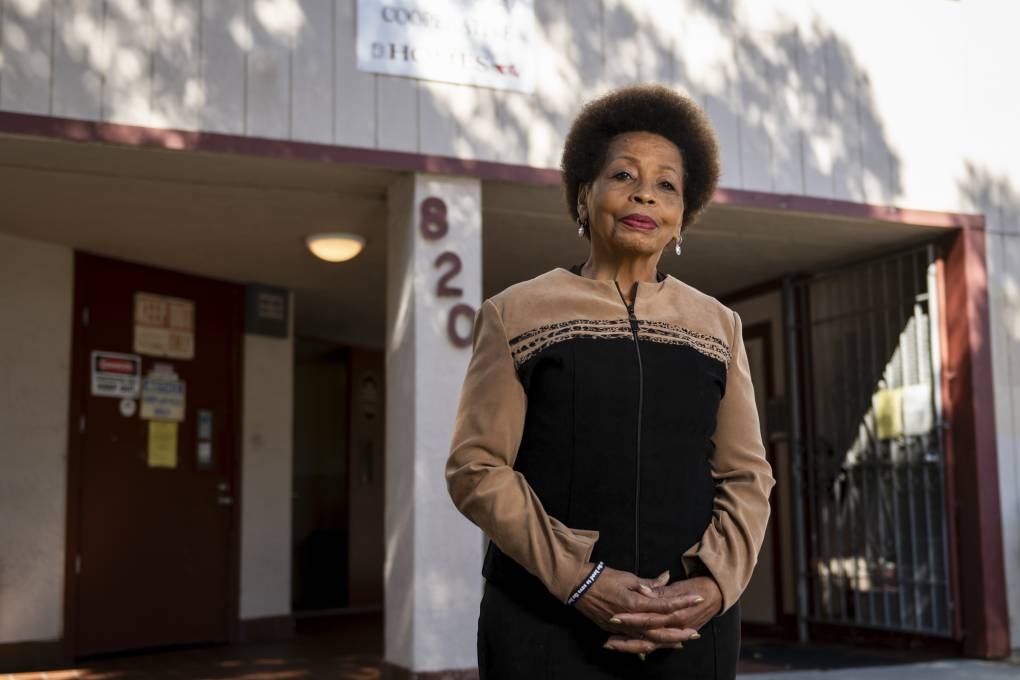
"caption": "Mattie Scott, a resident and board president of Freedom West Housing Corporation, stands in the housing cooperative in the Fillmore District on Sept. 11, 2023.",
"description": null,
"title": "230911-MattieScottFreedomWest-019-BL-KQED",
"credit": "Beth LaBerge/KQED",
"status": "inherit",
"altTag": "An older African American woman stands in front of a residential building, looking at the camera.",
"isLoading": false,
"fetchFailed": false
},
"news_11926063": {
"type": "attachments",
"id": "news_11926063",
"meta": {
"index": "attachments_1716263798",
"site": "news",
"id": "11926063",
"found": true
},
"parent": 11926059,
"imgSizes": {
"twentyfourteen-full-width": {
"file": "https://ww2.kqed.org/app/uploads/sites/10/2022/09/072522-AB5-TRUCKER-PROTEST-OAKLAND-MHN-01-CM-1038x576.jpg",
"width": 1038,
"mimeType": "image/jpeg",
"height": 576
},
"thumbnail": {
"file": "https://ww2.kqed.org/app/uploads/sites/10/2022/09/072522-AB5-TRUCKER-PROTEST-OAKLAND-MHN-01-CM-160x100.jpg",
"width": 160,
"mimeType": "image/jpeg",
"height": 100
},
"post-thumbnail": {
"file": "https://ww2.kqed.org/app/uploads/sites/10/2022/09/072522-AB5-TRUCKER-PROTEST-OAKLAND-MHN-01-CM-672x372.jpg",
"width": 672,
"mimeType": "image/jpeg",
"height": 372
},
"kqedFullSize": {
"file": "https://ww2.kqed.org/app/uploads/sites/10/2022/09/072522-AB5-TRUCKER-PROTEST-OAKLAND-MHN-01-CM.jpg",
"width": 2000,
"height": 1251
},
"large": {
"file": "https://ww2.kqed.org/app/uploads/sites/10/2022/09/072522-AB5-TRUCKER-PROTEST-OAKLAND-MHN-01-CM-1020x638.jpg",
"width": 1020,
"mimeType": "image/jpeg",
"height": 638
},
"1536x1536": {
"file": "https://ww2.kqed.org/app/uploads/sites/10/2022/09/072522-AB5-TRUCKER-PROTEST-OAKLAND-MHN-01-CM-1536x961.jpg",
"width": 1536,
"mimeType": "image/jpeg",
"height": 961
},
"full-width": {
"file": "https://ww2.kqed.org/app/uploads/sites/10/2022/09/072522-AB5-TRUCKER-PROTEST-OAKLAND-MHN-01-CM-1920x1201.jpg",
"width": 1920,
"mimeType": "image/jpeg",
"height": 1201
},
"medium": {
"file": "https://ww2.kqed.org/app/uploads/sites/10/2022/09/072522-AB5-TRUCKER-PROTEST-OAKLAND-MHN-01-CM-800x500.jpg",
"width": 800,
"mimeType": "image/jpeg",
"height": 500
}
},
"publishDate": 1663367165,
"modified": 1694551514,
"caption": "Shipments of cargo leave the Port of Oakland on July 25, 2022. ",
"description": "Cargo is loaded onto trucks at the Port of Oakland. ",
"title": "072522-AB5-TRUCKER-PROTEST-OAKLAND-MHN-01-CM",
"credit": "Martin do Nascimento/CalMatters",
"status": "inherit",
"altTag": "two big rig trucks drive with cranes at the Port of Oakland in the background",
"isLoading": false,
"fetchFailed": false
},
"news_11946132": {
"type": "attachments",
"id": "news_11946132",
"meta": {
"index": "attachments_1716263798",
"site": "news",
"id": "11946132",
"found": true
},
"parent": 0,
"imgSizes": {
"twentyfourteen-full-width": {
"file": "https://ww2.kqed.org/app/uploads/sites/10/2023/04/D7A7080-1038x576.jpg",
"width": 1038,
"mimeType": "image/jpeg",
"height": 576
},
"thumbnail": {
"file": "https://ww2.kqed.org/app/uploads/sites/10/2023/04/D7A7080-160x107.jpg",
"width": 160,
"mimeType": "image/jpeg",
"height": 107
},
"post-thumbnail": {
"file": "https://ww2.kqed.org/app/uploads/sites/10/2023/04/D7A7080-672x372.jpg",
"width": 672,
"mimeType": "image/jpeg",
"height": 372
},
"kqedFullSize": {
"file": "https://ww2.kqed.org/app/uploads/sites/10/2023/04/D7A7080.jpg",
"width": 1620,
"height": 1080
},
"large": {
"file": "https://ww2.kqed.org/app/uploads/sites/10/2023/04/D7A7080-1020x680.jpg",
"width": 1020,
"mimeType": "image/jpeg",
"height": 680
},
"1536x1536": {
"file": "https://ww2.kqed.org/app/uploads/sites/10/2023/04/D7A7080-1536x1024.jpg",
"width": 1536,
"mimeType": "image/jpeg",
"height": 1024
},
"medium": {
"file": "https://ww2.kqed.org/app/uploads/sites/10/2023/04/D7A7080-800x533.jpg",
"width": 800,
"mimeType": "image/jpeg",
"height": 533
}
},
"publishDate": 1681001427,
"modified": 1681150259,
"caption": "The 'Drag Up! Fight Back!' organizers and friends lead the march to Union Square in San Francisco on Saturday, April 8, 2023.",
"description": "The Drag Up! Fight Back! organizers and friends lead the march to Union Square in San Francisco on Saturday, April 8, 2023.",
"title": "The Drag Up! Fight Back! organizers and friends lead the march to Union Square in San Francisco on Saturday, April 8, 2023.",
"credit": "Estefany Gonzalez/KQED",
"status": "inherit",
"altTag": "A crowd of people hold a banner that reads \"Drag Up! Fight Back!\"",
"isLoading": false,
"fetchFailed": false
},
"news_11943175": {
"type": "attachments",
"id": "news_11943175",
"meta": {
"index": "attachments_1716263798",
"site": "news",
"id": "11943175",
"found": true
},
"parent": 11943157,
"imgSizes": {
"twentyfourteen-full-width": {
"file": "https://ww2.kqed.org/app/uploads/sites/10/2023/03/Untitled_Artwork-1038x576.jpg",
"width": 1038,
"mimeType": "image/jpeg",
"height": 576
},
"thumbnail": {
"file": "https://ww2.kqed.org/app/uploads/sites/10/2023/03/Untitled_Artwork-160x120.jpg",
"width": 160,
"mimeType": "image/jpeg",
"height": 120
},
"post-thumbnail": {
"file": "https://ww2.kqed.org/app/uploads/sites/10/2023/03/Untitled_Artwork-672x372.jpg",
"width": 672,
"mimeType": "image/jpeg",
"height": 372
},
"kqedFullSize": {
"file": "https://ww2.kqed.org/app/uploads/sites/10/2023/03/Untitled_Artwork.jpg",
"width": 2560,
"height": 1920
},
"2048x2048": {
"file": "https://ww2.kqed.org/app/uploads/sites/10/2023/03/Untitled_Artwork-2048x1536.jpg",
"width": 2048,
"mimeType": "image/jpeg",
"height": 1536
},
"large": {
"file": "https://ww2.kqed.org/app/uploads/sites/10/2023/03/Untitled_Artwork-1020x765.jpg",
"width": 1020,
"mimeType": "image/jpeg",
"height": 765
},
"1536x1536": {
"file": "https://ww2.kqed.org/app/uploads/sites/10/2023/03/Untitled_Artwork-1536x1152.jpg",
"width": 1536,
"mimeType": "image/jpeg",
"height": 1152
},
"full-width": {
"file": "https://ww2.kqed.org/app/uploads/sites/10/2023/03/Untitled_Artwork-1920x1440.jpg",
"width": 1920,
"mimeType": "image/jpeg",
"height": 1440
},
"medium": {
"file": "https://ww2.kqed.org/app/uploads/sites/10/2023/03/Untitled_Artwork-800x600.jpg",
"width": 800,
"mimeType": "image/jpeg",
"height": 600
}
},
"publishDate": 1678410303,
"modified": 1678411048,
"caption": "Developers across California face lengthy delays connecting new buildings to the power grid, with utility companies often making construction more costly and unpredictable. A new bill is trying to change that.",
"description": null,
"title": "Untitled Artwork",
"credit": "Illustration by Anna Vignet/KQED",
"status": "inherit",
"altTag": "an artistic, abstract illustration of a neighborhood with buildings appearing to be similar to Victorian homes in San Francisco, with yellow lines representing power lines standing out to the eye, and a building in the center which appears to be dark while other buildings have power",
"isLoading": false,
"fetchFailed": false
},
"news_11941913": {
"type": "attachments",
"id": "news_11941913",
"meta": {
"index": "attachments_1716263798",
"site": "news",
"id": "11941913",
"found": true
},
"parent": 11941907,
"imgSizes": {
"twentyfourteen-full-width": {
"file": "https://ww2.kqed.org/app/uploads/sites/10/2023/02/RS57538_012_KQED_PeoplesParkRally_08032022-qut-1-1038x576.jpg",
"width": 1038,
"mimeType": "image/jpeg",
"height": 576
},
"thumbnail": {
"file": "https://ww2.kqed.org/app/uploads/sites/10/2023/02/RS57538_012_KQED_PeoplesParkRally_08032022-qut-1-160x107.jpg",
"width": 160,
"mimeType": "image/jpeg",
"height": 107
},
"post-thumbnail": {
"file": "https://ww2.kqed.org/app/uploads/sites/10/2023/02/RS57538_012_KQED_PeoplesParkRally_08032022-qut-1-672x372.jpg",
"width": 672,
"mimeType": "image/jpeg",
"height": 372
},
"kqedFullSize": {
"file": "https://ww2.kqed.org/app/uploads/sites/10/2023/02/RS57538_012_KQED_PeoplesParkRally_08032022-qut-1.jpg",
"width": 1920,
"height": 1280
},
"large": {
"file": "https://ww2.kqed.org/app/uploads/sites/10/2023/02/RS57538_012_KQED_PeoplesParkRally_08032022-qut-1-1020x680.jpg",
"width": 1020,
"mimeType": "image/jpeg",
"height": 680
},
"1536x1536": {
"file": "https://ww2.kqed.org/app/uploads/sites/10/2023/02/RS57538_012_KQED_PeoplesParkRally_08032022-qut-1-1536x1024.jpg",
"width": 1536,
"mimeType": "image/jpeg",
"height": 1024
},
"medium": {
"file": "https://ww2.kqed.org/app/uploads/sites/10/2023/02/RS57538_012_KQED_PeoplesParkRally_08032022-qut-1-800x533.jpg",
"width": 800,
"mimeType": "image/jpeg",
"height": 533
}
},
"publishDate": 1677365337,
"modified": 1677365412,
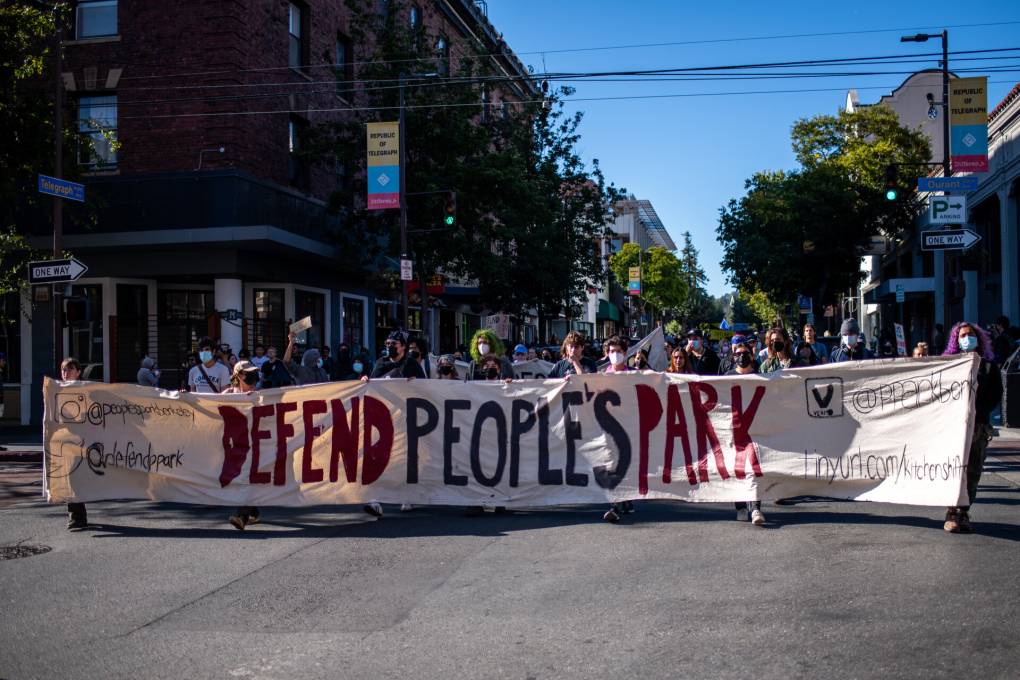
"caption": "Demonstrators march from Sproul Hall to People's Park to protest the construction by UC Berkeley of student housing at the park on Aug. 3, 2022.",
"description": null,
"title": "RS57538_012_KQED_PeoplesParkRally_08032022-qut (1)",
"credit": "Beth LaBerge/KQED",
"status": "inherit",
"altTag": "A crowd marches toward the camera, with those in front holding a large banner reading \"Defend People's Park\"",
"isLoading": false,
"fetchFailed": false
},
"news_11934412": {
"type": "attachments",
"id": "news_11934412",
"meta": {
"index": "attachments_1716263798",
"site": "news",
"id": "11934412",
"found": true
},
"parent": 11934374,
"imgSizes": {
"twentyfourteen-full-width": {
"file": "https://ww2.kqed.org/app/uploads/sites/10/2022/12/GettyImages-1321791653-1024x576.jpg",
"width": 1024,
"mimeType": "image/jpeg",
"height": 576
},
"thumbnail": {
"file": "https://ww2.kqed.org/app/uploads/sites/10/2022/12/GettyImages-1321791653-160x107.jpg",
"width": 160,
"mimeType": "image/jpeg",
"height": 107
},
"post-thumbnail": {
"file": "https://ww2.kqed.org/app/uploads/sites/10/2022/12/GettyImages-1321791653-672x372.jpg",
"width": 672,
"mimeType": "image/jpeg",
"height": 372
},
"kqedFullSize": {
"file": "https://ww2.kqed.org/app/uploads/sites/10/2022/12/GettyImages-1321791653.jpg",
"width": 1024,
"height": 683
},
"large": {
"file": "https://ww2.kqed.org/app/uploads/sites/10/2022/12/GettyImages-1321791653-1020x680.jpg",
"width": 1020,
"mimeType": "image/jpeg",
"height": 680
},
"medium": {
"file": "https://ww2.kqed.org/app/uploads/sites/10/2022/12/GettyImages-1321791653-800x534.jpg",
"width": 800,
"mimeType": "image/jpeg",
"height": 534
}
},
"publishDate": 1670380621,
"modified": 1670384235,
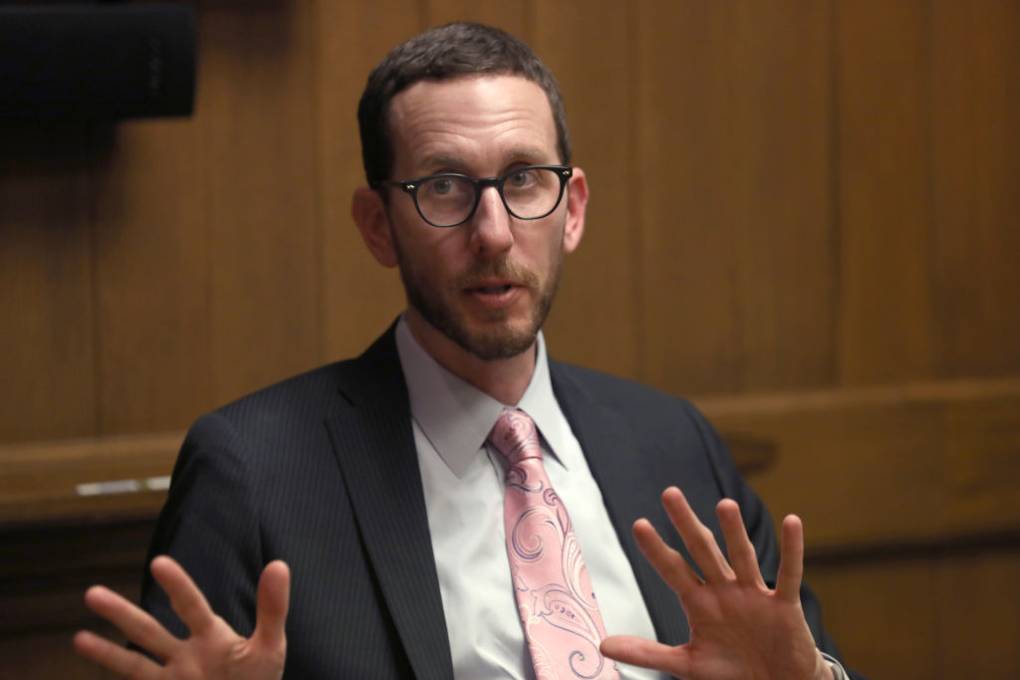
"caption": "State Sen. Scott Wiener (D-San Francisco) speaking to the San Francisco Chronicle Editorial Board on Jan. 10, 2020, in San Francisco.",
"description": null,
"title": "Senator Scott Wiener comes in to talk to the editorial board at the Chronicle on Friday, Jan. 10, 2020, in San Francisco, Calif.",
"credit": "Liz Hafalia/The San Francisco Chronicle via Getty Images",
"status": "inherit",
"altTag": "State Sen. Scott Wiener speaking in a formal setting.",
"isLoading": false,
"fetchFailed": false
},
"news_11932576": {
"type": "attachments",
"id": "news_11932576",
"meta": {
"index": "attachments_1716263798",
"site": "news",
"id": "11932576",
"found": true
},
"parent": 11932554,
"imgSizes": {
"twentyfourteen-full-width": {
"file": "https://ww2.kqed.org/app/uploads/sites/10/2022/11/GettyImages-1442266796-1-1038x576.jpg",
"width": 1038,
"mimeType": "image/jpeg",
"height": 576
},
"thumbnail": {
"file": "https://ww2.kqed.org/app/uploads/sites/10/2022/11/GettyImages-1442266796-1-160x111.jpg",
"width": 160,
"mimeType": "image/jpeg",
"height": 111
},
"post-thumbnail": {
"file": "https://ww2.kqed.org/app/uploads/sites/10/2022/11/GettyImages-1442266796-1-672x372.jpg",
"width": 672,
"mimeType": "image/jpeg",
"height": 372
},
"kqedFullSize": {
"file": "https://ww2.kqed.org/app/uploads/sites/10/2022/11/GettyImages-1442266796-1.jpg",
"width": 1920,
"height": 1334
},
"large": {
"file": "https://ww2.kqed.org/app/uploads/sites/10/2022/11/GettyImages-1442266796-1-1020x709.jpg",
"width": 1020,
"mimeType": "image/jpeg",
"height": 709
},
"1536x1536": {
"file": "https://ww2.kqed.org/app/uploads/sites/10/2022/11/GettyImages-1442266796-1-1536x1067.jpg",
"width": 1536,
"mimeType": "image/jpeg",
"height": 1067
},
"medium": {
"file": "https://ww2.kqed.org/app/uploads/sites/10/2022/11/GettyImages-1442266796-1-800x556.jpg",
"width": 800,
"mimeType": "image/jpeg",
"height": 556
}
},
"publishDate": 1668711016,
"modified": 1668715230,
"caption": "House Speaker Nancy Pelosi, a San Francisco Democrat, on the House floor on Nov. 17, 2022, announcing her intention to relinquish her leadership role.",
"description": null,
"title": "GettyImages-1442266796 (1)",
"credit": "Anna Moneymaker/Getty Images",
"status": "inherit",
"altTag": "Nancy Pelosi stands in white at a podium at the House, clad in white, smiling, one hand outstretched, palm up.",
"isLoading": false,
"fetchFailed": false
},
"news_11927329": {
"type": "attachments",
"id": "news_11927329",
"meta": {
"index": "attachments_1716263798",
"site": "news",
"id": "11927329",
"found": true
},
"parent": 11927310,
"imgSizes": {
"twentyfourteen-full-width": {
"file": "https://ww2.kqed.org/app/uploads/sites/10/2022/09/MoehligCalmatters-1038x576.jpg",
"width": 1038,
"mimeType": "image/jpeg",
"height": 576
},
"thumbnail": {
"file": "https://ww2.kqed.org/app/uploads/sites/10/2022/09/MoehligCalmatters-160x107.jpg",
"width": 160,
"mimeType": "image/jpeg",
"height": 107
},
"post-thumbnail": {
"file": "https://ww2.kqed.org/app/uploads/sites/10/2022/09/MoehligCalmatters-672x372.jpg",
"width": 672,
"mimeType": "image/jpeg",
"height": 372
},
"kqedFullSize": {
"file": "https://ww2.kqed.org/app/uploads/sites/10/2022/09/MoehligCalmatters.jpg",
"width": 1920,
"height": 1287
},
"large": {
"file": "https://ww2.kqed.org/app/uploads/sites/10/2022/09/MoehligCalmatters-1020x684.jpg",
"width": 1020,
"mimeType": "image/jpeg",
"height": 684
},
"1536x1536": {
"file": "https://ww2.kqed.org/app/uploads/sites/10/2022/09/MoehligCalmatters-1536x1030.jpg",
"width": 1536,
"mimeType": "image/jpeg",
"height": 1030
},
"medium": {
"file": "https://ww2.kqed.org/app/uploads/sites/10/2022/09/MoehligCalmatters-800x536.jpg",
"width": 800,
"mimeType": "image/jpeg",
"height": 536
}
},
"publishDate": 1664567294,
"modified": 1664567391,
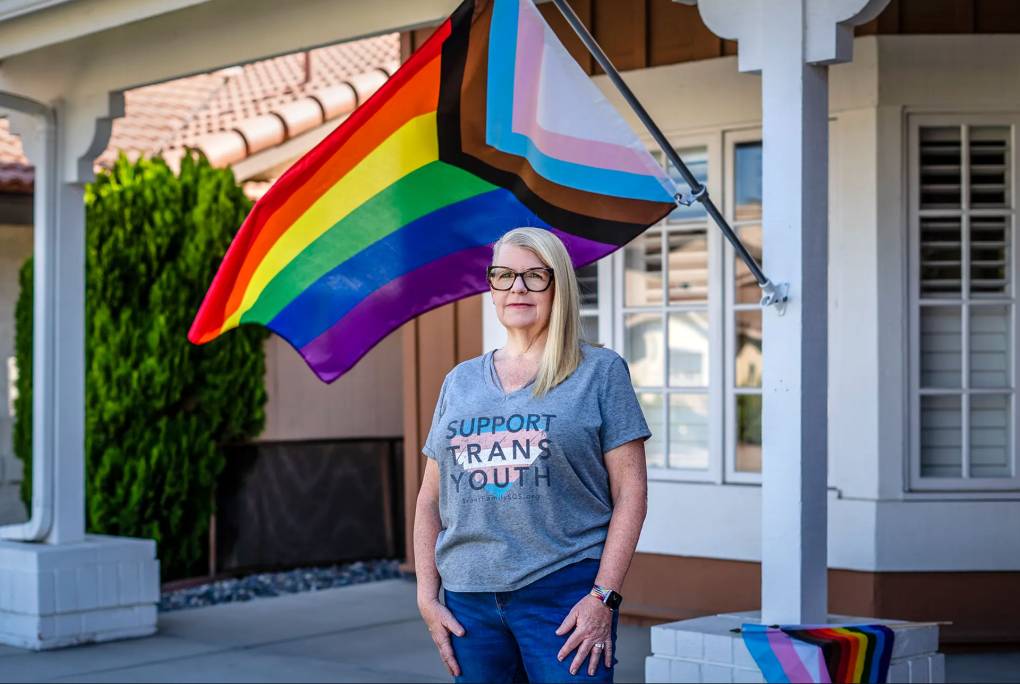
"caption": "Kathie Moehlig, founder of TransFamily Support Services, at her home in San Diego County on Aug. 26, 2022.",
"description": null,
"title": "MoehligCalmatters",
"credit": "Ariana Drehsler/CalMatters",
"status": "inherit",
"altTag": "woman with straight blonde hair and glasses wearing 'support trans youth' shirt stands underneath a pride flag outdoors outside of a home",
"isLoading": false,
"fetchFailed": false
},
"news_11923134": {
"type": "attachments",
"id": "news_11923134",
"meta": {
"index": "attachments_1716263798",
"site": "news",
"id": "11923134",
"found": true
},
"parent": 11923129,
"imgSizes": {
"twentyfourteen-full-width": {
"file": "https://ww2.kqed.org/app/uploads/sites/10/2022/08/RS57923_20220821_121740-1038x576.jpg",
"width": 1038,
"mimeType": "image/jpeg",
"height": 576
},
"thumbnail": {
"file": "https://ww2.kqed.org/app/uploads/sites/10/2022/08/RS57923_20220821_121740-160x120.jpg",
"width": 160,
"mimeType": "image/jpeg",
"height": 120
},
"post-thumbnail": {
"file": "https://ww2.kqed.org/app/uploads/sites/10/2022/08/RS57923_20220821_121740-672x372.jpg",
"width": 672,
"mimeType": "image/jpeg",
"height": 372
},
"kqedFullSize": {
"file": "https://ww2.kqed.org/app/uploads/sites/10/2022/08/RS57923_20220821_121740.jpg",
"width": 1920,
"height": 1440
},
"large": {
"file": "https://ww2.kqed.org/app/uploads/sites/10/2022/08/RS57923_20220821_121740-1020x765.jpg",
"width": 1020,
"mimeType": "image/jpeg",
"height": 765
},
"1536x1536": {
"file": "https://ww2.kqed.org/app/uploads/sites/10/2022/08/RS57923_20220821_121740-1536x1152.jpg",
"width": 1536,
"mimeType": "image/jpeg",
"height": 1152
},
"medium": {
"file": "https://ww2.kqed.org/app/uploads/sites/10/2022/08/RS57923_20220821_121740-800x600.jpg",
"width": 800,
"mimeType": "image/jpeg",
"height": 600
}
},
"publishDate": 1661198638,
"modified": 1661206117,
"caption": "San Francisco District Attorney Brooke Jenkins embraces a supporter from Mothers Against Drug Deaths at a City Hall rally to raise awareness for fentanyl deaths in San Francisco on Aug. 21.",
"description": null,
"title": "RS57923_20220821_121740",
"credit": "Joe Fitzgerald Rodriguez/KQED",
"status": "inherit",
"altTag": "two women hug at a rally in front of city hall, with news cameras all around",
"isLoading": false,
"fetchFailed": false
},
"news_11923074": {
"type": "attachments",
"id": "news_11923074",
"meta": {
"index": "attachments_1716263798",
"site": "news",
"id": "11923074",
"found": true
},
"parent": 11923034,
"imgSizes": {
"twentyfourteen-full-width": {
"file": "https://ww2.kqed.org/app/uploads/sites/10/2022/08/RS57894_032_KQED_KaiserStrikeOakland_08192022-qut-1038x576.jpg",
"width": 1038,
"mimeType": "image/jpeg",
"height": 576
},
"thumbnail": {
"file": "https://ww2.kqed.org/app/uploads/sites/10/2022/08/RS57894_032_KQED_KaiserStrikeOakland_08192022-qut-160x107.jpg",
"width": 160,
"mimeType": "image/jpeg",
"height": 107
},
"post-thumbnail": {
"file": "https://ww2.kqed.org/app/uploads/sites/10/2022/08/RS57894_032_KQED_KaiserStrikeOakland_08192022-qut-672x372.jpg",
"width": 672,
"mimeType": "image/jpeg",
"height": 372
},
"kqedFullSize": {
"file": "https://ww2.kqed.org/app/uploads/sites/10/2022/08/RS57894_032_KQED_KaiserStrikeOakland_08192022-qut.jpg",
"width": 1920,
"height": 1280
},
"large": {
"file": "https://ww2.kqed.org/app/uploads/sites/10/2022/08/RS57894_032_KQED_KaiserStrikeOakland_08192022-qut-1020x680.jpg",
"width": 1020,
"mimeType": "image/jpeg",
"height": 680
},
"1536x1536": {
"file": "https://ww2.kqed.org/app/uploads/sites/10/2022/08/RS57894_032_KQED_KaiserStrikeOakland_08192022-qut-1536x1024.jpg",
"width": 1536,
"mimeType": "image/jpeg",
"height": 1024
},
"medium": {
"file": "https://ww2.kqed.org/app/uploads/sites/10/2022/08/RS57894_032_KQED_KaiserStrikeOakland_08192022-qut-800x533.jpg",
"width": 800,
"mimeType": "image/jpeg",
"height": 533
}
},
"publishDate": 1660951150,
"modified": 1660951188,
"caption": "Kaiser mental health care workers and supporters march from Oakland Kaiser Medical Center to Kaiser's corporate headquarters on Friday, Aug. 19, 2022, the fifth day of an open-ended strike.",
"description": null,
"title": "RS57894_032_KQED_KaiserStrikeOakland_08192022-qut",
"credit": "Beth LaBerge/KQED",
"status": "inherit",
"altTag": "people in red shirts carrying signs that read \"patients over profits\"",
"isLoading": false,
"fetchFailed": false
},
"news_11922334": {
"type": "attachments",
"id": "news_11922334",
"meta": {
"index": "attachments_1716263798",
"site": "news",
"id": "11922334",
"found": true
},
"parent": 11922301,
"imgSizes": {
"twentyfourteen-full-width": {
"file": "https://ww2.kqed.org/app/uploads/sites/10/2022/08/Needle-1038x576.jpg",
"width": 1038,
"mimeType": "image/jpeg",
"height": 576
},
"thumbnail": {
"file": "https://ww2.kqed.org/app/uploads/sites/10/2022/08/Needle-160x105.jpg",
"width": 160,
"mimeType": "image/jpeg",
"height": 105
},
"post-thumbnail": {
"file": "https://ww2.kqed.org/app/uploads/sites/10/2022/08/Needle-672x372.jpg",
"width": 672,
"mimeType": "image/jpeg",
"height": 372
},
"kqedFullSize": {
"file": "https://ww2.kqed.org/app/uploads/sites/10/2022/08/Needle.jpg",
"width": 1980,
"height": 1301
},
"large": {
"file": "https://ww2.kqed.org/app/uploads/sites/10/2022/08/Needle-1020x670.jpg",
"width": 1020,
"mimeType": "image/jpeg",
"height": 670
},
"1536x1536": {
"file": "https://ww2.kqed.org/app/uploads/sites/10/2022/08/Needle-1536x1009.jpg",
"width": 1536,
"mimeType": "image/jpeg",
"height": 1009
},
"full-width": {
"file": "https://ww2.kqed.org/app/uploads/sites/10/2022/08/Needle-1920x1262.jpg",
"width": 1920,
"mimeType": "image/jpeg",
"height": 1262
},
"medium": {
"file": "https://ww2.kqed.org/app/uploads/sites/10/2022/08/Needle-800x526.jpg",
"width": 800,
"mimeType": "image/jpeg",
"height": 526
}
},
"publishDate": 1660263326,
"modified": 1661200290,
"caption": "A syringe is seen discarded near a homeless encampment along Berry St. south of Market Street in San Francisco on Tuesday November 1, 2016.",
"description": "A syringe is seen discarded near a homeless encampment along Berry St. south of Market Street in San Francisco, California, on Tuesday November 1, 2016.",
"title": "Needle",
"credit": "Michael Macor/San Francisco Chronicle via Getty Images",
"status": "inherit",
"altTag": "A syringe is seen discarded near a homeless encampment along Berry St. south of Market Street in San Francisco, California, on Tuesday November 1, 2016.",
"isLoading": false,
"fetchFailed": false
}
},
"audioPlayerReducer": {
"postId": "stream_live",
"isPaused": true,
"isPlaying": false,
"pfsActive": false,
"pledgeModalIsOpen": true,
"playerDrawerIsOpen": false,
"liveAudioPlayStartedAt": 0,
"liveAudioPlayContext": ""
},
"authorsReducer": {
"byline_news_11960823": {
"type": "authors",
"id": "byline_news_11960823",
"meta": {
"override": true
},
"slug": "byline_news_11960823",
"name": "Sophie Austin\u003cbr>The Associated Press",
"isLoading": false
},
"byline_news_11927310": {
"type": "authors",
"id": "byline_news_11927310",
"meta": {
"override": true
},
"slug": "byline_news_11927310",
"name": "\u003ca href=\"https://calmatters.org/author/ariel-gans/\">Ariel Gans\u003c/a>",
"isLoading": false
},
"byline_news_11922301": {
"type": "authors",
"id": "byline_news_11922301",
"meta": {
"override": true
},
"slug": "byline_news_11922301",
"name": "Ana B. Ibarra",
"isLoading": false
},
"kqed": {
"type": "authors",
"id": "236",
"meta": {
"index": "authors_1716337520",
"id": "236",
"found": true
},
"name": "KQED News Staff",
"firstName": "KQED News Staff",
"lastName": null,
"slug": "kqed",
"email": "faq@kqed.org",
"display_author_email": false,
"staff_mastheads": [],
"title": null,
"bio": null,
"avatar": "https://secure.gravatar.com/avatar/ef0e801a68c4c54afa9180db14084167?s=600&d=blank&r=g",
"twitter": null,
"facebook": null,
"instagram": null,
"linkedin": null,
"sites": [
{
"site": "arts",
"roles": [
"contributor"
]
},
{
"site": "news",
"roles": [
"editor"
]
},
{
"site": "futureofyou",
"roles": [
"author"
]
}
],
"headData": {
"title": "KQED News Staff | KQED",
"description": null,
"ogImgSrc": "https://secure.gravatar.com/avatar/ef0e801a68c4c54afa9180db14084167?s=600&d=blank&r=g",
"twImgSrc": "https://secure.gravatar.com/avatar/ef0e801a68c4c54afa9180db14084167?s=600&d=blank&r=g"
},
"isLoading": false,
"link": "/author/kqed"
},
"matthewgreen": {
"type": "authors",
"id": "1263",
"meta": {
"index": "authors_1716337520",
"id": "1263",
"found": true
},
"name": "Matthew Green",
"firstName": "Matthew",
"lastName": "Green",
"slug": "matthewgreen",
"email": "mgreen@kqed.org",
"display_author_email": false,
"staff_mastheads": [],
"title": "KQED Editor/Reporter",
"bio": "Matthew Green is a digital media producer for KQED News. He previously produced \u003ca href=\"http://www.kqed.org/lowdown\">The Lowdown\u003c/a>, KQED’s multimedia news education blog. Matthew's written for numerous Bay Area publications, including the Oakland Tribune and San Francisco Chronicle. He also taught journalism classes at Fremont High School in East Oakland.\r\n\r\nEmail: mgreen@kqed.org; Twitter: @MGreenKQED",
"avatar": "https://secure.gravatar.com/avatar/3bf498d1267ca02c8494f33d8cfc575e?s=600&d=blank&r=g",
"twitter": "MGreenKQED",
"facebook": null,
"instagram": null,
"linkedin": null,
"sites": [
{
"site": "news",
"roles": []
},
{
"site": "lowdown",
"roles": []
},
{
"site": "science",
"roles": []
},
{
"site": "education",
"roles": []
},
{
"site": "quest",
"roles": []
},
{
"site": "liveblog",
"roles": []
}
],
"headData": {
"title": "Matthew Green | KQED",
"description": "KQED Editor/Reporter",
"ogImgSrc": "https://secure.gravatar.com/avatar/3bf498d1267ca02c8494f33d8cfc575e?s=600&d=blank&r=g",
"twImgSrc": "https://secure.gravatar.com/avatar/3bf498d1267ca02c8494f33d8cfc575e?s=600&d=blank&r=g"
},
"isLoading": false,
"link": "/author/matthewgreen"
},
"esilvers": {
"type": "authors",
"id": "7237",
"meta": {
"index": "authors_1716337520",
"id": "7237",
"found": true
},
"name": "Emma Silvers",
"firstName": "Emma",
"lastName": "Silvers",
"slug": "esilvers",
"email": "esilvers@kqed.org",
"display_author_email": false,
"staff_mastheads": [],
"title": "KQED Contributor",
"bio": "Emma Silvers is an editor at KQED Arts and a former digital producer at KQED News. Born and raised in the Bay Area, she has previously been an arts and entertainment editor at the \u003cem>San Francisco Chronicle\u003c/em>, \u003cem>SF Weekly\u003c/em> and the \u003cem>San Francisco Bay Guardian.\u003c/em> \u003ca href=\"https://www.emmasilvers.com\">Her work\u003c/a> has also appeared in \u003cem>Rolling Stone\u003c/em>, Pitchfork and \u003cem>Mother Jones\u003c/em>. In 2017 she was the recipient of the Society of Professional Journalists-Northern California's award for arts and culture reporting. In 1993 she \u003ca href=\"https://www.kqed.org/pop/16759/wait-what-my-coworker-was-a-voice-over-hyperventilator-for-jurassic-park\">hyperventilated in \u003cem>Jurassic Park\u003c/em>\u003c/a>.",
"avatar": "https://secure.gravatar.com/avatar/247beada39b88ea5759db1f51dba05cf?s=600&d=blank&r=g",
"twitter": "emmaruthless",
"facebook": null,
"instagram": null,
"linkedin": null,
"sites": [
{
"site": "arts",
"roles": [
"editor"
]
},
{
"site": "news",
"roles": [
"editor"
]
},
{
"site": "pop",
"roles": [
"contributor"
]
},
{
"site": "bayareabites",
"roles": [
"editor"
]
},
{
"site": "food",
"roles": [
"contributor"
]
},
{
"site": "liveblog",
"roles": [
"editor"
]
}
],
"headData": {
"title": "Emma Silvers | KQED",
"description": "KQED Contributor",
"ogImgSrc": "https://secure.gravatar.com/avatar/247beada39b88ea5759db1f51dba05cf?s=600&d=blank&r=g",
"twImgSrc": "https://secure.gravatar.com/avatar/247beada39b88ea5759db1f51dba05cf?s=600&d=blank&r=g"
},
"isLoading": false,
"link": "/author/esilvers"
},
"ecruzguevarra": {
"type": "authors",
"id": "8654",
"meta": {
"index": "authors_1716337520",
"id": "8654",
"found": true
},
"name": "Ericka Cruz Guevarra",
"firstName": "Ericka",
"lastName": "Cruz Guevarra",
"slug": "ecruzguevarra",
"email": "ecruzguevarra@kqed.org",
"display_author_email": true,
"staff_mastheads": [
"news"
],
"title": "Producer, The Bay Podcast",
"bio": "Ericka Cruz Guevarra is host of \u003ca href=\"https://www.kqed.org/podcasts/thebay\">\u003cem>The Bay\u003c/em>\u003c/a> podcast at KQED. Before host, she was the show’s producer. Her work in that capacity includes a three-part reported series on policing in Vallejo, which won a 2020 excellence in journalism award from the Society of Professional Journalists. Ericka has worked as a breaking news reporter at Oregon Public Broadcasting, helped produce the Code Switch podcast, and was KQED’s inaugural Raul Ramirez Diversity Fund intern. She’s also an alumna of NPR’s Next Generation Radio program. Send her an email if you have strong feelings about whether Fairfield and Suisun City are the Bay. Ericka is represented by SAG-AFTRA.",
"avatar": "https://secure.gravatar.com/avatar/accefc1de4bafc7e234b69bcb9b6f6536c130fd84709bc3069ef11a78787e1bb?s=600&d=blank&r=g",
"twitter": "NotoriousECG",
"bluesky": null,
"facebook": null,
"instagram": null,
"linkedin": null,
"sites": [
{
"site": "arts",
"roles": [
"subscriber"
]
},
{
"site": "news",
"roles": [
"editor",
"manage_categories"
]
},
{
"site": "futureofyou",
"roles": [
"subscriber"
]
},
{
"site": "stateofhealth",
"roles": [
"subscriber"
]
},
{
"site": "science",
"roles": [
"editor"
]
},
{
"site": "forum",
"roles": [
"subscriber"
]
}
],
"headData": {
"title": "Ericka Cruz Guevarra | KQED",
"description": "Producer, The Bay Podcast",
"ogImgSrc": "https://secure.gravatar.com/avatar/accefc1de4bafc7e234b69bcb9b6f6536c130fd84709bc3069ef11a78787e1bb?s=600&d=blank&r=g",
"twImgSrc": "https://secure.gravatar.com/avatar/accefc1de4bafc7e234b69bcb9b6f6536c130fd84709bc3069ef11a78787e1bb?s=600&d=blank&r=g"
},
"isLoading": false,
"link": "/author/ecruzguevarra"
},
"lesleymcclurg": {
"type": "authors",
"id": "11229",
"meta": {
"index": "authors_1716337520",
"id": "11229",
"found": true
},
"name": "Lesley McClurg",
"firstName": "Lesley",
"lastName": "McClurg",
"slug": "lesleymcclurg",
"email": "lmcclurg@KQED.org",
"display_author_email": false,
"staff_mastheads": [
"news",
"science"
],
"title": "KQED Health Correspondent",
"bio": "Lesley McClurg is a health correspondent and fill-in host whose work is regularly rebroadcast on NPR and PBS programs. She’s earned multiple regional Emmy awards, a national and a regional Edward R. Murrow award, and was named Best Beat Reporter by the Association of Health Care Journalists. The Society of Professional Journalists has recognized her work several times, and the Society of Environmental Journalists spotlighted her coverage of California’s historic drought.\r\n\r\nBefore joining KQED in 2016, Lesley covered food and sustainability for Capital Public Radio, environmental issues for Colorado Public Radio, and reported for KUOW and KCTS 9 in Seattle. Away from the newsroom, she loves skiing with her daughter, mountain biking with her partner, and playing with Ollie, the family’s goldendoodle. On deadline, she runs almost entirely on chocolate chips.\r\n\r\n ",
"avatar": "https://secure.gravatar.com/avatar/bab49e972ea10c774fe0f5e29dba1722b158f7c0d58a360923d1389d380b2978?s=600&d=blank&r=g",
"twitter": "lesleywmcclurg",
"bluesky": null,
"facebook": null,
"instagram": null,
"linkedin": null,
"sites": [
{
"site": "arts",
"roles": [
"author"
]
},
{
"site": "news",
"roles": [
"editor"
]
},
{
"site": "futureofyou",
"roles": [
"editor"
]
},
{
"site": "stateofhealth",
"roles": [
"author"
]
},
{
"site": "science",
"roles": [
"editor"
]
},
{
"site": "quest",
"roles": [
"subscriber"
]
},
{
"site": "forum",
"roles": [
"administrator"
]
},
{
"site": "liveblog",
"roles": [
"author"
]
}
],
"headData": {
"title": "Lesley McClurg | KQED",
"description": "KQED Health Correspondent",
"ogImgSrc": "https://secure.gravatar.com/avatar/bab49e972ea10c774fe0f5e29dba1722b158f7c0d58a360923d1389d380b2978?s=600&d=blank&r=g",
"twImgSrc": "https://secure.gravatar.com/avatar/bab49e972ea10c774fe0f5e29dba1722b158f7c0d58a360923d1389d380b2978?s=600&d=blank&r=g"
},
"isLoading": false,
"link": "/author/lesleymcclurg"
},
"amontecillo": {
"type": "authors",
"id": "11649",
"meta": {
"index": "authors_1716337520",
"id": "11649",
"found": true
},
"name": "Alan Montecillo",
"firstName": "Alan",
"lastName": "Montecillo",
"slug": "amontecillo",
"email": "amontecillo@kqed.org",
"display_author_email": false,
"staff_mastheads": [
"news"
],
"title": "KQED Contributor",
"bio": "Alan Montecillo is the senior editor of \u003cem>\u003ca href=\"http://kqed.org/thebay\">The Bay\u003c/a>, \u003c/em> KQED's local news podcast. Before moving to the Bay Area, he worked as a senior talk show producer for WILL in Champaign-Urbana, Illinois and at Oregon Public Broadcasting in Portland, Oregon. He has won journalism awards from the Society of Professional Journalists Northern California, the Public Media Journalists Association, The Signal Awards, and has also received a regional Edward R. Murrow award. Alan is a Filipino American from Hong Kong and a graduate of Reed College.",
"avatar": "https://secure.gravatar.com/avatar/268f53a2066899ea9efdd8a5900218b17c822d9862cbc9326cccec53ef41d349?s=600&d=blank&r=g",
"twitter": "alanmontecillo",
"bluesky": null,
"facebook": null,
"instagram": null,
"linkedin": null,
"sites": [
{
"site": "",
"roles": [
"editor"
]
},
{
"site": "news",
"roles": [
"editor",
"manage_categories"
]
}
],
"headData": {
"title": "Alan Montecillo | KQED",
"description": "KQED Contributor",
"ogImgSrc": "https://secure.gravatar.com/avatar/268f53a2066899ea9efdd8a5900218b17c822d9862cbc9326cccec53ef41d349?s=600&d=blank&r=g",
"twImgSrc": "https://secure.gravatar.com/avatar/268f53a2066899ea9efdd8a5900218b17c822d9862cbc9326cccec53ef41d349?s=600&d=blank&r=g"
},
"isLoading": false,
"link": "/author/amontecillo"
},
"abandlamudi": {
"type": "authors",
"id": "11672",
"meta": {
"index": "authors_1716337520",
"id": "11672",
"found": true
},
"name": "Adhiti Bandlamudi",
"firstName": "Adhiti",
"lastName": "Bandlamudi",
"slug": "abandlamudi",
"email": "abandlamudi@kqed.org",
"display_author_email": false,
"staff_mastheads": [
"news"
],
"title": "KQED Housing Reporter",
"bio": "Adhiti Bandlamudi reports for KQED's Housing desk. She focuses on how housing gets built across the Bay Area. Before joining KQED in 2020, she reported for WUNC in Durham, North Carolina, WABE in Atlanta, Georgia and Capital Public Radio in Sacramento. In 2017, she was awarded a Kroc Fellowship at NPR where she reported on everything from sprinkles to the Golden State Killer's arrest. When she's not reporting, she's baking new recipes in her kitchen or watching movies with friends and family. She's originally from Georgia and has strong opinions about Great British Bake Off.",
"avatar": "https://secure.gravatar.com/avatar/868129c8b257bb99a3500e2c86a65400?s=600&d=mm&r=g",
"twitter": "oddity_adhiti",
"facebook": null,
"instagram": null,
"linkedin": null,
"sites": [
{
"site": "arts",
"roles": [
"author"
]
},
{
"site": "news",
"roles": [
"editor"
]
},
{
"site": "liveblog",
"roles": [
"author"
]
}
],
"headData": {
"title": "Adhiti Bandlamudi | KQED",
"description": "KQED Housing Reporter",
"ogImgSrc": "https://secure.gravatar.com/avatar/868129c8b257bb99a3500e2c86a65400?s=600&d=mm&r=g",
"twImgSrc": "https://secure.gravatar.com/avatar/868129c8b257bb99a3500e2c86a65400?s=600&d=mm&r=g"
},
"isLoading": false,
"link": "/author/abandlamudi"
},
"jrodriguez": {
"type": "authors",
"id": "11690",
"meta": {
"index": "authors_1716337520",
"id": "11690",
"found": true
},
"name": "Joe Fitzgerald Rodriguez",
"firstName": "Joe",
"lastName": "Fitzgerald Rodriguez",
"slug": "jrodriguez",
"email": "jrodriguez@kqed.org",
"display_author_email": true,
"staff_mastheads": [
"news"
],
"title": "Reporter and Producer",
"bio": "Joe Fitzgerald Rodriguez is a reporter and digital producer for KQED covering politics. Joe most recently wrote for the \u003cem>San Francisco Examiner\u003c/em> as a political columnist covering The City. He was raised in San Francisco and has spent his reporting career in his beloved, foggy, city by the bay. Joe was 12-years-old when he conducted his first interview in journalism, grilling former San Francisco Mayor Willie Brown for the Marina Middle School newspaper, \u003cem>The Penguin Press, \u003c/em>and he continues to report on the San Francisco Bay Area to this day.",
"avatar": "https://secure.gravatar.com/avatar/2247beb0564c1e9c62228d5649d2edac?s=600&d=blank&r=g",
"twitter": "FitztheReporter",
"facebook": null,
"instagram": "https://www.instagram.com/fitzthereporter/",
"linkedin": null,
"sites": [
{
"site": "",
"roles": [
"editor"
]
},
{
"site": "arts",
"roles": [
"editor"
]
},
{
"site": "news",
"roles": [
"editor"
]
},
{
"site": "science",
"roles": [
"editor"
]
},
{
"site": "elections",
"roles": [
"editor"
]
},
{
"site": "liveblog",
"roles": [
"editor"
]
}
],
"headData": {
"title": "Joe Fitzgerald Rodriguez | KQED",
"description": "Reporter and Producer",
"ogImgSrc": "https://secure.gravatar.com/avatar/2247beb0564c1e9c62228d5649d2edac?s=600&d=blank&r=g",
"twImgSrc": "https://secure.gravatar.com/avatar/2247beb0564c1e9c62228d5649d2edac?s=600&d=blank&r=g"
},
"isLoading": false,
"link": "/author/jrodriguez"
},
"jlara": {
"type": "authors",
"id": "11761",
"meta": {
"index": "authors_1716337520",
"id": "11761",
"found": true
},
"name": "Juan Carlos Lara",
"firstName": "Juan Carlos",
"lastName": "Lara",
"slug": "jlara",
"email": "jlara@kqed.org",
"display_author_email": false,
"staff_mastheads": [],
"title": "KQED Contributor",
"bio": null,
"avatar": "https://secure.gravatar.com/avatar/19e2052b9b05657c5ff2af2121846e9c?s=600&d=blank&r=g",
"twitter": null,
"facebook": null,
"instagram": null,
"linkedin": null,
"sites": [
{
"site": "arts",
"roles": [
"editor"
]
},
{
"site": "news",
"roles": [
"editor"
]
},
{
"site": "forum",
"roles": [
"editor"
]
},
{
"site": "liveblog",
"roles": [
"contributor"
]
}
],
"headData": {
"title": "Juan Carlos Lara | KQED",
"description": "KQED Contributor",
"ogImgSrc": "https://secure.gravatar.com/avatar/19e2052b9b05657c5ff2af2121846e9c?s=600&d=blank&r=g",
"twImgSrc": "https://secure.gravatar.com/avatar/19e2052b9b05657c5ff2af2121846e9c?s=600&d=blank&r=g"
},
"isLoading": false,
"link": "/author/jlara"
},
"mesquinca": {
"type": "authors",
"id": "11802",
"meta": {
"index": "authors_1716337520",
"id": "11802",
"found": true
},
"name": "Maria Esquinca",
"firstName": "Maria",
"lastName": "Esquinca",
"slug": "mesquinca",
"email": "mesquinca@kqed.org",
"display_author_email": false,
"staff_mastheads": [],
"title": "Producer, The Bay",
"bio": "María Esquinca is a producer of The Bay. Before that, she was a New York Women’s Foundation IGNITE Fellow at Latino USA. She worked at Radio Bilingue where she covered the San Joaquin Valley. Maria has interned at WLRN, News 21, The New York Times Student Journalism Institute and at Crain’s Detroit Business as a Dow Jones News Fund Business Reporting Intern. She is an MFA graduate from the University of Miami. In 2017, she graduated from the Walter Cronkite School of Journalism and Mass Communication with a Master of Mass Communication. A fronteriza, she was born in Ciudad Juárez, Chihuahua, Mexico and grew up in El Paso, Texas.",
"avatar": "https://secure.gravatar.com/avatar/77cedba18aae91da775038ba06dcd8d0?s=600&d=blank&r=g",
"twitter": "@m_esquinca",
"facebook": null,
"instagram": null,
"linkedin": null,
"sites": [
{
"site": "news",
"roles": []
}
],
"headData": {
"title": "Maria Esquinca | KQED",
"description": "Producer, The Bay",
"ogImgSrc": "https://secure.gravatar.com/avatar/77cedba18aae91da775038ba06dcd8d0?s=600&d=blank&r=g",
"twImgSrc": "https://secure.gravatar.com/avatar/77cedba18aae91da775038ba06dcd8d0?s=600&d=blank&r=g"
},
"isLoading": false,
"link": "/author/mesquinca"
},
"sjohnson": {
"type": "authors",
"id": "11840",
"meta": {
"index": "authors_1716337520",
"id": "11840",
"found": true
},
"name": "Sydney Johnson",
"firstName": "Sydney",
"lastName": "Johnson",
"slug": "sjohnson",
"email": "sjohnson@kqed.org",
"display_author_email": false,
"staff_mastheads": [
"news"
],
"title": "KQED Reporter",
"bio": "Sydney Johnson is a general assignment reporter at KQED. She previously reported on public health and city government at the San Francisco Examiner, and before that, she covered statewide education policy for EdSource. Her reporting has won multiple local, state and national awards. Sydney is a graduate of the University of California, Berkeley and lives in San Francisco.",
"avatar": "https://secure.gravatar.com/avatar/97855f2719b72ad6190b7c535fe642c8?s=600&d=blank&r=g",
"twitter": "sydneyfjohnson",
"facebook": null,
"instagram": null,
"linkedin": null,
"sites": [
{
"site": "news",
"roles": [
"editor"
]
}
],
"headData": {
"title": "Sydney Johnson | KQED",
"description": "KQED Reporter",
"ogImgSrc": "https://secure.gravatar.com/avatar/97855f2719b72ad6190b7c535fe642c8?s=600&d=blank&r=g",
"twImgSrc": "https://secure.gravatar.com/avatar/97855f2719b72ad6190b7c535fe642c8?s=600&d=blank&r=g"
},
"isLoading": false,
"link": "/author/sjohnson"
}
},
"pagesReducer": {
"news_tag_scott-wiener": {
"type": "terms",
"id": "news_1217",
"meta": {
"index": "terms_1716263798",
"site": "news",
"id": "1217",
"score": 9.892588
},
"featImg": null,
"name": "Scott Wiener",
"description": null,
"taxonomy": "tag",
"headData": {
"twImgId": null,
"twTitle": null,
"ogTitle": null,
"ogImgId": null,
"twDescription": null,
"description": null,
"title": "Scott Wiener Archives | KQED News",
"ogDescription": null
},
"ttid": 1229,
"slug": "scott-wiener",
"isLoading": false,
"title": "Scott Wiener",
"pageMeta": {
"site": "news",
"WpPageTemplate": "page-topic-editorial",
"currentPage": 5
},
"blocks": [
{
"blockName": "kqed/post-list",
"attrs": {
"layout": "cardArticle2",
"query": "posts/news?tag=scott-wiener",
"seeMore": false,
"paginated": true,
"page": 5
}
},
{
"blockName": "kqed/ad"
}
]
}
},
"pfsSessionReducer": {},
"postsReducer": {
"stream_live": {
"type": "live",
"id": "stream_live",
"audioUrl": "https://streams.kqed.org/kqedradio",
"title": "Live Stream",
"excerpt": "Live Stream information currently unavailable.",
"link": "/radio",
"featImg": "",
"label": {
"name": "KQED Live",
"link": "/"
}
},
"stream_kqedNewscast": {
"type": "posts",
"id": "stream_kqedNewscast",
"audioUrl": "https://www.kqed.org/.stream/anon/radio/RDnews/newscast.mp3?_=1",
"title": "KQED Newscast",
"featImg": "",
"label": {
"name": "88.5 FM",
"link": "/"
}
},
"news_11962776": {
"type": "posts",
"id": "news_11962776",
"meta": {
"index": "posts_1716263798",
"site": "news",
"id": "11962776",
"score": null,
"sort": [
1695981621000
]
},
"guestAuthors": [],
"slug": "the-bays-september-news-roundup-distrust-in-martinez-decriminalizing-psychedelics-and-wnba-in-the-bay",
"title": "The Bay’s September News Roundup: Distrust in Martinez, Decriminalizing Psychedelics, and a New WNBA Team",
"publishDate": 1695981621,
"format": "audio",
"headTitle": "The Bay’s September News Roundup: Distrust in Martinez, Decriminalizing Psychedelics, and a New WNBA Team | KQED",
"labelTerm": {},
"content": "\u003cp>\u003ci data-stringify-type=\"italic\">A full transcript will be available 1–2 workdays after the episode’s publication.\u003c/i>\u003c/p>\n\u003cdiv class=\"card card--enclosed grey\">\n\u003cp>\u003cspan style=\"font-weight: 400\">In this edition of The Bay’s monthly news roundup, Ericka, Maria and Alan talk about continued tensions between Martinez and the local refinery, a bill that would decriminalize certain psychedelics, and an effort to bring a WNBA team to the Bay Area.\u003c/span>\u003c/p>\n\u003cp id=\"embed-code\" class=\"inconsolata\">\n\u003c!-- iframe plugin v.4.3 wordpress.org/plugins/iframe/ -->\u003cbr>\n\u003ciframe loading=\"lazy\" frameborder=\"0\" height=\"200\" scrolling=\"no\" src=\"https://playlist.megaphone.fm/?e=KQINC8629741221&light=true\" width=\"100%\" class=\"iframe-class\">\u003c/iframe>\n\u003c/p>\n\u003cp>\u003cb>Links:\u003c/b>\u003c/p>\n\u003cul>\n\u003cli>\u003ca href=\"https://www.eastbaytimes.com/2023/09/26/residents-skeptical-after-toxicology-report-finds-no-ill-effects-from-martinez-refinery-incident/?campaign=ebtbreakingalert&utm_email=A4A5B403457285D525DA14E7D1&g2i_eui=exmfql5iJxTSVxLnOrAB1DPcBdjg%2bsID&g2i_source=newsletter&active=no&lctg=A4A5B403457285D525DA14E7D1\" target=\"_blank\" rel=\"noopener\">Residents skeptical after toxicology report finds no ill effects from Martinez refinery incident\u003c/a>\u003c/li>\n\u003cli>\u003ca href=\"https://www.latimes.com/california/story/2023-09-07/california-magic-mushrooms-psychedelics-scott-wiener-psilocybin\" target=\"_blank\" rel=\"noopener\">\u003cspan style=\"font-weight: 400\">California Decriminalizing Mushrooms and Other Psychedelics \u003c/span>\u003c/a>\u003c/li>\n\u003cli>\u003ca href=\"https://theathletic.com/4902855/2023/09/26/warriors-wnba-bay-area/\" target=\"_blank\" rel=\"noopener\">\u003cspan style=\"font-weight: 400\">Warriors finalizing agreement to bring WNBA team to Bay Area: Sources\u003c/span>\u003c/a>\u003c/li>\n\u003c/ul>\n\u003c/div>\n\u003cp>[ad fullwidth]\u003c/p>\u003cp>\u003c/p>\n",
"blocks": [],
"excerpt": "In this September edition of The Bay’s monthly news roundup, Ericka, Maria and Alan talk about three different news stories in their radar this month. \r\n",
"status": "publish",
"parent": 0,
"modified": 1726004845,
"stats": {
"hasAudio": true,
"hasVideo": false,
"hasChartOrMap": false,
"iframeSrcs": [],
"hasGoogleForm": false,
"hasGallery": false,
"hasHearkenModule": false,
"hasPolis": false,
"paragraphCount": 5,
"wordCount": 94
},
"headData": {
"title": "The Bay’s September News Roundup: Distrust in Martinez, Decriminalizing Psychedelics, and a New WNBA Team | KQED",
"description": "In this September edition of The Bay’s monthly news roundup, Ericka, Maria and Alan talk about three different news stories in their radar this month. \r\n",
"ogTitle": "",
"ogDescription": "",
"ogImgId": "",
"twTitle": "",
"twDescription": "",
"twImgId": "",
"schema": {
"@context": "https://schema.org",
"@type": "NewsArticle",
"headline": "The Bay’s September News Roundup: Distrust in Martinez, Decriminalizing Psychedelics, and a New WNBA Team",
"datePublished": "2023-09-29T03:00:21-07:00",
"dateModified": "2024-09-10T14:47:25-07:00",
"image": "https://cdn.kqed.org/wp-content/uploads/2020/02/KQED-OG-Image@1x.png",
"isAccessibleForFree": "True",
"publisher": {
"@type": "NewsMediaOrganization",
"@id": "https://www.kqed.org/#organization",
"name": "KQED",
"logo": "https://cdn.kqed.org/wp-content/uploads/2020/02/KQED-OG-Image@1x.png",
"url": "https://www.kqed.org",
"sameAs": [
"https://www.facebook.com/KQED",
"https://twitter.com/KQED",
"https://www.instagram.com/kqed/",
"https://www.tiktok.com/@kqedofficial",
"https://www.linkedin.com/company/kqed",
"https://www.youtube.com/channel/UCeC0IOo7i1P_61zVUWbJ4nw"
]
}
}
},
"source": "The Bay",
"sourceUrl": "https://www.kqed.org/podcasts/thebay",
"audioUrl": "https://www.podtrac.com/pts/redirect.mp3/chrt.fm/track/G6C7C3/traffic.megaphone.fm/KQINC6053755638.mp3?updated=1695764527",
"sticky": false,
"excludeFromSiteSearch": "Include",
"articleAge": "0",
"path": "/news/11962776/the-bays-september-news-roundup-distrust-in-martinez-decriminalizing-psychedelics-and-wnba-in-the-bay",
"audioTrackLength": null,
"parsedContent": [
{
"type": "contentString",
"content": "\u003cdiv class=\"post-body\">\u003cp>\u003cp>\u003ci data-stringify-type=\"italic\">A full transcript will be available 1–2 workdays after the episode’s publication.\u003c/i>\u003c/p>\n\u003cdiv class=\"card card--enclosed grey\">\n\u003cp>\u003cspan style=\"font-weight: 400\">In this edition of The Bay’s monthly news roundup, Ericka, Maria and Alan talk about continued tensions between Martinez and the local refinery, a bill that would decriminalize certain psychedelics, and an effort to bring a WNBA team to the Bay Area.\u003c/span>\u003c/p>\n\u003cp id=\"embed-code\" class=\"inconsolata\">\n\u003c!-- iframe plugin v.4.3 wordpress.org/plugins/iframe/ -->\u003cbr>\n\u003ciframe loading=\"lazy\" frameborder=\"0\" height=\"200\" scrolling=\"no\" src=\"https://playlist.megaphone.fm/?e=KQINC8629741221&light=true\" width=\"100%\" class=\"iframe-class\">\u003c/iframe>\n\u003c/p>\n\u003cp>\u003cb>Links:\u003c/b>\u003c/p>\n\u003cul>\n\u003cli>\u003ca href=\"https://www.eastbaytimes.com/2023/09/26/residents-skeptical-after-toxicology-report-finds-no-ill-effects-from-martinez-refinery-incident/?campaign=ebtbreakingalert&utm_email=A4A5B403457285D525DA14E7D1&g2i_eui=exmfql5iJxTSVxLnOrAB1DPcBdjg%2bsID&g2i_source=newsletter&active=no&lctg=A4A5B403457285D525DA14E7D1\" target=\"_blank\" rel=\"noopener\">Residents skeptical after toxicology report finds no ill effects from Martinez refinery incident\u003c/a>\u003c/li>\n\u003cli>\u003ca href=\"https://www.latimes.com/california/story/2023-09-07/california-magic-mushrooms-psychedelics-scott-wiener-psilocybin\" target=\"_blank\" rel=\"noopener\">\u003cspan style=\"font-weight: 400\">California Decriminalizing Mushrooms and Other Psychedelics \u003c/span>\u003c/a>\u003c/li>\n\u003cli>\u003ca href=\"https://theathletic.com/4902855/2023/09/26/warriors-wnba-bay-area/\" target=\"_blank\" rel=\"noopener\">\u003cspan style=\"font-weight: 400\">Warriors finalizing agreement to bring WNBA team to Bay Area: Sources\u003c/span>\u003c/a>\u003c/li>\n\u003c/ul>\n\u003c/div>\n\u003cp>\u003c/p>\u003c/div>",
"attributes": {
"named": {},
"numeric": []
}
},
{
"type": "component",
"content": "",
"name": "ad",
"attributes": {
"named": {
"label": "fullwidth"
},
"numeric": [
"fullwidth"
]
}
},
{
"type": "contentString",
"content": "\u003cdiv class=\"post-body\">\u003cp>\u003c/p>\u003cp>\u003c/p>\n\u003c/div>\u003c/p>",
"attributes": {
"named": {},
"numeric": []
}
}
],
"link": "/news/11962776/the-bays-september-news-roundup-distrust-in-martinez-decriminalizing-psychedelics-and-wnba-in-the-bay",
"authors": [
"8654",
"11802",
"11649"
],
"programs": [
"news_28779"
],
"categories": [
"news_457",
"news_8",
"news_33520"
],
"tags": [
"news_18543",
"news_20455",
"news_29536",
"news_1217",
"news_22598",
"news_33257"
],
"featImg": "news_11962807",
"label": "source_news_11962776"
},
"news_11961026": {
"type": "posts",
"id": "news_11961026",
"meta": {
"index": "posts_1716263798",
"site": "news",
"id": "11961026",
"score": null,
"sort": [
1694646034000
]
},
"guestAuthors": [],
"slug": "thousands-sf-homes-destroyed-decades-ago-rebuilt-under-new-bill",
"title": "Thousands of SF Homes Destroyed Decades Ago During 'Redevelopment' Could Be Rebuilt for Lower-Income Residents",
"publishDate": 1694646034,
"format": "standard",
"headTitle": "Thousands of SF Homes Destroyed Decades Ago During ‘Redevelopment’ Could Be Rebuilt for Lower-Income Residents | KQED",
"labelTerm": {
"term": 34369,
"site": "news"
},
"content": "\u003cp>Decades after San Francisco bulldozed thousands of homes in the name of redevelopment, a state bill could boost efforts to repair that damage and make it easier for displaced families to regain a foothold in the city.\u003c/p>\n\u003cp>The push comes as San Francisco faces a state-mandated obligation to produce nearly 46,000 units for very low, low and moderate-income households in the next eight years. Supporters of the bill say it could make a dent in an area that many Bay Area housing and racial justice advocates assert is long overdue.\u003c/p>\n\u003cp>But success isn’t guaranteed.\u003c/p>\n\u003cp>Some West Coast cities have seen mixed results from their efforts to remedy similar urban infrastructure projects during the 1960s and 1970s.\u003c/p>\n\u003cp>[ad fullwidth]\u003c/p>\n\u003cp>“San Francisco went through a very ugly period where in the name of ‘urban renewal,’ the city bulldozed and destroyed thousands and thousands of homes, primarily in Black, Japanese and Filipino neighborhoods,” said state Sen. Scott Wiener (D-San Francisco), who authored \u003ca href=\"https://leginfo.legislature.ca.gov/faces/billStatusClient.xhtml?bill_id=202320240SB593\">Senate Bill 593\u003c/a>. [pullquote size=\"medium\" align=\"right\" citation=\"State Sen. Scott Wiener (D-San Francisco)\"]‘San Francisco went through a very ugly period where in the name of ‘urban renewal,’ the city bulldozed and destroyed thousands and thousands of homes, primarily in Black, Japanese and Filipino neighborhoods.’[/pullquote] The bill aims to fund the production of nearly 6,000 affordable housing units that were destroyed during the mid-century redevelopment era in San Francisco’s Western Addition, Fillmore, Japantown and SoMa neighborhoods.\u003c/p>\n\u003cp>“It was just a horrific situation and San Francisco has a legal responsibility to replace the homes that were destroyed when redevelopment ended a decade ago,” Wiener said.\u003c/p>\n\u003cp>SB 593 cleared the California Legislature on Wednesday and is now awaiting Gov. Gavin Newsom’s signature. The bill would allow residual property tax dollars to remain in the city’s Redevelopment Property Tax Trust Fund, rather than be redistributed to the city.\u003c/p>\n\u003cp>The Office of Community Investment and Infrastructure could then issue bonds to construct or add 5,800 units of replacement housing that were never rebuilt after redevelopment.\u003c/p>\n\u003cp>In San Francisco, there are between 500–900 units in the city’s own pipeline for affordable housing construction that could benefit from the new financing structure. The city will also solicit projects and developers that could maximize the number of new affordable units.\u003c/p>\n\u003cfigure id=\"attachment_11960806\" class=\"wp-caption aligncenter\" style=\"max-width: 2000px\">\u003cimg loading=\"lazy\" decoding=\"async\" class=\"wp-image-11960806 size-full\" src=\"https://ww2.kqed.org/app/uploads/sites/10/2023/09/230911-MattieScottFreedomWest-014-BL-KQED.jpg\" alt=\"\" width=\"2000\" height=\"1333\" srcset=\"https://cdn.kqed.org/wp-content/uploads/sites/10/2023/09/230911-MattieScottFreedomWest-014-BL-KQED.jpg 2000w, https://cdn.kqed.org/wp-content/uploads/sites/10/2023/09/230911-MattieScottFreedomWest-014-BL-KQED-800x533.jpg 800w, https://cdn.kqed.org/wp-content/uploads/sites/10/2023/09/230911-MattieScottFreedomWest-014-BL-KQED-1020x680.jpg 1020w, https://cdn.kqed.org/wp-content/uploads/sites/10/2023/09/230911-MattieScottFreedomWest-014-BL-KQED-160x107.jpg 160w, https://cdn.kqed.org/wp-content/uploads/sites/10/2023/09/230911-MattieScottFreedomWest-014-BL-KQED-1536x1024.jpg 1536w, https://cdn.kqed.org/wp-content/uploads/sites/10/2023/09/230911-MattieScottFreedomWest-014-BL-KQED-1920x1280.jpg 1920w\" sizes=\"(max-width: 2000px) 100vw, 2000px\">\u003cfigcaption class=\"wp-caption-text\">Homes at Freedom West, a housing cooperative, seen from the interior courtyard in the Fillmore District on Sept. 11, 2023. The property will be redeveloped in what is referred to as ‘Freedom West 2.0,’ with new buildings for current residents and community facilities. \u003ccite>(Beth LaBerge/KQED)\u003c/cite>\u003c/figcaption>\u003c/figure>\n\u003cp>There are a number of housing projects in the works that could seek funding if they are approved. Among them is Freedom West cooperative in the Western Addition, which is currently working on a renovation and expansion project with the developer MacFarlane Partners to replace 382 co-op units and add 133 affordable homes to the site.\u003c/p>\n\u003cp>Mattie Scott is a longtime resident of the Western Addition and president of the Freedom West Housing Cooperative in San Francisco, which supports Wiener’s bill. She remembers growing up in the neighborhood before redevelopment cleared it out to make way for new expressways and shopping centers.\u003c/p>\n\u003cp>“It was just wonderful being a teenager to have that experience with so much diversity,” Scott told KQED of the variety of businesses and restaurants near the Western Addition in the early 1960s. “Fillmore was the Harlem of the West at that time. You couldn’t wait to get to Fillmore Street with your families on any given day. There were Italian meat markets, Jewish delis and Japanese restaurants.” [pullquote size=\"medium\" align=\"right\" citation=\"Mattie Scott, president, Freedom West Housing Cooperative\"]‘Fillmore was the Harlem of the West at that time. You couldn’t wait to get to Fillmore Street with your families on any given day. There were Italian meat markets, Jewish delis and Japanese restaurants.’[/pullquote] When the U.S. federal government began implementing the National Housing Act of 1949, San Francisco’s Western Addition and Japantown were among the first areas selected for redevelopment in the name of addressing so-called “urban blight.”\u003c/p>\n\u003cp>To make way for a widened Geary Boulevard, the government bulldozed thousands of homes in the area that were predominantly owned and lived in by Black, Filipino, Japanese and some Jewish residents.\u003c/p>\n\u003cp>Today, San Franciscans like Scott who remember the vibrant neighborhoods that were destroyed say the urgency to rebuild the lost homes is long overdue.\u003c/p>\n\u003cp>“They called it urban renewal, but I call it urban removal,” Scott said. “All of a sudden, you just see your neighborhood just demolished, you know, homes demolished, Victorian houses demolished, whole communities. Grocery stores down the block where you go to eat with your family were no longer there. To me, as a young person, it was very devastating.”\u003c/p>\n\u003cp>Families in nearby Japantown have passed on similar stories.\u003c/p>\n\u003cp>“The community had just returned from concentration camps during World War II, and a lot of businesses and homes had already been lost. Then redevelopment happened, so it was this one-two punch that really devastated Japantown,” said Jeremy Chan, a board member with the Japantown Task Force. “The creation of the Geary Expressway created this physical barrier that divided Japantown from our African American neighbors in the Fillmore, and we’re still struggling to repair and rebuild those connections to this day.”\u003c/p>\n\u003cfigure id=\"attachment_11960803\" class=\"wp-caption aligncenter\" style=\"max-width: 2000px\">\u003cimg loading=\"lazy\" decoding=\"async\" class=\"wp-image-11960803 size-full\" src=\"https://ww2.kqed.org/app/uploads/sites/10/2023/09/230907-RightToReturn-16-BL-KQED.jpg\" alt=\"\" width=\"2000\" height=\"1333\" srcset=\"https://cdn.kqed.org/wp-content/uploads/sites/10/2023/09/230907-RightToReturn-16-BL-KQED.jpg 2000w, https://cdn.kqed.org/wp-content/uploads/sites/10/2023/09/230907-RightToReturn-16-BL-KQED-800x533.jpg 800w, https://cdn.kqed.org/wp-content/uploads/sites/10/2023/09/230907-RightToReturn-16-BL-KQED-1020x680.jpg 1020w, https://cdn.kqed.org/wp-content/uploads/sites/10/2023/09/230907-RightToReturn-16-BL-KQED-160x107.jpg 160w, https://cdn.kqed.org/wp-content/uploads/sites/10/2023/09/230907-RightToReturn-16-BL-KQED-1536x1024.jpg 1536w, https://cdn.kqed.org/wp-content/uploads/sites/10/2023/09/230907-RightToReturn-16-BL-KQED-1920x1280.jpg 1920w\" sizes=\"(max-width: 2000px) 100vw, 2000px\">\u003cfigcaption class=\"wp-caption-text\">Jeremy Chan (left) and Glynis Nakahara stand in a residential area of Japantown in San Francisco on Sept. 7, 2023. \u003ccite>(Beth LaBerge/KQED)\u003c/cite>\u003c/figcaption>\u003c/figure>\n\u003cp>Back then, the city promised to rebuild homes and give preference to families who had to flee. But it’s largely failed to follow through with promises to rebuild those homes, and only a small fraction of people have used their opportunity to return.\u003c/p>\n\u003cp>“People were forced to leave Japantown and then they were later unable to return either because they were priced out or because they ended up being disqualified for the certificates of preference they received,” Chan explained.\u003c/p>\n\u003ch2>Redressing redevelopment\u003c/h2>\n\u003cp>To address the displacement redevelopment caused, San Francisco and other cities have given preference for affordable housing to people who lost their homes and to their descendants.\u003c/p>\n\u003cp>Since the 1960s, San Francisco has distributed 6,957 “\u003ca href=\"https://sf.gov/data/dashboard-certificate-preference-eligible-waitlist-opportunities#how-to-use-the-dashboard\">certificates of preference\u003c/a>” to residents and descendants of residents who lost homes due to redevelopment, according to the Mayor’s Office of Housing and Community Development. The certificates provide \u003ca href=\"https://sf.gov/data/dashboard-certificate-preference-eligible-waitlist-opportunities#how-to-use-the-dashboard\">priority for certain housing units\u003c/a> in the city.\u003c/p>\n\u003cp>But out of the nearly 7,000 certificates of preference issued by the city, less than 1,500 of those have been utilized as of Aug. 18, city data shows. [aside postID=news_11957757 hero='https://ww2.kqed.org/app/uploads/sites/10/2023/08/GettyImages-1408881472-for-wp-1020x760.jpg'] Those who do want to use their certificate often face long wait lists. There are approximately 115,000 applicants wait-listed for the 28,500 public housing units eligible for the certificates, according to the mayor’s office.\u003c/p>\n\u003cp>In addition to those 28,500 units, the city is also listing 1,274 home-ownership and rental units that certificate holders can apply for.\u003c/p>\n\u003cp>As of Sept. 7, there were nine below-market-rate homeownership units available for certificate holders, and one rental unit available, according to data from the Office of Community Investment and Infrastructure.\u003c/p>\n\u003cp>SB 593 would increase the production of units that are eligible for the certificates and aims to prevent further displacement for families who are currently in San Francisco.\u003c/p>\n\u003cp>“San Francisco has actually, for a while, had this commitment to restore the units that were demolished during urban renewal, and this bill would provide some of the funding that’s required to help restore that,” said Sujata Srivastava, housing and planning director at the local public policy nonprofit, SPUR.\u003c/p>\n\u003cfigure id=\"attachment_11960804\" class=\"wp-caption aligncenter\" style=\"max-width: 2000px\">\u003cimg loading=\"lazy\" decoding=\"async\" class=\"size-full wp-image-11960804\" src=\"https://ww2.kqed.org/app/uploads/sites/10/2023/09/230907-RightToReturn-17-BL-KQED.jpg\" alt=\"\" width=\"2000\" height=\"1333\" srcset=\"https://cdn.kqed.org/wp-content/uploads/sites/10/2023/09/230907-RightToReturn-17-BL-KQED.jpg 2000w, https://cdn.kqed.org/wp-content/uploads/sites/10/2023/09/230907-RightToReturn-17-BL-KQED-800x533.jpg 800w, https://cdn.kqed.org/wp-content/uploads/sites/10/2023/09/230907-RightToReturn-17-BL-KQED-1020x680.jpg 1020w, https://cdn.kqed.org/wp-content/uploads/sites/10/2023/09/230907-RightToReturn-17-BL-KQED-160x107.jpg 160w, https://cdn.kqed.org/wp-content/uploads/sites/10/2023/09/230907-RightToReturn-17-BL-KQED-1536x1024.jpg 1536w, https://cdn.kqed.org/wp-content/uploads/sites/10/2023/09/230907-RightToReturn-17-BL-KQED-1920x1280.jpg 1920w\" sizes=\"(max-width: 2000px) 100vw, 2000px\">\u003cfigcaption class=\"wp-caption-text\">A view of the Japantown Peace Plaza in San Francisco on Sept. 7, 2023. \u003ccite>(Beth LaBerge/KQED)\u003c/cite>\u003c/figcaption>\u003c/figure>\n\u003cp>But many families who were displaced during that era have left, establishing lives, businesses and communities elsewhere, as affordable housing in San Francisco has lagged to meet a growing demand. When homes and businesses were destroyed, trust also eroded between the city and the communities it forced out.\u003c/p>\n\u003cp>“There is an argument for thinking more expansively about what it might look like if you were really trying to help, especially Black and African American households that were displaced from redevelopment,” Srivastava said. “How do you actually think about correcting those harms?”\u003c/p>\n\u003cp>Supporters of SB 593 don’t expect the bill to lead to a wave of migration back to San Francisco by families who were displaced decades ago.\u003c/p>\n\u003cp>But there is a hope that it can mitigate the housing crisis and acknowledge the ways that crisis falls disproportionately on communities of color.\u003c/p>\n\u003ch2>Rethinking Reparations\u003c/h2>\n\u003cp>California’s Reparations Task Force \u003ca href=\"http://oag.ca.gov/system/files/media/ch22-ca-reparations.pdf\">recommends giving preference to affordable housing, also known as “right to return” policies, for displaced African Americans (PDF)\u003c/a> as one of several ways to address lingering effects of racism and slavery on African Americans and broader society today.\u003c/p>\n\u003cp>“Predominantly white neighborhoods are that way for a clear reason: the history of racist housing policies,” said Dr. Jovan Scott Lewis, chair of the Geography Department at UC Berkeley and a member of California’s Reparations Task Force. “The only antidote to that is to create a justice-oriented housing policy. The first step is to give community members who were dispossessed a right to return.” [pullquote size=\"medium\" align=\"right\" citation=\"Berkeley Mayor Jesse Arreguín\"]‘We must face and rectify the wrongs of our City’s past and do right by those who were displaced. This policy will prioritize housing for those who have faced injustices, and restore the diversity of our community.’[/pullquote] Lewis pointed to places like Evanston, Illinois, which in 2021 became the first U.S. city to issue reparations for slavery through housing grants to Black residents. He said the effort was well-intended, but more limited in scale and scope than what he and other racial justice advocates want to see in California.\u003c/p>\n\u003cp>Meanwhile, other cities are putting forward policies that tie reparations to housing, but with different mechanisms for getting there.\u003c/p>\n\u003cp>In July, the city of Berkeley adopted a \u003ca href=\"https://records.cityofberkeley.info/PublicAccess/api/Document/AR5OmrYC8r7A%C3%89N2HFiUv4RJEsSIWGVj4VrP3fd706J0hSXkyL2DAt1mrdqsXUoz6OGtf13qdxu%C3%89asqGqDxGiyGc%3D/\">housing preference policy (PDF)\u003c/a> that prioritizes affordable housing for current and former Berkeley residents, along with their descendants.\u003c/p>\n\u003cp>Berkeley’s plan would prioritize people who were displaced because of BART construction, foreclosure anytime after 2005, or no-fault evictions and other factors.\u003c/p>\n\u003cp>“We must face and rectify the wrongs of our City’s past and do right by those who were displaced,” Berkeley Mayor Jesse Arreguín said in a press release after the policy was announced. “This policy will prioritize housing for those who have faced injustices, and restore the diversity of our community.”\u003c/p>\n\u003cp>But some are skeptical of the idea. [aside label='More Stories on Bay Area Housing' tag='housing'] Historian Darrell Millner saw how his city of Portland, Oregon, sought to \u003ca href=\"https://www.wweek.com/news/2022/05/25/the-city-of-portland-tried-to-undo-gentrification-black-portlanders-are-conflicted-about-the-results/\">slow gentrification and address redevelopment harms\u003c/a> by building new affordable housing to keep families in place and provide preference for housing to those who were displaced.\u003c/p>\n\u003cp>The program helped hundreds of lower-income residents lease subsidized apartments and at least 110 families buy homes, 94 of which were Black Portlanders, according to a \u003ca href=\"https://www.portland.gov/phb/nne-oversight/documents/n-ne-annual-report-2022/download\">city report (PDF)\u003c/a>. But some criticized the effort for having a relatively small impact compared to the damage that was done.\u003c/p>\n\u003cp>“I’m glad for the people who could find some decent housing in a decent part of town. But you haven’t replaced what was destroyed,” said Darrell Millner, professor emeritus of Black Studies at Portland State University.\u003c/p>\n\u003cp>“This happened to so many communities and in so many areas here in the Bay Area. We are now shining a light of hope that we bring families back,” said Scott of the Freedom West Housing Cooperative. “This bill is going to help us in many ways to address those issues and allow working class families and seniors to be able to afford to stay in the city.”\u003c/p>\n\u003cp>[ad floatright]\u003c/p>\n",
"blocks": [],
"excerpt": "A state bill approved by lawmakers on Wednesday aims to fund the construction of nearly 6,000 affordable housing units to help replace ones that were destroyed a half-century ago, largely in communities of color, in the name of urban renewal.",
"status": "publish",
"parent": 0,
"modified": 1725920276,
"stats": {
"hasAudio": false,
"hasVideo": false,
"hasChartOrMap": false,
"iframeSrcs": [],
"hasGoogleForm": false,
"hasGallery": false,
"hasHearkenModule": false,
"hasPolis": false,
"paragraphCount": 42,
"wordCount": 2094
},
"headData": {
"title": "Thousands of SF Homes Destroyed Decades Ago During 'Redevelopment' Could Be Rebuilt for Lower-Income Residents | KQED",
"description": "A state bill approved by lawmakers on Wednesday aims to fund the construction of nearly 6,000 affordable housing units to help replace ones that were destroyed a half-century ago, largely in communities of color, in the name of urban renewal.",
"ogTitle": "",
"ogDescription": "",
"ogImgId": "",
"twTitle": "",
"twDescription": "",
"twImgId": "",
"schema": {
"@context": "https://schema.org",
"@type": "NewsArticle",
"headline": "Thousands of SF Homes Destroyed Decades Ago During 'Redevelopment' Could Be Rebuilt for Lower-Income Residents",
"datePublished": "2023-09-13T16:00:34-07:00",
"dateModified": "2024-09-09T15:17:56-07:00",
"image": "https://cdn.kqed.org/wp-content/uploads/2020/02/KQED-OG-Image@1x.png",
"isAccessibleForFree": "True",
"publisher": {
"@type": "NewsMediaOrganization",
"@id": "https://www.kqed.org/#organization",
"name": "KQED",
"logo": "https://cdn.kqed.org/wp-content/uploads/2020/02/KQED-OG-Image@1x.png",
"url": "https://www.kqed.org",
"sameAs": [
"https://www.facebook.com/KQED",
"https://twitter.com/KQED",
"https://www.instagram.com/kqed/",
"https://www.tiktok.com/@kqedofficial",
"https://www.linkedin.com/company/kqed",
"https://www.youtube.com/channel/UCeC0IOo7i1P_61zVUWbJ4nw"
]
}
}
},
"sticky": false,
"excludeFromSiteSearch": "Include",
"articleAge": "0",
"path": "/news/11961026/thousands-sf-homes-destroyed-decades-ago-rebuilt-under-new-bill",
"audioTrackLength": null,
"parsedContent": [
{
"type": "contentString",
"content": "\u003cdiv class=\"post-body\">\u003cp>\u003cp>Decades after San Francisco bulldozed thousands of homes in the name of redevelopment, a state bill could boost efforts to repair that damage and make it easier for displaced families to regain a foothold in the city.\u003c/p>\n\u003cp>The push comes as San Francisco faces a state-mandated obligation to produce nearly 46,000 units for very low, low and moderate-income households in the next eight years. Supporters of the bill say it could make a dent in an area that many Bay Area housing and racial justice advocates assert is long overdue.\u003c/p>\n\u003cp>But success isn’t guaranteed.\u003c/p>\n\u003cp>Some West Coast cities have seen mixed results from their efforts to remedy similar urban infrastructure projects during the 1960s and 1970s.\u003c/p>\n\u003cp>\u003c/p>\u003c/div>",
"attributes": {
"named": {},
"numeric": []
}
},
{
"type": "component",
"content": "",
"name": "ad",
"attributes": {
"named": {
"label": "fullwidth"
},
"numeric": [
"fullwidth"
]
}
},
{
"type": "contentString",
"content": "\u003cdiv class=\"post-body\">\u003cp>\u003c/p>\n\u003cp>“San Francisco went through a very ugly period where in the name of ‘urban renewal,’ the city bulldozed and destroyed thousands and thousands of homes, primarily in Black, Japanese and Filipino neighborhoods,” said state Sen. Scott Wiener (D-San Francisco), who authored \u003ca href=\"https://leginfo.legislature.ca.gov/faces/billStatusClient.xhtml?bill_id=202320240SB593\">Senate Bill 593\u003c/a>. \u003c/p>\u003c/div>",
"attributes": {
"named": {},
"numeric": []
}
},
{
"type": "component",
"content": "‘San Francisco went through a very ugly period where in the name of ‘urban renewal,’ the city bulldozed and destroyed thousands and thousands of homes, primarily in Black, Japanese and Filipino neighborhoods.’",
"name": "pullquote",
"attributes": {
"named": {
"size": "medium",
"align": "right",
"citation": "State Sen. Scott Wiener (D-San Francisco)",
"label": ""
},
"numeric": []
}
},
{
"type": "contentString",
"content": "\u003cdiv class=\"post-body\">\u003cp> The bill aims to fund the production of nearly 6,000 affordable housing units that were destroyed during the mid-century redevelopment era in San Francisco’s Western Addition, Fillmore, Japantown and SoMa neighborhoods.\u003c/p>\n\u003cp>“It was just a horrific situation and San Francisco has a legal responsibility to replace the homes that were destroyed when redevelopment ended a decade ago,” Wiener said.\u003c/p>\n\u003cp>SB 593 cleared the California Legislature on Wednesday and is now awaiting Gov. Gavin Newsom’s signature. The bill would allow residual property tax dollars to remain in the city’s Redevelopment Property Tax Trust Fund, rather than be redistributed to the city.\u003c/p>\n\u003cp>The Office of Community Investment and Infrastructure could then issue bonds to construct or add 5,800 units of replacement housing that were never rebuilt after redevelopment.\u003c/p>\n\u003cp>In San Francisco, there are between 500–900 units in the city’s own pipeline for affordable housing construction that could benefit from the new financing structure. The city will also solicit projects and developers that could maximize the number of new affordable units.\u003c/p>\n\u003cfigure id=\"attachment_11960806\" class=\"wp-caption aligncenter\" style=\"max-width: 2000px\">\u003cimg loading=\"lazy\" decoding=\"async\" class=\"wp-image-11960806 size-full\" src=\"https://ww2.kqed.org/app/uploads/sites/10/2023/09/230911-MattieScottFreedomWest-014-BL-KQED.jpg\" alt=\"\" width=\"2000\" height=\"1333\" srcset=\"https://cdn.kqed.org/wp-content/uploads/sites/10/2023/09/230911-MattieScottFreedomWest-014-BL-KQED.jpg 2000w, https://cdn.kqed.org/wp-content/uploads/sites/10/2023/09/230911-MattieScottFreedomWest-014-BL-KQED-800x533.jpg 800w, https://cdn.kqed.org/wp-content/uploads/sites/10/2023/09/230911-MattieScottFreedomWest-014-BL-KQED-1020x680.jpg 1020w, https://cdn.kqed.org/wp-content/uploads/sites/10/2023/09/230911-MattieScottFreedomWest-014-BL-KQED-160x107.jpg 160w, https://cdn.kqed.org/wp-content/uploads/sites/10/2023/09/230911-MattieScottFreedomWest-014-BL-KQED-1536x1024.jpg 1536w, https://cdn.kqed.org/wp-content/uploads/sites/10/2023/09/230911-MattieScottFreedomWest-014-BL-KQED-1920x1280.jpg 1920w\" sizes=\"(max-width: 2000px) 100vw, 2000px\">\u003cfigcaption class=\"wp-caption-text\">Homes at Freedom West, a housing cooperative, seen from the interior courtyard in the Fillmore District on Sept. 11, 2023. The property will be redeveloped in what is referred to as ‘Freedom West 2.0,’ with new buildings for current residents and community facilities. \u003ccite>(Beth LaBerge/KQED)\u003c/cite>\u003c/figcaption>\u003c/figure>\n\u003cp>There are a number of housing projects in the works that could seek funding if they are approved. Among them is Freedom West cooperative in the Western Addition, which is currently working on a renovation and expansion project with the developer MacFarlane Partners to replace 382 co-op units and add 133 affordable homes to the site.\u003c/p>\n\u003cp>Mattie Scott is a longtime resident of the Western Addition and president of the Freedom West Housing Cooperative in San Francisco, which supports Wiener’s bill. She remembers growing up in the neighborhood before redevelopment cleared it out to make way for new expressways and shopping centers.\u003c/p>\n\u003cp>“It was just wonderful being a teenager to have that experience with so much diversity,” Scott told KQED of the variety of businesses and restaurants near the Western Addition in the early 1960s. “Fillmore was the Harlem of the West at that time. You couldn’t wait to get to Fillmore Street with your families on any given day. There were Italian meat markets, Jewish delis and Japanese restaurants.” \u003c/p>\u003c/div>",
"attributes": {
"named": {},
"numeric": []
}
},
{
"type": "component",
"content": "‘Fillmore was the Harlem of the West at that time. You couldn’t wait to get to Fillmore Street with your families on any given day. There were Italian meat markets, Jewish delis and Japanese restaurants.’",
"name": "pullquote",
"attributes": {
"named": {
"size": "medium",
"align": "right",
"citation": "Mattie Scott, president, Freedom West Housing Cooperative",
"label": ""
},
"numeric": []
}
},
{
"type": "contentString",
"content": "\u003cdiv class=\"post-body\">\u003cp> When the U.S. federal government began implementing the National Housing Act of 1949, San Francisco’s Western Addition and Japantown were among the first areas selected for redevelopment in the name of addressing so-called “urban blight.”\u003c/p>\n\u003cp>To make way for a widened Geary Boulevard, the government bulldozed thousands of homes in the area that were predominantly owned and lived in by Black, Filipino, Japanese and some Jewish residents.\u003c/p>\n\u003cp>Today, San Franciscans like Scott who remember the vibrant neighborhoods that were destroyed say the urgency to rebuild the lost homes is long overdue.\u003c/p>\n\u003cp>“They called it urban renewal, but I call it urban removal,” Scott said. “All of a sudden, you just see your neighborhood just demolished, you know, homes demolished, Victorian houses demolished, whole communities. Grocery stores down the block where you go to eat with your family were no longer there. To me, as a young person, it was very devastating.”\u003c/p>\n\u003cp>Families in nearby Japantown have passed on similar stories.\u003c/p>\n\u003cp>“The community had just returned from concentration camps during World War II, and a lot of businesses and homes had already been lost. Then redevelopment happened, so it was this one-two punch that really devastated Japantown,” said Jeremy Chan, a board member with the Japantown Task Force. “The creation of the Geary Expressway created this physical barrier that divided Japantown from our African American neighbors in the Fillmore, and we’re still struggling to repair and rebuild those connections to this day.”\u003c/p>\n\u003cfigure id=\"attachment_11960803\" class=\"wp-caption aligncenter\" style=\"max-width: 2000px\">\u003cimg loading=\"lazy\" decoding=\"async\" class=\"wp-image-11960803 size-full\" src=\"https://ww2.kqed.org/app/uploads/sites/10/2023/09/230907-RightToReturn-16-BL-KQED.jpg\" alt=\"\" width=\"2000\" height=\"1333\" srcset=\"https://cdn.kqed.org/wp-content/uploads/sites/10/2023/09/230907-RightToReturn-16-BL-KQED.jpg 2000w, https://cdn.kqed.org/wp-content/uploads/sites/10/2023/09/230907-RightToReturn-16-BL-KQED-800x533.jpg 800w, https://cdn.kqed.org/wp-content/uploads/sites/10/2023/09/230907-RightToReturn-16-BL-KQED-1020x680.jpg 1020w, https://cdn.kqed.org/wp-content/uploads/sites/10/2023/09/230907-RightToReturn-16-BL-KQED-160x107.jpg 160w, https://cdn.kqed.org/wp-content/uploads/sites/10/2023/09/230907-RightToReturn-16-BL-KQED-1536x1024.jpg 1536w, https://cdn.kqed.org/wp-content/uploads/sites/10/2023/09/230907-RightToReturn-16-BL-KQED-1920x1280.jpg 1920w\" sizes=\"(max-width: 2000px) 100vw, 2000px\">\u003cfigcaption class=\"wp-caption-text\">Jeremy Chan (left) and Glynis Nakahara stand in a residential area of Japantown in San Francisco on Sept. 7, 2023. \u003ccite>(Beth LaBerge/KQED)\u003c/cite>\u003c/figcaption>\u003c/figure>\n\u003cp>Back then, the city promised to rebuild homes and give preference to families who had to flee. But it’s largely failed to follow through with promises to rebuild those homes, and only a small fraction of people have used their opportunity to return.\u003c/p>\n\u003cp>“People were forced to leave Japantown and then they were later unable to return either because they were priced out or because they ended up being disqualified for the certificates of preference they received,” Chan explained.\u003c/p>\n\u003ch2>Redressing redevelopment\u003c/h2>\n\u003cp>To address the displacement redevelopment caused, San Francisco and other cities have given preference for affordable housing to people who lost their homes and to their descendants.\u003c/p>\n\u003cp>Since the 1960s, San Francisco has distributed 6,957 “\u003ca href=\"https://sf.gov/data/dashboard-certificate-preference-eligible-waitlist-opportunities#how-to-use-the-dashboard\">certificates of preference\u003c/a>” to residents and descendants of residents who lost homes due to redevelopment, according to the Mayor’s Office of Housing and Community Development. The certificates provide \u003ca href=\"https://sf.gov/data/dashboard-certificate-preference-eligible-waitlist-opportunities#how-to-use-the-dashboard\">priority for certain housing units\u003c/a> in the city.\u003c/p>\n\u003cp>But out of the nearly 7,000 certificates of preference issued by the city, less than 1,500 of those have been utilized as of Aug. 18, city data shows. \u003c/p>\u003c/div>",
"attributes": {
"named": {},
"numeric": []
}
},
{
"type": "component",
"content": "",
"name": "aside",
"attributes": {
"named": {
"postid": "news_11957757",
"hero": "https://ww2.kqed.org/app/uploads/sites/10/2023/08/GettyImages-1408881472-for-wp-1020x760.jpg",
"label": ""
},
"numeric": []
}
},
{
"type": "contentString",
"content": "\u003cdiv class=\"post-body\">\u003cp> Those who do want to use their certificate often face long wait lists. There are approximately 115,000 applicants wait-listed for the 28,500 public housing units eligible for the certificates, according to the mayor’s office.\u003c/p>\n\u003cp>In addition to those 28,500 units, the city is also listing 1,274 home-ownership and rental units that certificate holders can apply for.\u003c/p>\n\u003cp>As of Sept. 7, there were nine below-market-rate homeownership units available for certificate holders, and one rental unit available, according to data from the Office of Community Investment and Infrastructure.\u003c/p>\n\u003cp>SB 593 would increase the production of units that are eligible for the certificates and aims to prevent further displacement for families who are currently in San Francisco.\u003c/p>\n\u003cp>“San Francisco has actually, for a while, had this commitment to restore the units that were demolished during urban renewal, and this bill would provide some of the funding that’s required to help restore that,” said Sujata Srivastava, housing and planning director at the local public policy nonprofit, SPUR.\u003c/p>\n\u003cfigure id=\"attachment_11960804\" class=\"wp-caption aligncenter\" style=\"max-width: 2000px\">\u003cimg loading=\"lazy\" decoding=\"async\" class=\"size-full wp-image-11960804\" src=\"https://ww2.kqed.org/app/uploads/sites/10/2023/09/230907-RightToReturn-17-BL-KQED.jpg\" alt=\"\" width=\"2000\" height=\"1333\" srcset=\"https://cdn.kqed.org/wp-content/uploads/sites/10/2023/09/230907-RightToReturn-17-BL-KQED.jpg 2000w, https://cdn.kqed.org/wp-content/uploads/sites/10/2023/09/230907-RightToReturn-17-BL-KQED-800x533.jpg 800w, https://cdn.kqed.org/wp-content/uploads/sites/10/2023/09/230907-RightToReturn-17-BL-KQED-1020x680.jpg 1020w, https://cdn.kqed.org/wp-content/uploads/sites/10/2023/09/230907-RightToReturn-17-BL-KQED-160x107.jpg 160w, https://cdn.kqed.org/wp-content/uploads/sites/10/2023/09/230907-RightToReturn-17-BL-KQED-1536x1024.jpg 1536w, https://cdn.kqed.org/wp-content/uploads/sites/10/2023/09/230907-RightToReturn-17-BL-KQED-1920x1280.jpg 1920w\" sizes=\"(max-width: 2000px) 100vw, 2000px\">\u003cfigcaption class=\"wp-caption-text\">A view of the Japantown Peace Plaza in San Francisco on Sept. 7, 2023. \u003ccite>(Beth LaBerge/KQED)\u003c/cite>\u003c/figcaption>\u003c/figure>\n\u003cp>But many families who were displaced during that era have left, establishing lives, businesses and communities elsewhere, as affordable housing in San Francisco has lagged to meet a growing demand. When homes and businesses were destroyed, trust also eroded between the city and the communities it forced out.\u003c/p>\n\u003cp>“There is an argument for thinking more expansively about what it might look like if you were really trying to help, especially Black and African American households that were displaced from redevelopment,” Srivastava said. “How do you actually think about correcting those harms?”\u003c/p>\n\u003cp>Supporters of SB 593 don’t expect the bill to lead to a wave of migration back to San Francisco by families who were displaced decades ago.\u003c/p>\n\u003cp>But there is a hope that it can mitigate the housing crisis and acknowledge the ways that crisis falls disproportionately on communities of color.\u003c/p>\n\u003ch2>Rethinking Reparations\u003c/h2>\n\u003cp>California’s Reparations Task Force \u003ca href=\"http://oag.ca.gov/system/files/media/ch22-ca-reparations.pdf\">recommends giving preference to affordable housing, also known as “right to return” policies, for displaced African Americans (PDF)\u003c/a> as one of several ways to address lingering effects of racism and slavery on African Americans and broader society today.\u003c/p>\n\u003cp>“Predominantly white neighborhoods are that way for a clear reason: the history of racist housing policies,” said Dr. Jovan Scott Lewis, chair of the Geography Department at UC Berkeley and a member of California’s Reparations Task Force. “The only antidote to that is to create a justice-oriented housing policy. The first step is to give community members who were dispossessed a right to return.” \u003c/p>\u003c/div>",
"attributes": {
"named": {},
"numeric": []
}
},
{
"type": "component",
"content": "‘We must face and rectify the wrongs of our City’s past and do right by those who were displaced. This policy will prioritize housing for those who have faced injustices, and restore the diversity of our community.’",
"name": "pullquote",
"attributes": {
"named": {
"size": "medium",
"align": "right",
"citation": "Berkeley Mayor Jesse Arreguín",
"label": ""
},
"numeric": []
}
},
{
"type": "contentString",
"content": "\u003cdiv class=\"post-body\">\u003cp> Lewis pointed to places like Evanston, Illinois, which in 2021 became the first U.S. city to issue reparations for slavery through housing grants to Black residents. He said the effort was well-intended, but more limited in scale and scope than what he and other racial justice advocates want to see in California.\u003c/p>\n\u003cp>Meanwhile, other cities are putting forward policies that tie reparations to housing, but with different mechanisms for getting there.\u003c/p>\n\u003cp>In July, the city of Berkeley adopted a \u003ca href=\"https://records.cityofberkeley.info/PublicAccess/api/Document/AR5OmrYC8r7A%C3%89N2HFiUv4RJEsSIWGVj4VrP3fd706J0hSXkyL2DAt1mrdqsXUoz6OGtf13qdxu%C3%89asqGqDxGiyGc%3D/\">housing preference policy (PDF)\u003c/a> that prioritizes affordable housing for current and former Berkeley residents, along with their descendants.\u003c/p>\n\u003cp>Berkeley’s plan would prioritize people who were displaced because of BART construction, foreclosure anytime after 2005, or no-fault evictions and other factors.\u003c/p>\n\u003cp>“We must face and rectify the wrongs of our City’s past and do right by those who were displaced,” Berkeley Mayor Jesse Arreguín said in a press release after the policy was announced. “This policy will prioritize housing for those who have faced injustices, and restore the diversity of our community.”\u003c/p>\n\u003cp>But some are skeptical of the idea. \u003c/p>\u003c/div>",
"attributes": {
"named": {},
"numeric": []
}
},
{
"type": "component",
"content": "",
"name": "aside",
"attributes": {
"named": {
"label": "More Stories on Bay Area Housing ",
"tag": "housing"
},
"numeric": []
}
},
{
"type": "contentString",
"content": "\u003cdiv class=\"post-body\">\u003cp> Historian Darrell Millner saw how his city of Portland, Oregon, sought to \u003ca href=\"https://www.wweek.com/news/2022/05/25/the-city-of-portland-tried-to-undo-gentrification-black-portlanders-are-conflicted-about-the-results/\">slow gentrification and address redevelopment harms\u003c/a> by building new affordable housing to keep families in place and provide preference for housing to those who were displaced.\u003c/p>\n\u003cp>The program helped hundreds of lower-income residents lease subsidized apartments and at least 110 families buy homes, 94 of which were Black Portlanders, according to a \u003ca href=\"https://www.portland.gov/phb/nne-oversight/documents/n-ne-annual-report-2022/download\">city report (PDF)\u003c/a>. But some criticized the effort for having a relatively small impact compared to the damage that was done.\u003c/p>\n\u003cp>“I’m glad for the people who could find some decent housing in a decent part of town. But you haven’t replaced what was destroyed,” said Darrell Millner, professor emeritus of Black Studies at Portland State University.\u003c/p>\n\u003cp>“This happened to so many communities and in so many areas here in the Bay Area. We are now shining a light of hope that we bring families back,” said Scott of the Freedom West Housing Cooperative. “This bill is going to help us in many ways to address those issues and allow working class families and seniors to be able to afford to stay in the city.”\u003c/p>\n\u003cp>\u003c/p>\u003c/div>",
"attributes": {
"named": {},
"numeric": []
}
},
{
"type": "component",
"content": "",
"name": "ad",
"attributes": {
"named": {
"label": "floatright"
},
"numeric": [
"floatright"
]
}
},
{
"type": "contentString",
"content": "\u003cdiv class=\"post-body\">\u003cp>\u003c/p>\n\u003c/div>\u003c/p>",
"attributes": {
"named": {},
"numeric": []
}
}
],
"link": "/news/11961026/thousands-sf-homes-destroyed-decades-ago-rebuilt-under-new-bill",
"authors": [
"11840"
],
"series": [
"news_34369"
],
"categories": [
"news_6266",
"news_8"
],
"tags": [
"news_3921",
"news_28272",
"news_30345",
"news_30652",
"news_27626",
"news_22210",
"news_1775",
"news_23056",
"news_38",
"news_1217",
"news_6544"
],
"featImg": "news_11960807",
"label": "news_34369"
},
"news_11960823": {
"type": "posts",
"id": "news_11960823",
"meta": {
"index": "posts_1716263798",
"site": "news",
"id": "11960823",
"score": null,
"sort": [
1694554084000
]
},
"guestAuthors": [],
"slug": "california-big-businesses-would-have-to-report-emissions-under-sweeping-new-rules-approved-by-state-assembly",
"title": "California Big Businesses Would Have to Report Emissions Under Sweeping New Rules Approved by State Lawmakers",
"publishDate": 1694554084,
"format": "standard",
"headTitle": "California Big Businesses Would Have to Report Emissions Under Sweeping New Rules Approved by State Lawmakers | KQED",
"labelTerm": {
"site": "news"
},
"content": "\u003cp>\u003cem>Updated 1 p.m. Wednesday\u003c/em>\u003c/p>\n\u003cp>Major corporations in California, from oil and gas companies to retail giants, would have to \u003ca href=\"https://apnews.com/article/politics-california-climate-and-environment-b7ad468c3cf16ef3c80e5a8be688e2e3\">disclose their greenhouse gas emissions\u003c/a> under legislation passed in both houses of the state Legislature this week, the most sweeping mandate of its kind in the nation.\u003c/p>\n\u003cp>The legislation would require thousands of public and private businesses that operate in California and make more than $1 billion annually to report both their direct and indirect emissions, including those generated from activities like business travel.\u003c/p>\n\u003cp>“We are out of time on addressing the climate crisis,” San Diego Democratic Assemblymember Chris Ward said. “This will absolutely help us take a leap forward to be able to hold ourselves accountable.”\u003c/p>\n\u003cp>An effort to increase transparency and nudge companies to reduce emissions, the legislation was one of the highest profile climate bills in the state this year, racking up support from a number of major companies based in California, including Patagonia and Apple. Christiana Figueres, former executive secretary of the United Nations convention behind the \u003ca href=\"https://apnews.com/article/paris-europe-climate-climate-change-e005822b0c98b188736f623a1fcd4256\">2015 Paris climate agreement\u003c/a>, also endorsed the bill.\u003c/p>\n\u003cp>[ad fullwidth]\u003c/p>\n\u003cp>But the bill, which now heads to Gov. Gavin Newsom’s desk for approval, is a controversial proposal that many other businesses and groups in the state staunchly oppose and argue will be too burdensome.\u003c/p>\n\u003cp>Newsom declined to share his position on the bill when asked last month, even as he has worked to advance California’s role as a trendsetter on \u003ca href=\"https://apnews.com/article/california-gavin-newsom-climate-and-environment-government-politics-db57a00e0a8e4ecdd15e4495166c365f\">climate policies\u003c/a> by transitioning the state away from \u003ca href=\"https://apnews.com/article/technology-california-air-resources-board-climate-and-environment-dc75c11280f85a8ab134cf392497be68\">gas-powered vehicles\u003c/a> and expanding wind and solar power.\u003c/p>\n\u003cp>His administration’s Department of Finance opposed the legislation in July, saying it would likely cost the state money that isn’t included in the latest budget.\u003c/p>\n\u003cp>State Sen. Scott Wiener, a San Francisco Democrat who introduced the disclosure bill, said in a statement that it would allow California to “once again lead the nation with this ambitious step to tackle the climate crisis and ensure corporate transparency.”\u003c/p>\n\u003cp>California is home to scores of large companies that manufacture, export and sell everything from electronics and transportation equipment to food, and almost every major company in the country does business in the state, which is home to about one in nine Americans and is one of the the world’s largest economies.\u003c/p>\n\u003cp>The policy would require more than 5,300 companies to report their emissions, according to Ceres, a nonprofit policy group supporting the bill.[aside label=\"related coverage\" tag=\"carbon-emissions\"]About 17 states, including California, require certain large polluters to disclose how much they directly emit, according to the National Conference of State Legislatures. But California’s new climate disclosure bill stands out as the first that would mandate companies, both public and private, to also report their indirect emissions, including those released by transporting products and disposing waste. For example, a major retailer would have to report emissions from powering its own buildings, as well as those that come from delivering products from warehouses to stores.\u003c/p>\n\u003cp>Opponents of the bill say it is not feasible to accurately account for all of the mandated emissions from sources beyond what companies are directly responsible for.\u003c/p>\n\u003cp>“We’re dealing with information that’s either unreliable or unattainable,” said Brady Van Engelen, a policy advocate at the California Chamber of Commerce.\u003c/p>\n\u003cp>The chamber, which advocates for businesses across the state, is leading a coalition of influential groups, including the Western States Petroleum Association, the California Hospital Association and agricultural organizations, in opposing the bill. They argue many companies don’t have enough resources or expertise to accurately report emissions and say the legislation could lead to higher prices for people buying their products.\u003c/p>\n\u003cp>Hundreds of companies in California already have to disclose their direct emissions through the state’s \u003ca href=\"https://apnews.com/18323f7c053845ddb01e578151ec787a\">cap and trade program\u003c/a>, said Danny Cullenward, a climate economist and fellow at the University of Pennsylvania’s Kleinman Center for Energy Policy. The decade-old program, which allows large emitters to buy allowances from the state to pollute, and to trade them with other companies, is one of the largest in the world.\u003c/p>\n\u003cp>Cullenward said the disclosure bill could lead to similar proposals in other states.\u003c/p>\n\u003cp>Supporters of the disclosure bill acknowledge it’s not a “perfect” solution that would guarantee flawless emissions reports. But they say it’s a starting point.\u003c/p>\n\u003cp>California Environmental Voters, which supports the bill, says the legislation would put pressure on companies to move faster in lowering their emissions.\u003c/p>\n\u003cp>“Our state can’t just take 2023 off in terms of climate action,” said Mary Creasman, the group’s CEO.\u003c/p>\n\u003cp>If the bill becomes law, the California Air Resources Board would have to approve regulations by 2025 to implement the requirements. Companies would then have to begin publicly disclosing their direct emissions in 2026 and start annually reporting their direct and indirect emissions in 2027. They would also have to hire independent auditors to verify their reported emissions releases, although the state would not penalize them for unintentional mistakes in some indirect emissions’ reporting.\u003c/p>\n\u003cp>A similar proposal introduced last year passed the state Senate but failed in the Assembly. State Sen. Wiener, who introduced the legislation both years, has said proponents of the bill built a stronger coalition this year to ensure a better outcome.\u003c/p>\n\u003cp>\u003c/p>\n\u003cp>Lawmakers are also weighing a bill that would require companies making more than $500 million annually to disclose how climate change could hurt them financially.\u003c/p>\n\n",
"blocks": [],
"excerpt": "The legislation would require thousands of public and private businesses that operate in California and make more than $1 billion annually to report their direct and indirect emissions.",
"status": "publish",
"parent": 0,
"modified": 1726004031,
"stats": {
"hasAudio": false,
"hasVideo": false,
"hasChartOrMap": false,
"iframeSrcs": [],
"hasGoogleForm": false,
"hasGallery": false,
"hasHearkenModule": false,
"hasPolis": false,
"paragraphCount": 24,
"wordCount": 936
},
"headData": {
"title": "California Big Businesses Would Have to Report Emissions Under Sweeping New Rules Approved by State Lawmakers | KQED",
"description": "The legislation would require thousands of public and private businesses that operate in California and make more than $1 billion annually to report their direct and indirect emissions.",
"ogTitle": "",
"ogDescription": "",
"ogImgId": "",
"twTitle": "",
"twDescription": "",
"twImgId": "",
"schema": {
"@context": "https://schema.org",
"@type": "NewsArticle",
"headline": "California Big Businesses Would Have to Report Emissions Under Sweeping New Rules Approved by State Lawmakers",
"datePublished": "2023-09-12T14:28:04-07:00",
"dateModified": "2024-09-10T14:33:51-07:00",
"image": "https://cdn.kqed.org/wp-content/uploads/2020/02/KQED-OG-Image@1x.png",
"isAccessibleForFree": "True",
"publisher": {
"@type": "NewsMediaOrganization",
"@id": "https://www.kqed.org/#organization",
"name": "KQED",
"logo": "https://cdn.kqed.org/wp-content/uploads/2020/02/KQED-OG-Image@1x.png",
"url": "https://www.kqed.org",
"sameAs": [
"https://www.facebook.com/KQED",
"https://twitter.com/KQED",
"https://www.instagram.com/kqed/",
"https://www.tiktok.com/@kqedofficial",
"https://www.linkedin.com/company/kqed",
"https://www.youtube.com/channel/UCeC0IOo7i1P_61zVUWbJ4nw"
]
}
}
},
"sticky": false,
"nprByline": "Sophie Austin\u003cbr>The Associated Press",
"excludeFromSiteSearch": "Include",
"showOnAuthorArchivePages": "No",
"articleAge": "0",
"path": "/news/11960823/california-big-businesses-would-have-to-report-emissions-under-sweeping-new-rules-approved-by-state-assembly",
"audioTrackLength": null,
"parsedContent": [
{
"type": "contentString",
"content": "\u003cdiv class=\"post-body\">\u003cp>\u003cp>\u003cem>Updated 1 p.m. Wednesday\u003c/em>\u003c/p>\n\u003cp>Major corporations in California, from oil and gas companies to retail giants, would have to \u003ca href=\"https://apnews.com/article/politics-california-climate-and-environment-b7ad468c3cf16ef3c80e5a8be688e2e3\">disclose their greenhouse gas emissions\u003c/a> under legislation passed in both houses of the state Legislature this week, the most sweeping mandate of its kind in the nation.\u003c/p>\n\u003cp>The legislation would require thousands of public and private businesses that operate in California and make more than $1 billion annually to report both their direct and indirect emissions, including those generated from activities like business travel.\u003c/p>\n\u003cp>“We are out of time on addressing the climate crisis,” San Diego Democratic Assemblymember Chris Ward said. “This will absolutely help us take a leap forward to be able to hold ourselves accountable.”\u003c/p>\n\u003cp>An effort to increase transparency and nudge companies to reduce emissions, the legislation was one of the highest profile climate bills in the state this year, racking up support from a number of major companies based in California, including Patagonia and Apple. Christiana Figueres, former executive secretary of the United Nations convention behind the \u003ca href=\"https://apnews.com/article/paris-europe-climate-climate-change-e005822b0c98b188736f623a1fcd4256\">2015 Paris climate agreement\u003c/a>, also endorsed the bill.\u003c/p>\n\u003cp>\u003c/p>\u003c/div>",
"attributes": {
"named": {},
"numeric": []
}
},
{
"type": "component",
"content": "",
"name": "ad",
"attributes": {
"named": {
"label": "fullwidth"
},
"numeric": [
"fullwidth"
]
}
},
{
"type": "contentString",
"content": "\u003cdiv class=\"post-body\">\u003cp>\u003c/p>\n\u003cp>But the bill, which now heads to Gov. Gavin Newsom’s desk for approval, is a controversial proposal that many other businesses and groups in the state staunchly oppose and argue will be too burdensome.\u003c/p>\n\u003cp>Newsom declined to share his position on the bill when asked last month, even as he has worked to advance California’s role as a trendsetter on \u003ca href=\"https://apnews.com/article/california-gavin-newsom-climate-and-environment-government-politics-db57a00e0a8e4ecdd15e4495166c365f\">climate policies\u003c/a> by transitioning the state away from \u003ca href=\"https://apnews.com/article/technology-california-air-resources-board-climate-and-environment-dc75c11280f85a8ab134cf392497be68\">gas-powered vehicles\u003c/a> and expanding wind and solar power.\u003c/p>\n\u003cp>His administration’s Department of Finance opposed the legislation in July, saying it would likely cost the state money that isn’t included in the latest budget.\u003c/p>\n\u003cp>State Sen. Scott Wiener, a San Francisco Democrat who introduced the disclosure bill, said in a statement that it would allow California to “once again lead the nation with this ambitious step to tackle the climate crisis and ensure corporate transparency.”\u003c/p>\n\u003cp>California is home to scores of large companies that manufacture, export and sell everything from electronics and transportation equipment to food, and almost every major company in the country does business in the state, which is home to about one in nine Americans and is one of the the world’s largest economies.\u003c/p>\n\u003cp>The policy would require more than 5,300 companies to report their emissions, according to Ceres, a nonprofit policy group supporting the bill.\u003c/p>\u003c/div>",
"attributes": {
"named": {},
"numeric": []
}
},
{
"type": "component",
"content": "",
"name": "aside",
"attributes": {
"named": {
"label": "related coverage ",
"tag": "carbon-emissions"
},
"numeric": []
}
},
{
"type": "contentString",
"content": "\u003cdiv class=\"post-body\">\u003cp>About 17 states, including California, require certain large polluters to disclose how much they directly emit, according to the National Conference of State Legislatures. But California’s new climate disclosure bill stands out as the first that would mandate companies, both public and private, to also report their indirect emissions, including those released by transporting products and disposing waste. For example, a major retailer would have to report emissions from powering its own buildings, as well as those that come from delivering products from warehouses to stores.\u003c/p>\n\u003cp>Opponents of the bill say it is not feasible to accurately account for all of the mandated emissions from sources beyond what companies are directly responsible for.\u003c/p>\n\u003cp>“We’re dealing with information that’s either unreliable or unattainable,” said Brady Van Engelen, a policy advocate at the California Chamber of Commerce.\u003c/p>\n\u003cp>The chamber, which advocates for businesses across the state, is leading a coalition of influential groups, including the Western States Petroleum Association, the California Hospital Association and agricultural organizations, in opposing the bill. They argue many companies don’t have enough resources or expertise to accurately report emissions and say the legislation could lead to higher prices for people buying their products.\u003c/p>\n\u003cp>Hundreds of companies in California already have to disclose their direct emissions through the state’s \u003ca href=\"https://apnews.com/18323f7c053845ddb01e578151ec787a\">cap and trade program\u003c/a>, said Danny Cullenward, a climate economist and fellow at the University of Pennsylvania’s Kleinman Center for Energy Policy. The decade-old program, which allows large emitters to buy allowances from the state to pollute, and to trade them with other companies, is one of the largest in the world.\u003c/p>\n\u003cp>Cullenward said the disclosure bill could lead to similar proposals in other states.\u003c/p>\n\u003cp>Supporters of the disclosure bill acknowledge it’s not a “perfect” solution that would guarantee flawless emissions reports. But they say it’s a starting point.\u003c/p>\n\u003cp>California Environmental Voters, which supports the bill, says the legislation would put pressure on companies to move faster in lowering their emissions.\u003c/p>\n\u003cp>“Our state can’t just take 2023 off in terms of climate action,” said Mary Creasman, the group’s CEO.\u003c/p>\n\u003cp>If the bill becomes law, the California Air Resources Board would have to approve regulations by 2025 to implement the requirements. Companies would then have to begin publicly disclosing their direct emissions in 2026 and start annually reporting their direct and indirect emissions in 2027. They would also have to hire independent auditors to verify their reported emissions releases, although the state would not penalize them for unintentional mistakes in some indirect emissions’ reporting.\u003c/p>\n\u003cp>A similar proposal introduced last year passed the state Senate but failed in the Assembly. State Sen. Wiener, who introduced the legislation both years, has said proponents of the bill built a stronger coalition this year to ensure a better outcome.\u003c/p>\n\u003cp>\u003c/p>\n\u003cp>Lawmakers are also weighing a bill that would require companies making more than $500 million annually to disclose how climate change could hurt them financially.\u003c/p>\n\n\u003c/div>\u003c/p>",
"attributes": {
"named": {},
"numeric": []
}
}
],
"link": "/news/11960823/california-big-businesses-would-have-to-report-emissions-under-sweeping-new-rules-approved-by-state-assembly",
"authors": [
"byline_news_11960823"
],
"categories": [
"news_34165",
"news_8",
"news_356"
],
"tags": [
"news_2704",
"news_23716",
"news_255",
"news_328",
"news_1217"
],
"featImg": "news_11926063",
"label": "news"
},
"news_11946030": {
"type": "posts",
"id": "news_11946030",
"meta": {
"index": "posts_1716263798",
"site": "news",
"id": "11946030",
"score": null,
"sort": [
1681006210000
]
},
"guestAuthors": [],
"slug": "were-gonna-fight-back-drag-artists-activists-rally-in-sf-against-anti-lgbtq-bills-nationwide",
"title": "'We're Gonna Fight Back': Drag Artists, Activists Rally in SF Against Anti-LGBTQ+ Bills Nationwide",
"publishDate": 1681006210,
"format": "standard",
"headTitle": "‘We’re Gonna Fight Back’: Drag Artists, Activists Rally in SF Against Anti-LGBTQ+ Bills Nationwide | KQED",
"labelTerm": {
"site": "news"
},
"content": "\u003cp>Drag performers and activists gathered at the “Drag Up! Fight Back!” rally in San Francisco on Saturday to protest recent anti-drag and anti-trans legislation as well as increased attacks against LGBTQ+ rights across the country.\u003c/p>\n\u003cp>“We wanted to show the whole world that San Francisco isn’t standing still, that Oakland isn’t standing still, that the Bay Area is not standing still, period,” said LGBTQ+ rights activist and drag king Alex U. Inn. “They come after everything I am. They come after my Black books, they come after my nonbinary books, they come after me being a woman in my womb, they come after me being transidentified. And what does that leave me? So f— them.”\u003c/p>\n\u003cfigure id=\"attachment_11946131\" class=\"wp-caption alignnone\" style=\"max-width: 800px\">\u003cimg loading=\"lazy\" decoding=\"async\" class=\"size-medium wp-image-11946131\" src=\"https://ww2.kqed.org/app/uploads/sites/10/2023/04/D7A7432-800x533.jpg\" alt=\"Four people on stage, all dressed in drag, waving and clapping to the crowd.\" width=\"800\" height=\"533\" srcset=\"https://cdn.kqed.org/wp-content/uploads/sites/10/2023/04/D7A7432-800x533.jpg 800w, https://cdn.kqed.org/wp-content/uploads/sites/10/2023/04/D7A7432-1020x680.jpg 1020w, https://cdn.kqed.org/wp-content/uploads/sites/10/2023/04/D7A7432-160x107.jpg 160w, https://cdn.kqed.org/wp-content/uploads/sites/10/2023/04/D7A7432-1536x1024.jpg 1536w, https://cdn.kqed.org/wp-content/uploads/sites/10/2023/04/D7A7432.jpg 1620w\" sizes=\"(max-width: 800px) 100vw, 800px\">\u003cfigcaption class=\"wp-caption-text\">From left, Alex U. Inn, Juanita MORE!, Sister Roma and Honey Mahogany speak at the ‘Drag Up! Fight Back!’ rally at Union Square in San Francisco on Saturday, April 8, 2023. \u003ccite>(Estefany Gonzalez/KQED)\u003c/cite>\u003c/figcaption>\u003c/figure>\n\u003cp>Activist, politician, drag performer and singer Honey Mahogany, who was one of the organizers of the rally, hailed the LGBTQ+ community’s long history of struggle and defiance that goes back to the 1966 Compton’s Cafeteria riot in San Francisco, where drag queens and trans women, fed up with police harassment, fought back when an officer grabbed a trans woman’s arm. That rebellion, along with the Stonewall riots in New York three years later, set the stage for the modern-day LGBTQ+ rights movement.\u003c/p>\n\u003cp>https://www.instagram.com/p/Cq1JHAKPpuh/?hl=en\u003c/p>\n\u003cp>“We have fought so hard for equal rights for the LGBTQ community, and we’ve made a lot of progress, but right now, we’re really facing an unprecedented level of attacks,” said Mahogany. “We have a duty to stand up for those who cannot do that for themselves, who may be less safe in doing that, across the country. We have a lot of great organizations like Southern Equality, the NCLR, the ACLU and many others who are litigating these laws when they are passed, making sure that they are not implemented. It’s really important that we join them in this fight because today it’s them, but tomorrow it could be right here in California.”\u003c/p>\n\u003cfigure id=\"attachment_11946118\" class=\"wp-caption alignnone\" style=\"max-width: 800px\">\u003cimg loading=\"lazy\" decoding=\"async\" class=\"size-medium wp-image-11946118\" src=\"https://ww2.kqed.org/app/uploads/sites/10/2023/04/Protesters-march-to-Union-Square-at-the-Drag-Up-Fight-Back-march-in-San-Francisco-on-Saturday-April-8-2023-2-800x533.jpg\" alt=\"A crowd of LGBTQ+ rights supporters young and old march waving rainbow flags and holding signs. \" width=\"800\" height=\"533\" srcset=\"https://cdn.kqed.org/wp-content/uploads/sites/10/2023/04/Protesters-march-to-Union-Square-at-the-Drag-Up-Fight-Back-march-in-San-Francisco-on-Saturday-April-8-2023-2-800x533.jpg 800w, https://cdn.kqed.org/wp-content/uploads/sites/10/2023/04/Protesters-march-to-Union-Square-at-the-Drag-Up-Fight-Back-march-in-San-Francisco-on-Saturday-April-8-2023-2-1020x680.jpg 1020w, https://cdn.kqed.org/wp-content/uploads/sites/10/2023/04/Protesters-march-to-Union-Square-at-the-Drag-Up-Fight-Back-march-in-San-Francisco-on-Saturday-April-8-2023-2-160x107.jpg 160w, https://cdn.kqed.org/wp-content/uploads/sites/10/2023/04/Protesters-march-to-Union-Square-at-the-Drag-Up-Fight-Back-march-in-San-Francisco-on-Saturday-April-8-2023-2-1536x1024.jpg 1536w, https://cdn.kqed.org/wp-content/uploads/sites/10/2023/04/Protesters-march-to-Union-Square-at-the-Drag-Up-Fight-Back-march-in-San-Francisco-on-Saturday-April-8-2023-2.jpg 1620w\" sizes=\"(max-width: 800px) 100vw, 800px\">\u003cfigcaption class=\"wp-caption-text\">Protesters march to Union Square at the ‘Drag Up! Fight Back!’ march in San Francisco on Saturday, April 8, 2023. \u003ccite>(Estefany Gonzalez/KQED)\u003c/cite>\u003c/figcaption>\u003c/figure>\n\u003cp>State Sen. Scott Wiener referred to the “vicious attacks” on trans people, drag queens and the LGBTQ+ community in states across the country as “unacceptable” and “un-American” and said he considered it a form of “gender policing,” which, he added, has a long history in the United States.\u003c/p>\n\u003cfigure id=\"attachment_11946126\" class=\"wp-caption alignnone\" style=\"max-width: 800px\">\u003cimg loading=\"lazy\" decoding=\"async\" class=\"size-medium wp-image-11946126\" src=\"https://ww2.kqed.org/app/uploads/sites/10/2023/04/D7A7487-800x533.jpg\" alt=\"A white man speaks into a microphone.\" width=\"800\" height=\"533\" srcset=\"https://cdn.kqed.org/wp-content/uploads/sites/10/2023/04/D7A7487-800x533.jpg 800w, https://cdn.kqed.org/wp-content/uploads/sites/10/2023/04/D7A7487-1020x680.jpg 1020w, https://cdn.kqed.org/wp-content/uploads/sites/10/2023/04/D7A7487-160x107.jpg 160w, https://cdn.kqed.org/wp-content/uploads/sites/10/2023/04/D7A7487-1536x1024.jpg 1536w, https://cdn.kqed.org/wp-content/uploads/sites/10/2023/04/D7A7487.jpg 1620w\" sizes=\"(max-width: 800px) 100vw, 800px\">\u003cfigcaption class=\"wp-caption-text\">State Sen. Scott Wiener speaks at the ‘Drag Up! Fight Back!’ rally at Union Square in San Francisco on Saturday, April 8, 2023. \u003ccite>(Estefany Gonzalez/KQED)\u003c/cite>\u003c/figcaption>\u003c/figure>\n\u003cp>“This is straight-up homophobia and transphobia,” said Wiener, in an interview with KQED prior to the rally. “They dress it up as other things and pretend it’s about the safety of children. These laws are often [drafted] in ways that go towards adults as well. They’re now trying to ban gender-affirming care for anyone under the age of 26, not just children. So this is a broader attack against all LGBTQ people. They want to take us back to the 1950s — or maybe the 1850s. It’s terrifying and we’re gonna fight it hard.”\u003c/p>\n\u003cfigure id=\"attachment_11946119\" class=\"wp-caption alignnone\" style=\"max-width: 800px\">\u003cimg loading=\"lazy\" decoding=\"async\" class=\"size-medium wp-image-11946119\" src=\"https://ww2.kqed.org/app/uploads/sites/10/2023/04/Protesters-march-to-Union-Square-at-the-Drag-Up-Fight-Back-march-in-San-Francisco-on-Saturday-April-8-2023-3-800x533.jpg\" alt=\"Protesters march, some in drag, with rainbow colored flags and signs.\" width=\"800\" height=\"533\" srcset=\"https://cdn.kqed.org/wp-content/uploads/sites/10/2023/04/Protesters-march-to-Union-Square-at-the-Drag-Up-Fight-Back-march-in-San-Francisco-on-Saturday-April-8-2023-3-800x533.jpg 800w, https://cdn.kqed.org/wp-content/uploads/sites/10/2023/04/Protesters-march-to-Union-Square-at-the-Drag-Up-Fight-Back-march-in-San-Francisco-on-Saturday-April-8-2023-3-1020x680.jpg 1020w, https://cdn.kqed.org/wp-content/uploads/sites/10/2023/04/Protesters-march-to-Union-Square-at-the-Drag-Up-Fight-Back-march-in-San-Francisco-on-Saturday-April-8-2023-3-160x107.jpg 160w, https://cdn.kqed.org/wp-content/uploads/sites/10/2023/04/Protesters-march-to-Union-Square-at-the-Drag-Up-Fight-Back-march-in-San-Francisco-on-Saturday-April-8-2023-3-1536x1024.jpg 1536w, https://cdn.kqed.org/wp-content/uploads/sites/10/2023/04/Protesters-march-to-Union-Square-at-the-Drag-Up-Fight-Back-march-in-San-Francisco-on-Saturday-April-8-2023-3.jpg 1620w\" sizes=\"(max-width: 800px) 100vw, 800px\">\u003cfigcaption class=\"wp-caption-text\">Protesters march to Union Square at the ‘Drag Up! Fight Back!’ march in San Francisco on Saturday, April 8, 2023. \u003ccite>(Estefany Gonzalez)\u003c/cite>\u003c/figcaption>\u003c/figure>\n\u003cp>The “Drag Up! Fight Back!” rally and march was organized by a coalition of drag activists that included Mahogany, Inn, drag icon \u003ca href=\"https://www.kqed.org/arts/13919897/san-francisco-arts-commission-juanita-more-30-years\">Juanita MORE!\u003c/a>, Oasis nightclub owner D’Arcy Drollinger and Sister Roma of the Sisters of Perpetual Indulgence. The protest kicked off at San Francisco City Hall before heading to Union Square, where there were performances. It came just days after the \u003ca href=\"https://www.kqed.org/arts/13927233/heklina-dies-drag-legend-san-francsico\">untimely death\u003c/a> of San Francisco drag icon Heklina.\u003c/p>\n\u003cp>“We’re going to pay a tribute to Heklina when we get to Union Square,” said MORE! at the start of the rally. “I’ve known Heklina since ’94 or ’95. We’ve done a lot of things together that were so much fun and so crazy, and I was part of T-Shack the whole time that she ran it. I loved her very much.”\u003c/p>\n\u003cfigure id=\"attachment_11946115\" class=\"wp-caption alignnone\" style=\"max-width: 800px\">\u003cimg loading=\"lazy\" decoding=\"async\" class=\"size-medium wp-image-11946115\" src=\"https://ww2.kqed.org/app/uploads/sites/10/2023/04/Michael-Chua-center-chats-with-friends-at-San-Francisco-City-Hall-on-Saturday-April-8-2023.-Chua-is-the-elected-reigning-emperor-of-the-Imperial-Council-of-San-Francisco-800x533.jpg\" alt=\"A person in a suit and with a beard smiles at the camera surrounded by fellow ralliers. \" width=\"800\" height=\"533\" srcset=\"https://cdn.kqed.org/wp-content/uploads/sites/10/2023/04/Michael-Chua-center-chats-with-friends-at-San-Francisco-City-Hall-on-Saturday-April-8-2023.-Chua-is-the-elected-reigning-emperor-of-the-Imperial-Council-of-San-Francisco-800x533.jpg 800w, https://cdn.kqed.org/wp-content/uploads/sites/10/2023/04/Michael-Chua-center-chats-with-friends-at-San-Francisco-City-Hall-on-Saturday-April-8-2023.-Chua-is-the-elected-reigning-emperor-of-the-Imperial-Council-of-San-Francisco-1020x680.jpg 1020w, https://cdn.kqed.org/wp-content/uploads/sites/10/2023/04/Michael-Chua-center-chats-with-friends-at-San-Francisco-City-Hall-on-Saturday-April-8-2023.-Chua-is-the-elected-reigning-emperor-of-the-Imperial-Council-of-San-Francisco-160x107.jpg 160w, https://cdn.kqed.org/wp-content/uploads/sites/10/2023/04/Michael-Chua-center-chats-with-friends-at-San-Francisco-City-Hall-on-Saturday-April-8-2023.-Chua-is-the-elected-reigning-emperor-of-the-Imperial-Council-of-San-Francisco-1536x1024.jpg 1536w, https://cdn.kqed.org/wp-content/uploads/sites/10/2023/04/Michael-Chua-center-chats-with-friends-at-San-Francisco-City-Hall-on-Saturday-April-8-2023.-Chua-is-the-elected-reigning-emperor-of-the-Imperial-Council-of-San-Francisco.jpg 1620w\" sizes=\"(max-width: 800px) 100vw, 800px\">\u003cfigcaption class=\"wp-caption-text\">Michael Chua (center) chats with friends at San Francisco City Hall on Saturday, April 8, 2023. Chua is the elected reigning emperor of the Imperial Council of San Francisco. \u003ccite>(Estefany Gonzalez/KQED)\u003c/cite>\u003c/figcaption>\u003c/figure>\n\u003cp>According to the ACLU, statehouses nationwide have seen a record \u003ca href=\"https://www.aclu.org/legislative-attacks-on-lgbtq-rights\">452 anti-LGBTQ+ bills\u003c/a> this year alone, many of them targeting drag performances, trans people’s access to medical care and other rights. A greater threat, LGBTQ+ rights supporters point out, is the prospect that backers of these bills in state legislatures are intent on taking their efforts to the federal level. News of \u003ca href=\"https://www.kqed.org/news/11946073/texas-judge-halts-fda-approval-of-abortion-pill-mifepristone-newsom-slams-ruling\">a Texas federal judge ordering a hold on federal approval of a widely used and effective abortion pill\u003c/a> on Friday added to the sense of urgency Saturday.\u003c/p>\n\u003cp>“They’ve already introduced bills in Congress to attack LGBTQ people to replicate what they’re doing in red states,” said Wiener. “Those bills currently are not gonna go anywhere, because we control the Senate and the White House. But if the Republicans take over both the Congress and the presidency in the future, they will absolutely pass these laws into effect nationally. And so they are coming at us here in California. We’re already seeing this with abortion, that they’re trying to effectively ban abortion pills nationwide. They will do the same with respect to LGBTQ people. This is our fight, and it’s our fight everywhere.”\u003c/p>\n\u003cfigure id=\"attachment_11946116\" class=\"wp-caption alignnone\" style=\"max-width: 800px\">\u003cimg loading=\"lazy\" decoding=\"async\" class=\"size-medium wp-image-11946116\" src=\"https://ww2.kqed.org/app/uploads/sites/10/2023/04/Mickey-Skinner-center-holds-a-sign-reading-22If-it-werent-for-the-drag-queen-who-raised-me-I-would-be-dead22-at-the-Drag-Up-Fight-Back-march-in-San-Francisco-on-Saturday-April-8-2023._-800x533.jpg\" alt=\"Protesters hold signs as they march.\" width=\"800\" height=\"533\" srcset=\"https://cdn.kqed.org/wp-content/uploads/sites/10/2023/04/Mickey-Skinner-center-holds-a-sign-reading-22If-it-werent-for-the-drag-queen-who-raised-me-I-would-be-dead22-at-the-Drag-Up-Fight-Back-march-in-San-Francisco-on-Saturday-April-8-2023._-800x533.jpg 800w, https://cdn.kqed.org/wp-content/uploads/sites/10/2023/04/Mickey-Skinner-center-holds-a-sign-reading-22If-it-werent-for-the-drag-queen-who-raised-me-I-would-be-dead22-at-the-Drag-Up-Fight-Back-march-in-San-Francisco-on-Saturday-April-8-2023._-1020x680.jpg 1020w, https://cdn.kqed.org/wp-content/uploads/sites/10/2023/04/Mickey-Skinner-center-holds-a-sign-reading-22If-it-werent-for-the-drag-queen-who-raised-me-I-would-be-dead22-at-the-Drag-Up-Fight-Back-march-in-San-Francisco-on-Saturday-April-8-2023._-160x107.jpg 160w, https://cdn.kqed.org/wp-content/uploads/sites/10/2023/04/Mickey-Skinner-center-holds-a-sign-reading-22If-it-werent-for-the-drag-queen-who-raised-me-I-would-be-dead22-at-the-Drag-Up-Fight-Back-march-in-San-Francisco-on-Saturday-April-8-2023._-1536x1024.jpg 1536w, https://cdn.kqed.org/wp-content/uploads/sites/10/2023/04/Mickey-Skinner-center-holds-a-sign-reading-22If-it-werent-for-the-drag-queen-who-raised-me-I-would-be-dead22-at-the-Drag-Up-Fight-Back-march-in-San-Francisco-on-Saturday-April-8-2023._.jpg 1620w\" sizes=\"(max-width: 800px) 100vw, 800px\">\u003cfigcaption class=\"wp-caption-text\">Mickey Skinner (center) holds a sign reading, ‘If it weren’t for the drag queens who raised me, I would be dead,’ at the ‘Drag Up! Fight Back!’ march in San Francisco on Saturday, April 8, 2023. \u003ccite>(Estefany Gonzalez)\u003c/cite>\u003c/figcaption>\u003c/figure>\n\u003cp>“We have different states who are bringing legislation because they feel threatened against people who are in drag or people who are trans,” said rally attendee and transgender rights supporter Stanley Wong. “There needs to be more visibility and more activism to educate people that we are in this community and not a threat. Guns are more of a threat to us than people wearing attire.”\u003c/p>\n\u003cfigure id=\"attachment_11946133\" class=\"wp-caption alignnone\" style=\"max-width: 800px\">\u003cimg loading=\"lazy\" decoding=\"async\" class=\"size-medium wp-image-11946133\" src=\"https://ww2.kqed.org/app/uploads/sites/10/2023/04/D7A6840-800x533.jpg\" alt=\"An Asian man smiles at the camera wearing a yellow fluorescent vest and a bus in the background.\" width=\"800\" height=\"533\" srcset=\"https://cdn.kqed.org/wp-content/uploads/sites/10/2023/04/D7A6840-800x533.jpg 800w, https://cdn.kqed.org/wp-content/uploads/sites/10/2023/04/D7A6840-1020x680.jpg 1020w, https://cdn.kqed.org/wp-content/uploads/sites/10/2023/04/D7A6840-160x107.jpg 160w, https://cdn.kqed.org/wp-content/uploads/sites/10/2023/04/D7A6840-1536x1024.jpg 1536w, https://cdn.kqed.org/wp-content/uploads/sites/10/2023/04/D7A6840.jpg 1620w\" sizes=\"(max-width: 800px) 100vw, 800px\">\u003cfigcaption class=\"wp-caption-text\">Stanley Wong at San Francisco City Hall on Saturday, April 8, 2023. ‘Drag queens are not the people you should be worried about. In fact, they’re probably the people who are going to stand up,’ said Wong. ‘Look at what happened in Stonewall or before that at Compton’s Cafeteria here in San Francisco. There’s been a history of the drag community being very vocal and not taking it. So the march today also symbolizes that, that we aren’t going to just stand by and take it and be threatened by any of this.’ \u003ccite>(Estefany Gonzalez/KQED)\u003c/cite>\u003c/figcaption>\u003c/figure>\n\u003cp>“I just think that I need to be out here to support my drag sisters and my transgender brothers and sisters, and I just see what’s going on in so many states, and there’s even an anti-trans bill here in California that was introduced,” said rally attendee Brian Harradine. “People aren’t realizing how serious the attacks are. I’m hoping that this march and me participating in this march will encourage more people to wake up and take action.”\u003c/p>\n\u003cfigure id=\"attachment_11946112\" class=\"wp-caption alignnone\" style=\"max-width: 800px\">\u003cimg loading=\"lazy\" decoding=\"async\" class=\"size-medium wp-image-11946112\" src=\"https://ww2.kqed.org/app/uploads/sites/10/2023/04/Brian-Harradine-holds-a-22Drag-is-not-a-crime22-sign-at-San-Francisco-City-Hall-on-Saturday-April-8-2023_-800x533.jpg\" alt=\"A white man holds a sign that reads 'Drag is not a crime.'\" width=\"800\" height=\"533\" srcset=\"https://cdn.kqed.org/wp-content/uploads/sites/10/2023/04/Brian-Harradine-holds-a-22Drag-is-not-a-crime22-sign-at-San-Francisco-City-Hall-on-Saturday-April-8-2023_-800x533.jpg 800w, https://cdn.kqed.org/wp-content/uploads/sites/10/2023/04/Brian-Harradine-holds-a-22Drag-is-not-a-crime22-sign-at-San-Francisco-City-Hall-on-Saturday-April-8-2023_-1020x680.jpg 1020w, https://cdn.kqed.org/wp-content/uploads/sites/10/2023/04/Brian-Harradine-holds-a-22Drag-is-not-a-crime22-sign-at-San-Francisco-City-Hall-on-Saturday-April-8-2023_-160x107.jpg 160w, https://cdn.kqed.org/wp-content/uploads/sites/10/2023/04/Brian-Harradine-holds-a-22Drag-is-not-a-crime22-sign-at-San-Francisco-City-Hall-on-Saturday-April-8-2023_-1536x1024.jpg 1536w, https://cdn.kqed.org/wp-content/uploads/sites/10/2023/04/Brian-Harradine-holds-a-22Drag-is-not-a-crime22-sign-at-San-Francisco-City-Hall-on-Saturday-April-8-2023_.jpg 1620w\" sizes=\"(max-width: 800px) 100vw, 800px\">\u003cfigcaption class=\"wp-caption-text\">Rally attendee Brian Harradine holds a ‘Drag is not a crime’ sign at San Francisco City Hall on Saturday, April 8, 2023. ‘When I’m feeling really down, I know I can go to a drag performance and feel better,’ said Harradine. ‘When I feel the world is against me. I can go to a drag performance and just feel that I’m safe. I’m welcome.’ \u003ccite>(Estefany Gonzalez/KQED)\u003c/cite>\u003c/figcaption>\u003c/figure>\n\u003cp>“I think all of the movements are connected and the true fight is always intersectional,” said rally attendee Rose Tinani. “When you’re fighting for human rights, you’re fighting for all human rights. You are fighting for Black people, you are fighting for people of color, you’re fighting against anti-trans and anti-queer rights. You’re fighting for all of them, for our right to live as we deem appropriate, not as some white cis men deem appropriate.”\u003c/p>\n\u003cfigure id=\"attachment_11946110\" class=\"wp-caption alignnone\" style=\"max-width: 800px\">\u003cimg loading=\"lazy\" decoding=\"async\" class=\"size-medium wp-image-11946110\" src=\"https://ww2.kqed.org/app/uploads/sites/10/2023/04/From-left-Celine-Nghiem-Rose-Tinani-and-Tahoe-Roe-gather-for-the-Drag-Up-Fight-Back-march-at-San-Francisco-City-Hall-on-Saturday-April-8-2023.-_-800x533.jpg\" alt=\"An Asian woman with a face mask, a south Asian woman and an Asian man smiles for the camera with people behind them.\" width=\"800\" height=\"533\" srcset=\"https://cdn.kqed.org/wp-content/uploads/sites/10/2023/04/From-left-Celine-Nghiem-Rose-Tinani-and-Tahoe-Roe-gather-for-the-Drag-Up-Fight-Back-march-at-San-Francisco-City-Hall-on-Saturday-April-8-2023.-_-800x533.jpg 800w, https://cdn.kqed.org/wp-content/uploads/sites/10/2023/04/From-left-Celine-Nghiem-Rose-Tinani-and-Tahoe-Roe-gather-for-the-Drag-Up-Fight-Back-march-at-San-Francisco-City-Hall-on-Saturday-April-8-2023.-_-1020x680.jpg 1020w, https://cdn.kqed.org/wp-content/uploads/sites/10/2023/04/From-left-Celine-Nghiem-Rose-Tinani-and-Tahoe-Roe-gather-for-the-Drag-Up-Fight-Back-march-at-San-Francisco-City-Hall-on-Saturday-April-8-2023.-_-160x107.jpg 160w, https://cdn.kqed.org/wp-content/uploads/sites/10/2023/04/From-left-Celine-Nghiem-Rose-Tinani-and-Tahoe-Roe-gather-for-the-Drag-Up-Fight-Back-march-at-San-Francisco-City-Hall-on-Saturday-April-8-2023.-_-1536x1024.jpg 1536w, https://cdn.kqed.org/wp-content/uploads/sites/10/2023/04/From-left-Celine-Nghiem-Rose-Tinani-and-Tahoe-Roe-gather-for-the-Drag-Up-Fight-Back-march-at-San-Francisco-City-Hall-on-Saturday-April-8-2023.-_.jpg 1620w\" sizes=\"(max-width: 800px) 100vw, 800px\">\u003cfigcaption class=\"wp-caption-text\">From left, Celine Nghiem, Rose Tinani and Tahoe Roe gather for the ‘Drag Up! Fight Back!’ march at San Francisco City Hall on Saturday, April 8, 2023. ‘I’m here because we need queer people and queer allies to be showing up and fighting and knowing that this is a fight that will be fought at the ballot box, but it’s not going to end at the ballot box,’ said Tahoe Roe. ‘And so we all need to be here and ready to fight.’ \u003ccite>(Estefany Gonzalez/KQED)\u003c/cite>\u003c/figcaption>\u003c/figure>\n\u003cp>“What’s bringing me to this rally today? I think it’s ridiculous that people who have positions of power are utilizing it to diminish the humanity of the queer community as a whole,” said Shane Zaldivar, who identifies as both a drag queen and a trans woman. There are people out there just trying to make other people’s lives harder when it’s hard enough … It feels like lives are at stake.”\u003c/p>\n\u003cfigure id=\"attachment_11946145\" class=\"wp-caption alignnone\" style=\"max-width: 800px\">\u003cimg loading=\"lazy\" decoding=\"async\" class=\"size-medium wp-image-11946145\" src=\"https://ww2.kqed.org/app/uploads/sites/10/2023/04/Shane-Zaldivar-performs-as-the-Pop-Up-Drag-Queen-at-the-Drag-Up-Fight-Back-rally-at-Union-Square-in-San-Francisco-on-Saturday-April-8-2023.-800x533.jpg\" alt=\"A trans person on stage performs in drag with rainbow wings.\" width=\"800\" height=\"533\" srcset=\"https://cdn.kqed.org/wp-content/uploads/sites/10/2023/04/Shane-Zaldivar-performs-as-the-Pop-Up-Drag-Queen-at-the-Drag-Up-Fight-Back-rally-at-Union-Square-in-San-Francisco-on-Saturday-April-8-2023.-800x533.jpg 800w, https://cdn.kqed.org/wp-content/uploads/sites/10/2023/04/Shane-Zaldivar-performs-as-the-Pop-Up-Drag-Queen-at-the-Drag-Up-Fight-Back-rally-at-Union-Square-in-San-Francisco-on-Saturday-April-8-2023.-1020x680.jpg 1020w, https://cdn.kqed.org/wp-content/uploads/sites/10/2023/04/Shane-Zaldivar-performs-as-the-Pop-Up-Drag-Queen-at-the-Drag-Up-Fight-Back-rally-at-Union-Square-in-San-Francisco-on-Saturday-April-8-2023.-160x107.jpg 160w, https://cdn.kqed.org/wp-content/uploads/sites/10/2023/04/Shane-Zaldivar-performs-as-the-Pop-Up-Drag-Queen-at-the-Drag-Up-Fight-Back-rally-at-Union-Square-in-San-Francisco-on-Saturday-April-8-2023.-1536x1024.jpg 1536w, https://cdn.kqed.org/wp-content/uploads/sites/10/2023/04/Shane-Zaldivar-performs-as-the-Pop-Up-Drag-Queen-at-the-Drag-Up-Fight-Back-rally-at-Union-Square-in-San-Francisco-on-Saturday-April-8-2023..jpg 1620w\" sizes=\"(max-width: 800px) 100vw, 800px\">\u003cfigcaption class=\"wp-caption-text\">Shane Zaldivar performs as the Pop Up Drag Queen at the ‘Drag Up! Fight Back!’ rally at Union Square in San Francisco on Saturday, April 8, 2023. ‘I’ve been performing publicly on the streets of San Francisco for maybe seven years now,’ said Zaldivar. ‘I like to just show joy. I like to engage with people … to show that drag and gender expression is not something that needs to be feared. It can be beautiful, it can be joyful, it can be silly.’ \u003ccite>(Estefany Gonzalez/KQED)\u003c/cite>\u003c/figcaption>\u003c/figure>\n\u003cp>“[This] march is to show the country and the world that the LGBTQ community is not taking this lying down and that drag queens will not be silenced and we will not go back into the closet,” said Mahogany in a previous interview with KQED. “We will not be relegated to just the back of a dark room in a club. We are here as a part of the community, we’re here to stay, and we’re gonna fight back.”\u003c/p>\n\u003cfigure id=\"attachment_11946129\" class=\"wp-caption alignnone\" style=\"max-width: 800px\">\u003cimg loading=\"lazy\" decoding=\"async\" class=\"size-medium wp-image-11946129\" src=\"https://ww2.kqed.org/app/uploads/sites/10/2023/04/D7A7310-800x533.jpg\" alt=\"A Black trans woman with a black top hat and black dress speaks into a microphone.\" width=\"800\" height=\"533\" srcset=\"https://cdn.kqed.org/wp-content/uploads/sites/10/2023/04/D7A7310-800x533.jpg 800w, https://cdn.kqed.org/wp-content/uploads/sites/10/2023/04/D7A7310-1020x680.jpg 1020w, https://cdn.kqed.org/wp-content/uploads/sites/10/2023/04/D7A7310-160x107.jpg 160w, https://cdn.kqed.org/wp-content/uploads/sites/10/2023/04/D7A7310-1536x1024.jpg 1536w, https://cdn.kqed.org/wp-content/uploads/sites/10/2023/04/D7A7310.jpg 1620w\" sizes=\"(max-width: 800px) 100vw, 800px\">\u003cfigcaption class=\"wp-caption-text\">Honey Mahogany speaks at the ‘Drag Up! Fight Back!’ rally at Union Square in San Francisco on Saturday, April 8, 2023. \u003ccite>(Estefany Gonzalez/KQED)\u003c/cite>\u003c/figcaption>\u003c/figure>\n\u003cp>\u003cem>This story includes reporting by Attila Pelit, \u003ca href=\"https://www.kqed.org/author/nvoynovskaya\">Nastia Voynovskaya\u003c/a> and \u003ca href=\"https://www.kqed.org/author/afinney\">Annelise Finney\u003c/a> of KQED with photos by Estefany Gonzalez.\u003c/em>\u003c/p>\n\u003cp>[ad fullwidth]\u003c/p>\n\u003cp>[ad floatright]\u003c/p>\n",
"blocks": [],
"excerpt": "The 'Drag Up! Fight Back!' rally and march saw hundreds turn out to denounce the slew of state legislative bills targeting LGBTQ+ rights across the country.",
"status": "publish",
"parent": 0,
"modified": 1721135386,
"stats": {
"hasAudio": false,
"hasVideo": false,
"hasChartOrMap": false,
"iframeSrcs": [],
"hasGoogleForm": false,
"hasGallery": false,
"hasHearkenModule": false,
"hasPolis": false,
"paragraphCount": 18,
"wordCount": 1913
},
"headData": {
"title": "'We're Gonna Fight Back': Drag Artists, Activists Rally in SF Against Anti-LGBTQ+ Bills Nationwide | KQED",
"description": "The 'Drag Up! Fight Back!' rally and march saw hundreds turn out to denounce the slew of state legislative bills targeting LGBTQ+ rights across the country.",
"ogTitle": "",
"ogDescription": "",
"ogImgId": "",
"twTitle": "",
"twDescription": "",
"twImgId": "",
"schema": {
"@context": "https://schema.org",
"@type": "NewsArticle",
"headline": "'We're Gonna Fight Back': Drag Artists, Activists Rally in SF Against Anti-LGBTQ+ Bills Nationwide",
"datePublished": "2023-04-08T19:10:10-07:00",
"dateModified": "2024-07-16T06:09:46-07:00",
"image": "https://cdn.kqed.org/wp-content/uploads/2020/02/KQED-OG-Image@1x.png",
"isAccessibleForFree": "True",
"publisher": {
"@type": "NewsMediaOrganization",
"@id": "https://www.kqed.org/#organization",
"name": "KQED",
"logo": "https://cdn.kqed.org/wp-content/uploads/2020/02/KQED-OG-Image@1x.png",
"url": "https://www.kqed.org",
"sameAs": [
"https://www.facebook.com/KQED",
"https://twitter.com/KQED",
"https://www.instagram.com/kqed/",
"https://www.tiktok.com/@kqedofficial",
"https://www.linkedin.com/company/kqed",
"https://www.youtube.com/channel/UCeC0IOo7i1P_61zVUWbJ4nw"
]
}
}
},
"audioUrl": "https://traffic.omny.fm/d/clips/0af137ef-751e-4b19-a055-aaef00d2d578/ffca7e9f-6831-4[…]f-aaef00f5a073/1740543b-4edc-4d40-a144-afe0014d6ba3/audio.mp3",
"sticky": false,
"excludeFromSiteSearch": "Include",
"articleAge": "0",
"path": "/news/11946030/were-gonna-fight-back-drag-artists-activists-rally-in-sf-against-anti-lgbtq-bills-nationwide",
"audioTrackLength": null,
"parsedContent": [
{
"type": "contentString",
"content": "\u003cdiv class=\"post-body\">\u003cp>\u003cp>Drag performers and activists gathered at the “Drag Up! Fight Back!” rally in San Francisco on Saturday to protest recent anti-drag and anti-trans legislation as well as increased attacks against LGBTQ+ rights across the country.\u003c/p>\n\u003cp>“We wanted to show the whole world that San Francisco isn’t standing still, that Oakland isn’t standing still, that the Bay Area is not standing still, period,” said LGBTQ+ rights activist and drag king Alex U. Inn. “They come after everything I am. They come after my Black books, they come after my nonbinary books, they come after me being a woman in my womb, they come after me being transidentified. And what does that leave me? So f— them.”\u003c/p>\n\u003cfigure id=\"attachment_11946131\" class=\"wp-caption alignnone\" style=\"max-width: 800px\">\u003cimg loading=\"lazy\" decoding=\"async\" class=\"size-medium wp-image-11946131\" src=\"https://ww2.kqed.org/app/uploads/sites/10/2023/04/D7A7432-800x533.jpg\" alt=\"Four people on stage, all dressed in drag, waving and clapping to the crowd.\" width=\"800\" height=\"533\" srcset=\"https://cdn.kqed.org/wp-content/uploads/sites/10/2023/04/D7A7432-800x533.jpg 800w, https://cdn.kqed.org/wp-content/uploads/sites/10/2023/04/D7A7432-1020x680.jpg 1020w, https://cdn.kqed.org/wp-content/uploads/sites/10/2023/04/D7A7432-160x107.jpg 160w, https://cdn.kqed.org/wp-content/uploads/sites/10/2023/04/D7A7432-1536x1024.jpg 1536w, https://cdn.kqed.org/wp-content/uploads/sites/10/2023/04/D7A7432.jpg 1620w\" sizes=\"(max-width: 800px) 100vw, 800px\">\u003cfigcaption class=\"wp-caption-text\">From left, Alex U. Inn, Juanita MORE!, Sister Roma and Honey Mahogany speak at the ‘Drag Up! Fight Back!’ rally at Union Square in San Francisco on Saturday, April 8, 2023. \u003ccite>(Estefany Gonzalez/KQED)\u003c/cite>\u003c/figcaption>\u003c/figure>\n\u003cp>Activist, politician, drag performer and singer Honey Mahogany, who was one of the organizers of the rally, hailed the LGBTQ+ community’s long history of struggle and defiance that goes back to the 1966 Compton’s Cafeteria riot in San Francisco, where drag queens and trans women, fed up with police harassment, fought back when an officer grabbed a trans woman’s arm. That rebellion, along with the Stonewall riots in New York three years later, set the stage for the modern-day LGBTQ+ rights movement.\u003c/p>\u003c/p>\u003c/div>",
"attributes": {
"named": {},
"numeric": []
}
},
{
"type": "component",
"content": "",
"name": "instagramLink",
"attributes": {
"named": {
"instagramUrl": "https://www.instagram.com/p/Cq1JHAKPpuh/?hl=en"
},
"numeric": []
}
},
{
"type": "contentString",
"content": "\u003cdiv class=\"post-body\">\u003cp>\u003cp>“We have fought so hard for equal rights for the LGBTQ community, and we’ve made a lot of progress, but right now, we’re really facing an unprecedented level of attacks,” said Mahogany. “We have a duty to stand up for those who cannot do that for themselves, who may be less safe in doing that, across the country. We have a lot of great organizations like Southern Equality, the NCLR, the ACLU and many others who are litigating these laws when they are passed, making sure that they are not implemented. It’s really important that we join them in this fight because today it’s them, but tomorrow it could be right here in California.”\u003c/p>\n\u003cfigure id=\"attachment_11946118\" class=\"wp-caption alignnone\" style=\"max-width: 800px\">\u003cimg loading=\"lazy\" decoding=\"async\" class=\"size-medium wp-image-11946118\" src=\"https://ww2.kqed.org/app/uploads/sites/10/2023/04/Protesters-march-to-Union-Square-at-the-Drag-Up-Fight-Back-march-in-San-Francisco-on-Saturday-April-8-2023-2-800x533.jpg\" alt=\"A crowd of LGBTQ+ rights supporters young and old march waving rainbow flags and holding signs. \" width=\"800\" height=\"533\" srcset=\"https://cdn.kqed.org/wp-content/uploads/sites/10/2023/04/Protesters-march-to-Union-Square-at-the-Drag-Up-Fight-Back-march-in-San-Francisco-on-Saturday-April-8-2023-2-800x533.jpg 800w, https://cdn.kqed.org/wp-content/uploads/sites/10/2023/04/Protesters-march-to-Union-Square-at-the-Drag-Up-Fight-Back-march-in-San-Francisco-on-Saturday-April-8-2023-2-1020x680.jpg 1020w, https://cdn.kqed.org/wp-content/uploads/sites/10/2023/04/Protesters-march-to-Union-Square-at-the-Drag-Up-Fight-Back-march-in-San-Francisco-on-Saturday-April-8-2023-2-160x107.jpg 160w, https://cdn.kqed.org/wp-content/uploads/sites/10/2023/04/Protesters-march-to-Union-Square-at-the-Drag-Up-Fight-Back-march-in-San-Francisco-on-Saturday-April-8-2023-2-1536x1024.jpg 1536w, https://cdn.kqed.org/wp-content/uploads/sites/10/2023/04/Protesters-march-to-Union-Square-at-the-Drag-Up-Fight-Back-march-in-San-Francisco-on-Saturday-April-8-2023-2.jpg 1620w\" sizes=\"(max-width: 800px) 100vw, 800px\">\u003cfigcaption class=\"wp-caption-text\">Protesters march to Union Square at the ‘Drag Up! Fight Back!’ march in San Francisco on Saturday, April 8, 2023. \u003ccite>(Estefany Gonzalez/KQED)\u003c/cite>\u003c/figcaption>\u003c/figure>\n\u003cp>State Sen. Scott Wiener referred to the “vicious attacks” on trans people, drag queens and the LGBTQ+ community in states across the country as “unacceptable” and “un-American” and said he considered it a form of “gender policing,” which, he added, has a long history in the United States.\u003c/p>\n\u003cfigure id=\"attachment_11946126\" class=\"wp-caption alignnone\" style=\"max-width: 800px\">\u003cimg loading=\"lazy\" decoding=\"async\" class=\"size-medium wp-image-11946126\" src=\"https://ww2.kqed.org/app/uploads/sites/10/2023/04/D7A7487-800x533.jpg\" alt=\"A white man speaks into a microphone.\" width=\"800\" height=\"533\" srcset=\"https://cdn.kqed.org/wp-content/uploads/sites/10/2023/04/D7A7487-800x533.jpg 800w, https://cdn.kqed.org/wp-content/uploads/sites/10/2023/04/D7A7487-1020x680.jpg 1020w, https://cdn.kqed.org/wp-content/uploads/sites/10/2023/04/D7A7487-160x107.jpg 160w, https://cdn.kqed.org/wp-content/uploads/sites/10/2023/04/D7A7487-1536x1024.jpg 1536w, https://cdn.kqed.org/wp-content/uploads/sites/10/2023/04/D7A7487.jpg 1620w\" sizes=\"(max-width: 800px) 100vw, 800px\">\u003cfigcaption class=\"wp-caption-text\">State Sen. Scott Wiener speaks at the ‘Drag Up! Fight Back!’ rally at Union Square in San Francisco on Saturday, April 8, 2023. \u003ccite>(Estefany Gonzalez/KQED)\u003c/cite>\u003c/figcaption>\u003c/figure>\n\u003cp>“This is straight-up homophobia and transphobia,” said Wiener, in an interview with KQED prior to the rally. “They dress it up as other things and pretend it’s about the safety of children. These laws are often [drafted] in ways that go towards adults as well. They’re now trying to ban gender-affirming care for anyone under the age of 26, not just children. So this is a broader attack against all LGBTQ people. They want to take us back to the 1950s — or maybe the 1850s. It’s terrifying and we’re gonna fight it hard.”\u003c/p>\n\u003cfigure id=\"attachment_11946119\" class=\"wp-caption alignnone\" style=\"max-width: 800px\">\u003cimg loading=\"lazy\" decoding=\"async\" class=\"size-medium wp-image-11946119\" src=\"https://ww2.kqed.org/app/uploads/sites/10/2023/04/Protesters-march-to-Union-Square-at-the-Drag-Up-Fight-Back-march-in-San-Francisco-on-Saturday-April-8-2023-3-800x533.jpg\" alt=\"Protesters march, some in drag, with rainbow colored flags and signs.\" width=\"800\" height=\"533\" srcset=\"https://cdn.kqed.org/wp-content/uploads/sites/10/2023/04/Protesters-march-to-Union-Square-at-the-Drag-Up-Fight-Back-march-in-San-Francisco-on-Saturday-April-8-2023-3-800x533.jpg 800w, https://cdn.kqed.org/wp-content/uploads/sites/10/2023/04/Protesters-march-to-Union-Square-at-the-Drag-Up-Fight-Back-march-in-San-Francisco-on-Saturday-April-8-2023-3-1020x680.jpg 1020w, https://cdn.kqed.org/wp-content/uploads/sites/10/2023/04/Protesters-march-to-Union-Square-at-the-Drag-Up-Fight-Back-march-in-San-Francisco-on-Saturday-April-8-2023-3-160x107.jpg 160w, https://cdn.kqed.org/wp-content/uploads/sites/10/2023/04/Protesters-march-to-Union-Square-at-the-Drag-Up-Fight-Back-march-in-San-Francisco-on-Saturday-April-8-2023-3-1536x1024.jpg 1536w, https://cdn.kqed.org/wp-content/uploads/sites/10/2023/04/Protesters-march-to-Union-Square-at-the-Drag-Up-Fight-Back-march-in-San-Francisco-on-Saturday-April-8-2023-3.jpg 1620w\" sizes=\"(max-width: 800px) 100vw, 800px\">\u003cfigcaption class=\"wp-caption-text\">Protesters march to Union Square at the ‘Drag Up! Fight Back!’ march in San Francisco on Saturday, April 8, 2023. \u003ccite>(Estefany Gonzalez)\u003c/cite>\u003c/figcaption>\u003c/figure>\n\u003cp>The “Drag Up! Fight Back!” rally and march was organized by a coalition of drag activists that included Mahogany, Inn, drag icon \u003ca href=\"https://www.kqed.org/arts/13919897/san-francisco-arts-commission-juanita-more-30-years\">Juanita MORE!\u003c/a>, Oasis nightclub owner D’Arcy Drollinger and Sister Roma of the Sisters of Perpetual Indulgence. The protest kicked off at San Francisco City Hall before heading to Union Square, where there were performances. It came just days after the \u003ca href=\"https://www.kqed.org/arts/13927233/heklina-dies-drag-legend-san-francsico\">untimely death\u003c/a> of San Francisco drag icon Heklina.\u003c/p>\n\u003cp>“We’re going to pay a tribute to Heklina when we get to Union Square,” said MORE! at the start of the rally. “I’ve known Heklina since ’94 or ’95. We’ve done a lot of things together that were so much fun and so crazy, and I was part of T-Shack the whole time that she ran it. I loved her very much.”\u003c/p>\n\u003cfigure id=\"attachment_11946115\" class=\"wp-caption alignnone\" style=\"max-width: 800px\">\u003cimg loading=\"lazy\" decoding=\"async\" class=\"size-medium wp-image-11946115\" src=\"https://ww2.kqed.org/app/uploads/sites/10/2023/04/Michael-Chua-center-chats-with-friends-at-San-Francisco-City-Hall-on-Saturday-April-8-2023.-Chua-is-the-elected-reigning-emperor-of-the-Imperial-Council-of-San-Francisco-800x533.jpg\" alt=\"A person in a suit and with a beard smiles at the camera surrounded by fellow ralliers. \" width=\"800\" height=\"533\" srcset=\"https://cdn.kqed.org/wp-content/uploads/sites/10/2023/04/Michael-Chua-center-chats-with-friends-at-San-Francisco-City-Hall-on-Saturday-April-8-2023.-Chua-is-the-elected-reigning-emperor-of-the-Imperial-Council-of-San-Francisco-800x533.jpg 800w, https://cdn.kqed.org/wp-content/uploads/sites/10/2023/04/Michael-Chua-center-chats-with-friends-at-San-Francisco-City-Hall-on-Saturday-April-8-2023.-Chua-is-the-elected-reigning-emperor-of-the-Imperial-Council-of-San-Francisco-1020x680.jpg 1020w, https://cdn.kqed.org/wp-content/uploads/sites/10/2023/04/Michael-Chua-center-chats-with-friends-at-San-Francisco-City-Hall-on-Saturday-April-8-2023.-Chua-is-the-elected-reigning-emperor-of-the-Imperial-Council-of-San-Francisco-160x107.jpg 160w, https://cdn.kqed.org/wp-content/uploads/sites/10/2023/04/Michael-Chua-center-chats-with-friends-at-San-Francisco-City-Hall-on-Saturday-April-8-2023.-Chua-is-the-elected-reigning-emperor-of-the-Imperial-Council-of-San-Francisco-1536x1024.jpg 1536w, https://cdn.kqed.org/wp-content/uploads/sites/10/2023/04/Michael-Chua-center-chats-with-friends-at-San-Francisco-City-Hall-on-Saturday-April-8-2023.-Chua-is-the-elected-reigning-emperor-of-the-Imperial-Council-of-San-Francisco.jpg 1620w\" sizes=\"(max-width: 800px) 100vw, 800px\">\u003cfigcaption class=\"wp-caption-text\">Michael Chua (center) chats with friends at San Francisco City Hall on Saturday, April 8, 2023. Chua is the elected reigning emperor of the Imperial Council of San Francisco. \u003ccite>(Estefany Gonzalez/KQED)\u003c/cite>\u003c/figcaption>\u003c/figure>\n\u003cp>According to the ACLU, statehouses nationwide have seen a record \u003ca href=\"https://www.aclu.org/legislative-attacks-on-lgbtq-rights\">452 anti-LGBTQ+ bills\u003c/a> this year alone, many of them targeting drag performances, trans people’s access to medical care and other rights. A greater threat, LGBTQ+ rights supporters point out, is the prospect that backers of these bills in state legislatures are intent on taking their efforts to the federal level. News of \u003ca href=\"https://www.kqed.org/news/11946073/texas-judge-halts-fda-approval-of-abortion-pill-mifepristone-newsom-slams-ruling\">a Texas federal judge ordering a hold on federal approval of a widely used and effective abortion pill\u003c/a> on Friday added to the sense of urgency Saturday.\u003c/p>\n\u003cp>“They’ve already introduced bills in Congress to attack LGBTQ people to replicate what they’re doing in red states,” said Wiener. “Those bills currently are not gonna go anywhere, because we control the Senate and the White House. But if the Republicans take over both the Congress and the presidency in the future, they will absolutely pass these laws into effect nationally. And so they are coming at us here in California. We’re already seeing this with abortion, that they’re trying to effectively ban abortion pills nationwide. They will do the same with respect to LGBTQ people. This is our fight, and it’s our fight everywhere.”\u003c/p>\n\u003cfigure id=\"attachment_11946116\" class=\"wp-caption alignnone\" style=\"max-width: 800px\">\u003cimg loading=\"lazy\" decoding=\"async\" class=\"size-medium wp-image-11946116\" src=\"https://ww2.kqed.org/app/uploads/sites/10/2023/04/Mickey-Skinner-center-holds-a-sign-reading-22If-it-werent-for-the-drag-queen-who-raised-me-I-would-be-dead22-at-the-Drag-Up-Fight-Back-march-in-San-Francisco-on-Saturday-April-8-2023._-800x533.jpg\" alt=\"Protesters hold signs as they march.\" width=\"800\" height=\"533\" srcset=\"https://cdn.kqed.org/wp-content/uploads/sites/10/2023/04/Mickey-Skinner-center-holds-a-sign-reading-22If-it-werent-for-the-drag-queen-who-raised-me-I-would-be-dead22-at-the-Drag-Up-Fight-Back-march-in-San-Francisco-on-Saturday-April-8-2023._-800x533.jpg 800w, https://cdn.kqed.org/wp-content/uploads/sites/10/2023/04/Mickey-Skinner-center-holds-a-sign-reading-22If-it-werent-for-the-drag-queen-who-raised-me-I-would-be-dead22-at-the-Drag-Up-Fight-Back-march-in-San-Francisco-on-Saturday-April-8-2023._-1020x680.jpg 1020w, https://cdn.kqed.org/wp-content/uploads/sites/10/2023/04/Mickey-Skinner-center-holds-a-sign-reading-22If-it-werent-for-the-drag-queen-who-raised-me-I-would-be-dead22-at-the-Drag-Up-Fight-Back-march-in-San-Francisco-on-Saturday-April-8-2023._-160x107.jpg 160w, https://cdn.kqed.org/wp-content/uploads/sites/10/2023/04/Mickey-Skinner-center-holds-a-sign-reading-22If-it-werent-for-the-drag-queen-who-raised-me-I-would-be-dead22-at-the-Drag-Up-Fight-Back-march-in-San-Francisco-on-Saturday-April-8-2023._-1536x1024.jpg 1536w, https://cdn.kqed.org/wp-content/uploads/sites/10/2023/04/Mickey-Skinner-center-holds-a-sign-reading-22If-it-werent-for-the-drag-queen-who-raised-me-I-would-be-dead22-at-the-Drag-Up-Fight-Back-march-in-San-Francisco-on-Saturday-April-8-2023._.jpg 1620w\" sizes=\"(max-width: 800px) 100vw, 800px\">\u003cfigcaption class=\"wp-caption-text\">Mickey Skinner (center) holds a sign reading, ‘If it weren’t for the drag queens who raised me, I would be dead,’ at the ‘Drag Up! Fight Back!’ march in San Francisco on Saturday, April 8, 2023. \u003ccite>(Estefany Gonzalez)\u003c/cite>\u003c/figcaption>\u003c/figure>\n\u003cp>“We have different states who are bringing legislation because they feel threatened against people who are in drag or people who are trans,” said rally attendee and transgender rights supporter Stanley Wong. “There needs to be more visibility and more activism to educate people that we are in this community and not a threat. Guns are more of a threat to us than people wearing attire.”\u003c/p>\n\u003cfigure id=\"attachment_11946133\" class=\"wp-caption alignnone\" style=\"max-width: 800px\">\u003cimg loading=\"lazy\" decoding=\"async\" class=\"size-medium wp-image-11946133\" src=\"https://ww2.kqed.org/app/uploads/sites/10/2023/04/D7A6840-800x533.jpg\" alt=\"An Asian man smiles at the camera wearing a yellow fluorescent vest and a bus in the background.\" width=\"800\" height=\"533\" srcset=\"https://cdn.kqed.org/wp-content/uploads/sites/10/2023/04/D7A6840-800x533.jpg 800w, https://cdn.kqed.org/wp-content/uploads/sites/10/2023/04/D7A6840-1020x680.jpg 1020w, https://cdn.kqed.org/wp-content/uploads/sites/10/2023/04/D7A6840-160x107.jpg 160w, https://cdn.kqed.org/wp-content/uploads/sites/10/2023/04/D7A6840-1536x1024.jpg 1536w, https://cdn.kqed.org/wp-content/uploads/sites/10/2023/04/D7A6840.jpg 1620w\" sizes=\"(max-width: 800px) 100vw, 800px\">\u003cfigcaption class=\"wp-caption-text\">Stanley Wong at San Francisco City Hall on Saturday, April 8, 2023. ‘Drag queens are not the people you should be worried about. In fact, they’re probably the people who are going to stand up,’ said Wong. ‘Look at what happened in Stonewall or before that at Compton’s Cafeteria here in San Francisco. There’s been a history of the drag community being very vocal and not taking it. So the march today also symbolizes that, that we aren’t going to just stand by and take it and be threatened by any of this.’ \u003ccite>(Estefany Gonzalez/KQED)\u003c/cite>\u003c/figcaption>\u003c/figure>\n\u003cp>“I just think that I need to be out here to support my drag sisters and my transgender brothers and sisters, and I just see what’s going on in so many states, and there’s even an anti-trans bill here in California that was introduced,” said rally attendee Brian Harradine. “People aren’t realizing how serious the attacks are. I’m hoping that this march and me participating in this march will encourage more people to wake up and take action.”\u003c/p>\n\u003cfigure id=\"attachment_11946112\" class=\"wp-caption alignnone\" style=\"max-width: 800px\">\u003cimg loading=\"lazy\" decoding=\"async\" class=\"size-medium wp-image-11946112\" src=\"https://ww2.kqed.org/app/uploads/sites/10/2023/04/Brian-Harradine-holds-a-22Drag-is-not-a-crime22-sign-at-San-Francisco-City-Hall-on-Saturday-April-8-2023_-800x533.jpg\" alt=\"A white man holds a sign that reads 'Drag is not a crime.'\" width=\"800\" height=\"533\" srcset=\"https://cdn.kqed.org/wp-content/uploads/sites/10/2023/04/Brian-Harradine-holds-a-22Drag-is-not-a-crime22-sign-at-San-Francisco-City-Hall-on-Saturday-April-8-2023_-800x533.jpg 800w, https://cdn.kqed.org/wp-content/uploads/sites/10/2023/04/Brian-Harradine-holds-a-22Drag-is-not-a-crime22-sign-at-San-Francisco-City-Hall-on-Saturday-April-8-2023_-1020x680.jpg 1020w, https://cdn.kqed.org/wp-content/uploads/sites/10/2023/04/Brian-Harradine-holds-a-22Drag-is-not-a-crime22-sign-at-San-Francisco-City-Hall-on-Saturday-April-8-2023_-160x107.jpg 160w, https://cdn.kqed.org/wp-content/uploads/sites/10/2023/04/Brian-Harradine-holds-a-22Drag-is-not-a-crime22-sign-at-San-Francisco-City-Hall-on-Saturday-April-8-2023_-1536x1024.jpg 1536w, https://cdn.kqed.org/wp-content/uploads/sites/10/2023/04/Brian-Harradine-holds-a-22Drag-is-not-a-crime22-sign-at-San-Francisco-City-Hall-on-Saturday-April-8-2023_.jpg 1620w\" sizes=\"(max-width: 800px) 100vw, 800px\">\u003cfigcaption class=\"wp-caption-text\">Rally attendee Brian Harradine holds a ‘Drag is not a crime’ sign at San Francisco City Hall on Saturday, April 8, 2023. ‘When I’m feeling really down, I know I can go to a drag performance and feel better,’ said Harradine. ‘When I feel the world is against me. I can go to a drag performance and just feel that I’m safe. I’m welcome.’ \u003ccite>(Estefany Gonzalez/KQED)\u003c/cite>\u003c/figcaption>\u003c/figure>\n\u003cp>“I think all of the movements are connected and the true fight is always intersectional,” said rally attendee Rose Tinani. “When you’re fighting for human rights, you’re fighting for all human rights. You are fighting for Black people, you are fighting for people of color, you’re fighting against anti-trans and anti-queer rights. You’re fighting for all of them, for our right to live as we deem appropriate, not as some white cis men deem appropriate.”\u003c/p>\n\u003cfigure id=\"attachment_11946110\" class=\"wp-caption alignnone\" style=\"max-width: 800px\">\u003cimg loading=\"lazy\" decoding=\"async\" class=\"size-medium wp-image-11946110\" src=\"https://ww2.kqed.org/app/uploads/sites/10/2023/04/From-left-Celine-Nghiem-Rose-Tinani-and-Tahoe-Roe-gather-for-the-Drag-Up-Fight-Back-march-at-San-Francisco-City-Hall-on-Saturday-April-8-2023.-_-800x533.jpg\" alt=\"An Asian woman with a face mask, a south Asian woman and an Asian man smiles for the camera with people behind them.\" width=\"800\" height=\"533\" srcset=\"https://cdn.kqed.org/wp-content/uploads/sites/10/2023/04/From-left-Celine-Nghiem-Rose-Tinani-and-Tahoe-Roe-gather-for-the-Drag-Up-Fight-Back-march-at-San-Francisco-City-Hall-on-Saturday-April-8-2023.-_-800x533.jpg 800w, https://cdn.kqed.org/wp-content/uploads/sites/10/2023/04/From-left-Celine-Nghiem-Rose-Tinani-and-Tahoe-Roe-gather-for-the-Drag-Up-Fight-Back-march-at-San-Francisco-City-Hall-on-Saturday-April-8-2023.-_-1020x680.jpg 1020w, https://cdn.kqed.org/wp-content/uploads/sites/10/2023/04/From-left-Celine-Nghiem-Rose-Tinani-and-Tahoe-Roe-gather-for-the-Drag-Up-Fight-Back-march-at-San-Francisco-City-Hall-on-Saturday-April-8-2023.-_-160x107.jpg 160w, https://cdn.kqed.org/wp-content/uploads/sites/10/2023/04/From-left-Celine-Nghiem-Rose-Tinani-and-Tahoe-Roe-gather-for-the-Drag-Up-Fight-Back-march-at-San-Francisco-City-Hall-on-Saturday-April-8-2023.-_-1536x1024.jpg 1536w, https://cdn.kqed.org/wp-content/uploads/sites/10/2023/04/From-left-Celine-Nghiem-Rose-Tinani-and-Tahoe-Roe-gather-for-the-Drag-Up-Fight-Back-march-at-San-Francisco-City-Hall-on-Saturday-April-8-2023.-_.jpg 1620w\" sizes=\"(max-width: 800px) 100vw, 800px\">\u003cfigcaption class=\"wp-caption-text\">From left, Celine Nghiem, Rose Tinani and Tahoe Roe gather for the ‘Drag Up! Fight Back!’ march at San Francisco City Hall on Saturday, April 8, 2023. ‘I’m here because we need queer people and queer allies to be showing up and fighting and knowing that this is a fight that will be fought at the ballot box, but it’s not going to end at the ballot box,’ said Tahoe Roe. ‘And so we all need to be here and ready to fight.’ \u003ccite>(Estefany Gonzalez/KQED)\u003c/cite>\u003c/figcaption>\u003c/figure>\n\u003cp>“What’s bringing me to this rally today? I think it’s ridiculous that people who have positions of power are utilizing it to diminish the humanity of the queer community as a whole,” said Shane Zaldivar, who identifies as both a drag queen and a trans woman. There are people out there just trying to make other people’s lives harder when it’s hard enough … It feels like lives are at stake.”\u003c/p>\n\u003cfigure id=\"attachment_11946145\" class=\"wp-caption alignnone\" style=\"max-width: 800px\">\u003cimg loading=\"lazy\" decoding=\"async\" class=\"size-medium wp-image-11946145\" src=\"https://ww2.kqed.org/app/uploads/sites/10/2023/04/Shane-Zaldivar-performs-as-the-Pop-Up-Drag-Queen-at-the-Drag-Up-Fight-Back-rally-at-Union-Square-in-San-Francisco-on-Saturday-April-8-2023.-800x533.jpg\" alt=\"A trans person on stage performs in drag with rainbow wings.\" width=\"800\" height=\"533\" srcset=\"https://cdn.kqed.org/wp-content/uploads/sites/10/2023/04/Shane-Zaldivar-performs-as-the-Pop-Up-Drag-Queen-at-the-Drag-Up-Fight-Back-rally-at-Union-Square-in-San-Francisco-on-Saturday-April-8-2023.-800x533.jpg 800w, https://cdn.kqed.org/wp-content/uploads/sites/10/2023/04/Shane-Zaldivar-performs-as-the-Pop-Up-Drag-Queen-at-the-Drag-Up-Fight-Back-rally-at-Union-Square-in-San-Francisco-on-Saturday-April-8-2023.-1020x680.jpg 1020w, https://cdn.kqed.org/wp-content/uploads/sites/10/2023/04/Shane-Zaldivar-performs-as-the-Pop-Up-Drag-Queen-at-the-Drag-Up-Fight-Back-rally-at-Union-Square-in-San-Francisco-on-Saturday-April-8-2023.-160x107.jpg 160w, https://cdn.kqed.org/wp-content/uploads/sites/10/2023/04/Shane-Zaldivar-performs-as-the-Pop-Up-Drag-Queen-at-the-Drag-Up-Fight-Back-rally-at-Union-Square-in-San-Francisco-on-Saturday-April-8-2023.-1536x1024.jpg 1536w, https://cdn.kqed.org/wp-content/uploads/sites/10/2023/04/Shane-Zaldivar-performs-as-the-Pop-Up-Drag-Queen-at-the-Drag-Up-Fight-Back-rally-at-Union-Square-in-San-Francisco-on-Saturday-April-8-2023..jpg 1620w\" sizes=\"(max-width: 800px) 100vw, 800px\">\u003cfigcaption class=\"wp-caption-text\">Shane Zaldivar performs as the Pop Up Drag Queen at the ‘Drag Up! Fight Back!’ rally at Union Square in San Francisco on Saturday, April 8, 2023. ‘I’ve been performing publicly on the streets of San Francisco for maybe seven years now,’ said Zaldivar. ‘I like to just show joy. I like to engage with people … to show that drag and gender expression is not something that needs to be feared. It can be beautiful, it can be joyful, it can be silly.’ \u003ccite>(Estefany Gonzalez/KQED)\u003c/cite>\u003c/figcaption>\u003c/figure>\n\u003cp>“[This] march is to show the country and the world that the LGBTQ community is not taking this lying down and that drag queens will not be silenced and we will not go back into the closet,” said Mahogany in a previous interview with KQED. “We will not be relegated to just the back of a dark room in a club. We are here as a part of the community, we’re here to stay, and we’re gonna fight back.”\u003c/p>\n\u003cfigure id=\"attachment_11946129\" class=\"wp-caption alignnone\" style=\"max-width: 800px\">\u003cimg loading=\"lazy\" decoding=\"async\" class=\"size-medium wp-image-11946129\" src=\"https://ww2.kqed.org/app/uploads/sites/10/2023/04/D7A7310-800x533.jpg\" alt=\"A Black trans woman with a black top hat and black dress speaks into a microphone.\" width=\"800\" height=\"533\" srcset=\"https://cdn.kqed.org/wp-content/uploads/sites/10/2023/04/D7A7310-800x533.jpg 800w, https://cdn.kqed.org/wp-content/uploads/sites/10/2023/04/D7A7310-1020x680.jpg 1020w, https://cdn.kqed.org/wp-content/uploads/sites/10/2023/04/D7A7310-160x107.jpg 160w, https://cdn.kqed.org/wp-content/uploads/sites/10/2023/04/D7A7310-1536x1024.jpg 1536w, https://cdn.kqed.org/wp-content/uploads/sites/10/2023/04/D7A7310.jpg 1620w\" sizes=\"(max-width: 800px) 100vw, 800px\">\u003cfigcaption class=\"wp-caption-text\">Honey Mahogany speaks at the ‘Drag Up! Fight Back!’ rally at Union Square in San Francisco on Saturday, April 8, 2023. \u003ccite>(Estefany Gonzalez/KQED)\u003c/cite>\u003c/figcaption>\u003c/figure>\n\u003cp>\u003cem>This story includes reporting by Attila Pelit, \u003ca href=\"https://www.kqed.org/author/nvoynovskaya\">Nastia Voynovskaya\u003c/a> and \u003ca href=\"https://www.kqed.org/author/afinney\">Annelise Finney\u003c/a> of KQED with photos by Estefany Gonzalez.\u003c/em>\u003c/p>\n\u003cp>\u003c/p>\u003c/div>",
"attributes": {
"named": {},
"numeric": []
}
},
{
"type": "component",
"content": "",
"name": "ad",
"attributes": {
"named": {
"label": "fullwidth"
},
"numeric": [
"fullwidth"
]
}
},
{
"type": "contentString",
"content": "\u003cdiv class=\"post-body\">\u003cp>\u003c/p>\n\u003cp>\u003c/p>\u003c/div>",
"attributes": {
"named": {},
"numeric": []
}
},
{
"type": "component",
"content": "",
"name": "ad",
"attributes": {
"named": {
"label": "floatright"
},
"numeric": [
"floatright"
]
}
},
{
"type": "contentString",
"content": "\u003cdiv class=\"post-body\">\u003cp>\u003c/p>\n\u003c/div>\u003c/p>",
"attributes": {
"named": {},
"numeric": []
}
}
],
"link": "/news/11946030/were-gonna-fight-back-drag-artists-activists-rally-in-sf-against-anti-lgbtq-bills-nationwide",
"authors": [
"236"
],
"categories": [
"news_29992",
"news_223",
"news_8",
"news_13"
],
"tags": [
"news_29582",
"news_32616",
"news_27626",
"news_28420",
"news_20004",
"news_20003",
"news_38",
"news_1217",
"news_2486"
],
"featImg": "news_11946132",
"label": "news"
},
"news_11943157": {
"type": "posts",
"id": "news_11943157",
"meta": {
"index": "posts_1716263798",
"site": "news",
"id": "11943157",
"score": null,
"sort": [
1678456804000
]
},
"parent": 0,
"labelTerm": {
"site": "news"
},
"blocks": [],
"publishDate": 1678456804,
"format": "standard",
"title": "How PG&E Adds Months-Long Delays, Costs to New Housing",
"headTitle": "KQED News",
"content": "\u003cp>[dropcap]I[/dropcap]n San Francisco's Mission District, three newly built backyard cottages are ready for older adults and lower-income families. But, no one will be able to move in for the foreseeable future: Even though electrical wiring is installed, the apartments don't have power.\u003c/p>\n\u003cp>Executive Director Sam Moss of the Mission Housing Development Corporation is proud of what his nonprofit has built on property the organization owns. The new homes are within walking distance of two BART stations, major bus lines and grocery stores.\u003c/p>\n\u003cp>\"Mission Housing figured out how to convert our garages with our own funds,\" he said. \"We did not go to any government agency and ask for a grant. If that isn't what we need right now in our housing crisis, then I don't know what it is.\"\u003c/p>\n\u003cp>But, during a recent meeting between Mission Housing and PG&E, an inspector told Moss he didn't know when the company would be able to connect the buildings, due to internal delays at PG&E.\u003c/p>\n\u003cp>\"Then he left, with no explanation and no estimation of when someone was going to come,\" Moss said. \"We're talking about three very high-quality, 100% affordable units for seniors and low-income families [that are] just going to sit vacant.\"\u003c/p>\n\u003cp>[ad fullwidth]\u003c/p>\n\u003cp>A spokesperson for PG&E said the company needed more information about this project before it could respond. But after KQED inquired about it, Moss said Mission Housing received a call from a PG&E inspector saying they would come to the construction site in mid-April to reassess the project.\u003c/p>\n\u003cp>Connecting new buildings to the grid is a problem developers say is not unique to PG&E, but they cite the company as the worst offender — with delays that can add months or even years to a project before it opens.\u003c/p>\n\u003cp>It's not a new issue, but developers like Moss say it's exacerbated by pandemic-induced supply chain problems, coupled with the increasing severity of storms and wildfires, and more demand for housing.\u003c/p>\n\u003cp>[pullquote size=\"medium\" align=\"right\" citation=\"State Sen. Scott Wiener\"]'PG&E is not just falling short of perfection. It's causing huge problems with getting projects open and connected to the grid.'[/pullquote]As California attempts to build 2.5 million homes by 2031, developers say utility companies will have to adhere to a stricter timeline to get more housing completed faster.\u003c/p>\n\u003cp>A new bill introduced by state Sen. Scott Wiener, SB 83, attempts to do just that. It would set an eight-week deadline for utility companies to connect newly constructed buildings. If a project is delayed further, the company would have to bear the cost, which is currently borne by the developer.\u003c/p>\n\u003cp>\"We're not asking for perfection,\" Wiener said. \"PG&E is not just falling short of perfection. It's causing huge problems with getting projects open and connected to the grid. There has to be a more structured system. There has to be an actual time line and consequences for failing to meet that time line.\"\u003c/p>\n\u003cfigure id=\"attachment_11943196\" class=\"wp-caption aligncenter\" style=\"max-width: 1920px\">\u003cimg decoding=\"async\" loading=\"lazy\" class=\"size-full wp-image-11943196\" src=\"https://ww2.kqed.org/app/uploads/sites/10/2023/03/RS34914_P1100969-qut.jpg\" alt=\"A photo shows primarily a wooden power pole with utility lines crossing the sky, and the outline of the top of a building that looks like a San Francisco victorian in the background\" width=\"1920\" height=\"1236\" srcset=\"https://ww2.kqed.org/app/uploads/sites/10/2023/03/RS34914_P1100969-qut.jpg 1920w, https://ww2.kqed.org/app/uploads/sites/10/2023/03/RS34914_P1100969-qut-800x515.jpg 800w, https://ww2.kqed.org/app/uploads/sites/10/2023/03/RS34914_P1100969-qut-1020x657.jpg 1020w, https://ww2.kqed.org/app/uploads/sites/10/2023/03/RS34914_P1100969-qut-160x103.jpg 160w, https://ww2.kqed.org/app/uploads/sites/10/2023/03/RS34914_P1100969-qut-1536x989.jpg 1536w\" sizes=\"(max-width: 1920px) 100vw, 1920px\">\u003cfigcaption class=\"wp-caption-text\">PG&E utility poles in San Francisco's Mission District. \u003ccite>(Sheraz Sadiq/KQED)\u003c/cite>\u003c/figcaption>\u003c/figure>\n\u003cp>Lynsey Paulo, spokesperson for PG&E, said in a statement the company is committed to working with policymakers on the legislation.\u003c/p>\n\u003cp>\"We will continue to work with lawmakers to ensure the right policy and regulatory frameworks are included to support the state's goals,\" she said.\u003c/p>\n\u003ch2>A problem of their own making\u003c/h2>\n\u003cp>Between 2018 and 2022, Southern California Edison and PG&E connected just over 10,000 commercial and residential buildings, according to self-reported data both investor-owned utilities provided to Wiener's office.\u003c/p>\n\u003cp>But PG&E took nearly six times as long: Southern California Edison took an average of nine days to turn on the lights after a building finished construction. For PG&E, the average was 64 days. As of mid-February, the wait time for nearly 30% of new buildings under PG&E's purview was more than 90 days, according to PG&E.\u003c/p>\n\u003cp>From Wiener's perspective, this is a problem of the utility behemoth's own making, in part because it expanded services across the state and because it's the only utility company most developers can work with in the areas it operates.\u003c/p>\n\u003cp>\"It was PG&E's decision to become unsustainably large,\" Wiener said. \"To complain that, 'We don't have the resources because we're so big, which is a choice that we made,' is not a convincing argument.\"\u003c/p>\n\u003cp>[aside postID=news_11938267 hero='https://ww2.kqed.org/app/uploads/sites/10/2023/01/026_KQED_AlamedaAffordableHousing_01122023-1020x680.jpg']Others take a more sympathetic approach. Corey Smith, executive director of the nonprofit Housing Action Coalition, which is co-sponsoring the bill, said the company is struggling to replace aging equipment as it responds to increasingly severe wildfires and storms.\u003c/p>\n\u003cp>\"It's quite literally the person power and where to send a finite number of employees with aging infrastructure,\" Smith said. \"It's a real challenge.\"\u003c/p>\n\u003cp>PG&E provides electricity to more than \u003ca href=\"//www.pge.com/en_US/about-pge/company-information/profile/profile.page\">5.5 million customers\u003c/a> across the state, in a service area that stretches across 70,000 square miles.\u003c/p>\n\u003cp>The utility has so much power – both literally and figuratively – many developers refused to speak with KQED on the record out of fear of retribution. Moss is worried about that, too.\u003c/p>\n\u003cp>\"I'm worried about the real retribution, which is units not coming online,\" he said. \"It's seniors remaining homeless, families and kids remaining homeless because PG&E refuses to do the right thing.\"\u003c/p>\n\u003ch2>'A black hole'\u003c/h2>\n\u003cp>Getting a housing project approved and ready to start construction is arduous enough, but developers say connecting to the grid adds its own complexity: It involves a slew of paperwork, permits and approvals. There's an initial inspection, and then developers submit formal plans to the utility.\u003c/p>\n\u003cp>But getting PG&E inspectors out to construction sites has become frustrating. Larry Florin, CEO of nonprofit affordable housing developer Burbank Housing, said he scheduled an inspector to come to a site in Napa County earlier this month.\u003c/p>\n\u003cp>The morning of the inspection, Florin got a call saying PG&E was dealing with weather issues they had to tend to first.\u003c/p>\n\u003cp>\"The earliest they could come back would be six weeks,\" he said. \"We're constantly dealing with issues like that.\"\u003c/p>\n\u003cfigure id=\"attachment_11943199\" class=\"wp-caption aligncenter\" style=\"max-width: 1920px\">\u003cimg decoding=\"async\" loading=\"lazy\" class=\"size-full wp-image-11943199\" src=\"https://ww2.kqed.org/app/uploads/sites/10/2023/03/RS34908_P1100952-qut.jpg\" alt=\"Blue trucks with 'pg and e' logo on them sit parked in a lot with the white and black blurry pattern of a fence in the foreground\" width=\"1920\" height=\"1280\" srcset=\"https://ww2.kqed.org/app/uploads/sites/10/2023/03/RS34908_P1100952-qut.jpg 1920w, https://ww2.kqed.org/app/uploads/sites/10/2023/03/RS34908_P1100952-qut-800x533.jpg 800w, https://ww2.kqed.org/app/uploads/sites/10/2023/03/RS34908_P1100952-qut-1020x680.jpg 1020w, https://ww2.kqed.org/app/uploads/sites/10/2023/03/RS34908_P1100952-qut-160x107.jpg 160w, https://ww2.kqed.org/app/uploads/sites/10/2023/03/RS34908_P1100952-qut-1536x1024.jpg 1536w\" sizes=\"(max-width: 1920px) 100vw, 1920px\">\u003cfigcaption class=\"wp-caption-text\">PG&E trucks sit inside a Mission District facility owned by the utility. \u003ccite>(Sheraz Sadiq/KQED)\u003c/cite>\u003c/figcaption>\u003c/figure>\n\u003cp>Paulo said that while PG&E wants to work closely with developers and builders, responding to more frequent weather events and natural disasters has \"required significant financial and workforce resources.\"\u003c/p>\n\u003cp>\"This work, compounded with a significant growth in electric demand after decades of flat demand, has resulted in some projects being delayed or rescheduled,\" she said.\u003c/p>\n\u003cp>But Florin said there are other ways PG&E can hold up a project. Once an inspector is able to sign off on plans, and a building gets built, developers have to order specialized equipment to hook up the building to the grid.\u003c/p>\n\u003cp>But it's not always clear what equipment is needed. PG&E's requirements change from one project to another, Florin said, and the company often doesn't provide proper guidance, leaving developers like Burbank in the dark.\u003c/p>\n\u003cp>\"When you reach out to PG&E, it's like a black hole,\" he said. \"You get nothing.\"\u003c/p>\n\u003cp>Moss said that lack of communication can lead to expensive, mid-construction changes that are especially challenging for nonprofit housing developers.\u003c/p>\n\u003cp>\"When PG&E comes and says, 'Actually, you've got to move this over here,' it might sound like one quick little change, but one little change has a domino effect,\" he said. \"And then your whole schedule is thrown off. And with especially 100% affordable housing, we don't have the ability to spend an extra million dollars in change orders.\"\u003c/p>\n\u003cp>[aside label='More Housing Coverage' tag='housing']Moss faced just such a situation recently with a project Mission Housing is currently building adjacent to the Balboa Park BART station. The nonprofit needed temporary power to build 131 affordable apartments there. Moss said they waited almost a year for PG&E to provide a cost estimate to the San Francisco Public Utilities Commission (SFPUC), which buys wholesale power from PG&E, so SFPUC could turn on the power.\u003c/p>\n\u003cp>PG&E spokesperson Melissa Subbotin said, at that point, “SFPUC did not authorize PG&E to proceed with temporary generation on this project.”\u003c/p>\n\u003cp>But, Moss said that’s because PG&E also required Mission Housing to make expensive changes to the project in order to do that. He called upon elected officials to pressure PG&E to work out a compromise with the SFPUC, including Wiener and San Francisco Mayor London Breed, who sent letters to the utility. But it was to no avail.\u003c/p>\n\u003cp>\"We had to spend hundreds of thousands of dollars building [the units] on generators,\" Moss said. \"We had to spend money on generators and fuel all because PG&E refused to get power to build this building.\"\u003c/p>\n\u003cp>When the project was initially proposed, Mission Housing envisioned including a child care facility along with retail space on the ground floor. Now that's in jeopardy.\u003c/p>\n\u003cp>\"We have significantly less money from the overall construction loan to build out our ground floor spaces because we had to spend it on fuel,\" he said. \"Mission Housing is coming out of pocket to pay for things.\"\u003c/p>\n\u003cp>The project is nearing completion, and the nonprofit hopes to begin leasing the apartments in June. But it still hasn't been hooked up to the grid, and Moss isn't sure when it will be.\u003c/p>\n\u003cp>\"It's the uncertainty that's the hardest thing to deal with,\" he said.\u003c/p>\n\u003cp>\u003cem>This story has been updated to include responses from PG&E representatives.\u003c/em>\u003c/p>\n\u003cp>[ad floatright]\u003c/p>\n",
"stats": {
"hasVideo": false,
"hasChartOrMap": false,
"hasAudio": false,
"hasPolis": false,
"wordCount": 1679,
"hasGoogleForm": false,
"hasGallery": false,
"hasHearkenModule": false,
"iframeSrcs": [],
"paragraphCount": 44
},
"modified": 1678483499,
"excerpt": "Developers across California face lengthy delays connecting new buildings to the power grid, with utility companies often making construction more costly and unpredictable. A new bill is trying to change that.",
"headData": {
"twImgId": "",
"twTitle": "",
"ogTitle": "",
"ogImgId": "",
"twDescription": "",
"description": "Developers across California face lengthy delays connecting new buildings to the power grid, with utility companies often making construction more costly and unpredictable. A new bill is trying to change that.",
"title": "How PG&E Adds Months-Long Delays, Costs to New Housing | KQED",
"ogDescription": "",
"schema": {
"@context": "https://schema.org",
"@type": "NewsArticle",
"headline": "How PG&E Adds Months-Long Delays, Costs to New Housing",
"datePublished": "2023-03-10T06:00:04-08:00",
"dateModified": "2023-03-10T13:24:59-08:00",
"image": "https://cdn.kqed.org/wp-content/uploads/2020/02/KQED-OG-Image@1x.png",
"isAccessibleForFree": "True",
"publisher": {
"@type": "NewsMediaOrganization",
"@id": "https://www.kqed.org/#organization",
"name": "KQED",
"logo": "https://cdn.kqed.org/wp-content/uploads/2020/02/KQED-OG-Image@1x.png",
"url": "https://www.kqed.org",
"sameAs": [
"https://www.facebook.com/KQED",
"https://twitter.com/KQED",
"https://www.instagram.com/kqed/",
"https://www.tiktok.com/@kqedofficial",
"https://www.linkedin.com/company/kqed",
"https://www.youtube.com/channel/UCeC0IOo7i1P_61zVUWbJ4nw"
]
}
}
},
"guestAuthors": [],
"slug": "how-pge-adds-months-long-delays-costs-to-new-housing",
"status": "publish",
"excludeFromSiteSearch": "Include",
"articleAge": "0",
"path": "/news/11943157/how-pge-adds-months-long-delays-costs-to-new-housing",
"audioTrackLength": null,
"parsedContent": [
{
"type": "contentString",
"content": "\u003cdiv class=\"post-body\">\u003cp>\u003cp>\u003c/p>\u003cp>\u003cspan class=\"utils-parseShortcode-shortcodes-__dropcapShortcode__dropcap\">I\u003c/span>\u003c/p>\u003cp>n San Francisco's Mission District, three newly built backyard cottages are ready for older adults and lower-income families. But, no one will be able to move in for the foreseeable future: Even though electrical wiring is installed, the apartments don't have power.\u003c/p>\n\u003cp>Executive Director Sam Moss of the Mission Housing Development Corporation is proud of what his nonprofit has built on property the organization owns. The new homes are within walking distance of two BART stations, major bus lines and grocery stores.\u003c/p>\n\u003cp>\"Mission Housing figured out how to convert our garages with our own funds,\" he said. \"We did not go to any government agency and ask for a grant. If that isn't what we need right now in our housing crisis, then I don't know what it is.\"\u003c/p>\n\u003cp>But, during a recent meeting between Mission Housing and PG&E, an inspector told Moss he didn't know when the company would be able to connect the buildings, due to internal delays at PG&E.\u003c/p>\n\u003cp>\"Then he left, with no explanation and no estimation of when someone was going to come,\" Moss said. \"We're talking about three very high-quality, 100% affordable units for seniors and low-income families [that are] just going to sit vacant.\"\u003c/p>\n\u003cp>\u003c/p>\u003c/div>",
"attributes": {
"named": {},
"numeric": []
}
},
{
"type": "component",
"content": "",
"name": "ad",
"attributes": {
"named": {
"label": "fullwidth"
},
"numeric": [
"fullwidth"
]
}
},
{
"type": "contentString",
"content": "\u003cdiv class=\"post-body\">\u003cp>\u003c/p>\n\u003cp>A spokesperson for PG&E said the company needed more information about this project before it could respond. But after KQED inquired about it, Moss said Mission Housing received a call from a PG&E inspector saying they would come to the construction site in mid-April to reassess the project.\u003c/p>\n\u003cp>Connecting new buildings to the grid is a problem developers say is not unique to PG&E, but they cite the company as the worst offender — with delays that can add months or even years to a project before it opens.\u003c/p>\n\u003cp>It's not a new issue, but developers like Moss say it's exacerbated by pandemic-induced supply chain problems, coupled with the increasing severity of storms and wildfires, and more demand for housing.\u003c/p>\n\u003cp>\u003c/p>\u003c/div>",
"attributes": {
"named": {},
"numeric": []
}
},
{
"type": "component",
"content": "'PG&E is not just falling short of perfection. It's causing huge problems with getting projects open and connected to the grid.'",
"name": "pullquote",
"attributes": {
"named": {
"size": "medium",
"align": "right",
"citation": "State Sen. Scott Wiener",
"label": ""
},
"numeric": []
}
},
{
"type": "contentString",
"content": "\u003cdiv class=\"post-body\">\u003cp>As California attempts to build 2.5 million homes by 2031, developers say utility companies will have to adhere to a stricter timeline to get more housing completed faster.\u003c/p>\n\u003cp>A new bill introduced by state Sen. Scott Wiener, SB 83, attempts to do just that. It would set an eight-week deadline for utility companies to connect newly constructed buildings. If a project is delayed further, the company would have to bear the cost, which is currently borne by the developer.\u003c/p>\n\u003cp>\"We're not asking for perfection,\" Wiener said. \"PG&E is not just falling short of perfection. It's causing huge problems with getting projects open and connected to the grid. There has to be a more structured system. There has to be an actual time line and consequences for failing to meet that time line.\"\u003c/p>\n\u003cfigure id=\"attachment_11943196\" class=\"wp-caption aligncenter\" style=\"max-width: 1920px\">\u003cimg decoding=\"async\" loading=\"lazy\" class=\"size-full wp-image-11943196\" src=\"https://ww2.kqed.org/app/uploads/sites/10/2023/03/RS34914_P1100969-qut.jpg\" alt=\"A photo shows primarily a wooden power pole with utility lines crossing the sky, and the outline of the top of a building that looks like a San Francisco victorian in the background\" width=\"1920\" height=\"1236\" srcset=\"https://ww2.kqed.org/app/uploads/sites/10/2023/03/RS34914_P1100969-qut.jpg 1920w, https://ww2.kqed.org/app/uploads/sites/10/2023/03/RS34914_P1100969-qut-800x515.jpg 800w, https://ww2.kqed.org/app/uploads/sites/10/2023/03/RS34914_P1100969-qut-1020x657.jpg 1020w, https://ww2.kqed.org/app/uploads/sites/10/2023/03/RS34914_P1100969-qut-160x103.jpg 160w, https://ww2.kqed.org/app/uploads/sites/10/2023/03/RS34914_P1100969-qut-1536x989.jpg 1536w\" sizes=\"(max-width: 1920px) 100vw, 1920px\">\u003cfigcaption class=\"wp-caption-text\">PG&E utility poles in San Francisco's Mission District. \u003ccite>(Sheraz Sadiq/KQED)\u003c/cite>\u003c/figcaption>\u003c/figure>\n\u003cp>Lynsey Paulo, spokesperson for PG&E, said in a statement the company is committed to working with policymakers on the legislation.\u003c/p>\n\u003cp>\"We will continue to work with lawmakers to ensure the right policy and regulatory frameworks are included to support the state's goals,\" she said.\u003c/p>\n\u003ch2>A problem of their own making\u003c/h2>\n\u003cp>Between 2018 and 2022, Southern California Edison and PG&E connected just over 10,000 commercial and residential buildings, according to self-reported data both investor-owned utilities provided to Wiener's office.\u003c/p>\n\u003cp>But PG&E took nearly six times as long: Southern California Edison took an average of nine days to turn on the lights after a building finished construction. For PG&E, the average was 64 days. As of mid-February, the wait time for nearly 30% of new buildings under PG&E's purview was more than 90 days, according to PG&E.\u003c/p>\n\u003cp>From Wiener's perspective, this is a problem of the utility behemoth's own making, in part because it expanded services across the state and because it's the only utility company most developers can work with in the areas it operates.\u003c/p>\n\u003cp>\"It was PG&E's decision to become unsustainably large,\" Wiener said. \"To complain that, 'We don't have the resources because we're so big, which is a choice that we made,' is not a convincing argument.\"\u003c/p>\n\u003cp>\u003c/p>\u003c/div>",
"attributes": {
"named": {},
"numeric": []
}
},
{
"type": "component",
"content": "",
"name": "aside",
"attributes": {
"named": {
"postid": "news_11938267",
"hero": "https://ww2.kqed.org/app/uploads/sites/10/2023/01/026_KQED_AlamedaAffordableHousing_01122023-1020x680.jpg",
"label": ""
},
"numeric": []
}
},
{
"type": "contentString",
"content": "\u003cdiv class=\"post-body\">\u003cp>Others take a more sympathetic approach. Corey Smith, executive director of the nonprofit Housing Action Coalition, which is co-sponsoring the bill, said the company is struggling to replace aging equipment as it responds to increasingly severe wildfires and storms.\u003c/p>\n\u003cp>\"It's quite literally the person power and where to send a finite number of employees with aging infrastructure,\" Smith said. \"It's a real challenge.\"\u003c/p>\n\u003cp>PG&E provides electricity to more than \u003ca href=\"//www.pge.com/en_US/about-pge/company-information/profile/profile.page\">5.5 million customers\u003c/a> across the state, in a service area that stretches across 70,000 square miles.\u003c/p>\n\u003cp>The utility has so much power – both literally and figuratively – many developers refused to speak with KQED on the record out of fear of retribution. Moss is worried about that, too.\u003c/p>\n\u003cp>\"I'm worried about the real retribution, which is units not coming online,\" he said. \"It's seniors remaining homeless, families and kids remaining homeless because PG&E refuses to do the right thing.\"\u003c/p>\n\u003ch2>'A black hole'\u003c/h2>\n\u003cp>Getting a housing project approved and ready to start construction is arduous enough, but developers say connecting to the grid adds its own complexity: It involves a slew of paperwork, permits and approvals. There's an initial inspection, and then developers submit formal plans to the utility.\u003c/p>\n\u003cp>But getting PG&E inspectors out to construction sites has become frustrating. Larry Florin, CEO of nonprofit affordable housing developer Burbank Housing, said he scheduled an inspector to come to a site in Napa County earlier this month.\u003c/p>\n\u003cp>The morning of the inspection, Florin got a call saying PG&E was dealing with weather issues they had to tend to first.\u003c/p>\n\u003cp>\"The earliest they could come back would be six weeks,\" he said. \"We're constantly dealing with issues like that.\"\u003c/p>\n\u003cfigure id=\"attachment_11943199\" class=\"wp-caption aligncenter\" style=\"max-width: 1920px\">\u003cimg decoding=\"async\" loading=\"lazy\" class=\"size-full wp-image-11943199\" src=\"https://ww2.kqed.org/app/uploads/sites/10/2023/03/RS34908_P1100952-qut.jpg\" alt=\"Blue trucks with 'pg and e' logo on them sit parked in a lot with the white and black blurry pattern of a fence in the foreground\" width=\"1920\" height=\"1280\" srcset=\"https://ww2.kqed.org/app/uploads/sites/10/2023/03/RS34908_P1100952-qut.jpg 1920w, https://ww2.kqed.org/app/uploads/sites/10/2023/03/RS34908_P1100952-qut-800x533.jpg 800w, https://ww2.kqed.org/app/uploads/sites/10/2023/03/RS34908_P1100952-qut-1020x680.jpg 1020w, https://ww2.kqed.org/app/uploads/sites/10/2023/03/RS34908_P1100952-qut-160x107.jpg 160w, https://ww2.kqed.org/app/uploads/sites/10/2023/03/RS34908_P1100952-qut-1536x1024.jpg 1536w\" sizes=\"(max-width: 1920px) 100vw, 1920px\">\u003cfigcaption class=\"wp-caption-text\">PG&E trucks sit inside a Mission District facility owned by the utility. \u003ccite>(Sheraz Sadiq/KQED)\u003c/cite>\u003c/figcaption>\u003c/figure>\n\u003cp>Paulo said that while PG&E wants to work closely with developers and builders, responding to more frequent weather events and natural disasters has \"required significant financial and workforce resources.\"\u003c/p>\n\u003cp>\"This work, compounded with a significant growth in electric demand after decades of flat demand, has resulted in some projects being delayed or rescheduled,\" she said.\u003c/p>\n\u003cp>But Florin said there are other ways PG&E can hold up a project. Once an inspector is able to sign off on plans, and a building gets built, developers have to order specialized equipment to hook up the building to the grid.\u003c/p>\n\u003cp>But it's not always clear what equipment is needed. PG&E's requirements change from one project to another, Florin said, and the company often doesn't provide proper guidance, leaving developers like Burbank in the dark.\u003c/p>\n\u003cp>\"When you reach out to PG&E, it's like a black hole,\" he said. \"You get nothing.\"\u003c/p>\n\u003cp>Moss said that lack of communication can lead to expensive, mid-construction changes that are especially challenging for nonprofit housing developers.\u003c/p>\n\u003cp>\"When PG&E comes and says, 'Actually, you've got to move this over here,' it might sound like one quick little change, but one little change has a domino effect,\" he said. \"And then your whole schedule is thrown off. And with especially 100% affordable housing, we don't have the ability to spend an extra million dollars in change orders.\"\u003c/p>\n\u003cp>\u003c/p>\u003c/div>",
"attributes": {
"named": {},
"numeric": []
}
},
{
"type": "component",
"content": "",
"name": "aside",
"attributes": {
"named": {
"label": "More Housing Coverage ",
"tag": "housing"
},
"numeric": []
}
},
{
"type": "contentString",
"content": "\u003cdiv class=\"post-body\">\u003cp>Moss faced just such a situation recently with a project Mission Housing is currently building adjacent to the Balboa Park BART station. The nonprofit needed temporary power to build 131 affordable apartments there. Moss said they waited almost a year for PG&E to provide a cost estimate to the San Francisco Public Utilities Commission (SFPUC), which buys wholesale power from PG&E, so SFPUC could turn on the power.\u003c/p>\n\u003cp>PG&E spokesperson Melissa Subbotin said, at that point, “SFPUC did not authorize PG&E to proceed with temporary generation on this project.”\u003c/p>\n\u003cp>But, Moss said that’s because PG&E also required Mission Housing to make expensive changes to the project in order to do that. He called upon elected officials to pressure PG&E to work out a compromise with the SFPUC, including Wiener and San Francisco Mayor London Breed, who sent letters to the utility. But it was to no avail.\u003c/p>\n\u003cp>\"We had to spend hundreds of thousands of dollars building [the units] on generators,\" Moss said. \"We had to spend money on generators and fuel all because PG&E refused to get power to build this building.\"\u003c/p>\n\u003cp>When the project was initially proposed, Mission Housing envisioned including a child care facility along with retail space on the ground floor. Now that's in jeopardy.\u003c/p>\n\u003cp>\"We have significantly less money from the overall construction loan to build out our ground floor spaces because we had to spend it on fuel,\" he said. \"Mission Housing is coming out of pocket to pay for things.\"\u003c/p>\n\u003cp>The project is nearing completion, and the nonprofit hopes to begin leasing the apartments in June. But it still hasn't been hooked up to the grid, and Moss isn't sure when it will be.\u003c/p>\n\u003cp>\"It's the uncertainty that's the hardest thing to deal with,\" he said.\u003c/p>\n\u003cp>\u003cem>This story has been updated to include responses from PG&E representatives.\u003c/em>\u003c/p>\n\u003cp>\u003c/p>\u003c/div>",
"attributes": {
"named": {},
"numeric": []
}
},
{
"type": "component",
"content": "",
"name": "ad",
"attributes": {
"named": {
"label": "floatright"
},
"numeric": [
"floatright"
]
}
},
{
"type": "contentString",
"content": "\u003cdiv class=\"post-body\">\u003cp>\u003c/p>\n\u003c/div>\u003c/p>",
"attributes": {
"named": {},
"numeric": []
}
}
],
"link": "/news/11943157/how-pge-adds-months-long-delays-costs-to-new-housing",
"authors": [
"11672"
],
"categories": [
"news_31795",
"news_1758",
"news_6266",
"news_8",
"news_13"
],
"tags": [
"news_3921",
"news_18538",
"news_1775",
"news_21358",
"news_1730",
"news_140",
"news_1217"
],
"featImg": "news_11943175",
"label": "news"
},
"news_11941907": {
"type": "posts",
"id": "news_11941907",
"meta": {
"index": "posts_1716263798",
"site": "news",
"id": "11941907",
"score": null,
"sort": [
1677374247000
]
},
"guestAuthors": [],
"slug": "appeals-court-sends-uc-berkeley-back-to-the-drawing-board-on-peoples-park-development",
"title": "Appeals Court Sends UC Berkeley Back to the Drawing Board on People's Park Development",
"publishDate": 1677374247,
"format": "standard",
"headTitle": "Appeals Court Sends UC Berkeley Back to the Drawing Board on People’s Park Development | KQED",
"labelTerm": {
"site": "news"
},
"content": "\u003cp>\u003cem>Updated 2 p.m. Sunday\u003c/em>\u003c/p>\n\u003cp>An appeals court has ruled that UC Berkeley may not move forward with plans to build student housing on People’s Park until it addresses problems within the project’s environmental impact report.\u003c/p>\n\u003cp>The 1st District Court of Appeals \u003ca href=\"https://www.courts.ca.gov/opinions/documents/A165451.PDF\">issued a unanimous decision (PDF)\u003c/a> Friday to overturn a July 2022 ruling that allowed the university to begin construction on housing for roughly 1,100 students as well as 125 lower-income and unhoused residents.[pullquote align=\"right\" size=\"medium\" citation=\"UC Berkeley\"]‘Left in place, this decision will indefinitely delay all of UC Berkeley’s planned student housing, which is desperately needed by our students and fully supported by the City of Berkeley’s mayor and other elected representatives.’[/pullquote]“The EIR failed to justify the decision not to consider alternative locations to the People’s Park project,” the ruling reads. “In addition, it failed to assess potential noise impacts from loud student parties in residential neighborhoods near the campus, a long-standing problem that the EIR improperly dismissed as speculative.”\u003c/p>\n\u003cp>In a statement, UC Berkeley vowed to appeal the case to the state’s supreme court.\u003c/p>\n\u003cp>“Left in place, this decision will indefinitely delay all of UC Berkeley’s planned student housing, which is desperately needed by our students and fully supported by the City of Berkeley’s mayor and other elected representatives,” the university wrote.\u003c/p>\n\u003cp>The ruling stems from a 2021 lawsuit filed by neighbors and activists concerned about the influx of student residents adversely affecting the neighborhood and seeking to preserve People’s Park as a historic landmark of student protest and a residence and resource site for unhoused residents.\u003c/p>\n\u003cp>“Our decision does not require the Regents to abandon the People’s Park project. However, they must return to the trial court and fix the errors in the EIR,” the decision reads.\u003c/p>\n\u003cp>Harvey Smith, president of the \u003ca href=\"https://www.peoplesparkhxdist.org/\">People’s Park Historic District Advocacy Group \u003c/a>— one of the plaintiffs in the case — said even though the court’s decision seemed like a “win” because they “decided in our favor,” he expressed disappointment that UC Berkeley was still going ahead with their decision to build student housing on People’s Park.[aside label=\"Related Stories\" postID=\"forum_2010101890205,news_11921415,news_11861666\"]“[UC Berkeley] is stubborn, arrogant, and they want to continue fighting this rather than take the more reasonable course of saying … let’s move on” he said. “They have 15 alternative sites that they have enumerated.”\u003c/p>\n\u003cp>Apart from deciding the future of People’s Park, many are watching the case for the effects it could have on a contentious state environmental law.\u003c/p>\n\u003cp>The California Environmental Quality Act (CEQA) requires that builders and local governments analyze the environmental impacts of proposed development projects and work to mitigate them.\u003c/p>\n\u003cp>Critics of the law have long argued that it has been abused by those opposed to developments near their homes and businesses as a way to block or delay new housing under the pretense of seeking more information to assess environmental concerns.\u003c/p>\n\u003cp>With the appellate court now ruling that the university should consider the noise impact from student parties, some worry CEQA (pronounced see-kwuh) will now be applied in similar fashion elsewhere, blocking or delaying housing development across California.\u003c/p>\n\u003cp>“This decision has the potential to prevent colleges and universities across the State of California from providing students with the housing they need and deserve,” the university wrote. “This decision bestows new privileges and power to the privileged and powerful by arming NIMBY neighbors with additional weapons to obstruct the development of all new urban housing.”\u003c/p>\n\u003cp>California state Senator Scott Wiener vented his frustration with what he called “an absurd and dangerous” ruling on Twitter, vowing legislative action.\u003c/p>\n\u003cblockquote class=\"twitter-tweet\" data-width=\"550\" data-dnt=\"true\">\n\u003cp lang=\"en\" dir=\"ltr\">The Court of Appeal just issued an absurd & dangerous ruling that people are pollution & CEQA requires evaluation of the type of people who will live in proposed new housing.\u003c/p>\n\u003cp>We’ll shortly introduce legislation to put an end to this nonsense. Stay tuned. \u003ca href=\"https://t.co/472falo0u1\">https://t.co/472falo0u1\u003c/a>\u003c/p>\n\u003cp>— Senator Scott Wiener (@Scott_Wiener) \u003ca href=\"https://twitter.com/Scott_Wiener/status/1629508923404460032?ref_src=twsrc%5Etfw\">February 25, 2023\u003c/a>\u003c/p>\u003c/blockquote>\n\u003cp>\u003cscript async src=\"https://platform.twitter.com/widgets.js\" charset=\"utf-8\">\u003c/script>\u003c/p>\n\u003cp>The court seemed to anticipate this backlash in their ruling.\u003c/p>\n\u003cp>“We are, of course, aware of the public interest in this case … We do not take sides on policy issues,” the judges wrote. “Our task is limited. We must apply the laws that the Legislature has written to the facts in the record.”\u003c/p>\n\u003cp>“We agree that the Legislature did not intend CEQA to be used as a redlining weapon by neighbors who oppose projects based on prejudice rather than environmental concerns,” the judges added later in the 47-page decision.\u003c/p>\n\u003cp>Harvey Smith insists that the university’s concern over the impact to CEQA is a red herring, and that the goal of plaintiffs is not to block student housing, but to preserve the park.[pullquote align=\"right\" size=\"medium\" citation=\"Harvey Smith, president, People's Park Historic District Advocacy Group\"]‘[UC Berkeley] is stubborn, arrogant, and they want to continue fighting this rather than take the more reasonable course of saying … let’s move on.’[/pullquote]“Our group is definitely in favor of student housing. Just put it in a spot that’s appropriate … and People’s Park is totally inappropriate,” Smith said. “It’s a historic site … open space in that part of Berkeley is desperately needed.”\u003c/p>\n\u003cp>Tim Iglesias, professor emeritus of the University of San Francisco School of Law, said this decision would require any person proposing a development to look into and consider so-called “social noise” and “indirect displacement,” which he said could be “very problematic going forward for other developments.” Ultimately, Iglesias said he believes the ruling will increase political pressure to reform CEQA.\u003c/p>\n\u003cp>Chris Elmendorf, law professor at UC Davis, sees at least three potential routes to CEQA reform: a bill through the Legislature; CEQA guidelines (issued by the governor’s Office of Planning and Research, and the Natural Resources Agency); or a ballot measure.\u003c/p>\n\u003cp>Elmendorf said the ruling is both interesting and troubling. “They put the People’s Park project on hold until the city goes back and does its environmental study with more analysis of potential alternative sites for the project and more analysis of the potential for the project to generate social noise from boisterous students in residential neighborhoods.”\u003c/p>\n\u003cp>Elmendorf describes this as troubling because it extends CEQA to require analysis not only of the effects of noise that might be generated by a project “but also noise and other behaviors that may be attributable to the people brought into a neighborhood or a community by a project.” Elmendorf says the implications could go beyond universities.\u003c/p>\n\u003cp>The ruling by three judges is the latest\u003ca href=\"https://www.kqed.org/arts/13917145/a-brief-history-battle-peoples-park-berkeley-protests\"> in a series of delays and obstacles\u003c/a> for UC Berkeley’s $312 million plans for the park.\u003c/p>\n\u003cp>Although the university was given the green light to begin work last summer, groups of students and activists flocked to People’s Park to protest the project and the displacement of unhoused neighbors. Fences erected for the work were pulled down and construction equipment was sabotaged. Soon after, a judge granted a temporary stay order halting construction.\u003c/p>\n\u003cp>As noted in the ruling, UC Berkeley has an acute need for more student housing.\u003c/p>\n\u003cp>“UC Berkeley provides housing for only 23 percent of its students, by far the lowest percentage in the UC system. For years, enrollment increases have outpaced new student housing,” the decision reads.\u003c/p>\n\u003cp>\u003cem>KQED’s Anaïs-Ophelia Lino and Annelise Finney contributed reporting to this story.\u003c/em>\u003c/p>\n\u003cp>[ad fullwidth]\u003c/p>\n\u003cp>[ad floatright]\u003c/p>\n",
"blocks": [],
"excerpt": "The court, citing a contentious environmental law, ruled that UC Berkeley fails to address 'potential noise impacts from loud student parties' in its environmental impact report.",
"status": "publish",
"parent": 0,
"modified": 1740517103,
"stats": {
"hasAudio": false,
"hasVideo": false,
"hasChartOrMap": false,
"iframeSrcs": [],
"hasGoogleForm": false,
"hasGallery": false,
"hasHearkenModule": false,
"hasPolis": false,
"paragraphCount": 32,
"wordCount": 1332
},
"headData": {
"title": "Appeals Court Sends UC Berkeley Back to the Drawing Board on People's Park Development | KQED",
"description": "The court, citing a contentious environmental law, ruled that UC Berkeley fails to address 'potential noise impacts from loud student parties' in its environmental impact report.",
"ogTitle": "",
"ogDescription": "",
"ogImgId": "",
"twTitle": "",
"twDescription": "",
"twImgId": "",
"schema": {
"@context": "https://schema.org",
"@type": "NewsArticle",
"headline": "Appeals Court Sends UC Berkeley Back to the Drawing Board on People's Park Development",
"datePublished": "2023-02-25T17:17:27-08:00",
"dateModified": "2025-02-25T12:58:23-08:00",
"image": "https://cdn.kqed.org/wp-content/uploads/2020/02/KQED-OG-Image@1x.png",
"isAccessibleForFree": "True",
"publisher": {
"@type": "NewsMediaOrganization",
"@id": "https://www.kqed.org/#organization",
"name": "KQED",
"logo": "https://cdn.kqed.org/wp-content/uploads/2020/02/KQED-OG-Image@1x.png",
"url": "https://www.kqed.org",
"sameAs": [
"https://www.facebook.com/KQED",
"https://twitter.com/KQED",
"https://www.instagram.com/kqed/",
"https://www.tiktok.com/@kqedofficial",
"https://www.linkedin.com/company/kqed",
"https://www.youtube.com/channel/UCeC0IOo7i1P_61zVUWbJ4nw"
]
}
}
},
"sticky": false,
"excludeFromSiteSearch": "Include",
"articleAge": "0",
"path": "/news/11941907/appeals-court-sends-uc-berkeley-back-to-the-drawing-board-on-peoples-park-development",
"audioTrackLength": null,
"parsedContent": [
{
"type": "contentString",
"content": "\u003cdiv class=\"post-body\">\u003cp>\u003cp>\u003cem>Updated 2 p.m. Sunday\u003c/em>\u003c/p>\n\u003cp>An appeals court has ruled that UC Berkeley may not move forward with plans to build student housing on People’s Park until it addresses problems within the project’s environmental impact report.\u003c/p>\n\u003cp>The 1st District Court of Appeals \u003ca href=\"https://www.courts.ca.gov/opinions/documents/A165451.PDF\">issued a unanimous decision (PDF)\u003c/a> Friday to overturn a July 2022 ruling that allowed the university to begin construction on housing for roughly 1,100 students as well as 125 lower-income and unhoused residents.\u003c/p>\u003c/div>",
"attributes": {
"named": {},
"numeric": []
}
},
{
"type": "component",
"content": "‘Left in place, this decision will indefinitely delay all of UC Berkeley’s planned student housing, which is desperately needed by our students and fully supported by the City of Berkeley’s mayor and other elected representatives.’",
"name": "pullquote",
"attributes": {
"named": {
"align": "right",
"size": "medium",
"citation": "UC Berkeley",
"label": ""
},
"numeric": []
}
},
{
"type": "contentString",
"content": "\u003cdiv class=\"post-body\">\u003cp>“The EIR failed to justify the decision not to consider alternative locations to the People’s Park project,” the ruling reads. “In addition, it failed to assess potential noise impacts from loud student parties in residential neighborhoods near the campus, a long-standing problem that the EIR improperly dismissed as speculative.”\u003c/p>\n\u003cp>In a statement, UC Berkeley vowed to appeal the case to the state’s supreme court.\u003c/p>\n\u003cp>“Left in place, this decision will indefinitely delay all of UC Berkeley’s planned student housing, which is desperately needed by our students and fully supported by the City of Berkeley’s mayor and other elected representatives,” the university wrote.\u003c/p>\n\u003cp>The ruling stems from a 2021 lawsuit filed by neighbors and activists concerned about the influx of student residents adversely affecting the neighborhood and seeking to preserve People’s Park as a historic landmark of student protest and a residence and resource site for unhoused residents.\u003c/p>\n\u003cp>“Our decision does not require the Regents to abandon the People’s Park project. However, they must return to the trial court and fix the errors in the EIR,” the decision reads.\u003c/p>\n\u003cp>Harvey Smith, president of the \u003ca href=\"https://www.peoplesparkhxdist.org/\">People’s Park Historic District Advocacy Group \u003c/a>— one of the plaintiffs in the case — said even though the court’s decision seemed like a “win” because they “decided in our favor,” he expressed disappointment that UC Berkeley was still going ahead with their decision to build student housing on People’s Park.\u003c/p>\u003c/div>",
"attributes": {
"named": {},
"numeric": []
}
},
{
"type": "component",
"content": "",
"name": "aside",
"attributes": {
"named": {
"label": "Related Stories ",
"postid": "forum_2010101890205,news_11921415,news_11861666"
},
"numeric": []
}
},
{
"type": "contentString",
"content": "\u003cdiv class=\"post-body\">\u003cp>“[UC Berkeley] is stubborn, arrogant, and they want to continue fighting this rather than take the more reasonable course of saying … let’s move on” he said. “They have 15 alternative sites that they have enumerated.”\u003c/p>\n\u003cp>Apart from deciding the future of People’s Park, many are watching the case for the effects it could have on a contentious state environmental law.\u003c/p>\n\u003cp>The California Environmental Quality Act (CEQA) requires that builders and local governments analyze the environmental impacts of proposed development projects and work to mitigate them.\u003c/p>\n\u003cp>Critics of the law have long argued that it has been abused by those opposed to developments near their homes and businesses as a way to block or delay new housing under the pretense of seeking more information to assess environmental concerns.\u003c/p>\n\u003cp>With the appellate court now ruling that the university should consider the noise impact from student parties, some worry CEQA (pronounced see-kwuh) will now be applied in similar fashion elsewhere, blocking or delaying housing development across California.\u003c/p>\n\u003cp>“This decision has the potential to prevent colleges and universities across the State of California from providing students with the housing they need and deserve,” the university wrote. “This decision bestows new privileges and power to the privileged and powerful by arming NIMBY neighbors with additional weapons to obstruct the development of all new urban housing.”\u003c/p>\n\u003cp>California state Senator Scott Wiener vented his frustration with what he called “an absurd and dangerous” ruling on Twitter, vowing legislative action.\u003c/p>\n\u003cblockquote class=\"twitter-tweet\" data-width=\"550\" data-dnt=\"true\">\n\u003cp lang=\"en\" dir=\"ltr\">The Court of Appeal just issued an absurd & dangerous ruling that people are pollution & CEQA requires evaluation of the type of people who will live in proposed new housing.\u003c/p>\n\u003cp>We’ll shortly introduce legislation to put an end to this nonsense. Stay tuned. \u003ca href=\"https://t.co/472falo0u1\">https://t.co/472falo0u1\u003c/a>\u003c/p>\n\u003cp>— Senator Scott Wiener (@Scott_Wiener) \u003ca href=\"https://twitter.com/Scott_Wiener/status/1629508923404460032?ref_src=twsrc%5Etfw\">February 25, 2023\u003c/a>\u003c/p>\u003c/blockquote>\n\u003cp>\u003cscript async src=\"https://platform.twitter.com/widgets.js\" charset=\"utf-8\">\u003c/script>\u003c/p>\n\u003cp>The court seemed to anticipate this backlash in their ruling.\u003c/p>\n\u003cp>“We are, of course, aware of the public interest in this case … We do not take sides on policy issues,” the judges wrote. “Our task is limited. We must apply the laws that the Legislature has written to the facts in the record.”\u003c/p>\n\u003cp>“We agree that the Legislature did not intend CEQA to be used as a redlining weapon by neighbors who oppose projects based on prejudice rather than environmental concerns,” the judges added later in the 47-page decision.\u003c/p>\n\u003cp>Harvey Smith insists that the university’s concern over the impact to CEQA is a red herring, and that the goal of plaintiffs is not to block student housing, but to preserve the park.\u003c/p>\u003c/div>",
"attributes": {
"named": {},
"numeric": []
}
},
{
"type": "component",
"content": "‘[UC Berkeley] is stubborn, arrogant, and they want to continue fighting this rather than take the more reasonable course of saying … let’s move on.’",
"name": "pullquote",
"attributes": {
"named": {
"align": "right",
"size": "medium",
"citation": "Harvey Smith, president, People's Park Historic District Advocacy Group",
"label": ""
},
"numeric": []
}
},
{
"type": "contentString",
"content": "\u003cdiv class=\"post-body\">\u003cp>“Our group is definitely in favor of student housing. Just put it in a spot that’s appropriate … and People’s Park is totally inappropriate,” Smith said. “It’s a historic site … open space in that part of Berkeley is desperately needed.”\u003c/p>\n\u003cp>Tim Iglesias, professor emeritus of the University of San Francisco School of Law, said this decision would require any person proposing a development to look into and consider so-called “social noise” and “indirect displacement,” which he said could be “very problematic going forward for other developments.” Ultimately, Iglesias said he believes the ruling will increase political pressure to reform CEQA.\u003c/p>\n\u003cp>Chris Elmendorf, law professor at UC Davis, sees at least three potential routes to CEQA reform: a bill through the Legislature; CEQA guidelines (issued by the governor’s Office of Planning and Research, and the Natural Resources Agency); or a ballot measure.\u003c/p>\n\u003cp>Elmendorf said the ruling is both interesting and troubling. “They put the People’s Park project on hold until the city goes back and does its environmental study with more analysis of potential alternative sites for the project and more analysis of the potential for the project to generate social noise from boisterous students in residential neighborhoods.”\u003c/p>\n\u003cp>Elmendorf describes this as troubling because it extends CEQA to require analysis not only of the effects of noise that might be generated by a project “but also noise and other behaviors that may be attributable to the people brought into a neighborhood or a community by a project.” Elmendorf says the implications could go beyond universities.\u003c/p>\n\u003cp>The ruling by three judges is the latest\u003ca href=\"https://www.kqed.org/arts/13917145/a-brief-history-battle-peoples-park-berkeley-protests\"> in a series of delays and obstacles\u003c/a> for UC Berkeley’s $312 million plans for the park.\u003c/p>\n\u003cp>Although the university was given the green light to begin work last summer, groups of students and activists flocked to People’s Park to protest the project and the displacement of unhoused neighbors. Fences erected for the work were pulled down and construction equipment was sabotaged. Soon after, a judge granted a temporary stay order halting construction.\u003c/p>\n\u003cp>As noted in the ruling, UC Berkeley has an acute need for more student housing.\u003c/p>\n\u003cp>“UC Berkeley provides housing for only 23 percent of its students, by far the lowest percentage in the UC system. For years, enrollment increases have outpaced new student housing,” the decision reads.\u003c/p>\n\u003cp>\u003cem>KQED’s Anaïs-Ophelia Lino and Annelise Finney contributed reporting to this story.\u003c/em>\u003c/p>\n\u003cp>\u003c/p>\u003c/div>",
"attributes": {
"named": {},
"numeric": []
}
},
{
"type": "component",
"content": "",
"name": "ad",
"attributes": {
"named": {
"label": "fullwidth"
},
"numeric": [
"fullwidth"
]
}
},
{
"type": "contentString",
"content": "\u003cdiv class=\"post-body\">\u003cp>\u003c/p>\n\u003cp>\u003c/p>\u003c/div>",
"attributes": {
"named": {},
"numeric": []
}
},
{
"type": "component",
"content": "",
"name": "ad",
"attributes": {
"named": {
"label": "floatright"
},
"numeric": [
"floatright"
]
}
},
{
"type": "contentString",
"content": "\u003cdiv class=\"post-body\">\u003cp>\u003c/p>\n\u003c/div>\u003c/p>",
"attributes": {
"named": {},
"numeric": []
}
}
],
"link": "/news/11941907/appeals-court-sends-uc-berkeley-back-to-the-drawing-board-on-peoples-park-development",
"authors": [
"11761"
],
"categories": [
"news_6266",
"news_8"
],
"tags": [
"news_20472",
"news_4248",
"news_27626",
"news_4020",
"news_1217",
"news_17597"
],
"featImg": "news_11941913",
"label": "news"
},
"news_11934374": {
"type": "posts",
"id": "news_11934374",
"meta": {
"index": "posts_1716263798",
"site": "news",
"id": "11934374",
"score": null,
"sort": [
1670377079000
]
},
"guestAuthors": [],
"slug": "state-sen-scott-wiener-target-of-another-death-threat",
"title": "State Sen. Scott Wiener Target of Another Death Threat",
"publishDate": 1670377079,
"format": "standard",
"headTitle": "State Sen. Scott Wiener Target of Another Death Threat | KQED",
"labelTerm": {
"site": "news"
},
"content": "\u003cp>State Sen. Scott Wiener on Tuesday said he had been informed by police and a local news outlet of a bomb threat targeting his home and Sacramento office, the second such threatening message the well-known San Francisco Democrat has received in recent months for what he says is his support of LGBTQ+ and criminal legal reform issues.\u003c/p>\n\u003cp>The threat comes after Wiener last week criticized what he called “homophobic” comments by conservative pundit Charlie Kirk and Marjorie Taylor Greene, the outspoken far-right U.S. representative from Georgia, falsely accusing him of “mutilating children” and being a “communist groomer.”\u003c/p>\n\u003cp>“Tragically, I get a lot of death threats and I have for several years. And they’re now starting again with all of the right-wing attacks on me,” Wiener told KQED. “This extremist homophobic rhetoric online has consequences and sometimes people act. So it’s just a really dangerous situation.”\u003c/p>\n\u003cp>https://twitter.com/Scott_Wiener/status/1600210494068965376\u003c/p>\n\u003cp>The threatening \u003ca href=\"https://sfstandard.com/criminal-justice/police-at-sen-scott-wieners-home-following-bomb-threat/\">email was sent to The San Francisco Standard\u003c/a>, with the subject line: “Scott Wiener will die today.”\u003c/p>\n\u003cp>The sender, who is listed as Zamina Tataro, wrote that “several” bombs had been planted in Wiener’s San Francisco home, and also threatened to shoot up his office.\u003c/p>\n\u003cp>“I’m willing to die today,” the person wrote.\u003c/p>\n\u003cp>“The email said ‘we will f-ing kill you’ and called me a pedophile and groomer,” Wiener said in a statement on Tuesday.\u003c/p>\n\u003cp>Wiener’s home was searched by police early Tuesday morning and no bombs were found, the Standard reported.\u003c/p>\n\u003cp>The term “groomer” has increasingly been used by outspoken far-right activists to attack supporters of LGBTQ+ rights, with the completely false suggestion that teaching children about gay and transgender issues is a nefarious strategy of “grooming” them for sex.\u003c/p>\n\u003cp>[aside label=\"related coverage\" tag=\"scott-wiener\"]Wiener was similarly threatened in June — prompting \u003ca href=\"https://www.sfgate.com/politics/article/Scott-Wiener-receives-bomb-threat-17238828.php\">another police bomb search of his home\u003c/a> — after he made a joke on Twitter about introducing legislation making “Drag Queen 101” part of the state’s K–12 curriculum, SF Gate reported.\u003c/p>\n\u003cp>“I don’t like getting these death threats, but that’s the modern political world that we’re living in right now. And I’m a target for these people,” he said.\u003c/p>\n\u003cp>This most recent threat against a Democratic lawmaker comes just over a month after a man, fueled by far-right conspiracy theories, \u003ca href=\"https://www.kqed.org/news/11930397/nancy-pelosis-husband-assaulted-in-san-francisco-break-in\">broke into House Speaker Nancy Pelosi’s San Francisco\u003c/a> home and attacked her husband, Paul Pelosi, fracturing his skull with a hammer.\u003c/p>\n\u003cp>Wiener recently engaged in fiery Twitter exchanges with both Greene — over the use of anti-LGBTQ+ language in the wake of a recent mass shooting at a gay nightclub in Colorado Springs — and Kirk, who attacked Wiener for his \u003ca href=\"https://sd11.senate.ca.gov/sb145\">bill seeking to make the state’s statutory rape laws\u003c/a> more equitable for LGBTQ+ people. Kirk claimed the law, which took effect last year, would result in the release of “thousands of pedophiles” from jail.\u003c/p>\n\u003cp>“It’s not going to stop me from doing my work,” said Wiener. “Whether it’s around housing or protecting LGBTQ people, I’m not going to miss a beat with that work because I owe that work to my community.”\u003c/p>\n\u003cp>\u003cem>KQED’s Adhiti Bandlamudi contributed to this story. \u003c/em>\u003c/p>\n\u003cp>[ad fullwidth]\u003c/p>\n\u003cp>\u003c/p>\n",
"blocks": [],
"excerpt": "The email is the second such threatening message the well-known San Francisco Democrat has received in recent months for what he says is his support of LGBTQ+ and criminal legal reform issues.",
"status": "publish",
"parent": 0,
"modified": 1721135463,
"stats": {
"hasAudio": false,
"hasVideo": false,
"hasChartOrMap": false,
"iframeSrcs": [],
"hasGoogleForm": false,
"hasGallery": false,
"hasHearkenModule": false,
"hasPolis": false,
"paragraphCount": 17,
"wordCount": 597
},
"headData": {
"title": "State Sen. Scott Wiener Target of Another Death Threat | KQED",
"description": "The email is the second such threatening message the well-known San Francisco Democrat has received in recent months for what he says is his support of LGBTQ+ and criminal legal reform issues.",
"ogTitle": "",
"ogDescription": "",
"ogImgId": "",
"twTitle": "",
"twDescription": "",
"twImgId": "",
"schema": {
"@context": "https://schema.org",
"@type": "NewsArticle",
"headline": "State Sen. Scott Wiener Target of Another Death Threat",
"datePublished": "2022-12-06T17:37:59-08:00",
"dateModified": "2024-07-16T06:11:03-07:00",
"image": "https://cdn.kqed.org/wp-content/uploads/2020/02/KQED-OG-Image@1x.png",
"isAccessibleForFree": "True",
"publisher": {
"@type": "NewsMediaOrganization",
"@id": "https://www.kqed.org/#organization",
"name": "KQED",
"logo": "https://cdn.kqed.org/wp-content/uploads/2020/02/KQED-OG-Image@1x.png",
"url": "https://www.kqed.org",
"sameAs": [
"https://www.facebook.com/KQED",
"https://twitter.com/KQED",
"https://www.instagram.com/kqed/",
"https://www.tiktok.com/@kqedofficial",
"https://www.linkedin.com/company/kqed",
"https://www.youtube.com/channel/UCeC0IOo7i1P_61zVUWbJ4nw"
]
}
}
},
"sticky": false,
"excludeFromSiteSearch": "Include",
"path": "/news/11934374/state-sen-scott-wiener-target-of-another-death-threat",
"audioTrackLength": null,
"parsedContent": [
{
"type": "contentString",
"content": "\u003cdiv class=\"post-body\">\u003cp>\u003cp>State Sen. Scott Wiener on Tuesday said he had been informed by police and a local news outlet of a bomb threat targeting his home and Sacramento office, the second such threatening message the well-known San Francisco Democrat has received in recent months for what he says is his support of LGBTQ+ and criminal legal reform issues.\u003c/p>\n\u003cp>The threat comes after Wiener last week criticized what he called “homophobic” comments by conservative pundit Charlie Kirk and Marjorie Taylor Greene, the outspoken far-right U.S. representative from Georgia, falsely accusing him of “mutilating children” and being a “communist groomer.”\u003c/p>\n\u003cp>“Tragically, I get a lot of death threats and I have for several years. And they’re now starting again with all of the right-wing attacks on me,” Wiener told KQED. “This extremist homophobic rhetoric online has consequences and sometimes people act. So it’s just a really dangerous situation.”\u003c/p>\u003c/p>\u003c/div>",
"attributes": {
"named": {},
"numeric": []
}
},
{
"type": "component",
"content": "",
"name": "singleTwitterStatus",
"attributes": {
"named": {
"id": "1600210494068965376"
},
"numeric": []
}
},
{
"type": "contentString",
"content": "\u003cdiv class=\"post-body\">\u003cp>\n\u003cp>The threatening \u003ca href=\"https://sfstandard.com/criminal-justice/police-at-sen-scott-wieners-home-following-bomb-threat/\">email was sent to The San Francisco Standard\u003c/a>, with the subject line: “Scott Wiener will die today.”\u003c/p>\n\u003cp>The sender, who is listed as Zamina Tataro, wrote that “several” bombs had been planted in Wiener’s San Francisco home, and also threatened to shoot up his office.\u003c/p>\n\u003cp>“I’m willing to die today,” the person wrote.\u003c/p>\n\u003cp>“The email said ‘we will f-ing kill you’ and called me a pedophile and groomer,” Wiener said in a statement on Tuesday.\u003c/p>\n\u003cp>Wiener’s home was searched by police early Tuesday morning and no bombs were found, the Standard reported.\u003c/p>\n\u003cp>The term “groomer” has increasingly been used by outspoken far-right activists to attack supporters of LGBTQ+ rights, with the completely false suggestion that teaching children about gay and transgender issues is a nefarious strategy of “grooming” them for sex.\u003c/p>\n\u003cp>\u003c/p>\u003c/div>",
"attributes": {
"named": {},
"numeric": []
}
},
{
"type": "component",
"content": "",
"name": "aside",
"attributes": {
"named": {
"label": "related coverage ",
"tag": "scott-wiener"
},
"numeric": []
}
},
{
"type": "contentString",
"content": "\u003cdiv class=\"post-body\">\u003cp>Wiener was similarly threatened in June — prompting \u003ca href=\"https://www.sfgate.com/politics/article/Scott-Wiener-receives-bomb-threat-17238828.php\">another police bomb search of his home\u003c/a> — after he made a joke on Twitter about introducing legislation making “Drag Queen 101” part of the state’s K–12 curriculum, SF Gate reported.\u003c/p>\n\u003cp>“I don’t like getting these death threats, but that’s the modern political world that we’re living in right now. And I’m a target for these people,” he said.\u003c/p>\n\u003cp>This most recent threat against a Democratic lawmaker comes just over a month after a man, fueled by far-right conspiracy theories, \u003ca href=\"https://www.kqed.org/news/11930397/nancy-pelosis-husband-assaulted-in-san-francisco-break-in\">broke into House Speaker Nancy Pelosi’s San Francisco\u003c/a> home and attacked her husband, Paul Pelosi, fracturing his skull with a hammer.\u003c/p>\n\u003cp>Wiener recently engaged in fiery Twitter exchanges with both Greene — over the use of anti-LGBTQ+ language in the wake of a recent mass shooting at a gay nightclub in Colorado Springs — and Kirk, who attacked Wiener for his \u003ca href=\"https://sd11.senate.ca.gov/sb145\">bill seeking to make the state’s statutory rape laws\u003c/a> more equitable for LGBTQ+ people. Kirk claimed the law, which took effect last year, would result in the release of “thousands of pedophiles” from jail.\u003c/p>\n\u003cp>“It’s not going to stop me from doing my work,” said Wiener. “Whether it’s around housing or protecting LGBTQ people, I’m not going to miss a beat with that work because I owe that work to my community.”\u003c/p>\n\u003cp>\u003cem>KQED’s Adhiti Bandlamudi contributed to this story. \u003c/em>\u003c/p>\n\u003cp>\u003c/p>\u003c/div>",
"attributes": {
"named": {},
"numeric": []
}
},
{
"type": "component",
"content": "",
"name": "ad",
"attributes": {
"named": {
"label": "fullwidth"
},
"numeric": [
"fullwidth"
]
}
},
{
"type": "contentString",
"content": "\u003cdiv class=\"post-body\">\u003cp>\u003c/p>\n\u003cp>\u003c/p>\n\u003c/div>\u003c/p>",
"attributes": {
"named": {},
"numeric": []
}
}
],
"link": "/news/11934374/state-sen-scott-wiener-target-of-another-death-threat",
"authors": [
"1263"
],
"categories": [
"news_8"
],
"tags": [
"news_20004",
"news_17968",
"news_1217"
],
"featImg": "news_11934412",
"label": "news"
},
"news_11932554": {
"type": "posts",
"id": "news_11932554",
"meta": {
"index": "posts_1716263798",
"site": "news",
"id": "11932554",
"score": null,
"sort": [
1668713965000
]
},
"guestAuthors": [],
"slug": "pelosi-to-step-down-as-house-speaker-but-pledges-to-continue-representing-san-francisco",
"title": "Pelosi to Step Down as House Speaker, but Pledges to Continue Representing San Francisco",
"publishDate": 1668713965,
"format": "standard",
"headTitle": "Pelosi to Step Down as House Speaker, but Pledges to Continue Representing San Francisco | KQED",
"labelTerm": {
"site": "news"
},
"content": "\u003cp>Since her political ascension in 1987, Nancy Pelosi has been praised by her backers as a stalwart Democratic Party leader, skewered by her detractors for championing “liberal San Francisco values,” and respected by those from both camps as an unrivaled political dealmaker.\u003c/p>\n\u003cp>After this election, however, there’s one thing you won’t be able to call her: Madam Speaker.\u003c/p>\n\u003cp>On the House floor on Thursday, Pelosi announced she would step down from her House leadership role, but pledged to continue representing San Francisco.\u003c/p>\n\u003cp>“My friends, no matter what title you’ve bestowed upon me — speaker, leader, whip — there is no greater official honor for me than to stand on this floor and to speak for the people of San Francisco. This I will continue to do as a member of the House,” she said. “For me, the hour has come for a new generation to lead the Democratic Caucus that I so deeply respect.”\u003c/p>\n\u003cp>Pelosi’s announcement comes on the heels of her party losing the House majority, by the narrowest of margins, to Republicans in \u003ca href=\"https://www.kqed.org/news/11932477/republicans-narrowly-retake-control-of-the-house-setting-up-divided-government\">the midterm elections\u003c/a>, and less than a month after her husband was brutally attacked in their San Francisco home.\u003c/p>\n\u003cp>Pelosi became speaker in 2007, the first woman to rise to that level of power in Congress. She led the House until Republicans retook the chamber in 2011. With the House Democrats returning to power in 2019, she reassumed the position.\u003c/p>\n\u003cp>Her skill at drumming up support for milestone legislative efforts elevated the speaker’s role, and helped bring San Francisco to the national stage.\u003c/p>\n\u003cp>https://twitter.com/SpeakerPelosi/status/1593287679604670466\u003c/p>\n\u003cp>While Republicans have often tried to tar Pelosi as an out-of-touch San Franciscan, she’s never shied away from representing the city. For years, she has proudly\u003ca href=\"https://twitter.com/barb_kinney/status/1541478084196503552\"> wielded a rainbow gavel\u003c/a> in the city’s annual Pride Parade, and \u003ca href=\"https://pelosi.house.gov/news/press-releases/pelosi-remarks-at-media-availability-following-visit-to-san-francisco-s\">spoke openly of a need to frequent San Francisco’s Chinatown businesses\u003c/a>, even as anti-Asian hate and COVID-19 fears began to swell early in the pandemic.\u003c/p>\n\u003cp>“I come here quite a bit. We’re a big dim sum family. And, part of our Thanksgiving celebration is always to have dim sum,” \u003ca href=\"https://www.speaker.gov/newsroom/22420\">she said in February 2020\u003c/a>. “So, I feel very at home here.”\u003c/p>\n\u003cp>California Gov. Gavin Newsom touched on her commitment to local issues, in a statement, saying “During her three decades of service in the House, Speaker Pelosi has shaped California and the nation for the better — and generations to come will benefit from her work.”\u003c/p>\n\u003cp>Despite her larger-than-life career, or perhaps because of it, rumors of Pelosi’s departure from public office have surfaced for years, ebbing and flowing alongside Democrats’ power in Washington. A bevy of San Francisco Democrats have long been floated as potential runners for her congressional seat when she retires, including state Sen. Scott Wiener, former city Supervisor Jane Kim, and Christine Pelosi, the speaker’s daughter.\u003c/p>\n\u003cp>“As always, Nancy Pelosi moves with grace and strength,” Wiener said in a statement Thursday, shortly after her announcement. “She’s playing an essential role saving our democracy. She’s devoted her life to the people of San Francisco. She’s one of the great leaders in American history. Thank you, Madame Speaker, for your continued service.”\u003c/p>\n\u003cp>Kim said, “San Francisco is very lucky to have a representative like Speaker Pelosi. She’s been a tremendous leader since her early days, fighting for much-needed funding for the AIDS crisis here in San Francisco to pushing back against the Trump presidency and fighting for our democracy. I think there are very few people in our country who are as skilled as a tactician and strategist as she is.”\u003c/p>\n\u003cp>https://youtu.be/Ag8XCVjDs_I\u003c/p>\n\u003cp>Those whispers of retirement grew considerably louder last month after an attacker, allegedly energized by right-wing conspiracy theories, \u003ca href=\"https://www.kqed.org/news/11930397/nancy-pelosis-husband-assaulted-in-san-francisco-break-in\">invaded her Pacific Heights home\u003c/a> and bludgeoned her husband, Paul Pelosi, with a hammer, fracturing his skull.\u003c/p>\n\u003cp>On the House floor, Pelosi only briefly touched on the assault, thanking her colleagues for their support.\u003c/p>\n\u003cp>“Thank you. We are grateful for all the prayers and well-wishes as he continues his recovery. Thank you so much,” she said.\u003c/p>\n\u003cp>While her political life blossomed in San Francisco, Pelosi hails from Baltimore. She was raised \u003ca href=\"https://www.kqed.org/news/11776832/speaker-nancy-pelosi-was-made-for-this-moment\">in a political family\u003c/a>: Her father, Thomas D’Alesandro Jr., was a congressman and served as mayor of Baltimore, as did her brother, Thomas D’Alesandro III.\u003c/p>\n\u003cp>A devout Catholic, Pelosi brought that spirit of faith and public service to San Francisco when she moved there with her husband in 1969. The couple had four daughters and a son within six years. But even as a young mother, Pelosi carved out time to volunteer for Democratic candidates.\u003c/p>\n\u003cp>She later became chair of the California Democratic Party and, in that role, lured the Democratic National Convention to San Francisco in 1984. Two years later, she helped Democrats win back the Senate by chairing their national fundraising efforts.\u003c/p>\n\u003cp>https://twitter.com/SpeakerPelosi/status/365515236284964864\u003c/p>\n\u003cp>Pelosi went from the periphery of politics to center stage in 1986, when she decided to run for Congress in what became a bruising campaign. In a raucous debate just before that election, Pelosi was branded by some opponents as a lightweight and a wealthy political dilettante.\u003c/p>\n\u003cp>But she won the seat — one she has held ever since — and quickly established her reputation as a skilled negotiator and tactician.\u003c/p>\n\u003cp>Pelosi’s years of whipping votes proved vital in pushing major Democratic wins across the finish line, from President Barack Obama’s massive health care overhaul, to an $800 billion stimulus measure during the last great recession, to \u003ca href=\"https://www.speaker.gov/newsroom/11521-5\">President Joe Biden’s recent “Build Back Better” bill\u003c/a> to repair national infrastructure.\u003c/p>\n\u003cp>And when President Donald Trump took office in 2017, Pelosi became \u003ca href=\"https://www.kqed.org/news/11776832/speaker-nancy-pelosi-was-made-for-this-moment\">the first line of defense\u003c/a> against a leader who tested the guardrails of democracy, calling repeatedly for his impeachment and decrying his abuse of office.\u003c/p>\n\u003cfigure id=\"attachment_11932575\" class=\"wp-caption alignnone\" style=\"max-width: 1920px\">\u003cimg loading=\"lazy\" decoding=\"async\" class=\"wp-image-11932575 size-full\" src=\"https://ww2.kqed.org/app/uploads/sites/10/2022/11/GettyImages-1442267994-1-1.jpg\" alt=\"Nancy Pelosi stands on the floor of the House dressed in white, in a long shot showing her colleagues applauding her around her.\" width=\"1920\" height=\"1293\" srcset=\"https://cdn.kqed.org/wp-content/uploads/sites/10/2022/11/GettyImages-1442267994-1-1.jpg 1920w, https://cdn.kqed.org/wp-content/uploads/sites/10/2022/11/GettyImages-1442267994-1-1-800x539.jpg 800w, https://cdn.kqed.org/wp-content/uploads/sites/10/2022/11/GettyImages-1442267994-1-1-1020x687.jpg 1020w, https://cdn.kqed.org/wp-content/uploads/sites/10/2022/11/GettyImages-1442267994-1-1-160x108.jpg 160w, https://cdn.kqed.org/wp-content/uploads/sites/10/2022/11/GettyImages-1442267994-1-1-1536x1034.jpg 1536w\" sizes=\"(max-width: 1920px) 100vw, 1920px\">\u003cfigcaption class=\"wp-caption-text\">House Speaker Nancy Pelosi delivers remarks from the House of Representatives floor on Nov. 17, 2022, in Washington, DC. Pelosi spoke on the future of her leadership plans in the House and said she will not seek a leadership role in the upcoming Congress. \u003ccite>(Anna Moneymaker/Getty Images)\u003c/cite>\u003c/figcaption>\u003c/figure>\n\u003cp>But for Pelosi, at least, giving up her gavel — and all the national responsibility that comes with it — doesn’t mean giving up representing San Francisco.\u003c/p>\n\u003cp>Just before concluding her address to her colleagues in the House on Thursday, she invoked the city and her faith.\u003c/p>\n\u003cp>“For those who sent me here, for the people of San Francisco, for entrusting me with the high honor of being their voice in Congress, in this continued work I will strive under the call from our patron saint of our city, Saint Francis: Lord, make me an instrument of thy peace.”\u003c/p>\n\u003cp>\u003cem>KQED’s Marisa Lagos and Scott Shafer contributed to this report.\u003c/em>\u003cbr>\n[ad fullwidth]\u003c/p>\n\u003cp>[ad floatright]\u003c/p>\n",
"blocks": [],
"excerpt": "The first woman to become house speaker, Pelosi was uniquely skilled at drumming up support for milestone legislative efforts that elevated her role and helped bring San Francisco to the national stage.",
"status": "publish",
"parent": 0,
"modified": 1721121627,
"stats": {
"hasAudio": false,
"hasVideo": false,
"hasChartOrMap": false,
"iframeSrcs": [],
"hasGoogleForm": false,
"hasGallery": false,
"hasHearkenModule": false,
"hasPolis": false,
"paragraphCount": 28,
"wordCount": 1203
},
"headData": {
"title": "Pelosi to Step Down as House Speaker, but Pledges to Continue Representing San Francisco | KQED",
"description": "The first woman to become house speaker, Pelosi was uniquely skilled at drumming up support for milestone legislative efforts that elevated her role and helped bring San Francisco to the national stage.",
"ogTitle": "",
"ogDescription": "",
"ogImgId": "",
"twTitle": "",
"twDescription": "",
"twImgId": "",
"schema": {
"@context": "https://schema.org",
"@type": "NewsArticle",
"headline": "Pelosi to Step Down as House Speaker, but Pledges to Continue Representing San Francisco",
"datePublished": "2022-11-17T11:39:25-08:00",
"dateModified": "2024-07-16T02:20:27-07:00",
"image": "https://cdn.kqed.org/wp-content/uploads/2020/02/KQED-OG-Image@1x.png",
"isAccessibleForFree": "True",
"publisher": {
"@type": "NewsMediaOrganization",
"@id": "https://www.kqed.org/#organization",
"name": "KQED",
"logo": "https://cdn.kqed.org/wp-content/uploads/2020/02/KQED-OG-Image@1x.png",
"url": "https://www.kqed.org",
"sameAs": [
"https://www.facebook.com/KQED",
"https://twitter.com/KQED",
"https://www.instagram.com/kqed/",
"https://www.tiktok.com/@kqedofficial",
"https://www.linkedin.com/company/kqed",
"https://www.youtube.com/channel/UCeC0IOo7i1P_61zVUWbJ4nw"
]
}
}
},
"sticky": false,
"excludeFromSiteSearch": "Include",
"path": "/news/11932554/pelosi-to-step-down-as-house-speaker-but-pledges-to-continue-representing-san-francisco",
"audioTrackLength": null,
"parsedContent": [
{
"type": "contentString",
"content": "\u003cdiv class=\"post-body\">\u003cp>\u003cp>Since her political ascension in 1987, Nancy Pelosi has been praised by her backers as a stalwart Democratic Party leader, skewered by her detractors for championing “liberal San Francisco values,” and respected by those from both camps as an unrivaled political dealmaker.\u003c/p>\n\u003cp>After this election, however, there’s one thing you won’t be able to call her: Madam Speaker.\u003c/p>\n\u003cp>On the House floor on Thursday, Pelosi announced she would step down from her House leadership role, but pledged to continue representing San Francisco.\u003c/p>\n\u003cp>“My friends, no matter what title you’ve bestowed upon me — speaker, leader, whip — there is no greater official honor for me than to stand on this floor and to speak for the people of San Francisco. This I will continue to do as a member of the House,” she said. “For me, the hour has come for a new generation to lead the Democratic Caucus that I so deeply respect.”\u003c/p>\n\u003cp>Pelosi’s announcement comes on the heels of her party losing the House majority, by the narrowest of margins, to Republicans in \u003ca href=\"https://www.kqed.org/news/11932477/republicans-narrowly-retake-control-of-the-house-setting-up-divided-government\">the midterm elections\u003c/a>, and less than a month after her husband was brutally attacked in their San Francisco home.\u003c/p>\n\u003cp>Pelosi became speaker in 2007, the first woman to rise to that level of power in Congress. She led the House until Republicans retook the chamber in 2011. With the House Democrats returning to power in 2019, she reassumed the position.\u003c/p>\n\u003cp>Her skill at drumming up support for milestone legislative efforts elevated the speaker’s role, and helped bring San Francisco to the national stage.\u003c/p>\u003c/p>\u003c/div>",
"attributes": {
"named": {},
"numeric": []
}
},
{
"type": "component",
"content": "",
"name": "singleTwitterStatus",
"attributes": {
"named": {
"id": "1593287679604670466"
},
"numeric": []
}
},
{
"type": "contentString",
"content": "\u003cdiv class=\"post-body\">\u003cp>\n\u003cp>While Republicans have often tried to tar Pelosi as an out-of-touch San Franciscan, she’s never shied away from representing the city. For years, she has proudly\u003ca href=\"https://twitter.com/barb_kinney/status/1541478084196503552\"> wielded a rainbow gavel\u003c/a> in the city’s annual Pride Parade, and \u003ca href=\"https://pelosi.house.gov/news/press-releases/pelosi-remarks-at-media-availability-following-visit-to-san-francisco-s\">spoke openly of a need to frequent San Francisco’s Chinatown businesses\u003c/a>, even as anti-Asian hate and COVID-19 fears began to swell early in the pandemic.\u003c/p>\n\u003cp>“I come here quite a bit. We’re a big dim sum family. And, part of our Thanksgiving celebration is always to have dim sum,” \u003ca href=\"https://www.speaker.gov/newsroom/22420\">she said in February 2020\u003c/a>. “So, I feel very at home here.”\u003c/p>\n\u003cp>California Gov. Gavin Newsom touched on her commitment to local issues, in a statement, saying “During her three decades of service in the House, Speaker Pelosi has shaped California and the nation for the better — and generations to come will benefit from her work.”\u003c/p>\n\u003cp>Despite her larger-than-life career, or perhaps because of it, rumors of Pelosi’s departure from public office have surfaced for years, ebbing and flowing alongside Democrats’ power in Washington. A bevy of San Francisco Democrats have long been floated as potential runners for her congressional seat when she retires, including state Sen. Scott Wiener, former city Supervisor Jane Kim, and Christine Pelosi, the speaker’s daughter.\u003c/p>\n\u003cp>“As always, Nancy Pelosi moves with grace and strength,” Wiener said in a statement Thursday, shortly after her announcement. “She’s playing an essential role saving our democracy. She’s devoted her life to the people of San Francisco. She’s one of the great leaders in American history. Thank you, Madame Speaker, for your continued service.”\u003c/p>\n\u003cp>Kim said, “San Francisco is very lucky to have a representative like Speaker Pelosi. She’s been a tremendous leader since her early days, fighting for much-needed funding for the AIDS crisis here in San Francisco to pushing back against the Trump presidency and fighting for our democracy. I think there are very few people in our country who are as skilled as a tactician and strategist as she is.”\u003c/p>\u003c/p>\u003cp>\u003cspan class='utils-parseShortcode-shortcodes-__youtubeShortcode__embedYoutube'>\n \u003cspan class='utils-parseShortcode-shortcodes-__youtubeShortcode__embedYoutubeInside'>\n \u003ciframe\n loading='lazy'\n class='utils-parseShortcode-shortcodes-__youtubeShortcode__youtubePlayer'\n type='text/html'\n src='//www.youtube.com/embed/Ag8XCVjDs_I'\n title='//www.youtube.com/embed/Ag8XCVjDs_I'\n allowfullscreen='true'\n style='border:0;'>\u003c/iframe>\n \u003c/span>\n \u003c/span>\u003c/p>\u003cp>\u003cp>Those whispers of retirement grew considerably louder last month after an attacker, allegedly energized by right-wing conspiracy theories, \u003ca href=\"https://www.kqed.org/news/11930397/nancy-pelosis-husband-assaulted-in-san-francisco-break-in\">invaded her Pacific Heights home\u003c/a> and bludgeoned her husband, Paul Pelosi, with a hammer, fracturing his skull.\u003c/p>\n\u003cp>On the House floor, Pelosi only briefly touched on the assault, thanking her colleagues for their support.\u003c/p>\n\u003cp>“Thank you. We are grateful for all the prayers and well-wishes as he continues his recovery. Thank you so much,” she said.\u003c/p>\n\u003cp>While her political life blossomed in San Francisco, Pelosi hails from Baltimore. She was raised \u003ca href=\"https://www.kqed.org/news/11776832/speaker-nancy-pelosi-was-made-for-this-moment\">in a political family\u003c/a>: Her father, Thomas D’Alesandro Jr., was a congressman and served as mayor of Baltimore, as did her brother, Thomas D’Alesandro III.\u003c/p>\n\u003cp>A devout Catholic, Pelosi brought that spirit of faith and public service to San Francisco when she moved there with her husband in 1969. The couple had four daughters and a son within six years. But even as a young mother, Pelosi carved out time to volunteer for Democratic candidates.\u003c/p>\n\u003cp>She later became chair of the California Democratic Party and, in that role, lured the Democratic National Convention to San Francisco in 1984. Two years later, she helped Democrats win back the Senate by chairing their national fundraising efforts.\u003c/p>\u003c/p>\u003c/div>",
"attributes": {
"named": {},
"numeric": []
}
},
{
"type": "component",
"content": "",
"name": "singleTwitterStatus",
"attributes": {
"named": {
"id": "365515236284964864"
},
"numeric": []
}
},
{
"type": "contentString",
"content": "\u003cdiv class=\"post-body\">\u003cp>\n\u003cp>Pelosi went from the periphery of politics to center stage in 1986, when she decided to run for Congress in what became a bruising campaign. In a raucous debate just before that election, Pelosi was branded by some opponents as a lightweight and a wealthy political dilettante.\u003c/p>\n\u003cp>But she won the seat — one she has held ever since — and quickly established her reputation as a skilled negotiator and tactician.\u003c/p>\n\u003cp>Pelosi’s years of whipping votes proved vital in pushing major Democratic wins across the finish line, from President Barack Obama’s massive health care overhaul, to an $800 billion stimulus measure during the last great recession, to \u003ca href=\"https://www.speaker.gov/newsroom/11521-5\">President Joe Biden’s recent “Build Back Better” bill\u003c/a> to repair national infrastructure.\u003c/p>\n\u003cp>And when President Donald Trump took office in 2017, Pelosi became \u003ca href=\"https://www.kqed.org/news/11776832/speaker-nancy-pelosi-was-made-for-this-moment\">the first line of defense\u003c/a> against a leader who tested the guardrails of democracy, calling repeatedly for his impeachment and decrying his abuse of office.\u003c/p>\n\u003cfigure id=\"attachment_11932575\" class=\"wp-caption alignnone\" style=\"max-width: 1920px\">\u003cimg loading=\"lazy\" decoding=\"async\" class=\"wp-image-11932575 size-full\" src=\"https://ww2.kqed.org/app/uploads/sites/10/2022/11/GettyImages-1442267994-1-1.jpg\" alt=\"Nancy Pelosi stands on the floor of the House dressed in white, in a long shot showing her colleagues applauding her around her.\" width=\"1920\" height=\"1293\" srcset=\"https://cdn.kqed.org/wp-content/uploads/sites/10/2022/11/GettyImages-1442267994-1-1.jpg 1920w, https://cdn.kqed.org/wp-content/uploads/sites/10/2022/11/GettyImages-1442267994-1-1-800x539.jpg 800w, https://cdn.kqed.org/wp-content/uploads/sites/10/2022/11/GettyImages-1442267994-1-1-1020x687.jpg 1020w, https://cdn.kqed.org/wp-content/uploads/sites/10/2022/11/GettyImages-1442267994-1-1-160x108.jpg 160w, https://cdn.kqed.org/wp-content/uploads/sites/10/2022/11/GettyImages-1442267994-1-1-1536x1034.jpg 1536w\" sizes=\"(max-width: 1920px) 100vw, 1920px\">\u003cfigcaption class=\"wp-caption-text\">House Speaker Nancy Pelosi delivers remarks from the House of Representatives floor on Nov. 17, 2022, in Washington, DC. Pelosi spoke on the future of her leadership plans in the House and said she will not seek a leadership role in the upcoming Congress. \u003ccite>(Anna Moneymaker/Getty Images)\u003c/cite>\u003c/figcaption>\u003c/figure>\n\u003cp>But for Pelosi, at least, giving up her gavel — and all the national responsibility that comes with it — doesn’t mean giving up representing San Francisco.\u003c/p>\n\u003cp>Just before concluding her address to her colleagues in the House on Thursday, she invoked the city and her faith.\u003c/p>\n\u003cp>“For those who sent me here, for the people of San Francisco, for entrusting me with the high honor of being their voice in Congress, in this continued work I will strive under the call from our patron saint of our city, Saint Francis: Lord, make me an instrument of thy peace.”\u003c/p>\n\u003cp>\u003cem>KQED’s Marisa Lagos and Scott Shafer contributed to this report.\u003c/em>\u003cbr>\n\u003c/p>\u003c/div>",
"attributes": {
"named": {},
"numeric": []
}
},
{
"type": "component",
"content": "",
"name": "ad",
"attributes": {
"named": {
"label": "fullwidth"
},
"numeric": [
"fullwidth"
]
}
},
{
"type": "contentString",
"content": "\u003cdiv class=\"post-body\">\u003cp>\u003c/p>\n\u003cp>\u003c/p>\u003c/div>",
"attributes": {
"named": {},
"numeric": []
}
},
{
"type": "component",
"content": "",
"name": "ad",
"attributes": {
"named": {
"label": "floatright"
},
"numeric": [
"floatright"
]
}
},
{
"type": "contentString",
"content": "\u003cdiv class=\"post-body\">\u003cp>\u003c/p>\n\u003c/div>\u003c/p>",
"attributes": {
"named": {},
"numeric": []
}
}
],
"link": "/news/11932554/pelosi-to-step-down-as-house-speaker-but-pledges-to-continue-representing-san-francisco",
"authors": [
"11690"
],
"categories": [
"news_8",
"news_13"
],
"tags": [
"news_30879",
"news_27626",
"news_736",
"news_177",
"news_17968",
"news_1217"
],
"featImg": "news_11932576",
"label": "news"
},
"news_11927310": {
"type": "posts",
"id": "news_11927310",
"meta": {
"index": "posts_1716263798",
"site": "news",
"id": "11927310",
"score": null,
"sort": [
1664572497000
]
},
"guestAuthors": [],
"slug": "california-set-to-become-a-refuge-for-transgender-health-care-under-new-law",
"title": "California Set to Become a Refuge for Transgender Health Care Under New Law",
"publishDate": 1664572497,
"format": "standard",
"headTitle": "California Set to Become a Refuge for Transgender Health Care Under New Law | KQED",
"labelTerm": {},
"content": "\u003cp>\u003cem>Gov. Gavin Newsom announced on Thursday that he signed \u003ca href=\"https://leginfo.legislature.ca.gov/faces/billTextClient.xhtml?bill_id=202120220SB107\">Senate Bill 107\u003c/a>, legislation that provides legal protections for transgender kids and their parents who come to the state after facing criminal prosecution or being threatened with forcible separation in other states.\u003c/em>\u003c/p>\n\u003cp>\u003cem>“In California we believe in equality and acceptance,” Newsom said in a \u003ca href=\"https://www.gov.ca.gov/wp-content/uploads/2022/09/SB-107-SIGNING.pdf?emrc=1a80c5\">signing statement\u003c/a>. “We believe that no one should be prosecuted or persecuted for getting the care they need – including gender-affirming care.” The new law takes effect Jan. 1, 2023.\u003c/em>\u003c/p>\n\u003cp>[dropcap]W[/dropcap]hen Kathie Moehlig’s 11-year-old son decided to transition in 2012, she says not one doctor in San Diego was willing to treat him. “When I called to make appointments, they kept telling me, ‘We don’t treat kids like that here,’” Moehlig said.\u003c/p>\n\u003cp>But she continued making calls, eventually breaking through at Rady Children’s Hospital. Her efforts drew attention from other families of transgender kids, many of whom began asking her for help.\u003c/p>\n\u003cp>She decided she “couldn’t just be a family friend,” so eight years ago she started \u003ca href=\"https://transfamilysos.org/\">TransFamily Support Services\u003c/a>, a nonprofit that offers a multitude of services to hundreds of families of transgender individuals across the country, including support groups, assistance navigating the medical system and — most recently — political advocacy.\u003c/p>\n\u003cp>TransFamily Support Services co-sponsored \u003ca href=\"https://leginfo.legislature.ca.gov/faces/billCompareClient.xhtml?bill_id=202120220SB107&showamends=false\">Senate Bill 107\u003c/a>, designed to protect from prosecution patients who travel to California for what supporters call gender-affirming care and doctors who provide that care.\u003c/p>\n\u003cp>The Assembly gave its final approval to the bill in a \u003ca href=\"https://leginfo.legislature.ca.gov/faces/billVotesClient.xhtml?bill_id=202120220SB107\">60-19 vote\u003c/a>. The Senate went along on a 30-9 vote, sending the bill to Gov. Gavin Newsom, who signed it September 29. The new law will take effect Jan. 1, 2023.\u003c/p>\n\u003cp>[pullquote size=\"medium\" align=\"right\" citation=\"State Sen. Scott Wiener, author of SB 107\"]‘As so many states work to erase trans kids and criminalize their families, California must always have their backs.’[/pullquote]The bill will make California \u003ca href=\"https://sd11.senate.ca.gov/news/20220803-senator-wiener%E2%80%99s-bill-provide-refuge-trans-kids-and-their-families-passes-final\">a refuge for minors seeking gender-affirming care\u003c/a>, similar to how \u003ca href=\"https://leginfo.legislature.ca.gov/faces/billTextClient.xhtml?bill_id=202120220AB1666\">Assembly Bill 1666\u003c/a>, which \u003ca href=\"https://calmatters.org/abortion-rights/2022/06/california-abortion-roe-ruling/\">Newsom signed into law in June\u003c/a>, made the state a refuge for those seeking abortions.\u003c/p>\n\u003cp>“It will send a very clear message that trans kids and their families, if they don’t feel safe in their state, they can come here and we’ll do everything in our power to protect them from prosecution,” state Sen. Scott Wiener, a San Francisco Democrat and the bill’s author, told CalMatters.\u003c/p>\n\u003cp>“As so many states work to erase trans kids and criminalize their families, California must always have their backs,” Wiener said in a statement on Friday after Newsom signed the bill. “With SB 107 signed into law, California is forcefully pushing back against the anti-LGBTQ hatred spreading across parts of our nation. The rainbow wave is real, and it’s coming.”\u003c/p>\n\u003cp>[ad fullwidth]\u003c/p>\n\u003cp>But state Sen. Melissa Melendez, a Lake Elsinore Republican, said the bill interferes with the relationship between parents and their transgender children.\u003c/p>\n\u003cp>“I don’t disagree that we should make sure that kids in this category are protected, and not bullied, and not harassed, and provided some understanding and certainly any medical attention mental-health-wise that they may need,” she said during the floor debate. “But I don’t think the state of California should be stepping in and facilitating that. That’s not our place.”\u003c/p>\n\u003cp>In a statement in response to the bill-signing, Jonathan Keller, president of the California Family Council, said, “By signing this extreme bill, Gavin Newsom is telling all parents across the country that he knows what’s best for their children.”\u003c/p>\n\u003cp>But Tony Hoang, executive director of Equality California, countered in a statement: “While small, hateful men like Greg Abbott and Ron DeSantis attack trans children and their families, Governor Newsom today made clear that California will welcome them with open arms. SB 107 officially makes California a state of refuge for trans kids and their families.”\u003c/p>\n\u003ch2>A national wave\u003c/h2>\n\u003cp>The bill, perhaps the highest-profile of \u003ca href=\"https://www.ebar.com/story.php?ch=News&sc=Latest%20News&id=318471\">several LGBTQ-related proposals\u003c/a> also sent to Newsom, responds to a recent wave of legislation: \u003ca href=\"https://freedomforallamericans.org/legislative-tracker/medical-care-bans/\">At least 40 bills in 20 states\u003c/a> would restrict access to gender-affirming medical care for transgender youth. These proposals vary from an Idaho bill to \u003ca href=\"https://www.washingtonpost.com/lifestyle/2022/03/11/idaho-transgender-medical-treatment-bill/\">criminalize gender-affirming medical procedures\u003c/a> to a Florida law \u003ca href=\"https://www.politico.com/news/2022/08/11/florida-finalizes-ban-medicaid-transgender-treatments-00051259\">banning their insurance coverage\u003c/a>. In Texas, \u003ca href=\"https://www.wfaa.com/article/news/local/texas/gov-abbotts-order-to-investigate-trans-youth-elicited-anger-confusion-inside-state-protective-services-internal-emails-open-records/287-f42c4255-4a31-4a32-a63c-83ecb7de0d1b\">state social workers are reportedly rebelling\u003c/a> — or even threatening to quit — rather than carry out an order by Gov. Greg Abbott to investigate parents who allow transgender health care.\u003c/p>\n\u003cp>Proponents of the bill say it is California’s responsibility to intervene.\u003c/p>\n\u003cp>“There are efforts all across the country … to go after trans kids and their families. California has a role to play in providing a safe, welcoming environment for trans kids and their families to get the care they need,” said Samuel Garrett-Pate, managing director of external affairs for Equality California, which \u003ca href=\"https://www.eqca.org/legislation/#\">supports the bill\u003c/a> and says it’s the nation’s largest LGBTQ+ civil rights group.\u003c/p>\n\u003cp>SB 107 will:\u003c/p>\n\u003cul>\n\u003cli>Prohibit law-enforcement participation and the arrest or extradition of an individual for allowing a person to receive or provide gender-affirming care when that care is legal under California and federal law.\u003c/li>\n\u003cli>Declare arrest warrants for individuals who allowed their child to receive gender-affirming health care the lowest law enforcement priority.\u003c/li>\n\u003cli>Ban the enforcement of another state’s law authorizing a state agency to remove a child from their parent or guardian because they allowed their child to receive gender-affirming care.\u003c/li>\n\u003cli>Bar compliance with subpoenas seeking medical information related to gender-affirming care that interferes with a person’s right to allow a child to receive that care.\u003c/li>\n\u003c/ul>\n\u003cp>“As it stands, transgender youth and their parents in these states are under a constant threat of being reported by anyone around them, while forgoing life-saving treatment,” said Assemblymember Lori Wilson, a Suisun City Democrat and parent of a trans person, in presenting the bill on the Assembly floor. “In doing so, they are targeting our most vulnerable population — children — as well as their parents and doctors who support them.”\u003c/p>\n\u003cfigure id=\"attachment_11927340\" class=\"wp-caption aligncenter\" style=\"max-width: 1920px\">\u003cimg loading=\"lazy\" decoding=\"async\" class=\"size-full wp-image-11927340\" src=\"https://ww2.kqed.org/app/uploads/sites/10/2022/09/RS56923_018_KQED_SFTransMarch_06242022-qut.jpg\" alt=\"Person wearing brightly colored clothing holds large sign in middle of large street during large-scale street march\" width=\"1920\" height=\"1280\" srcset=\"https://cdn.kqed.org/wp-content/uploads/sites/10/2022/09/RS56923_018_KQED_SFTransMarch_06242022-qut.jpg 1920w, https://cdn.kqed.org/wp-content/uploads/sites/10/2022/09/RS56923_018_KQED_SFTransMarch_06242022-qut-800x533.jpg 800w, https://cdn.kqed.org/wp-content/uploads/sites/10/2022/09/RS56923_018_KQED_SFTransMarch_06242022-qut-1020x680.jpg 1020w, https://cdn.kqed.org/wp-content/uploads/sites/10/2022/09/RS56923_018_KQED_SFTransMarch_06242022-qut-160x107.jpg 160w, https://cdn.kqed.org/wp-content/uploads/sites/10/2022/09/RS56923_018_KQED_SFTransMarch_06242022-qut-1536x1024.jpg 1536w\" sizes=\"auto, (max-width: 1920px) 100vw, 1920px\">\u003cfigcaption class=\"wp-caption-text\">A participant in the Trans March carries a sign that says ‘Fight for Trans Rights, Fight for Abortion Access for All’ in San Francisco on June 24, 2022. \u003ccite>(Beth LaBerge/KQED)\u003c/cite>\u003c/figcaption>\u003c/figure>\n\u003ch2>Foes raise concerns\u003c/h2>\n\u003cp>By leaning into the national debate around transgender issues, the bill has generated intense opposition.\u003c/p>\n\u003cp>Opponents say that children often misunderstand their gender identity and are likely to regret their decision to get irreversible treatments such as hormone replacement therapy and gender-affirming surgery.\u003c/p>\n\u003cp>“A lot of kids don’t quite comprehend the implications of taking puberty blockers, cross-sex hormones and even some of the surgeries; don’t comprehend the long-term nature and the damaging effect it would have on their on their bodies when they were minors,” said Greg Burt, a spokesperson for the \u003ca href=\"https://www.californiafamily.org/\">California Family Council\u003c/a>.\u003c/p>\n\u003cp>Burt cited \u003ca href=\"https://www.youtube.com/watch?v=pzgohkz22Fg\">testimony from Chloe Cole\u003c/a> before the Assembly Public Safety Committee on June 28.\u003c/p>\n\u003cp>“SB 107 is circumventing states’ laws and that have needed safeguards in place so my story’s not repeated. Children cannot consent,” said Cole, a 17-year-old from the Central Valley, who medically transitioned from age 13 to 15 with puberty blockers, male hormones and a mastectomy.\u003c/p>\n\u003cp>Given this, Burt said the religious nonprofit “would be against any kind of drugs or surgeries to try and match a person’s body to their feelings below the age of 18,” regardless of parental consent.\u003c/p>\n\u003cp>“We don’t let parents sterilize their kids, even if parents consent to it, and we think this is in the same category,” Burt said. “You can’t harm your child permanently, even if you believe the harm is somehow justified.”\u003c/p>\n\u003cp>However, Sen. Richard Pan, a Sacramento Democrat who is also a pediatrician, said the medical profession does not recommend surgery for transgender individuals under the age of 18. During a floor debate, he cited research showing that the majority of children who question their gender identity do not change their minds and that the majority of treatments provided to transgender youth are reversible.\u003c/p>\n\u003cp>[aside label='Related Coverage' tag='transgender']Opponents also highlight a \u003ca href=\"https://leginfo.legislature.ca.gov/faces/billCompareClient.xhtml?bill_id=202120220SB107&showamends=false\">clause in the bill\u003c/a> that they say \u003ca href=\"https://www.californiafamily.org/2022/08/california-parents-fight-back-against-gender-transition-bills/\">could take custody rights away\u003c/a> from an out-of-state parent who disagrees with the other on their child’s gender-affirming care.\u003c/p>\n\u003cp>Erin Friday, a San Francisco attorney and parent of a child who once wanted to transition, said that the clause “pits parents against parents” by allowing an out-of-state parent to refile for full medical custody of their child in California and eclipse the consent of the non-affirming parent.\u003c/p>\n\u003cp>“It makes it easier for the one parent who wants to harm their child to harm their child, and it’s an enticement for kids to run away. There’s no two ways about it,” she said.\u003c/p>\n\u003cp>Wiener’s office disputes that this is the bill’s intent.\u003c/p>\n\u003cp>“The point of the bill is not to remove kids from their parents’ custody — not when parents come here with their kids to prevent states like Texas from removing them from their custody,” he said.\u003c/p>\n\u003ch2>Helping families, one at a time\u003c/h2>\n\u003cp>As the political debate rages on, Moehlig and her staff of 10 continue their work, helping families across the U.S. figure out the best doctor and how to get insurance coverage, and providing support groups for people from elementary school age to age 30. She says her group has assisted 3,000 families in its lifetime.\u003c/p>\n\u003cp>That work convinces her of the importance of the bill. She said it’s “ludicrous” for politicians to assert that they know better than the parents of transgender children and their doctors about what medical care and treatment is best.\u003c/p>\n\u003cp>As of now, every law that criminalizes gender-affirming care in other states has been delayed by legal challenges. Moehlig, however, said it’s only a matter of time before one of these bills becomes law.\u003c/p>\n\u003cp>And she’s already seeing the impact: She said she has multiple clients who have moved to California because of the laws in other states. One of her clients in Texas said his doctor canceled his top surgery because they were no longer comfortable treating transgender youth.\u003c/p>\n\u003cp>“I think that protecting the rights of these parents to make these medical choices and get this treatment for these kids without having to worry about any of the ramifications of prosecutions is super important,” Moehlig said.\u003c/p>\n\u003cp>[ad floatright]\u003c/p>\n",
"blocks": [],
"excerpt": "Gov. Gavin Newsom has signed a bill to protect those receiving or providing transgender health care in California from prosecution under a wave of legislation in other states.",
"status": "publish",
"parent": 0,
"modified": 1738777327,
"stats": {
"hasAudio": false,
"hasVideo": false,
"hasChartOrMap": false,
"iframeSrcs": [],
"hasGoogleForm": false,
"hasGallery": false,
"hasHearkenModule": false,
"hasPolis": false,
"paragraphCount": 39,
"wordCount": 1872
},
"headData": {
"title": "California Set to Become a Refuge for Transgender Health Care Under New Law | KQED",
"description": "Gov. Gavin Newsom has signed a bill to protect those receiving or providing transgender health care in California from prosecution under a wave of legislation in other states.",
"ogTitle": "",
"ogDescription": "",
"ogImgId": "",
"twTitle": "",
"twDescription": "",
"twImgId": "",
"schema": {
"@context": "https://schema.org",
"@type": "NewsArticle",
"headline": "California Set to Become a Refuge for Transgender Health Care Under New Law",
"datePublished": "2022-09-30T14:14:57-07:00",
"dateModified": "2025-02-05T09:42:07-08:00",
"image": "https://cdn.kqed.org/wp-content/uploads/2020/02/KQED-OG-Image@1x.png",
"isAccessibleForFree": "True",
"publisher": {
"@type": "NewsMediaOrganization",
"@id": "https://www.kqed.org/#organization",
"name": "KQED",
"logo": "https://cdn.kqed.org/wp-content/uploads/2020/02/KQED-OG-Image@1x.png",
"url": "https://www.kqed.org",
"sameAs": [
"https://www.facebook.com/KQED",
"https://twitter.com/KQED",
"https://www.instagram.com/kqed/",
"https://www.tiktok.com/@kqedofficial",
"https://www.linkedin.com/company/kqed",
"https://www.youtube.com/channel/UCeC0IOo7i1P_61zVUWbJ4nw"
]
}
}
},
"source": "Calmatters",
"sourceUrl": "https://calmatters.org/",
"sticky": false,
"nprByline": "\u003ca href=\"https://calmatters.org/author/ariel-gans/\">Ariel Gans\u003c/a>",
"excludeFromSiteSearch": "Include",
"showOnAuthorArchivePages": "No",
"path": "/news/11927310/california-set-to-become-a-refuge-for-transgender-health-care-under-new-law",
"audioTrackLength": null,
"parsedContent": [
{
"type": "contentString",
"content": "\u003cdiv class=\"post-body\">\u003cp>\u003cp>\u003cem>Gov. Gavin Newsom announced on Thursday that he signed \u003ca href=\"https://leginfo.legislature.ca.gov/faces/billTextClient.xhtml?bill_id=202120220SB107\">Senate Bill 107\u003c/a>, legislation that provides legal protections for transgender kids and their parents who come to the state after facing criminal prosecution or being threatened with forcible separation in other states.\u003c/em>\u003c/p>\n\u003cp>\u003cem>“In California we believe in equality and acceptance,” Newsom said in a \u003ca href=\"https://www.gov.ca.gov/wp-content/uploads/2022/09/SB-107-SIGNING.pdf?emrc=1a80c5\">signing statement\u003c/a>. “We believe that no one should be prosecuted or persecuted for getting the care they need – including gender-affirming care.” The new law takes effect Jan. 1, 2023.\u003c/em>\u003c/p>\n\u003cp>\u003c/p>\u003cp>\u003cspan class=\"utils-parseShortcode-shortcodes-__dropcapShortcode__dropcap\">W\u003c/span>\u003c/p>\u003cp>hen Kathie Moehlig’s 11-year-old son decided to transition in 2012, she says not one doctor in San Diego was willing to treat him. “When I called to make appointments, they kept telling me, ‘We don’t treat kids like that here,’” Moehlig said.\u003c/p>\n\u003cp>But she continued making calls, eventually breaking through at Rady Children’s Hospital. Her efforts drew attention from other families of transgender kids, many of whom began asking her for help.\u003c/p>\n\u003cp>She decided she “couldn’t just be a family friend,” so eight years ago she started \u003ca href=\"https://transfamilysos.org/\">TransFamily Support Services\u003c/a>, a nonprofit that offers a multitude of services to hundreds of families of transgender individuals across the country, including support groups, assistance navigating the medical system and — most recently — political advocacy.\u003c/p>\n\u003cp>TransFamily Support Services co-sponsored \u003ca href=\"https://leginfo.legislature.ca.gov/faces/billCompareClient.xhtml?bill_id=202120220SB107&showamends=false\">Senate Bill 107\u003c/a>, designed to protect from prosecution patients who travel to California for what supporters call gender-affirming care and doctors who provide that care.\u003c/p>\n\u003cp>The Assembly gave its final approval to the bill in a \u003ca href=\"https://leginfo.legislature.ca.gov/faces/billVotesClient.xhtml?bill_id=202120220SB107\">60-19 vote\u003c/a>. The Senate went along on a 30-9 vote, sending the bill to Gov. Gavin Newsom, who signed it September 29. The new law will take effect Jan. 1, 2023.\u003c/p>\n\u003cp>\u003c/p>\u003c/div>",
"attributes": {
"named": {},
"numeric": []
}
},
{
"type": "component",
"content": "‘As so many states work to erase trans kids and criminalize their families, California must always have their backs.’",
"name": "pullquote",
"attributes": {
"named": {
"size": "medium",
"align": "right",
"citation": "State Sen. Scott Wiener, author of SB 107",
"label": ""
},
"numeric": []
}
},
{
"type": "contentString",
"content": "\u003cdiv class=\"post-body\">\u003cp>The bill will make California \u003ca href=\"https://sd11.senate.ca.gov/news/20220803-senator-wiener%E2%80%99s-bill-provide-refuge-trans-kids-and-their-families-passes-final\">a refuge for minors seeking gender-affirming care\u003c/a>, similar to how \u003ca href=\"https://leginfo.legislature.ca.gov/faces/billTextClient.xhtml?bill_id=202120220AB1666\">Assembly Bill 1666\u003c/a>, which \u003ca href=\"https://calmatters.org/abortion-rights/2022/06/california-abortion-roe-ruling/\">Newsom signed into law in June\u003c/a>, made the state a refuge for those seeking abortions.\u003c/p>\n\u003cp>“It will send a very clear message that trans kids and their families, if they don’t feel safe in their state, they can come here and we’ll do everything in our power to protect them from prosecution,” state Sen. Scott Wiener, a San Francisco Democrat and the bill’s author, told CalMatters.\u003c/p>\n\u003cp>“As so many states work to erase trans kids and criminalize their families, California must always have their backs,” Wiener said in a statement on Friday after Newsom signed the bill. “With SB 107 signed into law, California is forcefully pushing back against the anti-LGBTQ hatred spreading across parts of our nation. The rainbow wave is real, and it’s coming.”\u003c/p>\n\u003cp>\u003c/p>\u003c/div>",
"attributes": {
"named": {},
"numeric": []
}
},
{
"type": "component",
"content": "",
"name": "ad",
"attributes": {
"named": {
"label": "fullwidth"
},
"numeric": [
"fullwidth"
]
}
},
{
"type": "contentString",
"content": "\u003cdiv class=\"post-body\">\u003cp>\u003c/p>\n\u003cp>But state Sen. Melissa Melendez, a Lake Elsinore Republican, said the bill interferes with the relationship between parents and their transgender children.\u003c/p>\n\u003cp>“I don’t disagree that we should make sure that kids in this category are protected, and not bullied, and not harassed, and provided some understanding and certainly any medical attention mental-health-wise that they may need,” she said during the floor debate. “But I don’t think the state of California should be stepping in and facilitating that. That’s not our place.”\u003c/p>\n\u003cp>In a statement in response to the bill-signing, Jonathan Keller, president of the California Family Council, said, “By signing this extreme bill, Gavin Newsom is telling all parents across the country that he knows what’s best for their children.”\u003c/p>\n\u003cp>But Tony Hoang, executive director of Equality California, countered in a statement: “While small, hateful men like Greg Abbott and Ron DeSantis attack trans children and their families, Governor Newsom today made clear that California will welcome them with open arms. SB 107 officially makes California a state of refuge for trans kids and their families.”\u003c/p>\n\u003ch2>A national wave\u003c/h2>\n\u003cp>The bill, perhaps the highest-profile of \u003ca href=\"https://www.ebar.com/story.php?ch=News&sc=Latest%20News&id=318471\">several LGBTQ-related proposals\u003c/a> also sent to Newsom, responds to a recent wave of legislation: \u003ca href=\"https://freedomforallamericans.org/legislative-tracker/medical-care-bans/\">At least 40 bills in 20 states\u003c/a> would restrict access to gender-affirming medical care for transgender youth. These proposals vary from an Idaho bill to \u003ca href=\"https://www.washingtonpost.com/lifestyle/2022/03/11/idaho-transgender-medical-treatment-bill/\">criminalize gender-affirming medical procedures\u003c/a> to a Florida law \u003ca href=\"https://www.politico.com/news/2022/08/11/florida-finalizes-ban-medicaid-transgender-treatments-00051259\">banning their insurance coverage\u003c/a>. In Texas, \u003ca href=\"https://www.wfaa.com/article/news/local/texas/gov-abbotts-order-to-investigate-trans-youth-elicited-anger-confusion-inside-state-protective-services-internal-emails-open-records/287-f42c4255-4a31-4a32-a63c-83ecb7de0d1b\">state social workers are reportedly rebelling\u003c/a> — or even threatening to quit — rather than carry out an order by Gov. Greg Abbott to investigate parents who allow transgender health care.\u003c/p>\n\u003cp>Proponents of the bill say it is California’s responsibility to intervene.\u003c/p>\n\u003cp>“There are efforts all across the country … to go after trans kids and their families. California has a role to play in providing a safe, welcoming environment for trans kids and their families to get the care they need,” said Samuel Garrett-Pate, managing director of external affairs for Equality California, which \u003ca href=\"https://www.eqca.org/legislation/#\">supports the bill\u003c/a> and says it’s the nation’s largest LGBTQ+ civil rights group.\u003c/p>\n\u003cp>SB 107 will:\u003c/p>\n\u003cul>\n\u003cli>Prohibit law-enforcement participation and the arrest or extradition of an individual for allowing a person to receive or provide gender-affirming care when that care is legal under California and federal law.\u003c/li>\n\u003cli>Declare arrest warrants for individuals who allowed their child to receive gender-affirming health care the lowest law enforcement priority.\u003c/li>\n\u003cli>Ban the enforcement of another state’s law authorizing a state agency to remove a child from their parent or guardian because they allowed their child to receive gender-affirming care.\u003c/li>\n\u003cli>Bar compliance with subpoenas seeking medical information related to gender-affirming care that interferes with a person’s right to allow a child to receive that care.\u003c/li>\n\u003c/ul>\n\u003cp>“As it stands, transgender youth and their parents in these states are under a constant threat of being reported by anyone around them, while forgoing life-saving treatment,” said Assemblymember Lori Wilson, a Suisun City Democrat and parent of a trans person, in presenting the bill on the Assembly floor. “In doing so, they are targeting our most vulnerable population — children — as well as their parents and doctors who support them.”\u003c/p>\n\u003cfigure id=\"attachment_11927340\" class=\"wp-caption aligncenter\" style=\"max-width: 1920px\">\u003cimg loading=\"lazy\" decoding=\"async\" class=\"size-full wp-image-11927340\" src=\"https://ww2.kqed.org/app/uploads/sites/10/2022/09/RS56923_018_KQED_SFTransMarch_06242022-qut.jpg\" alt=\"Person wearing brightly colored clothing holds large sign in middle of large street during large-scale street march\" width=\"1920\" height=\"1280\" srcset=\"https://cdn.kqed.org/wp-content/uploads/sites/10/2022/09/RS56923_018_KQED_SFTransMarch_06242022-qut.jpg 1920w, https://cdn.kqed.org/wp-content/uploads/sites/10/2022/09/RS56923_018_KQED_SFTransMarch_06242022-qut-800x533.jpg 800w, https://cdn.kqed.org/wp-content/uploads/sites/10/2022/09/RS56923_018_KQED_SFTransMarch_06242022-qut-1020x680.jpg 1020w, https://cdn.kqed.org/wp-content/uploads/sites/10/2022/09/RS56923_018_KQED_SFTransMarch_06242022-qut-160x107.jpg 160w, https://cdn.kqed.org/wp-content/uploads/sites/10/2022/09/RS56923_018_KQED_SFTransMarch_06242022-qut-1536x1024.jpg 1536w\" sizes=\"auto, (max-width: 1920px) 100vw, 1920px\">\u003cfigcaption class=\"wp-caption-text\">A participant in the Trans March carries a sign that says ‘Fight for Trans Rights, Fight for Abortion Access for All’ in San Francisco on June 24, 2022. \u003ccite>(Beth LaBerge/KQED)\u003c/cite>\u003c/figcaption>\u003c/figure>\n\u003ch2>Foes raise concerns\u003c/h2>\n\u003cp>By leaning into the national debate around transgender issues, the bill has generated intense opposition.\u003c/p>\n\u003cp>Opponents say that children often misunderstand their gender identity and are likely to regret their decision to get irreversible treatments such as hormone replacement therapy and gender-affirming surgery.\u003c/p>\n\u003cp>“A lot of kids don’t quite comprehend the implications of taking puberty blockers, cross-sex hormones and even some of the surgeries; don’t comprehend the long-term nature and the damaging effect it would have on their on their bodies when they were minors,” said Greg Burt, a spokesperson for the \u003ca href=\"https://www.californiafamily.org/\">California Family Council\u003c/a>.\u003c/p>\n\u003cp>Burt cited \u003ca href=\"https://www.youtube.com/watch?v=pzgohkz22Fg\">testimony from Chloe Cole\u003c/a> before the Assembly Public Safety Committee on June 28.\u003c/p>\n\u003cp>“SB 107 is circumventing states’ laws and that have needed safeguards in place so my story’s not repeated. Children cannot consent,” said Cole, a 17-year-old from the Central Valley, who medically transitioned from age 13 to 15 with puberty blockers, male hormones and a mastectomy.\u003c/p>\n\u003cp>Given this, Burt said the religious nonprofit “would be against any kind of drugs or surgeries to try and match a person’s body to their feelings below the age of 18,” regardless of parental consent.\u003c/p>\n\u003cp>“We don’t let parents sterilize their kids, even if parents consent to it, and we think this is in the same category,” Burt said. “You can’t harm your child permanently, even if you believe the harm is somehow justified.”\u003c/p>\n\u003cp>However, Sen. Richard Pan, a Sacramento Democrat who is also a pediatrician, said the medical profession does not recommend surgery for transgender individuals under the age of 18. During a floor debate, he cited research showing that the majority of children who question their gender identity do not change their minds and that the majority of treatments provided to transgender youth are reversible.\u003c/p>\n\u003cp>\u003c/p>\u003c/div>",
"attributes": {
"named": {},
"numeric": []
}
},
{
"type": "component",
"content": "",
"name": "aside",
"attributes": {
"named": {
"label": "Related Coverage ",
"tag": "transgender"
},
"numeric": []
}
},
{
"type": "contentString",
"content": "\u003cdiv class=\"post-body\">\u003cp>Opponents also highlight a \u003ca href=\"https://leginfo.legislature.ca.gov/faces/billCompareClient.xhtml?bill_id=202120220SB107&showamends=false\">clause in the bill\u003c/a> that they say \u003ca href=\"https://www.californiafamily.org/2022/08/california-parents-fight-back-against-gender-transition-bills/\">could take custody rights away\u003c/a> from an out-of-state parent who disagrees with the other on their child’s gender-affirming care.\u003c/p>\n\u003cp>Erin Friday, a San Francisco attorney and parent of a child who once wanted to transition, said that the clause “pits parents against parents” by allowing an out-of-state parent to refile for full medical custody of their child in California and eclipse the consent of the non-affirming parent.\u003c/p>\n\u003cp>“It makes it easier for the one parent who wants to harm their child to harm their child, and it’s an enticement for kids to run away. There’s no two ways about it,” she said.\u003c/p>\n\u003cp>Wiener’s office disputes that this is the bill’s intent.\u003c/p>\n\u003cp>“The point of the bill is not to remove kids from their parents’ custody — not when parents come here with their kids to prevent states like Texas from removing them from their custody,” he said.\u003c/p>\n\u003ch2>Helping families, one at a time\u003c/h2>\n\u003cp>As the political debate rages on, Moehlig and her staff of 10 continue their work, helping families across the U.S. figure out the best doctor and how to get insurance coverage, and providing support groups for people from elementary school age to age 30. She says her group has assisted 3,000 families in its lifetime.\u003c/p>\n\u003cp>That work convinces her of the importance of the bill. She said it’s “ludicrous” for politicians to assert that they know better than the parents of transgender children and their doctors about what medical care and treatment is best.\u003c/p>\n\u003cp>As of now, every law that criminalizes gender-affirming care in other states has been delayed by legal challenges. Moehlig, however, said it’s only a matter of time before one of these bills becomes law.\u003c/p>\n\u003cp>And she’s already seeing the impact: She said she has multiple clients who have moved to California because of the laws in other states. One of her clients in Texas said his doctor canceled his top surgery because they were no longer comfortable treating transgender youth.\u003c/p>\n\u003cp>“I think that protecting the rights of these parents to make these medical choices and get this treatment for these kids without having to worry about any of the ramifications of prosecutions is super important,” Moehlig said.\u003c/p>\n\u003cp>\u003c/p>\u003c/div>",
"attributes": {
"named": {},
"numeric": []
}
},
{
"type": "component",
"content": "",
"name": "ad",
"attributes": {
"named": {
"label": "floatright"
},
"numeric": [
"floatright"
]
}
},
{
"type": "contentString",
"content": "\u003cdiv class=\"post-body\">\u003cp>\u003c/p>\n\u003c/div>\u003c/p>",
"attributes": {
"named": {},
"numeric": []
}
}
],
"link": "/news/11927310/california-set-to-become-a-refuge-for-transgender-health-care-under-new-law",
"authors": [
"byline_news_11927310"
],
"categories": [
"news_457",
"news_8",
"news_13"
],
"tags": [
"news_18538",
"news_18543",
"news_17968",
"news_1217",
"news_2486"
],
"featImg": "news_11927329",
"label": "source_news_11927310"
},
"news_11923129": {
"type": "posts",
"id": "news_11923129",
"meta": {
"index": "posts_1716263798",
"site": "news",
"id": "11923129",
"score": null,
"sort": [
1661206403000
]
},
"parent": 0,
"labelTerm": {
"site": "news"
},
"blocks": [],
"publishDate": 1661206403,
"format": "standard",
"disqusTitle": "SF Political Leaders Speak at Rally Opposing Safe Injection Sites, Even as Many Privately Say They Support Them",
"title": "SF Political Leaders Speak at Rally Opposing Safe Injection Sites, Even as Many Privately Say They Support Them",
"headTitle": "KQED News",
"content": "\u003cp>San Franciscans rallied against fentanyl Sunday at an event marking National Fentanyl Prevention and Awareness Day — but even as they stood at City Hall in unity over a broader shared goal, opinions split over a bill that would allow the city to create safe injection sites for drug users.\u003c/p>\n\u003cp>The rally was hosted by Mothers Against Drug Deaths, an advocacy group that favors stricter penalties for drug users; group members argue that supervised injection sites will worsen addictions. But local officials are mostly in favor of the sites, arguing that pilot programs in the country and a growing body of science show \u003ca href=\"https://www.npr.org/sections/health-shots/2018/09/07/645609248/whats-the-evidence-that-supervised-drug-injection-sites-save-lives\">they prevent deaths among drug users\u003c/a>.\u003c/p>\n\u003cp>Notably, even District Attorney Brooke Jenkins, who has billed herself as tough on crime, has said she’s in favor of such spaces.\u003c/p>\n\u003cp>[aside label=\"Related Stories\" postID=\"news_11922301,news_11691210,news_11911092\"]Safe injection sites, which are controversial because they allow drugs to be consumed on-site under the supervision of health care workers, may soon be a reality in California. Senate Bill 57, authored by state Sen. Scott Wiener, D-San Francisco, would allow a pilot program for safe injection sites to move forward in San Francisco, Oakland and Los Angeles. Several elected leaders who took part in Sunday’s event said they support the bill.\u003c/p>\n\u003cp>Gov. Gavin Newsom is expected to announce his decision either to sign or veto the bill on Monday, timing that the rally’s organizers used to deliver their message against it.\u003c/p>\n\u003cp>[ad fullwidth]\u003c/p>\n\u003cp>San Franciscan Tanya Tilghman told the crowd her son became addicted to drugs after seeking prescription drug treatment for his attention-deficit/hyperactivity disorder. Their family’s life soon spiraled into chaos, she said, including an incident where her son held himself hostage in North Beach until more than 15 SFPD officers managed to talk him down.\u003c/p>\n\u003cp>Her experience sharpened her opposition to SB 57.\u003c/p>\n\u003cp>“I am a mother, and I do kind of have an idea. Maybe we shouldn’t be passing SB 57 and funding it. Maybe we should take the money and put it into residential treatment programs and rehabilitation,” said Tilghman, one of several speakers at the rally who spoke out against the bill. She said putting government resources toward such sites was akin to “saying that it is OK to use illegal drugs.”\u003c/p>\n\u003cfigure id=\"attachment_11923138\" class=\"wp-caption aligncenter\" style=\"max-width: 1920px\">\u003ca href=\"https://ww2.kqed.org/app/uploads/sites/10/2022/08/RS57926_20220821_111507.jpg\">\u003cimg class=\"size-full wp-image-11923138\" src=\"https://ww2.kqed.org/app/uploads/sites/10/2022/08/RS57926_20220821_111507.jpg\" alt=\"a line of women prepare to speak on the steps of San Francisco City Hall at a rally against fentanyl deaths\" width=\"1920\" height=\"1440\" srcset=\"https://ww2.kqed.org/app/uploads/sites/10/2022/08/RS57926_20220821_111507.jpg 1920w, https://ww2.kqed.org/app/uploads/sites/10/2022/08/RS57926_20220821_111507-800x600.jpg 800w, https://ww2.kqed.org/app/uploads/sites/10/2022/08/RS57926_20220821_111507-1020x765.jpg 1020w, https://ww2.kqed.org/app/uploads/sites/10/2022/08/RS57926_20220821_111507-160x120.jpg 160w, https://ww2.kqed.org/app/uploads/sites/10/2022/08/RS57926_20220821_111507-1536x1152.jpg 1536w\" sizes=\"(max-width: 1920px) 100vw, 1920px\">\u003c/a>\u003cfigcaption class=\"wp-caption-text\">Moms Against Drug Deaths hold a City Hall rally to raise awareness for fentanyl deaths in San Francisco on Aug. 21. \u003ccite>(Joe Fitzgerald Rodriguez/KQED)\u003c/cite>\u003c/figcaption>\u003c/figure>\n\u003cp>City officials who spoke at the rally — including Supervisors Rafael Mandelman and Matt Dorsey in addition to Jenkins — said they support the group's larger aim: to prevent drug deaths. But all three also told KQED they back supervised injection sites.\u003c/p>\n\u003cp>Mandelman, for his part, said speaking at a rally held by Mothers Against Drug Deaths was natural for him as he pushes for more ways to ease suffering on San Francisco streets — even if he does believe in safe injection sites.\u003c/p>\n\u003cp>“We don't have to agree on everything,” he said, “but we're real strong allies around a whole bunch of stuff.”\u003c/p>\n\u003ch2>Walking a fine political line\u003c/h2>\n\u003cp>Jenkins might be in a more sensitive political position as she runs to keep the seat to which she was appointed following the recall of her predecessor, Chesa Boudin. Perhaps in recognition of that, she walked a particularly fine line at the rally.\u003c/p>\n\u003cp>At the podium, Jenkins promised Mothers Against Drug Deaths her support of their broader efforts to curb drug use, and promoted her \u003ca href=\"https://www.sfdistrictattorney.org/press-release/district-attorney-brooke-jenkins-announces-new-policy-to-hold-drug-dealers-accountable-revokes-misdemeanor-plea-offers-for-fentanyl-dealers/\">newly announced policy to revoke misdemeanor plea deals for fentanyl dealers\u003c/a>. She avoided the topic of supervised consumption sites in her speech, while advocates who spoke touched on it repeatedly.\u003c/p>\n\u003cp>“Drug sales is not a victimless crime. And I think today really tells the story of how many people have been victims of this illegal conduct,” Jenkins told the crowd of about 50 people. “Yes, we are in a war against fentanyl. We are in a war against making sure that our children don't get what looks like candy in their hands, but that will kill them.”\u003c/p>\n\u003cp>But when asked if she supports SB 57, Jenkins told KQED in an interview that she does support safe injection sites.\u003c/p>\n\u003cp>“I agree with safe injection sites, safe consumption sites. We need to be saving lives. We're in a different universe right now. You know, 10 years ago, we didn't have as lethal a drug as fentanyl on the market,” she said.[pullquote align=\"right\" size=\"medium\" citation=\"Brooke Jenkins, San Francisco district attorney\"]'I agree with safe injection sites, safe consumption sites. We need to be saving lives.'[/pullquote]Appearing at a rally championed by a group so staunchly against safe consumption sites may be a natural choice for a district attorney who has branded herself as a bastion of law and order, and depends on supporters who value that punishment-focused message. In public statements made against former DA Chesa Boudin, Jenkins criticized his policies as sending a message that San Francisco wouldn’t prosecute crime.\u003c/p>\n\u003cp>Yet she also needs the support of politicos like Mayor London Breed, who has been a longtime champion of legalizing safe injection sites, and Sen. Wiener, who authored the safe injection sites bill and also endorsed Jenkins. Breed appointed Jenkins as district attorney after Boudin was recalled in June.\u003c/p>\n\u003cp>Breed believes in safe injection sites so strongly, she touted them in her \u003ca href=\"https://sfmayor.org/mayor-london-n-breeds-2020-inauguration-speech\">2020 inauguration speech\u003c/a>.\u003c/p>\n\u003cp>“We are working to open meth sobering centers, safe injection sites and managed alcohol facilities so we can stop walking by addiction spilling out on our streets, and start treating it like the health care issue that it is,” Breed said at the steps of City Hall in 2020.\u003c/p>\n\u003cp>Jason McDaniel, associate professor of political science at San Francisco State University, said navigating those differing viewpoints may test Jenkins’ relationships with major supporters.\u003c/p>\n\u003cp>“It is perhaps risky to create the possibility of daylight between her view and important supporters,” McDaniel said. “I think it is a recognition that this is a difficult issue.”\u003c/p>\n\u003ch2>Painful personal histories\u003c/h2>\n\u003cp>It’s also an issue that has affected a growing number of families. There were \u003ca href=\"https://sf.gov/resource/2020/ocme-accidental-overdose-reports\">641 accidental drug overdose deaths in San Francisco in 2021, and more than 300 so far this year\u003c/a>, according to the Office of the Chief Medical Examiner. The majority of those overdoses came from fentanyl use.\u003c/p>\n\u003cp>Keneda Gibson of Oakland, who spoke at the San Francisco rally Sunday, said her younger brother fell into drug addiction after being treated for gunshot wounds with opiates. The medical system failed him, she said, and he found himself in San Francisco seeking drugs.\u003c/p>\n\u003cp>“He had gone to seek heroin in the streets,” she said.\u003c/p>\n\u003cp>At one point, she said, someone mistakenly informed her family that he had died. They searched in San Francisco and Oakland looking for John Doe's who fit his description. Her family mourned him. It was only later that someone reached out and said they had found him alive. But his quality of life and his drug addiction were still daunting, she said, and sent her family into a depression.\u003c/p>\n\u003cp>When asked if she supported SB 57, Gibson said, “I think that Governor Newsom is absolutely insane for even considering such an idea.”\u003c/p>\n\u003cfigure id=\"attachment_11923139\" class=\"wp-caption aligncenter\" style=\"max-width: 1920px\">\u003ca href=\"https://ww2.kqed.org/app/uploads/sites/10/2022/08/RS57927_20220821_105401.jpg\">\u003cimg class=\"size-full wp-image-11923139\" src=\"https://ww2.kqed.org/app/uploads/sites/10/2022/08/RS57927_20220821_105401.jpg\" alt='a sign that reads \"What has fentanyl stolen from you?\"' width=\"1920\" height=\"1440\" srcset=\"https://ww2.kqed.org/app/uploads/sites/10/2022/08/RS57927_20220821_105401.jpg 1920w, https://ww2.kqed.org/app/uploads/sites/10/2022/08/RS57927_20220821_105401-800x600.jpg 800w, https://ww2.kqed.org/app/uploads/sites/10/2022/08/RS57927_20220821_105401-1020x765.jpg 1020w, https://ww2.kqed.org/app/uploads/sites/10/2022/08/RS57927_20220821_105401-160x120.jpg 160w, https://ww2.kqed.org/app/uploads/sites/10/2022/08/RS57927_20220821_105401-1536x1152.jpg 1536w\" sizes=\"(max-width: 1920px) 100vw, 1920px\">\u003c/a>\u003cfigcaption class=\"wp-caption-text\">A sign produced by Moms Against Drug Deaths at a City Hall rally to raise awareness for fentanyl deaths in San Francisco on Aug. 21. \u003ccite>(Joe Fitzgerald Rodriguez/KQED)\u003c/cite>\u003c/figcaption>\u003c/figure>\n\u003cp>Gibson hopes California studies the use of psychedelics to aid those suffering from addiction. (Studying the broader benefits of psychedelics is another effort by Sen. Wiener, in the form of \u003ca href=\"https://www.marijuanamoment.net/california-senator-gives-up-psychedelics-reform-push-for-2022-after-bill-gutted-by-key-committee/\">Senate Bill 519\u003c/a>.)\u003c/p>\n\u003cp>Safe consumption sites have long been controversial because they allow drugs to be consumed on-site.\u003c/p>\n\u003cp>Yet because safe consumption sites are usually staffed with medical professionals and social workers — people who can connect drug users to services and administer lifesaving treatments if someone overdoses — the sites have been hailed by proponents for saving lives and for allowing opportunities for drug users to end the cycle of addiction. \u003ca href=\"https://www.sfchronicle.com/projects/2022/supervised-drug-use-sites/\">Two such sites opened in New York City last year\u003c/a> to much fanfare, and more than 100 sites exist around the world. San Francisco has considered the use of safe consumption sites for close to a decade.\u003c/p>\n\u003cp>Ellen Grantz, a co-founder of Mothers Against Drug Deaths, told KQED she believes SB 57 is “premature at best.” The group would prefer the state focus on committing more resources to preventing the epidemic of drug use, instead.\u003c/p>\n\u003cp>“The reality is that there are people who are trying to get clean. They actually have appointments with treatment intake, but they're being turned away from their appointment because there isn't enough staff,” Grantz said. “So before doing something else around helping people to use a safe consumption site, we want these treatment issues to be addressed.”\u003c/p>\n\u003cp>Two years later, Jenkins appeared on those same steps with a group that decries the use of safe injection sites. The day before they met at City Hall’s steps, Grantz of Mothers Against Drug Deaths praised Jenkins for agreeing to appear at their event.\u003c/p>\n\u003cp>“We're super excited to have her, also talking about what her role is in helping to address the fentanyl situation and the drug overdose situation,” Grantz said.\u003c/p>\n\u003cp>[ad floatright]\u003c/p>\n\u003cp>\u003cem>Annelise Finney contributed to this report.\u003c/em>\u003c/p>\n\n",
"disqusIdentifier": "11923129 https://ww2.kqed.org/news/?p=11923129",
"disqusUrl": "https://ww2.kqed.org/news/2022/08/22/sf-political-leaders-speak-at-rally-opposing-safe-injection-sites-even-as-many-privately-say-they-support-them/",
"stats": {
"hasVideo": false,
"hasChartOrMap": false,
"hasAudio": false,
"hasPolis": false,
"wordCount": 1605,
"hasGoogleForm": false,
"hasGallery": false,
"hasHearkenModule": false,
"iframeSrcs": [],
"paragraphCount": 36
},
"modified": 1661206403,
"excerpt": "At a rally the day before Gov. Newsom is expected to sign or veto a bill allowing safe injection sites to move forward, an advocacy group and elected officials came together to speak out against fentanyl deaths — despite opposing views on the proposed legislation. ",
"headData": {
"twImgId": "",
"twTitle": "",
"ogTitle": "",
"ogImgId": "",
"twDescription": "",
"description": "At a rally the day before Gov. Newsom is expected to sign or veto a bill allowing safe injection sites to move forward, an advocacy group and elected officials came together to speak out against fentanyl deaths — despite opposing views on the proposed legislation. ",
"title": "SF Political Leaders Speak at Rally Opposing Safe Injection Sites, Even as Many Privately Say They Support Them | KQED",
"ogDescription": "",
"schema": {
"@context": "https://schema.org",
"@type": "NewsArticle",
"headline": "SF Political Leaders Speak at Rally Opposing Safe Injection Sites, Even as Many Privately Say They Support Them",
"datePublished": "2022-08-22T15:13:23-07:00",
"dateModified": "2022-08-22T15:13:23-07:00",
"image": "https://cdn.kqed.org/wp-content/uploads/2020/02/KQED-OG-Image@1x.png",
"isAccessibleForFree": "True",
"publisher": {
"@type": "NewsMediaOrganization",
"@id": "https://www.kqed.org/#organization",
"name": "KQED",
"logo": "https://cdn.kqed.org/wp-content/uploads/2020/02/KQED-OG-Image@1x.png",
"url": "https://www.kqed.org",
"sameAs": [
"https://www.facebook.com/KQED",
"https://twitter.com/KQED",
"https://www.instagram.com/kqed/",
"https://www.tiktok.com/@kqedofficial",
"https://www.linkedin.com/company/kqed",
"https://www.youtube.com/channel/UCeC0IOo7i1P_61zVUWbJ4nw"
]
}
}
},
"guestAuthors": [],
"slug": "sf-political-leaders-speak-at-rally-opposing-safe-injection-sites-even-as-many-privately-say-they-support-them",
"status": "publish",
"excludeFromSiteSearch": "Include",
"path": "/news/11923129/sf-political-leaders-speak-at-rally-opposing-safe-injection-sites-even-as-many-privately-say-they-support-them",
"audioTrackLength": null,
"parsedContent": [
{
"type": "contentString",
"content": "\u003cdiv class=\"post-body\">\u003cp>\u003cp>San Franciscans rallied against fentanyl Sunday at an event marking National Fentanyl Prevention and Awareness Day — but even as they stood at City Hall in unity over a broader shared goal, opinions split over a bill that would allow the city to create safe injection sites for drug users.\u003c/p>\n\u003cp>The rally was hosted by Mothers Against Drug Deaths, an advocacy group that favors stricter penalties for drug users; group members argue that supervised injection sites will worsen addictions. But local officials are mostly in favor of the sites, arguing that pilot programs in the country and a growing body of science show \u003ca href=\"https://www.npr.org/sections/health-shots/2018/09/07/645609248/whats-the-evidence-that-supervised-drug-injection-sites-save-lives\">they prevent deaths among drug users\u003c/a>.\u003c/p>\n\u003cp>Notably, even District Attorney Brooke Jenkins, who has billed herself as tough on crime, has said she’s in favor of such spaces.\u003c/p>\n\u003cp>\u003c/p>\u003c/div>",
"attributes": {
"named": {},
"numeric": []
}
},
{
"type": "component",
"content": "",
"name": "aside",
"attributes": {
"named": {
"label": "Related Stories ",
"postid": "news_11922301,news_11691210,news_11911092"
},
"numeric": []
}
},
{
"type": "contentString",
"content": "\u003cdiv class=\"post-body\">\u003cp>Safe injection sites, which are controversial because they allow drugs to be consumed on-site under the supervision of health care workers, may soon be a reality in California. Senate Bill 57, authored by state Sen. Scott Wiener, D-San Francisco, would allow a pilot program for safe injection sites to move forward in San Francisco, Oakland and Los Angeles. Several elected leaders who took part in Sunday’s event said they support the bill.\u003c/p>\n\u003cp>Gov. Gavin Newsom is expected to announce his decision either to sign or veto the bill on Monday, timing that the rally’s organizers used to deliver their message against it.\u003c/p>\n\u003cp>\u003c/p>\u003c/div>",
"attributes": {
"named": {},
"numeric": []
}
},
{
"type": "component",
"content": "",
"name": "ad",
"attributes": {
"named": {
"label": "fullwidth"
},
"numeric": [
"fullwidth"
]
}
},
{
"type": "contentString",
"content": "\u003cdiv class=\"post-body\">\u003cp>\u003c/p>\n\u003cp>San Franciscan Tanya Tilghman told the crowd her son became addicted to drugs after seeking prescription drug treatment for his attention-deficit/hyperactivity disorder. Their family’s life soon spiraled into chaos, she said, including an incident where her son held himself hostage in North Beach until more than 15 SFPD officers managed to talk him down.\u003c/p>\n\u003cp>Her experience sharpened her opposition to SB 57.\u003c/p>\n\u003cp>“I am a mother, and I do kind of have an idea. Maybe we shouldn’t be passing SB 57 and funding it. Maybe we should take the money and put it into residential treatment programs and rehabilitation,” said Tilghman, one of several speakers at the rally who spoke out against the bill. She said putting government resources toward such sites was akin to “saying that it is OK to use illegal drugs.”\u003c/p>\n\u003cfigure id=\"attachment_11923138\" class=\"wp-caption aligncenter\" style=\"max-width: 1920px\">\u003ca href=\"https://ww2.kqed.org/app/uploads/sites/10/2022/08/RS57926_20220821_111507.jpg\">\u003cimg class=\"size-full wp-image-11923138\" src=\"https://ww2.kqed.org/app/uploads/sites/10/2022/08/RS57926_20220821_111507.jpg\" alt=\"a line of women prepare to speak on the steps of San Francisco City Hall at a rally against fentanyl deaths\" width=\"1920\" height=\"1440\" srcset=\"https://ww2.kqed.org/app/uploads/sites/10/2022/08/RS57926_20220821_111507.jpg 1920w, https://ww2.kqed.org/app/uploads/sites/10/2022/08/RS57926_20220821_111507-800x600.jpg 800w, https://ww2.kqed.org/app/uploads/sites/10/2022/08/RS57926_20220821_111507-1020x765.jpg 1020w, https://ww2.kqed.org/app/uploads/sites/10/2022/08/RS57926_20220821_111507-160x120.jpg 160w, https://ww2.kqed.org/app/uploads/sites/10/2022/08/RS57926_20220821_111507-1536x1152.jpg 1536w\" sizes=\"(max-width: 1920px) 100vw, 1920px\">\u003c/a>\u003cfigcaption class=\"wp-caption-text\">Moms Against Drug Deaths hold a City Hall rally to raise awareness for fentanyl deaths in San Francisco on Aug. 21. \u003ccite>(Joe Fitzgerald Rodriguez/KQED)\u003c/cite>\u003c/figcaption>\u003c/figure>\n\u003cp>City officials who spoke at the rally — including Supervisors Rafael Mandelman and Matt Dorsey in addition to Jenkins — said they support the group's larger aim: to prevent drug deaths. But all three also told KQED they back supervised injection sites.\u003c/p>\n\u003cp>Mandelman, for his part, said speaking at a rally held by Mothers Against Drug Deaths was natural for him as he pushes for more ways to ease suffering on San Francisco streets — even if he does believe in safe injection sites.\u003c/p>\n\u003cp>“We don't have to agree on everything,” he said, “but we're real strong allies around a whole bunch of stuff.”\u003c/p>\n\u003ch2>Walking a fine political line\u003c/h2>\n\u003cp>Jenkins might be in a more sensitive political position as she runs to keep the seat to which she was appointed following the recall of her predecessor, Chesa Boudin. Perhaps in recognition of that, she walked a particularly fine line at the rally.\u003c/p>\n\u003cp>At the podium, Jenkins promised Mothers Against Drug Deaths her support of their broader efforts to curb drug use, and promoted her \u003ca href=\"https://www.sfdistrictattorney.org/press-release/district-attorney-brooke-jenkins-announces-new-policy-to-hold-drug-dealers-accountable-revokes-misdemeanor-plea-offers-for-fentanyl-dealers/\">newly announced policy to revoke misdemeanor plea deals for fentanyl dealers\u003c/a>. She avoided the topic of supervised consumption sites in her speech, while advocates who spoke touched on it repeatedly.\u003c/p>\n\u003cp>“Drug sales is not a victimless crime. And I think today really tells the story of how many people have been victims of this illegal conduct,” Jenkins told the crowd of about 50 people. “Yes, we are in a war against fentanyl. We are in a war against making sure that our children don't get what looks like candy in their hands, but that will kill them.”\u003c/p>\n\u003cp>But when asked if she supports SB 57, Jenkins told KQED in an interview that she does support safe injection sites.\u003c/p>\n\u003cp>“I agree with safe injection sites, safe consumption sites. We need to be saving lives. We're in a different universe right now. You know, 10 years ago, we didn't have as lethal a drug as fentanyl on the market,” she said.\u003c/p>\u003c/div>",
"attributes": {
"named": {},
"numeric": []
}
},
{
"type": "component",
"content": "'I agree with safe injection sites, safe consumption sites. We need to be saving lives.'",
"name": "pullquote",
"attributes": {
"named": {
"align": "right",
"size": "medium",
"citation": "Brooke Jenkins, San Francisco district attorney",
"label": ""
},
"numeric": []
}
},
{
"type": "contentString",
"content": "\u003cdiv class=\"post-body\">\u003cp>Appearing at a rally championed by a group so staunchly against safe consumption sites may be a natural choice for a district attorney who has branded herself as a bastion of law and order, and depends on supporters who value that punishment-focused message. In public statements made against former DA Chesa Boudin, Jenkins criticized his policies as sending a message that San Francisco wouldn’t prosecute crime.\u003c/p>\n\u003cp>Yet she also needs the support of politicos like Mayor London Breed, who has been a longtime champion of legalizing safe injection sites, and Sen. Wiener, who authored the safe injection sites bill and also endorsed Jenkins. Breed appointed Jenkins as district attorney after Boudin was recalled in June.\u003c/p>\n\u003cp>Breed believes in safe injection sites so strongly, she touted them in her \u003ca href=\"https://sfmayor.org/mayor-london-n-breeds-2020-inauguration-speech\">2020 inauguration speech\u003c/a>.\u003c/p>\n\u003cp>“We are working to open meth sobering centers, safe injection sites and managed alcohol facilities so we can stop walking by addiction spilling out on our streets, and start treating it like the health care issue that it is,” Breed said at the steps of City Hall in 2020.\u003c/p>\n\u003cp>Jason McDaniel, associate professor of political science at San Francisco State University, said navigating those differing viewpoints may test Jenkins’ relationships with major supporters.\u003c/p>\n\u003cp>“It is perhaps risky to create the possibility of daylight between her view and important supporters,” McDaniel said. “I think it is a recognition that this is a difficult issue.”\u003c/p>\n\u003ch2>Painful personal histories\u003c/h2>\n\u003cp>It’s also an issue that has affected a growing number of families. There were \u003ca href=\"https://sf.gov/resource/2020/ocme-accidental-overdose-reports\">641 accidental drug overdose deaths in San Francisco in 2021, and more than 300 so far this year\u003c/a>, according to the Office of the Chief Medical Examiner. The majority of those overdoses came from fentanyl use.\u003c/p>\n\u003cp>Keneda Gibson of Oakland, who spoke at the San Francisco rally Sunday, said her younger brother fell into drug addiction after being treated for gunshot wounds with opiates. The medical system failed him, she said, and he found himself in San Francisco seeking drugs.\u003c/p>\n\u003cp>“He had gone to seek heroin in the streets,” she said.\u003c/p>\n\u003cp>At one point, she said, someone mistakenly informed her family that he had died. They searched in San Francisco and Oakland looking for John Doe's who fit his description. Her family mourned him. It was only later that someone reached out and said they had found him alive. But his quality of life and his drug addiction were still daunting, she said, and sent her family into a depression.\u003c/p>\n\u003cp>When asked if she supported SB 57, Gibson said, “I think that Governor Newsom is absolutely insane for even considering such an idea.”\u003c/p>\n\u003cfigure id=\"attachment_11923139\" class=\"wp-caption aligncenter\" style=\"max-width: 1920px\">\u003ca href=\"https://ww2.kqed.org/app/uploads/sites/10/2022/08/RS57927_20220821_105401.jpg\">\u003cimg class=\"size-full wp-image-11923139\" src=\"https://ww2.kqed.org/app/uploads/sites/10/2022/08/RS57927_20220821_105401.jpg\" alt='a sign that reads \"What has fentanyl stolen from you?\"' width=\"1920\" height=\"1440\" srcset=\"https://ww2.kqed.org/app/uploads/sites/10/2022/08/RS57927_20220821_105401.jpg 1920w, https://ww2.kqed.org/app/uploads/sites/10/2022/08/RS57927_20220821_105401-800x600.jpg 800w, https://ww2.kqed.org/app/uploads/sites/10/2022/08/RS57927_20220821_105401-1020x765.jpg 1020w, https://ww2.kqed.org/app/uploads/sites/10/2022/08/RS57927_20220821_105401-160x120.jpg 160w, https://ww2.kqed.org/app/uploads/sites/10/2022/08/RS57927_20220821_105401-1536x1152.jpg 1536w\" sizes=\"(max-width: 1920px) 100vw, 1920px\">\u003c/a>\u003cfigcaption class=\"wp-caption-text\">A sign produced by Moms Against Drug Deaths at a City Hall rally to raise awareness for fentanyl deaths in San Francisco on Aug. 21. \u003ccite>(Joe Fitzgerald Rodriguez/KQED)\u003c/cite>\u003c/figcaption>\u003c/figure>\n\u003cp>Gibson hopes California studies the use of psychedelics to aid those suffering from addiction. (Studying the broader benefits of psychedelics is another effort by Sen. Wiener, in the form of \u003ca href=\"https://www.marijuanamoment.net/california-senator-gives-up-psychedelics-reform-push-for-2022-after-bill-gutted-by-key-committee/\">Senate Bill 519\u003c/a>.)\u003c/p>\n\u003cp>Safe consumption sites have long been controversial because they allow drugs to be consumed on-site.\u003c/p>\n\u003cp>Yet because safe consumption sites are usually staffed with medical professionals and social workers — people who can connect drug users to services and administer lifesaving treatments if someone overdoses — the sites have been hailed by proponents for saving lives and for allowing opportunities for drug users to end the cycle of addiction. \u003ca href=\"https://www.sfchronicle.com/projects/2022/supervised-drug-use-sites/\">Two such sites opened in New York City last year\u003c/a> to much fanfare, and more than 100 sites exist around the world. San Francisco has considered the use of safe consumption sites for close to a decade.\u003c/p>\n\u003cp>Ellen Grantz, a co-founder of Mothers Against Drug Deaths, told KQED she believes SB 57 is “premature at best.” The group would prefer the state focus on committing more resources to preventing the epidemic of drug use, instead.\u003c/p>\n\u003cp>“The reality is that there are people who are trying to get clean. They actually have appointments with treatment intake, but they're being turned away from their appointment because there isn't enough staff,” Grantz said. “So before doing something else around helping people to use a safe consumption site, we want these treatment issues to be addressed.”\u003c/p>\n\u003cp>Two years later, Jenkins appeared on those same steps with a group that decries the use of safe injection sites. The day before they met at City Hall’s steps, Grantz of Mothers Against Drug Deaths praised Jenkins for agreeing to appear at their event.\u003c/p>\n\u003cp>“We're super excited to have her, also talking about what her role is in helping to address the fentanyl situation and the drug overdose situation,” Grantz said.\u003c/p>\n\u003cp>\u003c/p>\u003c/div>",
"attributes": {
"named": {},
"numeric": []
}
},
{
"type": "component",
"content": "",
"name": "ad",
"attributes": {
"named": {
"label": "floatright"
},
"numeric": [
"floatright"
]
}
},
{
"type": "contentString",
"content": "\u003cdiv class=\"post-body\">\u003cp>\u003c/p>\n\u003cp>\u003cem>Annelise Finney contributed to this report.\u003c/em>\u003c/p>\n\n\u003c/div>\u003c/p>",
"attributes": {
"named": {},
"numeric": []
}
}
],
"link": "/news/11923129/sf-political-leaders-speak-at-rally-opposing-safe-injection-sites-even-as-many-privately-say-they-support-them",
"authors": [
"11690"
],
"categories": [
"news_8"
],
"tags": [
"news_31298",
"news_23051",
"news_16",
"news_25113",
"news_24074",
"news_1217"
],
"featImg": "news_11923134",
"label": "news"
},
"news_11923034": {
"type": "posts",
"id": "news_11923034",
"meta": {
"index": "posts_1716263798",
"site": "news",
"id": "11923034",
"score": null,
"sort": [
1661013005000
]
},
"guestAuthors": [],
"slug": "were-drowning-why-kaiser-mental-health-workers-are-striking",
"title": "'We're Drowning': Why Kaiser Mental Health Workers Are Striking",
"publishDate": 1661013005,
"format": "standard",
"headTitle": "‘We’re Drowning’: Why Kaiser Mental Health Workers Are Striking | KQED",
"labelTerm": {
"site": "news"
},
"content": "\u003cp>On Friday, the fifth day of an open-ended strike by Kaiser Permanente mental health workers across Northern California, some 200 employees and supporters marched to the health care giant’s Oakland headquarters, demanding that management increase staffing and resources.\u003c/p>\n\u003cp>They were among the roughly 2,000 Kaiser therapists, social workers and other mental health care staffers across Northern California — represented by the National Union of Healthcare Workers — who formed picket lines outside Kaiser facilities this week, after negotiations with management ended without resolution last weekend. Those striking said employee morale is dangerously low and patient care has become substandard due to long wait times for treatment. [aside label=\"Related Stories\" postID=\"news_11922524,news_11922748,news_11921580\"] Kaiser officials have called the strike unethical to patients and counterproductive, pointing to the shortage of mental health professionals nationwide. A company representative declined to participate in an interview, citing ongoing negotiations.\u003c/p>\n\u003cp class=\"p1\">But in a statement issued Friday, Deb Catsavas, senior vice president of human resources at Kaiser Permanente Northern California, reiterated the company’s stance that the strike and “disruption to patient care” were unnecessary.\u003c/p>\n\u003cp class=\"p1\">“While [the National Union of Healthcare Workers] claims it is fighting for increased access to care, its primary demand is for union members to spend less time seeing patients,” said Catsavas. “Our patients cannot afford a proposal that significantly reduces the time available to care for our patients and their mental health needs.”\u003c/p>\n\u003cp>The strike comes amid what the White House has described as an unprecedented mental health crisis among Americans of all ages.\u003c/p>\n\u003ch2>Why are Kaiser mental health care workers striking?\u003c/h2>\n\u003cp>“We’re striking because it’s demoralizing to work for a company that actively does things to capitalize on burnout,” Naomi Johnson, an associate clinical social worker for Kaiser, told KQED Forum. “We’re really working very hard as clinicians to try to see patients as frequently as we can, and to provide the care that we’re trained [for] and good at providing. And we’re not supported in doing that by the company.”\u003c/p>\n\u003cp>[ad fullwidth]\u003c/p>\n\u003cp>Kaiser tells patients that “if you have any sort of concerns or you want to come to therapy, please reach out,” added Johnson. “And then as providers, we’re told, ‘Only treat people who meet medical necessity.’ So it’s really difficult because we have this huge influx of people trying to seek services, but there aren’t enough of us to actually meet the demand, so we’re just completely overwhelmed. … We’re drowning, as clinicians.”\u003c/p>\n\u003cfigure id=\"attachment_11923078\" class=\"wp-caption aligncenter\" style=\"max-width: 1920px\">\u003ca href=\"https://ww2.kqed.org/app/uploads/sites/10/2022/08/RS57886_021_KQED_KaiserStrikeOakland_08192022-qut.jpg\">\u003cimg loading=\"lazy\" decoding=\"async\" class=\"size-full wp-image-11923078\" src=\"https://ww2.kqed.org/app/uploads/sites/10/2022/08/RS57886_021_KQED_KaiserStrikeOakland_08192022-qut.jpg\" alt=\"a protest\" width=\"1920\" height=\"1280\" srcset=\"https://cdn.kqed.org/wp-content/uploads/sites/10/2022/08/RS57886_021_KQED_KaiserStrikeOakland_08192022-qut.jpg 1920w, https://cdn.kqed.org/wp-content/uploads/sites/10/2022/08/RS57886_021_KQED_KaiserStrikeOakland_08192022-qut-800x533.jpg 800w, https://cdn.kqed.org/wp-content/uploads/sites/10/2022/08/RS57886_021_KQED_KaiserStrikeOakland_08192022-qut-1020x680.jpg 1020w, https://cdn.kqed.org/wp-content/uploads/sites/10/2022/08/RS57886_021_KQED_KaiserStrikeOakland_08192022-qut-160x107.jpg 160w, https://cdn.kqed.org/wp-content/uploads/sites/10/2022/08/RS57886_021_KQED_KaiserStrikeOakland_08192022-qut-1536x1024.jpg 1536w\" sizes=\"auto, (max-width: 1920px) 100vw, 1920px\">\u003c/a>\u003cfigcaption class=\"wp-caption-text\">Kaiser mental health care workers rally before a march from Oakland Kaiser Medical Center to Kaiser’s corporate headquarters on Friday, Aug. 19, 2022, the fifth day of an open-ended strike. \u003ccite>(Beth LaBerge/KQED)\u003c/cite>\u003c/figcaption>\u003c/figure>\n\u003ch2>How does understaffing affect patients seeking treatment?\u003c/h2>\n\u003cp>“There are currently 2,600 Kaiser patients for every mental health worker in (the) Northern California Kaiser system,” Ilana Marcucci-Morris, a licensed clinical social worker in Kaiser’s psychiatry department in Oakland, told Forum. That means the average Kaiser therapist sees between seven and 12 patients per day, while someone in private practice might see between three and six. After a series of initial intake calls, the majority of Kaiser patients calling with a “nonurgent” need wait between two and three months to see a therapist.\u003c/p>\n\u003cp>The National Union of Healthcare Workers points to \u003ca href=\"https://nuhw.org/more-than-2000-kaiser-permanente-mental-health-clinicians-to-start-open-ended-strike-august-15/\">internal Kaiser documents illustrating\u003c/a> that “patients who received an initial mental health assessment on June 13 weren’t scheduled for follow-up appointments for a month in San Francisco, more than two months in Sacramento and three months or more in other parts of Northern California.” That length of time, experts say, does a disservice to those who have already taken the often-difficult first step of seeking support.\u003c/p>\n\u003cp>“The goal is to help people get better and terminate,” said Marcucci-Morris. “But the system within Kaiser does not allow for that. It’s the opposite. People are waiting longer, and deteriorating to where they either give up and pay [for therapy] out of pocket, which sets up a system for folks who have those resources to pay a private practice therapist and get better.” She said people who can’t afford private therapy and insurance premiums aren’t able to get better. “They get worse and they stay in Kaiser and they just stay sick,” she said.\u003c/p>\n\u003cfigure id=\"attachment_11923083\" class=\"wp-caption aligncenter\" style=\"max-width: 1920px\">\u003ca href=\"https://ww2.kqed.org/app/uploads/sites/10/2022/08/RS57866_005_KQED_KaiserStrikeOakland_08192022-qut.jpg\">\u003cimg loading=\"lazy\" decoding=\"async\" class=\"size-full wp-image-11923083\" src=\"https://ww2.kqed.org/app/uploads/sites/10/2022/08/RS57866_005_KQED_KaiserStrikeOakland_08192022-qut.jpg\" alt=\"protestors reflected in a bus window\" width=\"1920\" height=\"1280\" srcset=\"https://cdn.kqed.org/wp-content/uploads/sites/10/2022/08/RS57866_005_KQED_KaiserStrikeOakland_08192022-qut.jpg 1920w, https://cdn.kqed.org/wp-content/uploads/sites/10/2022/08/RS57866_005_KQED_KaiserStrikeOakland_08192022-qut-800x533.jpg 800w, https://cdn.kqed.org/wp-content/uploads/sites/10/2022/08/RS57866_005_KQED_KaiserStrikeOakland_08192022-qut-1020x680.jpg 1020w, https://cdn.kqed.org/wp-content/uploads/sites/10/2022/08/RS57866_005_KQED_KaiserStrikeOakland_08192022-qut-160x107.jpg 160w, https://cdn.kqed.org/wp-content/uploads/sites/10/2022/08/RS57866_005_KQED_KaiserStrikeOakland_08192022-qut-1536x1024.jpg 1536w\" sizes=\"auto, (max-width: 1920px) 100vw, 1920px\">\u003c/a>\u003cfigcaption class=\"wp-caption-text\">Kaiser mental health care workers and supporters hold signs on the picket line outside Oakland Kaiser Medical Center. \u003ccite>(Beth LaBerge/KQED)\u003c/cite>\u003c/figcaption>\u003c/figure>\n\u003ch2>What is causing the understaffing?\u003c/h2>\n\u003cp>Kaiser administrators point to what they describe as a nationwide staffing shortage. “Across the country, there are not enough mental health care professionals to meet the increased demand for care,” said Kaiser’s Catsavas in an Aug. 15 statement. “This has created challenges for Kaiser Permanente and mental health care providers everywhere.”\u003c/p>\n\u003cp>Company administrators say they have worked to combat the shortage by hiring new mental health clinicians, including nearly 200 new clinicians since January 2021; improving mental health care access through virtual care; and launching a $500,000 initiative to recruit new employees.[pullquote align=\"right\" size=\"medium\" citation=\"Ilana Marcucci-Morris, Kaiser psychiatrist\"]‘There isn’t a shortage of clinicians. There’s only a shortage of clinicians that want to work for Kaiser.’[/pullquote]But those on strike said the severity of the shortage is specific to Kaiser, and that burnout and poor working conditions are contributing to low retention of existing employees, and making it difficult for the company to recruit new ones.\u003c/p>\n\u003cp>“There isn’t a shortage of clinicians. There’s only a shortage of clinicians that want to work for Kaiser,” said Marcucci-Morris. “We get into this field to help people, and it’s hard to recruit therapists when Kaiser’s reputation is known to make people wait so long for therapy sessions. It’s really, really not ethical. And I personally have a handful of colleagues and friends who are therapists with time in their schedules who I’ve tried to recruit for Kaiser. But the reputation is just so poor.”\u003c/p>\n\u003cp>It’s more appealing, said those striking, for qualified therapists to work for a private practice. “Workers just don’t want to work for Kaiser anymore, and that’s the real crisis we’re facing,” said Marcucci-Morris.\u003c/p>\n\u003cp>The union said the rate at which mental health clinicians are leaving Kaiser nearly doubled in the past year, with 668 clinicians leaving between June 2021 and May 2022, compared to 335 clinicians the previous year. In a union survey of 200 of those departing clinicians, 85% said they were leaving because their workload was unsustainable or because they felt they did not have enough time to complete the work, and 76% said they were unable to “treat patients in line with standards of care and medical necessity.”\u003c/p>\n\u003cp>“We need to grow the mental health workforce, there’s no doubt about that,” California state Senator Scott Wiener told KQED Forum. “It is also the case that the shortage is not as severe right now as the health plans say … health plans can take steps to expand their workforce, including paying better, providing better reimbursements to private providers, and those are investments that they should be making that they have not made.”\u003c/p>\n\u003cp>“I don’t think it’s the case that they can just throw up their hands and say, we have some challenges with the workforce, and so therefore, we’re going to make people wait three months,” he added. “We have real shortages of physical health care providers, but we don’t tolerate around physical health what we have long tolerated around mental health, which is effectively denying people access to lifesaving care.”\u003c/p>\n\u003cfigure id=\"attachment_11923080\" class=\"wp-caption aligncenter\" style=\"max-width: 1920px\">\u003ca href=\"https://ww2.kqed.org/app/uploads/sites/10/2022/08/RS57907_044_KQED_KaiserStrikeOakland_08192022-qut.jpg\">\u003cimg loading=\"lazy\" decoding=\"async\" class=\"size-full wp-image-11923080\" src=\"https://ww2.kqed.org/app/uploads/sites/10/2022/08/RS57907_044_KQED_KaiserStrikeOakland_08192022-qut.jpg\" alt=\"a baby in a stroller as part of a protest \" width=\"1920\" height=\"1280\" srcset=\"https://cdn.kqed.org/wp-content/uploads/sites/10/2022/08/RS57907_044_KQED_KaiserStrikeOakland_08192022-qut.jpg 1920w, https://cdn.kqed.org/wp-content/uploads/sites/10/2022/08/RS57907_044_KQED_KaiserStrikeOakland_08192022-qut-800x533.jpg 800w, https://cdn.kqed.org/wp-content/uploads/sites/10/2022/08/RS57907_044_KQED_KaiserStrikeOakland_08192022-qut-1020x680.jpg 1020w, https://cdn.kqed.org/wp-content/uploads/sites/10/2022/08/RS57907_044_KQED_KaiserStrikeOakland_08192022-qut-160x107.jpg 160w, https://cdn.kqed.org/wp-content/uploads/sites/10/2022/08/RS57907_044_KQED_KaiserStrikeOakland_08192022-qut-1536x1024.jpg 1536w\" sizes=\"auto, (max-width: 1920px) 100vw, 1920px\">\u003c/a>\u003cfigcaption class=\"wp-caption-text\">Kaiser mental health care workers carry signs on the picket line outside Oakland Kaiser Medical Center on Friday, Aug. 19, 2022, the fifth day of an open-ended strike. \u003ccite>(Beth LaBerge/KQED)\u003c/cite>\u003c/figcaption>\u003c/figure>\n\u003ch2>Has California passed any recent laws to address this shortage?\u003c/h2>\n\u003cp>\u003ca href=\"https://openstates.org/ca/bills/20212022/SB221/\">Senate Bill 221\u003c/a>, which passed in 2021 and went into effect July 1, 2022, said that “health plans, including Kaiser, must provide timely access to mental health and addiction treatment,” Senator Wiener told Forum. “And that means a prompt first visit.”\u003c/p>\n\u003cp>The law codifies existing regulations from the Department of Managed Health Care and the Department of Insurance that require a health care service plan or an insurer to ensure that “for an enrollee requesting a non-urgent appointment with a non-physician mental health care provider … appointments are offered within 10 business days of the request for an appointment.” Follow-up visits have to happen within two weeks, added Wiener.\u003c/p>\n\u003cp>\u003ca href=\"https://leginfo.legislature.ca.gov/faces/billVotesClient.xhtml?bill_id=202120220SB858\" target=\"_blank\" rel=\"noopener noreferrer\">Senate Bill 858\u003c/a>, which recently passed on the California State Assembly floor and will now move to Gov. Gavin Newsom’s desk, would update the way health insurance companies are fined for violations, something that hasn’t been updated or even adjusted for inflation since the 1970s, said Wiener. Currently, the maximum fine possible stands at $2,500 per violation; the bill, if passed, would increase that amount to $25,000.\u003c/p>\n\u003cp>“We think that will create a much larger incentive to actually follow the law and provide people with timely and appropriate access to health care,” he said.\u003c/p>\n\u003ch2>What exactly are the strikers asking for? What’s the current status of negotiations?\u003c/h2>\n\u003cp>In negotiations that led up to the strike, the National Union of Healthcare Workers accepted Kaiser’s wage-increase offer. But the union held fast on its demand that nine hours per week — up from the current six hours — be allotted for administrative work. Kaiser rejected that demand, arguing it would not leave adequate time to see patients. The company’s counteroffer, of an additional 1.2 hours for that work, was flatly rejected.\u003c/p>\n\u003cp>“We wouldn’t be striking right now if money was the primary [issue],” said Marcucci-Morris, pointing to burnout, retention issues and poor morale — as well as what the union describes as the lack of a clear plan for how the company is going to meet the requirements laid out by SB 221.\u003c/p>\n\u003cp>“It’s not going to fix the problems to buy the therapists out and pay us more,” she said. “What good is more pay when you’re drowning and can’t come up for air?”\u003c/p>\n\u003ch2>How is the strike affecting patients in need of care?\u003c/h2>\n\u003cp>Kaiser is legally obligated to continue providing care for its members during a labor strike.\u003c/p>\n\u003cp>[ad floatright]\u003c/p>\n\u003cp>“Beginning this week, our patients will receive care from those mental health clinicians who choose patient needs over the strike, as well as from our psychiatrists, clinical managers, and other licensed professionals,” said Catsavas in a statement on the first day of the strike, while noting that “some nonurgent appointments may need to be rescheduled” and that patients whose appointments might be affected “will be directly contacted prior to the date of the appointment to ensure they receive the care they need.”\u003c/p>\n\n",
"blocks": [],
"excerpt": "On the fifth day of an open-ended strike, Kaiser mental health workers gathered in Oakland to protest outside the health care giant's corporate headquarters. Here's what they're marching for.",
"status": "publish",
"parent": 0,
"modified": 1738186438,
"stats": {
"hasAudio": false,
"hasVideo": false,
"hasChartOrMap": false,
"iframeSrcs": [],
"hasGoogleForm": false,
"hasGallery": false,
"hasHearkenModule": false,
"hasPolis": false,
"paragraphCount": 26,
"wordCount": 1937
},
"headData": {
"title": "'We're Drowning': Why Kaiser Mental Health Workers Are Striking | KQED",
"description": "On the fifth day of an open-ended strike, Kaiser mental health workers gathered in Oakland to protest outside the health care giant's corporate headquarters. Here's what they're marching for.",
"ogTitle": "",
"ogDescription": "",
"ogImgId": "",
"twTitle": "",
"twDescription": "",
"twImgId": "",
"schema": {
"@context": "https://schema.org",
"@type": "NewsArticle",
"headline": "'We're Drowning': Why Kaiser Mental Health Workers Are Striking",
"datePublished": "2022-08-20T09:30:05-07:00",
"dateModified": "2025-01-29T13:33:58-08:00",
"image": "https://cdn.kqed.org/wp-content/uploads/2020/02/KQED-OG-Image@1x.png",
"isAccessibleForFree": "True",
"publisher": {
"@type": "NewsMediaOrganization",
"@id": "https://www.kqed.org/#organization",
"name": "KQED",
"logo": "https://cdn.kqed.org/wp-content/uploads/2020/02/KQED-OG-Image@1x.png",
"url": "https://www.kqed.org",
"sameAs": [
"https://www.facebook.com/KQED",
"https://twitter.com/KQED",
"https://www.instagram.com/kqed/",
"https://www.tiktok.com/@kqedofficial",
"https://www.linkedin.com/company/kqed",
"https://www.youtube.com/channel/UCeC0IOo7i1P_61zVUWbJ4nw"
]
}
}
},
"audioUrl": "https://www.podtrac.com/pts/redirect.mp3/traffic.megaphone.fm/KQINC7467692553.mp3?updated=1660932881",
"sticky": false,
"excludeFromSiteSearch": "Include",
"path": "/news/11923034/were-drowning-why-kaiser-mental-health-workers-are-striking",
"audioTrackLength": null,
"parsedContent": [
{
"type": "contentString",
"content": "\u003cdiv class=\"post-body\">\u003cp>\u003cp>On Friday, the fifth day of an open-ended strike by Kaiser Permanente mental health workers across Northern California, some 200 employees and supporters marched to the health care giant’s Oakland headquarters, demanding that management increase staffing and resources.\u003c/p>\n\u003cp>They were among the roughly 2,000 Kaiser therapists, social workers and other mental health care staffers across Northern California — represented by the National Union of Healthcare Workers — who formed picket lines outside Kaiser facilities this week, after negotiations with management ended without resolution last weekend. Those striking said employee morale is dangerously low and patient care has become substandard due to long wait times for treatment. \u003c/p>\u003c/div>",
"attributes": {
"named": {},
"numeric": []
}
},
{
"type": "component",
"content": "",
"name": "aside",
"attributes": {
"named": {
"label": "Related Stories ",
"postid": "news_11922524,news_11922748,news_11921580"
},
"numeric": []
}
},
{
"type": "contentString",
"content": "\u003cdiv class=\"post-body\">\u003cp> Kaiser officials have called the strike unethical to patients and counterproductive, pointing to the shortage of mental health professionals nationwide. A company representative declined to participate in an interview, citing ongoing negotiations.\u003c/p>\n\u003cp class=\"p1\">But in a statement issued Friday, Deb Catsavas, senior vice president of human resources at Kaiser Permanente Northern California, reiterated the company’s stance that the strike and “disruption to patient care” were unnecessary.\u003c/p>\n\u003cp class=\"p1\">“While [the National Union of Healthcare Workers] claims it is fighting for increased access to care, its primary demand is for union members to spend less time seeing patients,” said Catsavas. “Our patients cannot afford a proposal that significantly reduces the time available to care for our patients and their mental health needs.”\u003c/p>\n\u003cp>The strike comes amid what the White House has described as an unprecedented mental health crisis among Americans of all ages.\u003c/p>\n\u003ch2>Why are Kaiser mental health care workers striking?\u003c/h2>\n\u003cp>“We’re striking because it’s demoralizing to work for a company that actively does things to capitalize on burnout,” Naomi Johnson, an associate clinical social worker for Kaiser, told KQED Forum. “We’re really working very hard as clinicians to try to see patients as frequently as we can, and to provide the care that we’re trained [for] and good at providing. And we’re not supported in doing that by the company.”\u003c/p>\n\u003cp>\u003c/p>\u003c/div>",
"attributes": {
"named": {},
"numeric": []
}
},
{
"type": "component",
"content": "",
"name": "ad",
"attributes": {
"named": {
"label": "fullwidth"
},
"numeric": [
"fullwidth"
]
}
},
{
"type": "contentString",
"content": "\u003cdiv class=\"post-body\">\u003cp>\u003c/p>\n\u003cp>Kaiser tells patients that “if you have any sort of concerns or you want to come to therapy, please reach out,” added Johnson. “And then as providers, we’re told, ‘Only treat people who meet medical necessity.’ So it’s really difficult because we have this huge influx of people trying to seek services, but there aren’t enough of us to actually meet the demand, so we’re just completely overwhelmed. … We’re drowning, as clinicians.”\u003c/p>\n\u003cfigure id=\"attachment_11923078\" class=\"wp-caption aligncenter\" style=\"max-width: 1920px\">\u003ca href=\"https://ww2.kqed.org/app/uploads/sites/10/2022/08/RS57886_021_KQED_KaiserStrikeOakland_08192022-qut.jpg\">\u003cimg loading=\"lazy\" decoding=\"async\" class=\"size-full wp-image-11923078\" src=\"https://ww2.kqed.org/app/uploads/sites/10/2022/08/RS57886_021_KQED_KaiserStrikeOakland_08192022-qut.jpg\" alt=\"a protest\" width=\"1920\" height=\"1280\" srcset=\"https://cdn.kqed.org/wp-content/uploads/sites/10/2022/08/RS57886_021_KQED_KaiserStrikeOakland_08192022-qut.jpg 1920w, https://cdn.kqed.org/wp-content/uploads/sites/10/2022/08/RS57886_021_KQED_KaiserStrikeOakland_08192022-qut-800x533.jpg 800w, https://cdn.kqed.org/wp-content/uploads/sites/10/2022/08/RS57886_021_KQED_KaiserStrikeOakland_08192022-qut-1020x680.jpg 1020w, https://cdn.kqed.org/wp-content/uploads/sites/10/2022/08/RS57886_021_KQED_KaiserStrikeOakland_08192022-qut-160x107.jpg 160w, https://cdn.kqed.org/wp-content/uploads/sites/10/2022/08/RS57886_021_KQED_KaiserStrikeOakland_08192022-qut-1536x1024.jpg 1536w\" sizes=\"auto, (max-width: 1920px) 100vw, 1920px\">\u003c/a>\u003cfigcaption class=\"wp-caption-text\">Kaiser mental health care workers rally before a march from Oakland Kaiser Medical Center to Kaiser’s corporate headquarters on Friday, Aug. 19, 2022, the fifth day of an open-ended strike. \u003ccite>(Beth LaBerge/KQED)\u003c/cite>\u003c/figcaption>\u003c/figure>\n\u003ch2>How does understaffing affect patients seeking treatment?\u003c/h2>\n\u003cp>“There are currently 2,600 Kaiser patients for every mental health worker in (the) Northern California Kaiser system,” Ilana Marcucci-Morris, a licensed clinical social worker in Kaiser’s psychiatry department in Oakland, told Forum. That means the average Kaiser therapist sees between seven and 12 patients per day, while someone in private practice might see between three and six. After a series of initial intake calls, the majority of Kaiser patients calling with a “nonurgent” need wait between two and three months to see a therapist.\u003c/p>\n\u003cp>The National Union of Healthcare Workers points to \u003ca href=\"https://nuhw.org/more-than-2000-kaiser-permanente-mental-health-clinicians-to-start-open-ended-strike-august-15/\">internal Kaiser documents illustrating\u003c/a> that “patients who received an initial mental health assessment on June 13 weren’t scheduled for follow-up appointments for a month in San Francisco, more than two months in Sacramento and three months or more in other parts of Northern California.” That length of time, experts say, does a disservice to those who have already taken the often-difficult first step of seeking support.\u003c/p>\n\u003cp>“The goal is to help people get better and terminate,” said Marcucci-Morris. “But the system within Kaiser does not allow for that. It’s the opposite. People are waiting longer, and deteriorating to where they either give up and pay [for therapy] out of pocket, which sets up a system for folks who have those resources to pay a private practice therapist and get better.” She said people who can’t afford private therapy and insurance premiums aren’t able to get better. “They get worse and they stay in Kaiser and they just stay sick,” she said.\u003c/p>\n\u003cfigure id=\"attachment_11923083\" class=\"wp-caption aligncenter\" style=\"max-width: 1920px\">\u003ca href=\"https://ww2.kqed.org/app/uploads/sites/10/2022/08/RS57866_005_KQED_KaiserStrikeOakland_08192022-qut.jpg\">\u003cimg loading=\"lazy\" decoding=\"async\" class=\"size-full wp-image-11923083\" src=\"https://ww2.kqed.org/app/uploads/sites/10/2022/08/RS57866_005_KQED_KaiserStrikeOakland_08192022-qut.jpg\" alt=\"protestors reflected in a bus window\" width=\"1920\" height=\"1280\" srcset=\"https://cdn.kqed.org/wp-content/uploads/sites/10/2022/08/RS57866_005_KQED_KaiserStrikeOakland_08192022-qut.jpg 1920w, https://cdn.kqed.org/wp-content/uploads/sites/10/2022/08/RS57866_005_KQED_KaiserStrikeOakland_08192022-qut-800x533.jpg 800w, https://cdn.kqed.org/wp-content/uploads/sites/10/2022/08/RS57866_005_KQED_KaiserStrikeOakland_08192022-qut-1020x680.jpg 1020w, https://cdn.kqed.org/wp-content/uploads/sites/10/2022/08/RS57866_005_KQED_KaiserStrikeOakland_08192022-qut-160x107.jpg 160w, https://cdn.kqed.org/wp-content/uploads/sites/10/2022/08/RS57866_005_KQED_KaiserStrikeOakland_08192022-qut-1536x1024.jpg 1536w\" sizes=\"auto, (max-width: 1920px) 100vw, 1920px\">\u003c/a>\u003cfigcaption class=\"wp-caption-text\">Kaiser mental health care workers and supporters hold signs on the picket line outside Oakland Kaiser Medical Center. \u003ccite>(Beth LaBerge/KQED)\u003c/cite>\u003c/figcaption>\u003c/figure>\n\u003ch2>What is causing the understaffing?\u003c/h2>\n\u003cp>Kaiser administrators point to what they describe as a nationwide staffing shortage. “Across the country, there are not enough mental health care professionals to meet the increased demand for care,” said Kaiser’s Catsavas in an Aug. 15 statement. “This has created challenges for Kaiser Permanente and mental health care providers everywhere.”\u003c/p>\n\u003cp>Company administrators say they have worked to combat the shortage by hiring new mental health clinicians, including nearly 200 new clinicians since January 2021; improving mental health care access through virtual care; and launching a $500,000 initiative to recruit new employees.\u003c/p>\u003c/div>",
"attributes": {
"named": {},
"numeric": []
}
},
{
"type": "component",
"content": "‘There isn’t a shortage of clinicians. There’s only a shortage of clinicians that want to work for Kaiser.’",
"name": "pullquote",
"attributes": {
"named": {
"align": "right",
"size": "medium",
"citation": "Ilana Marcucci-Morris, Kaiser psychiatrist",
"label": ""
},
"numeric": []
}
},
{
"type": "contentString",
"content": "\u003cdiv class=\"post-body\">\u003cp>But those on strike said the severity of the shortage is specific to Kaiser, and that burnout and poor working conditions are contributing to low retention of existing employees, and making it difficult for the company to recruit new ones.\u003c/p>\n\u003cp>“There isn’t a shortage of clinicians. There’s only a shortage of clinicians that want to work for Kaiser,” said Marcucci-Morris. “We get into this field to help people, and it’s hard to recruit therapists when Kaiser’s reputation is known to make people wait so long for therapy sessions. It’s really, really not ethical. And I personally have a handful of colleagues and friends who are therapists with time in their schedules who I’ve tried to recruit for Kaiser. But the reputation is just so poor.”\u003c/p>\n\u003cp>It’s more appealing, said those striking, for qualified therapists to work for a private practice. “Workers just don’t want to work for Kaiser anymore, and that’s the real crisis we’re facing,” said Marcucci-Morris.\u003c/p>\n\u003cp>The union said the rate at which mental health clinicians are leaving Kaiser nearly doubled in the past year, with 668 clinicians leaving between June 2021 and May 2022, compared to 335 clinicians the previous year. In a union survey of 200 of those departing clinicians, 85% said they were leaving because their workload was unsustainable or because they felt they did not have enough time to complete the work, and 76% said they were unable to “treat patients in line with standards of care and medical necessity.”\u003c/p>\n\u003cp>“We need to grow the mental health workforce, there’s no doubt about that,” California state Senator Scott Wiener told KQED Forum. “It is also the case that the shortage is not as severe right now as the health plans say … health plans can take steps to expand their workforce, including paying better, providing better reimbursements to private providers, and those are investments that they should be making that they have not made.”\u003c/p>\n\u003cp>“I don’t think it’s the case that they can just throw up their hands and say, we have some challenges with the workforce, and so therefore, we’re going to make people wait three months,” he added. “We have real shortages of physical health care providers, but we don’t tolerate around physical health what we have long tolerated around mental health, which is effectively denying people access to lifesaving care.”\u003c/p>\n\u003cfigure id=\"attachment_11923080\" class=\"wp-caption aligncenter\" style=\"max-width: 1920px\">\u003ca href=\"https://ww2.kqed.org/app/uploads/sites/10/2022/08/RS57907_044_KQED_KaiserStrikeOakland_08192022-qut.jpg\">\u003cimg loading=\"lazy\" decoding=\"async\" class=\"size-full wp-image-11923080\" src=\"https://ww2.kqed.org/app/uploads/sites/10/2022/08/RS57907_044_KQED_KaiserStrikeOakland_08192022-qut.jpg\" alt=\"a baby in a stroller as part of a protest \" width=\"1920\" height=\"1280\" srcset=\"https://cdn.kqed.org/wp-content/uploads/sites/10/2022/08/RS57907_044_KQED_KaiserStrikeOakland_08192022-qut.jpg 1920w, https://cdn.kqed.org/wp-content/uploads/sites/10/2022/08/RS57907_044_KQED_KaiserStrikeOakland_08192022-qut-800x533.jpg 800w, https://cdn.kqed.org/wp-content/uploads/sites/10/2022/08/RS57907_044_KQED_KaiserStrikeOakland_08192022-qut-1020x680.jpg 1020w, https://cdn.kqed.org/wp-content/uploads/sites/10/2022/08/RS57907_044_KQED_KaiserStrikeOakland_08192022-qut-160x107.jpg 160w, https://cdn.kqed.org/wp-content/uploads/sites/10/2022/08/RS57907_044_KQED_KaiserStrikeOakland_08192022-qut-1536x1024.jpg 1536w\" sizes=\"auto, (max-width: 1920px) 100vw, 1920px\">\u003c/a>\u003cfigcaption class=\"wp-caption-text\">Kaiser mental health care workers carry signs on the picket line outside Oakland Kaiser Medical Center on Friday, Aug. 19, 2022, the fifth day of an open-ended strike. \u003ccite>(Beth LaBerge/KQED)\u003c/cite>\u003c/figcaption>\u003c/figure>\n\u003ch2>Has California passed any recent laws to address this shortage?\u003c/h2>\n\u003cp>\u003ca href=\"https://openstates.org/ca/bills/20212022/SB221/\">Senate Bill 221\u003c/a>, which passed in 2021 and went into effect July 1, 2022, said that “health plans, including Kaiser, must provide timely access to mental health and addiction treatment,” Senator Wiener told Forum. “And that means a prompt first visit.”\u003c/p>\n\u003cp>The law codifies existing regulations from the Department of Managed Health Care and the Department of Insurance that require a health care service plan or an insurer to ensure that “for an enrollee requesting a non-urgent appointment with a non-physician mental health care provider … appointments are offered within 10 business days of the request for an appointment.” Follow-up visits have to happen within two weeks, added Wiener.\u003c/p>\n\u003cp>\u003ca href=\"https://leginfo.legislature.ca.gov/faces/billVotesClient.xhtml?bill_id=202120220SB858\" target=\"_blank\" rel=\"noopener noreferrer\">Senate Bill 858\u003c/a>, which recently passed on the California State Assembly floor and will now move to Gov. Gavin Newsom’s desk, would update the way health insurance companies are fined for violations, something that hasn’t been updated or even adjusted for inflation since the 1970s, said Wiener. Currently, the maximum fine possible stands at $2,500 per violation; the bill, if passed, would increase that amount to $25,000.\u003c/p>\n\u003cp>“We think that will create a much larger incentive to actually follow the law and provide people with timely and appropriate access to health care,” he said.\u003c/p>\n\u003ch2>What exactly are the strikers asking for? What’s the current status of negotiations?\u003c/h2>\n\u003cp>In negotiations that led up to the strike, the National Union of Healthcare Workers accepted Kaiser’s wage-increase offer. But the union held fast on its demand that nine hours per week — up from the current six hours — be allotted for administrative work. Kaiser rejected that demand, arguing it would not leave adequate time to see patients. The company’s counteroffer, of an additional 1.2 hours for that work, was flatly rejected.\u003c/p>\n\u003cp>“We wouldn’t be striking right now if money was the primary [issue],” said Marcucci-Morris, pointing to burnout, retention issues and poor morale — as well as what the union describes as the lack of a clear plan for how the company is going to meet the requirements laid out by SB 221.\u003c/p>\n\u003cp>“It’s not going to fix the problems to buy the therapists out and pay us more,” she said. “What good is more pay when you’re drowning and can’t come up for air?”\u003c/p>\n\u003ch2>How is the strike affecting patients in need of care?\u003c/h2>\n\u003cp>Kaiser is legally obligated to continue providing care for its members during a labor strike.\u003c/p>\n\u003cp>\u003c/p>\u003c/div>",
"attributes": {
"named": {},
"numeric": []
}
},
{
"type": "component",
"content": "",
"name": "ad",
"attributes": {
"named": {
"label": "floatright"
},
"numeric": [
"floatright"
]
}
},
{
"type": "contentString",
"content": "\u003cdiv class=\"post-body\">\u003cp>\u003c/p>\n\u003cp>“Beginning this week, our patients will receive care from those mental health clinicians who choose patient needs over the strike, as well as from our psychiatrists, clinical managers, and other licensed professionals,” said Catsavas in a statement on the first day of the strike, while noting that “some nonurgent appointments may need to be rescheduled” and that patients whose appointments might be affected “will be directly contacted prior to the date of the appointment to ensure they receive the care they need.”\u003c/p>\n\n\u003c/div>\u003c/p>",
"attributes": {
"named": {},
"numeric": []
}
}
],
"link": "/news/11923034/were-drowning-why-kaiser-mental-health-workers-are-striking",
"authors": [
"7237",
"11229"
],
"categories": [
"news_34551",
"news_8"
],
"tags": [
"news_27626",
"news_18543",
"news_421",
"news_6637",
"news_19904",
"news_24590",
"news_2109",
"news_1217"
],
"featImg": "news_11923074",
"label": "news"
},
"news_11922301": {
"type": "posts",
"id": "news_11922301",
"meta": {
"index": "posts_1716263798",
"site": "news",
"id": "11922301",
"score": null,
"sort": [
1660263402000
]
},
"guestAuthors": [],
"slug": "newsom-may-soon-approve-supervised-drug-injection-sites-how-will-they-work",
"title": "Newsom May Soon Approve Supervised Drug Injection Sites. How Will They Work?",
"publishDate": 1660263402,
"format": "standard",
"headTitle": "Newsom May Soon Approve Supervised Drug Injection Sites. How Will They Work? | KQED",
"labelTerm": {
"term": 18481,
"site": "news"
},
"content": "\u003cp>Establishing supervised drug injection sites has been a long-standing goal for some progressive California leaders looking to address the burgeoning overdose crisis. Efforts to launch such programs have come close, but never to the finish line.\u003c/p>\n\u003cp>Now, as the latest legislation seeking to sanction these sites heads to the governor’s desk, proponents are gearing up to make these injection sites a reality — and, they hope, a success — in the Golden State.\u003c/p>\n\u003cp>Senate Bill 57 would authorize these overdose prevention pilot programs in Oakland, San Francisco and Los Angeles, which would operate through Jan. 1, 2028.\u003c/p>\n\u003cp>While former \u003ca href=\"https://www.kqed.org/news/11695653/brown-rejects-supervised-injection-site-for-san-francisco\">Gov. Jerry Brown rejected similar legislation in 2018\u003c/a>, supporters are hopeful Gov. Gavin Newsom will sign this one after he said he was open to the idea during his campaign for governor.\u003c/p>\n\u003cp>“We have been engaging with the governor’s office for the past four years on this measure. We haven’t heard that he’s not going to sign it, so we’re hopeful that he’ll stick to his word from 2018,” said Jeannette Zanipatin, California state director of the Drug Policy Alliance, an advocacy group that works to decriminalize drugs and a co-sponsor of the bill.\u003c/p>\n\u003cp>[ad fullwidth]\u003c/p>\n\u003cp>Alex Stack, a spokesperson for the governor’s office, said they don’t comment on pending legislation.\u003c/p>\n\u003cp>But if Newsom does sign it, what exactly would these sites look like? Who would be responsible for staffing them and how will they be funded? The details and logistics will be left to local officials.[pullquote align=\"right\" size=\"medium\" citation=\"State Senator Scott Wiener\"]‘They are asking us to help them address the escalations and crisis of overdose deaths that we’re experiencing in California’[/pullquote]Because San Francisco has been considering this idea for almost a decade, it would likely be the first city ready to launch a program in early 2023, Zanipatin said. Supervised injection sites could cost a couple of million dollars per year to run, and cities and counties that choose to establish these programs will have to find their own source of funding.\u003c/p>\n\u003cp>Last year, New York City became the first to establish supervised injection sites in the U.S. Cities in other countries have operated such centers for years, including \u003ca href=\"http://www.vch.ca/public-health/harm-reduction/supervised-consumption-sites\">Vancouver\u003c/a>, \u003ca href=\"https://www.eluniversal.com.mx/english/mexicali-offers-safe-spot-for-heroin-addicts\">Mexicali\u003c/a> and \u003ca href=\"https://ssir.org/articles/entry/Wary_of_an_Opioid_Epidemic_Europe_Pushes_Safe_Sites_for_Drug_Use#\">Barcelona\u003c/a>. The Vancouver site is often \u003ca href=\"https://www.rti.org/impact/cost-benefit-analysis-opening-safe-consumption-site-san-francisco\">referenced as a model\u003c/a> — with about 1,700 individuals using it each month, the center is credited with \u003ca href=\"https://www.thelancet.com/journals/lancet/article/PIIS0140-6736(10)62353-7/fulltext\">reducing overdose deaths\u003c/a> in its neighborhood and city. Switzerland was the first country to open a supervised injection site in 1986.\u003c/p>\n\u003cp>The goal of these programs, supporters say, is to provide drug users a safe, hygienic space where they can get clean needles and administer their own drugs under the supervision of trained staff. Staff members would monitor users and be ready to administer overdose reversal medications if needed, which could ultimately save lives. Medical groups in support of these programs have pointed out injection sites could also \u003ca href=\"https://www.aafp.org/pubs/afp/issues/2022/0500/p454.html\">help reduce the risk of Hepatitis C and HIV infections\u003c/a> associated with intravenous drug use.\u003c/p>\n\u003cp>Sen. Scott Wiener, author of the bill, said the jurisdictions that would pilot the programs asked to be included in the bill. “They are asking us to help them address the escalations and crisis of overdose deaths that we’re experiencing in California,” Wiener, a San Francisco Democrat, said during an Aug. 1 legislative hearing.\u003c/p>\n\u003cp>Those in opposition to Wiener’s bill, including Republican legislators and law enforcement groups, argue these programs are a type of addiction maintenance that normalize illegal behavior.\u003c/p>\n\u003cp>Before setting up their overdose prevention programs, the cities and counties must provide local health and law enforcement officials the opportunity to weigh in. Once set up, these centers must make referrals to substance-use-disorder treatment programs and other social services if the user wishes to access them. The bill would also protect people from criminal charges for using the sites.\u003c/p>\n\u003cp>The overdose crisis has become one of the most pressing public health issues, with deaths and emergency room visits spiking in recent years, in large part due to the infiltration of the synthetic opioid fentanyl. Overdose deaths from fentanyl jumped from 1,603 in 2019 to 3,946 in 2020, and then to 5,722 in 2021, according to the \u003ca href=\"https://skylab.cdph.ca.gov/ODdash/?tab=Home\">California Opioid Overdose Surveillance Dashboard\u003c/a>.\u003c/p>\n\u003cp>\u003c!-- iframe plugin v.4.3 wordpress.org/plugins/iframe/ -->\u003cbr>\n\u003ciframe loading=\"lazy\" src=\"https://e.infogram.com/d37b51d7-b97d-4947-b813-0653e3bf0ff7?src=embed\" title=\"overdose deaths - all drugs\" width=\"550\" height=\"820\" scrolling=\"no\" frameborder=\"0\" style=\"border:none;\" allowfullscreen=\"allowfullscreen\" class=\"iframe-class\">\u003c/iframe>\u003c/p>\n\u003cp>California’s second swing at this policy comes as the \u003ca href=\"https://www.whitehouse.gov/ondcp/briefing-room/2022/03/28/president-biden-calls-for-increased-funding-to-address-addiction-and-the-overdose-epidemic/\">Biden administration is also embracing “harm reduction” strategies\u003c/a> — which focus on keeping drug users alive and safe rather than punishing them. Needle exchange programs and programs that distribute the overdose reversal drug naloxone are some examples.\u003c/p>\n\u003cp>Among those urging the governor to veto the bill is the Senate Republican Caucus. “Fueling the drug epidemic with drug dens and needle supplies is like pouring gasoline on a forest fire. It merely worsens the problem,” the caucus wrote in an \u003ca href=\"https://cssrc.us/sites/default/files/SB%2057%20%28Wiener%29%20Senate%20Republican%20Caucus%20Veto%20Letter%20FINAL.pdf\">Aug. 1 letter to Newsom\u003c/a>.\u003c/p>\n\u003cp>Law enforcement organizations have stated their opposition to the bill, saying it sends the wrong message to the public and fails to address addiction at its root.\u003c/p>\n\u003cp>Wiener and supporters of the bill say supervised injection sites will not solve the overdose crisis. Rather, the goal is to prevent deaths.\u003c/p>\n\u003cp>Opponents have also raised concerns about the bill not providing a “cognizable strategy for figuring out how to get the addict to the injection site,” John Lovell, a lobbyist with the California Narcotic Officers’ Association, said during last week’s hearing. “What injection sites do is there is a magnet effect so that people come into the area,” but that doesn’t mean they will actually go inside the facility, he said.\u003c/p>\n\u003cp>Laura Thomas, director of HIV and harm reduction policy at the San Francisco AIDS Foundation, another co-sponsor of the bill, said she doesn’t think getting people into these centers will be a challenge. “Overwhelmingly, people would prefer to use in a clean space. No one wants to be using drugs on the sidewalk. If we give people a better option they will use it,” she said.\u003c/p>\n\u003cp>An often-referenced \u003ca href=\"https://www.ncbi.nlm.nih.gov/pmc/articles/PMC2885552/\">survey of 602 injection drug users in San Francisco\u003c/a> showed that 85% would use a supervised injection site. About 75% of them said they would use it at least three days per week.\u003cspan style=\"font-weight: 400\">[aside label=\"Related Stories\" postID=\"news_11909484,news_11910405,news_11922249\" align=\"left\"]\u003c/span>The idea, according to supporters, is to build trust with people who come in, prompting them to spread the word and eventually link people to treatment when they are ready. These centers often look like a clinic, and people usually go through a brief interview when they first walk in.\u003c/p>\n\u003cp>Thomas said that while it would be ideal for such centers to be open 24/7, realistically, hours of operation would be dependent on funding. That same San Francisco study showed that 62% of the drug users surveyed preferred a supervised injection site to be open from 8 a.m. to 4 p.m.\u003c/p>\n\u003cp>Funding could prove to be a challenge in the long term. In New York City, where two safe injection sites opened last fall, \u003ca href=\"https://www.npr.org/2022/06/04/1103114131/supervised-injection-sites-in-nyc-have-saved-lives-but-officials-wont-provide-fu\">the city and state do not pay for them\u003c/a>. The nonprofits running the programs seek private donations, making it difficult for the centers to extend their hours or expand into other neighborhoods.\u003c/p>\n\u003cp>A supervised injection site in San Francisco is \u003ca href=\"https://www.rti.org/impact/cost-benefit-analysis-opening-safe-consumption-site-san-francisco\">estimated to cost about $2.6 million a year\u003c/a>, according to RTI International, a nonprofit research institute.\u003c/p>\n\u003cp>Thomas said California community organizations that already work in the field of substance use disorders would be best-equipped to run the programs, but funding should come from public health departments because they are a public benefit.\u003c/p>\n\u003cp>Some of the cities and counties included in the bill have potential public funding streams. For example, Los Angeles County \u003ca href=\"https://ceo.lacounty.gov/wp-content/uploads/2021/06/Updated_MeasureJ_Report-Revised-06.14.21.pdf\">voters in 2020 passed Measure J\u003c/a>, which allows the county to use at least 10% of its locally generated, unrestricted funding for community investment programs, which could include overdose prevention programs.\u003c/p>\n\u003cp>“We’re also hoping that these pilot projects serve as a catalyst and identify some private-public partnerships,” Zanipatin said.\u003c/p>\n\u003cp>[ad floatright]\u003c/p>\n\u003cp>\u003ca href=\"https://calmatters.org/addiction/2022/08/supervised-injection-sites/\">This story first appeared in CalMatters.\u003c/a>\u003c/p>\n\n",
"blocks": [],
"excerpt": "Local officials will have much discretion in how they run injection sites if Newson signs the legislation",
"status": "publish",
"parent": 0,
"modified": 1726005652,
"stats": {
"hasAudio": false,
"hasVideo": false,
"hasChartOrMap": true,
"iframeSrcs": [
"https://e.infogram.com/d37b51d7-b97d-4947-b813-0653e3bf0ff7"
],
"hasGoogleForm": false,
"hasGallery": false,
"hasHearkenModule": false,
"hasPolis": false,
"paragraphCount": 30,
"wordCount": 1383
},
"headData": {
"title": "Newsom May Soon Approve Supervised Drug Injection Sites. How Will They Work? | KQED",
"description": "Local officials will have much discretion in how they run injection sites if Newson signs the legislation",
"ogTitle": "",
"ogDescription": "",
"ogImgId": "",
"twTitle": "",
"twDescription": "",
"twImgId": "",
"schema": {
"@context": "https://schema.org",
"@type": "NewsArticle",
"headline": "Newsom May Soon Approve Supervised Drug Injection Sites. How Will They Work?",
"datePublished": "2022-08-11T17:16:42-07:00",
"dateModified": "2024-09-10T15:00:52-07:00",
"image": "https://cdn.kqed.org/wp-content/uploads/2020/02/KQED-OG-Image@1x.png",
"isAccessibleForFree": "True",
"publisher": {
"@type": "NewsMediaOrganization",
"@id": "https://www.kqed.org/#organization",
"name": "KQED",
"logo": "https://cdn.kqed.org/wp-content/uploads/2020/02/KQED-OG-Image@1x.png",
"url": "https://www.kqed.org",
"sameAs": [
"https://www.facebook.com/KQED",
"https://twitter.com/KQED",
"https://www.instagram.com/kqed/",
"https://www.tiktok.com/@kqedofficial",
"https://www.linkedin.com/company/kqed",
"https://www.youtube.com/channel/UCeC0IOo7i1P_61zVUWbJ4nw"
]
}
}
},
"sticky": false,
"nprByline": "Ana B. Ibarra",
"excludeFromSiteSearch": "Include",
"showOnAuthorArchivePages": "No",
"path": "/news/11922301/newsom-may-soon-approve-supervised-drug-injection-sites-how-will-they-work",
"audioTrackLength": null,
"parsedContent": [
{
"type": "contentString",
"content": "\u003cdiv class=\"post-body\">\u003cp>\u003cp>Establishing supervised drug injection sites has been a long-standing goal for some progressive California leaders looking to address the burgeoning overdose crisis. Efforts to launch such programs have come close, but never to the finish line.\u003c/p>\n\u003cp>Now, as the latest legislation seeking to sanction these sites heads to the governor’s desk, proponents are gearing up to make these injection sites a reality — and, they hope, a success — in the Golden State.\u003c/p>\n\u003cp>Senate Bill 57 would authorize these overdose prevention pilot programs in Oakland, San Francisco and Los Angeles, which would operate through Jan. 1, 2028.\u003c/p>\n\u003cp>While former \u003ca href=\"https://www.kqed.org/news/11695653/brown-rejects-supervised-injection-site-for-san-francisco\">Gov. Jerry Brown rejected similar legislation in 2018\u003c/a>, supporters are hopeful Gov. Gavin Newsom will sign this one after he said he was open to the idea during his campaign for governor.\u003c/p>\n\u003cp>“We have been engaging with the governor’s office for the past four years on this measure. We haven’t heard that he’s not going to sign it, so we’re hopeful that he’ll stick to his word from 2018,” said Jeannette Zanipatin, California state director of the Drug Policy Alliance, an advocacy group that works to decriminalize drugs and a co-sponsor of the bill.\u003c/p>\n\u003cp>\u003c/p>\u003c/div>",
"attributes": {
"named": {},
"numeric": []
}
},
{
"type": "component",
"content": "",
"name": "ad",
"attributes": {
"named": {
"label": "fullwidth"
},
"numeric": [
"fullwidth"
]
}
},
{
"type": "contentString",
"content": "\u003cdiv class=\"post-body\">\u003cp>\u003c/p>\n\u003cp>Alex Stack, a spokesperson for the governor’s office, said they don’t comment on pending legislation.\u003c/p>\n\u003cp>But if Newsom does sign it, what exactly would these sites look like? Who would be responsible for staffing them and how will they be funded? The details and logistics will be left to local officials.\u003c/p>\u003c/div>",
"attributes": {
"named": {},
"numeric": []
}
},
{
"type": "component",
"content": "‘They are asking us to help them address the escalations and crisis of overdose deaths that we’re experiencing in California’",
"name": "pullquote",
"attributes": {
"named": {
"align": "right",
"size": "medium",
"citation": "State Senator Scott Wiener",
"label": ""
},
"numeric": []
}
},
{
"type": "contentString",
"content": "\u003cdiv class=\"post-body\">\u003cp>Because San Francisco has been considering this idea for almost a decade, it would likely be the first city ready to launch a program in early 2023, Zanipatin said. Supervised injection sites could cost a couple of million dollars per year to run, and cities and counties that choose to establish these programs will have to find their own source of funding.\u003c/p>\n\u003cp>Last year, New York City became the first to establish supervised injection sites in the U.S. Cities in other countries have operated such centers for years, including \u003ca href=\"http://www.vch.ca/public-health/harm-reduction/supervised-consumption-sites\">Vancouver\u003c/a>, \u003ca href=\"https://www.eluniversal.com.mx/english/mexicali-offers-safe-spot-for-heroin-addicts\">Mexicali\u003c/a> and \u003ca href=\"https://ssir.org/articles/entry/Wary_of_an_Opioid_Epidemic_Europe_Pushes_Safe_Sites_for_Drug_Use#\">Barcelona\u003c/a>. The Vancouver site is often \u003ca href=\"https://www.rti.org/impact/cost-benefit-analysis-opening-safe-consumption-site-san-francisco\">referenced as a model\u003c/a> — with about 1,700 individuals using it each month, the center is credited with \u003ca href=\"https://www.thelancet.com/journals/lancet/article/PIIS0140-6736(10)62353-7/fulltext\">reducing overdose deaths\u003c/a> in its neighborhood and city. Switzerland was the first country to open a supervised injection site in 1986.\u003c/p>\n\u003cp>The goal of these programs, supporters say, is to provide drug users a safe, hygienic space where they can get clean needles and administer their own drugs under the supervision of trained staff. Staff members would monitor users and be ready to administer overdose reversal medications if needed, which could ultimately save lives. Medical groups in support of these programs have pointed out injection sites could also \u003ca href=\"https://www.aafp.org/pubs/afp/issues/2022/0500/p454.html\">help reduce the risk of Hepatitis C and HIV infections\u003c/a> associated with intravenous drug use.\u003c/p>\n\u003cp>Sen. Scott Wiener, author of the bill, said the jurisdictions that would pilot the programs asked to be included in the bill. “They are asking us to help them address the escalations and crisis of overdose deaths that we’re experiencing in California,” Wiener, a San Francisco Democrat, said during an Aug. 1 legislative hearing.\u003c/p>\n\u003cp>Those in opposition to Wiener’s bill, including Republican legislators and law enforcement groups, argue these programs are a type of addiction maintenance that normalize illegal behavior.\u003c/p>\n\u003cp>Before setting up their overdose prevention programs, the cities and counties must provide local health and law enforcement officials the opportunity to weigh in. Once set up, these centers must make referrals to substance-use-disorder treatment programs and other social services if the user wishes to access them. The bill would also protect people from criminal charges for using the sites.\u003c/p>\n\u003cp>The overdose crisis has become one of the most pressing public health issues, with deaths and emergency room visits spiking in recent years, in large part due to the infiltration of the synthetic opioid fentanyl. Overdose deaths from fentanyl jumped from 1,603 in 2019 to 3,946 in 2020, and then to 5,722 in 2021, according to the \u003ca href=\"https://skylab.cdph.ca.gov/ODdash/?tab=Home\">California Opioid Overdose Surveillance Dashboard\u003c/a>.\u003c/p>\n\u003cp>\u003c!-- iframe plugin v.4.3 wordpress.org/plugins/iframe/ -->\u003cbr>\n\u003ciframe loading=\"lazy\" src=\"https://e.infogram.com/d37b51d7-b97d-4947-b813-0653e3bf0ff7?src=embed\" title=\"overdose deaths - all drugs\" width=\"550\" height=\"820\" scrolling=\"no\" frameborder=\"0\" style=\"border:none;\" allowfullscreen=\"allowfullscreen\" class=\"iframe-class\">\u003c/iframe>\u003c/p>\n\u003cp>California’s second swing at this policy comes as the \u003ca href=\"https://www.whitehouse.gov/ondcp/briefing-room/2022/03/28/president-biden-calls-for-increased-funding-to-address-addiction-and-the-overdose-epidemic/\">Biden administration is also embracing “harm reduction” strategies\u003c/a> — which focus on keeping drug users alive and safe rather than punishing them. Needle exchange programs and programs that distribute the overdose reversal drug naloxone are some examples.\u003c/p>\n\u003cp>Among those urging the governor to veto the bill is the Senate Republican Caucus. “Fueling the drug epidemic with drug dens and needle supplies is like pouring gasoline on a forest fire. It merely worsens the problem,” the caucus wrote in an \u003ca href=\"https://cssrc.us/sites/default/files/SB%2057%20%28Wiener%29%20Senate%20Republican%20Caucus%20Veto%20Letter%20FINAL.pdf\">Aug. 1 letter to Newsom\u003c/a>.\u003c/p>\n\u003cp>Law enforcement organizations have stated their opposition to the bill, saying it sends the wrong message to the public and fails to address addiction at its root.\u003c/p>\n\u003cp>Wiener and supporters of the bill say supervised injection sites will not solve the overdose crisis. Rather, the goal is to prevent deaths.\u003c/p>\n\u003cp>Opponents have also raised concerns about the bill not providing a “cognizable strategy for figuring out how to get the addict to the injection site,” John Lovell, a lobbyist with the California Narcotic Officers’ Association, said during last week’s hearing. “What injection sites do is there is a magnet effect so that people come into the area,” but that doesn’t mean they will actually go inside the facility, he said.\u003c/p>\n\u003cp>Laura Thomas, director of HIV and harm reduction policy at the San Francisco AIDS Foundation, another co-sponsor of the bill, said she doesn’t think getting people into these centers will be a challenge. “Overwhelmingly, people would prefer to use in a clean space. No one wants to be using drugs on the sidewalk. If we give people a better option they will use it,” she said.\u003c/p>\n\u003cp>An often-referenced \u003ca href=\"https://www.ncbi.nlm.nih.gov/pmc/articles/PMC2885552/\">survey of 602 injection drug users in San Francisco\u003c/a> showed that 85% would use a supervised injection site. About 75% of them said they would use it at least three days per week.\u003cspan style=\"font-weight: 400\">\u003c/p>\u003c/div>",
"attributes": {
"named": {},
"numeric": []
}
},
{
"type": "component",
"content": "",
"name": "aside",
"attributes": {
"named": {
"label": "Related Stories ",
"postid": "news_11909484,news_11910405,news_11922249",
"align": "left"
},
"numeric": []
}
},
{
"type": "contentString",
"content": "\u003cdiv class=\"post-body\">\u003cp>\u003c/span>The idea, according to supporters, is to build trust with people who come in, prompting them to spread the word and eventually link people to treatment when they are ready. These centers often look like a clinic, and people usually go through a brief interview when they first walk in.\u003c/p>\n\u003cp>Thomas said that while it would be ideal for such centers to be open 24/7, realistically, hours of operation would be dependent on funding. That same San Francisco study showed that 62% of the drug users surveyed preferred a supervised injection site to be open from 8 a.m. to 4 p.m.\u003c/p>\n\u003cp>Funding could prove to be a challenge in the long term. In New York City, where two safe injection sites opened last fall, \u003ca href=\"https://www.npr.org/2022/06/04/1103114131/supervised-injection-sites-in-nyc-have-saved-lives-but-officials-wont-provide-fu\">the city and state do not pay for them\u003c/a>. The nonprofits running the programs seek private donations, making it difficult for the centers to extend their hours or expand into other neighborhoods.\u003c/p>\n\u003cp>A supervised injection site in San Francisco is \u003ca href=\"https://www.rti.org/impact/cost-benefit-analysis-opening-safe-consumption-site-san-francisco\">estimated to cost about $2.6 million a year\u003c/a>, according to RTI International, a nonprofit research institute.\u003c/p>\n\u003cp>Thomas said California community organizations that already work in the field of substance use disorders would be best-equipped to run the programs, but funding should come from public health departments because they are a public benefit.\u003c/p>\n\u003cp>Some of the cities and counties included in the bill have potential public funding streams. For example, Los Angeles County \u003ca href=\"https://ceo.lacounty.gov/wp-content/uploads/2021/06/Updated_MeasureJ_Report-Revised-06.14.21.pdf\">voters in 2020 passed Measure J\u003c/a>, which allows the county to use at least 10% of its locally generated, unrestricted funding for community investment programs, which could include overdose prevention programs.\u003c/p>\n\u003cp>“We’re also hoping that these pilot projects serve as a catalyst and identify some private-public partnerships,” Zanipatin said.\u003c/p>\n\u003cp>\u003c/p>\u003c/div>",
"attributes": {
"named": {},
"numeric": []
}
},
{
"type": "component",
"content": "",
"name": "ad",
"attributes": {
"named": {
"label": "floatright"
},
"numeric": [
"floatright"
]
}
},
{
"type": "contentString",
"content": "\u003cdiv class=\"post-body\">\u003cp>\u003c/p>\n\u003cp>\u003ca href=\"https://calmatters.org/addiction/2022/08/supervised-injection-sites/\">This story first appeared in CalMatters.\u003c/a>\u003c/p>\n\n\u003c/div>\u003c/p>",
"attributes": {
"named": {},
"numeric": []
}
}
],
"link": "/news/11922301/newsom-may-soon-approve-supervised-drug-injection-sites-how-will-they-work",
"authors": [
"byline_news_11922301"
],
"categories": [
"news_457",
"news_6188",
"news_8",
"news_13"
],
"tags": [
"news_30249",
"news_23051",
"news_16",
"news_18543",
"news_29747",
"news_24074",
"news_1217"
],
"affiliates": [
"news_18481"
],
"featImg": "news_11922334",
"label": "news_18481"
}
},
"podcastsReducer": {
"isFetching": false,
"fetchFailed": false,
"hasFetched": false,
"podcasts": {}
},
"radioProgramsReducer": {
"isFetching": false,
"fetchFailed": false,
"hasFetched": false,
"radioPrograms": {}
},
"radioSearchSegmentsReducer": {},
"programsReducer": {
"all-things-considered": {
"id": "all-things-considered",
"title": "All Things Considered",
"info": "Every weekday, \u003cem>All Things Considered\u003c/em> hosts Robert Siegel, Audie Cornish, Ari Shapiro, and Kelly McEvers present the program's trademark mix of news, interviews, commentaries, reviews, and offbeat features. Michel Martin hosts on the weekends.",
"airtime": "MON-FRI 1pm-2pm, 4:30pm-6:30pm\u003cbr />SAT-SUN 5pm-6pm",
"imageSrc": "https://cdn.kqed.org/wp-content/uploads/2024/04/All-Things-Considered-Podcast-Tile-360x360-1.jpg",
"officialWebsiteLink": "https://www.npr.org/programs/all-things-considered/",
"meta": {
"site": "news",
"source": "npr"
},
"link": "/radio/program/all-things-considered"
},
"american-suburb-podcast": {
"id": "american-suburb-podcast",
"title": "American Suburb: The Podcast",
"tagline": "The flip side of gentrification, told through one town",
"info": "Gentrification is changing cities across America, forcing people from neighborhoods they have long called home. Call them the displaced. Now those priced out of the Bay Area are looking for a better life in an unlikely place. American Suburb follows this migration to one California town along the Delta, 45 miles from San Francisco. But is this once sleepy suburb ready for them?",
"imageSrc": "https://cdn.kqed.org/wp-content/uploads/2024/04/American-Suburb-Podcast-Tile-703x703-1.jpg",
"officialWebsiteLink": "/news/series/american-suburb-podcast",
"meta": {
"site": "news",
"source": "kqed",
"order": 19
},
"link": "/news/series/american-suburb-podcast/",
"subscribe": {
"npr": "https://rpb3r.app.goo.gl/RBrW",
"apple": "https://itunes.apple.com/WebObjects/MZStore.woa/wa/viewPodcast?mt=2&id=1287748328",
"tuneIn": "https://tunein.com/radio/American-Suburb-p1086805/",
"rss": "https://ww2.kqed.org/news/series/american-suburb-podcast/feed/podcast",
"google": "https://podcasts.google.com/feed/aHR0cHM6Ly9mZWVkcy5tZWdhcGhvbmUuZm0vS1FJTkMzMDExODgxNjA5"
}
},
"baycurious": {
"id": "baycurious",
"title": "Bay Curious",
"tagline": "Exploring the Bay Area, one question at a time",
"info": "KQED’s new podcast, Bay Curious, gets to the bottom of the mysteries — both profound and peculiar — that give the Bay Area its unique identity. And we’ll do it with your help! You ask the questions. You decide what Bay Curious investigates. And you join us on the journey to find the answers.",
"imageSrc": "https://cdn.kqed.org/wp-content/uploads/2024/04/Bay-Curious-Podcast-Tile-703x703-1.jpg",
"imageAlt": "KQED Bay Curious",
"officialWebsiteLink": "/news/series/baycurious",
"meta": {
"site": "news",
"source": "kqed",
"order": 3
},
"link": "/podcasts/baycurious",
"subscribe": {
"apple": "https://podcasts.apple.com/us/podcast/bay-curious/id1172473406",
"npr": "https://www.npr.org/podcasts/500557090/bay-curious",
"rss": "https://ww2.kqed.org/news/category/bay-curious-podcast/feed/podcast",
"amazon": "https://music.amazon.com/podcasts/9a90d476-aa04-455d-9a4c-0871ed6216d4/bay-curious",
"stitcher": "https://www.stitcher.com/podcast/kqed/bay-curious",
"spotify": "https://open.spotify.com/show/6O76IdmhixfijmhTZLIJ8k"
}
},
"bbc-world-service": {
"id": "bbc-world-service",
"title": "BBC World Service",
"info": "The day's top stories from BBC News compiled twice daily in the week, once at weekends.",
"airtime": "MON-FRI 9pm-10pm, TUE-FRI 1am-2am",
"imageSrc": "https://cdn.kqed.org/wp-content/uploads/2024/04/BBC-World-Service-Podcast-Tile-360x360-1.jpg",
"officialWebsiteLink": "https://www.bbc.co.uk/sounds/play/live:bbc_world_service",
"meta": {
"site": "news",
"source": "BBC World Service"
},
"link": "/radio/program/bbc-world-service",
"subscribe": {
"apple": "https://itunes.apple.com/us/podcast/global-news-podcast/id135067274?mt=2",
"tuneIn": "https://tunein.com/radio/BBC-World-Service-p455581/",
"rss": "https://podcasts.files.bbci.co.uk/p02nq0gn.rss"
}
},
"californiareport": {
"id": "californiareport",
"title": "The California Report",
"tagline": "California, day by day",
"info": "KQED’s statewide radio news program providing daily coverage of issues, trends and public policy decisions.",
"imageSrc": "https://cdn.kqed.org/wp-content/uploads/2024/04/The-California-Report-Podcast-Tile-703x703-1.jpg",
"imageAlt": "KQED The California Report",
"officialWebsiteLink": "/californiareport",
"meta": {
"site": "news",
"source": "kqed",
"order": 8
},
"link": "/californiareport",
"subscribe": {
"apple": "https://podcasts.apple.com/us/podcast/kqeds-the-california-report/id79681292",
"amazon": "https://music.amazon.com/podcasts/26099305-72af-4542-9dde-ac1807fe36d5/kqed-s-the-california-report",
"npr": "https://www.npr.org/podcasts/432285393/the-california-report",
"stitcher": "https://www.stitcher.com/podcast/kqedfm-kqeds-the-california-report-podcast-8838",
"rss": "https://ww2.kqed.org/news/tag/tcram/feed/podcast"
}
},
"californiareportmagazine": {
"id": "californiareportmagazine",
"title": "The California Report Magazine",
"tagline": "Your state, your stories",
"info": "Every week, The California Report Magazine takes you on a road trip for the ears: to visit the places and meet the people who make California unique. The in-depth storytelling podcast from the California Report.",
"airtime": "FRI 4:30pm-5pm, 6:30pm-7pm, 11pm-11:30pm",
"imageSrc": "https://cdn.kqed.org/wp-content/uploads/2024/04/The-California-Report-Magazine-Podcast-Tile-703x703-1.jpg",
"imageAlt": "KQED The California Report Magazine",
"officialWebsiteLink": "/californiareportmagazine",
"meta": {
"site": "news",
"source": "kqed",
"order": 10
},
"link": "/californiareportmagazine",
"subscribe": {
"apple": "https://podcasts.apple.com/us/podcast/the-california-report-magazine/id1314750545",
"google": "https://podcasts.google.com/feed/aHR0cHM6Ly9mZWVkcy5tZWdhcGhvbmUuZm0vS1FJTkM3NjkwNjk1OTAz",
"npr": "https://www.npr.org/podcasts/564733126/the-california-report-magazine",
"stitcher": "https://www.stitcher.com/podcast/kqed/the-california-report-magazine",
"rss": "https://ww2.kqed.org/news/tag/tcrmag/feed/podcast"
}
},
"city-arts": {
"id": "city-arts",
"title": "City Arts & Lectures",
"info": "A one-hour radio program to hear celebrated writers, artists and thinkers address contemporary ideas and values, often discussing the creative process. Please note: tapes or transcripts are not available",
"imageSrc": "https://ww2.kqed.org/radio/wp-content/uploads/sites/50/2018/05/cityartsandlecture-300x300.jpg",
"officialWebsiteLink": "https://www.cityarts.net/",
"airtime": "SUN 1pm-2pm, TUE 10pm, WED 1am",
"meta": {
"site": "news",
"source": "City Arts & Lectures"
},
"link": "https://www.cityarts.net",
"subscribe": {
"tuneIn": "https://tunein.com/radio/City-Arts-and-Lectures-p692/",
"rss": "https://www.cityarts.net/feed/"
}
},
"closealltabs": {
"id": "closealltabs",
"title": "Close All Tabs",
"tagline": "Your irreverent guide to the trends redefining our world",
"info": "Close All Tabs breaks down how digital culture shapes our world through thoughtful insights and irreverent humor.",
"imageSrc": "https://cdn.kqed.org/wp-content/uploads/2025/02/CAT_2_Tile-scaled.jpg",
"imageAlt": "KQED Close All Tabs",
"officialWebsiteLink": "/podcasts/closealltabs",
"meta": {
"site": "news",
"source": "kqed",
"order": 1
},
"link": "/podcasts/closealltabs",
"subscribe": {
"apple": "https://podcasts.apple.com/us/podcast/close-all-tabs/id214663465",
"rss": "https://feeds.megaphone.fm/KQINC6993880386",
"amazon": "https://music.amazon.com/podcasts/92d9d4ac-67a3-4eed-b10a-fb45d45b1ef2/close-all-tabs",
"spotify": "https://open.spotify.com/show/6LAJFHnGK1pYXYzv6SIol6?si=deb0cae19813417c"
}
},
"code-switch-life-kit": {
"id": "code-switch-life-kit",
"title": "Code Switch / Life Kit",
"info": "\u003cem>Code Switch\u003c/em>, which listeners will hear in the first part of the hour, has fearless and much-needed conversations about race. Hosted by journalists of color, the show tackles the subject of race head-on, exploring how it impacts every part of society — from politics and pop culture to history, sports and more.\u003cbr />\u003cbr />\u003cem>Life Kit\u003c/em>, which will be in the second part of the hour, guides you through spaces and feelings no one prepares you for — from finances to mental health, from workplace microaggressions to imposter syndrome, from relationships to parenting. The show features experts with real world experience and shares their knowledge. Because everyone needs a little help being human.\u003cbr />\u003cbr />\u003ca href=\"https://www.npr.org/podcasts/510312/codeswitch\">\u003cem>Code Switch\u003c/em> offical site and podcast\u003c/a>\u003cbr />\u003ca href=\"https://www.npr.org/lifekit\">\u003cem>Life Kit\u003c/em> offical site and podcast\u003c/a>\u003cbr />",
"airtime": "SUN 9pm-10pm",
"imageSrc": "https://cdn.kqed.org/wp-content/uploads/2024/04/Code-Switch-Life-Kit-Podcast-Tile-360x360-1.jpg",
"meta": {
"site": "radio",
"source": "npr"
},
"link": "/radio/program/code-switch-life-kit",
"subscribe": {
"apple": "https://podcasts.apple.com/podcast/1112190608?mt=2&at=11l79Y&ct=nprdirectory",
"google": "https://podcasts.google.com/feed/aHR0cHM6Ly93d3cubnByLm9yZy9yc3MvcG9kY2FzdC5waHA_aWQ9NTEwMzEy",
"spotify": "https://open.spotify.com/show/3bExJ9JQpkwNhoHvaIIuyV",
"rss": "https://feeds.npr.org/510312/podcast.xml"
}
},
"commonwealth-club": {
"id": "commonwealth-club",
"title": "Commonwealth Club of California Podcast",
"info": "The Commonwealth Club of California is the nation's oldest and largest public affairs forum. As a non-partisan forum, The Club brings to the public airwaves diverse viewpoints on important topics. The Club's weekly radio broadcast - the oldest in the U.S., dating back to 1924 - is carried across the nation on public radio stations and is now podcasting. Our website archive features audio of our recent programs, as well as selected speeches from our long and distinguished history. This podcast feed is usually updated twice a week and is always un-edited.",
"airtime": "THU 10pm, FRI 1am",
"imageSrc": "https://cdn.kqed.org/wp-content/uploads/2024/04/Commonwealth-Club-Podcast-Tile-360x360-1.jpg",
"officialWebsiteLink": "https://www.commonwealthclub.org/podcasts",
"meta": {
"site": "news",
"source": "Commonwealth Club of California"
},
"link": "/radio/program/commonwealth-club",
"subscribe": {
"apple": "https://itunes.apple.com/us/podcast/commonwealth-club-of-california-podcast/id976334034?mt=2",
"google": "https://podcasts.google.com/feed/aHR0cDovL3d3dy5jb21tb253ZWFsdGhjbHViLm9yZy9hdWRpby9wb2RjYXN0L3dlZWtseS54bWw",
"tuneIn": "https://tunein.com/radio/Commonwealth-Club-of-California-p1060/"
}
},
"forum": {
"id": "forum",
"title": "Forum",
"tagline": "The conversation starts here",
"info": "KQED’s live call-in program discussing local, state, national and international issues, as well as in-depth interviews.",
"airtime": "MON-FRI 9am-11am, 10pm-11pm",
"imageSrc": "https://cdn.kqed.org/wp-content/uploads/2024/04/Forum-Podcast-Tile-703x703-1.jpg",
"imageAlt": "KQED Forum with Mina Kim and Alexis Madrigal",
"officialWebsiteLink": "/forum",
"meta": {
"site": "news",
"source": "kqed",
"order": 9
},
"link": "/forum",
"subscribe": {
"apple": "https://podcasts.apple.com/us/podcast/kqeds-forum/id73329719",
"google": "https://podcasts.google.com/feed/aHR0cHM6Ly9mZWVkcy5tZWdhcGhvbmUuZm0vS1FJTkM5NTU3MzgxNjMz",
"npr": "https://www.npr.org/podcasts/432307980/forum",
"stitcher": "https://www.stitcher.com/podcast/kqedfm-kqeds-forum-podcast",
"rss": "https://feeds.megaphone.fm/KQINC9557381633"
}
},
"freakonomics-radio": {
"id": "freakonomics-radio",
"title": "Freakonomics Radio",
"info": "Freakonomics Radio is a one-hour award-winning podcast and public-radio project hosted by Stephen Dubner, with co-author Steve Levitt as a regular guest. It is produced in partnership with WNYC.",
"imageSrc": "https://ww2.kqed.org/news/wp-content/uploads/sites/10/2018/05/freakonomicsRadio.png",
"officialWebsiteLink": "http://freakonomics.com/",
"airtime": "SUN 1am-2am, SAT 3pm-4pm",
"meta": {
"site": "radio",
"source": "WNYC"
},
"link": "/radio/program/freakonomics-radio",
"subscribe": {
"npr": "https://rpb3r.app.goo.gl/4s8b",
"apple": "https://itunes.apple.com/us/podcast/freakonomics-radio/id354668519",
"tuneIn": "https://tunein.com/podcasts/WNYC-Podcasts/Freakonomics-Radio-p272293/",
"rss": "https://feeds.feedburner.com/freakonomicsradio"
}
},
"fresh-air": {
"id": "fresh-air",
"title": "Fresh Air",
"info": "Hosted by Terry Gross, \u003cem>Fresh Air from WHYY\u003c/em> is the Peabody Award-winning weekday magazine of contemporary arts and issues. One of public radio's most popular programs, Fresh Air features intimate conversations with today's biggest luminaries.",
"airtime": "MON-FRI 7pm-8pm",
"imageSrc": "https://cdn.kqed.org/wp-content/uploads/2024/04/Fresh-Air-Podcast-Tile-360x360-1.jpg",
"officialWebsiteLink": "https://www.npr.org/programs/fresh-air/",
"meta": {
"site": "radio",
"source": "npr"
},
"link": "/radio/program/fresh-air",
"subscribe": {
"npr": "https://rpb3r.app.goo.gl/4s8b",
"apple": "https://itunes.apple.com/WebObjects/MZStore.woa/wa/viewPodcast?s=143441&mt=2&id=214089682&at=11l79Y&ct=nprdirectory",
"tuneIn": "https://tunein.com/radio/Fresh-Air-p17/",
"rss": "https://feeds.npr.org/381444908/podcast.xml"
}
},
"here-and-now": {
"id": "here-and-now",
"title": "Here & Now",
"info": "A live production of NPR and WBUR Boston, in collaboration with stations across the country, Here & Now reflects the fluid world of news as it's happening in the middle of the day, with timely, in-depth news, interviews and conversation. Hosted by Robin Young, Jeremy Hobson and Tonya Mosley.",
"airtime": "MON-THU 11am-12pm",
"imageSrc": "https://cdn.kqed.org/wp-content/uploads/2024/04/Here-And-Now-Podcast-Tile-360x360-1.jpg",
"officialWebsiteLink": "http://www.wbur.org/hereandnow",
"meta": {
"site": "news",
"source": "npr"
},
"link": "/radio/program/here-and-now",
"subsdcribe": {
"apple": "https://itunes.apple.com/WebObjects/MZStore.woa/wa/viewPodcast?mt=2&id=426698661",
"tuneIn": "https://tunein.com/radio/Here--Now-p211/",
"rss": "https://feeds.npr.org/510051/podcast.xml"
}
},
"hidden-brain": {
"id": "hidden-brain",
"title": "Hidden Brain",
"info": "Shankar Vedantam uses science and storytelling to reveal the unconscious patterns that drive human behavior, shape our choices and direct our relationships.",
"imageSrc": "https://ww2.kqed.org/radio/wp-content/uploads/sites/50/2018/05/hiddenbrain.jpg",
"officialWebsiteLink": "https://www.npr.org/series/423302056/hidden-brain",
"airtime": "SUN 7pm-8pm",
"meta": {
"site": "news",
"source": "NPR"
},
"link": "/radio/program/hidden-brain",
"subscribe": {
"apple": "https://itunes.apple.com/us/podcast/hidden-brain/id1028908750?mt=2",
"tuneIn": "https://tunein.com/podcasts/Science-Podcasts/Hidden-Brain-p787503/",
"rss": "https://feeds.npr.org/510308/podcast.xml"
}
},
"how-i-built-this": {
"id": "how-i-built-this",
"title": "How I Built This with Guy Raz",
"info": "Guy Raz dives into the stories behind some of the world's best known companies. How I Built This weaves a narrative journey about innovators, entrepreneurs and idealists—and the movements they built.",
"imageSrc": "https://ww2.kqed.org/news/wp-content/uploads/sites/10/2018/05/howIBuiltThis.png",
"officialWebsiteLink": "https://www.npr.org/podcasts/510313/how-i-built-this",
"airtime": "SUN 7:30pm-8pm",
"meta": {
"site": "news",
"source": "npr"
},
"link": "/radio/program/how-i-built-this",
"subscribe": {
"npr": "https://rpb3r.app.goo.gl/3zxy",
"apple": "https://itunes.apple.com/us/podcast/how-i-built-this-with-guy-raz/id1150510297?mt=2",
"tuneIn": "https://tunein.com/podcasts/Arts--Culture-Podcasts/How-I-Built-This-p910896/",
"rss": "https://feeds.npr.org/510313/podcast.xml"
}
},
"hyphenacion": {
"id": "hyphenacion",
"title": "Hyphenación",
"tagline": "Where conversation and cultura meet",
"info": "What kind of no sabo word is Hyphenación? For us, it’s about living within a hyphenation. Like being a third-gen Mexican-American from the Texas border now living that Bay Area Chicano life. Like Xorje! Each week we bring together a couple of hyphenated Latinos to talk all about personal life choices: family, careers, relationships, belonging … everything is on the table. ",
"imageSrc": "https://cdn.kqed.org/wp-content/uploads/2025/03/Hyphenacion_FinalAssets_PodcastTile.png",
"imageAlt": "KQED Hyphenación",
"officialWebsiteLink": "/podcasts/hyphenacion",
"meta": {
"site": "news",
"source": "kqed",
"order": 15
},
"link": "/podcasts/hyphenacion",
"subscribe": {
"apple": "https://podcasts.apple.com/us/podcast/hyphenaci%C3%B3n/id1191591838",
"spotify": "https://open.spotify.com/show/2p3Fifq96nw9BPcmFdIq0o?si=39209f7b25774f38",
"youtube": "https://www.youtube.com/c/kqedarts",
"amazon": "https://music.amazon.com/podcasts/6c3dd23c-93fb-4aab-97ba-1725fa6315f1/hyphenaci%C3%B3n",
"rss": "https://feeds.megaphone.fm/KQINC2275451163"
}
},
"jerrybrown": {
"id": "jerrybrown",
"title": "The Political Mind of Jerry Brown",
"tagline": "Lessons from a lifetime in politics",
"info": "The Political Mind of Jerry Brown brings listeners the wisdom of the former Governor, Mayor, and presidential candidate. Scott Shafer interviewed Brown for more than 40 hours, covering the former governor's life and half-century in the political game – and Brown has some lessons he'd like to share. ",
"imageSrc": "https://cdn.kqed.org/wp-content/uploads/2024/04/The-Political-Mind-of-Jerry-Brown-Podcast-Tile-703x703-1.jpg",
"imageAlt": "KQED The Political Mind of Jerry Brown",
"officialWebsiteLink": "/podcasts/jerrybrown",
"meta": {
"site": "news",
"source": "kqed",
"order": 18
},
"link": "/podcasts/jerrybrown",
"subscribe": {
"npr": "https://www.npr.org/podcasts/790253322/the-political-mind-of-jerry-brown",
"apple": "https://itunes.apple.com/us/podcast/id1492194549",
"rss": "https://ww2.kqed.org/news/series/jerrybrown/feed/podcast/",
"tuneIn": "http://tun.in/pjGcK",
"stitcher": "https://www.stitcher.com/podcast/kqed/the-political-mind-of-jerry-brown",
"spotify": "https://open.spotify.com/show/54C1dmuyFyKMFttY6X2j6r?si=K8SgRCoISNK6ZbjpXrX5-w",
"amazon": "https://music.amazon.com/podcasts/44420f75-3b0e-4301-ab3b-16da6b09e543/the-political-mind-of-jerry-brown"
}
},
"latino-usa": {
"id": "latino-usa",
"title": "Latino USA",
"airtime": "MON 1am-2am, SUN 6pm-7pm",
"info": "Latino USA, the radio journal of news and culture, is the only national, English-language radio program produced from a Latino perspective.",
"imageSrc": "https://ww2.kqed.org/radio/wp-content/uploads/sites/50/2018/04/latinoUsa.jpg",
"officialWebsiteLink": "http://latinousa.org/",
"meta": {
"site": "news",
"source": "npr"
},
"link": "/radio/program/latino-usa",
"subscribe": {
"npr": "https://rpb3r.app.goo.gl/xtTd",
"apple": "https://itunes.apple.com/WebObjects/MZStore.woa/wa/viewPodcast?s=143441&mt=2&id=79681317&at=11l79Y&ct=nprdirectory",
"tuneIn": "https://tunein.com/radio/Latino-USA-p621/",
"rss": "https://feeds.npr.org/510016/podcast.xml"
}
},
"marketplace": {
"id": "marketplace",
"title": "Marketplace",
"info": "Our flagship program, helmed by Kai Ryssdal, examines what the day in money delivered, through stories, conversations, newsworthy numbers and more. Updated Monday through Friday at about 3:30 p.m. PT.",
"airtime": "MON-FRI 4pm-4:30pm, MON-WED 6:30pm-7pm",
"imageSrc": "https://cdn.kqed.org/wp-content/uploads/2024/04/Marketplace-Podcast-Tile-360x360-1.jpg",
"officialWebsiteLink": "https://www.marketplace.org/",
"meta": {
"site": "news",
"source": "American Public Media"
},
"link": "/radio/program/marketplace",
"subscribe": {
"apple": "https://itunes.apple.com/WebObjects/MZStore.woa/wa/viewPodcast?s=143441&mt=2&id=201853034&at=11l79Y&ct=nprdirectory",
"tuneIn": "https://tunein.com/radio/APM-Marketplace-p88/",
"rss": "https://feeds.publicradio.org/public_feeds/marketplace-pm/rss/rss"
}
},
"masters-of-scale": {
"id": "masters-of-scale",
"title": "Masters of Scale",
"info": "Masters of Scale is an original podcast in which LinkedIn co-founder and Greylock Partner Reid Hoffman sets out to describe and prove theories that explain how great entrepreneurs take their companies from zero to a gazillion in ingenious fashion.",
"airtime": "Every other Wednesday June 12 through October 16 at 8pm (repeats Thursdays at 2am)",
"imageSrc": "https://cdn.kqed.org/wp-content/uploads/2024/04/Masters-of-Scale-Podcast-Tile-360x360-1.jpg",
"officialWebsiteLink": "https://mastersofscale.com/",
"meta": {
"site": "radio",
"source": "WaitWhat"
},
"link": "/radio/program/masters-of-scale",
"subscribe": {
"apple": "http://mastersofscale.app.link/",
"rss": "https://rss.art19.com/masters-of-scale"
}
},
"mindshift": {
"id": "mindshift",
"title": "MindShift",
"tagline": "A podcast about the future of learning and how we raise our kids",
"info": "The MindShift podcast explores the innovations in education that are shaping how kids learn. Hosts Ki Sung and Katrina Schwartz introduce listeners to educators, researchers, parents and students who are developing effective ways to improve how kids learn. We cover topics like how fed-up administrators are developing surprising tactics to deal with classroom disruptions; how listening to podcasts are helping kids develop reading skills; the consequences of overparenting; and why interdisciplinary learning can engage students on all ends of the traditional achievement spectrum. This podcast is part of the MindShift education site, a division of KQED News. KQED is an NPR/PBS member station based in San Francisco. You can also visit the MindShift website for episodes and supplemental blog posts or tweet us \u003ca href=\"https://twitter.com/MindShiftKQED\">@MindShiftKQED\u003c/a> or visit us at \u003ca href=\"/mindshift\">MindShift.KQED.org\u003c/a>",
"imageSrc": "https://cdn.kqed.org/wp-content/uploads/2024/04/Mindshift-Podcast-Tile-703x703-1.jpg",
"imageAlt": "KQED MindShift: How We Will Learn",
"officialWebsiteLink": "/mindshift/",
"meta": {
"site": "news",
"source": "kqed",
"order": 12
},
"link": "/podcasts/mindshift",
"subscribe": {
"apple": "https://podcasts.apple.com/us/podcast/mindshift-podcast/id1078765985",
"google": "https://podcasts.google.com/feed/aHR0cHM6Ly9mZWVkcy5tZWdhcGhvbmUuZm0vS1FJTkM1NzY0NjAwNDI5",
"npr": "https://www.npr.org/podcasts/464615685/mind-shift-podcast",
"stitcher": "https://www.stitcher.com/podcast/kqed/stories-teachers-share",
"spotify": "https://open.spotify.com/show/0MxSpNYZKNprFLCl7eEtyx"
}
},
"morning-edition": {
"id": "morning-edition",
"title": "Morning Edition",
"info": "\u003cem>Morning Edition\u003c/em> takes listeners around the country and the world with multi-faceted stories and commentaries every weekday. Hosts Steve Inskeep, David Greene and Rachel Martin bring you the latest breaking news and features to prepare you for the day.",
"airtime": "MON-FRI 3am-9am",
"imageSrc": "https://cdn.kqed.org/wp-content/uploads/2024/04/Morning-Edition-Podcast-Tile-360x360-1.jpg",
"officialWebsiteLink": "https://www.npr.org/programs/morning-edition/",
"meta": {
"site": "news",
"source": "npr"
},
"link": "/radio/program/morning-edition"
},
"onourwatch": {
"id": "onourwatch",
"title": "On Our Watch",
"tagline": "Deeply-reported investigative journalism",
"info": "For decades, the process for how police police themselves has been inconsistent – if not opaque. In some states, like California, these proceedings were completely hidden. After a new police transparency law unsealed scores of internal affairs files, our reporters set out to examine these cases and the shadow world of police discipline. On Our Watch brings listeners into the rooms where officers are questioned and witnesses are interrogated to find out who this system is really protecting. Is it the officers, or the public they've sworn to serve?",
"imageSrc": "https://cdn.kqed.org/wp-content/uploads/2024/04/On-Our-Watch-Podcast-Tile-703x703-1.jpg",
"imageAlt": "On Our Watch from NPR and KQED",
"officialWebsiteLink": "/podcasts/onourwatch",
"meta": {
"site": "news",
"source": "kqed",
"order": 11
},
"link": "/podcasts/onourwatch",
"subscribe": {
"apple": "https://podcasts.apple.com/podcast/id1567098962",
"google": "https://podcasts.google.com/feed/aHR0cHM6Ly9mZWVkcy5ucHIub3JnLzUxMDM2MC9wb2RjYXN0LnhtbD9zYz1nb29nbGVwb2RjYXN0cw",
"npr": "https://rpb3r.app.goo.gl/onourwatch",
"spotify": "https://open.spotify.com/show/0OLWoyizopu6tY1XiuX70x",
"tuneIn": "https://tunein.com/radio/On-Our-Watch-p1436229/",
"stitcher": "https://www.stitcher.com/show/on-our-watch",
"rss": "https://feeds.npr.org/510360/podcast.xml"
}
},
"on-the-media": {
"id": "on-the-media",
"title": "On The Media",
"info": "Our weekly podcast explores how the media 'sausage' is made, casts an incisive eye on fluctuations in the marketplace of ideas, and examines threats to the freedom of information and expression in America and abroad. For one hour a week, the show tries to lift the veil from the process of \"making media,\" especially news media, because it's through that lens that we see the world and the world sees us",
"airtime": "SUN 2pm-3pm, MON 12am-1am",
"imageSrc": "https://ww2.kqed.org/radio/wp-content/uploads/sites/50/2018/04/onTheMedia.png",
"officialWebsiteLink": "https://www.wnycstudios.org/shows/otm",
"meta": {
"site": "news",
"source": "wnyc"
},
"link": "/radio/program/on-the-media",
"subscribe": {
"apple": "https://itunes.apple.com/us/podcast/on-the-media/id73330715?mt=2",
"tuneIn": "https://tunein.com/radio/On-the-Media-p69/",
"rss": "http://feeds.wnyc.org/onthemedia"
}
},
"pbs-newshour": {
"id": "pbs-newshour",
"title": "PBS NewsHour",
"info": "Analysis, background reports and updates from the PBS NewsHour putting today's news in context.",
"airtime": "MON-FRI 3pm-4pm",
"imageSrc": "https://cdn.kqed.org/wp-content/uploads/2024/04/PBS-News-Hour-Podcast-Tile-360x360-1.jpg",
"officialWebsiteLink": "https://www.pbs.org/newshour/",
"meta": {
"site": "news",
"source": "pbs"
},
"link": "/radio/program/pbs-newshour",
"subscribe": {
"apple": "https://itunes.apple.com/us/podcast/pbs-newshour-full-show/id394432287?mt=2",
"tuneIn": "https://tunein.com/radio/PBS-NewsHour---Full-Show-p425698/",
"rss": "https://www.pbs.org/newshour/feeds/rss/podcasts/show"
}
},
"perspectives": {
"id": "perspectives",
"title": "Perspectives",
"tagline": "KQED's series of daily listener commentaries since 1991",
"info": "KQED's series of daily listener commentaries since 1991.",
"imageSrc": "https://cdn.kqed.org/wp-content/uploads/2025/01/Perspectives_Tile_Final.jpg",
"imageAlt": "KQED Perspectives",
"officialWebsiteLink": "/perspectives/",
"meta": {
"site": "radio",
"source": "kqed",
"order": 14
},
"link": "/perspectives",
"subscribe": {
"apple": "https://podcasts.apple.com/us/podcast/id73801135",
"npr": "https://www.npr.org/podcasts/432309616/perspectives",
"rss": "https://ww2.kqed.org/perspectives/category/perspectives/feed/",
"google": "https://podcasts.google.com/feed/aHR0cHM6Ly93dzIua3FlZC5vcmcvcGVyc3BlY3RpdmVzL2NhdGVnb3J5L3BlcnNwZWN0aXZlcy9mZWVkLw"
}
},
"planet-money": {
"id": "planet-money",
"title": "Planet Money",
"info": "The economy explained. Imagine you could call up a friend and say, Meet me at the bar and tell me what's going on with the economy. Now imagine that's actually a fun evening.",
"airtime": "SUN 3pm-4pm",
"imageSrc": "https://ww2.kqed.org/radio/wp-content/uploads/sites/50/2018/04/planetmoney.jpg",
"officialWebsiteLink": "https://www.npr.org/sections/money/",
"meta": {
"site": "news",
"source": "npr"
},
"link": "/radio/program/planet-money",
"subscribe": {
"npr": "https://rpb3r.app.goo.gl/M4f5",
"apple": "https://itunes.apple.com/us/podcast/planet-money/id290783428?mt=2",
"tuneIn": "https://tunein.com/podcasts/Business--Economics-Podcasts/Planet-Money-p164680/",
"rss": "https://feeds.npr.org/510289/podcast.xml"
}
},
"politicalbreakdown": {
"id": "politicalbreakdown",
"title": "Political Breakdown",
"tagline": "Politics from a personal perspective",
"info": "Political Breakdown is a new series that explores the political intersection of California and the nation. Each week hosts Scott Shafer and Marisa Lagos are joined with a new special guest to unpack politics -- with personality — and offer an insider’s glimpse at how politics happens.",
"airtime": "THU 6:30pm-7pm",
"imageSrc": "https://cdn.kqed.org/wp-content/uploads/2024/04/Political-Breakdown-2024-Podcast-Tile-703x703-1.jpg",
"imageAlt": "KQED Political Breakdown",
"officialWebsiteLink": "/podcasts/politicalbreakdown",
"meta": {
"site": "radio",
"source": "kqed",
"order": 5
},
"link": "/podcasts/politicalbreakdown",
"subscribe": {
"apple": "https://podcasts.apple.com/us/podcast/political-breakdown/id1327641087",
"amazon": "https://music.amazon.com/podcasts/e0c2d153-ad36-4c8d-901d-f1da6a724824/political-breakdown",
"npr": "https://www.npr.org/podcasts/572155894/political-breakdown",
"stitcher": "https://www.stitcher.com/podcast/kqed/political-breakdown",
"spotify": "https://open.spotify.com/show/07RVyIjIdk2WDuVehvBMoN",
"rss": "https://ww2.kqed.org/news/tag/political-breakdown/feed/podcast"
}
},
"possible": {
"id": "possible",
"title": "Possible",
"info": "Possible is hosted by entrepreneur Reid Hoffman and writer Aria Finger. Together in Possible, Hoffman and Finger lead enlightening discussions about building a brighter collective future. The show features interviews with visionary guests like Trevor Noah, Sam Altman and Janette Sadik-Khan. Possible paints an optimistic portrait of the world we can create through science, policy, business, art and our shared humanity. It asks: What if everything goes right for once? How can we get there? Each episode also includes a short fiction story generated by advanced AI GPT-4, serving as a thought-provoking springboard to speculate how humanity could leverage technology for good.",
"airtime": "SUN 2pm",
"imageSrc": "https://cdn.kqed.org/wp-content/uploads/2024/04/Possible-Podcast-Tile-360x360-1.jpg",
"officialWebsiteLink": "https://www.possible.fm/",
"meta": {
"site": "news",
"source": "Possible"
},
"link": "/radio/program/possible",
"subscribe": {
"apple": "https://podcasts.apple.com/us/podcast/possible/id1677184070",
"spotify": "https://open.spotify.com/show/730YpdUSNlMyPQwNnyjp4k"
}
},
"pri-the-world": {
"id": "pri-the-world",
"title": "PRI's The World: Latest Edition",
"info": "Each weekday, host Marco Werman and his team of producers bring you the world's most interesting stories in an hour of radio that reminds us just how small our planet really is.",
"airtime": "MON-FRI 2pm-3pm",
"imageSrc": "https://cdn.kqed.org/wp-content/uploads/2024/04/The-World-Podcast-Tile-360x360-1.jpg",
"officialWebsiteLink": "https://www.pri.org/programs/the-world",
"meta": {
"site": "news",
"source": "PRI"
},
"link": "/radio/program/pri-the-world",
"subscribe": {
"apple": "https://itunes.apple.com/us/podcast/pris-the-world-latest-edition/id278196007?mt=2",
"tuneIn": "https://tunein.com/podcasts/News--Politics-Podcasts/PRIs-The-World-p24/",
"rss": "http://feeds.feedburner.com/pri/theworld"
}
},
"radiolab": {
"id": "radiolab",
"title": "Radiolab",
"info": "A two-time Peabody Award-winner, Radiolab is an investigation told through sounds and stories, and centered around one big idea. In the Radiolab world, information sounds like music and science and culture collide. Hosted by Jad Abumrad and Robert Krulwich, the show is designed for listeners who demand skepticism, but appreciate wonder. WNYC Studios is the producer of other leading podcasts including Freakonomics Radio, Death, Sex & Money, On the Media and many more.",
"airtime": "SUN 12am-1am, SAT 2pm-3pm",
"imageSrc": "https://ww2.kqed.org/radio/wp-content/uploads/sites/50/2018/04/radiolab1400.png",
"officialWebsiteLink": "https://www.wnycstudios.org/shows/radiolab/",
"meta": {
"site": "science",
"source": "WNYC"
},
"link": "/radio/program/radiolab",
"subscribe": {
"apple": "https://itunes.apple.com/us/podcast/radiolab/id152249110?mt=2",
"tuneIn": "https://tunein.com/radio/RadioLab-p68032/",
"rss": "https://feeds.wnyc.org/radiolab"
}
},
"reveal": {
"id": "reveal",
"title": "Reveal",
"info": "Created by The Center for Investigative Reporting and PRX, Reveal is public radios first one-hour weekly radio show and podcast dedicated to investigative reporting. Credible, fact based and without a partisan agenda, Reveal combines the power and artistry of driveway moment storytelling with data-rich reporting on critically important issues. The result is stories that inform and inspire, arming our listeners with information to right injustices, hold the powerful accountable and improve lives.Reveal is hosted by Al Letson and showcases the award-winning work of CIR and newsrooms large and small across the nation. In a radio and podcast market crowded with choices, Reveal focuses on important and often surprising stories that illuminate the world for our listeners.",
"airtime": "SAT 4pm-5pm",
"imageSrc": "https://ww2.kqed.org/radio/wp-content/uploads/sites/50/2018/04/reveal300px.png",
"officialWebsiteLink": "https://www.revealnews.org/episodes/",
"meta": {
"site": "news",
"source": "npr"
},
"link": "/radio/program/reveal",
"subscribe": {
"apple": "https://itunes.apple.com/us/podcast/reveal/id886009669",
"tuneIn": "https://tunein.com/radio/Reveal-p679597/",
"rss": "http://feeds.revealradio.org/revealpodcast"
}
},
"rightnowish": {
"id": "rightnowish",
"title": "Rightnowish",
"tagline": "Art is where you find it",
"info": "Rightnowish digs into life in the Bay Area right now… ish. Journalist Pendarvis Harshaw takes us to galleries painted on the sides of liquor stores in West Oakland. We'll dance in warehouses in the Bayview, make smoothies with kids in South Berkeley, and listen to classical music in a 1984 Cutlass Supreme in Richmond. Every week, Pen talks to movers and shakers about how the Bay Area shapes what they create, and how they shape the place we call home.",
"imageSrc": "https://cdn.kqed.org/wp-content/uploads/2024/04/Rightnowish-Podcast-Tile-500x500-1.jpg",
"imageAlt": "KQED Rightnowish with Pendarvis Harshaw",
"officialWebsiteLink": "/podcasts/rightnowish",
"meta": {
"site": "arts",
"source": "kqed",
"order": 16
},
"link": "/podcasts/rightnowish",
"subscribe": {
"npr": "https://www.npr.org/podcasts/721590300/rightnowish",
"rss": "https://ww2.kqed.org/arts/programs/rightnowish/feed/podcast",
"apple": "https://podcasts.apple.com/us/podcast/rightnowish/id1482187648",
"stitcher": "https://www.stitcher.com/podcast/kqed/rightnowish",
"google": "https://podcasts.google.com/feed/aHR0cHM6Ly9mZWVkcy5tZWdhcGhvbmUuZm0vS1FJTkMxMjU5MTY3NDc4",
"spotify": "https://open.spotify.com/show/7kEJuafTzTVan7B78ttz1I"
}
},
"science-friday": {
"id": "science-friday",
"title": "Science Friday",
"info": "Science Friday is a weekly science talk show, broadcast live over public radio stations nationwide. Each week, the show focuses on science topics that are in the news and tries to bring an educated, balanced discussion to bear on the scientific issues at hand. Panels of expert guests join host Ira Flatow, a veteran science journalist, to discuss science and to take questions from listeners during the call-in portion of the program.",
"airtime": "FRI 11am-1pm",
"imageSrc": "https://cdn.kqed.org/wp-content/uploads/2024/04/Science-Friday-Podcast-Tile-360x360-1.jpg",
"officialWebsiteLink": "https://www.wnycstudios.org/shows/science-friday",
"meta": {
"site": "news",
"source": "npr"
},
"link": "/radio/program/science-friday",
"subscribe": {
"apple": "https://itunes.apple.com/WebObjects/MZStore.woa/wa/viewPodcast?s=143441&mt=2&id=73329284&at=11l79Y&ct=nprdirectory",
"tuneIn": "https://tunein.com/radio/Science-Friday-p394/",
"rss": "http://feeds.wnyc.org/science-friday"
}
},
"snap-judgment": {
"id": "snap-judgment",
"title": "Snap Judgment",
"tagline": "Real stories with killer beats",
"info": "The Snap Judgment radio show and podcast mixes real stories with killer beats to produce cinematic, dramatic radio. Snap's musical brand of storytelling dares listeners to see the world through the eyes of another. This is storytelling... with a BEAT!! Snap first aired on public radio stations nationwide in July 2010. Today, Snap Judgment airs on over 450 public radio stations and is brought to the airwaves by KQED & PRX.",
"airtime": "SAT 1pm-2pm, 9pm-10pm",
"imageSrc": "https://cdn.kqed.org/wp-content/uploads/2024/05/Snap-Judgment-Podcast-Tile-703x703-1.jpg",
"imageAlt": "KQED Snap Judgment",
"officialWebsiteLink": "https://snapjudgment.org",
"meta": {
"site": "arts",
"source": "kqed",
"order": 4
},
"link": "https://snapjudgment.org",
"subscribe": {
"apple": "https://podcasts.apple.com/us/podcast/snap-judgment/id283657561",
"npr": "https://www.npr.org/podcasts/449018144/snap-judgment",
"stitcher": "https://www.pandora.com/podcast/snap-judgment/PC:241?source=stitcher-sunset",
"spotify": "https://open.spotify.com/show/3Cct7ZWmxHNAtLgBTqjC5v",
"rss": "https://snap.feed.snapjudgment.org/"
}
},
"soldout": {
"id": "soldout",
"title": "SOLD OUT: Rethinking Housing in America",
"tagline": "A new future for housing",
"info": "Sold Out: Rethinking Housing in America",
"imageSrc": "https://cdn.kqed.org/wp-content/uploads/2024/04/Sold-Out-Podcast-Tile-703x703-1.jpg",
"imageAlt": "KQED Sold Out: Rethinking Housing in America",
"officialWebsiteLink": "/podcasts/soldout",
"meta": {
"site": "news",
"source": "kqed",
"order": 13
},
"link": "/podcasts/soldout",
"subscribe": {
"npr": "https://www.npr.org/podcasts/911586047/s-o-l-d-o-u-t-a-new-future-for-housing",
"apple": "https://podcasts.apple.com/us/podcast/introducing-sold-out-rethinking-housing-in-america/id1531354937",
"rss": "https://feeds.megaphone.fm/soldout",
"spotify": "https://open.spotify.com/show/38dTBSk2ISFoPiyYNoKn1X",
"stitcher": "https://www.stitcher.com/podcast/kqed/sold-out-rethinking-housing-in-america",
"tunein": "https://tunein.com/radio/SOLD-OUT-Rethinking-Housing-in-America-p1365871/"
}
},
"spooked": {
"id": "spooked",
"title": "Spooked",
"tagline": "True-life supernatural stories",
"info": "",
"imageSrc": "https://cdn.kqed.org/wp-content/uploads/2024/10/Spooked-Podcast-Tile-703x703-1.jpg",
"imageAlt": "KQED Spooked",
"officialWebsiteLink": "https://spookedpodcast.org/",
"meta": {
"site": "news",
"source": "kqed",
"order": 7
},
"link": "https://spookedpodcast.org/",
"subscribe": {
"apple": "https://podcasts.apple.com/us/podcast/spooked/id1279361017",
"npr": "https://www.npr.org/podcasts/549547848/snap-judgment-presents-spooked",
"spotify": "https://open.spotify.com/show/76571Rfl3m7PLJQZKQIGCT",
"rss": "https://feeds.simplecast.com/TBotaapn"
}
},
"tech-nation": {
"id": "tech-nation",
"title": "Tech Nation Radio Podcast",
"info": "Tech Nation is a weekly public radio program, hosted by Dr. Moira Gunn. Founded in 1993, it has grown from a simple interview show to a multi-faceted production, featuring conversations with noted technology and science leaders, and a weekly science and technology-related commentary.",
"airtime": "FRI 10pm",
"imageSrc": "https://cdn.kqed.org/wp-content/uploads/2024/04/Tech-Nation-Radio-Podcast-Tile-360x360-1.jpg",
"officialWebsiteLink": "http://technation.podomatic.com/",
"meta": {
"site": "science",
"source": "Tech Nation Media"
},
"link": "/radio/program/tech-nation",
"subscribe": {
"rss": "https://technation.podomatic.com/rss2.xml"
}
},
"ted-radio-hour": {
"id": "ted-radio-hour",
"title": "TED Radio Hour",
"info": "The TED Radio Hour is a journey through fascinating ideas, astonishing inventions, fresh approaches to old problems, and new ways to think and create.",
"airtime": "SUN 3pm-4pm, SAT 10pm-11pm",
"imageSrc": "https://ww2.kqed.org/radio/wp-content/uploads/sites/50/2018/04/tedRadioHour.jpg",
"officialWebsiteLink": "https://www.npr.org/programs/ted-radio-hour/?showDate=2018-06-22",
"meta": {
"site": "news",
"source": "npr"
},
"link": "/radio/program/ted-radio-hour",
"subscribe": {
"npr": "https://rpb3r.app.goo.gl/8vsS",
"apple": "https://itunes.apple.com/WebObjects/MZStore.woa/wa/viewPodcast?s=143441&mt=2&id=523121474&at=11l79Y&ct=nprdirectory",
"tuneIn": "https://tunein.com/radio/TED-Radio-Hour-p418021/",
"rss": "https://feeds.npr.org/510298/podcast.xml"
}
},
"thebay": {
"id": "thebay",
"title": "The Bay",
"tagline": "Local news to keep you rooted",
"info": "Host Devin Katayama walks you through the biggest story of the day with reporters and newsmakers.",
"imageSrc": "https://cdn.kqed.org/wp-content/uploads/2024/04/The-Bay-Podcast-Tile-703x703-1.jpg",
"imageAlt": "KQED The Bay",
"officialWebsiteLink": "/podcasts/thebay",
"meta": {
"site": "radio",
"source": "kqed",
"order": 2
},
"link": "/podcasts/thebay",
"subscribe": {
"apple": "https://podcasts.apple.com/us/podcast/the-bay/id1350043452",
"amazon": "https://music.amazon.com/podcasts/d800ea4c-7a2c-42f2-b861-edaf78a5db0b/the-bay",
"npr": "https://www.npr.org/podcasts/586725995/the-bay",
"stitcher": "https://www.stitcher.com/podcast/kqed/the-bay",
"spotify": "https://open.spotify.com/show/4BIKBKIujizLHlIlBNaAqQ",
"rss": "https://feeds.megaphone.fm/KQINC8259786327"
}
},
"thelatest": {
"id": "thelatest",
"title": "The Latest",
"tagline": "Trusted local news in real time",
"info": "",
"imageSrc": "https://cdn.kqed.org/wp-content/uploads/2025/05/The-Latest-2025-Podcast-Tile-703x703-1.jpg",
"imageAlt": "KQED The Latest",
"officialWebsiteLink": "/thelatest",
"meta": {
"site": "news",
"source": "kqed",
"order": 6
},
"link": "/thelatest",
"subscribe": {
"apple": "https://podcasts.apple.com/us/podcast/the-latest-from-kqed/id1197721799",
"npr": "https://www.npr.org/podcasts/1257949365/the-latest-from-k-q-e-d",
"spotify": "https://open.spotify.com/show/5KIIXMgM9GTi5AepwOYvIZ?si=bd3053fec7244dba",
"rss": "https://feeds.megaphone.fm/KQINC9137121918"
}
},
"theleap": {
"id": "theleap",
"title": "The Leap",
"tagline": "What if you closed your eyes, and jumped?",
"info": "Stories about people making dramatic, risky changes, told by award-winning public radio reporter Judy Campbell.",
"imageSrc": "https://cdn.kqed.org/wp-content/uploads/2024/04/The-Leap-Podcast-Tile-703x703-1.jpg",
"imageAlt": "KQED The Leap",
"officialWebsiteLink": "/podcasts/theleap",
"meta": {
"site": "news",
"source": "kqed",
"order": 17
},
"link": "/podcasts/theleap",
"subscribe": {
"apple": "https://podcasts.apple.com/us/podcast/the-leap/id1046668171",
"npr": "https://www.npr.org/podcasts/447248267/the-leap",
"stitcher": "https://www.stitcher.com/podcast/kqed/the-leap",
"spotify": "https://open.spotify.com/show/3sSlVHHzU0ytLwuGs1SD1U",
"rss": "https://ww2.kqed.org/news/programs/the-leap/feed/podcast"
}
},
"the-moth-radio-hour": {
"id": "the-moth-radio-hour",
"title": "The Moth Radio Hour",
"info": "Since its launch in 1997, The Moth has presented thousands of true stories, told live and without notes, to standing-room-only crowds worldwide. Moth storytellers stand alone, under a spotlight, with only a microphone and a roomful of strangers. The storyteller and the audience embark on a high-wire act of shared experience which is both terrifying and exhilarating. Since 2008, The Moth podcast has featured many of our favorite stories told live on Moth stages around the country. For information on all of our programs and live events, visit themoth.org.",
"airtime": "SAT 8pm-9pm and SUN 11am-12pm",
"imageSrc": "https://ww2.kqed.org/radio/wp-content/uploads/sites/50/2018/04/theMoth.jpg",
"officialWebsiteLink": "https://themoth.org/",
"meta": {
"site": "arts",
"source": "prx"
},
"link": "/radio/program/the-moth-radio-hour",
"subscribe": {
"apple": "https://itunes.apple.com/us/podcast/the-moth-podcast/id275699983?mt=2",
"tuneIn": "https://tunein.com/radio/The-Moth-p273888/",
"rss": "http://feeds.themoth.org/themothpodcast"
}
},
"the-new-yorker-radio-hour": {
"id": "the-new-yorker-radio-hour",
"title": "The New Yorker Radio Hour",
"info": "The New Yorker Radio Hour is a weekly program presented by the magazine's editor, David Remnick, and produced by WNYC Studios and The New Yorker. Each episode features a diverse mix of interviews, profiles, storytelling, and an occasional burst of humor inspired by the magazine, and shaped by its writers, artists, and editors. This isn't a radio version of a magazine, but something all its own, reflecting the rich possibilities of audio storytelling and conversation. Theme music for the show was composed and performed by Merrill Garbus of tUnE-YArDs.",
"airtime": "SAT 10am-11am",
"imageSrc": "https://cdn.kqed.org/wp-content/uploads/2024/04/The-New-Yorker-Podcast-Tile-360x360-1.jpg",
"officialWebsiteLink": "https://www.wnycstudios.org/shows/tnyradiohour",
"meta": {
"site": "arts",
"source": "WNYC"
},
"link": "/radio/program/the-new-yorker-radio-hour",
"subscribe": {
"apple": "https://itunes.apple.com/us/podcast/id1050430296",
"tuneIn": "https://tunein.com/podcasts/WNYC-Podcasts/New-Yorker-Radio-Hour-p803804/",
"rss": "https://feeds.feedburner.com/newyorkerradiohour"
}
},
"the-sam-sanders-show": {
"id": "the-sam-sanders-show",
"title": "The Sam Sanders Show",
"info": "One of public radio's most dynamic voices, Sam Sanders helped launch The NPR Politics Podcast and hosted NPR's hit show It's Been A Minute. Now, the award-winning host returns with something brand new, The Sam Sanders Show. Every week, Sam Sanders and friends dig into the culture that shapes our lives: what's driving the biggest trends, how artists really think, and even the memes you can't stop scrolling past. Sam is beloved for his way of unpacking the world and bringing you up close to fresh currents and engaging conversations. The Sam Sanders Show is smart, funny and always a good time.",
"airtime": "FRI 12-1pm AND SAT 11am-12pm",
"imageSrc": "https://cdn.kqed.org/wp-content/uploads/2025/11/The-Sam-Sanders-Show-Podcast-Tile-400x400-1.jpg",
"officialWebsiteLink": "https://www.kcrw.com/shows/the-sam-sanders-show/latest",
"meta": {
"site": "arts",
"source": "KCRW"
},
"link": "https://www.kcrw.com/shows/the-sam-sanders-show/latest",
"subscribe": {
"rss": "https://feed.cdnstream1.com/zjb/feed/download/ac/28/59/ac28594c-e1d0-4231-8728-61865cdc80e8.xml"
}
},
"the-splendid-table": {
"id": "the-splendid-table",
"title": "The Splendid Table",
"info": "\u003cem>The Splendid Table\u003c/em> hosts our nation's conversations about cooking, sustainability and food culture.",
"imageSrc": "https://cdn.kqed.org/wp-content/uploads/2024/04/The-Splendid-Table-Podcast-Tile-360x360-1.jpg",
"officialWebsiteLink": "https://www.splendidtable.org/",
"airtime": "SUN 10-11 pm",
"meta": {
"site": "radio",
"source": "npr"
},
"link": "/radio/program/the-splendid-table"
},
"this-american-life": {
"id": "this-american-life",
"title": "This American Life",
"info": "This American Life is a weekly public radio show, heard by 2.2 million people on more than 500 stations. Another 2.5 million people download the weekly podcast. It is hosted by Ira Glass, produced in collaboration with Chicago Public Media, delivered to stations by PRX The Public Radio Exchange, and has won all of the major broadcasting awards.",
"airtime": "SAT 12pm-1pm, 7pm-8pm",
"imageSrc": "https://ww2.kqed.org/radio/wp-content/uploads/sites/50/2018/04/thisAmericanLife.png",
"officialWebsiteLink": "https://www.thisamericanlife.org/",
"meta": {
"site": "news",
"source": "wbez"
},
"link": "/radio/program/this-american-life",
"subscribe": {
"apple": "https://itunes.apple.com/WebObjects/MZStore.woa/wa/viewPodcast?s=143441&mt=2&id=201671138&at=11l79Y&ct=nprdirectory",
"rss": "https://www.thisamericanlife.org/podcast/rss.xml"
}
},
"tinydeskradio": {
"id": "tinydeskradio",
"title": "Tiny Desk Radio",
"info": "We're bringing the best of Tiny Desk to the airwaves, only on public radio.",
"airtime": "SUN 8pm and SAT 9pm",
"imageSrc": "https://cdn.kqed.org/wp-content/uploads/2025/04/300x300-For-Member-Station-Logo-Tiny-Desk-Radio-@2x.png",
"officialWebsiteLink": "https://www.npr.org/series/g-s1-52030/tiny-desk-radio",
"meta": {
"site": "news",
"source": "npr"
},
"link": "/radio/program/tinydeskradio",
"subscribe": {
"rss": "https://feeds.npr.org/g-s1-52030/rss.xml"
}
},
"wait-wait-dont-tell-me": {
"id": "wait-wait-dont-tell-me",
"title": "Wait Wait... Don't Tell Me!",
"info": "Peter Sagal and Bill Kurtis host the weekly NPR News quiz show alongside some of the best and brightest news and entertainment personalities.",
"airtime": "SUN 10am-11am, SAT 11am-12pm, SAT 6pm-7pm",
"imageSrc": "https://cdn.kqed.org/wp-content/uploads/2024/04/Wait-Wait-Podcast-Tile-300x300-1.jpg",
"officialWebsiteLink": "https://www.npr.org/programs/wait-wait-dont-tell-me/",
"meta": {
"site": "news",
"source": "npr"
},
"link": "/radio/program/wait-wait-dont-tell-me",
"subscribe": {
"npr": "https://rpb3r.app.goo.gl/Xogv",
"apple": "https://itunes.apple.com/WebObjects/MZStore.woa/wa/viewPodcast?s=143441&mt=2&id=121493804&at=11l79Y&ct=nprdirectory",
"tuneIn": "https://tunein.com/radio/Wait-Wait-Dont-Tell-Me-p46/",
"rss": "https://feeds.npr.org/344098539/podcast.xml"
}
},
"weekend-edition-saturday": {
"id": "weekend-edition-saturday",
"title": "Weekend Edition Saturday",
"info": "Weekend Edition Saturday wraps up the week's news and offers a mix of analysis and features on a wide range of topics, including arts, sports, entertainment, and human interest stories. The two-hour program is hosted by NPR's Peabody Award-winning Scott Simon.",
"airtime": "SAT 5am-10am",
"imageSrc": "https://cdn.kqed.org/wp-content/uploads/2024/04/Weekend-Edition-Podcast-Tile-360x360-1.jpg",
"officialWebsiteLink": "https://www.npr.org/programs/weekend-edition-saturday/",
"meta": {
"site": "news",
"source": "npr"
},
"link": "/radio/program/weekend-edition-saturday"
},
"weekend-edition-sunday": {
"id": "weekend-edition-sunday",
"title": "Weekend Edition Sunday",
"info": "Weekend Edition Sunday features interviews with newsmakers, artists, scientists, politicians, musicians, writers, theologians and historians. The program has covered news events from Nelson Mandela's 1990 release from a South African prison to the capture of Saddam Hussein.",
"airtime": "SUN 5am-10am",
"imageSrc": "https://cdn.kqed.org/wp-content/uploads/2024/04/Weekend-Edition-Podcast-Tile-360x360-1.jpg",
"officialWebsiteLink": "https://www.npr.org/programs/weekend-edition-sunday/",
"meta": {
"site": "news",
"source": "npr"
},
"link": "/radio/program/weekend-edition-sunday"
}
},
"racesReducer": {},
"racesGenElectionReducer": {},
"racesGenElection2026Reducer": {},
"radioSchedulesReducer": {},
"listsReducer": {
"posts/news?tag=scott-wiener": {
"isFetching": false,
"latestQuery": {
"from": 48,
"size": 12
},
"vitalsOnly": false,
"totalRequested": 12,
"isLoading": false,
"isLoadingMore": true,
"total": {
"value": 145,
"relation": "eq"
},
"items": [
"news_11962776",
"news_11961026",
"news_11960823",
"news_11946030",
"news_11943157",
"news_11941907",
"news_11934374",
"news_11932554",
"news_11927310",
"news_11923129",
"news_11923034",
"news_11922301"
],
"complete": true
}
},
"recallGuideReducer": {
"intros": {},
"policy": {},
"candidates": {}
},
"savedArticleReducer": {
"articles": [],
"status": {}
},
"newslettersReducer": {
"isFetching": false,
"fetchFailed": false,
"hasFetched": false,
"newsletters": {},
"isSubscribing": false,
"isUnsubscribing": false,
"subscribedNewsletters": {}
},
"termsReducer": {
"about": {
"name": "About",
"type": "terms",
"id": "about",
"slug": "about",
"link": "/about",
"taxonomy": "site"
},
"arts": {
"name": "Arts & Culture",
"grouping": [
"arts",
"pop",
"trulyca"
],
"description": "KQED Arts provides daily in-depth coverage of the Bay Area's music, art, film, performing arts, literature and arts news, as well as cultural commentary and criticism.",
"type": "terms",
"id": "arts",
"slug": "arts",
"link": "/arts",
"taxonomy": "site"
},
"artschool": {
"name": "Art School",
"parent": "arts",
"type": "terms",
"id": "artschool",
"slug": "artschool",
"link": "/artschool",
"taxonomy": "site"
},
"bayareabites": {
"name": "KQED food",
"grouping": [
"food",
"bayareabites",
"checkplease"
],
"parent": "food",
"type": "terms",
"id": "bayareabites",
"slug": "bayareabites",
"link": "/food",
"taxonomy": "site"
},
"bayareahiphop": {
"name": "Bay Area Hiphop",
"type": "terms",
"id": "bayareahiphop",
"slug": "bayareahiphop",
"link": "/bayareahiphop",
"taxonomy": "site"
},
"campaign21": {
"name": "Campaign 21",
"type": "terms",
"id": "campaign21",
"slug": "campaign21",
"link": "/campaign21",
"taxonomy": "site"
},
"careers": {
"name": "Careers",
"type": "terms",
"id": "careers",
"slug": "careers",
"link": "/careers",
"taxonomy": "site"
},
"checkplease": {
"name": "KQED food",
"grouping": [
"food",
"bayareabites",
"checkplease"
],
"parent": "food",
"type": "terms",
"id": "checkplease",
"slug": "checkplease",
"link": "/food",
"taxonomy": "site"
},
"education": {
"name": "Education",
"grouping": [
"education"
],
"type": "terms",
"id": "education",
"slug": "education",
"link": "/education",
"taxonomy": "site"
},
"elections": {
"name": "Elections",
"type": "terms",
"id": "elections",
"slug": "elections",
"link": "/elections",
"taxonomy": "site"
},
"events": {
"name": "Events",
"type": "terms",
"id": "events",
"slug": "events",
"link": "/events",
"taxonomy": "site"
},
"event": {
"name": "Event",
"alias": "events",
"type": "terms",
"id": "event",
"slug": "event",
"link": "/event",
"taxonomy": "site"
},
"filmschoolshorts": {
"name": "Film School Shorts",
"type": "terms",
"id": "filmschoolshorts",
"slug": "filmschoolshorts",
"link": "/filmschoolshorts",
"taxonomy": "site"
},
"food": {
"name": "KQED food",
"grouping": [
"food",
"bayareabites",
"checkplease"
],
"type": "terms",
"id": "food",
"slug": "food",
"link": "/food",
"taxonomy": "site"
},
"forum": {
"name": "Forum",
"relatedContentQuery": "posts/forum?",
"parent": "news",
"type": "terms",
"id": "forum",
"slug": "forum",
"link": "/forum",
"taxonomy": "site"
},
"futureofyou": {
"name": "Future of You",
"grouping": [
"science",
"futureofyou"
],
"parent": "science",
"type": "terms",
"id": "futureofyou",
"slug": "futureofyou",
"link": "/futureofyou",
"taxonomy": "site"
},
"jpepinheart": {
"name": "KQED food",
"relatedContentQuery": "posts/food,bayareabites,checkplease",
"parent": "food",
"type": "terms",
"id": "jpepinheart",
"slug": "jpepinheart",
"link": "/food",
"taxonomy": "site"
},
"liveblog": {
"name": "Live Blog",
"type": "terms",
"id": "liveblog",
"slug": "liveblog",
"link": "/liveblog",
"taxonomy": "site"
},
"livetv": {
"name": "Live TV",
"parent": "tv",
"type": "terms",
"id": "livetv",
"slug": "livetv",
"link": "/livetv",
"taxonomy": "site"
},
"lowdown": {
"name": "The Lowdown",
"relatedContentQuery": "posts/lowdown?",
"parent": "news",
"type": "terms",
"id": "lowdown",
"slug": "lowdown",
"link": "/lowdown",
"taxonomy": "site"
},
"mindshift": {
"name": "Mindshift",
"parent": "news",
"description": "MindShift explores the future of education by highlighting the innovative – and sometimes counterintuitive – ways educators and parents are helping all children succeed.",
"type": "terms",
"id": "mindshift",
"slug": "mindshift",
"link": "/mindshift",
"taxonomy": "site"
},
"news": {
"name": "News",
"grouping": [
"news",
"forum"
],
"type": "terms",
"id": "news",
"slug": "news",
"link": "/news",
"taxonomy": "site"
},
"newsletters": {
"name": "newsletters",
"type": "terms",
"id": "newsletters",
"slug": "newsletters",
"link": "/newsletters",
"taxonomy": "site"
},
"perspectives": {
"name": "Perspectives",
"parent": "radio",
"type": "terms",
"id": "perspectives",
"slug": "perspectives",
"link": "/perspectives",
"taxonomy": "site"
},
"podcasts": {
"name": "Podcasts",
"type": "terms",
"id": "podcasts",
"slug": "podcasts",
"link": "/podcasts",
"taxonomy": "site"
},
"pop": {
"name": "Pop",
"parent": "arts",
"type": "terms",
"id": "pop",
"slug": "pop",
"link": "/pop",
"taxonomy": "site"
},
"pressroom": {
"name": "Pressroom",
"type": "terms",
"id": "pressroom",
"slug": "pressroom",
"link": "/pressroom",
"taxonomy": "site"
},
"quest": {
"name": "Quest",
"parent": "science",
"type": "terms",
"id": "quest",
"slug": "quest",
"link": "/quest",
"taxonomy": "site"
},
"radio": {
"name": "Radio",
"grouping": [
"forum",
"perspectives"
],
"description": "Listen to KQED Public Radio – home of Forum and The California Report – on 88.5 FM in San Francisco, 89.3 FM in Sacramento, 88.3 FM in Santa Rosa and 88.1 FM in Martinez.",
"type": "terms",
"id": "radio",
"slug": "radio",
"link": "/radio",
"taxonomy": "site"
},
"root": {
"name": "KQED",
"image": "https://ww2.kqed.org/app/uploads/2020/02/KQED-OG-Image@1x.png",
"imageWidth": 1200,
"imageHeight": 630,
"headData": {
"title": "KQED | News, Radio, Podcasts, TV | Public Media for Northern California",
"description": "KQED provides public radio, television, and independent reporting on issues that matter to the Bay Area. We’re the NPR and PBS member station for Northern California."
},
"type": "terms",
"id": "root",
"slug": "root",
"link": "/root",
"taxonomy": "site"
},
"science": {
"name": "Science",
"grouping": [
"science",
"futureofyou"
],
"description": "KQED Science brings you award-winning science and environment coverage from the Bay Area and beyond.",
"type": "terms",
"id": "science",
"slug": "science",
"link": "/science",
"taxonomy": "site"
},
"stateofhealth": {
"name": "State of Health",
"parent": "science",
"type": "terms",
"id": "stateofhealth",
"slug": "stateofhealth",
"link": "/stateofhealth",
"taxonomy": "site"
},
"support": {
"name": "Support",
"type": "terms",
"id": "support",
"slug": "support",
"link": "/support",
"taxonomy": "site"
},
"thedolist": {
"name": "The Do List",
"parent": "arts",
"type": "terms",
"id": "thedolist",
"slug": "thedolist",
"link": "/thedolist",
"taxonomy": "site"
},
"trulyca": {
"name": "Truly CA",
"grouping": [
"arts",
"pop",
"trulyca"
],
"parent": "arts",
"type": "terms",
"id": "trulyca",
"slug": "trulyca",
"link": "/trulyca",
"taxonomy": "site"
},
"tv": {
"name": "TV",
"type": "terms",
"id": "tv",
"slug": "tv",
"link": "/tv",
"taxonomy": "site"
},
"voterguide": {
"name": "Voter Guide",
"parent": "elections",
"alias": "elections",
"type": "terms",
"id": "voterguide",
"slug": "voterguide",
"link": "/voterguide",
"taxonomy": "site"
},
"guiaelectoral": {
"name": "Guia Electoral",
"parent": "elections",
"alias": "elections",
"type": "terms",
"id": "guiaelectoral",
"slug": "guiaelectoral",
"link": "/guiaelectoral",
"taxonomy": "site"
},
"news_tag_scott-wiener": {
"isLoading": true
},
"news_1217": {
"type": "terms",
"id": "news_1217",
"meta": {
"index": "terms_1716263798",
"site": "news",
"id": "1217",
"found": true
},
"relationships": {},
"featImg": null,
"name": "Scott Wiener",
"description": null,
"taxonomy": "tag",
"headData": {
"twImgId": null,
"twTitle": null,
"ogTitle": null,
"ogImgId": null,
"twDescription": null,
"description": null,
"title": "Scott Wiener Archives | KQED News",
"ogDescription": null
},
"ttid": 1229,
"slug": "scott-wiener",
"isLoading": false,
"link": "/news/tag/scott-wiener"
},
"source_news_11962776": {
"type": "terms",
"id": "source_news_11962776",
"meta": {
"override": true
},
"name": "The Bay",
"link": "https://www.kqed.org/podcasts/thebay",
"isLoading": false
},
"source_news_11927310": {
"type": "terms",
"id": "source_news_11927310",
"meta": {
"override": true
},
"name": "Calmatters",
"link": "https://calmatters.org/",
"isLoading": false
},
"news_28779": {
"type": "terms",
"id": "news_28779",
"meta": {
"index": "terms_1716263798",
"site": "news",
"id": "28779",
"found": true
},
"relationships": {},
"featImg": null,
"name": "The Bay",
"description": null,
"taxonomy": "program",
"headData": {
"twImgId": null,
"twTitle": null,
"ogTitle": null,
"ogImgId": null,
"twDescription": null,
"description": "The Bay is a daily news and culture program from KQED that covers the latest headlines, trends, and stories that matter to the Bay Area.",
"title": "The Bay Area Archives | KQED",
"ogDescription": null
},
"ttid": 28796,
"slug": "the-bay",
"isLoading": false,
"link": "/news/program/the-bay"
},
"news_457": {
"type": "terms",
"id": "news_457",
"meta": {
"index": "terms_1716263798",
"site": "news",
"id": "457",
"found": true
},
"relationships": {},
"featImg": null,
"name": "Health",
"description": null,
"taxonomy": "category",
"headData": {
"twImgId": null,
"twTitle": null,
"ogTitle": null,
"ogImgId": null,
"twDescription": null,
"description": null,
"title": "Health Archives | KQED News",
"ogDescription": null
},
"ttid": 16998,
"slug": "health",
"isLoading": false,
"link": "/news/category/health"
},
"news_8": {
"type": "terms",
"id": "news_8",
"meta": {
"index": "terms_1716263798",
"site": "news",
"id": "8",
"found": true
},
"relationships": {},
"featImg": null,
"name": "News",
"description": null,
"taxonomy": "category",
"headData": {
"twImgId": null,
"twTitle": null,
"ogTitle": null,
"ogImgId": null,
"twDescription": null,
"description": null,
"title": "News Archives | KQED News",
"ogDescription": null
},
"ttid": 8,
"slug": "news",
"isLoading": false,
"link": "/news/category/news"
},
"news_33520": {
"type": "terms",
"id": "news_33520",
"meta": {
"index": "terms_1716263798",
"site": "news",
"id": "33520",
"found": true
},
"relationships": {},
"featImg": null,
"name": "Podcast",
"description": null,
"taxonomy": "category",
"headData": {
"twImgId": null,
"twTitle": null,
"ogTitle": null,
"ogImgId": null,
"twDescription": null,
"description": null,
"title": "Podcast Archives | KQED News",
"ogDescription": null
},
"ttid": 33537,
"slug": "podcast",
"isLoading": false,
"link": "/news/category/podcast"
},
"news_18543": {
"type": "terms",
"id": "news_18543",
"meta": {
"index": "terms_1716263798",
"site": "news",
"id": "18543",
"found": true
},
"relationships": {},
"featImg": null,
"name": "Health",
"description": null,
"taxonomy": "tag",
"headData": {
"twImgId": null,
"twTitle": null,
"ogTitle": null,
"ogImgId": null,
"twDescription": null,
"description": null,
"title": "Health Archives | KQED News",
"ogDescription": null
},
"ttid": 466,
"slug": "health",
"isLoading": false,
"link": "/news/tag/health"
},
"news_20455": {
"type": "terms",
"id": "news_20455",
"meta": {
"index": "terms_1716263798",
"site": "news",
"id": "20455",
"found": true
},
"relationships": {},
"featImg": null,
"name": "Martinez Refinery",
"description": null,
"taxonomy": "tag",
"headData": {
"twImgId": null,
"twTitle": null,
"ogTitle": null,
"ogImgId": null,
"twDescription": null,
"description": null,
"title": "Martinez Refinery Archives | KQED News",
"ogDescription": null
},
"ttid": 20472,
"slug": "martinez-refinery",
"isLoading": false,
"link": "/news/tag/martinez-refinery"
},
"news_29536": {
"type": "terms",
"id": "news_29536",
"meta": {
"index": "terms_1716263798",
"site": "news",
"id": "29536",
"found": true
},
"relationships": {},
"featImg": null,
"name": "psychedelics",
"description": null,
"taxonomy": "tag",
"headData": {
"twImgId": null,
"twTitle": null,
"ogTitle": null,
"ogImgId": null,
"twDescription": null,
"description": null,
"title": "psychedelics Archives | KQED News",
"ogDescription": null
},
"ttid": 29553,
"slug": "psychedelics",
"isLoading": false,
"link": "/news/tag/psychedelics"
},
"news_22598": {
"type": "terms",
"id": "news_22598",
"meta": {
"index": "terms_1716263798",
"site": "news",
"id": "22598",
"found": true
},
"relationships": {},
"featImg": null,
"name": "The Bay",
"description": "\u003cimg class=\"alignnone size-medium wp-image-11638190\" src=\"https://ww2.kqed.org/news/wp-content/uploads/sites/10/2018/02/TheBay_1200x6301.png\" alt=\"\" />\r\n\u003cbr/>\r\n\r\nEvery good story starts local. So that’s where we start. \u003ci>The Bay\u003c/i> is storytelling for daily news. KQED host Devin Katayama talks with reporters to help us make sense of what’s happening in the Bay Area. One story. One conversation. One idea.\r\n\r\n\u003cstrong>Subscribe to The Bay:\u003c/strong>\r\n\r\n\u003ca href=\"https://itunes.apple.com/us/podcast/the-bay/id1350043452?mt=2\">\u003cimg src=\"https://ww2.kqed.org/news/wp-content/uploads/sites/10/2018/01/Listen_on_Apple_Podcasts_sRGB_US-e1515635079510.png\" />\u003c/a>",
"taxonomy": "tag",
"headData": {
"twImgId": null,
"twTitle": null,
"ogTitle": null,
"ogImgId": null,
"twDescription": null,
"description": "Every good story starts local. So that’s where we start. The Bay is storytelling for daily news. KQED host Devin Katayama talks with reporters to help us make sense of what’s happening in the Bay Area. One story. One conversation. One idea. Subscribe to The Bay:",
"title": "The Bay Archives | KQED News",
"ogDescription": null
},
"ttid": 22615,
"slug": "the-bay",
"isLoading": false,
"link": "/news/tag/the-bay"
},
"news_33257": {
"type": "terms",
"id": "news_33257",
"meta": {
"index": "terms_1716263798",
"site": "news",
"id": "33257",
"found": true
},
"relationships": {},
"featImg": null,
"name": "WNBA",
"description": null,
"taxonomy": "tag",
"headData": {
"twImgId": null,
"twTitle": null,
"ogTitle": null,
"ogImgId": null,
"twDescription": null,
"description": null,
"title": "WNBA Archives | KQED News",
"ogDescription": null
},
"ttid": 33274,
"slug": "wnba",
"isLoading": false,
"link": "/news/tag/wnba"
},
"news_34369": {
"type": "terms",
"id": "news_34369",
"meta": {
"index": "terms_1716263798",
"site": "news",
"id": "34369",
"found": true
},
"relationships": {},
"name": "Reparations",
"slug": "reparations",
"taxonomy": "series",
"description": null,
"featImg": null,
"headData": {
"title": "Reparations Archives | KQED News",
"description": null,
"ogTitle": null,
"ogDescription": null,
"ogImgId": null,
"twTitle": null,
"twDescription": null,
"twImgId": null
},
"ttid": 34386,
"isLoading": false,
"link": "/news/series/reparations"
},
"news_6266": {
"type": "terms",
"id": "news_6266",
"meta": {
"index": "terms_1716263798",
"site": "news",
"id": "6266",
"found": true
},
"relationships": {},
"featImg": null,
"name": "Housing",
"description": null,
"taxonomy": "category",
"headData": {
"twImgId": null,
"twTitle": null,
"ogTitle": null,
"ogImgId": null,
"twDescription": null,
"description": null,
"title": "Housing Archives | KQED News",
"ogDescription": null
},
"ttid": 6290,
"slug": "housing",
"isLoading": false,
"link": "/news/category/housing"
},
"news_3921": {
"type": "terms",
"id": "news_3921",
"meta": {
"index": "terms_1716263798",
"site": "news",
"id": "3921",
"found": true
},
"relationships": {},
"featImg": null,
"name": "affordable housing",
"description": null,
"taxonomy": "tag",
"headData": {
"twImgId": null,
"twTitle": null,
"ogTitle": null,
"ogImgId": null,
"twDescription": null,
"description": null,
"title": "affordable housing Archives | KQED News",
"ogDescription": null
},
"ttid": 3940,
"slug": "affordable-housing",
"isLoading": false,
"link": "/news/tag/affordable-housing"
},
"news_28272": {
"type": "terms",
"id": "news_28272",
"meta": {
"index": "terms_1716263798",
"site": "news",
"id": "28272",
"found": true
},
"relationships": {},
"featImg": null,
"name": "black californians",
"description": null,
"taxonomy": "tag",
"headData": {
"twImgId": null,
"twTitle": null,
"ogTitle": null,
"ogImgId": null,
"twDescription": null,
"description": null,
"title": "black californians Archives | KQED News",
"ogDescription": null
},
"ttid": 28289,
"slug": "black-californians",
"isLoading": false,
"link": "/news/tag/black-californians"
},
"news_30345": {
"type": "terms",
"id": "news_30345",
"meta": {
"index": "terms_1716263798",
"site": "news",
"id": "30345",
"found": true
},
"relationships": {},
"featImg": null,
"name": "California reparations task force",
"description": null,
"taxonomy": "tag",
"headData": {
"twImgId": null,
"twTitle": null,
"ogTitle": null,
"ogImgId": null,
"twDescription": null,
"description": null,
"title": "California reparations task force Archives | KQED News",
"ogDescription": null
},
"ttid": 30362,
"slug": "california-reparations-task-force",
"isLoading": false,
"link": "/news/tag/california-reparations-task-force"
},
"news_30652": {
"type": "terms",
"id": "news_30652",
"meta": {
"index": "terms_1716263798",
"site": "news",
"id": "30652",
"found": true
},
"relationships": {},
"featImg": null,
"name": "california-reparations",
"description": null,
"taxonomy": "tag",
"headData": {
"twImgId": null,
"twTitle": null,
"ogTitle": null,
"ogImgId": null,
"twDescription": null,
"description": null,
"title": "california-reparations Archives | KQED News",
"ogDescription": null
},
"ttid": 30669,
"slug": "california-reparations",
"isLoading": false,
"link": "/news/tag/california-reparations"
},
"news_27626": {
"type": "terms",
"id": "news_27626",
"meta": {
"index": "terms_1716263798",
"site": "news",
"id": "27626",
"found": true
},
"relationships": {},
"featImg": null,
"name": "featured-news",
"description": null,
"taxonomy": "tag",
"headData": {
"twImgId": null,
"twTitle": null,
"ogTitle": null,
"ogImgId": null,
"twDescription": null,
"description": null,
"title": "featured-news Archives | KQED News",
"ogDescription": null
},
"ttid": 27643,
"slug": "featured-news",
"isLoading": false,
"link": "/news/tag/featured-news"
},
"news_22210": {
"type": "terms",
"id": "news_22210",
"meta": {
"index": "terms_1716263798",
"site": "news",
"id": "22210",
"found": true
},
"relationships": {},
"featImg": null,
"name": "Fillmore District",
"description": null,
"taxonomy": "tag",
"headData": {
"twImgId": null,
"twTitle": null,
"ogTitle": null,
"ogImgId": null,
"twDescription": null,
"description": null,
"title": "Fillmore District Archives | KQED News",
"ogDescription": null
},
"ttid": 22227,
"slug": "fillmore-district",
"isLoading": false,
"link": "/news/tag/fillmore-district"
},
"news_1775": {
"type": "terms",
"id": "news_1775",
"meta": {
"index": "terms_1716263798",
"site": "news",
"id": "1775",
"found": true
},
"relationships": {},
"featImg": null,
"name": "housing",
"description": null,
"taxonomy": "tag",
"headData": {
"twImgId": null,
"twTitle": null,
"ogTitle": null,
"ogImgId": null,
"twDescription": null,
"description": null,
"title": "housing Archives | KQED News",
"ogDescription": null
},
"ttid": 1790,
"slug": "housing",
"isLoading": false,
"link": "/news/tag/housing"
},
"news_23056": {
"type": "terms",
"id": "news_23056",
"meta": {
"index": "terms_1716263798",
"site": "news",
"id": "23056",
"found": true
},
"relationships": {},
"featImg": null,
"name": "japantown",
"description": null,
"taxonomy": "tag",
"headData": {
"twImgId": null,
"twTitle": null,
"ogTitle": null,
"ogImgId": null,
"twDescription": null,
"description": null,
"title": "japantown Archives | KQED News",
"ogDescription": null
},
"ttid": 23073,
"slug": "japantown",
"isLoading": false,
"link": "/news/tag/japantown"
},
"news_38": {
"type": "terms",
"id": "news_38",
"meta": {
"index": "terms_1716263798",
"site": "news",
"id": "38",
"found": true
},
"relationships": {},
"featImg": null,
"name": "San Francisco",
"description": null,
"taxonomy": "tag",
"headData": {
"twImgId": null,
"twTitle": null,
"ogTitle": null,
"ogImgId": null,
"twDescription": null,
"description": null,
"title": "San Francisco Archives | KQED News",
"ogDescription": null
},
"ttid": 58,
"slug": "san-francisco",
"isLoading": false,
"link": "/news/tag/san-francisco"
},
"news_6544": {
"type": "terms",
"id": "news_6544",
"meta": {
"index": "terms_1716263798",
"site": "news",
"id": "6544",
"found": true
},
"relationships": {},
"featImg": null,
"name": "SOMA",
"description": null,
"taxonomy": "tag",
"headData": {
"twImgId": null,
"twTitle": null,
"ogTitle": null,
"ogImgId": null,
"twDescription": null,
"description": null,
"title": "SOMA Archives | KQED News",
"ogDescription": null
},
"ttid": 6568,
"slug": "soma",
"isLoading": false,
"link": "/news/tag/soma"
},
"news_34165": {
"type": "terms",
"id": "news_34165",
"meta": {
"index": "terms_1716263798",
"site": "news",
"id": "34165",
"found": true
},
"relationships": {},
"name": "Climate",
"slug": "climate",
"taxonomy": "category",
"description": null,
"featImg": null,
"headData": {
"title": "Climate Archives | KQED News",
"description": null,
"ogTitle": null,
"ogDescription": null,
"ogImgId": null,
"twTitle": null,
"twDescription": null,
"twImgId": null
},
"ttid": 34182,
"isLoading": false,
"link": "/news/category/climate"
},
"news_356": {
"type": "terms",
"id": "news_356",
"meta": {
"index": "terms_1716263798",
"site": "news",
"id": "356",
"found": true
},
"relationships": {},
"featImg": null,
"name": "Science",
"description": null,
"taxonomy": "category",
"headData": {
"twImgId": null,
"twTitle": null,
"ogTitle": null,
"ogImgId": null,
"twDescription": null,
"description": null,
"title": "Science Archives | KQED News",
"ogDescription": null
},
"ttid": 364,
"slug": "science",
"isLoading": false,
"link": "/news/category/science"
},
"news_2704": {
"type": "terms",
"id": "news_2704",
"meta": {
"index": "terms_1716263798",
"site": "news",
"id": "2704",
"found": true
},
"relationships": {},
"featImg": null,
"name": "California Legislature",
"description": null,
"taxonomy": "tag",
"headData": {
"twImgId": null,
"twTitle": null,
"ogTitle": null,
"ogImgId": null,
"twDescription": null,
"description": null,
"title": "California Legislature Archives | KQED News",
"ogDescription": null
},
"ttid": 2722,
"slug": "california-legislature",
"isLoading": false,
"link": "/news/tag/california-legislature"
},
"news_23716": {
"type": "terms",
"id": "news_23716",
"meta": {
"index": "terms_1716263798",
"site": "news",
"id": "23716",
"found": true
},
"relationships": {},
"featImg": null,
"name": "carbon emissions",
"description": null,
"taxonomy": "tag",
"headData": {
"twImgId": null,
"twTitle": null,
"ogTitle": null,
"ogImgId": null,
"twDescription": null,
"description": null,
"title": "carbon emissions Archives | KQED News",
"ogDescription": null
},
"ttid": 23733,
"slug": "carbon-emissions",
"isLoading": false,
"link": "/news/tag/carbon-emissions"
},
"news_255": {
"type": "terms",
"id": "news_255",
"meta": {
"index": "terms_1716263798",
"site": "news",
"id": "255",
"found": true
},
"relationships": {},
"featImg": null,
"name": "climate change",
"description": null,
"taxonomy": "tag",
"headData": {
"twImgId": null,
"twTitle": null,
"ogTitle": null,
"ogImgId": null,
"twDescription": null,
"description": null,
"title": "climate change Archives | KQED News",
"ogDescription": null
},
"ttid": 263,
"slug": "climate-change",
"isLoading": false,
"link": "/news/tag/climate-change"
},
"news_328": {
"type": "terms",
"id": "news_328",
"meta": {
"index": "terms_1716263798",
"site": "news",
"id": "328",
"found": true
},
"relationships": {},
"featImg": null,
"name": "global warming",
"description": null,
"taxonomy": "tag",
"headData": {
"twImgId": null,
"twTitle": null,
"ogTitle": null,
"ogImgId": null,
"twDescription": null,
"description": null,
"title": "global warming Archives | KQED News",
"ogDescription": null
},
"ttid": 336,
"slug": "global-warming",
"isLoading": false,
"link": "/news/tag/global-warming"
},
"news_29992": {
"type": "terms",
"id": "news_29992",
"meta": {
"index": "terms_1716263798",
"site": "news",
"id": "29992",
"found": true
},
"relationships": {},
"featImg": null,
"name": "Arts",
"description": null,
"taxonomy": "category",
"headData": {
"twImgId": null,
"twTitle": null,
"ogTitle": null,
"ogImgId": null,
"twDescription": null,
"description": null,
"title": "Arts Archives | KQED News",
"ogDescription": null
},
"ttid": 30009,
"slug": "arts",
"isLoading": false,
"link": "/news/category/arts"
},
"news_223": {
"type": "terms",
"id": "news_223",
"meta": {
"index": "terms_1716263798",
"site": "news",
"id": "223",
"found": true
},
"relationships": {},
"featImg": null,
"name": "Arts and Culture",
"description": null,
"taxonomy": "category",
"headData": {
"twImgId": null,
"twTitle": null,
"ogTitle": null,
"ogImgId": null,
"twDescription": null,
"description": null,
"title": "Arts and Culture Archives | KQED News",
"ogDescription": null
},
"ttid": 231,
"slug": "arts-and-culture",
"isLoading": false,
"link": "/news/category/arts-and-culture"
},
"news_13": {
"type": "terms",
"id": "news_13",
"meta": {
"index": "terms_1716263798",
"site": "news",
"id": "13",
"found": true
},
"relationships": {},
"name": "Politics",
"slug": "politics",
"taxonomy": "category",
"description": null,
"featImg": null,
"headData": {
"title": "Politics | KQED News",
"description": null,
"ogTitle": null,
"ogDescription": null,
"ogImgId": null,
"twTitle": null,
"twDescription": null,
"twImgId": null
},
"ttid": 13,
"isLoading": false,
"link": "/news/category/politics"
},
"news_29582": {
"type": "terms",
"id": "news_29582",
"meta": {
"index": "terms_1716263798",
"site": "news",
"id": "29582",
"found": true
},
"relationships": {},
"featImg": null,
"name": "drag",
"description": null,
"taxonomy": "tag",
"headData": {
"twImgId": null,
"twTitle": null,
"ogTitle": null,
"ogImgId": null,
"twDescription": null,
"description": null,
"title": "drag Archives | KQED News",
"ogDescription": null
},
"ttid": 29599,
"slug": "drag",
"isLoading": false,
"link": "/news/tag/drag"
},
"news_32616": {
"type": "terms",
"id": "news_32616",
"meta": {
"index": "terms_1716263798",
"site": "news",
"id": "32616",
"found": true
},
"relationships": {},
"name": "Drag artists",
"slug": "drag-artists",
"taxonomy": "tag",
"description": null,
"featImg": null,
"headData": {
"title": "Drag artists | KQED News",
"description": null,
"ogTitle": null,
"ogDescription": null,
"ogImgId": null,
"twTitle": null,
"twDescription": null,
"twImgId": null,
"metaRobotsNoIndex": "noindex"
},
"ttid": 32633,
"isLoading": false,
"link": "/news/tag/drag-artists"
},
"news_28420": {
"type": "terms",
"id": "news_28420",
"meta": {
"index": "terms_1716263798",
"site": "news",
"id": "28420",
"found": true
},
"relationships": {},
"featImg": null,
"name": "honey mahogany",
"description": null,
"taxonomy": "tag",
"headData": {
"twImgId": null,
"twTitle": null,
"ogTitle": null,
"ogImgId": null,
"twDescription": null,
"description": null,
"title": "honey mahogany Archives | KQED News",
"ogDescription": null
},
"ttid": 28437,
"slug": "honey-mahogany",
"isLoading": false,
"link": "/news/tag/honey-mahogany"
},
"news_20004": {
"type": "terms",
"id": "news_20004",
"meta": {
"index": "terms_1716263798",
"site": "news",
"id": "20004",
"found": true
},
"relationships": {},
"featImg": null,
"name": "LGBTQ",
"description": null,
"taxonomy": "tag",
"headData": {
"twImgId": null,
"twTitle": null,
"ogTitle": null,
"ogImgId": null,
"twDescription": null,
"description": null,
"title": "LGBTQ Archives | KQED News",
"ogDescription": null
},
"ttid": 20021,
"slug": "lgbtq",
"isLoading": false,
"link": "/news/tag/lgbtq"
},
"news_20003": {
"type": "terms",
"id": "news_20003",
"meta": {
"index": "terms_1716263798",
"site": "news",
"id": "20003",
"found": true
},
"relationships": {},
"featImg": null,
"name": "LGBTQ community",
"description": null,
"taxonomy": "tag",
"headData": {
"twImgId": null,
"twTitle": null,
"ogTitle": null,
"ogImgId": null,
"twDescription": null,
"description": null,
"title": "LGBTQ community Archives | KQED News",
"ogDescription": null
},
"ttid": 20020,
"slug": "lgbtq-community",
"isLoading": false,
"link": "/news/tag/lgbtq-community"
},
"news_2486": {
"type": "terms",
"id": "news_2486",
"meta": {
"index": "terms_1716263798",
"site": "news",
"id": "2486",
"found": true
},
"relationships": {},
"featImg": null,
"name": "transgender",
"description": null,
"taxonomy": "tag",
"headData": {
"twImgId": null,
"twTitle": null,
"ogTitle": null,
"ogImgId": null,
"twDescription": null,
"description": null,
"title": "transgender Archives | KQED News",
"ogDescription": null
},
"ttid": 2501,
"slug": "transgender",
"isLoading": false,
"link": "/news/tag/transgender"
},
"news_31795": {
"type": "terms",
"id": "news_31795",
"meta": {
"index": "terms_1716263798",
"site": "news",
"id": "31795",
"found": true
},
"relationships": {},
"featImg": null,
"name": "California",
"description": null,
"taxonomy": "category",
"headData": {
"twImgId": null,
"twTitle": null,
"ogTitle": null,
"ogImgId": null,
"twDescription": null,
"description": null,
"title": "California Archives | KQED News",
"ogDescription": null
},
"ttid": 31812,
"slug": "california",
"isLoading": false,
"link": "/news/category/california"
},
"news_1758": {
"type": "terms",
"id": "news_1758",
"meta": {
"index": "terms_1716263798",
"site": "news",
"id": "1758",
"found": true
},
"relationships": {},
"featImg": null,
"name": "Economy",
"description": null,
"taxonomy": "category",
"headData": {
"twImgId": null,
"twTitle": null,
"ogTitle": null,
"ogImgId": null,
"twDescription": null,
"description": "Full coverage of the economy",
"title": "Economy Archives | KQED News",
"ogDescription": null
},
"ttid": 2648,
"slug": "economy",
"isLoading": false,
"link": "/news/category/economy"
},
"news_18538": {
"type": "terms",
"id": "news_18538",
"meta": {
"index": "terms_1716263798",
"site": "news",
"id": "18538",
"found": true
},
"relationships": {},
"featImg": null,
"name": "California",
"description": null,
"taxonomy": "tag",
"headData": {
"twImgId": null,
"twTitle": null,
"ogTitle": null,
"ogImgId": null,
"twDescription": null,
"description": null,
"title": "California Archives | KQED News",
"ogDescription": null
},
"ttid": 31,
"slug": "california",
"isLoading": false,
"link": "/news/tag/california"
},
"news_21358": {
"type": "terms",
"id": "news_21358",
"meta": {
"index": "terms_1716263798",
"site": "news",
"id": "21358",
"found": true
},
"relationships": {},
"featImg": null,
"name": "housing crisis",
"description": null,
"taxonomy": "tag",
"headData": {
"twImgId": null,
"twTitle": null,
"ogTitle": null,
"ogImgId": null,
"twDescription": null,
"description": null,
"title": "housing crisis Archives | KQED News",
"ogDescription": null
},
"ttid": 21375,
"slug": "housing-crisis",
"isLoading": false,
"link": "/news/tag/housing-crisis"
},
"news_1730": {
"type": "terms",
"id": "news_1730",
"meta": {
"index": "terms_1716263798",
"site": "news",
"id": "1730",
"found": true
},
"relationships": {},
"featImg": null,
"name": "infrastructure",
"description": null,
"taxonomy": "tag",
"headData": {
"twImgId": null,
"twTitle": null,
"ogTitle": null,
"ogImgId": null,
"twDescription": null,
"description": null,
"title": "infrastructure Archives | KQED News",
"ogDescription": null
},
"ttid": 1742,
"slug": "infrastructure",
"isLoading": false,
"link": "/news/tag/infrastructure"
},
"news_140": {
"type": "terms",
"id": "news_140",
"meta": {
"index": "terms_1716263798",
"site": "news",
"id": "140",
"found": true
},
"relationships": {},
"featImg": null,
"name": "PG&E",
"description": null,
"taxonomy": "tag",
"headData": {
"twImgId": null,
"twTitle": null,
"ogTitle": null,
"ogImgId": null,
"twDescription": null,
"description": null,
"title": "PG&E Archives | KQED News",
"ogDescription": null
},
"ttid": 144,
"slug": "pge",
"isLoading": false,
"link": "/news/tag/pge"
},
"news_20472": {
"type": "terms",
"id": "news_20472",
"meta": {
"index": "terms_1716263798",
"site": "news",
"id": "20472",
"found": true
},
"relationships": {},
"featImg": null,
"name": "california housing",
"description": null,
"taxonomy": "tag",
"headData": {
"twImgId": null,
"twTitle": null,
"ogTitle": null,
"ogImgId": null,
"twDescription": null,
"description": null,
"title": "california housing Archives | KQED News",
"ogDescription": null
},
"ttid": 20489,
"slug": "california-housing",
"isLoading": false,
"link": "/news/tag/california-housing"
},
"news_4248": {
"type": "terms",
"id": "news_4248",
"meta": {
"index": "terms_1716263798",
"site": "news",
"id": "4248",
"found": true
},
"relationships": {},
"featImg": null,
"name": "ceqa",
"description": null,
"taxonomy": "tag",
"headData": {
"twImgId": null,
"twTitle": null,
"ogTitle": null,
"ogImgId": null,
"twDescription": null,
"description": null,
"title": "ceqa Archives | KQED News",
"ogDescription": null
},
"ttid": 4267,
"slug": "ceqa",
"isLoading": false,
"link": "/news/tag/ceqa"
},
"news_4020": {
"type": "terms",
"id": "news_4020",
"meta": {
"index": "terms_1716263798",
"site": "news",
"id": "4020",
"found": true
},
"relationships": {},
"name": "Homelessness",
"slug": "homelessness",
"taxonomy": "tag",
"description": null,
"featImg": null,
"headData": {
"title": "Homelessness | KQED News",
"description": null,
"ogTitle": null,
"ogDescription": null,
"ogImgId": null,
"twTitle": null,
"twDescription": null,
"twImgId": null,
"metaRobotsNoIndex": "index"
},
"ttid": 4039,
"isLoading": false,
"link": "/news/tag/homelessness"
},
"news_17597": {
"type": "terms",
"id": "news_17597",
"meta": {
"index": "terms_1716263798",
"site": "news",
"id": "17597",
"found": true
},
"relationships": {},
"featImg": null,
"name": "UC Berkeley",
"description": null,
"taxonomy": "tag",
"headData": {
"twImgId": null,
"twTitle": null,
"ogTitle": null,
"ogImgId": null,
"twDescription": null,
"description": null,
"title": "UC Berkeley Archives | KQED News",
"ogDescription": null
},
"ttid": 17631,
"slug": "uc-berkeley",
"isLoading": false,
"link": "/news/tag/uc-berkeley"
},
"news_17968": {
"type": "terms",
"id": "news_17968",
"meta": {
"index": "terms_1716263798",
"site": "news",
"id": "17968",
"found": true
},
"relationships": {},
"name": "Politics",
"slug": "politics",
"taxonomy": "tag",
"description": null,
"featImg": null,
"headData": {
"title": "Politics | KQED News",
"description": null,
"ogTitle": null,
"ogDescription": null,
"ogImgId": null,
"twTitle": null,
"twDescription": null,
"twImgId": null
},
"ttid": 18002,
"isLoading": false,
"link": "/news/tag/politics"
},
"news_30879": {
"type": "terms",
"id": "news_30879",
"meta": {
"index": "terms_1716263798",
"site": "news",
"id": "30879",
"found": true
},
"relationships": {},
"name": "Election 2022",
"slug": "election-2022",
"taxonomy": "tag",
"description": null,
"featImg": null,
"headData": {
"title": "Election 2022 | KQED News",
"description": null,
"ogTitle": null,
"ogDescription": null,
"ogImgId": null,
"twTitle": null,
"twDescription": null,
"twImgId": null
},
"ttid": 30896,
"isLoading": false,
"link": "/news/tag/election-2022"
},
"news_736": {
"type": "terms",
"id": "news_736",
"meta": {
"index": "terms_1716263798",
"site": "news",
"id": "736",
"found": true
},
"relationships": {},
"featImg": null,
"name": "Jane Kim",
"description": null,
"taxonomy": "tag",
"headData": {
"twImgId": null,
"twTitle": null,
"ogTitle": null,
"ogImgId": null,
"twDescription": null,
"description": null,
"title": "Jane Kim Archives | KQED News",
"ogDescription": null
},
"ttid": 745,
"slug": "jane-kim",
"isLoading": false,
"link": "/news/tag/jane-kim"
},
"news_177": {
"type": "terms",
"id": "news_177",
"meta": {
"index": "terms_1716263798",
"site": "news",
"id": "177",
"found": true
},
"relationships": {},
"featImg": null,
"name": "Nancy Pelosi",
"description": null,
"taxonomy": "tag",
"headData": {
"twImgId": null,
"twTitle": null,
"ogTitle": null,
"ogImgId": null,
"twDescription": null,
"description": null,
"title": "Nancy Pelosi Archives | KQED News",
"ogDescription": null
},
"ttid": 184,
"slug": "nancy-pelosi",
"isLoading": false,
"link": "/news/tag/nancy-pelosi"
},
"news_31298": {
"type": "terms",
"id": "news_31298",
"meta": {
"index": "terms_1716263798",
"site": "news",
"id": "31298",
"found": true
},
"relationships": {},
"name": "Brooke Jenkins",
"slug": "brooke-jenkins",
"taxonomy": "tag",
"description": null,
"featImg": null,
"headData": {
"title": "Brooke Jenkins | KQED News",
"description": null,
"ogTitle": null,
"ogDescription": null,
"ogImgId": null,
"twTitle": null,
"twDescription": null,
"twImgId": null,
"metaRobotsNoIndex": "index"
},
"ttid": 31315,
"isLoading": false,
"link": "/news/tag/brooke-jenkins"
},
"news_23051": {
"type": "terms",
"id": "news_23051",
"meta": {
"index": "terms_1716263798",
"site": "news",
"id": "23051",
"found": true
},
"relationships": {},
"featImg": null,
"name": "fentanyl",
"description": null,
"taxonomy": "tag",
"headData": {
"twImgId": null,
"twTitle": null,
"ogTitle": null,
"ogImgId": null,
"twDescription": null,
"description": null,
"title": "fentanyl Archives | KQED News",
"ogDescription": null
},
"ttid": 23068,
"slug": "fentanyl",
"isLoading": false,
"link": "/news/tag/fentanyl"
},
"news_16": {
"type": "terms",
"id": "news_16",
"meta": {
"index": "terms_1716263798",
"site": "news",
"id": "16",
"found": true
},
"relationships": {},
"featImg": null,
"name": "Gavin Newsom",
"description": null,
"taxonomy": "tag",
"headData": {
"twImgId": null,
"twTitle": null,
"ogTitle": null,
"ogImgId": null,
"twDescription": null,
"description": null,
"title": "Gavin Newsom Archives | KQED News",
"ogDescription": null
},
"ttid": 16,
"slug": "gavin-newsom",
"isLoading": false,
"link": "/news/tag/gavin-newsom"
},
"news_25113": {
"type": "terms",
"id": "news_25113",
"meta": {
"index": "terms_1716263798",
"site": "news",
"id": "25113",
"found": true
},
"relationships": {},
"featImg": null,
"name": "Rafael Mandelman",
"description": null,
"taxonomy": "tag",
"headData": {
"twImgId": null,
"twTitle": null,
"ogTitle": null,
"ogImgId": null,
"twDescription": null,
"description": null,
"title": "Rafael Mandelman Archives | KQED News",
"ogDescription": null
},
"ttid": 25130,
"slug": "rafael-mandelman",
"isLoading": false,
"link": "/news/tag/rafael-mandelman"
},
"news_24074": {
"type": "terms",
"id": "news_24074",
"meta": {
"index": "terms_1716263798",
"site": "news",
"id": "24074",
"found": true
},
"relationships": {},
"featImg": null,
"name": "safe injection sites",
"description": null,
"taxonomy": "tag",
"headData": {
"twImgId": null,
"twTitle": null,
"ogTitle": null,
"ogImgId": null,
"twDescription": null,
"description": null,
"title": "safe injection sites Archives | KQED News",
"ogDescription": null
},
"ttid": 24091,
"slug": "safe-injection-sites",
"isLoading": false,
"link": "/news/tag/safe-injection-sites"
},
"news_34551": {
"type": "terms",
"id": "news_34551",
"meta": {
"index": "terms_1716263798",
"site": "news",
"id": "34551",
"found": true
},
"relationships": {},
"name": "Labor",
"slug": "labor",
"taxonomy": "category",
"description": "We examine worker safety, workplace regulation, employment trends and union organizing.",
"featImg": null,
"headData": {
"title": "Labor | KQED News",
"description": "We examine worker safety, workplace regulation, employment trends and union organizing.",
"ogTitle": null,
"ogDescription": null,
"ogImgId": null,
"twTitle": null,
"twDescription": null,
"twImgId": null
},
"ttid": 34568,
"isLoading": false,
"link": "/news/category/labor"
},
"news_421": {
"type": "terms",
"id": "news_421",
"meta": {
"index": "terms_1716263798",
"site": "news",
"id": "421",
"found": true
},
"relationships": {},
"featImg": null,
"name": "Kaiser Permanente",
"description": null,
"taxonomy": "tag",
"headData": {
"twImgId": null,
"twTitle": null,
"ogTitle": null,
"ogImgId": null,
"twDescription": null,
"description": null,
"title": "Kaiser Permanente Archives | KQED News",
"ogDescription": null
},
"ttid": 430,
"slug": "kaiser-permanente",
"isLoading": false,
"link": "/news/tag/kaiser-permanente"
},
"news_6637": {
"type": "terms",
"id": "news_6637",
"meta": {
"index": "terms_1716263798",
"site": "news",
"id": "6637",
"found": true
},
"relationships": {},
"featImg": null,
"name": "Kaiser Permanente mental health",
"description": null,
"taxonomy": "tag",
"headData": {
"twImgId": null,
"twTitle": null,
"ogTitle": null,
"ogImgId": null,
"twDescription": null,
"description": null,
"title": "Kaiser Permanente mental health Archives | KQED News",
"ogDescription": null
},
"ttid": 6661,
"slug": "kaiser-permanente-mental-health",
"isLoading": false,
"link": "/news/tag/kaiser-permanente-mental-health"
},
"news_19904": {
"type": "terms",
"id": "news_19904",
"meta": {
"index": "terms_1716263798",
"site": "news",
"id": "19904",
"found": true
},
"relationships": {},
"name": "Labor",
"slug": "labor",
"taxonomy": "tag",
"description": null,
"featImg": null,
"headData": {
"title": "Labor | KQED News",
"description": null,
"ogTitle": null,
"ogDescription": null,
"ogImgId": null,
"twTitle": null,
"twDescription": null,
"twImgId": null
},
"ttid": 19921,
"isLoading": false,
"link": "/news/tag/labor"
},
"news_24590": {
"type": "terms",
"id": "news_24590",
"meta": {
"index": "terms_1716263798",
"site": "news",
"id": "24590",
"found": true
},
"relationships": {},
"featImg": null,
"name": "labor strikes",
"description": null,
"taxonomy": "tag",
"headData": {
"twImgId": null,
"twTitle": null,
"ogTitle": null,
"ogImgId": null,
"twDescription": null,
"description": null,
"title": "labor strikes Archives | KQED News",
"ogDescription": null
},
"ttid": 24607,
"slug": "labor-strikes",
"isLoading": false,
"link": "/news/tag/labor-strikes"
},
"news_2109": {
"type": "terms",
"id": "news_2109",
"meta": {
"index": "terms_1716263798",
"site": "news",
"id": "2109",
"found": true
},
"relationships": {},
"featImg": null,
"name": "mental health",
"description": null,
"taxonomy": "tag",
"headData": {
"twImgId": null,
"twTitle": null,
"ogTitle": null,
"ogImgId": null,
"twDescription": null,
"description": null,
"title": "mental health Archives | KQED News",
"ogDescription": null
},
"ttid": 2124,
"slug": "mental-health",
"isLoading": false,
"link": "/news/tag/mental-health"
},
"news_6188": {
"type": "terms",
"id": "news_6188",
"meta": {
"index": "terms_1716263798",
"site": "news",
"id": "6188",
"found": true
},
"relationships": {},
"featImg": null,
"name": "Law and Justice",
"description": null,
"taxonomy": "category",
"headData": {
"twImgId": null,
"twTitle": null,
"ogTitle": null,
"ogImgId": null,
"twDescription": null,
"description": null,
"title": "Law and Justice Archives | KQED News",
"ogDescription": null
},
"ttid": 6212,
"slug": "law-and-justice",
"isLoading": false,
"link": "/news/category/law-and-justice"
},
"news_30249": {
"type": "terms",
"id": "news_30249",
"meta": {
"index": "terms_1716263798",
"site": "news",
"id": "30249",
"found": true
},
"relationships": {},
"featImg": null,
"name": "drug overdoses",
"description": null,
"taxonomy": "tag",
"headData": {
"twImgId": null,
"twTitle": null,
"ogTitle": null,
"ogImgId": null,
"twDescription": null,
"description": null,
"title": "drug overdoses Archives | KQED News",
"ogDescription": null
},
"ttid": 30266,
"slug": "drug-overdoses",
"isLoading": false,
"link": "/news/tag/drug-overdoses"
},
"news_29747": {
"type": "terms",
"id": "news_29747",
"meta": {
"index": "terms_1716263798",
"site": "news",
"id": "29747",
"found": true
},
"relationships": {},
"featImg": null,
"name": "overdose deaths",
"description": null,
"taxonomy": "tag",
"headData": {
"twImgId": null,
"twTitle": null,
"ogTitle": null,
"ogImgId": null,
"twDescription": null,
"description": null,
"title": "overdose deaths Archives | KQED News",
"ogDescription": null
},
"ttid": 29764,
"slug": "overdose-deaths",
"isLoading": false,
"link": "/news/tag/overdose-deaths"
},
"news_18481": {
"type": "terms",
"id": "news_18481",
"meta": {
"index": "terms_1716263798",
"site": "news",
"id": "18481",
"found": true
},
"relationships": {},
"featImg": null,
"name": "CALmatters",
"description": null,
"taxonomy": "affiliate",
"headData": {
"twImgId": null,
"twTitle": null,
"ogTitle": null,
"ogImgId": null,
"twDescription": null,
"description": null,
"title": "CALmatters Archives | KQED Arts",
"ogDescription": null
},
"ttid": 18515,
"slug": "calmatters",
"isLoading": false,
"link": "/news/affiliate/calmatters"
}
},
"userPermissionsReducer": {
"wpLoggedIn": false
},
"eventsReducer": {},
"fssReducer": {},
"tvDailyScheduleReducer": {},
"tvWeeklyScheduleReducer": {},
"tvPrimetimeScheduleReducer": {},
"tvMonthlyScheduleReducer": {},
"userAccountReducer": {
"user": {
"email": null,
"emailStatus": "EMAIL_UNVALIDATED",
"loggedStatus": "LOGGED_OUT",
"loggingChecked": false,
"articles": [],
"firstName": null,
"lastName": null,
"phoneNumber": null,
"fetchingMembership": false,
"membershipError": false,
"memberships": [
{
"id": null,
"startDate": null,
"firstName": null,
"lastName": null,
"familyNumber": null,
"memberNumber": null,
"memberSince": null,
"expirationDate": null,
"pfsEligible": false,
"isSustaining": false,
"membershipLevel": "Prospect",
"membershipStatus": "Non Member",
"lastGiftDate": null,
"renewalDate": null,
"lastDonationAmount": null
}
]
},
"authModal": {
"isOpen": false,
"view": "LANDING_VIEW"
},
"error": null
},
"youthMediaReducer": {},
"checkPleaseReducer": {
"filterData": {
"region": {
"key": "Restaurant Region",
"filters": [
"Any Region"
]
},
"cuisine": {
"key": "Restaurant Cuisine",
"filters": [
"Any Cuisine"
]
}
},
"restaurantDataById": {},
"restaurantIdsSorted": [],
"error": null
},
"userAgentReducer": {
"userAgent": "Mozilla/5.0 AppleWebKit/537.36 (KHTML, like Gecko; compatible; ClaudeBot/1.0; +claudebot@anthropic.com)",
"isBot": true
},
"requestOutcomesReducer": {
"notFound": []
}
}